
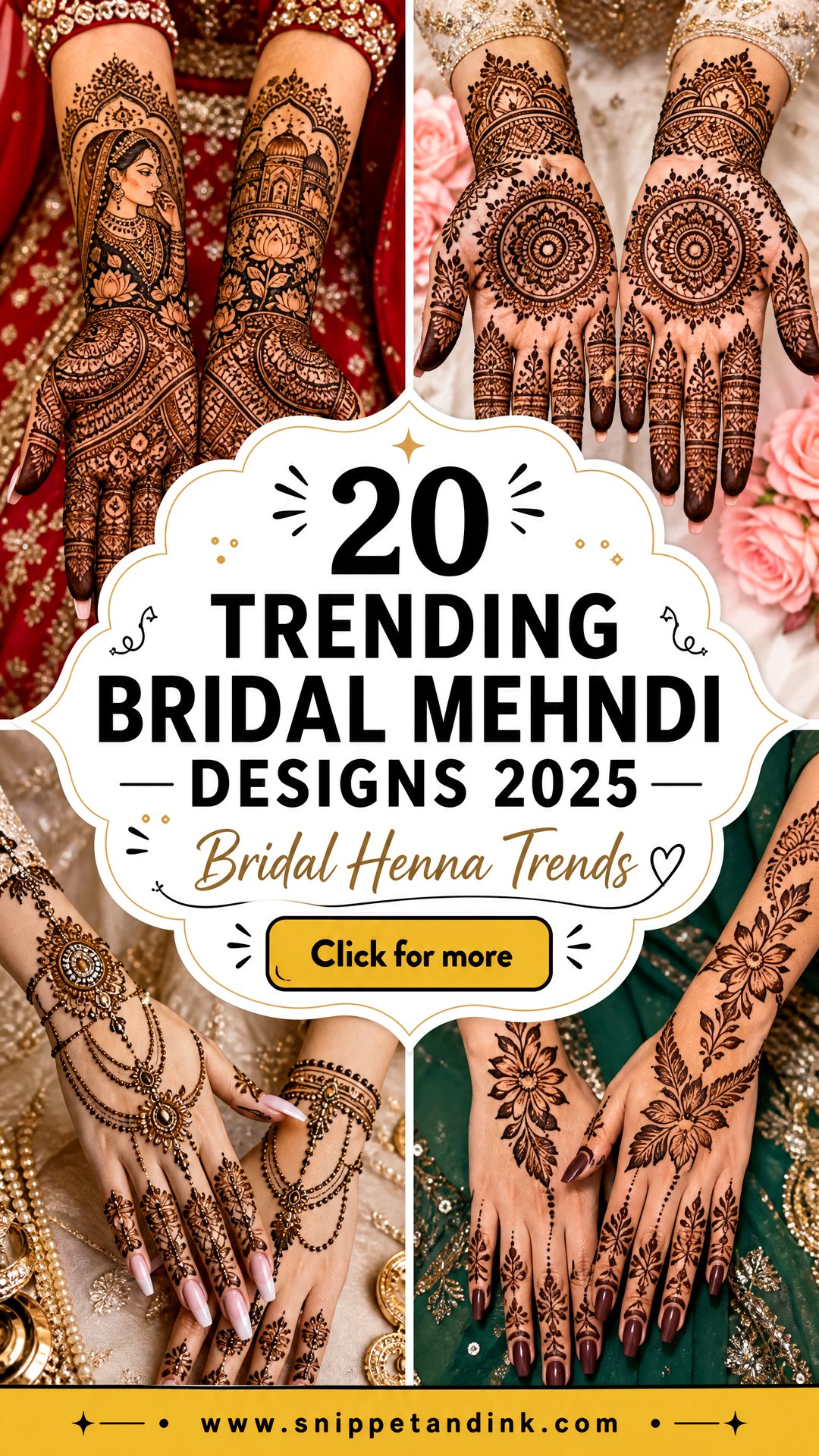
The bridal mehndi I’m asked for this season still draws on the old vocabulary of peacocks, paisleys, jaali and lotus, but with more space between motifs so each one reads in a photograph. Full dulhan hands haven’t gone anywhere. What’s changed is the planning: brides want initials, wedding dates, mandala palms, portraits and back-hand layouts that line up with their rings, bangles and nail shape. Below are twenty designs I’d recommend, from heavy traditional coverage to lighter modern work, with notes on how each one is mapped and how it stains. Pick with your ceremony, your outfit and how long you can sit still in mind.
Plan the Application Two Days Before the Wedding
Natural henna doesn’t reach its darkest color when the paste comes off. It starts bright orange and deepens over the next day or two. That’s why I schedule bridal mehndi one or two days before the wedding, never the morning of.
A full bridal set on both hands and forearms can take four to eight hours, depending on the density. Feet add more. Before your appointment:
- Wash your hands with plain soap and skip lotion and oil, so the paste can bond with the skin.
- Do waxing, scrubs and manicures beforehand; exfoliating after application fades the stain.
- Eat, have a drink with a straw nearby, and use the bathroom before the palms are done.
- Wear a loose top with short or wide sleeves that won’t brush wet paste.
1. Full Hand Bridal Mehndi Design
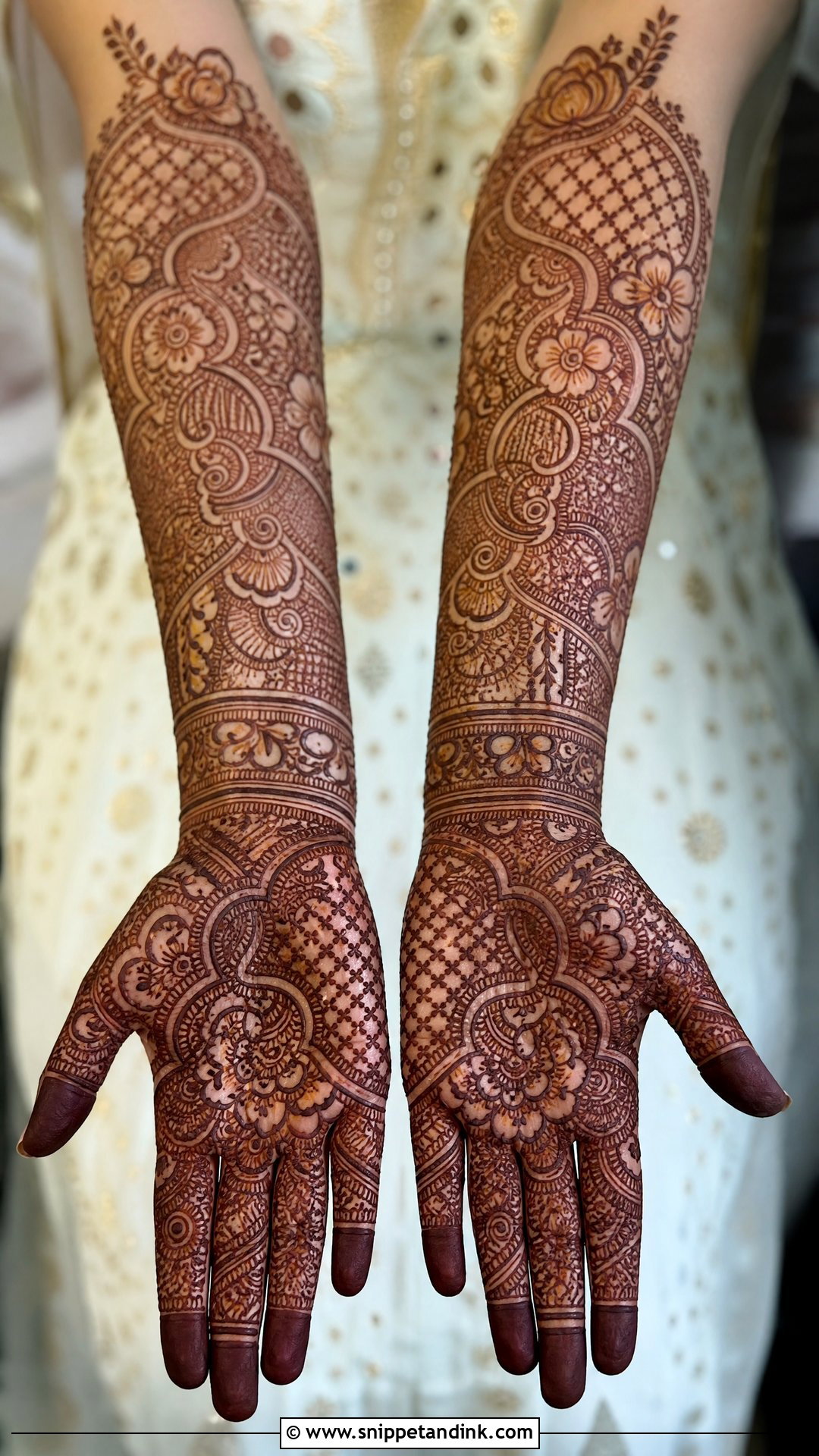
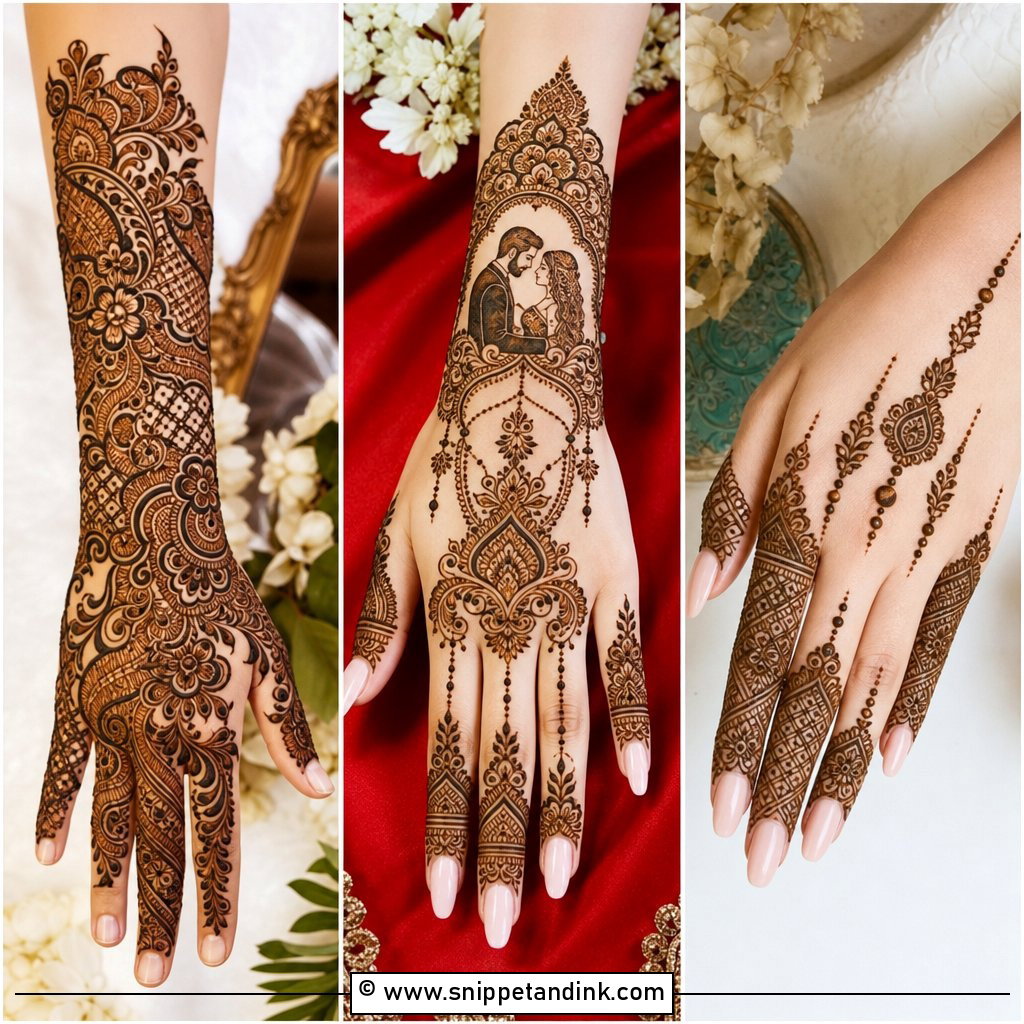
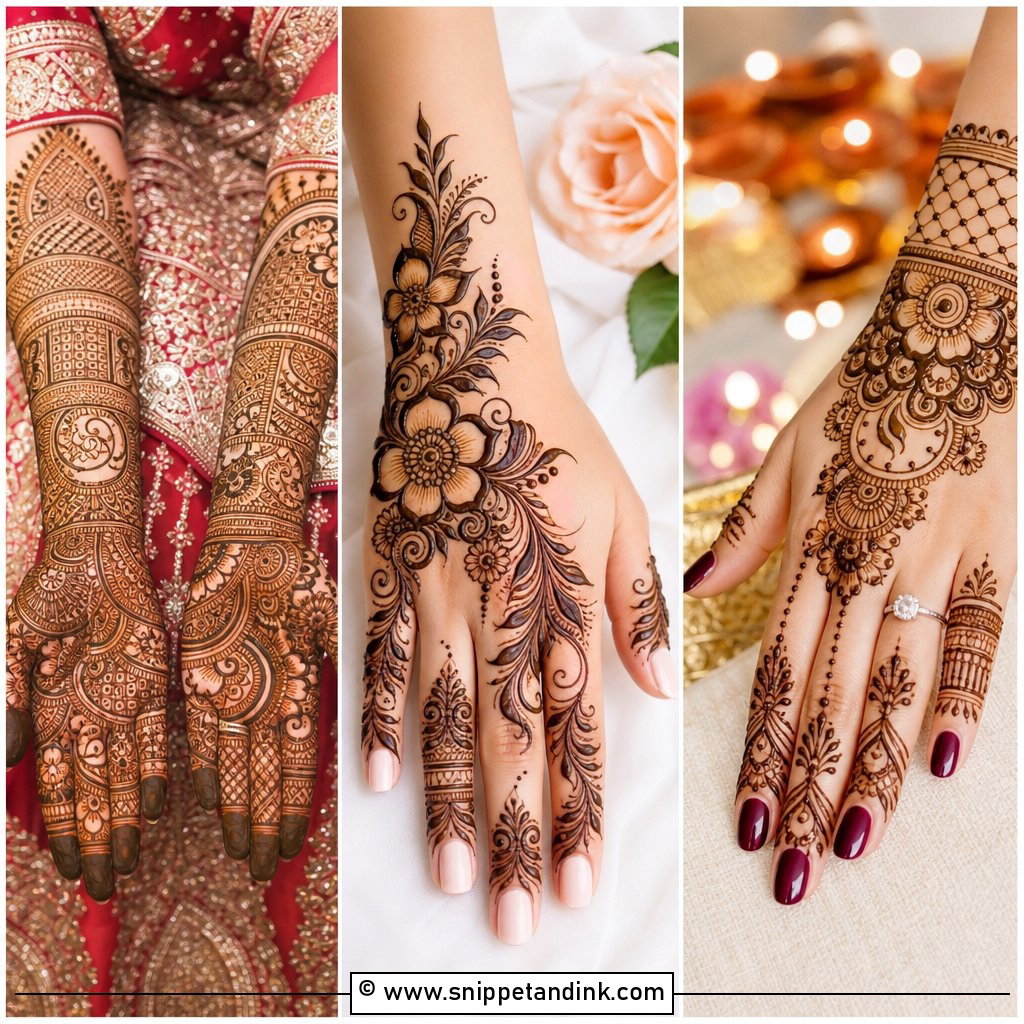
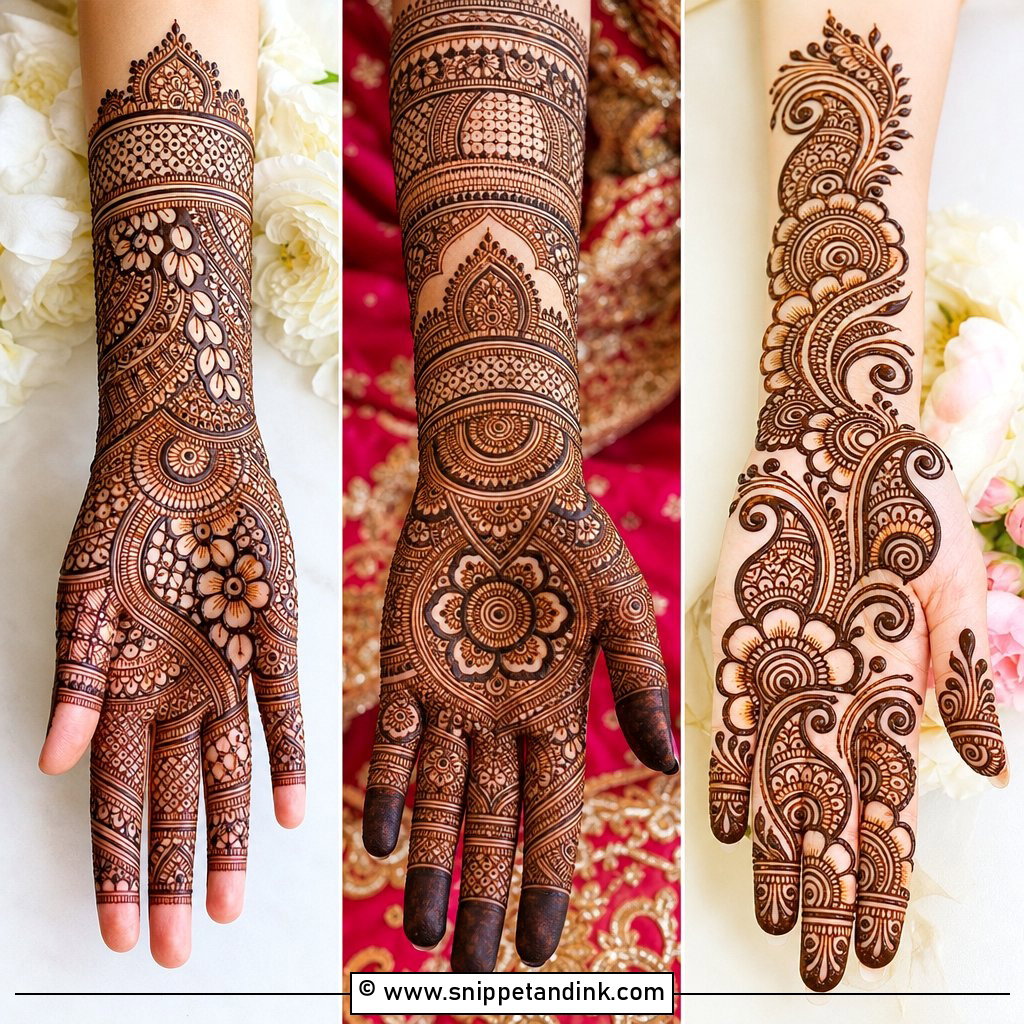
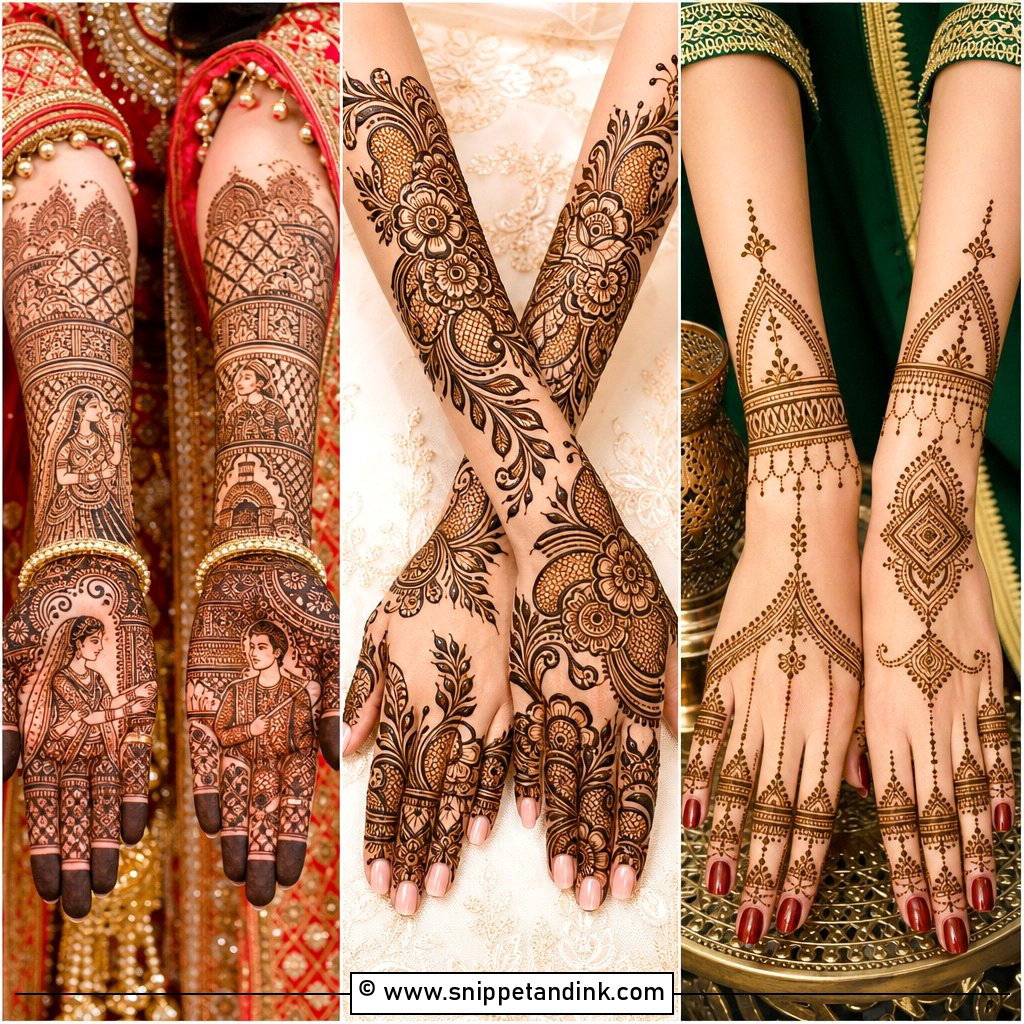
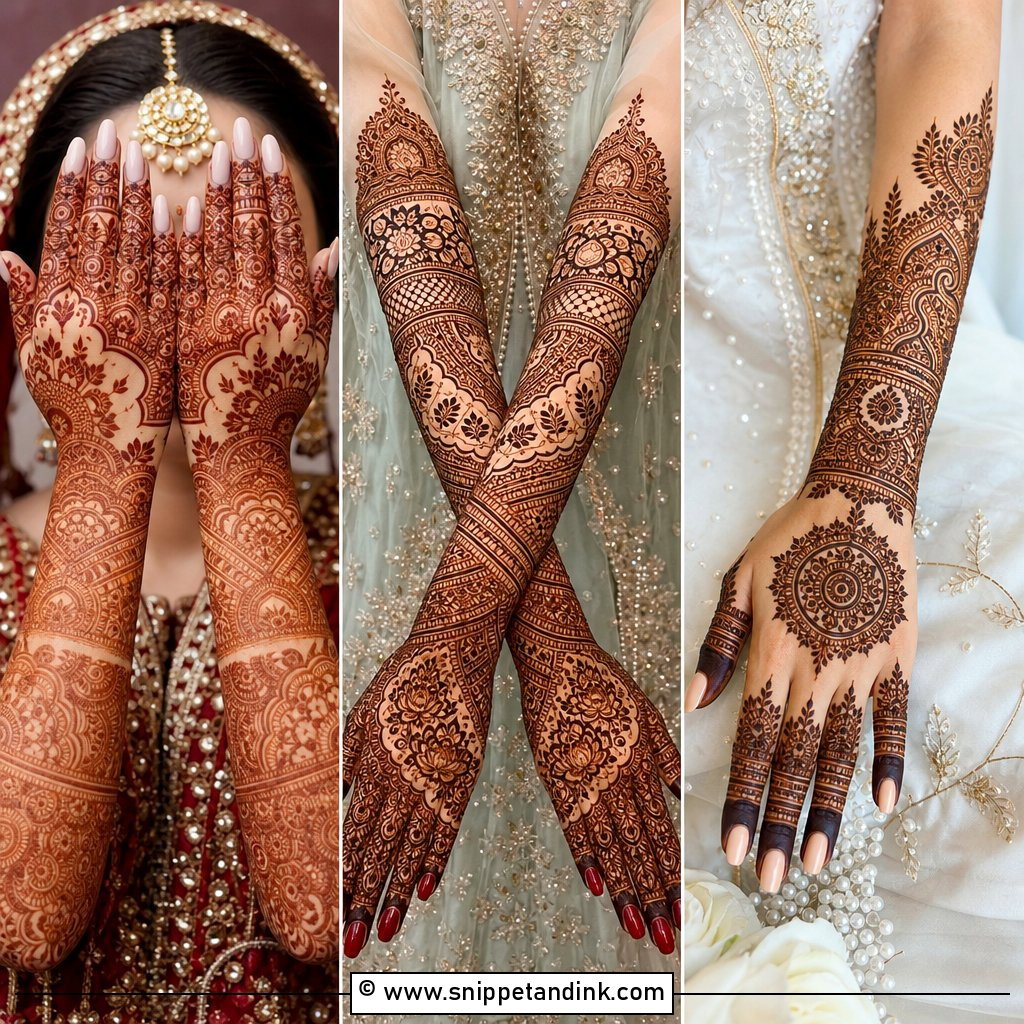
Full hand coverage, palms to forearms, is the design most brides picture when they think of bridal mehndi. Paisleys, florals, jaali grids, leafy fillers and wide wrist bands fill the hands. When I map one, I sketch the main motifs first and fill around them last, because filler drawn first always crowds the big shapes out. Initials, the wedding date or small ceremonial symbols can sit inside the pattern. It suits lehengas, sarees, shararas and heavy embroidery. Plan for a long sitting: a full bridal set on both hands and forearms can take most of an afternoon.
2. Indian Bridal Mehndi Design
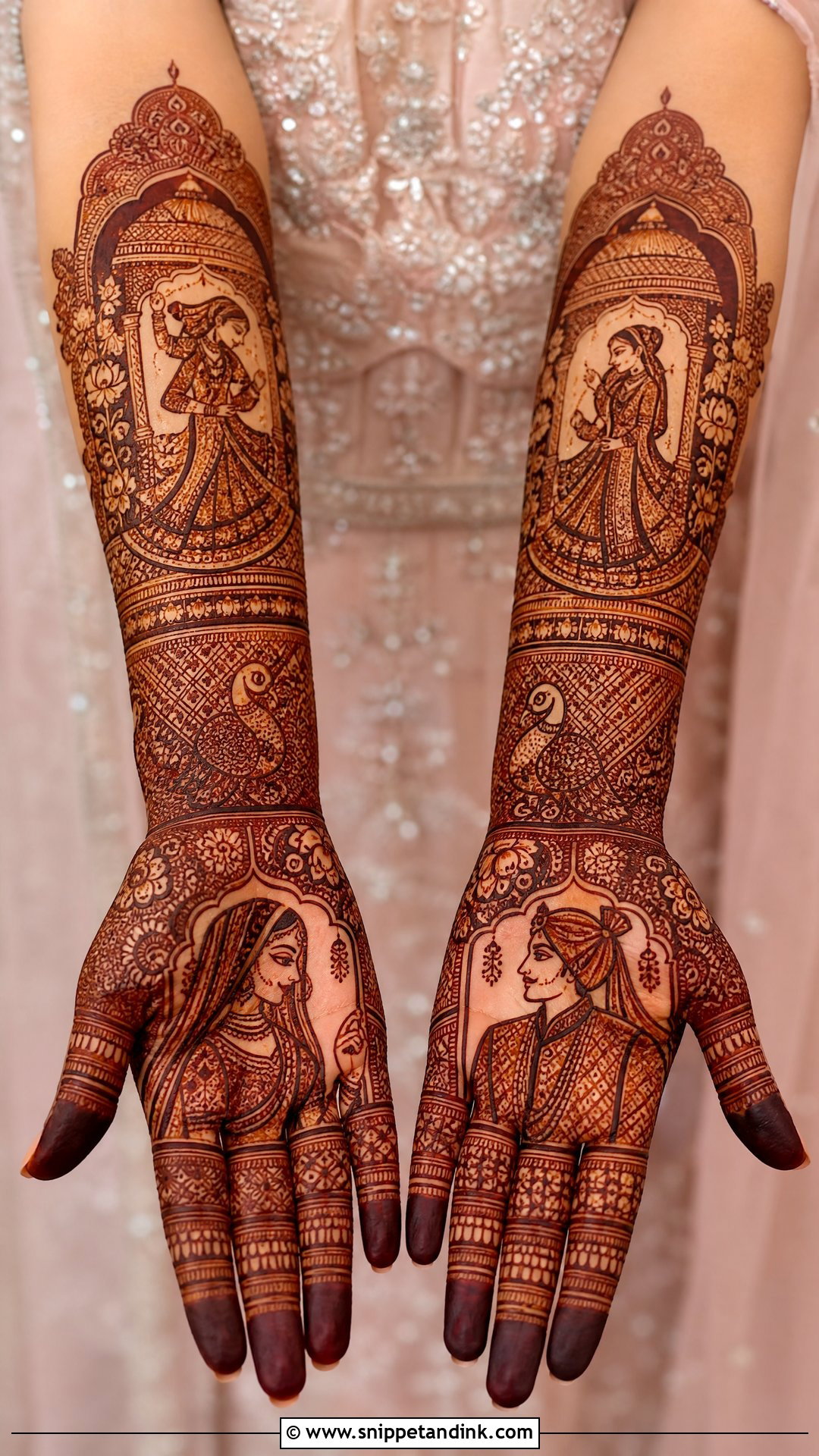
Indian bridal designs are built for storytelling, with fine lines and dense symbolism from fingertips to forearms. Peacocks, lotus flowers, paisleys, bride and groom figures, mandap scenes, kalash details and traditional borders all have their place. The current approach is sharper spacing and clearer symmetry, so the main motifs stand out instead of disappearing into filler. Fine lines need a thin, smooth cone tip and a steady pace; if the paste is too thick, the lines blur together as it dries. On skin that stains dark, the detail becomes even more dramatic after the paste comes off.
3. Arabic Bridal Mehndi Design
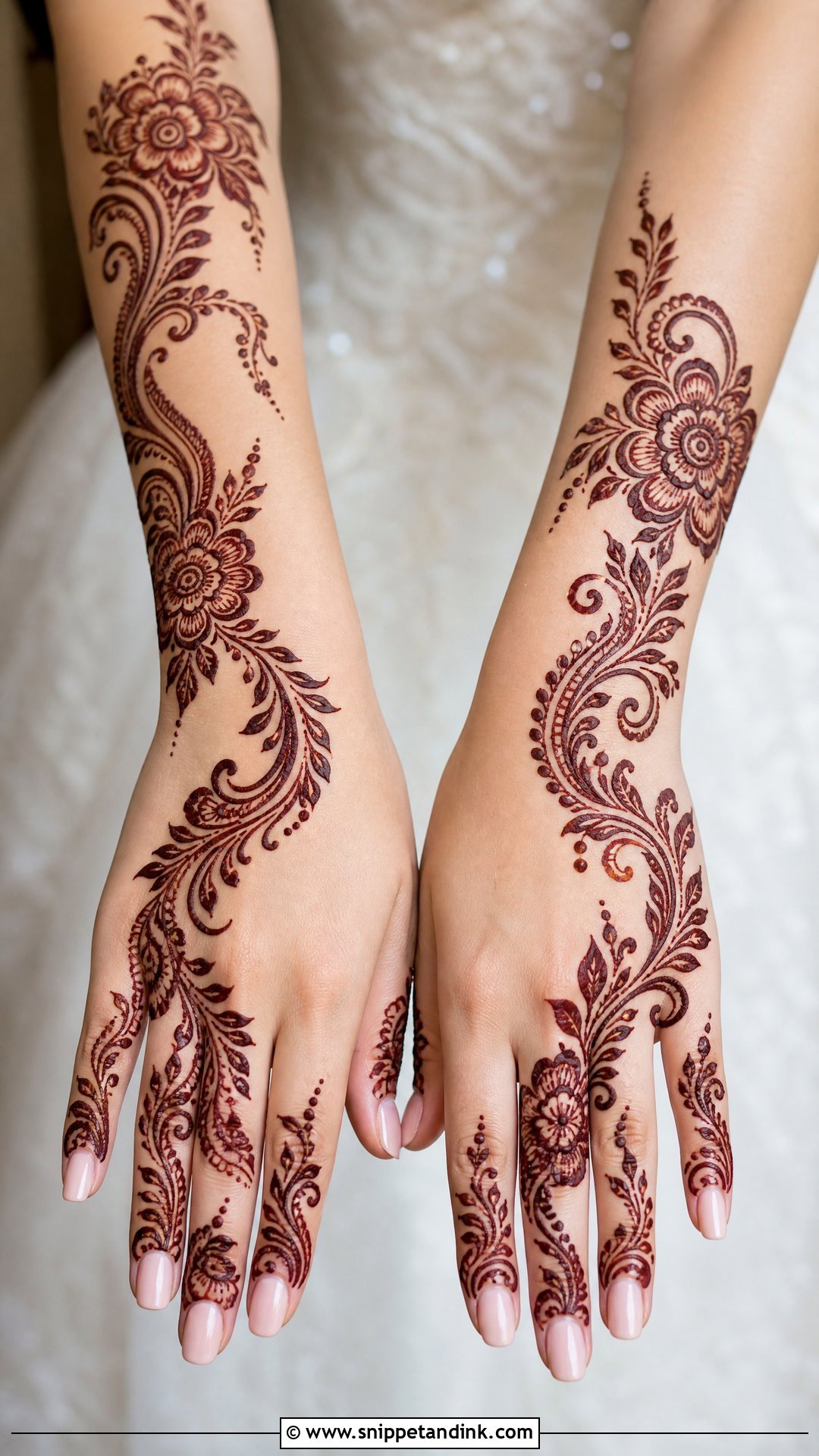
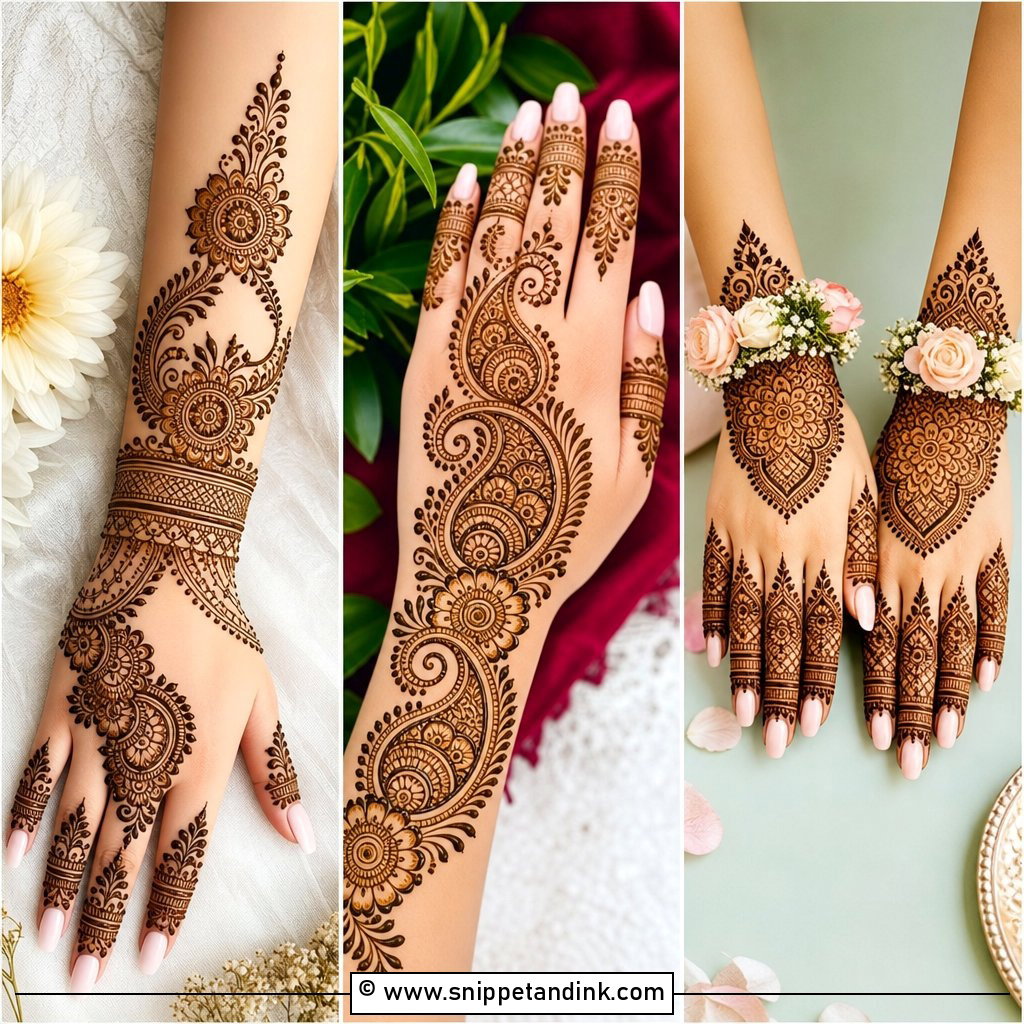
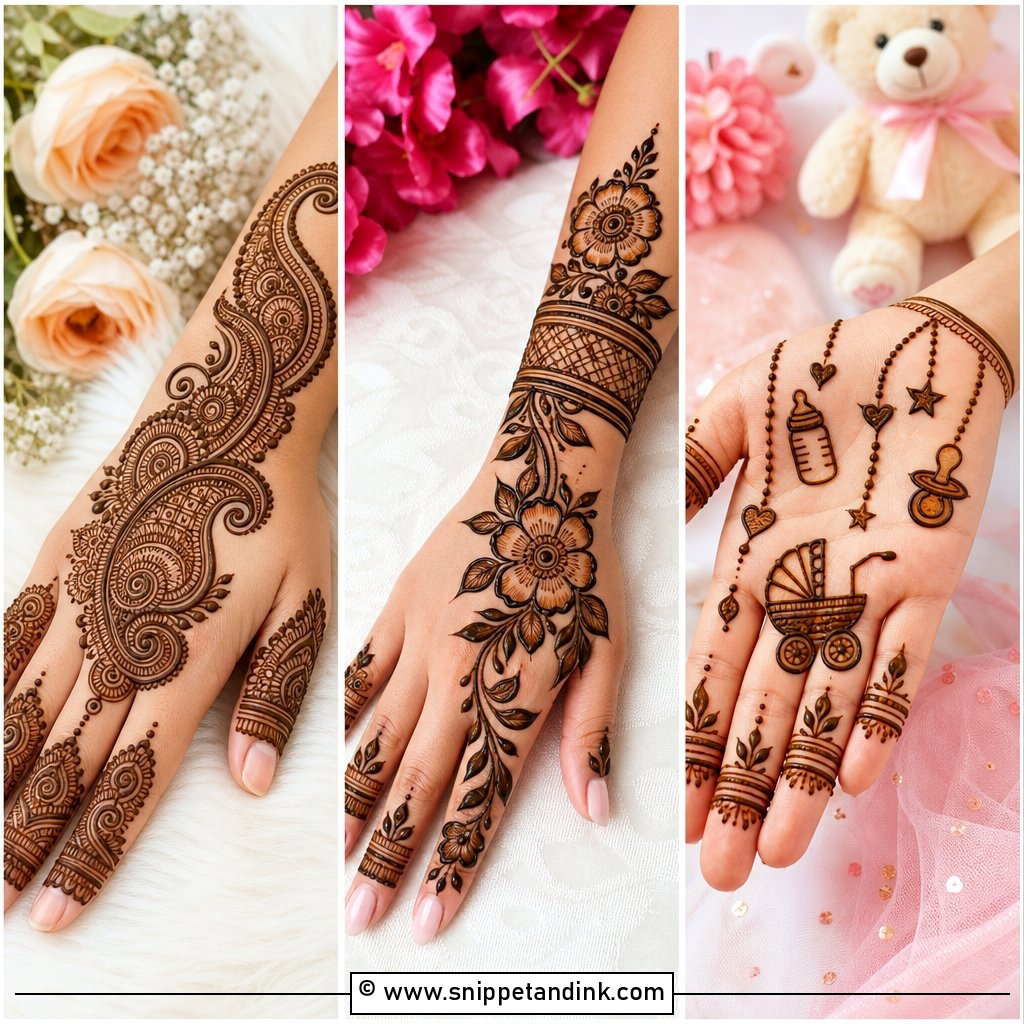
Arabic bridal work is about flow: floral trails, leafy vines, curved paisleys and open skin between them. The newer style uses wider, bolder strokes and layered flowers moving from the wrist to the forearm. It’s a good choice if dense coverage isn’t for you but you still want hands that look bridal. On the back of the hand, the negative space creates contrast that photographs well. I keep the trail angled across the hand rather than straight down, which follows the natural line of the fingers. Rings, bangles and soft nail colors finish it.
4. Indo Arabic Bridal Mehndi Design
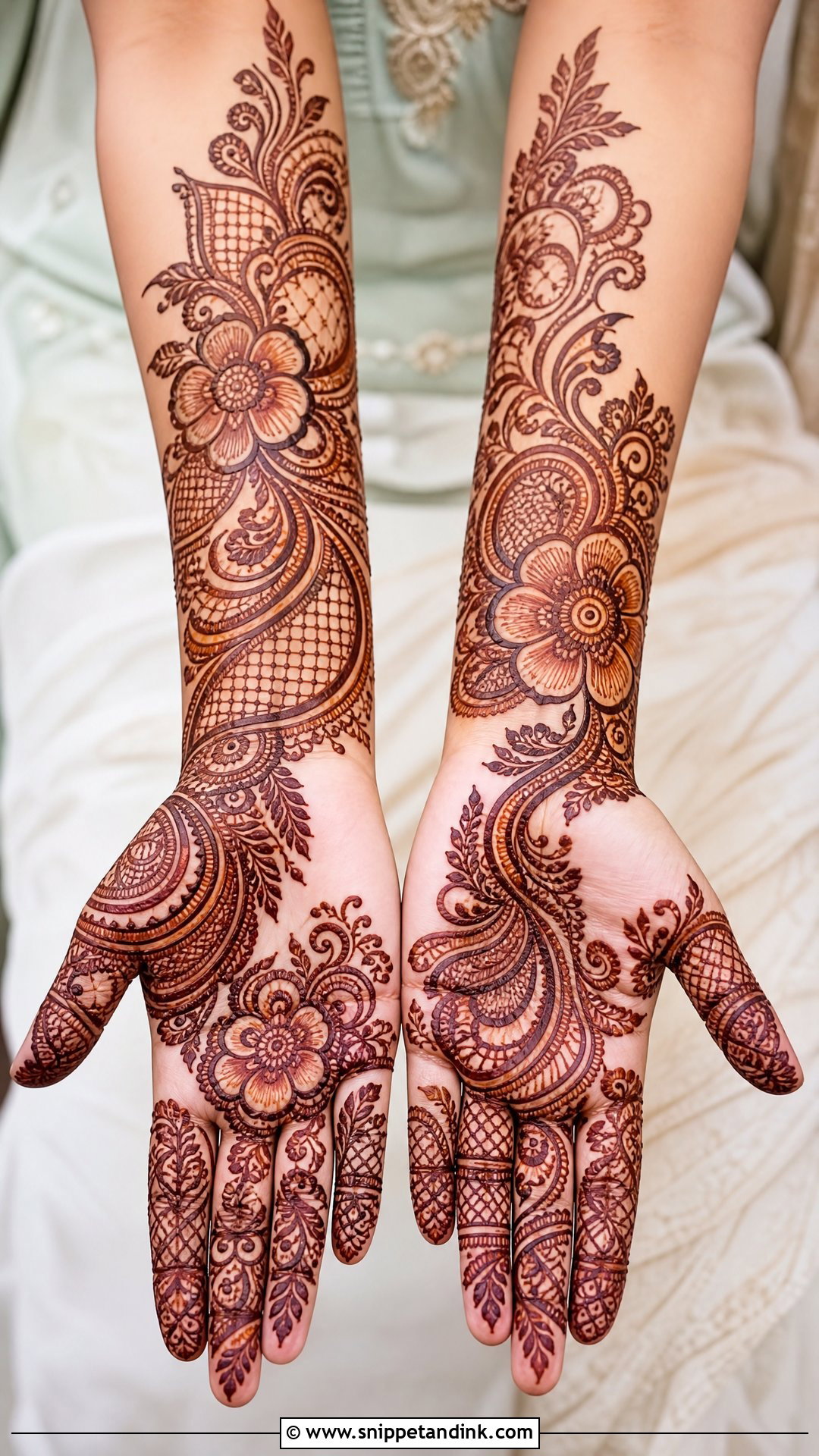
Indo Arabic combines the bold flow of Arabic trails with the fine fill of Indian work. Large floral trails, paisley outlines, shaded leaves, mandala centers and fine filler around the wrist can all appear. The appeal is that every motif stays visible while the hands still look rich. Cleaner outlines and symmetrical placements are what I’m seeing requested, especially on palms and back hands. Shading is done by thinning the paste line rather than using a different cone, so the shaded areas stain lighter.
5. Minimal Bridal Mehndi Design
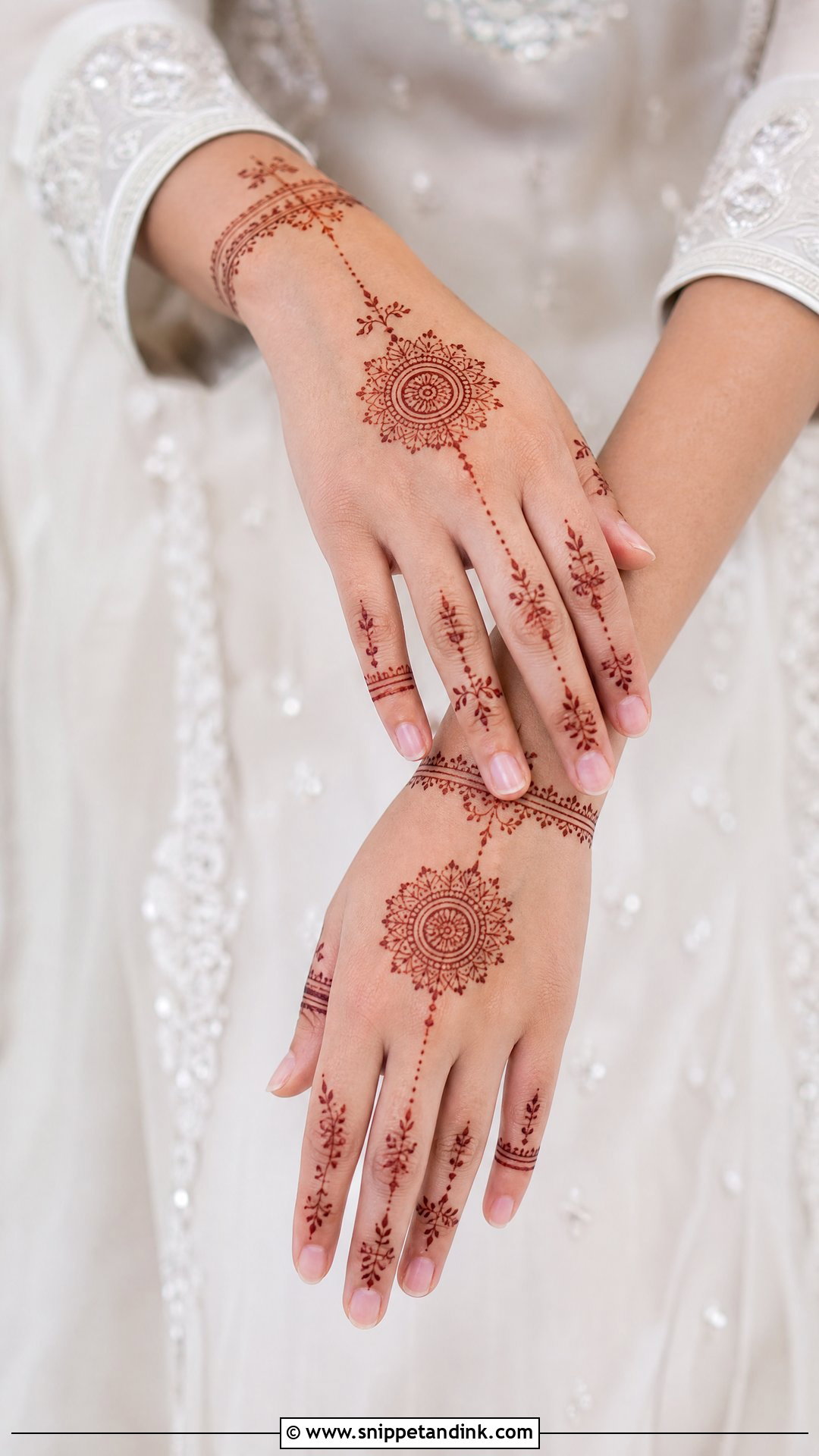
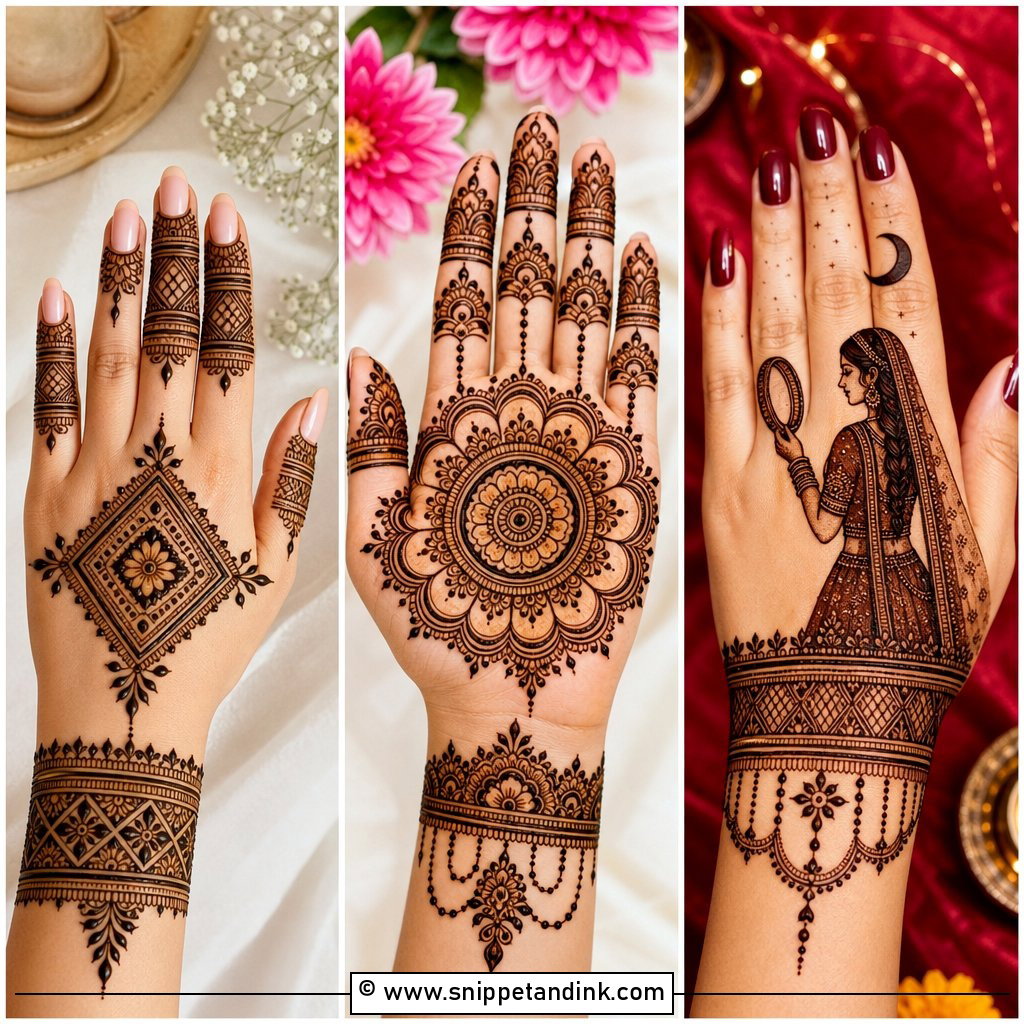
Minimal bridal mehndi focuses on chosen areas: palms, fingers, wrists or the center of the back hand. Small mandalas, delicate vines, tiny flowers, dotted chains and slim bracelet bands are typical. Done well, it looks deliberate rather than unfinished. It’s often personalized with initials, a wedding date or a small couple symbol. I recommend it for intimate weddings, engagements, civil ceremonies, or if you’ll be hosting long functions and can’t spare hours. Pastel outfits and soft makeup suit it.
6. Back Hand Bridal Mehndi Design
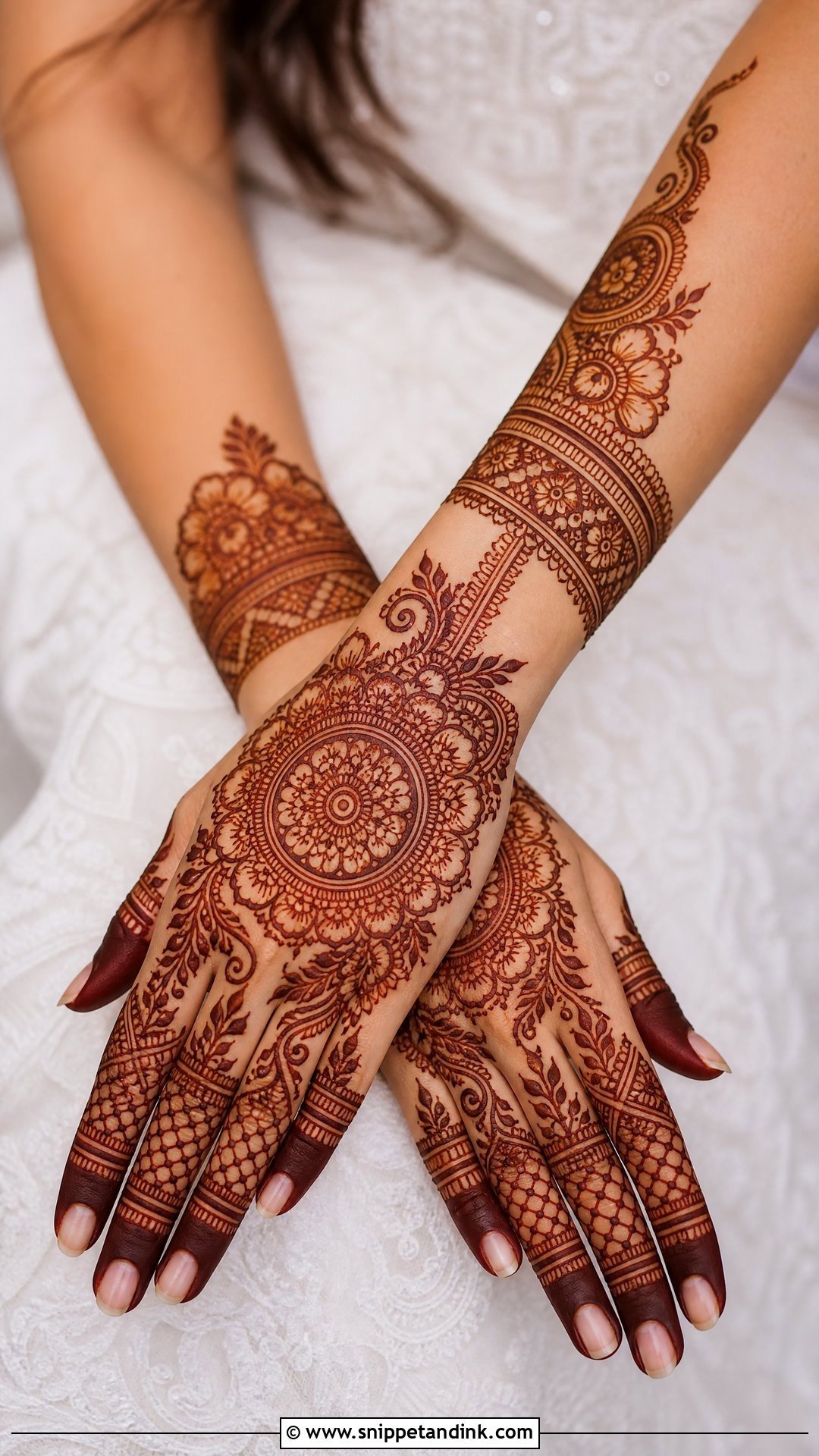
The back of the hand is what everyone sees in ring shots, bangle photos and portraits, so I treat it as a separate design rather than an afterthought. A central mandala, a floral trail, a bracelet band, finger work and wrist coverage are the usual elements. Balanced symmetry with breathing room between motifs is the current preference. Some brides choose a jewelry-style layout that mimics a haath phool, others go for full jaali and paisley coverage. One thing to know: the back of the hand has thicker, drier skin than the palm, so the stain will usually be a shade or two lighter.
7. Front Hand Bridal Mehndi Design
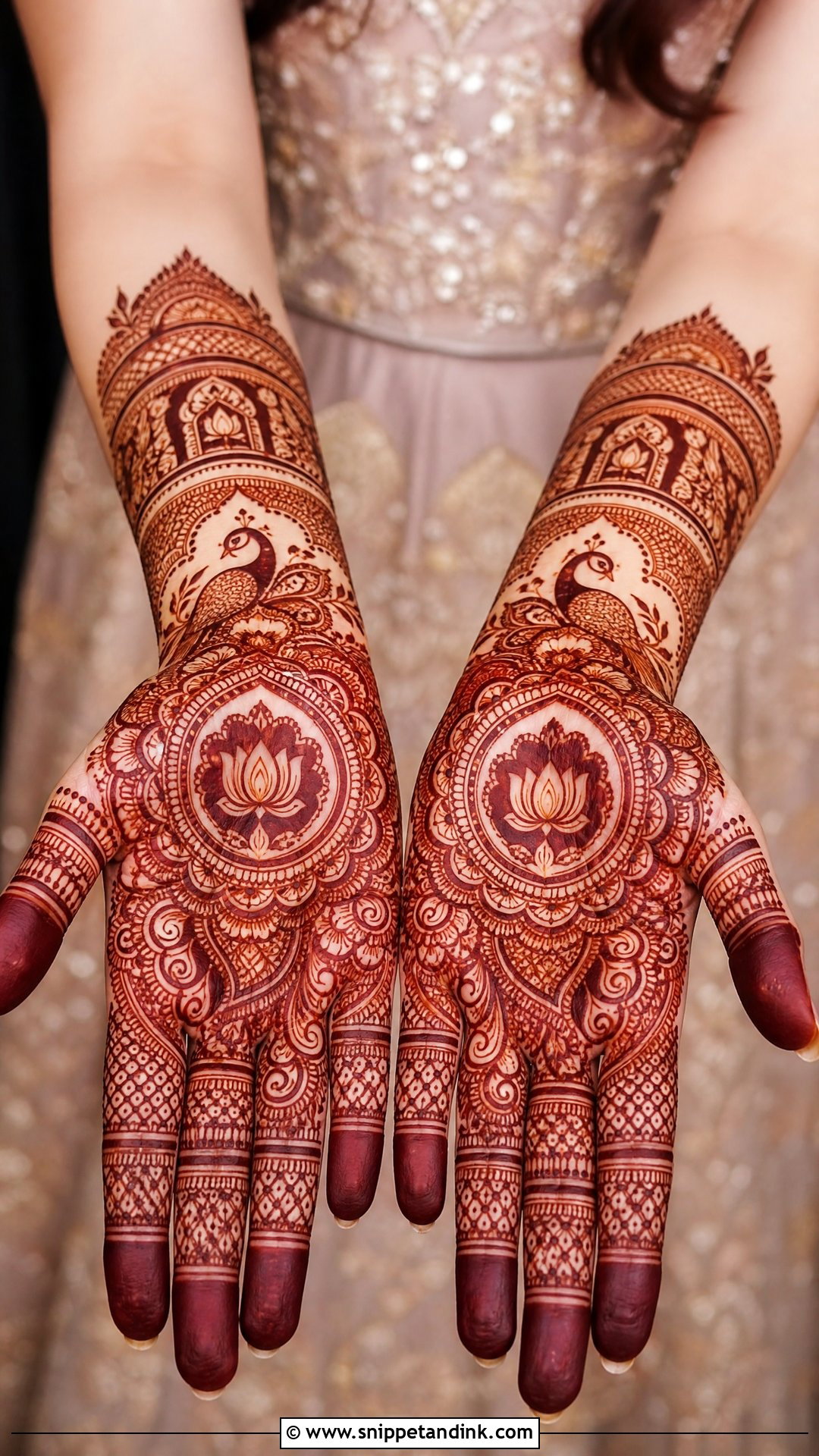
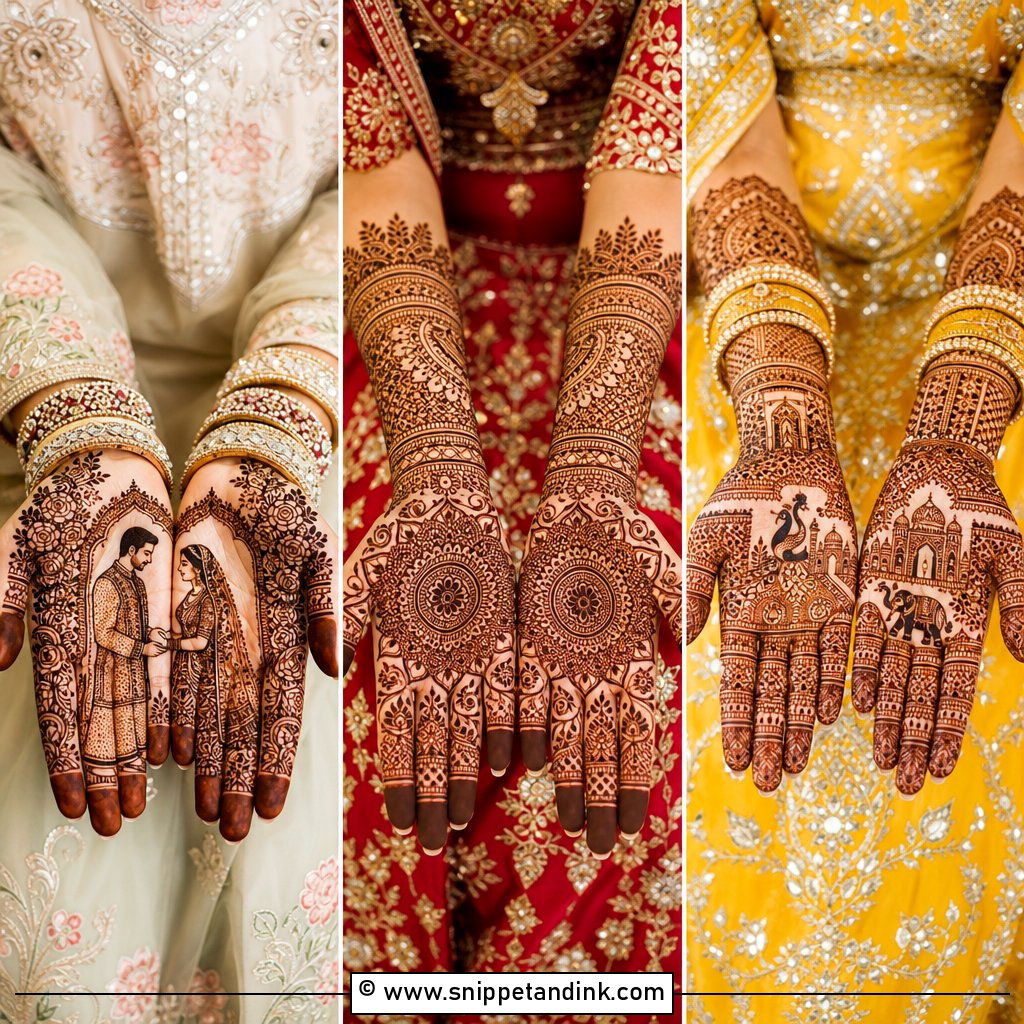
Palms are the focus during rituals, and they also take the darkest stain on the body. I usually start with a mandala, lotus, peacock or bride and groom motif in the center, then build paisleys, florals, mesh, dotted borders and filled fingertips around it. Brides now ask for cleaner separation between motifs and better symmetry between both hands. A story layout, with the bride on one palm and the groom on the other, is popular. Once the palms are done, you won’t be able to use your hands for hours, so plan meals and the bathroom before I start.
8. Bridal Mehndi With Groom Name
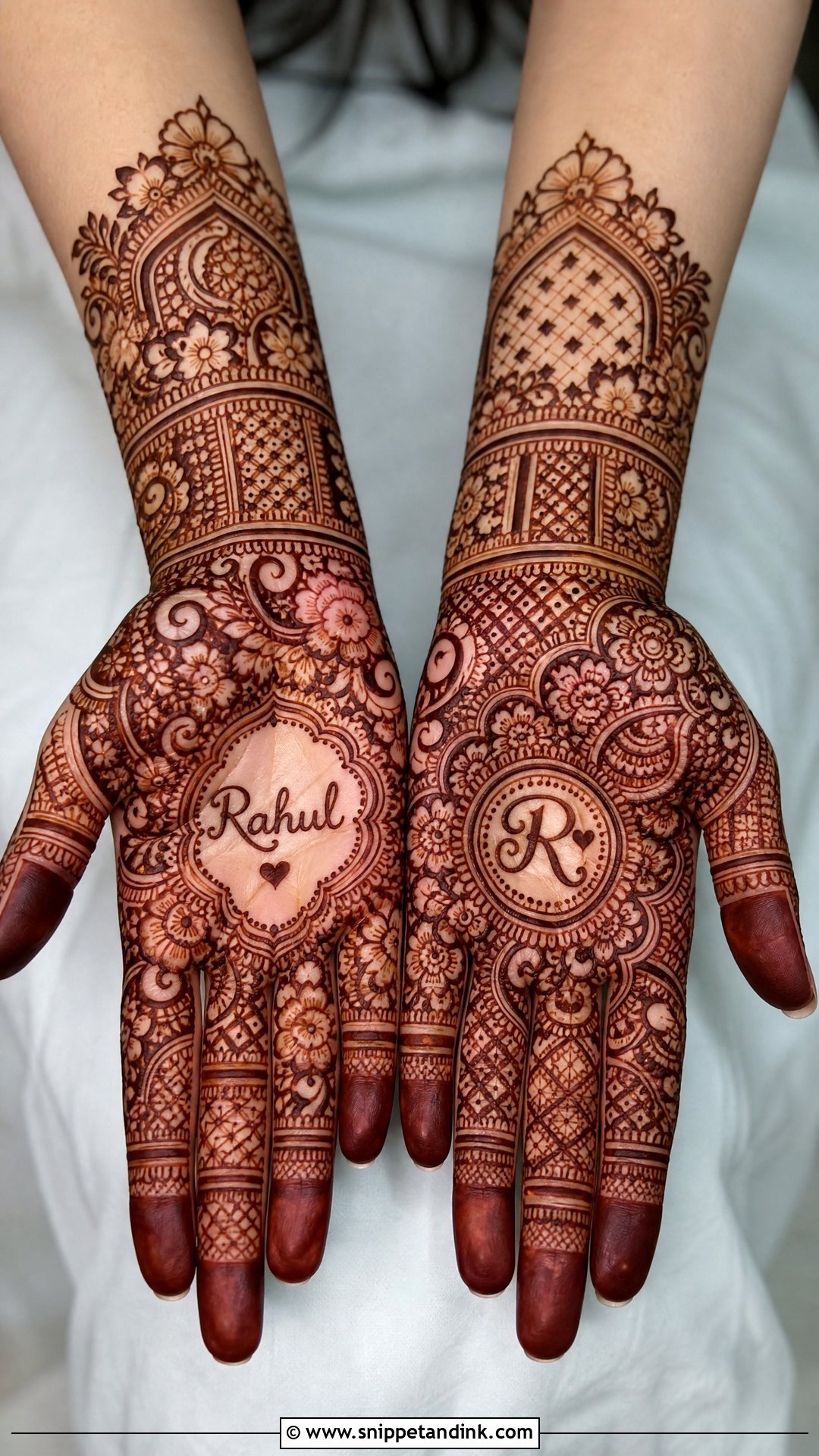
Hiding the groom’s name in the design is one of the oldest bits of fun at a mehndi, and he’s meant to find it. I tuck the letters into paisleys, hearts, mandala rings or the wrist band, often in a script that blends with the surrounding lines. The trend is subtler placement, so the name doesn’t dominate. Full palms, decorated fingers and other bridal motifs fill the rest of one or both hands. Initials, the wedding date or a symbol that means something to you both can sit nearby.
9. Portrait Bridal Mehndi Design
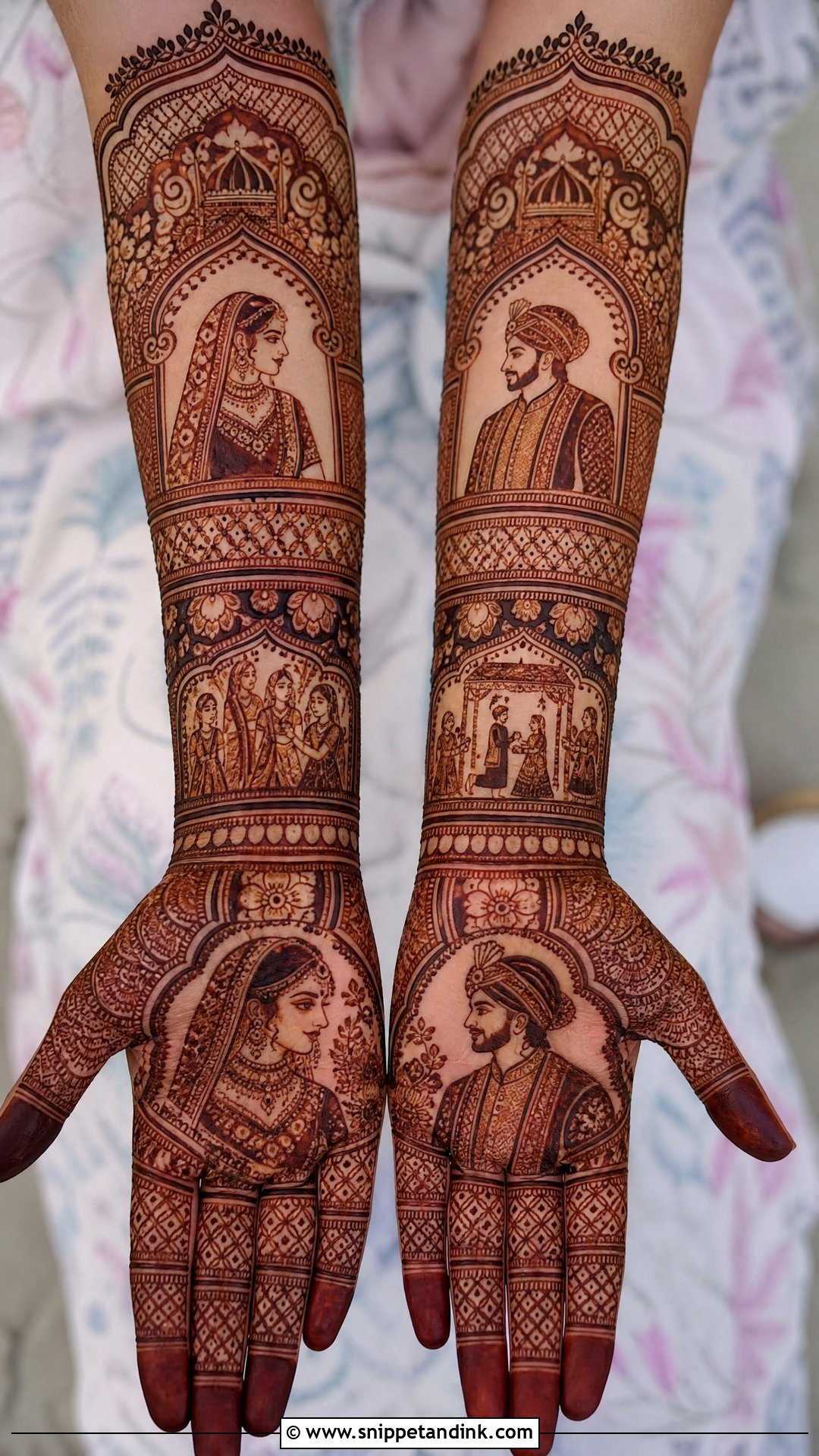
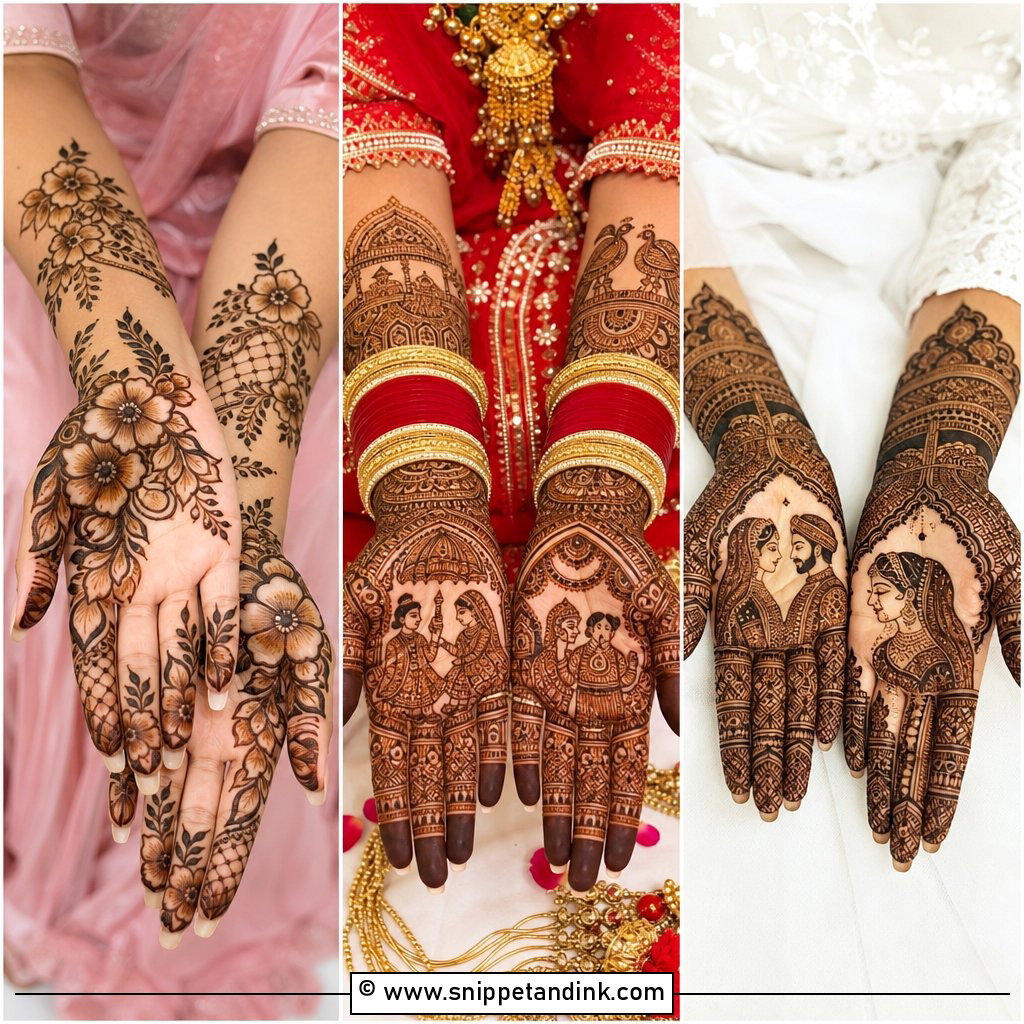
Portraits tell your story in henna: detailed bride and groom faces, wedding scenes, varmala moments, mandap art or couple silhouettes. This is specialist work. Before booking, ask to see an artist’s portrait photos at full size, because faces are the first place uneven lines show. Softer framing is in, so the faces aren’t crowded by surrounding pattern. Florals, jaali, paisleys and borders finish the rest of the hand. Portrait sets take longer than any other style, so book early and set aside extra time.
10. Peacock Bridal Mehndi Design
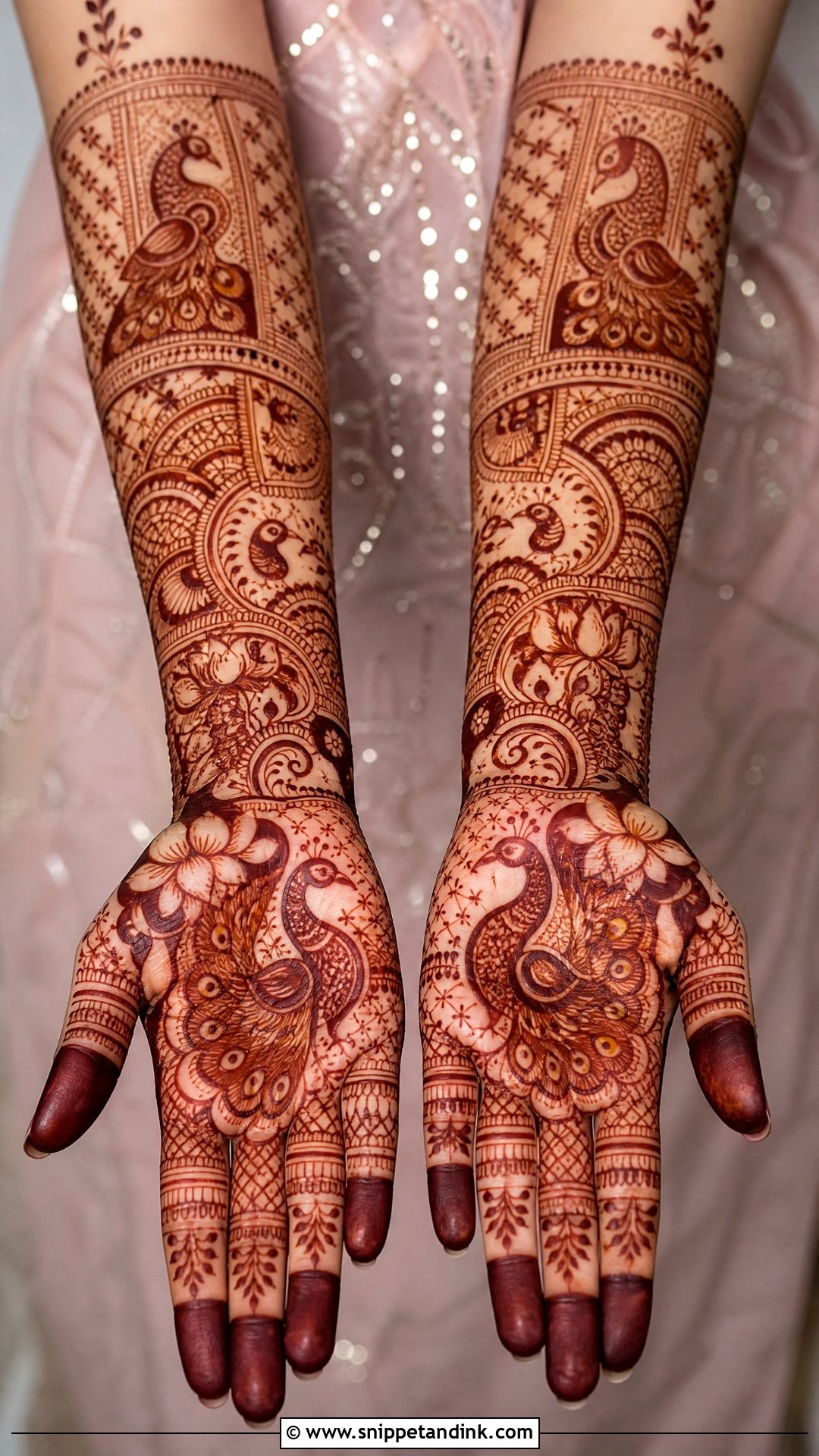
Peacocks are a royal motif and suit traditional outfits in red, maroon, gold, green and jewel tones. I place them on the palm, wrist, forearm or back of the hand, combined with paisleys, lotus flowers, curved vines, feather detailing and filled fingertips. The current preference is a clean peacock outline with detailed feathers instead of an overcrowded body. I draw the curve of the neck first; if that line is off, the whole bird looks wrong. The clearer silhouette also makes it easier to photograph.
11. Lotus Bridal Mehndi Design
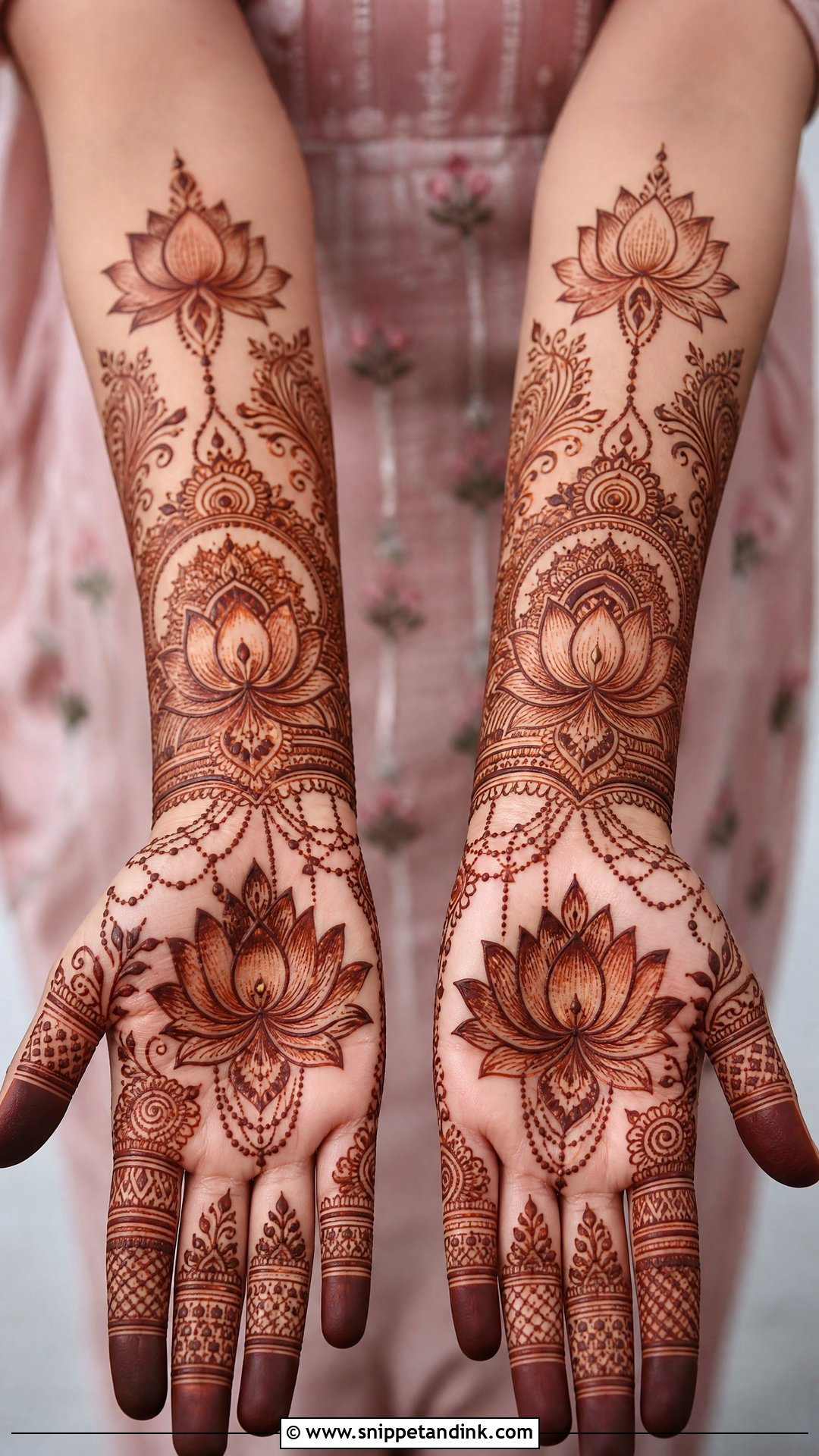
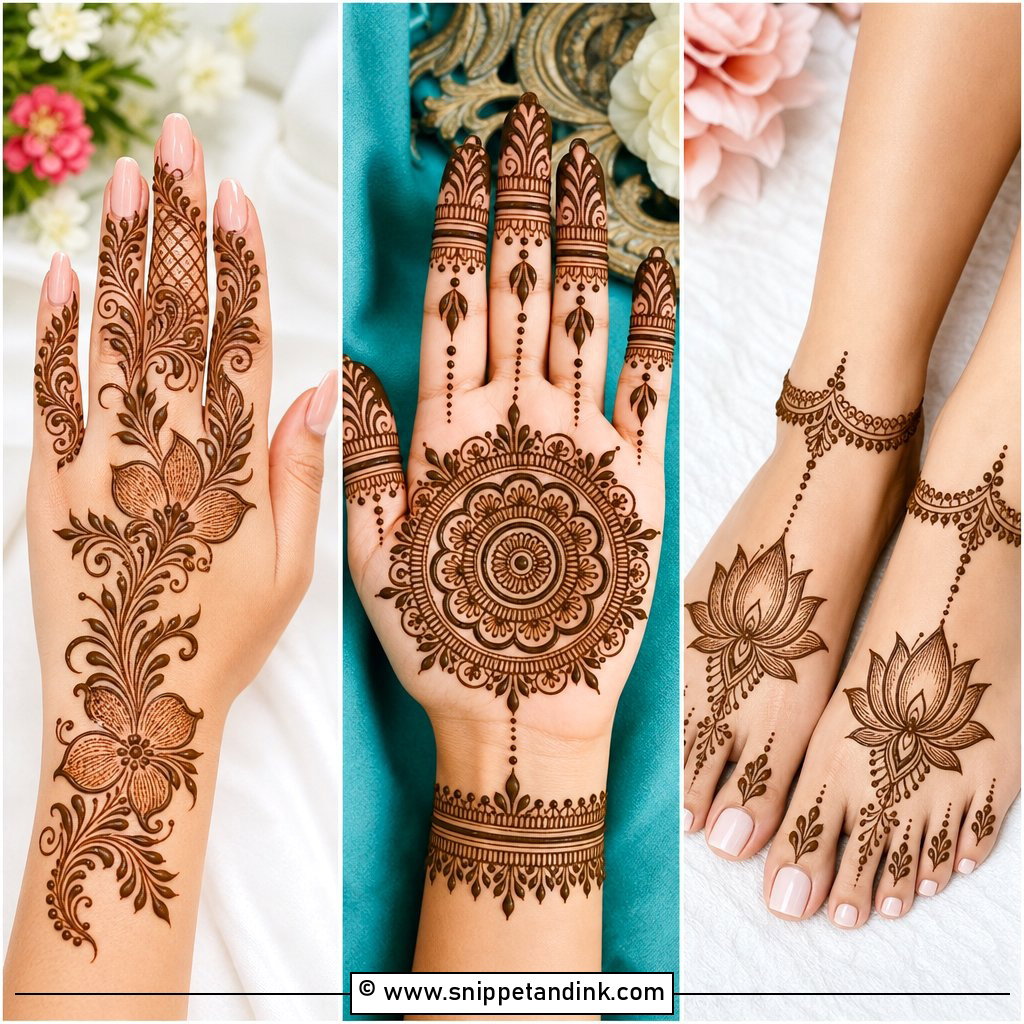
A lotus brings a quieter, softer kind of tradition. It can sit at the center of the palm, form a wrist border or repeat along the forearm. Large flowers with fine petals, shaded leaves, dotted chains and mandala-like spacing fill out a bridal set. It’s clean and photogenic without feeling heavy, and it adapts to full or semi-heavy layouts. Petals stain unevenly if the paste is too thin at the tips, so I build each petal edge with a slightly thicker line.
12. Mandala Bridal Mehndi Design
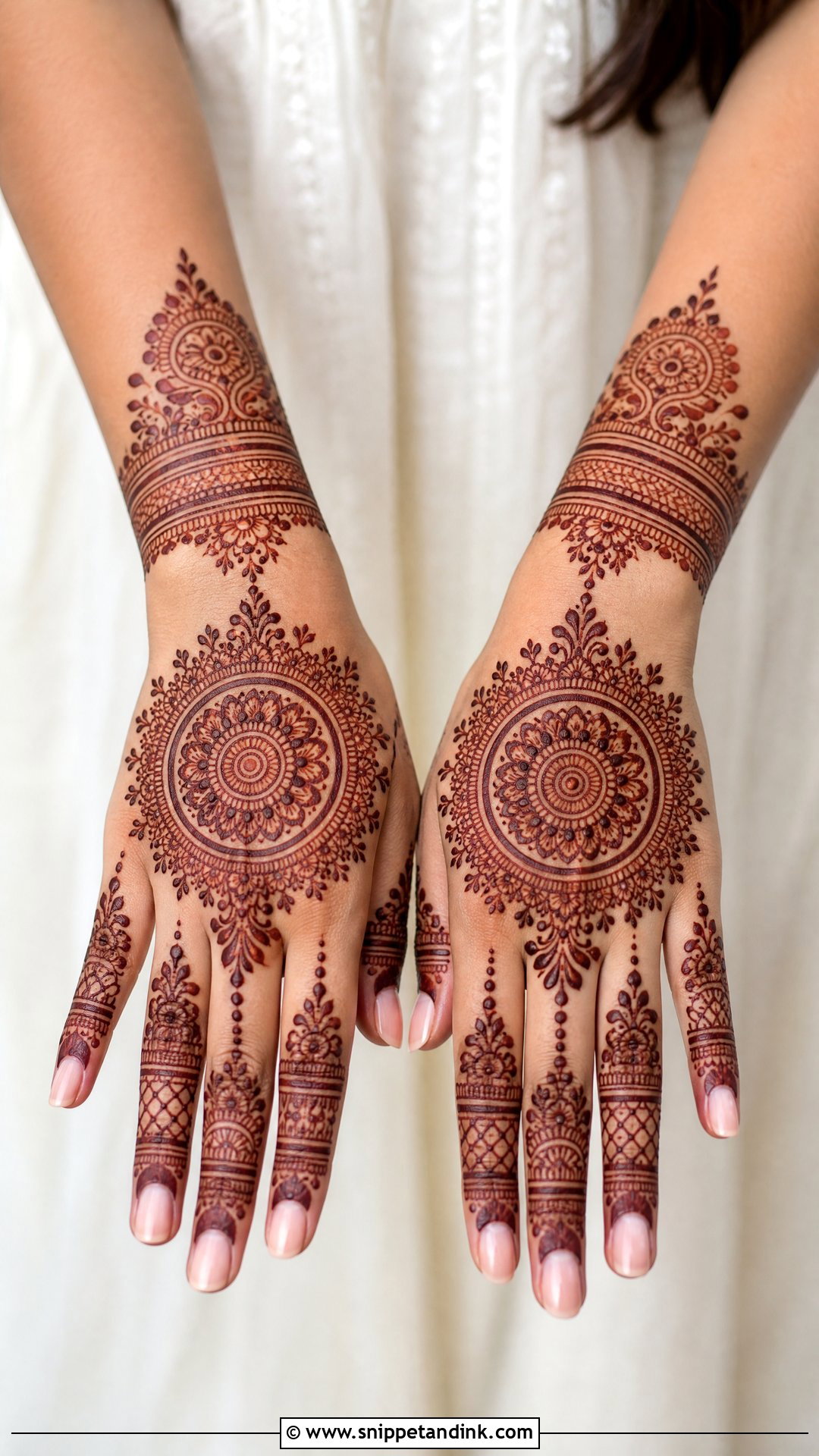
Mandala bridal mehndi design works because the eye goes straight to the circle. I set it in the center of the palm or back hand and echo it on the fingers, wrists and forearms. Florals, paisleys, jaali, vines and bracelet bands can surround it. Getting the circle truly round is everything; I mark the center with a dot and work outward in rings. Keep it open and minimal, or fill it with detailed borders and finger patterns for a full dulhan finish.
13. Jaali Bridal Mehndi Design
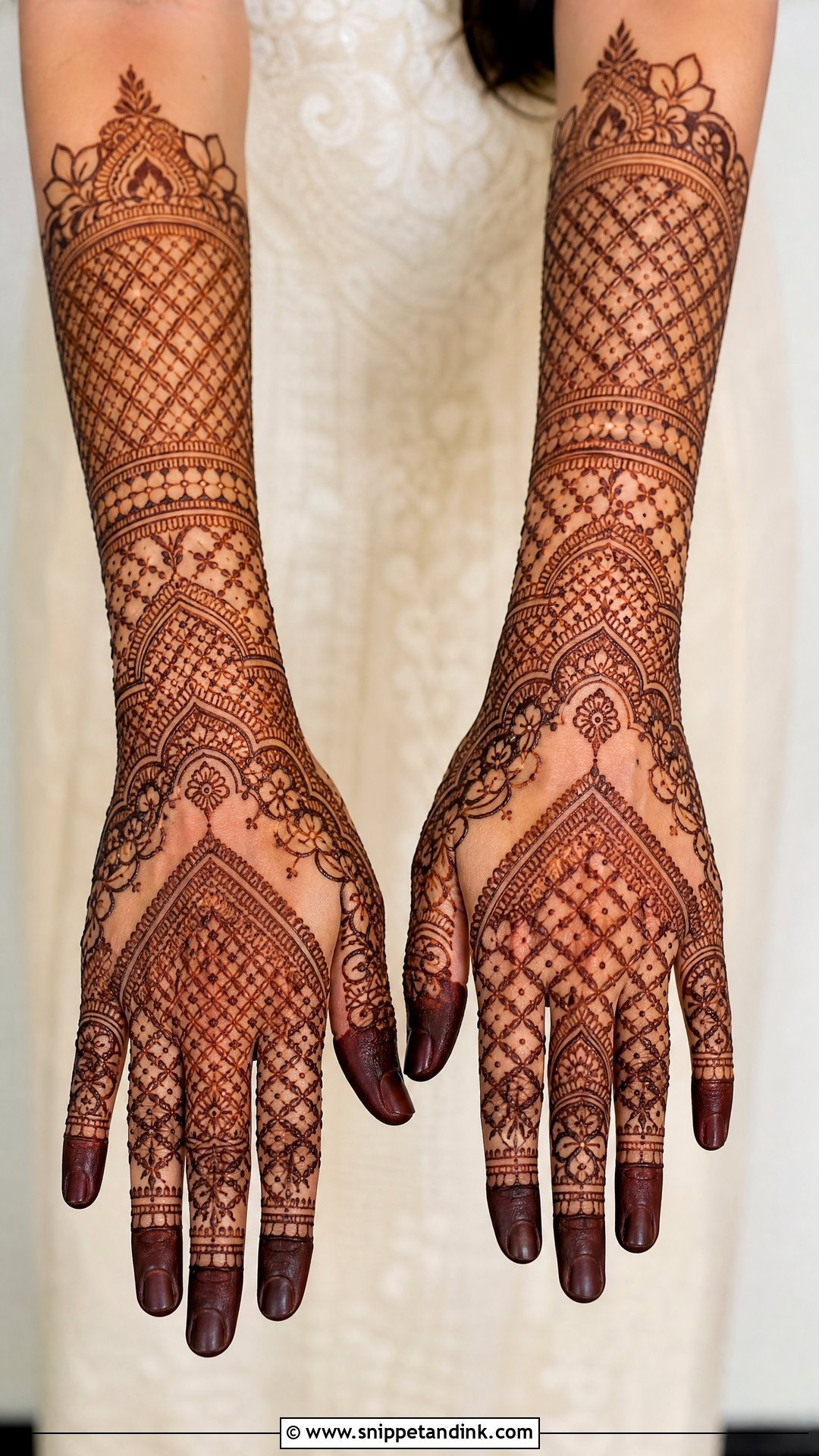
Jaali, the mesh pattern, gives the hand a lace or fabric texture. Crisscross lines, tiny dots, florals and borders build it, often alongside paisleys and mandalas on the palms, back hands, wrists or forearms. More spacious layouts are now preferred, so the grid looks crisp. The risk with jaali is smudging: the lines are close together, and if you move before the paste sets, two lines merge into a blot. I ask brides to keep their hands still for the first fifteen minutes after each section. Up close, it shows real depth.
14. Floral Bridal Mehndi Design
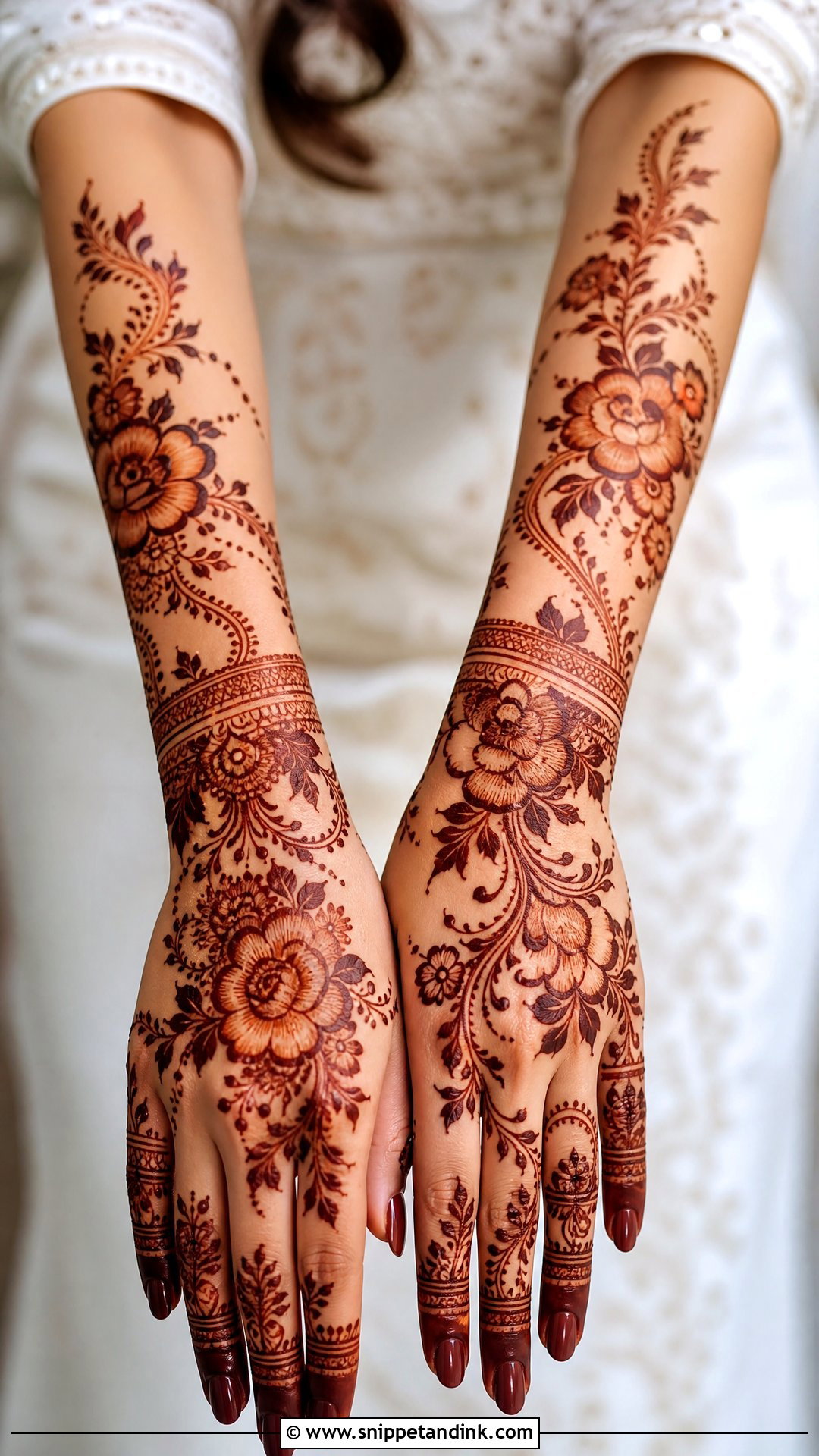
Florals are the most adaptable motif I use. Large or small, heavy or sparse, they can look modern or traditional depending on placement. Blooming roses, lotus petals, vines, shaded flowers, wrist cuffs and decorated fingers are all options. Larger flowers with fine detail around them are popular, giving a soft but noticeable finish. They go on front hands, back hands, palms and forearms, and suit almost any outfit. When the stain deepens to maroon, floral work is where it looks richest.


15. Paisley Bridal Mehndi Design
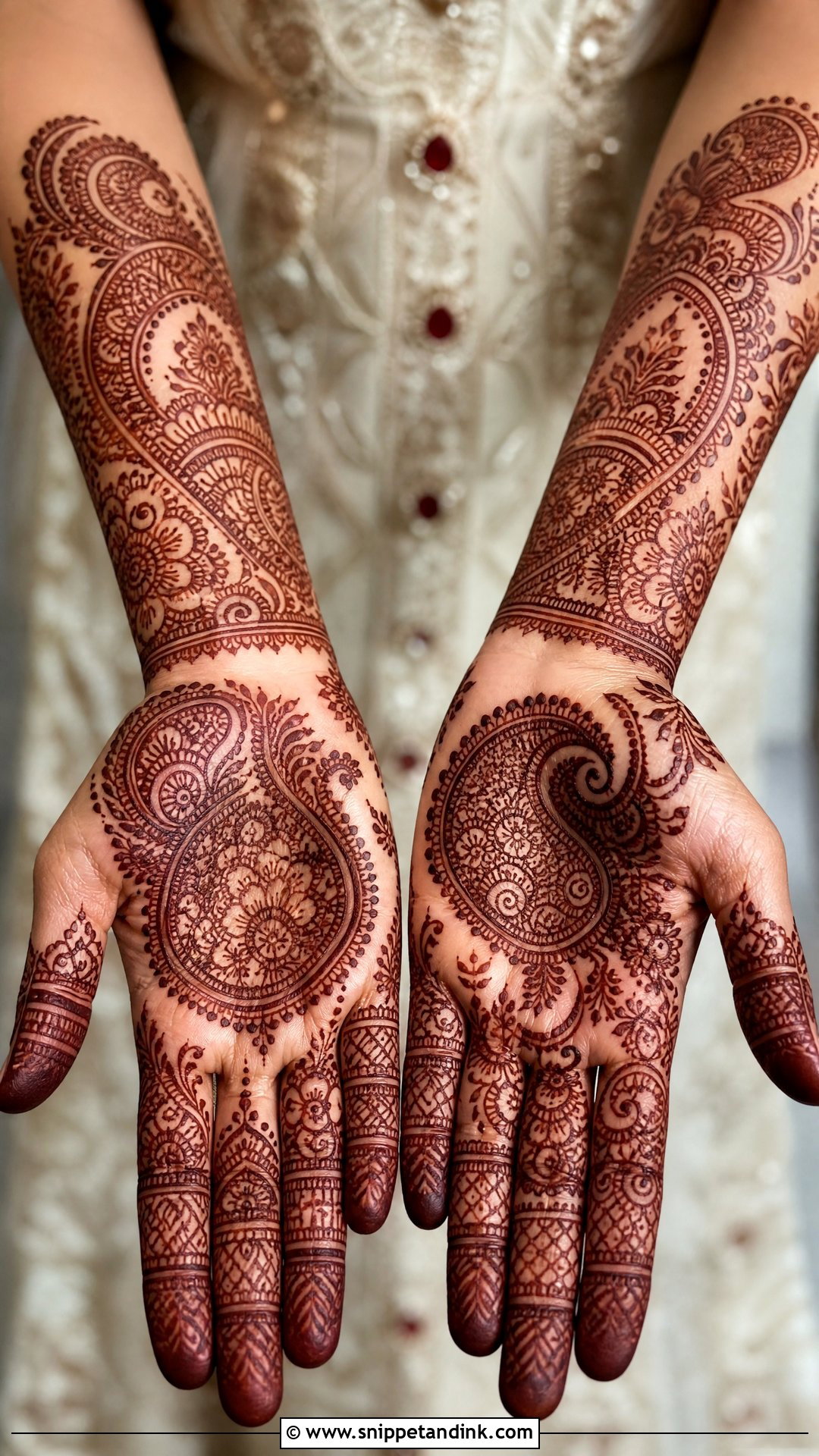
Paisley is the classic festive motif. I place them on the palm, wrist, fingers or forearm and fill them with small flowers, dots, lines and leaves. Mirrored paisleys on both hands give a polished set. The current approach uses bold outlines and cleaner inner detail, so the design looks traditional without becoming messy. Paisleys blend easily with peacocks, mandalas, lotus flowers and jaali borders.
16. Bridal Mehndi With Wedding Date
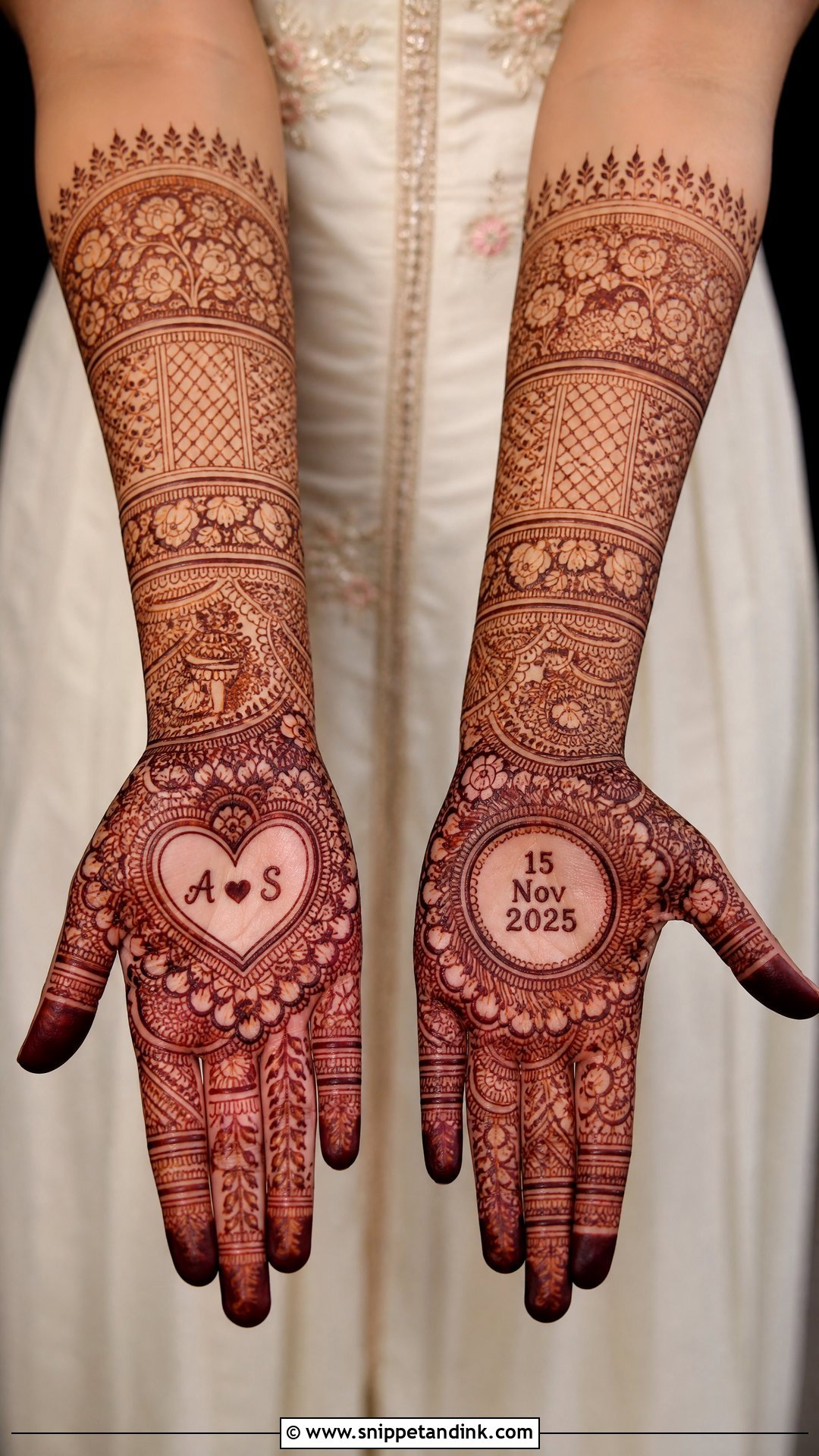
Adding the wedding date gives the design a personal, keepsake quality. I place it inside a heart, along the wrist, within a mandala or in a floral border, and it’s often paired with initials or small wedding symbols. Numbers need to stay readable, so I write them slightly larger than the surrounding filler and leave a clear margin around them. Full palms, finger work, wrist bands and forearm detail fill the rest. Write the date down for your artist exactly as you want it, including the format.
17. Jewelry Bridal Mehndi Design
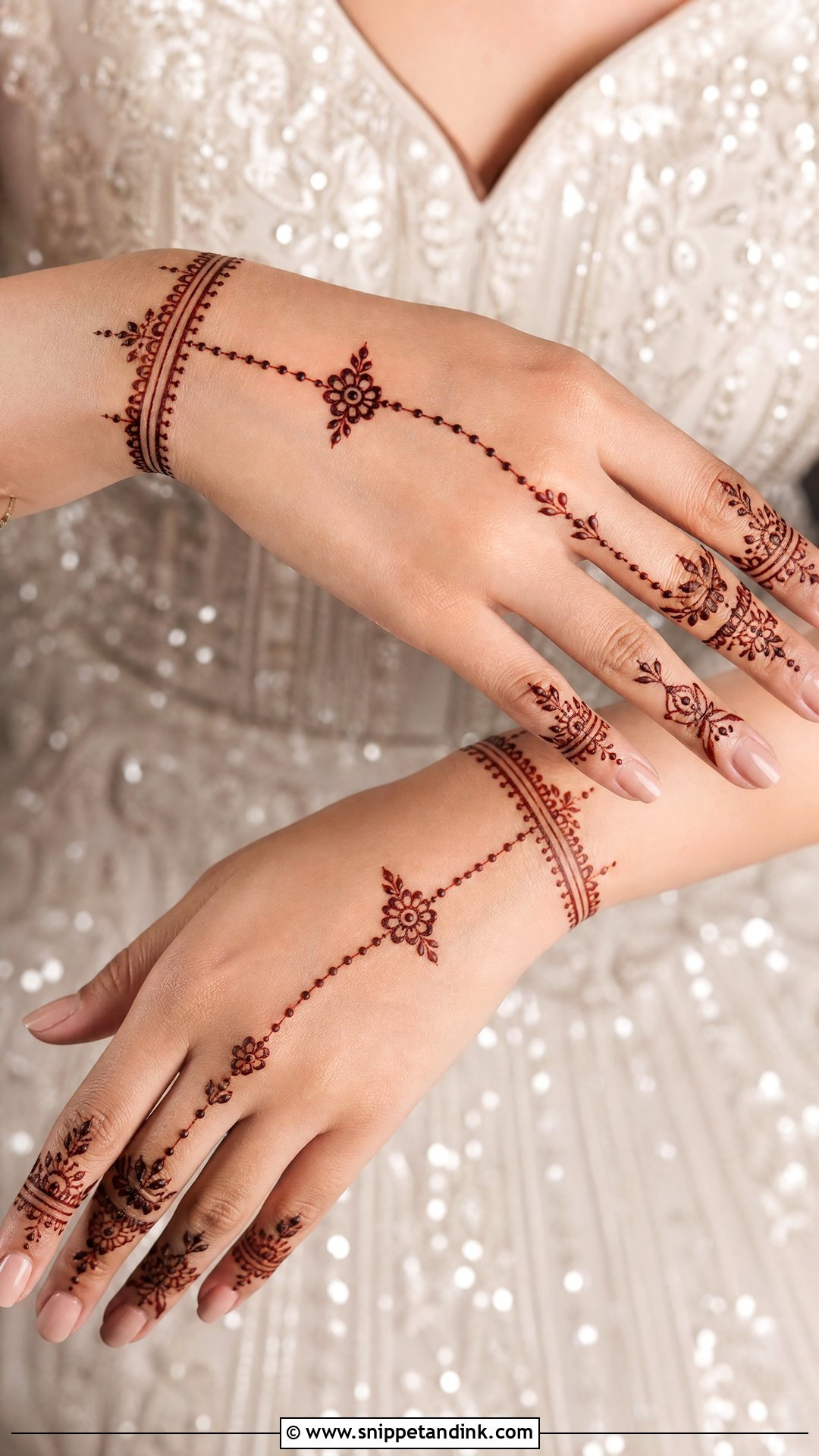
Jewelry mehndi imitates hand ornaments: haath phool, rings, bracelets, chains or cuffs, linked from the fingers to the wrist with dotted chains, floral links and slim bands. It’s a lighter look that still feels special. A bridal version can cover the back of the hand, fingers and wrist with plenty of open skin. It works for engagements, haldi, nikah, receptions and modern events. Wear real bangles and rings over it and check the placements line up; I sometimes adjust the band to sit just above where your bangles will rest.
18. Rajasthani Bridal Mehndi Design
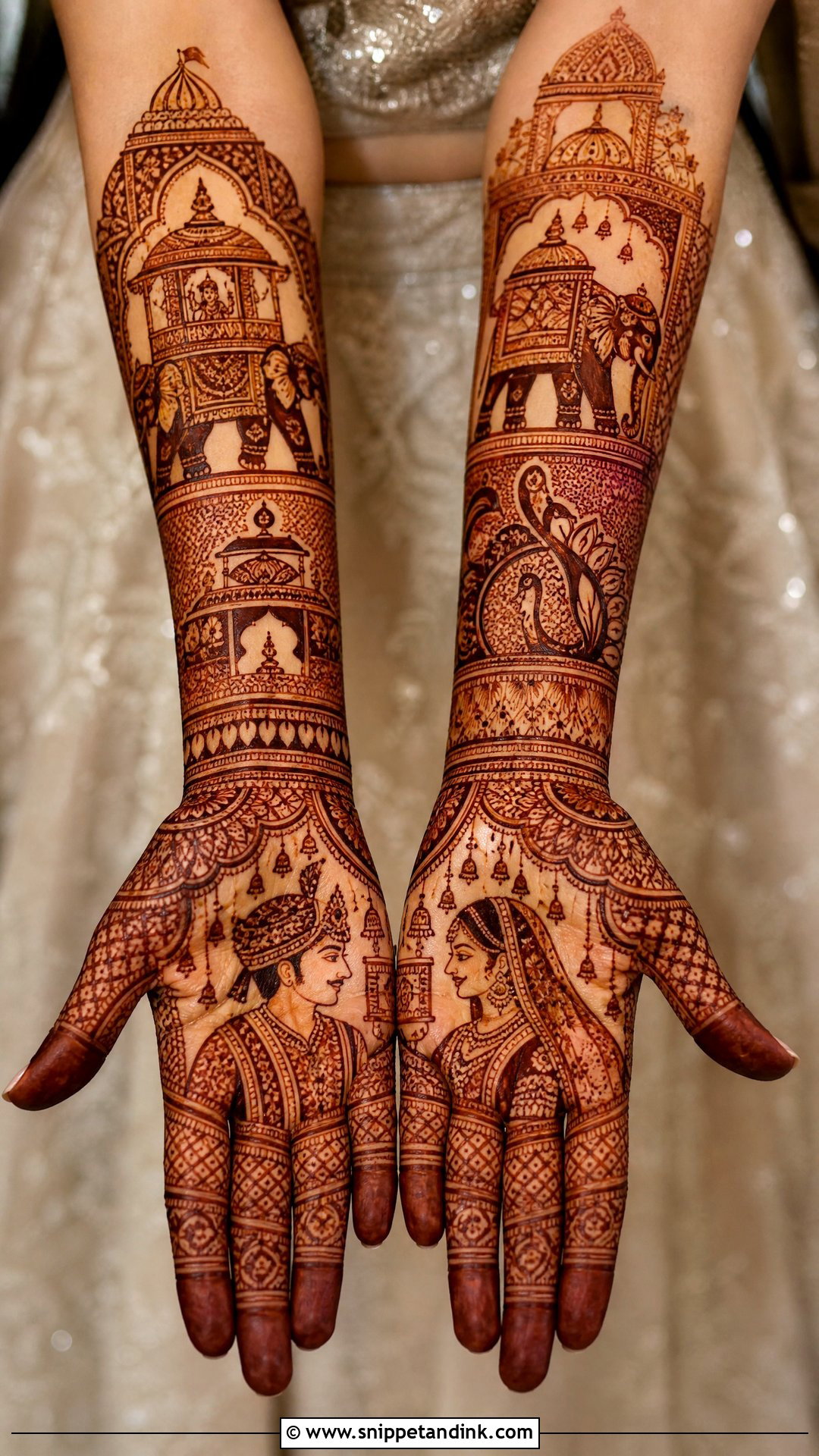
Rajasthani mehndi is the most narrative style: bride and groom portraits, elephants, peacocks, palanquins, mandap scenes, paisleys and heavy filler, usually covering hands and forearms with little empty space. It’s being updated with cleaner portrait frames and better-organized sections, so the story is easier to read. If you love traditional Indian artistry and want a dramatic dulhan look, this is it. It takes more time than any other style here, and it is worth booking an artist who specializes in it.
19. Moroccan Bridal Mehndi Design
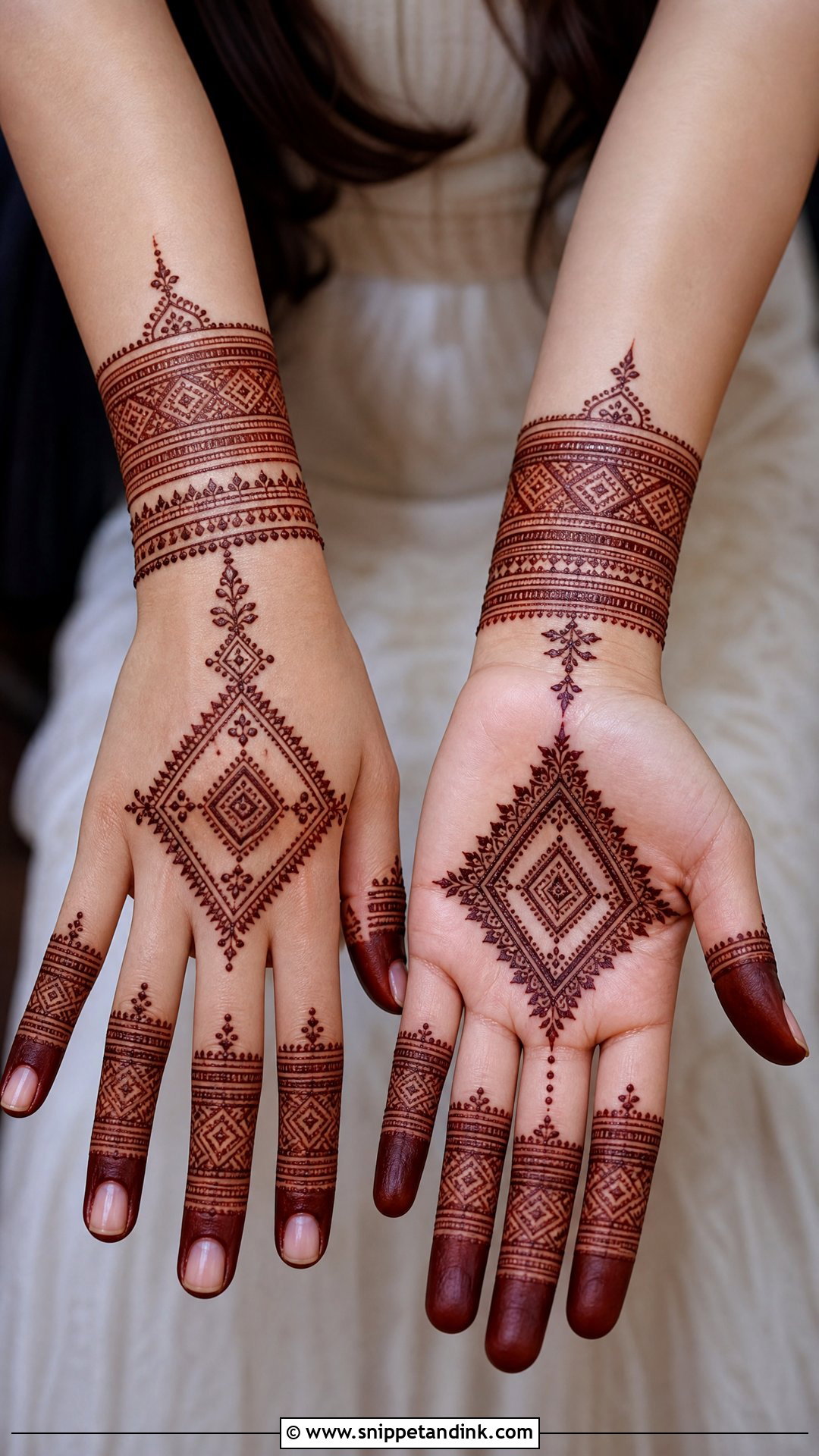
Moroccan designs are geometric rather than floral: diamonds, grids, triangles, lines, dots and symmetrical shapes. A bridal version can cover palms, fingers, wrists and back hands with repeating patterns. Some brides now mix it with softer florals and Indian borders for a warmer wedding feel. It’s a strong option if you want something different from paisleys, and it suits contemporary outfits. Straight lines are less forgiving than curves, so the artist’s hand needs to be very steady.


20. Gulf Bridal Mehndi Design
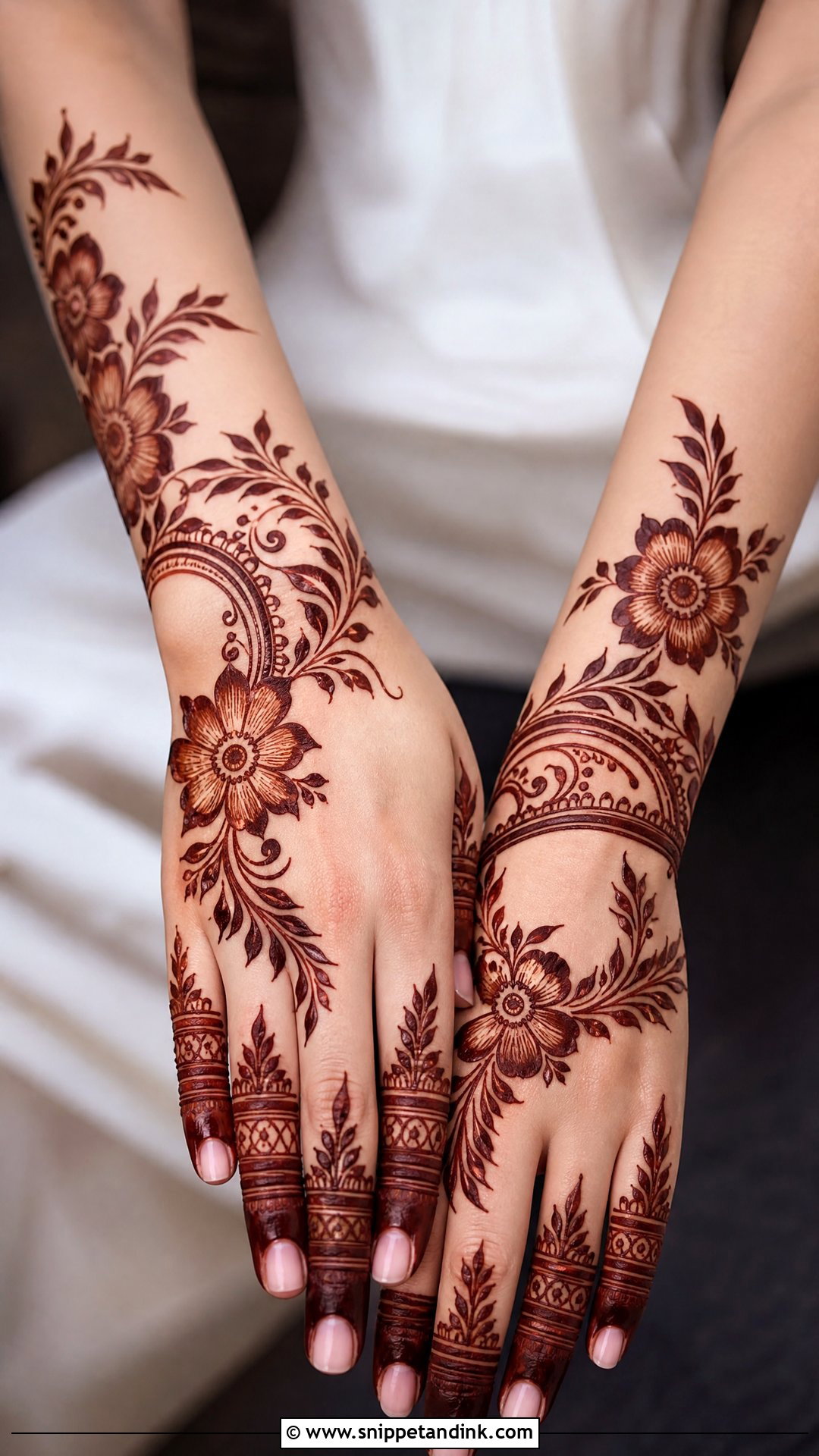
Gulf or Khaleeji mehndi is bold: large shaded florals, flowing vines and wide open spaces, covering fingers, back hand, wrist and forearm with big motifs instead of fine filler. It’s glamorous without feeling packed. Shaded flowers, leafy trails, curved bands and dramatic fingertips are typical. The large shapes stand out clearly against the skin in photos. Because it uses fewer fine details, it’s also faster to apply than a full Indian set, which helps if your timeline is tight.
From Orange Paste to Deep Maroon
Aftercare decides how dark the stain gets. These are the steps I give every bride.
- Let the paste dry, then dab on a light lemon and sugar mix so it stays stuck to the skin.
- Keep the paste on for at least six to eight hours. Overnight is better; wrap hands loosely in tissue to protect the sheets.
- Scrape the dry paste off with a blunt edge. Don’t wash it off.
- Keep water off the design for as long as you can, ideally the rest of that day.
- Keep your hands warm. Stains darken more on warm skin than cold.
- Wear gloves for dishes and cleaning until after the wedding.
Why I Won’t Use Black Henna or Instant Cones
Real henna is never black, and it never stains instantly. Pastes sold as black henna or instant dark cones often contain PPD or other chemical dyes, which can cause serious skin reactions, blistering and scars. Ask your artist whether they mix their own paste and what’s in it. Fresh natural paste is usually made from henna powder, lemon or water, sugar and essential oils. If you have sensitive skin, ask for a small patch test a week before.
Every Ring Photo Is Also a Mehndi Photo
Start with the mood you want rather than the number of motifs. Traditional brides usually settle on Indian, Rajasthani, peacock, paisley or full-hand work. A cleaner finish points to Arabic, minimal, jewelry, mandala, Moroccan or Gulf-inspired designs. Names, initials, dates or portraits add the personal layer. Then check it against your outfit, your jewelry, your ceremony and how long you can sit. A design that suits you will be in photographs you look at for decades.
You'll Like These Ideas:



Leave a Reply