
When a bride sits down with me, the first question isn’t which motif she likes. It’s what will be on her wrists, how long her sleeves are, and how many hours she can give me. Henna has to live alongside chooda, kaleeras, rings and a heavy dupatta, and it keeps darkening for a day or two after I’ve gone. Some brides want dense Indian dulhan mehndi from fingertips to forearms; others want Arabic trails, a jewelry style back hand or a single palm mandala. These are thirty complete bridal directions, each with what I’d plan for before the cone comes out.
How Far Up the Arm Should Bridal Henna Go?
The length of your mehndi should be set by your sleeves and bangles, not by a photo of someone else’s arms. I ask brides to bring the outfit or a photo of it, plus the chooda or bangles they’ll wear.
- Elbow or three quarter sleeves: stop the design just below the sleeve hem so the work doesn’t disappear under fabric.
- Sleeveless or cap sleeve blouses: a design to the elbow or above shows fully and looks balanced.
- Chooda or a deep stack of bangles: these cover a wide band of wrist and forearm. I keep that zone lighter and put the detail above and below it.
- Sarees with long pallus over one arm: the other arm shows more, so make sure both hands are equally finished.
There is no rule that bridal henna must reach the elbow. A design that ends cleanly at the wrist often looks more polished than one that runs out of detail halfway up the arm.
1. Full Hand Bridal Mehndi Design
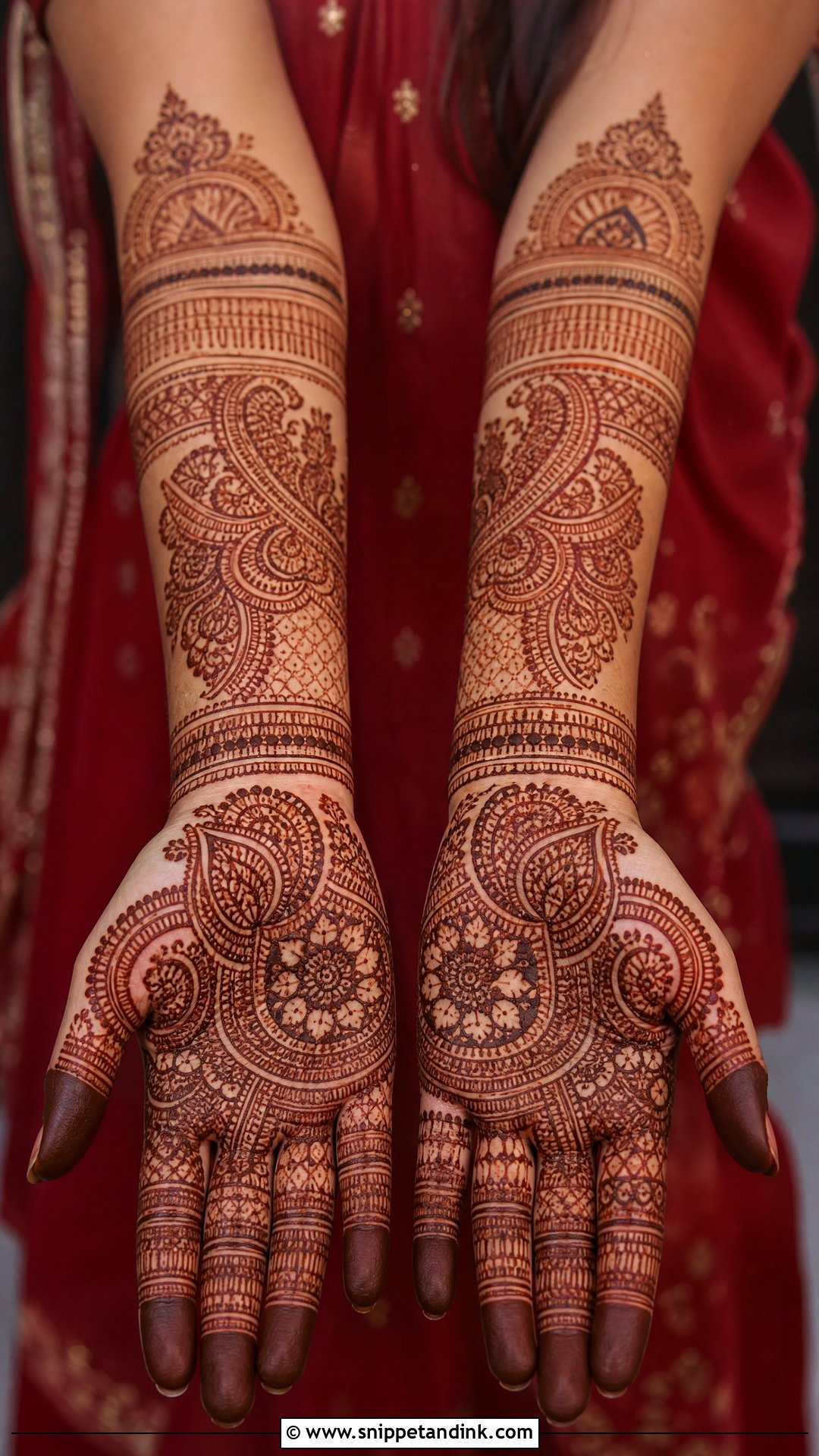
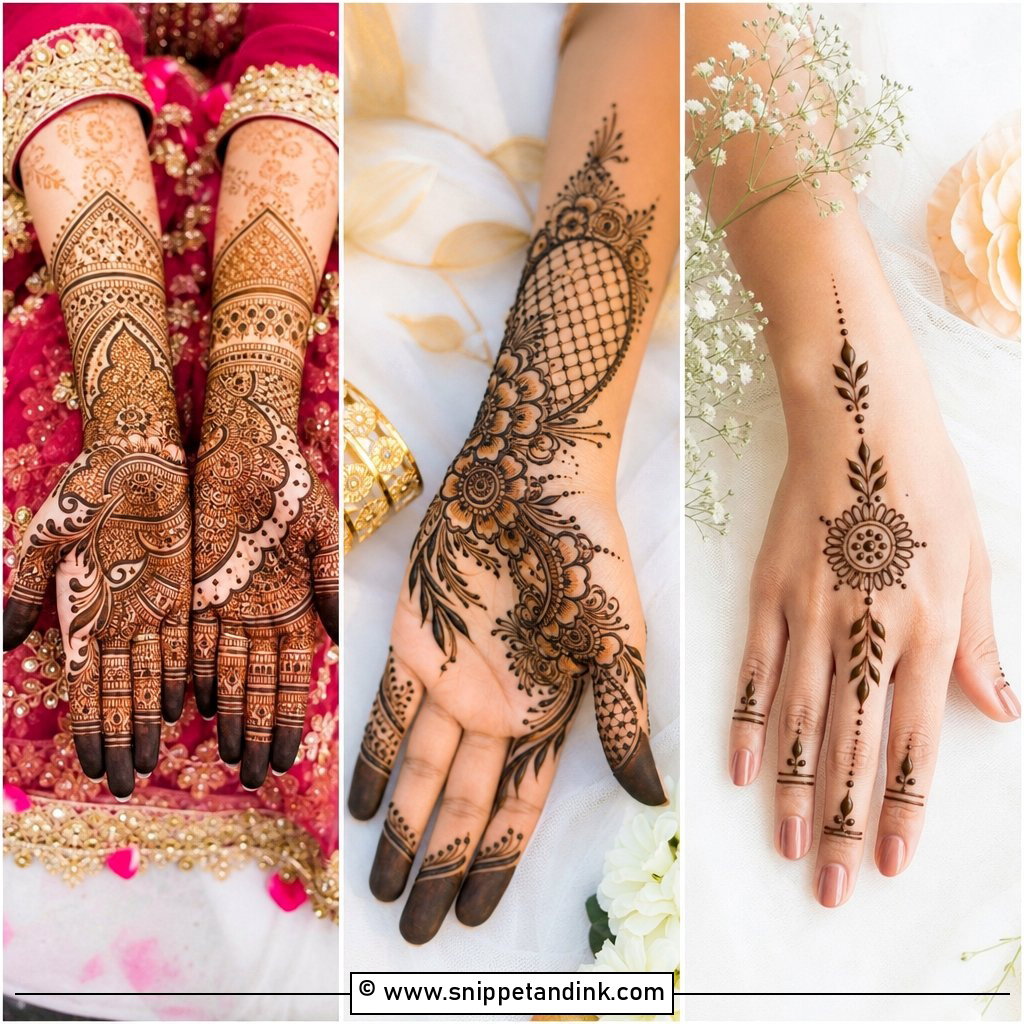
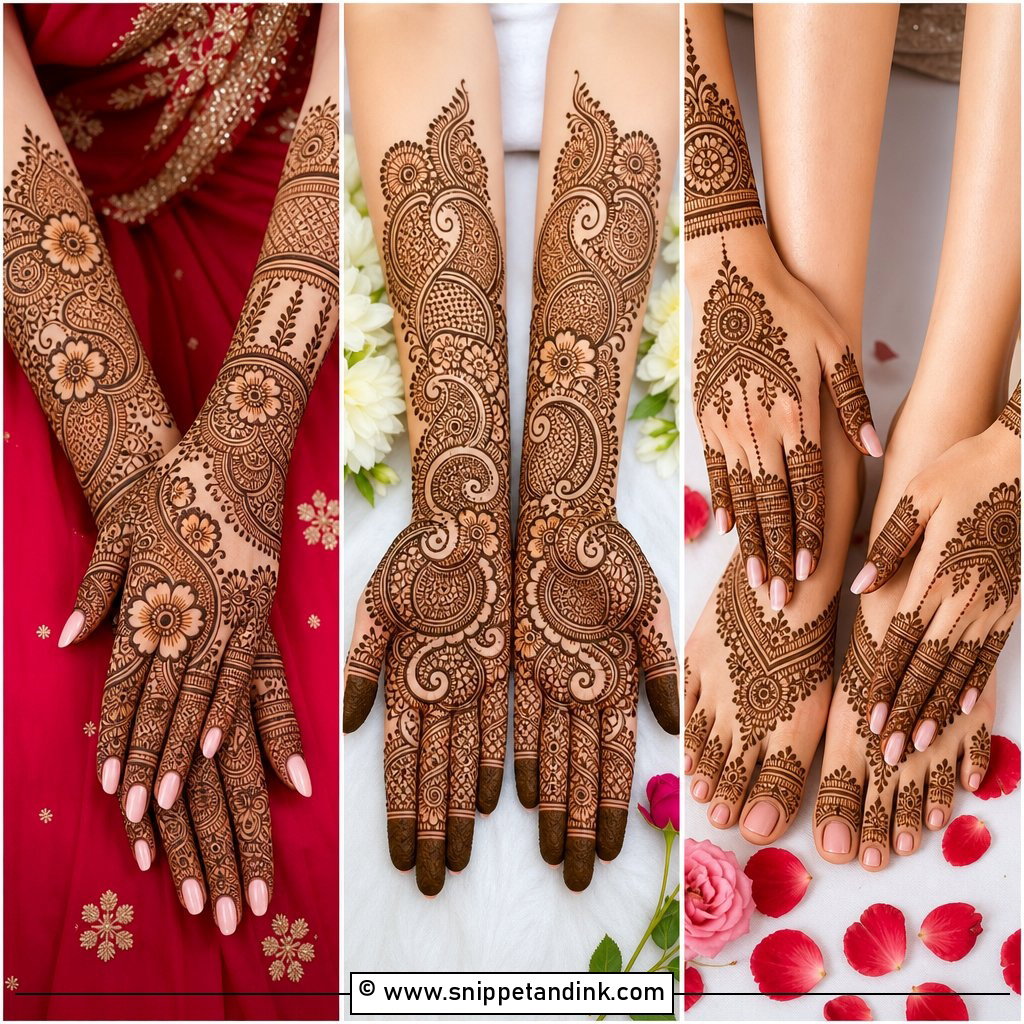
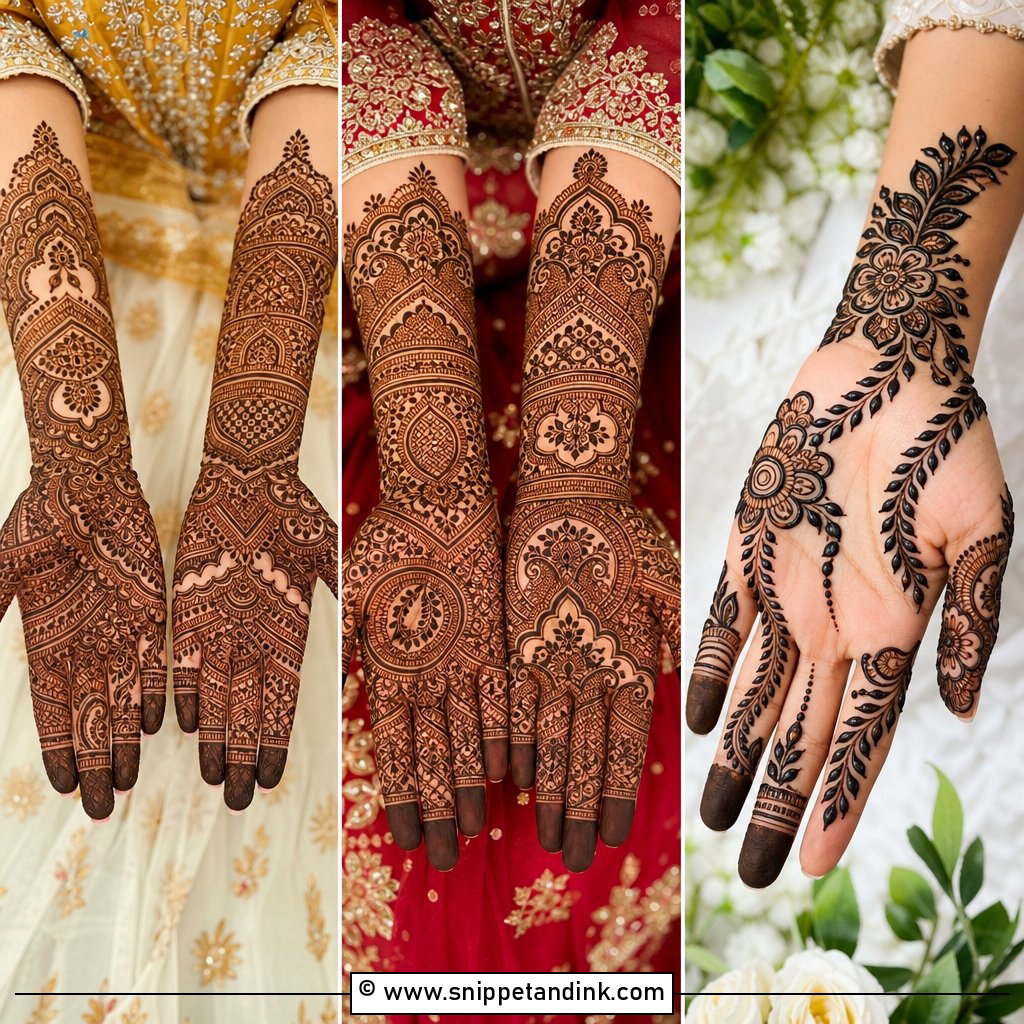
Full coverage reads as bridal instantly, but it’s a long sitting and a long dry, so I plan it around your bangles first. The palm carries the main story, the back hand takes jaali or banded rings, and the forearm finishes the line under the sleeve. If the spacing isn’t mapped before I start, the hand ends up as an even brown texture with nothing to look at. Ask for a couple of thin channels of bare skin between sections; they make the stain look richer, not emptier.
2. Indian Bridal Mehndi Design
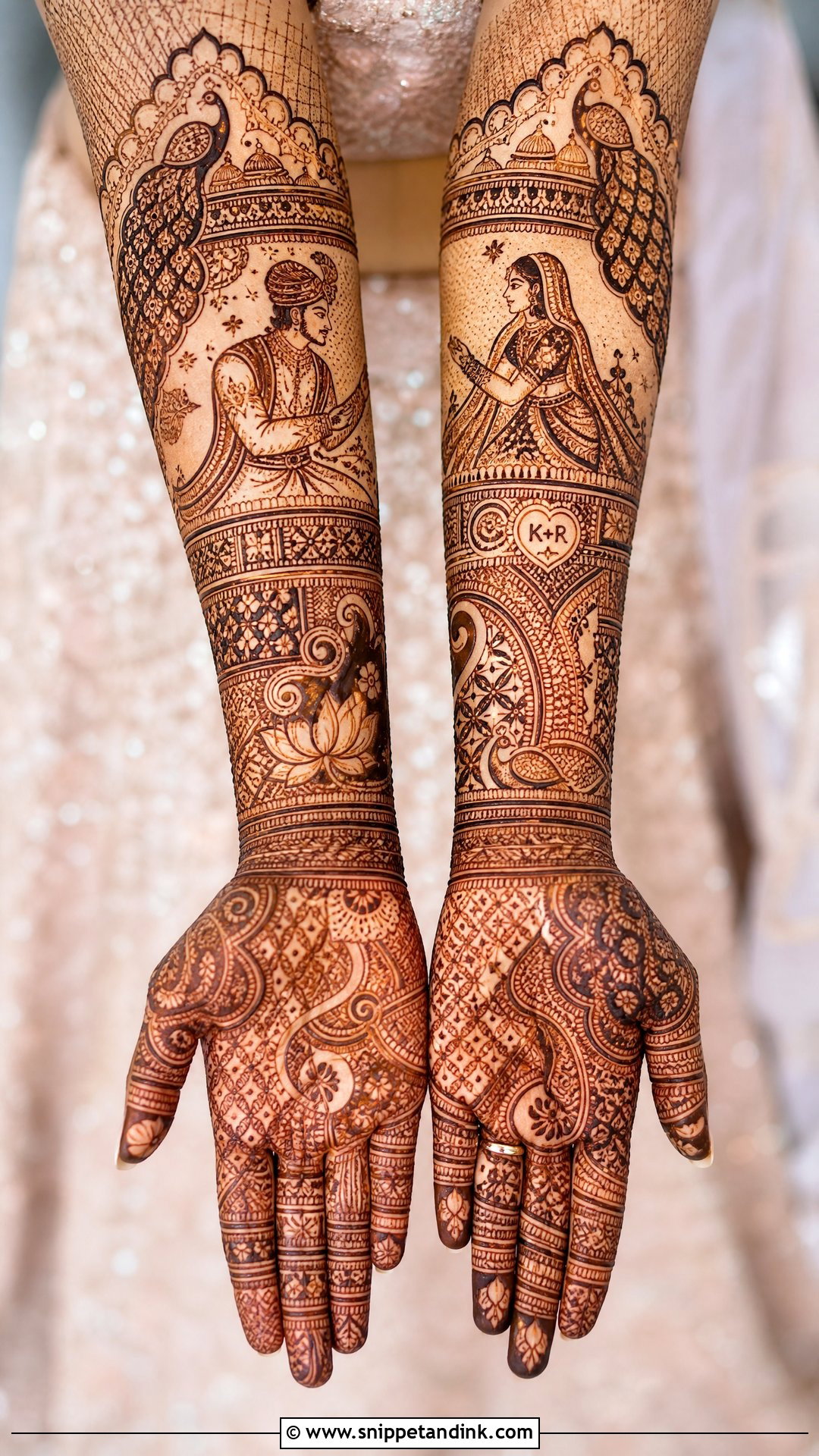
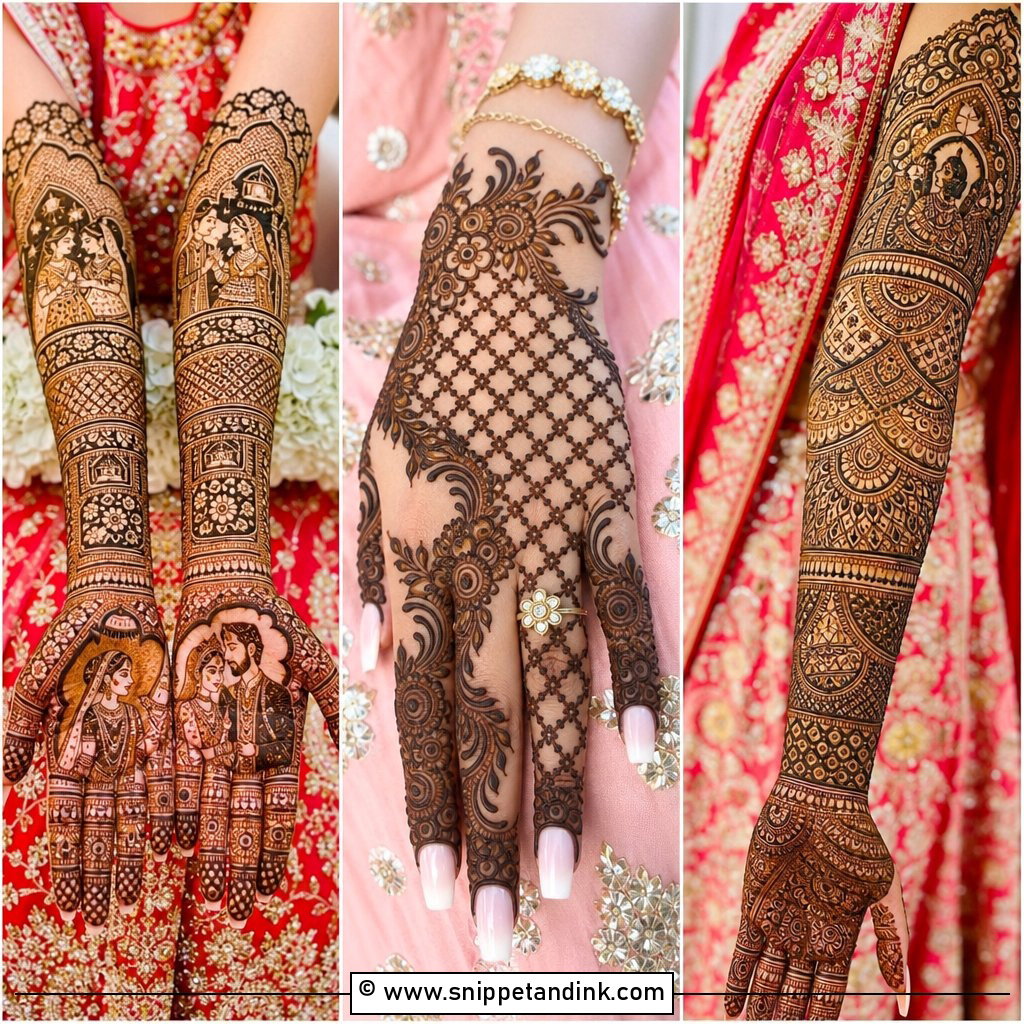
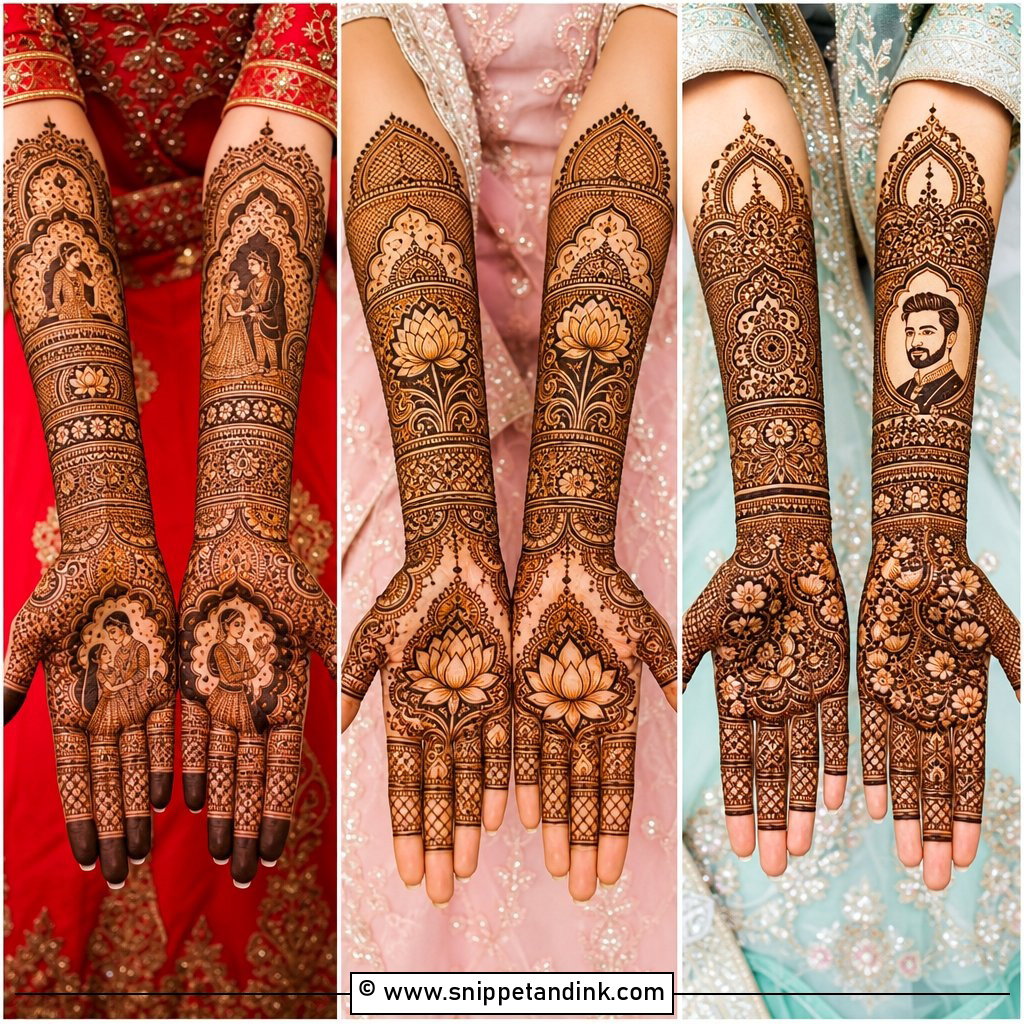
Indian bridal mehndi design is the densest and most symbolic work I do: kalash, doli, elephants, peacocks, lotus and hidden initials, with fingers filled with tiny checks and leaves. One palm might show the bride and the other the groom or a ritual. Fine lines like these depend on fresh paste; old or overworked henna gives a thin, patchy orange. Expect a sitting of several hours for both hands to the elbow.
3. Arabic Bridal Mehndi Design
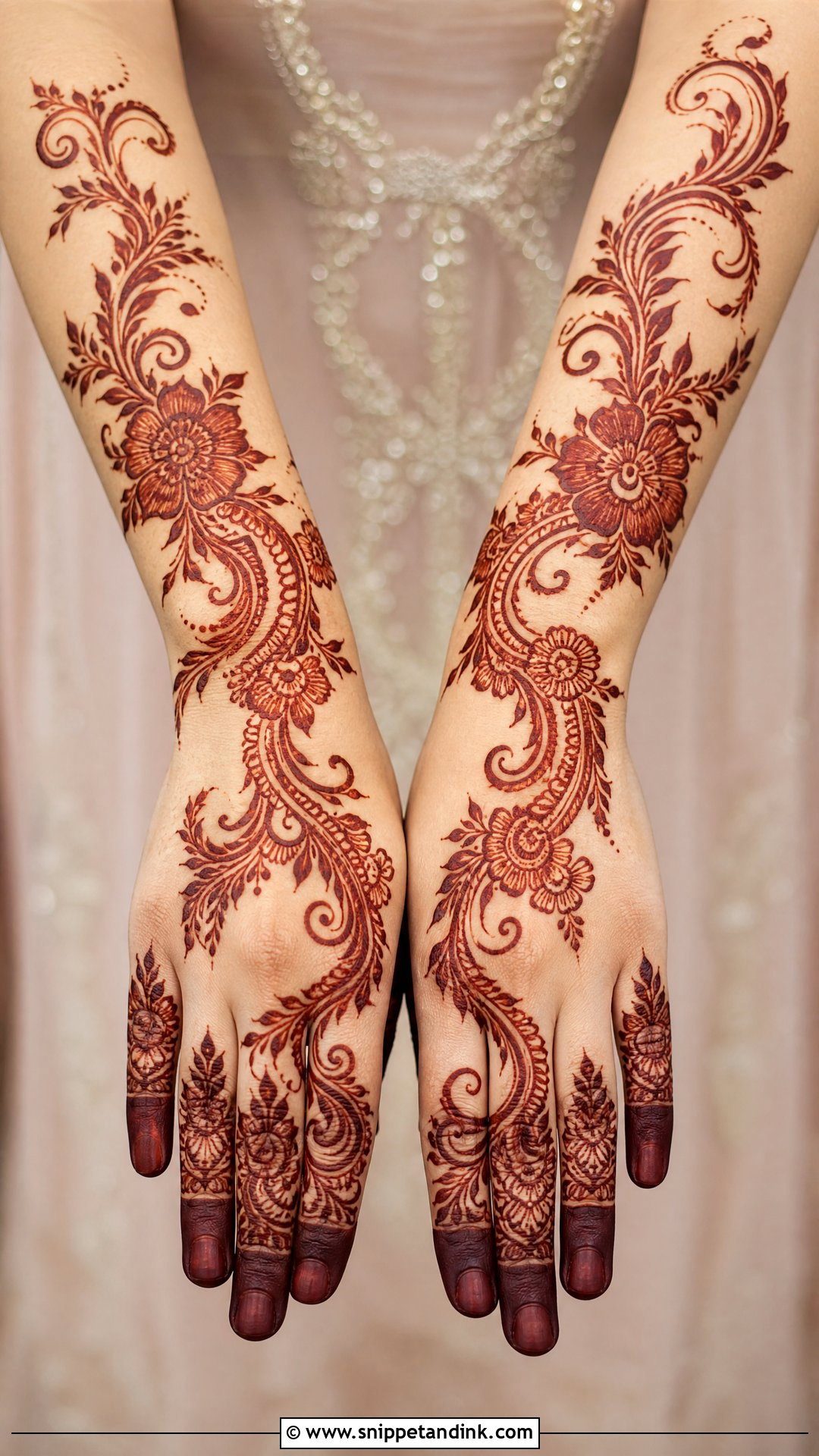
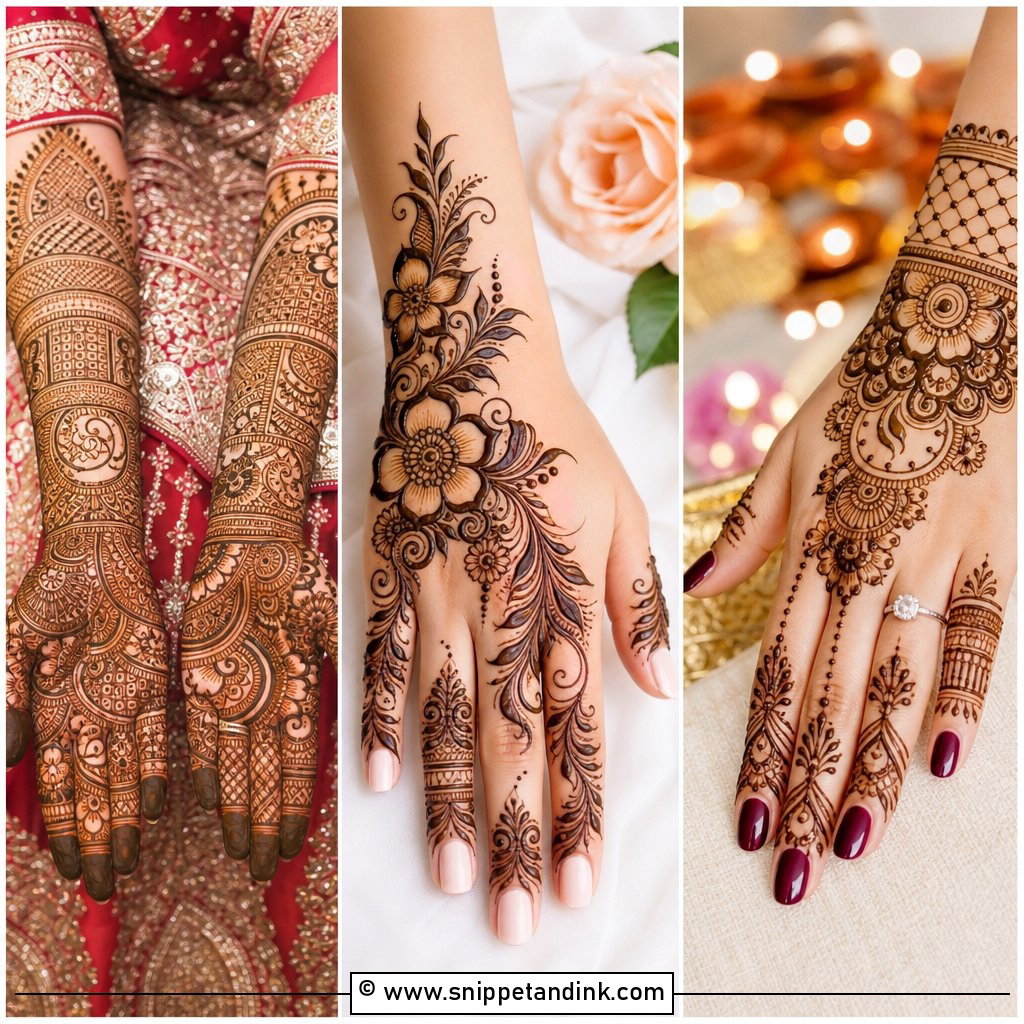
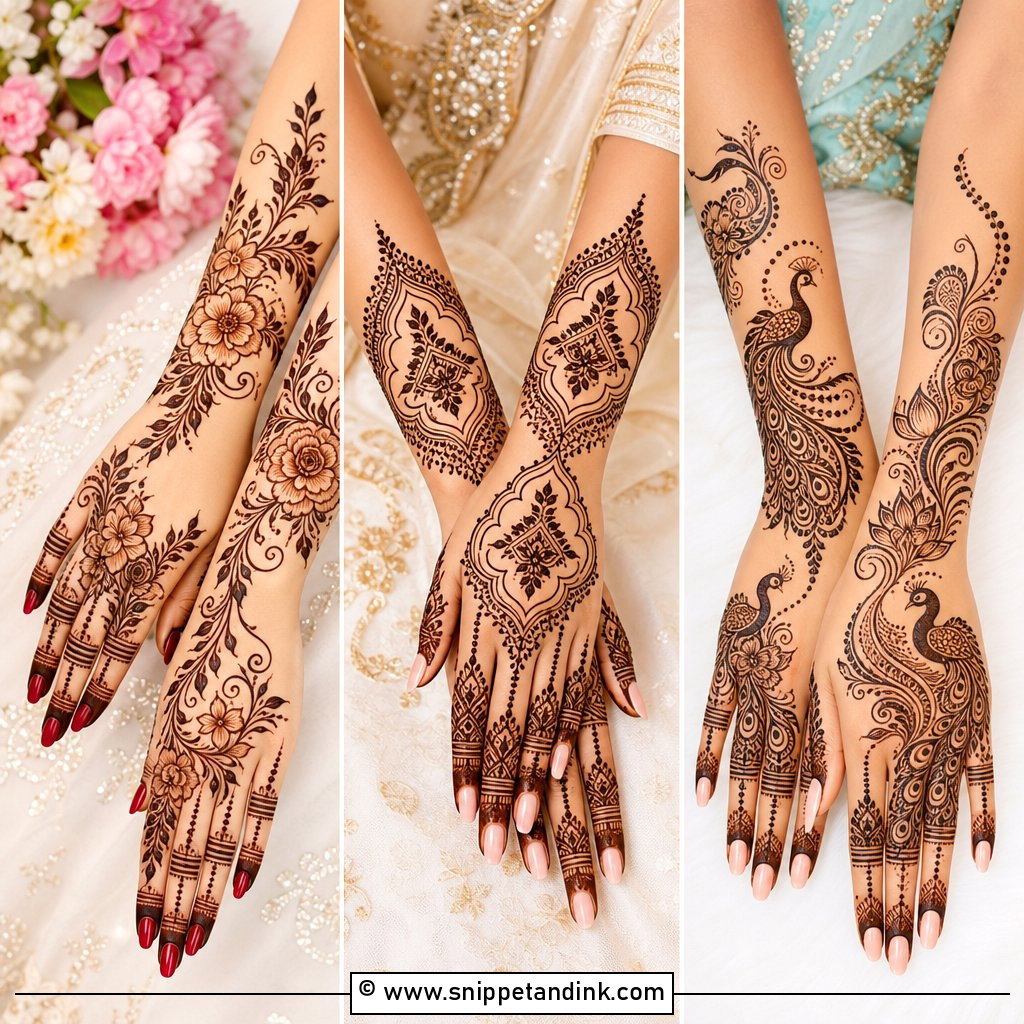
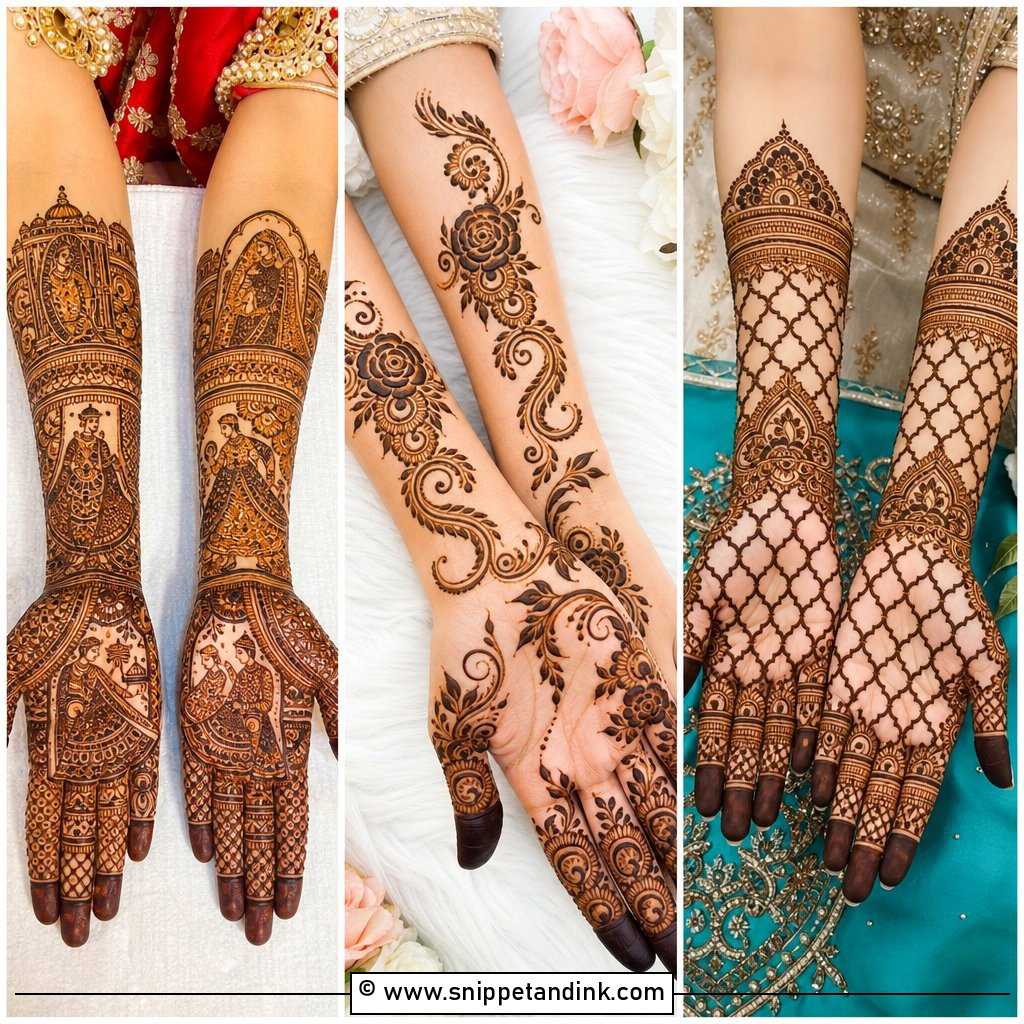
Arabic work moves diagonally across the hand in bold flowers, vines and shaded paisleys, leaving plenty of skin open. Diagonals make the hand look longer, which is why brides with shorter fingers often like it. It’s quicker to apply than Indian work and dries faster, a real advantage if the mehndi night is packed with guests. For the wedding version I fill the fingertips more and add a layered cuff at the wrist.
4. Indo Arabic Bridal Mehndi Design
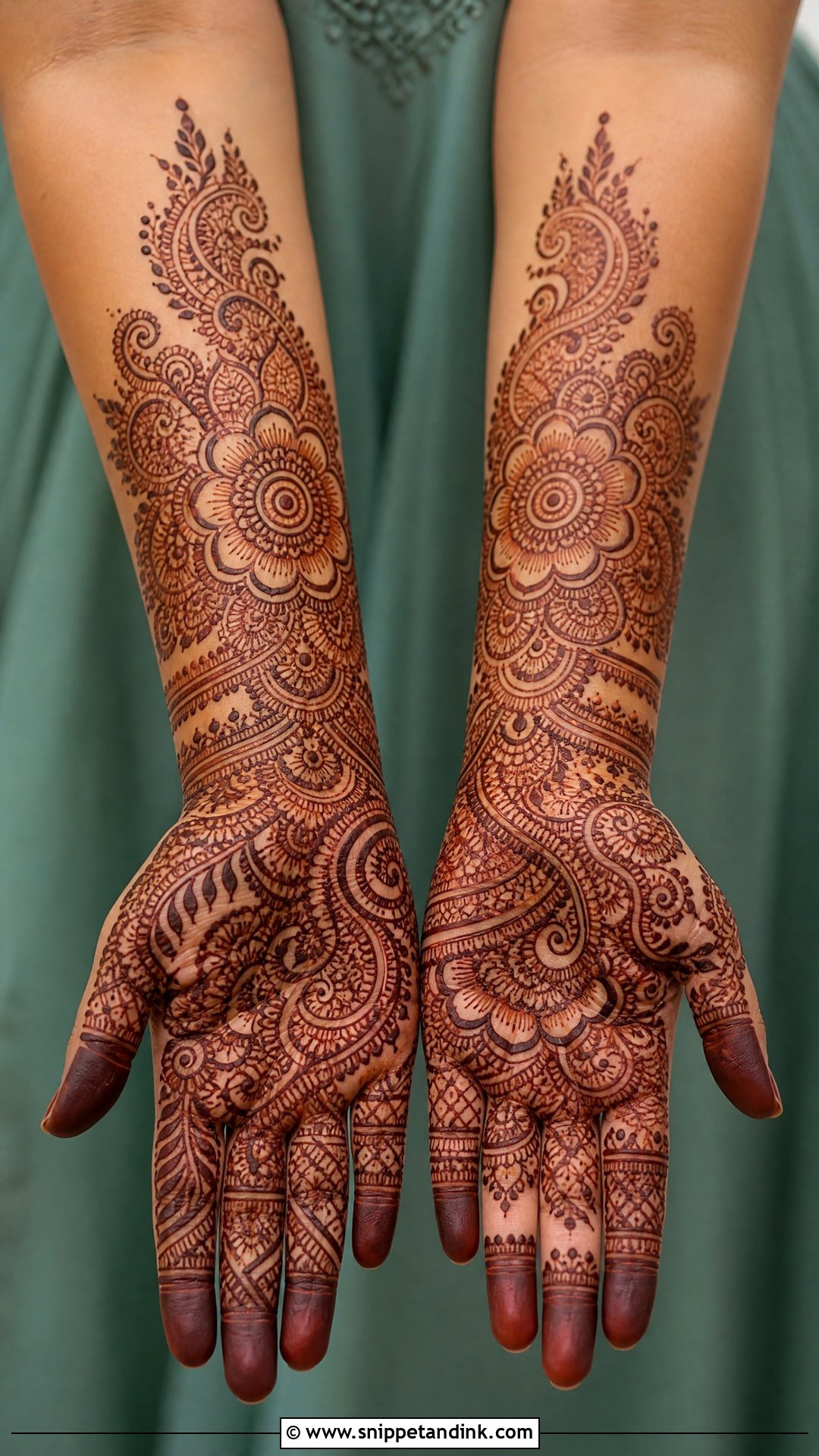
Indo Arabic bridal mehndi design is my usual suggestion when a bride says she wants detail but hates the look of a fully packed hand. I draw Arabic trails as the frame, then fill the large petals and paisleys with Indian detail. The palm can go denser for ritual photos while the back hand stays airier. It sits comfortably with both lehengas and sarees.
5. Royal Bridal Mehndi Design
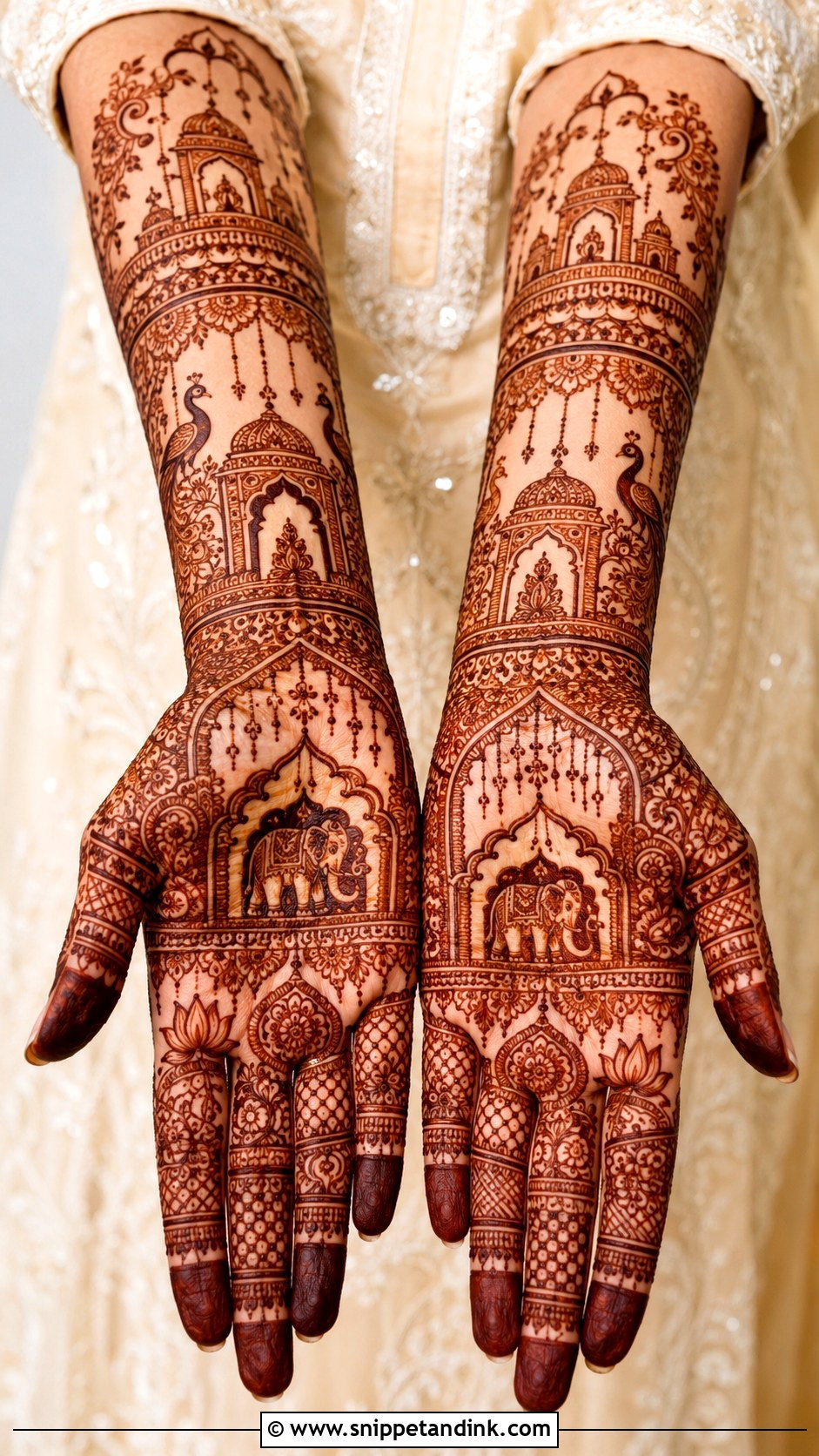
Royal designs use palace arches, elephants, chandelier drops and mirrored layouts that carry up the forearm like architecture. The danger is scale: tiny arches drawn under heavy fill vanish once the stain deepens. I keep the royal elements a size larger than everything around them and put the fill only in the background. It suits heavy jewelry and formal portraits.
6. Simple Bridal Mehndi Design
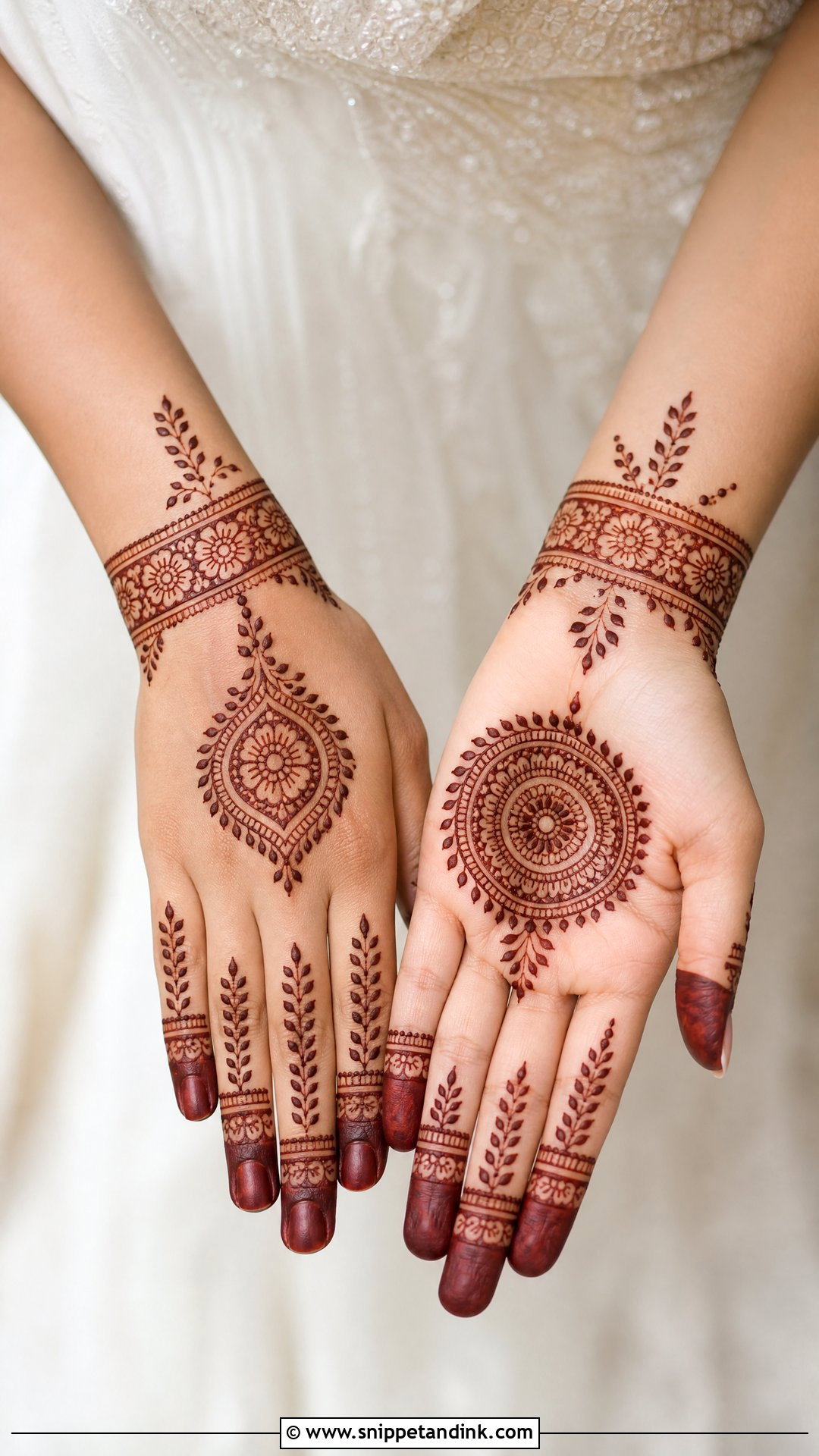
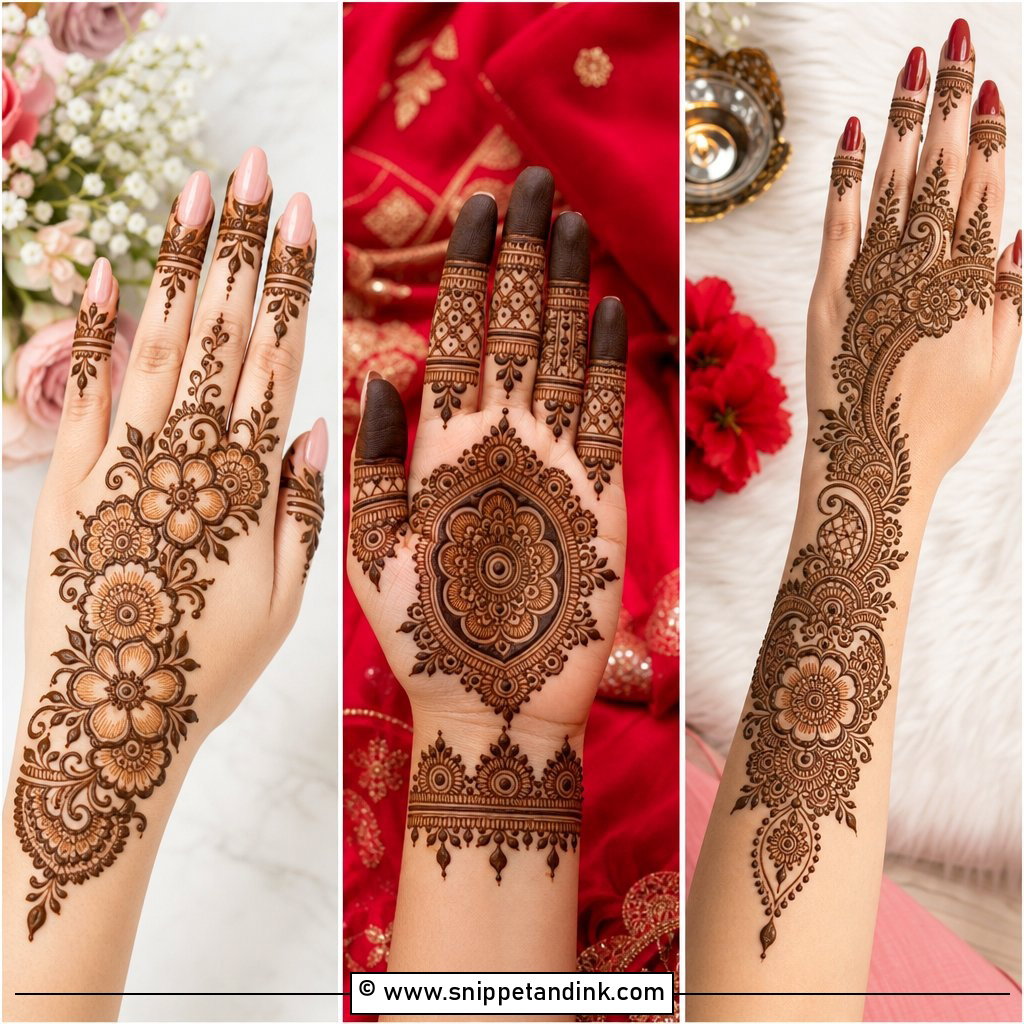
A simple bridal design lives or dies by its lines. With a palm mandala, a floral wrist band, filled fingertips and a light back hand, there’s nowhere to hide a wobble. I keep the line slightly thicker than in dense work so it stains clearly. It suits intimate ceremonies and courthouse weddings, and brides who’d rather not sit for half a day.
7. Modern Bridal Mehndi Design
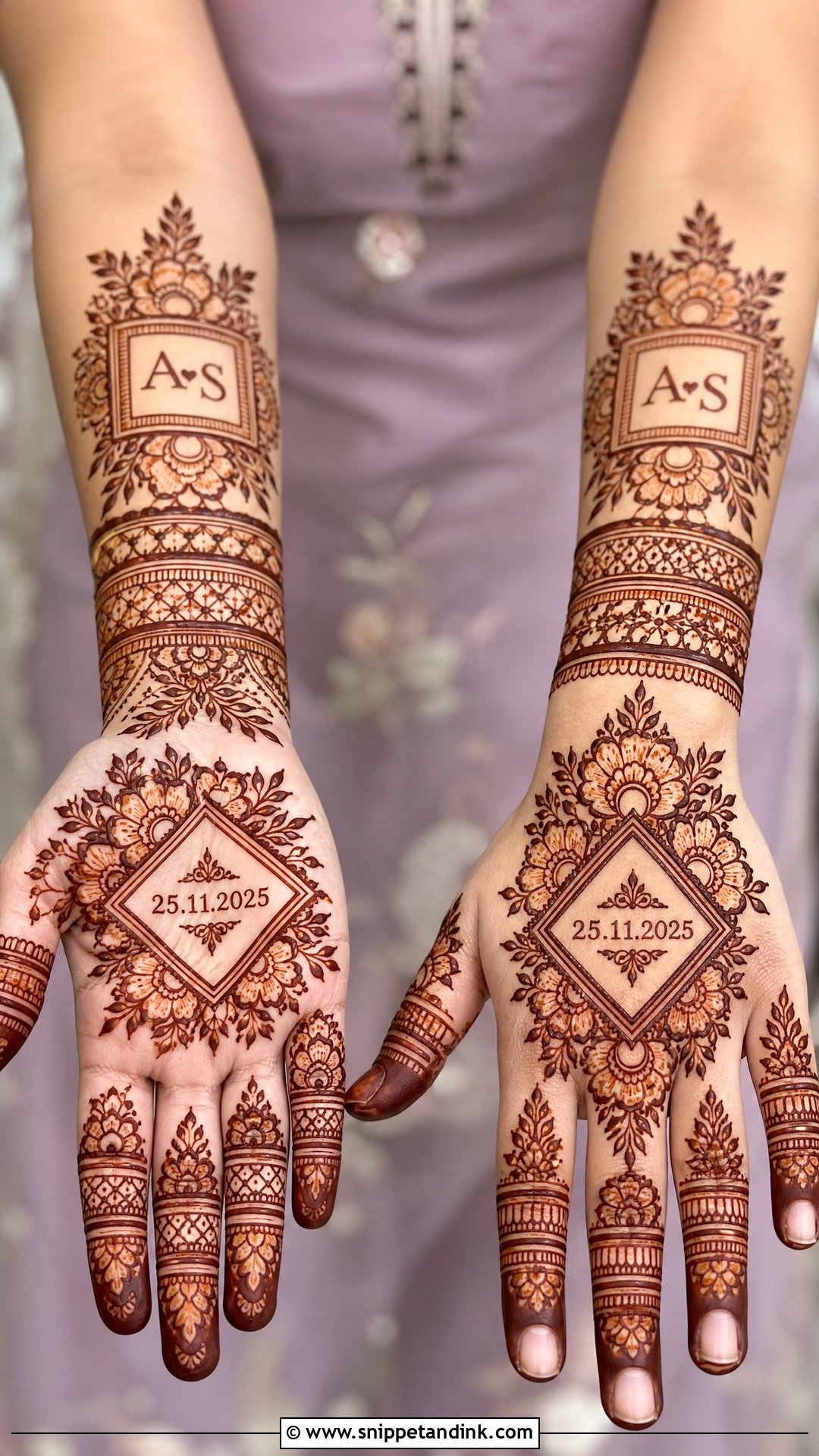
Modern layouts lean on open spacing and personal symbols: a date, initials, a small portrait, geometric frames, different designs on each hand. The trap is collecting trendy motifs without a theme, which looks random rather than considered. Pick one idea, maybe your initials or a travel symbol, and let the rest of the hand support it. It sits well with pastel outfits and fusion gowns.
8. Back Hand Bridal Mehndi Design
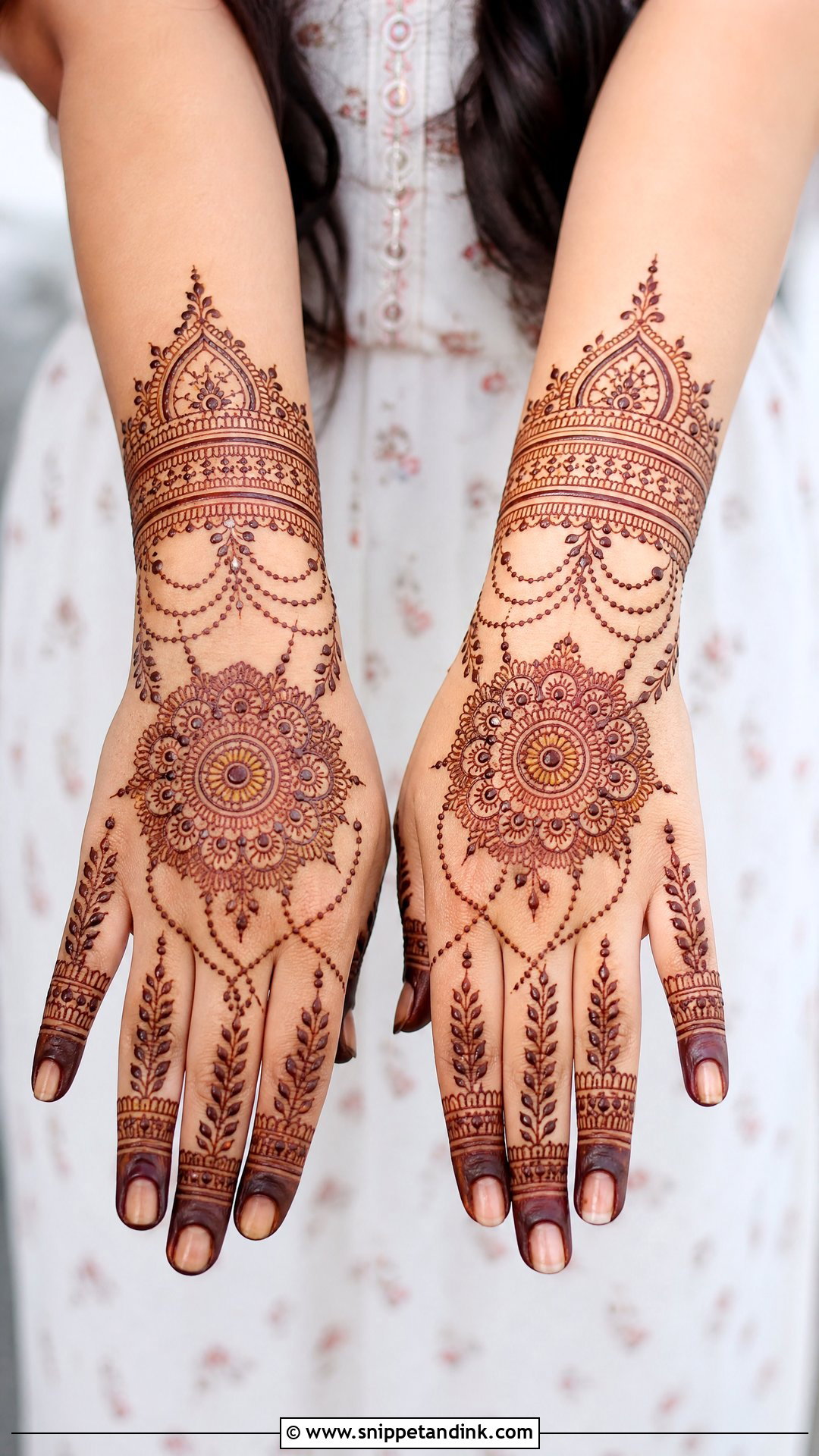
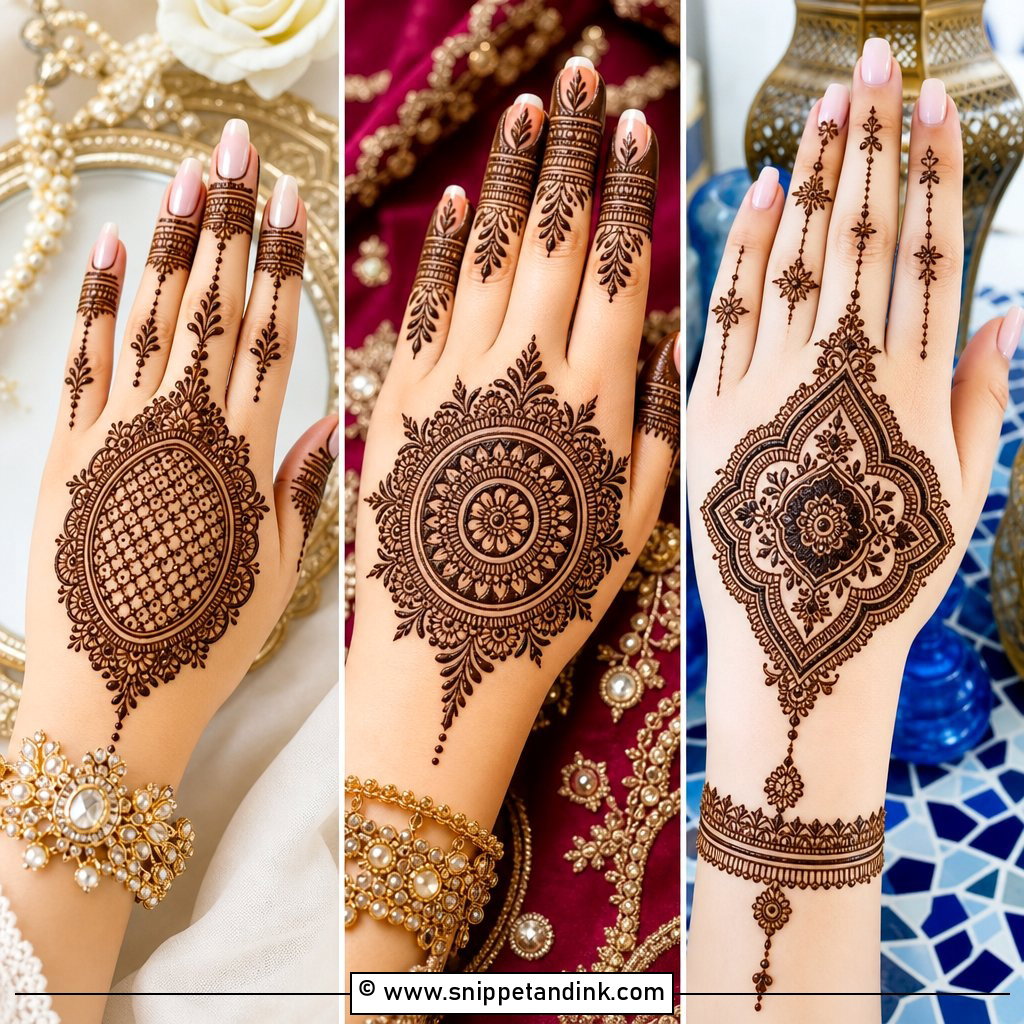
The back of the hand is in every ring, bangle and bouquet photo. I design it around your actual jewelry: if your rings and bangles are heavy, I keep the back hand to neat jaali or lace so the two don’t fight; if your jewelry is simple, bolder florals and a wide wrist band carry it. Remember the back hand stains lighter than the palm, so I draw the lines a little bolder there.
9. Front Hand Bridal Mehndi Design
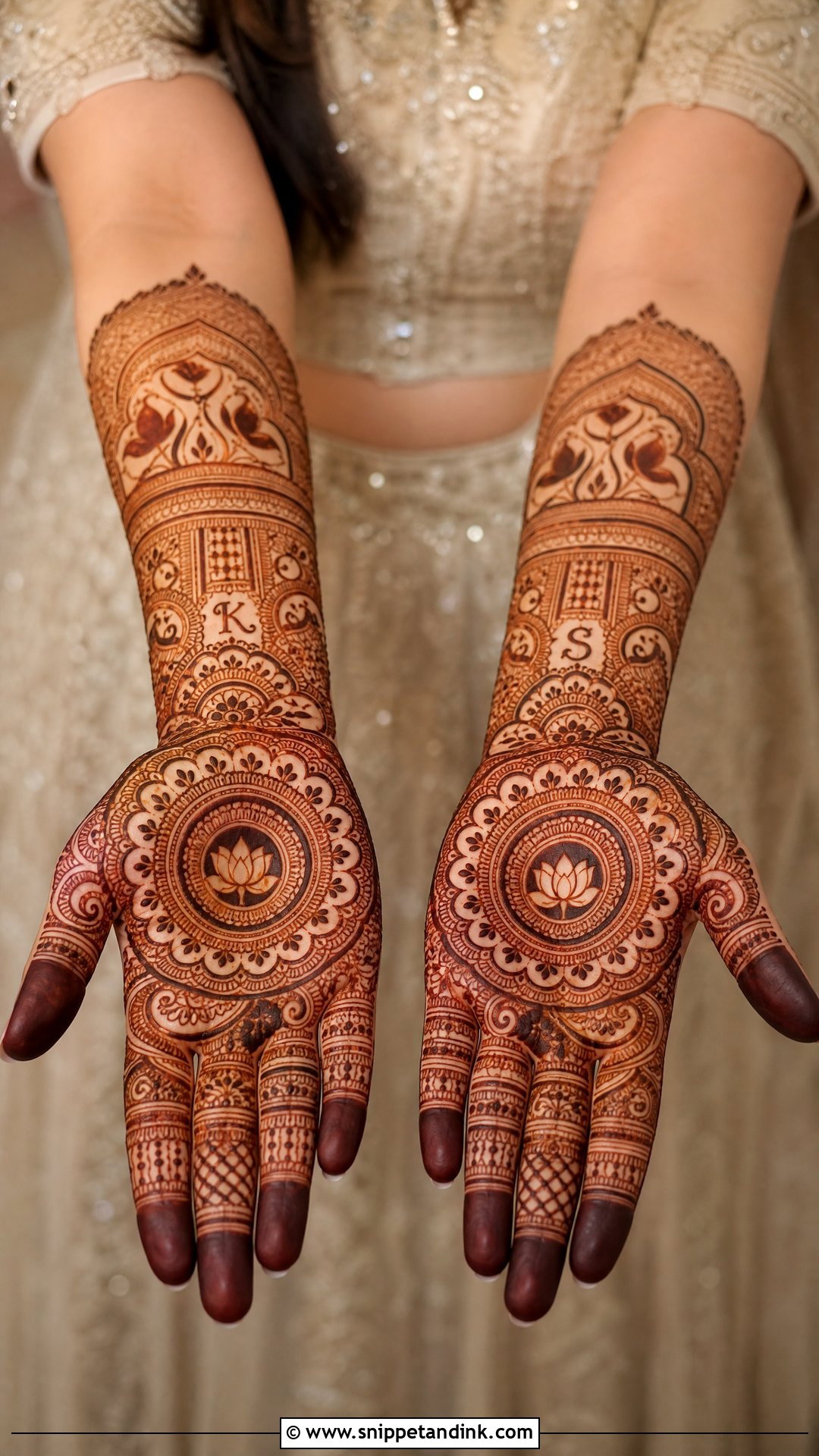
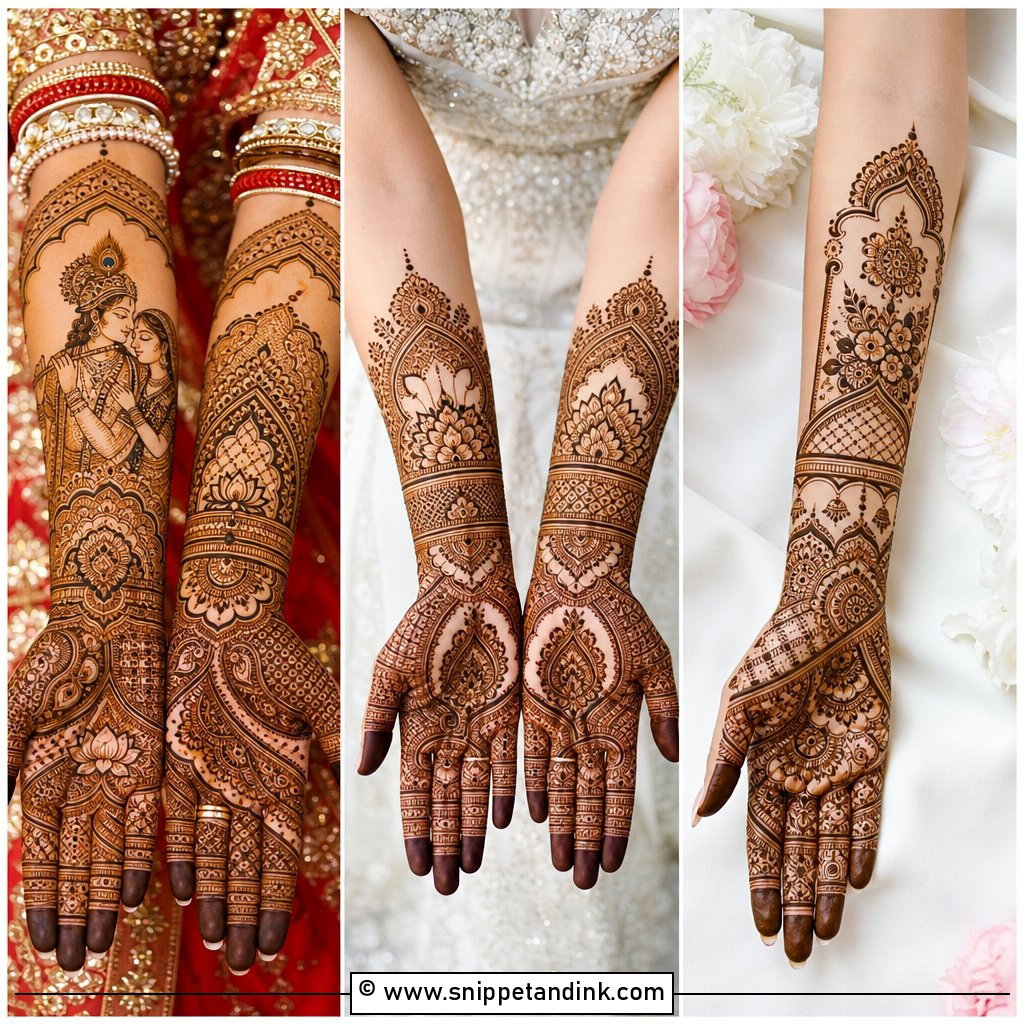
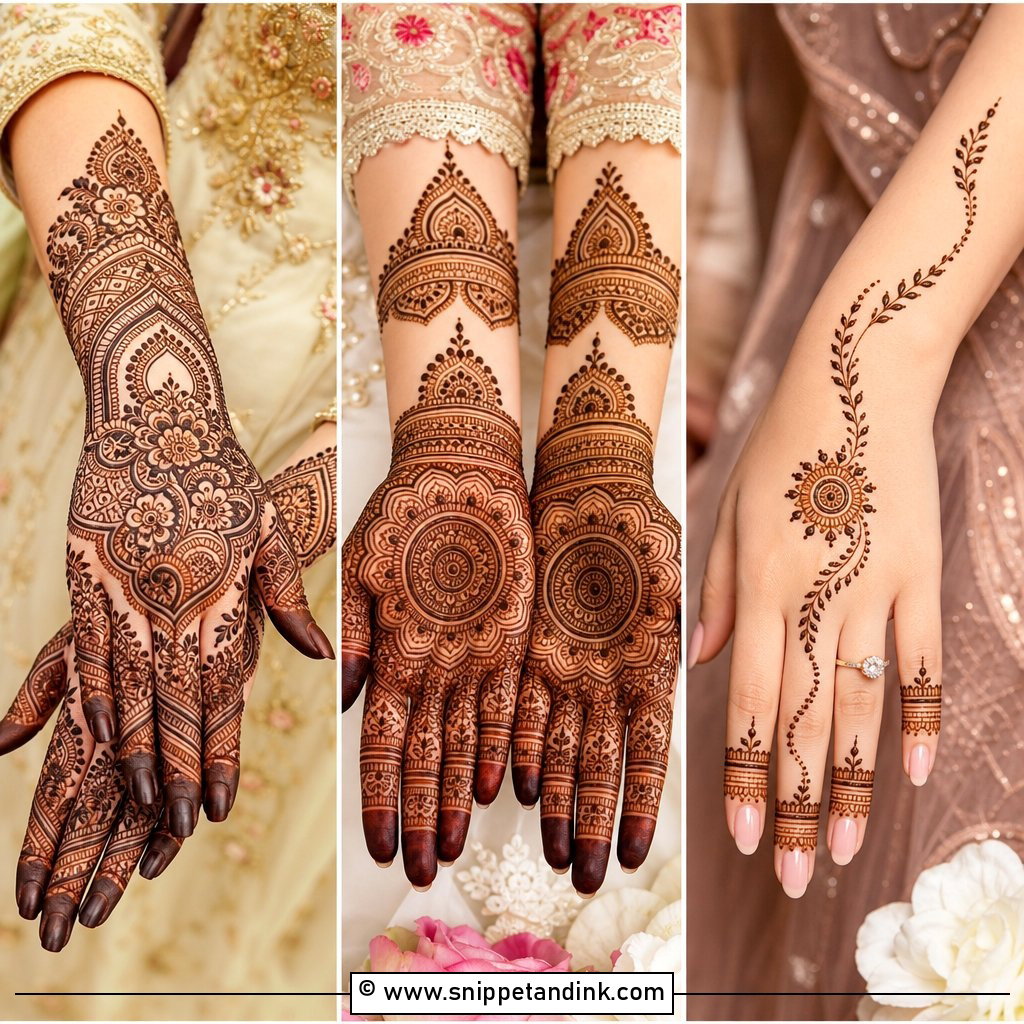
Palms are where henna stains darkest and where your family will look during the rituals. I give the palm one clear focal point, a mandala or a peacock or a couple, and let the paisley borders and fingertips support it. Hidden initials sit nicely near the wrist where the skin stays flat. Dense palms give the deep, even stain most brides picture when they think of bridal mehndi.
10. Bridal Mehndi Design With Name
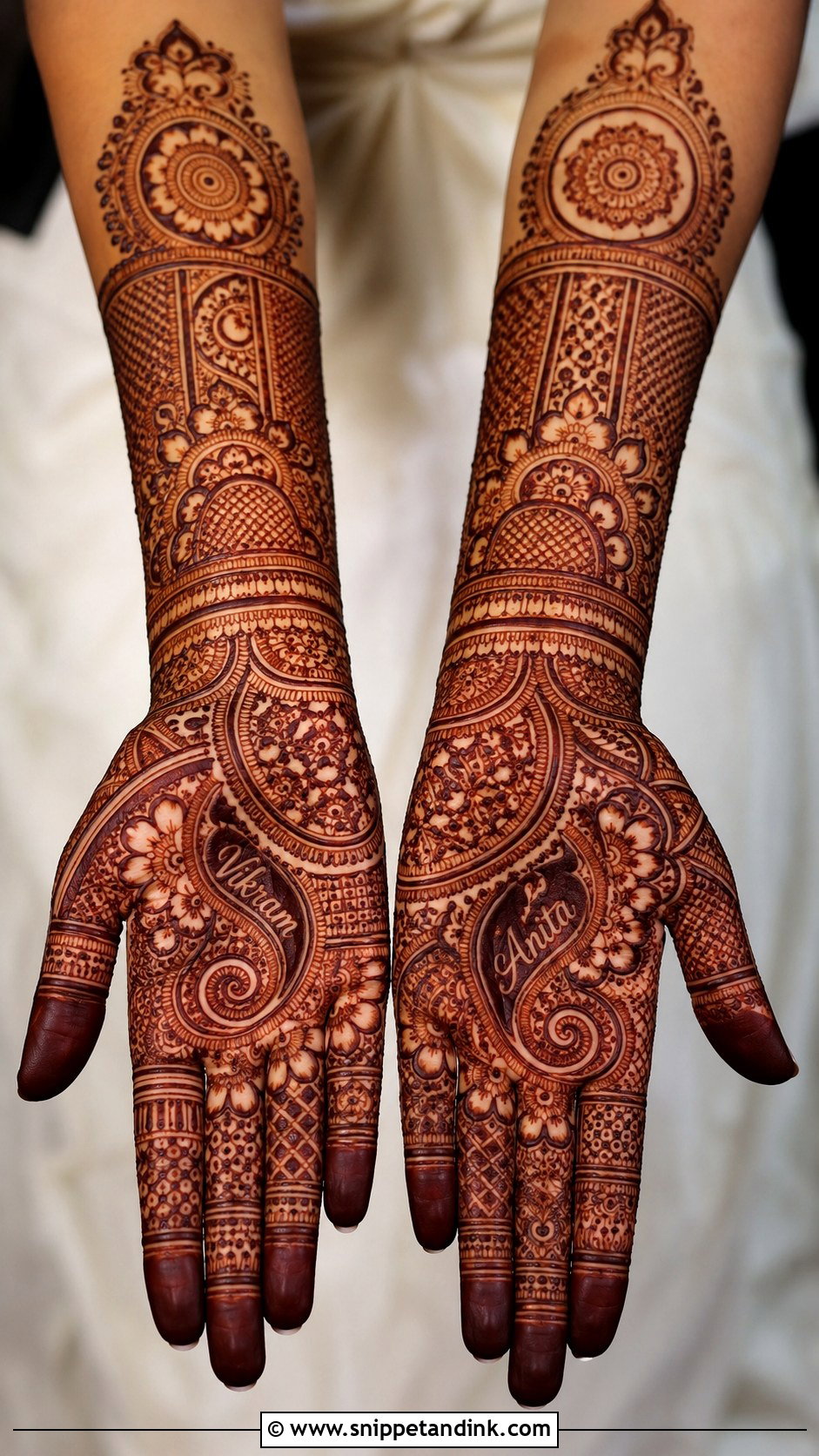
Hiding the groom’s name is a game everyone enjoys, and it works inside paisleys, vines, mandalas or wrist bands. I blend the letters into the pattern so they aren’t obvious, but I keep each letter large enough to survive the stain darkening; very small letters close up and become unreadable. Write the name down clearly before we start, especially if it’s in a different script.
11. Peacock Bridal Mehndi Design
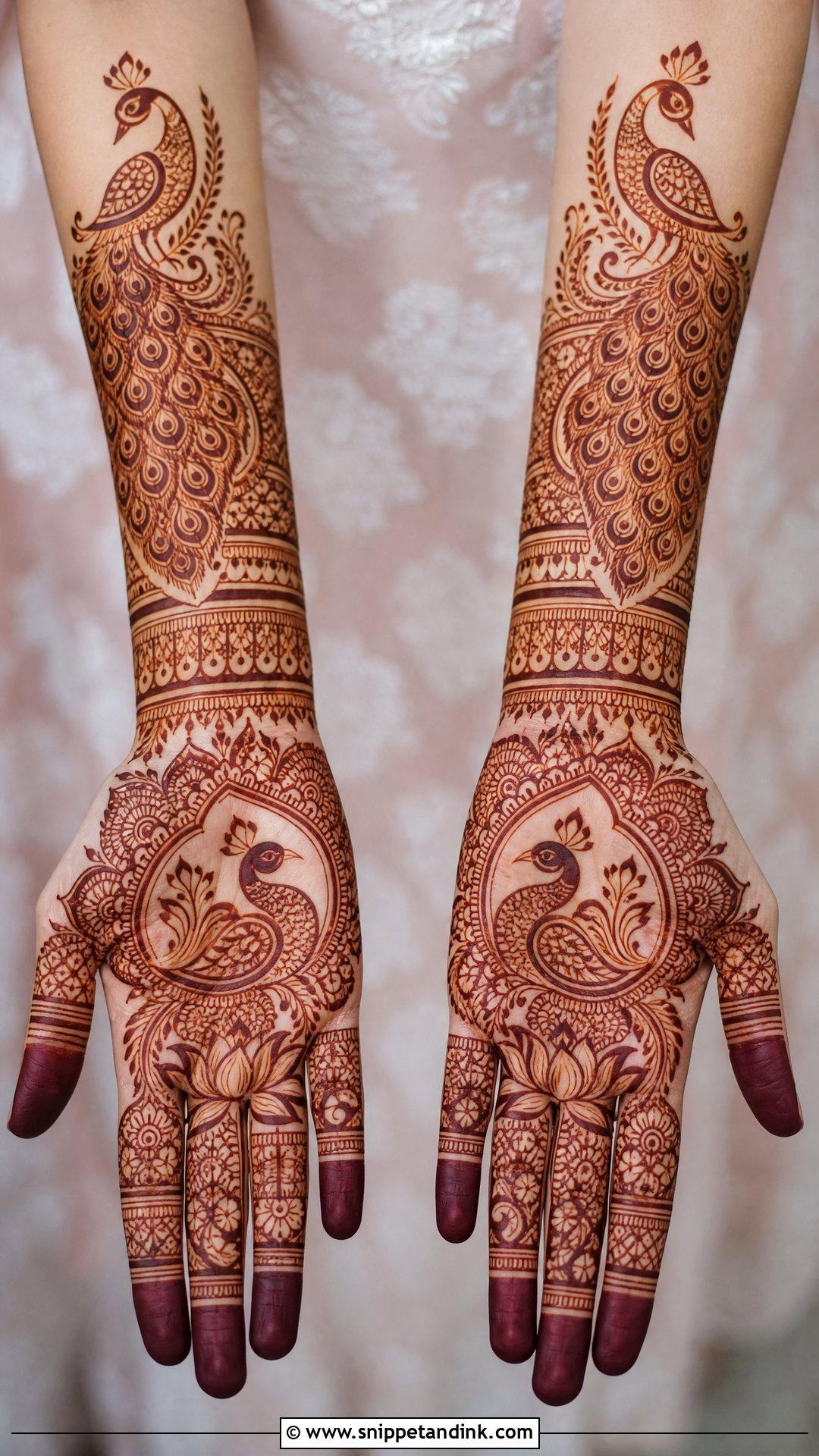
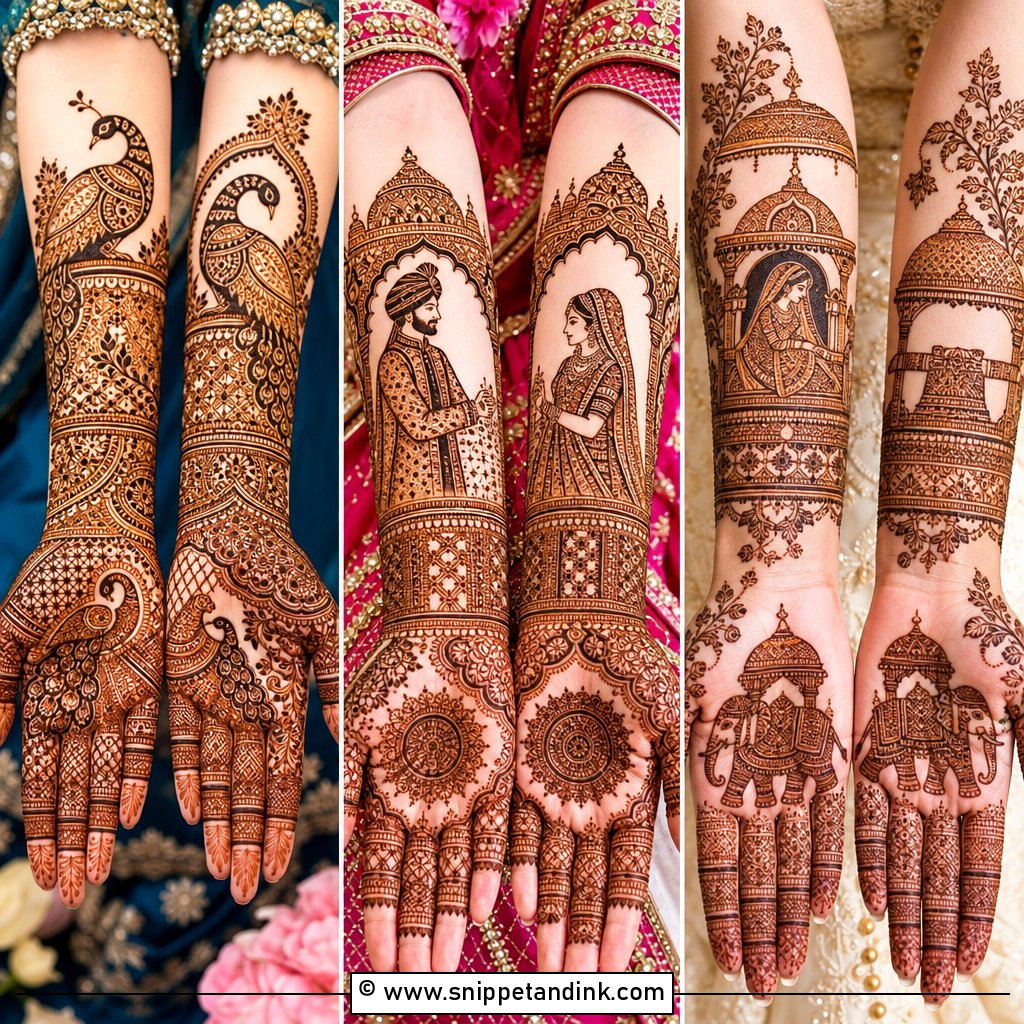
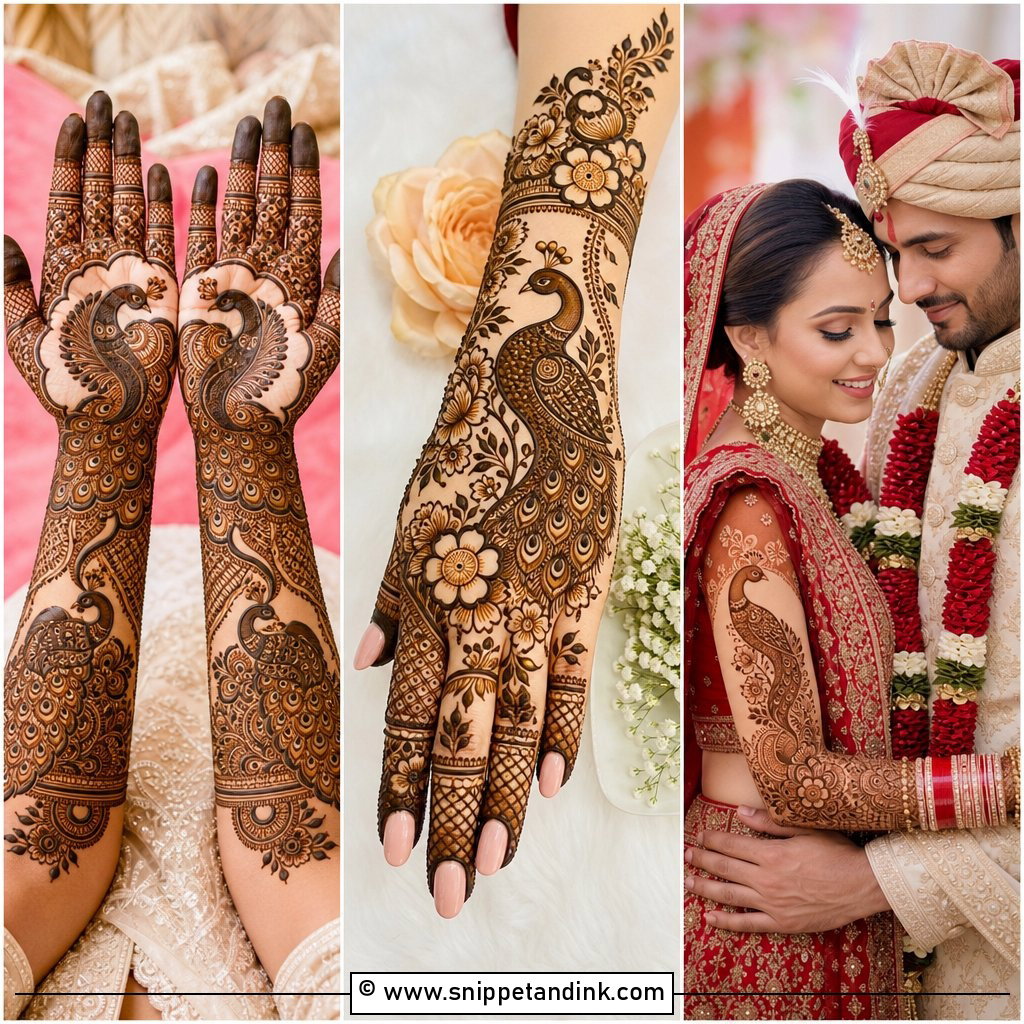
Peacocks give me fine work to do in the feathers: dots, scallops and shaded curves. They can sit across the palm, along the forearm or as a mirrored pair. For a modern take, one bold peacock with lighter surroundings keeps the bird easy to recognize. Crowd it with borders on every side and the shape disappears in photos.
12. Mandala Bridal Mehndi Design
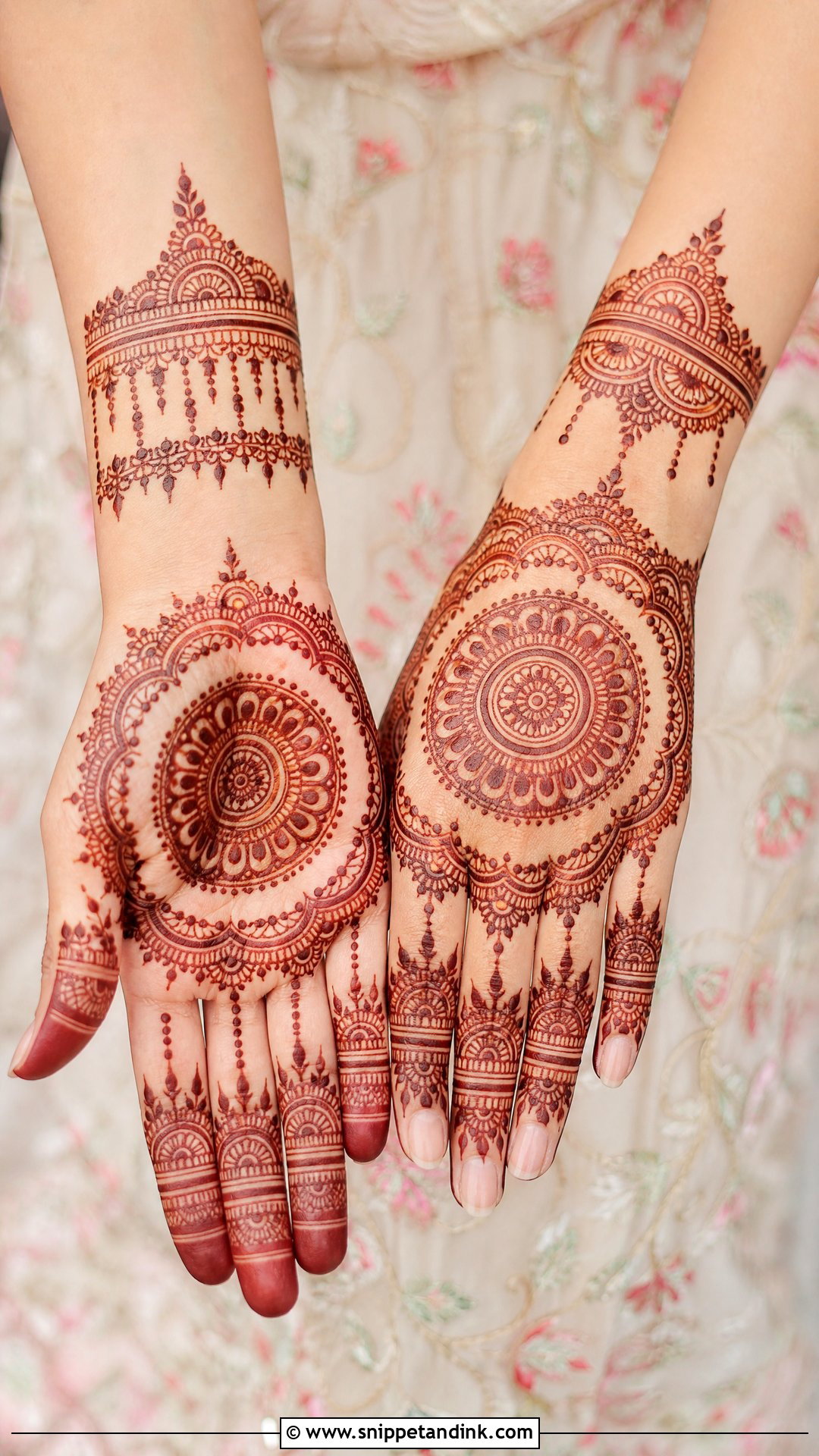
Mandalas suit brides who want both hands to match. I build them from the center outward, checking the circle against the hand as it rests, because a mandala that looks round on a stretched palm turns oval when the hand relaxes. On the back hand, a large mandala connected to the fingers with chains looks like jewelry.
13. Floral Bridal Mehndi Design
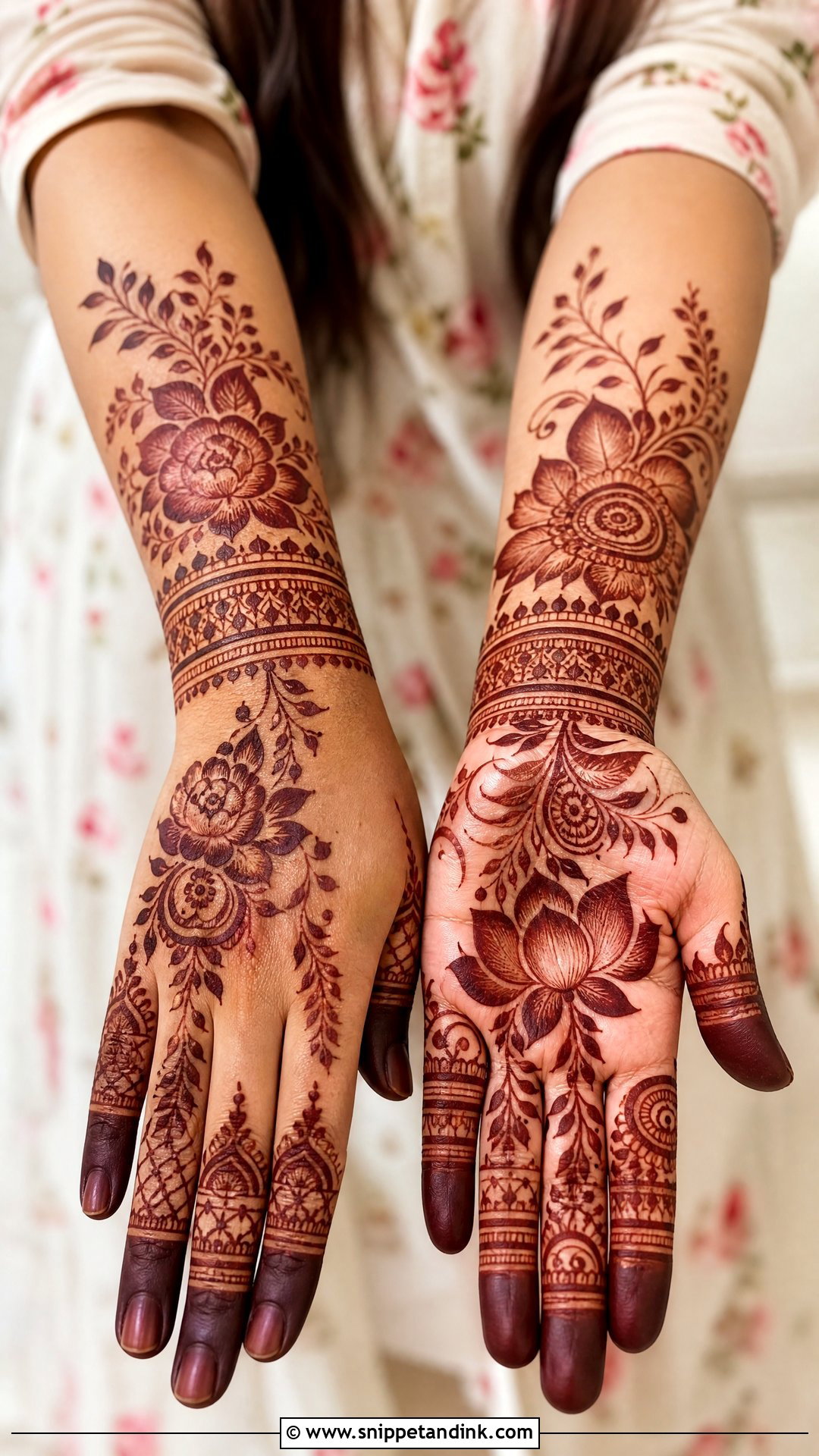
Floral work feels soft and can go bold or delicate depending on how I shade the petals. On the palm I’ll place a cluster of roses or lotus with paisley accents; on the back hand a garden style trail that curves from the wrist to one or two fingers. Flowers suit heavy and light outfits alike. Ask for filled fingertips and a detailed wrist if you want it to read as bridal rather than festive.
14. Paisley Bridal Mehndi Design
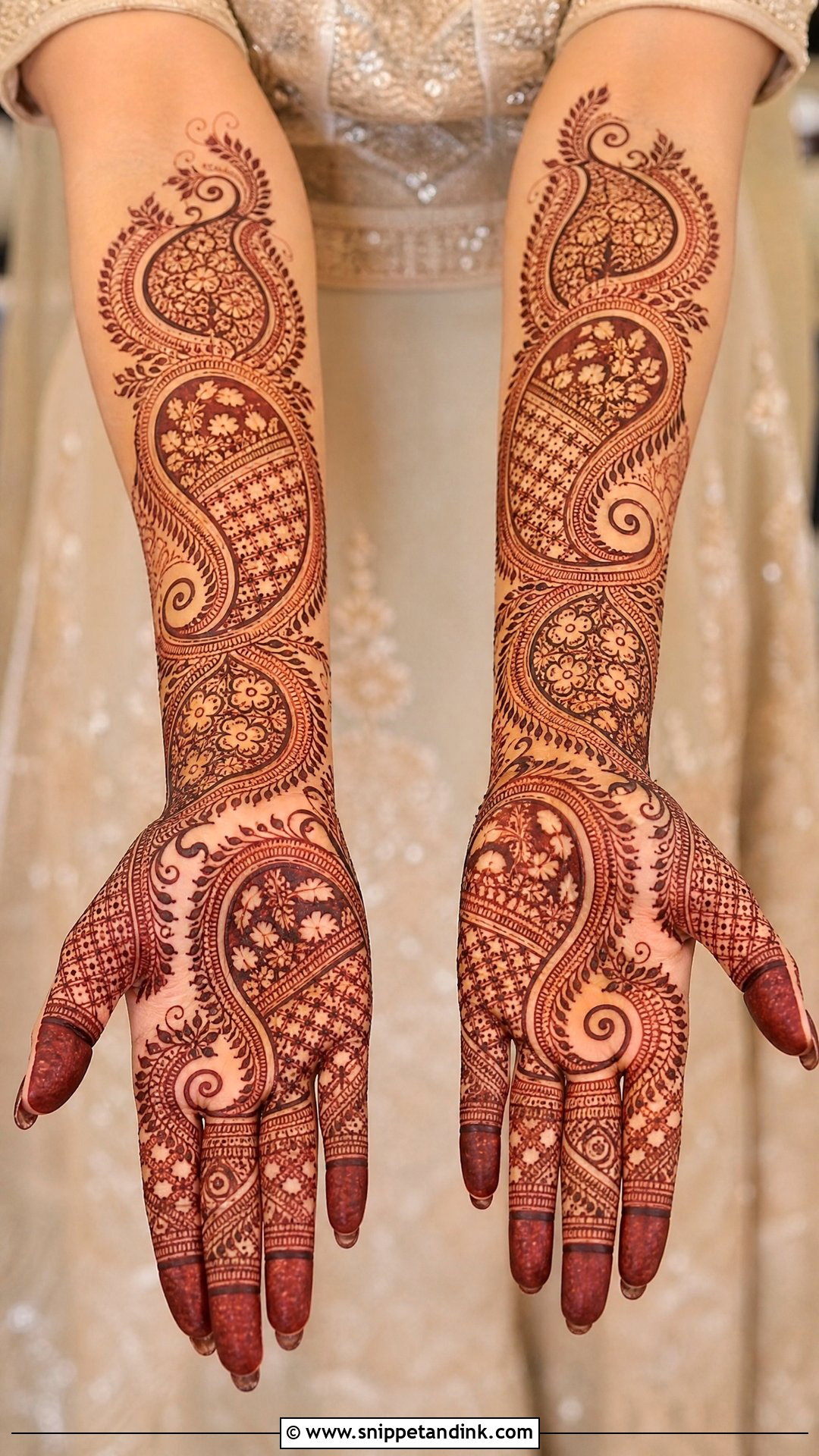
The paisley is one of the oldest shapes in bridal henna, and it fits the curves of the hand naturally. I fill large mango shapes with tiny flowers, checks and dots, then pair them with smaller paisleys so there’s contrast in scale. Without that contrast the hand looks flat. If portraits feel too literal for you, paisleys give the same traditional depth without any figures.

15. Jaali Bridal Mehndi Design
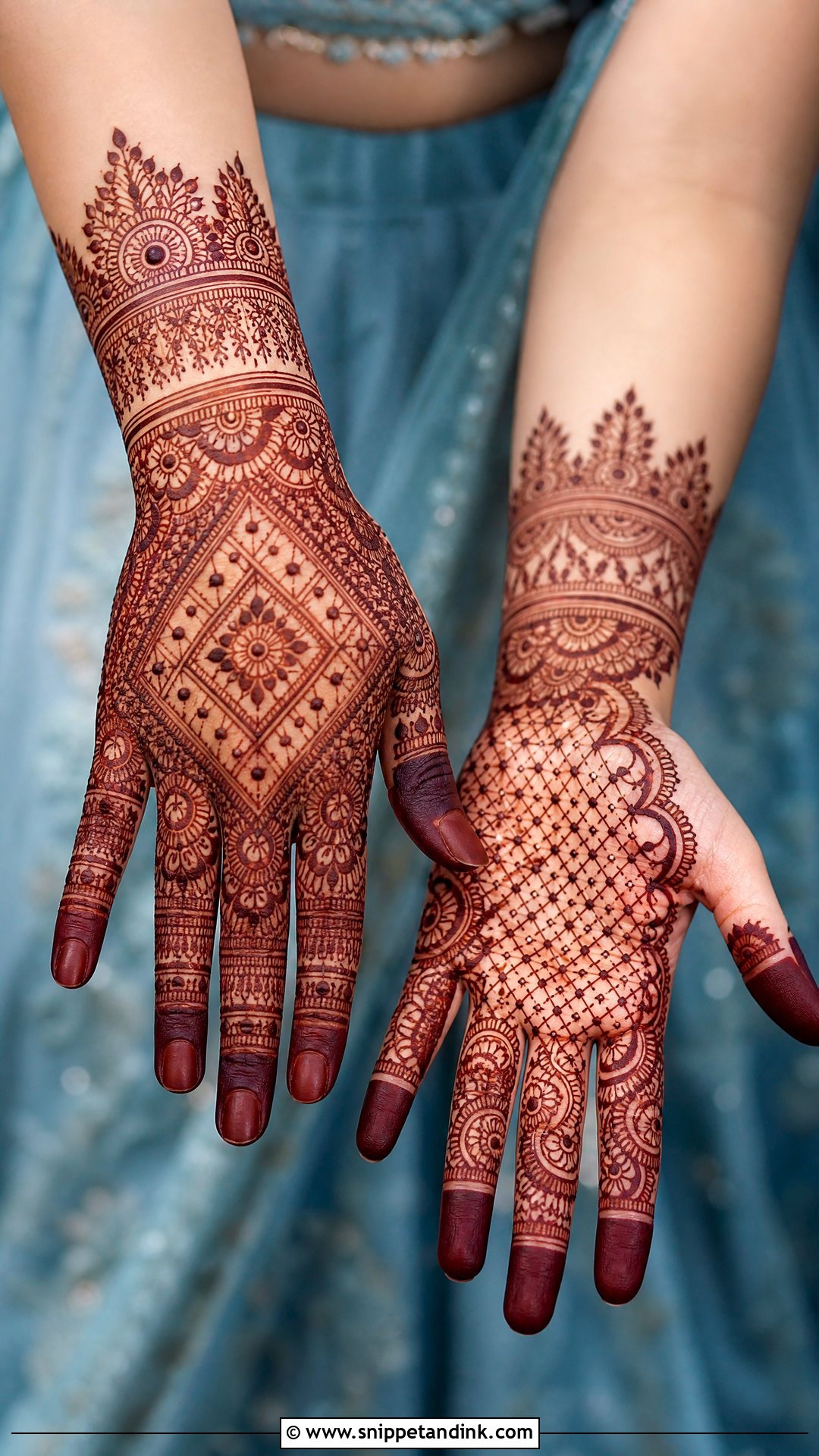
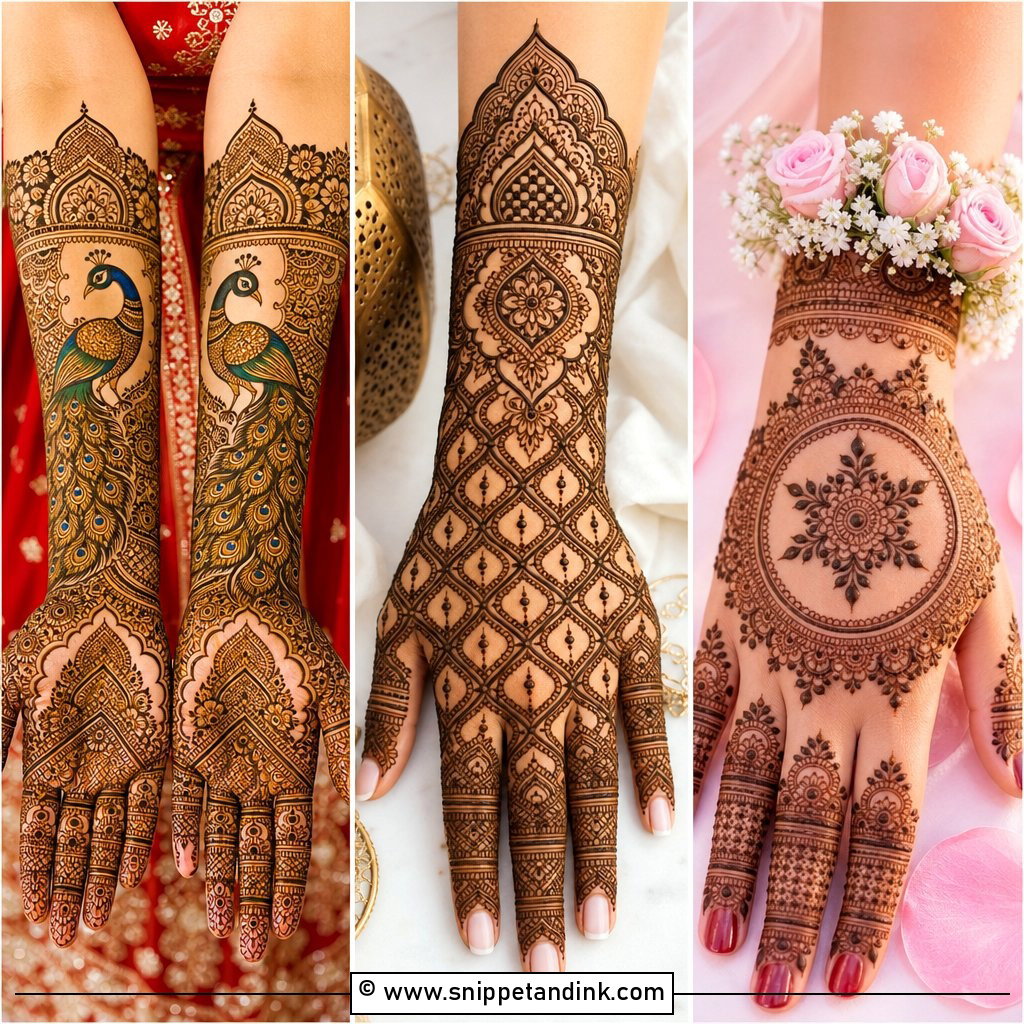
Jaali is lace on skin. Every grid has to be even, so I draw all the lines in one direction across the panel, then cross them, rather than working square by square. On the back hand it looks like an embroidered glove and sits well next to rings. Uneven jaali looks messy very quickly, so look at an artist’s past jaali work closely before you choose this.
16. Rajasthani Bridal Mehndi Design
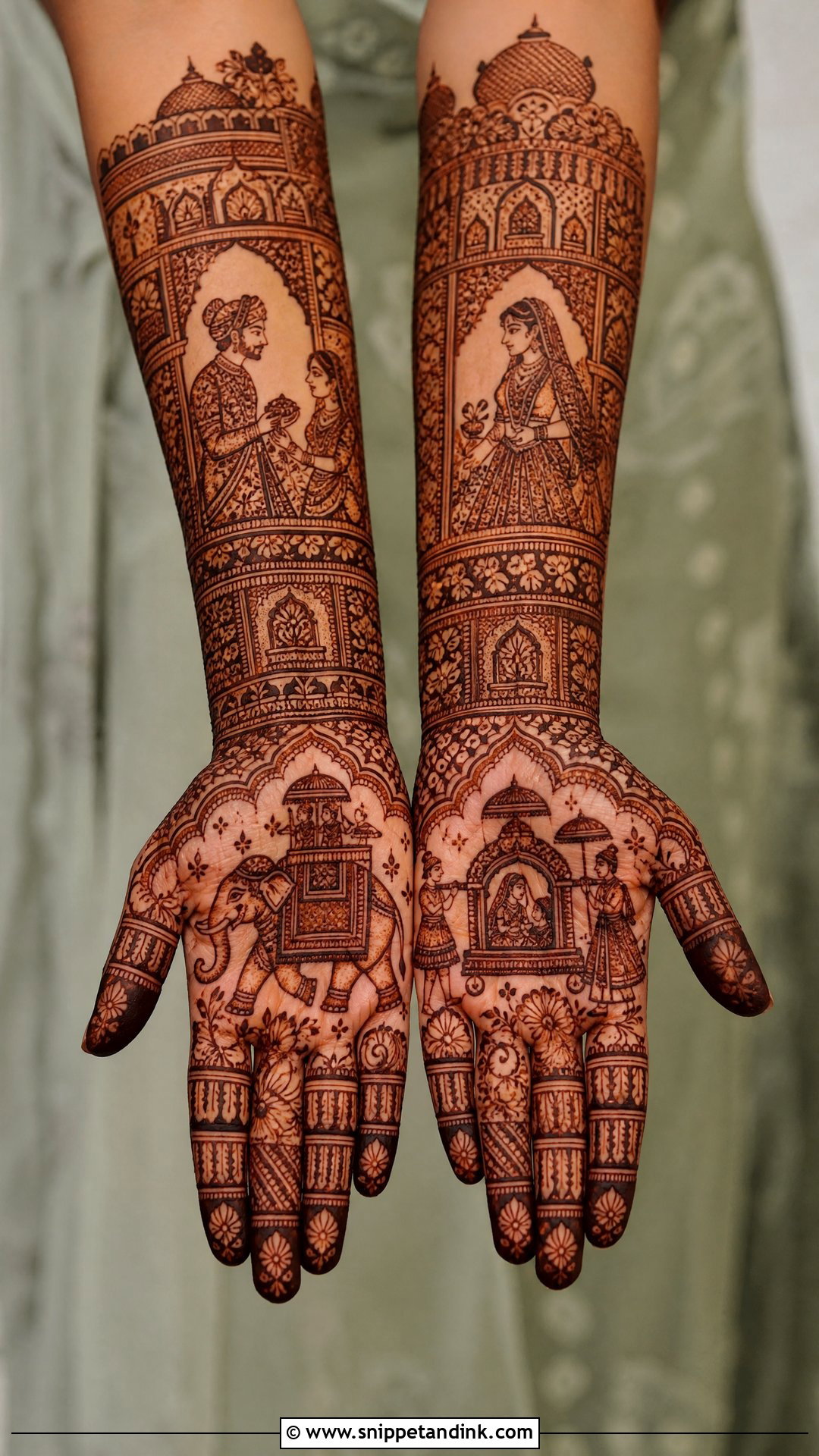
Rajasthani bridal mehndi design tells the whole wedding: portraits, palace windows, elephants, a doli and peacocks, with dense ornament between them. The palms carry the story while bands and arches climb the forearm. It’s one of the longest sittings I do, so plan the session for the day before or two days before the wedding and allow time for the paste to stay on overnight.
17. Marwari Bridal Mehndi Design
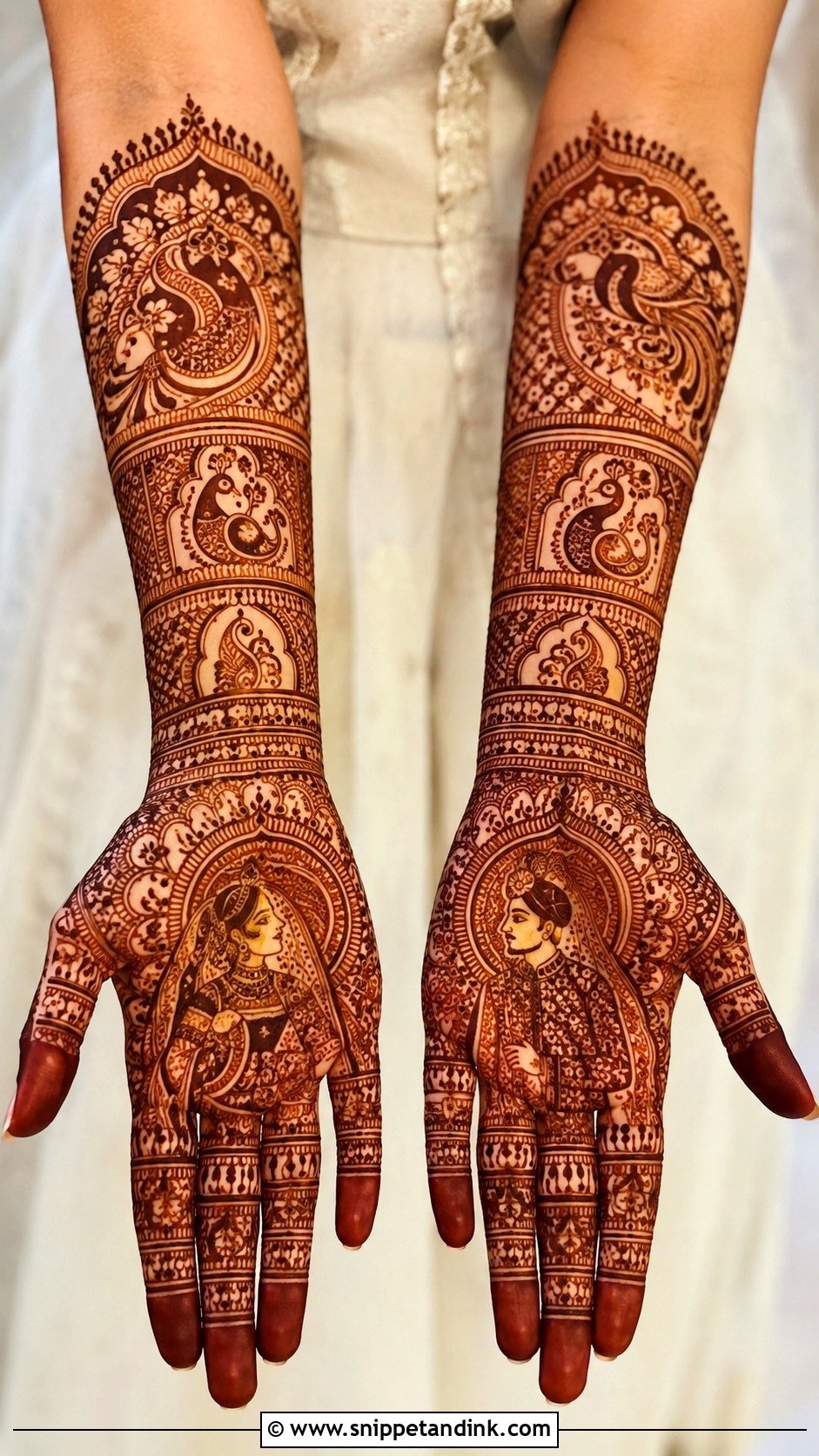
Marwari work leaves almost no empty skin, which gives a very dark overall result once the paste is removed and the stain develops. With density like that, the major motifs need clear outlines or they merge into the fill. I separate sections with thin borders as I go. It pairs naturally with red, maroon and gold outfits.
18. Pakistani Bridal Mehndi Design
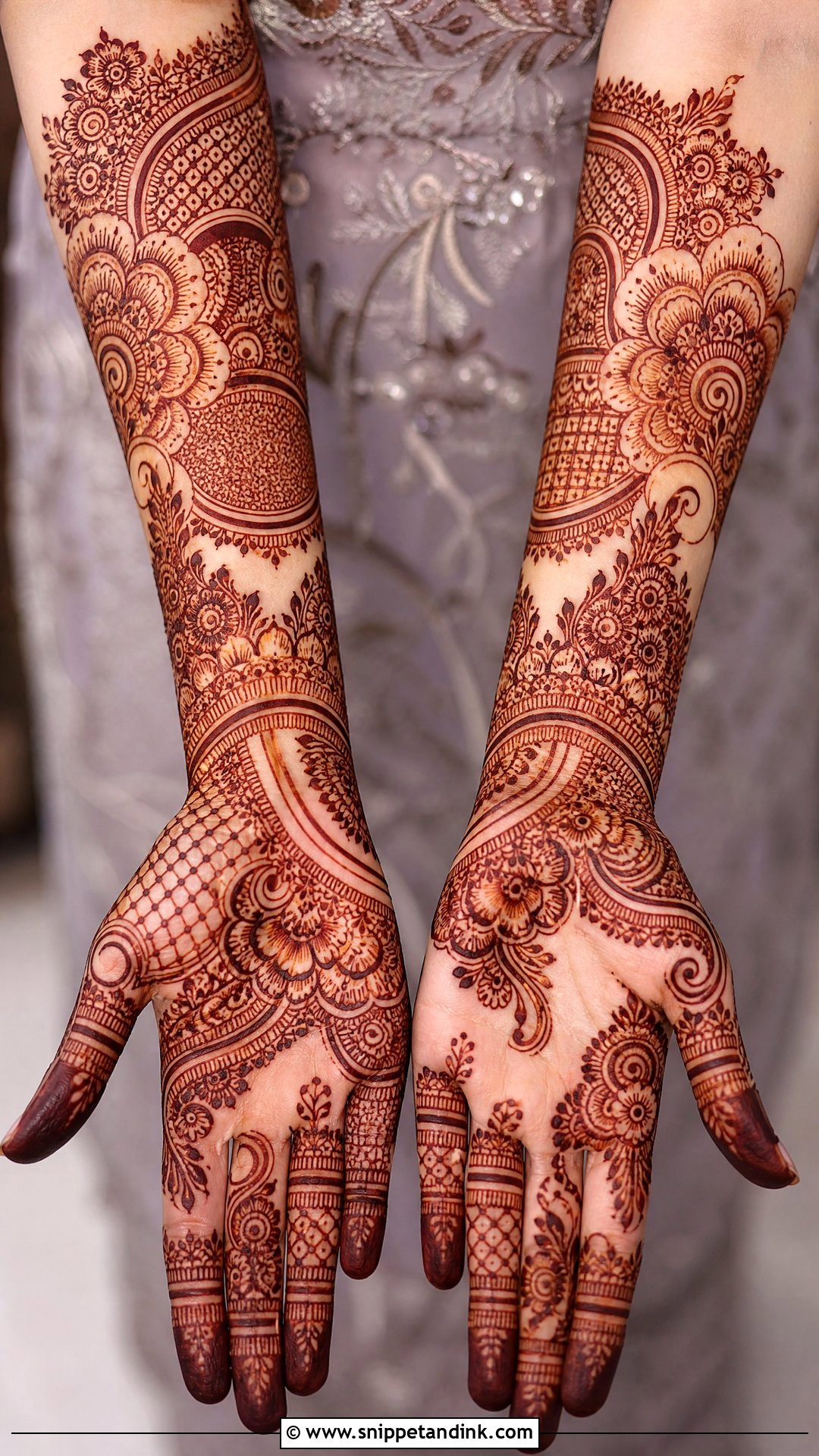
Pakistani bridal mehndi design balances Indian detail with Arabic flow, using fine jaali and neat shading with breathing space between sections. Many brides wear it from the mehndi night through nikah, walima and reception. Since the stain peaks a day or two after application and fades from there, I’d time the application so it’s darkest at the event you care most about.
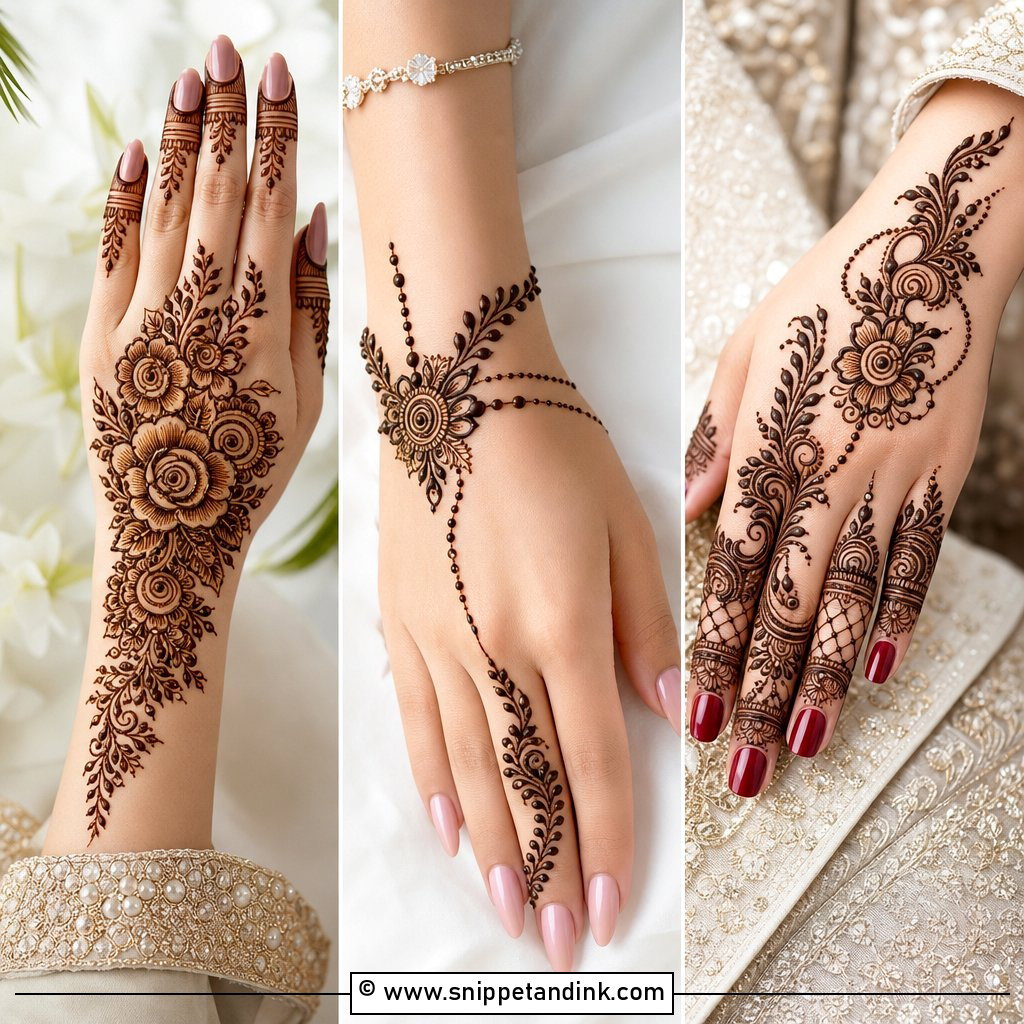
19. Moroccan Bridal Mehndi Design
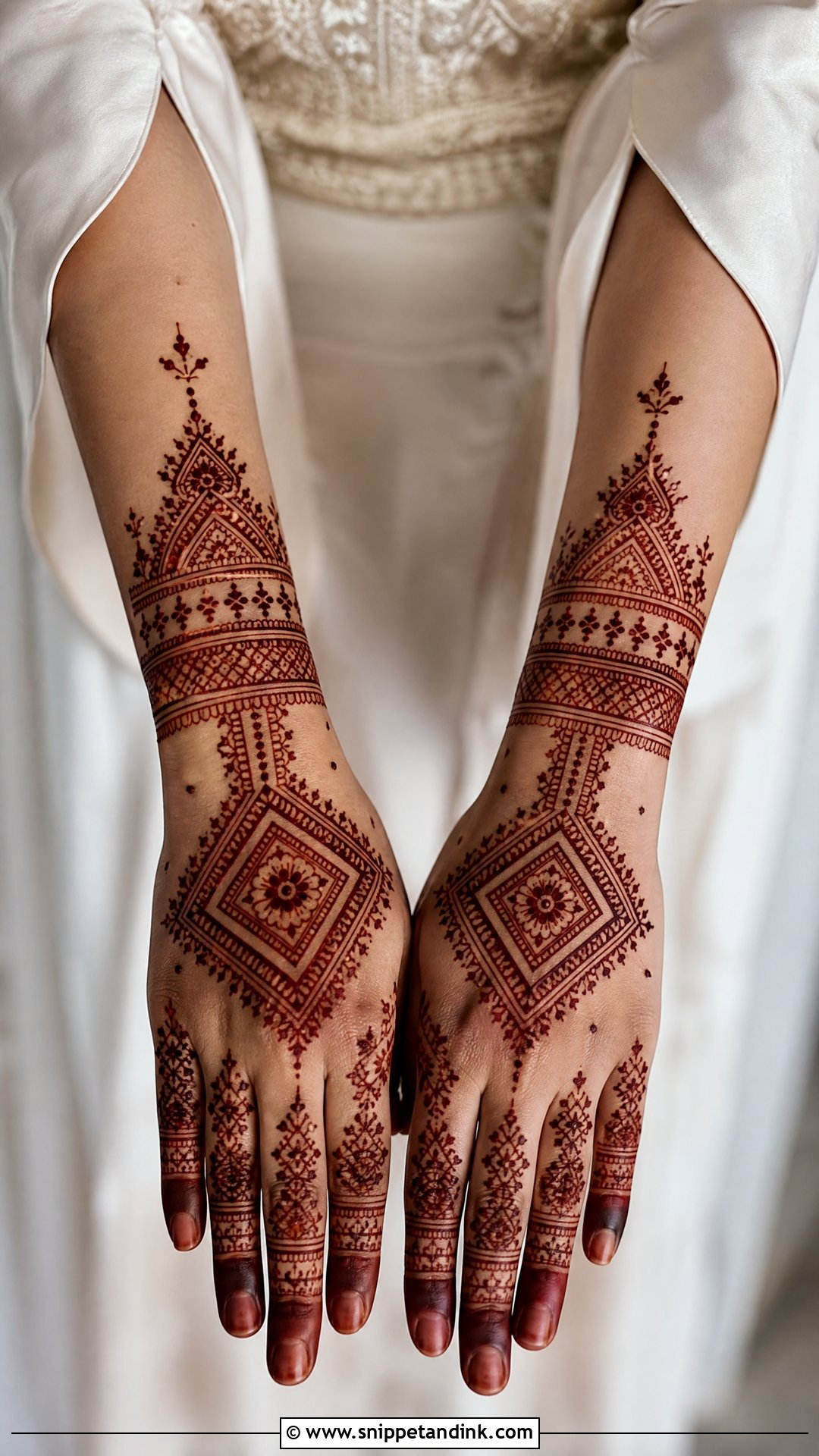
Moroccan geometry uses diamonds, triangles, grids and dots instead of flowers. Straight lines expose every shake of the cone, so I turn the hand and pull each line toward me. The linear shapes look especially sleek on long fingers. A few small leaves or florals between geometric bands keep it feeling bridal.
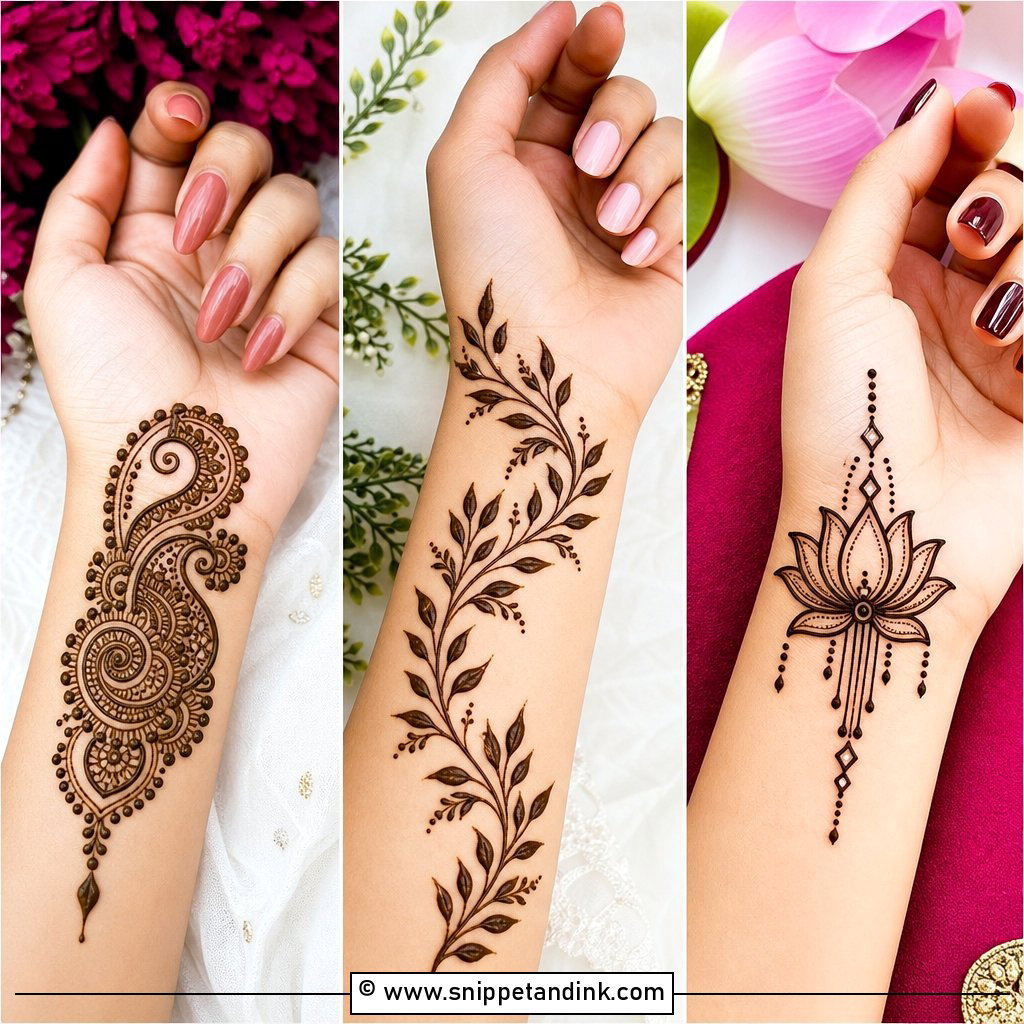
20. Gulf Bridal Mehndi Design
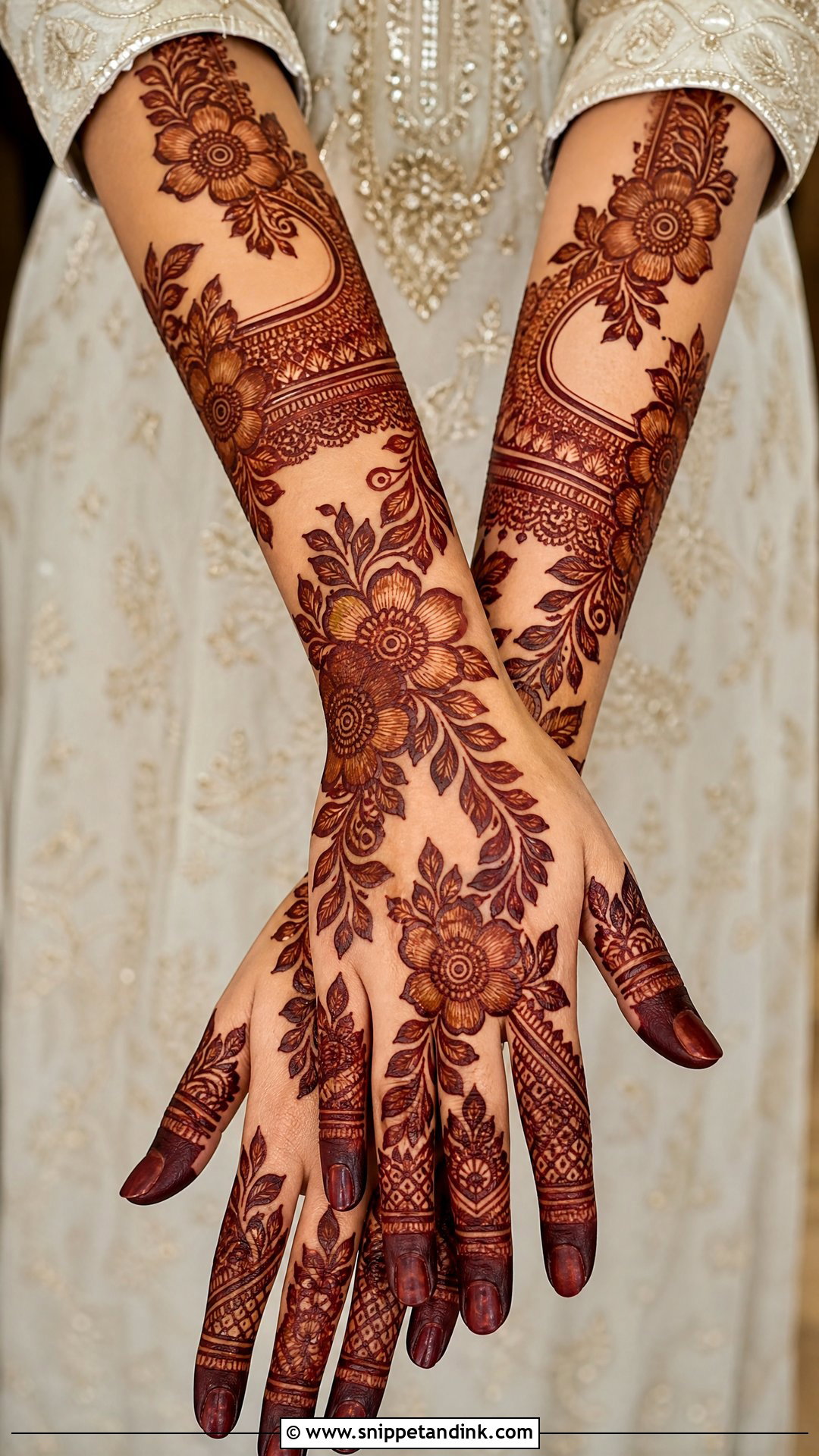
Khaleeji work is bold and open, with large flowers and leafy trails moving diagonally from the fingers to the wrist. It’s breathable and quick to dry, which makes it a practical pick for hot weather weddings where sweating under heavy coverage is uncomfortable. Fuller fingertips and shaded flowers turn it into a bridal design.
21. Minimal Bridal Mehndi Design
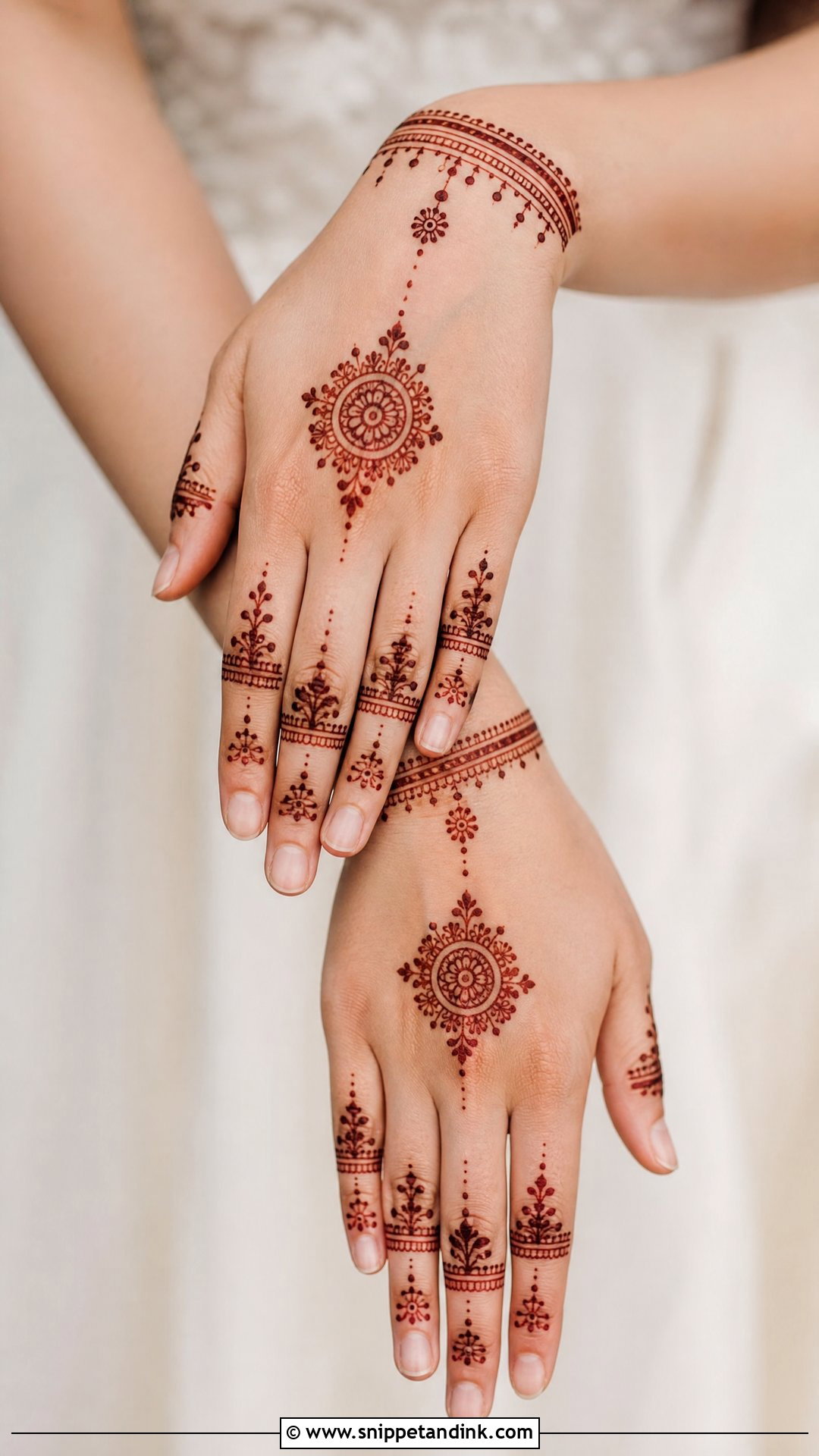
Minimal bridal mehndi is about restraint. A palm mandala, slim finger detail, a delicate wrist band and one personal element is plenty. With so few lines, each one has to be confident and evenly spaced. It suits engagement ceremonies, courthouse weddings and brides with a modern makeup look.
22. Jewelry Bridal Mehndi Design
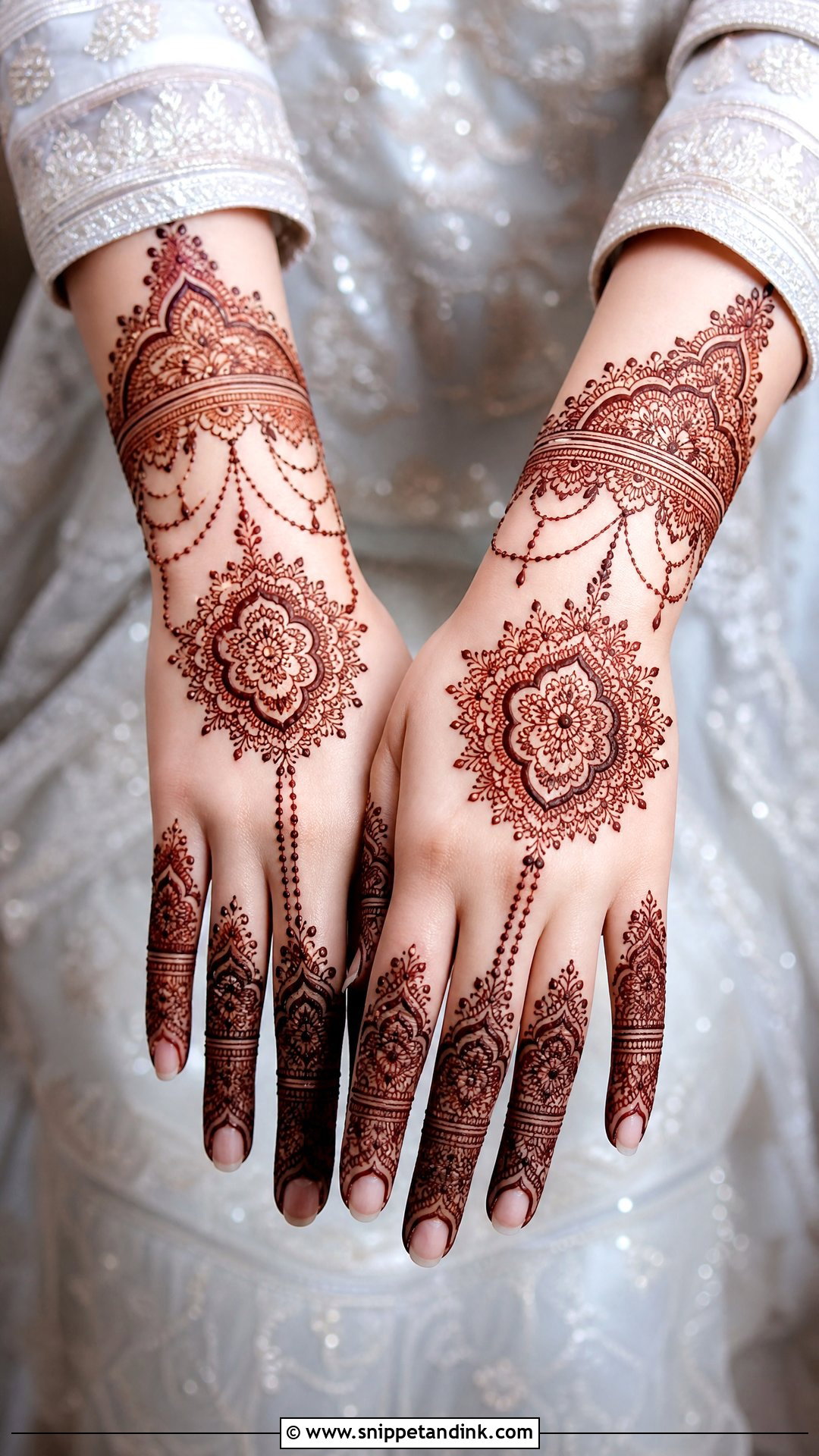
Jewelry style mehndi draws henna rings, chains and a hand harness on the back of the hand, centered on a mandala or flower. I keep the chain lines fine but not hairline thin so they stain clearly. It complements a real haath phool or stacked bangles, but I’d bring that jewelry to the consultation so the drawn chains don’t run under the real ones.
23. Bracelet Bridal Mehndi Design
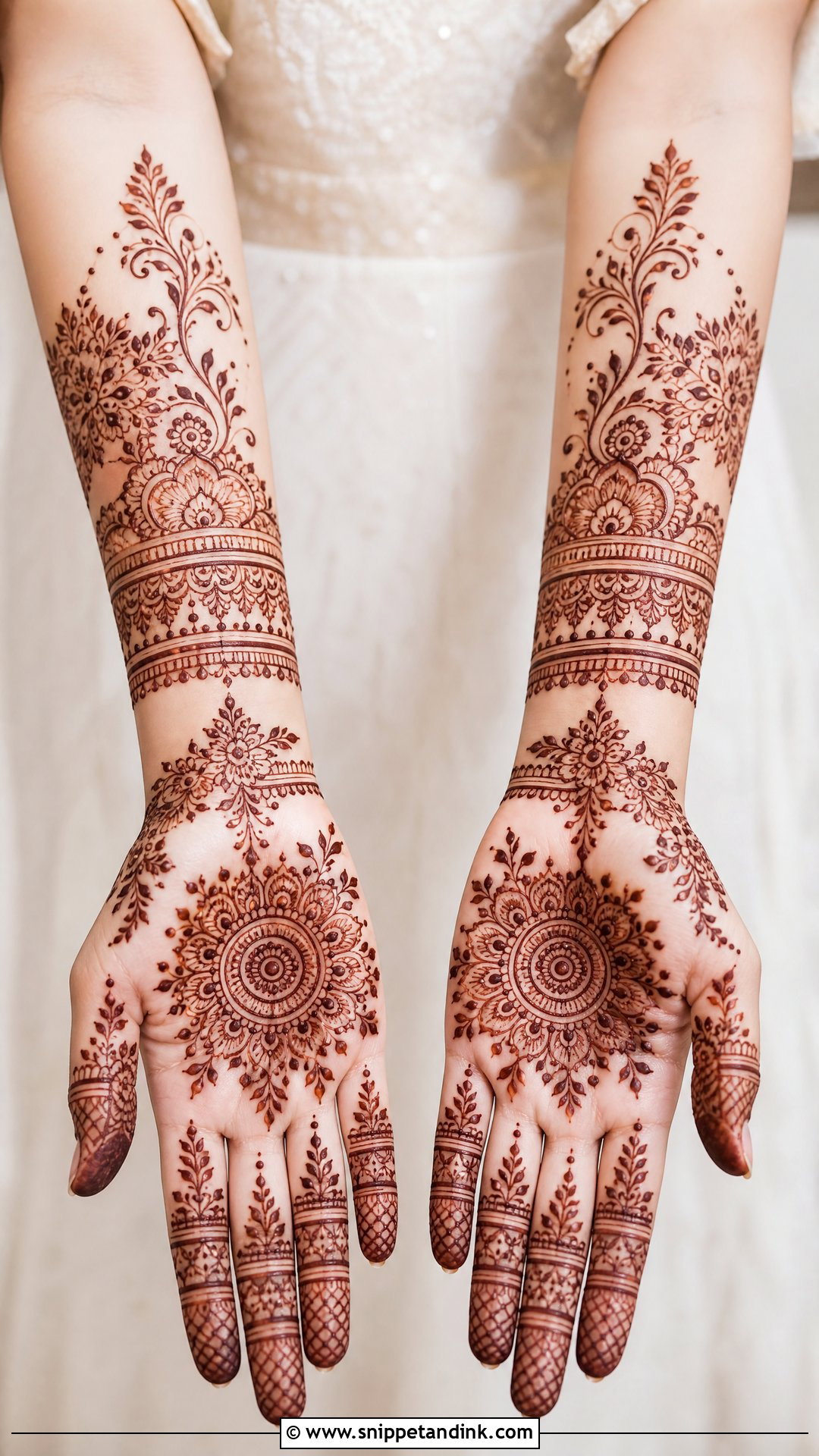
Bracelet designs put the weight on the wrist and forearm in layered cuffs, with lighter work on the hand. They’re useful for brides wearing chooda, since the henna bands can sit above the bangle stack and still show. I match the width of each band to the wrist; slim wrists look best with finer bands and more space between them.
24. Portrait Bridal Mehndi Design
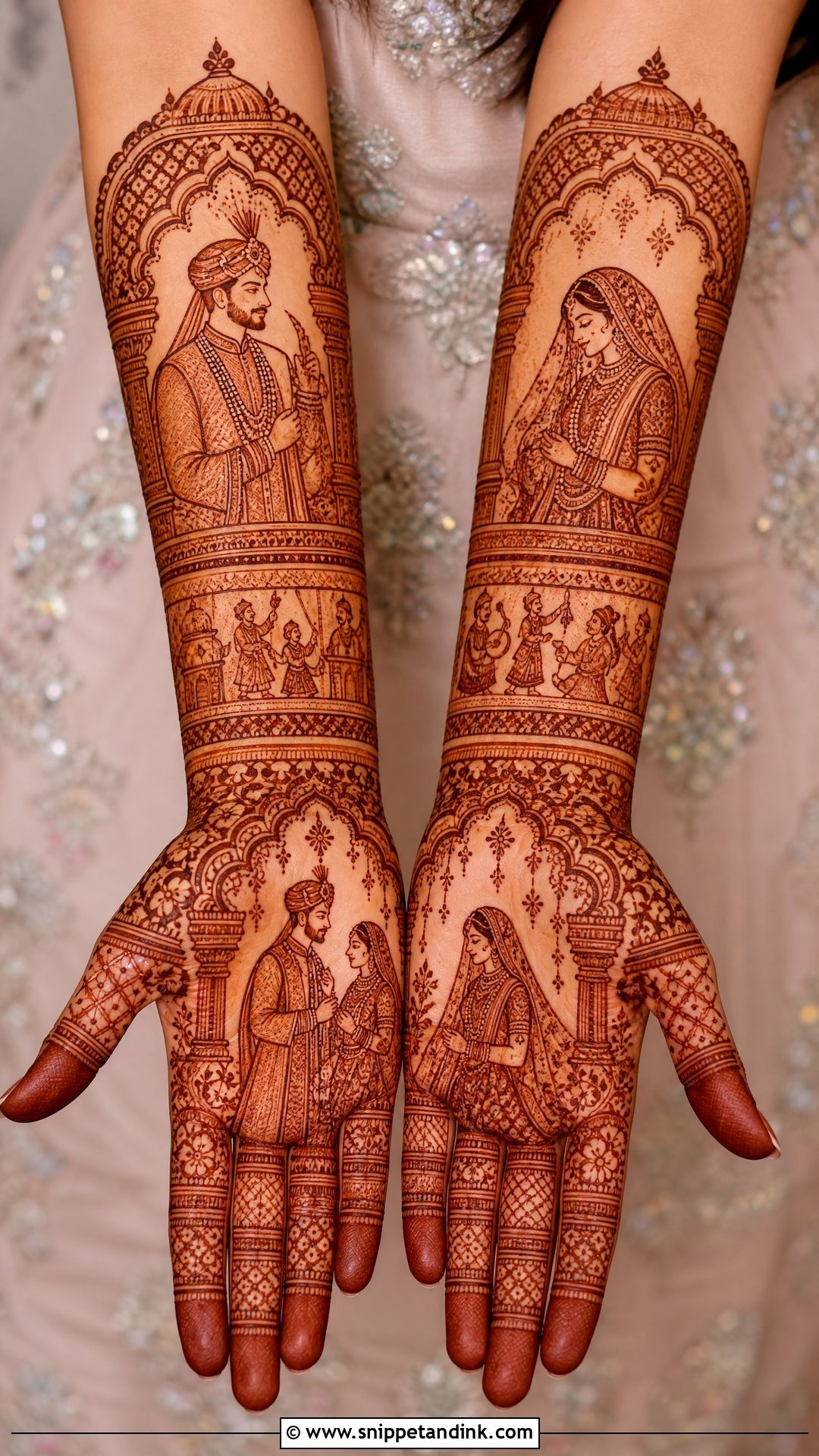
Portraits are the most personal design here and the one that needs the most skill. Bride and groom, a ritual, or a proposal scene usually go on the palms, surrounded by florals or arches. Faces need the flattest part of the palm, and the surrounding detail should stay quieter than the portraits. Always ask to see an artist’s finished stains of faces before you book.

25. Lotus Bridal Mehndi Design
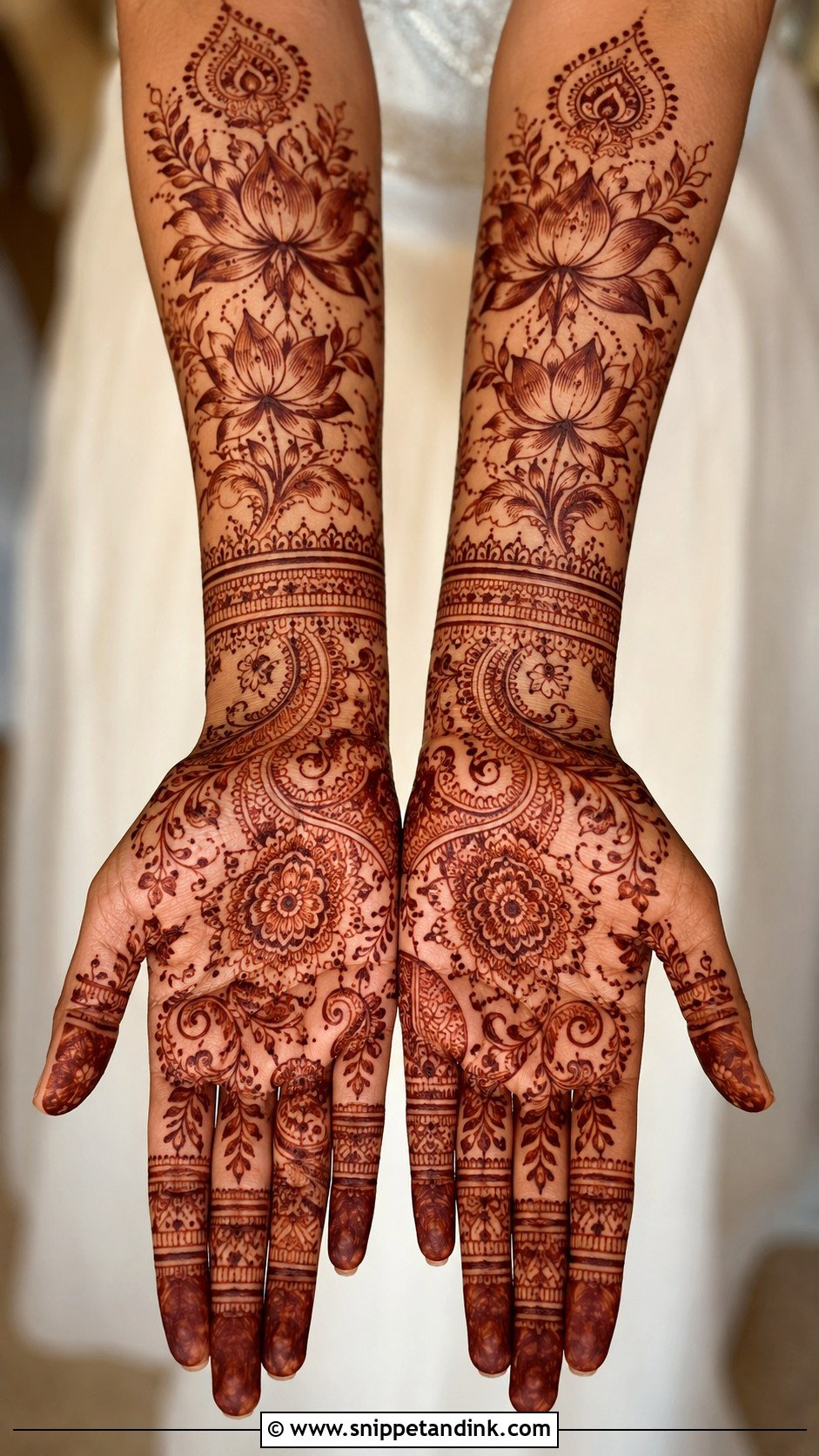
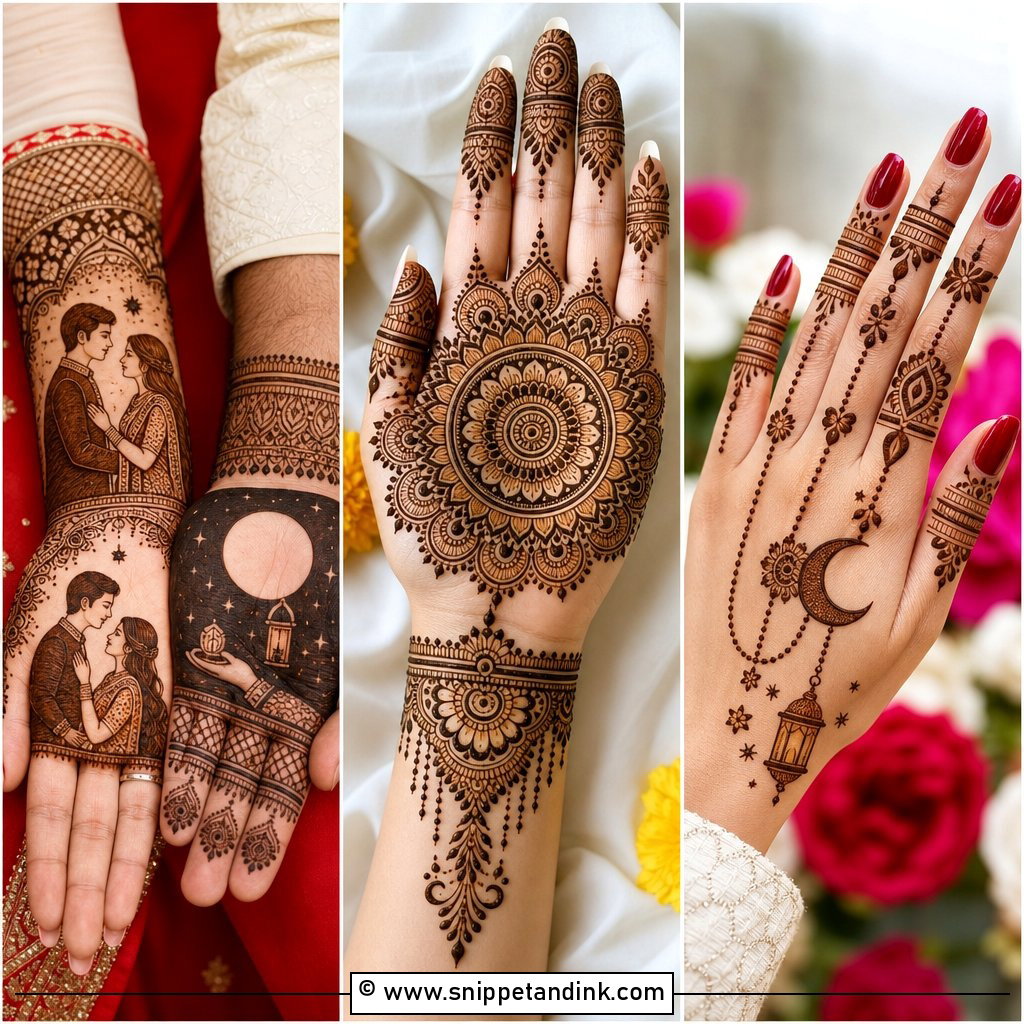
Lotus motifs scale easily, from one large palm centerpiece to small blooms repeated along the wrist. The layered petals combine well with jaali, paisleys and vines. Dense or airy, it depends on your outfit. Large lotus shapes with negative space give a modern feel; small lotus with filled fingertips feels more traditional.
26. Elephant Bridal Mehndi Design
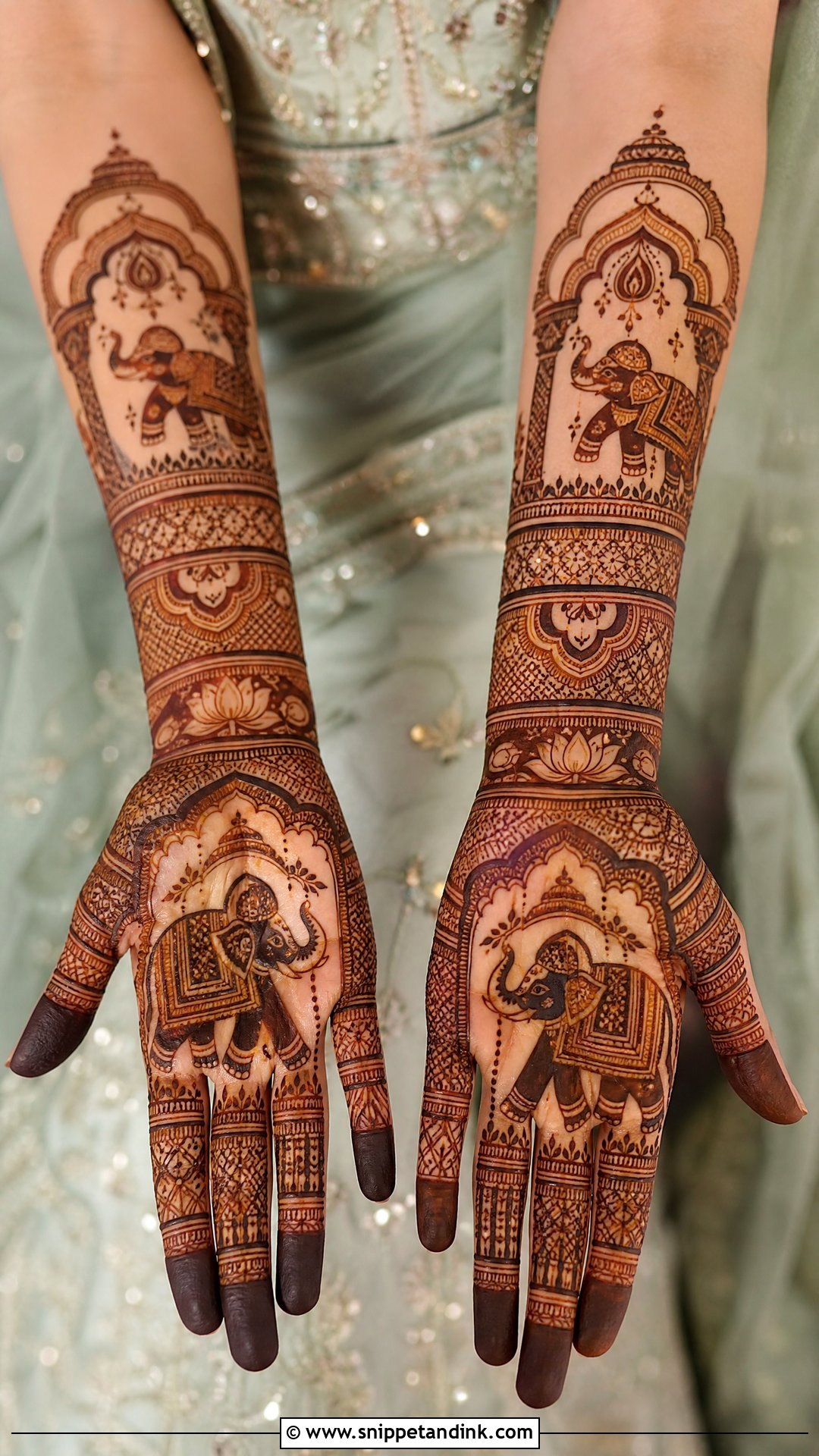
Elephants carry a lot of decoration: blankets, arches, flowers and fine line work. They need room, so I place them on the forearms or the lower palm where the skin is wide and flat. Drawn too small, the trunk and legs blur together once the stain darkens. Surround them with a little space and they stand out clearly in photos.
27. Dulhan Bridal Mehndi Design
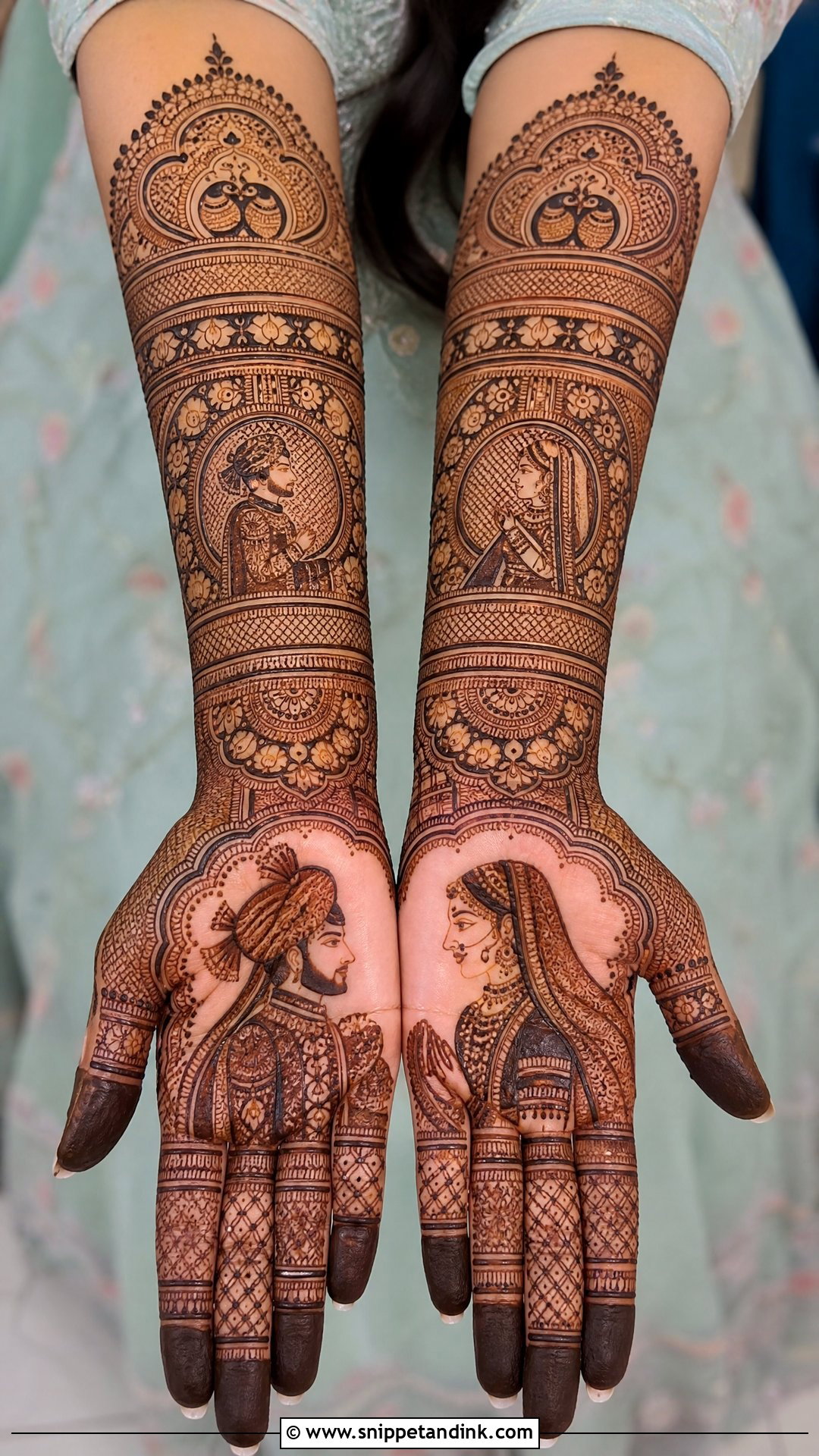
This is the classic bridal hand most people picture: dense coverage from fingertips to forearms, with paisleys, florals, figures, jaali, mandalas and peacocks together. It takes hours, so plan breaks, snacks and someone to help you. Keep your hands warm once the paste is dry; warmth helps the stain develop, and cold hands are one of the reasons stains come out lighter than expected.
28. Bridal Foot Mehndi Design
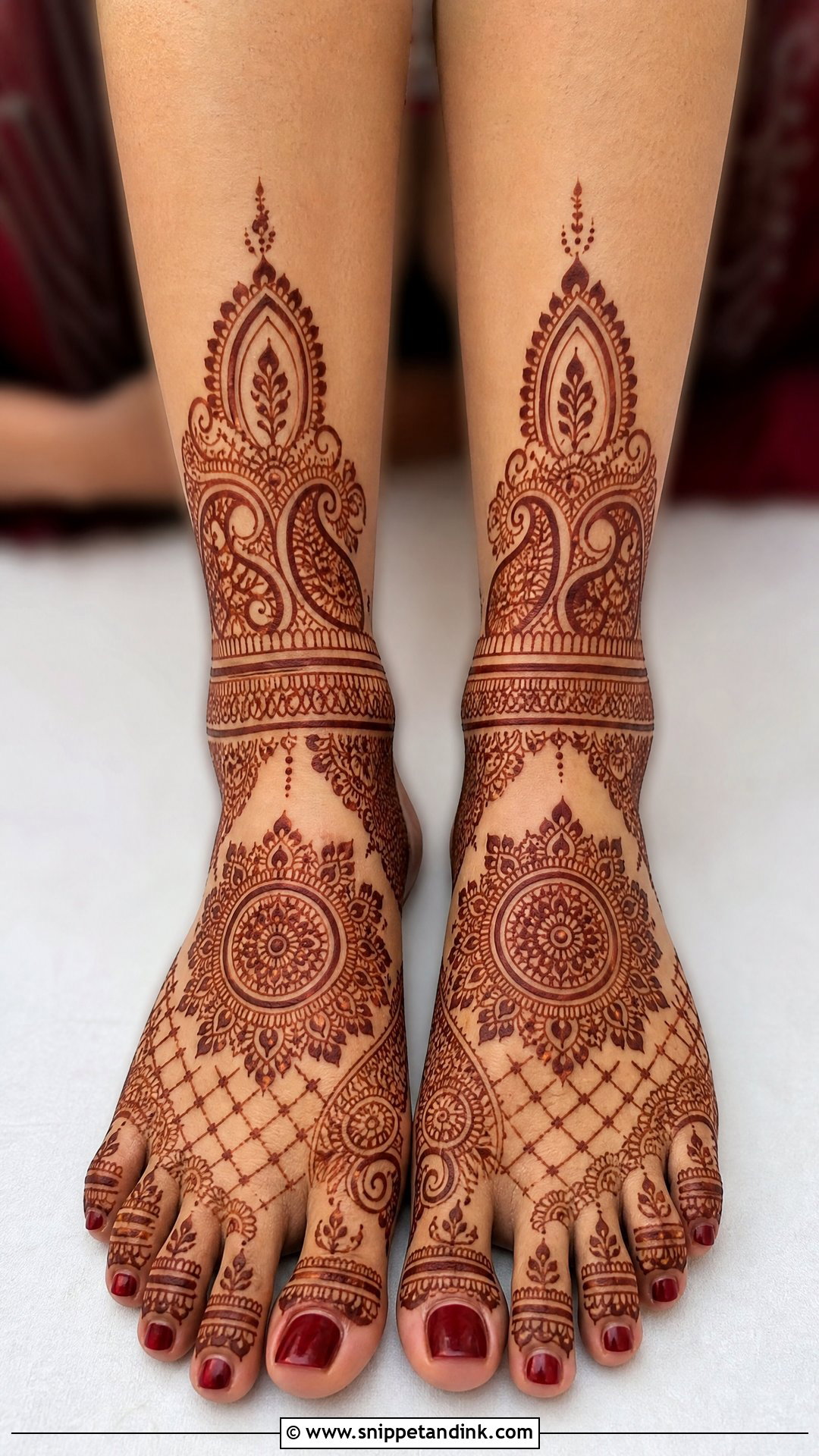
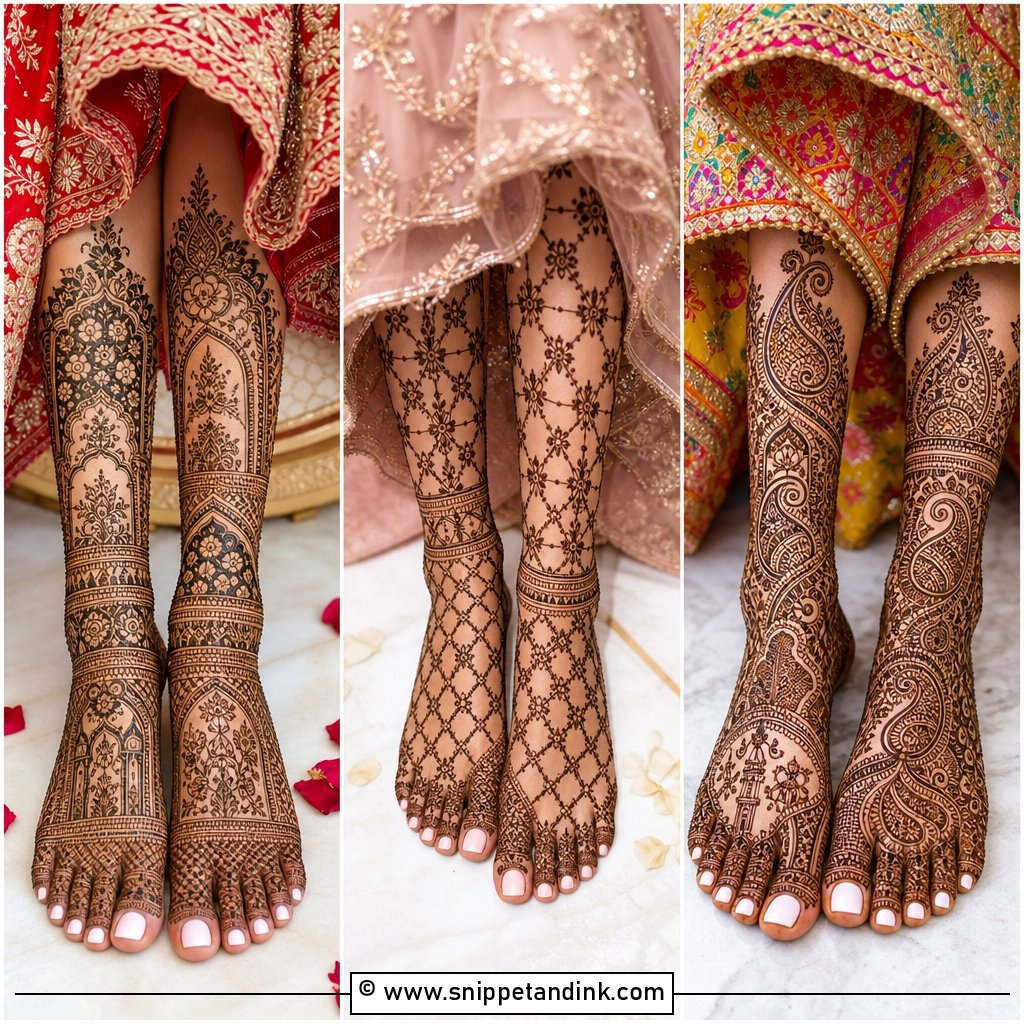
Foot mehndi should match the hands in mood even if it’s simpler. Ankle bands, toe detail, a central mandala and floral vines over the top of the foot are typical. Check your shoes first: straps and embellishments can rub paste away or hide the design. Feet dry slowly, so stay seated with your feet up afterward.
29. White Bridal Mehndi Design
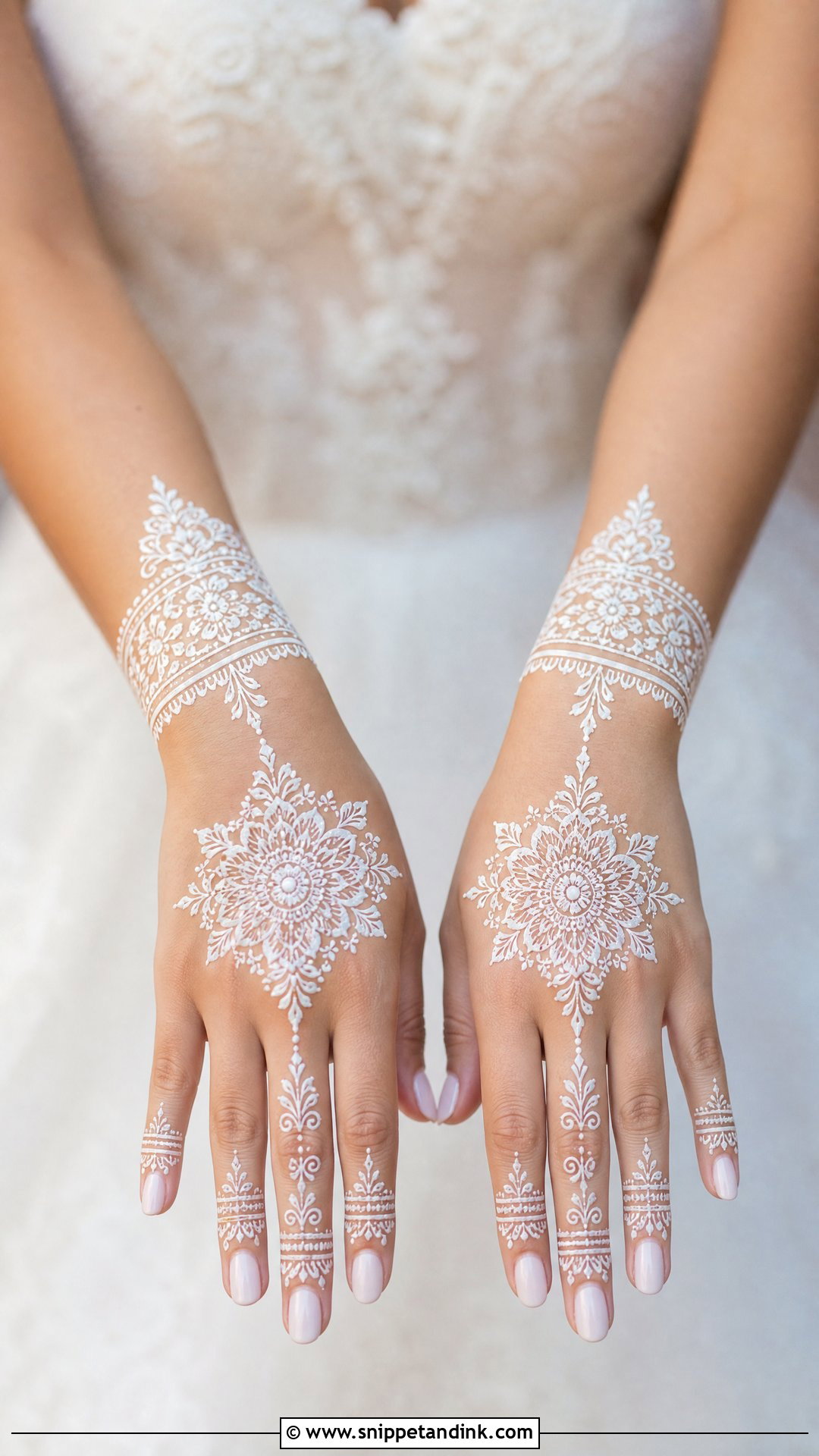
White mehndi isn’t henna. It’s a body paint or skin safe adhesive that sits on top of the skin and lasts a day or so, rather than staining. It looks like lace and pairs well with ivory gowns, silver jewelry and receptions. Ask your artist what product they use and do a patch test, especially if you have sensitive skin. I’d treat it as an add on for the reception, not a replacement for a traditional stain.
30. Glitter Bridal Mehndi Design
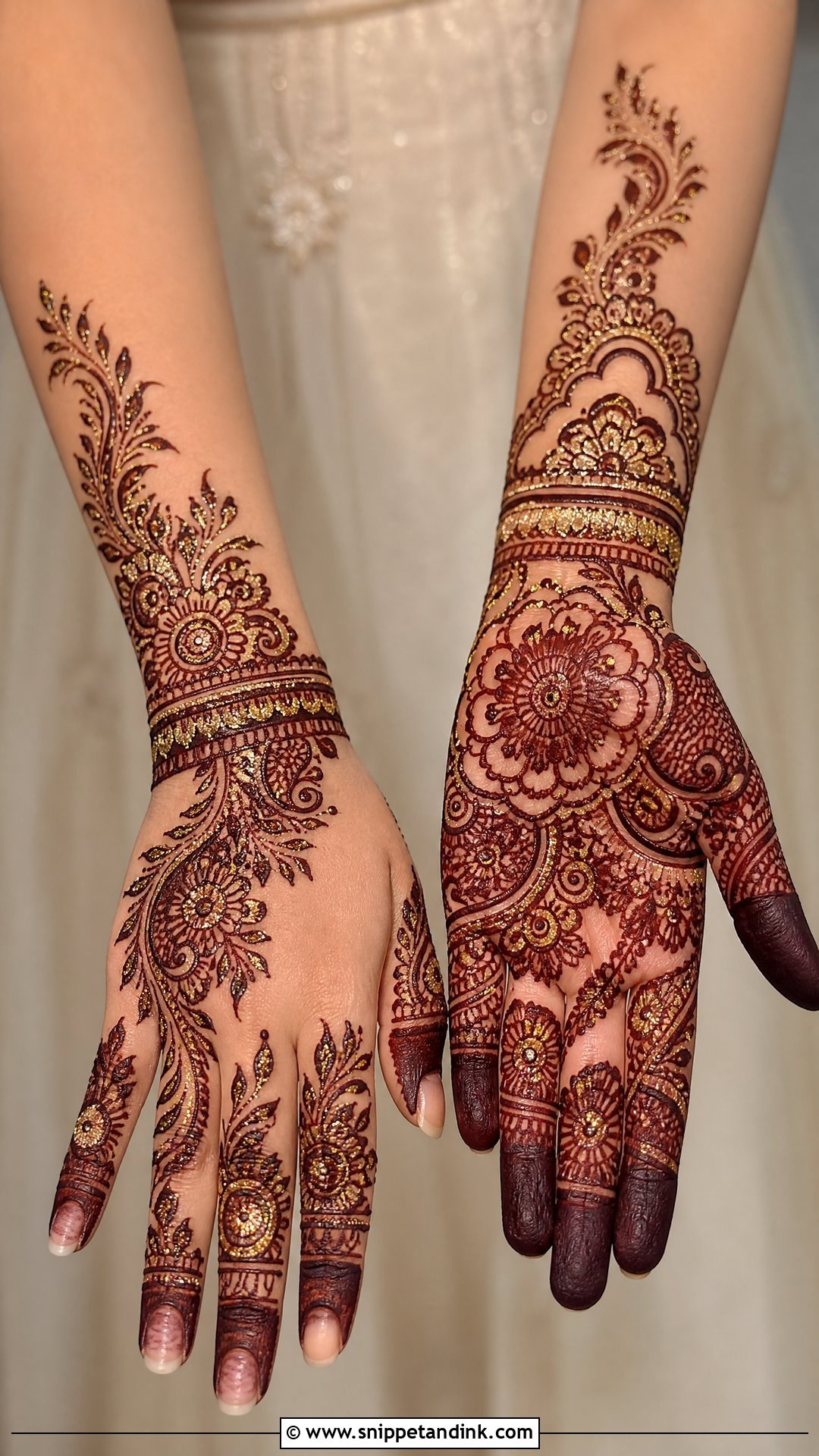
Glitter usually goes on top of a natural henna stain after the paste comes off, or over body paint as a temporary finish. Gold, bronze and deep maroon look the most bridal. Keep it to a few edges or petals; covering the whole design hides the line work. It suits sangeet and reception looks, especially with a shimmering outfit.
Manicures, Waxing and Other Things to Do First
Anything that scrubs or soaks your hands after the mehndi will fade it. So the order of your beauty appointments matters.
- Waxing and exfoliation: a few days before the mehndi, never after. Henna takes better on smooth skin, and scrubbing afterwards lifts the stain.
- Manicure and pedicure: before the mehndi. A soak and cuticle work afterwards will lighten the fingertips.
- Gel or polish: if you want a nail finish, have it done first and ask your artist to keep paste off the nails, or accept that henna may tint bare nail edges orange.
- Moisturizer, lotion and sunscreen: skip them on your hands the day of application. Oily skin resists the paste.
When the Stain Comes Out Lighter Than You Hoped
On the first morning the stain can look disappointingly orange. Give it time; most of the deepening happens over the first two days. If it stays pale, the usual causes are paste removed too early, water on the design within the first few hours, cold hands, or fine lines on the back of the hand, which naturally stain lighter.
Henna can’t be reapplied over itself to darken it the day before the wedding without risking a blotchy result. Instead, keep the hands warm, avoid soap and hand sanitizer on the design, and rub in a little natural oil or balm before washing. Ask your photographer to shoot your hands in soft daylight, which shows the true color far better than warm tungsten light.
The Hands You’ll Remember in Every Photo
Start from your outfit, your jewelry and how long you can sit, and the shortlist gets short quickly. Indian, Rajasthani, Marwari or dulhan coverage suits a traditional ceremony and a long session. Minimal, jewelry style, white or Indo Arabic patterns suit a lighter, modern look. Names, portraits, lotus, peacocks and elephants make it personal. Save the photos you like, bring your bangles to the consultation, and agree the date of application with your artist so the color is at its deepest on the wedding day.
You'll Like These Ideas:


Leave a Reply