
Bridal mehndi is the one part of a wedding look that keeps changing after you put it on. The paste comes off orange, deepens overnight, and is at its richest a day or two later, so a design has to be planned for the stain it will leave, not for how the wet paste looks. Brides now ask me for everything from dense Indian full-hand mehndi to open Arabic trails, Indo-Arabic fusion, portraits, jaali, mandalas and minimal layouts. Which one suits you depends on your outfit, your jewelry, the length and shape of your hands and how much skin you want covered in photos. These are the twenty bridal styles I’m asked for most, with what I watch for when I draw each one.
When to Have It Applied, Since the Stain Peaks Late
Natural henna does not reach its darkest color when the paste comes off. Freshly scraped skin is light orange, and the stain oxidizes over the next 24 to 48 hours into deep reddish brown. That is why I schedule bridal application one to two days before the wedding, so the color is at its peak for the ceremony.
- Full-hand or royal coverage can take several hours for both hands. Add feet and it can run most of a day.
- Arabic, Gulf and minimal styles are much faster, which leaves time for your guests’ mehndi at the same event.
- Book your artist months ahead in wedding season; experienced bridal artists fill their dates early.
Do a patch test and a small trial design a few weeks before, using the same paste. It tells you how dark your skin stains and whether you react to anything in the mix.
Ask What Is in the Cone
Real henna stains in shades of orange to brown, never jet black. So-called black henna often contains PPD, a hair-dye chemical that can cause serious skin reactions, so ask your artist what the paste is made of. Good bridal paste is made fresh from henna powder, lemon or water, sugar and essential oils.
1. Full Hand Bridal Mehndi Design
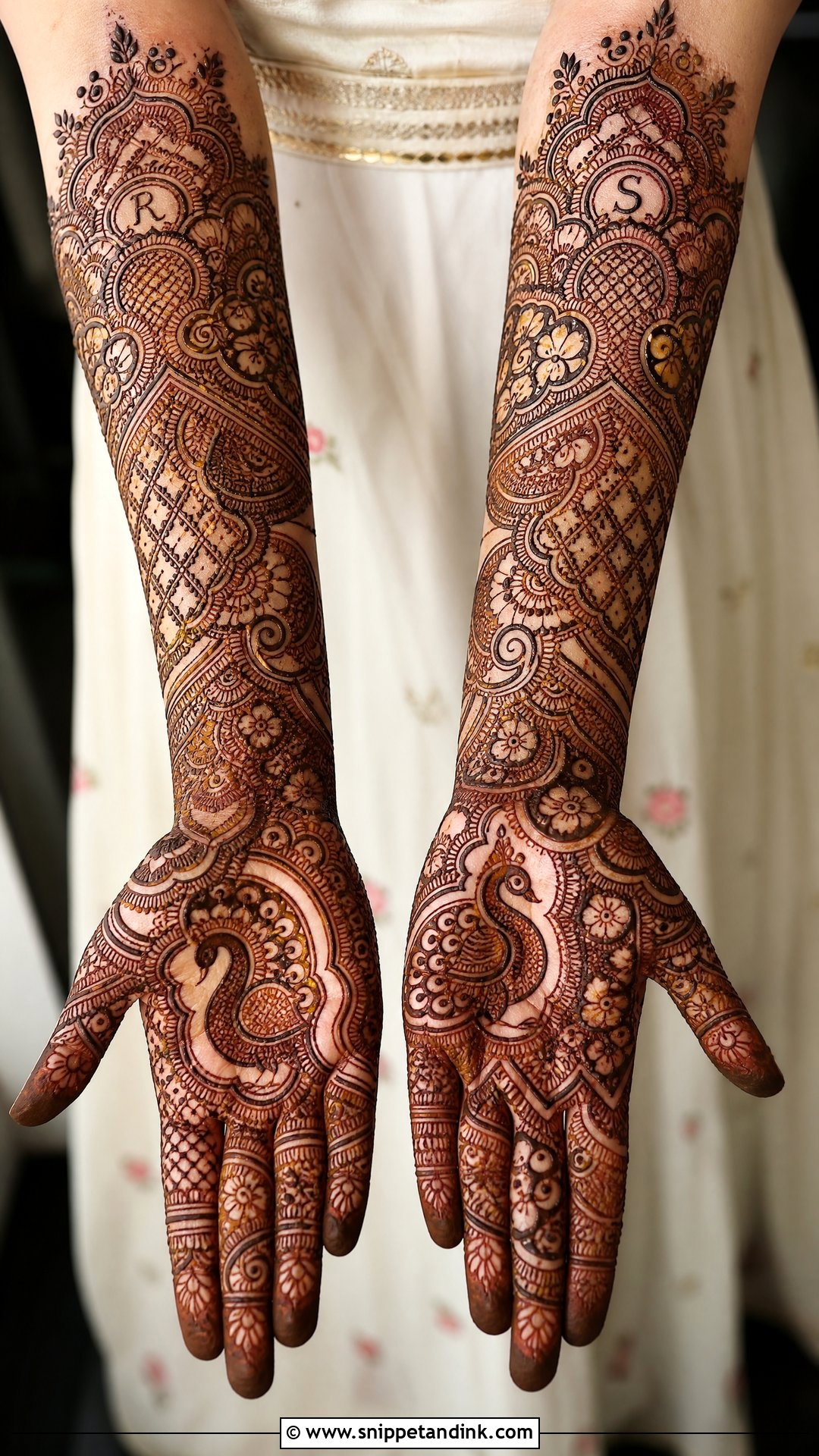
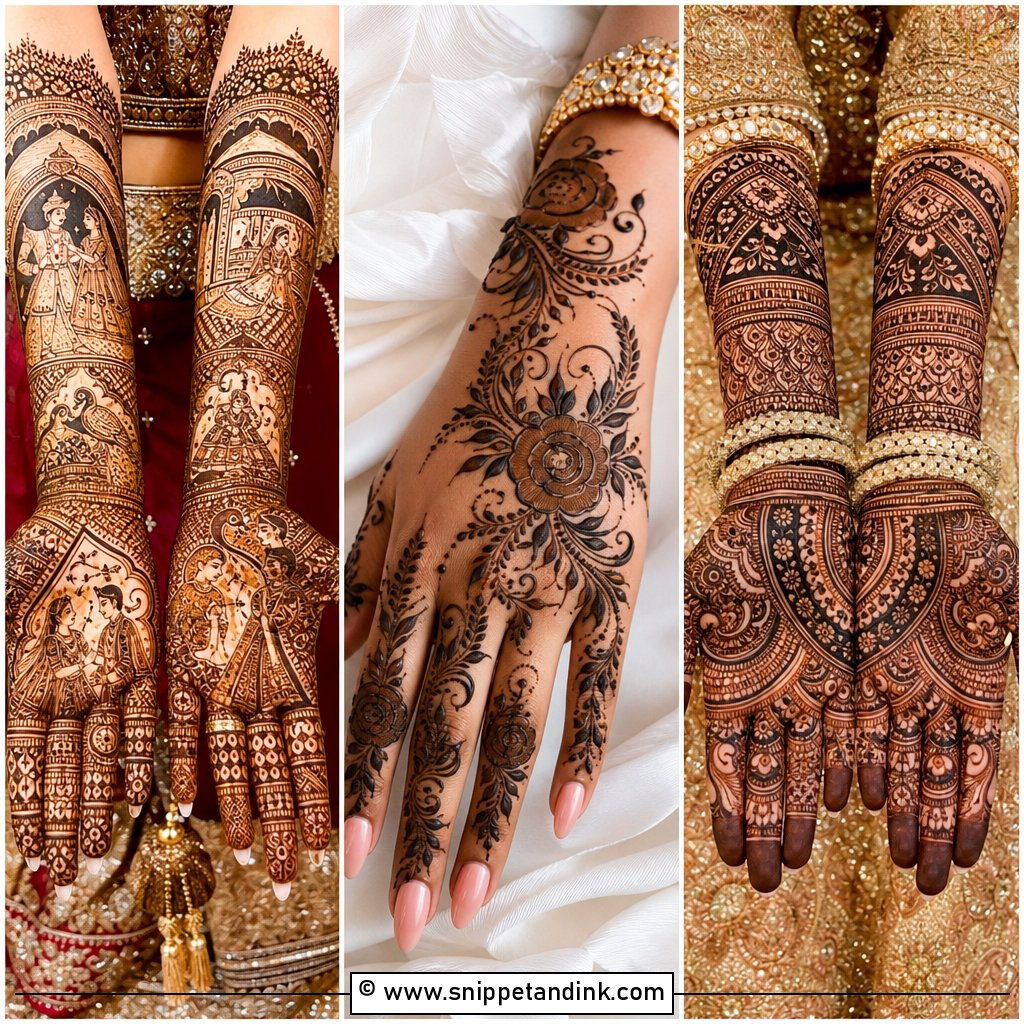
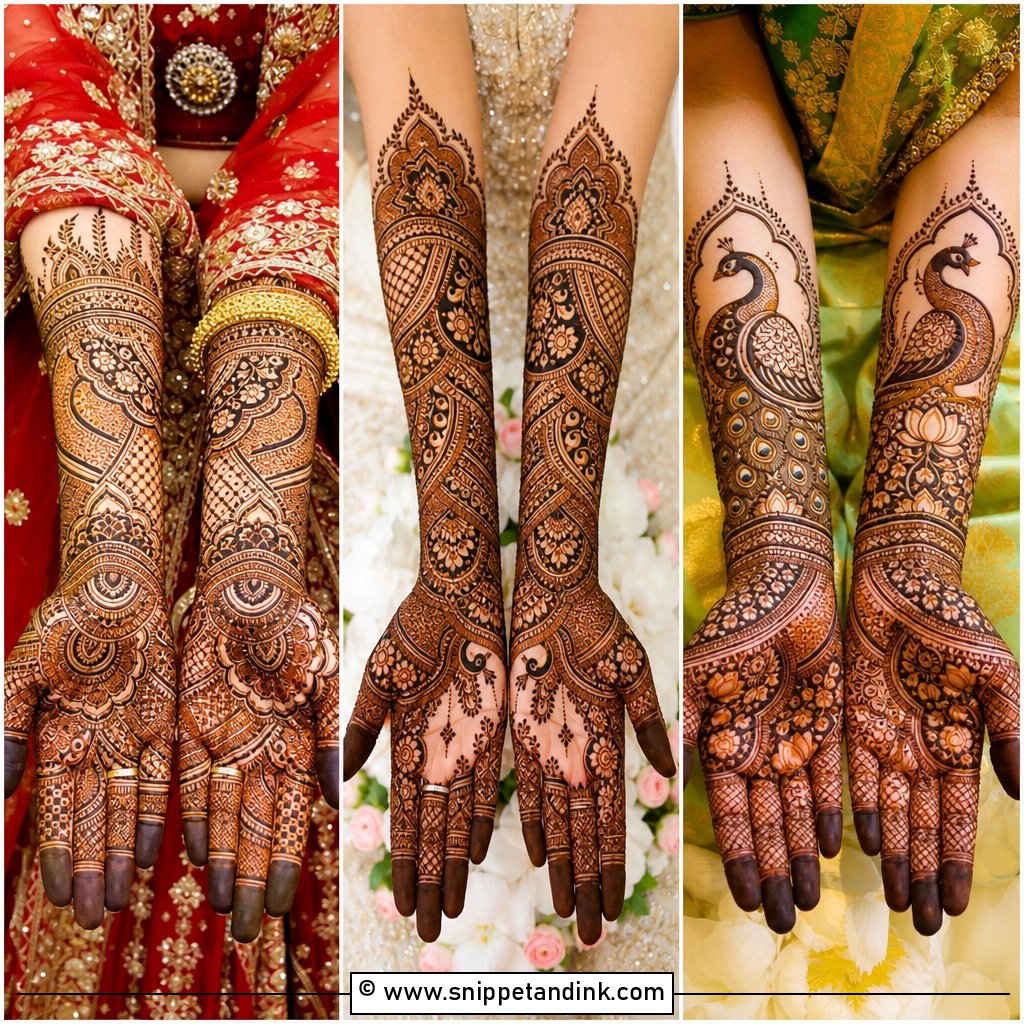
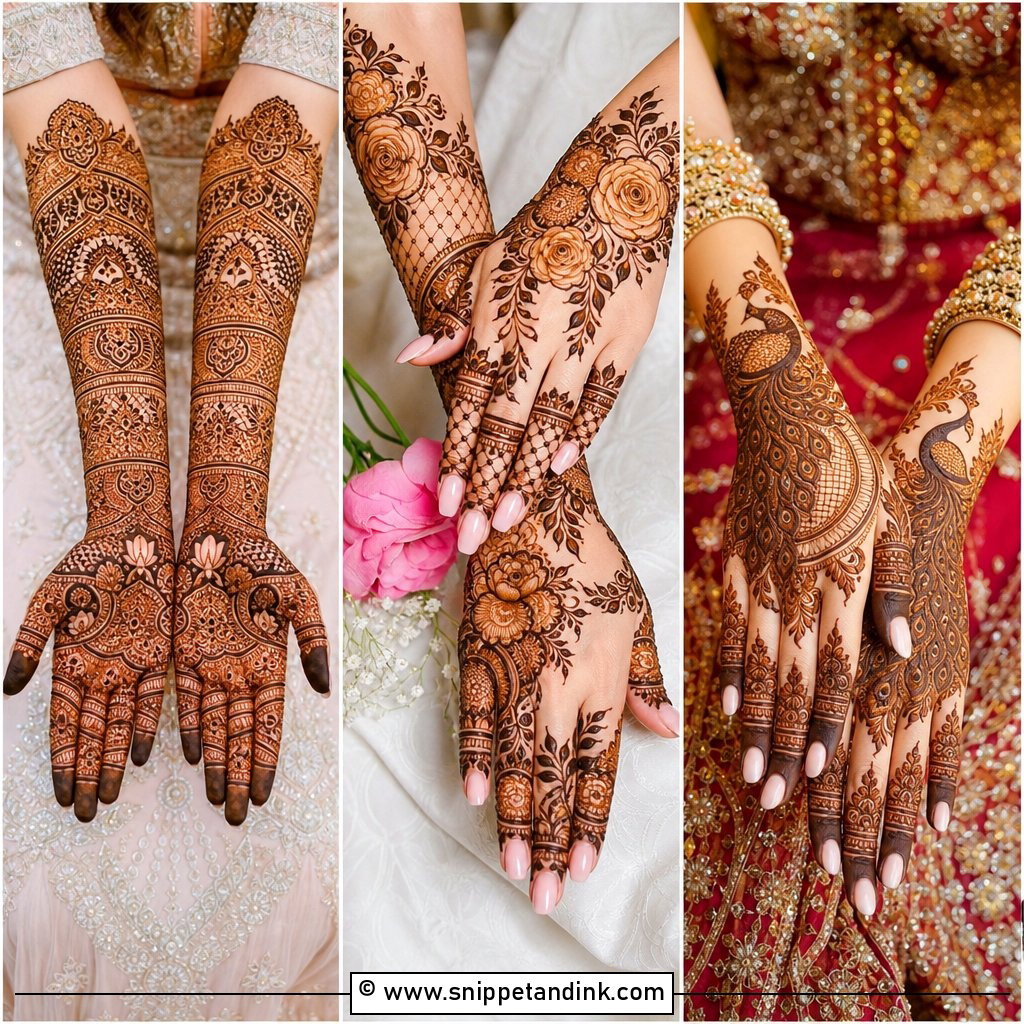
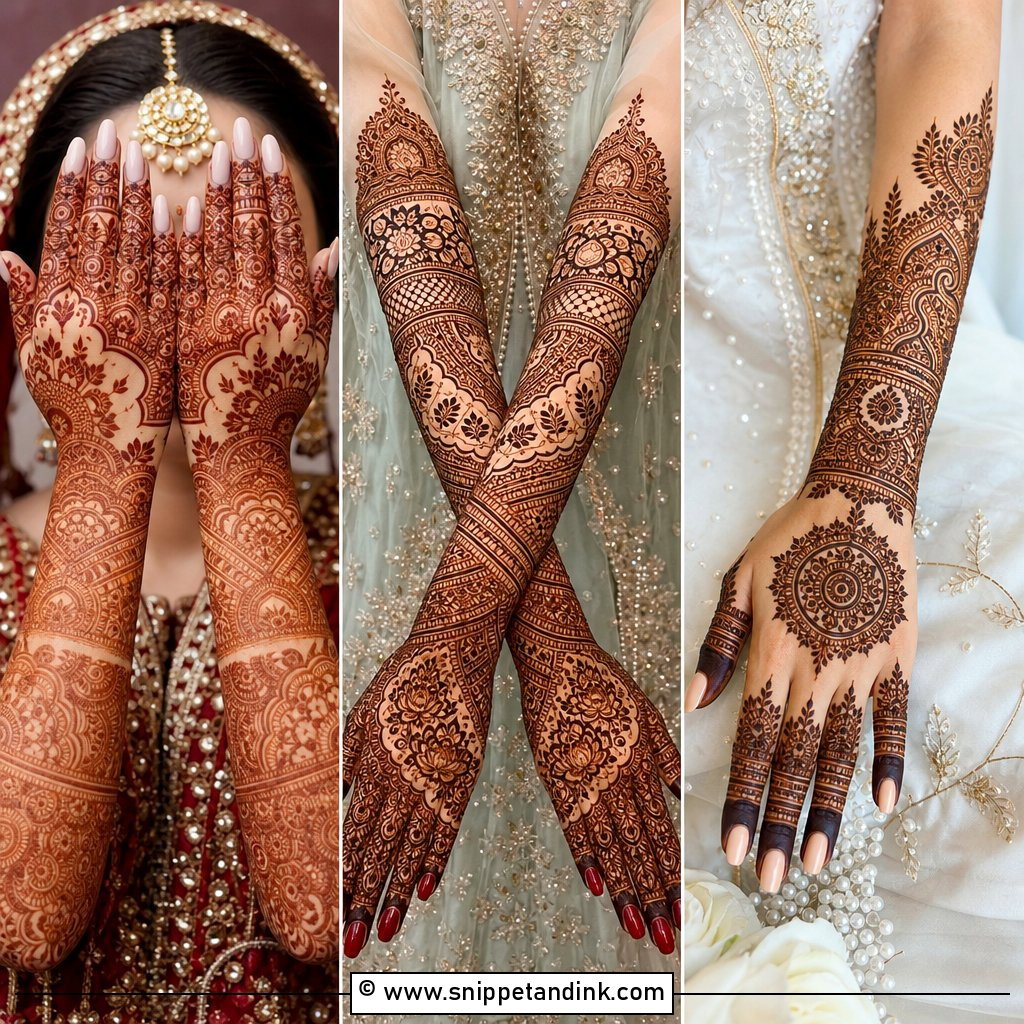
Full-hand coverage runs from the fingertips across the palm and wrist and up the forearm, with almost no bare skin left. Paisleys, florals, peacocks, jaali and fine filler work together so that bangles and rings sit on a continuous pattern. It belongs with heavily embroidered lehengas, sarees and shararas in red or maroon. Hidden initials or the wedding date can be tucked inside the filler for the groom to find. I keep both hands balanced but deliberately not mirror images, which looks hand-drawn rather than stamped. Plan for this to take several hours, and to sit still for most of them.
2. Indian Bridal Mehndi Design
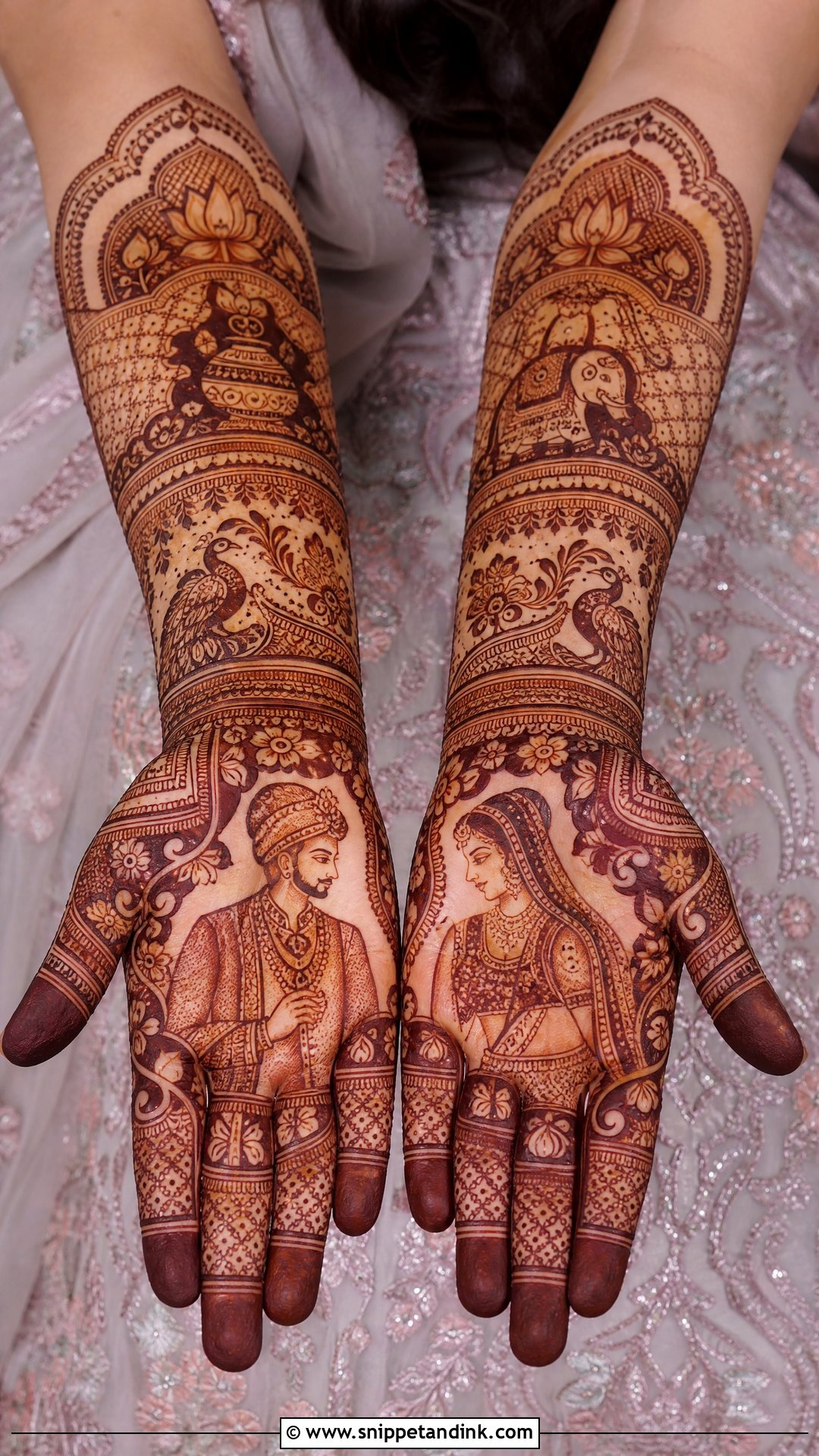
Traditional Indian bridal work tells a story: peacocks, lotus flowers, paisleys, bride and groom figures, mandaps, kalash and elephants, often a doli carrying the bride. It covers the full palm and climbs toward the elbow. Because the detail is so fine, it needs an artist with very steady line control and a cone with thin, smooth paste. The biggest mistake I see is too many motifs fighting for space. I leave a narrow gap of bare skin around each main figure so the stain has contrast; without it, the whole hand turns into a single dark patch from a few feet away.
3. Arabic Bridal Mehndi Design
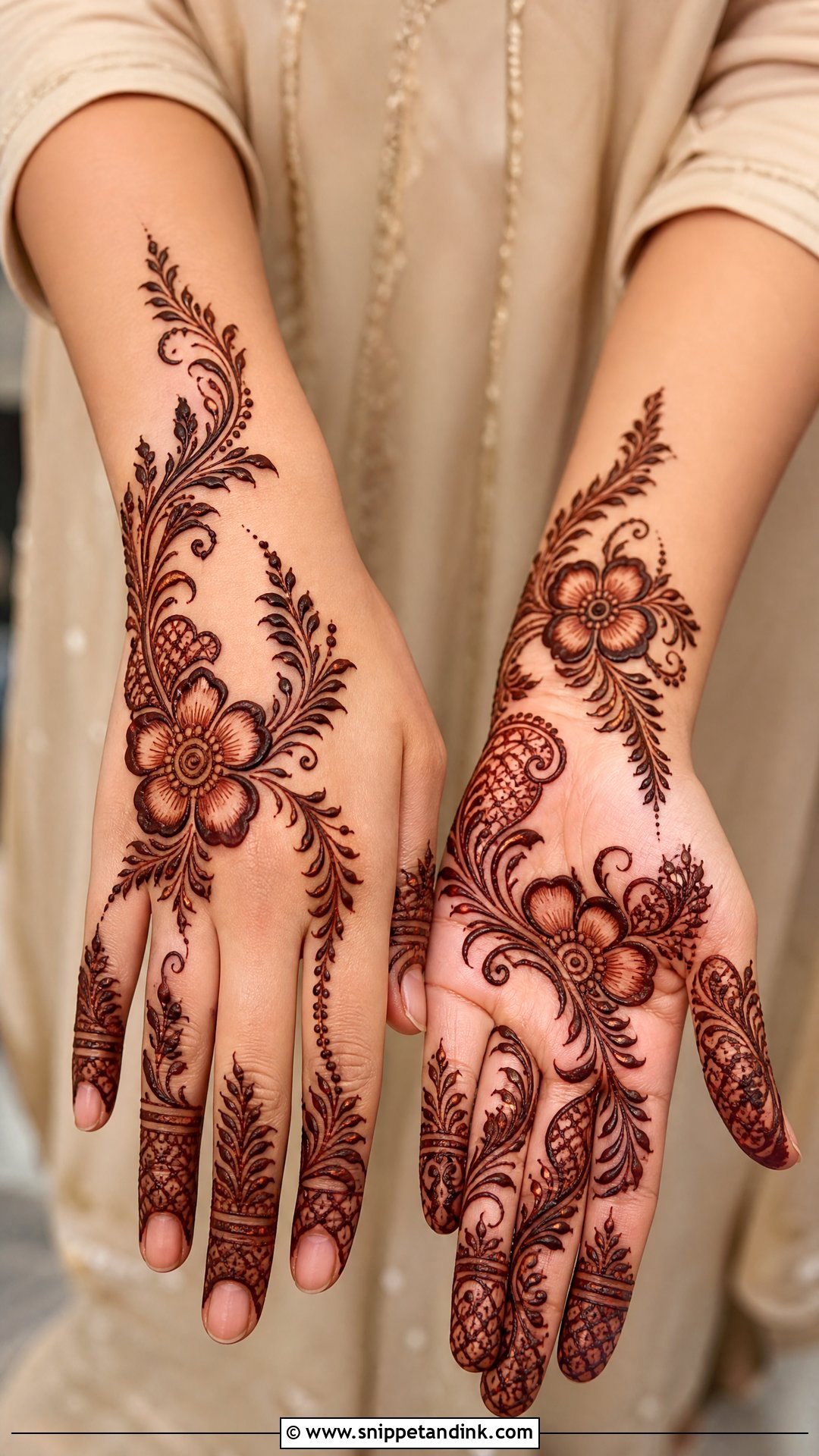
If you want something bold that leaves skin showing, Arabic is the style. The design flows diagonally across the palm or the back of the hand in large flowers, leafy vines and paisley curves, with open space between them. That open space is what keeps it readable in photos and gives a lighter feel for destination weddings or outfits with modern cuts. Arabic is also quicker to apply, which helps at a busy mehndi night. To make it read as bridal rather than party mehndi, I carry the trail all the way from the fingertips to the wrist and finish it with a bracelet band or cuff.
4. Indo Arabic Bridal Mehndi Design
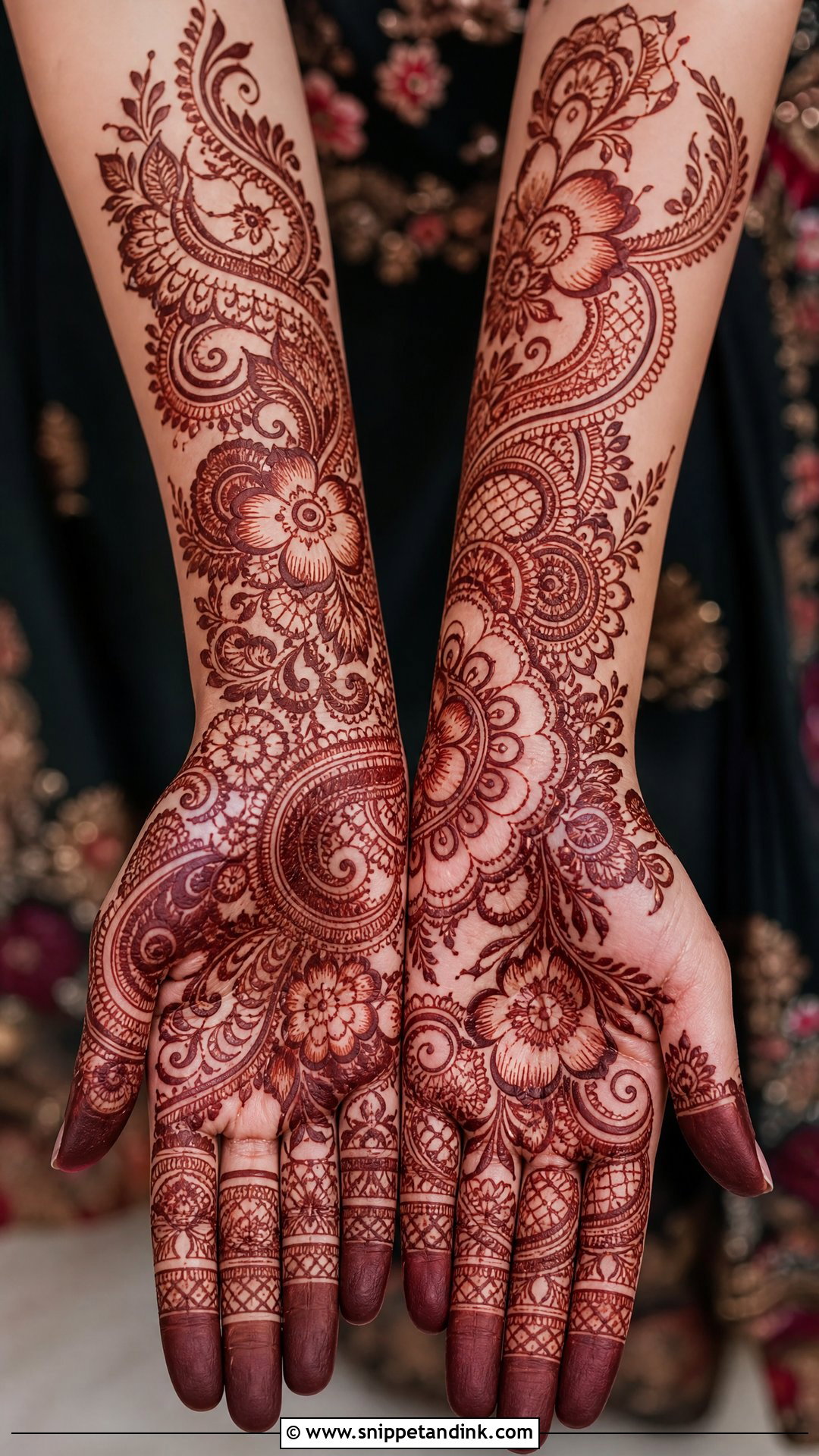
Indo-Arabic takes the flowing trails of Arabic work and fills parts of them with the fine detailing of Indian mehndi. Brides who find full Indian coverage too heavy usually land here. Expect large floral trails, paisley sections, shaded petals, small mandalas and thin jaali. It works on both sides of the hand and with lehengas, gowns, anarkalis or fusion outfits. I always build it around one strong focal trail and then put the effort into the fingers, because ring and bangle close-ups show the fingers more than the palm.
5. Bridal Back Hand Mehndi Design
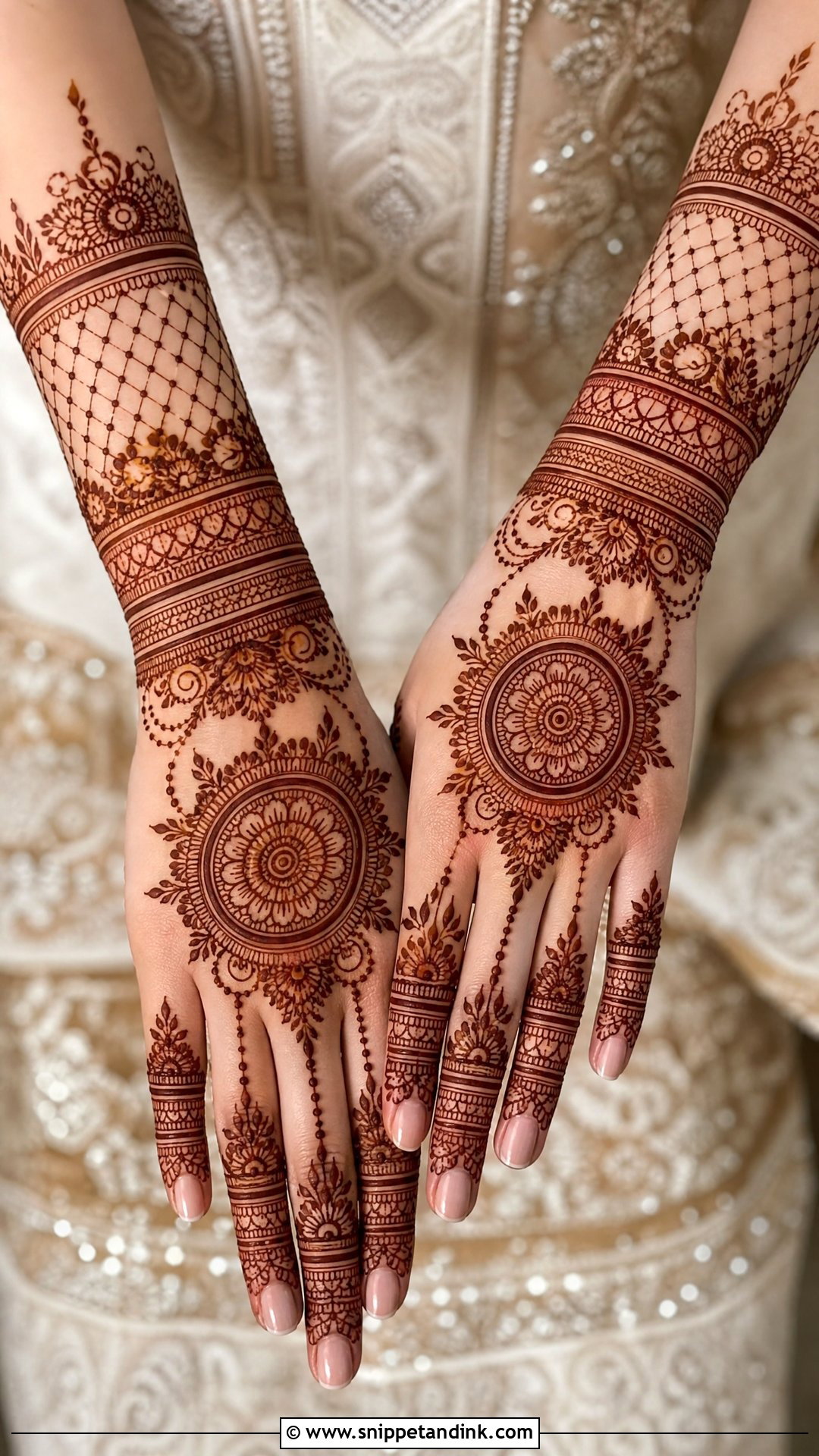
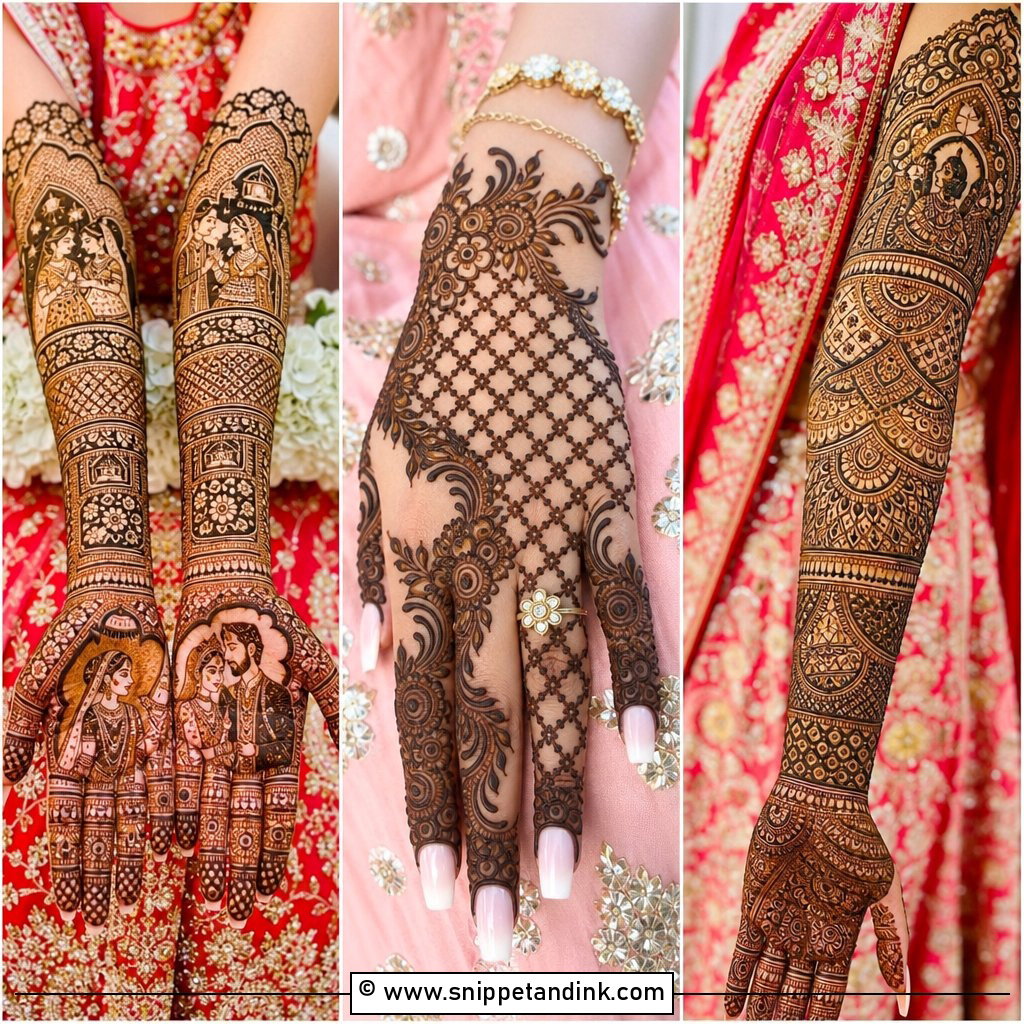
Bridal back hand mehndi design deserves as much thought as the palm, since it is the side of your hand that appears in most portraits and ring shots. A central mandala, a floral bouquet, bracelet bands, finger chains, jaali or full coverage all work. Plan it around your jewelry: if you’re wearing a hathphool and heavy rings, I keep the knuckles and the line where the hathphool chain sits lighter, so the metal isn’t lost against the pattern. Symmetrical hands read as traditional; a mandala on one hand and a vine on the other looks modern, provided the fingers match.
6. Front Hand Bridal Mehndi Design
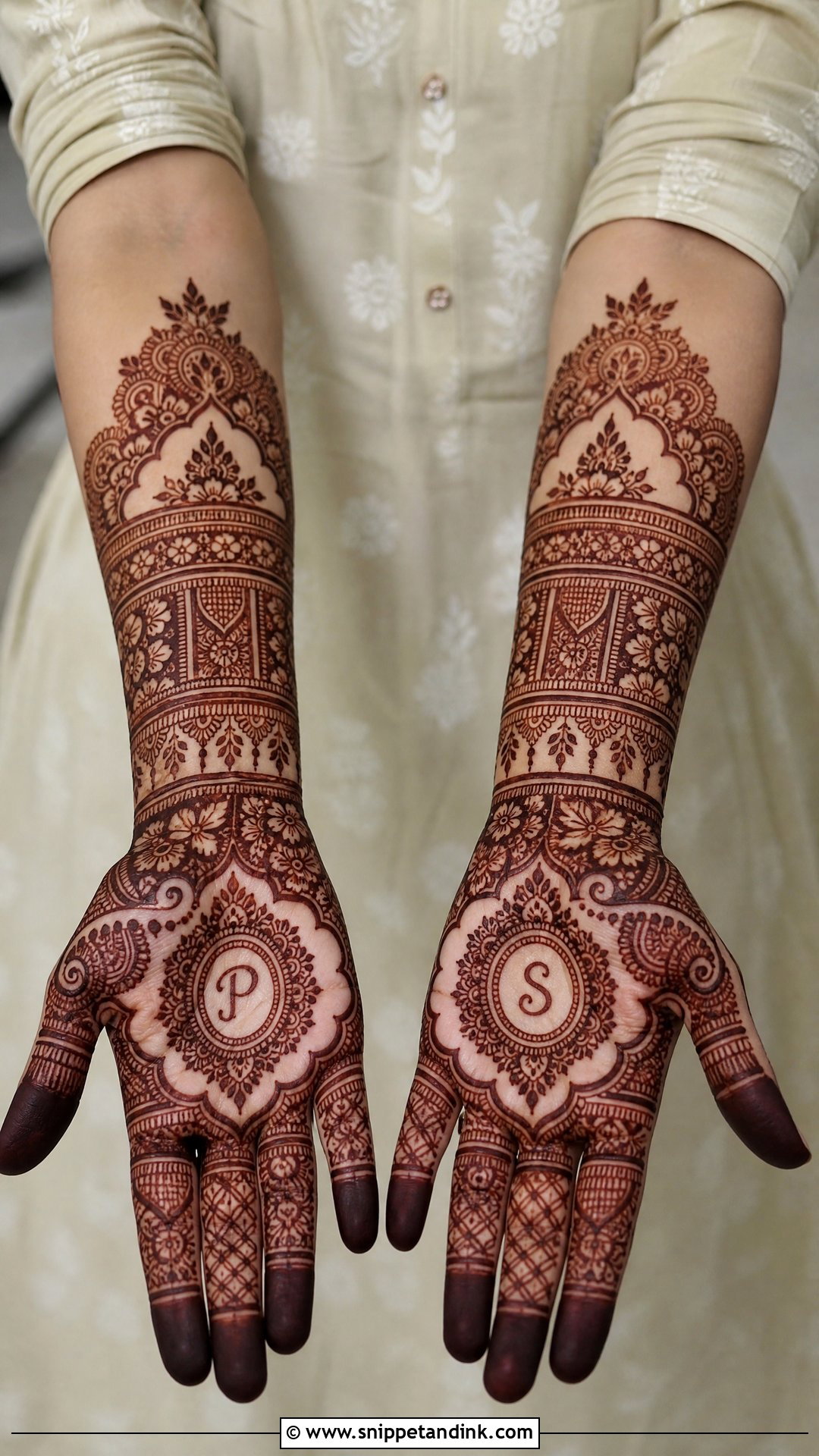
Palms stain darkest because the skin there is thicker and holds the dye well, so they’re where I put the work I most want to be seen: initials, small portraits, symbolic motifs, a little wedding scene. A strong palm has a clear center, detailed fingertips, filled wrist bands and even spacing. What ruins palms is crowding. Tiny details drawn too close together merge as the stain darkens. I use medium-sized elements and clean lines so the design is still legible after the paste comes off and the color deepens over the next day.
7. Bridal Portrait Mehndi Design
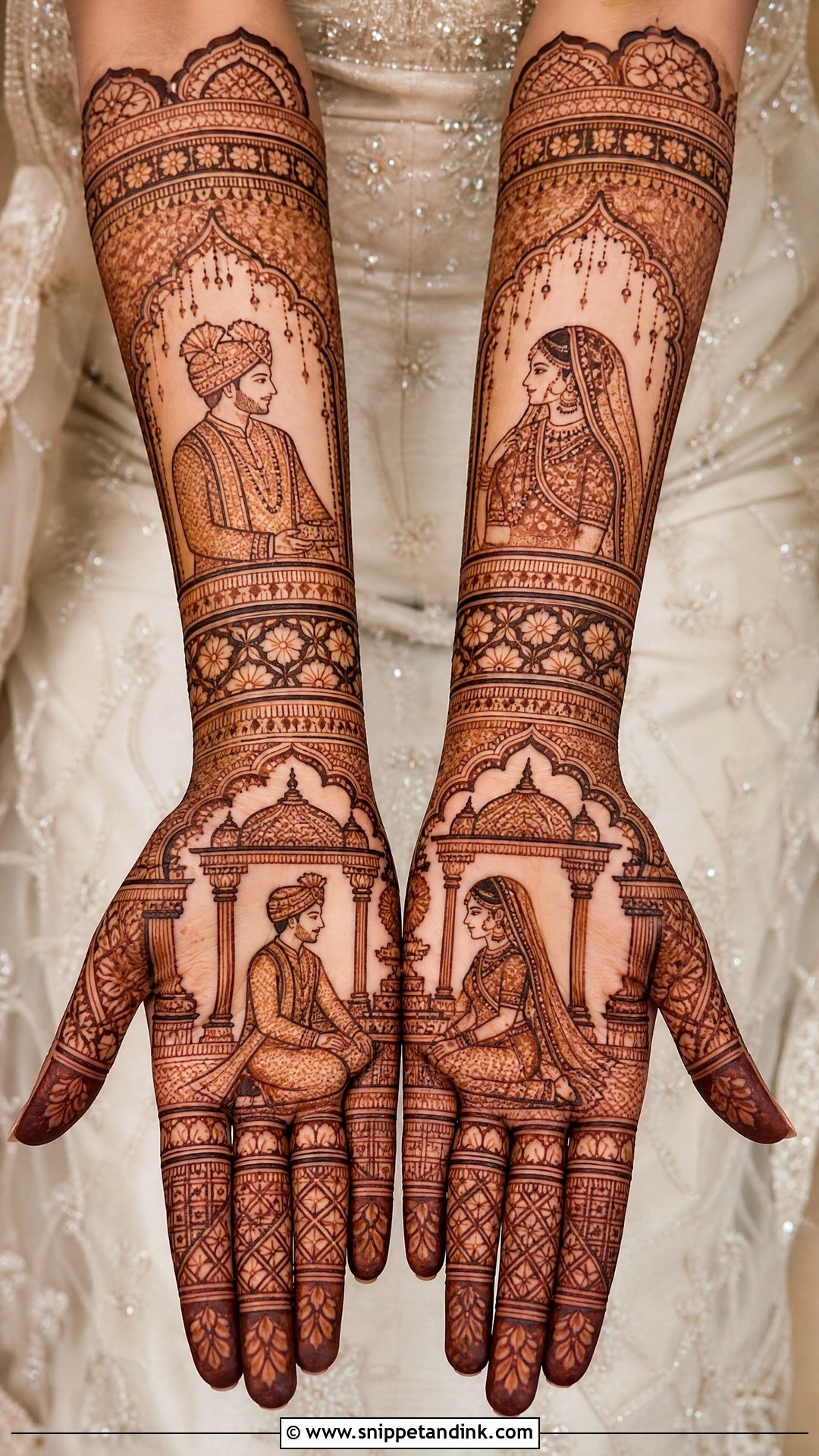
Portrait mehndi puts the couple’s faces, a ritual or the proposal on the palms or forearms, framed by florals, arches and paisleys. It is the most demanding work an artist does, so look at an artist’s past portraits before booking, and send reference photos well ahead. I draw faces slightly larger than people expect; noses, eyes and lips drawn tiny tend to blur into a single blot once the stain develops. Portraits need full-hand coverage around them, both for space and so they don’t look like stickers floating on bare skin.
8. Bride And Groom Mehndi Design
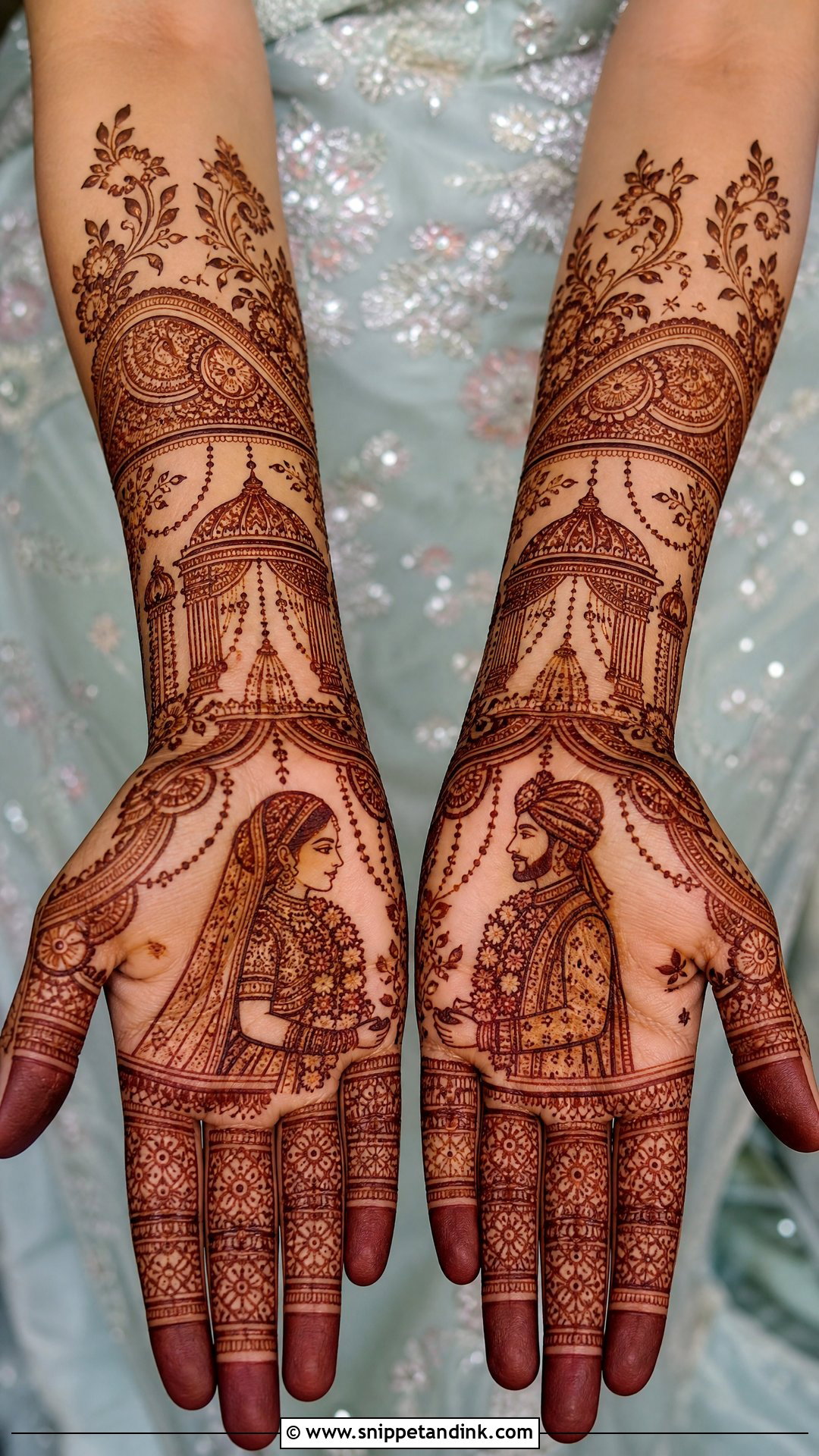
Where portrait work aims for likeness, bride and groom mehndi uses stylized figures, the bride on one palm and the groom on the other, often under a mandap arch or with garlands. It reads clearly as a wedding scene without needing realistic faces, so it suits brides who want meaning but aren’t sure about portraits. The figures should sit in the center of each palm, with borders, paisleys and wrist cuffs supporting them. Heavy filler drawn over or right against the figures is the usual mistake; leave them a little breathing room.
9. Peacock Bridal Mehndi Design
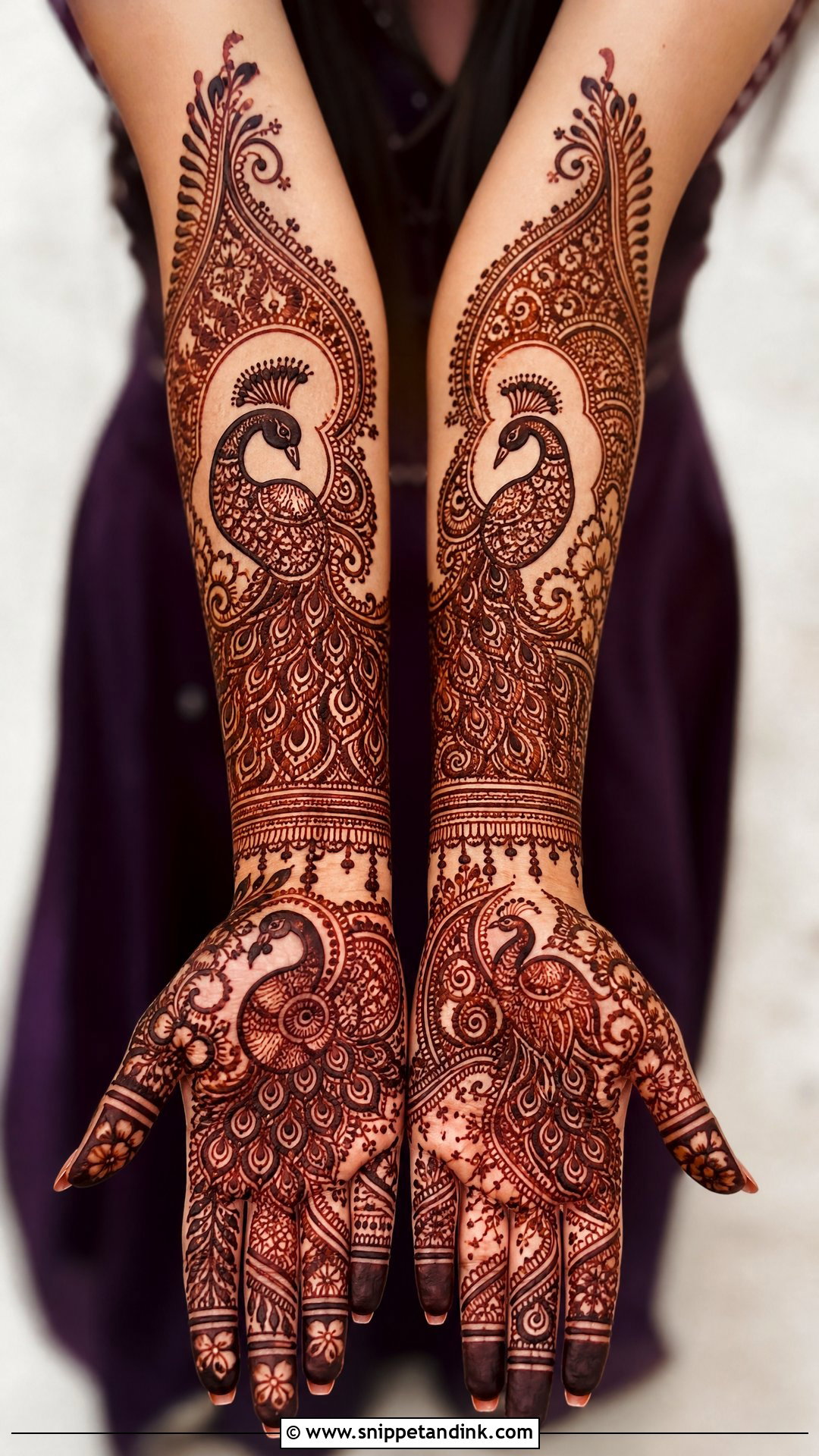
The peacock is one of the oldest motifs in Indian bridal mehndi, and it still earns its place. A large bird on each palm, feather curves trailing up the forearm, paisley borders and floral fillers make a complete look. I build the feathers from fine lines, dots and shaded sections, which gives them movement as the hand turns. It suits jewel-toned outfits in green, blue, gold, maroon or royal pink. Keep the body of the peacock open enough to stain clearly, and surround it with full fingertip work and wrist bands so it sits within a finished design.
10. Mandala Bridal Mehndi Design
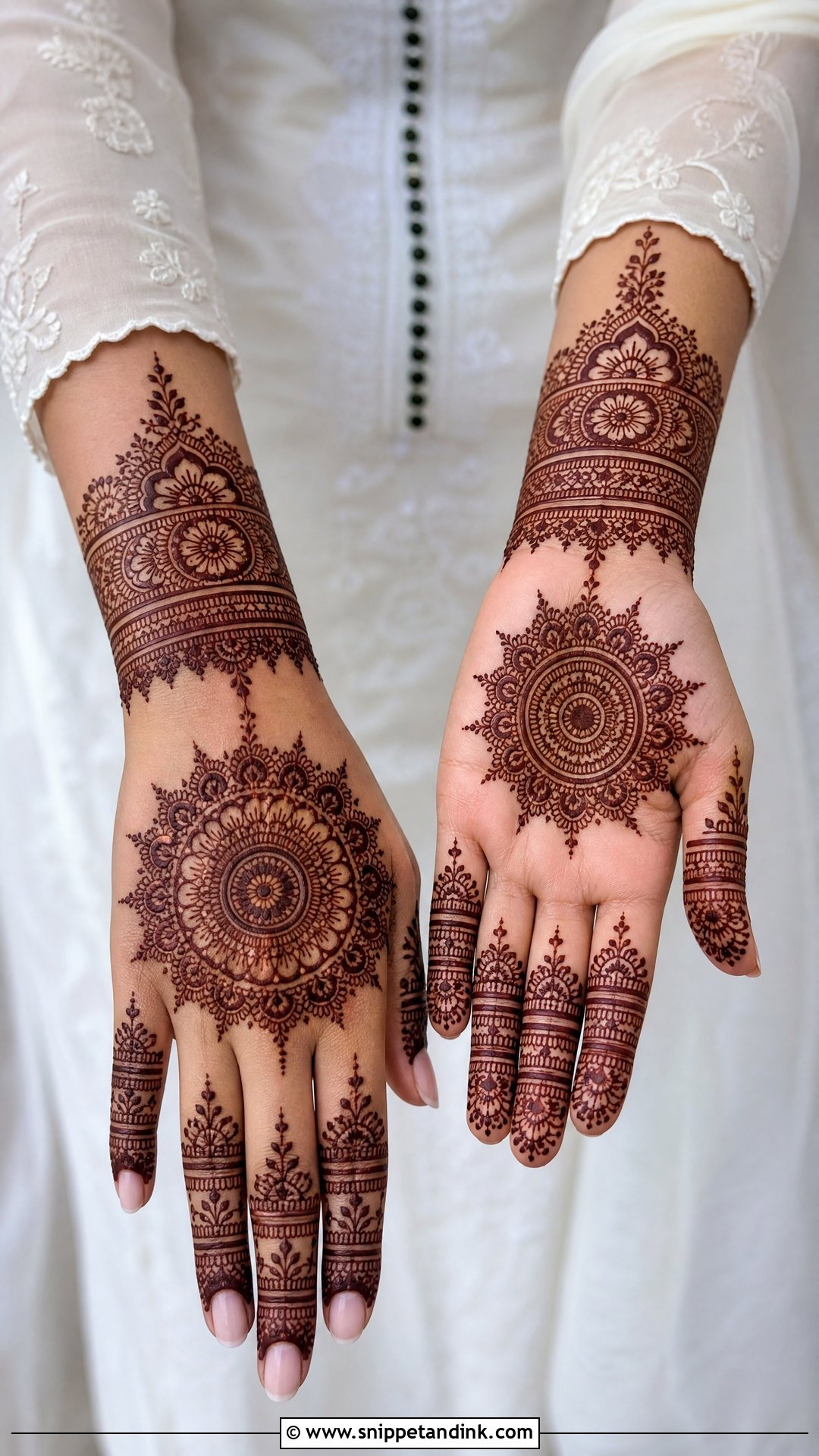
A circular mandala on the palm or the back of the hand gives a single, strong focal point. From there, fingers, wrists and forearms can stay simple or fill with florals, leaves, jaali and bracelet bands. Because the shape is so balanced, it fits traditional and modern outfits equally well. For a bride, though, a mandala on its own looks unfinished. I connect it to the fingers with chains or patterns and close it at the wrist with a cuff, so close-up photos show a complete hand rather than a stamp.
11. Jaali Bridal Mehndi Design
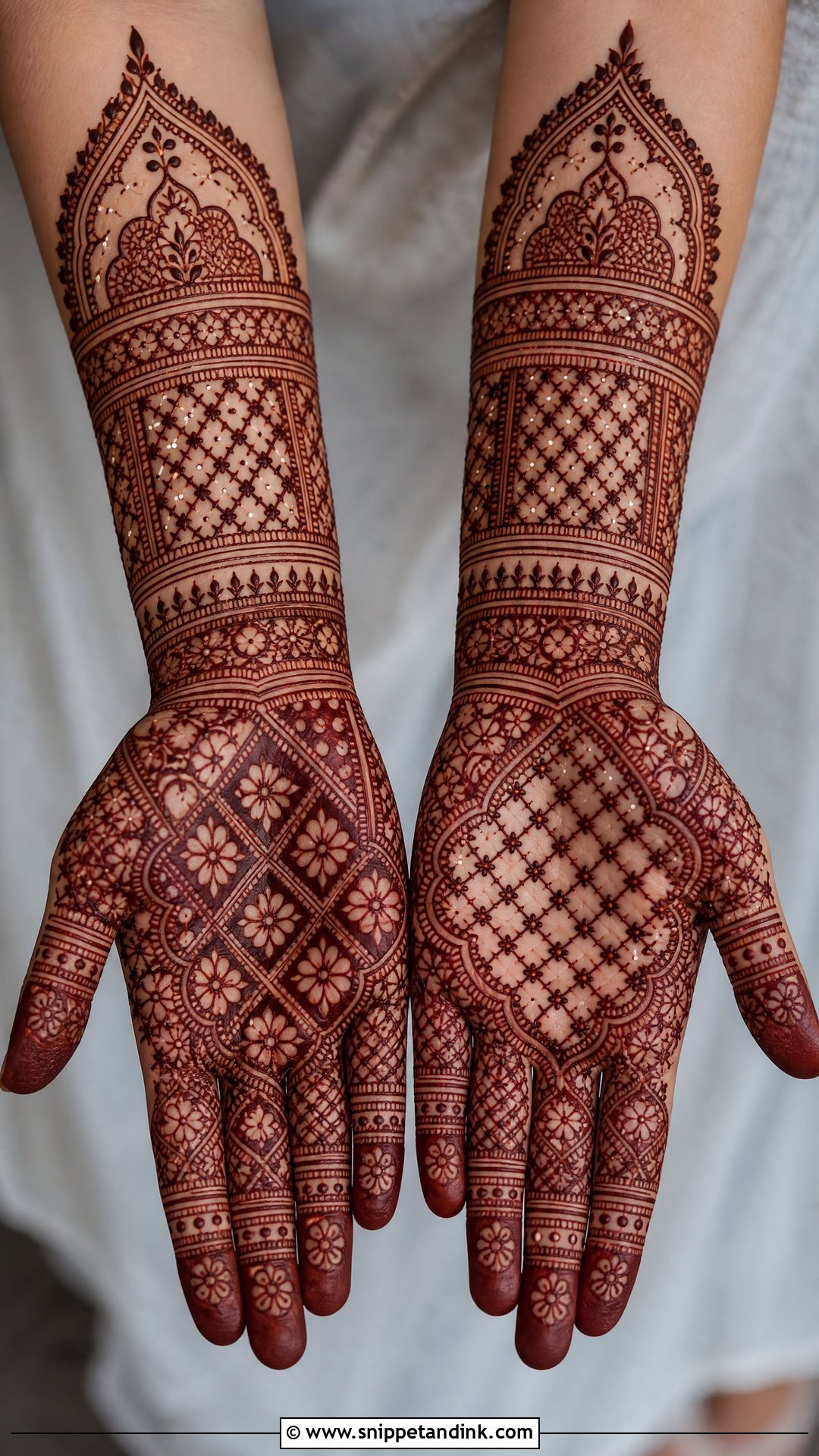
Jaali, the net or lattice pattern, gives the skin a lace-like look and sits softly under rings and bangles. It can be the main feature or a filler between paisleys, mandalas and floral trails. Spacing is everything here. Henna lines spread slightly as they dry and stain, so a mesh drawn too tight closes up and looks dark and heavy by the wedding. I leave the gaps a little wider than looks right in wet paste, finish each section with a clean border and keep the fingertips detailed.
12. Floral Bridal Mehndi Design
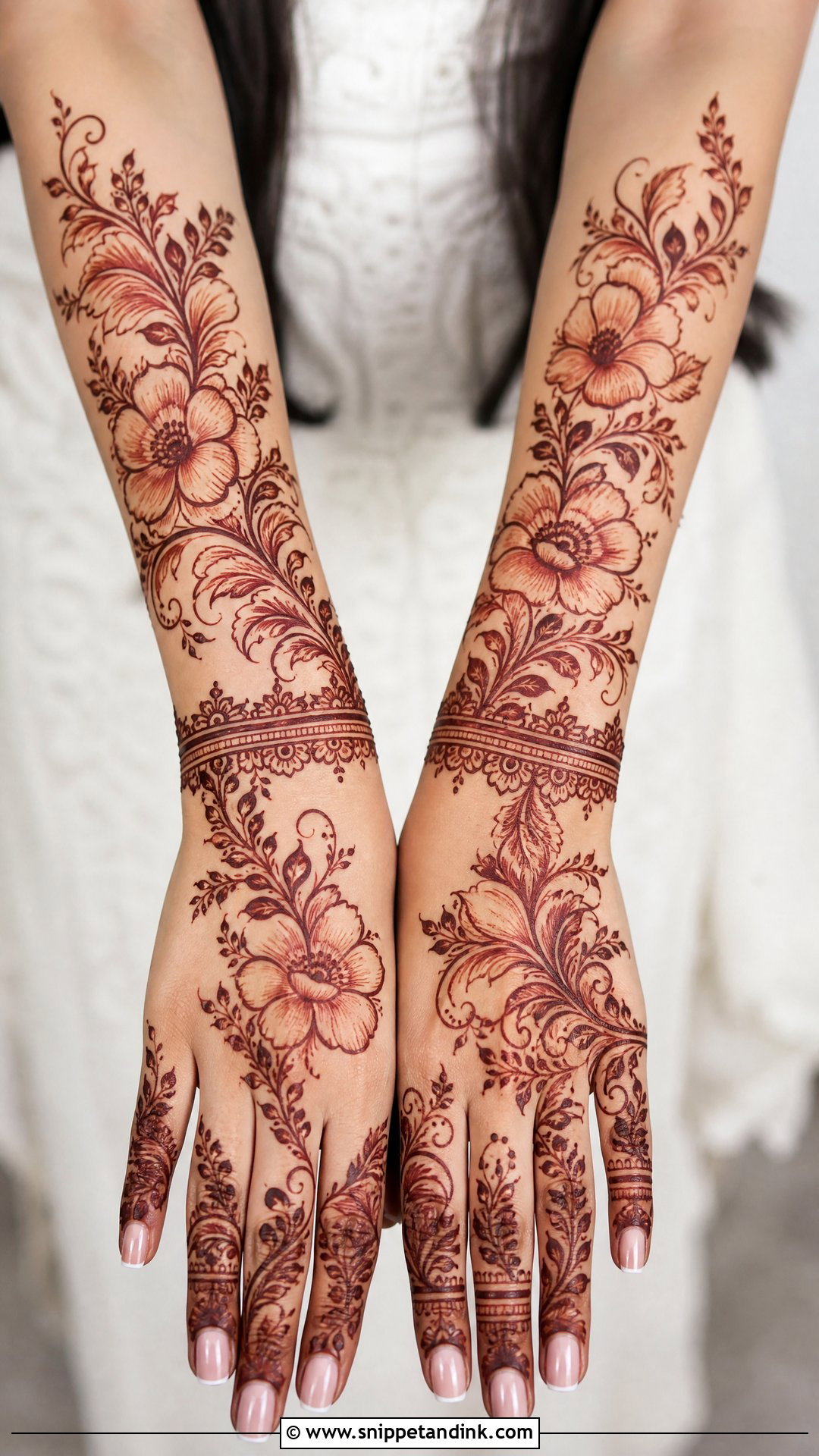
Florals are the most adaptable design here and sit with almost any outfit. Large flowers go on the palms, leafy vines over the wrists, shaded petals along the fingers and floral cuffs near the forearms. They suit brides who want romance without symbolic scenes, and they fit Arabic, Indo-Arabic and modern Indian layouts. To keep florals from looking like a casual party design, I mix bold blooms with fine filler and vary flower sizes across the hand. Same-sized flowers in a row read as flat.
13. Paisley Bridal Mehndi Design
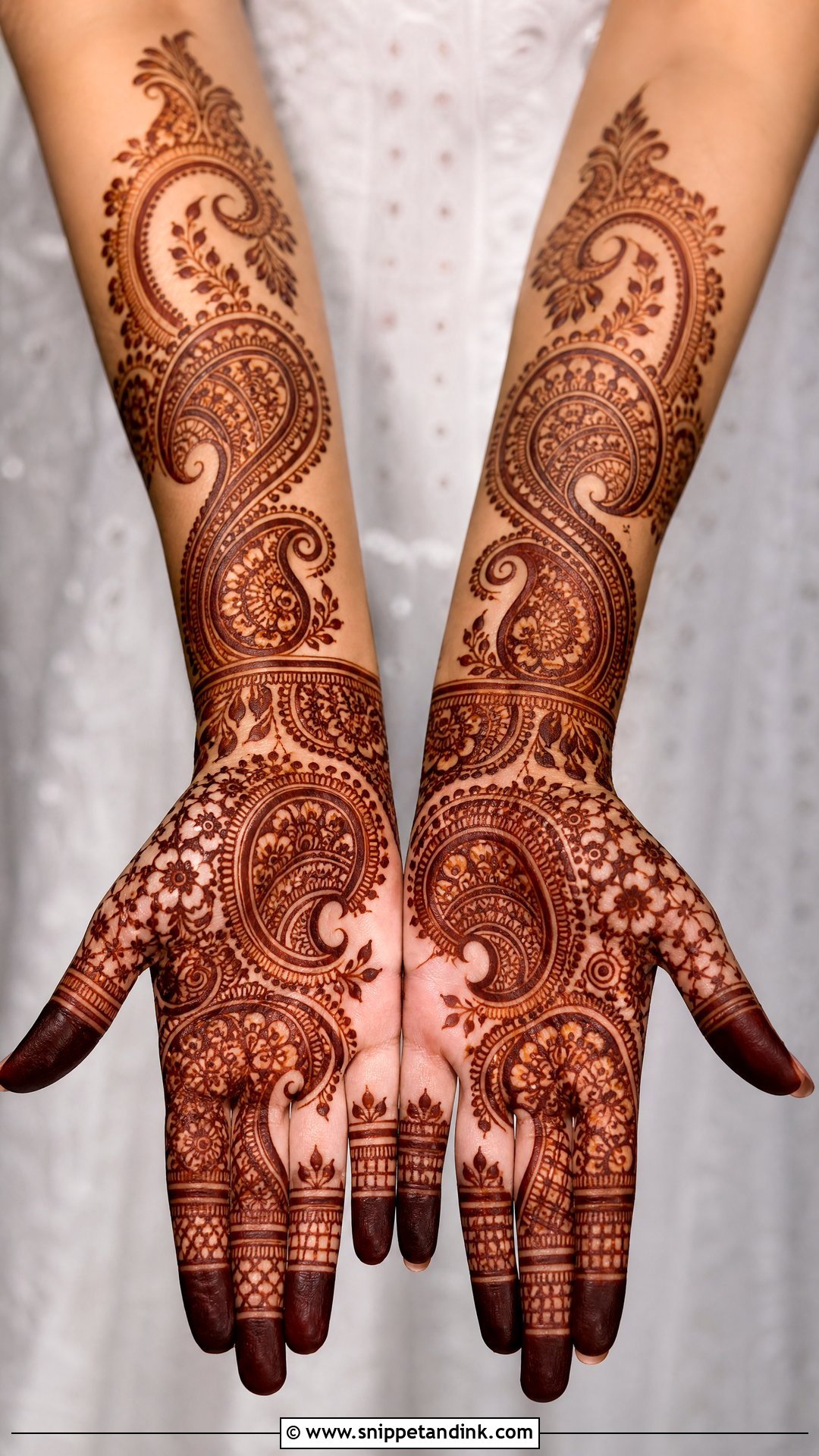
Paisley is the motif I trust most for a rich, traditional look without any figures. Paisleys can fill a palm, curve along a wrist or trail up the forearm, and they sit well with florals, dots, leaves, mandalas and fine Indian filler. Their curved shape has a practical advantage, too: drawn along the length of the finger or palm, it makes short fingers look longer. I use a few large paisleys as anchors and build smaller details around them, which stops the design looking repetitive.
14. Minimal Bridal Mehndi Design
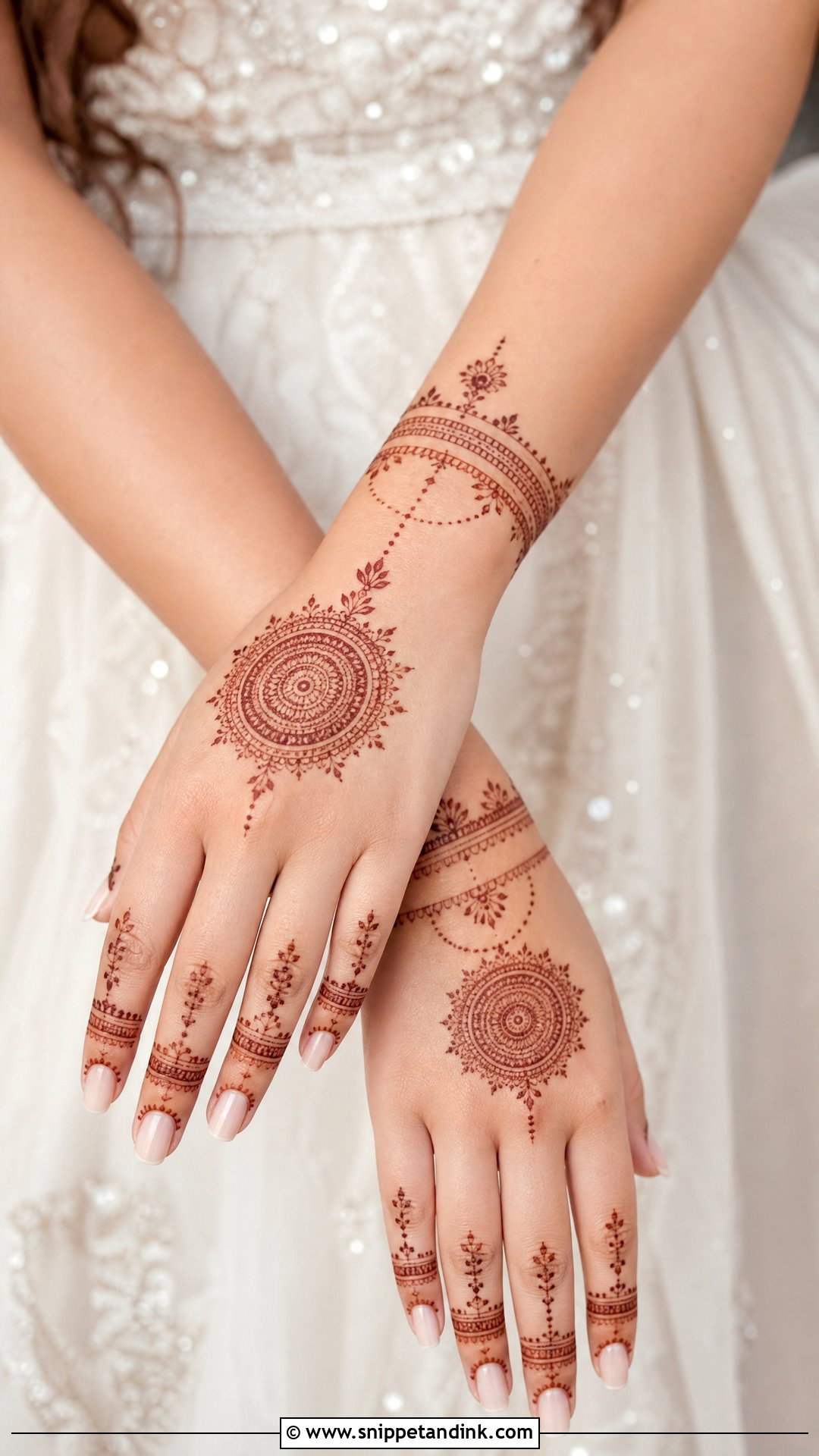
Minimal bridal mehndi might be a small mandala, delicate finger patterns, slim wrist bands and a few tiny florals with plenty of bare skin around them. It suits civil weddings, small ceremonies, engagements and brides who keep jewelry light. Minimal still needs to be finished: fingertips to wrist should read as one design. Thin lines are less forgiving than dense work, so the paste has to be smooth and the stain dark; a pale stain on a minimal design looks like it has faded early. It also takes far less time to apply, which matters when you have a long list of events that week.
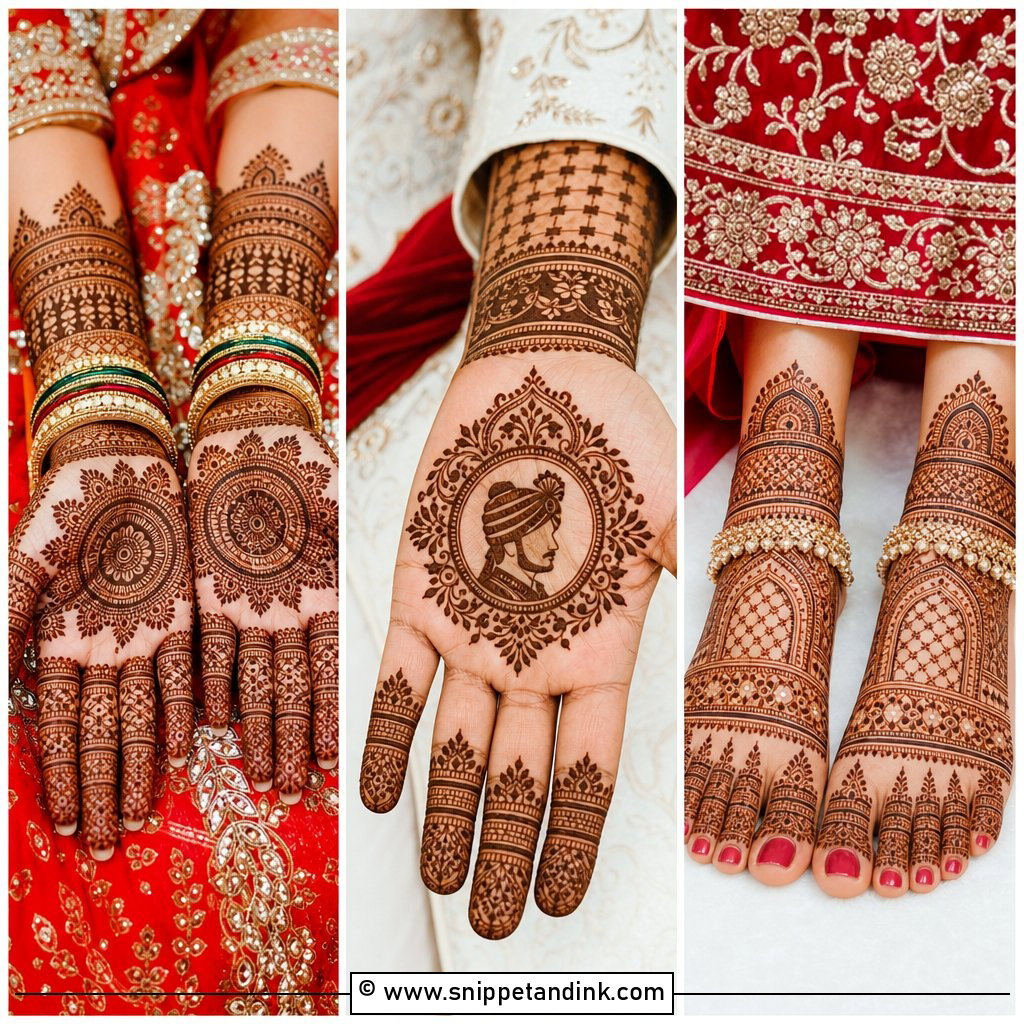
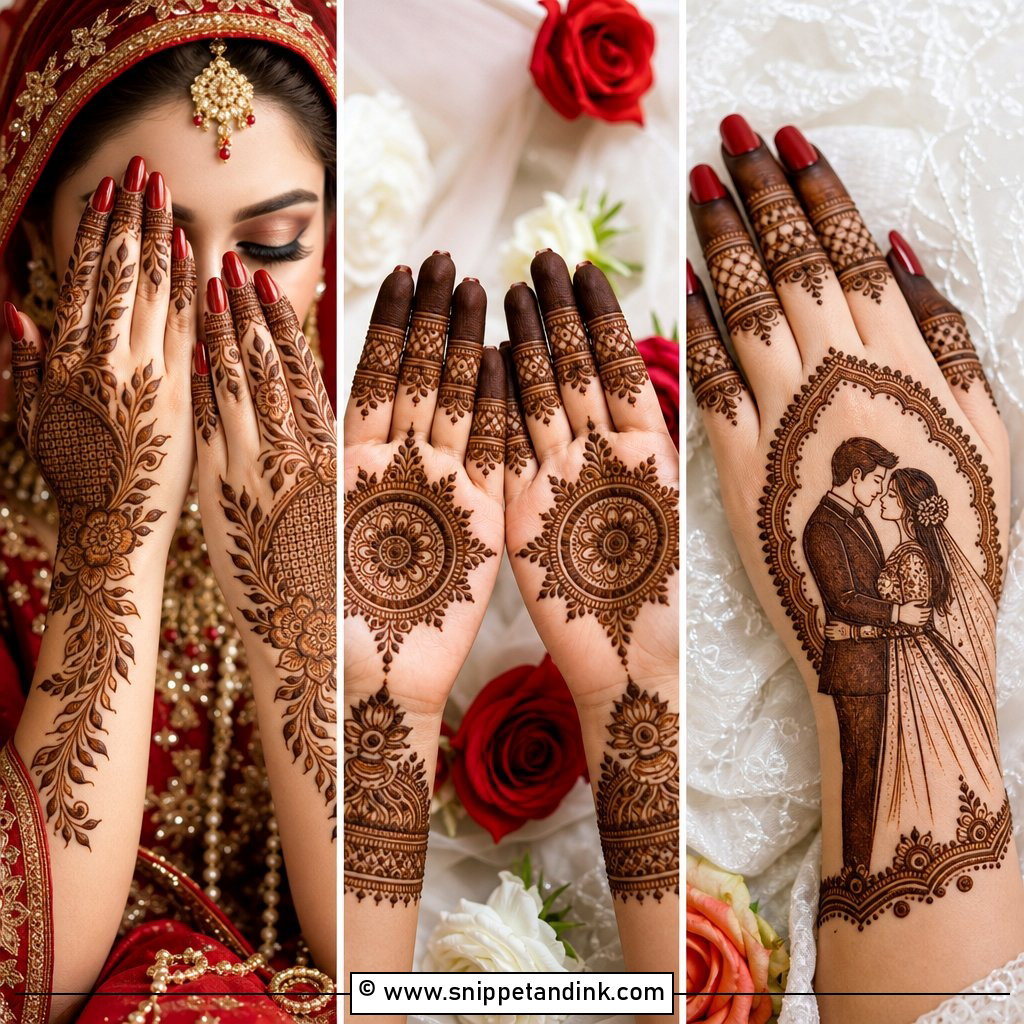
15. Modern Bridal Mehndi Design
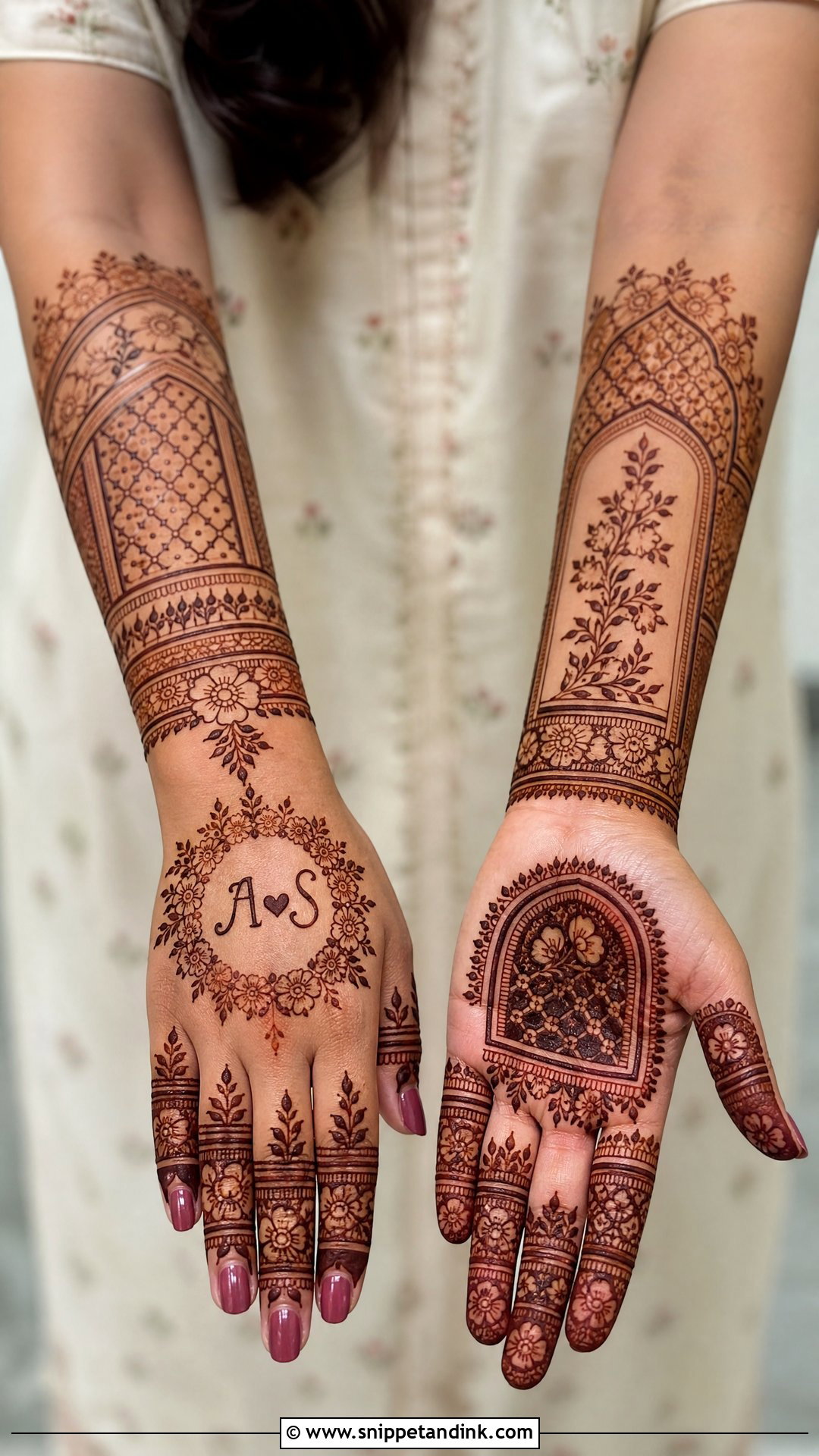
Modern bridal mehndi uses tradition as a base and edits it: geometric panels, clean negative space, bracelet cuffs, tiny initials, floral outlines and asymmetric layouts, with less dense filler. It pairs naturally with pastel lehengas, contemporary sarees, gowns and fusion outfits. The design can cover the whole hand or concentrate around the fingers, back hand and wrist. I always include one or two highly detailed areas, a mandala palm or a floral forearm cuff, because an entirely open modern design can look thin in bridal photos next to heavy jewelry.
16. Royal Bridal Mehndi Design
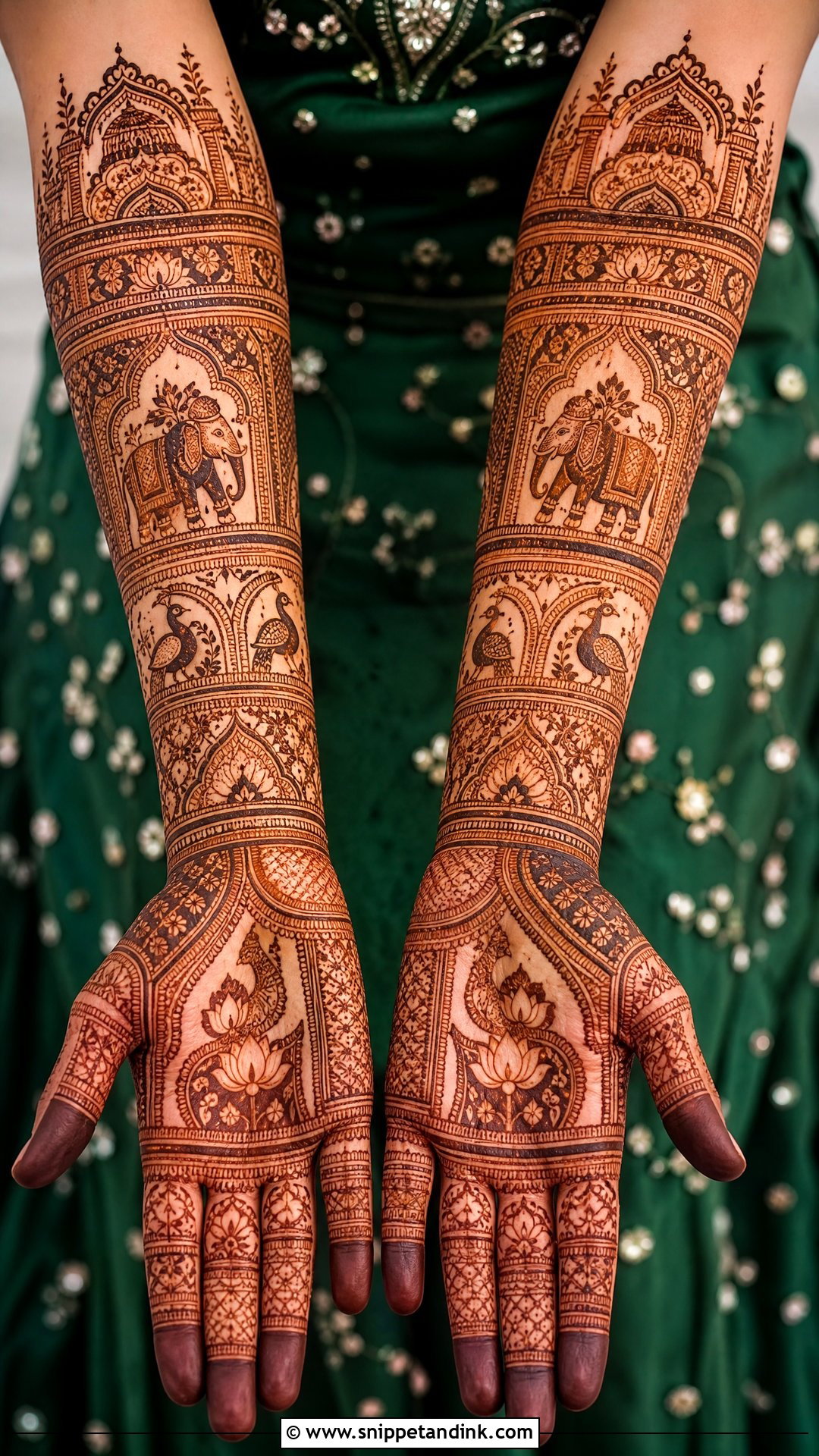
Royal designs bring palace arches, elephants, peacocks, lotuses, bridal figures and layered borders, with full forearm coverage. They match heavily embellished outfits and large celebrations. Without structure, though, this many motifs turns into noise, so I divide the hand into clear panels for the main elements and only then fill between them with fine vines, dots, paisleys and mesh. It is one of the longest applications on this list. If you choose it, book a full session and plan your meal and bathroom breaks before the cone starts.
17. Rajasthani Bridal Mehndi Design
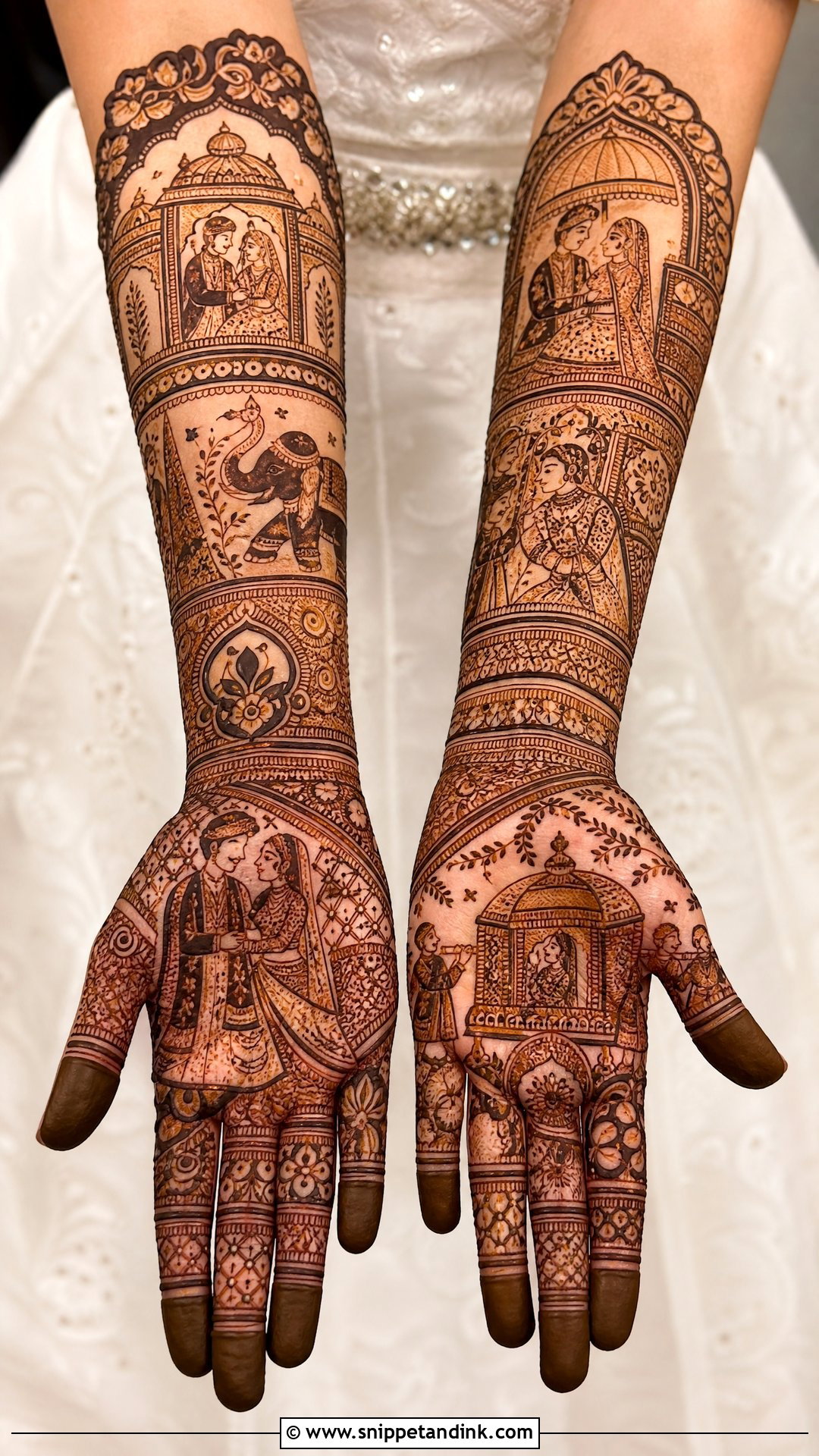
Rajasthani work is heritage storytelling: bride and groom figures, doli processions, elephants, peacocks and musical instruments, filled densely from fingertips to forearms. It belongs with traditional lehengas, bandhani, gota patti, kundan jewelry and bright bridal colors. Neat outlines and balanced panels make or break it, since the beauty lives in small details. I’d rather draw five symbols that mean something to you than every motif in the tradition; ask yourself which ones you’d explain to a guest, and keep those.
18. Moroccan Bridal Mehndi Design
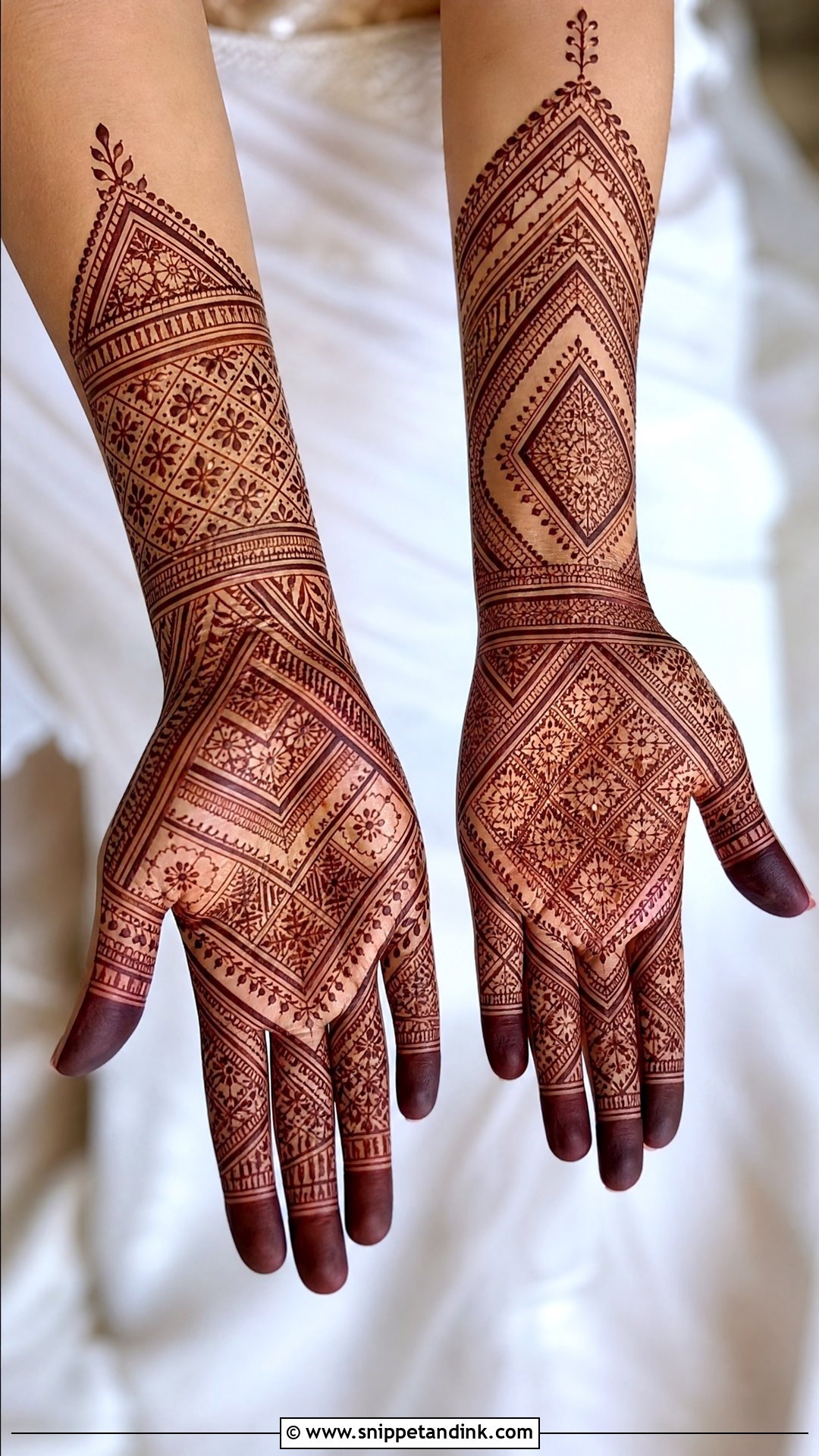
Moroccan bridal mehndi design swaps florals for geometry: diamonds, triangles, chevrons, grids and bold borders, laid out in structured sections from the wrist to the forearm. The graphic look stands apart from Indian and Arabic styles and looks especially good on long fingers. Precision is the whole design, so lines need to be straight and spacing even; any wobble shows. To make it bridal, I pair the geometric base with filled fingertips, wrist cuffs and a balanced palm.
19. Gulf Bridal Mehndi Design
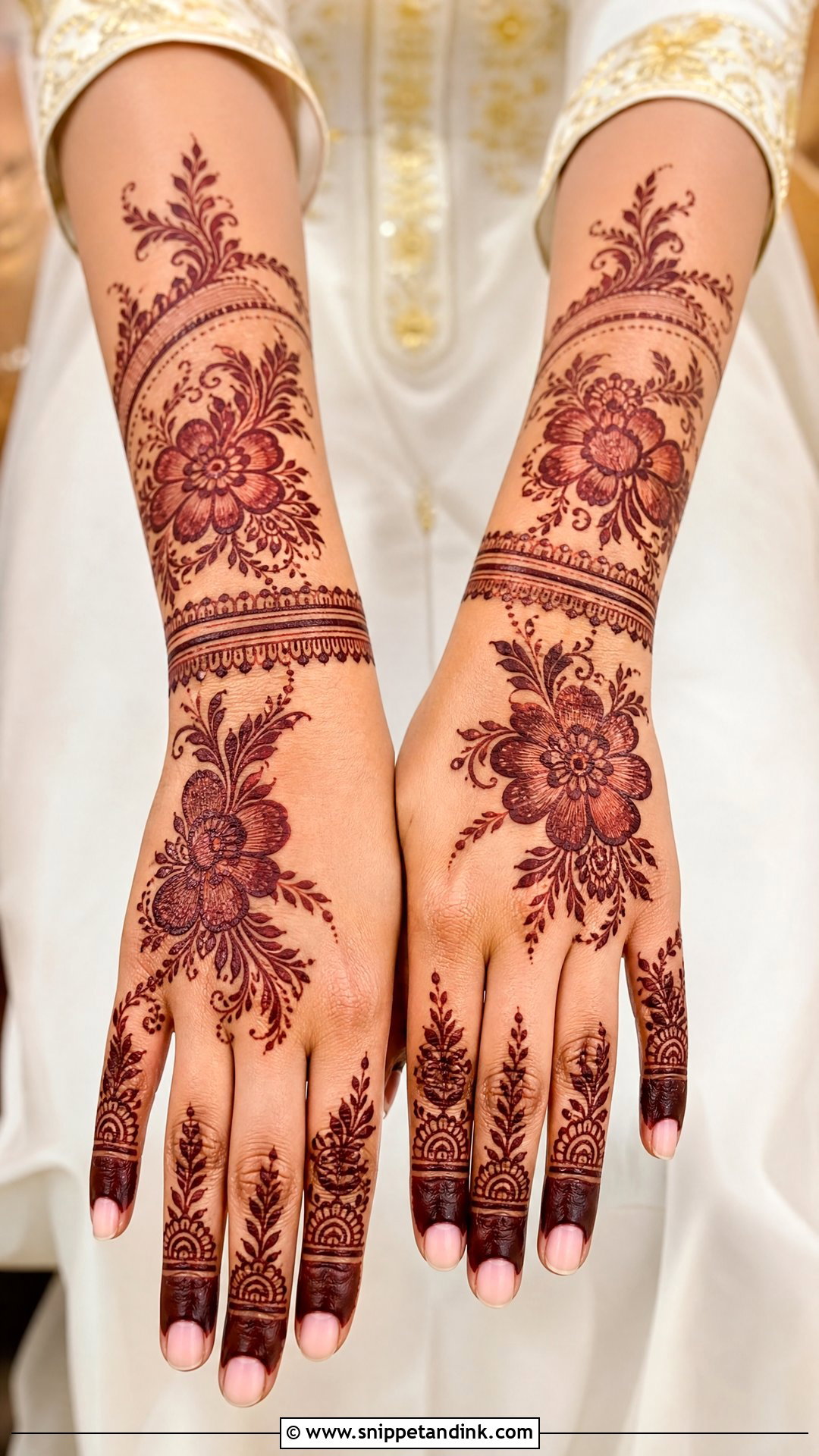
Gulf bridal mehndi design, often called Khaleeji style, uses bigger florals and leafy trails than Indian work, with open space letting each motif stand alone. It can stop at the wrist or flow up the forearm. Bold motifs need a very dark stain to look right, so this is a style where paste quality and aftercare show the most. It looks especially striking on the back of the hand. Coordinated finger detail, soft shading and bracelet-like wrist borders turn it from a party design into a bridal one.
20. Bridal Foot Mehndi Design
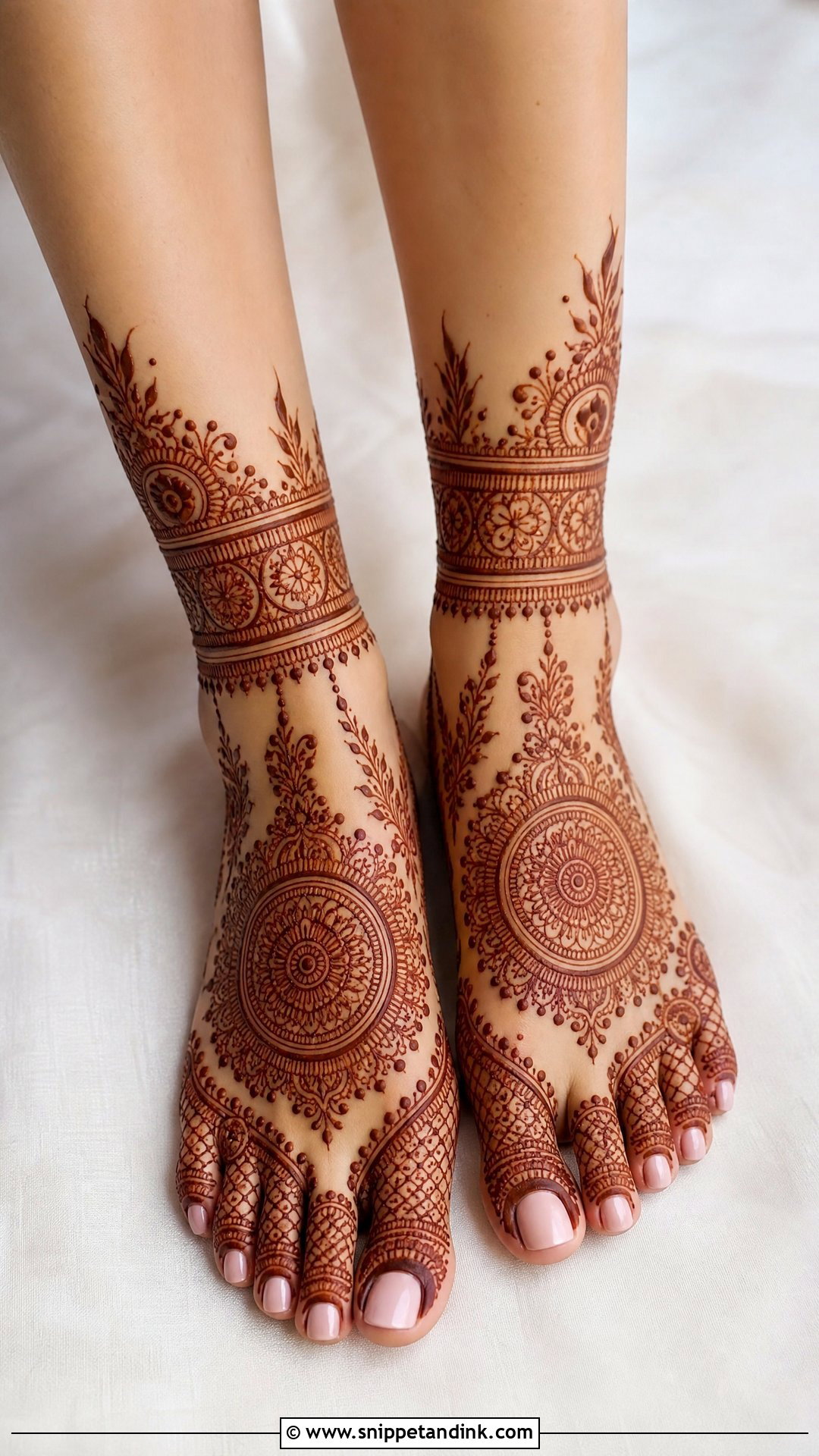
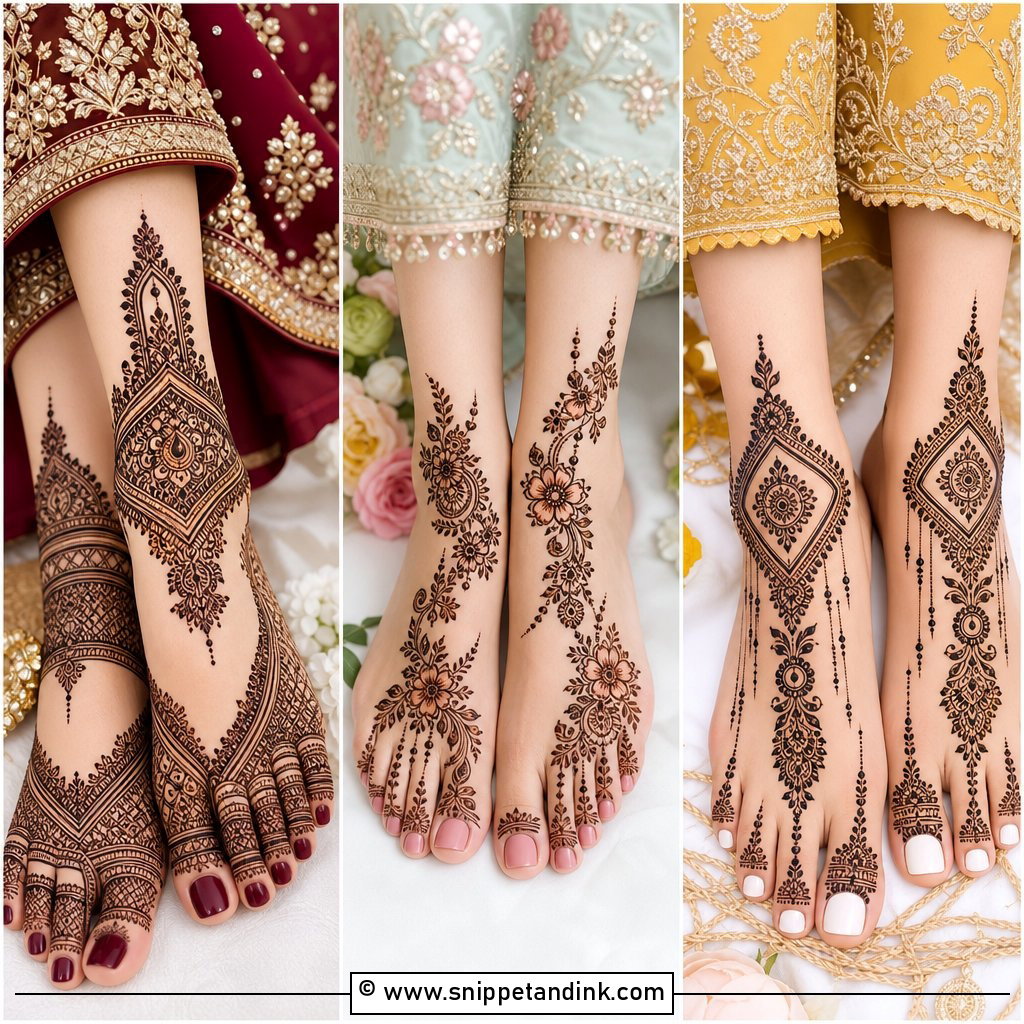
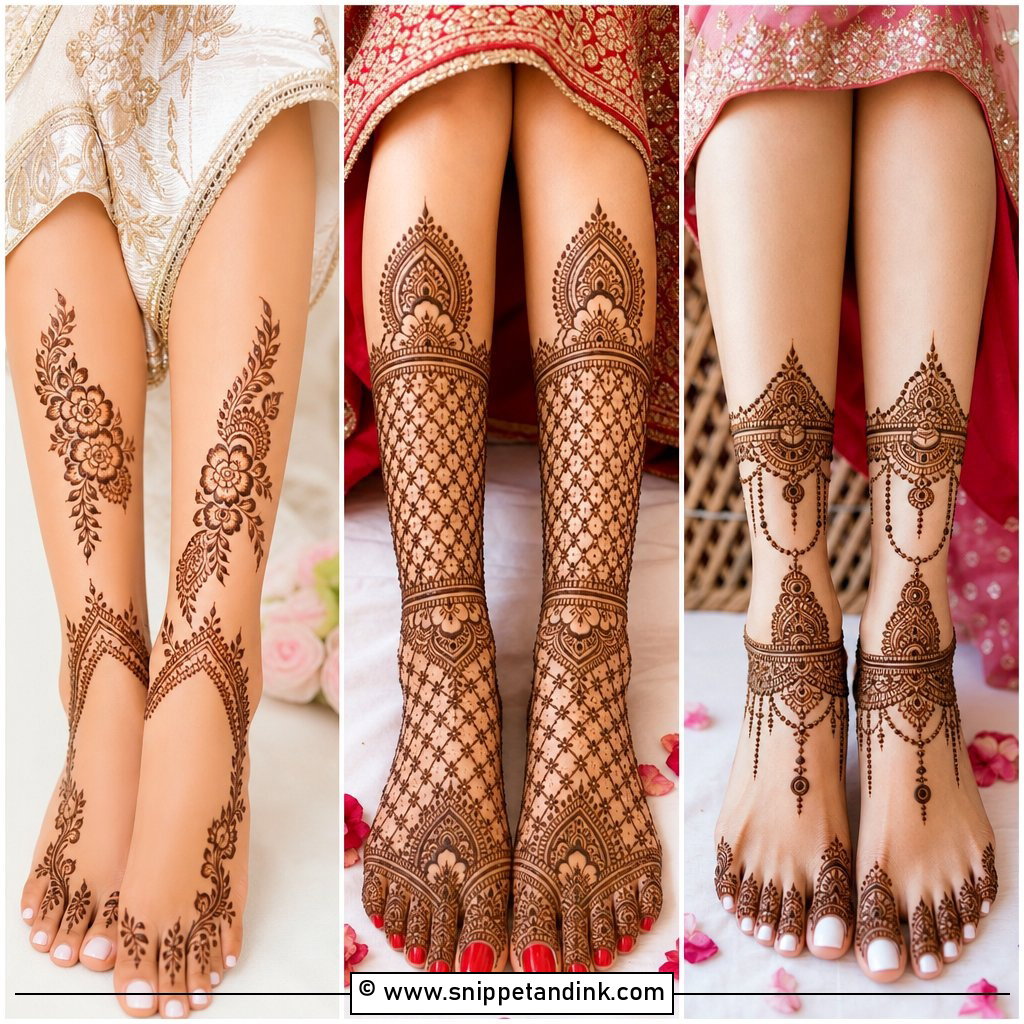
Foot mehndi matters wherever your feet show: barefoot rituals, anklets, toe rings, a lehenga that lifts as you walk. It can cover the toes, the top of the foot, the ankles and the lower leg with mandalas, florals, paisleys, jaali and anklet-style borders. Some brides match hands and feet; others keep the feet lighter so the hands stay the focus. Feet stain darker than you’d expect, because the skin is thick, but the paste rubs off easily, so I keep it thinner near the edges where shoes and sandal straps sit. Don’t put closed shoes on until the paste is fully off.
Caring for the Paste and Stain Before the Ceremony
Aftercare does as much for the final color as the paste does. This is what I tell every bride when I finish:
- Let it dry, then dab on a light lemon and sugar mix so the paste stays stuck to the skin and keeps releasing dye.
- Leave the paste on for as long as you can, ideally overnight. Wrapping hands loosely in tissue or cotton gloves protects the design while you sleep.
- Scrape the dried paste off with a blunt edge or your fingernail. Don’t wash it off with water.
- Keep water off the area for the rest of the day. Rub in a little balm or oil before you wash your hands.
- Keep your hands warm. Warmth helps the stain develop, and cold air slows it.
Avoid chlorine, harsh soap, scrubs and hand sanitizer until after the wedding, and wear gloves if you have to wash up. If the design smudges while the paste is still wet, wipe the stray paste off at once with a dry cotton bud; a smudge left to dry stains like any other line.
How Long It Lasts
Expect the stain to look its best for about a week, then fade gradually over the following one to two weeks. Palms and feet hold color longest; the backs of the hands and the fingertips you use most fade first. If you have events after the wedding, plan photos for the first few days.
Matching the Pattern to Your Outfit, Jewelry and Story
A good bridal design fits your outfit, your jewelry, the mood of your ceremony and your own culture, not just a photo you saved. Full Indian work is detailed and traditional; Arabic and Gulf styles are bold and open; Indo-Arabic, mandala, floral, jaali and modern layouts sit between them. Add initials, dates, portraits or symbols if you want the design to carry your story. Then book your artist early, and talk about coverage, how long it will take and how you’ll care for the stain, because those decide how it looks on the day.
You'll Like These Ideas:






Leave a Reply