
Mehndi is the one part of bridal styling that keeps changing after you leave the chair. The paste comes off orange, deepens to maroon or brown over the next day or two, and stays on your hands through the wedding photos and the first days of married life. Some brides want dense Indian work with portraits and peacocks from fingertips to elbows; others want an open Arabic trail they can sit for in an hour. Sisters, mothers and bridesmaids usually want something lighter that still feels festive. Below are 20 complete designs, from the most traditional to the most minimal, with the layout and stain notes I’d give each bride at her consultation.
How Long You’ll Sit, and Which Day to Book
Sitting time depends on coverage and on the artist, so treat these as rough guides. An Arabic or minimal design on both hands usually takes an hour or two. Full bridal coverage, front and back to the elbow, takes several hours, and feet add more. Portraits and Rajasthani detail sit at the long end of that range.
Then there’s the color. Natural henna comes off bright orange and darkens over roughly 24 to 48 hours. That’s why I book bridal application one or two days before the wedding. Henna applied on the morning of the ceremony will still be orange in the photos.
Only Natural Henna on Your Skin
Real henna never stains black. So-called black henna often contains PPD, a hair-dye chemical that can cause blistering and lasting skin reactions. Ask your artist what goes into the cone. Fresh paste is made from henna powder, lemon juice or water, sugar and essential oils, and it smells earthy. If you have sensitive skin or react to essential oils, ask for a small test patch at your consultation.
1. Full Hand Bridal Mehndi Design
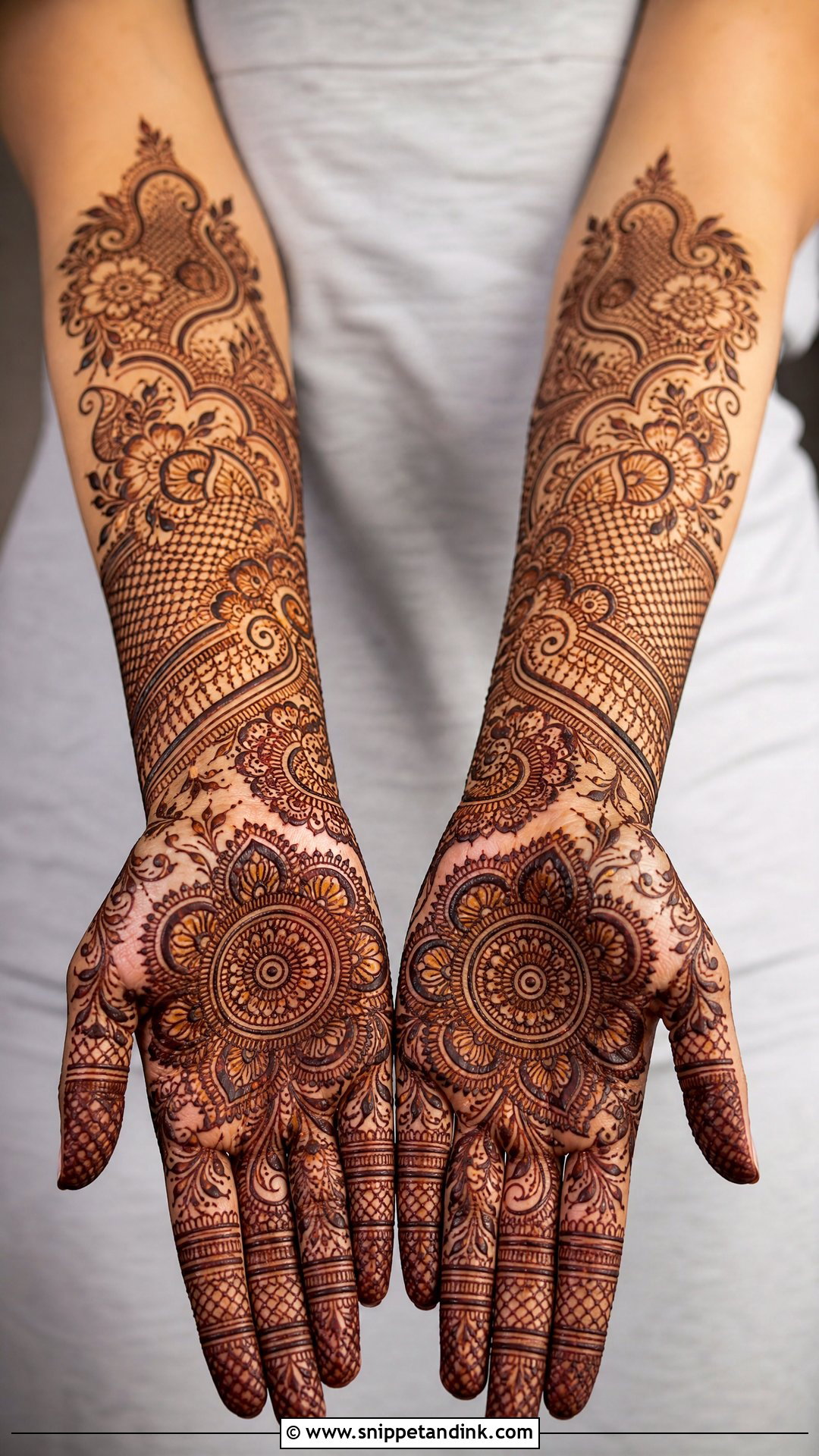
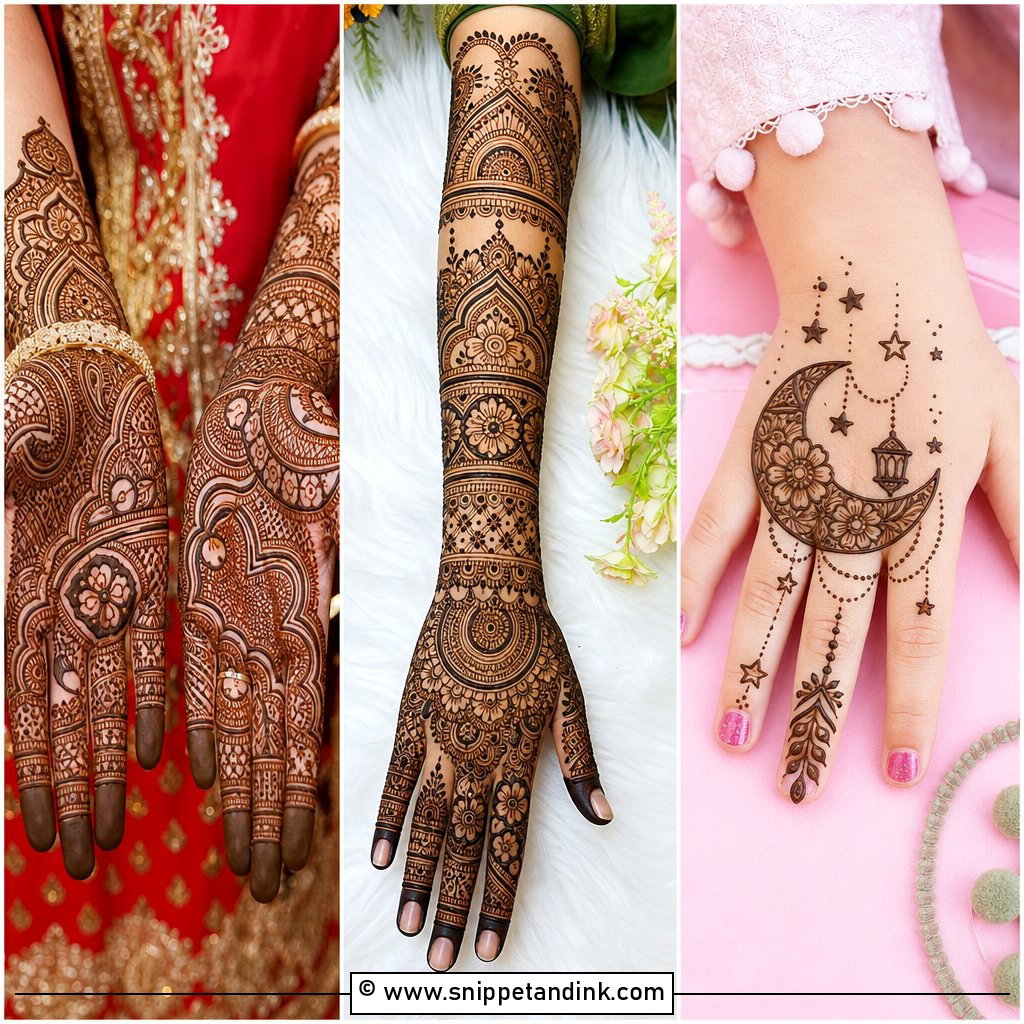
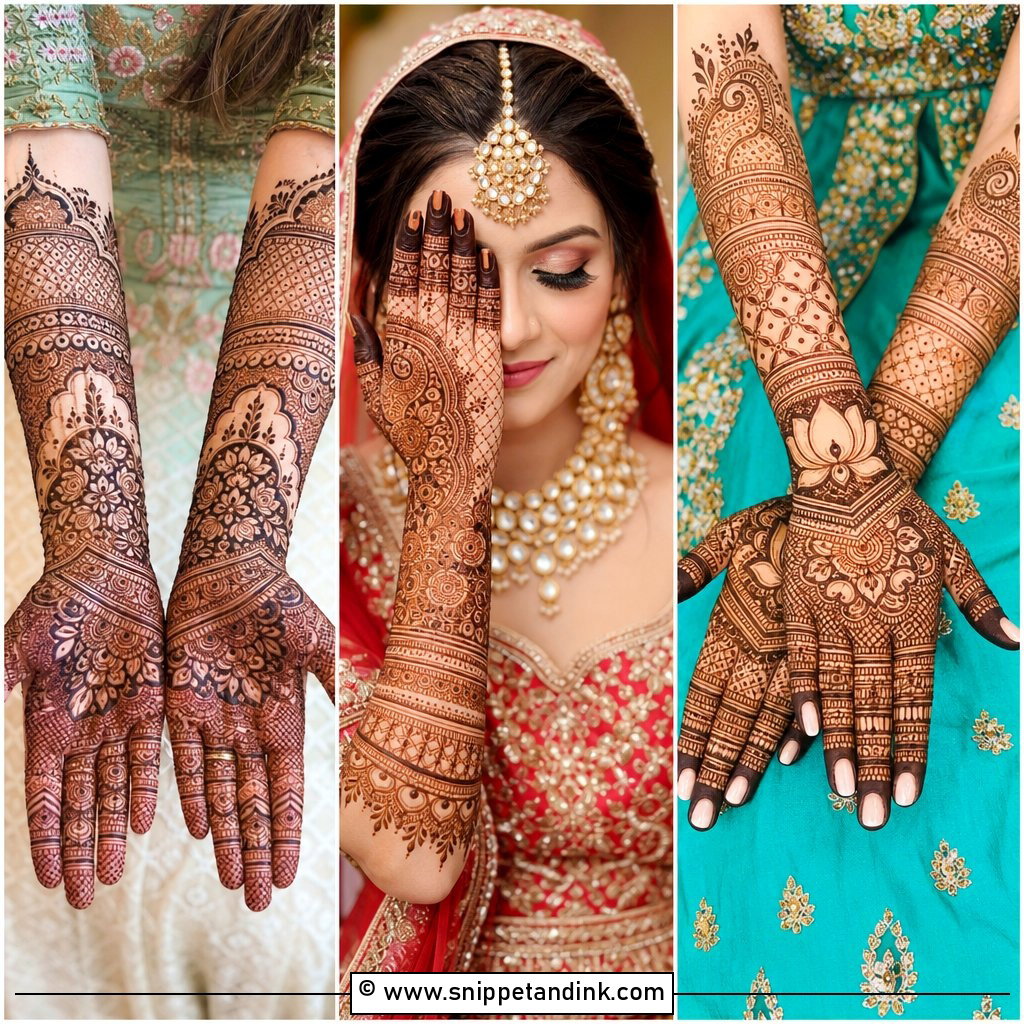
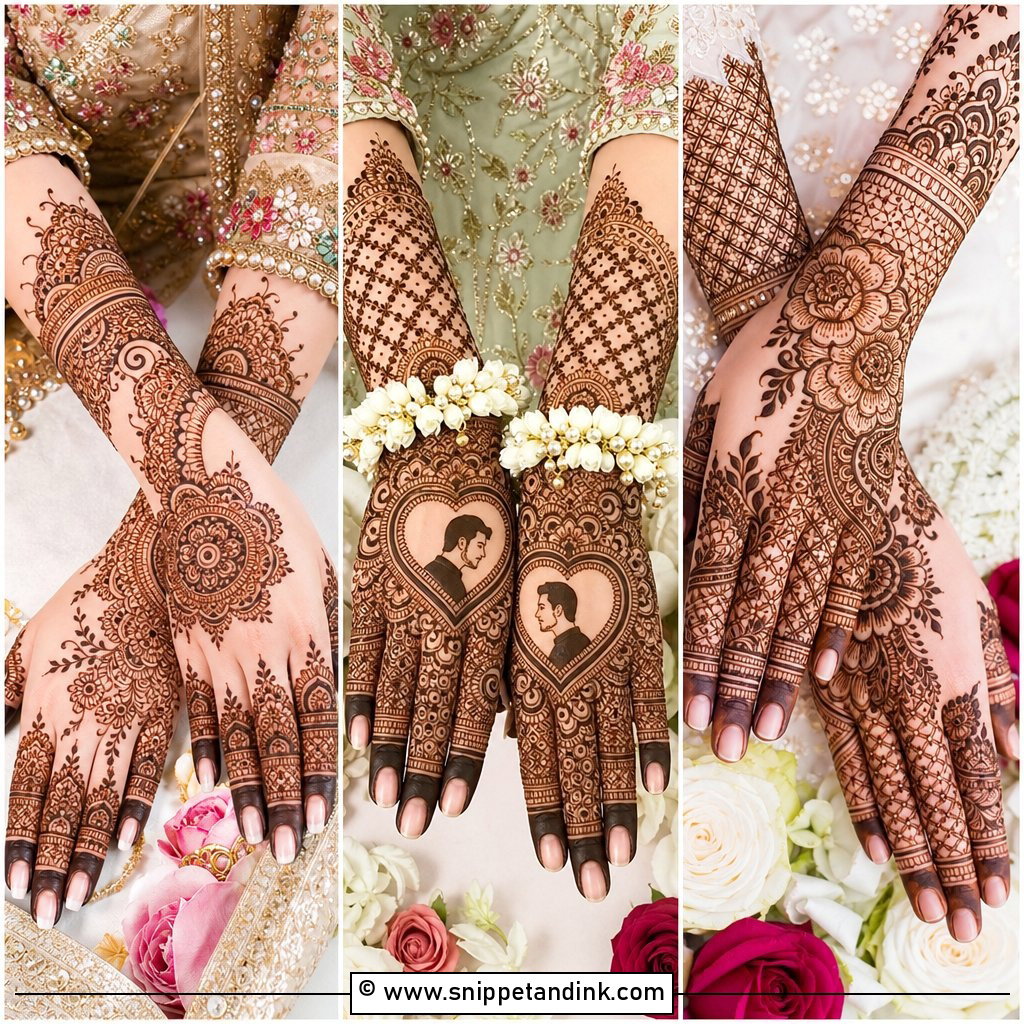
A full-hand bridal design covers the palms, backs, wrists and lower arms, and it’s the longest sitting I do. Paisleys, florals, leaf vines, jaali mesh and mandalas all go into it, but the real skill is spacing. The two hands should feel connected without turning into a solid mass, because lines drawn too close together bleed into each other as the stain darkens. I often put a central mandala on one palm and a bride-groom frame or peacock on the other. You’ll be sitting still for hours, so eat first and use the bathroom before I start.
2. Indian Bridal Mehndi Design
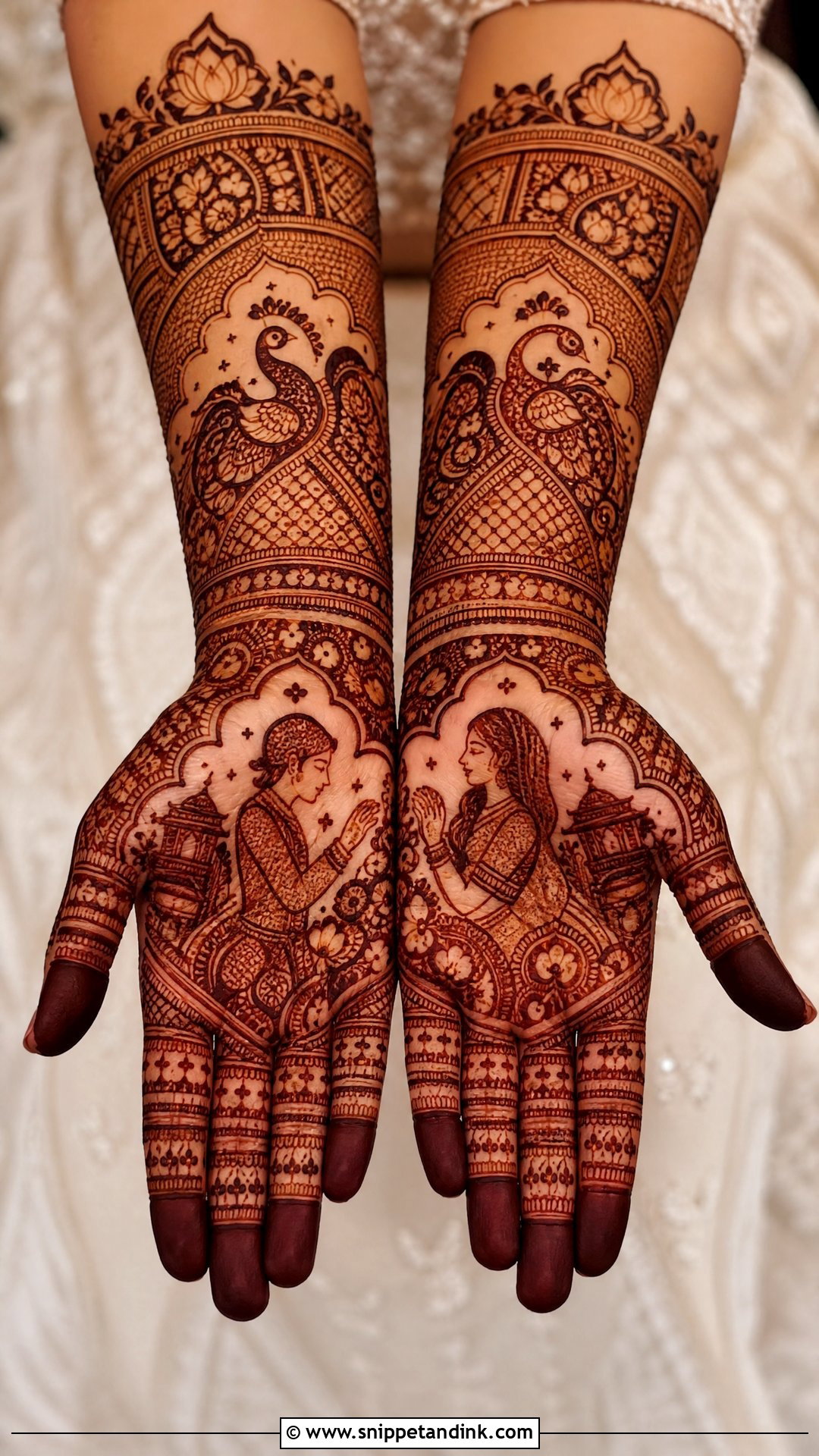
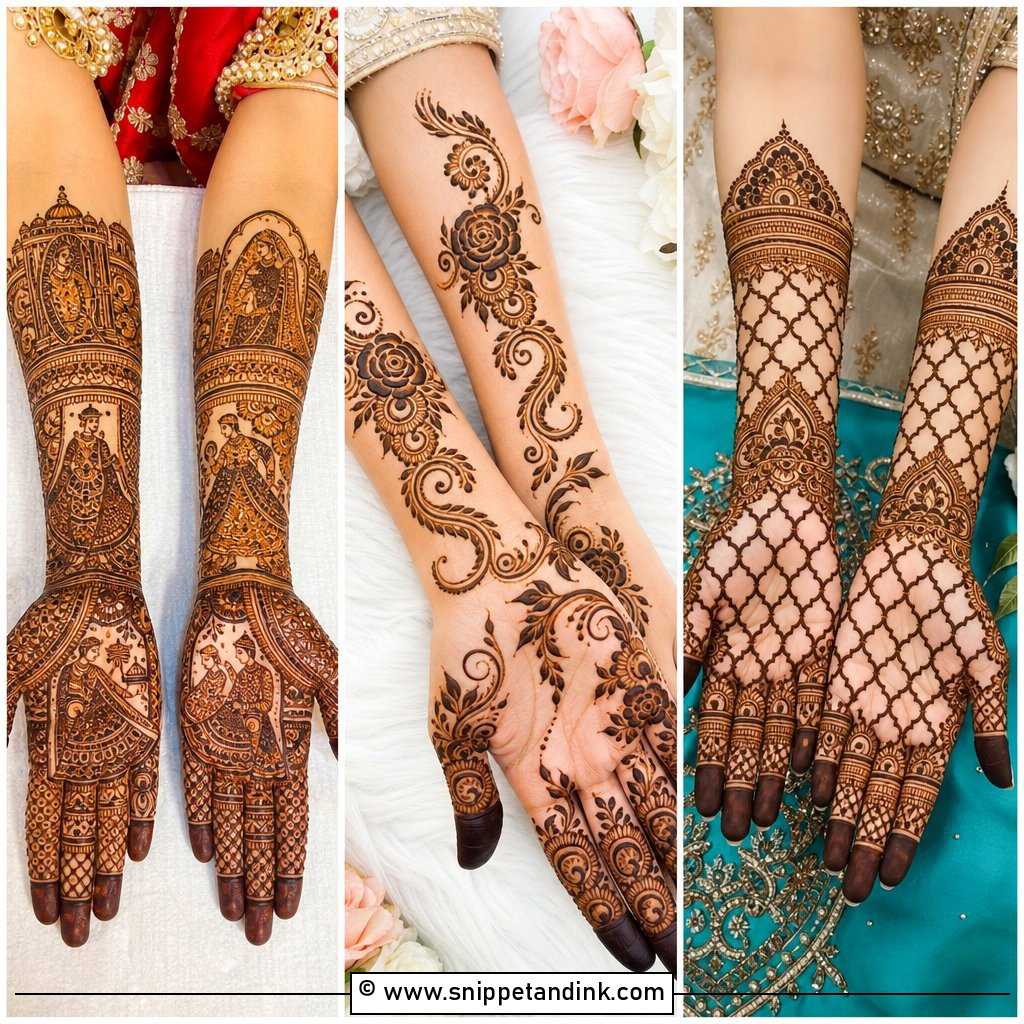
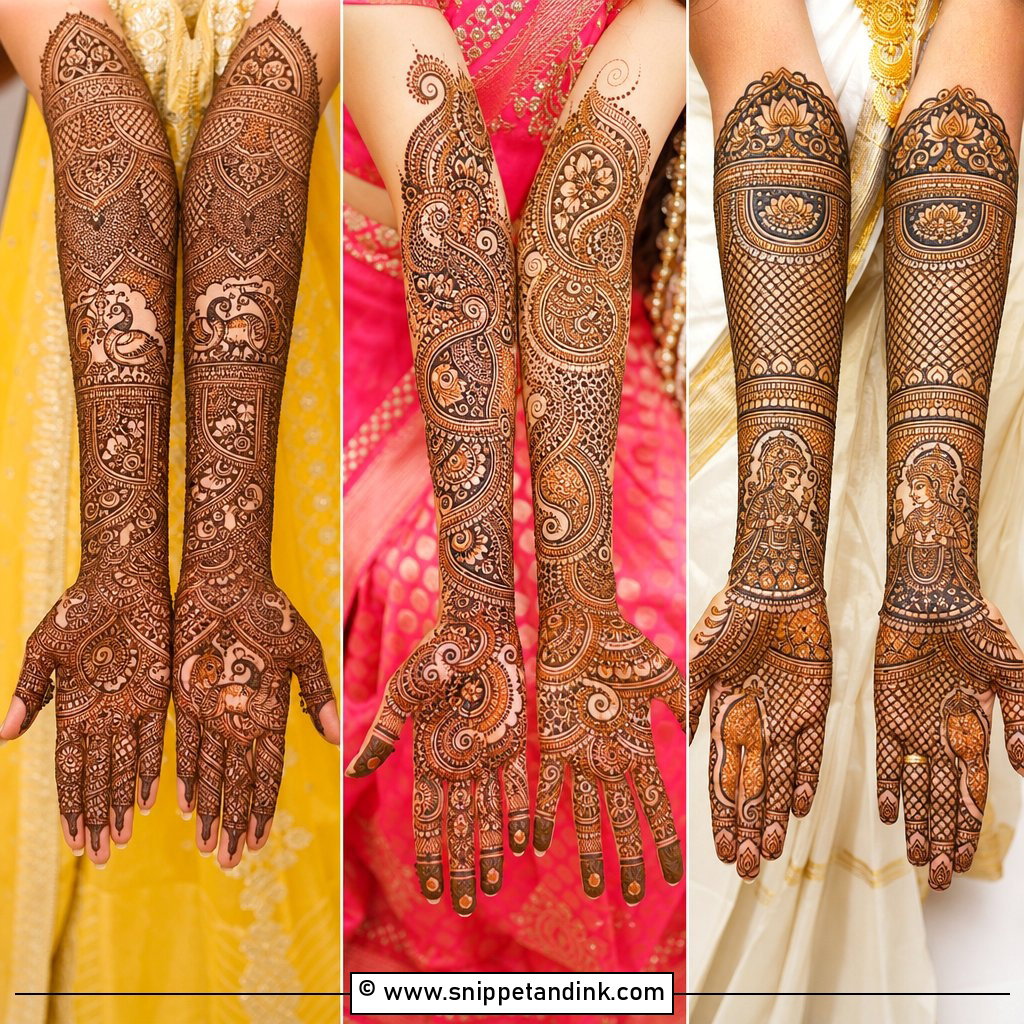
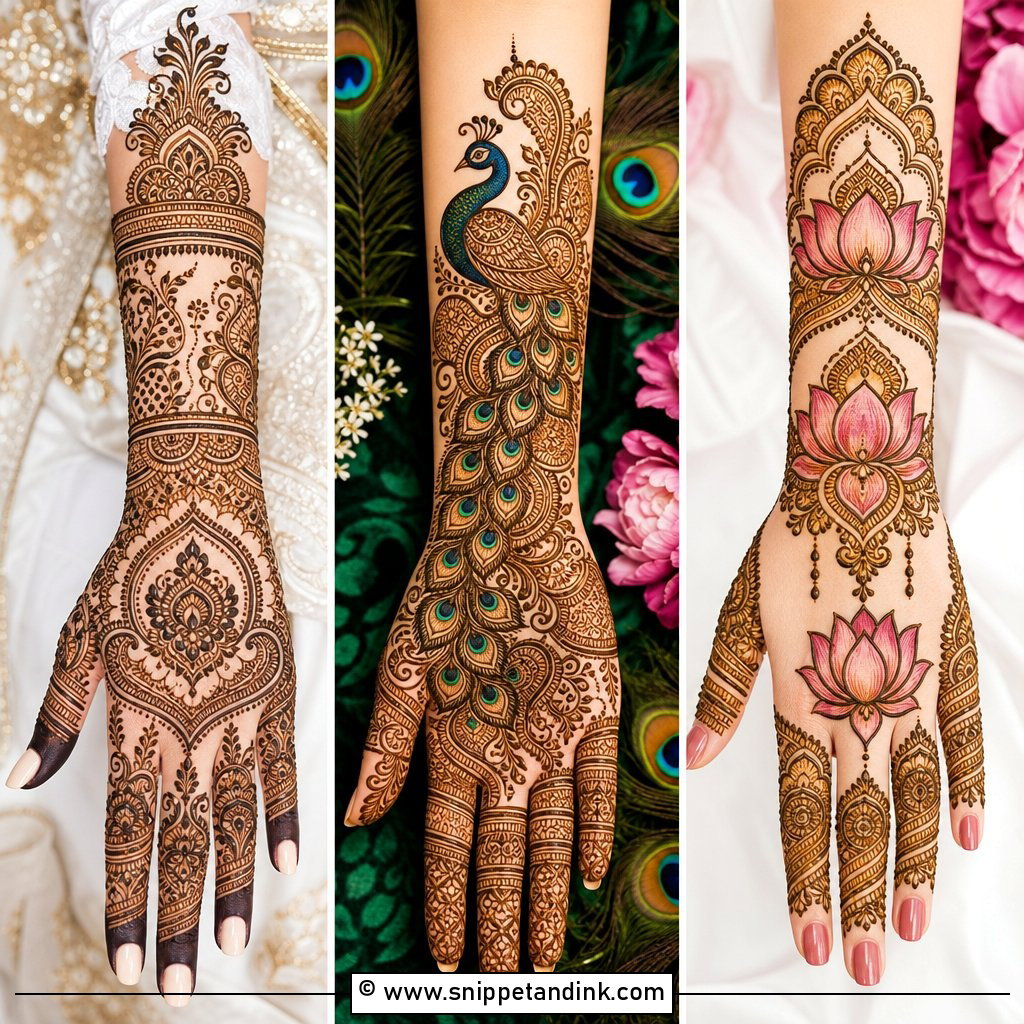
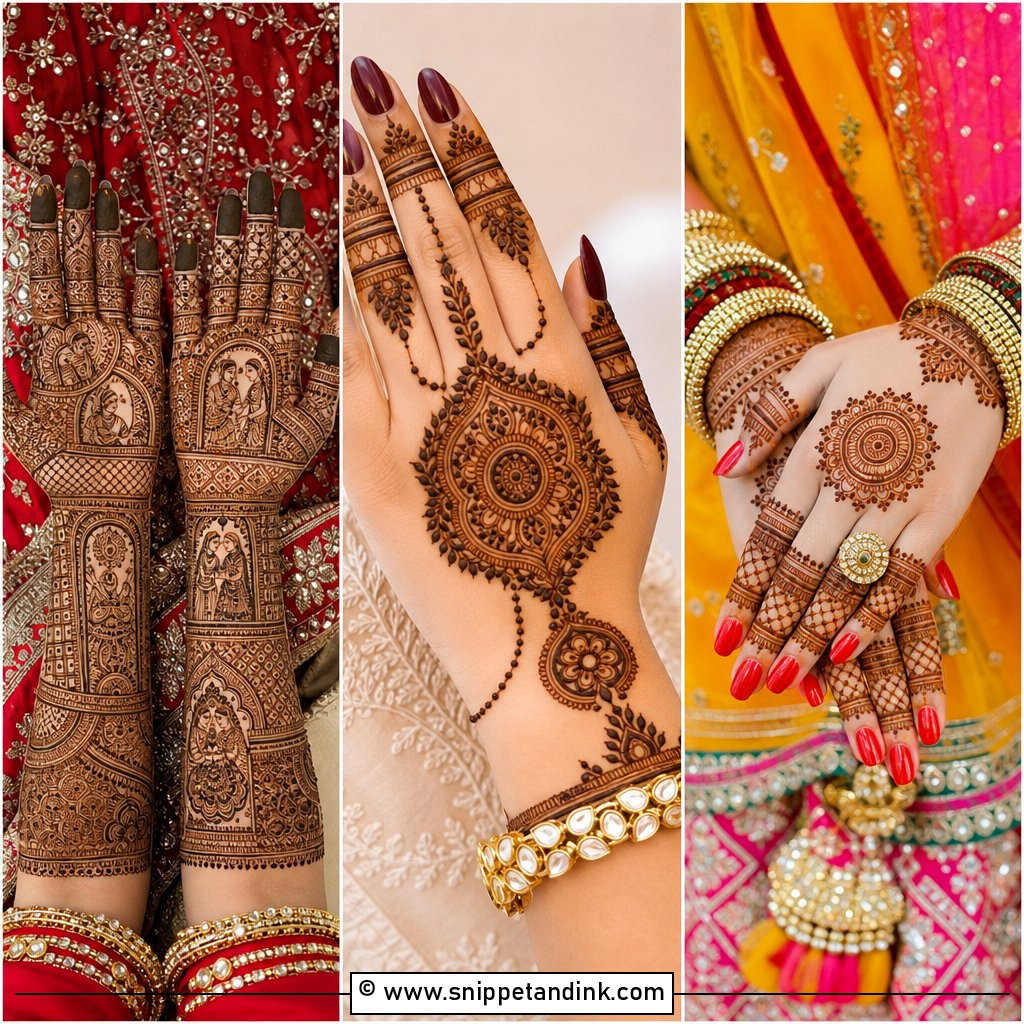
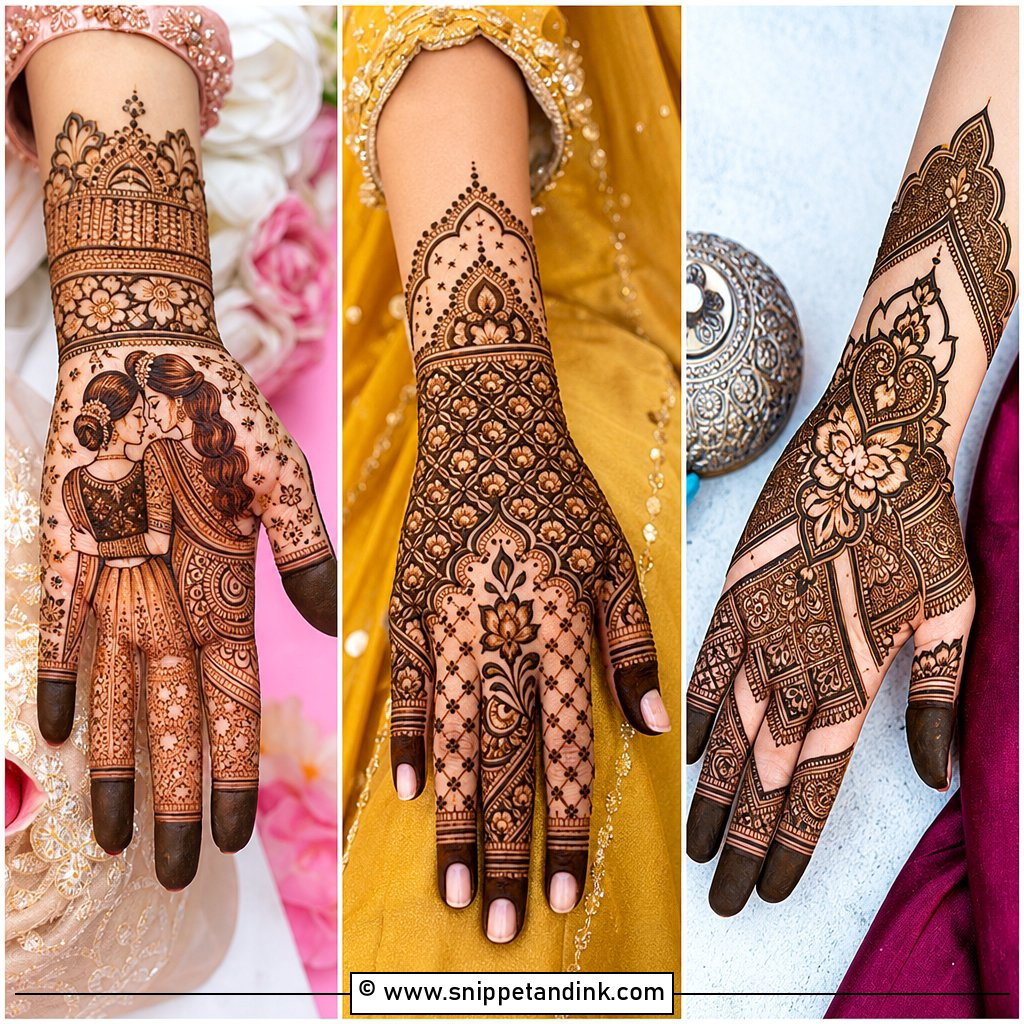
Indian bridal mehndi design is dense, full of motifs and tells a story: peacocks, lotus flowers, kalash shapes and dulha-dulhan figures tied together with fine fillers. Each hand can carry different scenes as long as the borders, wrist bands and vines repeat. One thing I ask of every bride who chooses it is permission to leave tiny gaps of bare skin around the main motifs. Henna spreads very slightly as it stains, and without those gaps a face or a peacock’s eye becomes a dark blot. It is a long application, and it gives the most traditional bridal hands on this list.
3. Arabic Marriage Mehndi Design
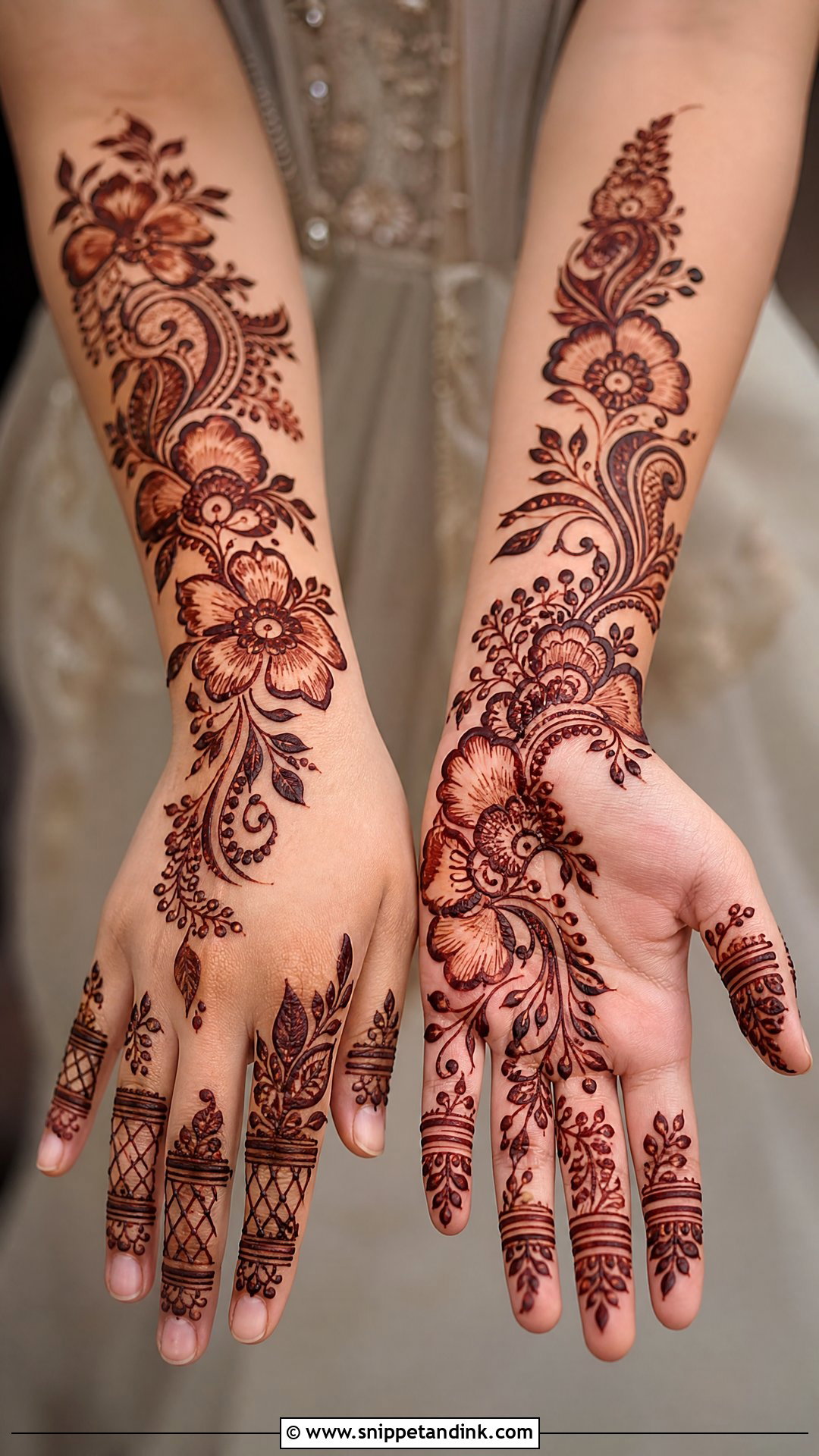
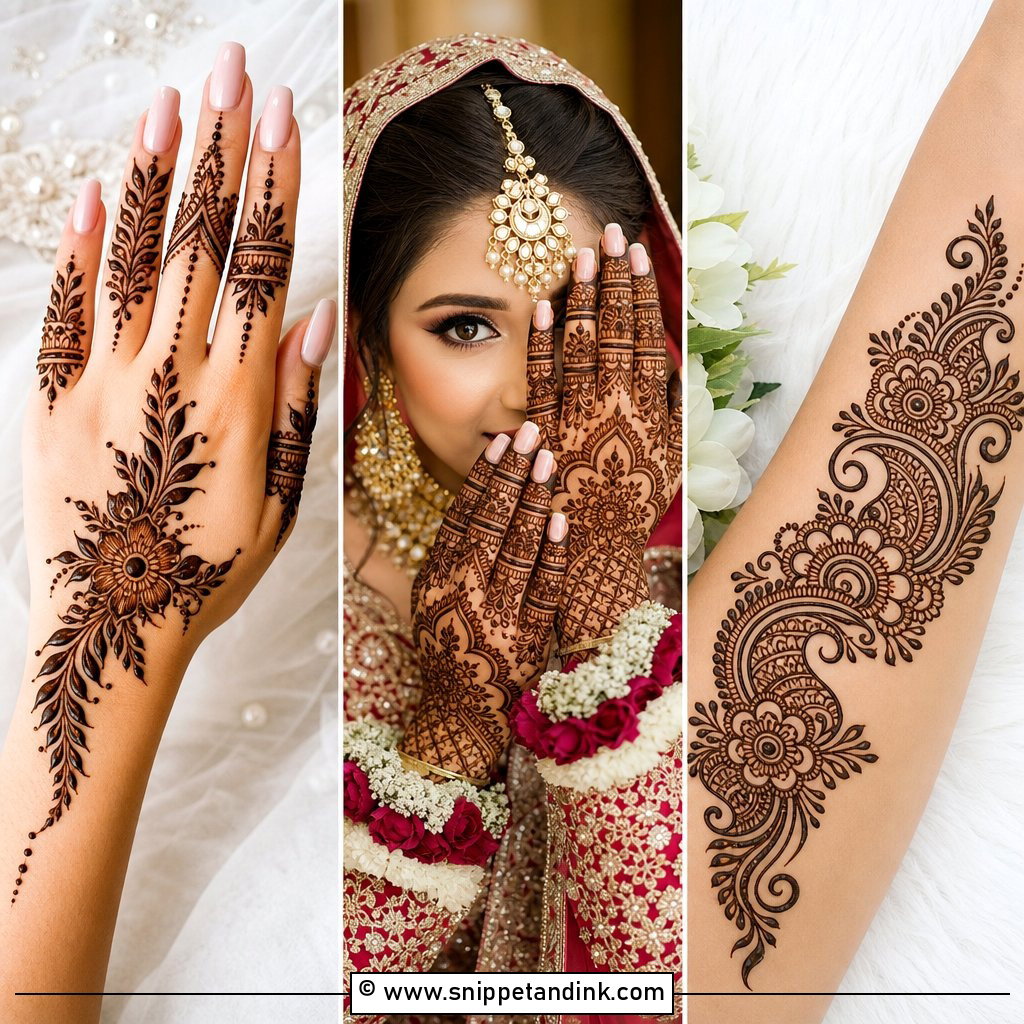
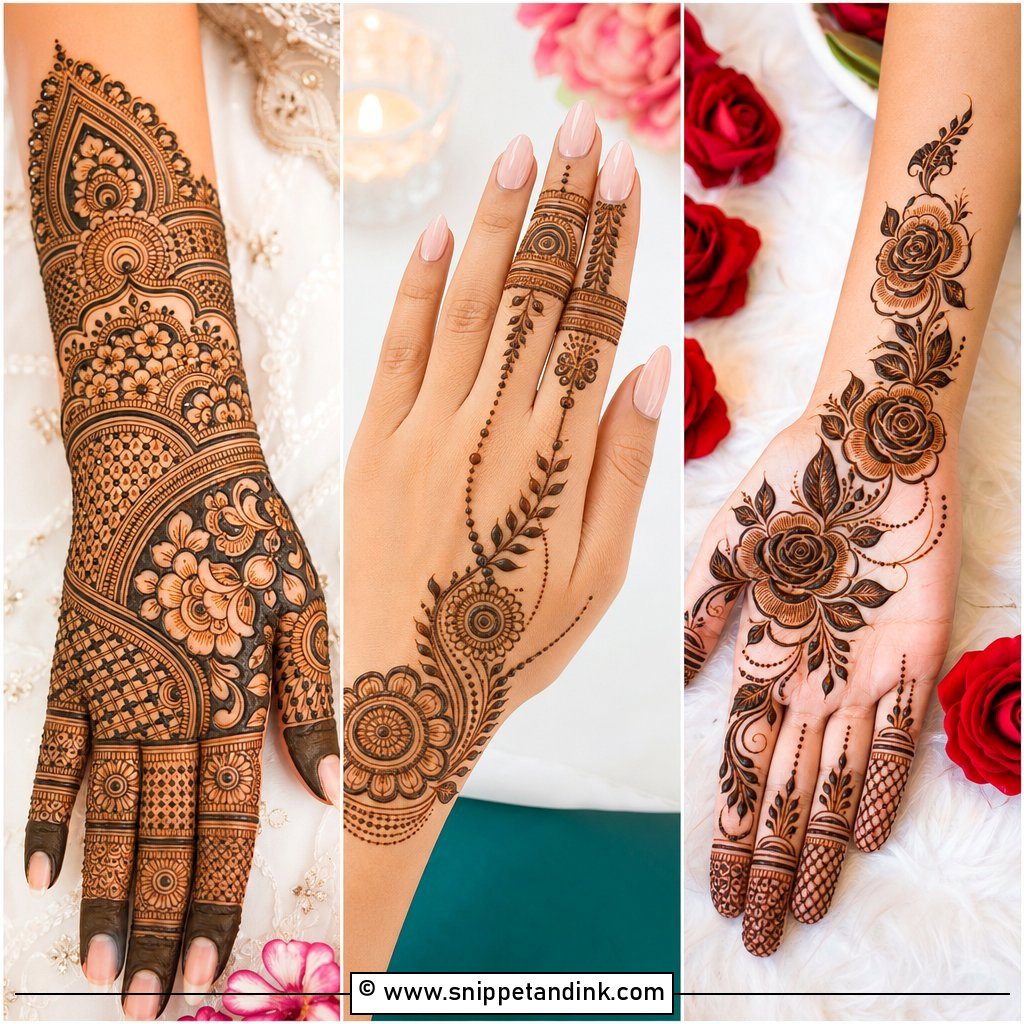
Arabic henna runs diagonally across the palm or back of the hand with large flowers, leaf vines and shaded petals, leaving plenty of skin open. Because the motifs are bigger, it reads from across a room, and it’s quick to apply. The shading is made by laying a thicker line and dragging the cone tip through it, so each petal fades from dark to light. For a bridal version I carry the trail up past the wrist toward the forearm so it continues above bangles and rings.
4. Indo Arabic Bridal Mehndi Design
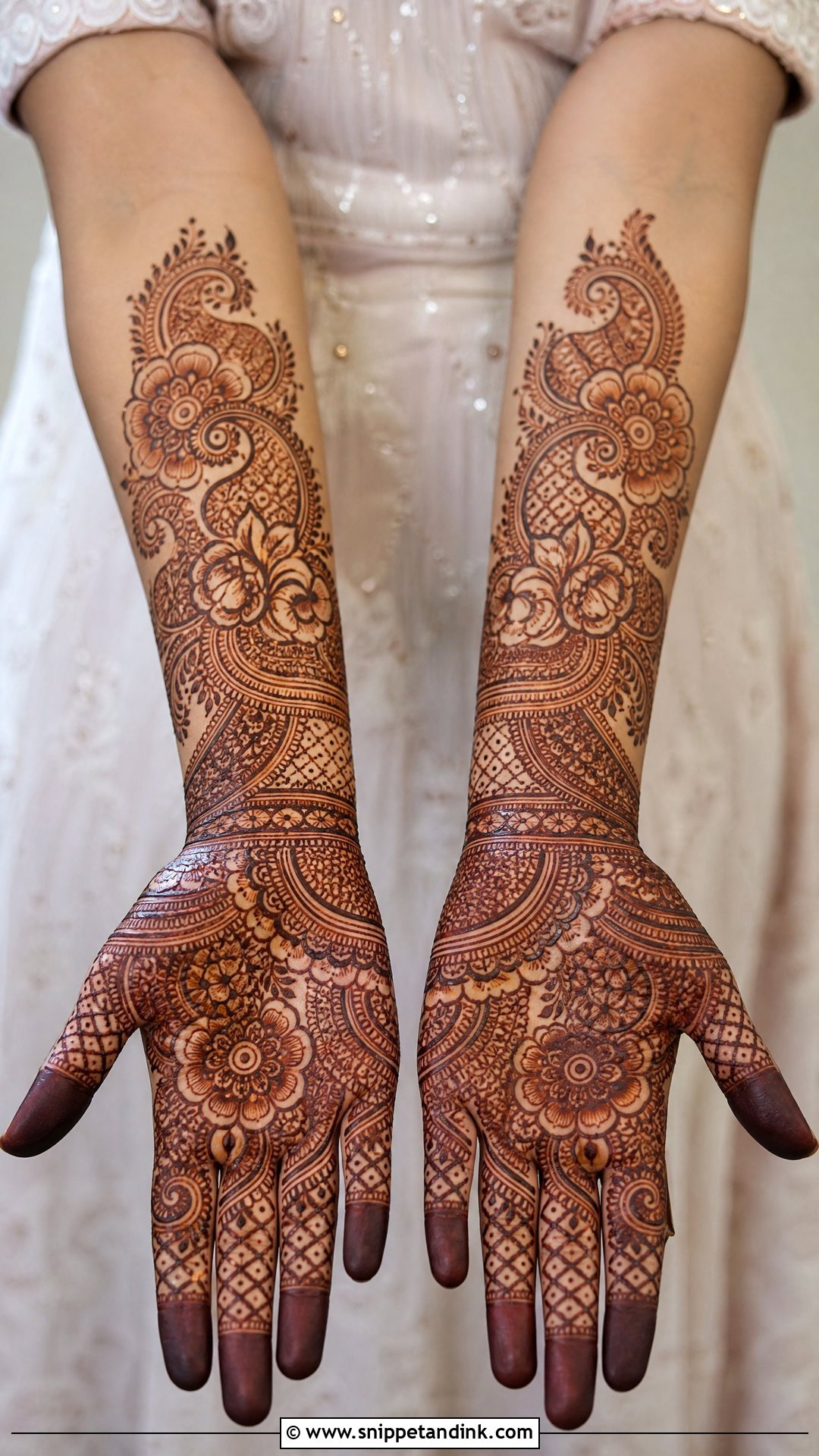
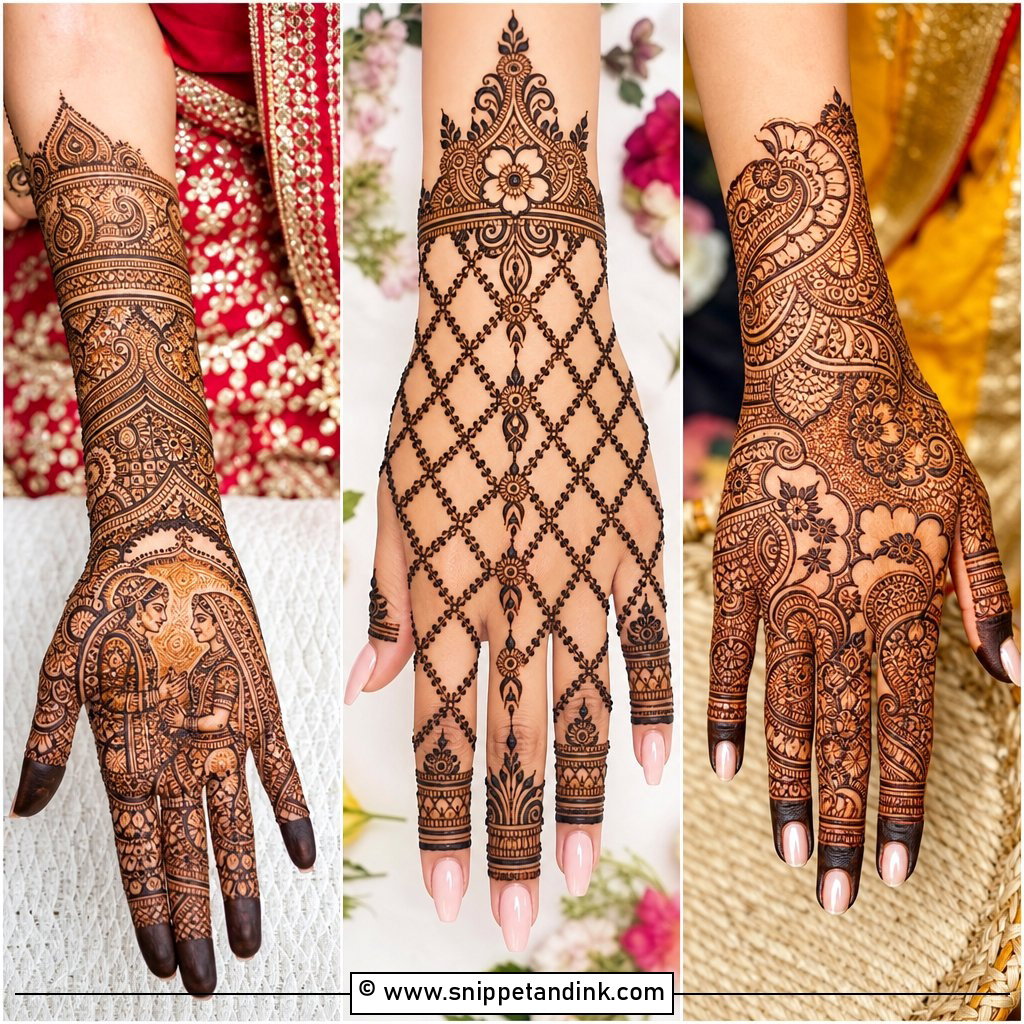
Indo-Arabic mixes the open, flowing layout of Arabic henna with Indian-style fillers inside the shapes. The back of the hand can take a jewelry-inspired chain pattern while the palm carries a fuller arrangement. Long diagonal trails make the fingers look longer, which is why brides with shorter hands often like it. I usually finish the fingertips with solid caps; they frame the design and cover the area that gets washed most. It suits a sangeet or nikah as easily as a reception.
5. Simple Marriage Mehndi Design
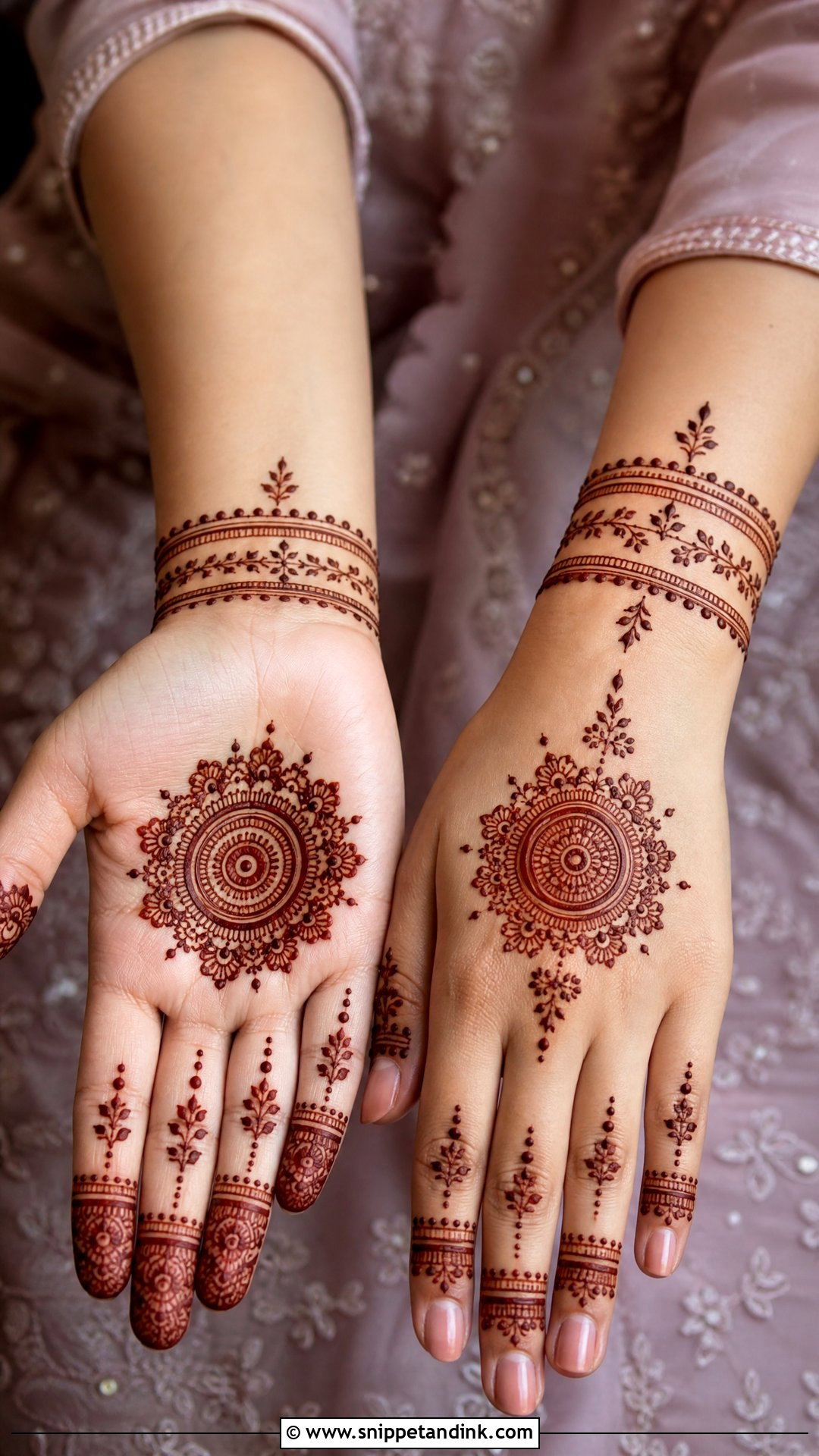
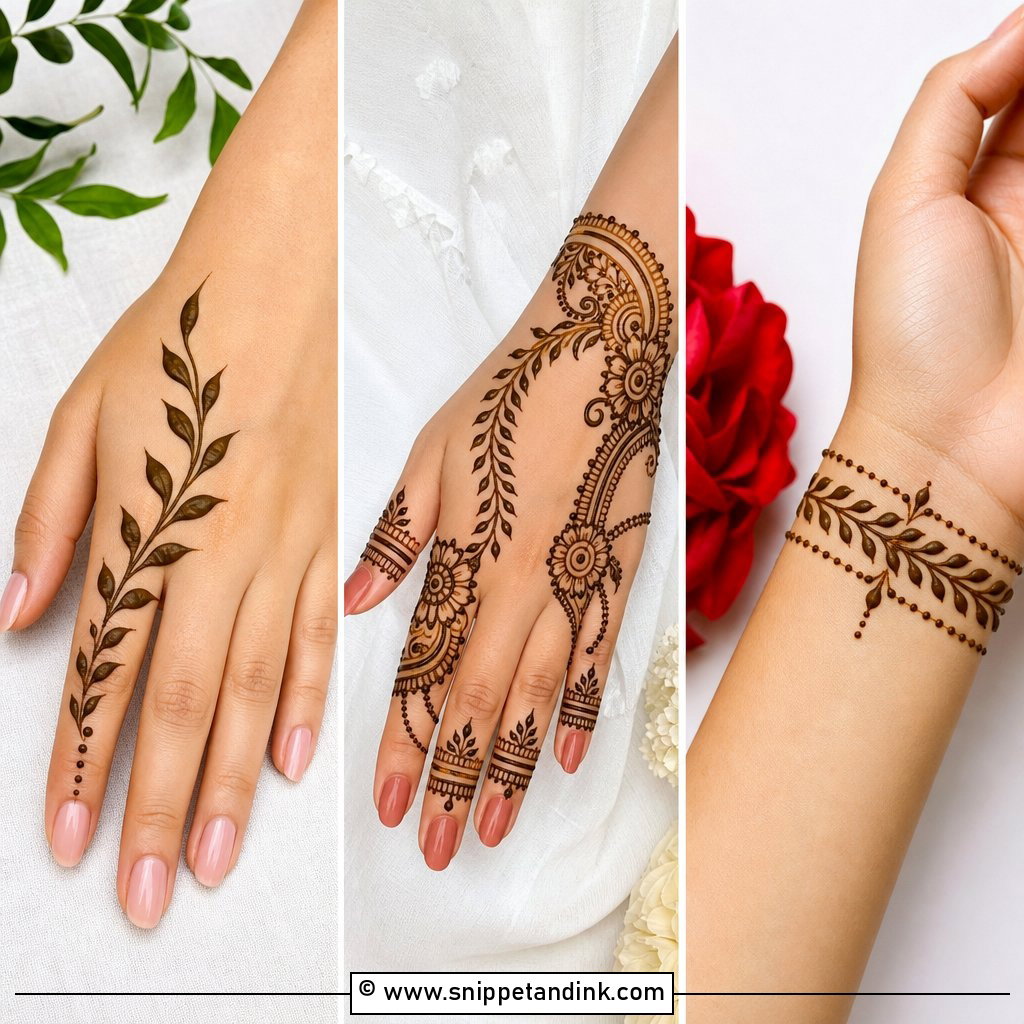
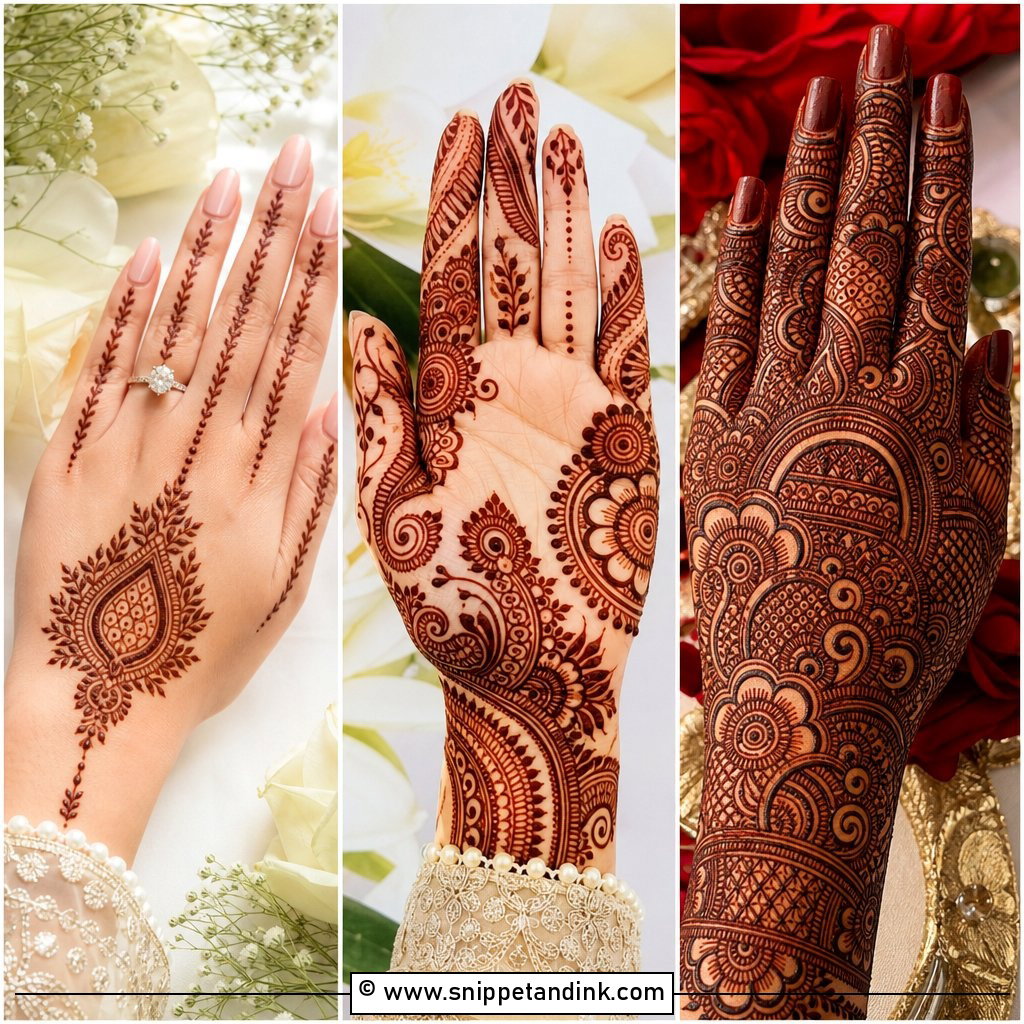
Simple designs still need a plan. A palm mandala with finger detailing, a floral trail on the back or a neat wrist bracelet looks finished when the pattern has clear spacing and a few repeated motifs, and messy when someone just fills space with dots. I keep fillers to a minimum here, since tiny fillers on a light design read as clutter. This is what I suggest for bridesmaids, mothers and destination weddings where everyone needs henna in a short window. It still stains deep on the palms.
6. Back Hand Bridal Mehndi Design
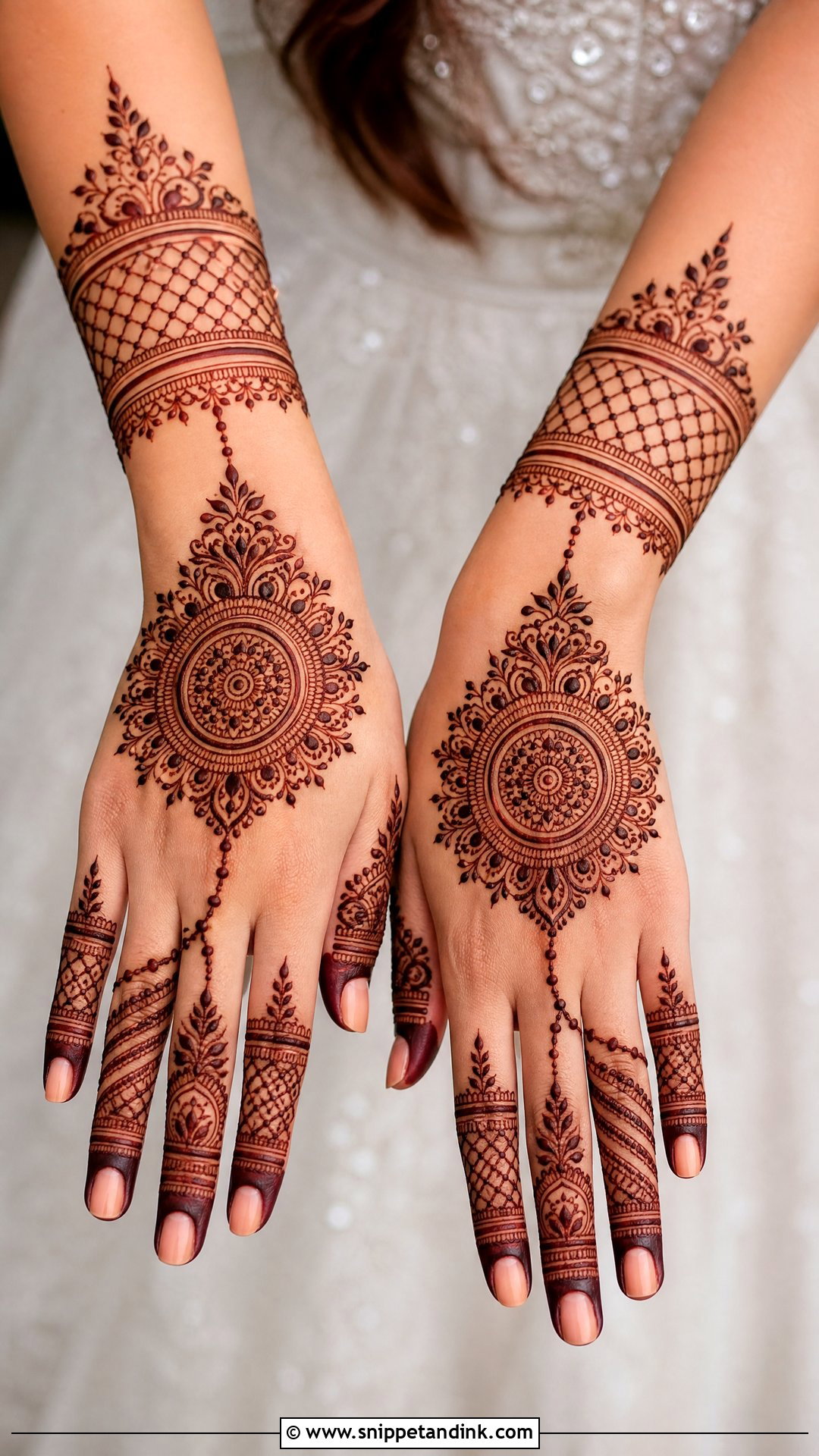
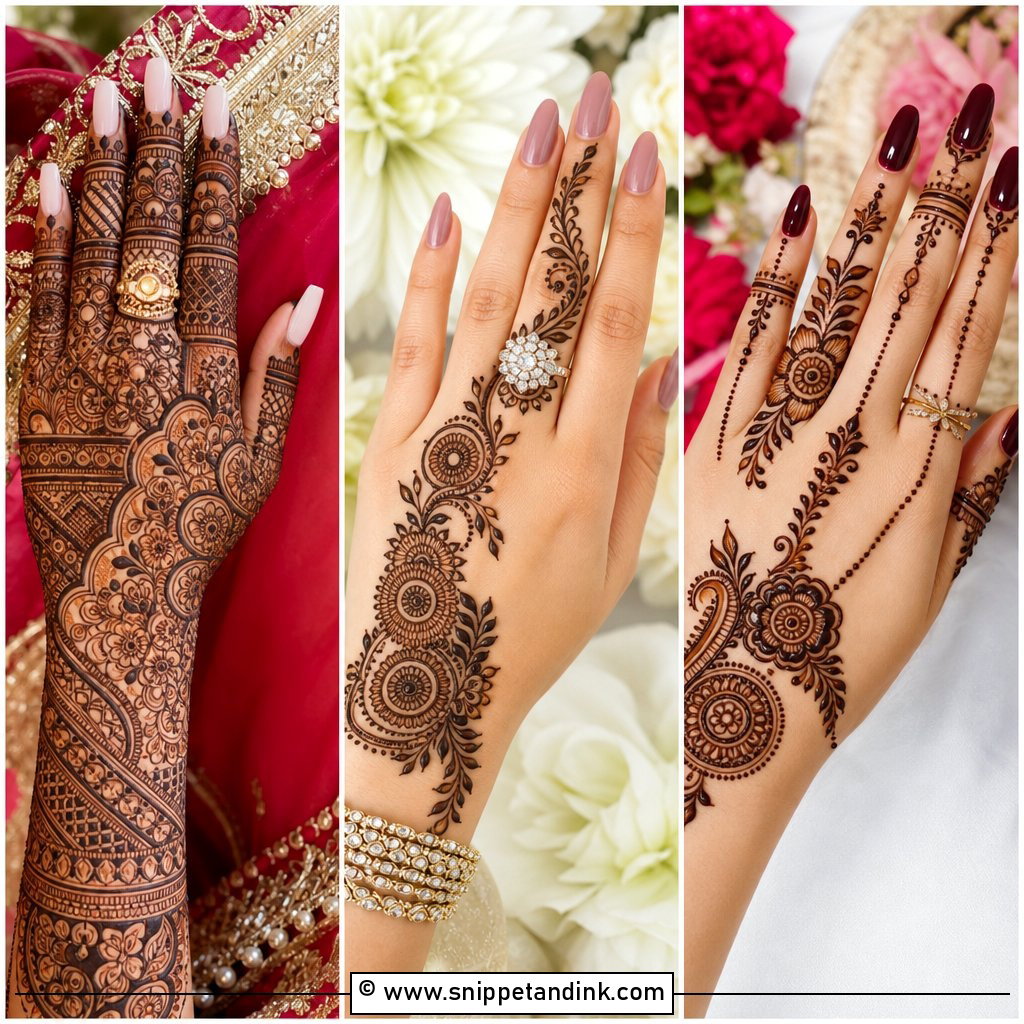
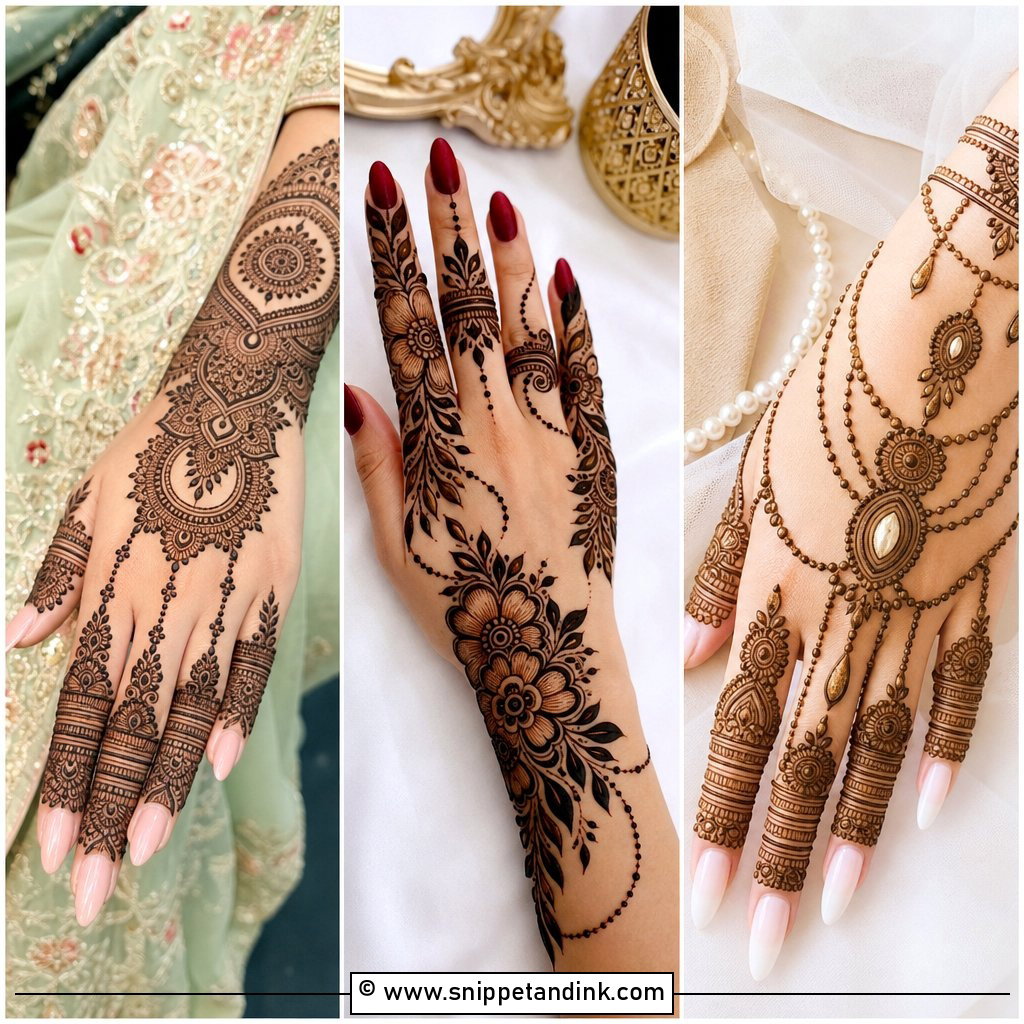
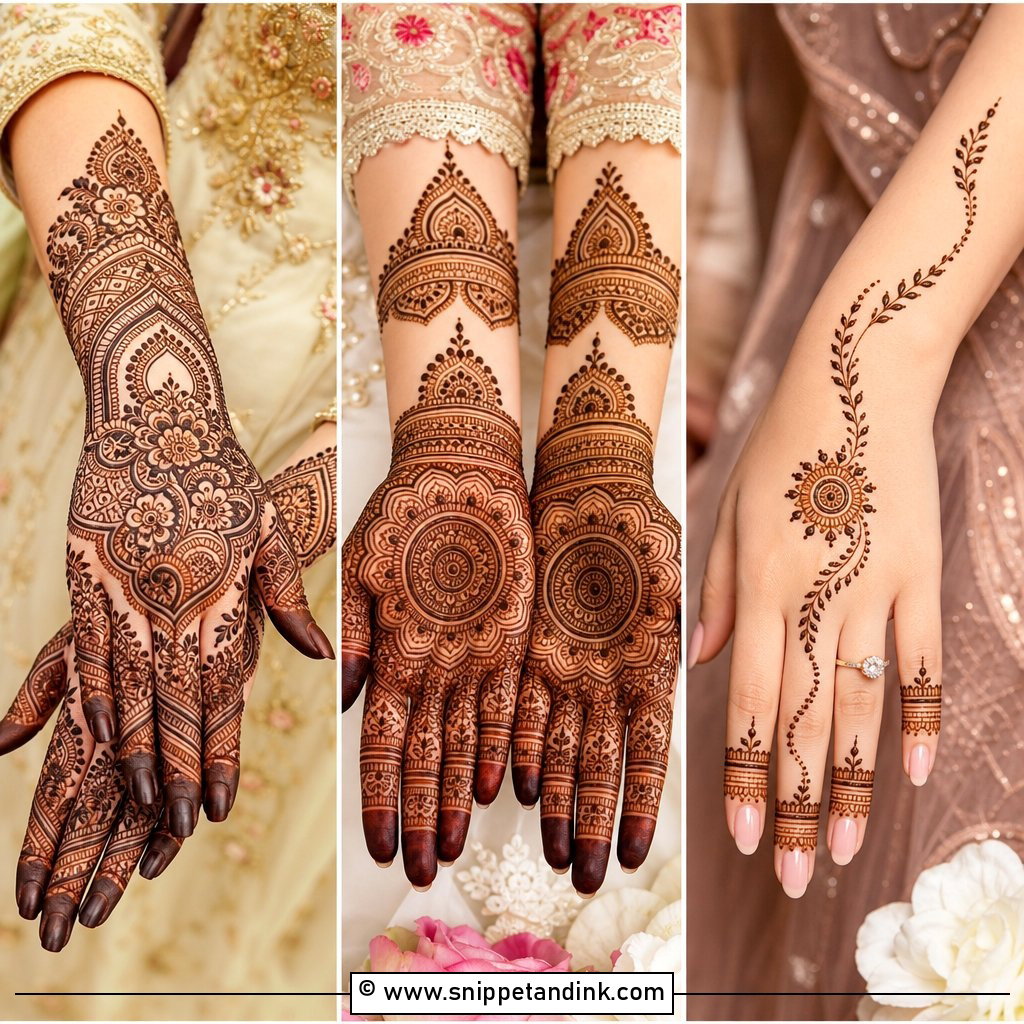
The back of the hand appears in every ring shot and bangle photo, so I treat it as its own composition. A central mandala, finger caps, jaali panels and bracelet-style wrist bands are the usual pieces, linked by chains from ring to wrist. Expect the stain here to come out lighter than on your palms. Henna colors the thick outer skin of the palms best, and the back of the hand has a thinner layer, so I draw bolder lines there to make up for it. Carry the design a little past the wrist so it doesn’t stop abruptly under bangles or sleeves.
7. Front Hand Bridal Mehndi Design
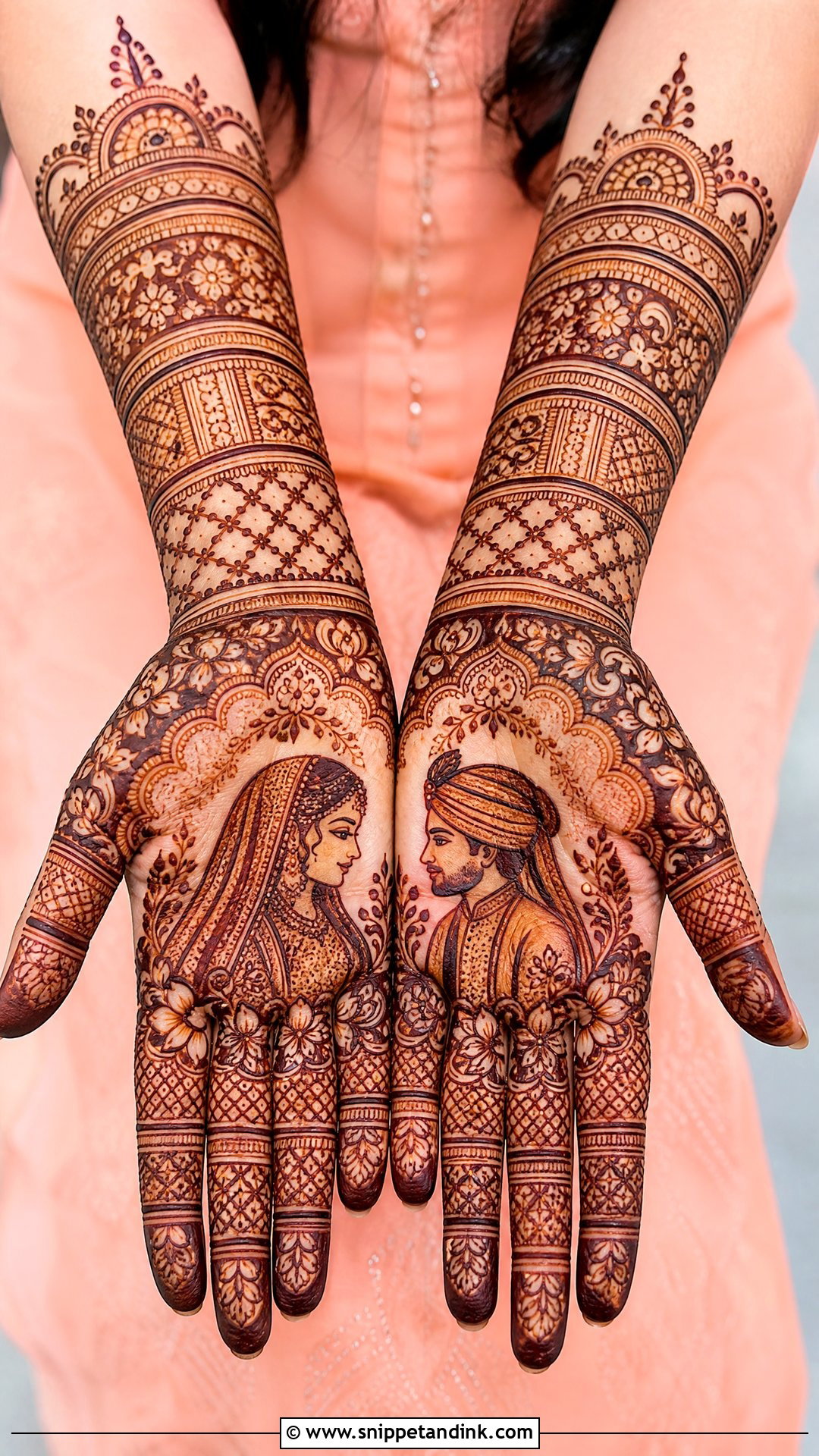
Palms take henna darker than anywhere except the soles of the feet, which is why I put the most meaningful elements there: mandalas, lotus motifs, the couple’s figures, names or a date. A strong palm needs a clear center and organized borders, with small checks, vines and fine lines on the fingers to balance it. Remember you won’t be able to use your palms at all while the paste dries. Plan who will feed you, hold your phone and fix your dupatta.
8. Dulha Dulhan Mehndi Design
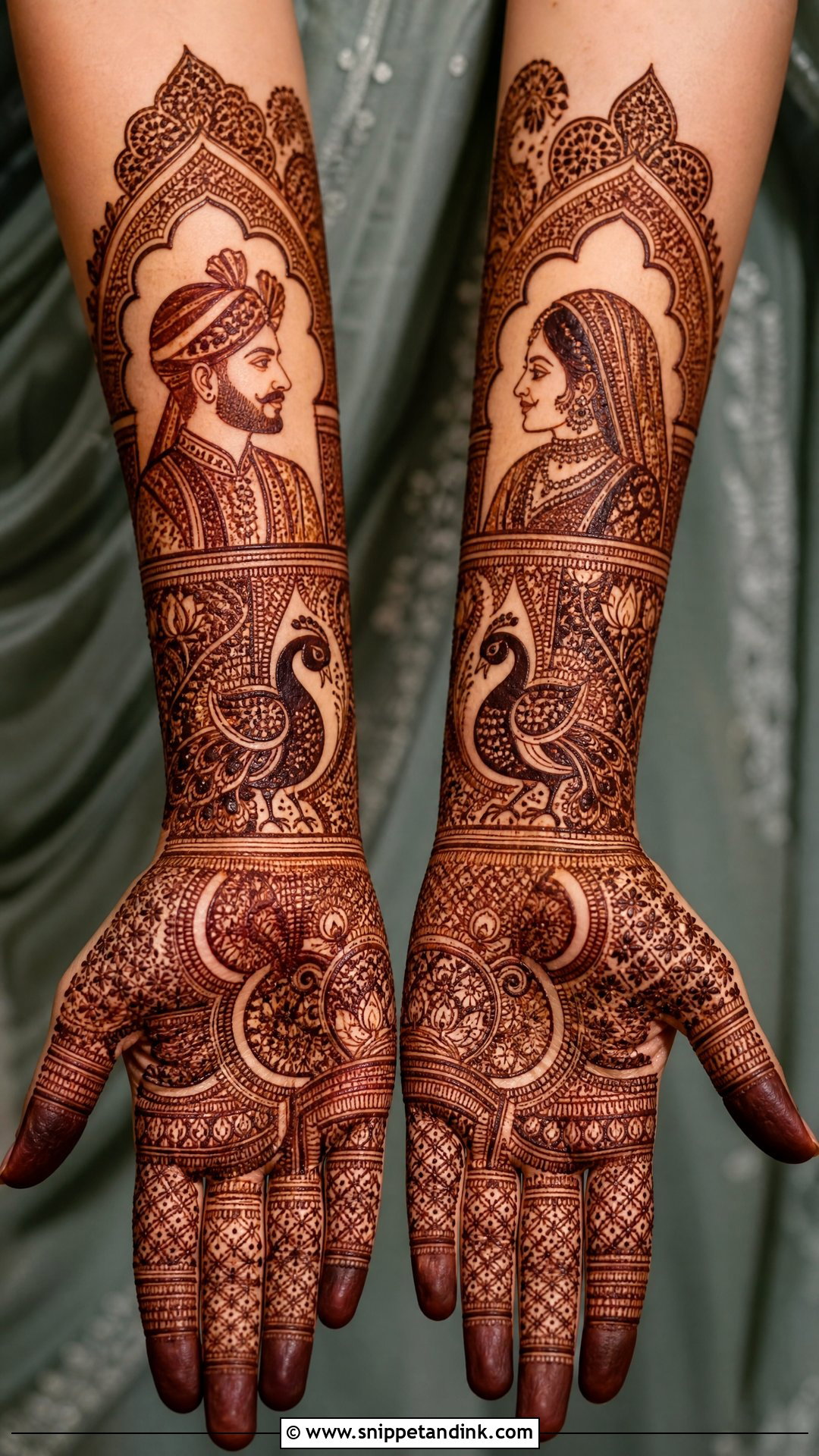
Portraits are the part of mehndi brides most want and the part artists most often rush. One hand shows the bride and the other the groom, framed in domes, mandalas or palace arches, with paisleys and peacocks around them. Faces need room, so this only works on full-hand coverage. I keep the figures medium-sized, because a tiny face drawn with a fine cone can lose its eyes and mouth once the lines darken and thicken. Before booking, look at an artist’s stained portraits a day or two later, not just photos of fresh paste.
9. Rajasthani Bridal Mehndi Design
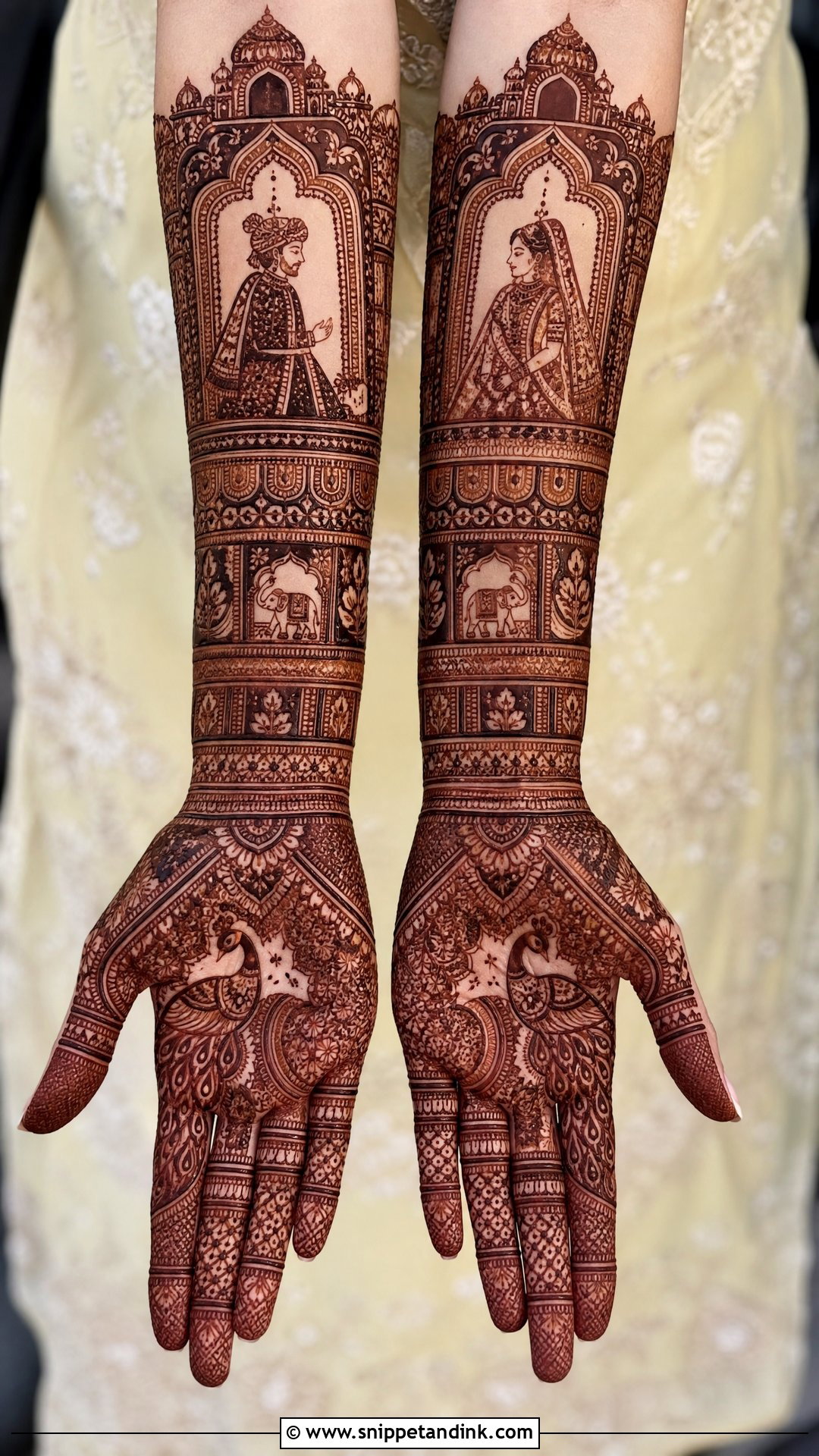
Rajasthani designs fill the hands from fingertips to forearms with mirror-image layouts: bride and groom figures, elephants, peacocks, palaces and fine mesh. With so little bare skin, the risk is that nothing stands out. I divide each hand into zones before starting, with figures on the palms, peacocks near the wrists and patterned bands along the forearms, so every element has its own space. It sits naturally with a heavy lehenga and traditional jewelry, and it needs the longest drying time of any style here because the paste covers everything at once.
10. Pakistani Bridal Mehndi Design
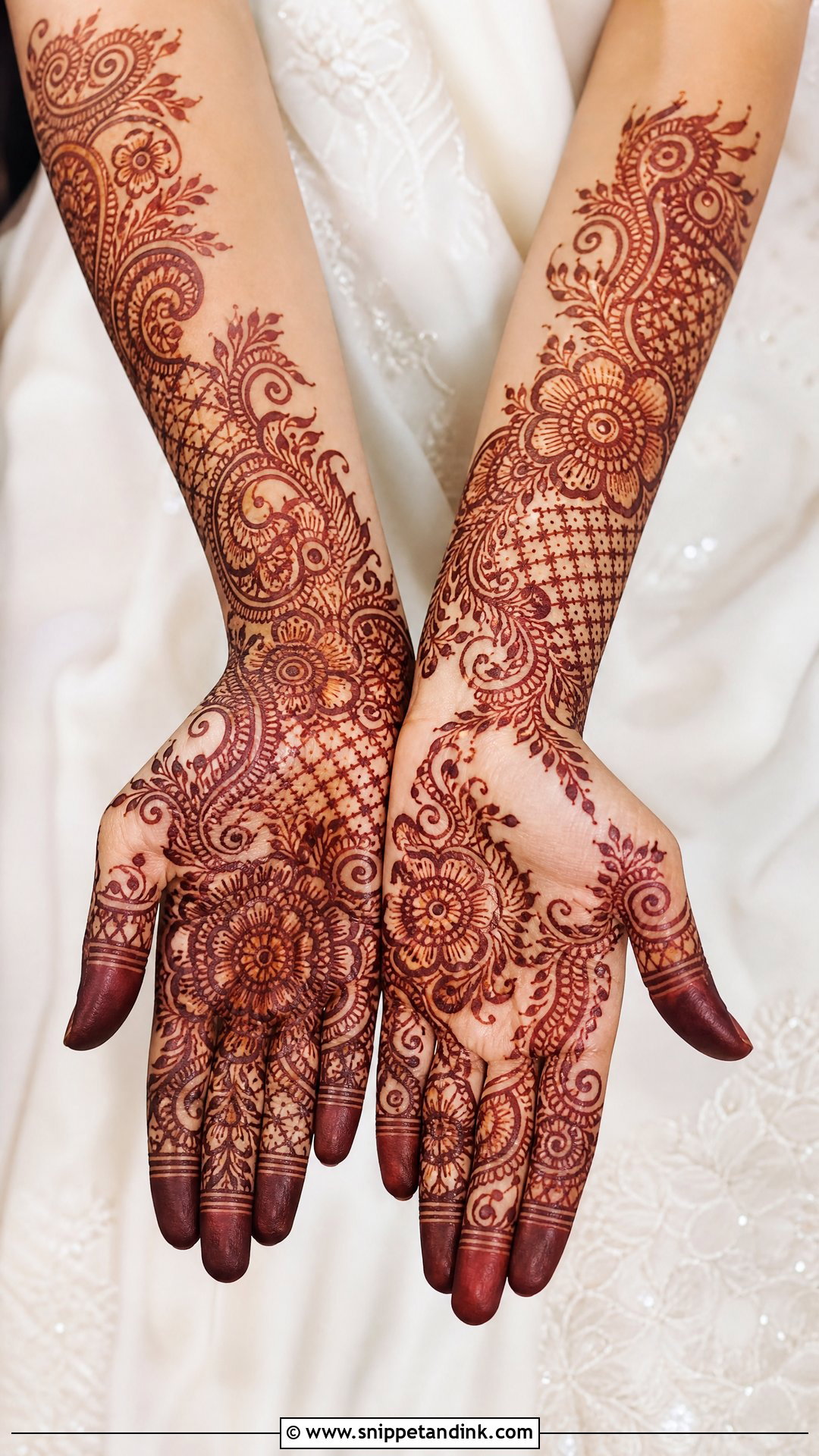
Pakistani bridal henna often pairs the flow of Arabic trails with Indian-style filling inside them, finished with strong symmetry and long forearm coverage. Floral trails, paisley sections, jaali grids and bold fingertips are typical. It gives rich mehndi without packing every gap, which matters because the bride wears it through several events. The walima can fall days after the mehndi night, when the stain is past its peak, so I put the heaviest work on the palms, where color lasts longest.
11. Moroccan Bridal Mehndi Design
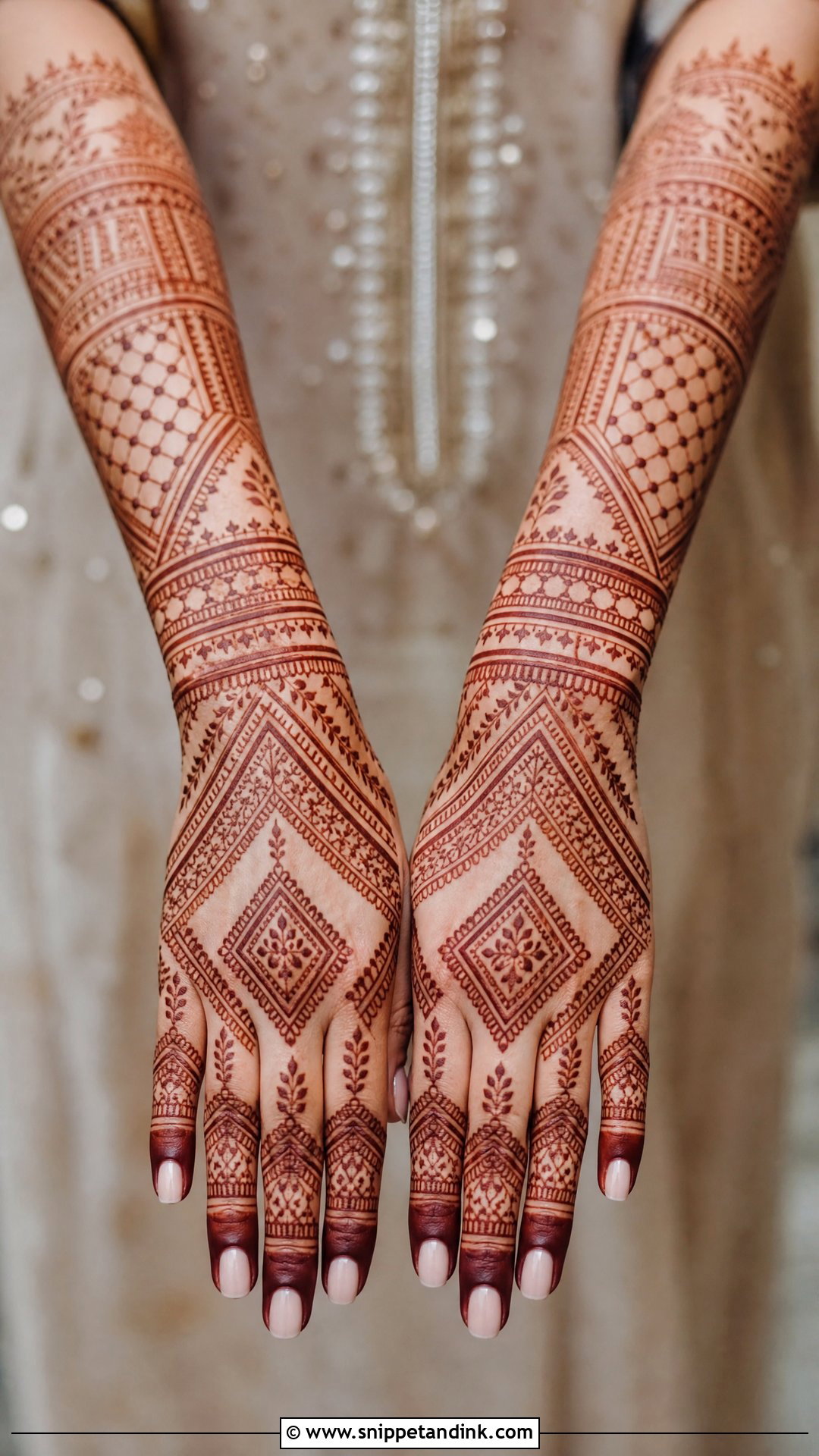
Moroccan designs swap flowers for geometry: diamonds, triangles, chevrons and grids built into symmetrical blocks. Straight lines are far less forgiving than curves, and a wobble shows instantly, so I work slowly and sometimes mark a few guide dots first. The pattern can stay open or be built up with repeated panels across the back of the hand, wrist and forearm. A deep maroon stain makes the sharp edges read clearly. It suits contemporary outfits, simple jewelry and brides who have had enough of paisleys.
12. Gulf Khaleeji Bridal Mehndi Design
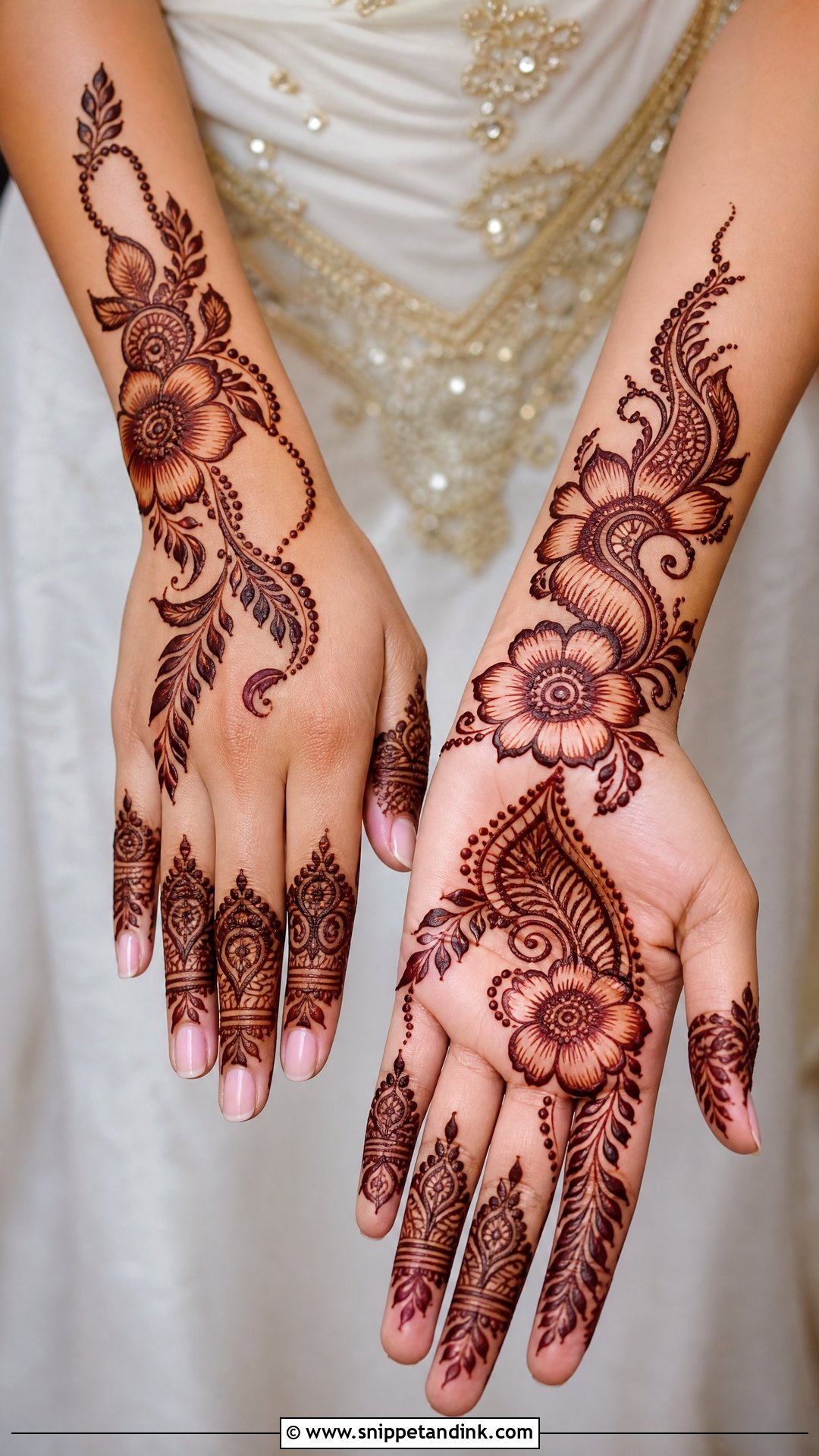
Khaleeji henna from the Gulf uses big, bold flowers and leaf trails with dramatic gaps between them. The petals are wide and shaded, holding more paste than fine Indian lines, so they need to dry undisturbed or they crack and flake away before the color has set. Large roses, lotus shapes and curved leaves run across the back of the hand or palm, with bold tips and bands on the fingers. Extend it toward the forearm for a bridal version. Gold jewelry sits well against the warm color.
13. Modern Bridal Mehndi Design
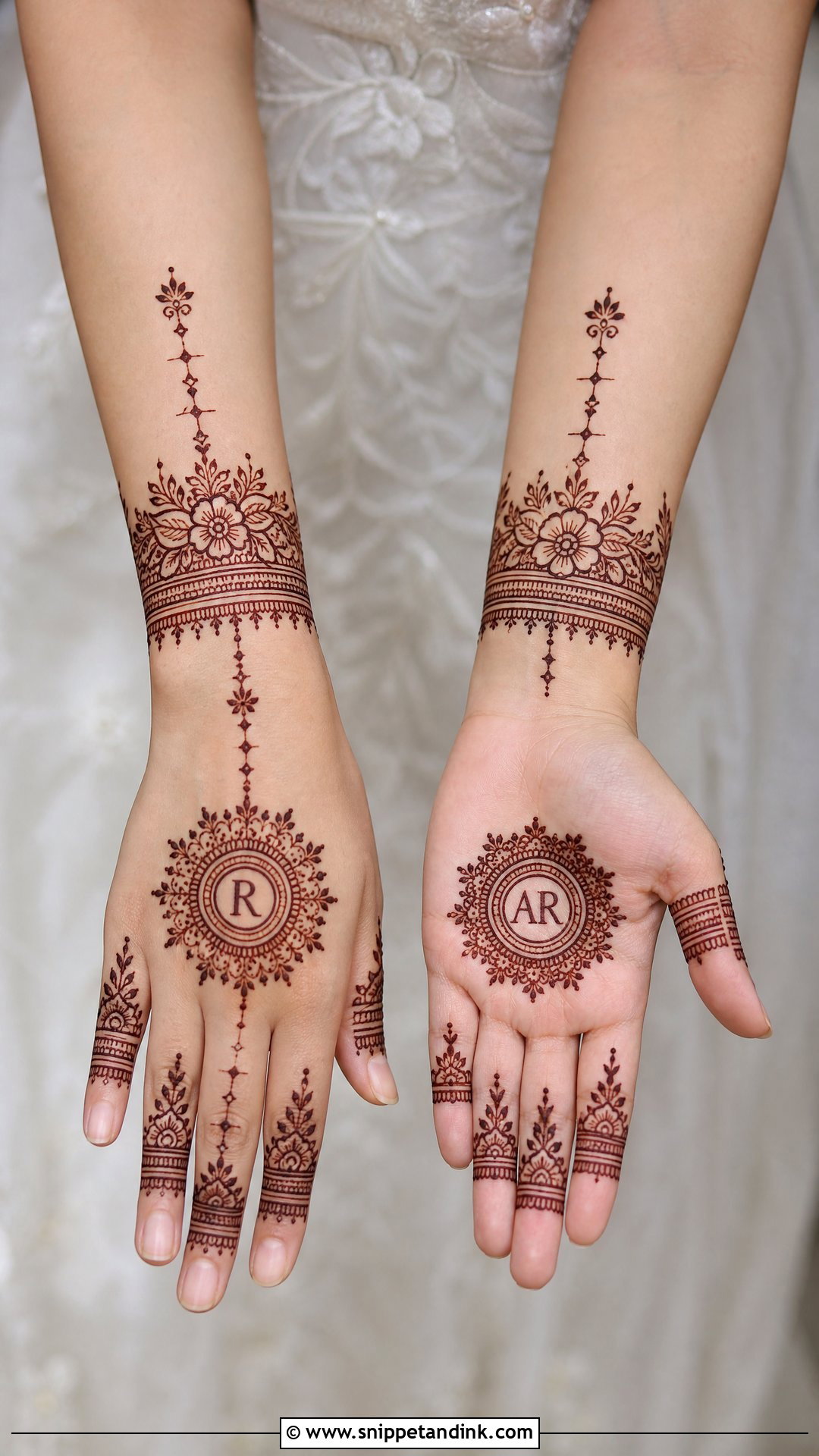
Modern bridal henna keeps the tradition but gives each motif room: neat mandalas, floral cuffs, initials, finger detailing and lighter forearm coverage, sometimes with geometric lines. The danger is a design that looks empty rather than open. I ask brides to pick one focal point per hand, a mandala, a floral trail or a name, then build the borders around it so the bare skin looks planned. It’s comfortable to sit for and dries faster than full coverage.
14. Minimal Bridal Mehndi Design
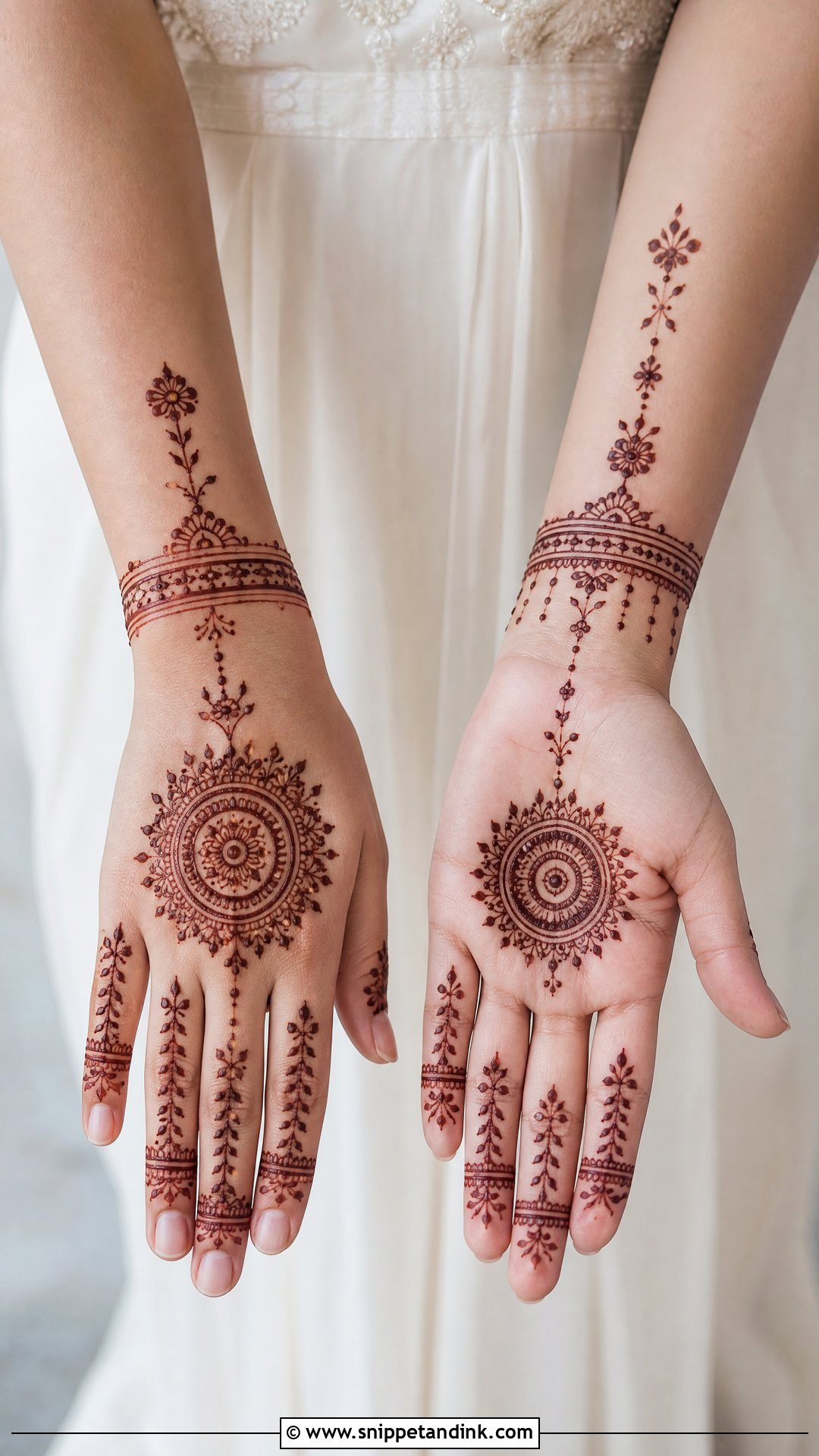
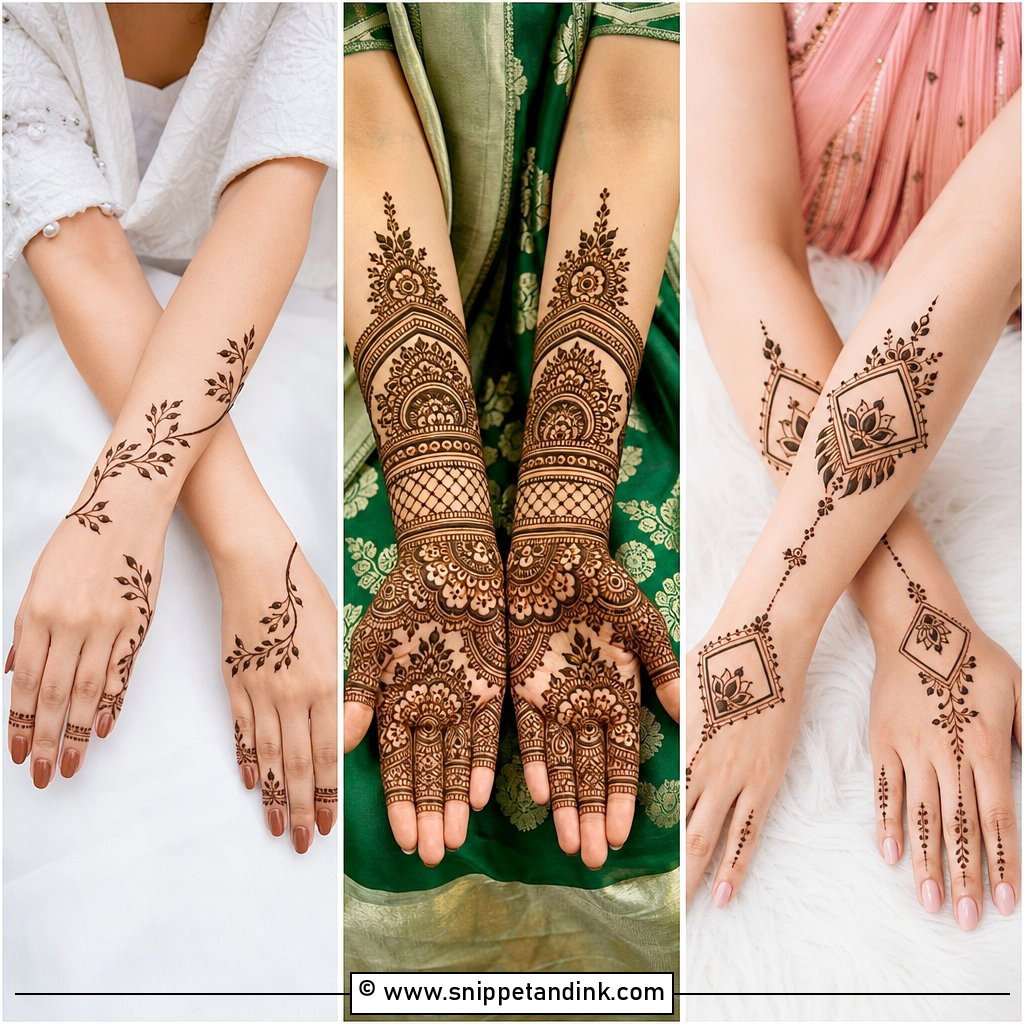
A minimal bridal design might be a back-hand mandala, thin finger vines, a delicate wrist band and a few flowers at the knuckles, with the palm kept light. I recommend it for civil ceremonies, small weddings and brides who only want henna for the reception, or for anyone who wants their rings and nail color to stay the focus. With so little on the skin, neatness is everything; a shaky line has nowhere to hide. Follow the same aftercare as a full design, because thin lines fade sooner than filled shapes.
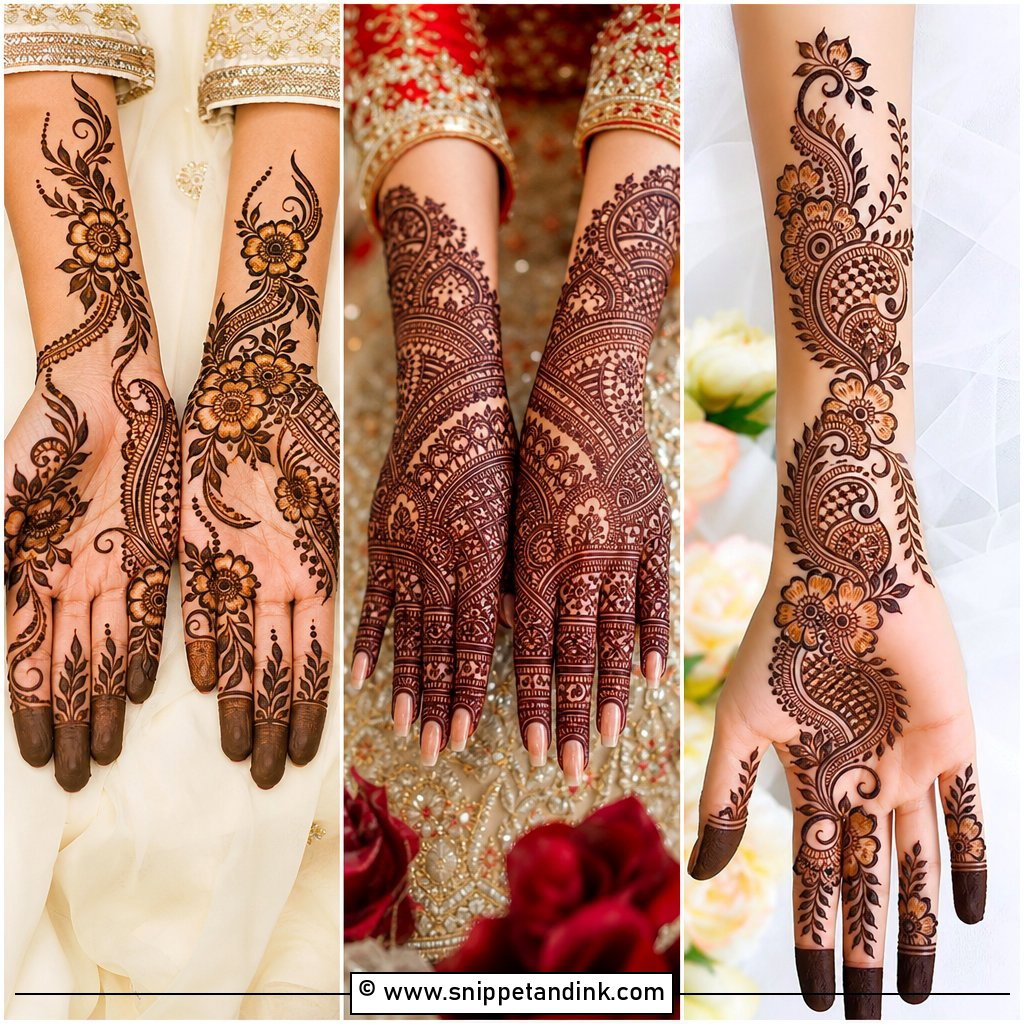
15. Floral Bridal Mehndi Design
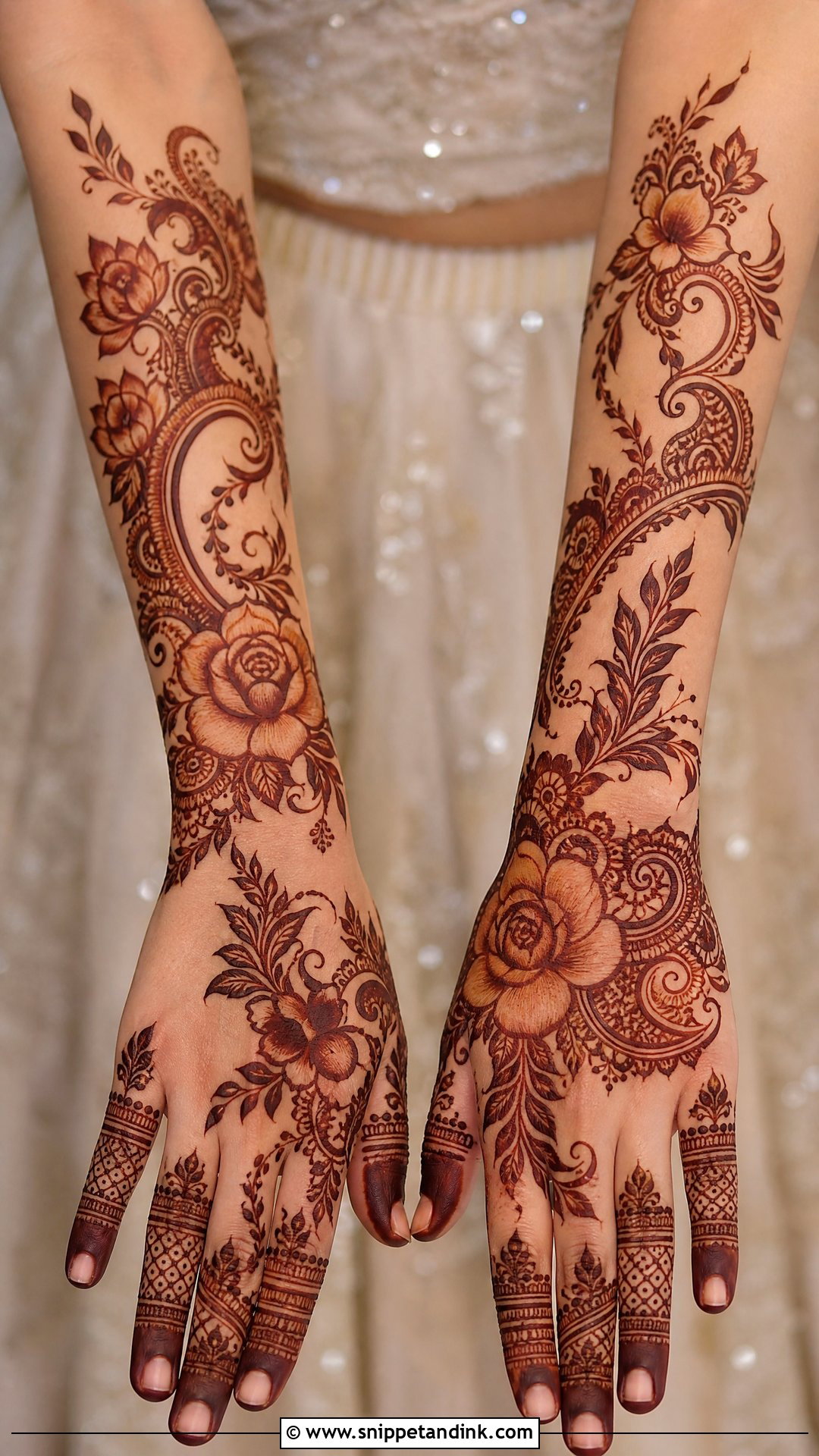
Florals are the easiest henna to scale from heavy to light, which is why I use them for brides and their families alike. A full version can put large roses or lotus motifs on the palms, smaller blossoms around the wrists, leaf vines on the fingers and shaded petals up the forearms. Flowers blend into Arabic, Indian and Indo-Arabic layouts. I vary the sizes on purpose, because flowers all drawn the same size make a hand look flat. Paisley borders and fine mesh around the main blooms make it read as bridal.
16. Peacock Bridal Mehndi Design
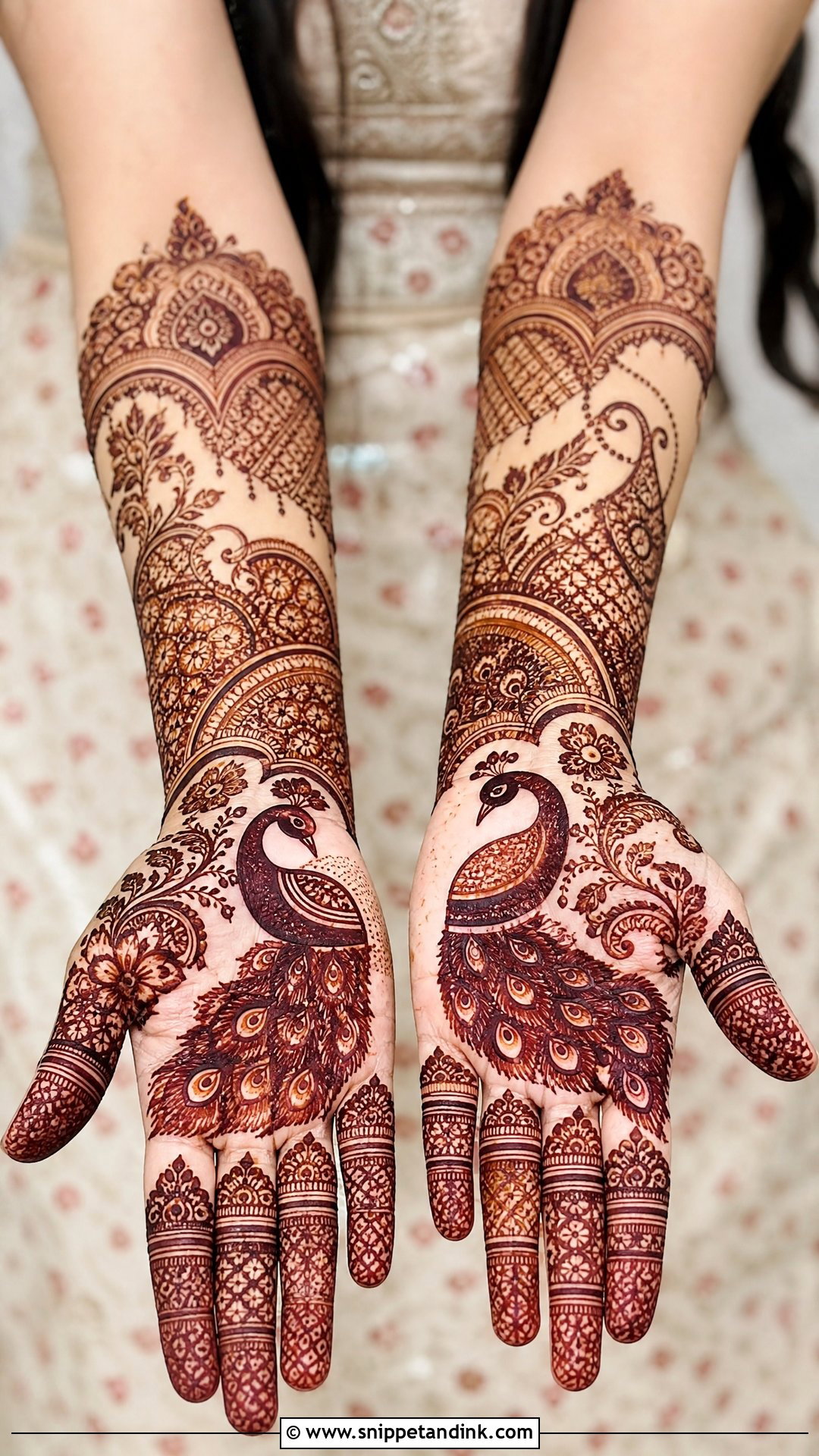
The peacock is a bridal classic, and its tail is where an artist shows control, with fine lines, shading, dots and scalloped borders in a single motif. I place one large peacock on the palm or forearm, let the feathers flow into paisleys and vines, and keep smaller feather details on the back of the hand. Two big peacocks competing on one hand rarely sit well together. It gives a regal, traditional result for brides who would rather skip portraits.
17. Mandala Marriage Mehndi Design
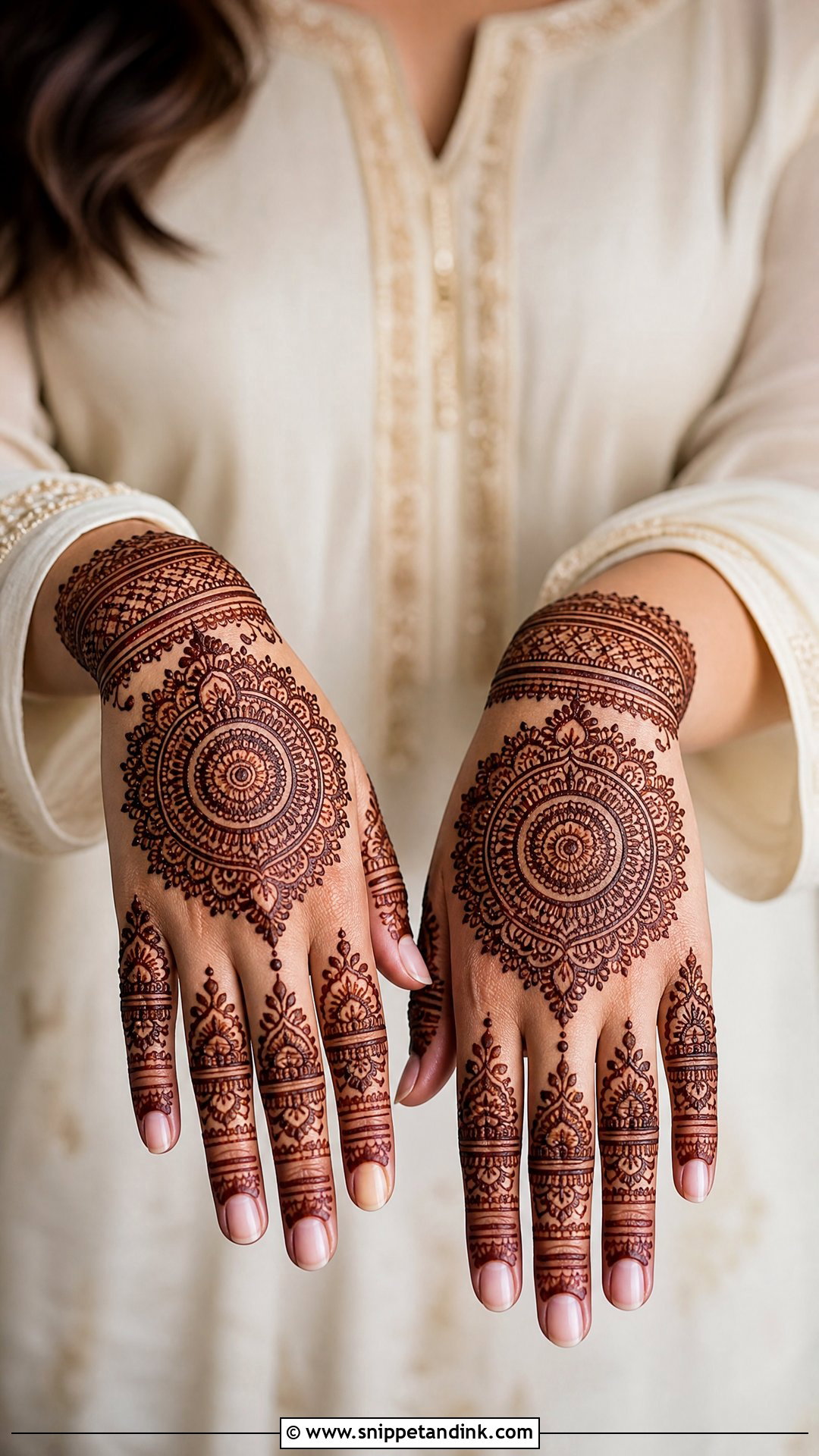
A large mandala in the center of each palm or back of the hand, with finger patterns, wrist cuffs and light forearm detail, gives clean symmetry for brides and guests alike. The circle has to be truly round, so I start from a center dot and build rings outward rather than drawing the outer edge first. For a bridal version, add florals, paisley borders or thin jaali panels around it. Don’t skip the fingertips; bare fingers make even a big mandala look half done. When both palms are held together during the rituals, matching mandalas line up neatly in photos.
18. Jewelry Mehndi Design For Marriage
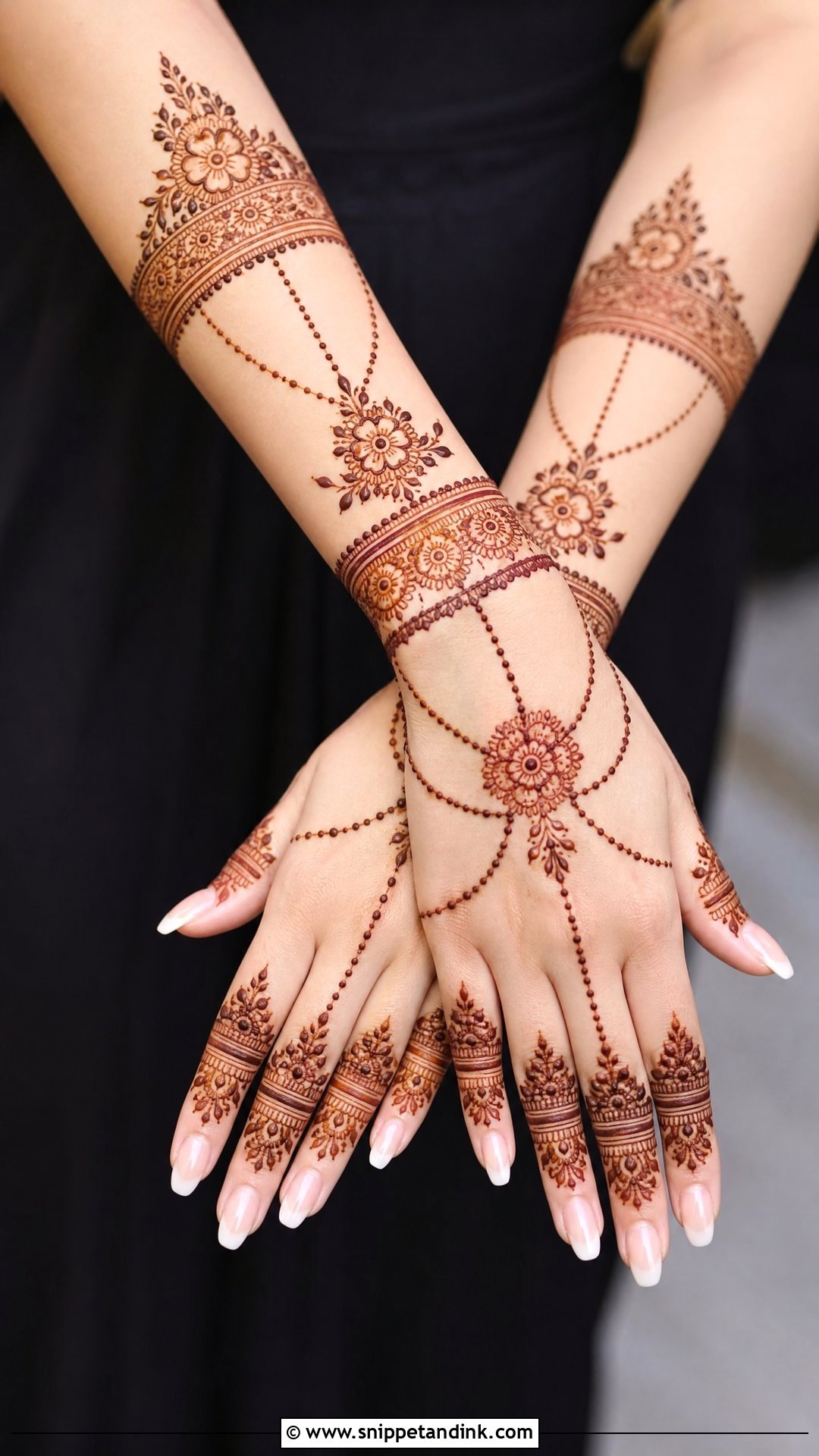
Jewelry mehndi draws ornaments onto the skin: ring chains, bracelet bands, wrist cuffs and dotted strings across the back of the hand. Lines need to be fine and evenly spaced or the jewelry effect turns into a tangle. It’s quick and polished, which makes it my usual suggestion for bridesmaids, sisters and engagement or reception events. A bridal version runs from fingers to forearm with layered cuffs and floral accents, and looks right both with and without real rings over it.
19. Bridal Feet Mehndi Design
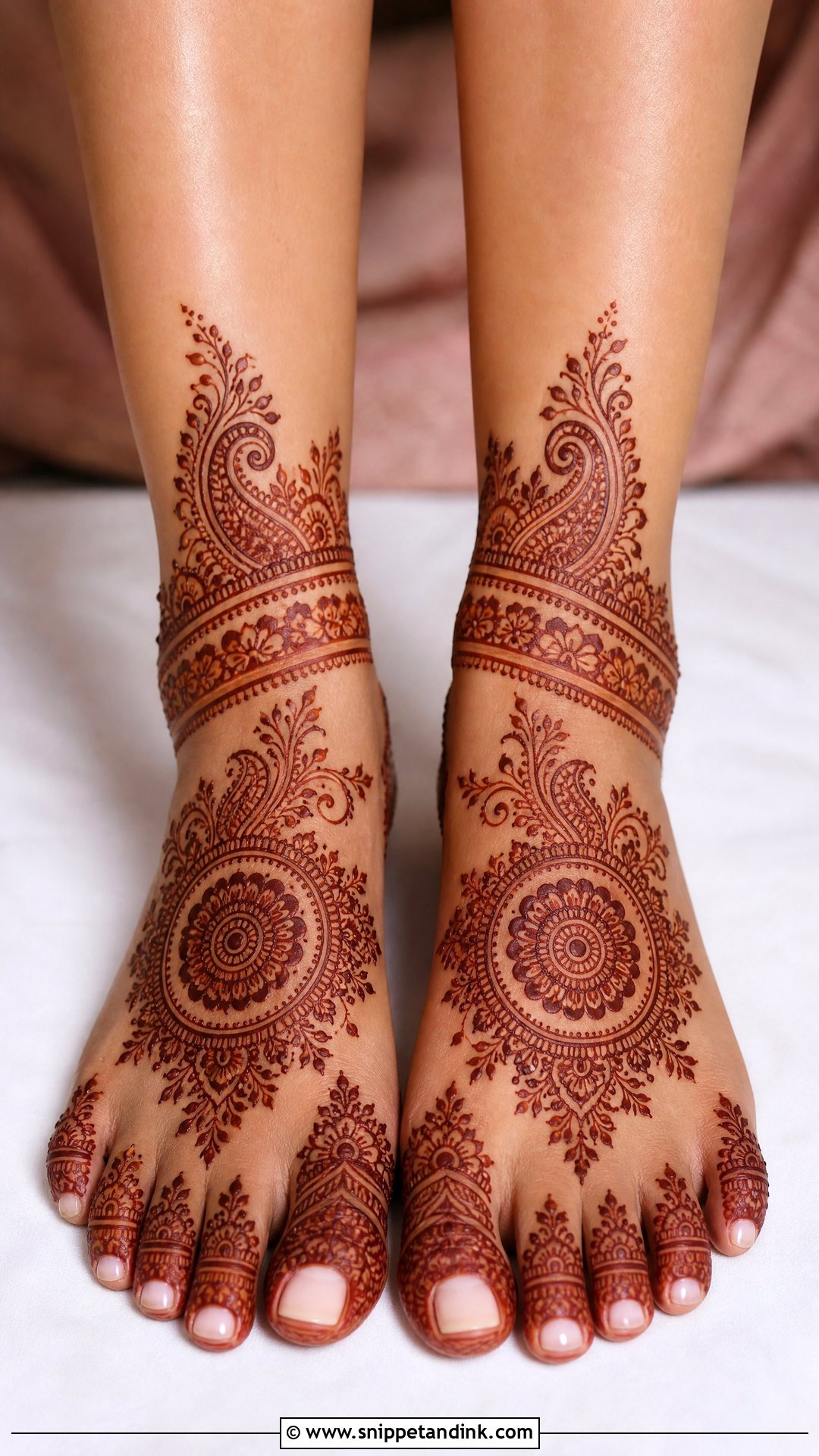
Feet complete bridal henna, especially with anklets, open footwear and a lehenga or saree that shows the ankle. Mandalas on top of the foot, vines around the toes, anklet borders and paisleys toward the ankle make the usual layout. Soles stain as dark as palms, while the tops of the feet come out lighter. Feet are the hardest part to keep still and clean while drying, so I do them last and ask brides to rest them raised on a towel; socks and bedsheets smudge wet paste. Many brides choose simpler feet to balance very heavy hands.
20. Bride Name Mehndi Design
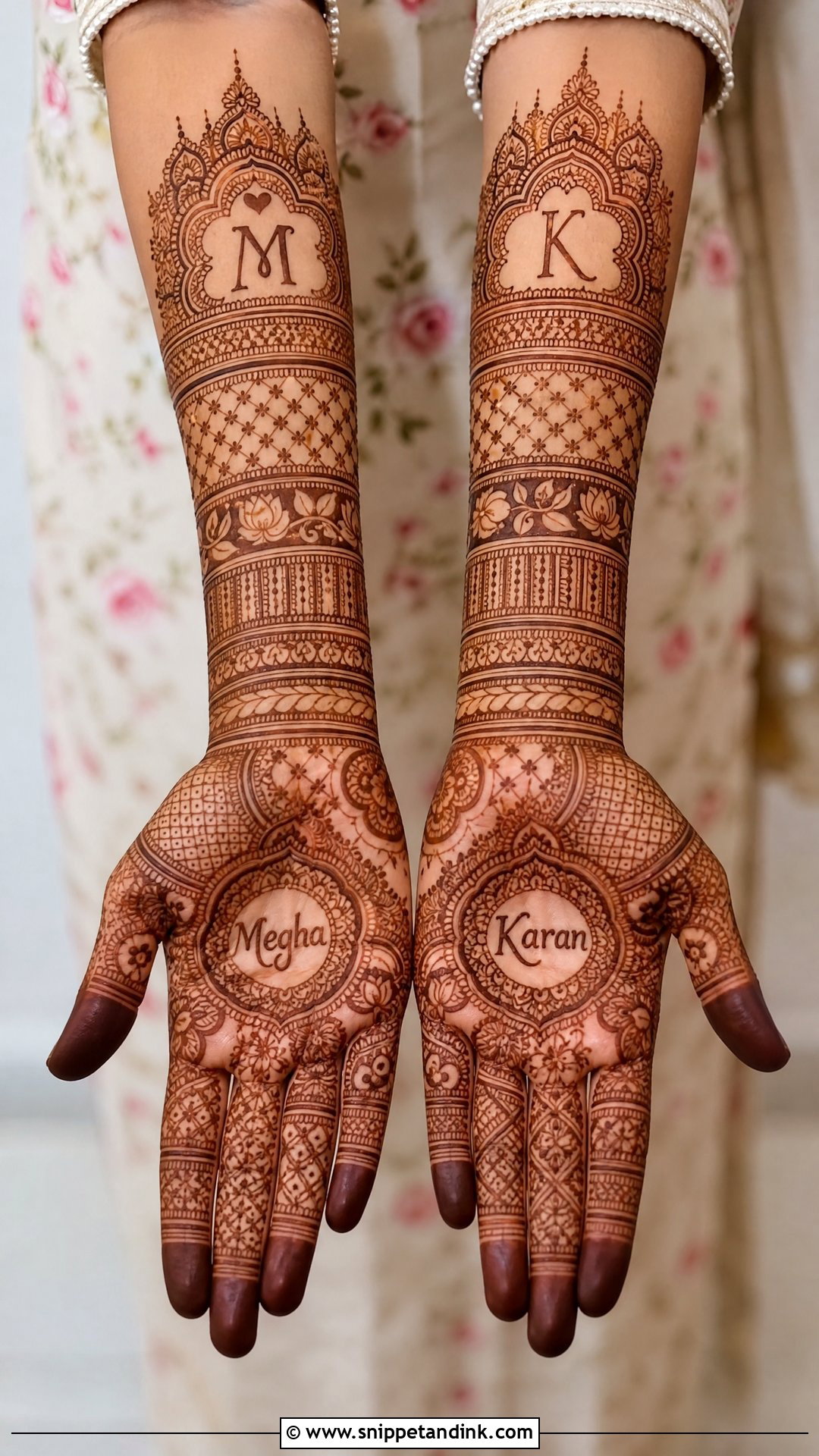
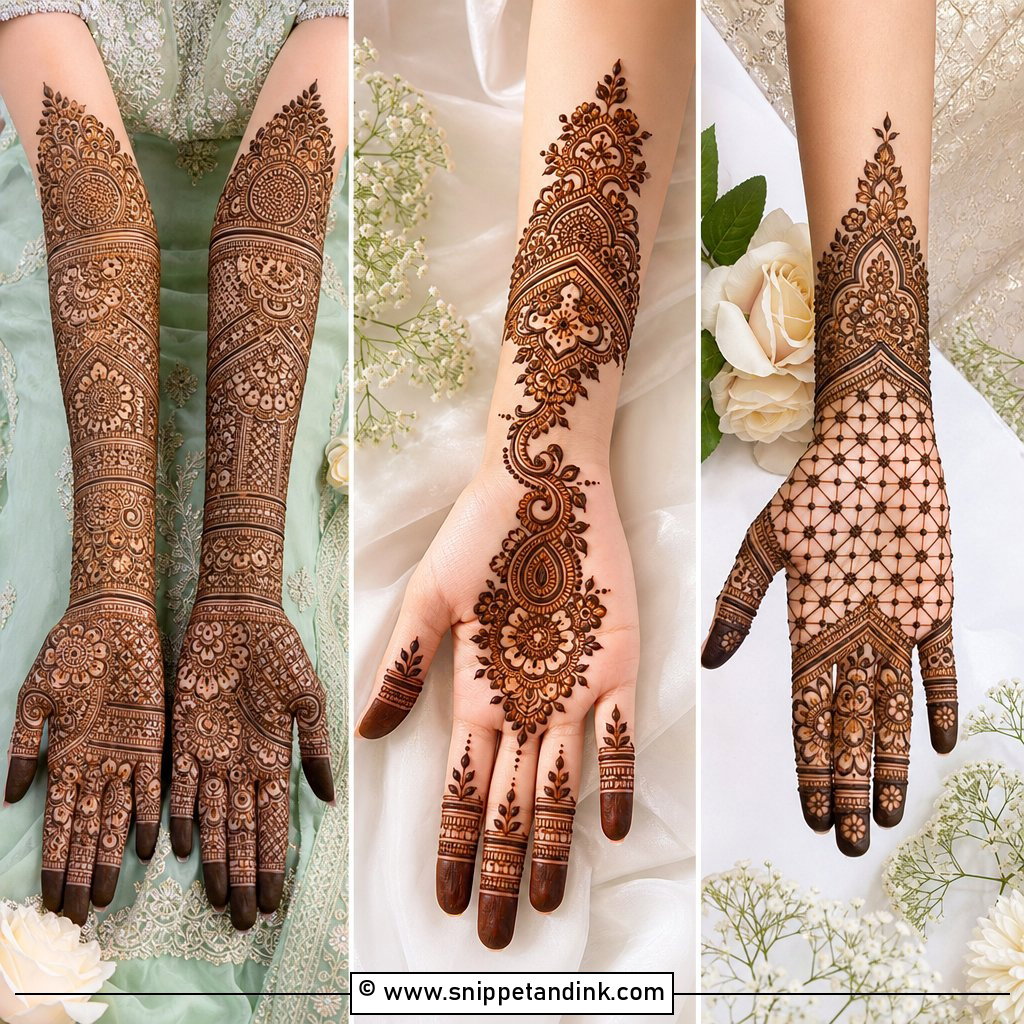
Bride name mehndi design hides personal details in the work: the groom’s name inside a paisley, initials along a vine, the wedding date near the wrist. In many families the groom has to find his hidden name, so I tuck it in rather than writing it in plain view. Spell everything out for me in writing beforehand, especially names in Urdu or Hindi script. Surround the text with florals, jaali and wrist bands so the hand reads as bridal art first and lettering second.
Letting the Color Deepen After the Paste Comes Off
What you do in the next day matters as much as the design. These are the instructions I give every bride as she leaves:
- Keep the paste on as long as you can, ideally six hours or overnight. A dab of lemon and sugar keeps it from flaking off early.
- Scrape the dried paste off with a blunt edge or your fingers. Don’t wash it off.
- Keep water away from the stained skin for the first 12 to 24 hours, and rub on a little balm or oil before you do wash.
- Stay warm. Henna darkens faster on warm skin, so sitting in a cold room slows it down.
- Book your manicure before your mehndi, not after. Soaking, scrubbing and remover fade a fresh stain.
- Skip hand sanitizer, scrubs, waxing and swimming pool chlorine on your hands until the wedding is over.
Most bridal stains last one to three weeks. They fade first where you wash most, the fingertips and inner palms, which is why I make those areas strong to begin with.
Plan the Stain Around the Day the Cameras Come Out
Your outfit, the ceremonies you’ll attend and how long you can sit still matter more than any single photo. Traditional brides lean toward full-hand Indian, Rajasthani, peacock or portrait work; brides who want lighter hands choose Arabic, minimal, jewelry or mandala patterns, and family can wear simpler versions of either. Save your references, agree on coverage at the consultation, and book the application so the color peaks on the wedding day itself. Get that timing right and your hands will be at their deepest shade when everyone is looking at them.
You'll Like These Ideas:


Leave a Reply