
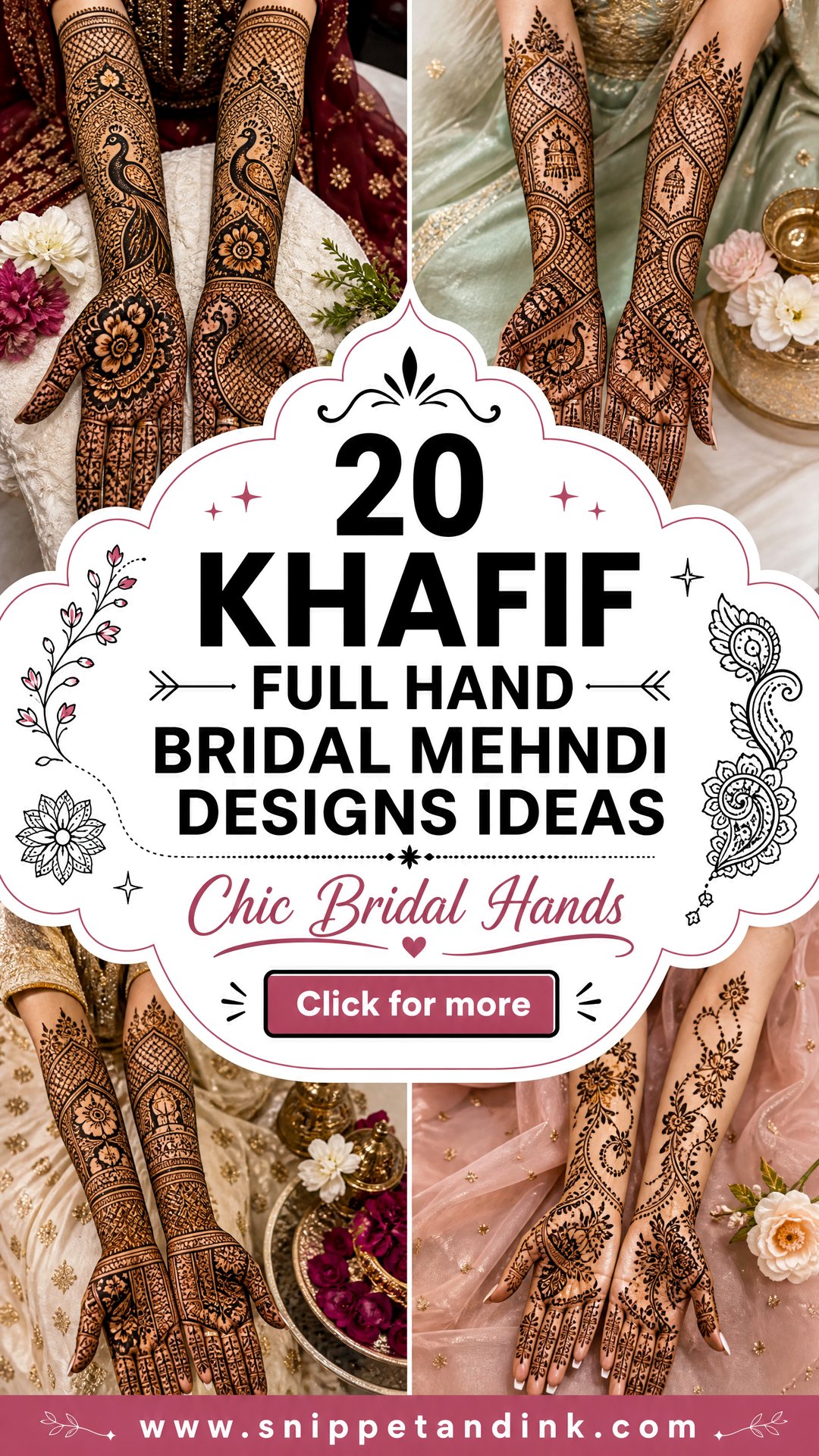
Khafif means light, and that’s exactly what brides ask me for when they want full coverage without hands that look painted solid. Many of the requests I get for Khafif full hand bridal mehndi designs come from brides who love detail but want their skin to show between the motifs. The style relies on fine lines, floral trails, jaali, paisleys and generous open spacing from fingertips to forearm. It suits a nikkah, an engagement, a mehndi night or a reception, and it adapts to Arabic, Indian, Indo-Arabic, Moroccan or Gulf patterns. Here are twenty layouts, with notes on how each one is drawn and how it stains.
Why Light Lines Need More Planning Than Heavy Ones
It’s easy to assume a lighter design is quicker or simpler. In practice, khafif work can be harder, because every line is visible and there’s no shading to hide a mistake.
- Fine lines stain lighter than bold ones. I always mix a few thicker outlines into the design so it still reads clearly once it develops.
- Fresh, natural paste with a smooth consistency matters more here, since lumpy paste breaks fine lines.
- Palms stain darker than the back of the hand and the forearm, so I plan the layout knowing the back will look lighter.
- The stain starts orange when the paste comes off and darkens over 24 to 48 hours.
Because of that darkening, I usually apply bridal mehndi one or two days before the wedding. Applied the morning of, the design will still be orange during the ceremony.
Plan your manicure, waxing and any exfoliating facial before the mehndi appointment, not after. Anything that scrubs or strips the skin in the days that follow lifts the top layer, and the stain fades with it.
1. Khafif Full Hand Bridal Mehndi Design
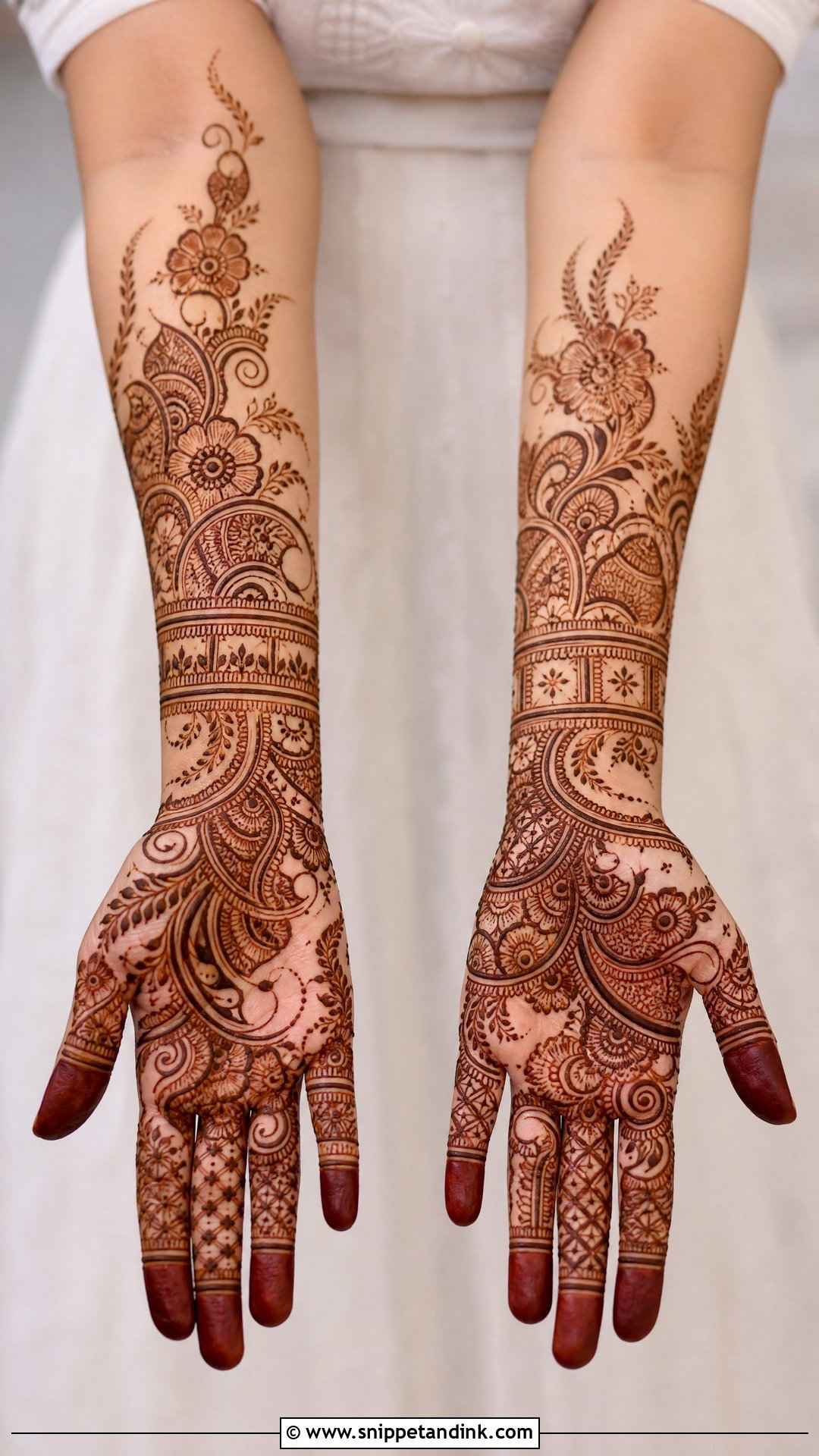
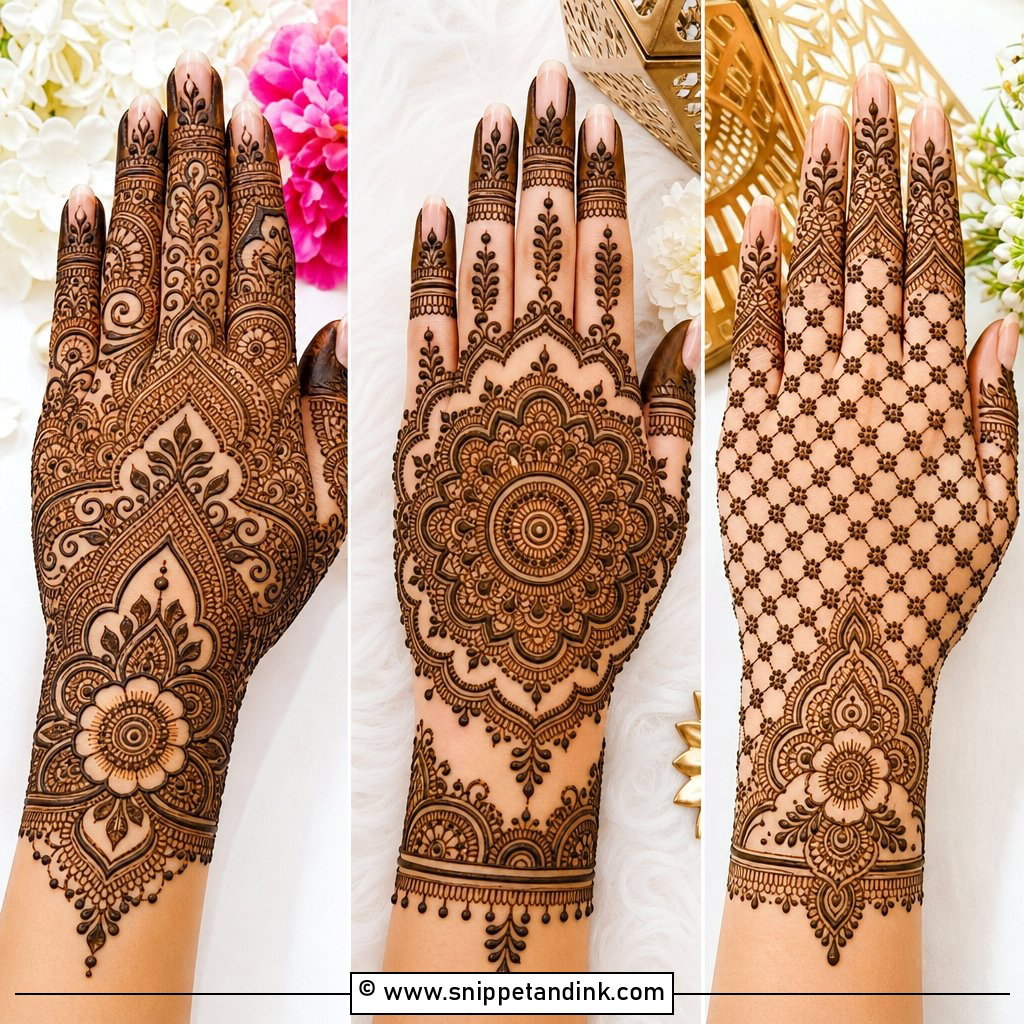
This is the base version: full coverage, but with air between every element. I plan the palm around one round mandala or floral center and keep the fingers to fine leafy work and neat tips. On the back of the hand, the design flows from the fingers to the wrist like a piece of jewelry. The open space is not empty time for the artist; it’s where any wobble shows, so the lines have to be steady and the cone tip fine. Done well, each motif reads clearly from across a room.
2. Khafif Arabic Bridal Mehndi Design
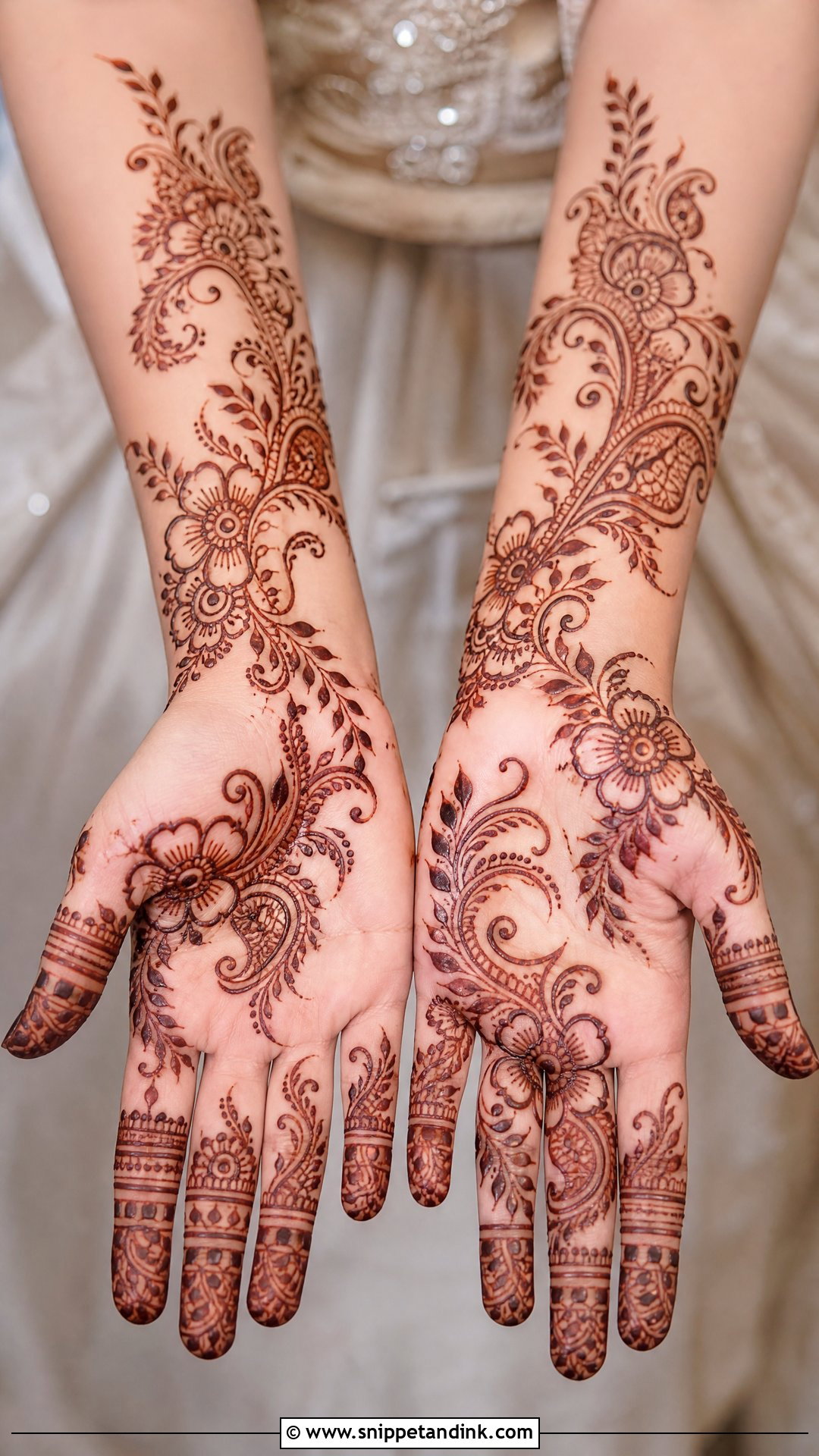
Arabic layouts run diagonally, usually starting with bold floral clusters on the palm and trailing toward the wrist and forearm through leafy vines and soft paisleys. I leave the fingers lighter, with slim bands, tiny leaves and dotted trails. The diagonal flow suits bangles, rings and haath phool well, because the jewelry sits across the open spaces rather than covering detail. It’s festive but never packed.
3. Khafif Indian Bridal Mehndi Design
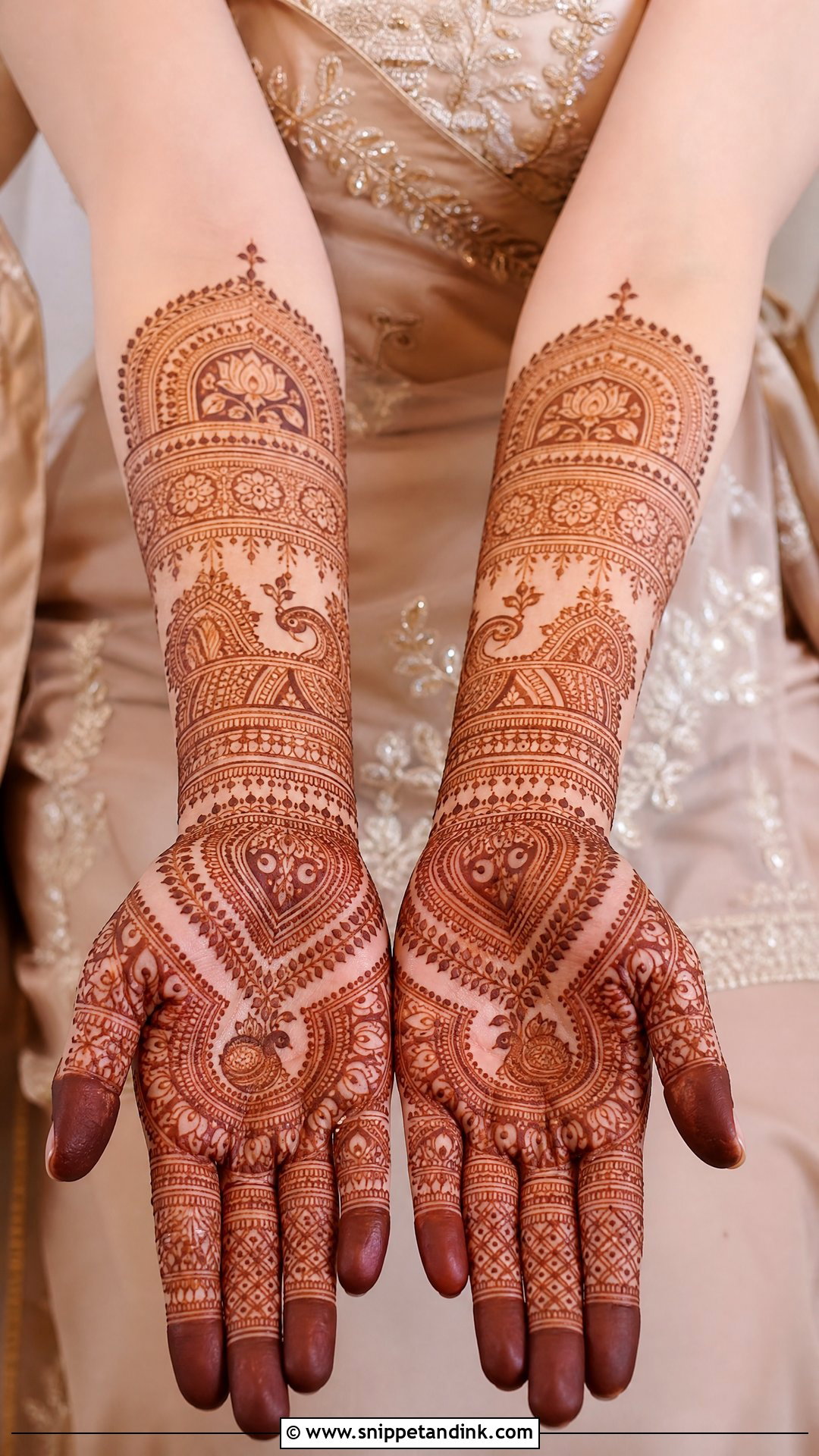
Indian motifs, such as paisleys, small peacocks, lotus flowers and mandalas, are usually drawn dense and shaded. In a khafif version I keep the motifs but leave clean gaps around each one, so the hand has depth without becoming a solid block. The palm carries a central bridal motif, and the wrist and forearm get bracelet bands and floral panels. Because it uses less shading, it dries faster, which helps a bride who can’t sit still for hours.
4. Khafif Indo Arabic Bridal Mehndi Design
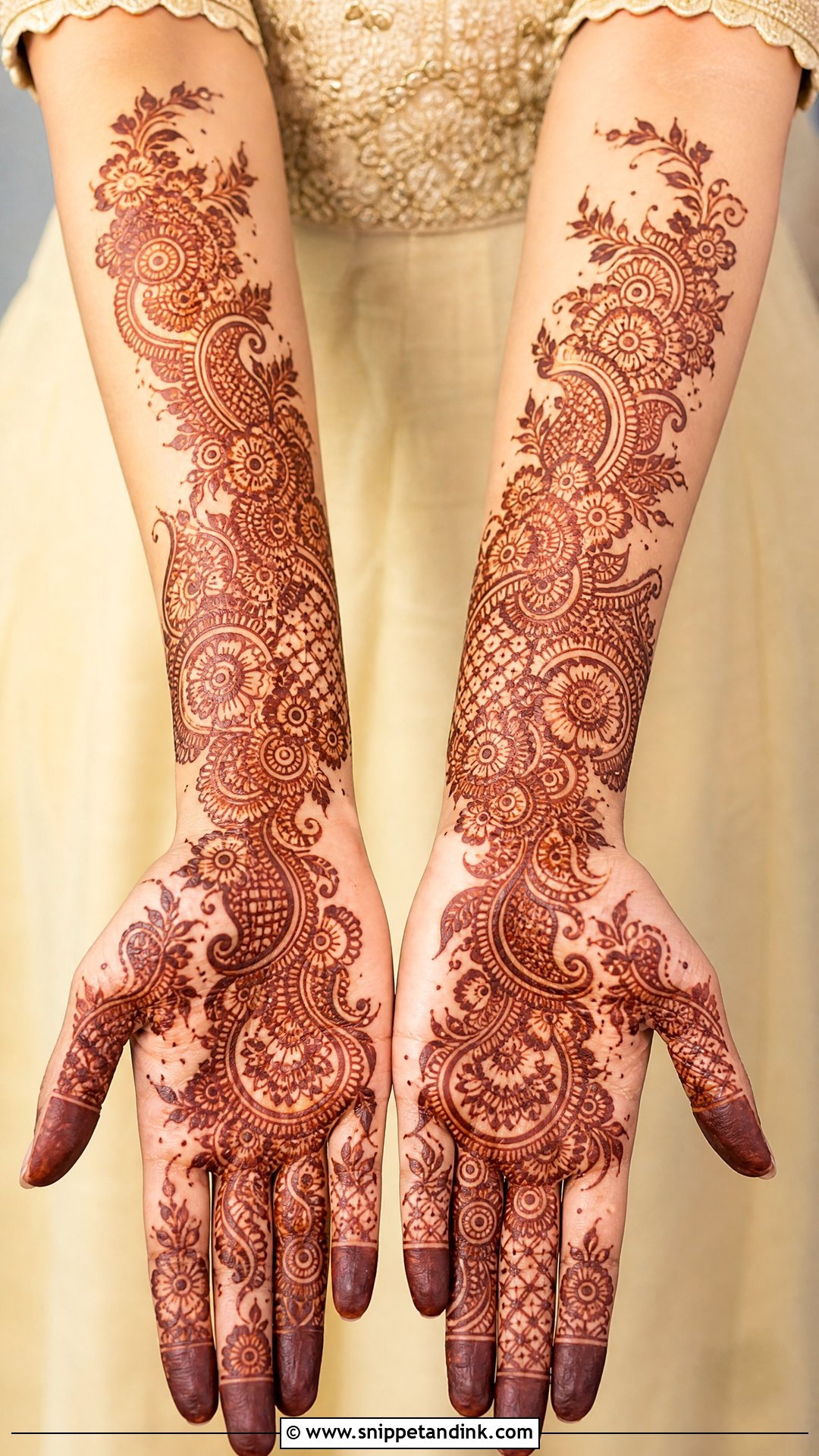
This one mixes the fine detailing of Indian mehndi with the open flow of Arabic patterns. I usually let one part of the hand carry dense work, such as a jaali patch or mandala, and leave the area beside it open, so the eye moves between them. Initials, a tiny heart or a small symbol can be hidden in the pattern for the groom to find. It’s the style I’m asked for most when a bride wants something modern that still reads clearly as wedding mehndi.
5. Khafif Floral Bridal Mehndi Design
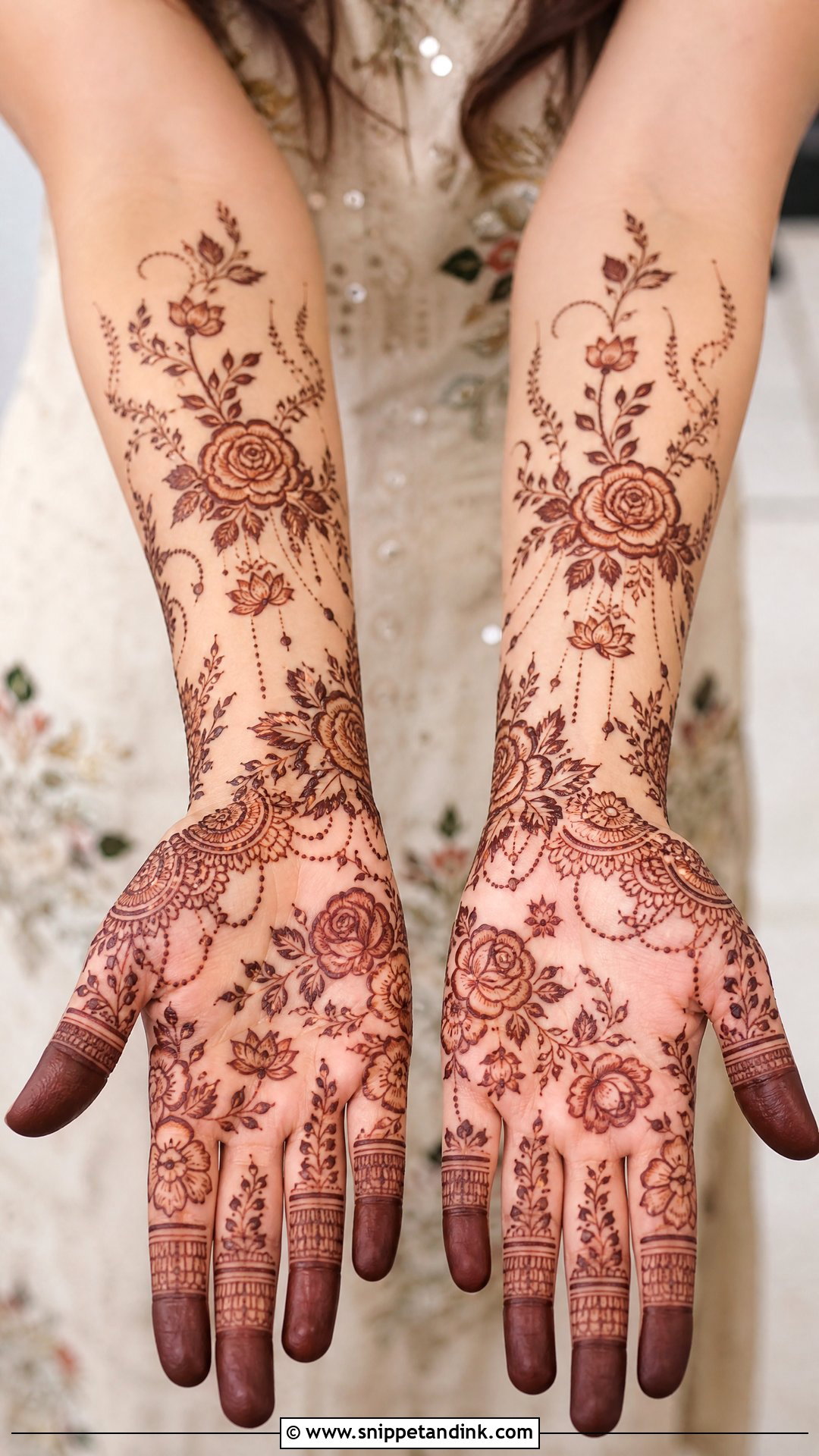
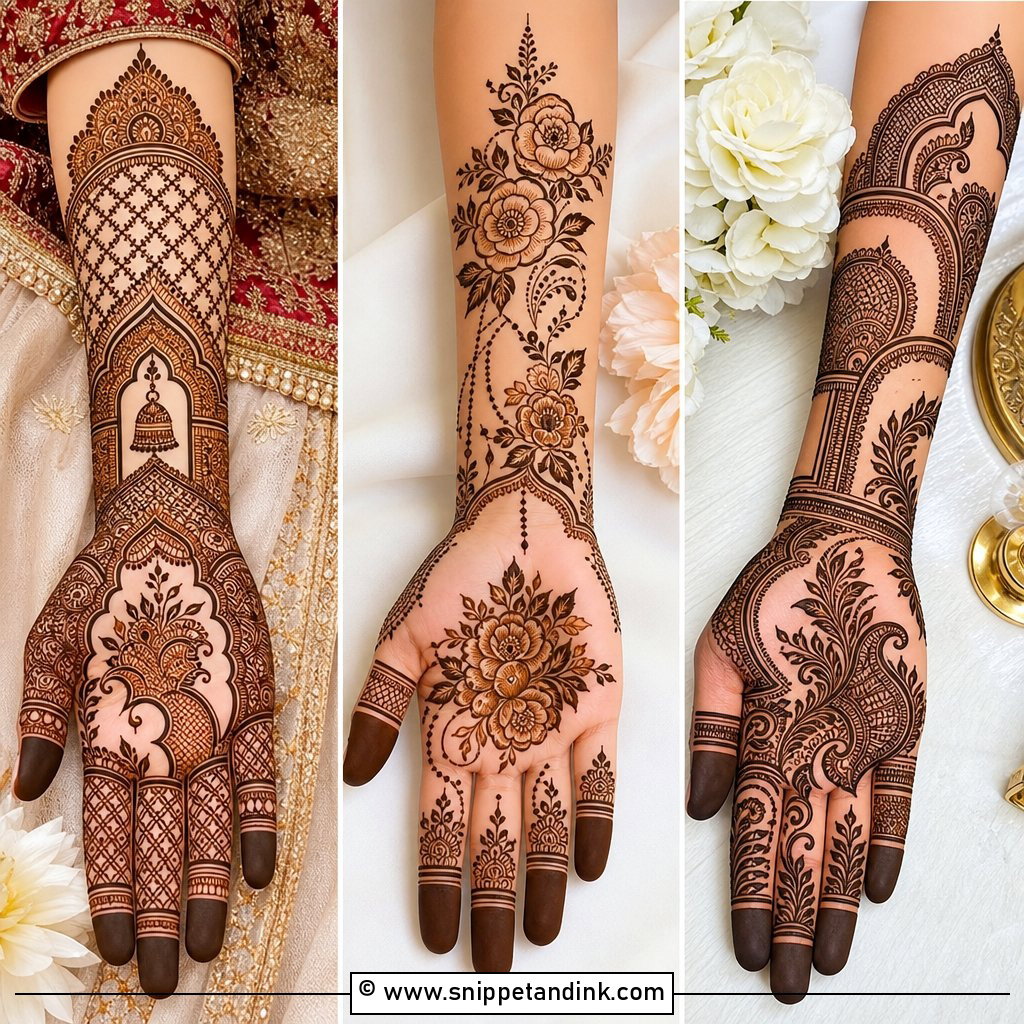
Florals in khafif work are drawn with outlines and very little shading: roses, lotus blooms, small buds and leafy vines, with dotted fillers between. I place one larger flower on the palm and a trail from the index finger to the wrist on the back. The fingers still need attention, so I add slim leaf chains and ring-style bands. Pastel outfits and floral jewelry suit it.
6. Khafif Paisley Bridal Mehndi Design
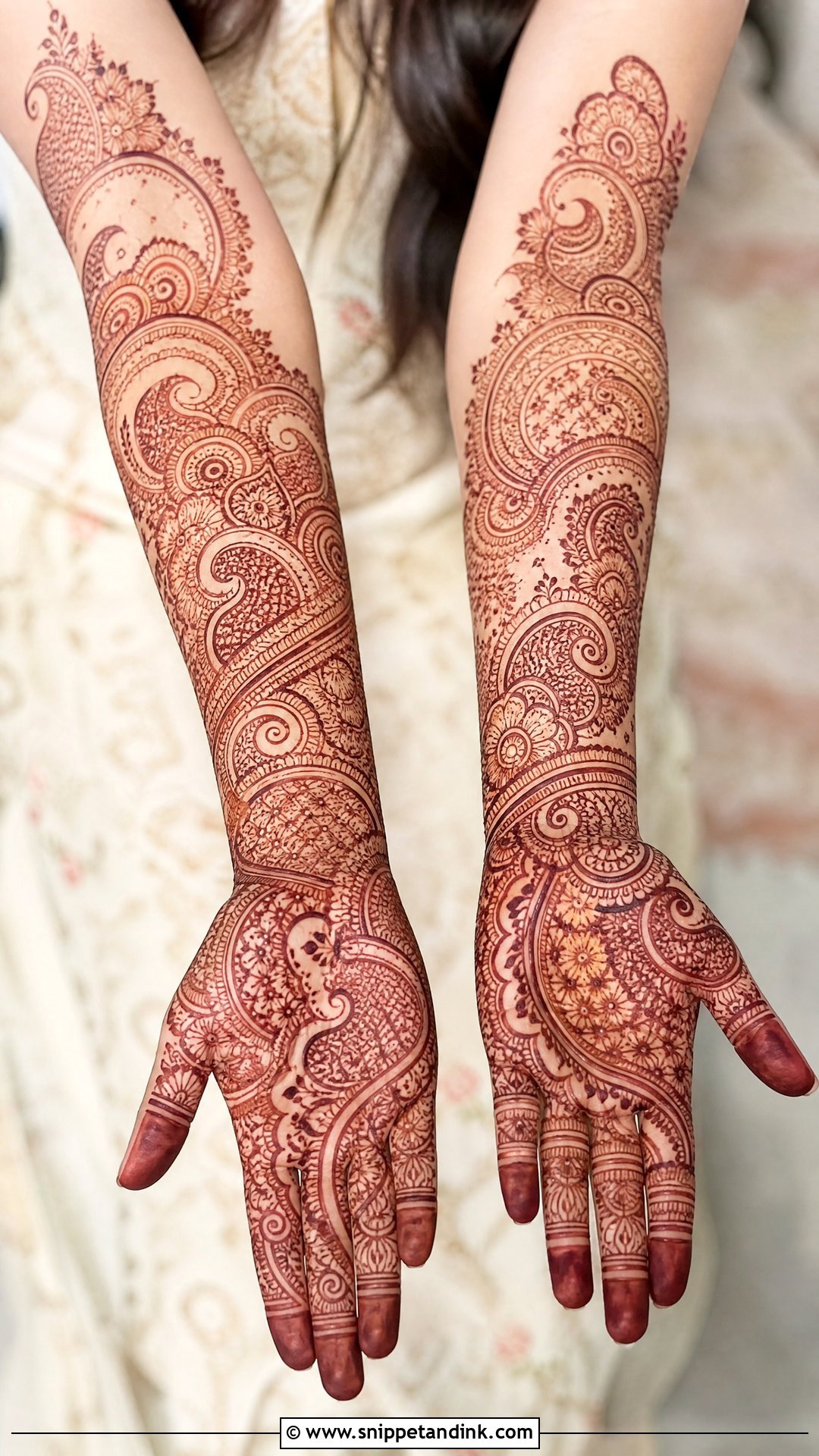
Paisleys can sit along the palm, wrist and forearm, surrounded by small flowers, leaves and curved lines. The layout can run diagonal or symmetrical. The trick for a lighter finish is detailing inside the paisley with fine lines rather than filling it solid; a filled paisley stains as one dark patch and loses its shape. Matching paisley tips on the fingers tie the hand together.
7. Khafif Mandala Bridal Mehndi Design
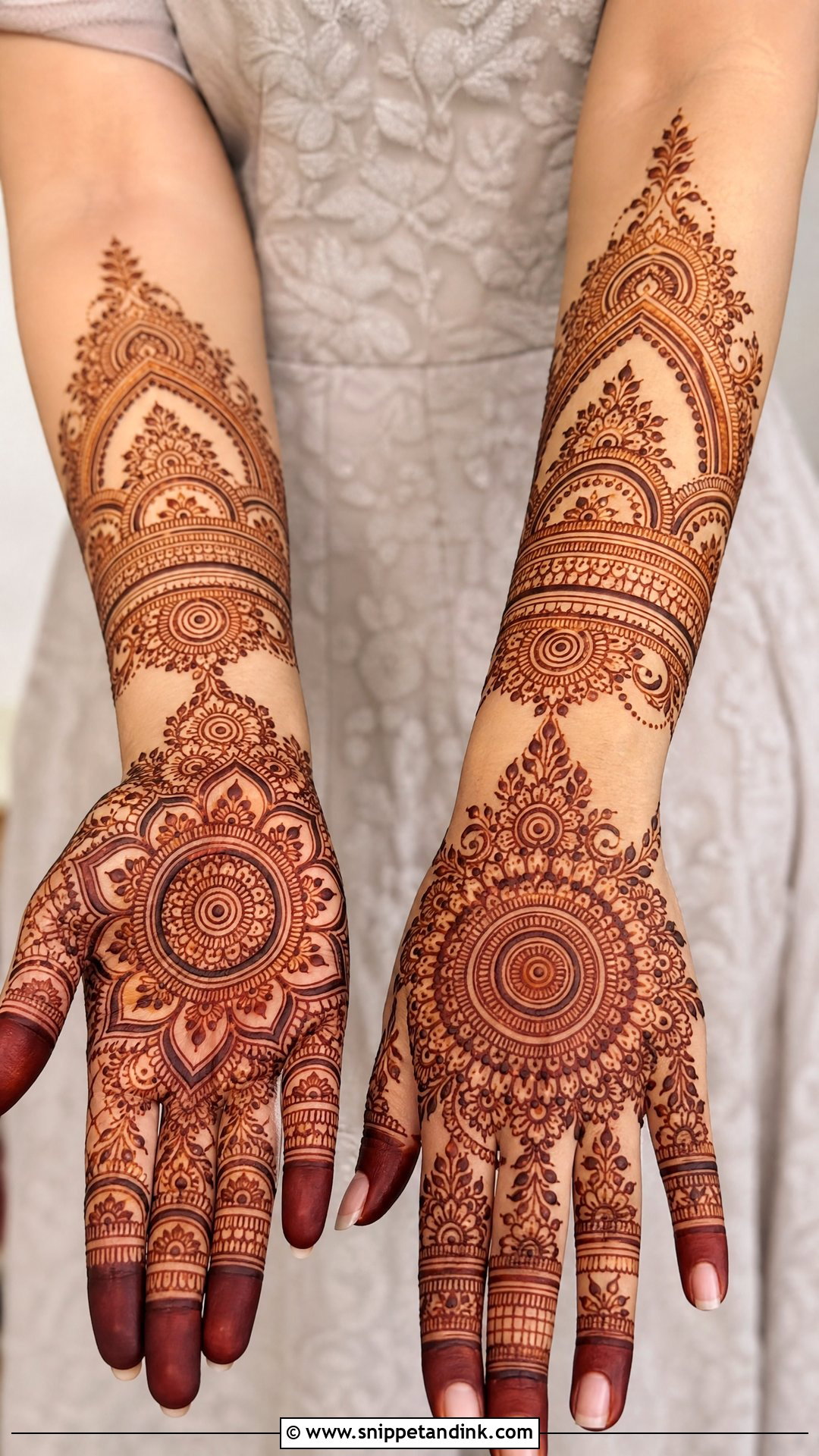
A round mandala on the palm, with petals, dots and thin circular borders, gives the full hand a clear center. I draw the outer ring first and work inward, because circles drawn freehand drift if you start at the middle. The wrist and forearm carry bracelet bands and light jaali, and the back of the hand can repeat a smaller mandala connected to the fingers by chain-like lines. If you like symmetry, this is the one.
8. Khafif Jaali Bridal Mehndi Design
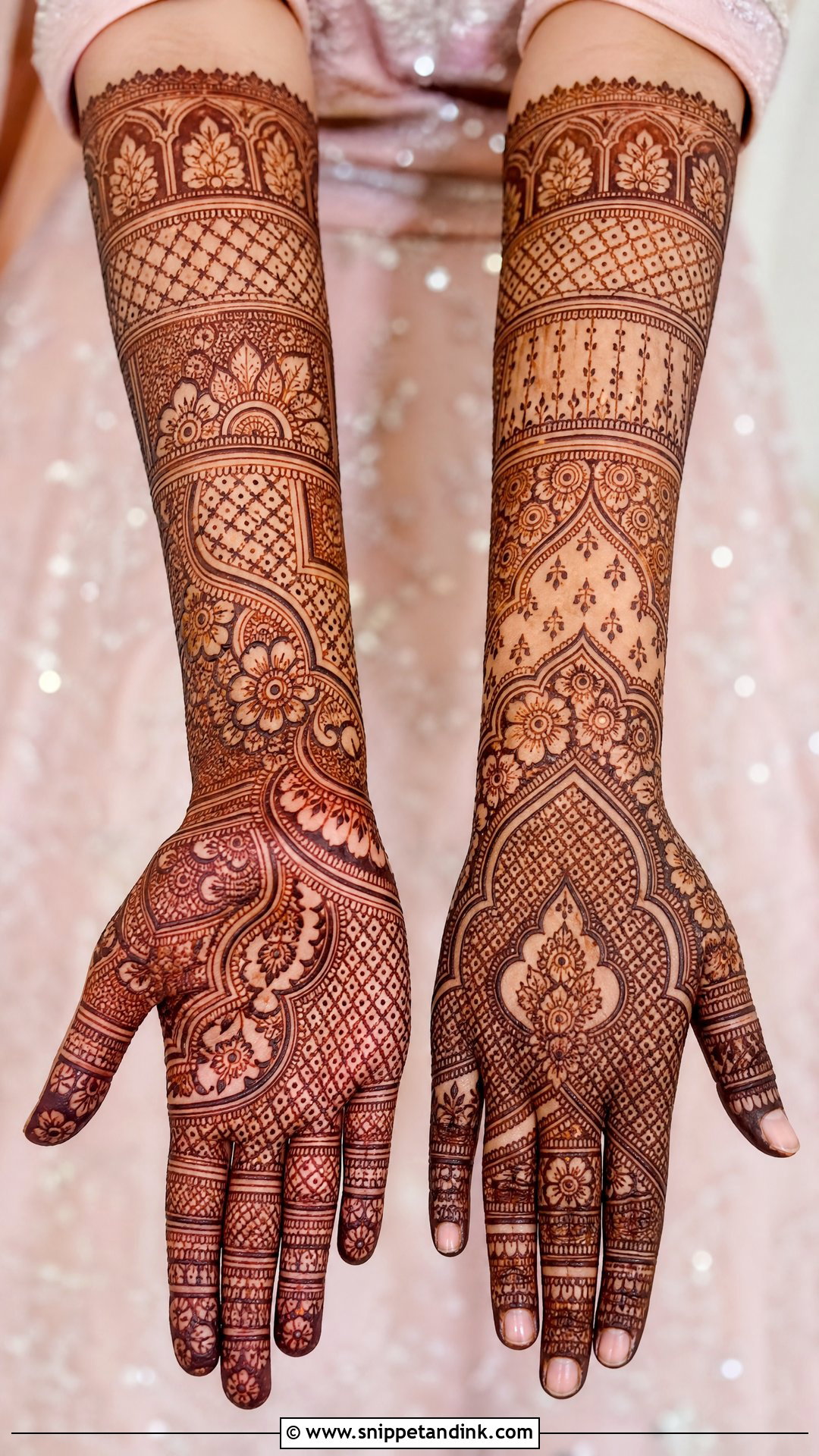
Jaali is a net pattern, and when it’s drawn with thin lines and open cells it looks like lace on the skin. I use it on the palm, back hand, wrist or forearm, framed by floral borders and paisley panels. Mesh fingertips and fine bands finish the fingers. Jaali takes patience; if the grid lines are uneven, it’s obvious, so I’d book an experienced artist for this one. Bridal rings sit well inside it.
9. Khafif Peacock Bridal Mehndi Design
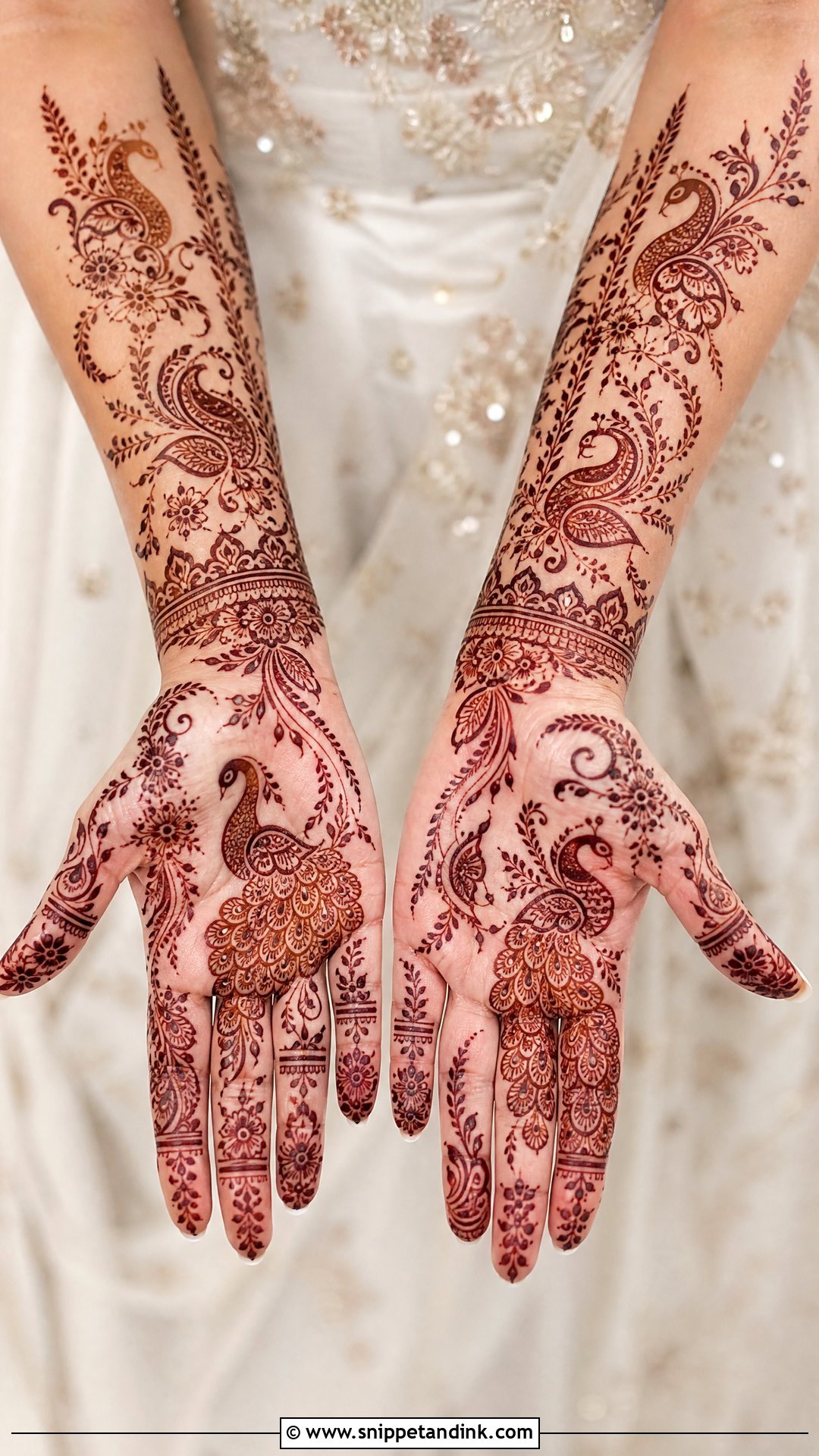
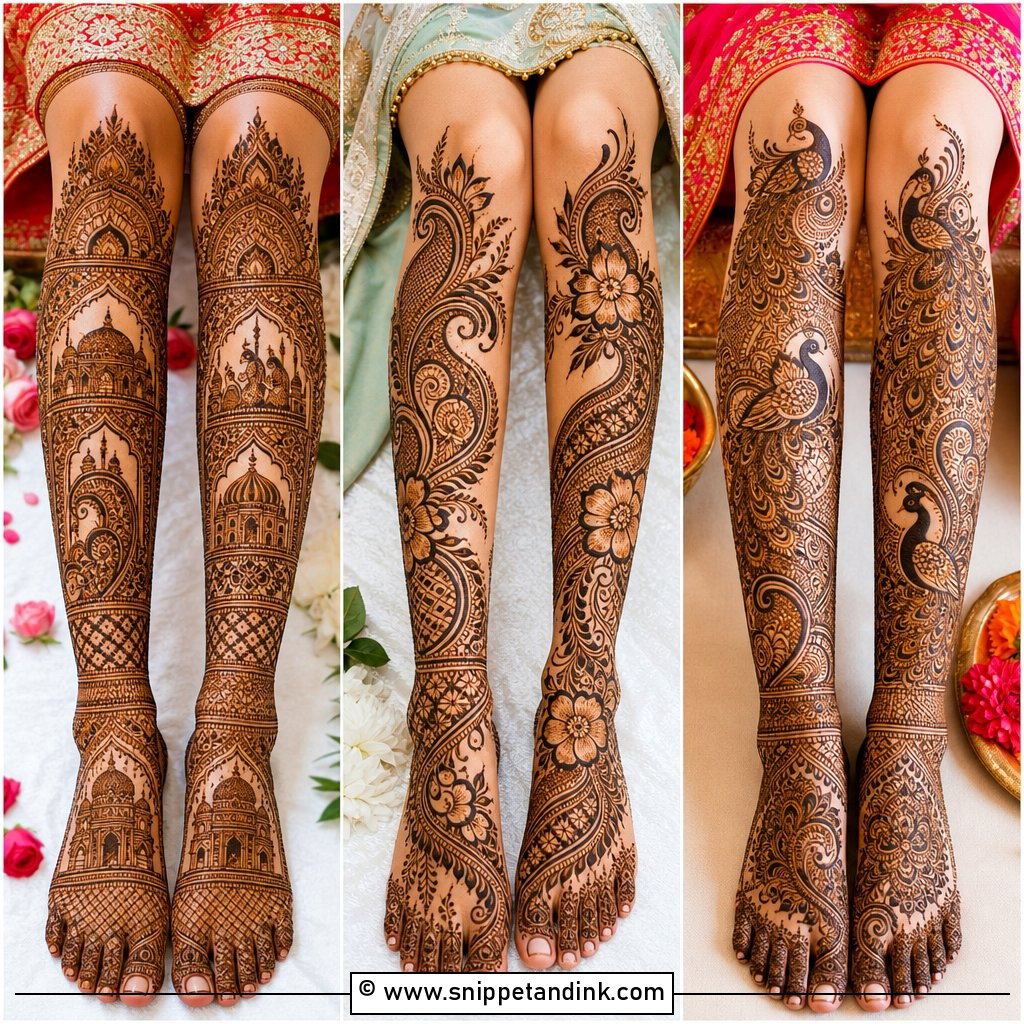
A peacock on the palm or forearm brings a royal motif without heavy coverage. Its feathers flow into floral vines, paisleys and soft curves, and the fingers carry feather-like strokes and tiny dots. The back hand can have a smaller peacock or a feather trail leading to wrist bands. I keep the feather detailing fine and spaced, since dense feathers turn into a dark smudge once the stain develops.
10. Khafif Rose Bridal Mehndi Design
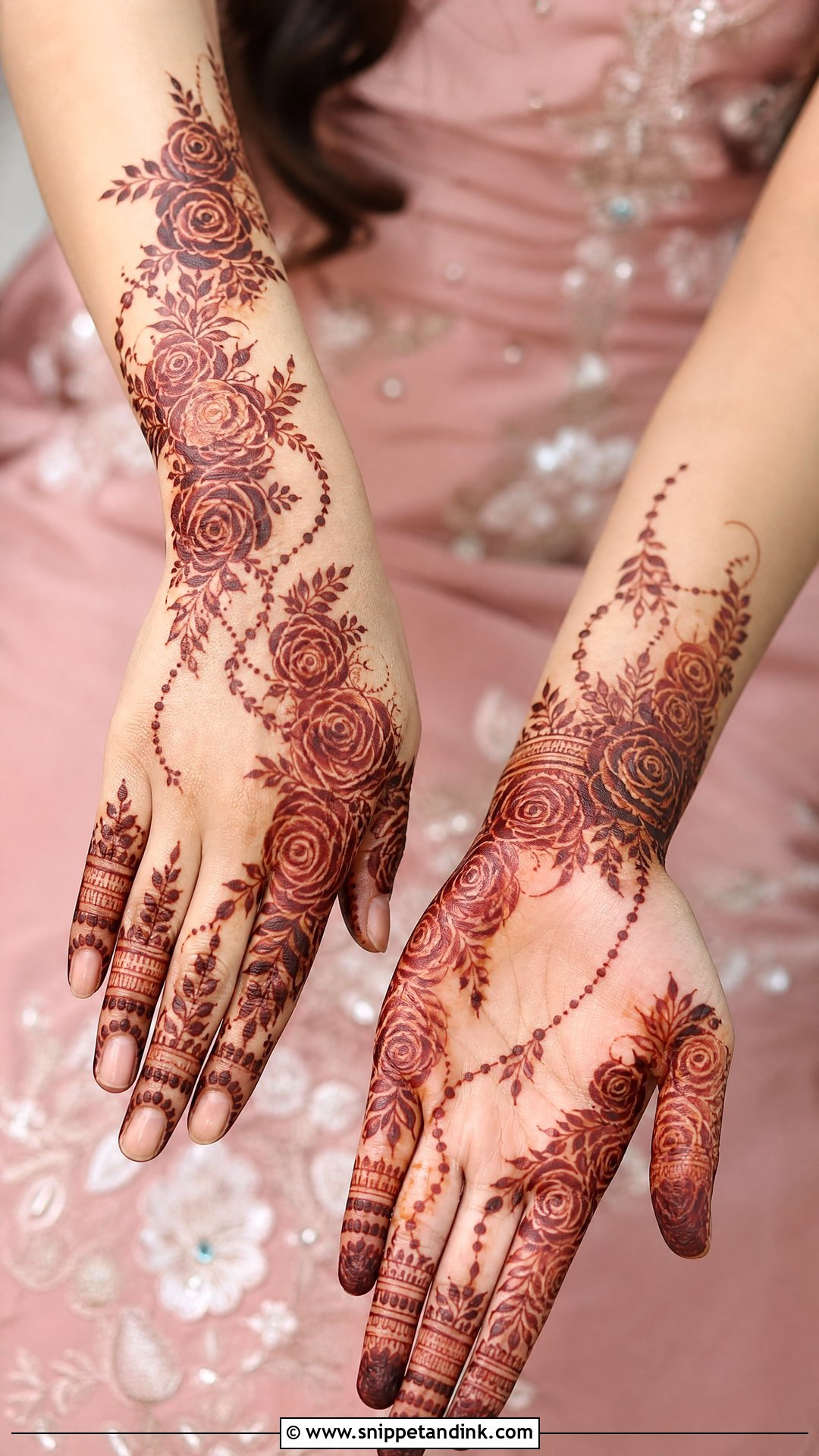
Roses are drawn with thin petal outlines and light shading, placed in clusters on the palm, fingers, wrist and forearm and joined by vines and dotted trails. Leaving a little space around each bloom is what stops it looking packed. On the back of the hand, a diagonal rose trail from the middle finger to the wrist looks like a bracelet. Blush, ivory, gold and pastel outfits suit this one.
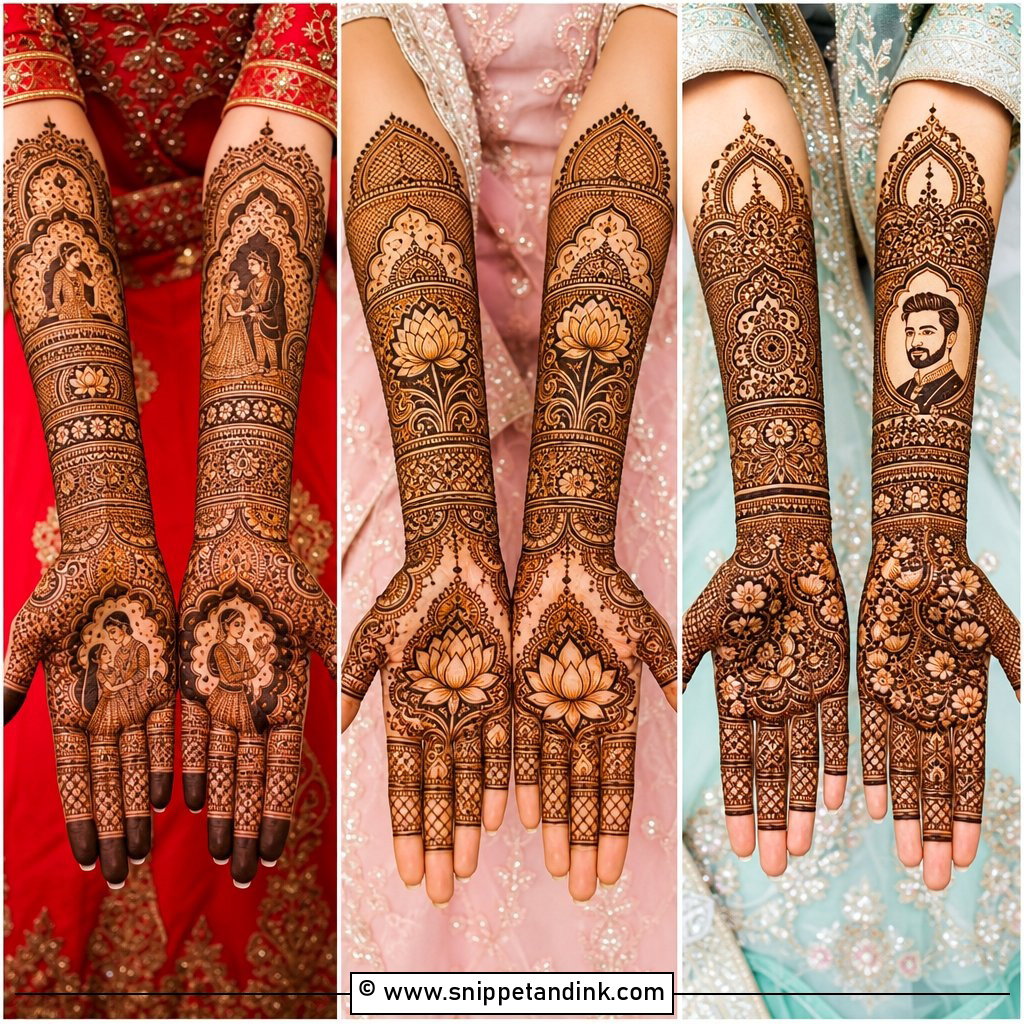
11. Khafif Bridal Mehndi With Name
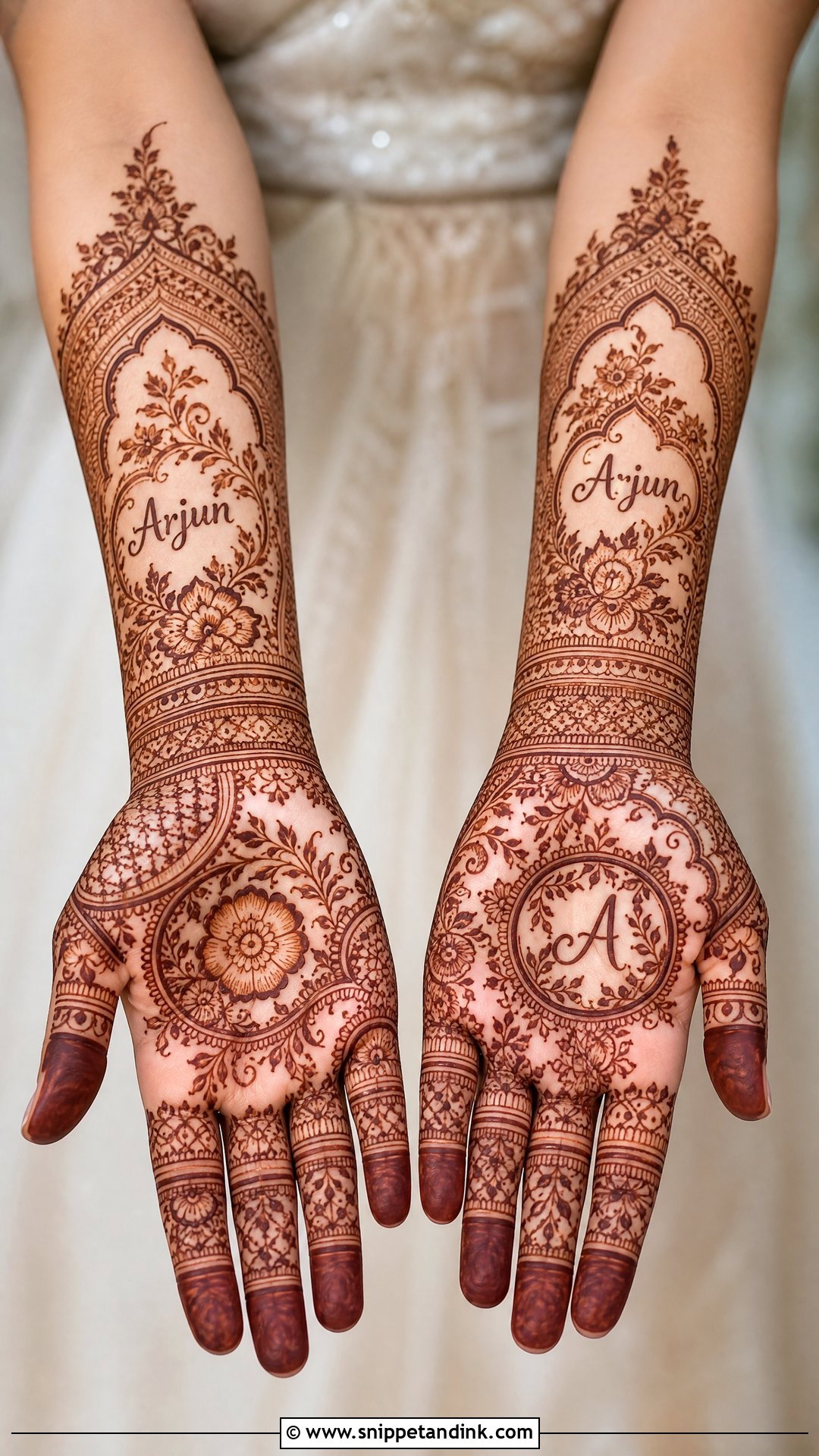
Hiding the groom’s name or initials in the design is a fun tradition, and it fits a khafif layout easily. I tuck the letters into a paisley, a vine, a mandala border or a wrist band, keeping the script small so it blends in. Ask your artist to write the name in the script you want before the day; some letters are much easier to hide than others. Everything around it stays light and well spaced.
12. Khafif Bridal Mehndi With Portrait
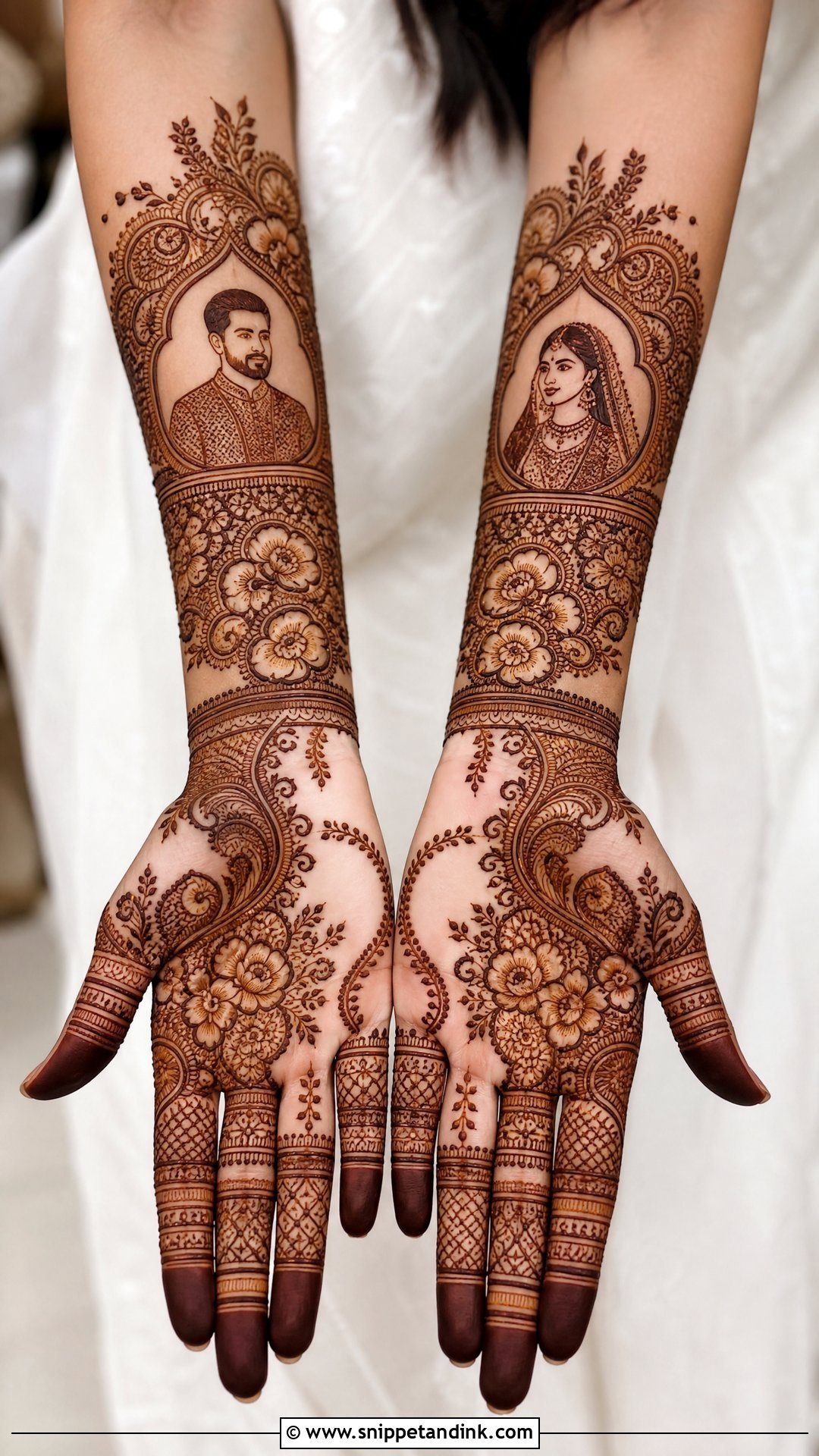
Portraits are usually associated with very dense bridal mehndi, but a small, clean portrait can work in a khafif design. I keep it to one bride-and-groom silhouette, a doli detail or a single wedding scene on the palm or forearm, then frame it with florals, paisleys and leafy trails. Fine faces need a very thin cone tip and good-quality paste, and they take time, so allow for it. The fingers stay delicate so the portrait remains the focus.
13. Khafif Bridal Mehndi For Front Hand
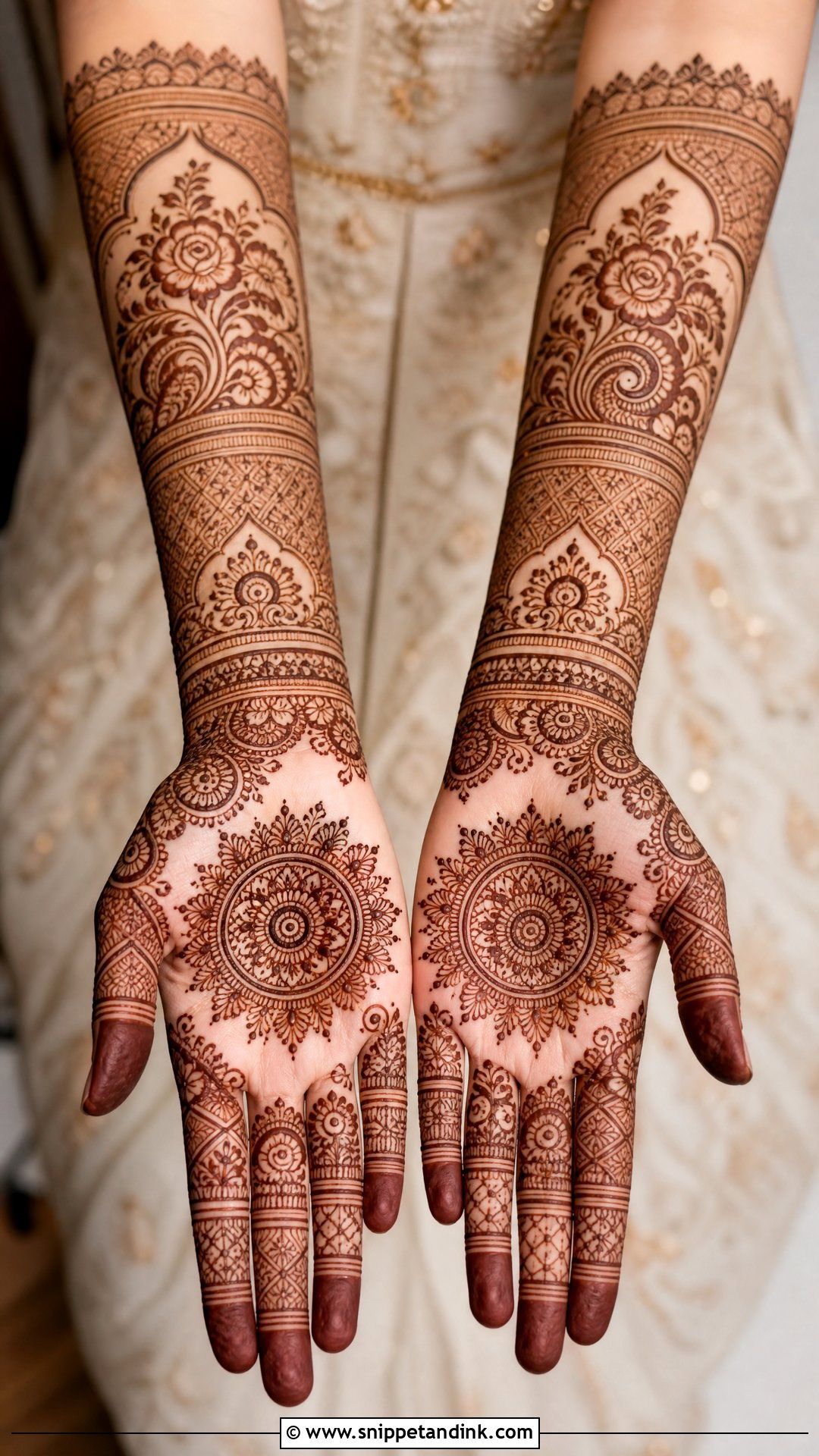
The palm shows the darkest stain, so the front of the hand is where the design is seen best. I place a mandala, floral center or paisley cluster in the palm with slim vines leading to the wrist, then alternate bands, leafy tips and mini florals on the fingers. Bracelet panels and curved borders on the wrist and forearm complete the full hand. Clarity is what makes it work; every motif should be visible.
14. Khafif Bridal Mehndi For Back Hand
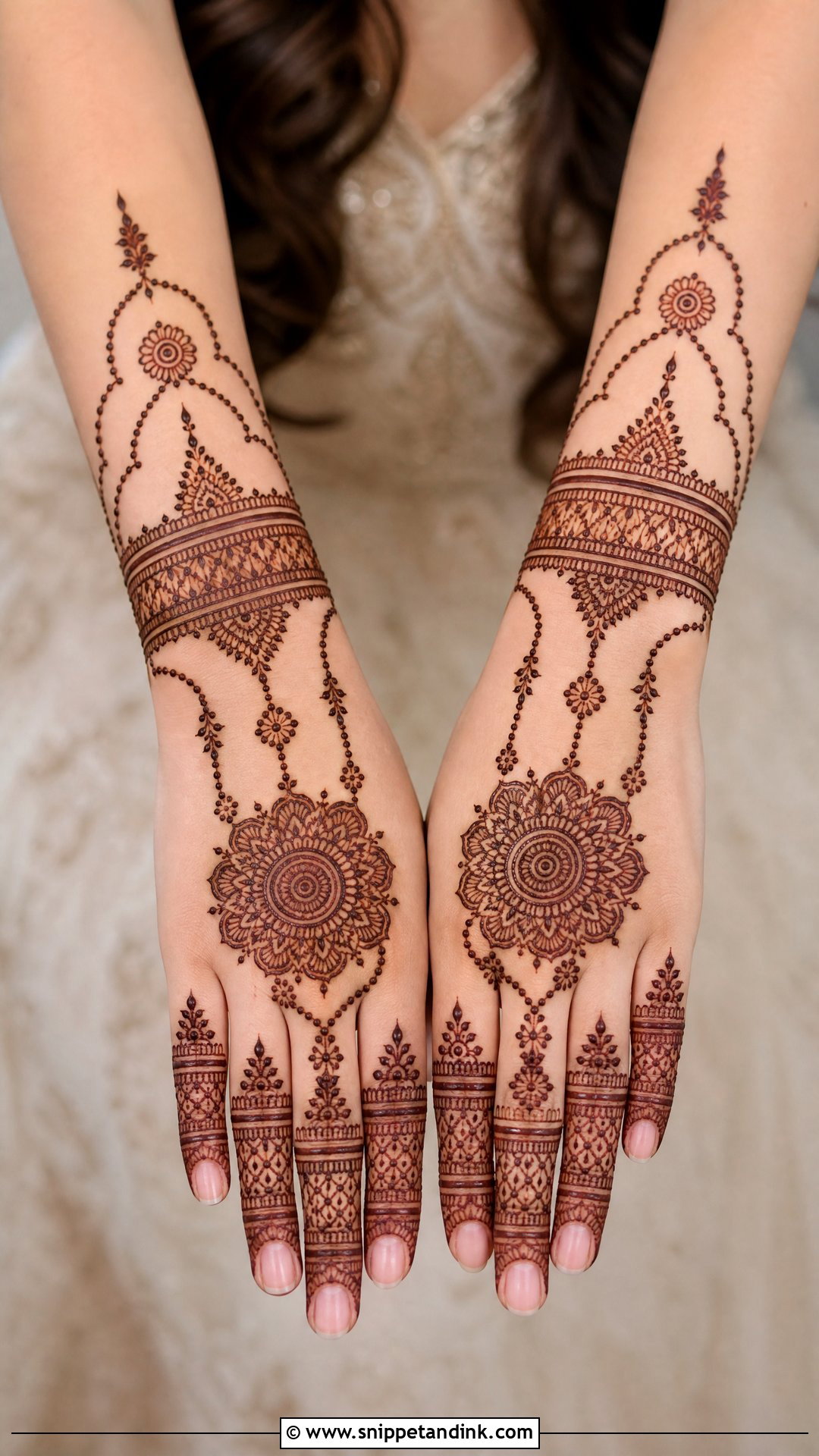
The back of the hand appears in almost every ring and bangle photo, so it often gets the most planning. I start at the fingertips and work down through chains, florals, paisleys and a central mandala, ending in a cuff at the wrist that continues onto the forearm. The skin here is thinner and the stain is usually lighter than the palm, so I use slightly bolder lines on the back to compensate. Rings and bangles stand out against the open spaces.



15. Khafif Bridal Mehndi For Both Hands
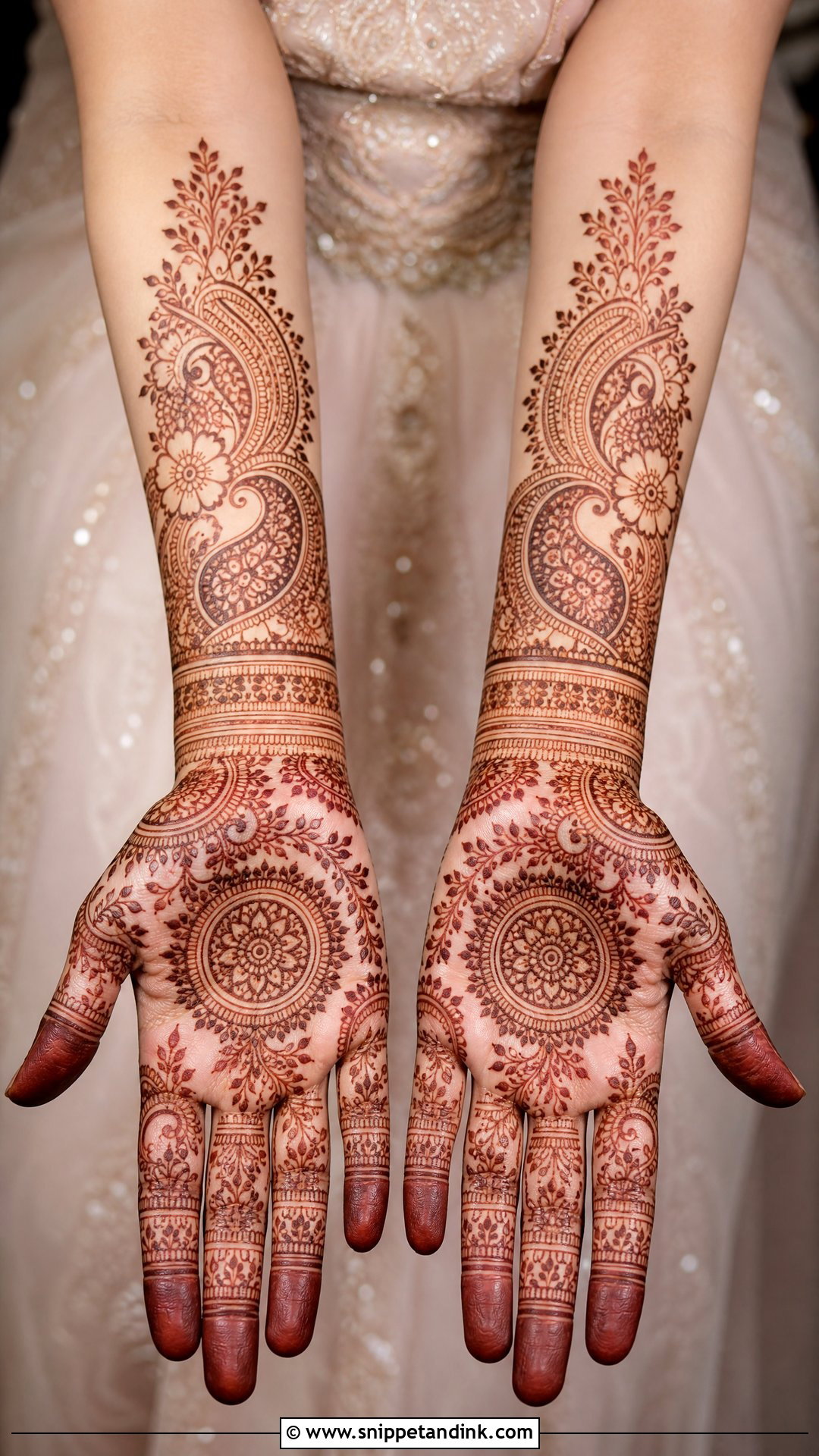
When the hands are photographed together, they should look related but not identical. A khafif bridal mehndi for both hands can mirror mandalas or floral trails, or put a large flower on one palm and a matching paisley panel on the other. I keep the finger rhythm the same on both hands so they look connected in photos. Matching wrist bands and light vines finish it.
16. Khafif Pakistani Bridal Mehndi Design
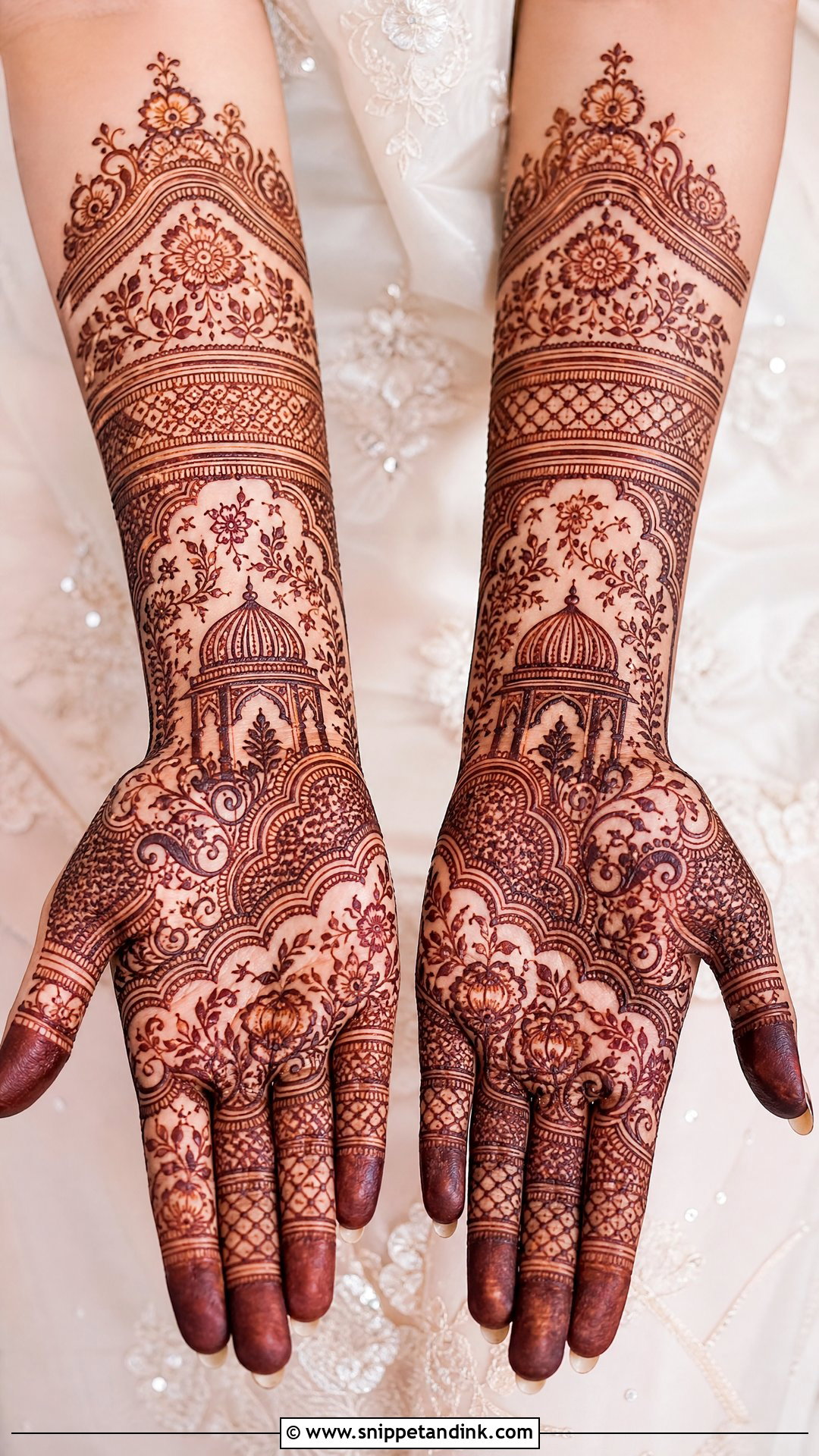
Domes, paisleys, floral vines, jaali panels and bracelet-style forearm work all appear in this style. A Khafif Pakistani bridal mehndi design keeps the traditional detail but spaces it out, with a bold central motif on the palm and thin strokes around it. Fingers get delicate bands and tiny floral fillers. Since there are often several events, from the nikkah to the walima, I time the application so the stain is at its deepest for the main ceremony.
17. Khafif Rajasthani Bridal Mehndi Design
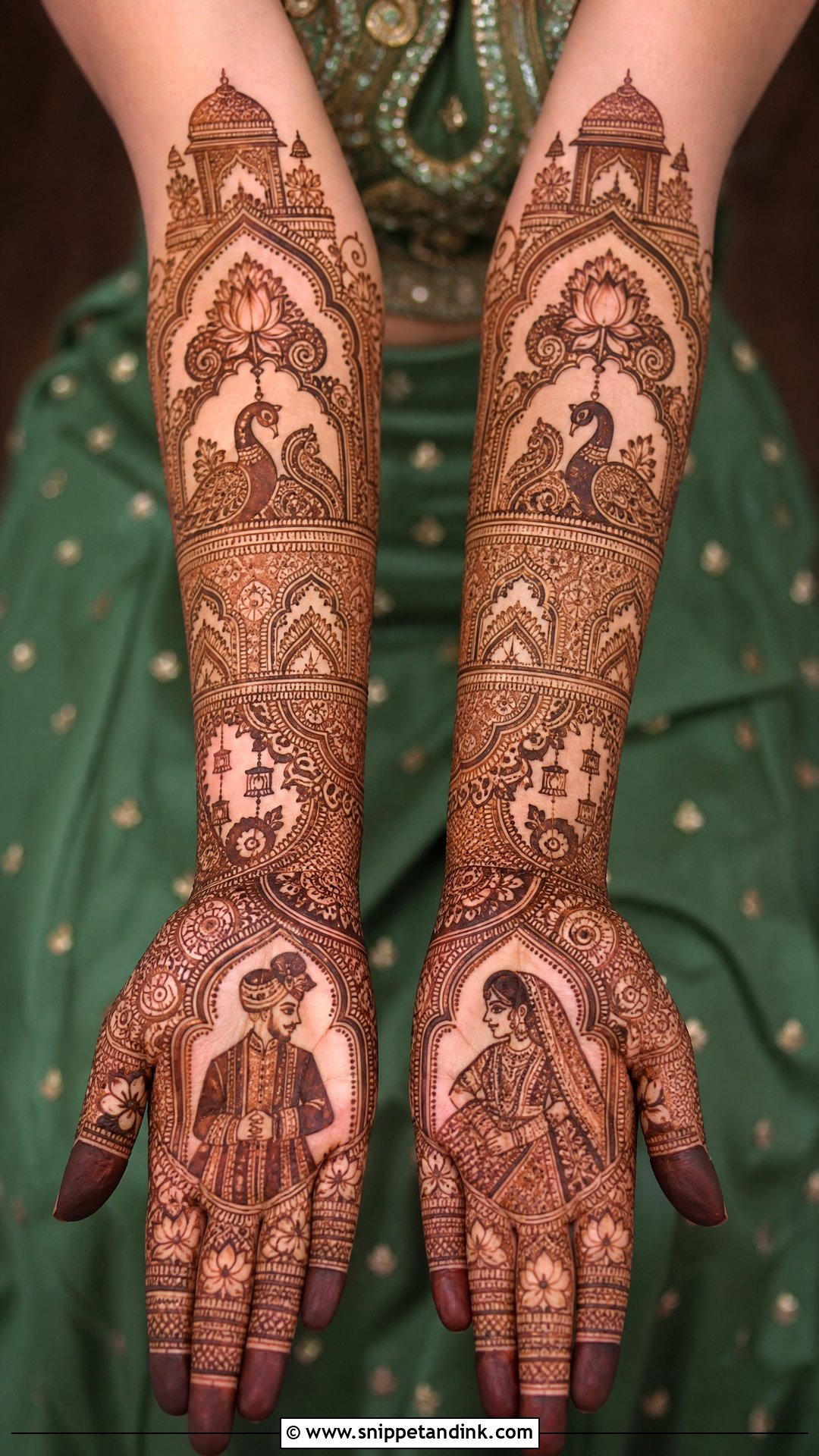
Rajasthani mehndi is known for royal motifs: dulha-dulhan figures, paisleys, lotus flowers, peacocks and arches. In a lighter version I choose a few of them rather than filling every space with scenes, and leave open skin around each. The wrist and forearm can carry palace-inspired bands, and the fingers stay neat with line work. It keeps the cultural feel without the hours of sitting a full traditional design needs.
18. Khafif Moroccan Bridal Mehndi Design
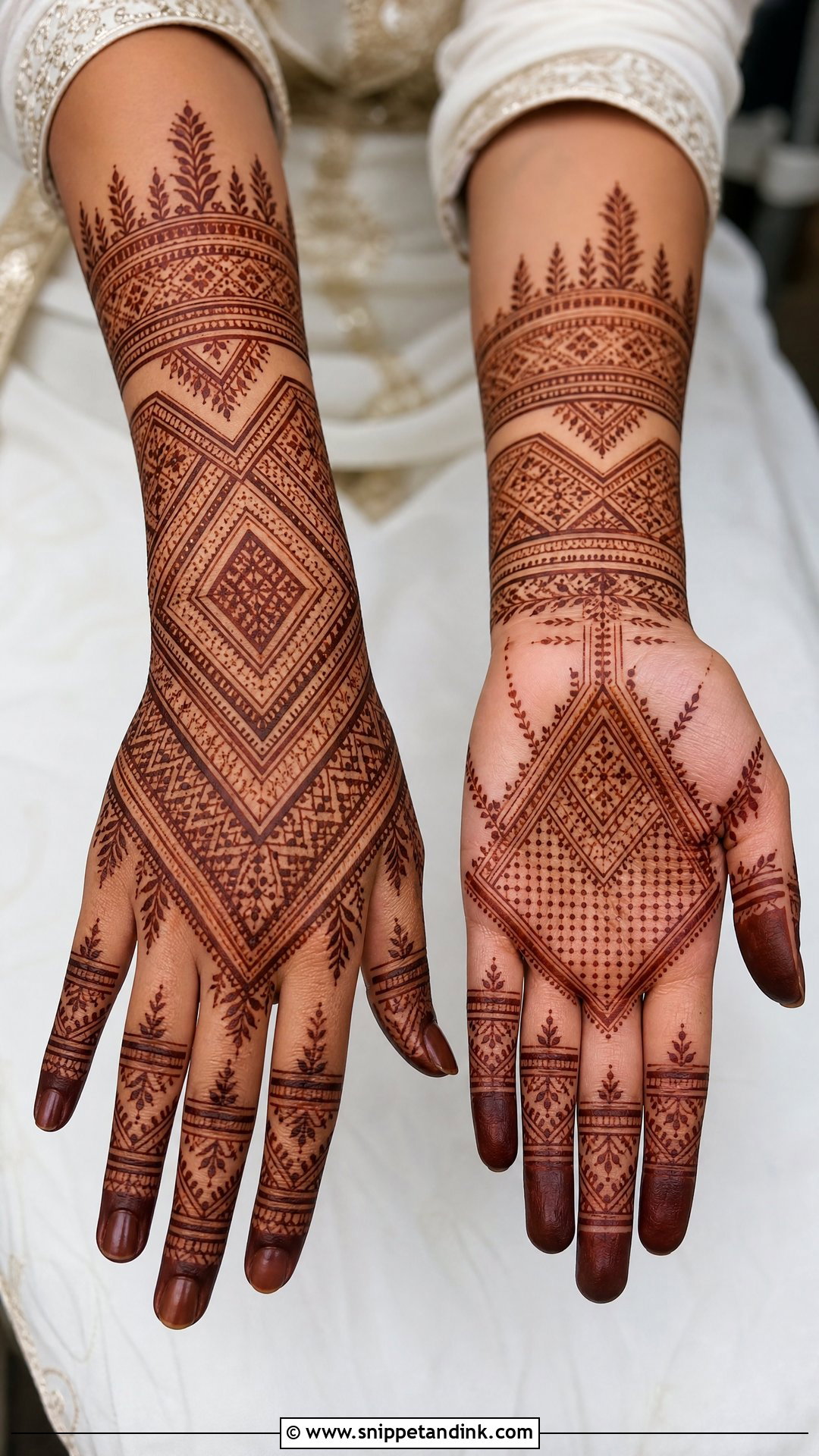
Moroccan style suits brides who prefer geometric patterns to heavy florals: diamonds, triangles, clean lines, dotted grids and cuff bands. Geometric work is unforgiving because straight lines show every shake, so I brace my hand on the bride’s and work slowly. A few soft floral or paisley accents keep it bridal. It suits contemporary outfits and minimal jewelry.
19. Khafif Gulf Bridal Mehndi Design
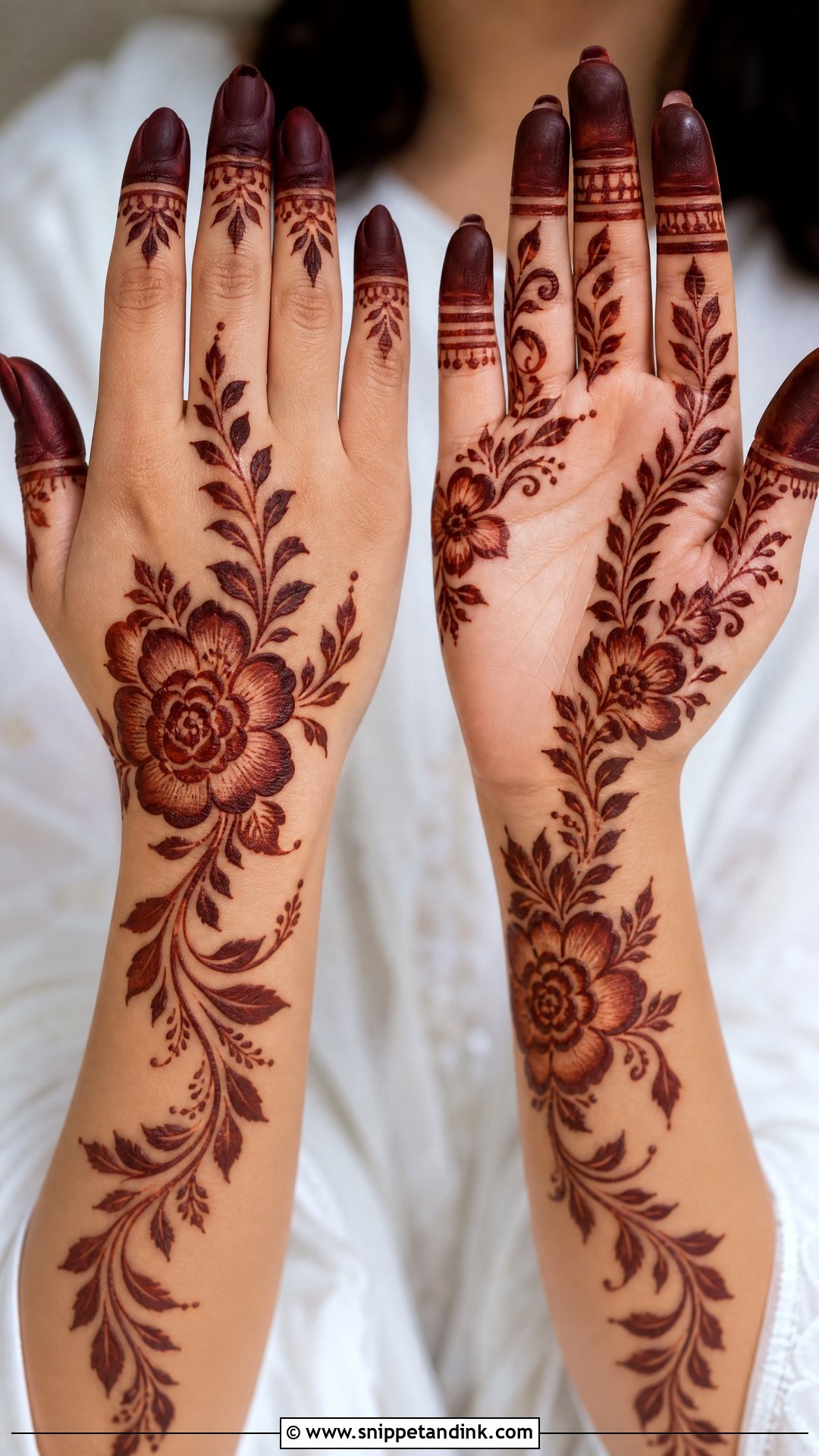
The Gulf or Khaleeji style is bold but airy, with large flowers, leafy trails, curved strokes and strong fingertips. The lines are thicker than most khafif work, which means they stain darker and look striking against open skin. A floral trail can move from the fingers across the palm to the wrist, with scattered blooms on the forearm. On the back of the hand it reads like body jewelry.
20. Khafif Minimal Bridal Mehndi Design
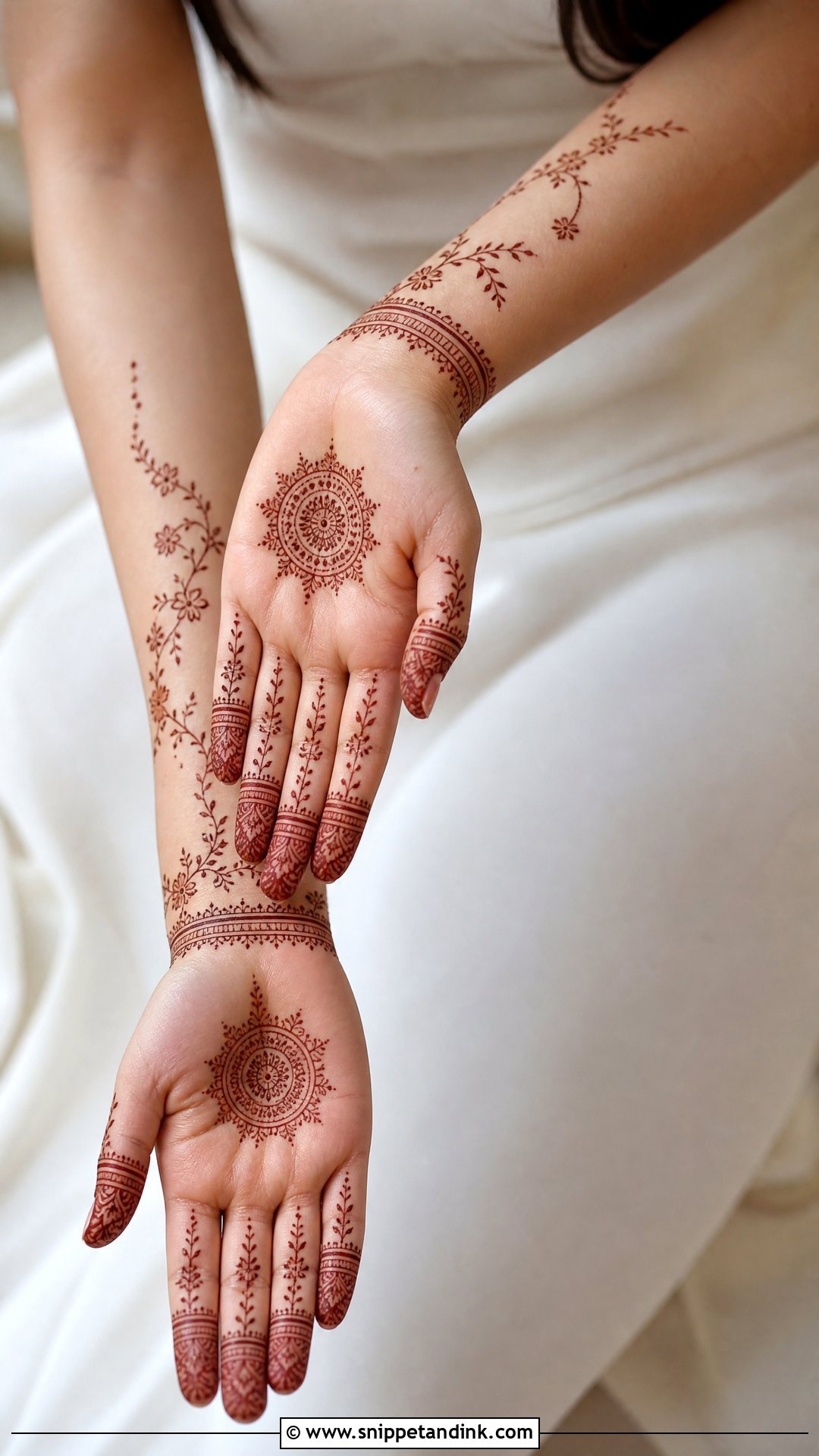
Some brides want full coverage that still feels simple. I cover the palm, fingers, wrist and forearm with thin vines, small flowers, slim mandalas and delicate bands, keeping motifs small and spacing generous. Fingertips are lightly detailed instead of filled. Very fine lines stain lighter than thick ones, so I make the main outlines slightly bolder so the design doesn’t look faint by the wedding day. It suits intimate weddings and civil ceremonies.
Getting a Deep Stain From a Design With Lots of Bare Skin
With so much open space, a weak stain is more noticeable in khafif work than in dense designs. How you treat the paste after I finish makes a real difference.
The first night
Leave the paste on for at least six to eight hours, overnight if you can. A light dab of lemon and sugar keeps it moist and stuck to the skin. Keep your hands warm. When it’s dry and ready, scrape it off with a blunt edge instead of washing it.
After it comes off
Avoid water for as long as you can, ideally twelve hours or more, and rub in a little natural balm. Skip scrubbing, chlorine pools and hand sanitizer near the wedding; they all fade the stain.
One safety note
Natural henna never stains black. Paste that promises a black result in an hour usually contains chemical dye that can burn or scar skin. Ask your artist what’s in the cone, and do a small patch test if you have sensitive skin.
Open Skin Is Part of the Design, So Plan It
Khafif mehndi sits between full traditional coverage and something modern and light. Whichever layout you pick, from Arabic floral trails and Indian paisleys to jaali patterns, mandalas, portraits or Gulf blooms, the open space should be planned as carefully as the motifs. Match the layout to your hand shape, your jewelry and the ceremonies you have, and give the stain enough time to deepen before the main event.
You'll Like These Ideas:












Leave a Reply