
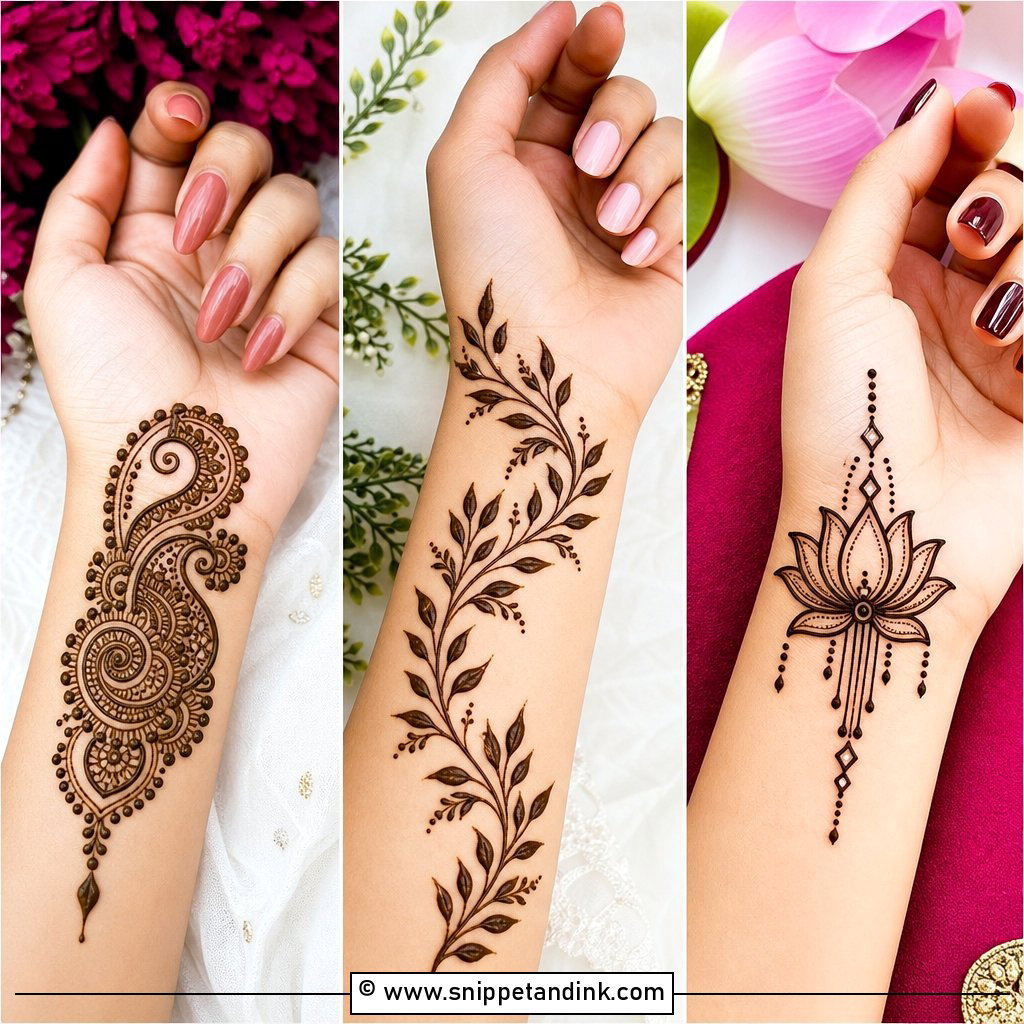
A lotus is one of the few henna motifs that still reads clearly when you draw it small and leave most of the hand bare. I reach for it whenever someone asks for something light for a puja, an Eid visit, an engagement or a sister’s mehndi night, because five or six petals and a few dots already look finished. It moves easily too: onto the palm, across the back hand, around the wrist like a bracelet, or into a finger band. The catch with minimal work is that every line shows, so spacing and paste quality matter more than they do in a full bridal hand. Below are thirty lotus layouts I’d happily draw, with notes on where each one stains well and where it tends to let people down.
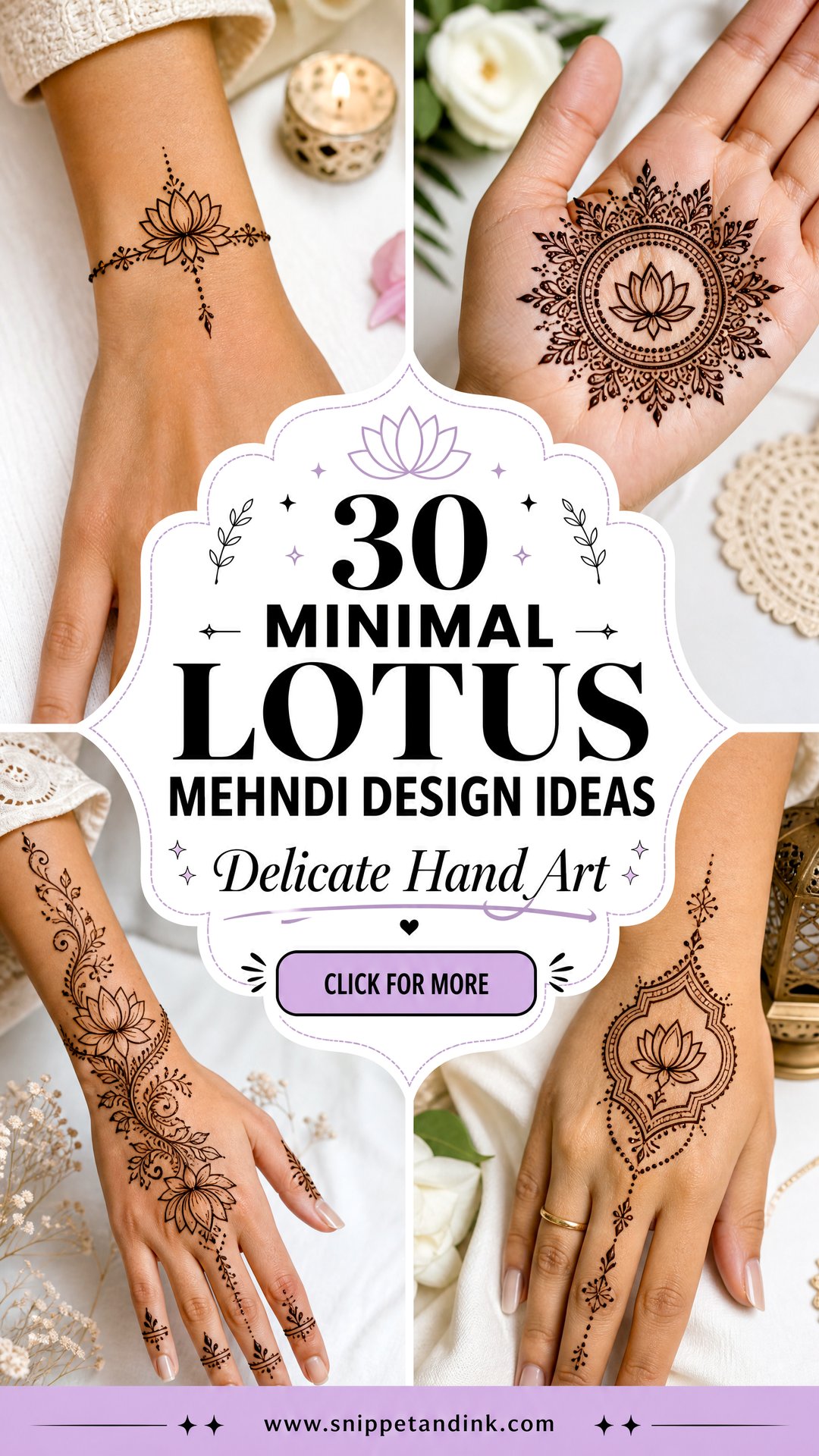
Where on the Hand a Small Lotus Will Stain Darkest
Before I pick a pattern with anyone, I ask where they want it, because henna does not stain evenly across the hand. The palm, the fingertips and the pads of the fingers take the deepest color. The back of the hand is lighter, and the wrist and forearm lighter still. With a full bridal hand that difference blends in. With a minimal design, where one lotus is the whole show, it decides whether the motif reads as rich maroon or pale orange.
- For the deepest result, put the lotus on the palm or let it reach onto the fingers.
- On the back hand or wrist, ask for slightly bolder outlines; hairline strokes on lighter-staining skin can fade to almost nothing within a few days.
- If you want the design hidden at work later in the week, the inner wrist or the side of the hand is easier to cover with a sleeve or watch.
Line thickness matters too. A thicker line holds more paste against the skin and stains darker, so I draw minimal designs with a fine cone but not the finest one in my kit.
1. Simple Lotus Mehndi Design For Palm
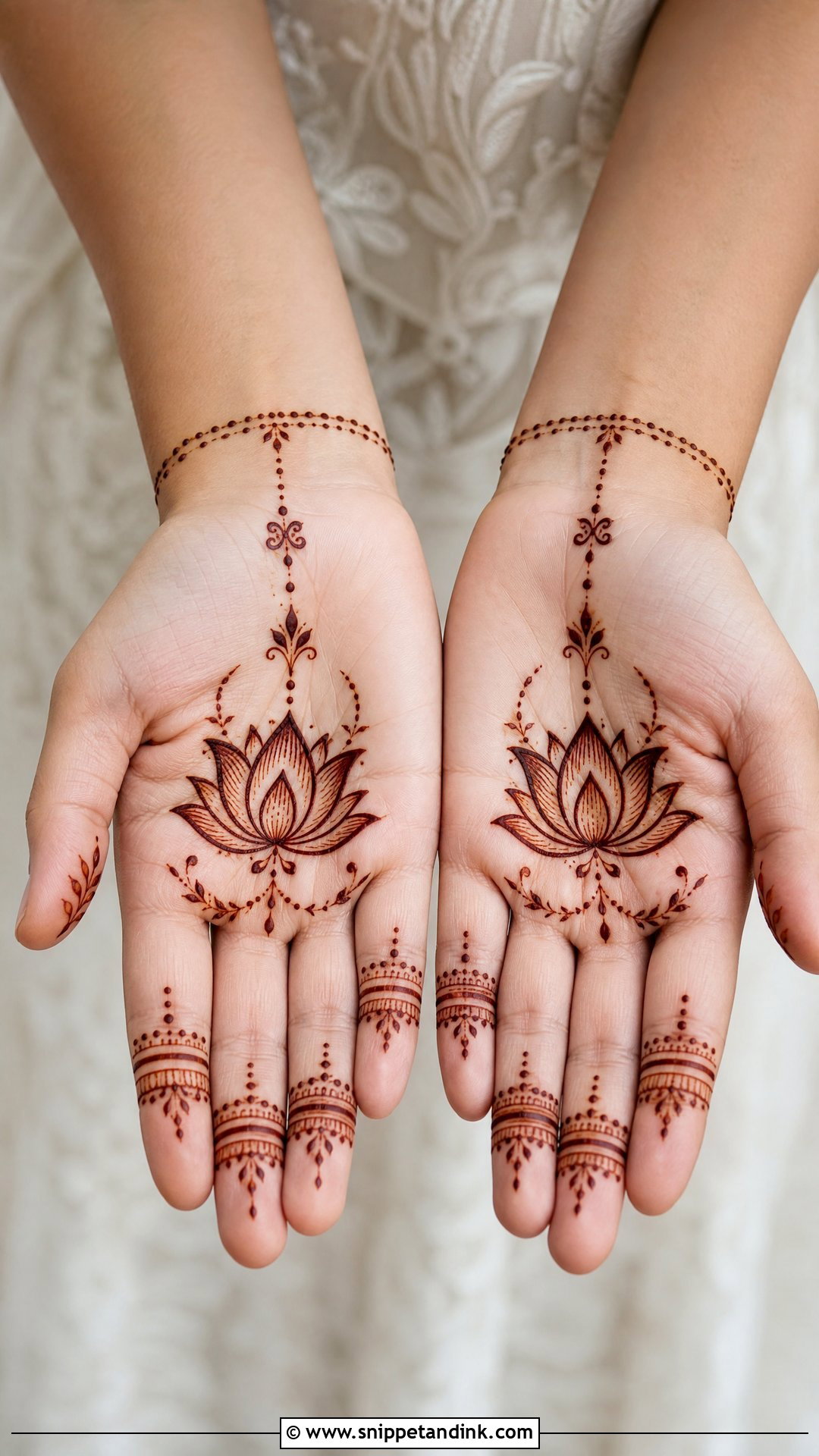
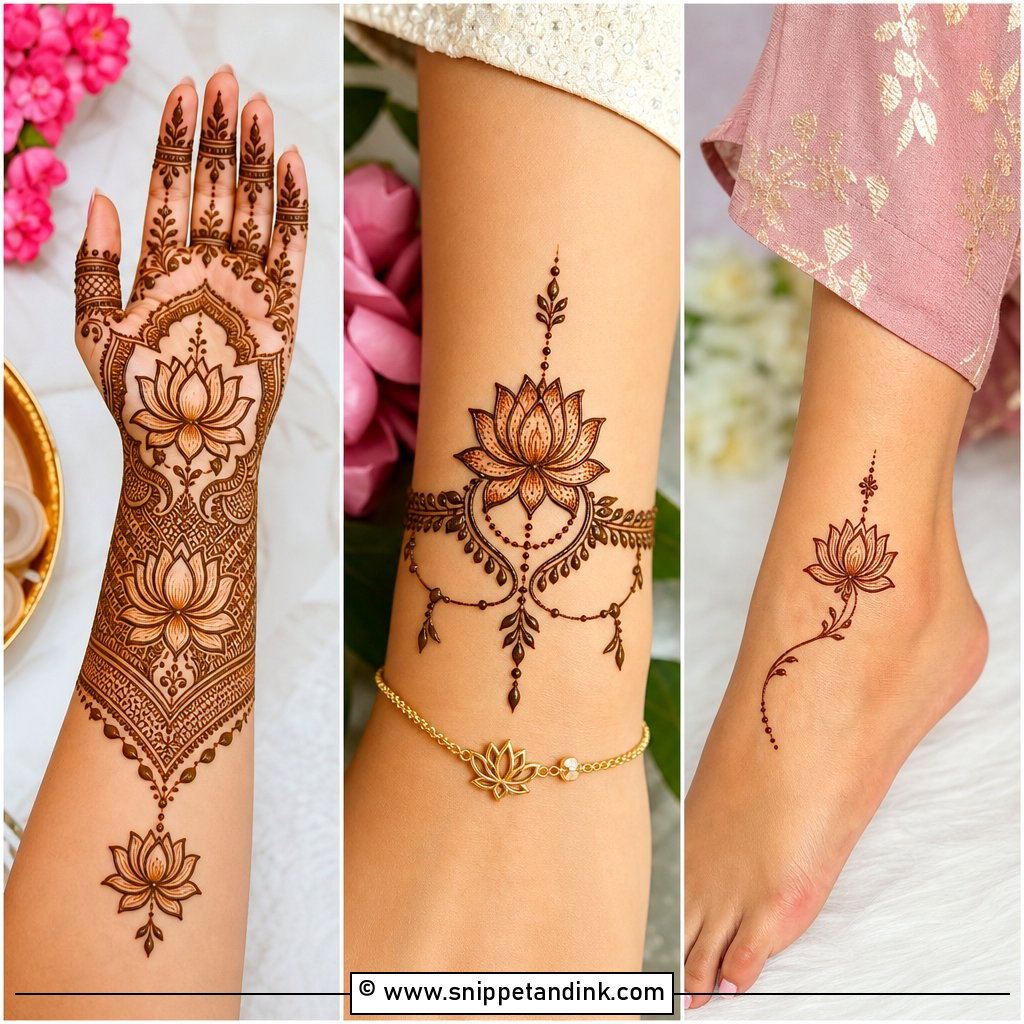
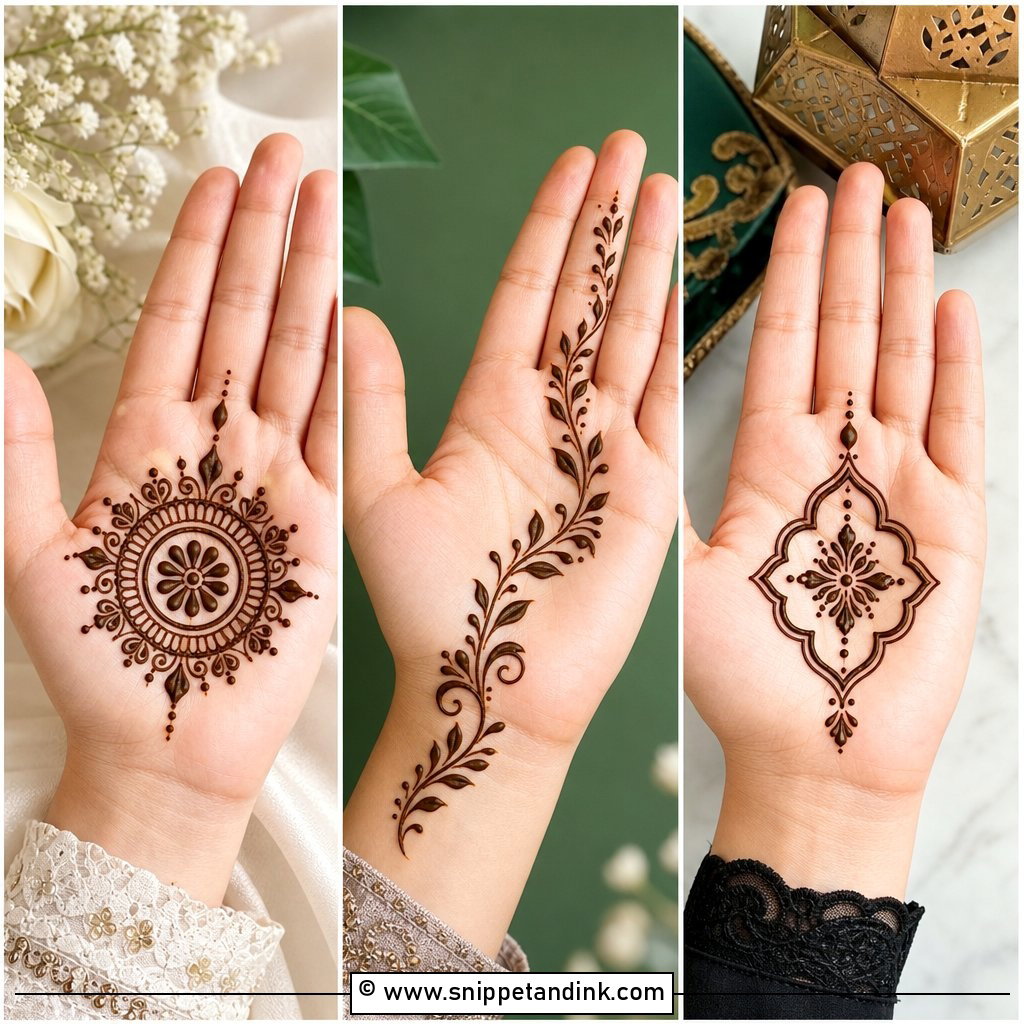
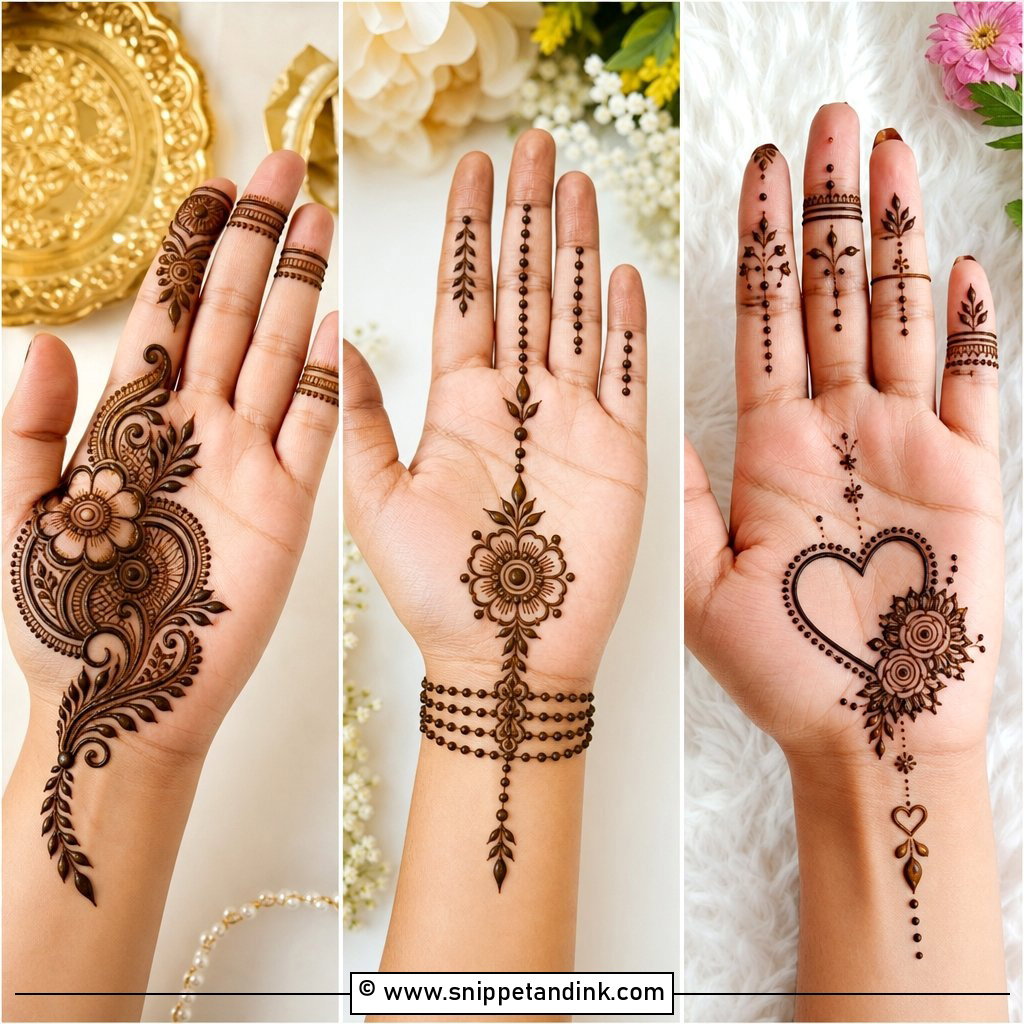
Start here if you’ve never had henna on the palm before. A lotus mehndi design for the palm sits right in the center, where skin is thick and warm and takes the darkest stain on the whole hand. I draw the open petals first, then tuck a few curved leaves and dots around them and stop at thin bands on the fingers. A slightly uneven petal never matters here; real lotuses are uneven too. The one thing I’d avoid is washing your hands for the rest of the day, because the palm is also where paste gets rubbed off first.
2. Minimal Lotus Back Hand Mehndi Design
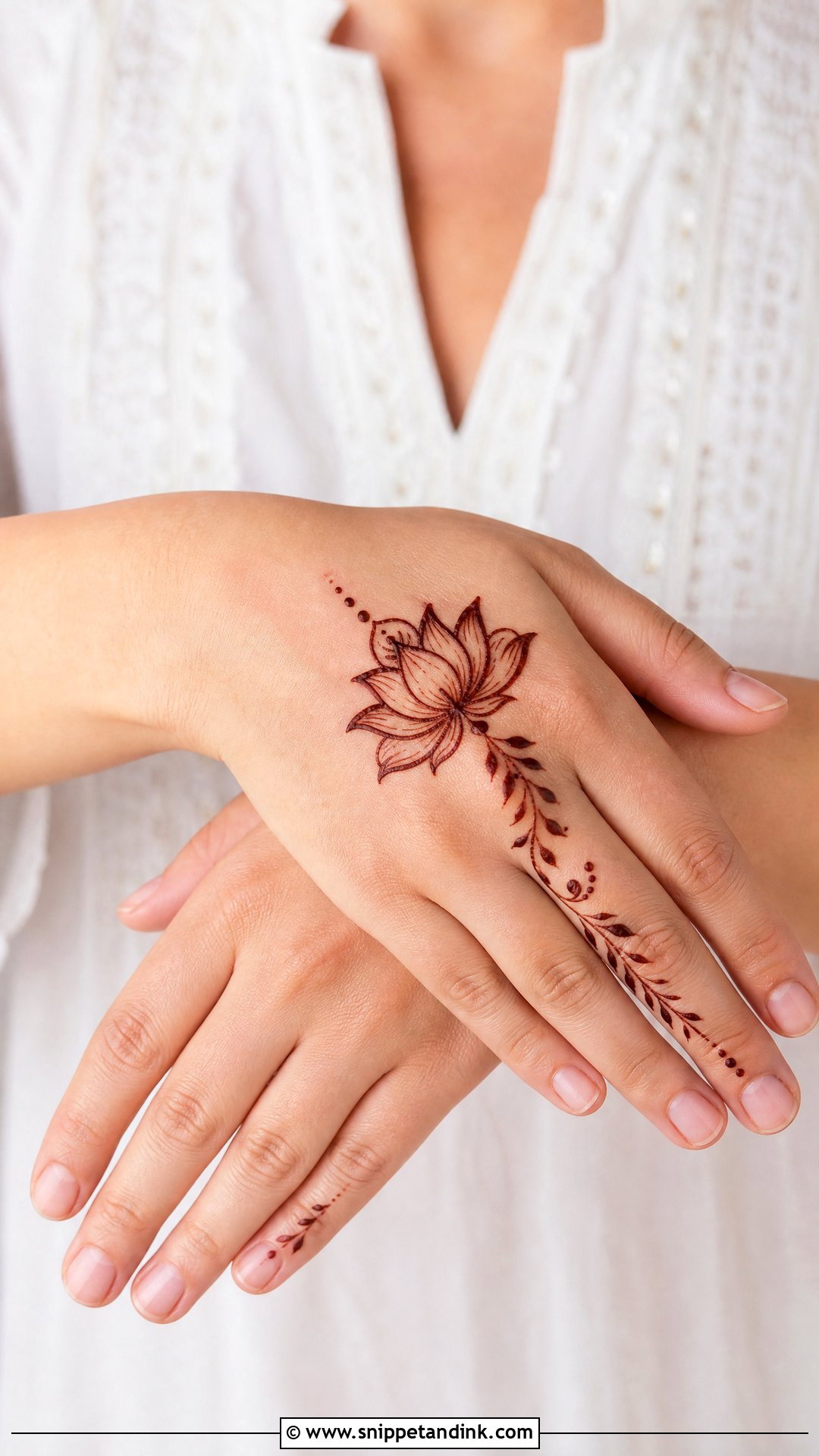
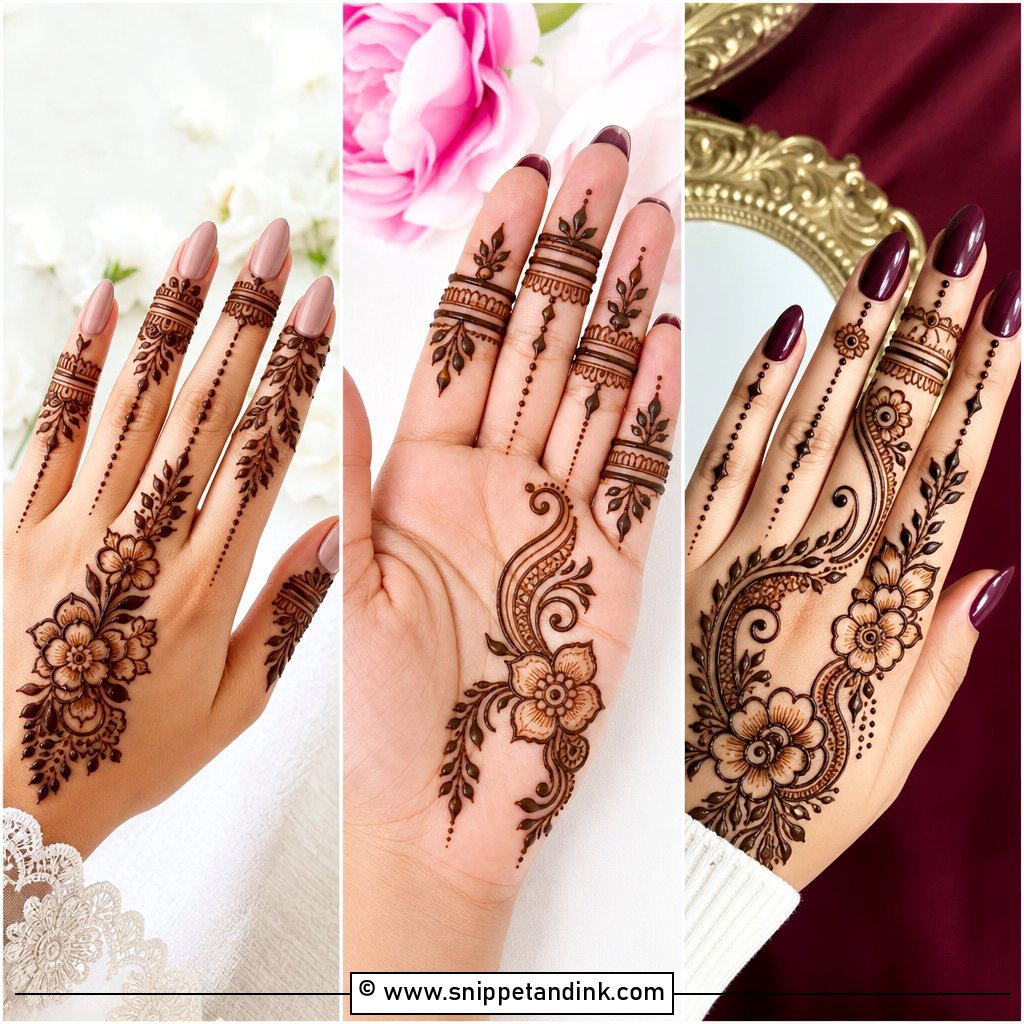
On the back of the hand I keep the lotus near the center and let two soft vines reach toward the index finger and the wrist, with clear skin around everything. That open space does real work: the back hand stains noticeably lighter than the palm, so a crowded pattern there turns into a muddy orange blur, while a spaced one stays readable. Finger rings and a few dots finish it. It’s the layout I suggest most often for bridesmaids and guests who want henna that sits comfortably next to rings, bangles and painted nails.
3. Lotus Finger Mehndi Design
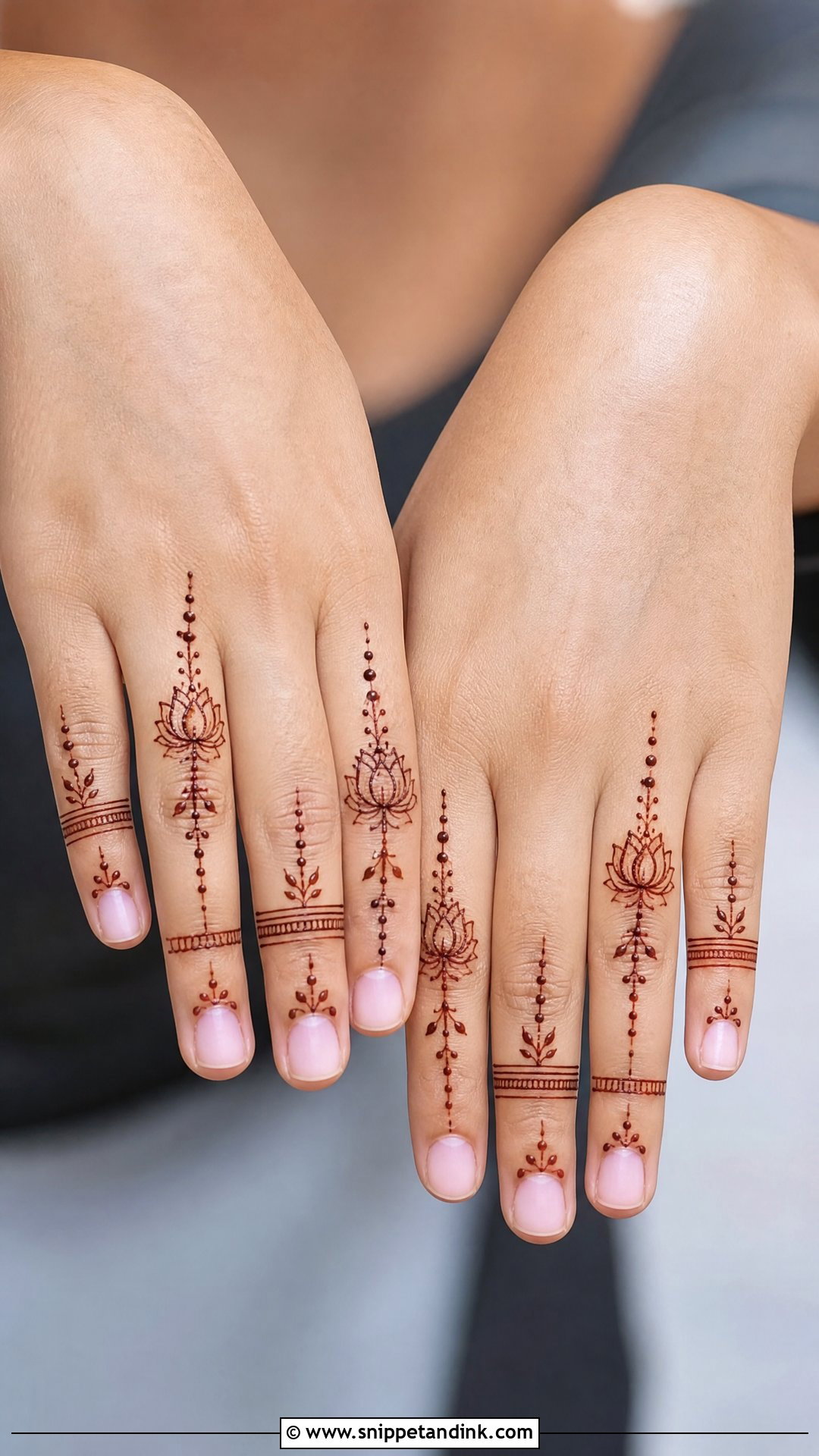
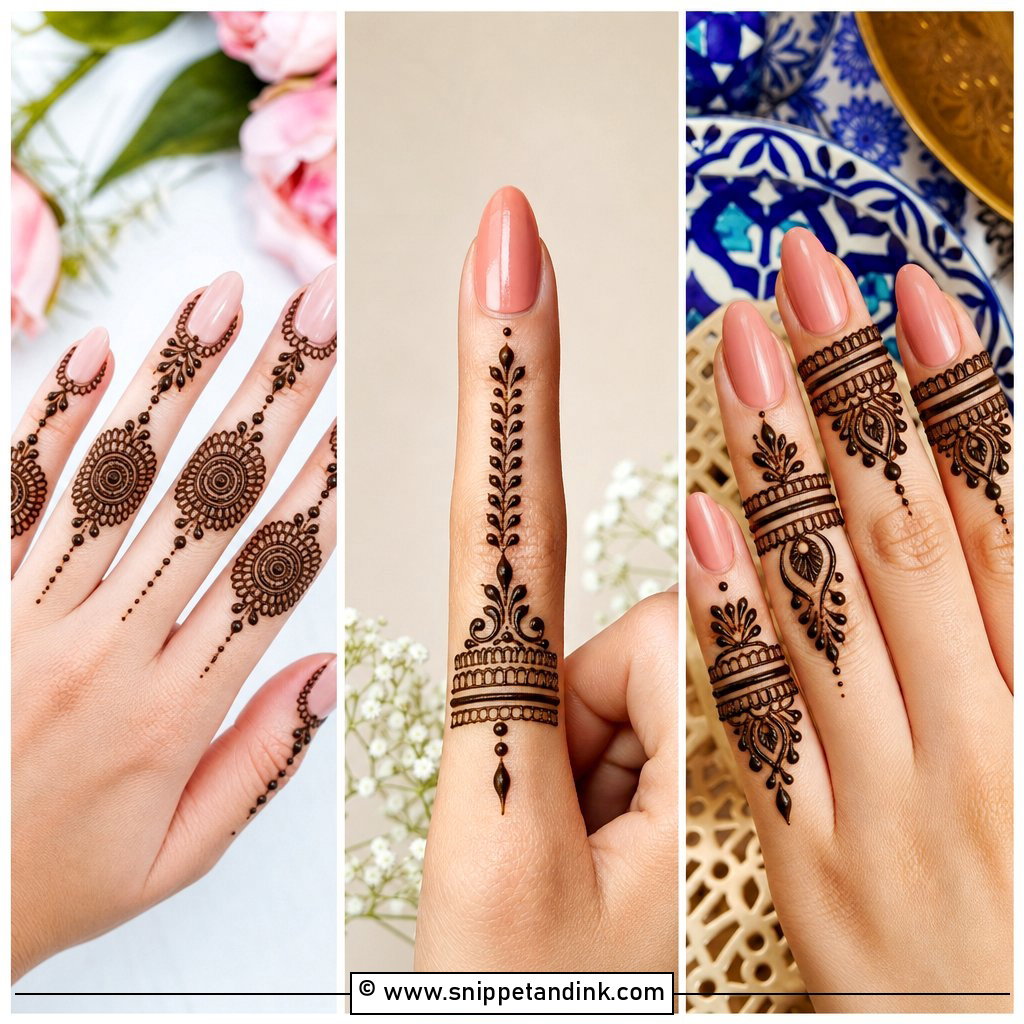
Fingers take some of the deepest color on the hand, especially the tips and the skin between the knuckles, which is why a design that lives mostly on them can look rich with very little paste. I place a small lotus at the base of the middle or ring finger and run thin lines, leafy trails and dot chains upward, leaving the back hand nearly bare. It holds up well for anyone who cooks, types or washes up during the festival week, since there’s less surface to rub. Expect the edges of the finger lines to fade first, usually within a week.
4. Lotus Bracelet Mehndi Design
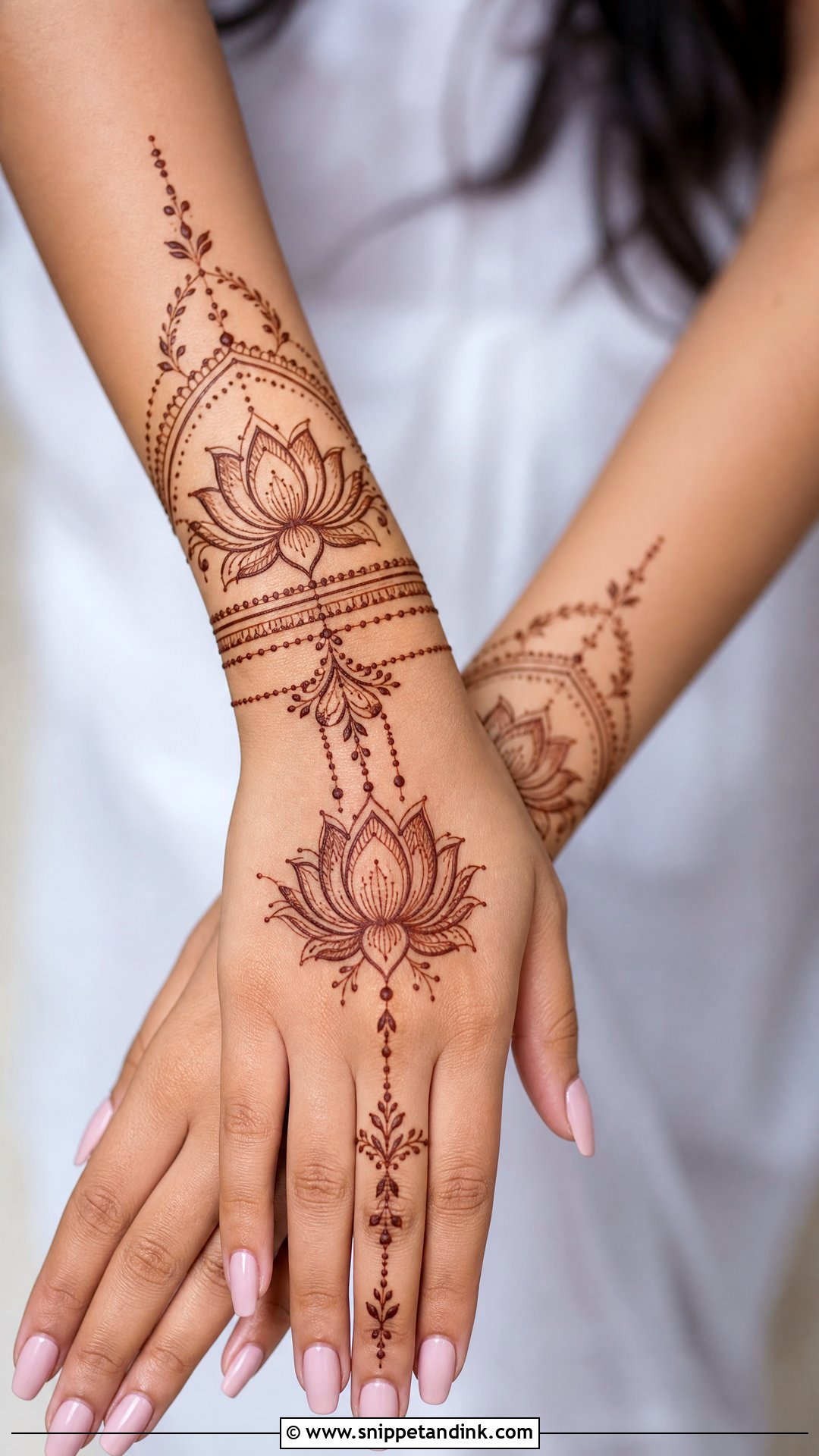
This one is basically jewelry you can’t lose. The lotus sits at the center of the inner or outer wrist, and slim chains and dots curve around both sides, sometimes joined to one finger with a single vine for a hand-chain effect. I keep the palm and back hand empty. One honest warning: the wrist stains lighter than the hand and bangles rub it constantly, so I draw these lines a little thicker than I would on the palm. It sits nicely under a kurta or saree sleeve and next to festive bangles.
5. Small Lotus Mehndi Design On Hand
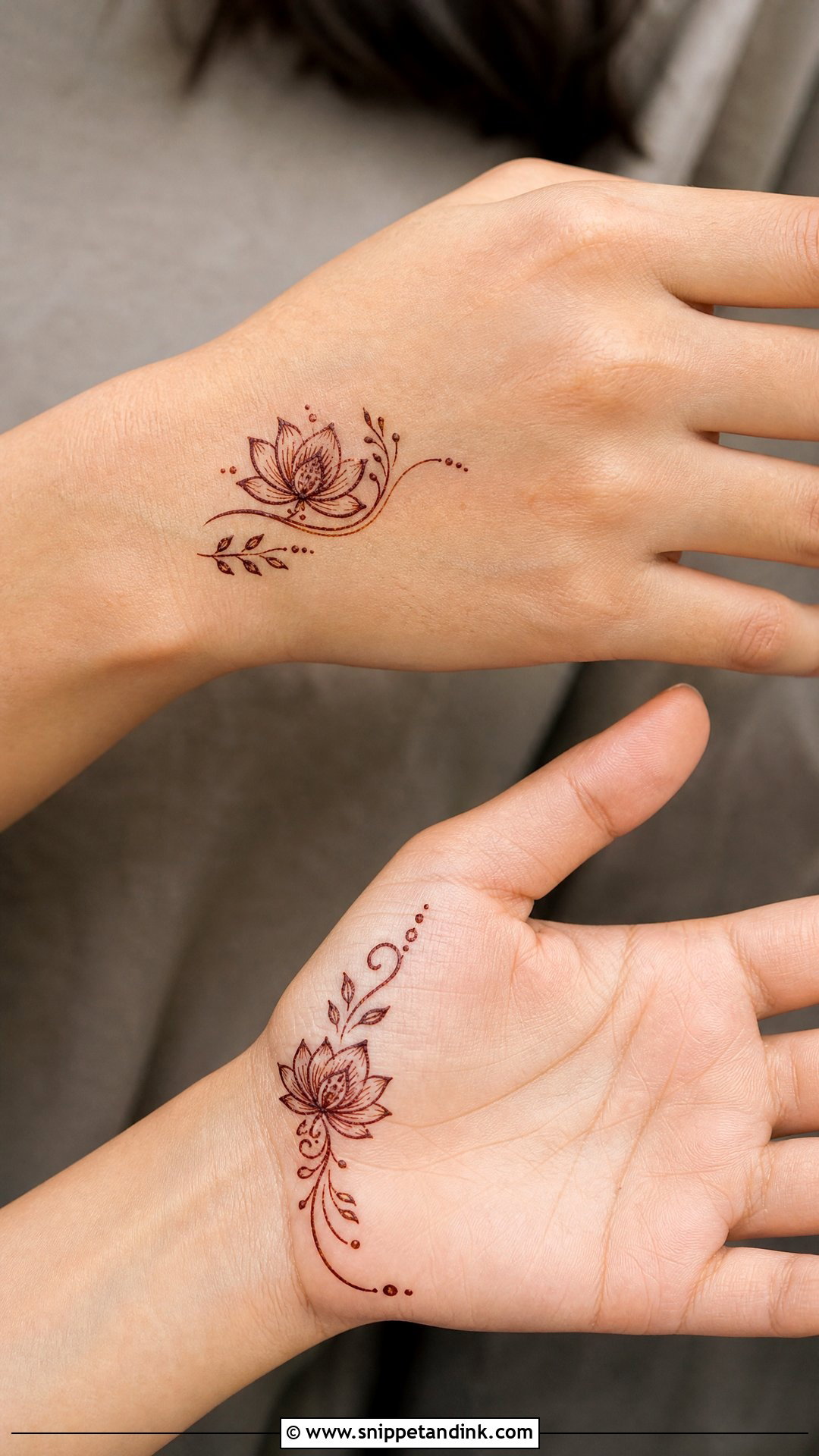
A tiny lotus near the thumb, at the corner of the palm or in the middle of the back hand takes me a few minutes and dries quickly, which makes it the design I offer at the end of a long queue or for someone who walks in an hour before a function. Small motifs are unforgiving, though. With so few lines, a shaky outline or a blob of paste is the first thing anyone sees, so I use a fine cone tip and let a little shading inside the petals create depth instead of adding more pattern. Kids, teens and adults who want something quiet all suit it.
6. Lotus Mandala Mehndi Design
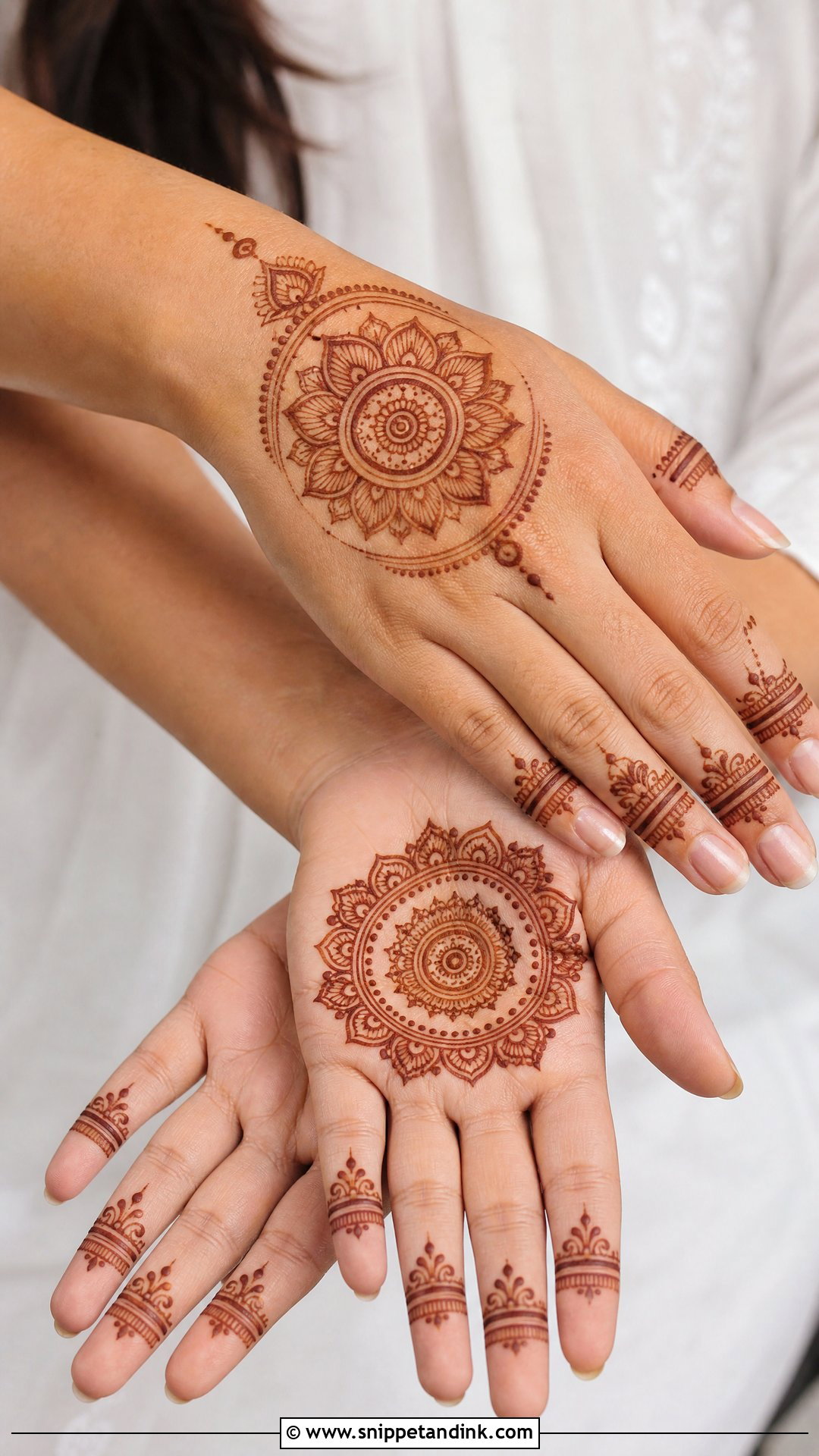
Pairing a small mandala with lotus petals gives you a circle that makes the hand look calm and symmetrical. I draw the mandala first at the palm or back-hand center, then build the petals outward as a frame, and only then add dots, half-circles and leaf strokes at the edges. The mistake I see in home attempts is filling every ring of the mandala; the petals merge and the lotus disappears. Leave gaps between them. It suits puja, Diwali, Eid, Raksha Bandhan and engagement evenings equally well.
7. Arabic Lotus Mehndi Design
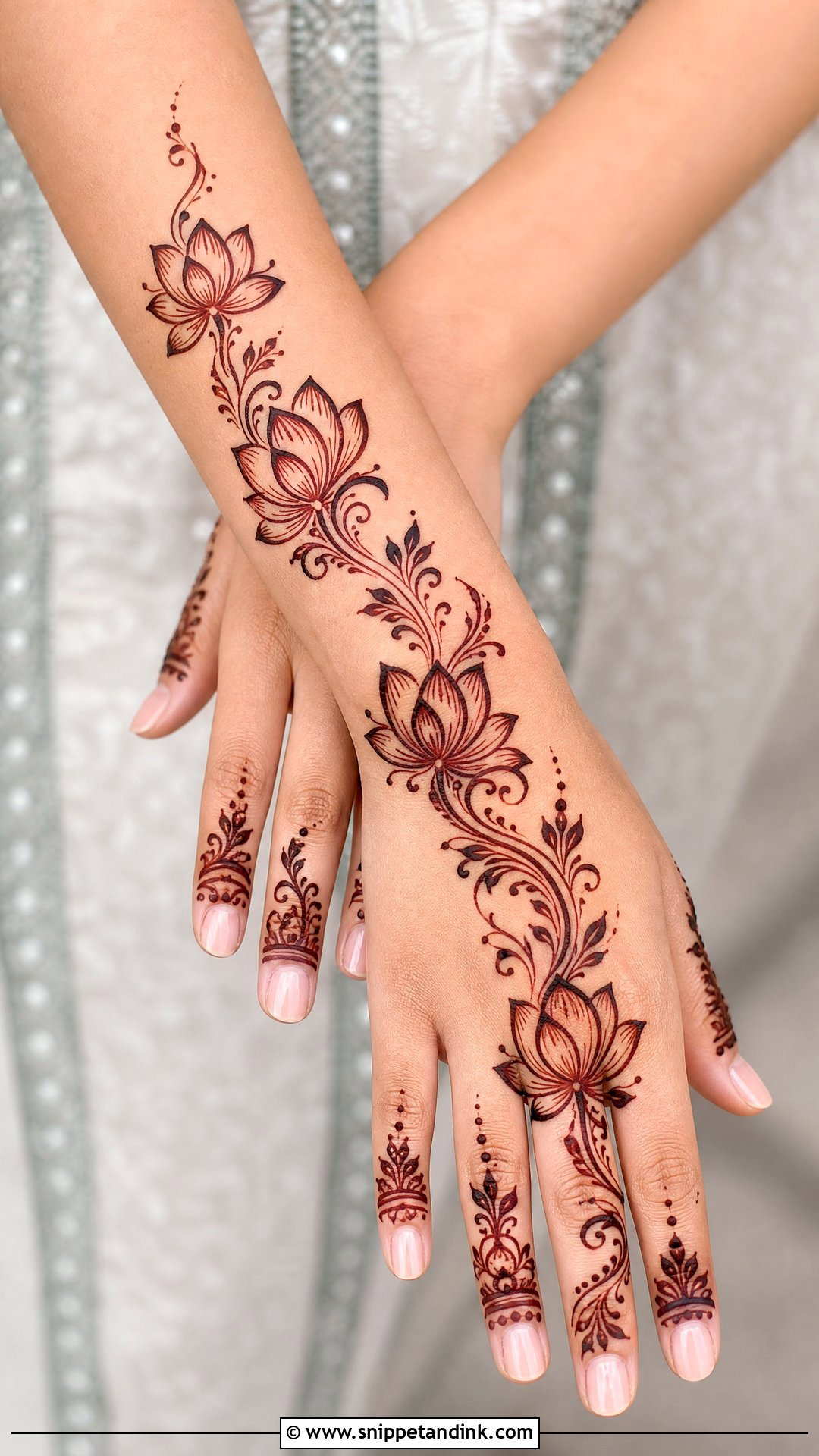
Arabic layouts travel diagonally across the hand, from the wrist up toward the index finger, with bold shapes and wide gaps. For a minimal lotus version I put one flower near the wrist and let a single curved vine carry the eye upward, adding small leaves and dots but no dense filling. The diagonal is what gives it movement, so I’m careful not to drift too far toward the thumb, where the line starts to look accidental. It’s a good party-wear option for anyone who doesn’t want the full hand covered.
8. Indo Arabic Lotus Mehndi Design
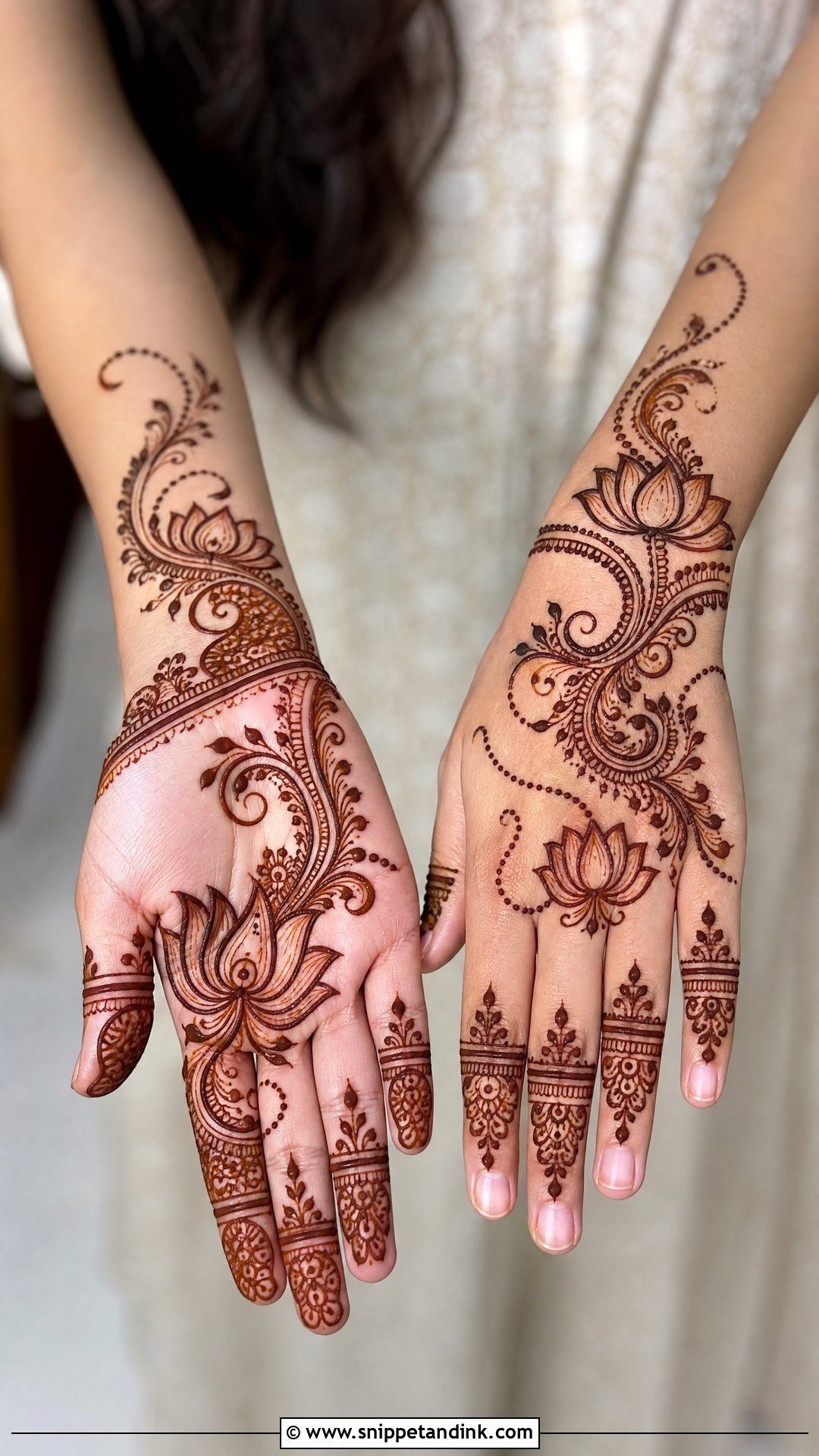
An Indo Arabic lotus mehndi design borrows the neat structure of Indian work and the open flow of Arabic trails. The lotus stays the main flower, joined by a couple of paisley curves, dotted trails and simple finger bands, running either wrist to back hand or palm corner to fingers. Paisleys are where this style gets heavy fast. I limit myself to two and keep them outlined rather than filled, which keeps it light enough for sisters of the bride and wedding guests who still want something traditional.
9. Lotus Jaali Mehndi Design
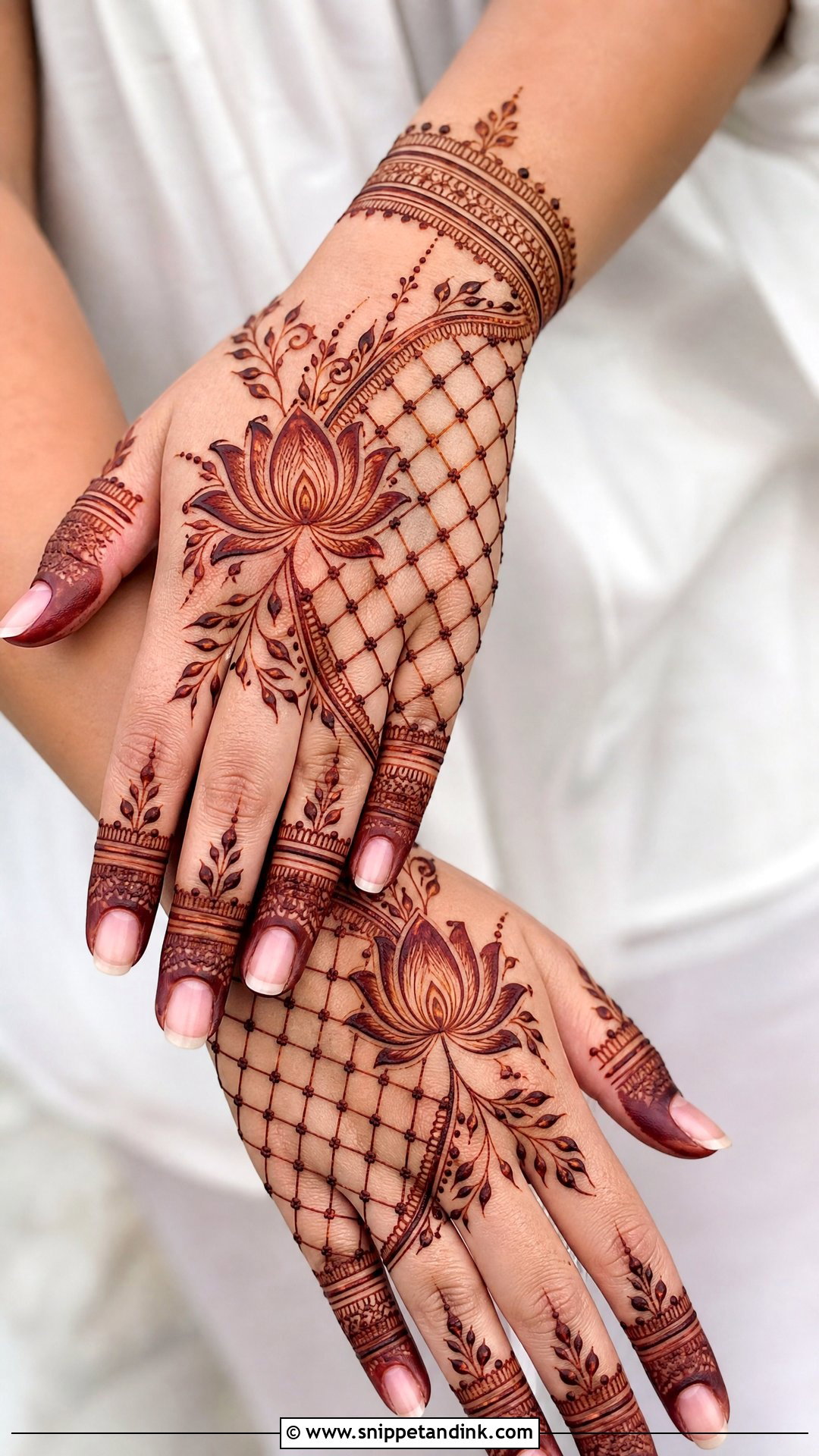
Jaali is a fine mesh, and it only looks crisp if the paste is smooth and the cone tip is narrow; with grainy paste the crossing lines bleed into each other and the mesh stains as a solid patch. I draw the lotus first, then place one small jaali panel beside it with thin crisscross lines and a tiny dot at each intersection. One panel is plenty. The contrast between open petals and geometric mesh is what makes it look dressy for engagement parties and family photos.
10. Lotus Vine Mehndi Design
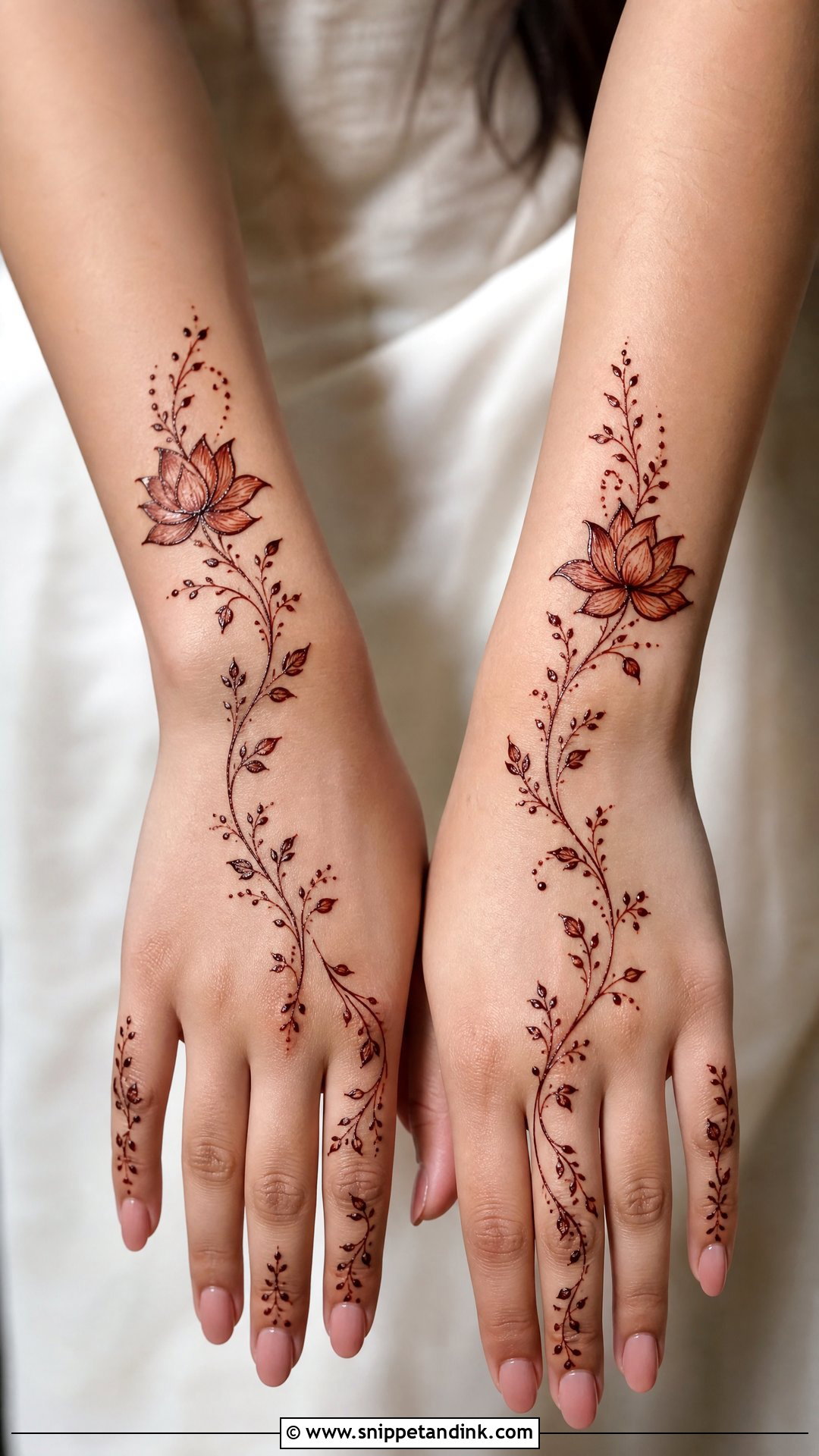
A vine is the most adjustable layout I know, which is why I use it on every hand size. The lotus goes near the wrist, the palm edge or a back-hand corner, and one slim vine curves toward the fingers with small leaves, dot clusters and a few buds along it. On a small hand I keep the curve tight; on long fingers I let it run all the way up. The only rule is not to crowd the vine. It’s beginner-friendly enough to practice on your own hand and works as easily for a casual dinner as a festival.
11. Lotus Palm Cuff Mehndi Design
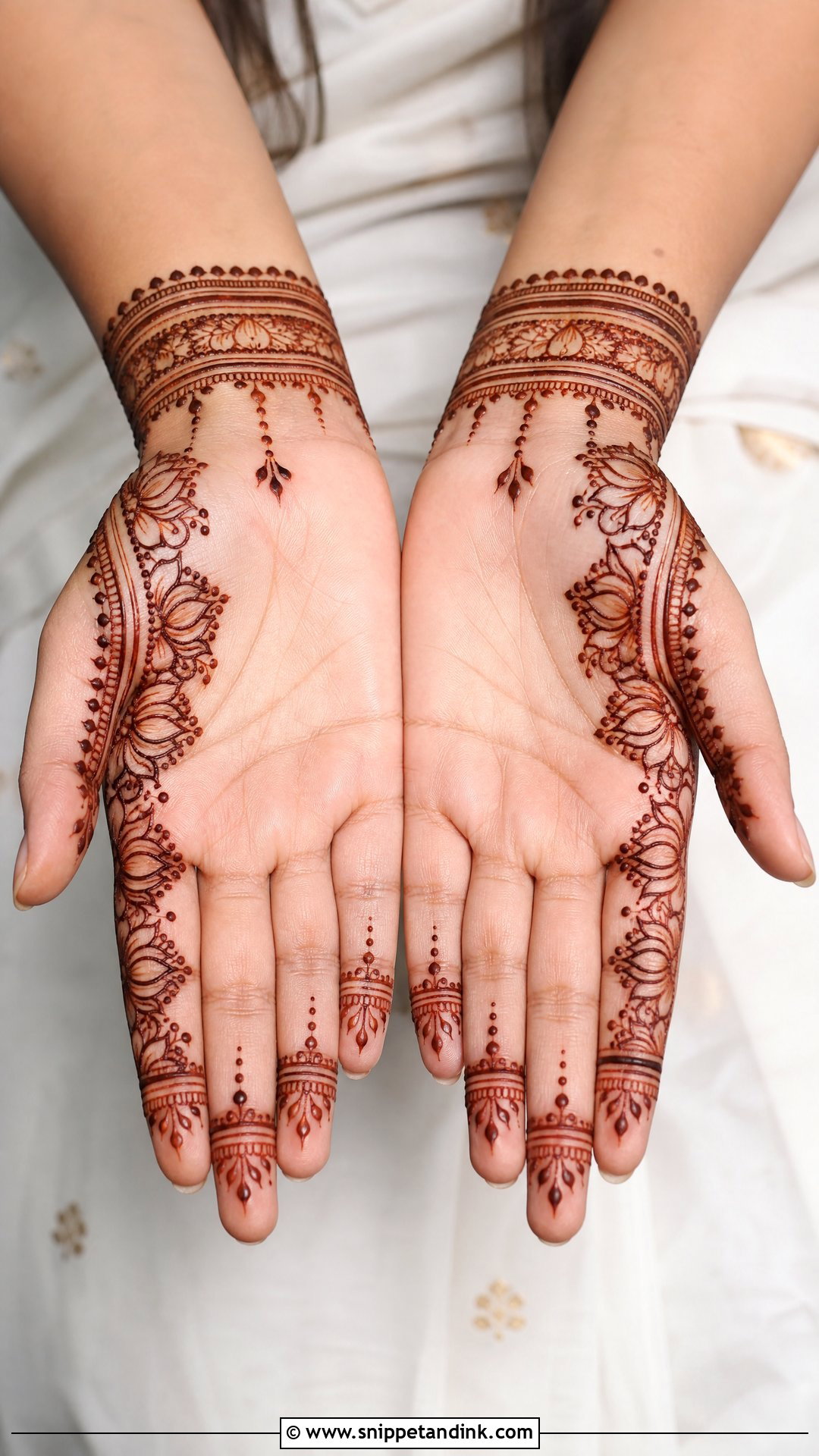
Think of this as a border along the lower palm, just above the wrist crease. One or two lotus motifs sit at that edge with slim bands, dots and small leaves, and the center of the palm stays open or gets only a tiny dot circle. I like it for people who are nervous about henna on the palm because it doesn’t interfere with gripping things while the paste is on. Stacked bangles or a bracelet sit right on top of it, so I keep the lines clear of where a clasp will rub.
12. Lotus Half Hand Mehndi Design
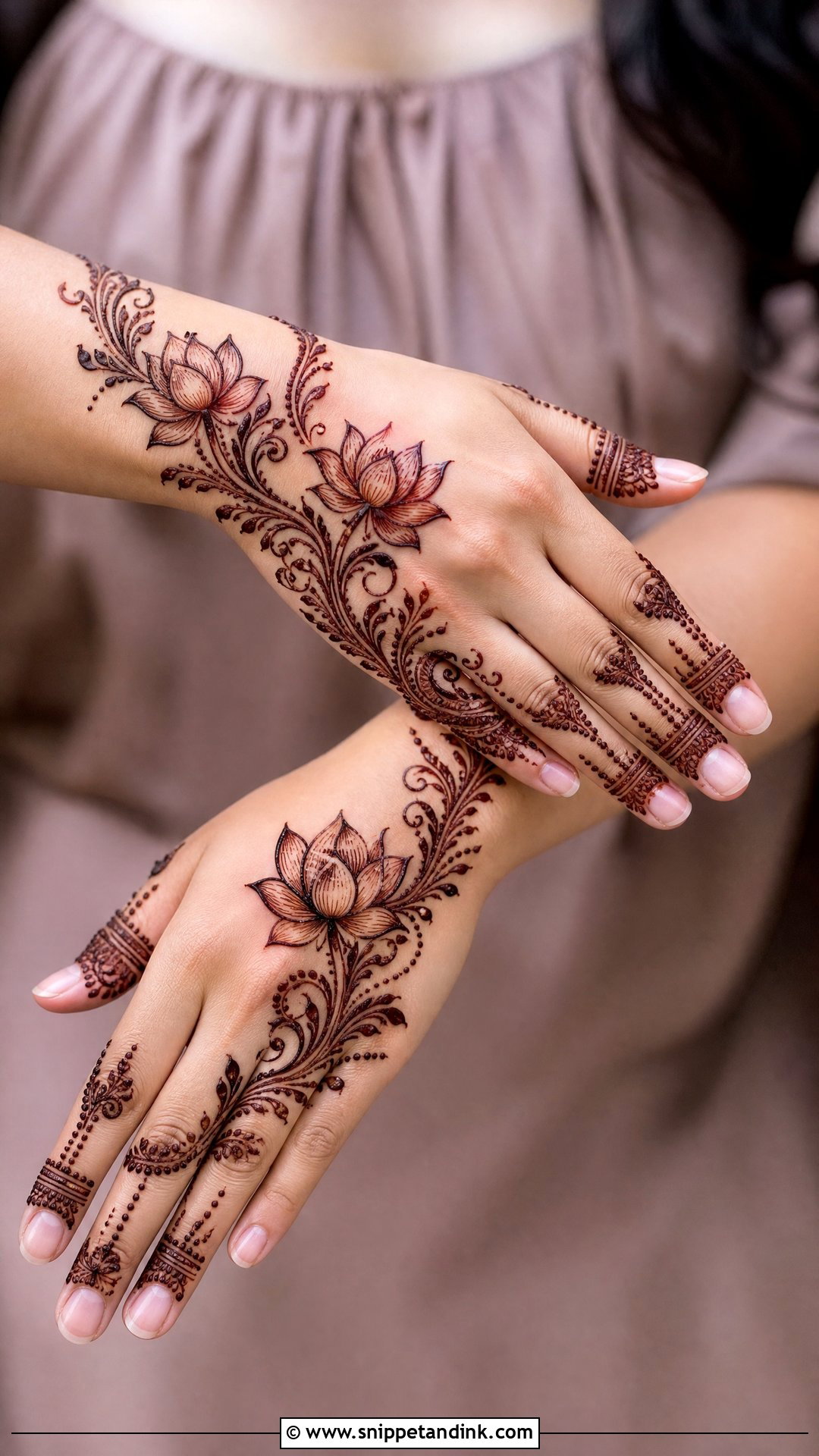
Half-hand coverage is where I send people who want henna to actually show up in photographs but don’t want a full pattern. I cover one side of the palm or back hand with lotus flowers, leaves and clean curves, and leave the other side open on purpose. Building from the wrist upward reads as more traditional; starting near the fingers and working down feels more modern. Where I stop the pattern matters: I end it at a natural line, like the edge of the thumb, so the empty half looks intended rather than unfinished. Pre-wedding functions and family ceremonies are its natural home.
13. Lotus Wrist Mehndi Design
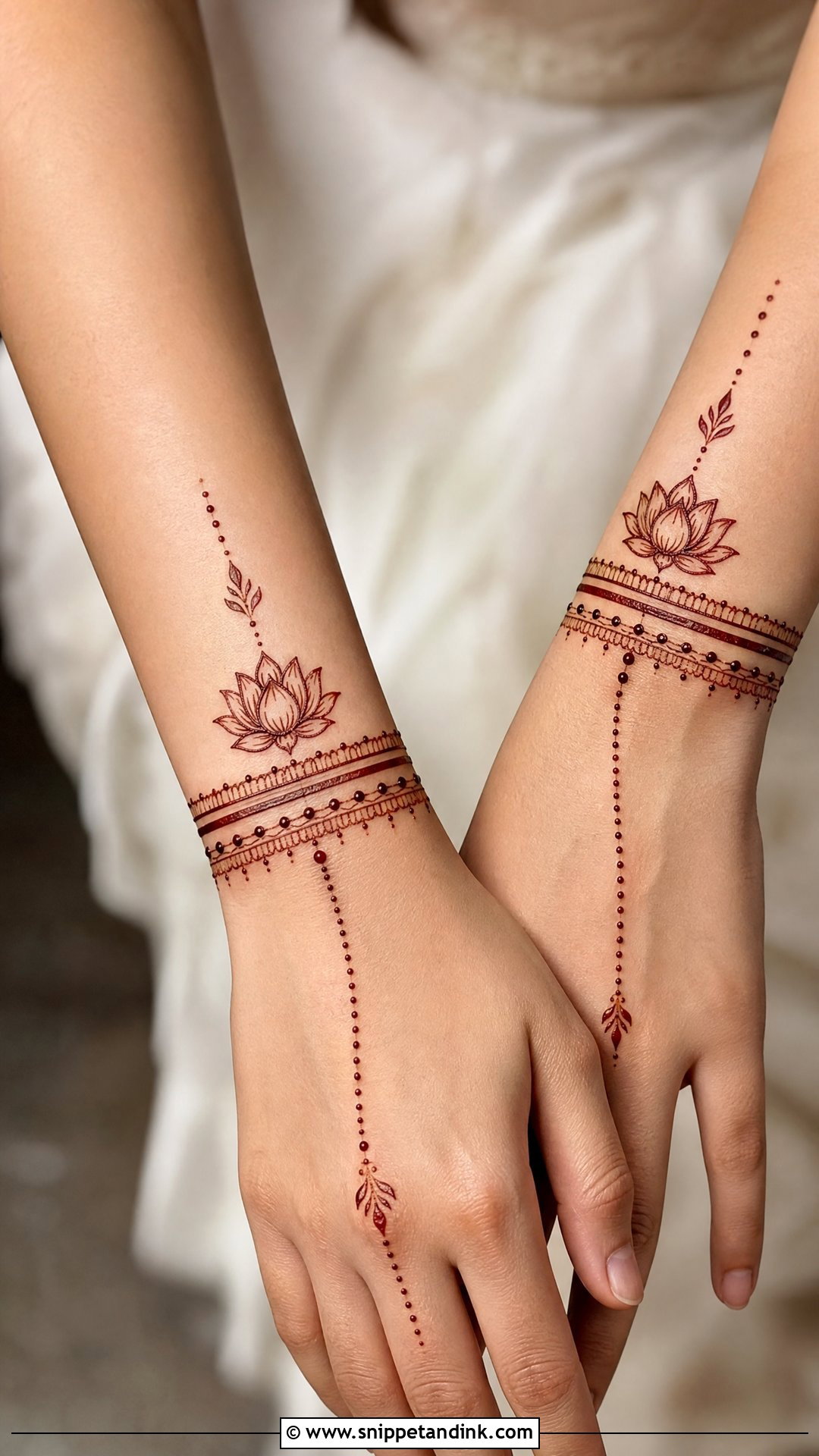
For someone who doesn’t want henna on the hand at all, a lotus wrist mehndi design is the easy compromise. A small lotus sits at the center of the wrist with thin bracelet lines, dots and leaf tips on either side, either standalone or joined to one finger by a fine chain. It dries quickly and is easy to protect, so the paste stays on longer and the stain develops more evenly. Watch your watch strap and bangles for the first day, as they’ll lift paste off the exact spot you want darkest.
14. Lotus Front Hand Mehndi Design
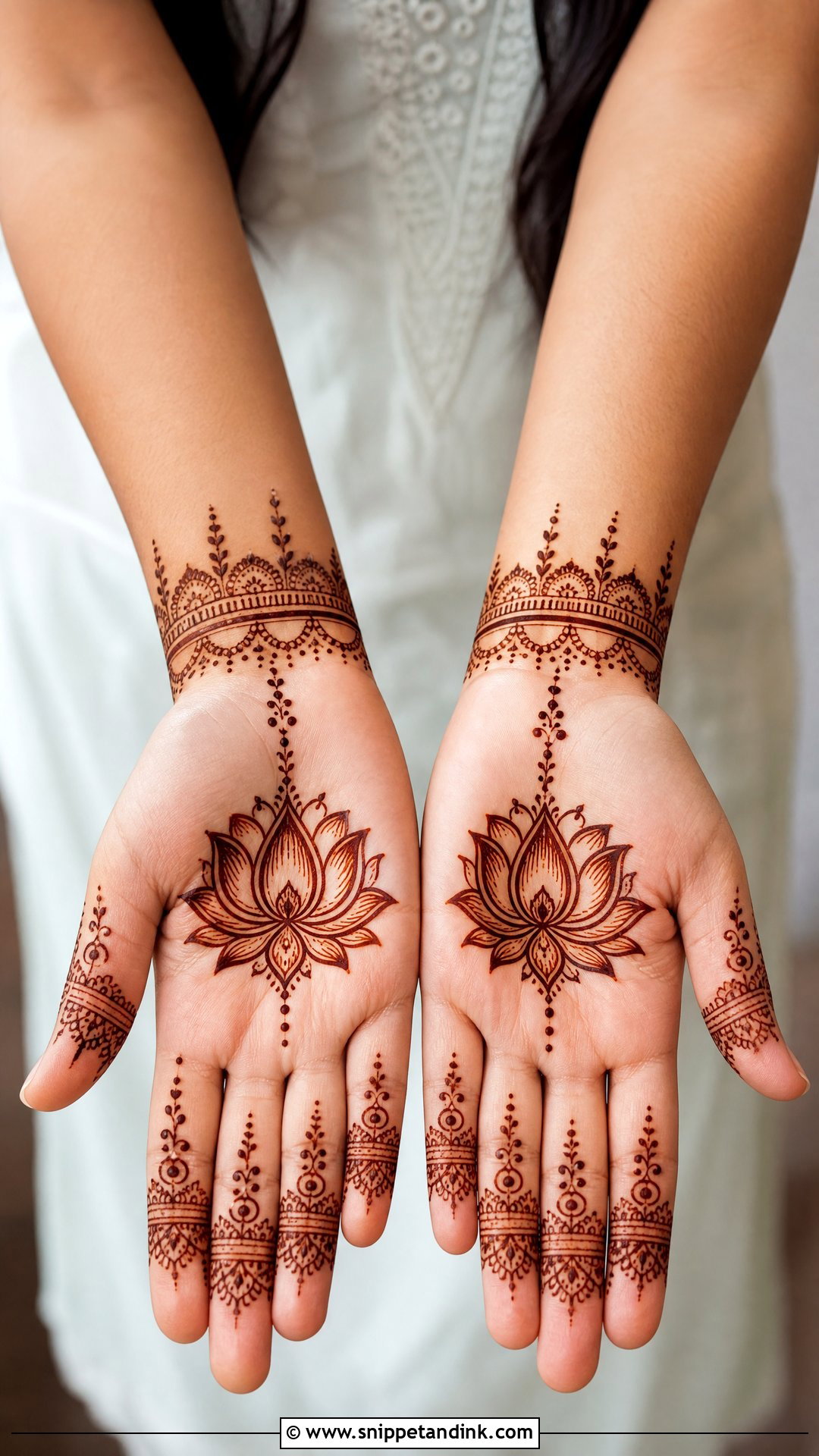
The palm gives a lotus a clear stage, so even a plain outline holds up here. I place it in the center, add slim finger patterns, a few dots and a small wrist border, and skip dense paisleys and heavy shading. The front hand is the one people see during greetings, aarti and prayers, which is why I suggest it for festival days. It’s also easy to personalize: initials hidden in a petal or a tiny leaf for each family member are both simple to work in without cluttering the design.

15. Lotus Back Hand Chain Mehndi Design
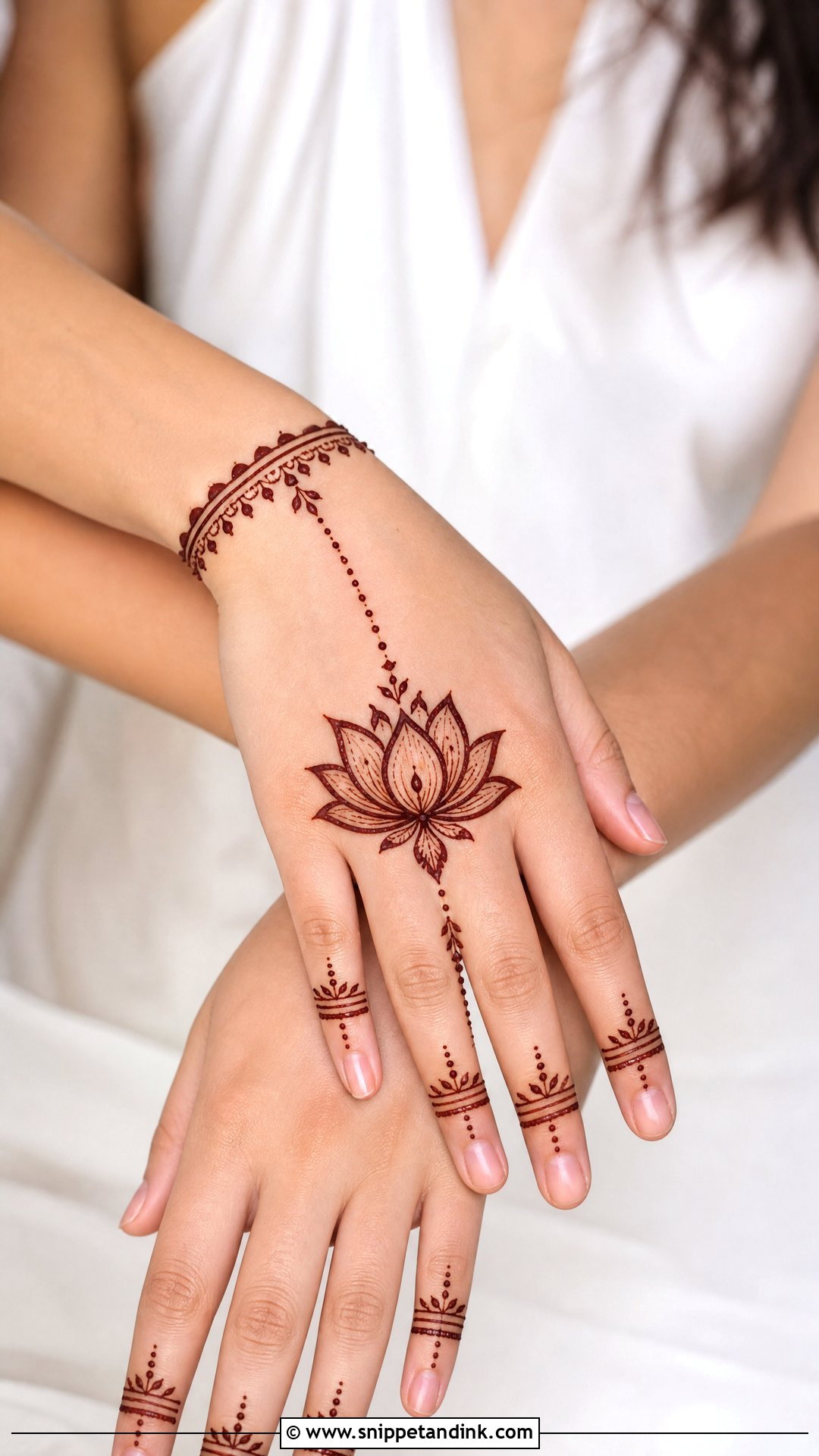
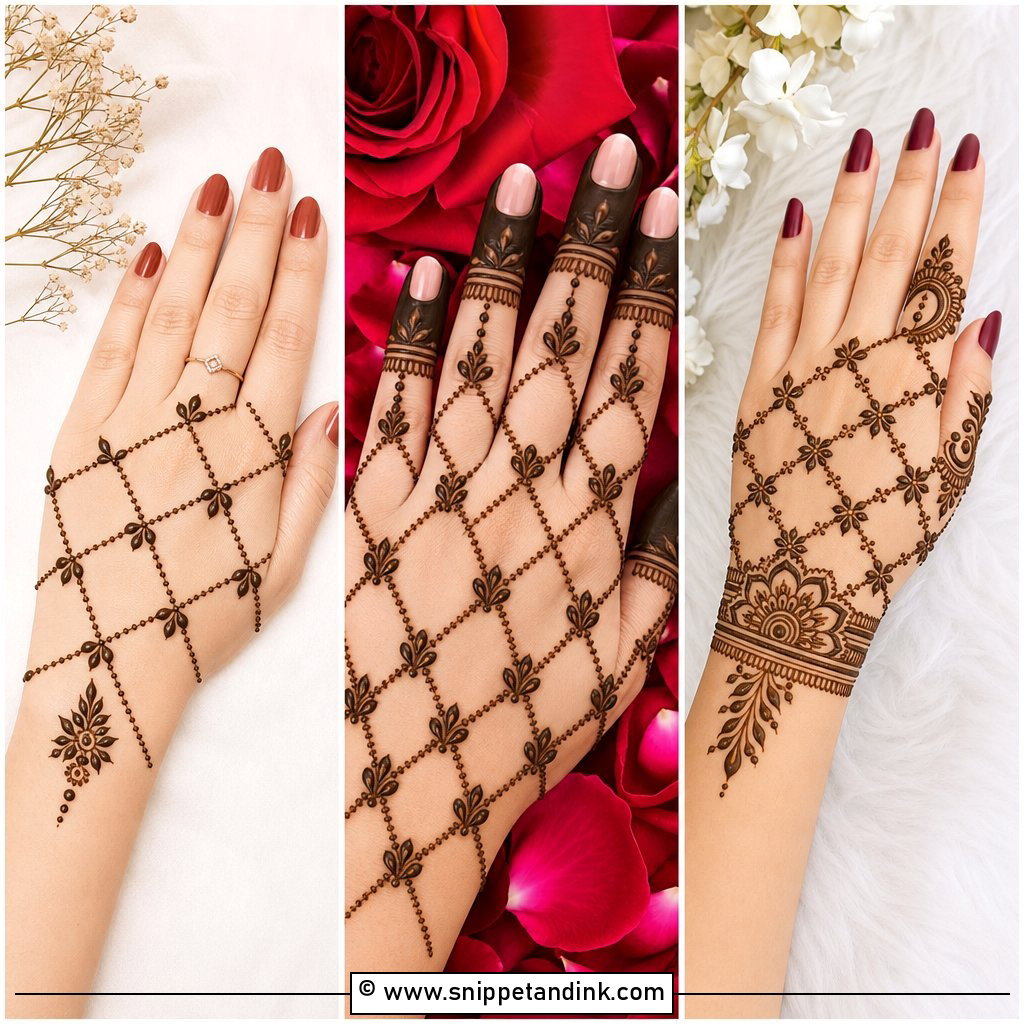
Here the henna imitates a haath phool, the hand chain worn at weddings. The lotus sits near the wrist or the middle of the back hand, and dotted chains connect it to one or two fingers that end in ring-like bands. Dotted lines are trickier than they look: if the dots are too far apart they stain as separate specks instead of a chain, so I keep them close and even. With the rest of the skin left bare, it pairs naturally with bangles and rings at an engagement or as bridesmaid henna.
16. Lotus Side Hand Mehndi Design
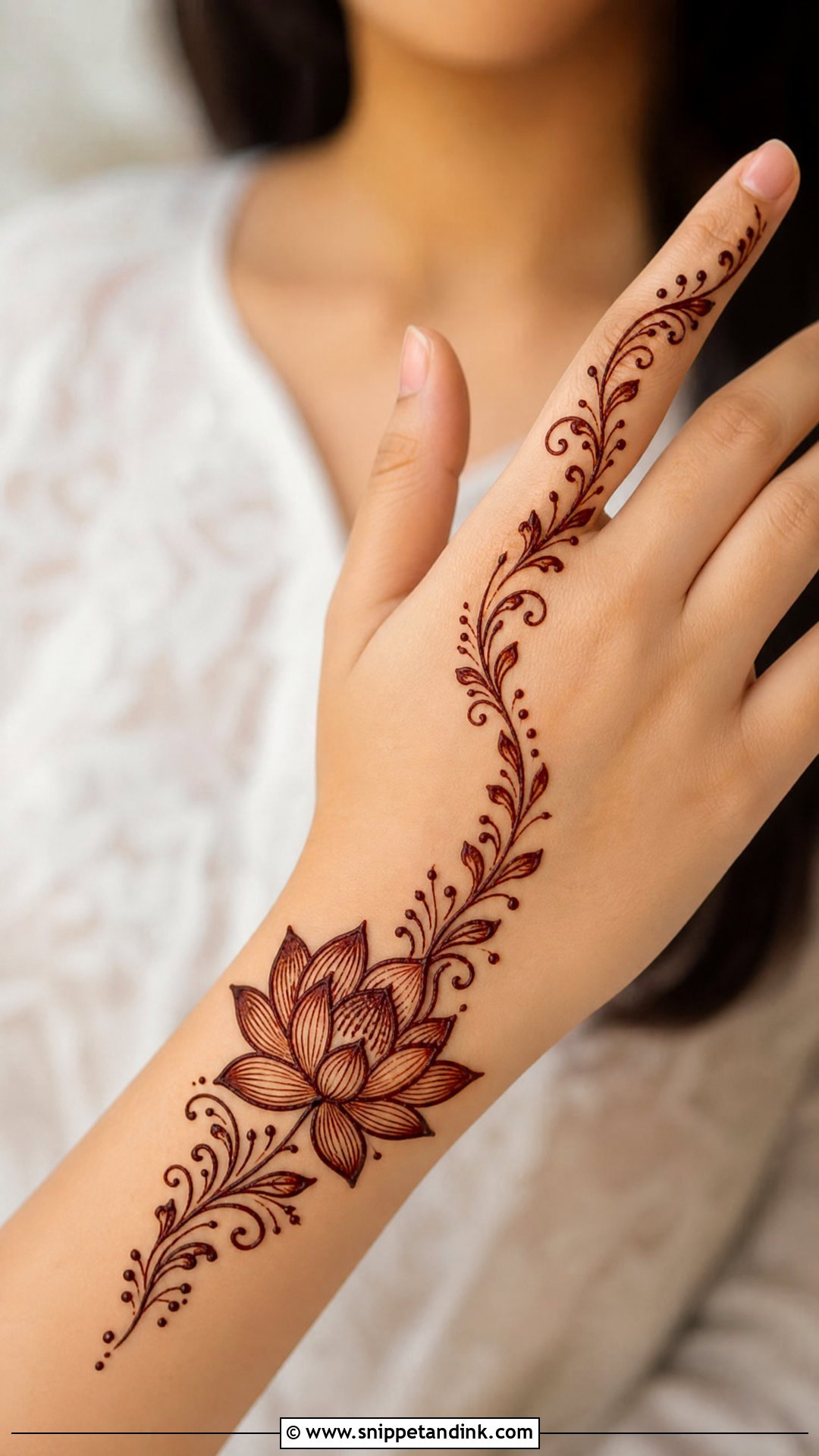
Most people never think of the outer edge of the hand, which is exactly why this placement gets noticed. The lotus sits on the little-finger side and vines and dots run along that edge from wrist to fingertip, leaving the middle of the palm and back hand clear. A long design on a narrow strip also makes the hand look slimmer. It’s a practical choice for anyone who writes a lot, because the edge that rests on paper will wear it down within days.
17. Lotus Ring Mehndi Design
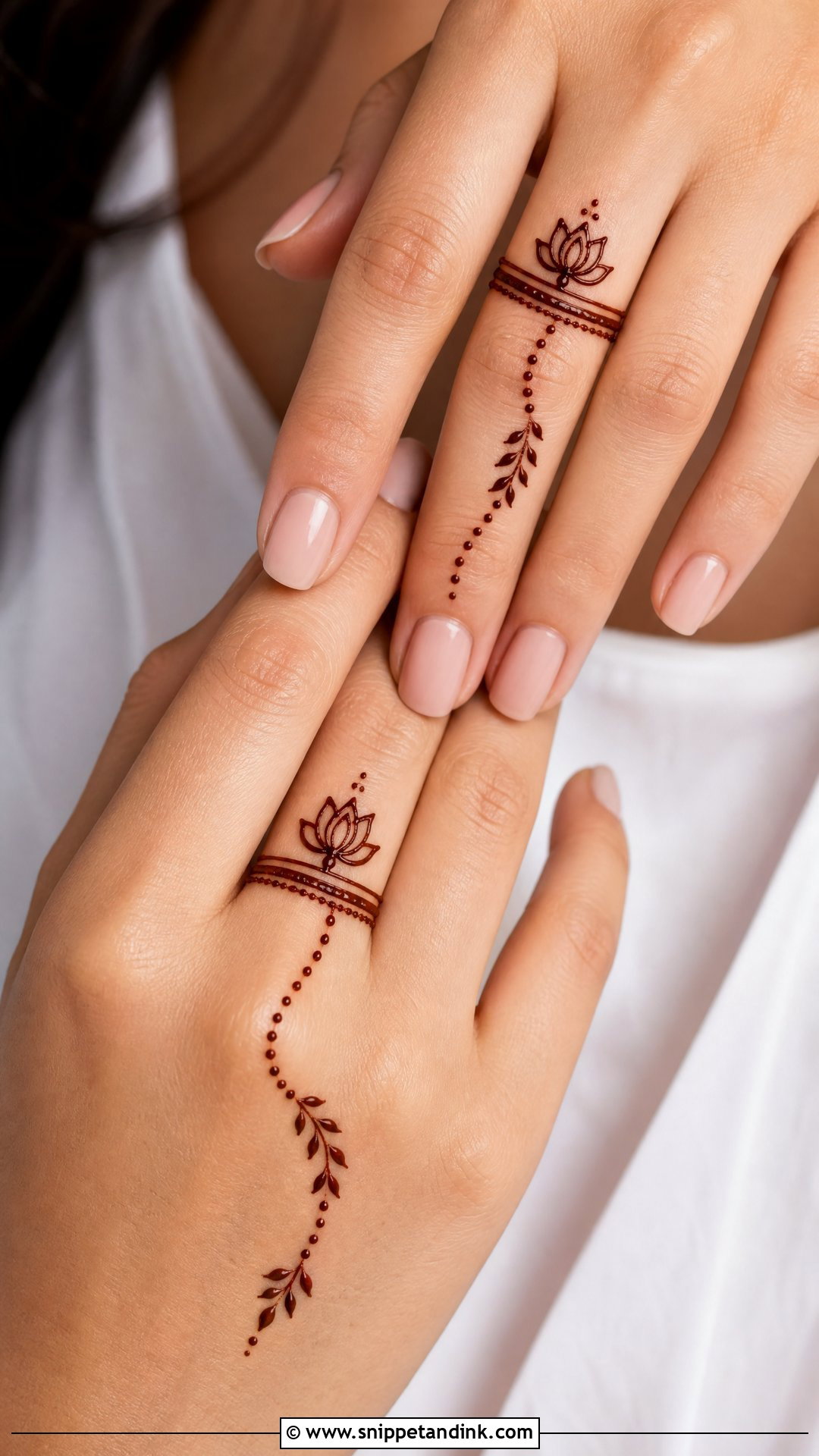
A lotus ring sits at the base of the ring finger with a henna band around the finger itself, plus a few dots or a fine chain toward the knuckle or wrist. It’s tiny, quick and easy to wear with modern outfits. Keep in mind that a real ring worn over fresh henna will rub the band unevenly, so I’d put the jewelry on the other hand until the stain has darkened. Bare or neutral nails let it stand out best.
18. Lotus Trail Mehndi Design
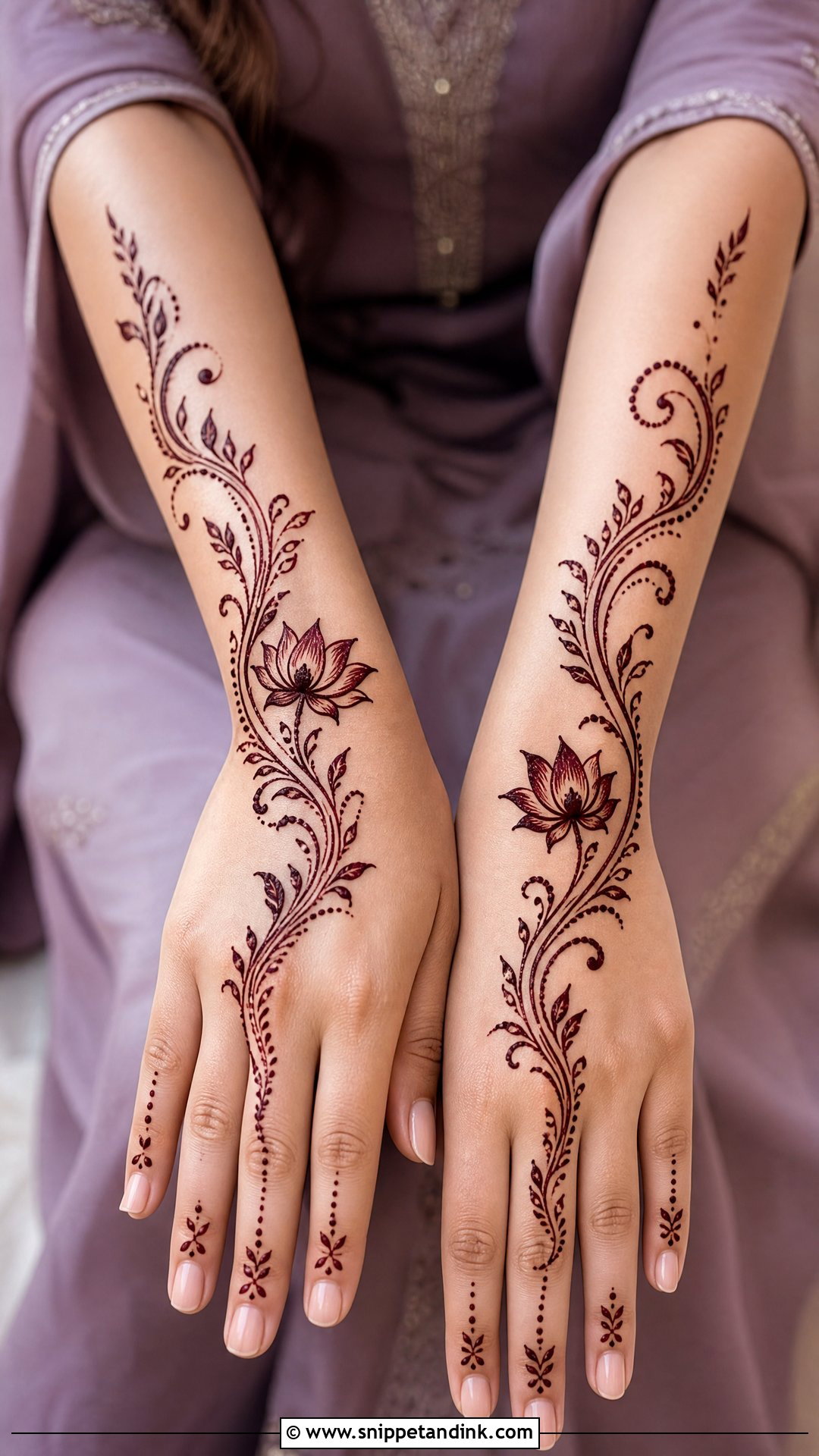
I place two or three small lotuses at gentle intervals from wrist to fingers and connect them with thin vines, dots and leaves. The trail follows the natural line of the hand, which flatters almost everyone. My main job here is restraint: the empty areas between flowers are what make it read as a path, so I leave them alone even when the hand looks a little bare while wet. Keep the petals open and skip thick shading for the cleanest stain.
19. Lotus Minimal Bridal Mehndi Design
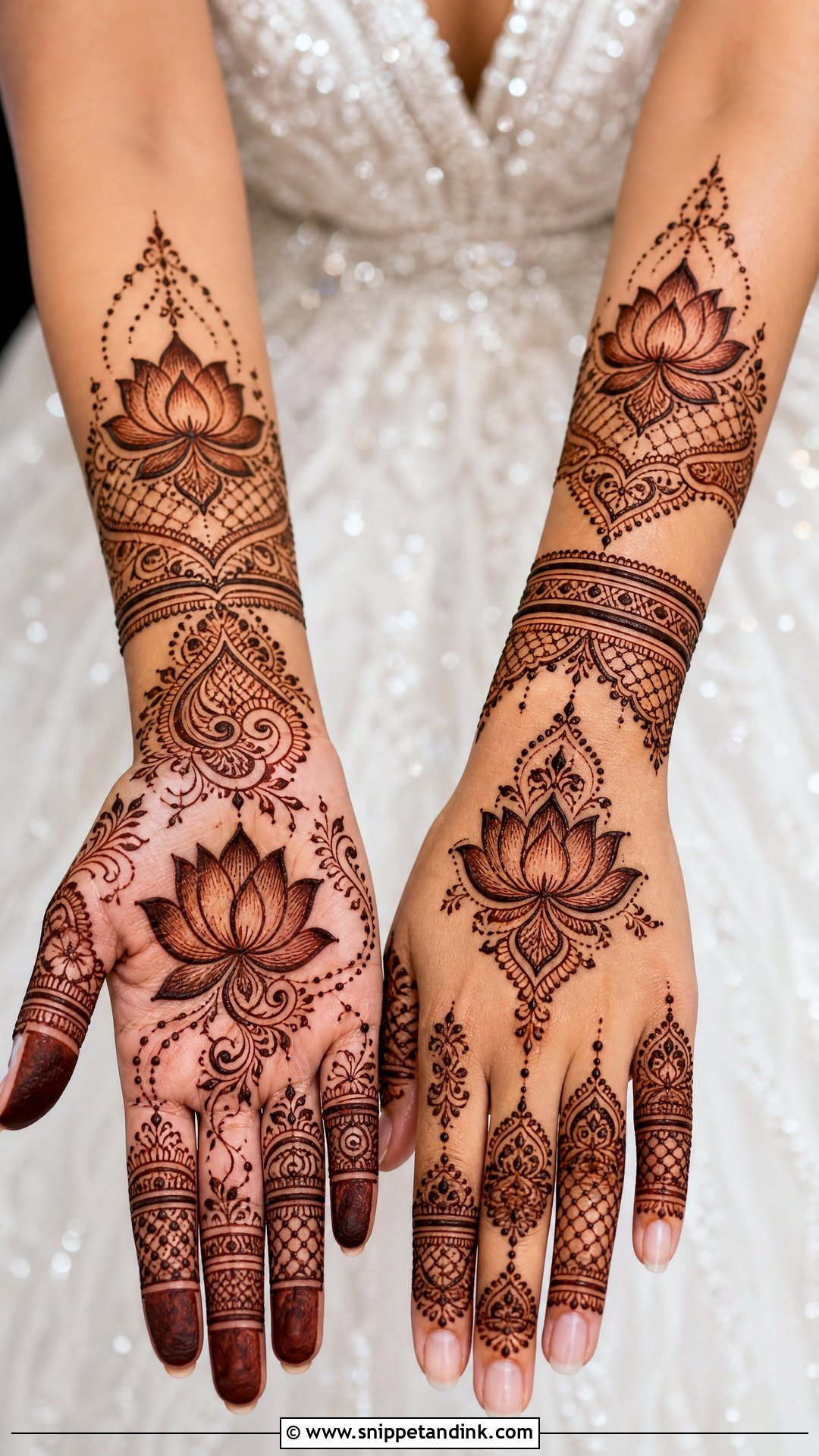
Not every bride wants a full-arm bridal pattern, and a lotus layout can still look clearly bridal with skin showing through. I use larger lotus motifs on the palm and back hand, add fine jaali and slim wrist bands, and decorate the fingers without filling them solid. For brides, timing matters more than design: I apply bridal henna one to two days before the wedding, because the stain keeps darkening for up to two days after removal. It suits intimate weddings, civil ceremonies and brides who simply prefer a lighter hand.

20. Lotus Mehndi Design For Bridesmaid
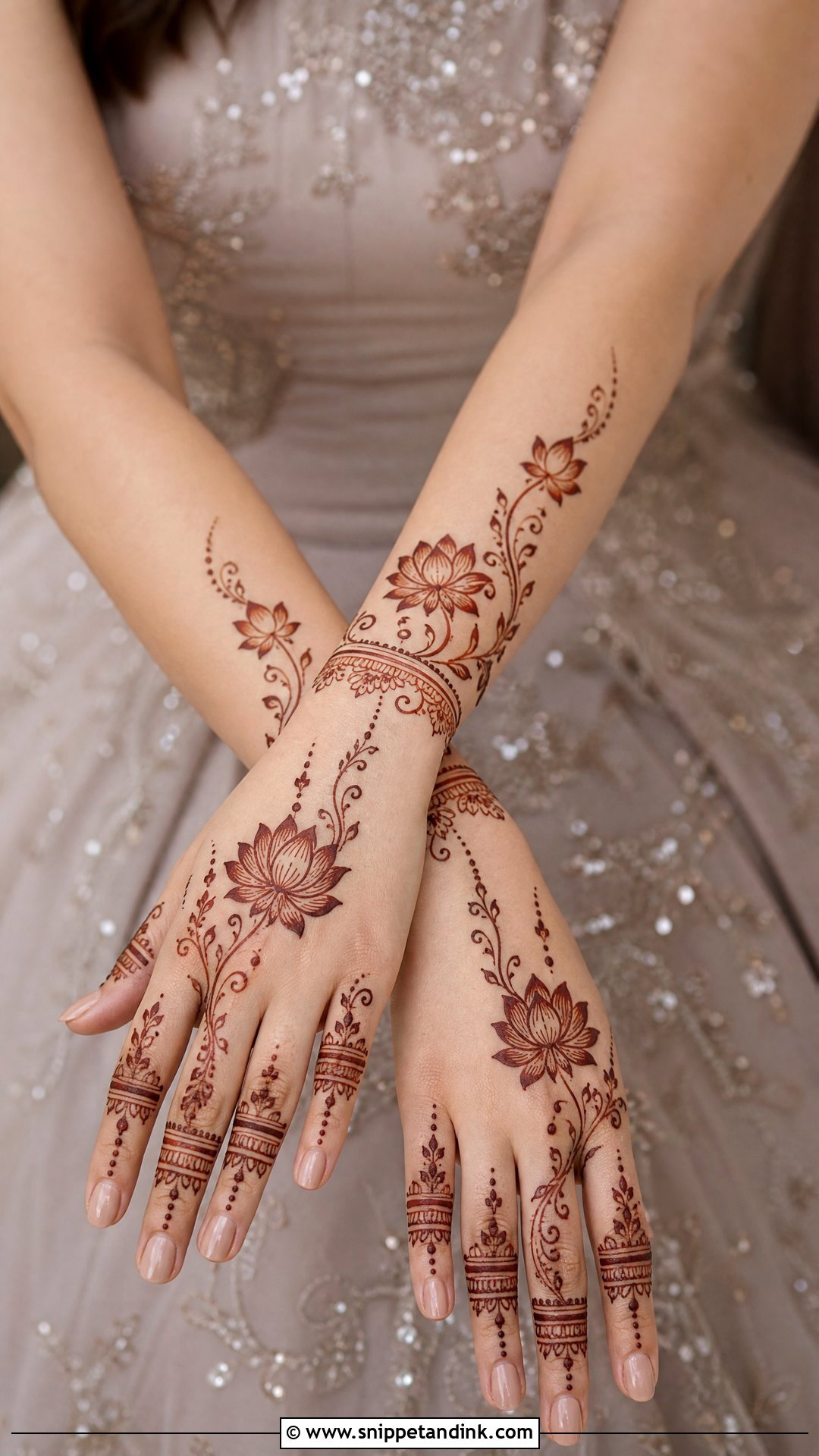
The brief for bridesmaid henna is always the same: festive, quick and clearly lighter than the bride’s. A back-hand lotus with flowing vines, clean finger bands and a small wrist cuff gives enough detail for photos while leaving plenty of open space. I can usually do one of these in a fraction of the time a bridal hand takes, which matters when six bridesmaids are waiting. Add a few paisleys for a traditional lehenga, or keep the lines extra sleek for a fusion outfit.
21. Lotus Eid Mehndi Design
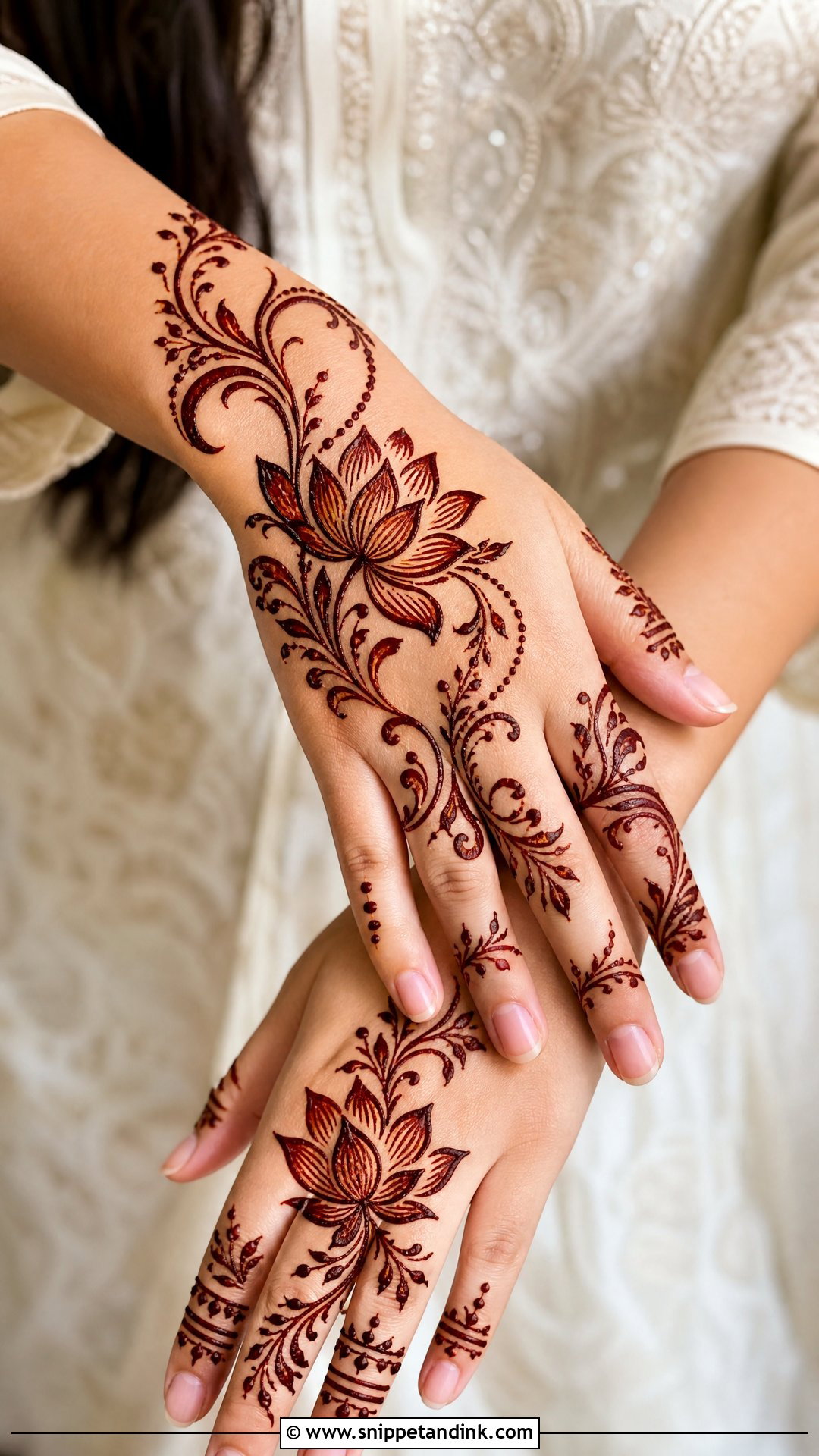
Eid henna usually goes on the night before, often in a rush after Chaand Raat preparations, so I keep it simple enough to dry fast. A back-hand lotus with Arabic-style vines, delicate finger bands, dot trails and a small curve at the wrist covers very little skin and still looks festive the next morning. A palm lotus is the traditional alternative. Light shading keeps the stain clean, and the design sits easily beside rings, bangles and embroidered sleeves through a full day of visiting.
22. Lotus Diwali Mehndi Design
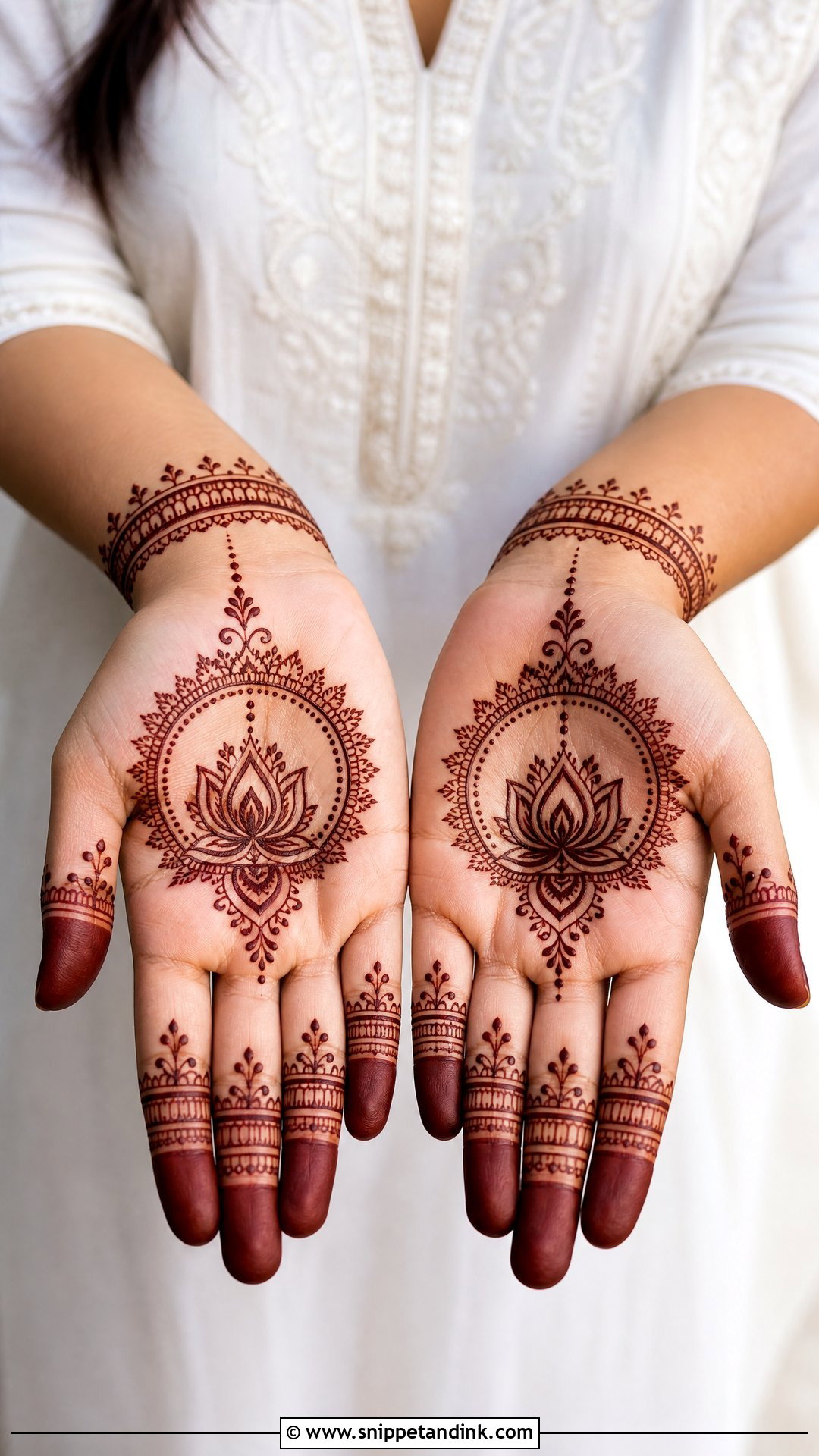
The lotus is tied to Lakshmi, which is why I’m asked for it most in the week of Diwali. A small lotus mandala on the palm or back hand with tiny dots around it, simple finger details and a clean wrist border keeps the hand light enough for cooking and lighting diyas. I sometimes add small diya-shaped curves around the flower, but subtle ones, so the lotus stays the focus. Try to get the henna done two days ahead; the color is noticeably deeper on day two than on the day the paste comes off.
23. Lotus Karwa Chauth Mehndi Design
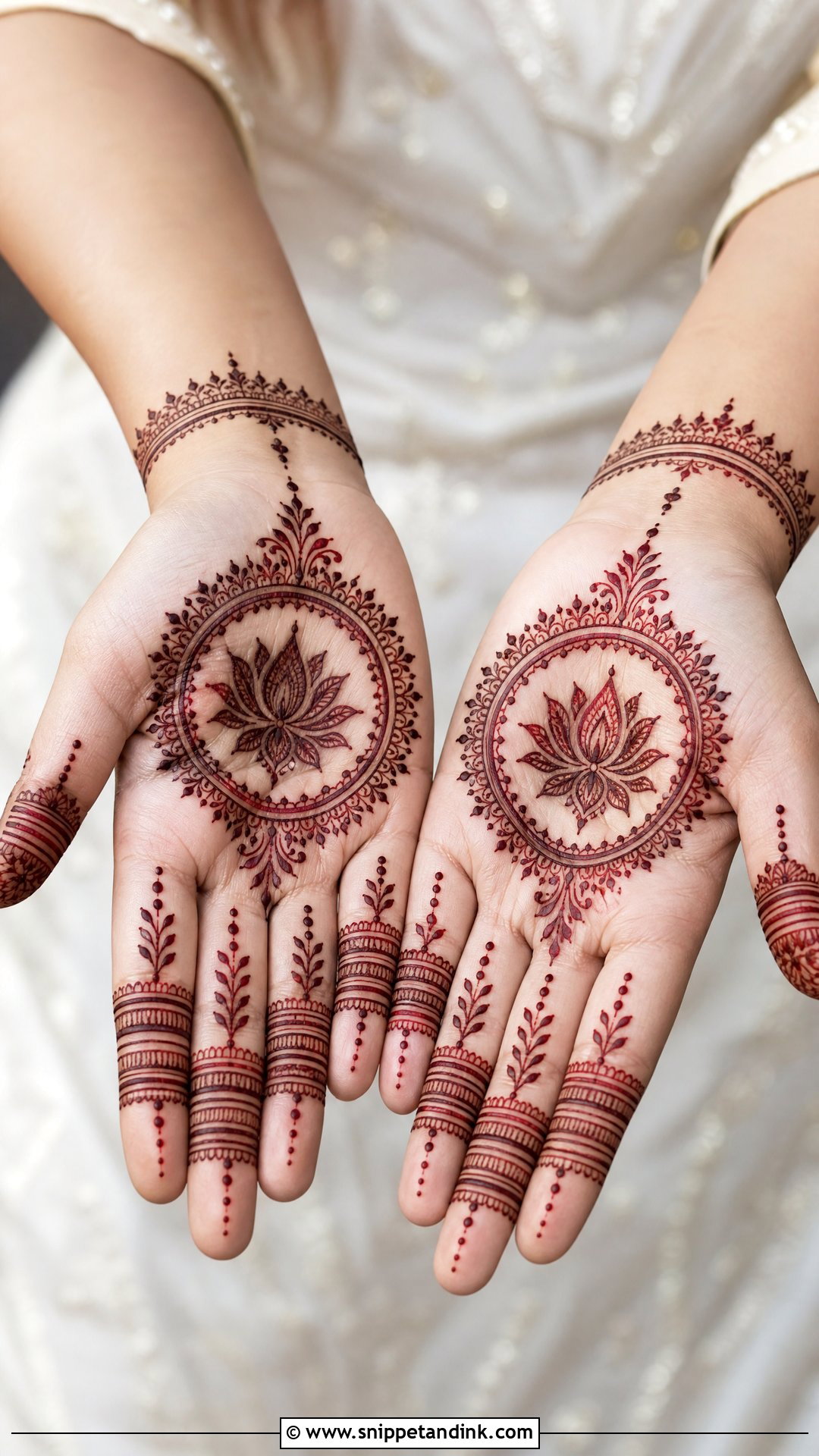
Karwa Chauth henna is often applied the day before the fast, and the long day ahead means it needs to stay comfortable. I place a lotus on the palm with fine vines toward the wrist and fingers, a small circular frame, dots and delicate bands, focusing on clean outlines instead of a fully covered hand. Because the palm stains darkest, this layout looks deep by evening even without heavy filling, which is the moment most women care about.
24. Lotus Engagement Mehndi Design
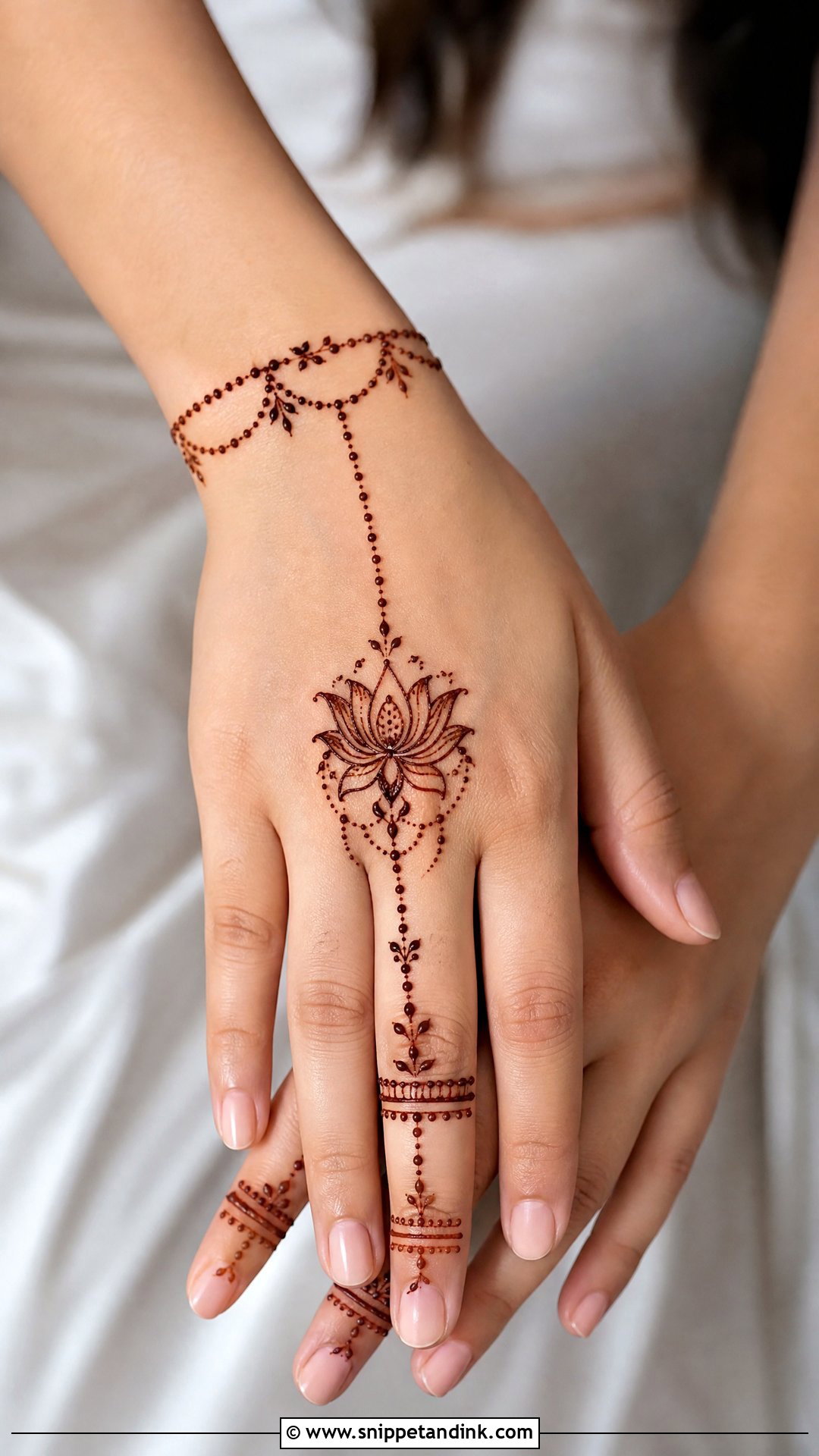
Engagement photos zoom in on the ring hand, so I design around it. A back-hand lotus connects to the ring finger with a fine dotted chain, with slim finger bands, tiny leaves and a bracelet pattern at the wrist. I leave a clear gap at the base of the ring finger so the actual ring sits on bare skin instead of covering half a motif. A palm lotus works if the family prefers a traditional look; either way, clean petals and precise lines matter more than coverage in close-ups.
25. Lotus Kids Mehndi Design
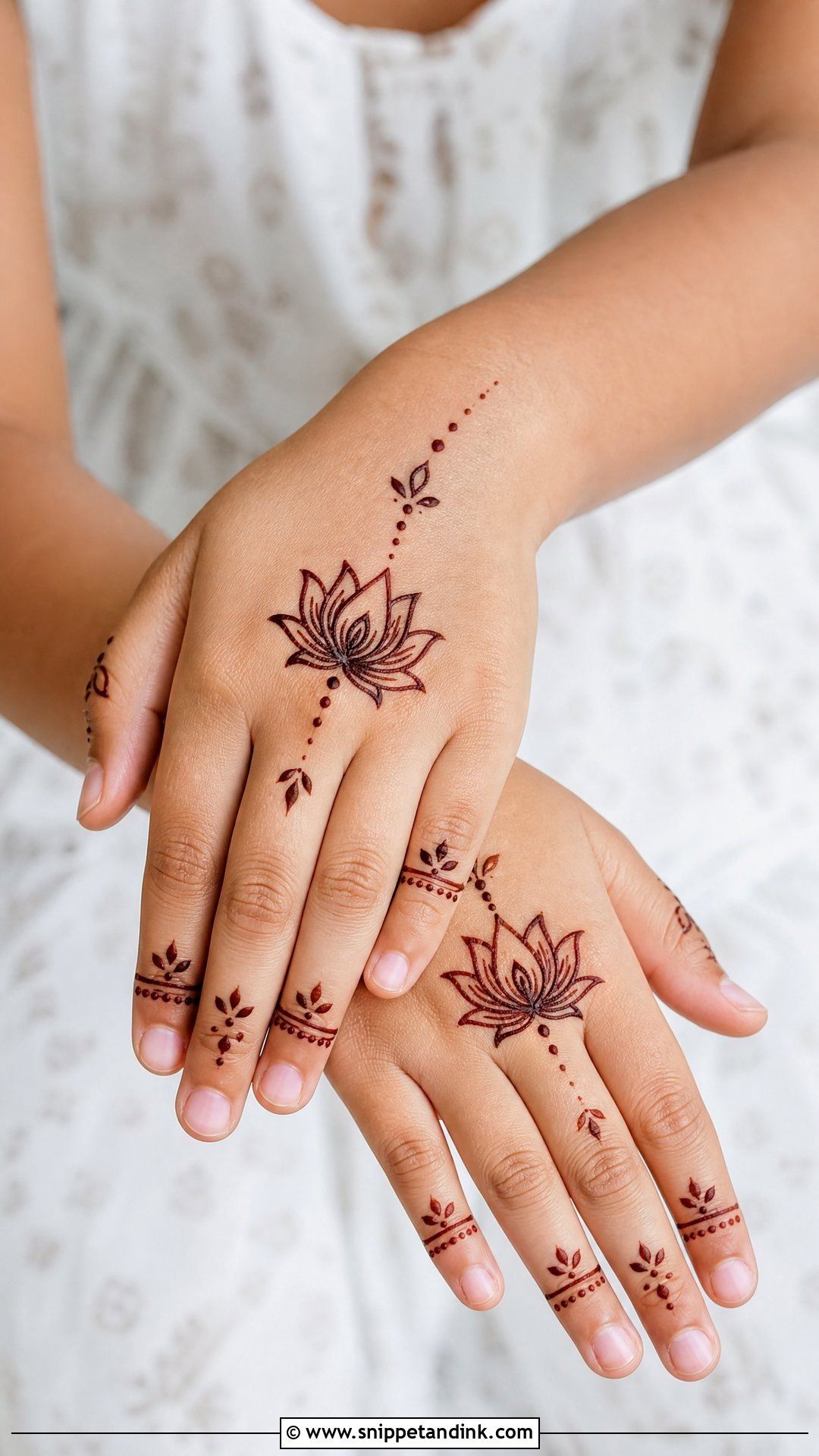
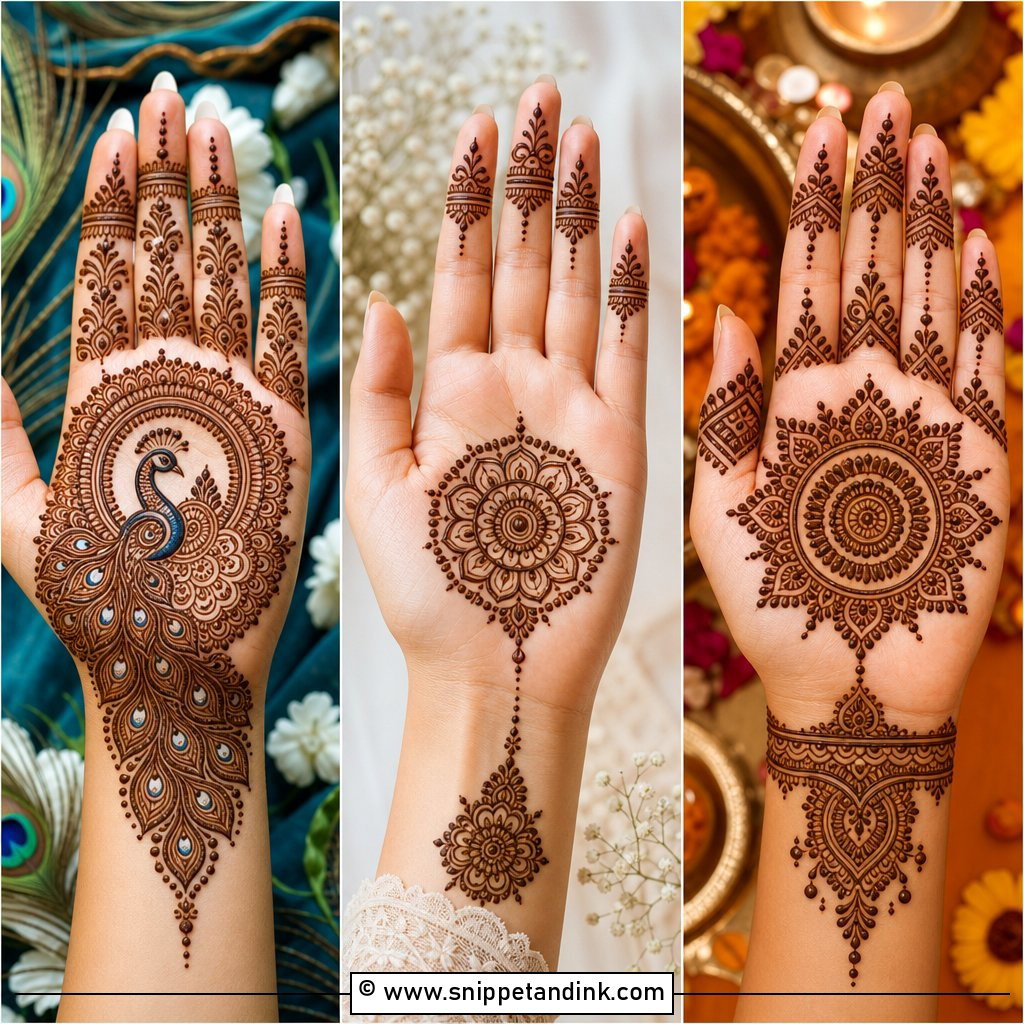
With children, my priority is speed. A lotus kids mehndi design should be quick, cute, and not too detailed: a small flower on the back hand or palm with a few dots and leaves, simple bands or petal tips on the fingers, and no fine filling that needs them to sit still. Fewer lines also means it dries before it gets smudged. I only ever use natural henna on children, and I’d ask any artist you book whether theirs is natural before they start.
26. Lotus Mehndi Design For Short Fingers
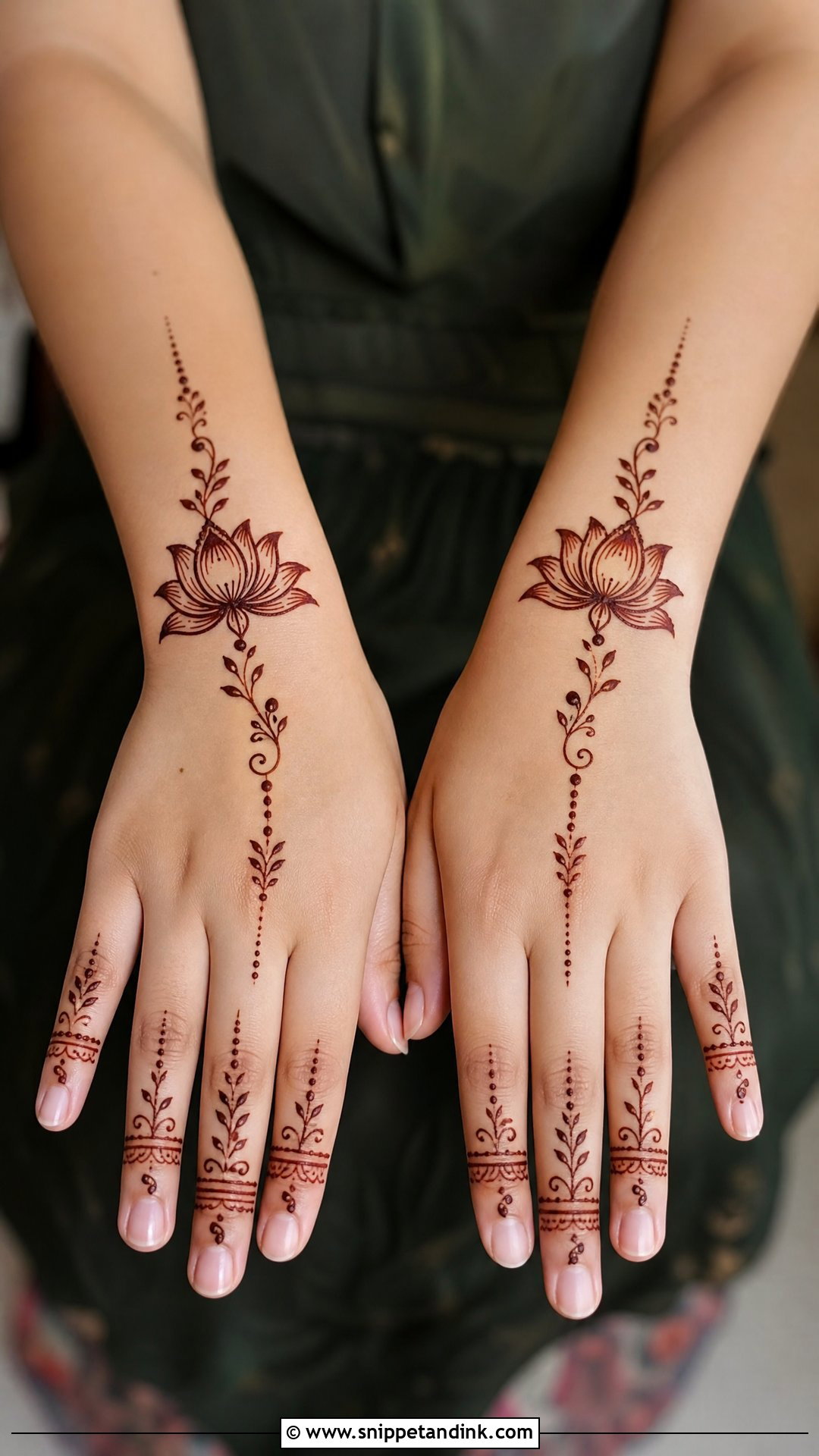
Short fingers look longer when the eye travels upward, so I place the lotus near the wrist or lower back hand and draw thin vertical vines toward the fingers. Finger patterns stay narrow: small dots, slim leaves and light bands. Solid fingertip caps are what I’d avoid, because a dark block at the tip visually chops the finger shorter. A side trail or a single central chain both do the lengthening job well.
27. Lotus Mehndi Design For Long Fingers
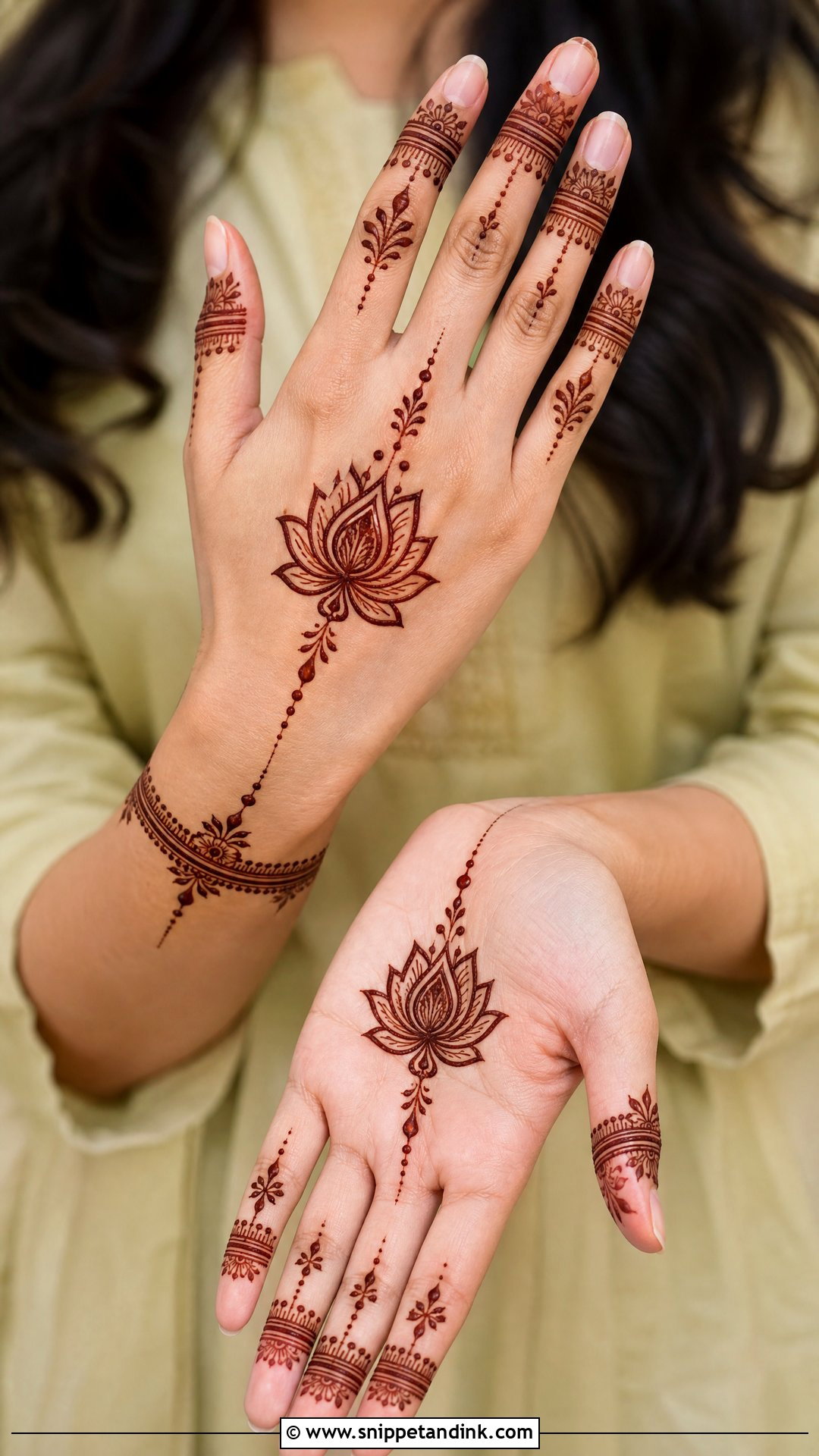
Long fingers give me room to add small repeated petals and fine bands without anything looking crowded, so this is the one layout where I let the fingers carry most of the detail. The lotus anchors the palm or back hand, and the rest of the hand stays open to keep the balance. On very slim fingers I still keep the bands thin, since thick ones can make the fingers look bony. It suits bridesmaids and engagement guests who like detail but not coverage.
28. Moroccan Lotus Mehndi Design
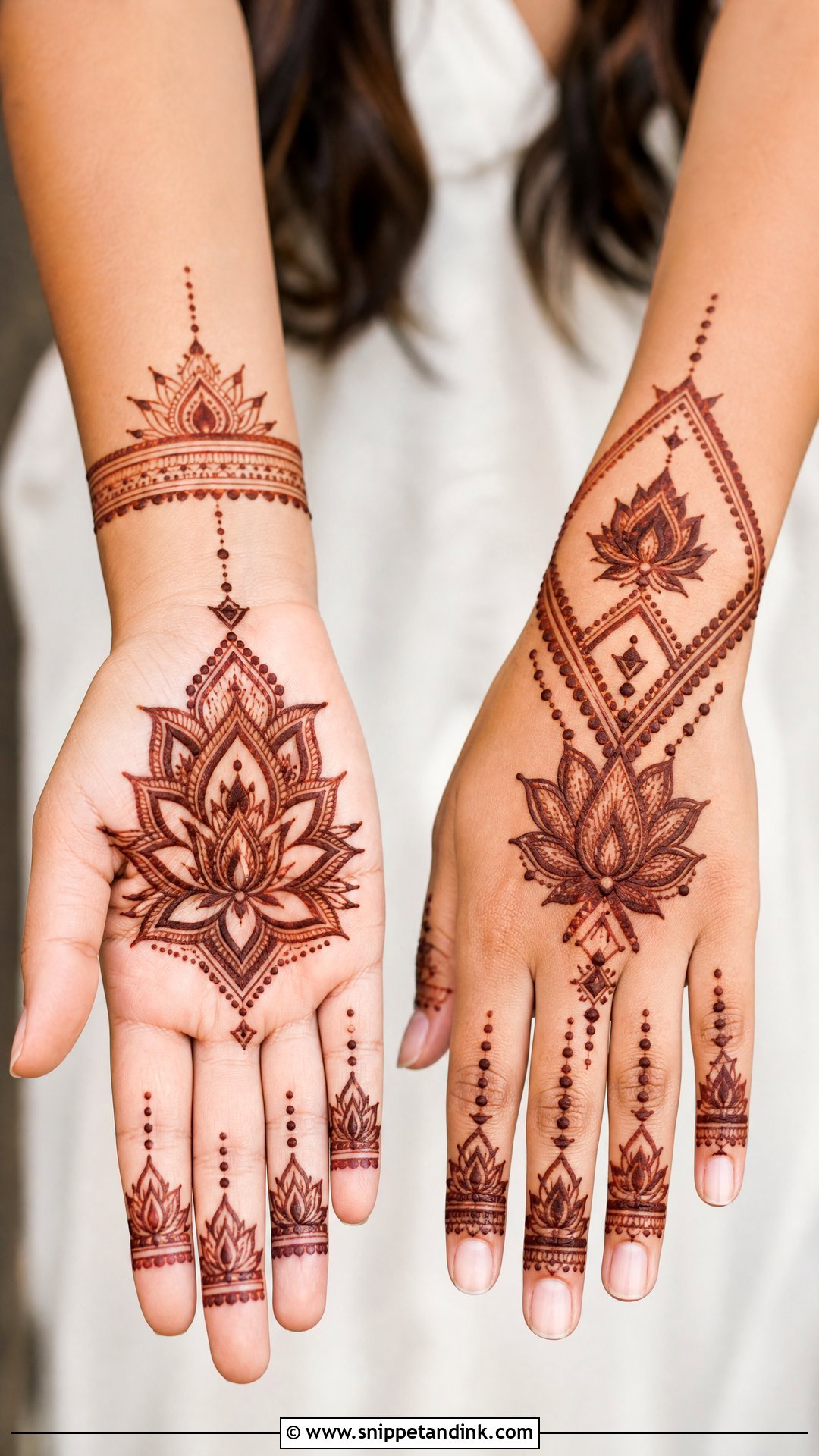
Moroccan-inspired henna is built from straight lines, small triangles, diamonds and dots, and putting a lotus in the middle softens all that geometry. I draw the frame lightly so the flower doesn’t get swallowed. Straight lines are harder to draw cleanly than curves, so this is not the design for a beginner practicing at home; any wobble shows. For someone bored of floral trails, though, it’s one of the most distinctive layouts here.
29. Gulf Lotus Mehndi Design
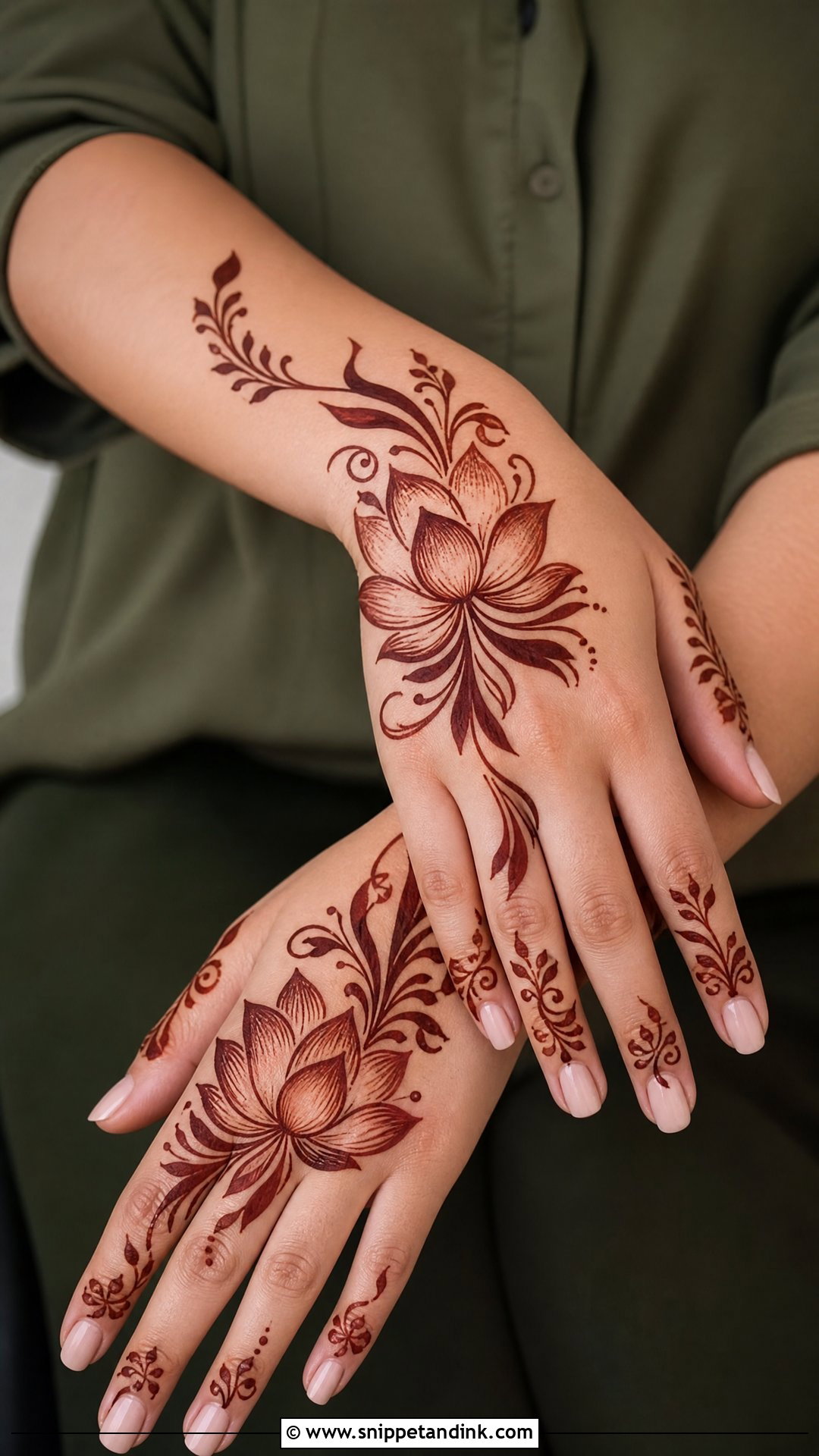
A Gulf lotus mehndi design uses one large open lotus on the back hand, shaded softly inside the petals, with flowing leaves, curved lines and light finger accents. Khaleeji work relies on bold shapes and generous empty space, so a lotus fits it naturally. The shading is done with thinned strokes, and it stains as a lighter tone inside the outline, which is what gives the flower its depth. I keep the wrist to one curved band or dotted chain. It’s dressy enough for Eid evenings and weddings.
30. Modern Minimal Lotus Mehndi Design
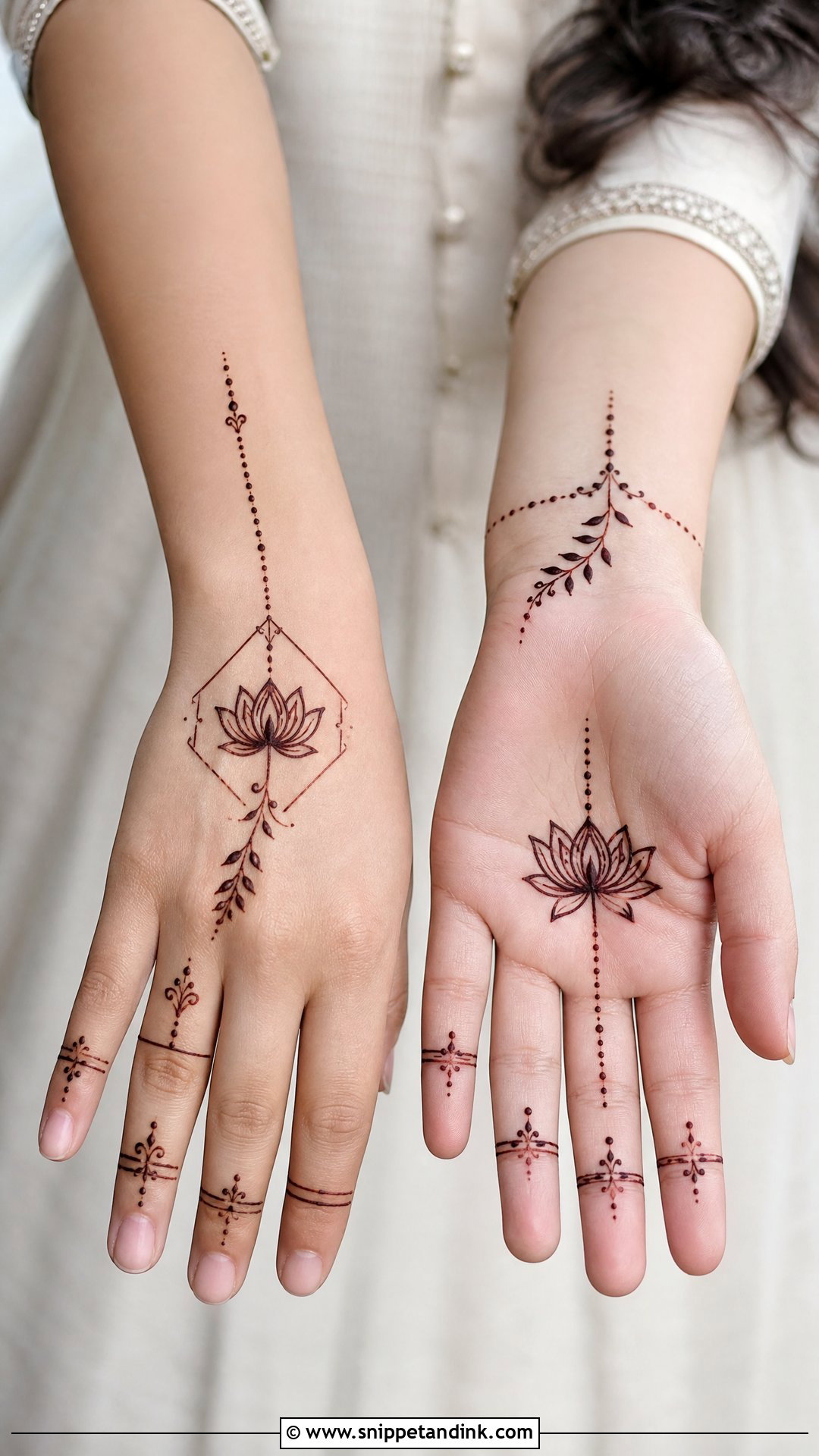
Modern minimal is mostly about what I leave out. One lotus on the back hand, palm or wrist, then only the details that support it: a single-line vine, a short dot chain, slim finger rings or a small geometric frame. I avoid filling the petals and adding side motifs. This is the design I suggest for contemporary outfits and neutral nails, and for anyone who finds traditional henna too busy for their taste.
Paste, Patch Tests and the First Two Days
A minimal design has nowhere to hide a weak stain, so how the paste is made and handled matters even more than with heavy patterns. Natural henna paste is brown or green when wet, smells earthy, and leaves an orange stain that deepens over time. If a cone promises an instant black result, it likely contains PPD, a hair-dye chemical that can cause blistering and lasting skin reactions. I won’t use it, and I’d walk away from anyone who offers it.
If you’ve never had henna, ask for a small dot on the inner arm a day or two before. Natural henna rarely causes a problem, but essential oils in the mix sometimes irritate sensitive skin.
Aftercare that actually changes the color
- Leave the paste on as long as you comfortably can. Six to eight hours is good; overnight is better.
- Dab on a little lemon and sugar once the paste is dry to the touch. It keeps the paste stuck to the skin; don’t soak it.
- Scrape the dried paste off with a blunt edge or rub it away. Avoid washing it off with water.
- Keep the area dry for as long as you can, ideally until the next day.
- Expect orange at first. The stain usually reaches its darkest a day or two later and then lasts one to three weeks, fading fastest where you wash and scrub.
Exfoliating scrubs, chlorine pools and hand sanitizer all speed up fading, so save the manicure and the swim for after the celebration.
A Single Lotus, Placed Well, Is Enough
A lotus doesn’t need heavy filling to stand out. Across palm motifs, back-hand chains, wrist bracelets, Arabic trails, mandalas and negative-space layouts, the ones that work all come down to clean petals, even dots and space left on purpose. Pick the placement first, based on how dark you want the stain and what your hands will be doing that week, then choose the pattern that fits it. If you’re practicing at home, start with the palm lotus or the vine and work toward the jaali and Moroccan layouts once your lines are steady.
You'll Like These Ideas:




Leave a Reply