
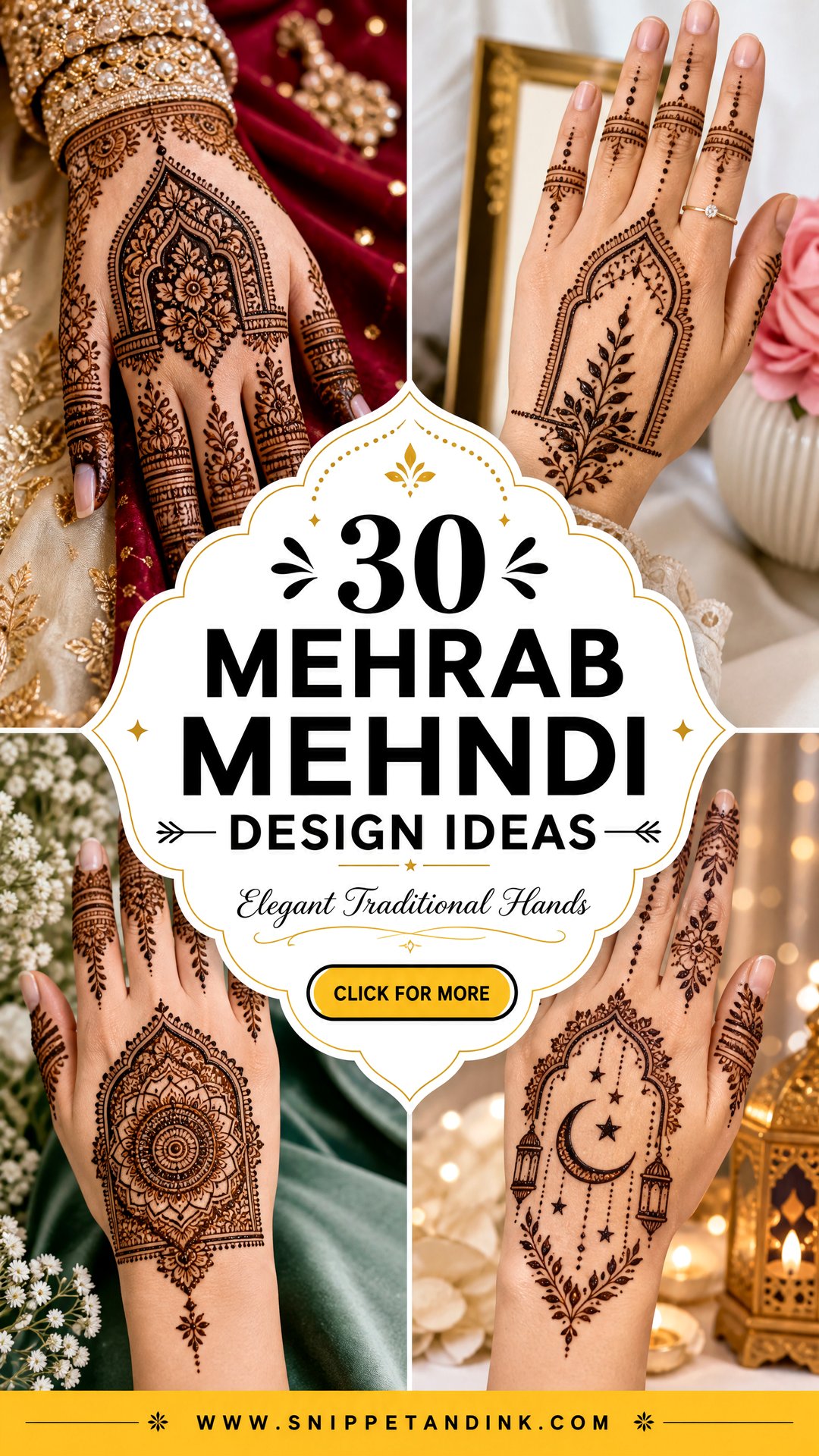
A mehrab is the pointed or rounded arch you see framing doorways and prayer niches, and on a hand it does the same job: it gives the eye a frame to settle inside. That’s why I like it as a structure. Once the arch is drawn, everything else, the florals, jaali, paisleys and finger work, has a place to belong. The same arch can carry a bare Eid design with a few dots inside or a full bridal layout running to the elbow. Some of the thirty designs below are a single dome on the palm; others repeat the arch up the forearm. A few, like the plain outlined versions, make a good beginner-friendly layout if you are practising on your own hand.
Placing a Symmetrical Arch on a Hand That Isn’t Flat
Hands curve, palms have creases, and fingers sit at slightly different angles, so an arch that looks centred on paper can look tilted on skin. Before the first line, I ask the client to rest her hand flat and relaxed, the way it will lie for the rest of the session. Then I place a tiny dot at the top of the arch and two at its base, step back, and check from a distance before connecting them.
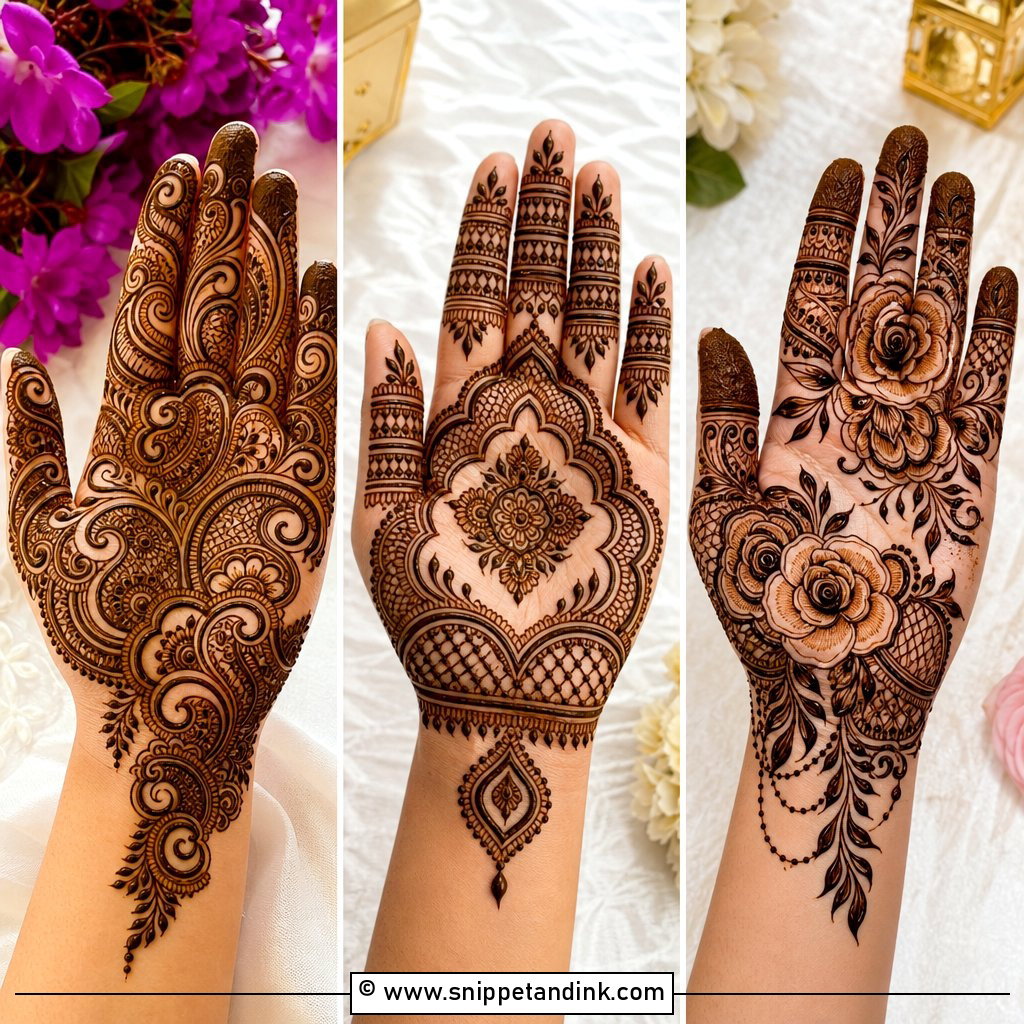
- On the palm, I line the arch up with the middle finger rather than the centre of the palm, because the eye reads the hand from the fingers down.
- On the back of the hand, the arch sits between the knuckles and the wrist bone, clear of the knuckles where the skin wrinkles.
- For both hands, I draw the outer arches first on each before filling either. Matching them early is much easier than correcting later.
If you prefer the arch slightly off-centre, which suits Arabic and Indo-Arabic layouts, say so at the start. A deliberate diagonal looks designed; an accidental one looks like a mistake.
1. Simple Mehrab Mehndi Design
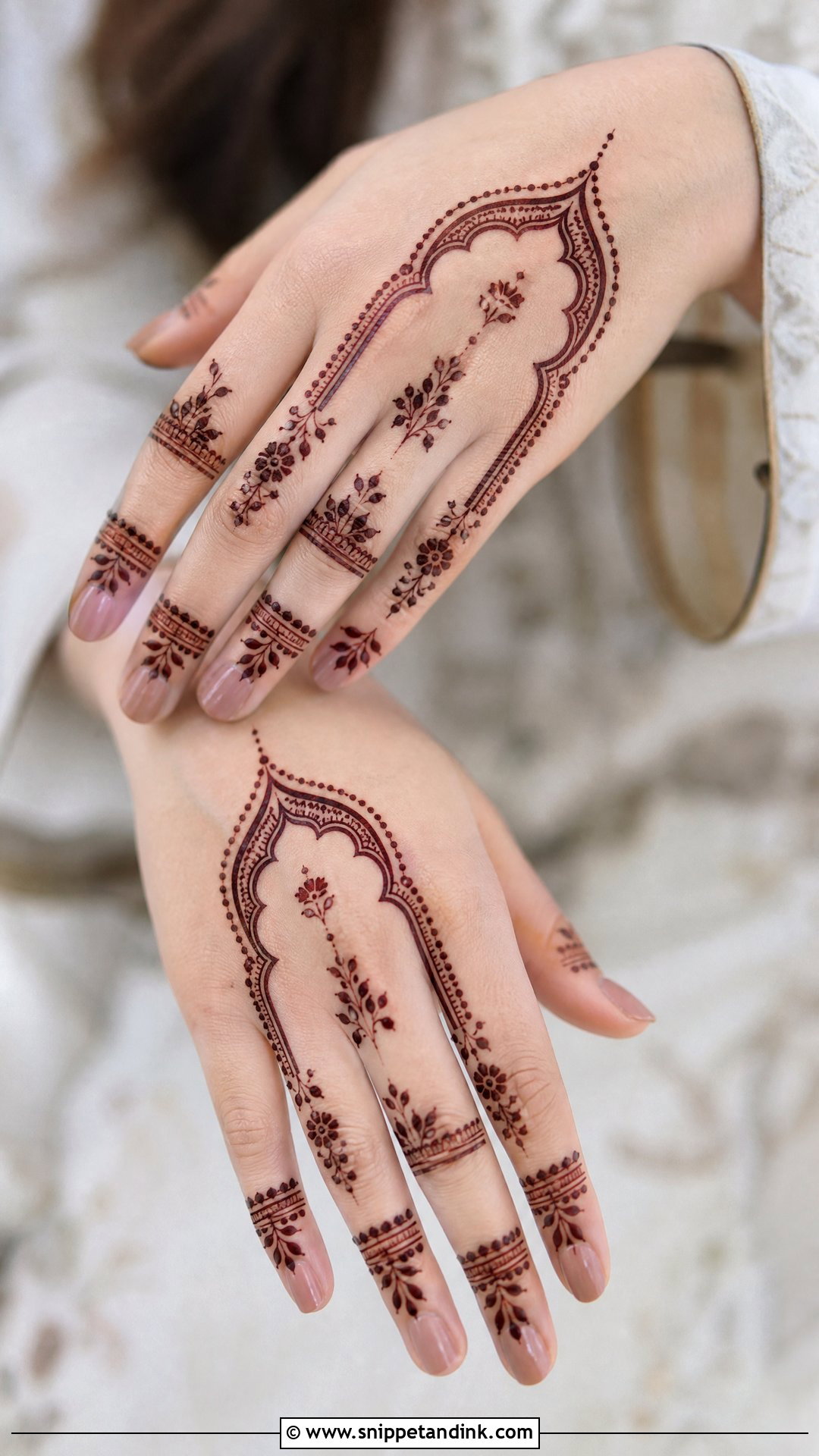
The simplest mehrab is one clean dome with a double border, a few dots and two or three floral strokes inside. I draw the outer line with a slightly thicker opening of the cone and switch to the finest tip for anything inside it, which gives the arch a crisp edge after the stain develops. Fingers stay light: a leaf line, or a band at the tip. It’s quick, usually done in well under half an hour per hand, and it suits an Eid morning or a family lunch where you’ll be cooking and washing up the next day.
2. Arabic Mehrab Mehndi Design
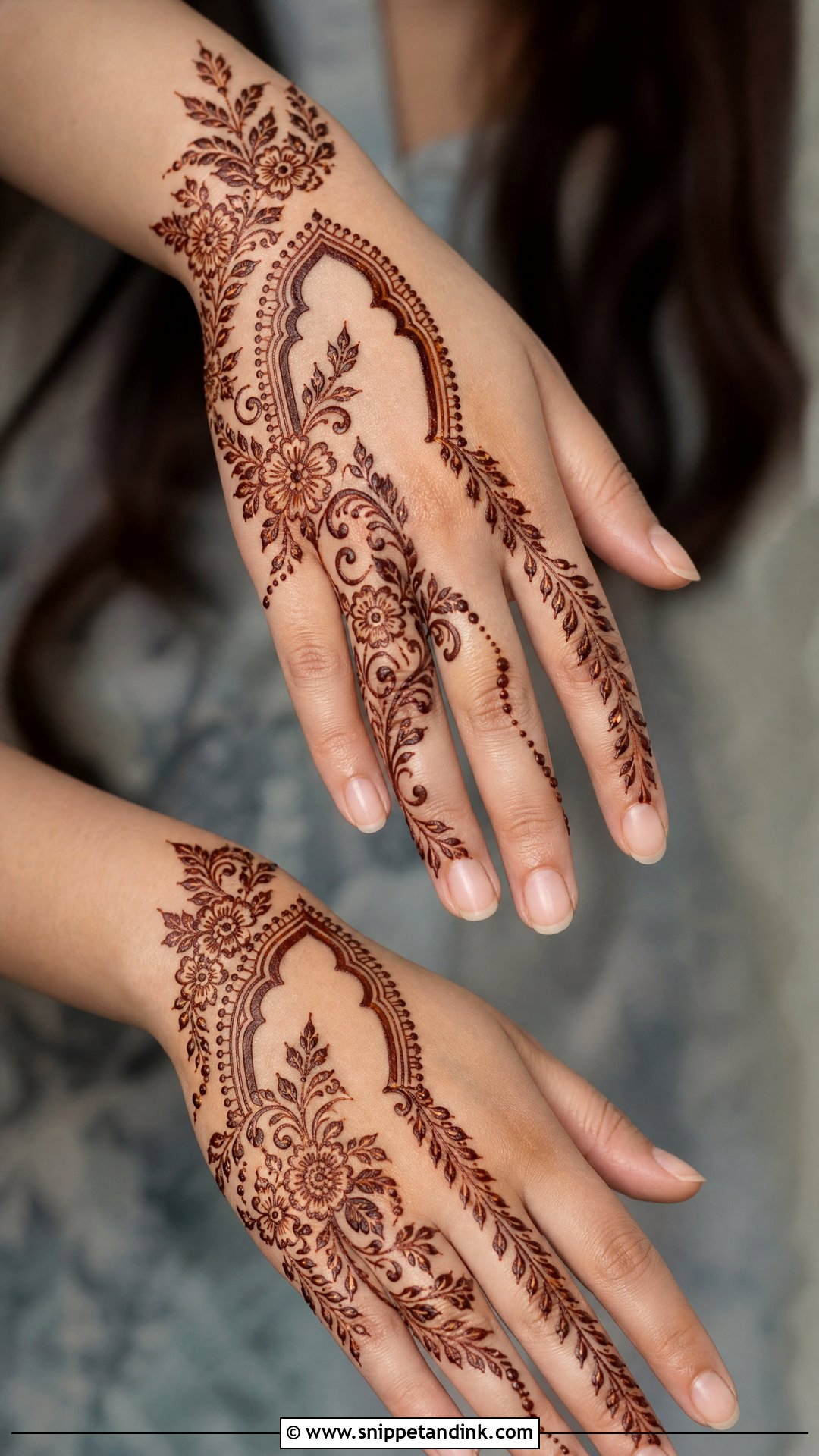
Arabic layouts run diagonally, so here the arch sits near the wrist and the design climbs across the back of the hand to finish on the index or middle finger. The arch is the anchor; big shaded petals and dotted vines trail off it. Shading is done by pulling a thinner, drier line of paste inside each petal, and it shows as a lighter brown against the darker outline. Bold, open patterns like this stain clearly and hold up as the colour fades, which makes them a reliable festive choice.
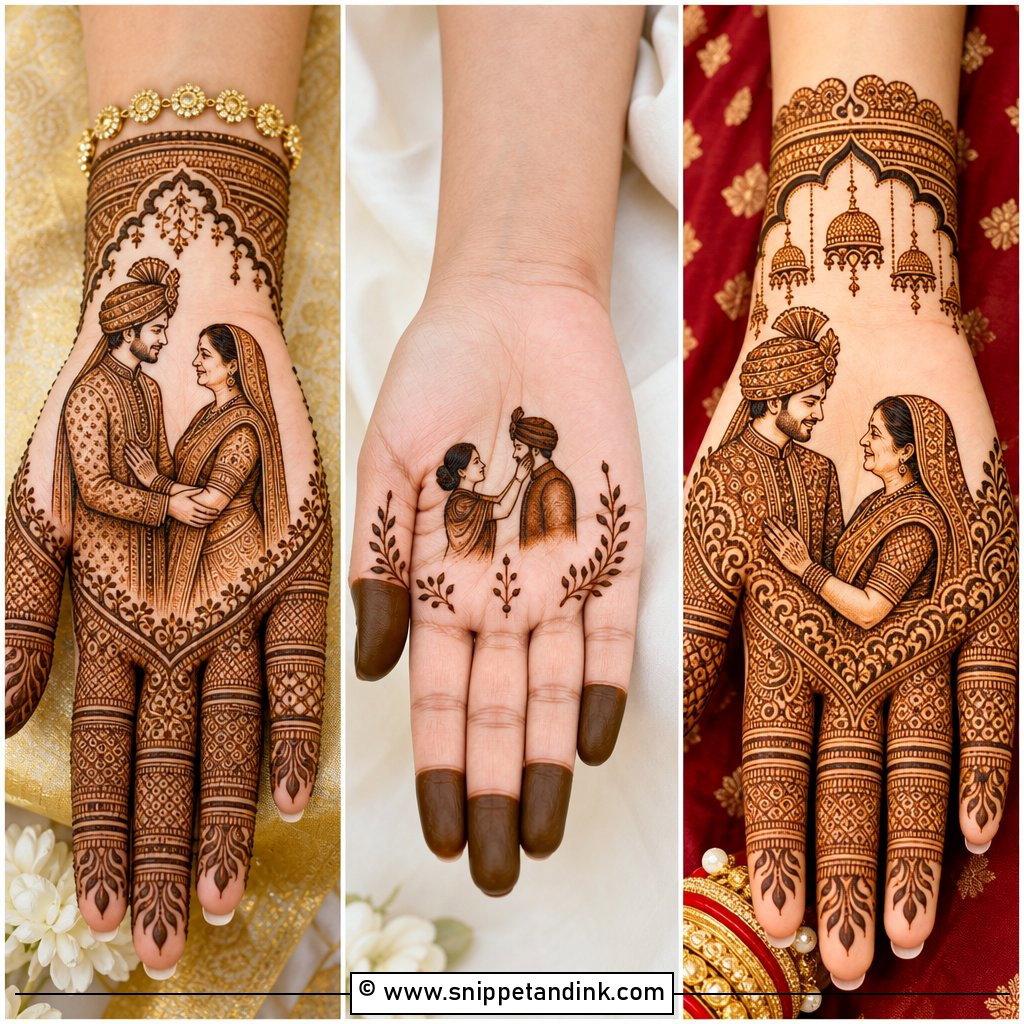
3. Bridal Mehrab Mehndi Design
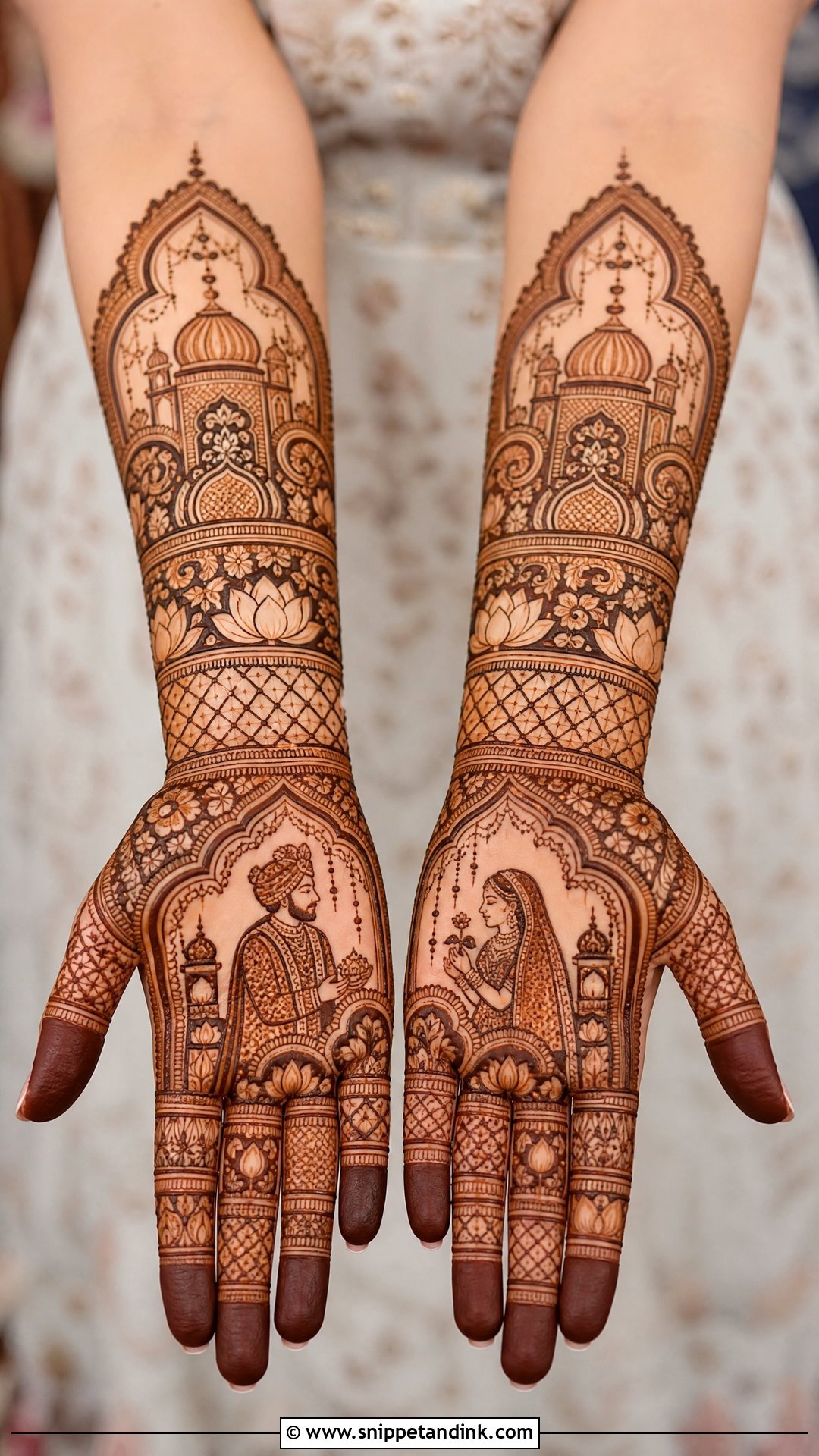
For a bride, the mehrab becomes the centrepiece, usually a large dome on the palm filled with paisleys, lotus forms, jaali panels and sometimes a small bride-and-groom figure. Fingers get stacked bands to echo it, and the whole design runs from fingertips to forearm. The real work is balance. I keep the outer arch bold enough to read in a wide photo, then fill the inside with the fine detail that only shows up close. Full bridal hands take hours, so I ask brides to eat beforehand and plan for a long sit.
4. Back Hand Mehrab Mehndi Design
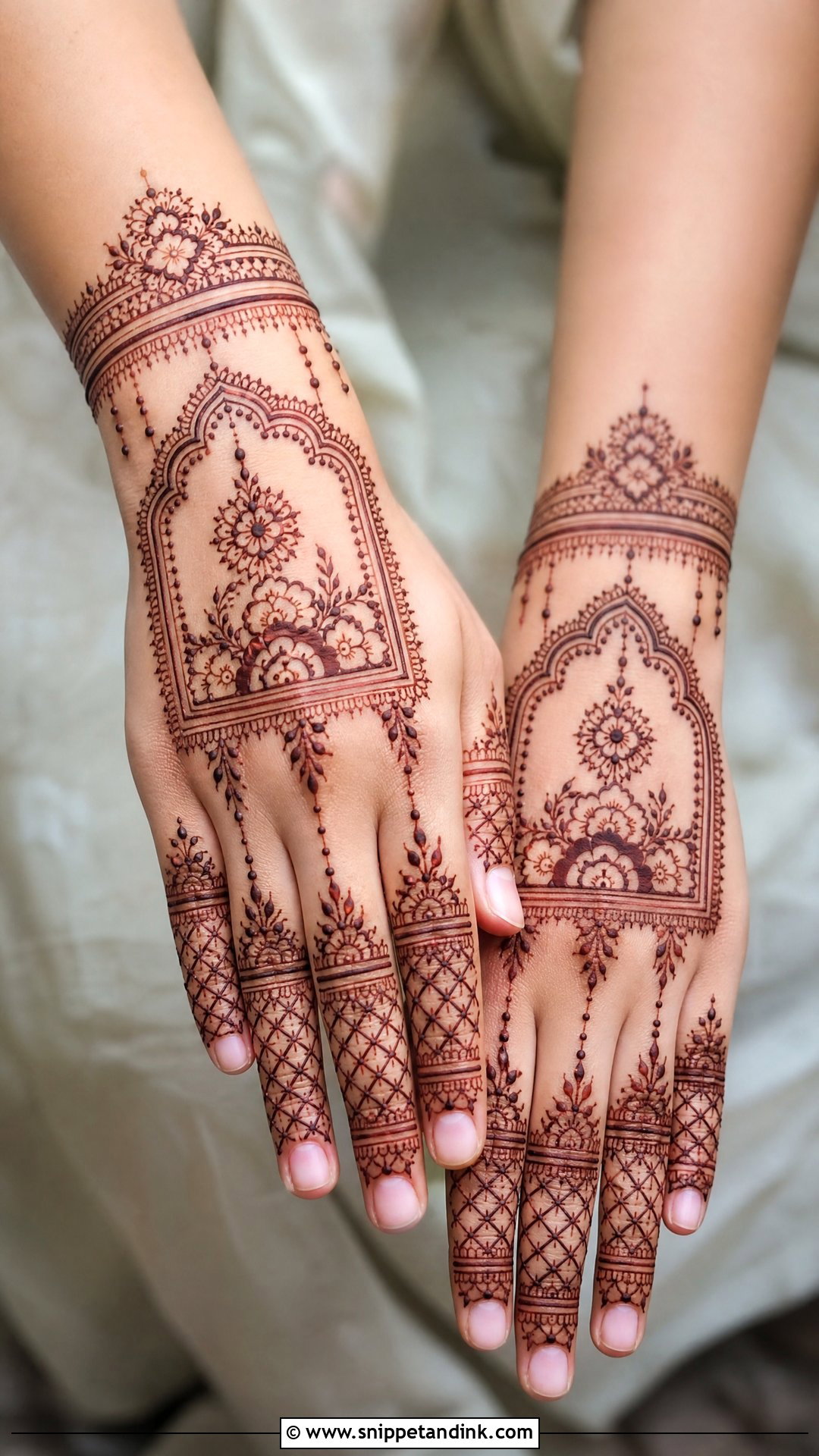
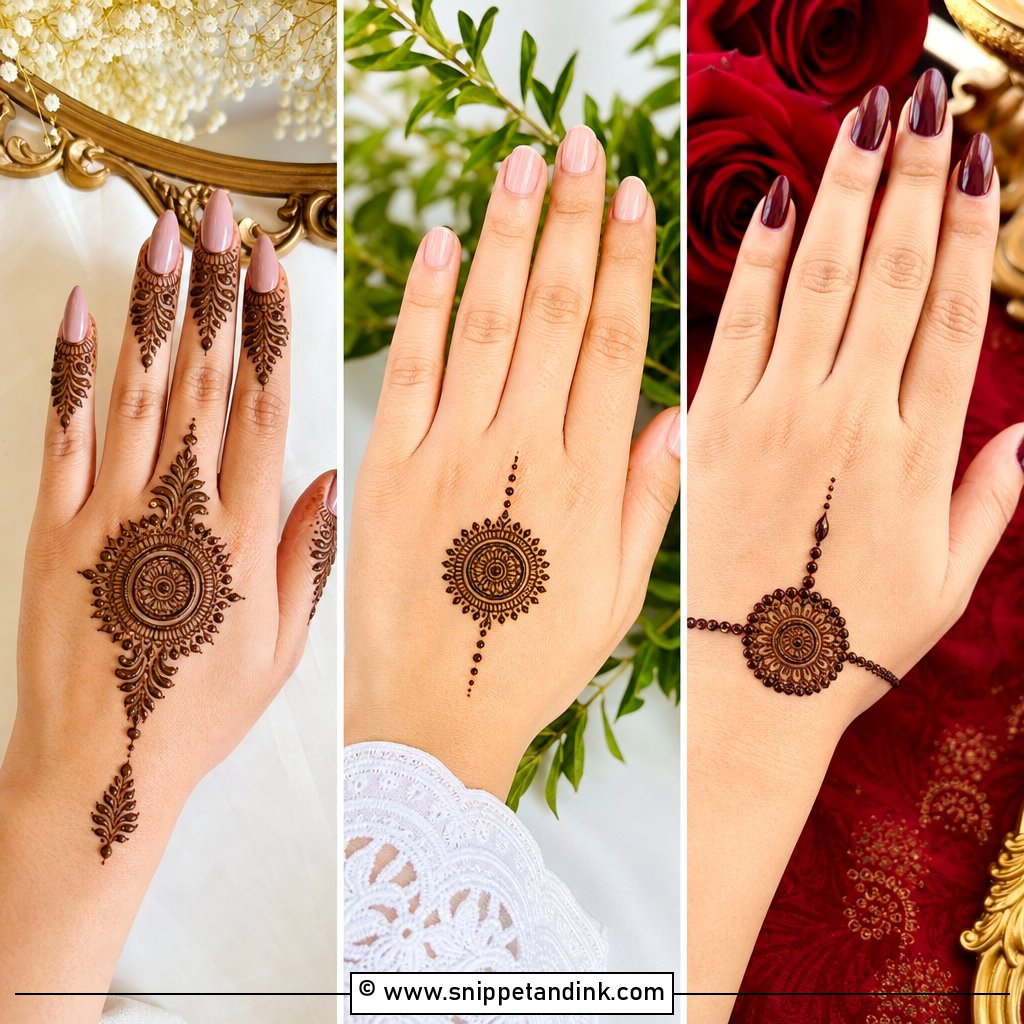
On the back of the hand, the arch acts like a jewellery setting: centred, with chain lines reaching toward the knuckles and a bracelet band at the wrist. This side is what shows most in photos, when you’re holding a glass or adjusting a dupatta. If you’ll wear a statement ring, tell me before I start; I leave a small clear zone on that finger so the ring and the design don’t fight. The back of the hand also stains a little lighter than the palm, so I keep the lines here slightly bolder.
5. Front Hand Mehrab Mehndi Design
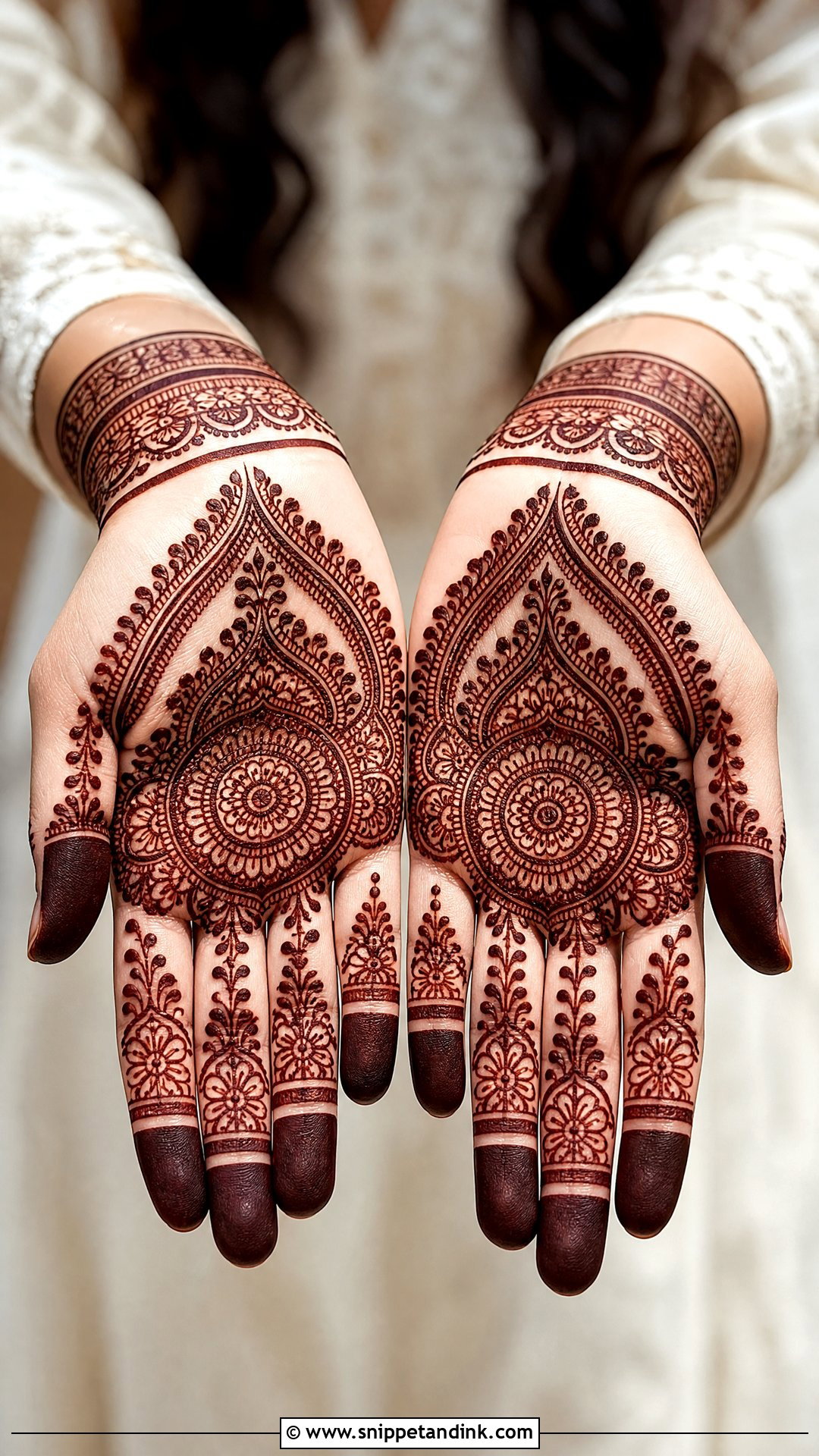
The palm has the most space and stains the darkest, because the skin there is thicker and absorbs more dye. A big mehrab curving up from the wrist toward the centre can hold mandala, paisley, leaves and fine net work inside. I often fill the fingertips solid for contrast and add a cuff-like border at the base. Symmetry is where palm designs succeed or fail. The palm creases make straight lines wobble, so I sketch the centre line first with a tiny dot at top and bottom before drawing the arch.
6. Full Hand Mehrab Mehndi Design
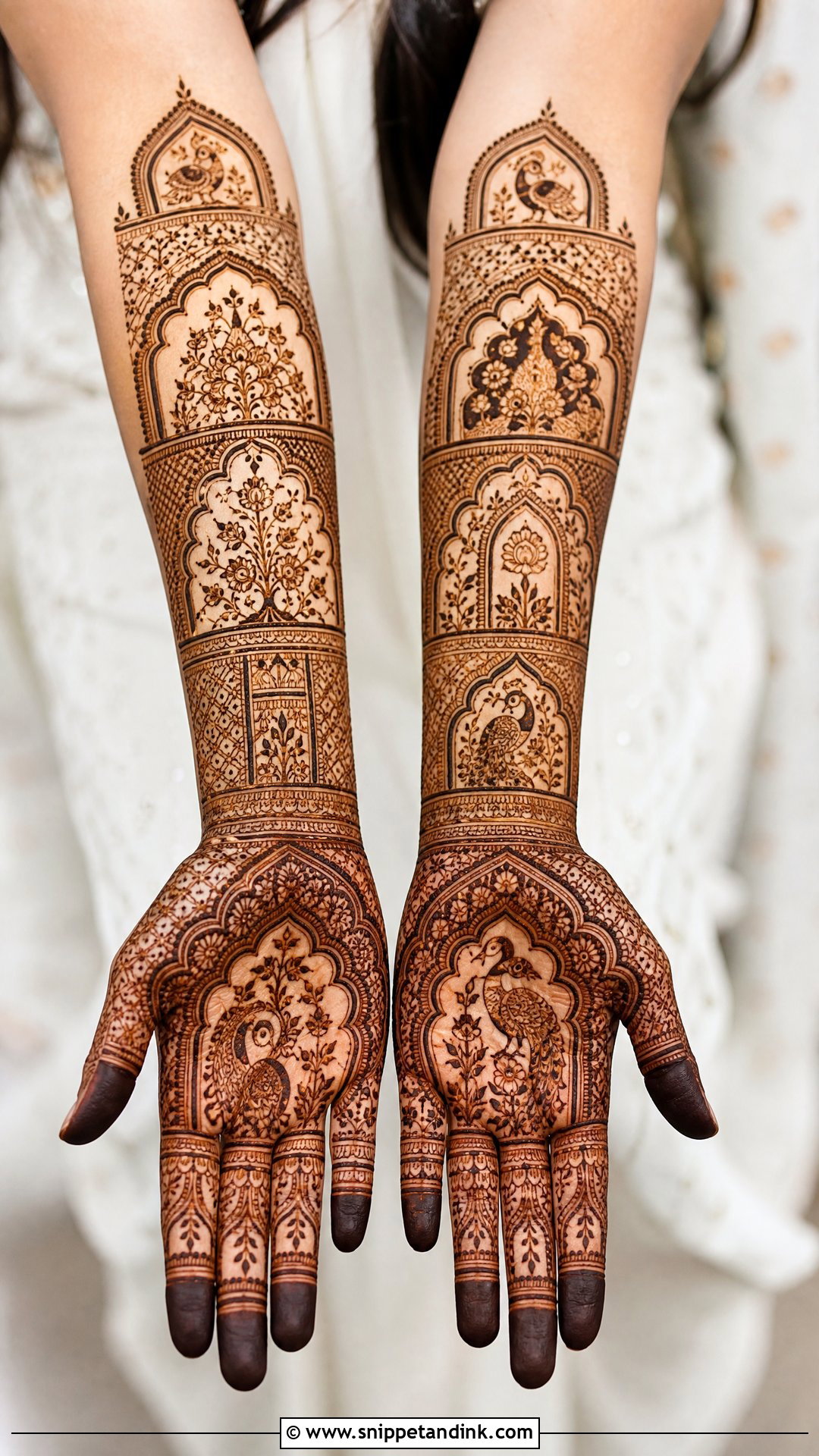
Full hand coverage repeats the arch: one large mehrab on the palm or back, then smaller arch panels stacked up the forearm like a border. Florals, paisleys, peacocks and jaali can each fill a different arch, which keeps a dense design organised. The thing I watch most is spacing. If every panel gets the same density, the arches blur together once the stain darkens, so I leave a thin clear channel along each arch outline. Full hands suit the wedding day and sangeet, and you’ll need someone to feed you for a while afterwards.
7. Half Hand Mehrab Mehndi Design
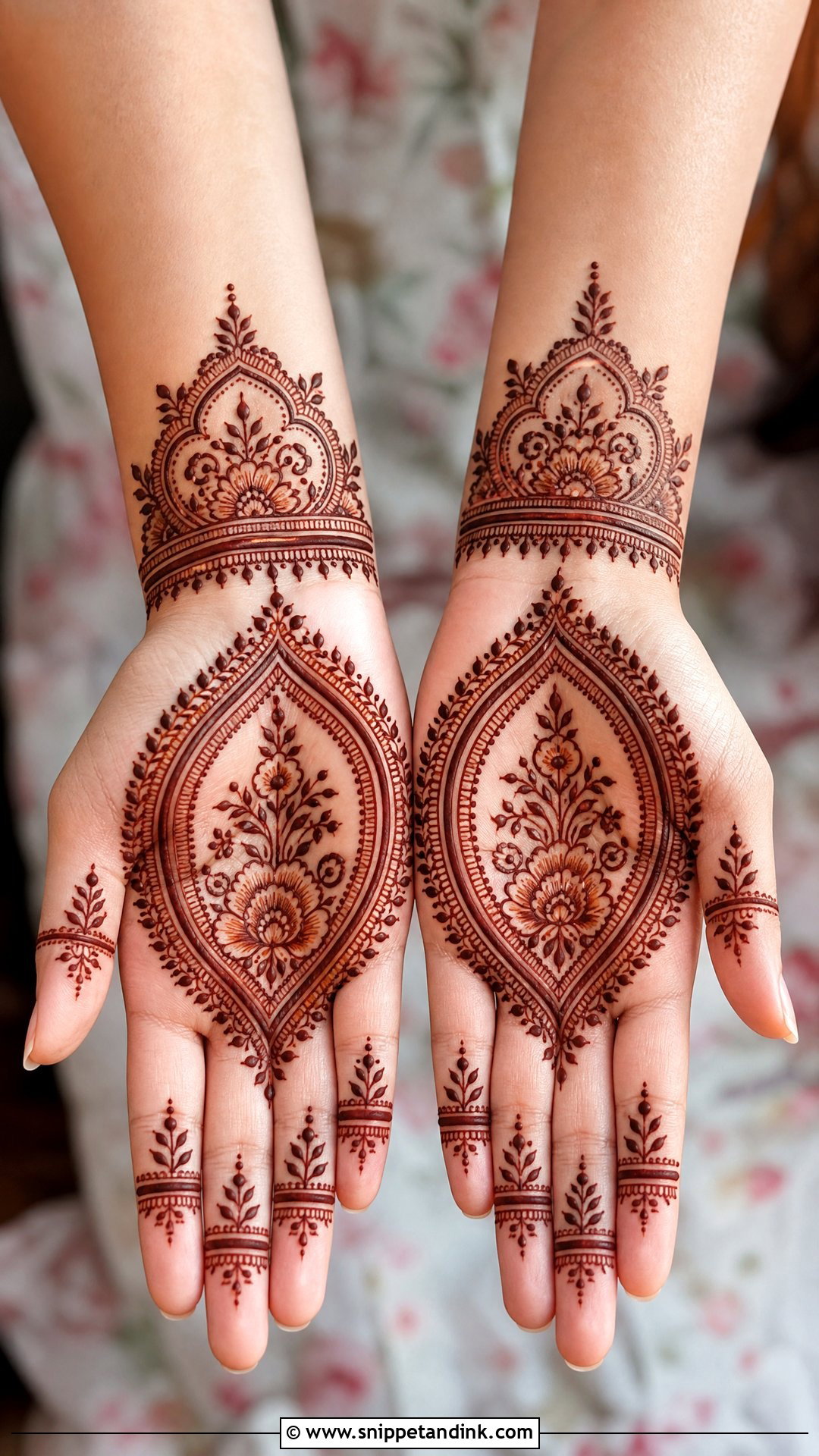
Half coverage gives you a finished hand without the arm. The arch sits in the middle of the palm or back hand, vines soften its edges, and the fingers carry matching bands so it doesn’t look cut off. It dries faster than a bridal design, and you can be up and moving within an hour or so. I’d suggest it for sisters, cousins and teens who have their own roles to play at the function and can’t sit for half the evening.
8. Modern Mehrab Mehndi Design
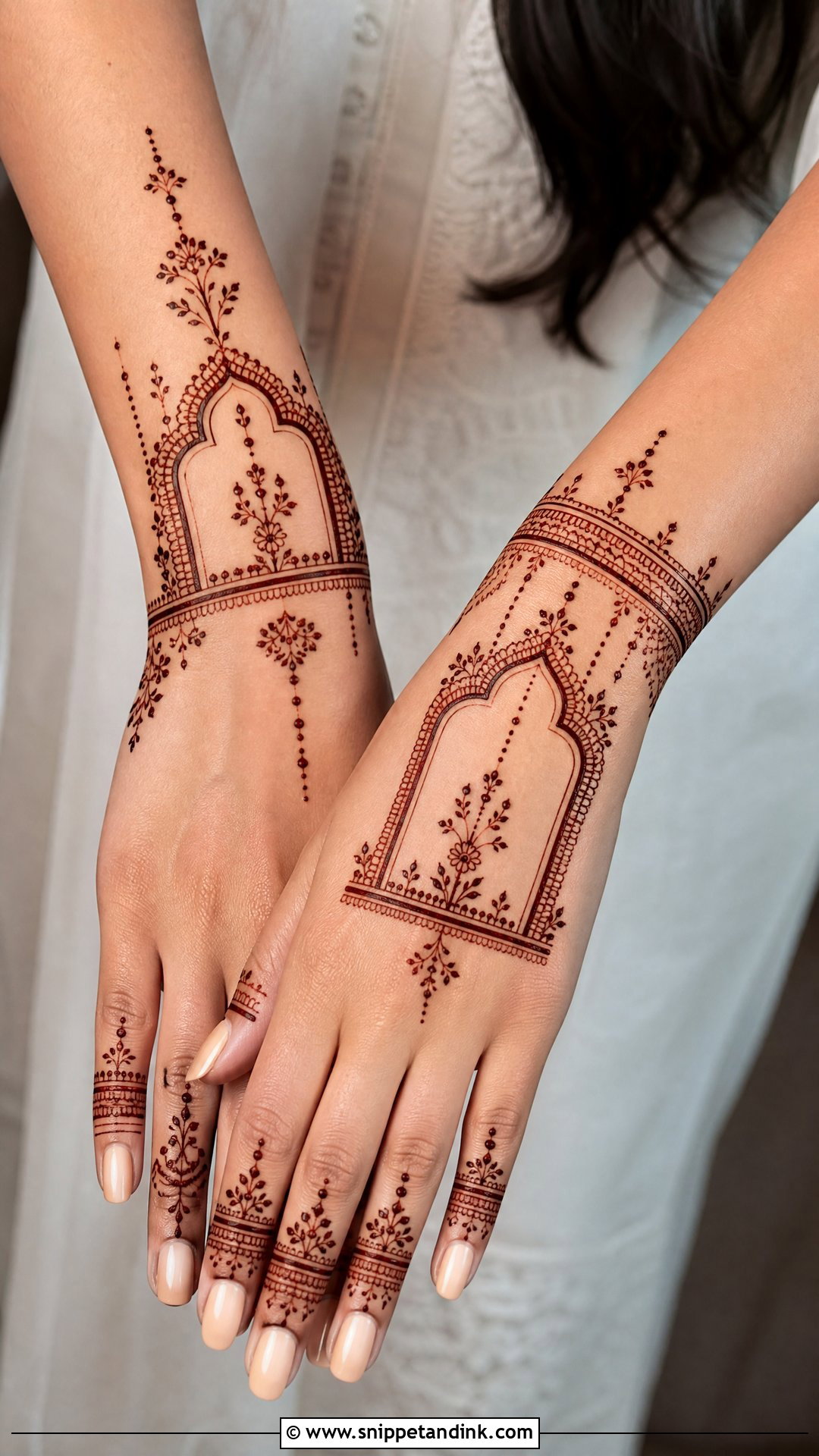
Modern mehrab work leaves a lot of skin bare: one outlined dome, a couple of small florals, thin geometric borders and fine finger bands. With so little on the hand, the line quality has to be perfect, because a wobble has nowhere to hide. I keep the cone pressure steady and draw long lines in one movement rather than stopping and starting. A wrist cuff gives it a finished edge. It sits well with pastel outfits and minimal jewellery.
9. Indian Mehrab Mehndi Design
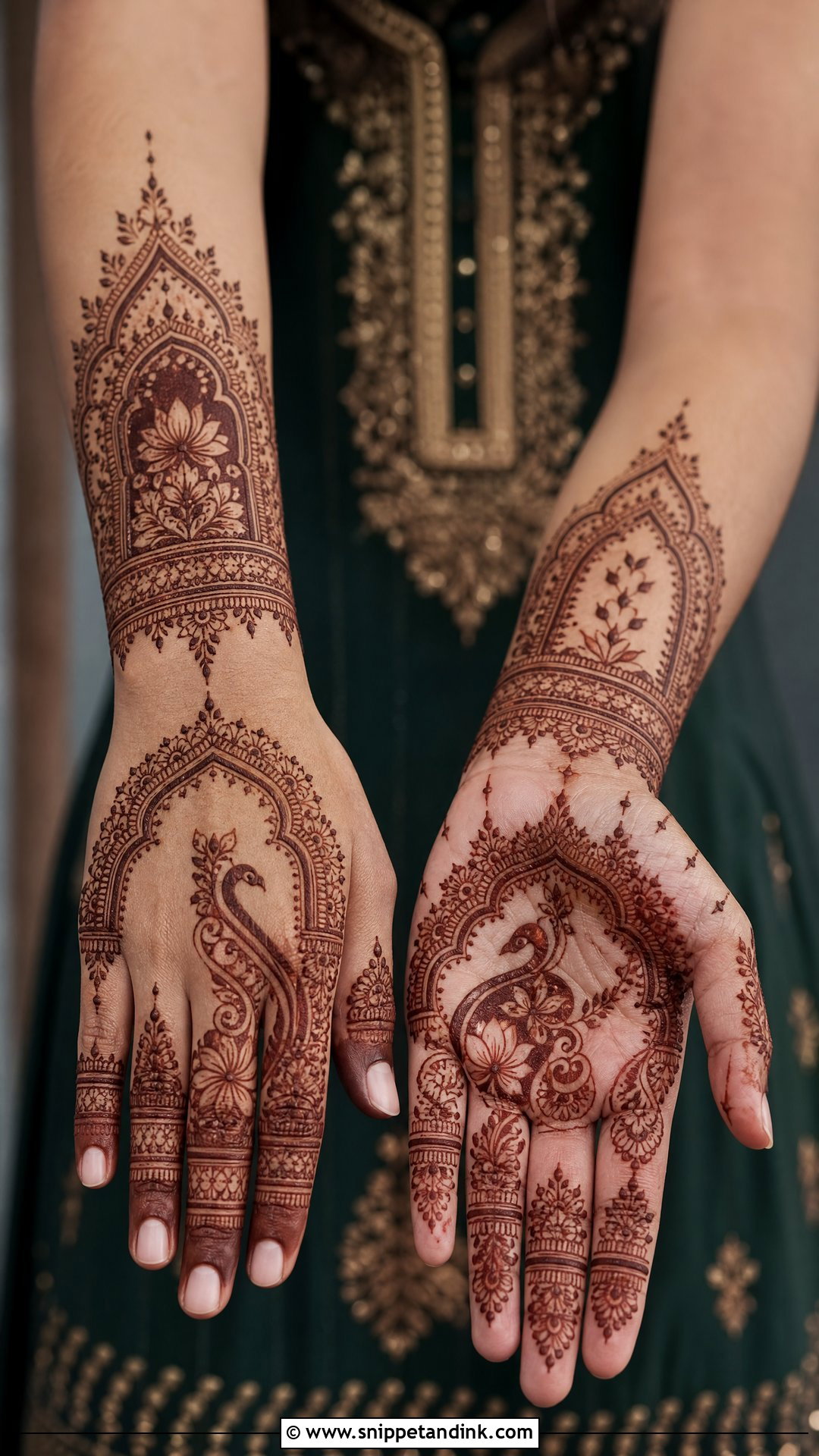
Indian mehrab designs are dense and full of symbols: paisleys, lotus petals, peacock curves, dots and vines, often around a central mandala on the palm. On the back hand the arch tends to connect to a wrist cuff and finger panels. Because so much goes into a small space, I plan the spacing before the first line. Bold borders go around each arch, smaller filling inside, and that hierarchy is what keeps the design readable when the stain reaches its darkest a day or two later.
10. Indo Arabic Mehrab Mehndi Design
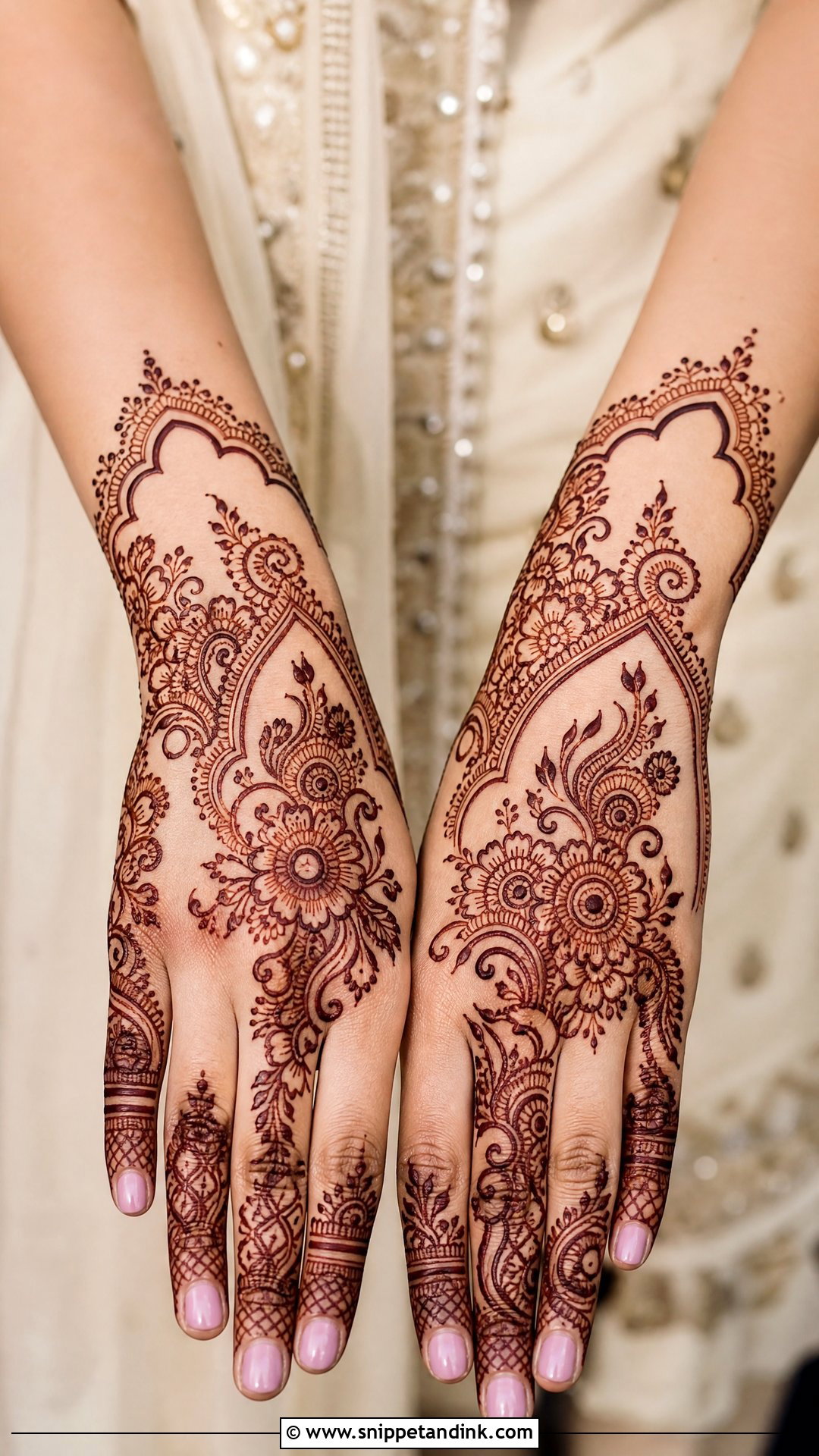
Indo-Arabic mixes the open, flowing layout of Arabic henna with the fine filling of Indian work. In practice, the mehrab gets a strong outer line and big open florals around it, while its inside carries paisley, small grids or a mandala accent. It’s a good middle ground for bridesmaids and engagement guests who want detail without full coverage. I like a diagonal placement here; it makes the hand look longer. Fingertips stay decorated but not packed, so the arch remains the first thing you notice.
11. Moroccan Mehrab Mehndi Design
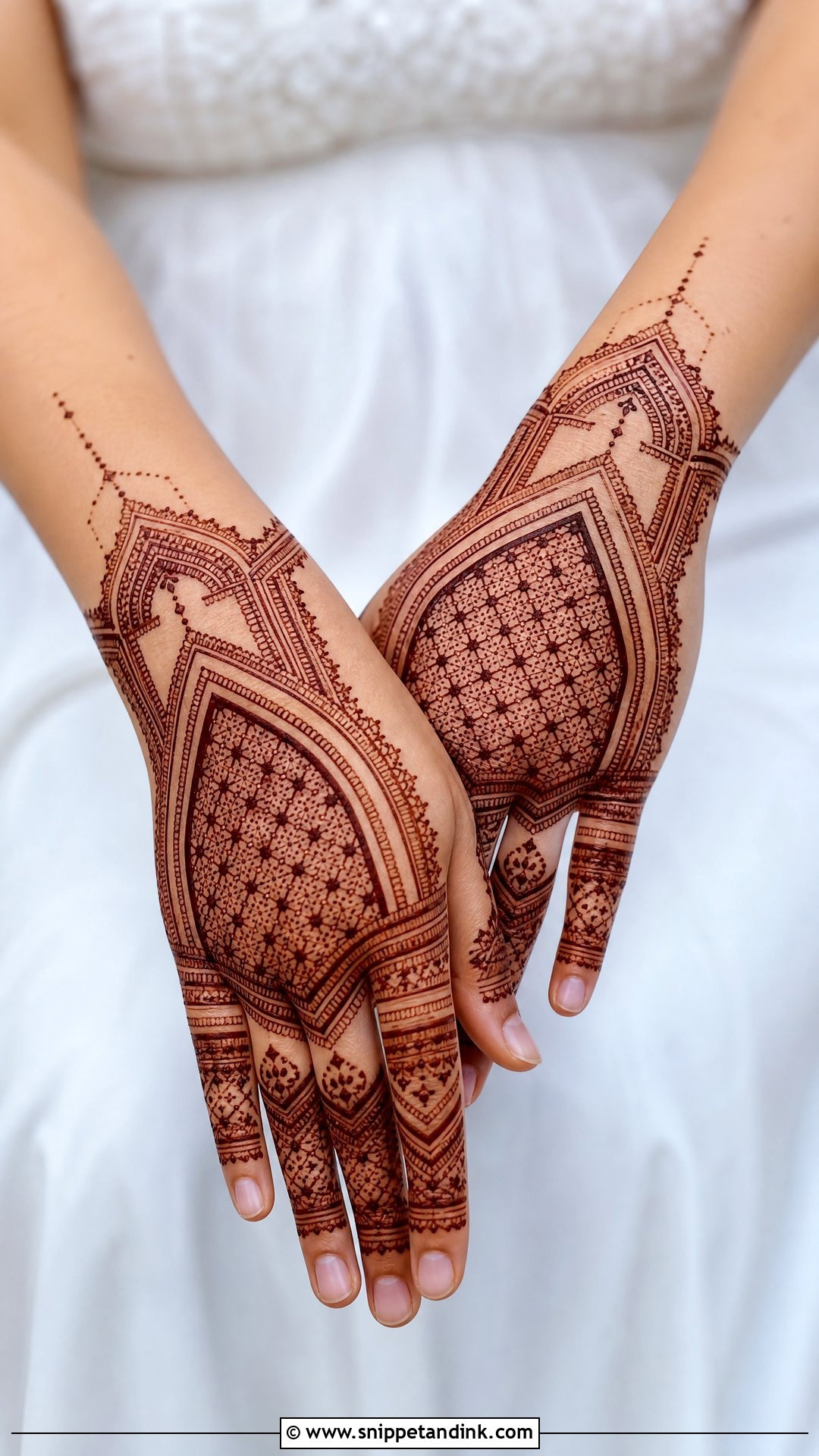
Moroccan-style work replaces flowers with geometry: pointed arches, diamond grids, chevrons and short straight blocks. It’s the hardest style here to do freehand, because geometry shows every uneven gap. I mark the main grid points with tiny dots first, then join them. The back of the hand suits it best, with the arch centred and linked to a wrist band, and matching geometric strips on the fingers. It pairs well with short nails and simple outfits, and it’s a good choice for anyone who finds floral henna too sweet.
12. Gulf Mehrab Mehndi Design
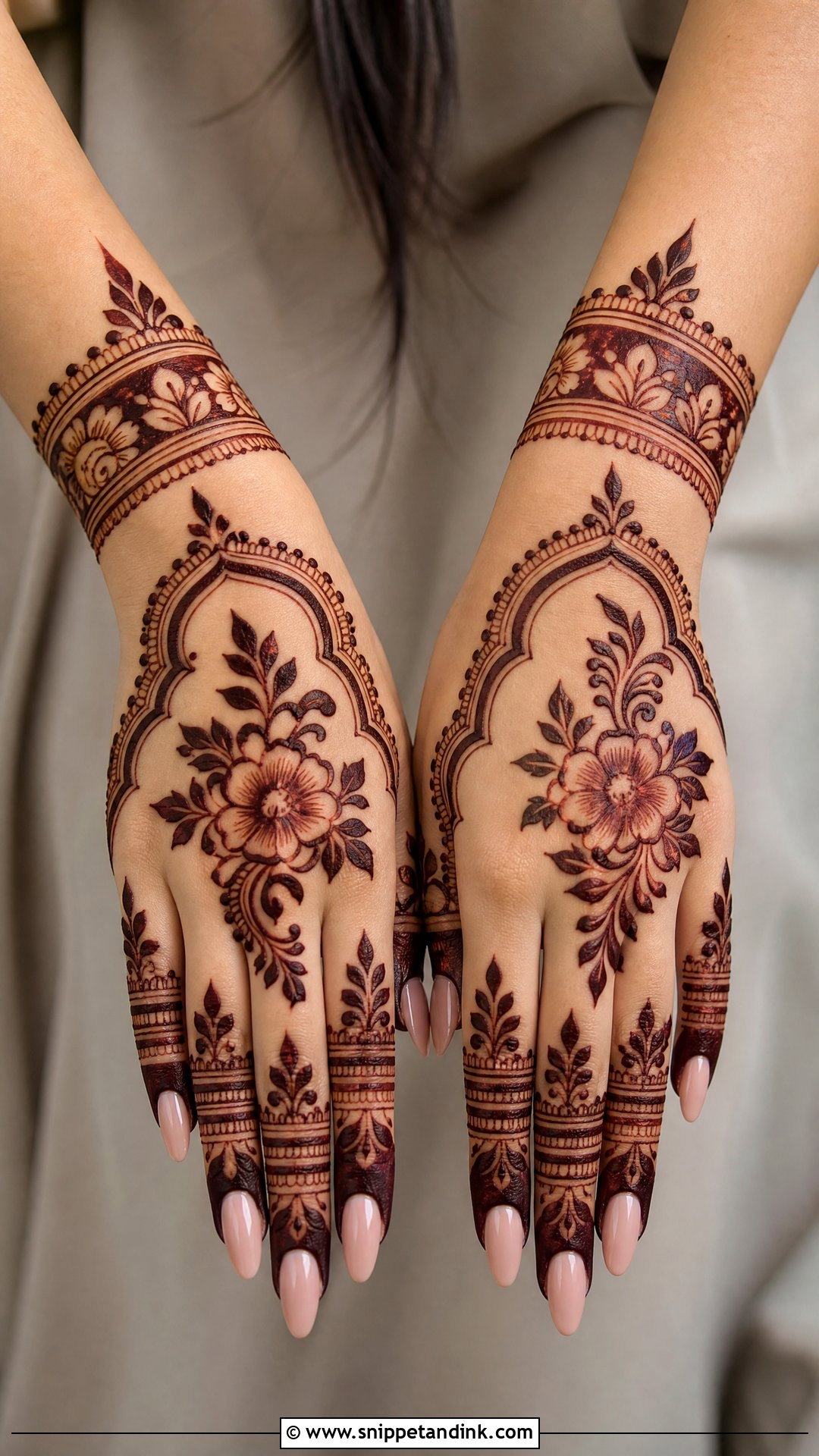
Khaleeji or Gulf henna is bold by design: big flowers, thick outlines, generous gaps and very little fine filling. The mehrab sits across the palm or back hand with large blooms around it, and the fingers get strong bands. Gulf styles are often applied in a thicker line that leaves more paste on the skin, which tends to give a deep, dark stain. Don’t ask for tiny details in this style; they disappear against the big shapes. It suits Eid and evening events where the hands are seen from across the room.
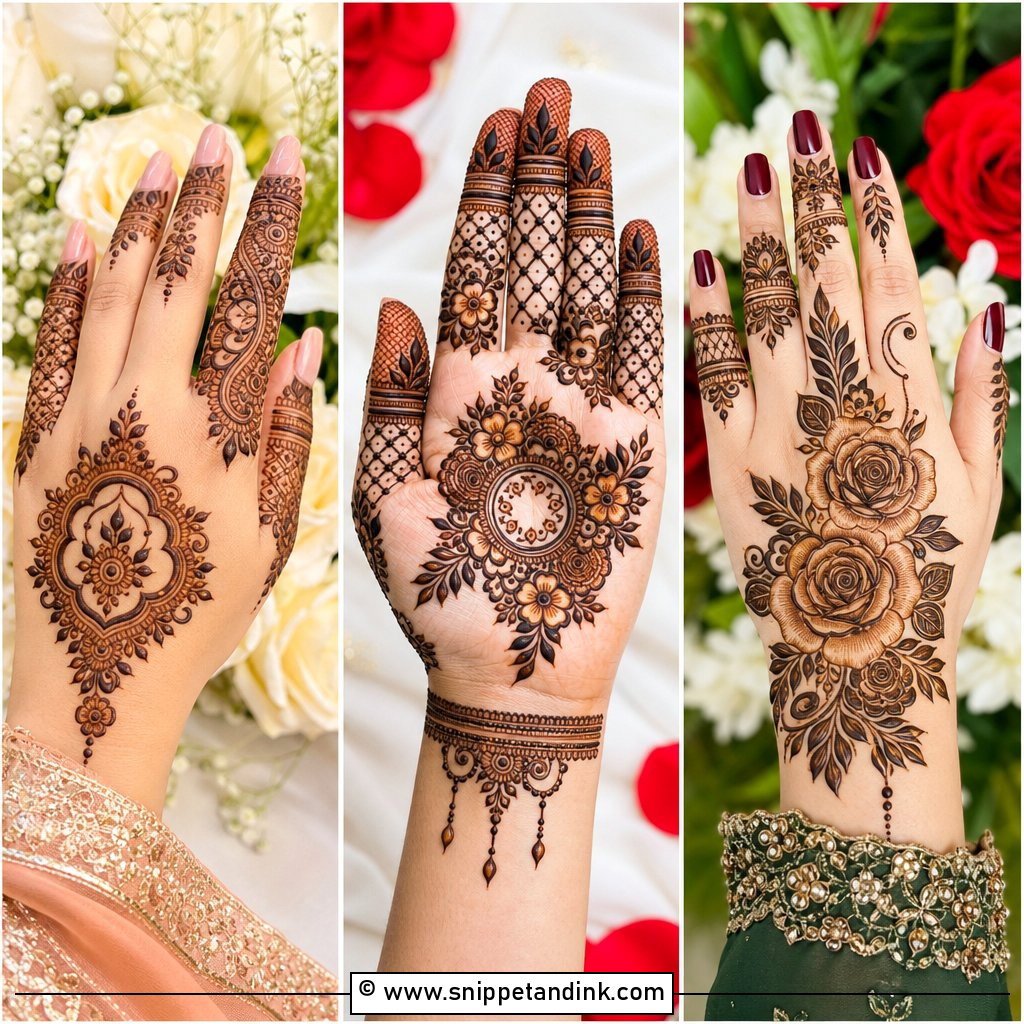
13. Floral Mehrab Mehndi Design
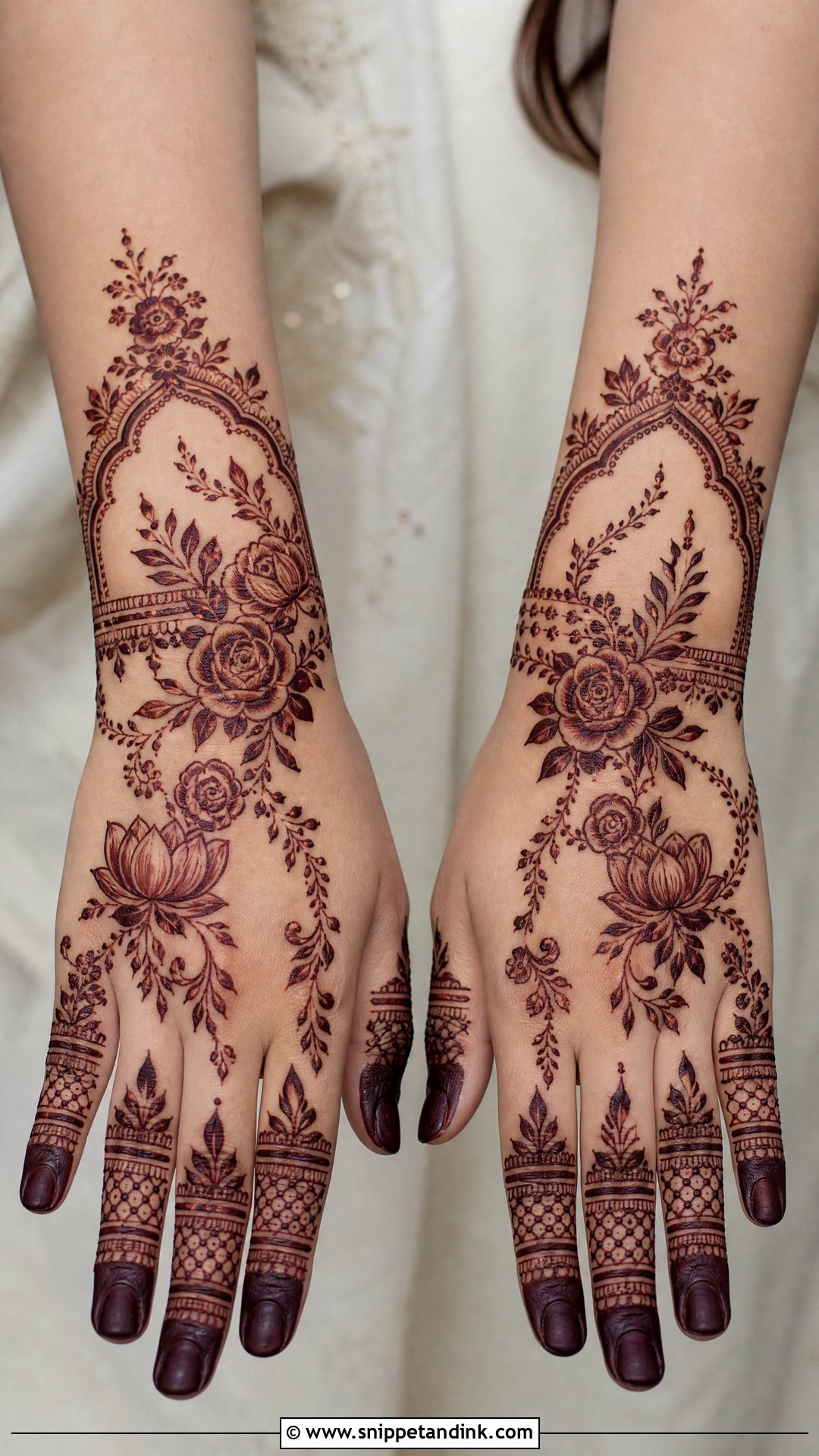
Flowers soften the arch, either clustered inside it or running along the border like a garland. I vary the flower sizes on purpose: three large roses, a few medium blooms, then tiny buds to fill the gaps. When every flower is the same size, the design looks printed rather than drawn. Fingers get small petals and curved leaf bands. This one adapts to nearly any occasion, from a bride’s palm to a simple family celebration.
14. Paisley Mehrab Mehndi Design
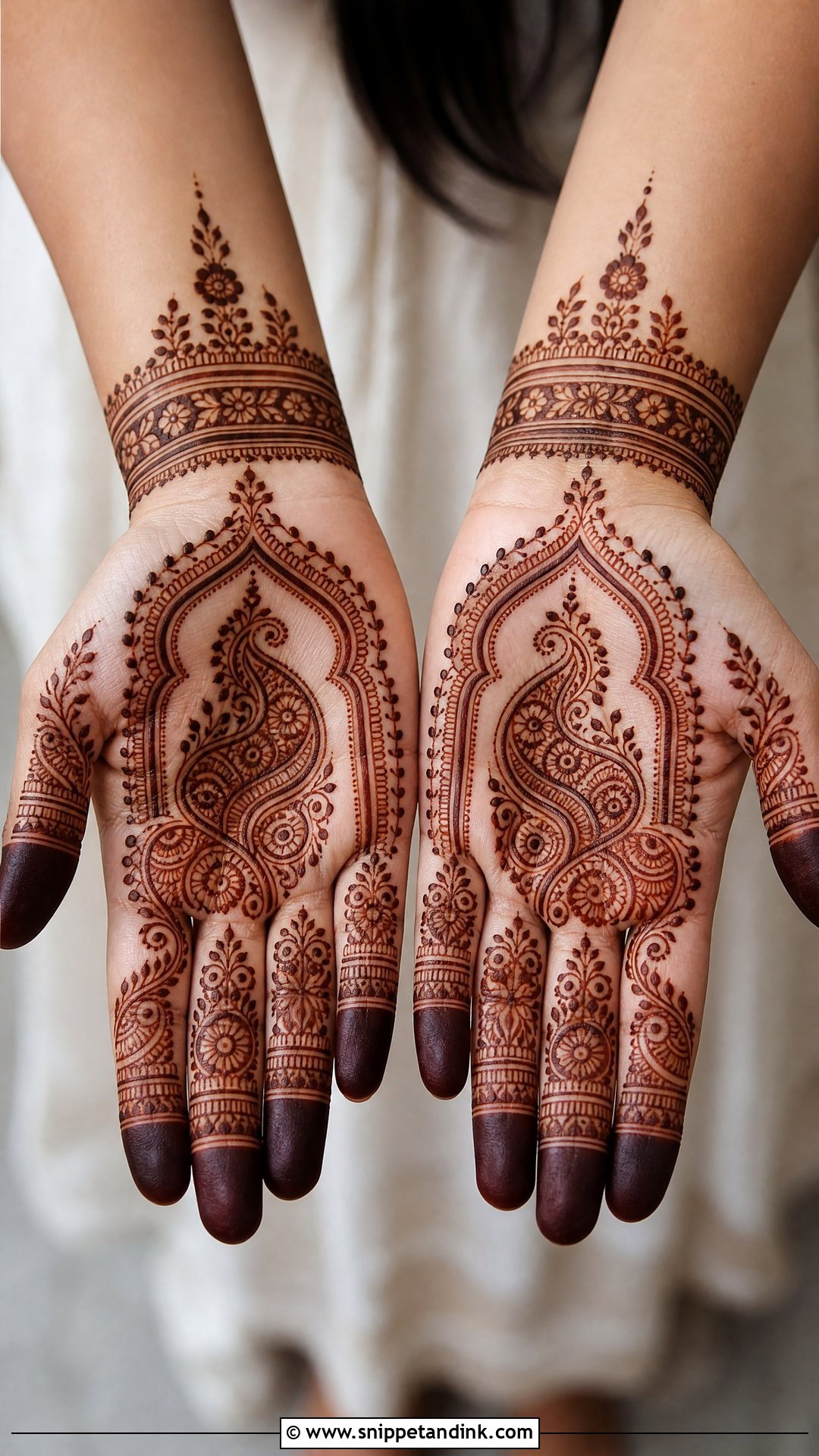
Paisleys, the curved mango-shaped motifs, fit naturally inside a mehrab because both shapes are round at the base and taper to a point. On the palm, I nest two or three large paisleys inside the arch, each with its own inner spiral. On the back hand, smaller ones climb from the wrist toward the fingers. Each paisley gets a bold outline and fine lines inside. Without that contrast, the inner detail fills in as the paste spreads slightly while drying.
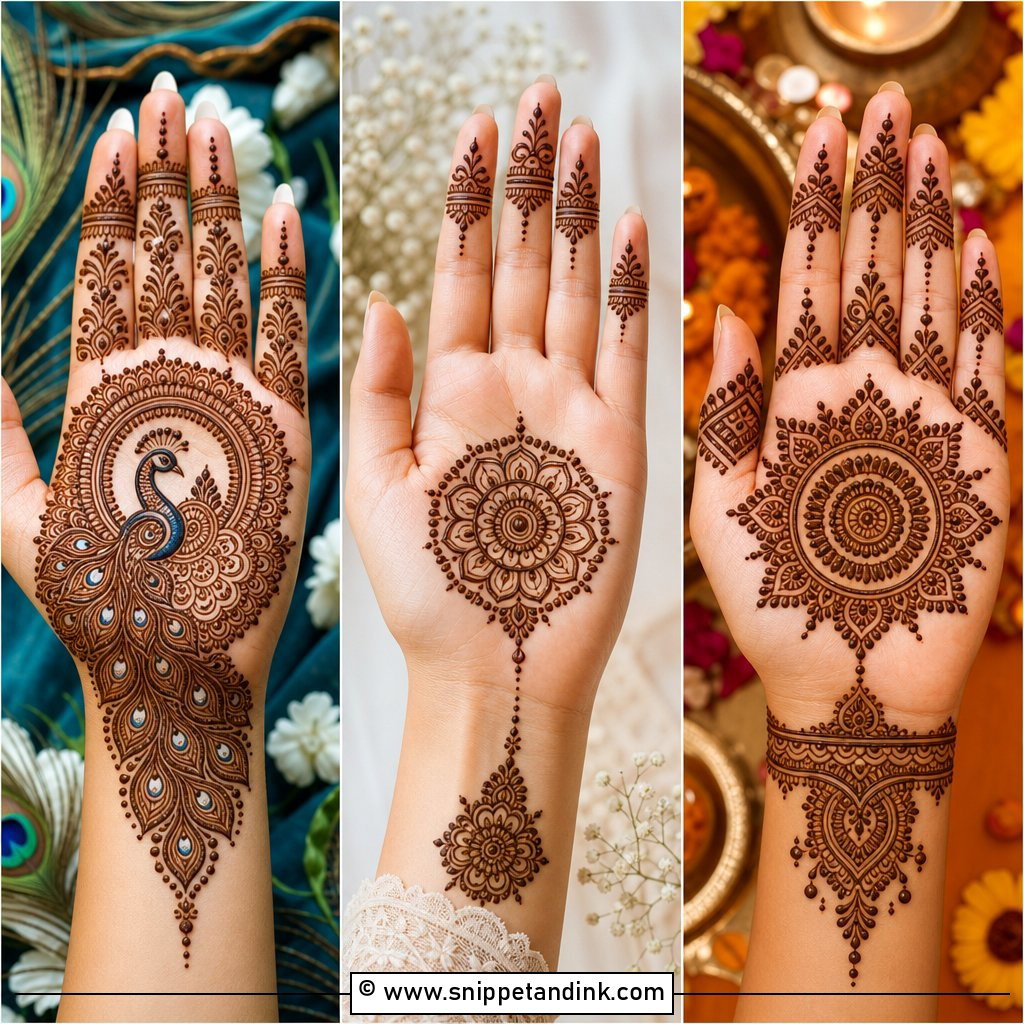
15. Mandala Mehrab Mehndi Design
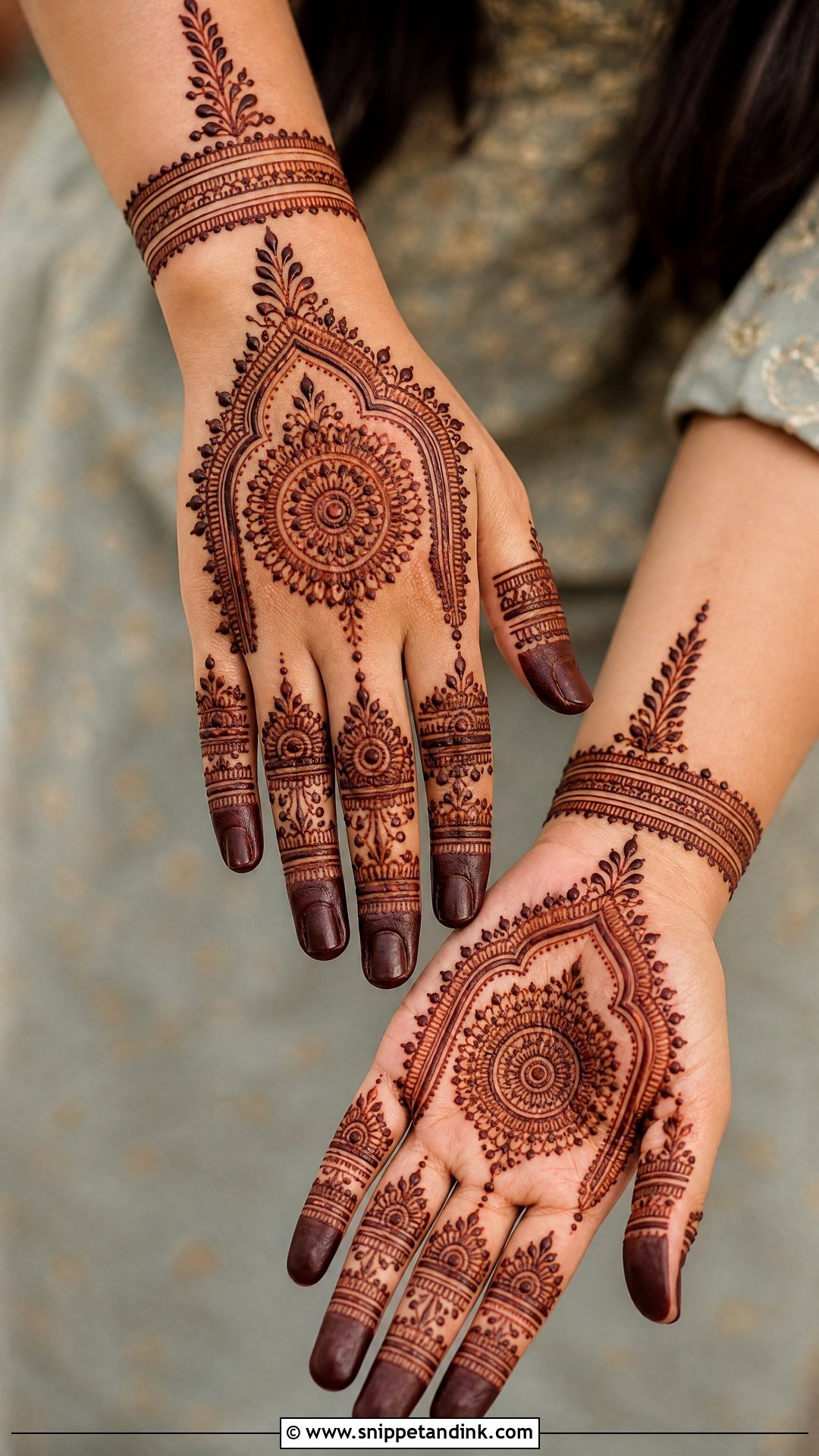
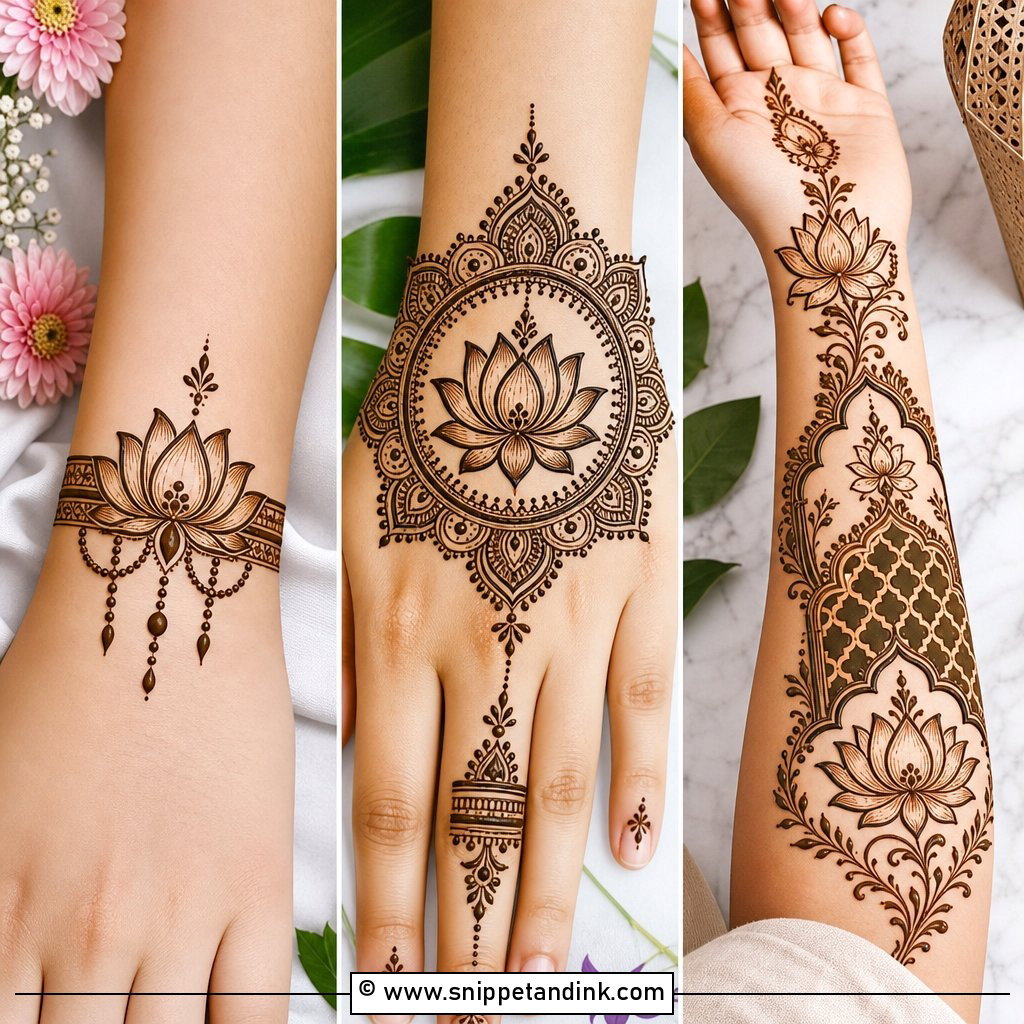
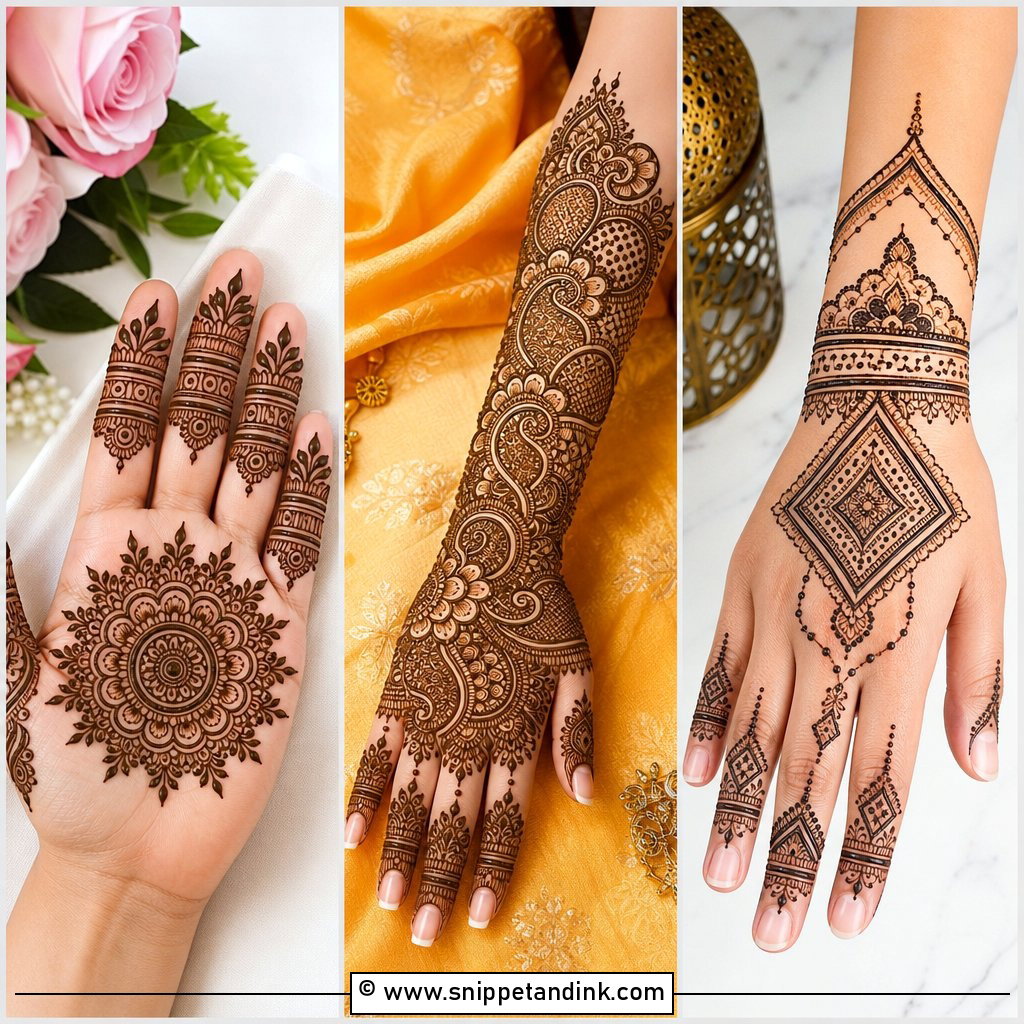
Putting a circle inside an arch gives you a very calm, centred design. The mandala sits in the middle of the mehrab on the palm or back hand, with dotted borders and leaf trails around it. Centring matters more here than anywhere else: a mandala that’s a few millimetres off looks wrong to everyone, even if they can’t say why. A wrist cuff links the design to the arm and closes it off neatly. One mandala keeps it simple; layered petals push it toward bridal.
16. Jaali Mehrab Mehndi Design
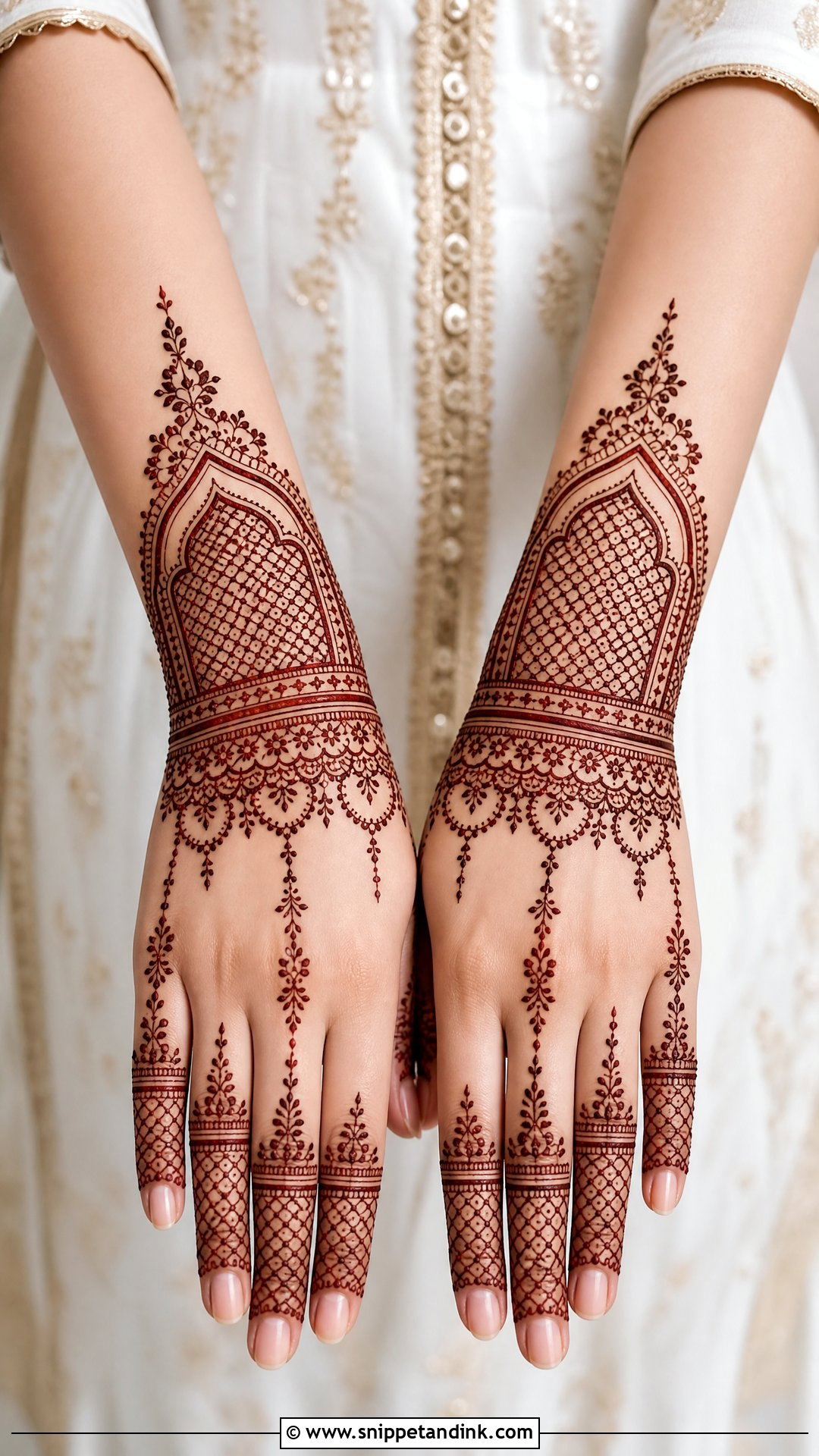
Jaali is the mesh or net pattern, and inside a mehrab it gives a lace-glove effect. It’s slow work, line after line crossing at even angles, and it needs paste with a smooth, silky consistency; lumpy paste breaks the grid. I always leave clear space around jaali panels, because a mesh that touches other detail looks like a solid block once it stains. Fingers get small net panels and dark tips. On a palm, a single jaali arch reads as bridal without needing extra motifs.
17. Peacock Mehrab Mehndi Design
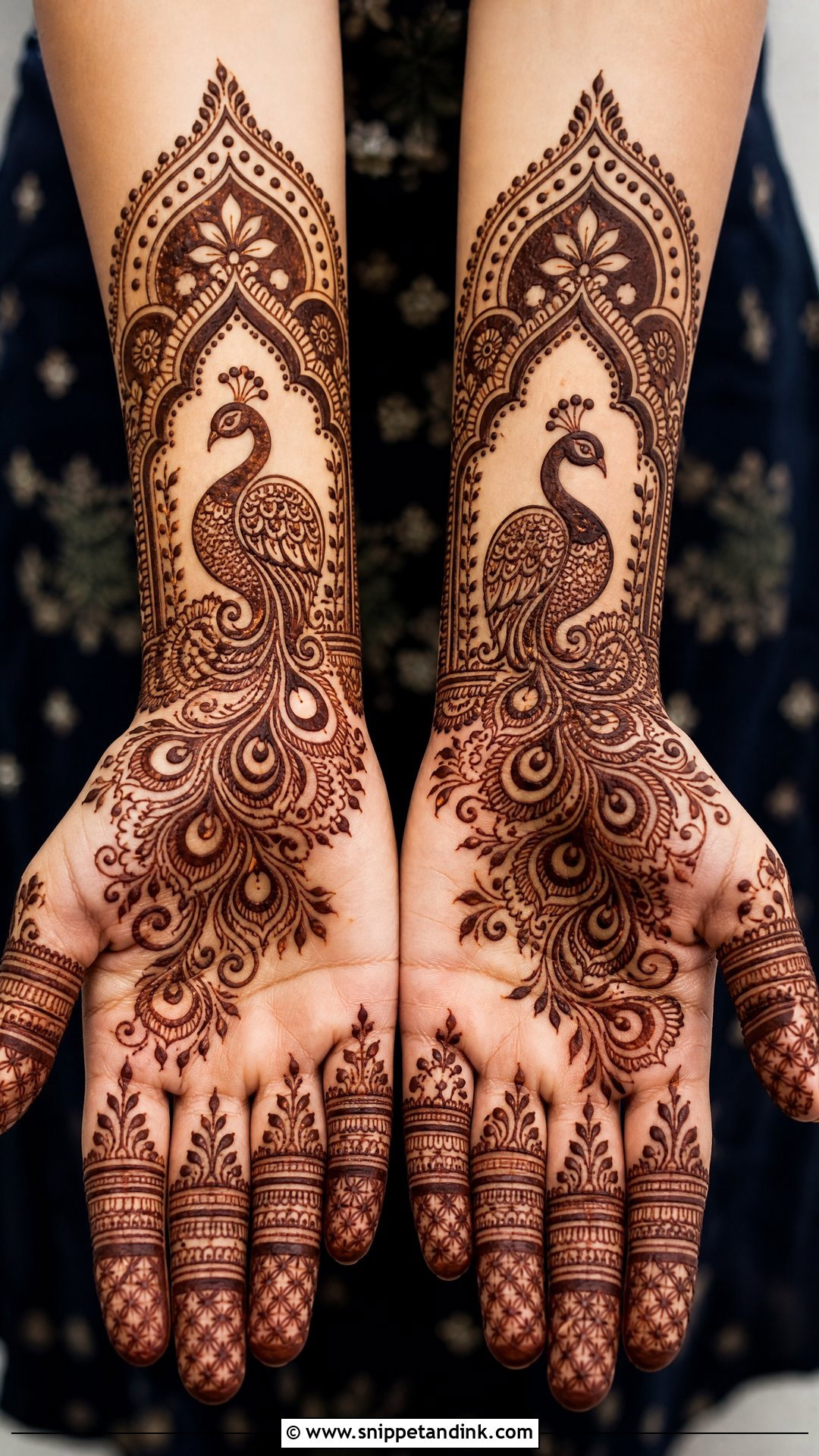
A peacock inside the arch is a long-standing bridal motif. The body sits within the mehrab, with the feathers curving out in paisleys, dots and leaf strokes. On the back hand, I sometimes let the feathers flow from the wrist toward the fingers instead. The neck and head are where peacocks go wrong; draw them too thin and they look like a duck once the colour develops. I keep the neck outline bold and the eye clearly marked. Feather-shaped finger bands finish the story.
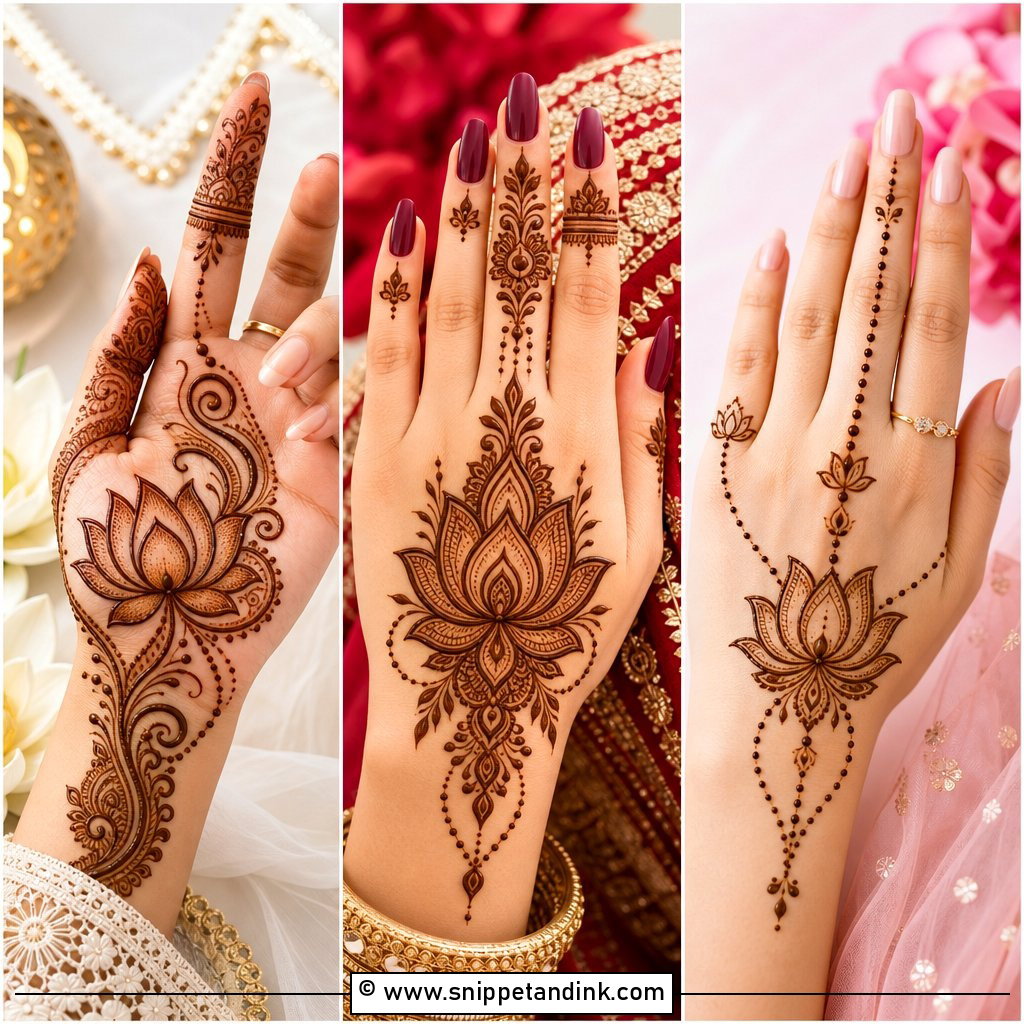
18. Lotus Mehrab Mehndi Design
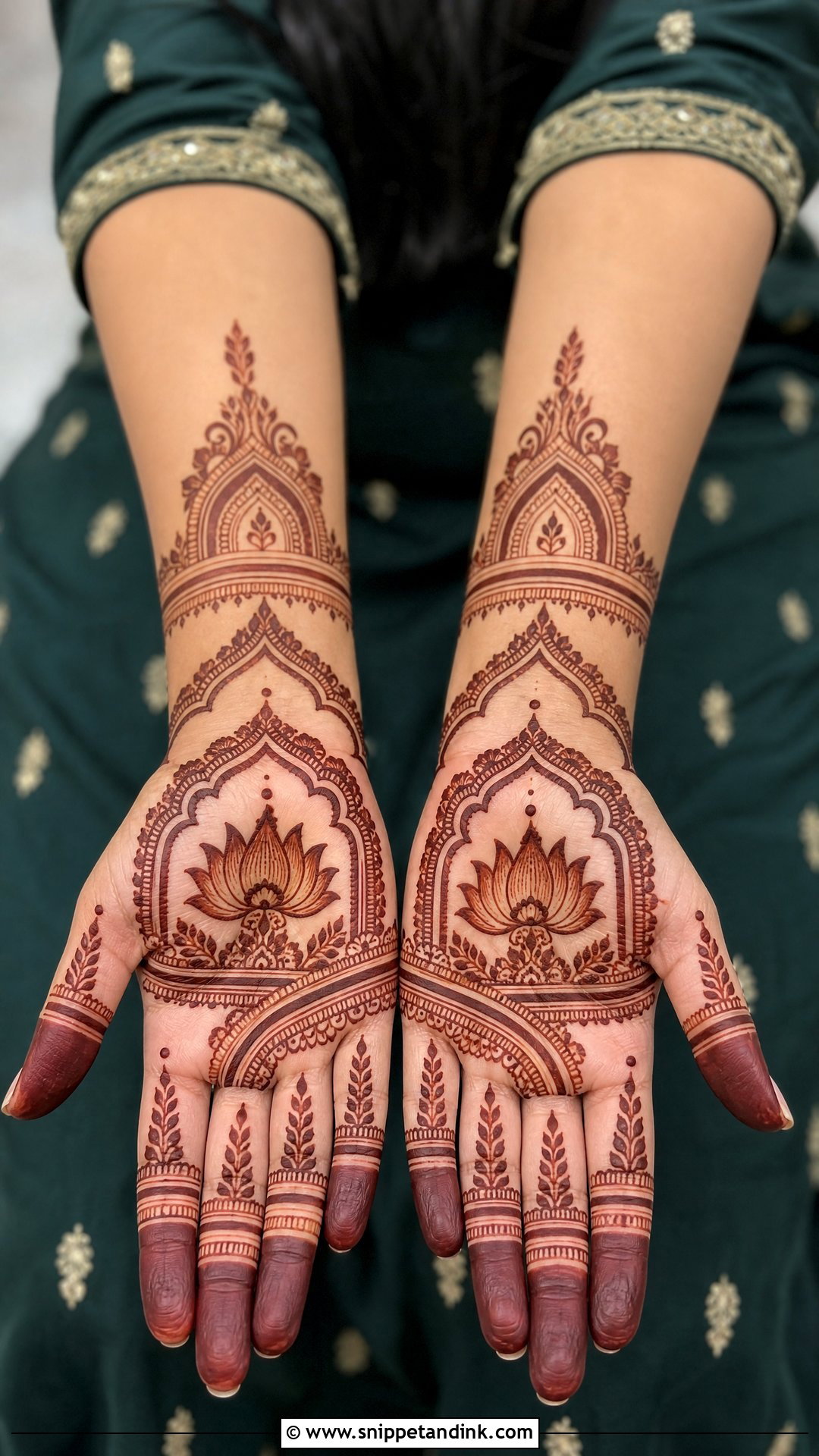
Lotus motifs sit at the base of the arch, open in its centre, or line its top border. Layered petals with small dots and fine lines give the flower depth. It looks most natural on the palm, where the lotus can bloom upward inside the dome. I keep the lotus outline bold; the inner petal lines can be fine. Small lotus tips on the fingers repeat the motif without needing more coverage. It feels ceremonial without being busy.
19. Finger Mehrab Mehndi Design
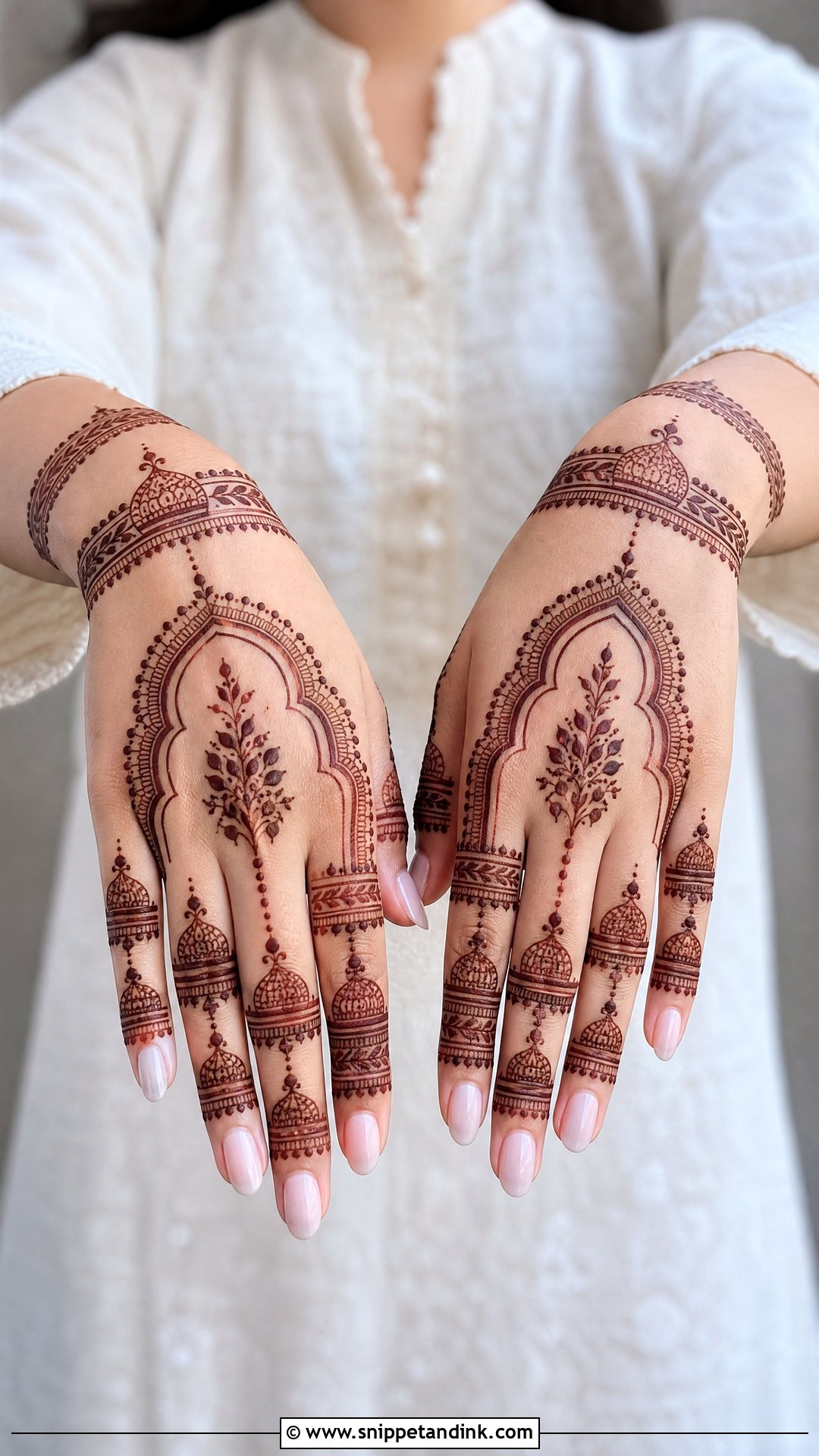
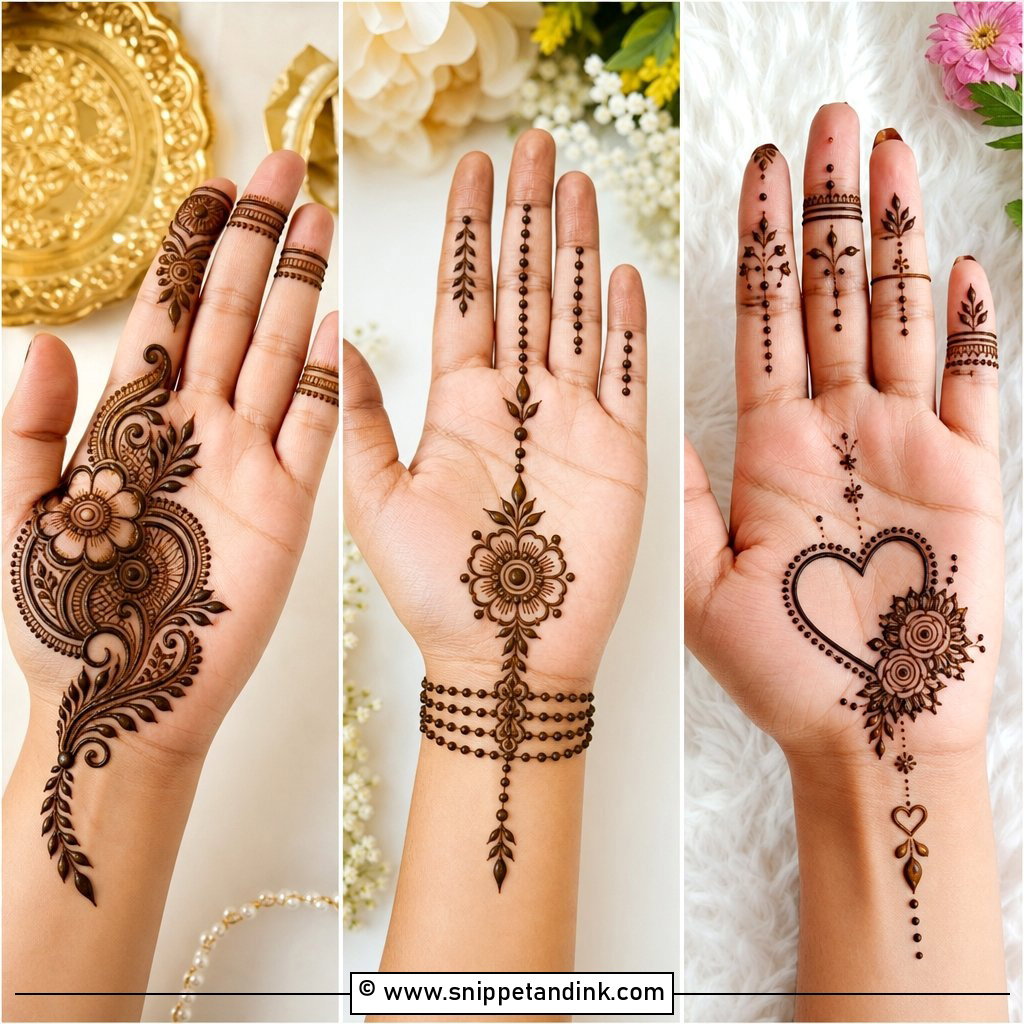
Here the fingers do most of the talking. A central mehrab sits on the hand, and every finger carries a mini arch band, small domes, dots and leaf panels. Rings sit neatly between the bands, which is why I suggest this layout to anyone who’ll be wearing several. Fingertips can be filled solid or lightly capped. Solid tips stain darkest of anywhere on the hand, so they make the boldest statement for the least time.
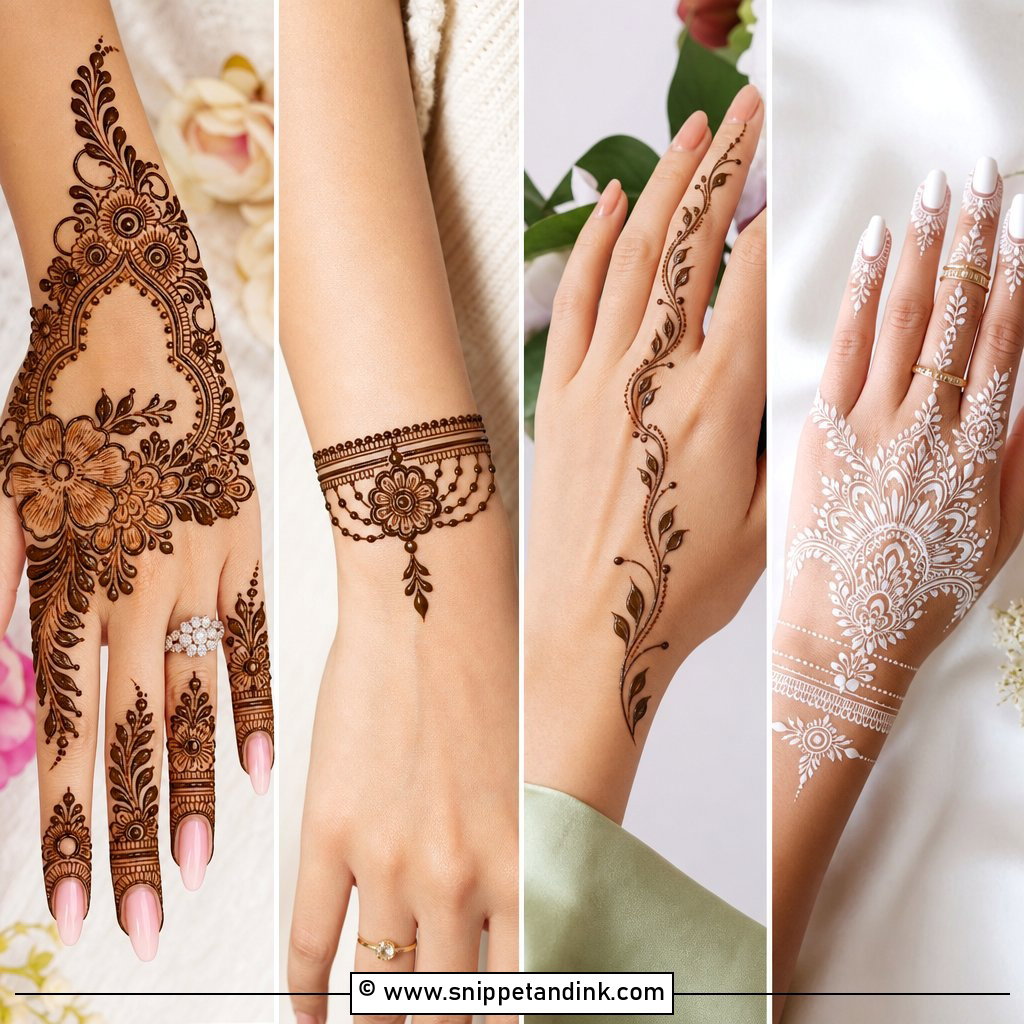
20. Wrist Mehrab Mehndi Design
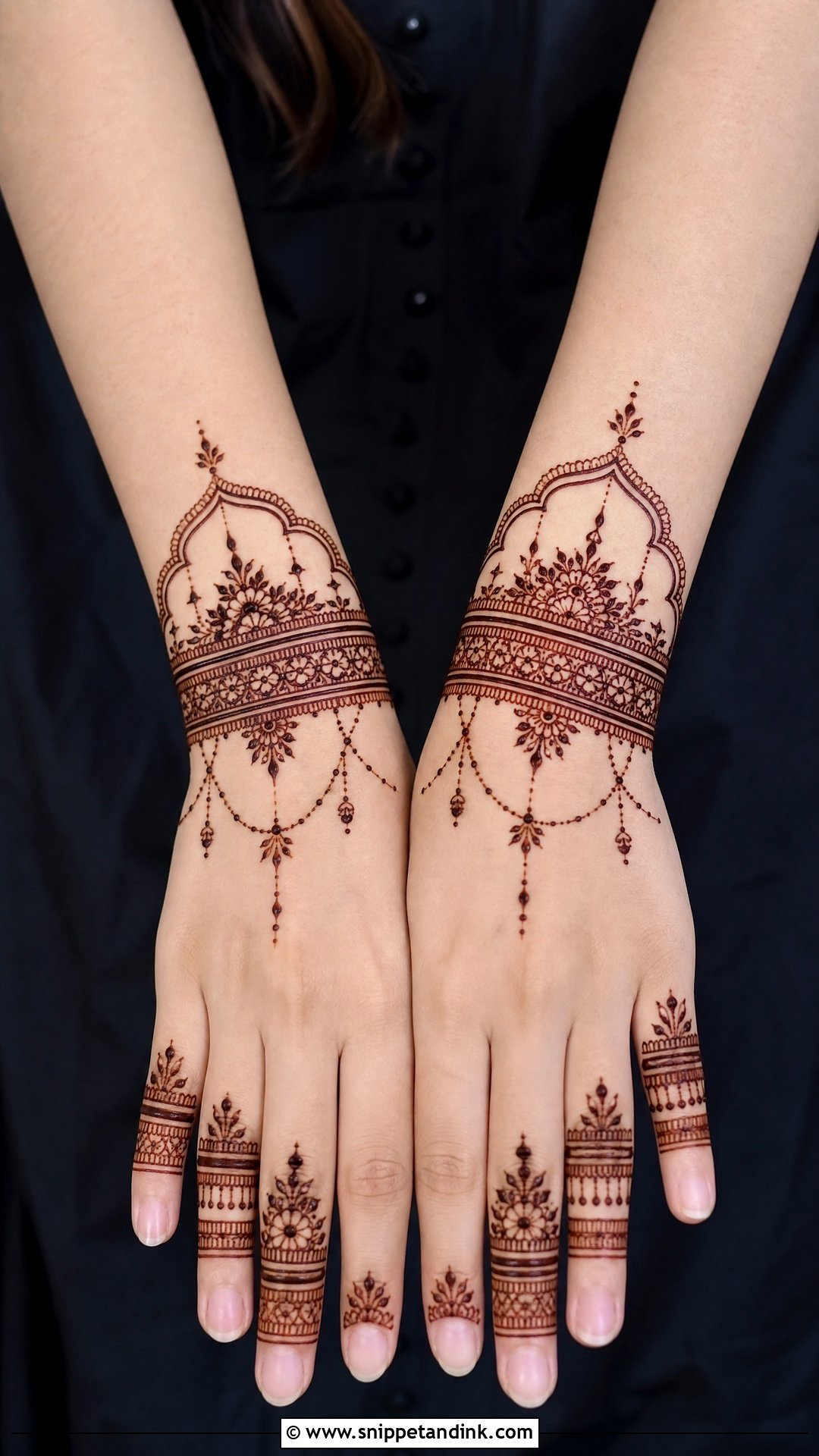
A wrist mehrab rises from a cuff and reaches only part of the way up the hand, so the design reads like a bracelet. Chains, bead lines, florals and small jaali panels make it look like jewellery. It’s good when you want something festive without full coverage. The wrist does flex constantly, and paste there cracks off sooner than on the palm. I add an extra light coat of sealant over the cuff and ask you to keep that hand still for the first half hour. Keep the cuff narrow if you’ll wear bangles over it.
21. Forearm Mehrab Mehndi Design
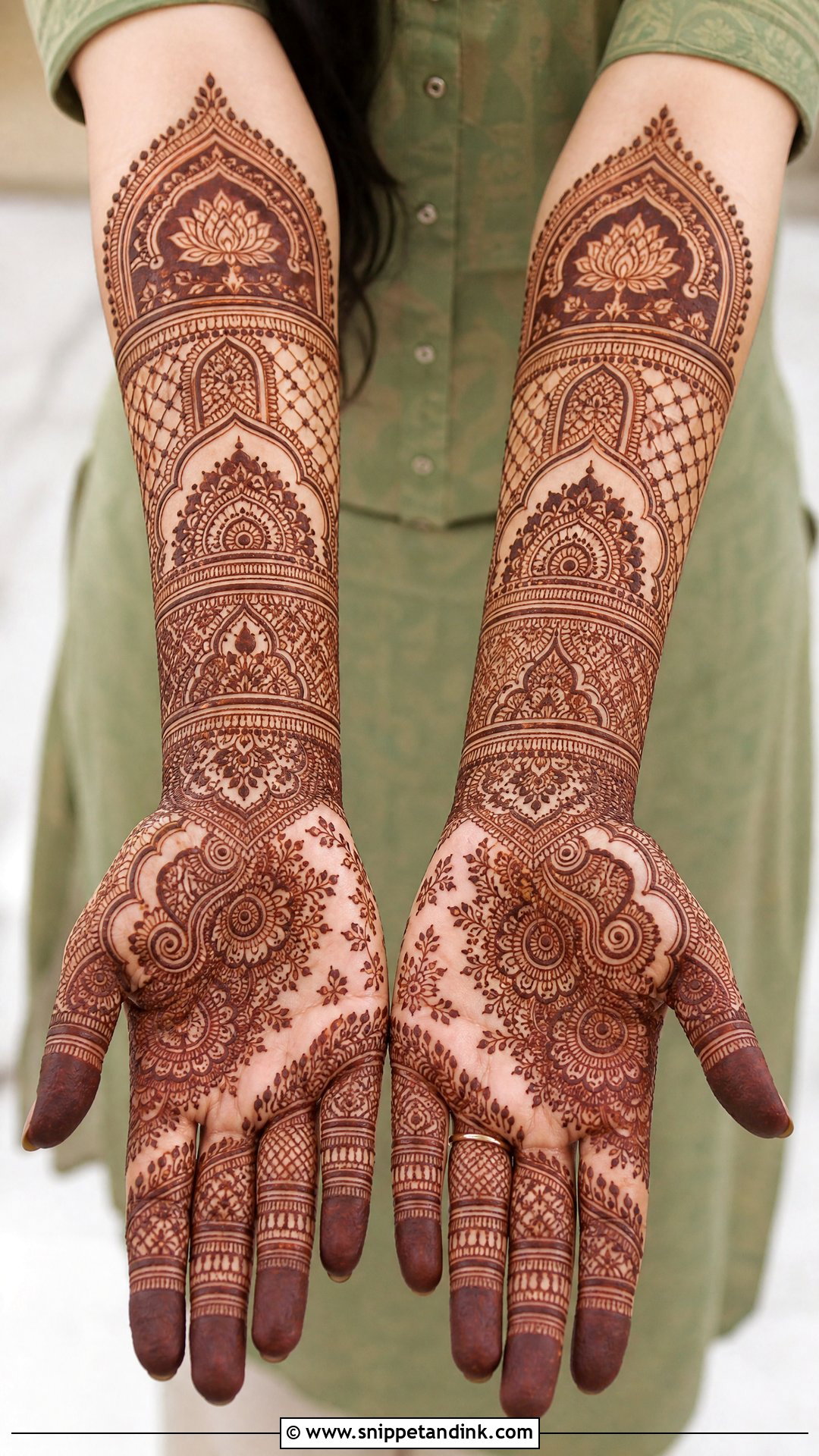
Forearm designs continue the hand arch up the arm in repeated panels, each filled with florals, paisleys, jaali or a mandala. The repetition gives rhythm, which is why these look so strong in photos. Forearm skin stains lighter than the palm, often a shade or two paler, so I put the heaviest detail on the hand and wrist and use cleaner, bolder motifs higher up the arm. It’s a bridal look that doesn’t need dense filling all the way.
22. Minimal Mehrab Mehndi Design
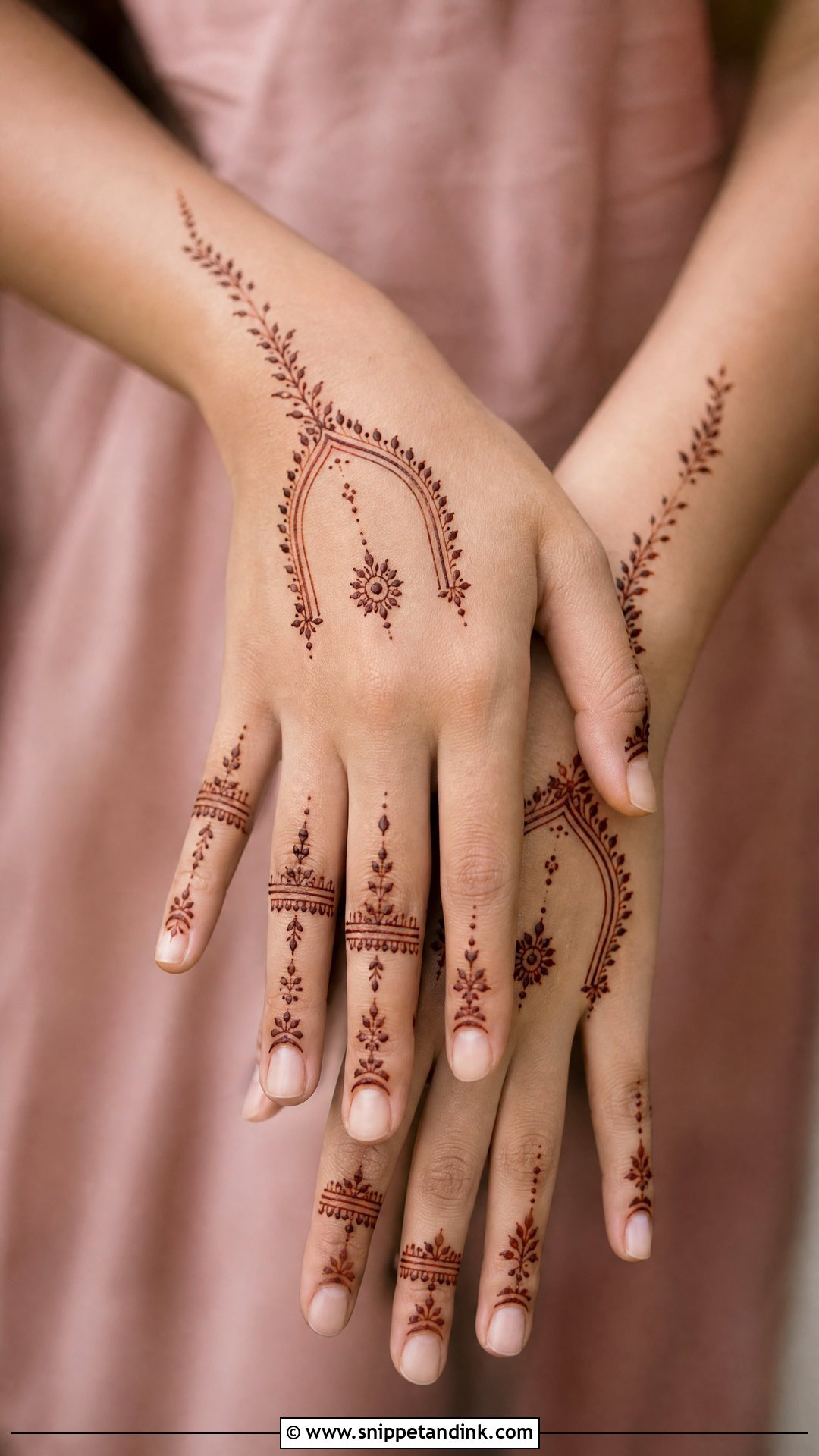
A minimal mehrab may be nothing more than one thin arch on the back hand, a small flower inside and a few dots on the fingers. With so few elements, I treat the bare skin as part of the design and plan where it falls before I draw. A slim wrist band or a short leaf trail is enough to finish it. It suits office days after a function, small family events and anyone who wants the tradition without the coverage.
23. Heavy Mehrab Mehndi Design
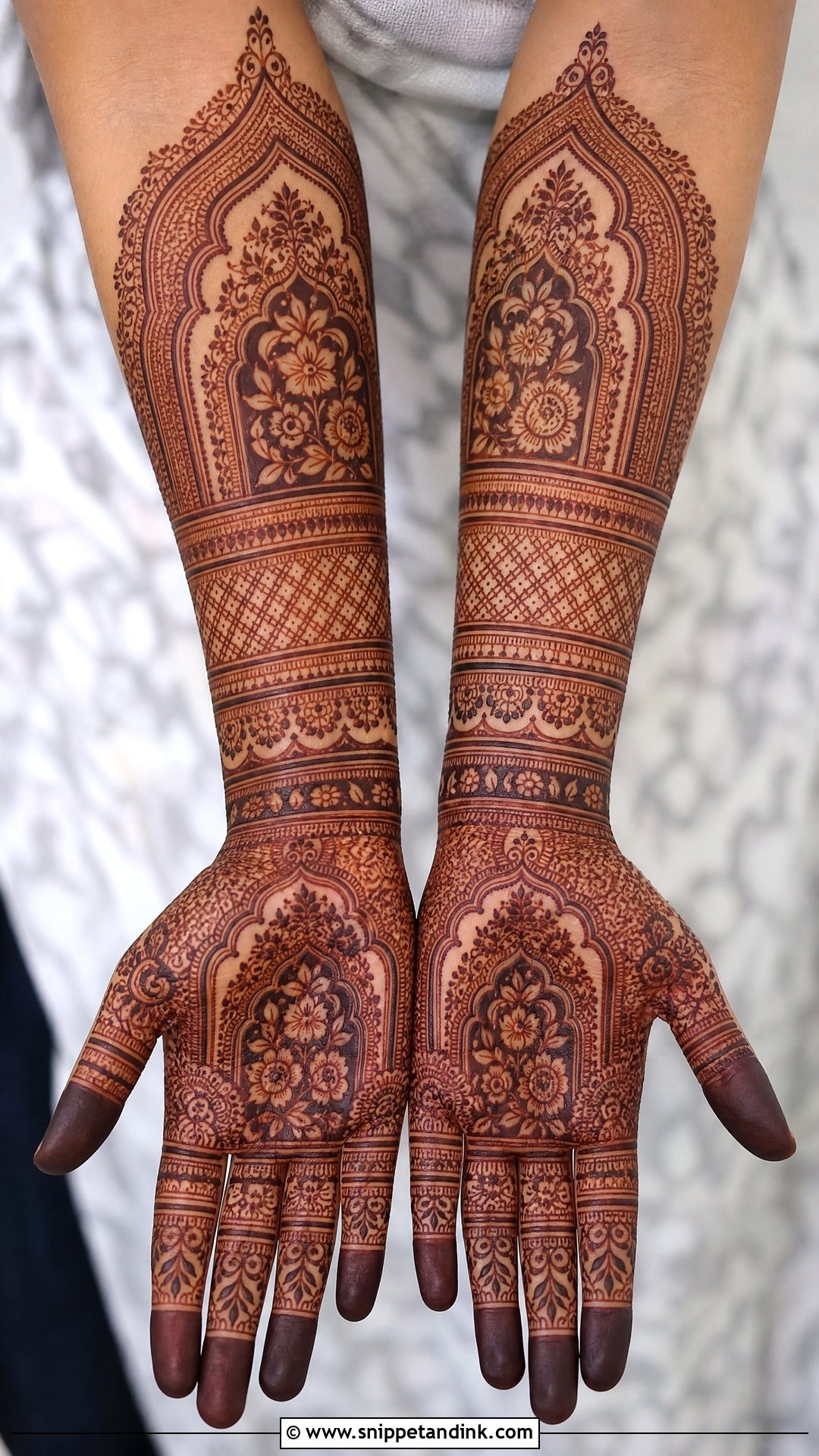
Heavy mehrab work fills palm, fingers, wrist and forearm with florals, paisleys, grids and spirals inside layered arches. Its danger is that it can become one dark mass. Clear borders between sections are what save it, and I leave a few tiny open spaces near the arch and wrist on purpose so the eye can rest. Brides and very close family usually choose this. It needs good paste, a long sit and a full aftercare routine to stain evenly.
24. Easy Mehrab Mehndi Design
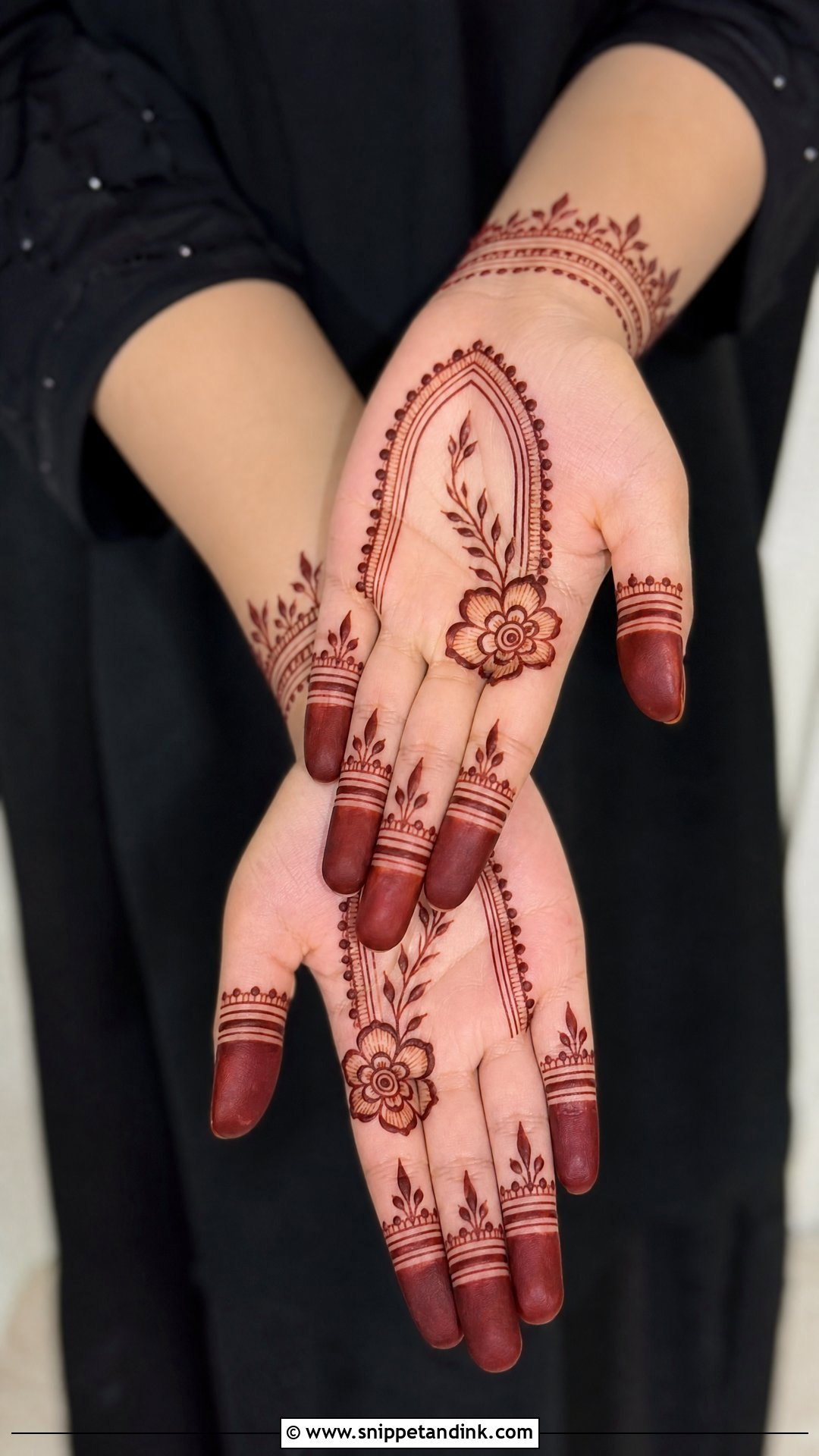
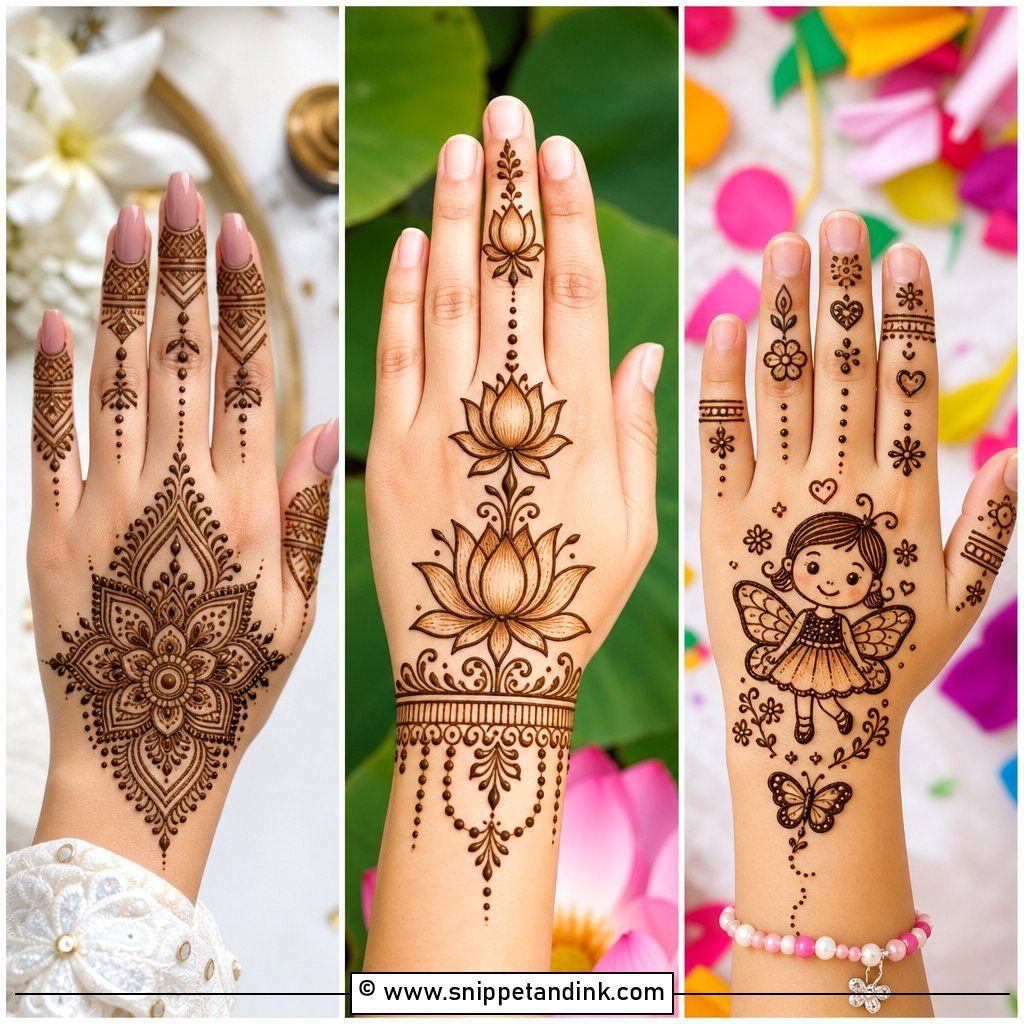
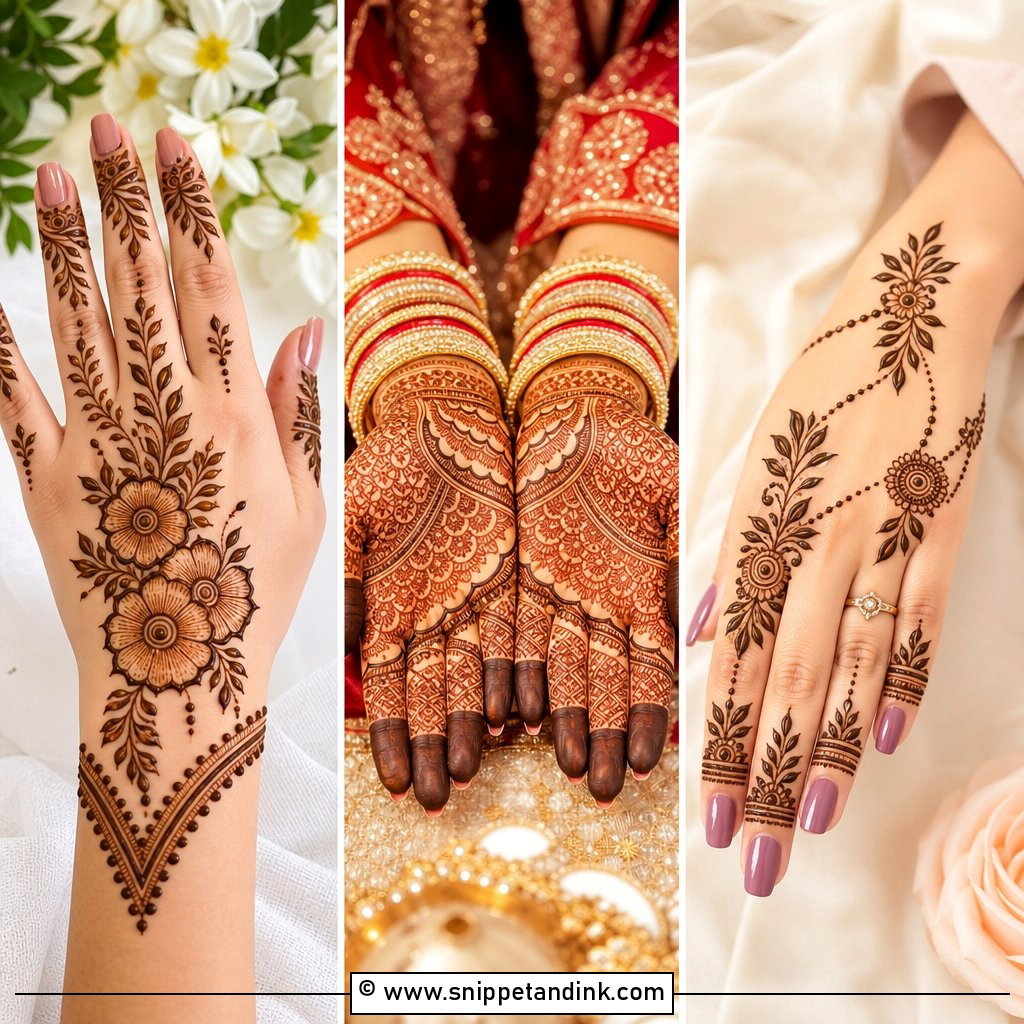
This is the layout I’d give anyone learning: a basic arch, a double border, a few dots, one flower, simple leaves, and repeated lines on the fingers. No shading, no fine jaali. The arch controls the whole look, so draw it slowly. Practise it on paper a few times first, then on the back of your own hand, where mistakes are easy to wipe off with a damp cotton bud before they stain. It’s quick enough for a last-minute festival.
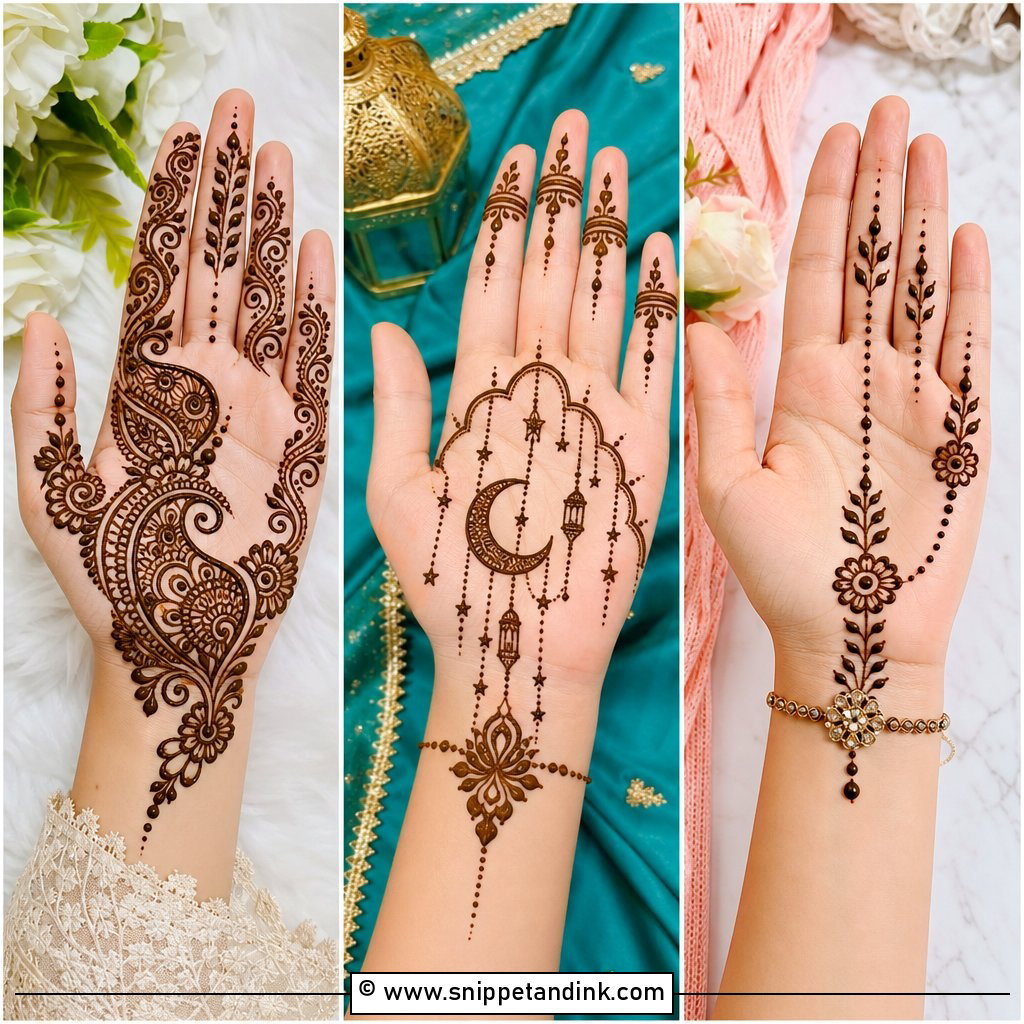
25. Eid Mehrab Mehndi Design
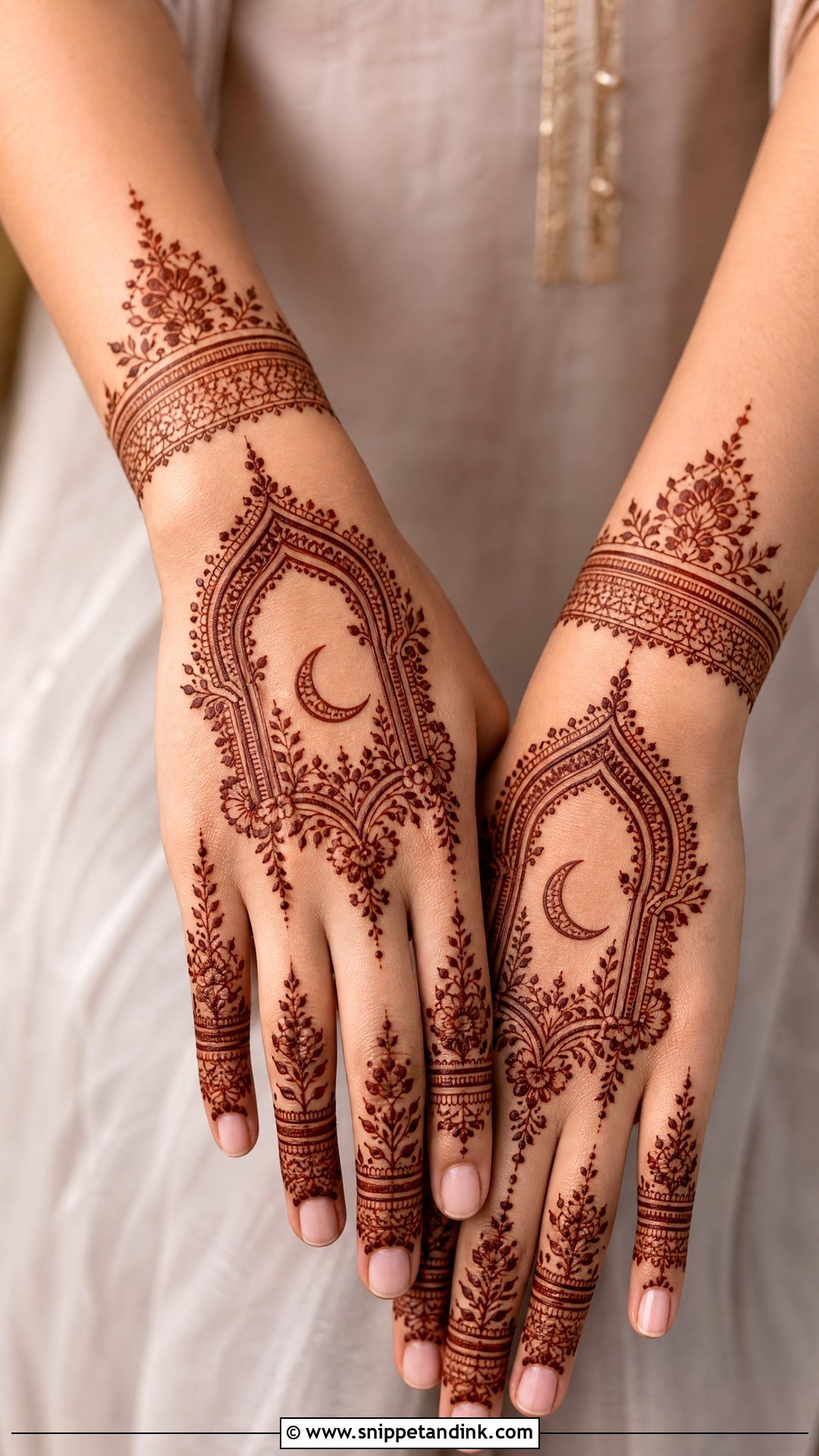
Eid henna usually goes on the night before, so the stain is at its darkest by the time you greet family. An arch pairs well with crescent-inspired curves, floral vines and dots. I keep coverage medium for Eid, a back-hand mehrab with a wrist cuff, because the day involves cooking, serving and hugging, and full coverage would make that hard. Add palm details and finger bands for more. Bold floral outlines with fine filling give a rich colour by morning.
26. Engagement Mehrab Mehndi Design
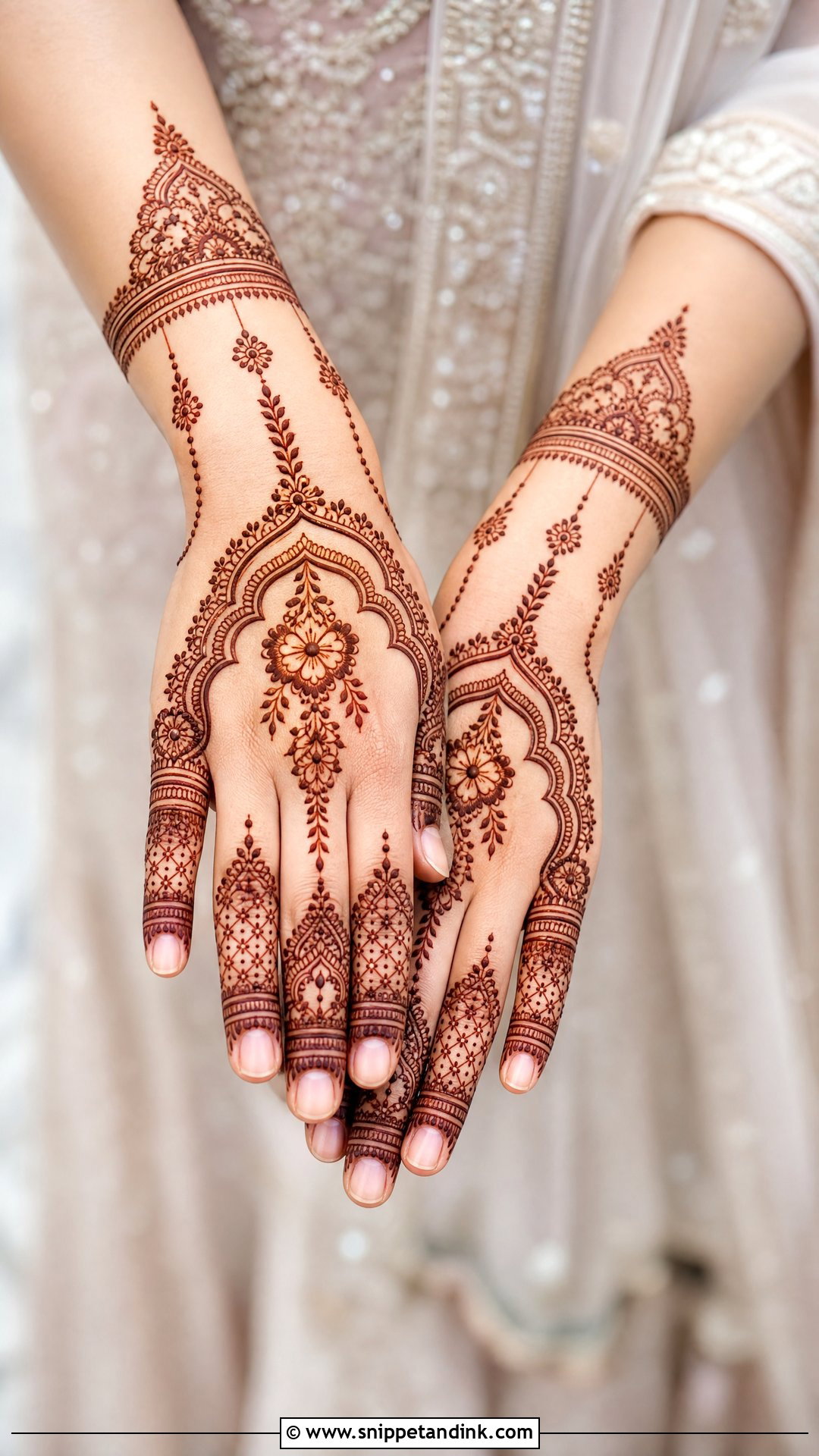
At an engagement, the hand that wears the ring will be photographed again and again, so I plan around it. The arch sits slightly above the centre of the back hand, with floral trails, fine jaali and bracelet-style wrist detailing below it. I leave a clear space on the ring finger so the ring is seen against skin, not lost in pattern. It’s more detailed than casual henna and much less than bridal, which suits roka ceremonies and small engagement dinners.
27. Wedding Guest Mehrab Mehndi Design
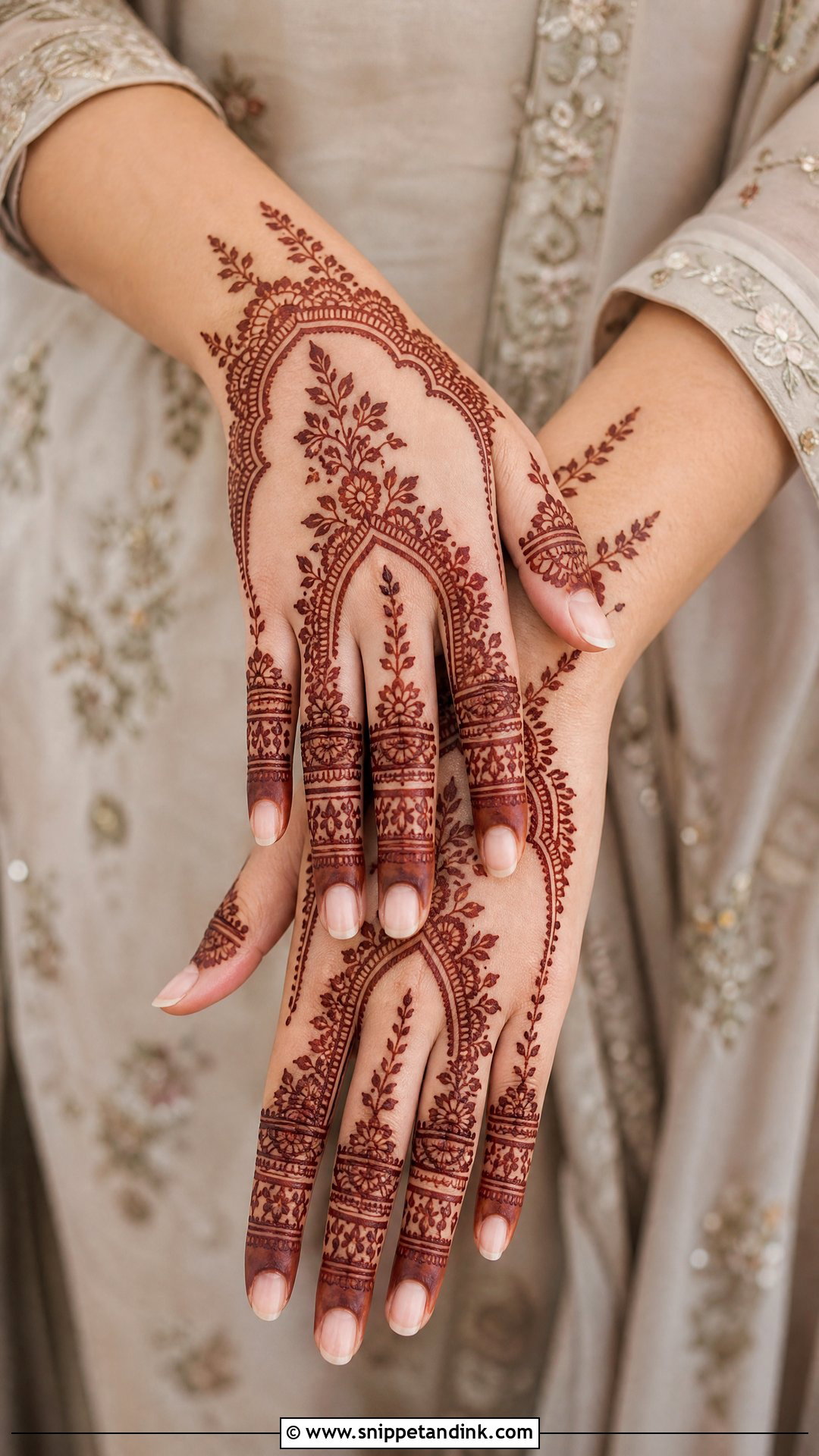
Guests should look festive without matching the bride’s coverage. A medium arch on the back hand or palm, florals, vines and simple fingers is enough; skip the forearm or keep it very light. Arabic flow reads modern, while Indian detail feels richer. I’d avoid bride-and-groom figures and full-arm work unless you’re very close family. It’s also practical: guest henna is usually done in a queue, and a neat arch with balanced fingers takes a fraction of the time.
28. Kids Mehrab Mehndi Design
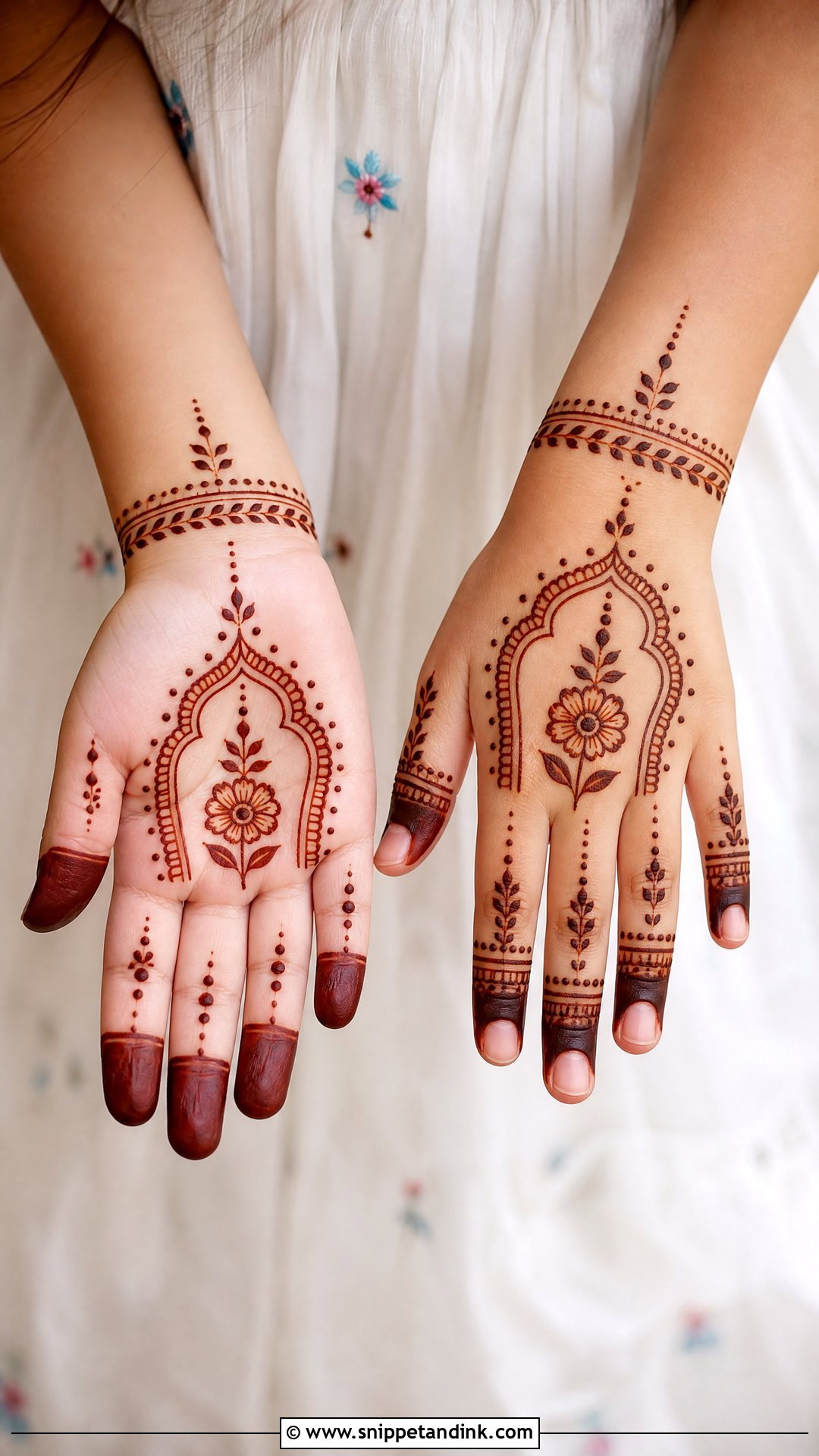
Children rarely sit still long enough for fine work to dry, so for kids I draw a small arch on the back of the hand, a flower, a few dots and simple finger caps, all in bold lines. Tiny details smudge as soon as they move. A small bracelet band finishes it. Use only natural henna on children; any cone that promises a black colour or a stain in minutes contains chemicals that can burn the skin. Ask the artist what is in the paste.
29. White Mehrab Mehndi Design
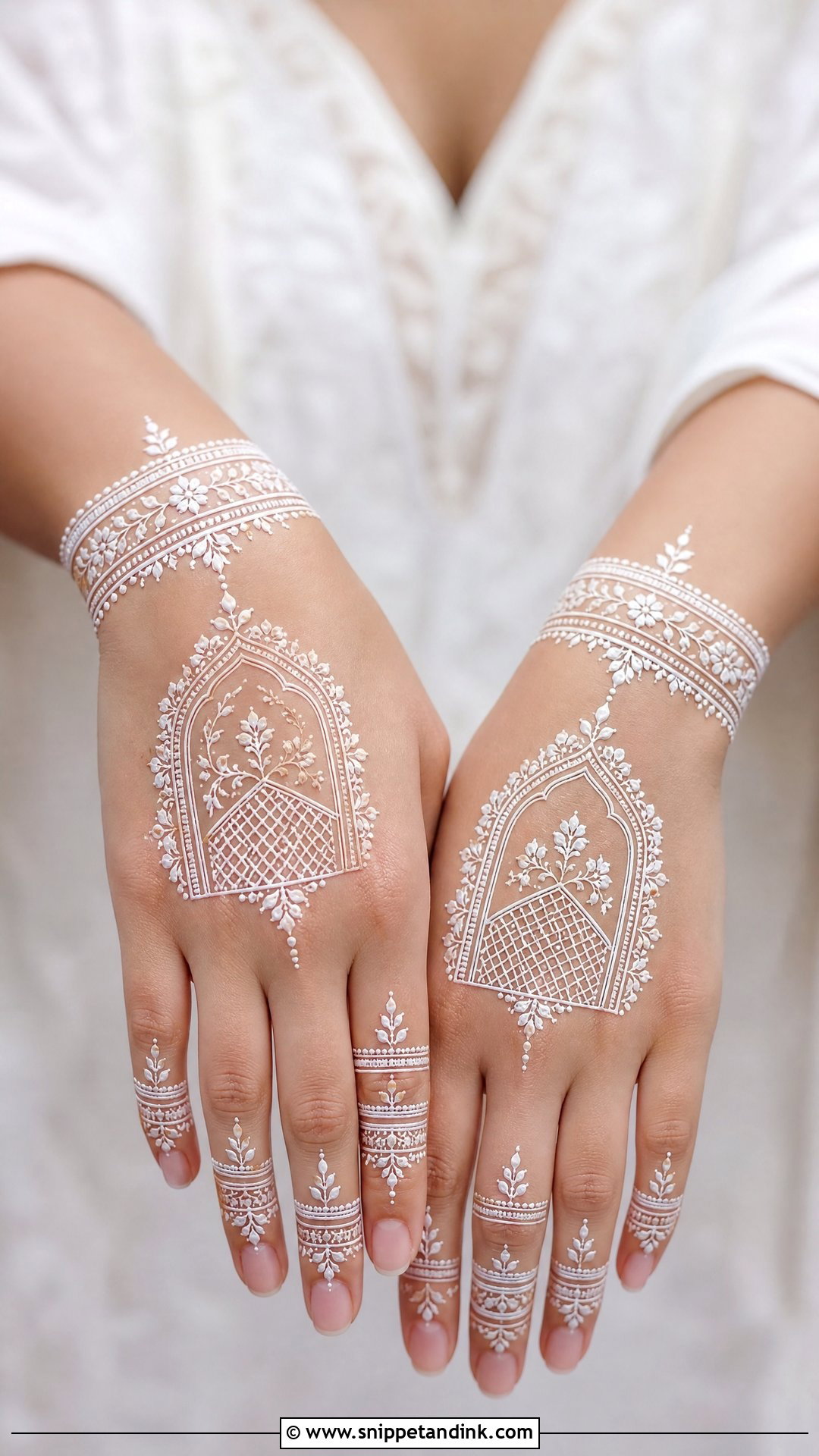
White mehndi isn’t henna at all. It’s a skin-safe body paint or cosmetic adhesive applied with a cone, and it sits on top of the skin rather than staining it. It lasts a day or two at most and washes off. That makes it popular for photos and parties. Clean arches, lace-like jaali and slim finger lines suit it, and because the colour is bright, crowding shows immediately. Do a small patch test a day before if you have sensitive skin, since adhesives can irritate.
30. Glitter Mehrab Mehndi Design
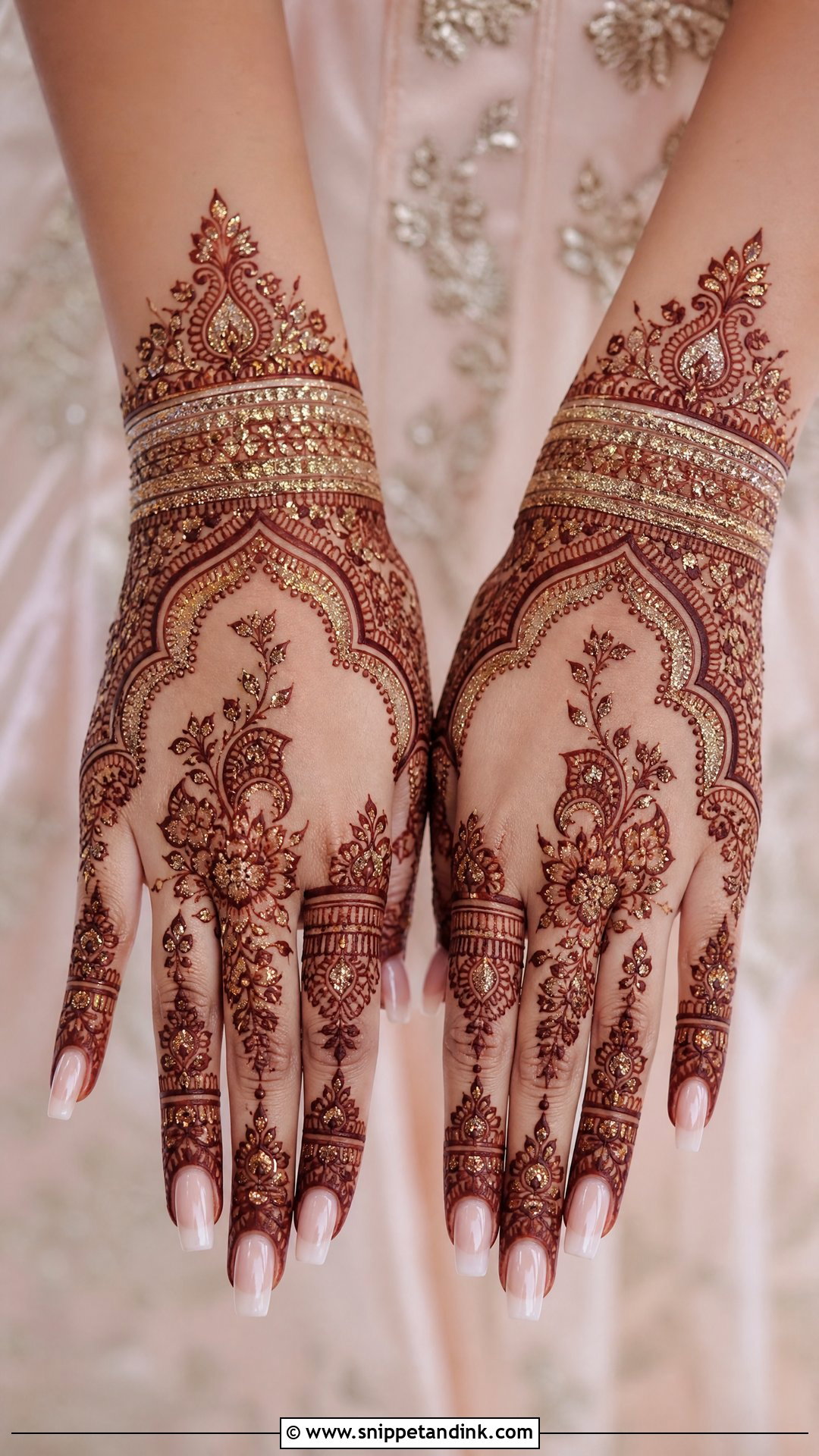
Glitter goes on over a natural henna design, either once the paste has dried and been removed or as a top layer for photos. Applied over the arch borders, it adds sparkle without hiding the stain underneath. I use a cosmetic-grade glitter with a skin-safe adhesive, never craft glitter. Gold, bronze or deep maroon sits better against henna than many mixed colours. It suits sangeet nights and parties, and it brushes off at the end of the evening.
Why Your Stain Starts Orange and Turns Maroon
When the dried paste comes off, the stain underneath is a bright orange. That’s normal. Henna’s dye keeps oxidising on the skin for the next day or two, and the colour deepens through red to a dark brown or maroon, usually peaking somewhere around 48 hours. The palms and fingertips go darkest; the back of the hand and forearm stay lighter.
- Keep the paste on for as long as you comfortably can, ideally six to eight hours or overnight.
- Dab on a little lemon and sugar sealant once it is touch dry, so it stays stuck to the skin.
- Scrape the dried paste off with a blunt edge. Don’t wash it off.
- Avoid water on the design for the first 12 to 24 hours, and keep your hands warm.
- Go easy with hand sanitiser, bleach and scrubbing for the days you want it to last.
A Word About Black Henna
Natural henna only ever stains in the orange to maroon range. A paste that promises jet black, or a stain that appears within an hour, has almost certainly been mixed with PPD, a hair-dye chemical that can cause blistering and lasting allergic reactions on skin. I’d never use it, and I’d ask any artist you book what goes into her cones. Fresh, natural paste smells earthy, often of essential oils, and it is usually kept in the fridge or freezer until the day.
Let the Arch Decide How Much Else Goes on the Hand
The arch is a frame, and that’s what makes mehrab mehndi so adaptable. Keep it light with open spaces, make it bold with Gulf florals, or build a full bridal layout with paisleys, jaali and forearm panels. When you sit down with your artist, start with three questions: where the arch sits, how far up the arm the design should go, and how much time you have to sit and then keep it on. The details inside the arch can follow from there.
You'll Like These Ideas:


Leave a Reply