
Bharwa means filled, and that word describes the whole approach: the shapes are drawn first, then the spaces inside and between them are packed with fine work until the hand looks covered from every angle. Paisleys, florals, mandalas, jaali, leaves, peacocks and tiny filler strokes all play a part. Done well, it’s dense without being muddy. Done badly, it dries into a brown blob. Below are thirty Bharwa layouts, from heavy bridal hands to quick festival patterns, with notes from my side of the cone on how each one is built and where it tends to go wrong.
How a Bharwa Hand Gets Built, Layer by Layer
Watching a Bharwa design go on explains a lot about why some look rich and others look muddy. The order of work is fixed, and skipping a step is where most trouble starts.
- Mapping. I dot in where the main motifs will sit: the palm centre, the wrist line, the finger caps. Nothing is filled yet.
- Outlines. The big shapes go on in a slightly thicker line, because these are the edges the eye reads from across a room.
- Secondary shapes. Smaller paisleys, leaves and bands go into the spaces between, still unfilled.
- Filling. Only now do the checks, jaali, dots, spirals and shading go in, working from the fingertips back toward the wrist so I never lean on wet paste.
- Finishing. Fingertip caps are filled solidly, and stray gaps are tidied with tiny dots.
The paste itself matters as much as the hand that draws it. For fine filling I want a smooth, stringy consistency that flows from the cone in a thread without breaking. Too thick and the lines skip; too runny and the jaali closes up as it dries. Good natural paste is a greenish brown, smells earthy, and stains orange first before darkening over the next day or two.
Why dense filling needs space to breathe
Paste spreads slightly while it dries, especially in a warm, crowded room. Lines placed too close touch, and once they touch, the stain merges. That’s why a good Bharwa artist leaves hair-thin channels of skin even in her heaviest work. Look for those channels in an artist’s portfolio before you book.
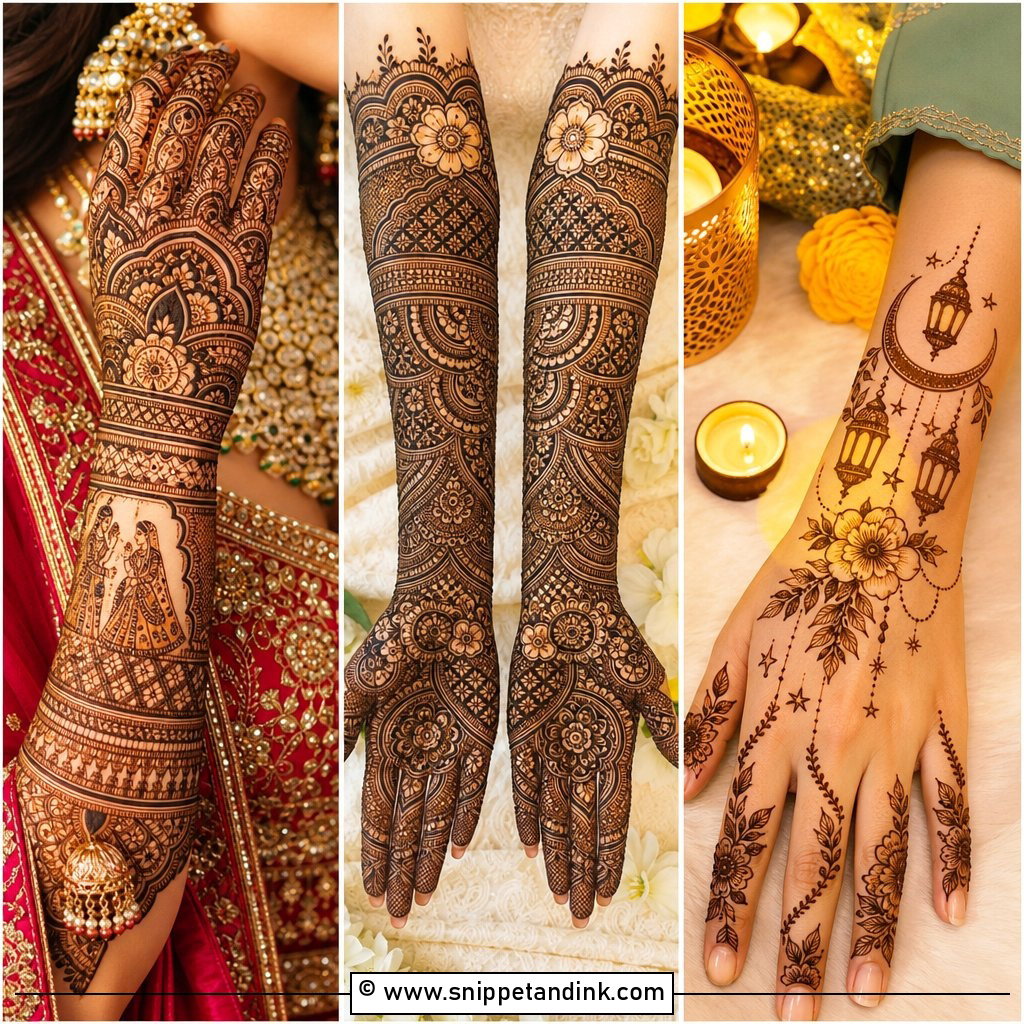
1. Full Hand Bharwa Mehndi Design
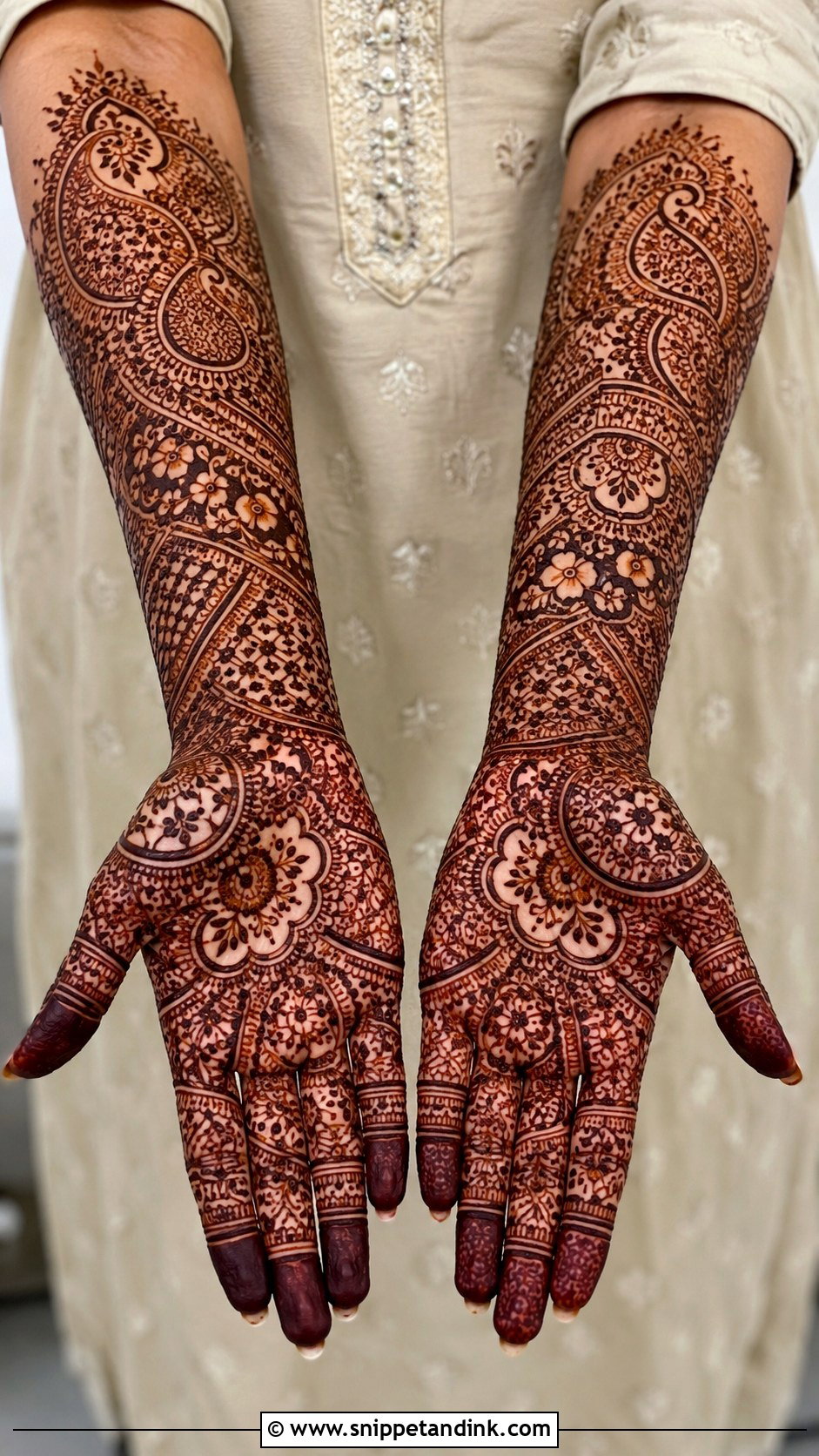
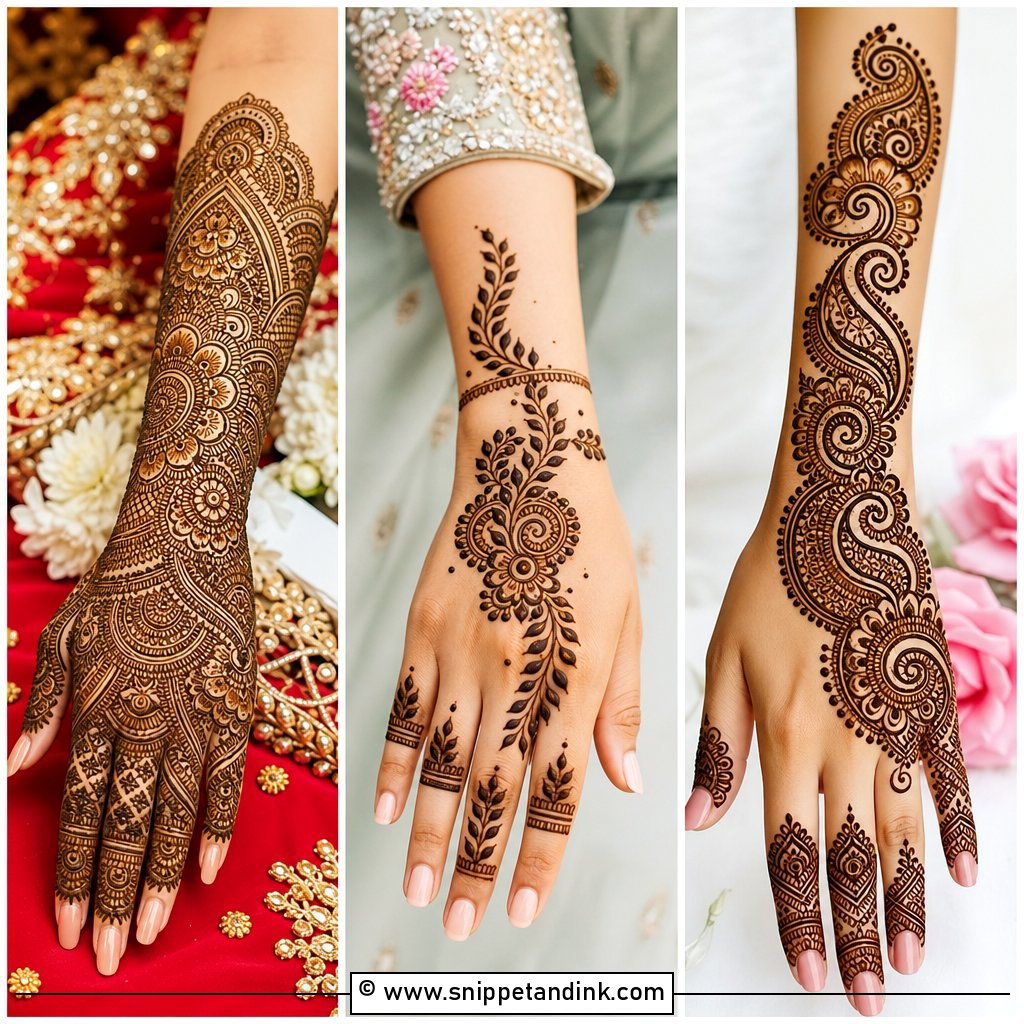
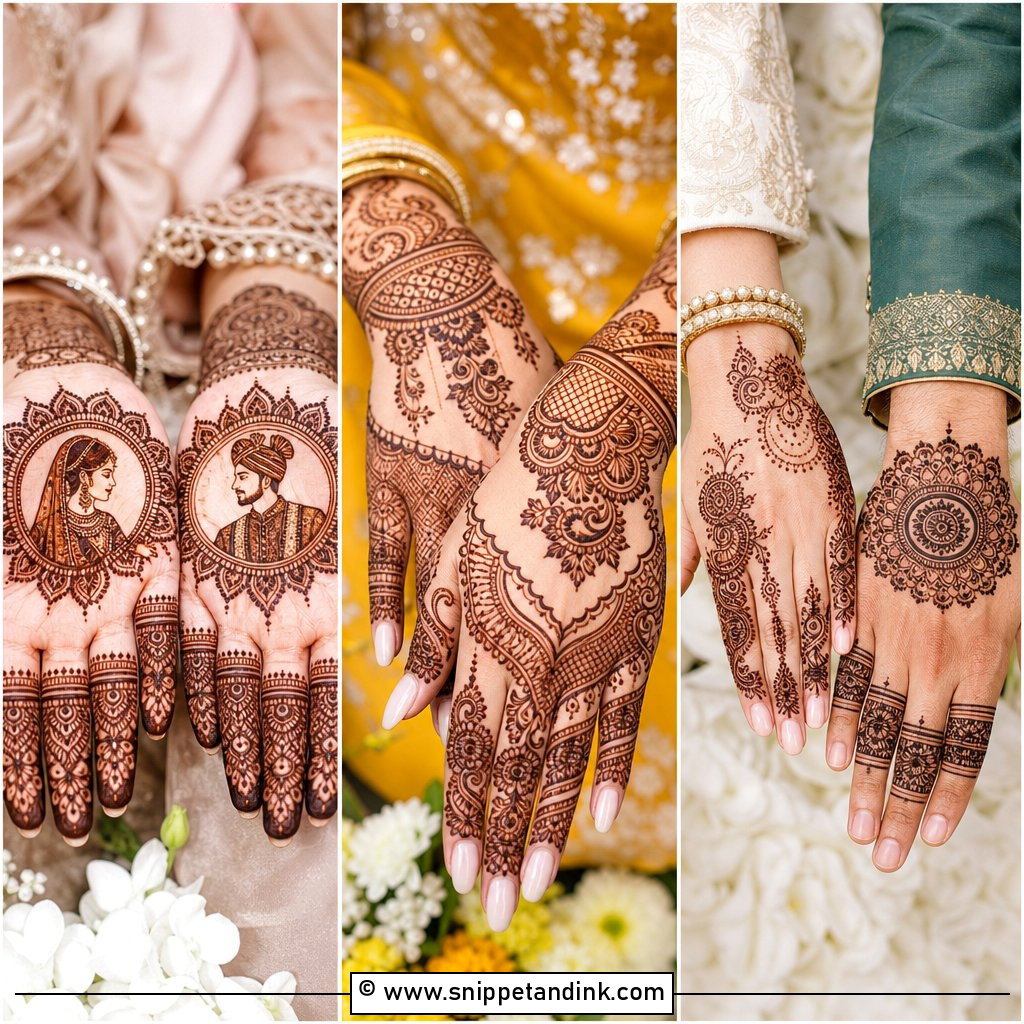
A full hand covers the palm, fingers and back of the hand, sometimes a little past the wrist, with paisleys, florals, vines, mandalas and dots set close together. I place the large motifs on the palm and wrist first and only then fill around them. If I start filling before the big shapes are fixed, the hand ends up as one block with nowhere for the eye to rest. Sisters of the bride often ask for this one, since it holds its own in family photos without matching the bride’s arms.
2. Front Hand Bharwa Mehndi Design
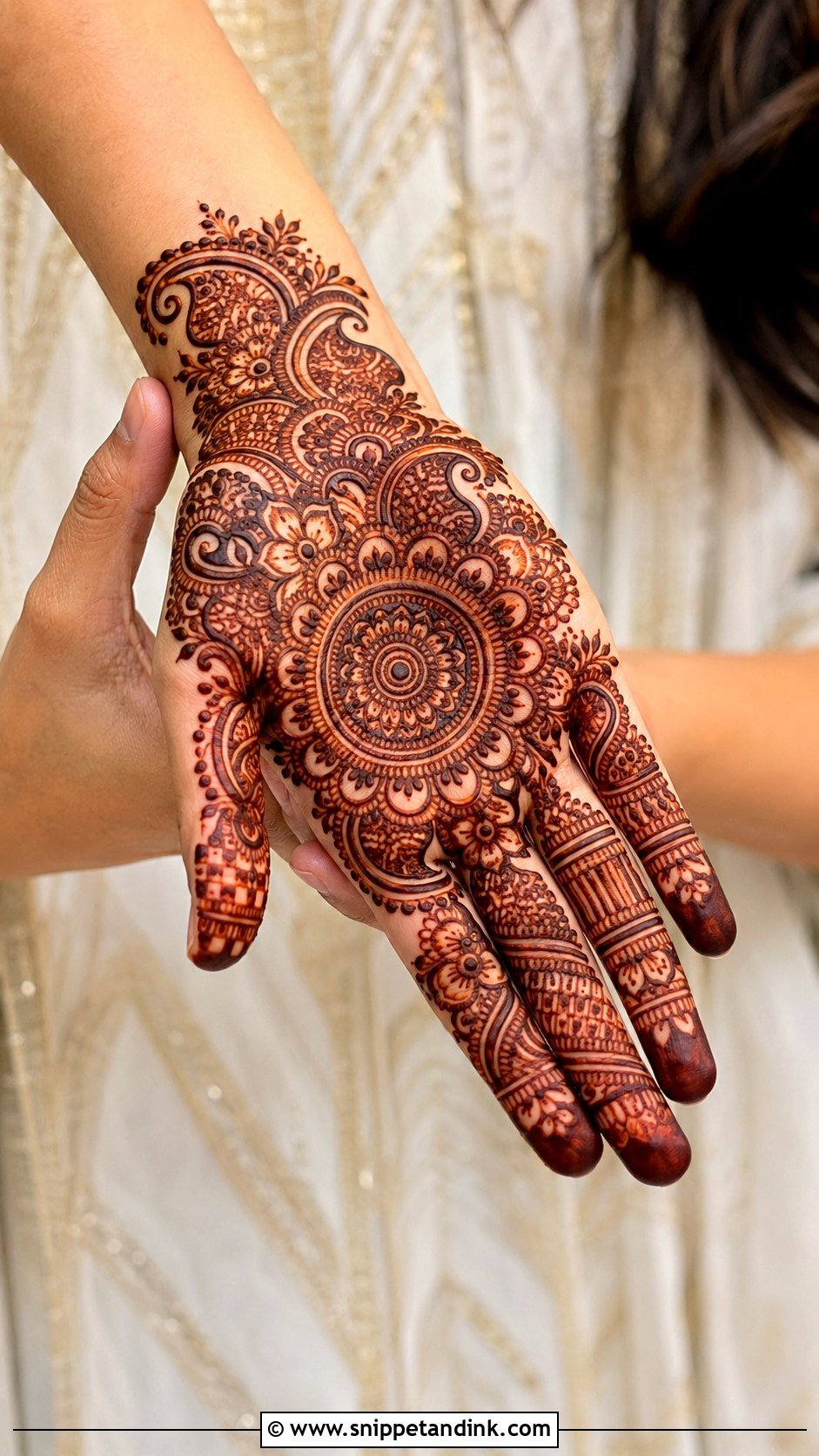
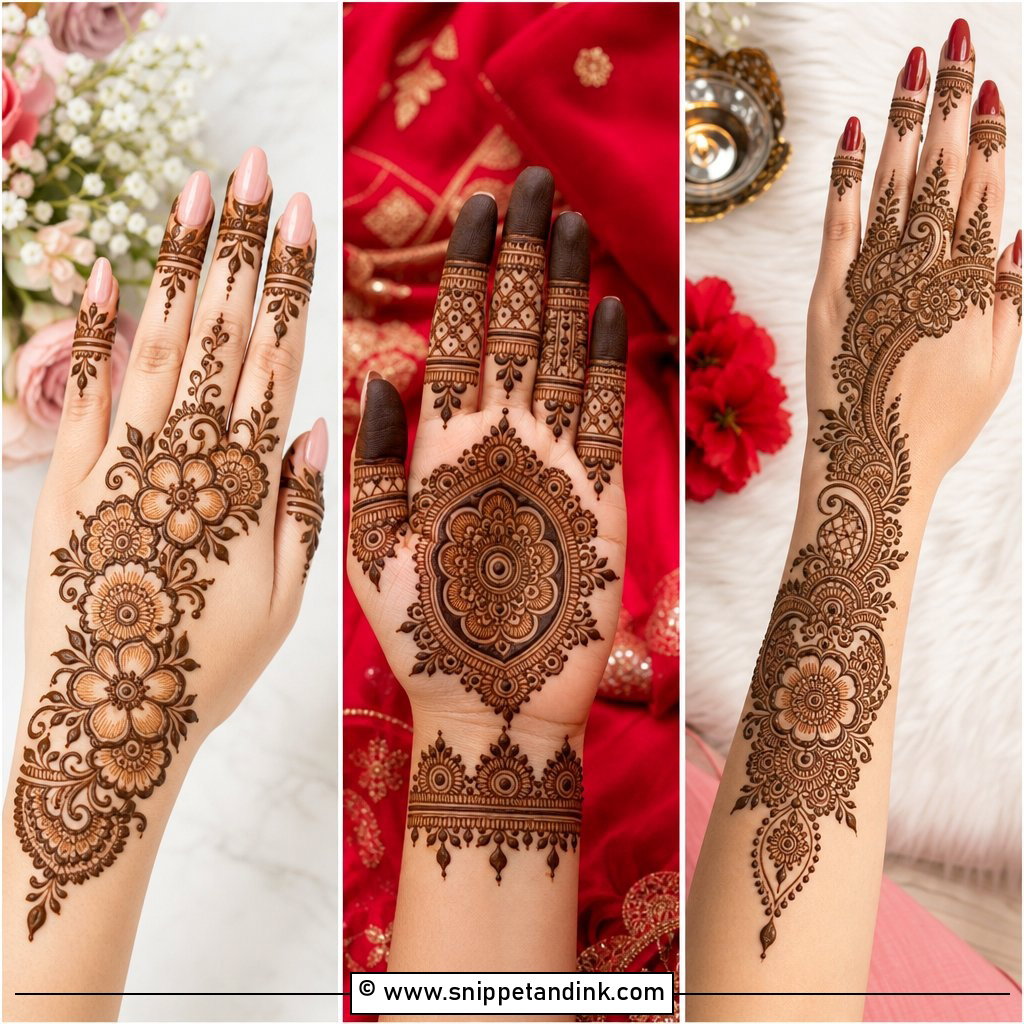
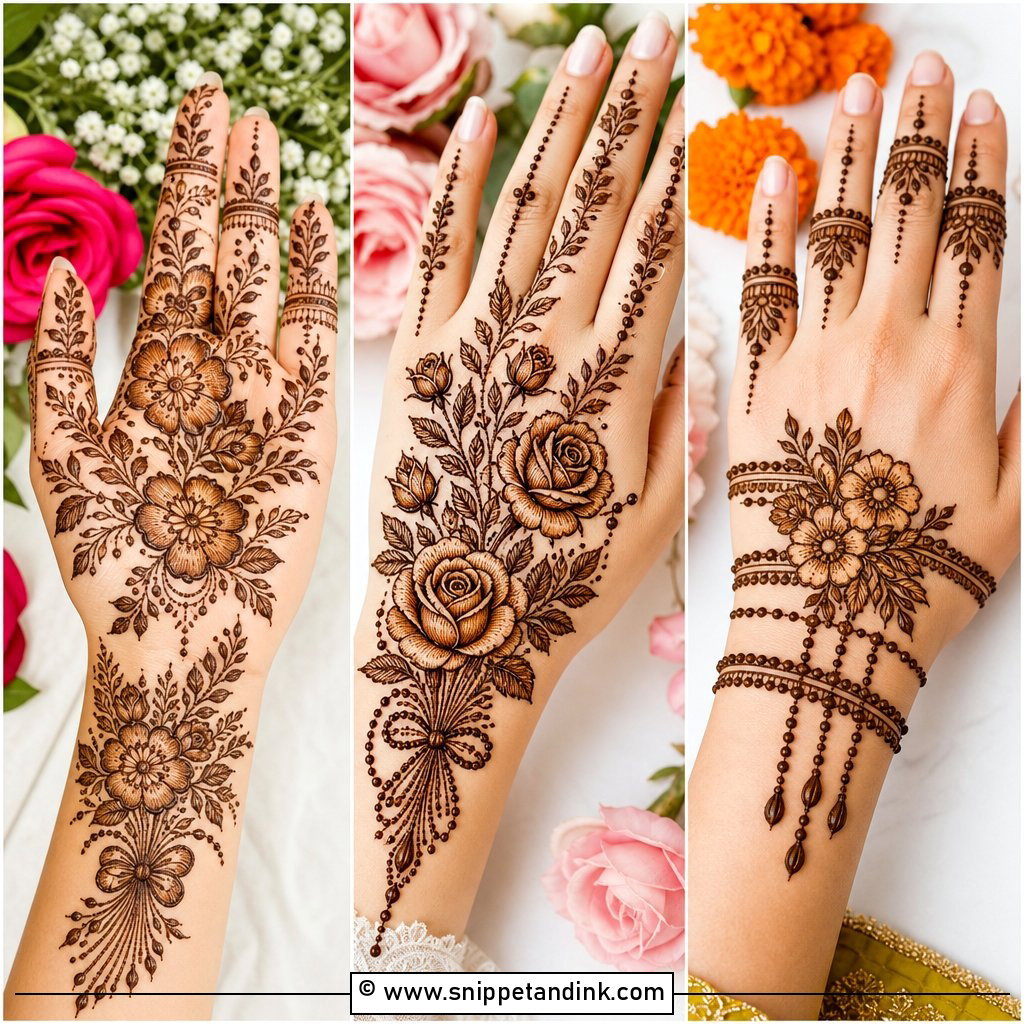
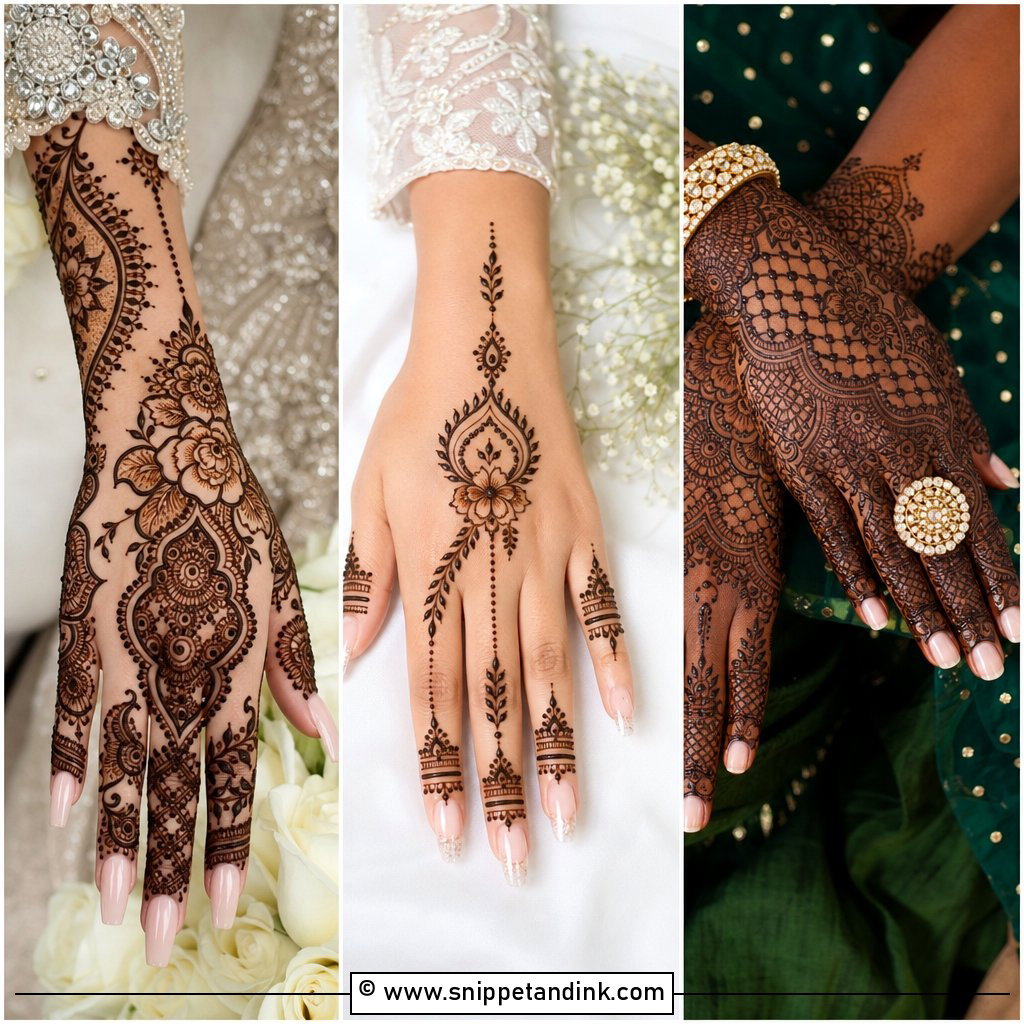
The palm is the best canvas for Bharwa work because it’s broad, flat and stains darkest. I usually open with a central mandala or a large floral circle, then grow outward with paisleys, curling vines and shaded leaves, while the fingers take bands, checks, dots and small petals. This one stops at the wrist, which suits women who love classic Indian mehndi but don’t want their arms covered. Leave a hair’s width of skin between the main shapes. Without it, the pattern reads as one dark patch once the stain deepens.
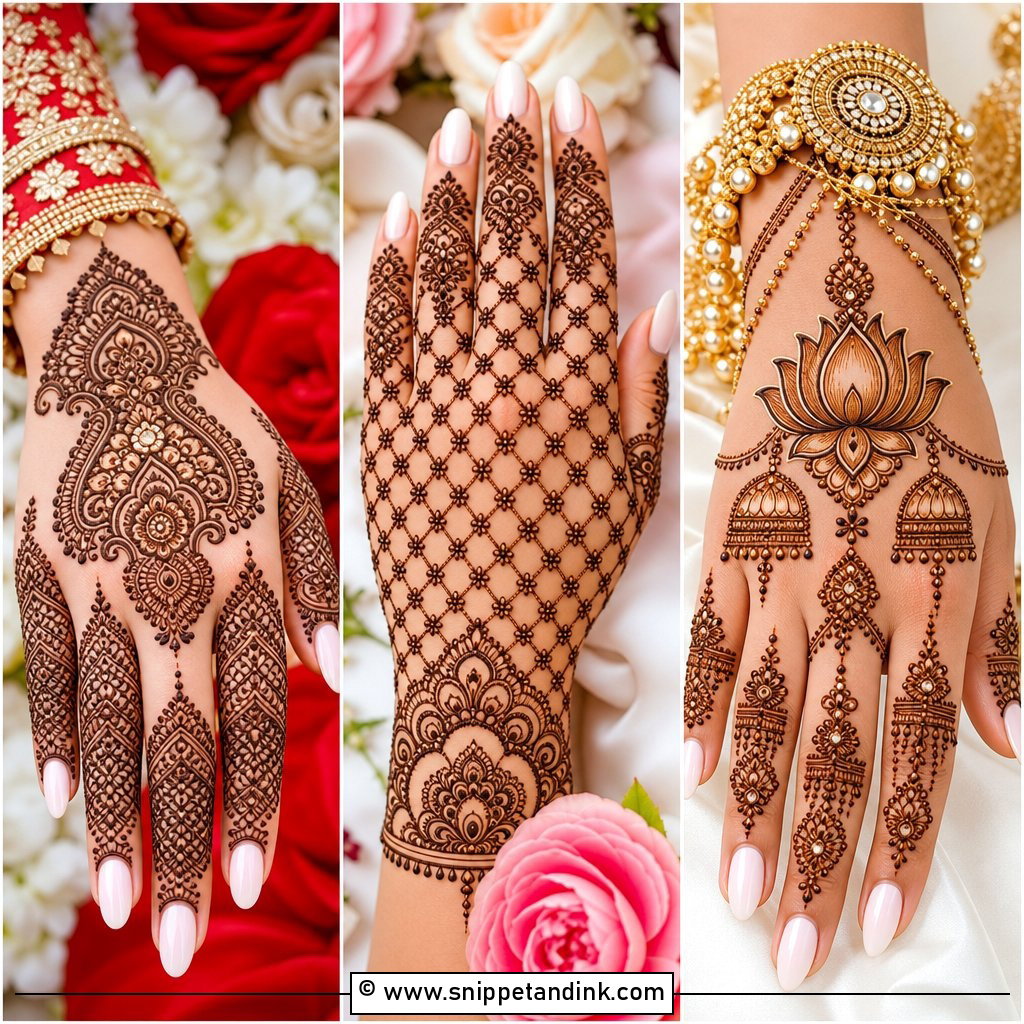
3. Back Hand Bharwa Mehndi Design
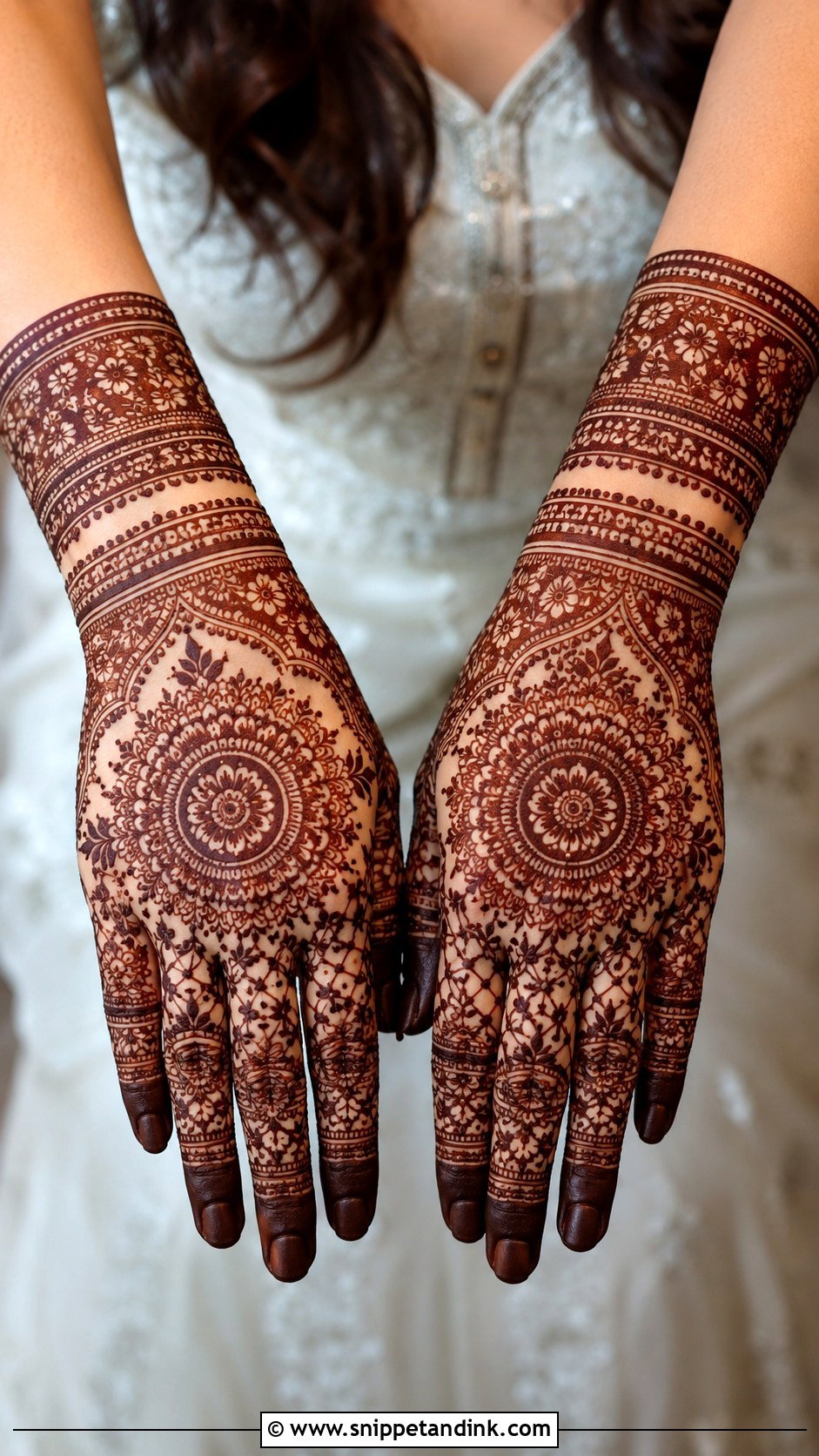
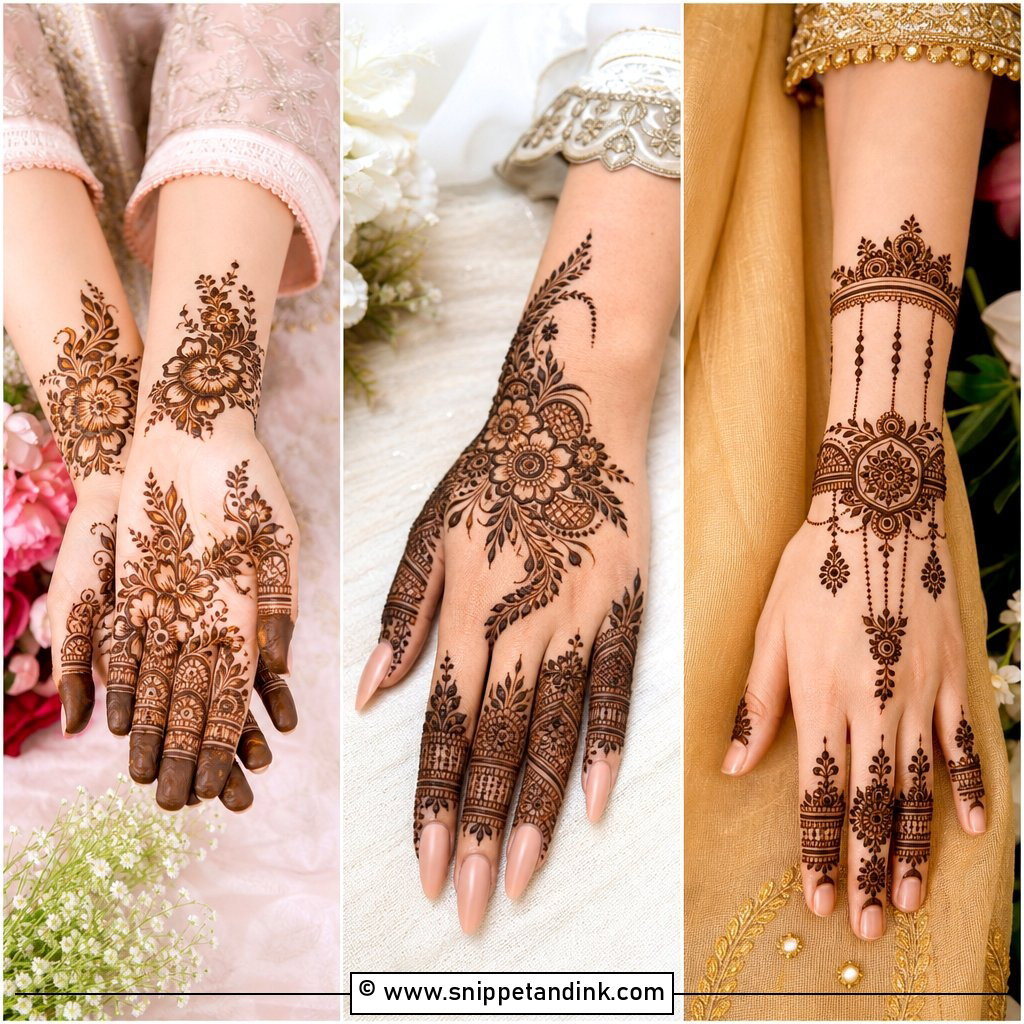
The back of the hand is the side people see while you talk, dance and hold your clutch. I usually anchor it with a bold mandala, a bracelet band or a floral centre at the middle of the hand, then let jaali, leaf trails, paisley curves and filled fingertips run toward the nails. The skin here is thinner than the palm and stains a shade lighter, so I keep the filling a touch more open than I would on the palm. A tidy cuff at the wrist makes it look finished.
4. Simple Bharwa Mehndi Design
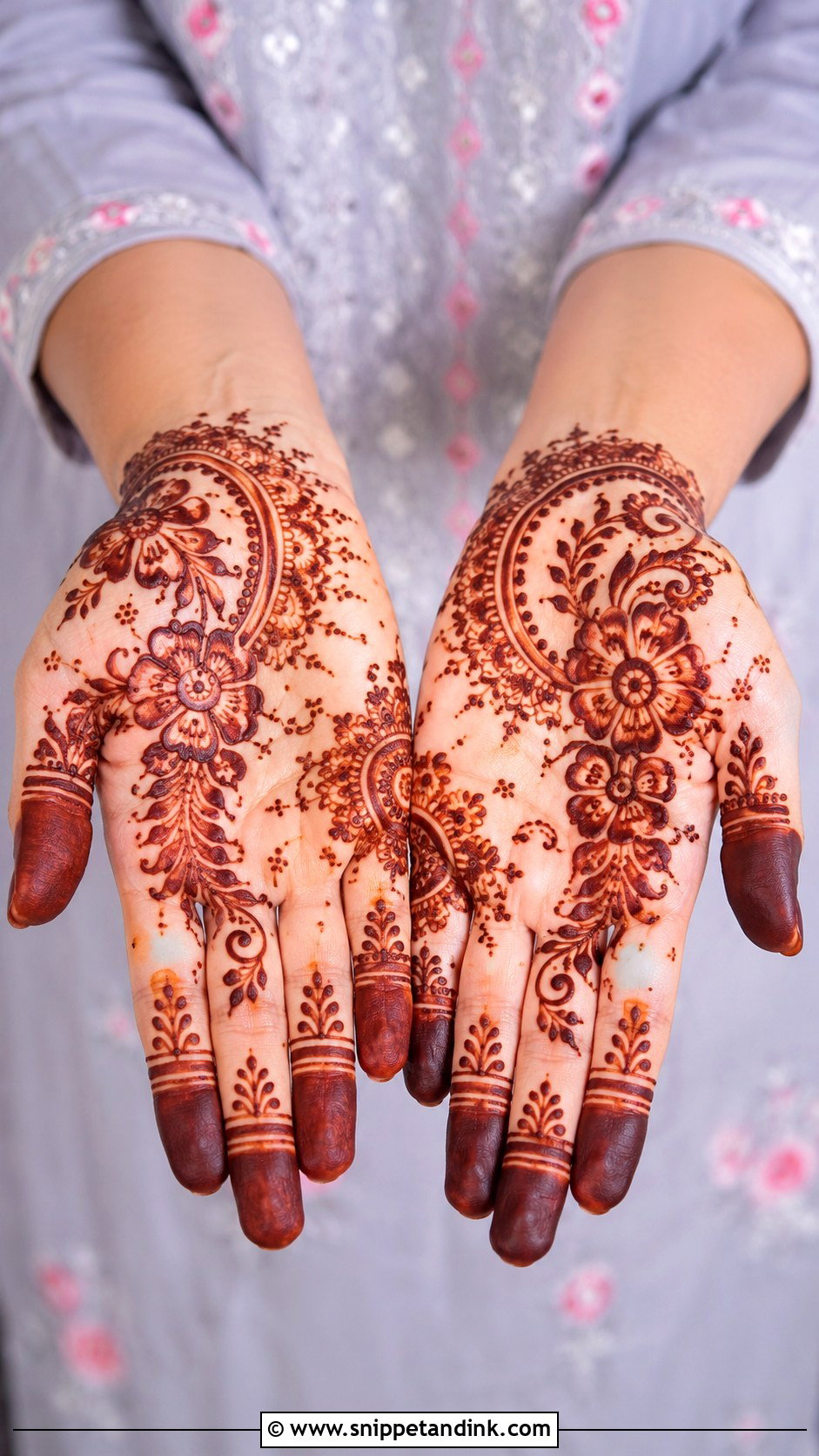
Simple Bharwa uses easy shapes, flowers, half circles, leaves, swirls and clean paisleys, and fills them with quick strokes instead of fine detail. One large motif goes on the palm and the fingers take repeated bands and dots. It’s the version I’d suggest to anyone applying henna at home, because it forgives an unsteady hand. Short filler strokes tucked into empty corners make it look fuller than it is.
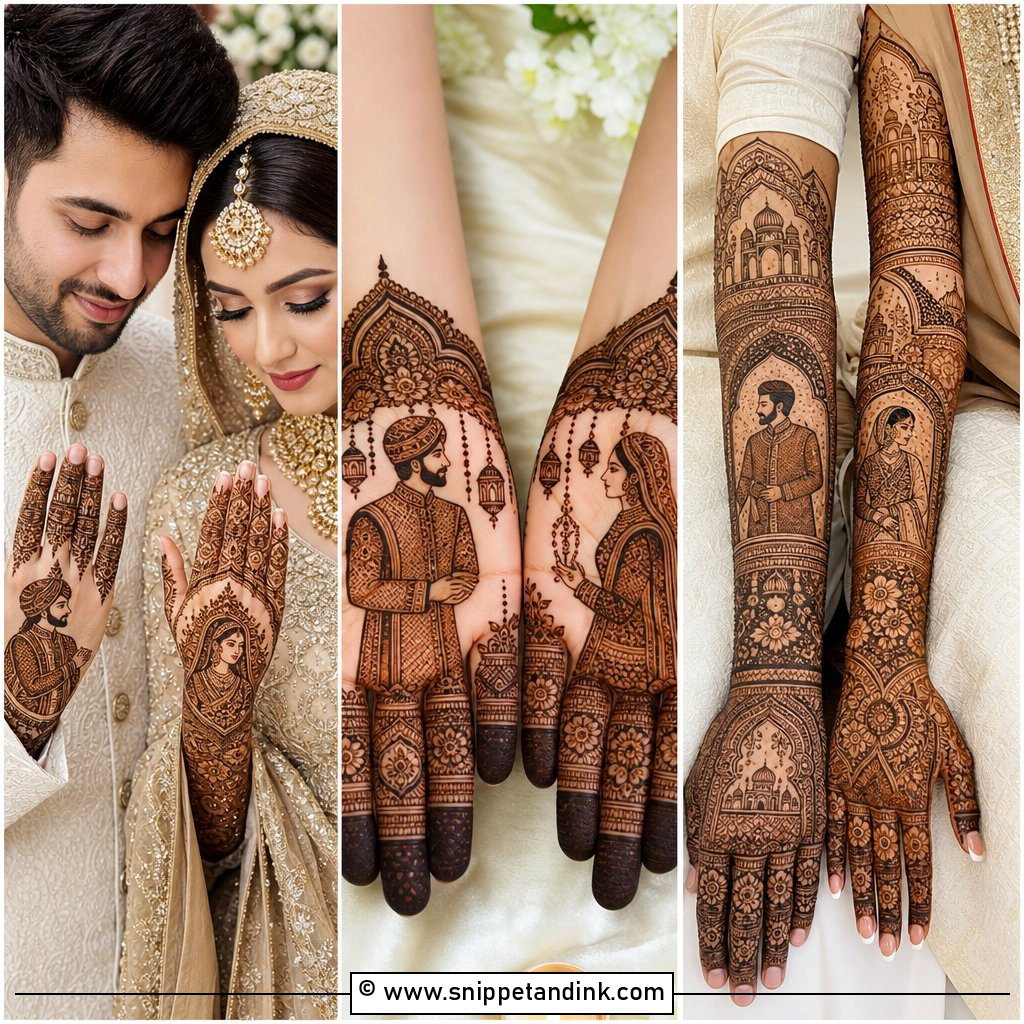
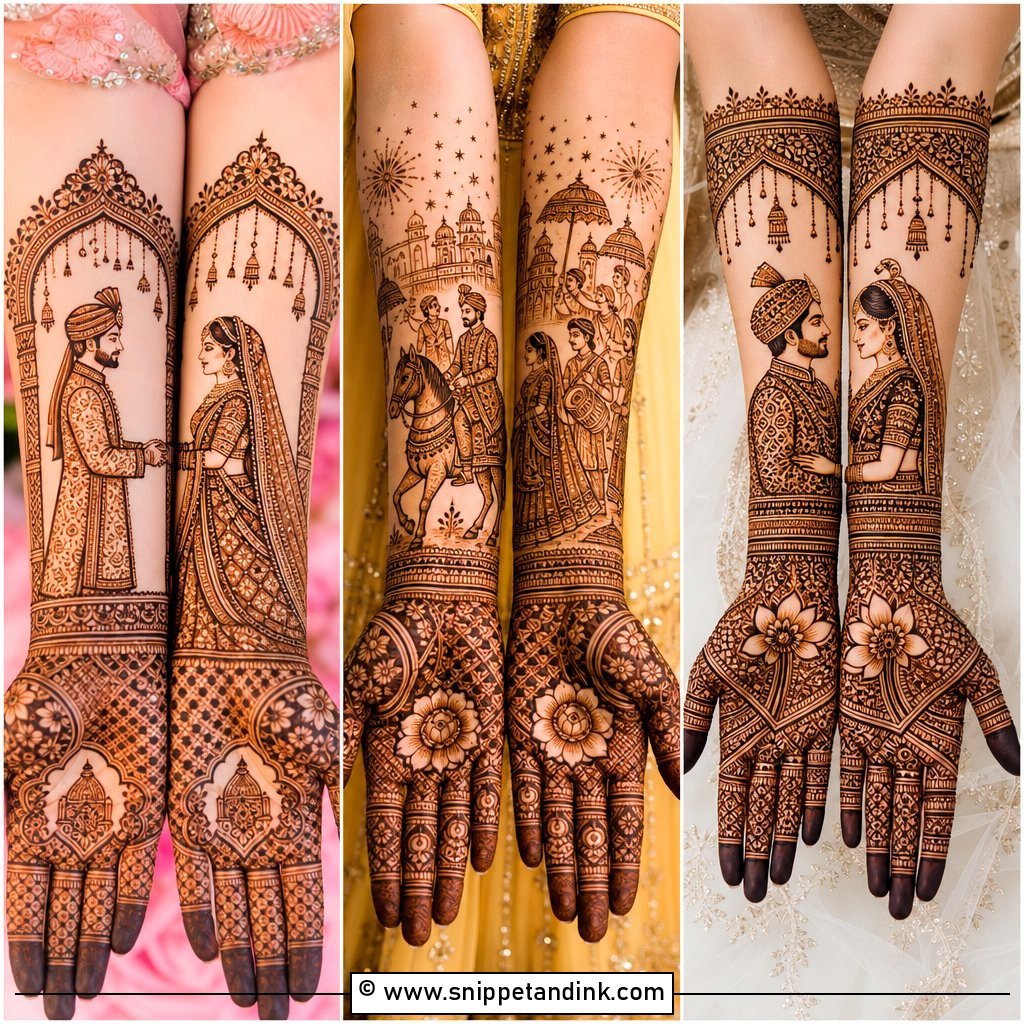
5. Bridal Bharwa Mehndi Design
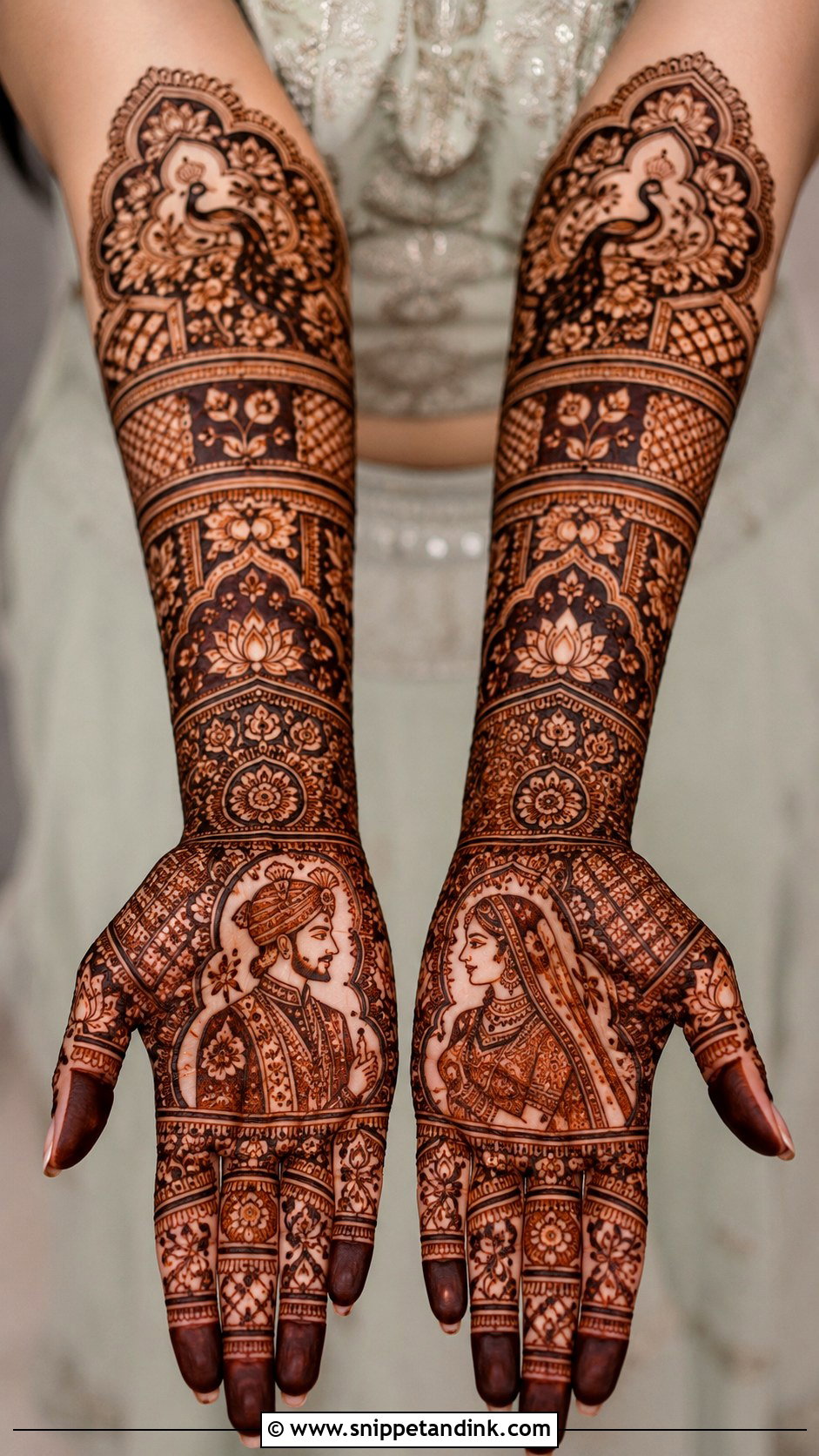
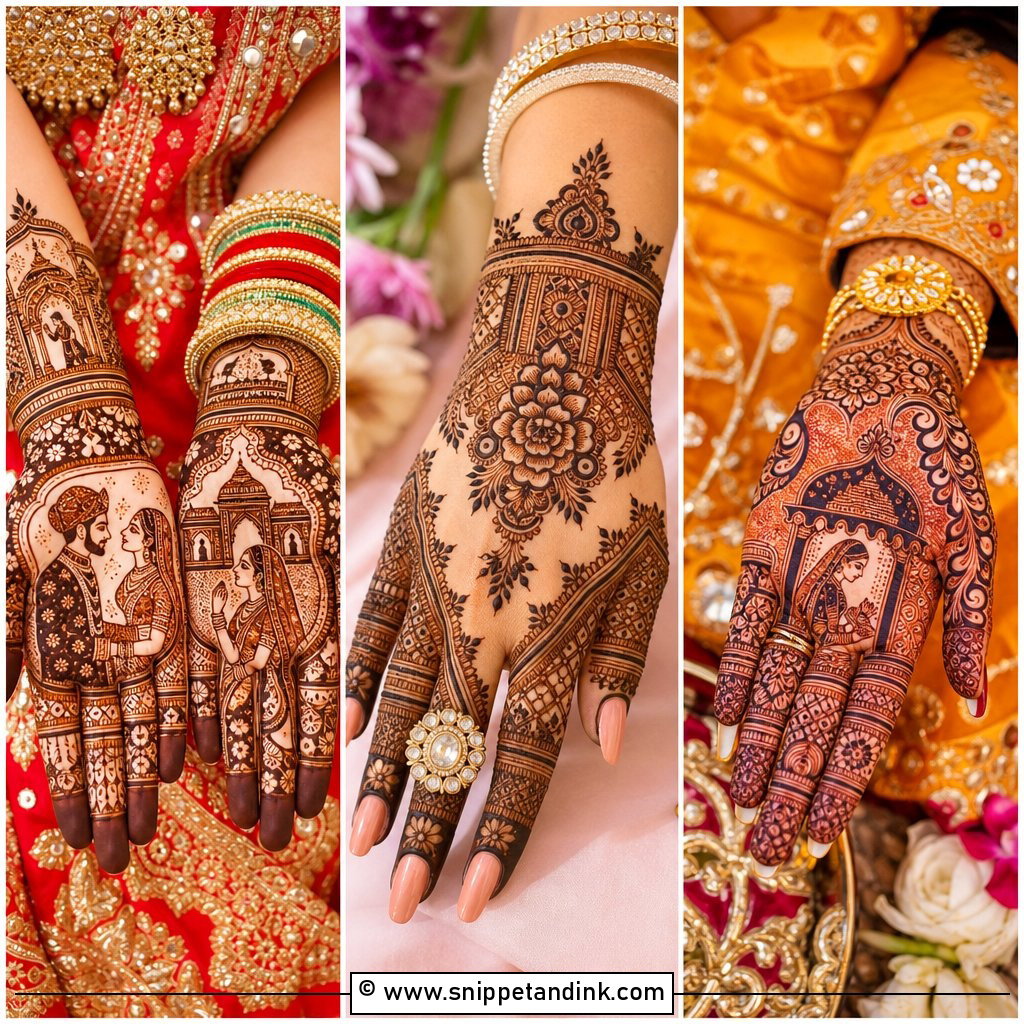
Bridal Bharwa is the densest version, covering hands and forearms with bride and groom figures, peacocks, lotuses, kalash, mandalas, jaali and often hidden initials. The palm carries the main story and the fingers and wrists take fine bands and borders. I plan it in sections, sketching where each scene sits before I fill anything, because changing the layout halfway through a bridal arm is close to impossible. It needs a long, calm sitting and a bride who is happy to be still for it.
6. Arabic Bharwa Mehndi Design
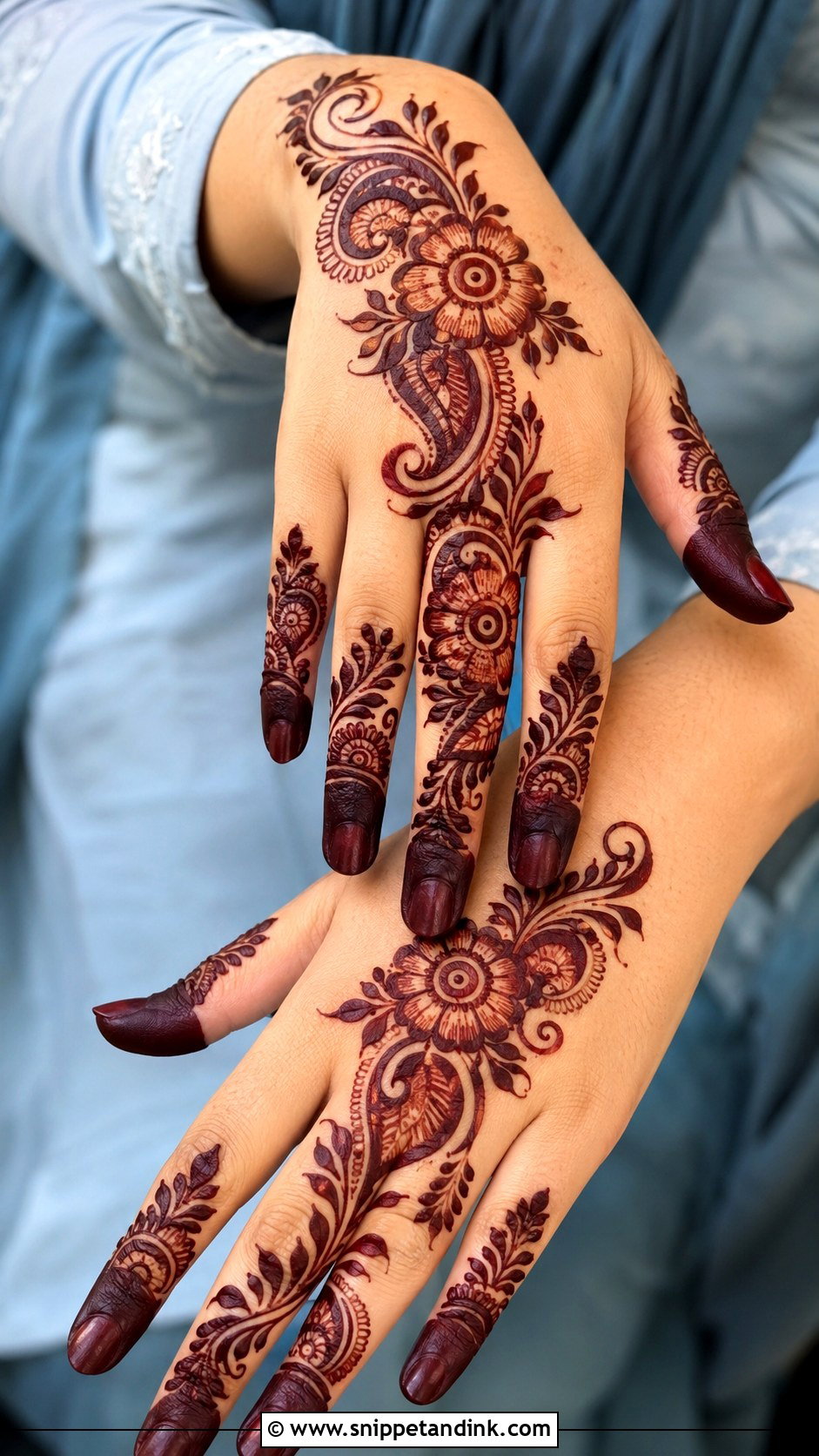
An Arabic Bharwa mehndi design keeps the diagonal flow of Arabic work but fills it more heavily: thick flower trails, shaded leaves, paisleys and packed fingers, with breathing space left around the main trail. It’s bold, yet it doesn’t feel crowded. I keep the outer lines strong and do the inside with fine lines, dots and gentle shading, so the stain shows a dark edge with lighter detail within. Bridesmaids and Eid guests like it because it looks rich but goes on fairly quickly.
7. Indo Arabic Bharwa Mehndi Design
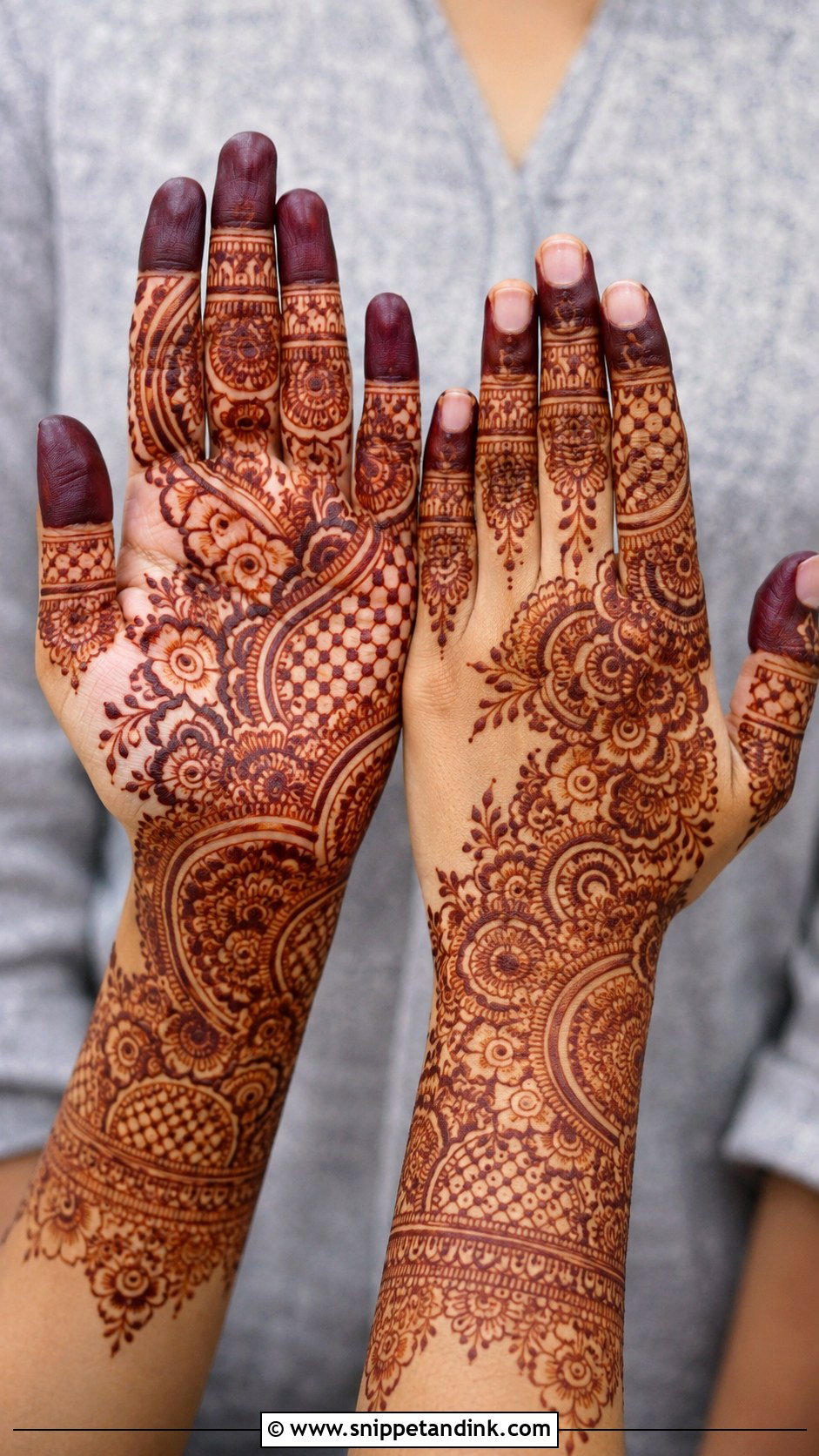
Indo-Arabic Bharwa keeps a diagonal floral trail and fills the gaps around it with mandalas, jaali checks, small leaves and paisleys. You get full coverage and still keep a sense of movement. The fingers are where you decide how traditional it reads: fully covered feels classic, partly filled feels lighter and more current. It sits comfortably on both sides of the hand, which makes it one of the most versatile layouts in this list.
8. Rajasthani Bharwa Mehndi Design
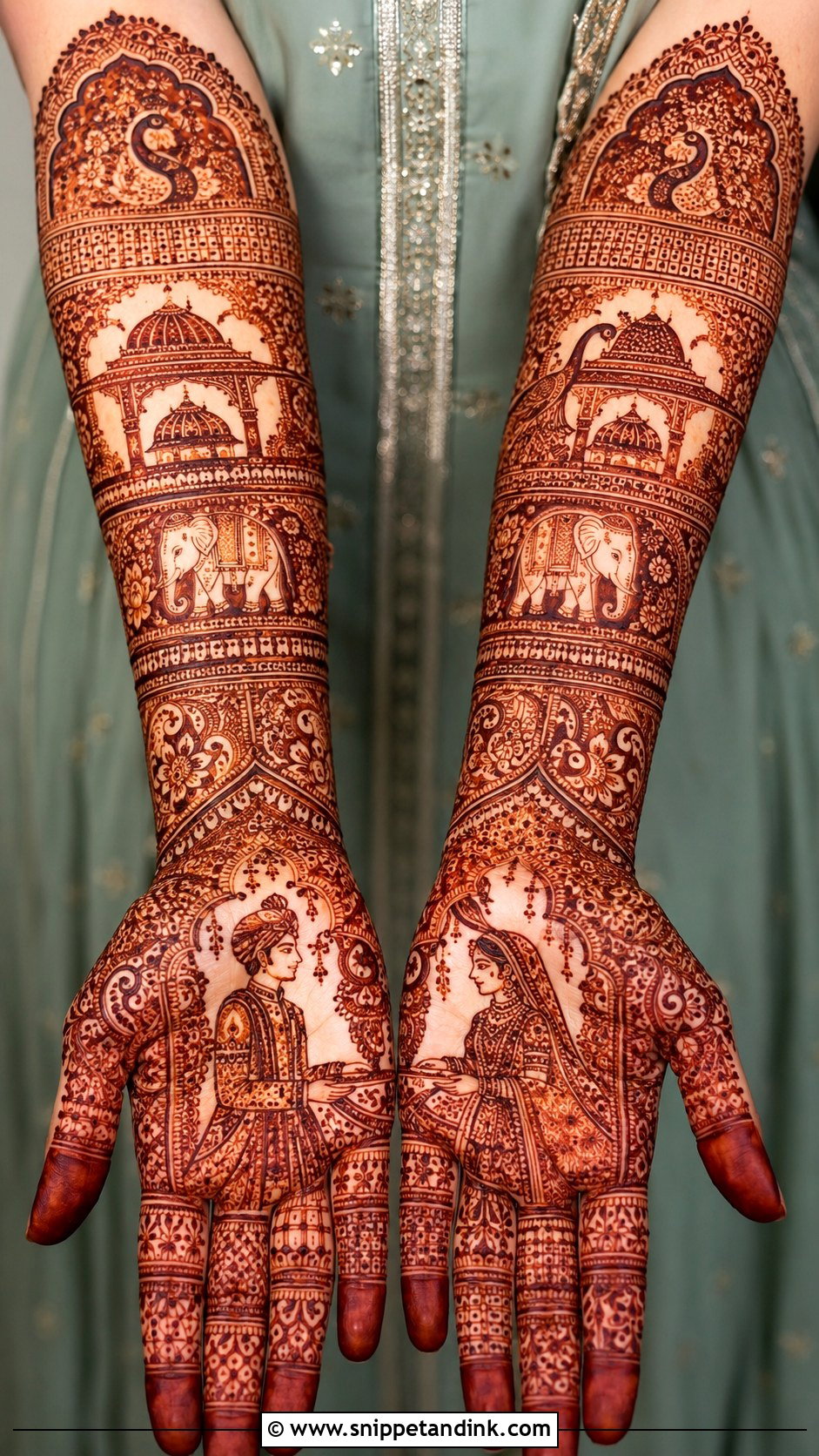
Rajasthani Bharwa tells a story: peacocks, dulha dulhan, elephants, lotuses, domes and fine geometric fill running up to the forearm. Each panel can carry its own scene, linked by borders and small fillers. The danger with this much detail is that scenes merge, so I leave a clear border of bare skin between major motifs and keep the figures’ outlines firm. Plan for a long sitting; this is a bride’s or a big family occasion’s design.
9. Indian Bharwa Mehndi Design
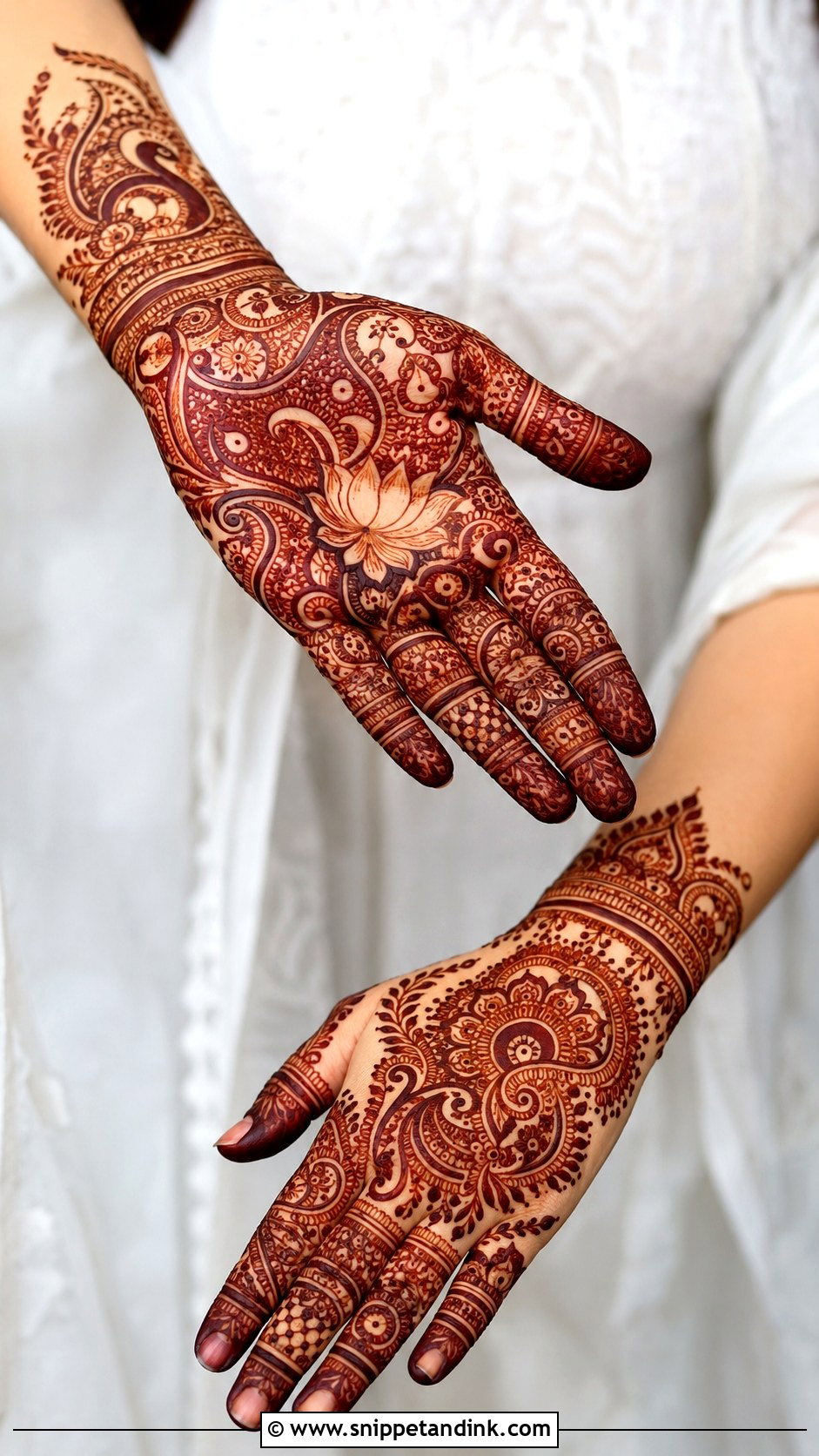
Indian Bharwa is the classic: filled palms, decorated fingers and symmetry that looks complete from any side, built from paisleys, lotuses, mango shapes, peacocks, mandalas, vines and dots. I map the large motifs first, then fill with small strokes and borders, never the reverse. Brides, married women and festival guests all wear it, and it adapts easily from heavy to medium.
10. Pakistani Bharwa Mehndi Design
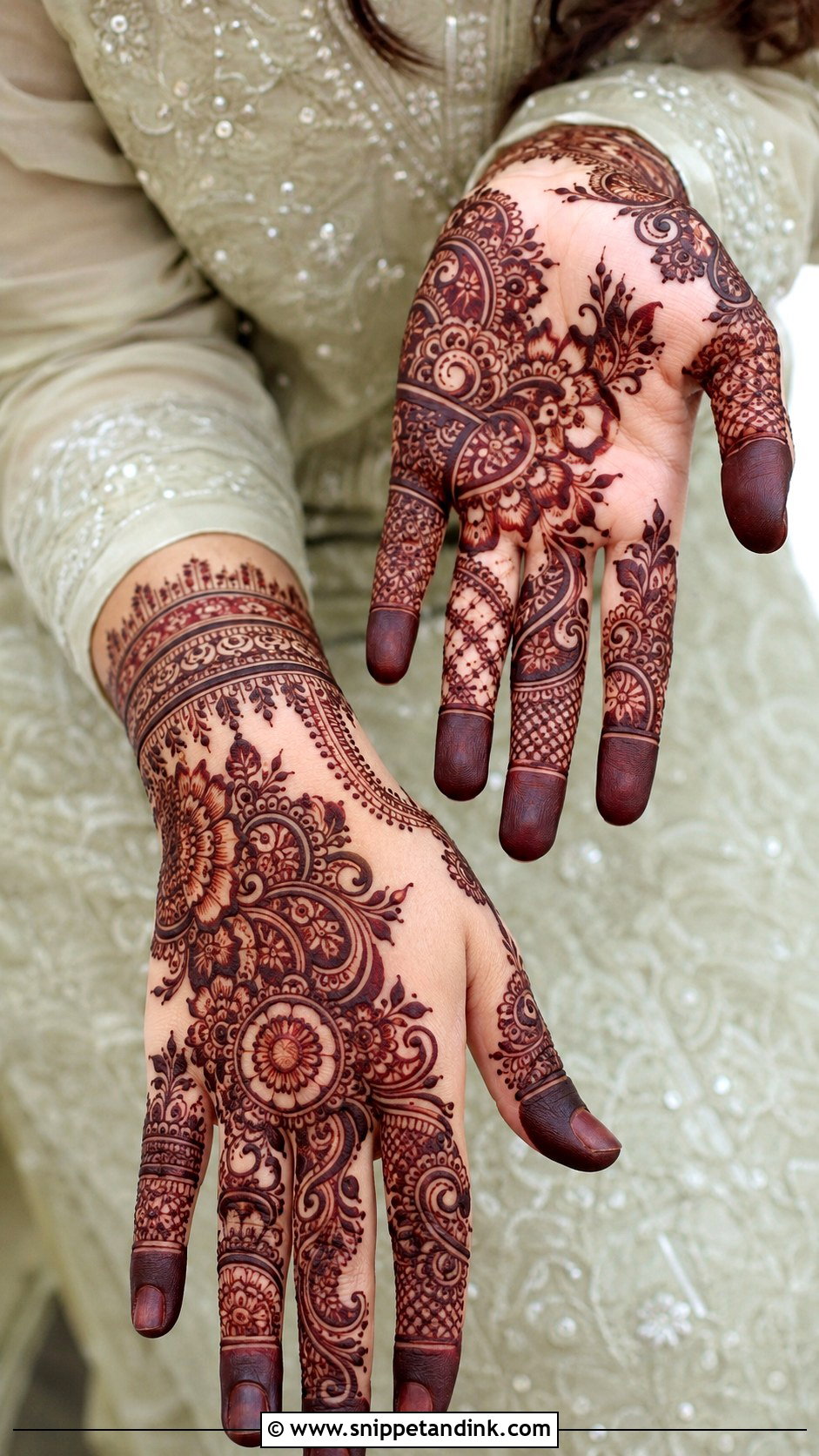
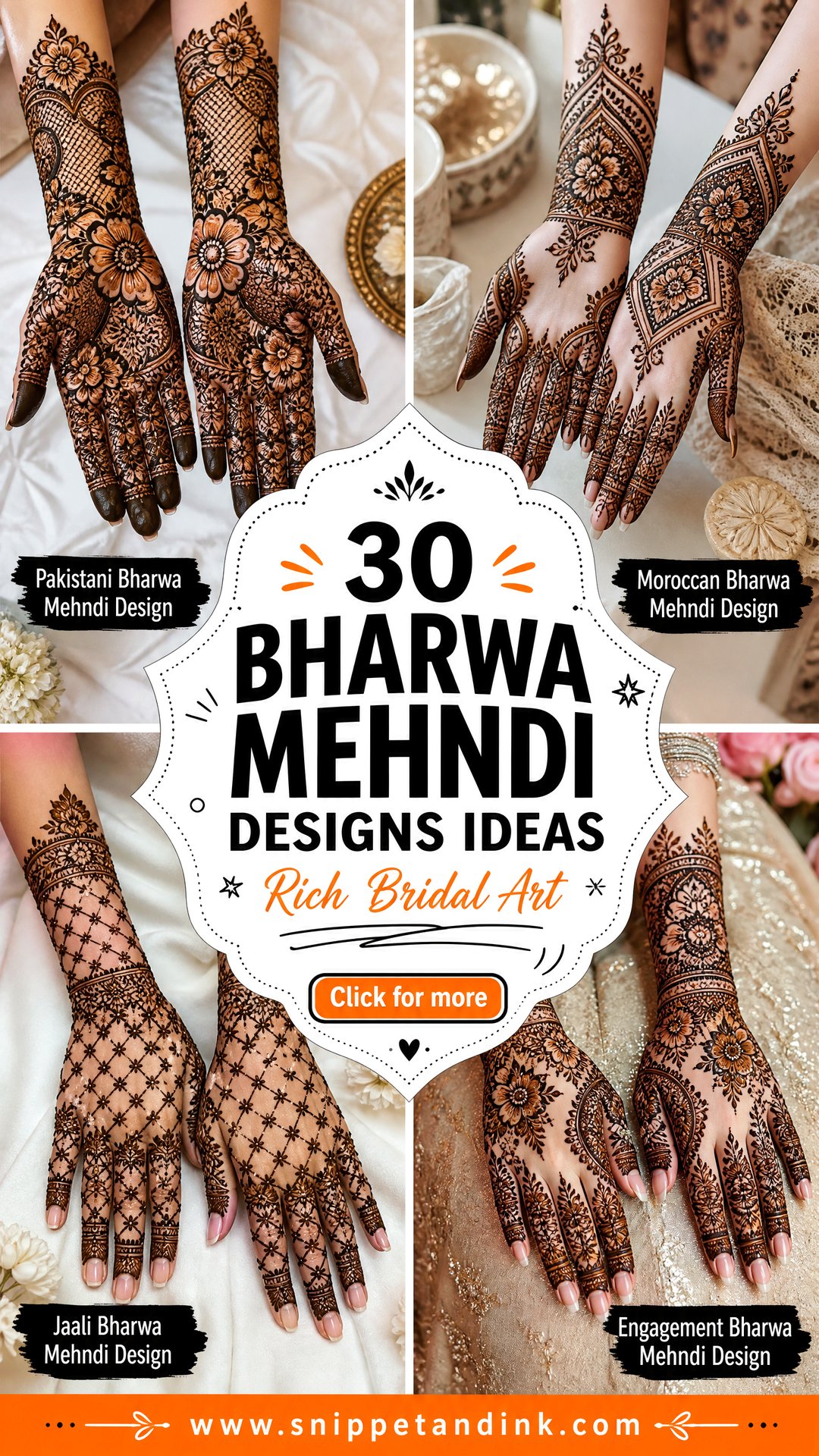
A Pakistani Bharwa mehndi design pairs fine Indian detail with bold Arabic flow: shaded flowers, thick paisleys, delicate jaali and graceful fingers. Brides wear it heavy; Eid and family functions suit a lighter version. Its signature is the balance between packed areas and open ones, a strong palm centrepiece with bracelet bands or cuffs at the wrist. That contrast is why it reads clearly in photos, with fine and bold work visible side by side.
11. Gulf Bharwa Mehndi Design
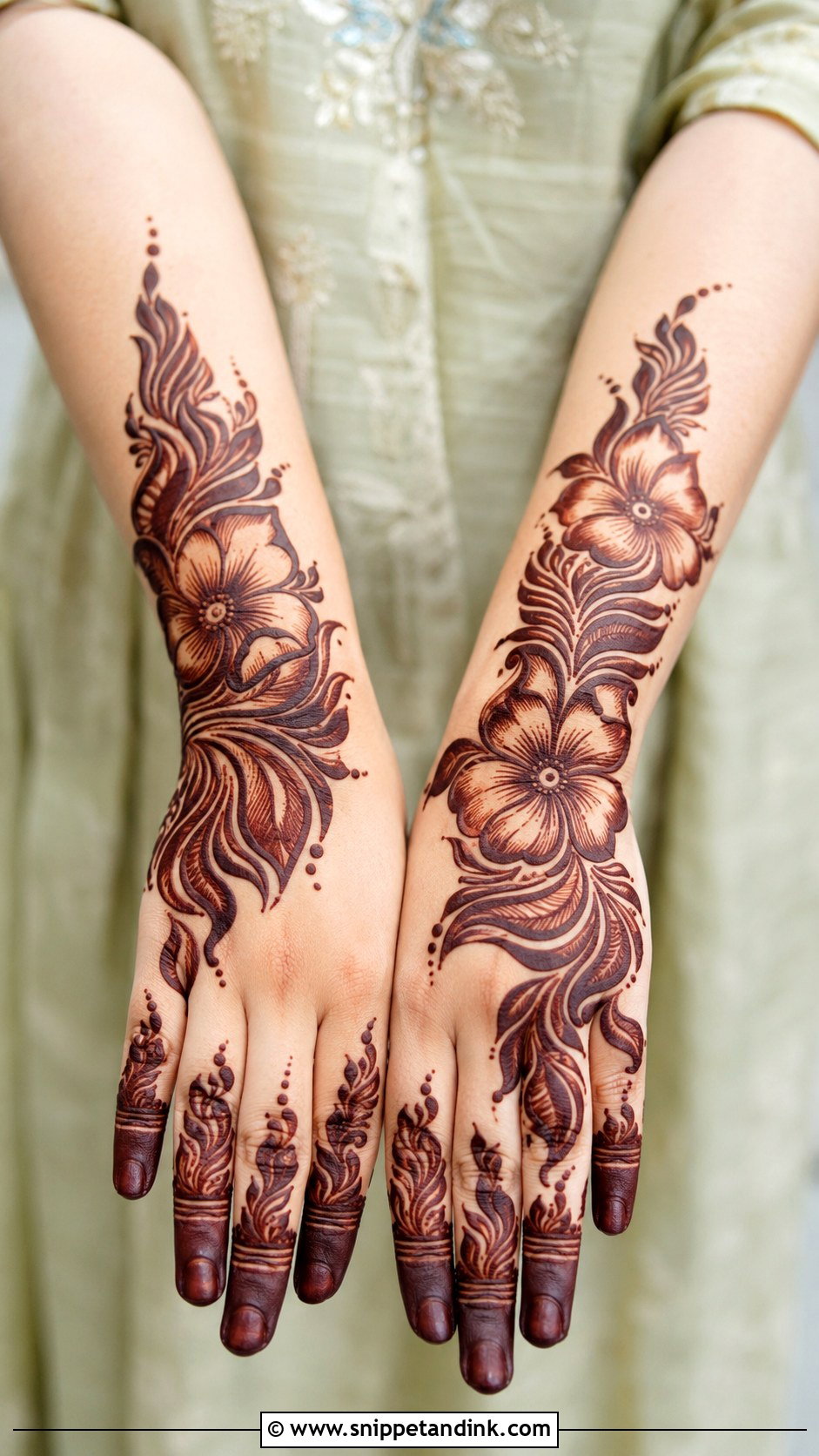
Gulf Bharwa uses large flowers, leafy trails and strong outlines, often asymmetric, and it feels full because the fingers and the main trail carry heavy detail. It suits the back of the hand, running from the wrist toward the index or middle finger. Shading carries this style. I shade inside the petals with short broken strokes rather than solid fill, which gives depth without crowding. It suits Eid, parties and modern wedding events.
12. Moroccan Bharwa Mehndi Design
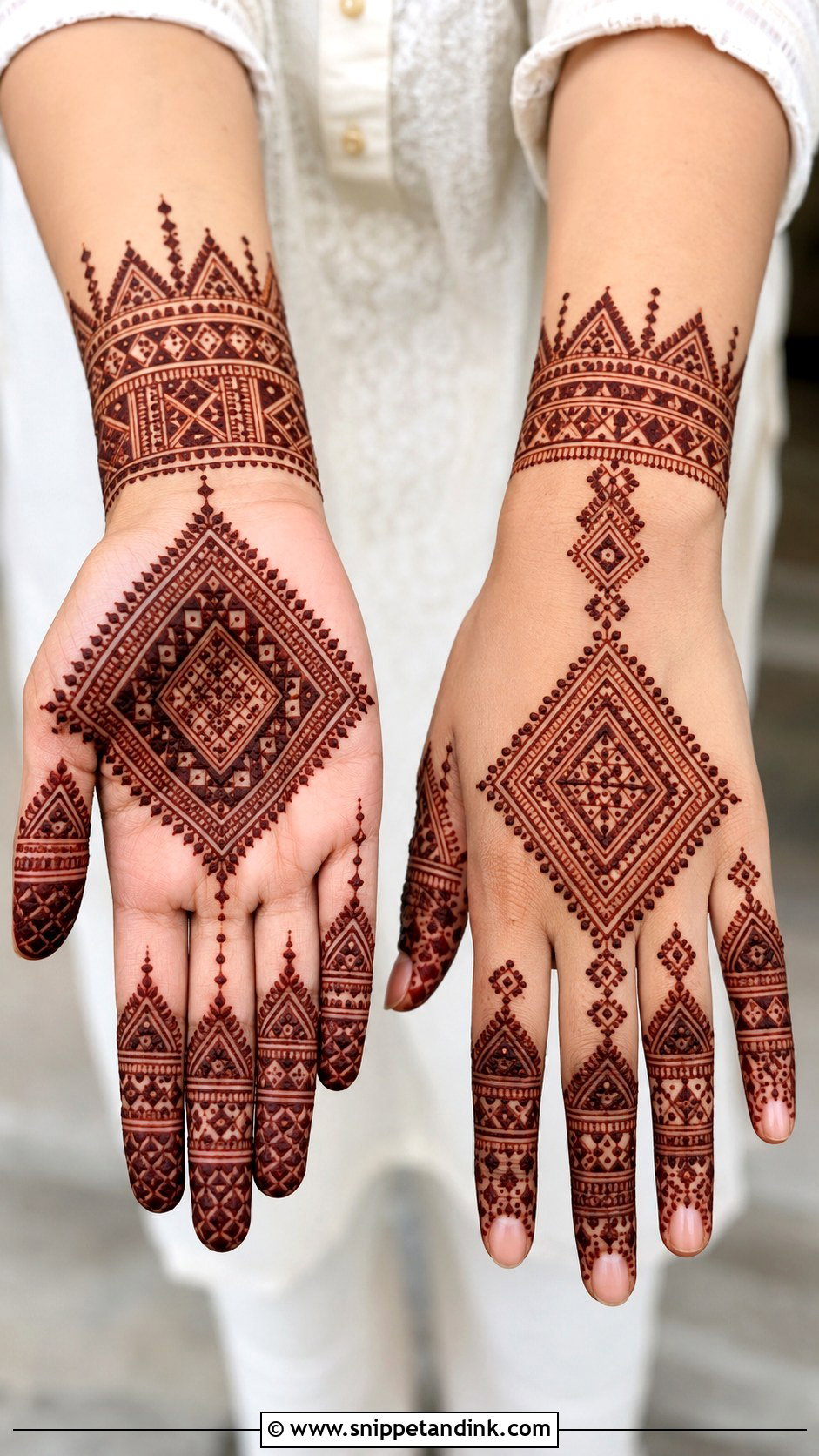
Moroccan Bharwa swaps petals for geometry: diamonds, triangles, grids, lines, dots and symmetrical blocks, with the empty cells filled with small repeated shapes. It looks bold and modern while staying festive. Geometric fill is unforgiving, because uneven grid spacing is obvious, so I lightly mark the main divisions with dots before drawing lines. It works on palms and the back of the hand, especially with a strong cuff-like border at the wrist.
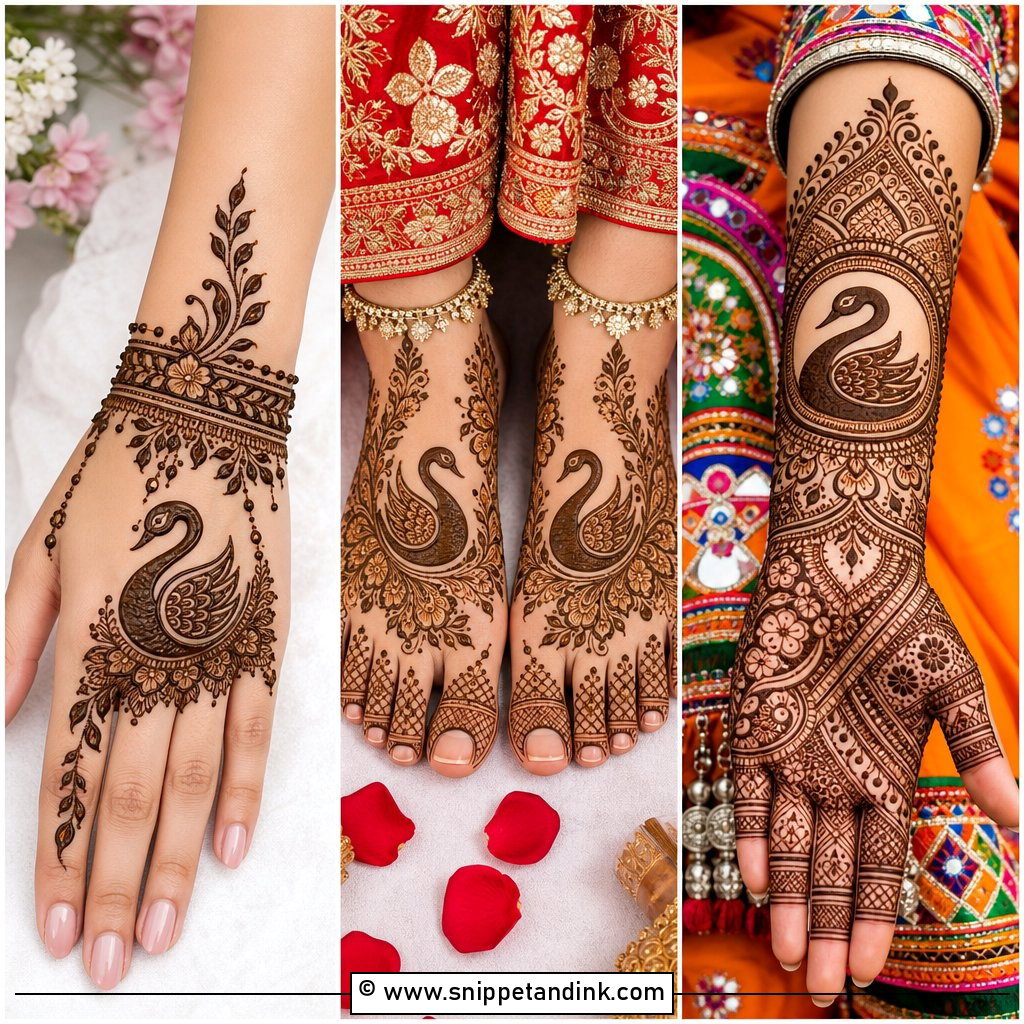
13. Peacock Bharwa Mehndi Design
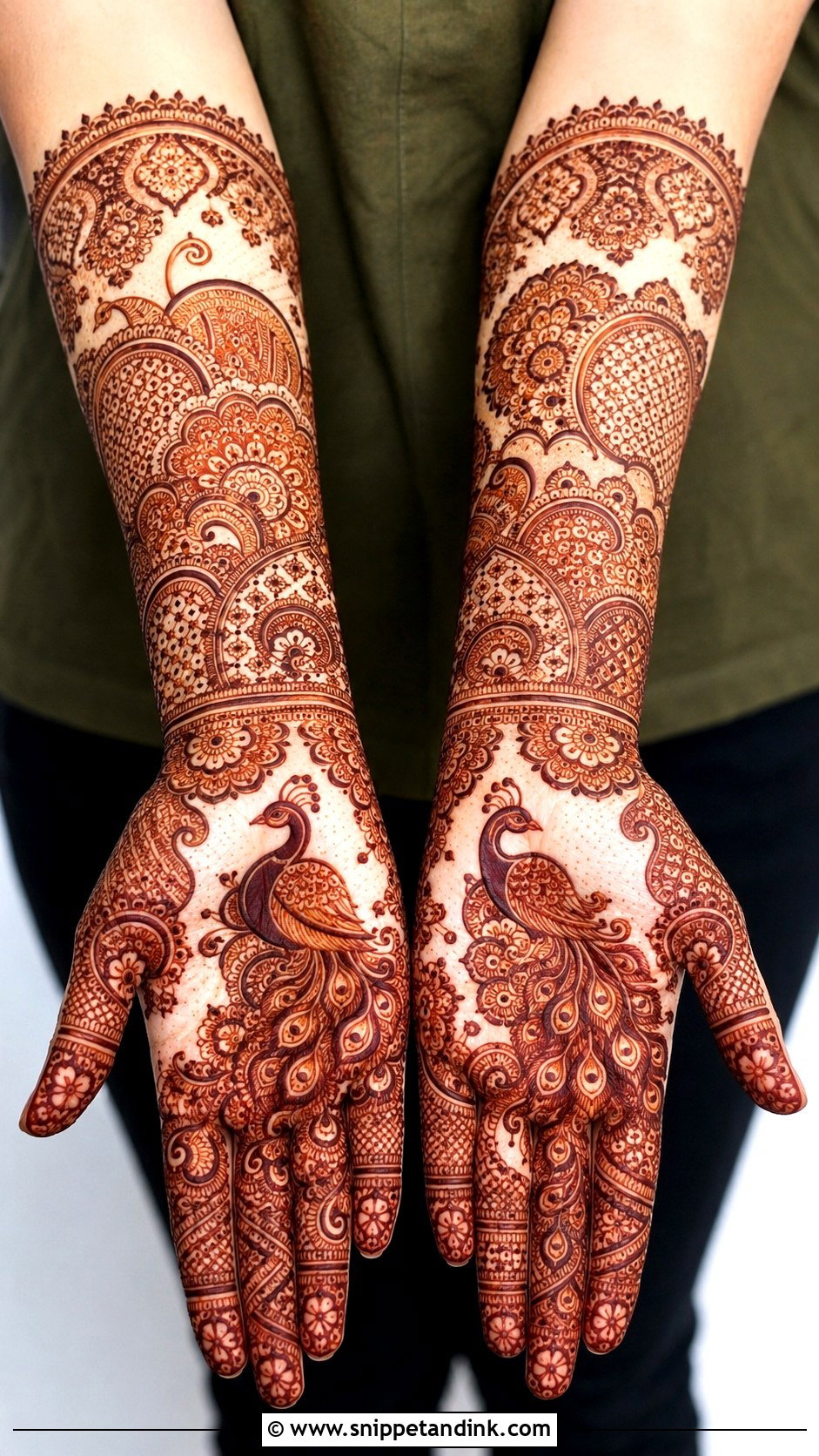
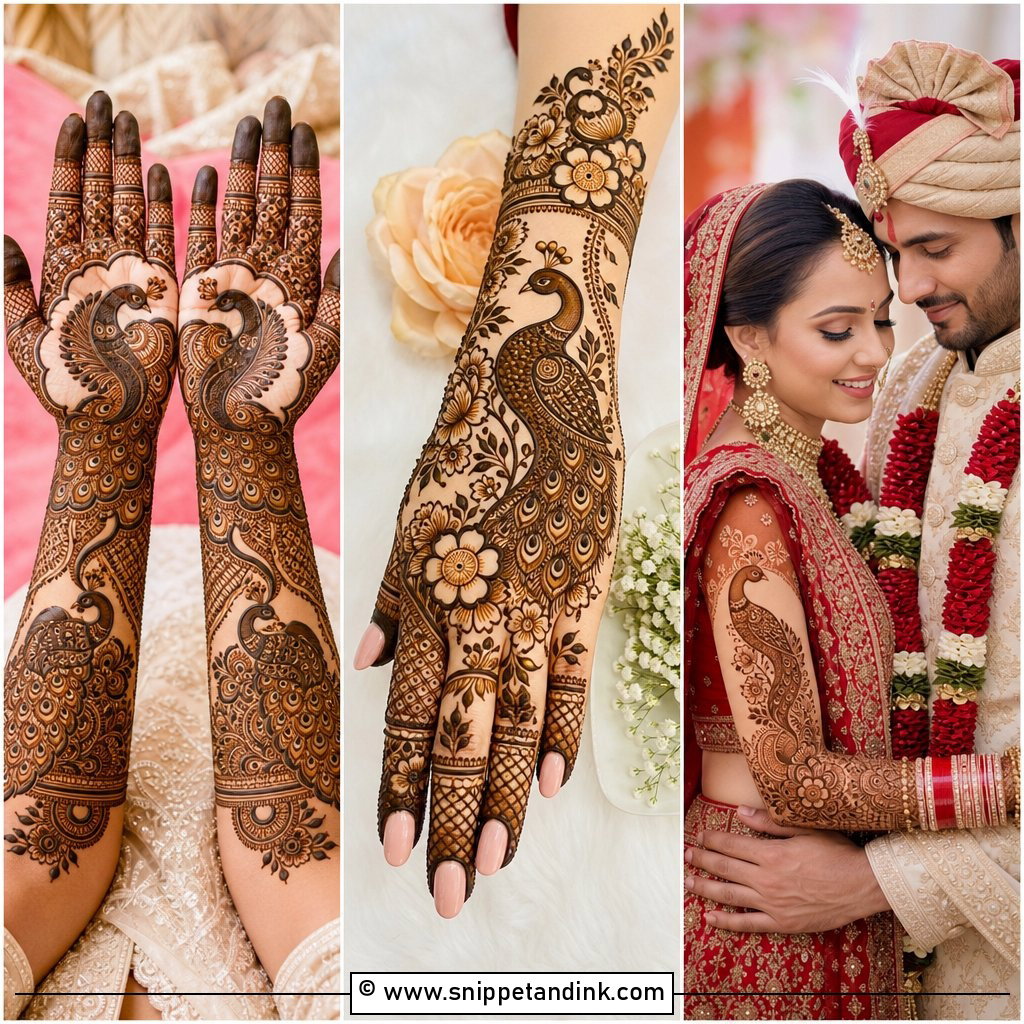
The peacock is the feature, placed on the palm, wrist or back of the hand, with feathers, paisleys, florals, jaali and dots filling around it. Peacocks are popular at weddings and traditional functions, but in a Bharwa design they’re easy to lose. I always outline the bird first and keep a thin halo of skin around its body so the filling doesn’t swallow it. For a bride, two peacocks facing each other across the palms, with mandalas and wrist bands, give a grand finish.
14. Floral Bharwa Mehndi Design
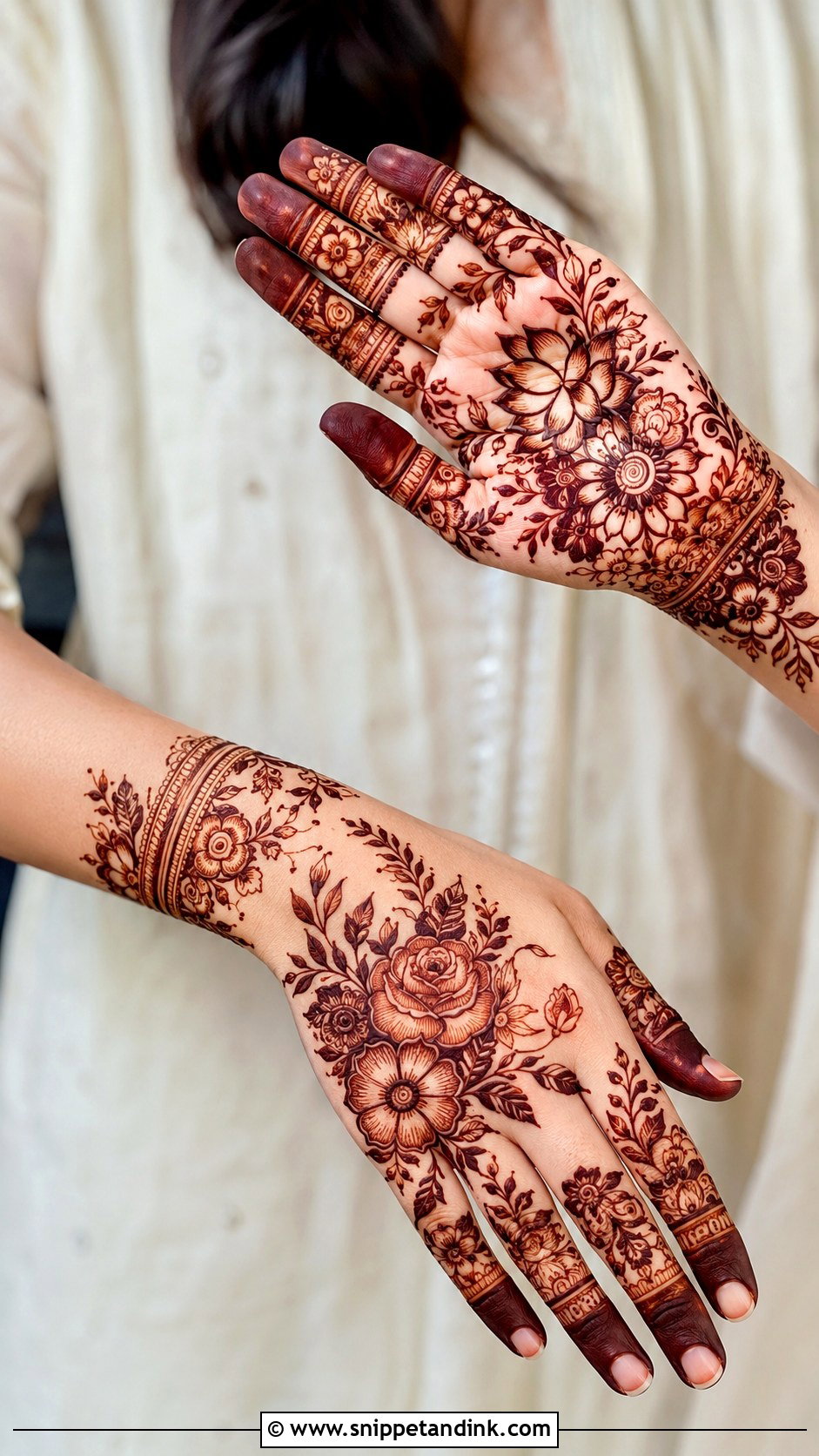
Floral Bharwa uses roses, lotuses, round blossoms, buds, vines and shaded petals, often one large flower on the palm with smaller trails and fillers around it. Bridesmaids and festival guests often prefer it to geometric work. The finish comes from contrast: bold outlines on the main flowers and very fine detail inside. Skip that contrast and every flower blends into its neighbour.
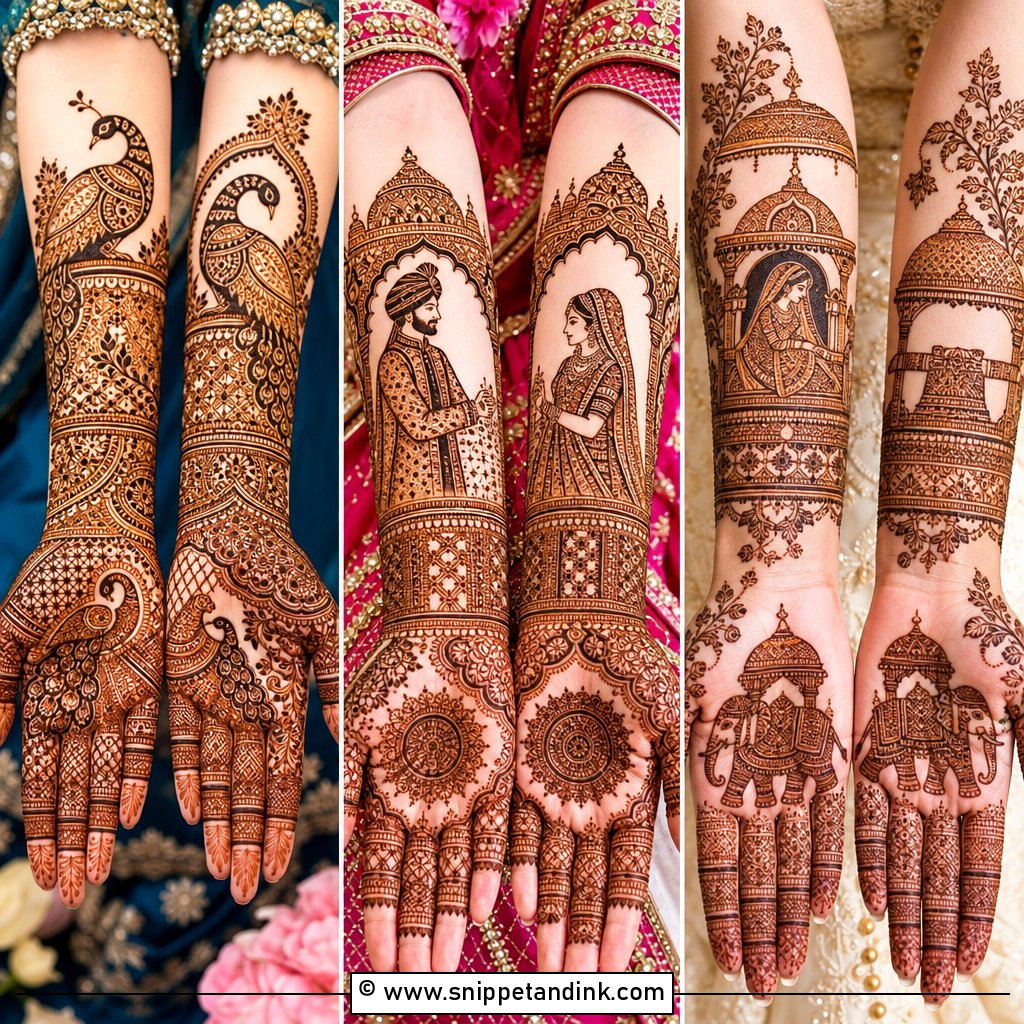
15. Paisley Bharwa Mehndi Design
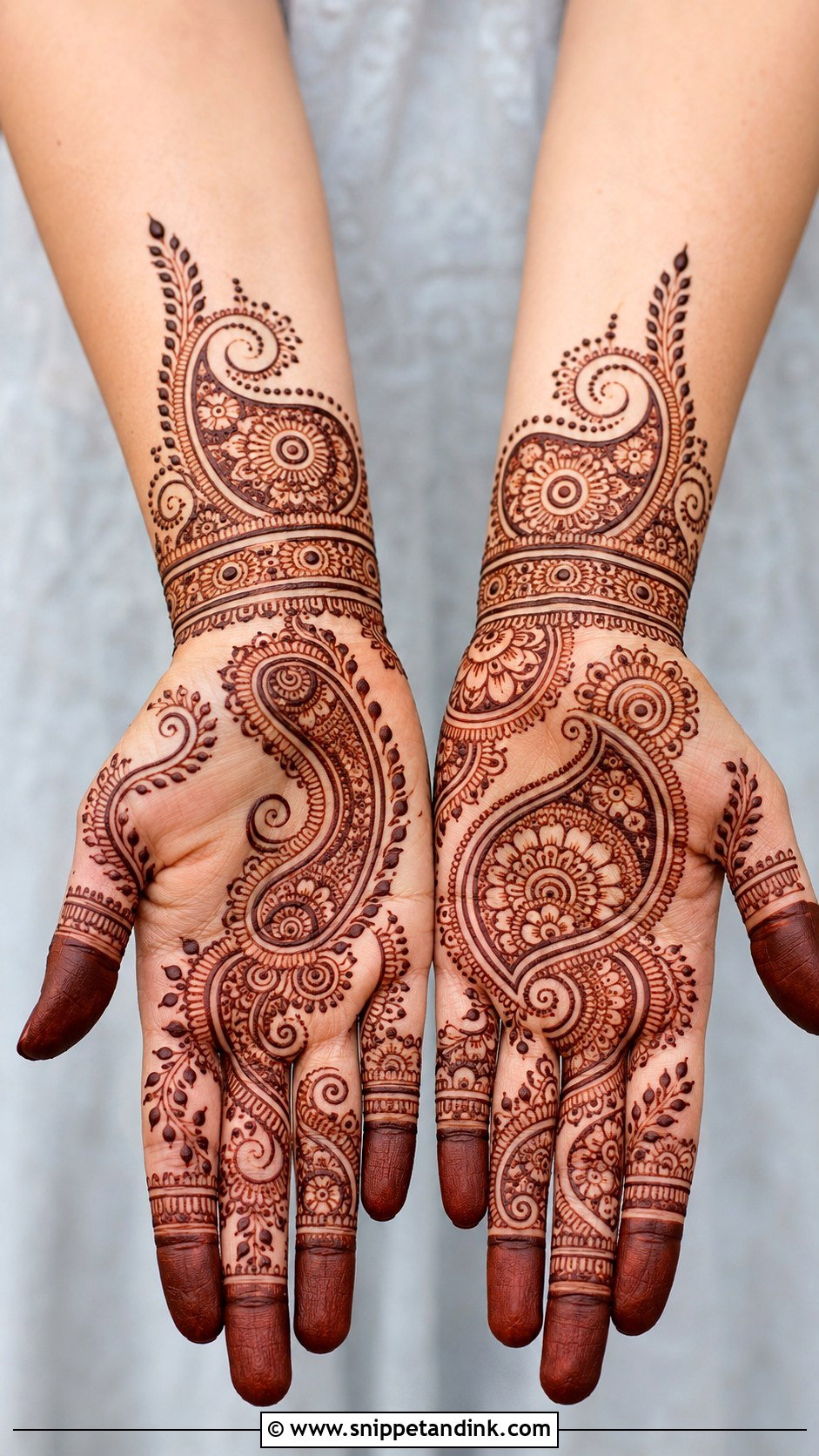
Paisleys follow the curves of the palm, wrist and fingers, so a paisley-led design makes the hand look fuller and longer. Use one large paisley as the centre, or build the whole hand from smaller ones linked by vines and dots. The inside is where Bharwa work shows: lines, petals, spirals or checks, each paisley filled differently so they don’t look stamped. It suits weddings, pujas and Karwa Chauth equally well.
16. Mandala Bharwa Mehndi Design
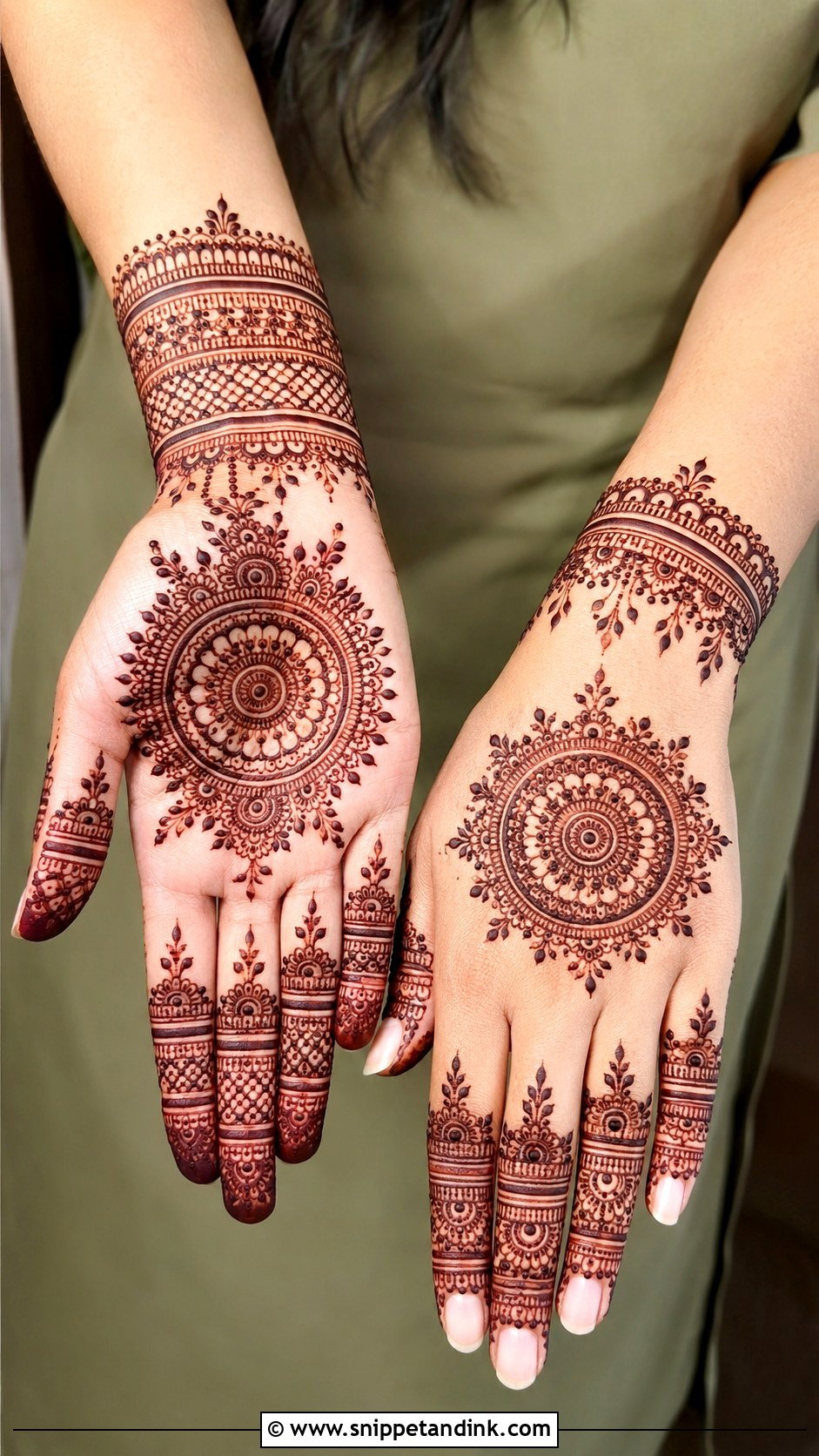
A mandala sits in the middle of the palm or back of the hand, with leaves, dots, jaali and borders filling the rest and matching bands on the fingers. It’s my usual suggestion for smaller hands, because the centred circle gives structure without needing the design to climb the arm. I size the outer ring so it stops short of the palm edges. Add wrist cuffs and filled fingertips for a festive finish.
17. Jaali Bharwa Mehndi Design
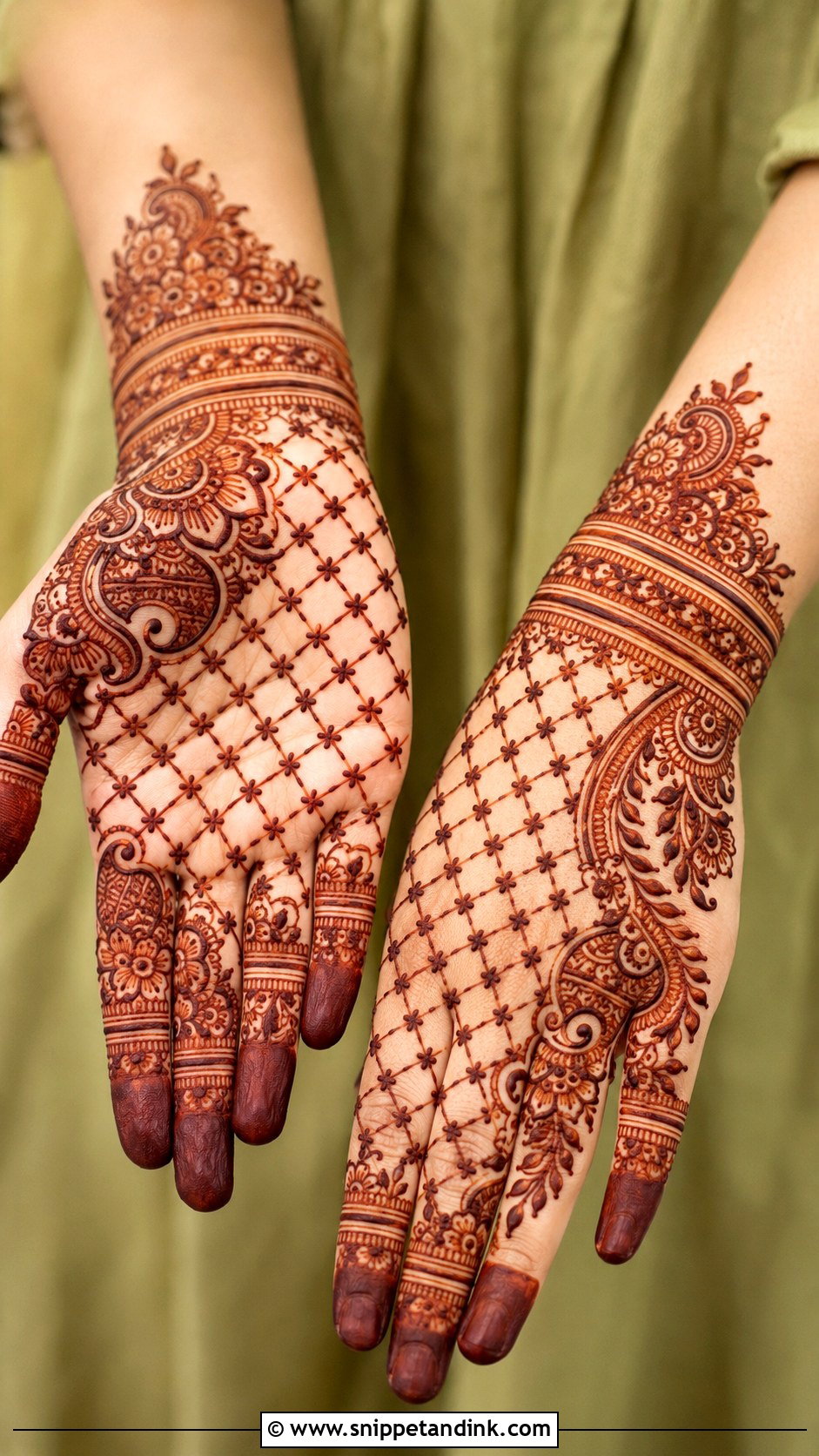
Jaali is mesh, and in Bharwa work it gives a fabric-like texture across the palm, back of the hand, wrist or fingers, framed by florals, paisleys and borders. Simple motifs look detailed with jaali around them. The cone matters here: if the paste is too runny, a fine mesh closes up as it dries. I keep the grid lines even and put a tiny dot at each crossing, which hides small wobbles and makes the net look intentional.
18. Bracelet Bharwa Mehndi Design
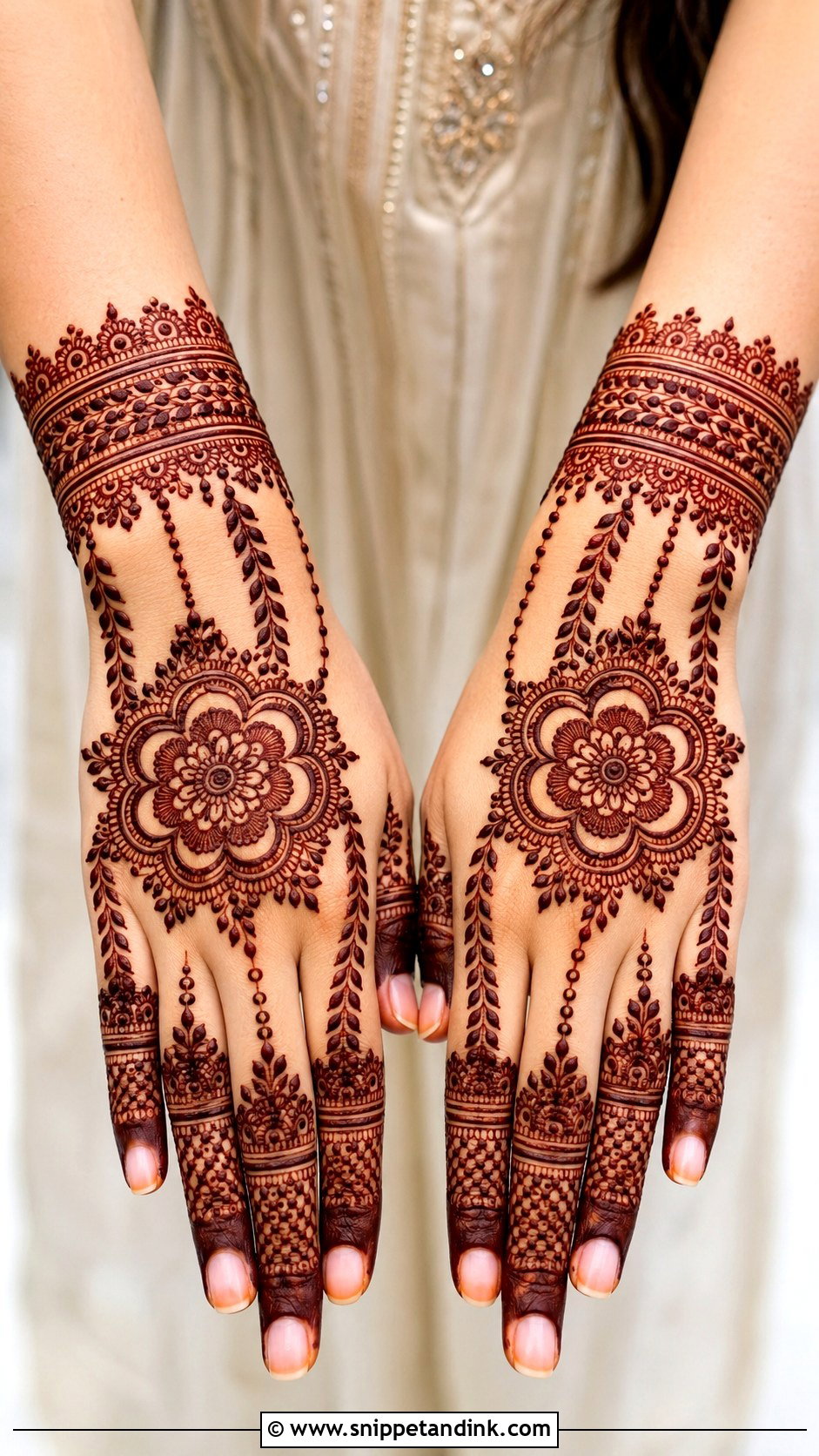
This one treats the wrist and the back of the hand like jewellery: a thick cuff or bangle band at the wrist, with chains, flowers, leaves and filled fingers linking it to the knuckles. The Bharwa part lives inside the bracelet, in checks, dots, curves and small flowers. Engagements, bridesmaids, Eid and smaller weddings suit it. Keep the centre of the back of the hand detailed too, or the cuff looks like it’s floating on bare skin.
19. Finger Bharwa Mehndi Design
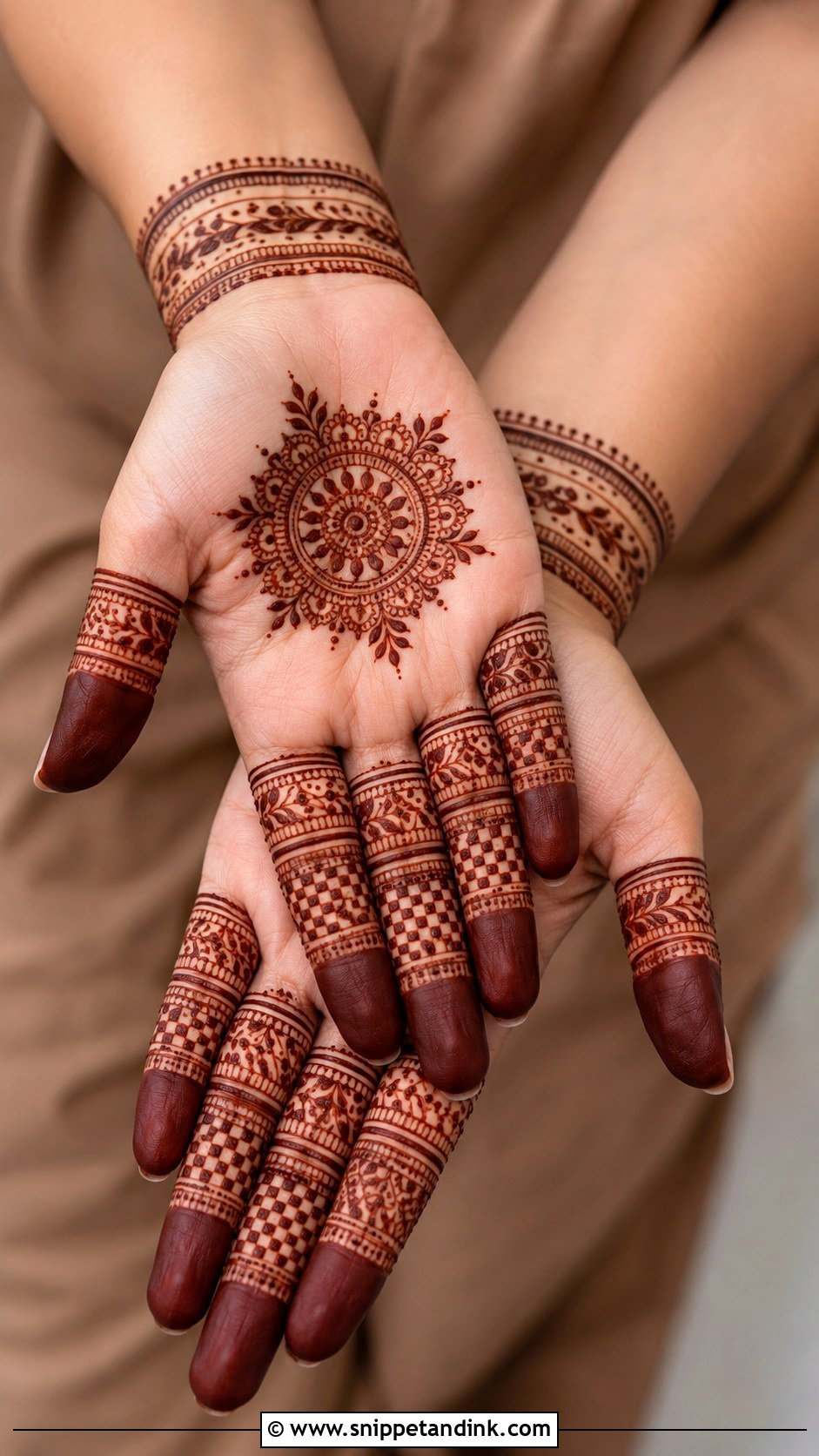
A finger Bharwa mehndi design packs the fingers with bands, dots, leaves, checks and small paisleys, while the palm carries a mandala, floral centre or light trail. Fingers move constantly and show in nearly every photo, so they repay the effort. Fingertip caps take the darkest stain on the hand, which is why I fill them solidly. It’s a sensible choice when you want the Bharwa effect without committing to the whole hand.
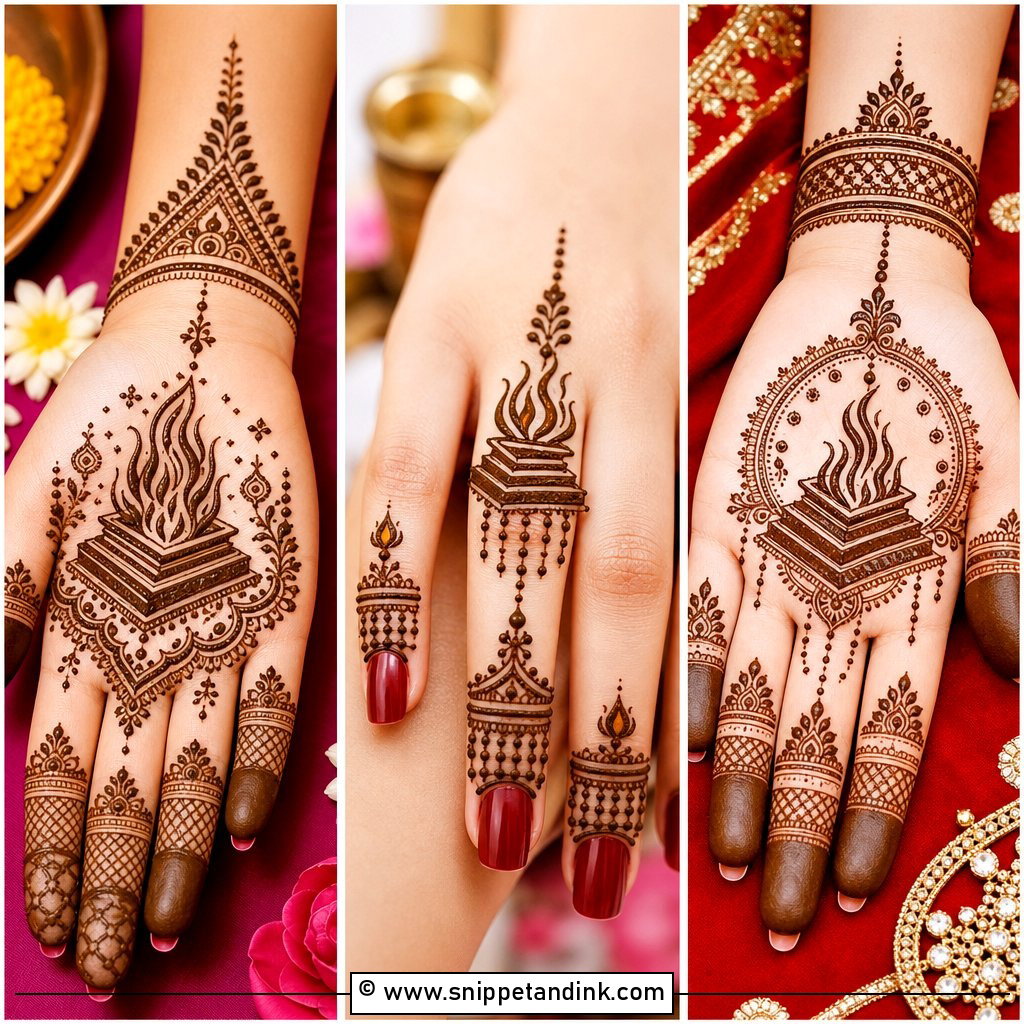
20. Minimal Bharwa Mehndi Design
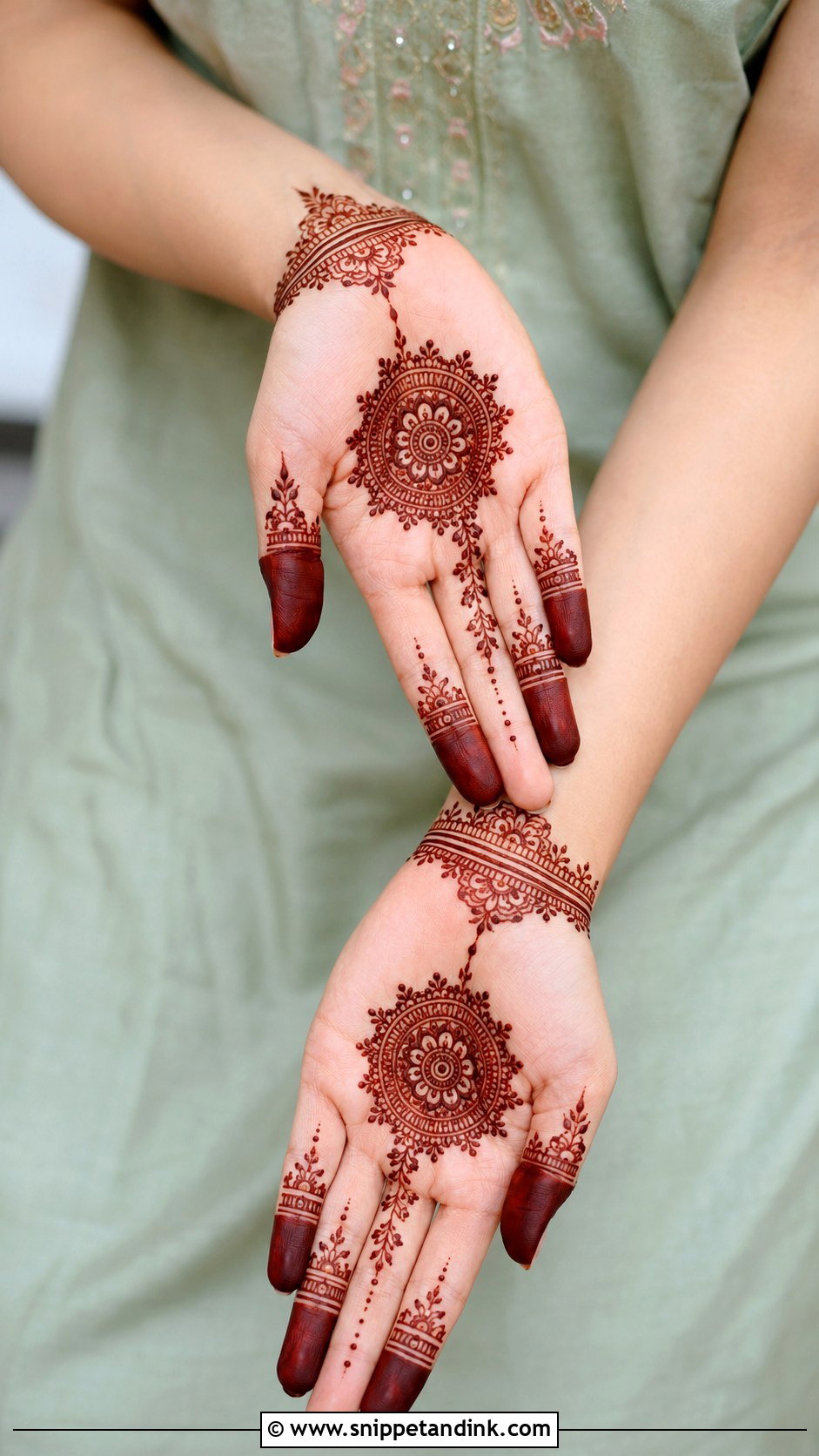
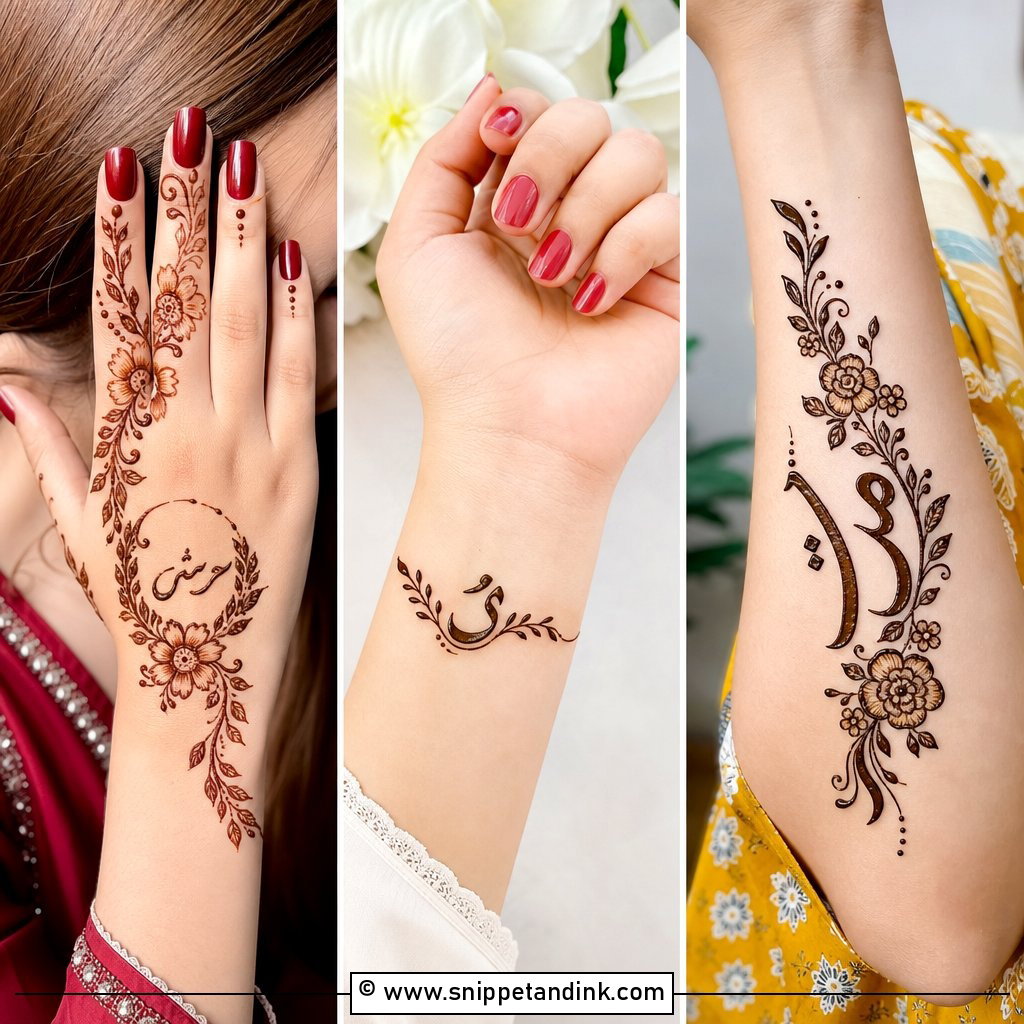
Minimal Bharwa sounds like a contradiction, but it works through placement. Instead of covering everything, I fill a few chosen sections, a small mandala with detailed fingers, a compact floral trail or a packed wrist cuff, so the hand reads as complete. Small family gatherings and workdays after a festival suit it. Clean outlines and delicate fillers make it look deliberate rather than unfinished.
21. Heavy Bharwa Mehndi Design
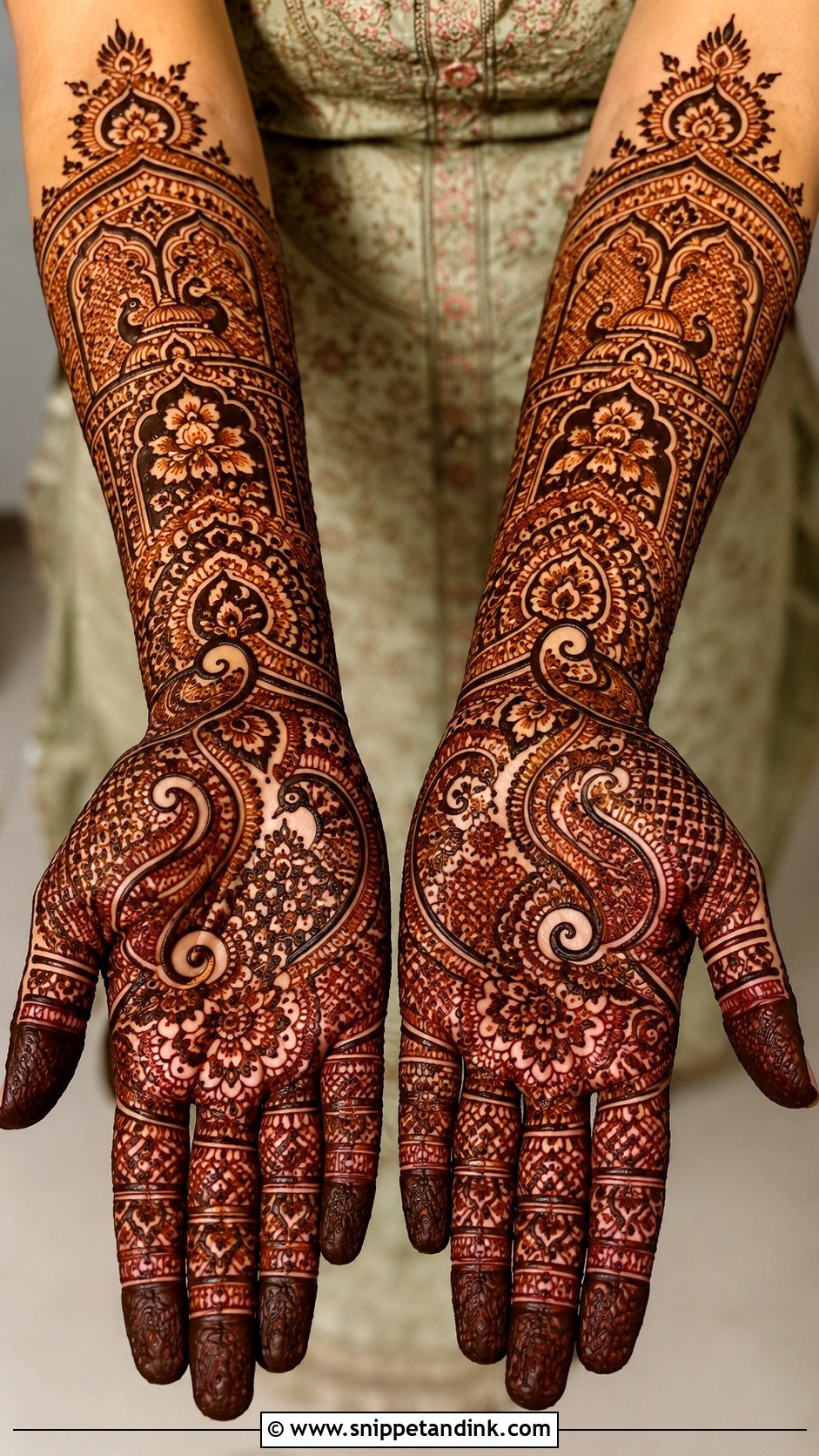
Heavy Bharwa covers most of the hand with peacocks, paisleys, florals, domes, mesh, mandalas and tiny lines, leaving very little skin. Brides and close family wear it for major events. I divide the hand into sections before I start, so each area has its own clear pattern and the whole thing doesn’t become texture. The stain comes out deep and even. It goes naturally with heavy outfits, bangles and full festive makeup.
22. Dulhan Bharwa Mehndi Design
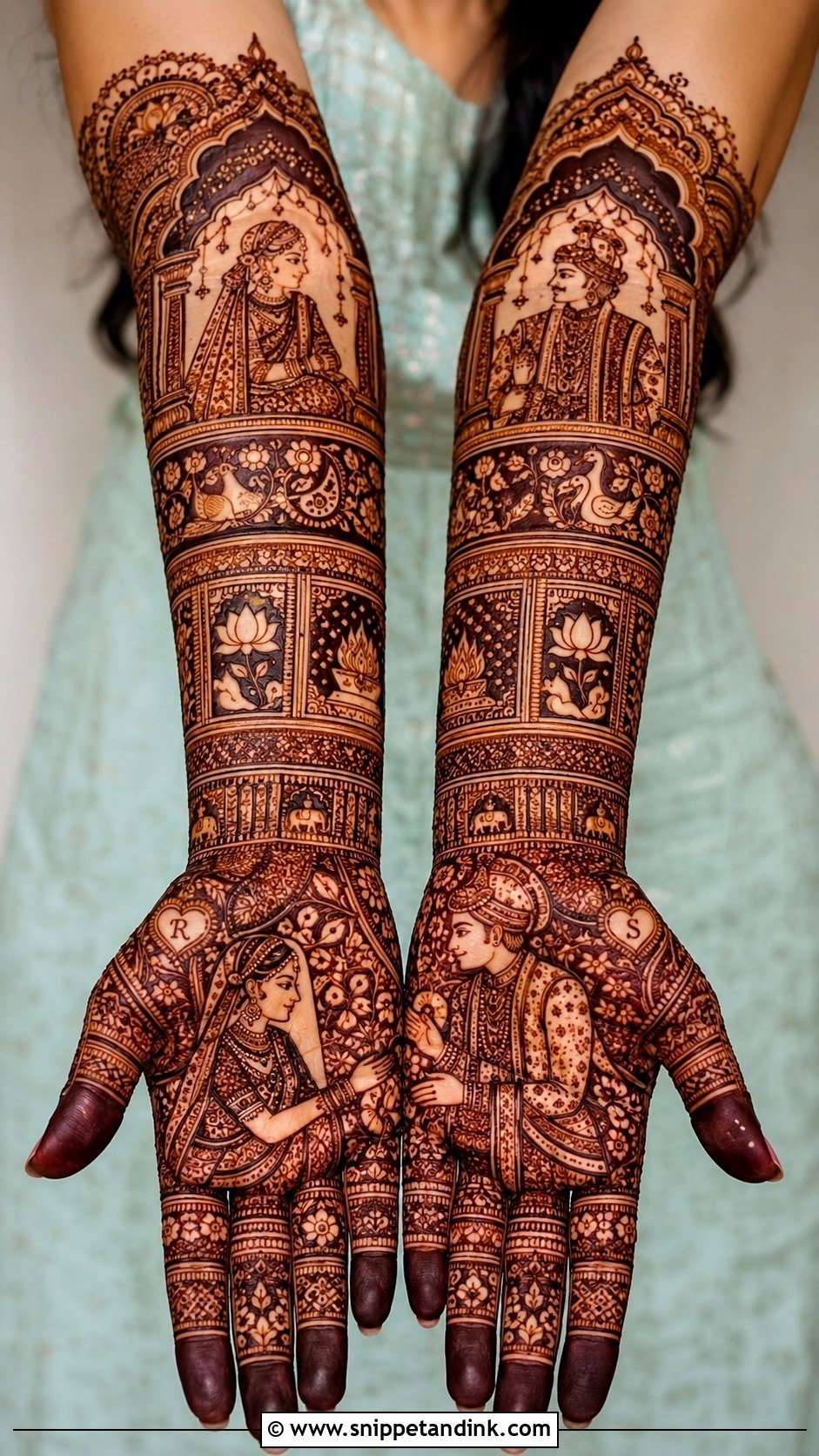
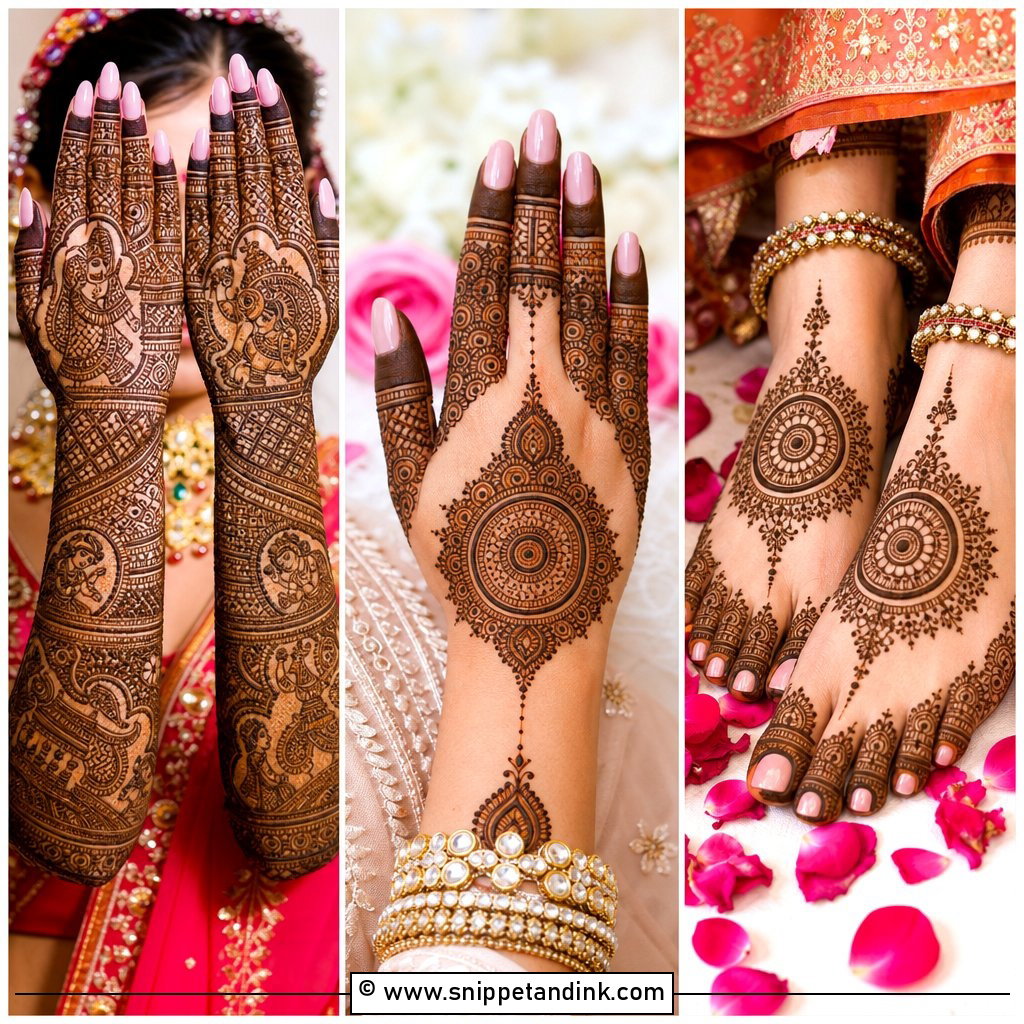
Dulhan Bharwa is built around the bride: portraits, wedding symbols, initials, mandap details, lotuses, peacocks and fine fillers from fingertips to forearms, often matched on the feet. Brides often want the groom’s name hidden in the pattern, so I agree where it will go before I start; a hidden name placed in a corner of dense jaali is genuinely hard to find. The palms carry the story, while fingers and arms take borders, jaali and florals.
23. Engagement Bharwa Mehndi Design
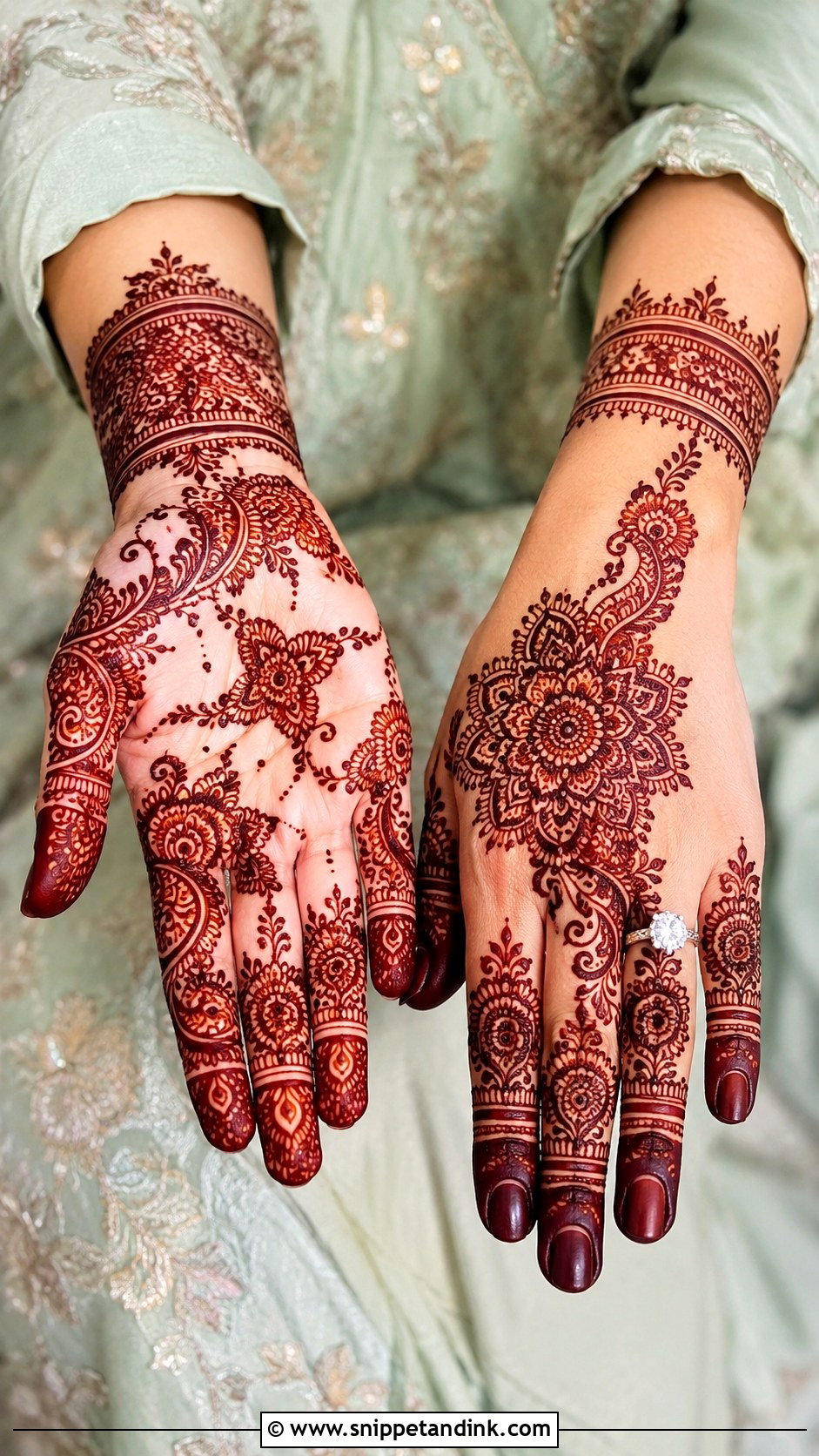
An engagement Bharwa mehndi design should be festive but lighter than bridal: a filled palm with a ring motif, floral mandala or paisley trail, and a back of the hand with bracelet details and decorated fingers. The ring will be photographed from the back, so I keep the area around the ring finger clean between the knuckles. Lehengas, sarees and Indo-western outfits all sit well with it.
24. Karwa Chauth Bharwa Mehndi Design
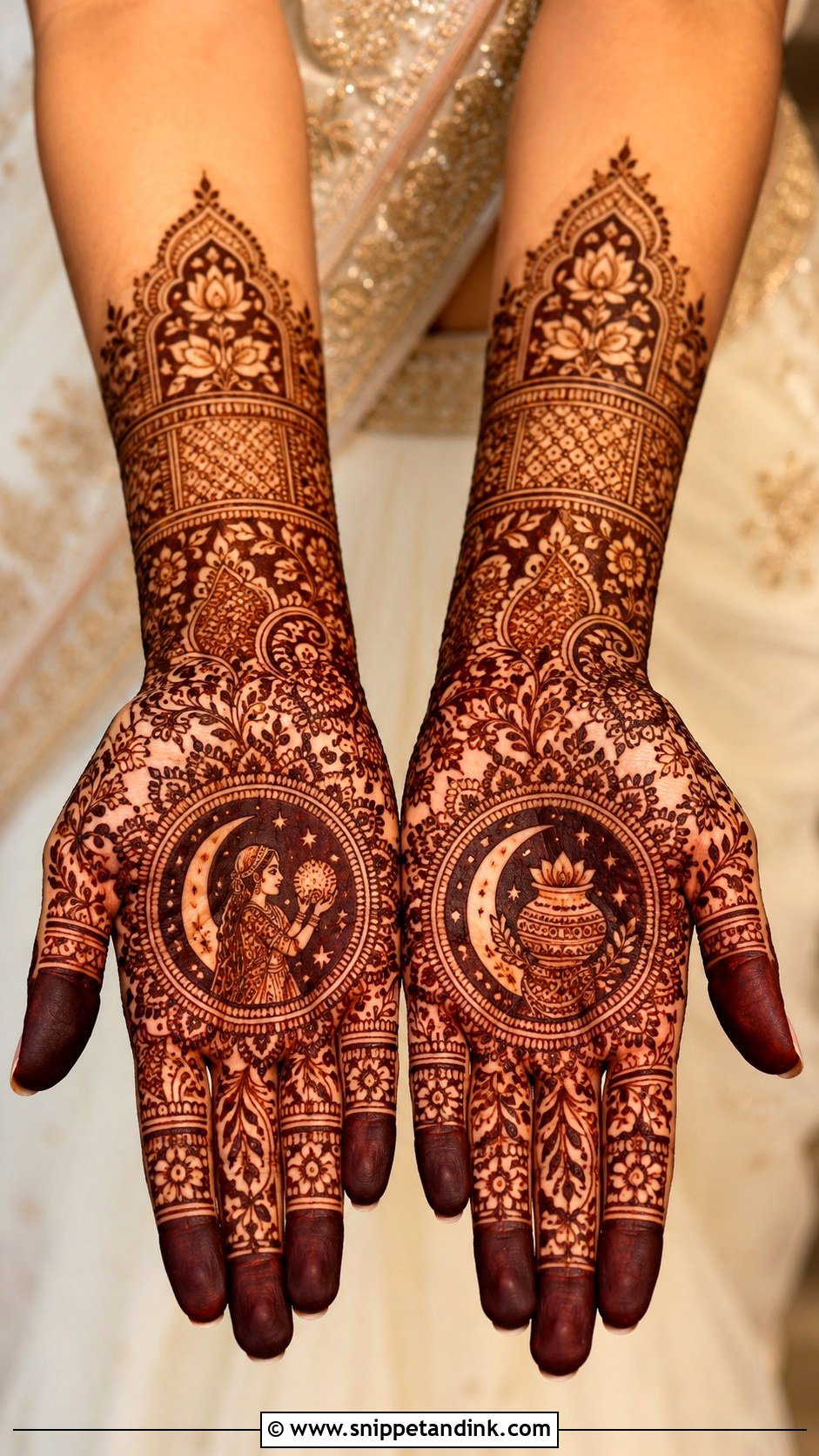
Karwa Chauth designs lean traditional: full palms, filled fingers, moon motifs, kalash, florals and paisleys. Many women ask for the front heavy and the back lighter, which also makes the day of rituals more comfortable. A palm mandala with dense finger work is the classic choice with bangles, and small mesh sections or wrist bands add festivity. Apply it the day before so the stain has deepened by evening.


25. Eid Bharwa Mehndi Design
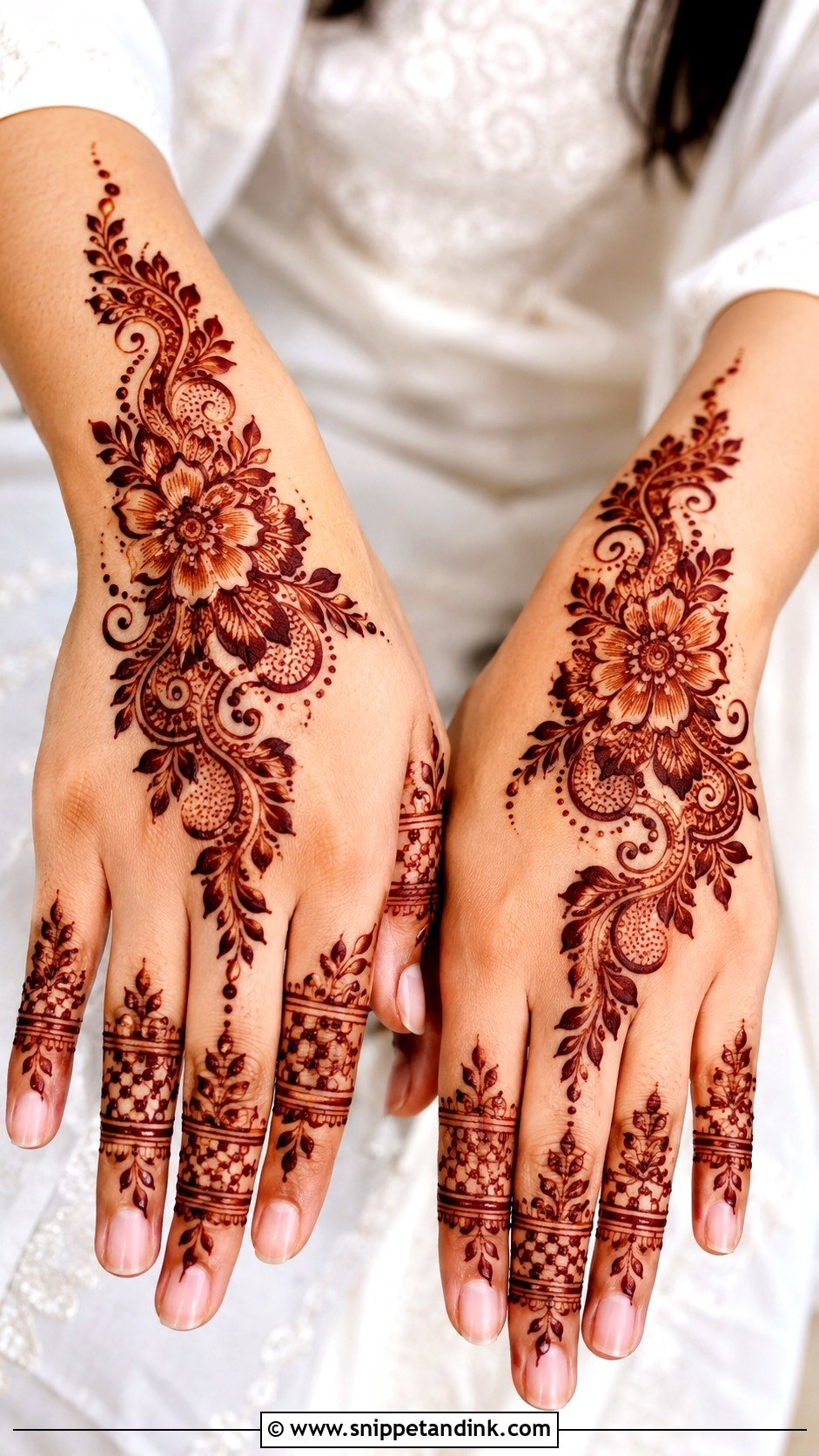
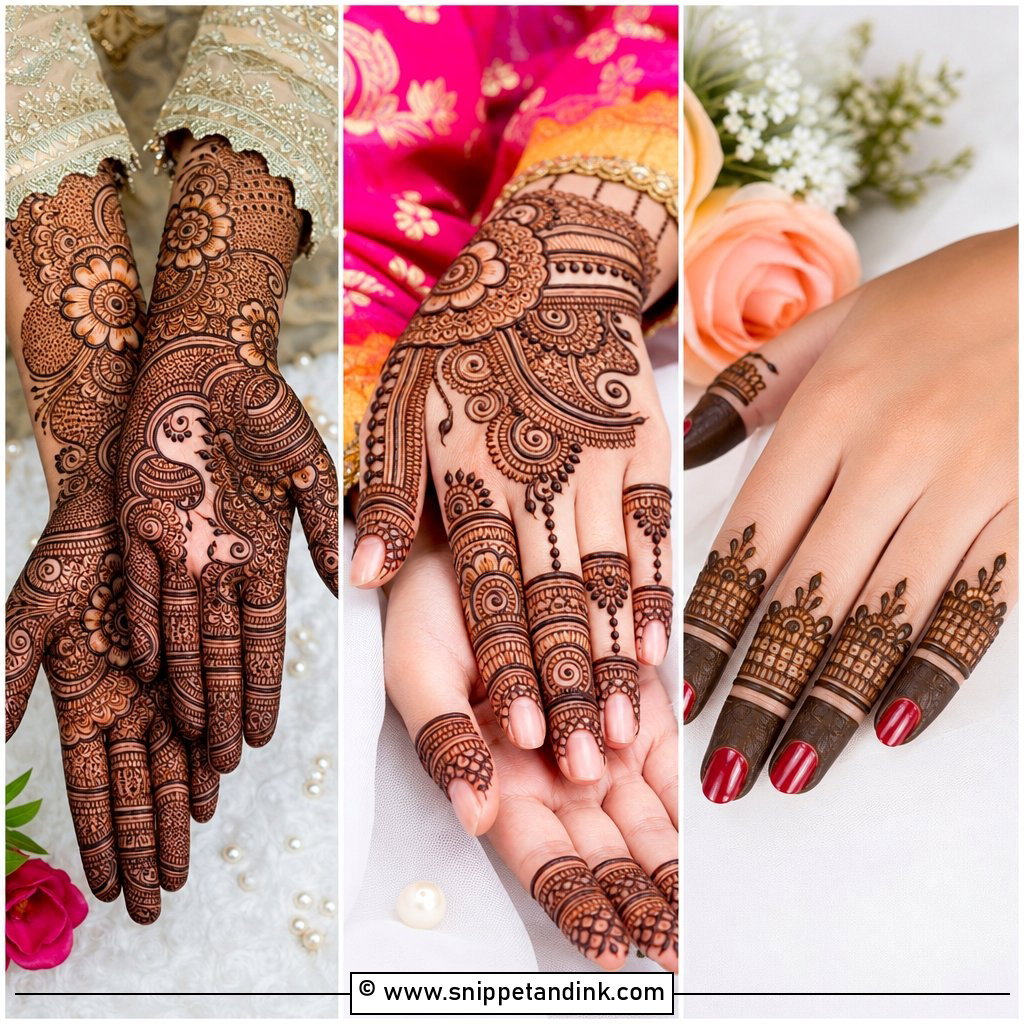
Eid hands are usually done the night before, so the design has to be rich but fast. Arabic and Gulf layouts suit that, with bold flowers, leafy trails and shading, and the Bharwa effect comes from filling the fingers with bands, dots, checks and small flowers. Pick a back-of-hand trail for something stylish or a palm design for a traditional look. Keep outlines bold and fillers light but consistent.
26. Diwali Bharwa Mehndi Design
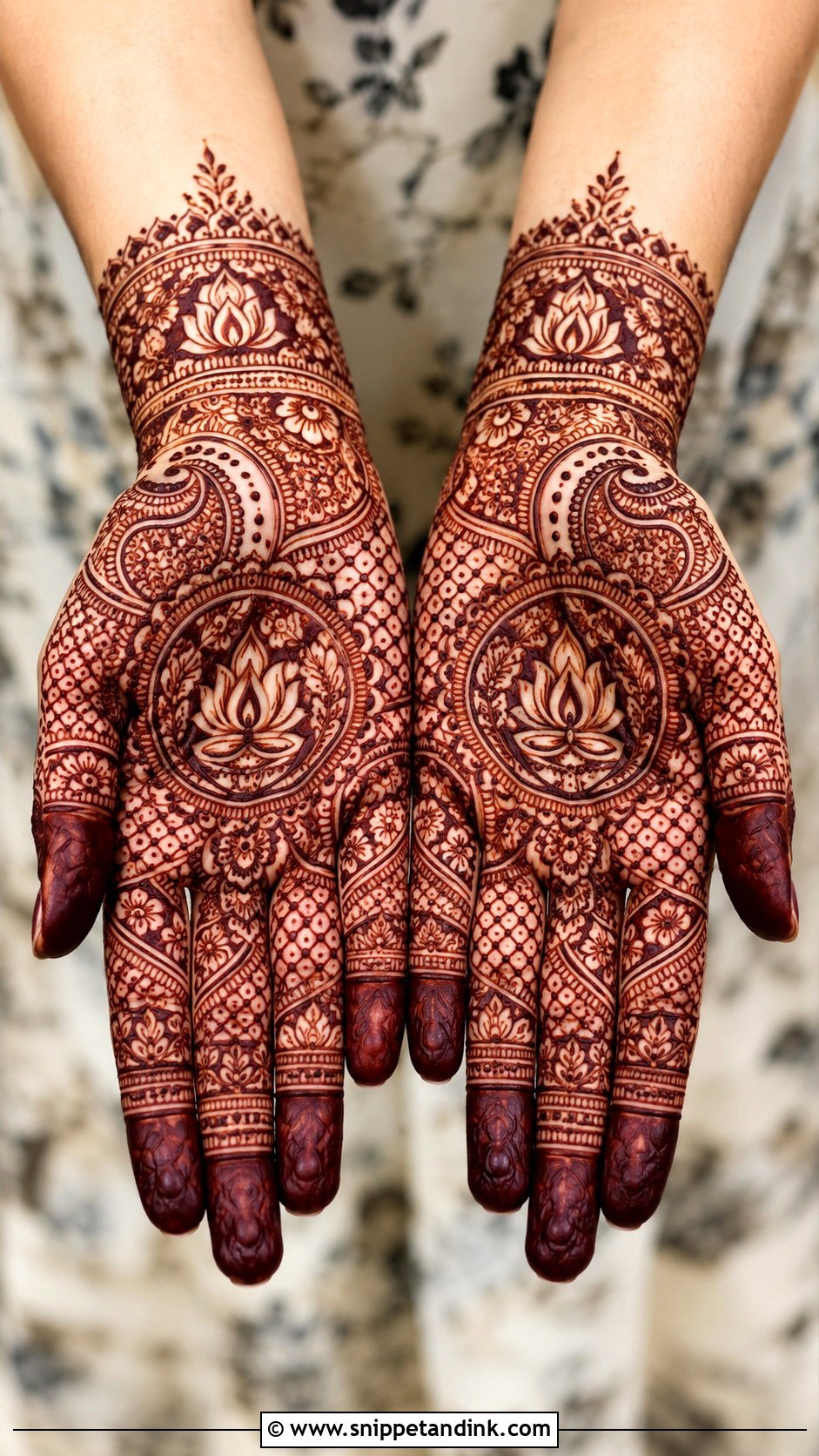
For Diwali I like lotuses, mandalas, paisleys, diya shapes, leafy borders and filled fingertips, covering the palm and wrist or creeping onto the forearm. Bangles and rings are part of most Diwali outfits, so a balanced front-hand design works well. I keep the central motif bold and fill around it with dots and small petals, which stains into a clear, rich pattern in time for puja and family photos.
27. Wedding Guest Bharwa Mehndi Design
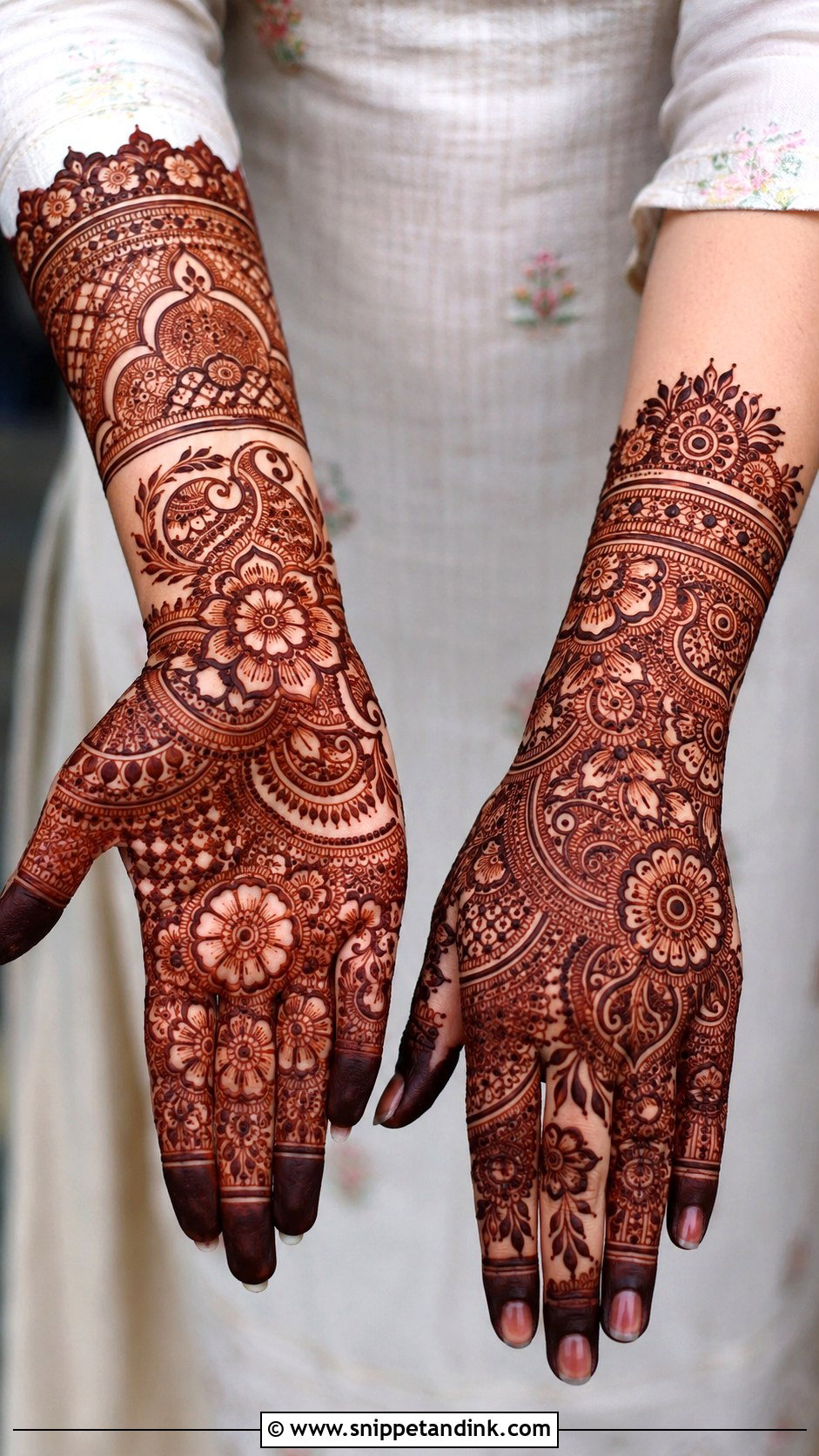
Guests should look festive without matching the bride. A medium-coverage design does that: a filled palm, decorated fingers, a neat wrist border, with floral trails, small paisleys, jaali patches and mandala details. It takes far less time than bridal work, which matters when cousins and friends are queuing for the artist on a busy mehndi night. A bracelet-style design on the back of the hand gives more visibility if you want it.
28. Modern Bharwa Mehndi Design
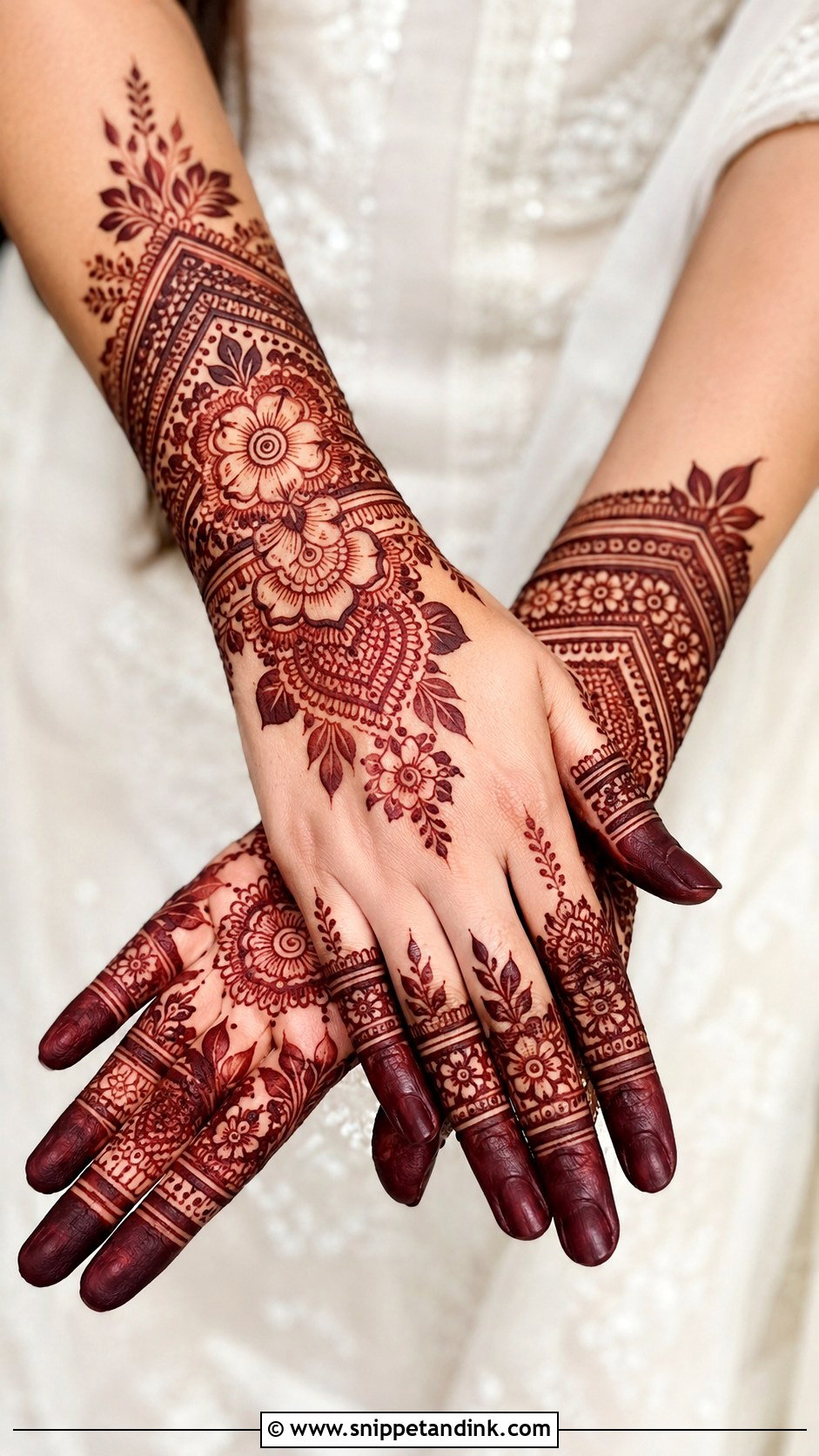
Modern Bharwa keeps the hand full but plans the spacing: bold florals, geometric bands, negative space and sleek finger patterns. It reads as current while still giving that packed effect. Diagonal layouts, wrist cuffs and half-and-half palms all work. I’d limit it to two or three motif types and repeat them neatly; using every motif in the book is what makes a modern design look busy.
29. Kids Bharwa Mehndi Design
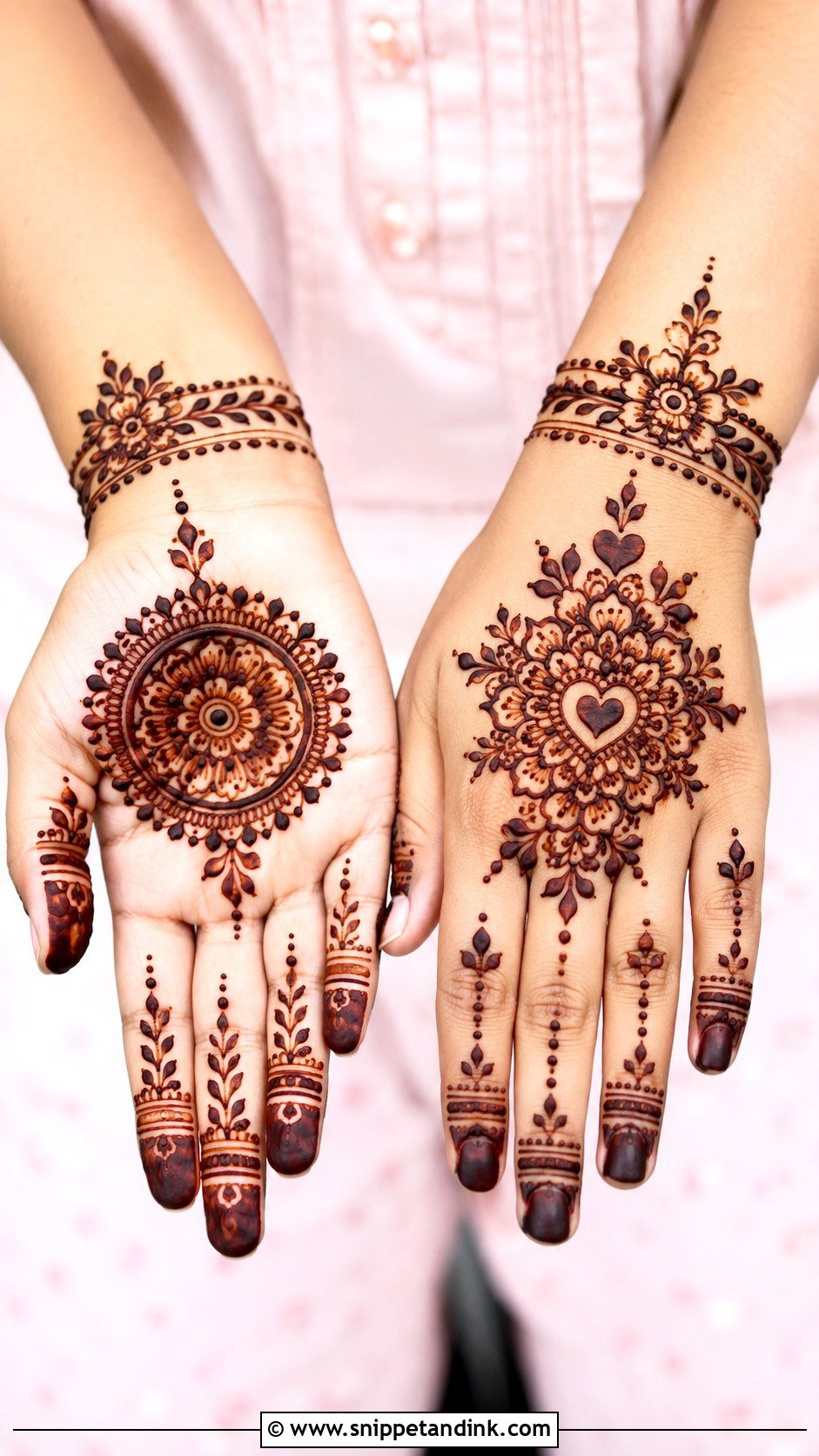
Kids’ designs should be quick and not too dense: flowers, hearts, simple mandalas, leafy bracelets and dotted finger bands, lightly covering the palm or a compact trail on the back of the hand. Very fine detail smudges as soon as a child grabs something, so I keep the motifs large and fill just the petals and fingertips. Use only natural henna on children and do a small test dot if the paste is new to you.
30. Feet Bharwa Mehndi Design
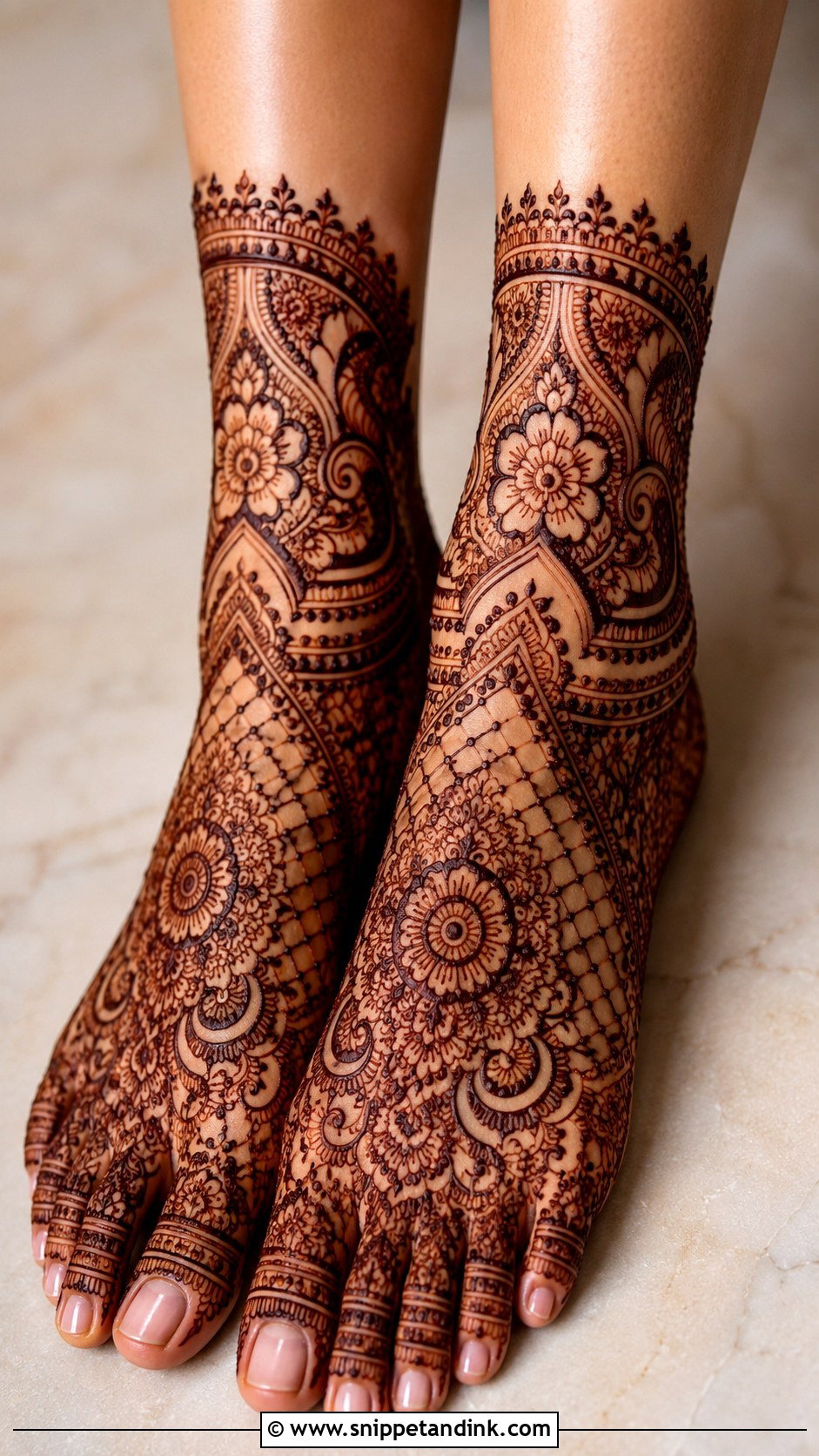
A feet Bharwa mehndi design starts with filled bands on the toes and moves up the foot through florals, paisleys, mandalas and anklet-style borders. Brides can take it to the ankle or lower leg; simpler occasions keep it to the toes and centre of the foot. Feet stain well on the soles and sides but are slow to dry, and you can’t walk until they have, so I do them first in a bridal session. Jaali looks especially delicate on the top of the foot with sandals and anklets.
Waxing, Facials and Manicures Belong Before the Mehndi
The order of your pre-wedding appointments decides how long a filled design looks its best. Henna stains the top layer of skin, so anything that strips or scrubs that layer fades the design early.
- Book hand and arm waxing, and any hand scrub or body polish, a couple of days before the mehndi, never after.
- Get your manicure and pedicure done before the henna, and choose polish now. Nail work after the mehndi means soaking and filing right next to fresh stain.
- Don’t apply lotion, sunscreen or oil to your hands and feet on the day of application. Clean, product-free skin takes colour best.
- Plan for the mehndi to sit at least a full day or two before the wedding so the colour has peaked when the photographer arrives.
For dense Bharwa work in particular, ask your artist how many people are booked for that day. A tired artist late in a long session is when filling gets rushed and lines start to crowd. Brides are usually done first for that reason, and I’d ask for that slot if it’s offered.
Be wary of a design that darkens too fast
Natural henna never goes black. If a paste promises a near-black stain within an hour, or smells of chemicals rather than earth, don’t let it near your skin; some of these products contain dyes that cause serious reactions. A small patch test on your inner arm a few days ahead is sensible if you haven’t used a particular artist’s paste before.
Dense or Light, the Filling Should Serve the Shapes
Bharwa adapts to almost any occasion: heavy for brides, simple for beginners, quick for Eid, light for small gatherings. Florals, paisleys, mandalas, jaali, peacocks, bracelets or geometry can all fill a hand while keeping it balanced. Decide by your occasion, hand size, outfit and how long you can sit. Classic Indian coverage or a modern Arabic flow will both serve you well if the big shapes are planned before the filling starts.
You'll Like These Ideas:





Leave a Reply