
The palm is the part of wedding henna that gets seen most: during the rituals, when the ring goes on, when a blessing is placed in your hands. It is also where henna stains darkest, so it carries the design. When I plan a bridal palm, I think about three things before any motif: where the centre sits, how the fingers continue it, and how much bare skin to leave so the stain reads clearly instead of turning into one brown patch. The twenty layouts below run from dense traditional coverage to open Arabic flow. Each comes with what I’d watch for when drawing it on you.
Why the Palm Stains Darker Than the Back of Your Hand
Brides are sometimes surprised that the same paste comes up almost black on the palm and noticeably lighter on the back of the hand. The palm’s skin is thicker and holds more of the dye, and the hands run warm, so stains develop deeper there. That’s why I put the most detailed work on the palm and keep the backs a little more open.
It also explains the colour journey. Fresh henna is bright orange when the paste comes off, then darkens to red-brown or maroon over the next one to two days. If I apply on the day of the ceremony, you will be wearing the orange stage. Most of my bridal appointments are therefore set one to two days before the wedding so the stain is at its deepest for the photos.
- Ask your artist whether her paste is natural henna. Anything that stains black within an hour is not plain henna and can cause severe skin reactions.
- Do a patch test a couple of weeks ahead if you’ve never worn henna, or if your artist uses a new essential oil blend.
- Skip scrubs, waxing and manicures on the hands for a day or two before; freshly exfoliated or waxed skin can be sensitive.
1. Bridal Palm Mehndi Design With Mandala
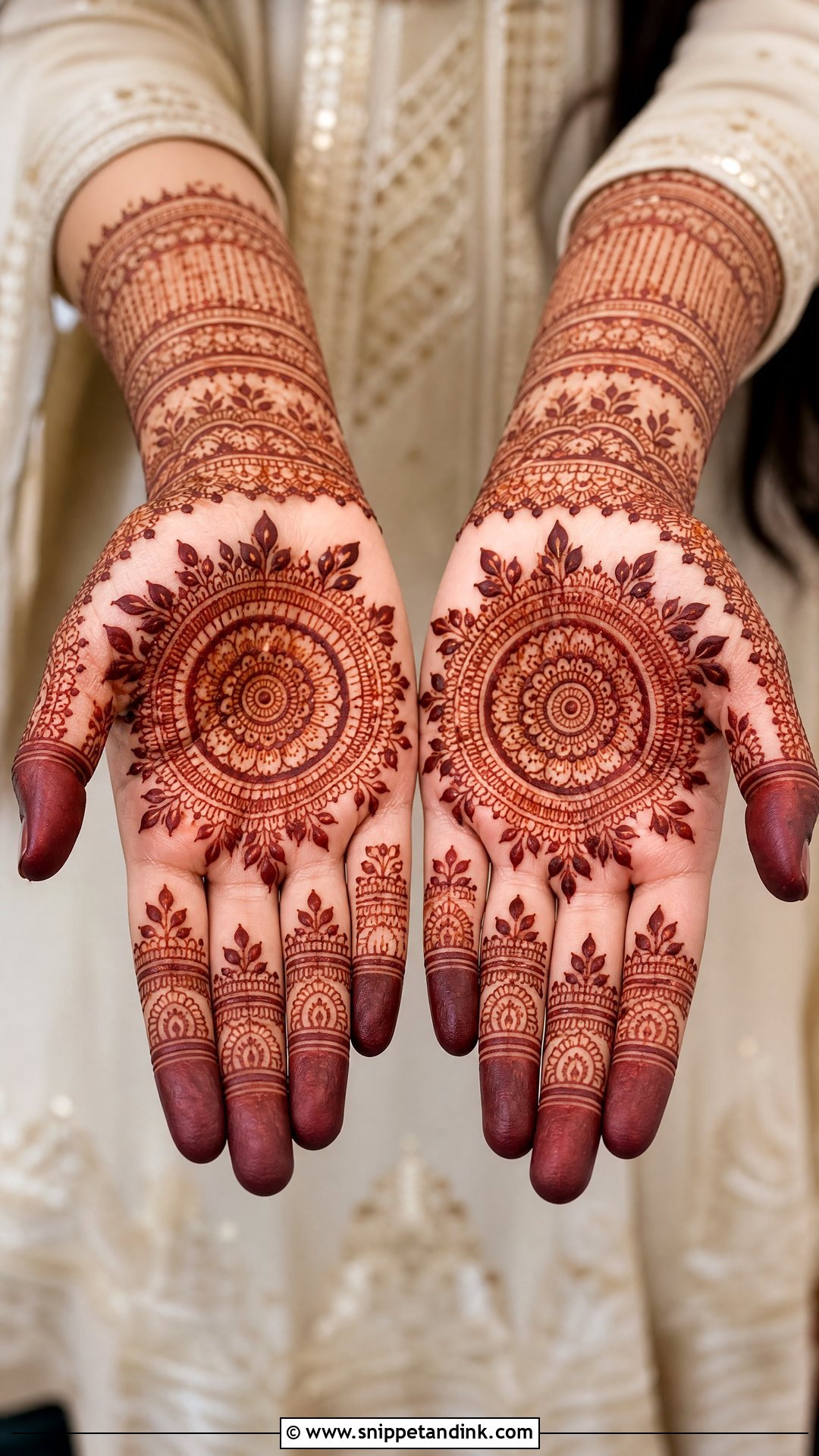
A mandala sits naturally in the hollow of the palm, which is why it has been the default centre for so long. I start it slightly lower than the true middle, because the palm’s crease line pulls the eye upward and a dead-centre circle ends up looking high in photos. From there it grows outward in petals and rings, and the fingers get caps and leafy bands so they don’t look forgotten. The circle has to be clean. Any wobble in the first ring gets repeated in every ring after it.
2. Bridal Palm Mehndi Design With Paisley
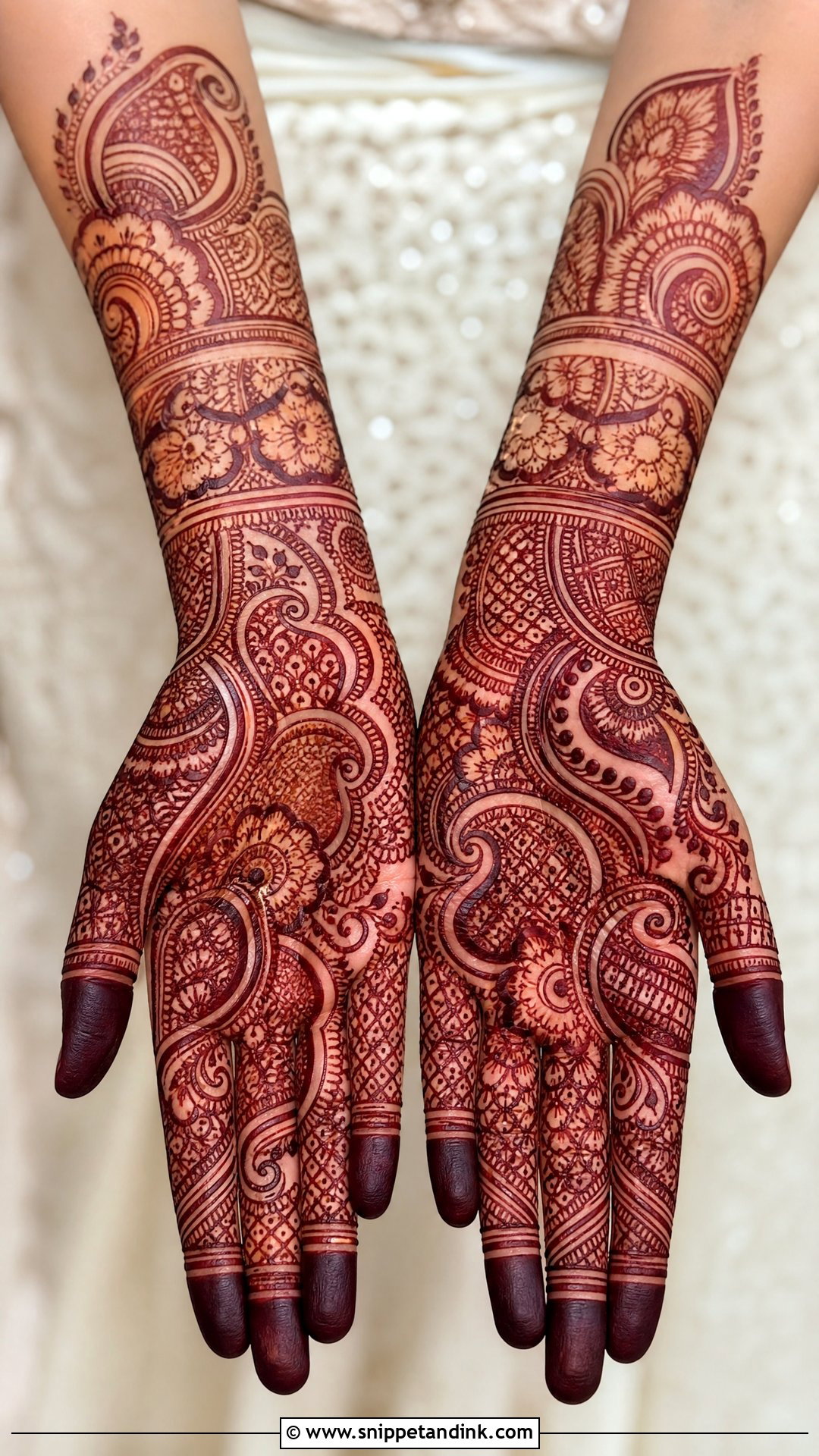
Layered paisleys rising from the wrist toward the fingers give a palm the richness most brides picture when they think of bridal mehndi. I place two large ones on a diagonal, outline them in a thicker line and keep the filling inside lighter, so the shapes still read from across a room. Heavy outlines need a slightly thicker cone tip, and that is a deliberate change I make mid-design. This layout sits well beside heavily embroidered lehengas, sarees and shararas, where a busy outfit needs a strong shape on the hands.
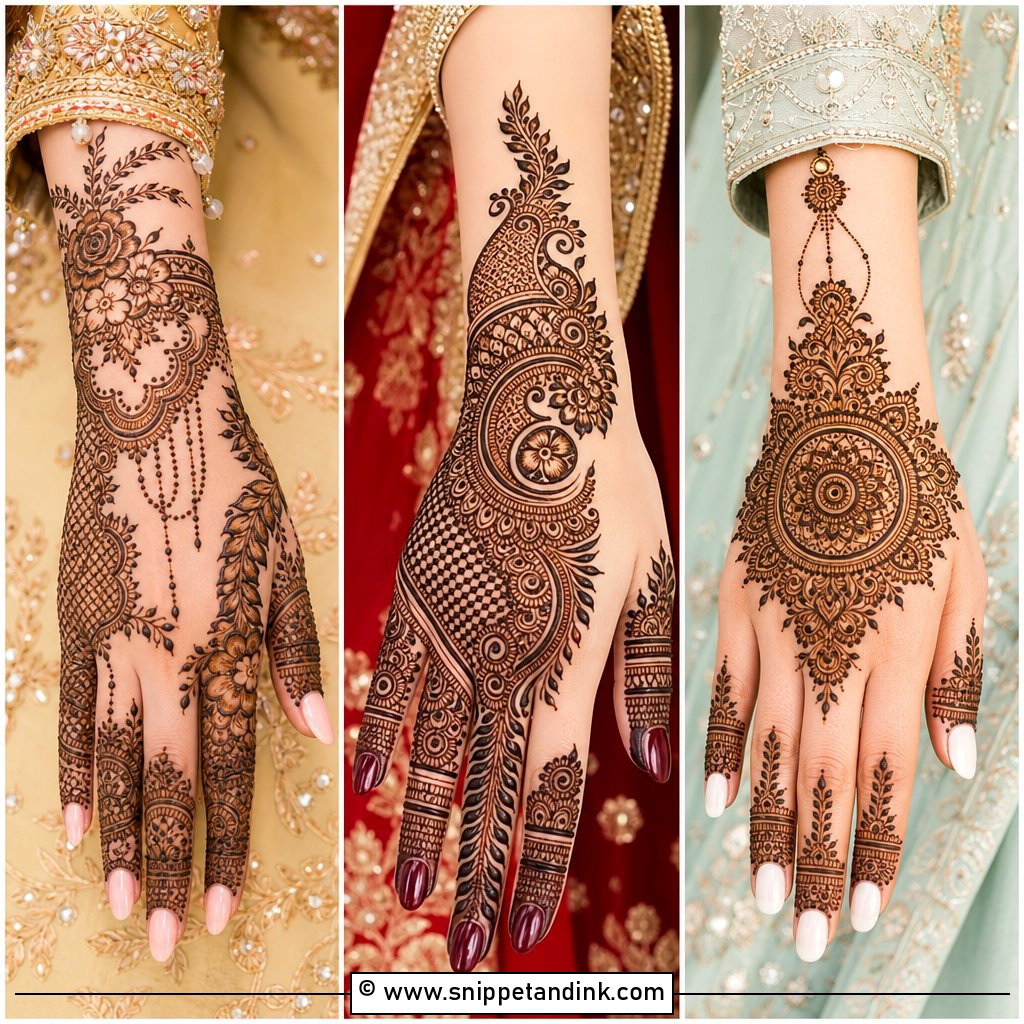
3. Bridal Palm Mehndi Design With Peacock
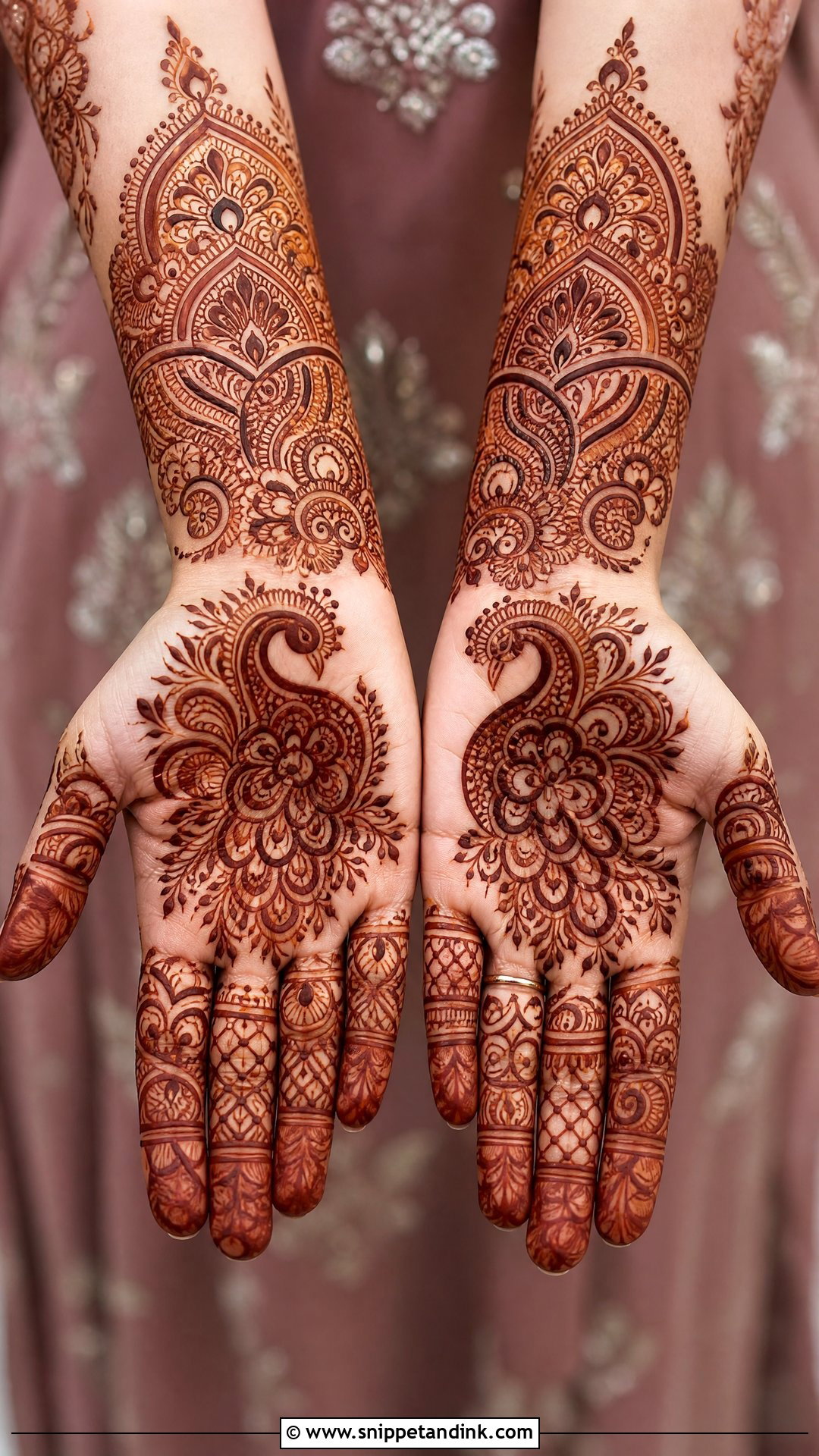
A peacock only works on the palm when it is drawn as the whole layout and not a small sticker-like motif. I put the body low, near the wrist, and fan the feathers across the palm so the curve follows the hand’s natural shape when it is cupped. Each feather eye gets a dense centre, because that is where the stain shows its depth. When the bride holds both palms together, the two birds can face each other, so I plan that at the start rather than improvising on the second hand.
4. Bridal Palm Mehndi Design With Bride And Groom
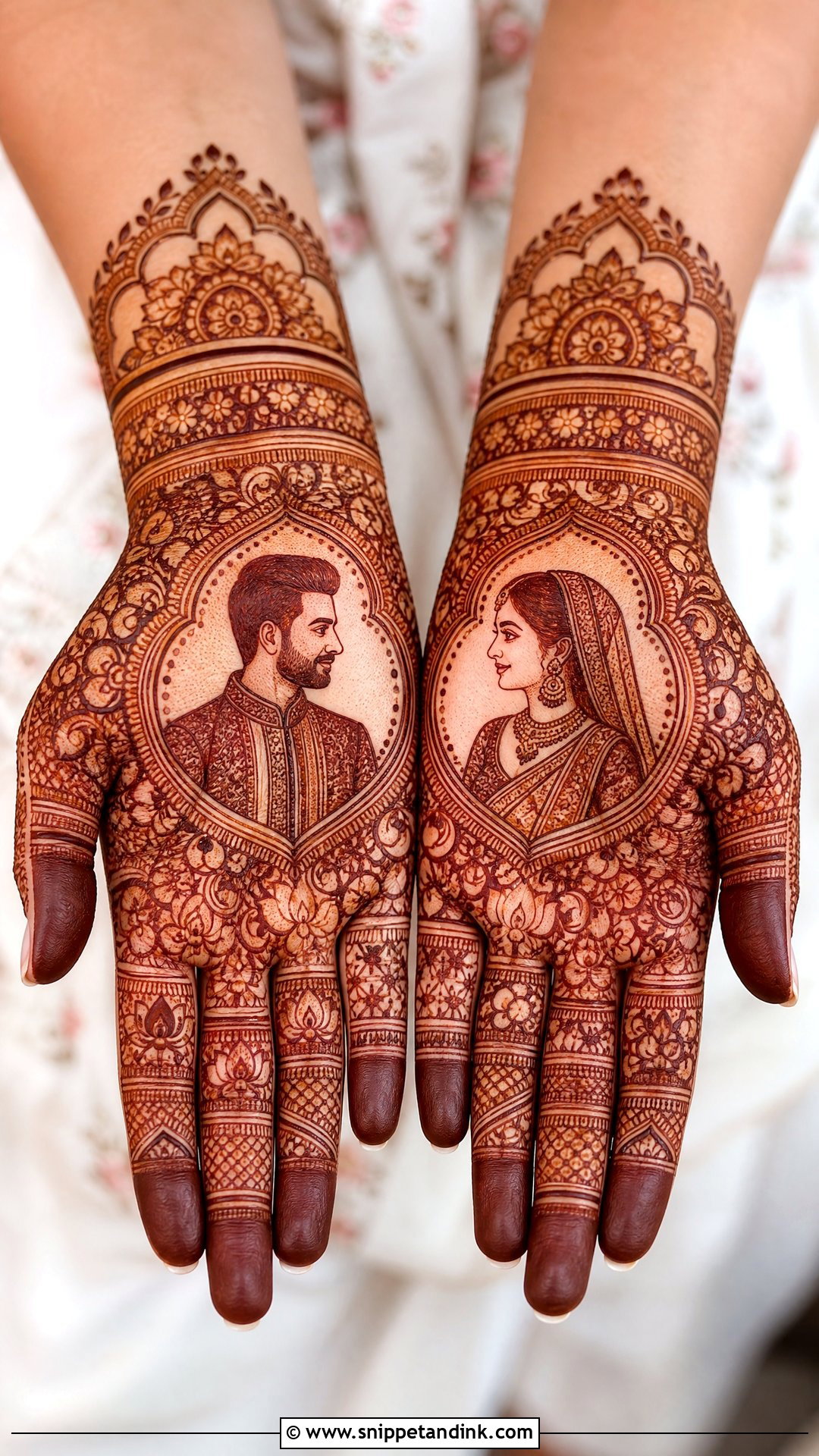
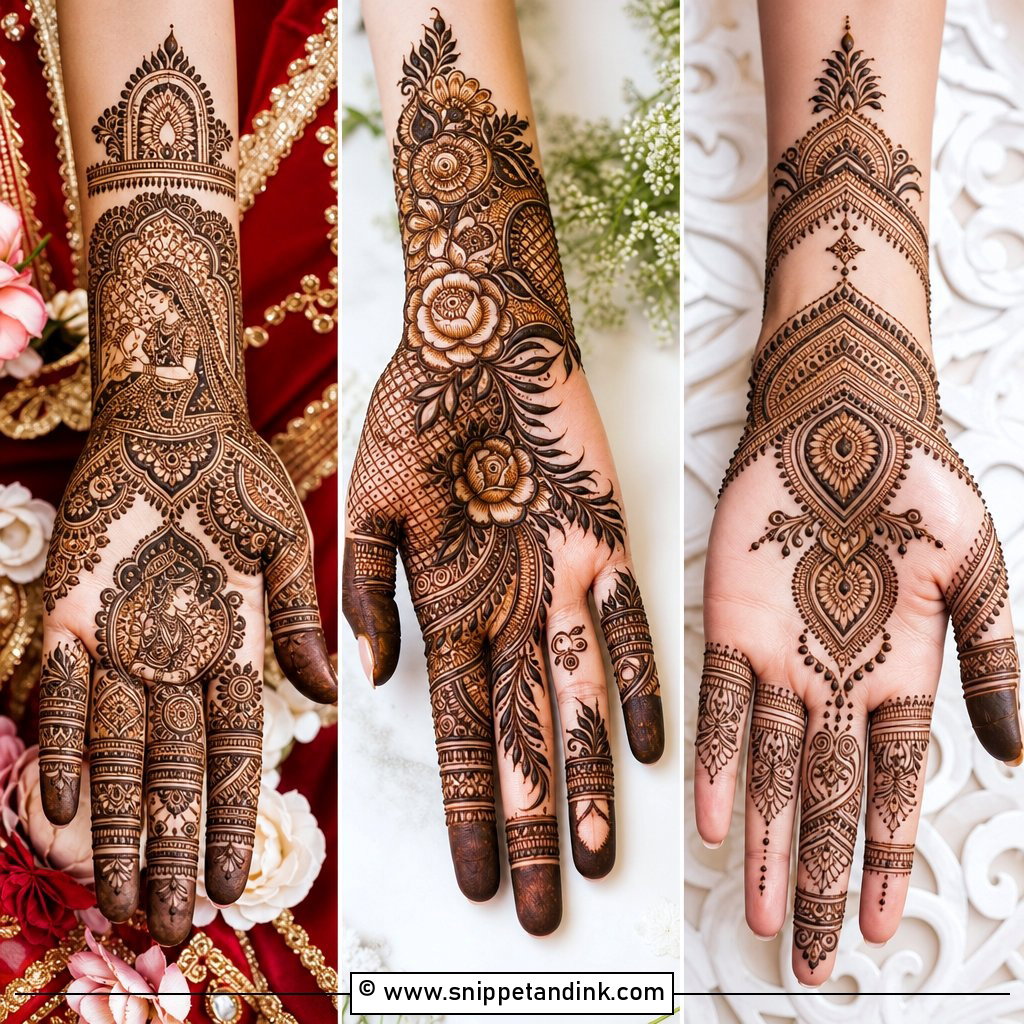
Bride and groom portraits are the most demanding work I do on a palm. Faces are small, and the skin of the palm moves with every crease, so the lines have to be fine, confident and drawn with a very fresh cone. I frame the figures with mandala borders and paisley panels so they feel part of the whole hand. Fingers stay simpler to keep focus on the faces. Book an artist who can show you portraits she has actually done; a bride who loves storytelling designs deserves that proof, because a shaky face is very hard to hide.
5. Bridal Palm Mehndi Design With Jaali
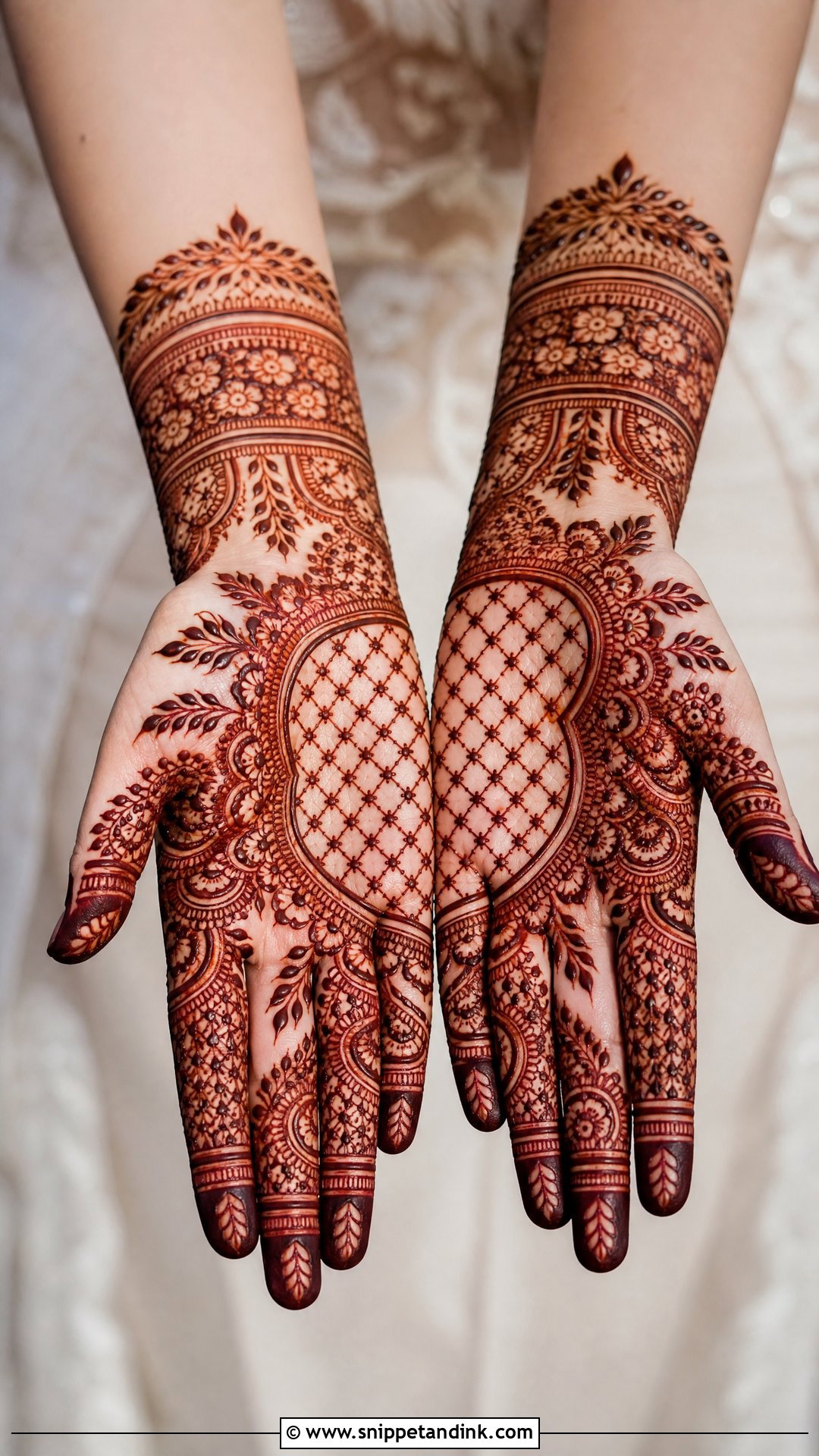
Mesh is how I get full coverage while still letting skin show through. In a jaali bridal palm mehndi design, I divide the palm into panels, put the lattice on one side and florals or a small mandala on the other, so the grid never looks flat. Dots at each crossing point keep the eye moving. The grid lines must be evenly spaced; uneven jaali is the first thing anyone notices once the paste comes off.
6. Bridal Palm Mehndi Design With Lotus
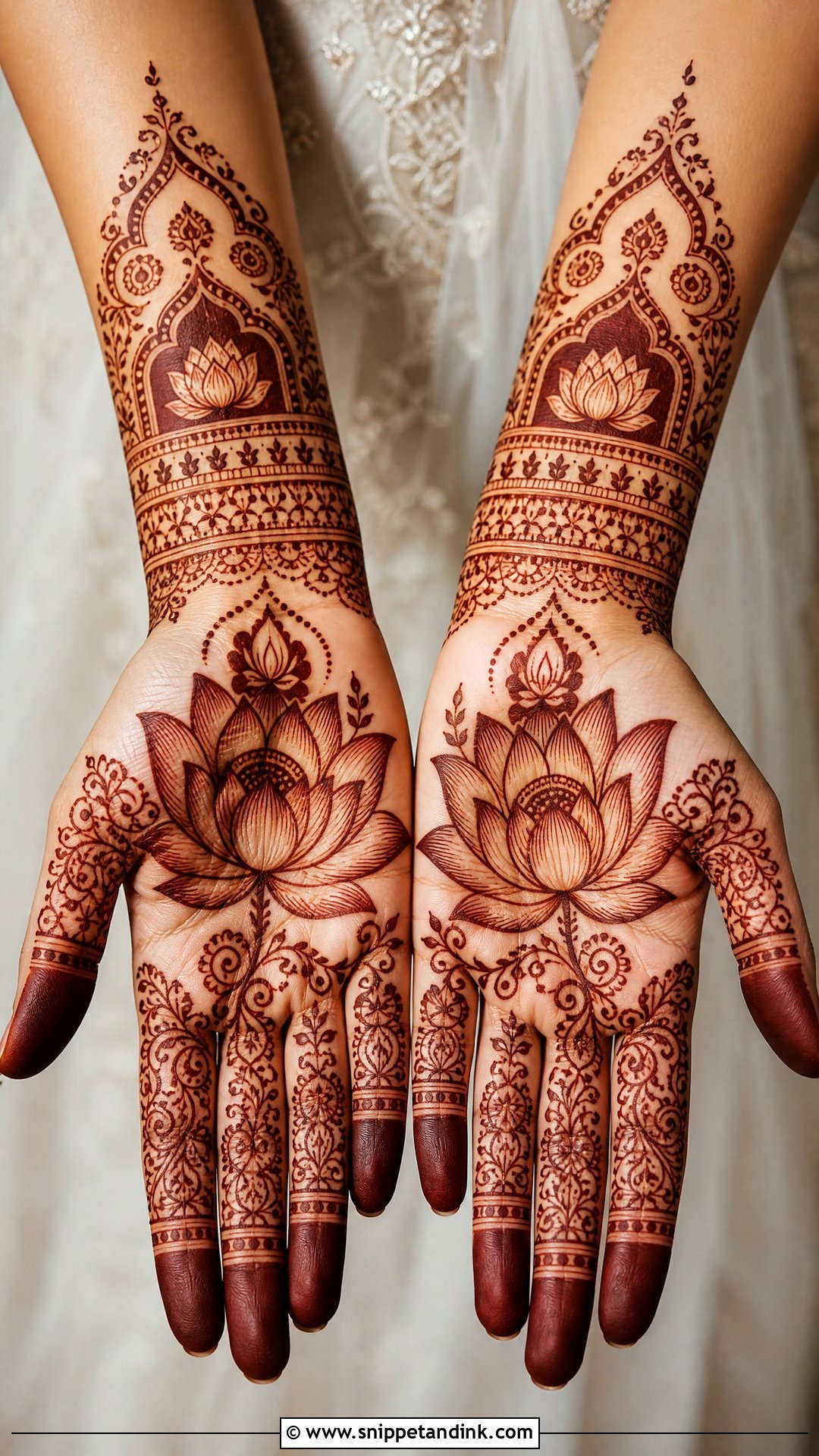
A lotus centre is softer than a mandala and has a gentler meaning for many families. I draw the bloom in layers, outer petals first, and shade only the inner half of each petal so the flower looks rounded once the stain darkens. A temple-style band at the wrist and lotus buds on the fingers finish a lotus bridal palm mehndi design without making it heavy. It’s a good choice for a bride who wants meaning but not full coverage.
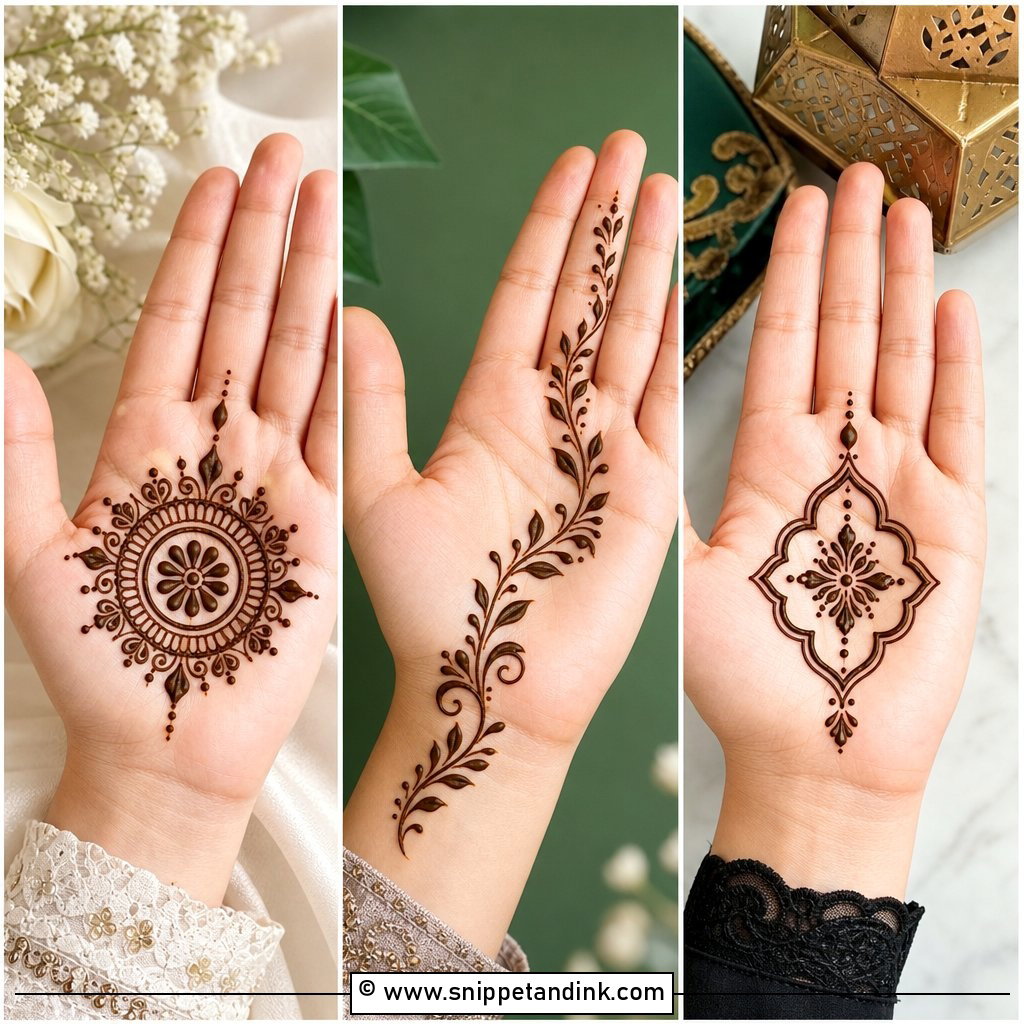
7. Bridal Palm Mehndi Design With Arabic Trail
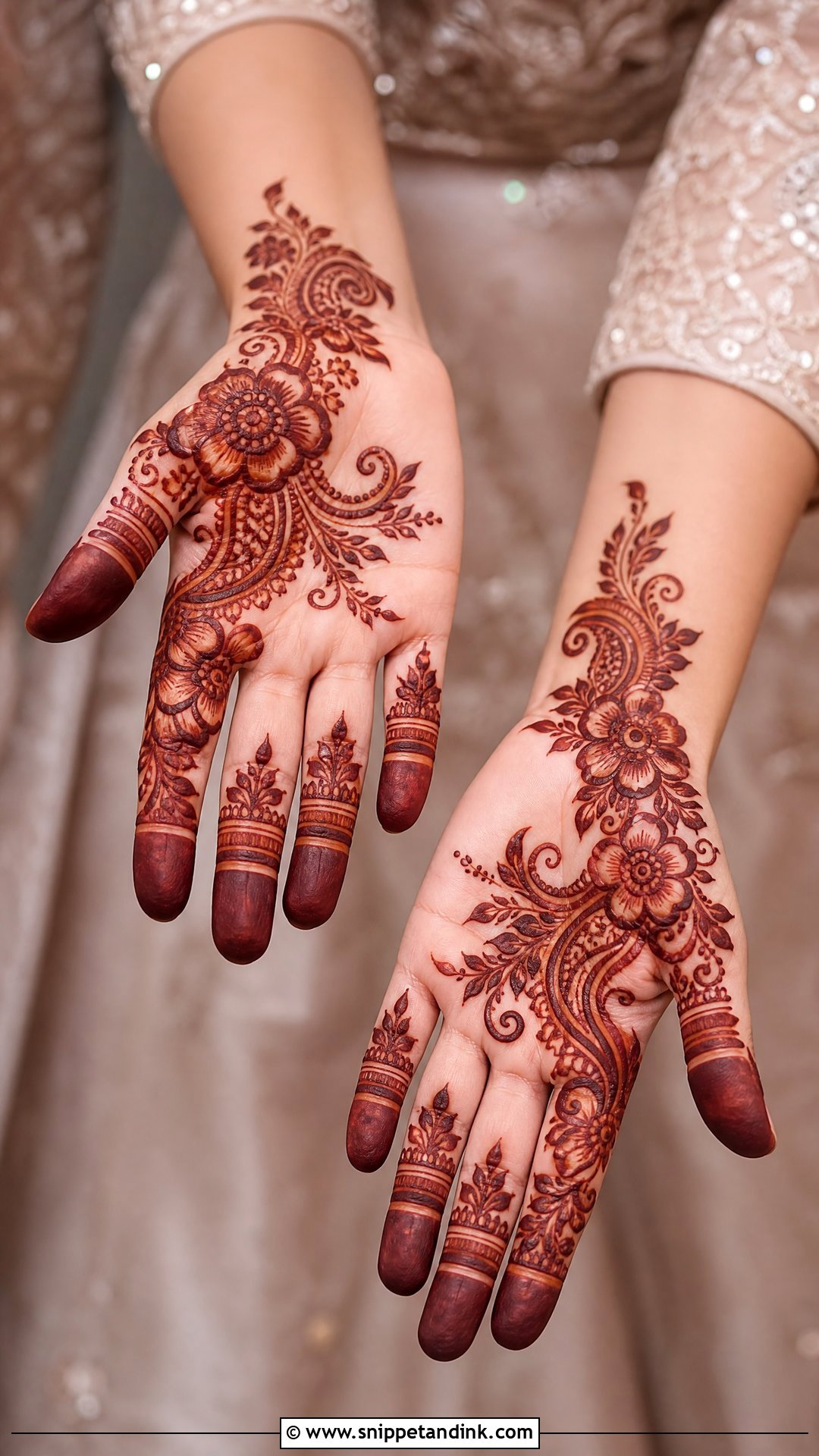
An Arabic trail runs diagonally from the wrist toward the index finger and leaves open skin on both sides. That openness is the point. I keep the outlines bold and fill the flowers with fine detail, so the trail still looks bridal and not like a party design. It takes far less time to apply than dense Indian coverage, which is useful when one artist has to do a bride and her family on the same evening.
8. Bridal Palm Mehndi Design With Full Coverage
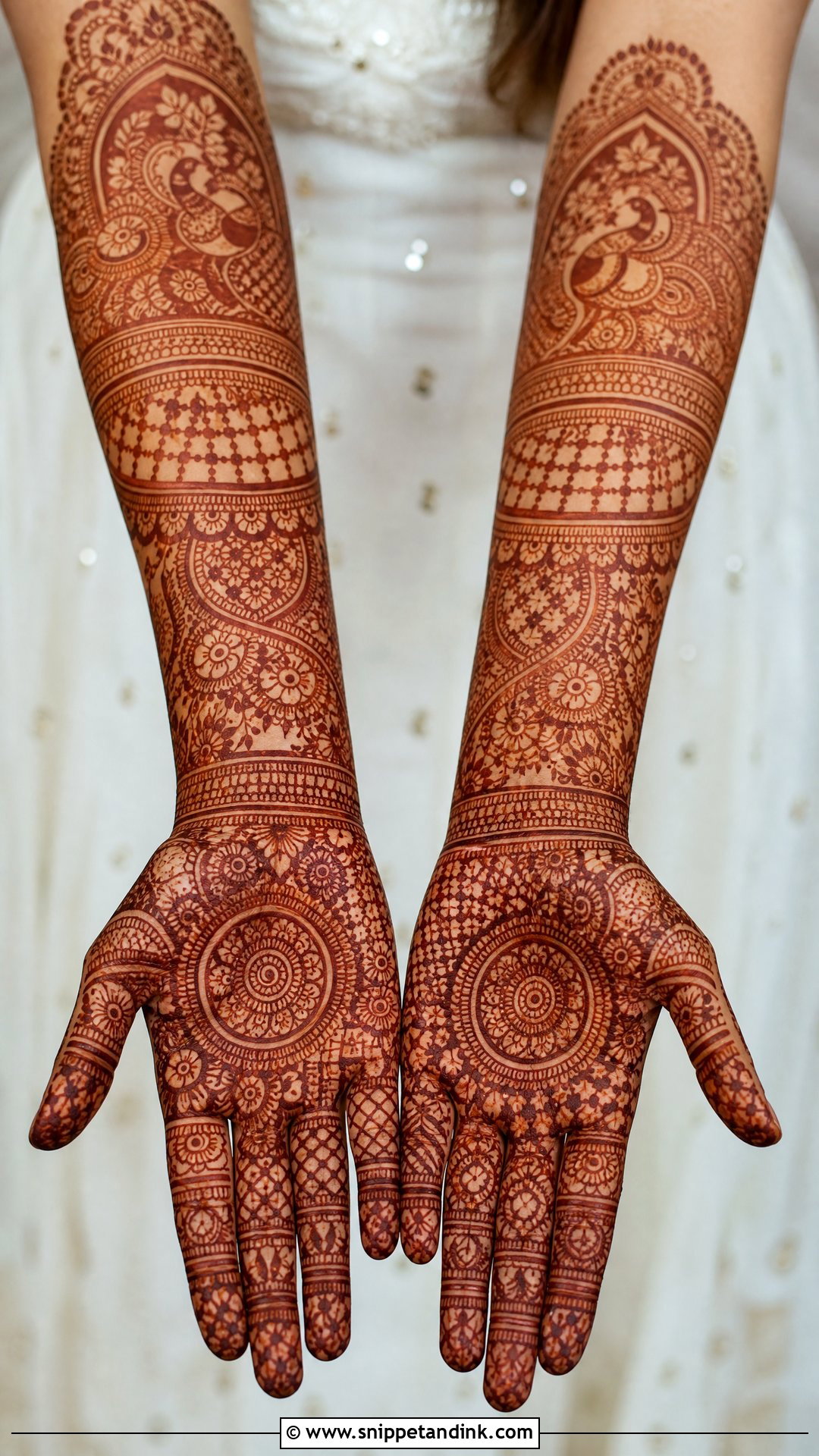
Full coverage is the traditional choice, running through the palm, fingers, wrist and lower forearm in connected motifs. The risk is random filling. When I plan one, I sketch the main zones first, centre, finger base, wrist band and forearm, and fill each zone with a single idea before linking them. Plan for a long sitting: a full bridal palm and forearm on both hands can take several hours, and you can’t use your hands while it dries.
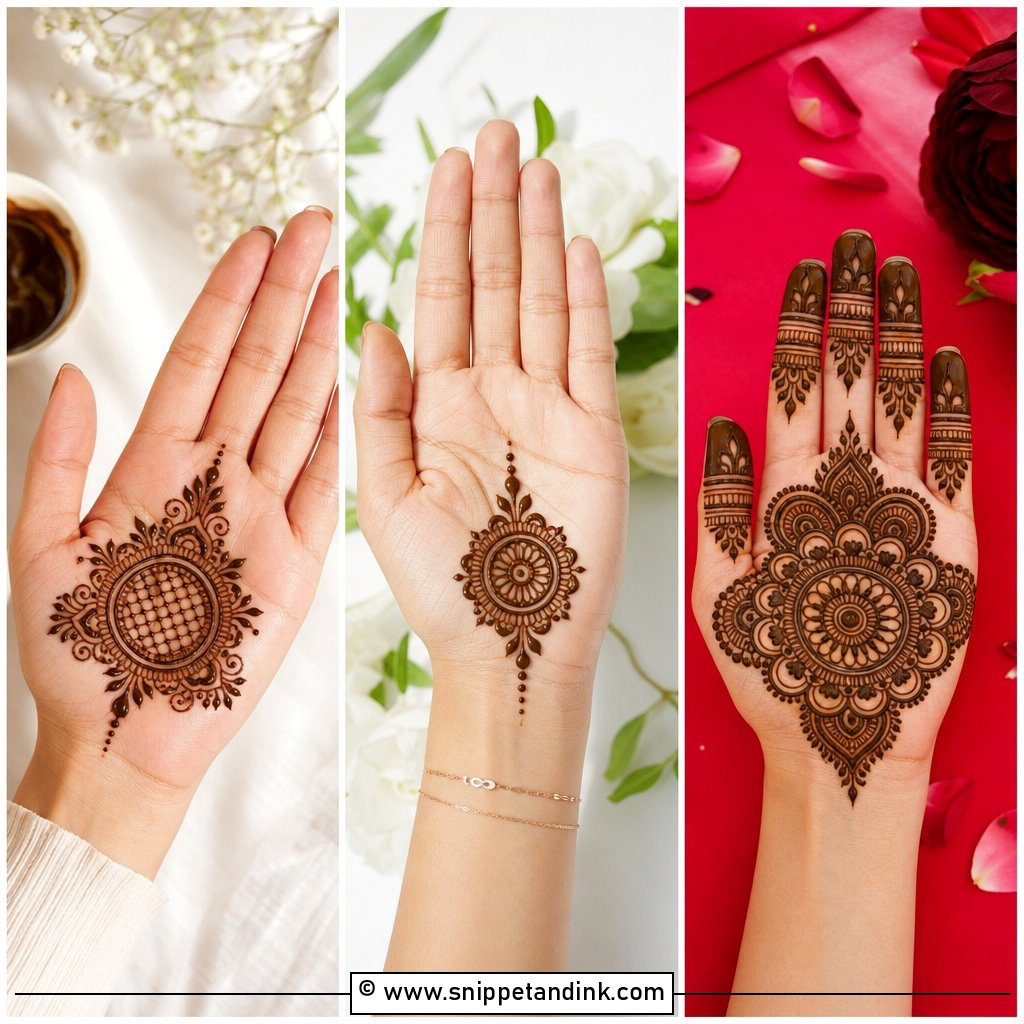
9. Bridal Palm Mehndi Design With Minimal Mandala
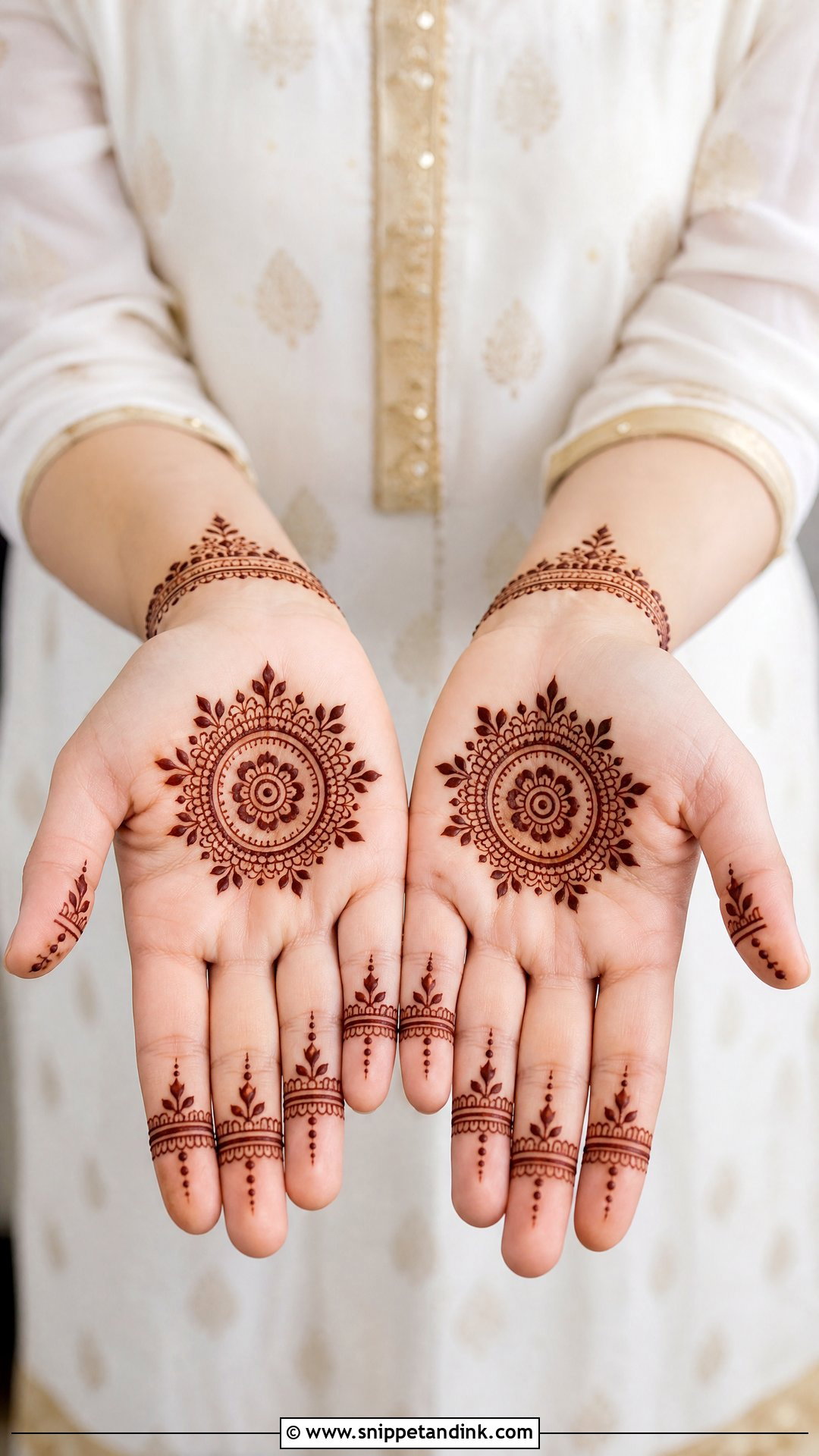
One neat mandala with open curves and simple petal borders is enough for an engagement, a civil ceremony or a smaller wedding. A minimal palm shows every line, so symmetry matters even more than on a dense one. I’d add a balanced wrist band if you want it to read as bridal rather than casual. These designs also stain more evenly, since thin and open lines get the same paste contact across the hand.
10. Bridal Palm Mehndi Design With Hidden Name
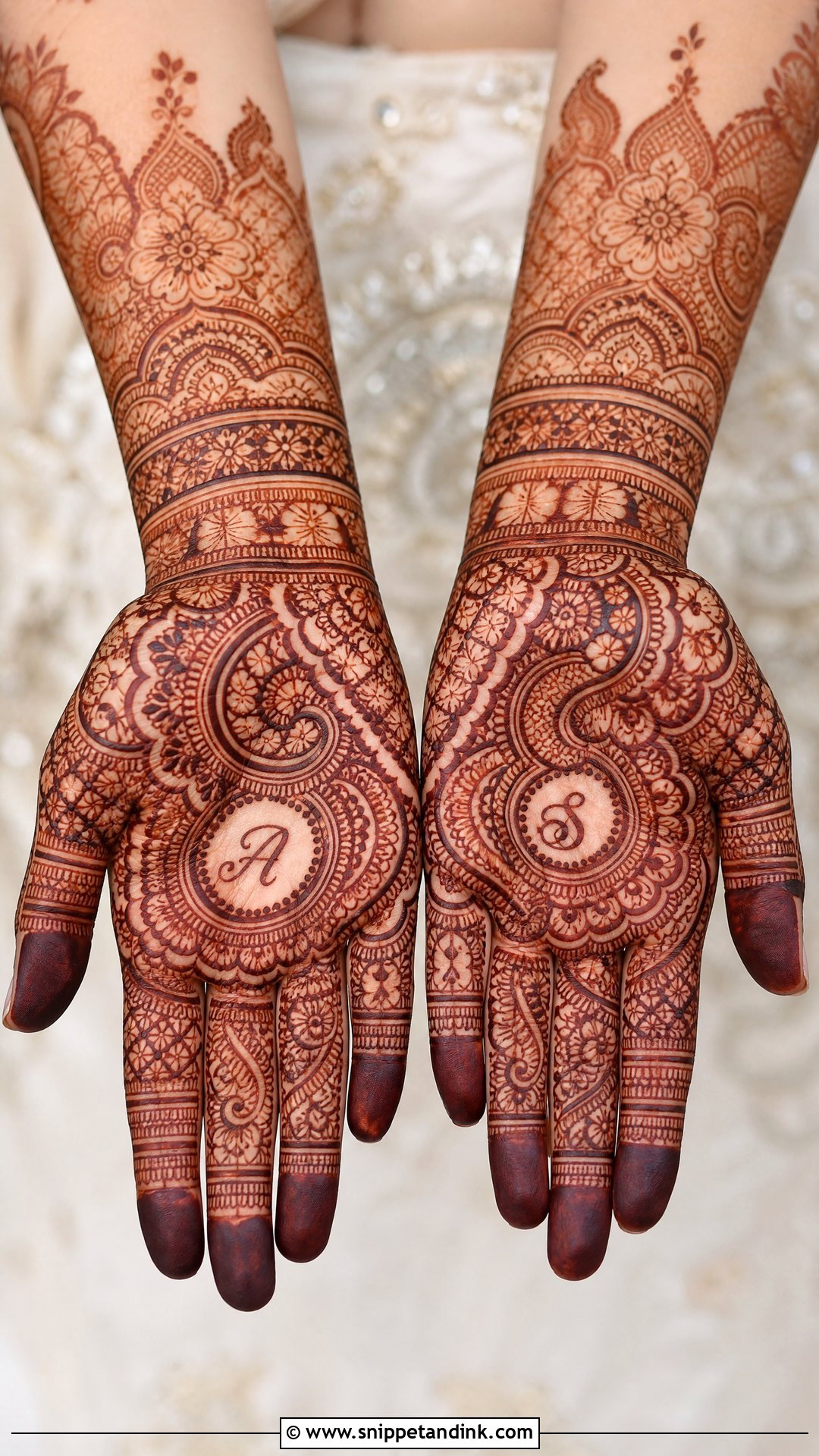
Hiding the groom’s name or initials in the palm is still one of the most requested details at my bridal bookings. I tuck the letters into a paisley, a mandala ring or the wrist band, and draw them in the same line weight as the surrounding pattern so they genuinely disappear. Bold lettering defeats the game. Tell me in advance whether you want it findable in five seconds or five minutes, because that changes where I place it.
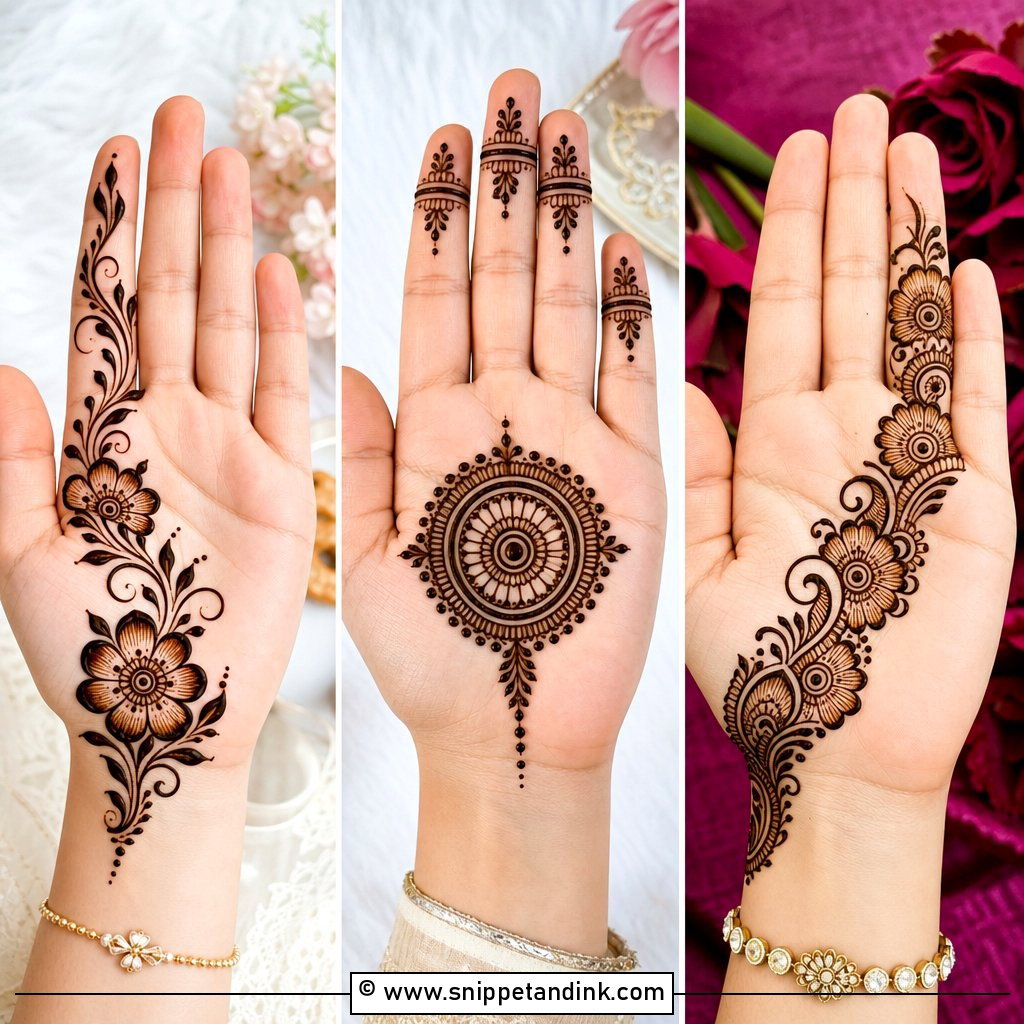
11. Bridal Palm Mehndi Design With Floral Vine
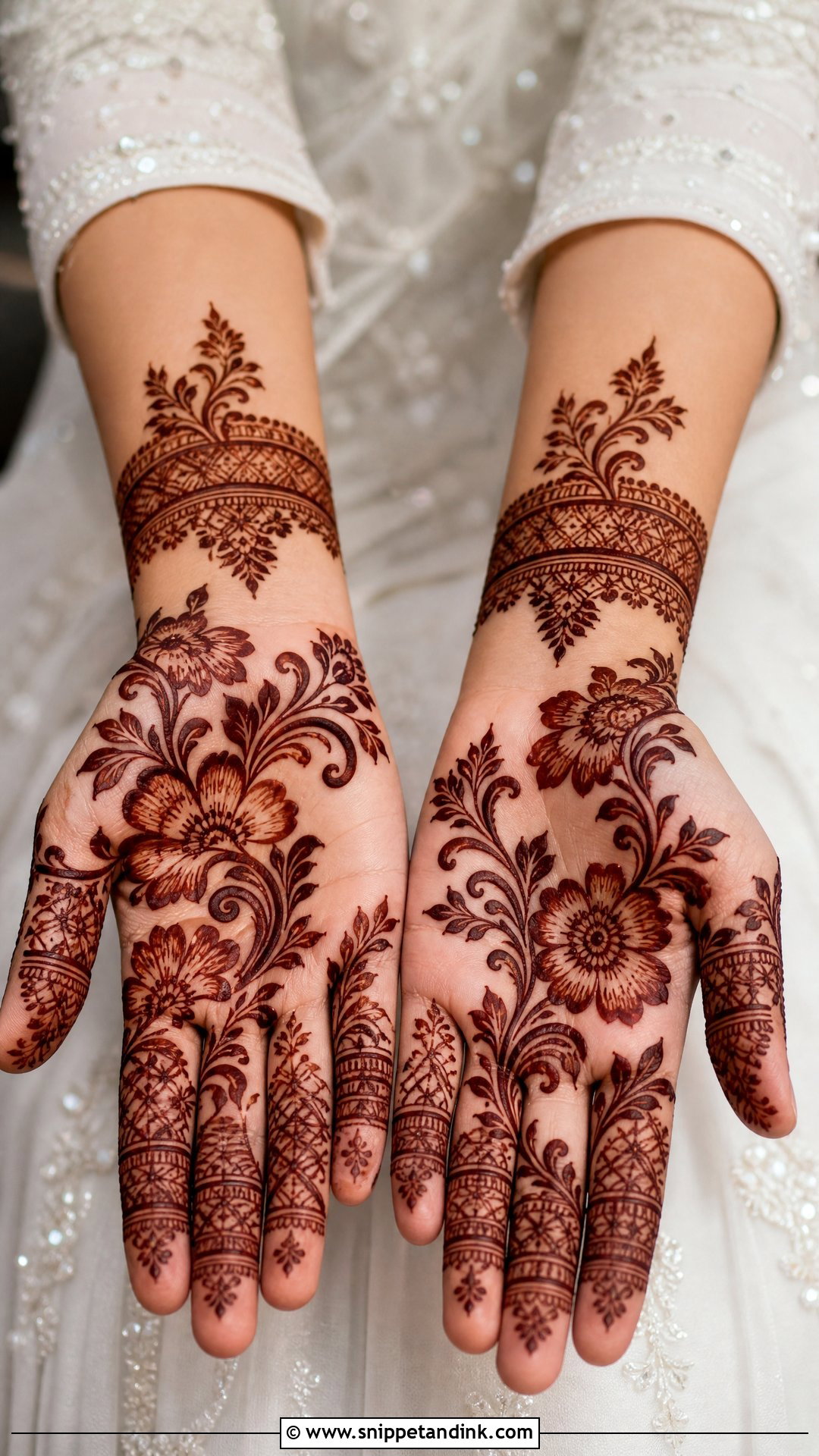
A vine that starts as a floral bracelet and curls across the palm makes fingers look longer, which is why I suggest it for brides with shorter hands. To keep it bridal, I build two denser zones, one at the palm centre and one at the wrist, and let the vine connect them. Without those, a vine can look like a guest design. It pairs well with floral jewelry and pastel outfits.
12. Bridal Palm Mehndi Design With Jewelry Pattern
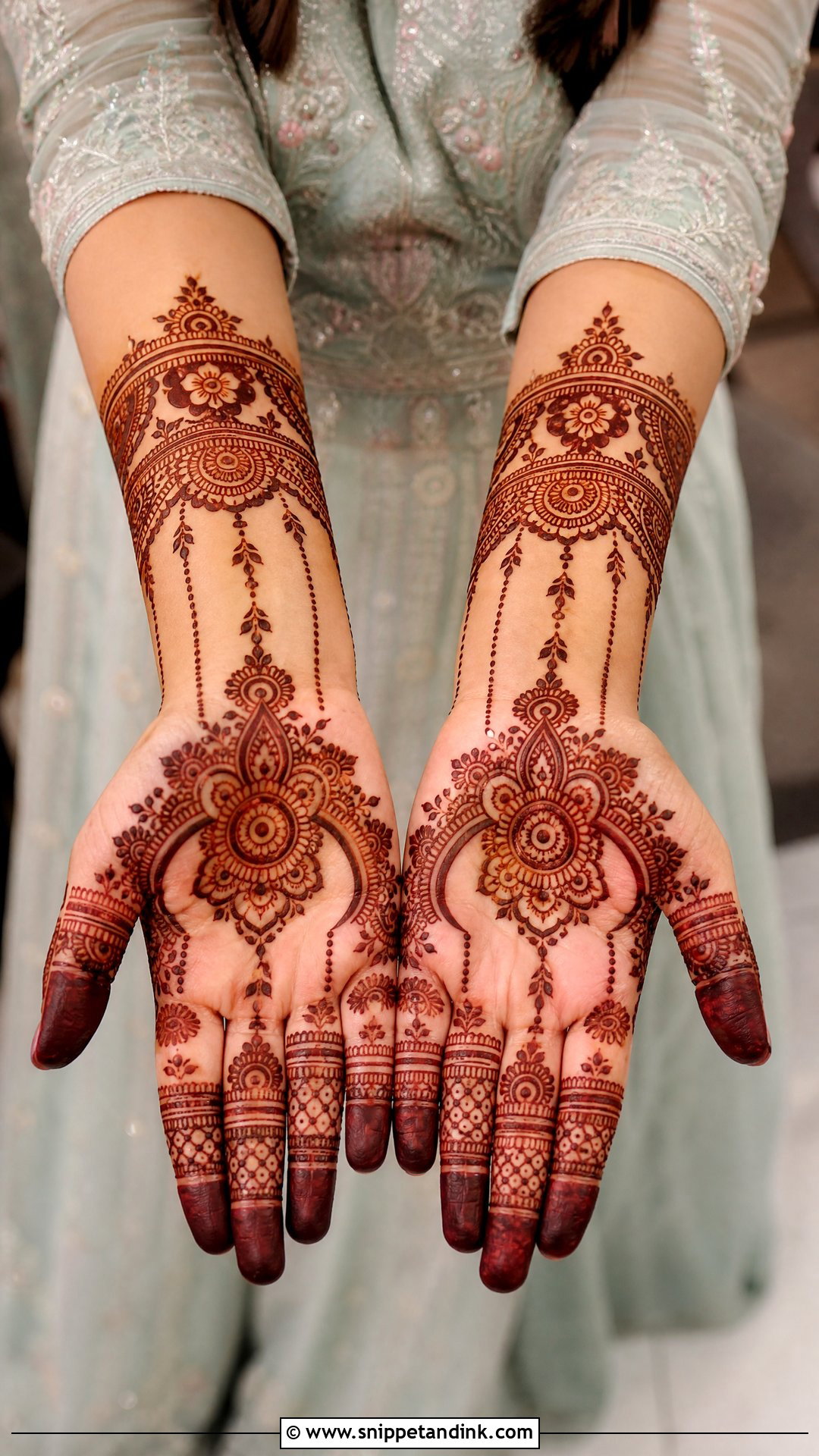
Here I draw the jewelry instead of decorating around it: a bracelet band at the wrist, chain lines toward the fingers, ring bands and a pendant shape at the palm centre. Chains are the hard part. Every line must be the same thickness and spacing, or the illusion breaks. It complements real bangles and haathphool without fighting them, and the open spaces between chains leave room for real rings.
13. Bridal Palm Mehndi Design With Moroccan Pattern
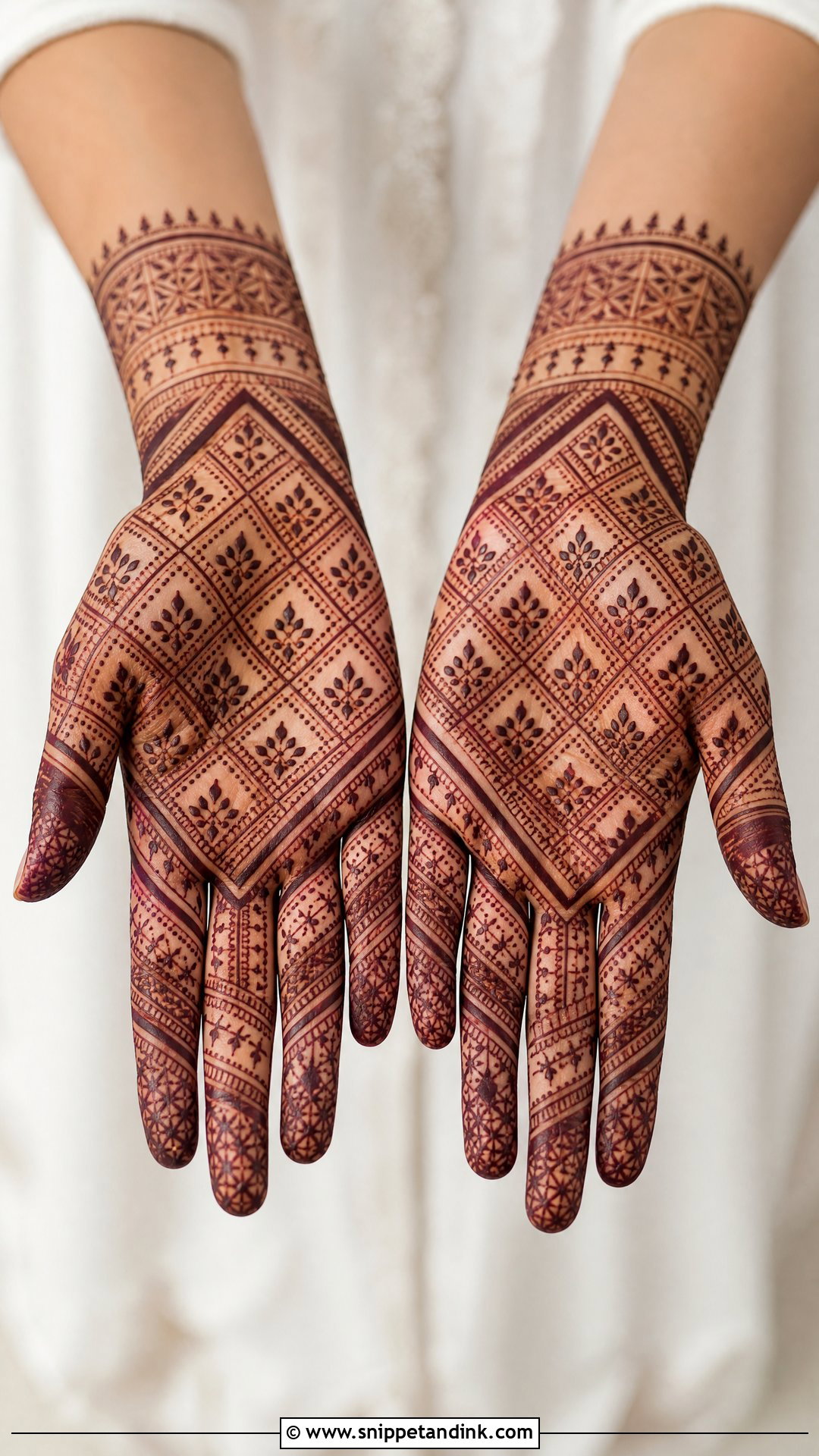
Moroccan-style geometry, with diamonds, triangles and grids, gives a clean, structured palm that stands apart from the usual florals. I combine a central diamond panel with bold cuff bands and dotted fillers to make it read as bridal. Straight lines on a curved palm are harder than they look, so I draw with the hand flat on a firm cushion. It suits outfits with mirror work or geometric embroidery.
14. Bridal Palm Mehndi Design With Gulf Arabic Pattern
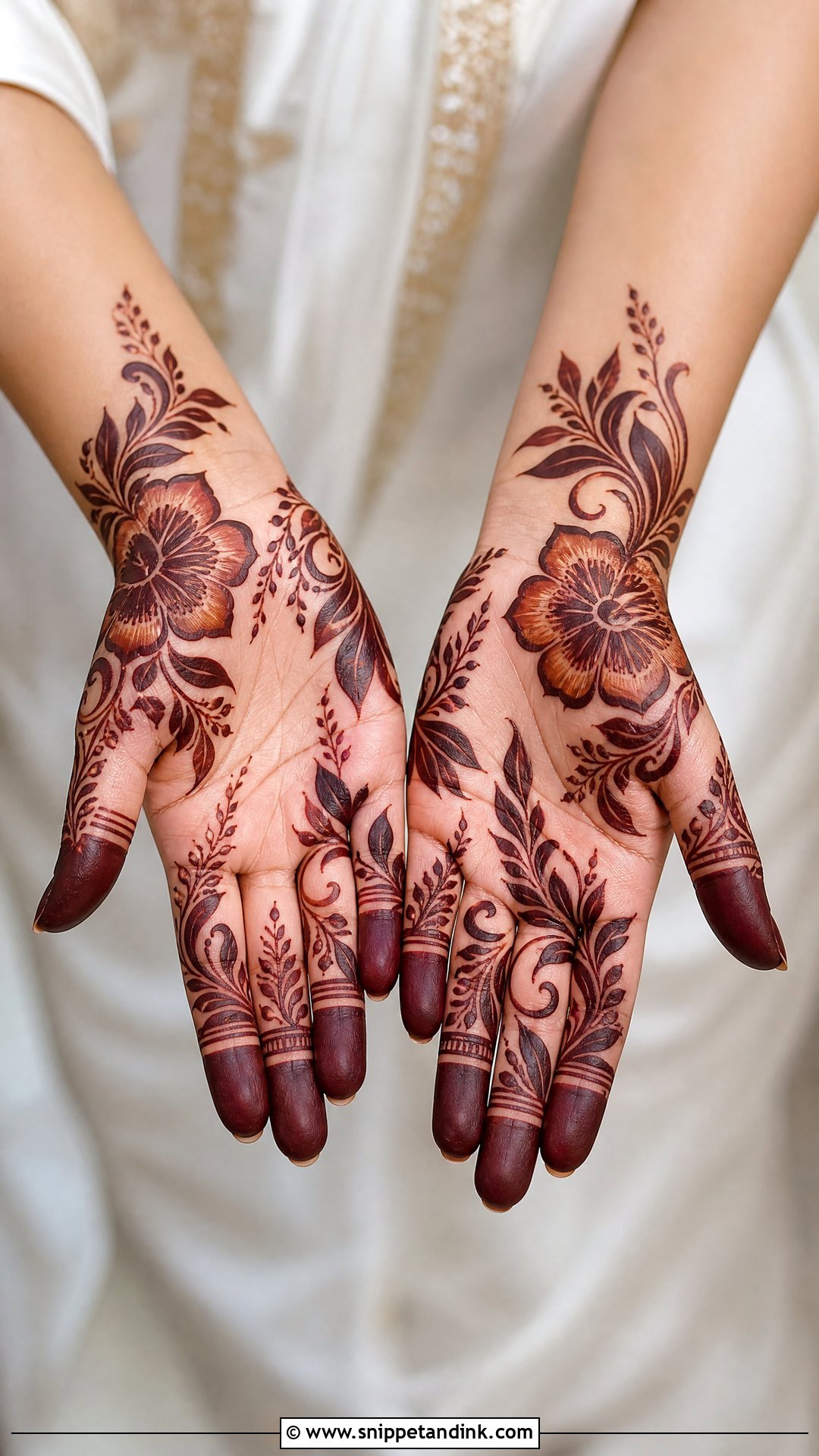
Gulf Arabic designs use oversized flowers along one side of the palm, thick outlines and generous gaps. The bold, filled areas take up more paste, and that is why this style tends to stain a deep maroon. I add shaded petals and small filler vines near the fingertips to make it wedding-ready. It is good for a bride who wants visible henna without sitting through hours of tight detail.


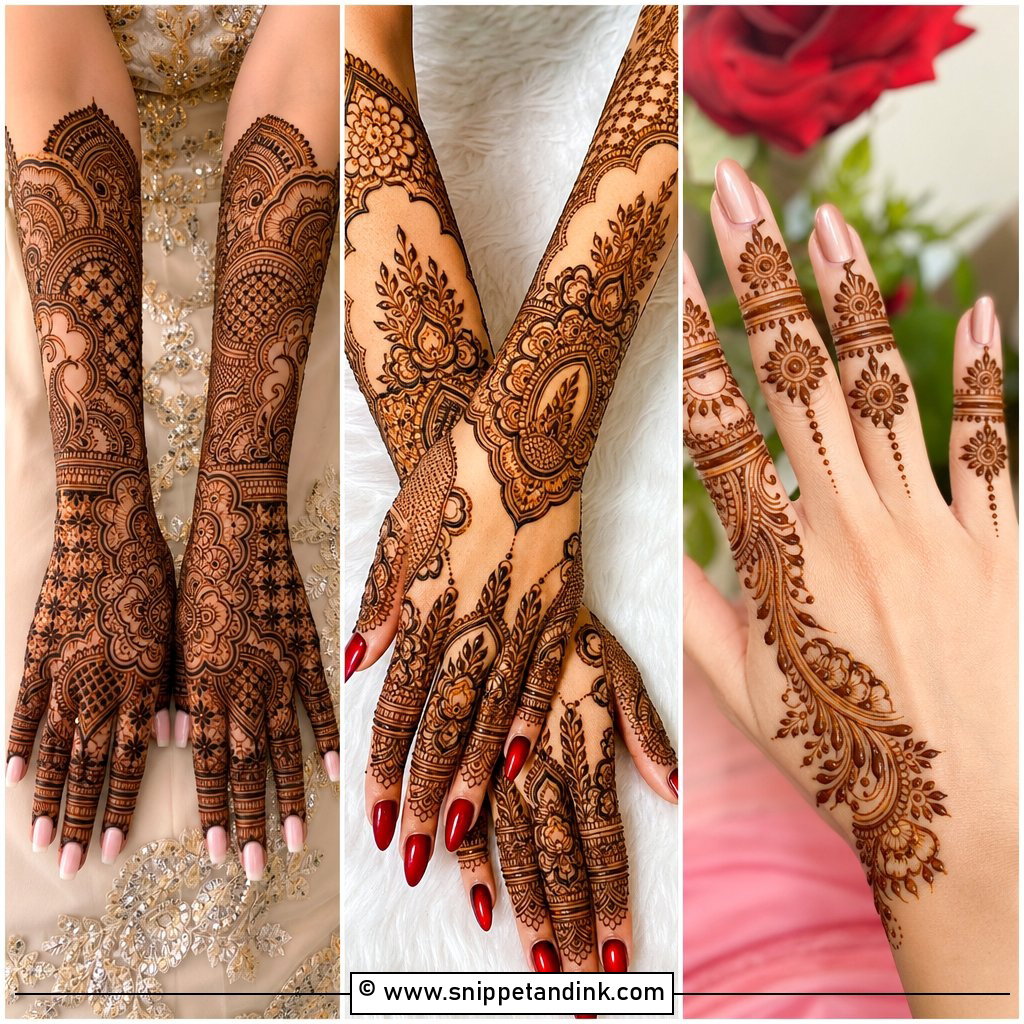
15. Bridal Palm Mehndi Design With Rajasthani Detail
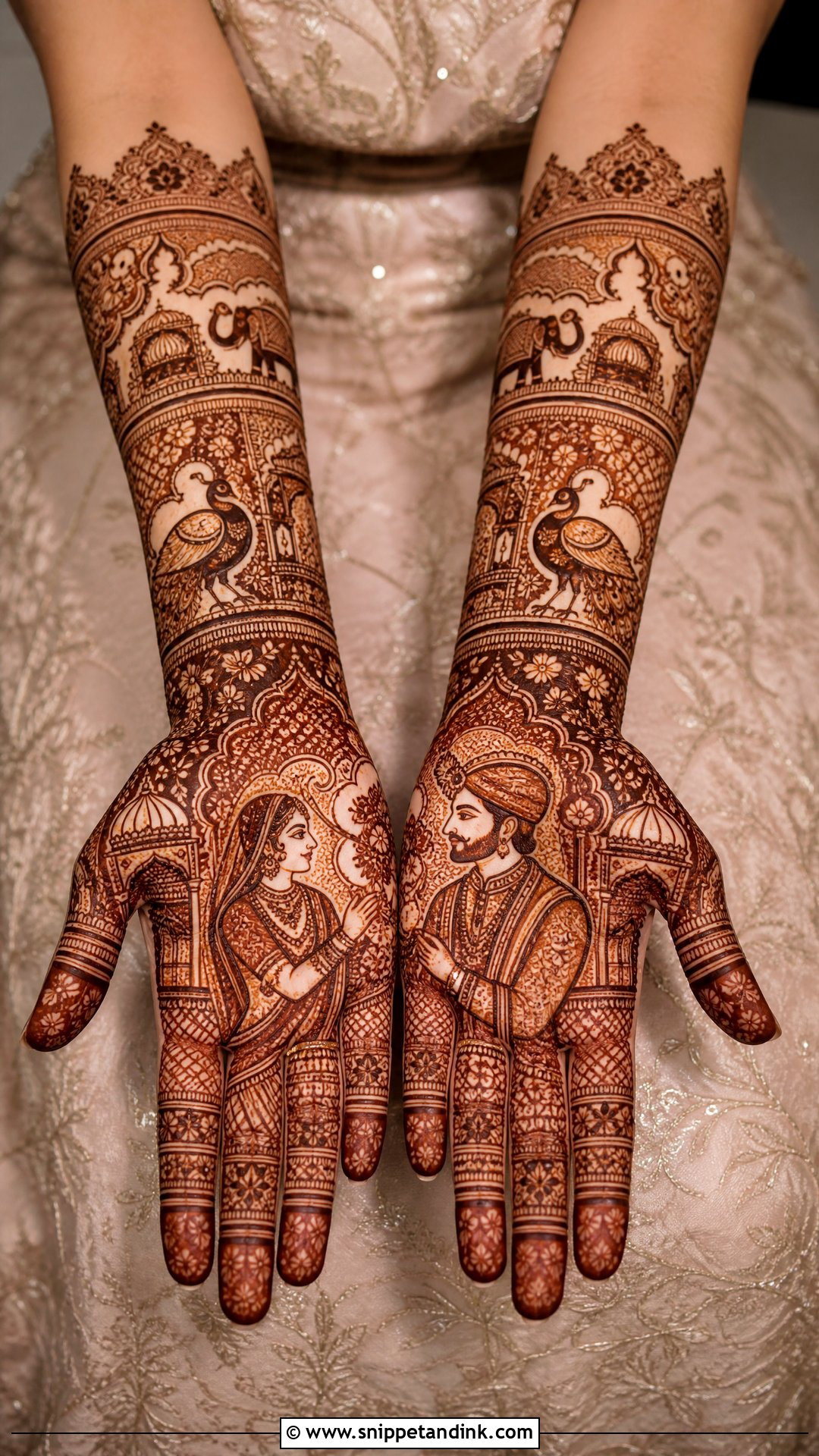
Rajasthani palms tell stories: the couple, peacocks, elephants, domes and dense fillers, all connected from fingertips to wrist. The work is slow and the lines are thin, so I need a very fine, smooth paste and fresh cones throughout. I always frame each major motif with a clear border; without it, the figures blur together once the stain darkens. Expect a long sitting and plan your day around it.
16. Bridal Palm Mehndi Design With Mughal Pattern
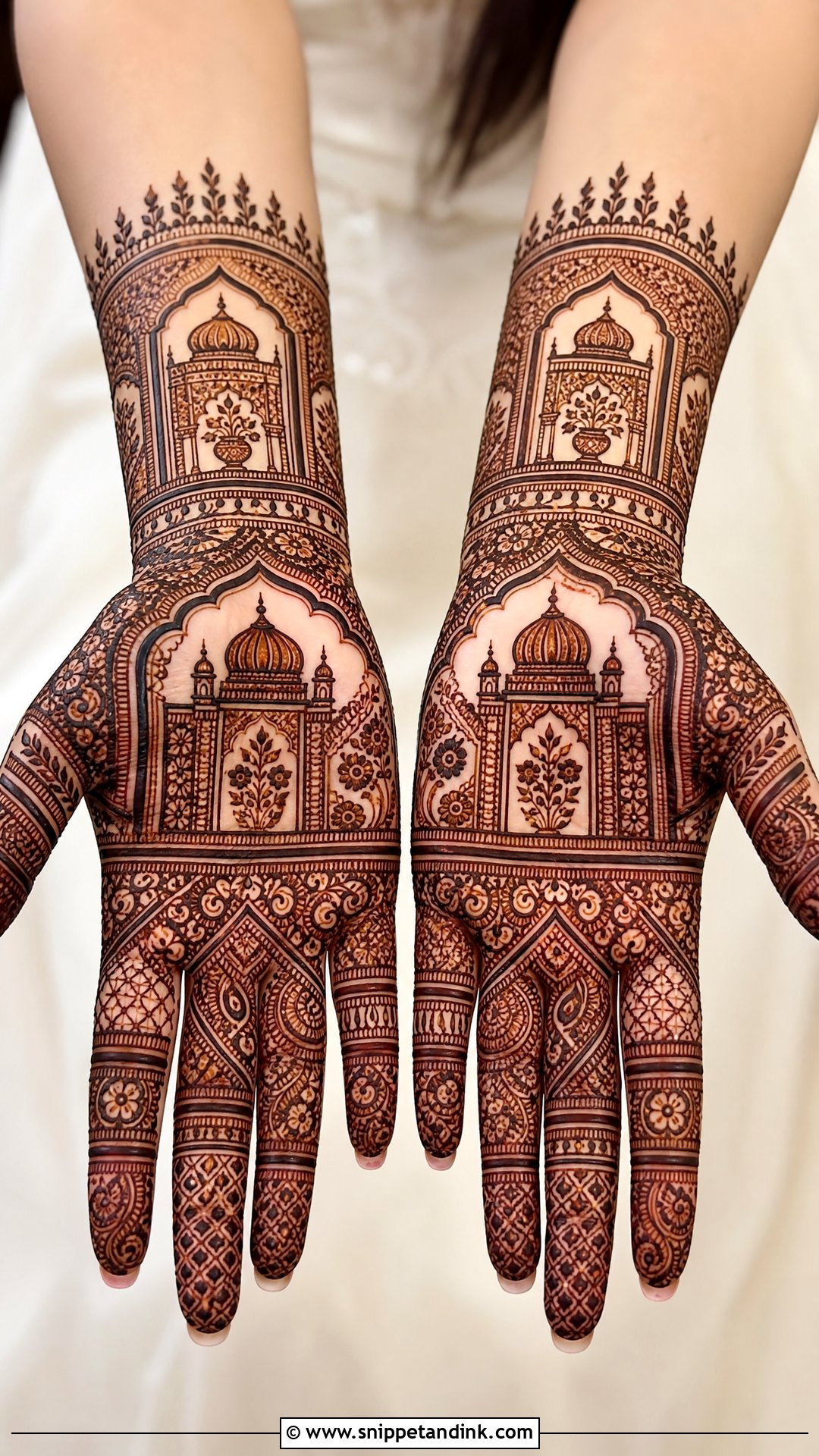
A Mughal palm is built like a decorated window: a central arch holding a flower, mandala or initials, with jaali, leafy borders and small paisleys around it. Arches have to be mirrored perfectly on both hands, so I draw the arch outlines on both palms before filling either. This layout pairs naturally with zardozi, brocade and antique gold. It reads especially well in formal portraits where the hands are held up together.
17. Bridal Palm Mehndi Design With Finger Detail
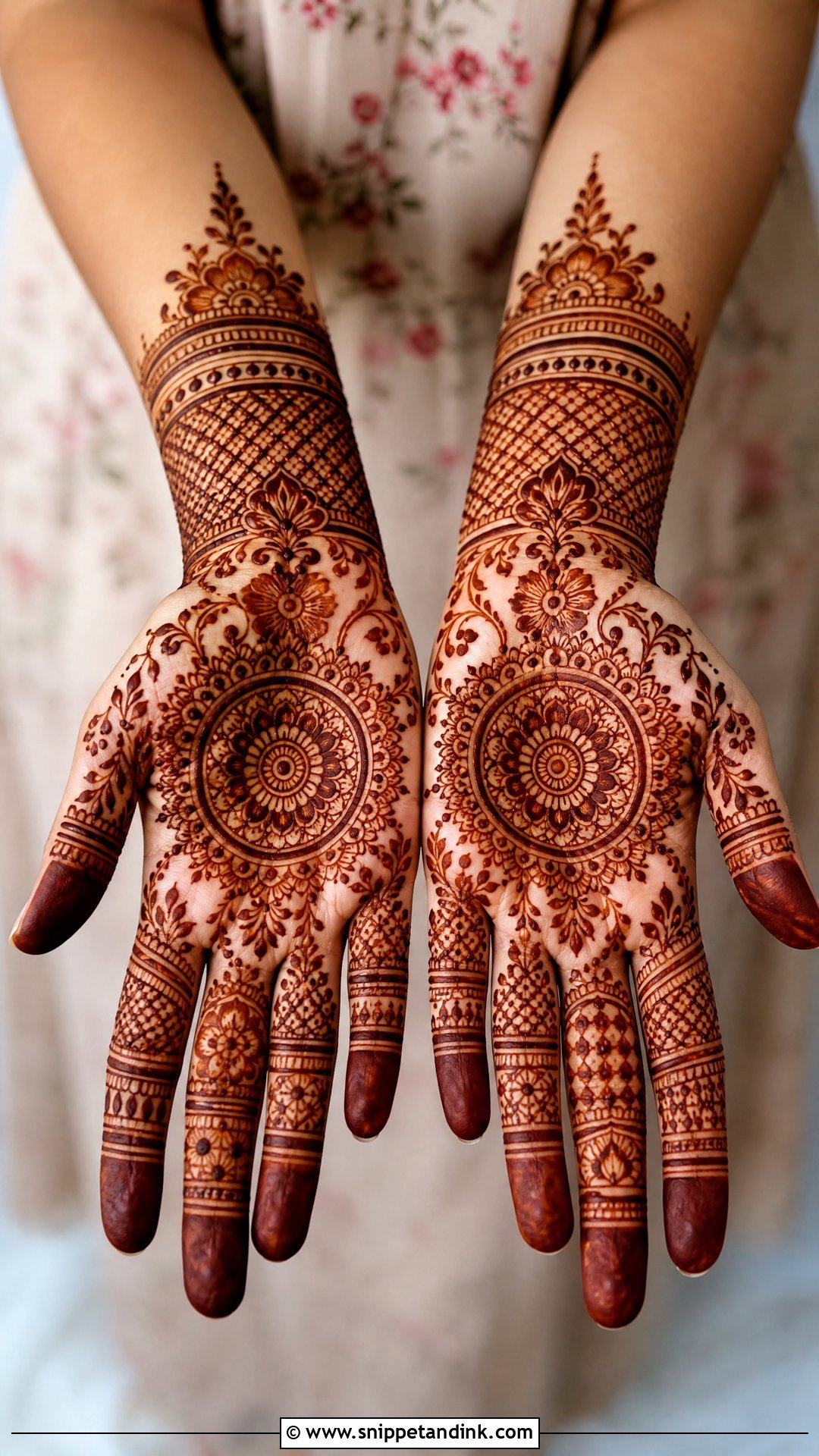
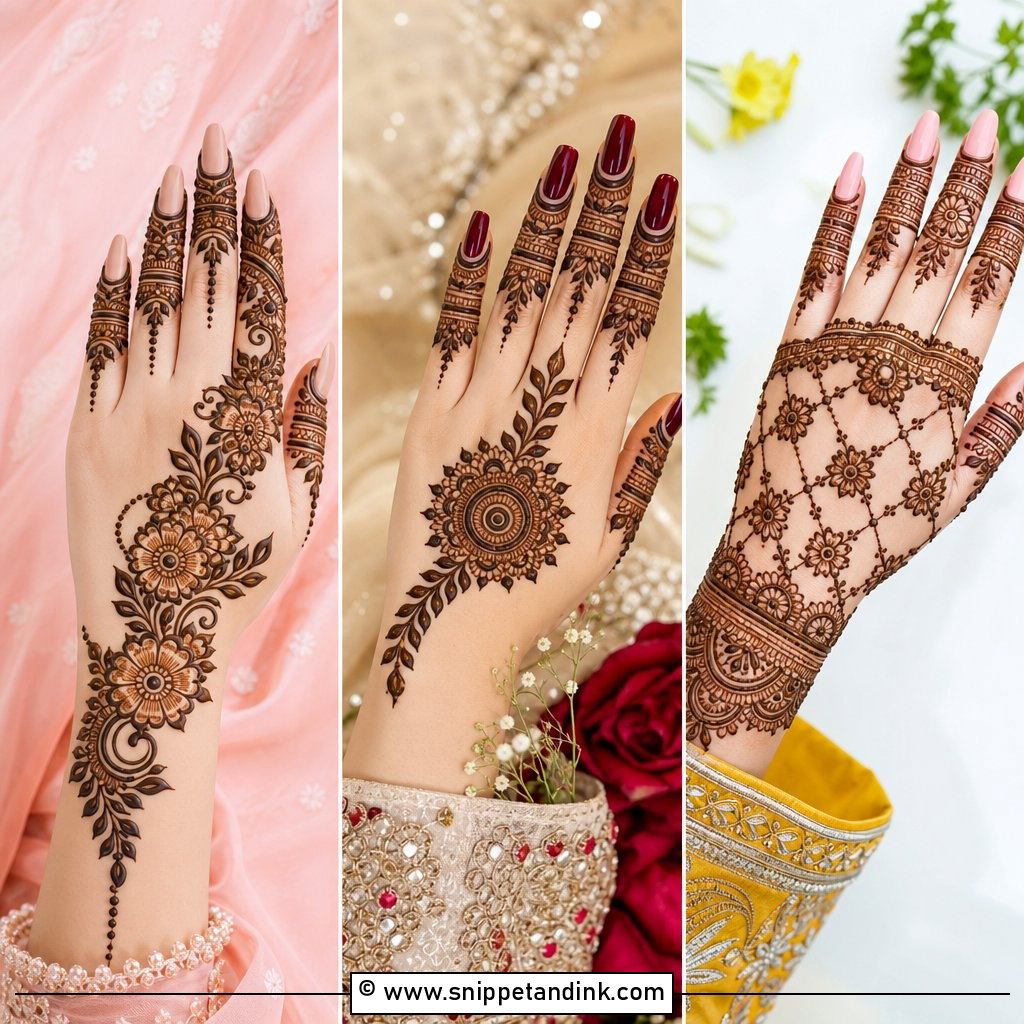
Fingers often get less attention than the palm, and that shows in close-up ring shots. Here each finger gets a different but related pattern: bands, checks, leaves and dots. My rule is balance: a heavy palm gets cleaner fingers, a simple palm gets more decorative ones. Fully filled fingertips give the classic deep bridal tip; lighter patterns keep the hand modern. Look at your engagement ring photos before deciding which finger carries the most detail.
18. Bridal Palm Mehndi Design With Negative Space
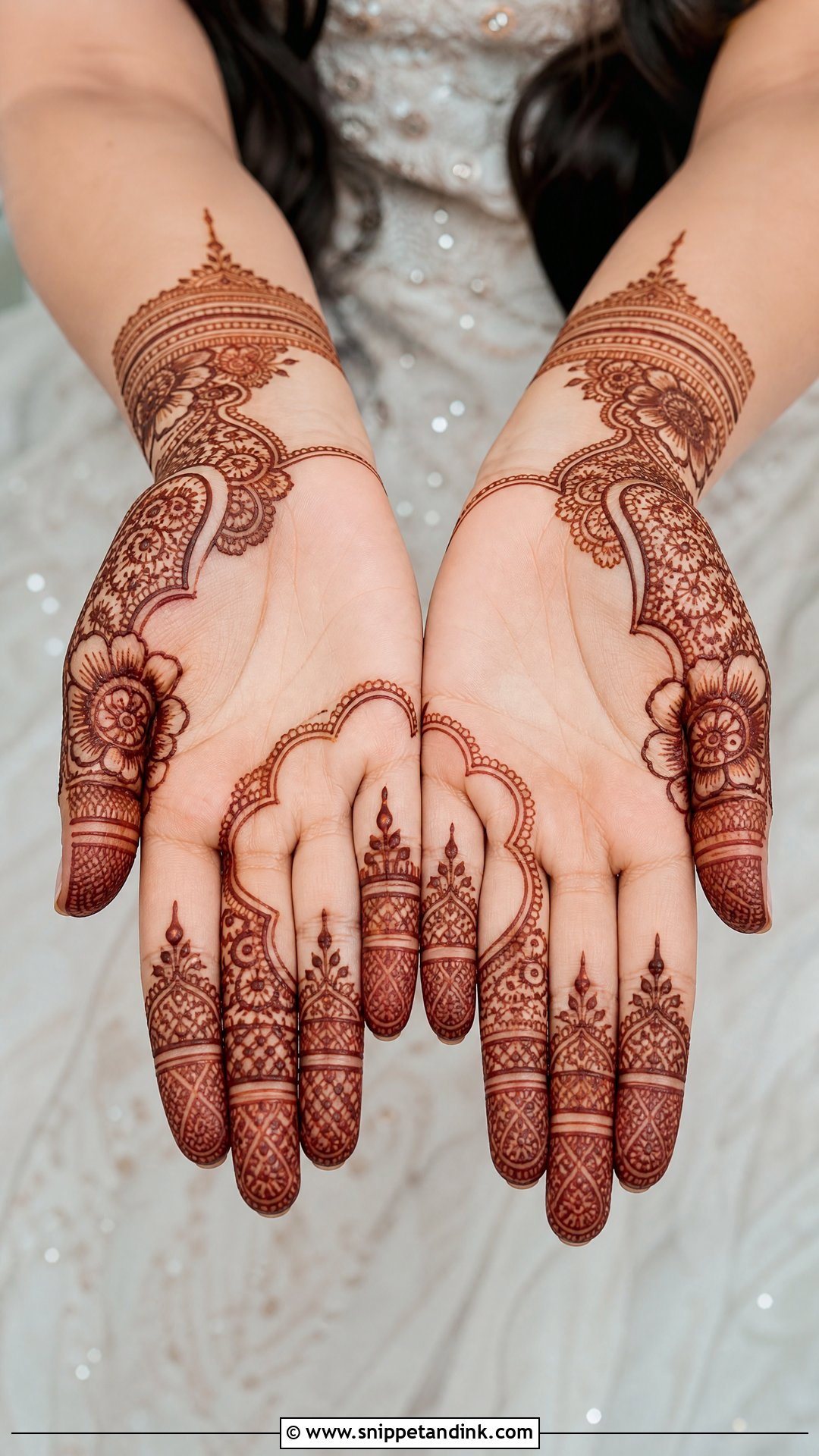
Negative space uses open skin as part of the design: bold floral or paisley sections separated by clean gaps and curved borders. Those gaps make the pattern readable from a distance, which matters in bright outdoor light where dense work can look like a dark smudge. I add patterned tips and slim finger bands, and a cuff at the wrist to finish it. It’s my usual suggestion for a bride with very warm hands, since her stain tends to come up deep and could otherwise read as one dark block.
19. Bridal Palm Mehndi Design With Symmetrical Palms
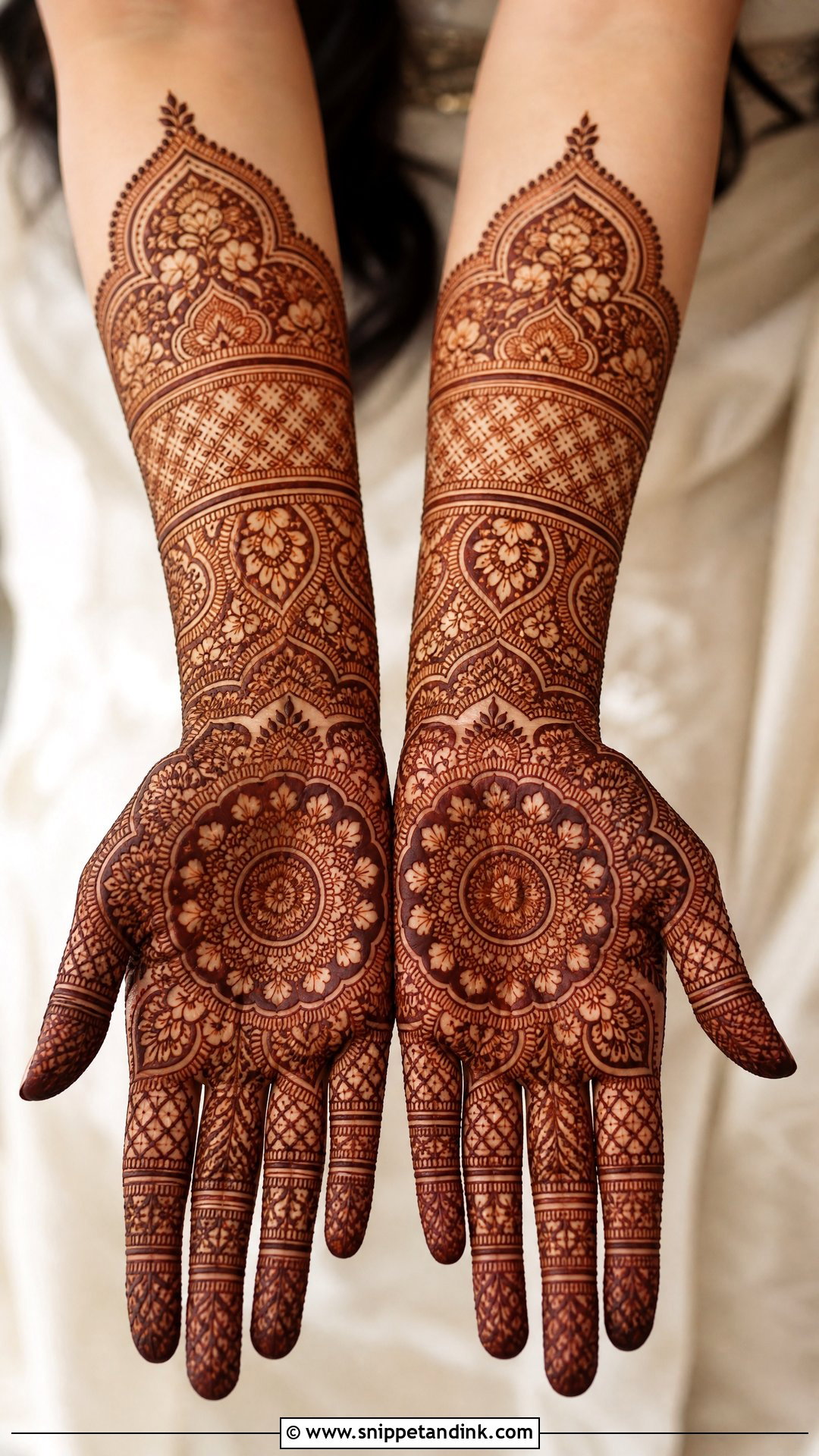
Mirrored palms look like one artwork when you hold your hands together for a ritual or a photo. In a symmetrical bridal palm mehndi design, the two hands should line up at the wrists and finger bases, so I measure with the hands side by side, not one at a time. Small leaves, dots and curved petals soften the formality. Perfect mirroring is harder for an artist than it sounds, so ask to see her paired-palm work.
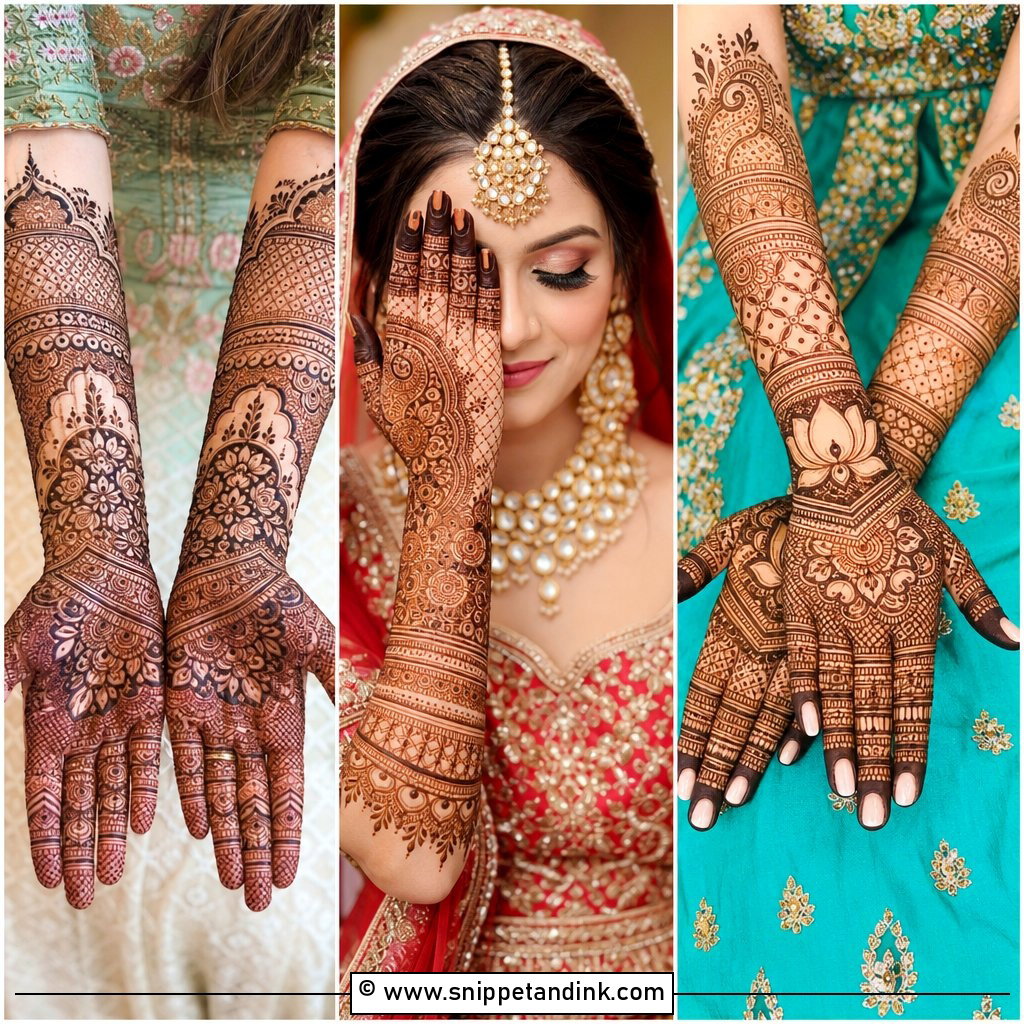
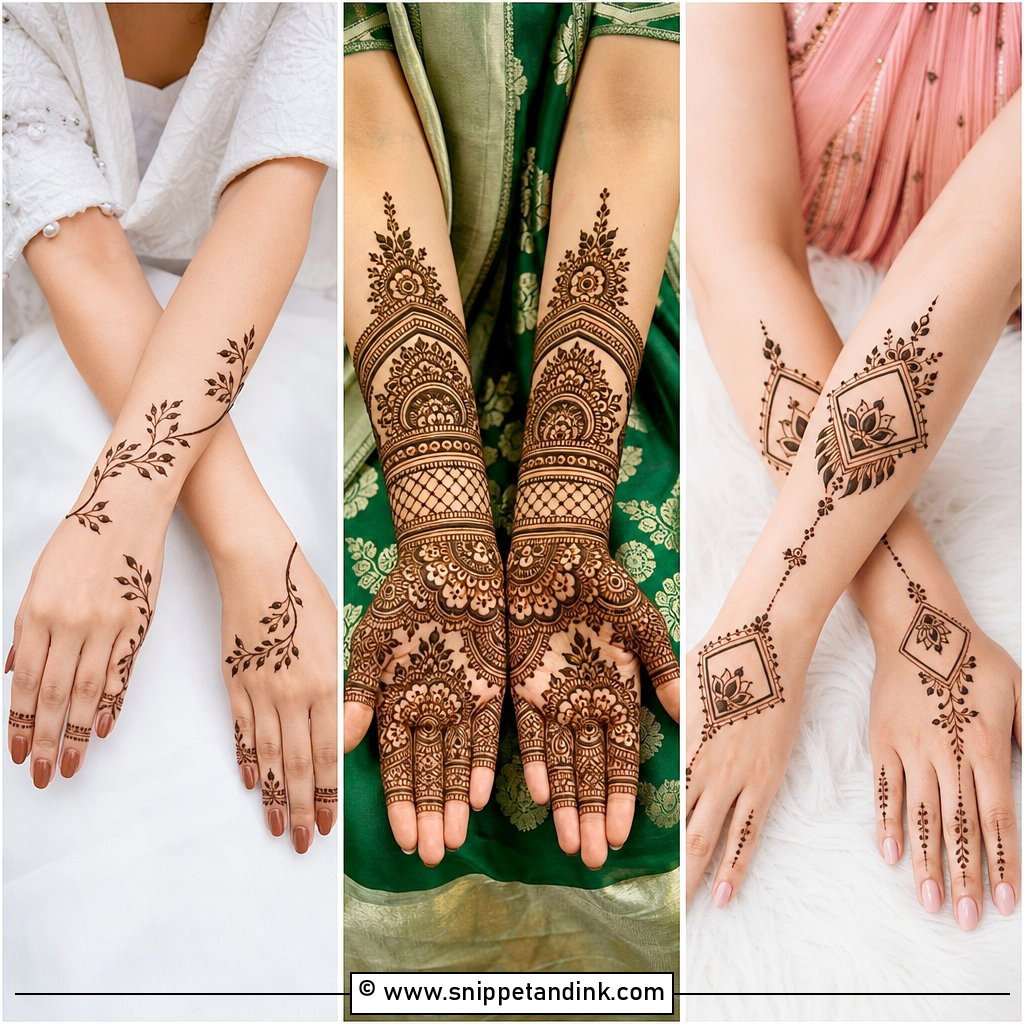
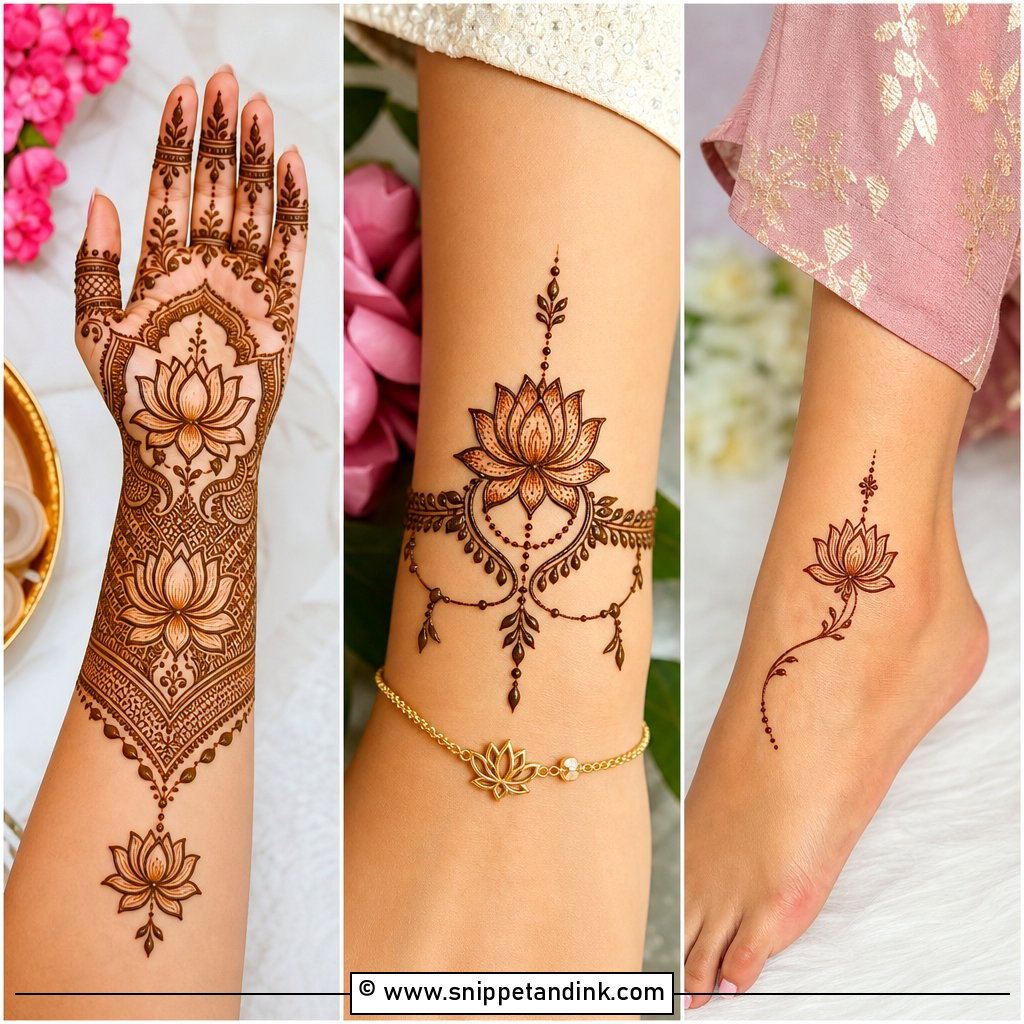
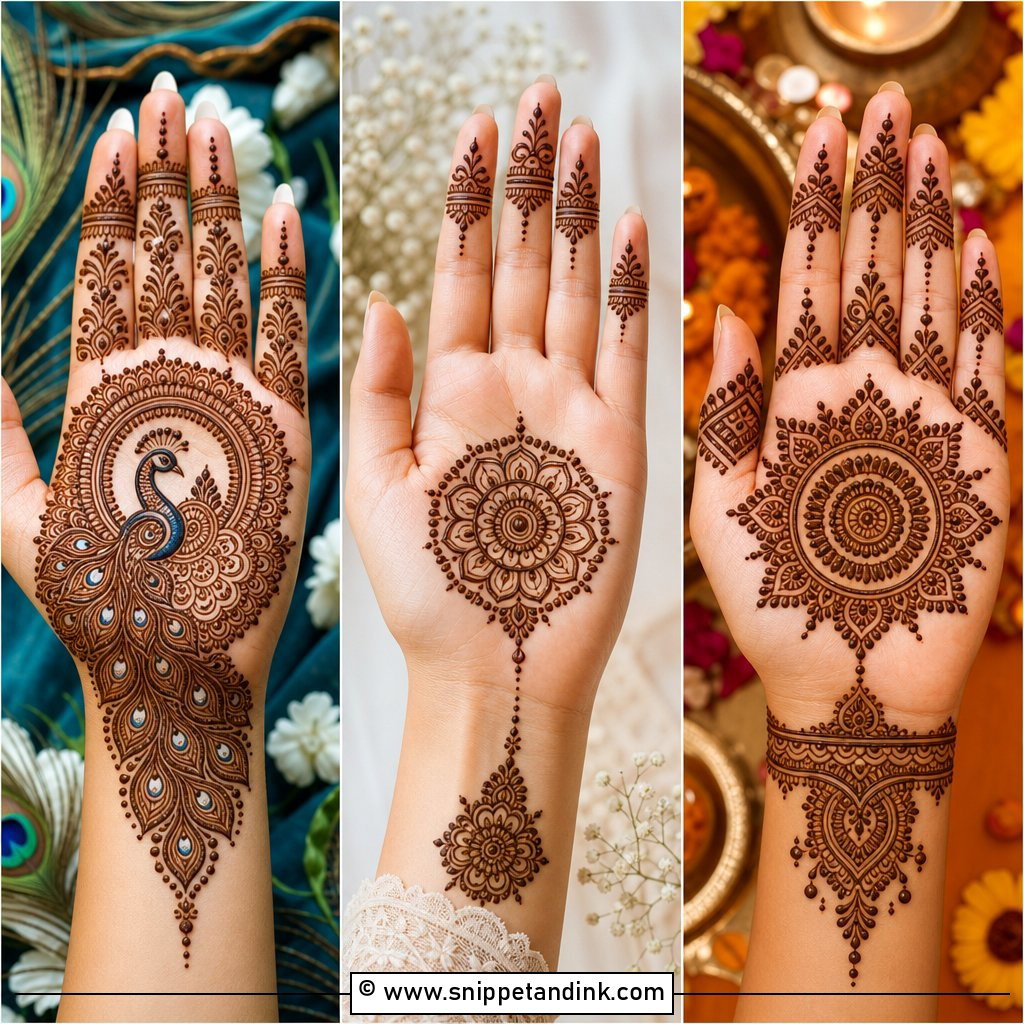
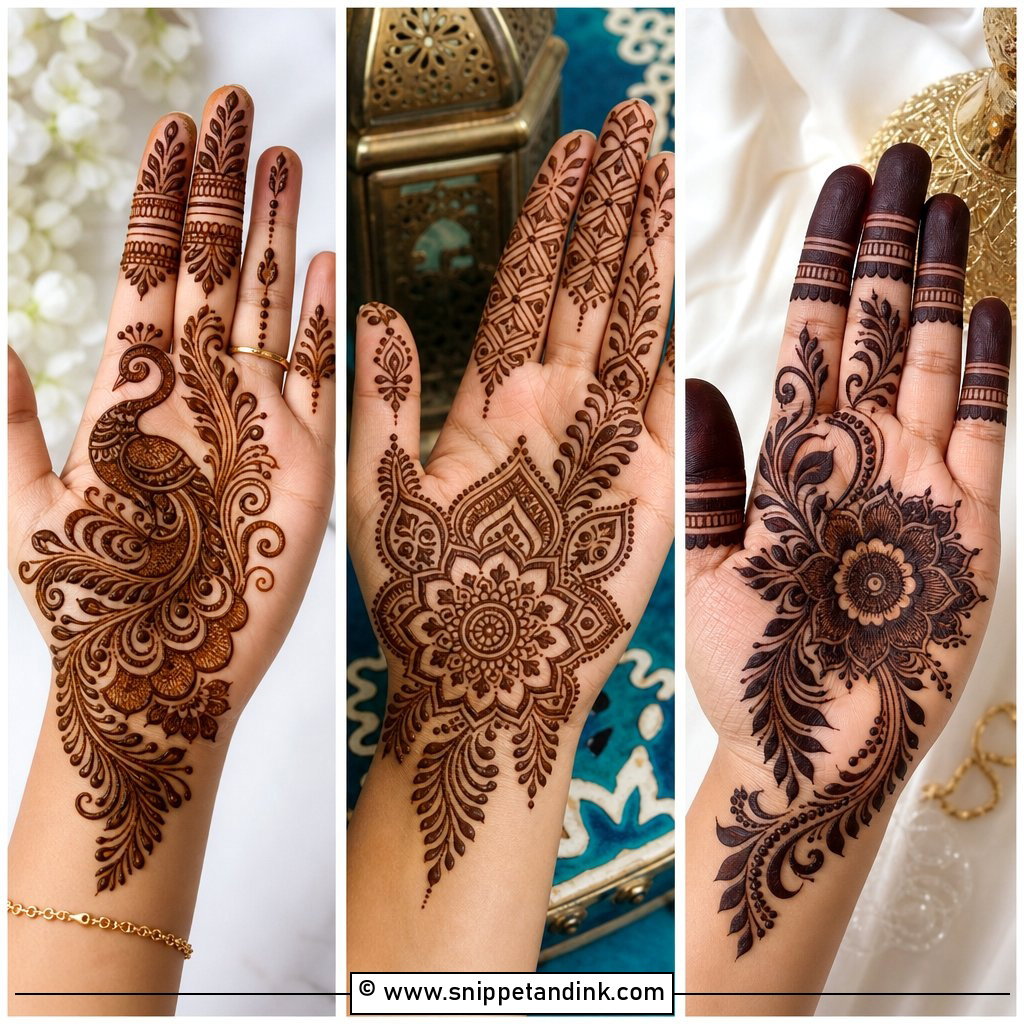
20. Bridal Palm Mehndi Design With Modern Fusion
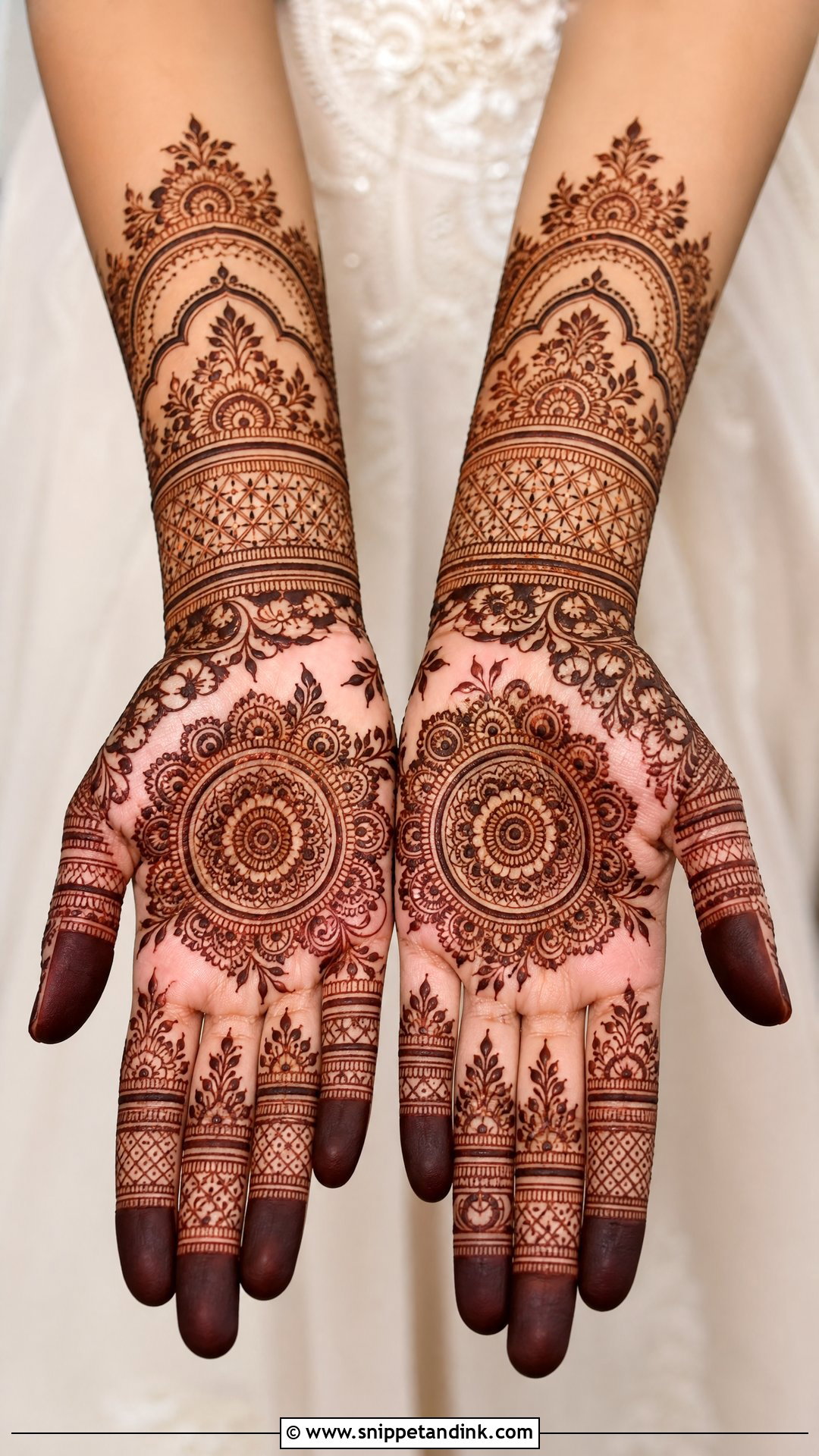
Fusion palms combine a traditional centre with Arabic flow on one side and geometric or jaali panels on the other. The danger is that it looks like three designs sharing a hand. I insist on one focal point, usually a mandala or lotus, and every other element leads back to it. That way the design can be personalised to your outfit and jewelry and still look planned.
The Day and a Half After the Paste Comes Off
What you do after the appointment changes the colour as much as the design does. I seal the paste with a light dab of lemon and sugar once it has set, which keeps it moist and in contact with the skin.
- Leave the paste on for at least six to eight hours, ideally overnight. Wrap hands loosely in tissue and cotton gloves to sleep.
- Scrape the dry paste off with a blunt edge or rub it away with a little oil. Don’t wash it off.
- Keep your palms away from water for as long as you can, at least the first twelve hours.
- Keep your hands warm. Holding them over gentle steam or simply staying out of cold air helps the colour deepen.
- Avoid hand sanitiser and chlorine in the days before the wedding; both fade a fresh stain quickly.
Once the colour peaks, a stain on the palm usually lasts one to two weeks before fading from the fingertips first. Regular moisturising with a plain oil helps it fade evenly instead of peeling in patches.
Matching the Palm to Your Outfit, Jewelry and Hand
Every layout here works on a bride’s palm; the question is which one fits your hands, outfit and ceremony. Dense traditional coverage looks regal under heavy embroidery, while a minimal mandala or an Arabic trail suits lighter outfits and smaller events. Before you book, think about your jewelry, the shape of your hand and how much time you can spend sitting still. A good artist will adjust density, spacing and motif size for you, so bring two or three images you love and let her build from them.
You'll Like These Ideas:







Leave a Reply