
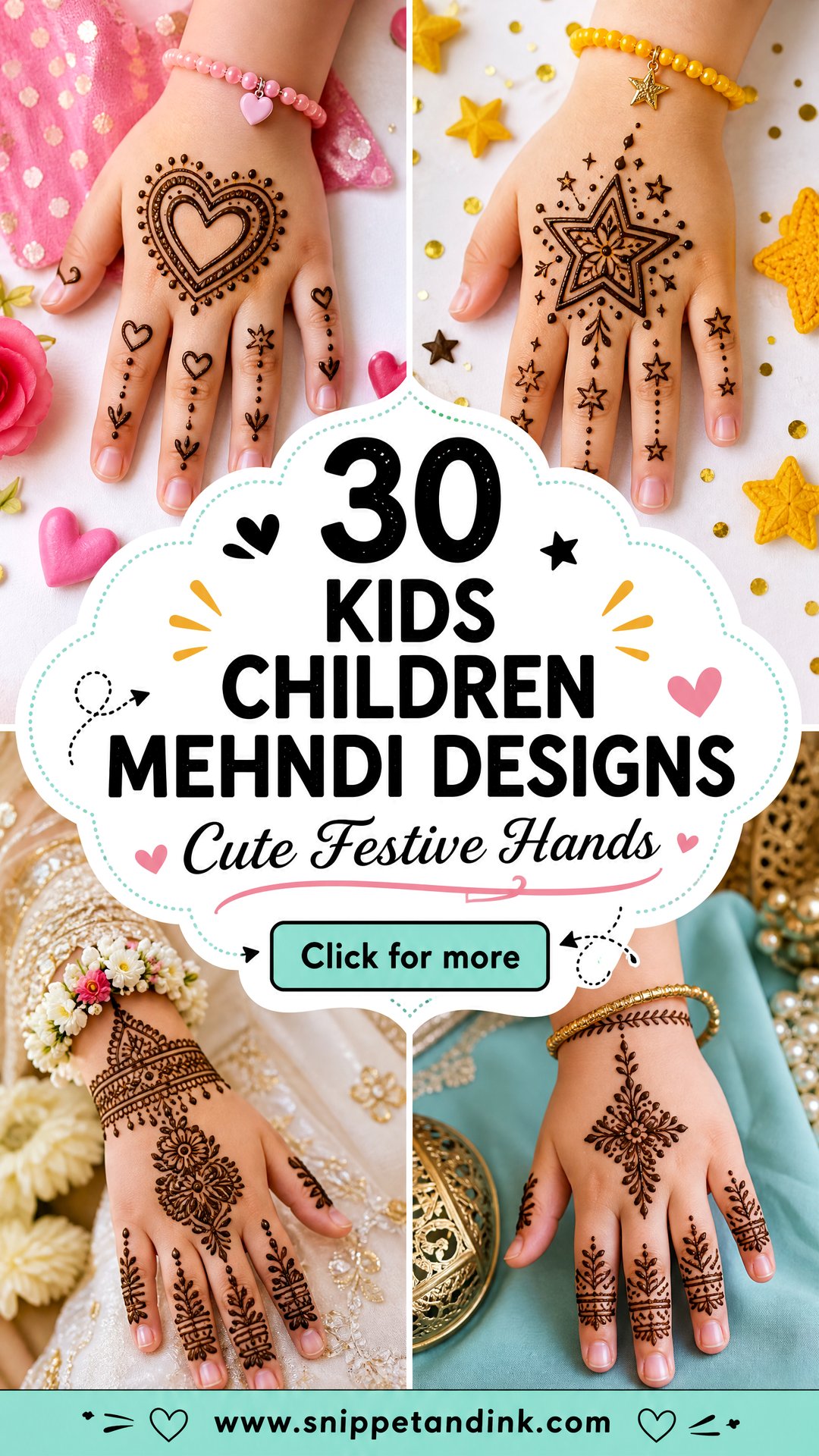
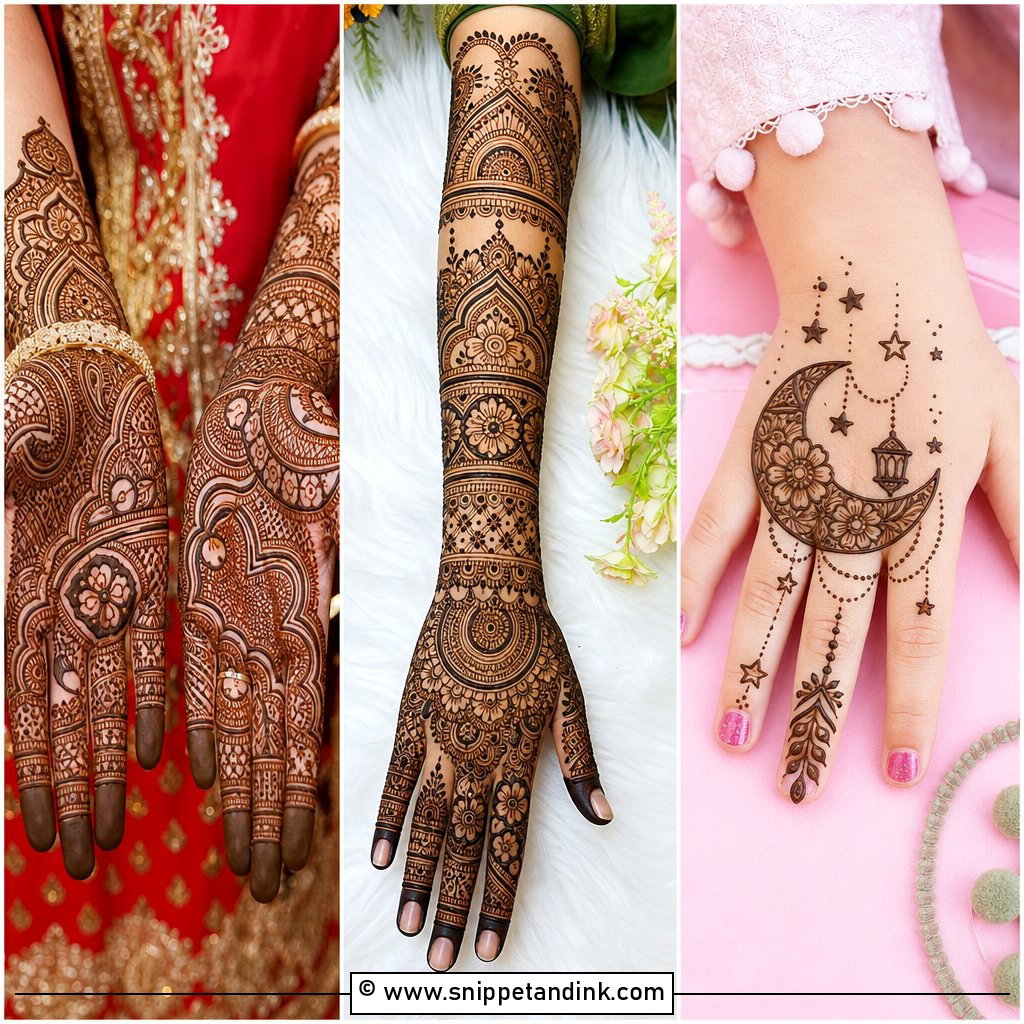
Children ask for mehndi the moment they see the cones come out, and they usually want it done in about four minutes. That’s the real design brief for a child: something that goes on quickly, sits lightly on a small hand and dries before they lose patience. When I draw kids children mehndi designs, I use bigger motifs than I would for an adult, leave more bare skin, and keep anything fiddly off the fingertips. Flowers, butterflies, stars, bracelets, small mandalas and light Arabic trails all fit. Below are thirty ideas for Eid, Diwali, weddings, birthdays and school events, from a tiny back-hand motif for a toddler to a fuller wrist-to-finger pattern an older child can sit through.
Is That Cone Safe for a Child?
Before any design, I check the henna. Natural henna paste is greenish brown, smells earthy, and leaves an orange stain that darkens to reddish brown over a day or two. It never stains black. A cone sold as “black henna” or one that leaves a dark stain within an hour almost certainly contains PPD, a hair-dye chemical that can cause blistering and lasting allergies. I won’t use it on anyone, and certainly not on a child.
- Read the label. A good cone lists henna powder, water or lemon juice, sugar and a mild essential oil, nothing more.
- Patch test a small dot on the inner arm the day before if the child has sensitive skin or hasn’t had henna before.
- Children with G6PD deficiency should not have henna at all. If you’re unsure, ask the child’s doctor first.
- Strong essential oils such as eucalyptus are fine for adults but can irritate young skin; lavender-based cones are gentler.
Fresh natural cones also go off. Kept at room temperature they lose staining power within days, so I store them in the freezer and thaw one at a time. A cone from a market stall with no date on it is a gamble.
1. Simple Kids Mehndi Design Front Hand
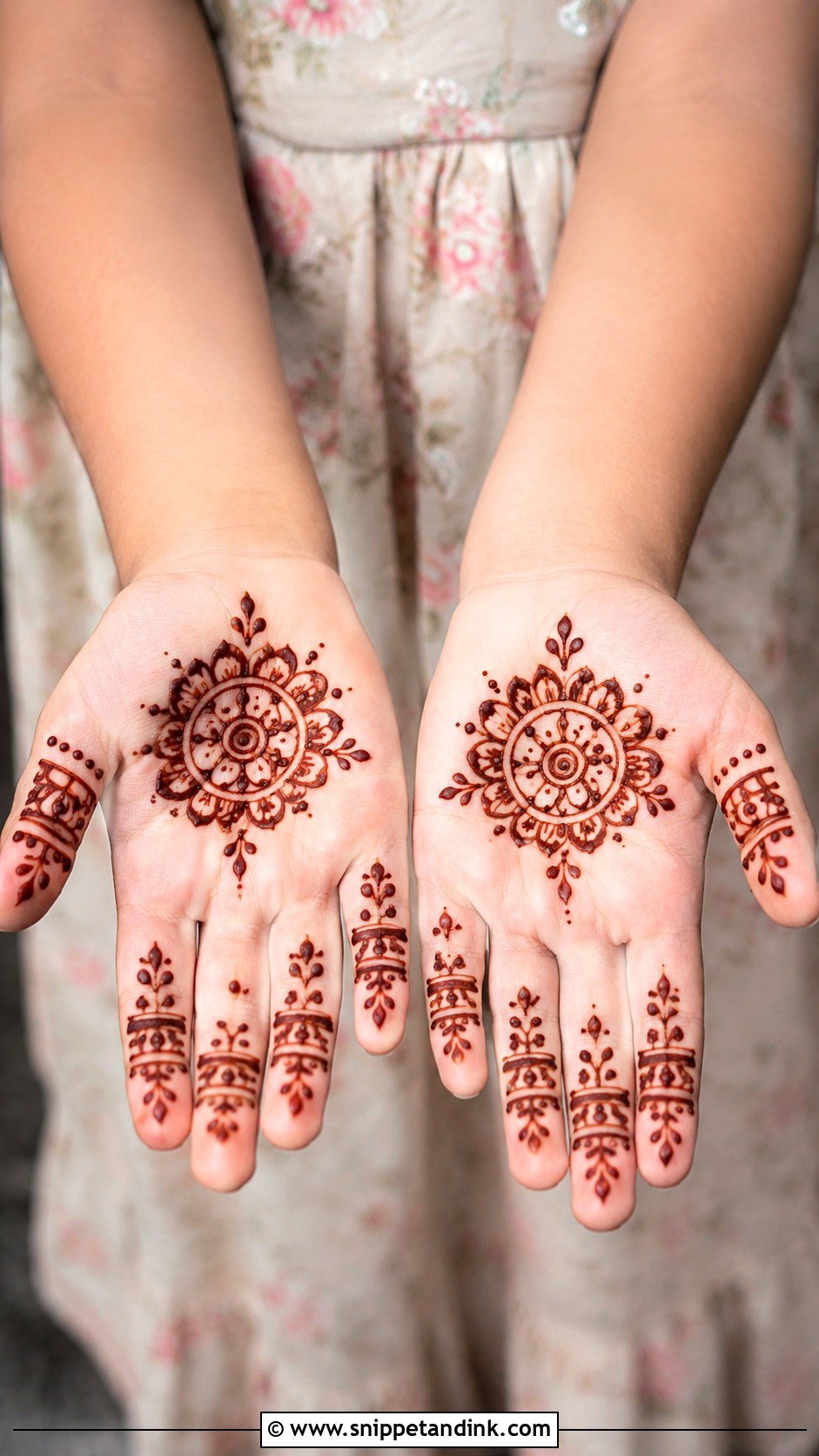
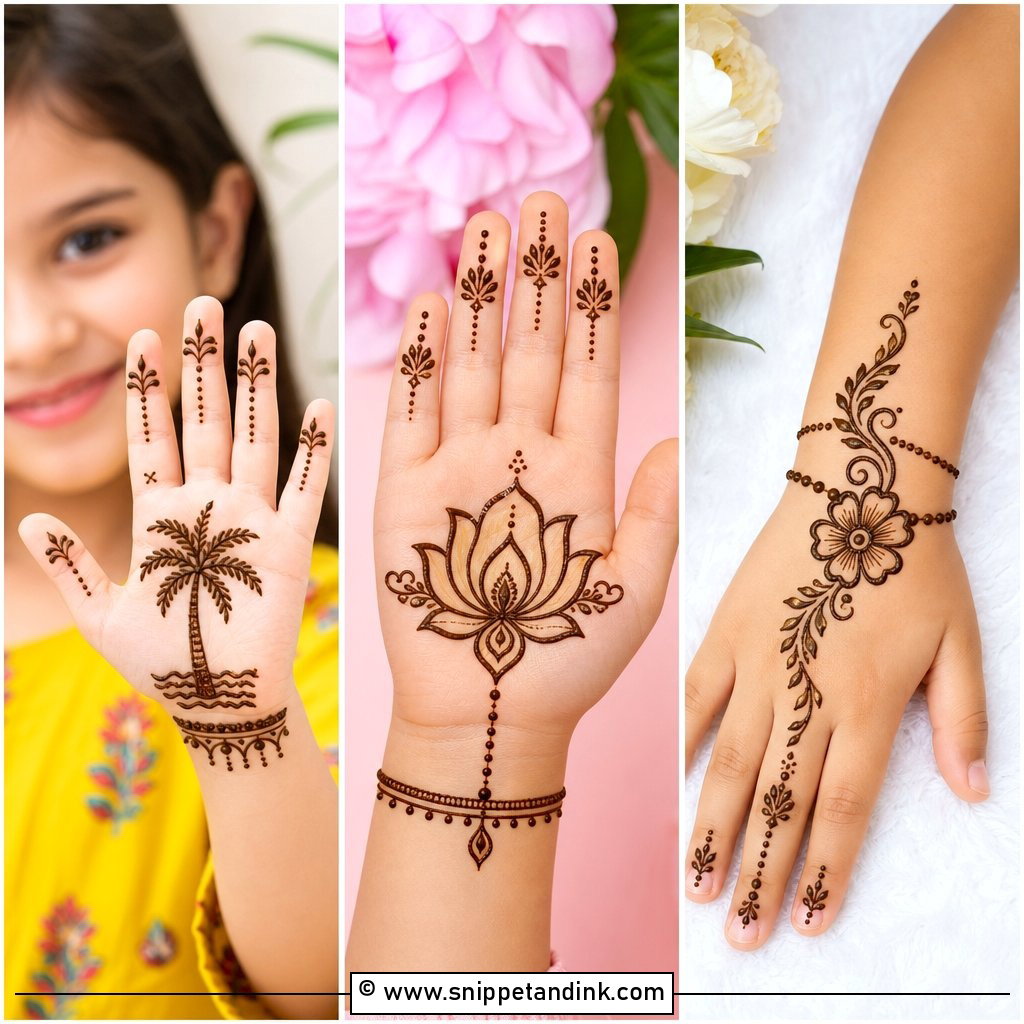
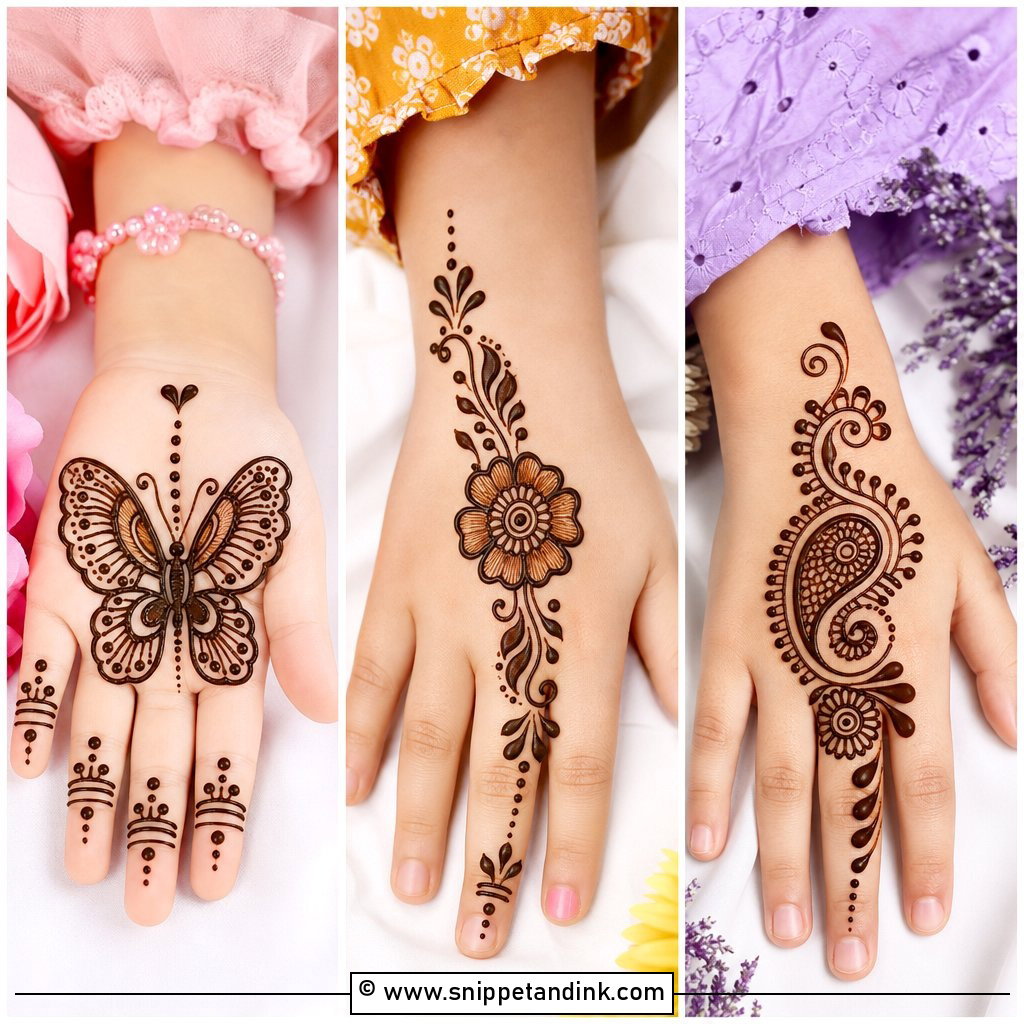
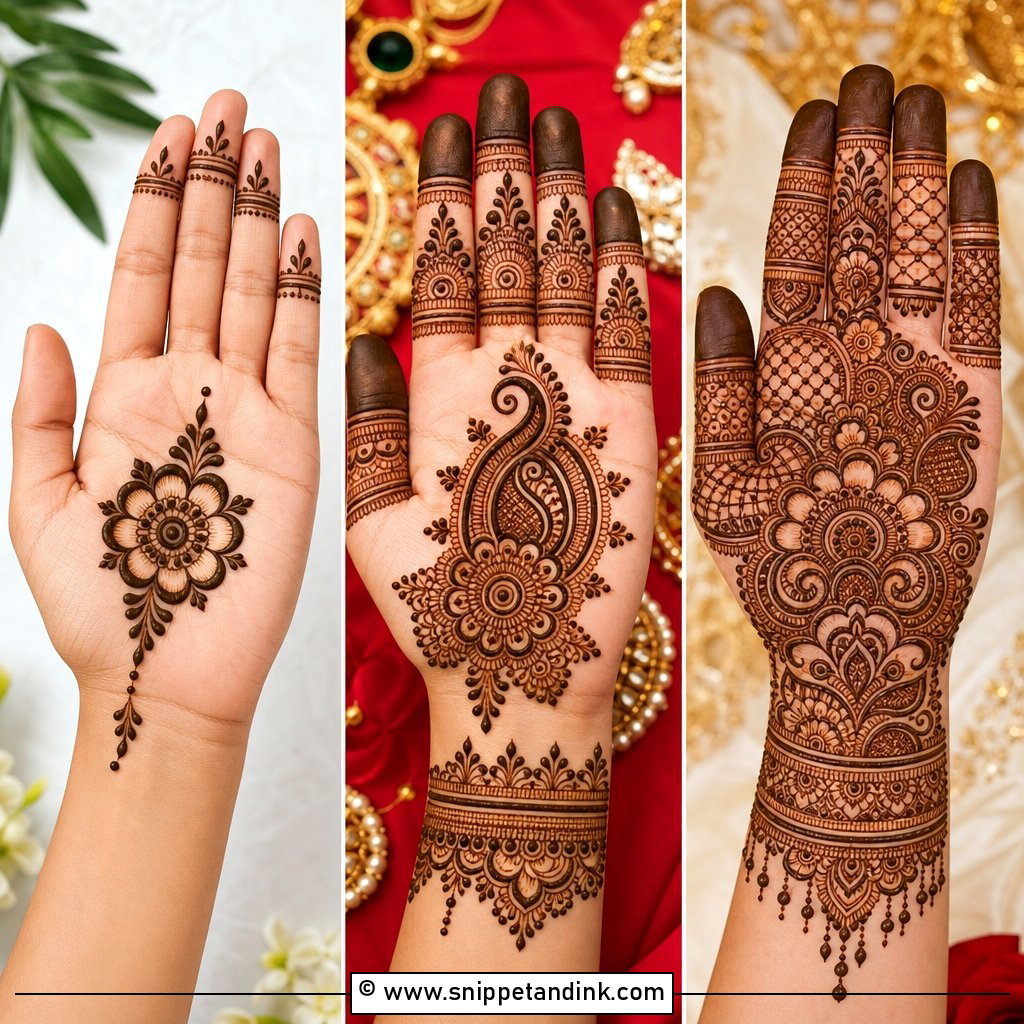
On a child’s palm I start with one small round flower or mandala right in the centre, because that’s the spot that stains darkest and stays visible once the hand closes. Dots, little leaves and soft curves then lead out toward the fingers. I outline the fingertips or give them small rings rather than filling them, since solid tips smudge the second a child grabs anything. It’s quick, which matters with the little ones. Use natural henna only; a cone that promises an instant dark stain is not something I’d put on young skin.
2. Simple Kids Mehndi Design Back Hand
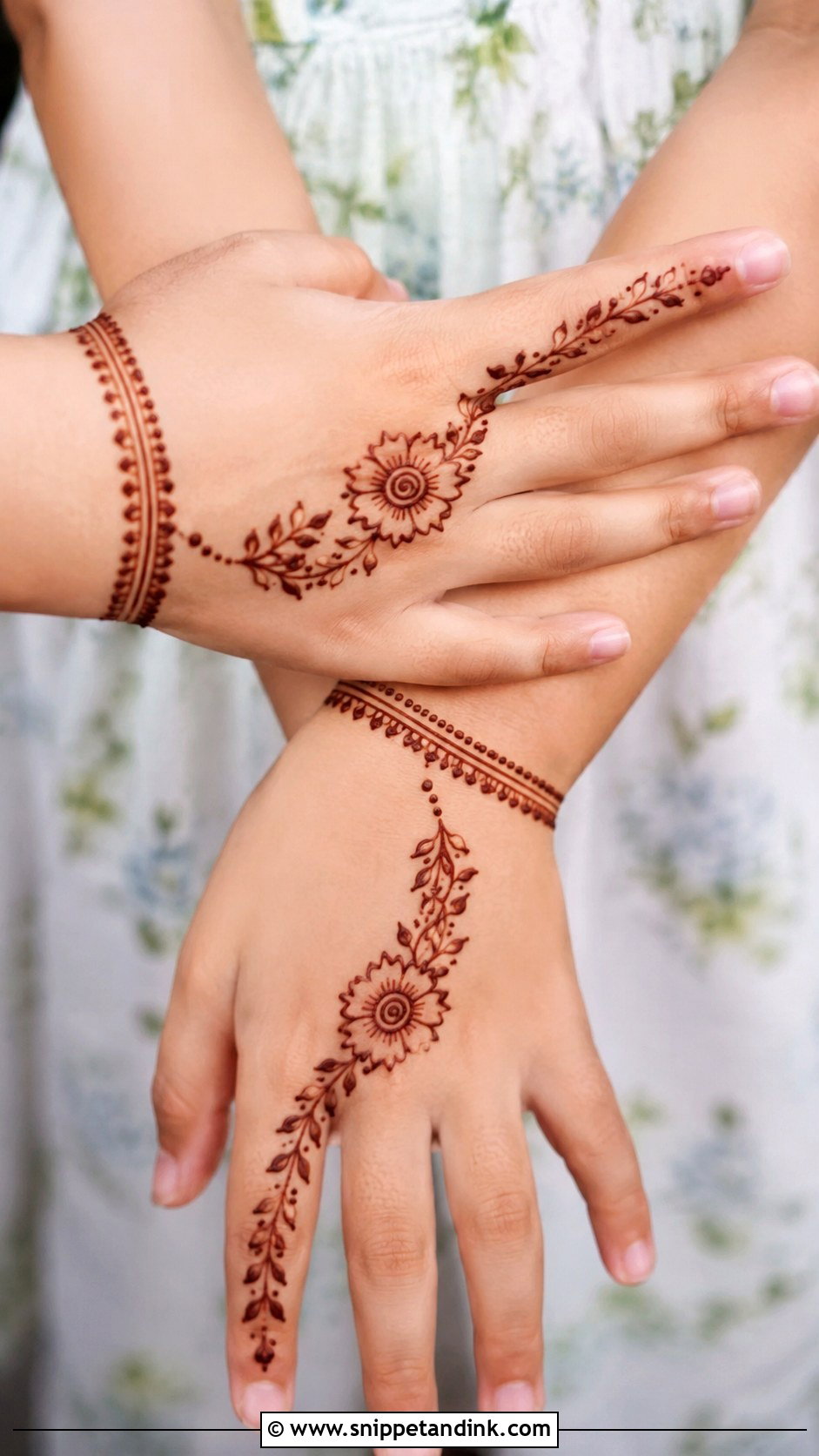
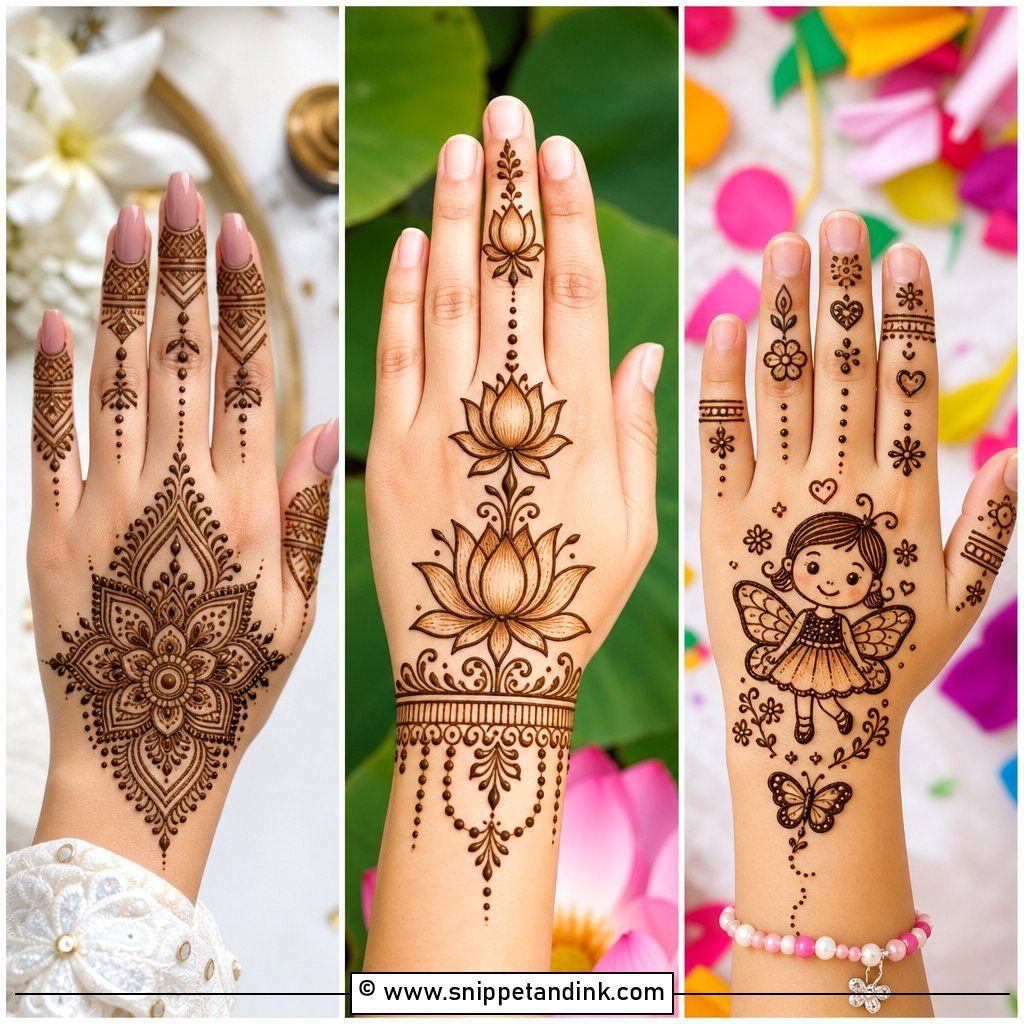
Kids like being able to see their mehndi and show it off, so the back of the hand is where I start most first-timers. One small flower near the centre, a short leafy trail toward the index finger and a narrow bracelet band at the wrist make a complete design. The back hand stains lighter than the palm, so I draw the lines a touch thicker there to make up for it. It also smudges less, because children rarely press the backs of their hands into anything.
3. Cute Flower Mehndi Design For Kids
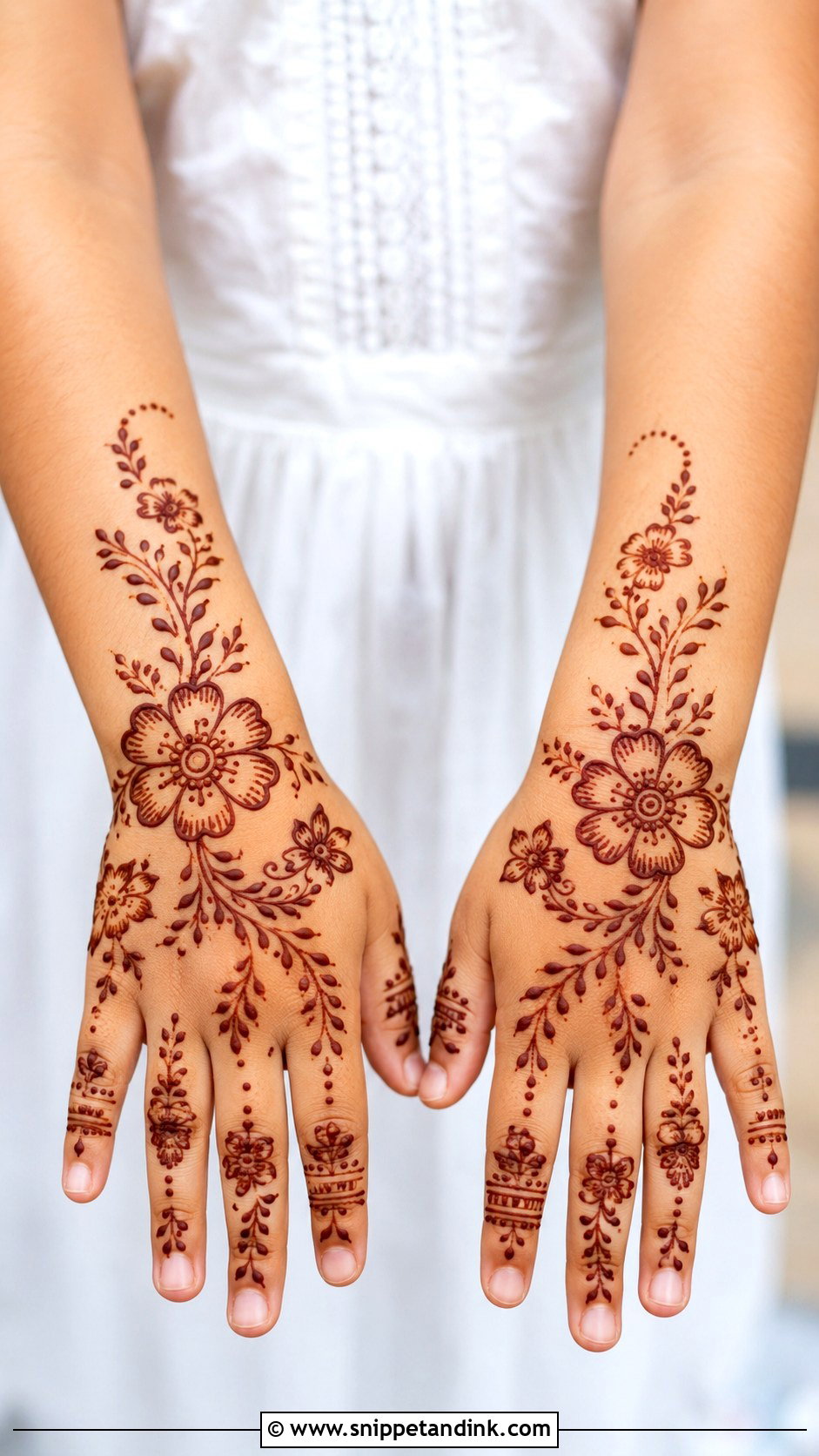
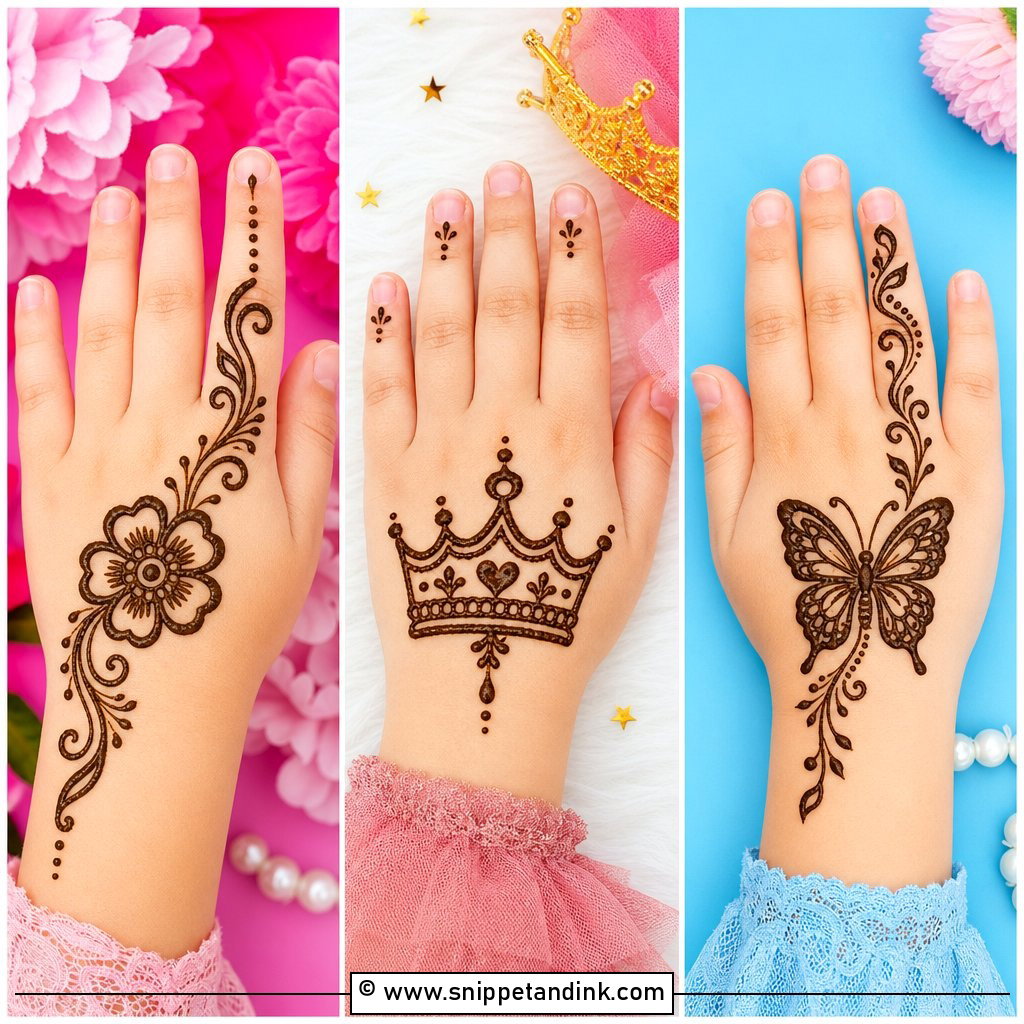
A single bloom with a couple of side buds and some leafy curves reads clearly on a small hand. The mistake I see most is filling every gap with tiny flowers; on a palm that small, they merge into one brown patch as the stain darkens. Let each flower have space. For very small hands I’d stop at one large flower and two leaves; for older children, a vine up the wrist adds detail. Dotted fingertips or mini ring bands finish it for weddings, Eid or family photos.
4. Butterfly Mehndi Design For Kids
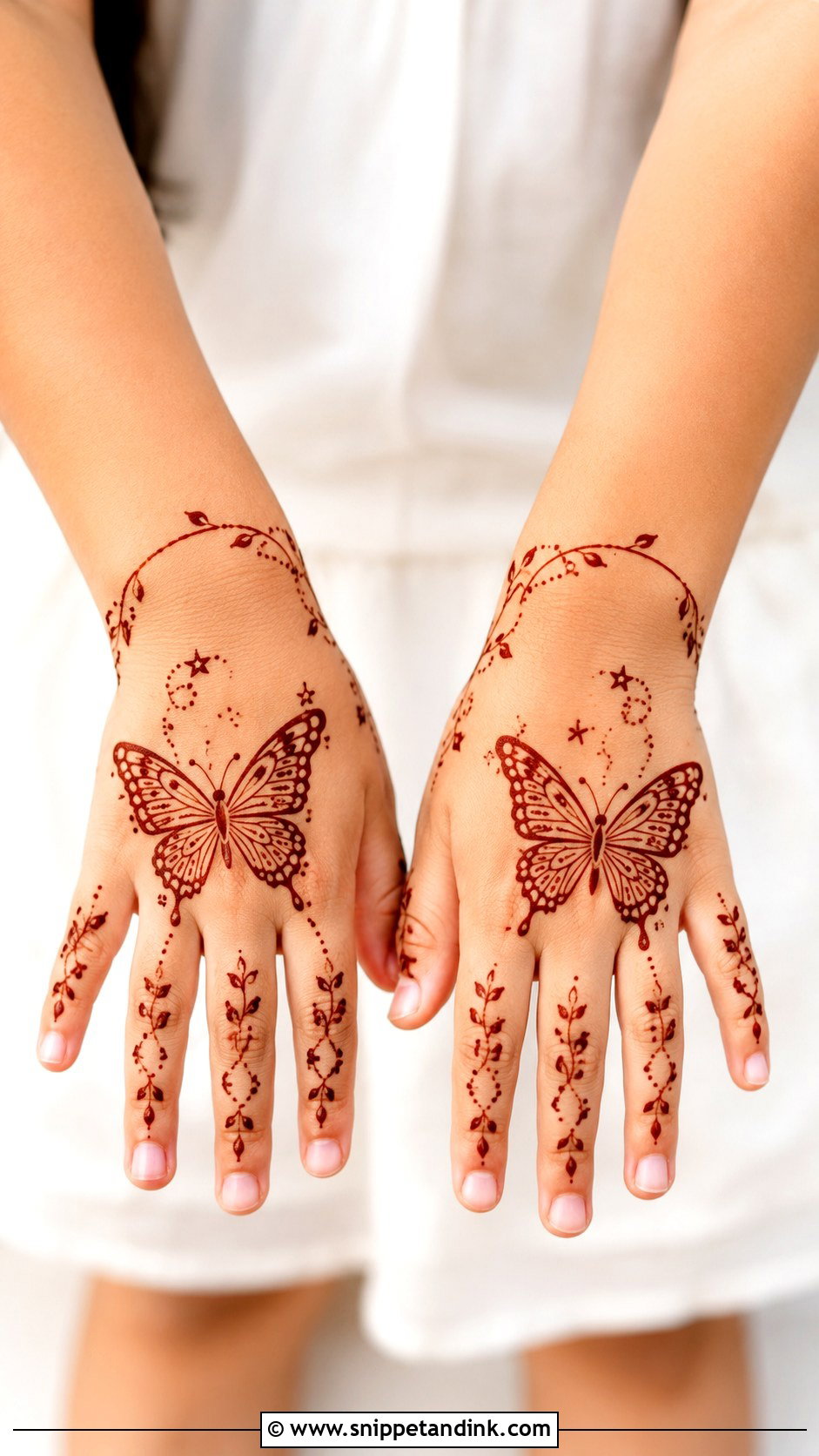
Butterflies are instantly recognisable, which is exactly what a child wants. I put them on the back of the hand with the wings spread across the centre and a few stars or dots around them. Keep the wings rounded and open. Once you add fine lace inside each wing, the lines close up as the paste spreads and you lose the shape. A short curve at the wrist and simple lines on the fingers complete it. It works on the palm too, but the back hand holds the outline better.
5. Heart Mehndi Design For Kids
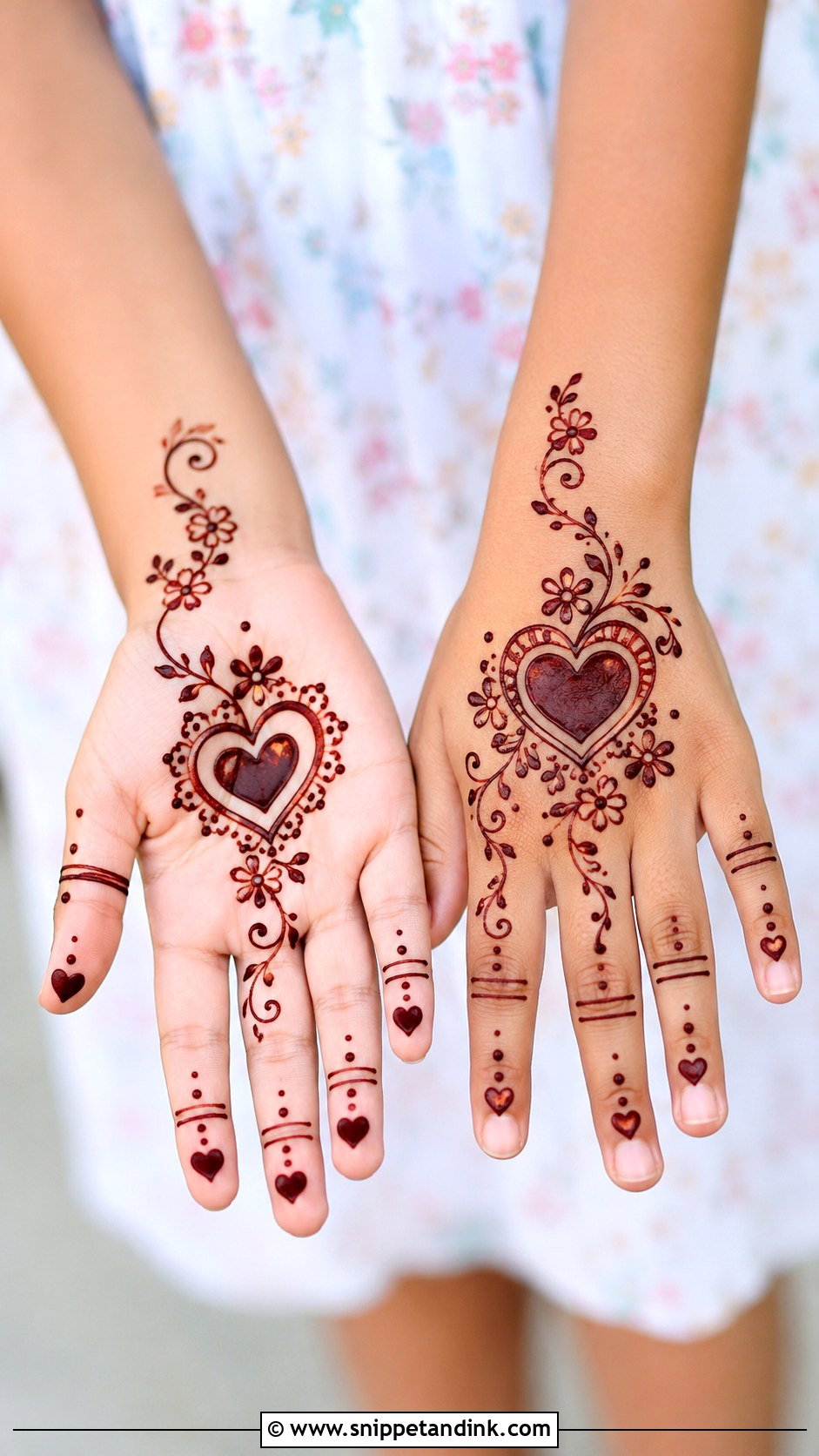
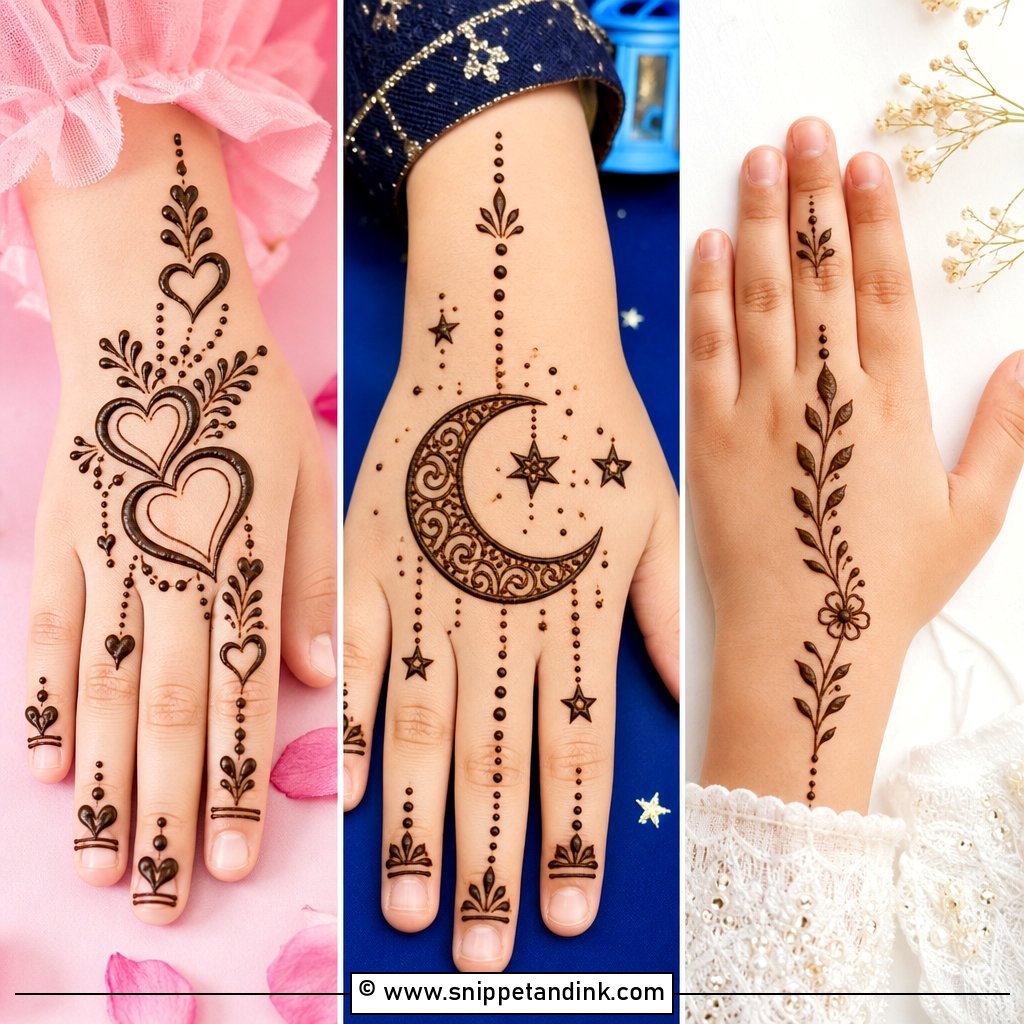
One medium heart, a few dots, a couple of tiny flowers and a curl of vine: that’s all a heart design needs. Fingers can carry small heart tips or simple rings. I’d resist the request for lots of hearts; three or four scattered across a small hand looks messy rather than sweet. It’s a cheerful choice for birthdays and school parties, and quick enough that a restless child doesn’t mind sitting for it.
6. Star Mehndi Design For Kids
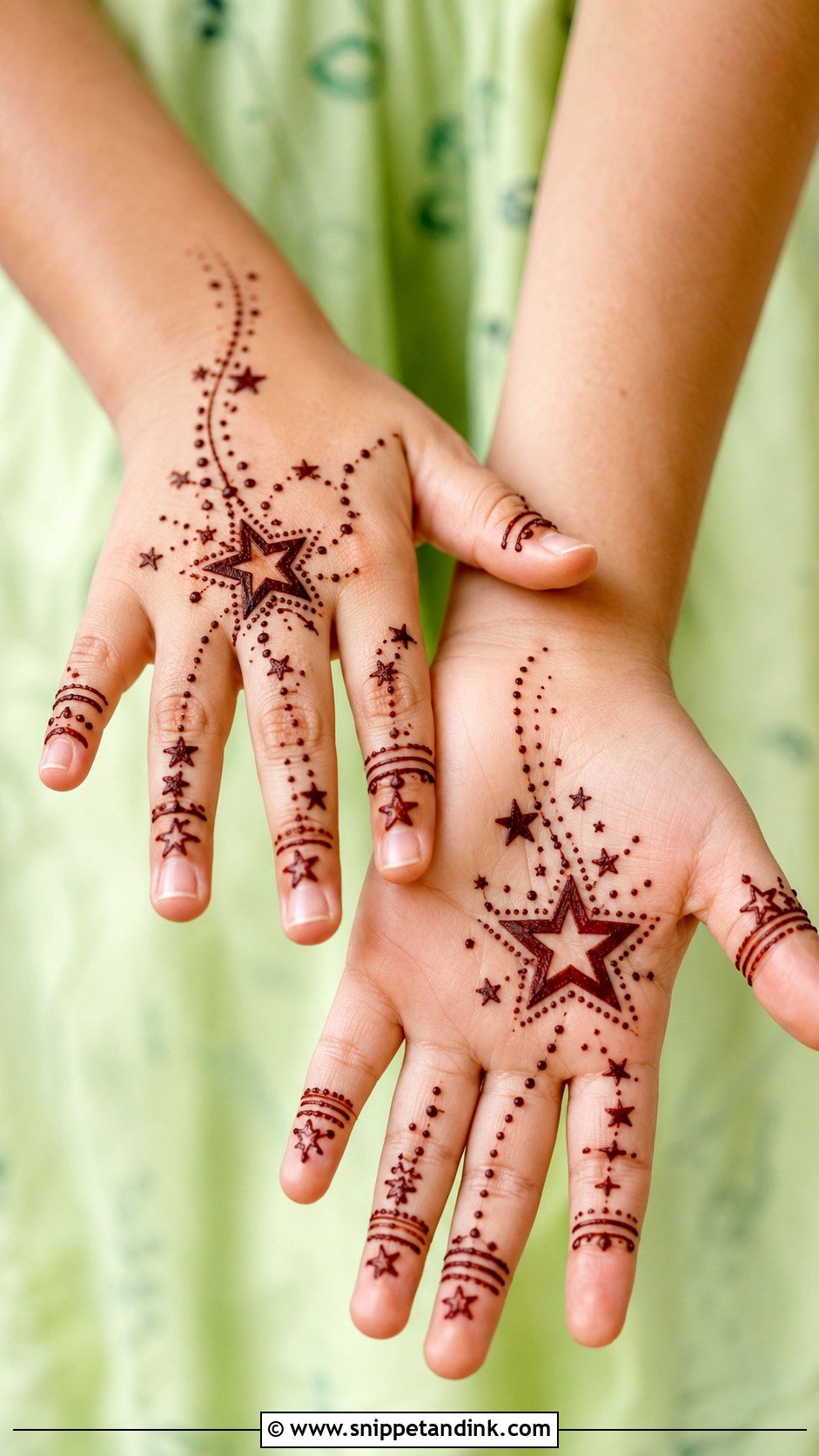
Stars are one of the fastest motifs I can draw, and they’re bold enough to read from across a room. A main star on the palm or back hand, smaller stars and dots around it, and a soft trail linking them toward the fingers makes the design feel finished. Five-pointed stars need crisp corners, so I keep the cone tip fine and the paste a little firmer than usual. Leave the inside of each star mostly empty; heavy filling turns them into blobs.
7. Arabic Mehndi Design For Kids
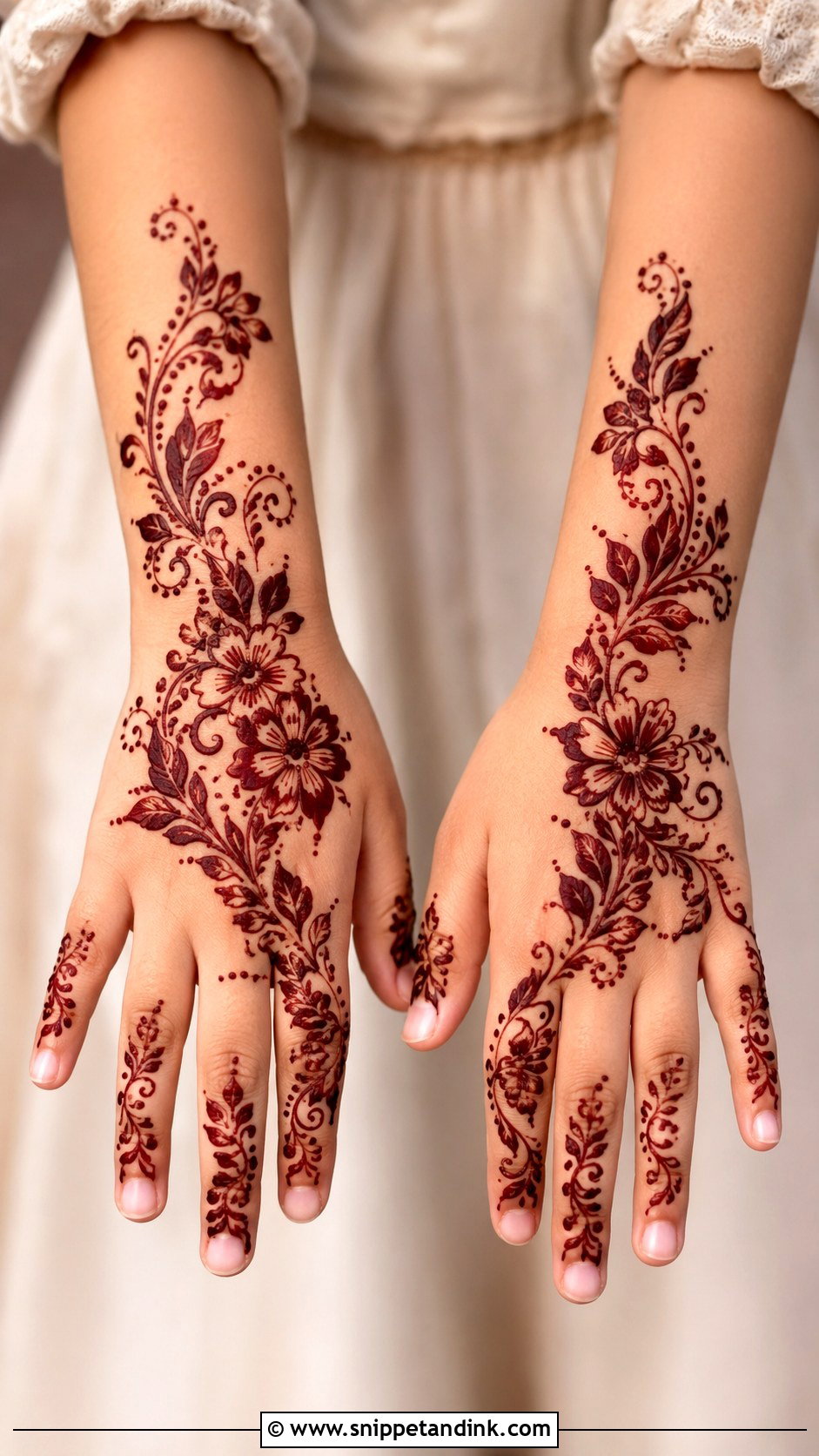
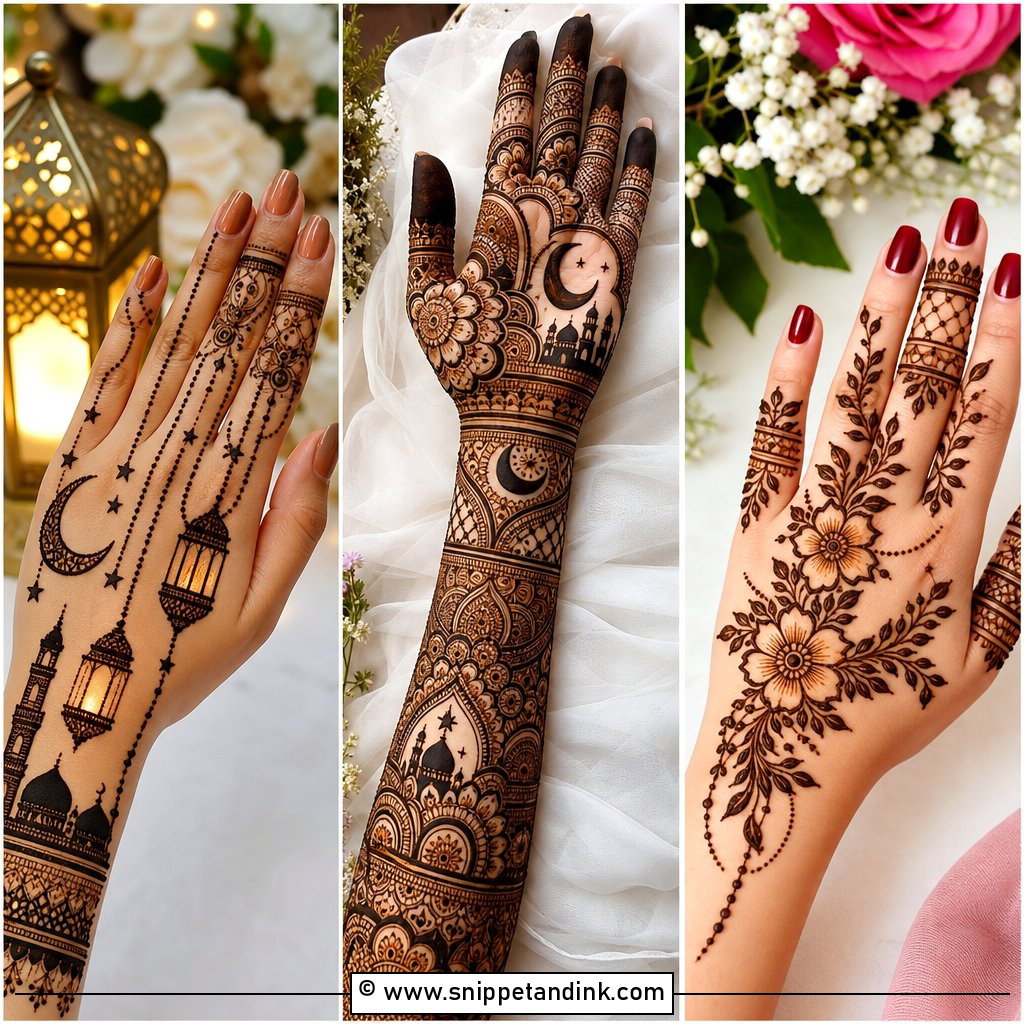
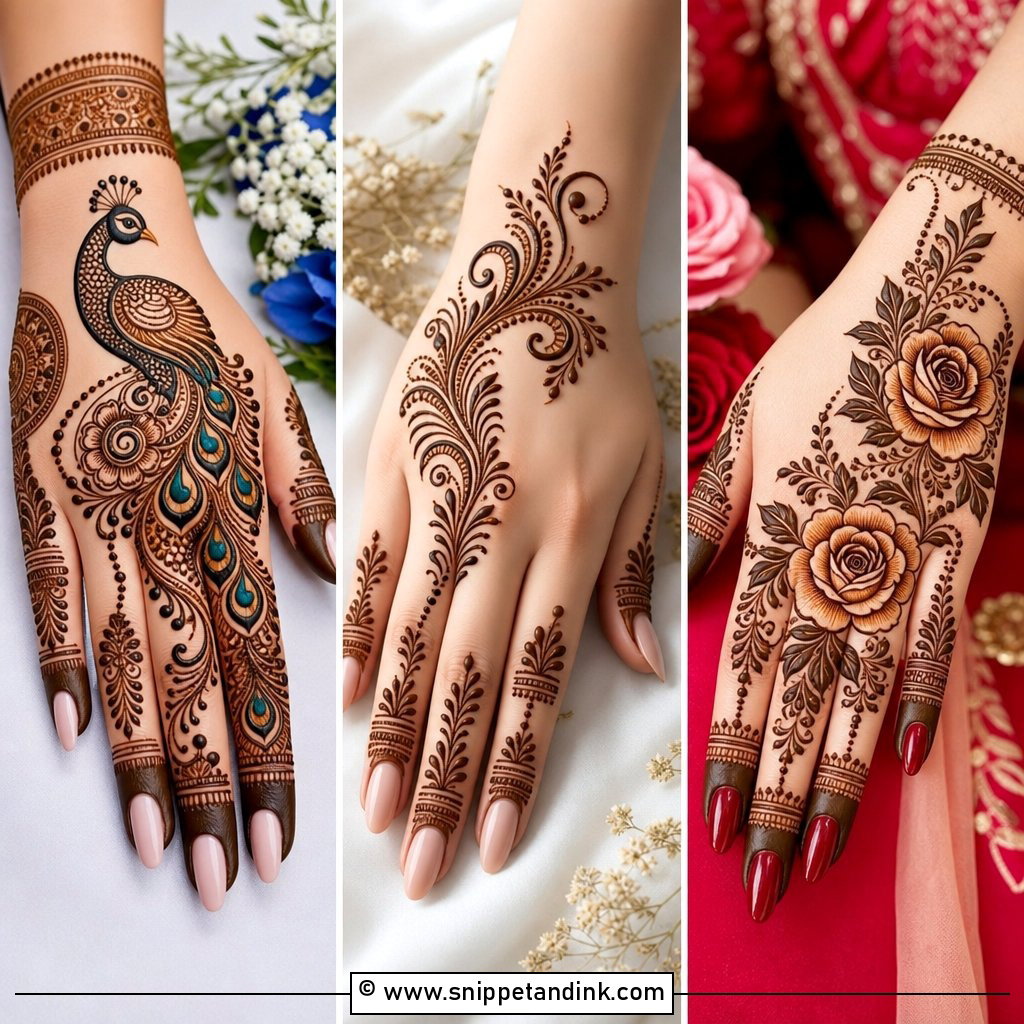
Arabic mehndi for a child should be a looser, lighter cousin of the adult version. One curved floral trail from the wrist to the index finger is enough. Bold petals, small leaves, dots and a few shaded spaces give it character, but most of the skin stays bare. Because the pattern is spread out rather than packed, it dries noticeably faster, which is half the battle. Older children who want to look grown-up at Eid or a wedding tend to love it. I swap sharp, dense detail for rounded florals.
8. Indo Arabic Mehndi Design For Kids
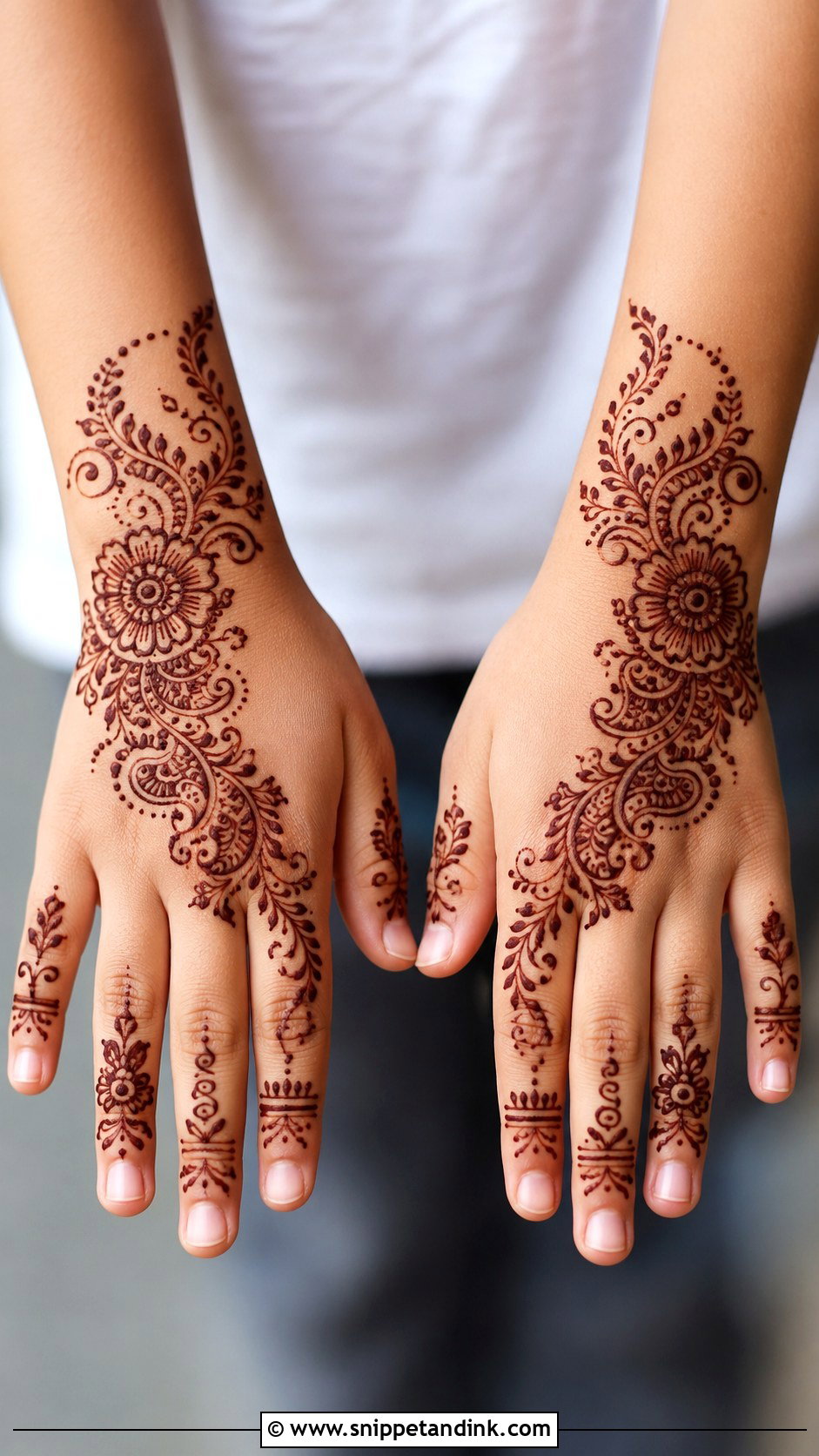
Indo-Arabic combines the flow of an Arabic trail with Indian details like dots, paisleys and small mandalas. On a child’s hand I keep it to one diagonal trail across the palm or back hand: a mini paisley near the wrist, a flower in the middle, light work on the fingers. Bold outlines first, then fine lines or dots in just a few sections. That balance gives a fuller look for a wedding without the hand feeling crowded.
9. Mandala Mehndi Design For Kids
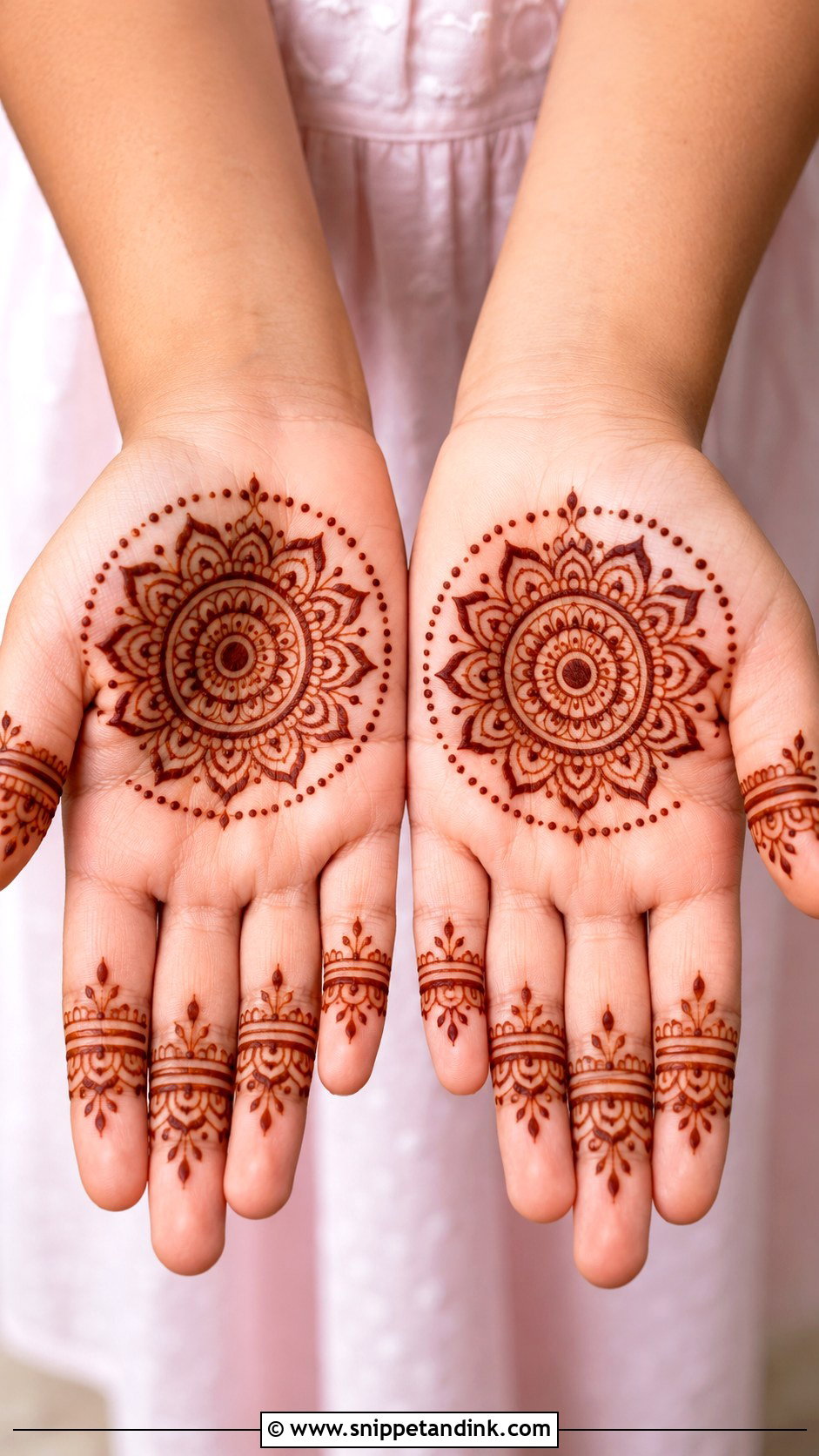
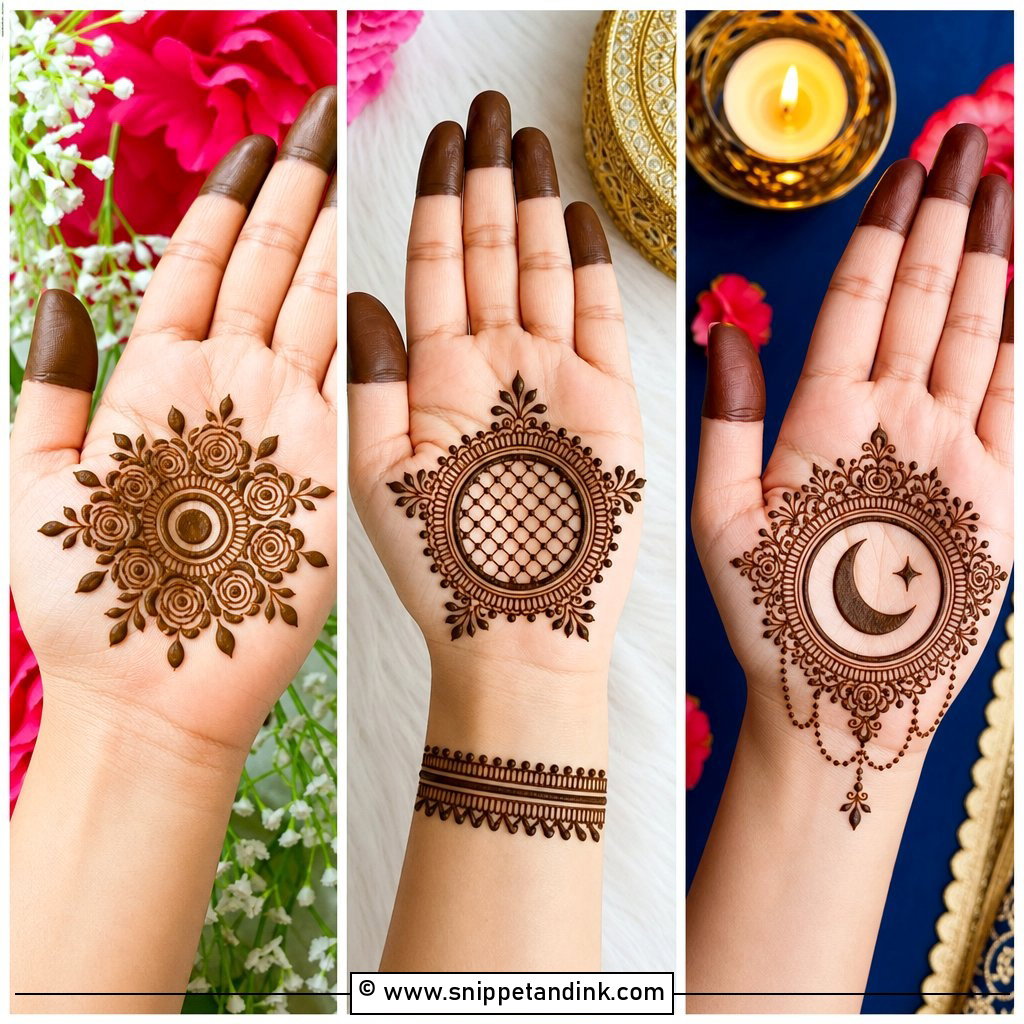
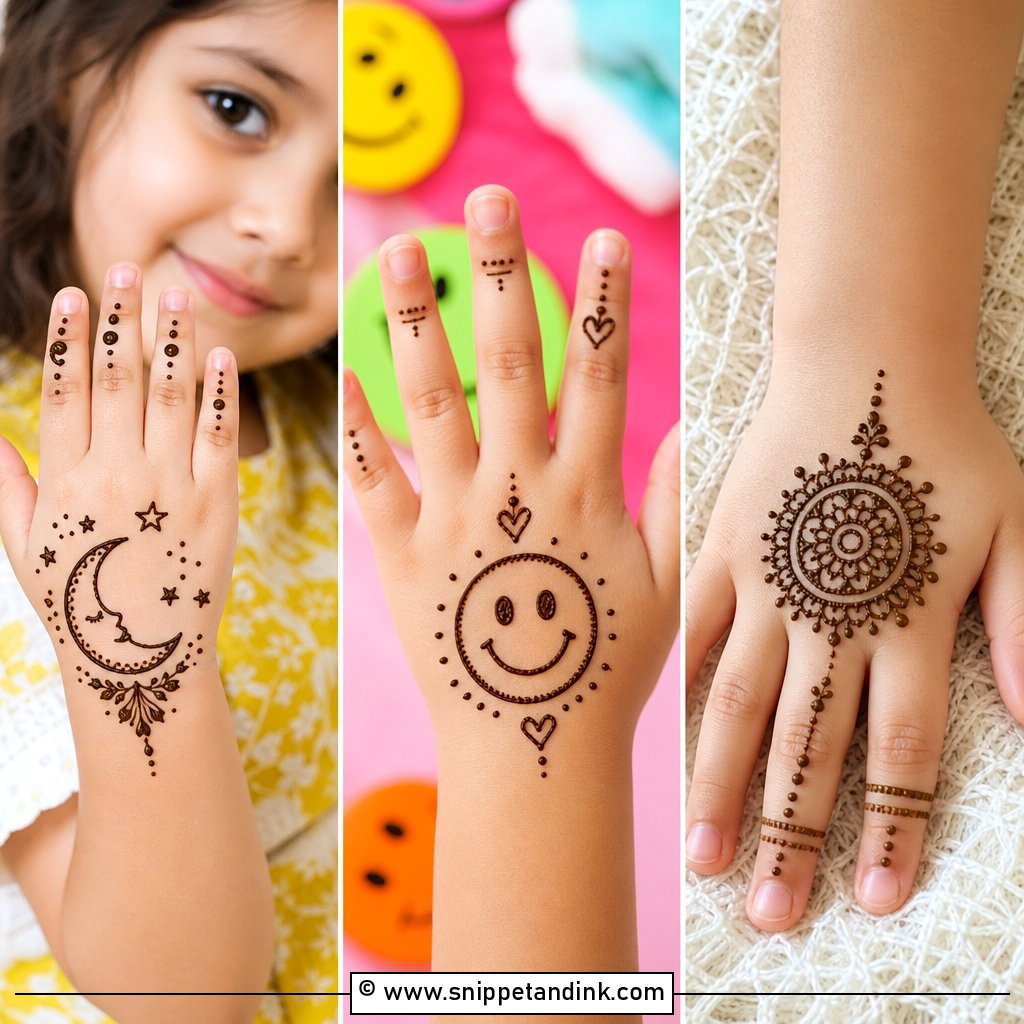
A mandala adapts to any age because it scales: tiny for a toddler, wider for a ten-year-old. I build it from the centre outward with petals, dots and small curves, and keep the outer ring light so it doesn’t swamp the palm. Finger bands or leafy tips finish the hand. It’s compact, so a child who keeps wriggling is less likely to drag a finger through it. Even a very simple, clean mandala looks good.
10. Tikki Mehndi Design For Kids
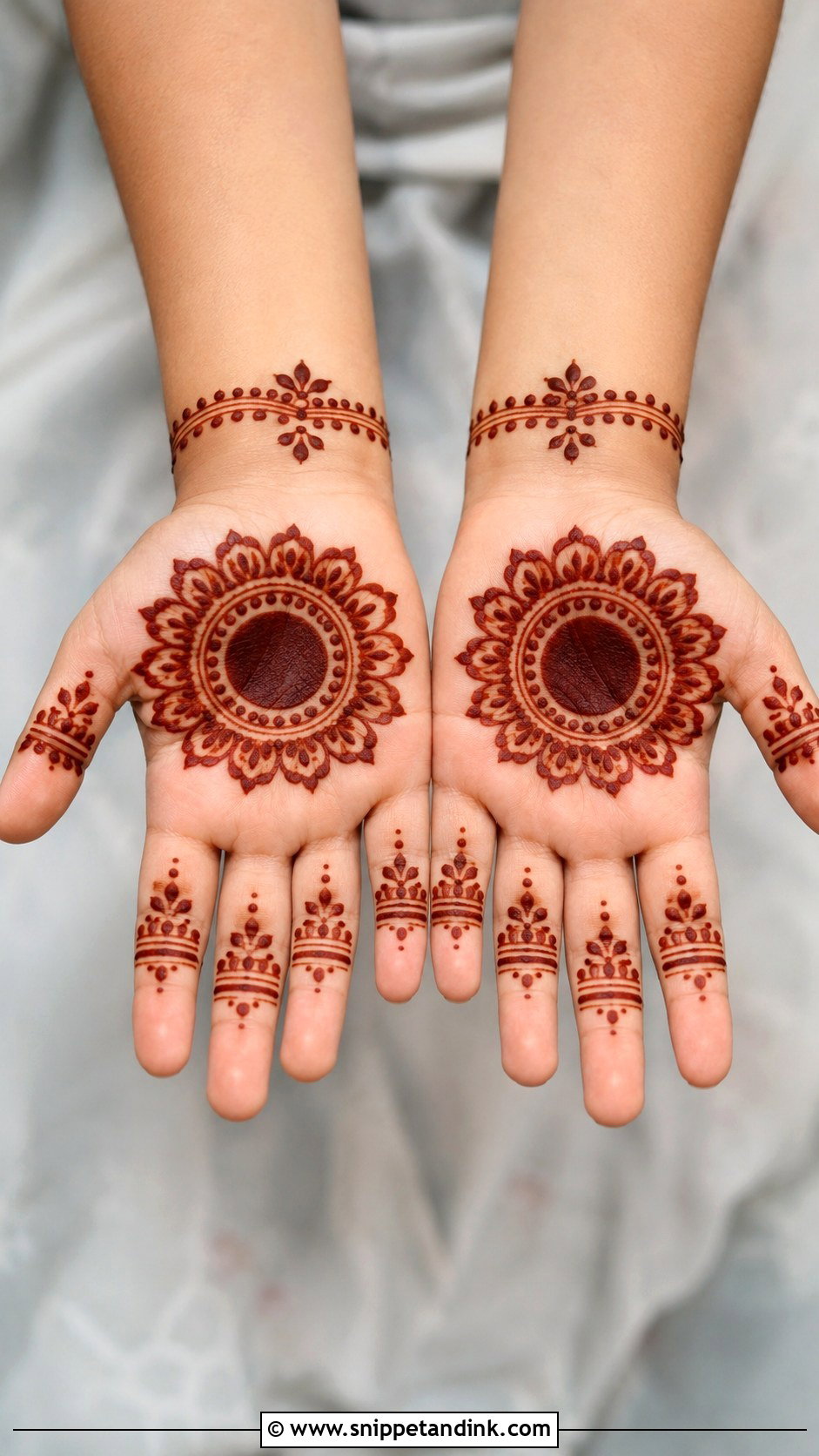
The tikki is a round central motif, and it’s one of the oldest designs in the cone. For children it usually starts with a bold circular tikki in the palm, ringed with dots, petals and small loops. I don’t fill the circle solid on a child; a big solid disc takes ages to dry and cracks off if they clap. Short finger bands and a small wrist detail complete it. It’s quick, traditional and, because it sits in the palm’s centre, it stains darkly and stays crisp.
11. Bracelet Mehndi Design For Kids
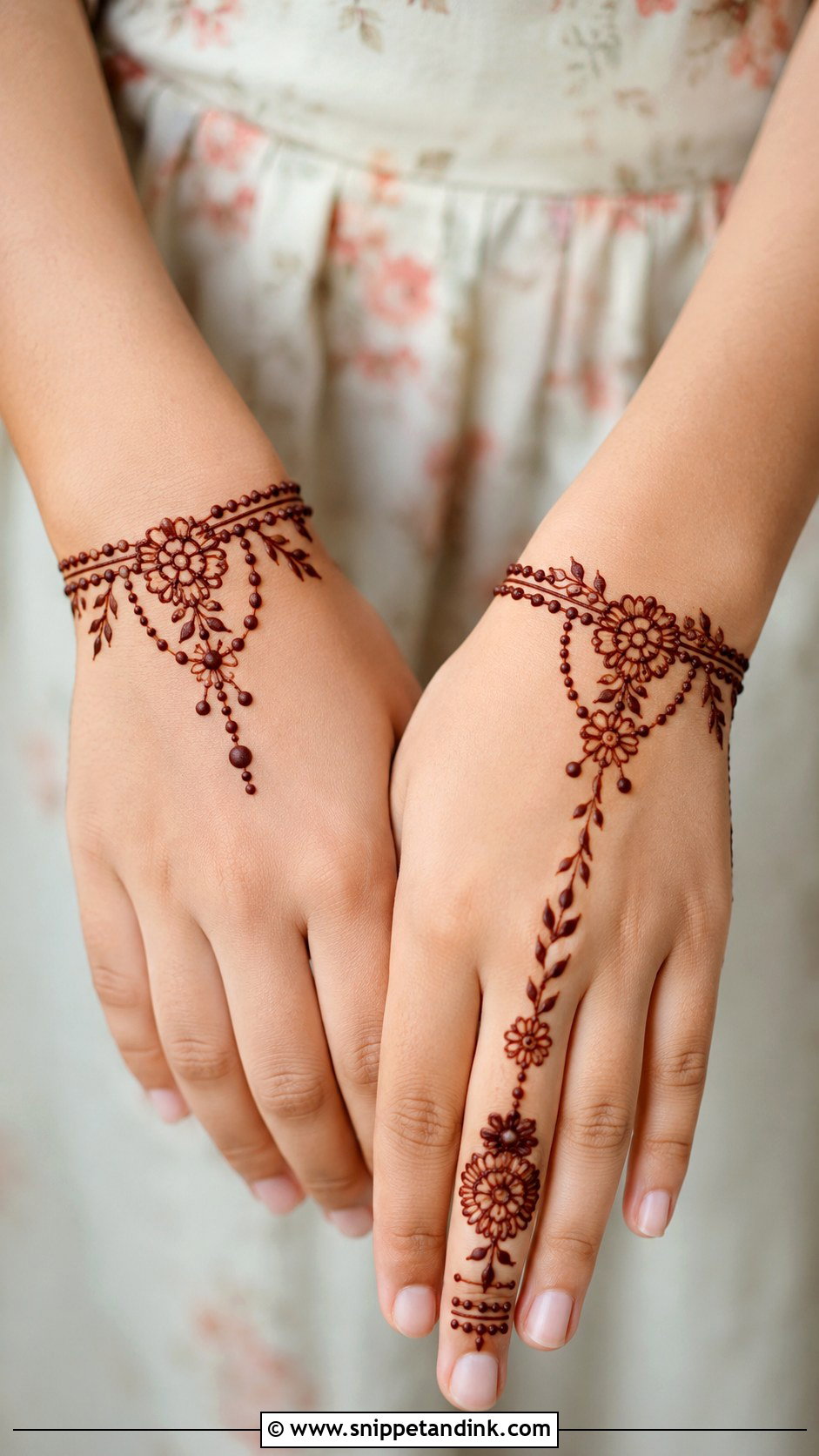
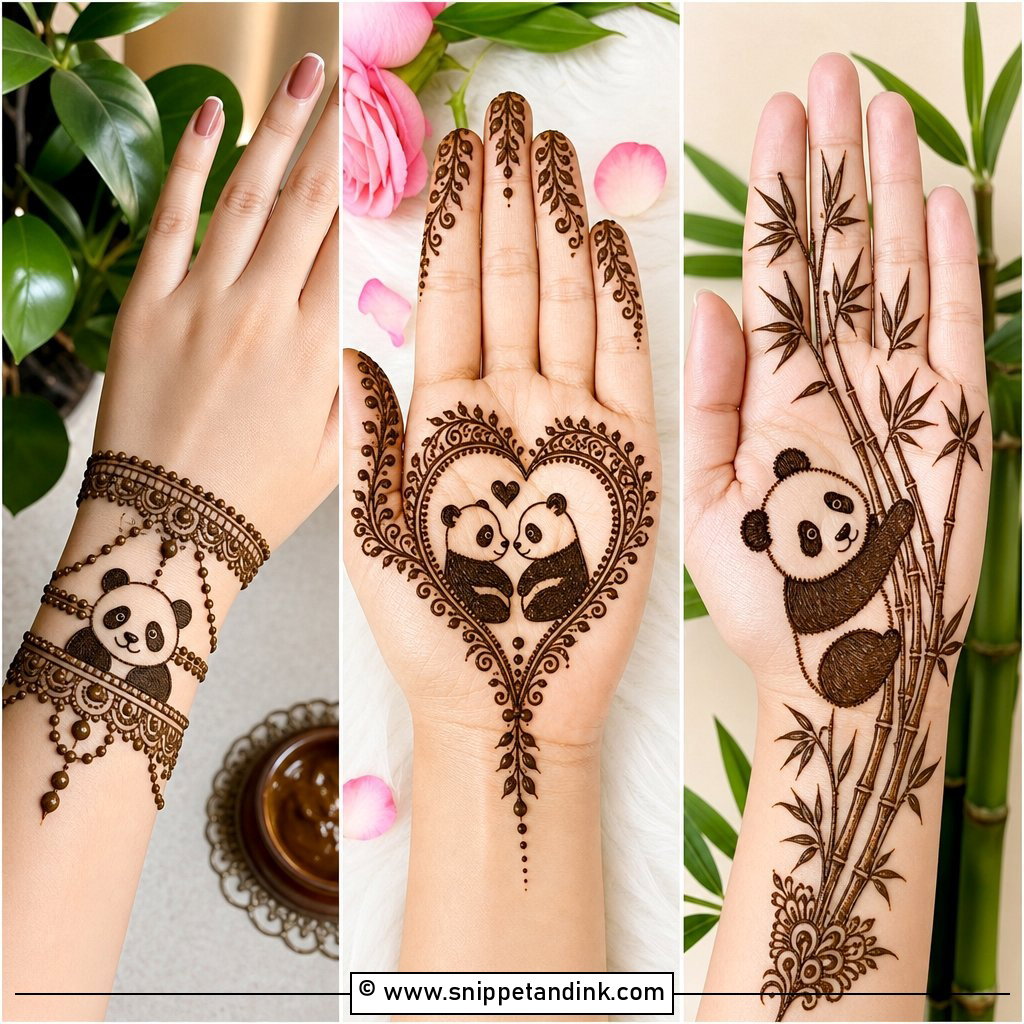
Some children don’t like henna on their palms because it feels cold and stiff; a bracelet design solves that. The work sits around the wrist: a thin band, tiny flowers, bead dots and little hanging chains. A small vine can run from it to one finger to connect things. Paired with real bangles, it reads like jewellery. Keep it narrow for younger children, who will rub it against sleeves; older kids can manage a wider band.
12. Finger Mehndi Design For Kids
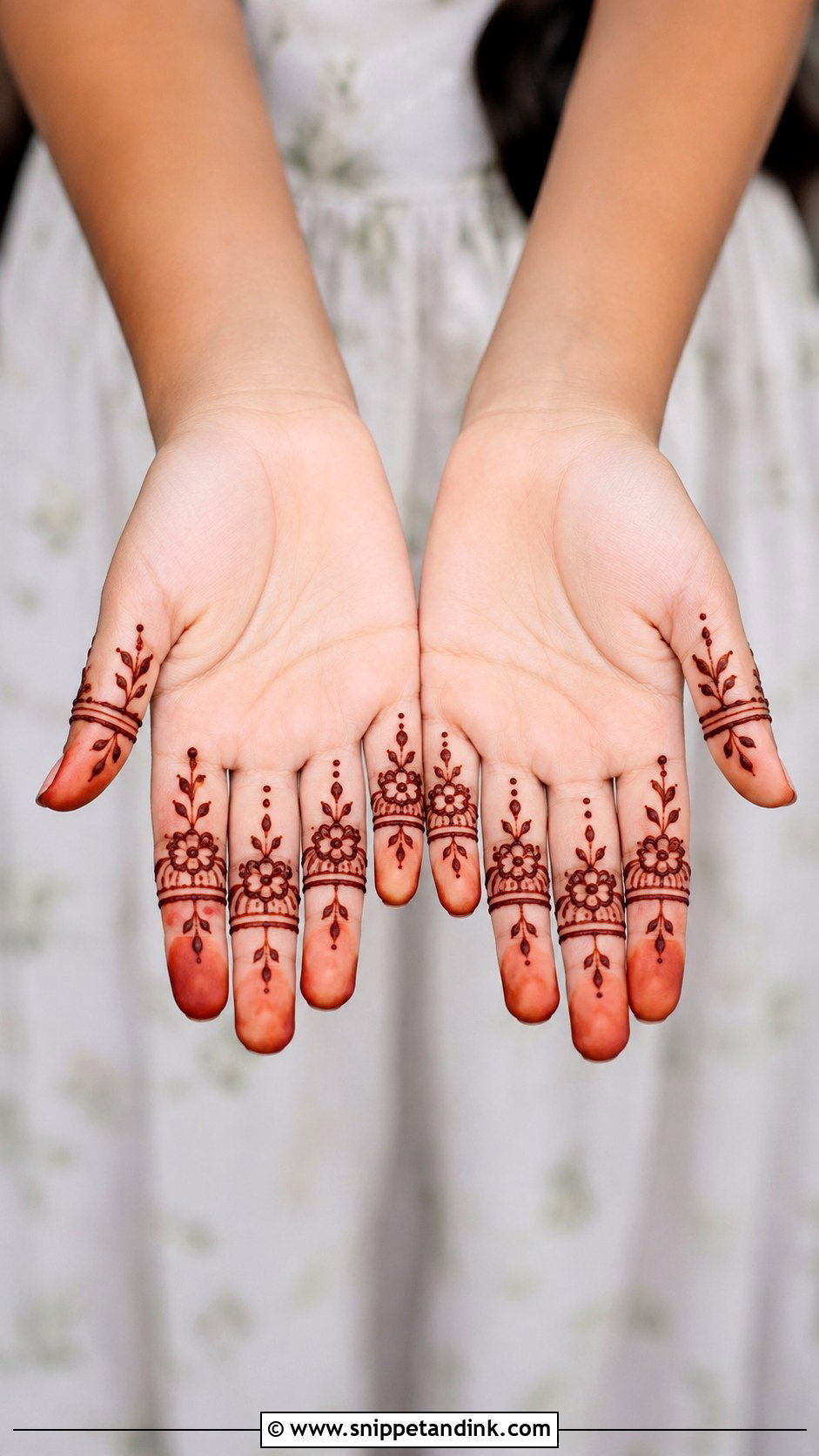
When time is short or a toddler won’t sit still for more than a few minutes, I go straight to the fingers. Rings, dots, small leaves and tiny flowers on each finger, with the palm left nearly empty or carrying one small motif at the base. Fingers dry fast because the lines are thin. The catch is that fingertips also stain darkest and get used most, so I keep the tips themselves simple. A small wrist band or a mini heart on the back hand can round it out.
13. Full Hand Mehndi Design For Kids
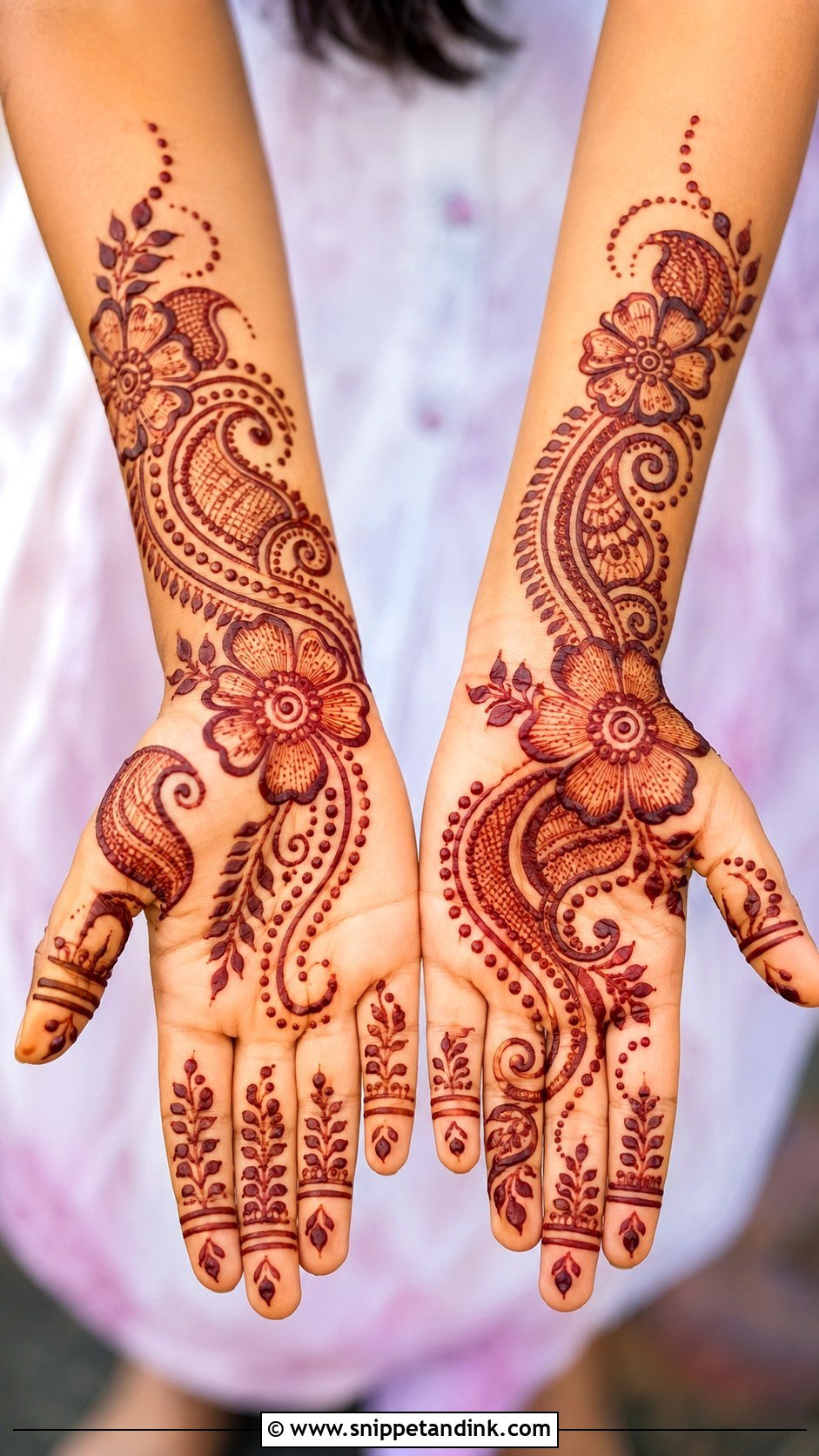
Full coverage on a child means visual fullness, not density. I use larger motifs and open spacing, running from the wrist to the fingertips: a central flower, a few small paisleys, dotted borders and simple finger bands. Bridal-style fine filling is out; it takes too long and the child will be uncomfortable well before you finish. This is for older children who can sit for a bit longer, at weddings, Eid or Diwali. The open gaps help it dry faster and keep the stain clean.
14. Half Hand Mehndi Design For Kids
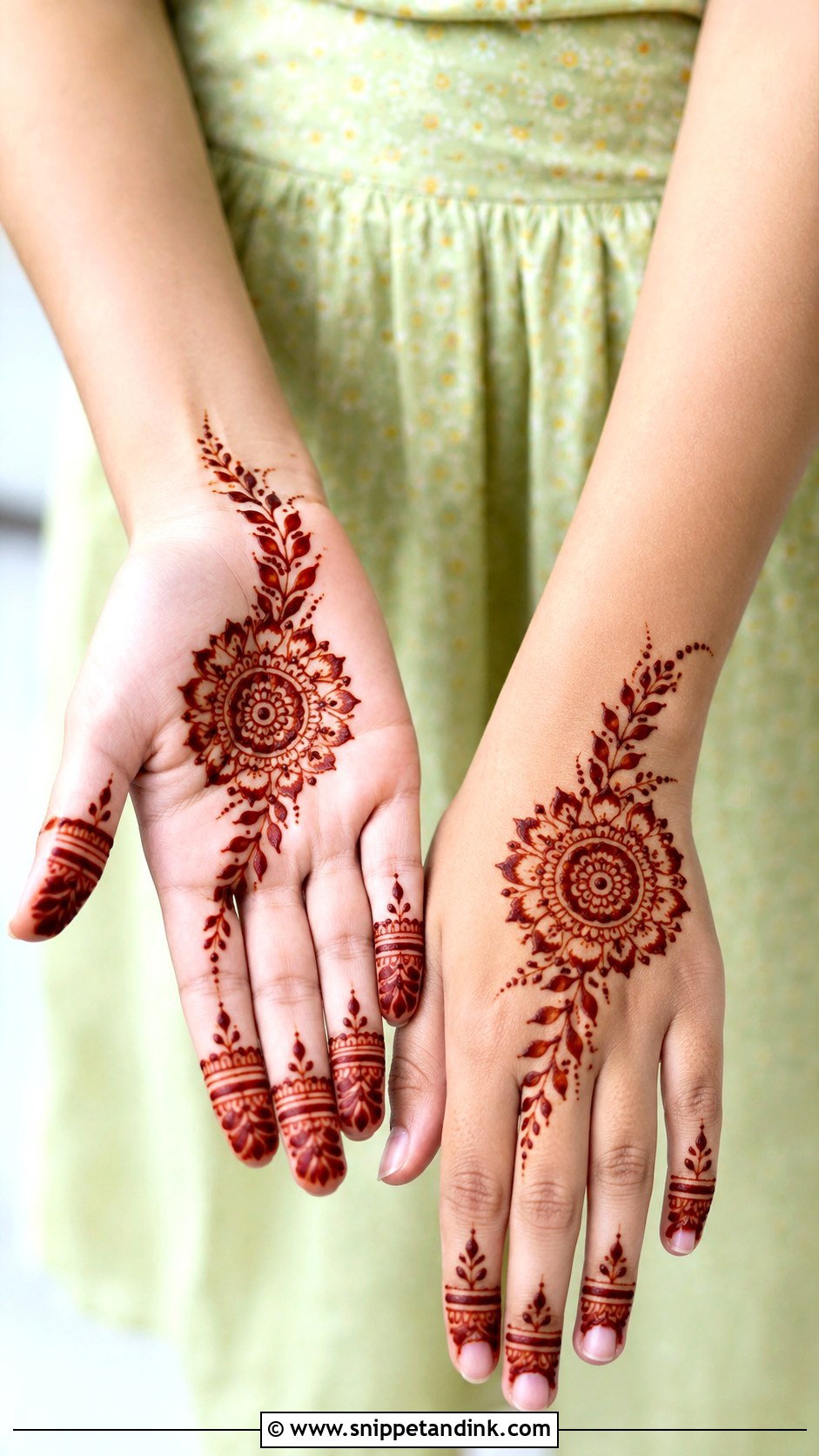
Half-hand is the middle ground I suggest most often. Either the palm centre and fingers, or the back hand and wrist, built around one flower, mandala or leafy trail with everything else left open. It’s faster than a full hand but still looks finished. For a school event or a casual gathering it’s bold enough without being loud. Clean outlines matter more here than detail.
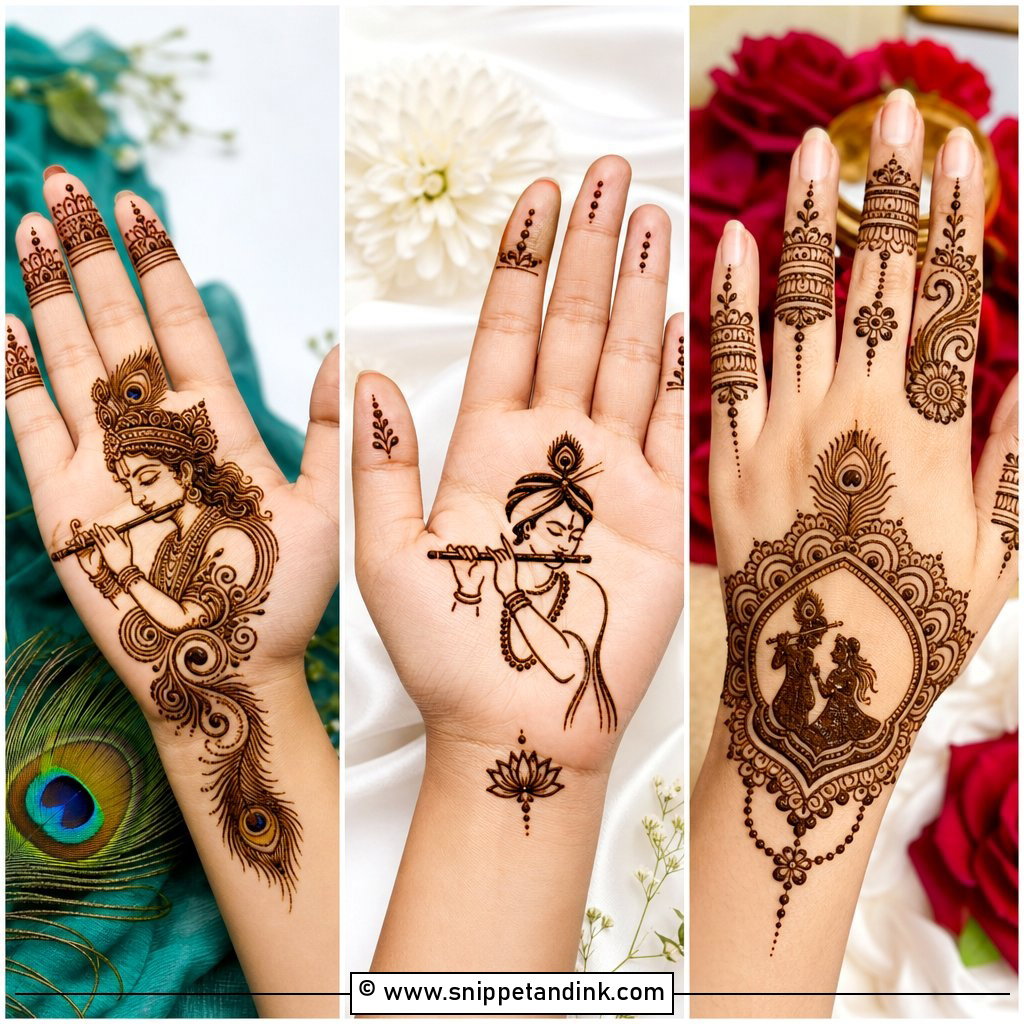
15. Eid Mehndi Design For Kids
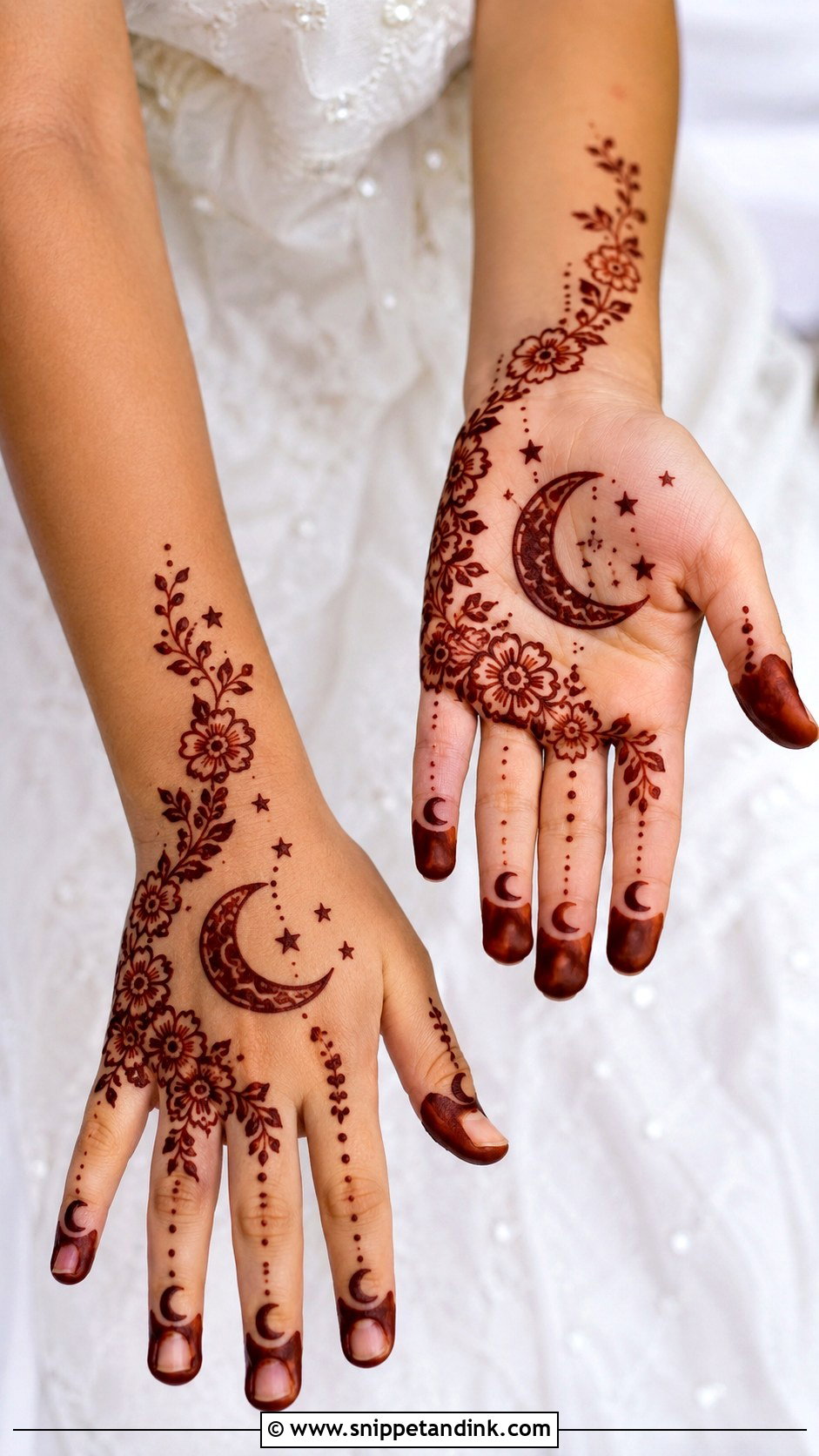
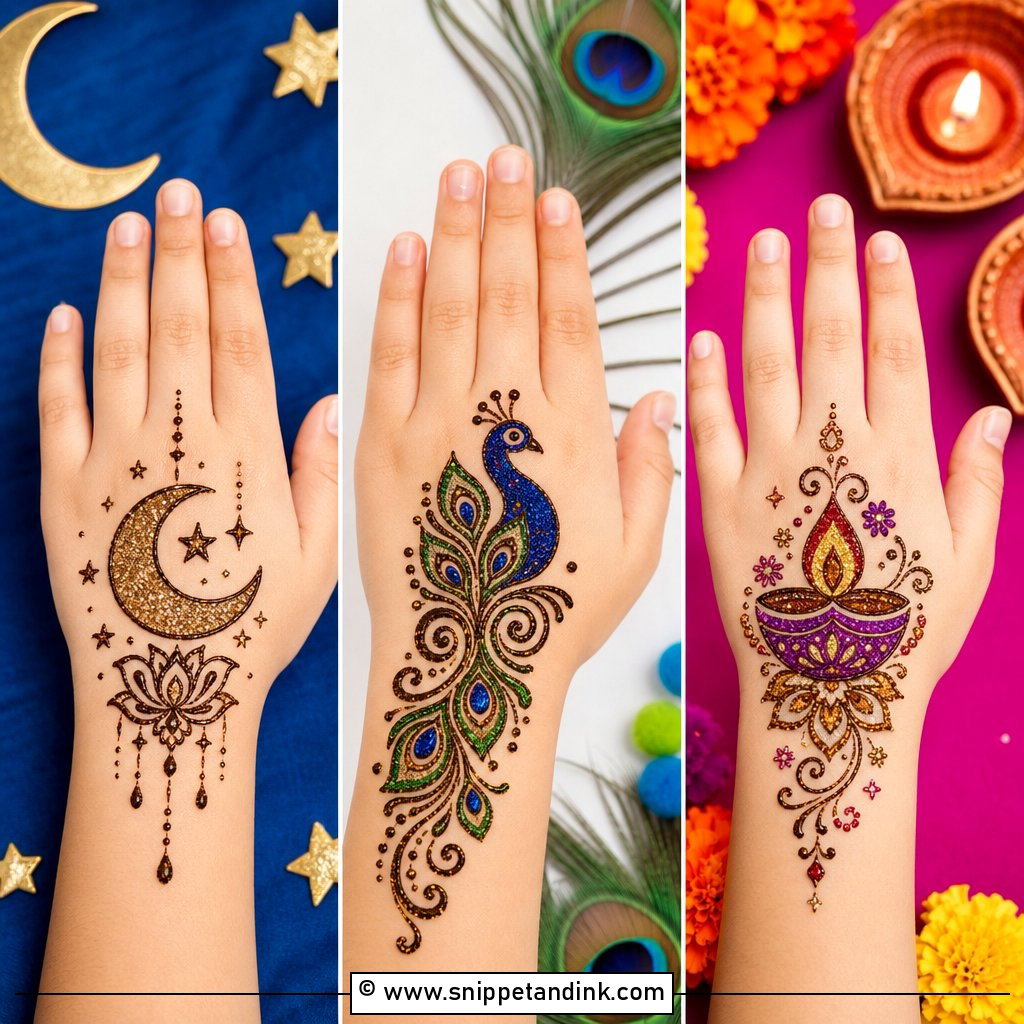
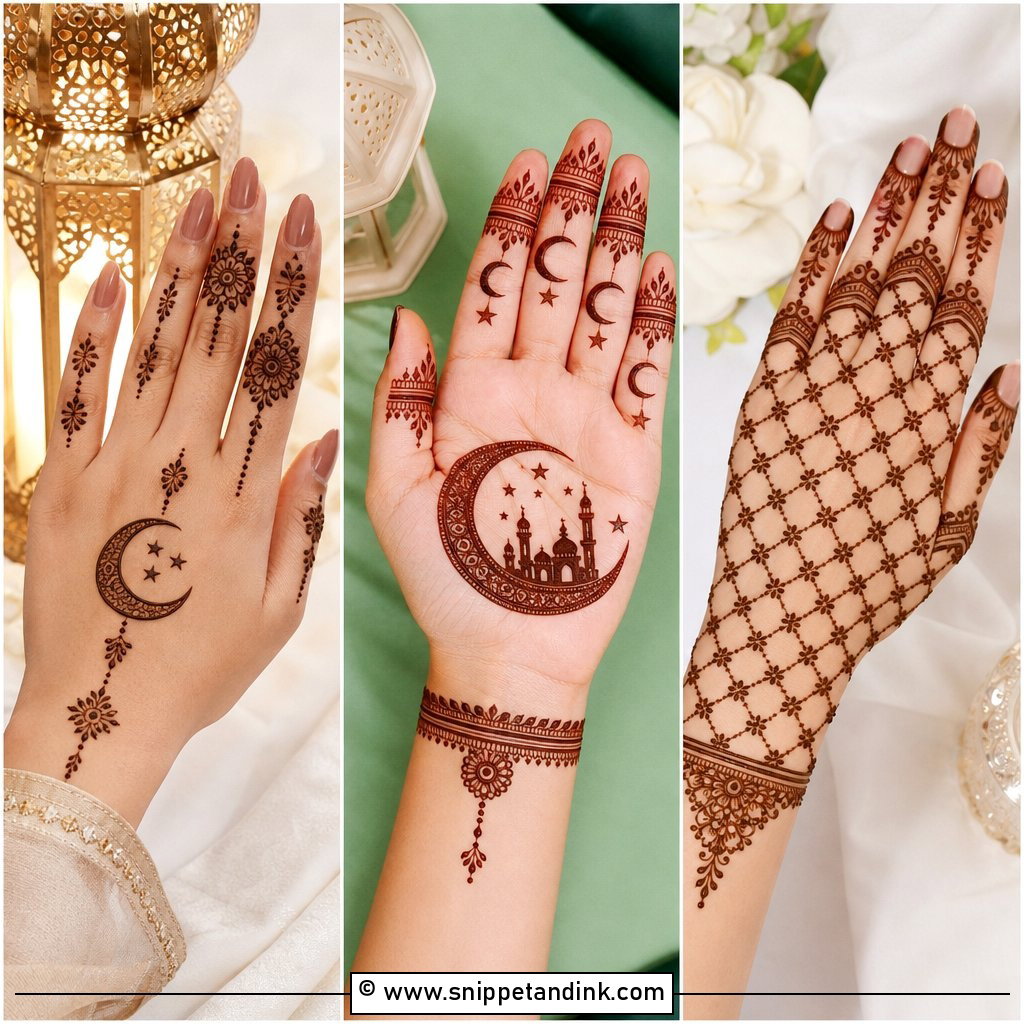
For Eid I reach for crescent moons, stars, flowers and dotted trails. A small crescent on the palm or back hand, stars around it and a simple floral border, with moon-shaped tips or tiny bands on the fingers. I apply children’s Eid henna on Chaand Raat, the evening before, so the stain has the night to deepen; it starts orange and turns reddish brown by morning. Keep the pattern light so the paste is dry before bedtime.
16. Diwali Mehndi Design For Kids
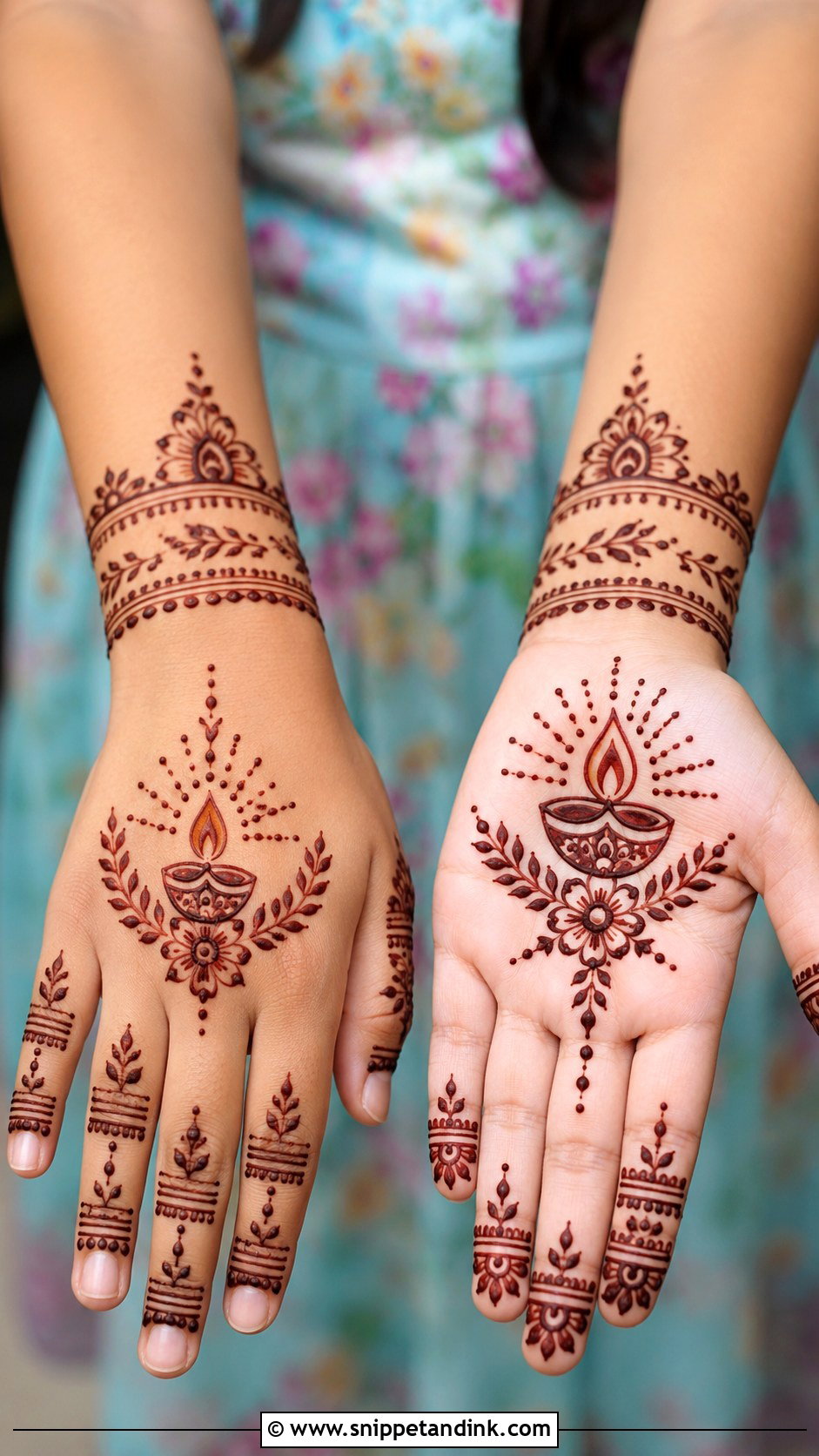
A Diwali design can be built around diya shapes, flowers, dots and festive borders. I draw one small diya on the palm or back hand, add simple rays, tiny leaves and dotted curves, and keep the fingers to neat bands. For small hands, one diya and a short wrist border are plenty. For older children, a flower beside the diya or a small mandala near the wrist fills it out for puja and family photos. With diyas lit everywhere, remind kids to keep wet paste well away from flames and rangoli powder.
17. Wedding Mehndi Design For Kids
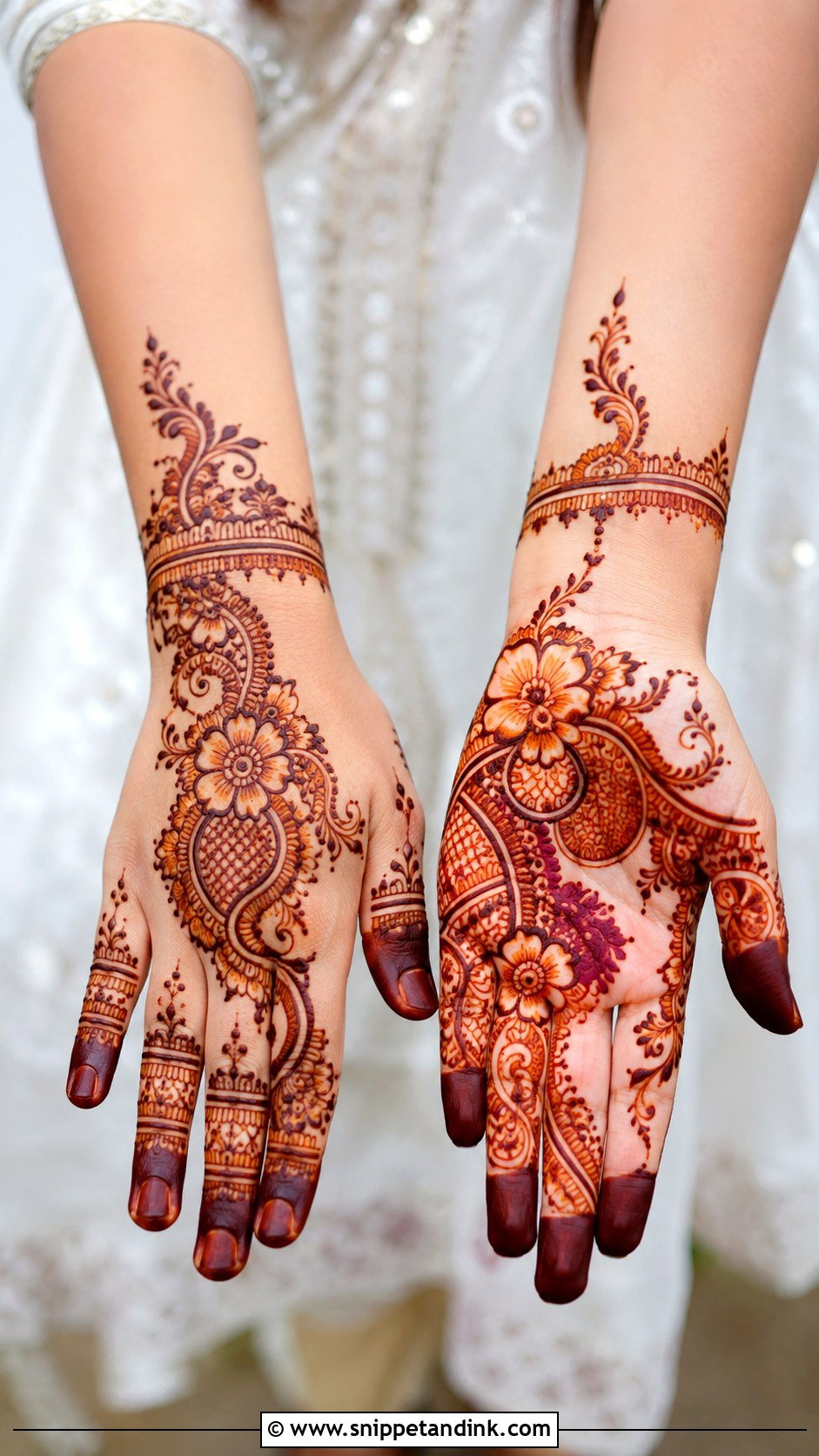
Flower girls, cousins and nieces want to look dressed up for the wedding, but they can’t sit for bridal-length work. I give them a back-hand trail with flowers, paisleys and a bracelet band, or a palm mandala with leafy fingers, and add a little jaali or a few soft vines for detail. The motifs stay larger than I’d use for an adult so they don’t blur as they dry. Do children’s mehndi a day or two before the wedding, not on the morning itself, so the stain has time to darken.
18. Birthday Mehndi Design For Kids
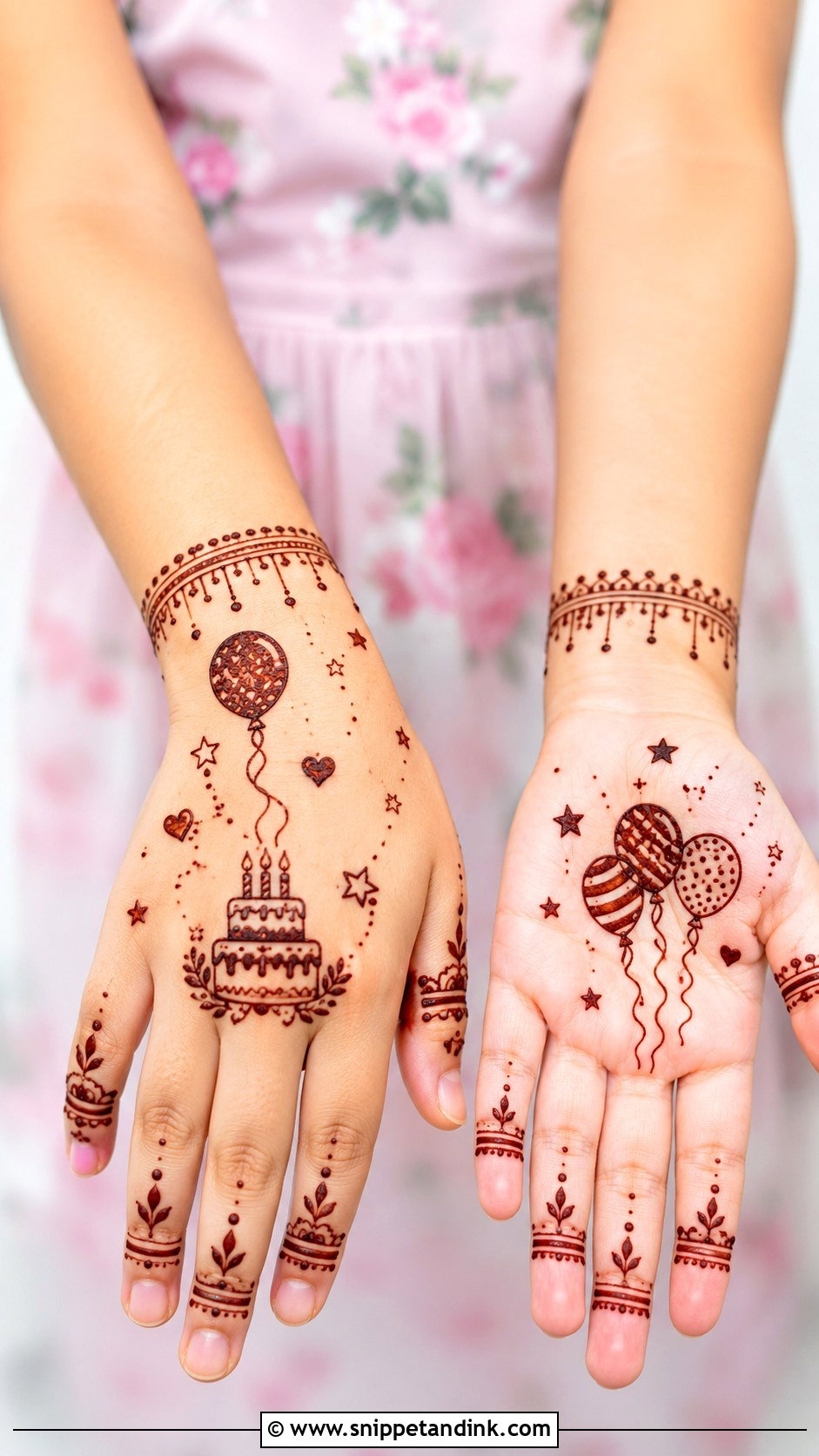
Birthday mehndi is where children get to choose the motifs: a little cake, balloons, stars, hearts or flowers. I put the main motif on the back hand or palm and link it with dotted strings and finger bands. Keep it simple enough to finish before guests arrive. One touch children love is their initial tucked into a hidden spot, like the side of a finger. It turns a quick party design into something that feels made for them.
19. Peacock Mehndi Design For Kids
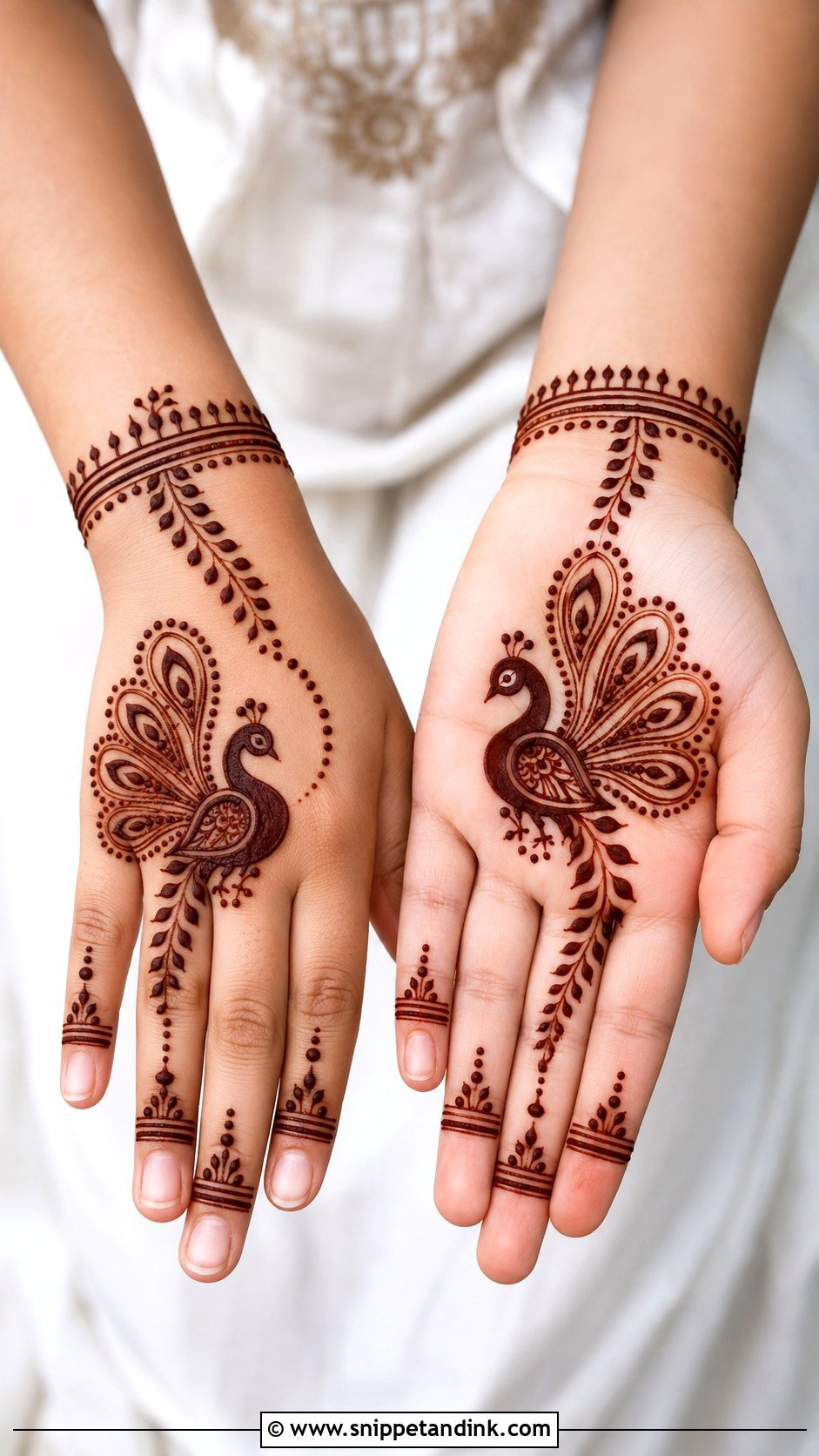
Peacocks are traditional, and children adore them. The trick is simplifying: a curved neck, a small rounded body, a feather fan made from a few teardrop shapes with dots. Fine feather detail on a child’s hand closes up and becomes a smudge. A leafy trail toward the fingers or a bracelet band at the wrist completes it. Keep it rounded and light so the bird stays readable for weddings and festivals.
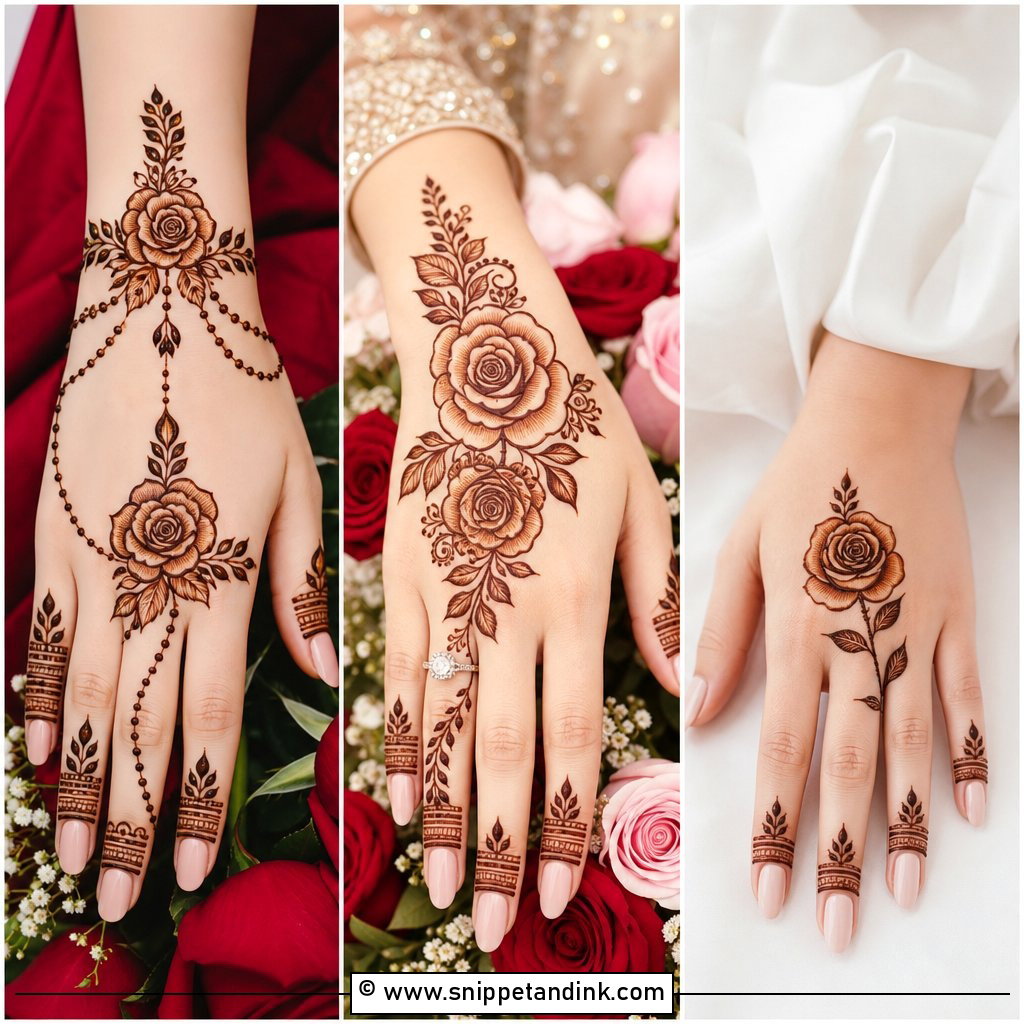
20. Paisley Mehndi Design For Kids
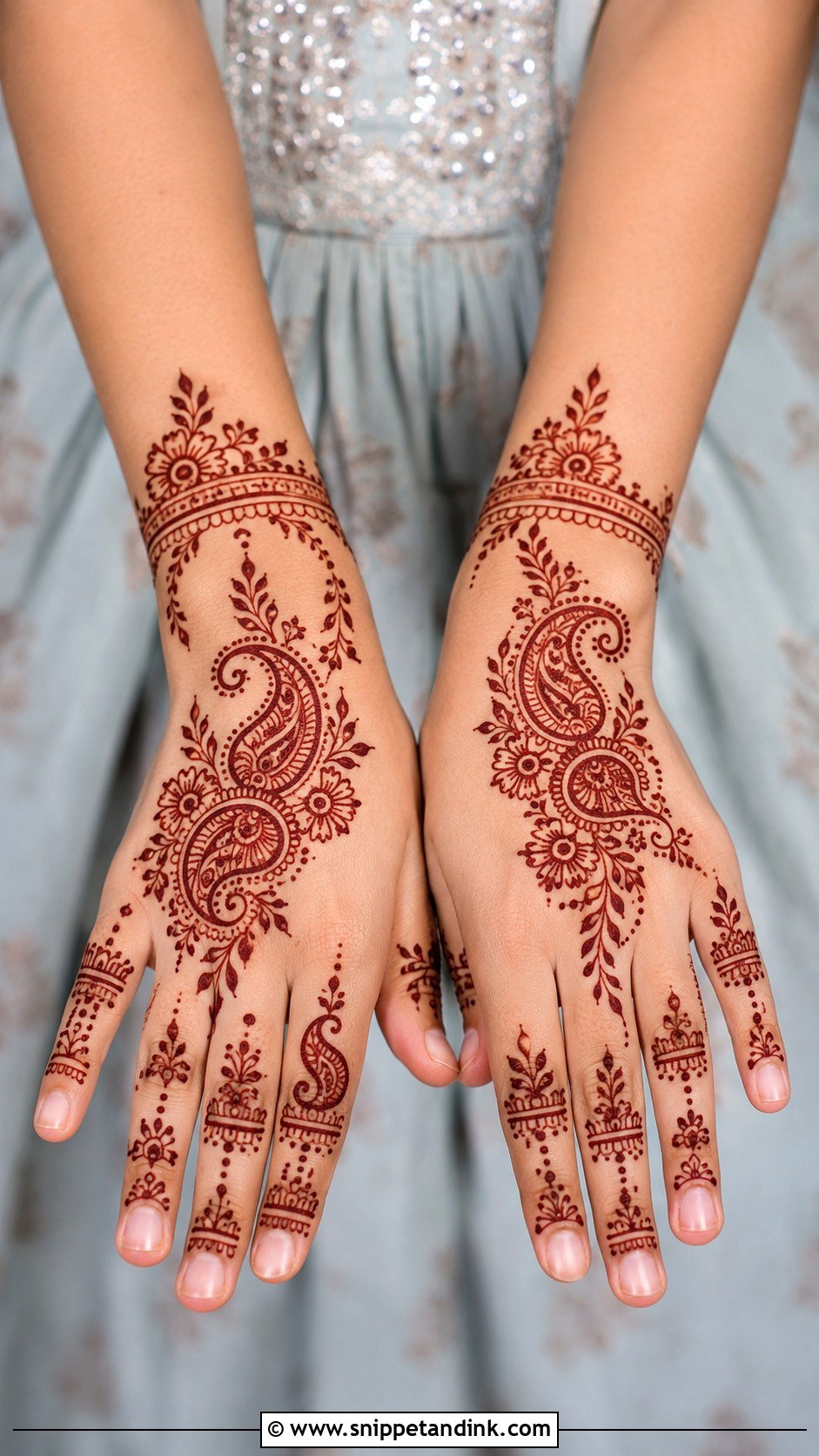
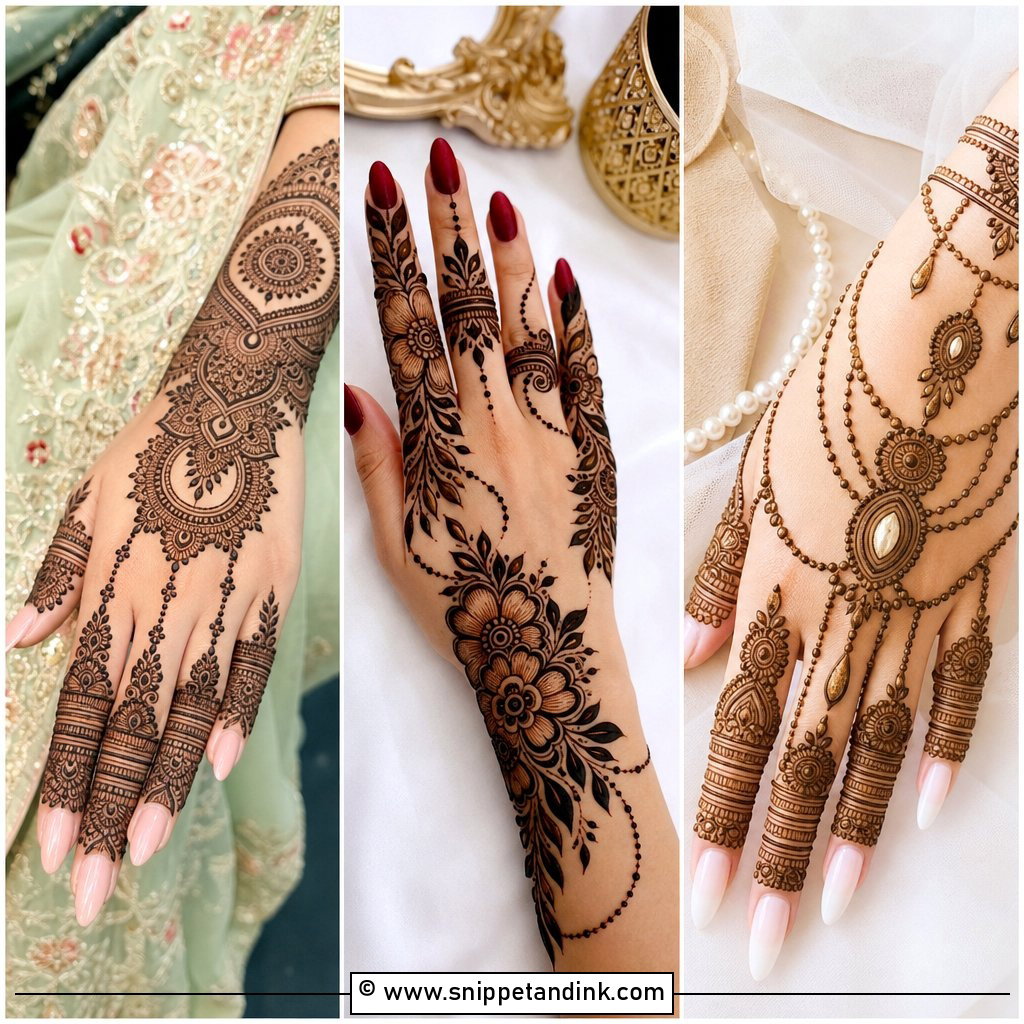
Paisleys are easier to draw than most figures and they carry a classic look, which makes them a good bridge for older children who want something like the adults have. One or two small paisleys, with flowers, leaves, dots and curved borders around them, are enough. I keep the inside filling minimal, just tiny dots or a few short curves, so the shape stays bold. Simple finger work balances the hand.
21. Leaf Vine Mehndi Design For Kids
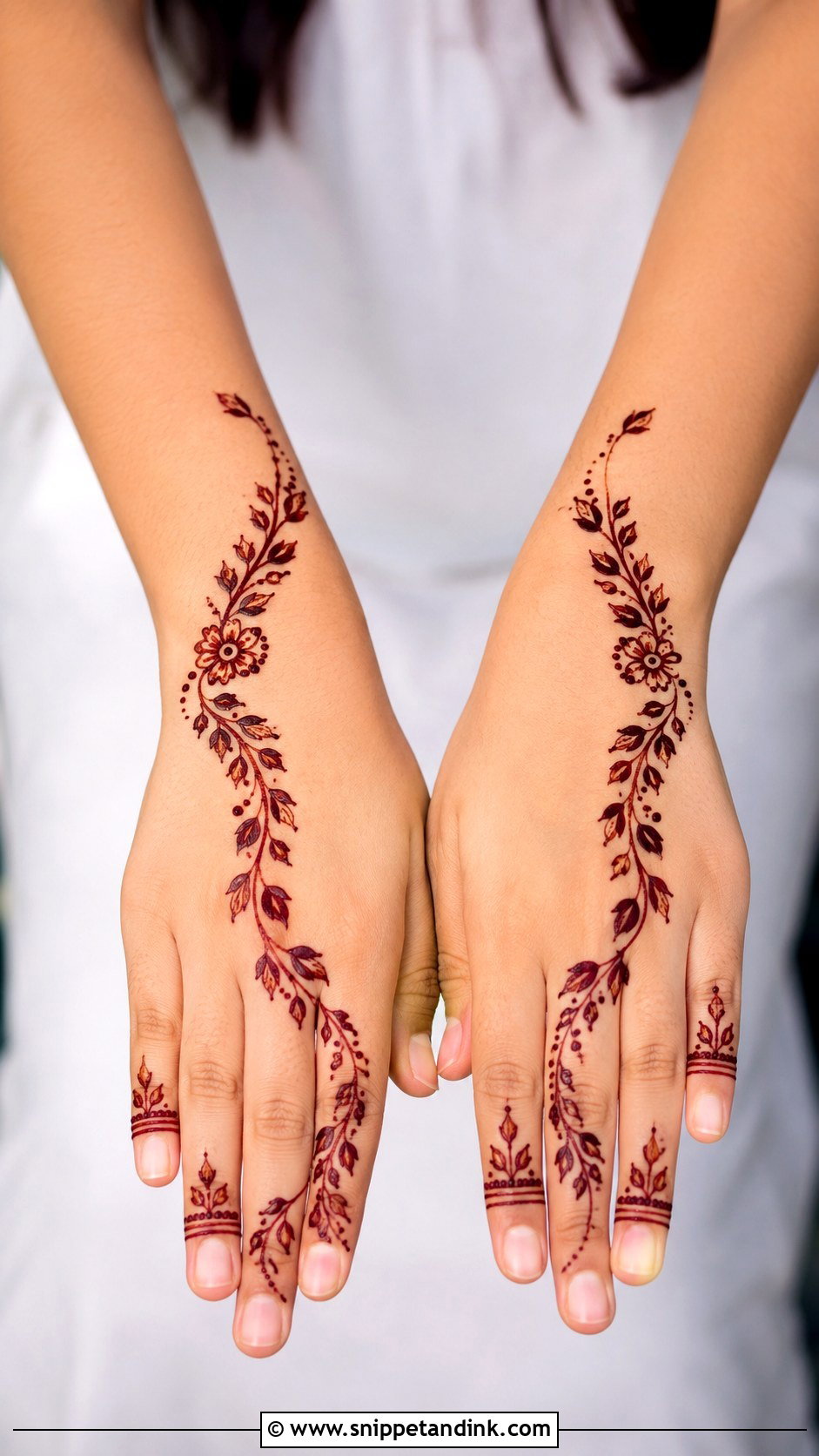
A vine follows the natural curve of the hand, so it looks right with very little effort. I start at the wrist and curve across the back hand toward one finger, with small leaves either side, a few dots and a tiny flower near the middle. Spaced-out lines dry quickly. Round, small leaves look softer than long pointed ones on a child. It works for both a casual weekend and a festival.
22. Jaali Mehndi Design For Kids
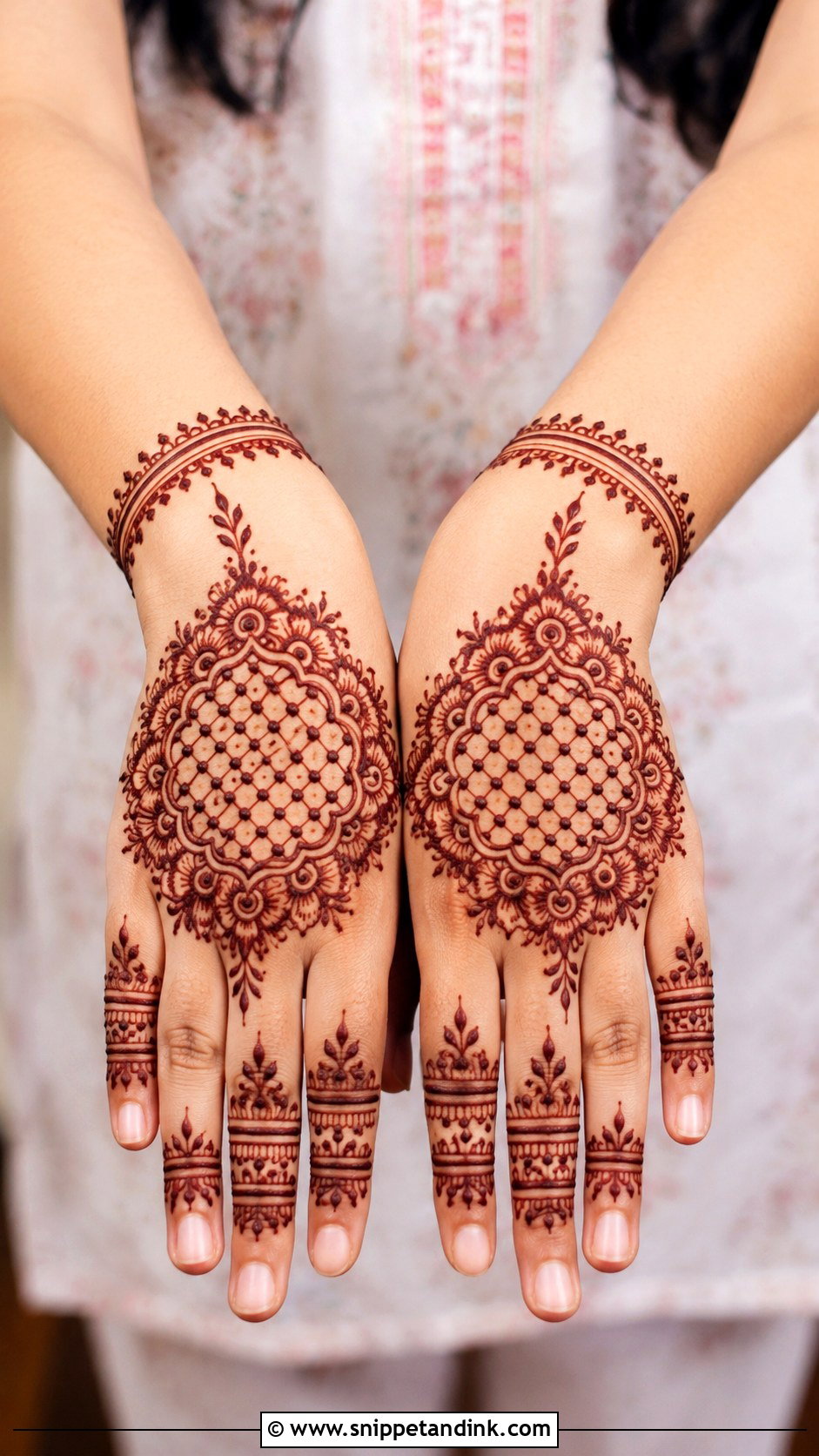
Jaali, the fine mesh pattern, is lovely in small doses but reads as heavy and grown-up when it covers a child’s hand. I use a single small mesh patch on the back hand, framed with flowers, dots and curved borders, and simple bands on the fingers. Mesh lines must be evenly spaced or they merge once the stain develops, so I keep the grid wider than on an adult. One patch gives texture for weddings and Eid.
23. Minimal Mehndi Design For Kids
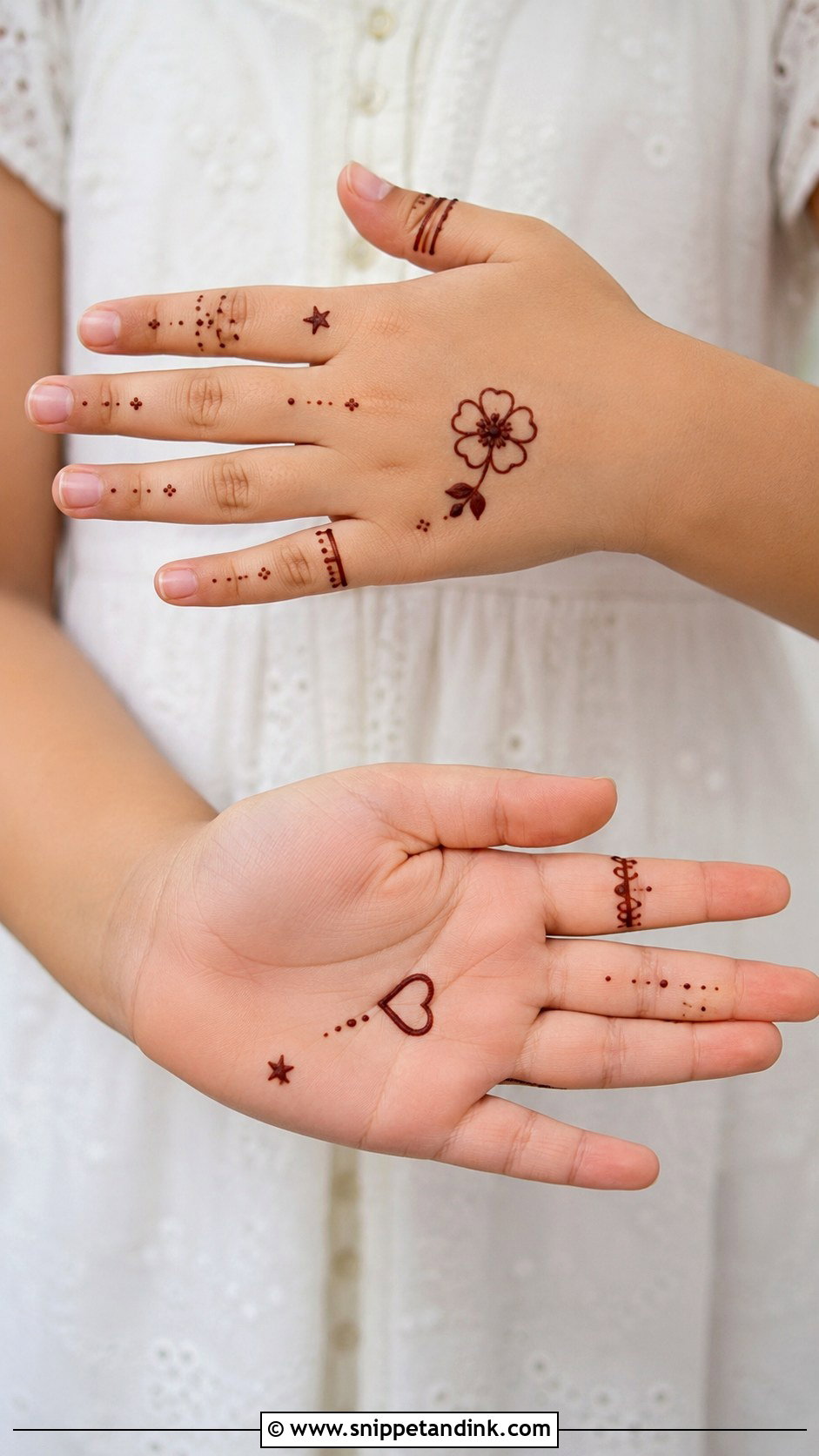
A minimal design is often the best choice for a first-timer or a very young child. One small motif, whether a flower, heart, star or mandala, with tiny dots or finger rings, and most of the hand left bare. It’s quick to apply, dries fast and rarely smudges. Because there’s so little of it, the lines have to be clean and well placed. A single neat motif can still feel festive.
24. Moroccan Mehndi Design For Kids
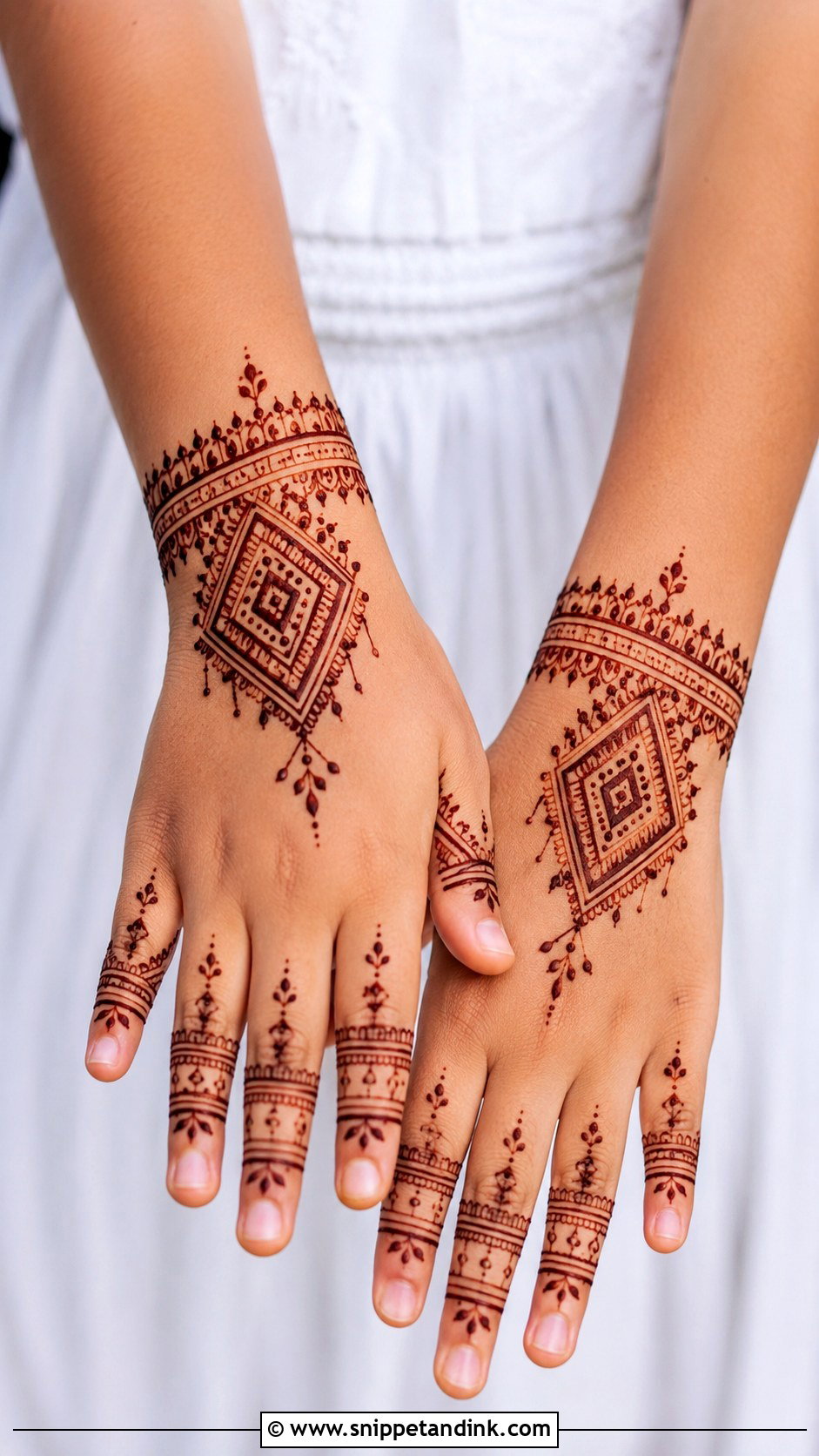
Moroccan-inspired designs swap flowers for geometry: dots, lines and small diamond shapes. Children who aren’t interested in hearts or flowers often prefer them. I keep the layout light, with a small diamond pattern on the back hand, wrist bands and lines on the fingers, rather than a full grid. Straight lines are less forgiving than curves on a hand that won’t stay still, so I’d save this for children who can sit calmly. Soften the edges and avoid lots of tiny sections.
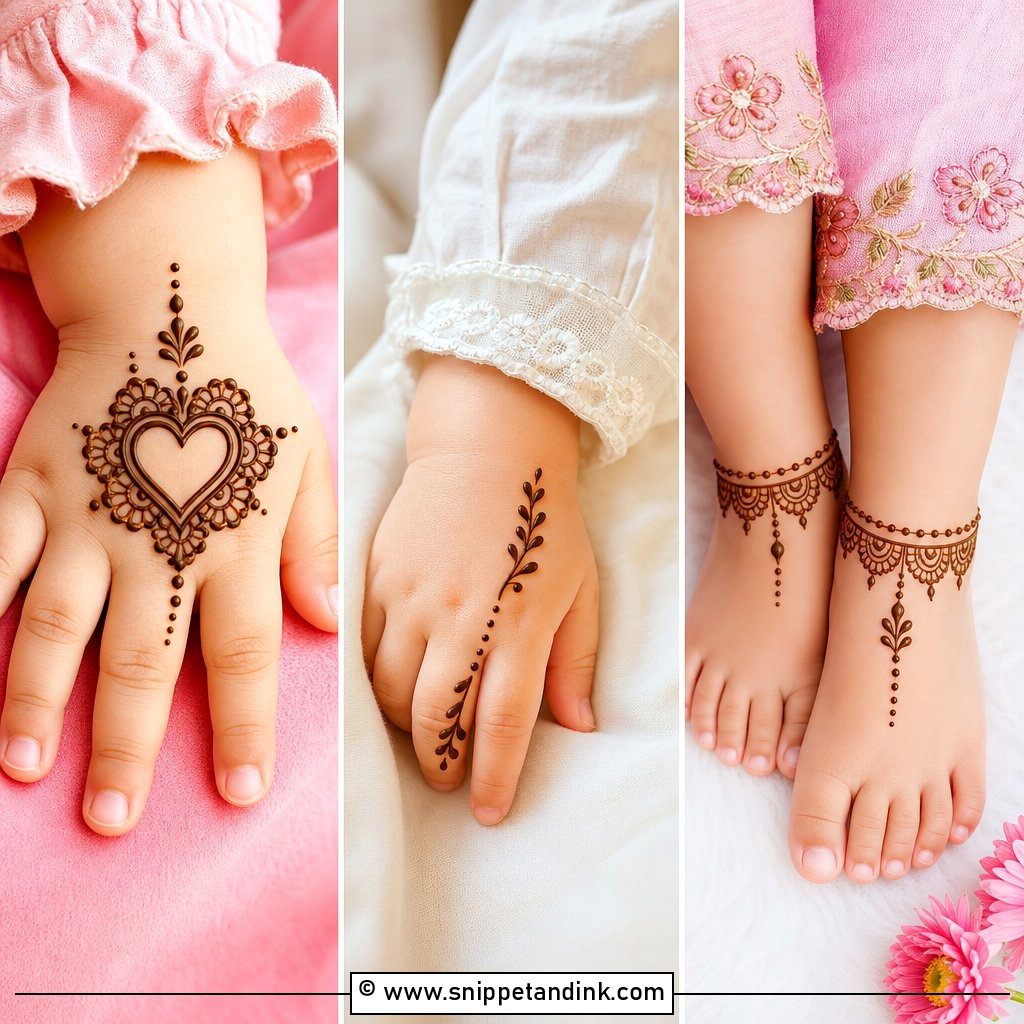
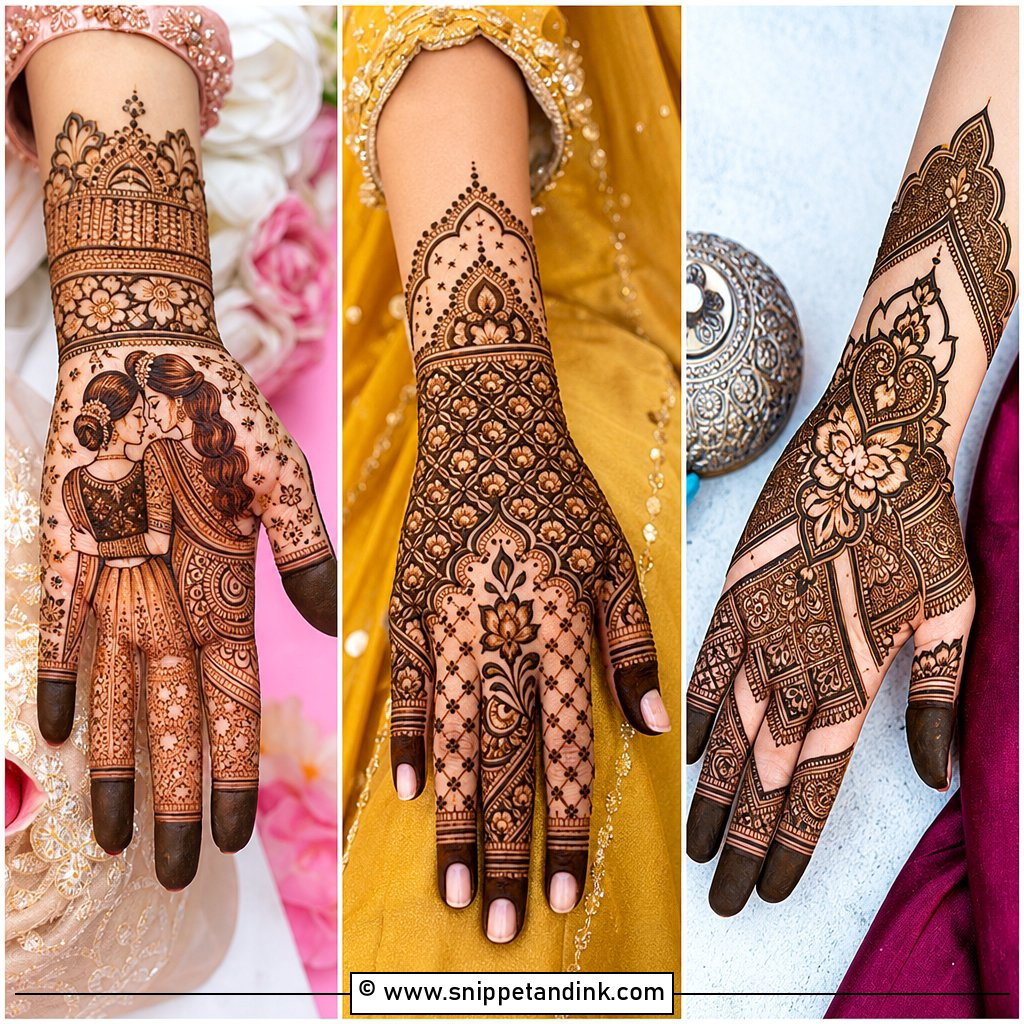
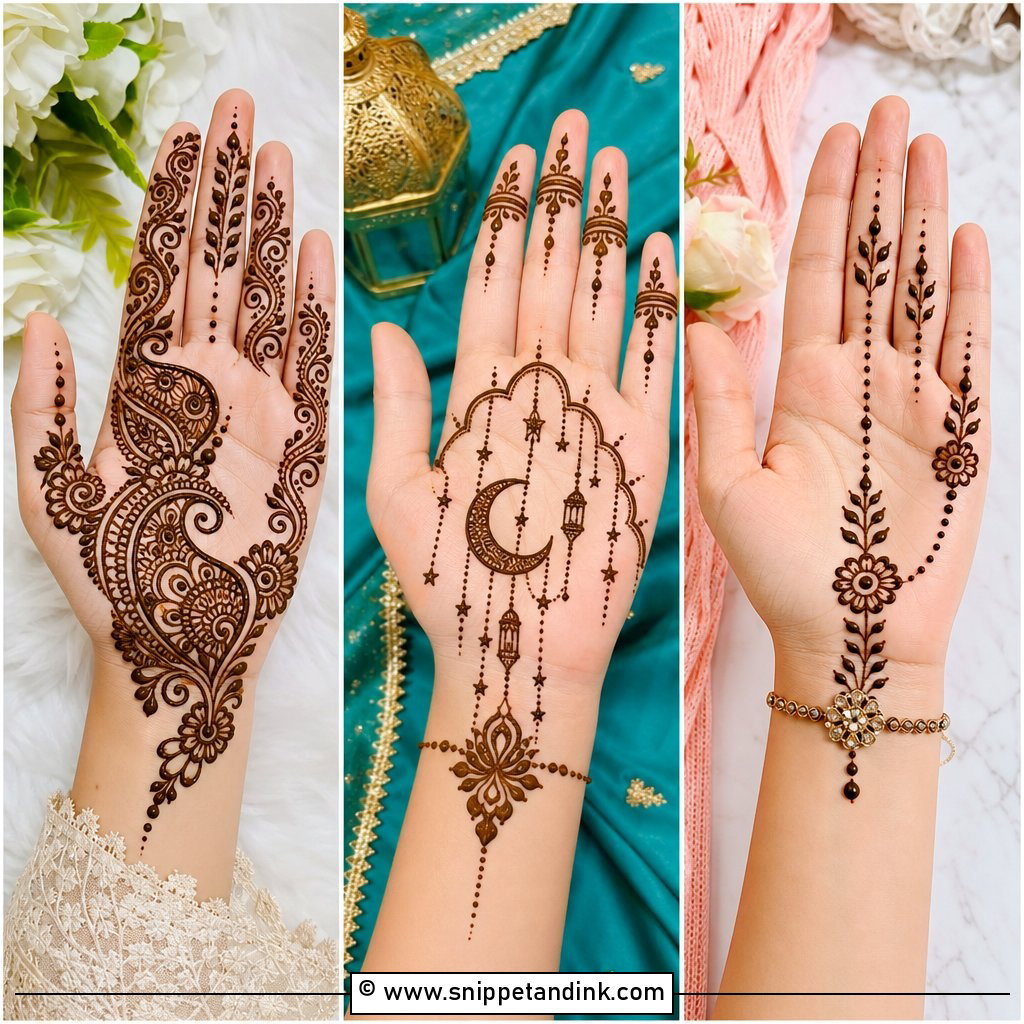
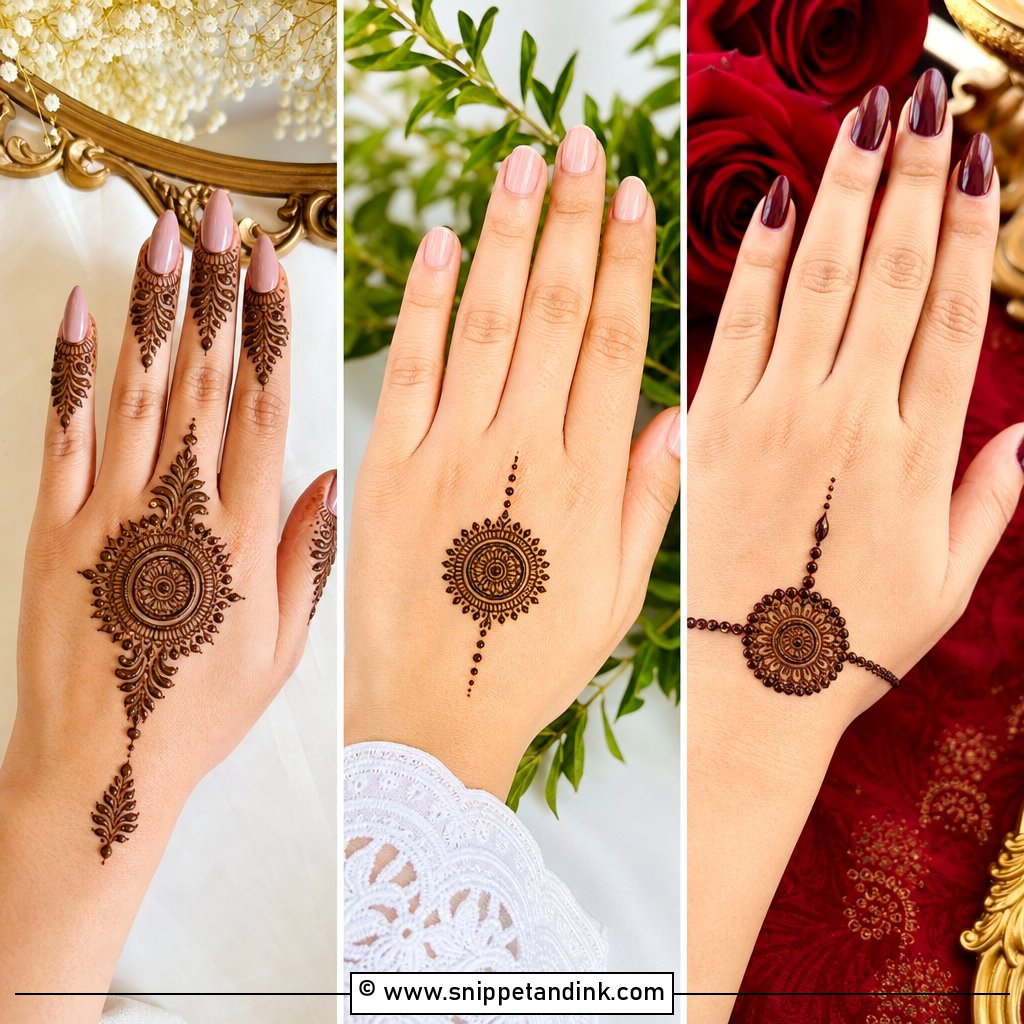
25. Gulf Mehndi Design For Kids
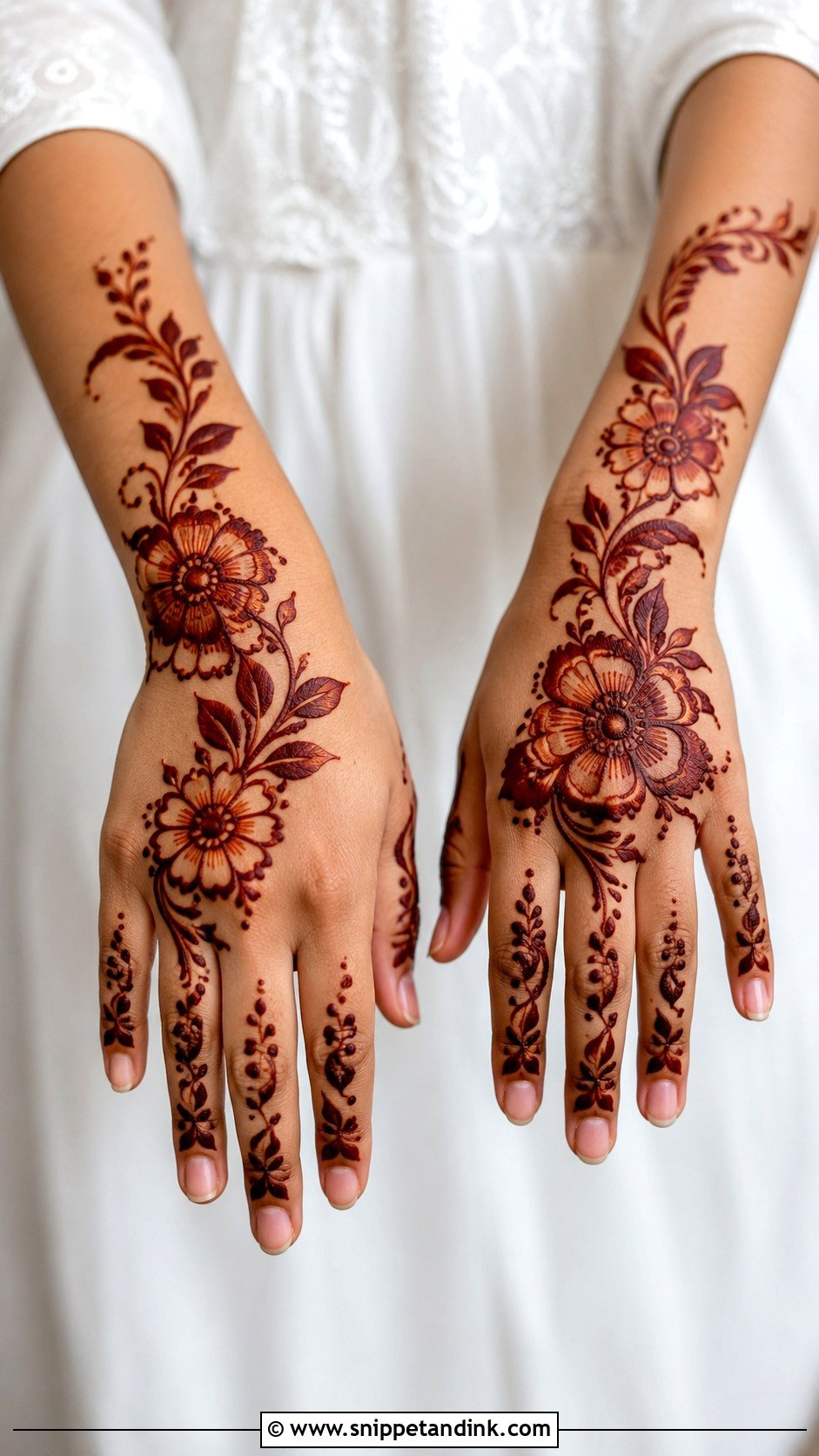
Gulf, or Khaleeji, style is built on big rounded flowers, thick leaves and lots of blank space, which suits children better than most traditional styles. One main floral cluster with a flowing trail from wrist to fingers is enough. Adult Khaleeji work is often filled with dense shading, and I leave that out for kids; broad petals with a little simple shading look festive at Eid, weddings and evening parties. It’s quick, which children appreciate.
26. Cartoon Mehndi Design For Kids
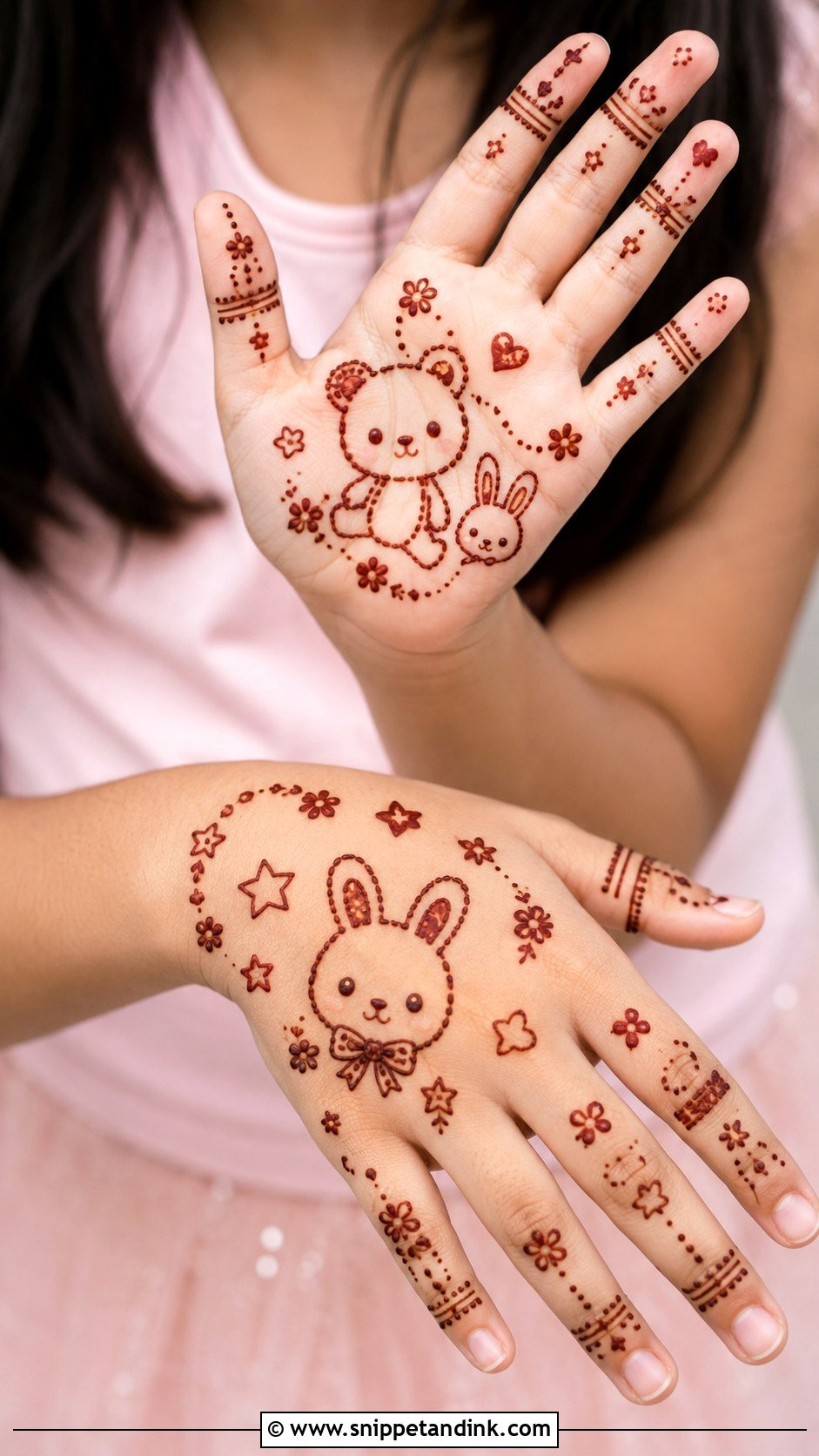
Cartoon motifs work when they stay simple: a teddy, bunny, cat face, smiley or a shape inspired by a favourite character, on the back hand or palm, with stars, hearts and dots around it. Detailed characters don’t survive henna; the paste spreads slightly and fine features blur. A rounded, simple cartoon outline is what I draw. Keep the fingers very light so the cartoon stays the focus. Birthdays and casual family days are where these shine.
27. Animal Mehndi Design For Kids
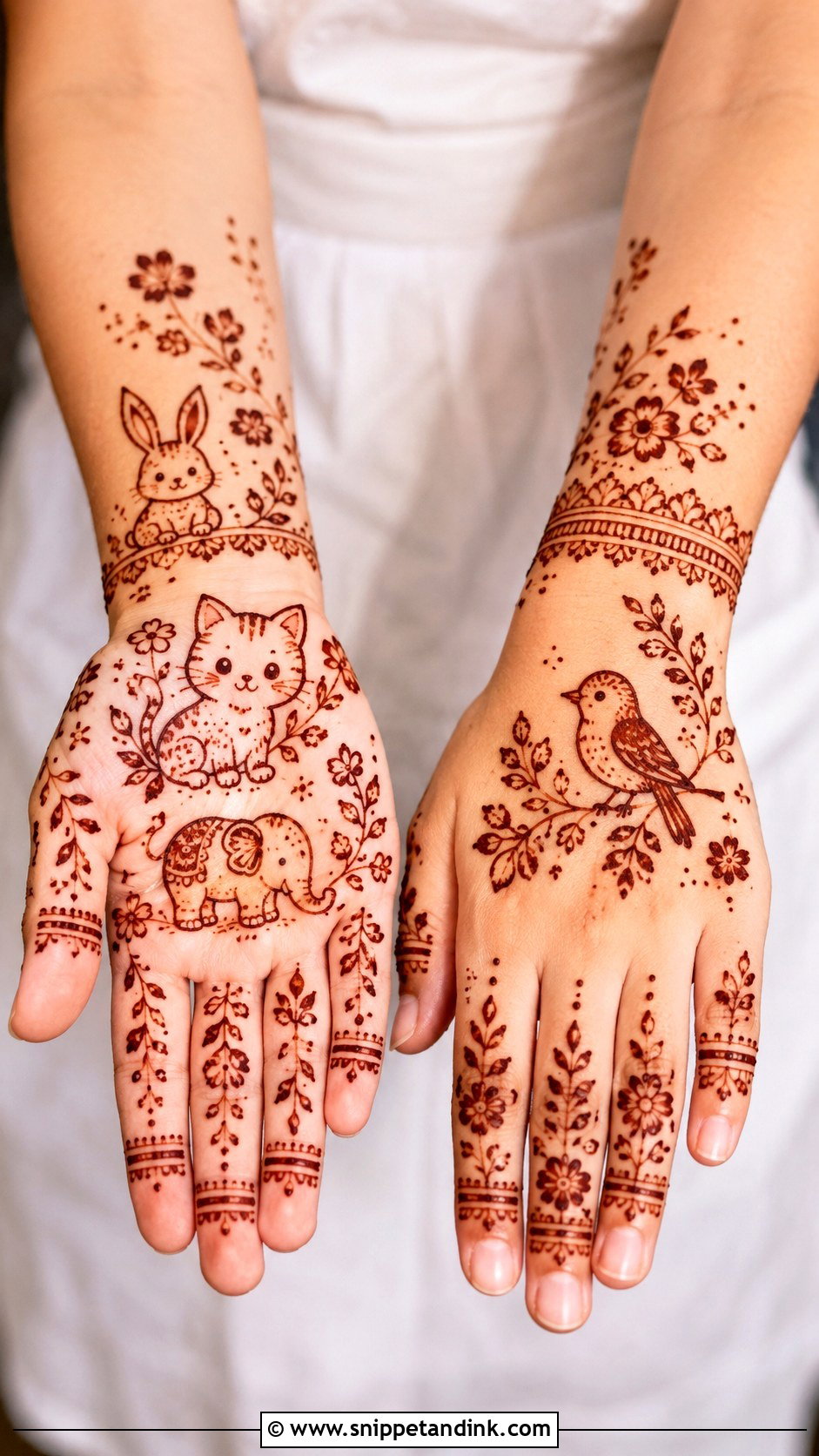
A tiny bunny, kitten, elephant, bird or fish in the centre of the palm or back hand, with a few leaves, dots and a small border, keeps children excited the whole time I’m drawing. It’s easier for them to connect with than traditional patterns. I keep the animal bold and rounded, with very few inner lines; too much detail on a small hand looks messy once the stain sets. Good for birthdays, school cultural days and family events.
28. Glitter Mehndi Design For Kids
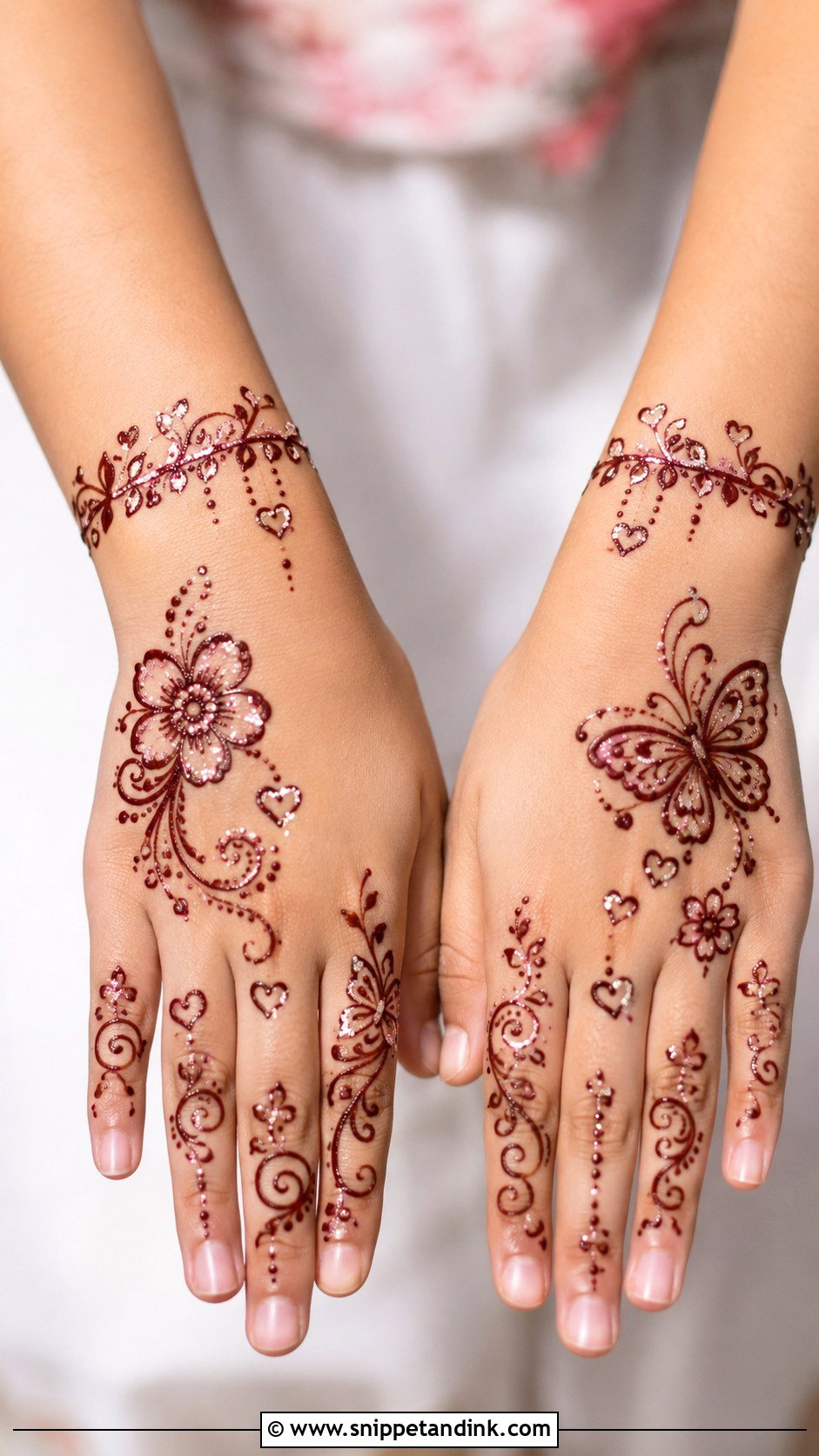
Glitter needs care. Only skin-safe cosmetic glitter goes anywhere near a child, and never craft glitter mixed into henna paste. I draw a simple flower, butterfly, heart or bracelet, and after the paste comes off, add a tiny amount of cosmetic glitter with a skin-safe gel to the flower centre or bracelet dots. Kids rub their eyes, so I keep it well away from the fingertips. A small shimmer is plenty for a party or photos.
29. Foot Mehndi Design For Kids
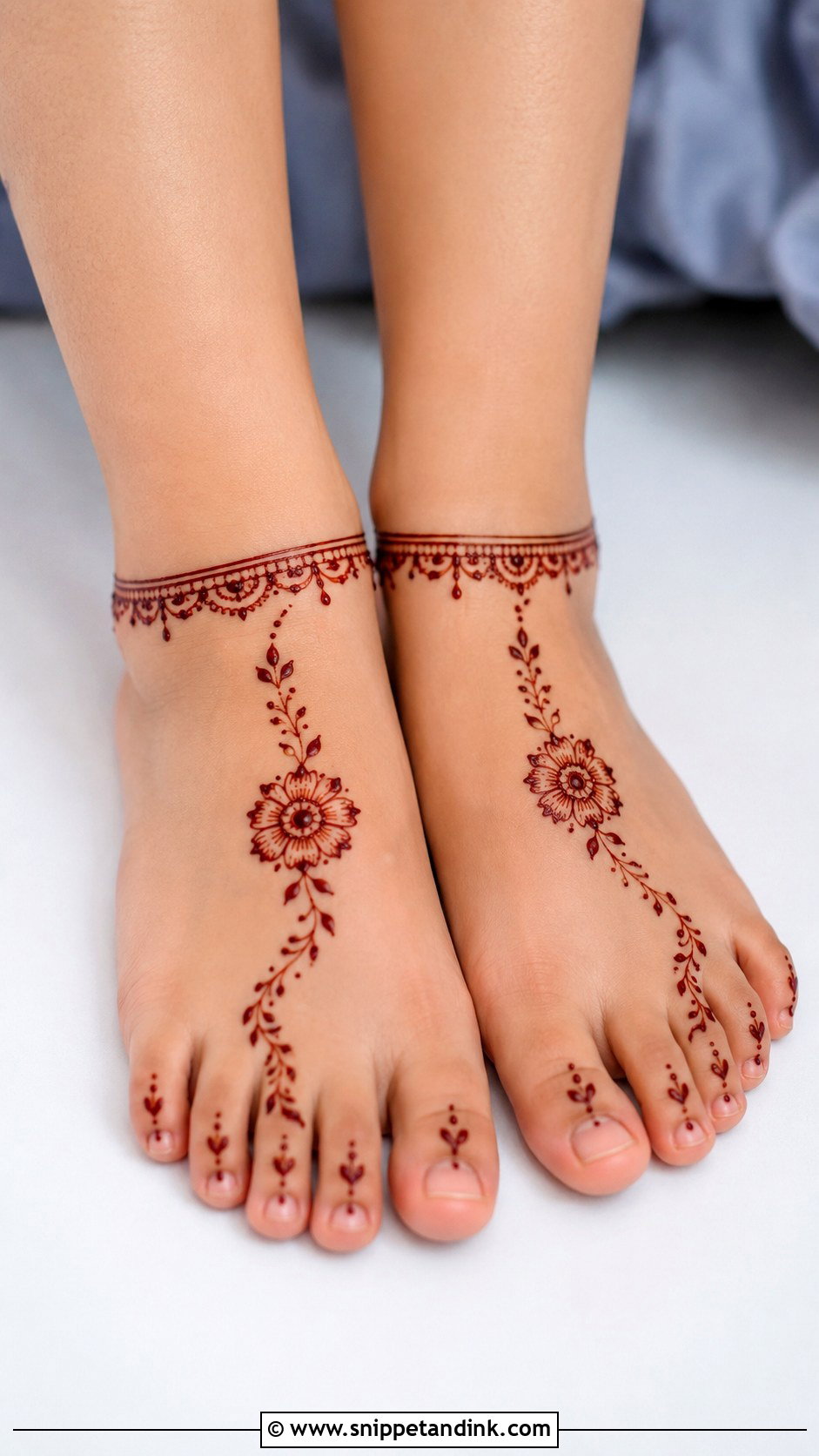
Children are rarely still, so foot designs must be very light. A small flower on top of the foot, a short anklet band and tiny toe details make a sweet set. Keep the paste off any spot that rubs inside shoes or socks if the child will be walking soon. For toddlers, one ankle band is enough; older children can have a leafy trail toward the toes. Feet stain well but need the paste to dry fully before any movement, so I do them while the child is sitting watching something.
30. Matching Hands Mehndi Design For Kids
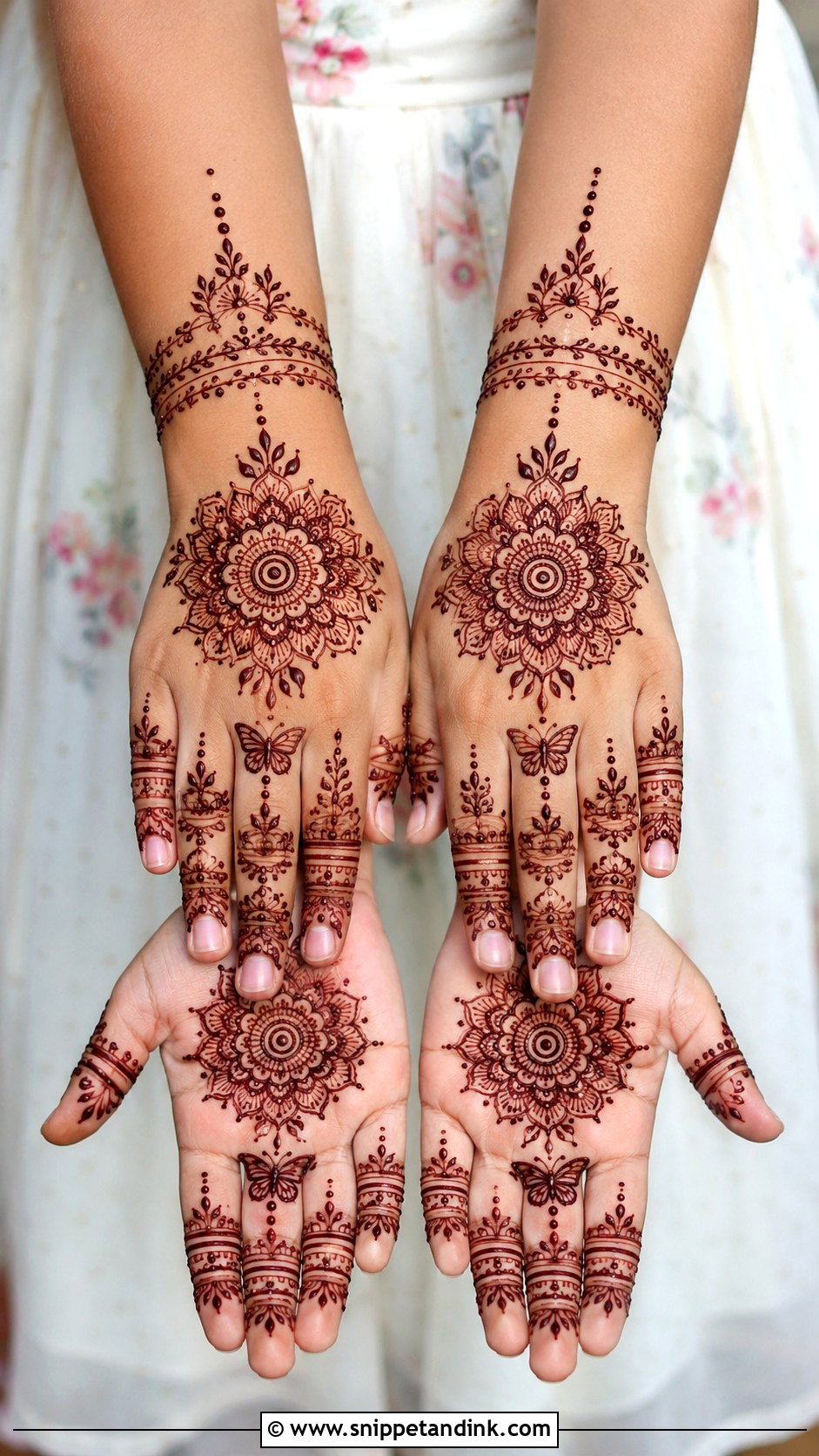
Matching both hands looks adorable in photos, and it’s a popular request from siblings and cousins. I use the same flower, heart, mandala or butterfly on both palms, with small bands and dots on the fingers, or twin bracelet vines on the backs of the hands. Symmetry is harder to keep on a moving child, so simpler is better; an uneven pair is far more noticeable than a single slightly wobbly design. Balanced, light patterns finish faster too.
Getting a Wriggly Child Through the Drying Time
The design is the easy part. Keeping the paste on long enough is harder. I try to apply children’s mehndi after they’ve eaten and been to the bathroom, with a cartoon playing, because once the paste is on they can’t use their hands for a good while.
I do the non-dominant hand first and the writing hand last, so the fresh hand isn’t used to steady anything. When the paste looks matte, a light dab of lemon and sugar keeps it stuck to the skin. For a toddler, even half an hour on the skin gives a visible stain; older children can wear loose cotton socks over their hands at bedtime and keep it on overnight.
In the morning, scrape the dry paste off with a blunt edge or rub it away, rather than washing. Keep the hands out of water for a few hours afterwards. The stain will look orange at first, which upsets some children; I tell them it’s still “cooking” and will be darker by teatime, which is true.
Small Hands, Short Patience, Big Smiles
With children, mehndi should be quick, comfortable and fun. The designs here aren’t about heavy coverage or adult-level detail; they rely on clear shapes, playful motifs, fast drying and safe natural henna. Flowers, stars, butterflies, hearts, mandalas, bracelets and light Arabic trails all suit small hands. Toddlers do best with a tiny back-hand or finger pattern; older children can manage half or full hands with open spacing. Patch test new henna, skip any chemical cones, and keep the design to their age. Even one small motif can make a child feel part of the celebration.
You'll Like These Ideas:


Leave a Reply