
Bridal mehndi is the one part of the wedding look that is made on your own skin, over hours, often with your family singing around you. It carries symbolism and a lot of feeling, and it also has to read well in photos, which is why the best bridal work balances dense pattern with open skin. The motifs I draw most are full-hand paisleys, lotus bands, mandala palms, peacock curves, bride and groom portraits, jaali mesh and hidden initials. Some brides want coverage to the elbow; others prefer an Indo-Arabic layout with bold florals and space. Below are 20 bridal designs I’d happily put on any bride, with notes on what each needs to look right on the day.
Scheduling the Mehndi Night Around the Stain
Henna doesn’t show its true colour when the paste comes off. It starts bright orange and darkens over roughly the next one to two days as it oxidises, reaching its deepest red-brown around the 48-hour mark. That’s why I ask brides to plan application one or two days before the wedding, never the morning of.
- Heavy full-arm designs can take several hours, so start early in the day and eat beforehand.
- Book manicures, waxing and exfoliation before the mehndi, not after. Scrubbing or waxing over fresh henna fades it.
- Arrive with clean, dry skin and no lotion; oil on the skin blocks the dye.
- Have someone ready to feed you and hold your phone. You won’t use your hands for hours.
1. Full Hand Indian Bridal Mehndi Design
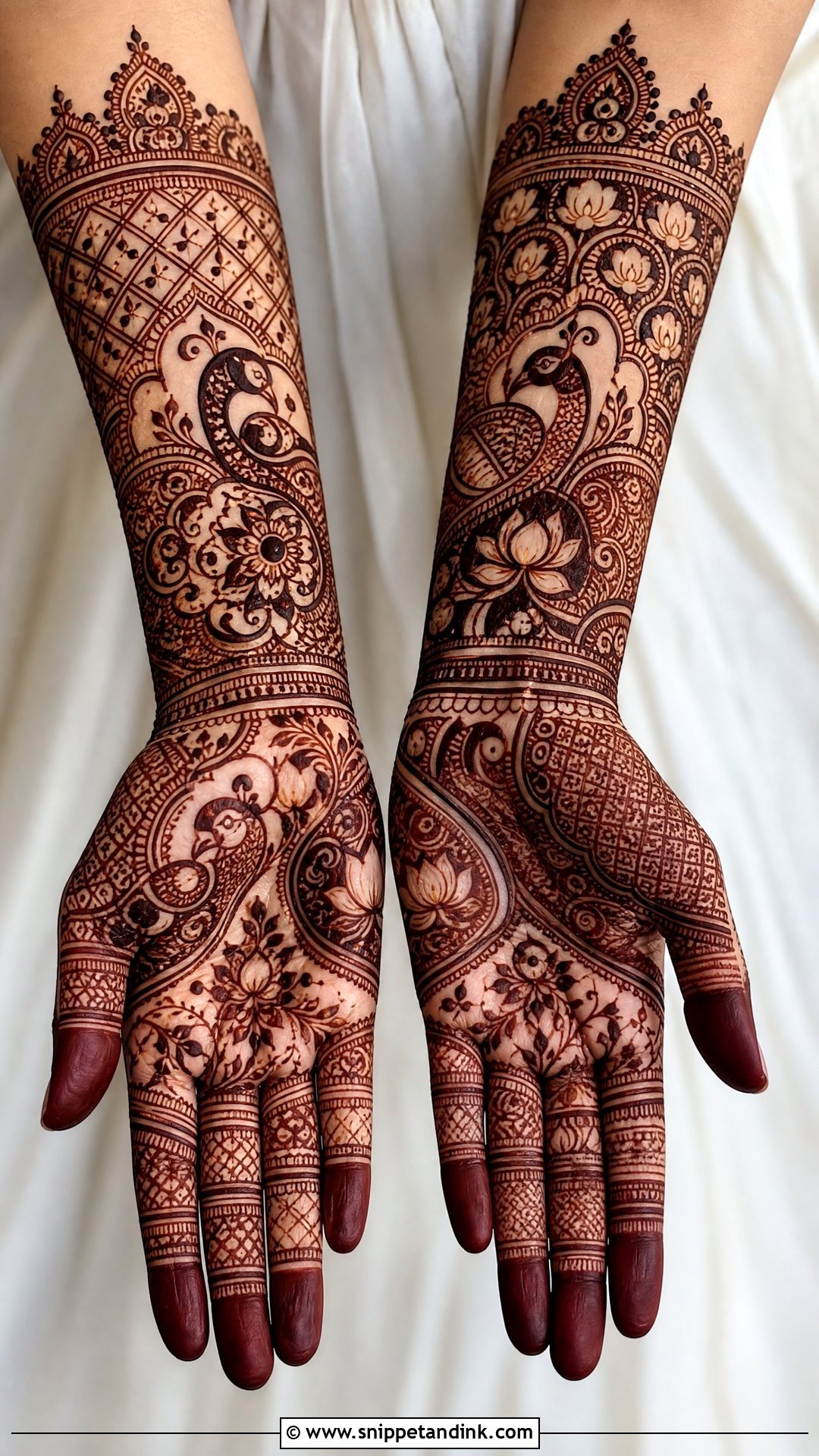
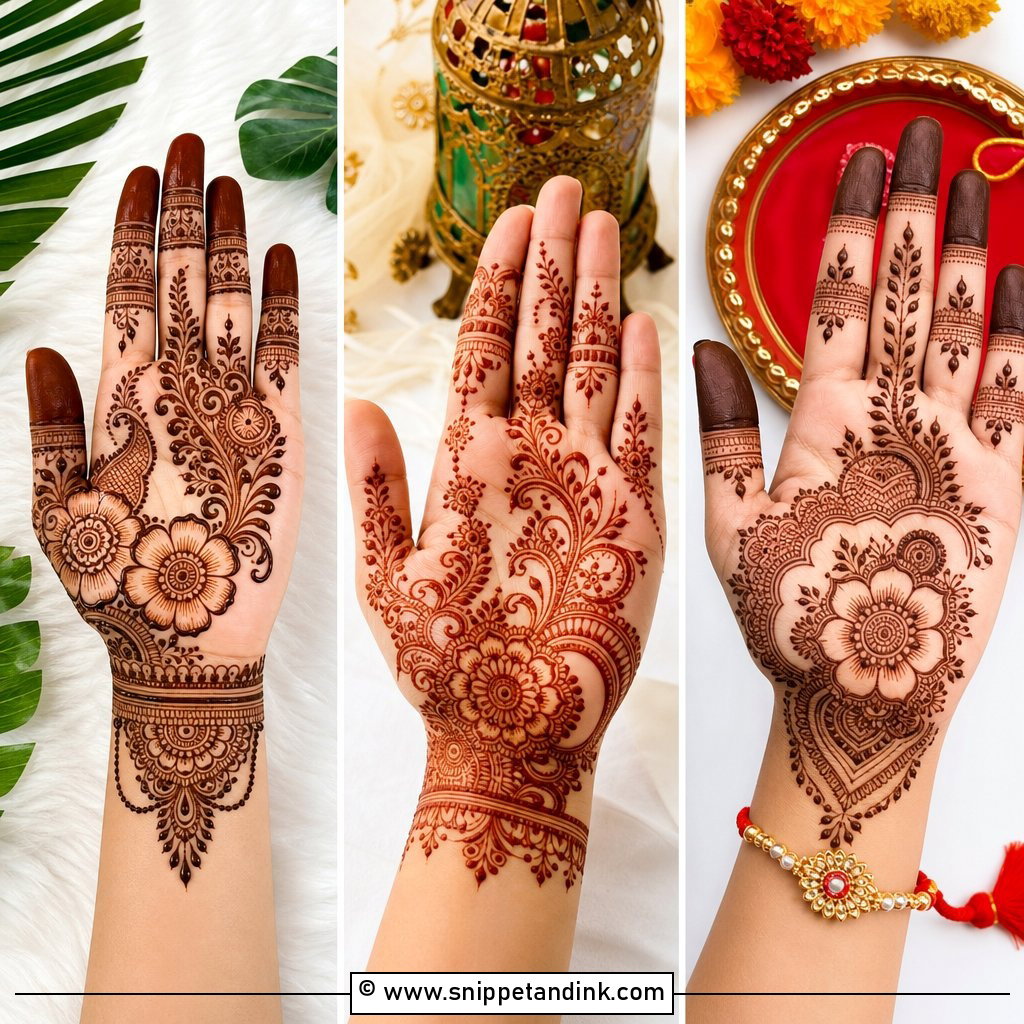
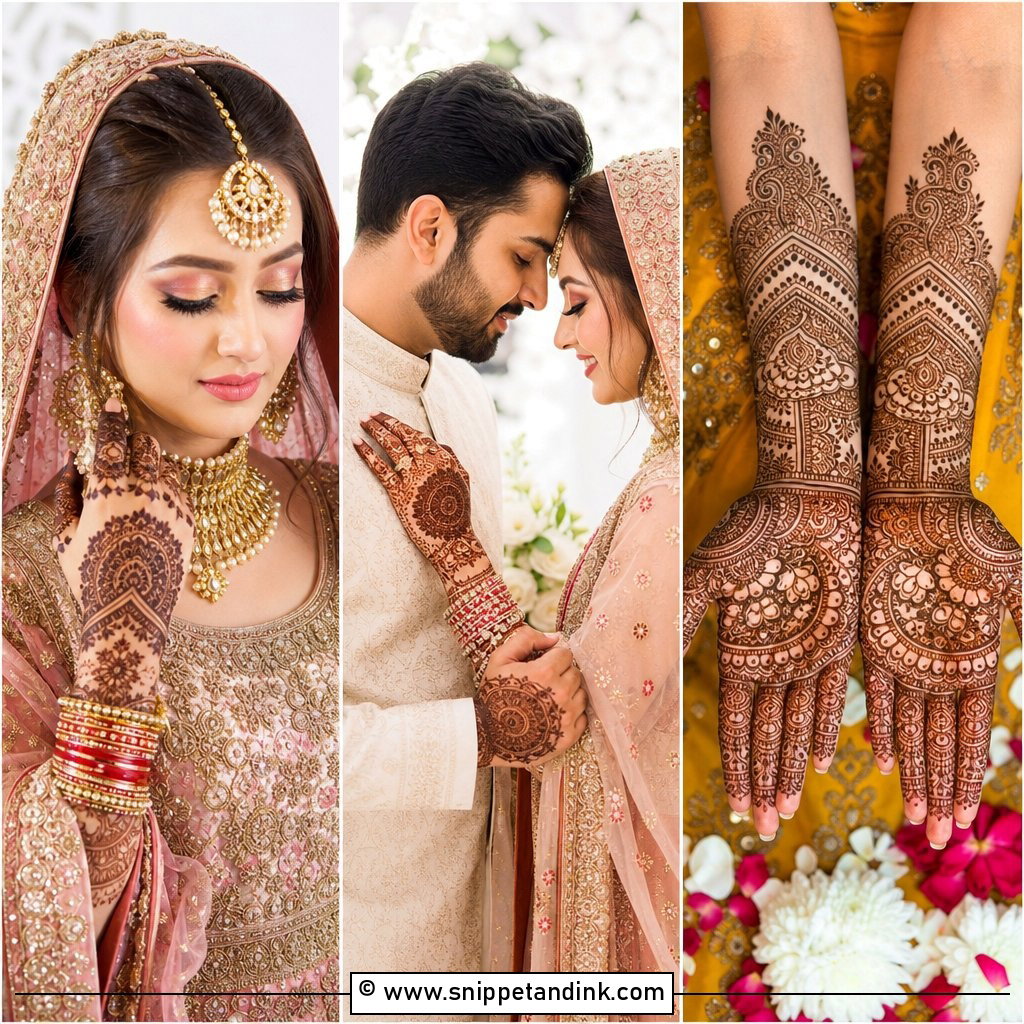
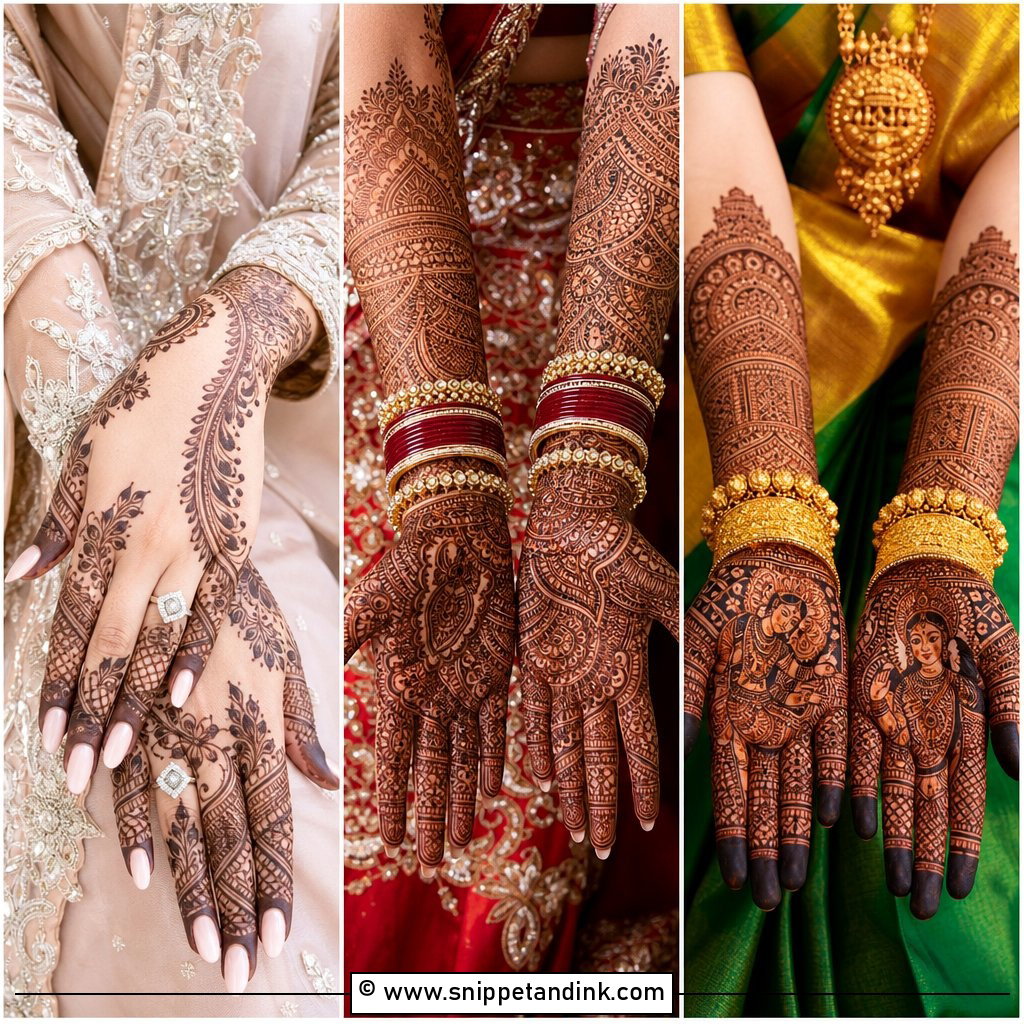
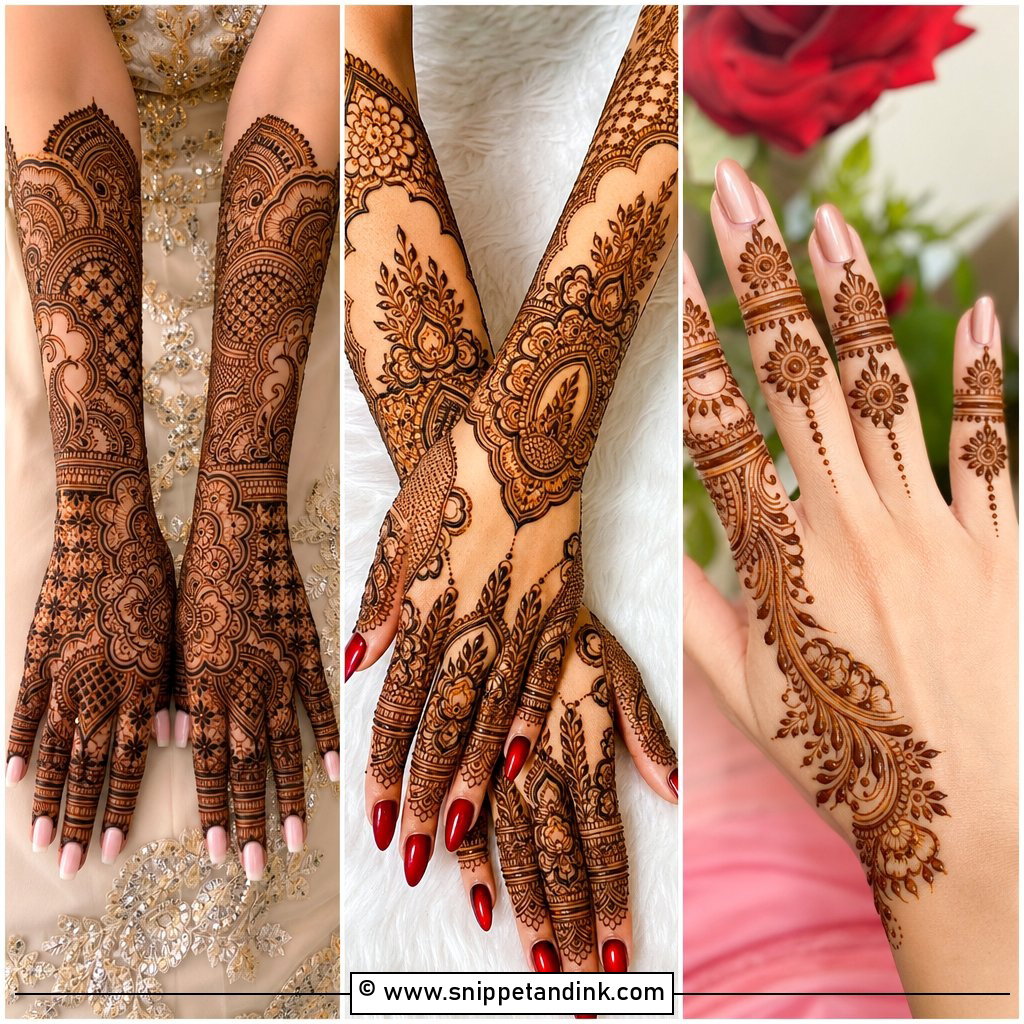
Full hand bridal mehndi covers the palm, fingers, wrist and forearm, packed with paisleys, lotus flowers, peacocks, fine vines and small fillers. It’s the classic choice with a traditional lehenga, saree or heavy jewelry. When I map one, I fix the large palm motifs first and only then fill between them, because starting with fillers is how a design ends up crowded. Keep the forearm bands balanced against the palm so the photos don’t look heavy on one side. A deep maroon stain is what makes this style sing.
2. Dulha Dulhan Bridal Mehndi Design
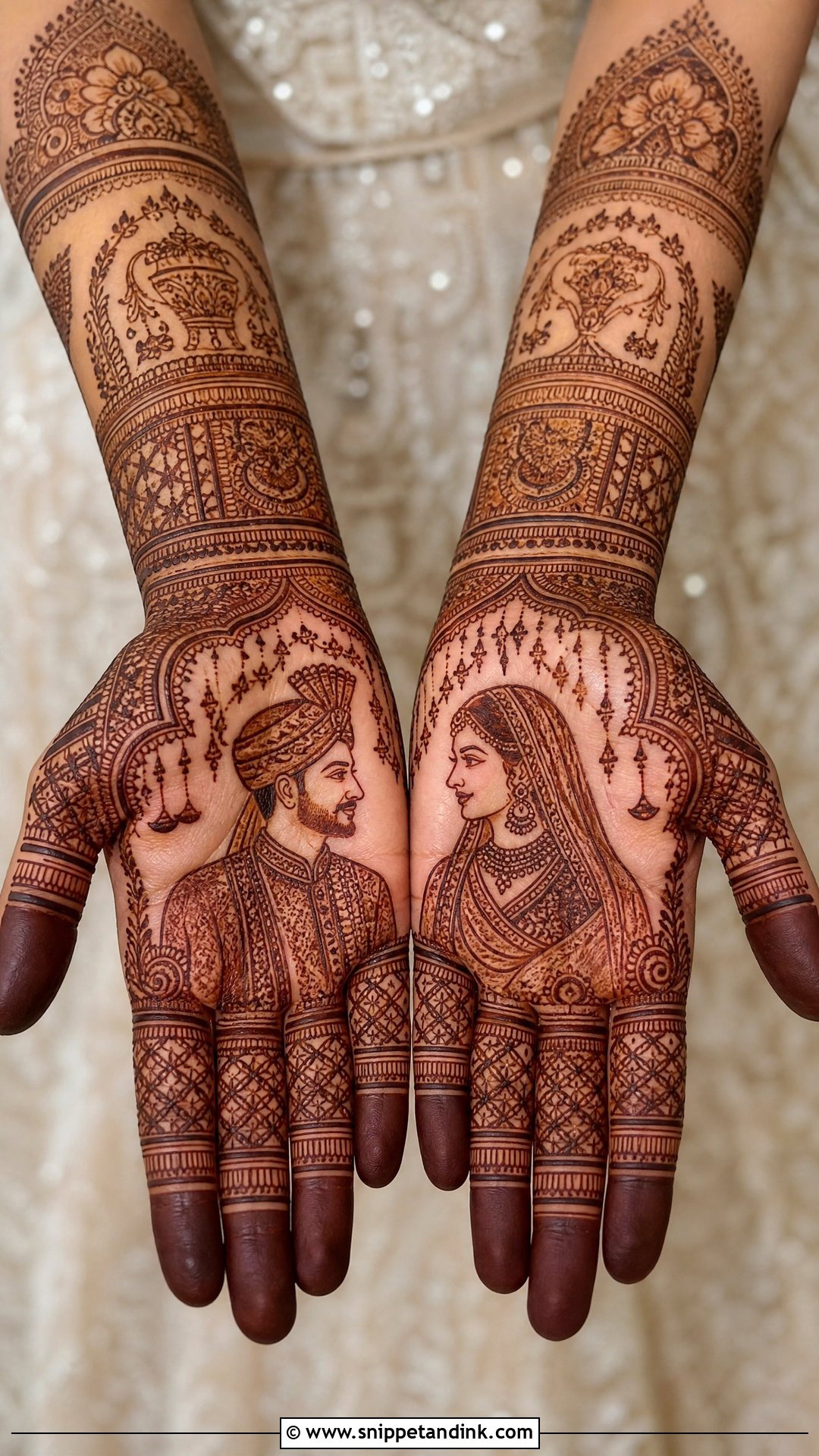
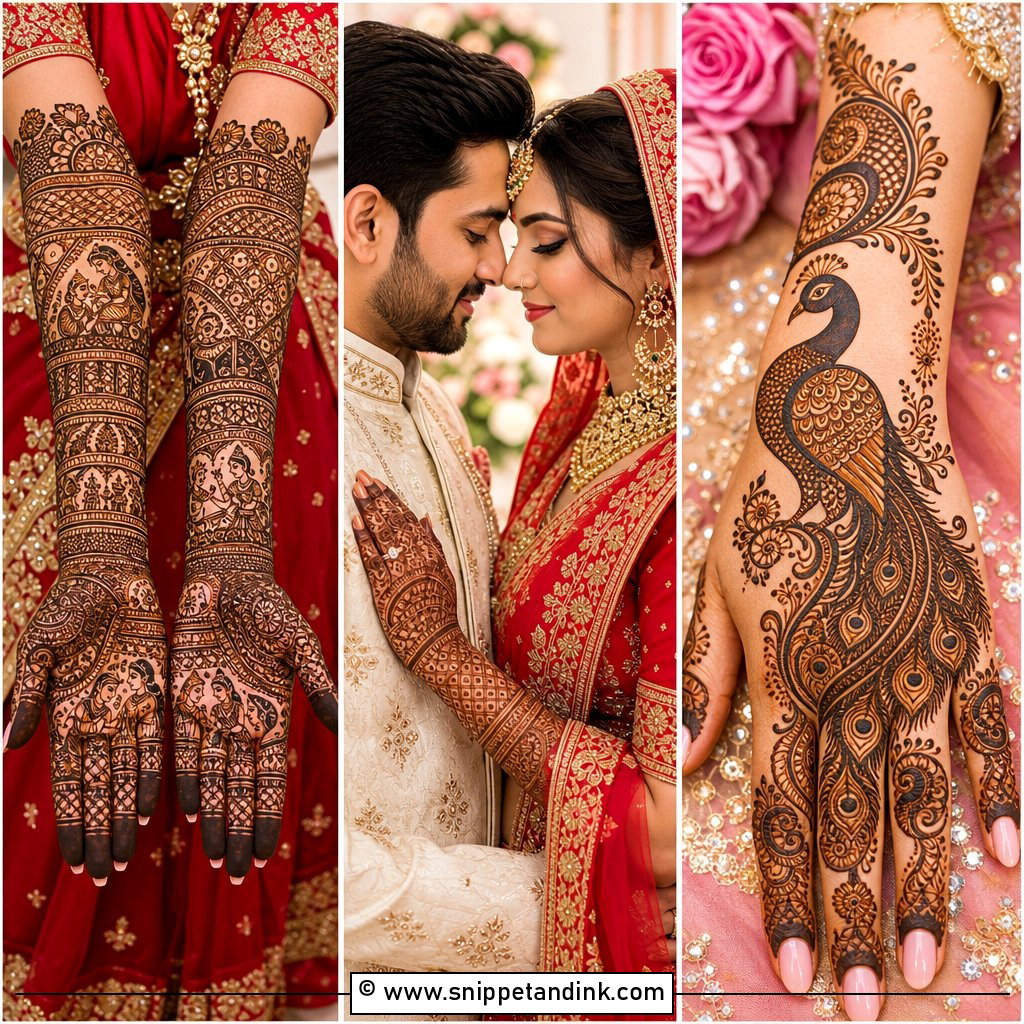
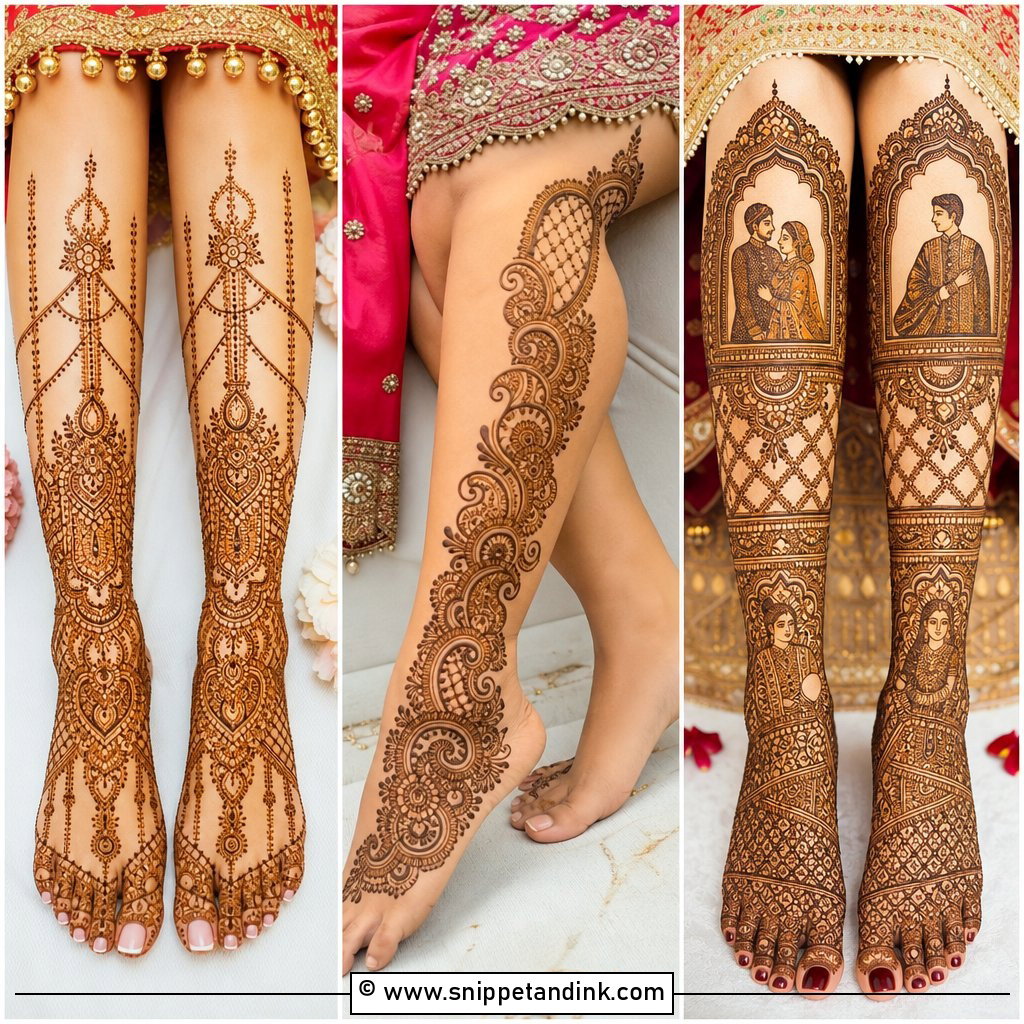
Dulha dulhan mehndi tells the wedding as a story: the bride on one palm, the groom on the other, framed by mandap details, florals, paisleys and borders. Faces take room, so this needs a medium to large palm; on a small hand I draw the figures in profile, which needs less width. Garlands, a kalash, a dhol or baraat elements can be added around them. I keep the fingers a touch lighter so the eye goes straight to the portraits.
3. Rajasthani Bridal Mehndi Design
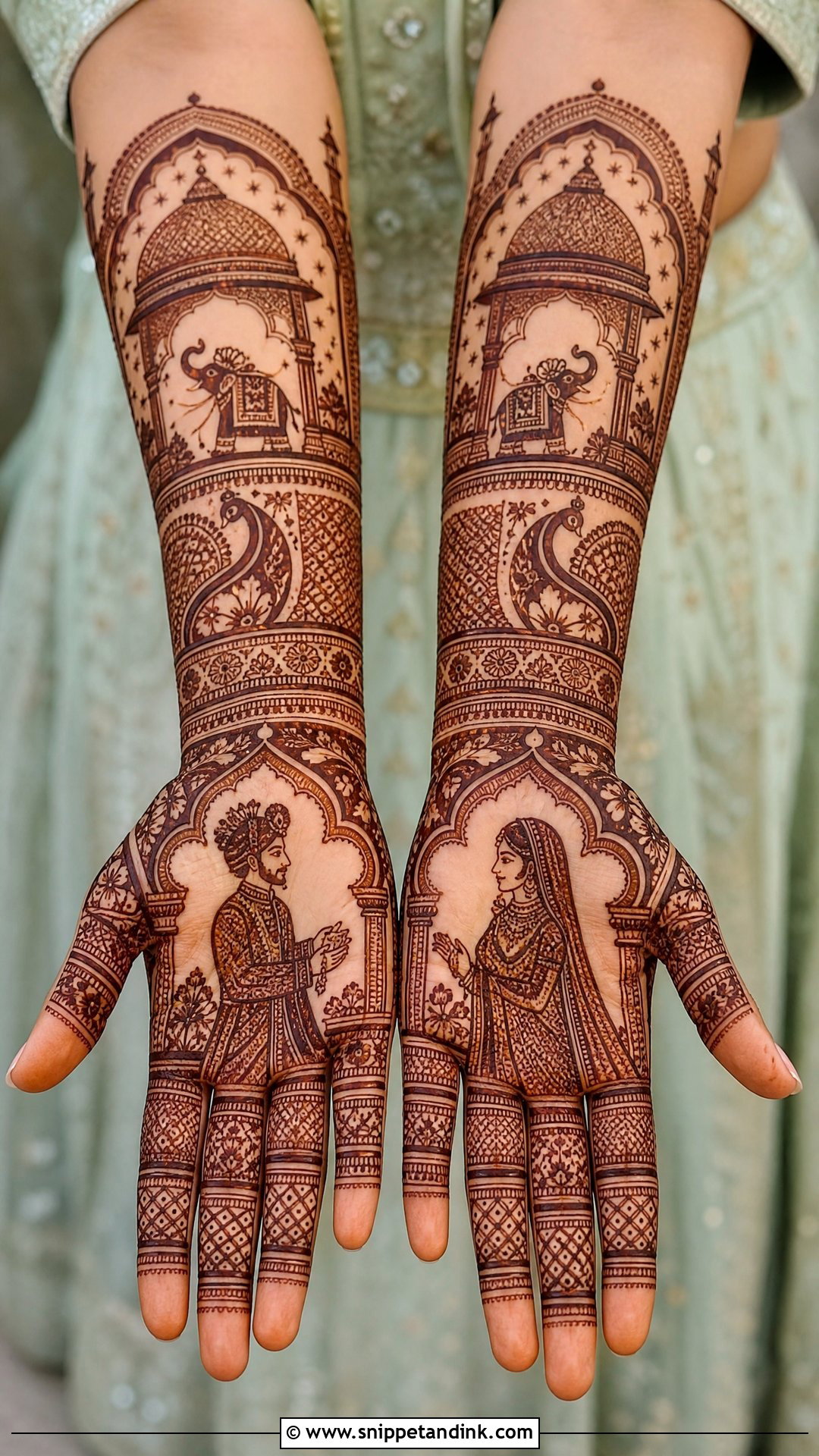
Rajasthani bridal mehndi is built in layers: bride and groom figures, palaces, elephants, peacocks and mirror symmetry on the palm, then architectural panels and bands climbing the wrist and forearm. It’s among the slowest styles I apply, so a full-arm version takes most of an afternoon. Sit somewhere with back support and a cushion under each elbow; holding your arms up unsupported for hours is harder than people expect. The result is rich, festive and rooted in heritage.
4. Marwari Bridal Mehndi Design
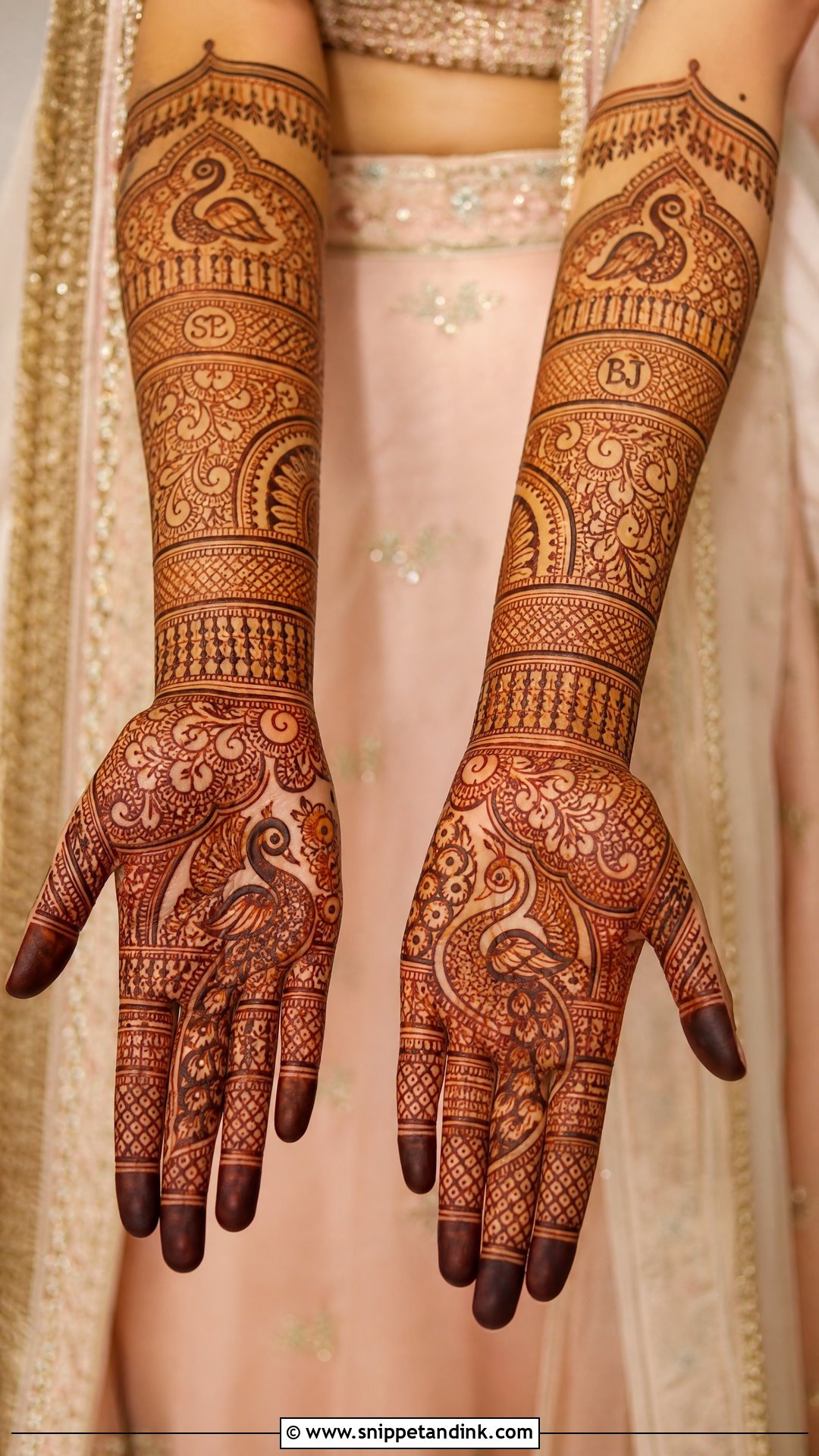
Marwari mehndi fills the fingers completely, then anchors the palm and wrist with larger motifs: fine paisleys, peacock feathers, lotus chains, bride and groom art and bands inspired by traditional jewelry. Very little skin is left bare. It looks especially rich against red, maroon or rani pink outfits. If you want your partner’s initials or the wedding date hidden in the pattern, tell me before I start, because I plan a space for them early rather than squeezing them in later.
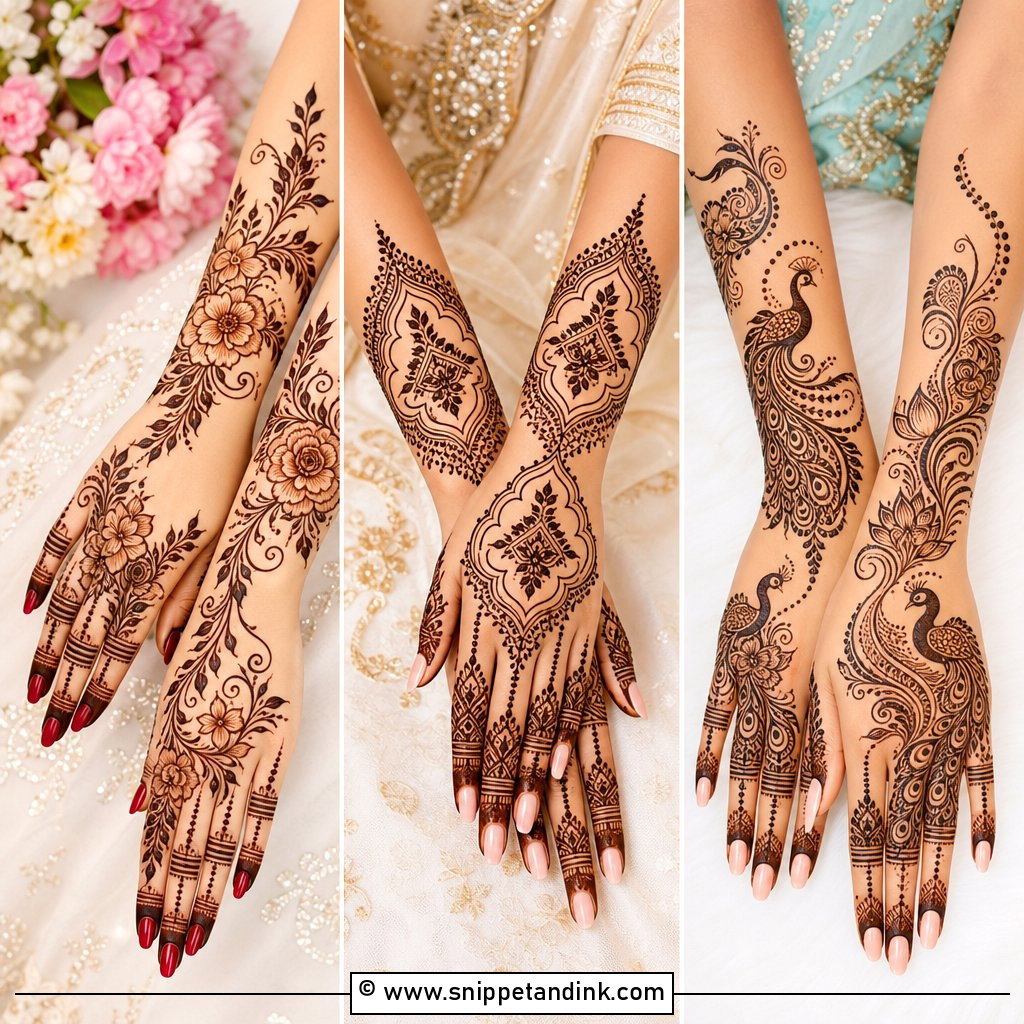
5. Peacock Bridal Mehndi Design
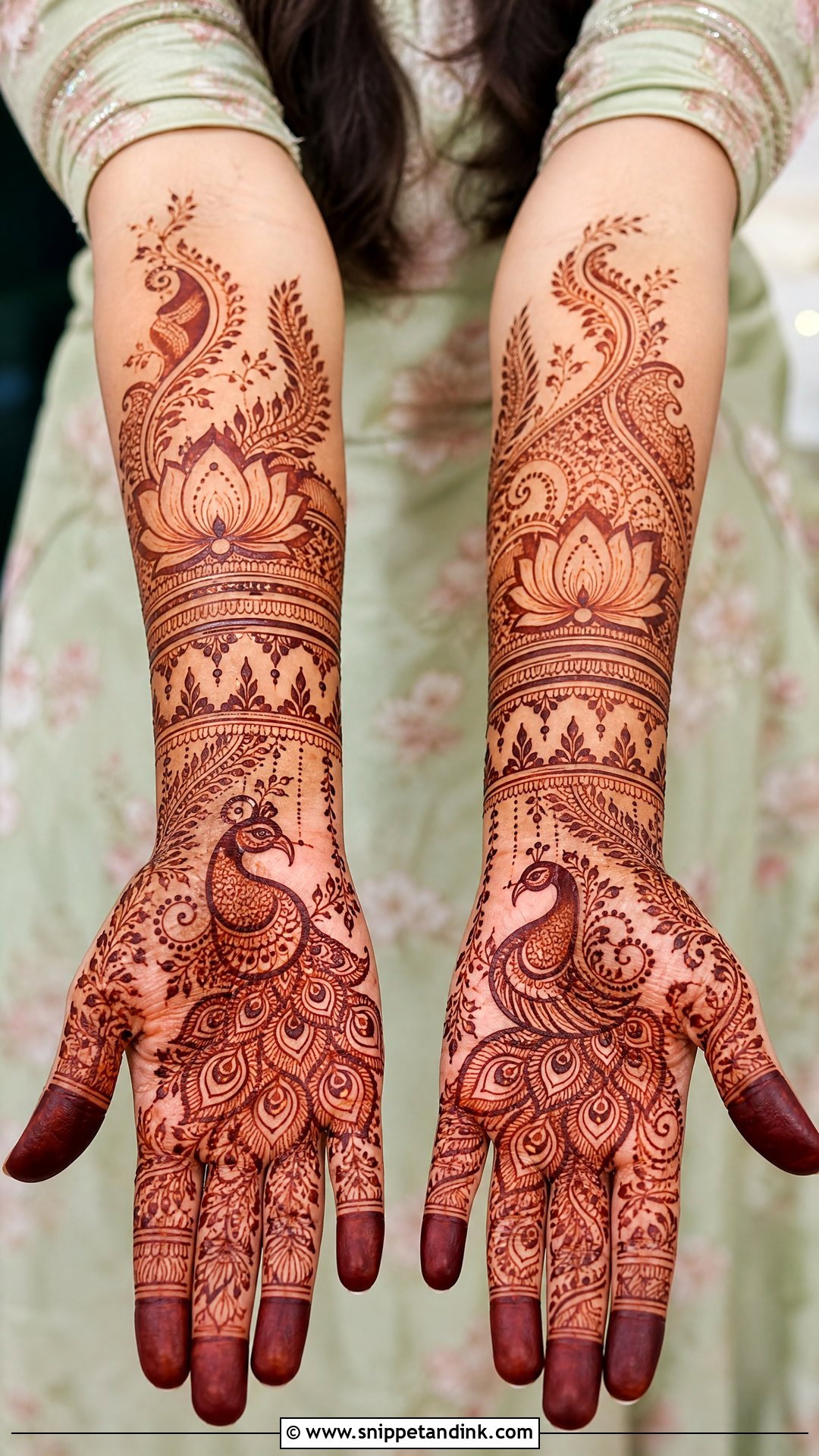
A peacock gives the design curves and movement rather than strict symmetry. It can sit across the palm, run along the forearm or appear as a pair on both hands, and its feathers leave room for lines, dots, checks and leafy extensions. Lotus borders, paisley trails and filled fingertips complete it. Size is the judgment call: I draw the body first and then decide how far the tail travels, so it stays the focal point without swallowing everything around it.
6. Lotus Bridal Mehndi Design
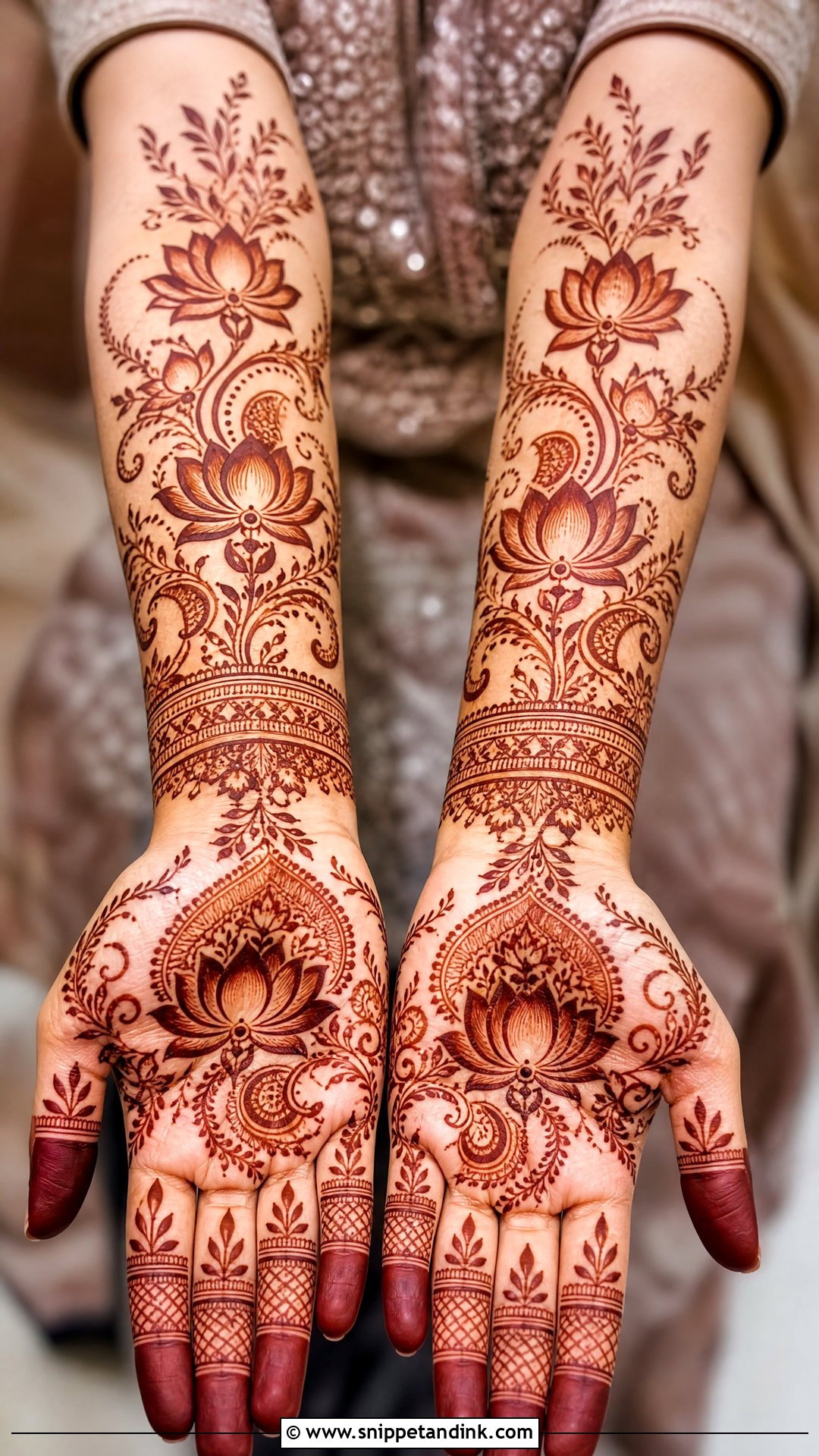
Lotus motifs suit modern and traditional brides alike. They layer well in bands across the palm, wrist, fingers and forearm, and the clean petal outline reads clearly in photos. I place the large lotuses on the wrist or palm centre, then fill with small petals and leaves. It gives plenty of detail without making the hand look heavy, and it pairs with temple jewelry, silk sarees, pastel lehengas and classic red bridal wear.
7. Mandala Bridal Mehndi Design
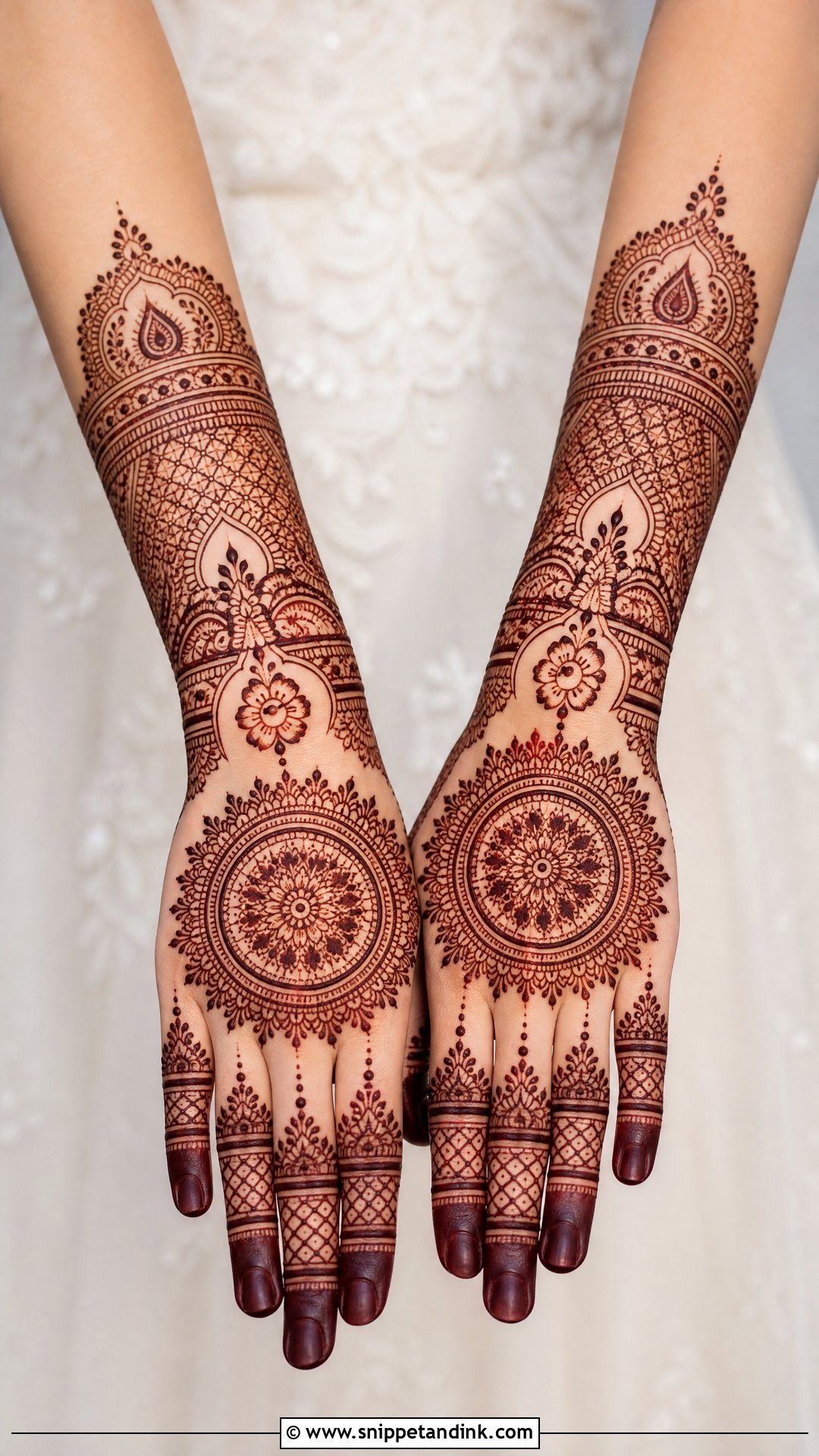
A mandala sits in the centre of the palm, with rings of petals, dots and fine lines spreading outward. For a bridal version, it has to connect to decorated fingers, wrist cuffs and forearm patterns, or it looks like a single stamp. Symmetry is the whole point, so I mark the centre with a dot and build each ring all the way around before starting the next. It works on the front and the back of the hand; paisley borders, lotus bands and filled fingertips make it bridal.
8. Jaali Bridal Mehndi Design
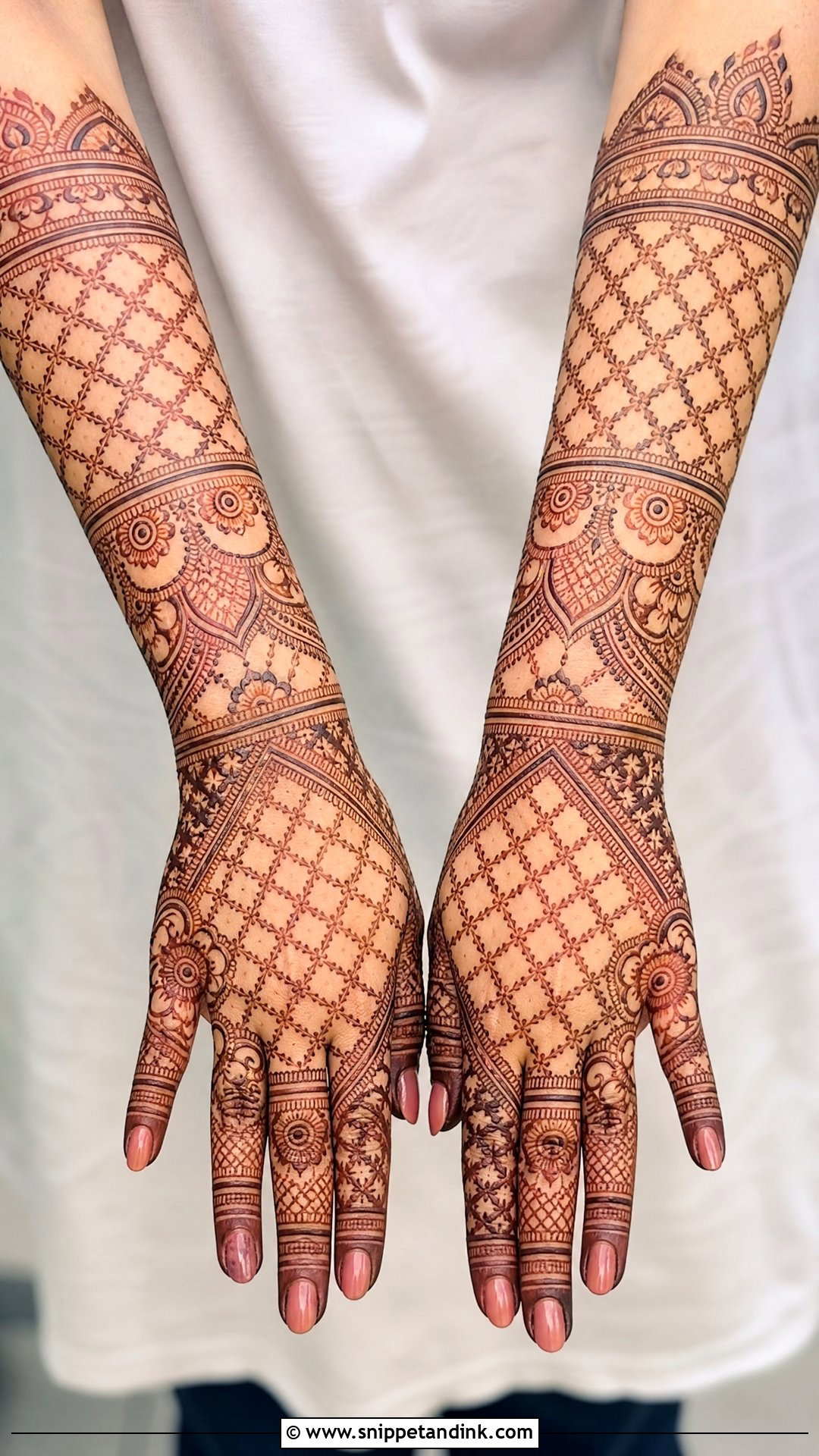
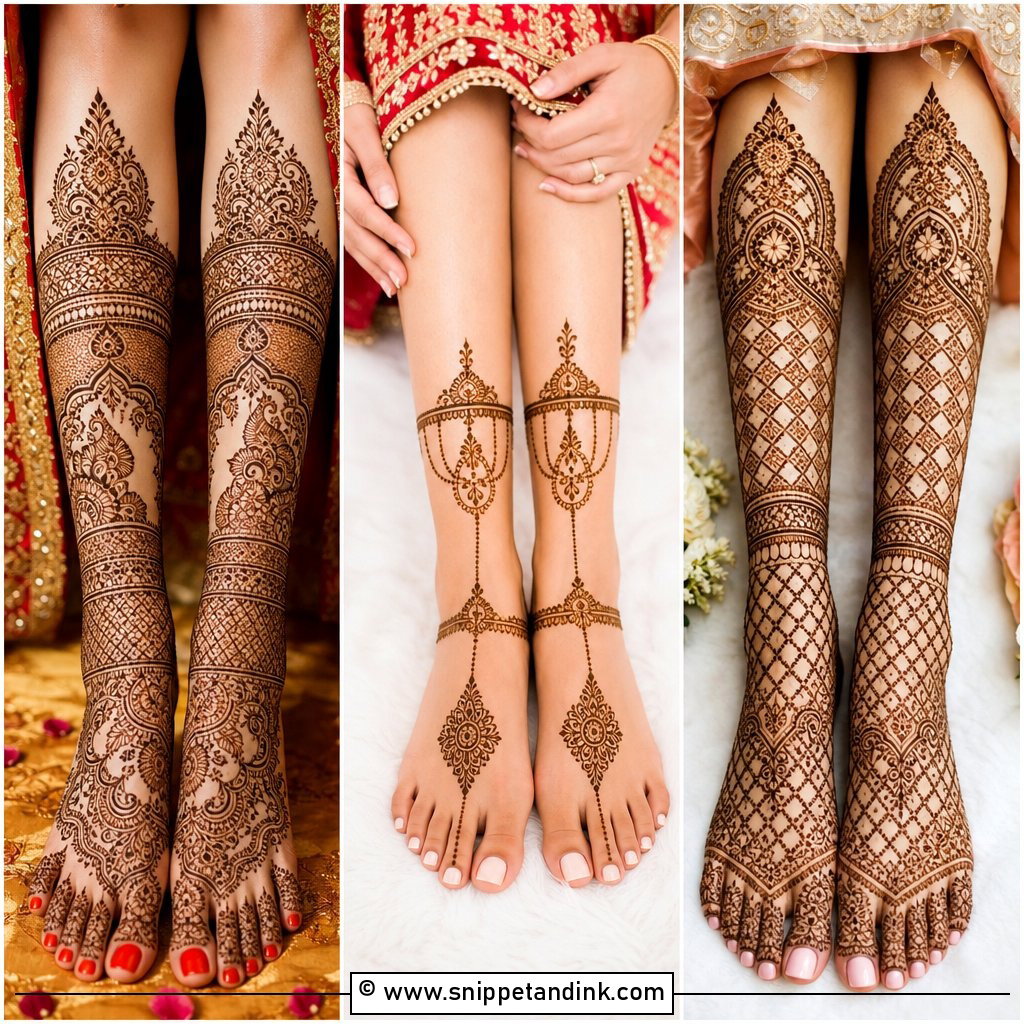
Jaali is a mesh of checks, diamonds or netting mixed with florals, paisleys and wrist bands, and on the back of the hand it reads like lace. On the palm it works as a filler around bigger motifs. The mistake I see most is using one mesh size everywhere, which looks flat, so I vary the grid and add tiny dots inside some cells. Against bangles and rings it looks refined. Fine mesh needs a thin, smooth cone; a thick paste blurs the lines together as it dries.
9. Arabic Indian Bridal Mehndi Design
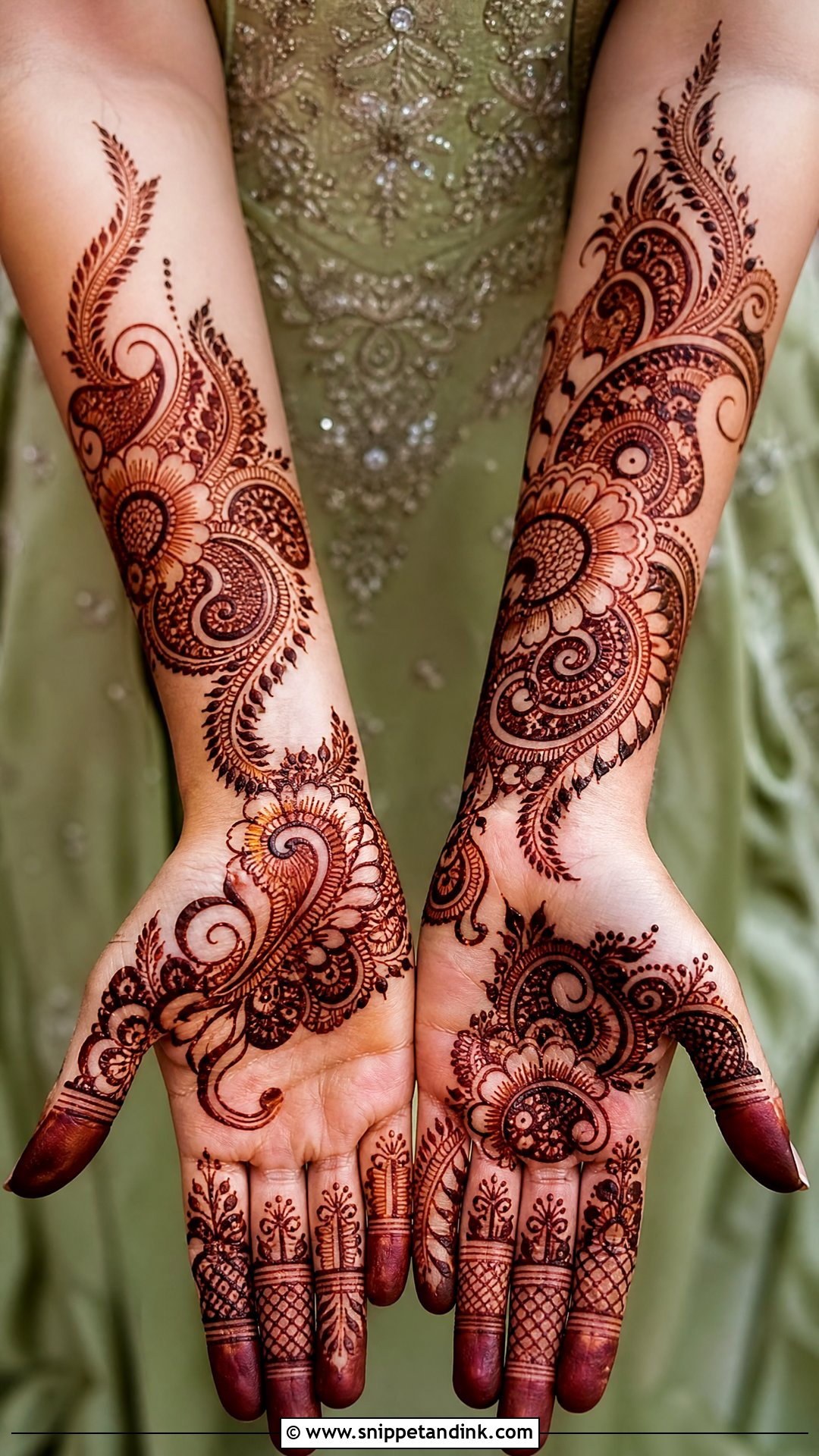
Arabic and Indian elements mix well when you want bold work with less density. Flowing Arabic trails move diagonally across the palm toward the forearm, carrying Indian paisleys, lotus, peacocks and wrist cuffs, with open skin between. It’s quicker to apply than a full Indian design and suits engagements, intimate weddings and anyone who prefers a lighter feel. Shaded leaves and neat fingertips keep it bridal rather than casual.
10. Indo Arabic Bridal Mehndi Design
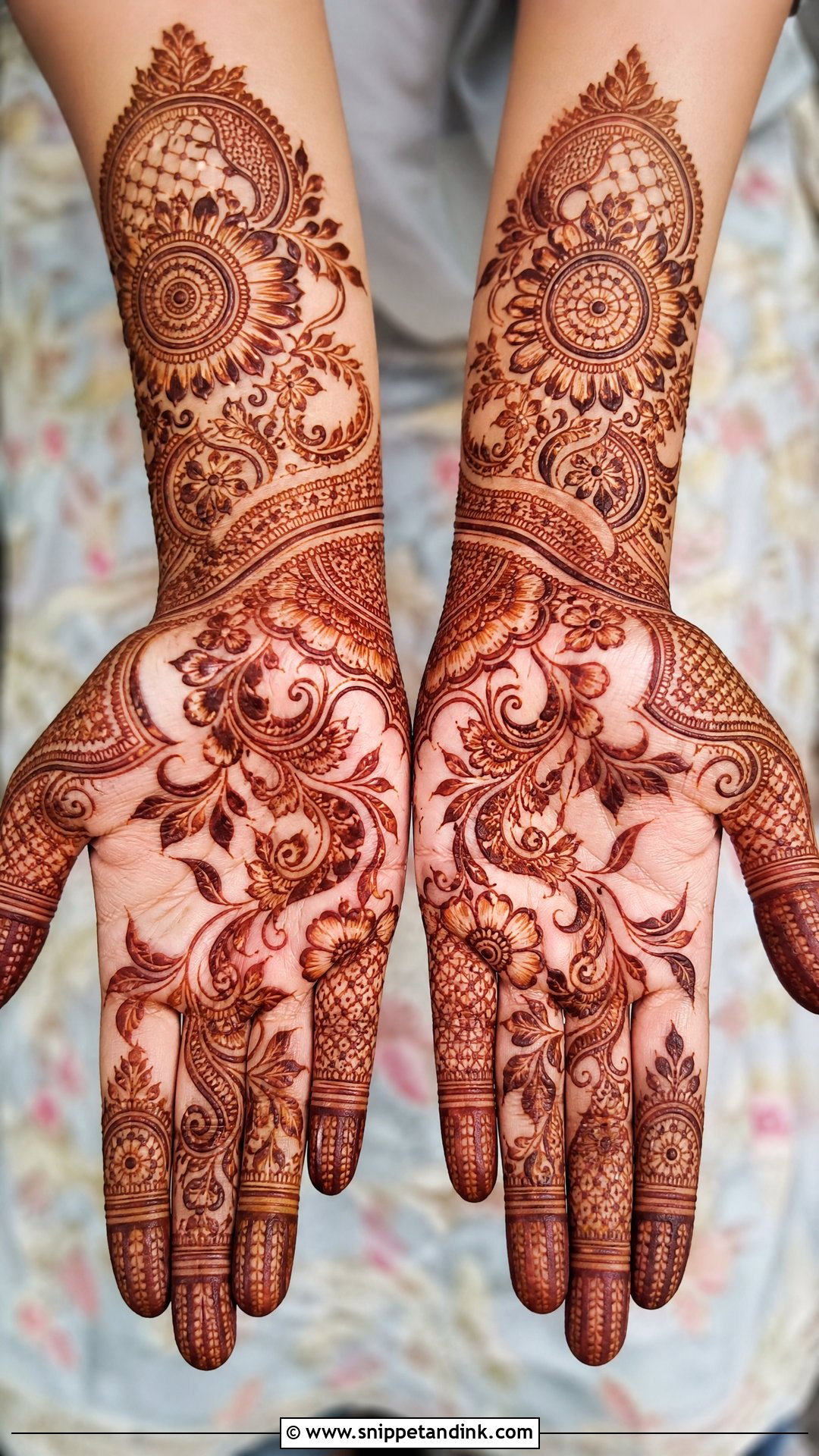
Indo Arabic bridal mehndi uses Arabic floral flow with Indian fine filling and symmetry. A typical layout has a large floral trail, paisley borders, shaded leaves, mandala accents and delicate finger work, covering palm and forearm but leaving pockets of open skin. Bridesmaids often wear the lighter version; for a bride I add cuffs, heavier shading and initials so the two don’t look the same in photos.
11. Back Hand Bridal Mehndi Design
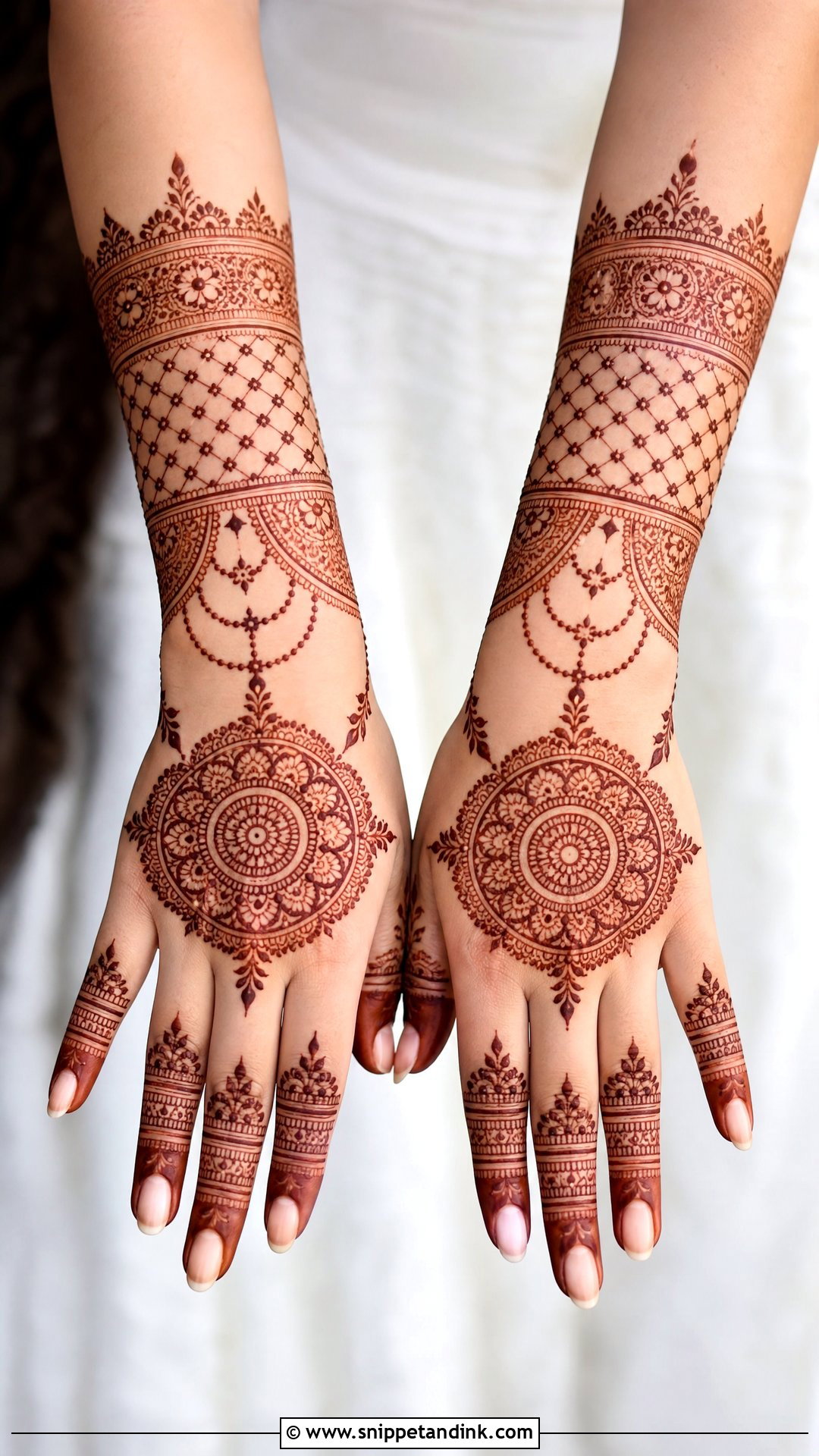
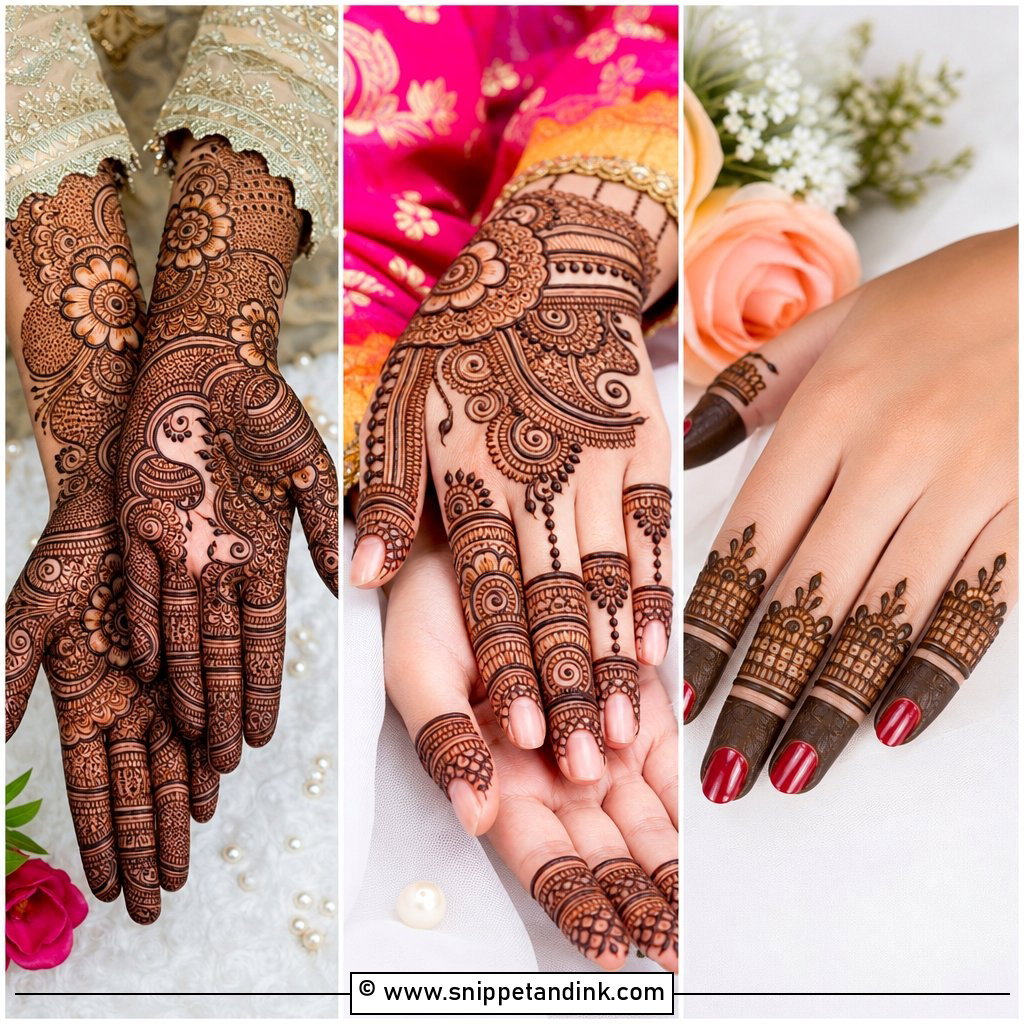
Back hand mehndi is what shows with rings, bangles, kaleeras and most posed photos, so it deserves as much planning as the palm. A complete one covers the fingers, back of the hand, wrist and part of the forearm with mandalas, jaali, floral chains, bracelet bands and finger details. It should flow from fingertip to wrist rather than sit as separate motifs. If the palm is very heavy, an airier back hand balances it; for a royal look, go symmetrical with full finger coverage. Close-ups of the rings will show every line.
12. Front Hand Bridal Mehndi Design
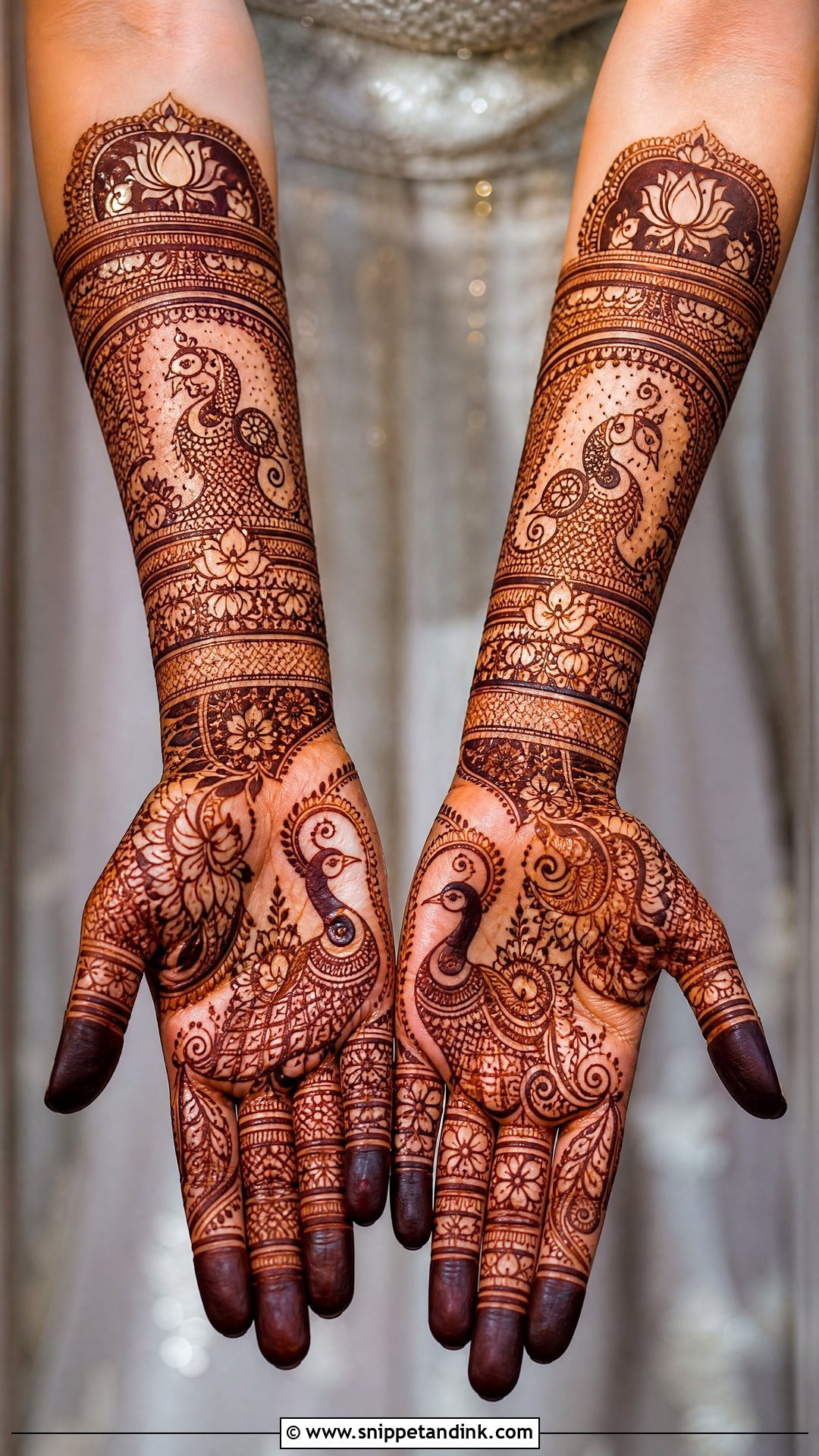
The palms are shown during rituals, so the front hand carries the main story: mandalas, portraits, peacocks, lotus, paisleys or personal symbols. The two palms have to work as a pair when held side by side, and that’s how I sketch them, with the centre line between your hands as the axis. Keep central motifs bold and fillers small. Fingers can be fully shaded, patterned or sectioned, and wrist cuffs finish it. Go dense if you love tradition, or choose larger motifs with spacing for clarity.
13. Bridal Mehndi Design With Name
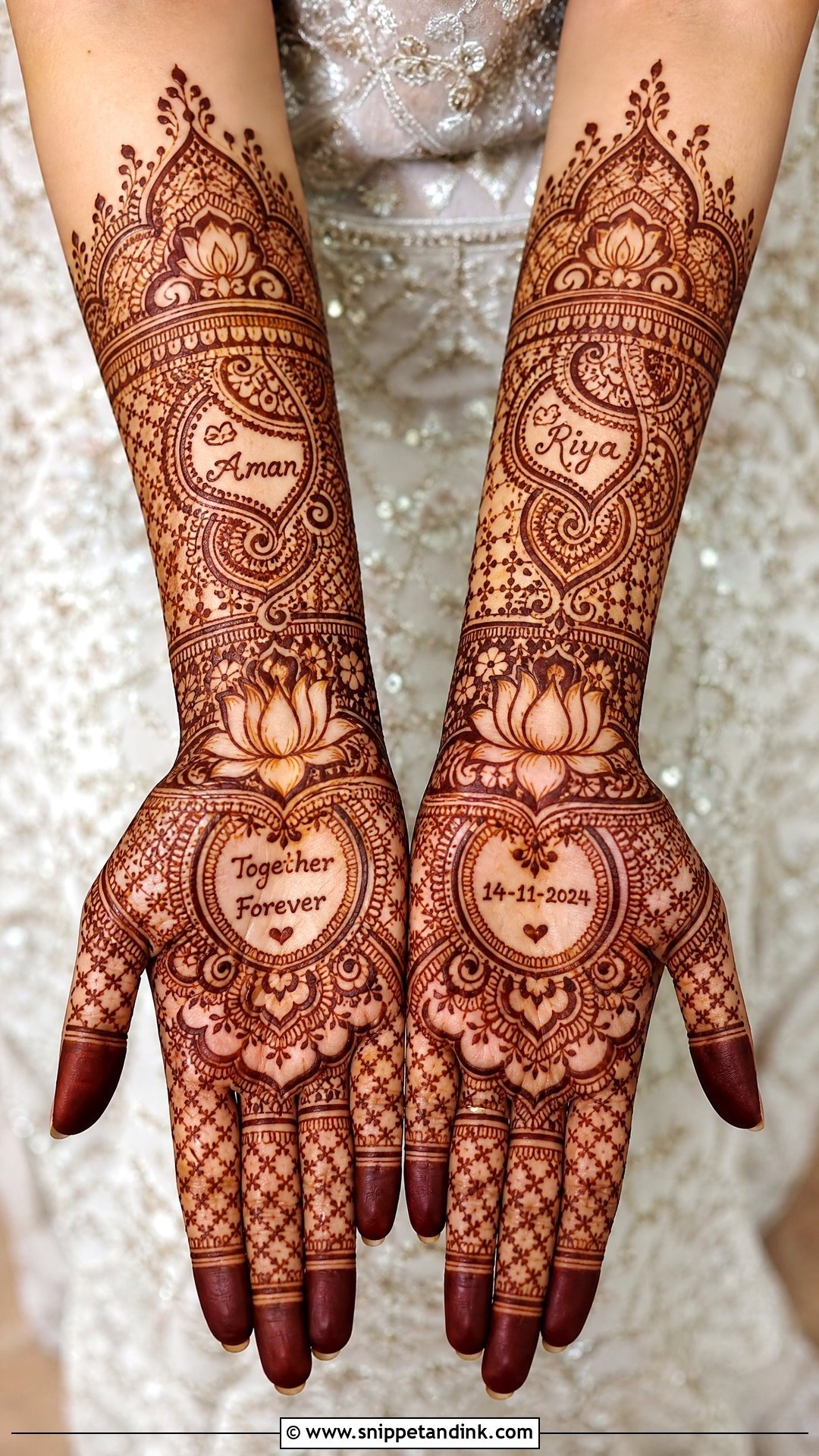
Hiding the groom’s name or initials is a playful tradition, and the trick is placing it where it blends in: inside a paisley, a jaali cell, a lotus petal, a mandala ring or a forearm band. The wedding date, couple initials or a tiny meaningful symbol can join it. I always show the bride where I’ve placed it before the paste dries, because once it stains, there’s no moving it. Make it findable but not obvious.
14. Minimal Indian Bridal Mehndi Design
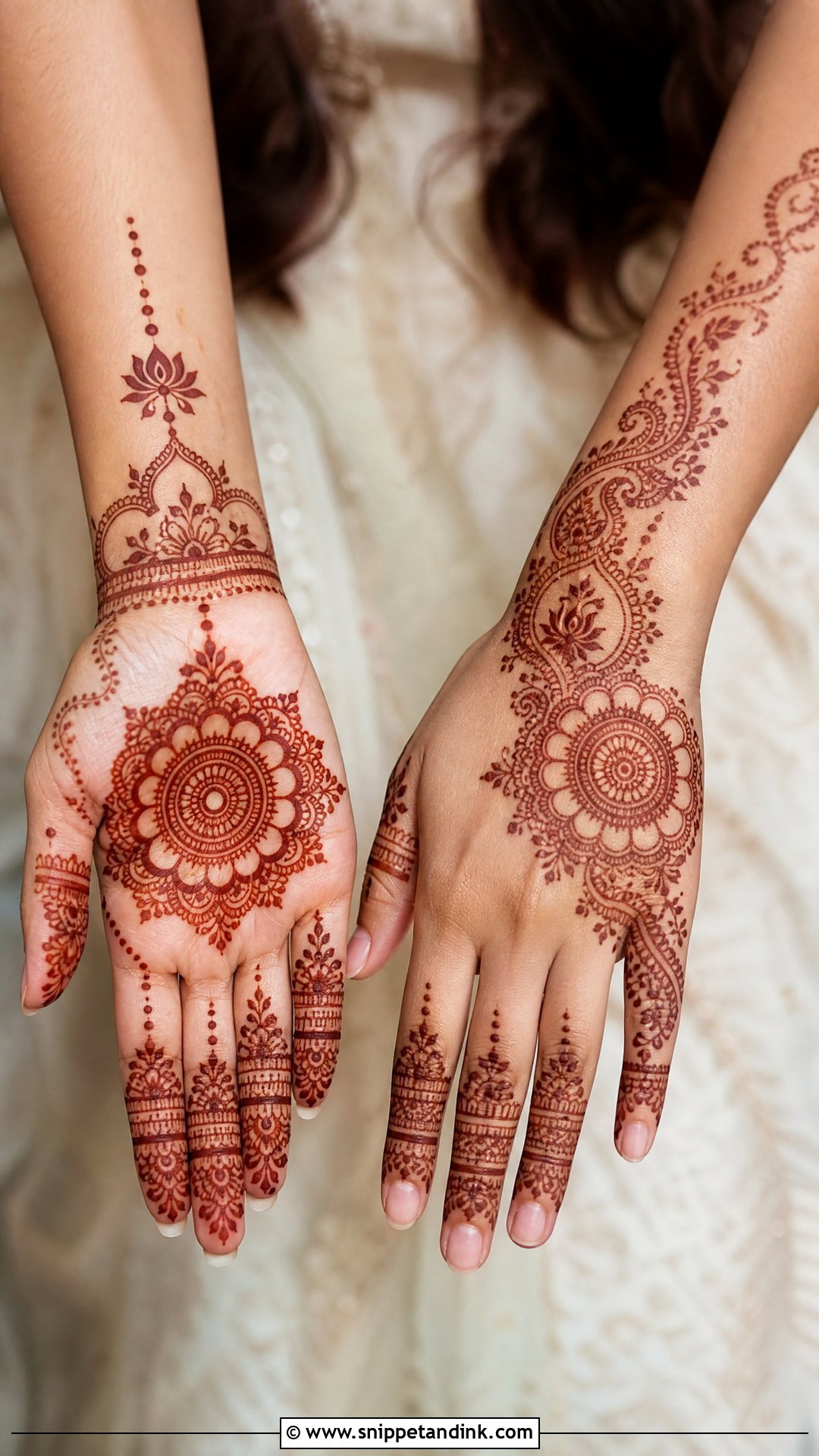
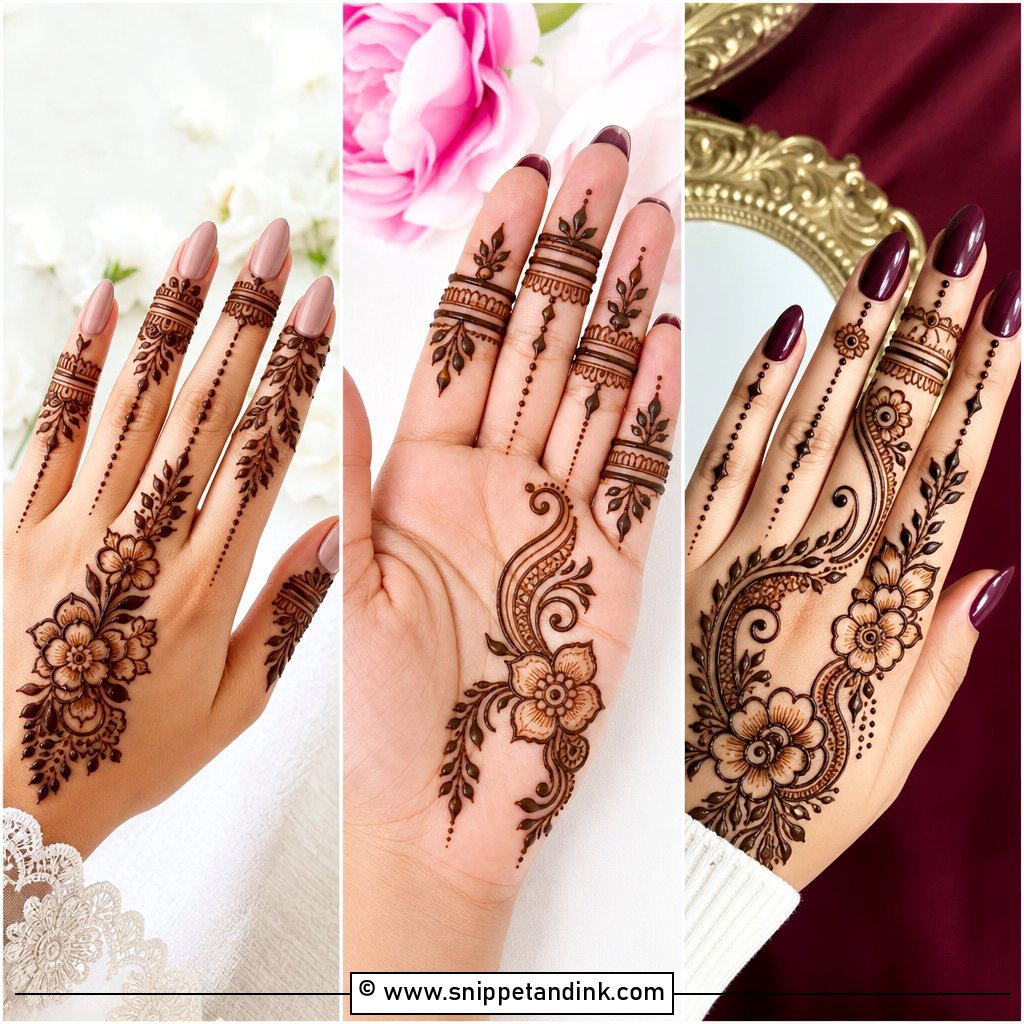
Minimal bridal mehndi still feels like a wedding design, just with more open skin. A central mandala, light paisley trails, a floral wrist cuff, neat finger patterns and small dots are enough. It suits courthouse weddings, intimate ceremonies, destination weddings and brides with detailed sleeves or jewelry that should stay visible. Choose motifs with cultural meaning, like lotus, paisley or jaali, so it doesn’t look like a casual party design. The open spaces make the stain look crisp.
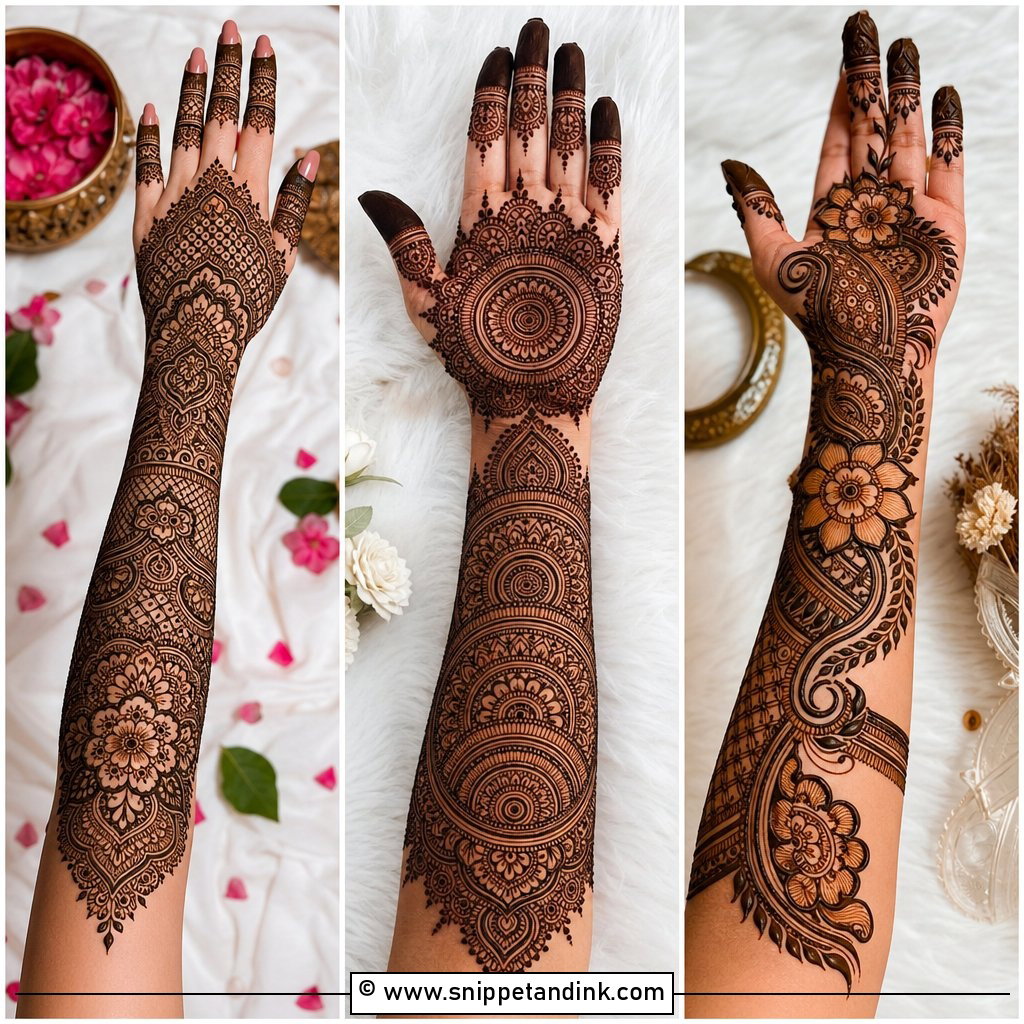
15. Heavy Bridal Mehndi Design
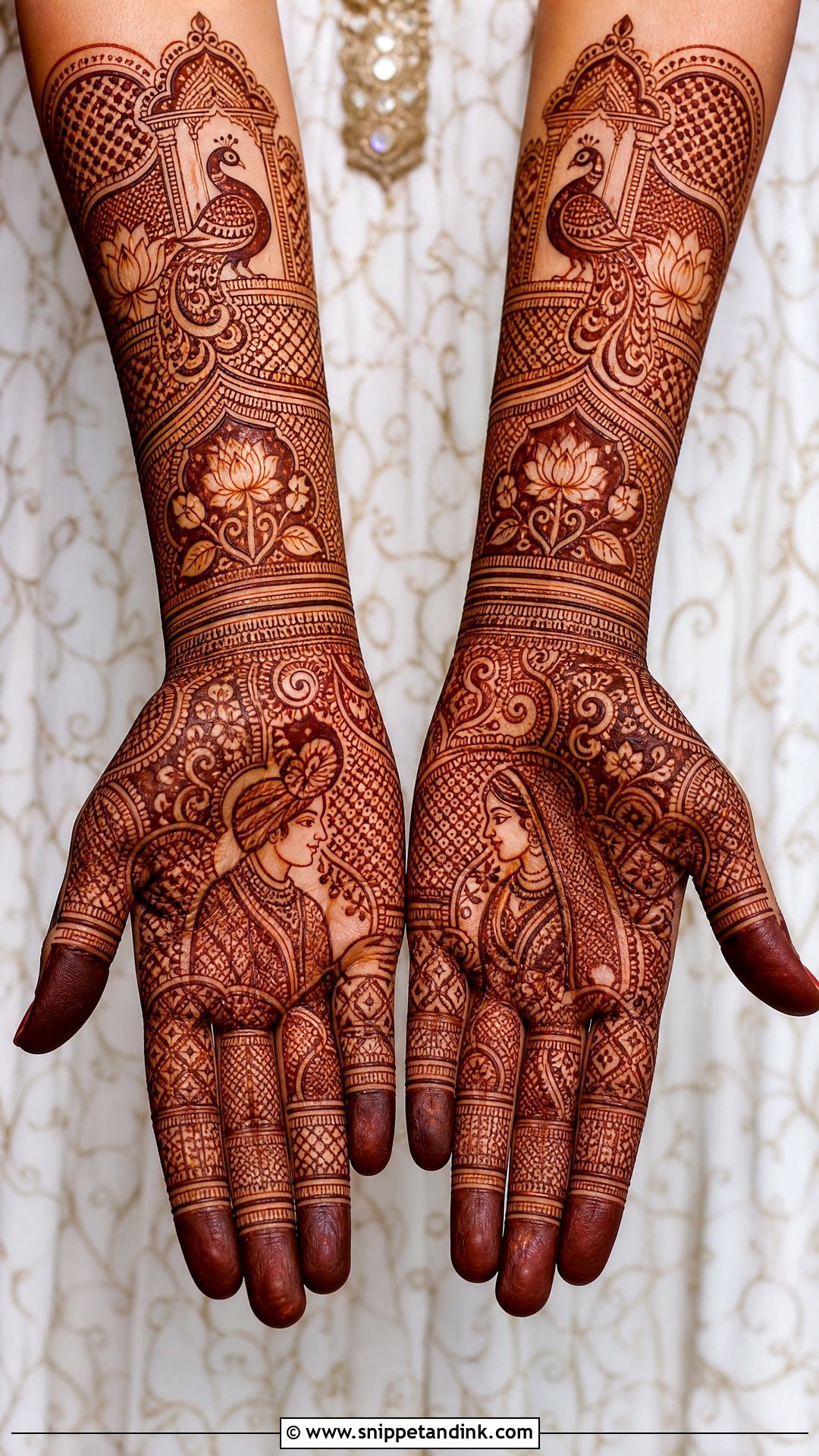
Heavy bridal mehndi runs from fingertips to forearm with almost no empty space: paisleys, peacocks, bride and groom art, lotus, jaali, vines and tiny fillers. Without structure it quickly turns muddy, so I divide the arm into clear zones first, palm motifs, wrist cuffs and forearm panels, and outline each one before filling. It suits grand outfits and traditional photography. Plan for the time it takes, and plan for not using your hands for a good while afterwards.
16. Modern Indian Bridal Mehndi Design
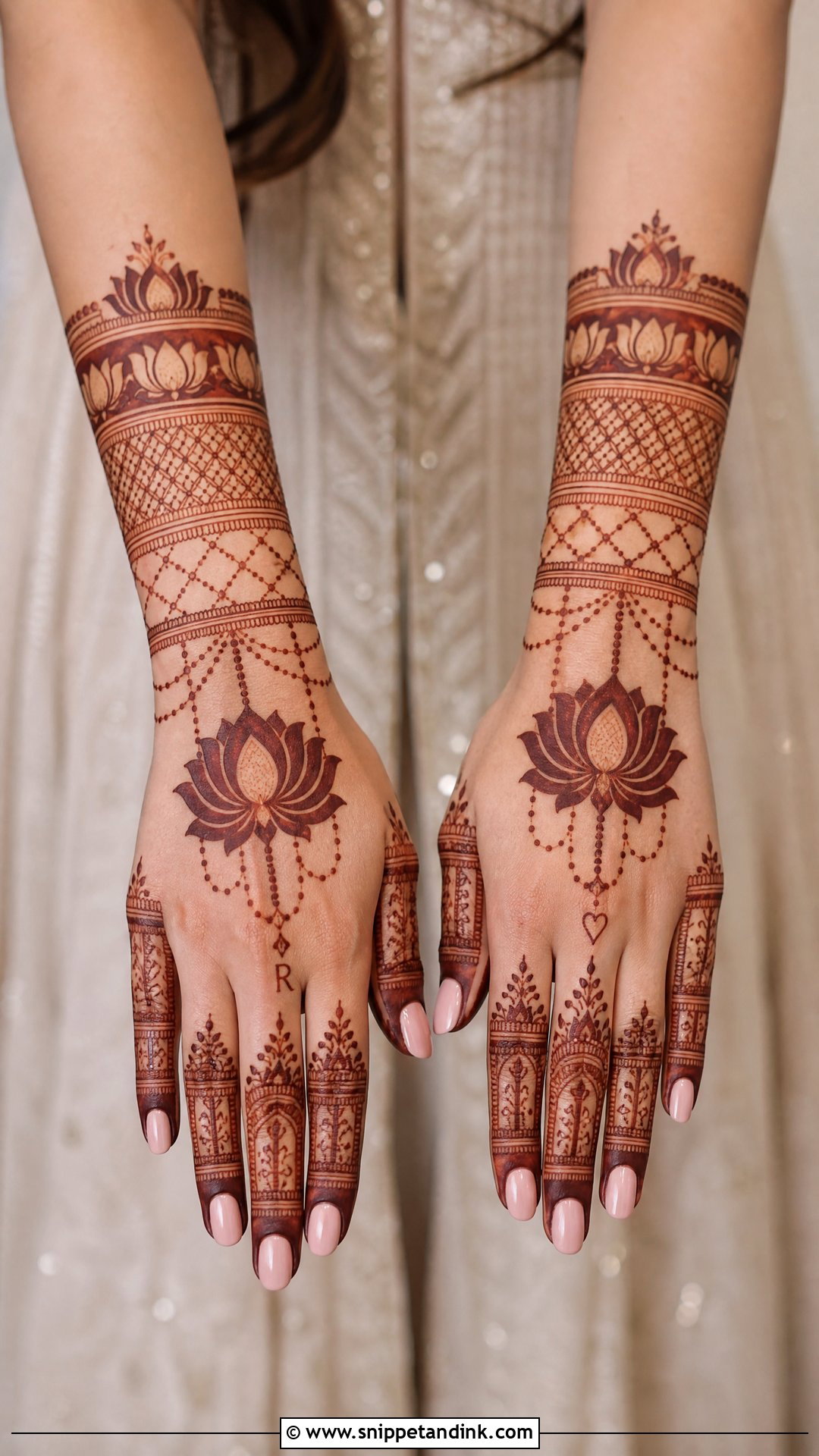
Modern bridal mehndi keeps traditional motifs but arranges them with more space: bold focal points, bracelet-style cuffs, negative space and personalized details. Lotus chains, geometric jaali, leafy trails, mandala palms or fine finger work appear in a cleaner layout. It suits pastel lehengas, fusion outfits and minimal jewelry. I give each hand one strong focal point and link it to the wrist and forearm, so it doesn’t drift into looking unfinished.
17. Bracelet Bridal Mehndi Design
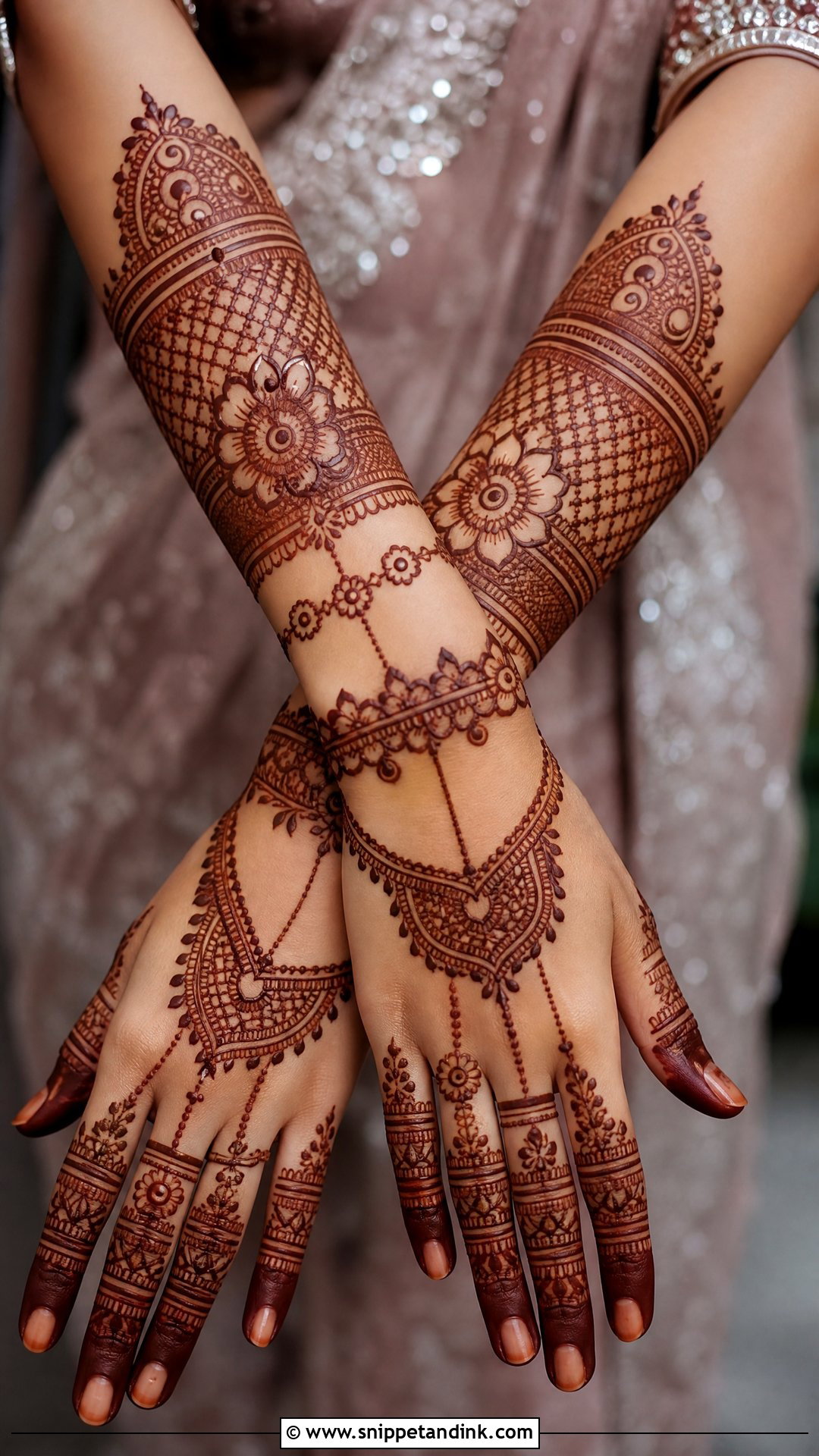
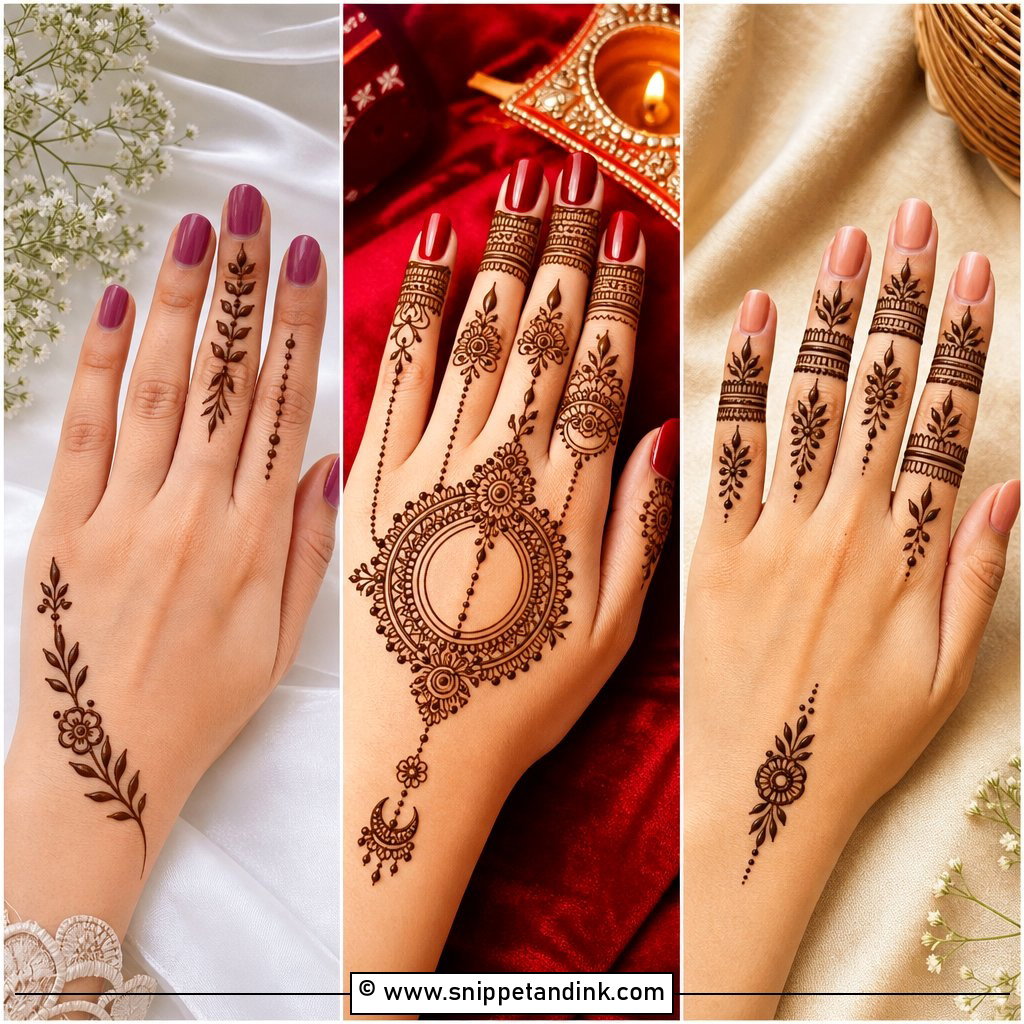
A bracelet design turns the wrist and back of the hand into jewelry: ring chains, finger lines, wrist cuffs, floral bands, jaali panels and dotted details hanging like beads. It’s a good way to keep a back hand design lighter while the palm stays simple. It works alongside rings, bangles and kaleeras without competing. For a bride, extend the bracelet a little up the forearm and add tiny paisleys or lotuses so it stays tied to tradition.
18. Portrait Bridal Mehndi Design
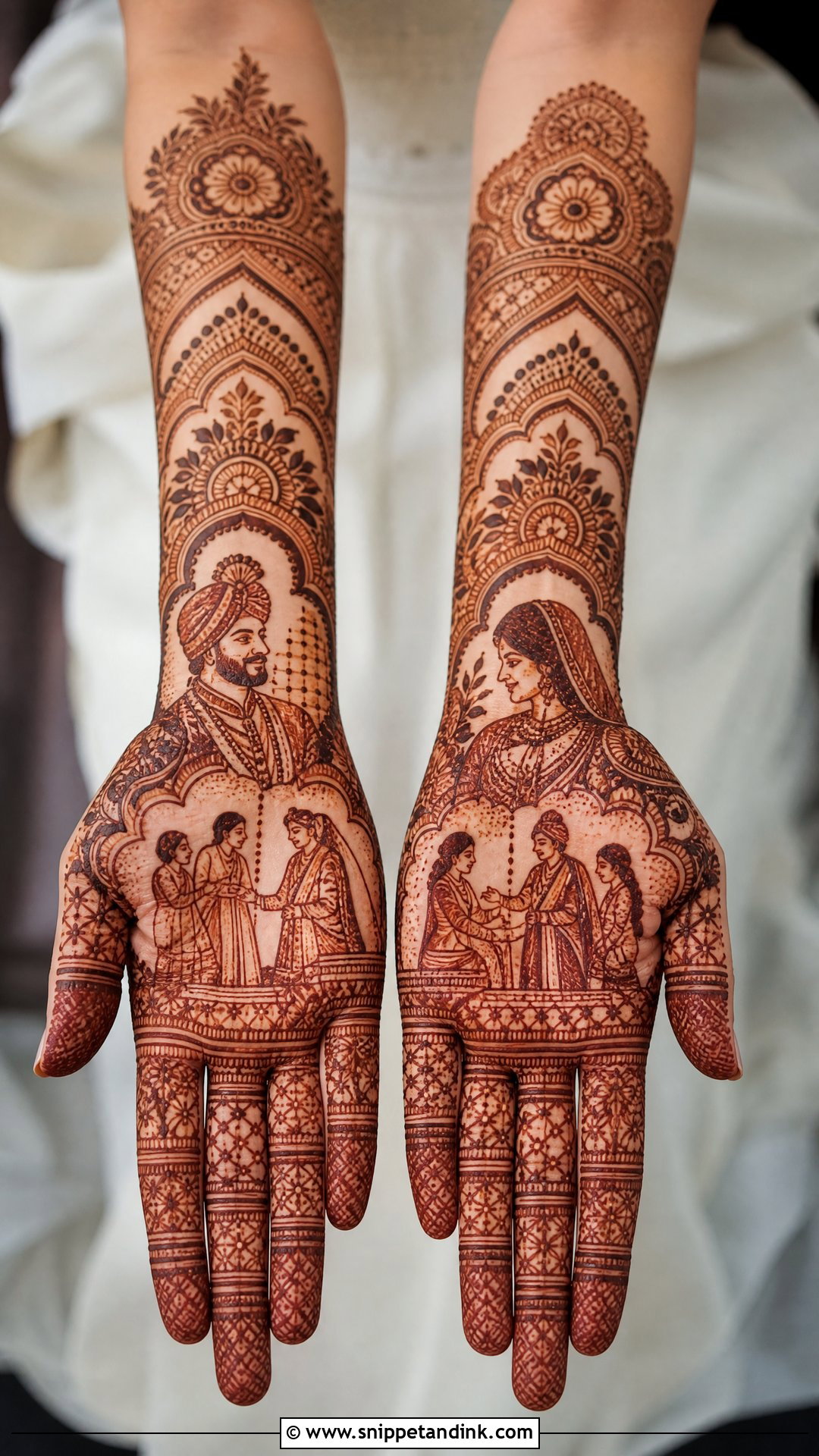
Portrait mehndi shows the bride and groom, a ritual, a couple pose or a small ceremony scene, usually on the palms or forearms with florals, paisleys, mandalas and jaali around it. Faces at this scale are the hardest thing in henna; a wobble in an eye line changes the expression. Send reference photos to your artist ahead of time, and look at her past portrait work, not just her florals. Keep the surrounding pattern calm so the figures stay readable.
19. Finger Bridal Mehndi Design
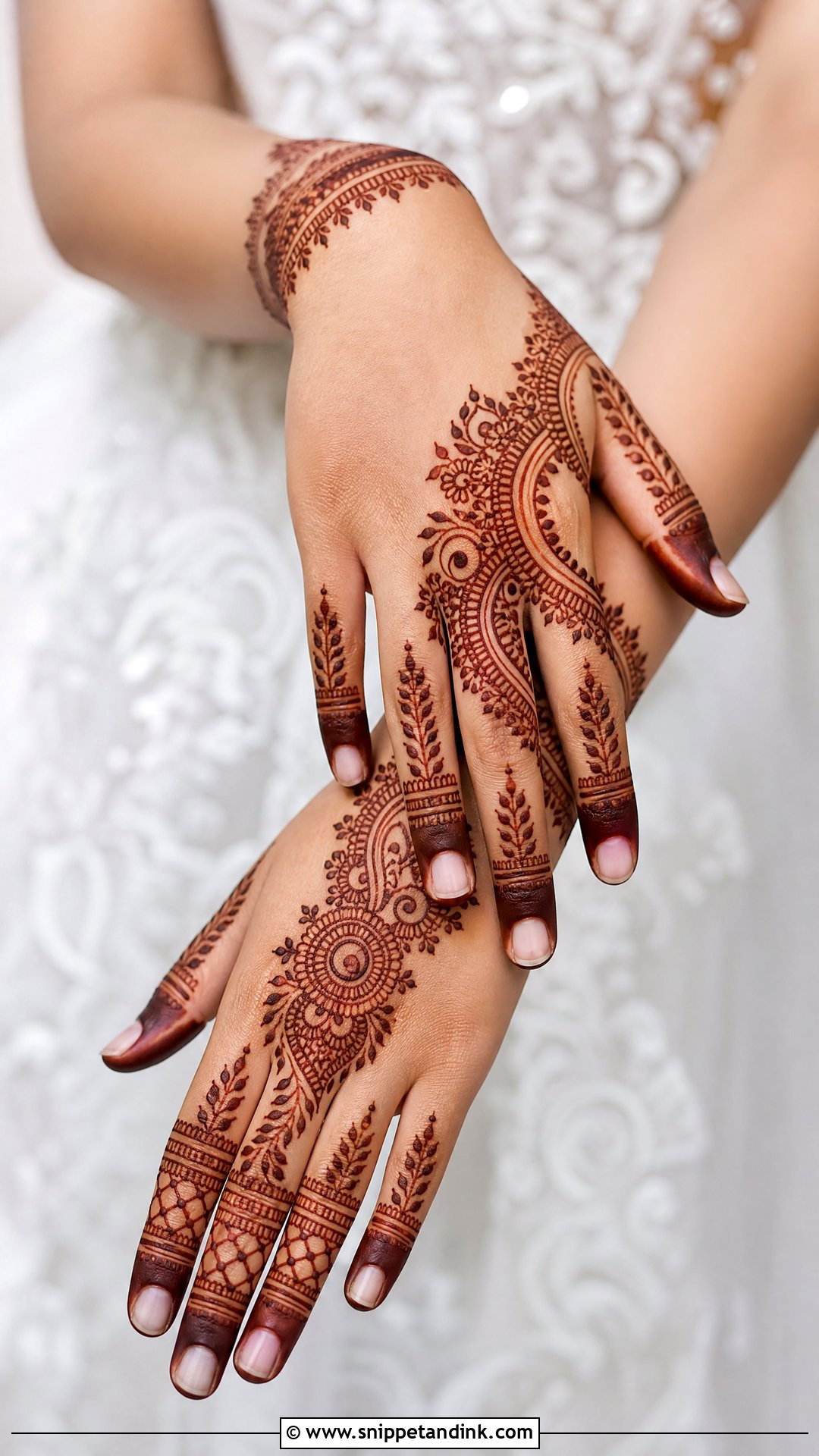
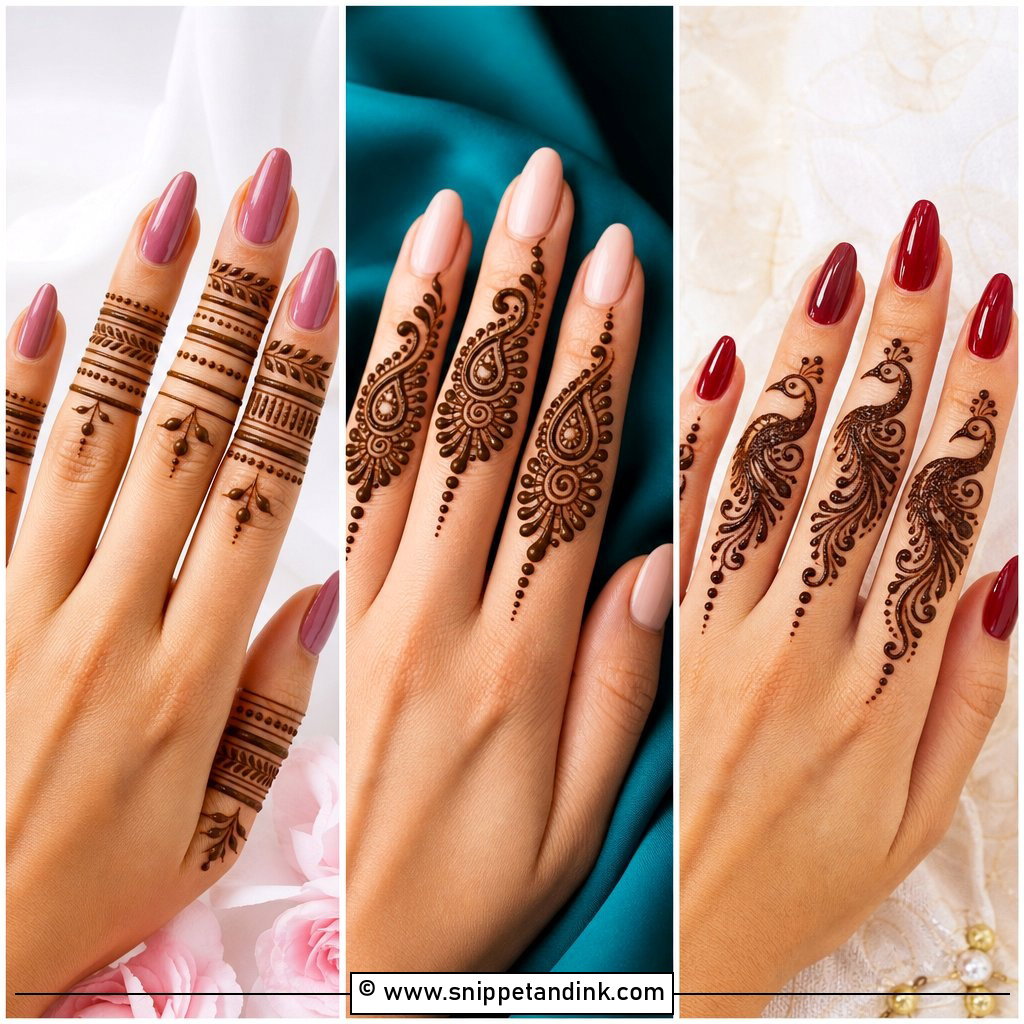
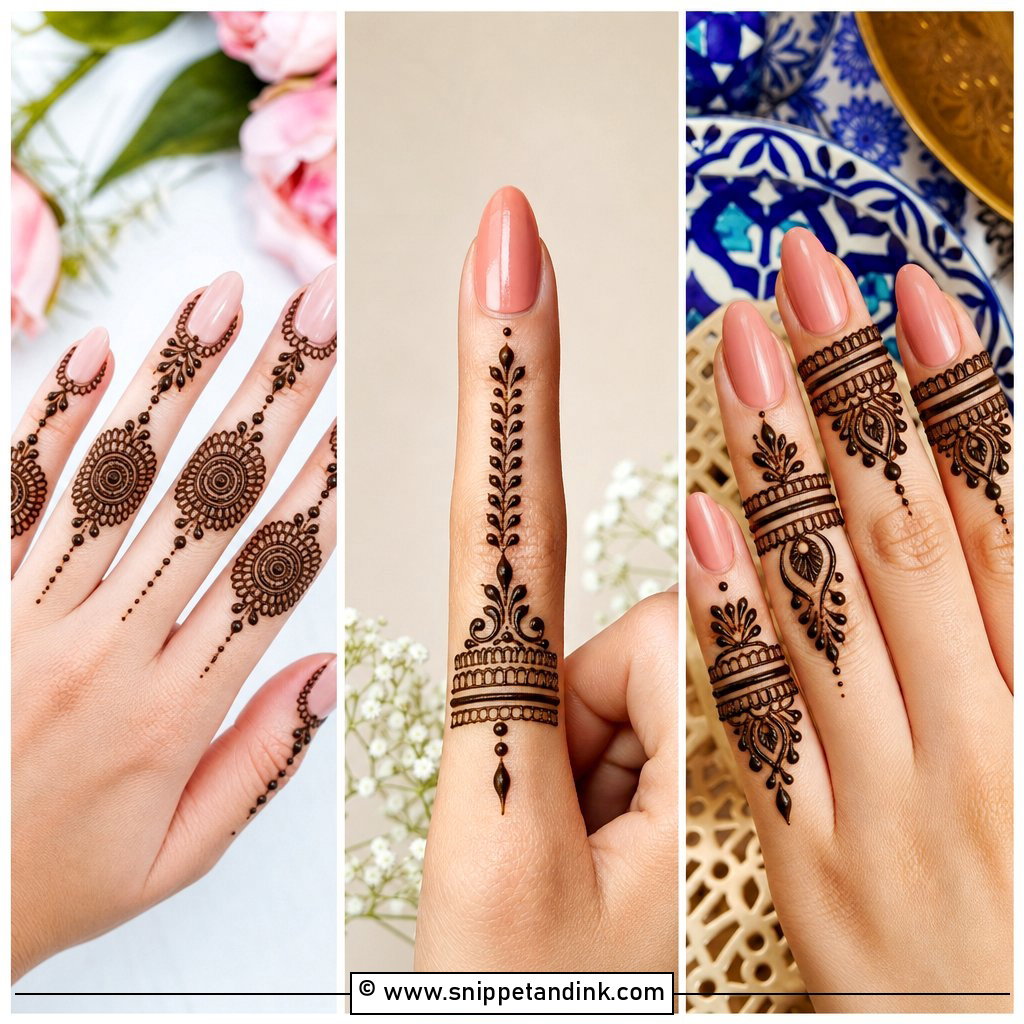
Detailed fingers need to connect to something else, a palm motif, a wrist cuff or a back hand pattern, or they look like a design that stopped early. Filled tips, leafy lines, ring bands, checks, dots and slim paisley strips are the usual choices, and they show clearly in ring close-ups. It’s a useful layout if you’d rather keep the palms light. Keep finger designs consistent across both hands. Fingertips stain darkest of anywhere on the hand, so solid tips come out very deep.
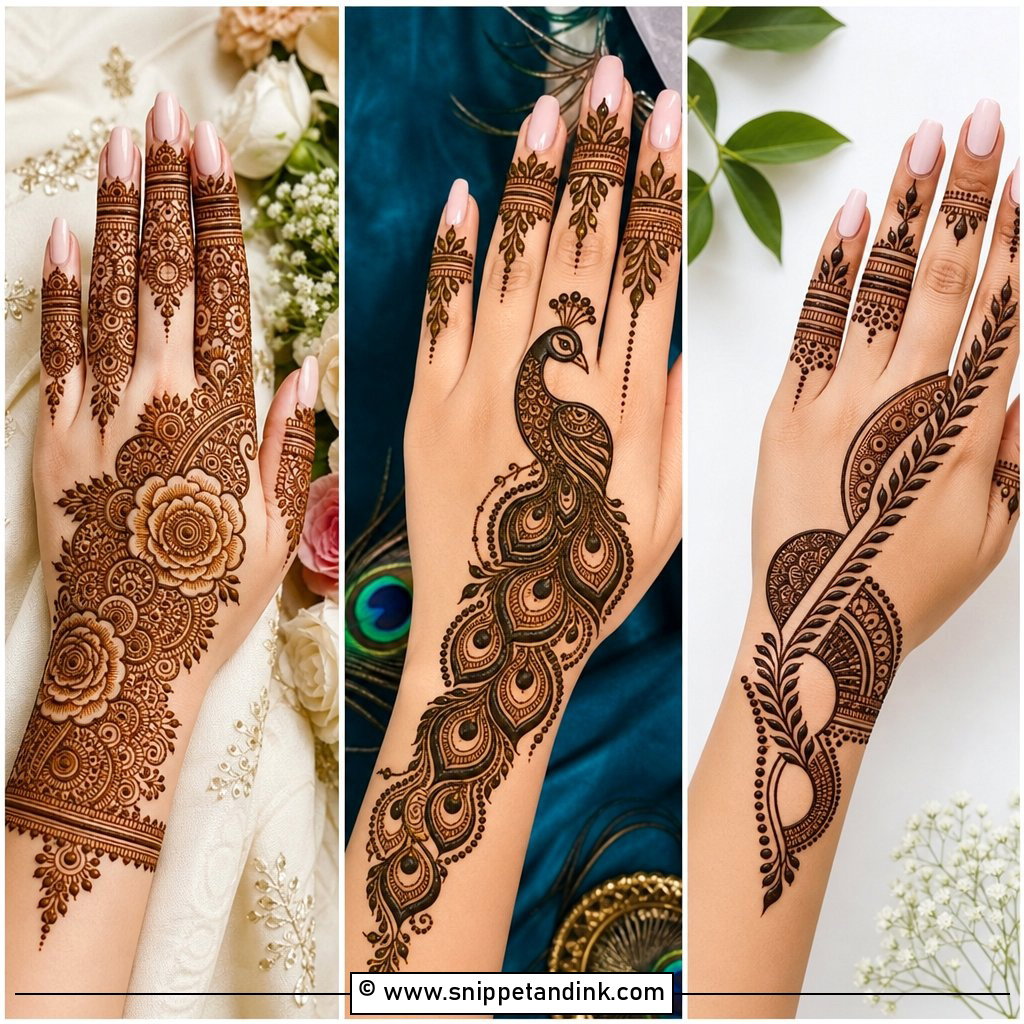
20. Forearm Bridal Mehndi Design
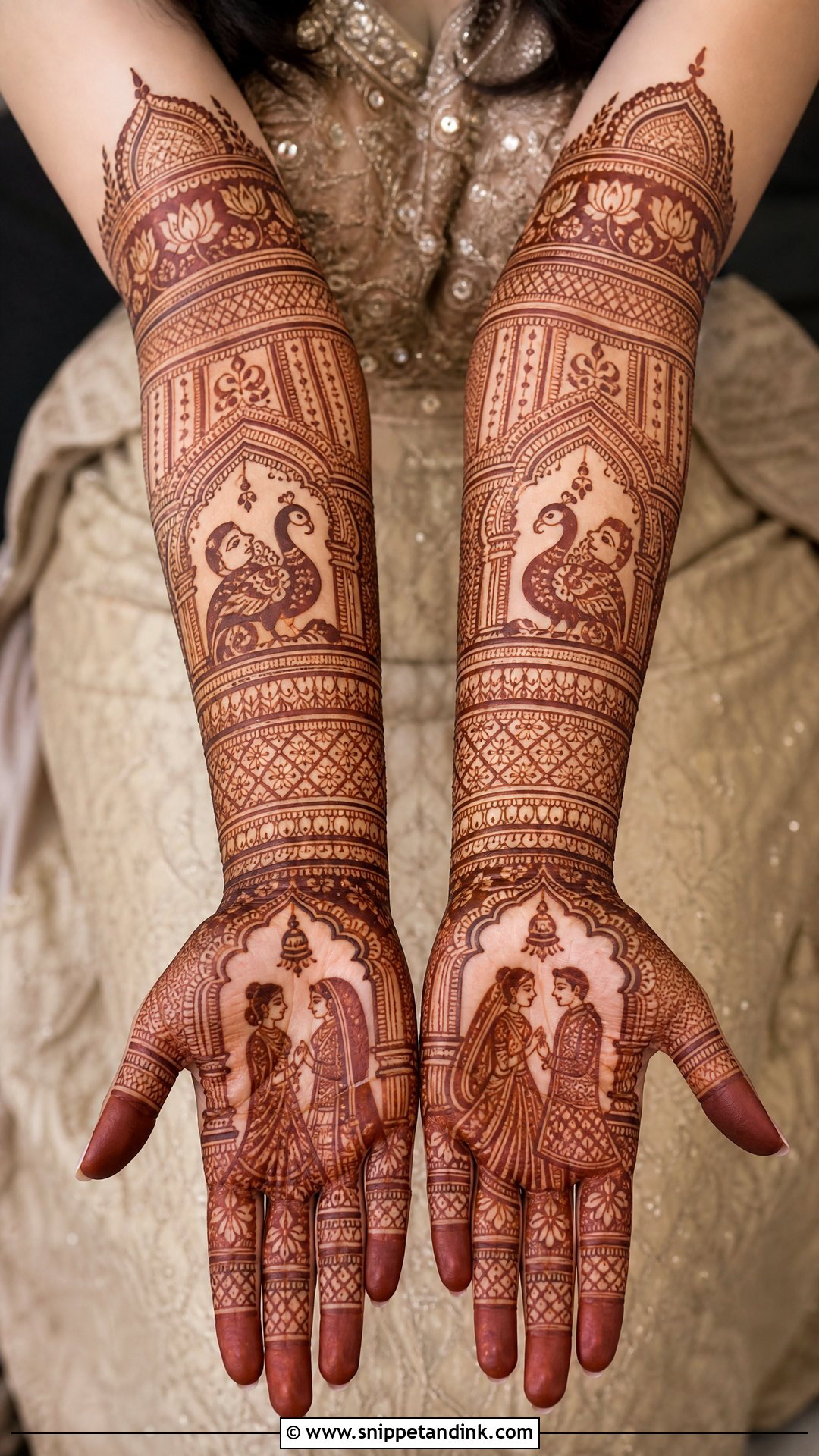
Forearm work shows clearly with short sleeves, sleeveless blouses and traditional portraits. It can carry paisley panels, lotus rows, peacock curves, mandap art, jaali or bracelet bands. It has to join the palm and wrist so the whole arm reads as one piece. Keep in mind that forearm skin stains lighter than palms, so I make forearm lines a little bolder to compensate. If the palm has dense portraits, keep the forearm lighter.
From Dry Paste to a Deep Maroon
Most of the colour is decided after I leave. Keep the paste on as long as you can, overnight if possible, since longer contact means deeper dye. A dab of lemon juice and sugar keeps it moist and stuck to the skin; don’t soak it, or the paste slides and smudges lines.
When it’s time, scrape the dried paste off with a blunt edge or your fingers rather than washing it. Then keep water away for as long as you reasonably can, ideally until the next day. Warmth helps, so hands held near a warm (not hot) surface or tucked under a blanket overnight tend to stain darker. Clove smoke and balms are common family remedies; they’re optional, and plain warmth and patience do most of the work.
A Word on What’s Inside the Cone
Natural henna stains orange to maroon, never true black. Pastes sold as instant or black henna can contain chemical dyes that cause serious skin reactions, so ask your artist plainly whether she mixes her own cones and what goes in them. I mix mine with henna powder, lemon or water, sugar and essential oil, and I’m happy to show brides the ingredients.
If your skin is sensitive, ask for a small test patch a week or two before. And if your stain comes out lighter than a friend’s, it isn’t the design: palms stain darker than the back of the hand, and skin temperature and thickness vary from person to person.
Sketch Both Palms Together Before the First Line
Start with your outfit, jewelry, hand shape and how much time you can sit still. Heavy traditional coverage, modern spacing, Arabic flow and hidden names all have their place: full-hand designs feel royal, mandalas balanced, jaali delicate, and portraits personal. Share references with your artist early, book enough time for application, and leave room in the schedule for the stain to develop. A good bridal design looks right in person and in photos, and these ideas give you a strong starting point for the conversation.
You'll Like These Ideas:


Leave a Reply