
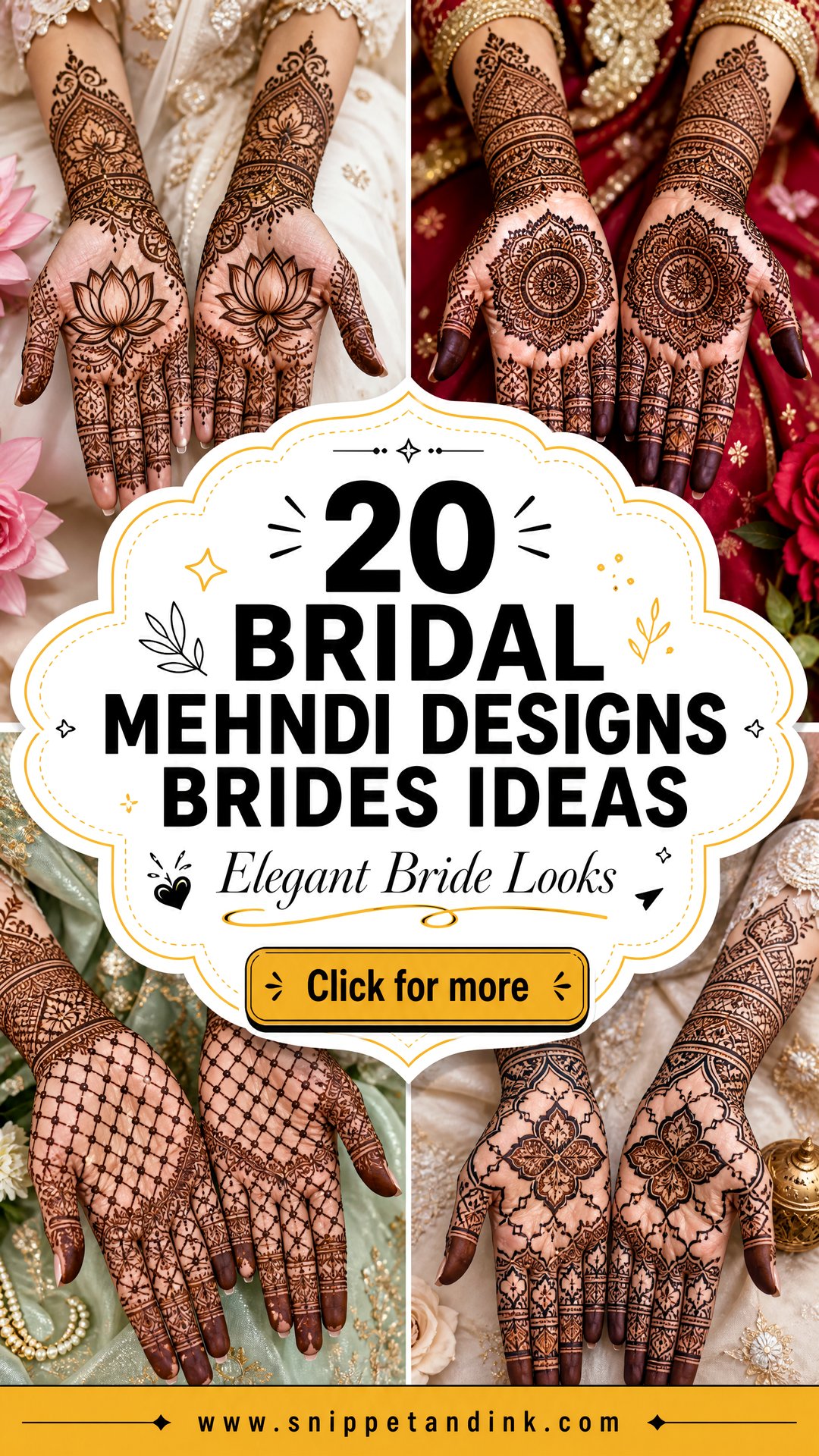
A bride’s hands end up in more close-up photos than almost anything else she wears, and mehndi is the detail families talk about for years afterwards. The styles I’m asked for now run from dense Indian full hands to Arabic floral trails, story designs, minimal back-hand designs and patterns that imitate jewellery. A full dulhan look feels regal; a lighter design with open skin stays fresh and clear in photos. Which one suits you depends on your outfit, your rituals, your hands and how long you’re willing to sit. Use the twenty designs below as a starting point for the references you bring to your artist.
Matching the Pattern to Your Chooda, Rings and Sleeves
Before we look at motifs, I ask brides to bring photos of their jewellery and blouse, or better still, the pieces themselves. Mehndi never appears alone in photos. It sits under bangles, around rings and beside embroidered cuffs, and the design should leave room for all of them.
Chooda and bangles
A full chooda covers a large part of the forearm. Fine detail drawn there will be hidden for most of the wedding, so I keep that zone lighter and put the effort into the wrist edge just below the bangles and into the hands.
Rings and hathphool
If you’re wearing a hathphool, the mehndi chains shouldn’t run along the same lines as the metal ones. I either echo the shape in a looser way or keep the back hand open so the jewellery reads clearly.
- Long or three-quarter sleeves: end the design in a clean band where the sleeve finishes.
- Heavy gold and kundan: dense traditional work holds its own.
- Light diamond or pearl pieces: an open Arabic or bracelet design lets them show.
1. Full Hand Bridal Mehndi Design
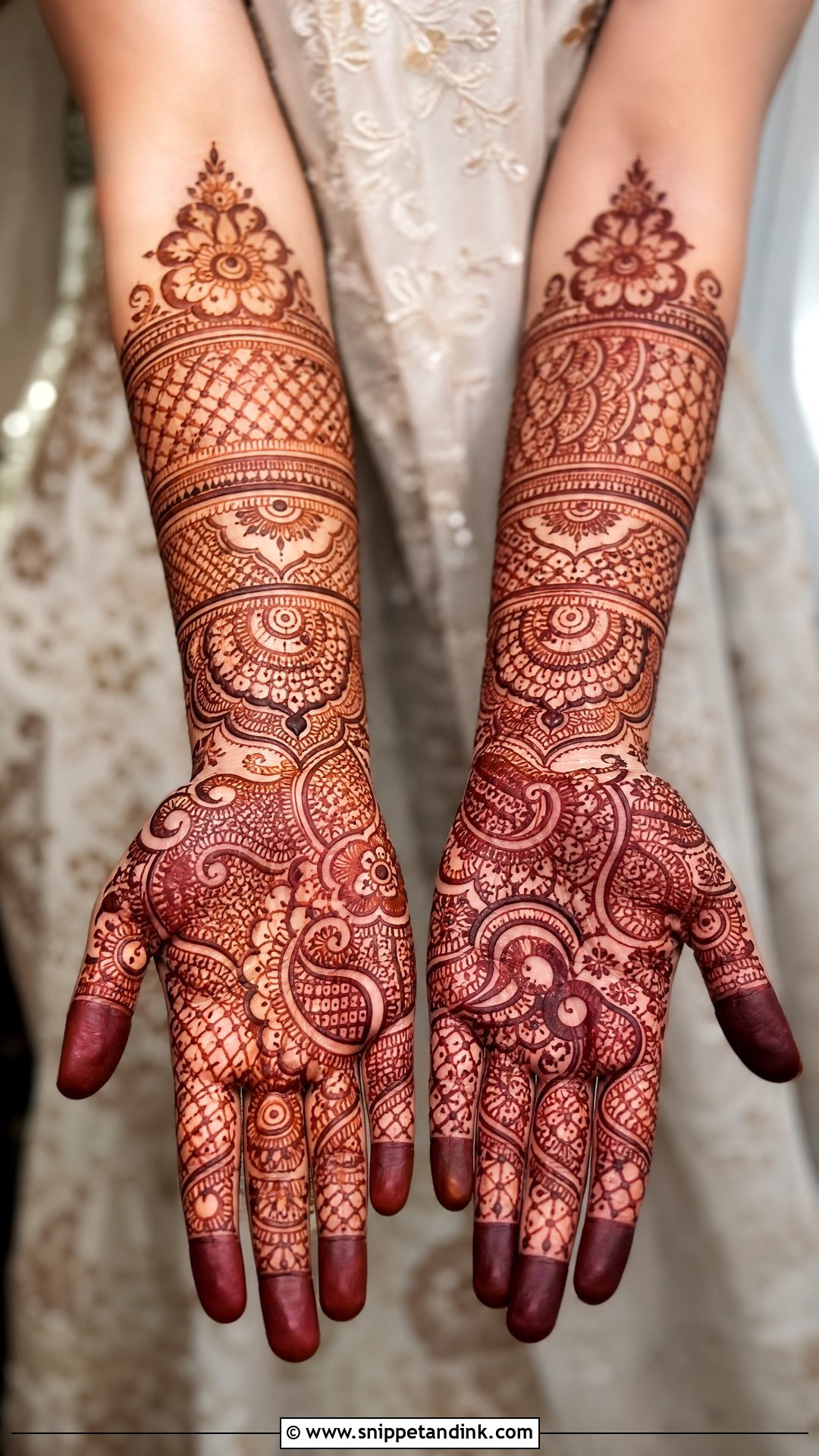
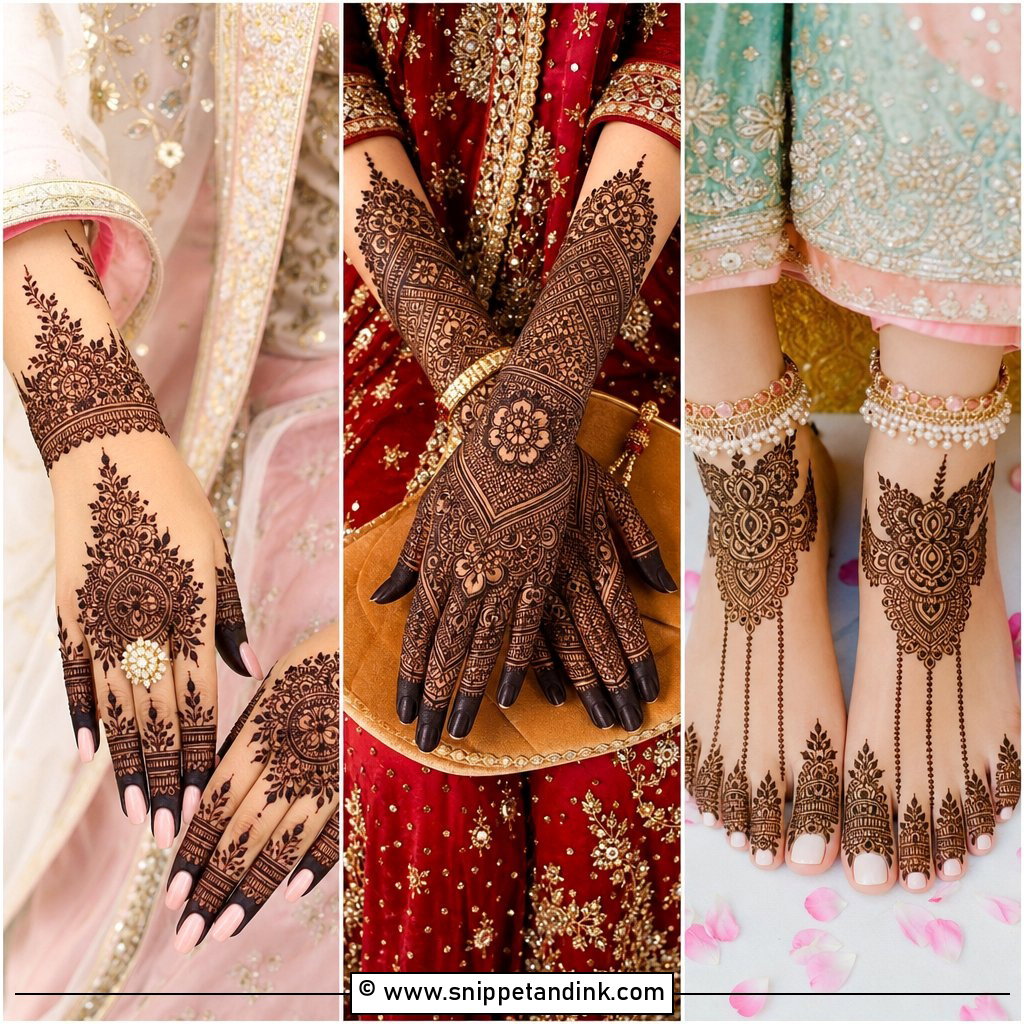
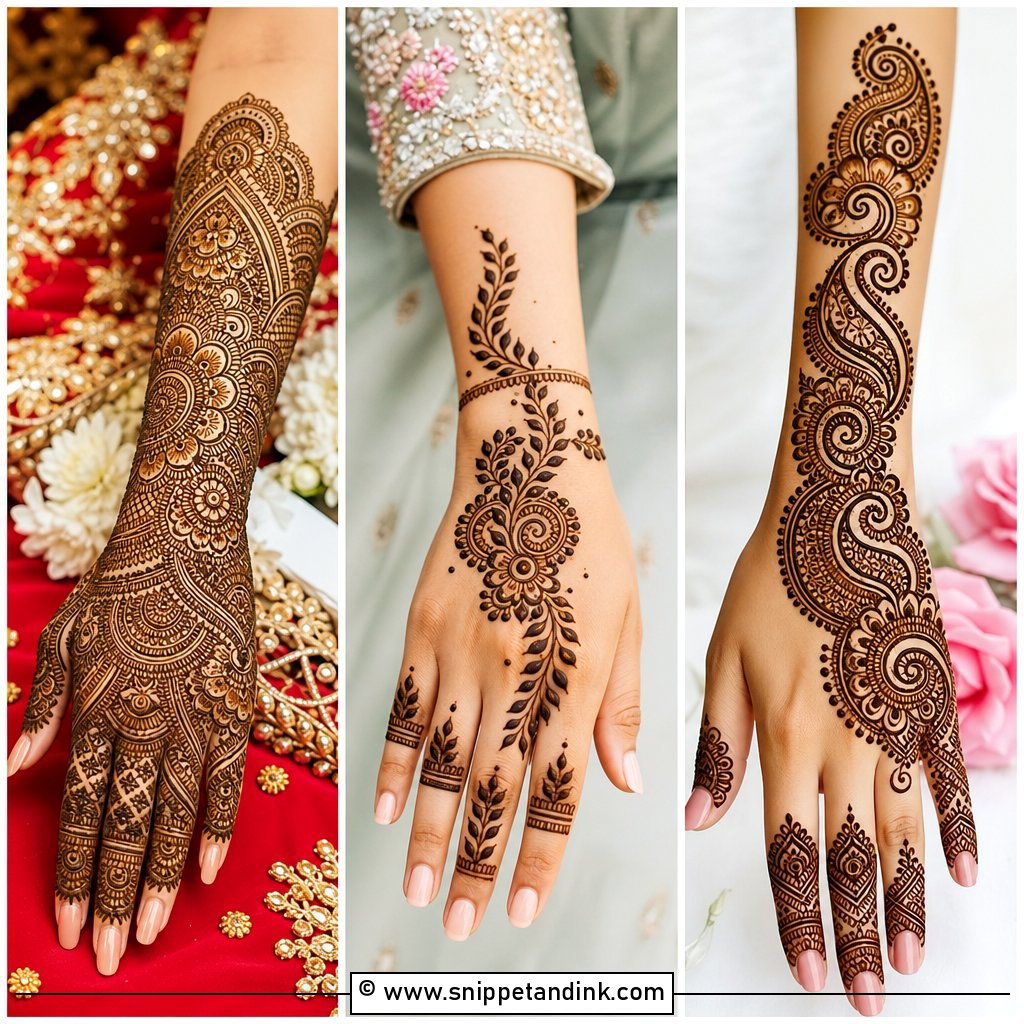
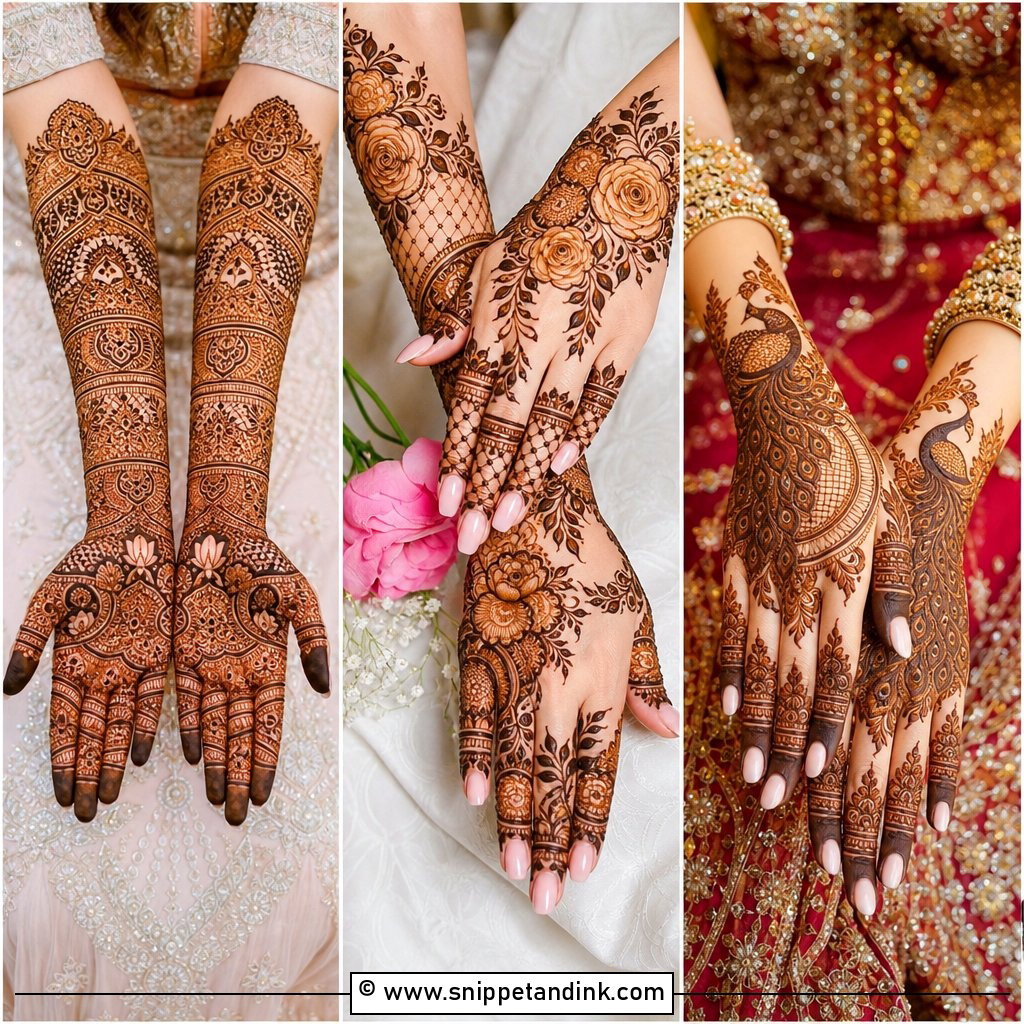
Full coverage, fingertips to forearms, is the look most families picture when they hear the word dulhan. Both palms and back hands fill with paisleys, florals, mandalas, jaali, peacocks and fine fillers, and it holds its own beside an embroidered lehenga, saree or sharara. Crowding is the risk. I leave small bare spaces around the wrist bands and the palm centre, because that contrast is what keeps the main motifs visible once the stain darkens. Expect a long sitting.
2. Indian Bridal Mehndi Design
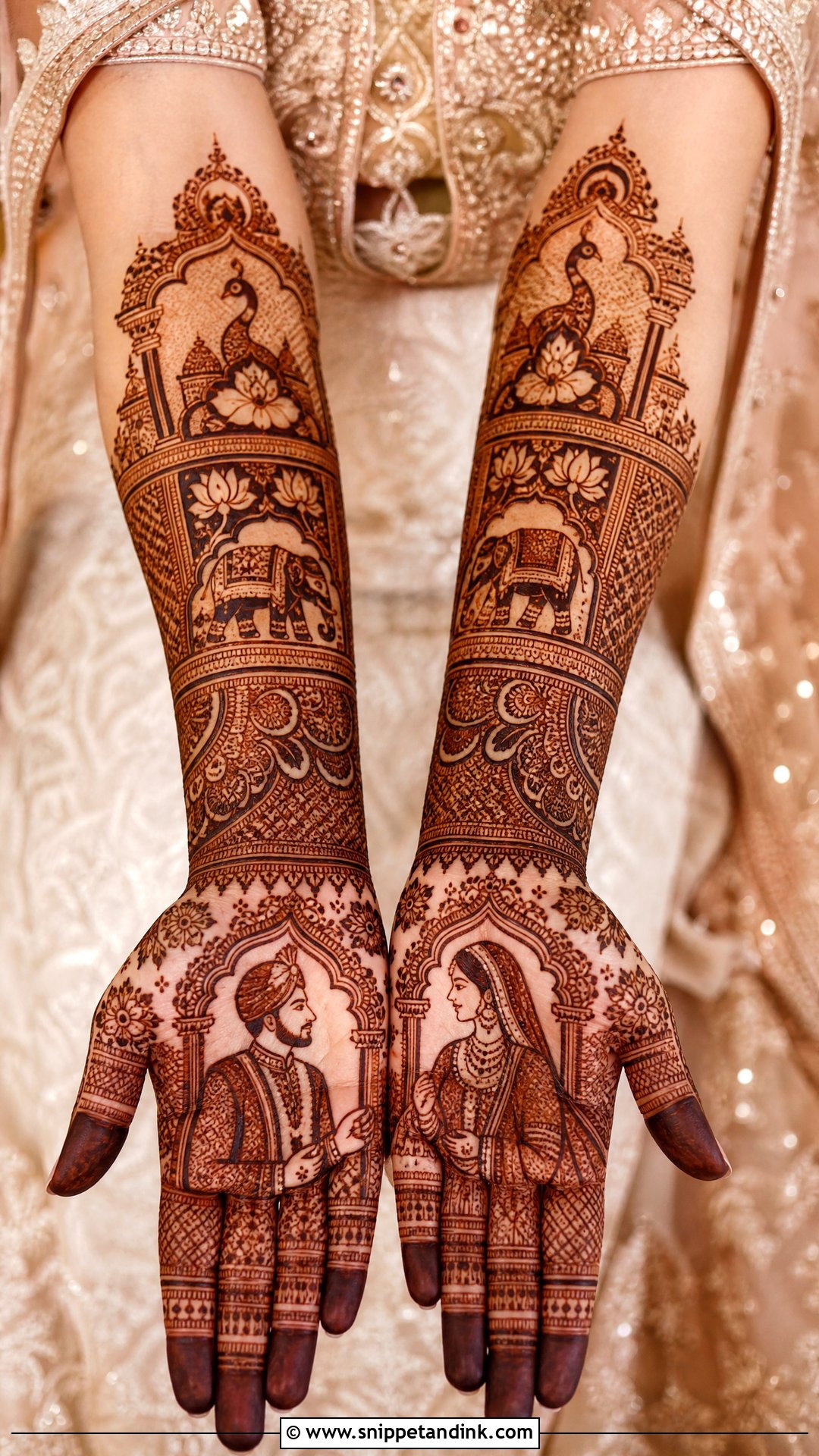
Story and symmetry are the heart of traditional Indian work: bride and groom figures, lotus, palaces, elephants, doli scenes, kalash and peacock borders arranged across a full-hand layout with very little bare skin. Indian bridal mehndi design asks for one hero scene on each palm with smaller patterns supporting it; give every section equal weight and nothing stands out. Many families read meaning into each part, blessings, family and the start of the marriage, so ask your elders what they’d like included.
3. Arabic Bridal Mehndi Design
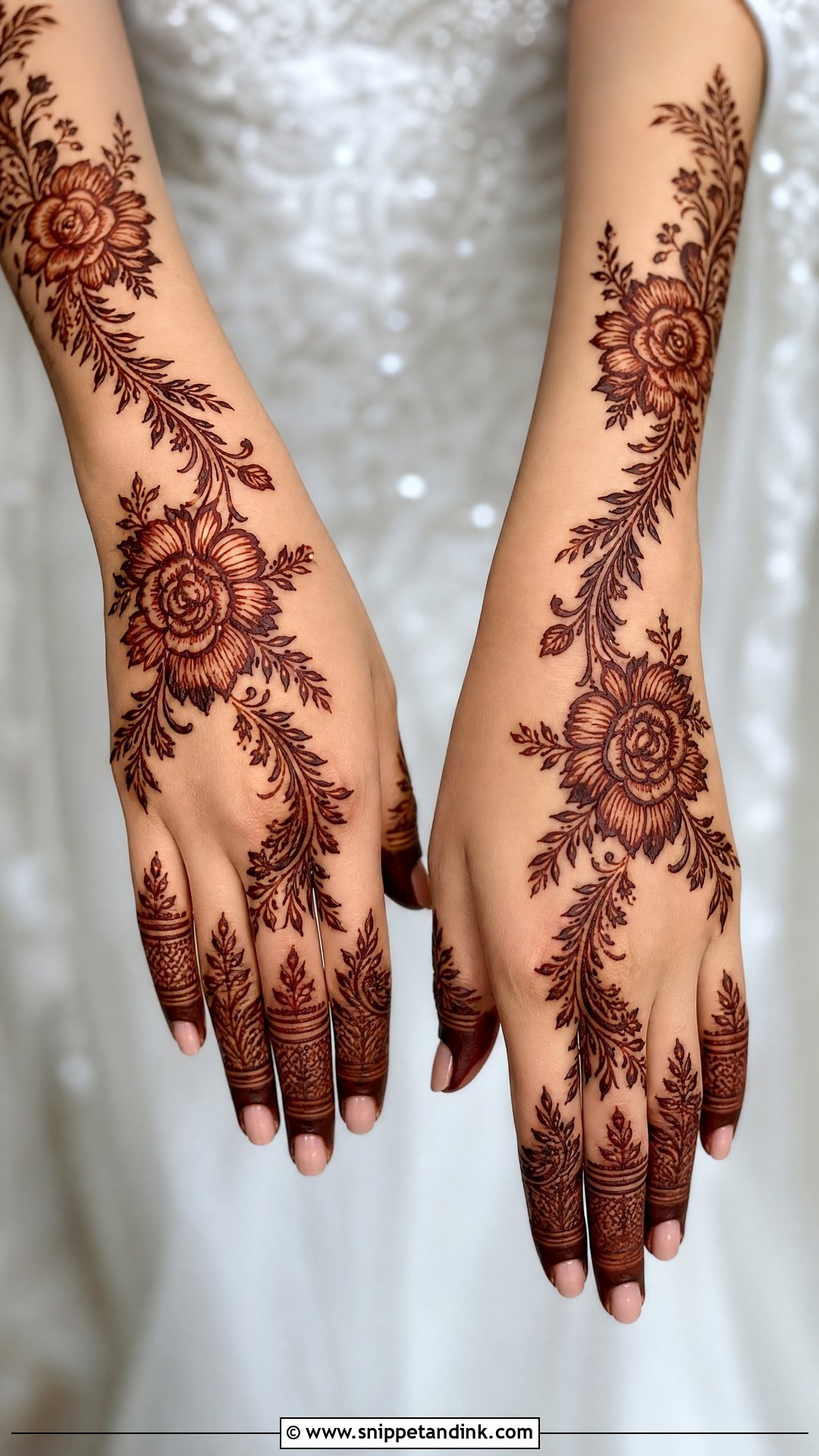
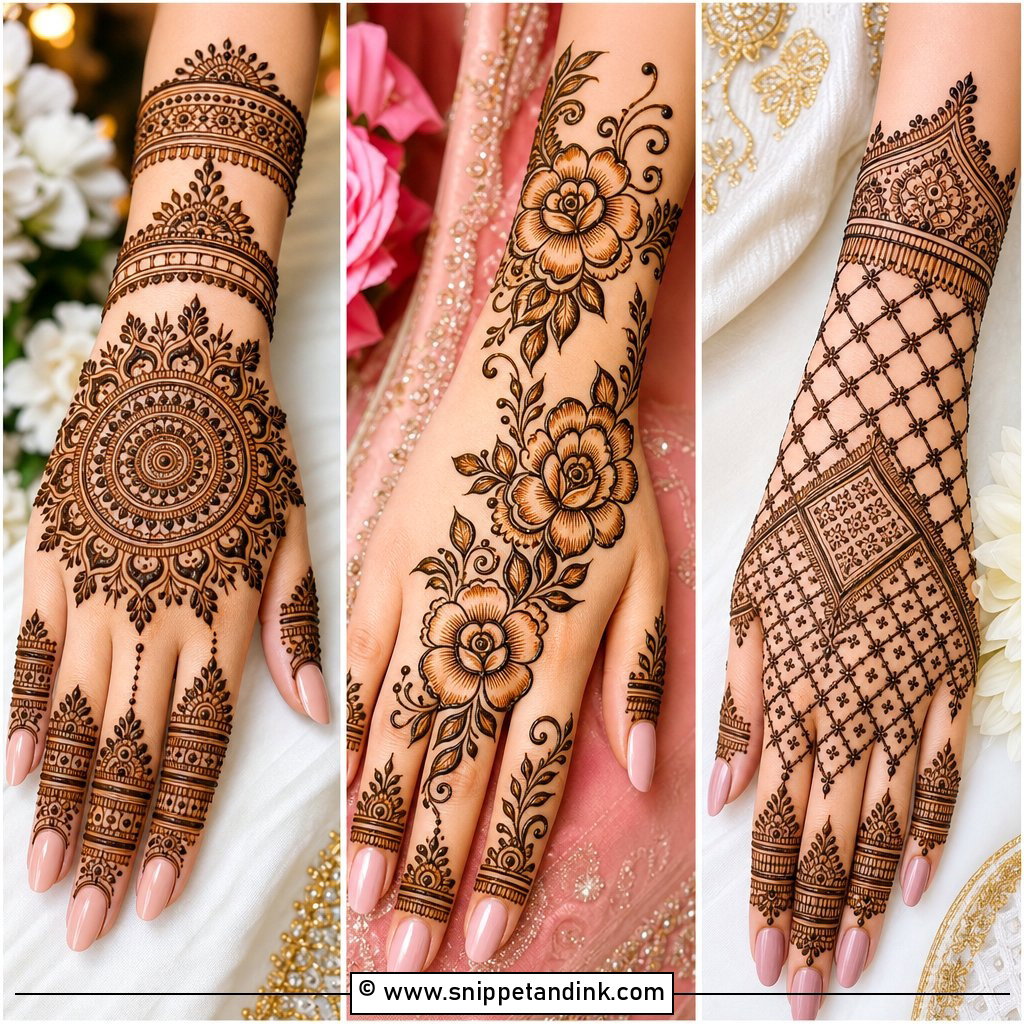
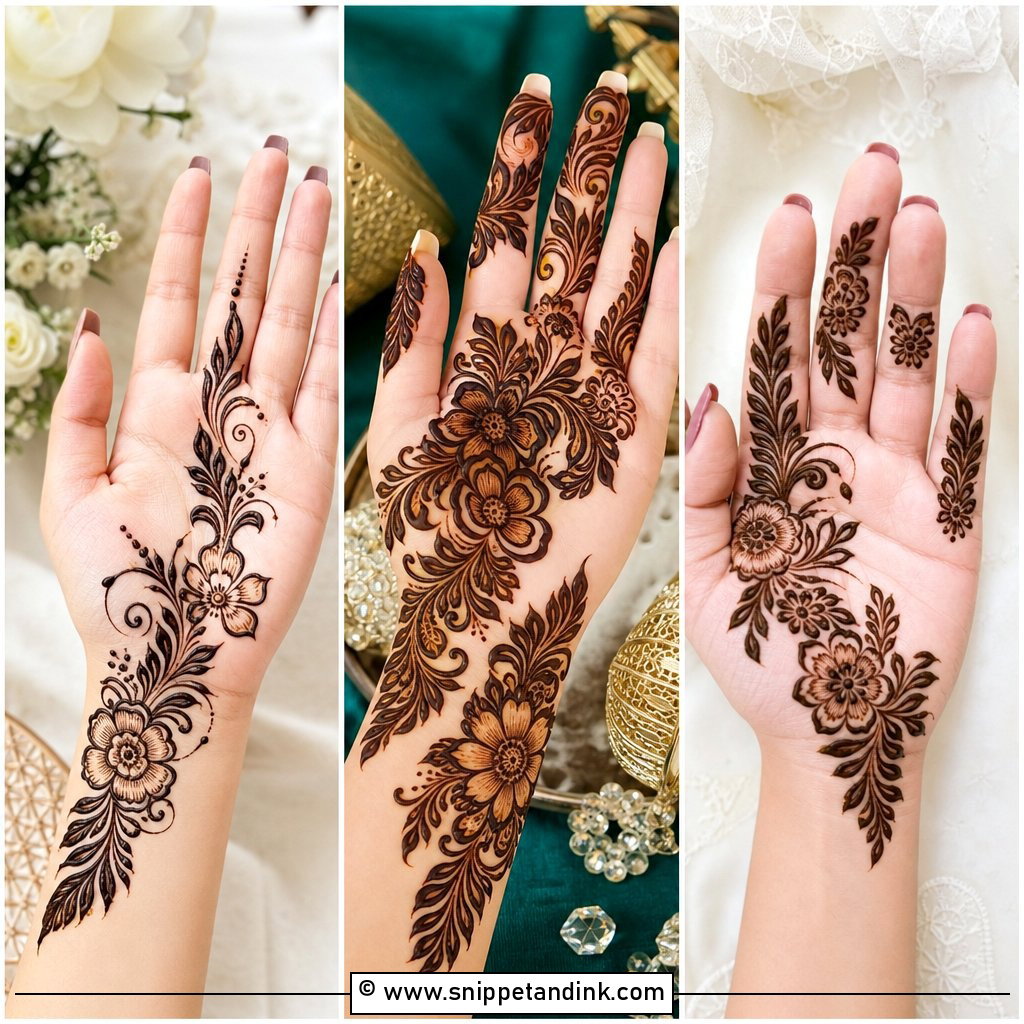
Less packed, more graphic. Arabic work runs diagonally across the hand in large flowers, leafy vines and shaded petals with open skin between them, and on the back of the hand it can travel from wrist to fingertip like a single trail. Each motif reads clearly in photos. It suits lighter jewellery and modern outfits. To make it bridal rather than party henna, I add fuller wrist cuffs, worked fingertips and a longer extension up the forearm.
4. Indo Arabic Bridal Mehndi Design
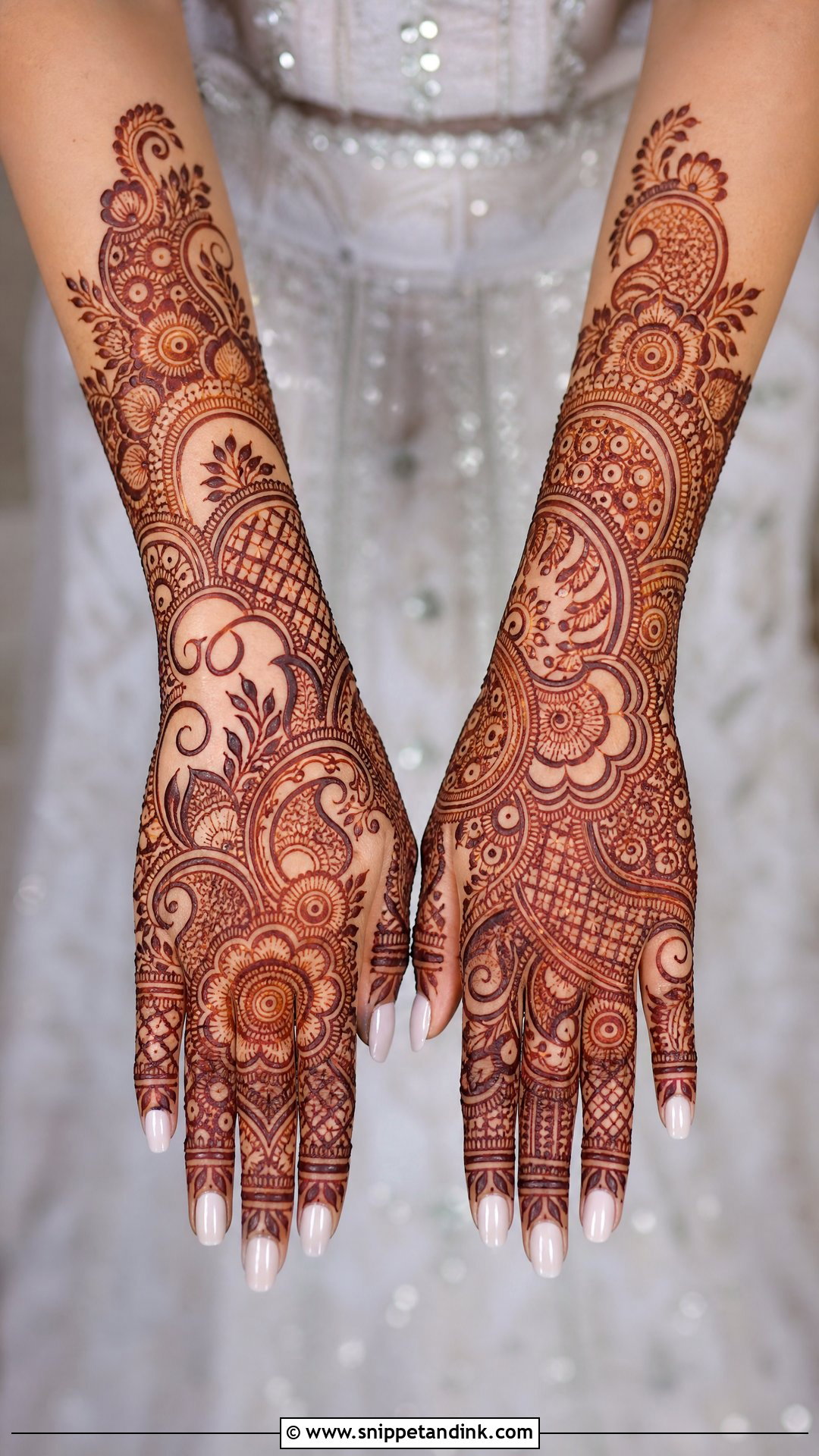
Indo-Arabic puts Indian fine detail inside Arabic movement: bold flowers, paisleys, mandalas, jaali panels and shaded leaves within one layout, separated by negative space. I find it the most practical choice for a bride who wants richness without covering every inch. It works on palms and back hands alike, and its shorter sitting time makes it popular for destination weddings, where the mehndi often happens the day after a long flight.
5. Royal Bridal Mehndi Design
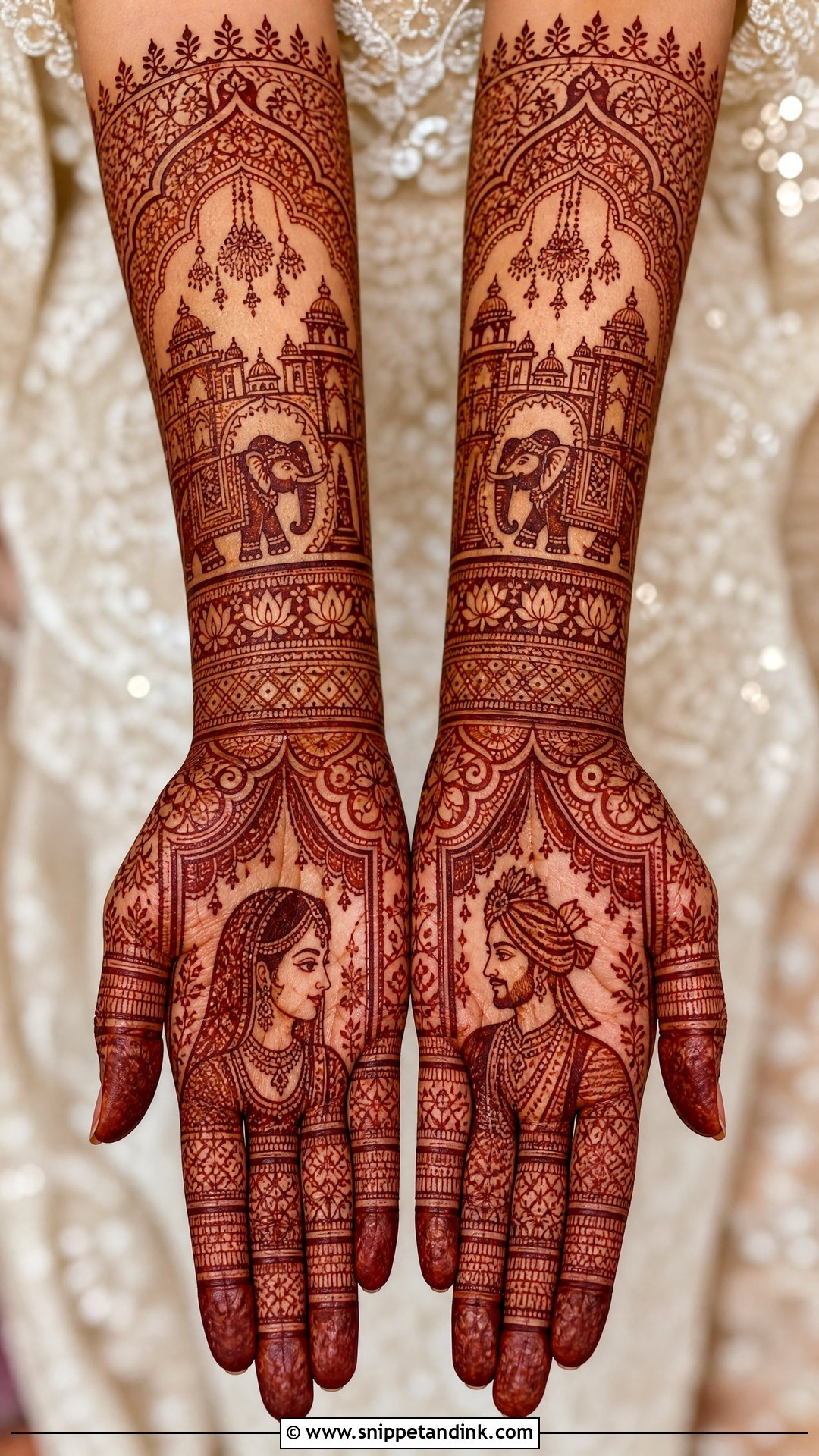
Palace arches, chandeliers, elephants, peacocks, lotus borders and framed bride and groom portraits give a royal design its miniature-painting quality, with coverage to mid-forearm or the elbow. The mistake I see is too many unrelated motifs. Pick a theme: one hand might show a wedding procession while the other carries palace jaali and floral panels. Heavy bangles, kundan, silk and embroidered sleeves all sit naturally with it.
6. Simple Bridal Mehndi Design
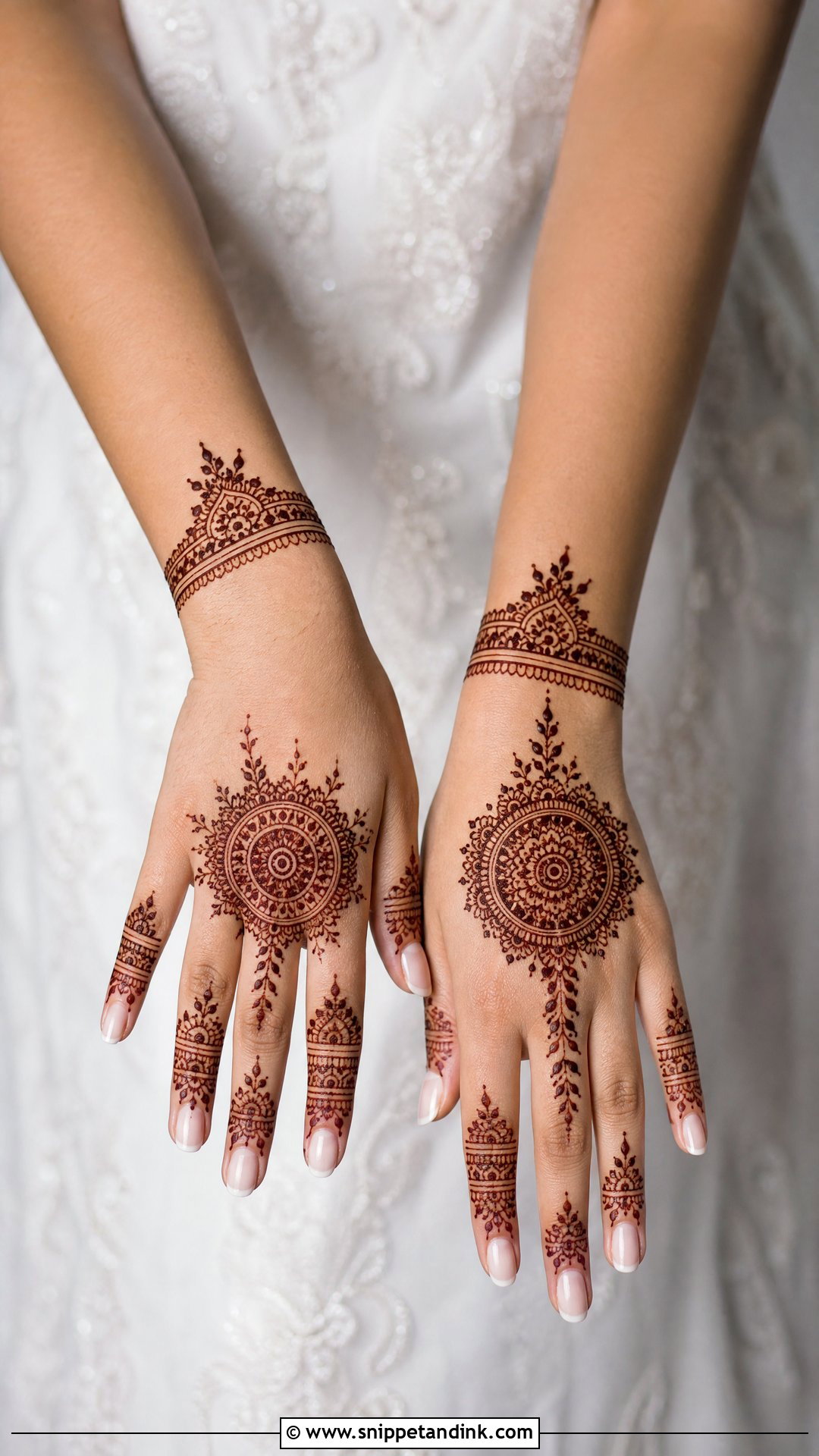
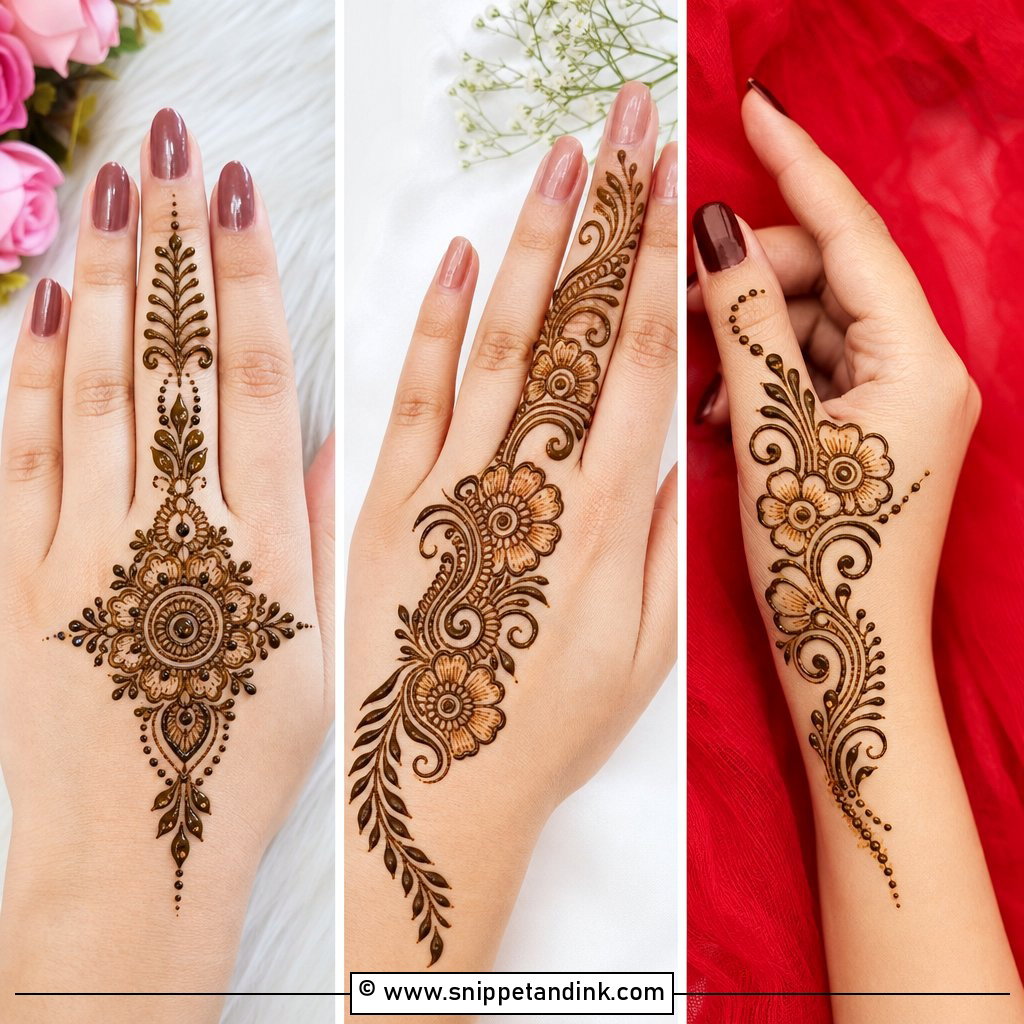
Simple doesn’t have to mean sparse. Clean mandalas, floral trails, neat finger work and bracelet-style wrist bands, with breathing room around each motif, give a design that still reads as bridal in close-ups. It suits intimate weddings, registry ceremonies, beach weddings and anyone who dreads a long sitting. Precision matters more here than in heavy work, since there’s no filler to hide an uneven line, and the stain needs to be deep and even on both hands.
7. Minimal Bridal Mehndi Design
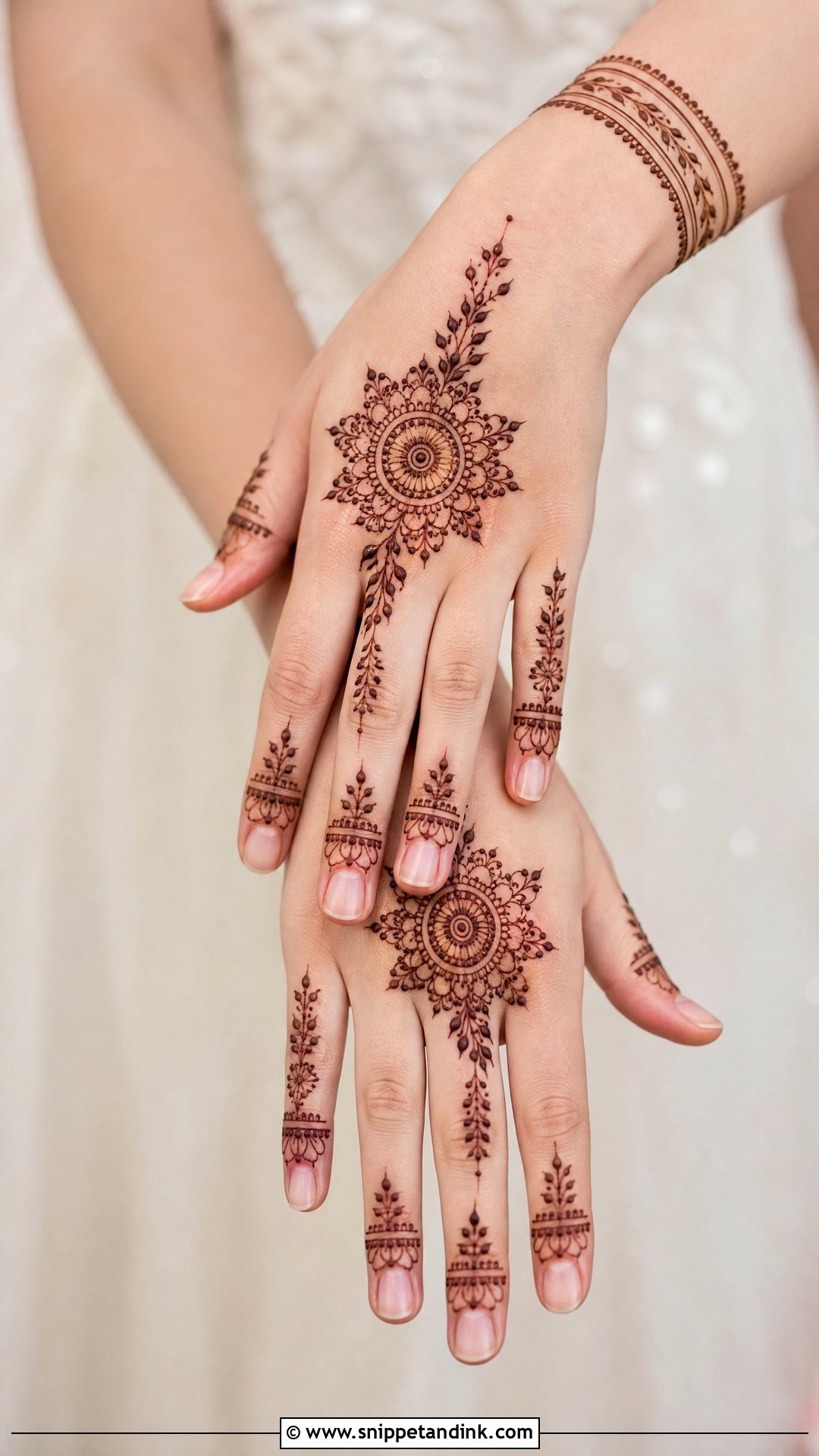
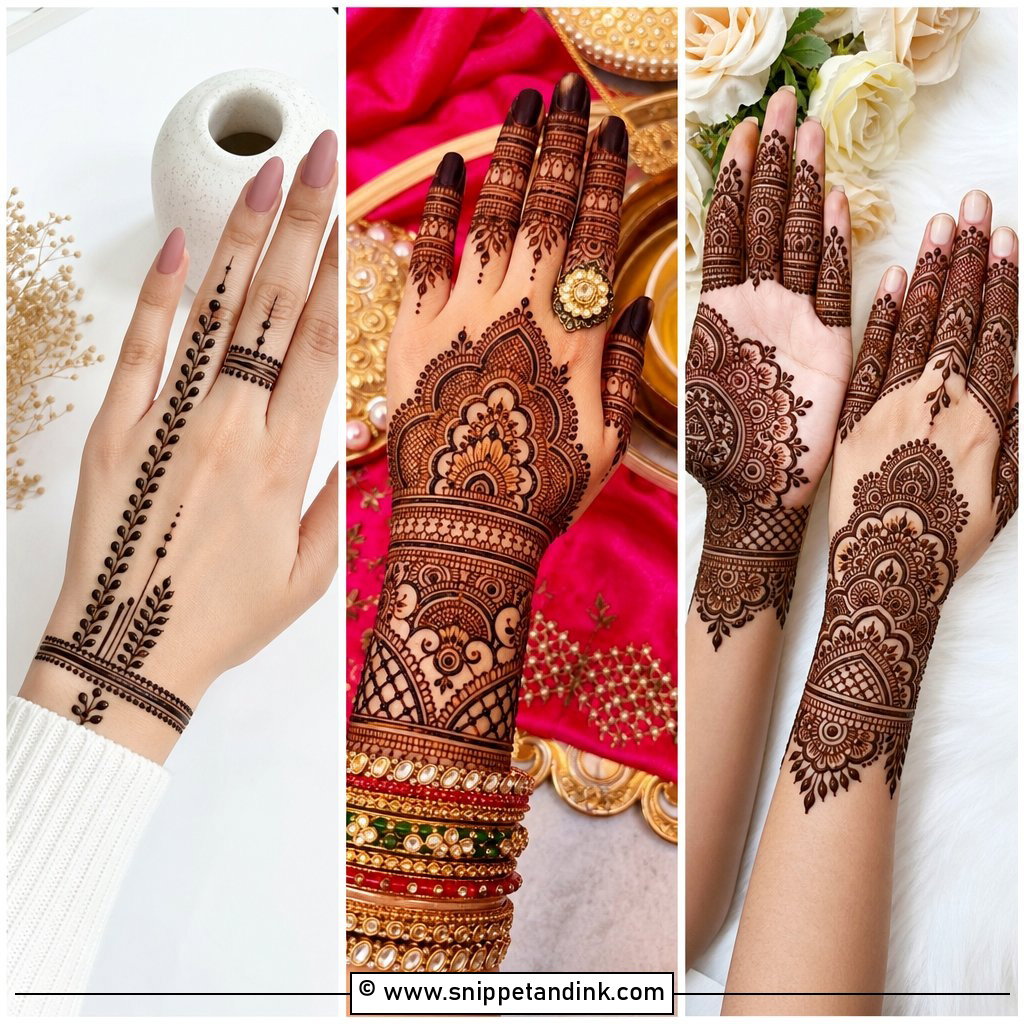
Minimal designs make sense when the outfit or jewellery is already heavily detailed. Fine lines, open skin, light florals, a small mandala, leafy vines and delicate wrist bands let rings, bangles and nail colour stand out instead of competing with them. A small palm mandala with worked fingers, a back-hand floral chain or a soft hathphool layout are the variations I draw most. Every empty space has to look planned, which means I sketch the placement with tiny dots before committing to lines.
8. Front Hand Bridal Mehndi Design
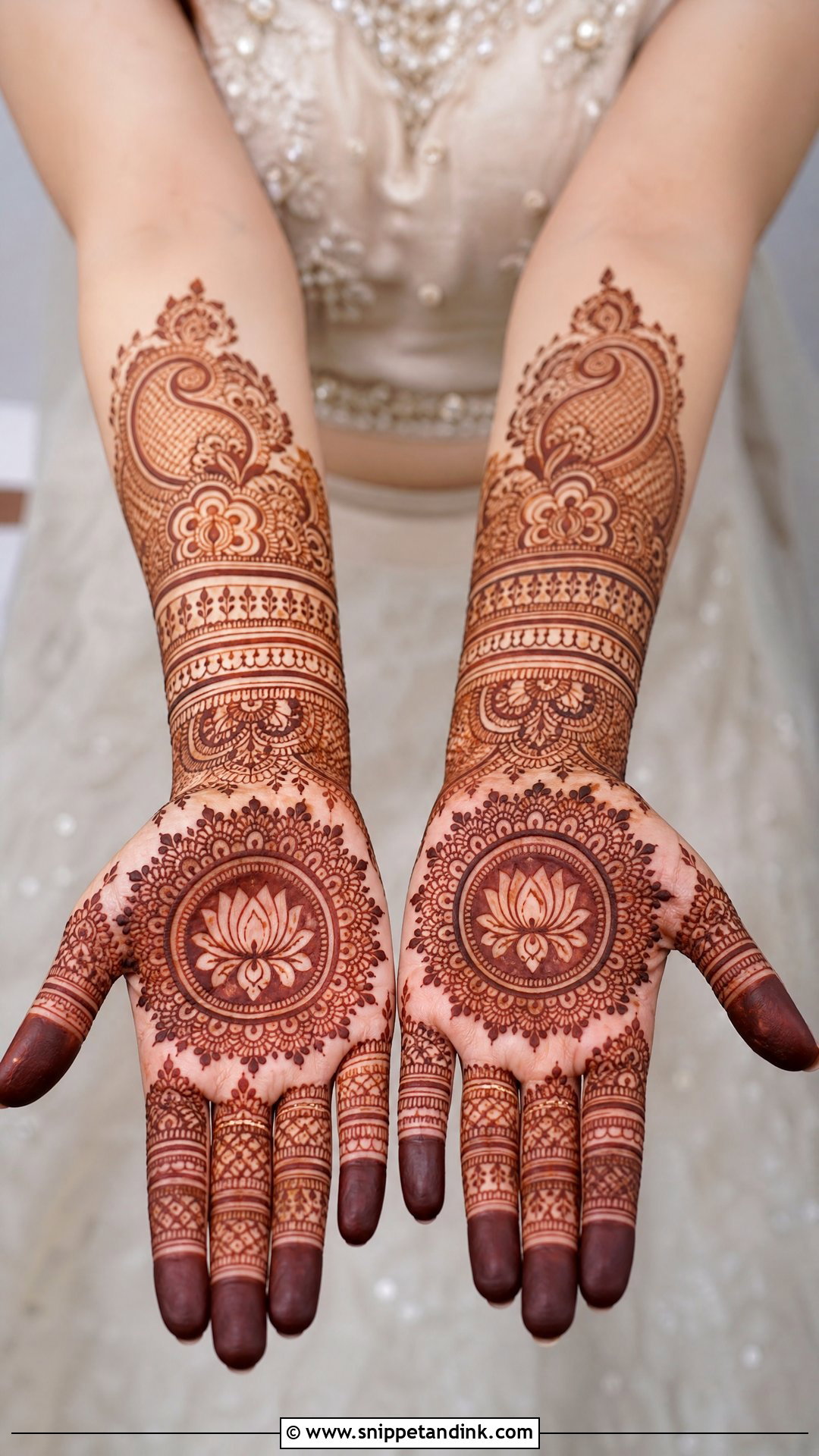
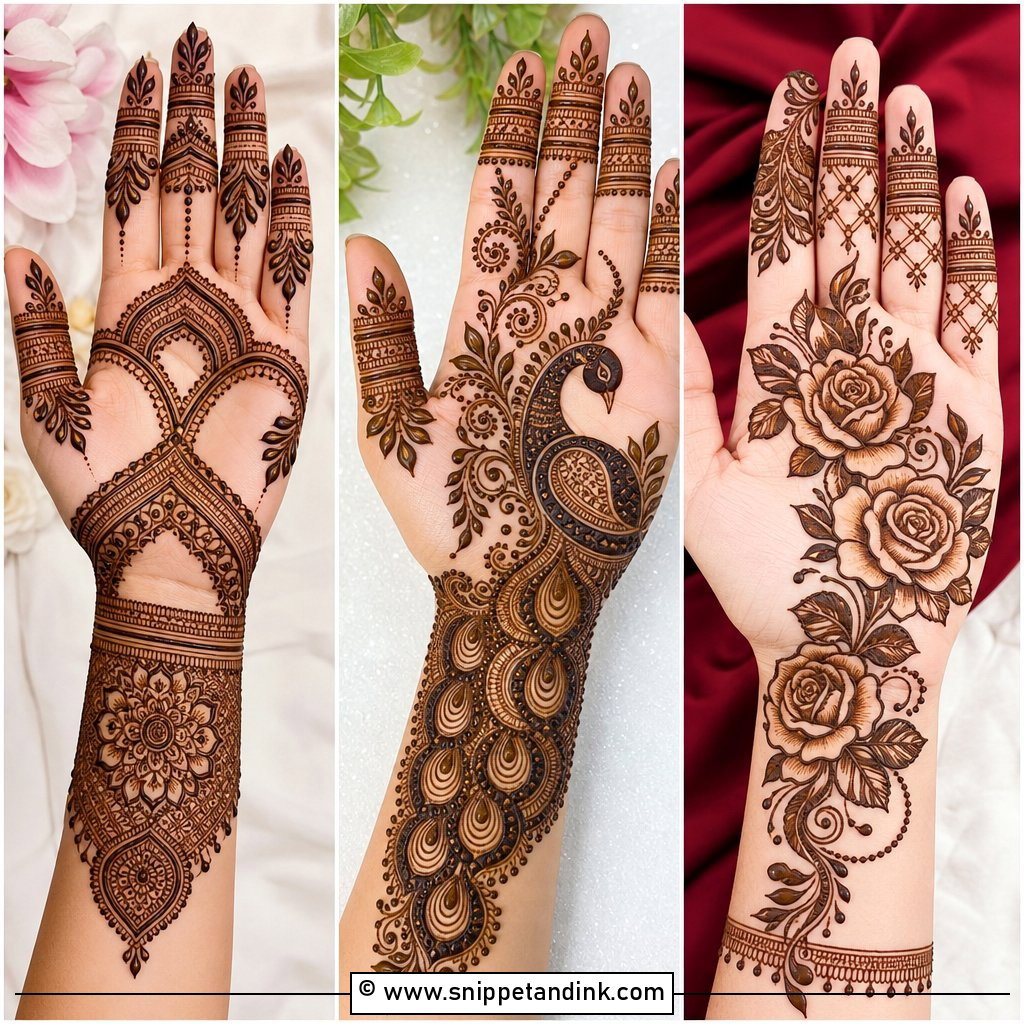
Palms get the most attention during rituals, and they also develop the deepest colour, usually a dark maroon, because the skin there is thicker. A strong front-hand layout puts a mandala, lotus, bride and groom scene or paisley cluster in the centre and builds outward through fingers, cuffs and forearm. It should look complete when your hands open and still read from a distance. I vary density on purpose: bold outlines, fine fillers and a few open spaces make a better finish than equal density everywhere.
9. Back Hand Bridal Mehndi Design
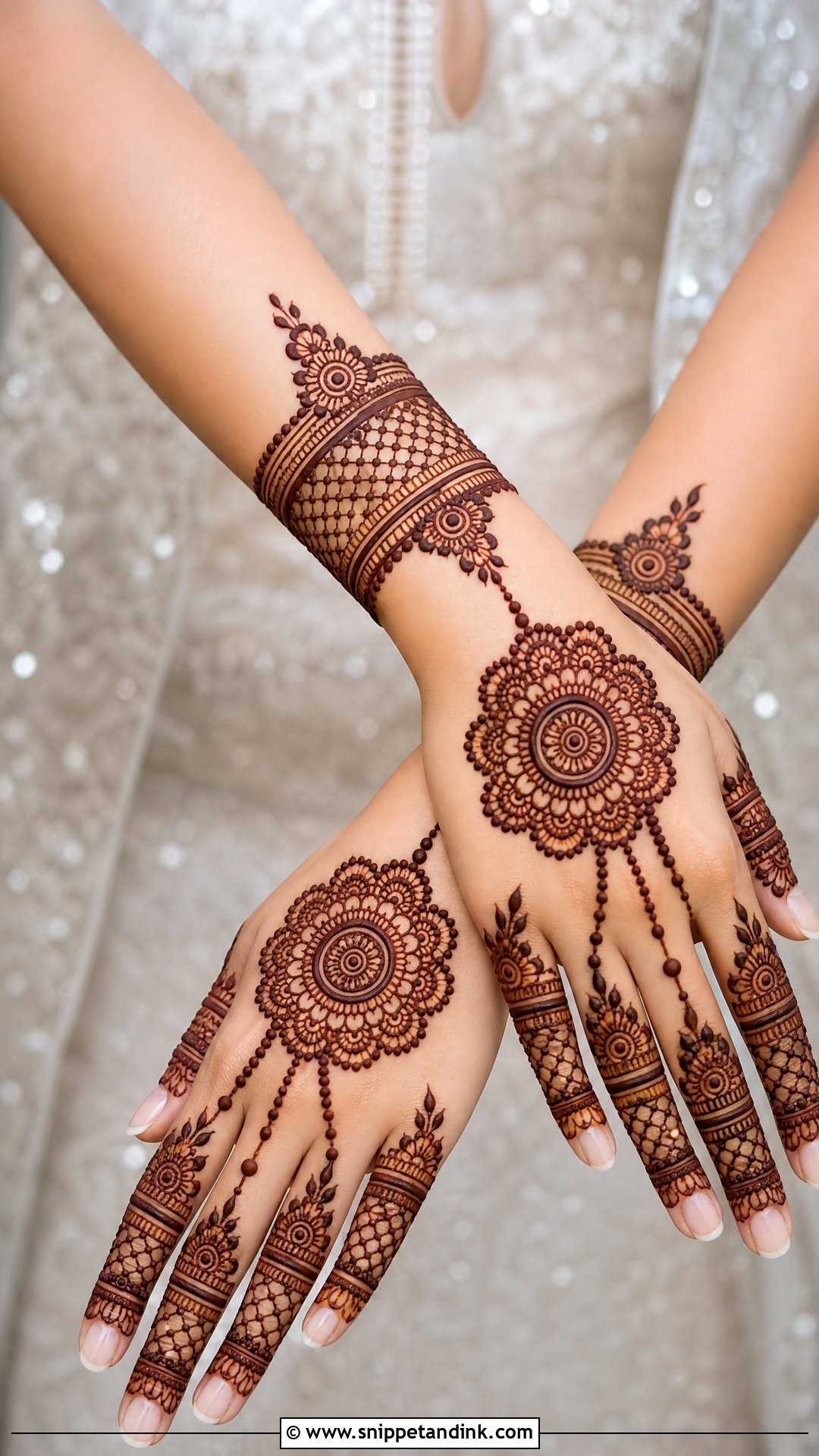
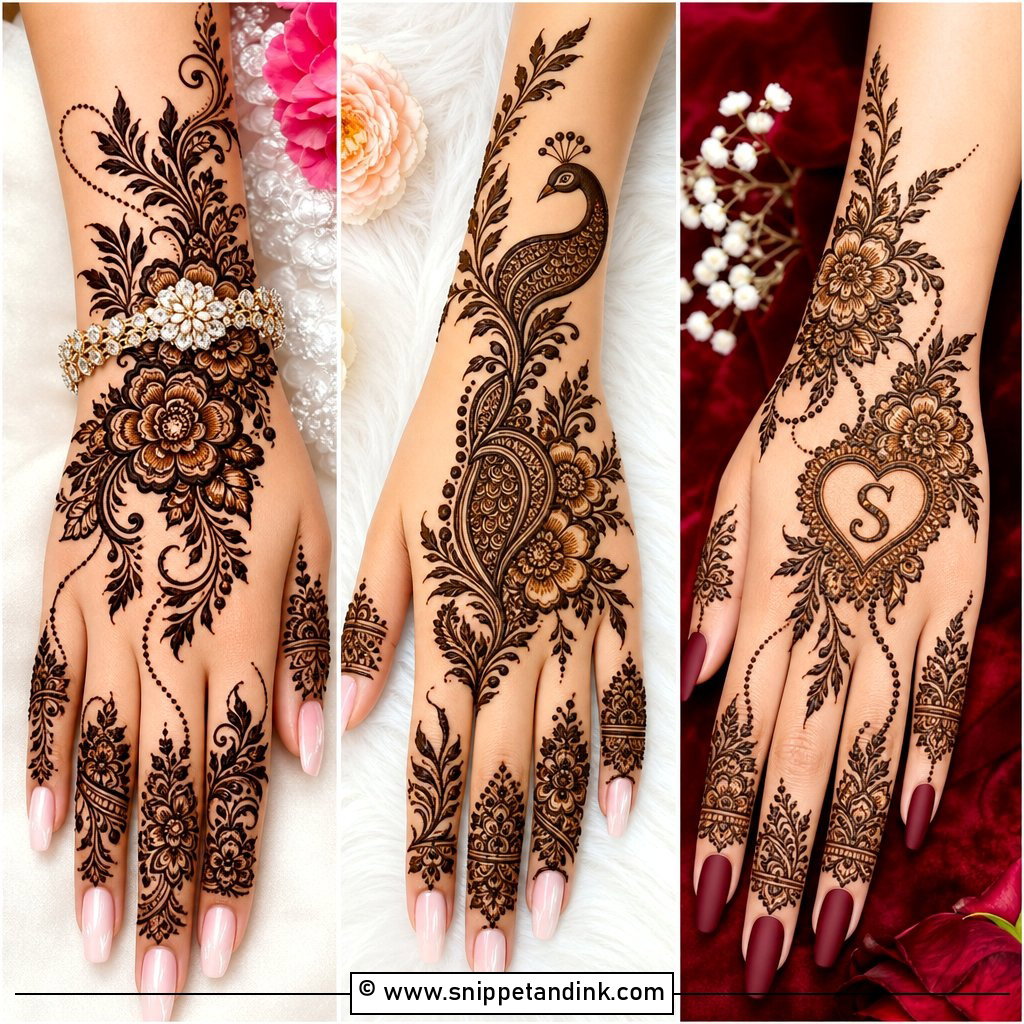
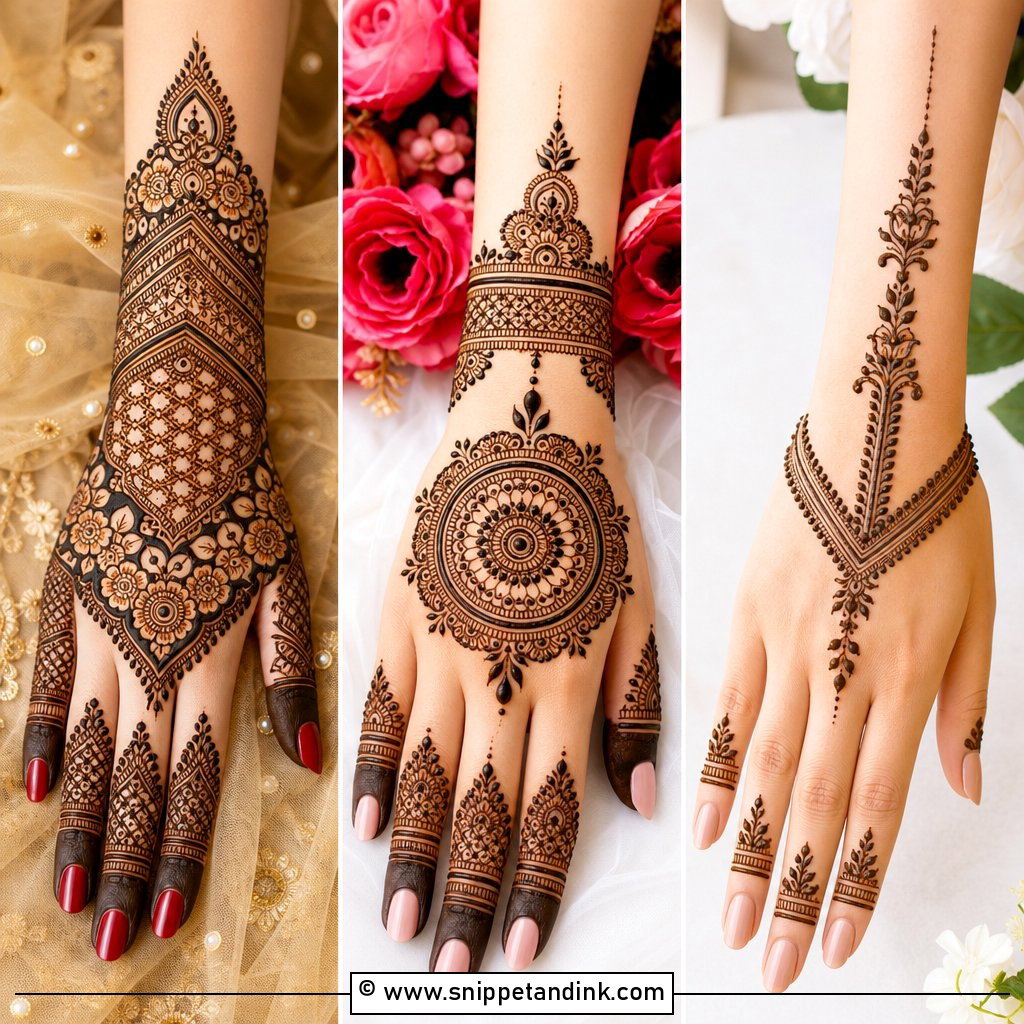
Ring shots, bangle photos and hand poses all show the back of the hand. The centre usually holds a mandala, floral circle, jaali panel or jewellery-inspired chain, with fingers fully worked or lightly decorated depending on how modern you want it. Hathphool styles are a favourite, with a wrist cuff connected to finger rings through fine chains. The back of the hand stains lighter than the palm, so I use slightly thicker lines here to keep the colour readable.
10. Personalized Bridal Mehndi Design
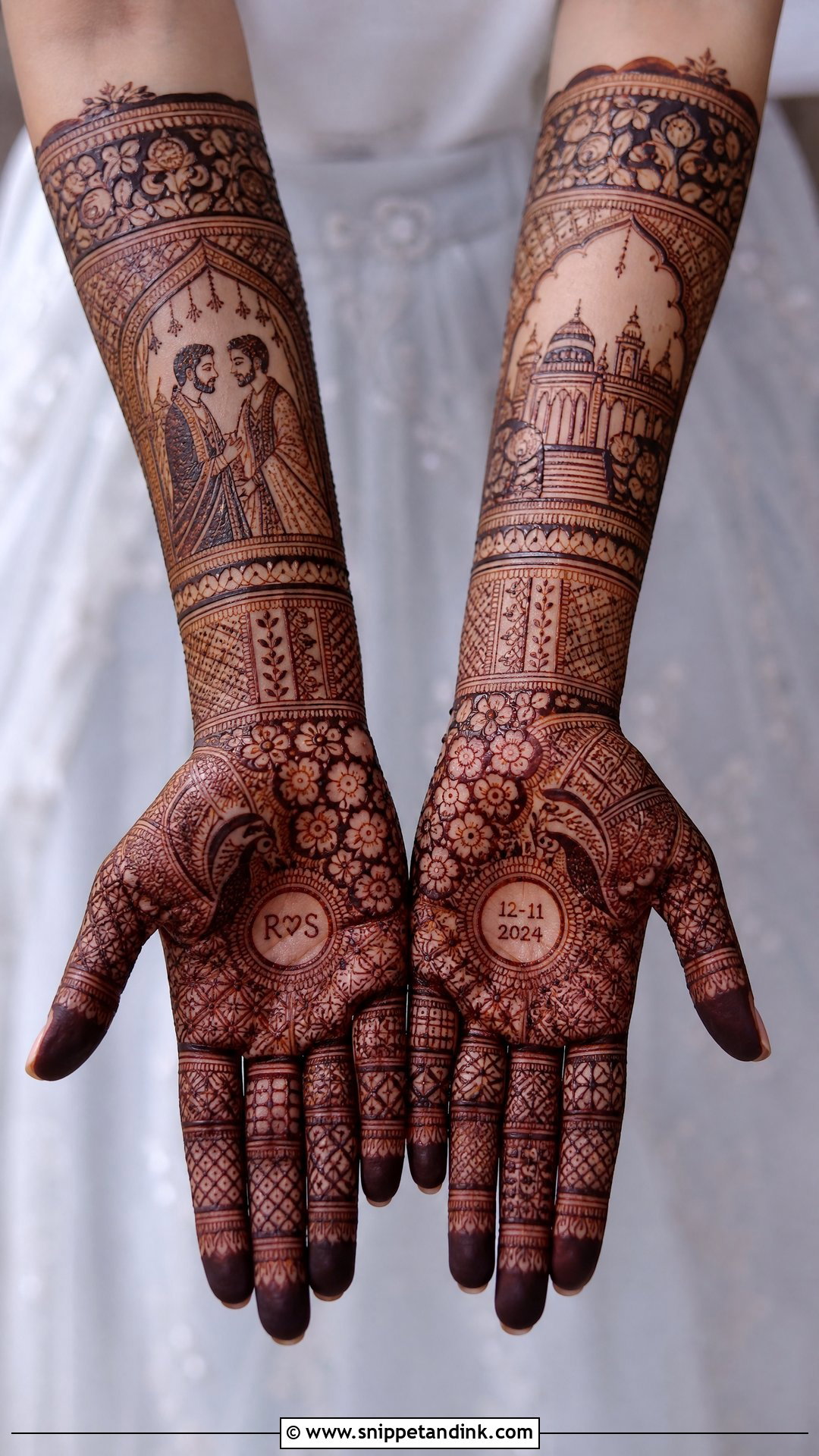
Personal details turn the design into your own small story: initials, a date, a proposal symbol, travel memories, a pet, a favourite flower or a few music notes. Restraint helps. I suggest two or three meaningful elements blended into a traditional base of florals, paisleys, mandalas and borders, rather than ten crammed in. Hidden initials are the most requested, and they give guests a reason to lean in during the ceremony.
11. Dulha Dulhan Bridal Mehndi Design
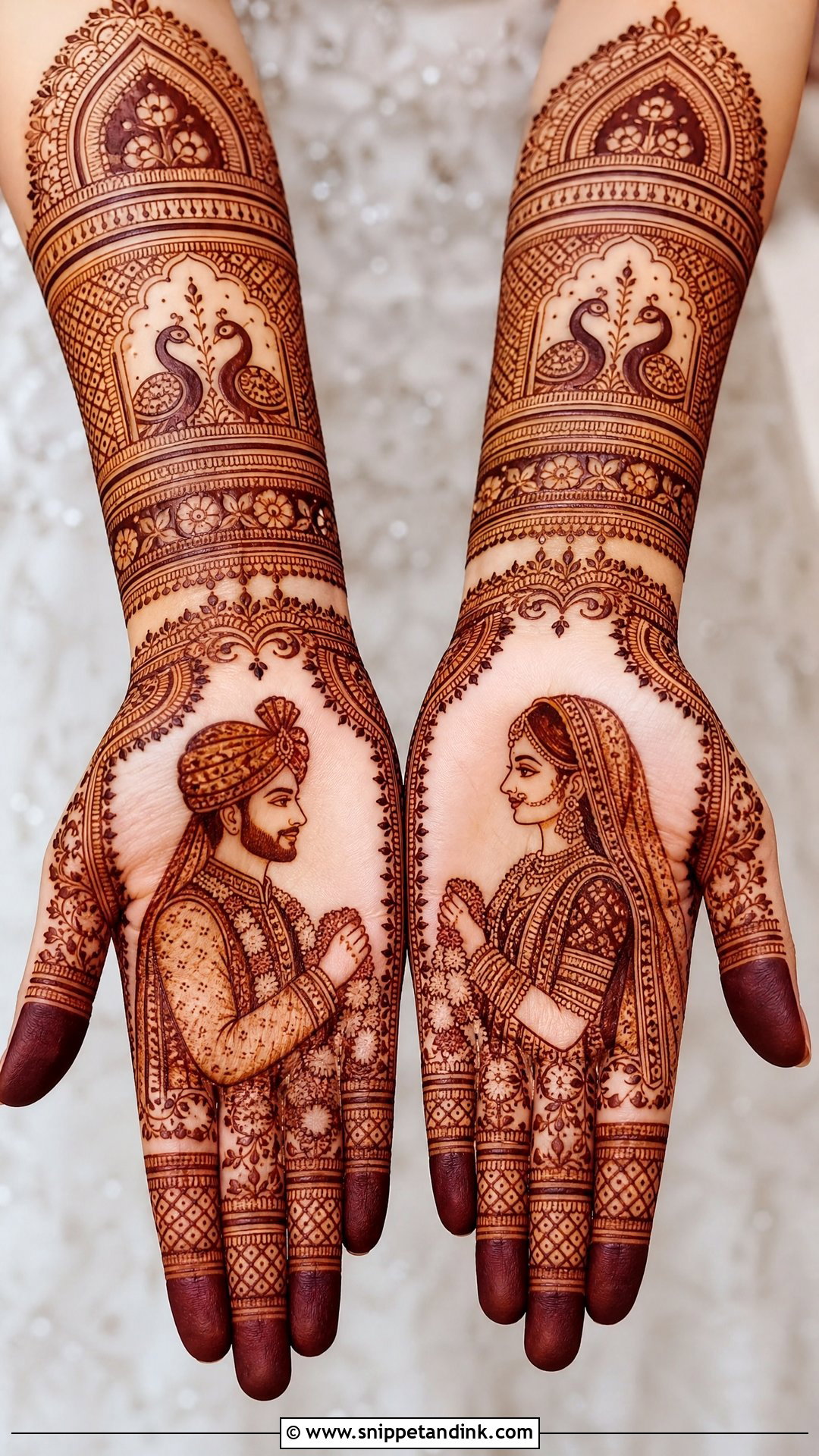
For many traditional brides, the main wedding day means figures on the palms. Dulha dulhan bridal mehndi design places the bride on one palm and the groom on the other, framed by mandalas, flowers, paisleys and wedding symbols, sometimes with a varmala, doli, sindoor or mandap scene. Faces need clean space, so I keep the palm centres free of heavy filler. Peacocks, lotus borders and jaali carry the fingers and forearms.
12. Peacock Bridal Mehndi Design
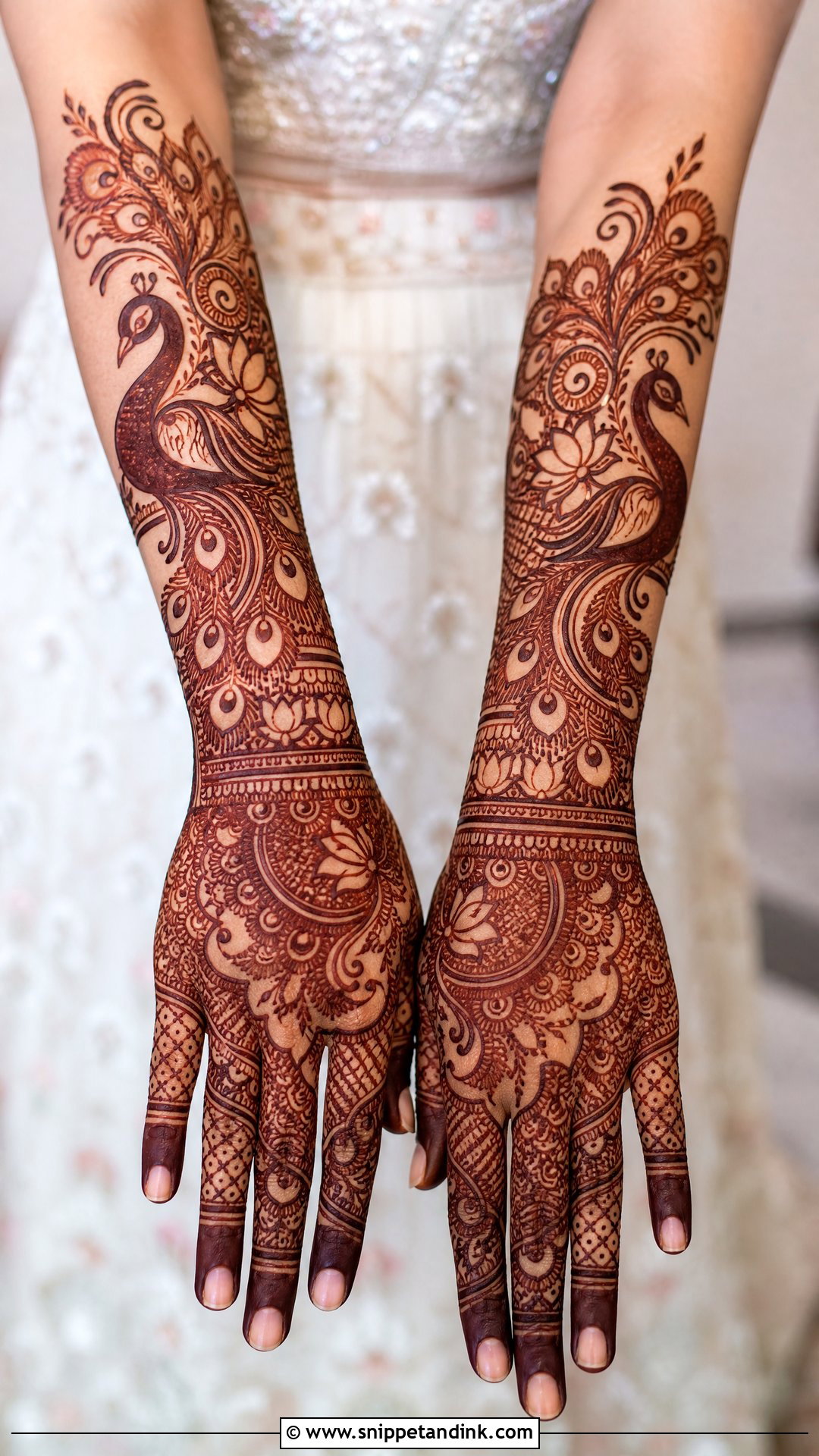
A peacock gives the hand movement. It can sit in the palm, curve across the back hand or stretch along the forearm with trailing feathers, and it pairs easily with paisleys, lotus, vines and fine mesh. Brides who’d like tradition without portraits often settle on it. Keep the bird’s outline bold and fill the feathers with ordered patterns instead of random shading; a deep maroon stain then shows every feather clearly, whether the design is full or semi-full.
13. Lotus Bridal Mehndi Design
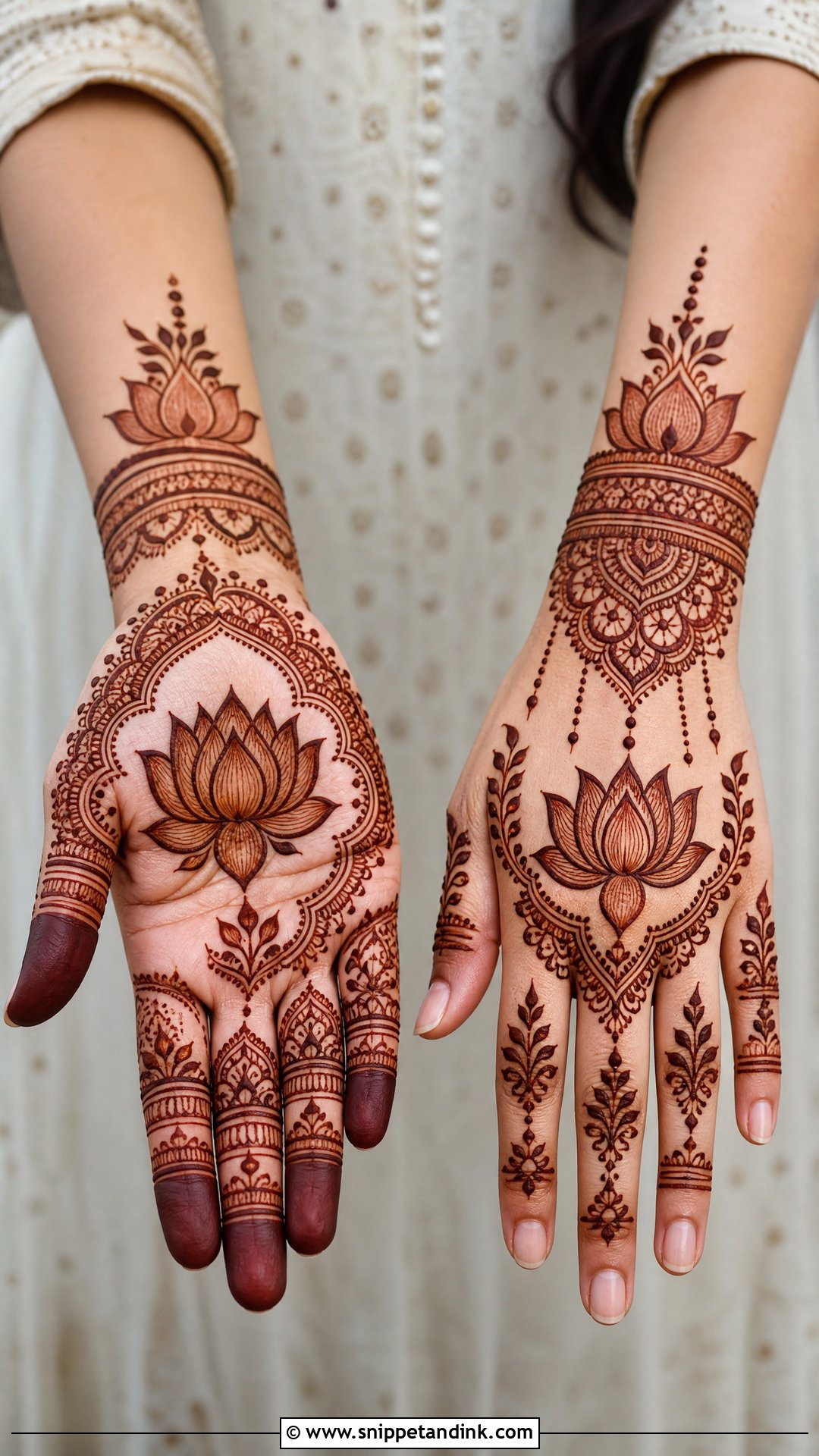
Lotus motifs work as large palm centres, wrist cuffs, fingertips or forearm borders, and they pair well with mandalas, dotted trails, scalloped edges and fine leaf work. They suit a bride who wants something traditional without figures or scenes. The design can be dense or light. What makes a lotus look bridal is layered petals with fine inner detail and matched placement on both hands, which keeps it calm and orderly in ceremony and portrait photos.
14. Mandala Bridal Mehndi Design
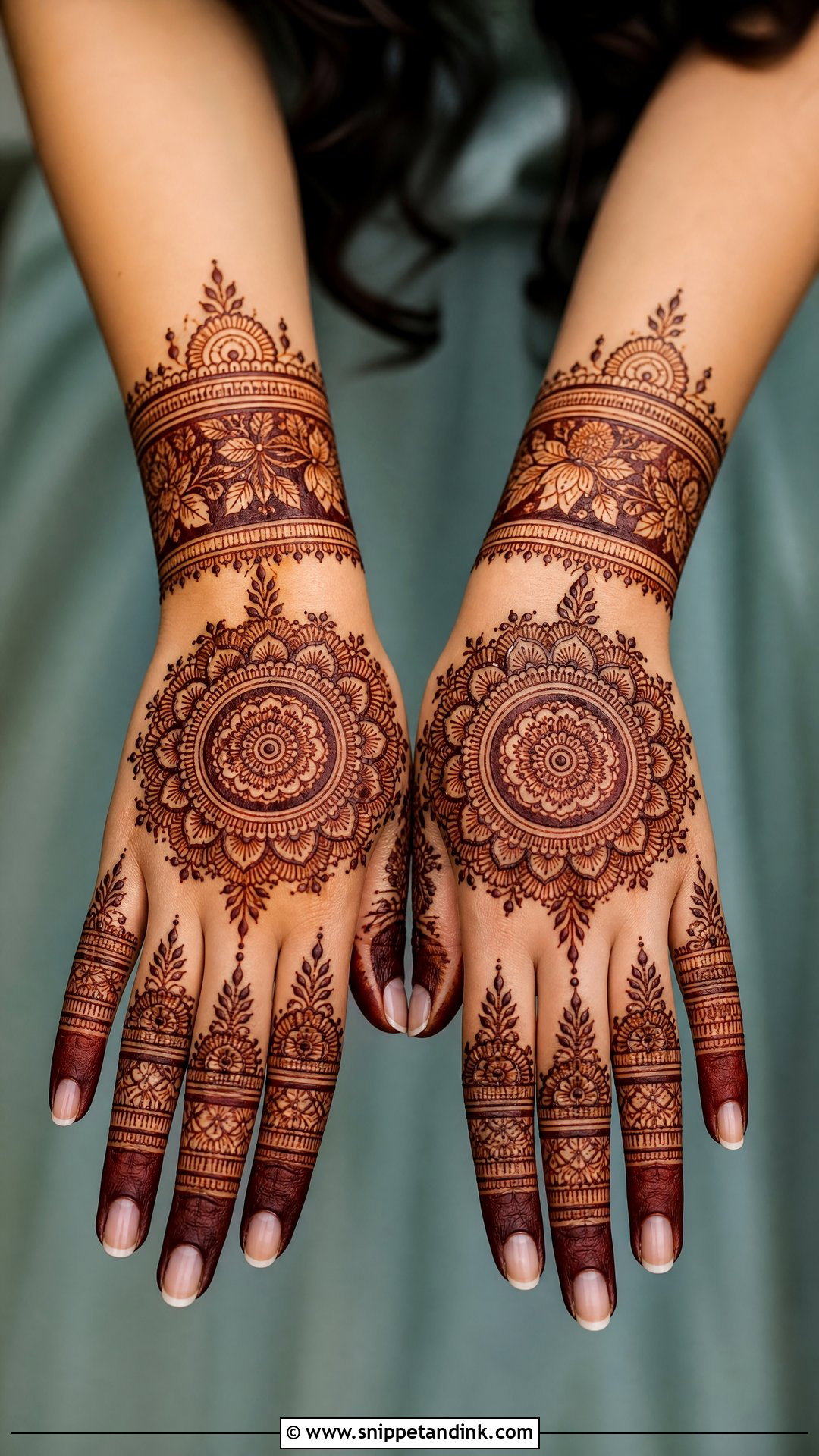
Structurally simple, visually strong. One round motif on the palm or back hand gives instant balance, and I build outward with detailed fingers, wrist bands, floral borders and forearm patterns. A mandala suits most hand shapes because it pulls the eye to the centre. To make it bridal, I add layered rings, tiny petals, dots, lace-like edges and filled fingertips; coverage can then be minimal, medium or fully traditional.

15. Jaali Bridal Mehndi Design
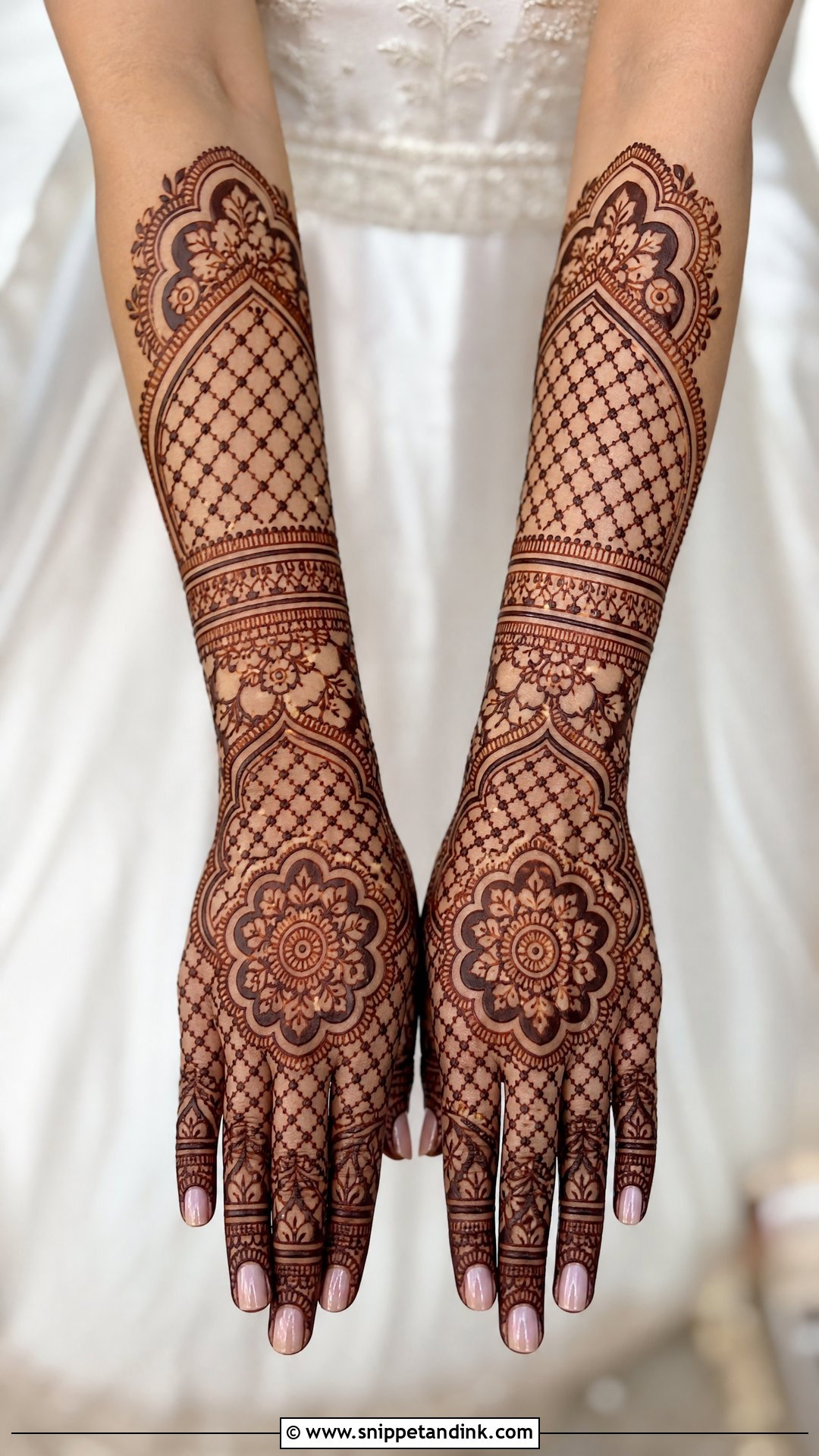
Jaali is a fine net pattern laid in small sections on the palm, back hand, wrist or forearm, framed by florals and paisleys. Its appeal is the contrast between filled squares and bare skin, which echoes the texture of lace and embroidered sleeves in photos. On its own, a big area of jaali can look flat, so I break it with bold borders, mandala centres or floral cuffs. That keeps it intricate without being heavy everywhere.
16. Moroccan Bridal Mehndi Design
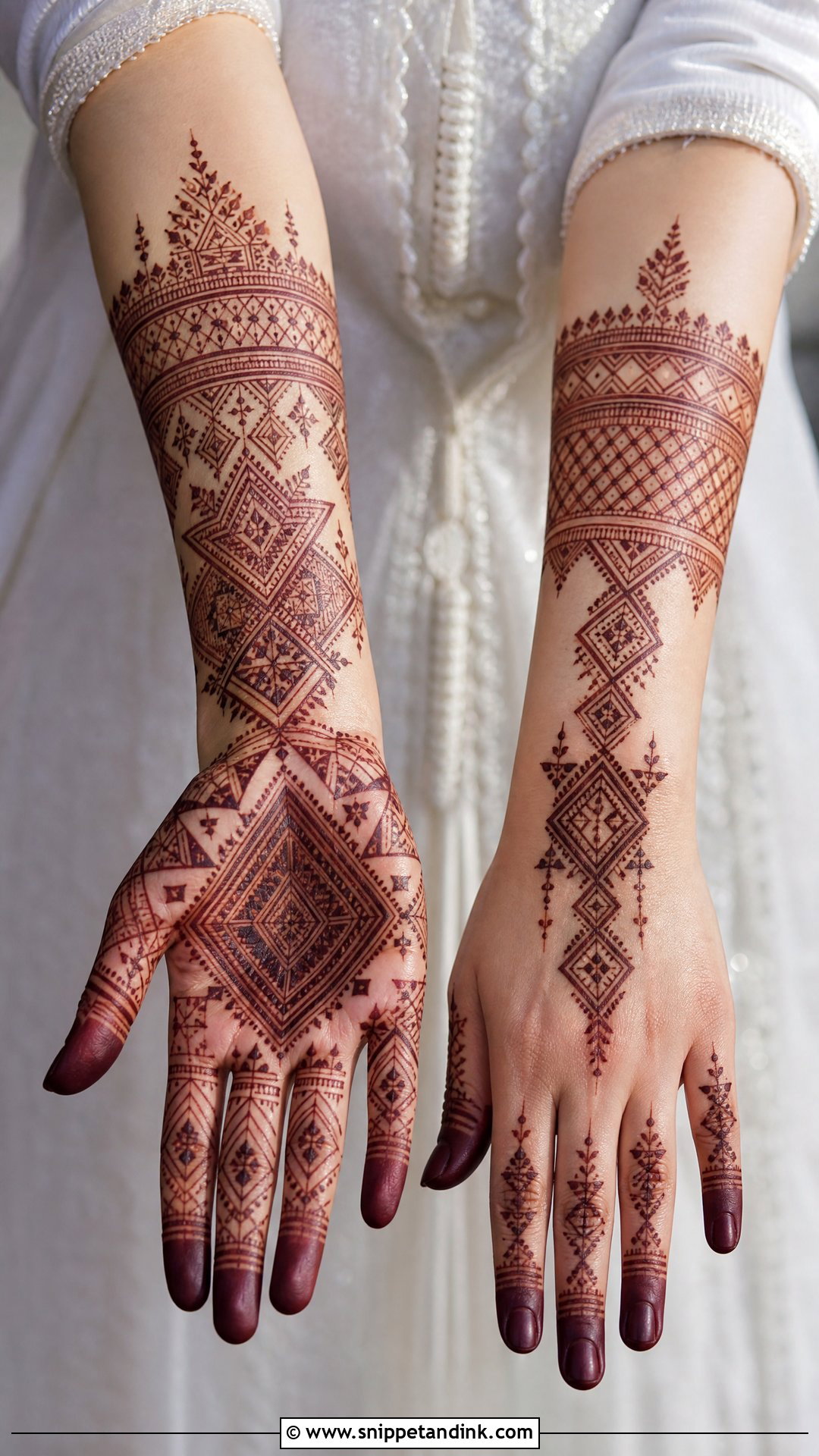
Geometry replaces vines and paisleys in Moroccan-style henna: diamonds, triangles, grids, linear bands, dots and angular shapes. It looks crisp on palms and back hands, either alone or combined with Indian florals for a fusion design. Straight lines are less forgiving than curves, so this is one style where a slower, steadier artist is worth waiting for. For bridal coverage, the geometry runs from fingers to wrist with a few broader bands on the forearm.
17. Gulf Bridal Mehndi Design
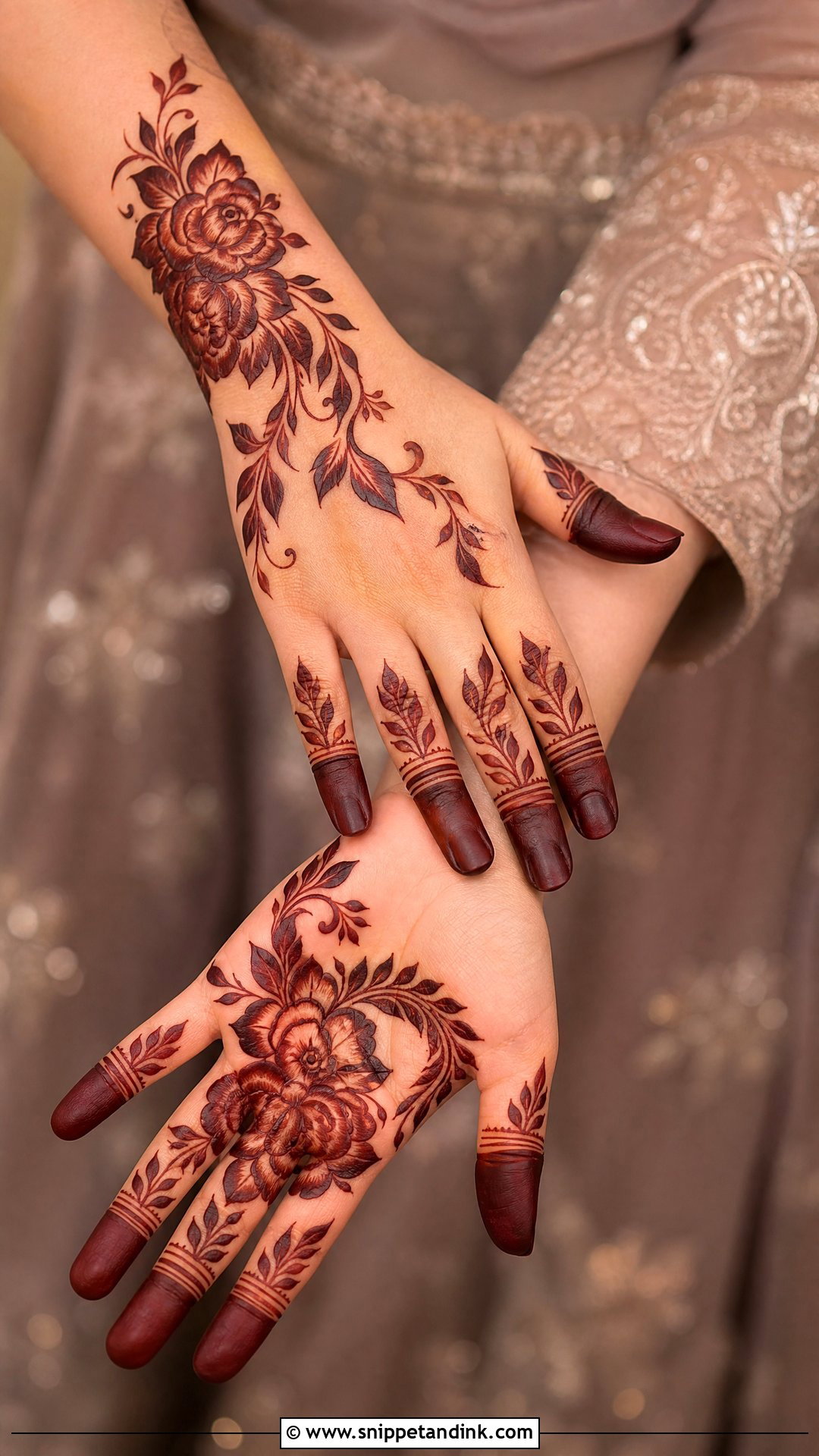
Bold florals, flowing leaves and wide negative space define Gulf bridal work, often called Khaleeji-inspired henna. It’s less crowded than Indian bridal mehndi but more dramatic than a simple design, with large flowers starting at the wrist and travelling toward the fingers. Thick outlines and shaded petals need a well-made, smooth paste to stain evenly. For a wedding, I add detailed fingertips, wrist cuffs and matching placement on both hands.
18. Bracelet Bridal Mehndi Design
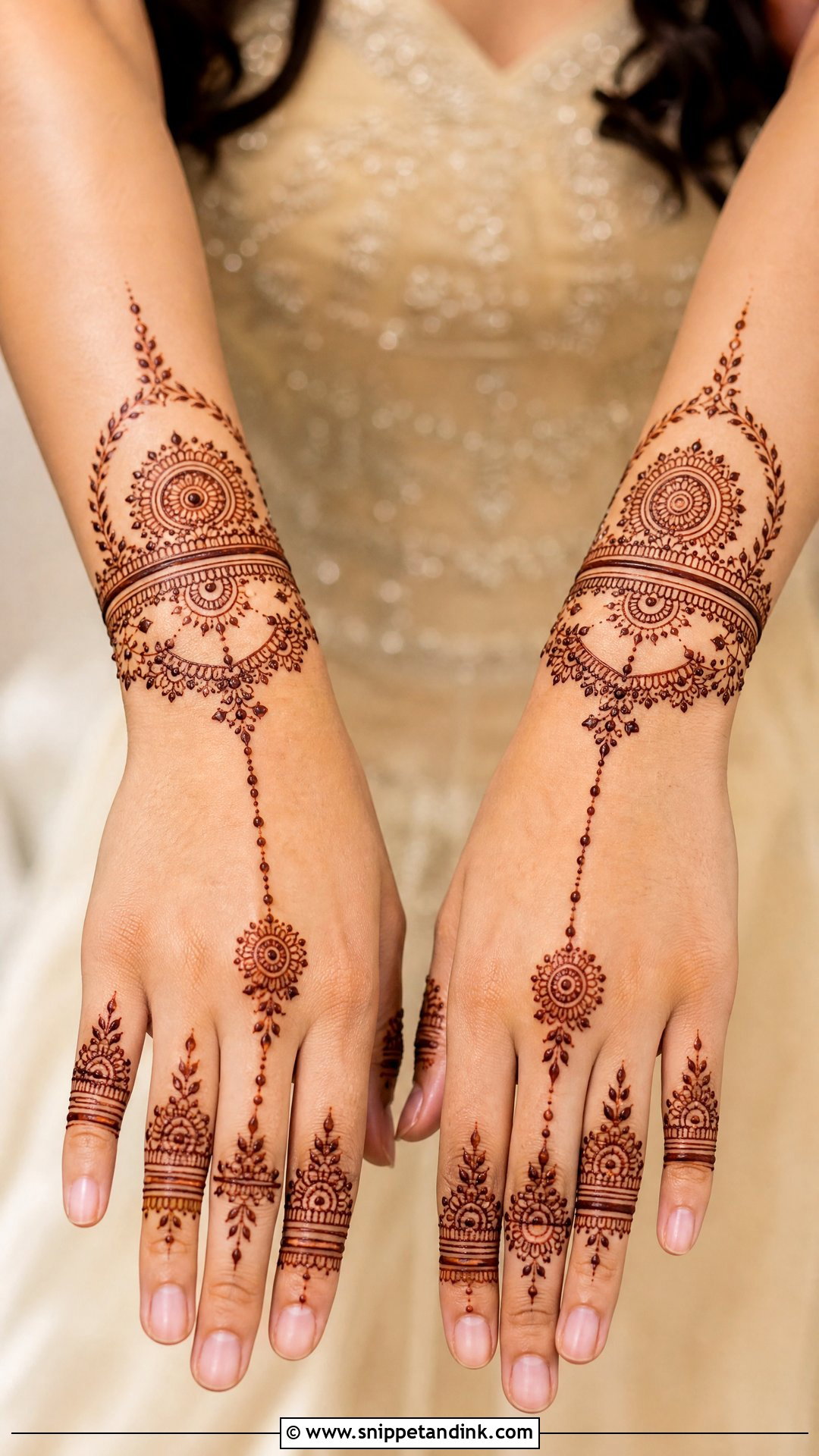
Bracelet designs borrow from bangles, hathphool, rings and hand chains: a decorative wrist cuff linked to the fingers by dotted chains, floral links or fine leafy lines. It’s a modern back-hand option that keeps your real bangles visible and suits long-sleeved outfits, where only the hand shows. I layer the cuff, add tiny mandalas and worked fingertips, and space the chains evenly. Too few lines and it looks unfinished in professional hand photos.
19. Finger Bridal Mehndi Design
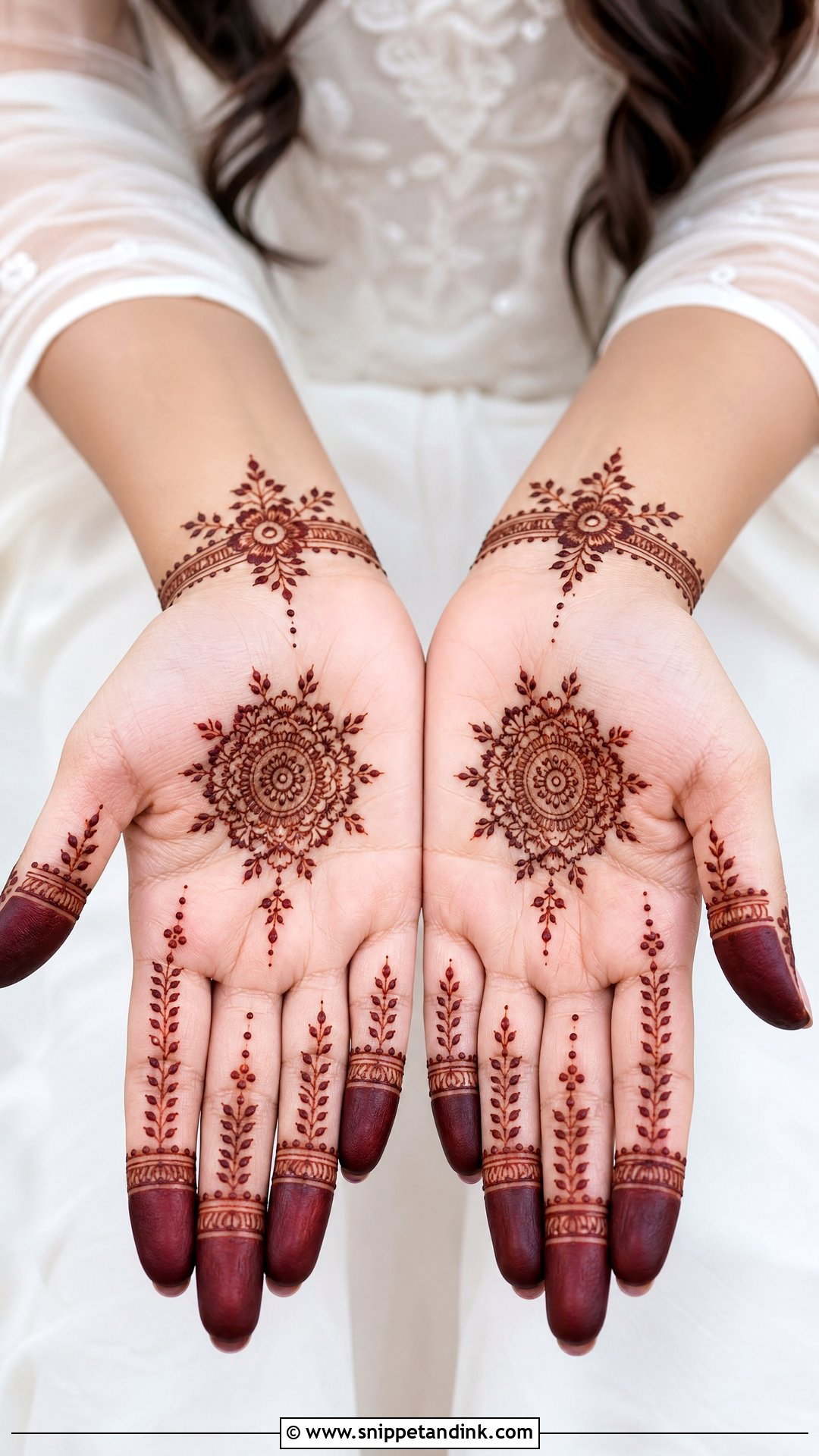
Fingers carry this design while the palm or back hand stays lighter: fingertip caps, leafy trails, ring bands, dotted lines and small floral clusters. It’s well suited to minimal or modern brides and pairs nicely with an engagement ring and bridal nails. The detail that matters is consistency. Each finger should belong to the same design, so I usually anchor them with a small palm mandala or a wrist band. One caution: fingertips are where stain fades first, as you wash your hands so often.
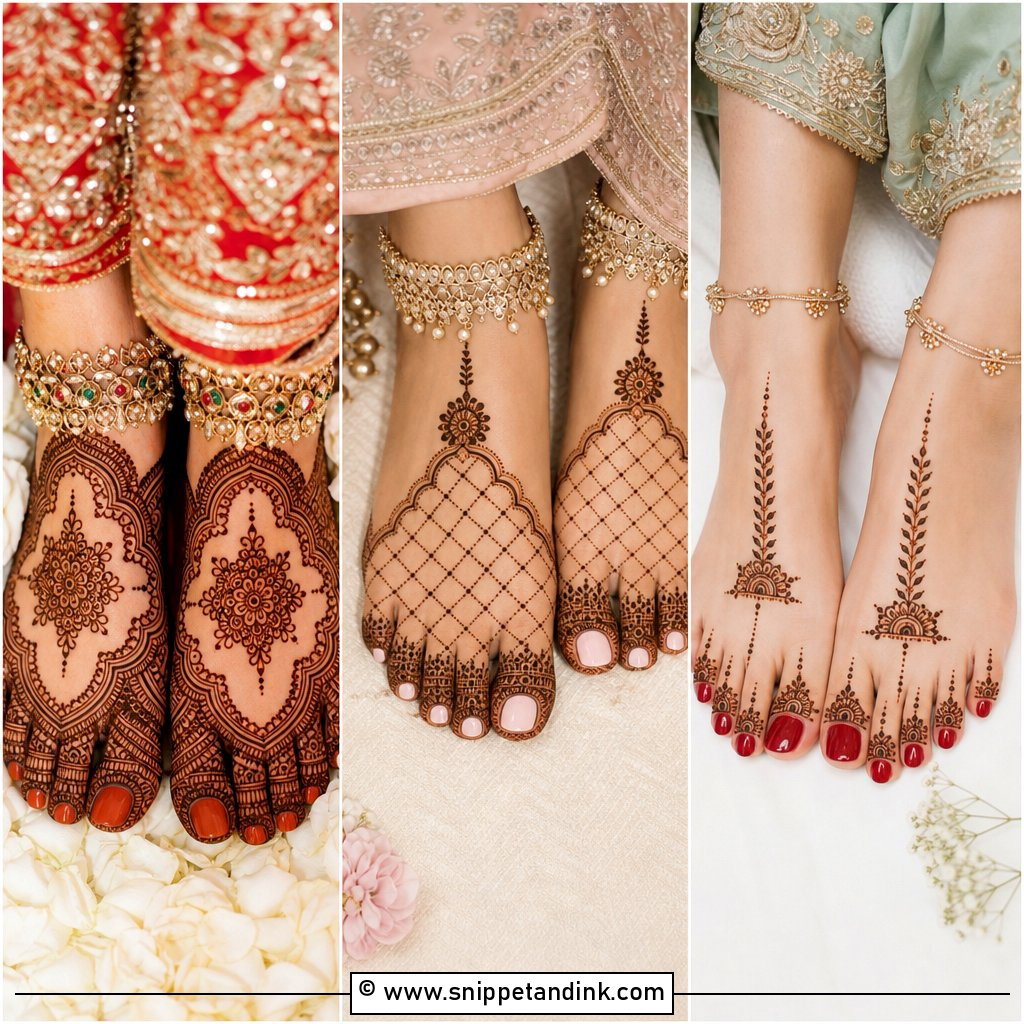
20. Feet Bridal Mehndi Design
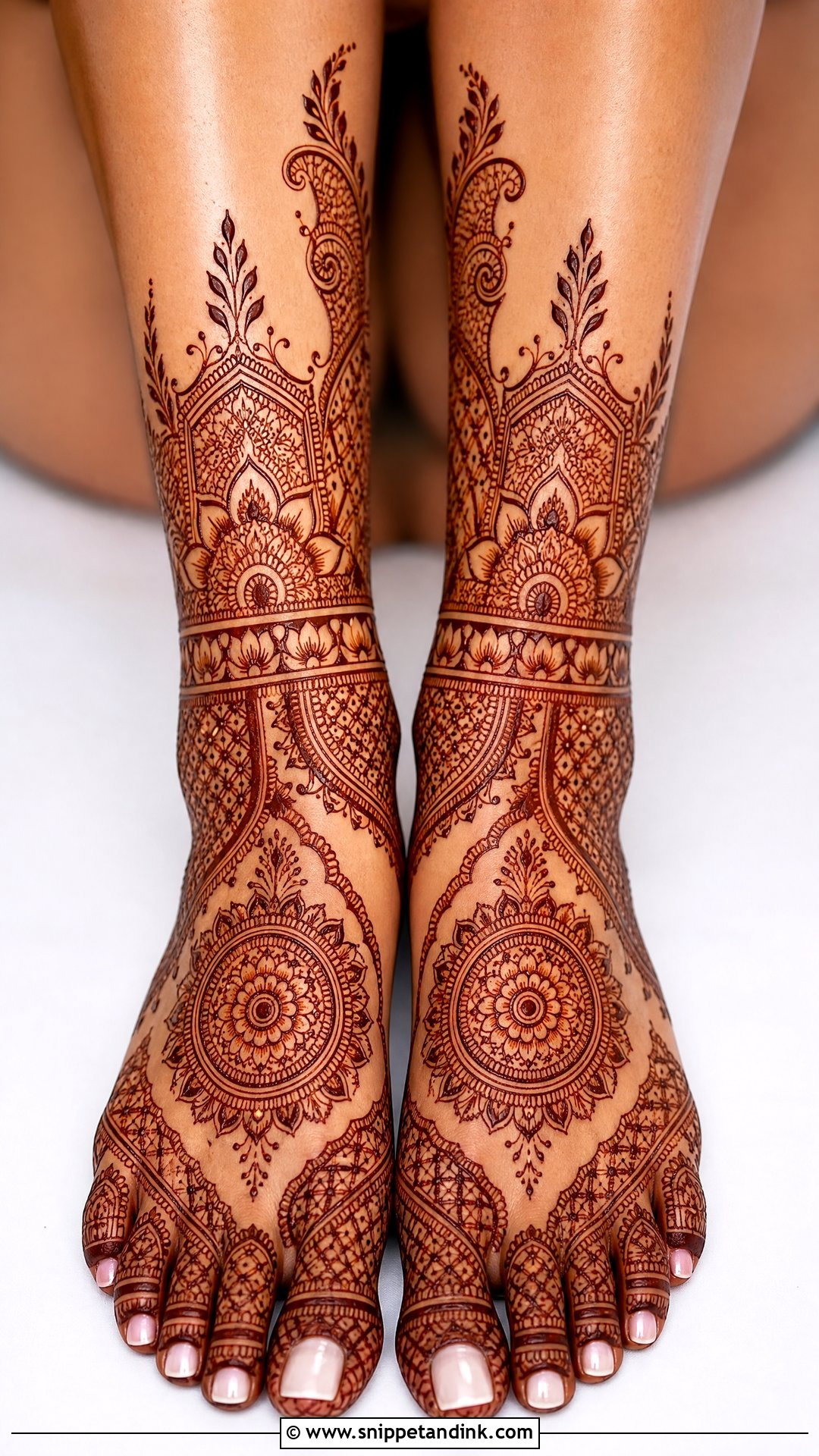
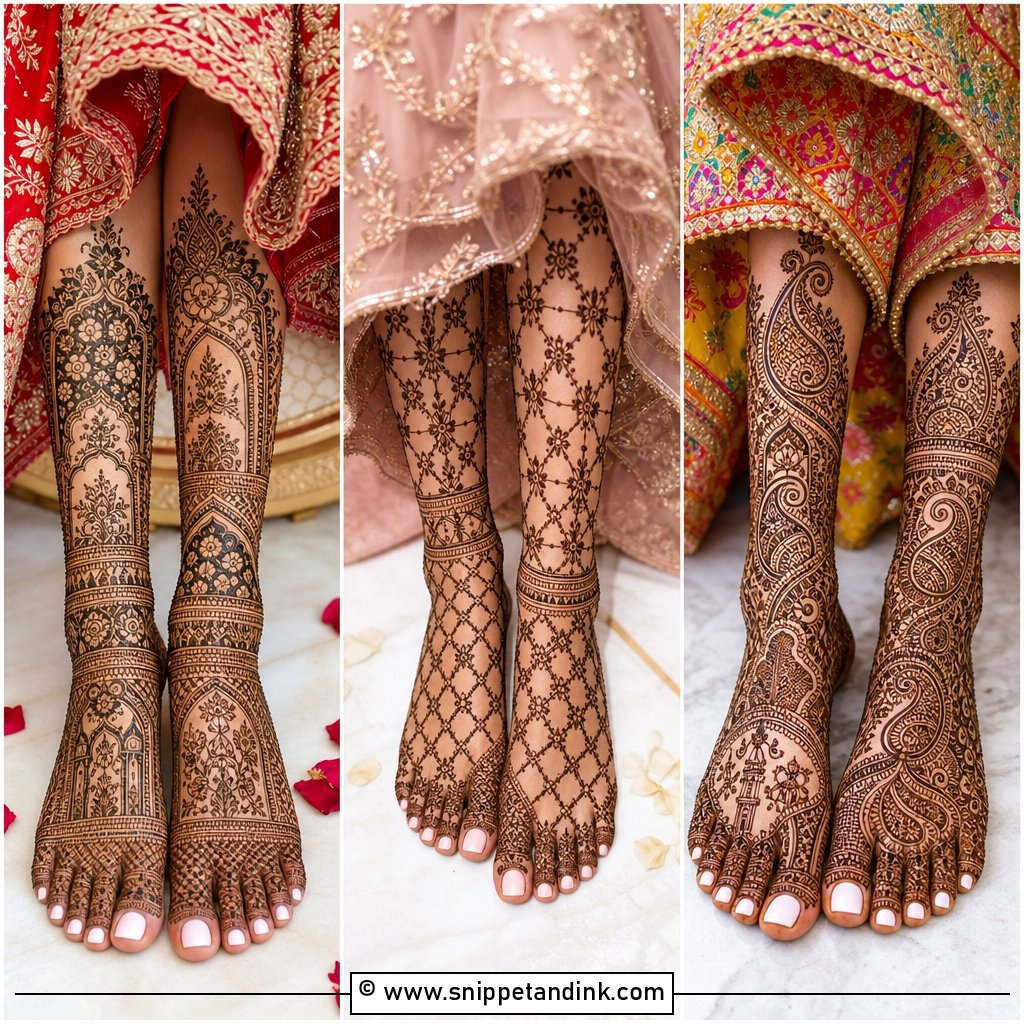
Feet finish the look, especially for barefoot rituals or outfits worn with payal and open sandals. Bridal foot designs cover the toes, the top of the foot and the ankles, sometimes the lower leg, using mandalas, lotus borders, anklet bands, paisleys, jaali and vines. Both feet should balance so they look right in seated and standing photos. With a very heavy outfit, medium coverage often looks cleaner than a packed foot. The soles and tops of the feet stain a deep reddish brown, often darker than the hands.
Why Some Stains Come Out Pale
A light stain is the most common worry I hear the day after a sitting, and it usually has a simple cause.
- The paste came off too soon. A few hours gives a light stain; leaving it on overnight gives a much deeper one.
- Water touched it early. Washing the hands soon after removal stops the colour developing.
- Cold hands. The dye moves into skin more slowly when you’re chilly, so a cold venue or air conditioning can dull it.
- It’s still developing. Stains look orange at first and keep darkening for up to two days, so judge it on day two, not the morning after.
- It’s the forearm. Arms and the backs of hands always stain lighter than palms. That’s normal skin, not a bad paste.
If the stain is pale on day two, there’s no safe way to darken it with chemicals, and stain-darkening products sold as quick fixes should be avoided. A small re-application on key areas, done early enough to develop, is the honest fix.
Getting Through the Sitting Without a Smudge
Wet paste smudges at the slightest touch, and most damage happens in the first hour. Sit with your arms supported on a cushion and keep your hands open, palms up. Have someone feed you, hold drinks with a straw and answer your phone. If you’ll sleep with the paste on, let it dry fully first, then wrap the hands loosely in tissue or a soft cotton cloth so it doesn’t rub off on the bedding.
Coverage Is a Choice, Not a Rule
Full Indian work feels traditional and royal; Arabic, Indo-Arabic, minimal, bracelet and Gulf designs give lighter, modern alternatives; personal details and foot mehndi round out the whole look. There is no correct amount of coverage for a bride. Choose it around your sleeves, your jewellery and your ceremony schedule, then bring clear references and talk it through with your artist. A design you can sit through comfortably, with a deep, even stain, will always serve you better than the heaviest one in the room.
You'll Like These Ideas:



Leave a Reply