
Pakistani henna has a look you can spot across a room: dense paisleys packed against open florals, fine jaali nets, shaded Arabic trails and fingers worked right to the tips. The same tradition also gives you the little tikki you’d wear to Eid lunch, so the designs below run from a full dulhan arm down to a single palm circle. When I sit down with a bride, the first questions are never about motifs. They’re about which function it’s for, what the sleeves look like, and how many hours she can sit still. Keep those three in mind as you scroll, and the right amount of coverage tends to pick itself.
The Paste Goes On Two Days Before the Colour Peaks
Natural henna never comes off the skin looking finished. When the dried paste is scraped away, the stain underneath is a bright orange, and it oxidises over the next day or two into the reddish brown or maroon you see in photos. That’s why I schedule bridal mehndi one to two days before the main event, not the morning of. Done the night before the baraat, the hands are often still warming up in colour when the photographer arrives.
Sitting time matters just as much. A front-and-back bridal hand with forearms, plus feet, can easily take several hours, and the paste then needs to stay on for many more. When a bride has dholki, mayun, mehndi and baraat all in the same week, I map it like this:
- Dholki: a light tikki or bail design, because it will have faded by the wedding anyway.
- Mehndi night: the full bridal application, timed so the stain peaks for the baraat.
- Nikkah held separately: either the bridal design if it falls close to the baraat, or a lighter half-hand if it’s a week earlier.
- Walima: no new henna. The bridal stain is usually still showing, just a shade softer.
Expect the colour to hold well for about a week and then fade as the skin naturally sheds, palms first because you use them most. I tell brides who want henna on their honeymoon photos to know that it won’t look the way it did on the wedding day.
1. Pakistani Bridal Mehndi Design Full Hand
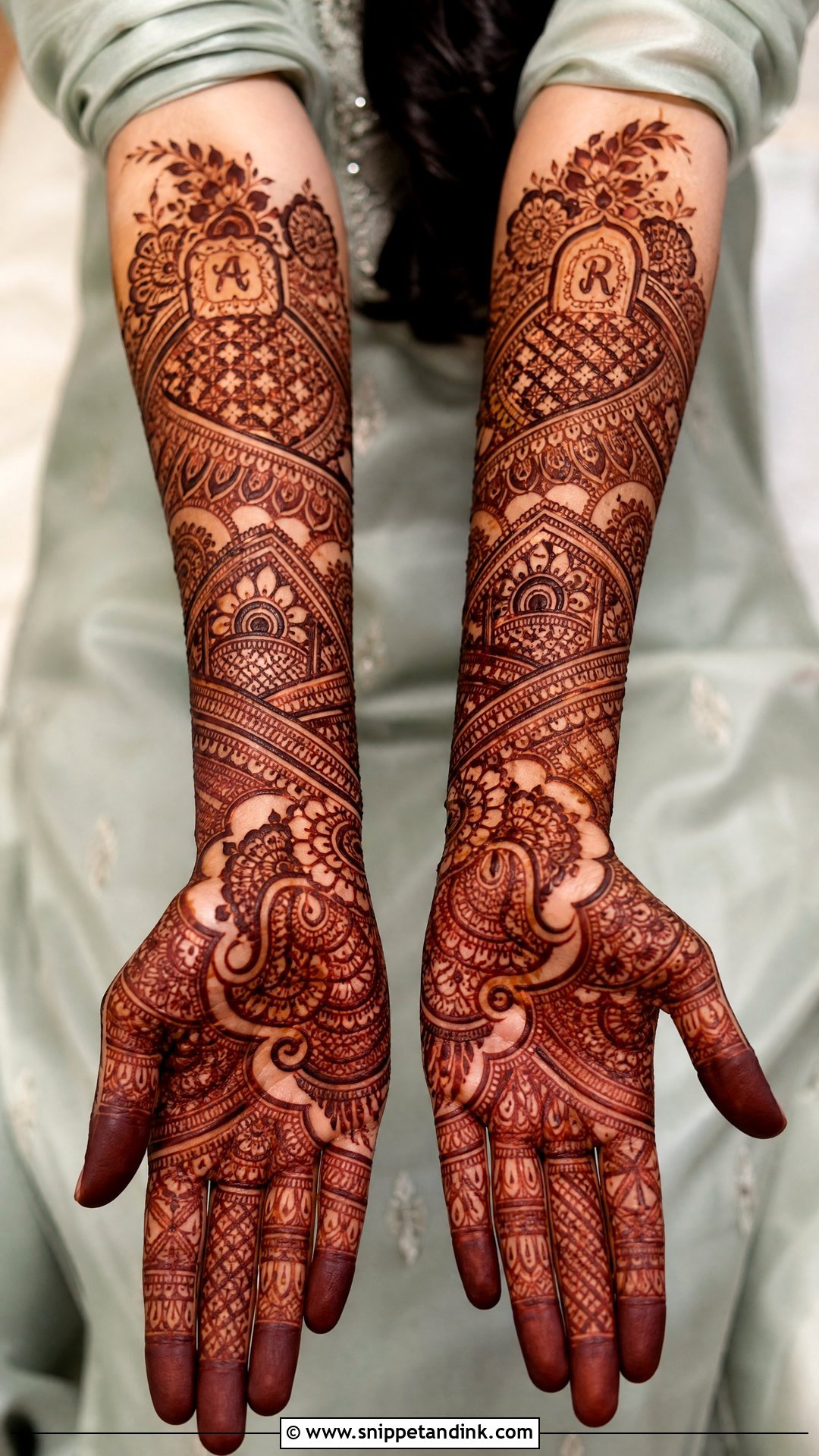
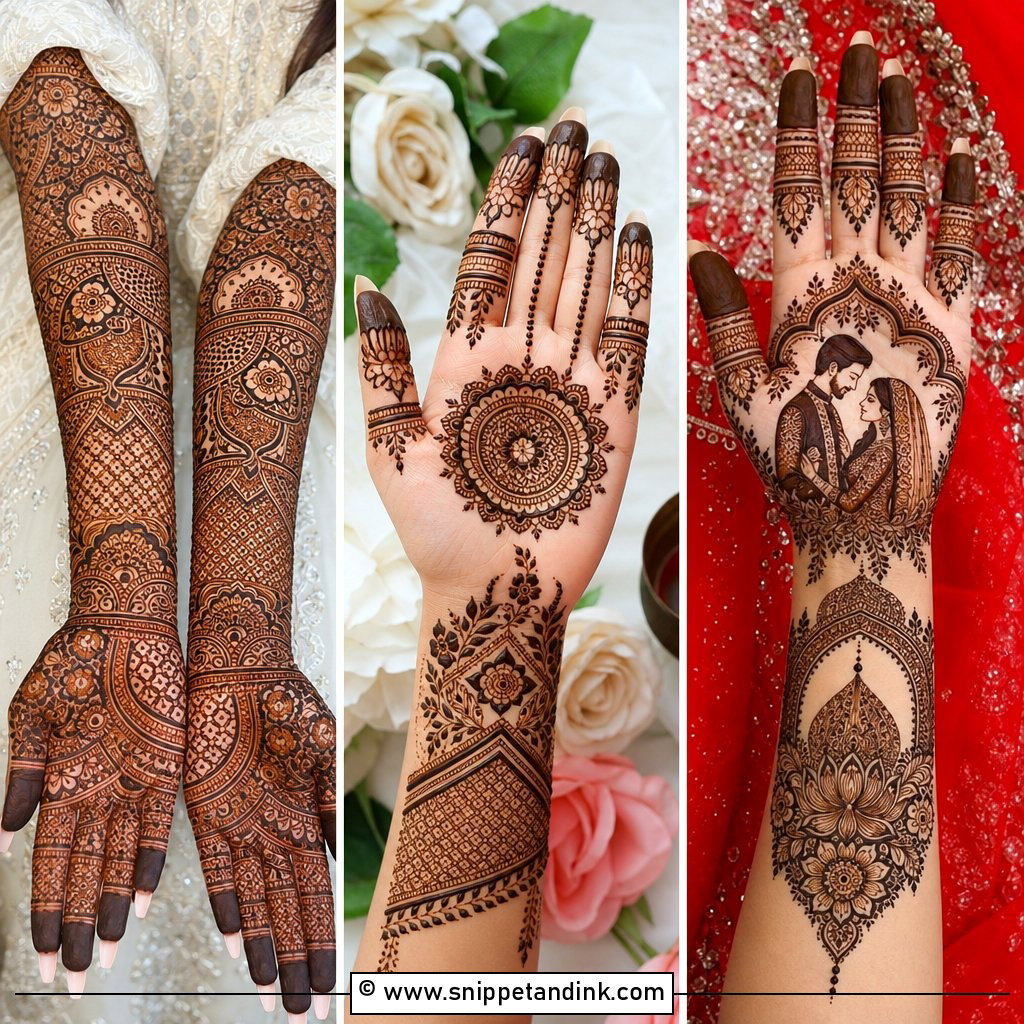
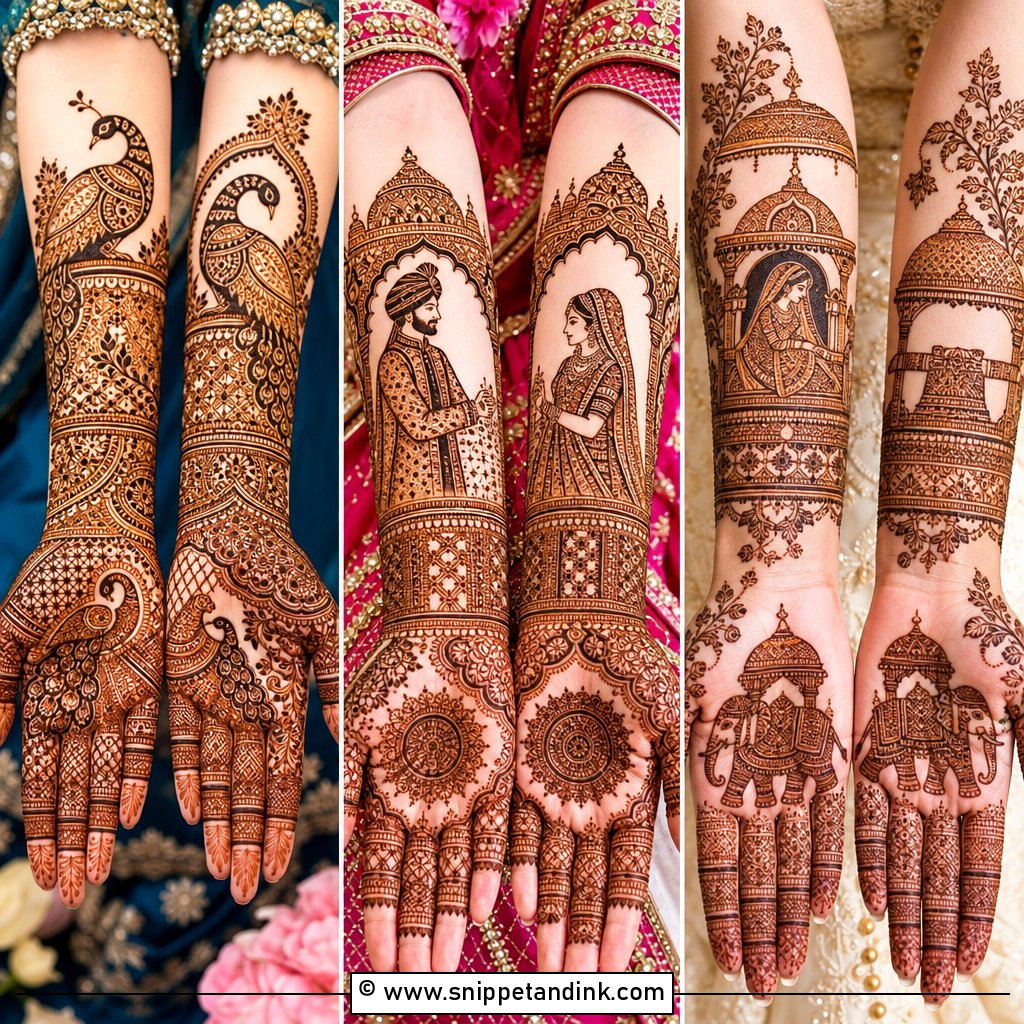
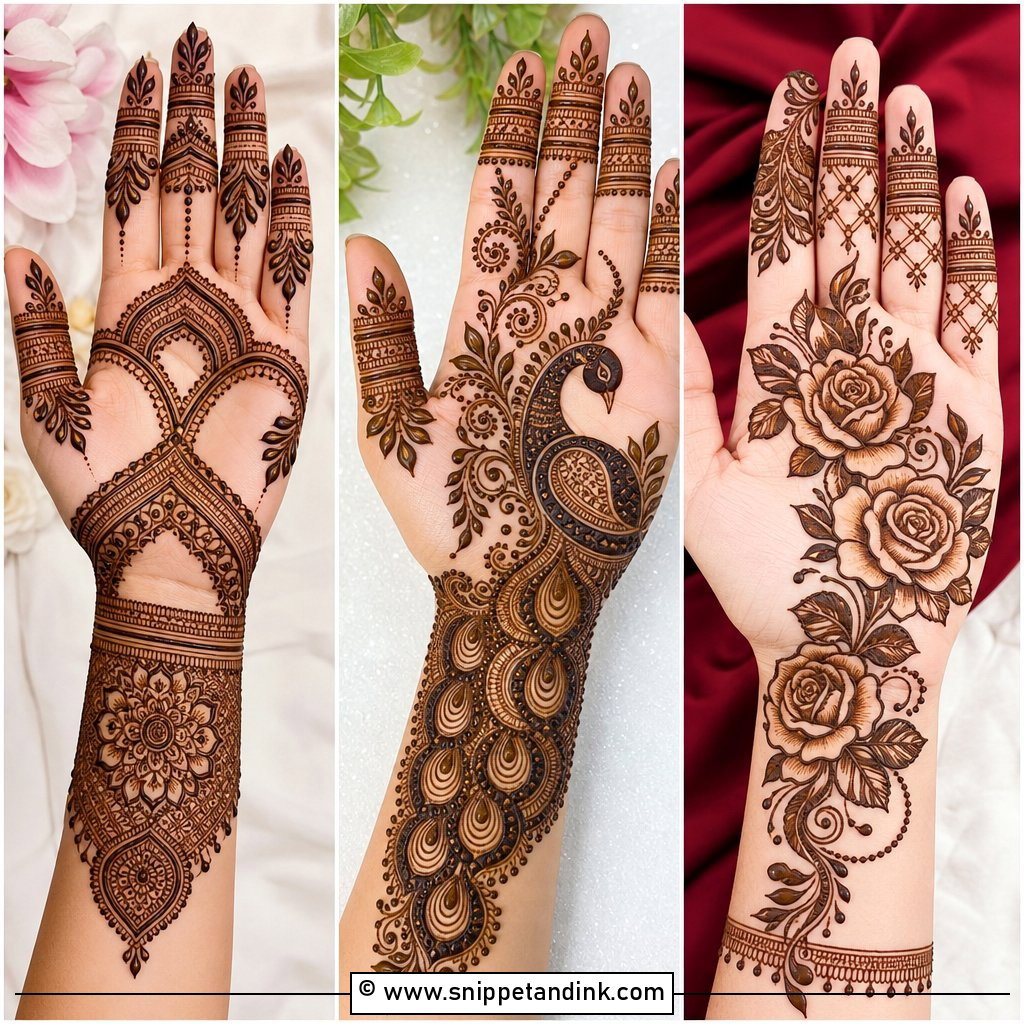
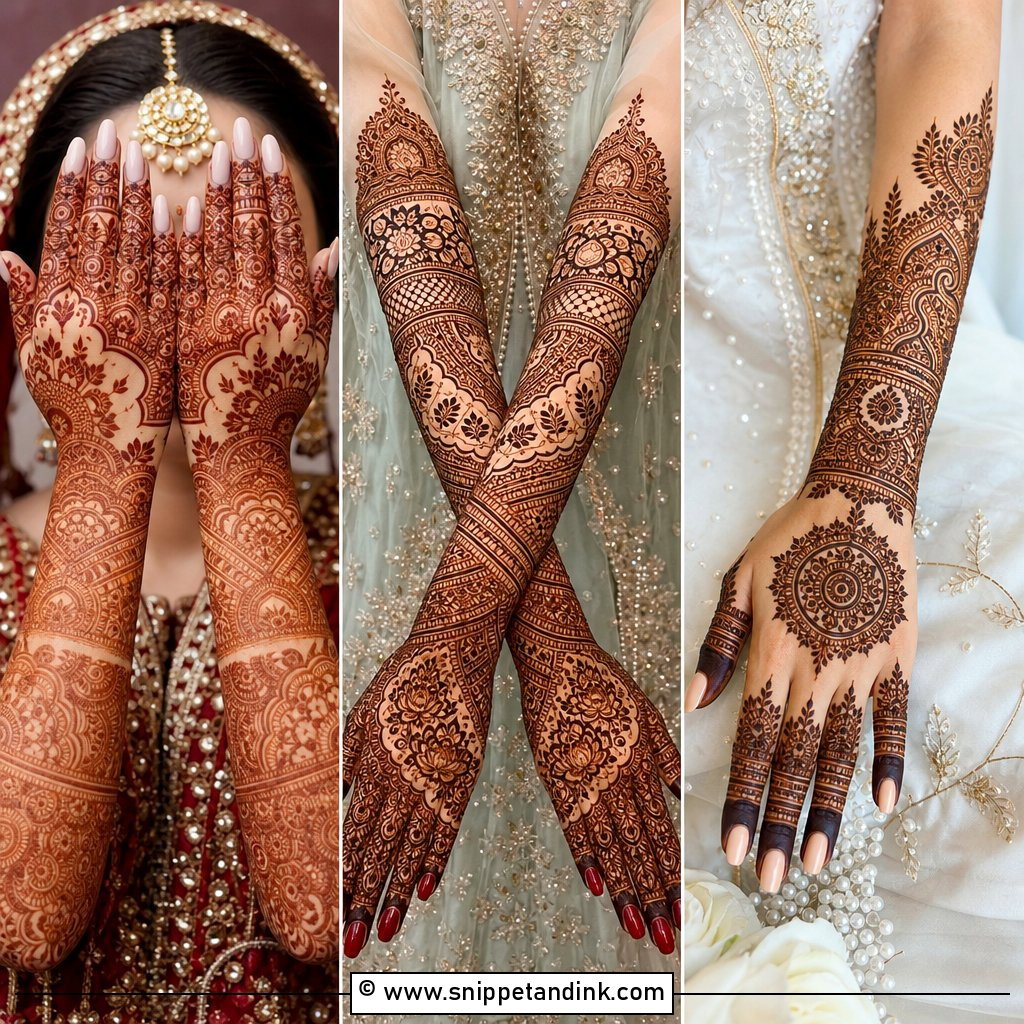
This is the design I plan the longest, because palm, fingers, wrist and forearm all have to read as one piece. Dense paisley, domes, net filling and florals cover every zone, and I build the palm first and work outward so the fingers echo it instead of competing with it. Initials or a wedding date can be hidden inside the palm; I place them in a motif that won’t sit under a ring or bangle. Expect a long sitting. The reward is that every tiny gap turns into crisp detail once the stain deepens to maroon.
2. Pakistani Tikki Mehndi Design Front Hand
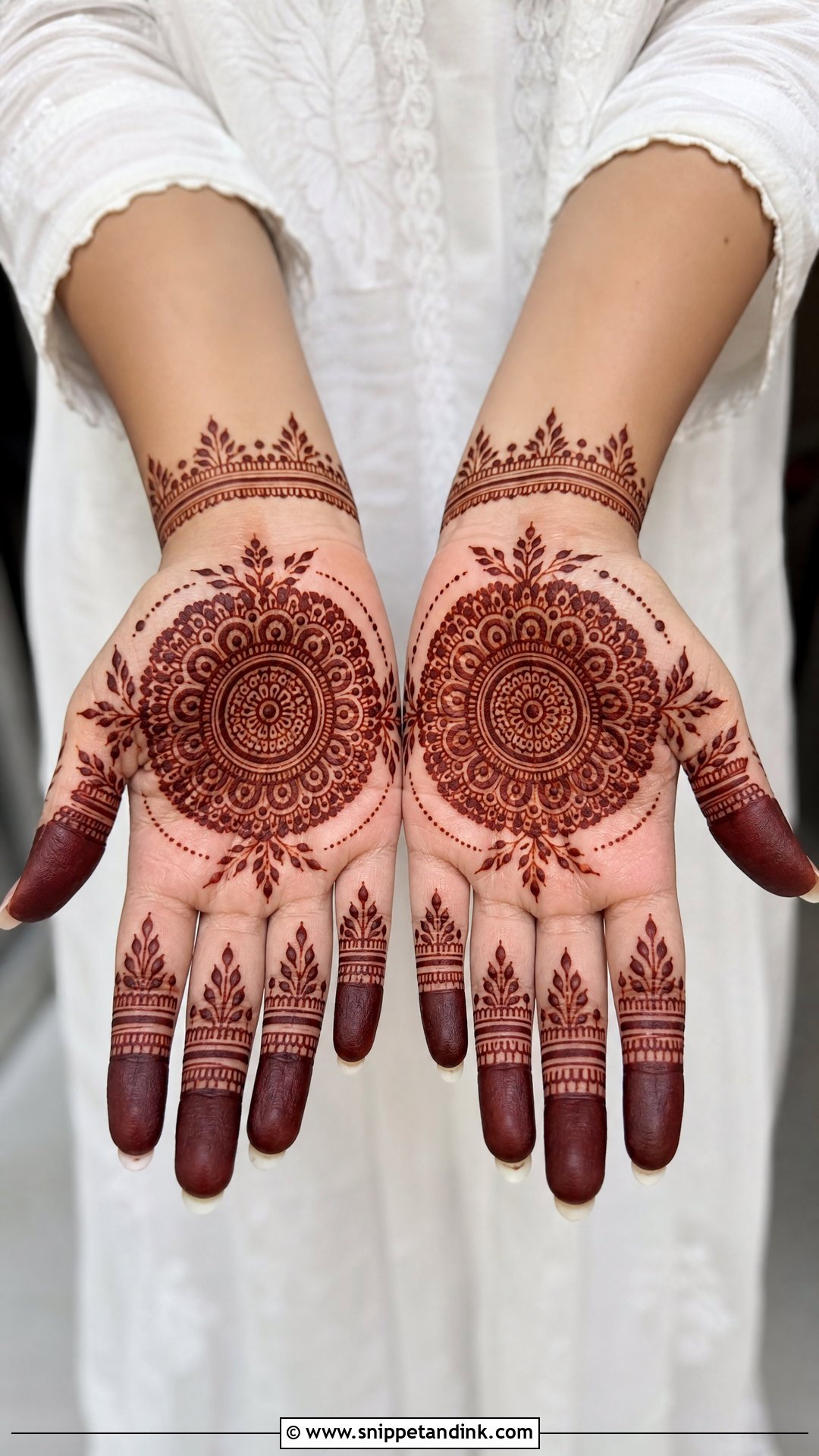
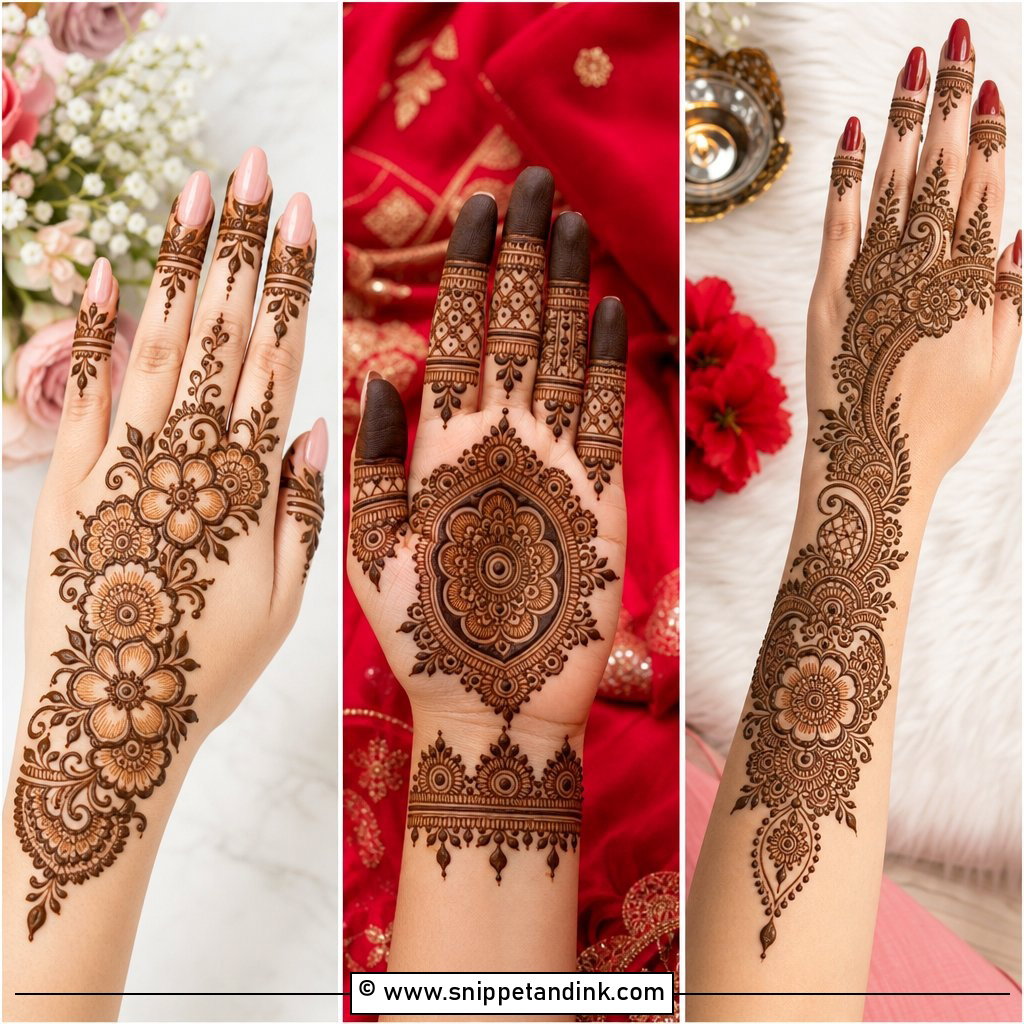
A round tikki in the centre of the palm, small florals and dots around it, patterned fingers. That’s the whole structure, and it’s the one I reach for most at Eid and dholki nights. The circle carries everything, so I draw it first with an even, unhurried line, because a lopsided tikki is the one flaw everybody notices. Leave clean skin around it for a modern feel, or ring it with dotted chains if you’d like it to look more traditional.
3. Pakistani Back Hand Mehndi Design
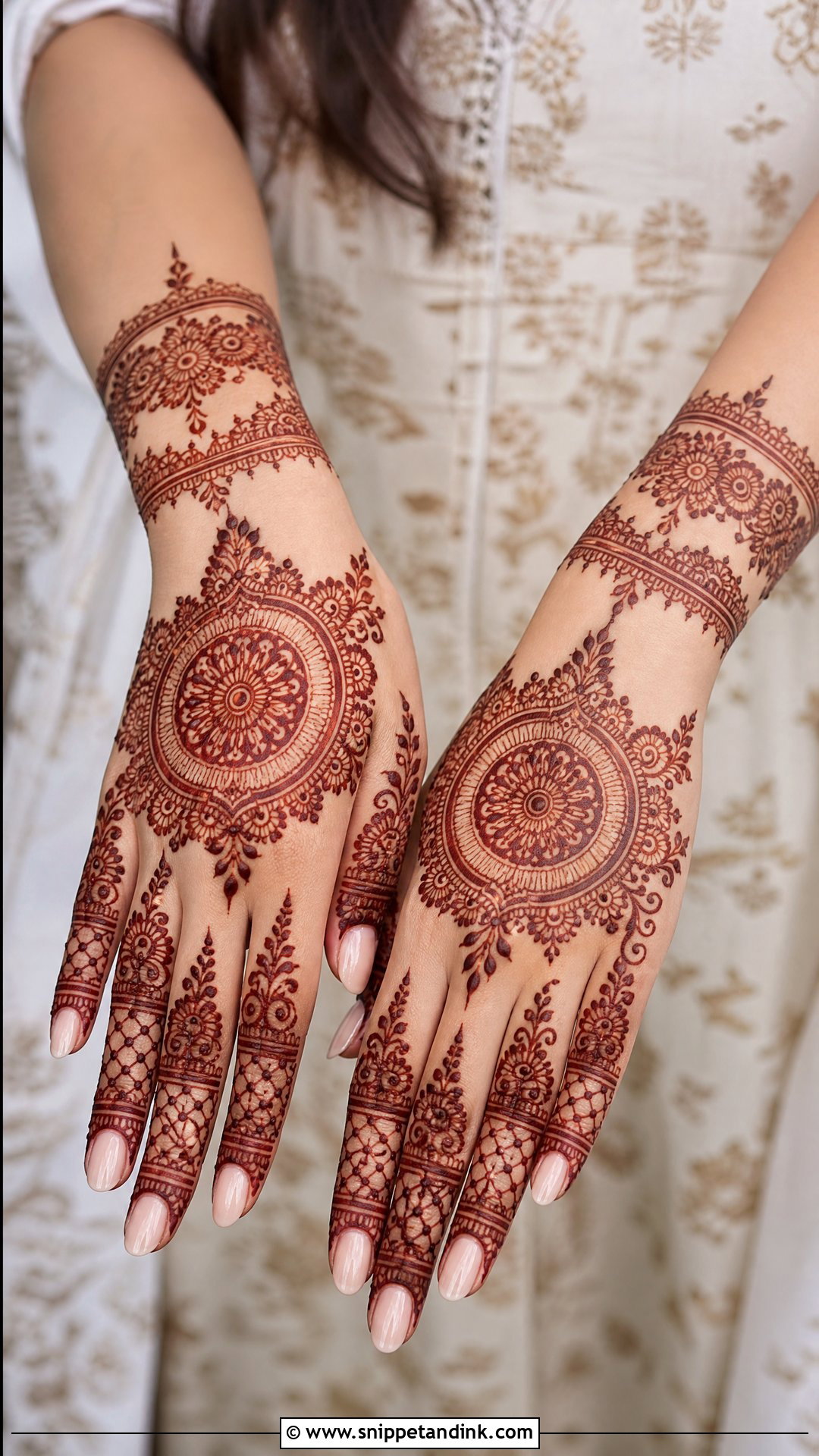
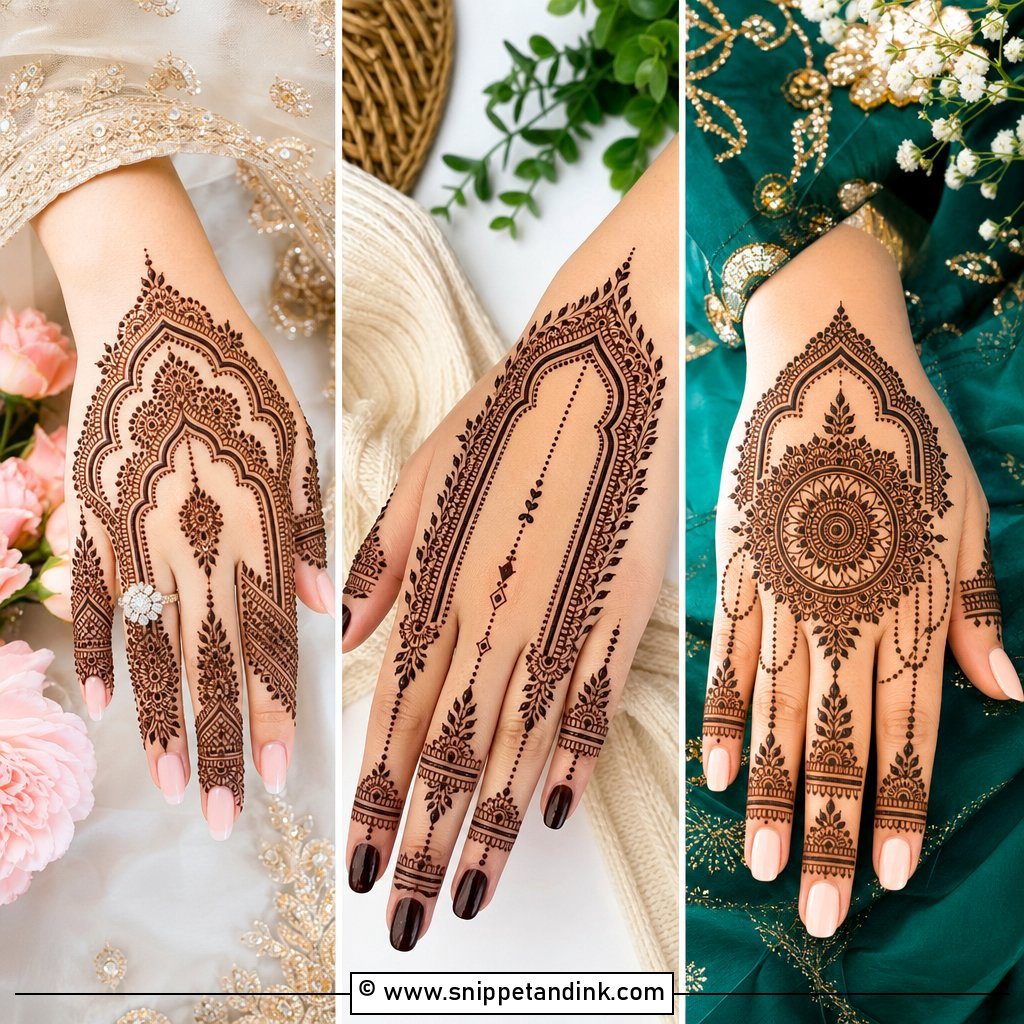
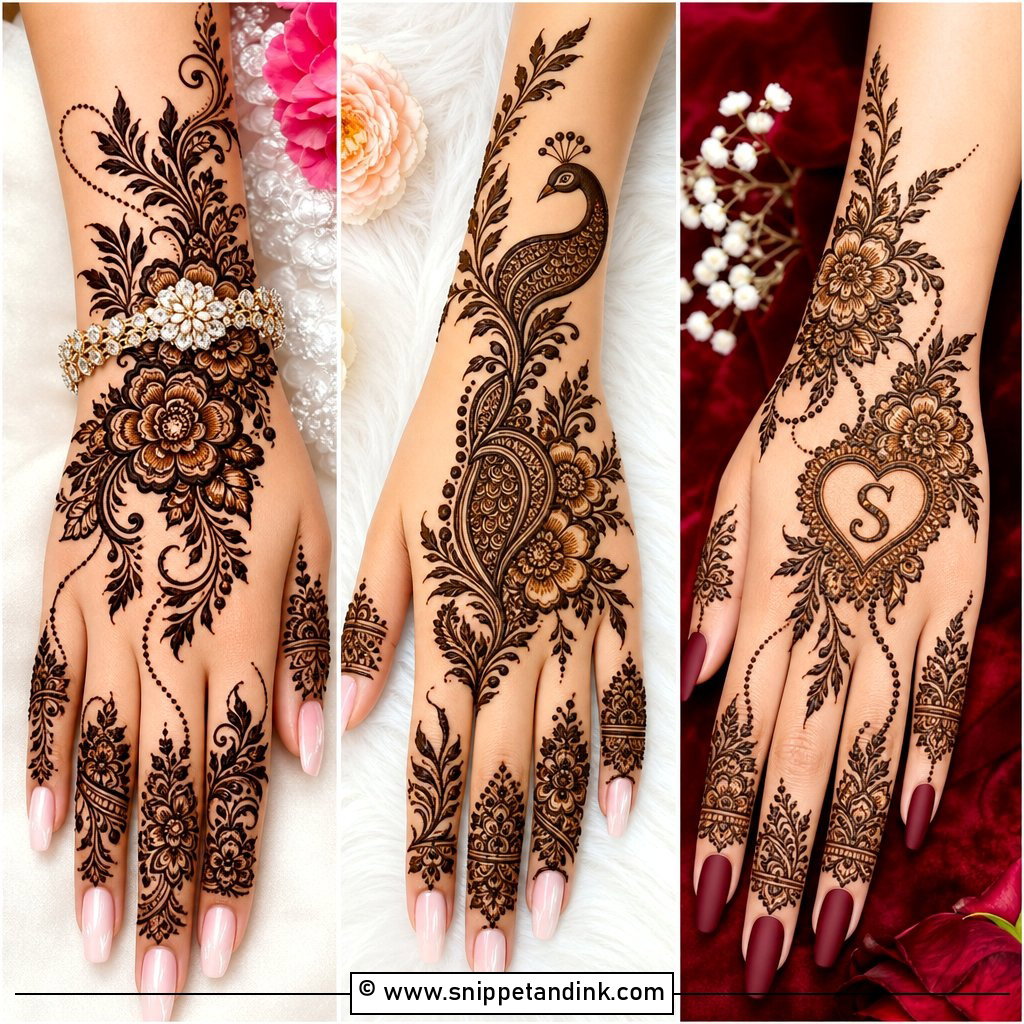
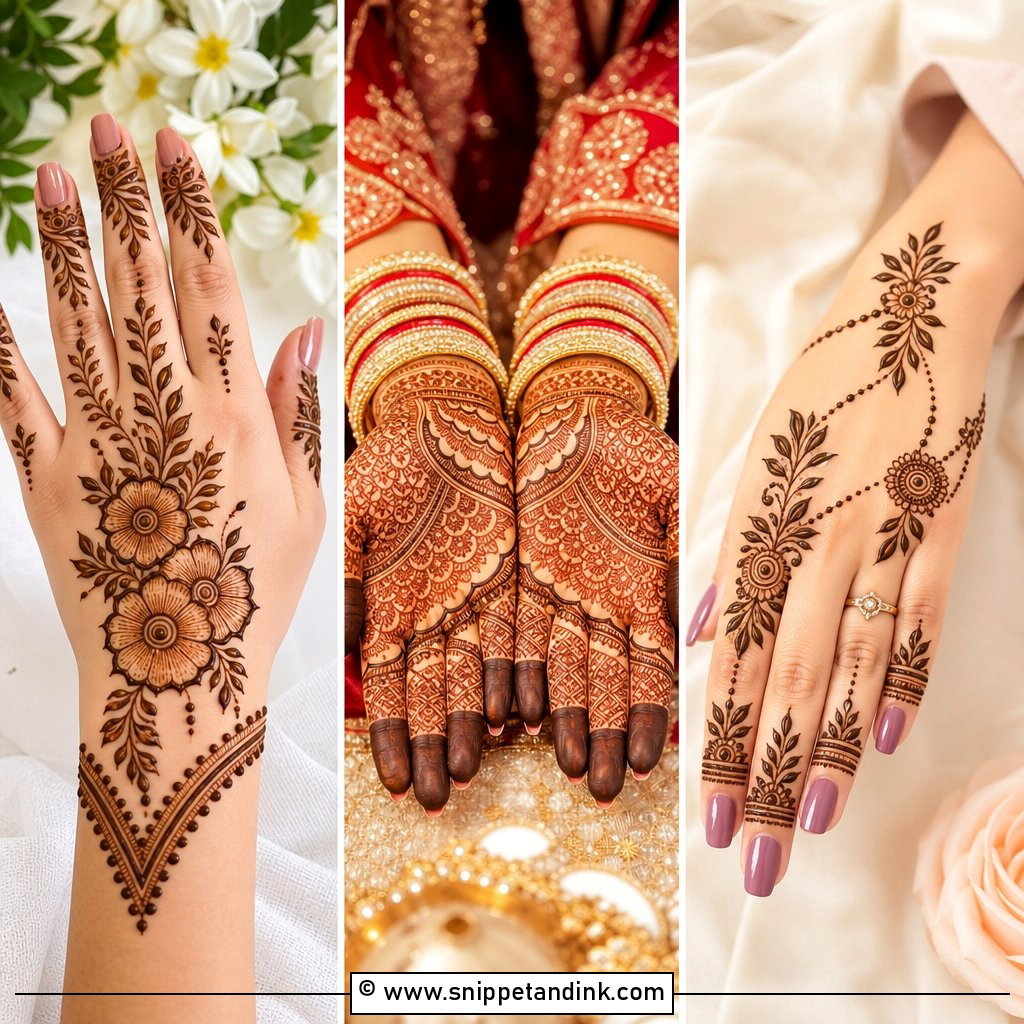
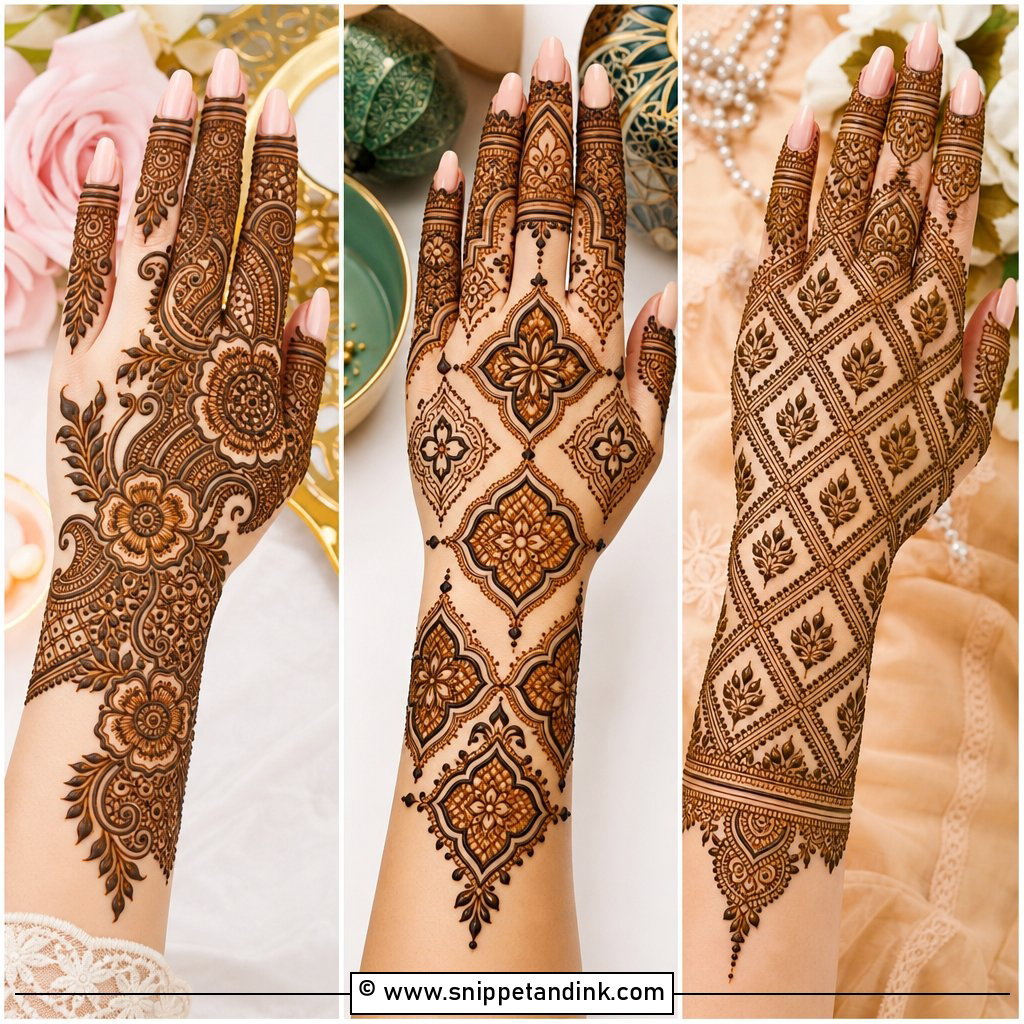
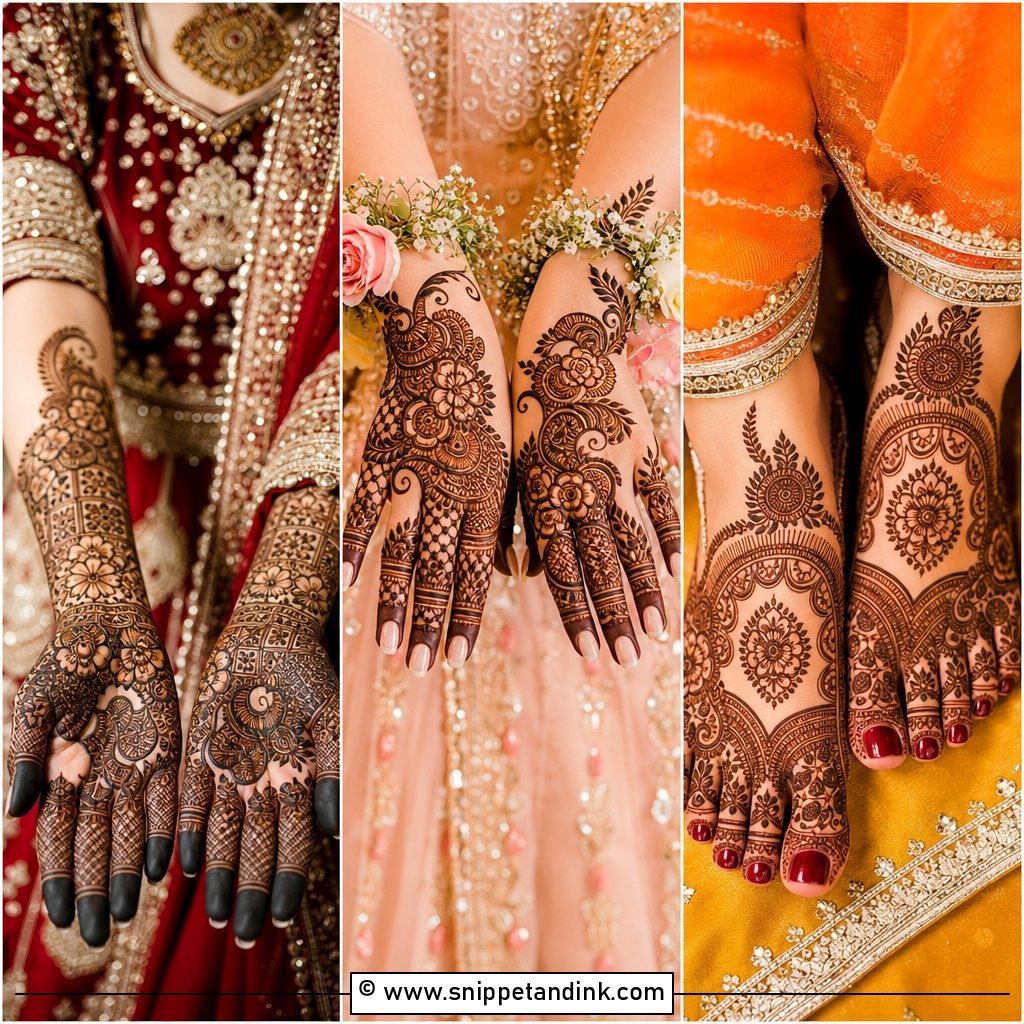
On the back of the hand, mehndi behaves more like jewellery than pattern. A central motif, a bracelet band at the wrist and finger extensions are the usual bones, filled with florals, jaali and small paisleys. Worth knowing before you book: the skin there is thinner than the palm, so the stain usually comes up a shade or two lighter. I leave open skin around the main motifs so that lighter stain still reads clearly, which is why it’s such a safe pick for guests, engagements and Eid.
4. Pakistani Arabic Mehndi Design
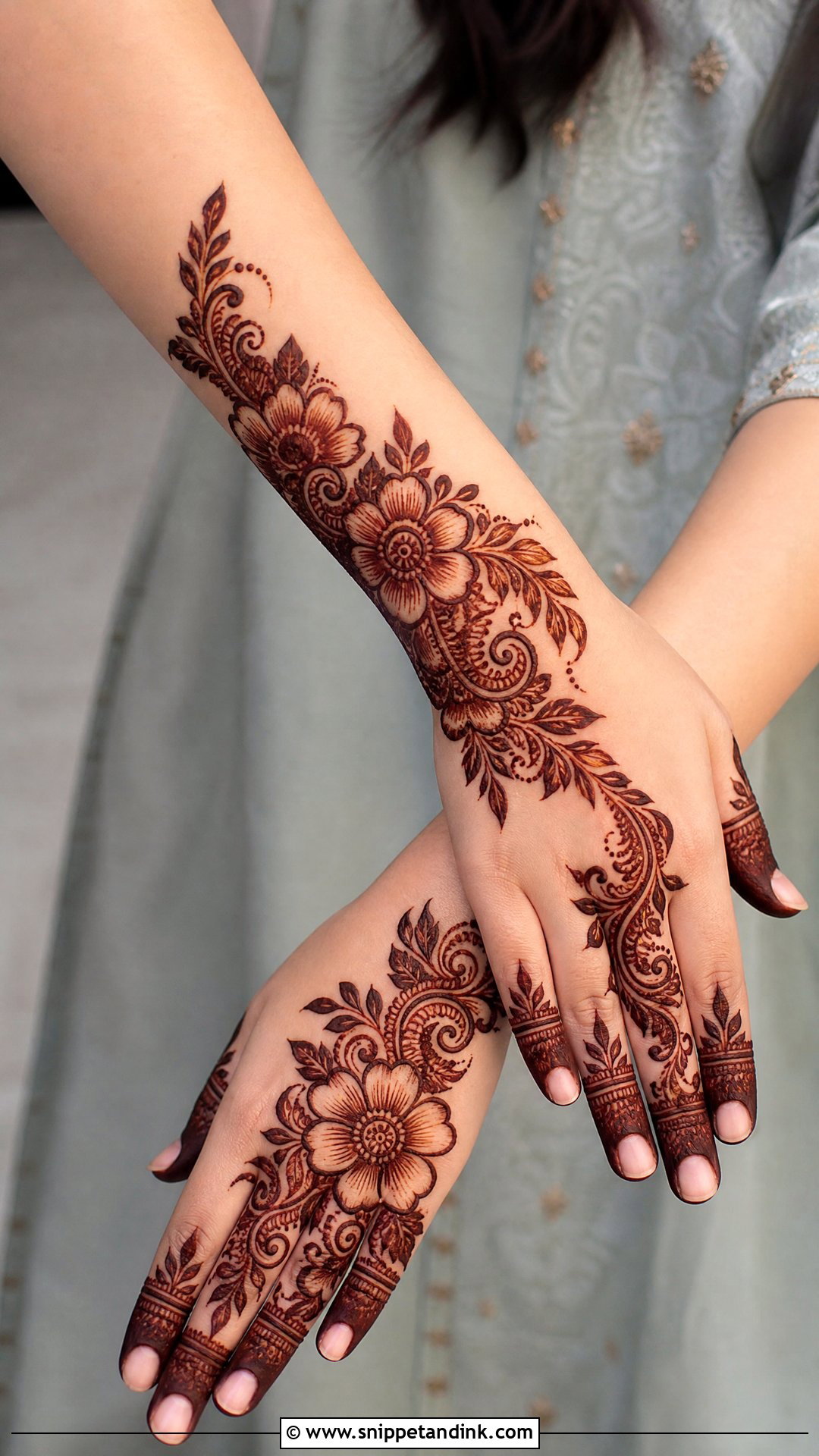
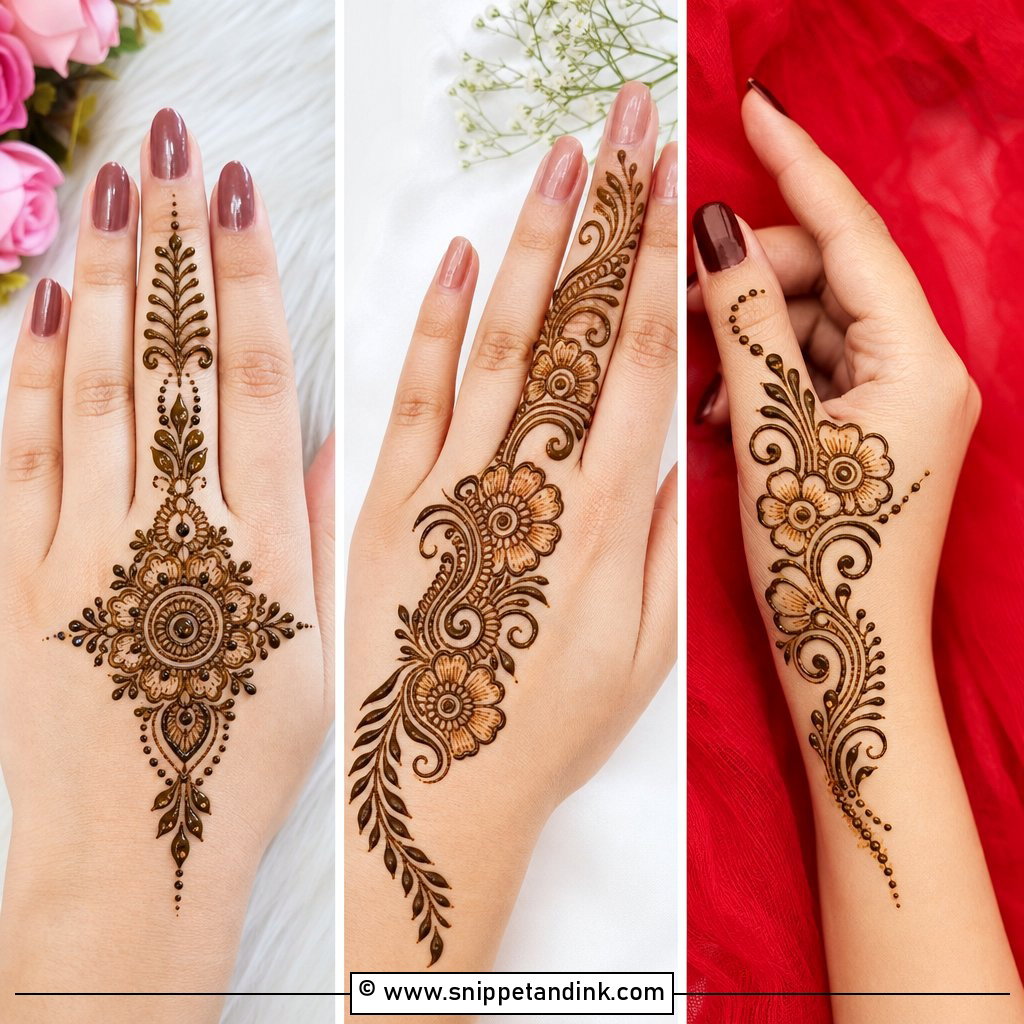
Here the bold diagonal of Arabic henna meets Pakistani fine work. The trail runs from wrist to index finger with shaded flowers, vines and paisleys, and the open skin between them makes the hand look longer. With far less filling than a bridal hand, it goes on quickly, which is why bridesmaids queue for it. What makes or breaks it is contrast: bold outlines, soft inner shading, and fingertips kept neat rather than crowded.
5. Pakistani Khafif Mehndi Design
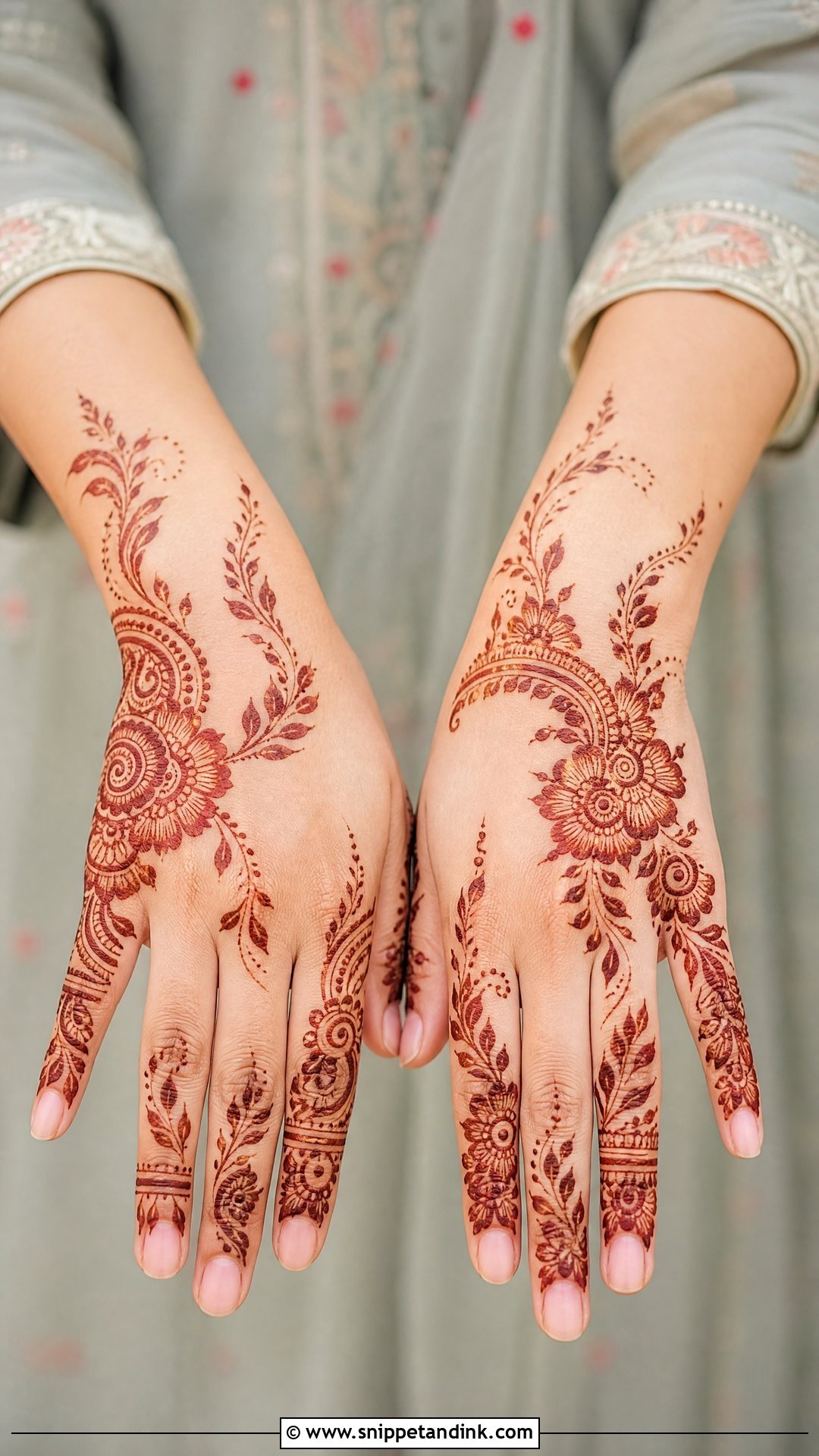
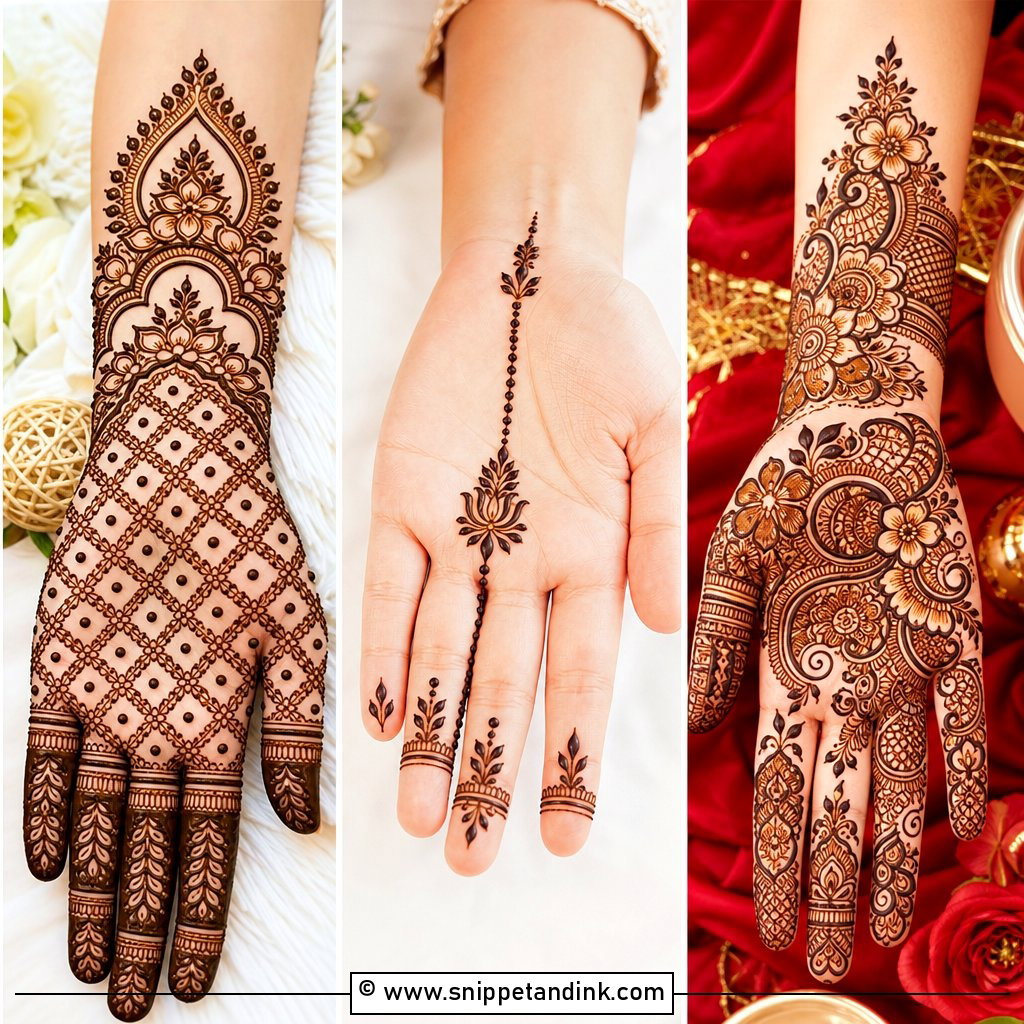
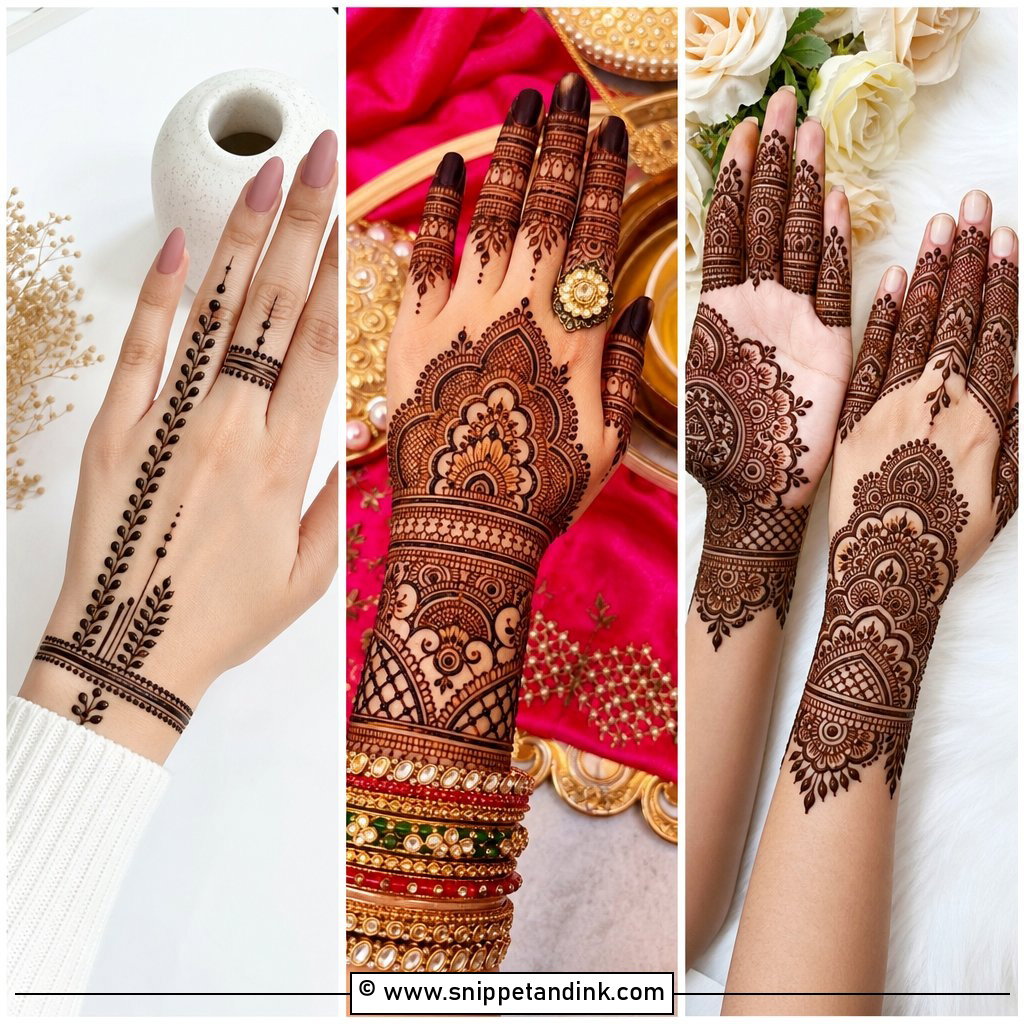
Pakistani khafif mehndi design is the airy end of the tradition: tiny florals, leafy branches, dotted trails and hairline strokes instead of filled blocks. I use the finest cone tip I have and a paste that flows without blobbing, because one thick line breaks the lace effect. It’s what I suggest to nikkah and engagement brides who want detail without weight. Spacing is everything, and a deep maroon stain gives those thin lines the contrast they need.
6. Pakistani Eid Mehndi Design
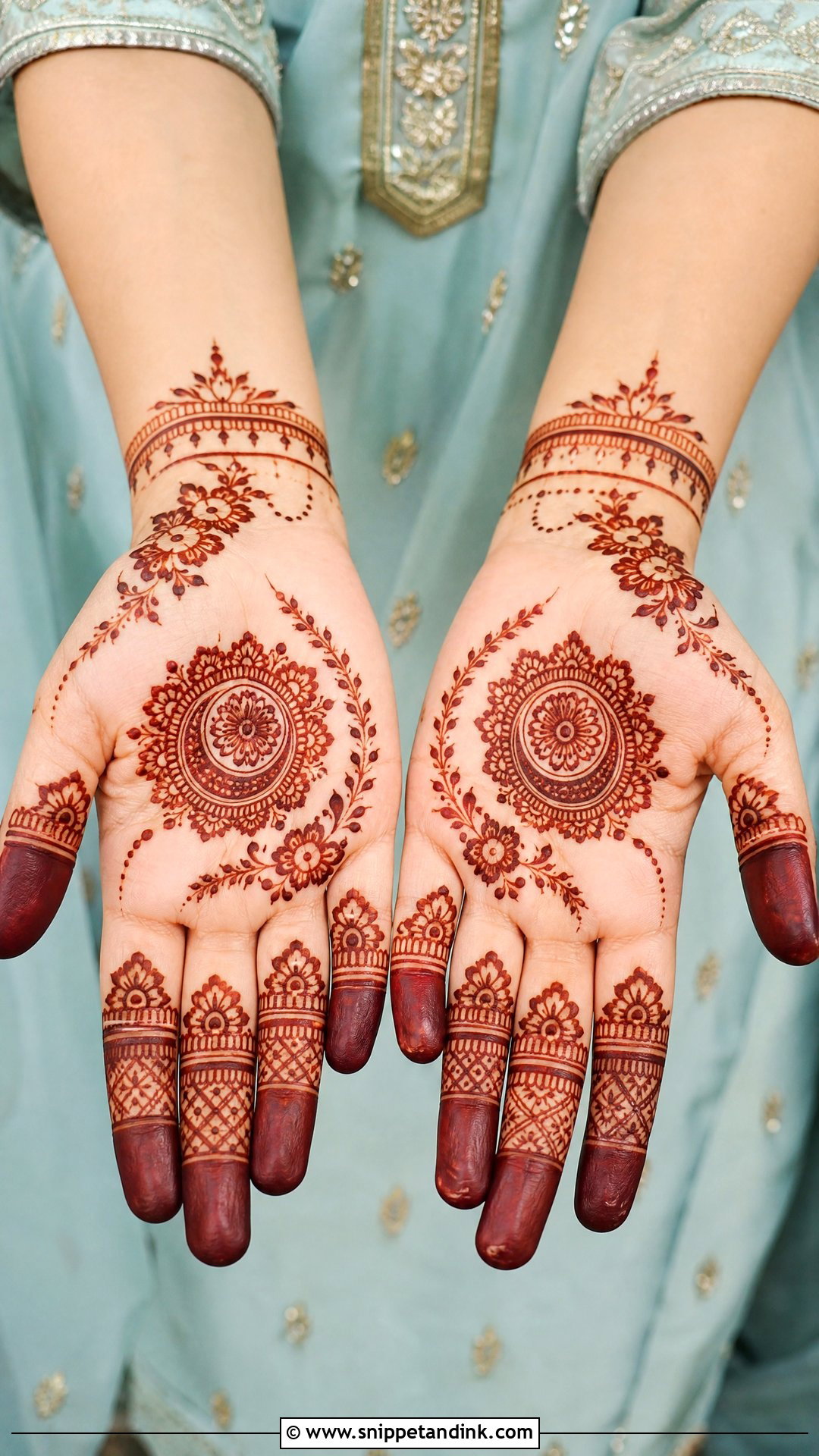
Eid henna usually goes on the night before, often at the kitchen table, so the design has to be forgiving. A palm mandala, a floral side trail, patterned fingers and a slim wrist cuff look finished in a fraction of the time bridal work takes. Crescent curves, leafy vines and dotted borders keep it festive. If you’re doing it yourself, fill the fingertips last, once the palm has set, so you don’t smudge it resting your hand.
7. Pakistani Simple Mehndi Design
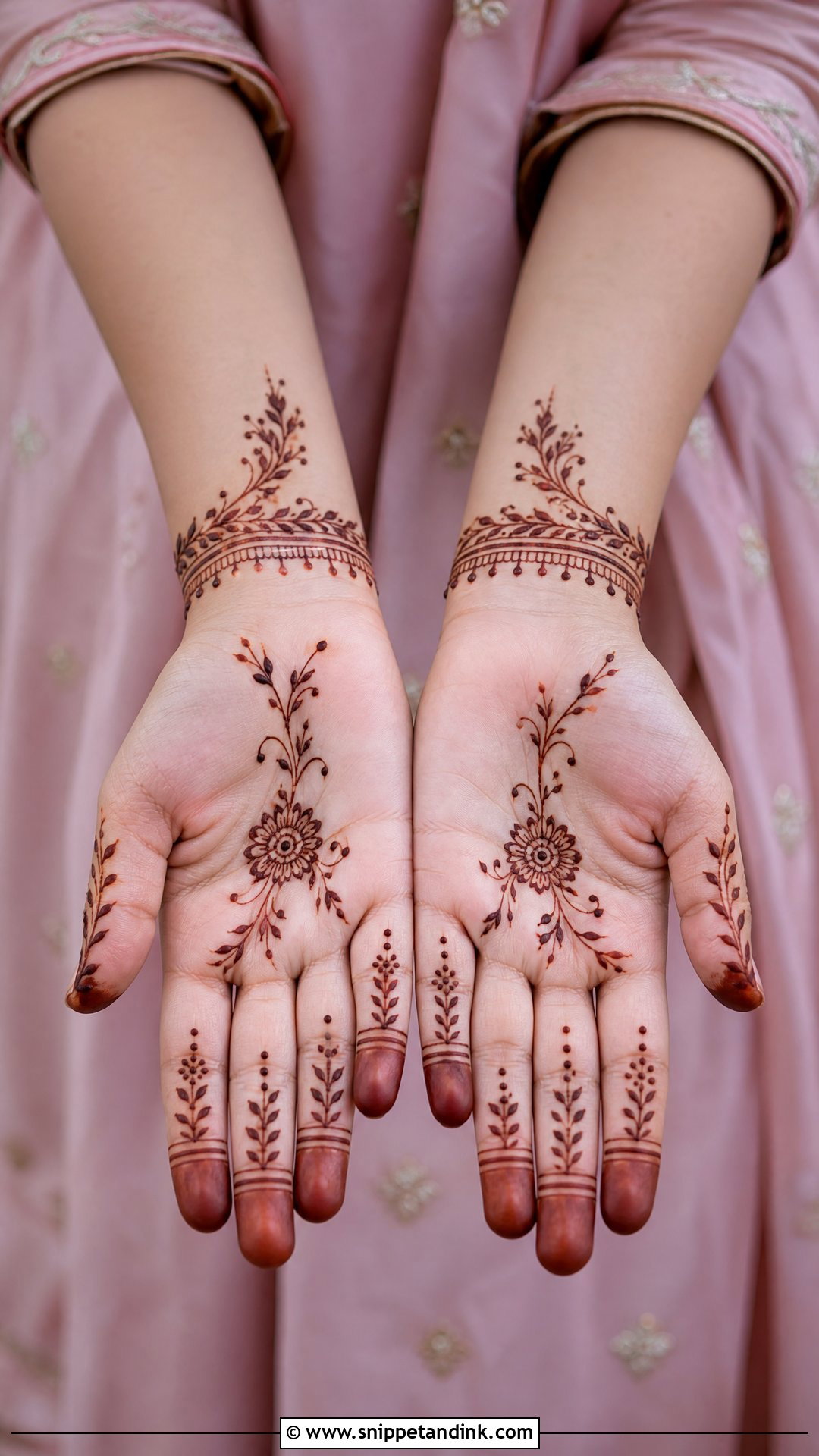
Simple still needs a plan. A small palm centrepiece, a short vine, neat fingers and a light wrist border can look complete or look random, and the difference is repetition. Pick one motif family, flowers or paisley, and repeat it in smaller sizes across the hand. I’d rather see three clean flowers with even spacing than ten mixed shapes. It’s the quickest way to look dressed for a family dinner.
8. Pakistani Finger Mehndi Design
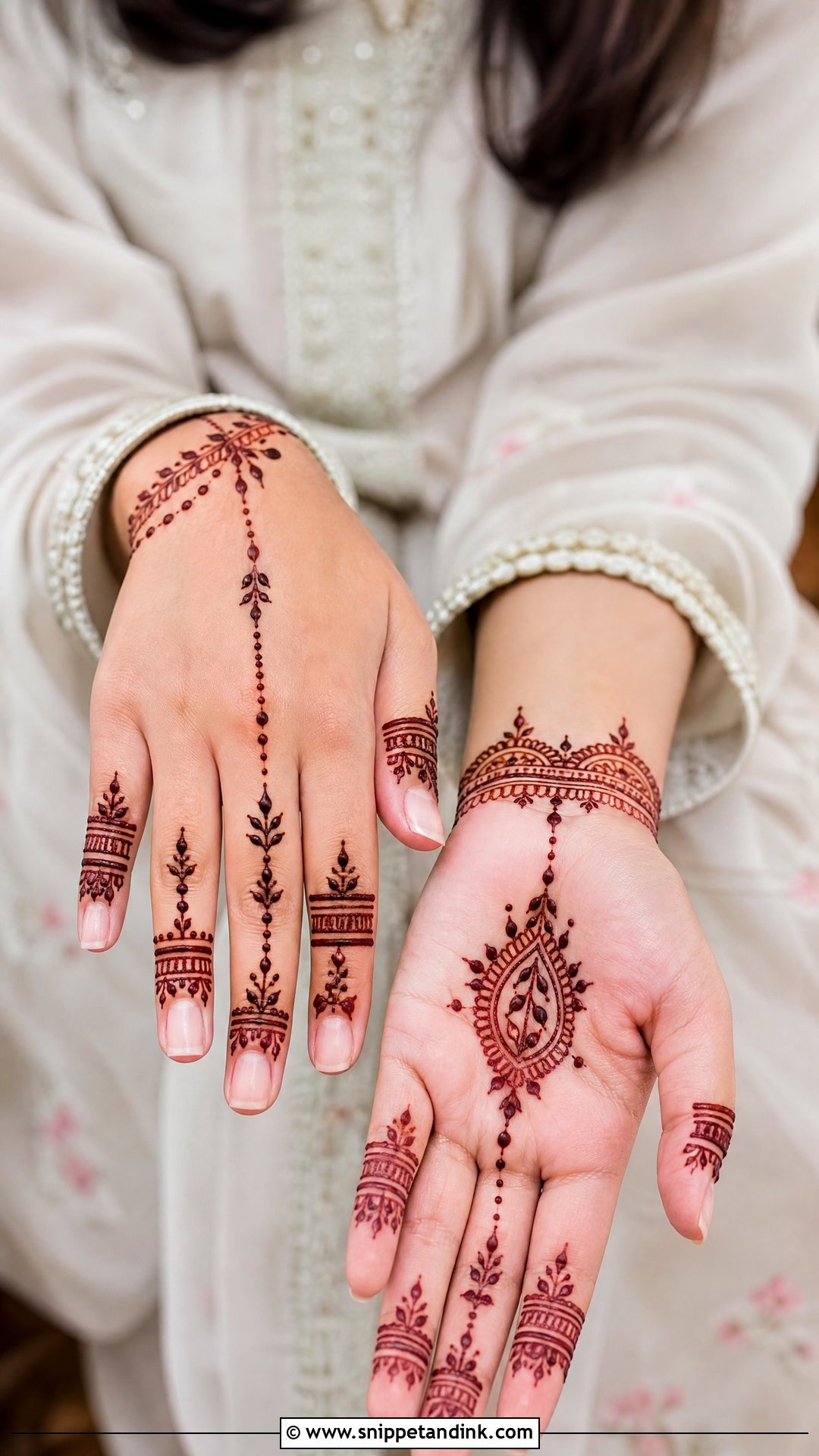
Do you like mehndi that looks modern but still traditional? Putting most of the work on the fingers does exactly that: ring bands, tiny leaves, net sections, dotted chains and filled tips, with a light or empty palm. The risk is five fingers that look like five separate doodles. I repeat one border style on every finger and add a small palm accent or wrist bracelet so the hand reads as a single design. Office functions and smaller events suit it, where a full hand would feel like too much.
9. Pakistani Mandala Mehndi Design
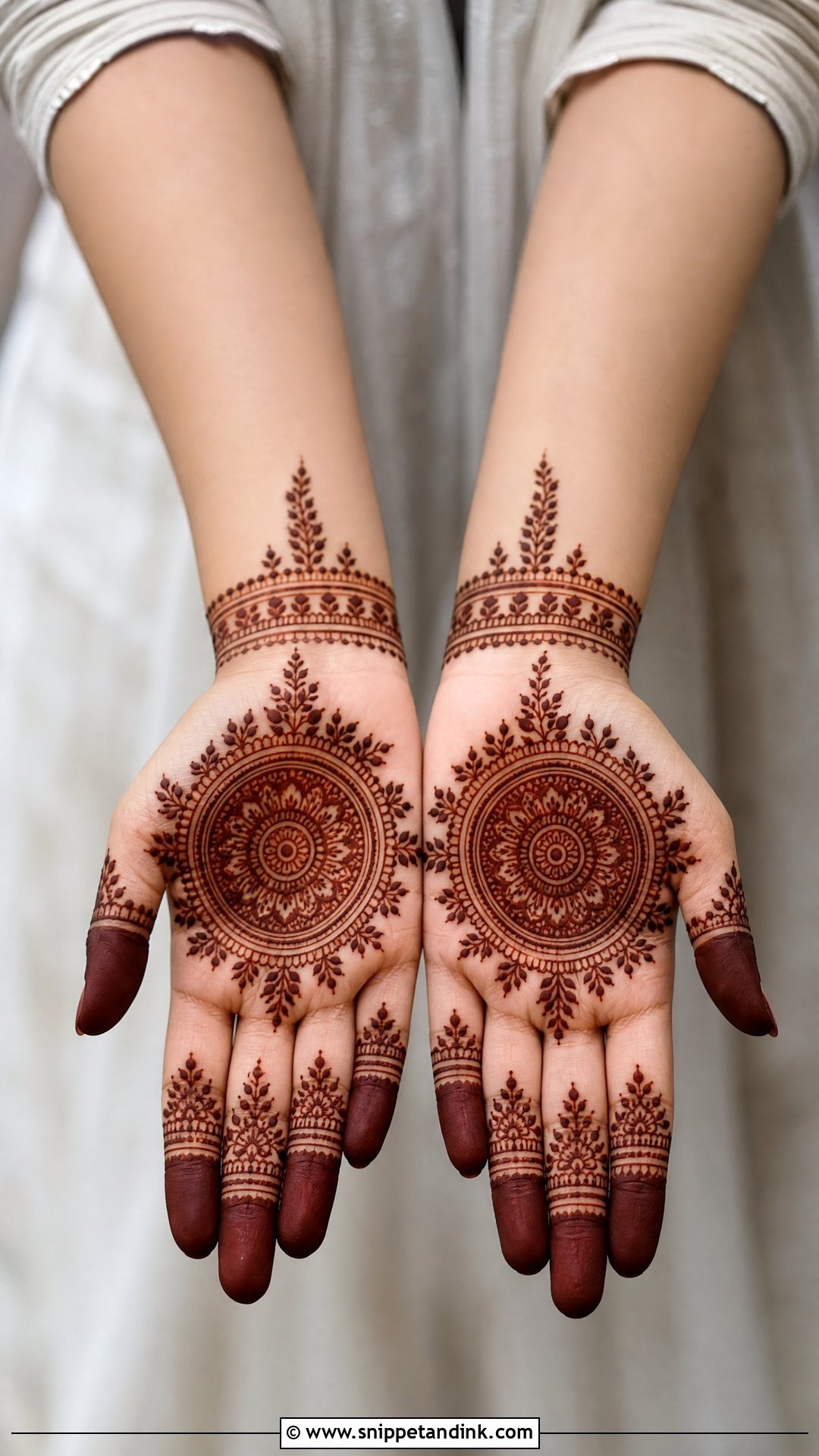
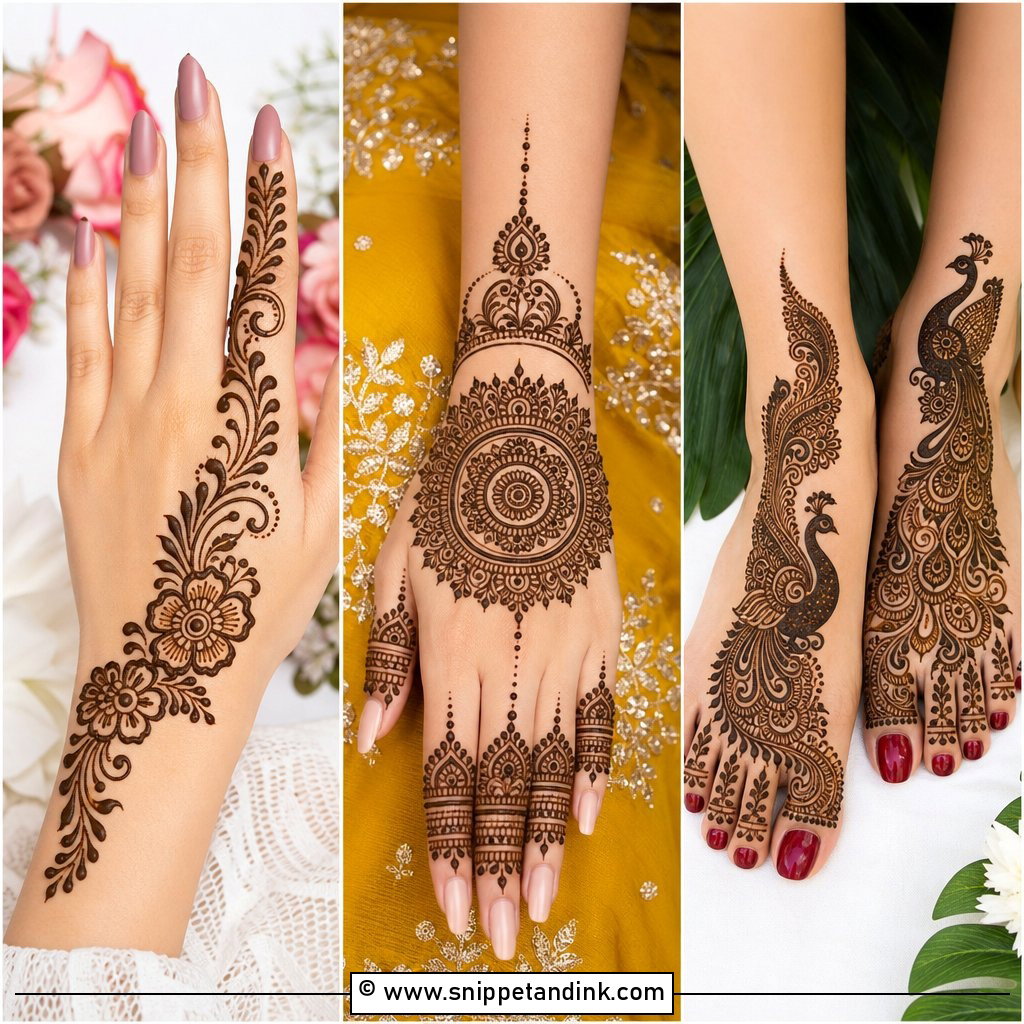
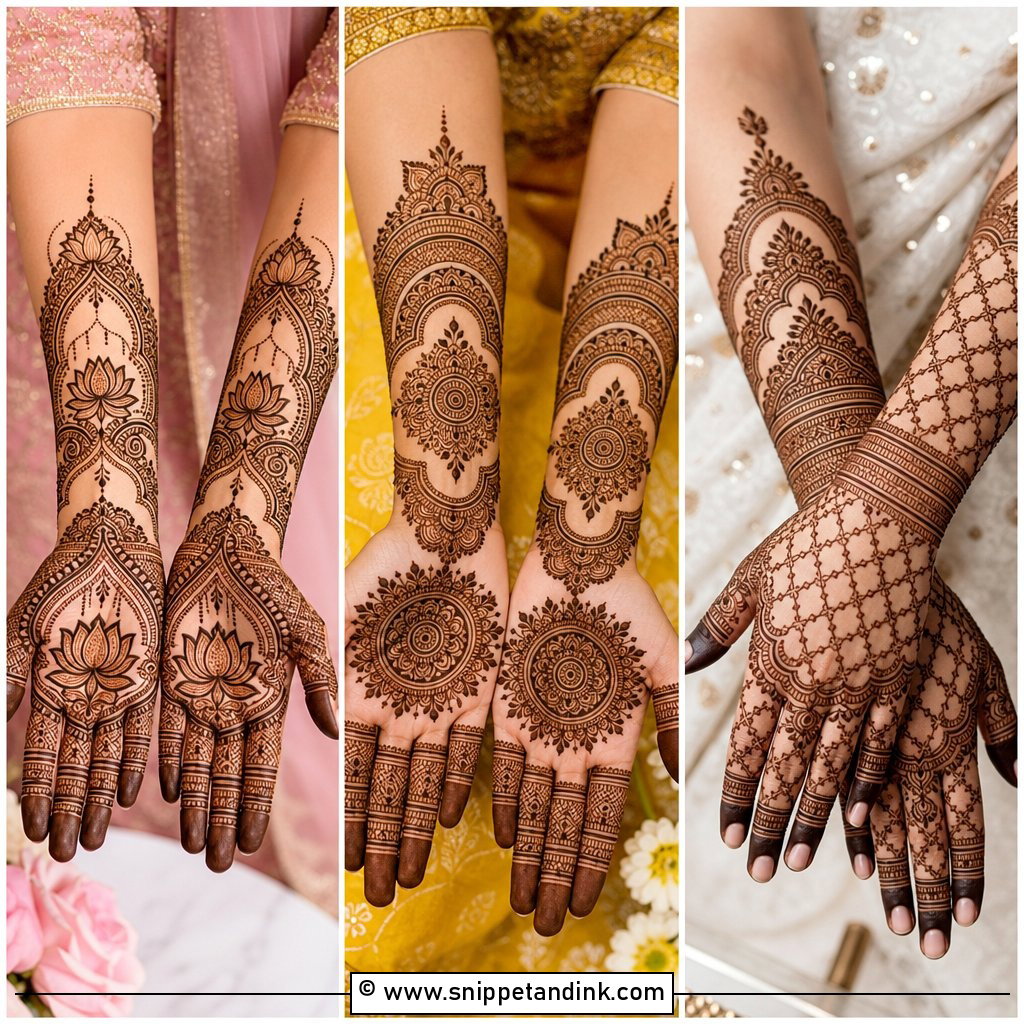
A mandala lives or dies on symmetry. I start from a dot, build rings outward, and check the circle from the client’s side as well as mine, because a mandala that looks round from across the table can look egg-shaped the right way up. Around it you can add filled fingertips, leafy borders, wrist bands or dotted trails. Keep it bold and plain or pack it with detail; either way it suits Eid, nikkah and family events.
10. Pakistani Floral Mehndi Design
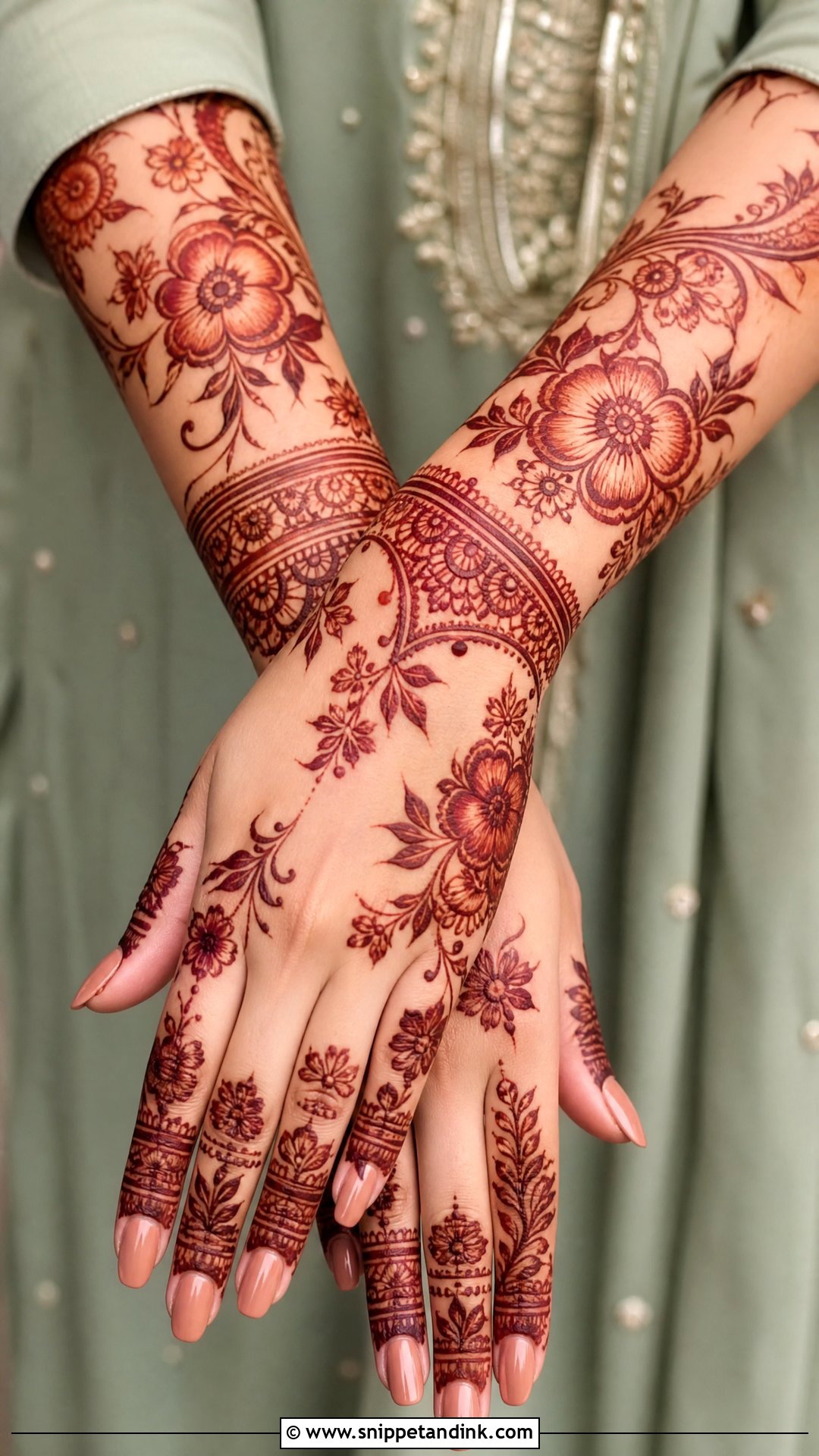
Floral work is where Pakistani mehndi softens. Large blooms, filler flowers, vines and shaded petals can sit on the palm, the back of the hand, or climb from wrist to forearm. For a distinctly Pakistani finish I tuck small paisleys and dotted chains between the flowers, otherwise it drifts into a plain Arabic look. Shaded petals add fullness without adding hours, so I often suggest florals to bridesmaids who want festive but not bridal.
11. Pakistani Paisley Mehndi Design
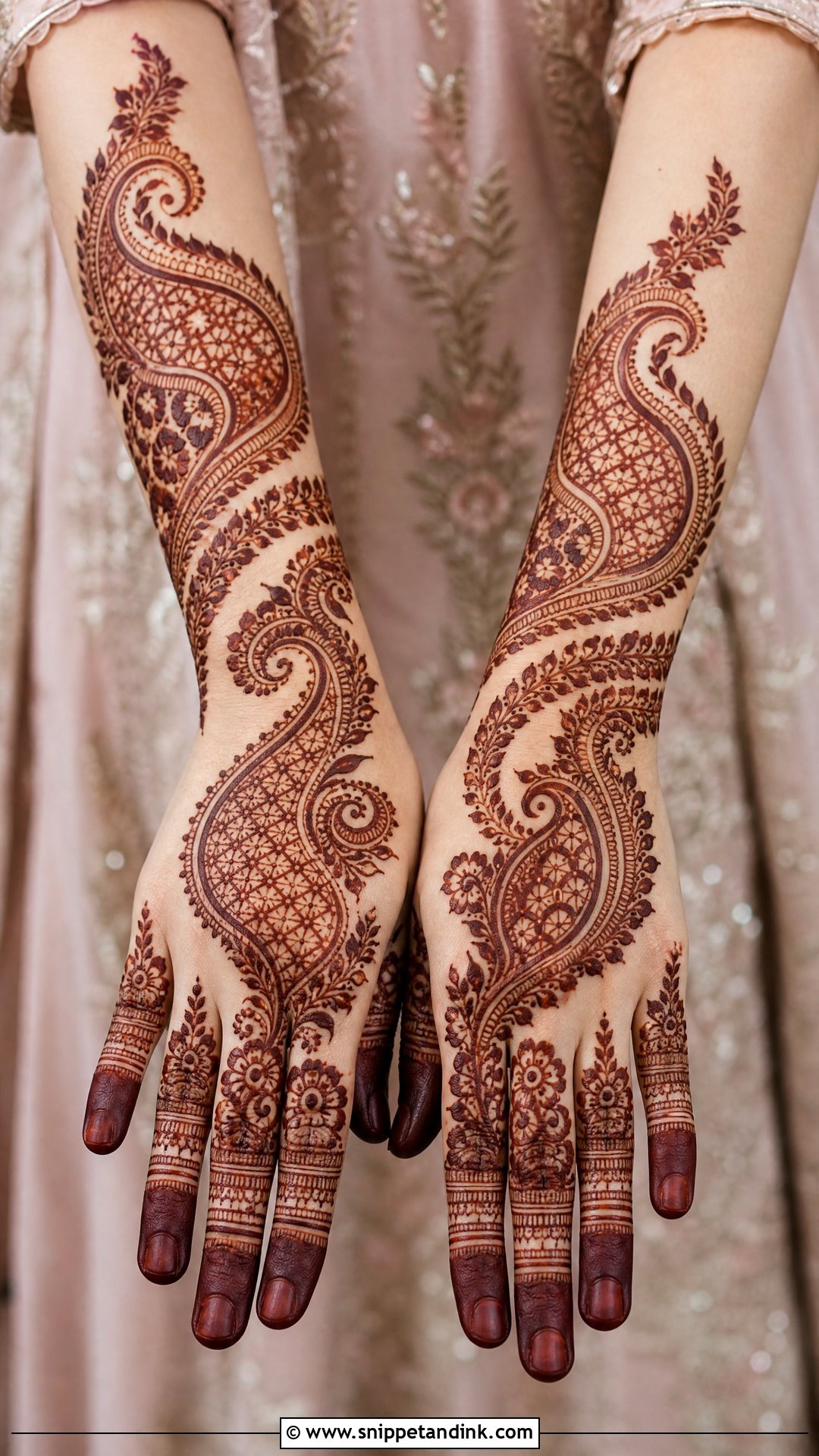
The paisley follows the curve of the palm and the base of the thumb almost by itself, which is why it has stayed the backbone of Pakistani bridal henna. A full look puts large paisleys on the palm, smaller ones on the fingers and a matching wrist border. I fill them with tiny florals, dots, checks and leaves, but keep the outline a touch bolder than the filling. Thin outlines disappear into the fill once the stain oxidises, and the shape gets lost.
12. Pakistani Jaali Mehndi Design
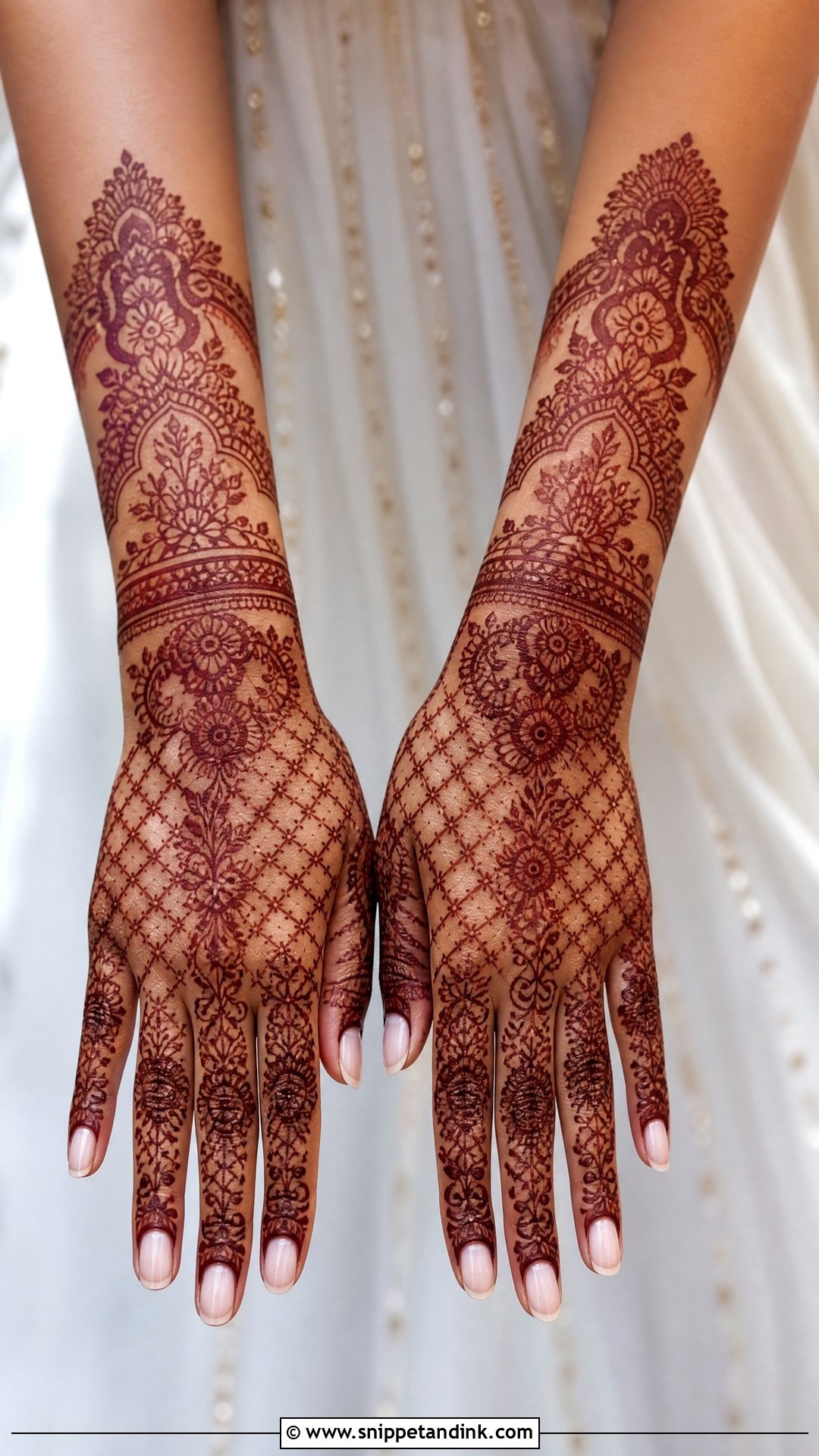
Jaali is a net of crossing lines framed by florals, paisleys and slim borders, and it gives that lace-on-skin texture without every area being packed. It’s also the least forgiving technique I do. If cone pressure wavers, the grid goes uneven and the eye catches it straight away, so I work jaali early in a session while my hand is freshest. Pack it densely for a traditional hand, or float it in open skin for a modern semi-bridal one.
13. Pakistani Peacock Mehndi Design
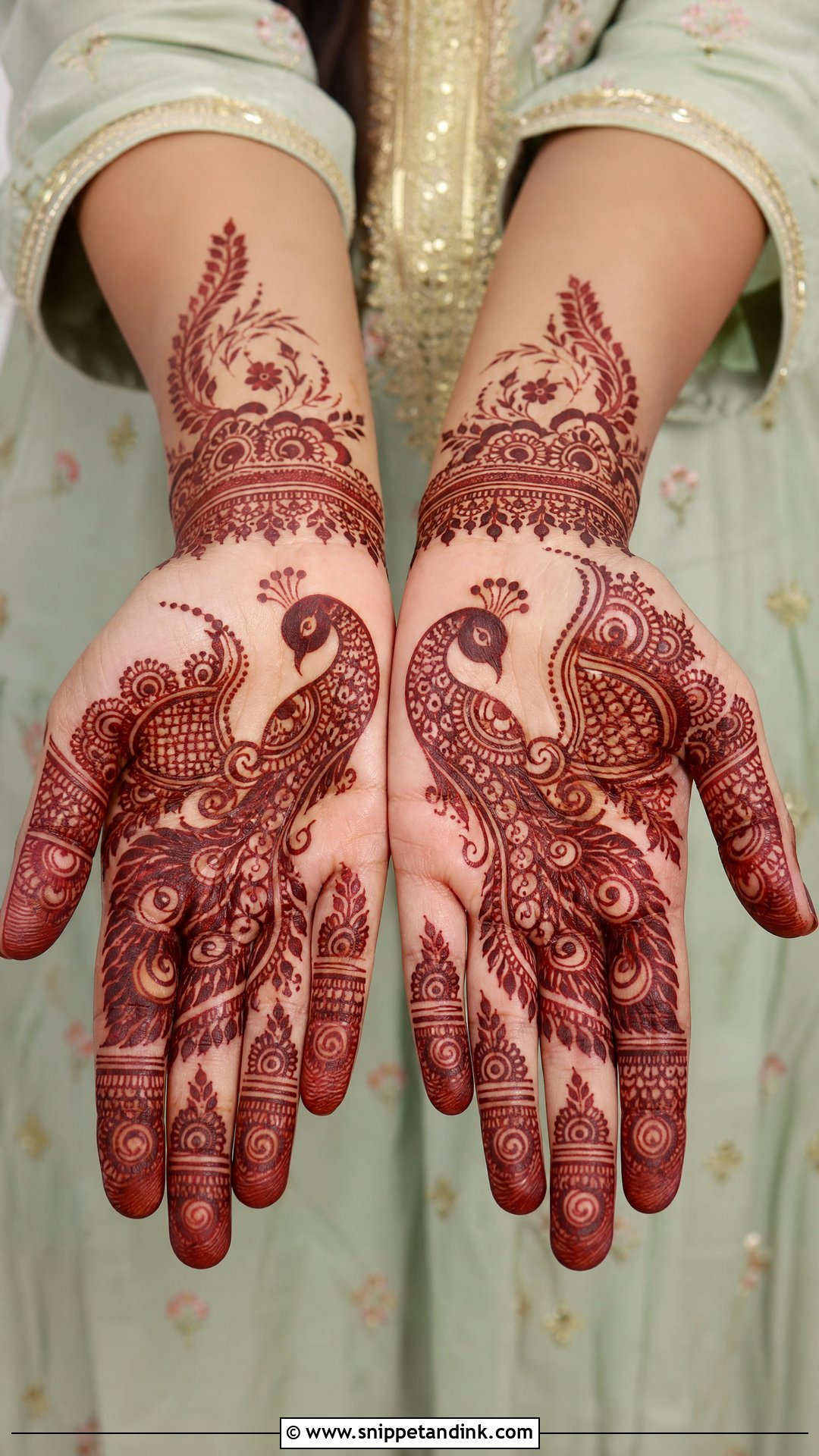
A peacock gives a design movement, because the neck and tail naturally sweep across the palm or up the forearm. The feathers carry most of the detail: curves, dots, small paisleys, shaded leaf shapes. I size the bird to the hand before anything else; on a small palm a big peacock swallows everything, so I’ll move it to the forearm instead. Balance it with fine fingers and a structured wrist border, and save it for weddings and mehndi nights where a bit of drama is welcome.
14. Pakistani Rose Mehndi Design
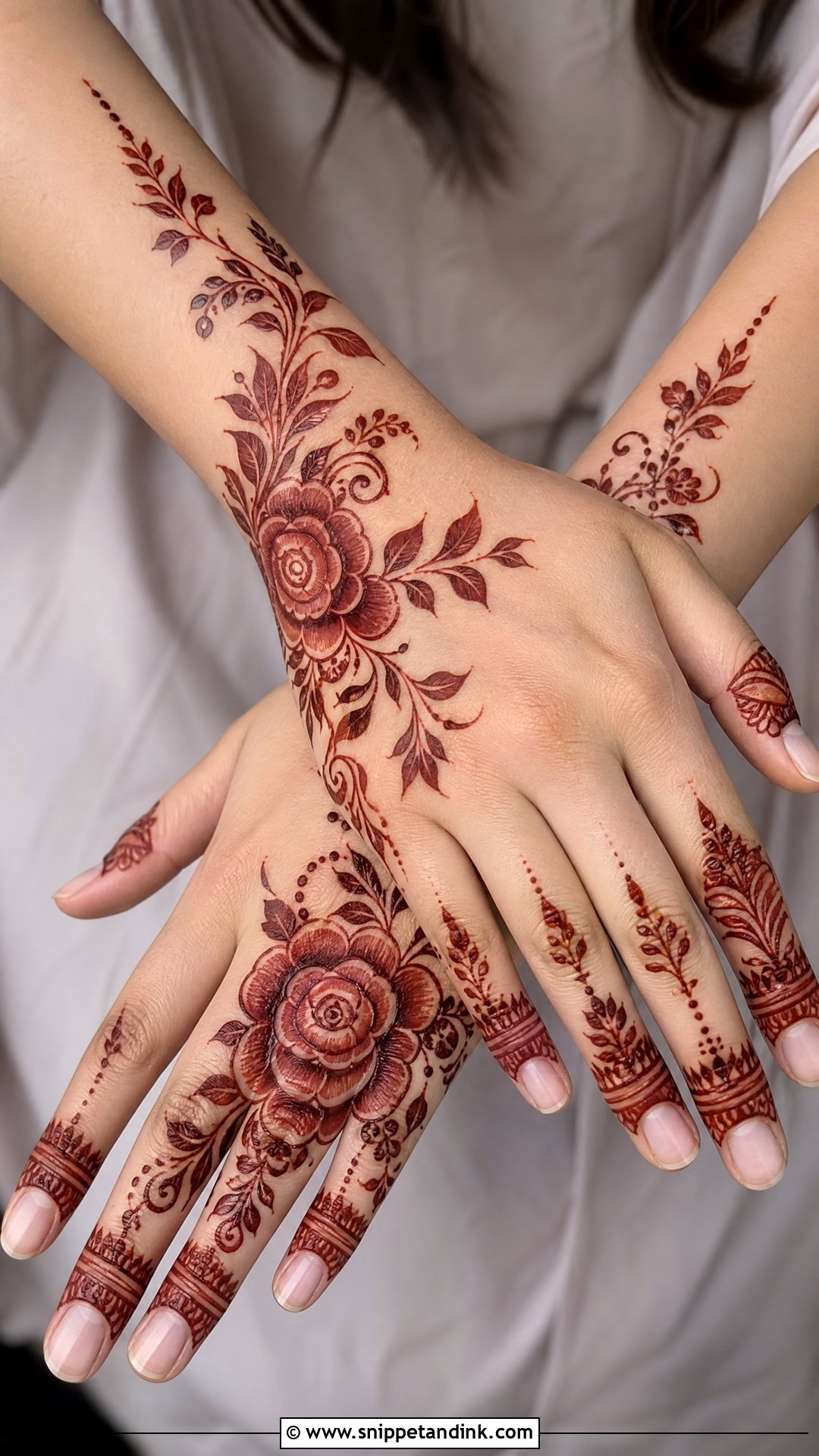
Roses are the most current motif I’m asked for. Larger blooms with shaded petals, leafy stems and open skin around them read clearly from a distance in a way tiny traditional flowers don’t. On the back of the hand they can trail from wrist to fingers like a floral bracelet; on the palm I set one rose slightly off-centre and surround it with vines and dots. Go easy on the shading, though. Heavily filled petals stain as one dark blob and the rose disappears.
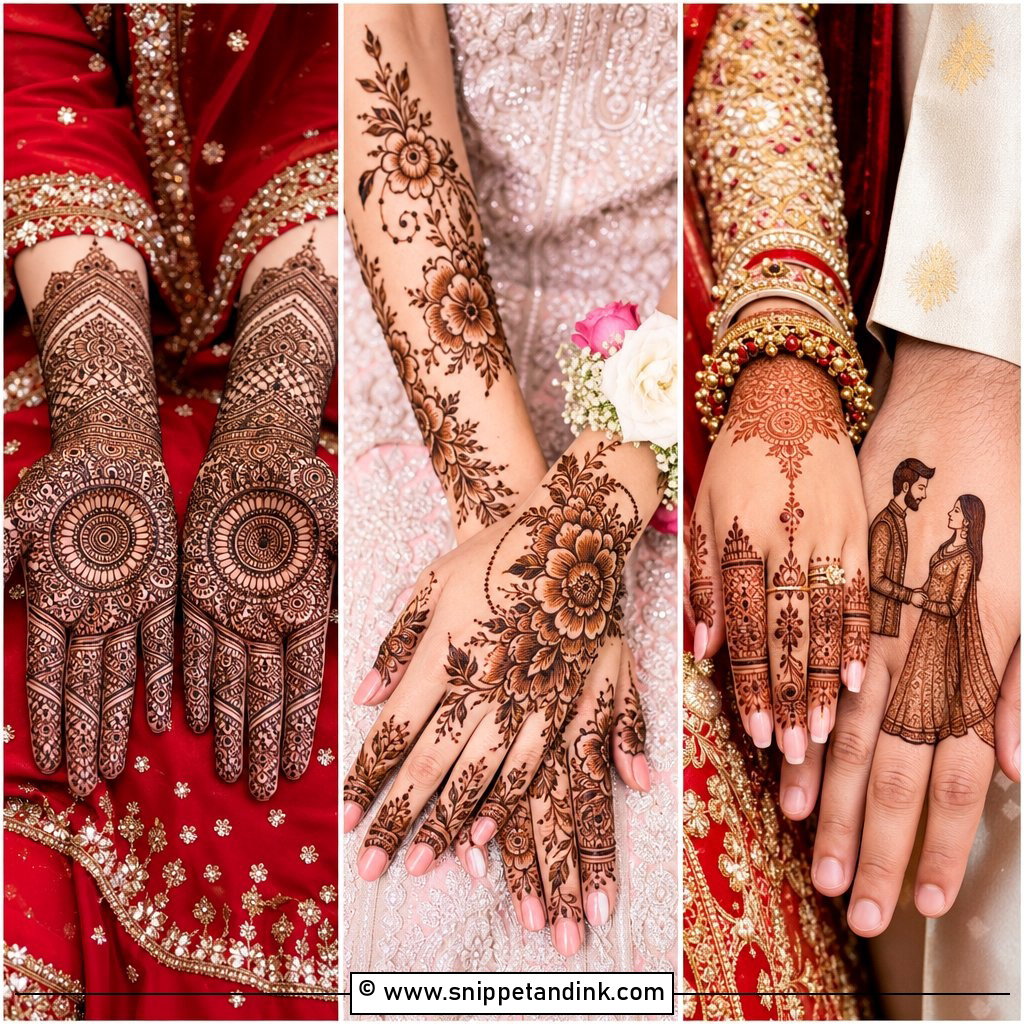
15. Pakistani Bracelet Mehndi Design
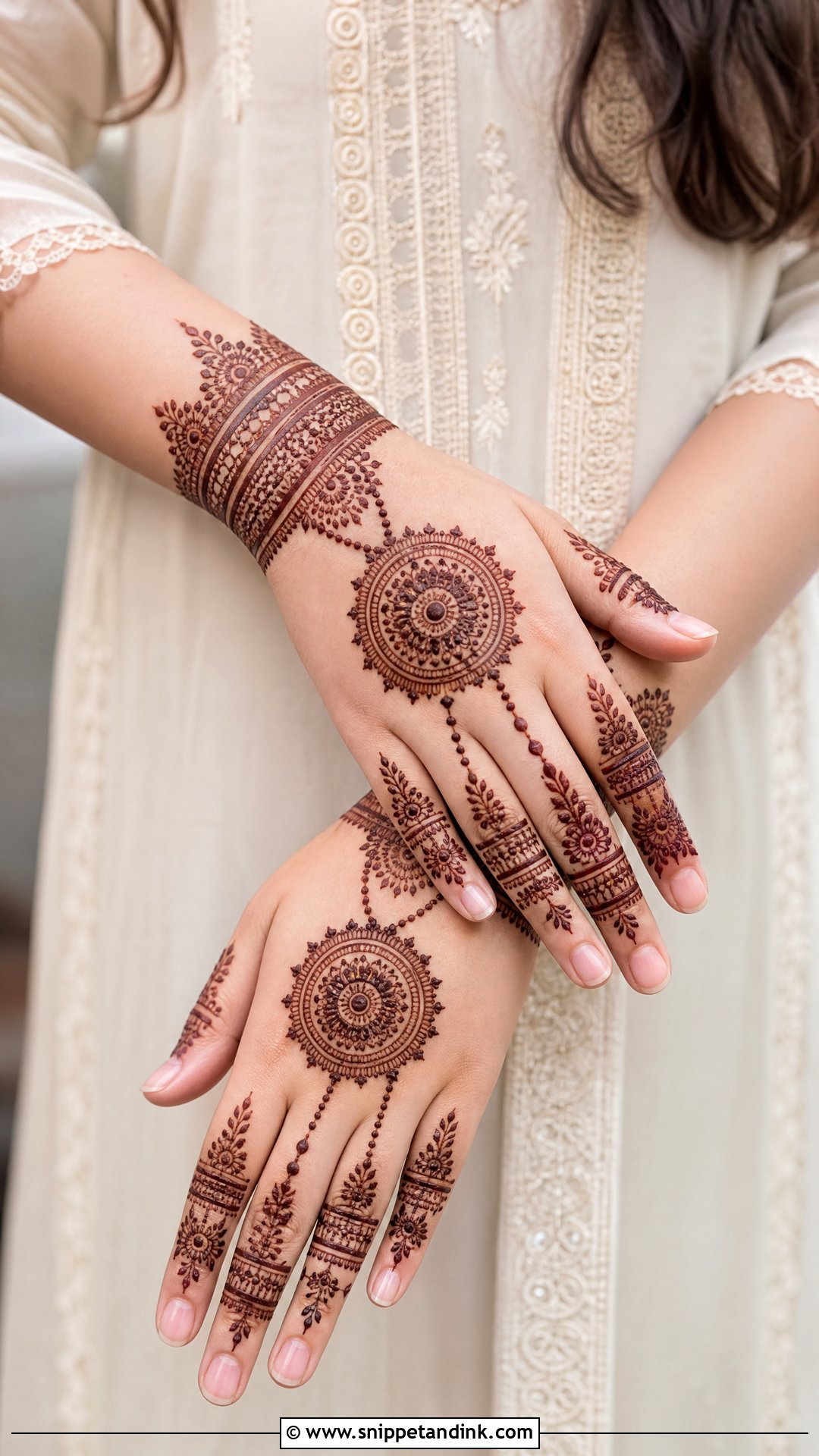
Bracelet mehndi turns the back of the hand into jewellery: a cuff at the wrist, chains or dotted lines to the fingers, a medallion or flower in the centre. The palm can stay bare, which keeps it light and easy to eat with. My one rule is that the chains must actually connect the cuff to the finger rings, or it looks like separate pieces. It sits well alongside real rings and bangles, so guests and engagement brides ask for it a lot.
16. Pakistani Minimal Mehndi Design
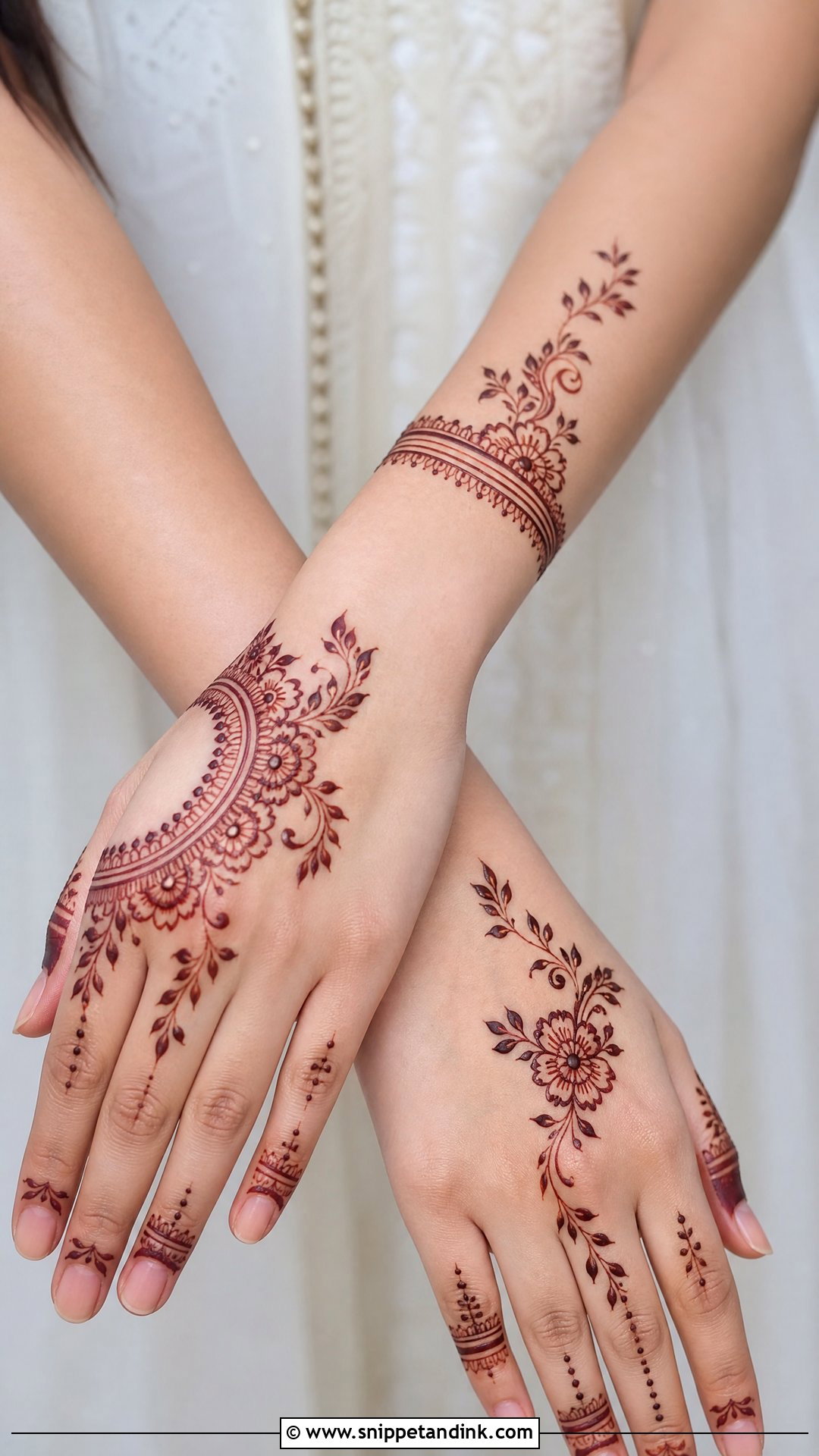
Minimal Pakistani henna is about placement rather than density. A small floral trail, a half mandala, a slim wrist band and neat fingertips, each with open skin around it. With so little paste on the hand, any wobble shows, so I actually go slower on a minimal design than people expect. It sits nicely with pastel outfits and daytime nikkah events, and it’s an easy yes for younger brides who don’t want to feel covered.
17. Pakistani Heavy Bridal Mehndi Design
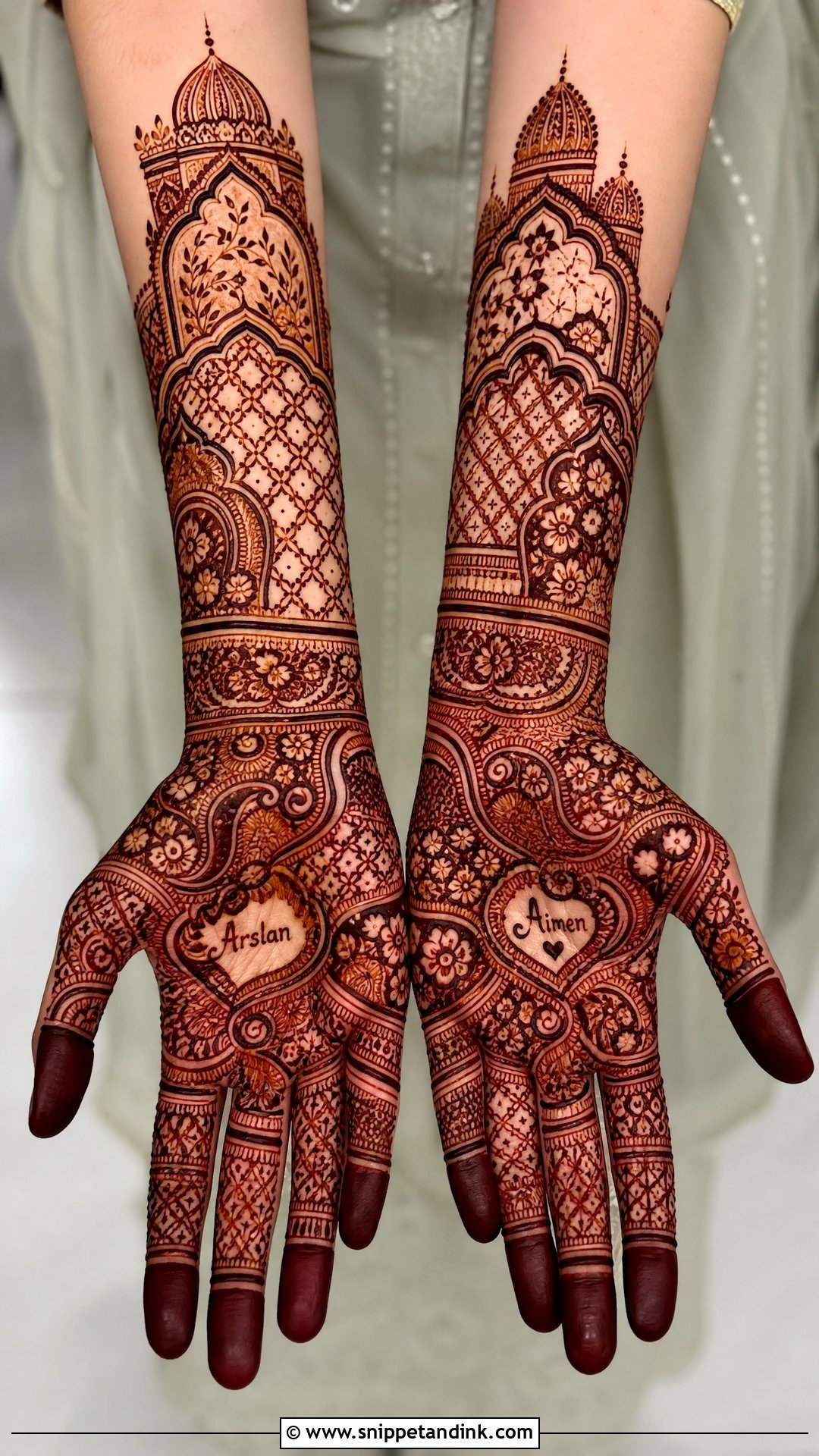
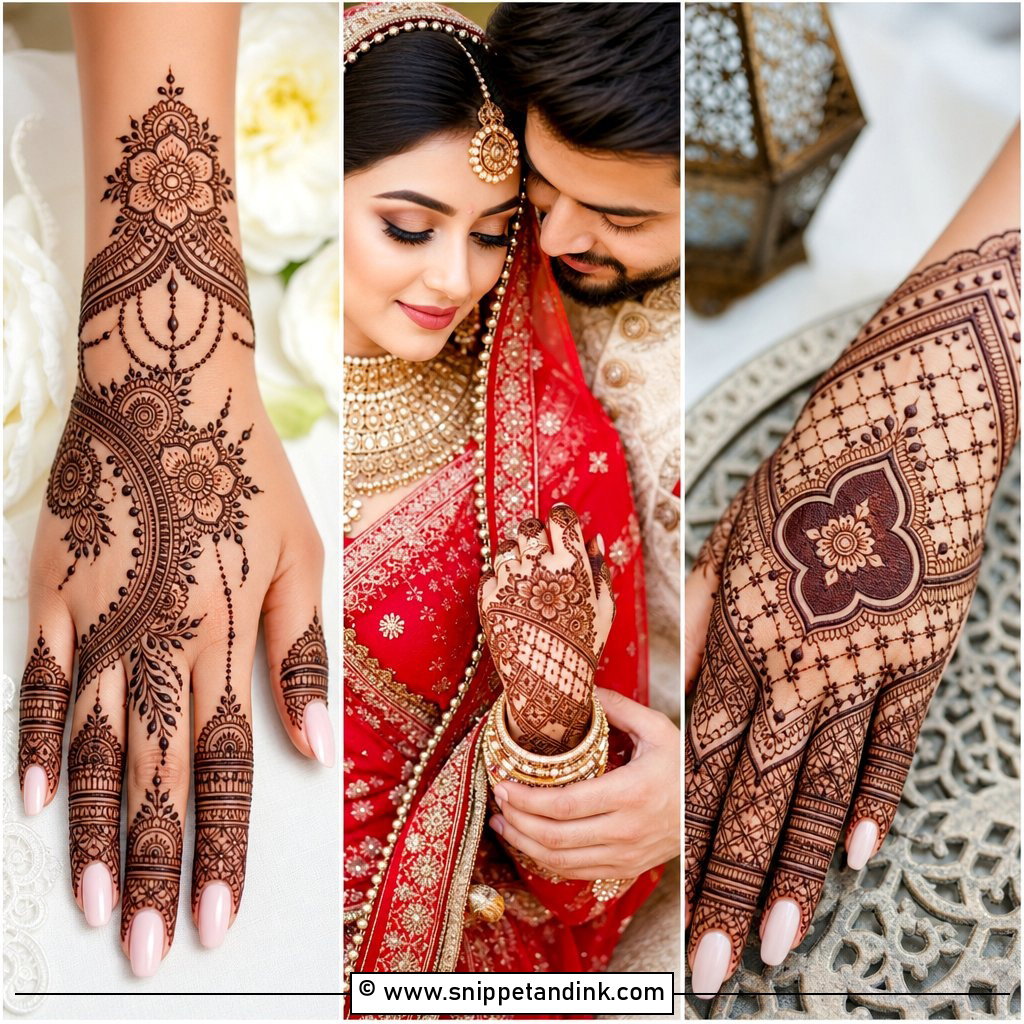
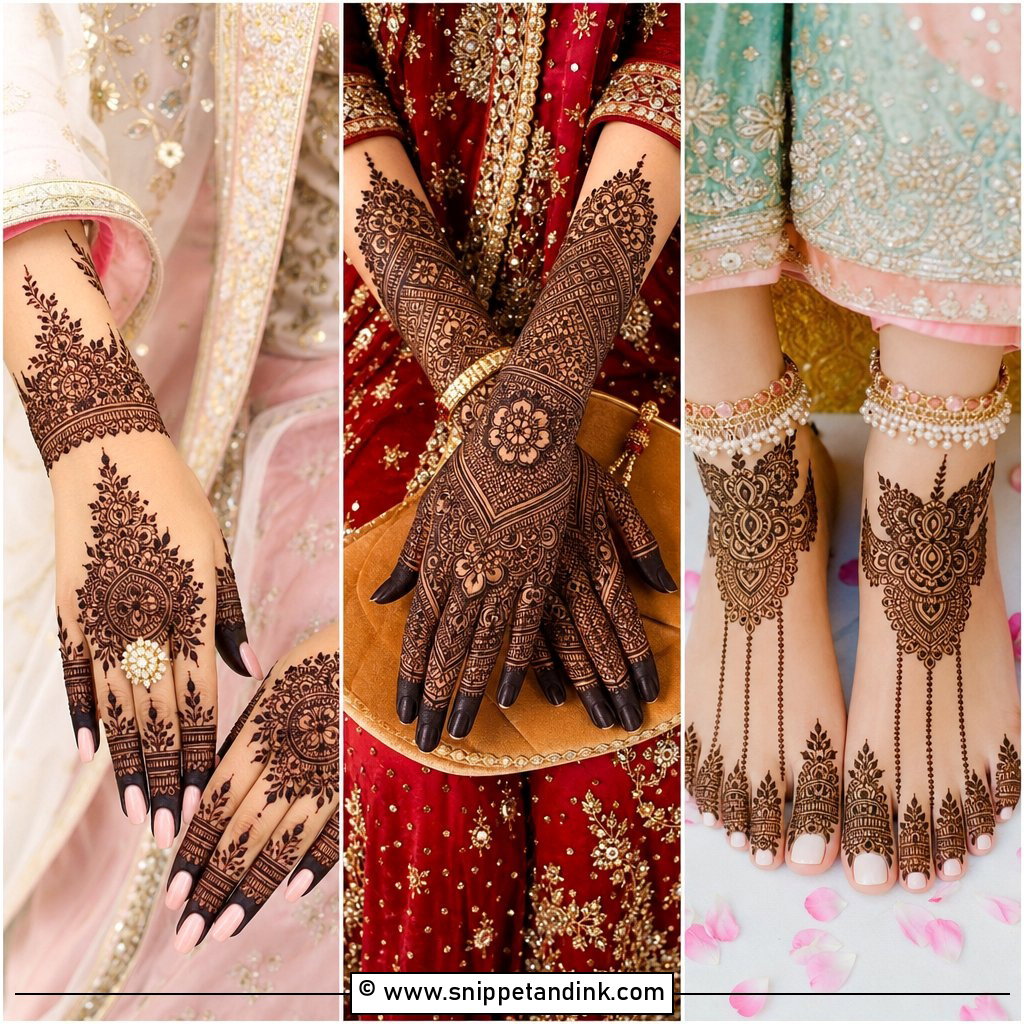
Heavy bridal coverage runs from fingertips to forearms with dense florals, paisleys, jaali, domes, shaded leaves and fillers, often with hidden initials. I map it in zones before I start, palm, fingers, wrist, forearm, with a clear border between each, because without that structure dense work just looks crowded. It’s a long sitting, so plan food, a charged phone and someone to hold your drink. Repeated borders and even spacing are what keep it rich instead of busy.
18. Pakistani Dulhan Mehndi Design
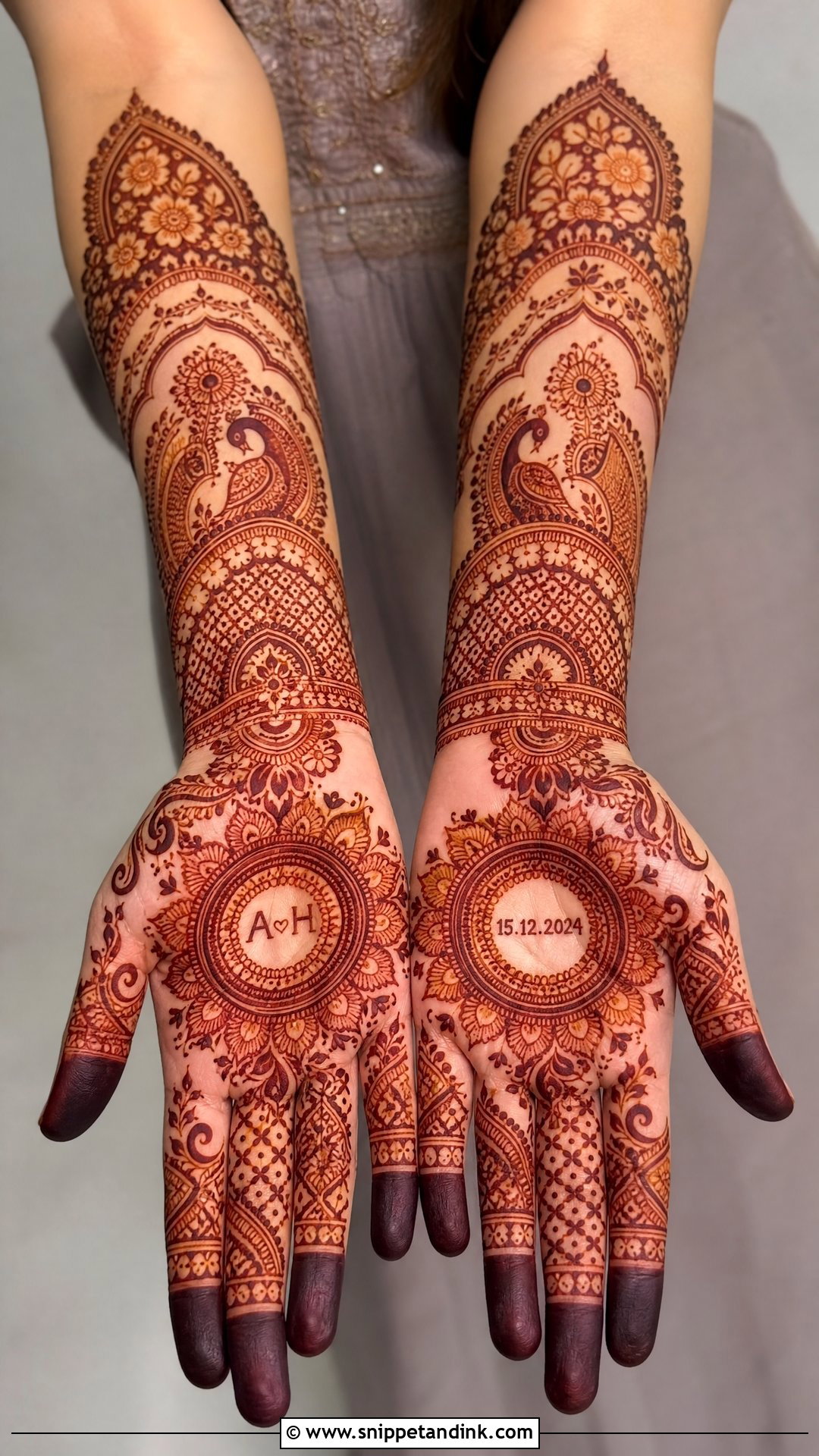
Dulhan mehndi covers both sides of the hands and often the forearms, with mandalas, paisleys, flowers, peacocks and personal touches like initials or the date. I always ask to see the baraat outfit’s sleeves before drawing a single line. If they stop at the elbow, the forearm becomes the frame for every photo and deserves as much care as the palm. Dense fingertips, a detailed palm and a clean step from wrist to arm are what make it feel finished.
19. Pakistani Nikkah Mehndi Design
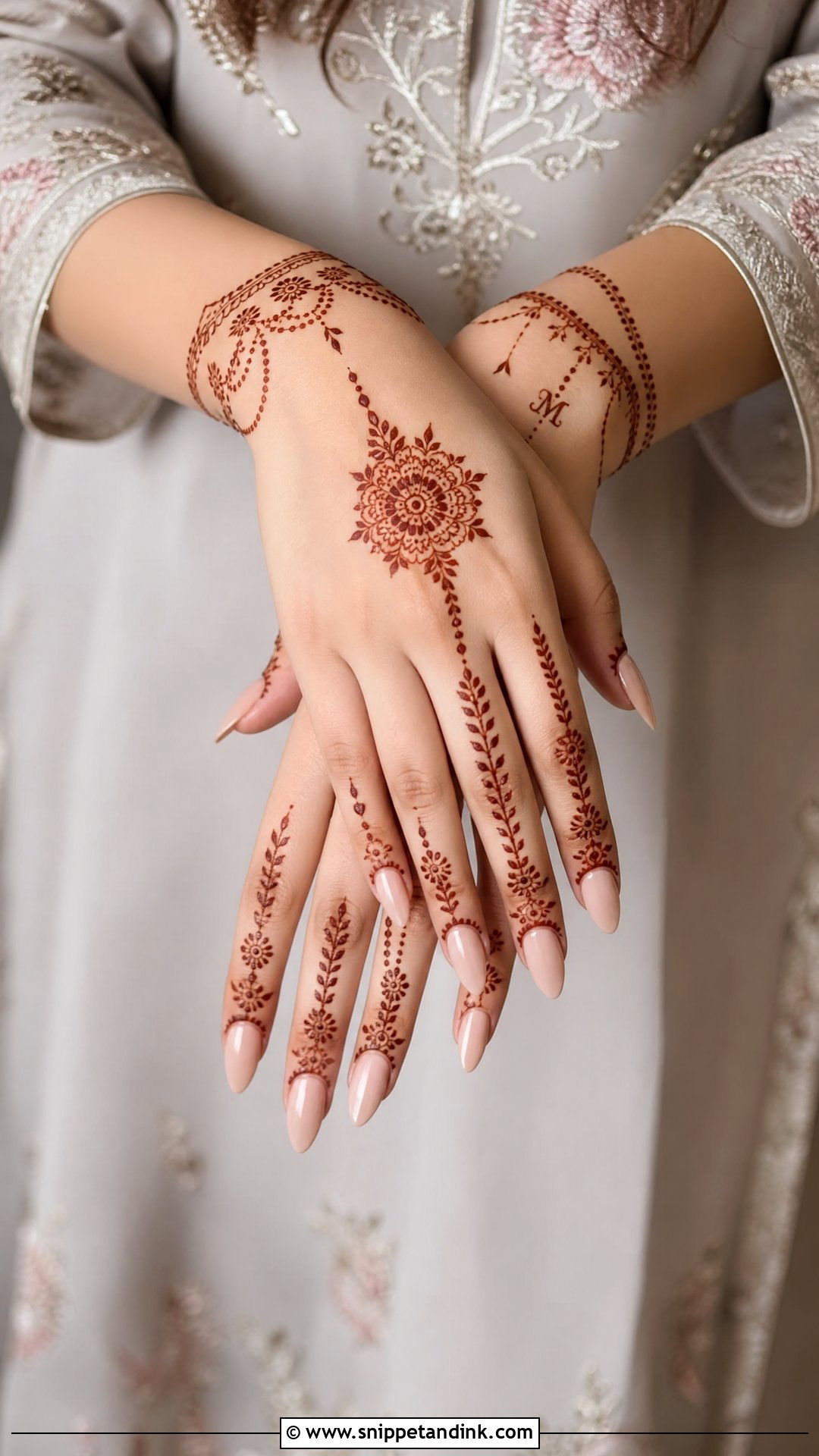
Nikkah henna is usually softer than the baraat look: delicate florals, a mandala, open skin, bracelet chains and fine fingers. Against white, ivory, pastel or gold fabric I keep the lines thin, so the stain reads as delicate rather than heavy next to a pale outfit. A small personal detail, initials or a date, fits naturally here. Aim for a natural maroon; anything sold as a near-black stain is a warning sign, not an upgrade.
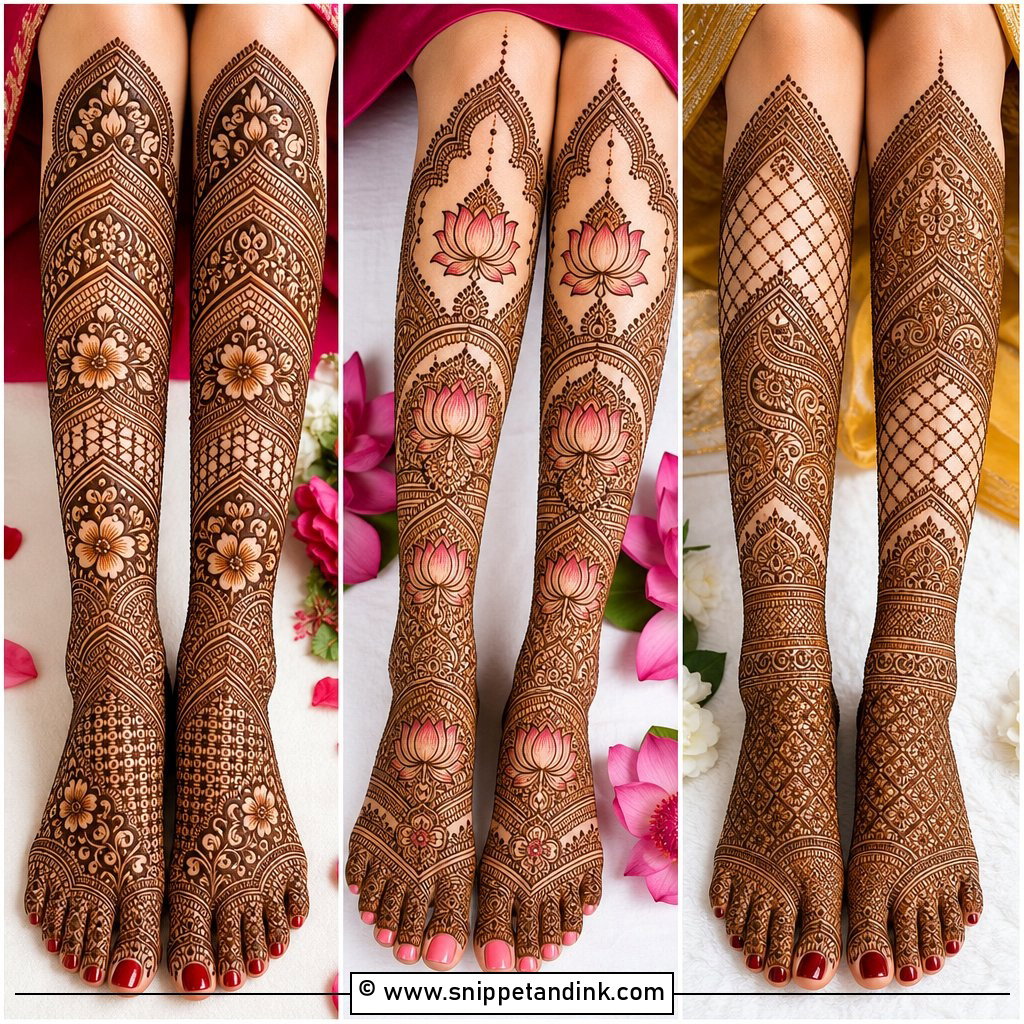
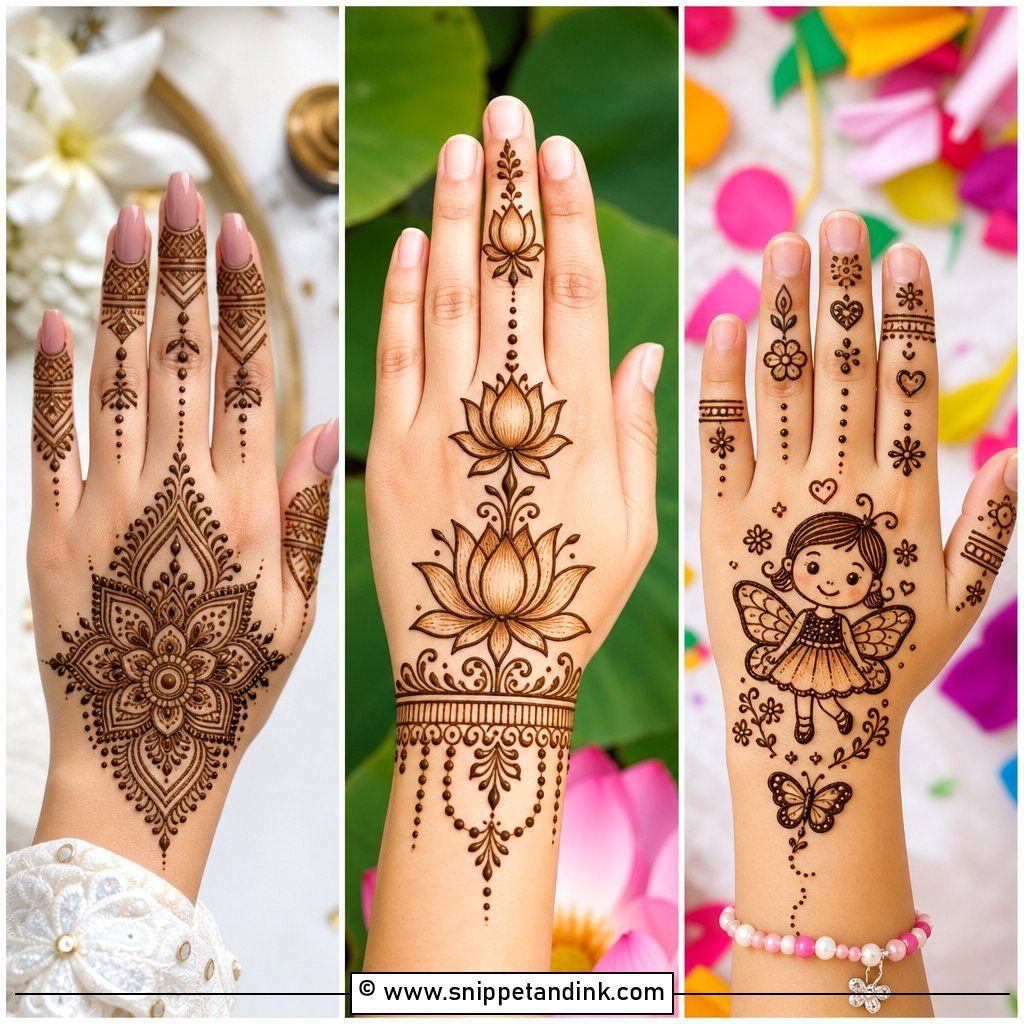
20. Pakistani Engagement Mehndi Design
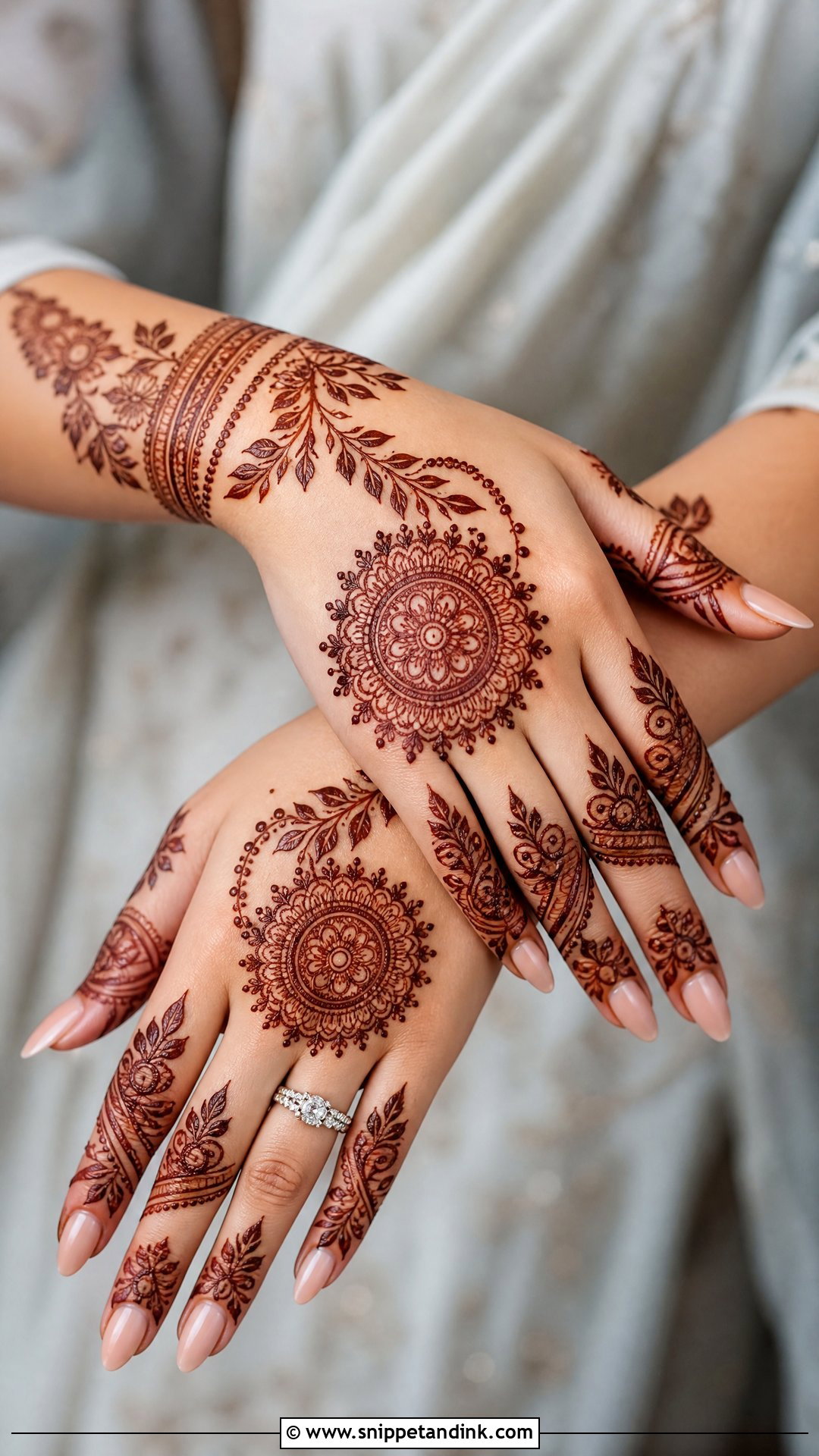
An engagement mehndi look should photograph well and stay comfortable through a long evening, without bridal weight. A back-hand floral trail, a central mandala, a bracelet wrist and detailed fingers are the usual elements, and ring-style finger patterns can frame the ring itself. I leave clean skin around the ring finger on purpose so the ring isn’t lost in pattern when the photographer moves in close. Paisleys and dotted borders push it traditional; roses and negative space push it modern.
21. Pakistani Dholki Mehndi Design
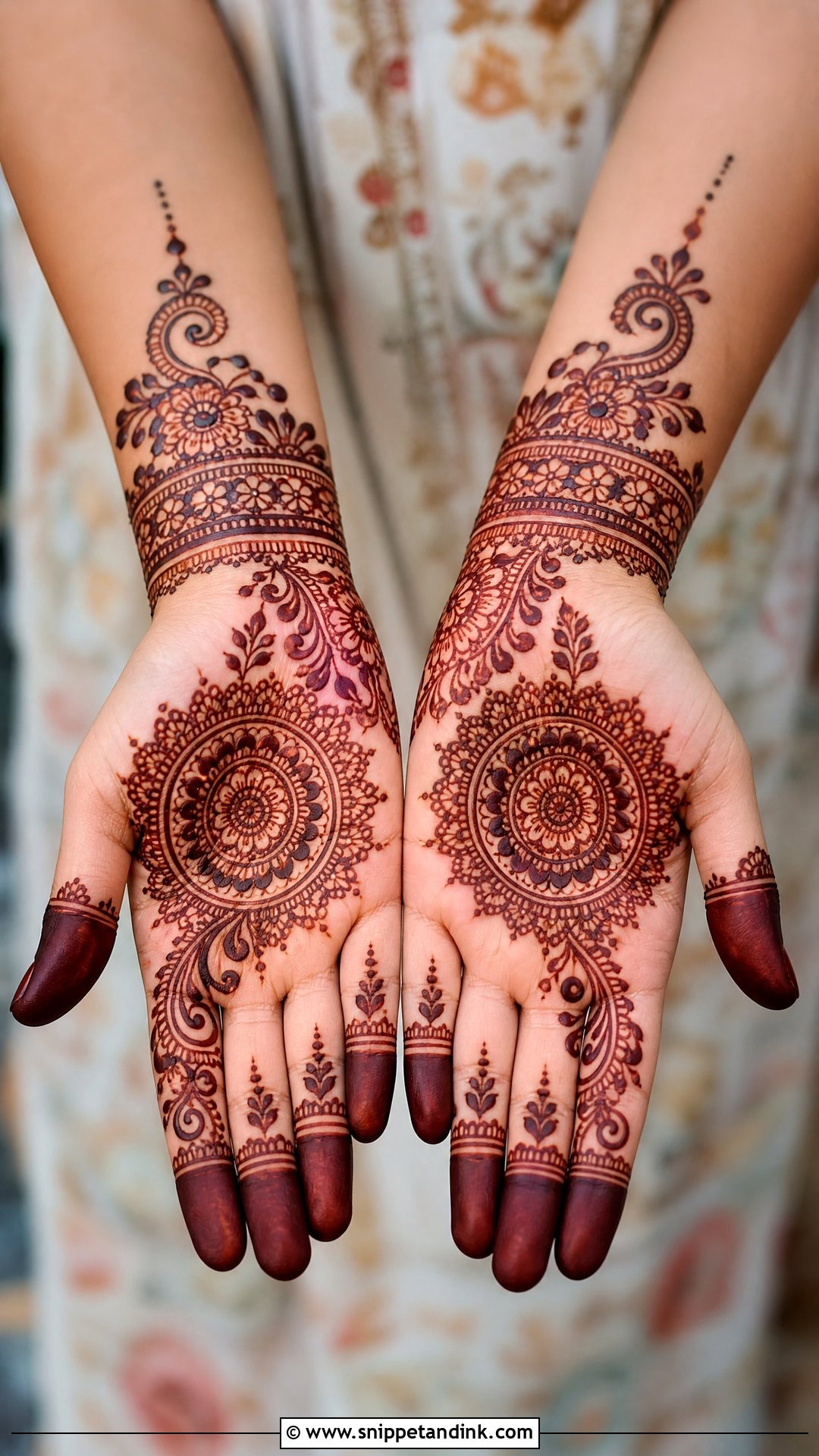
Dholki nights are loud and crowded, so the henna can be playful. Floral vines, tikki centres, paisley trails and bold fingertips do the job, and it doesn’t need to be dense, since most brides save the heaviest work for the main mehndi. A diagonal from wrist to index finger goes on fast, which matters when sisters, cousins and friends are all waiting their turn. Dots, leaves and a small wrist band finish it off.
22. Pakistani Mehndi Design For Girls
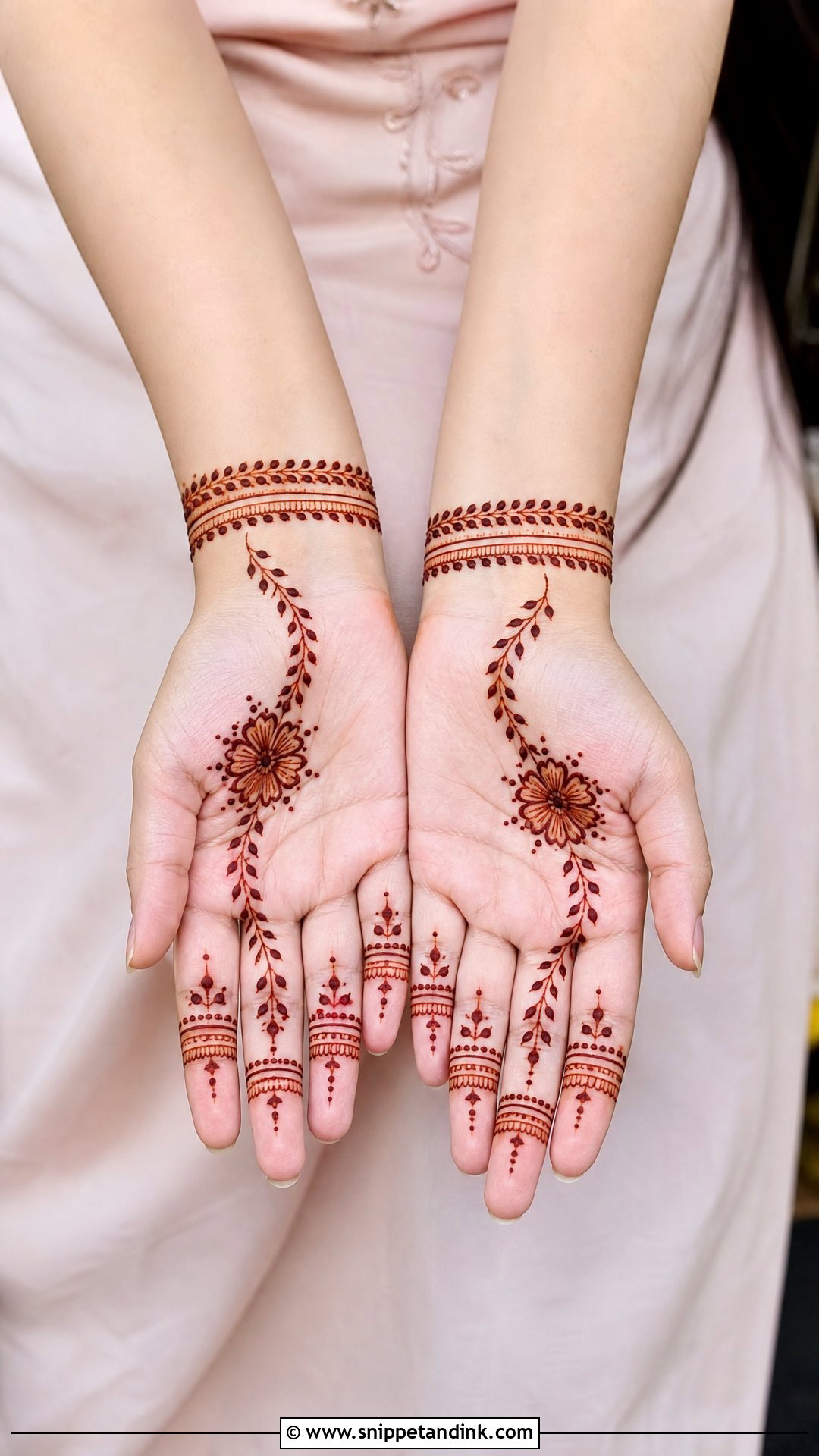
For girls, I want the design neat and quick to dry: a small palm flower or tikki, a leafy trail, patterned fingers and a little wrist border. Small motifs are kinder during long family events, when nobody wants to sit with wet paste for an hour. Hearts, tiny flowers, dots and vines keep it young while still feeling rooted in tradition, and older girls can take a little jaali or paisley. I’d avoid covering the whole hand on younger ones.
23. Pakistani Mehndi Design For Kids
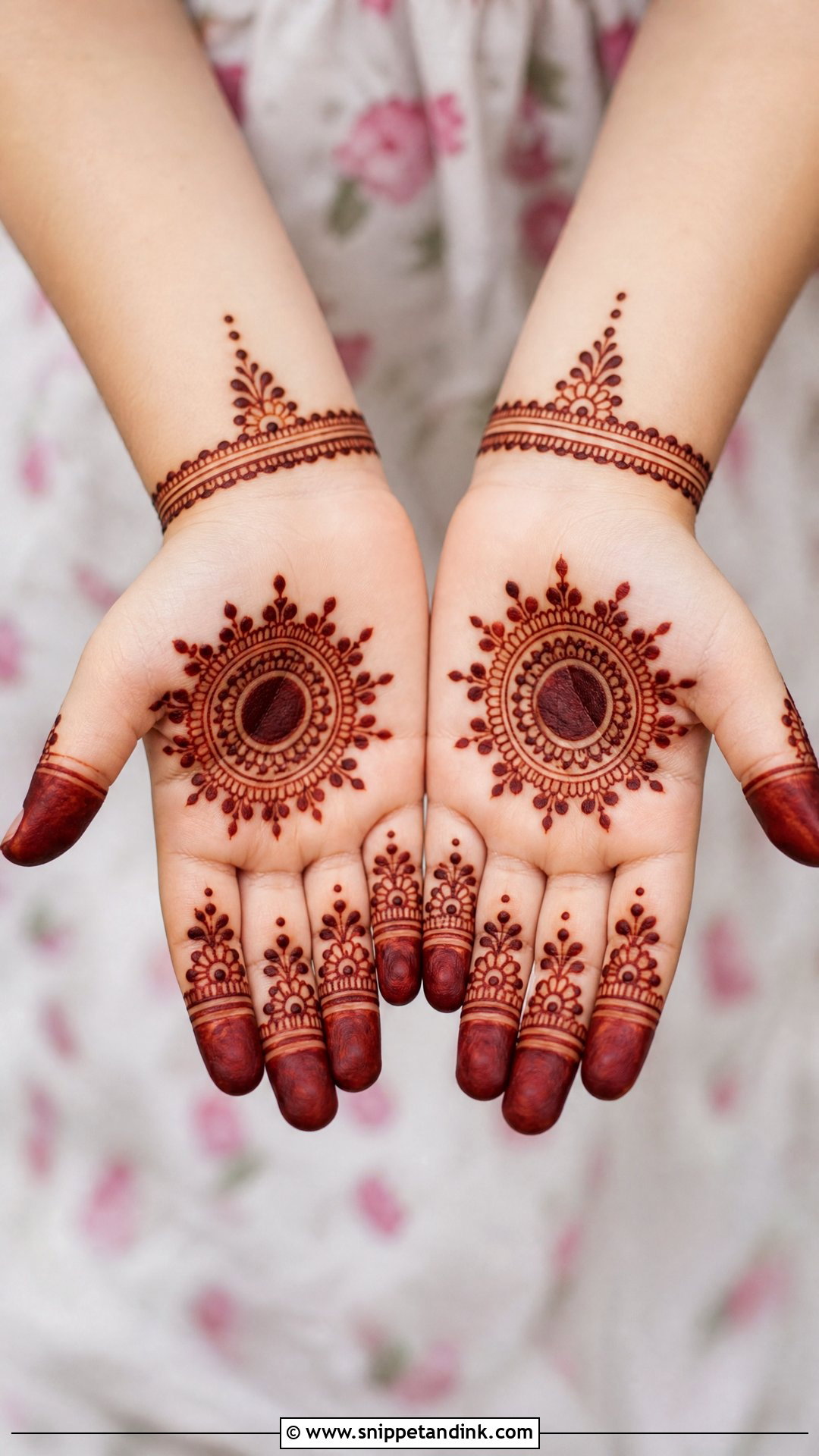
Children won’t sit still, so a kids’ design has to be done in a few minutes. A round tikki with dots, a tiny flower trail, simple leaves and filled fingertips is plenty, or a back-hand bracelet that looks like jewellery. Very fine detail smudges before it dries on small, busy hands, so bold clean lines last better. Use only natural henna on children, and if you can’t confirm what’s in a cone, skip it.
24. Pakistani Front Hand Mehndi Design
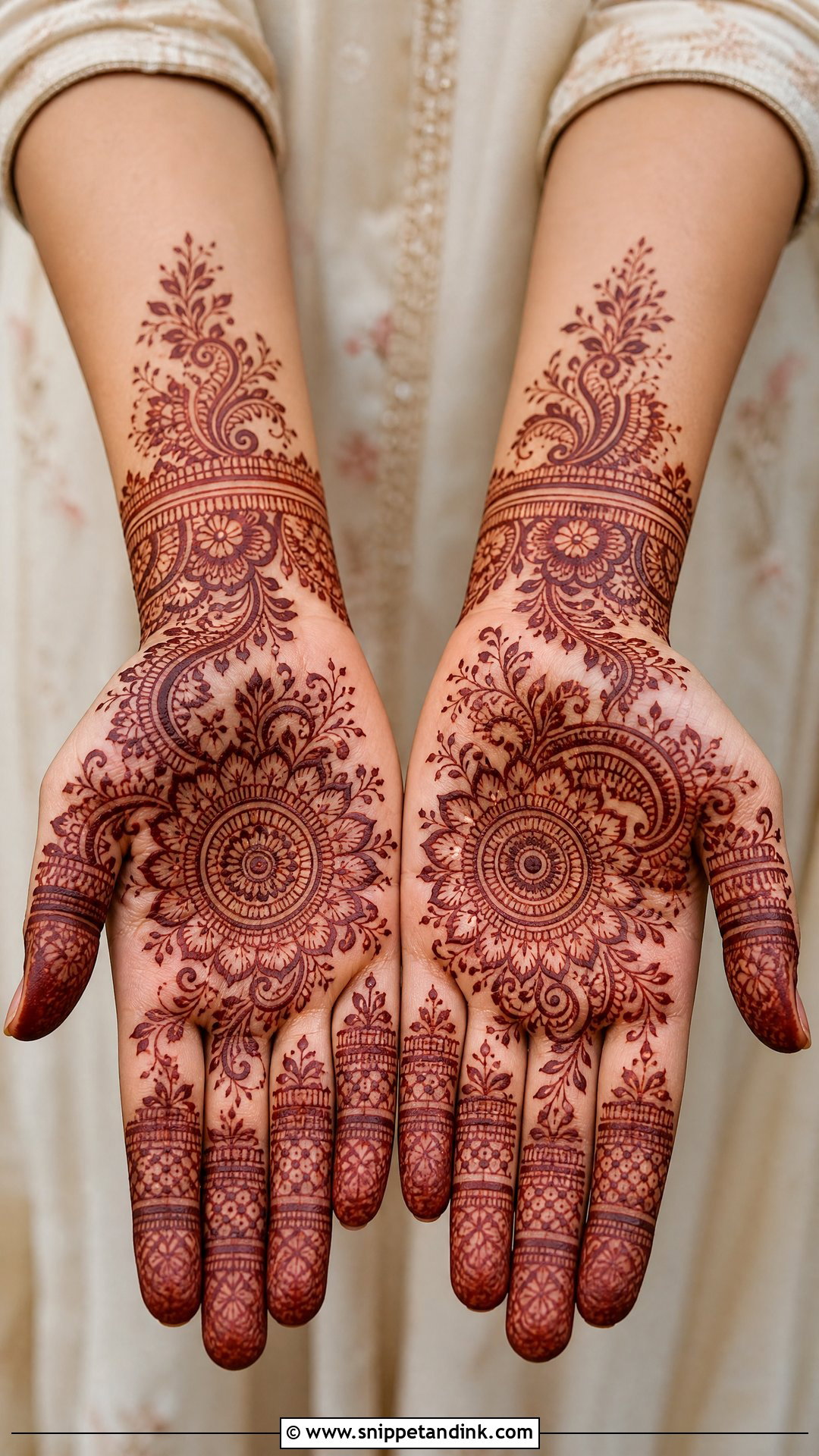
The palm is the main canvas, and its layout decides everything else. I usually begin with a palm mandala, expand with paisleys or florals, then finish with fingers and a wrist border. The balance rule I follow is simple: a heavy palm wants structured but lighter fingers, and a light palm can carry more finger detail. Hands are shown palm-up in so many family photos that this is the side worth your time.
25. Pakistani Full Arm Mehndi Design
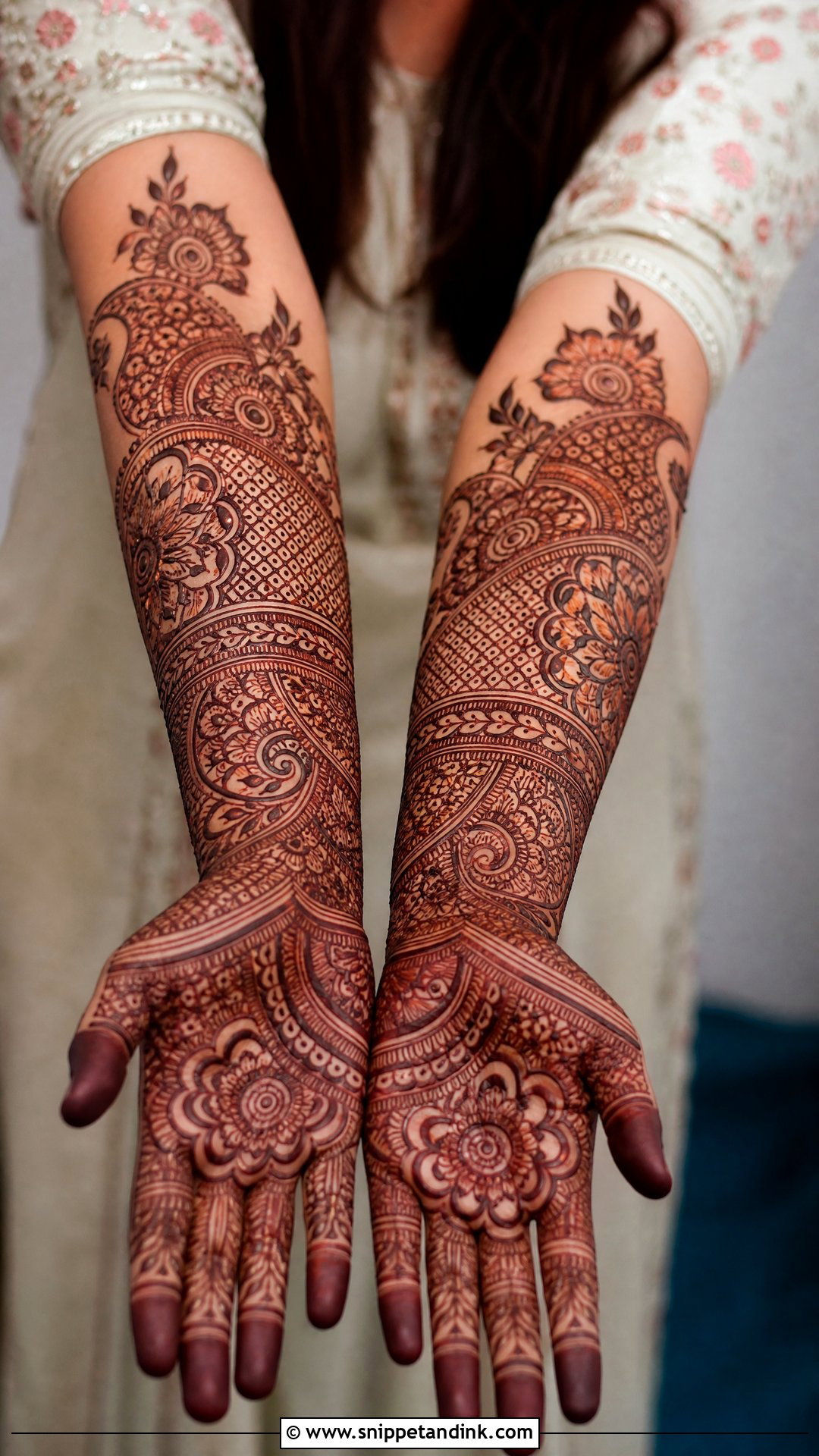
Full-arm mehndi carries the pattern from fingertips up the forearm, sometimes nearly to the elbow, with paisleys, florals, jaali, domes and fine fillers. It looks dramatic with short sleeves, bangles and traditional portraits. The hard part is the wrist. If hand and arm are designed separately, the join looks like a seam, so I draw the wrist band first and let both halves grow out of it. Larger motifs go on the forearm, where there’s more flat skin, and smaller fillers close the gaps.
26. Pakistani Half Hand Mehndi Design
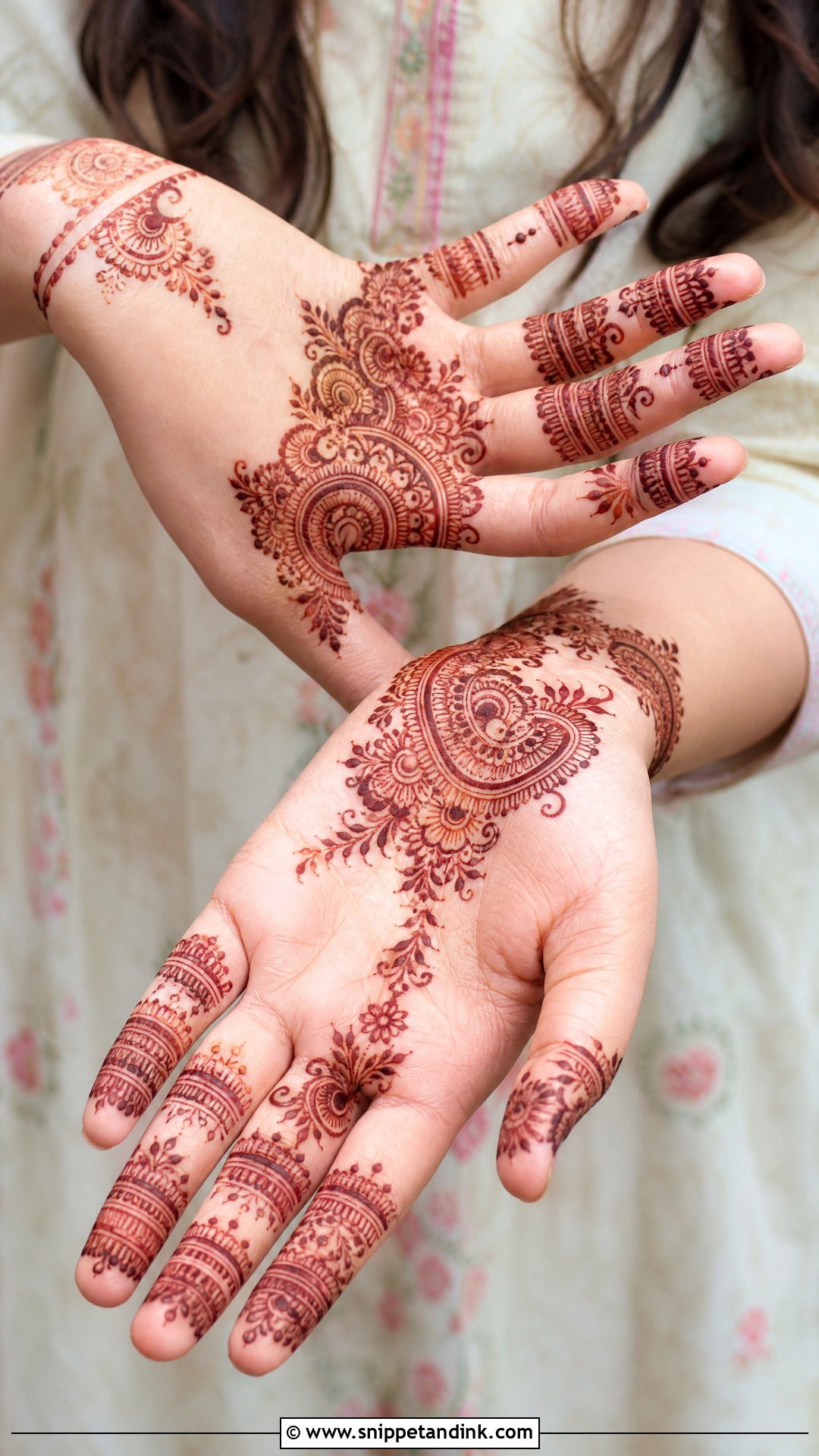
Half-hand coverage gives you festive henna without the full sitting. It can cover the palm and fingers and stop at the wrist, or sit on the back of the hand as a short trail. Either way it needs one strong focal point, a mandala, a flower cluster or a paisley, or it looks unfinished. It dries faster and is far more comfortable while eating and greeting people, which is why I suggest it to anyone attending several functions back to back.
27. Pakistani Shaded Mehndi Design
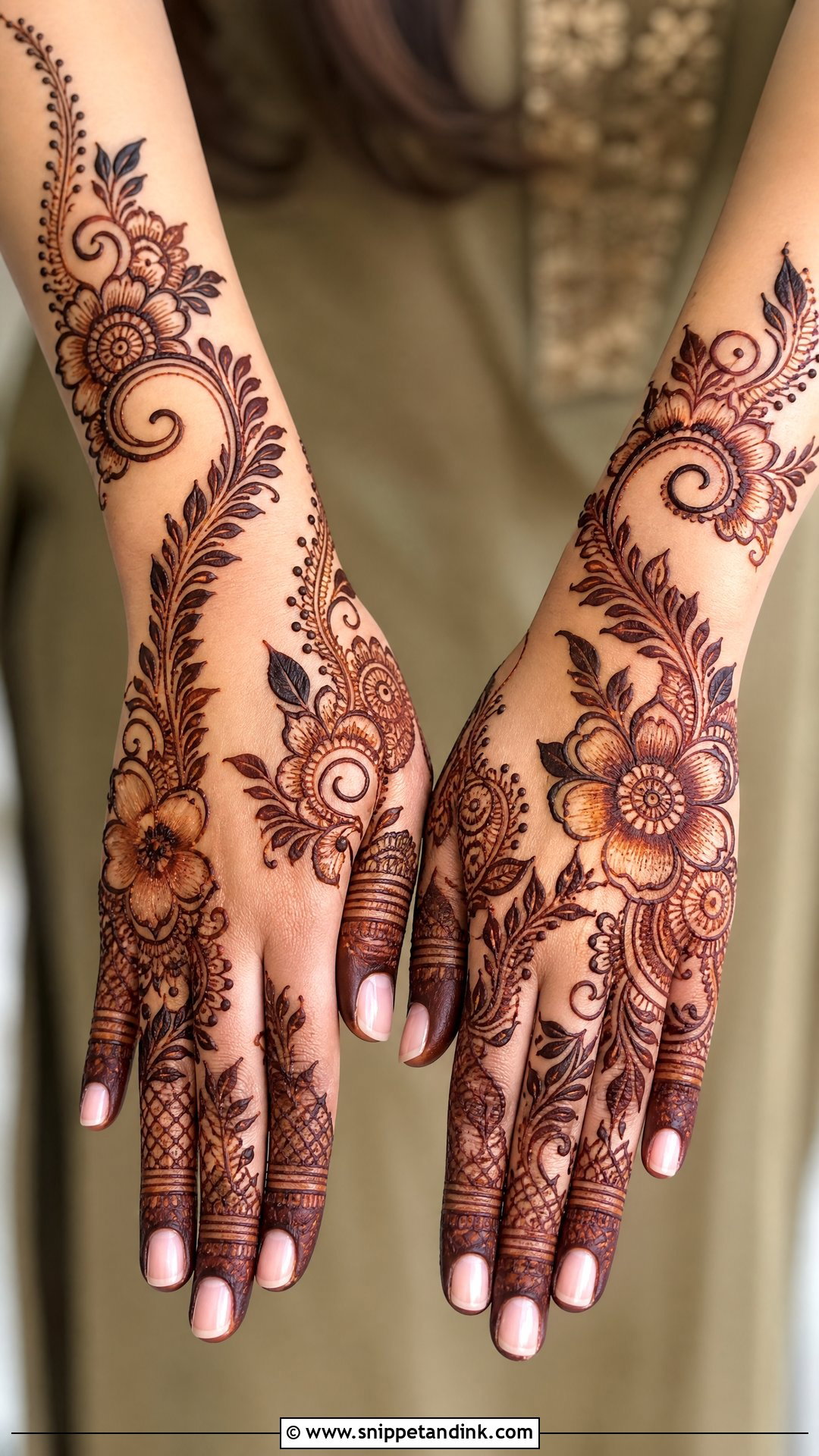
Shading means filling a motif with a thinner layer of paste instead of solid lines, and it’s how a design looks detailed without every inch being worked. Large flowers, leaves, paisleys and Arabic-style trails take it best, especially on the back of the hand. I outline boldly first, then shade inside with a thin, quick stroke so the fill stains lighter than the edge. That difference between edge and fill is what gives the finished stain its layered depth.
28. Pakistani Bail Mehndi Design
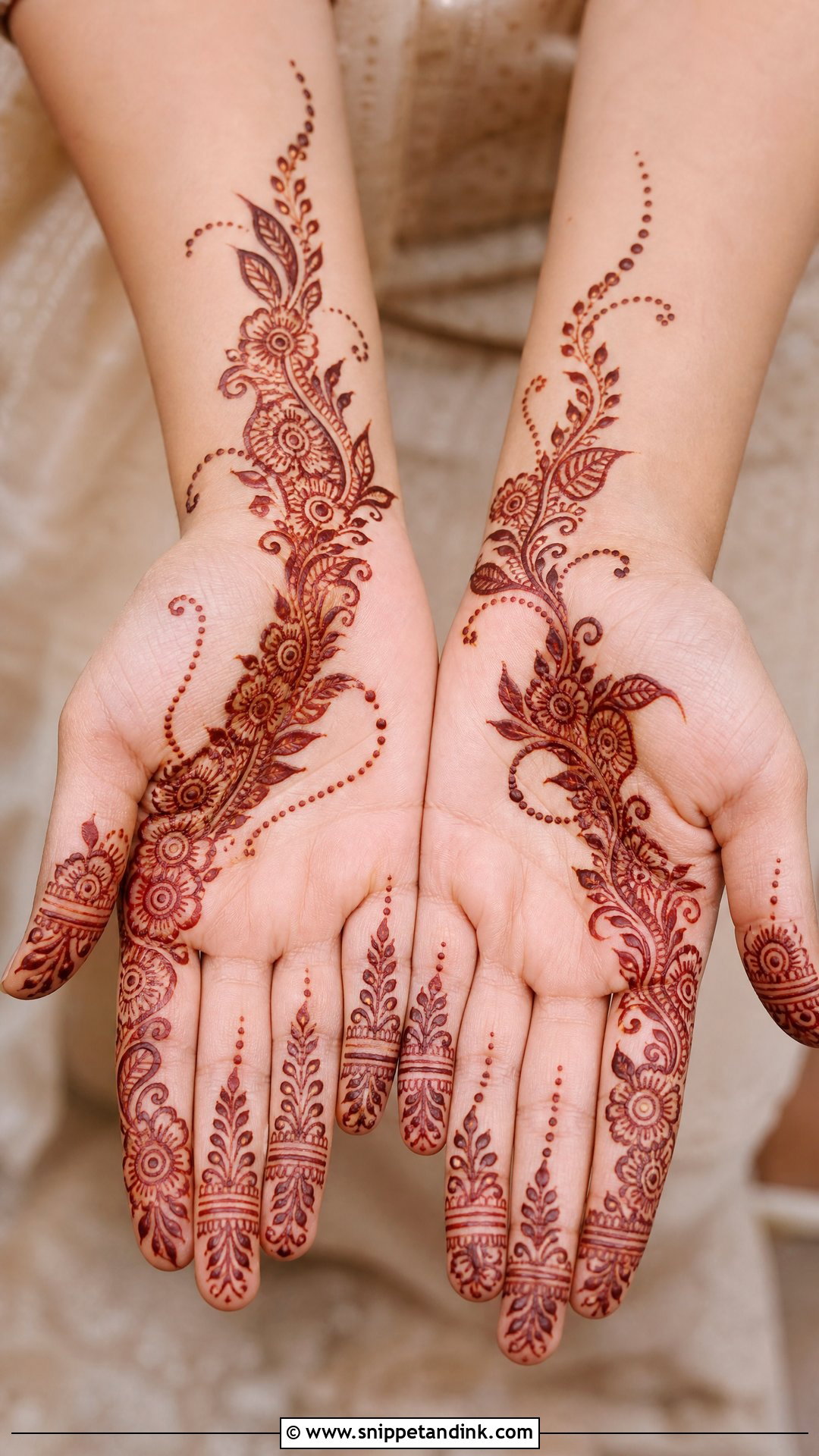
Pakistani bail mehndi design is built on one vine travelling across the hand: diagonally to the index finger, around the palm, or over the back like a floral chain. It’s quick, so it’s a favourite for Eid, dholki and casual events. Flowers, leaves, paisleys, dots and small shaded sections hang off the vine, with matching fingers and a slim wrist finish. I pull the main line in one confident stroke. Built up in short pieces, a vine looks stiff, and a bail should look like it grew there.
29. Pakistani Jewellery Mehndi Design
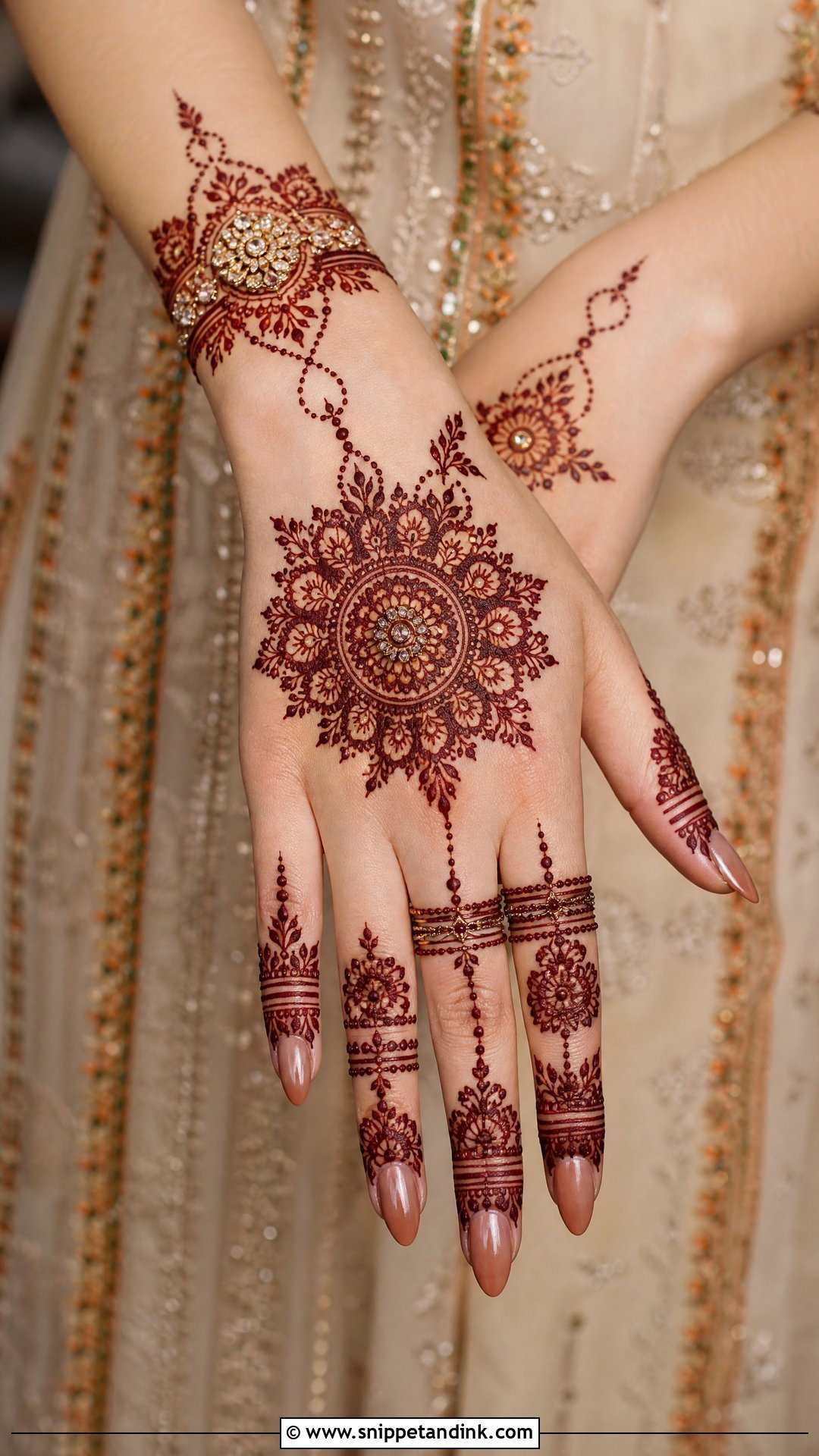
Jewellery mehndi draws rings, chains, bracelets and hand harnesses in henna, usually on the back of the hand where the pattern can run from wrist to fingers. A central medallion, dotted chains, ring bands and small florals near the knuckles make up the design. The cuff has to be detailed enough to anchor everything and the connecting chains thin, or the whole thing looks heavy. Worn with real rings and bangles, it’s a favourite for bridesmaids and engagement guests.
30. Pakistani Modern Mehndi Design
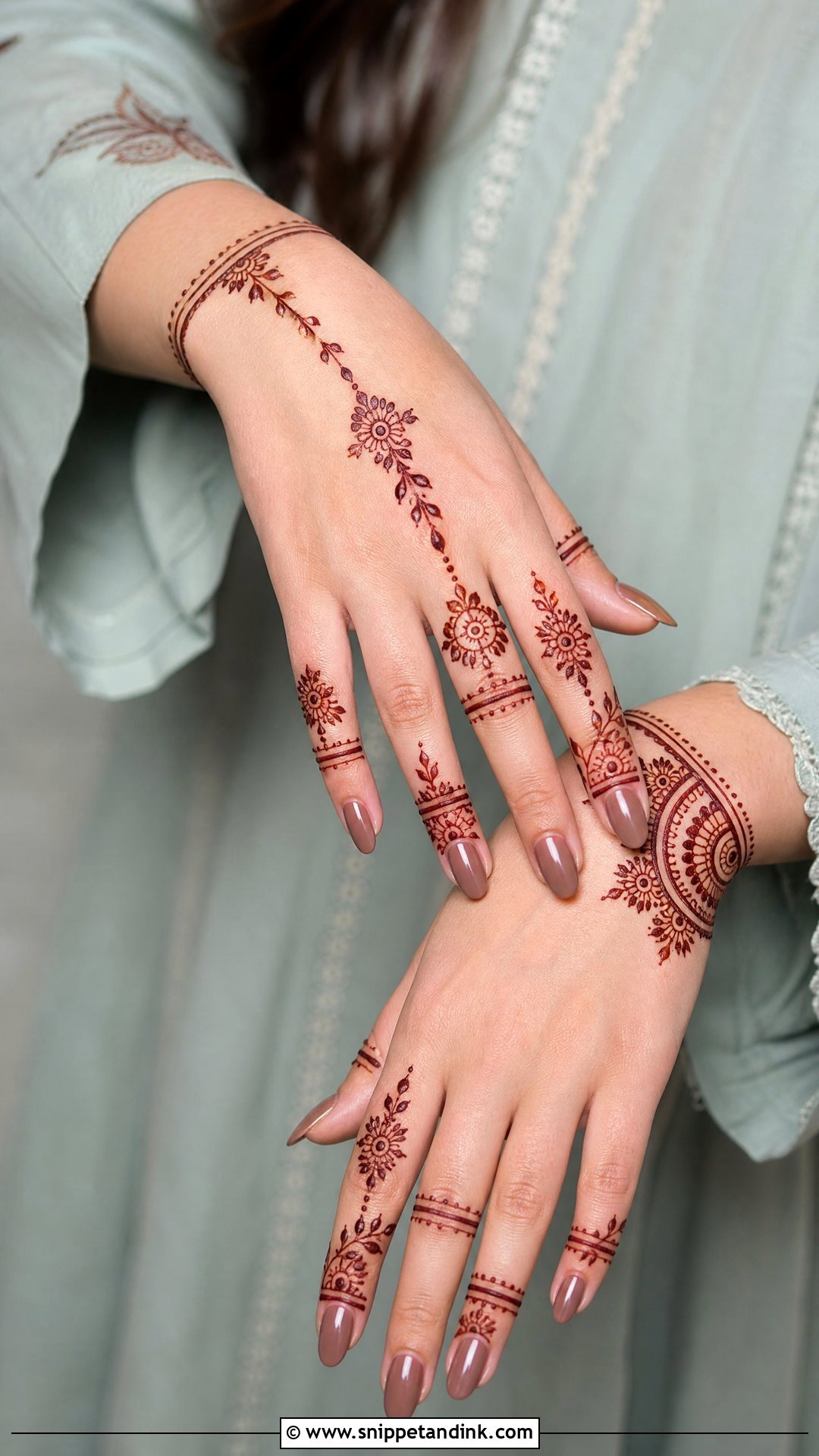
Modern Pakistani henna keeps the old motifs and rearranges them: more negative space, asymmetric placement, bold florals, minimal fingers, neat geometric borders. It still needs a clear focal point and a finished edge at the fingers or wrist, otherwise it reads as incomplete rather than modern. Roses, mandalas, half-hand trails and bracelets are the usual building blocks. Of all the styles here, it’s the one I find easiest to match to a contemporary outfit.
31. Pakistani Traditional Mehndi Design
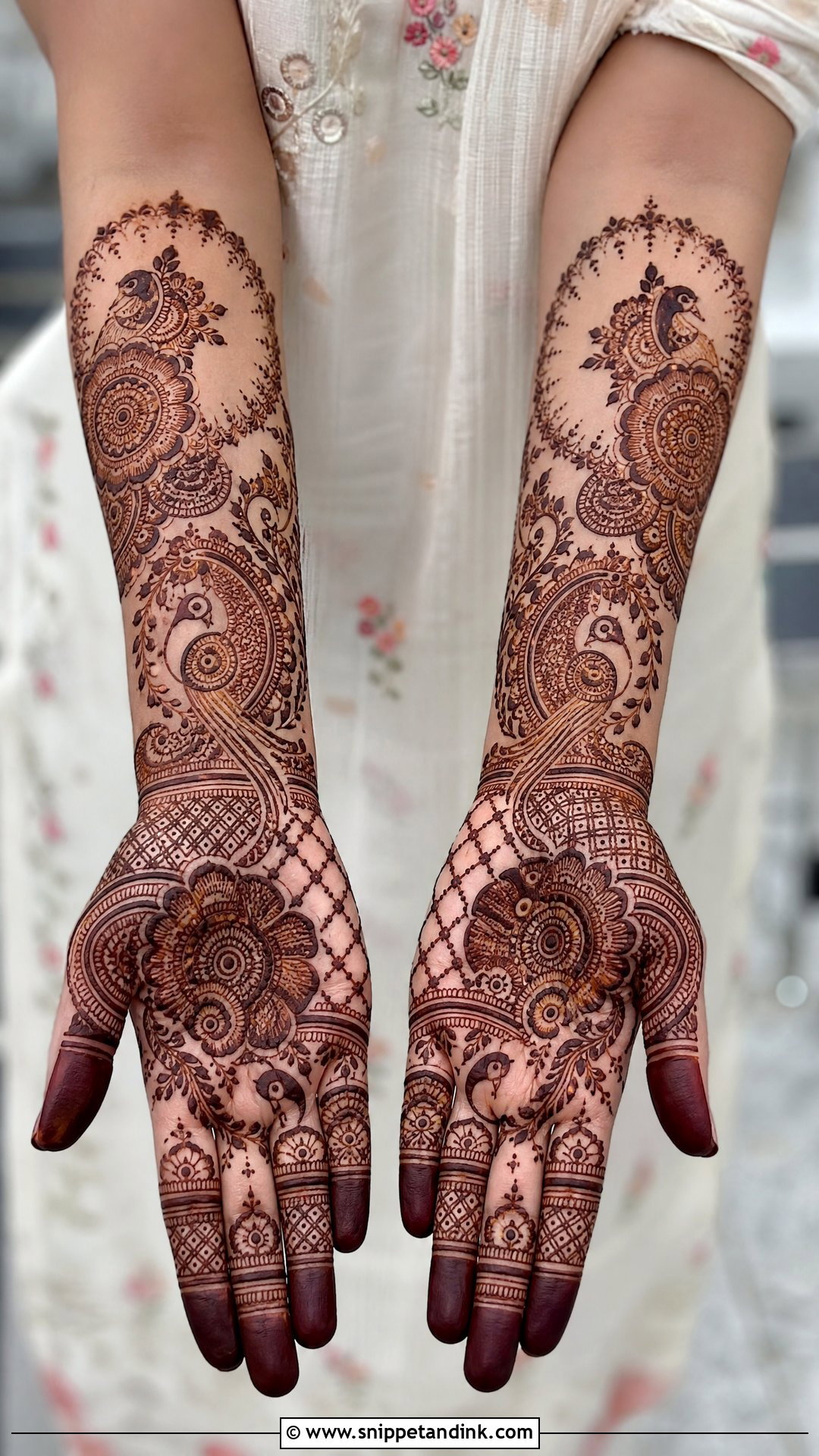
Traditional Pakistani mehndi combines paisleys, peacocks, floral vines, mandalas, dotted fillers, net sections and heavy fingertips, with far less empty skin than modern work. It suits weddings, mayun, dholki, Eid and family gatherings, full-hand or medium. What I look for is harmony, with palm, fingers and wrist tied together by repeated motifs and borders. Dense isn’t the same as messy, and clean lines are what stop a traditional hand looking crowded.
32. Pakistani Gulf Mehndi Design
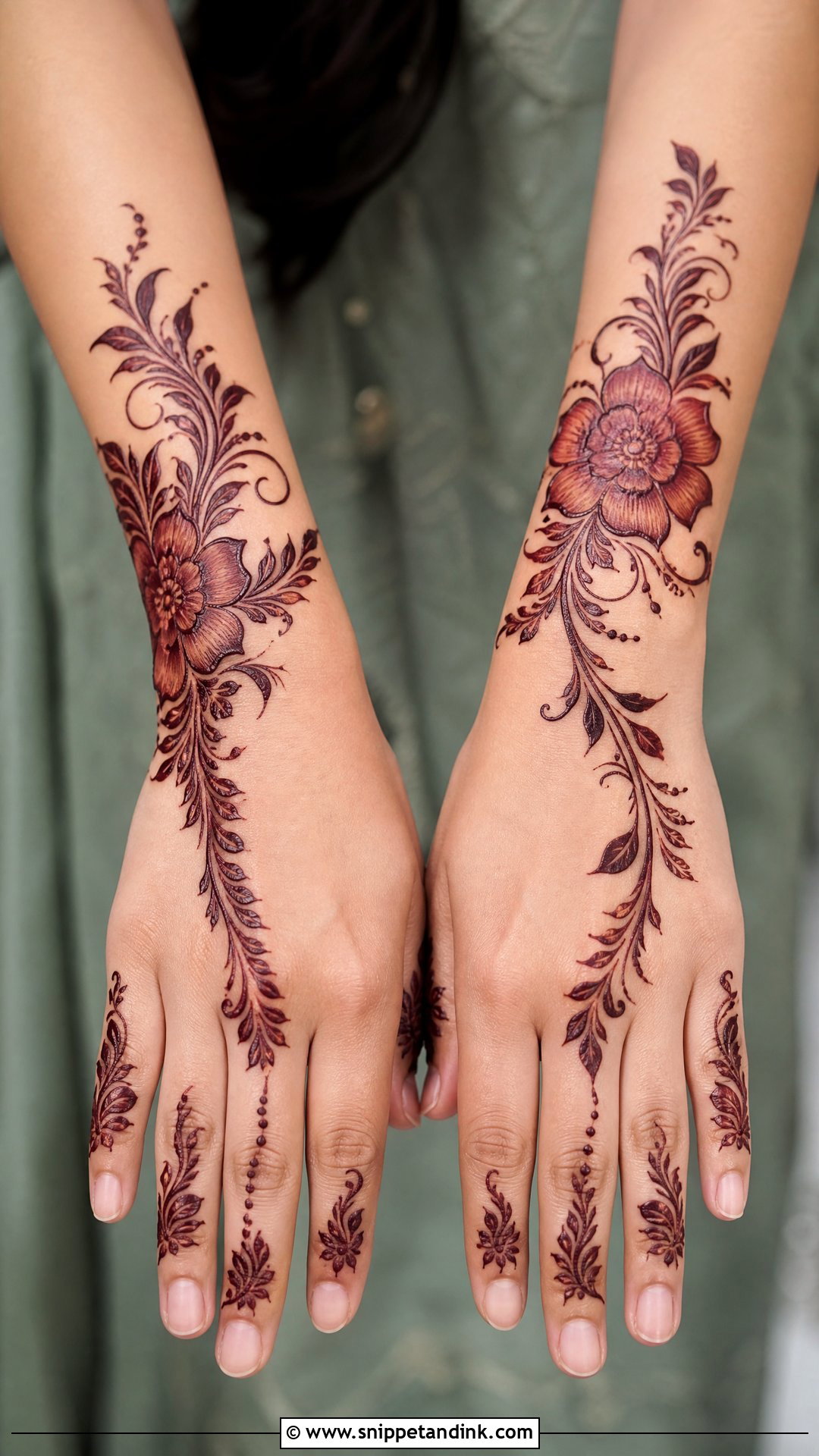
Gulf influence brings larger flowers, sweeping leaves, shaded curves and wide open spaces, while the Pakistani side adds fine finger detail. It reads bold from across a room without dense coverage, so it suits back hands and semi-bridal events. Those big petals depend on smooth, even shading; patchy fill is far more obvious on a large flower than a small one. It goes well with abayas, festive dresses and guest outfits.
33. Pakistani Moroccan Mehndi Design
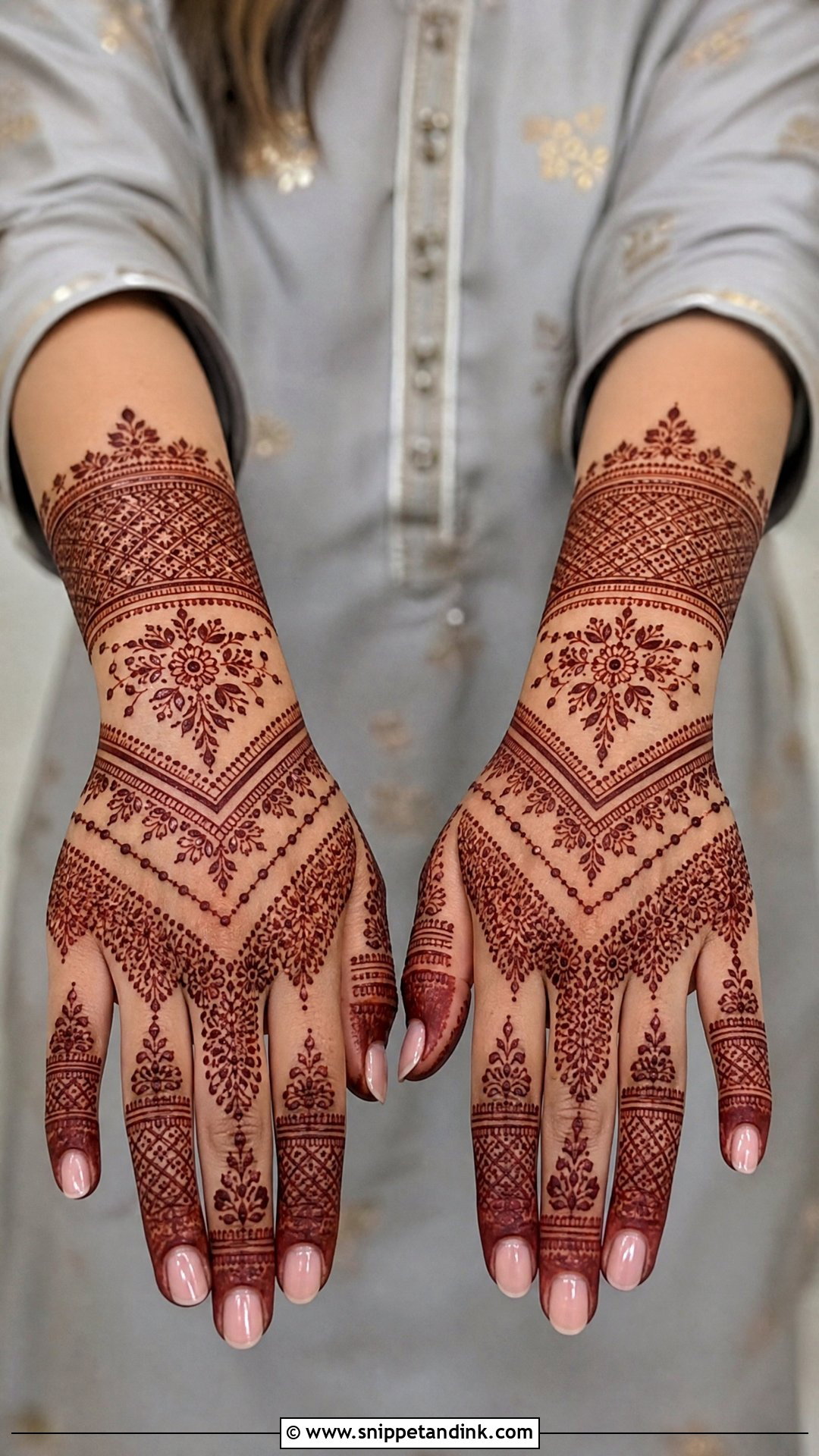
Moroccan-inspired work swaps curves for geometry: diamonds, checks, straight lines and strict symmetry, softened with Pakistani florals, dots and wrist borders. A central geometric panel, patterned fingers and a matching cuff make a complete hand. Straight lines are harder in henna than curves because skin moves, so I keep the skin gently taut and pull each line in one go. It’s a good pick if you’re tired of paisley, and a deep maroon stain sharpens the geometry.
34. Pakistani Feet Mehndi Design
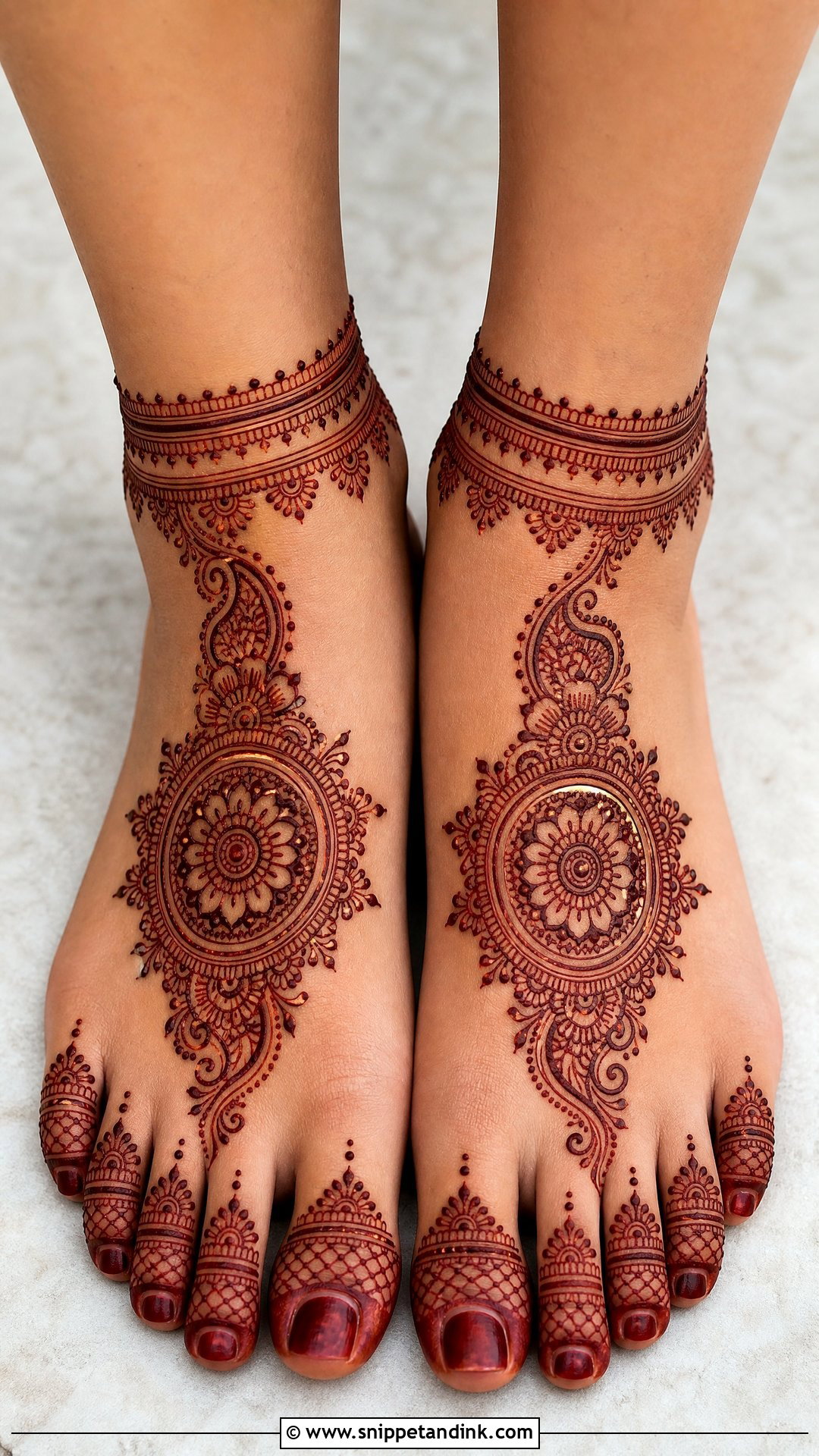
Feet are mostly a bridal tradition, though they suit Eid and formal events too. A complete foot design puts a mandala on top of the foot, anklet borders, toe patterns, paisley trails and florals, and bridal versions climb toward the ankle. The soles and sides of the feet tend to stain darker than the top, so I keep very fine detail a little more open near the edges to stop it filling in. Follow the natural shape of the foot, and repeat motifs from the hands so the whole look ties together.
35. Pakistani Toe Mehndi Design
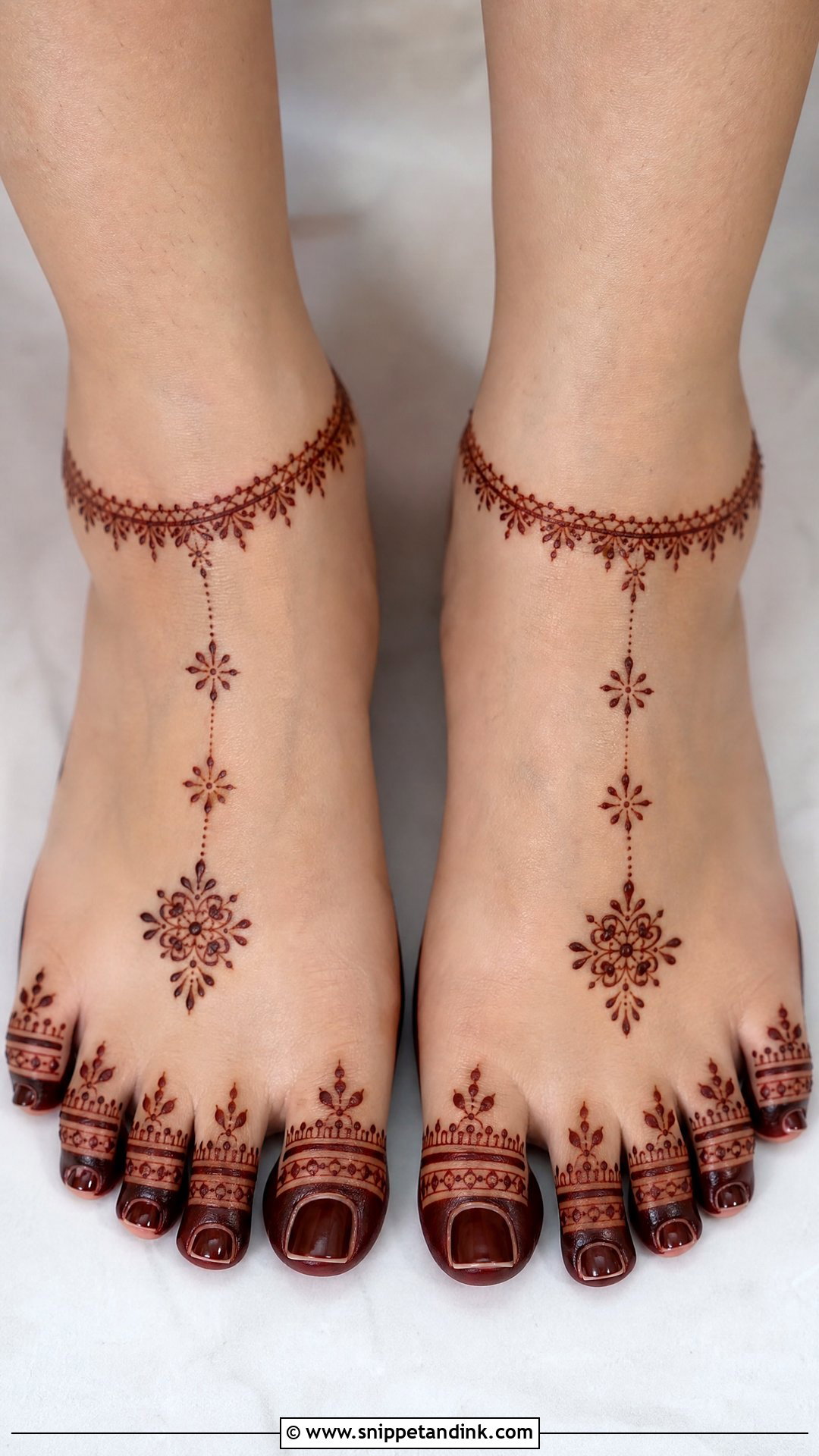
If you want decorated feet without a full sitting, toe work is the answer: patterned toes, a slim anklet border, small floral trails and a light motif on top of the foot. The toes can take tiny bands, dots, leaves or filled tips. I check symmetry by having the bride stand with both feet together before I finish, because feet look different when you’re seated. It suits sandals at Eid and family events, and a natural dark stain makes even small toe details show.
Aftercare That Turns a Pale Stain Into Deep Maroon
Most disappointing stains I see are aftercare problems, not paste problems. The dye needs time on warm skin, and water is its enemy for the first day. Here is what I ask every bride to do once the design is drawn:
- Let the paste dry until it no longer feels tacky, then dab on a light lemon and sugar mix. It keeps the paste stuck to the skin instead of cracking off early.
- Leave it on as long as you can bear, ideally overnight. Wrapping the hands loosely in tissue or a cotton cloth helps you sleep without smudging.
- Scrape it off with the back of a butter knife or your fingernail. Do not wash it off.
- Keep the hands away from water for as long as possible after that, ideally most of the next day. Plan your shower before the appointment, not after.
- Keep the hands warm. Cold rooms slow the darkening; a cup of tea held between your palms genuinely helps.
- Rub in a little balm or mustard oil before you wash dishes or swim, and skip scrubs and hand sanitiser on the stained area for the first few days.
Some Skin Stains Lighter, and Black Henna Is Never the Fix
Henna stains darkest on palms and soles, where skin is thickest, and lighter on the back of the hand, the wrist and the arm. Cool hands, very oily skin and a recent exfoliation all give paler results. None of that is a sign the paste was bad. I tell brides with a history of light stains to choose back-of-hand designs with bold outlines rather than fine shading, so the pattern still reads.
What I’d steer you away from completely is any cone promising instant black colour. Those products often contain PPD, a hair-dye chemical that can cause blistering, scarring and lifelong allergy. Real henna paste smells earthy, usually with an essential oil like eucalyptus or lavender, and stains orange first. If you’ve never worn henna, ask your artist for a small patch on the inner arm a few days ahead, and tell her about any skin condition before she starts.
Let the Function Set the Coverage
Pakistani henna covers a lot of ground, from detailed bridal hands to simple Eid tikki patterns and modern back-hand trails. The right one comes down to your event, your sleeves and how long you can sit. Paisley, peacock, jaali and full bridal work carry the tradition; khafif, rose, bracelet and minimal designs are softer; tikki, bail, floral and Arabic patterns are safe for any festive day. Whatever you choose, book it so the stain peaks on the day you’ll be photographed most.
You'll Like These Ideas:


Leave a Reply