
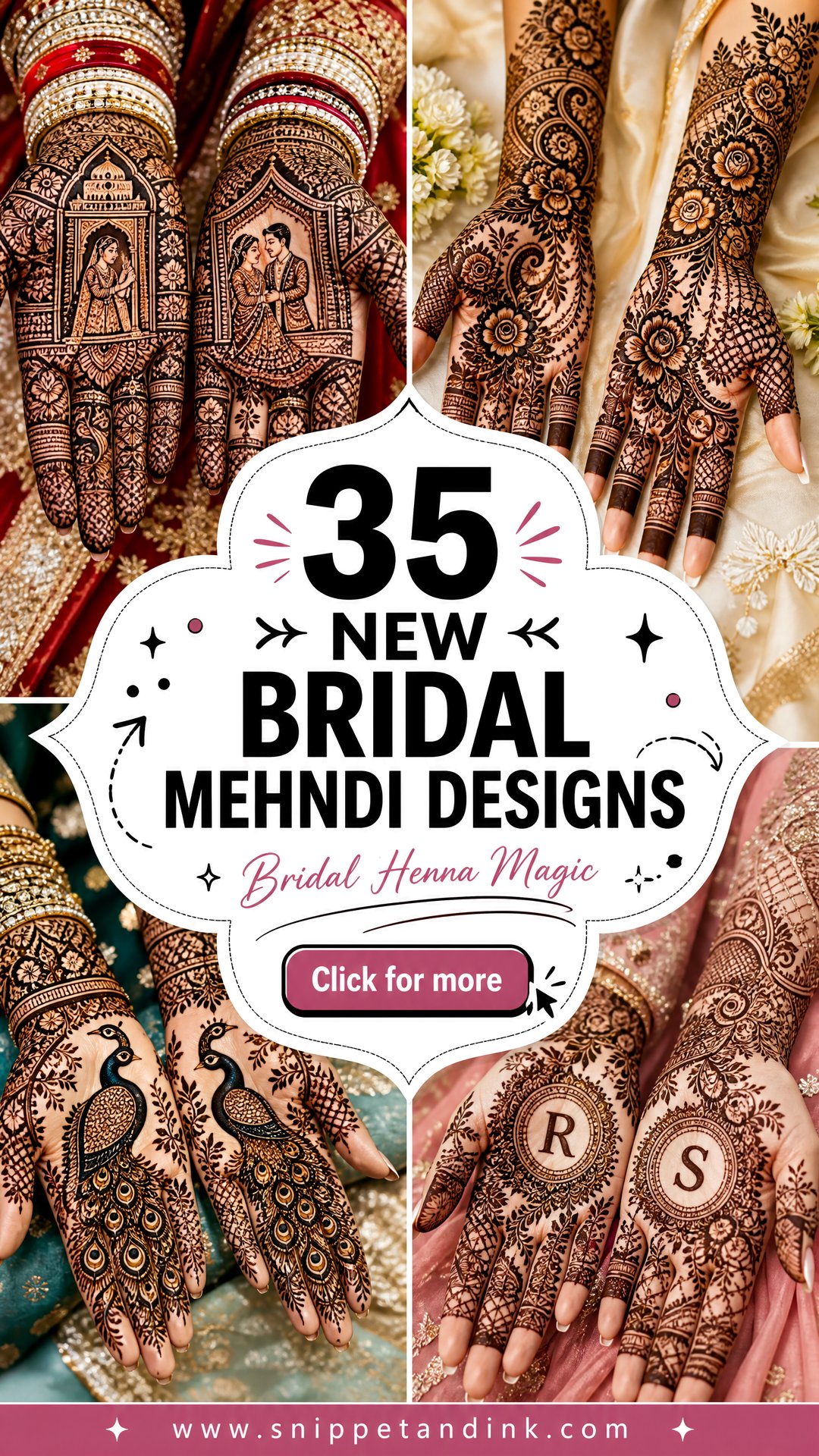
Brides used to sit down with me and ask for the whole hand to be filled. Now the first question is usually about meaning: whose initials go where, which story the palms should tell, how much skin to leave open so the design reads in photos. These 35 designs cover that range, from full Rajasthani storytelling and royal arm-length work to Arabic trails, Indo-Arabic spacing, mandalas, jaali and clean back-hand designs for an engagement or reception. As you look through them, keep your outfit, your jewelry and your hand shape in mind, and be honest about how many hours you can sit still.
The Stain Keeps Darkening for Two Days, So Plan Backward
When the paste comes off, natural henna is bright orange. Over the next day or two it oxidizes into reddish-brown and then, on the palms, a deep maroon. That’s why I book bridal application one or two days before the wedding, never the morning of. Applied too early, the stain has already started to fade by the ceremony; applied too late, you walk down the aisle with orange hands.
The week before your appointment
- Get waxing, threading, manicures and pedicures done before the mehndi, not after. Each of them strips fresh stain.
- Exfoliate your hands and feet gently the day before, then arrive with clean skin and no lotion or oil, which block the paste.
- Ask your artist what’s in the paste. Natural henna is green-brown and stains orange first. Anything that stains black within an hour is not plain henna and can cause serious reactions; I won’t apply it.
- If you’ve never worn henna, do a small patch test a week ahead to check for a reaction to the essential oils in the mix.
On the day, eat properly before we start and wear a top that opens at the front. Once both hands are covered you can’t do much for yourself for a few hours, so have someone nearby with a straw and your phone.
1. Full Hand Bridal Mehndi Design
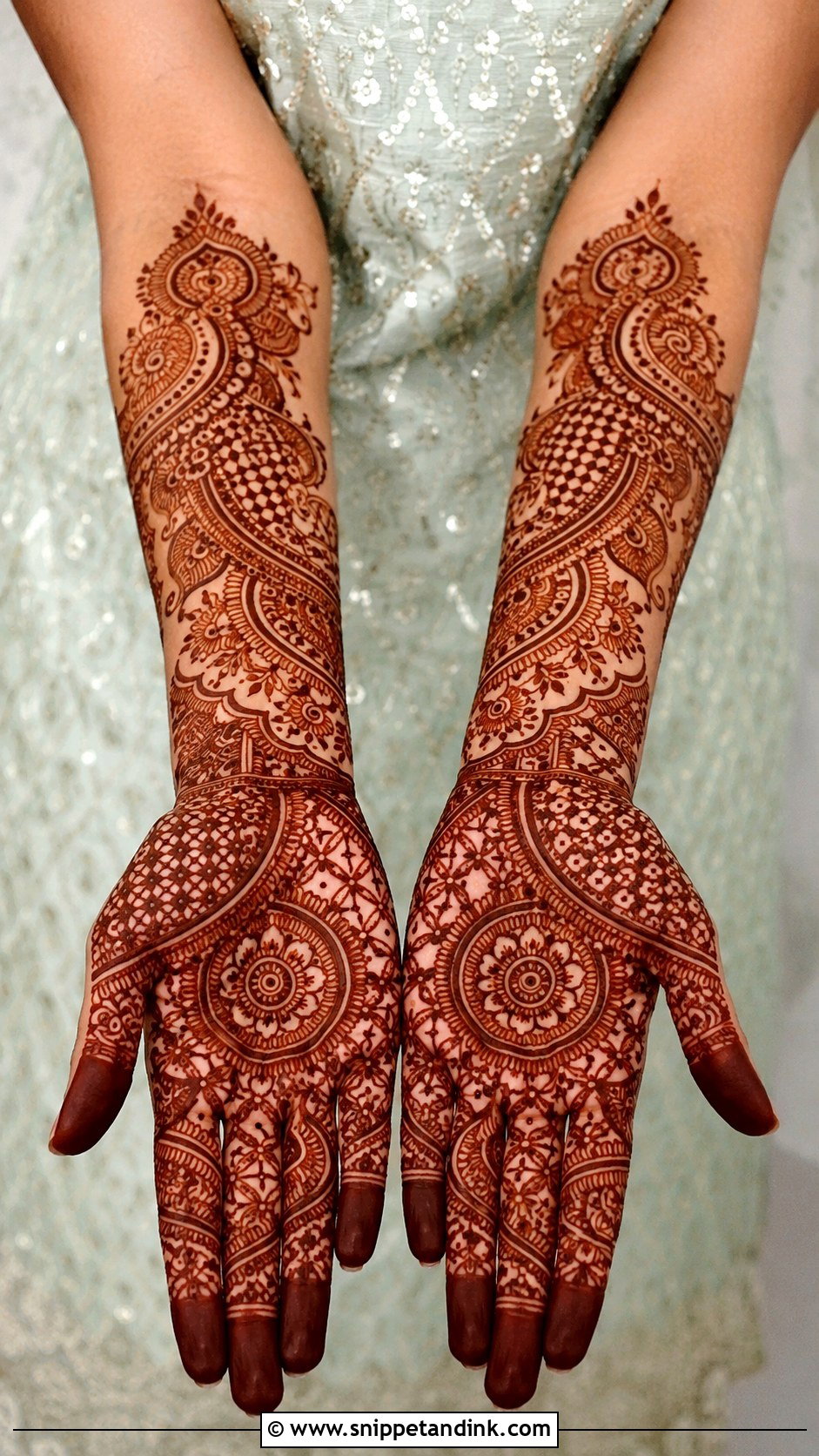
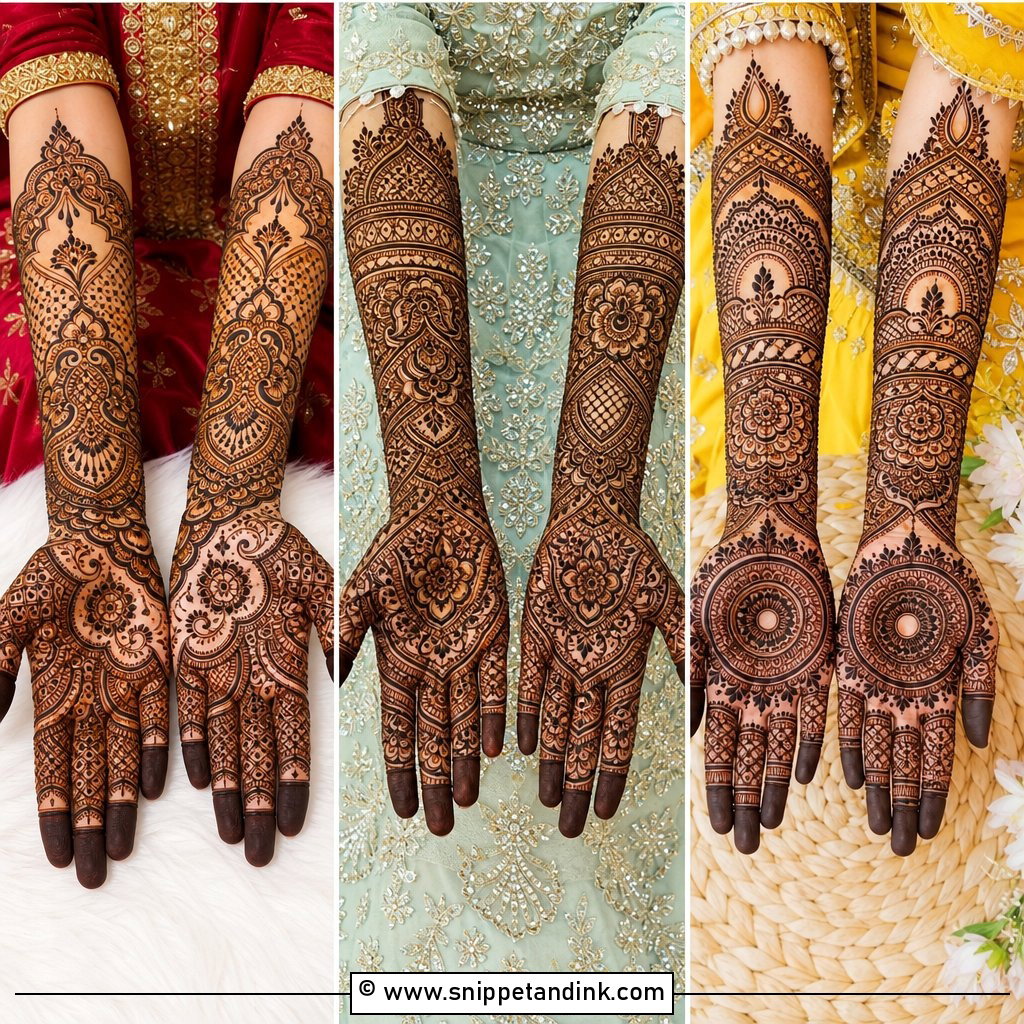
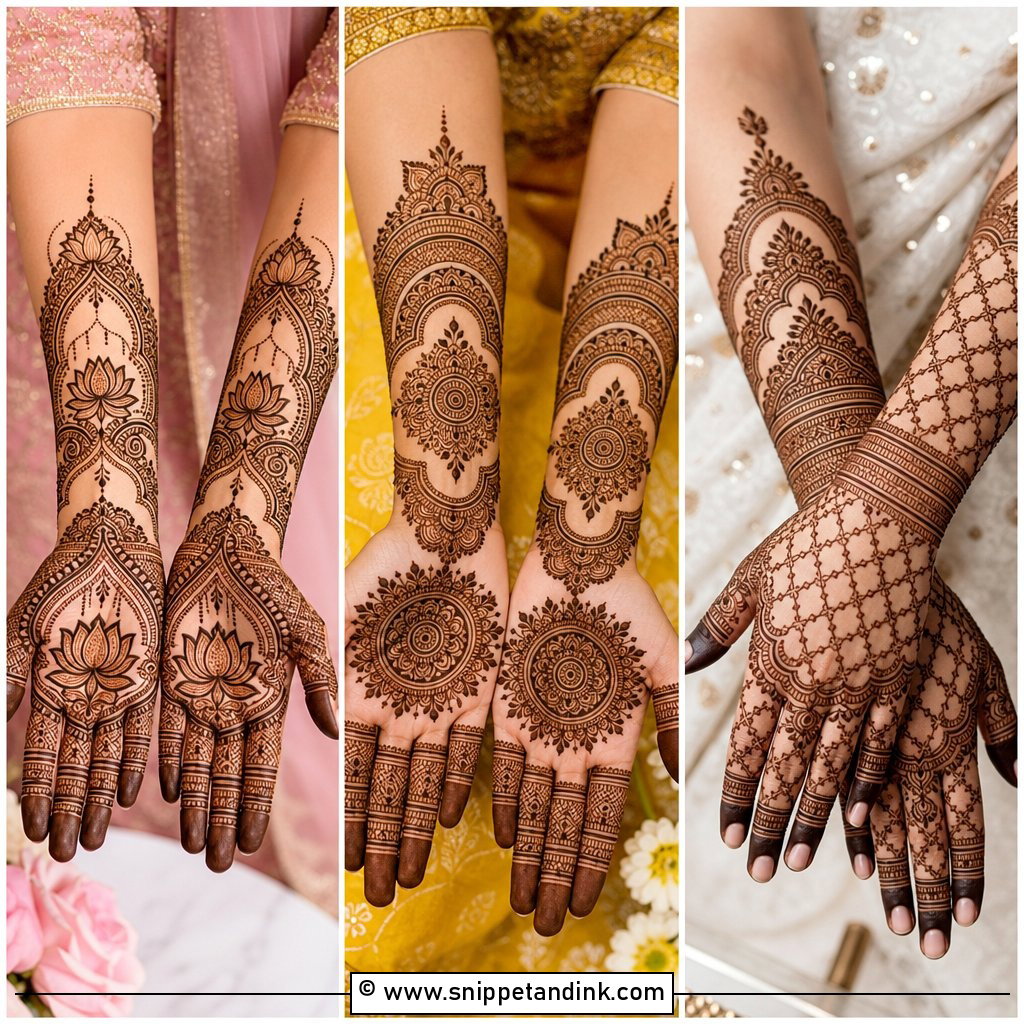
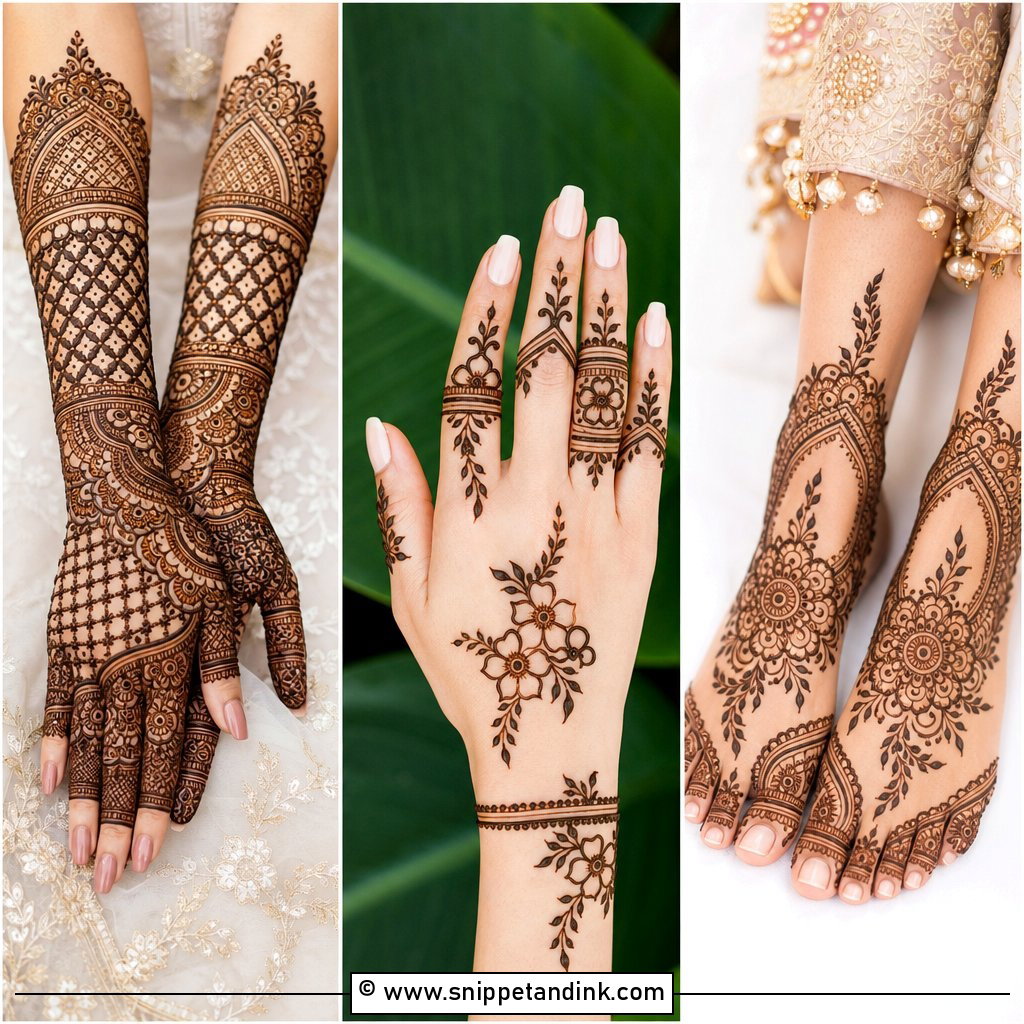
Full-hand bridal mehndi covers the fingertips, palms, wrists and forearms in paisleys, florals, jaali and fine fillers. It gives the deepest overall color, because the palms are where henna stains darkest and here every part of them is worked. The risk is crowding. When I plan a full hand, I fix the large motifs first and only then fill around them, so the eye has places to land instead of a solid dark mass. Set aside most of a day for it, and pair it with a lehenga or saree and heavy bridal jewelry that can hold their own beside it.
2. Royal Bridal Mehndi Design
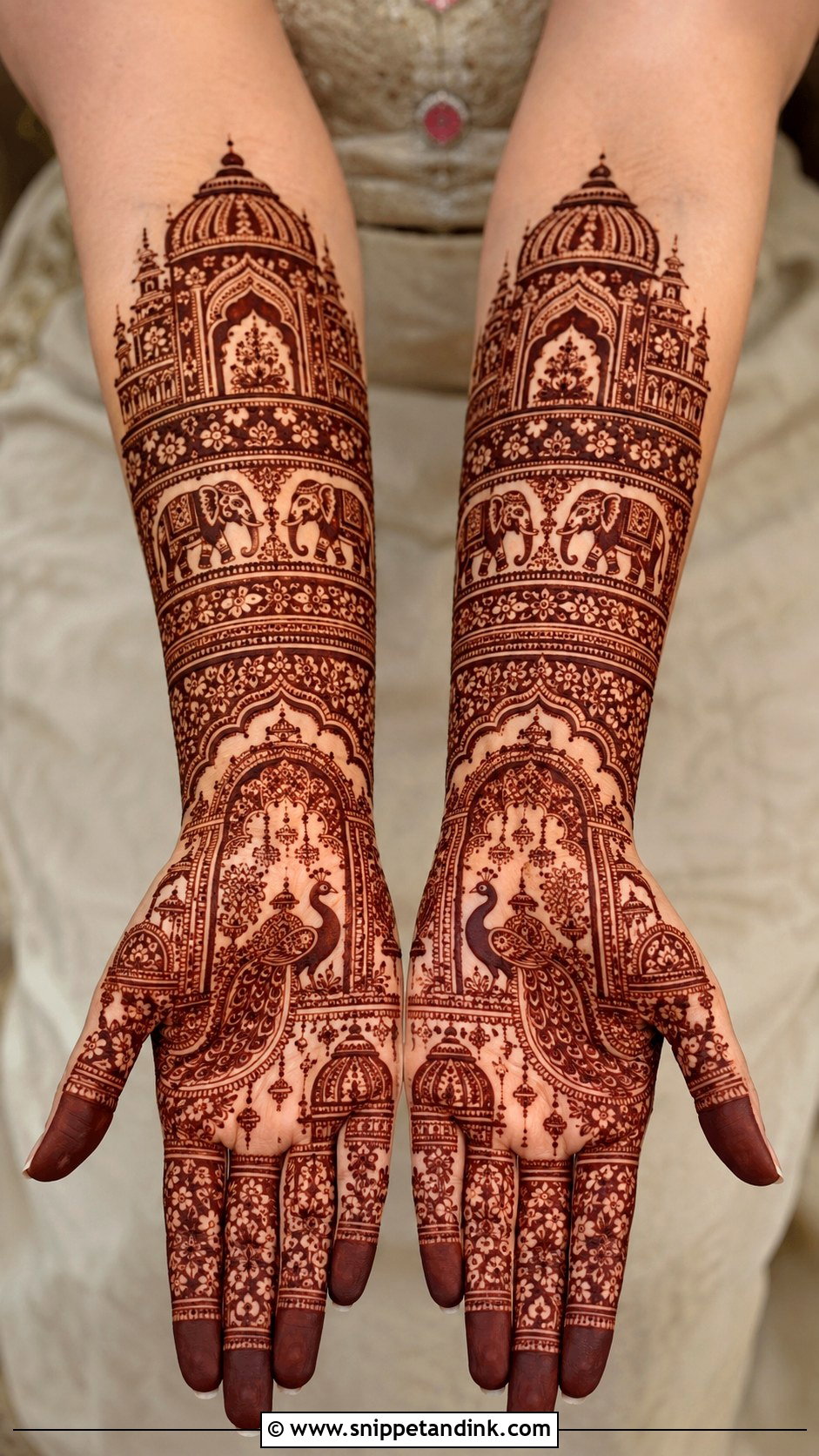
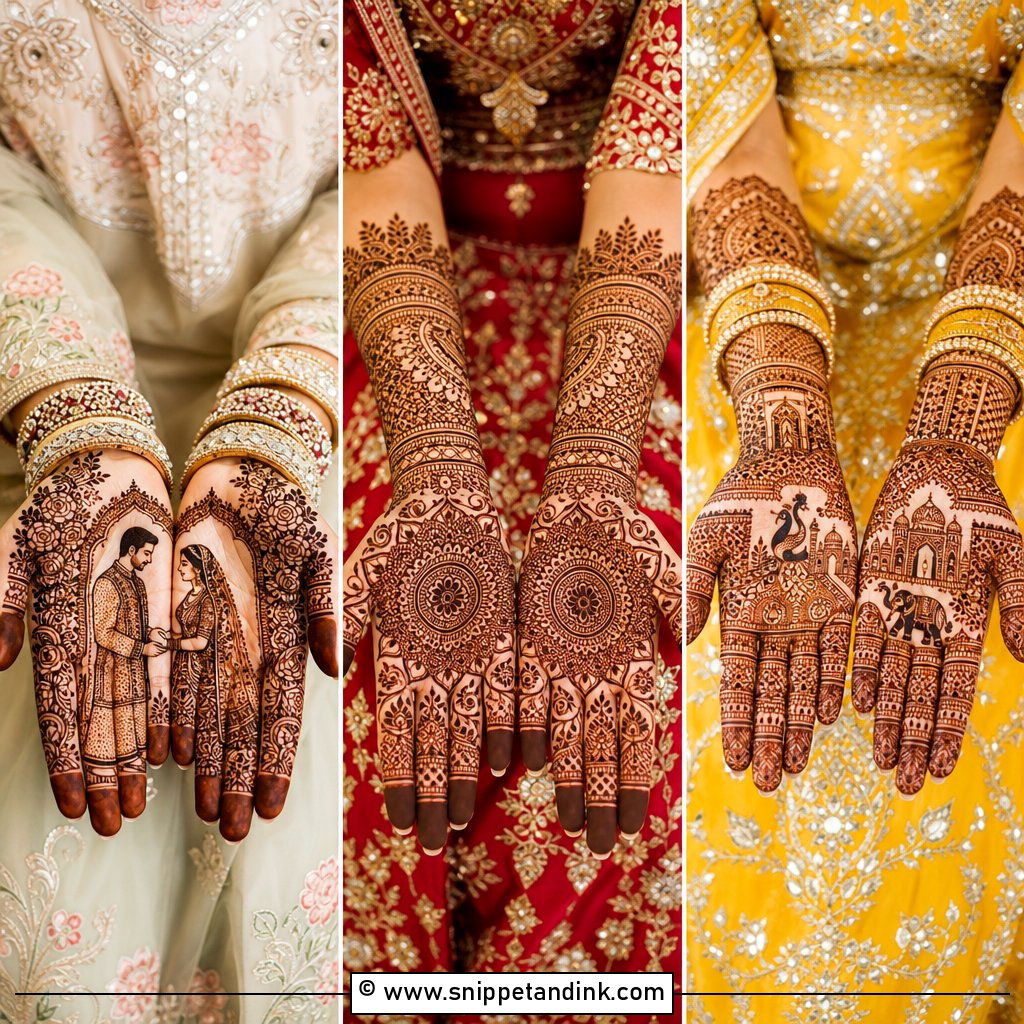
Royal designs bring palaces, domes, elephants and peacocks onto the hands, usually mirrored across both and often running up toward the elbows. I treat the two palms as a pair of facing pages: the main architecture sits in the center of each, and the fingers stay fully detailed so the composition has a frame. Domes and arches need steady, even lines, so this is a design where an artist’s experience shows quickly. It sits naturally next to zari, kundan and heavy embroidery in bridal portraits.
3. Indian Bridal Mehndi Design
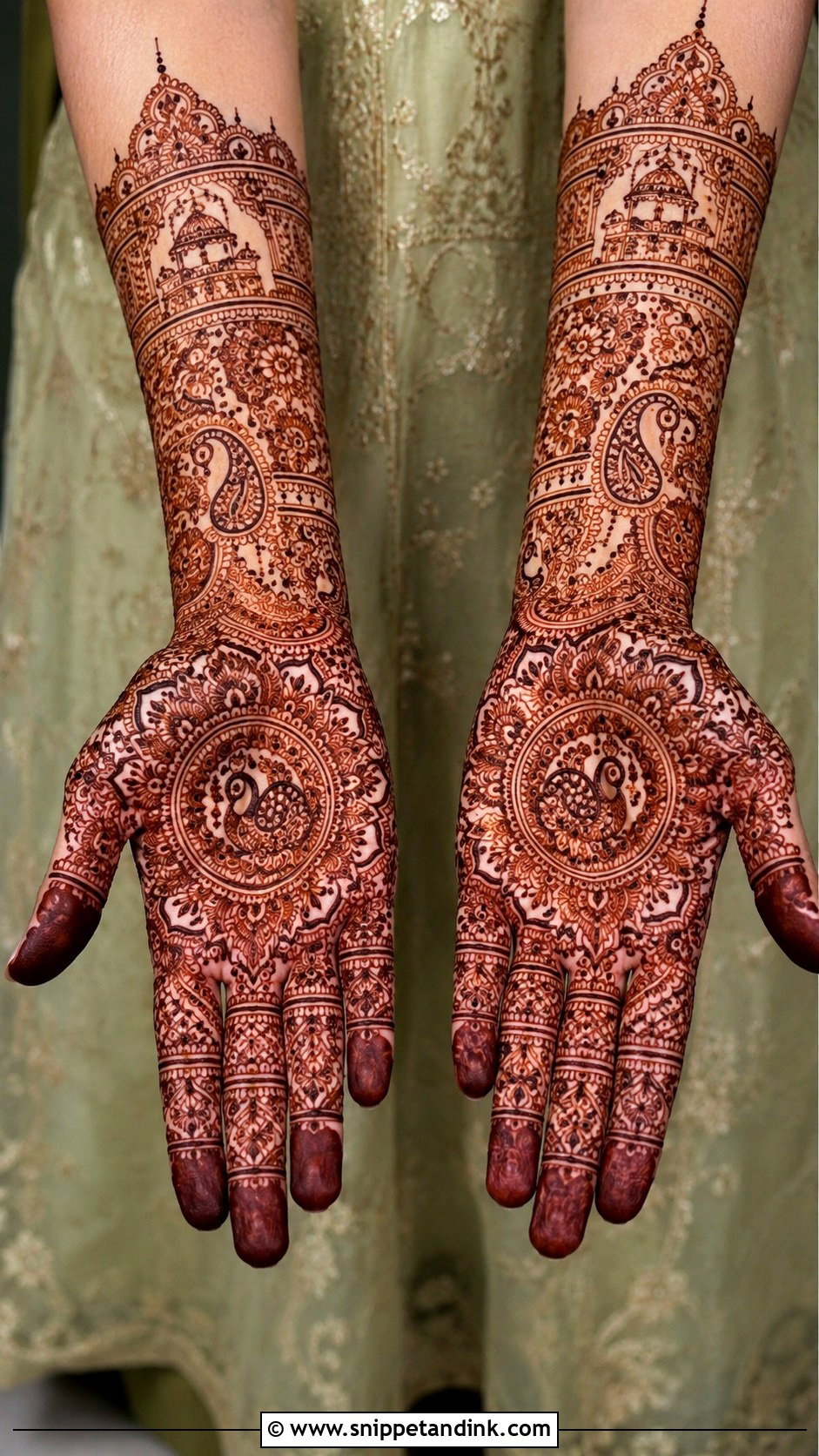
Traditional Indian bridal work is dense: paisleys, mandalas, peacocks, bride and groom figures, doli patterns and tiny fillers, with the main story on the palms and bands and vines climbing the arms. Because so much skin is covered, the finished stain reads dark and dramatic from a distance. I always tell brides that the arms will stain lighter than the palms, since the skin there is thinner, so the color will look graded even with perfect paste. It suits every skin tone and sits well with red, maroon, green or ivory outfits.
4. Arabic Bridal Mehndi Design
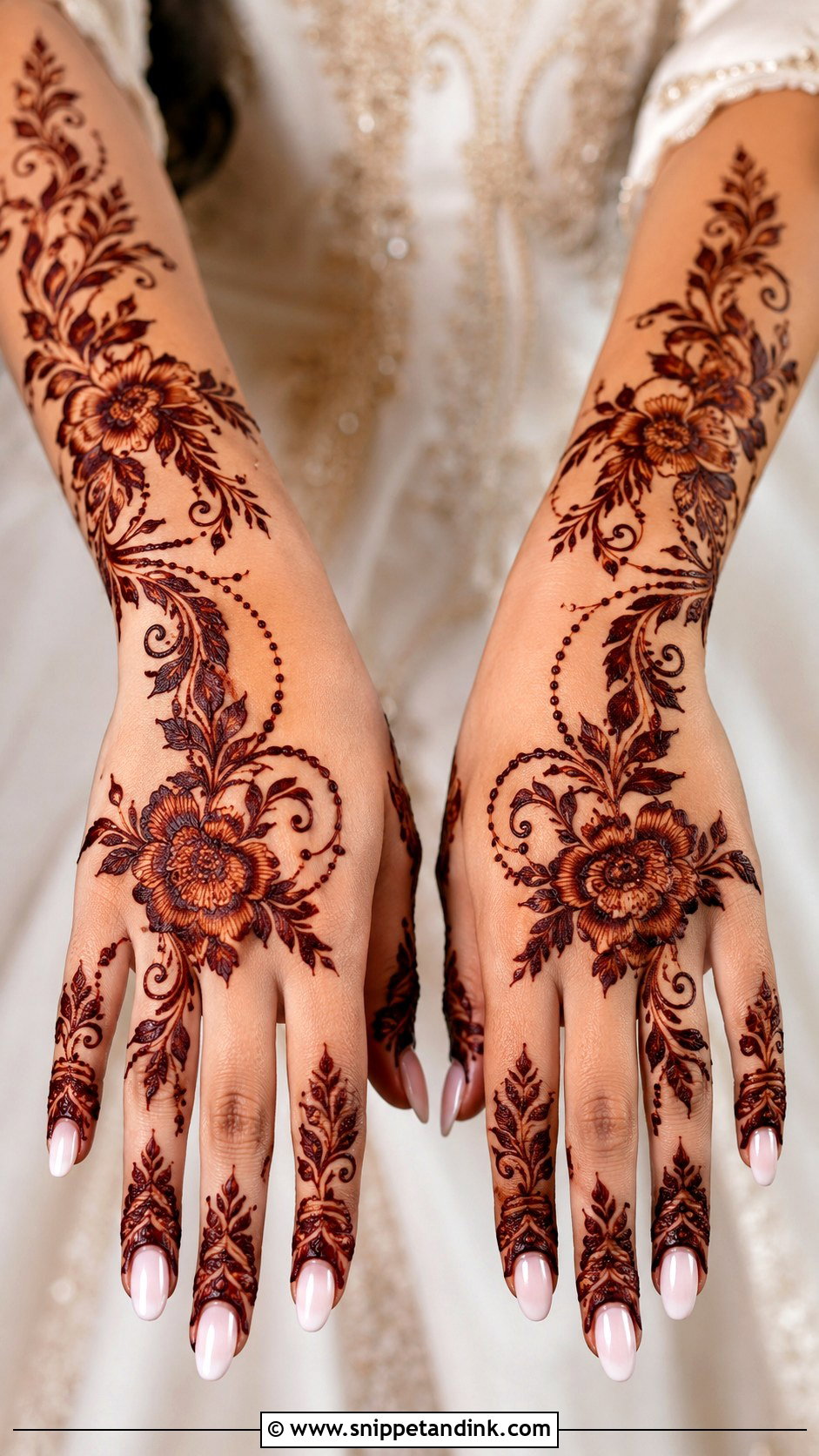
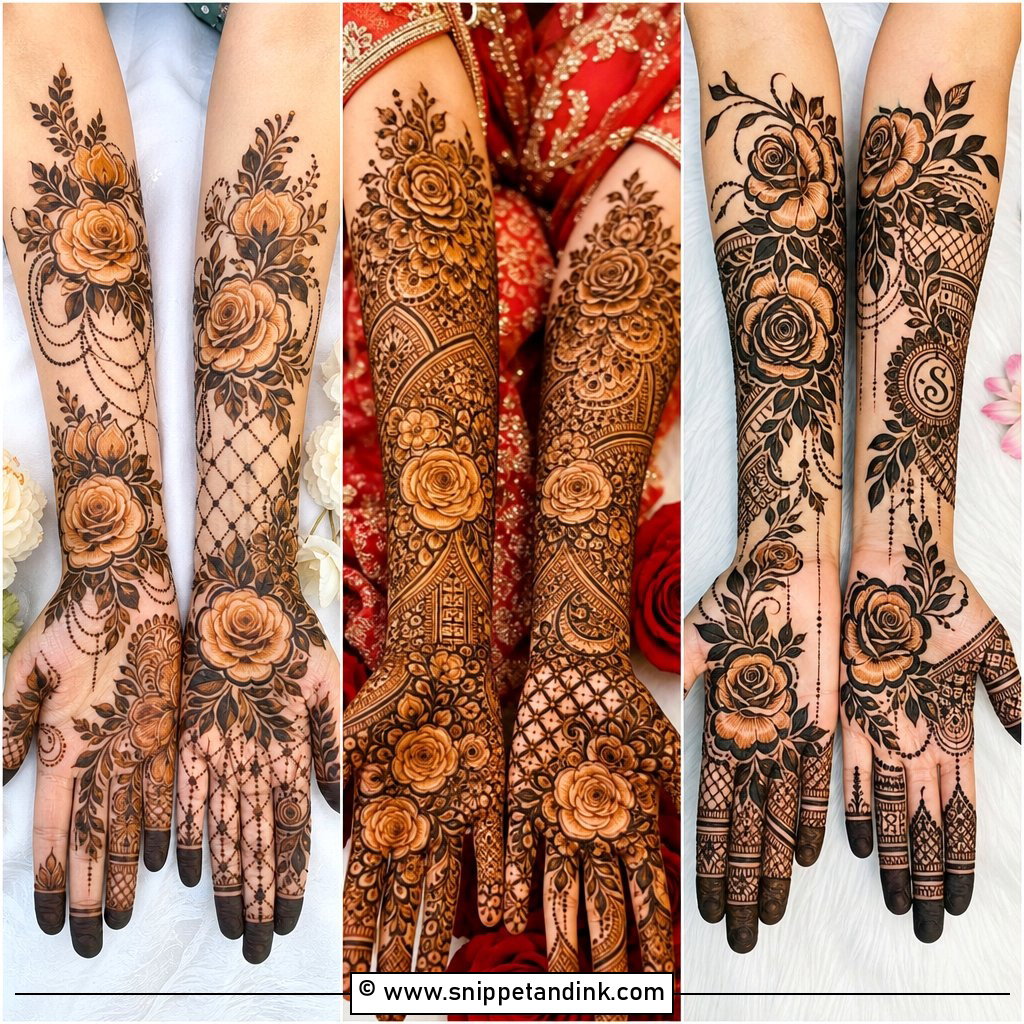
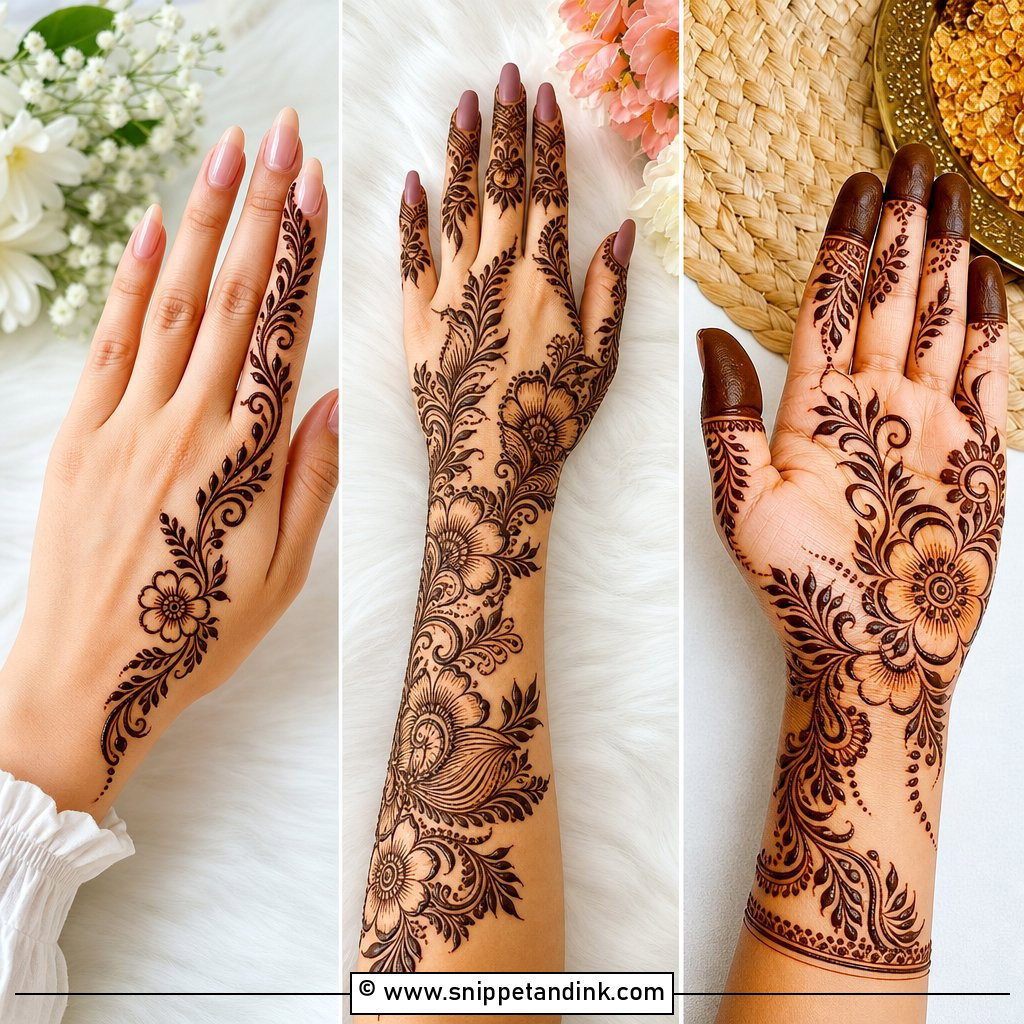
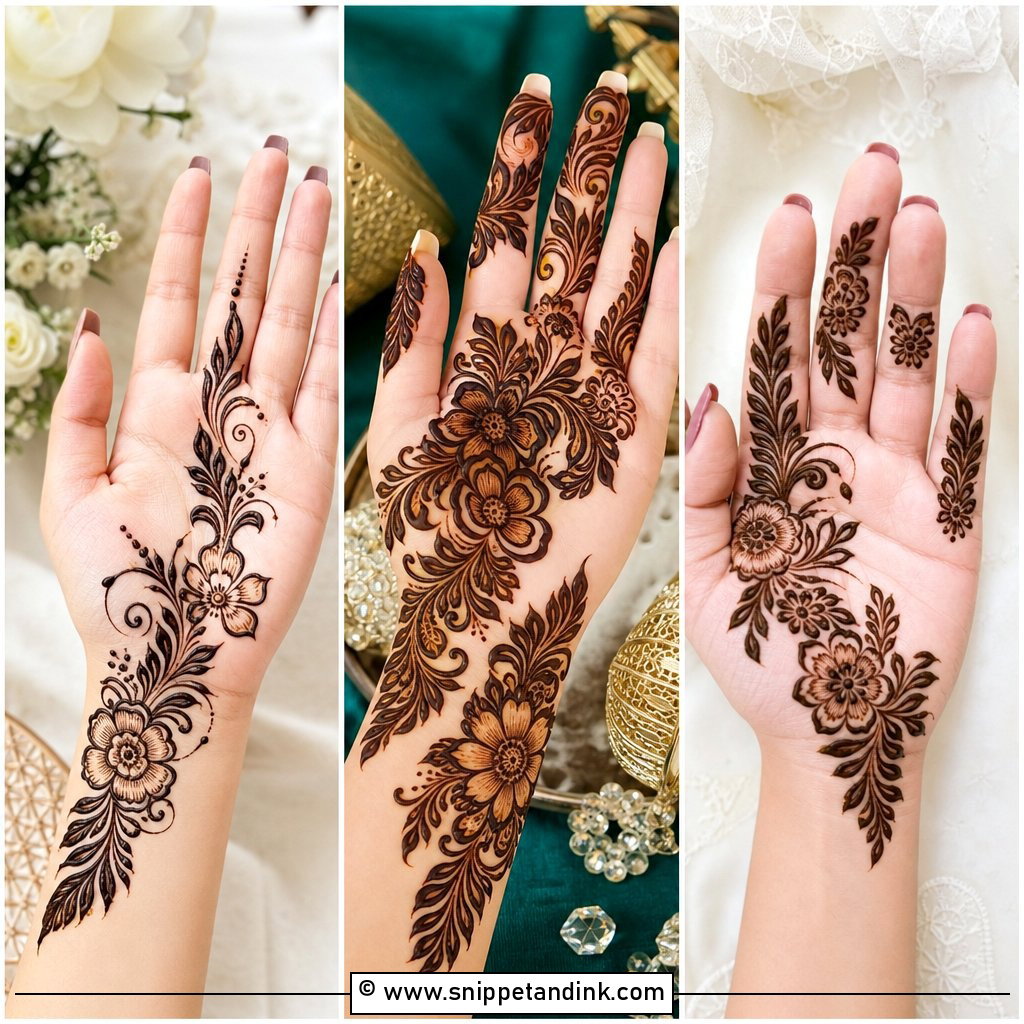
Arabic bridal work uses bold flowers, leafy vines and open skin. The trails flow diagonally from the fingers toward the wrist or forearm, and the empty space is what lets each motif stand out. It’s quicker to apply than dense Indian work, which matters when the mehndi night is also the night before a long day. Large roses, lotuses and shaded leaves suit it. It flatters long fingers in particular, and it’s the design I suggest when a bride wants her diamond or pearl jewelry to be the detail people notice.
5. Indo Arabic Bridal Mehndi Design
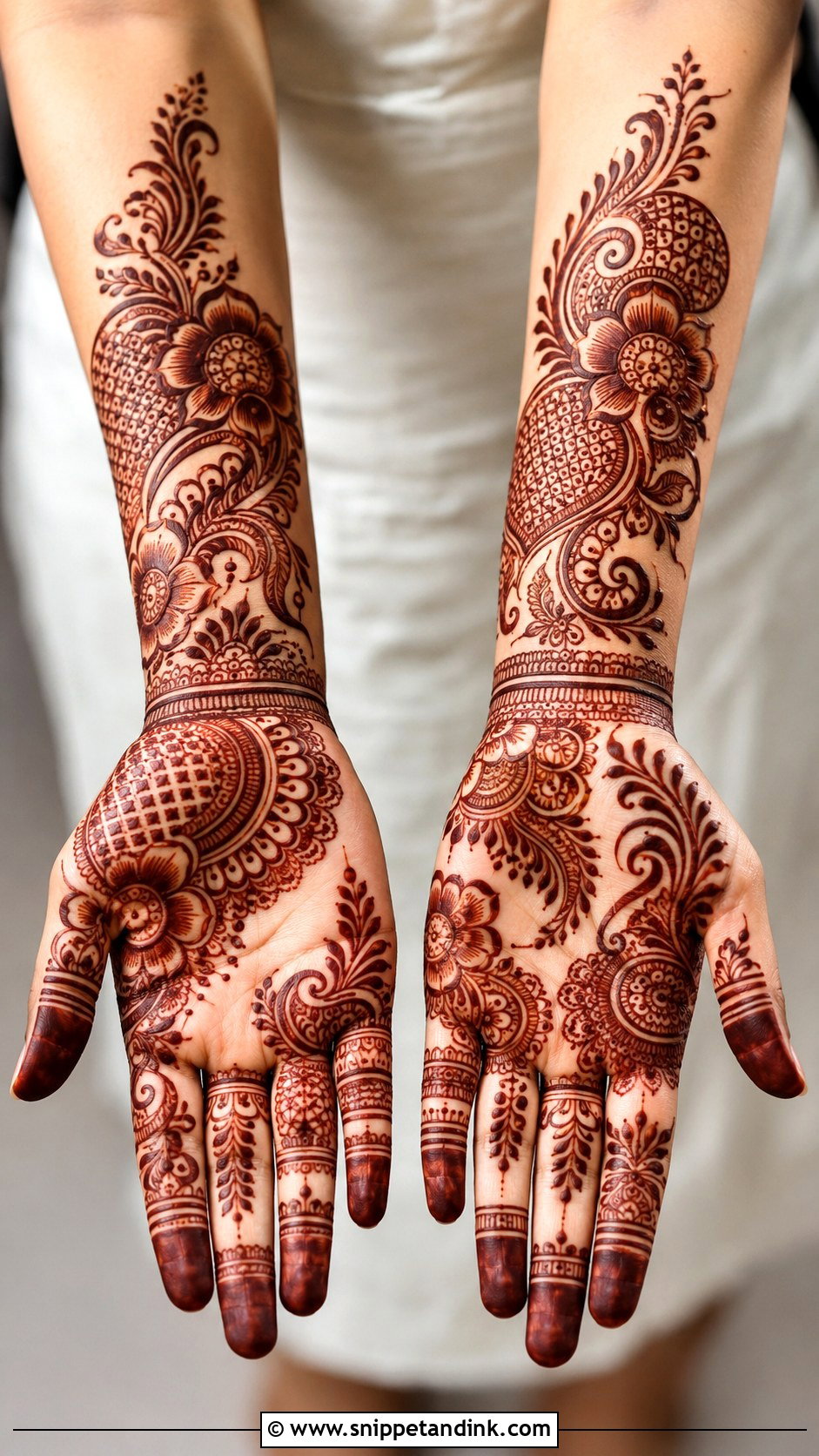
Indo Arabic bridal mehndi design takes the bold flow of Arabic work and fills parts of it with Indian detail, so it reads rich without feeling packed. A typical layout has a floral trail, a paisley cluster, a mandala center and a jaali section joined by fine wrist bands. The open spacing makes motifs easier to see in photos. When I draw it, I decide which areas stay open before I start, because the temptation halfway through is to keep filling. It works on both palms and back hands.
6. Rajasthani Bridal Mehndi Design
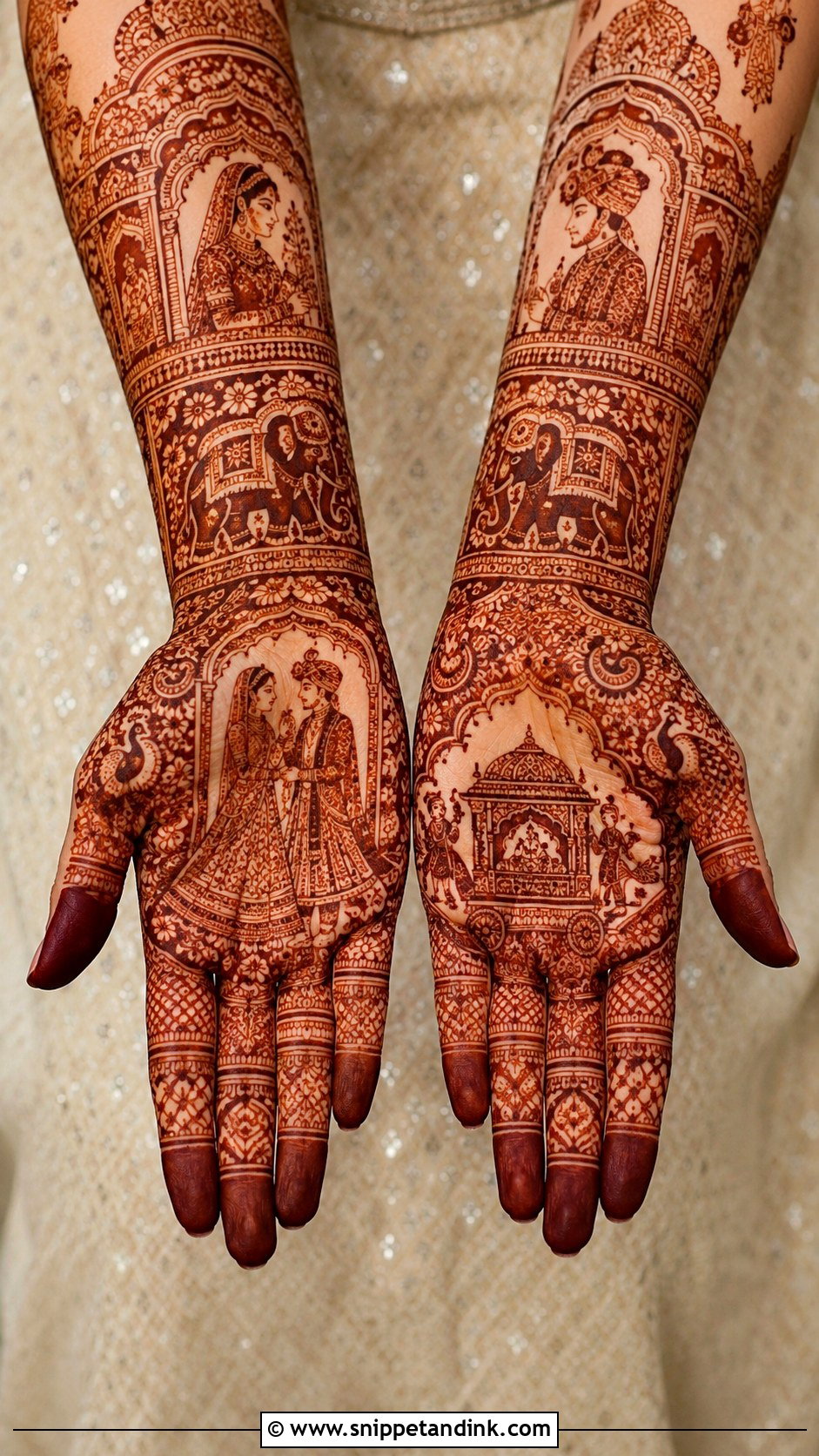
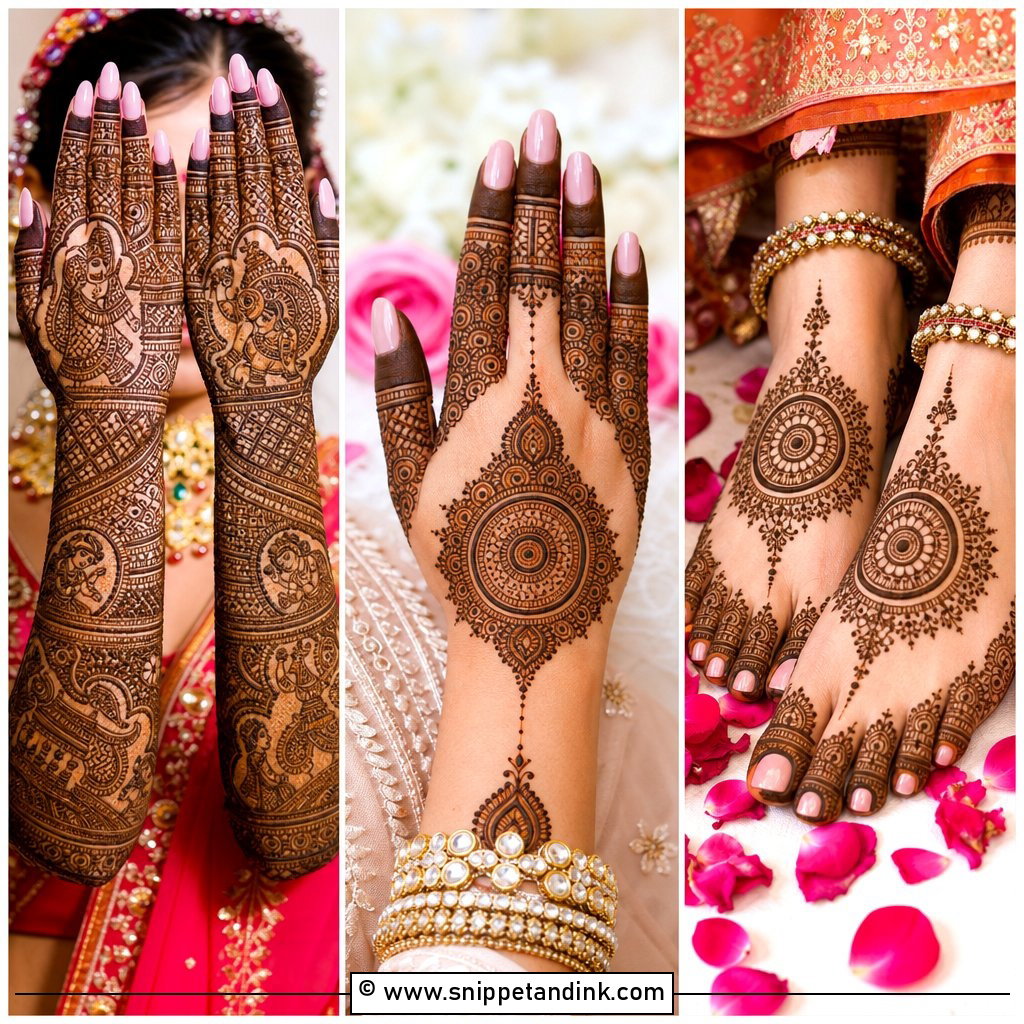
Rajasthani work tells a story: bride and groom portraits, elephants, peacocks, doli scenes, palace arches and bands that look like traditional jewelry. Often the two hands mirror each other or tell two halves of one wedding scene. It’s slow to apply and dense, so the stain comes up deep. Faces are where it can go wrong, and I keep the portraits clear by drawing their outlines in a slightly thicker line than the fillers around them. It pairs with lehengas, bandhani, gota work and kundan.
7. Pakistani Bridal Mehndi Design
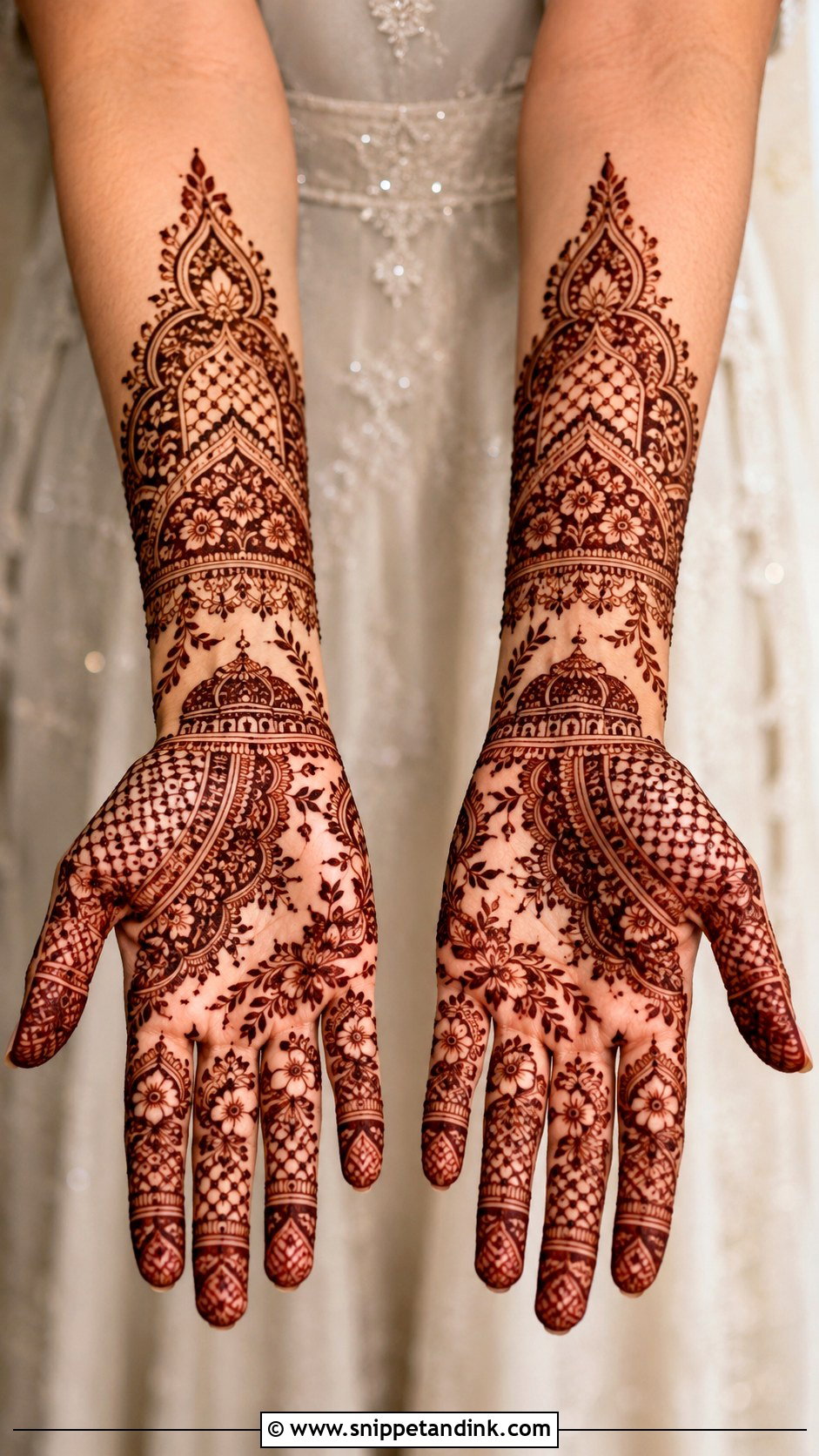
Pakistani bridal mehndi mixes Indian detail with Arabic flow: domes, florals, vines, mesh and long wrist-to-arm extensions, but with a softer, airier layout than very dense traditional work. Fingers are usually filled with neat bands and leaves. Many brides here add initials or a small couple motif. Because the arm extensions are long and slim, they stain lighter at the top of the forearm than at the wrist, which is normal and actually gives the design a nice fade. It suits ghararas, shararas, lehengas and embroidered suits.
8. Moroccan Bridal Mehndi Design
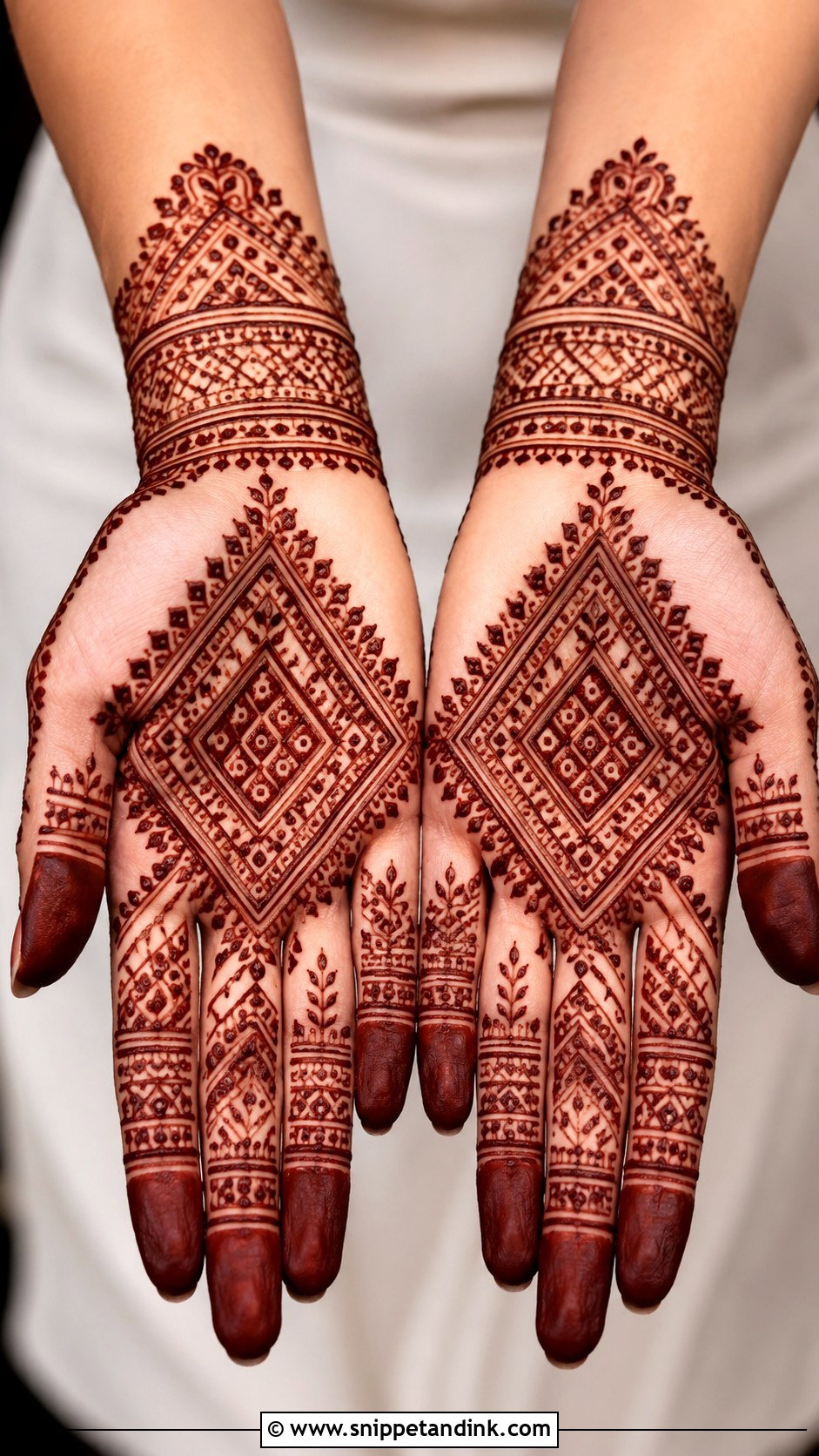
Moroccan-inspired designs swap florals for diamonds, grids, lines, dots and triangles. The result is structured and very different from the usual paisley bridal hand. Geometry is unforgiving, though; a grid that drifts by a few millimetres across the palm is obvious, so I sketch guide dots before drawing long lines. You can go full hand for drama or blend in Indian detail for a softer fusion. The clean lines photograph clearly on palms, fingers and wrists.
9. Gulf Bridal Mehndi Design
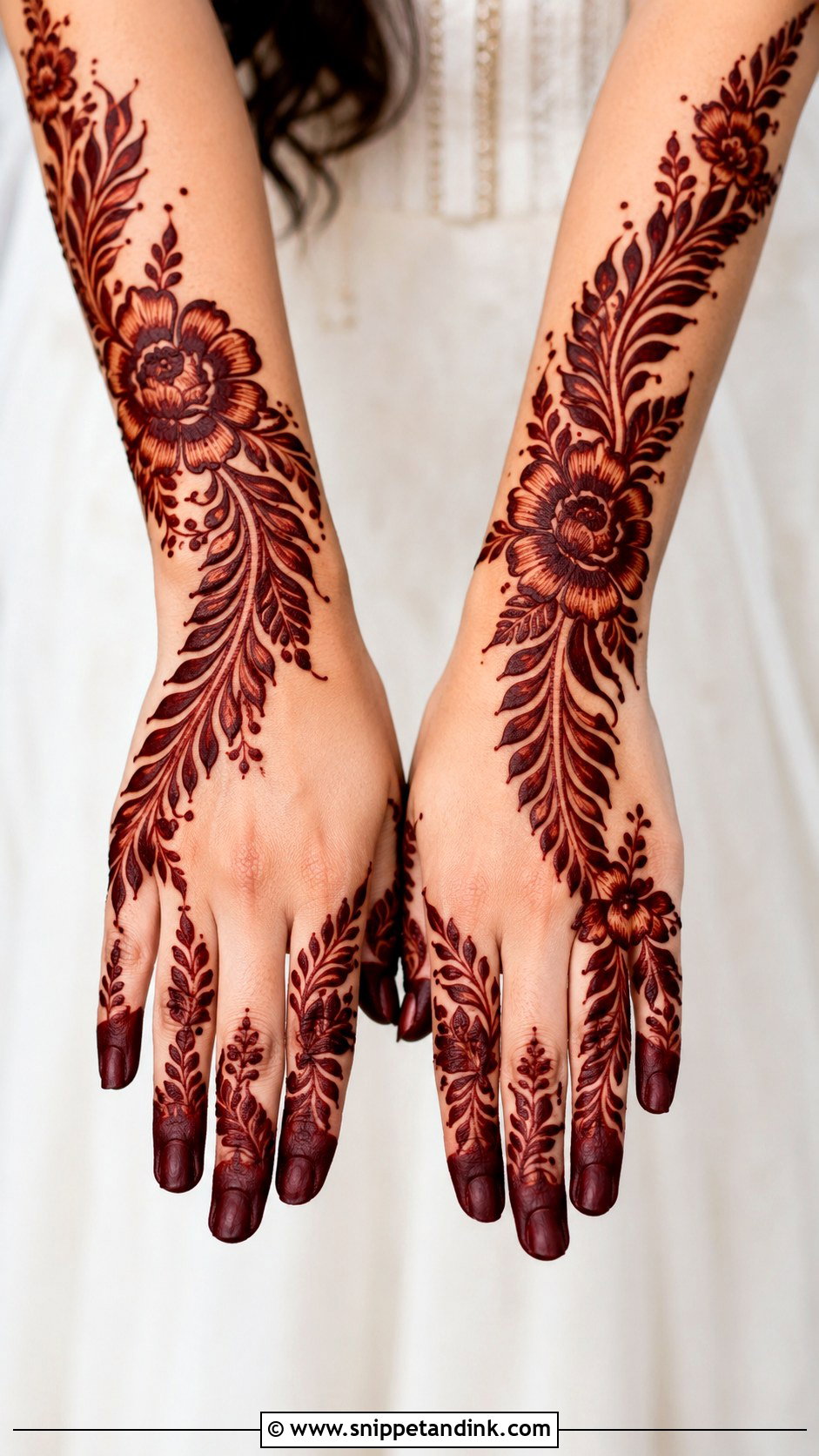
Gulf or Khaleeji-style mehndi uses large flowers, thick strokes, leafy curves and deliberate empty space, usually sweeping diagonally across the hand. It’s luxurious but breathable, and because the motifs are big, the stain reads from across a room. Thick strokes do need a cone with a slightly larger tip and paste that’s been left on longer, since a bold shape that stains patchy looks worse than a fine line that does. I like it with gold jewelry and silk. Shaded fingertips finish it off.
10. Mandala Bridal Mehndi Design
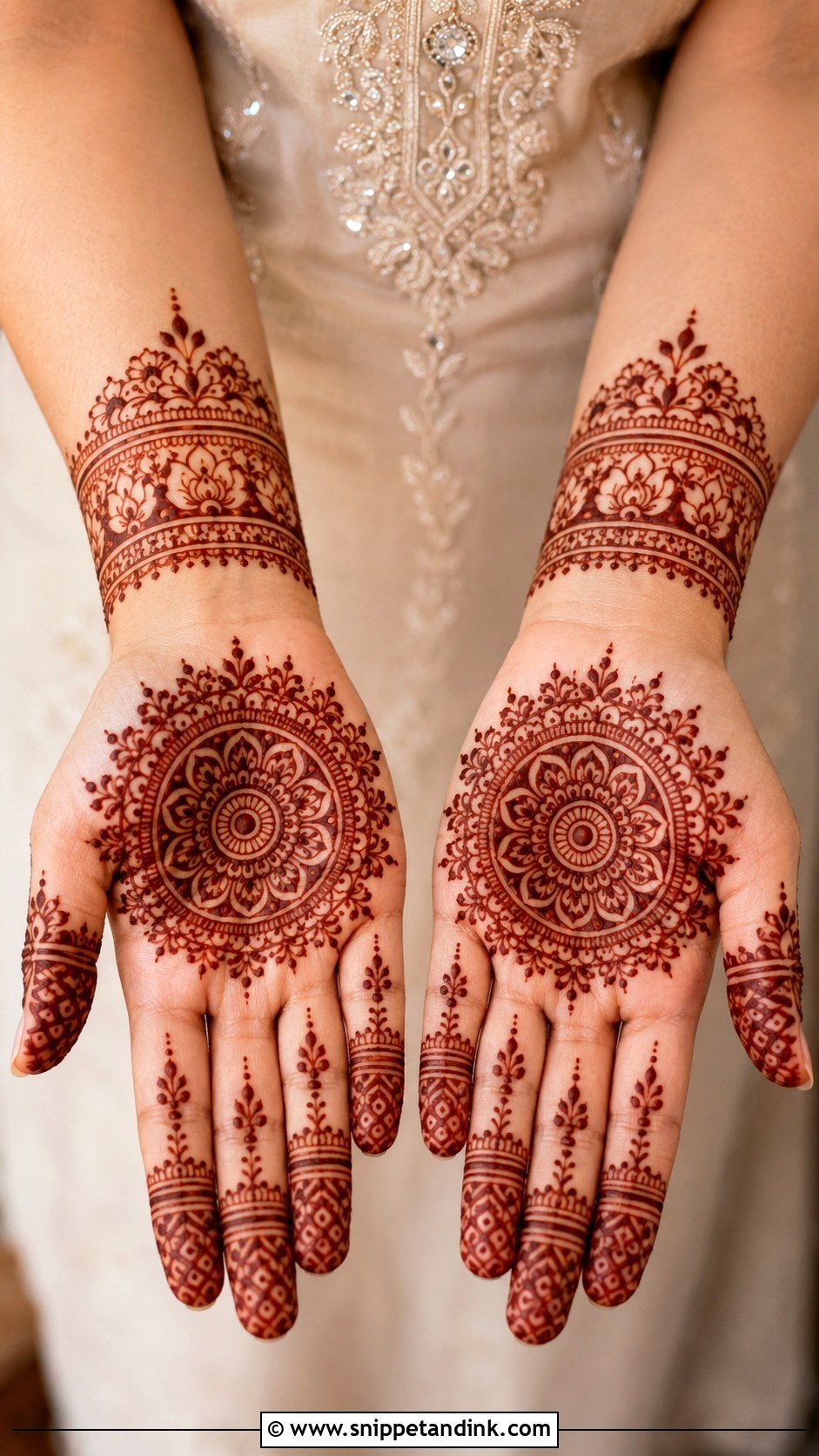
A mandala gives the hand one strong center on the palm or back hand, with finger patterns, wrist bands and florals radiating from it. It suits brides who want symmetry and calm. On a small hand, I size the mandala to the palm rather than to a template, because a circle that touches the edges makes the hand look crowded. Leave it bold and minimal, or surround it with dense fillers for a richer finish. It’s easy to photograph at the ring ceremony with fine bangles and soft nail color.
11. Peacock Bridal Mehndi Design
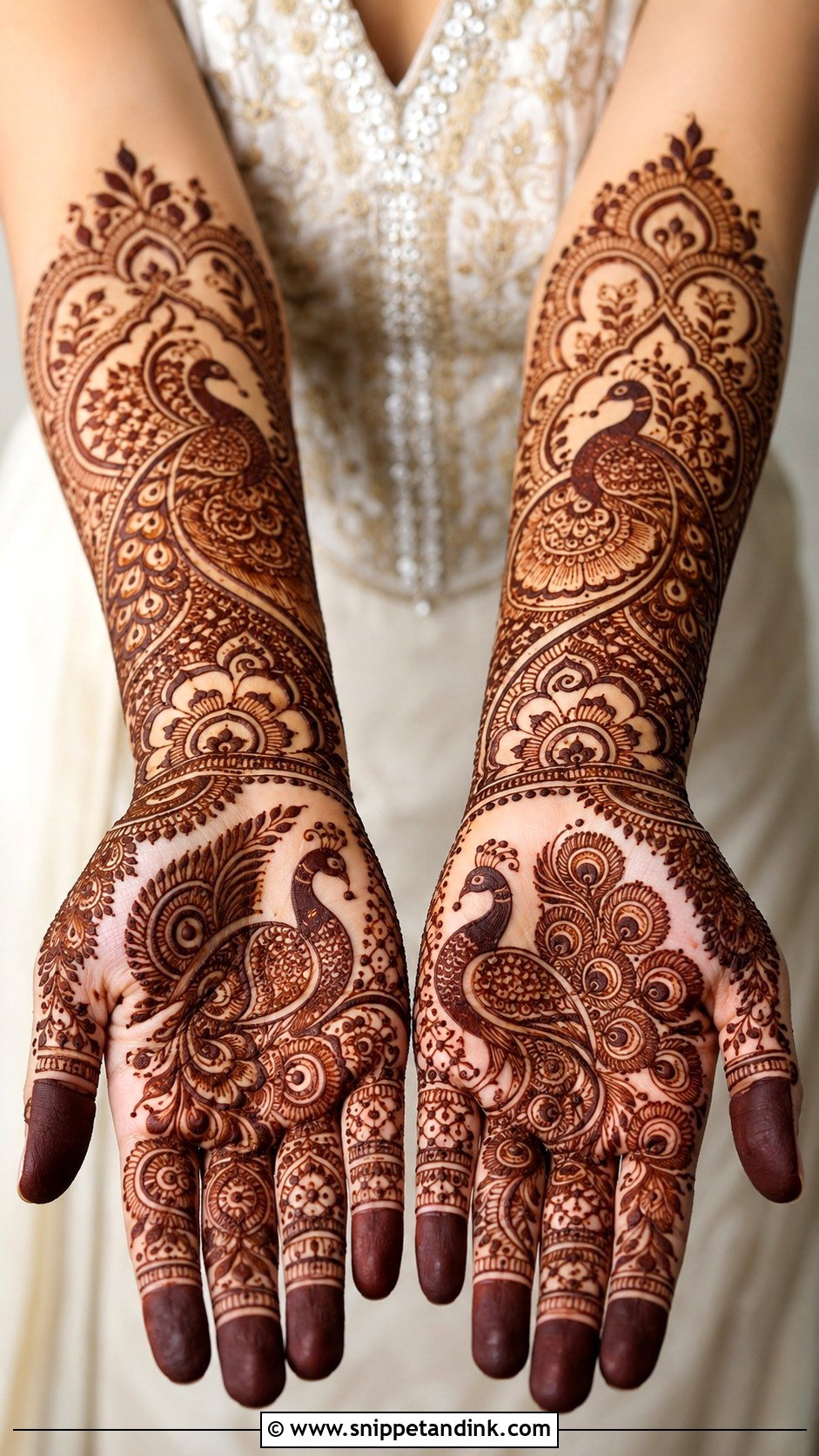
Peacocks bring classic symbolism to the palms, wrists or forearms, surrounded by paisleys, feathers and fine lines. The feathers are where I get to build texture, layering short strokes so the tail looks like it has movement. One large peacock on each palm reads well in photos; smaller birds along the arm suit a longer design. Emerald, royal blue and maroon outfits sit especially well beside it.
12. Portrait Bridal Mehndi Design
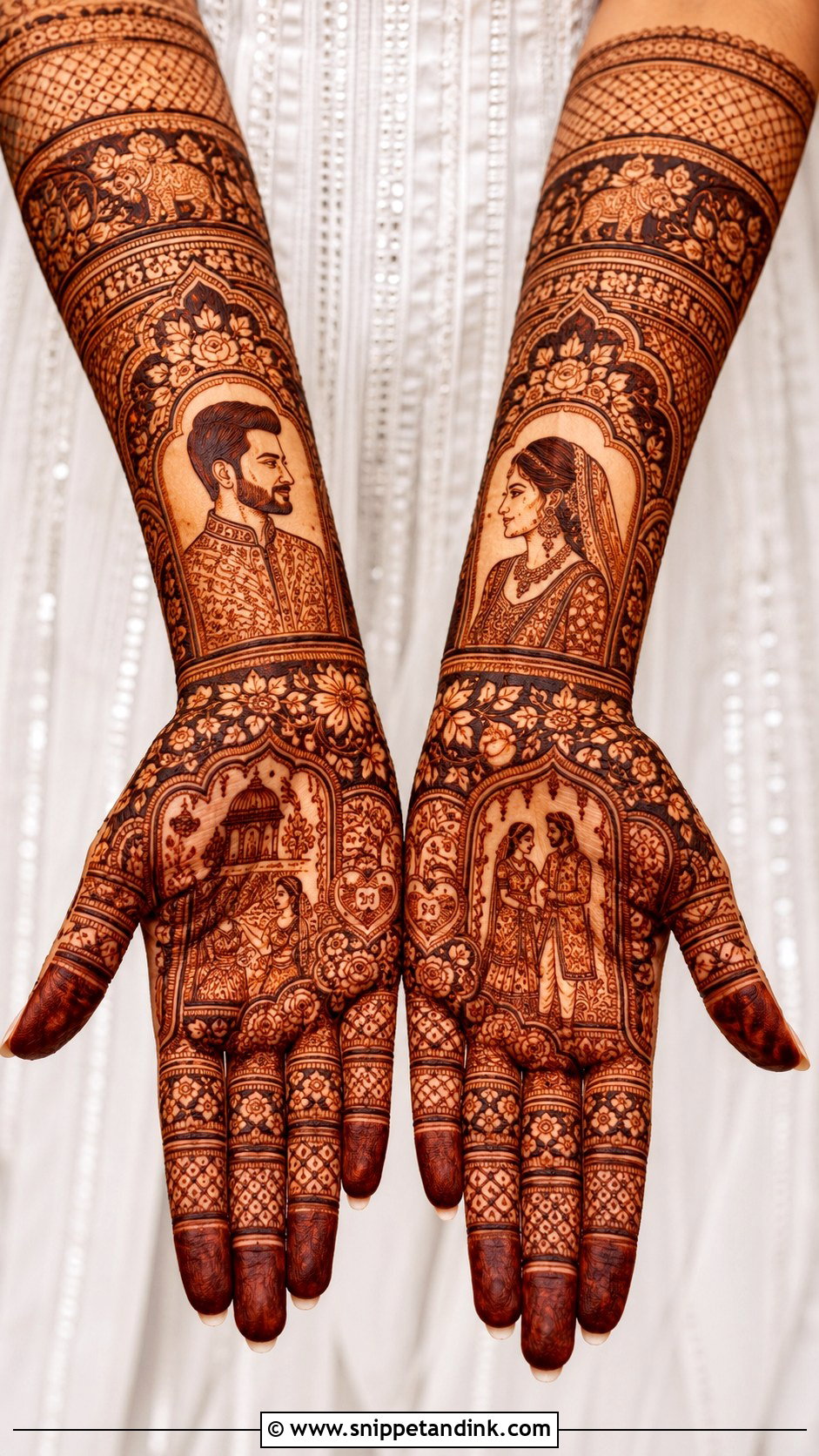
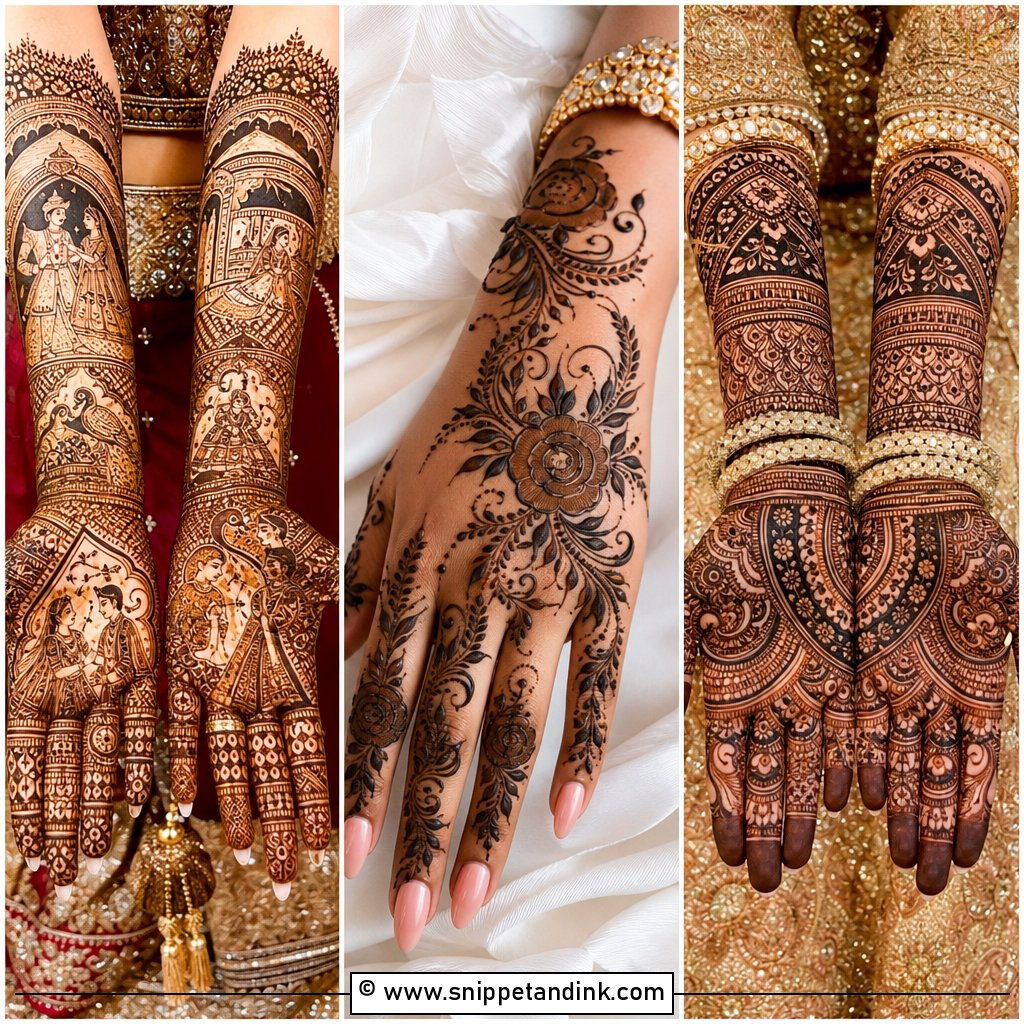
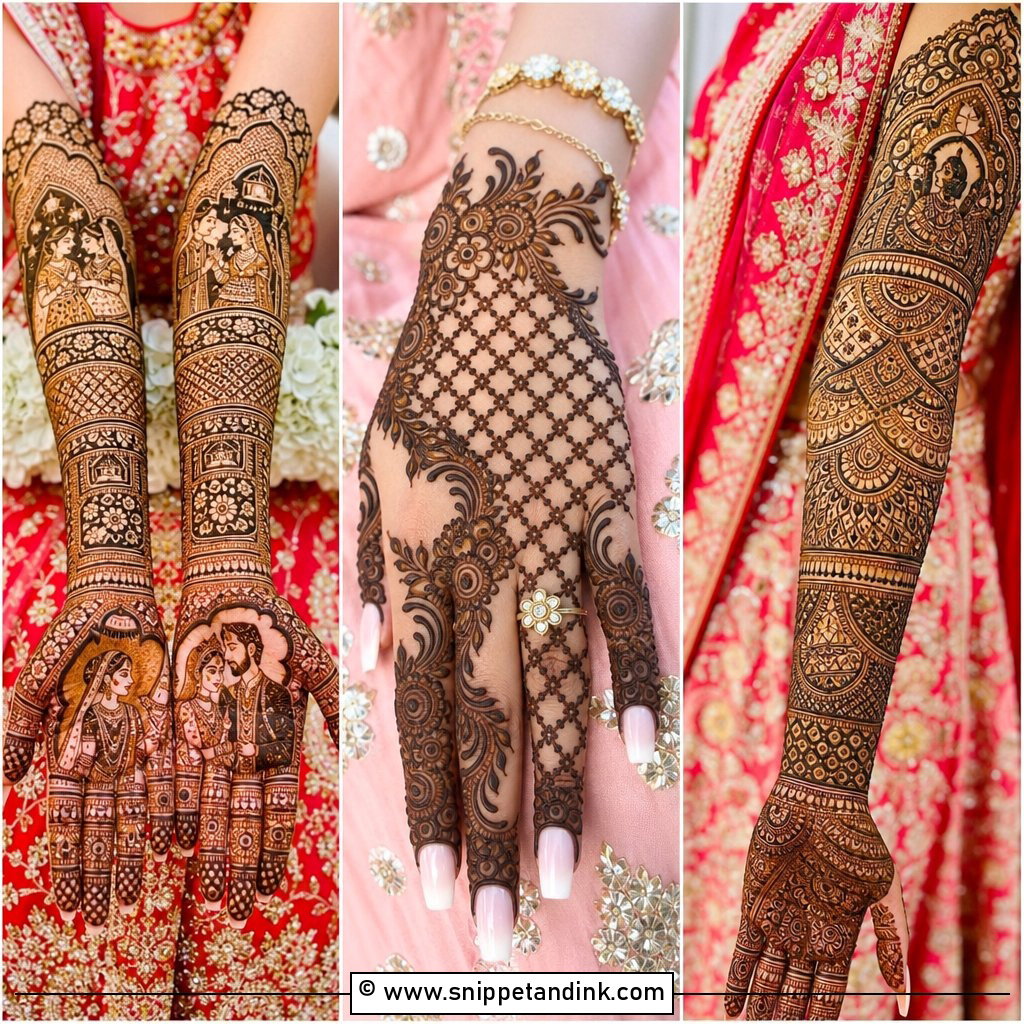
Portrait mehndi puts your faces, a proposal moment or a meaningful memory into the palms and arms. It’s the most personal design I draw and also the one where I’d be most careful choosing an artist, because a face that’s slightly off is all anyone sees. Ask to see portrait work an artist has done on skin, not only on paper. I frame portraits with floral borders, jaali panels and neat wrist bands so they sit inside a bridal composition rather than floating alone, and names, initials or the date can tuck into the border. It makes a moving centerpiece for photos at the mehndi ceremony.
13. Dulha Dulhan Bridal Mehndi Design
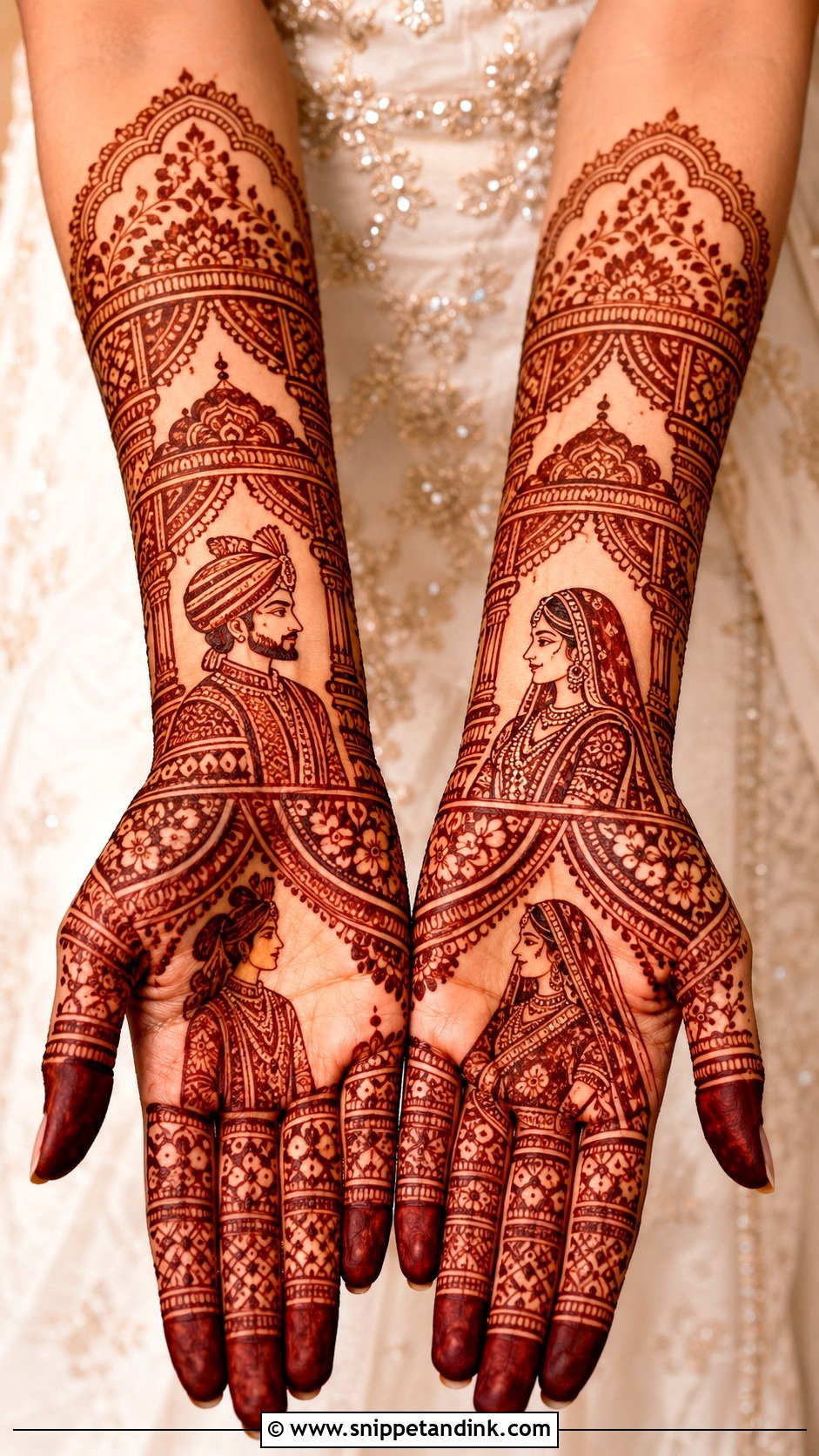
Dulha dulhan bridal mehndi design puts the bride on one hand and the groom on the other, framed by arches, bells, a doli or mandap details. It belongs on the palms, which give the flattest canvas for clear figures; drawn across knuckles or a wrist bend, faces distort the moment the hand moves. Jaali or leafy trails fill the fingers. The design really comes alive when both hands are held side by side in photos, so I make sure the two figures face each other.
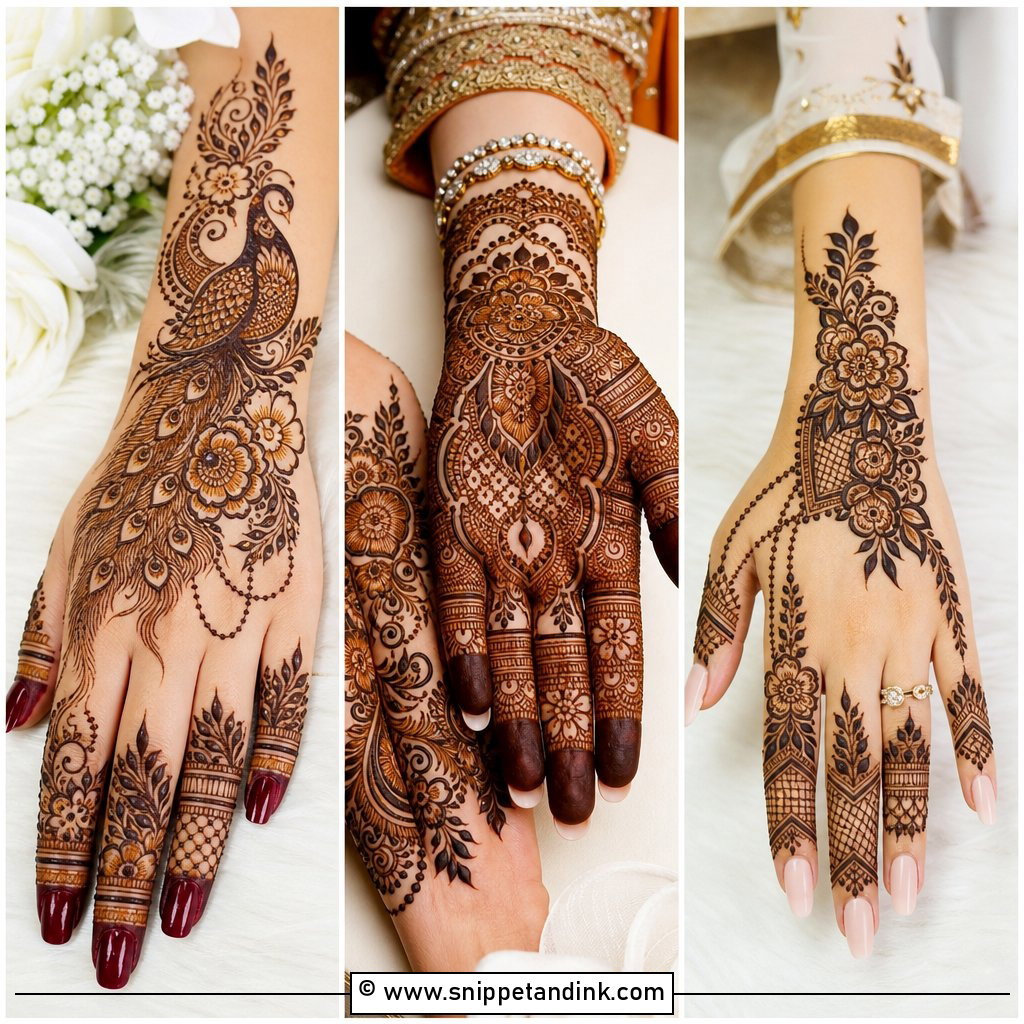
14. Minimal Bridal Mehndi Design
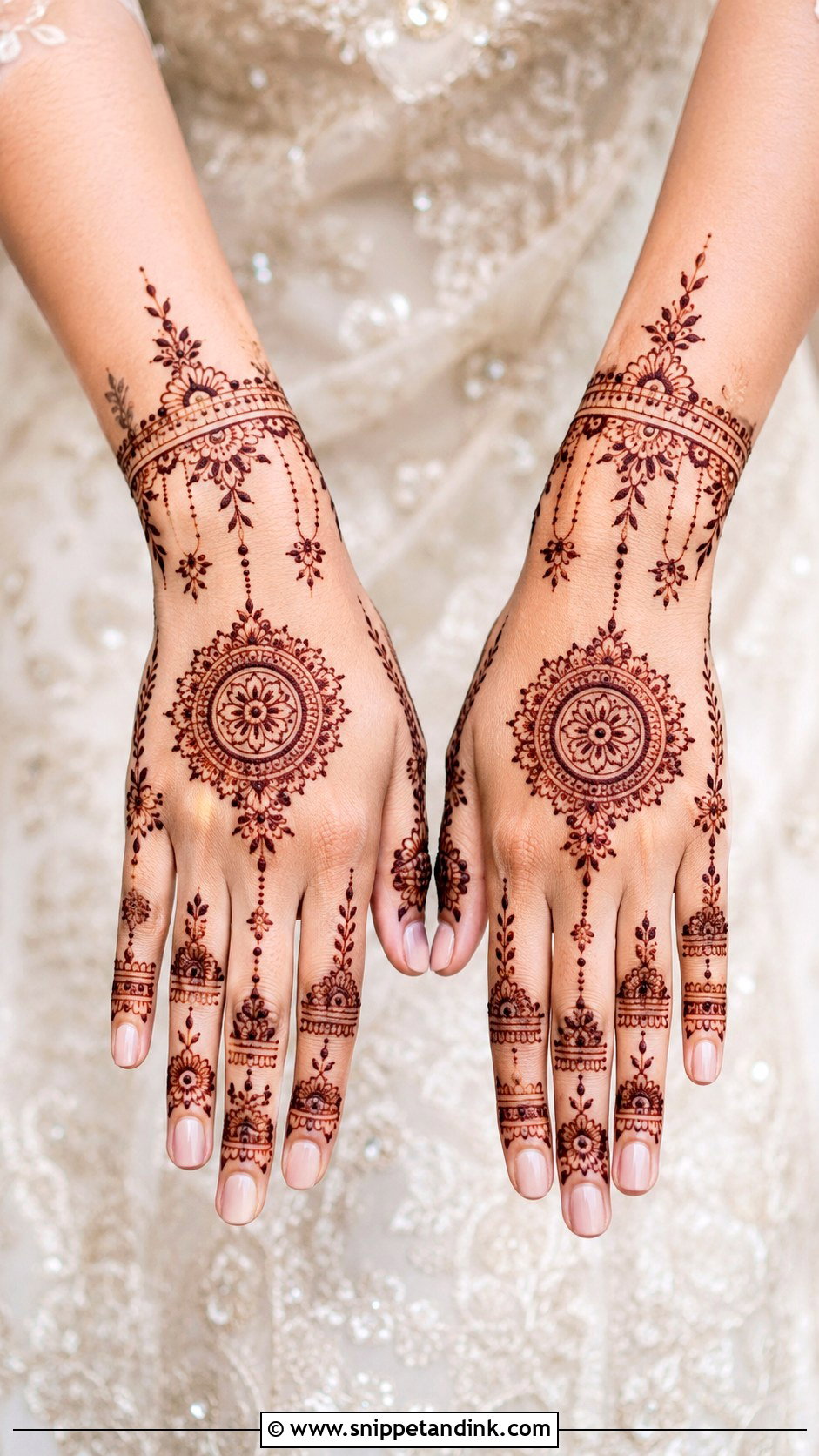
Minimal bridal mehndi picks a few motifs, a mandala, vines, finger bands or a bracelet-style wrist pattern, and lets the empty skin carry as much weight as the henna. It suits engagements, court weddings and brides who don’t want heavy arms. To keep it bridal rather than casual, I keep the lines very crisp and add fine detail on the fingers. Pastel outfits, pearls and soft makeup suit it.
15. Simple Bridal Mehndi Design
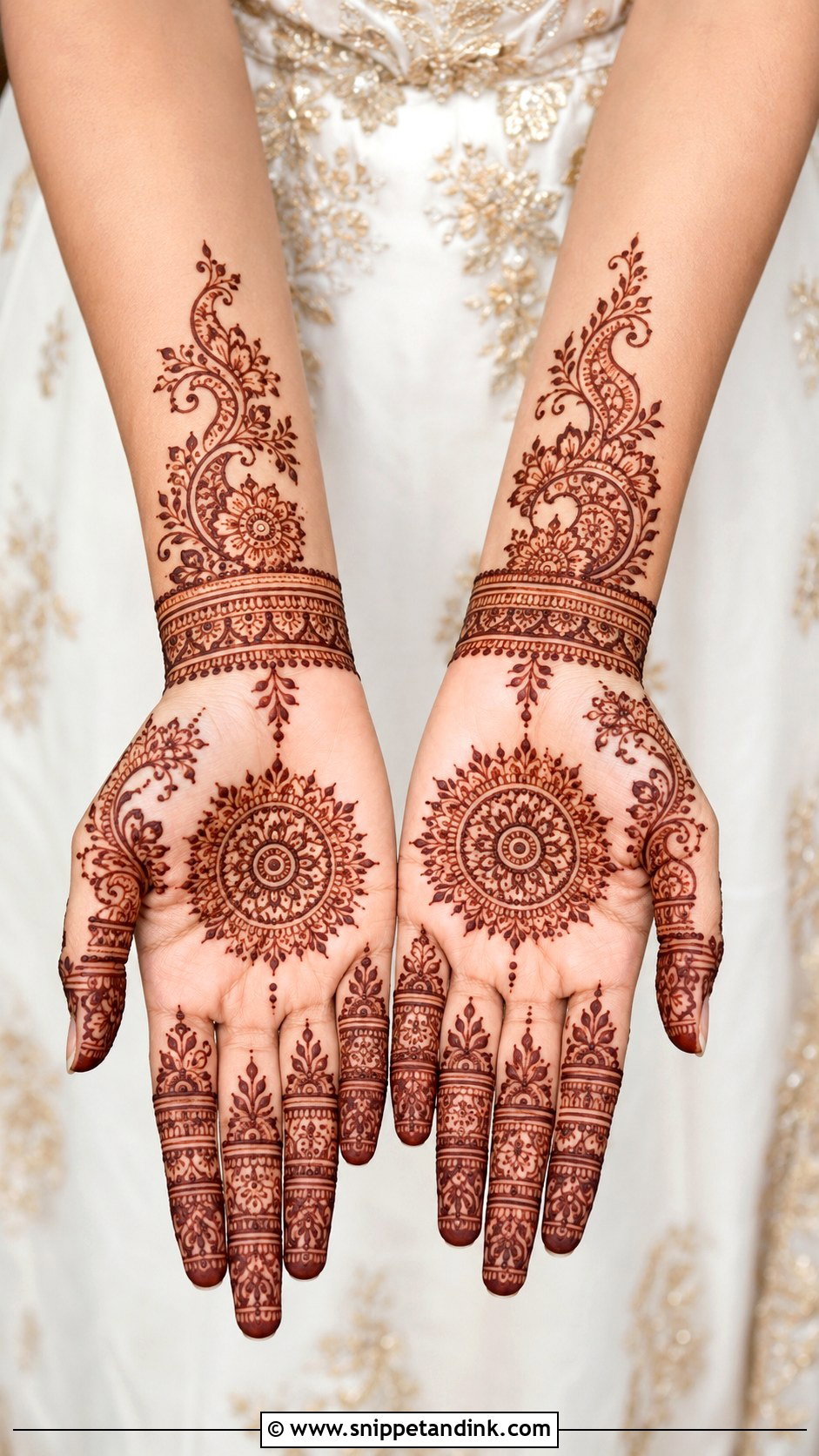
Simple doesn’t mean plain; it means every element has room. A neat simple bridal design might be a floral trail, a mandala palm, leafy fingers and a clean wrist band. I use bold outlines with light inner detailing, because very fine filler in a simple design can blur once the stain darkens and the whole thing loses its shape. It’s comfortable to sit for, quick to apply and suits small weddings, pre-wedding shoots and modern outfits alike.
16. Heavy Bridal Mehndi Design
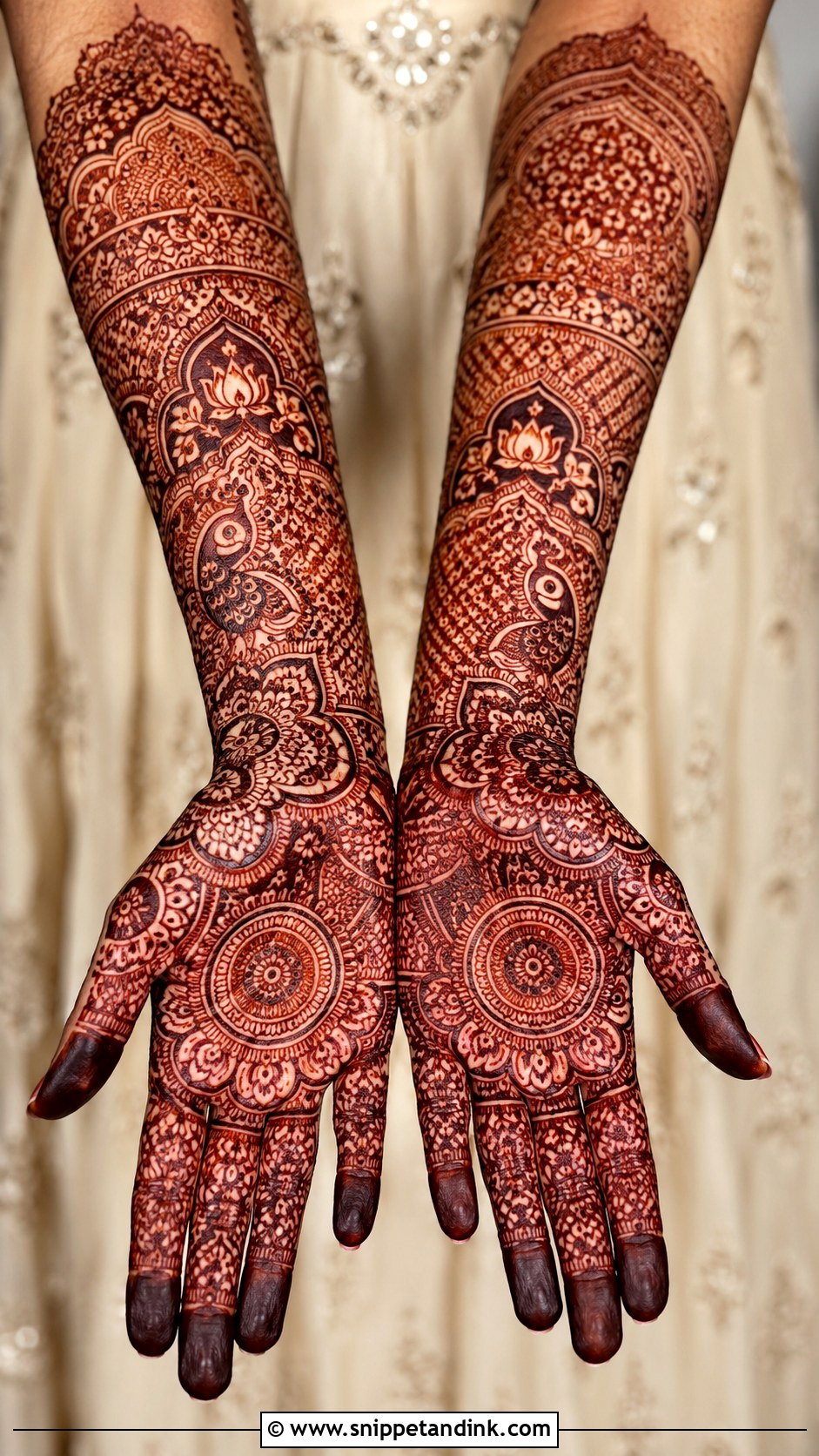
Heavy bridal mehndi covers palms, back hands, fingers, wrists and forearms in dense layers of paisleys, lotuses, jaali, peacocks and borders. It takes many hours, and I’d plan the day around it: eat first, use the bathroom, wear a button-front top, and have someone to help you with drinks while it dries. The finished look is dramatic, especially when the stain reaches deep maroon. The balance between bold motifs and tiny fillers is where an artist’s skill shows, so look at their full-coverage work before you book.
17. Back Hand Bridal Mehndi Design
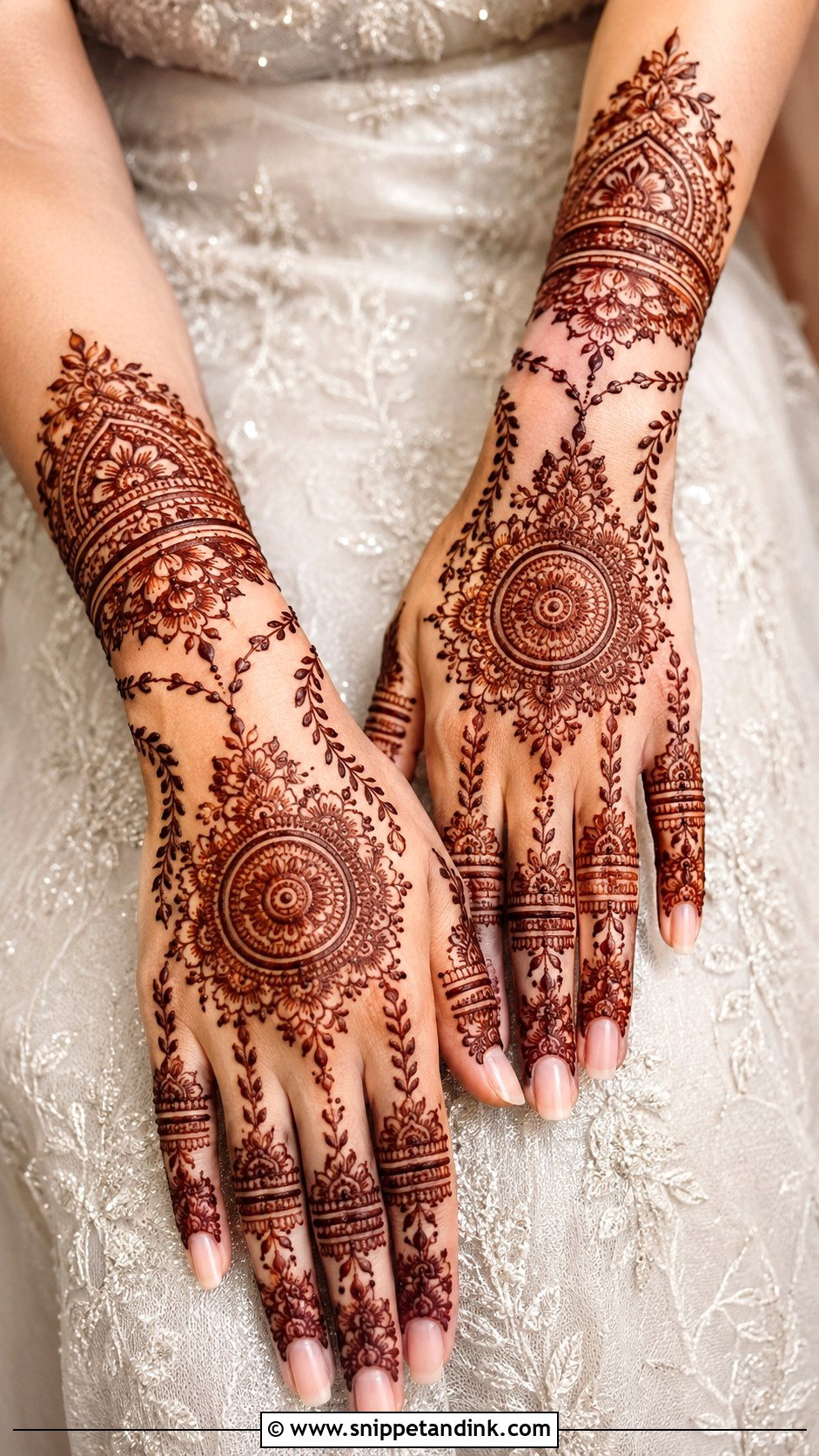
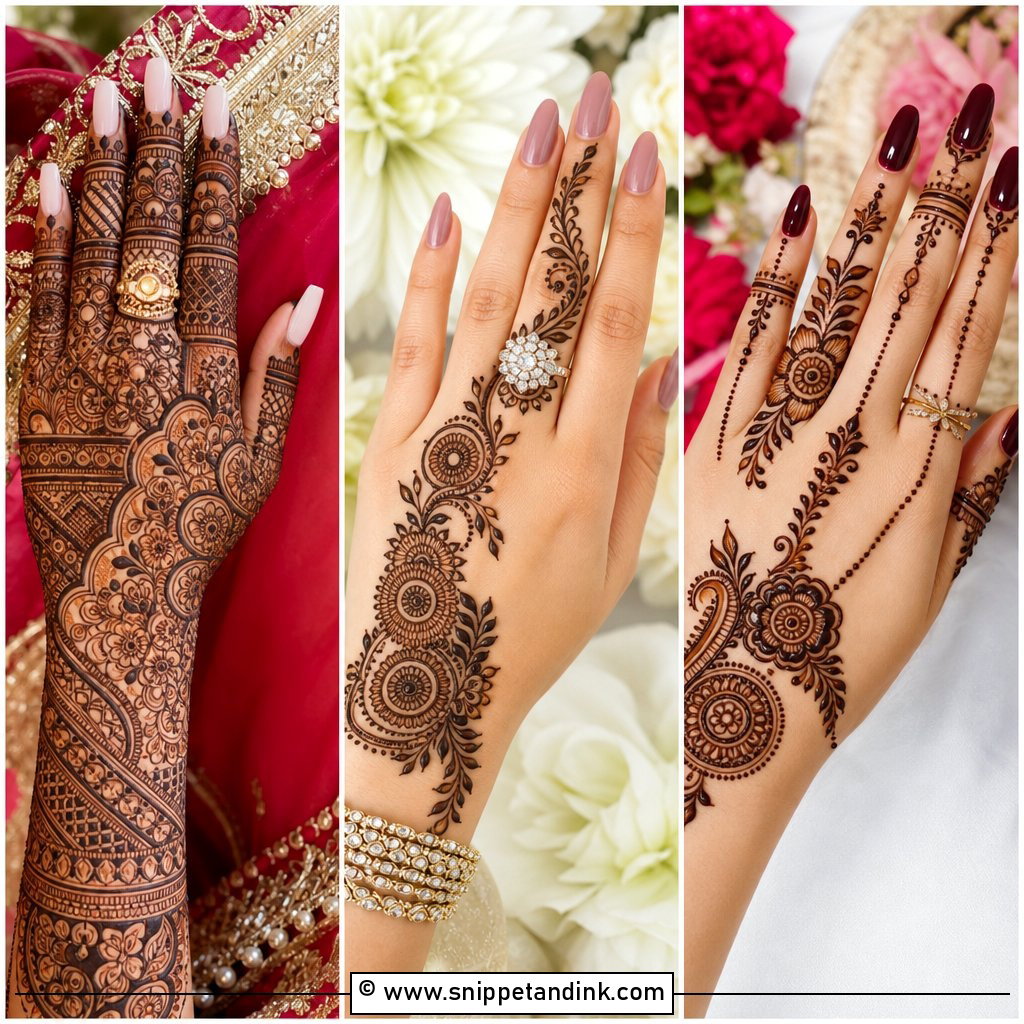
Back-hand designs are what show in ring, bangle and portrait shots, so they matter more than many brides expect. A central mandala, floral vines, chain details and a wrist bracelet are the usual elements. I align the main pattern with the knuckles and the natural line of the hand, and if you’re wearing hathphool or statement rings, I leave a little open skin where the jewelry sits. Back hands stain lighter than palms, so I use slightly bolder lines there to keep the design readable.
18. Front Hand Bridal Mehndi Design
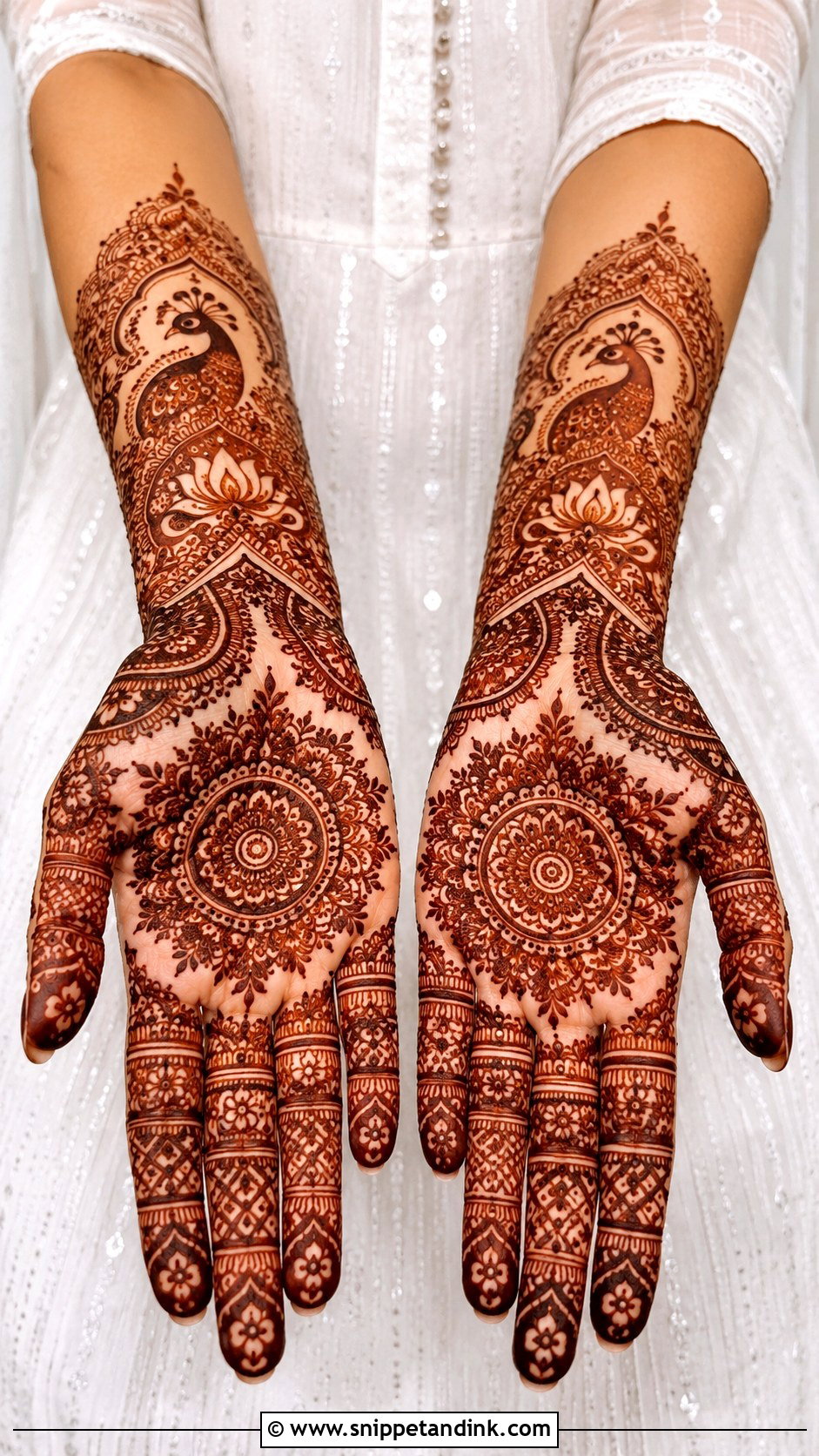
Palms carry the most meaningful detail because they’re the widest, flattest canvas and stain the darkest. Mandalas, dulha dulhan portraits, peacocks, doli scenes and hidden initials usually live here. I check how the design reads in two positions: open hands, and both palms held together for photos, where the patterns meet in the middle. Bold central motifs with fine fillers around them give the strongest impact.
19. Bridal Mehndi Design For Fingers
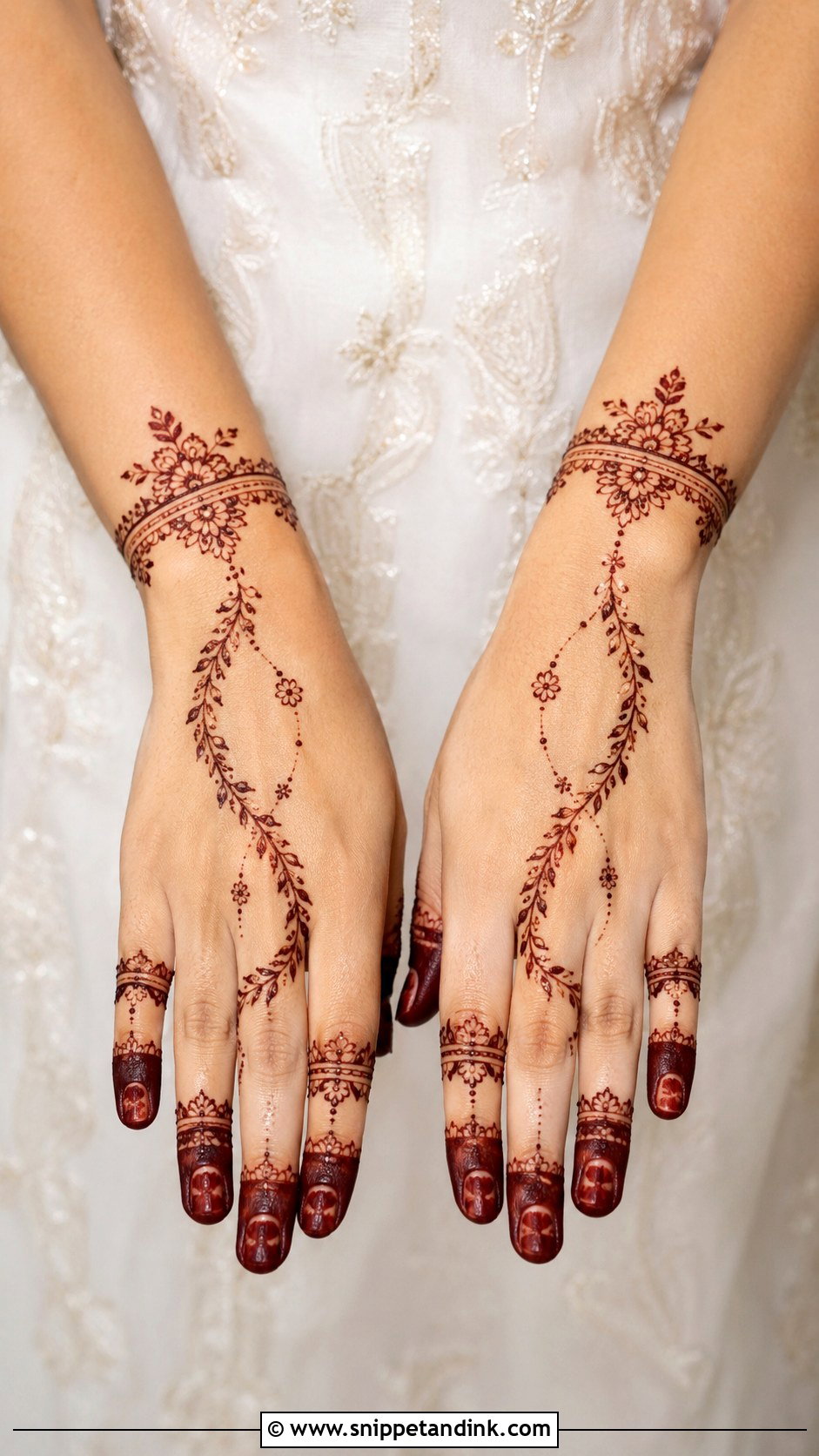
Finger designs only work when they’re planned with the rest of the hand. Leafy trails, ring bands, jaali blocks, dots and shaded tips all suit fingers, but they should connect to the palm or back-hand pattern through a vine or chain rather than sitting as separate pieces. Fingertips are among the darkest-staining spots on the body, so fully shaded tips come up rich and dark. If you’re having your nails done, book that before the mehndi; nail prep and acetone fade fresh stain.
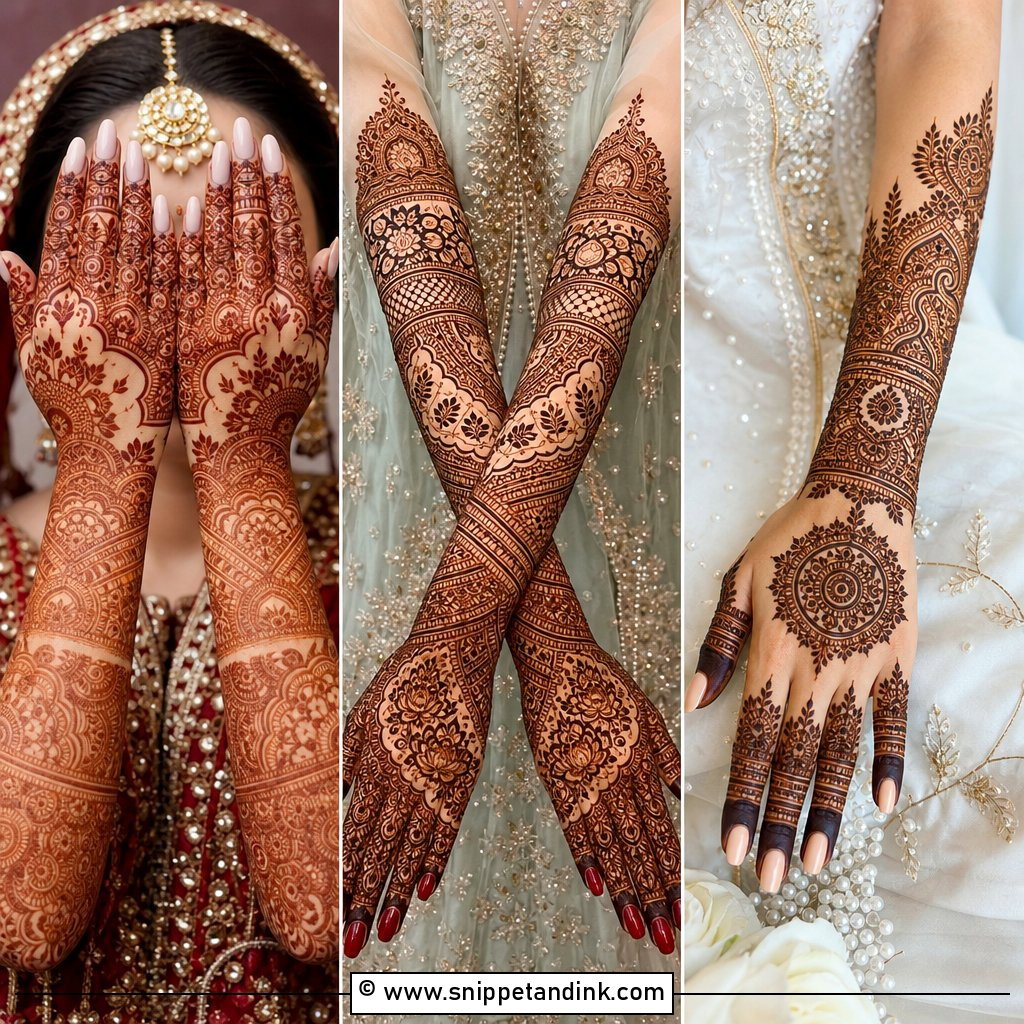
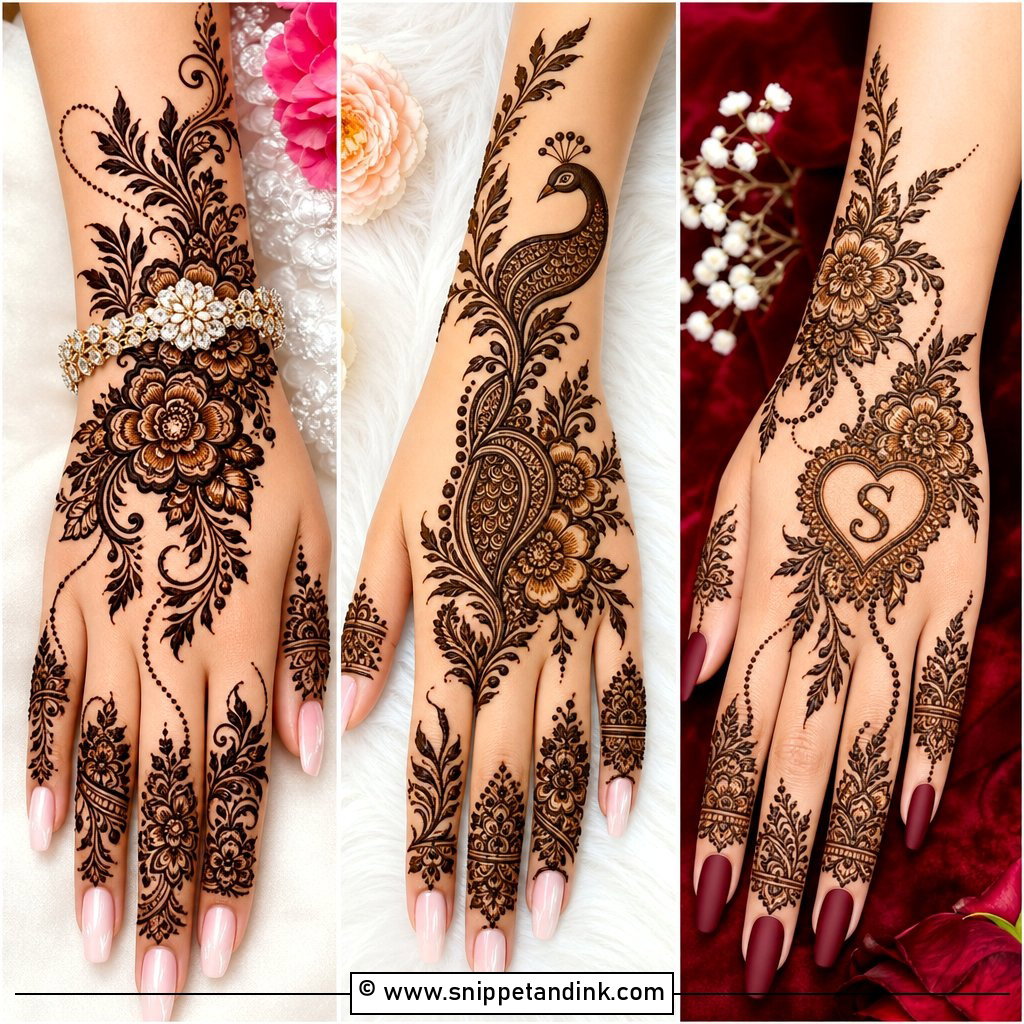
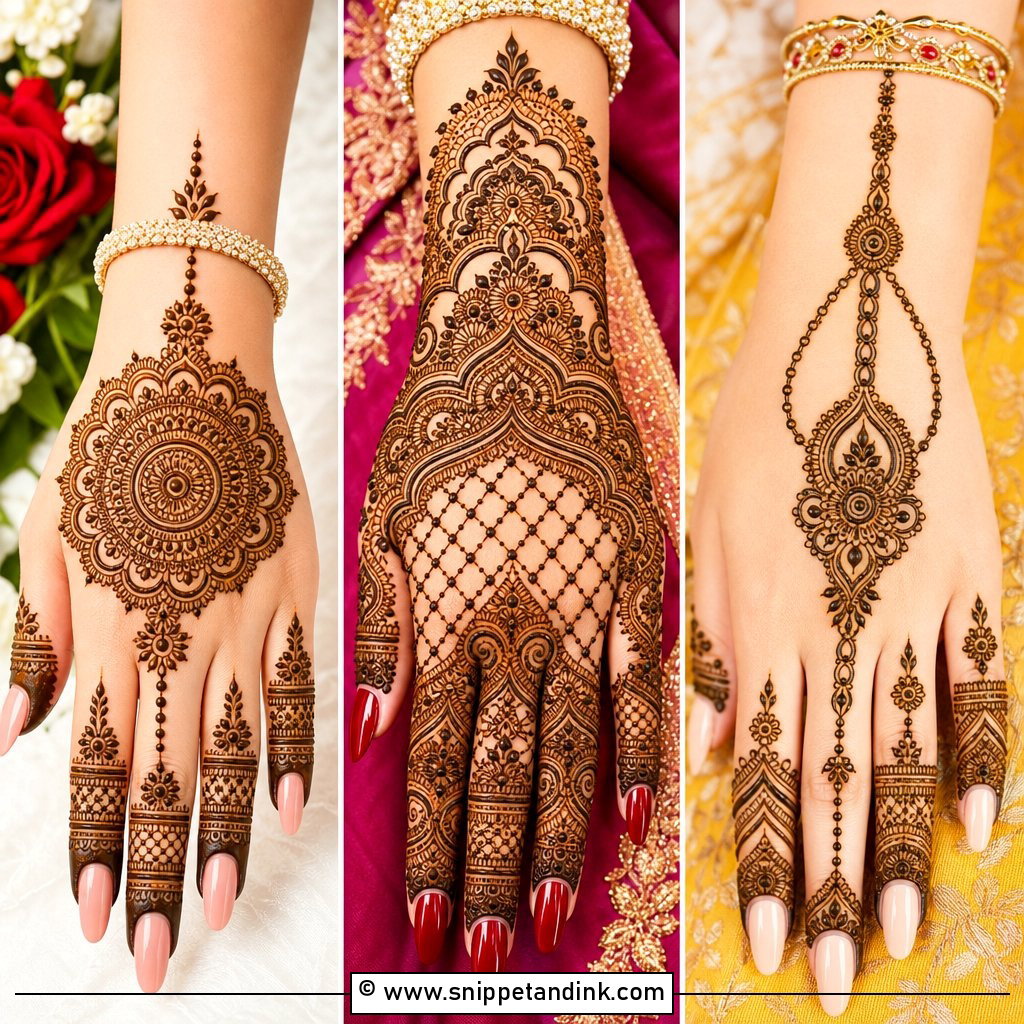
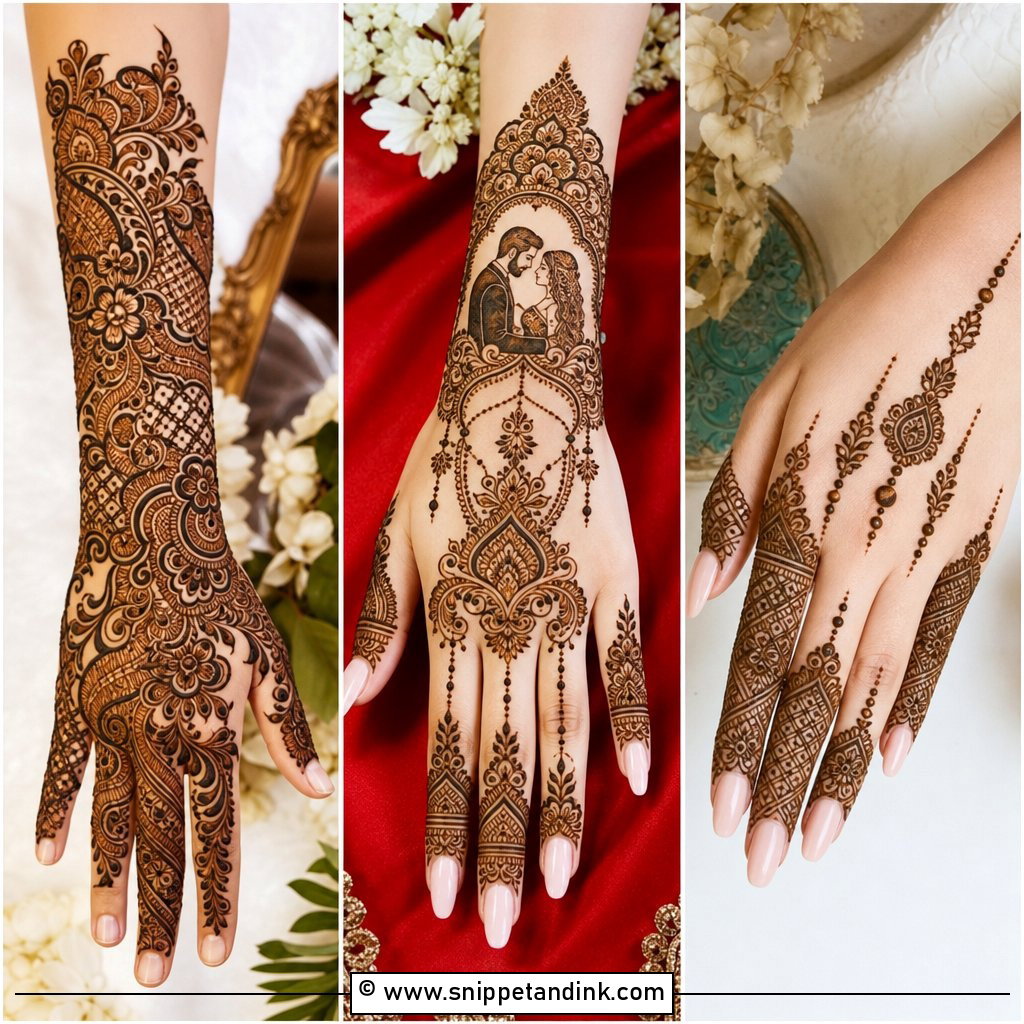
20. Bridal Mehndi Design With Initials
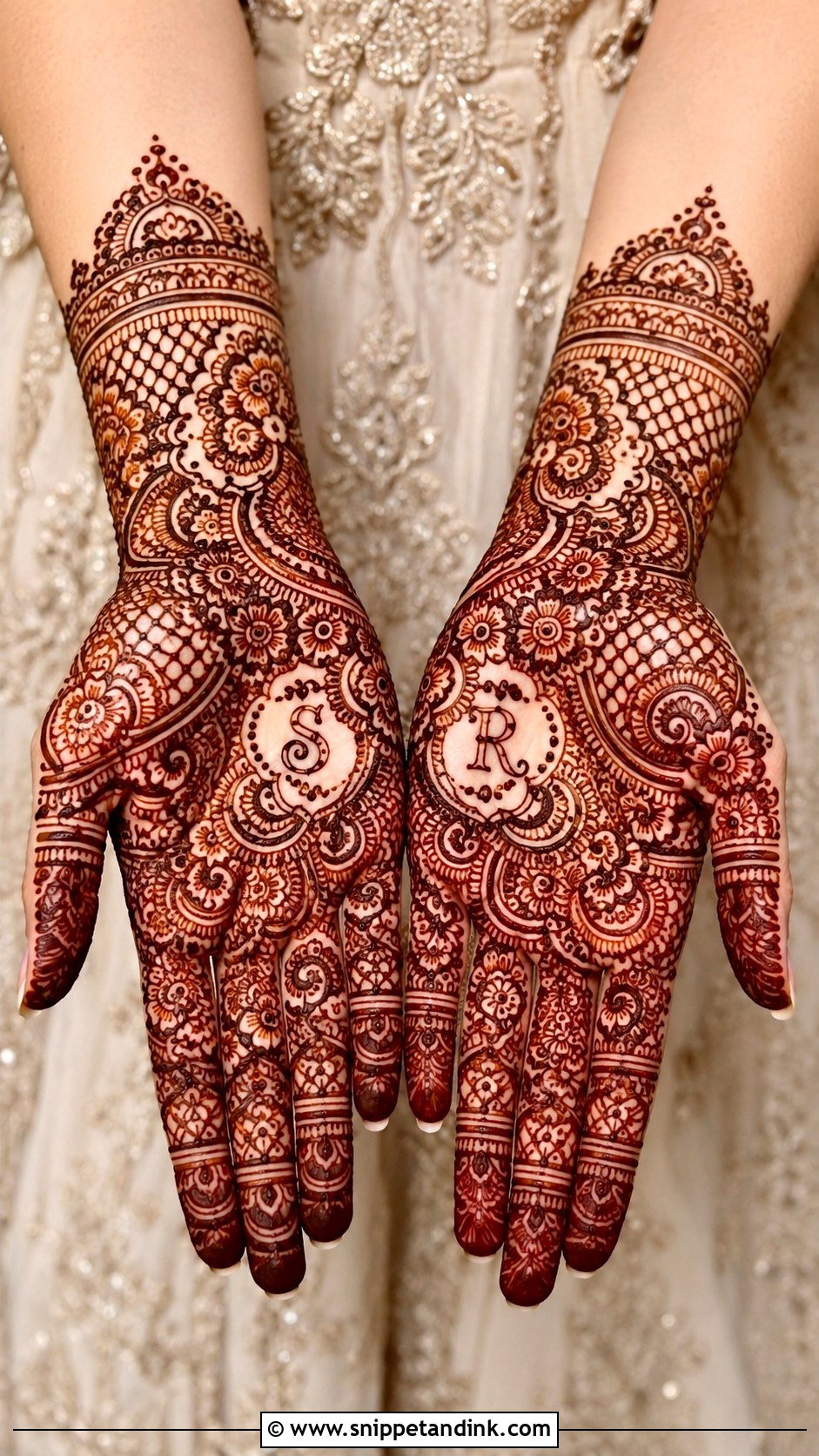
Hidden initials add a personal game to an existing design. The letters tuck into paisleys, flowers, jaali, a mandala or a wrist band, and the groom gets to search for them. I write initials at the same line weight as the surrounding pattern, because a heavier letter is spotted in seconds and the game is over. They suit Indian, Arabic, Indo-Arabic and minimal designs, and a tiny symbol or the date can join them.
21. Bridal Mehndi Design With Wedding Date
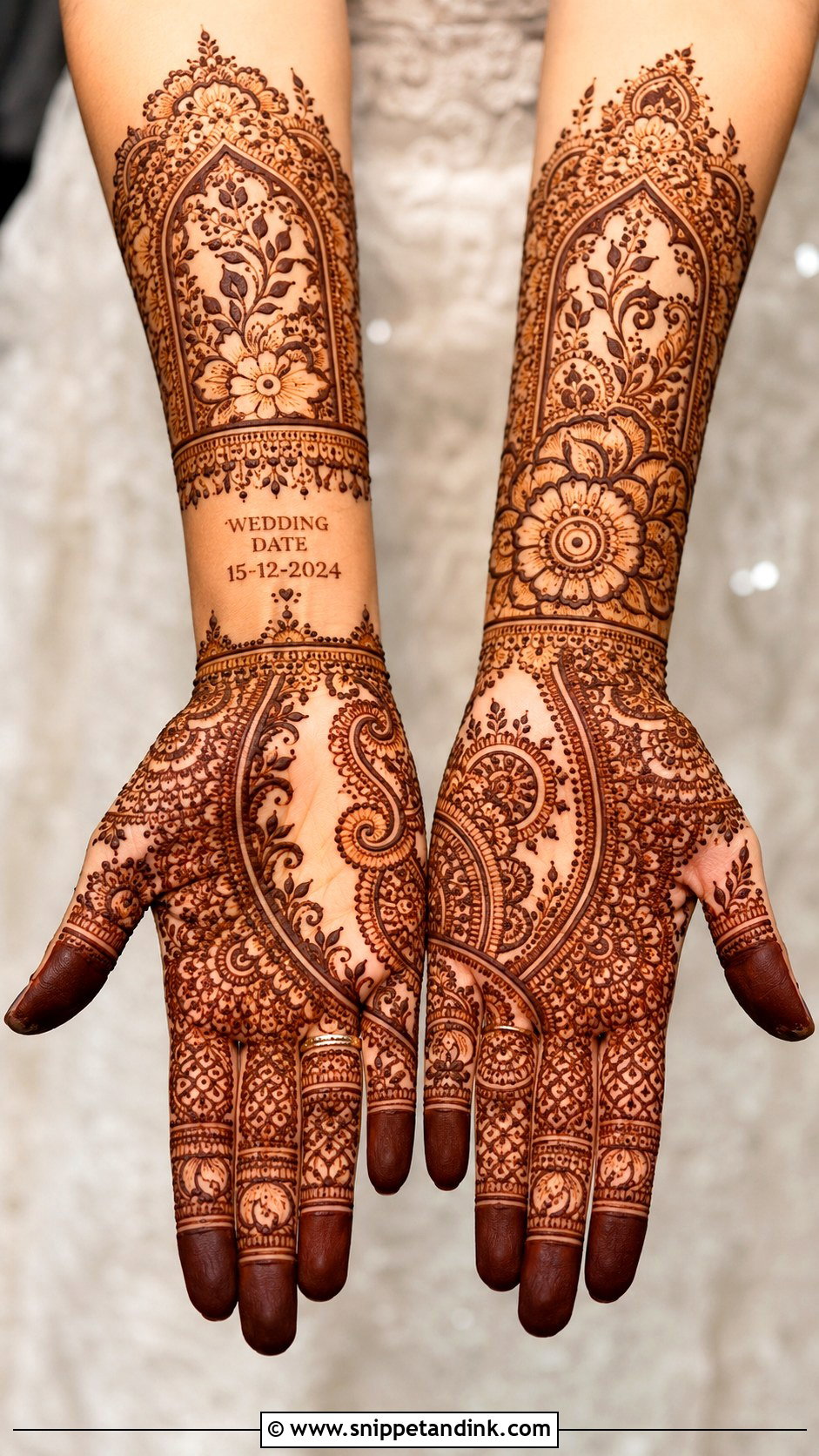
The wedding date turns henna into a keepsake. It can sit on the wrist, inside a mandala, near a portrait or along a bracelet band. Numbers need to be large enough to read once the stain spreads slightly, so I avoid writing them inside the densest filler, where they disappear. Paired with initials or couple motifs, it’s a modern detail that still sits comfortably inside a traditional design.
22. Lotus Bridal Mehndi Design
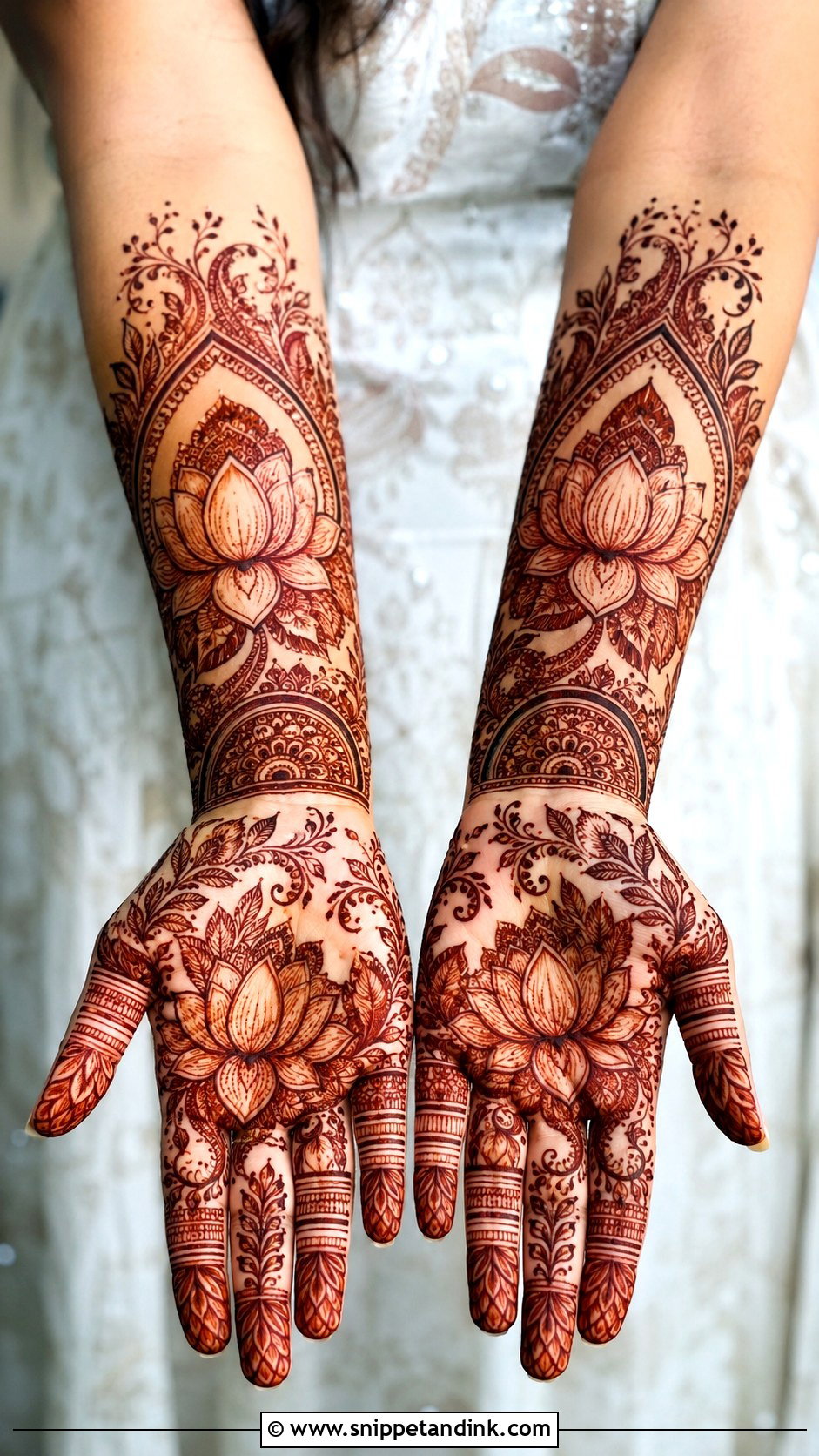
The lotus is a structured, symbolic flower that works as a palm centerpiece, a wrist border, a back-hand motif or a trail along the forearm. Its rounded petals take shading well. I draw lotus petals with a bold outline and a lighter inner stroke, which helps them hold their shape as the stain deepens over the following two days. It pairs with mandalas and jaali and looks graceful with pastel lehengas, temple jewelry and pearls.
23. Floral Bridal Mehndi Design
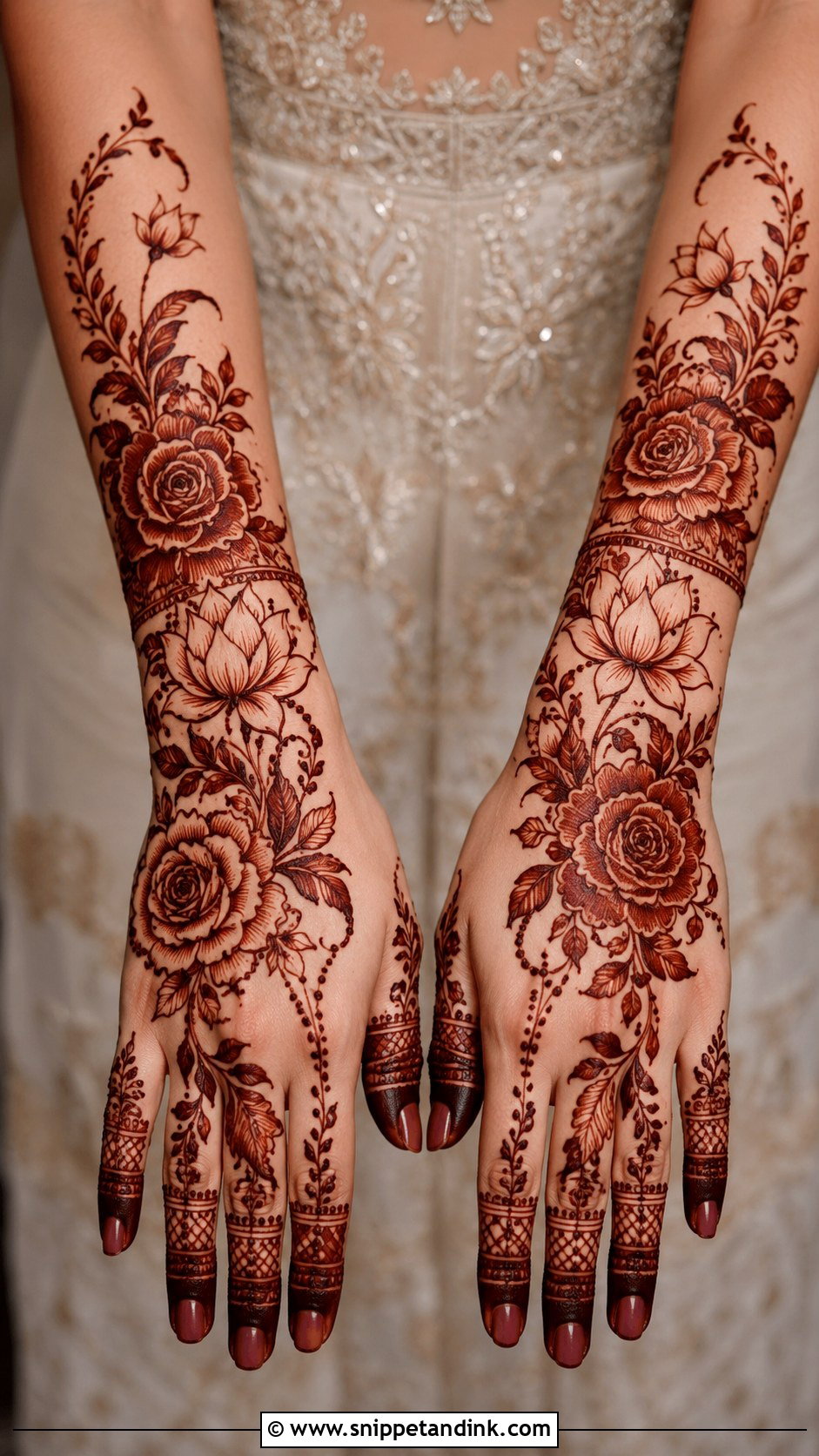
Florals suit almost every bride because they can be bold and Arabic, detailed and Indian, or balanced in between. Roses, lotuses, small blossoms and leafy vines can run in trails, circles, borders or full coverage. Large flowers with open space read modern; filling the gaps with tiny leaves, dots and mesh reads traditional. I usually ask which outfit the bride is wearing on the day, since a floral pattern can echo the embroidery on a lehenga.
24. Paisley Bridal Mehndi Design
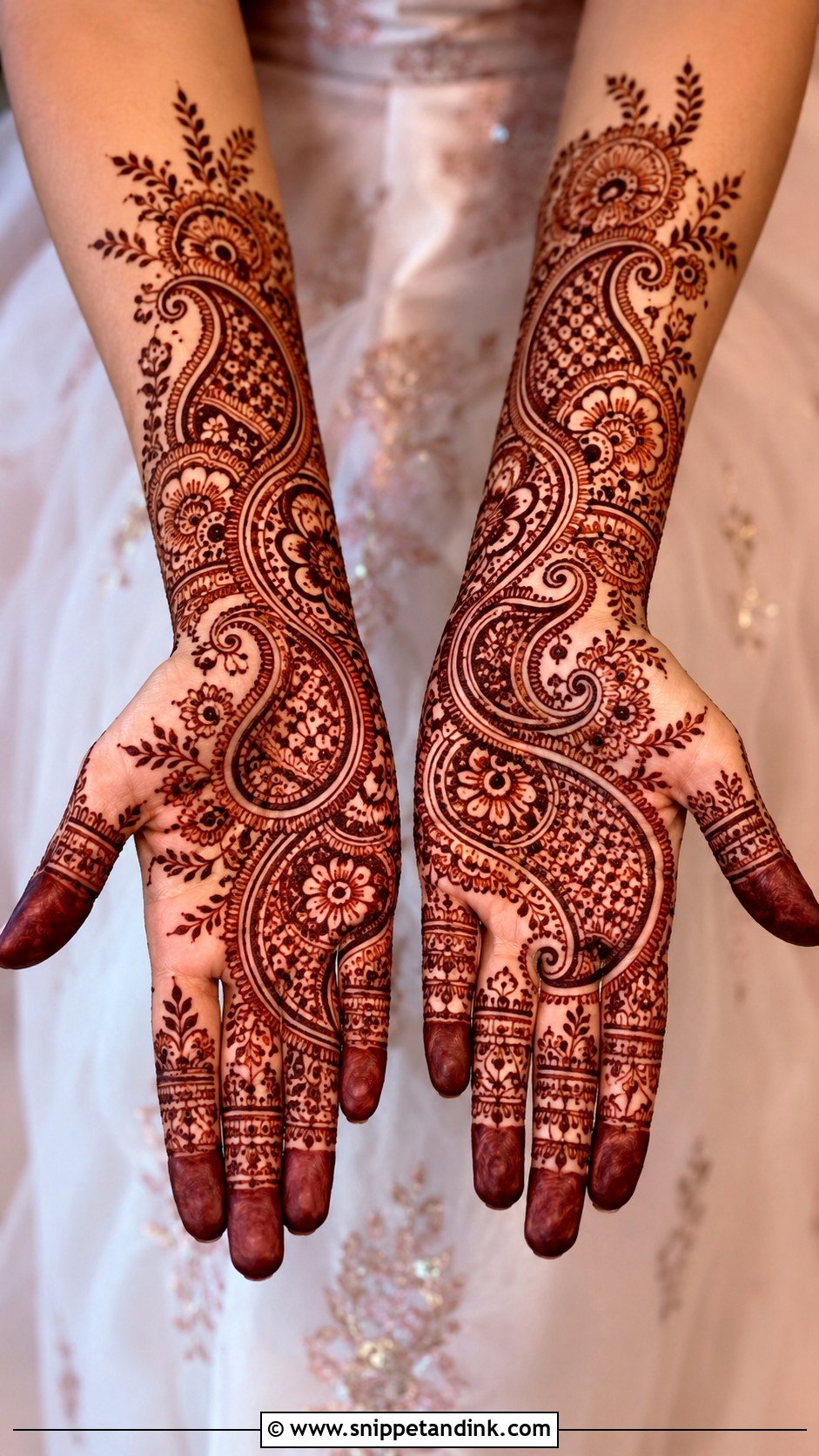
Paisley is the most dependable bridal motif I know. Its curved shape follows the movement of the hand, so it sits naturally on palms, wrists, fingers and forearms, large and bold or small and detailed. A mix of thick outlines and fine inner work also stains evenly, which is part of why it has lasted. Make paisley the main theme and add a mandala or peacock if you want more detail.
25. Jaali Bridal Mehndi Design
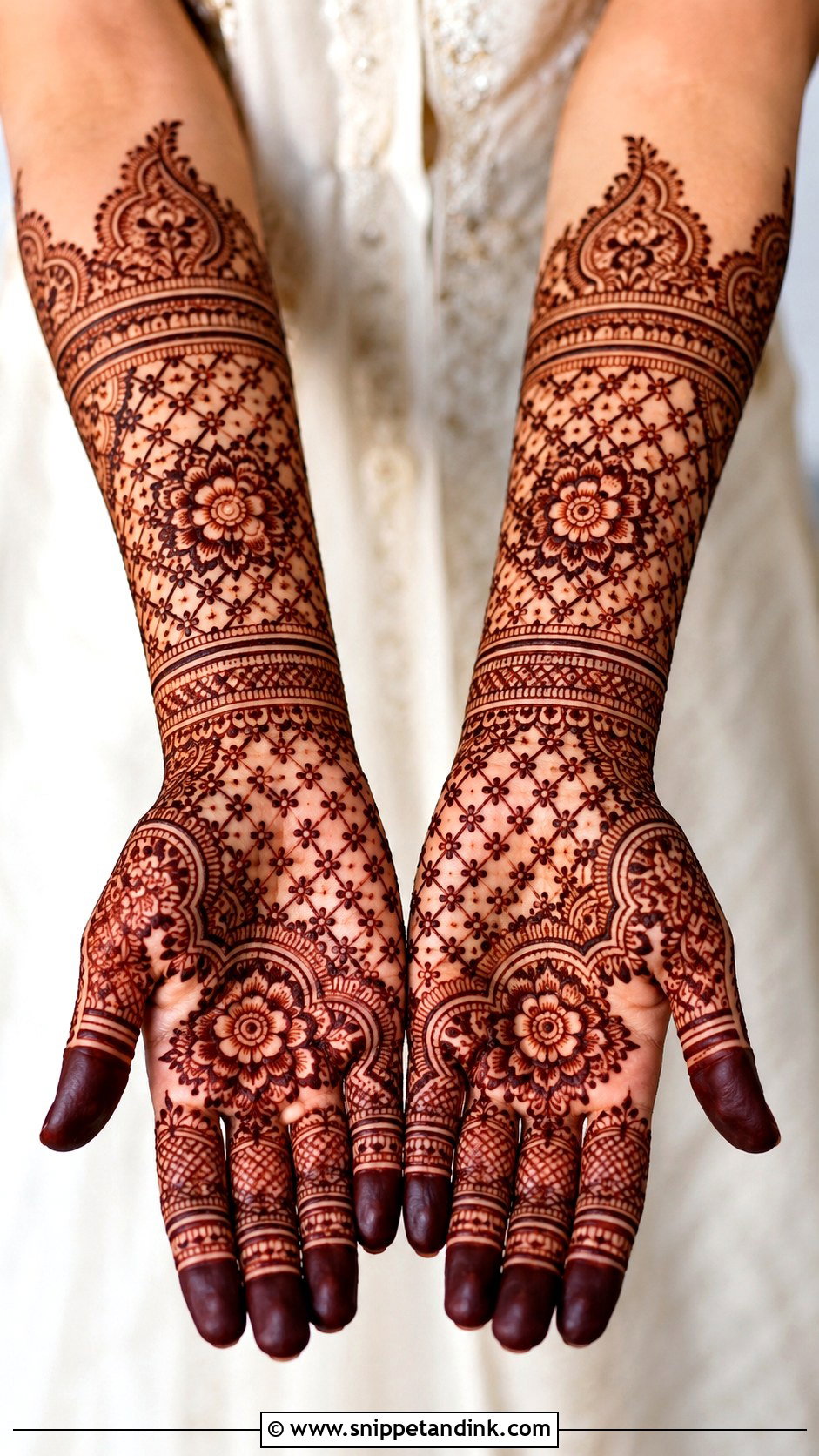
Jaali creates a mesh that looks like fine fabric on the skin, usually between larger motifs on palms, wrists and forearms. It gives coverage without heaviness. Even spacing is everything; uneven gaps are what make jaali look homemade. I draw it with a very fine cone tip and keep the lines thin, because thick mesh lines bleed together into a solid patch as the stain develops. It pairs with net dupattas, lace details and embroidered sleeves.
26. Bracelet Bridal Mehndi Design
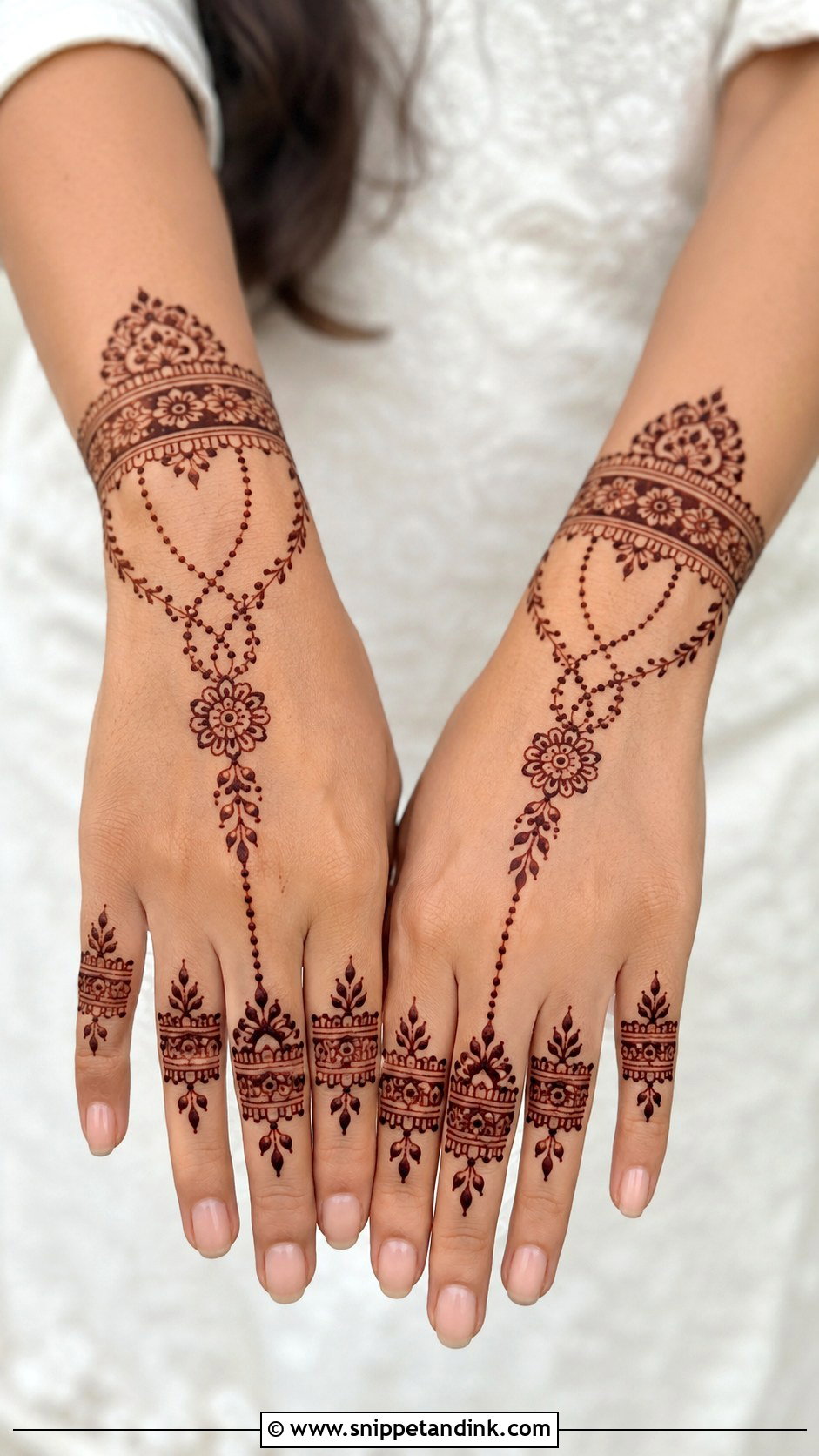
Bracelet mehndi is jewelry drawn on the skin: wrist cuffs, chains, ring links, finger bands and harness lines. For the main ceremony I combine it with floral palms and decorated fingers; for an engagement or reception, a lighter version on its own is enough. It’s strongest on the back hand, where it frames real rings and bangles, and it’s a clever choice when you’re wearing minimal jewelry and want the hands to look adorned anyway.
27. Jewelry Bridal Mehndi Design
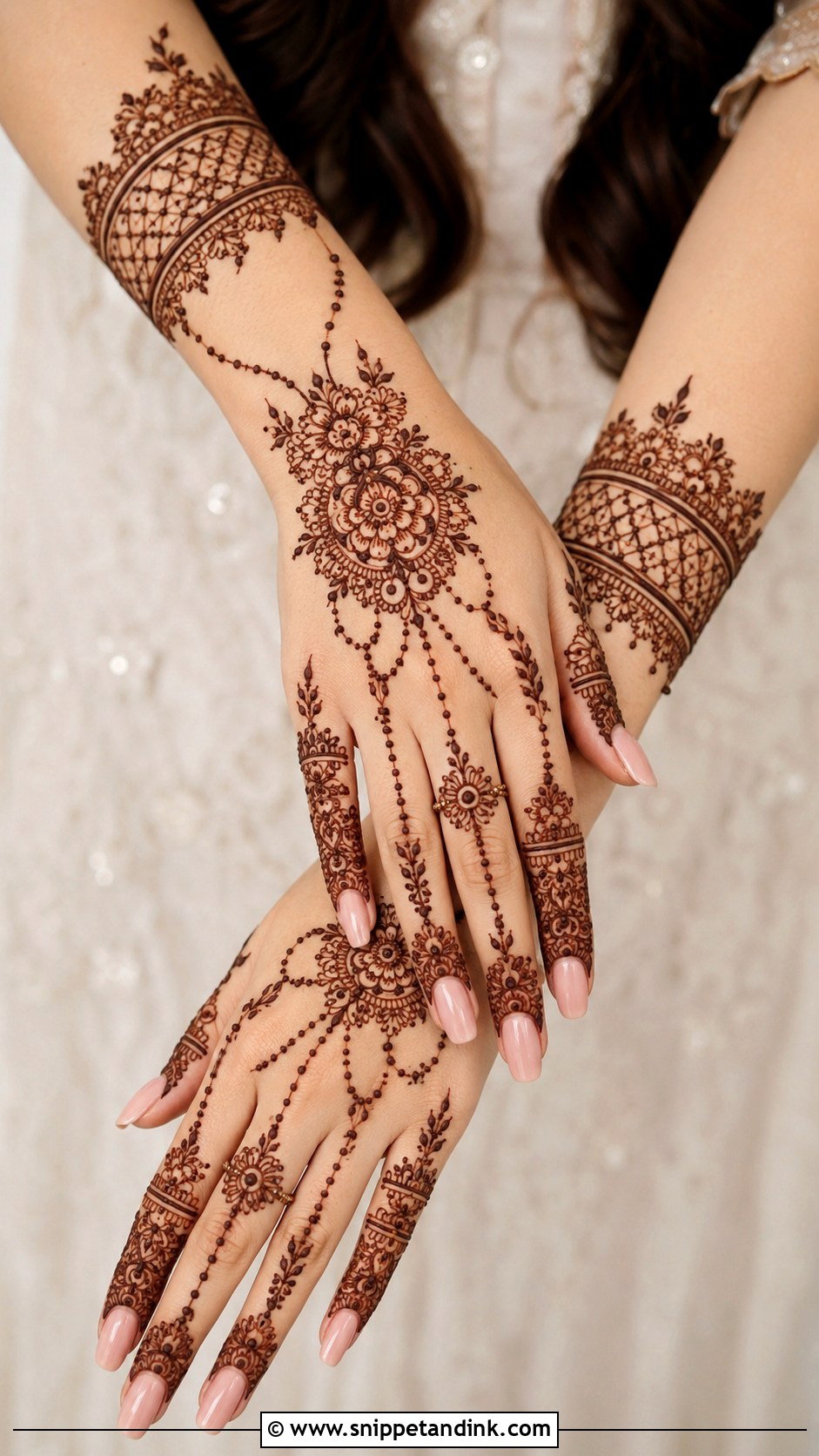
Jewelry-inspired mehndi copies hathphool, bangles, rings, chains and cuffs, usually across the back of the hand and sometimes onto the palm and forearm. Fine lines and delicate chain details keep it graceful, and that fineness means the paste must stay on long enough to stain properly; thin lines removed early come up faint. It’s a polished choice for engagements and receptions, and it looks smart with nude nails and pearls.
28. Negative Space Bridal Mehndi Design
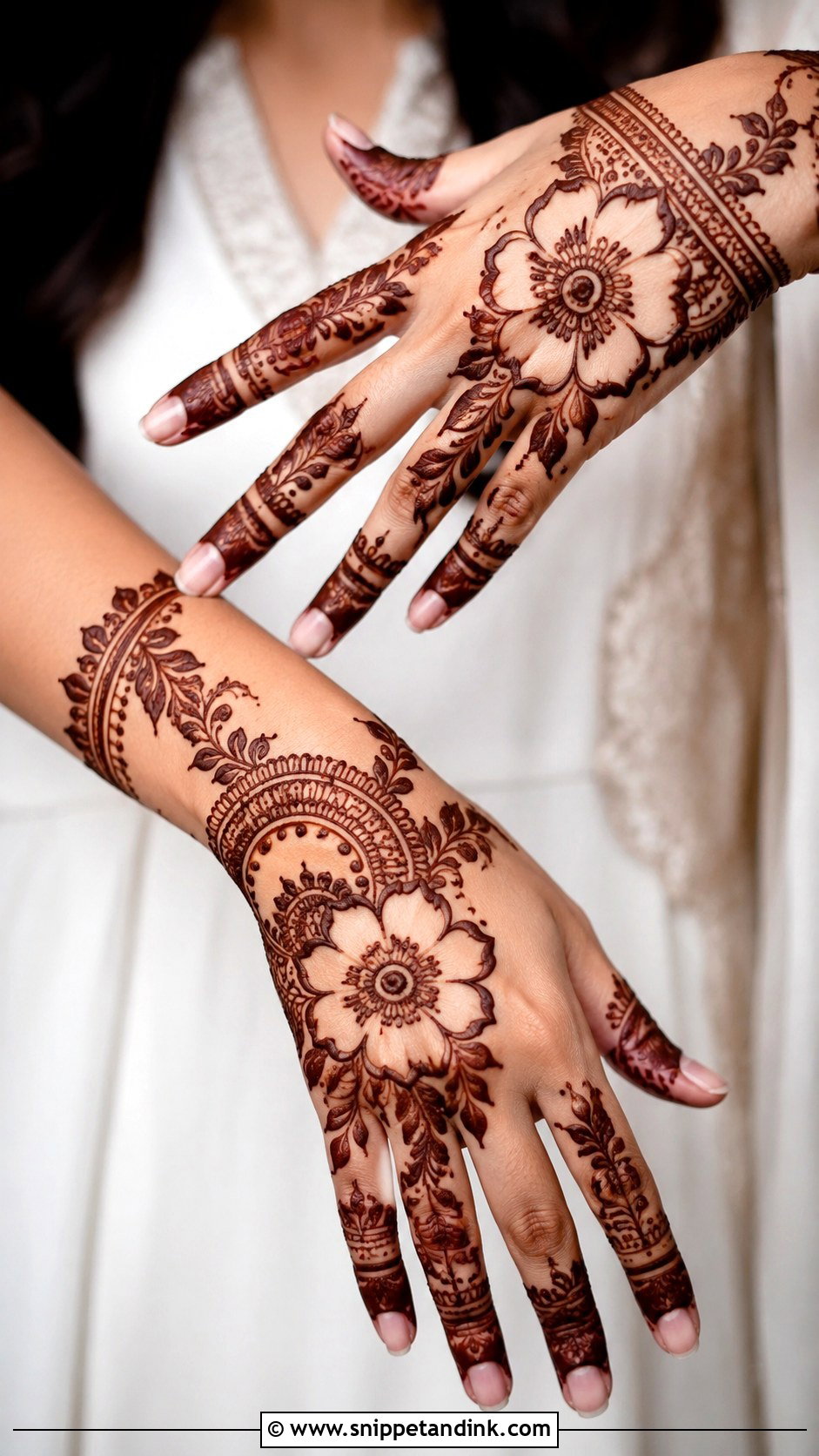
Negative space design builds bold motifs with clean skin around them, so the empty areas become part of the pattern. Florals, mandalas, vines, grids and bracelet bands can all be drawn this way. I plan negative space by drawing the outer shapes first and deciding which gaps stay empty before filling anything. On small hands it keeps the design from looking crowded. It suits both Arabic and Indo-Arabic layouts and reads clearly in photos.
29. Geometric Bridal Mehndi Design
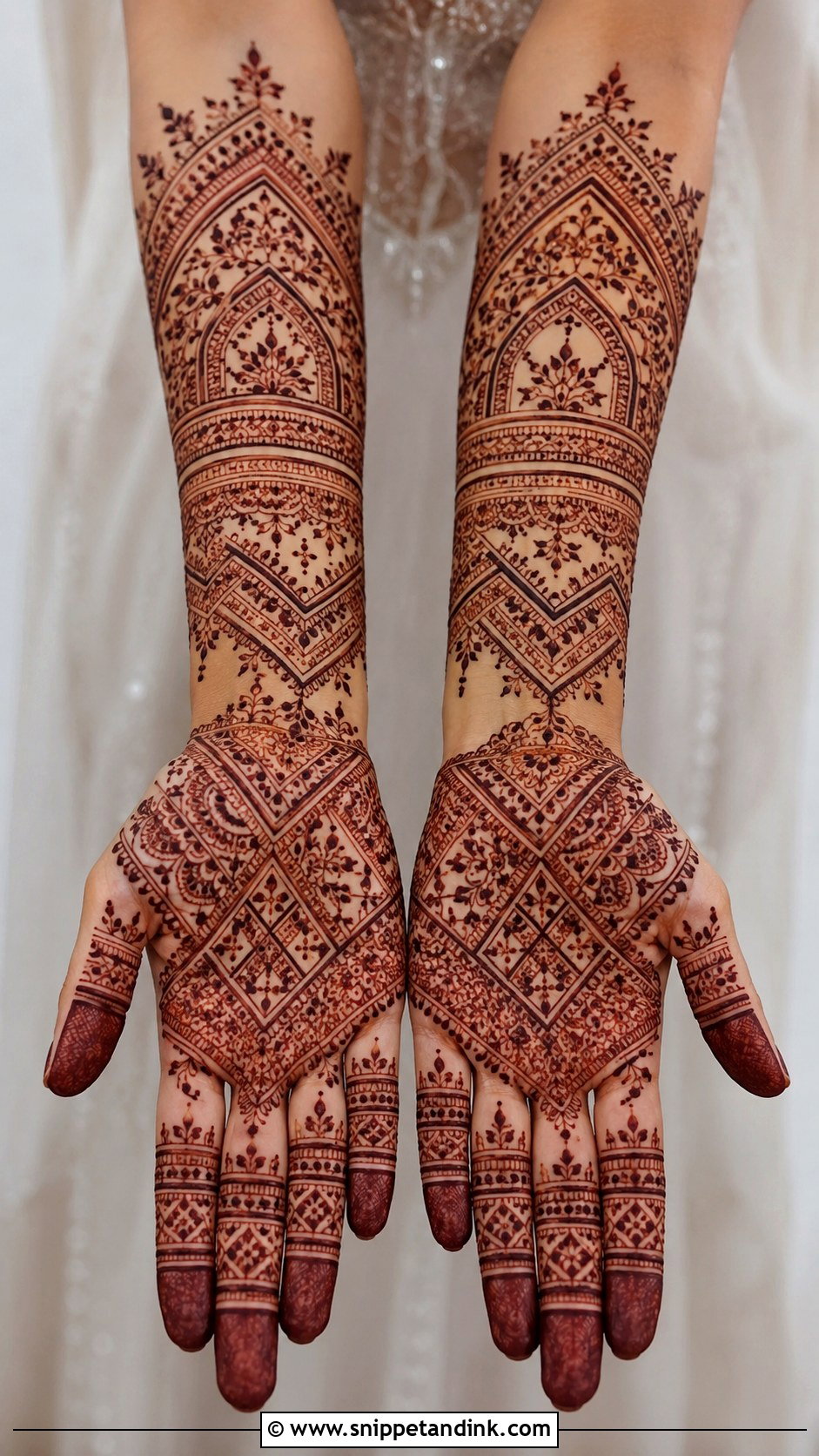
Geometric bridal mehndi uses diamonds, chevrons, arches and symmetrical borders, inspired by Moroccan work or mixed with Indian motifs. It’s sharpest on fingers, wrists and back hands, where flat planes keep lines straight. A purely geometric design can look cold on a bride, so I break it with a few florals, a mandala or paisleys between the structured sections. That warmth is what makes it bridal, especially next to contemporary lehengas, mirror work and metallic embroidery.
30. Modern Bridal Mehndi Design
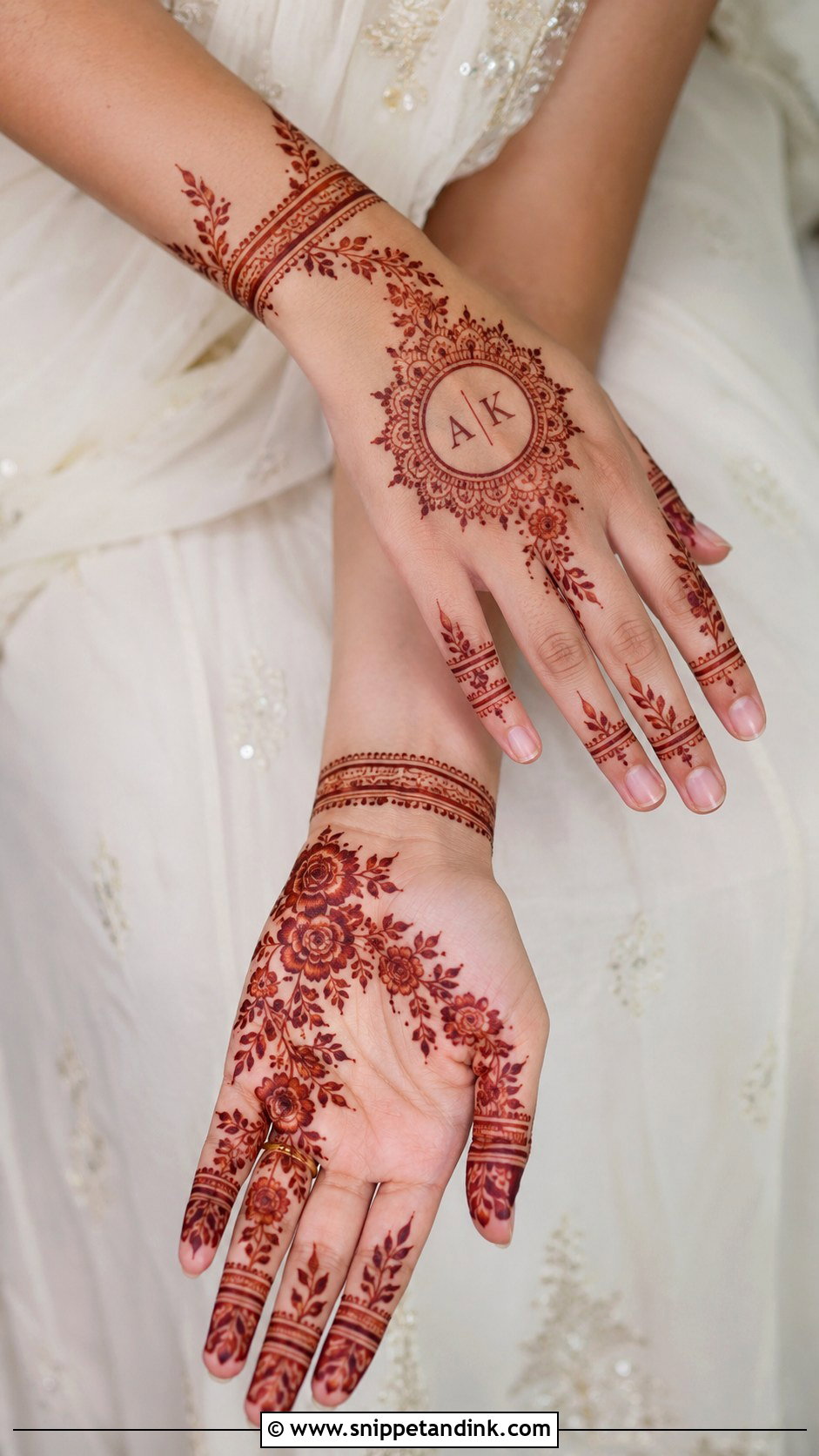
Modern bridal mehndi favors clean layouts and personal details: negative space, initials, a date, sleek florals, bracelet bands or fusion motifs. It doesn’t need to be heavy to feel bridal; balance and clarity do that work. Asymmetric trails and open palms look fresh. My one firm piece of advice is to choose a single theme and stay with it, since mixing too many unrelated ideas is what makes a modern design look unplanned. It suits destination weddings, intimate ceremonies and lighter outfits.
31. Bridal Mehndi Design For Small Hands
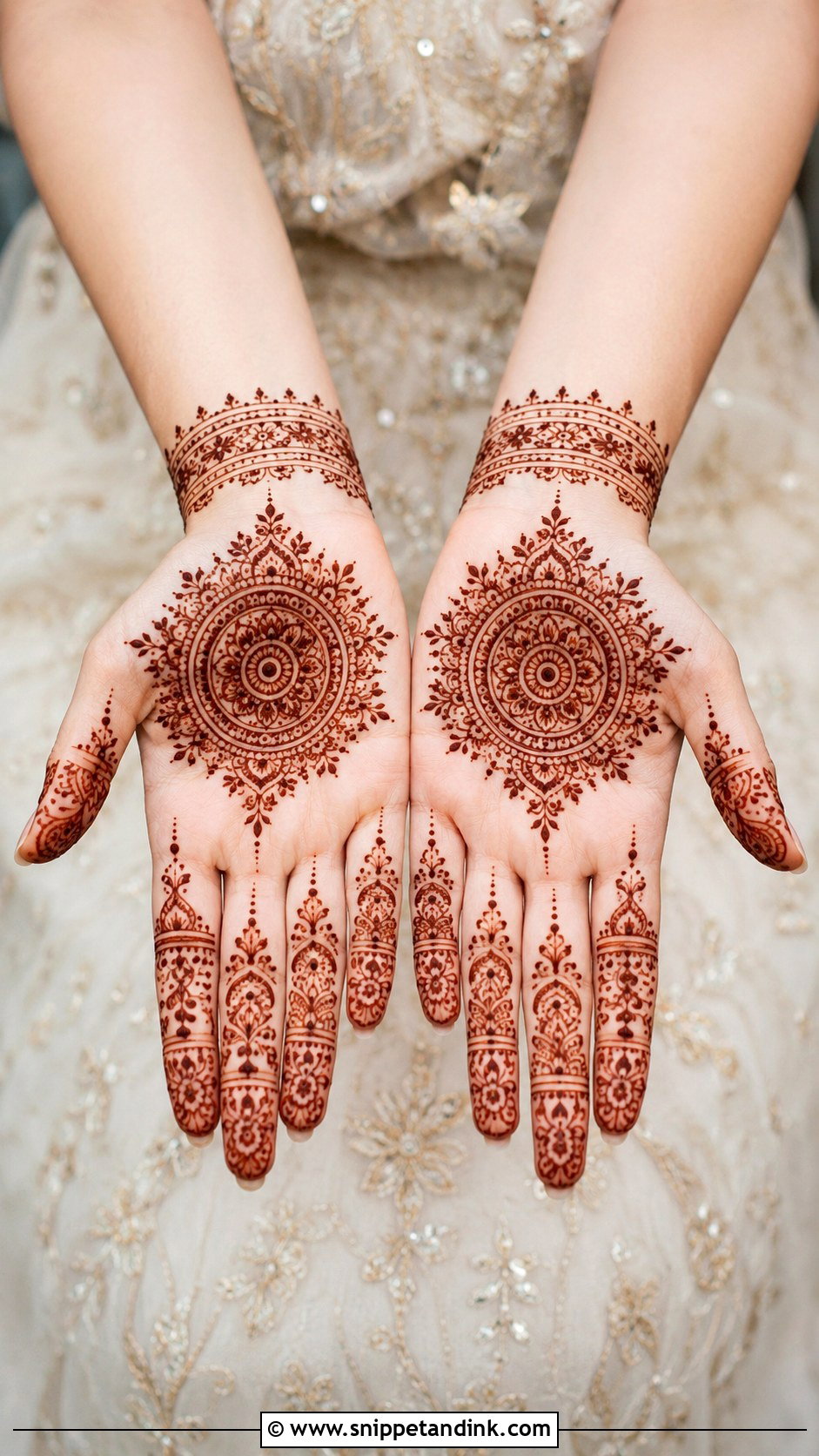
Small hands need detail without crowding. One strong motif, a mandala, lotus or paisley, gives a clear focus, while fine fillers go in sparingly. Open space makes the hand look longer, and finger designs should be slim, vertical and connected to the palm. I avoid large portraits and stacks of heavy bands, which make a small hand look packed. Arabic trails, centered mandalas and neat Indo-Arabic layouts work especially well, and they’re quicker to sit for as well.
32. Bridal Mehndi Design For Long Hands
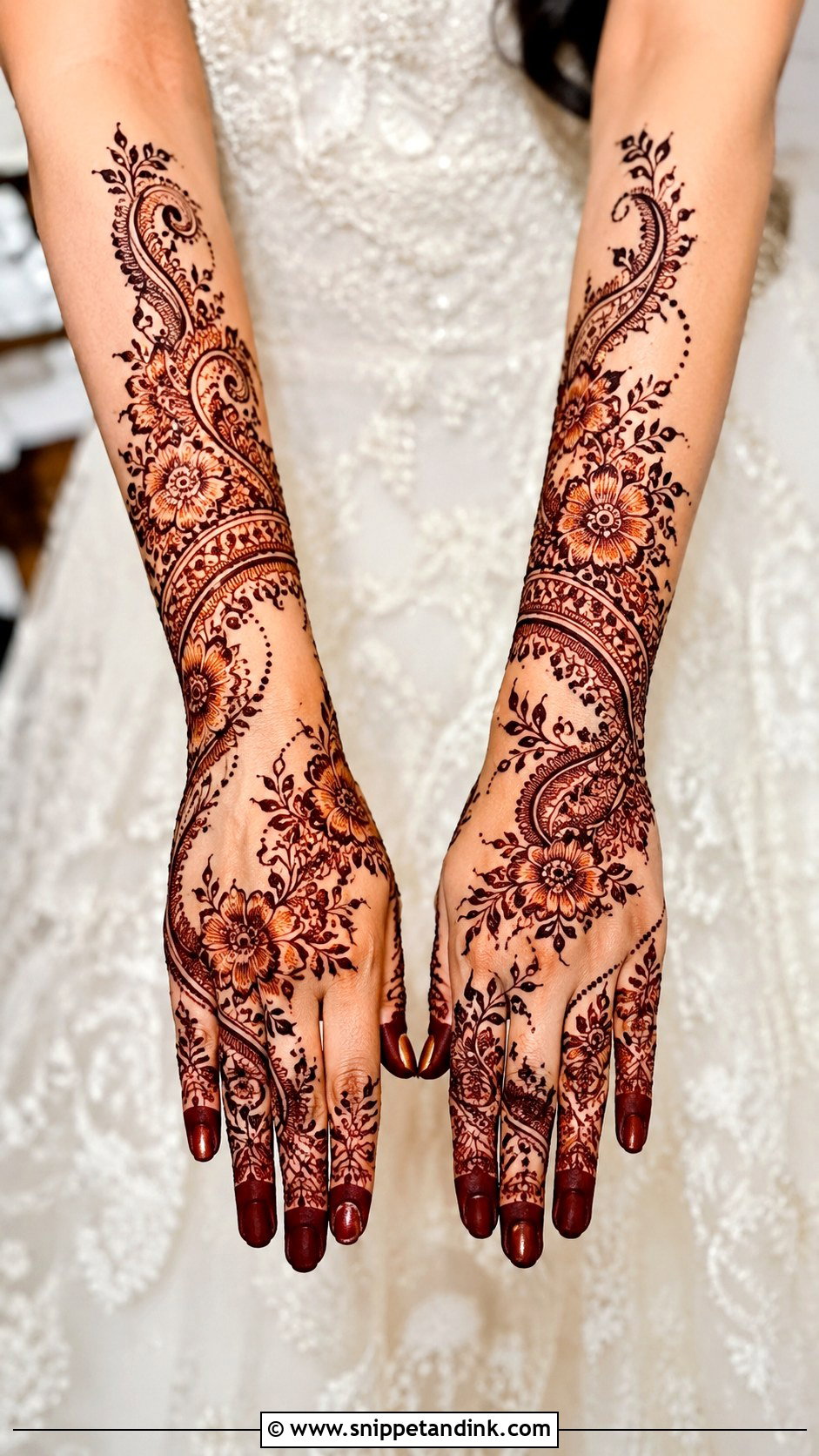
Long hands can carry extended trails, bold wrist bands and detailed forearm work. Vertical designs, Arabic vines, peacock trails and paisley chains suit them, and full finger detailing emphasizes the length. Dense Indian patterns with symmetrical palms give a traditional look; bold florals with negative space give a modern one. The thing I watch on long hands is continuity: a design that breaks suddenly at the wrist looks unfinished, so I carry at least one line from fingertip to forearm.
33. Bridal Foot Mehndi Design
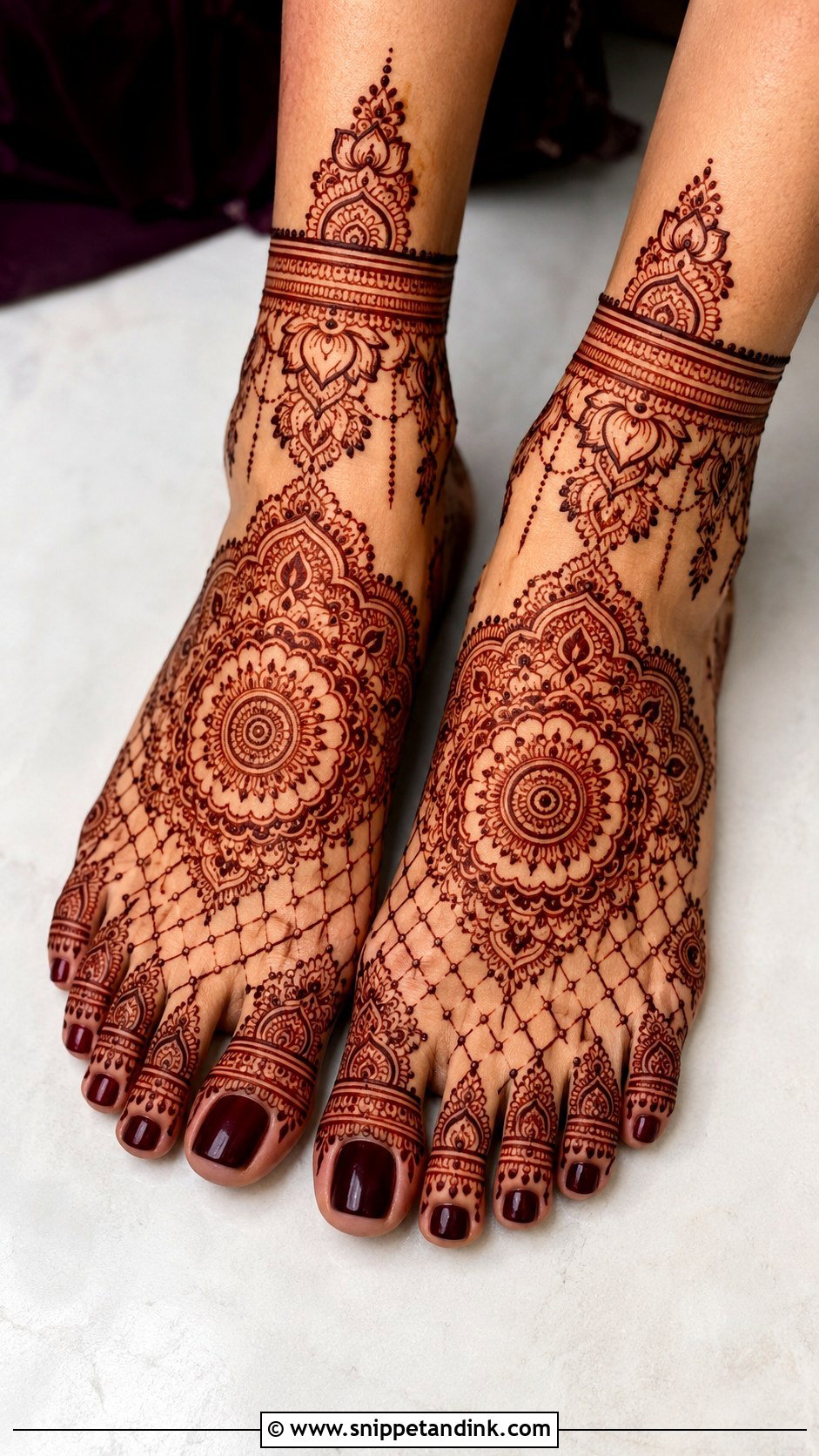
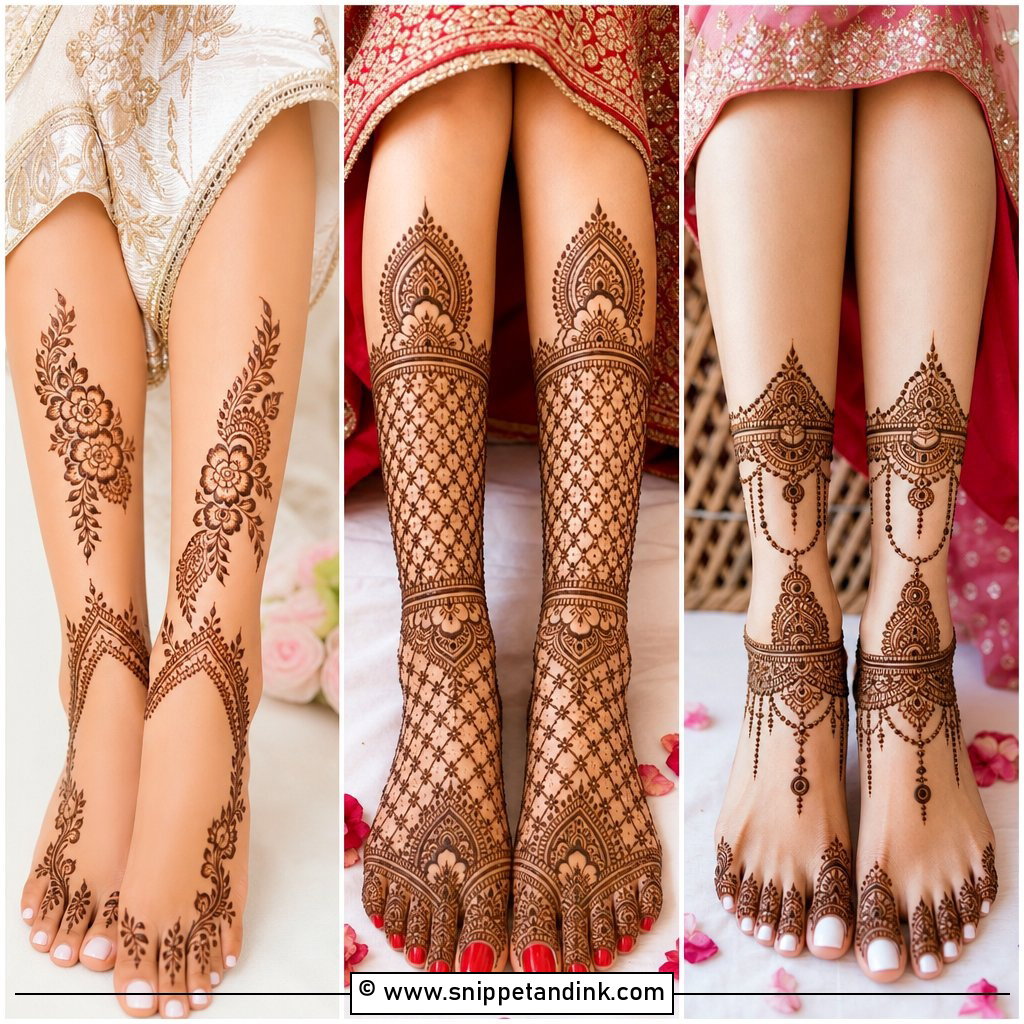
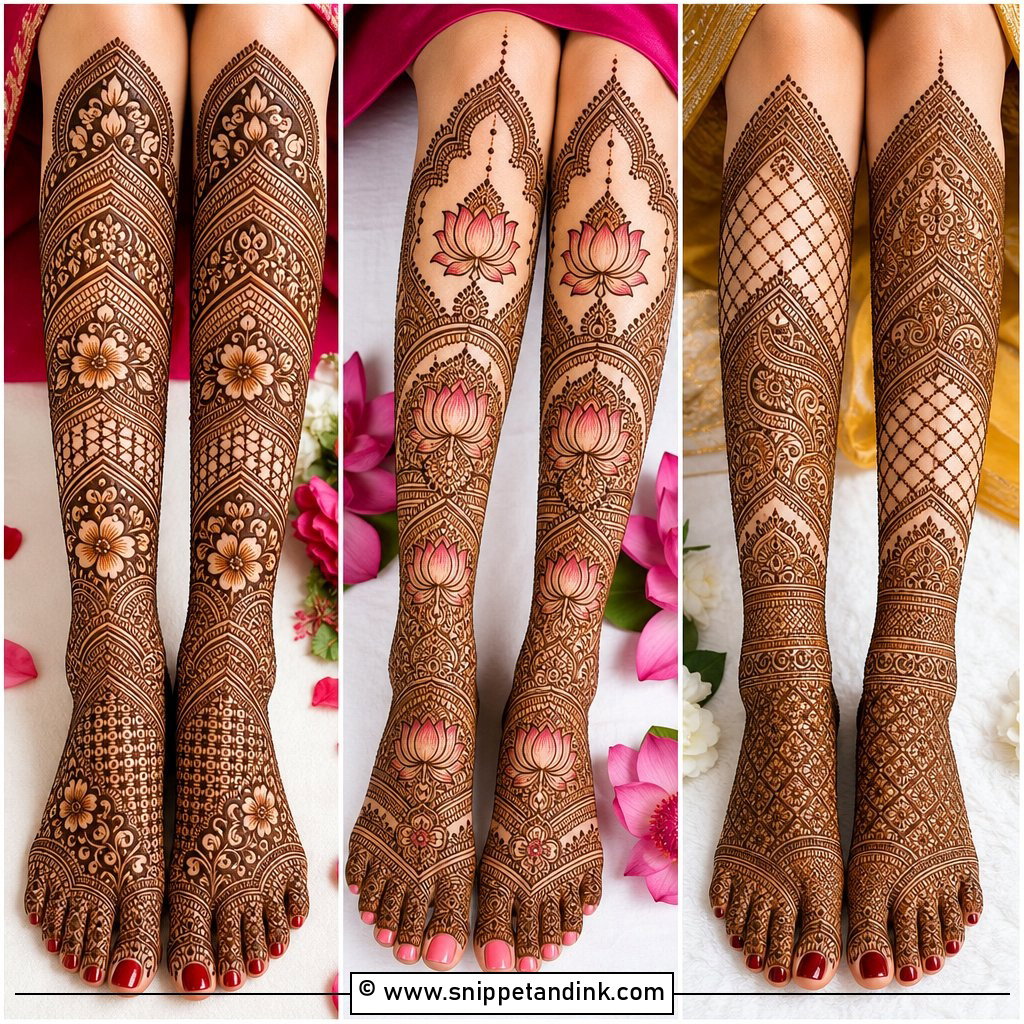
Foot mehndi completes the look, especially for ceremonies where your feet show. Mandalas on the top of the foot, anklet borders, toe detailing, lotuses and jaali all work. Feet stain very dark, often darker than the hands, but the paste also has to survive being walked on, so I apply feet last and ask brides to rest with their feet up until it’s dry. Keep thick lines away from spots your sandals rub. Some brides go heavy to the ankle; others prefer a minimal pattern that looks like delicate jewelry.
34. Bridal Leg Mehndi Design
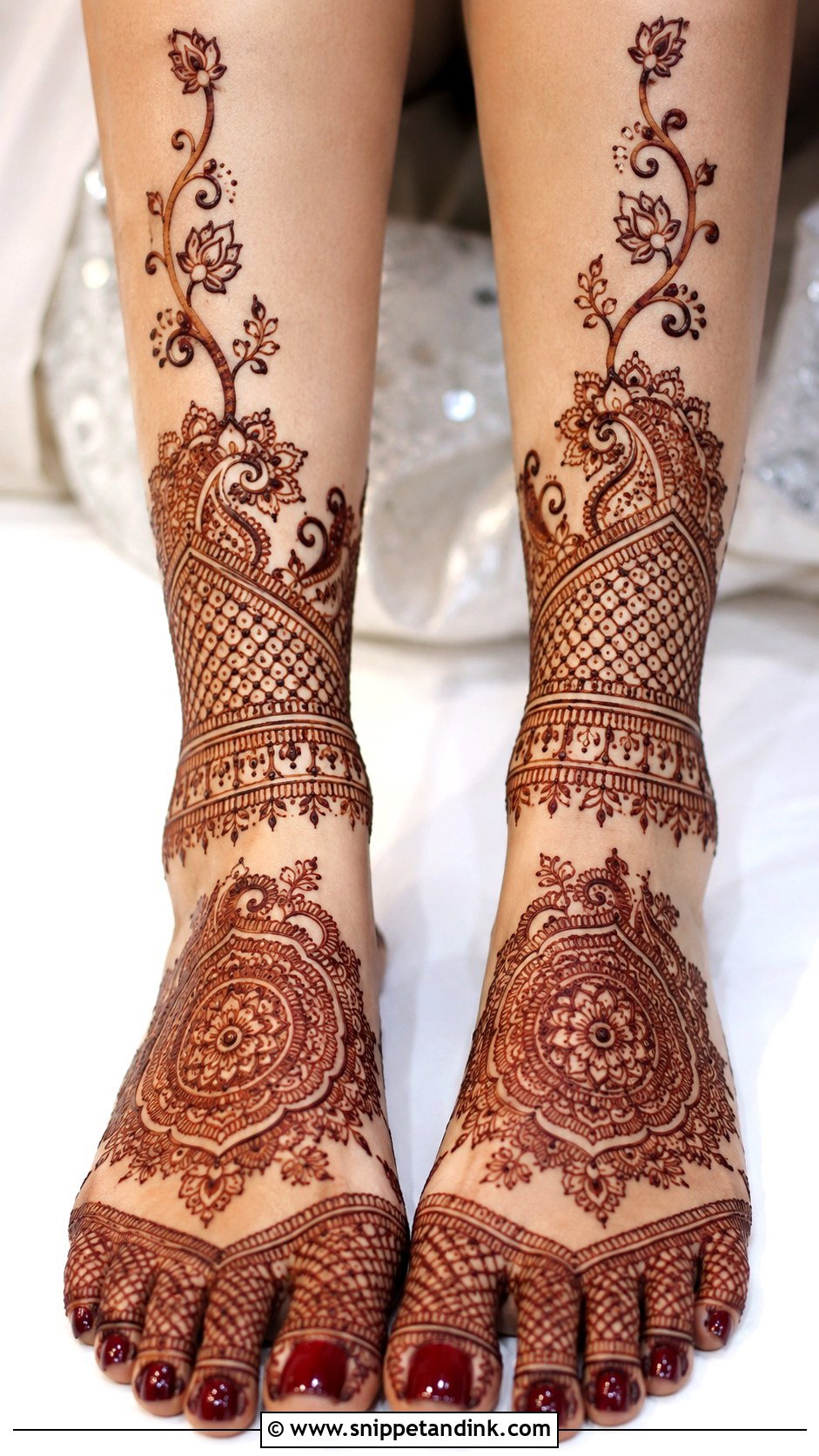
Leg mehndi runs from the toes up toward the ankles or calves with lotuses, paisley vines, mandalas, anklet bands and fine mesh. The layout has to follow the shape of the foot and leg, or it looks bulky when you stand. Stain fades as it climbs, so the calves will always be lighter than the feet; I design leg work to taper upward so that fade looks intentional. It suits lehengas and sarees where the feet show during rituals.
35. White Bridal Mehndi Design
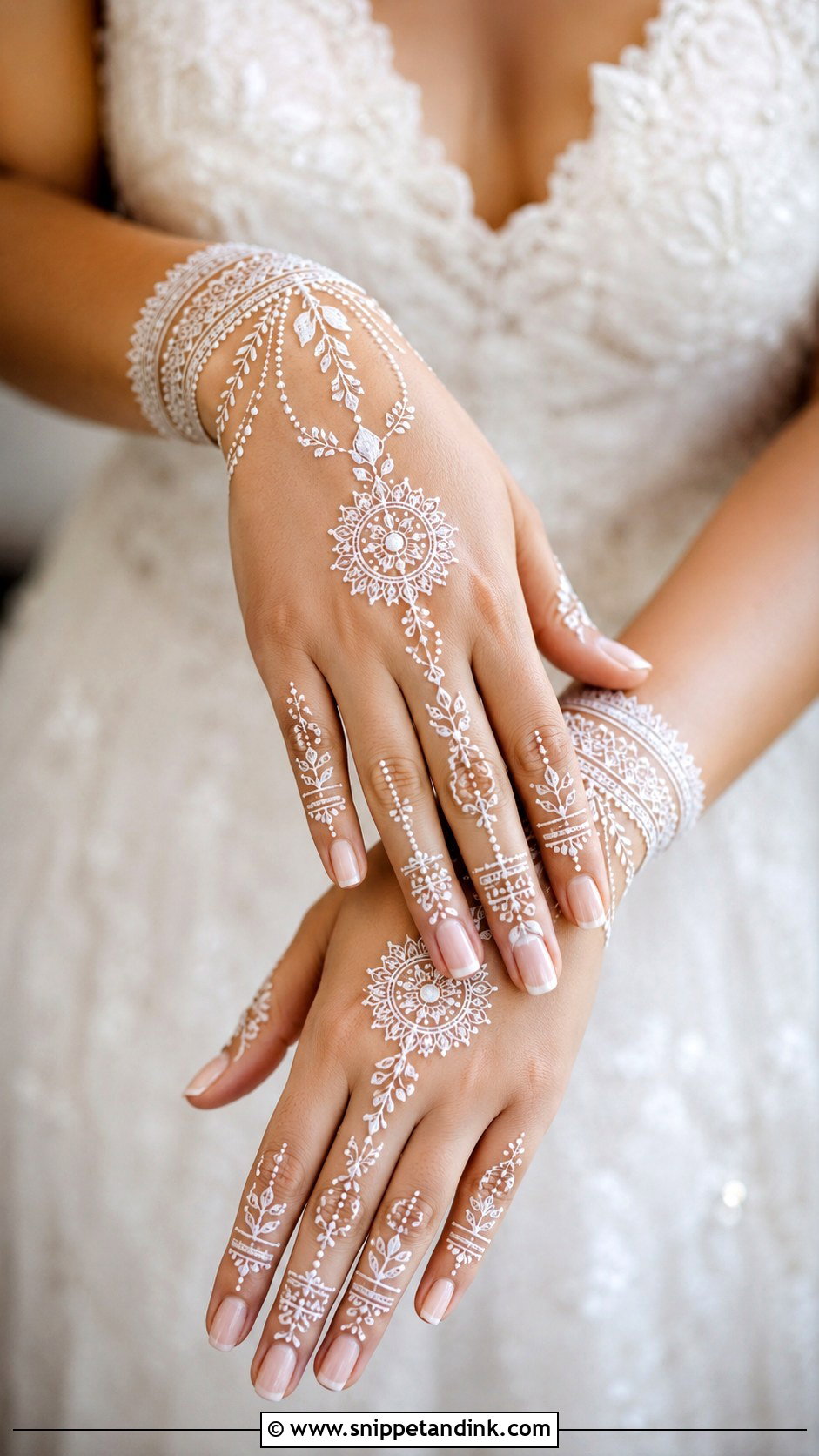
White mehndi isn’t henna at all. It’s a skin-safe body paint or adhesive that sits on top of the skin and washes away within a day or two, leaving no stain. It gives a lace-like effect that suits ivory, silver and contemporary outfits at an engagement, reception or themed event. Do a small patch test a few days before, as with any cosmetic on the skin. It’s a short-term look, not a replacement for a deep maroon bridal stain, and keeping the design clean and fine suits it best.
Aftercare From the Moment the Paste Cracks
Most of the final color is decided after I leave. The longer the paste stays in contact with the skin, the deeper the stain, so I ask brides to keep it on for at least six to eight hours, and overnight if they can sleep with it.
- Once the paste is touch-dry, dab on a little lemon and sugar mixture. It keeps the paste stuck to the skin instead of flaking off early.
- Wrap loosely with tissue or wear old cotton gloves to bed. Warmth helps the dye develop; tight plastic just smudges it.
- Scrape the dried paste off with a blunt butter knife or your fingernail. Don’t wash it off.
- Keep water off the design for as long as you can, ideally the rest of that day. Rub in a little balm or coconut oil before your first shower.
- For the next few days, go easy on hand sanitizer, hot water, chlorine and scrubbing. All of them fade the stain faster.
When the Stain Comes Out Lighter Than You Hoped
First, wait. A stain that looks pale orange the morning after paste removal will usually be noticeably darker by the following evening, and it peaks around the second day. Keeping your hands warm helps it along.
Some lightness is simply skin. Palms and fingertips stain darkest, while back hands, wrists and arms come up lighter, and every person’s skin takes henna a little differently. Paste removed too early, or washed off with water, is the most common cause of a weak result. What I wouldn’t do is reapply over the top on the wedding morning or reach for a darkening product; you risk smudged lines and irritated skin right before the photos.
Your Outfit, Your Hands and the Hours You Can Sit
The right design depends on the mood of your wedding as much as on the pattern. Traditional brides tend to love full-hand, royal, Rajasthani or portrait work; modern brides lean toward minimal, negative space, bracelet or white mehndi; Indo-Arabic, floral, jaali and mandala designs sit between the two. Think about your outfit, your jewelry, the ceremony and your hand shape, and be realistic about how long you can sit. Good bridal mehndi should feel personal and comfortable, read clearly in photos, and keep looking richer as the stain deepens over the next two days.
You'll Like These Ideas:


Leave a Reply