
A few hours of henna can carry a whole celebration, from a light pattern for a family Eid lunch to a detailed bridal design worn through a week of wedding events. The styles I’m asked for now range from dense Indian palms and open Arabic trails to Indo-Arabic mixes, Moroccan geometry and very minimal finger work. Which one suits you depends less on what’s trending and more on your hand: its length, the width of the palm, how long you can sit still, and how many days the stain needs to look its best. Below are thirty-five layouts, each with the notes I’d give you before the cone touches skin.
Chand Raat or Two Nights Before: Timing the Stain to Peak
The colour you see when the paste comes off isn’t the colour you’ll have at the event. Natural henna starts bright orange and darkens over the next day or two to a reddish brown. So I plan backward from the day people will see your hands, not forward from when you happen to be free.
- Eid: most people book Chand Raat, the night before. That works, but the stain is still deepening on Eid morning and usually looks best on the second day. If the date allows, a day earlier is better.
- Weddings: I prefer to apply bridal mehndi one to two days before, so the stain is at its deepest for the ceremony itself.
- Engagements and guest looks: the evening before is usually fine for lighter designs.
- Diwali and Karva Chauth: a day ahead gives the colour time to develop.
Time in the chair matters too. A simple guest design can be finished in well under an hour, while a full bridal design takes several hours, so eat first, visit the bathroom, and have someone nearby to hold your drink.
Why Your Palm Will Always Be Darker Than the Back of Your Hand
Henna stains the outer layer of skin, and the palms and fingertips have the thickest layer, so they take the deepest colour. The back of the hand, the wrists and the forearms stain lighter. I design with that in mind: bolder lines on the back, and the finest detail where the colour will be richest.
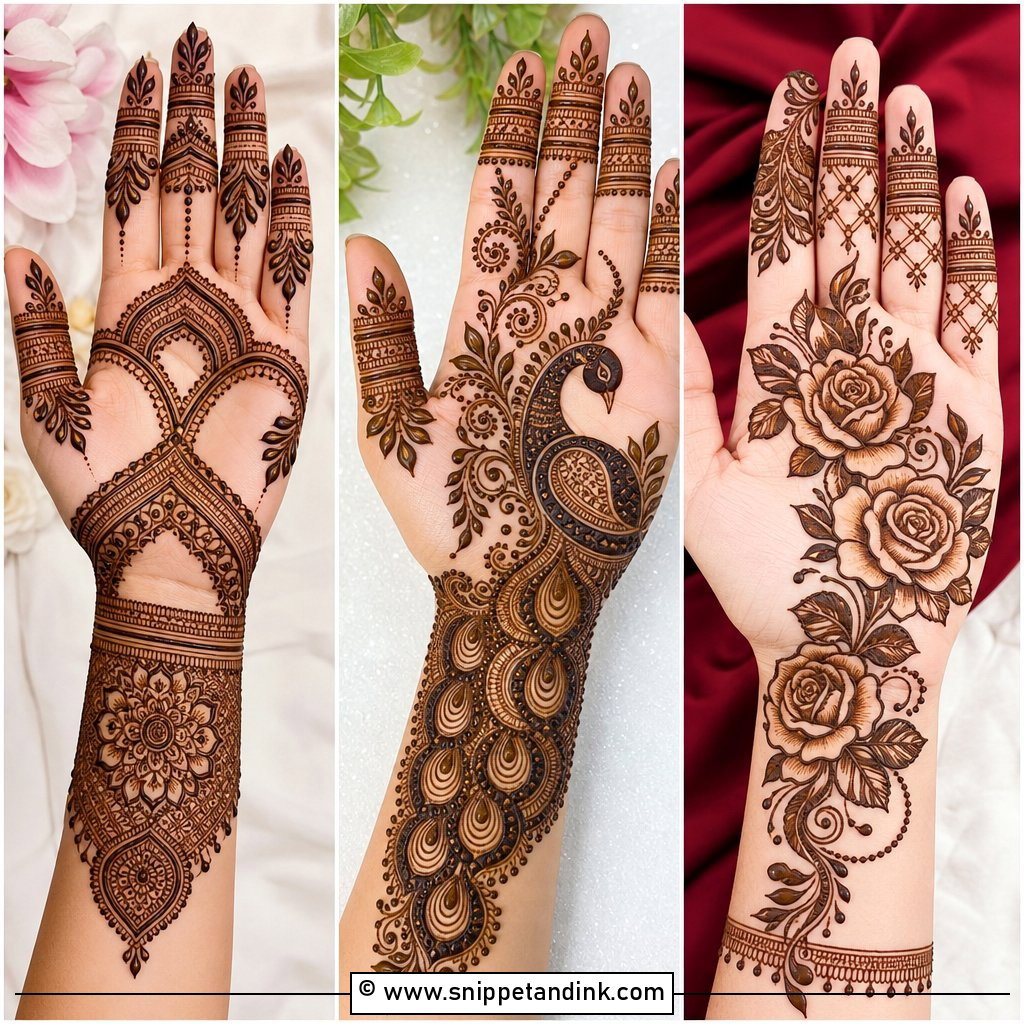
1. Simple Front Hand Mehndi Design
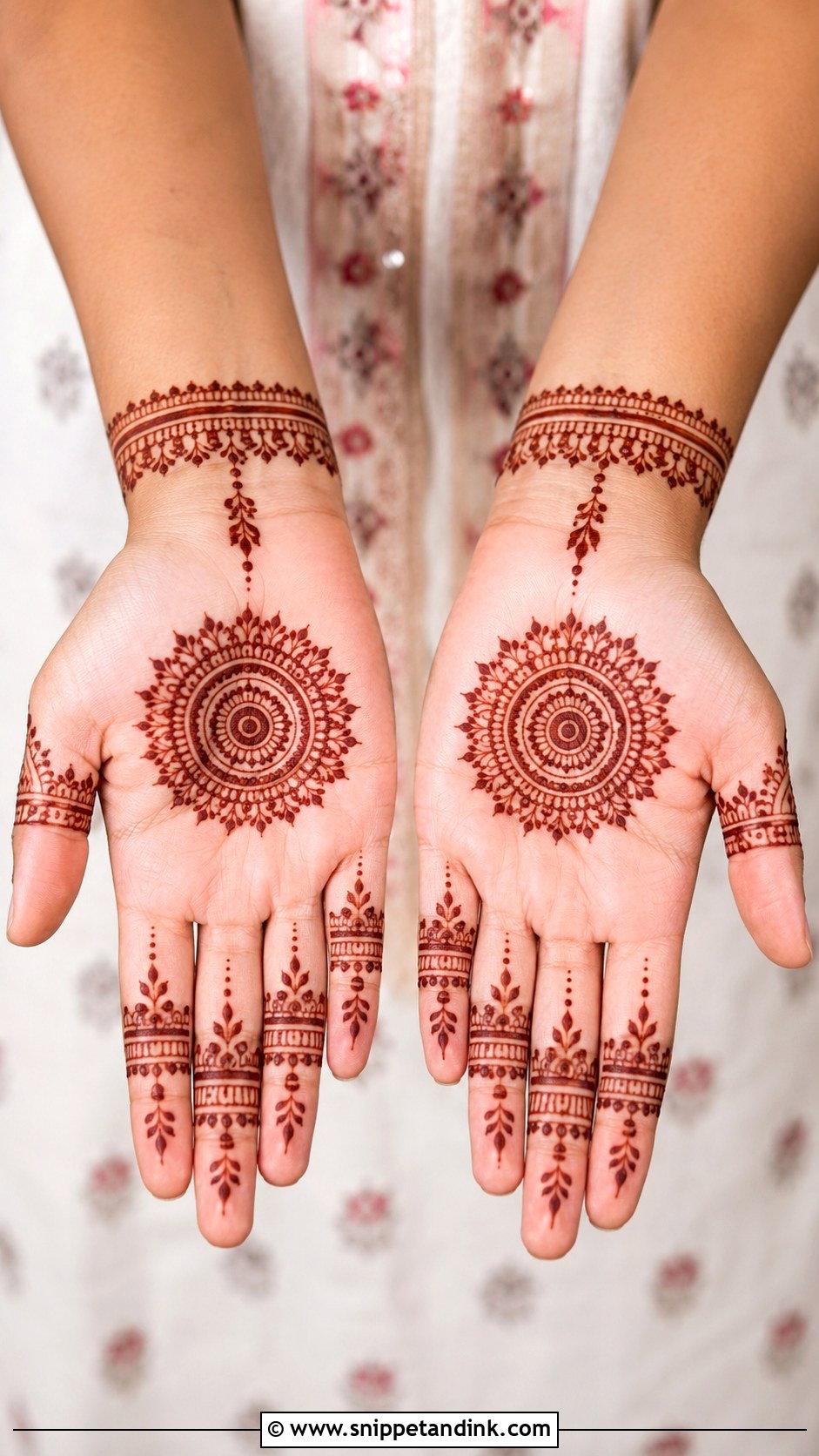
A neat mandala or flower in the centre of the palm, soft finger patterns and a slim wrist border: this is the layout I draw most often for Eid, Diwali and family dinners. It leaves plenty of open skin, so it looks clean and dries quickly. When I map it, I size the centre motif to the widest point of the palm first. A mandala that’s too small for a broad palm looks lost, and one that’s too big crowds the finger bases. Repeat the same small dots or leaves on each finger so the hand reads as one design.
2. Arabic Back Hand Mehndi Design
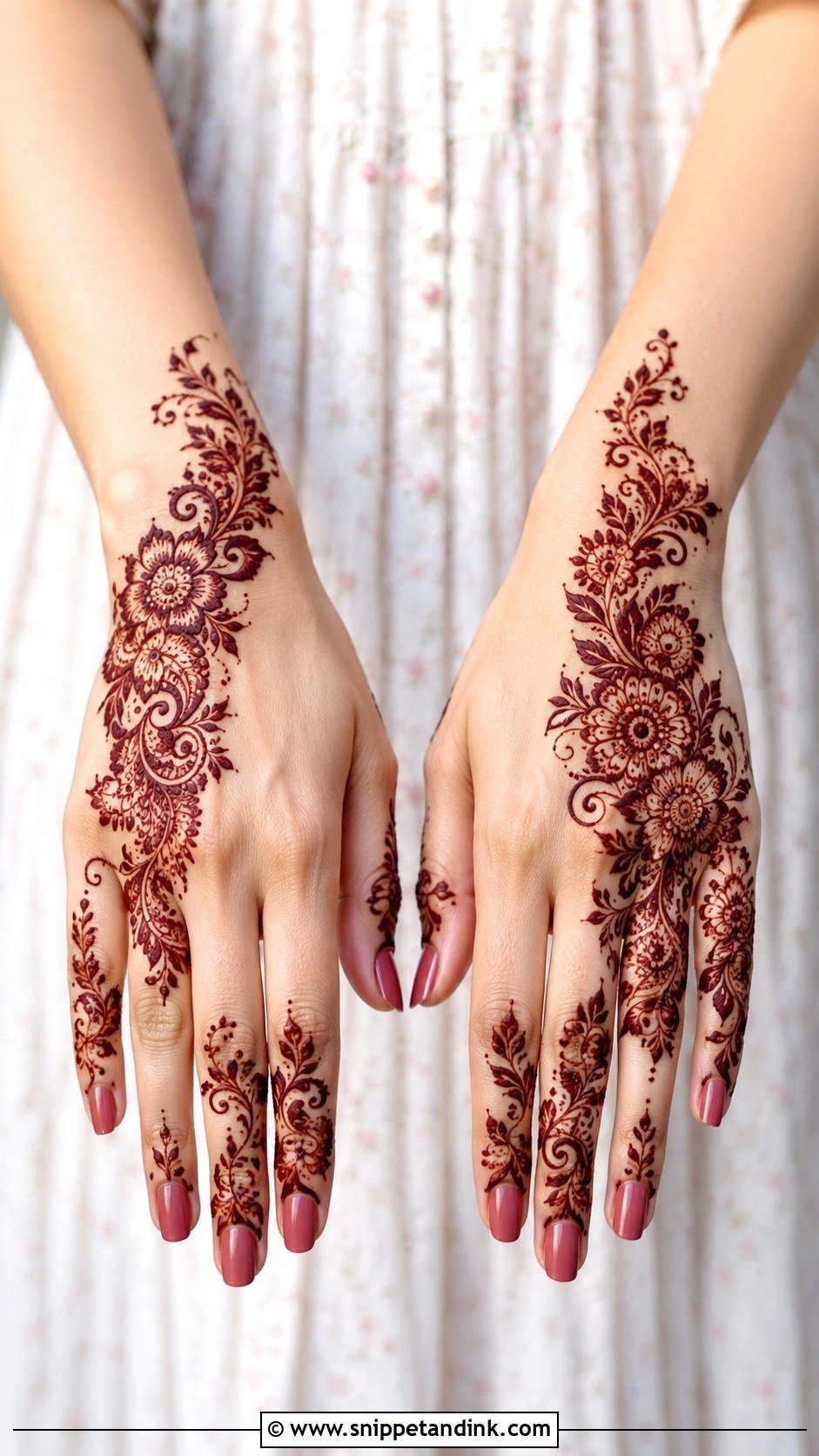
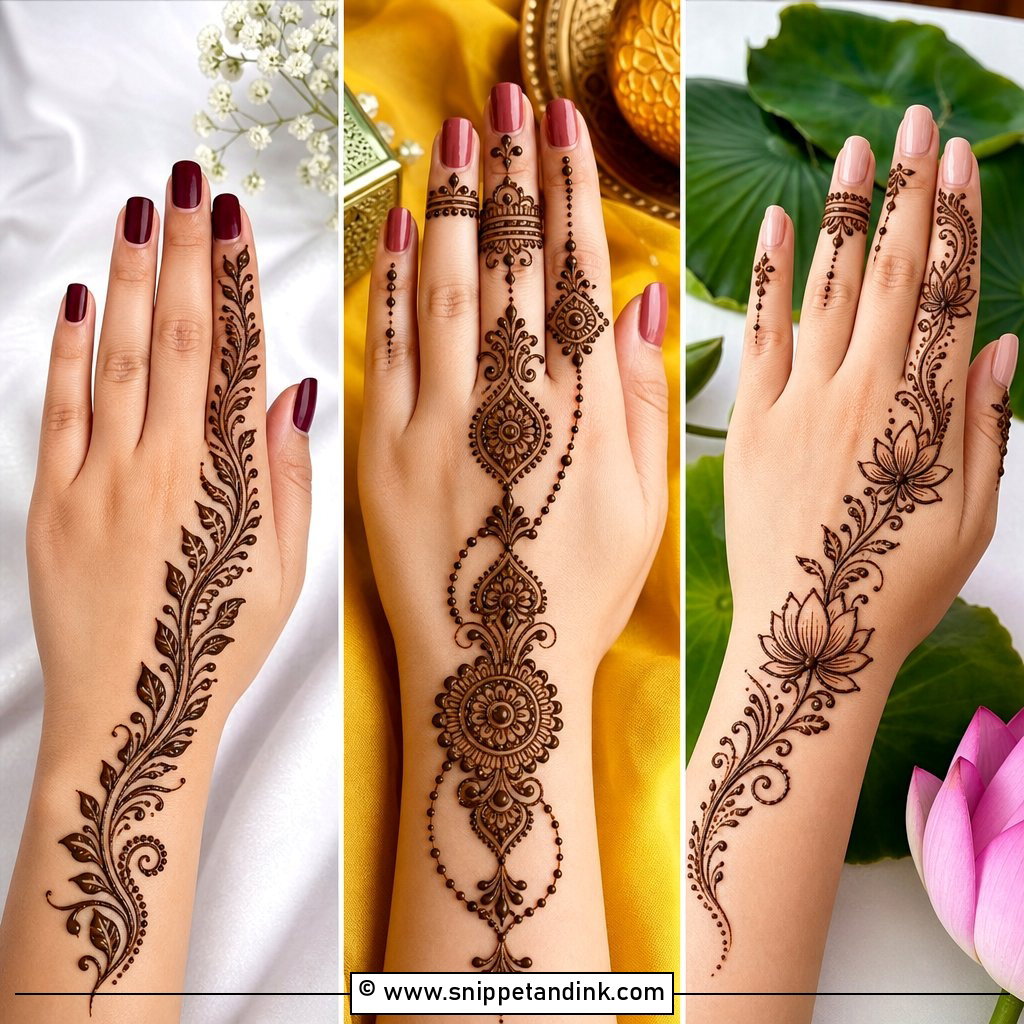
Arabic back-hand work usually runs diagonally from one side of the wrist up toward the index or middle finger, and the empty skin matters as much as the flowers, leaves and paisleys. I outline thickly and keep the inner detail fine, because very thin outlines can soften slightly as the stain develops. On small hands I scale the flowers down and slim the vines, or the trail swallows the hand. It’s a dependable choice for wedding guests, Eid and engagement evenings.
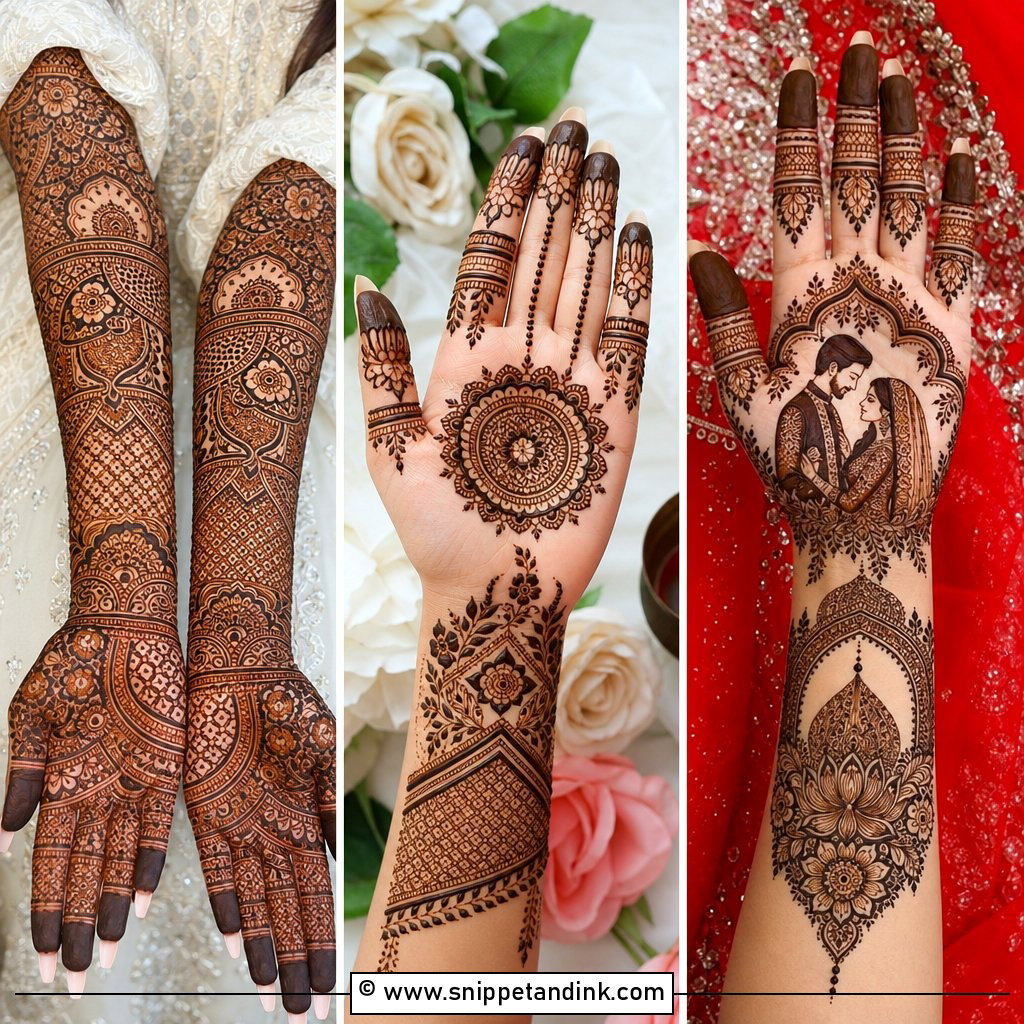
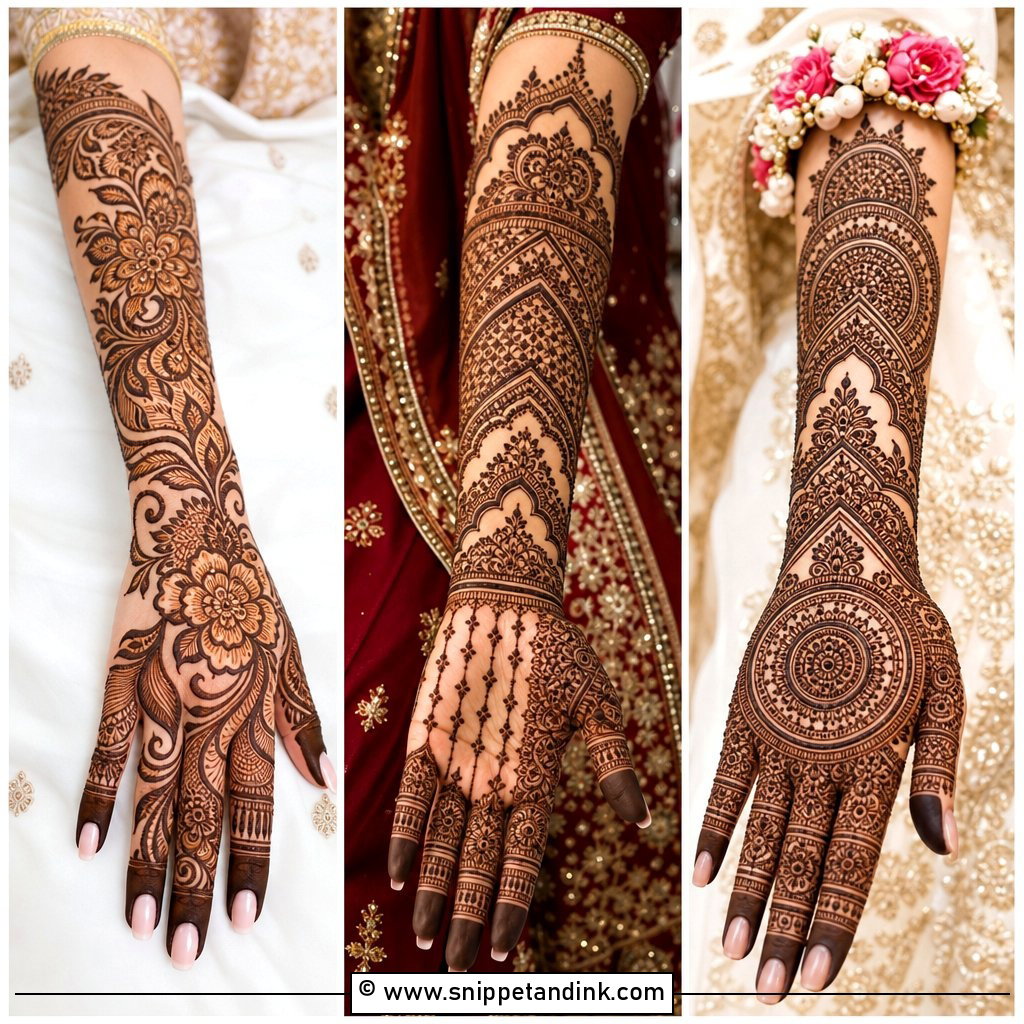
3. Full Hand Bridal Mehndi Design
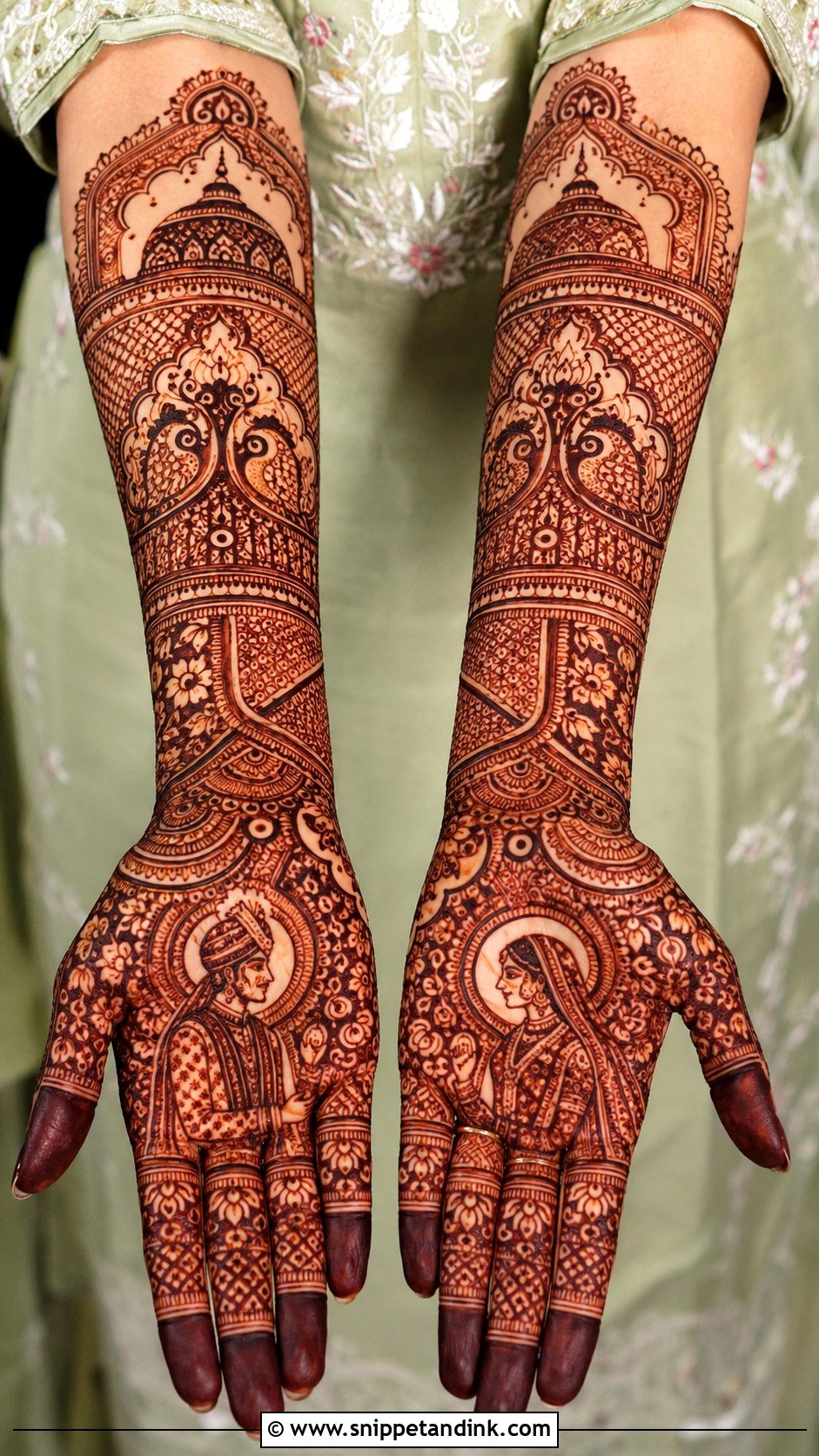
Full bridal mehndi covers the palm, fingers, wrist and forearm, and it’s built in sections: a palm centrepiece, finger bands, wrist cuffs and forearm panels, so it reads as jewelry rather than a solid block. Paisleys, florals, jaali mesh, mandalas, peacocks and bride-groom figures all have a place. Spacing is what keeps a dense design legible, so I leave thin channels of skin between sections. It takes several hours and a bride who can sit still. For a deep stain, the paste has to stay on for hours, and the hands should stay away from water once it comes off.
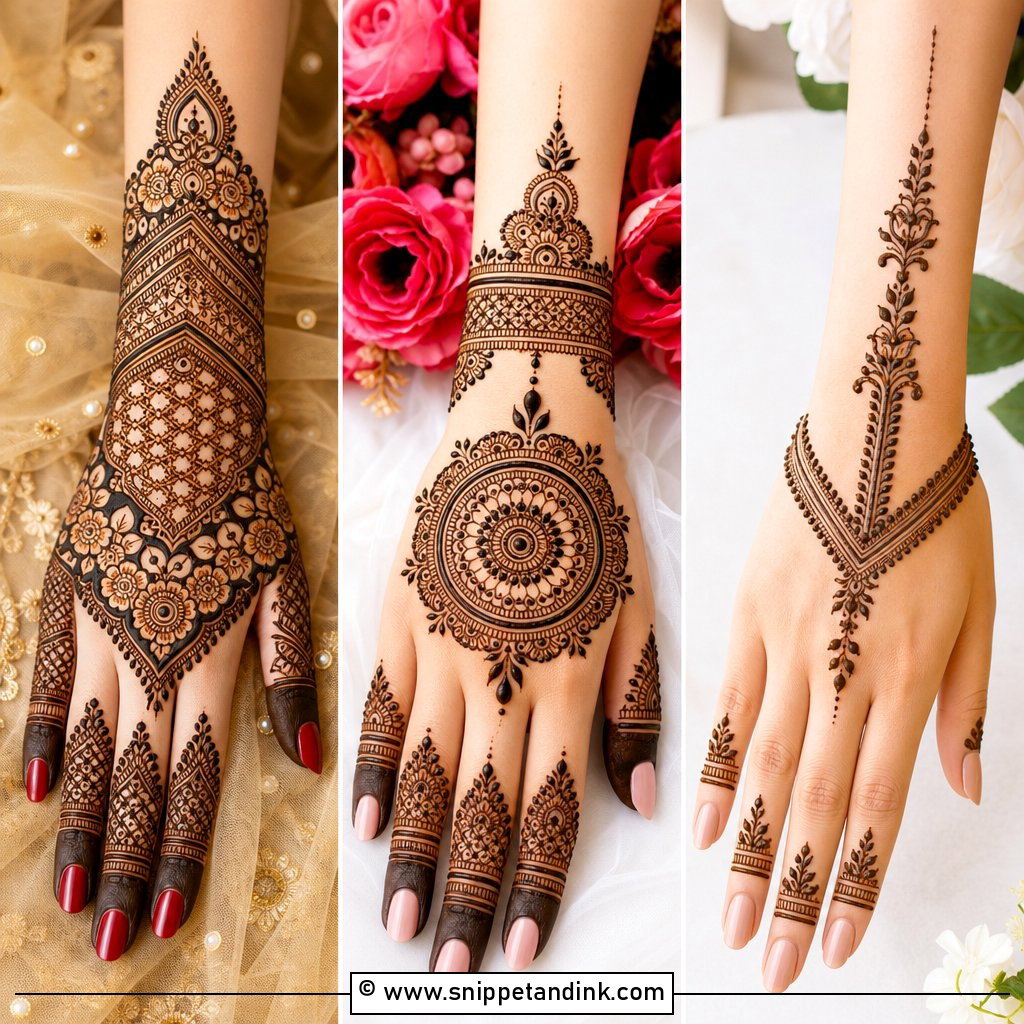
4. Modern Minimal Hand Mehndi Design
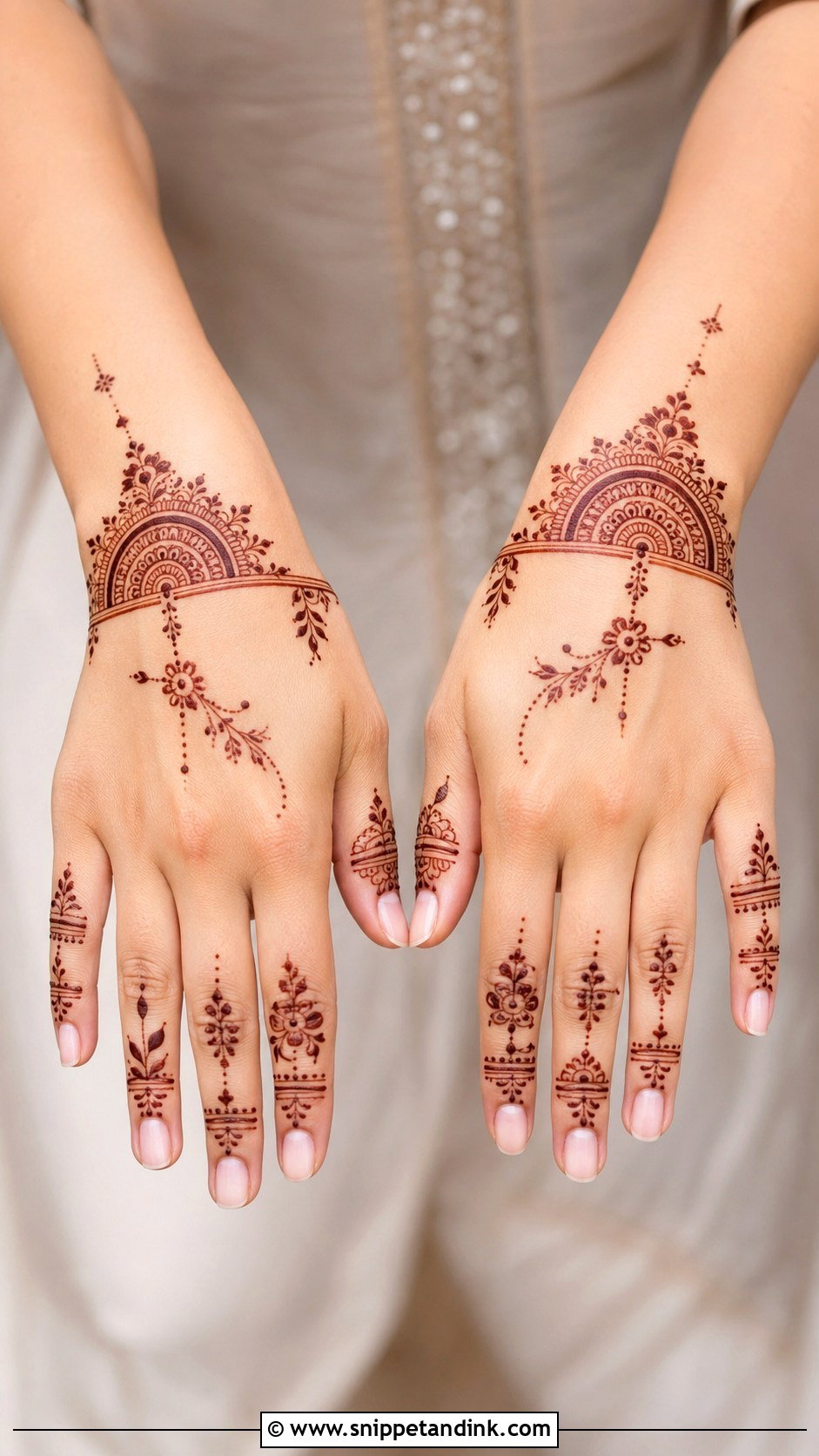
Minimal work relies on placement rather than filling: a half mandala at the wrist, fine finger bands, a small floral trail, or dots across the knuckles. It suits office events, small ceremonies and fusion or western outfits. The hard part, for me, is line weight. Thin lines need a fine cone tip and steady pressure, and any wobble shows because there’s nothing around it to hide it.
5. Indo Arabic Hand Mehndi Design
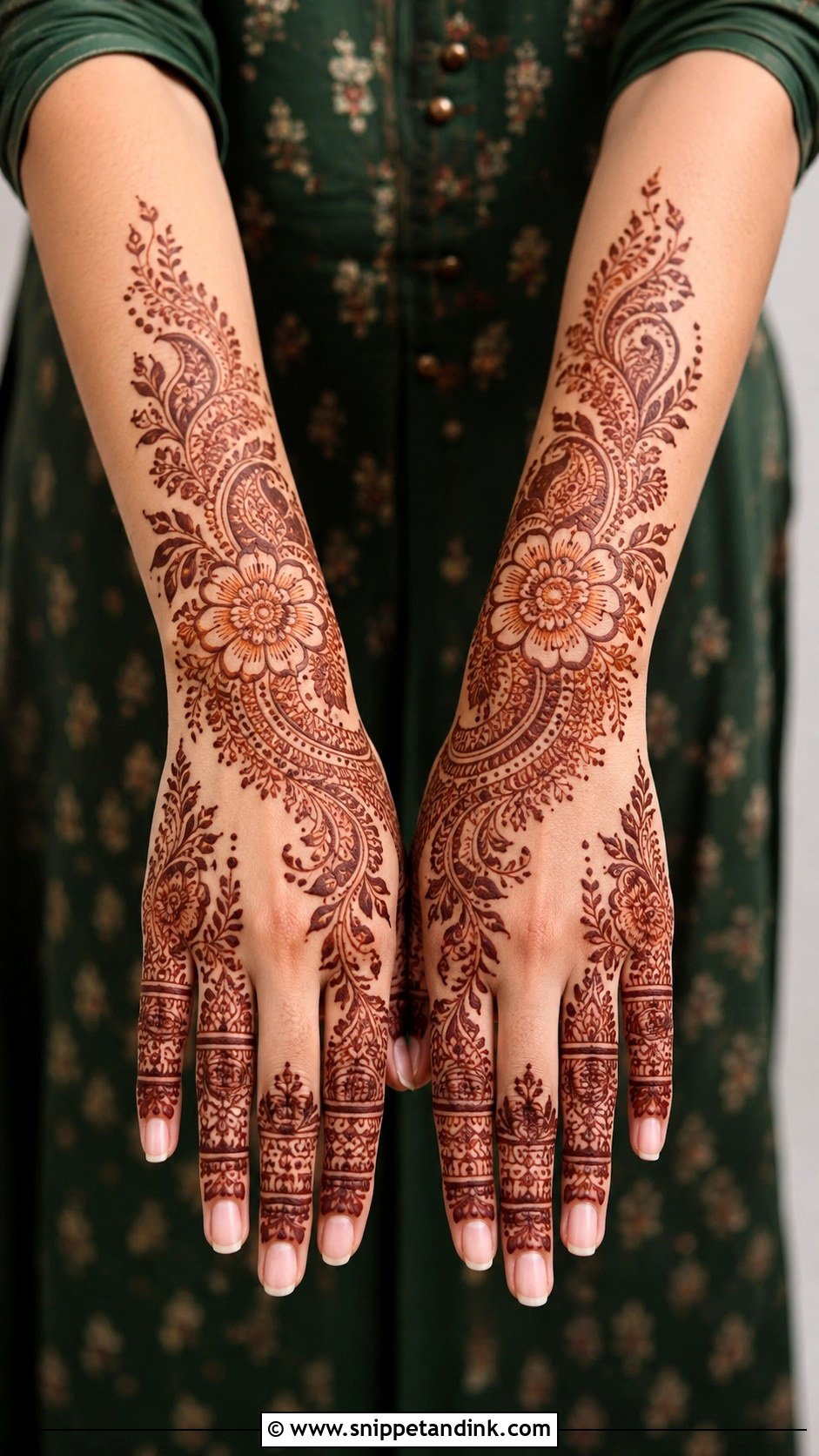
Indo-Arabic takes the bold flowers and vines of Arabic layouts and fills them with Indian detail: dots, checks, small paisleys, fine curves. It gives more coverage than classic Arabic work but stays lighter than dense bridal mehndi, which is why I suggest it to the bride’s sisters and bridesmaids. A common version starts with a floral trail on the back of the hand, then adds detailed fingers and a bracelet at the wrist. The open skin keeps it comfortable through long events.
6. Indian Front Hand Mehndi Design
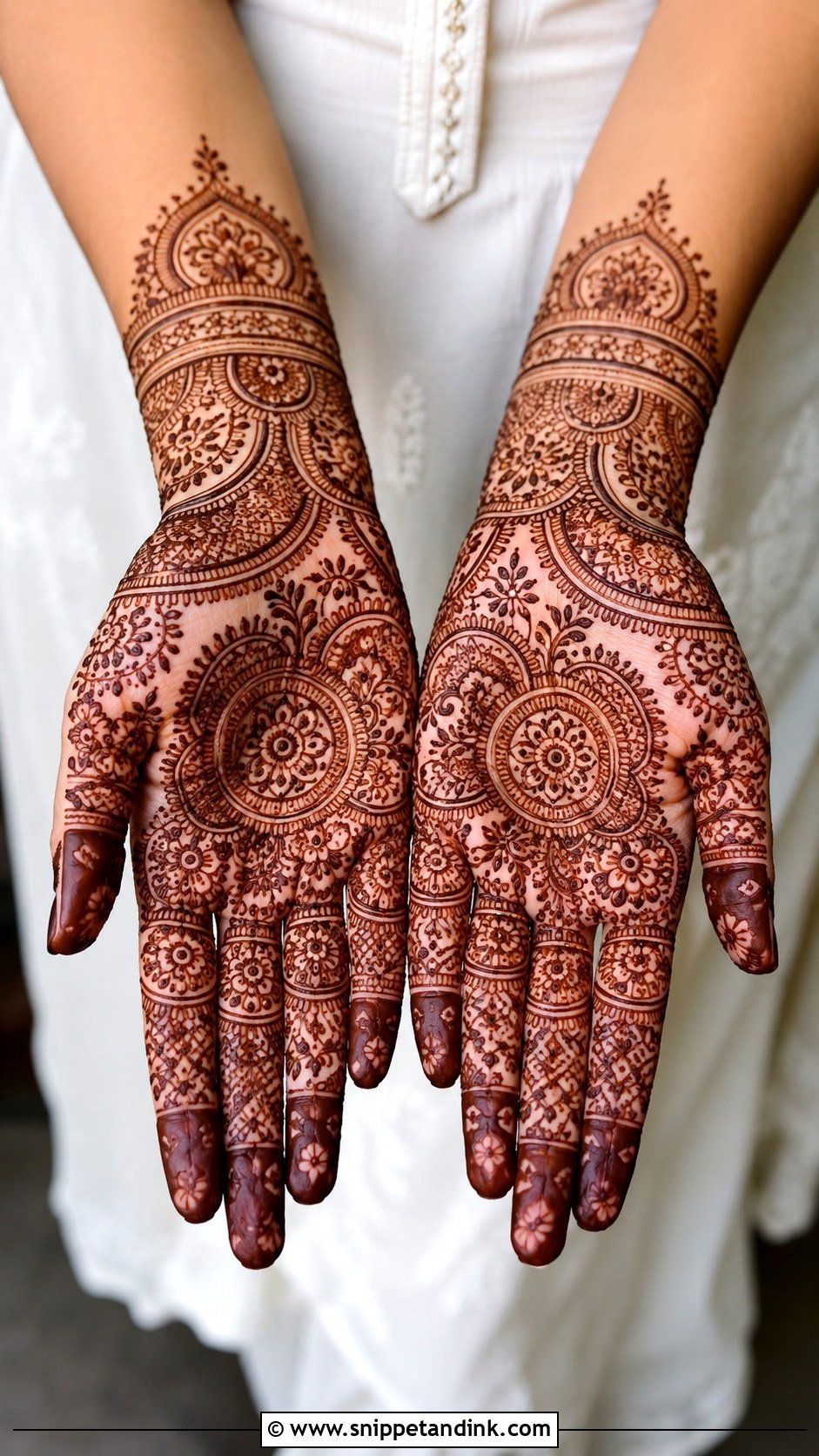
Indian front-hand work fills the palm with paisleys, flowers, circular motifs and fine lines, and finishes the fingers with bands or leafy tips. It belongs at weddings, Karva Chauth, Teej, Diwali and family ceremonies. My rule is one main centrepiece per palm, with everything else built around it; two competing centres make a palm look busy. Mirrored layouts on both hands look particularly striking when you hold them side by side for photos.
7. Back Hand Jewellery Mehndi Design
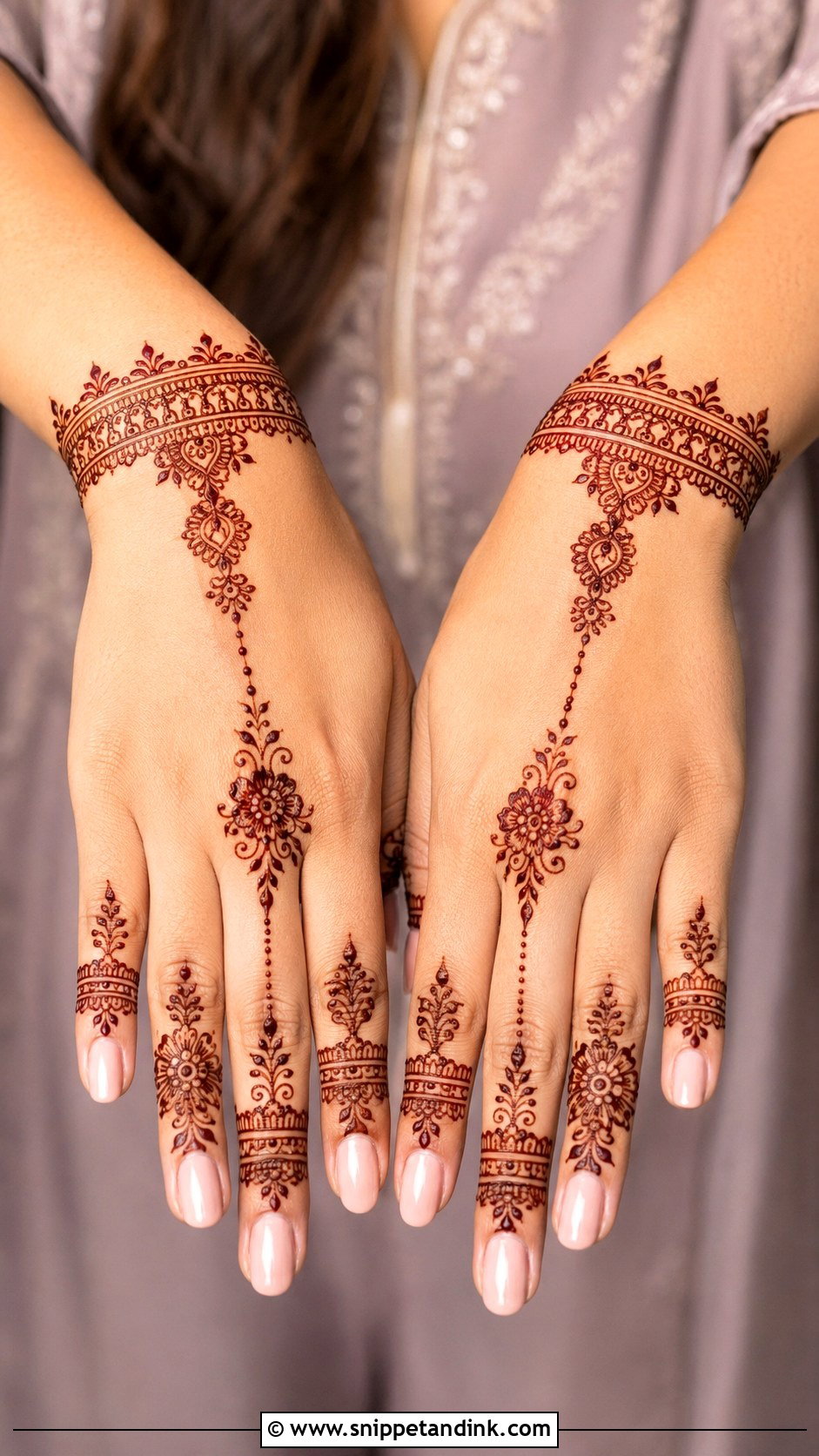
Jewellery mehndi draws hand ornaments in henna: a bracelet at the wrist, a chain across the back of the hand, ring details on the fingers. The back of the hand suits it because its shape naturally resembles haath phool jewelry. The pattern has to look connected, so I draw the chains first and add flowers at the junctions, never the other way round. It pairs well with real bangles and rings for bridesmaids and guests.
8. Mandala Palm Mehndi Design
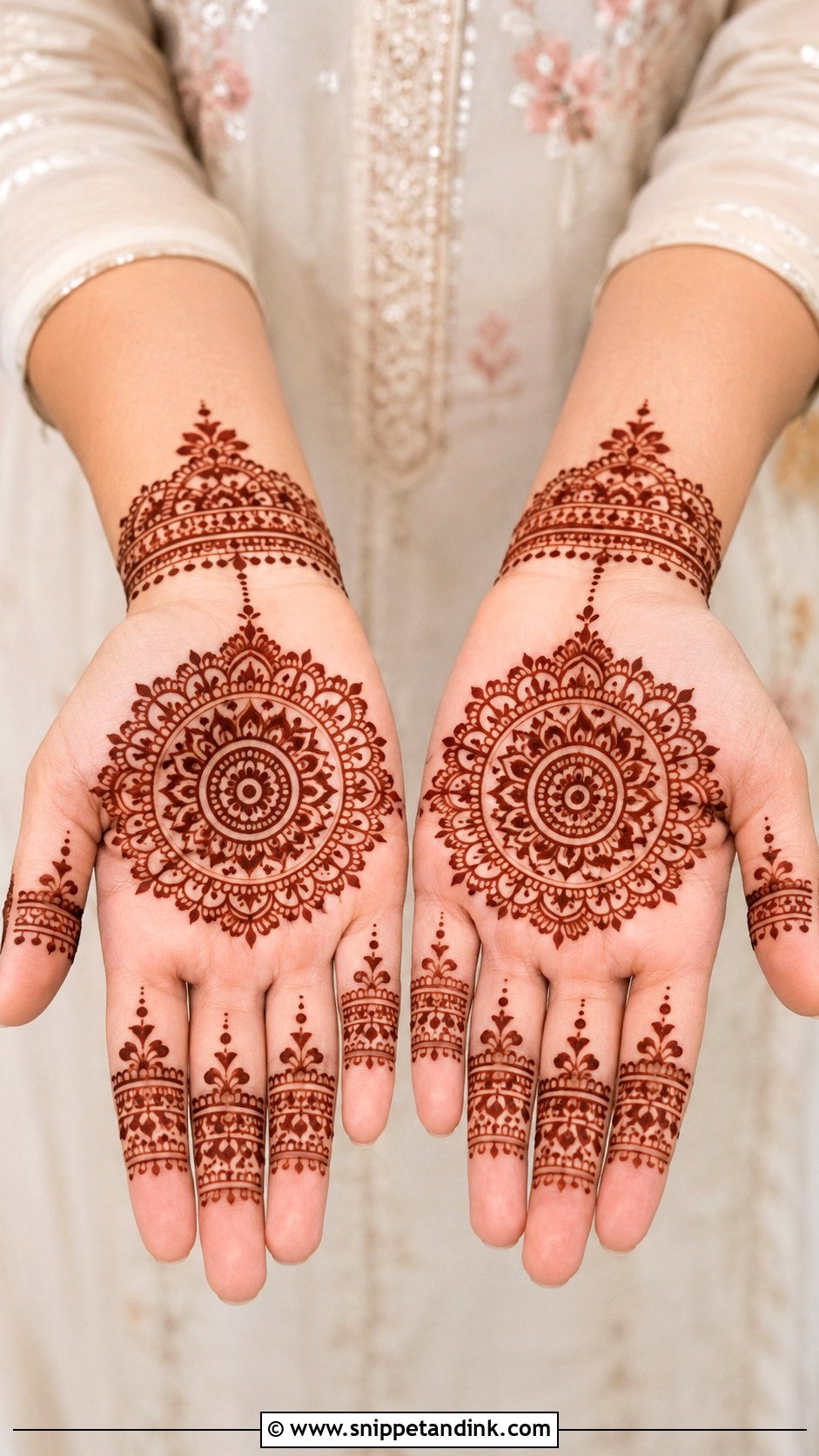
A mandala palm is a round motif in the centre with rings of petals, dots, leaves or curves around it. The structure is so clear that it scales easily: I can stop after two rings for a child or keep going for a bridesmaid. Leave space around it for a clean look, or add wrist borders and filled fingertips for something richer. I check the centre with the hand slightly cupped, the way people actually hold their hands in photos.
9. Floral Trail Hand Mehndi Design
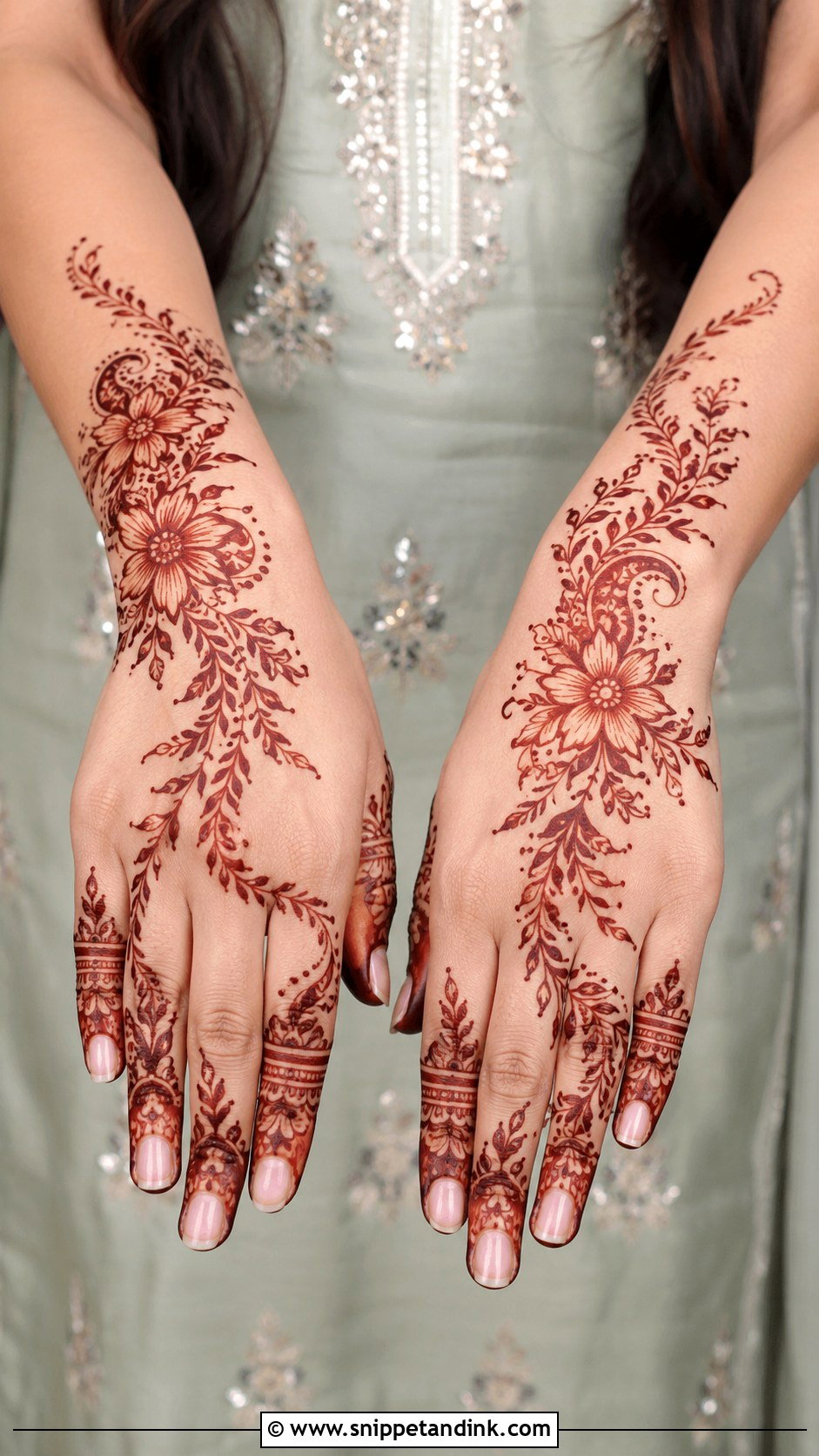
A floral trail moves like a vine from the wrist toward the fingers, with flowers placed along the path. Whether it reads Arabic, Indo-Arabic or minimal depends on how much detail I add. On the back of the hand it follows the length of the fingers, which makes the hand look longer, and I usually finish it on the middle finger, the longest, to stretch that line further. Bigger flowers read bold; smaller ones feel delicate.
10. Peacock Hand Mehndi Design
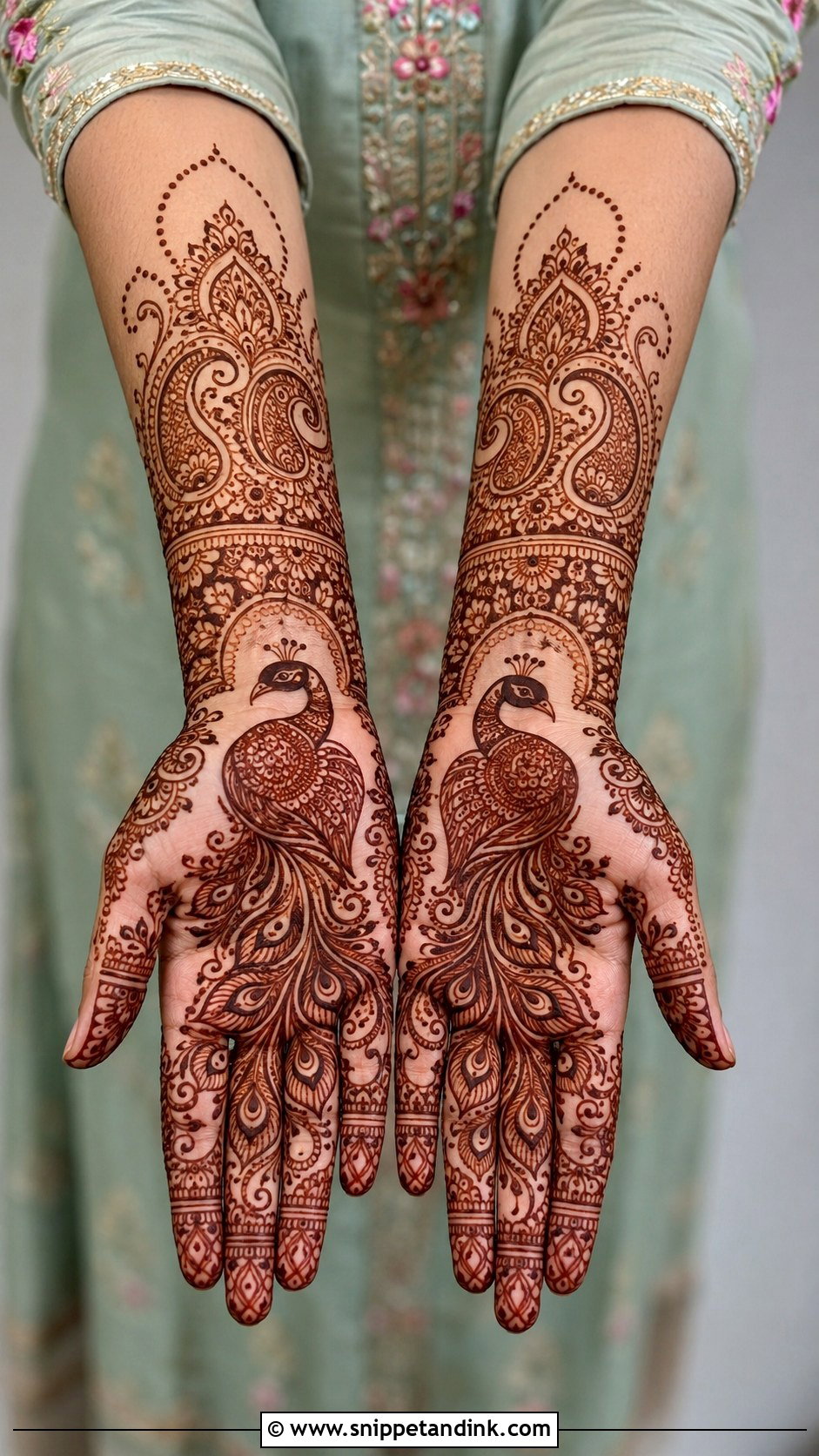
The peacock is one of the oldest motifs in wedding mehndi. A full version is one large bird with flowing feathers, surrounded by paisleys and fillers; a lighter one is a small peacock at the wrist extending into a vine. The bird has to be recognisable at a glance, so I draw the neck curve in one confident stroke before anything else. Shaded feathers give movement without needing portrait-level work.
11. Paisley Hand Mehndi Design
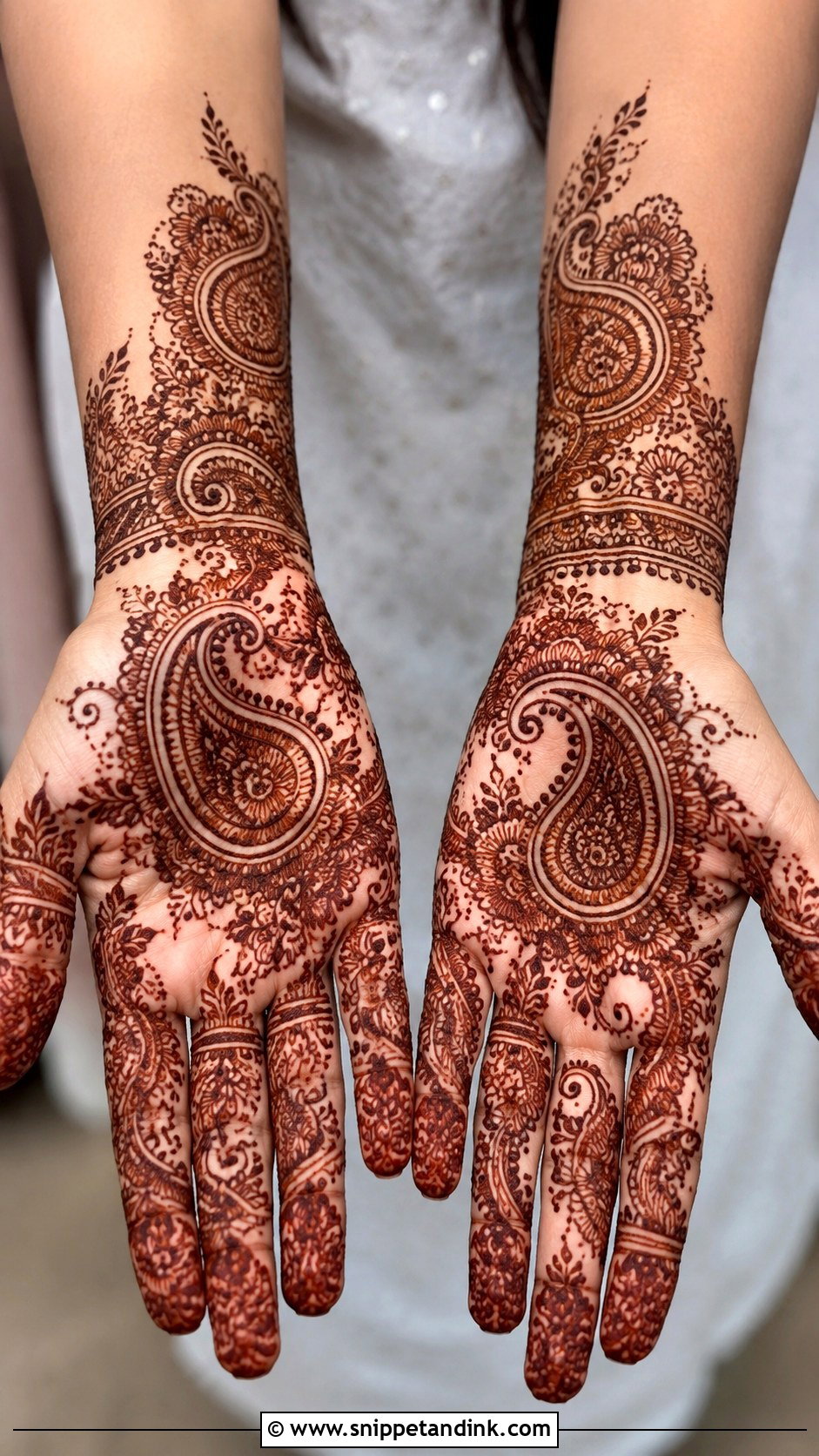
Paisleys adapt to almost any hand: large as a centrepiece, small as filler, or flowing along a vine, on the palm or the back. For brides I layer them with jaali and floral bands; for a simpler event, one large paisley trail is enough. I angle the paisley tips toward the fingers, because their curve leads the eye along the hand and makes it look longer.
12. Finger Mehndi Design For Hands
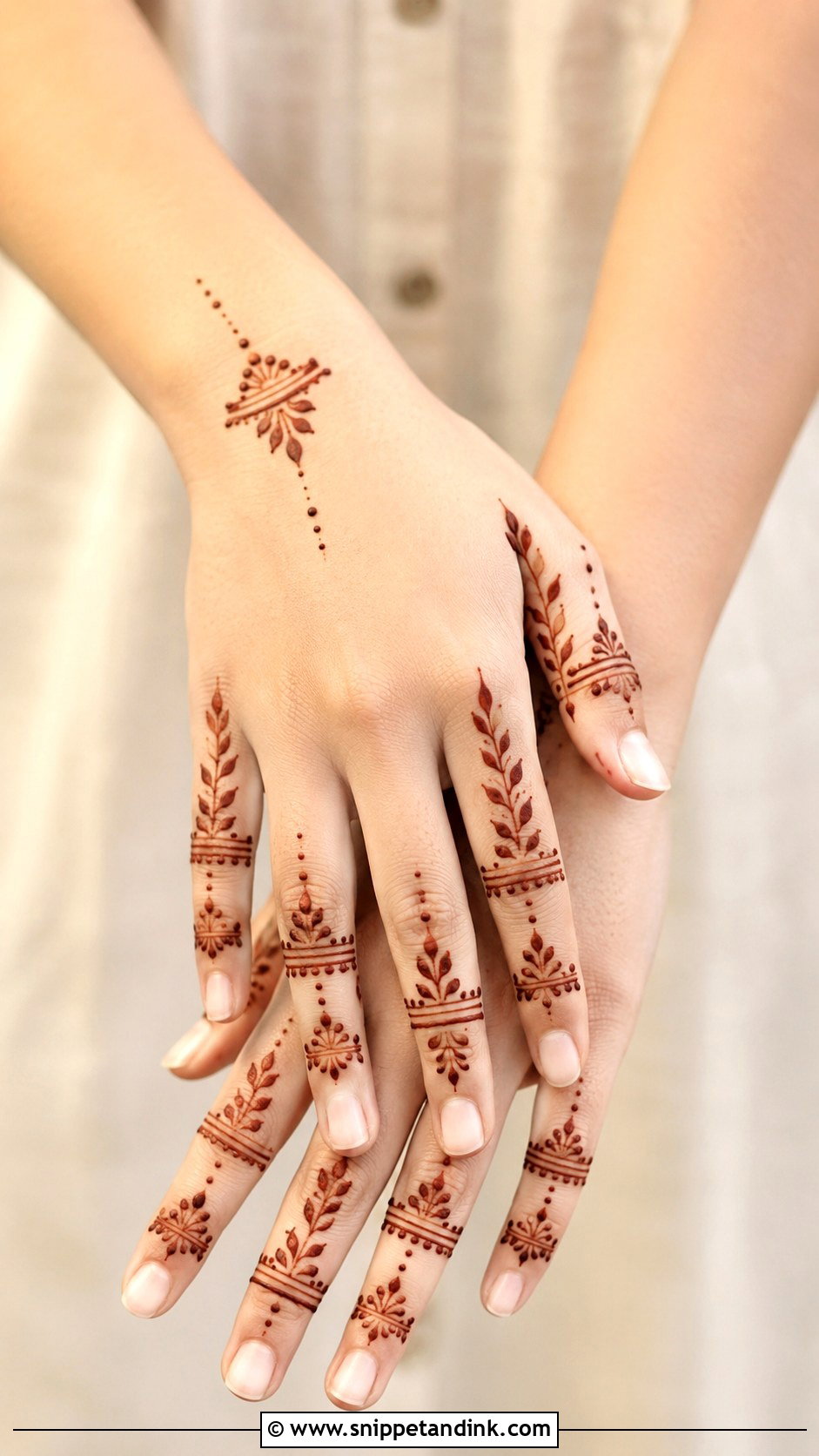
Finger-only designs leave the palm and back of the hand clear, with bands, leaves, dots, checks or tiny floral lines on each finger. They suit modern outfits and anyone who dislikes heavy henna. Fingertips stain darker than almost anywhere else, so even a light design reads well. I measure the bands against the knuckle creases so every finger matches, and a slim wrist cuff ties it together.
13. Bracelet Hand Mehndi Design
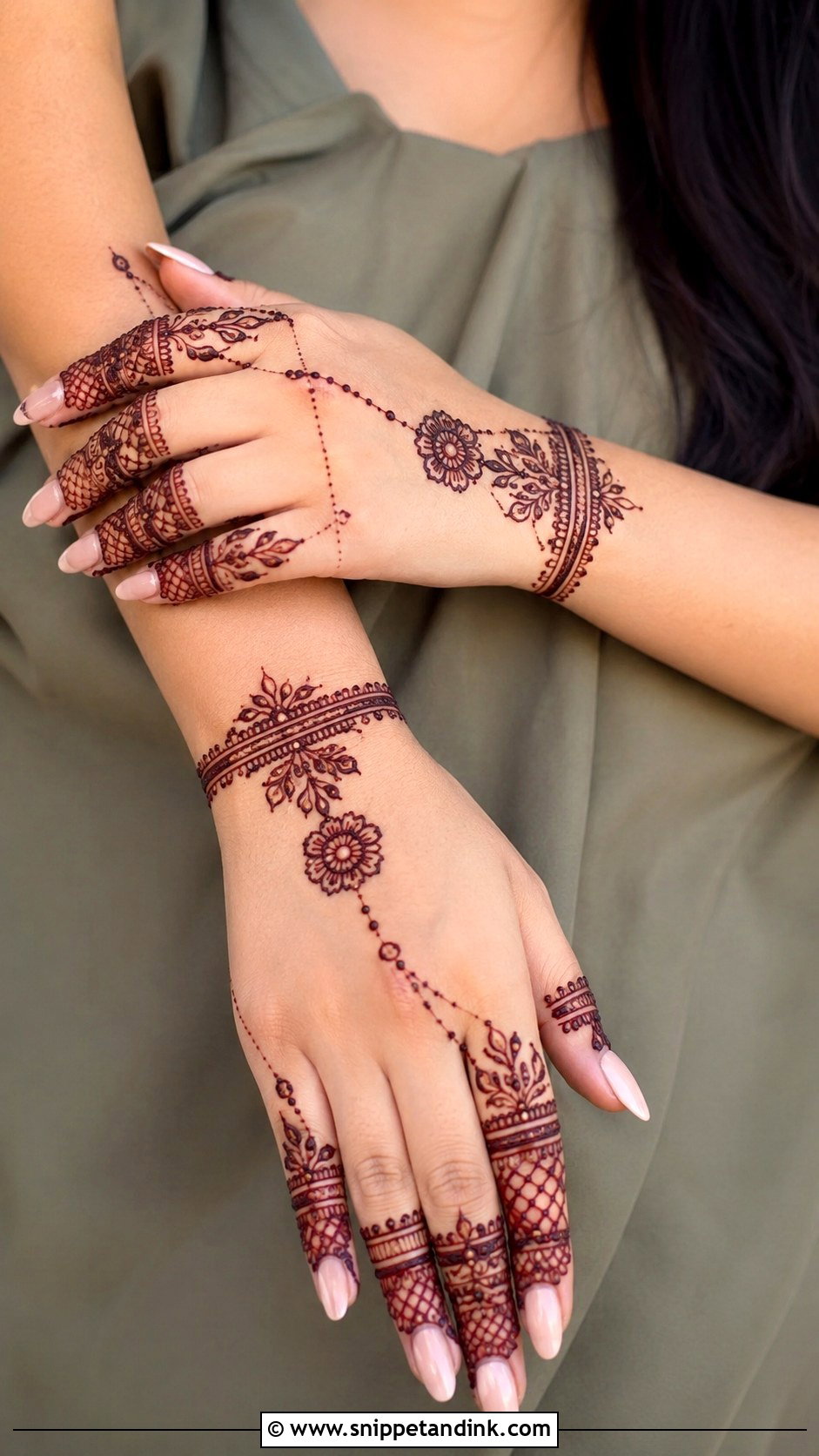
A bracelet design draws a cuff around the wrist, often linked by a chain to rings on one or two fingers and a small floral on the back of the hand. Bold outlines read like gold; fine dots and leaves like delicate filigree. I keep the cuff just below the wrist bone, because a band drawn right on the crease smudges the moment the wrist bends while the paste is wet. It complements real jewelry rather than competing with it.
14. Jaali Hand Mehndi Design
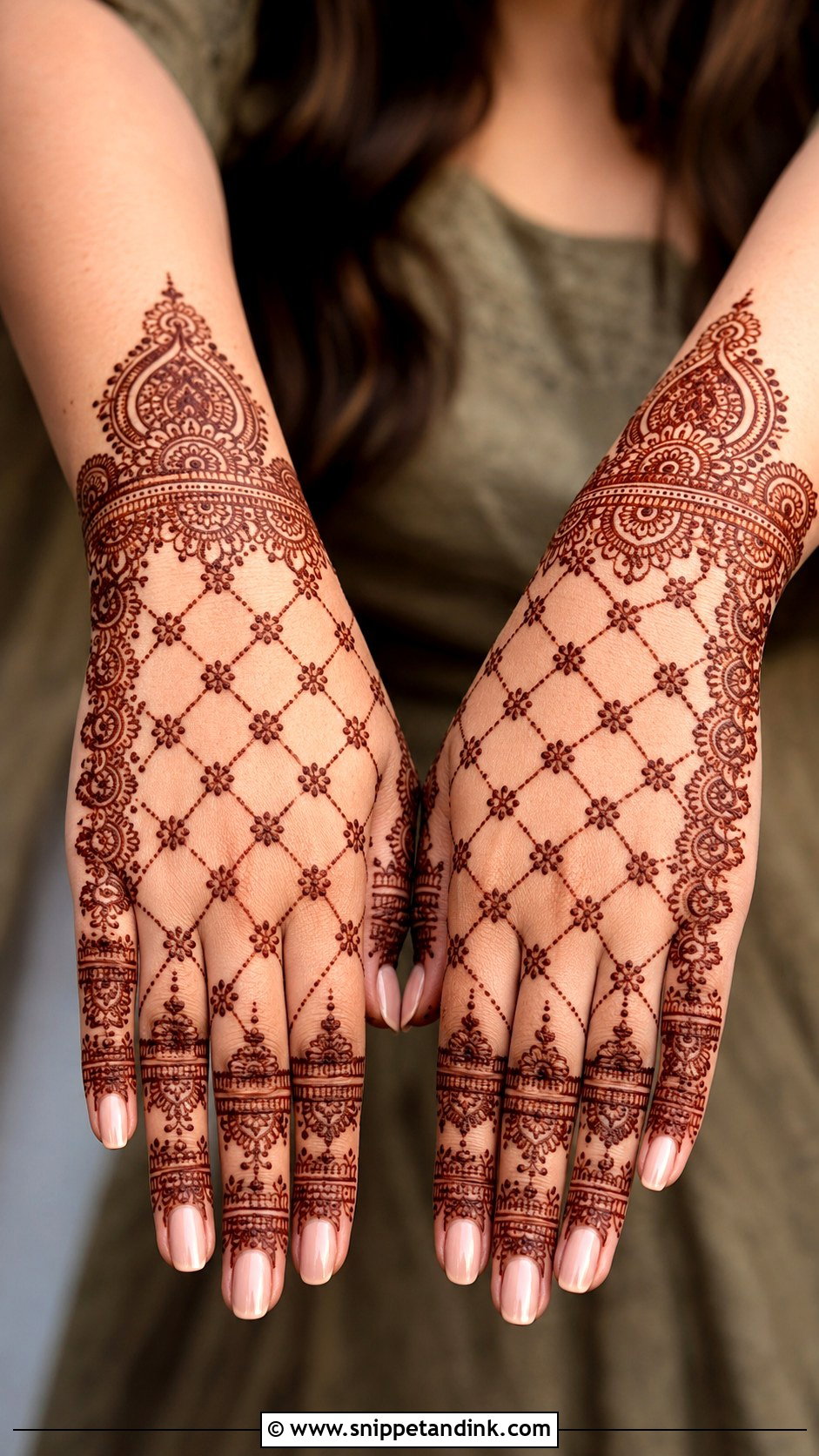
Jaali is net-like mesh, often paired with flowers, borders or paisleys. It gives fullness without darkness, because the open squares or diamonds leave so much skin showing. The lines must be evenly spaced, and one uneven row makes the whole net look messy, so I lay down every line in one direction before crossing them. A jaali back hand with a wrist cuff feels refined; a palm jaali with mandalas feels more traditional.

15. Moroccan Hand Mehndi Design
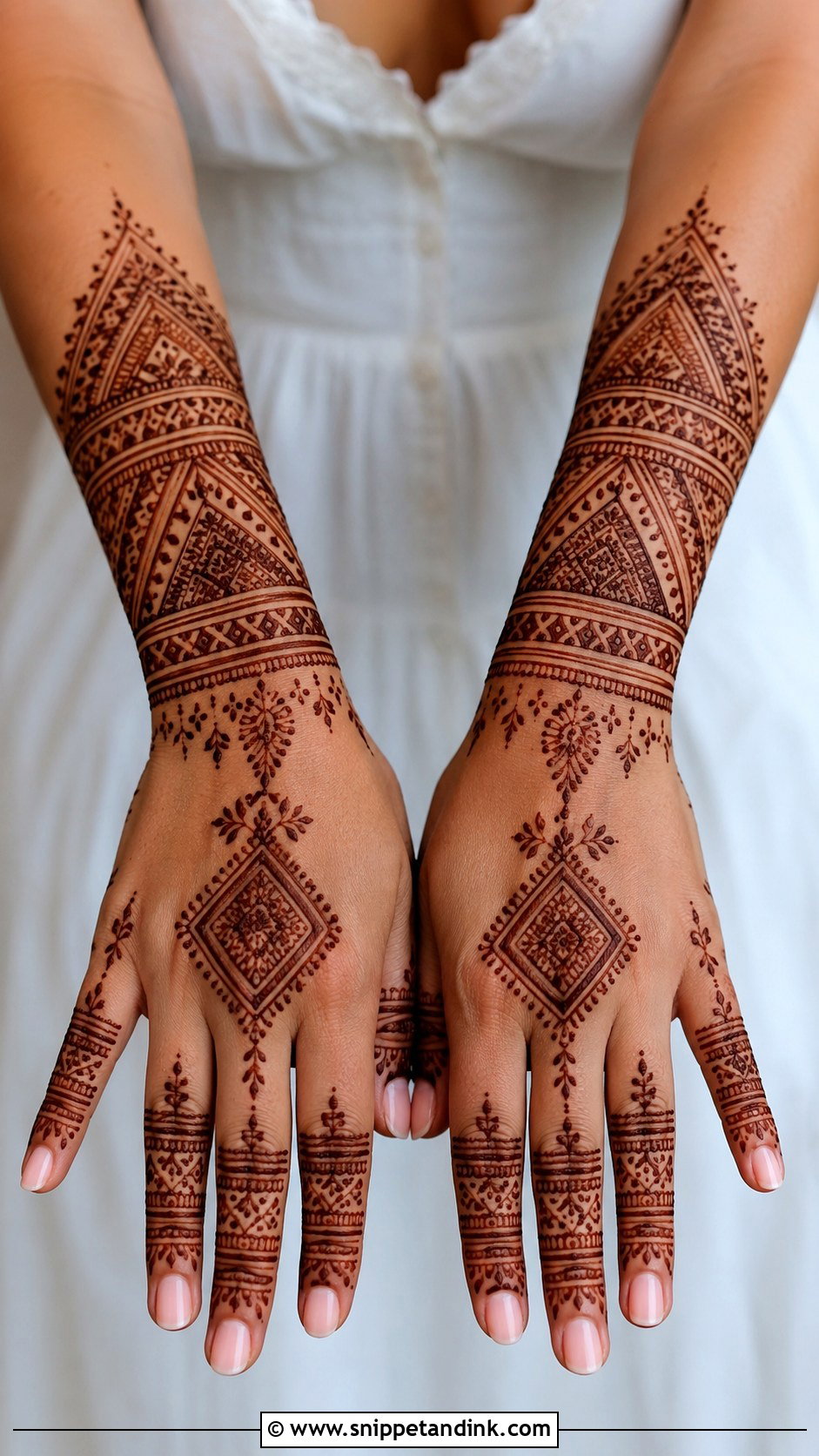
Moroccan-inspired work is pure geometry: diamonds, triangles, lines, dots and structured panels. It suits someone who wants something less common, and it sits well with simple outfits and contemporary jewelry. Straight lines are harder in henna than curves, since the cone has to move at a steady speed or the line thickens wherever it pauses. On the back of the hand, the panels follow its bones neatly.
16. Gulf Khaleeji Hand Mehndi Design
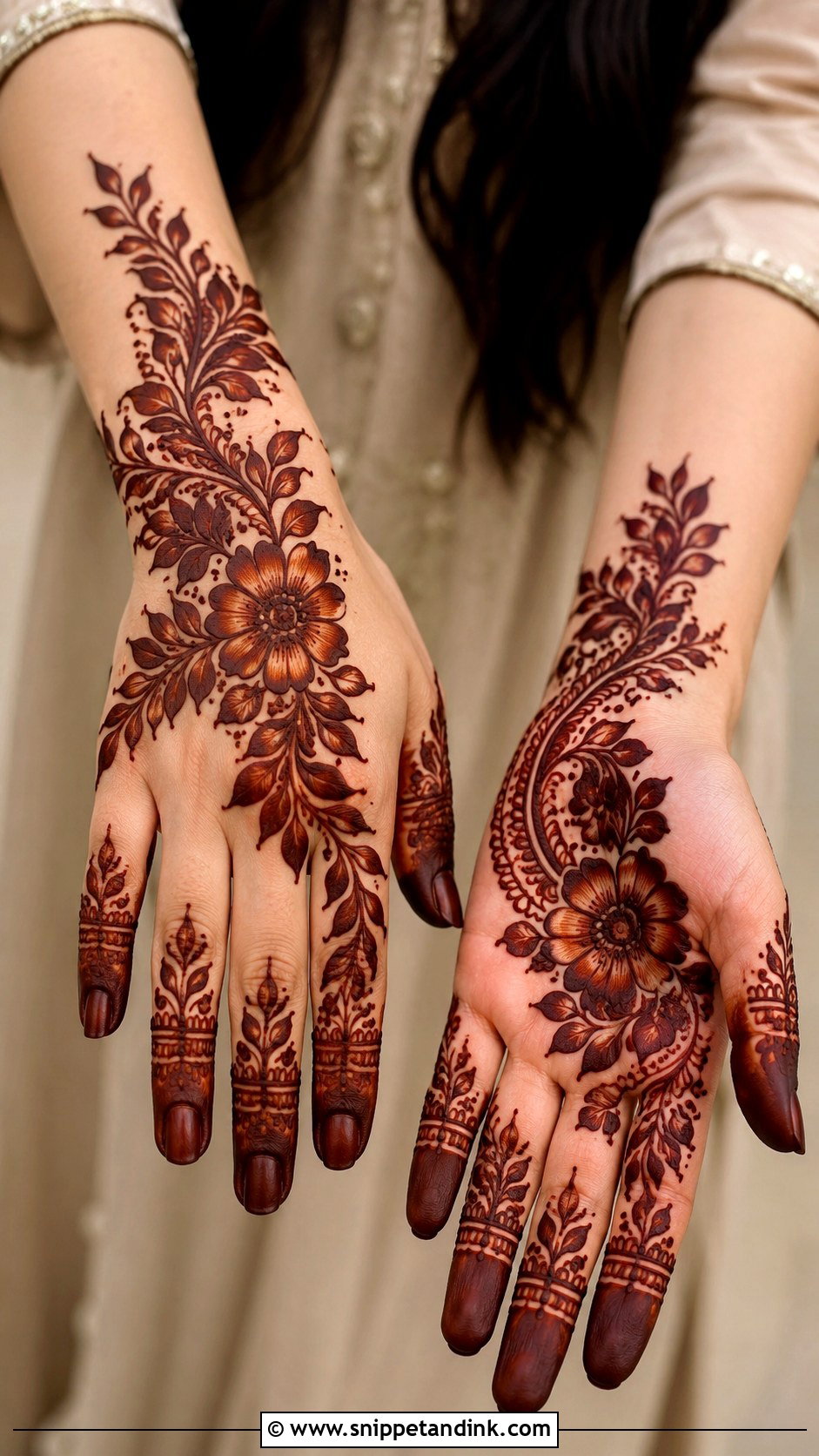
Gulf Khaleeji style is bold, floral and spacious: large flowers, leafy vines and shaded petals with open skin around them. It makes a statement at Eid and weddings without dense coverage. I outline thickly so the shapes hold as the stain deepens, then shade the petals with a lighter touch. A complete look might include large roses, curved vines, filled fingertips and a soft wrist border.
17. Shaded Hand Mehndi Design
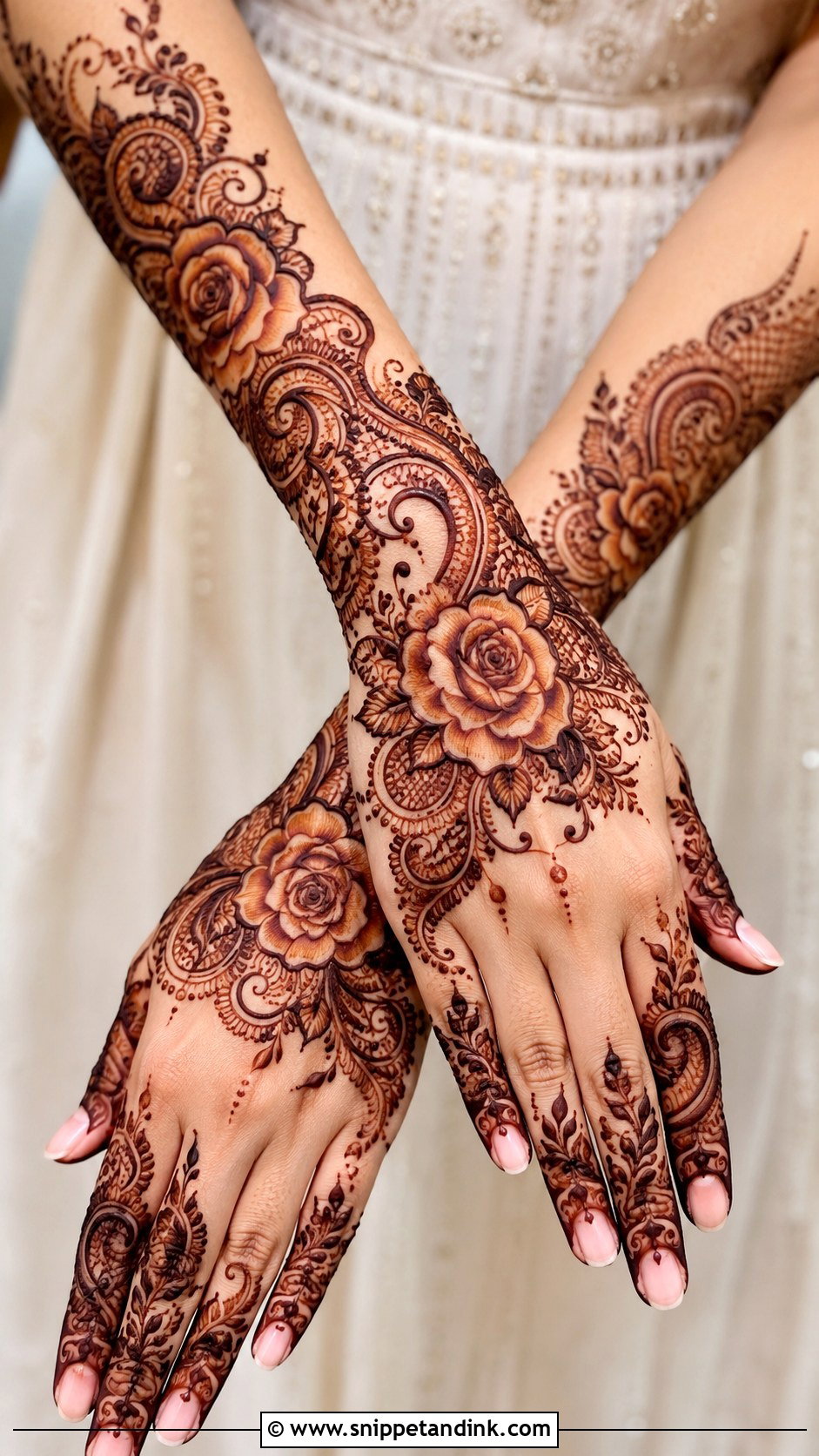
Shading fills petals, leaves, paisleys or borders with a lighter or darker tone, controlled entirely by cone pressure. A light, even fill reads soft; a heavy fill reads bold. It’s what makes large Arabic and Indo-Arabic motifs stand out. My caution is that shading everything flattens the design, so I shade selected petals and leave others outlined, and the contrast does the work.
18. Rose Hand Mehndi Design
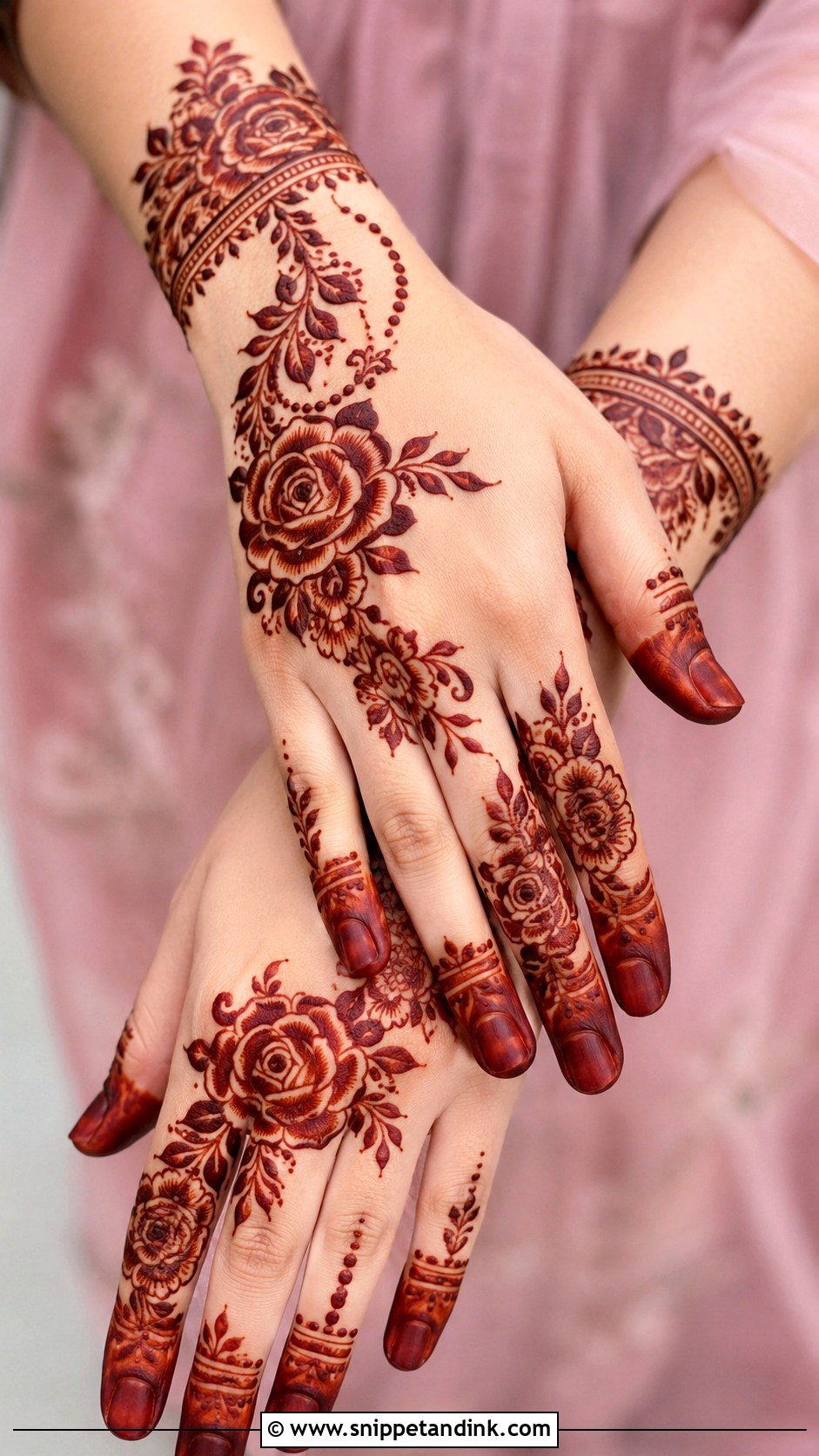
Roses give a soft focal point, especially on the back of the hand, where the rounded petals have room. A complete design includes the blooms, leafy vines, finger details and a wrist border. For a modern look I use a few large roses with open space; for a traditional one I add fine fillers around them. I build each rose from the centre spiral outward, which keeps the petals even.
19. Lotus Hand Mehndi Design
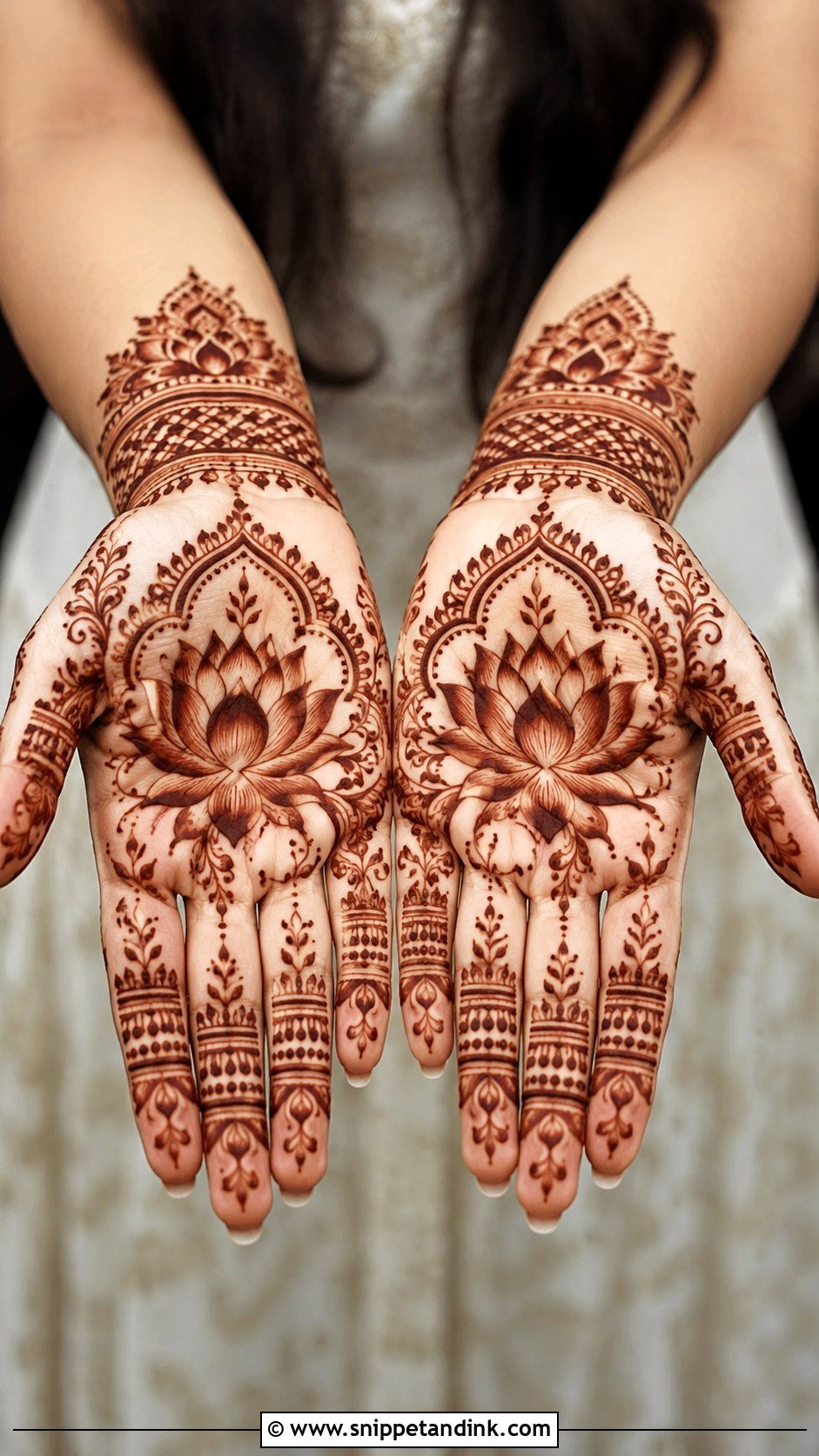
The lotus works as a palm centrepiece, a wrist detail or a back-hand feature, and people often choose it for pujas, weddings and festivals for its meaning. Layered petals, fine leaves and dots extend toward the fingers. A lotus has to be symmetrical, so I place the centre petal first and build the pairs out from it. Keep it simple with one large lotus and light finger bands, or surround it with jaali and paisleys.
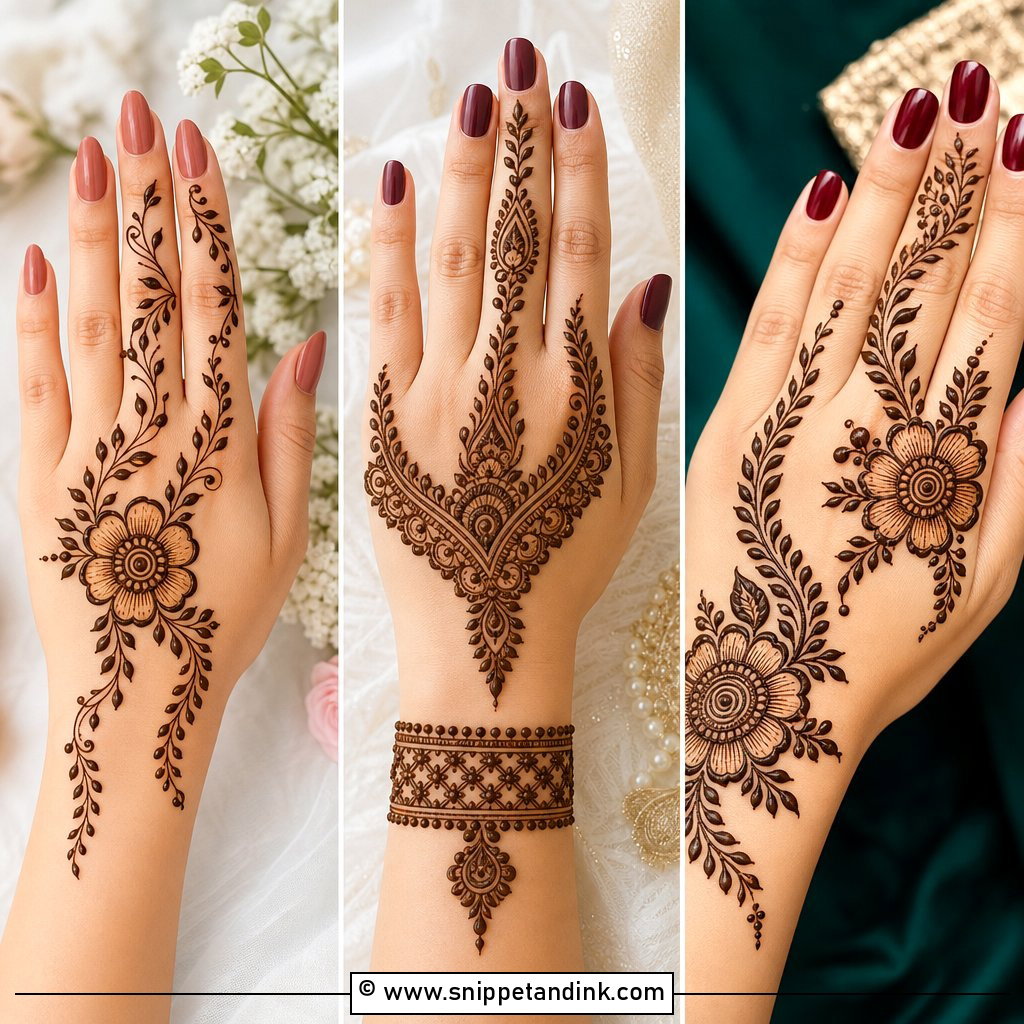
20. Half Hand Mehndi Design
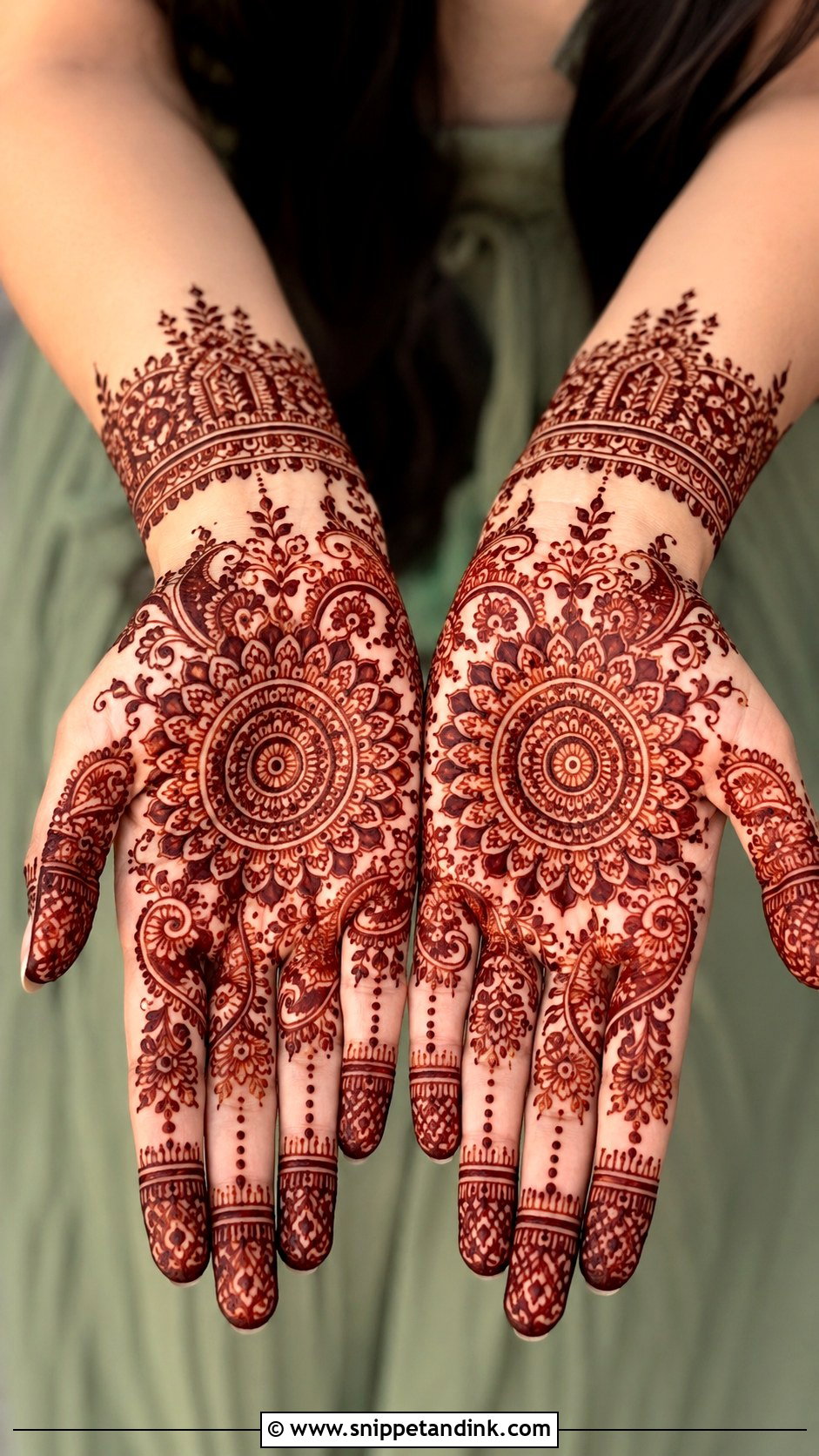
Half-hand designs cover the palm and fingers, or the back of the hand and wrist, and stop before the forearm. They’re quicker, more comfortable for long events, and plenty for photos. Floral trails, mandala palms, Arabic vines and bracelet layouts all work. The design needs a clear end, so when I map a half-hand design, I stop the pattern just past the wrist crease with a cuff or curved border, and it looks finished instead of cut off.
21. Full Back Hand Mehndi Design
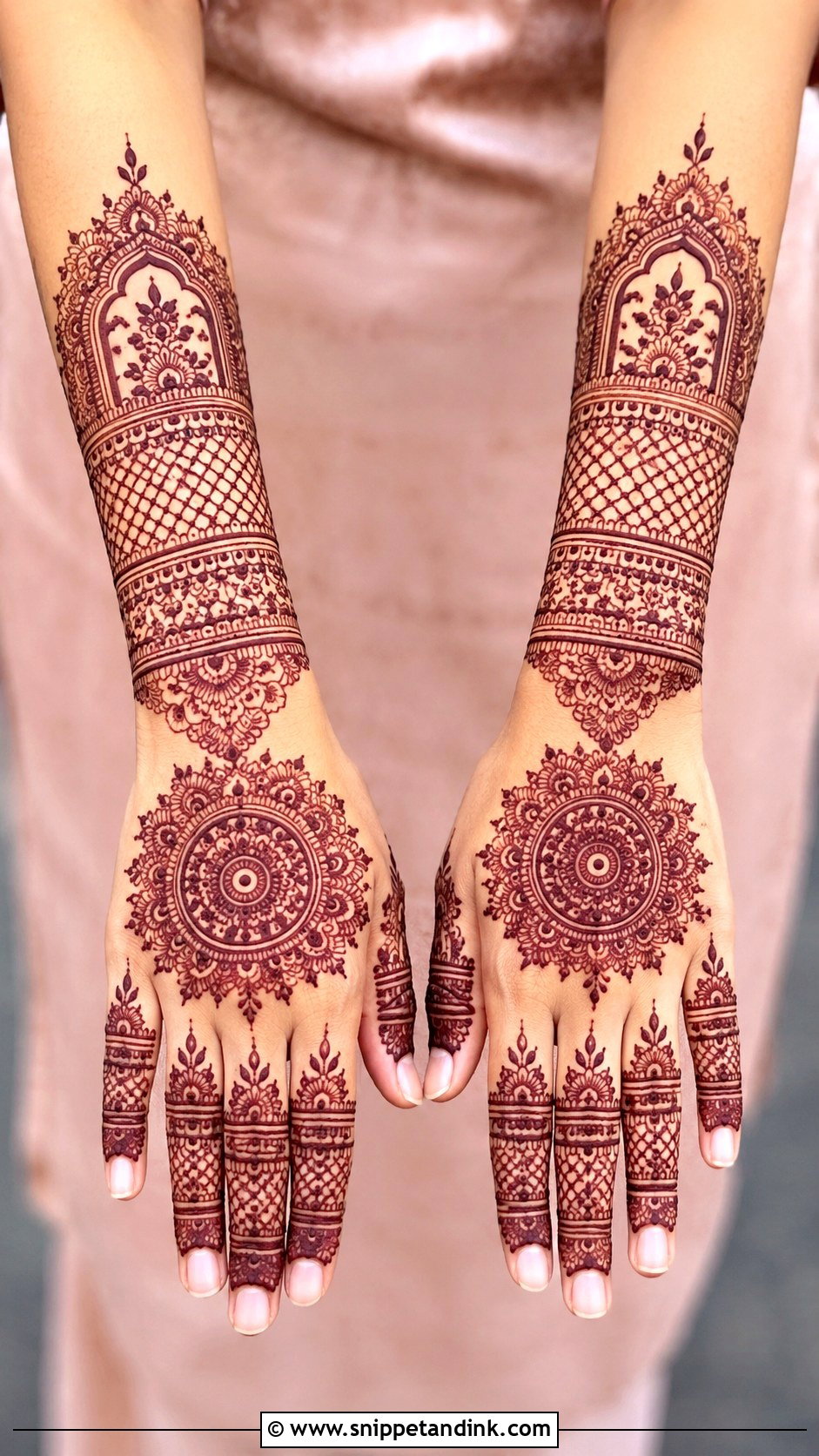
Full back hand mehndi design covers the hand from fingertips to wrist, sometimes a little beyond, and it gets photographed constantly at engagement shoots and bridal events. A central mandala, jaali, floral panels, finger bands and a bracelet can all fit. The back of the hand stains lighter than the palm, so I use bolder outlines here than I would inside the hand. Balance dense areas with lighter ones so it doesn’t look flat.
22. Easy Hand Mehndi Design
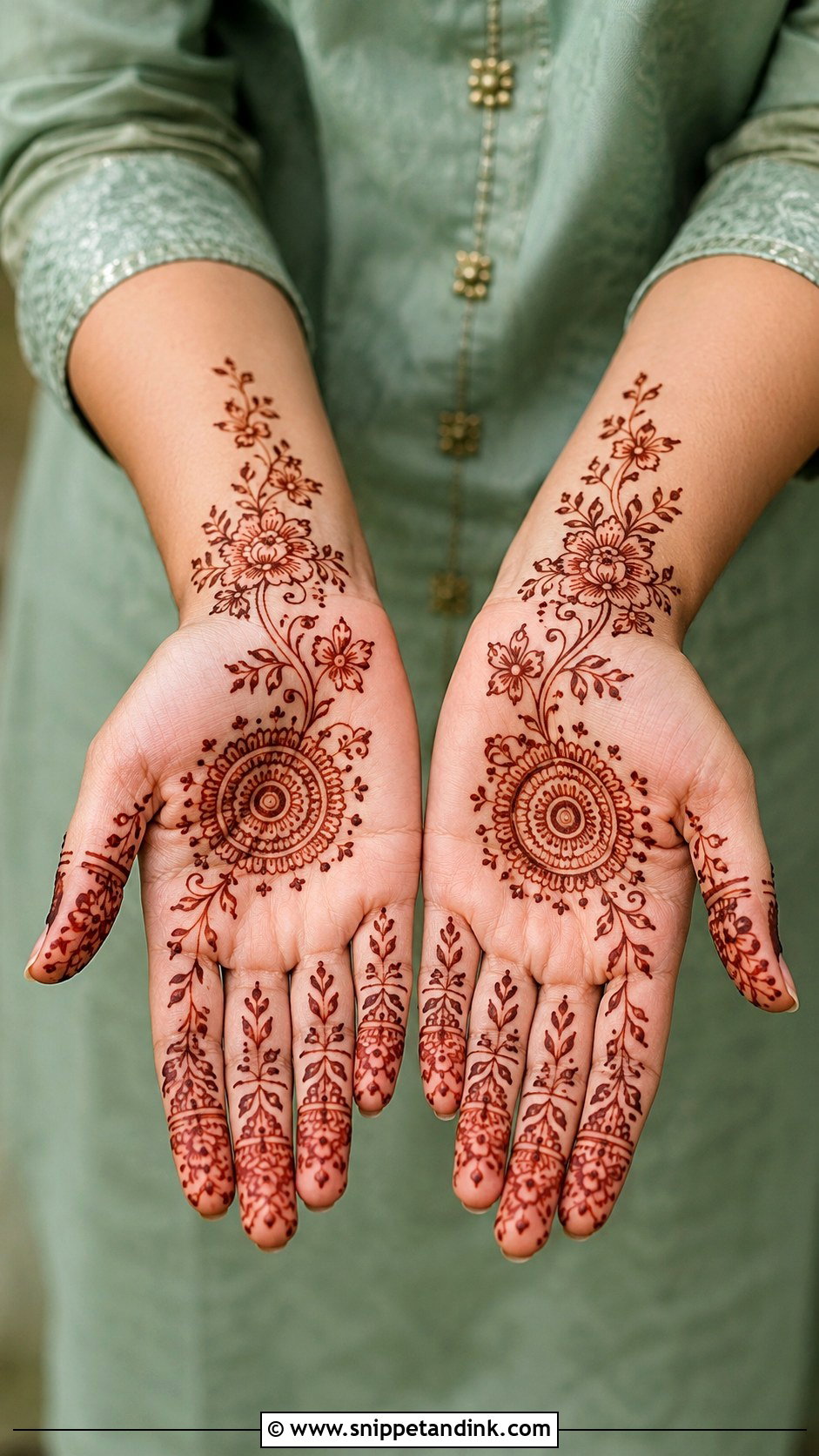
Easy designs rely on basic shapes repeated neatly: circles, leaves, flowers, dots and curved vines. A small palm mandala, decorated fingers and a narrow wrist border make a complete look; on the back, one diagonal floral trail is enough. It’s what I’d suggest for a last-minute festival design or a first attempt at home, where clean lines matter far more than detail.
23. Kids Hand Mehndi Design
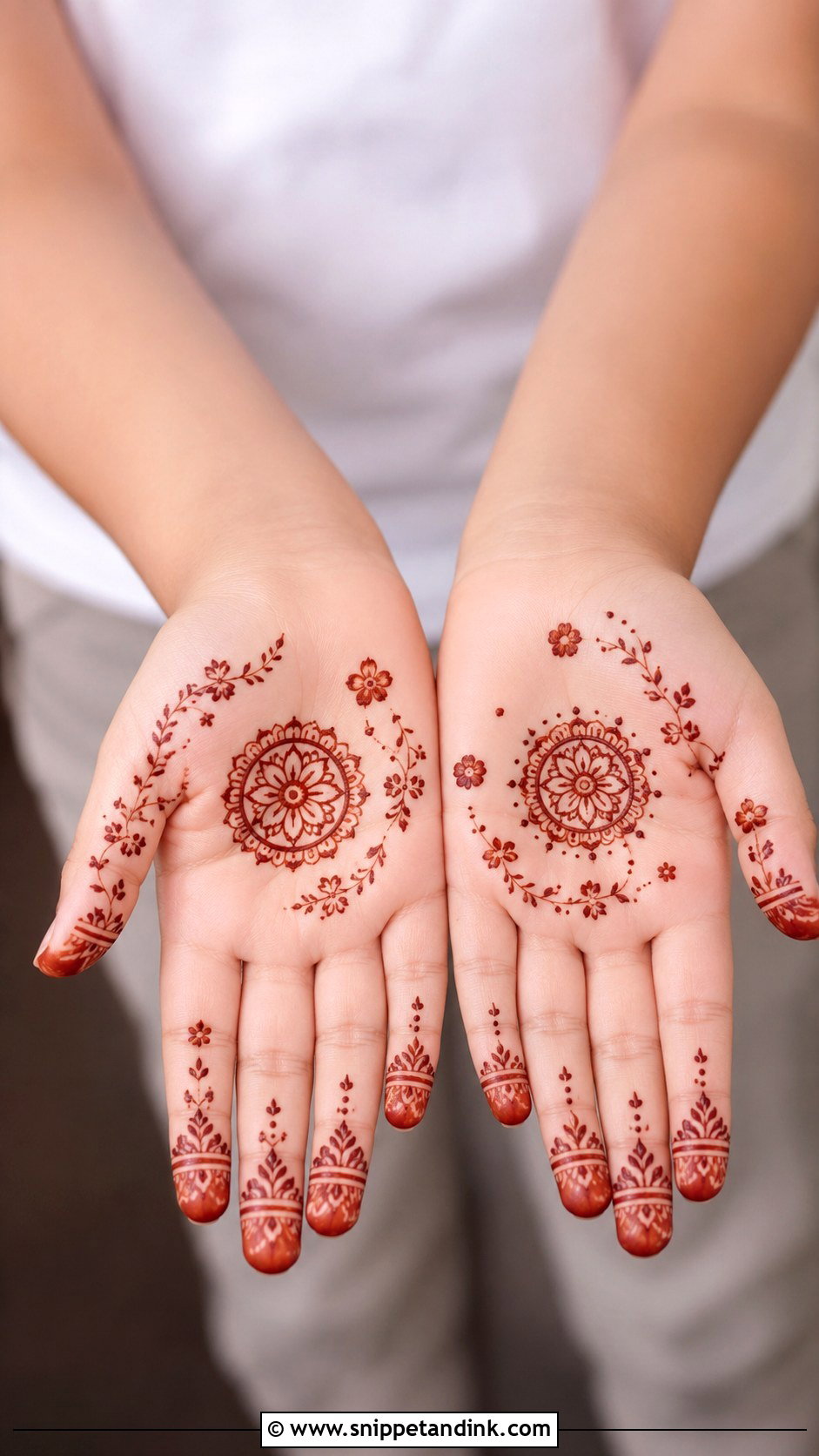
Children rarely sit still for long, so I keep their designs quick: a small round motif in the palm, little vines on two or three fingers, or a back-hand bracelet. Dense patterns take too long and get smudged before they dry. I use only natural henna on children, and not much of it, since young skin can be more sensitive. Let it dry fully before they run off to play.
24. Engagement Hand Mehndi Design
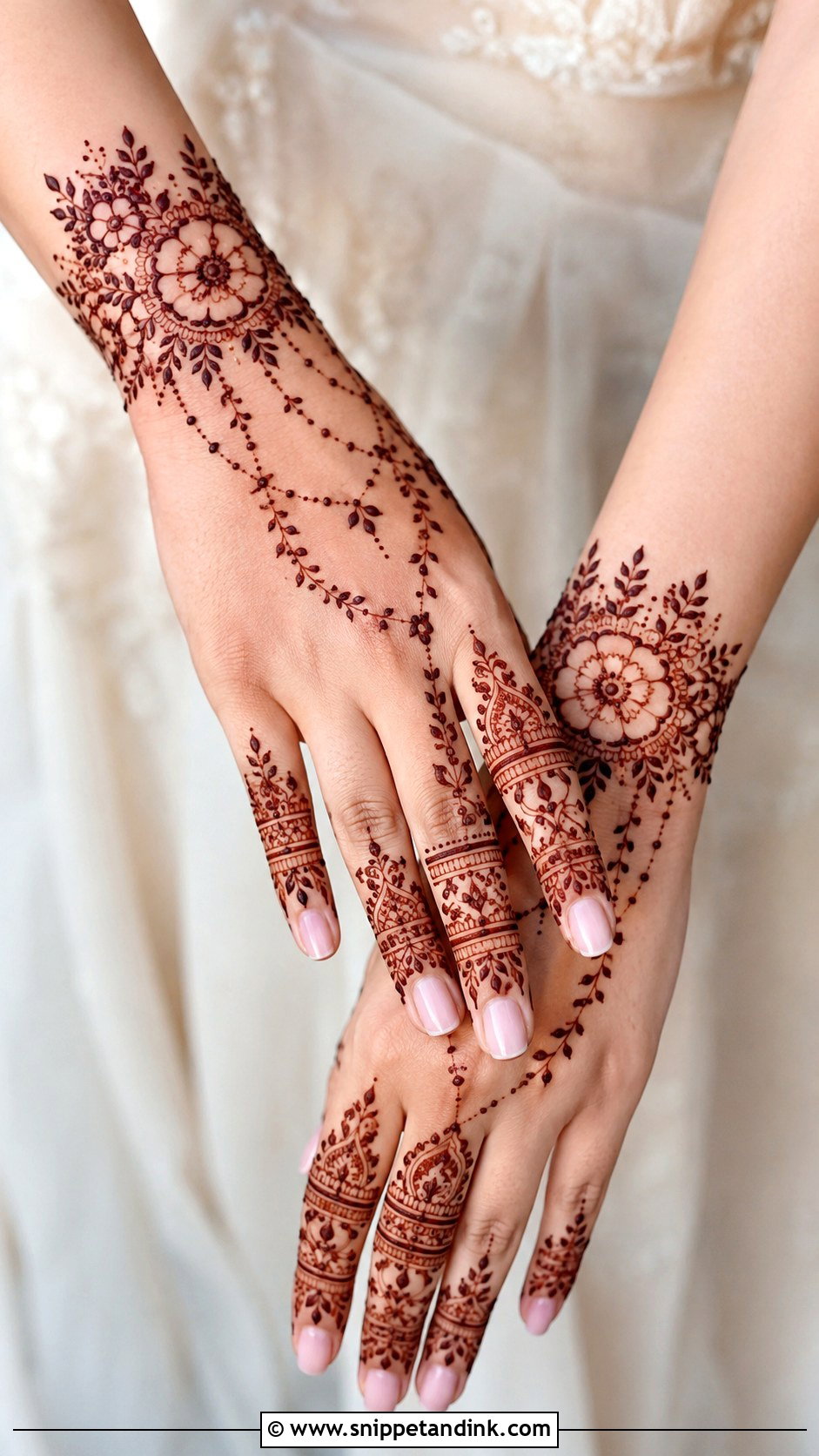
Engagement hand mehndi design sits between guest and bridal: floral motifs, a bracelet, a soft centrepiece and some emphasis on the ring finger. Initials or small chains add a personal touch. Hands are photographed constantly during the ring moment, so I keep the base of the ring finger clear enough for the ring to show and put the detail higher up. Indo-Arabic coverage suits a fuller look; minimal finger work suits a modern ceremony.



25. Eid Hand Mehndi Design
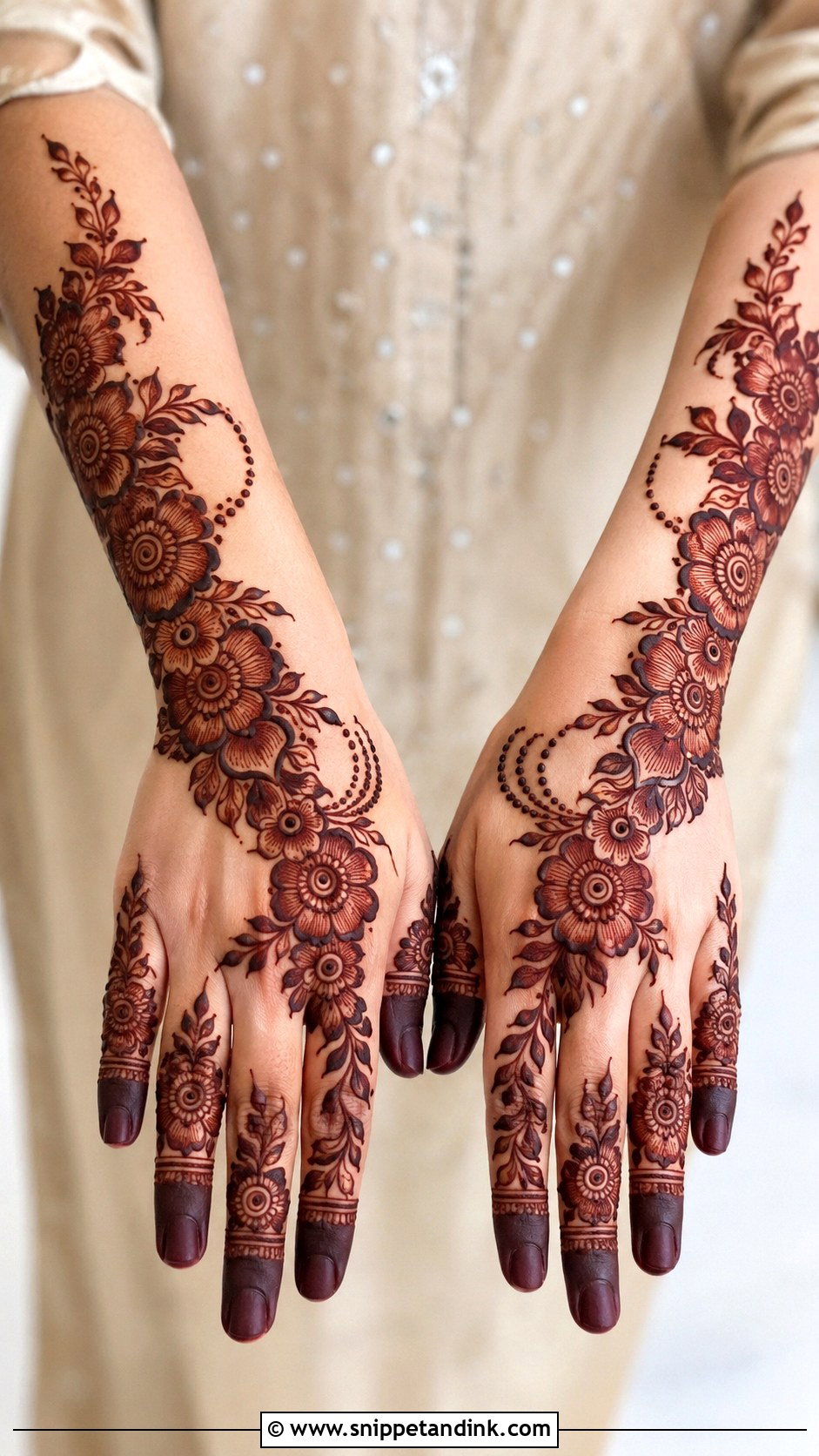
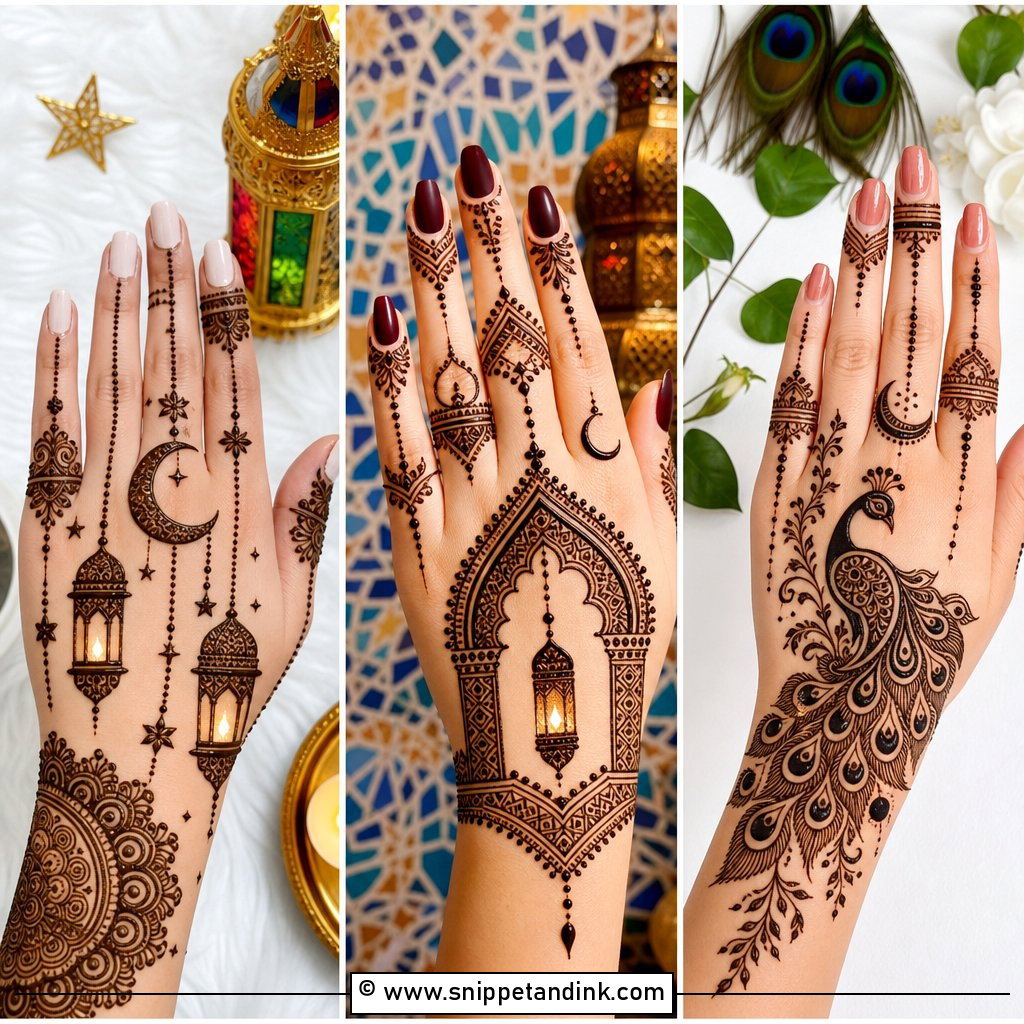
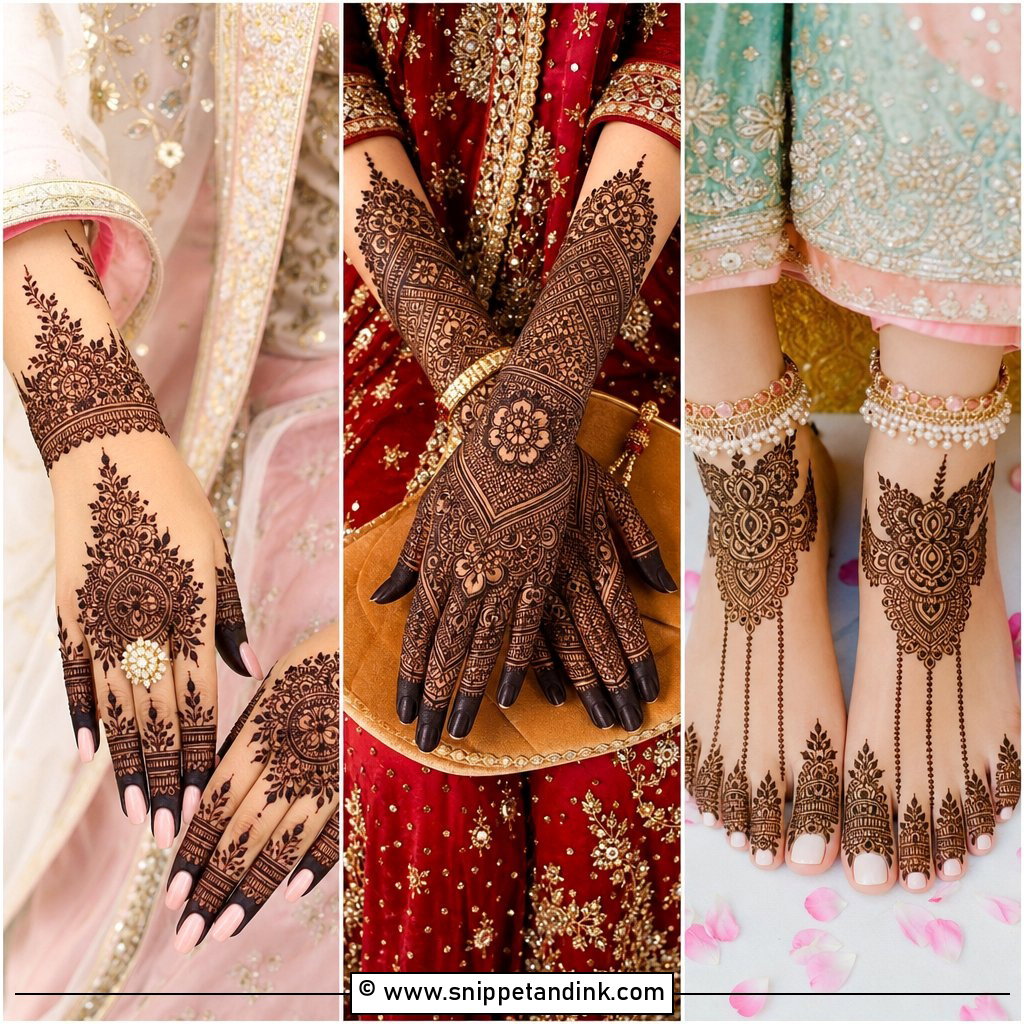
For Eid, people tend to choose Arabic trails, floral back-hand patterns, mandala palms or bold Khaleeji designs. The design has to get through a busy day of cooking, greeting family and visiting, so I steer clients away from anything that will feel heavy. For speed, a diagonal floral trail with filled fingertips. For tradition, a palm mandala with wrist borders and patterned fingers. I like the two hands similar but not identical, which looks deliberate and saves time.
26. Diwali Hand Mehndi Design
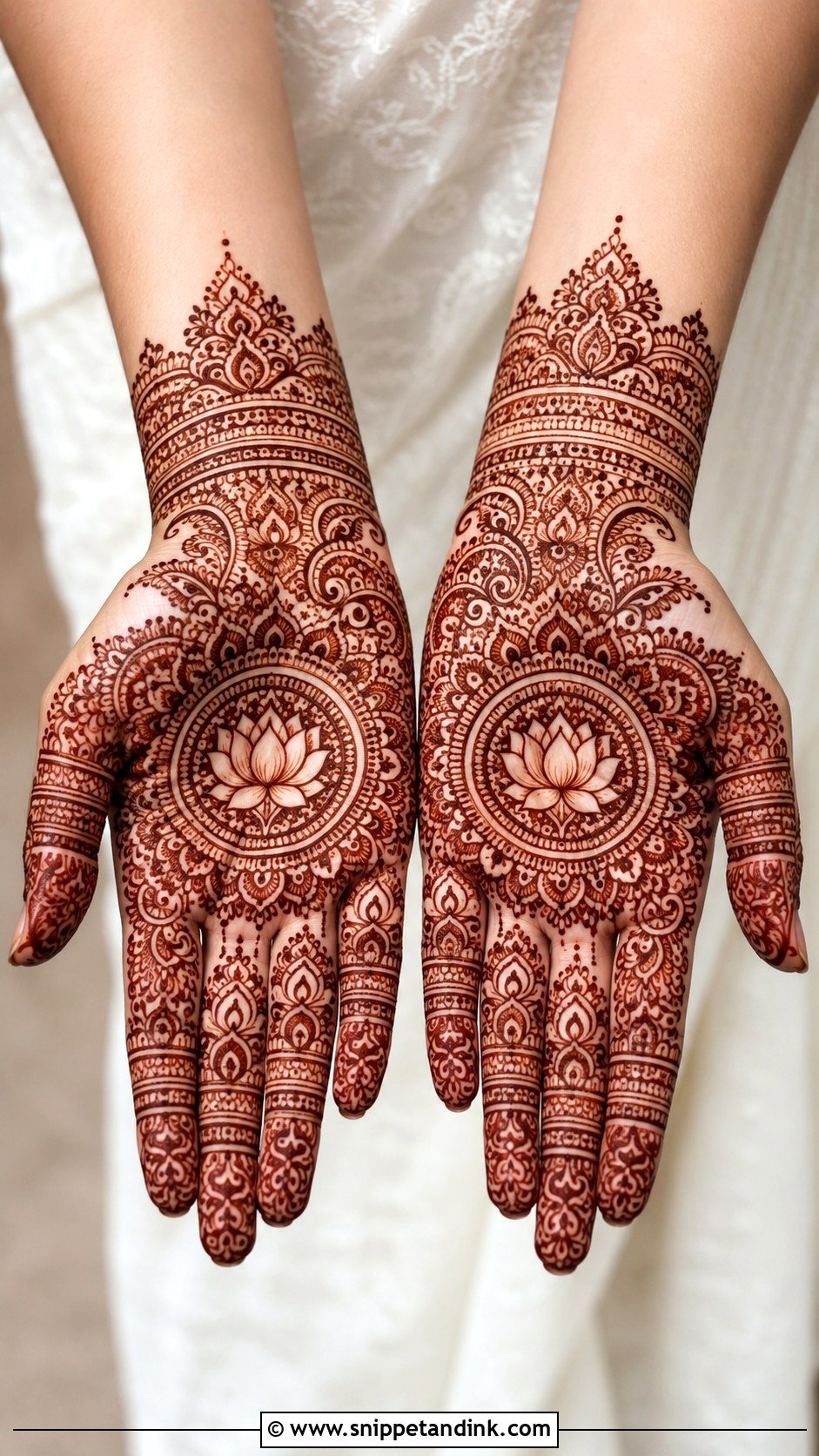
Diwali designs often bring together mandalas, lotuses, paisleys, dotted borders and finger patterns, with the palm the favourite placement because it shows during greetings and rituals. A lighter version is a back-hand bracelet with a small centre motif; a richer one covers the palm and wrist in Indian detail. Lotus and diya shapes can be worked in subtly. I’d apply it a day ahead so the stain has darkened by the main evening.
27. Karva Chauth Hand Mehndi Design
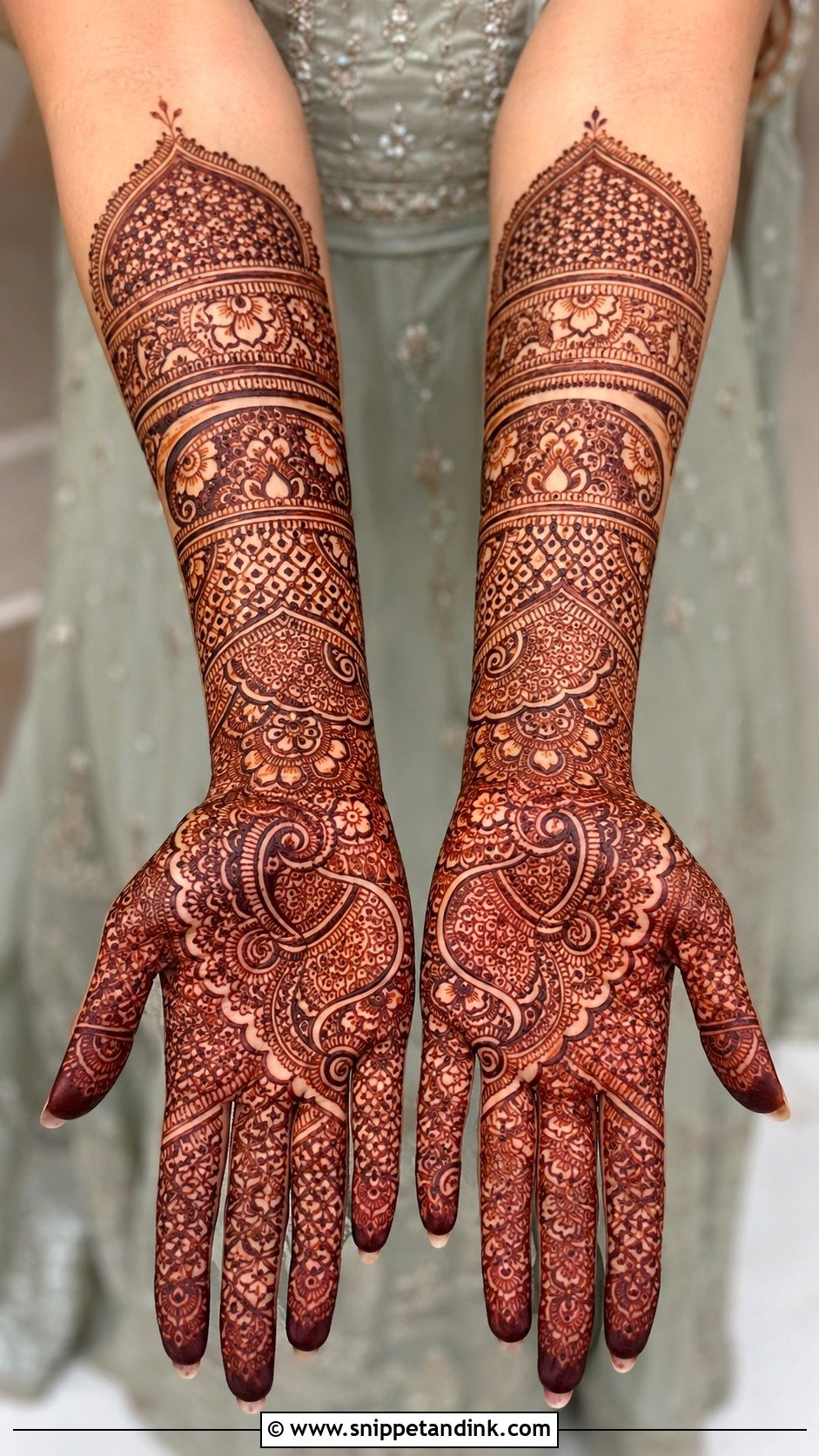
Karva Chauth mehndi tends to be detailed and traditional: full palms, wrist cuffs, paisleys, florals, mandalas and personal symbols. I usually make the front rich and keep the back slightly lighter for balance. If time is short, a mandala palm with detailed fingers and a strong wrist border gives most of the effect. Clean fingertips and symmetrical sections make it look finished next to bangles.
28. Bridesmaid Hand Mehndi Design
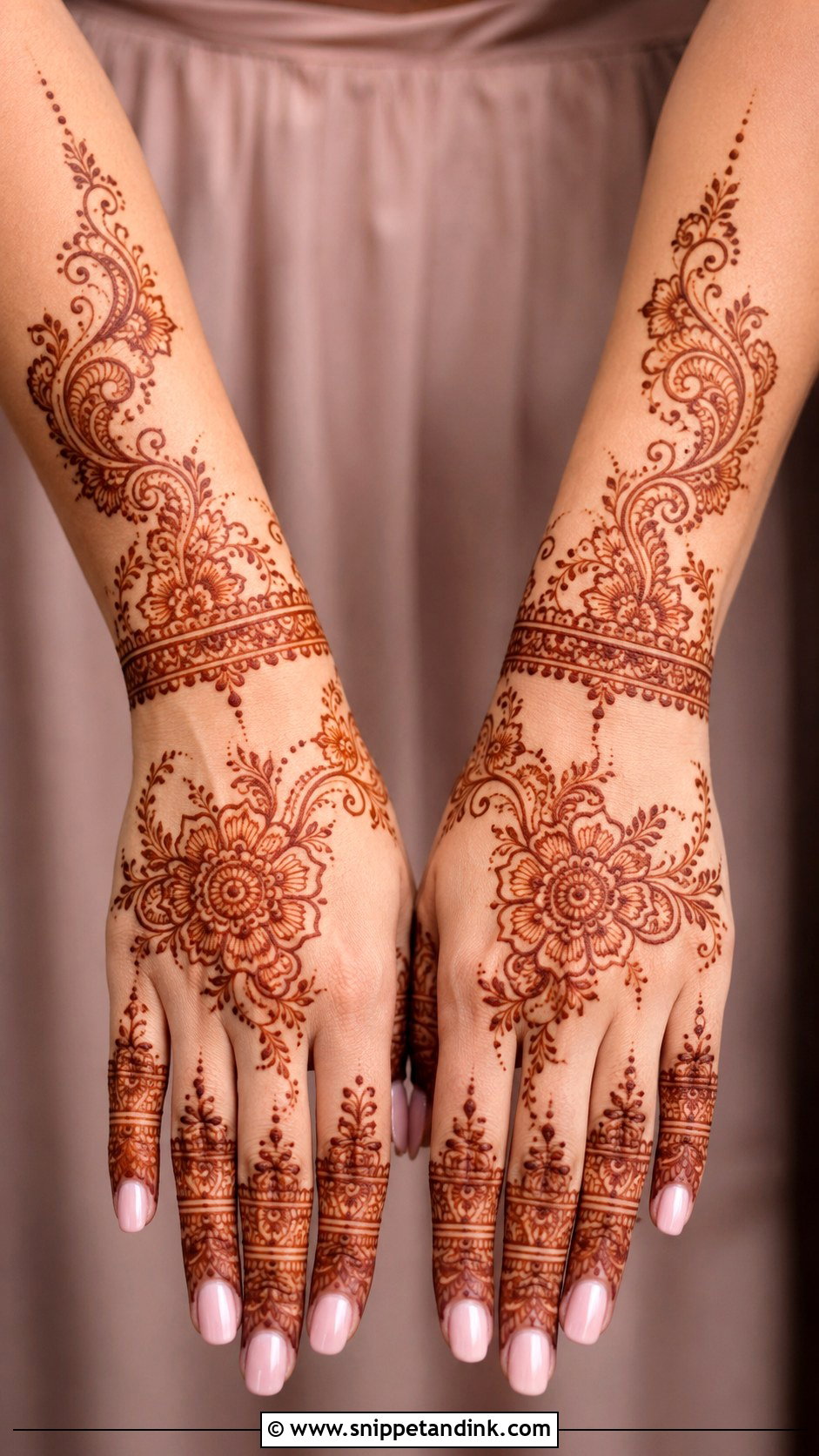
Bridesmaid mehndi has one rule: it must not outshine the bride’s. Indo-Arabic florals, back-hand jewelry patterns, mandala palms and half-hand trails all fit. It needs to survive dancing, carrying things and helping all day, so medium coverage with clean spaces works best. I echo the bride’s flowers or paisleys in a smaller form, so the group looks linked without copying her layout.
29. Rajasthani Hand Mehndi Design
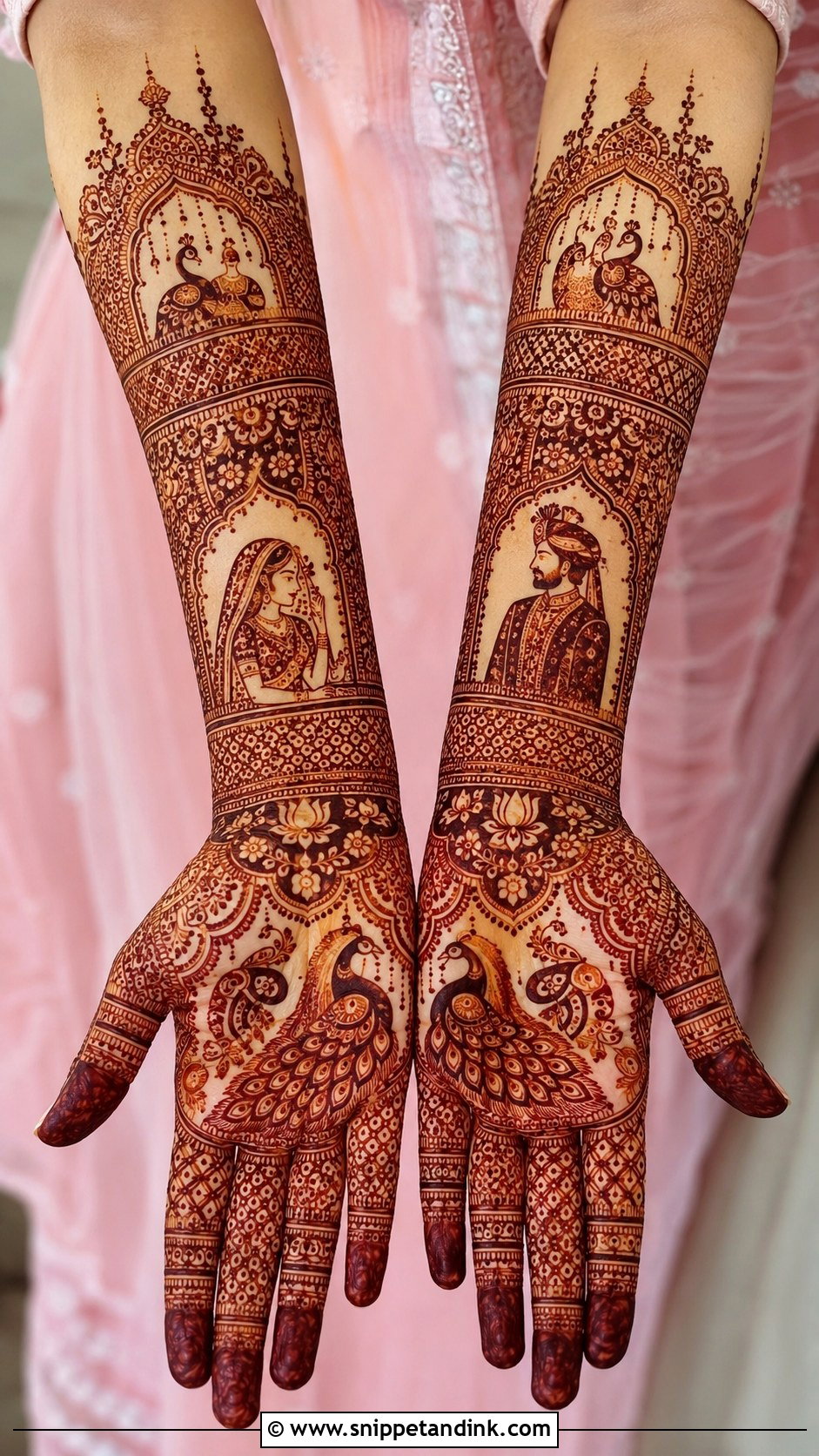
Rajasthani mehndi is known for storytelling: peacocks, paisleys, bride-groom figures, royal arches, floral borders and very fine fillers. It is dense, so it suits brides and main wedding ceremonies. The palm carries the key motifs, and fingers and wrists fill with bands. The detail is the whole point, and it takes patience from both artist and bride. For a lighter version, I’d use one Rajasthani-style peacock or paisley panel instead of full coverage.
30. Pakistani Hand Mehndi Design
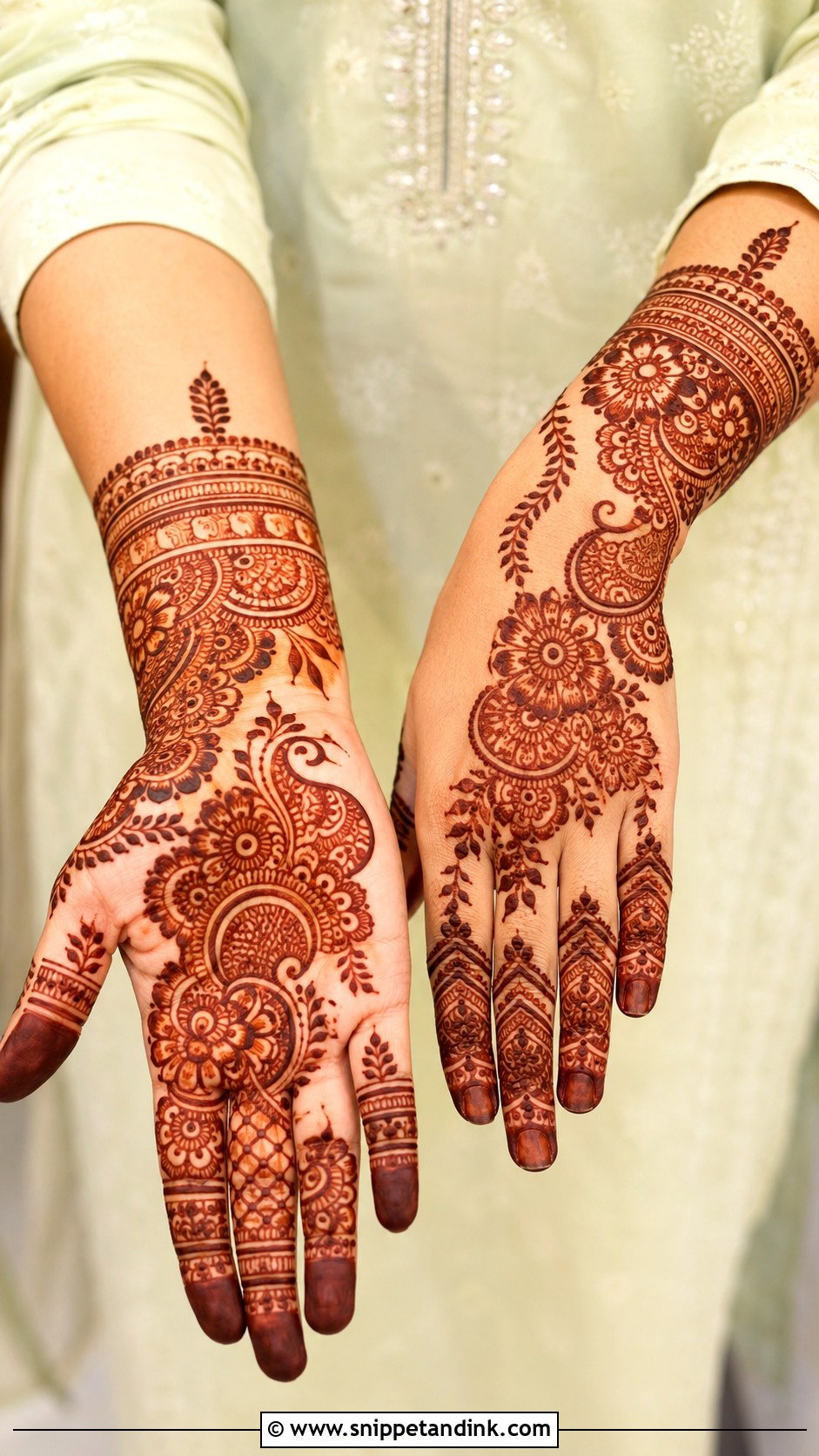
Pakistani designs often blend Indian detail, Arabic flow and modern spacing: flowers, domes, paisleys, leaves, jaali and bold wrist borders. They can be heavy for brides or lighter for Eid and family events. One common layout pairs detailed fingers and a central palm pattern with a flowing extension up the forearm. I combine bold outlines with very fine inner work, which keeps it traditional without crowding.
31. Khafif Hand Mehndi Design
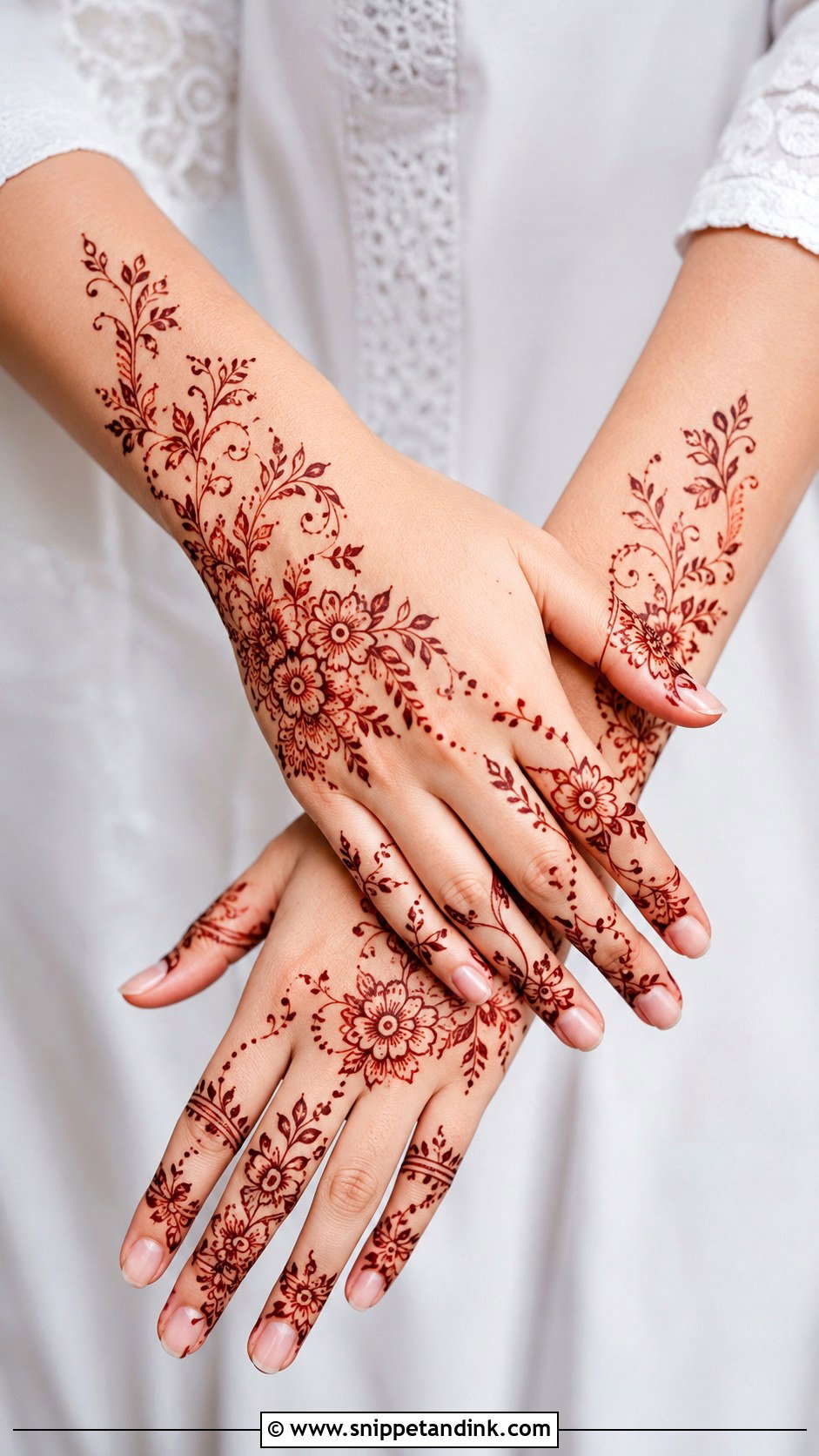
Khafif is the lightest style here: small florals, thin vines, tiny dots and plenty of skin. It suits anyone who wants sophistication without heavy darkness, at Eid, engagements or modern bridal events. Everything depends on cone control. I cut the cone tip finer than usual and keep my pressure light so the lines stay slim, with small motifs placed evenly.
32. Stylish Back Hand Mehndi Design
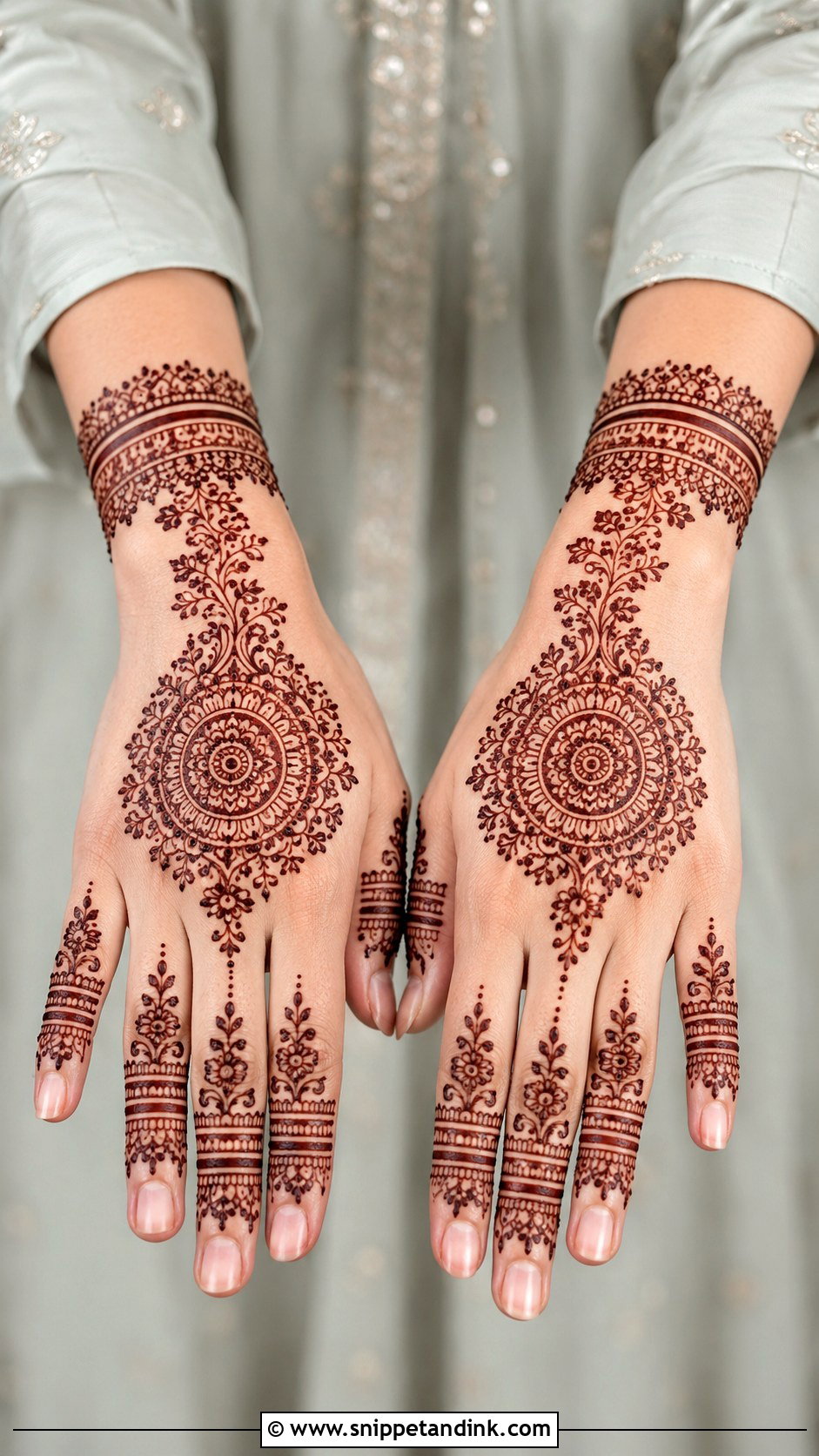
A stylish back-hand design is built for the camera: a centre mandala, finger bands, a wrist bracelet and small florals, or a diagonal Arabic trail with bold flowers and open space. Plan it around your jewelry. If you wear rings, I keep the finger bases clear; if you wear bangles, I end the wrist border where they’ll sit so the two line up.
33. Front And Back Hand Mehndi Design
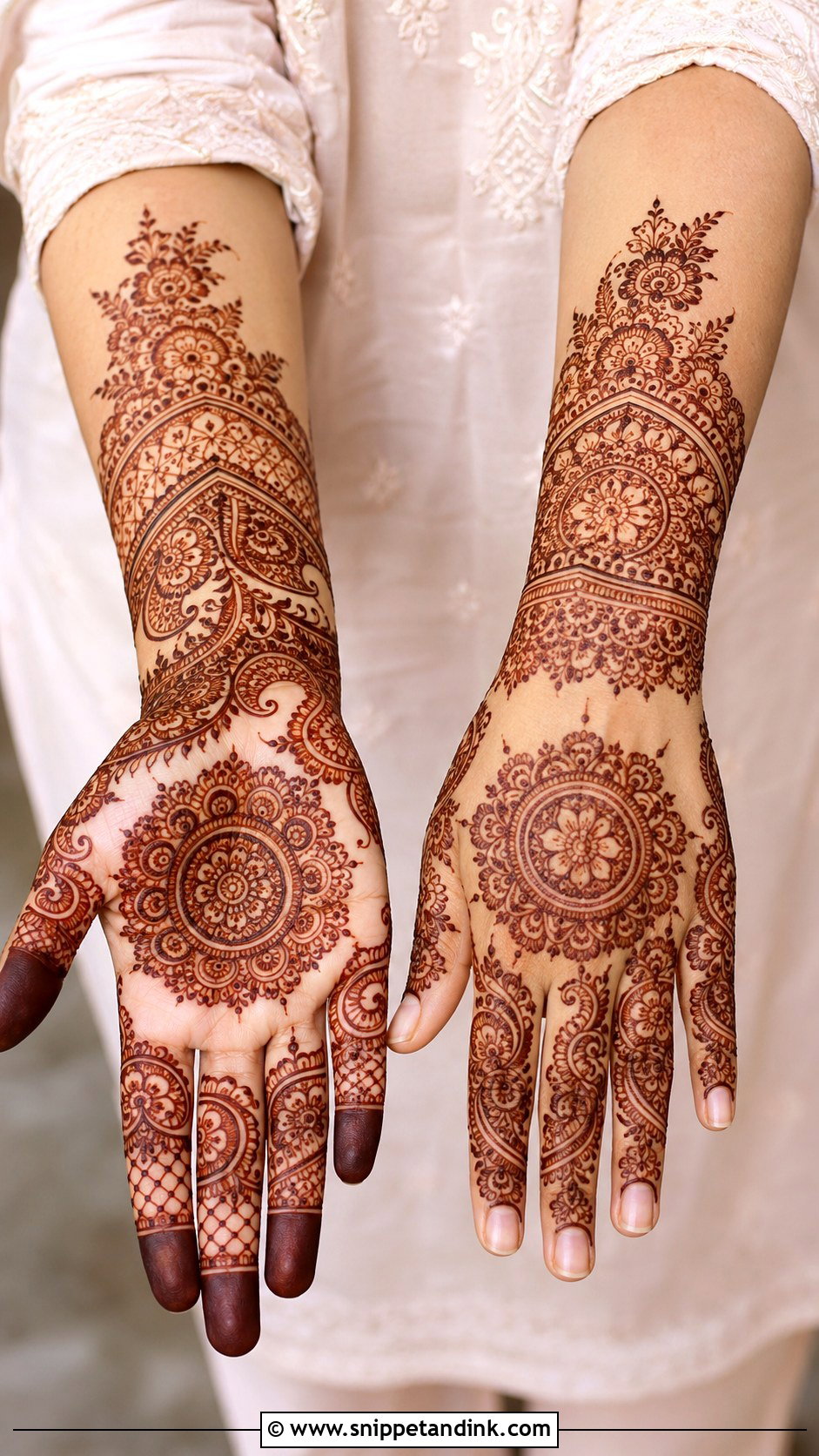
Front and back hand mehndi design gives a complete look for big occasions. The palm can carry a traditional mandala, paisleys or full Indian detail, while the back uses jewelry patterns, florals or jaali. The two sides have to feel related, so I repeat one flower, border or finger pattern across both. I usually make the front slightly denser and the back more open, which keeps the hands from feeling heavy.
34. Wedding Guest Hand Mehndi Design
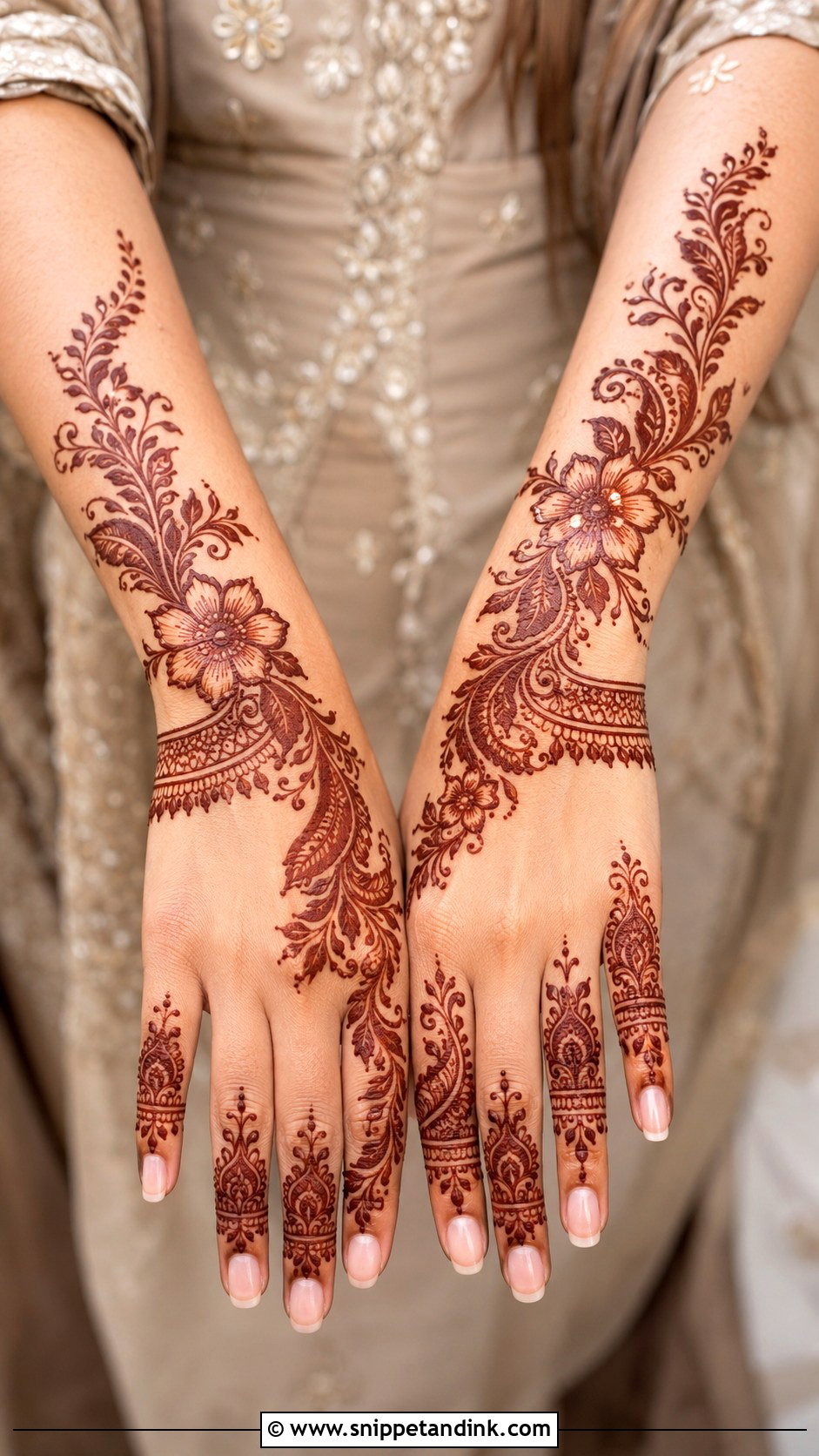
Guests need something festive that doesn’t compete with the bride and doesn’t take all afternoon. Arabic florals, a mandala palm, a bracelet-style back hand or a half-hand Indo-Arabic pattern all fit, and medium coverage is the safest. For a formal wedding, a shaded floral trail or a jaali back hand; for a small one, a simple palm with decorated fingers. If you’re unsure how much is appropriate, keep it lighter than the bride’s sisters.
35. Latest Hand Mehndi Design
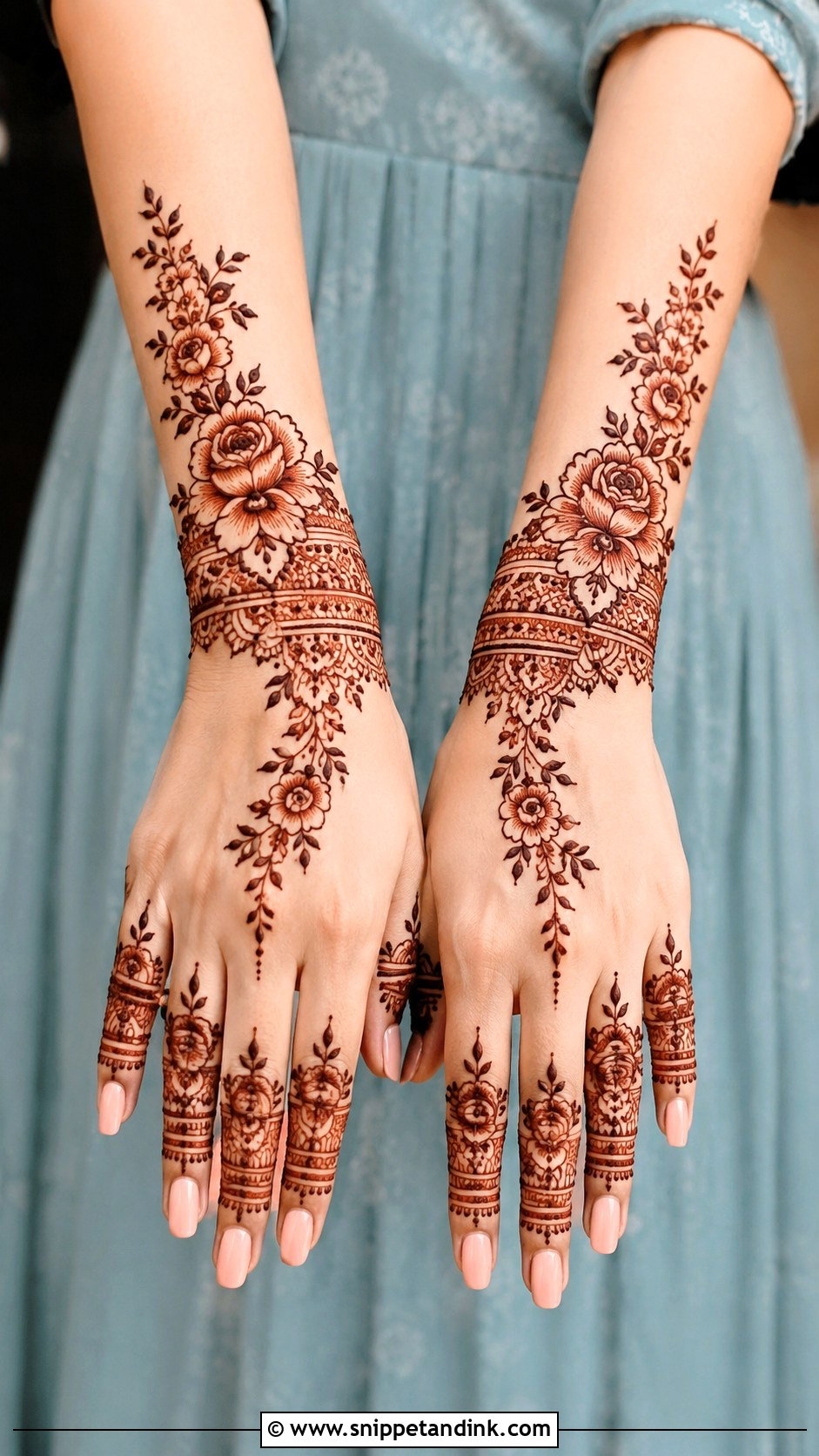
Current requests lean toward balance and wearable detail: minimal finger designs, bold Arabic floral trails, Khafif back-hand patterns, bracelet layouts, shaded roses and bridal designs with personal touches like initials. For everyday events, fine lines and open space; for weddings, richer coverage with jaali, paisleys and layered florals. The strongest designs aren’t always the heaviest. A layout that fits the hand and the occasion looks more current than a crowded one.
Aftercare That Decides the Colour You Get
Once I put the cone down, the result is largely up to you. This is what I tell every client before she leaves:
- Let the paste dry fully without touching anything. For most designs that takes around twenty to thirty minutes.
- Once it’s dry, dab on a little lemon and sugar mixture to keep the paste stuck to the skin. Dab it lightly; don’t soak it.
- Leave the paste on as long as you can, ideally six to eight hours or overnight. Wrap loosely if you’re sleeping in it.
- Scrape the dried paste off with a blunt edge or your fingernails. Don’t wash it off.
- Keep water away for as long as possible: several hours at the very least, ideally a full day.
- Keep your hands warm. Cold hands develop colour more slowly.
- Before showers or washing up, rub on a balm or a little oil, and avoid chlorine, hand sanitiser and scrubs for the first few days.
Natural Cones Only: The Black Henna Warning
Real henna never stains black and never stains instantly. So-called black henna often contains PPD, a hair-dye chemical that can cause serious allergic reactions, blistering and scarring. Ask your artist what’s in the cone. A natural paste is made from henna powder, a liquid such as lemon juice, sugar and essential oils, and fresh cones are usually kept frozen or refrigerated until use. If your skin is sensitive, ask for a small patch test a day or two before, because even essential oils can irritate some people.
Clean Lines Read Better Than Crowded Ones
Simple palms, full bridal coverage, Arabic trails, Moroccan geometry and Khafif fine-line work each have their occasion. The right one depends on your hand, your outfit, the event and the hours you can give it. If time is short, go for minimal fingers, a mandala palm or an Arabic trail; for a grand look, full bridal, Rajasthani or detailed Indian work. Whatever you choose, ask for clean lines and balanced spacing, and time the appointment so the stain is at its darkest when it matters.
You'll Like These Ideas:








Leave a Reply