
Not every bride wants henna up to the elbow. A lot of the brides I sit with want something that clearly reads as bridal, with filled fingertips and a proper palm centerpiece, but with enough bare skin between motifs that the stain stays readable and the session doesn’t run all afternoon. That middle ground is what this list covers: florals, paisleys, mandalas, jaali and wrist bands arranged with breathing room. Designs like these suit a nikah, an engagement, a sangeet or a smaller family wedding, and every one of them can be scaled to your hand size and the sleeves of your outfit.
How Far Up the Arm Should Your Henna Go?
Before we talk motifs, I always ask three things: what are you wearing, how many functions are you doing, and how long can you sit still? The answers decide the coverage more than any picture does.
- Sleeve length. A full-sleeved lehenga blouse or kurta hides most of the forearm. Stopping a little above the wrist saves time without anyone noticing.
- Time in the chair. A light bridal set on both sides of both hands takes far less time than full arm coverage. If you have a busy mehndi night with guests, a shorter session lets you actually enjoy it.
- Hand size. Small hands look crowded with large motifs, and long hands can look bare with too little. I scale the pattern to your hand, not the other way round.
- Feet. Many brides forget their feet until the end. Decide early whether you want them done, because they take time and need to dry before you walk.
Timing matters too. Natural henna stain keeps deepening for a day or two after the paste comes off, so I schedule bridal mehndi one or two days before the wedding, not on the morning itself.
1. Full Hand Bridal Mehndi Design
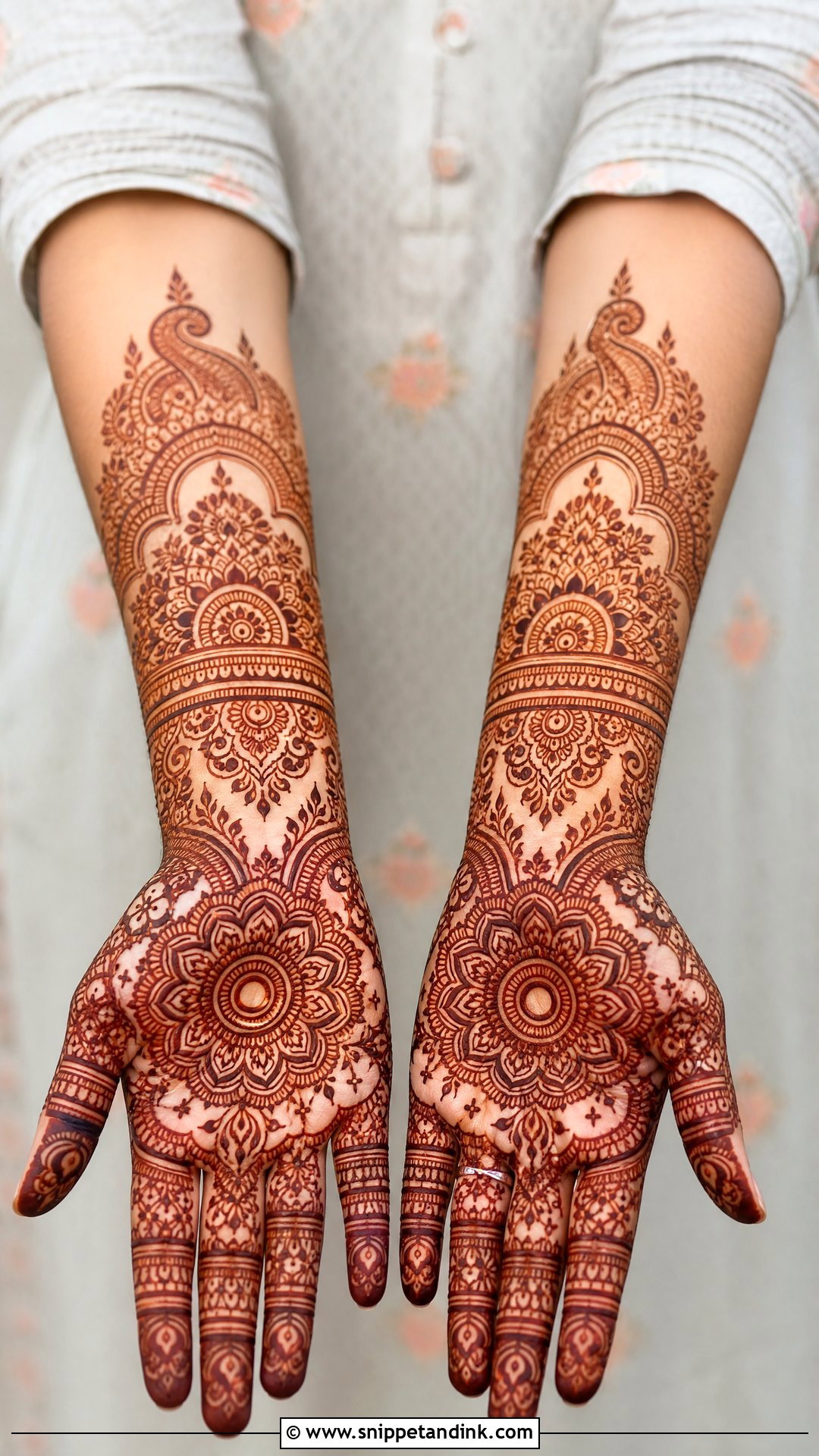
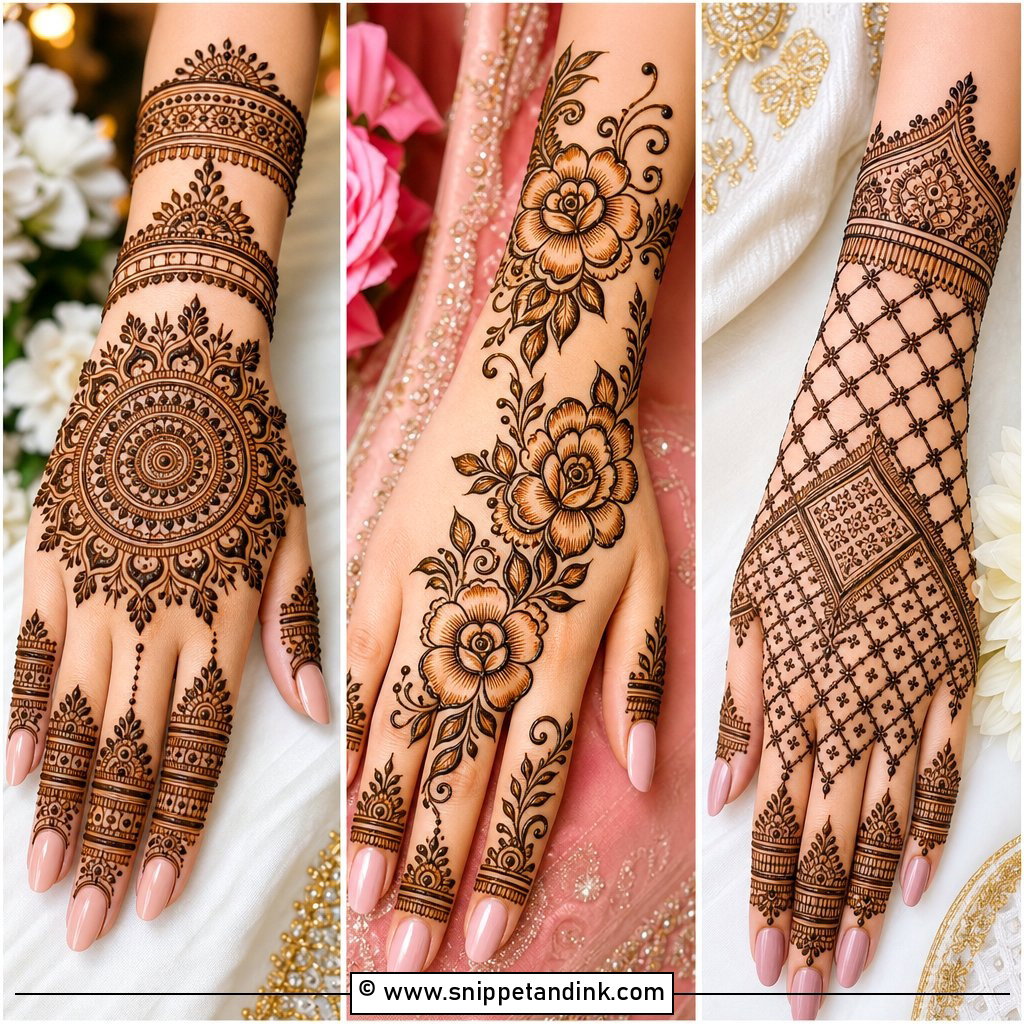
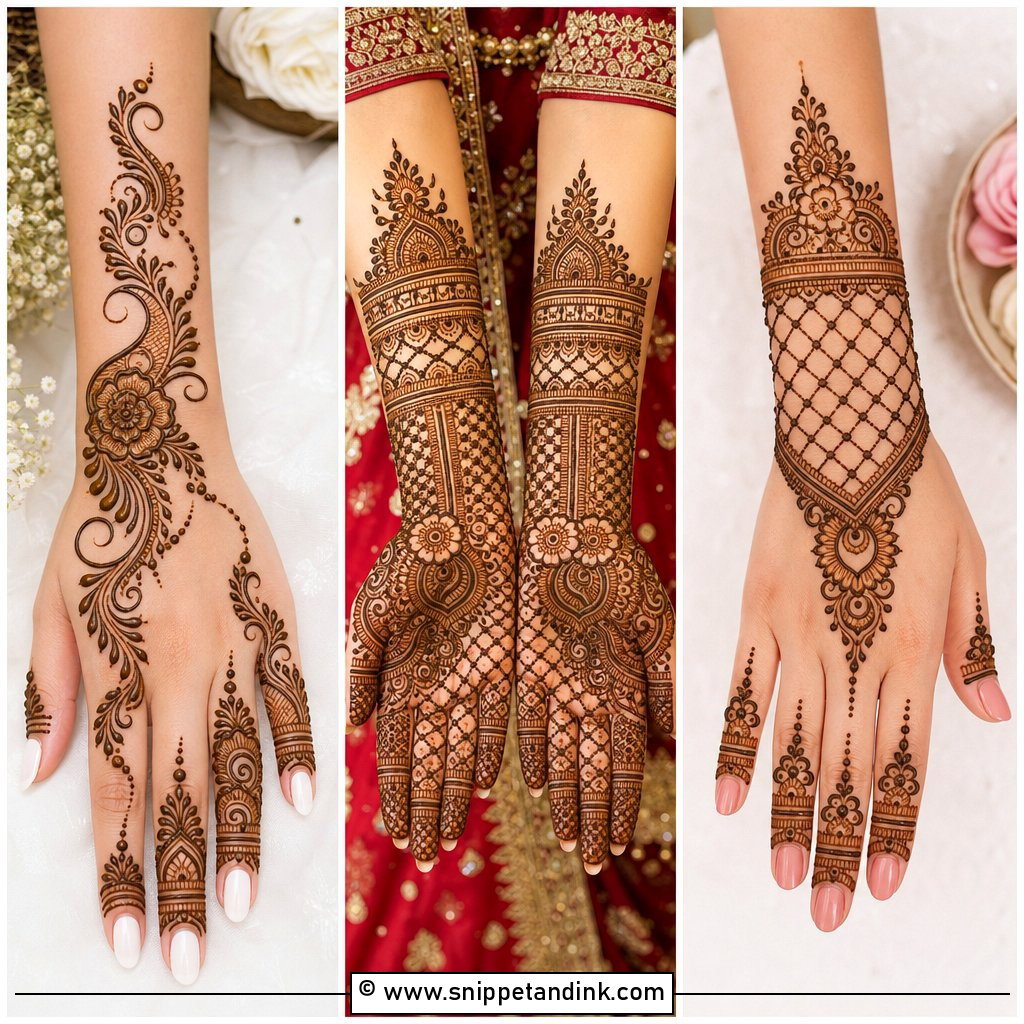
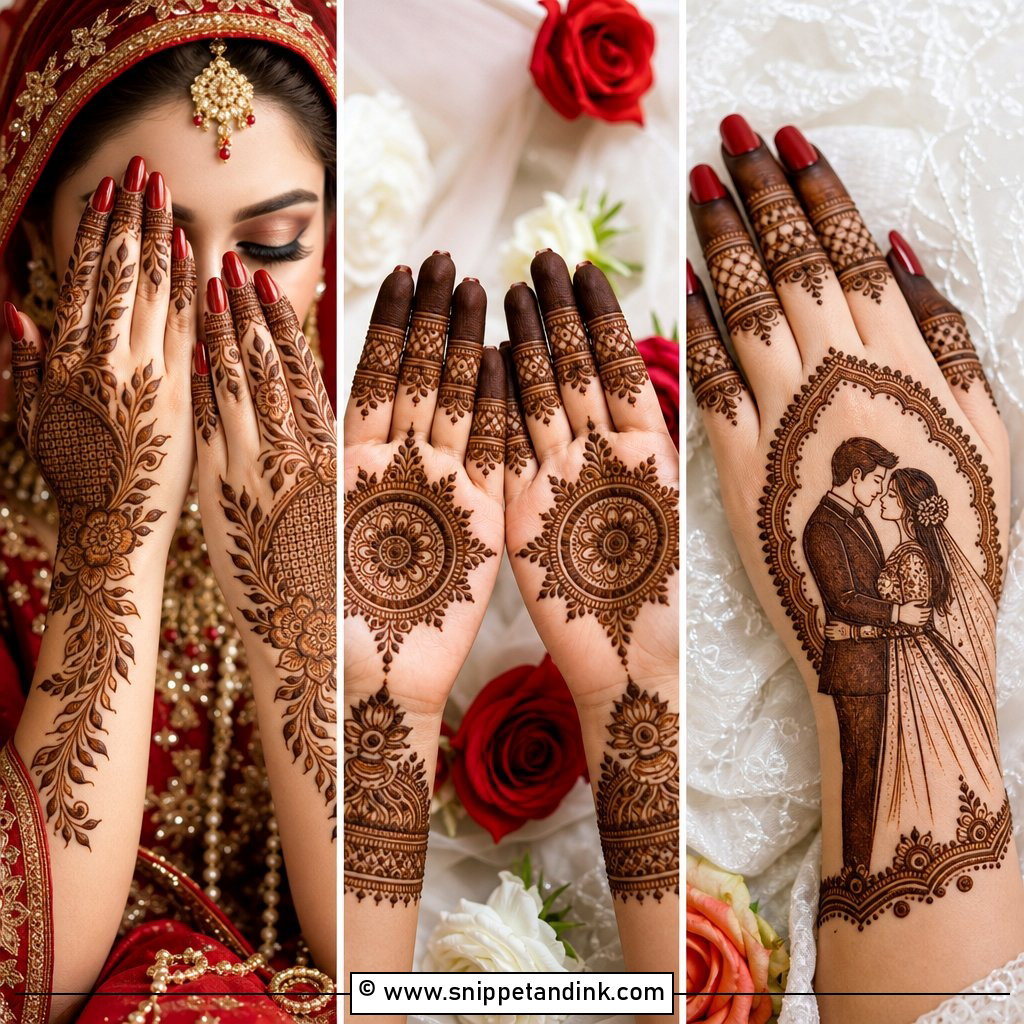
Full hand coverage from fingertip to wrist or mid-forearm is still what most families picture when they hear bridal mehndi. The difference in a lighter version is spacing. I draw the palm centerpiece first, usually a mandala or paisley cluster, then build the fingers and wrist around it, and I deliberately leave a gap of bare skin around each main motif. Henna lines spread slightly as the paste settles, so a design drawn edge to edge can blur into one dark patch once the stain deepens. Those small gaps are what keep it crisp next to bangles and rings.
2. Simple Bridal Mehndi Design
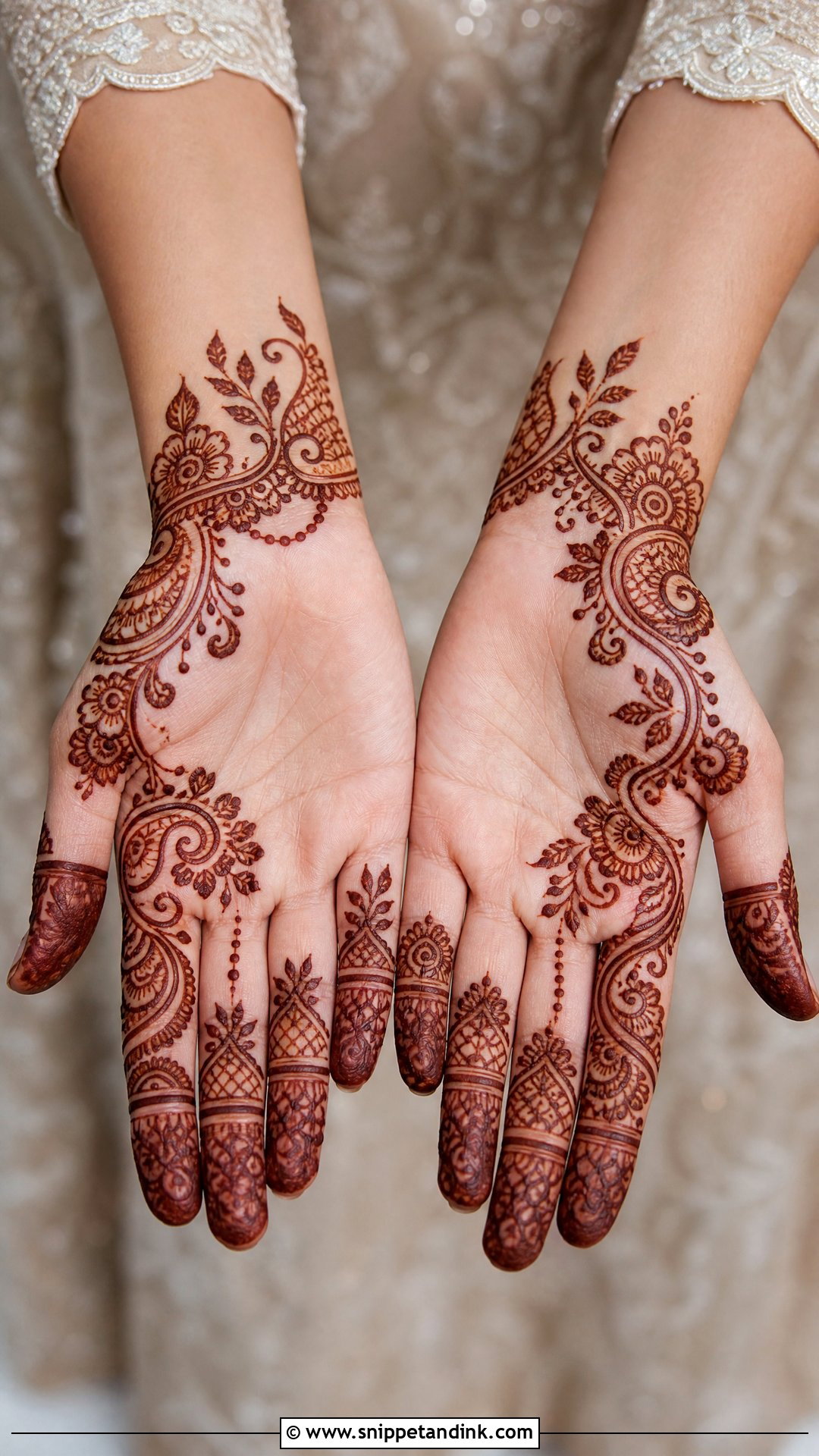
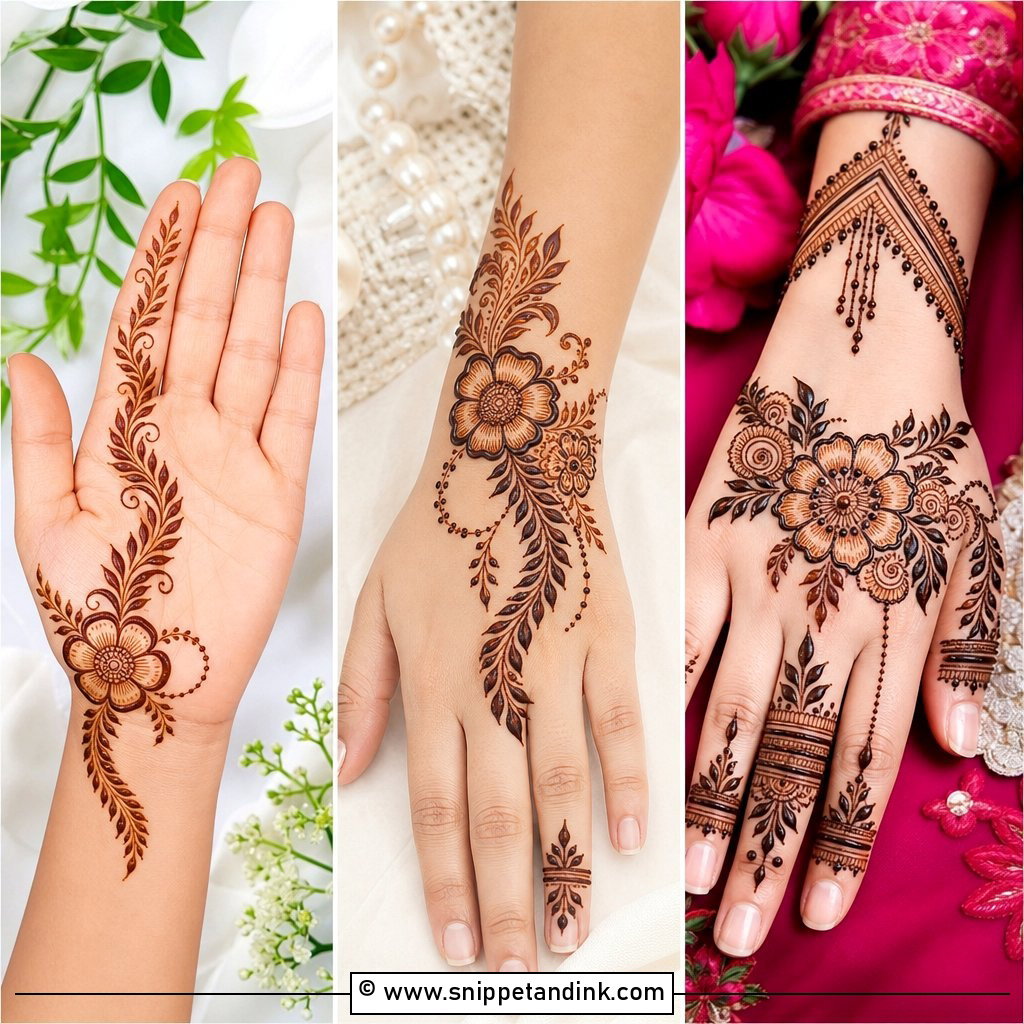
A palm motif, a light floral trail and fine finger work can be finished in a fraction of the time a full bridal set takes, which matters more than people think. Sitting still for hours before a wedding is tiring, and a shorter session also means the paste goes on in one go rather than drying unevenly while I work on the other hand. Clean gaps make the pattern easy to read from a distance. If you’d like it to feel more bridal, a few bracelet-style bands just past the wrist add weight without much extra time.
3. Front Hand Bridal Mehndi Design
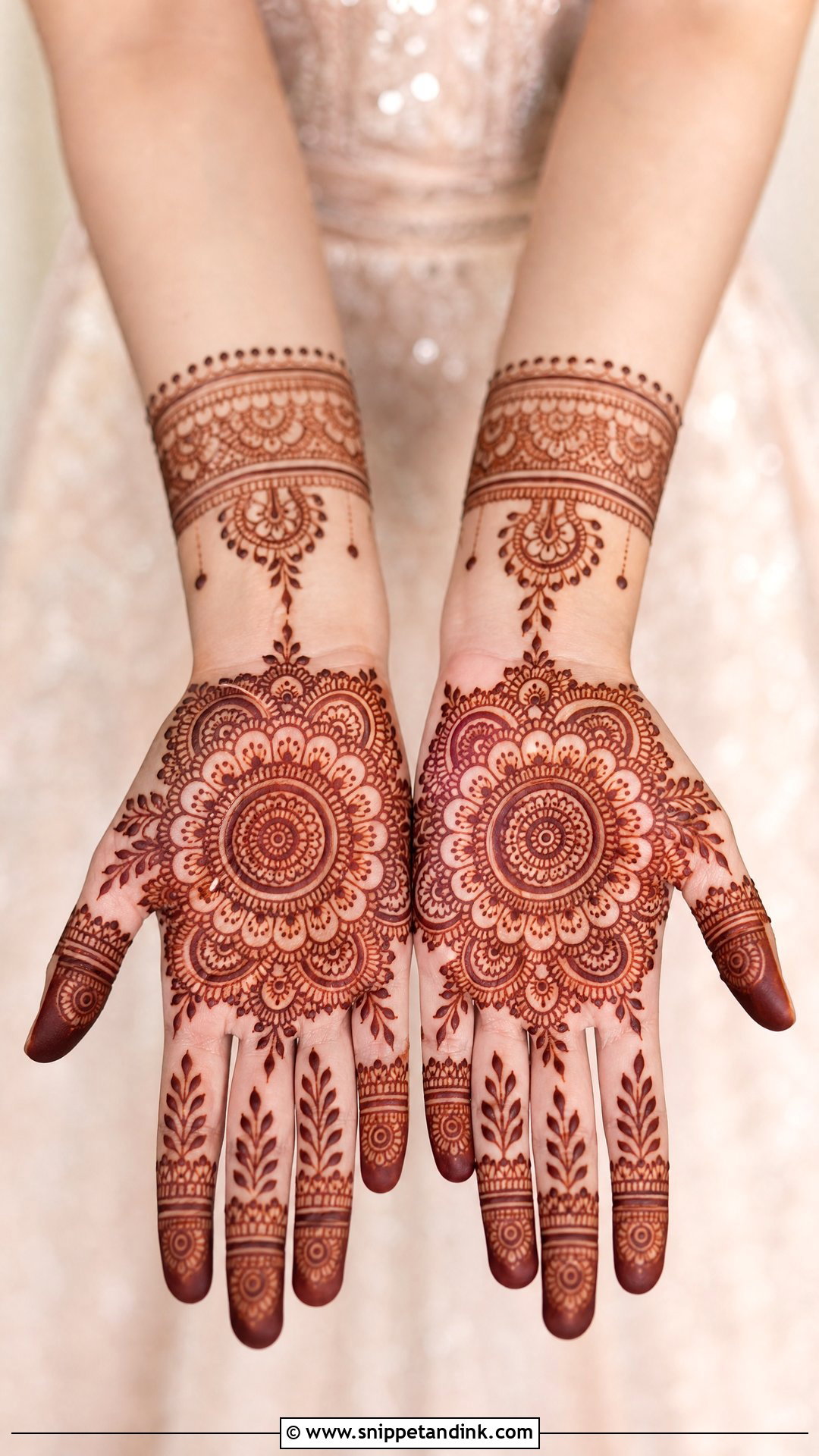
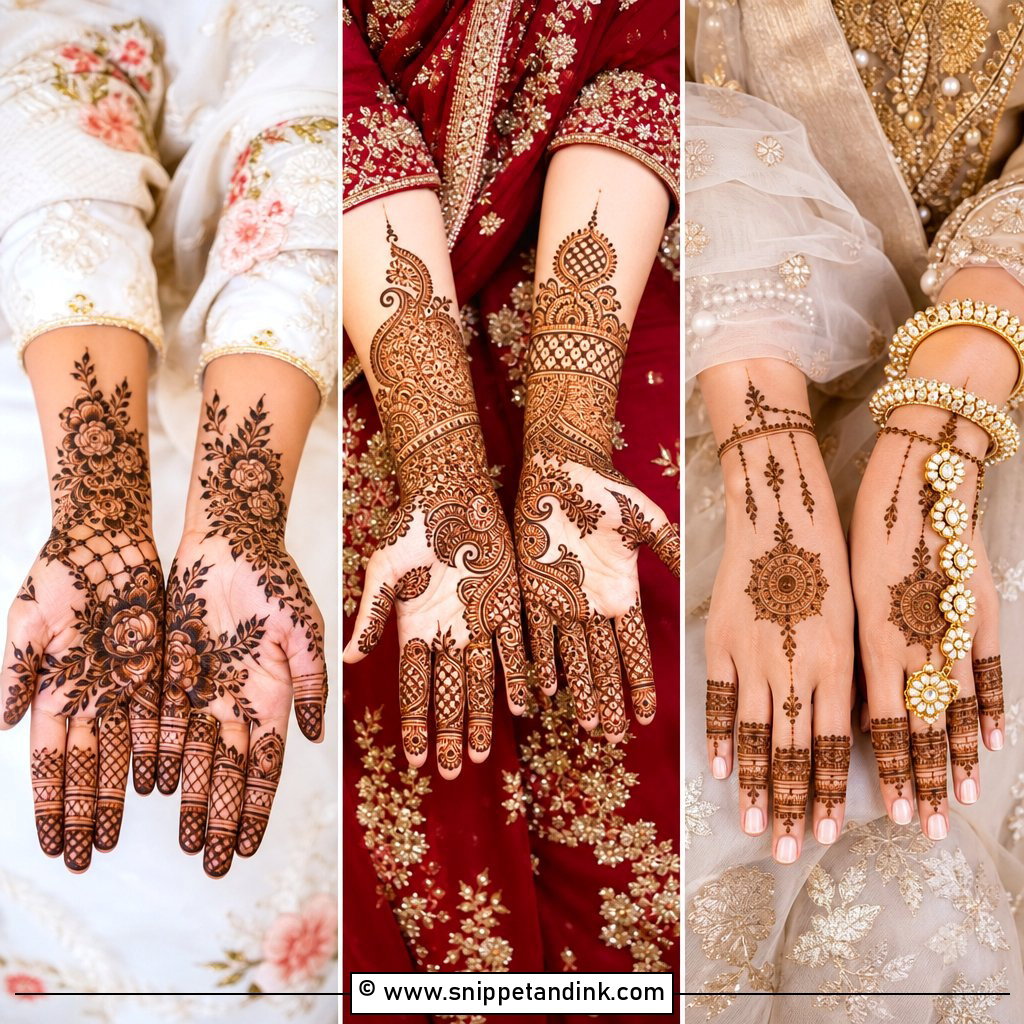
A front hand bridal mehndi design puts the story on the palm, and the palm is where henna stains darkest, so this is where fine detail pays off most. A mandala, lotus or paisley circle sits in the center, with vines, dots, checks and thin bands up the fingers. I keep shading light here, because heavy shading on the palm can flood into the outlines and lose the detail the photographer wants to capture. Hold your hands open in your lap after application; curling your fingers while the paste is wet smudges the creases first.
4. Back Hand Bridal Mehndi Design
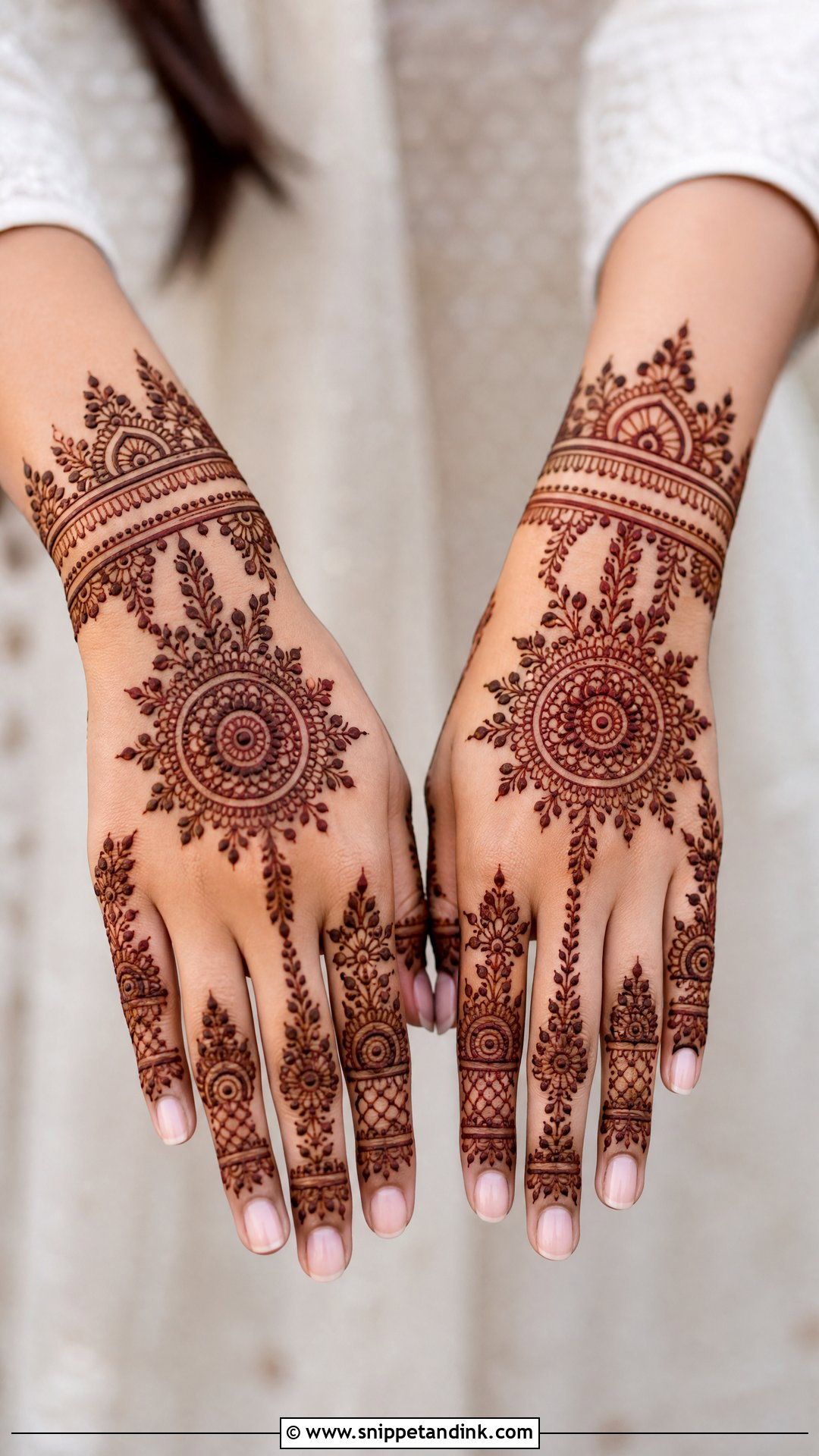
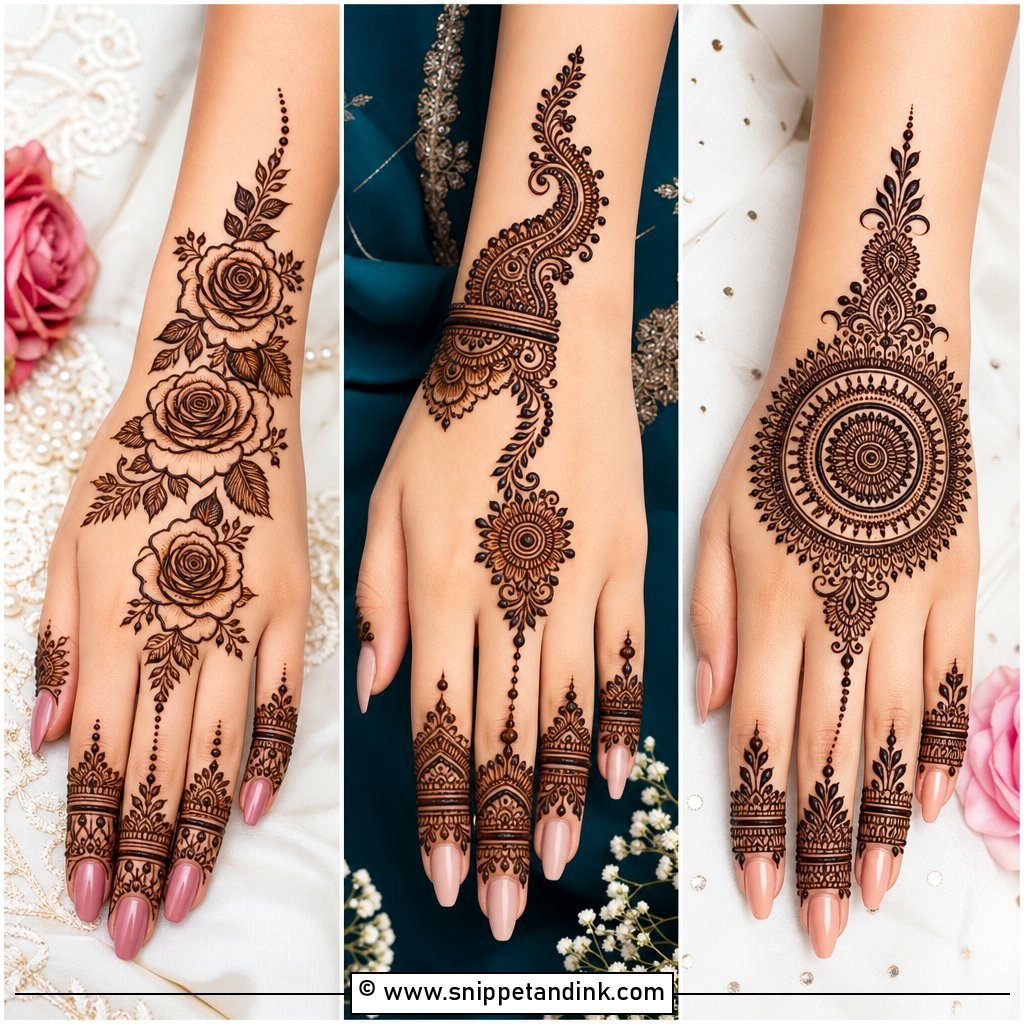
The back of the hand is what shows in ring shots and bangle photos, so I treat it as a second front rather than an afterthought. A back hand bridal mehndi design usually centers a mandala and runs vines to the knuckles and fingers, with bracelet patterns at the wrist. Skin on the back of the hand is thinner and stains lighter than the palm, a warm brown rather than deep maroon. I compensate by leaving the paste on longer and keeping the lines slightly bolder. Balanced finger coverage, not fully packed, keeps it soft.
5. Arabic Bridal Mehndi Design
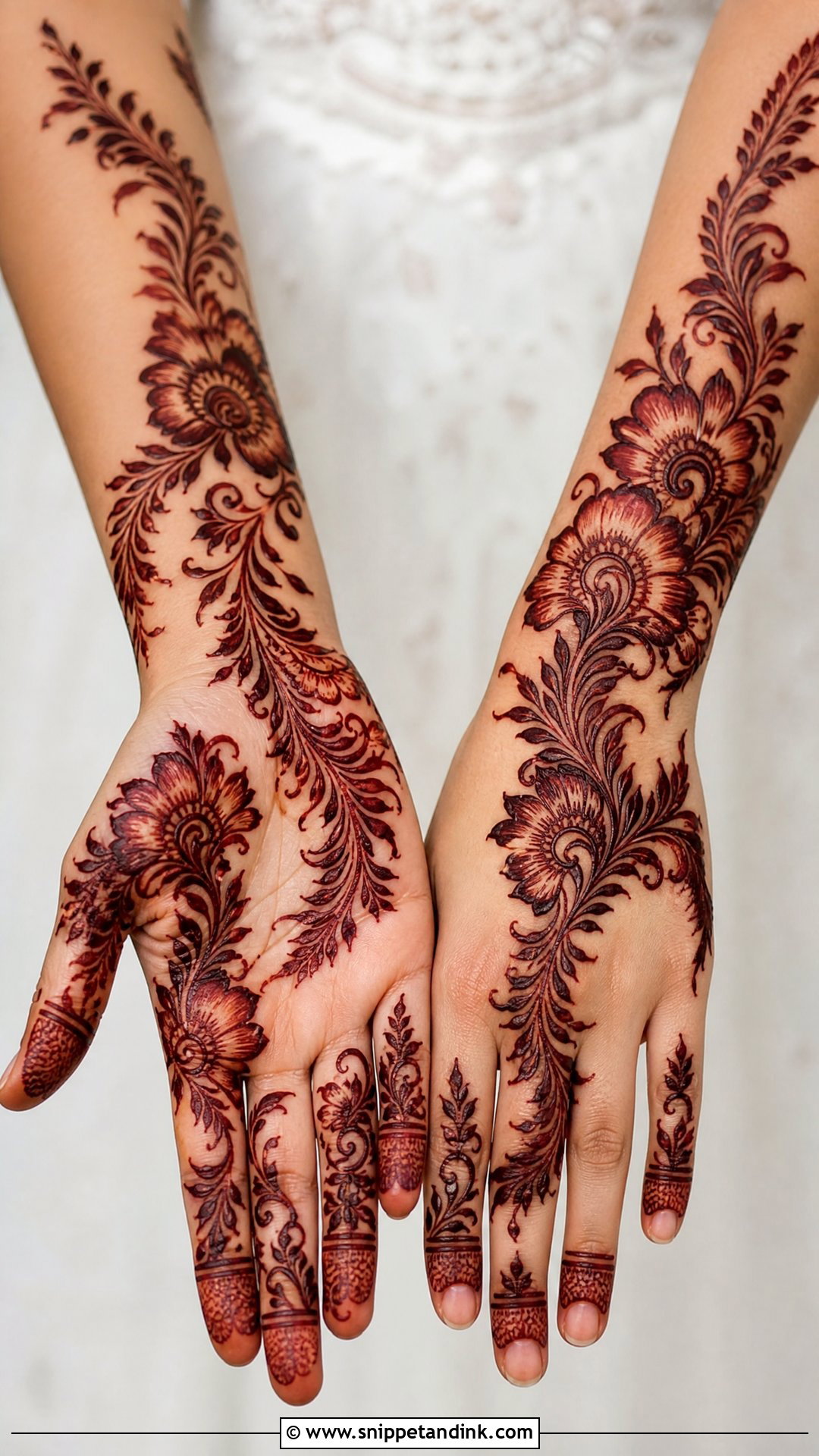
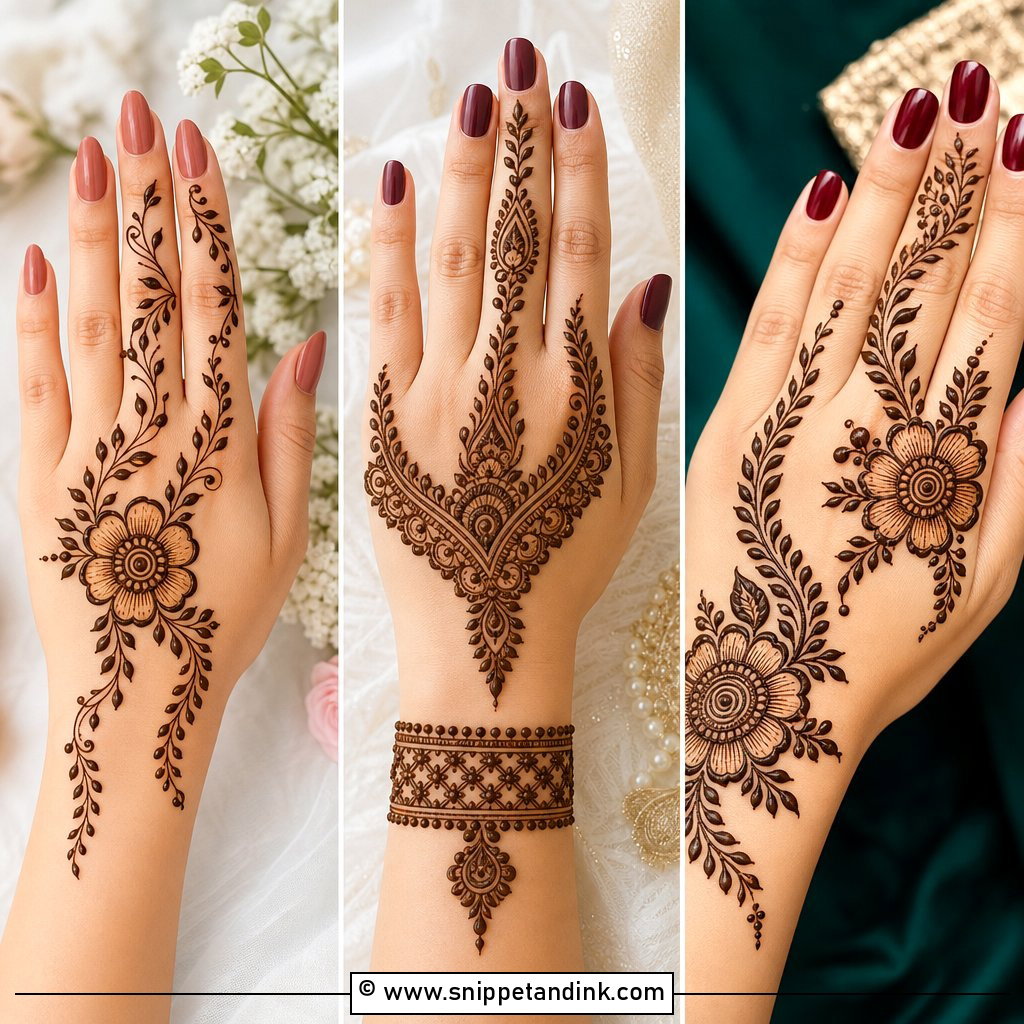
Arabic bridal mehndi design moves diagonally across the hand in one flowing trail of large roses, leaves and shaded petals, with open skin on either side. Because so much of the hand stays bare, it’s quick to apply and very forgiving if you’re short on time. Bold outlines matter here. A thin Arabic line on the back of the hand can stain pale and disappear in photos, so I use a slightly wider cone tip for the outlines and save fine work for shading. Fuller fingertips and a wrist band are the simplest way to make it look bridal.
6. Indo Arabic Bridal Mehndi Design
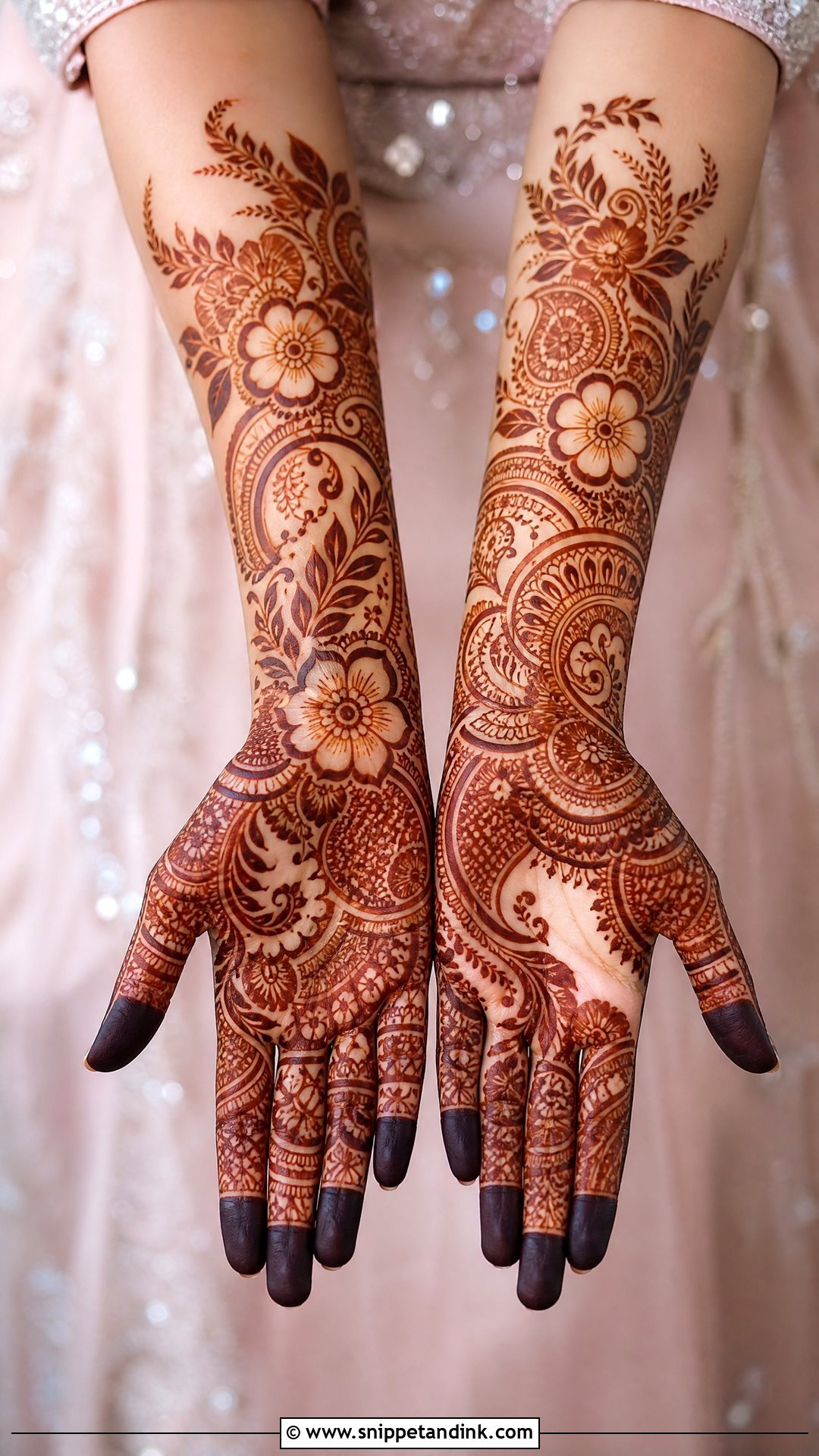
Indo Arabic mixes the open, diagonal flow of Arabic henna with the fine filler work of Indian mehndi. I think of it as two layers: bold motifs placed first to set the flow, then small fillers tucked into the spaces inside them, never between them. That’s what stops it looking busy. It suits brides who find pure Arabic too plain but don’t want hours in the chair. When the stain turns deep maroon after a day or two, the contrast between the bold shapes and the fine inner detail is exactly what makes it readable on both palm and back hand.
7. Indian Bridal Mehndi Design
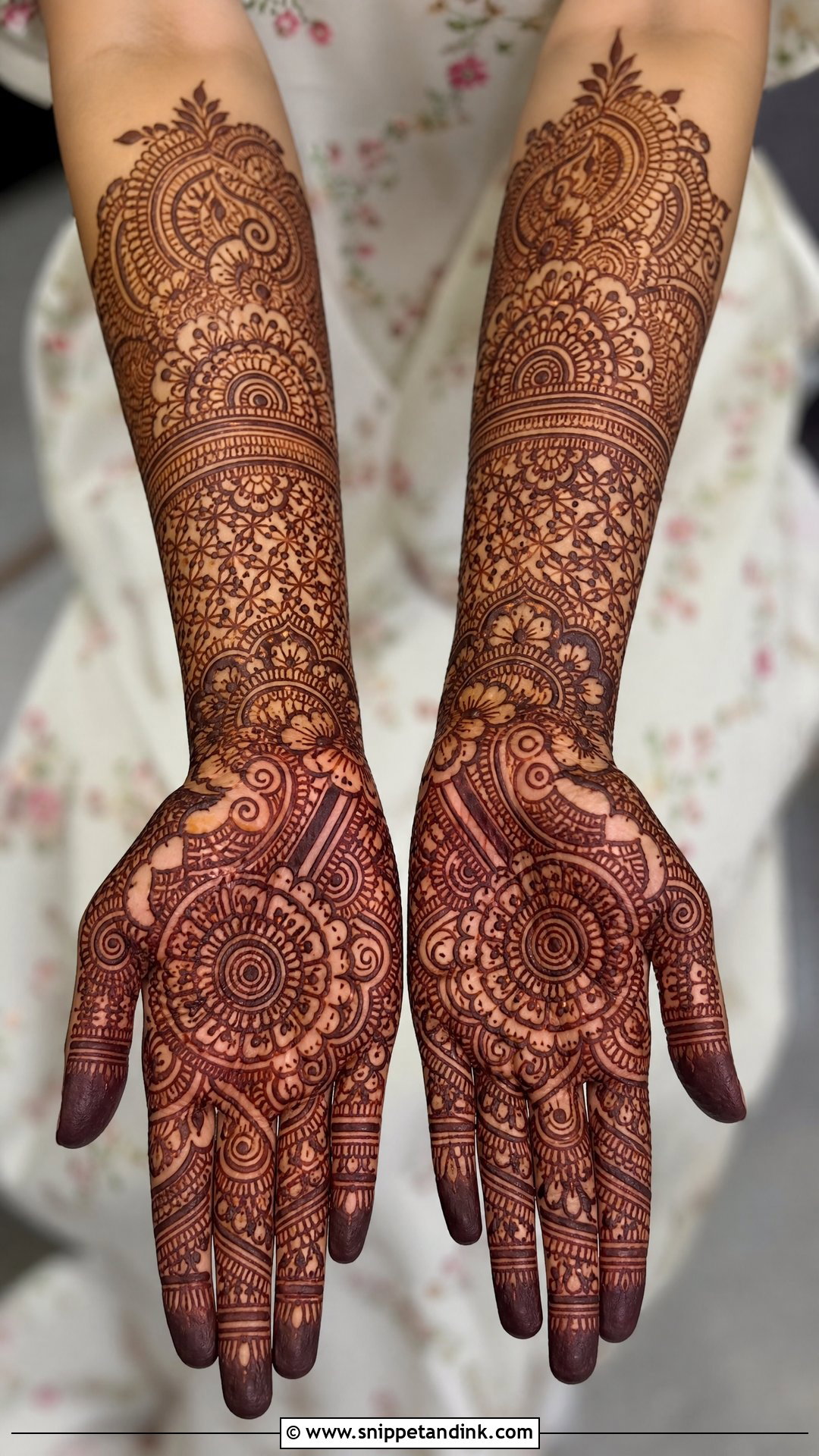
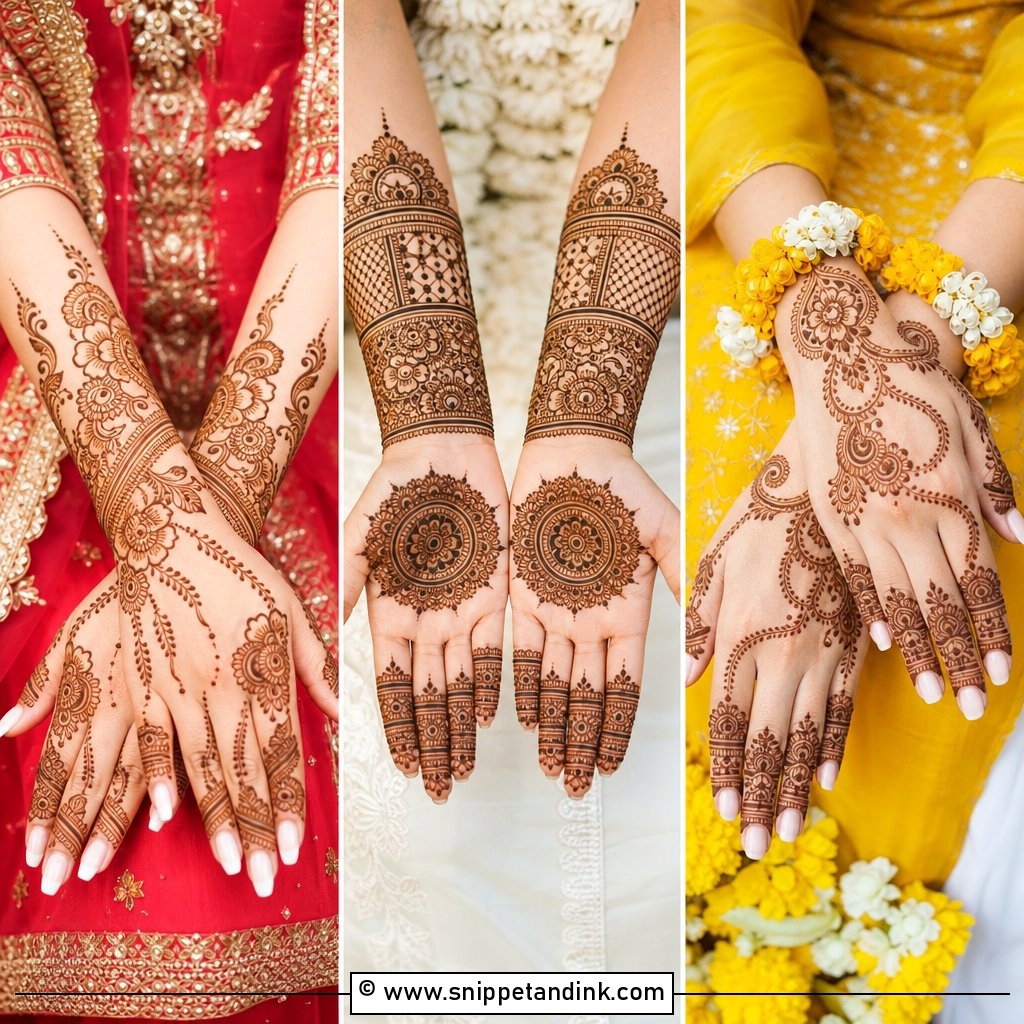
Paisleys, flowers, mandalas, jaali mesh and detailed fingers are all part of the Indian tradition, and the lighter version simply refuses to fill every inch. The palms can match or differ slightly, and the wrists often get bangle-like borders. Under a lehenga or saree sleeve, the forearm detail may be hidden anyway, so I ask about sleeve length before deciding how far up to go. Indian work involves a lot of fine lines close together, which is where an inexperienced hand smudges, so check your artist’s portfolio for clean, unbroken fine lines before booking.
8. Bridal Mehndi Design With Mandala
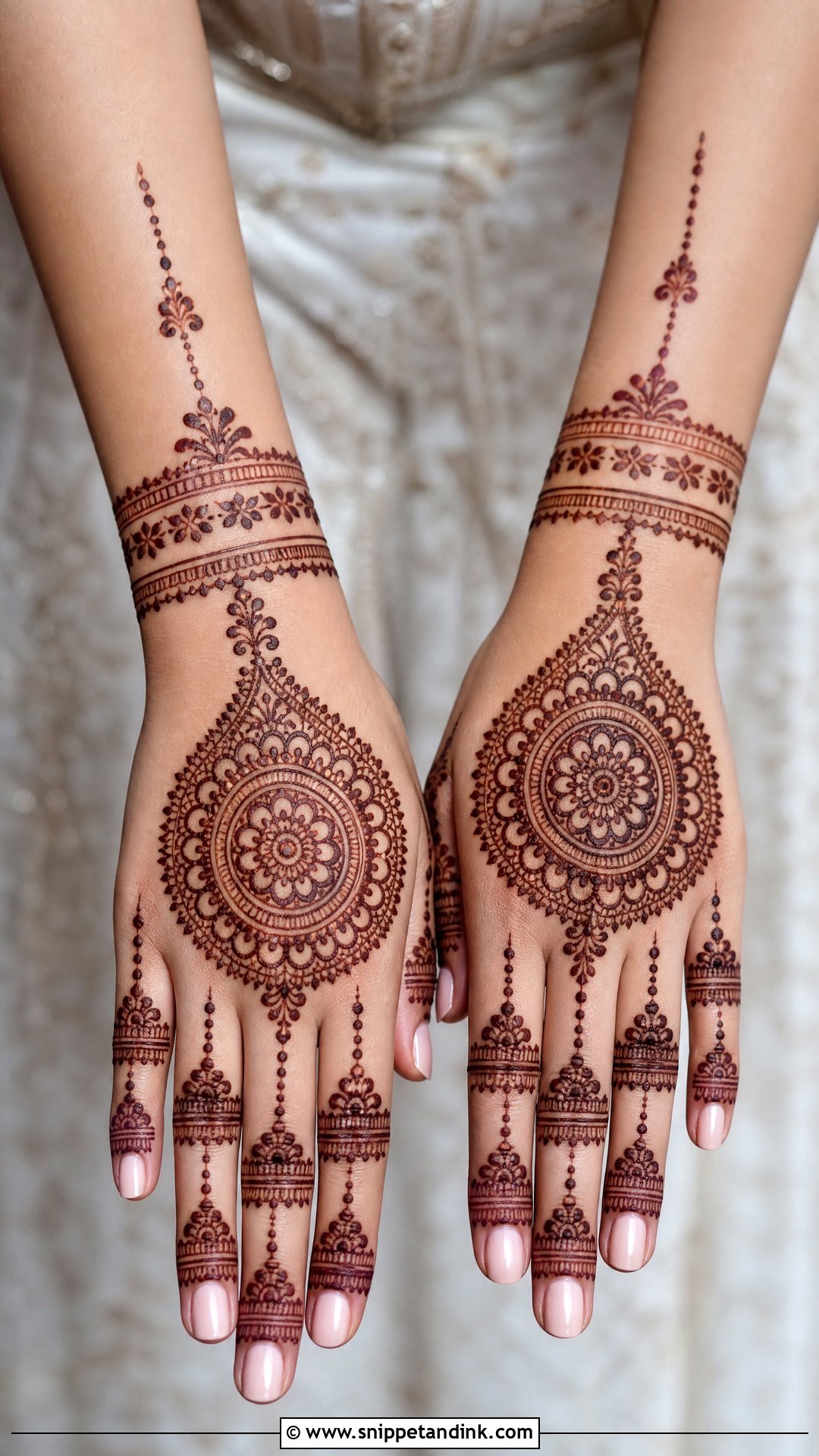
A mandala gives the hand a calm center, ringed with petals, dots, small leaves or fine circular borders. Symmetry is the whole point, and it’s harder than it looks on a curved palm, because the hand flexes and the circle can look oval once you open your fingers. I draw mandalas with the hand held flat and gently stretched, checking from your angle as well as mine. Filled fingertips and wrist bands that look like henna bracelets turn it bridal. It needs very little else to feel complete, which is why it suits smaller weddings.
9. Bridal Mehndi Design With Paisley
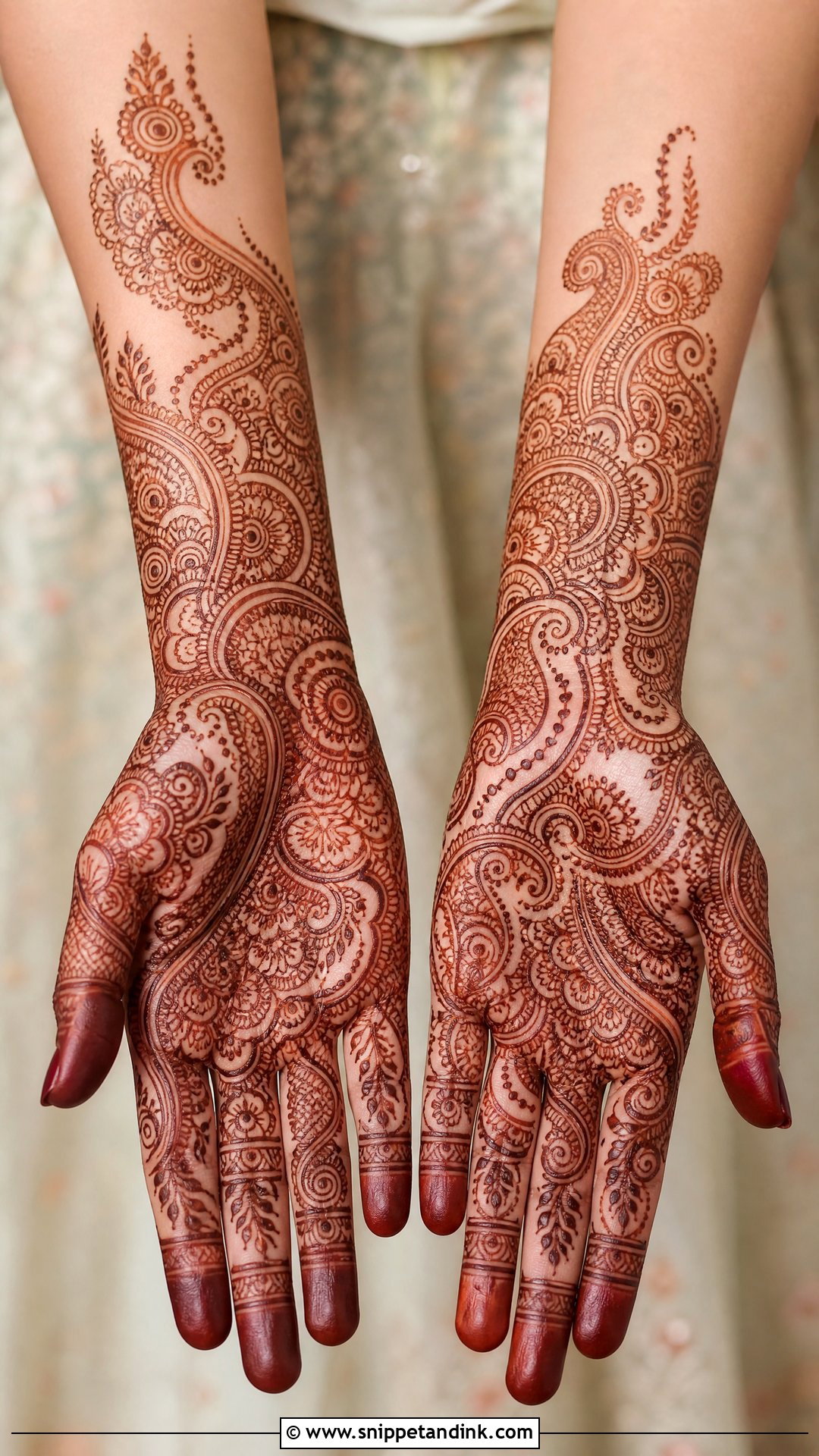
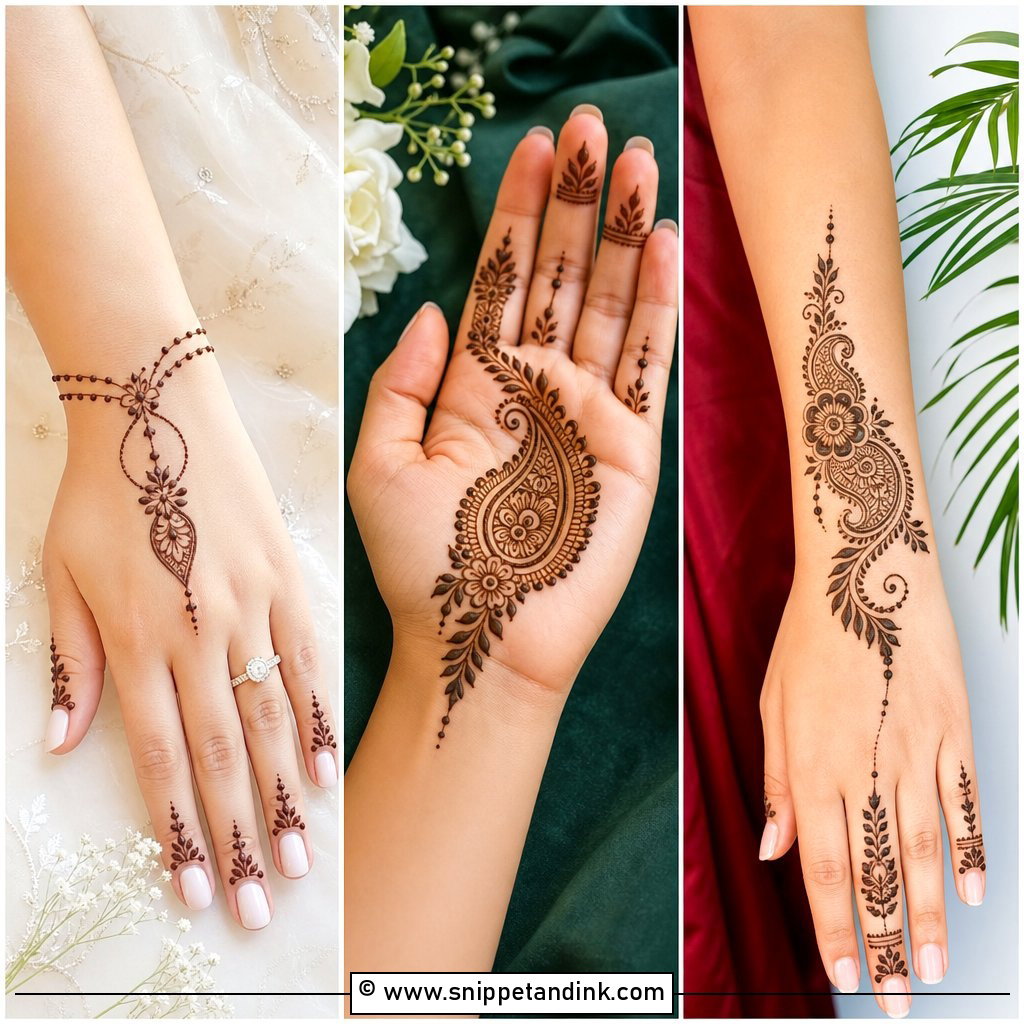
Paisleys flow naturally, so they’re the easiest motif for leading the eye from palm to wrist and forearm. I fill them with tiny florals, curved lines, dots and leaf strokes rather than solid shading, which keeps the texture without darkening the whole hand. Placing larger paisleys near the palm and smaller ones toward the wrist creates a sense of movement. The one thing I’d avoid is stacking paisleys tip to tip down the forearm in a straight line, because it ends up looking stamped. Angle them slightly and they sit well with Indian outfits and gold jewelry.
10. Bridal Mehndi Design With Flowers
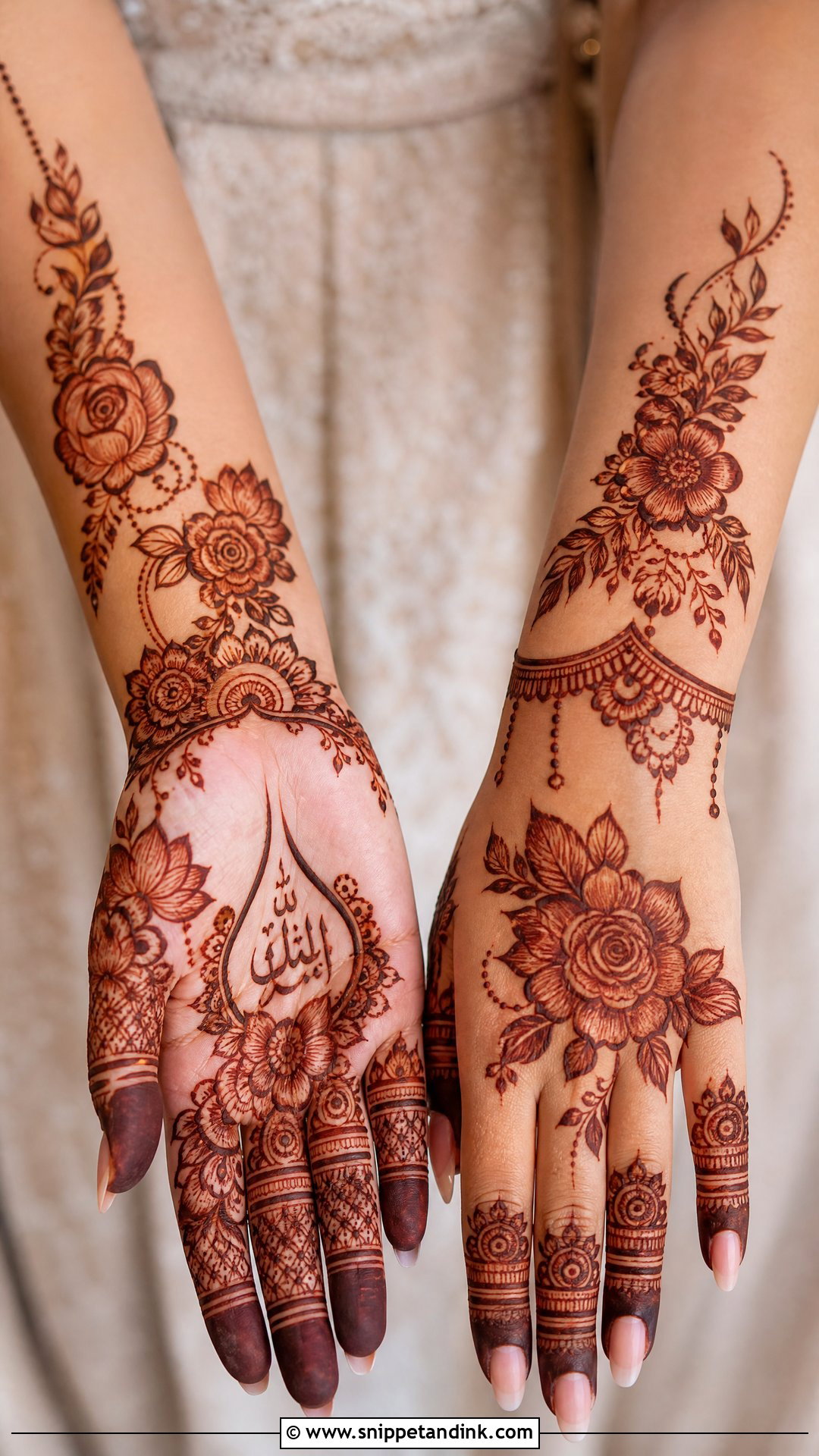
Flowers are the most adaptable motif I draw. They can form a full palm pattern, a diagonal Arabic trail or a wrist-to-forearm layout. Roses, lotuses, simple five-petal blooms and leafy vines all work. What makes floral henna look bridal rather than casual is contrast: a bold outline on the outer petals and soft shading toward the center. Without that, flowers of the same weight look flat once stained. I usually let one large bloom anchor the hand and keep the rest small, so the design has a clear focal point.
11. Bridal Mehndi Design With Jaali
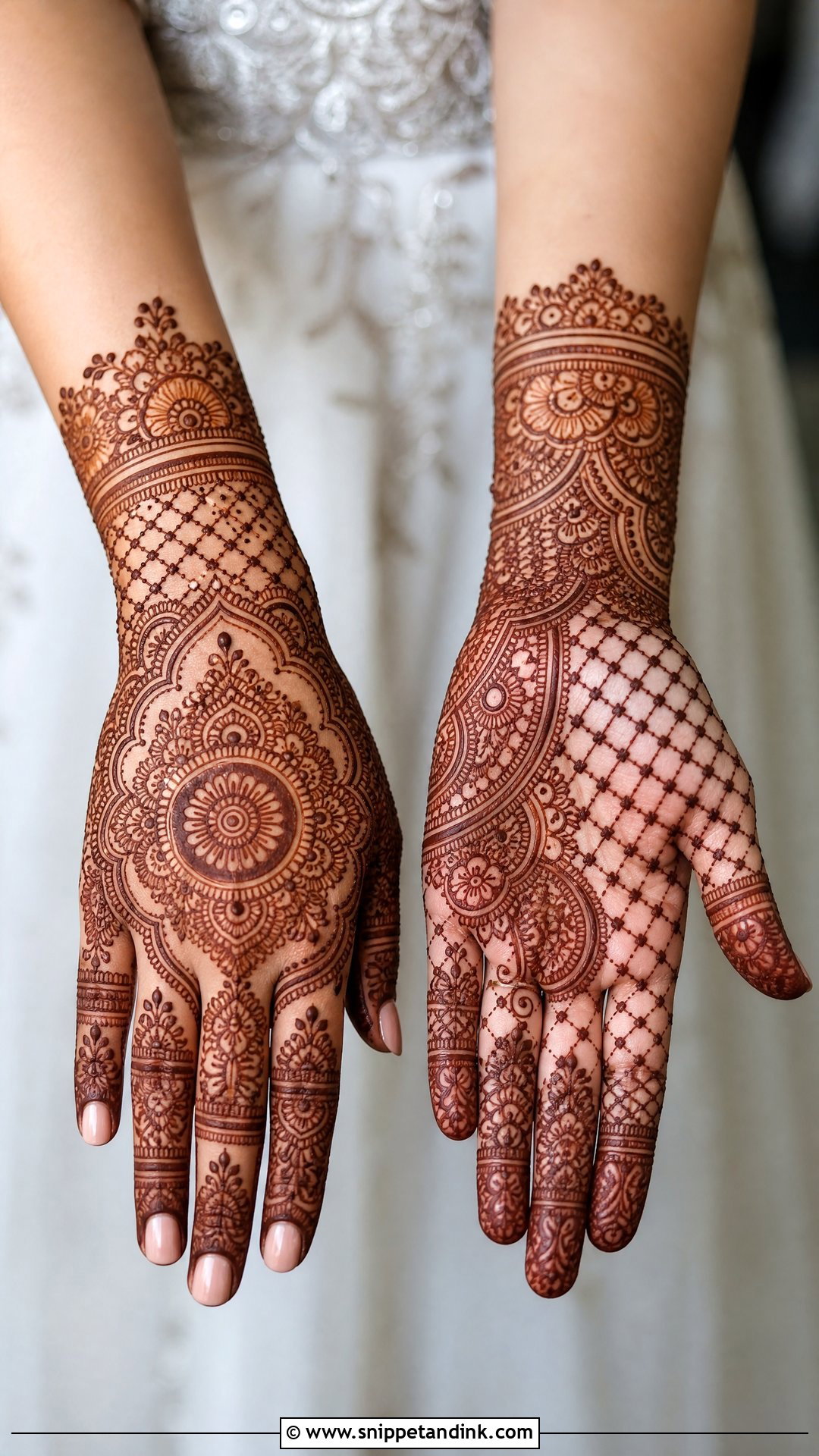
Jaali is the fine crisscross mesh that gives henna a lace effect. Done well it’s one of the most elegant fillers there is, but it’s also the first thing to blur if the paste is too runny or the artist rushes, because the squares close up as lines spread. I use jaali in small areas only, such as fingers, a wrist panel or a corner of the back hand, and frame it with floral borders or paisleys. Brides often choose jaali patterns to echo embroidered outfits and stacked bangles. Ask to see a close-up of your artist’s mesh work before committing.
12. Bridal Mehndi Design With Peacock
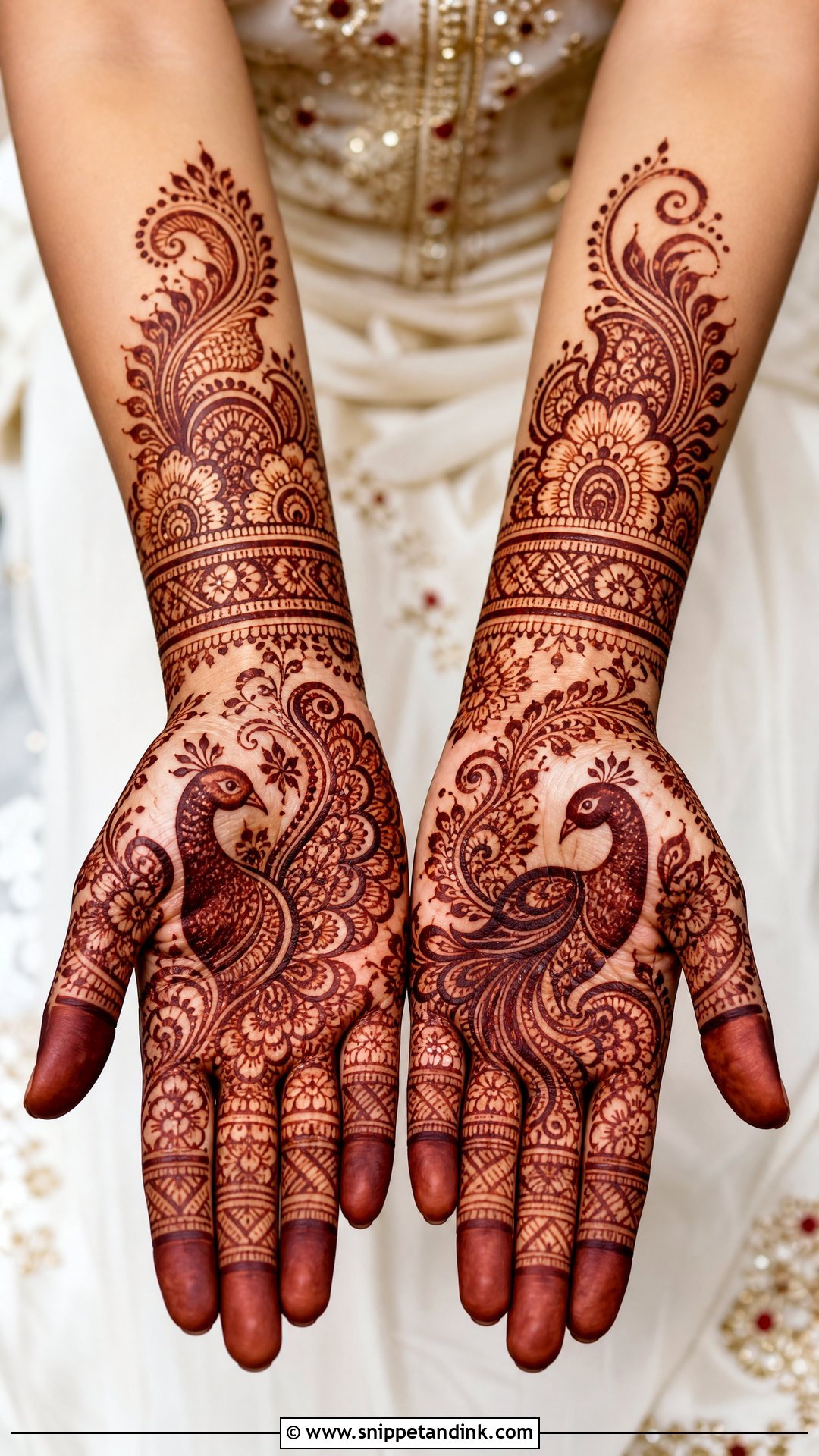
A peacock gives the design a clear focal point and carries a lot of meaning in Indian wedding henna. It can sit on the palm, near the wrist or along the forearm, with its feathers trailing into paisleys, flowers and vines. Keep it medium-sized; a huge peacock leaves no room for anything else and starts to dominate the hand. The neck and eye are where detail matters, so I draw those with the finest tip and slow down. It pairs well with colorful bridal outfits, and the feather tail is a natural way to extend the design up the arm if you want more length.
13. Bridal Mehndi Design With Bride And Groom
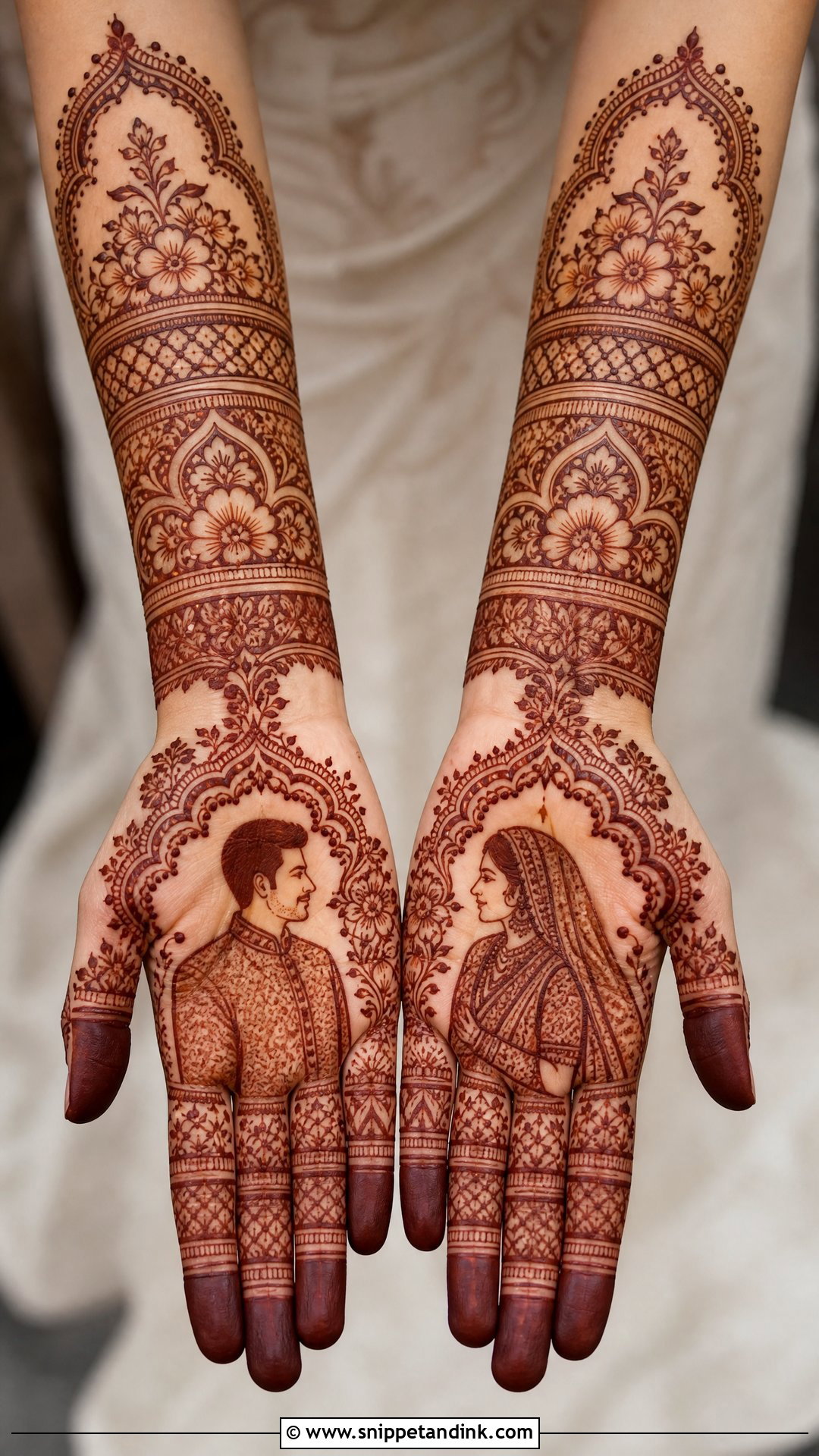
Bride and groom figures, usually one on each palm, make the mehndi personal without needing heavy coverage around them. My advice is to keep the figures simple: clean outlines, a suggestion of the face and clothing, and no attempt at tiny facial features. Henna spreads a little as it sits on skin, and tiny eyes and noses drawn too finely tend to merge into a dark spot after staining. Florals, paisleys and borders around the figures frame them well. Add soft wrist bands and filled fingertips, and the hands still look traditional and neat.
14. Bridal Mehndi Design For Short Hands
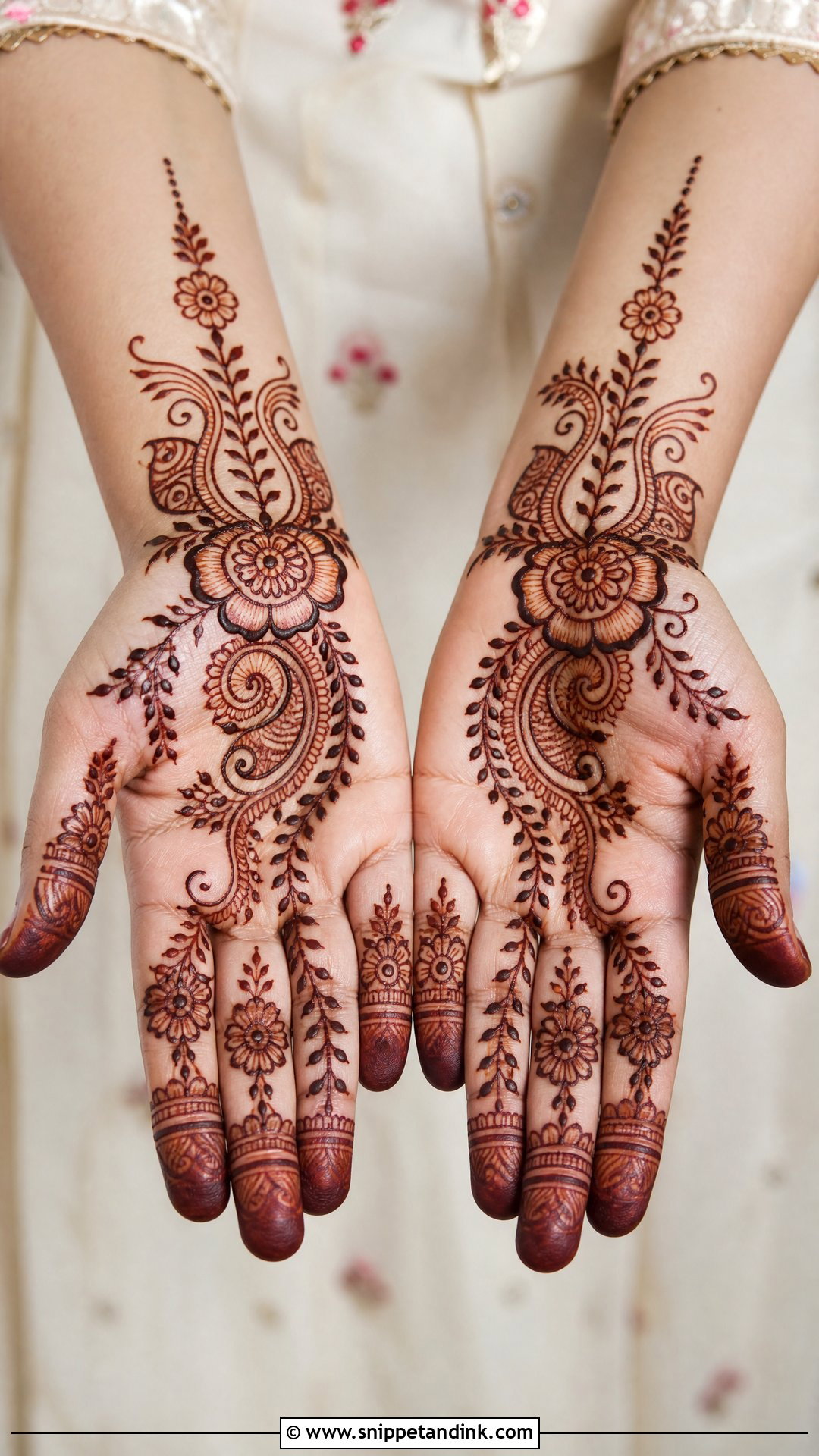
On shorter hands and fingers, I lean on vertical lines to create length: slim paisleys, long leafy vines, narrow wrist extensions and a diagonal Arabic layout. Large motifs make a small palm look crowded, so medium mandalas and soft florals work better. I also keep fingertip caps a little shorter, ending around the first joint, because a fully filled finger can visually shorten it. The goal is enough bridal coverage that it feels complete, with the eye pulled up the hand rather than across it.
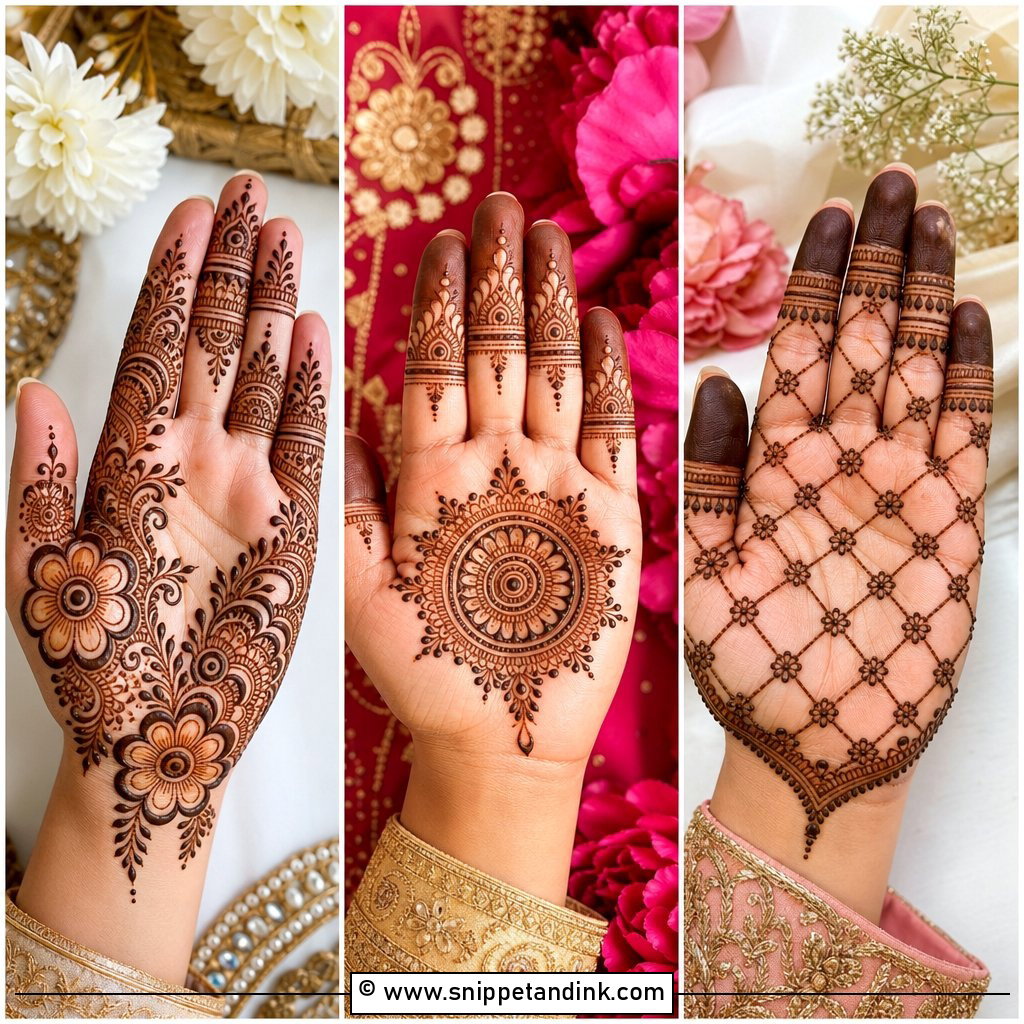
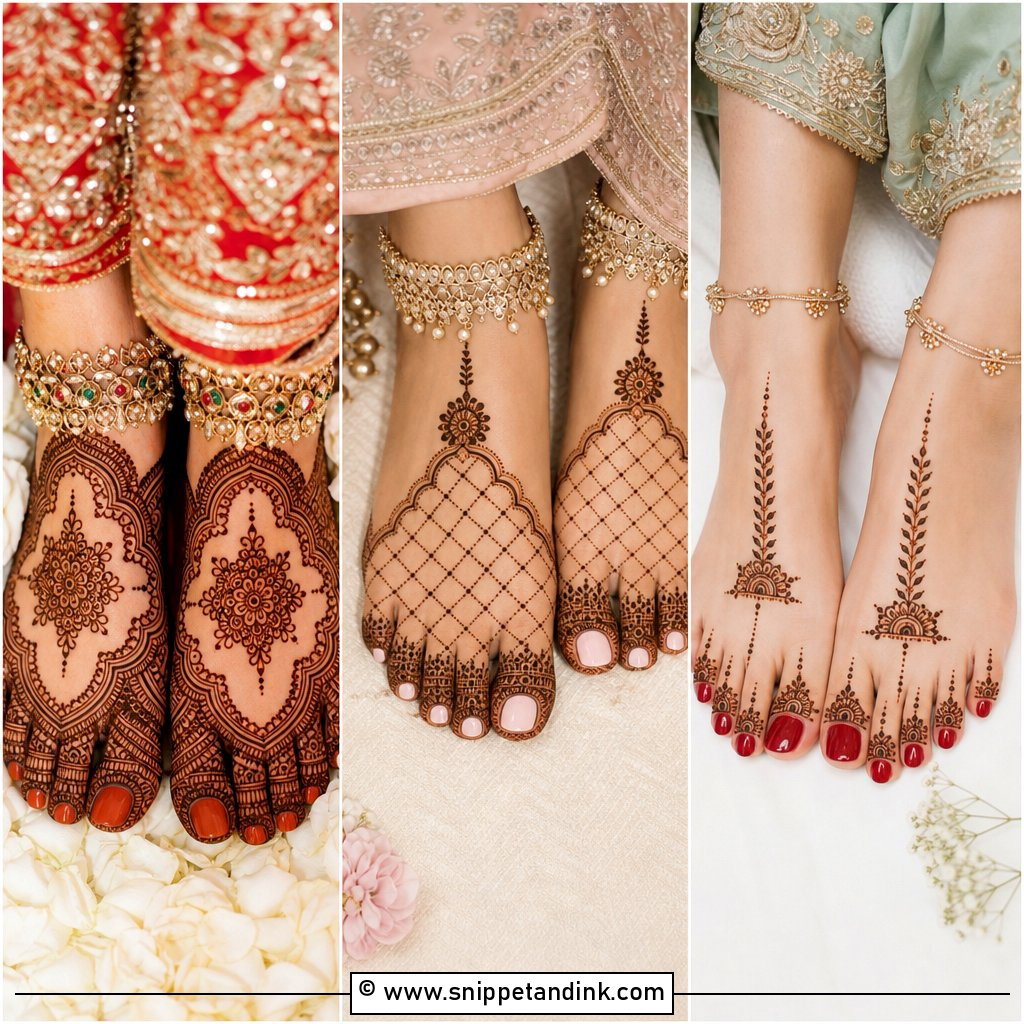

15. Bridal Mehndi Design For Long Hands
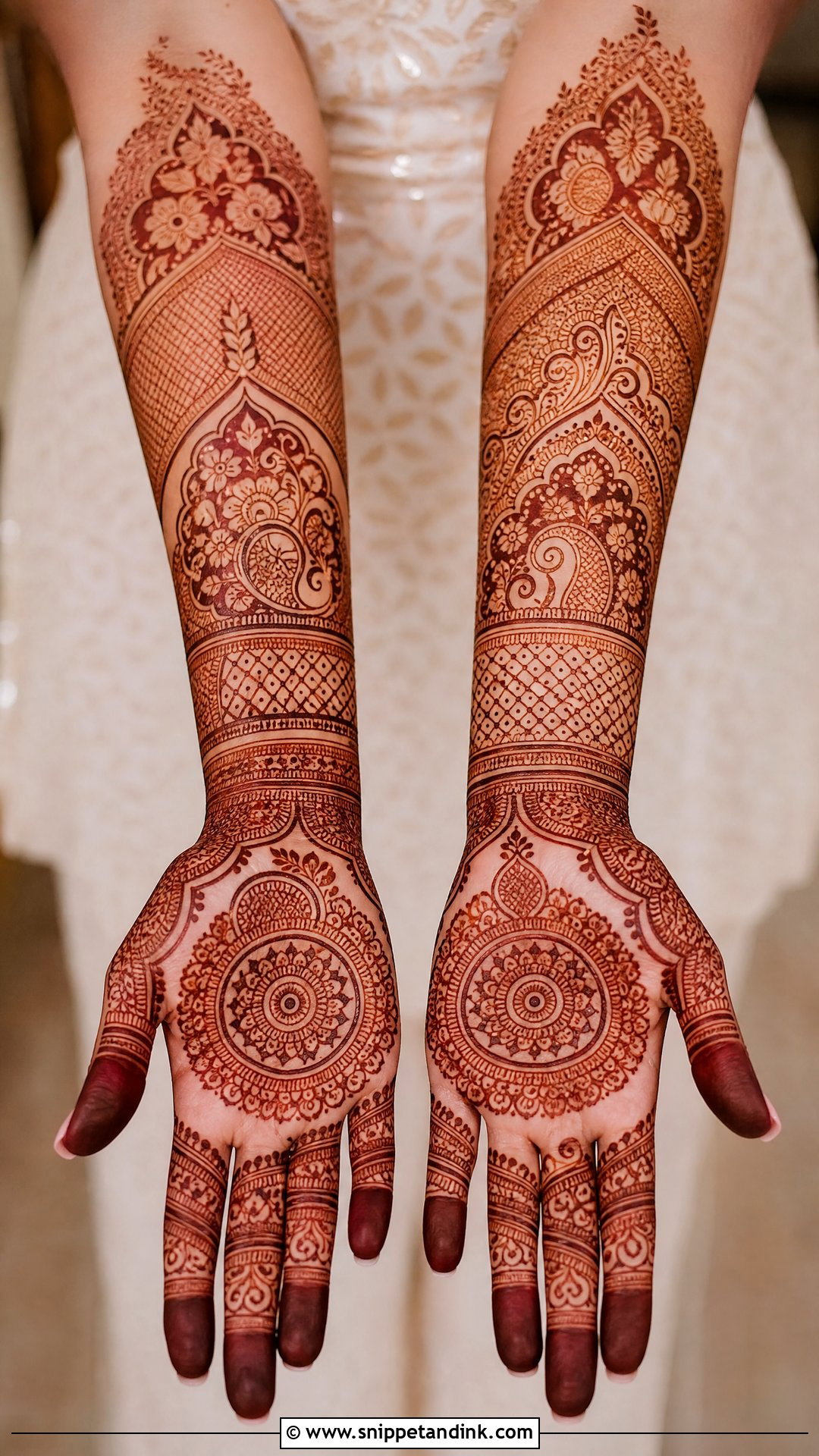
Longer palms and fingers give me space to work with larger motifs and wider gaps. A full-hand design with mandalas, paisleys, florals and jaali fits without crowding, and the wrist-to-forearm extension can run further without looking cramped. The risk on long hands is the opposite of short ones: a design that’s too sparse can look unfinished. I balance this with stacked finger bands, leafy lines and fine fingertip patterns. Long fingers suit horizontal bands across each joint, which would look heavy on short hands.
16. Bridal Mehndi Design With Bracelet
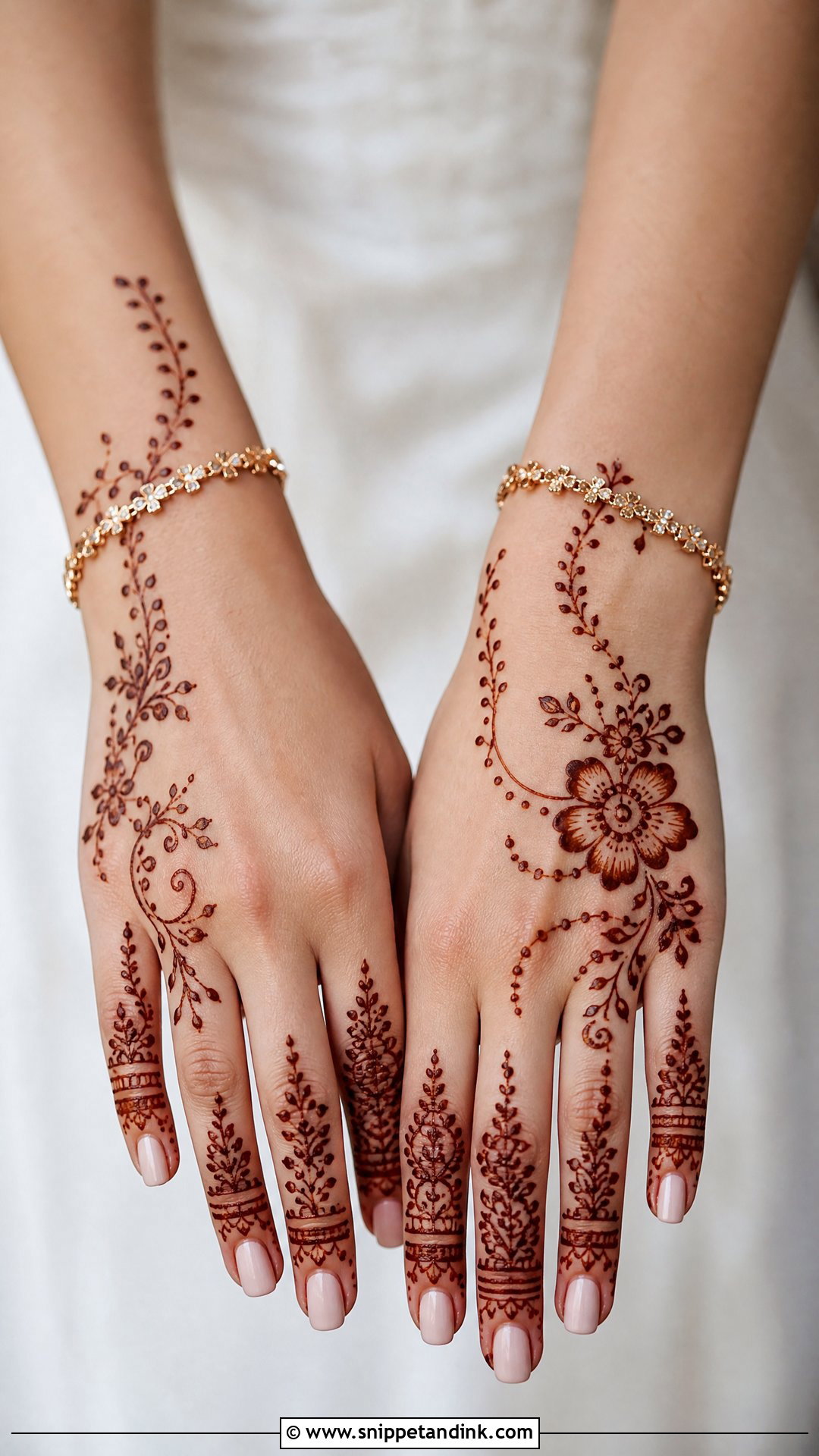
A decorative band around the wrist, connected to the fingers or palm by chains, dots, vines or floral links, gives you the look of a hand harness drawn in henna. The palm can stay simple with a mandala or floral center while the wrist carries the main effect. Real bangles will sit over that wrist band, so I ask which arm and where your bangles rest before drawing it, and I place the henna bracelet slightly above or below so it isn’t hidden. Clean bracelet lines and a lighter wrist keep it elegant for engagements, minimal brides and the wedding day itself.
17. Bridal Mehndi Design With Finger Details
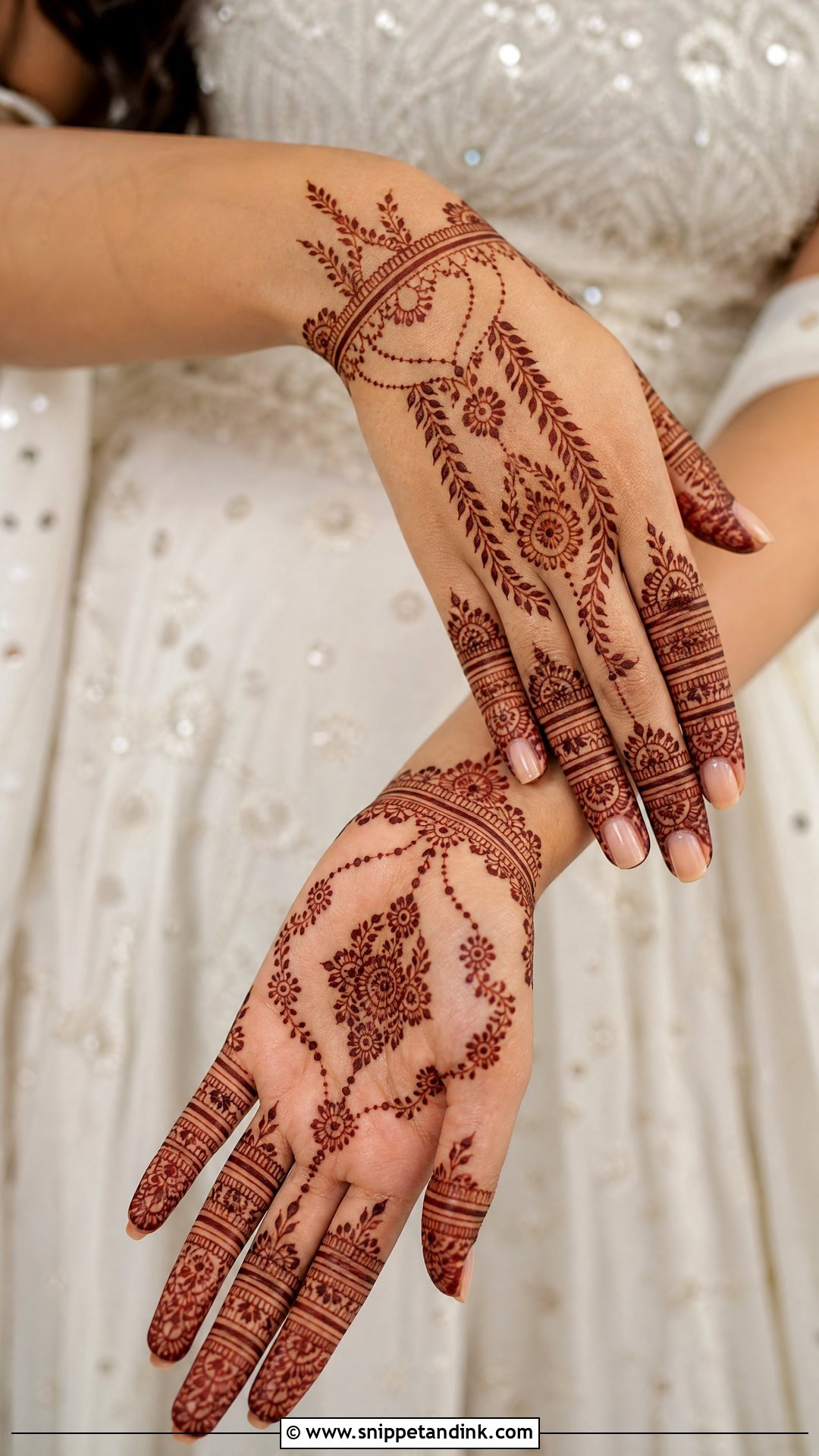
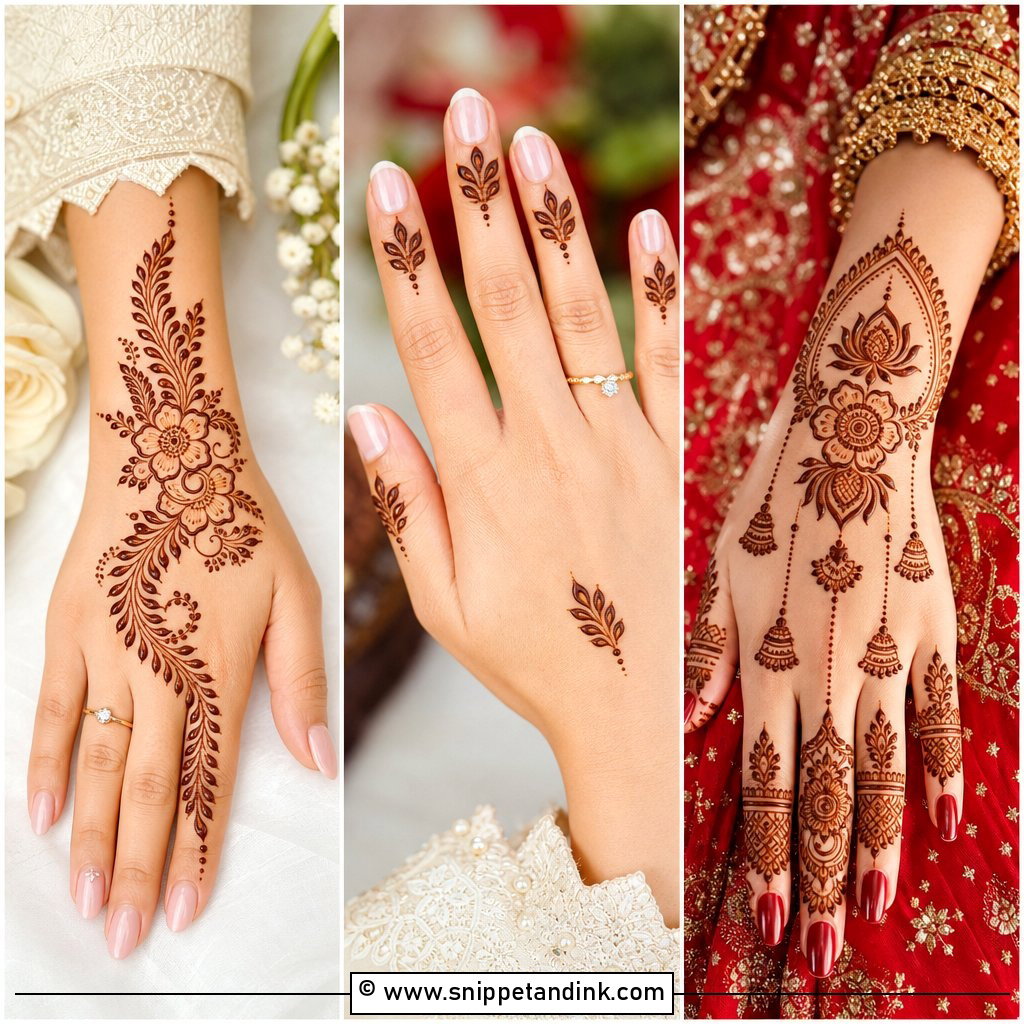
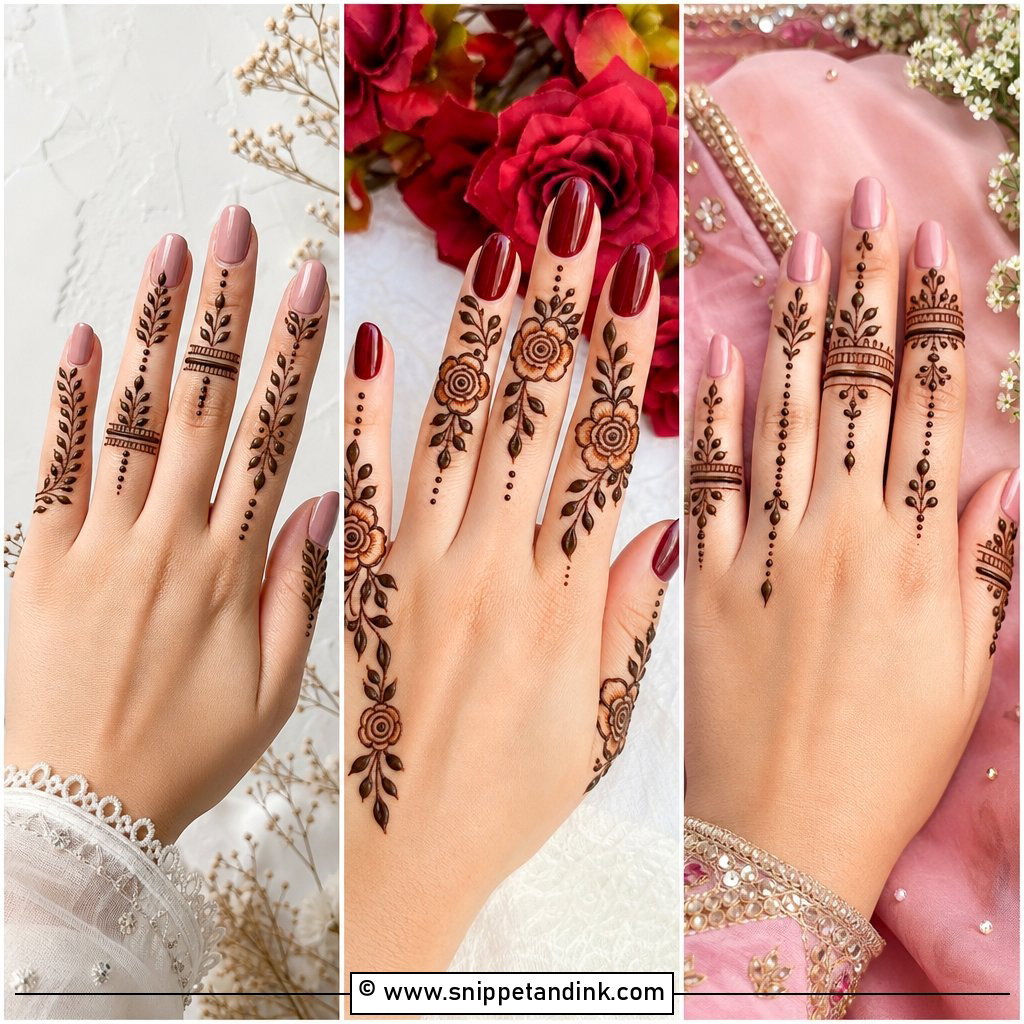
Fine bands, leafy lines, dots, checks and tiny flowers on the fingers give the hand a finished edge even when the finger details sit around a simple palm. Ring photos are where this shows most. I connect each finger to the palm pattern so they read as one design rather than separate decorations. Fingertips stain dark quickly, so if the palm is light, I keep the fingers lighter too; otherwise all you see in pictures are dark tips. This works on front and back hands alike.
18. Bridal Mehndi Design With Negative Space
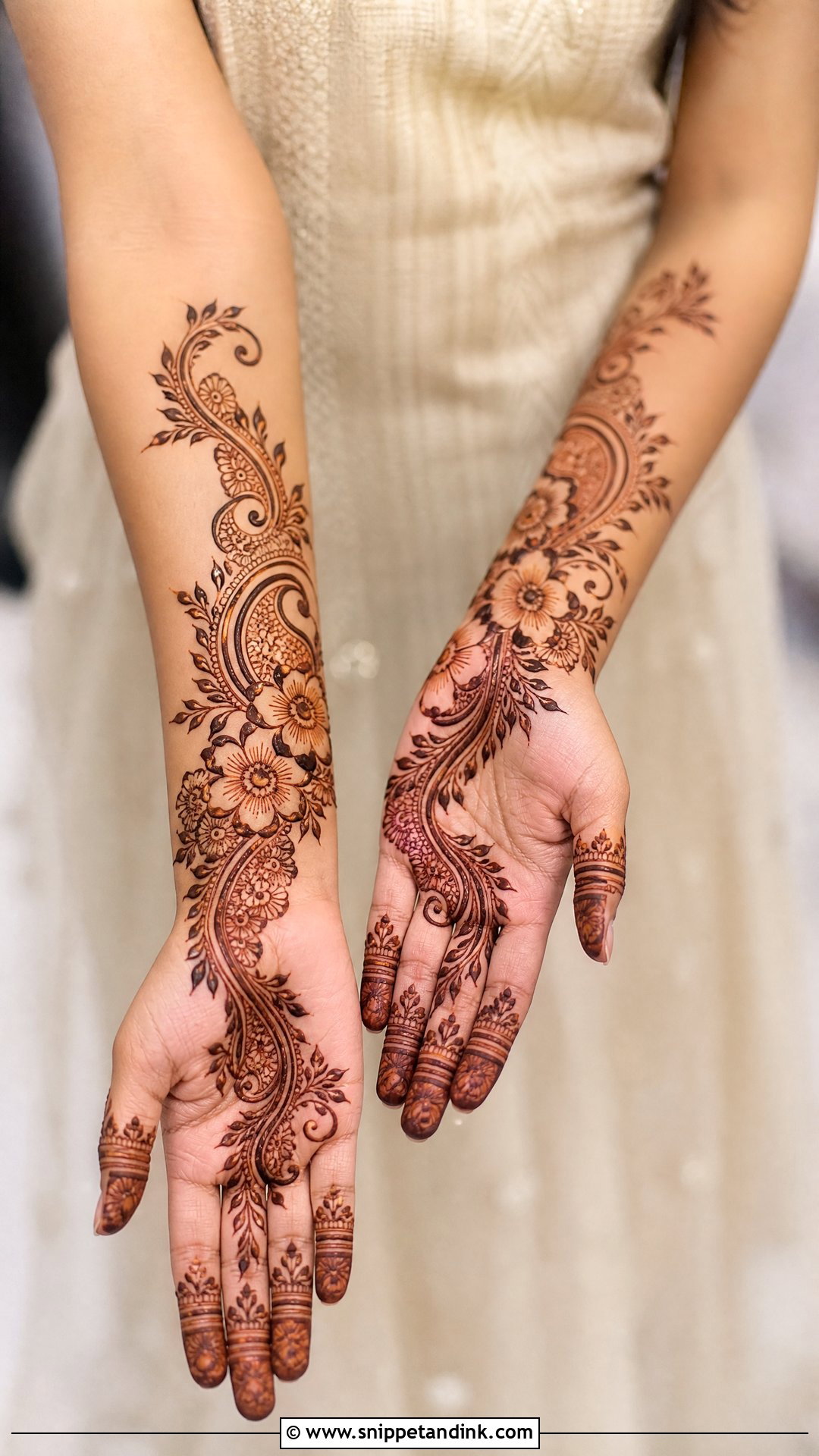
Planned empty areas around flowers, paisleys, mandalas and vines are a design element, not a shortcut. The motifs stand out because the skin around them is bare. Negative space layouts can run diagonally, in panels or around a palm centerpiece. Less paste on the skin also means it dries faster and feels less tight while you wait. The thing to watch is where the gaps fall: a bare patch across the center of the palm can look like a mistake, so I keep empty space at the edges and between motifs, never in the middle of the design.
19. Bridal Mehndi Design For Engagement
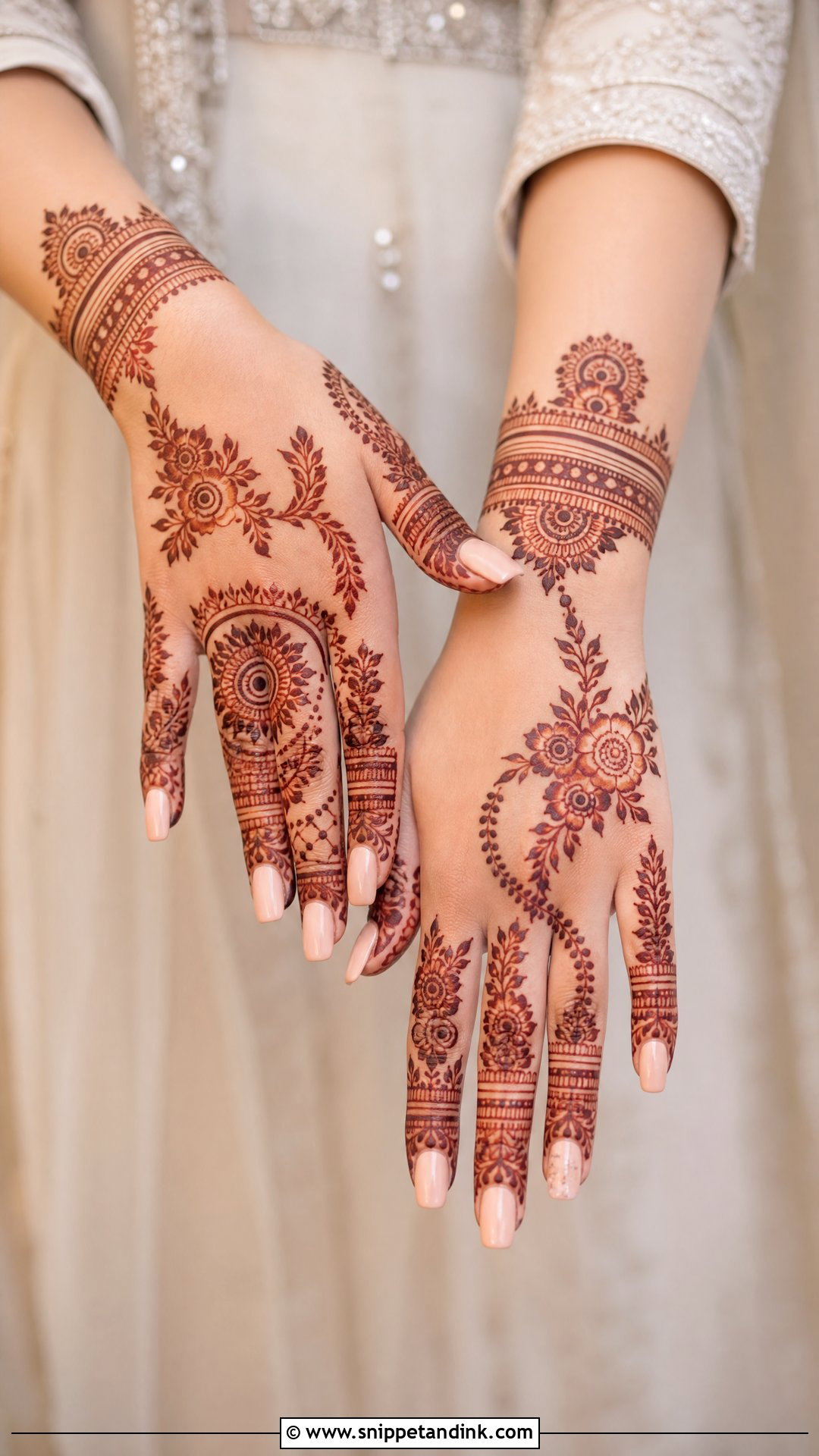
Engagement henna should feel festive but lighter than what you’ll wear at the wedding. Back hand florals, bracelet patterns, neat finger details and a simple palm cover it. Arabic, Indo Arabic or minimal Indian elements can follow your outfit. The ring hand gets the most attention, so I make sure the ring finger is detailed but leaves a clean space where the ring sits. Keep the forearm extension short. If your engagement falls only a week or two before the wedding, remember the engagement stain will still be fading, and it may show under your bridal design.

20. Bridal Mehndi Design For Wedding Day
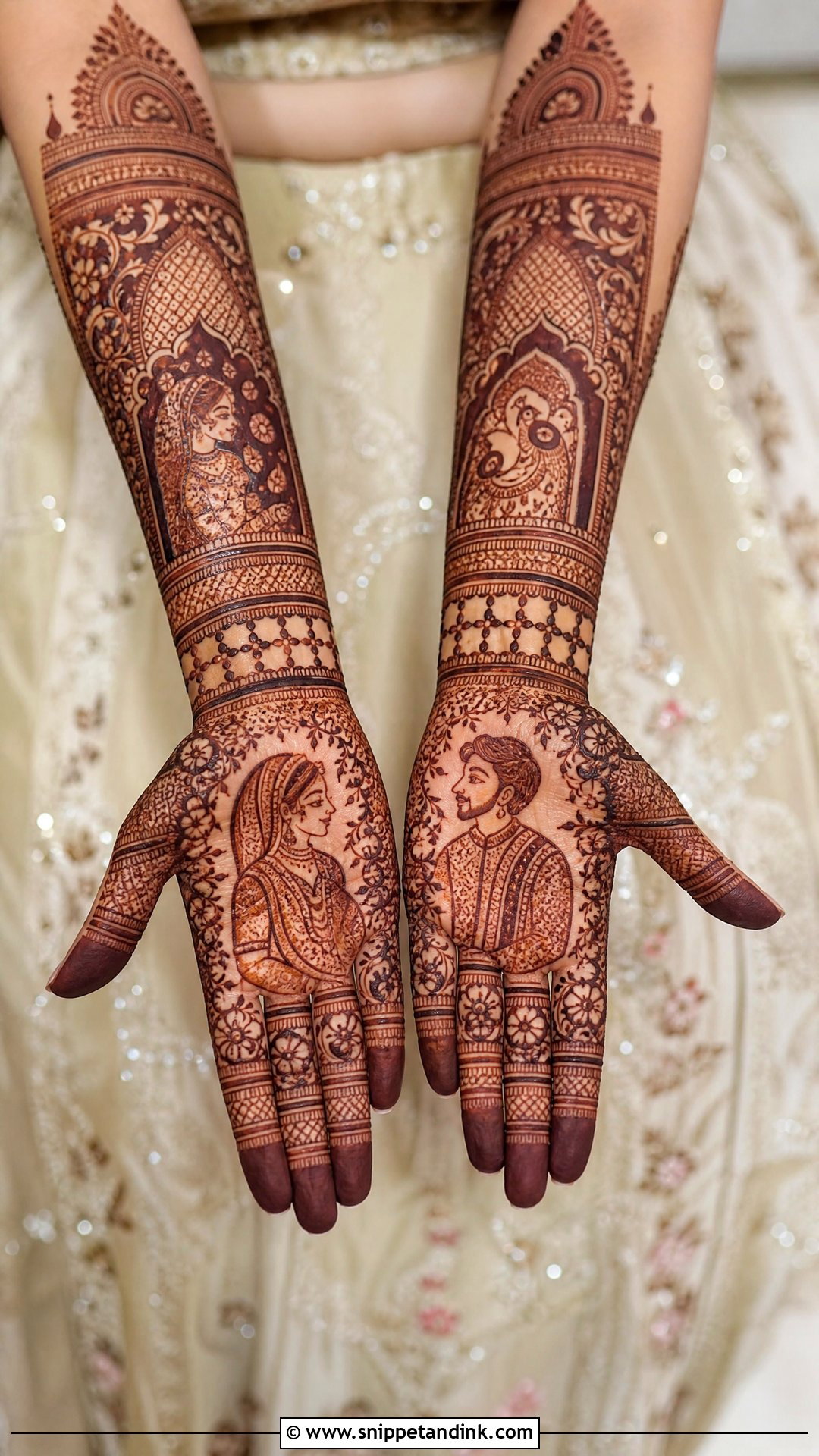
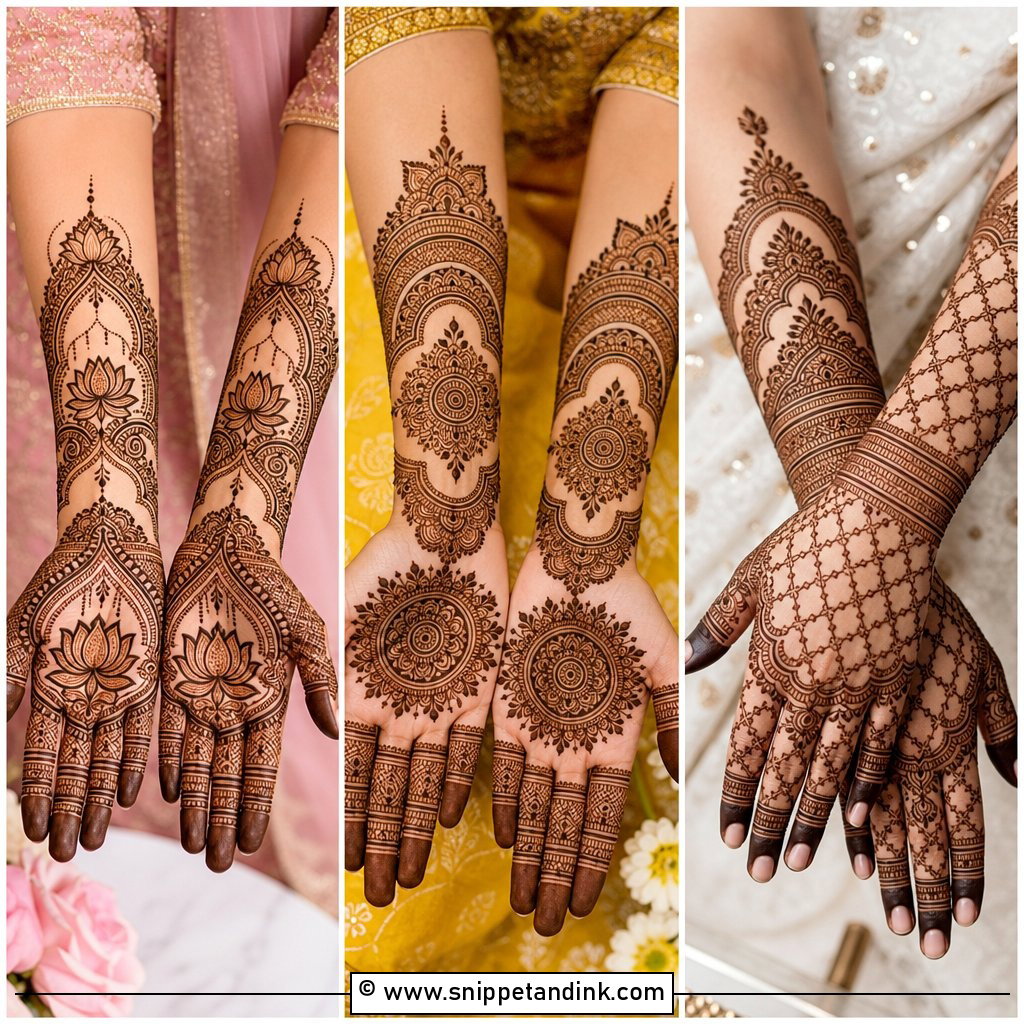
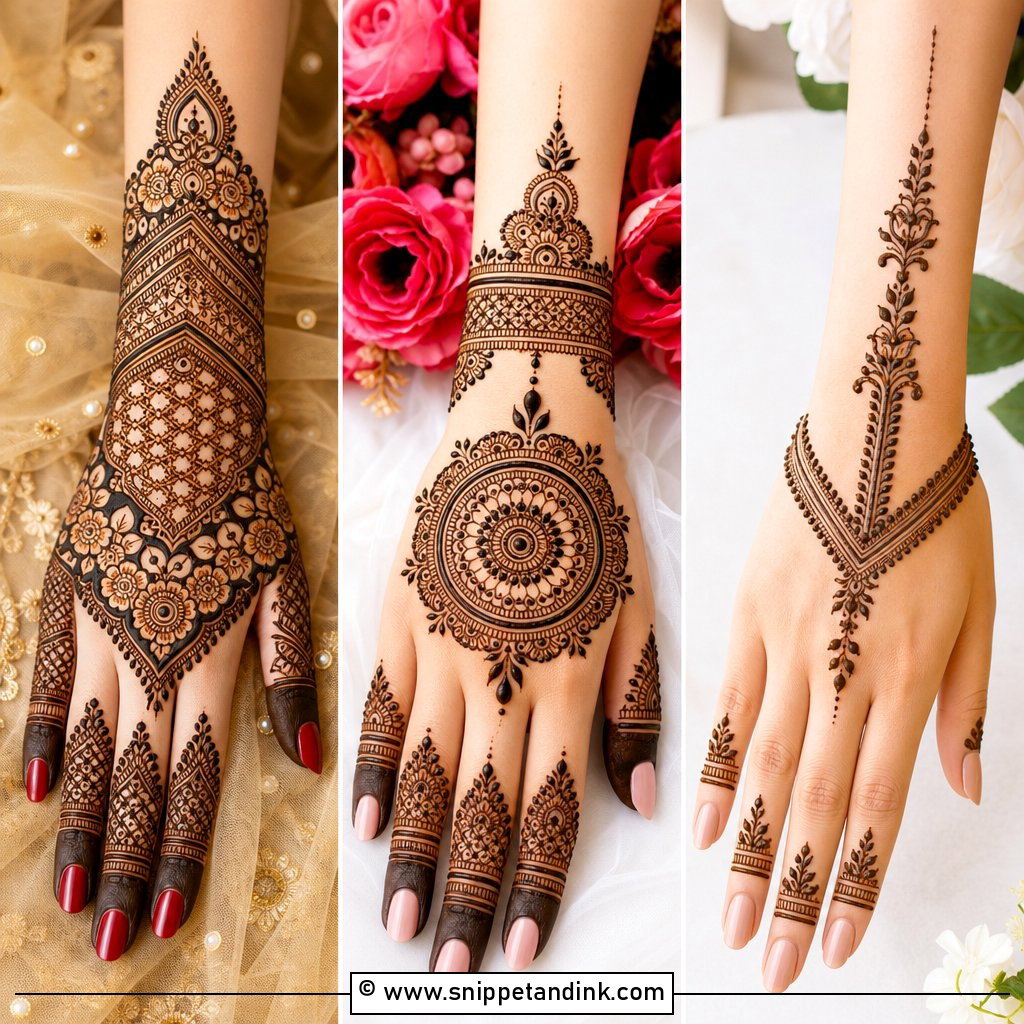
Full palm coverage, detailed fingers, wrist bands and a soft forearm extension make up a complete wedding-day set. Paisleys, flowers, mandalas, peacocks, jaali and bride-groom figures can all be part of it. The challenge with so many elements is readability. I ask for the outfit, jewelry and a rough sense of where your hands will be in photos, then choose two or three focal points and let everything else support them. Clean outlines and even spacing matter more than the motif list. Ask your artist to size the design to your hand rather than reuse a fixed template.
The Two Days After the Paste Comes Off
How you treat the paste afterward affects the stain as much as the design itself. Natural henna starts out bright orange when you remove it and darkens to reddish brown or maroon over the next day or two. Palms and fingertips stain darkest; forearms and the backs of hands stay lighter, which is normal.
While the paste is on
Leave it on for as long as you comfortably can, ideally overnight. Once it starts to dry, a light dab of lemon juice and sugar helps it stay stuck to the skin. Keep warm, because henna stains better on warm skin, and wrap your hands loosely in tissue or cotton gloves for sleep.
After removal
Scrape the dried paste off with a blunt edge or your fingernail rather than washing it. Avoid water for as long as you can, ideally most of a day, and skip soap, hand sanitizer and chlorine pools. A thin layer of balm or a natural oil before showering protects the stain.
One safety check
Only use natural henna, which stains in orange and brown tones. Products sold as black henna often contain a chemical dye that can cause serious skin reactions. If a paste promises jet-black color in an hour, don’t put it on your skin, and ask your artist what goes into her cones.
A Design That Still Reads After the Stain Deepens
A lighter bridal mehndi design gives you the meaning and detail of wedding henna without hours of sitting or a hand so dark the pattern disappears. Mandalas, paisleys, jaali, florals and bracelet bands all work at this scale. What decides the final look is less the motif and more the spacing, the line quality and how well the design fits your hand and sleeves. Book your artist early, ask to see their fine-line close-ups, and plan your application so the stain peaks on the day you’re photographed.
You'll Like These Ideas:




Leave a Reply