
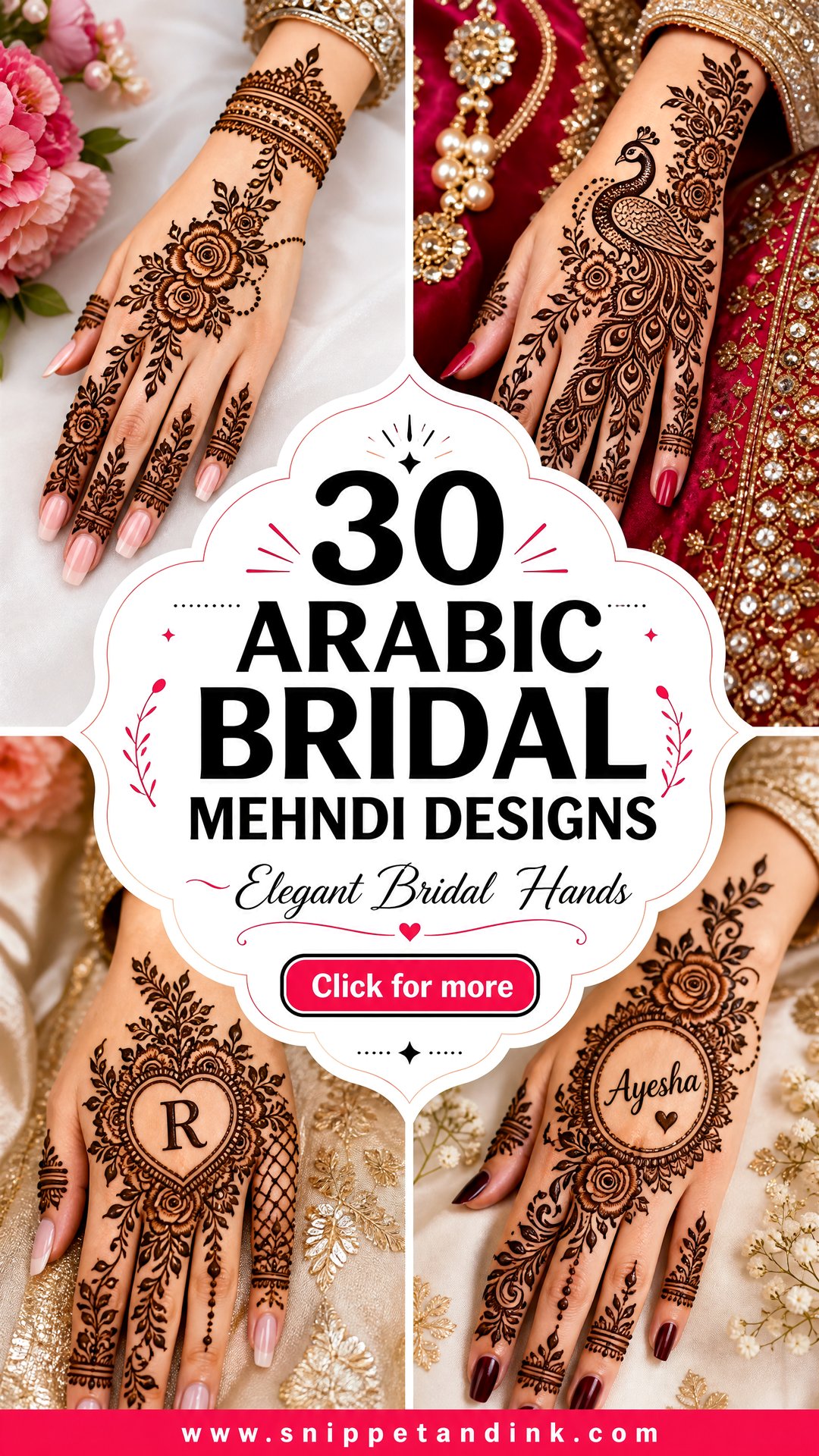
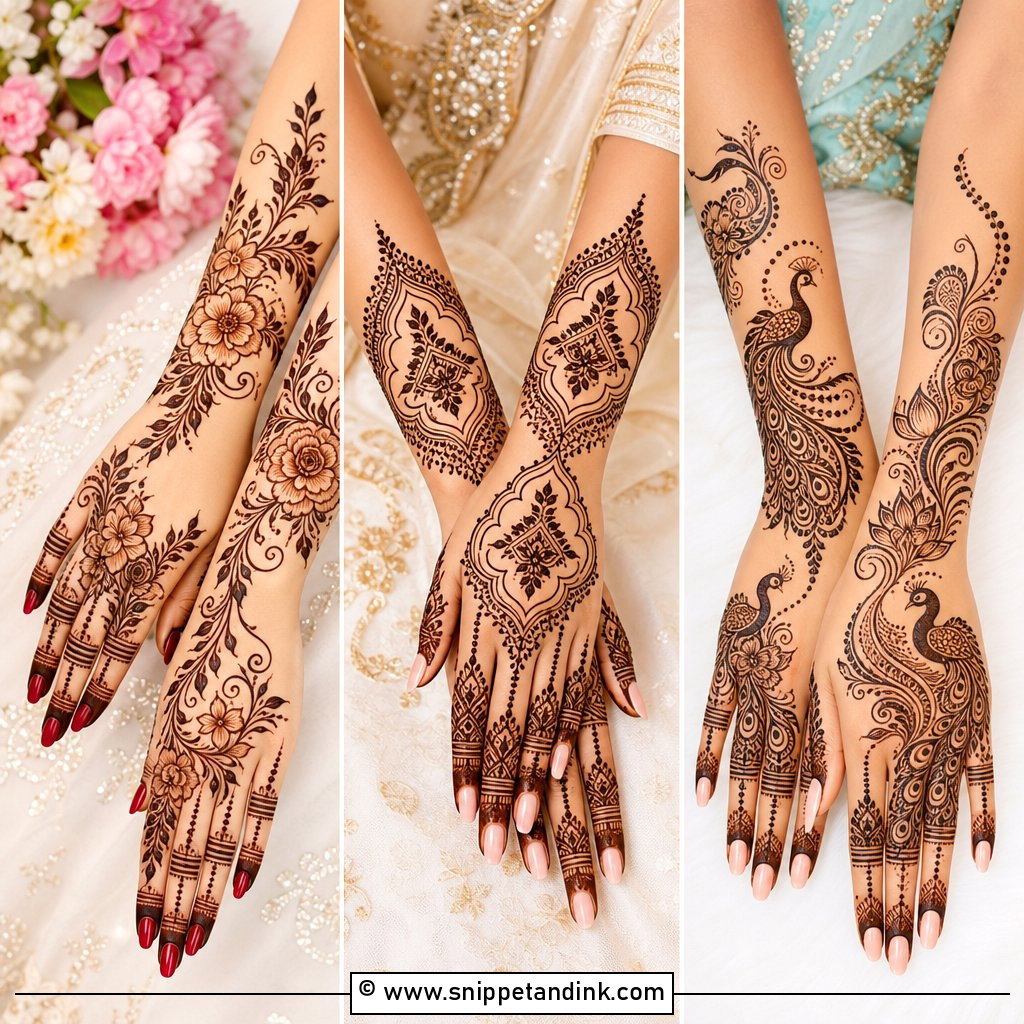
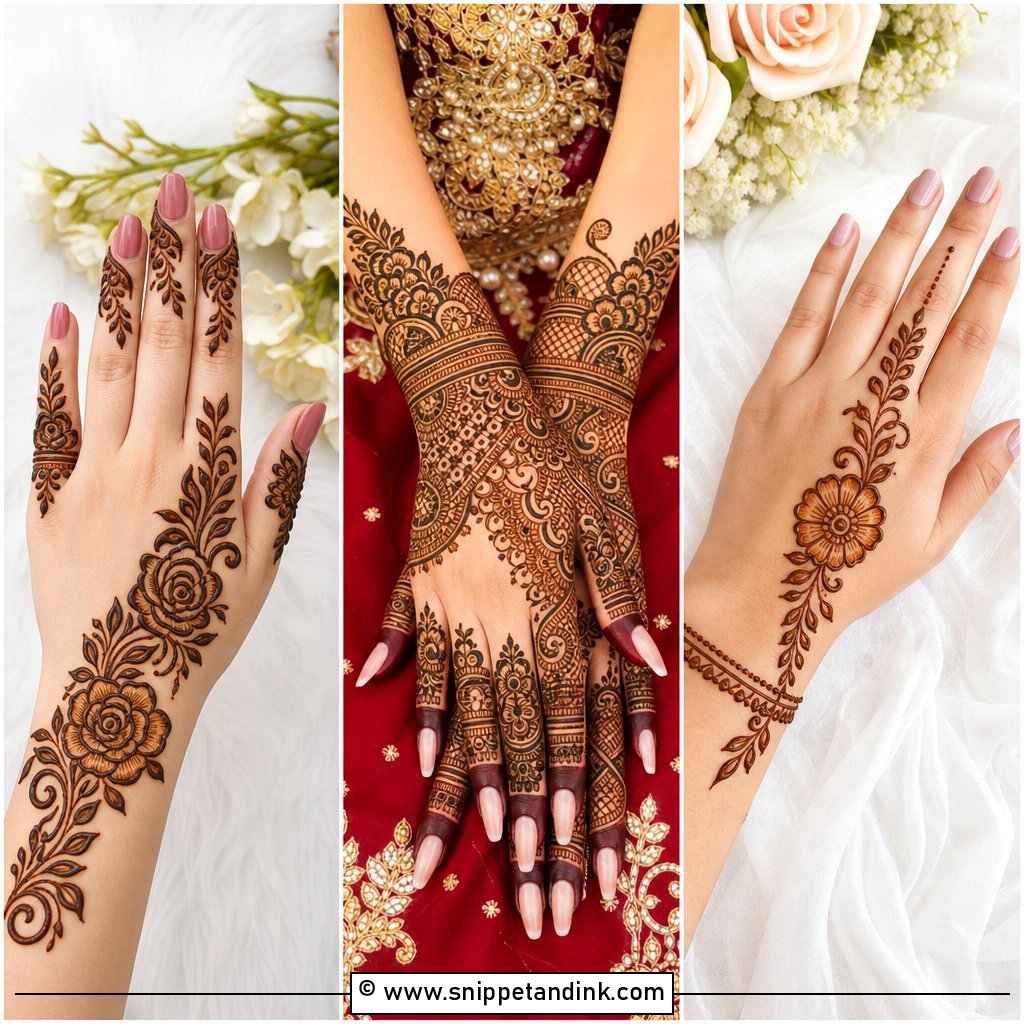
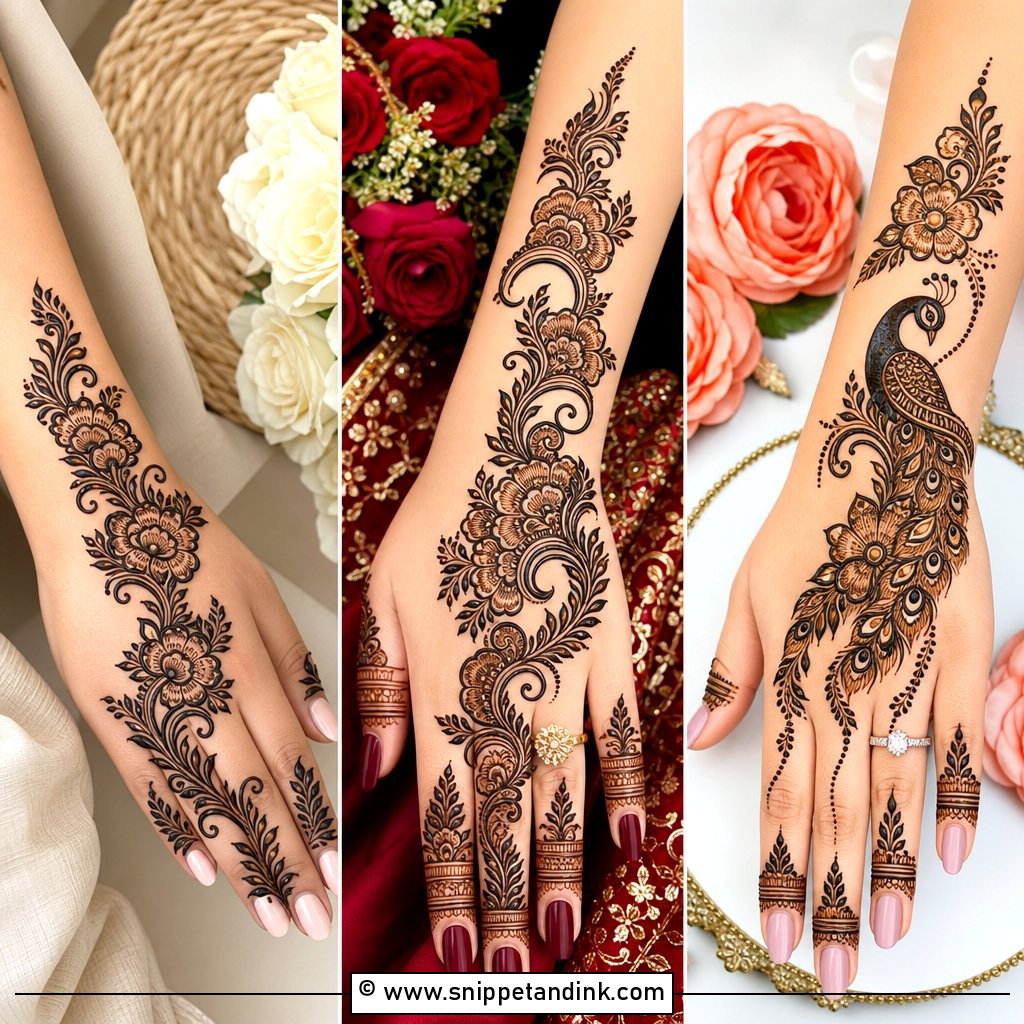
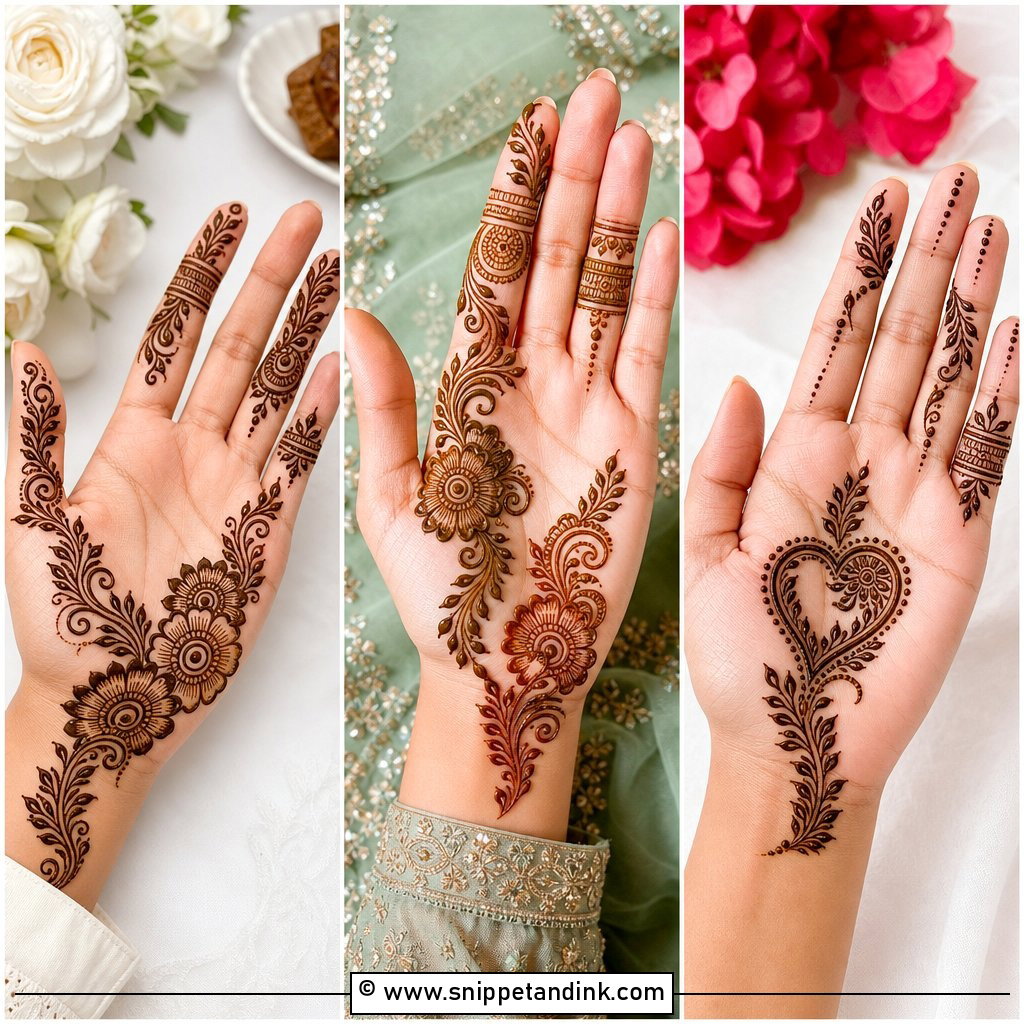
Arabic henna is built on movement. Instead of packing every inch with detail the way a traditional Indian bridal design does, it runs bold flowers, paisleys and vines in a diagonal path and leaves bare skin between them, so each motif reads clearly once the stain darkens. I use it for nikah, wedding, engagement and walima brides, and it can be kept light or built up very heavy, Gulf style or mixed with Indian fill. These thirty layouts are the ones brides bring to me most, with notes on how each behaves on the skin and who it suits.
Getting the Darkest Stain from an Arabic Design
Open Arabic layouts show every line, so a weak stain is more obvious than it would be under dense Indian fill. Most of what decides the colour happens before I even pick up the cone.
Before the appointment
- Wax, scrub and do your manicure a day or two before, never after; exfoliating lifts the stain off.
- Arrive with clean, dry skin and no lotion, oil or sunscreen on hands and feet.
- Ask your artist whether the paste is natural henna. Avoid anything sold as black henna, which can cause serious skin reactions.
- If your skin is sensitive, ask for a small patch test, since paste usually contains essential oils such as lavender or eucalyptus.
Timing matters as much as the paste. Henna starts out bright orange and darkens to a reddish brown over the next one to two days, so I apply the main bridal design one or two days before the wedding. Applied the morning of, it photographs orange.
1. Full Hand Arabic Bridal Mehndi Design
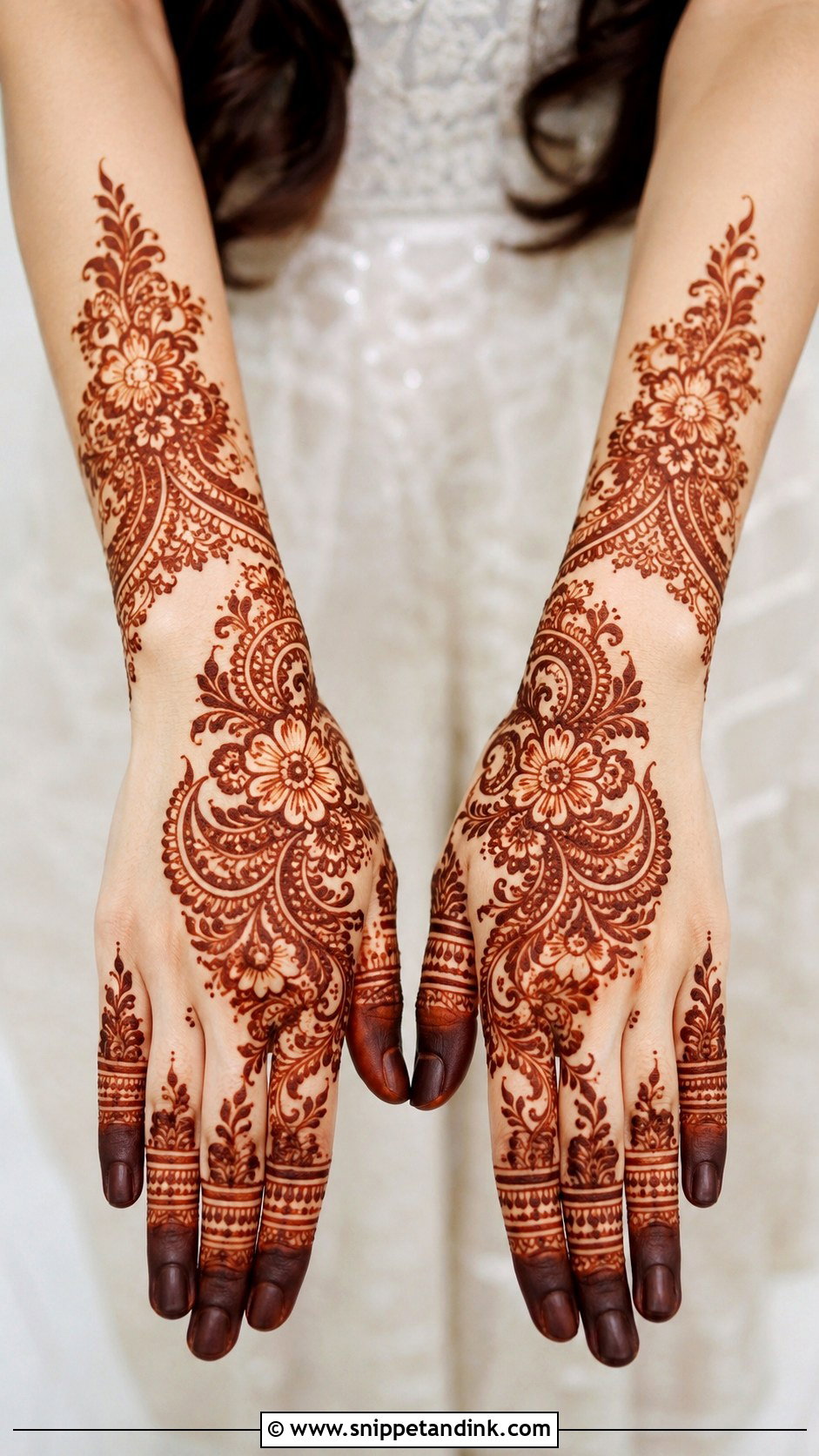
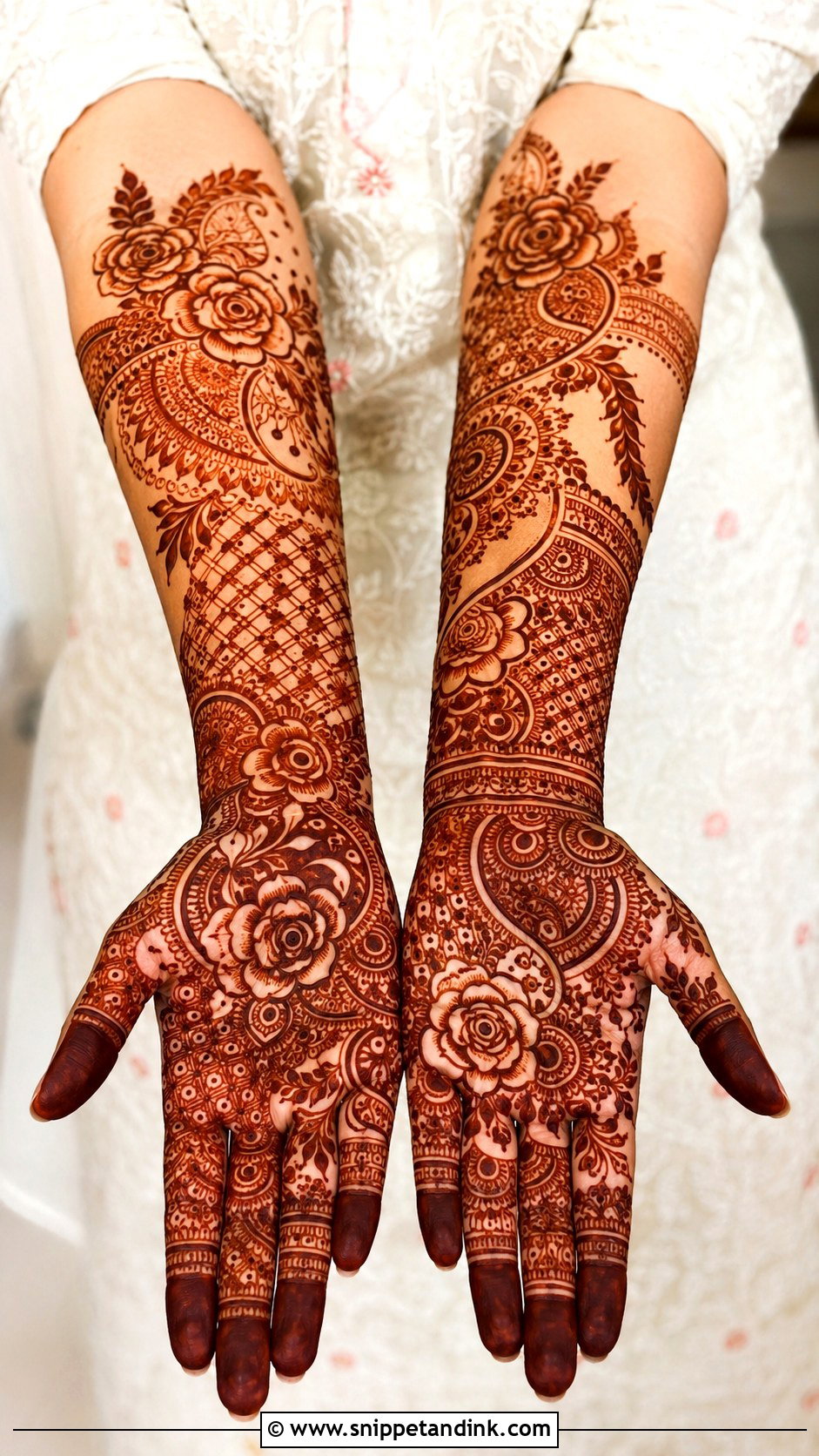
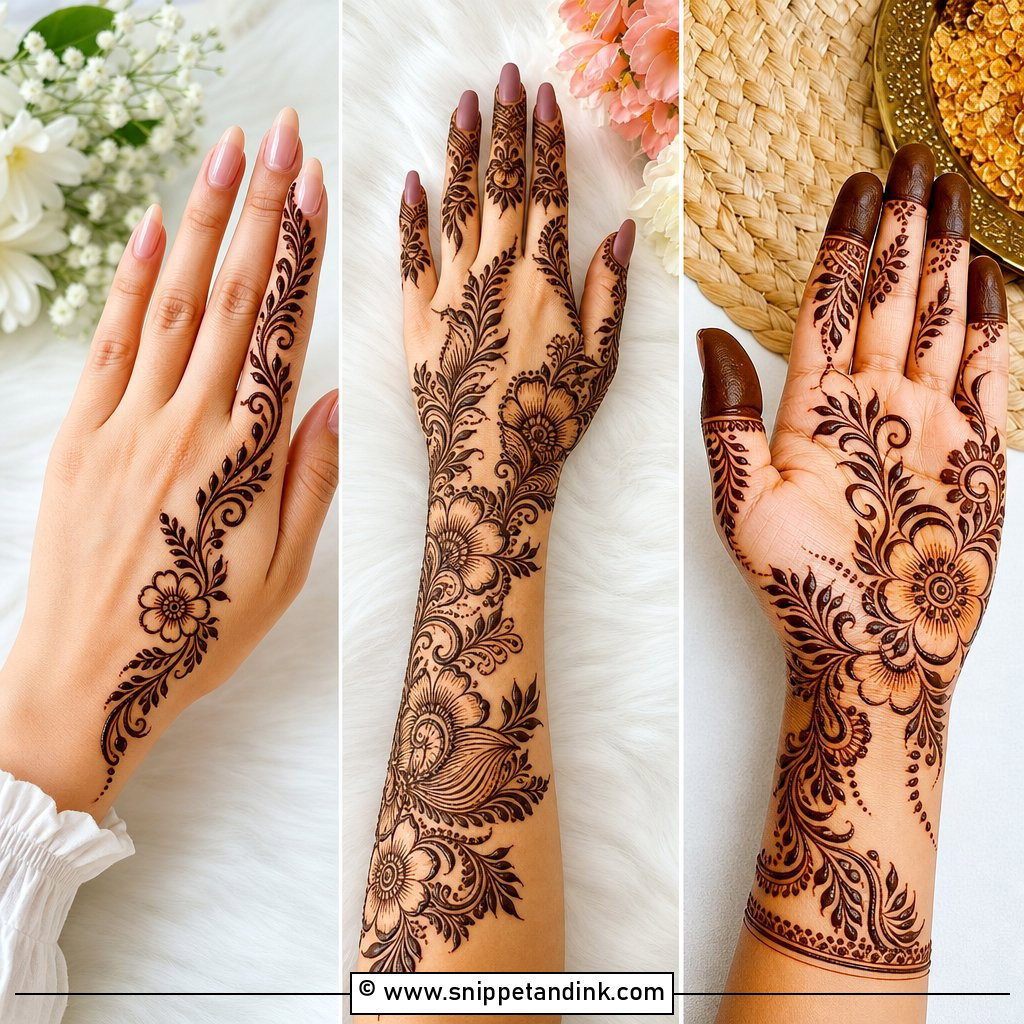
Full coverage in the Arabic style still has to breathe. I start at the fingertips with solid fills, then lay the big florals and paisleys across the palm and back of the hand, and carry bracelet bands and lace borders up the wrist and forearm. The skill is in contrast: thick outlines with fine shading inside them. That contrast is what makes the stain look deep on camera, because flat even lines all darken to the same tone and the pattern loses its shape. Allow a long sitting, since both sides plus forearms takes hours.
2. Arabic Bridal Mehndi Design Front Hand
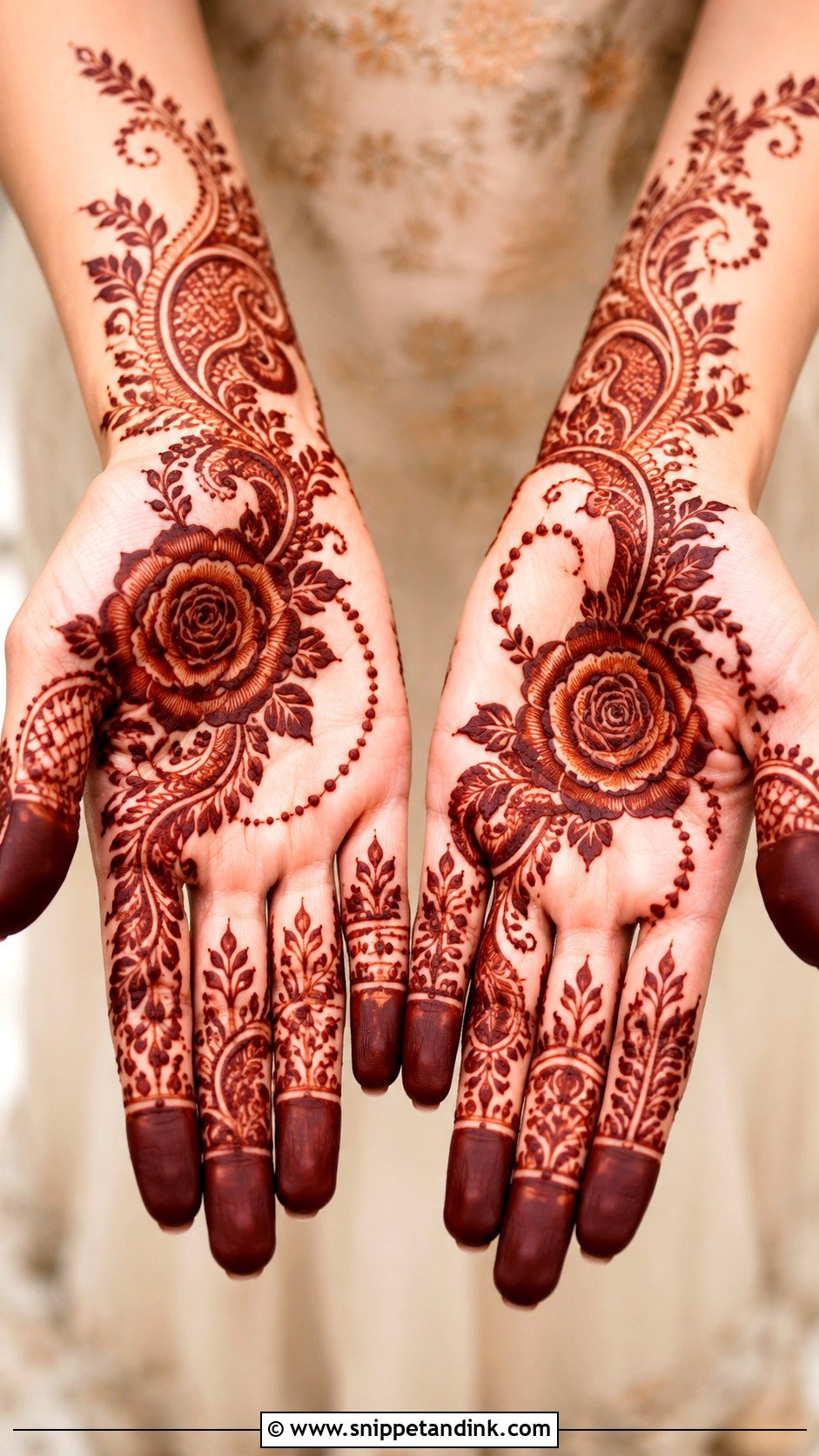
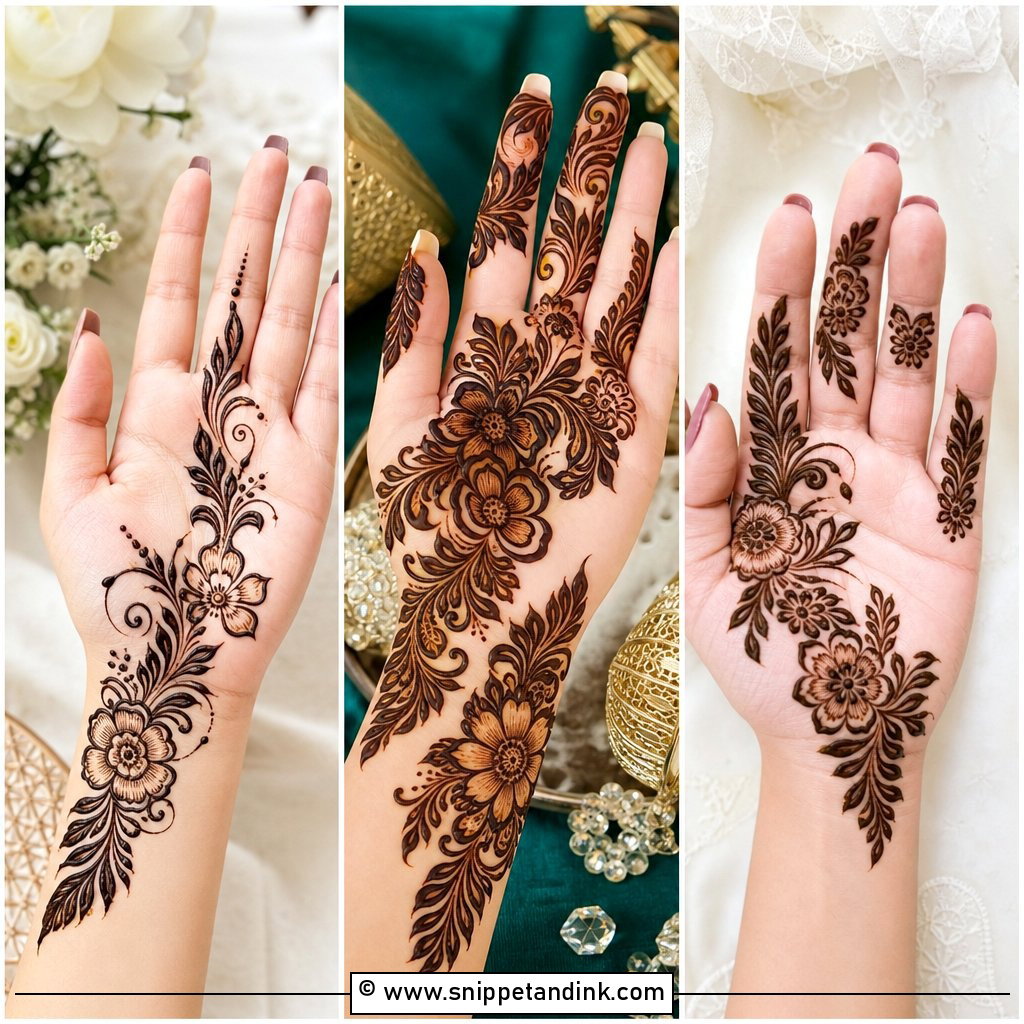
Palms take henna better than anywhere else on the body; the skin is thicker and stains darker. That’s why the front of the hand carries the focal piece: a large rose, a mandala, a paisley cluster or a diagonal floral trail. Fine leaves, dotted chains and shaded petals fill around it while some skin still shows. I keep the fingers slightly heavier with bands and leafy tips, and finish with a wrist cuff. Palms are what people see during the ring and the blessings, so this is where I spend the most care.
3. Arabic Bridal Mehndi Design Back Hand
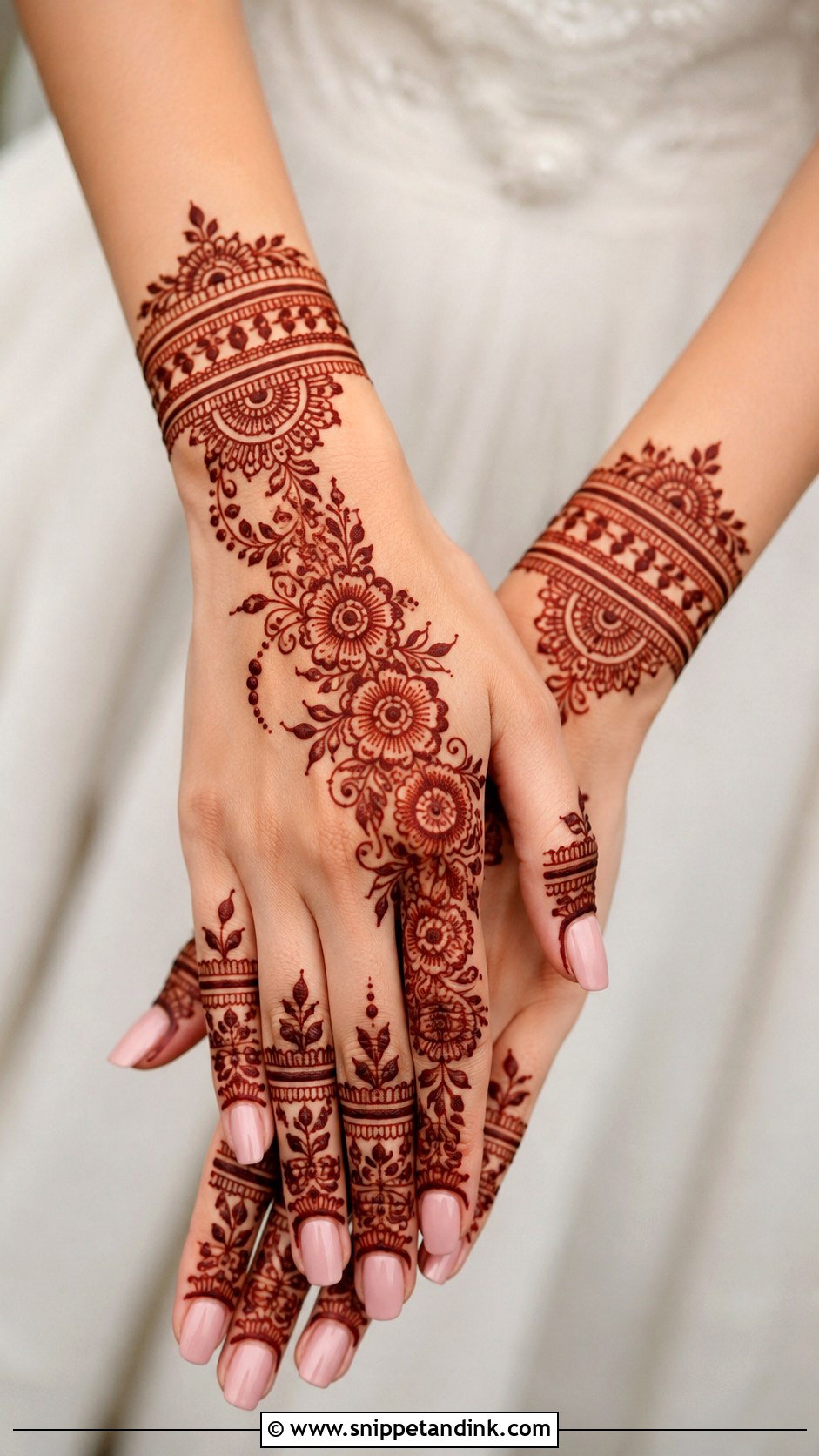
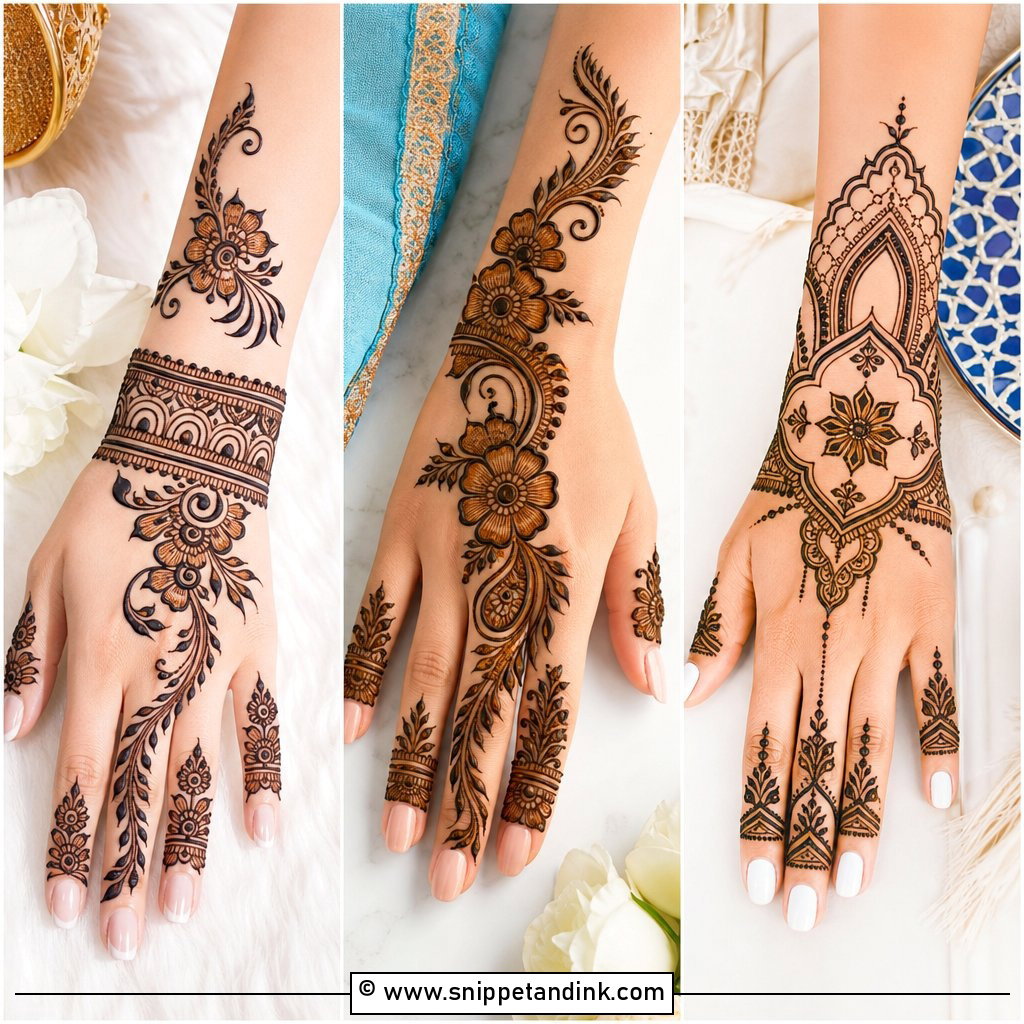
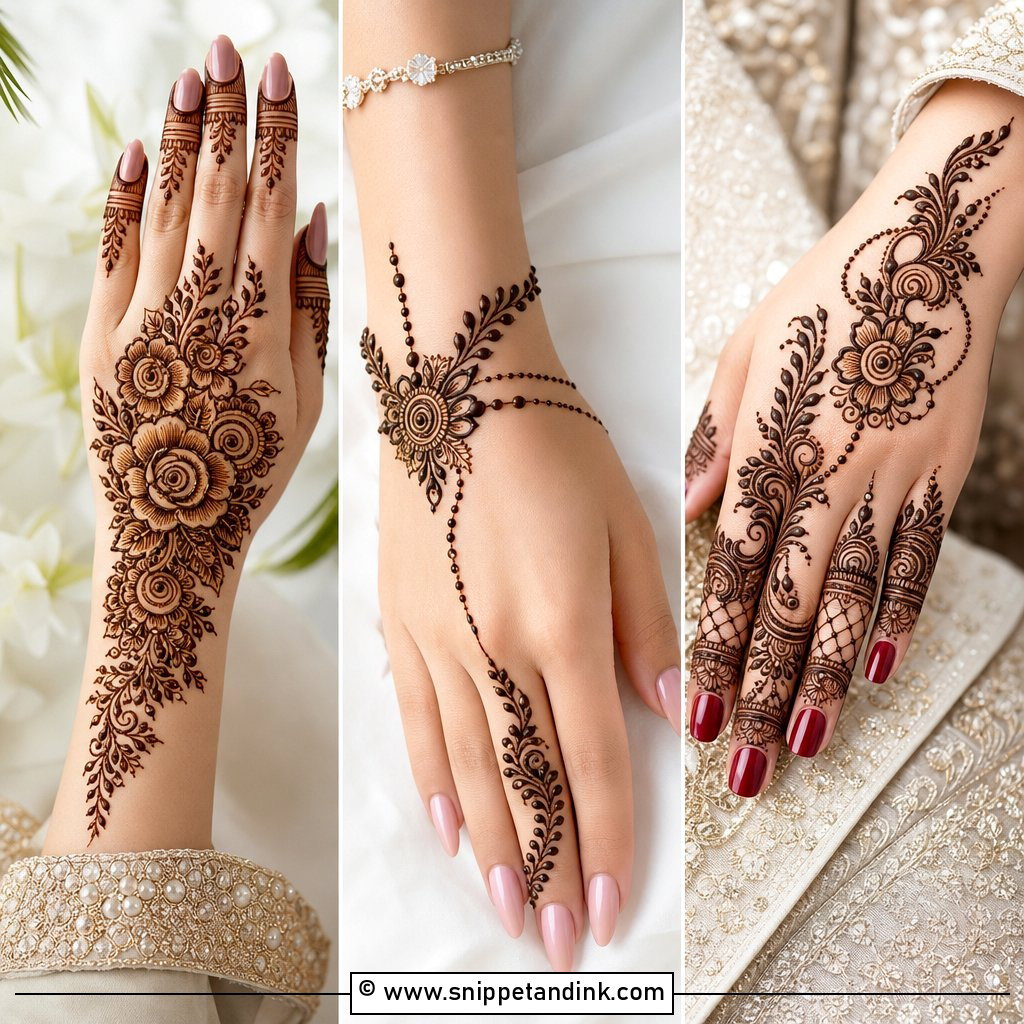
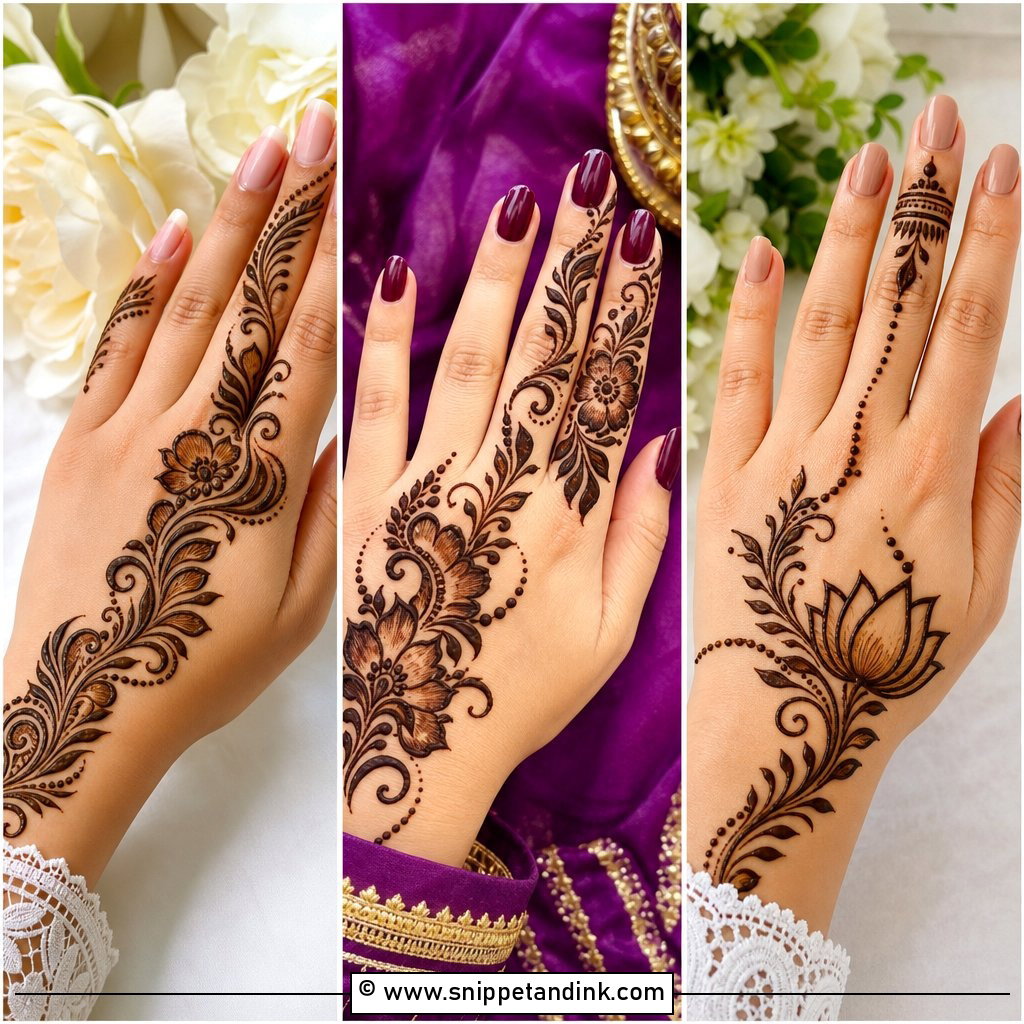
The back hand is where Arabic henna looks most like jewellery: a central floral trail, a mandala, or a diagonal vine from one finger toward the wrist, framed by ring bands on the fingers. One honest warning: the back of the hand stains lighter than the palm because the skin is thinner, so I make outlines here a touch bolder to compensate. A lace cuff at the wrist sits nicely under bangles.
4. Simple Arabic Bridal Mehndi Design
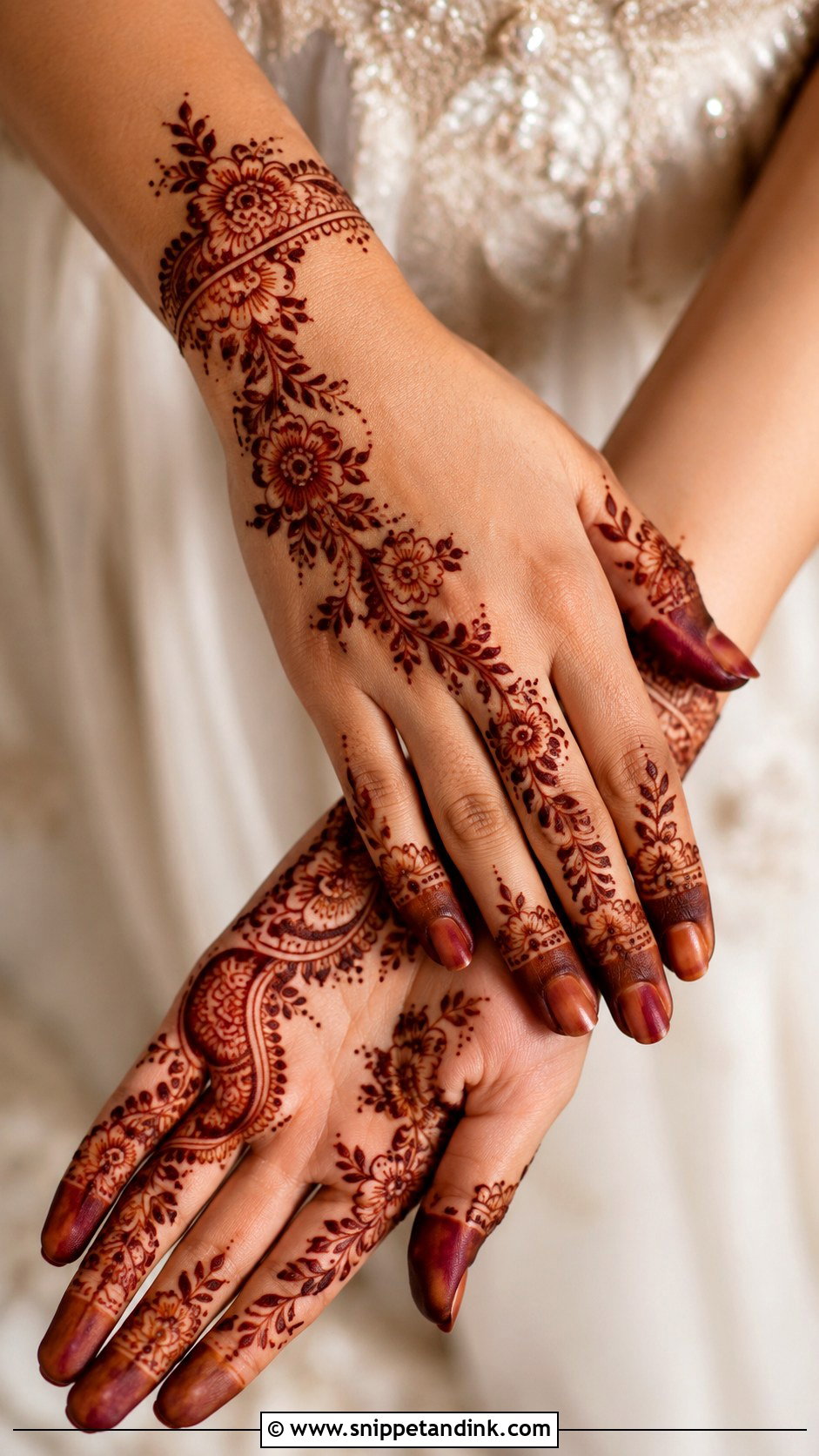
Light designs are what I suggest for a civil ceremony, a small wedding, or a bride who works with her hands and can’t spend days babying the stain. One floral trail, some soft leaves, a few small paisleys and neat fingers, with plenty of open skin. To make it read as bridal rather than casual, I fill the fingertips more deeply and add a fine wrist cuff. It also dries quickly, which matters if you’re sitting for it the evening before.
5. Heavy Arabic Bridal Mehndi Design
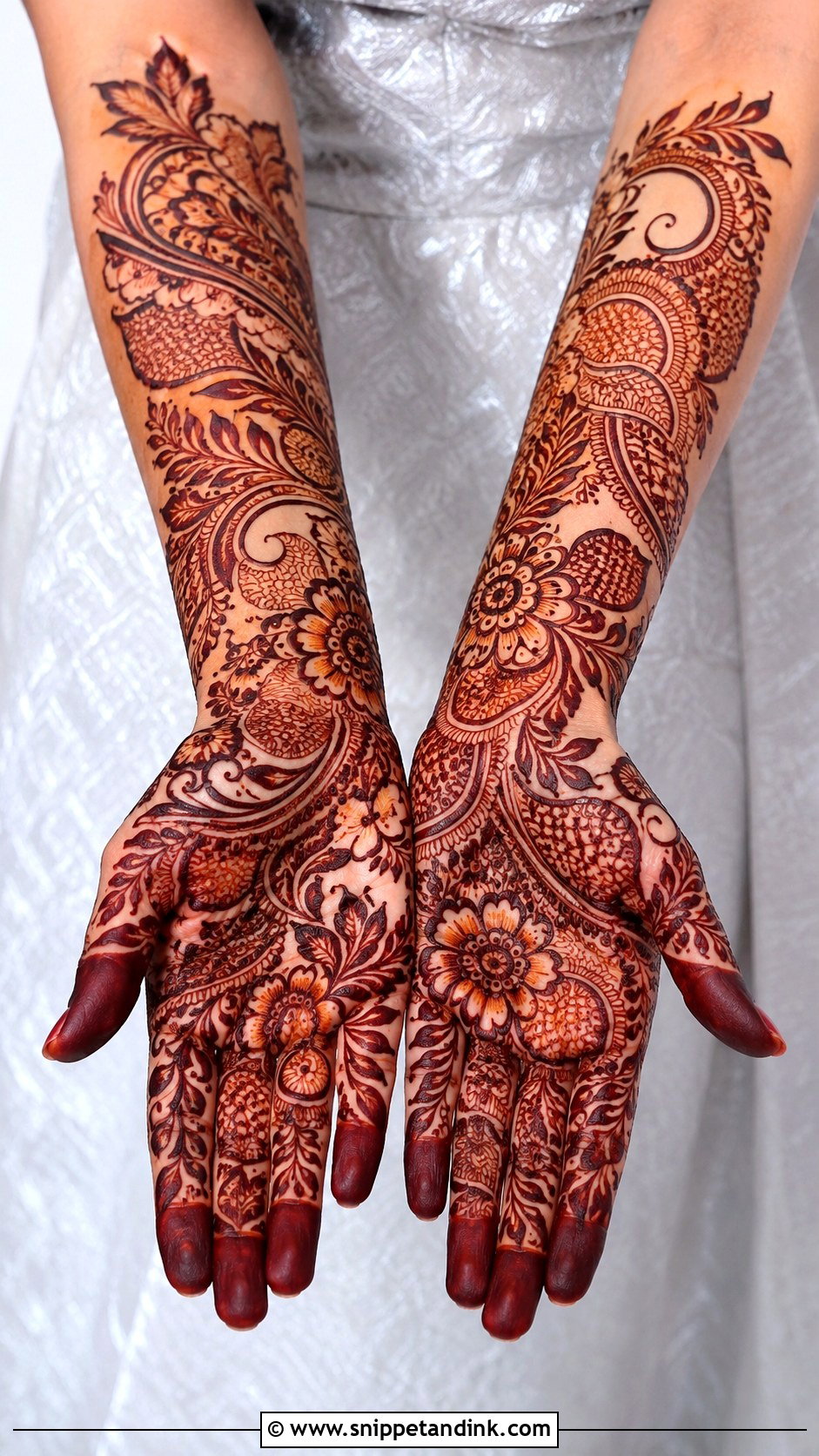
Heavy Arabic is for the bride who wants impact: dense florals, thick paisleys, layered leaves, mesh sections and shaded vines from fingertips to elbow. Even at this density I leave small breathing gaps, because henna lines spread slightly as they stain and two motifs drawn too close will merge into one dark patch by day two. Expect a long sitting and a long drying time. Plan to sleep in it with your hands wrapped.
6. Modern Arabic Bridal Mehndi Design
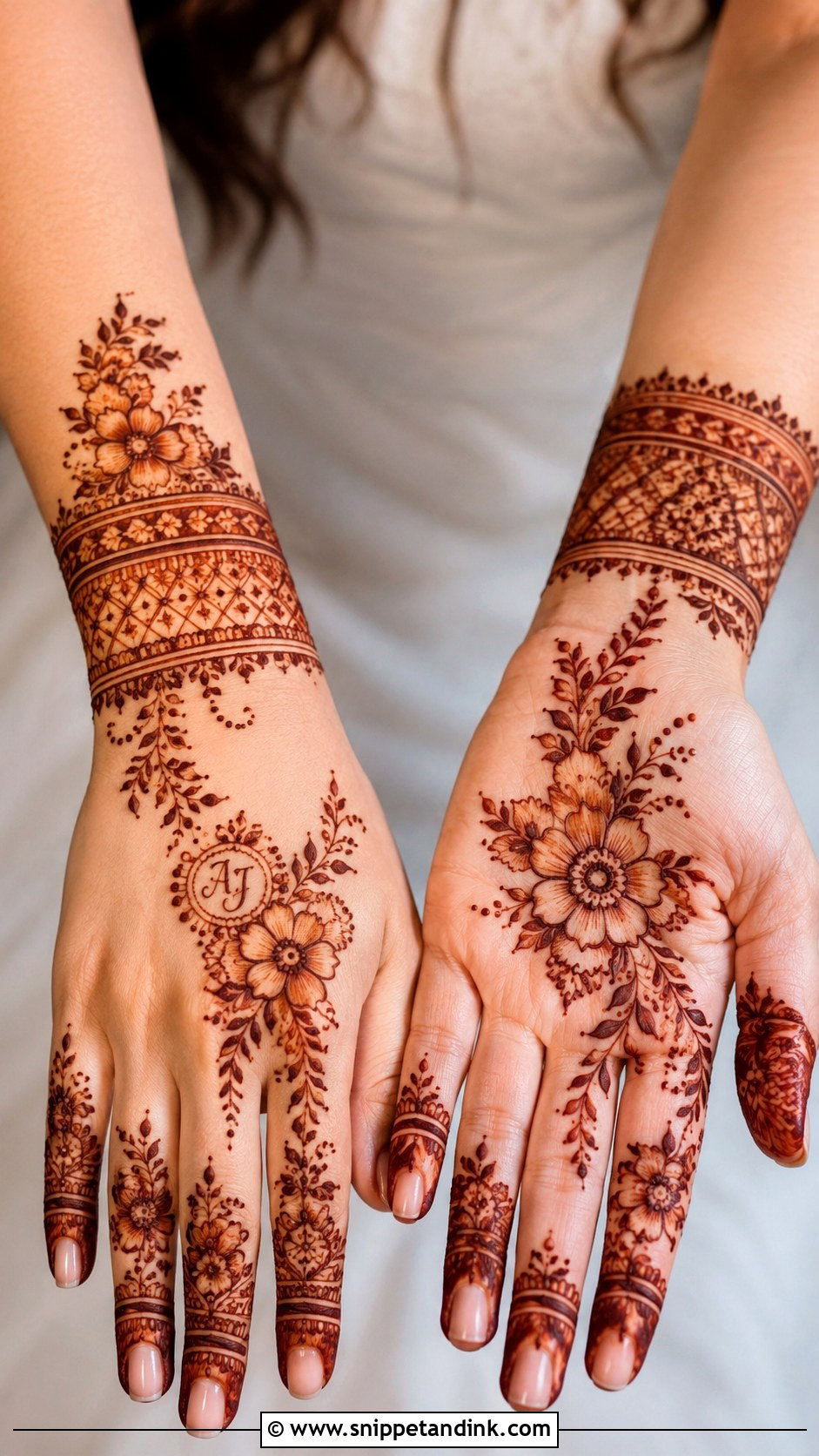
The modern version uses fewer focal points with more space around them: a statement flower, a geometric cuff, or a chain from finger to wrist. It suits pastel lehengas, sleek gowns and minimal jewellery, where a fully covered hand would compete with the outfit. Thin linework, dots and soft shading add texture. Initials or a tiny date can hide inside a leaf, though I keep lettering large enough not to blur; anything very small tends to fill in when the stain develops.
7. Arabic Bridal Mehndi Design With Roses
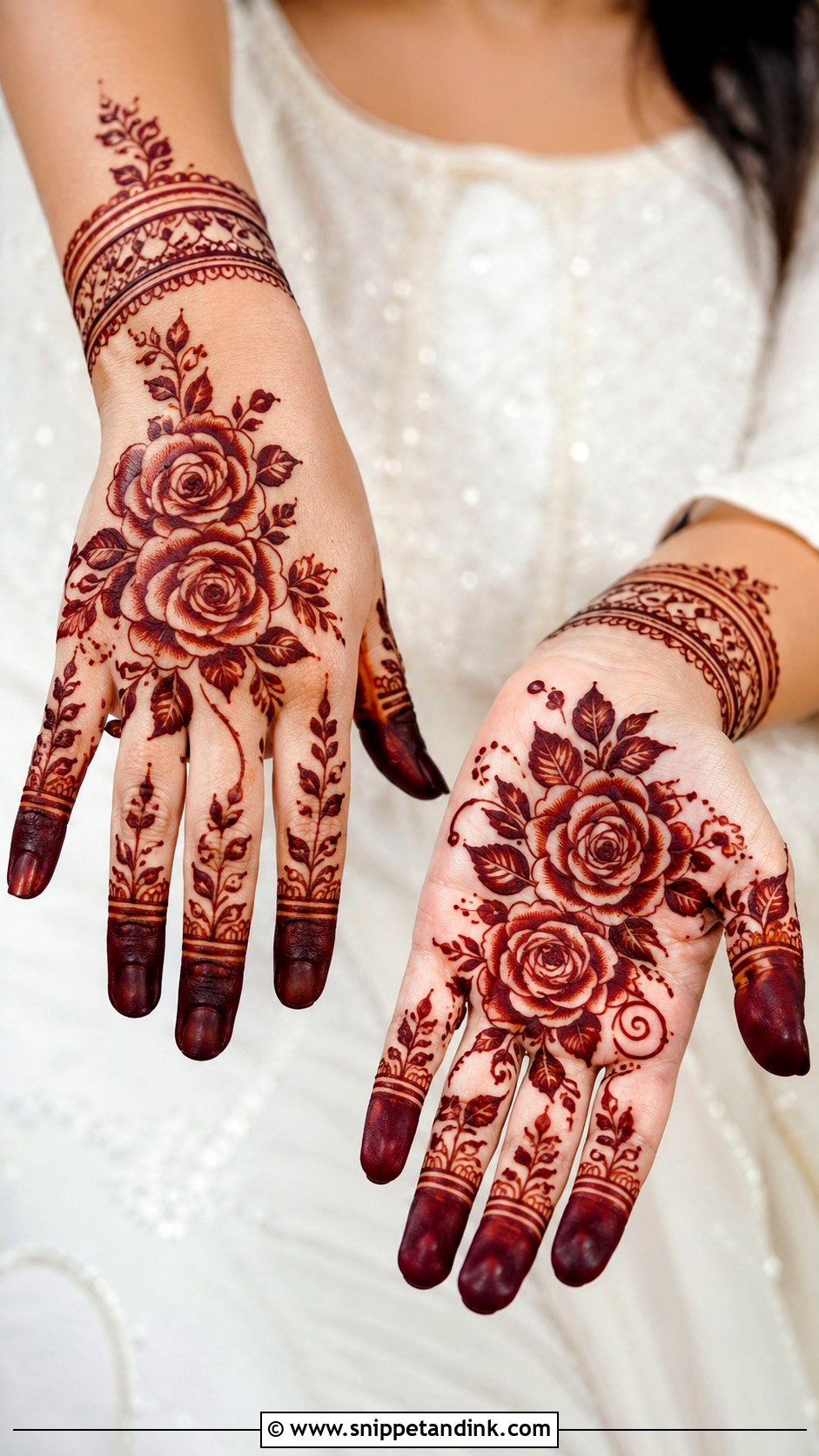
Roses are the motif I draw most for Arabic brides. Their round, open shape stains cleanly and is easy to recognise in photos, even from across a room. I usually run them diagonally from the index finger to the wrist, or cluster them at the centre of the back hand, then link them with leafy vines, filled fingertips and fine dots. Shading inside the petals is what stops a henna rose looking like a cartoon, so ask to see how your artist shades before you book.
8. Arabic Bridal Mehndi Design With Paisley
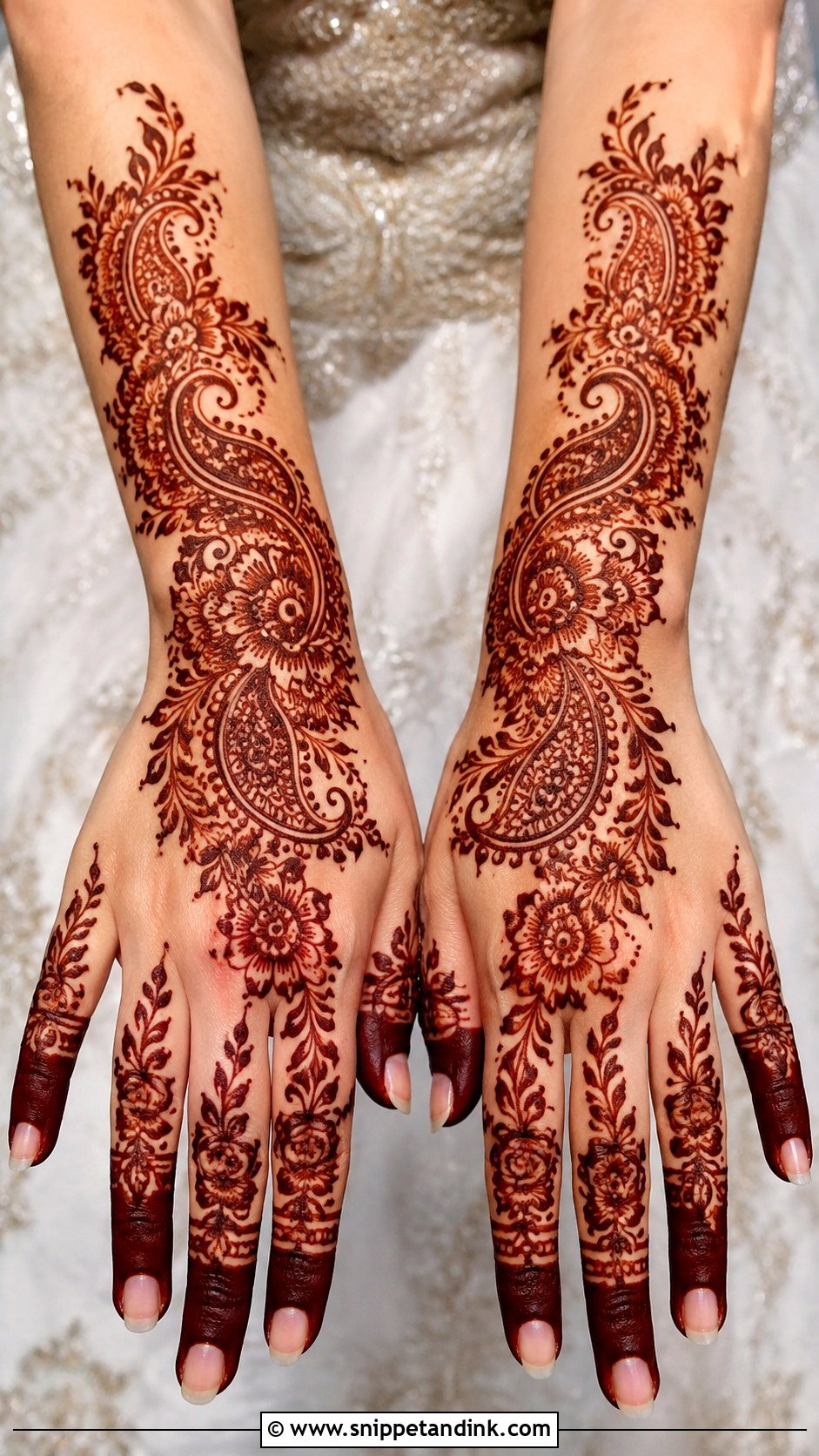
Paisley is the oldest motif in the vocabulary, and in an Arabic layout it travels: a large one on the palm as the anchor, smaller ones trailing toward the wrist like a vine. Fine lines inside each teardrop give depth. This suits a bride who wants heritage in her design without the dense, packed coverage of a full traditional hand. Shaded flowers and finger bands make it bridal.
9. Arabic Bridal Mehndi Design With Mandala
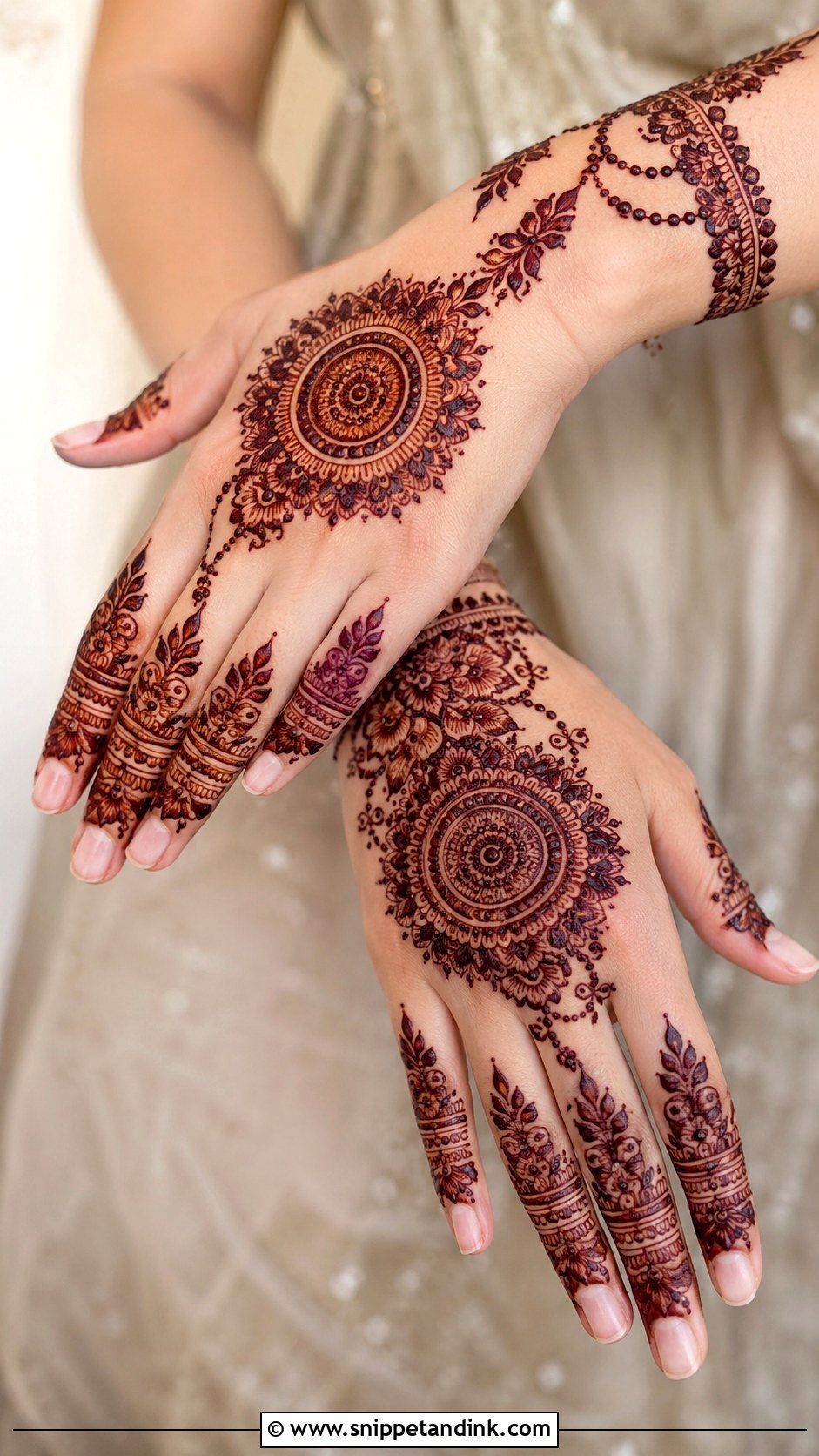
A mandala gives the design a centre of gravity. On the palm it feels traditional; on the back hand it reads like a ring or brooch. From the circle, Arabic vines and roses flow out toward the fingers and wrist, which loosens the symmetry so it isn’t stiff. Circles are unforgiving, so I draw them with the hand resting flat and still; any wobble shows. Brides who like order and balance tend to choose this one.
10. Arabic Bridal Mehndi Design With Jaali
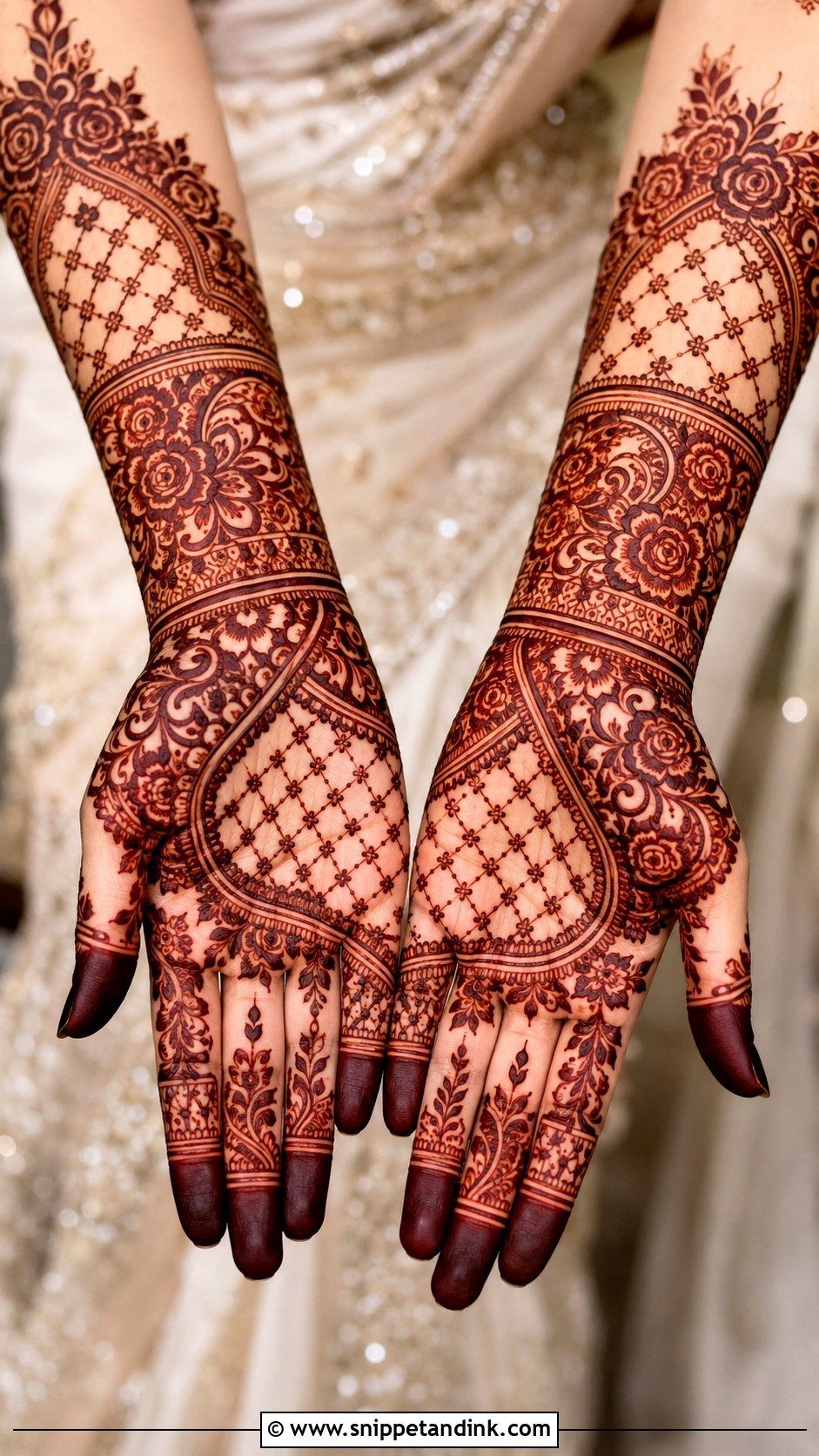
Jaali is the mesh or net fill, a grid of fine crossing lines with dots, used on fingers, wrist panels or sections of the back hand. It sets off bold Arabic florals by giving the eye a texture to rest on. The lines must be evenly spaced and drawn with a fine cone tip; if they’re too close, the stain bleeds between them and the net turns into a solid smudge. A jaali wrist cuff is a neat way to end the design.
11. Arabic Bridal Mehndi Design With Bracelet
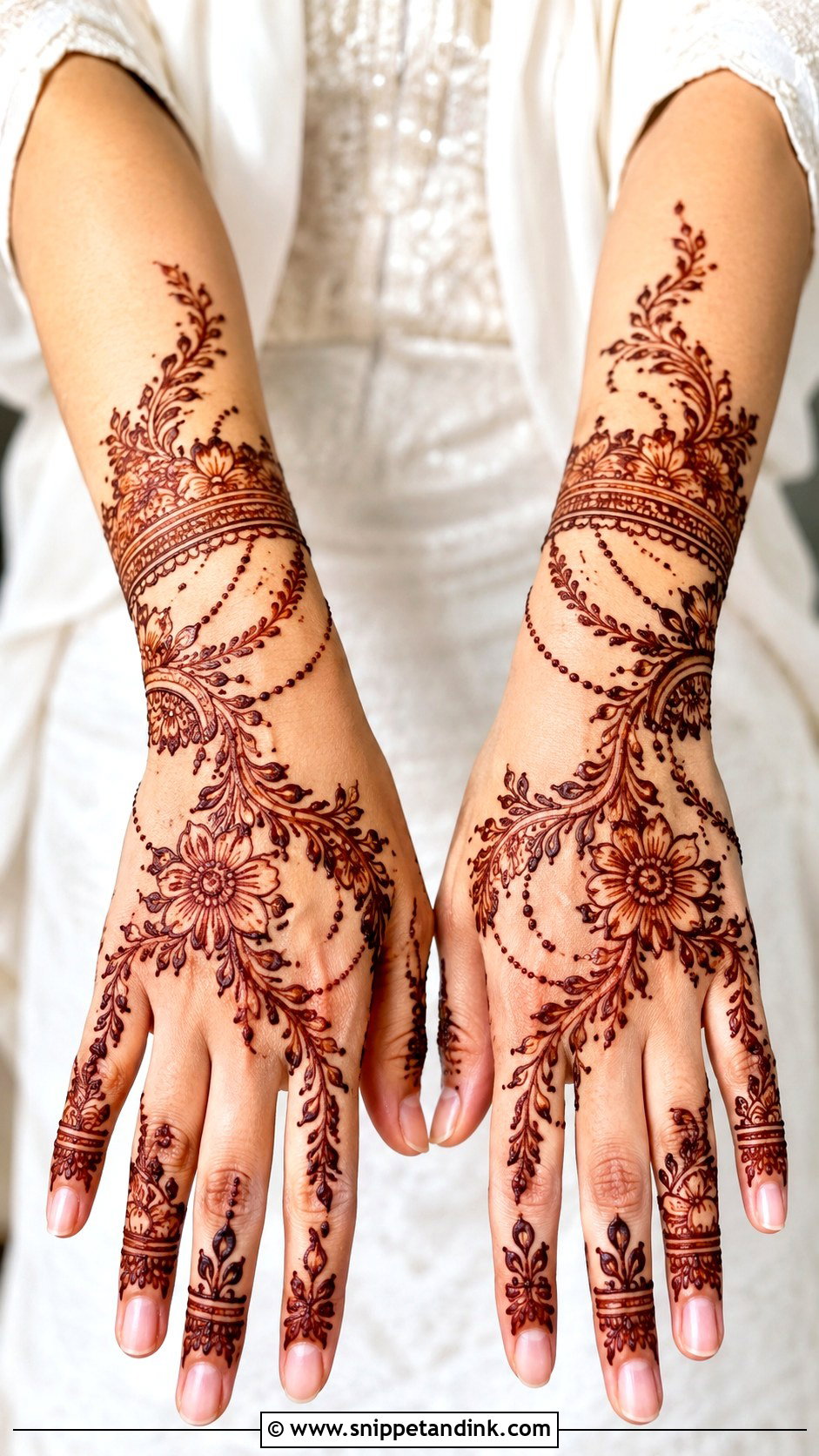
A bracelet design makes the hands look dressed before any jewellery goes on. A floral or paisley piece on the hand connects to a cuff that mimics a bangle, with fine chains and ring bands on the fingers. On the back hand it frames the fingers and wrist. For bridal depth I layer two or three cuffs and let a short trail continue up the forearm. Leave a gap where your real bangles will sit, or they’ll hide the best part.
12. Arabic Bridal Mehndi Design With Finger Details
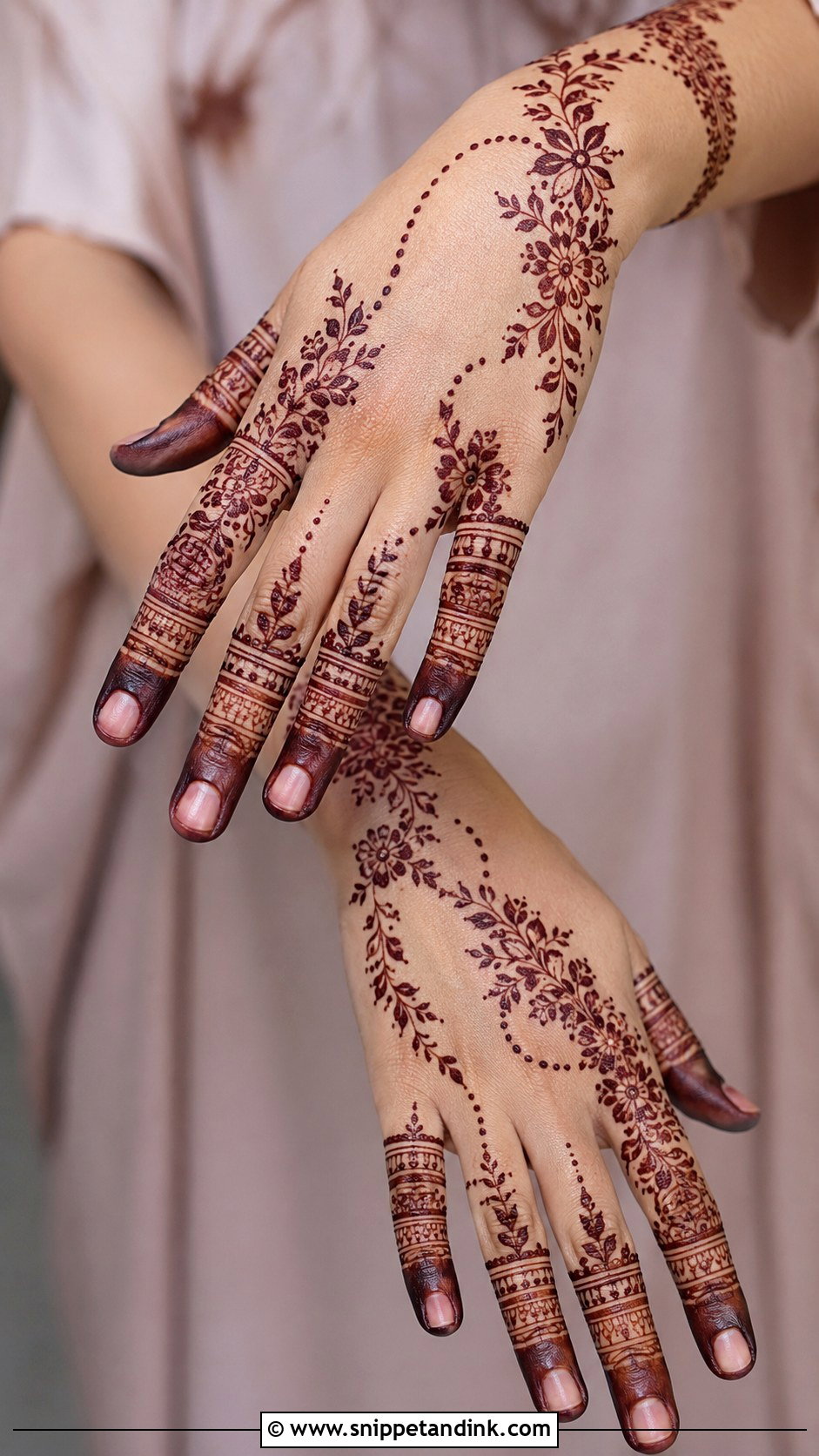
Finger-focused Arabic bridal mehndi puts the weight on bands, leaves, checks and filled tips, with only one trail or a mandala linking them to the wrist. Vertical leafy strips make shorter fingers look longer, which is a trick I use often. I coordinate every finger but don’t copy them exactly; a small variation looks hand-drawn. Fingertips stain very dark, so they hold the design together even if the back of the hand comes up lighter.
13. Arabic Bridal Mehndi Design With Floral Trail
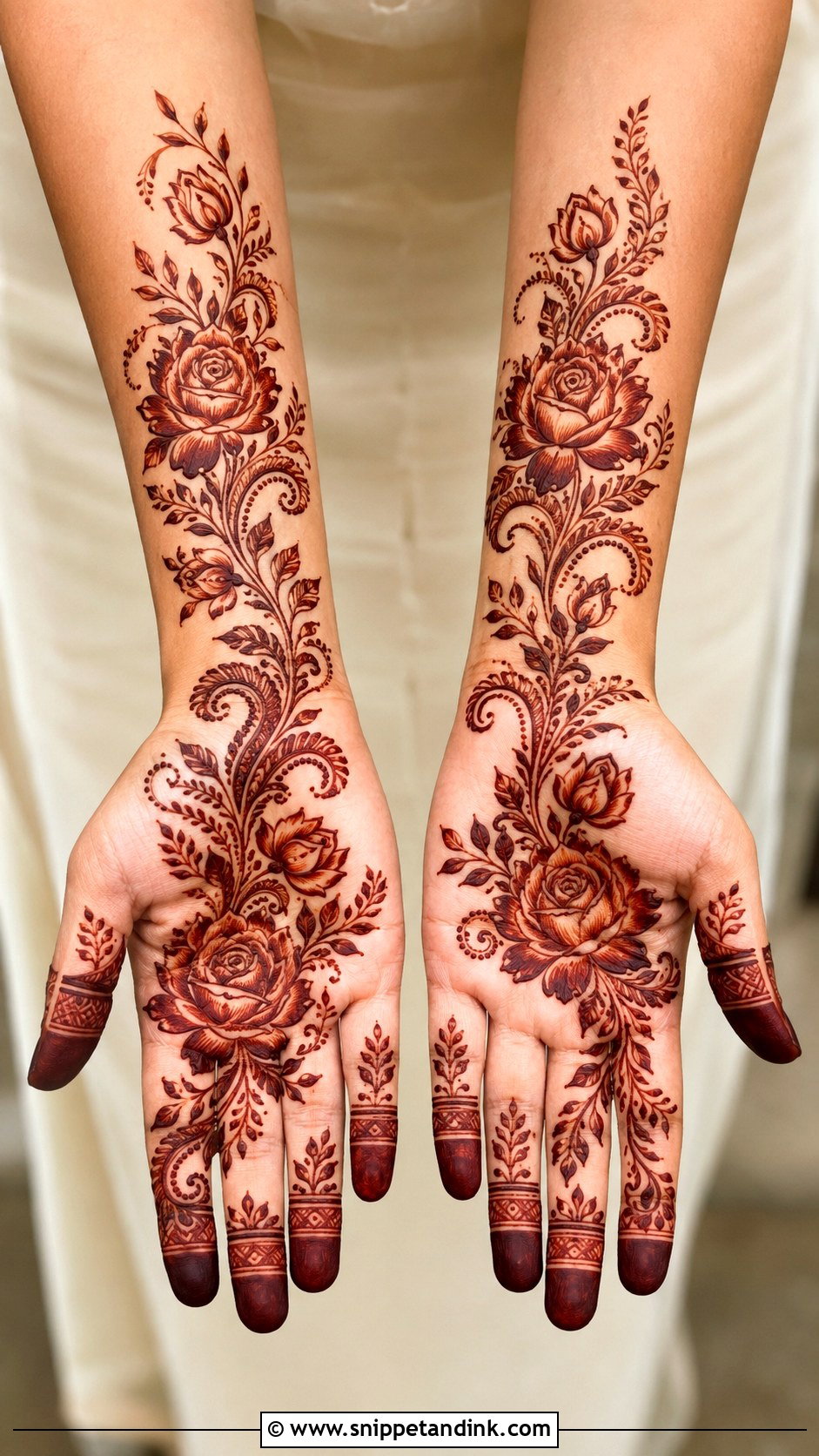
The diagonal trail is the signature Arabic layout. It usually starts at the index finger and sweeps toward the wrist or forearm with roses, lotus, buds, paisleys and leaves. Because it follows the natural angle of the hand, it flatters almost any hand shape. I keep the empty skin on either side genuinely empty, without stray dots, so the path reads clearly. Fuller fingertips and a wrist band finish it.
14. Arabic Bridal Mehndi Design With Lotus
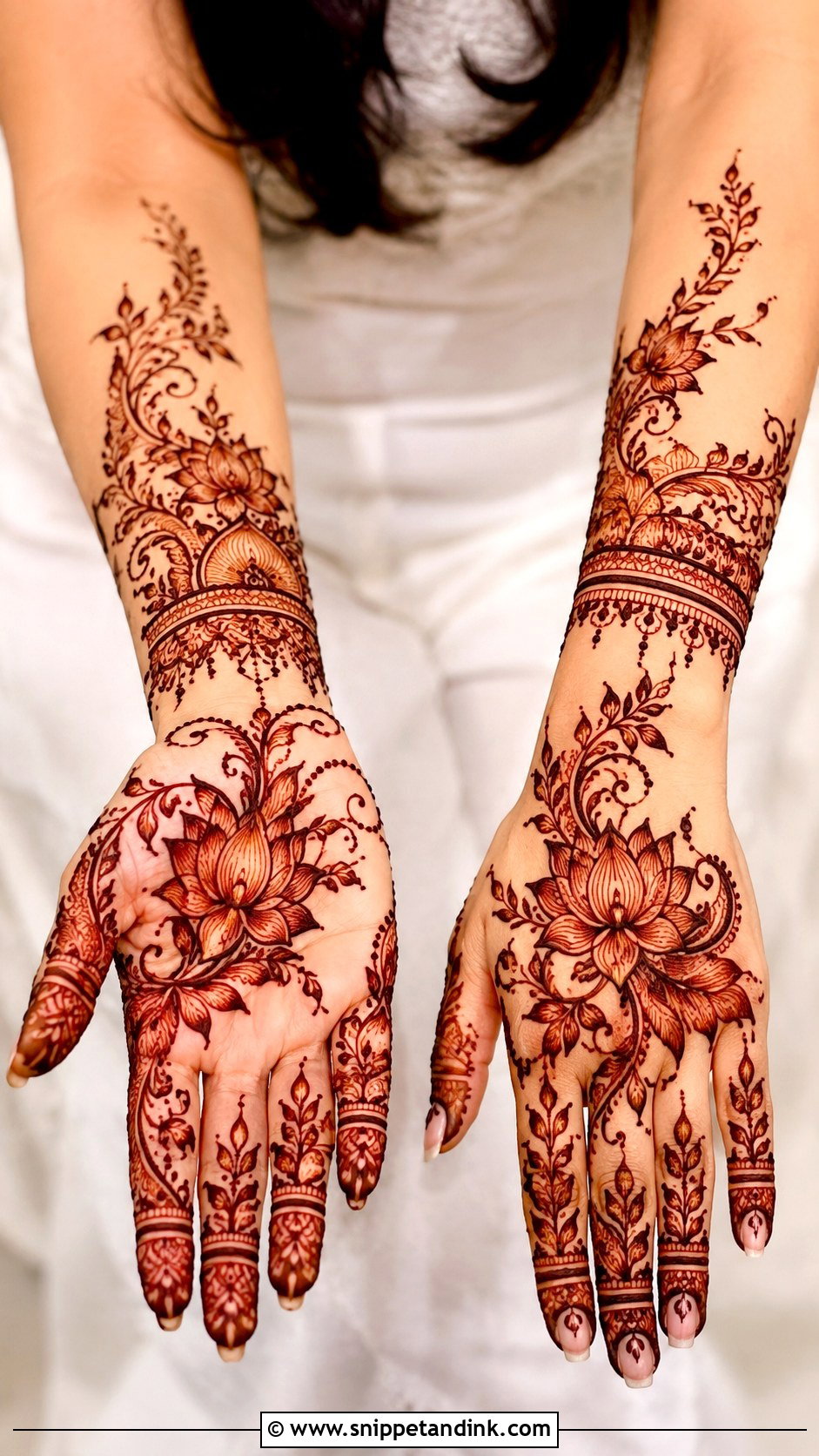
Lotus brings a softer, more open flower than the rose, with long pointed petals that suit a diagonal vine or a ring around a mandala. Bold outlines and fine shading inside each petal keep it crisp after staining. It works well for a bride who wants floral but not roses. A lotus cuff at the wrist sits well under bangles and sleeves.
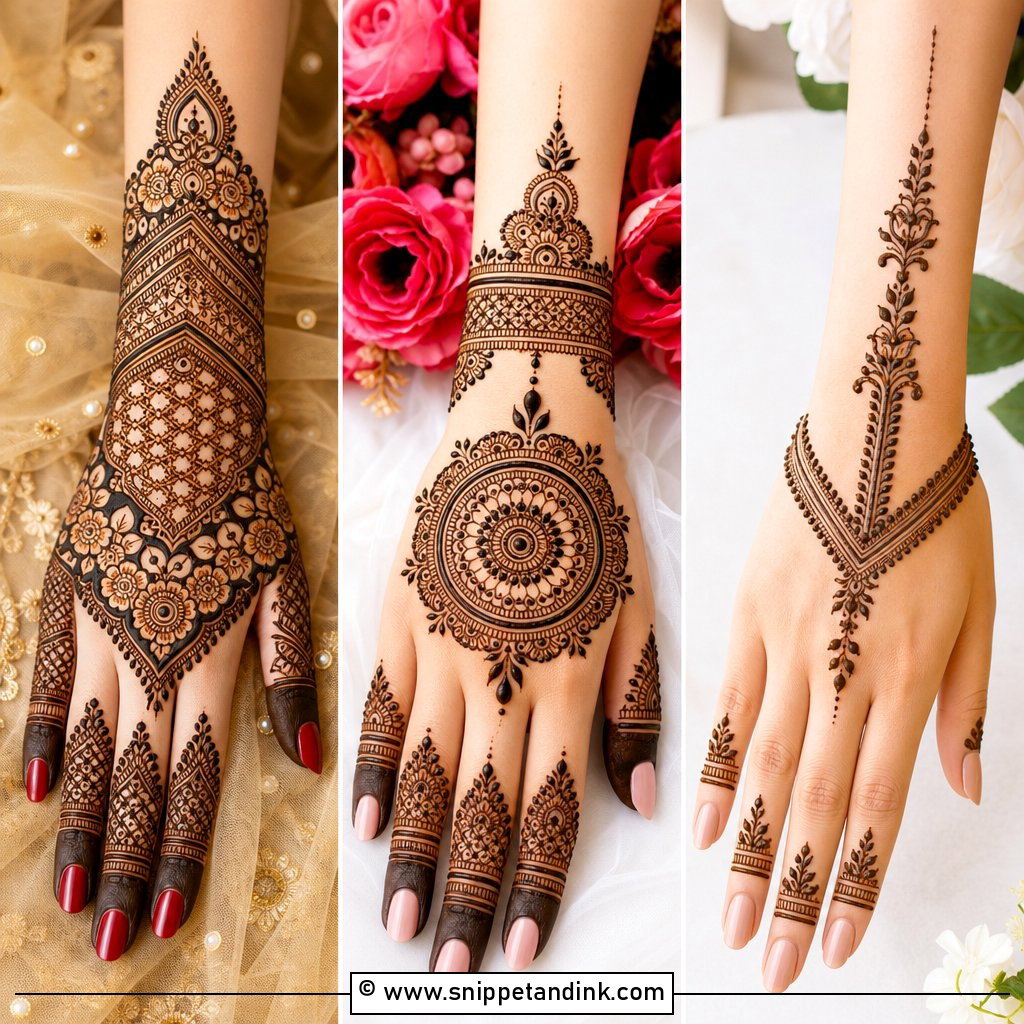

15. Arabic Bridal Mehndi Design With Peacock
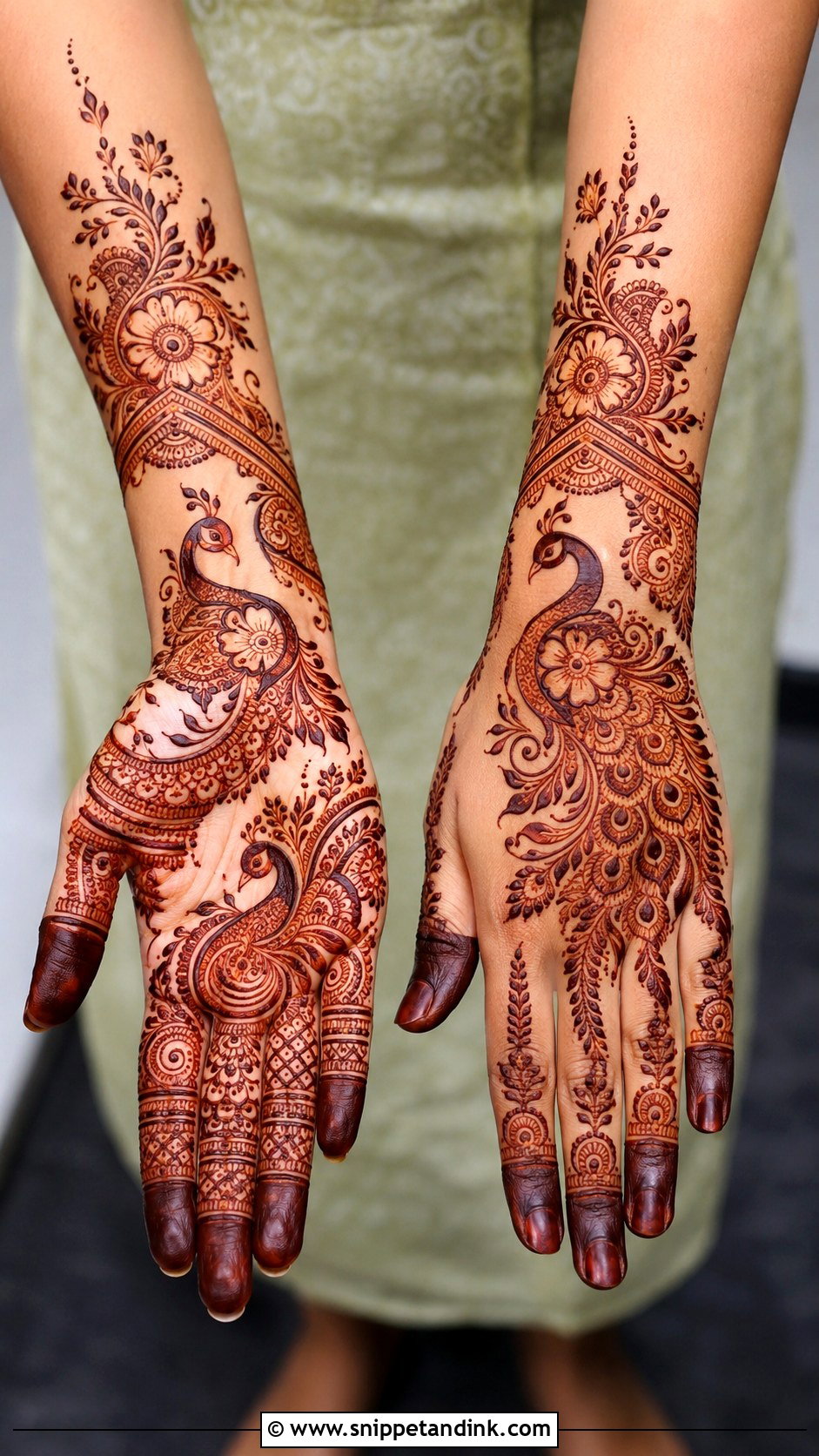
A peacock gives an Arabic design a more traditional, festive mood. I place it as the single feature, on the palm, wrist or forearm, and let vines and paisleys curve around it rather than packing the whole hand. Feather detail needs fine, confident lines; this is a motif that shows the difference between an experienced artist and a rushed one. Add bold fingertips for balance.
16. Arabic Bridal Mehndi Design With Initials
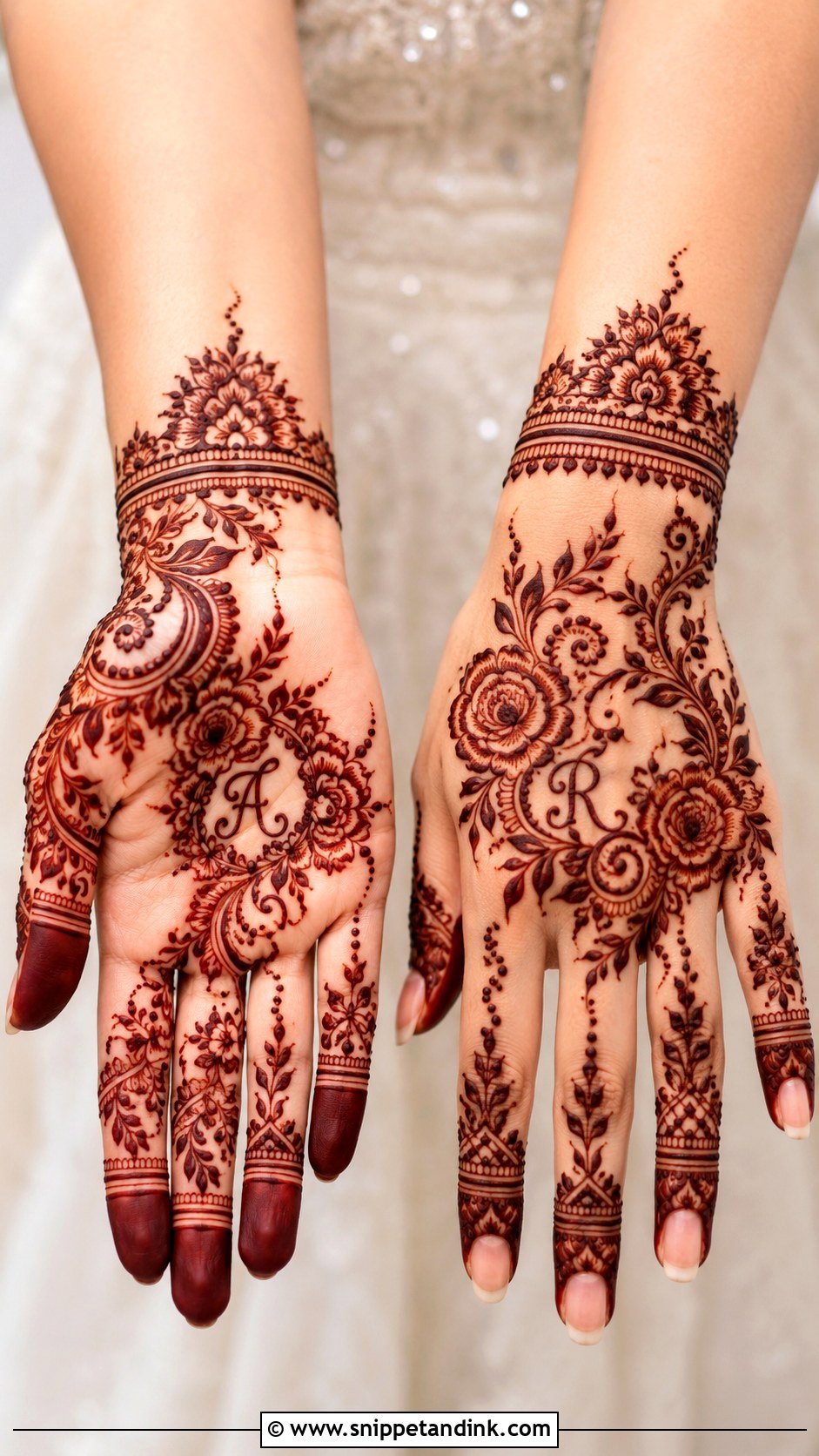
Initials tucked into a rose, paisley, leaf or cuff are a quiet way to personalise the design, and some brides add a small wedding date near the wrist too. I place them where they’ll show in a close-up but don’t interrupt the main flow. Keep letters simple; elaborate script at a small size closes up as the henna darkens. The rest follows a classic trail with flowers and open space.
17. Arabic Bridal Mehndi Design With Name
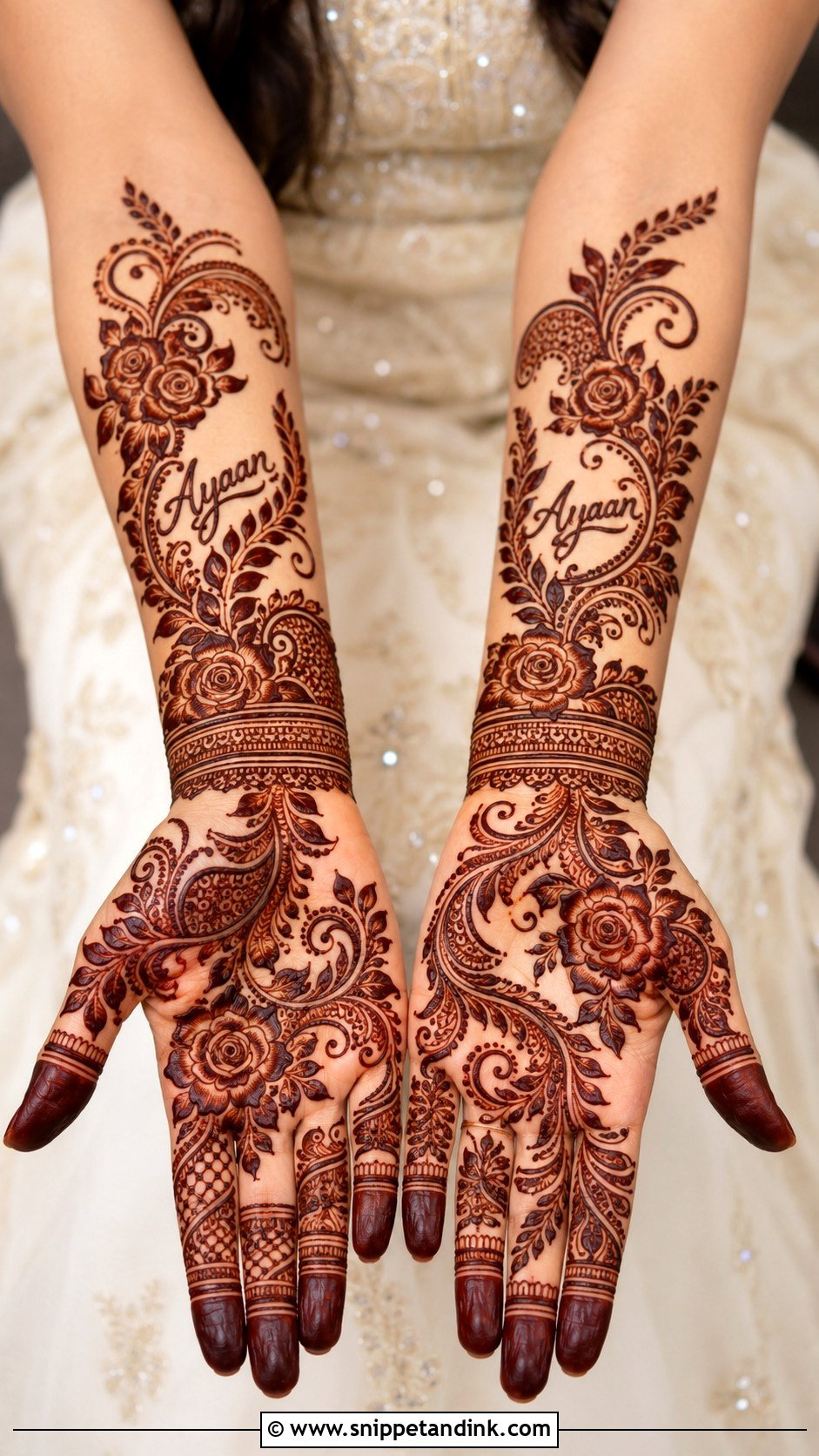
Hiding the groom’s name in the mehndi is a tradition many families still enjoy, with the groom searching for it later. The name can blend into a palm pattern, a forearm vine or a wrist cuff. Arabic layouts make it easier, because the open spaces give the letters room to sit without crowding. Decide how hidden you want it: tucked into a vine is playful, near the wrist is easier to photograph. Write the spelling down for your artist; never rely on saying it aloud.
18. Arabic Bridal Mehndi Design For Small Hands
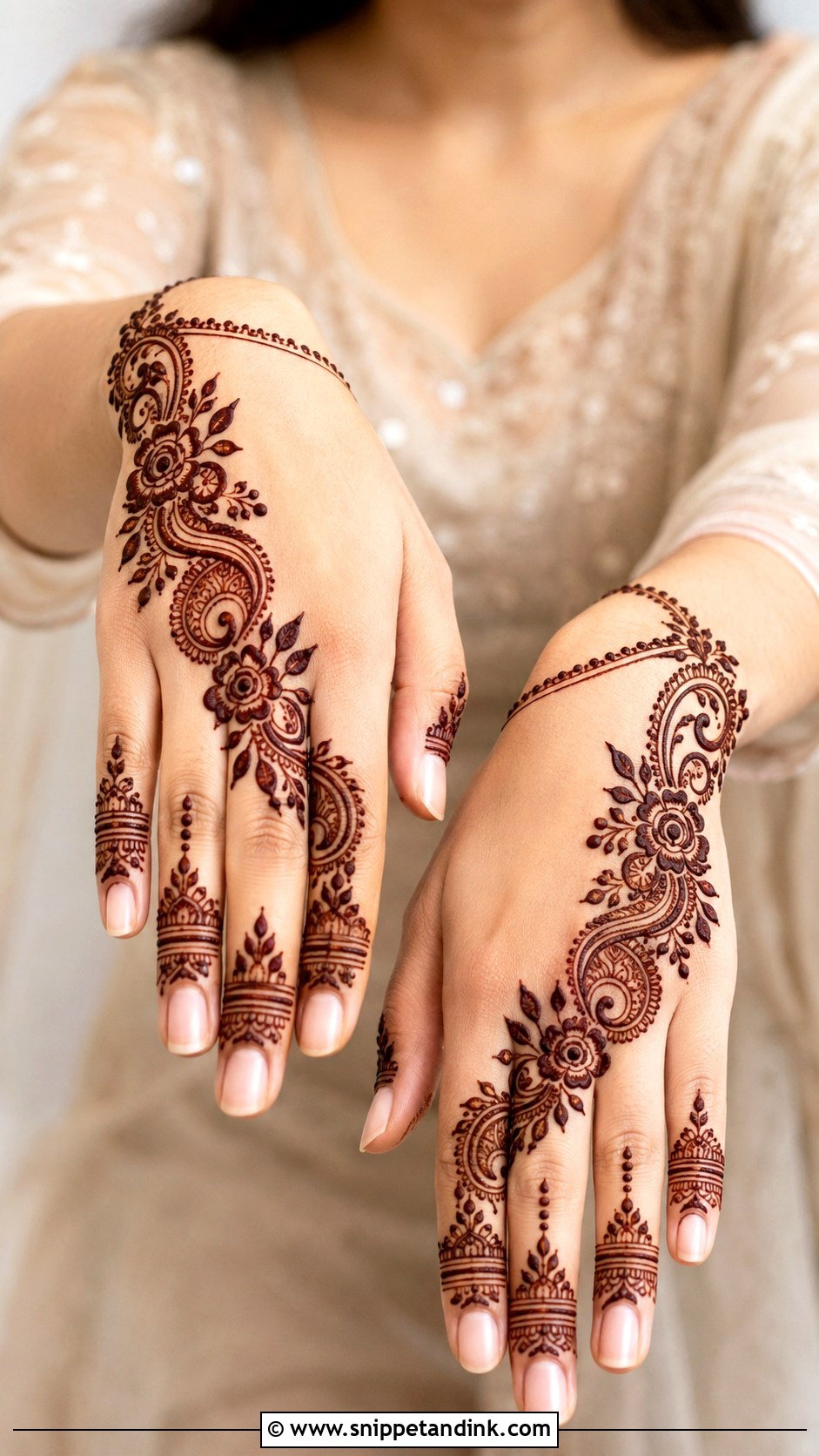
On small hands, proportion matters more than coverage. I scale motifs down slightly and run a slim diagonal trail or a centred mandala with open edges, which draws the eye lengthwise. Vertical bands and leafy strips on the fingers help too. I avoid thick, stacked wrist cuffs here, because they cut the hand off and make it look shorter. A single fine bracelet line with a light forearm extension works better.
19. Arabic Bridal Mehndi Design For Long Hands
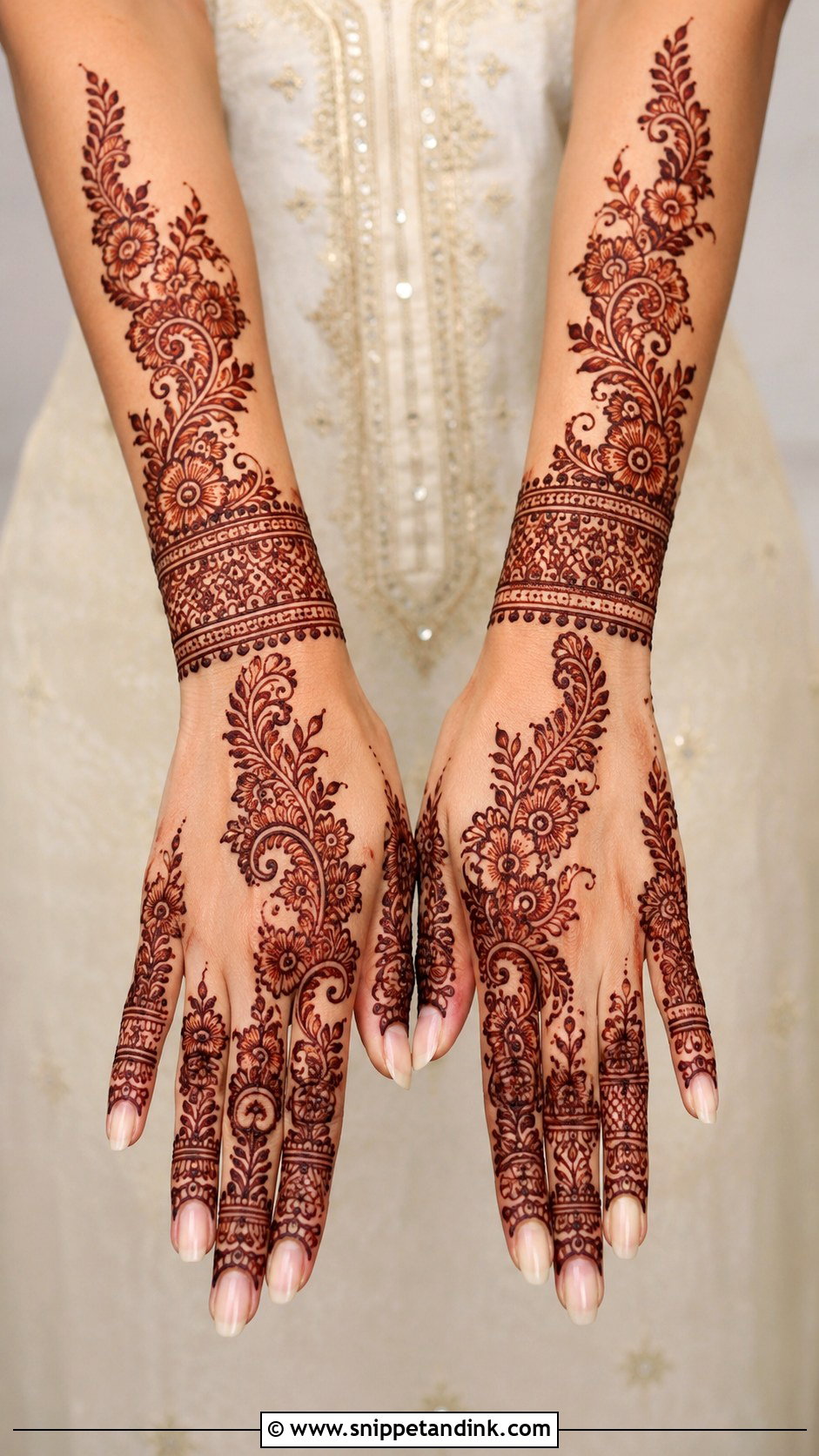
Long hands give me room for extended trails, broad cuffs and double bracelets without anything looking crowded. The risk is the opposite of small hands: a long vine with nothing anchoring it looks stretched. I add a strong central motif on the palm or back hand so the eye has somewhere to land. The fingers can take detailed bands and shaded tips without feeling heavy.

20. Arabic Bridal Mehndi Design For Engagement
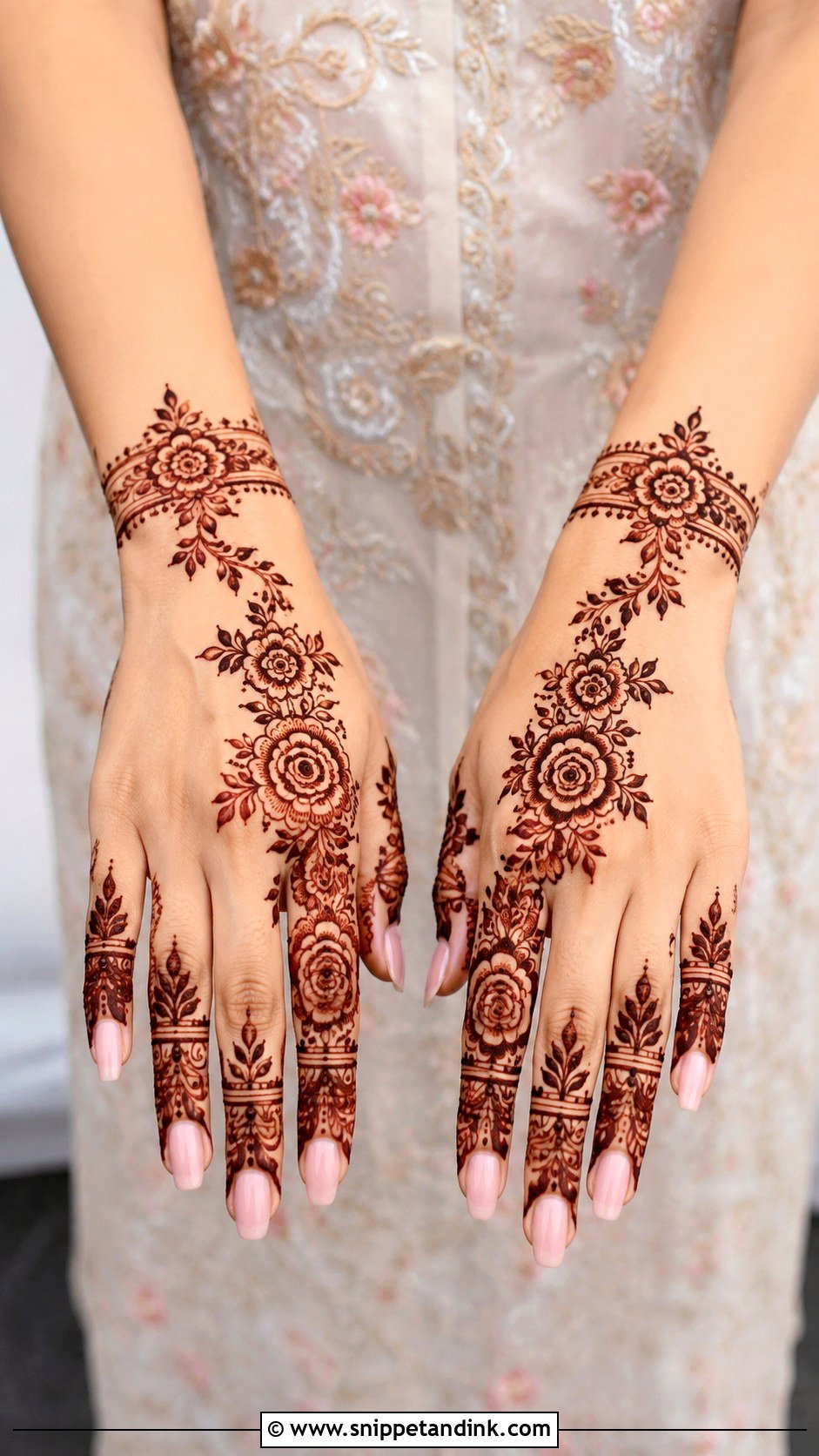
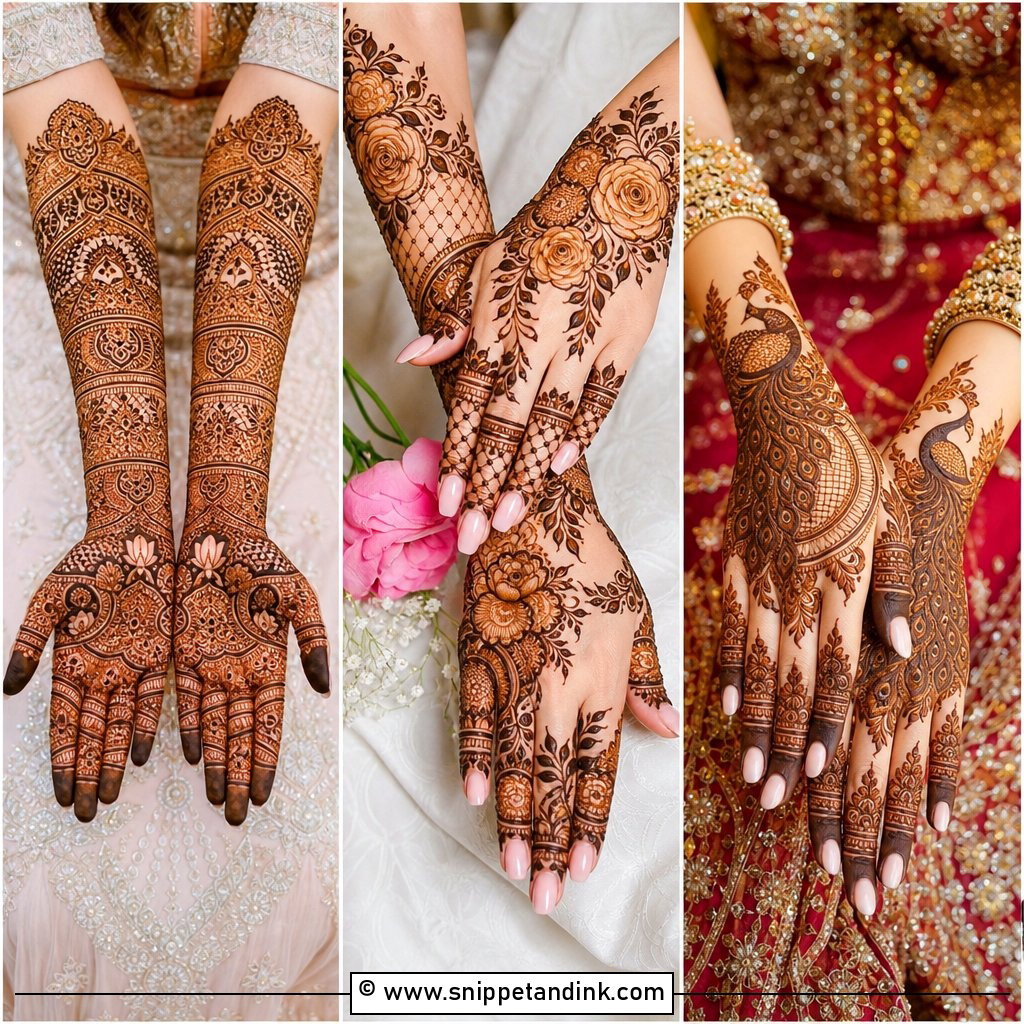
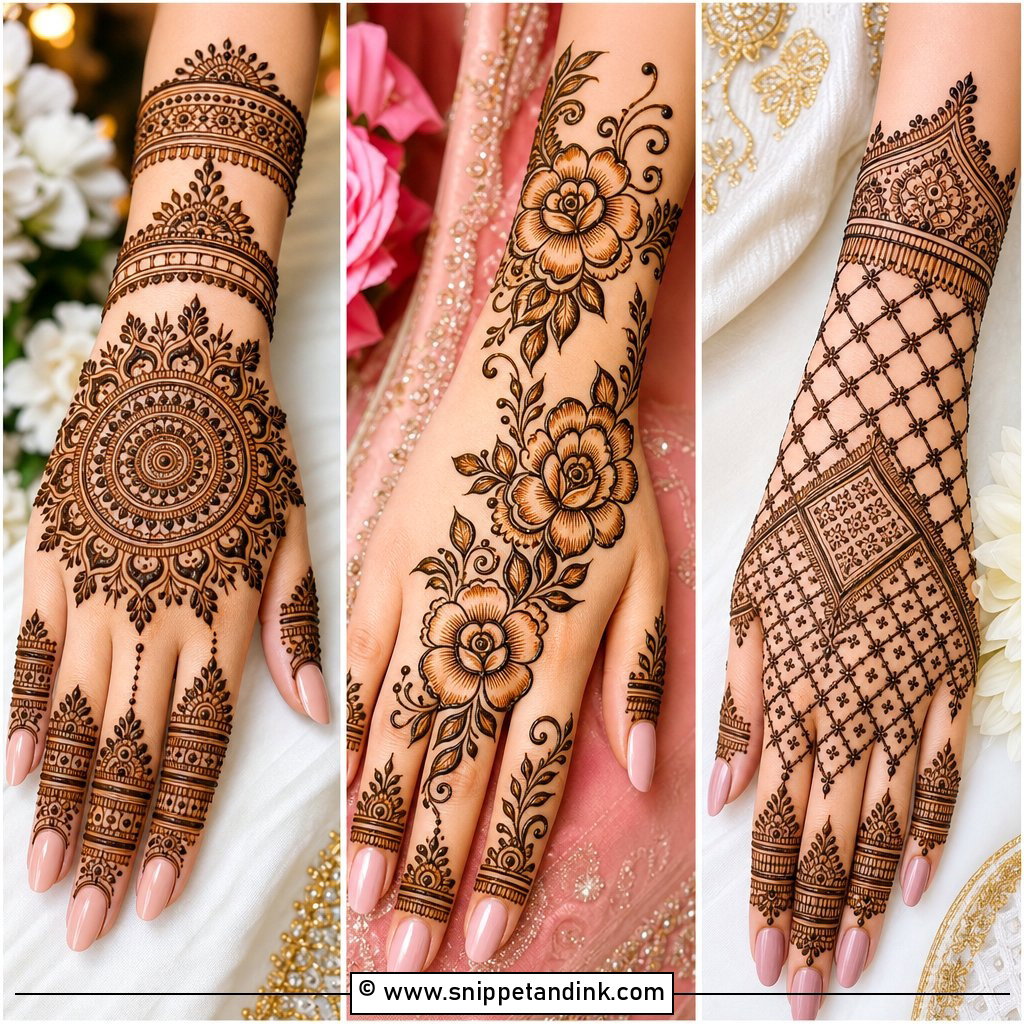
For an engagement, I go one step lighter than the wedding design so the bride still has somewhere to go. A back hand floral trail with ring-style finger detail is my favourite here, because the ring finger stays clean and the ring is the star of the photos. A palm rose mandala with a slim cuff also works. If the engagement is only a few weeks before the wedding, remember the old stain needs to fade before new henna goes on, or the two will overlap.
21. Arabic Bridal Mehndi Design For Nikah
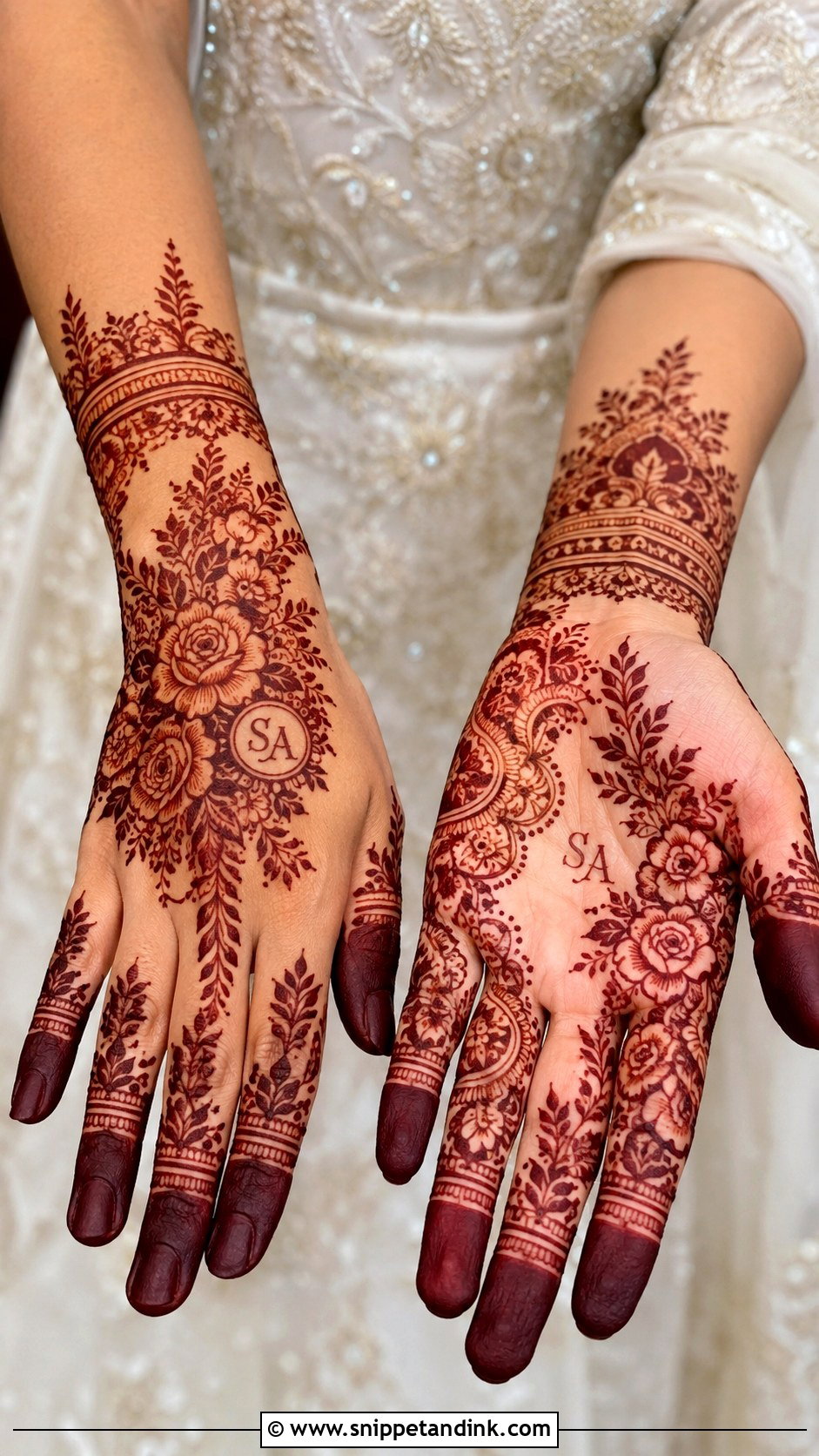
Nikah henna tends to be modest and refined: neat palms, delicate back hand trails, soft florals and bracelet cuffs, at medium coverage. Some brides prefer a symmetrical back hand, others a flowing diagonal. Subtle initials, small dots or a lace border add a personal note. Because the nikah may come before other events, I time the application so the stain is at its darkest on the day itself.
22. Arabic Bridal Mehndi Design For Walima
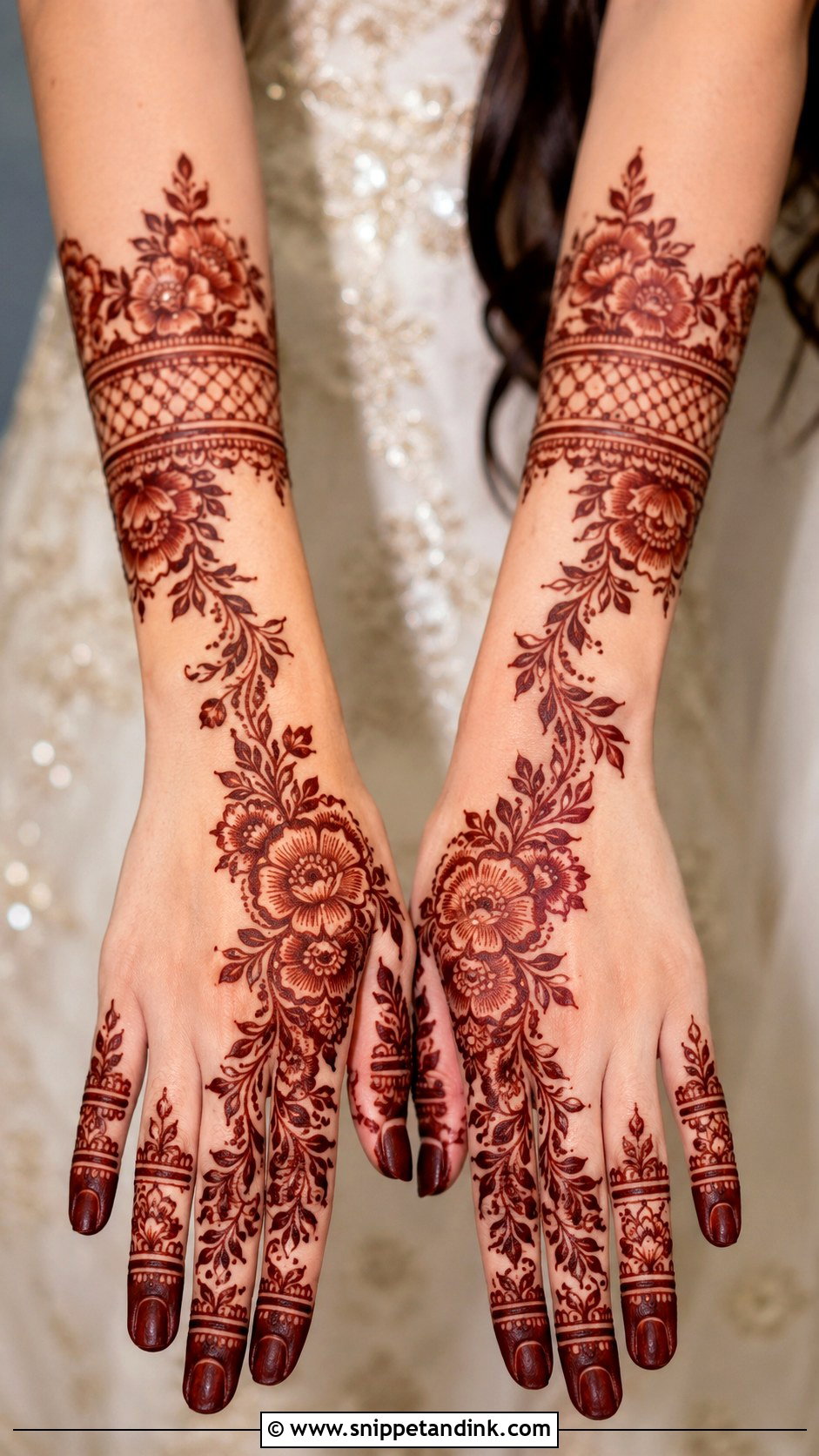
By the walima, the wedding stain is usually two or three days old and at its richest tone, so many brides keep it rather than adding more. If the walima falls later and the first stain has faded, a back hand bracelet design, a floral cuff or a spaced-out vine is a good lighter second look. Avoid dense palms if the outfit is soft and pared back. A deep maroon stain with clear negative space looks polished at a reception.
23. Arabic Bridal Mehndi Design For Wedding
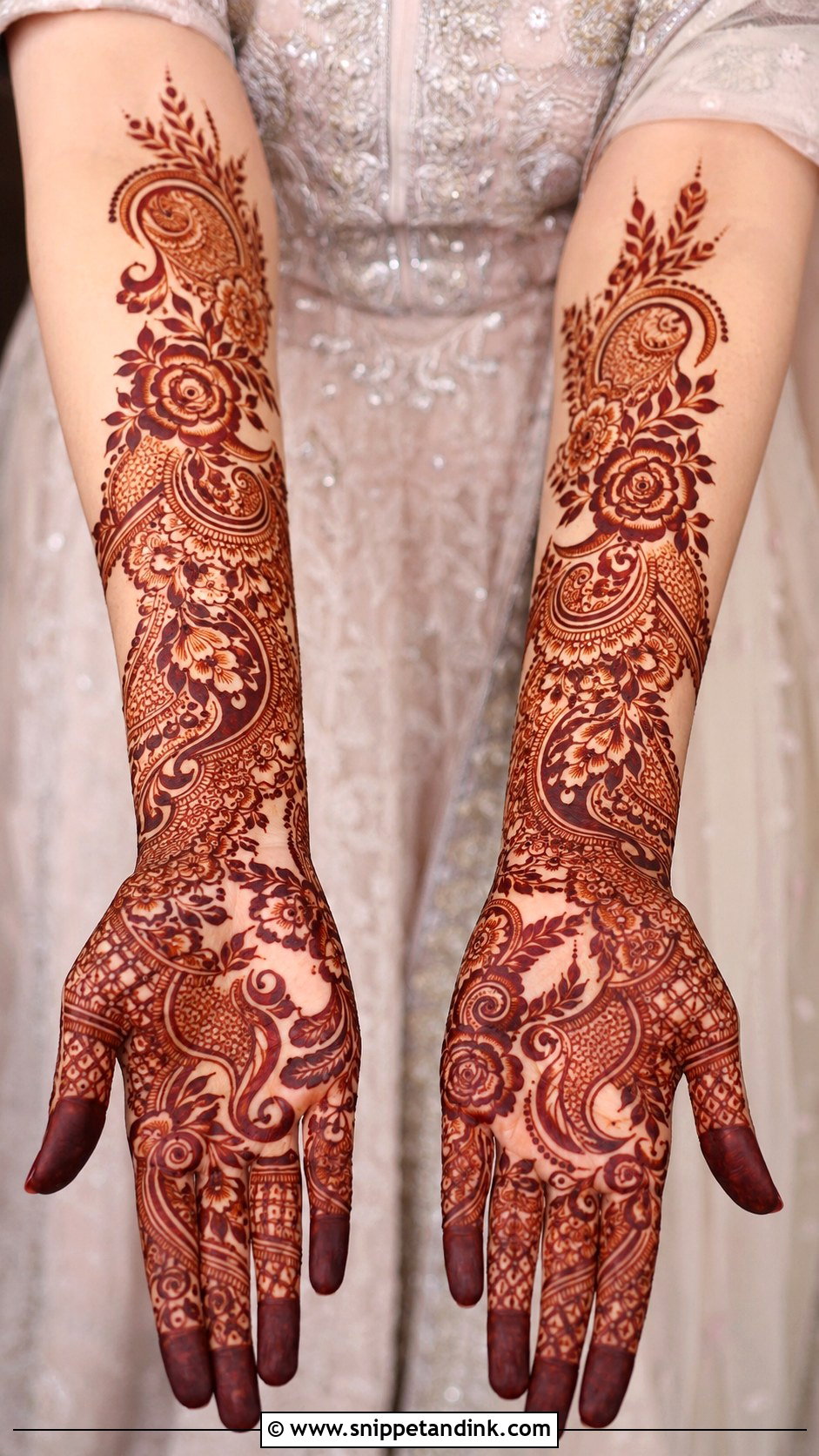
The wedding-day design is the one that has to hold for days of events and photos. Full palms, bold back hand florals, filled fingertips, wrist cuffs and forearm trails, flowing through vines and paisleys rather than packed story panels. I keep the main motifs bold and add fine shading inside petals and paisleys for a dimensional stain. Tell your artist your sleeve length; there’s no point taking the design to the elbow under a full sleeve, or stopping at the wrist under a sleeveless outfit.
24. Arabic Bridal Mehndi Design For Bride Sister
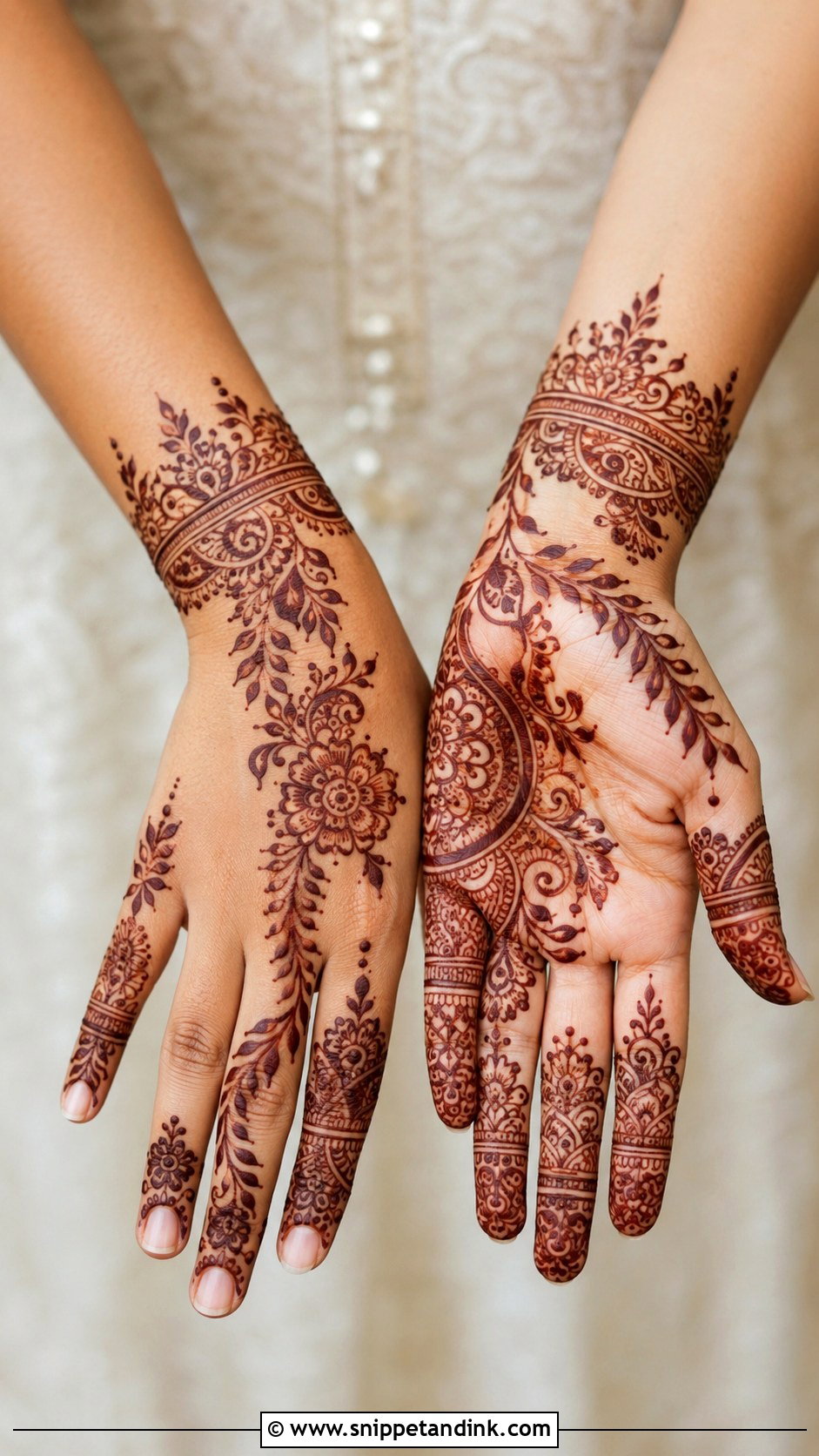
The bride’s sister should look celebrated but clearly secondary. A medium back hand trail, a palm floral cluster or a wrist bracelet with roses, vines and finger bands works well. I keep her forearm coverage shorter than the bride’s so the difference shows in group photos. She’ll also be running around helping on the day, so a design that dries fast is kinder.
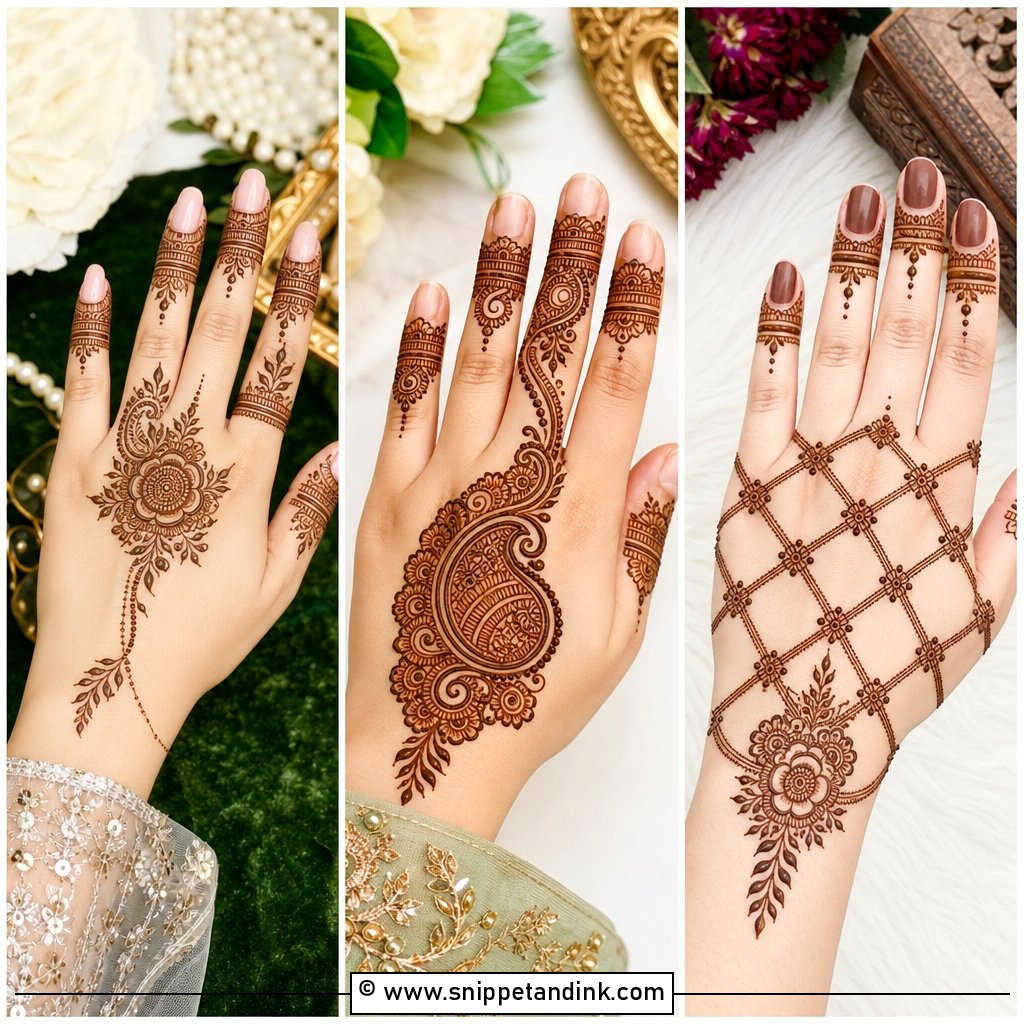
25. Arabic Bridal Mehndi Design For Bridesmaid
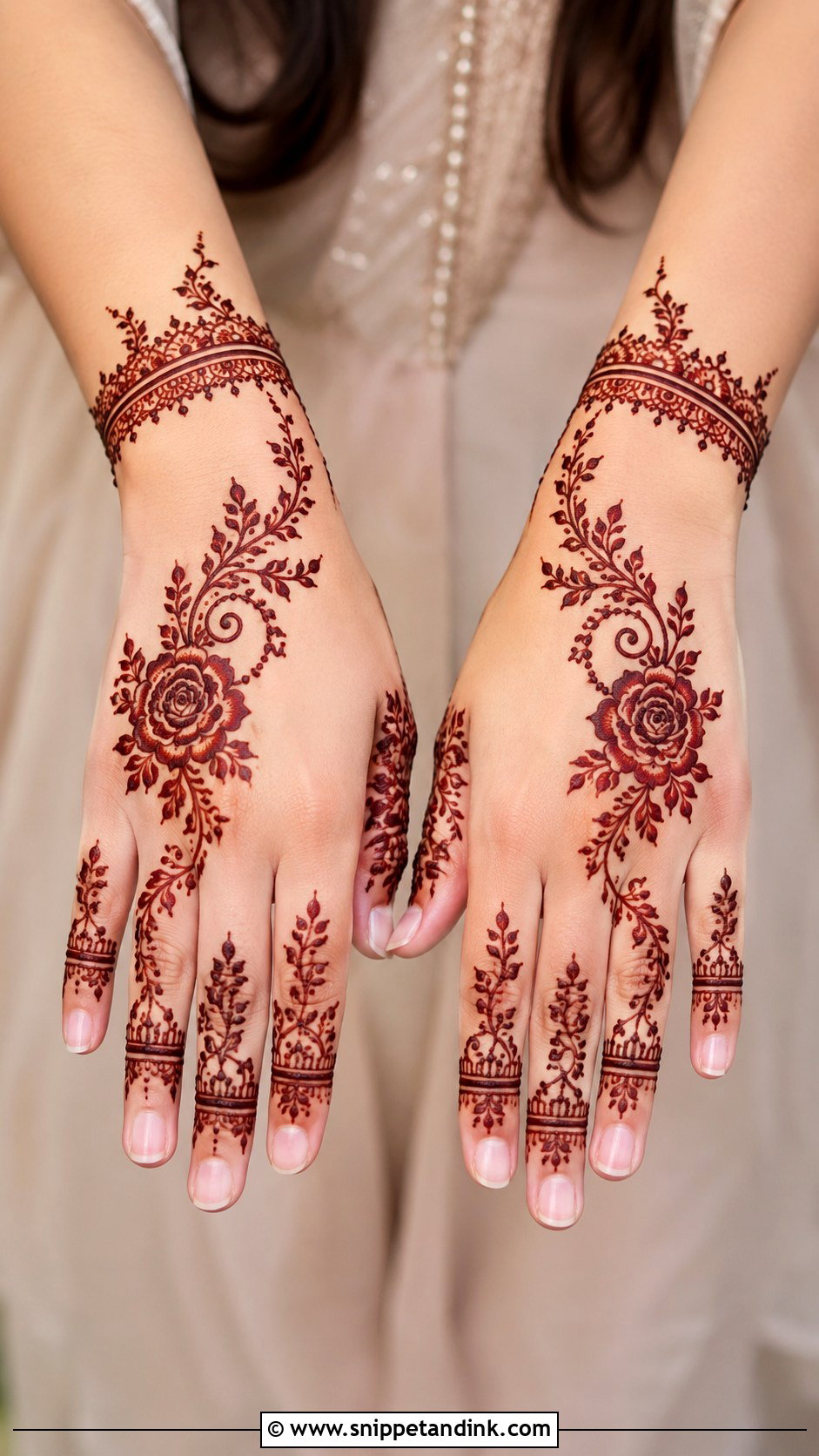
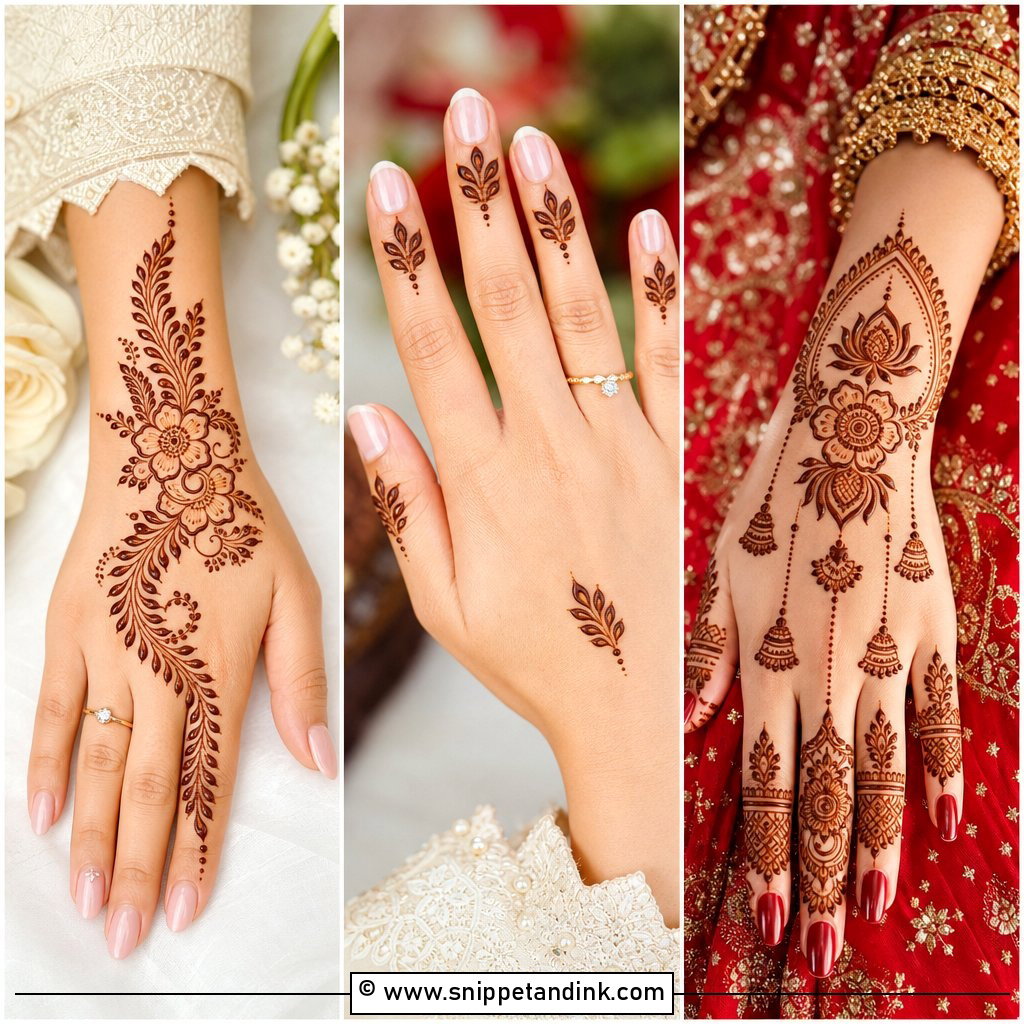
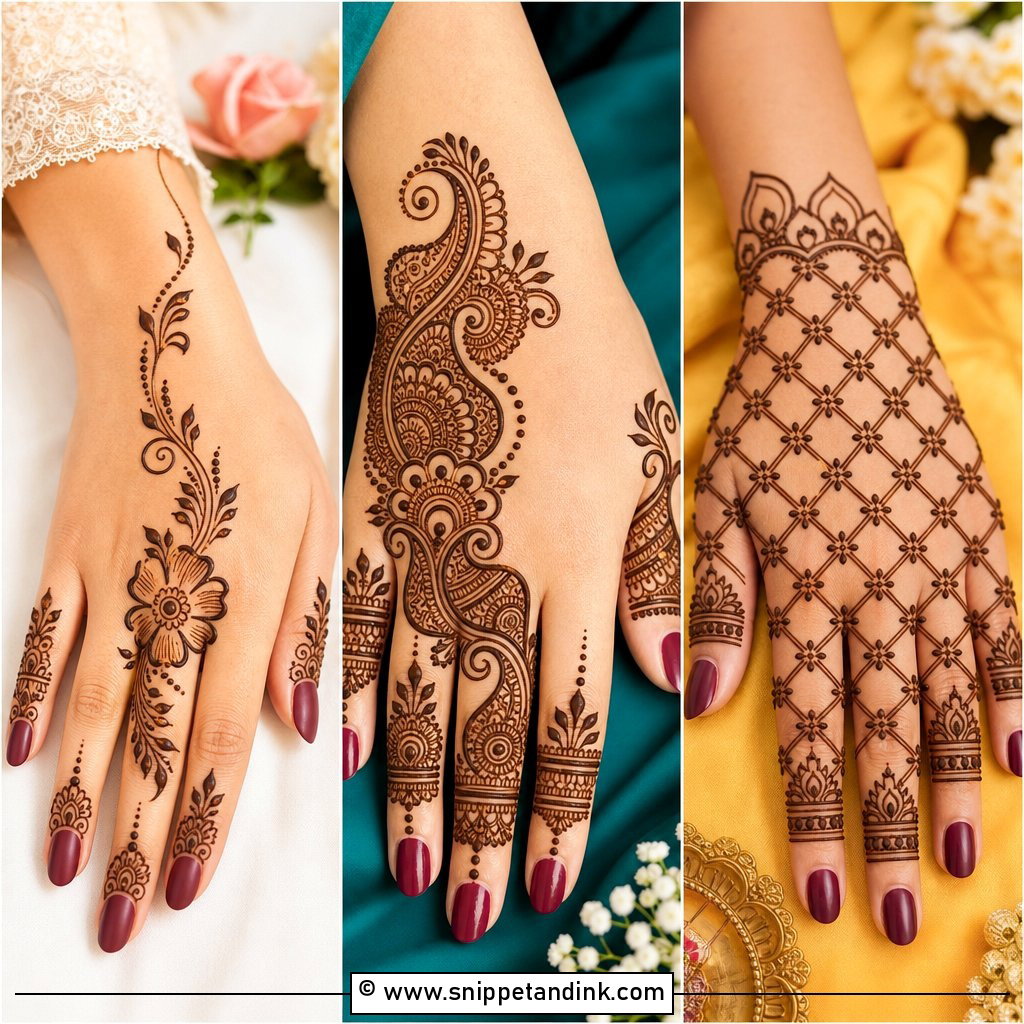
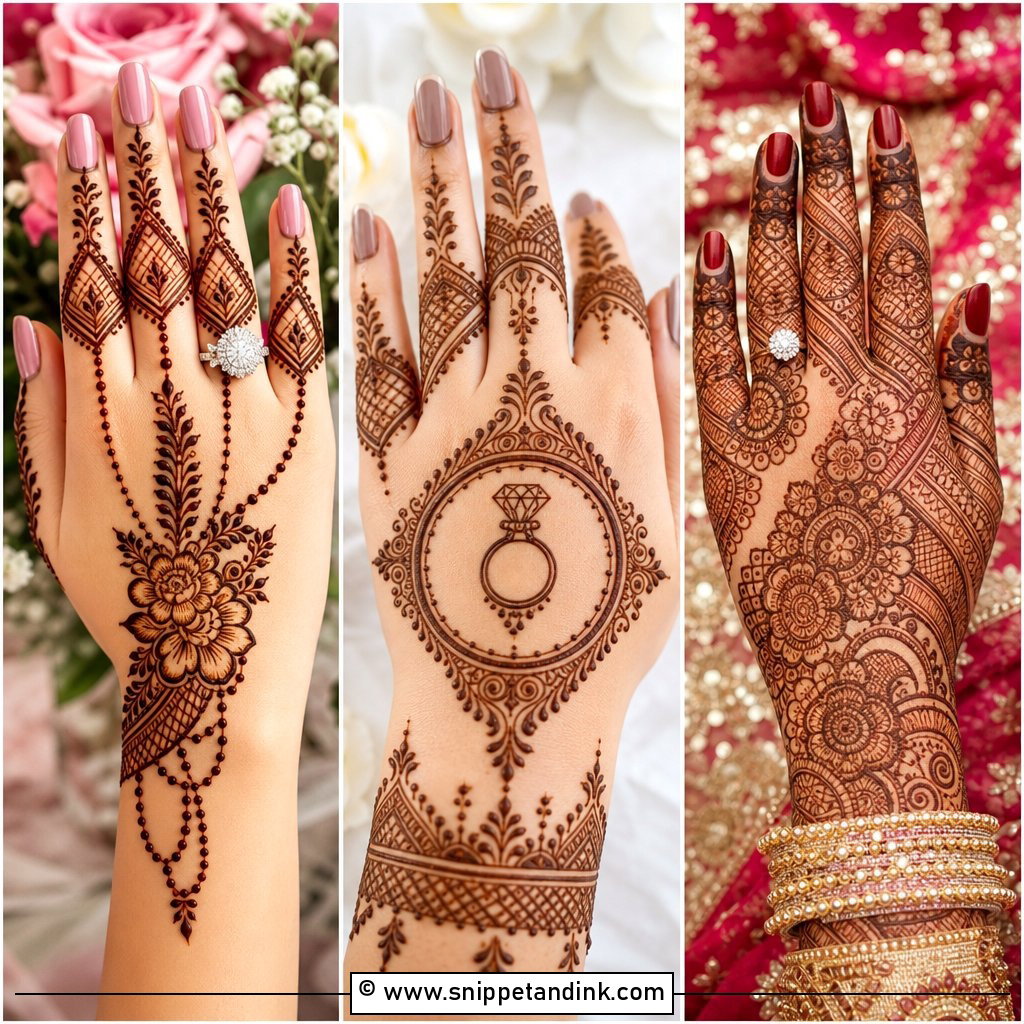
Bridesmaids need henna that dries quickly and doesn’t need a whole evening of care. A back hand trail, a simple palm or a bracelet pattern that complements the bride without copying her. Small roses, leaves and ring-style fingers look good in group hand shots. When I’m doing a whole party, I do the bride first while the paste is freshest and her stain has the longest to develop, then the bridesmaids.
26. Arabic Bridal Mehndi Design With Gulf Pattern
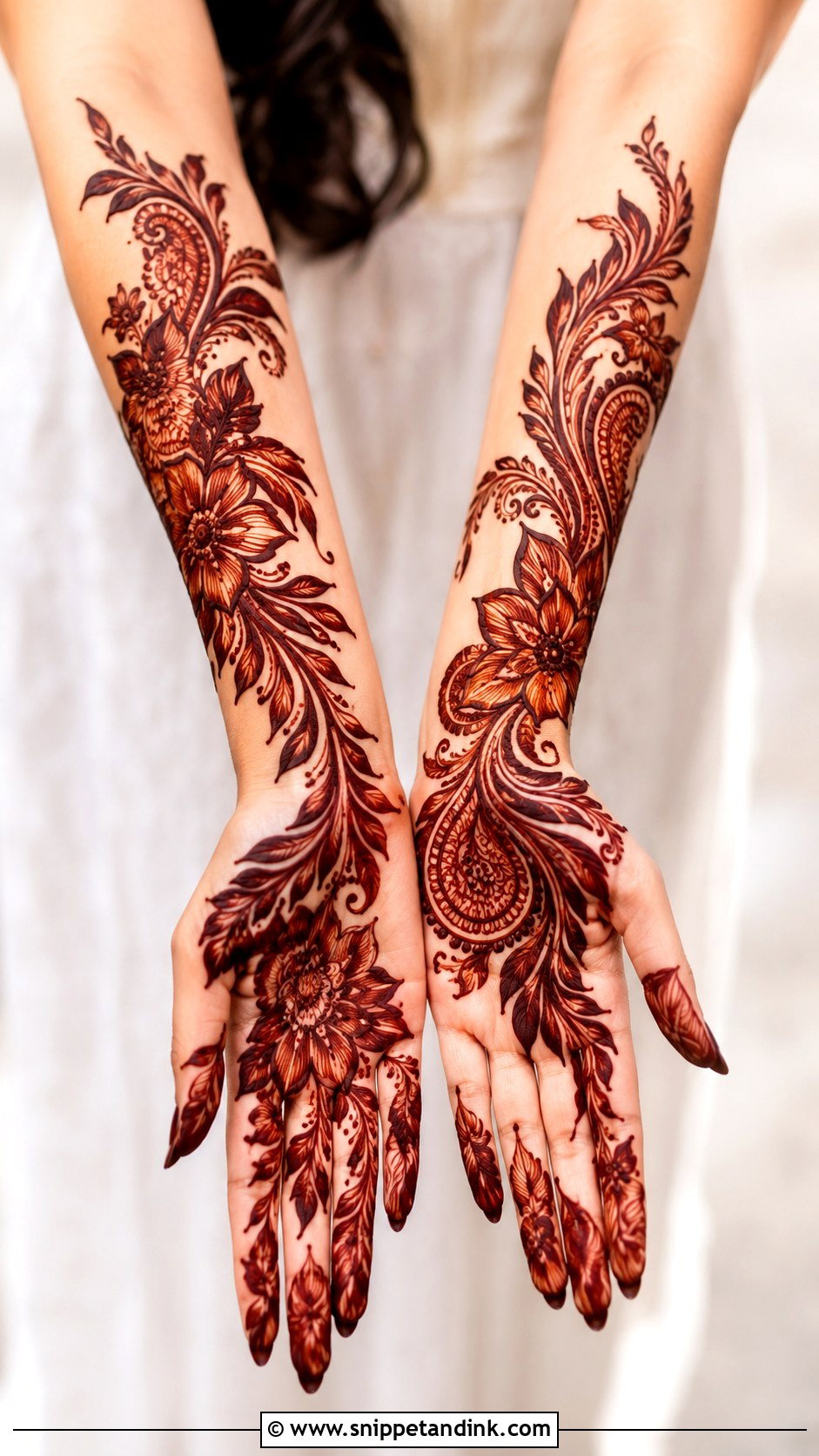
A Gulf-inspired Arabic bridal mehndi design uses big florals, dramatic spacing and strong movement from wrist to forearm. The motifs are larger than in Indian work, so they read from a distance, which suits a large venue. I draw deep outlines and shaded petals and leave the negative space very clean. Expect a bolder, more graphic look than most brides picture; it’s confident and not for someone who wants delicate.
27. Arabic Bridal Mehndi Design With Khafif Pattern
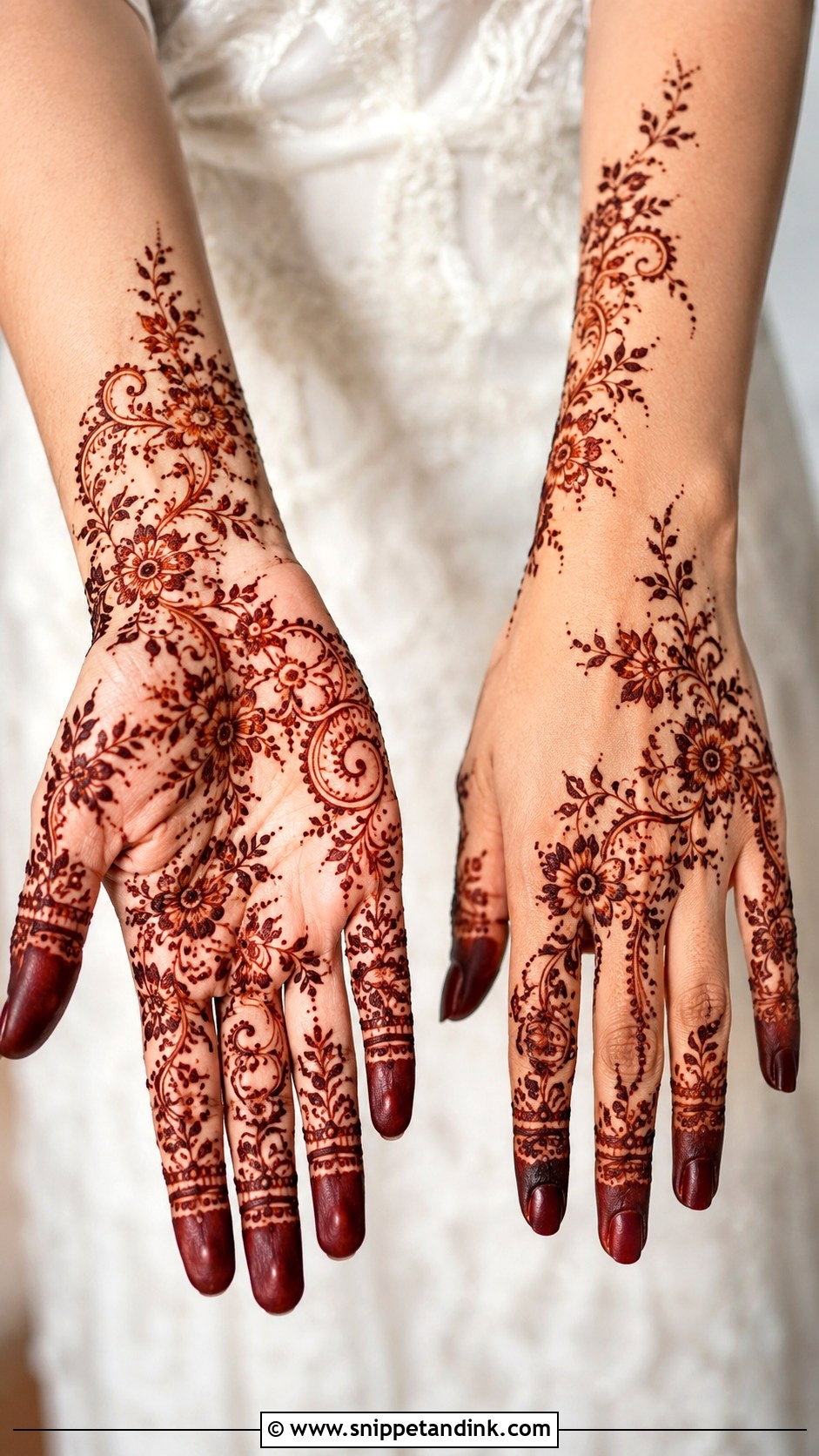
Khafif Arabic bridal mehndi is fine and light: thin vines, tiny leaves, small flowers, dots and lace accents. For a bride I expand it with fuller fingertips, a wrist cuff and a soft forearm trail. The line thickness has to stay consistent, which needs a well-rolled cone with a fine opening; uneven pressure shows immediately in such delicate work. It suits engagements, nikahs and minimal brides.
28. Arabic Bridal Mehndi Design With Indo Arabic Pattern
Indo-Arabic is a blend: Arabic roses, paisleys and vines give the flow, while Indian fine lines, jaali, mandalas and detailed wrist bands fill the gaps. It’s my answer when a bride asks for fuller coverage but still likes seeing some skin. The rule I follow is that the Arabic motifs stay bold and the Indian detail stays fine, as a supporting layer. If both are drawn at the same weight, the design turns muddy.
29. Arabic Bridal Mehndi Design With Moroccan Pattern
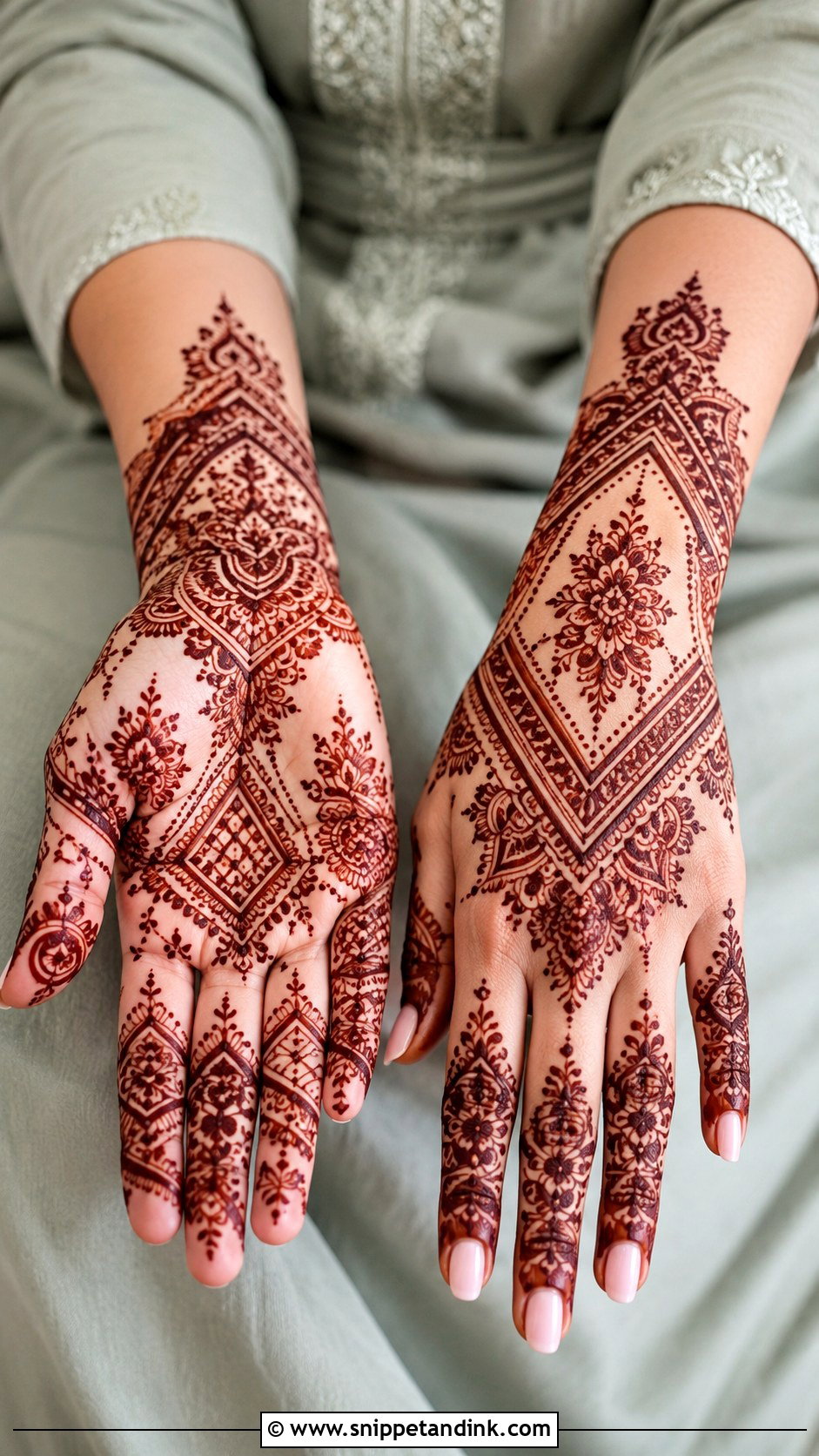
Moroccan influence brings geometry: diamond grids, angular bands, structured cuffs and clean straight lines mixed in with florals. It’s a good choice for a bride bored of rose-and-vine layouts. Straight lines are hard in henna because the paste flows, so I draw them in short steady pulls, not one long stroke. Small flowers and dots soften the sharp shapes. It pairs well with modern outfits and minimal jewellery.
30. Arabic Bridal Mehndi Design Feet
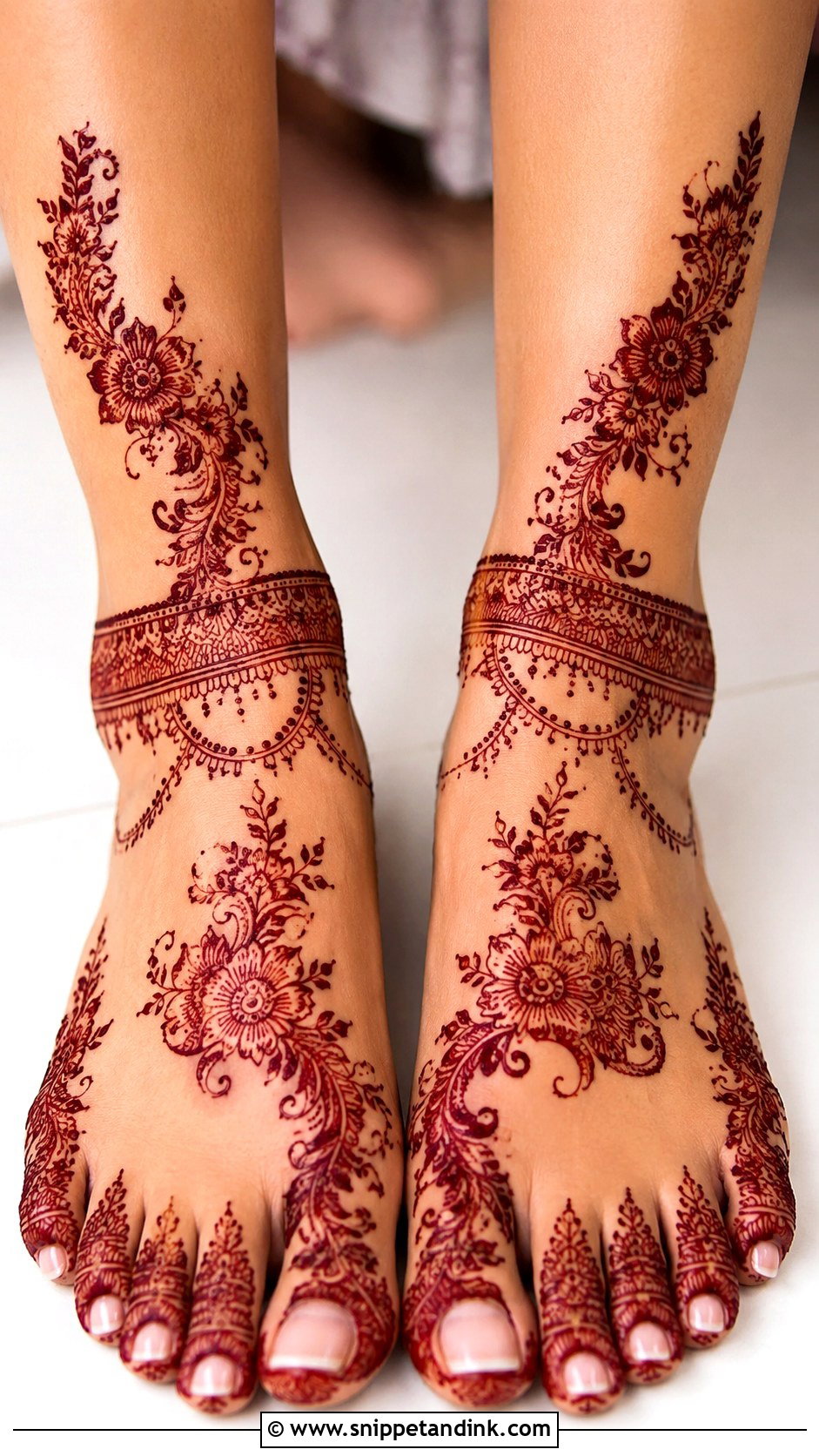
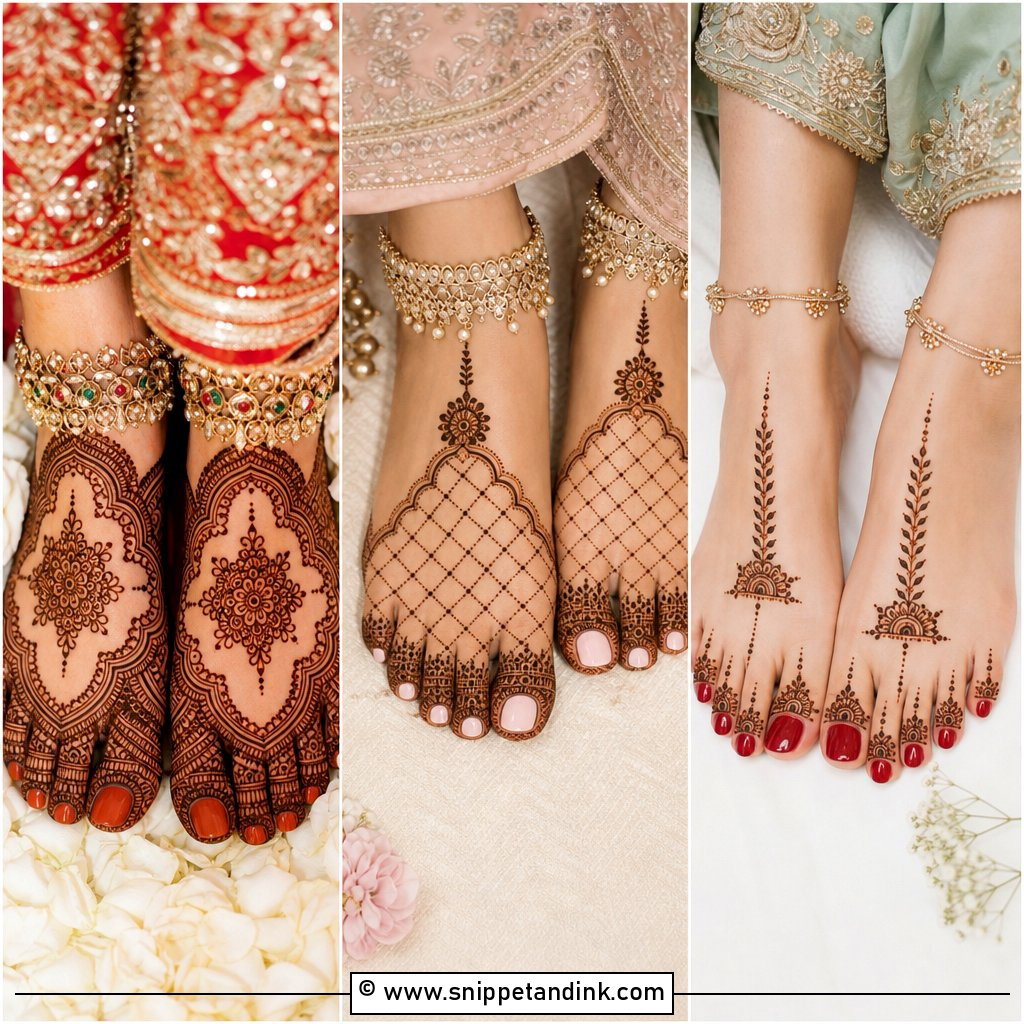
Feet are where henna stains darkest after palms, because the soles are thick and warm. An Arabic foot design runs floral trails across the top toward the ankle, with anklet bands, toe details and paisleys, leaving the centre of the foot fairly open. Feet need the longest drying time and the most care, since you’ll want to walk. I apply them last and ask the bride to stay seated with her feet up until the paste is set. Matching hands and feet in the same motifs look finished.
The First Two Days After Your Henna Dries
Once the paste is on, the work shifts to you. The longer it stays on the skin, the deeper the colour, so keep it on for at least six hours and overnight if you can sleep with your hands wrapped in a loose cloth or paper towel.
- Dab a little lemon and sugar mix over the dried paste so it stays stuck to the skin instead of flaking off early.
- When it’s time, scrape the dry paste off with a blunt edge or your fingernail. Don’t wash it off.
- Keep water off the design for as long as you can, ideally most of the next day.
- Rub in a little natural oil or balm afterwards, and keep warm; cold hands stain more slowly.
- Stay out of chlorinated pools and avoid scrubs until after the last event.
If one area comes up paler, it’s usually the back of the hand or the inner wrist, where skin is thinner. Nothing safe will darken it after the fact, so plan for it in the design by making those outlines bolder from the start.
Where the Henna Meets the Outfit and the Jewellery
Arabic henna gives you movement and clear detail rather than coverage for its own sake. Full hands, simple trails, Gulf florals, rose designs, bracelet cuffs and foot patterns all come from the same language, so there’s a version for every event. Pick the one that suits your outfit, sleeves, jewellery and hand shape, and bring photos of your favourites to your artist so you can agree on placement before the day.
You'll Like These Ideas:




Leave a Reply