
When a bride sits down with me to plan her henna, the outfit is only part of the conversation. I also look at her hands: palm width, finger length, how far the sleeves of her lehenga will fall, and whether she’ll be wearing a hathphool or stacked bangles. From intricate full-hand patterns to a single palm mandala, the 35 styles below cover Rajasthani, Arabic, Khaleeji, Moroccan, minimal and personalized work, with notes on brides, bridesmaids and guests, plus engagement, sangeet and foot designs. For each one I’ve added what I watch for when I actually draw it.
Planning the Mehndi Night Around How Henna Actually Stains
Natural henna doesn’t show its true color when the paste comes off. It starts bright orange and darkens over the next day or two, reaching its deepest shade somewhere between 24 and 48 hours. That one fact drives the whole schedule, so I plan bridal appointments backward from the wedding day.
- Hold the mehndi one to two days before the wedding, so the stain peaks on the day rather than a day after.
- Set aside enough sitting time. Full bridal hands and feet can take several hours, depending on the density and how many hands I’m working on that night.
- Eat properly and use the washroom before we start. Once both hands are covered, you’ll need someone else to feed you.
- Skip lotion, oil and sunscreen on your hands and feet that day. Clean, dry skin takes the dye better.
- Wear something loose with sleeves that roll well above the elbow, and plan to sleep in it.
If you have a facial, waxing or a manicure booked, do them before the mehndi. Scrubbing, acetone and hot water afterward will lighten the stain faster than anything else.
1. Full Hand Bridal Mehndi Design
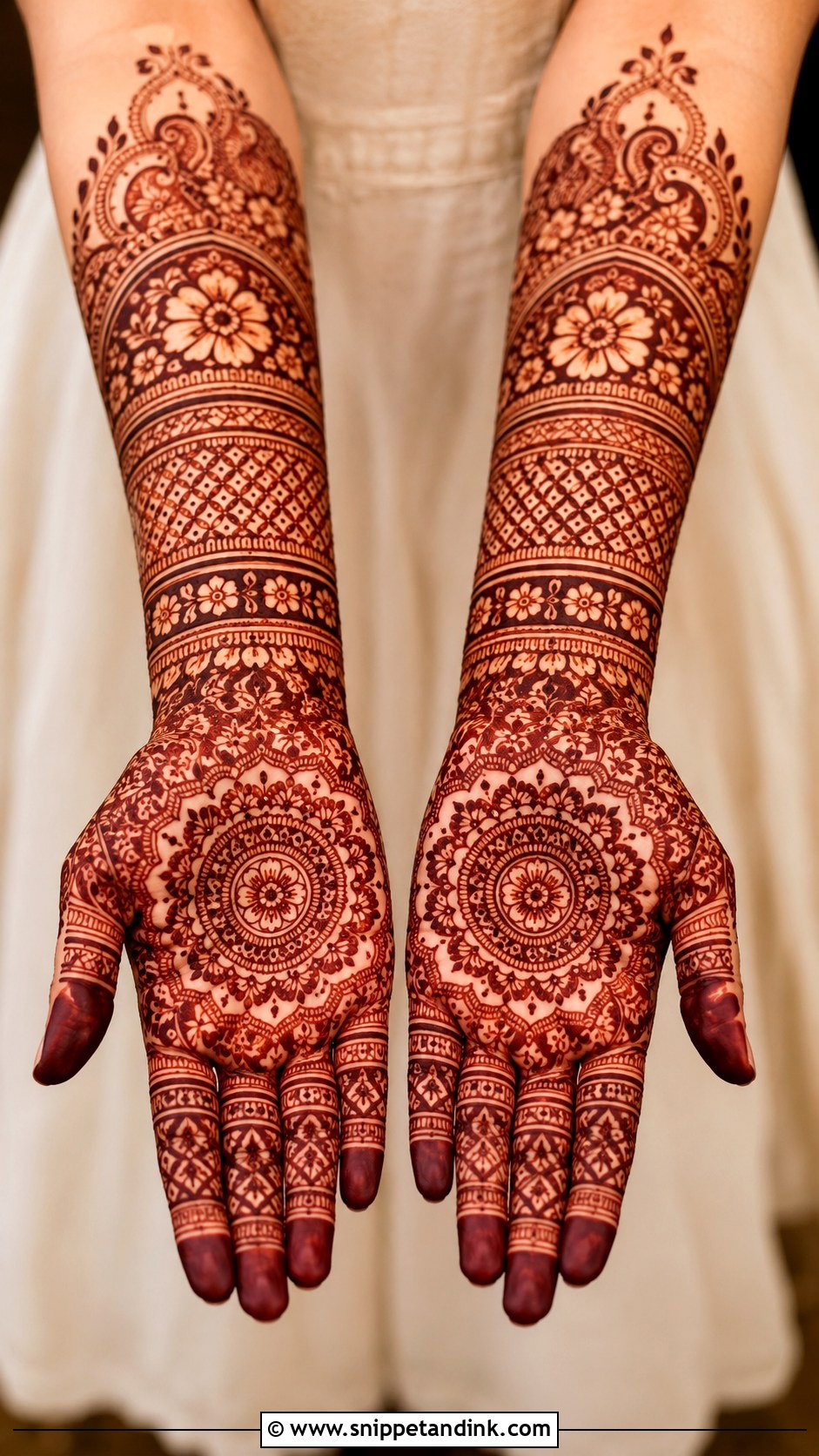
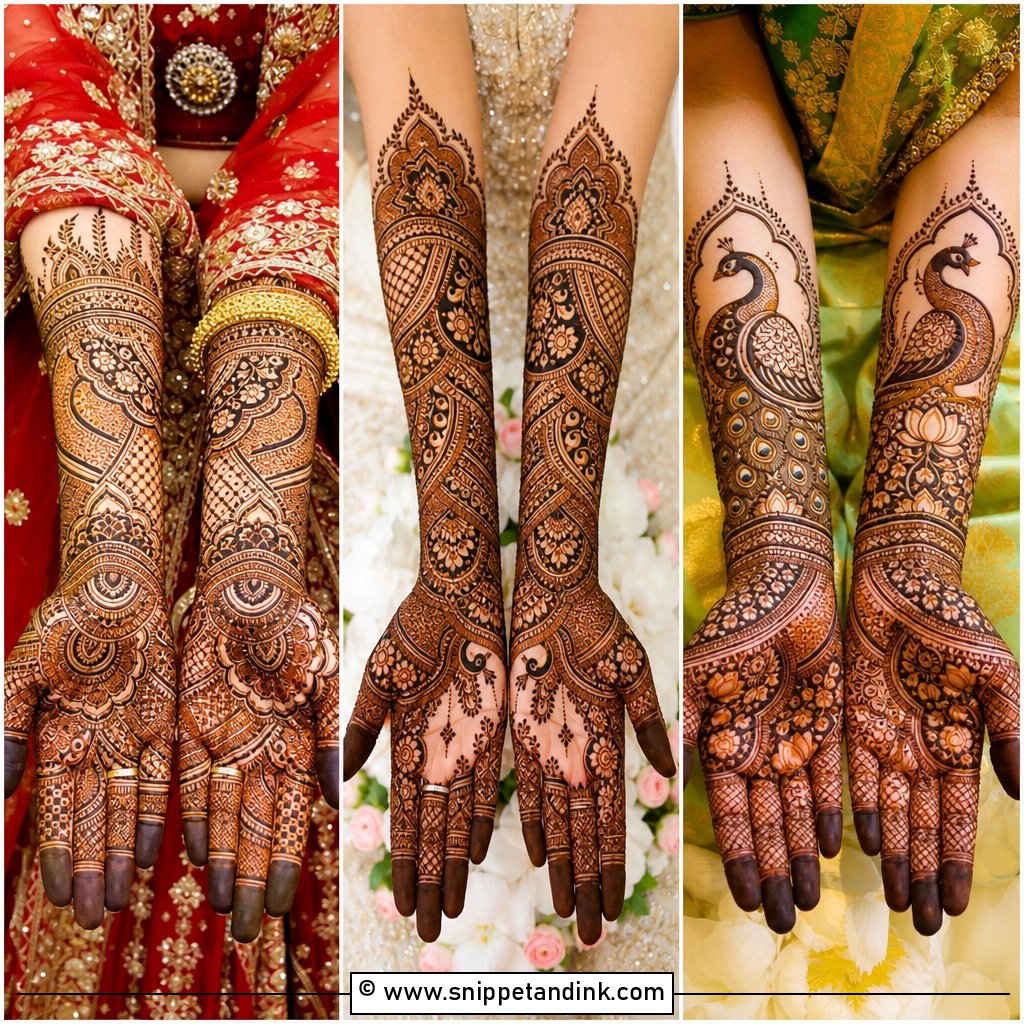
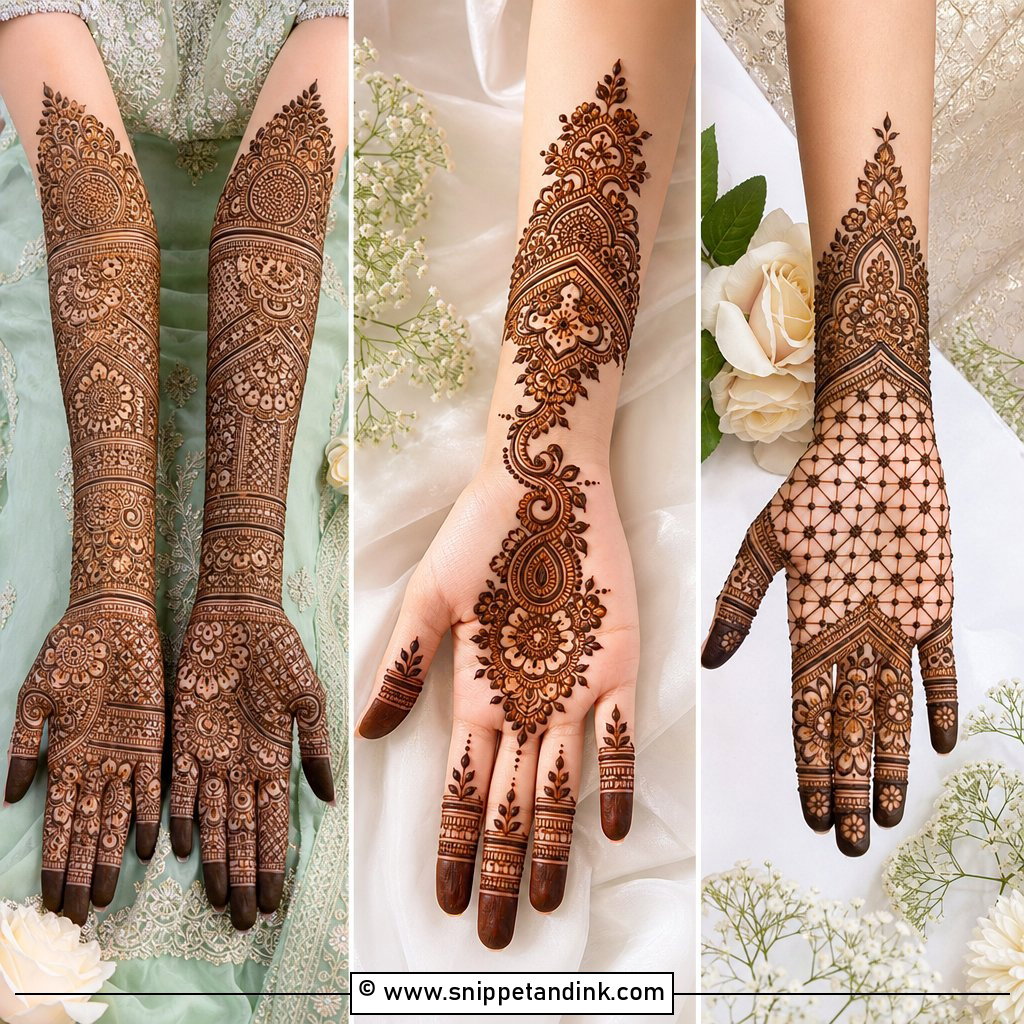
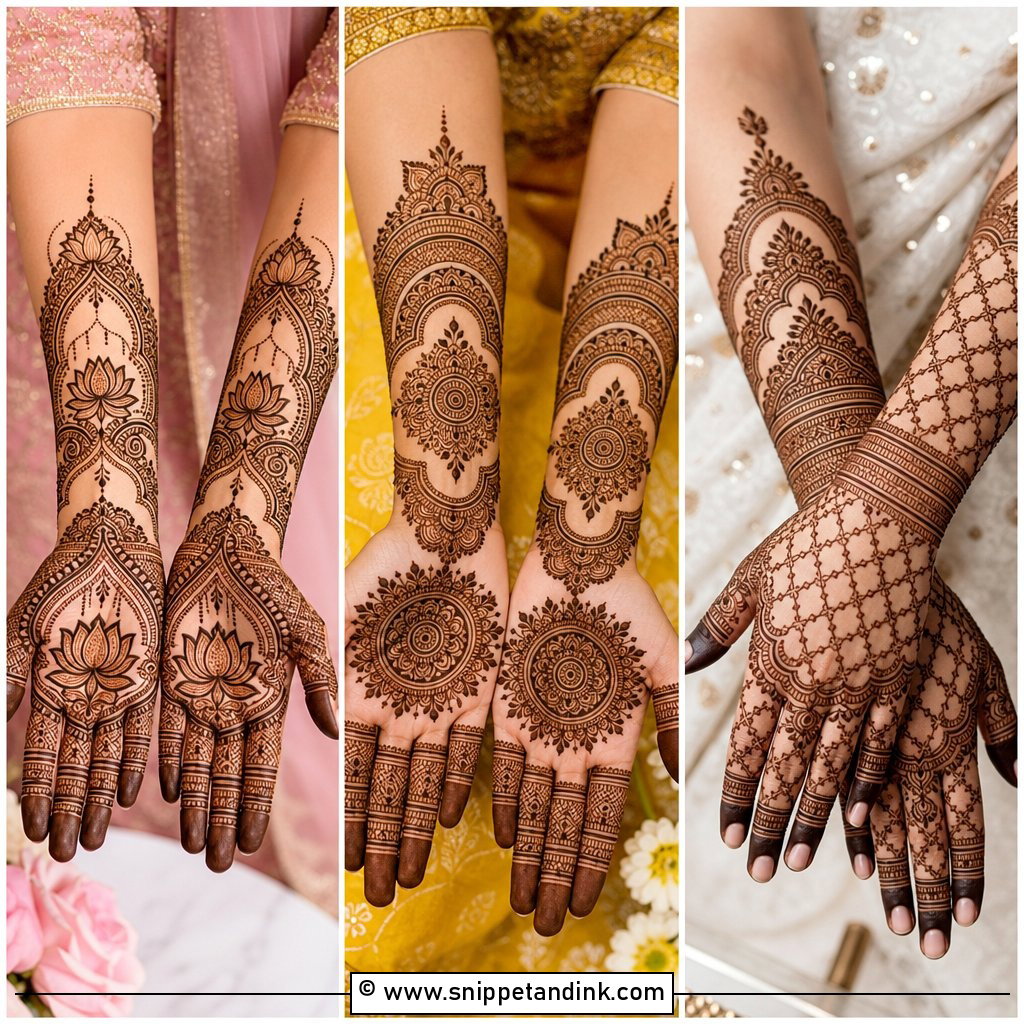
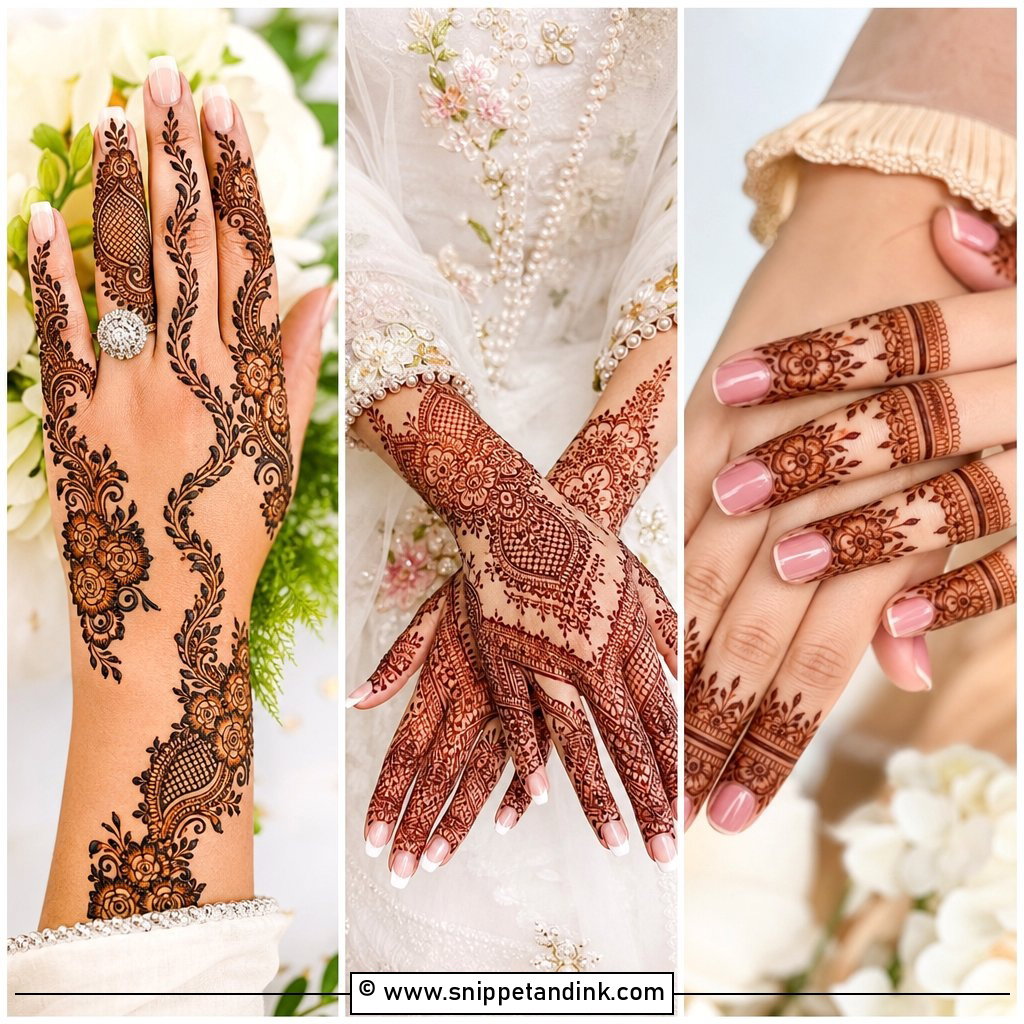
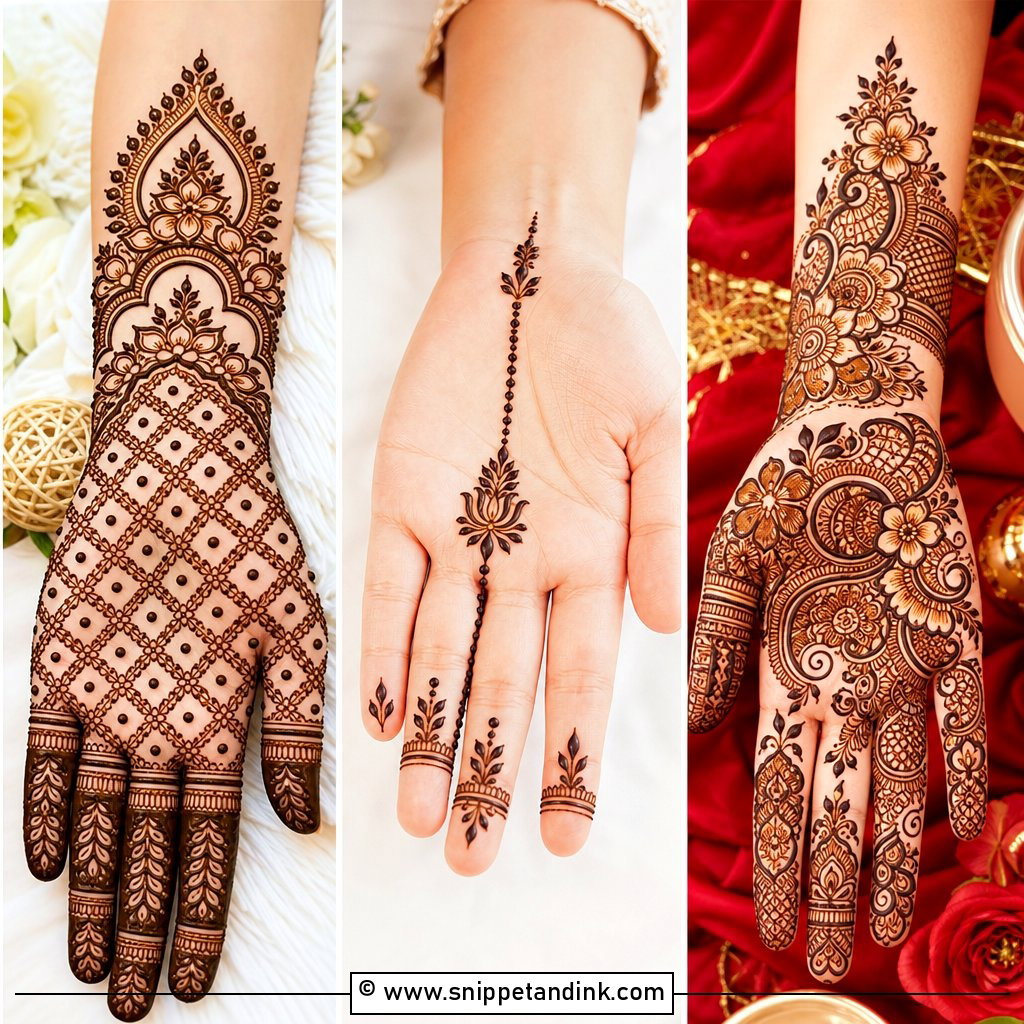
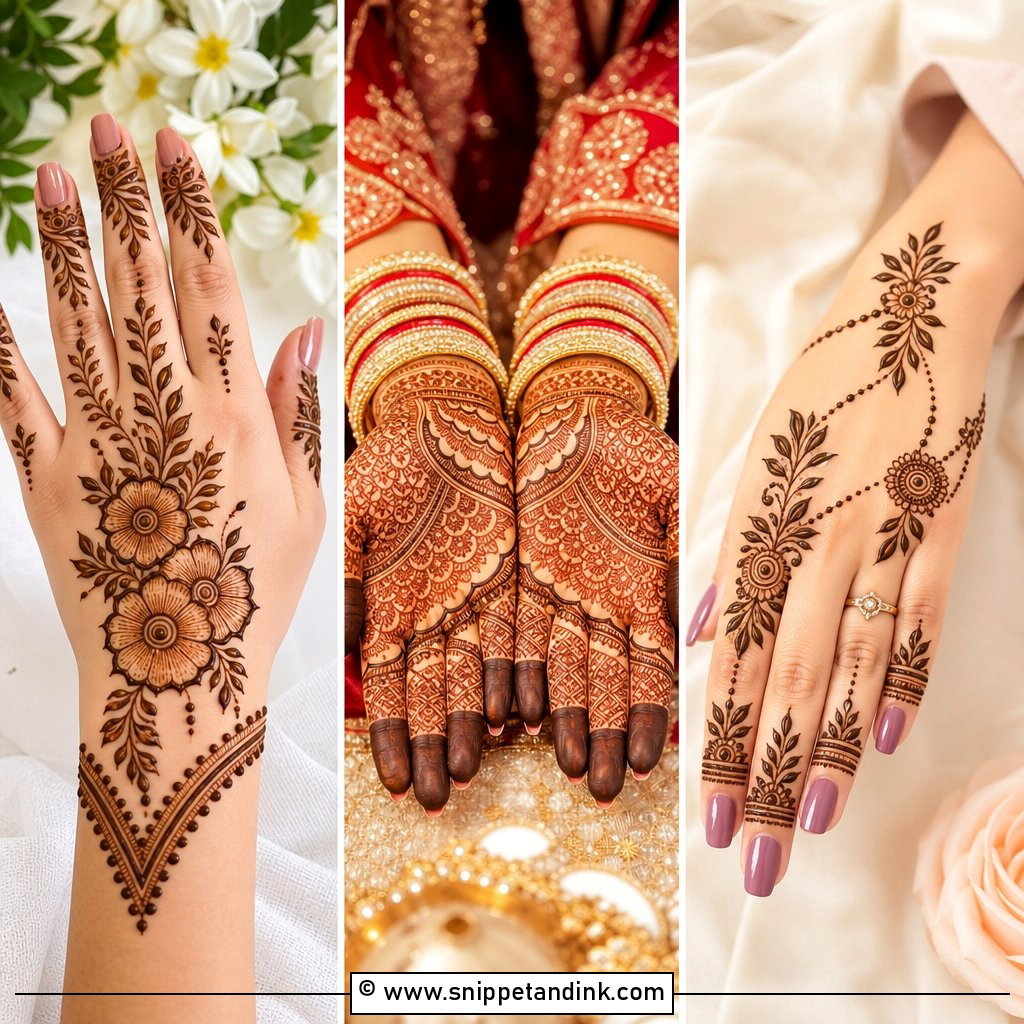
Full hand bridal mehndi starts at the fingertips, fills the palms with paisleys, florals, jaali and mandalas, then runs past the wrist toward the forearm. It’s the classic choice at Indian, Pakistani and other South Asian weddings. What separates a clean full hand from a crowded one is sectioning: I divide the palm into zones with bold outlines first, then fill each zone. Without that structure, fine filling merges into one dark patch once the stain deepens, and the design disappears next to heavy bangles and embroidered sleeves.
2. Indian Bridal Mehndi Design
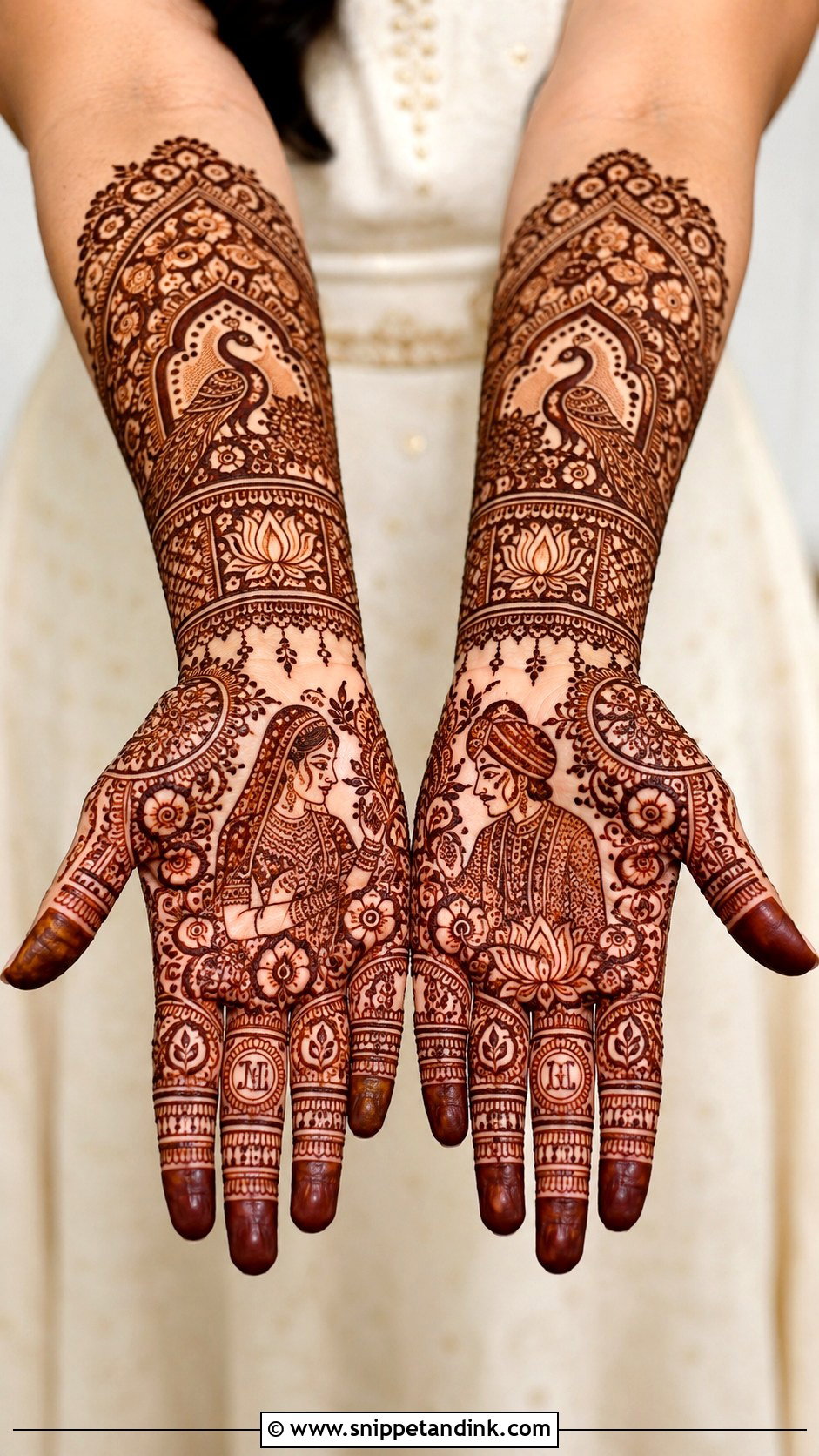
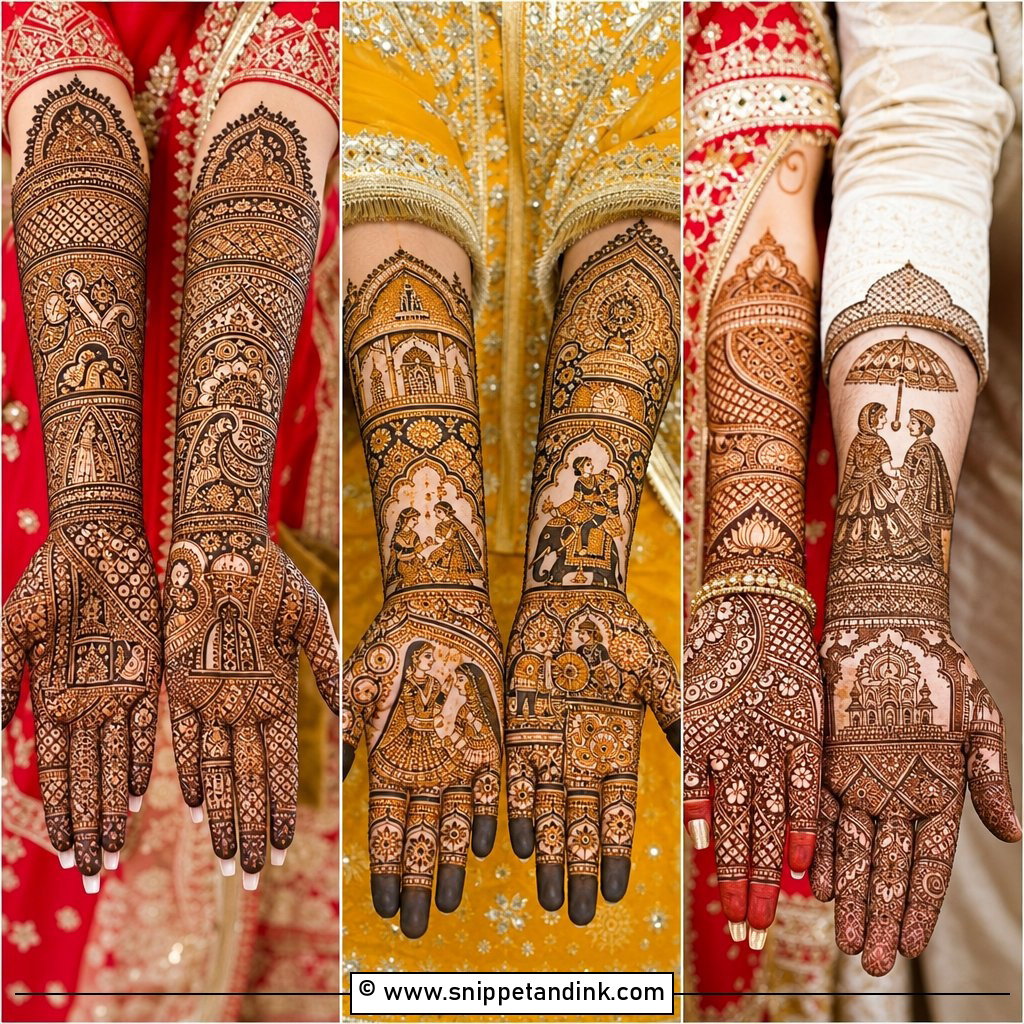
Indian bridal mehndi is dense, symbolic and finished edge to edge. Palms often carry peacocks, lotus flowers, a kalash, the bride and groom, and hidden initials, while the back hand repeats motifs with bracelet bands at the wrist. My rule is to draw the main motifs large and tuck the tiny filler around them. Henna lines spread slightly as the paste sits, so a peacock drawn too small turns into a smudge by day two.
3. Arabic Wedding Mehndi Design
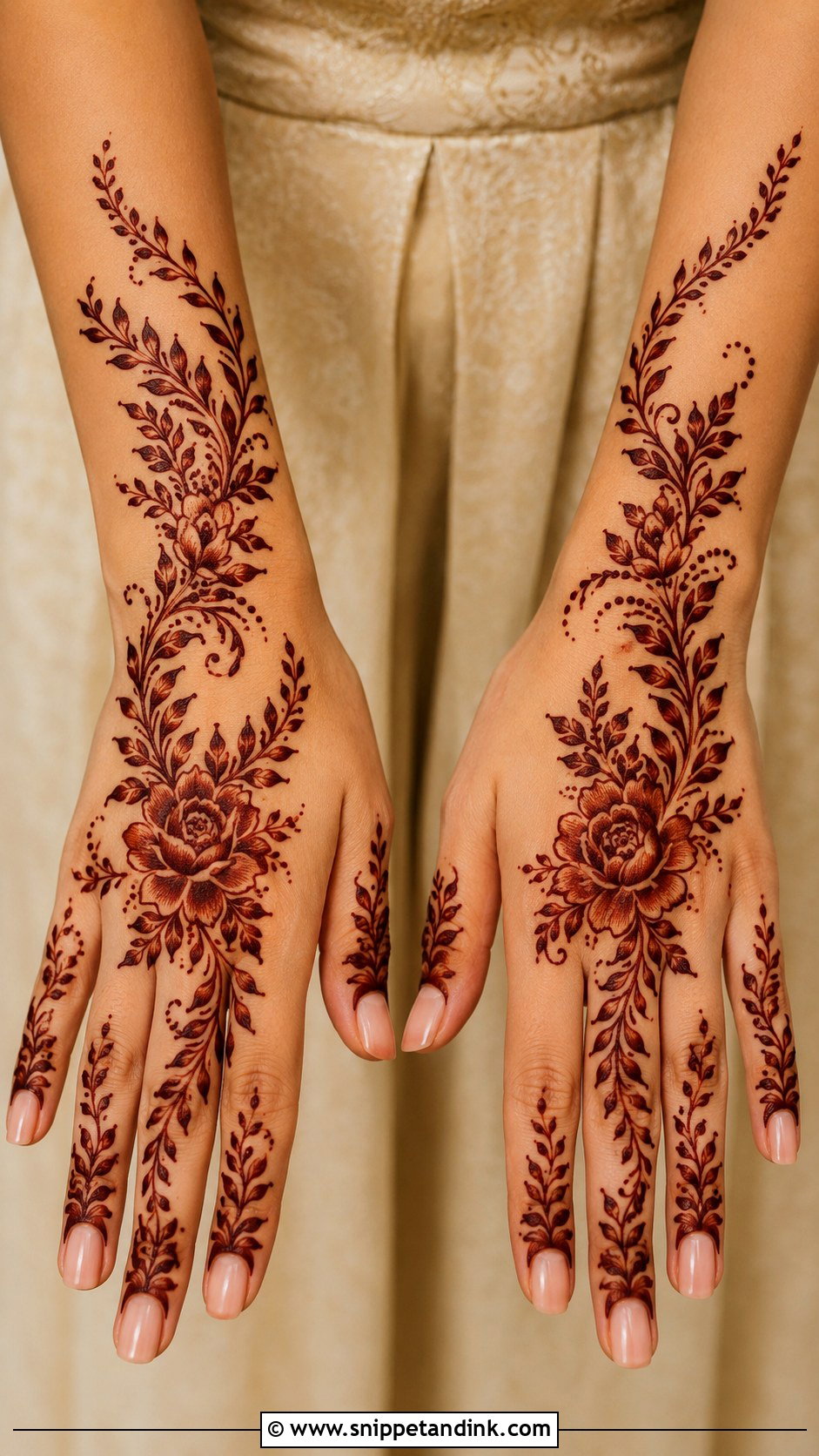
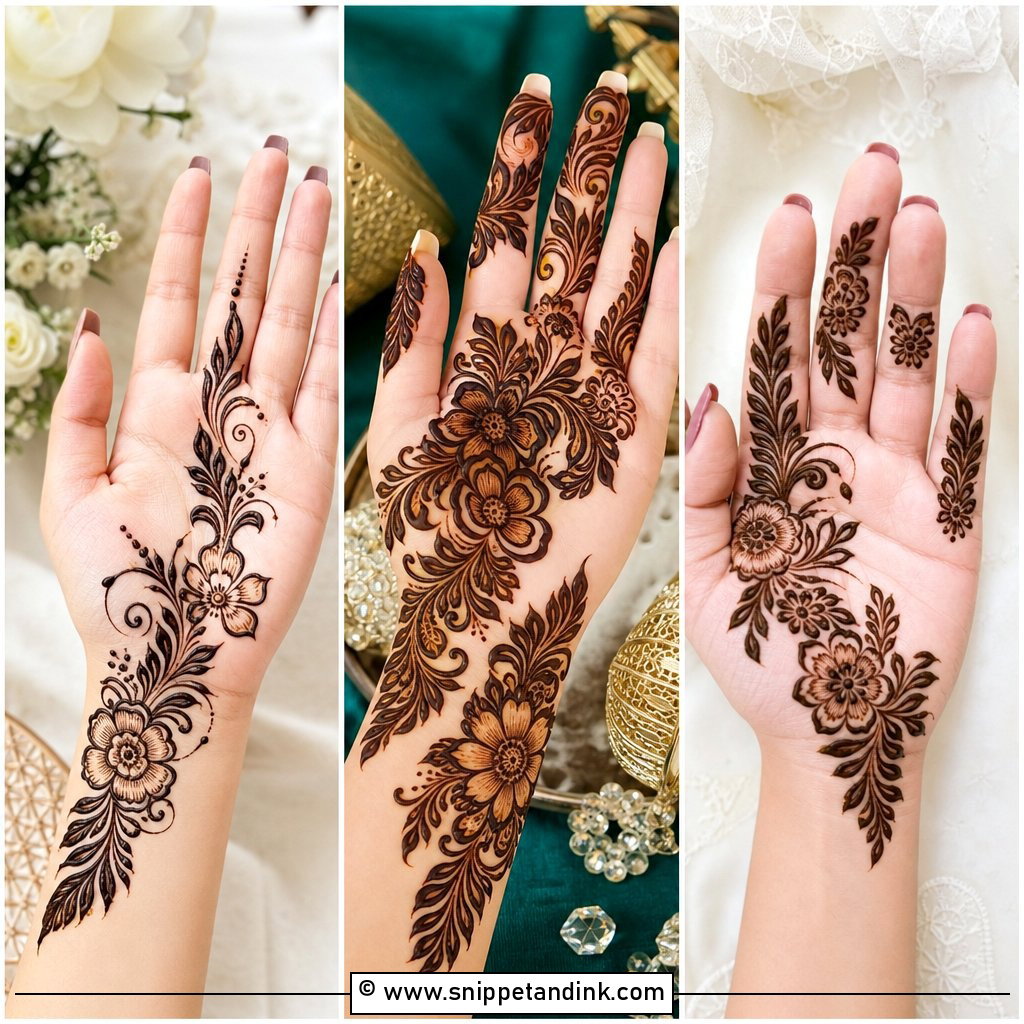
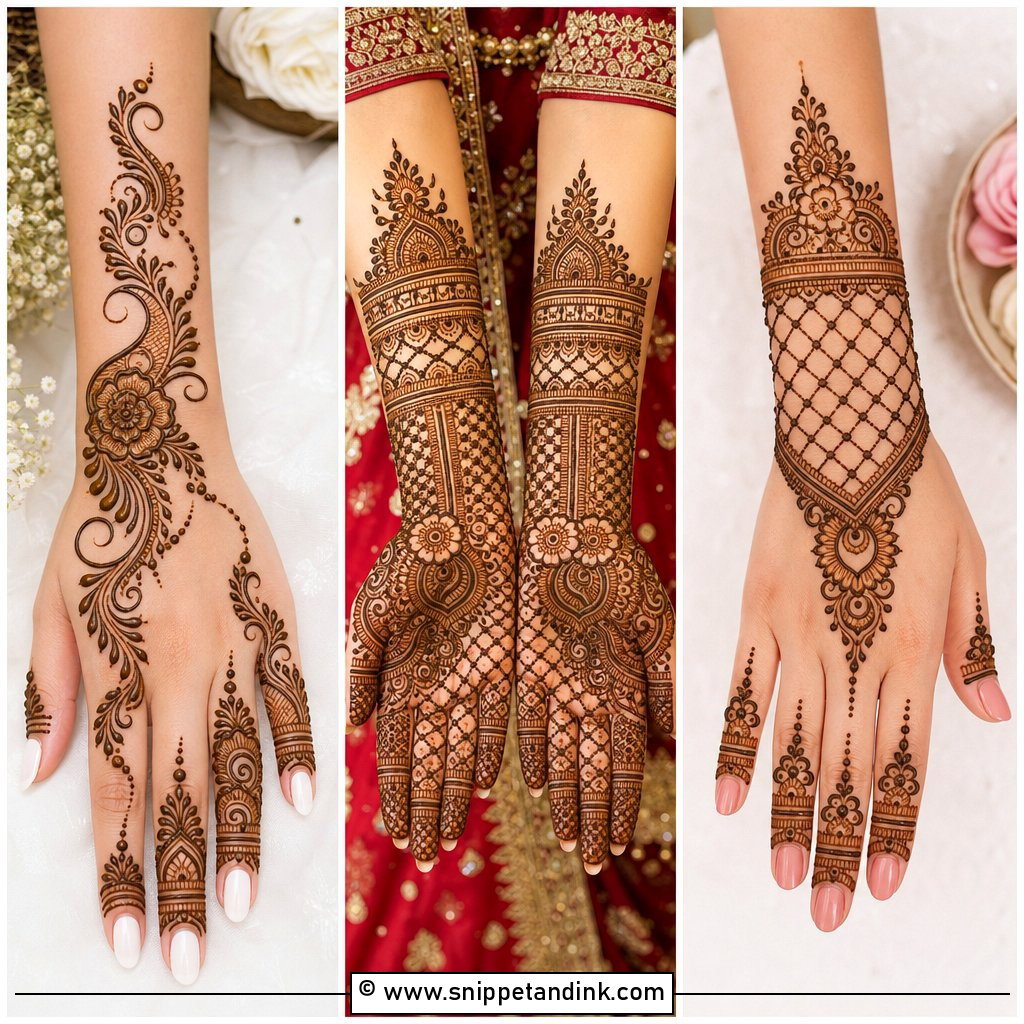
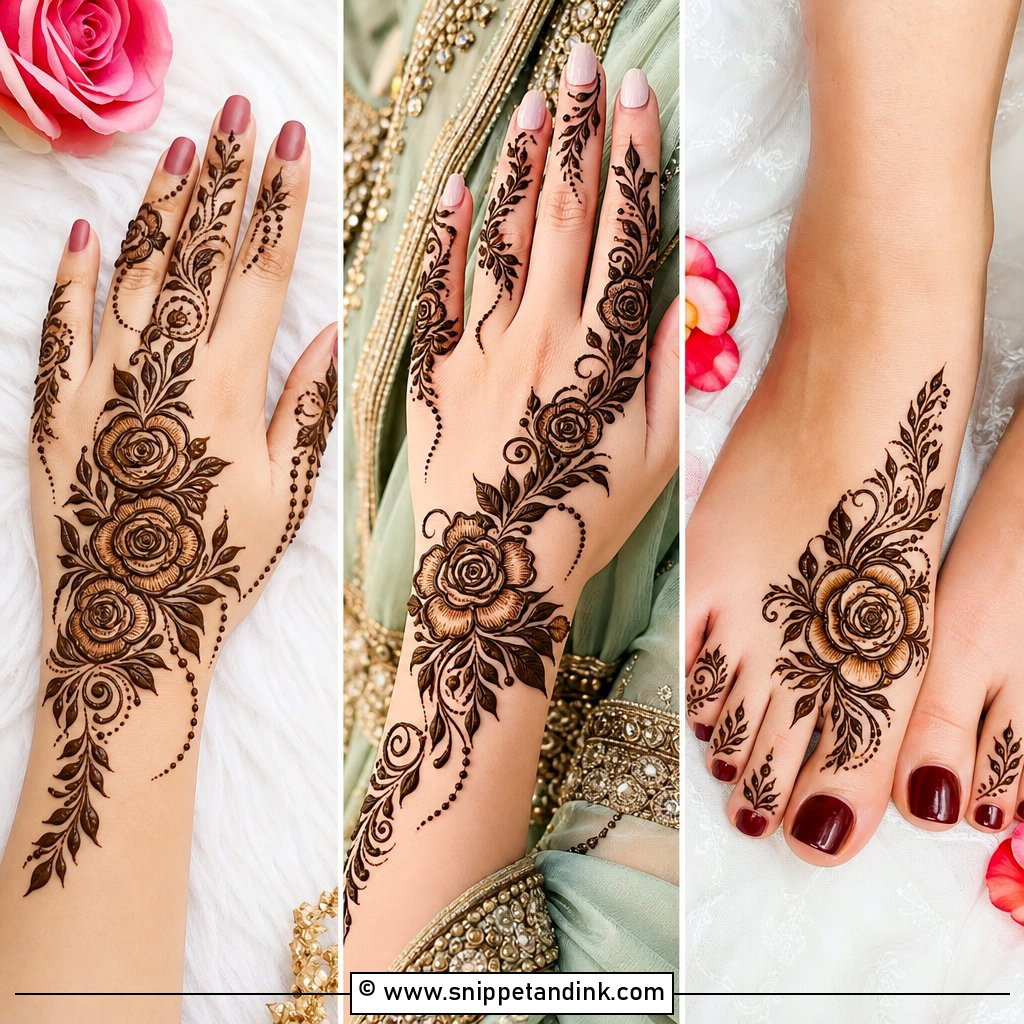
Arabic mehndi leaves skin showing on purpose. Flowing vines, bold leaves and curved trails usually start at one side of the palm and run diagonally to the wrist or forearm. It’s fast to apply, which makes it my usual suggestion for bridesmaids and guests too. If you want a modern version with a strong stain, ask for thicker outlines and soft shading inside the petals; thin outlines on open skin can look faint once the color settles.
4. Indo Arabic Bridal Mehndi Design
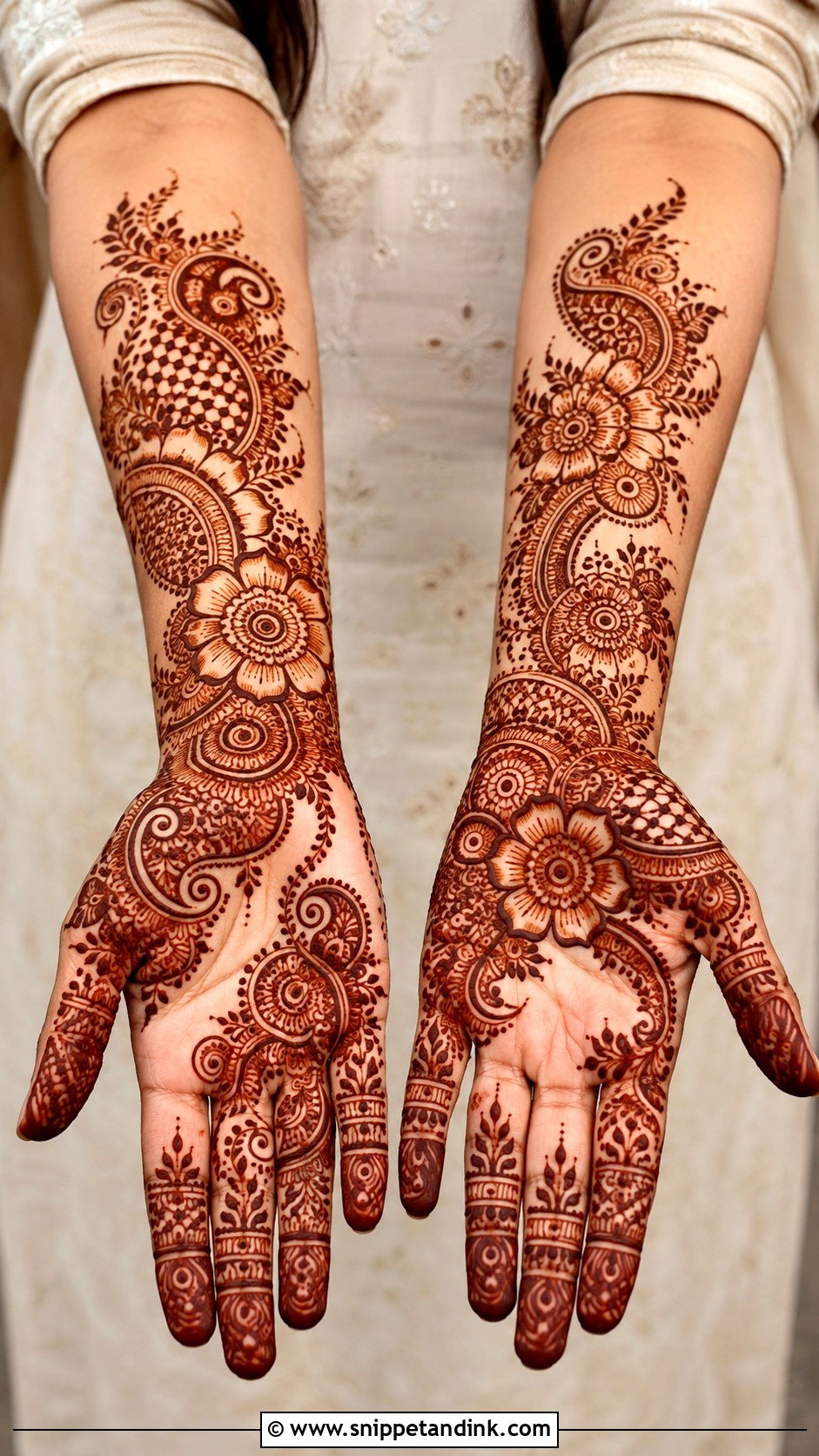
Indo Arabic takes the bold flowing frame of Arabic henna and fills it with Indian detail: large flowers and paisleys outlined thickly, then packed with dots, checks, swirls and mini mandalas. The hand reads full, yet it doesn’t feel heavy. Even spacing between the big shapes is what makes it look finished from fingertip to forearm. It suits engagement ceremonies and sangeet nights as well as the wedding.
5. Royal Bridal Mehndi Design
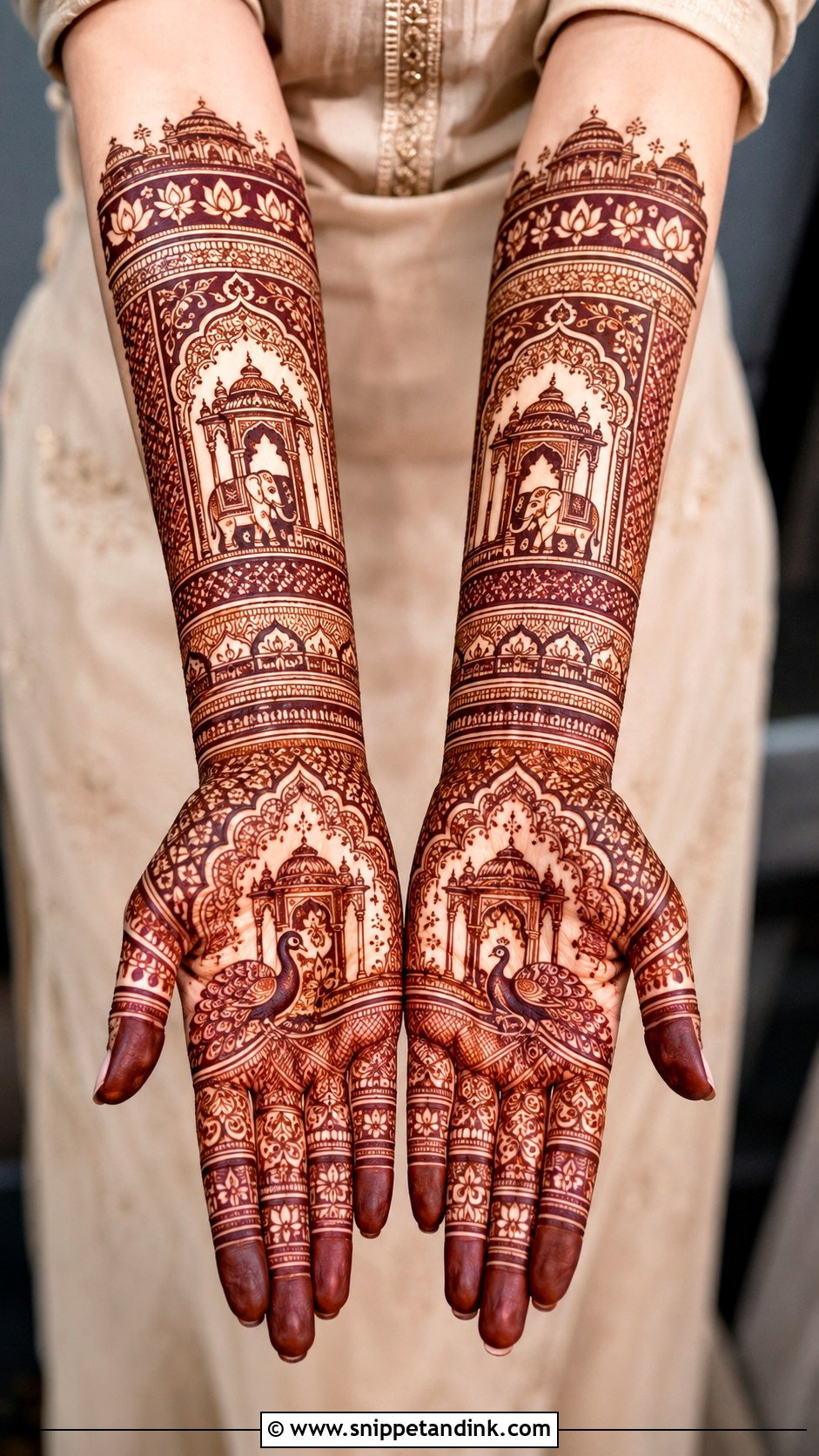
Royal mehndi borrows from palace architecture: arches, domes, jharokha windows, elephants, peacocks, lotus borders and layered wrist cuffs. It usually covers palms, back hands, wrists and forearms in mirrored symmetry, and it sits well with kundan jewelry and red and gold outfits. Precision is the whole job here. I place the central motif first and build borders outward, because if the arch is off-center by a few millimeters, every border after it inherits the error.
6. Rajasthani Bridal Mehndi Design
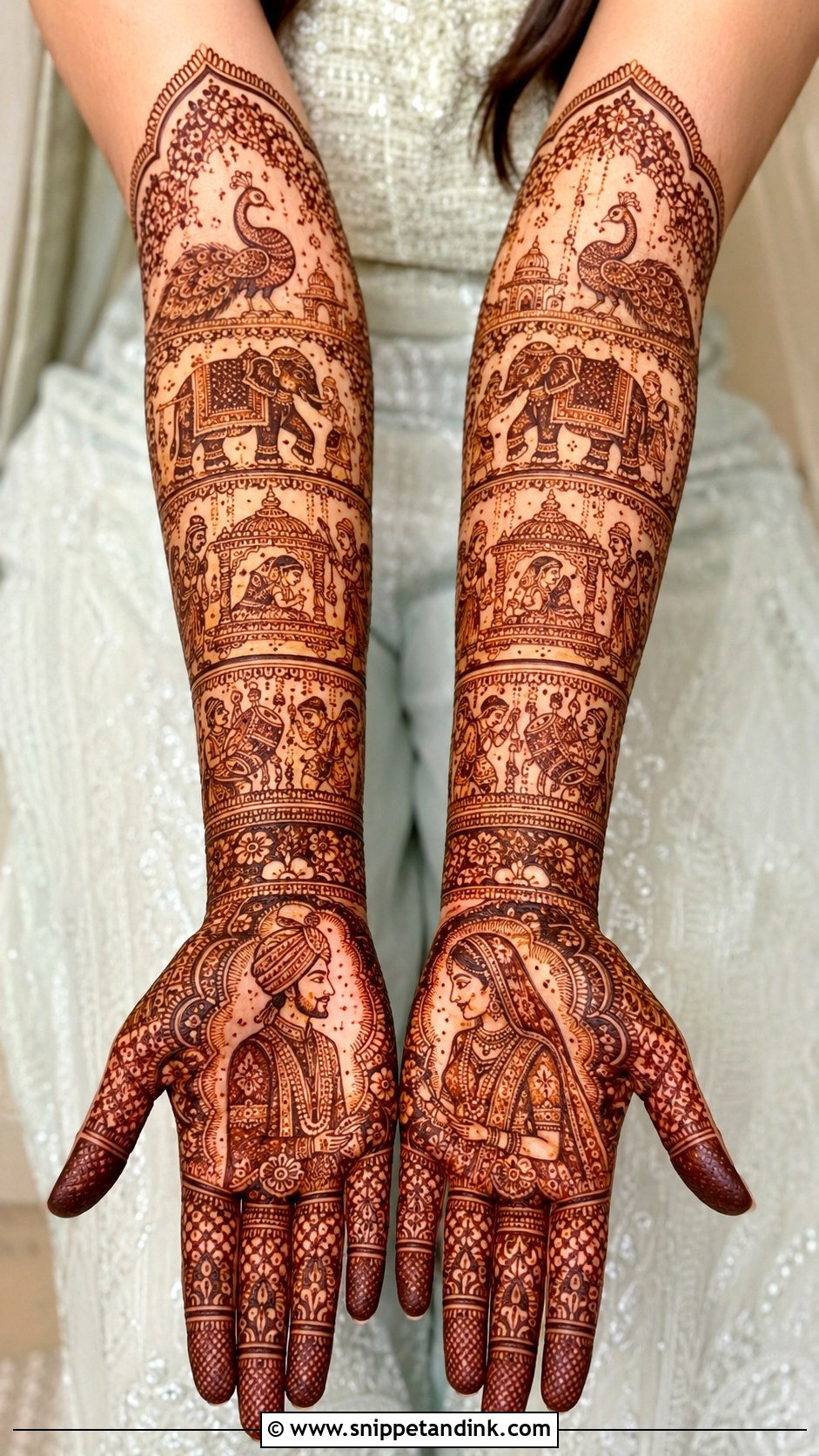
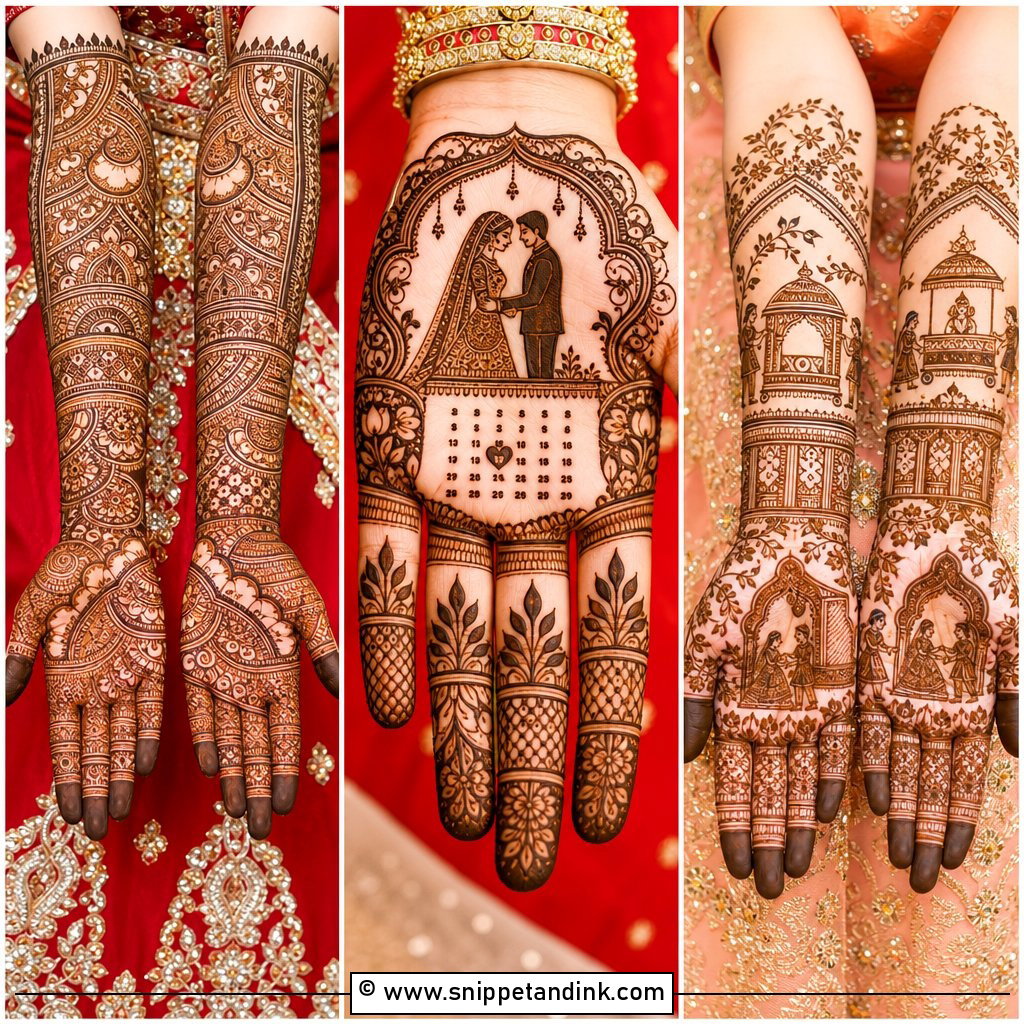
Rajasthani mehndi tells a story: bride and groom portraits, a palki, dhol, mandap and elephants, with traditional filling around them. It often covers both hands completely and may reach the elbows. Miniature detailing is a separate skill from fast bridal filling, so ask to see close-up photos of an artist’s faces and figures before booking. Faces drawn with lines too close together lose their features once the stain turns deep maroon.
7. Pakistani Bridal Mehndi Design
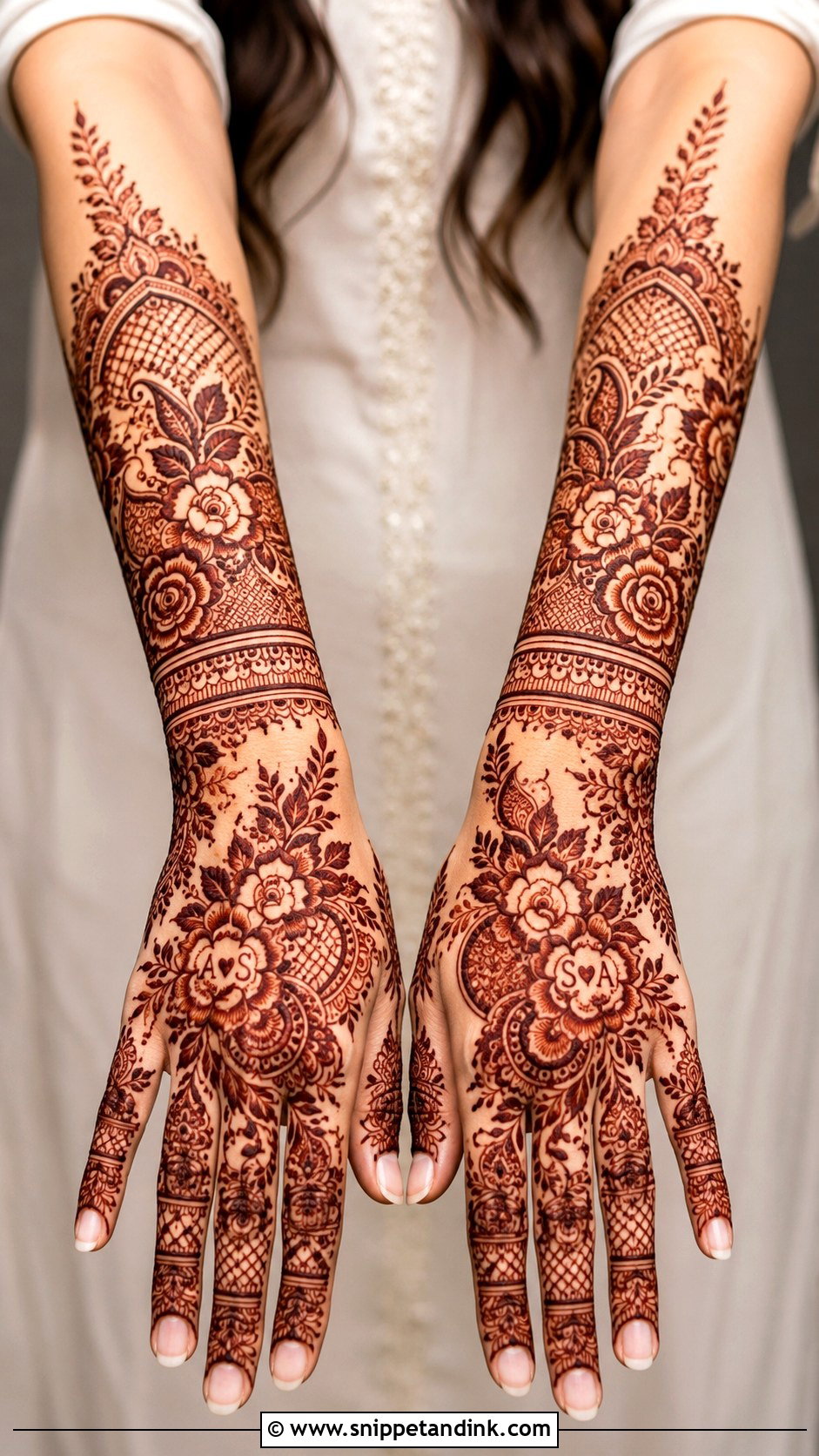
Pakistani bridal mehndi blends Indian density with Arabic flow. Palms tend to be fuller, packed with florals, paisleys, lace-like jaali, leafy vines and ornamental wrist bands, while back hands open up into trails. Initials or the wedding date often sit inside a paisley. The design works best with long embroidered sleeves, shararas and ghararas when the back hand stays airy enough to read. Too many tiny motifs competing on one palm is the most common way it goes wrong.
8. Minimal Wedding Mehndi Design
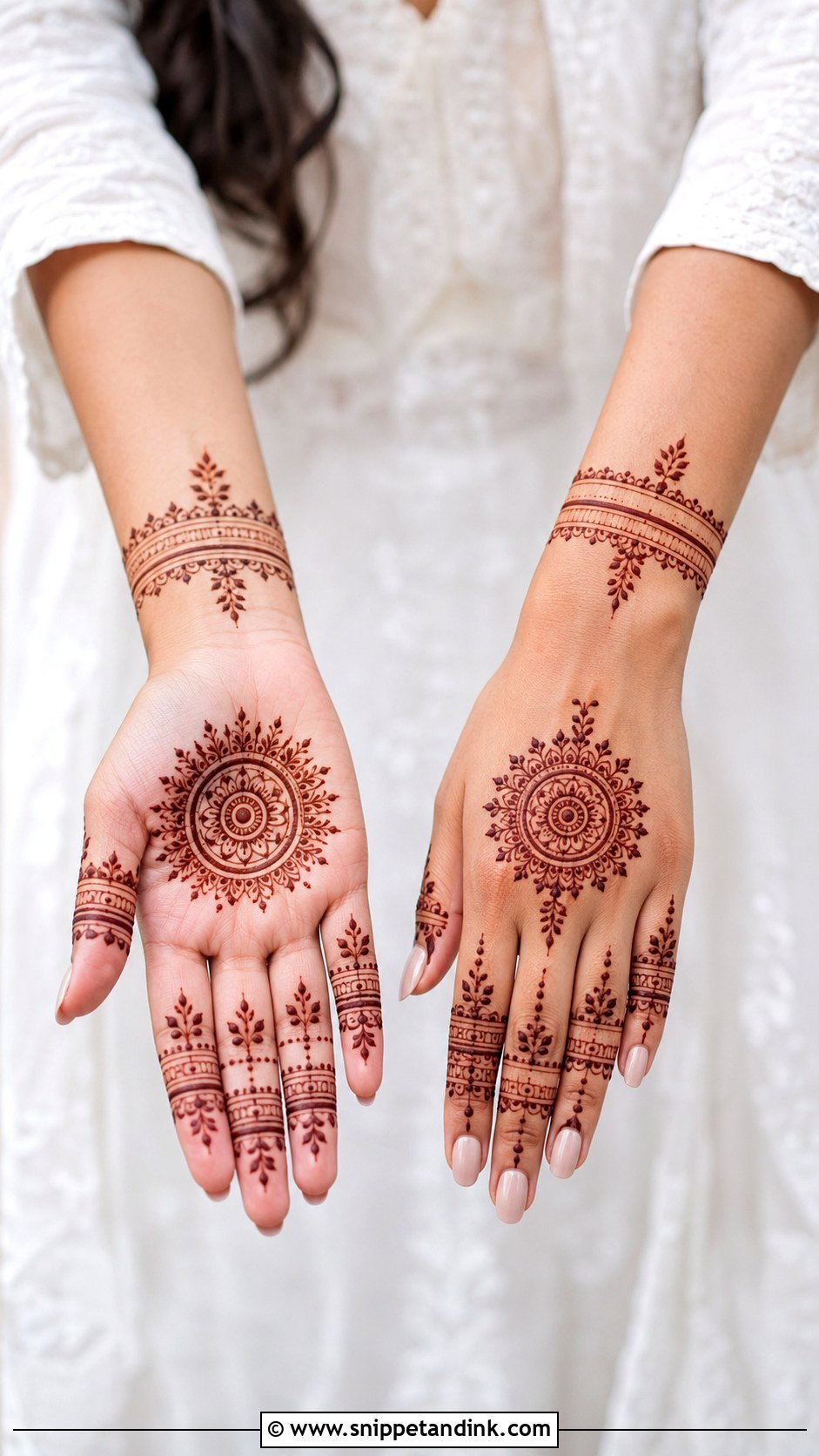
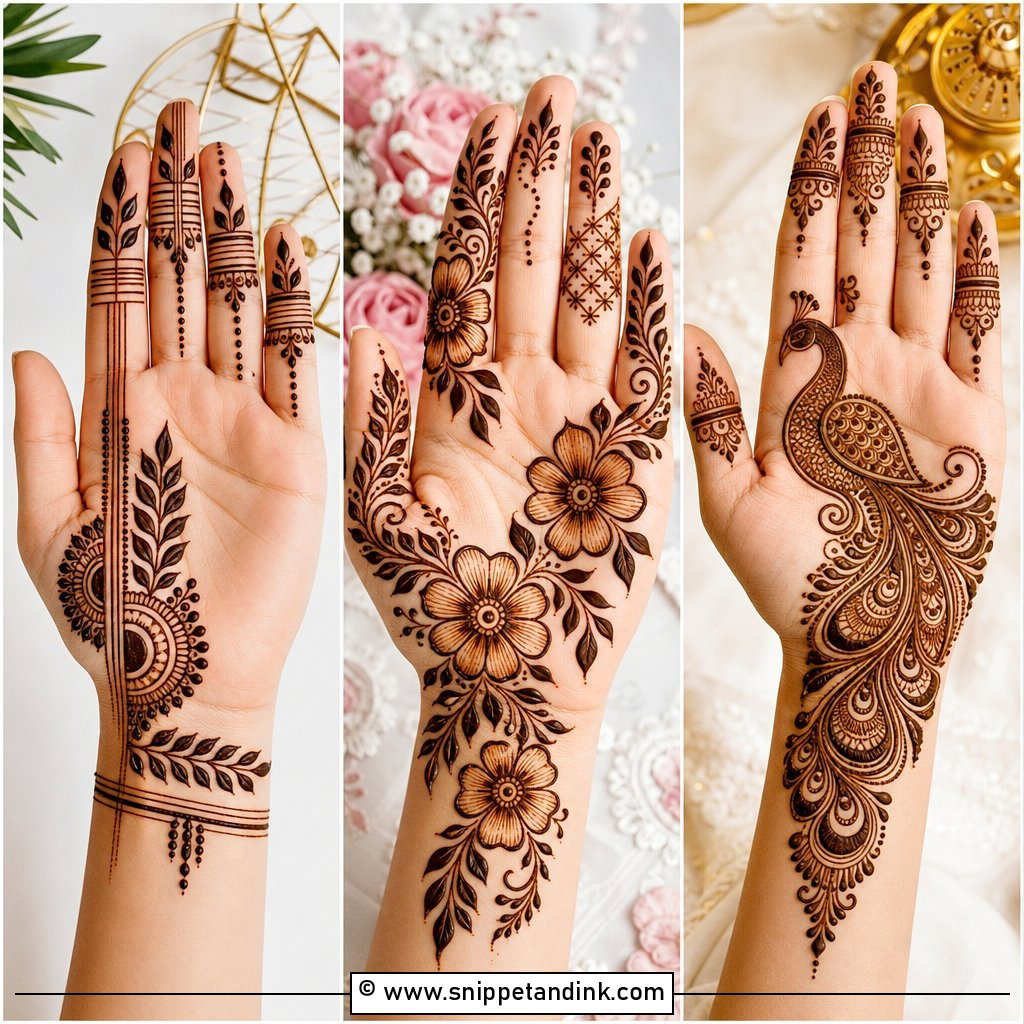
Minimal bridal mehndi might be a central palm mandala, fine finger lines, a slim wrist band and a few small florals, with a neat chain on the back hand. It suits civil ceremonies, intimate weddings and brides who don’t want to sit for hours. Fewer elements leave nowhere to hide a wobble, though. I pipe these slowly and with a finer cone tip than I use for filling, because every line is on show.
9. Simple Wedding Mehndi Design
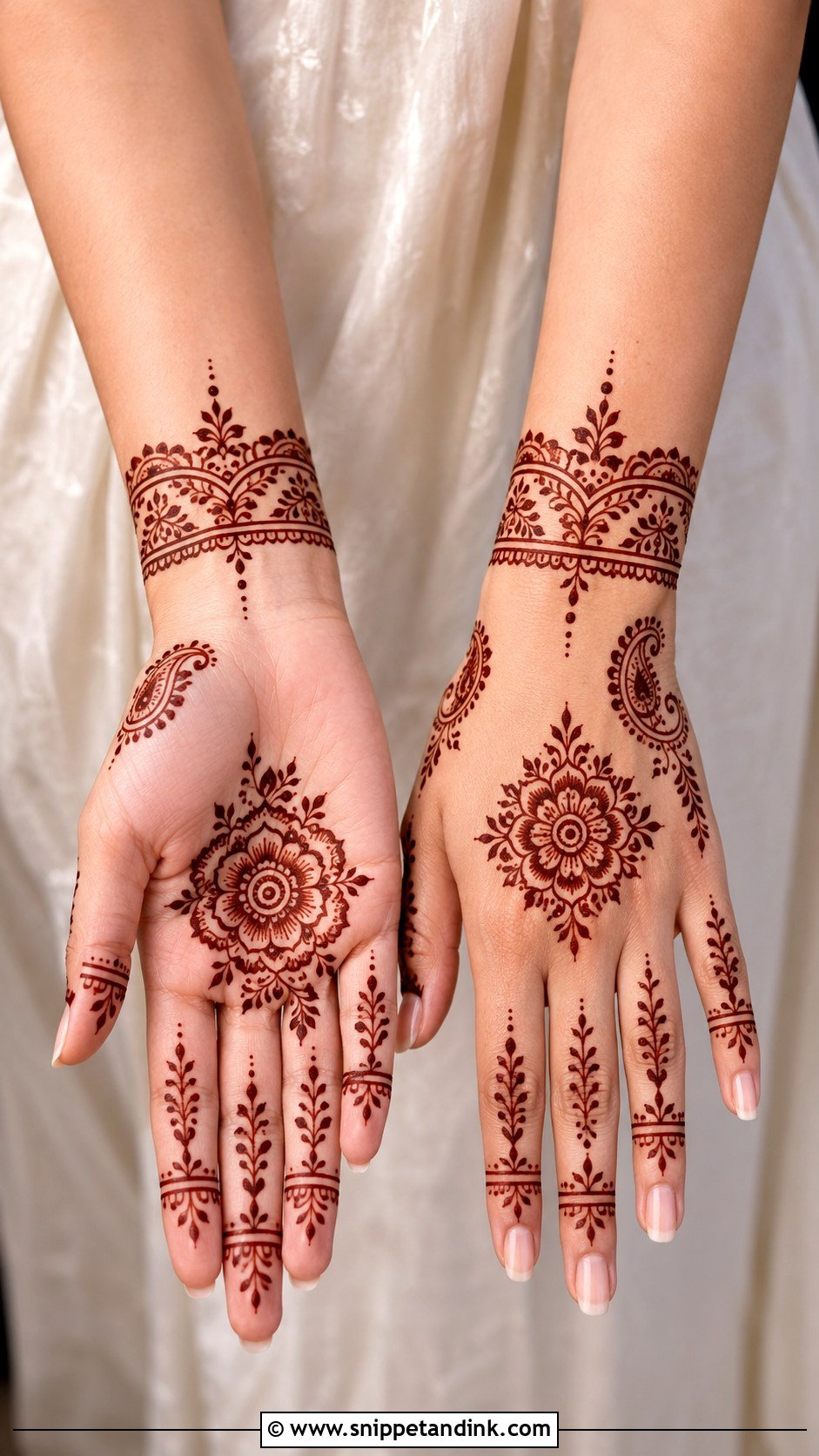
For sisters, mothers and guests who can’t give up an afternoon, a simple set does the job: a floral palm center, leafy fingers, a soft wrist cuff and a matching back-hand trail. Flowers, vines, dots and small paisleys are easy to recognize even from across a room. If you’re attending several functions, a lighter design also fades more evenly and won’t clash with every outfit you change into.
10. Modern Bridal Mehndi Design
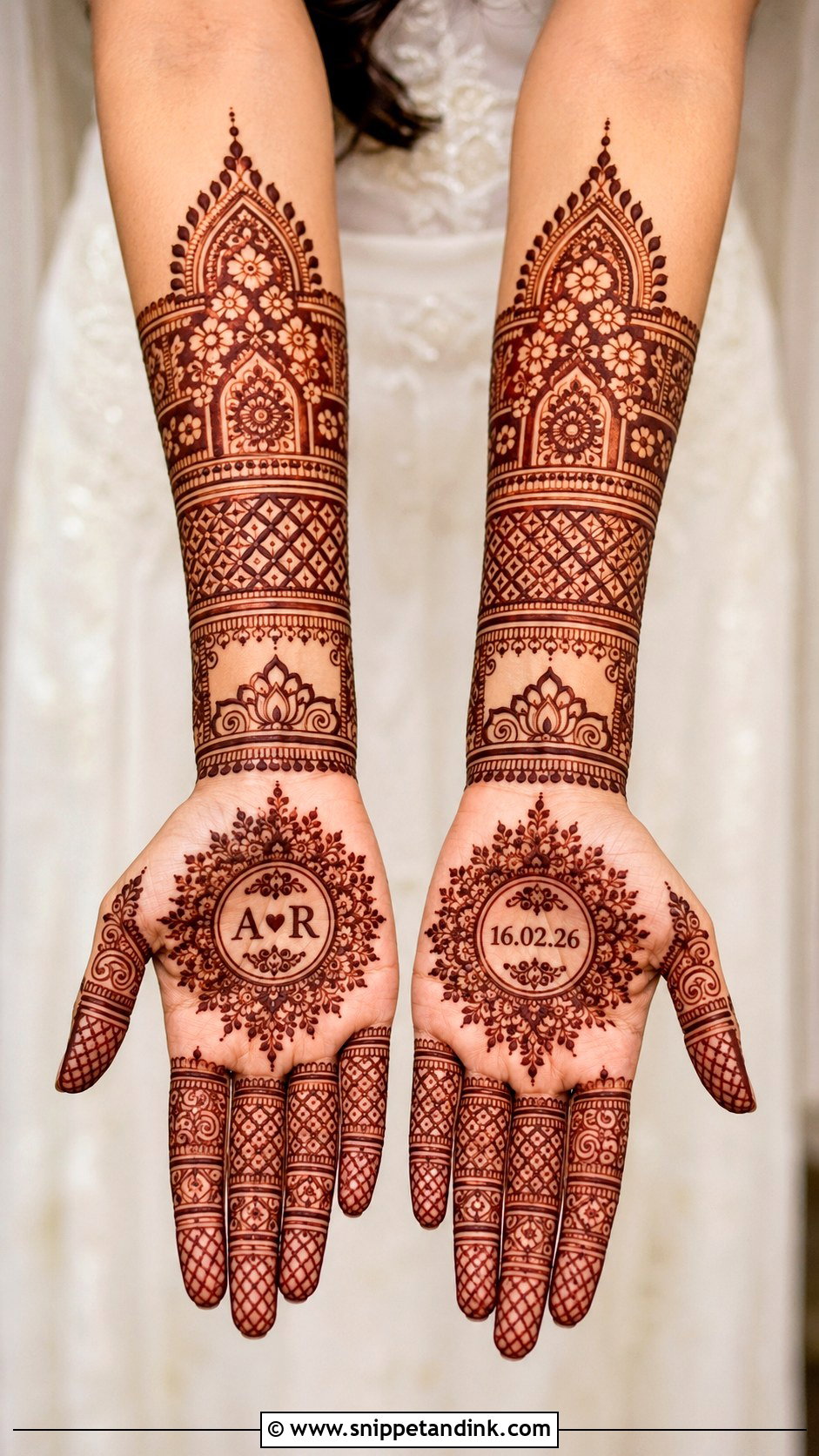
Modern bridal mehndi is about personal content placed inside traditional frames: initials, the wedding date, a pet, a travel icon, a reference to the proposal. The layout often mixes florals, mandalas, jaali and open skin rather than one dense pattern. I suggest keeping personal details small and tucked in, because a large airplane on the palm looks fun on the day and dated in the album. From a distance, the hand should still read as bridal henna.
11. Front Hand Wedding Mehndi Design
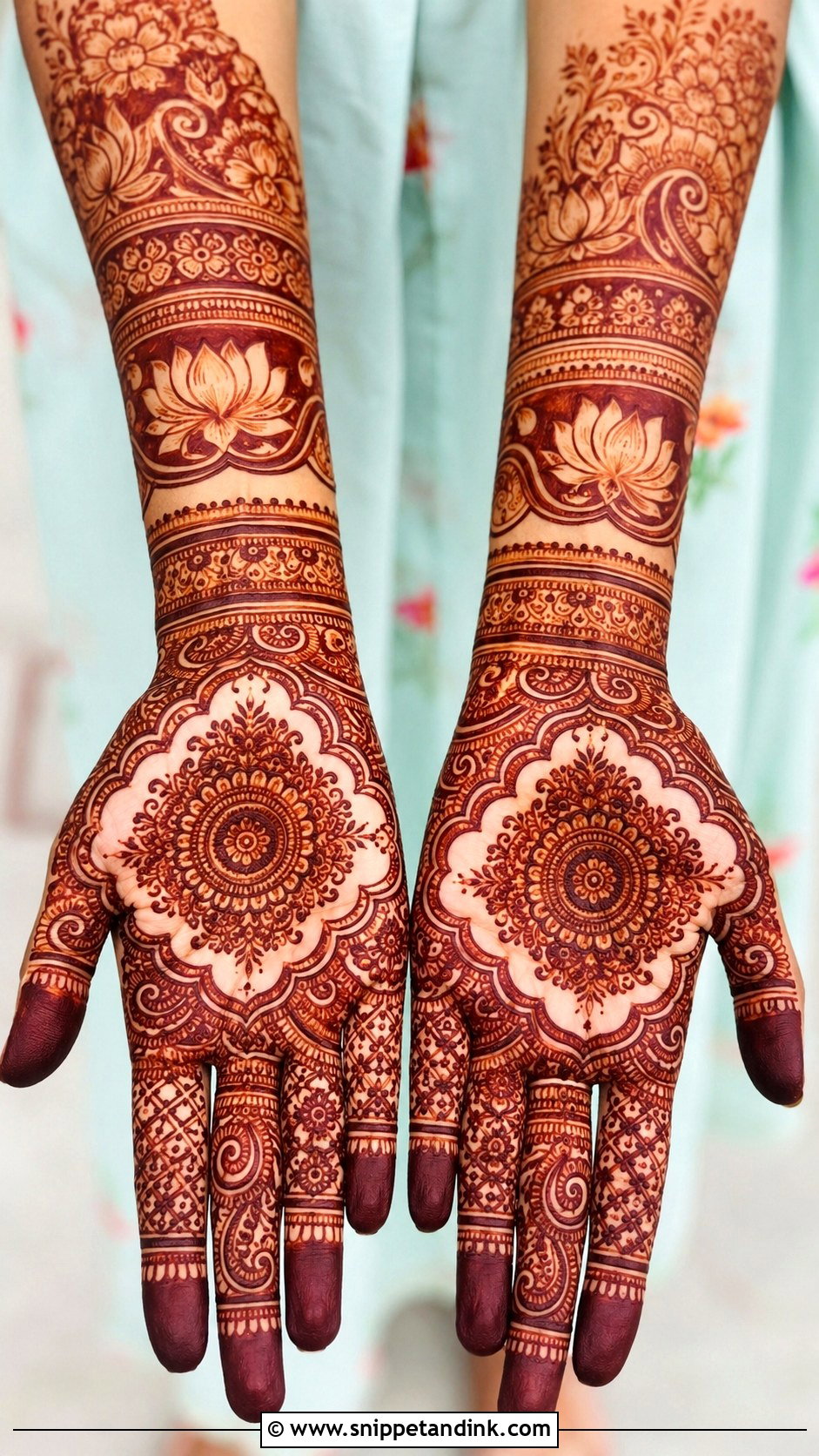
Palms take the darkest stain on the body, because the skin there is thick and holds the dye. That’s why front-hand designs look so rich in ritual photos and ring shots. A strong layout has decorated fingertips, a detailed palm and an extension toward the forearm, with a mandala, paisley filling, lotus or bride-groom motif at the center. Keep borders clear. Fillers placed too tightly on the palm blur together precisely because the stain there gets so deep.
12. Back Hand Wedding Mehndi Design
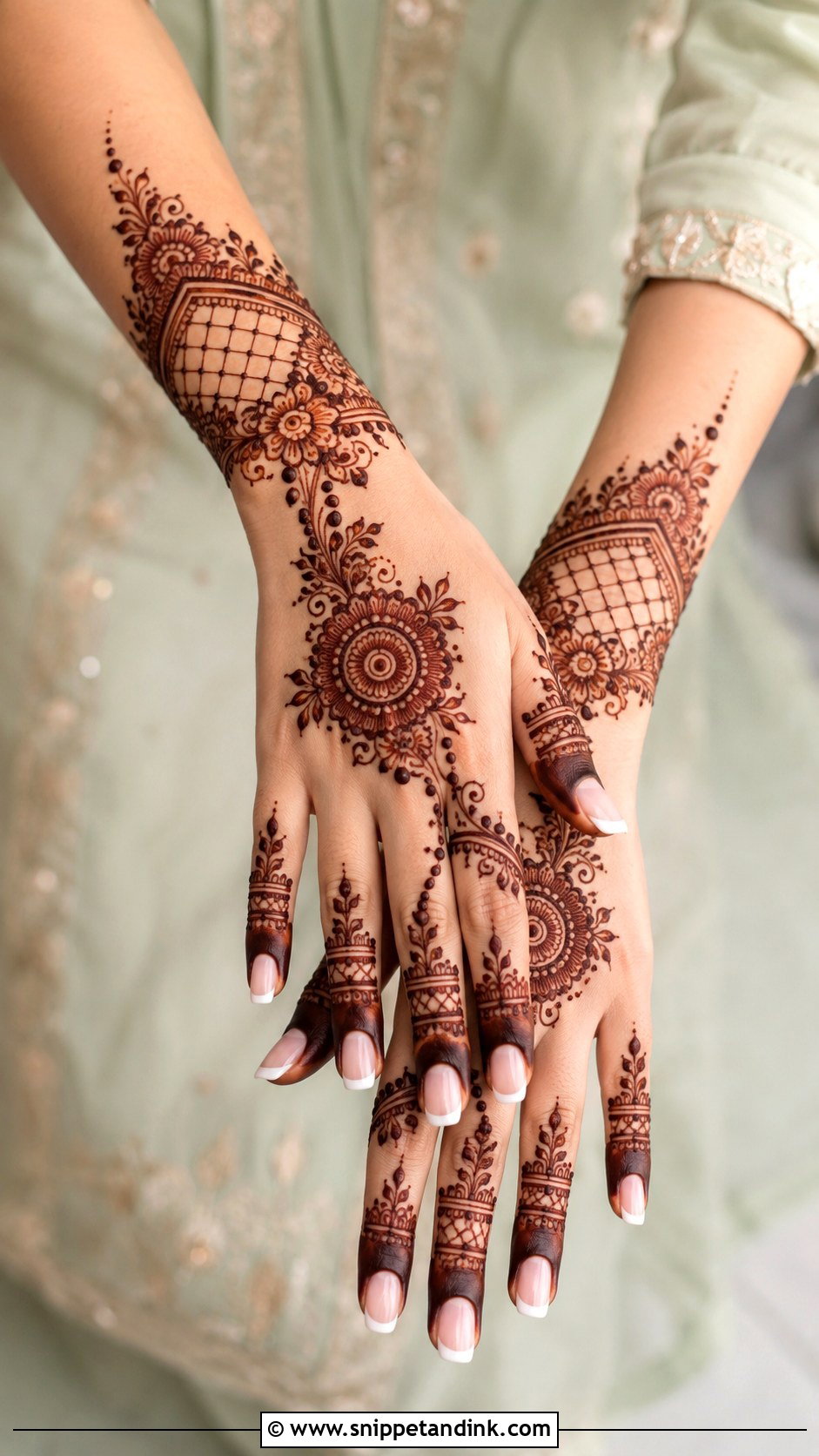
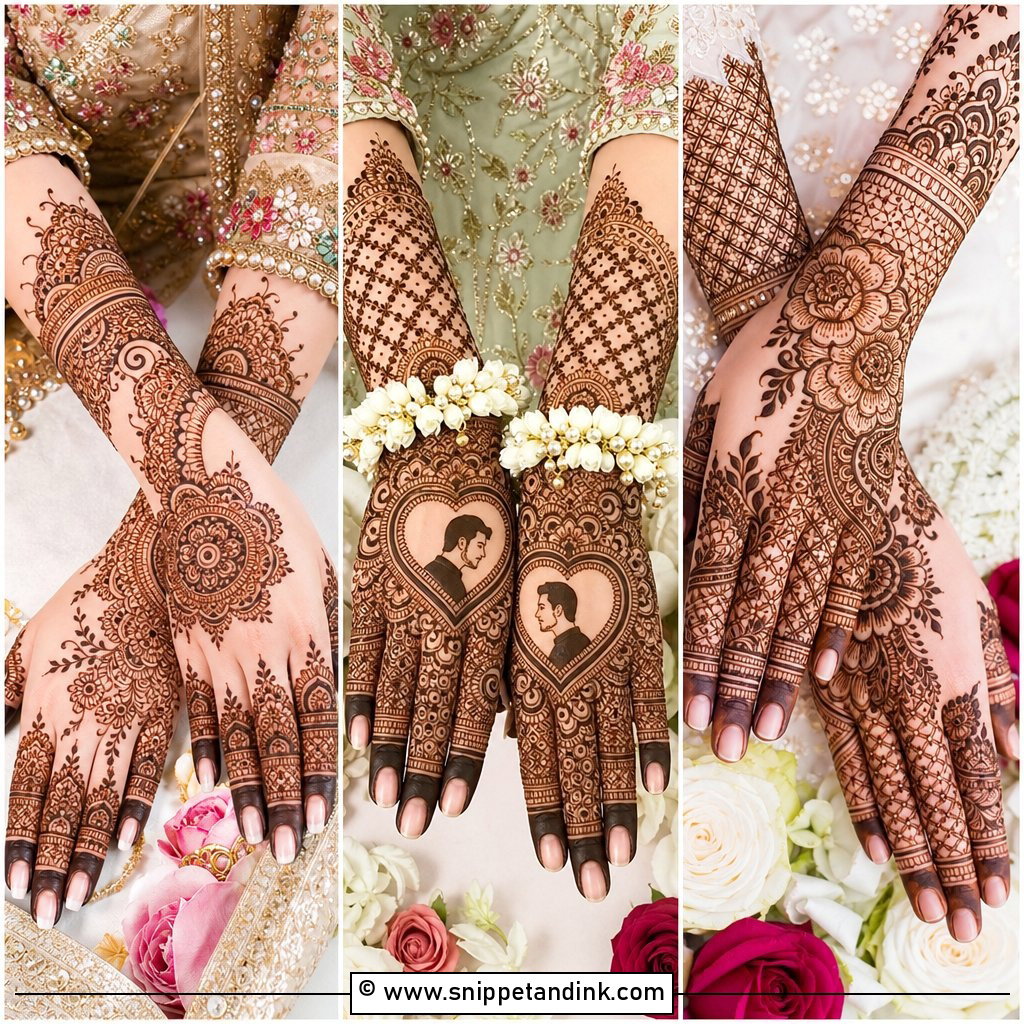
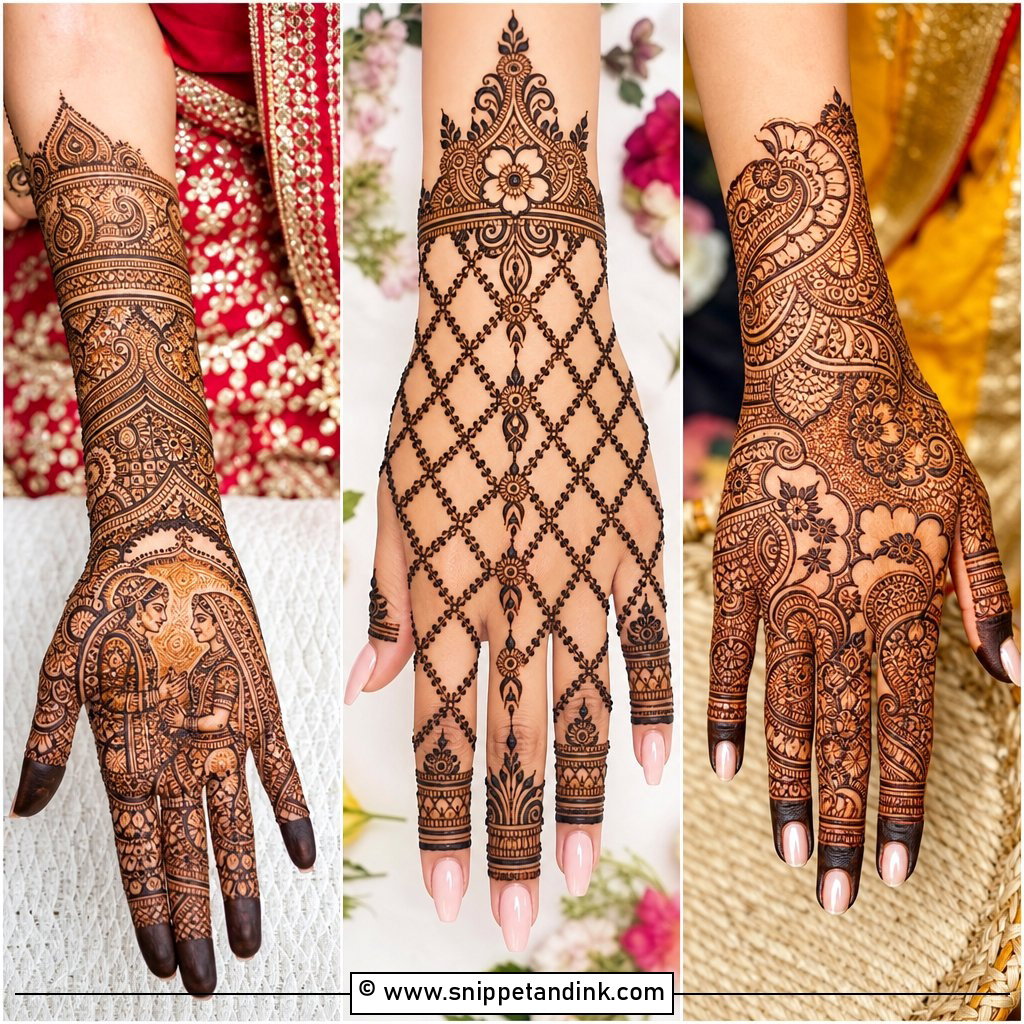
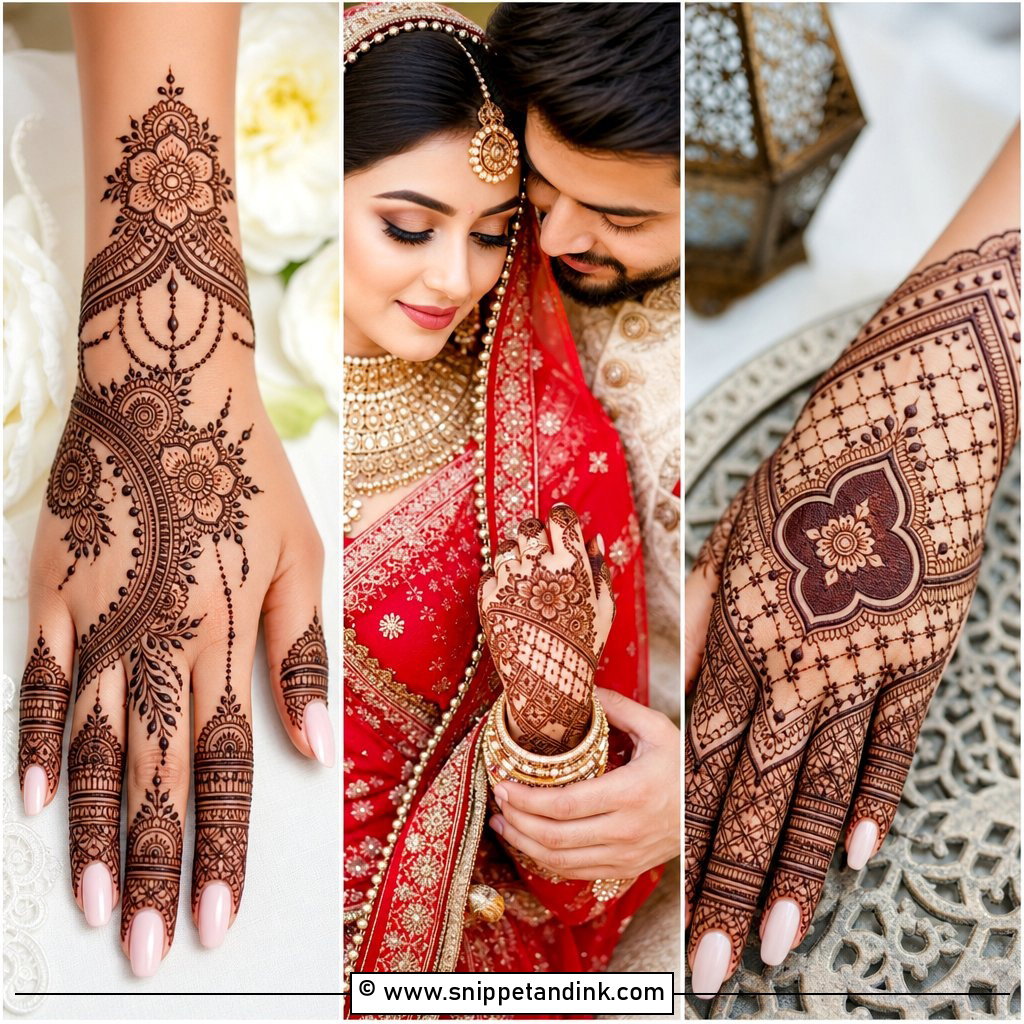
The back of the hand stains lighter than the palm, so it needs more help to read clearly. Bold outlines and open spaces matter here. Diagonal Arabic trails, a mandala with finger chains, bracelet cuffs and floral jaali are all popular, from heavy bridal to light guest versions. If you’ll wear a hathphool, rings or stacked bangles, bring them to the appointment. I’d rather draw a frame around your jewelry than bury the best part of the design under it.
13. Bridal Mehndi Design With Names
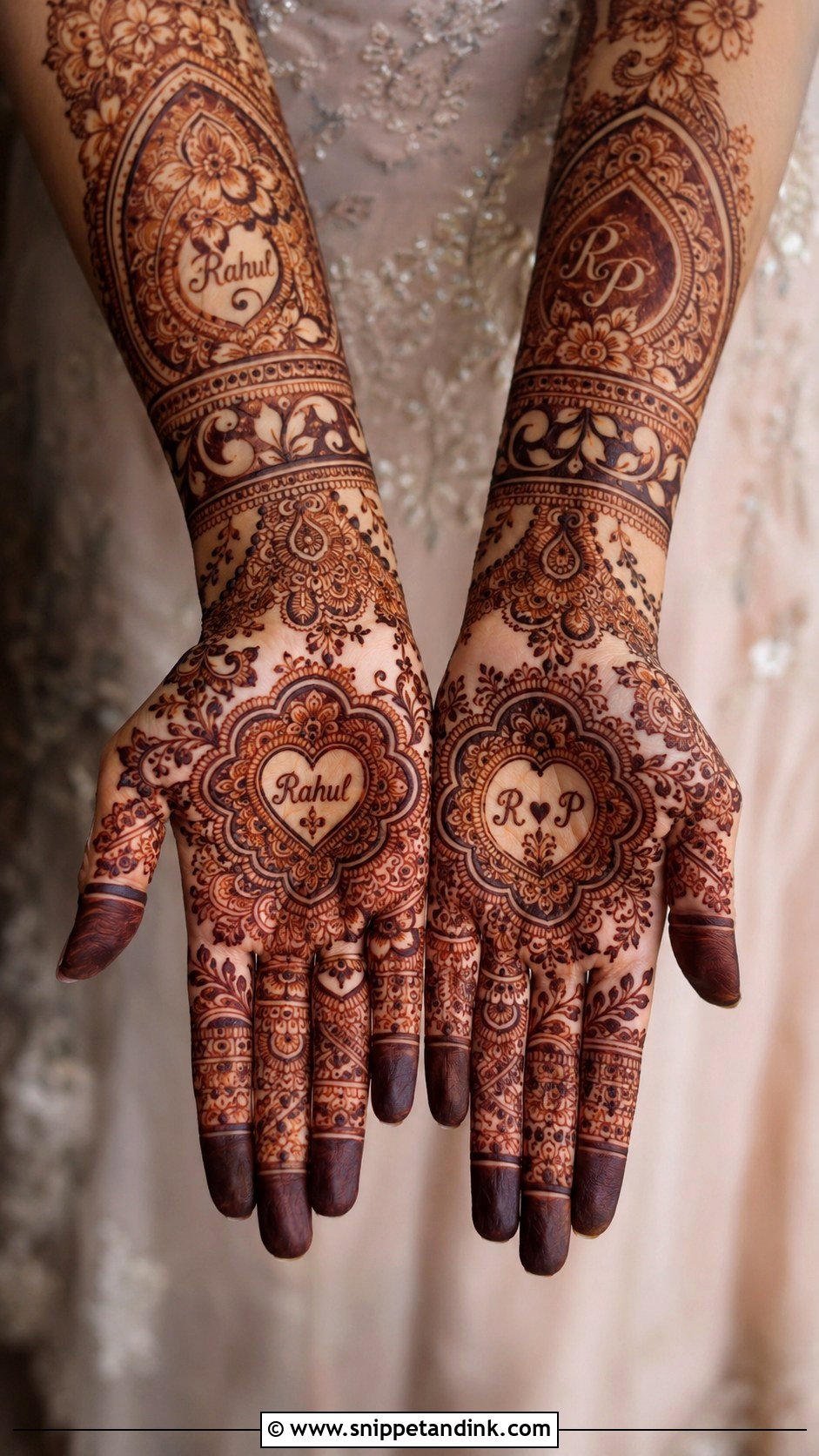
A bridal mehndi design with names hides the groom’s name, initials or the date inside a paisley, a petal, a mandala ring or a wrist band. Some brides add their own initials too. It sits most naturally inside a full Indian, Indo-Arabic or royal design. I avoid placing letters across the palm creases or on the wrist fold, since skin that bends there will stretch and smudge the strokes before the paste dries. The name should be findable, not obvious, so the search during the rituals stays fun.
14. Bridal Mehndi Design With Portraits
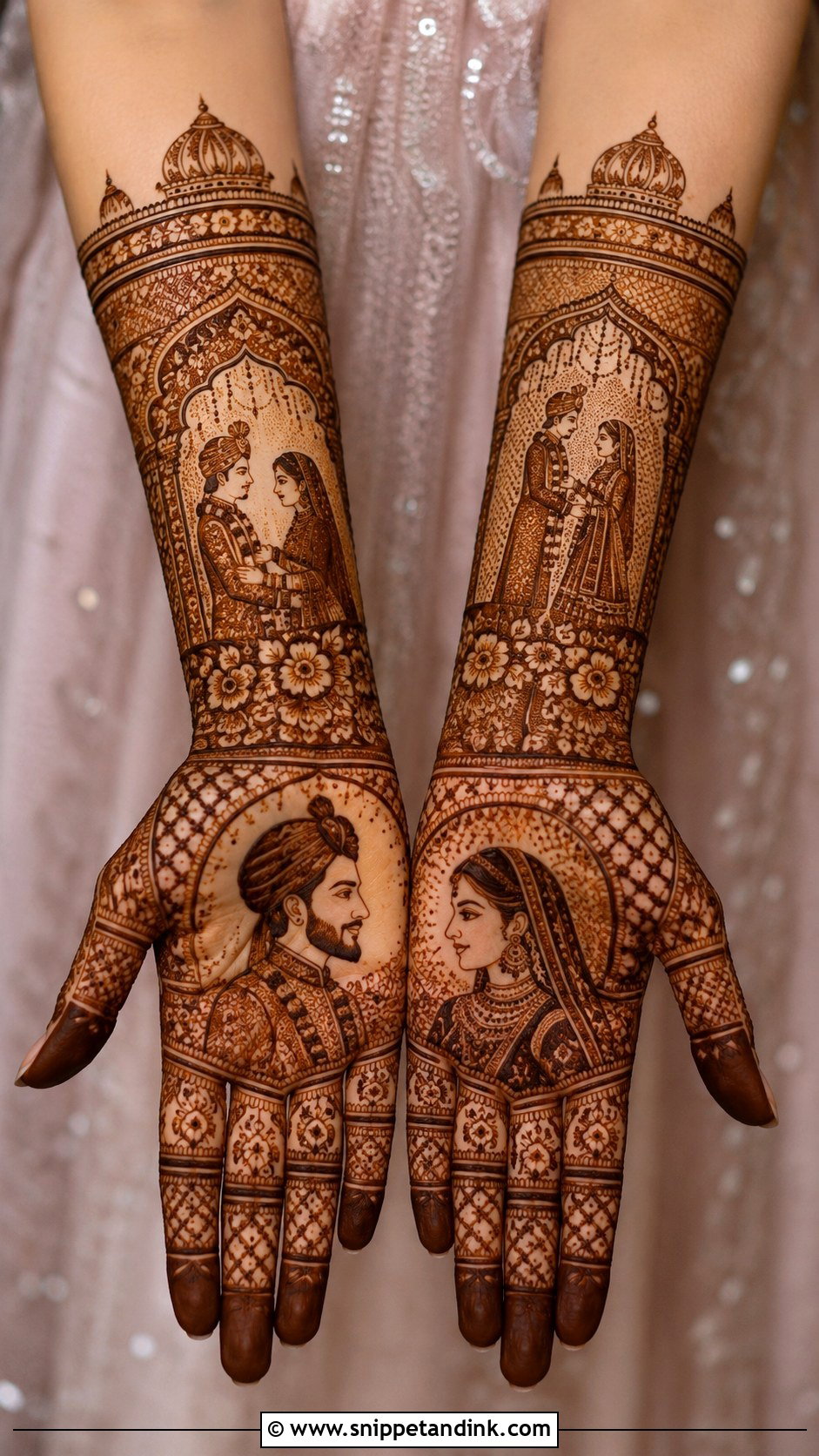
Portrait mehndi puts small bride and groom faces, wedding outfits, varmala scenes or proposal moments onto the palms, framed by mandap arches, florals, jaali and borders. It needs full palms or forearms for space and an artist who draws faces confidently. Expect extra sitting time. When the surrounding pattern is too busy, the portraits lose their impact, so I keep the borders around them simple and structured.
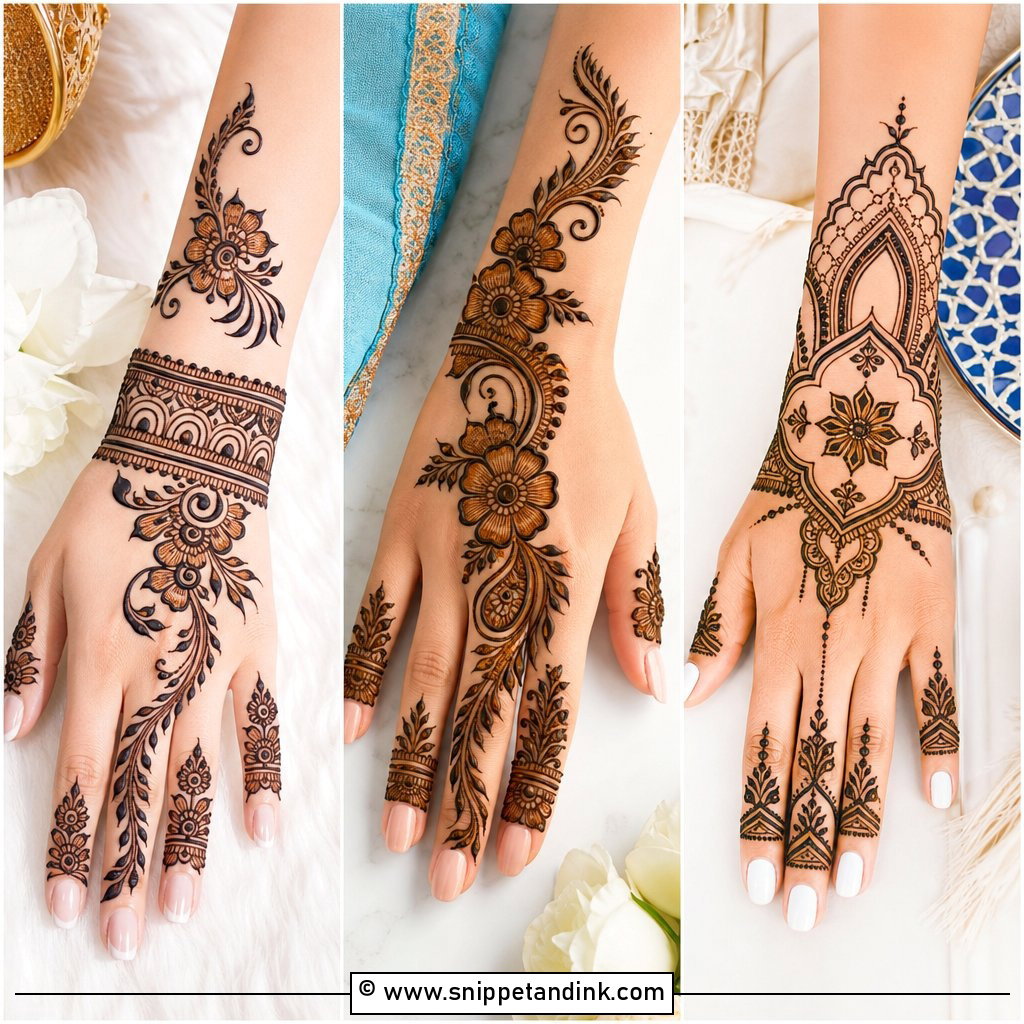
15. Peacock Bridal Mehndi Design
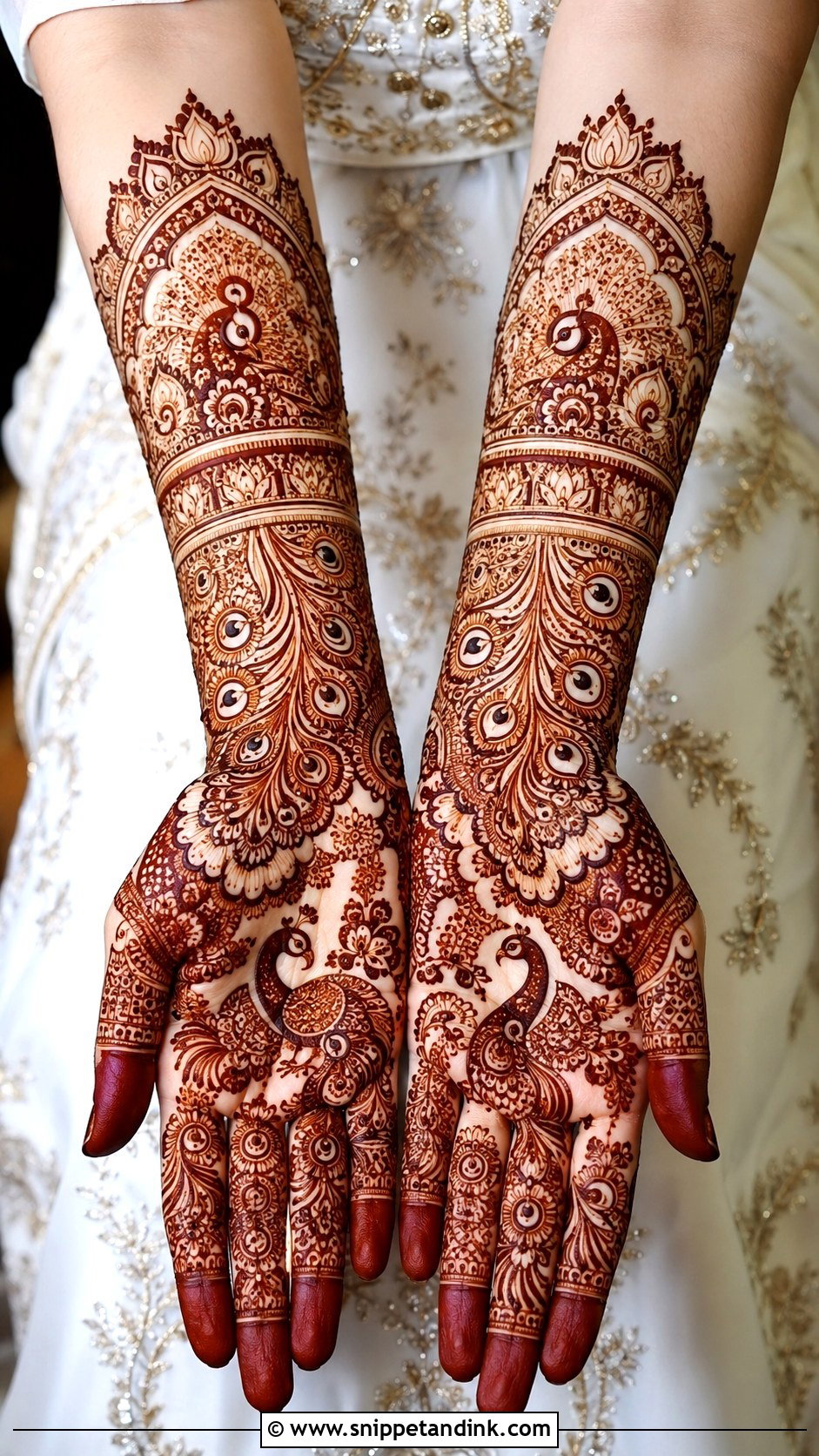
Peacocks are a favorite because the long feathers can flow naturally into paisleys, vines and florals. They sit on the palm, back hand or forearm and pair well with mandalas and lotus borders. My approach is a bold, mostly filled body with fine lines in the feathers. That contrast is what keeps the bird recognizable once the stain darkens.
16. Lotus Bridal Mehndi Design
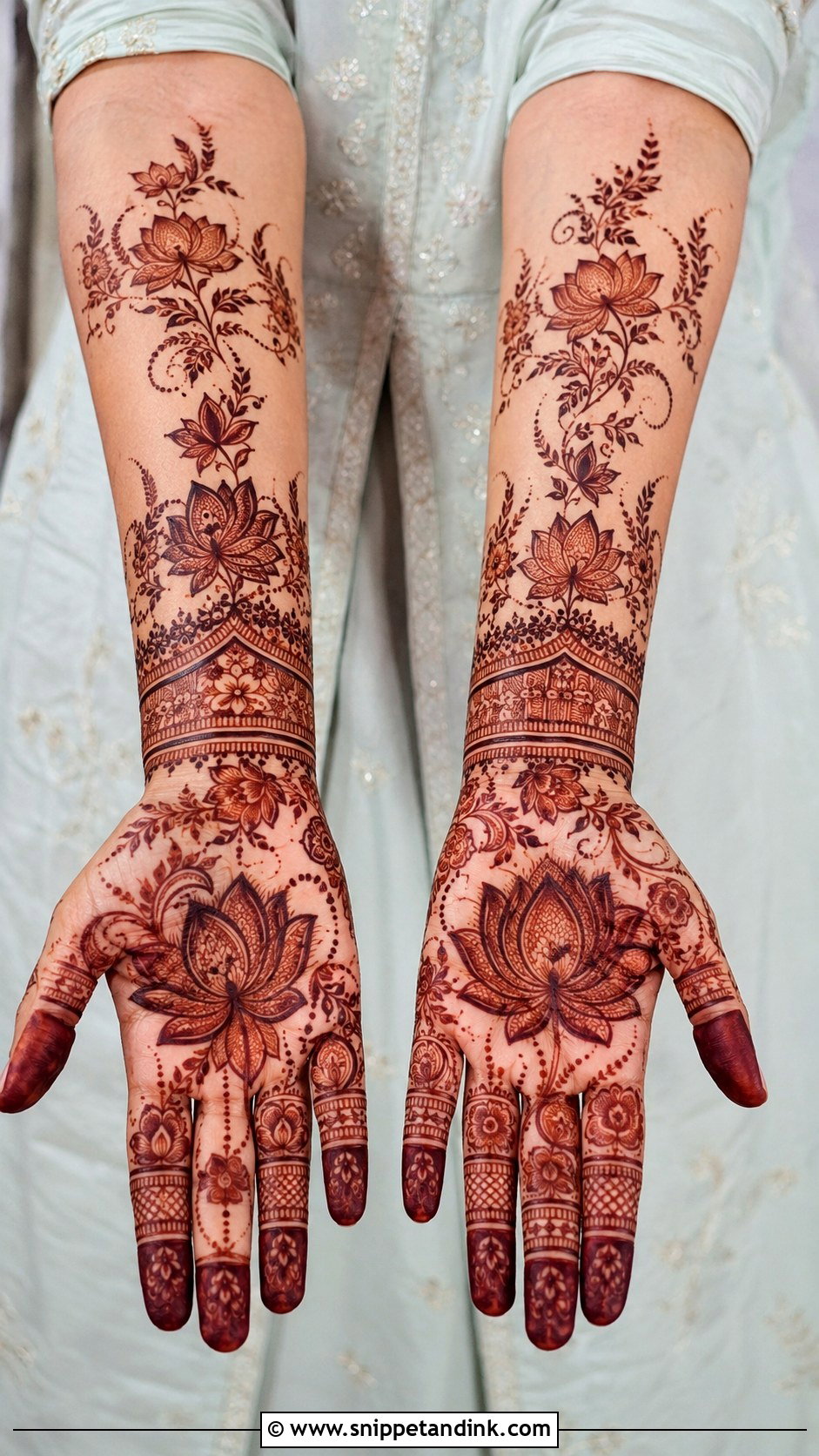
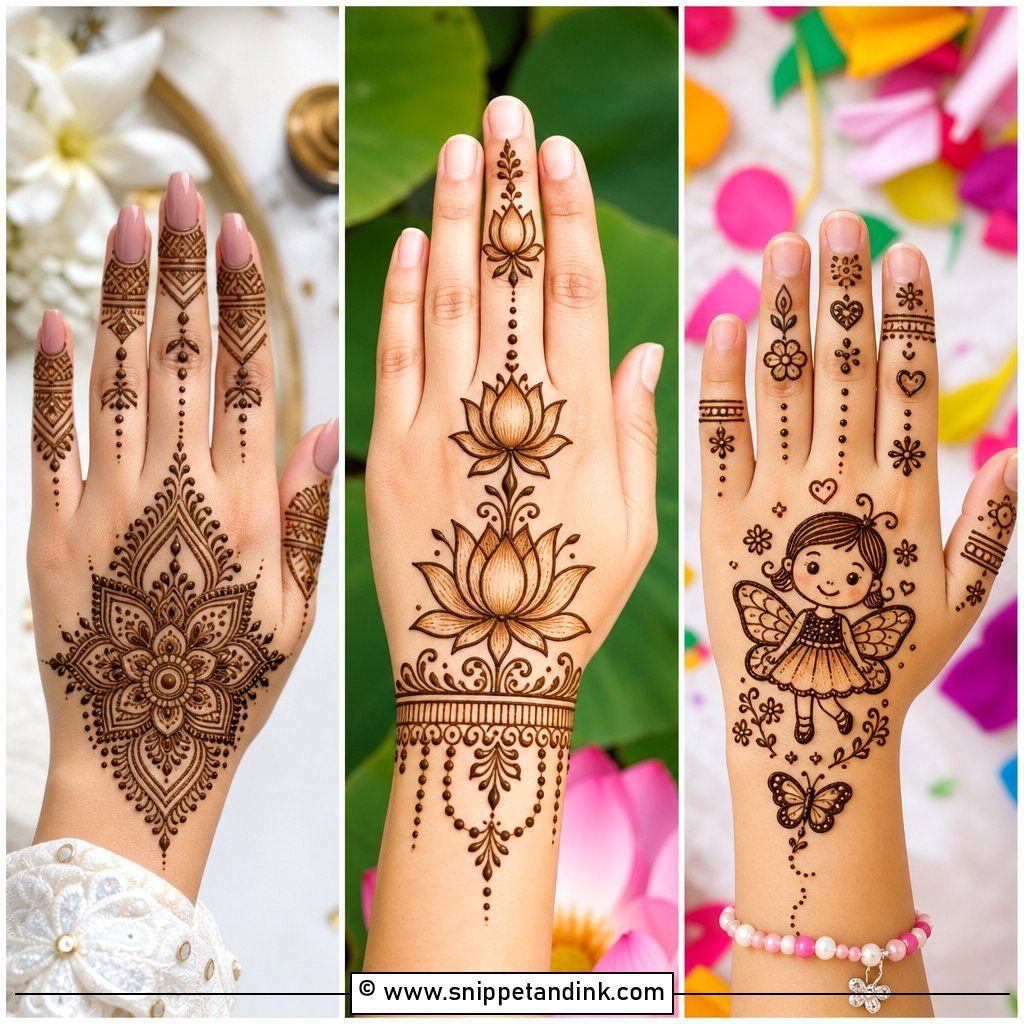
Lotus designs feel calm and clean. Large blooms on the palms, smaller lotus trails along the fingers and layered lotus borders at the wrist give a traditional look without heavy density. Repeating the same flower at different sizes creates rhythm from fingertip to forearm. Pastel outfits and daytime functions suit it well. Lotus petals are also forgiving for newer artists, since slight variation looks natural rather than wrong.
17. Mandala Wedding Mehndi Design
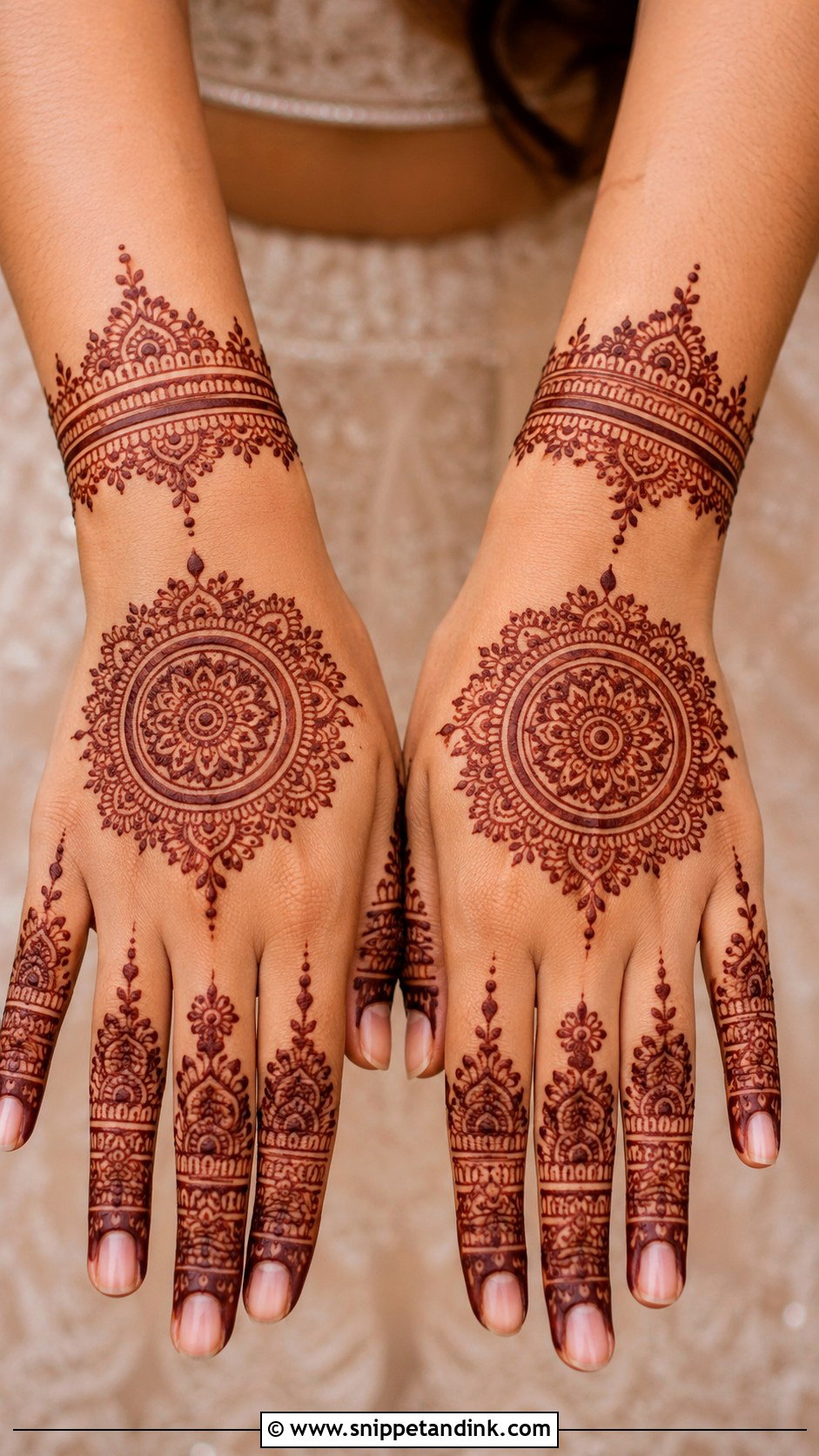
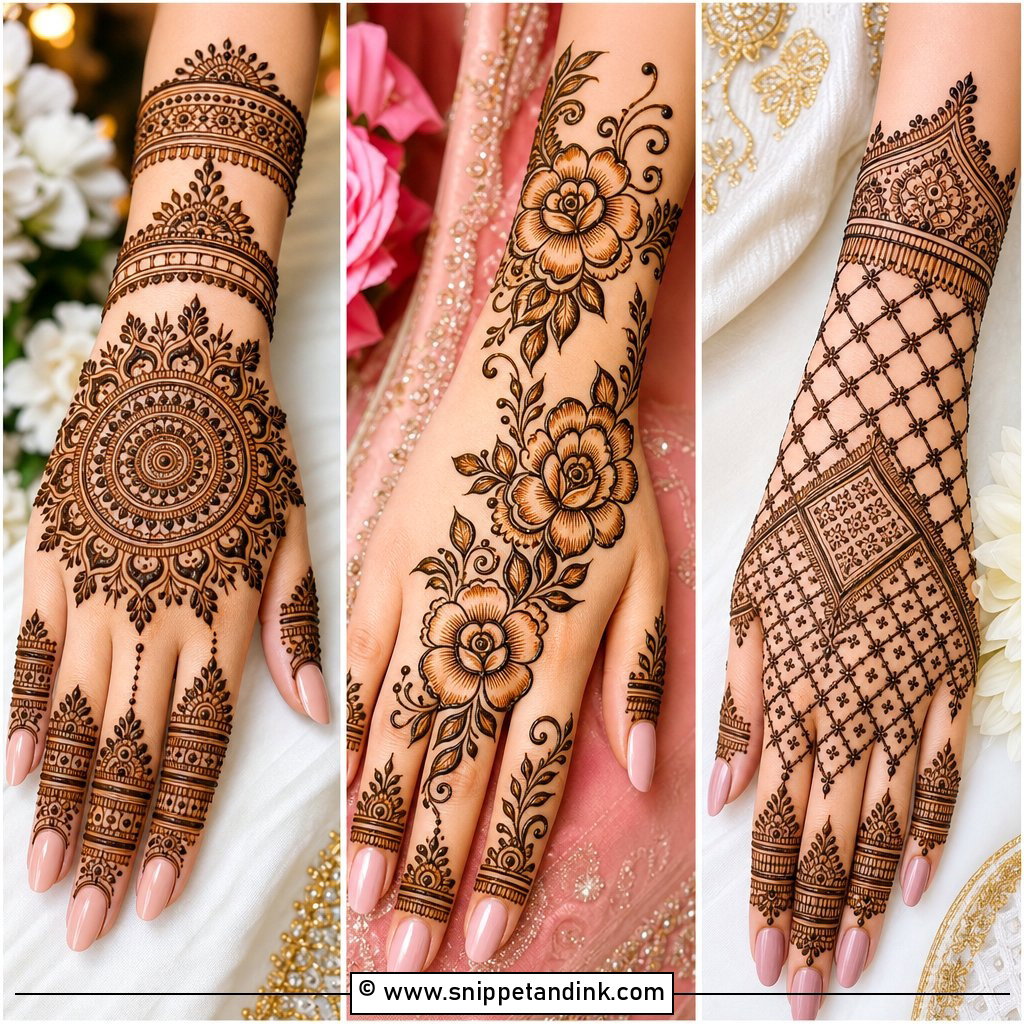
A mandala anchors the center of the palm or back hand, with decorated fingers, wrist bands and small motifs around it. Brides build it up with jaali, paisley borders and forearm work; guests can stop at the mandala and fingers. Symmetry is the risk. Hands aren’t flat, and a circle drawn on a cupped palm turns oval once the hand opens, so I ask you to rest your hand flat while I draw the center.
18. Jaali Wedding Mehndi Design
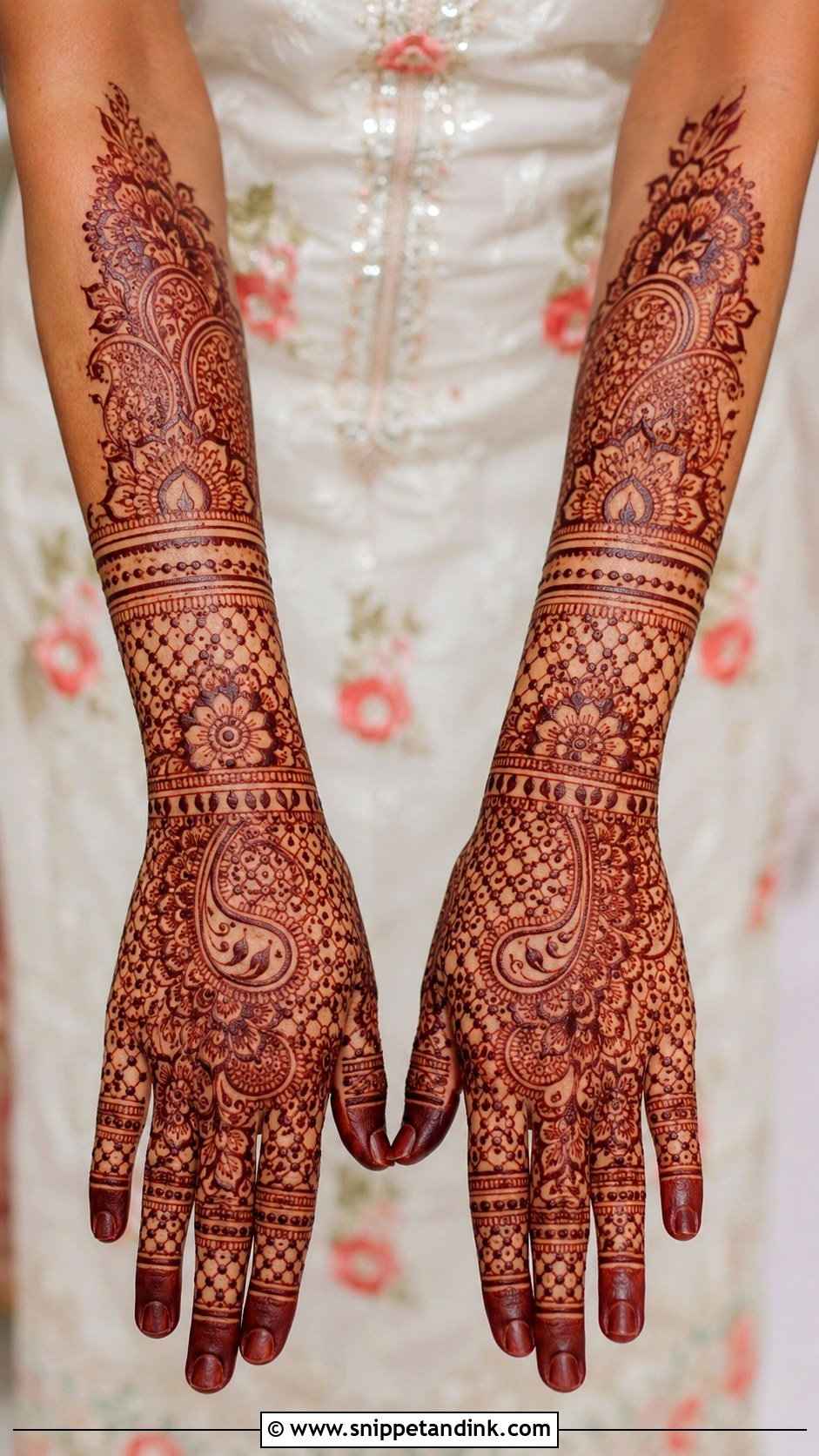
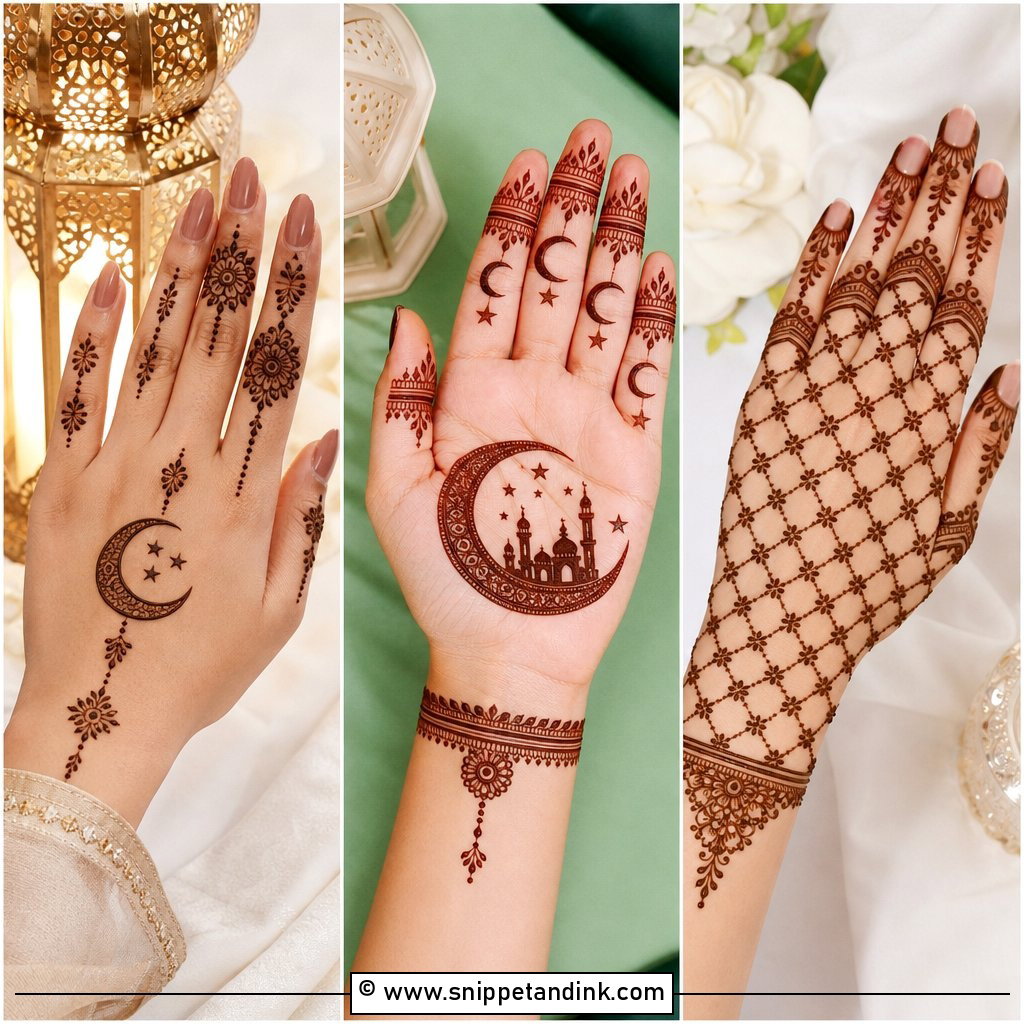
Jaali is a net pattern that looks like lace, and it can cover back hands, sections of the palm, fingers or forearm panels. It matches heavily embroidered outfits nicely and adds texture without weight. The difficulty is keeping the grid even. Uneven boxes make the whole hand look cluttered, so I pair jaali with bold floral outlines that give it edges to sit inside.
19. Bracelet Wedding Mehndi Design
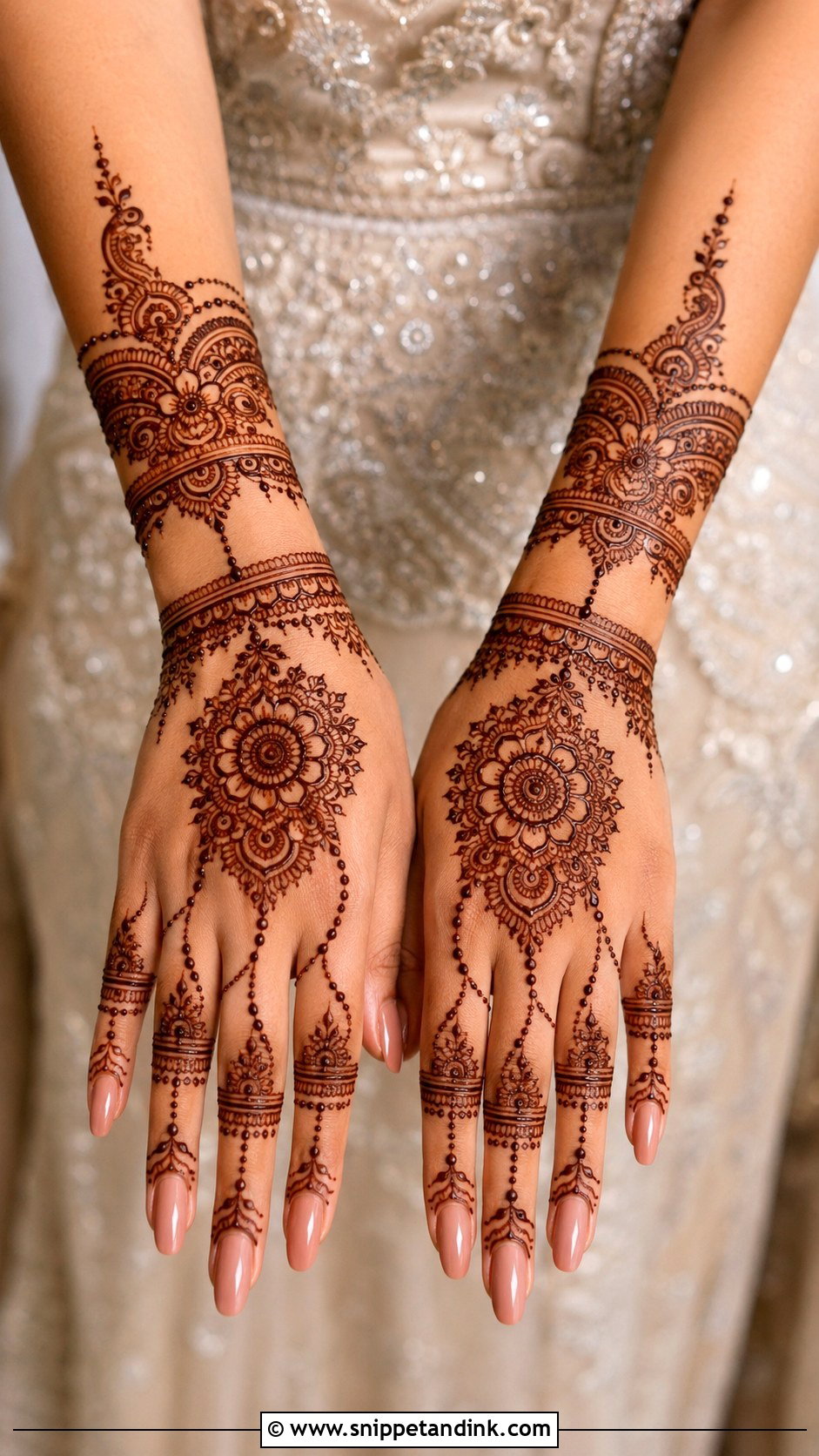
Bracelet mehndi draws bangle-like bands at the wrist with fine chains running toward the fingers, almost like henna jewelry. It can be simple for guests or extended up the forearm with florals and jaali for a bride. Rings and real bangles stack nicely with it. The bands must be evenly spaced and parallel, or the illusion breaks, and I draw them with the wrist straight so they don’t skew when you move.
20. Finger Wedding Mehndi Design
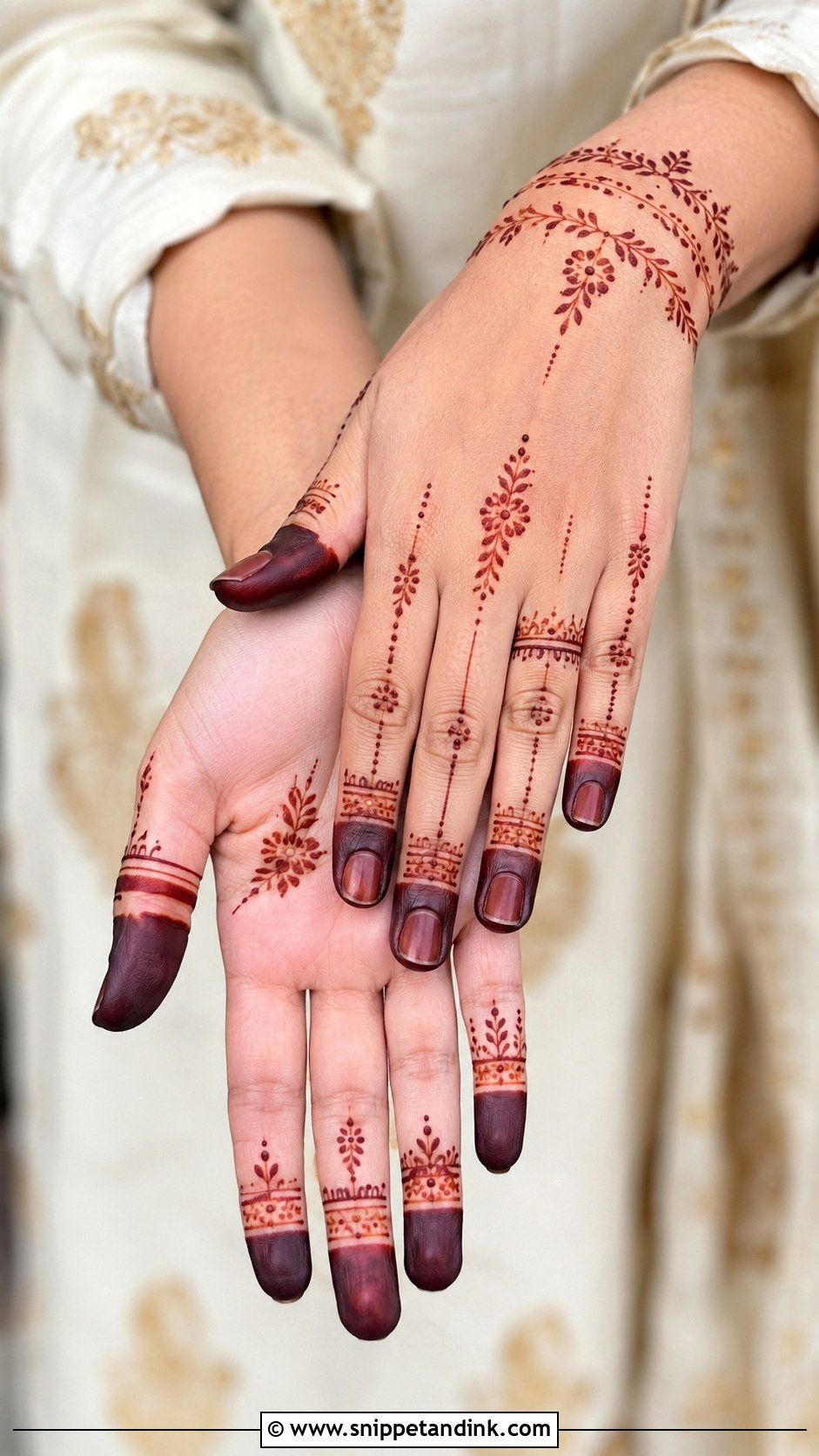
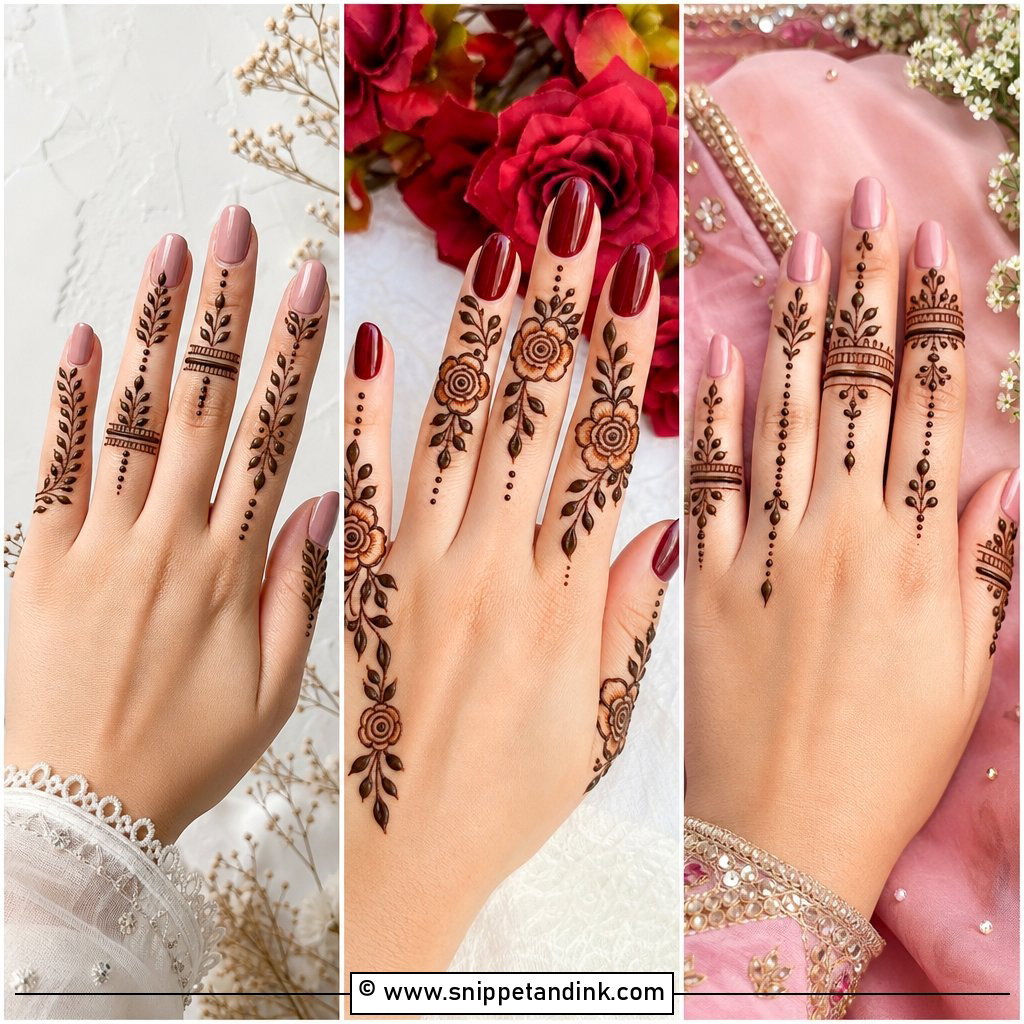
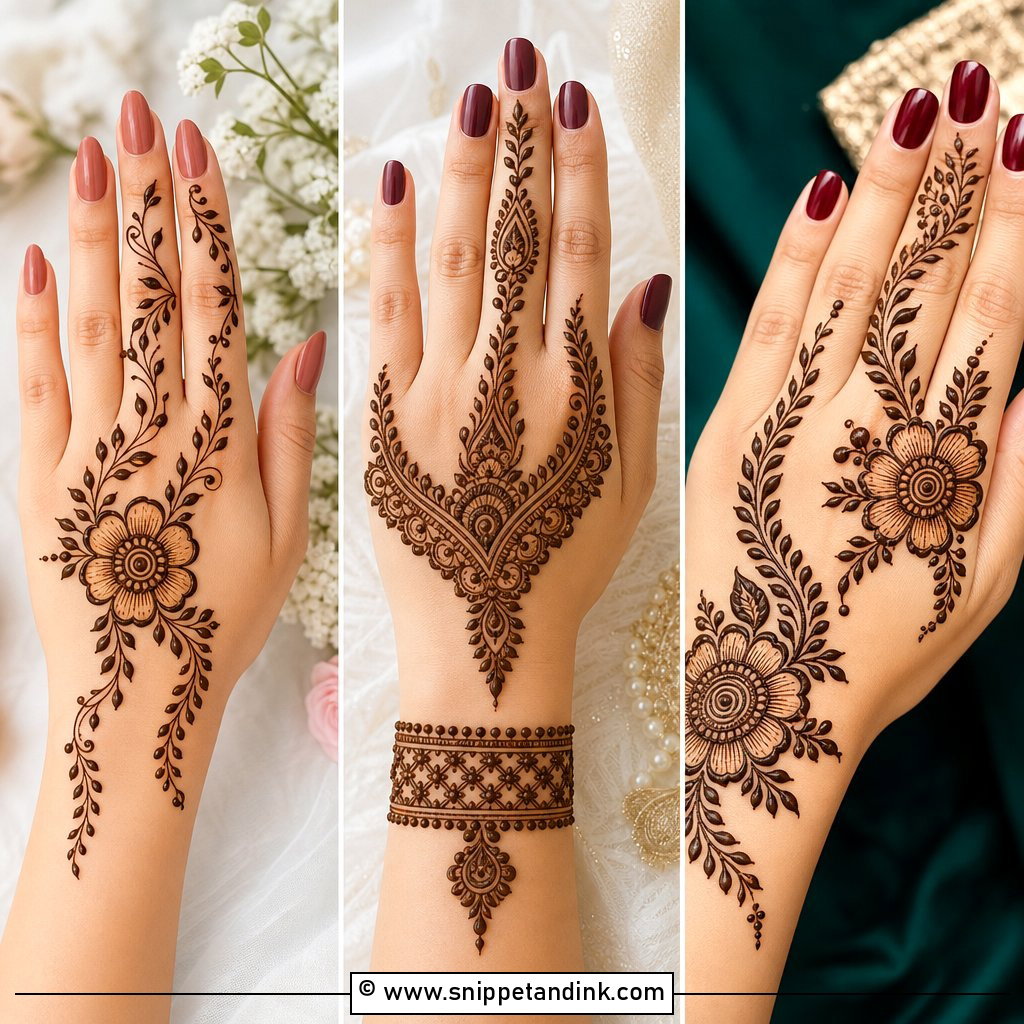
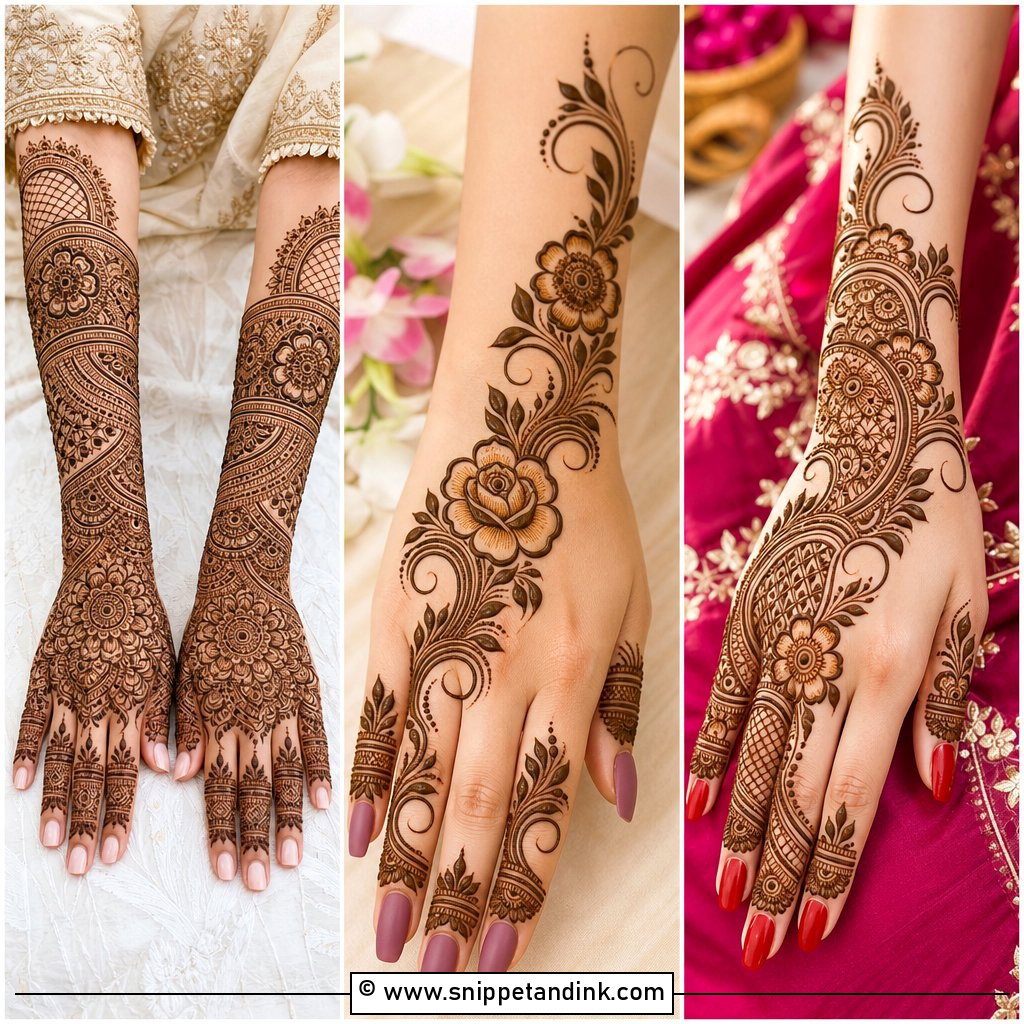
Finger designs carry a lot of the look in ring shots, even without a full palm. Decorated tips, fine lines across each finger, small florals and leaves, with a matching palm or back-hand center, make a complete lighter set for engagements and pre-wedding functions. I rarely draw every finger identically. Varying bands, leaves and dots between fingers while keeping both hands balanced looks more current.
21. Floral Wedding Mehndi Design
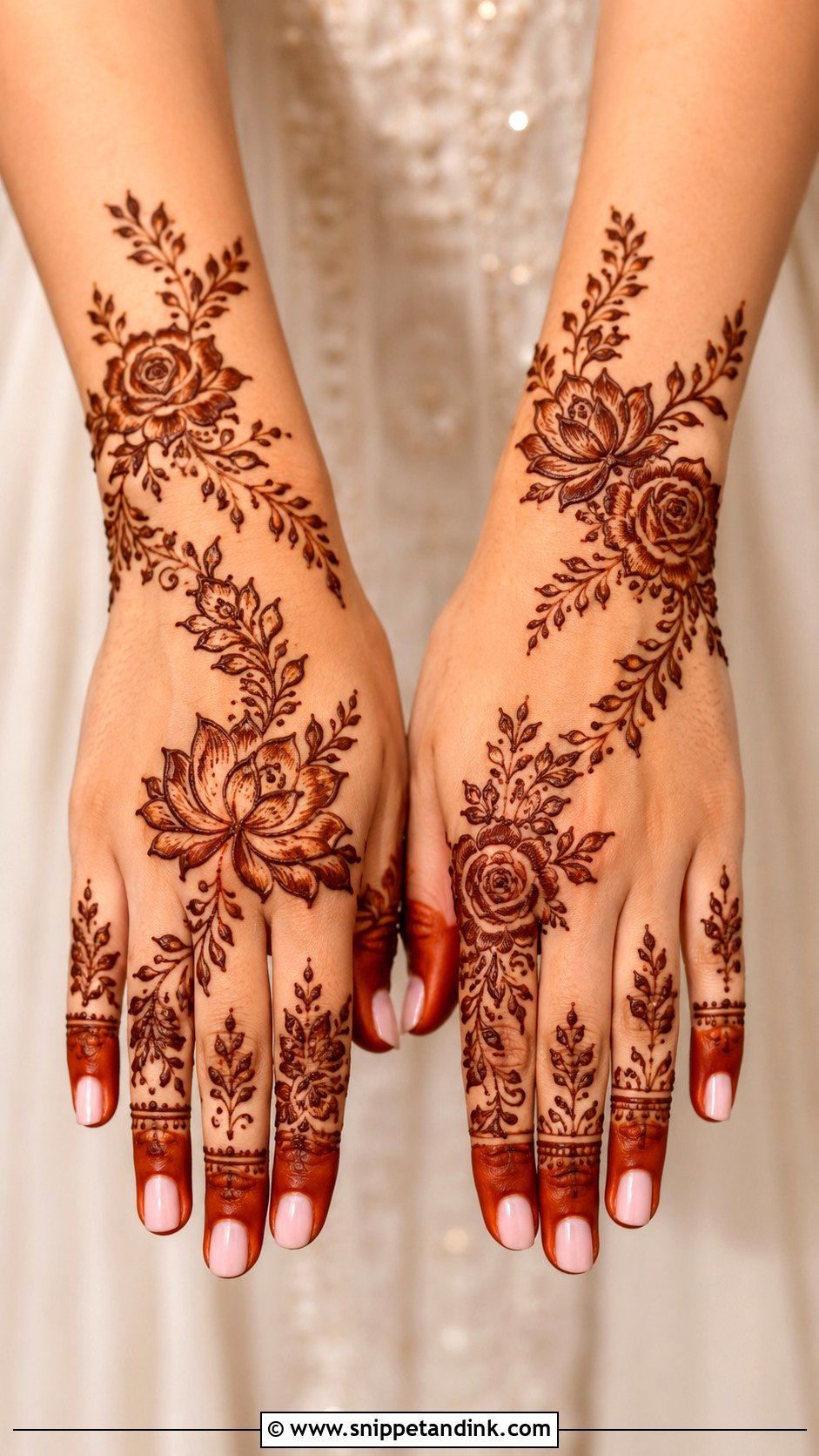
Florals fit every role at a wedding. Brides can go fully covered in roses, lotus blooms, vines and shaded petals; guests can wear a lighter diagonal trail. The style crosses Indian, Arabic and Indo-Arabic layouts easily. To keep flowers from looking flat, I mix a few large statement blooms with smaller fillers and shade some petals, which gives the stain depth and suits garden themes and floral lehengas.
22. Paisley Bridal Mehndi Design
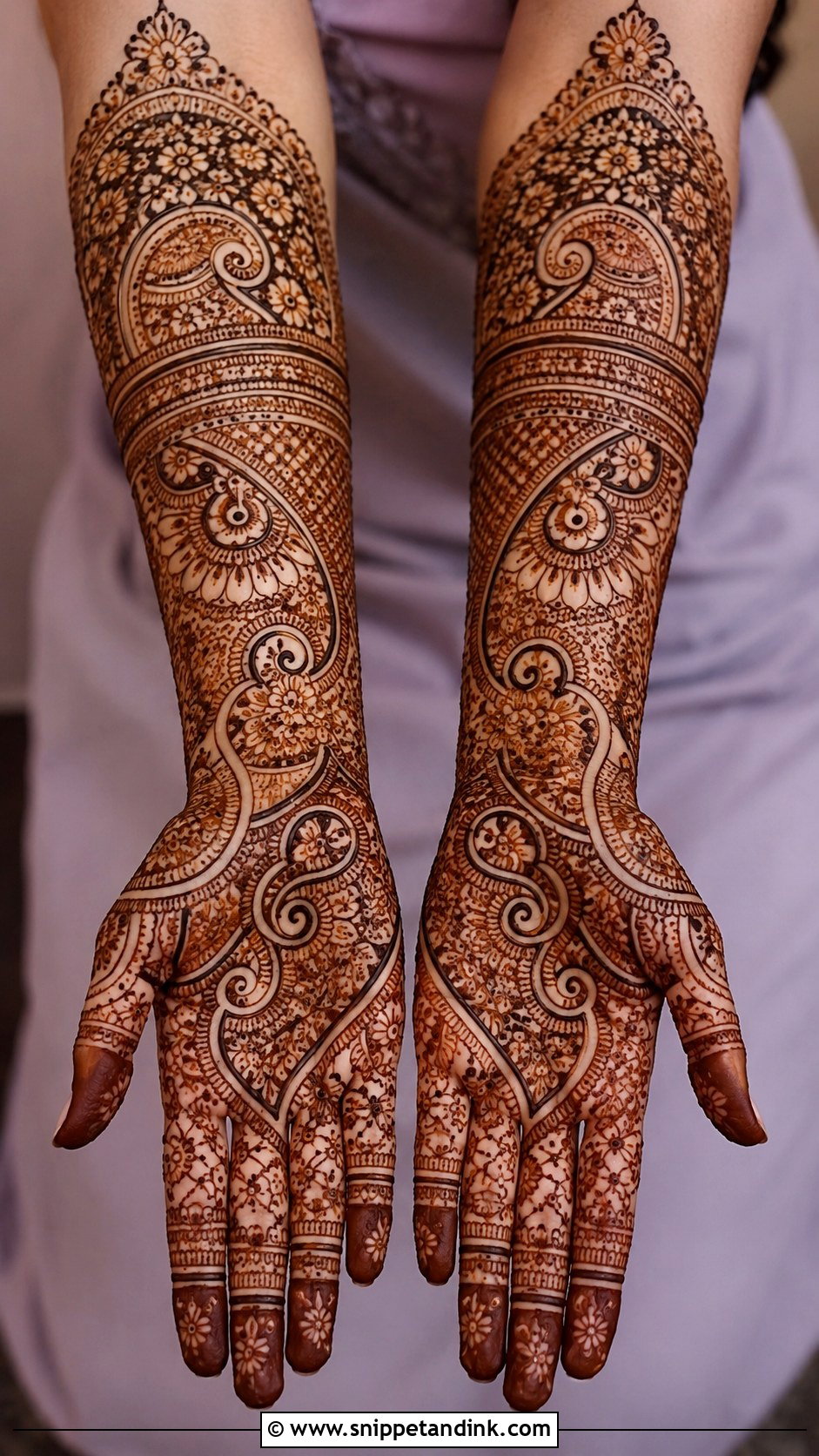
Paisleys have been in bridal henna for generations and still feel right. They fill palms, curve around wrists and flow along back hands, mixed with tiny florals, dots, checks and fine shading. The shape bends to symmetrical or diagonal layouts, so it’s flexible for any hand. The detail I’d ask for is a bold outline with dense inner filling; that contrast is what reads clearly after staining.
23. Moroccan Wedding Mehndi Design
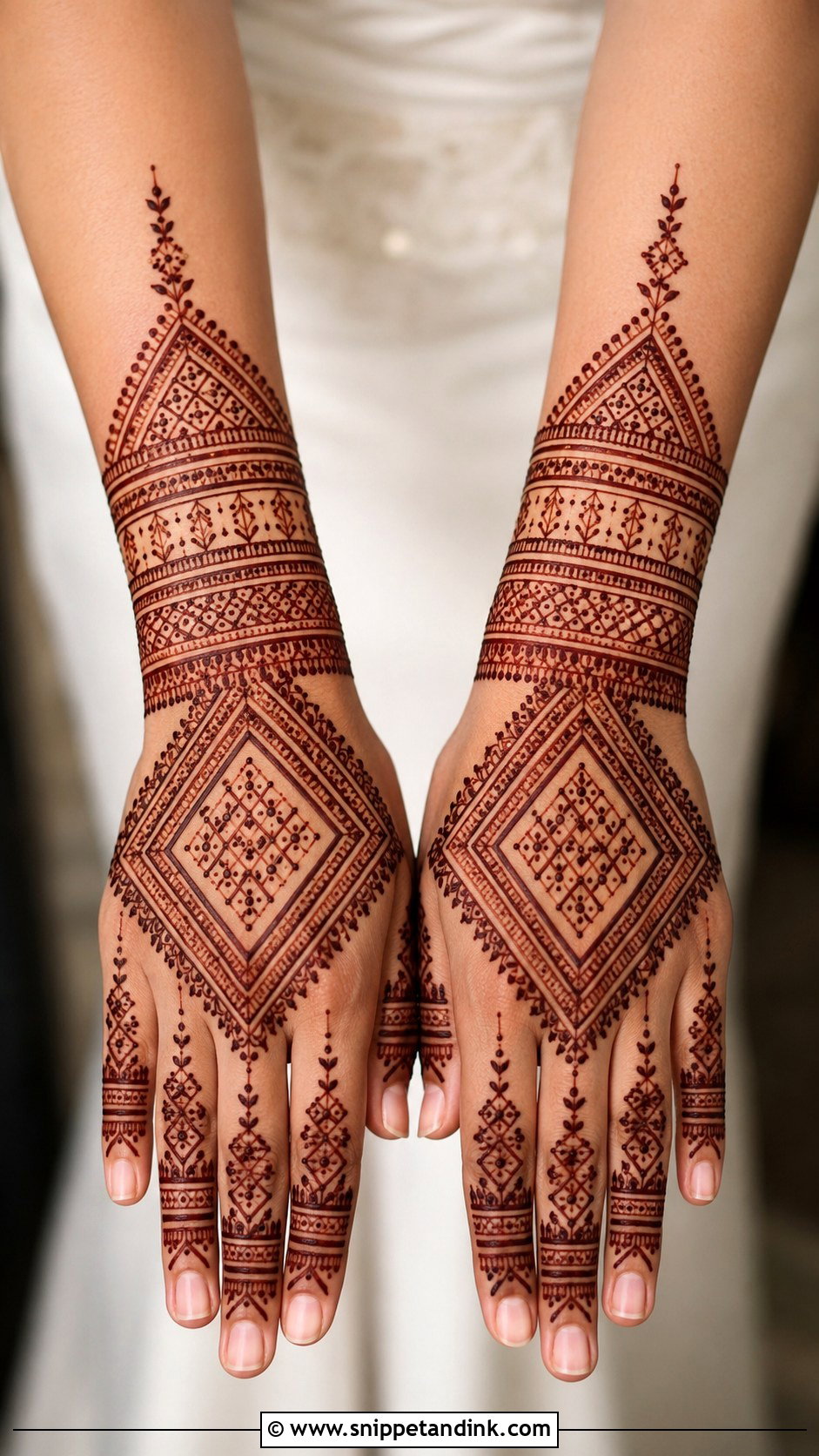
Moroccan henna swaps florals for geometry: diamonds, triangles, grids, dots and sharp borders across the back hand and fingers, finishing in a wrist cuff or forearm band. It looks contemporary and sits well with minimal and fusion outfits. Straight lines on a curved hand are harder than they look. I map the main grid with a few guide dots before piping, because a single drifting line throws the whole pattern off.
24. Gulf Arabic Wedding Mehndi Design
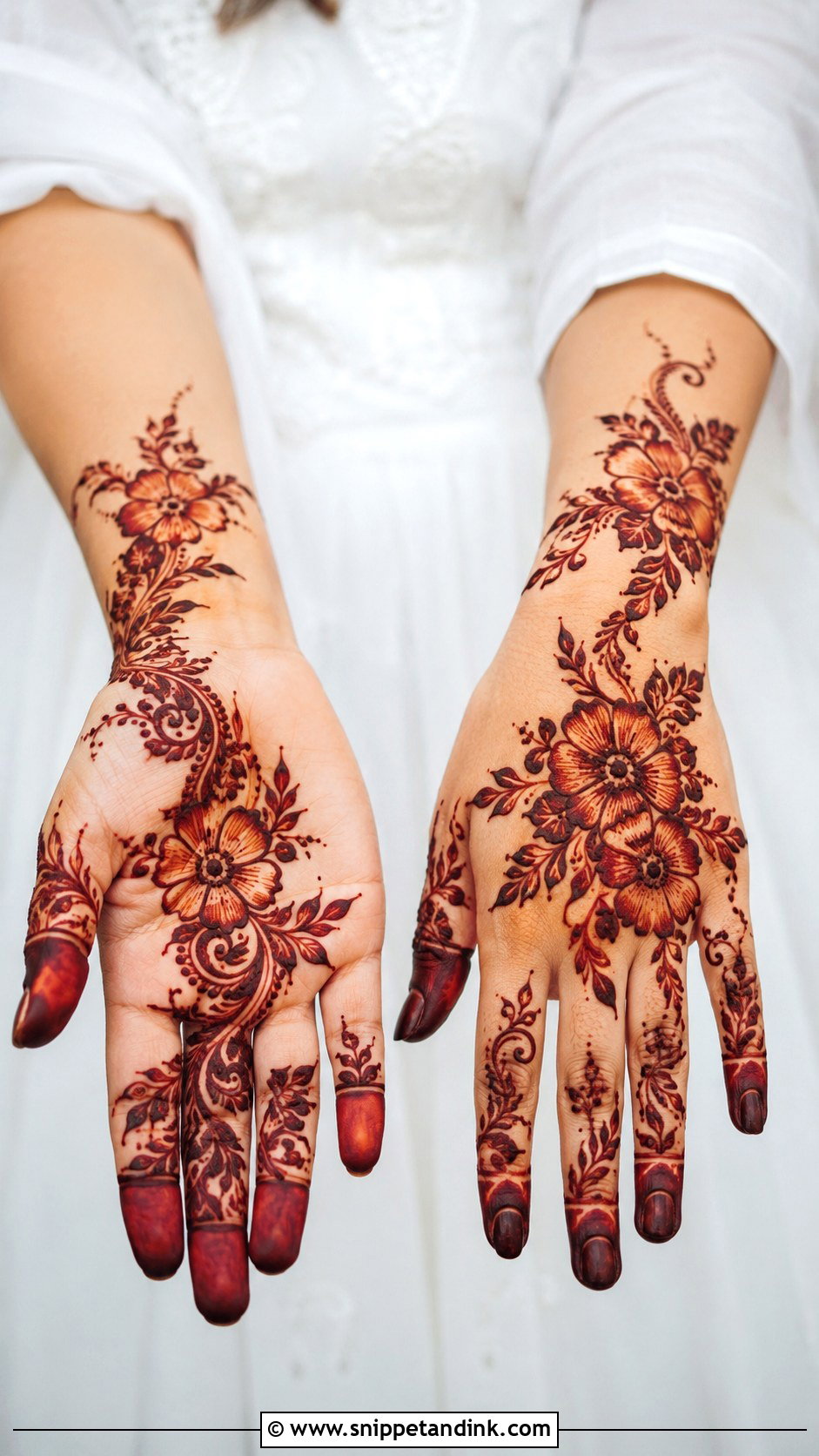
Khaleeji, or Gulf Arabic, henna uses big florals, leafy vines, shaded petals and flowing curves with plenty of open skin. It looks luxurious because the motifs are strong, not because every inch is covered. Shading is the signature, done by thinning the line as it moves through a petal. It suits brides after a refined Arabic look and guests who want something visible and photo-friendly.
25. Khafif Wedding Mehndi Design
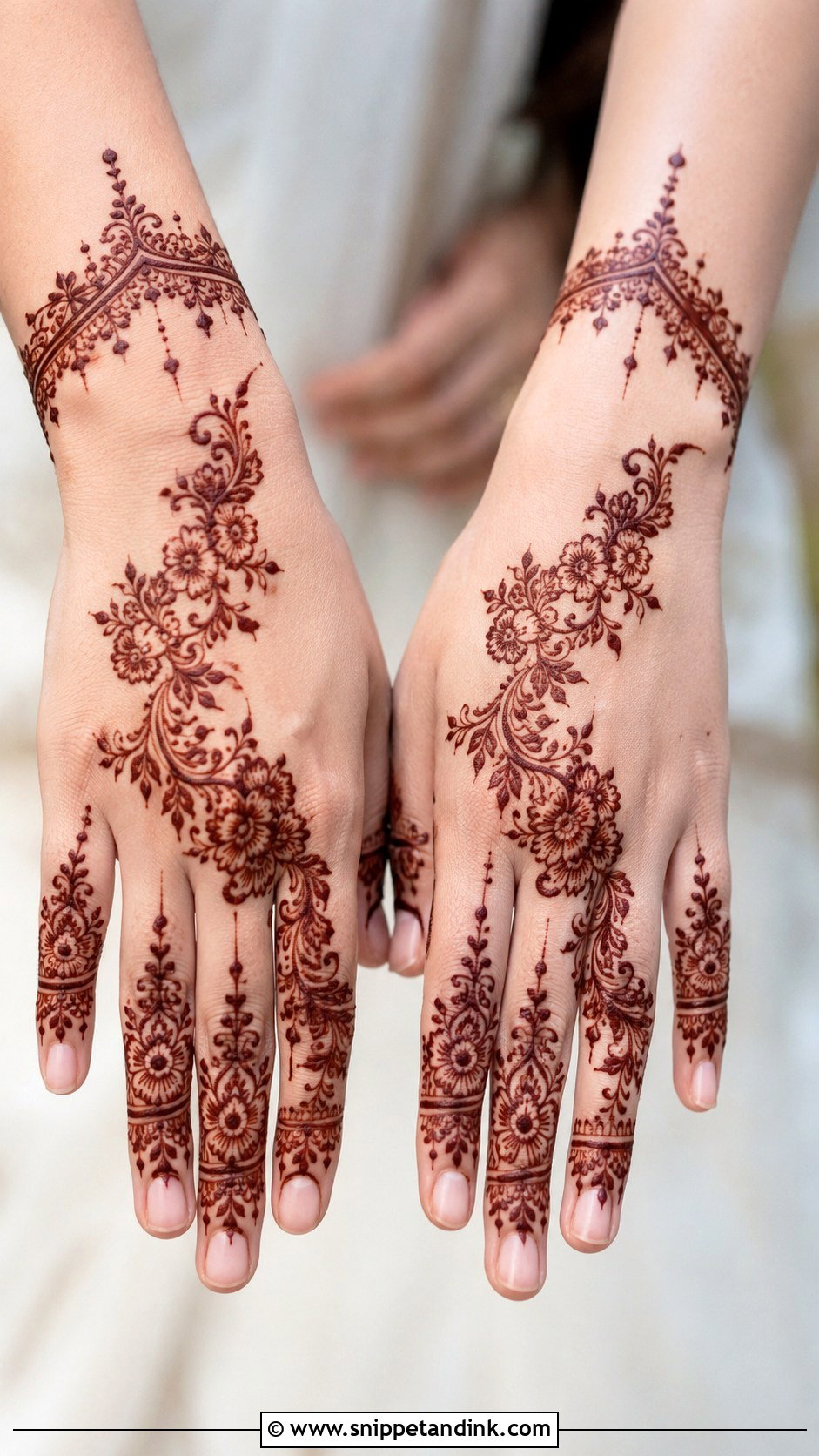
Khafif is the opposite of bold: thin vines, tiny flowers, lace-like lines and dots, light enough to cover hands and wrists without feeling heavy. It sits well with soft makeup, delicate jewelry and pastel outfits. Everything depends on a steady hand and a well-mixed paste with no lumps, because fine lines show every tremor. Check an artist’s close-ups of fine work before you book.
26. Negative Space Wedding Mehndi Design
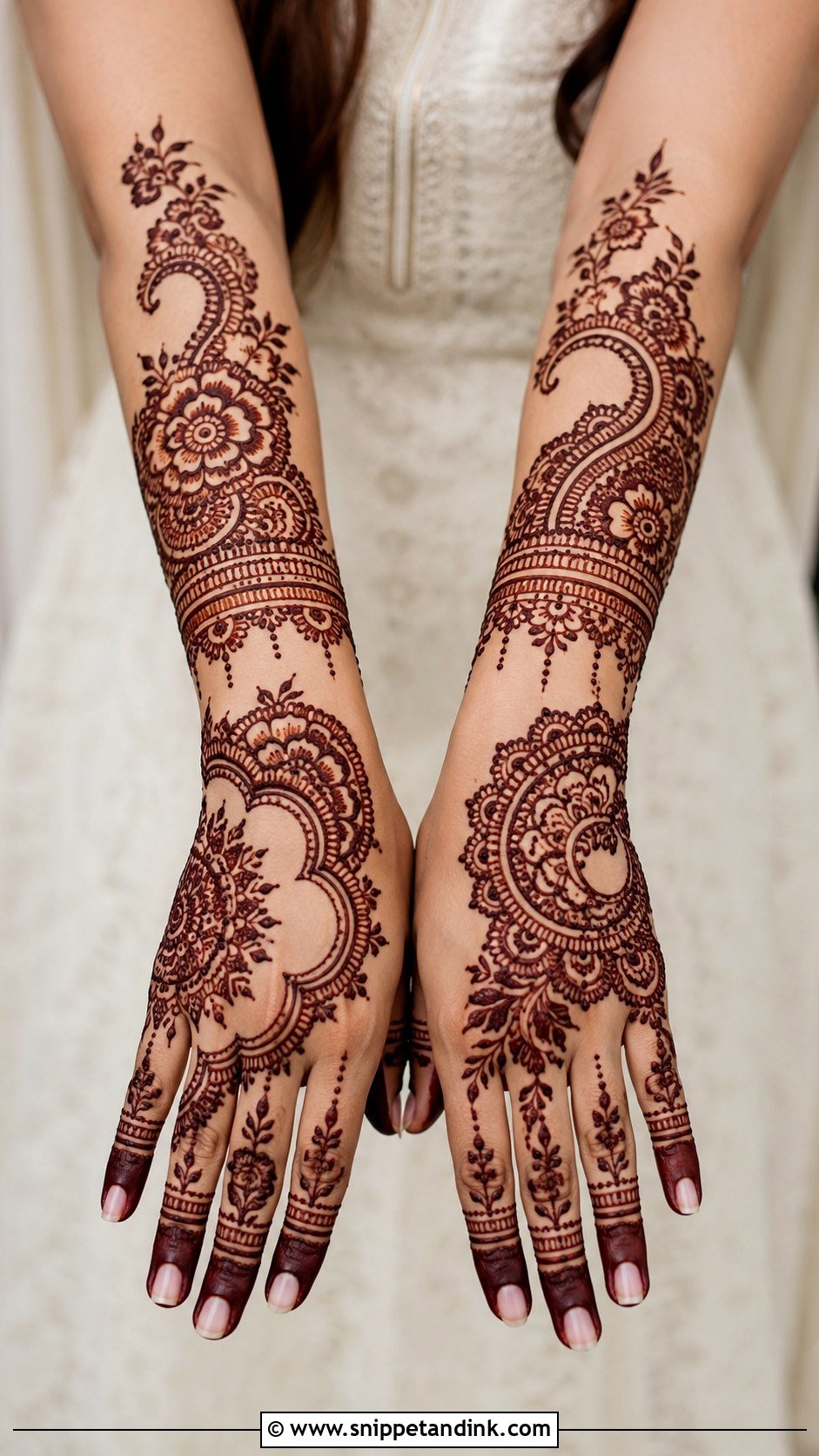
Negative space treats bare skin as part of the pattern. The motifs are drawn bold with clear gaps around them, so flowers, paisleys and mandalas look sharper and the hand looks longer. It can be full-hand, back-hand or palm-focused. To keep it bridal rather than casual, I finish the fingertips, borders and wrist properly. Open space next to an unfinished edge just looks incomplete.
27. Wedding Mehndi Design For Short Fingers
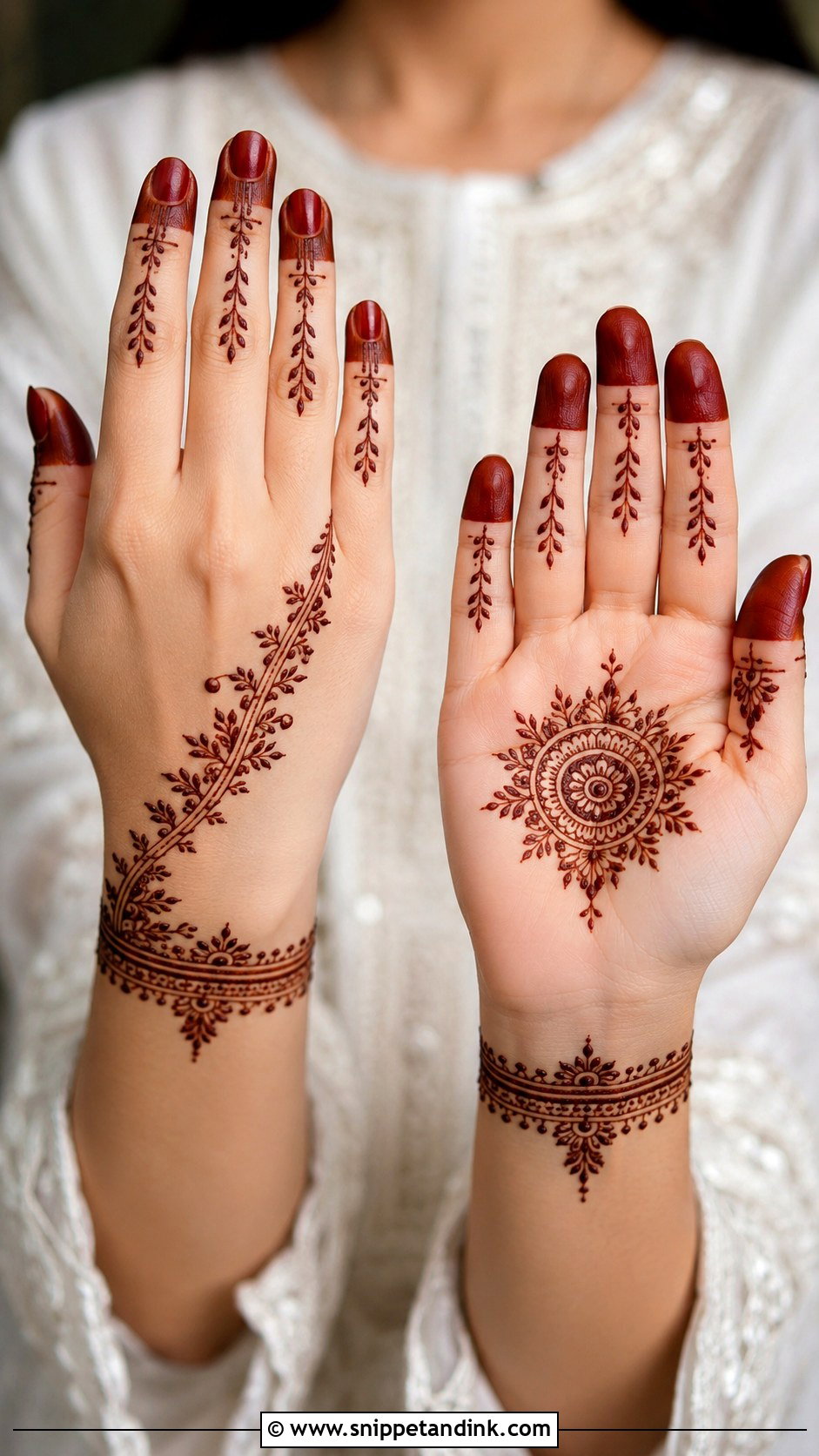
With short fingers, placement matters more than the amount of henna. Vertical lines, slim leafy trails, tapered tips and small motifs that don’t crowd the finger all add length. Thick horizontal bands across every finger cut them visually, so I avoid them. A palm mandala with finger patterns stretching upward works well, and on the back hand diagonal trails and bracelet chains are the most flattering.
28. Wedding Mehndi Design For Long Fingers
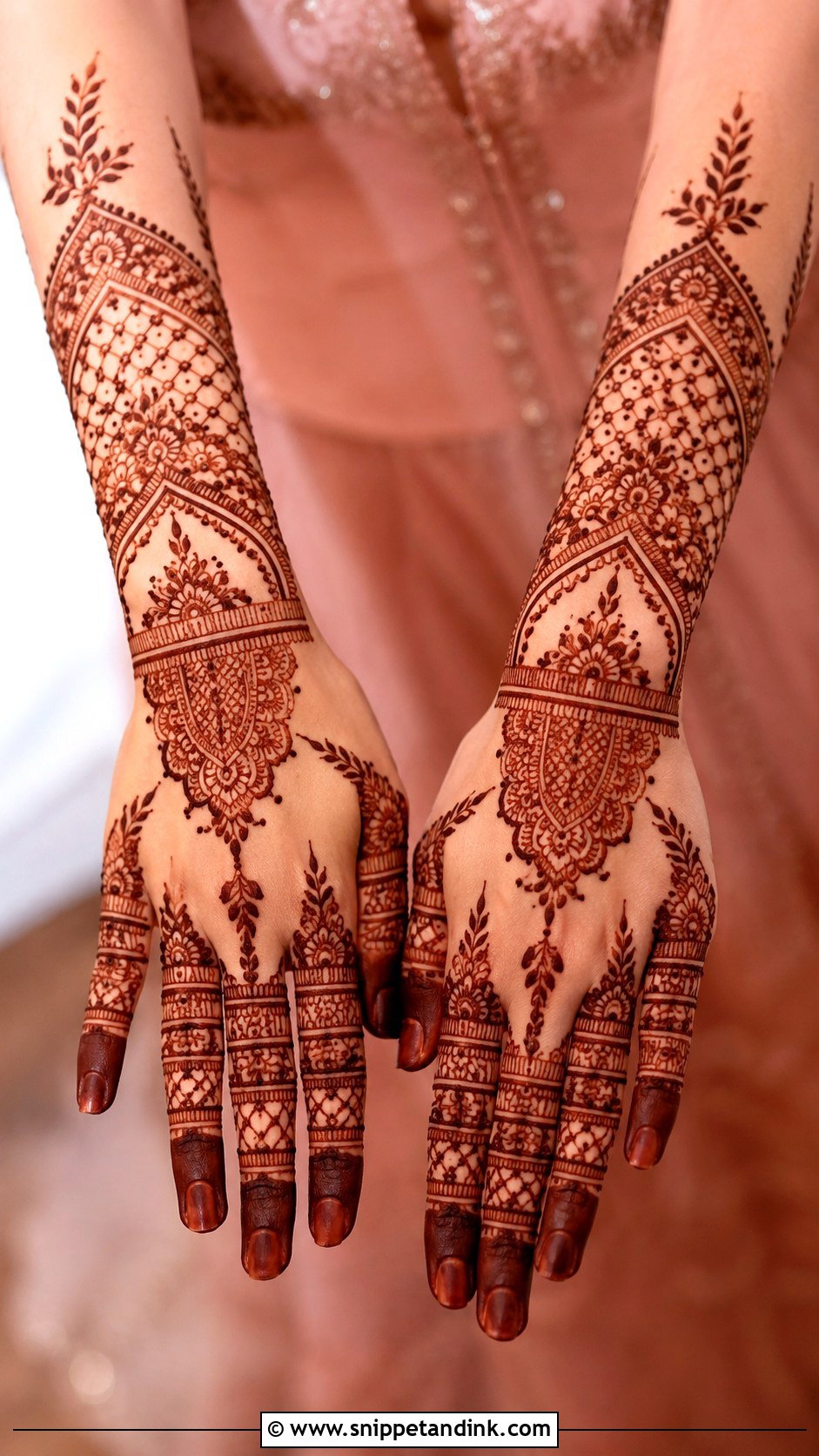
Long fingers can take layered bands, filled tips and dramatic detail without looking crowded. Ring-style bands, leafy trails, jaali sections and fine Arabic vines all fit. For a bride I connect the finger work into a wrist or forearm pattern so the design feels whole. For a guest, a simpler palm with detailed fingers is often enough. Spacing still matters, because very long, busy fingers can start to look spidery.
29. Wedding Mehndi Design For Dark Skin
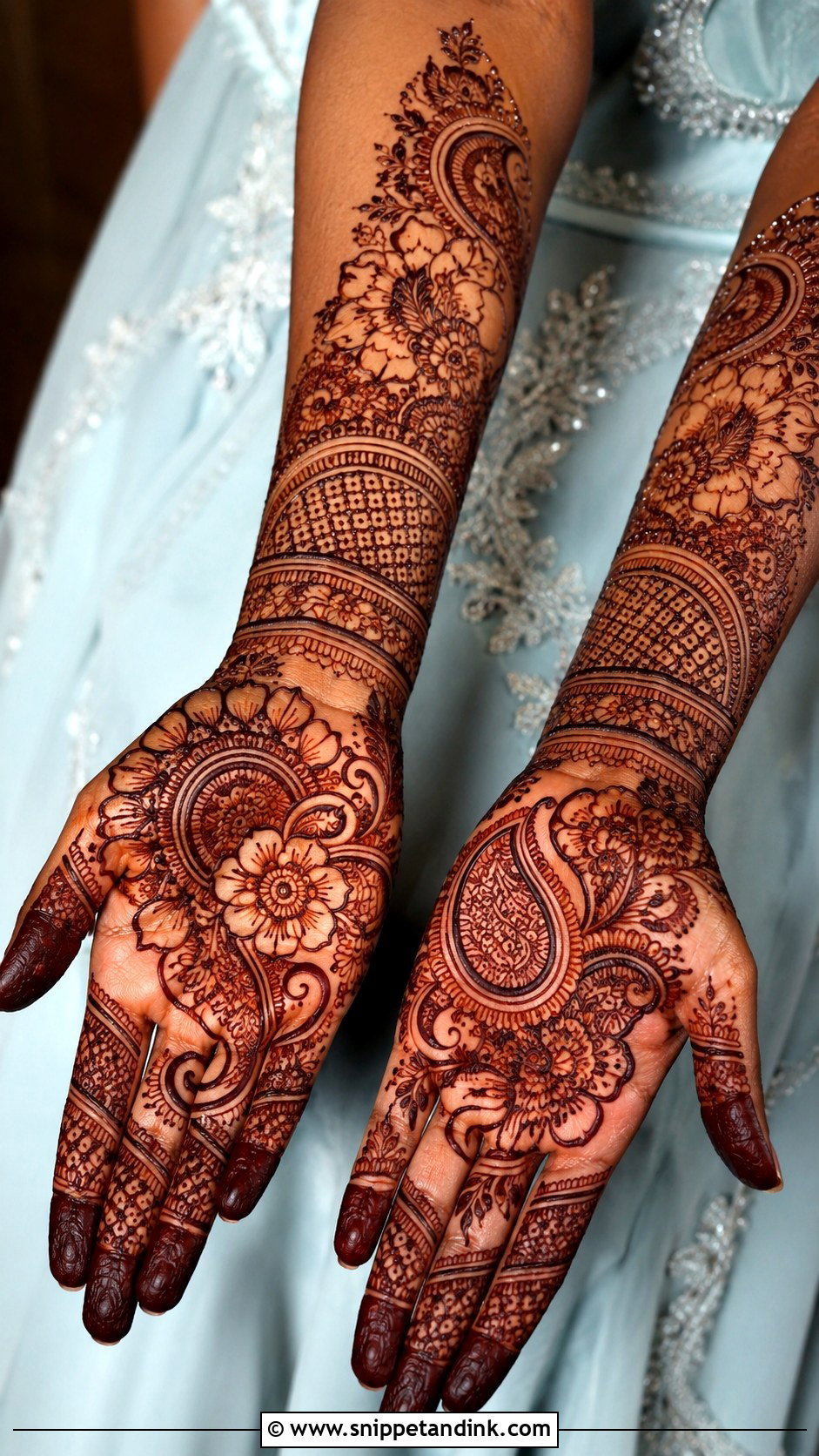
Natural henna stains deeper skin well, especially with fresh paste and good aftercare, but very tiny packed detail doesn’t read from a distance. I design for contrast: bold outlines, open spacing, larger florals, paisleys, mandalas, jaali panels and Arabic trails. A bridal set can still be rich and intricate. It just shouldn’t rely only on thin lines, because the clean gaps between motifs are what make the finished stain stand out.
30. Wedding Mehndi Design For Fair Skin
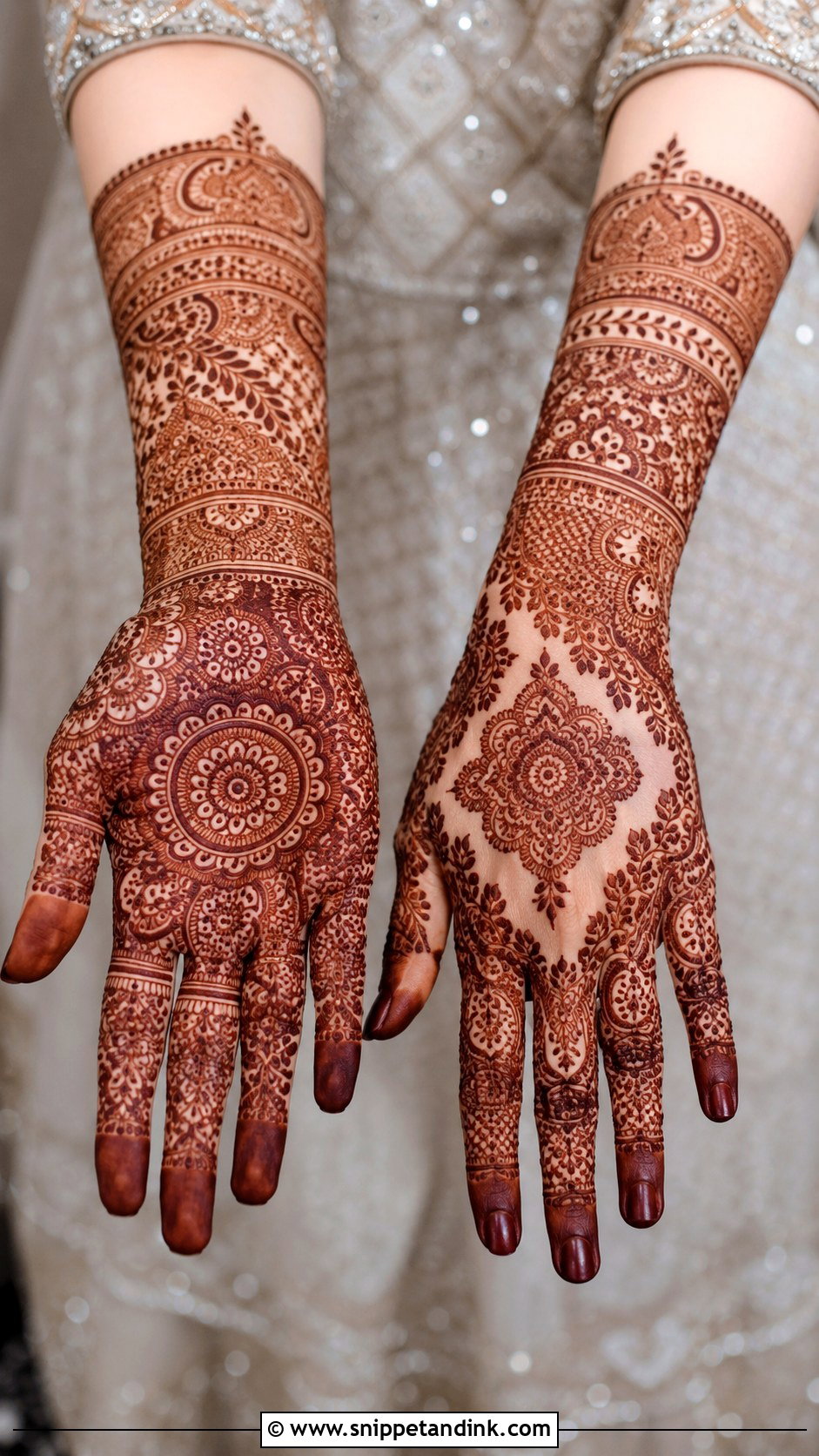
On fair skin, the stain shows in sharp contrast, so both fine Khafif work and dense Indian bridal designs read clearly. That also means mistakes and uneven filling show up. Filled fingertips, wrist bands, palm motifs and back-hand trails all photograph well; I balance heavy sections with open spacing so the hand doesn’t look harsh. The final color should land somewhere between reddish brown and deep maroon, and how deep it gets still depends on paste quality and how long it stays on.
31. Wedding Mehndi Design For Bridesmaids
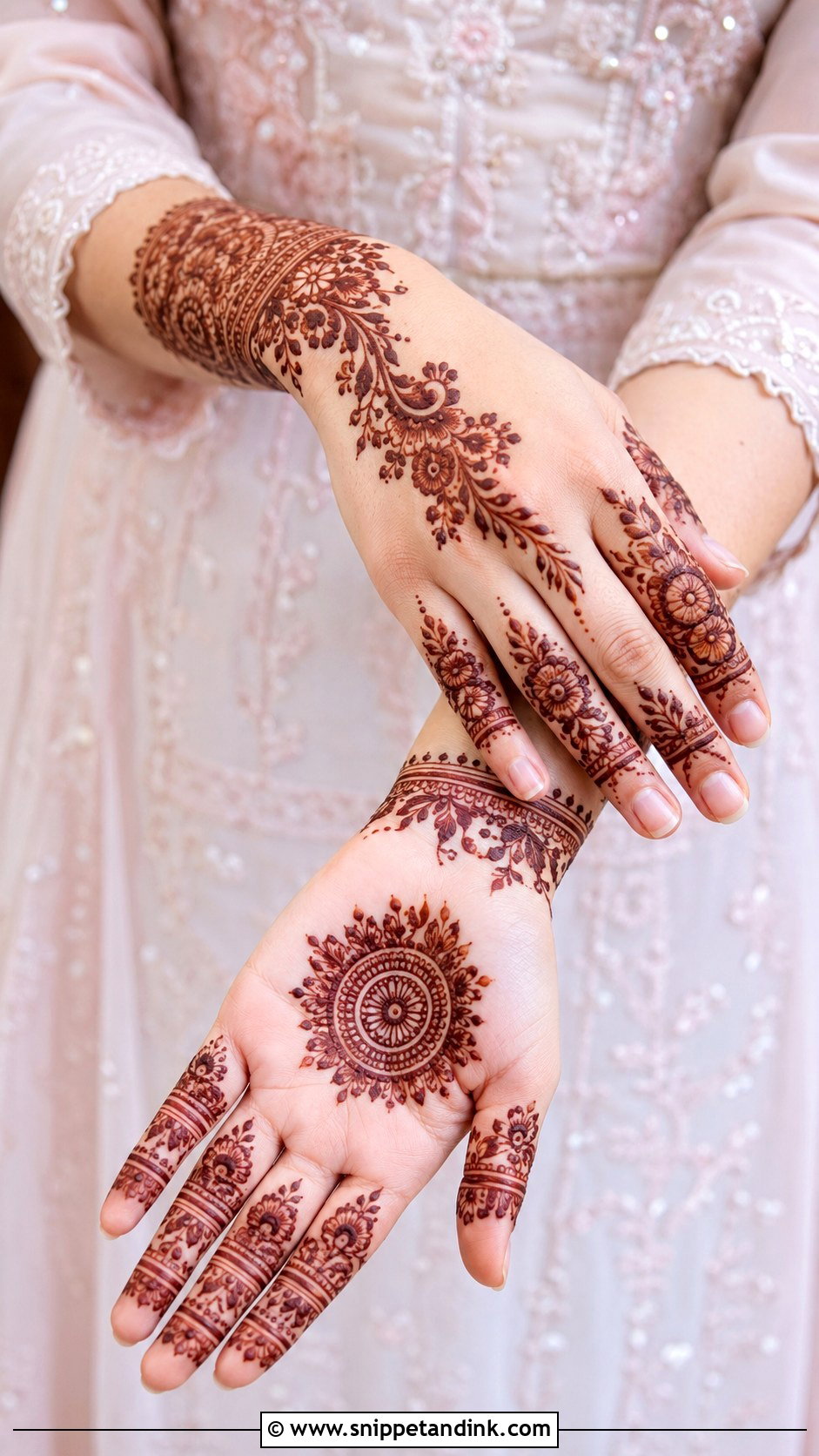
Wedding mehndi design for bridesmaids should feel festive while staying clearly lighter than the bride’s. Back-hand floral trails, palm mandalas, bracelet cuffs and neat finger details work well, and Arabic or Indo-Arabic layouts apply quickly, which matters when I have six hands to finish. A nice touch is one shared motif, a lotus or rose, drawn slightly differently on each bridesmaid. Medium coverage keeps hands usable for helping, dancing and dressing the bride.
32. Wedding Mehndi Design For Guests
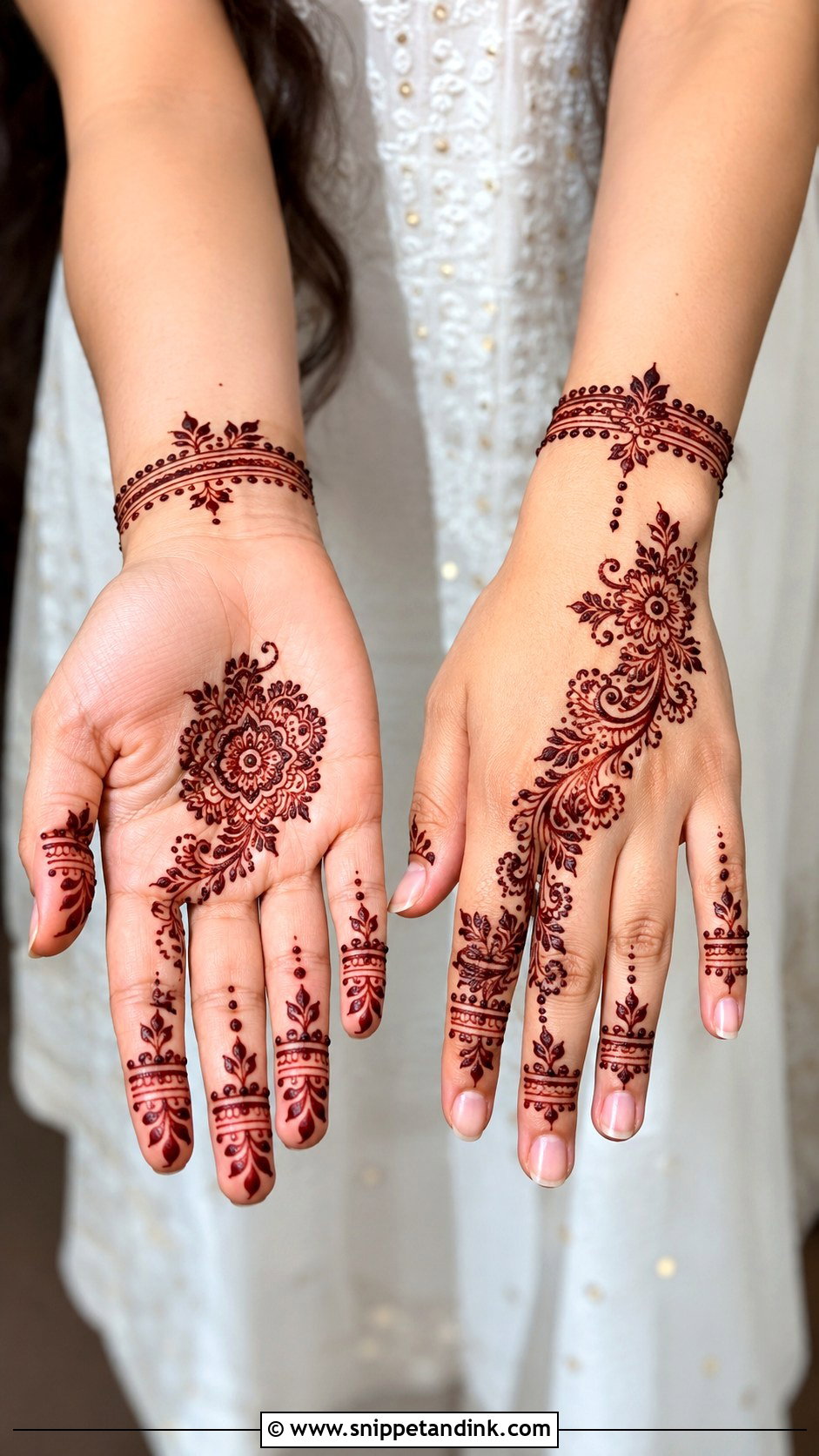
Guest henna has to be quick and easy to live with. A diagonal Arabic trail on the back hand, a small palm motif, simple finger patterns and a slim wrist band can be done in minutes per hand. Florals, vines, mandalas or bracelet styles all work depending on the outfit. If there are several functions, choose open designs with clean lines; they fade evenly instead of turning patchy.
33. Engagement Mehndi Design
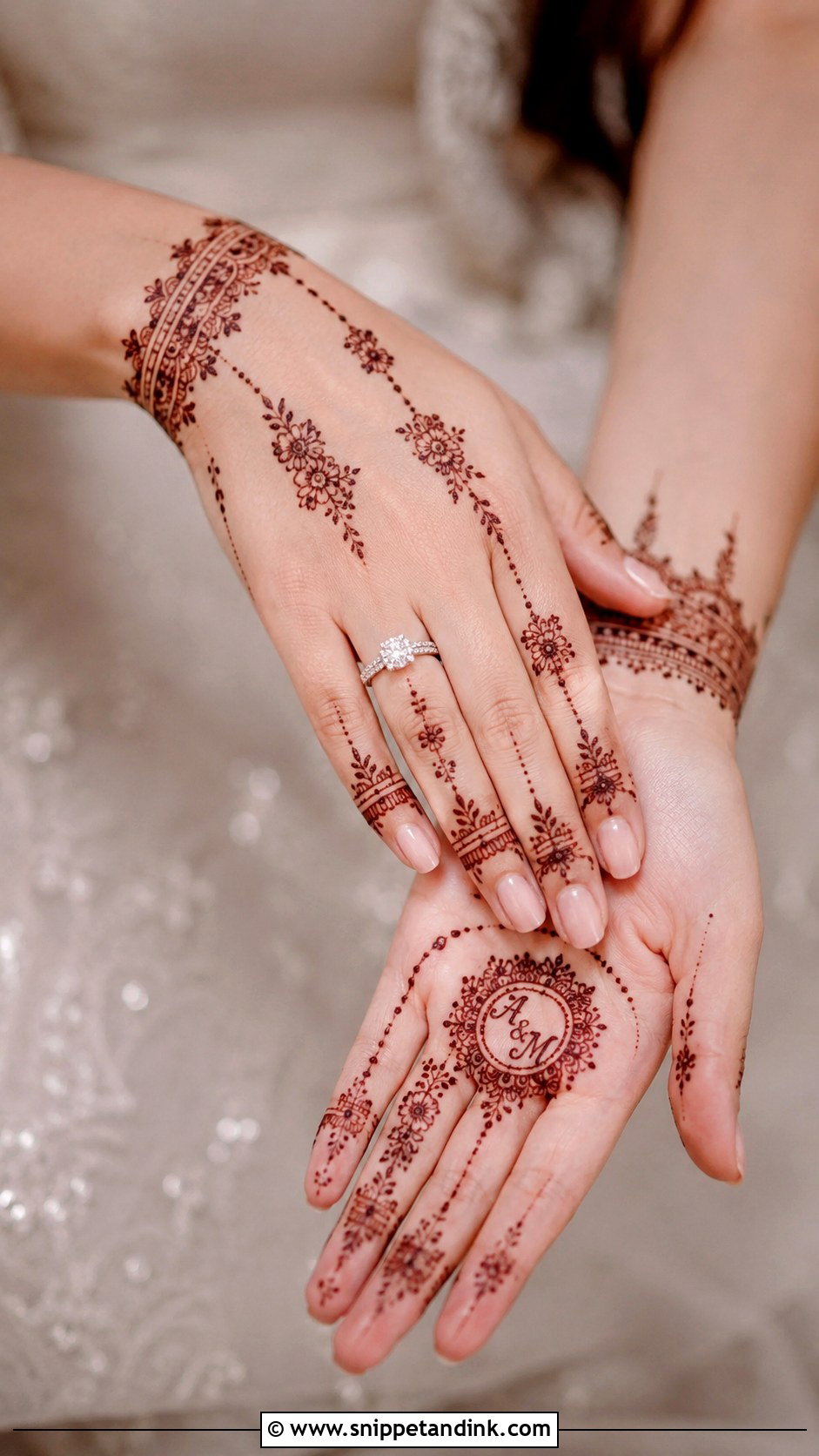
Engagement mehndi design works around the ring. Back-hand finger chains, bracelet cuffs, floral trails and delicate mandalas frame the ring finger, while the palm can stay light with a small mandala or initials. Brides who want more can extend to the wrist or forearm with Indo-Arabic detail. I keep the band of the ring finger itself mostly clear so the stone sits on clean skin in close-ups.
34. Sangeet Mehndi Design
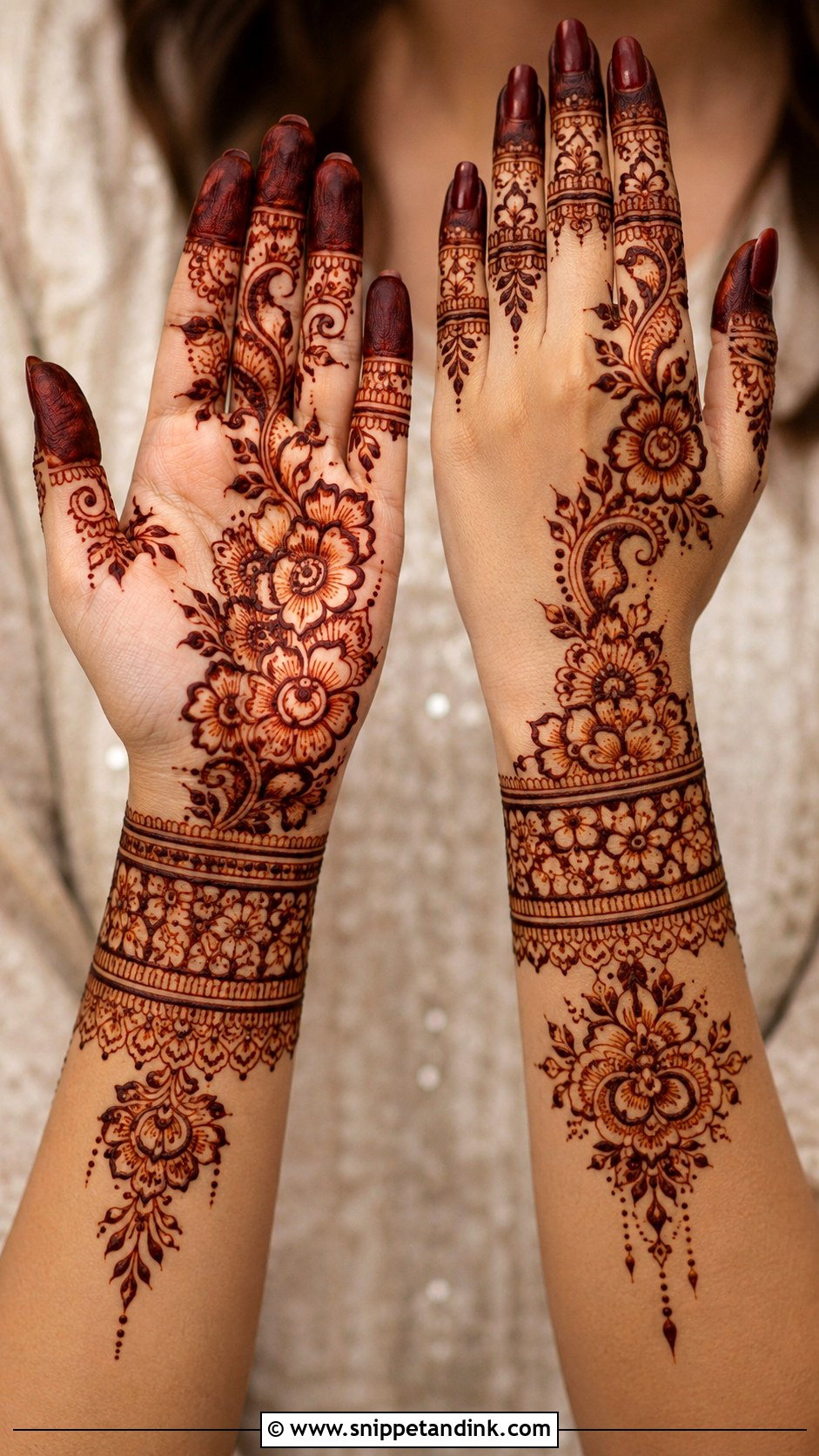
Sangeet hands need to move. Medium coverage is the usual choice: Arabic floral trails, bold wrist cuffs, decorated fingers and open palm motifs that look festive under colored lights. Indo-Arabic layouts feel rich without long application time. Bold flowers with clear spacing dry faster than dense filling, which means less time sitting with your hands in the air while everyone else is dancing.
35. Foot Wedding Mehndi Design
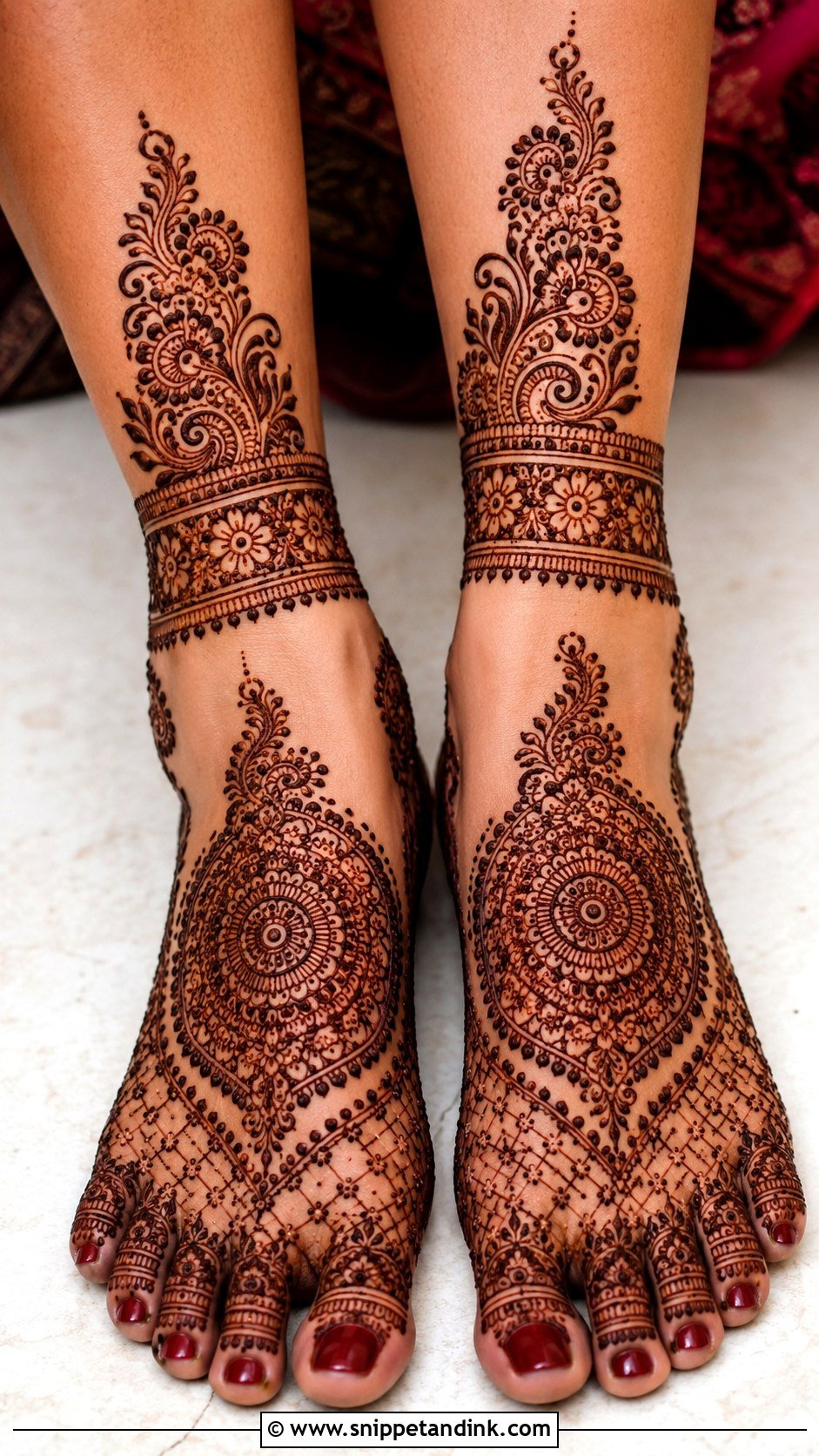
Feet usually stain darker than hands, which surprises many brides. A full foot design may cover the toes, the top of the foot, the ankles and lower legs with florals, paisleys, mandalas, jaali and anklet-style bands, matched to the hand design. Arabic trails keep it light; Indian patterns suit heavier coverage. I keep toe details simple and leave the edges of the soles clear, since anything drawn where the foot meets the floor rubs off before it stains.
Is Your Artist’s Cone Natural Henna?
This is the question I wish every bride asked. Natural henna paste is made from dried henna leaves, a liquid such as lemon juice or water, sugar and essential oils. It smells earthy, looks greenish brown when wet and stains orange first. Some cones sold as instant or dark henna contain chemical dyes, and so-called black henna can contain PPD, which can cause severe skin reactions and lasting scars.
- Ask what’s in the paste and whether the artist mixes it fresh.
- Be wary of any henna that stains dark brown or black within minutes.
- If you have sensitive skin or allergies, ask for a small patch test a few days ahead.
- Fresh paste is usually kept chilled or frozen, since natural henna loses strength at room temperature.
Aftercare That Deepens the Color
Leave the paste on for as long as you can stand, ideally six to eight hours or overnight. I dab a lemon and sugar mix over it once it starts drying so it stays stuck to the skin. When it’s time, scrape the dried paste off with a blunt edge instead of washing it, and keep your hands away from water for as many hours as you can afterward. Warmth helps the dye develop, so keep your hands warm and resist scrubbing. A well-cared-for bridal stain usually lasts one to three weeks, fading first on the parts of the hand you wash most.
How Much Henna Each Role at the Wedding Really Needs
Most decisions come down to four things: coverage, comfort, culture and how the hands will be photographed. A bride may want full Indian bridal work, royal portraits or hidden names. Bridesmaids usually feel right in Arabic trails, bracelet bands or minimal mandalas, and guests in a simple floral set that doesn’t take hours. Book a skilled artist early, especially in peak wedding season, and choose the design that fits your outfit, hand shape and role. Good bridal henna looks personal and balanced long after the photos are taken.
You'll Like These Ideas:


Leave a Reply