
Flowers are the motif I draw more than any other at bridal sittings, because they adapt to almost any layout. A rose can anchor full-hand coverage, trail diagonally in an Arabic design, sit inside a mandala or break up a jaali grid. Petals can be drawn bold or hair-fine, shaded or left open, so the same flower suits a slim hand and a broad one. Some brides want dense Indian work from fingertips to elbows; others want clean floral trails with plenty of bare skin. The twenty layouts below cover both ends, with notes on what each one needs from you and from your artist.
How Long a Floral Bridal Sitting Really Takes
Brides often book their mehndi as if it were a manicure. It isn’t. A full bridal hand and forearm in dense florals can take several hours for both arms, and adding feet stretches it further. Arabic, Gulf and minimal layouts move much faster because there’s less to fill. Ask your artist for her own time estimate for the exact design you choose, and build the day around it.
- Apply bridal henna one to two days before the wedding. The stain needs that time to darken; done on the morning itself, it will still be orange at the ceremony.
- Wash and dry your hands and arms before the sitting, with no lotion or oil. Oil on the skin blocks the dye.
- Eat, use the bathroom and set up your phone and a straw drink before we start. Once wet paste is on both hands, you can’t use them.
- Wear something sleeveless or with loose sleeves that roll well above the elbow.
One more thing: genuine henna paste is brown or green-brown in the cone. If anyone offers instant black henna, refuse it. Those products can contain dyes that cause serious skin reactions.
1. Full Hand Floral Bridal Mehndi Design
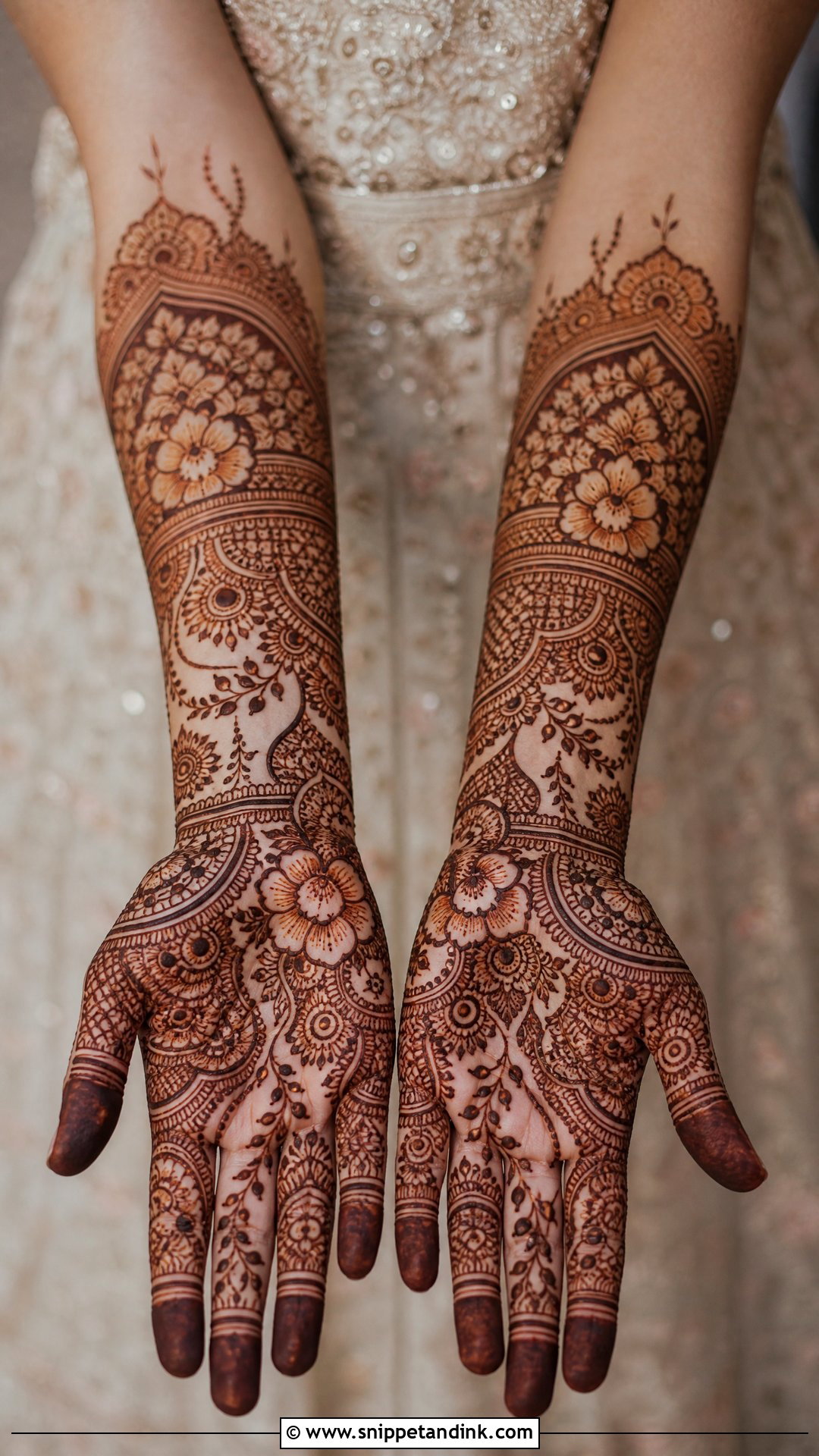
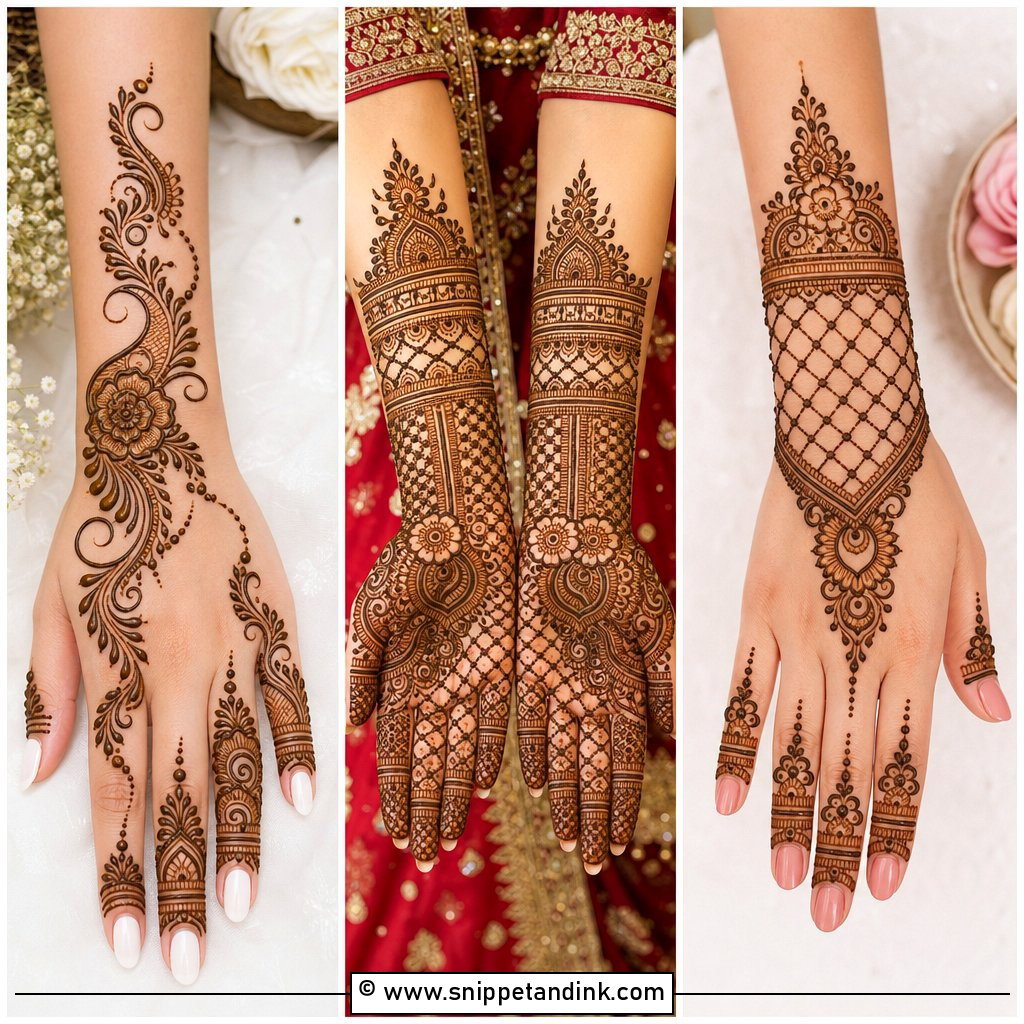
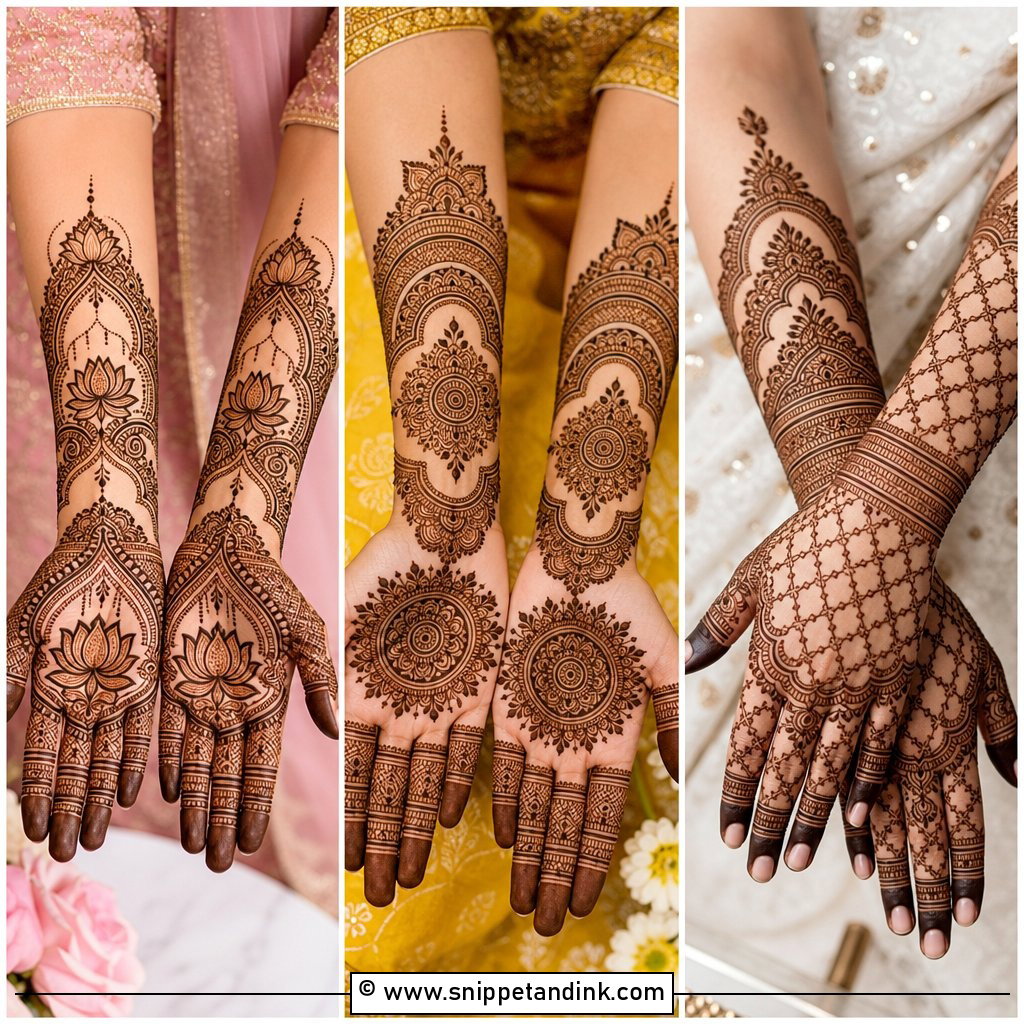
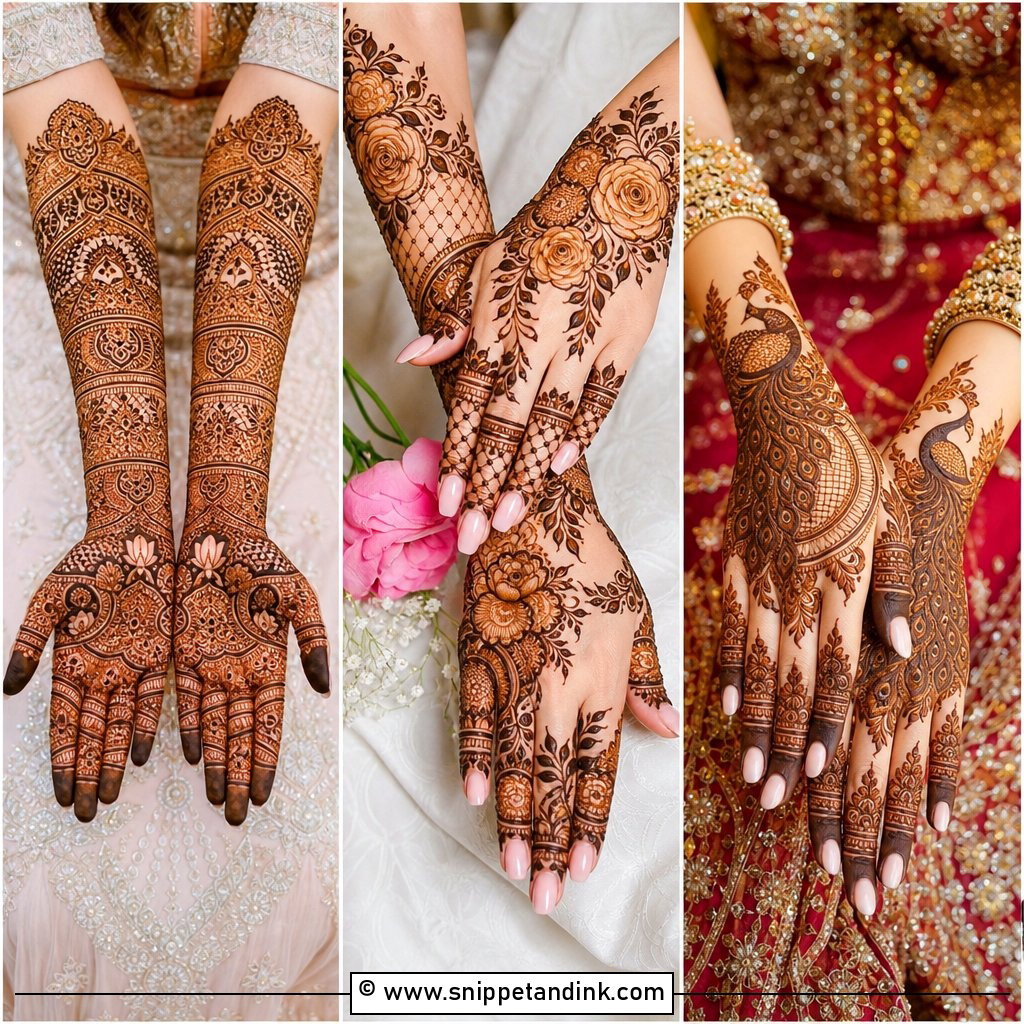
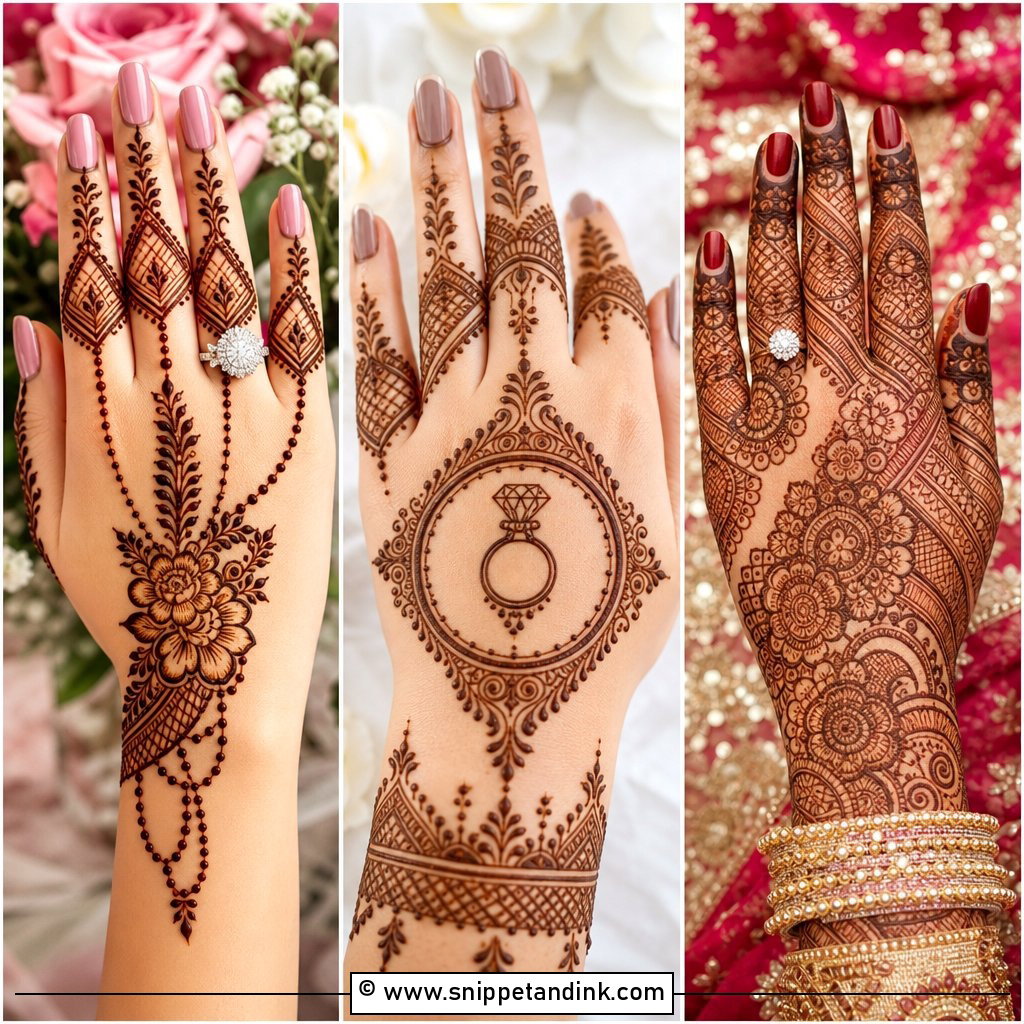
Full-hand floral work usually starts at the fingertips, travels up the fingers as vines and opens into large blossoms on the palm, with petals, paisleys and leafy borders climbing the wrist and forearm. The risk with this much coverage is mush: tiny flowers packed edge to edge blur together once the stain darkens. I plan two or three large blooms first, then fill around them with smaller motifs so each one keeps its outline. It suits a heavy lehenga and stacked bangles, and a deep maroon stain makes the petals read clearly in portraits.
2. Arabic Floral Bridal Mehndi Design
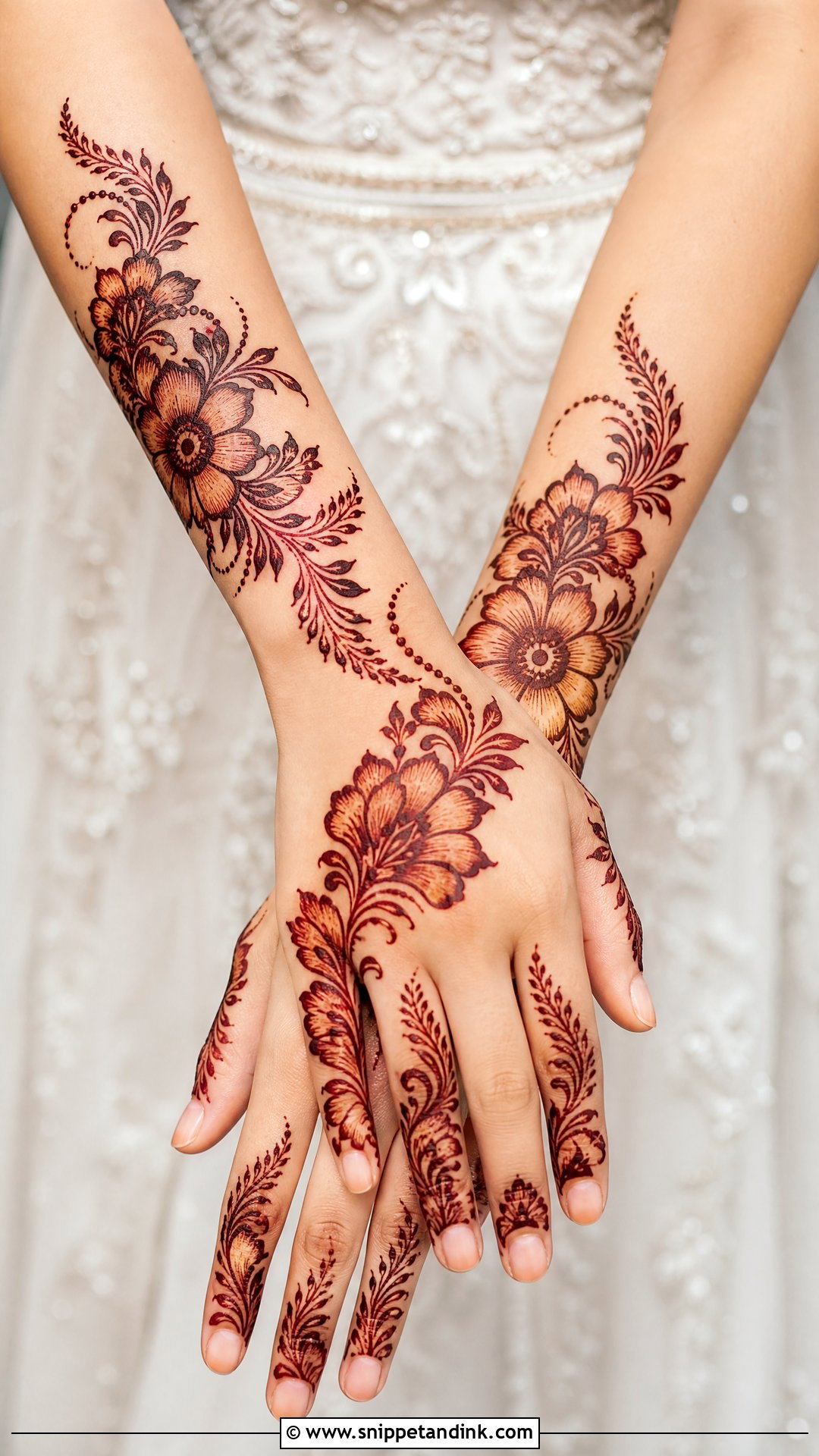
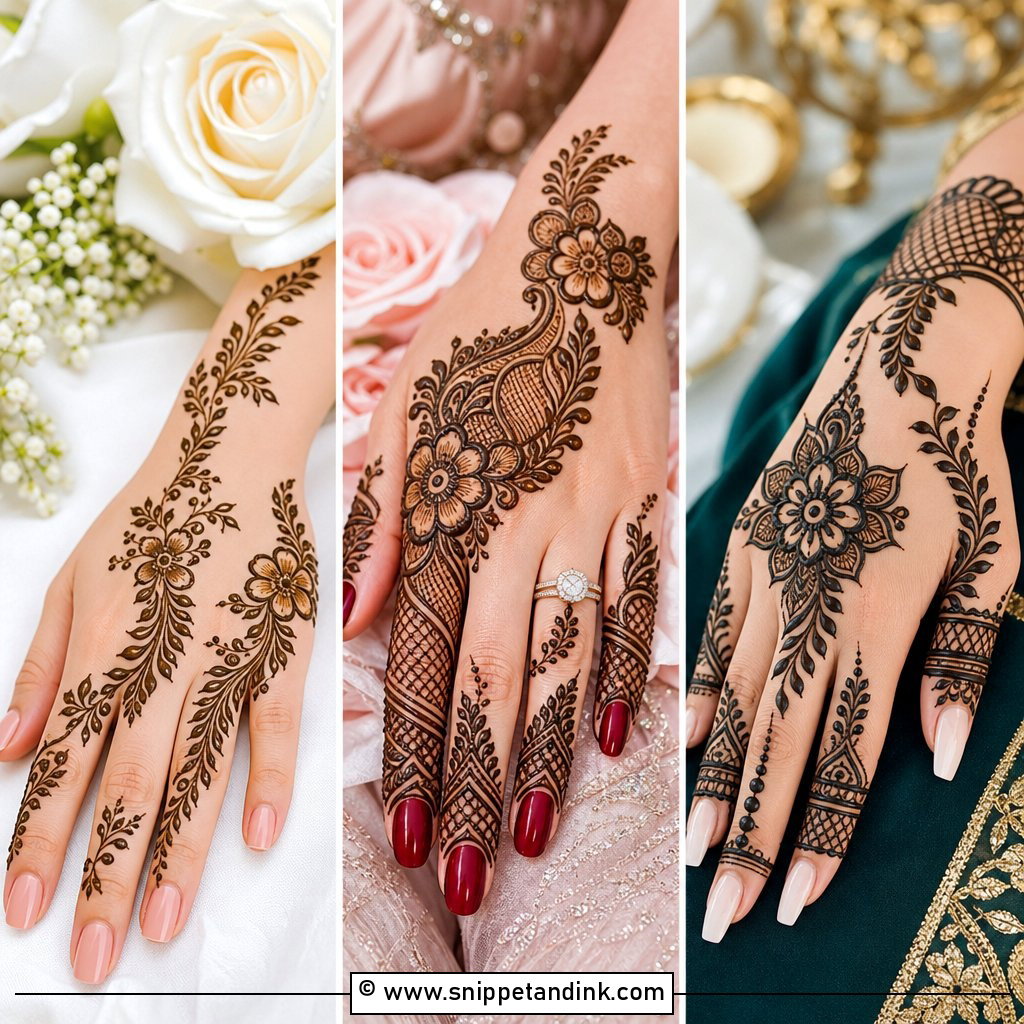
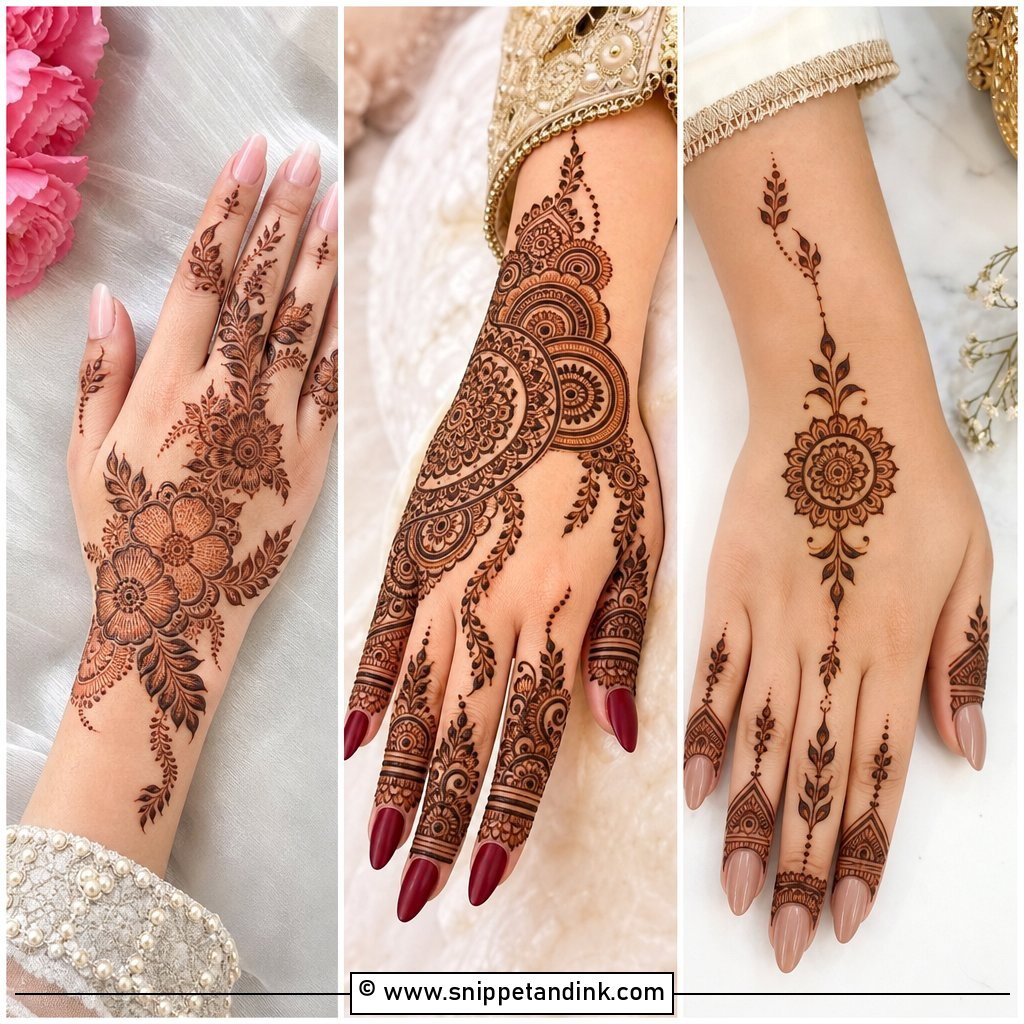
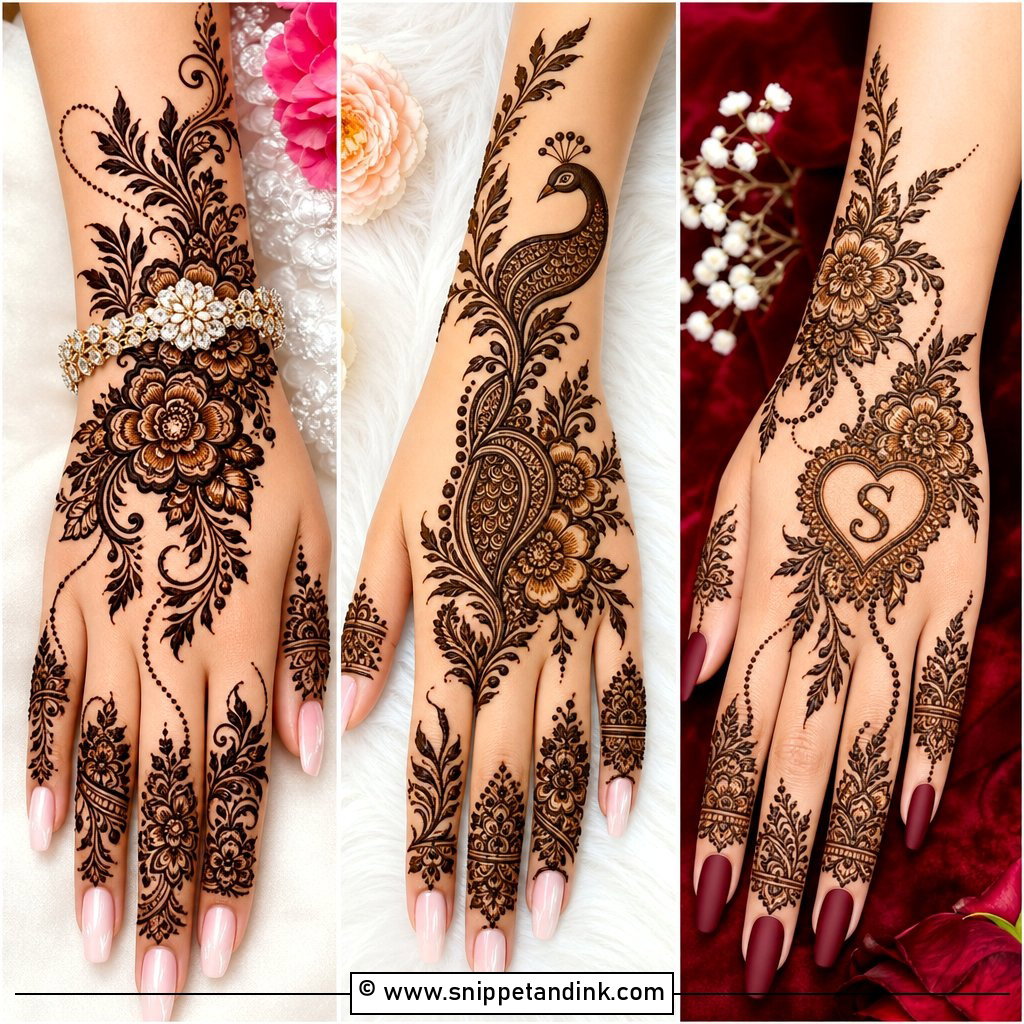
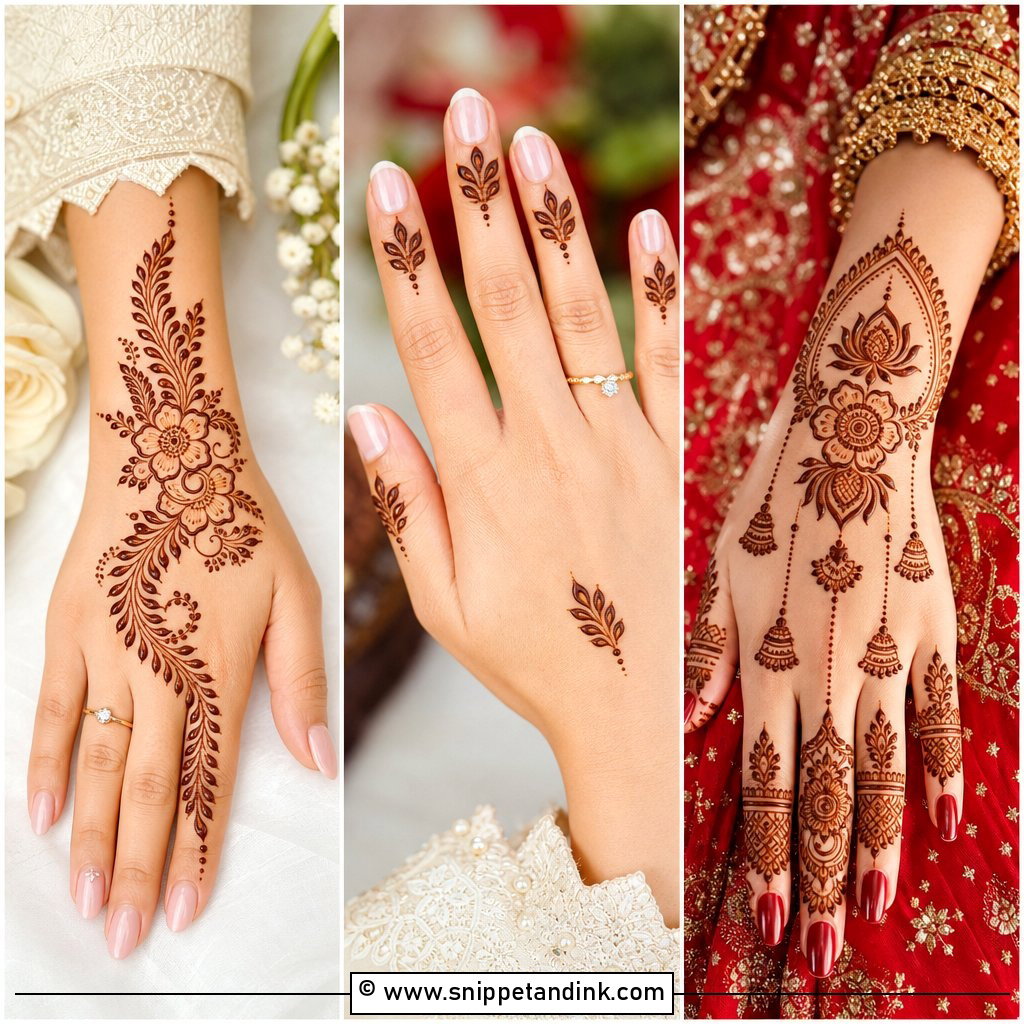
Arabic floral work runs diagonally, usually from the outer wrist toward the index or middle finger, with large flowers, leaf trails and open skin between them. That negative space is the design; it lets each flower stand alone and gives strong contrast in photos. I add thick outer lines, shaded petals and small dot clusters for depth. It’s a sensible choice for an engagement, nikah or reception look, and it takes far less time to apply than a full bridal hand.
3. Indian Floral Bridal Mehndi Design
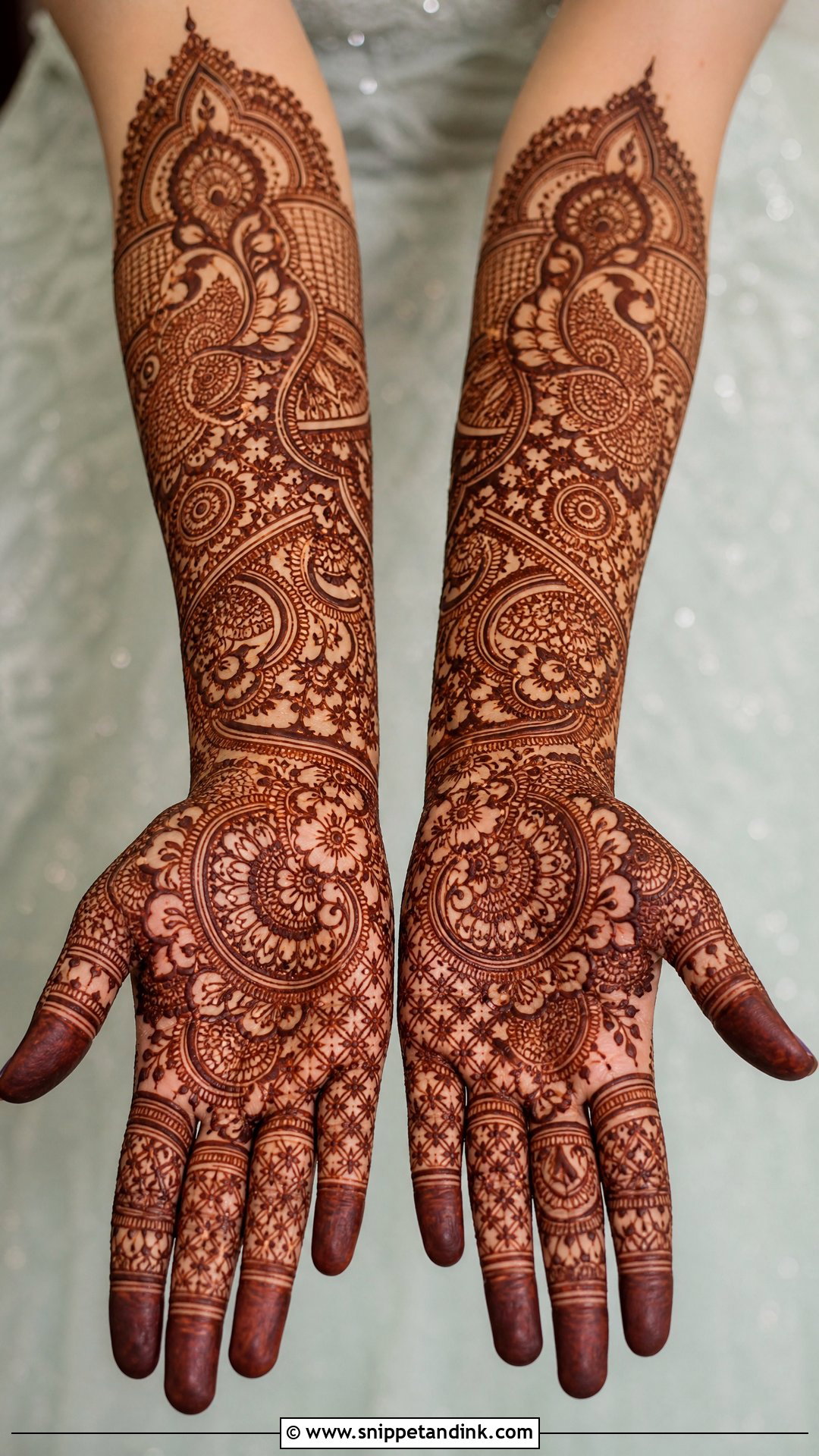
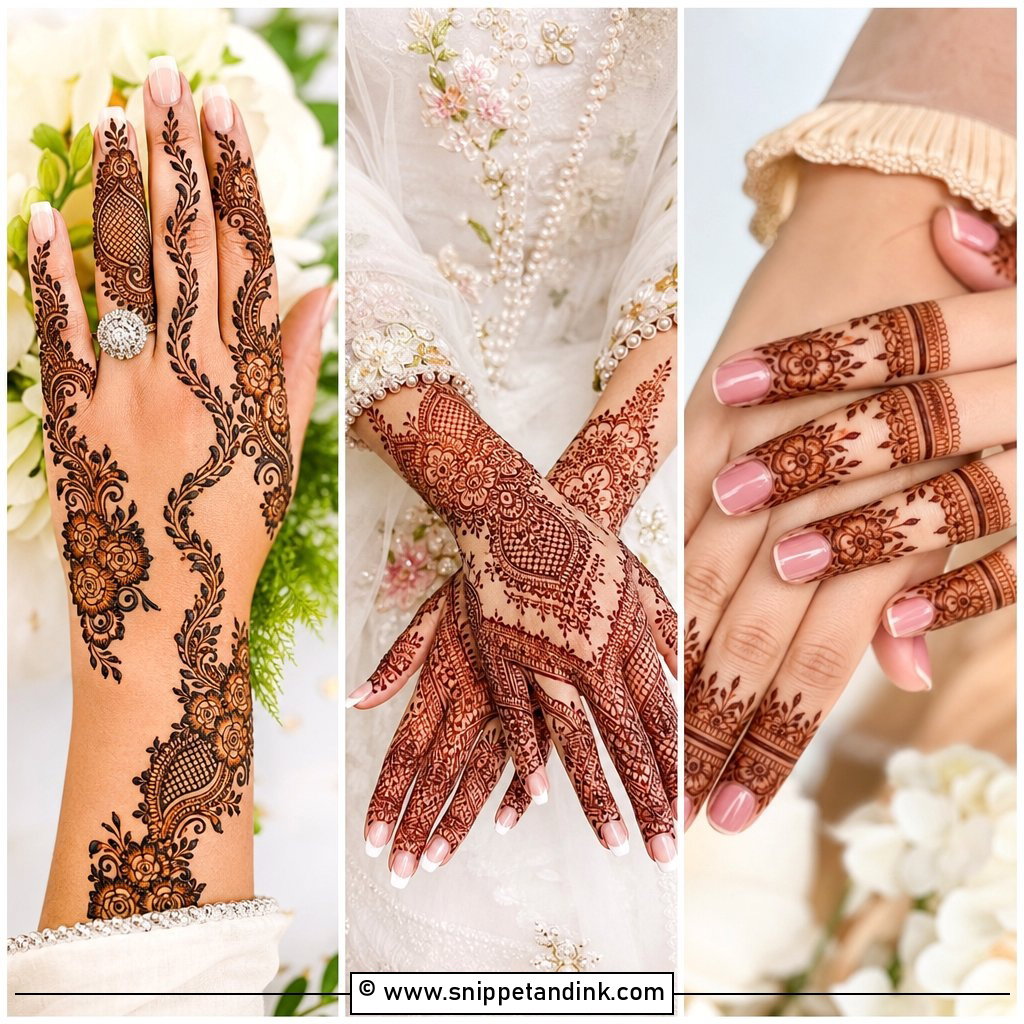
Traditional Indian bridal work covers the palms, back hands, wrists and forearms, with flowers woven between paisleys, peacocks, mandalas and fine net. The florals stop the dense layout feeling rigid. I like a lotus in the palm, rose vines at the wrist and tiny blossoms around each finger joint. Both hands don’t need identical centres, but the borders, finger work and overall density should match so they look like a pair when you hold them together for the mehndi photo.
4. Rose Floral Bridal Mehndi Design
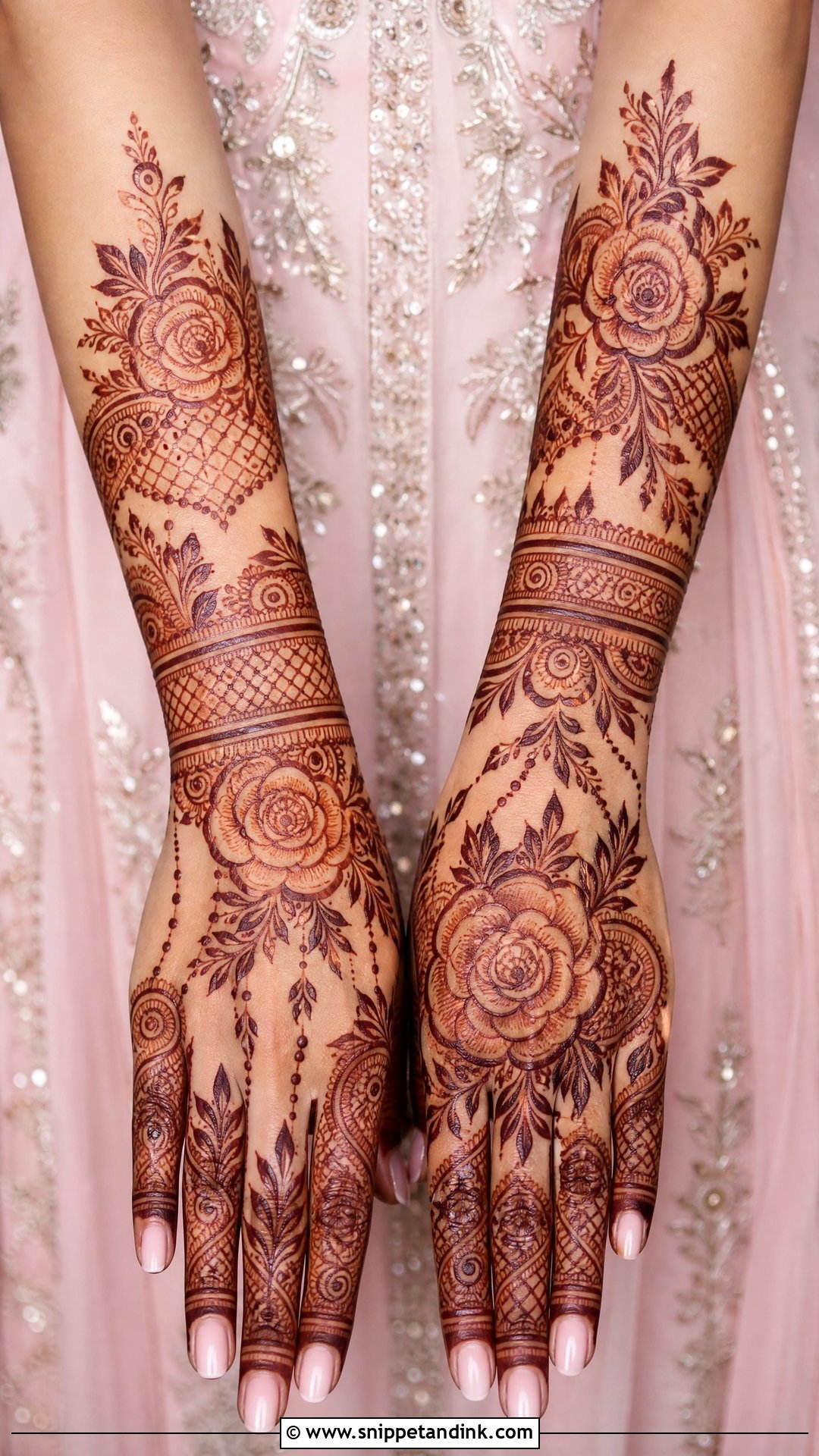
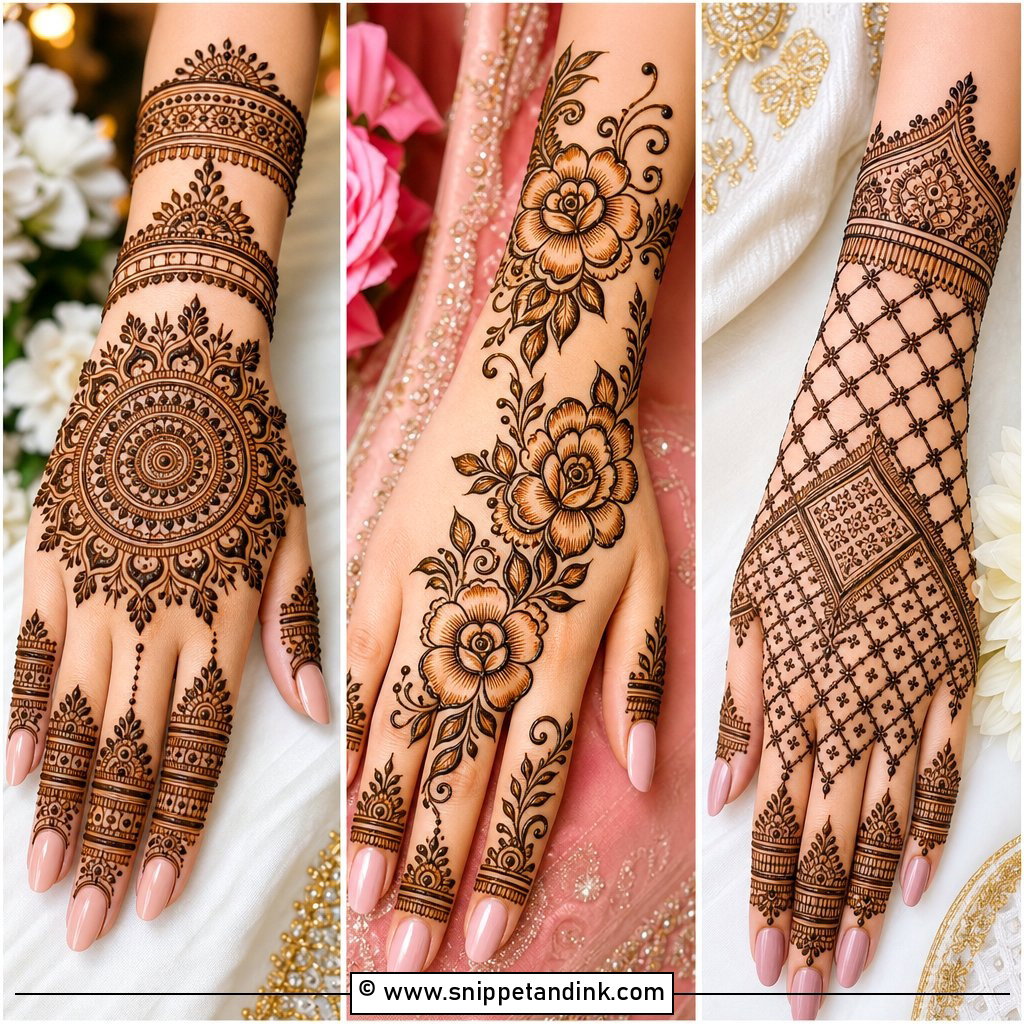
Roses are the easiest flower to recognise in henna, which is exactly why I take care with them. A rose drawn as a spiral alone looks like a snail once it stains, so I build it from layered, shaded petals that read as a flower even from across the room. They sit well on the palm, the back hand or across a full hand, linked by leafy vines. Jaali mesh, dotted borders and fine wrist bands between the roses make the layout feel bridal. Pastel lehengas and floral jewellery suit it.
5. Lotus Floral Bridal Mehndi Design
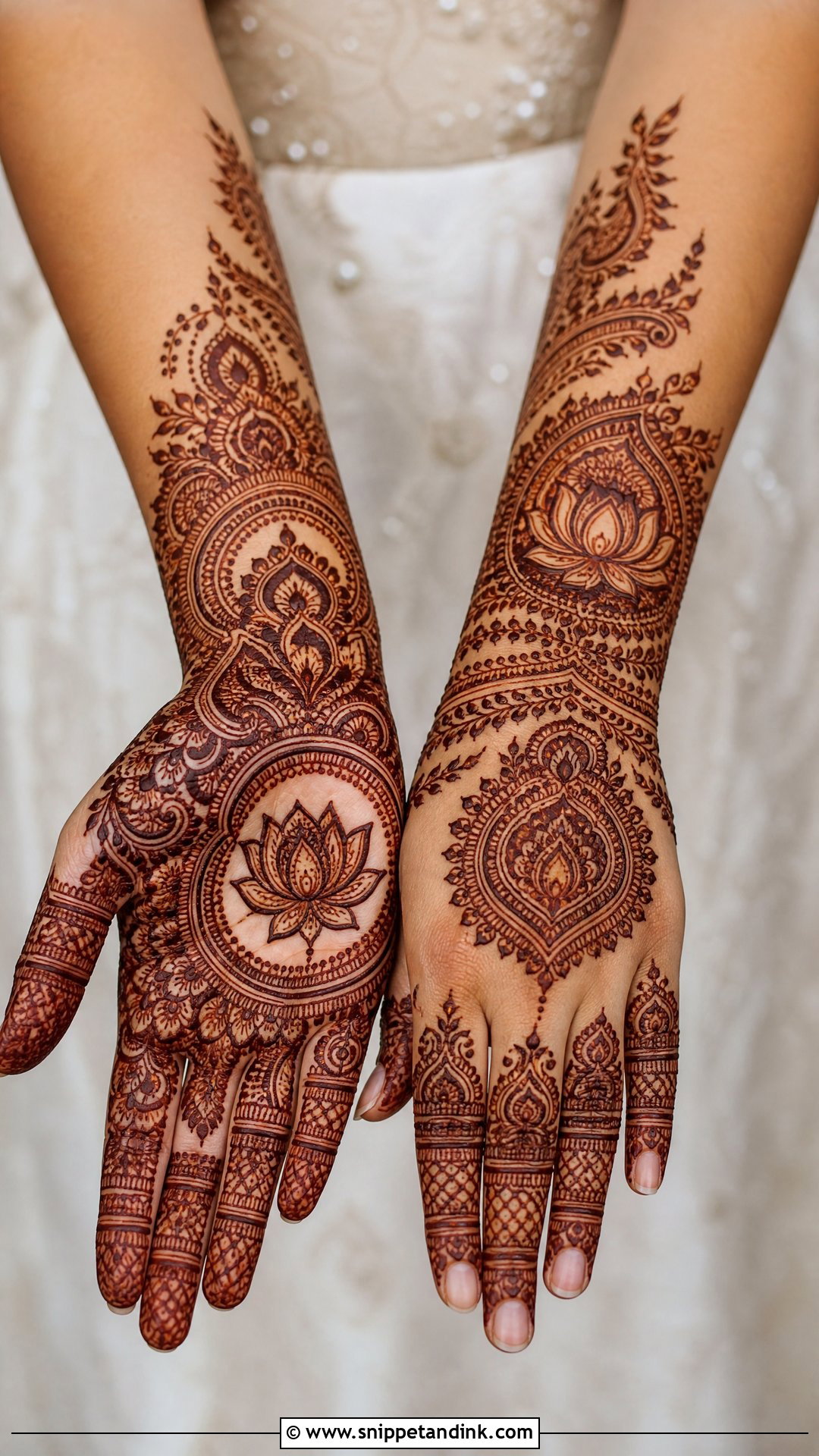
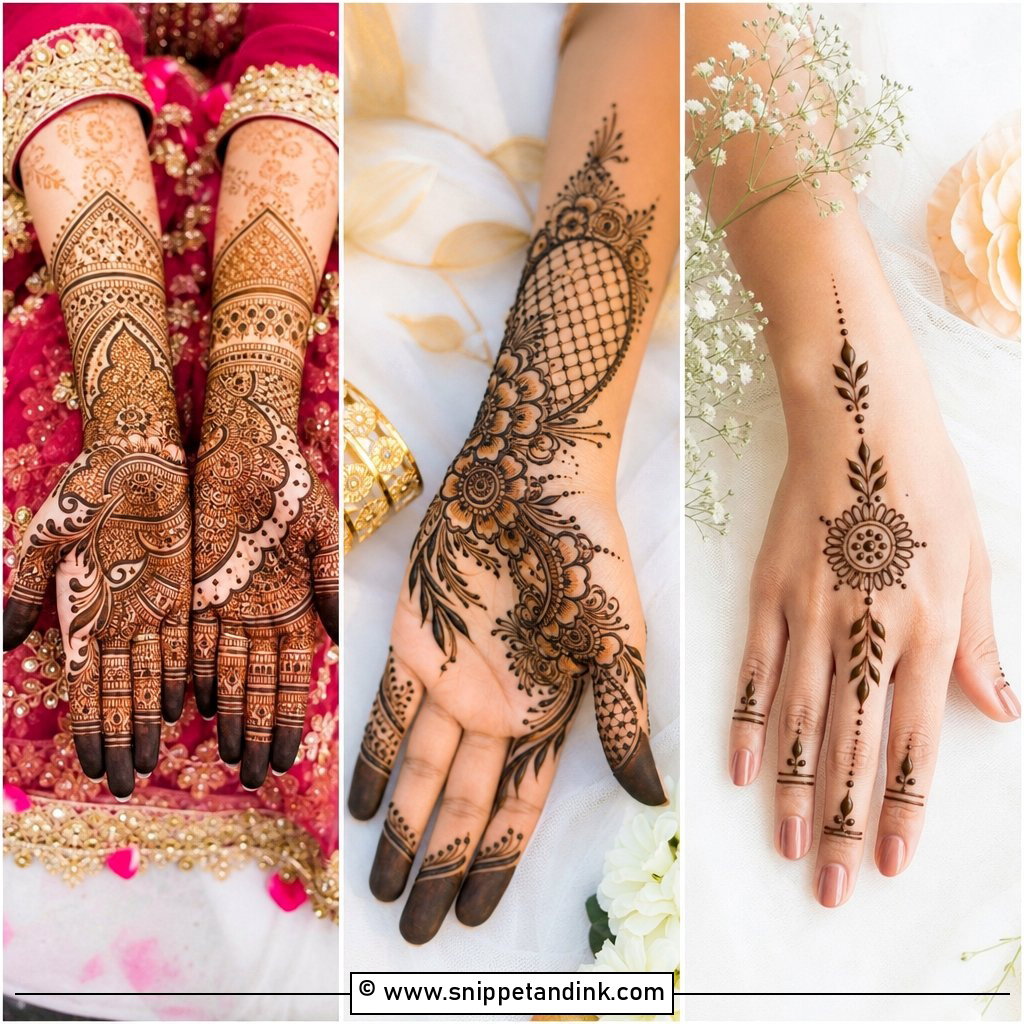
The lotus carries real symbolic weight at many weddings, and it’s a motif I place with care. It looks strongest in the center of the palm, ringed by mandala bands, paisley curves and fine petal detail. On the back hand, I’ll set smaller lotuses along a bracelet-style wrist band and send vines toward the fingers. Keep the main lotus bold and symmetrical. Small flowers and dots around it do the rest, and the layout stays rich without needing extra elements.
6. Floral Mandala Bridal Mehndi Design
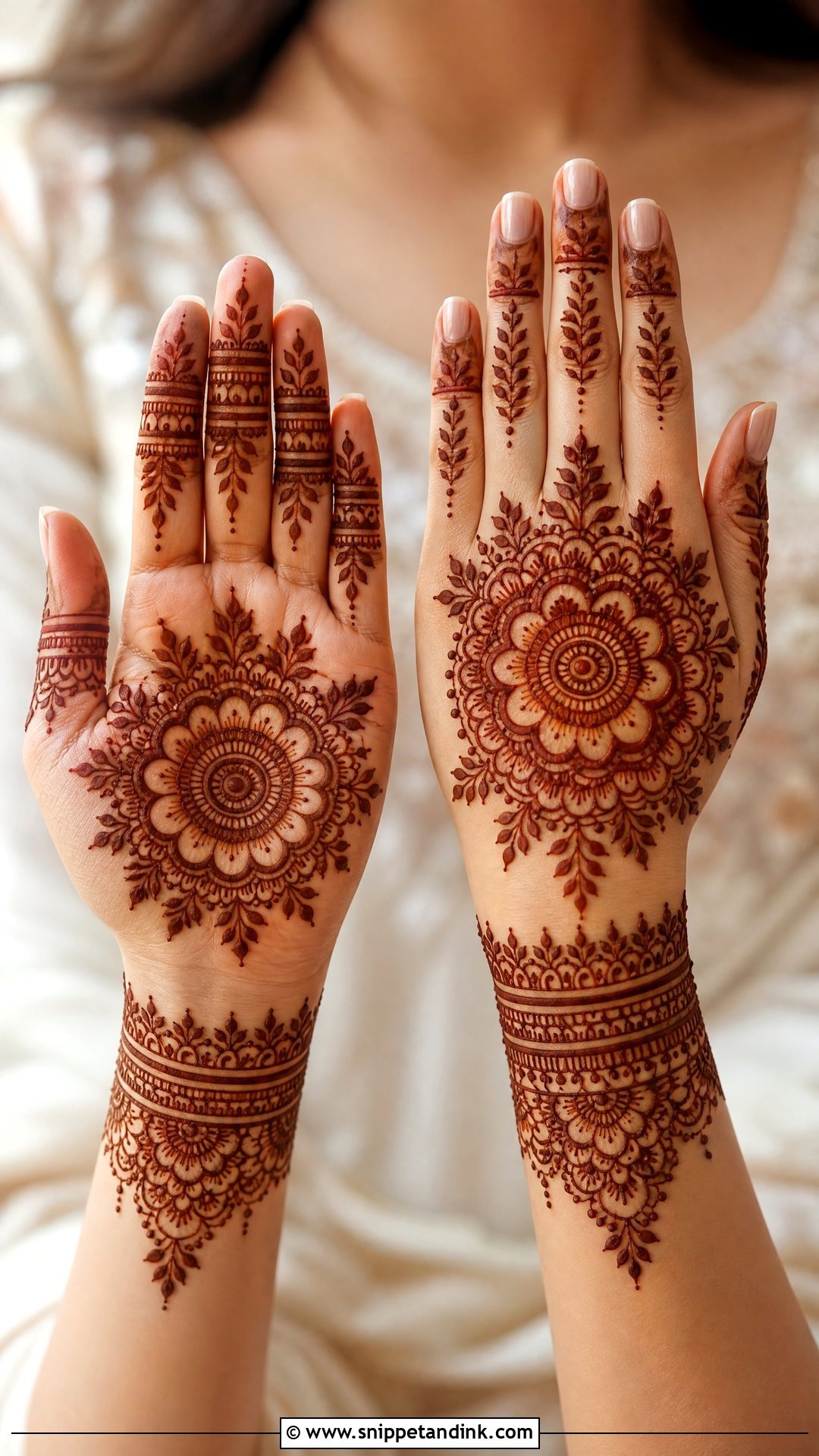
A mandala gives the hand a centre point, with layers of petals circling outward from the middle of the palm or back hand. From there I extend leafy fingers, bracelet bands and soft floral borders at the wrist. The hard part is keeping the circle round; a mandala drawn on a cupped or tilted palm comes out oval, so I ask brides to keep the hand flat and still while I map the rings. It scales well from a small palm-only version to full coverage.
7. Floral Jaali Bridal Mehndi Design
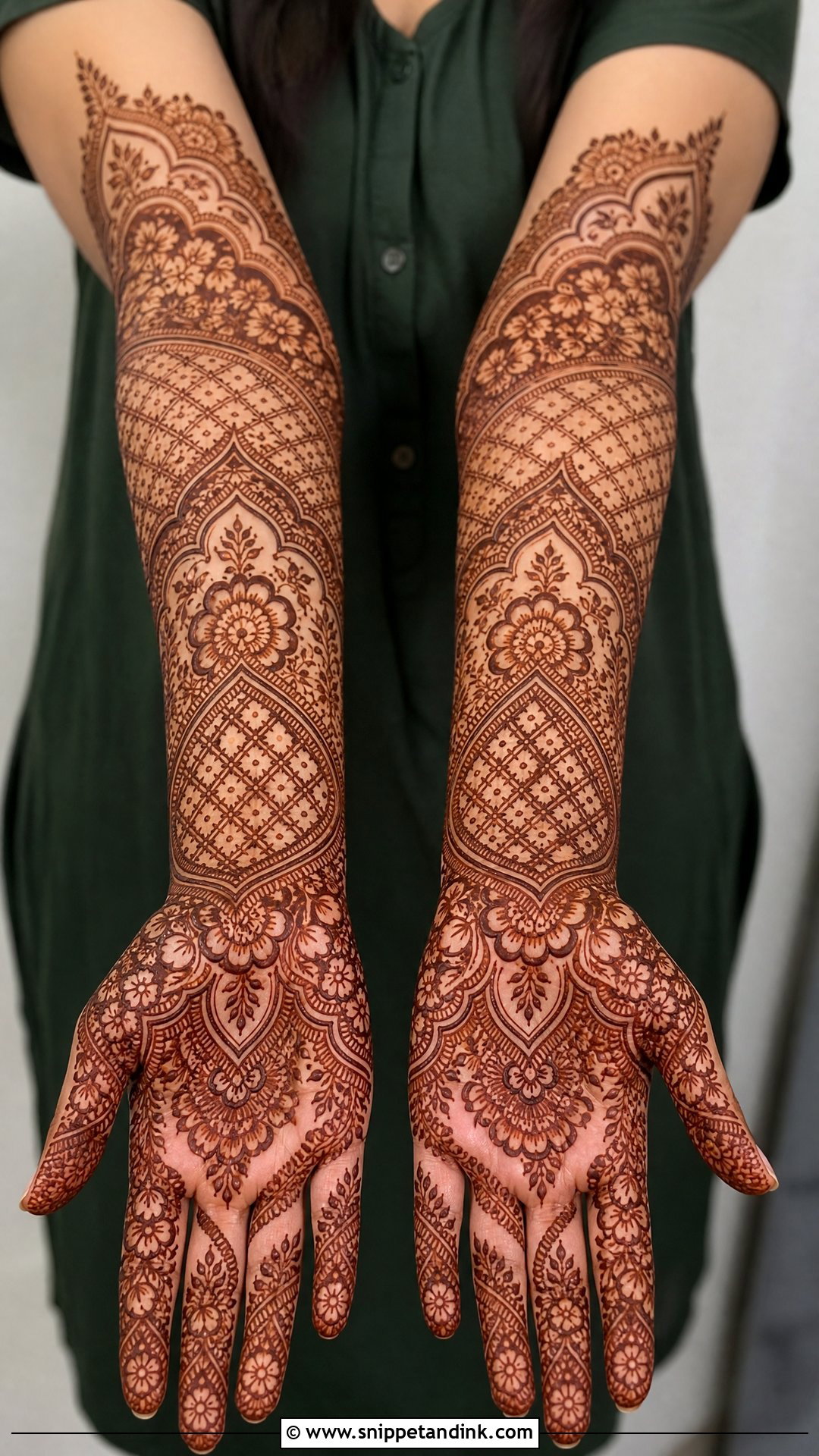
Jaali is a net of crossing lines, and pairing it with flowers gives you geometry and curves on the same hand. The mesh can cover the palm, back hand, wrist or forearm, with blooms along its edges or set inside chosen gaps. Even spacing is everything. If the lines drift closer together in one area, that section stains as a dark patch and the net loses its pattern. I mark a few guide points before filling the grid. It looks especially sharp with rings and hand jewellery.
8. Indo Arabic Floral Bridal Mehndi Design
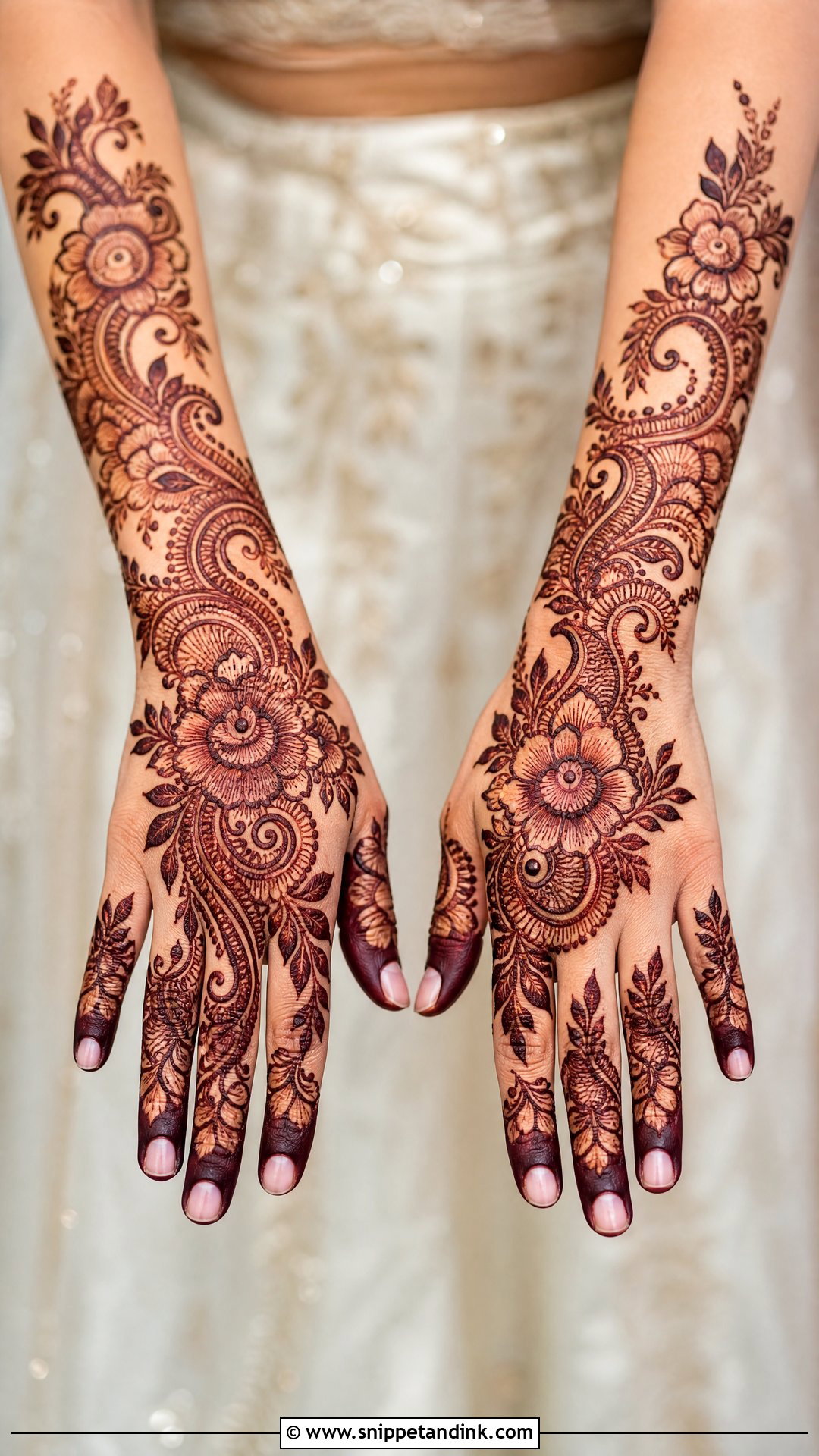
Indo Arabic floral bridal work borrows the open diagonal flow of Arabic henna and fills it with the fine detail of Indian bridal art: large flowers, paisleys, shaded leaves and filled fingertips. I usually keep the palm more detailed and leave the forearm more open, which saves time and still looks complete. This is the layout I suggest when a bride wants something readable in photos but not packed. There’s room inside the flowers for initials or a small symbol.
9. Back Hand Floral Bridal Mehndi Design
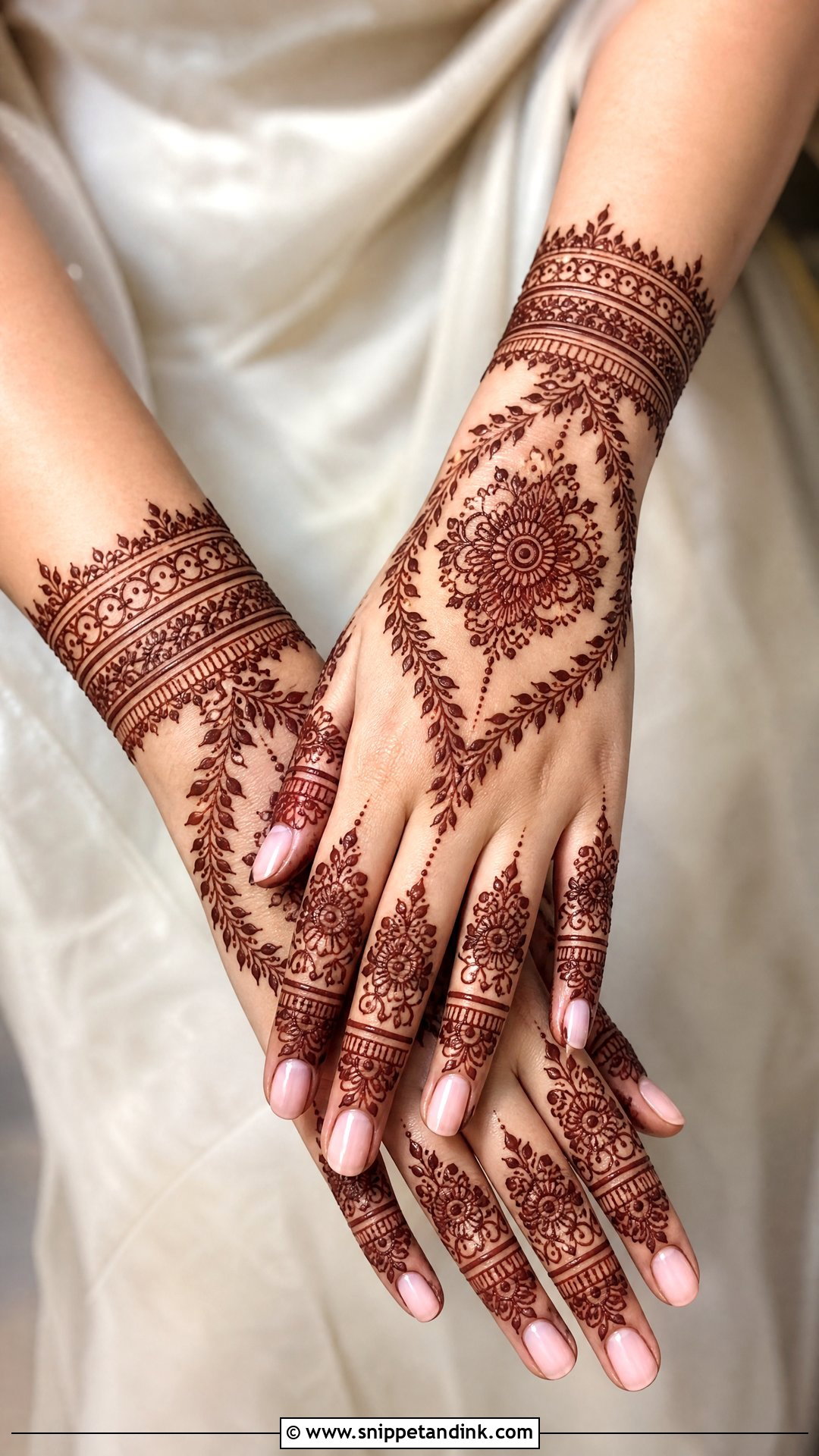
Back hand floral bridal work deserves as much planning as the palm, because the back of the hand is what shows in ring shots and jewellery photos. I usually draw a central flower, a bracelet band at the wrist, vines and decorated fingers. Tell me about your jewellery first. A heavy haath phool covers the middle of the hand, so I keep the centre open and put the detail on the fingers and wrist instead. With simple rings, fuller floral coverage works better.
10. Front Hand Floral Bridal Mehndi Design
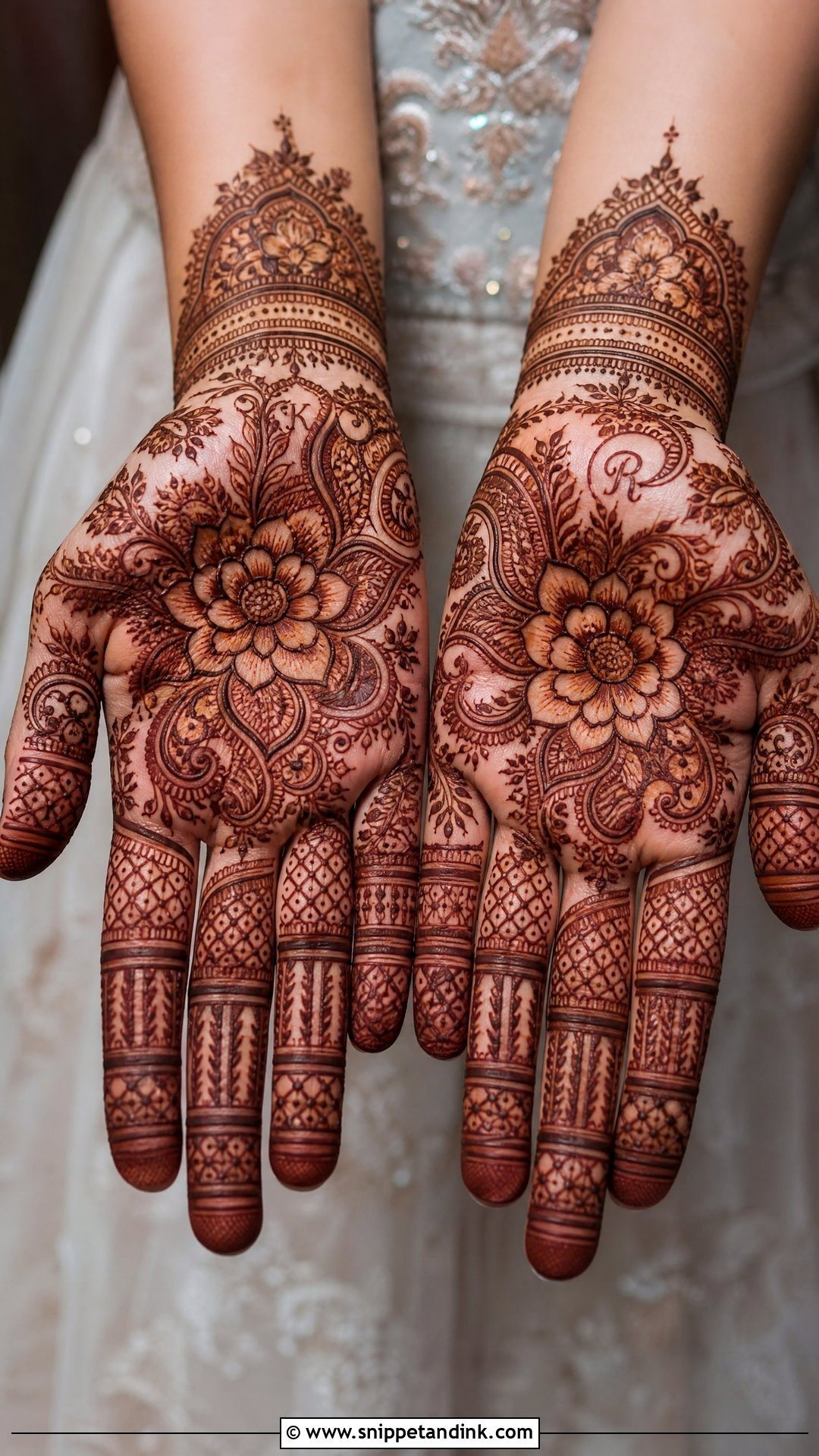
The palm stains darker than anywhere else because the skin there is thicker, so palm florals tend to come out the richest colour. I put large flowers in the centre, leafy paisleys along the sides and detailed finger work around them. Don’t let your artist go too small. Very fine petals can merge once the stain deepens, while larger blooms stay clear with fine filler around them. Lotus, rose, mandala or hidden initials all fit well here.
11. Minimal Floral Bridal Mehndi Design
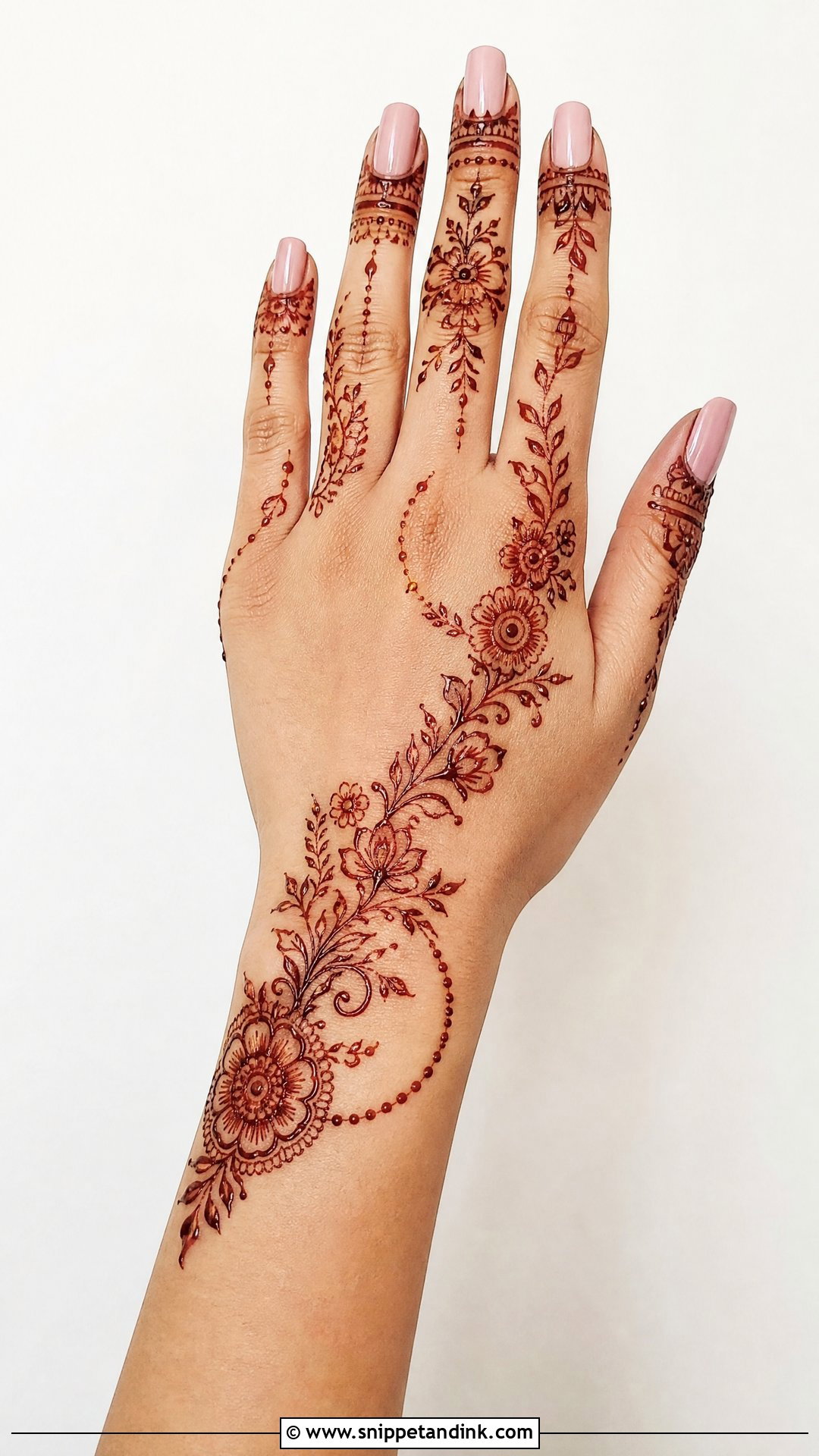
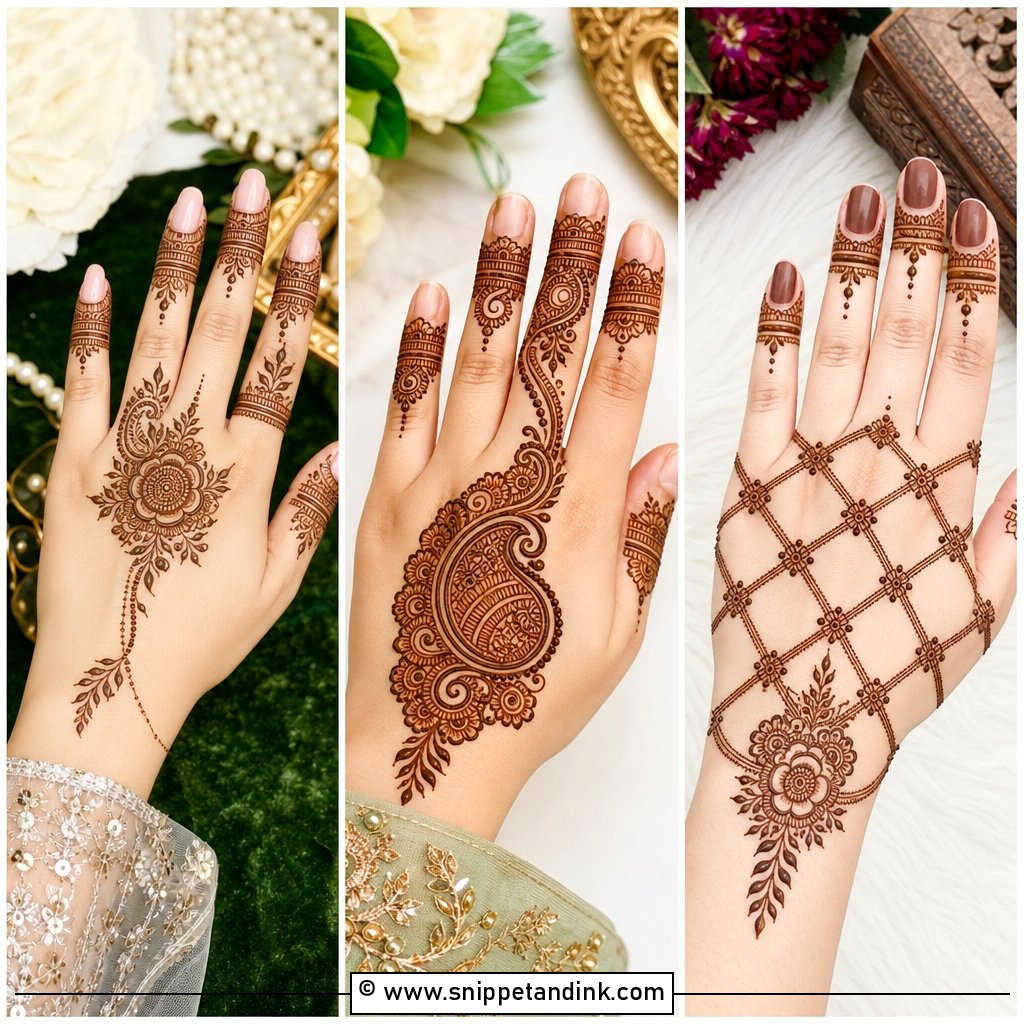
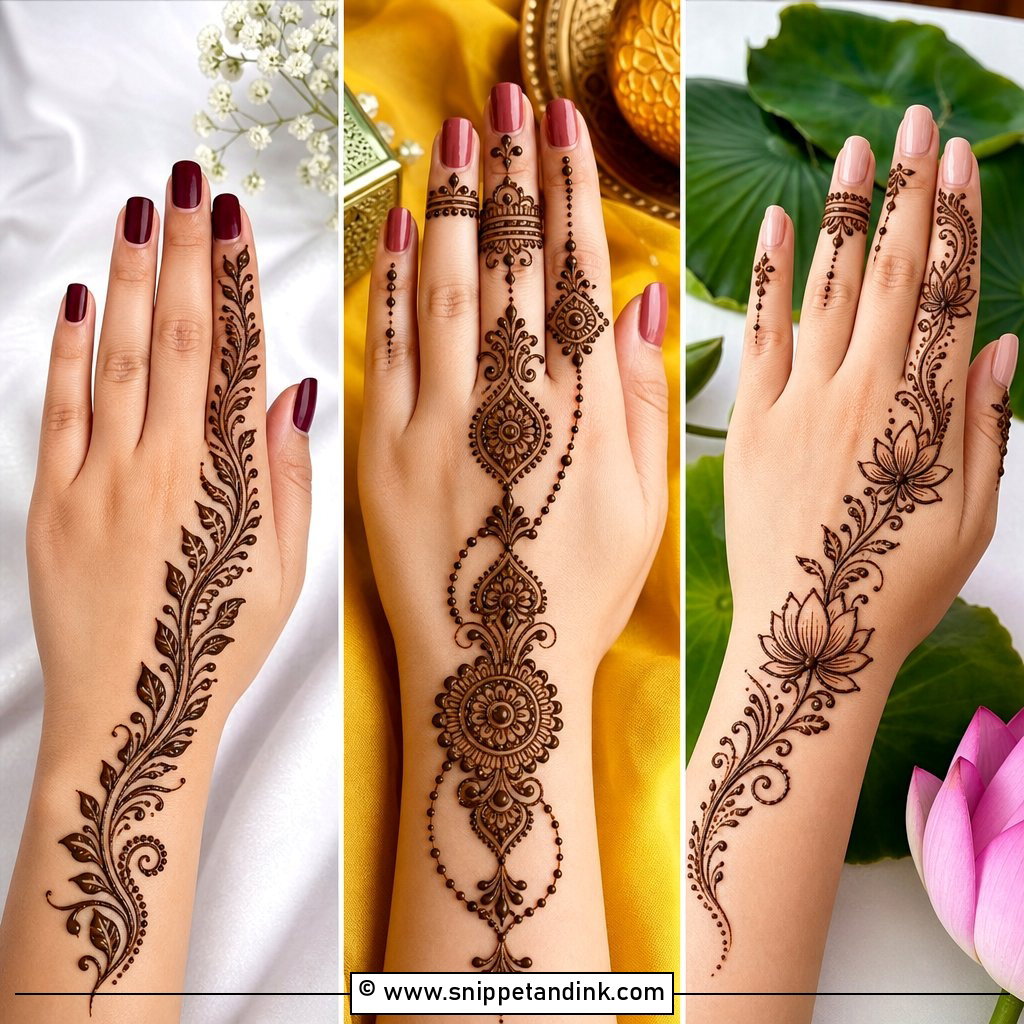
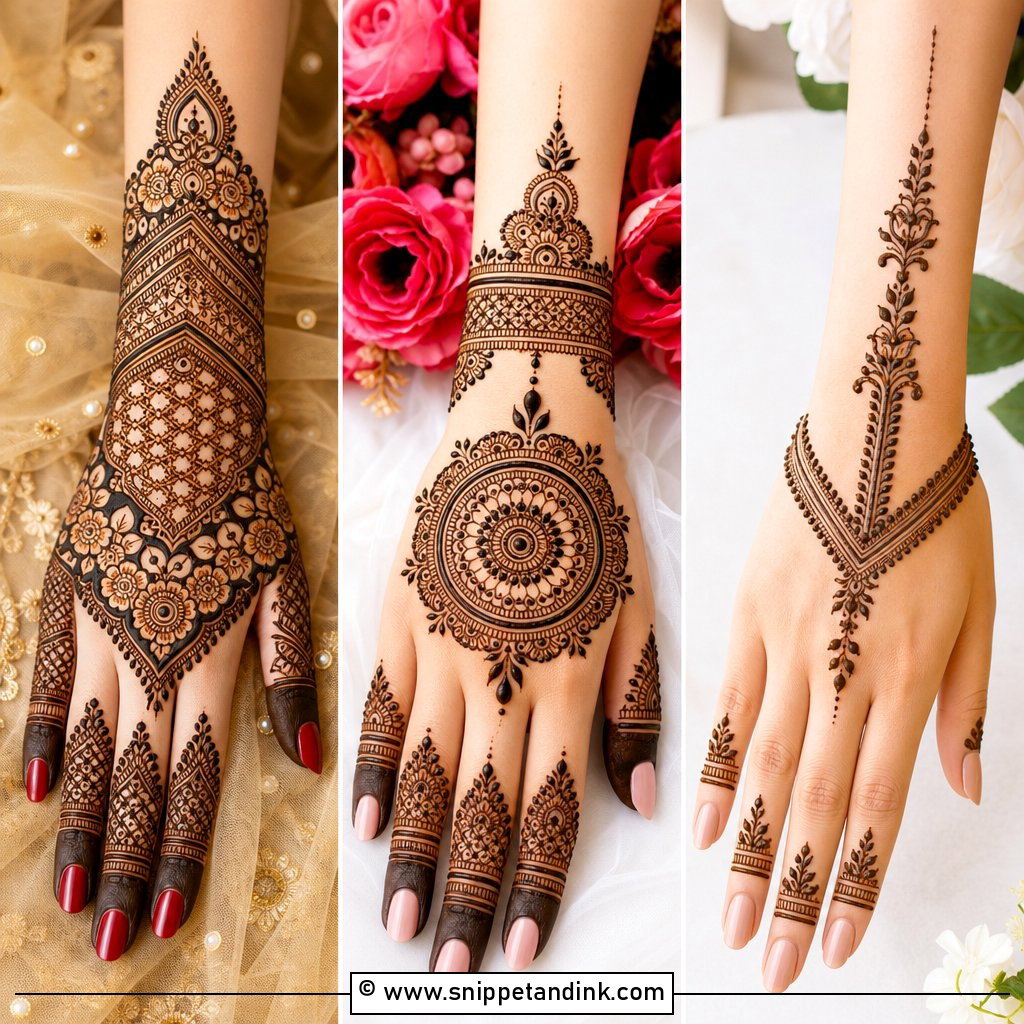
Minimal floral work looks good when the lines are crisp, and that’s harder than it sounds; with less henna on the skin, every wobble shows. I draw one clean flower trail from the wrist toward a finger, a few vines and light finger accents, then add tiny dots, leaves or a small mandala so it still reads as bridal. It suits modern outfits and smaller ceremonies. It’s also kind to brides who can’t sit still for hours or need their hands free soon after.
12. Heavy Floral Bridal Mehndi Design
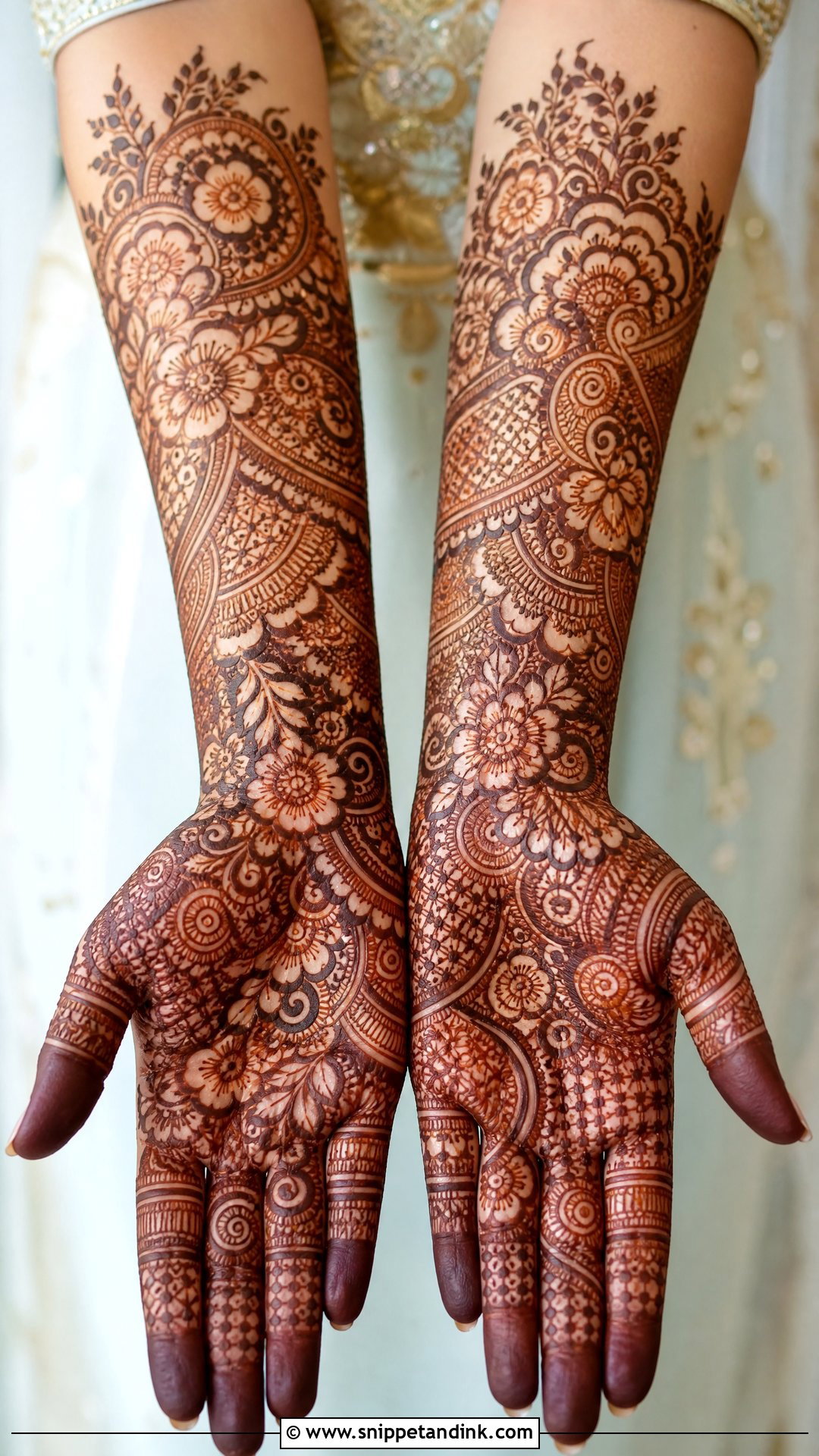
Heavy bridal coverage fills the fingers, palms, wrists and forearms with layered flowers, vines, paisleys, mandalas and fillers. Without a plan it looks busy, so I divide the arm into zones: a floral palm, a jaali wrist, a vine forearm. Each zone gets its own job and the eye can rest between them. It pairs with red, maroon, gold or jewel-toned outfits. Be ready for a long sitting, often several hours for both hands, and eat before we start.
13. Simple Floral Bridal Mehndi Design
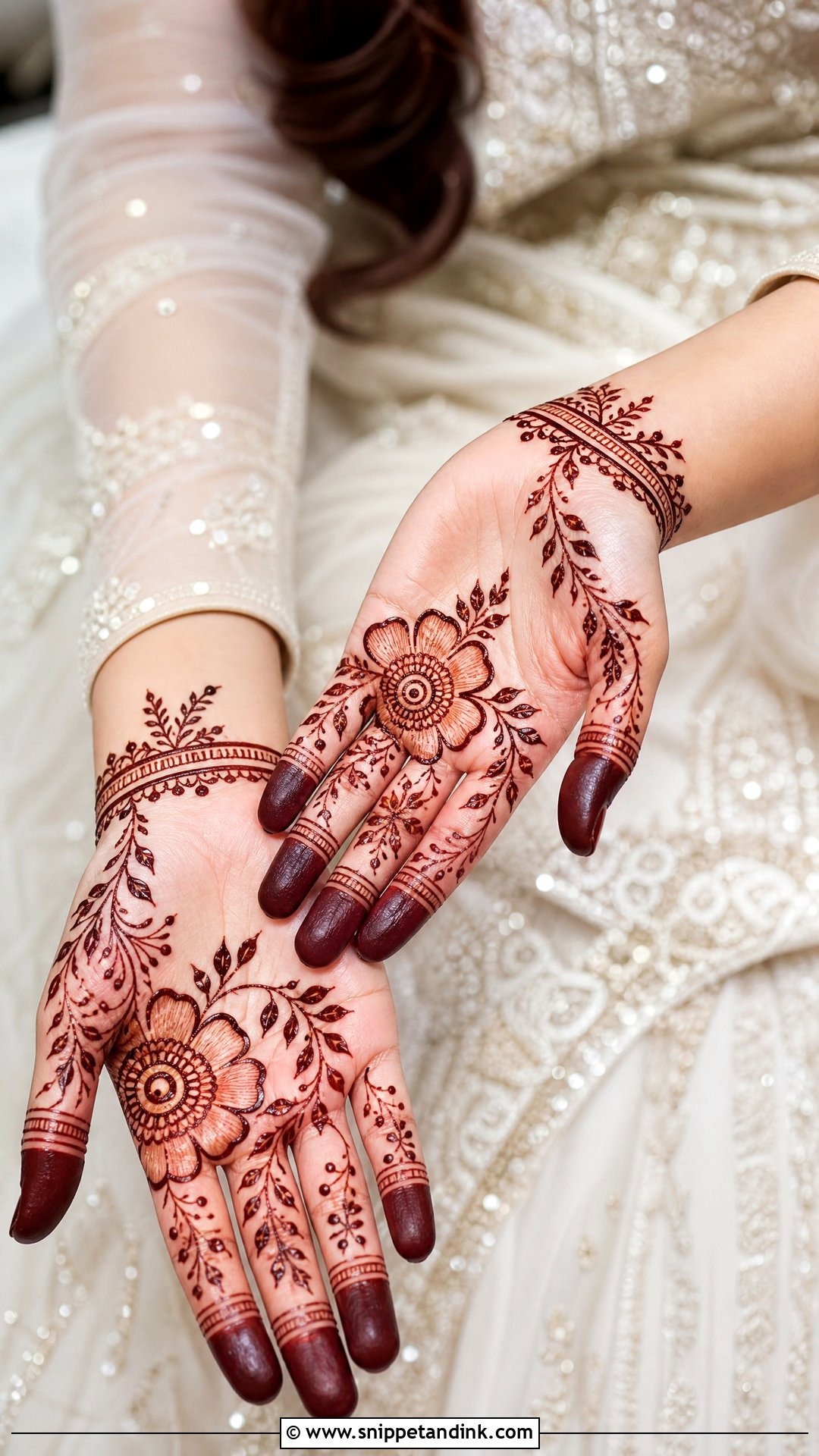
Simple floral work still looks bridal as long as the placement covers the whole hand: one large palm flower, a few curved vines, decorated fingers and a light wrist border. I draw thicker flower outlines and plain leaf shapes here, since thin lines on a sparse design can fade into the skin after a week. It’s a good fit for intimate weddings, civil ceremonies, and brides who find dense henna uncomfortable or itchy to sit with.
14. Floral Peacock Bridal Mehndi Design
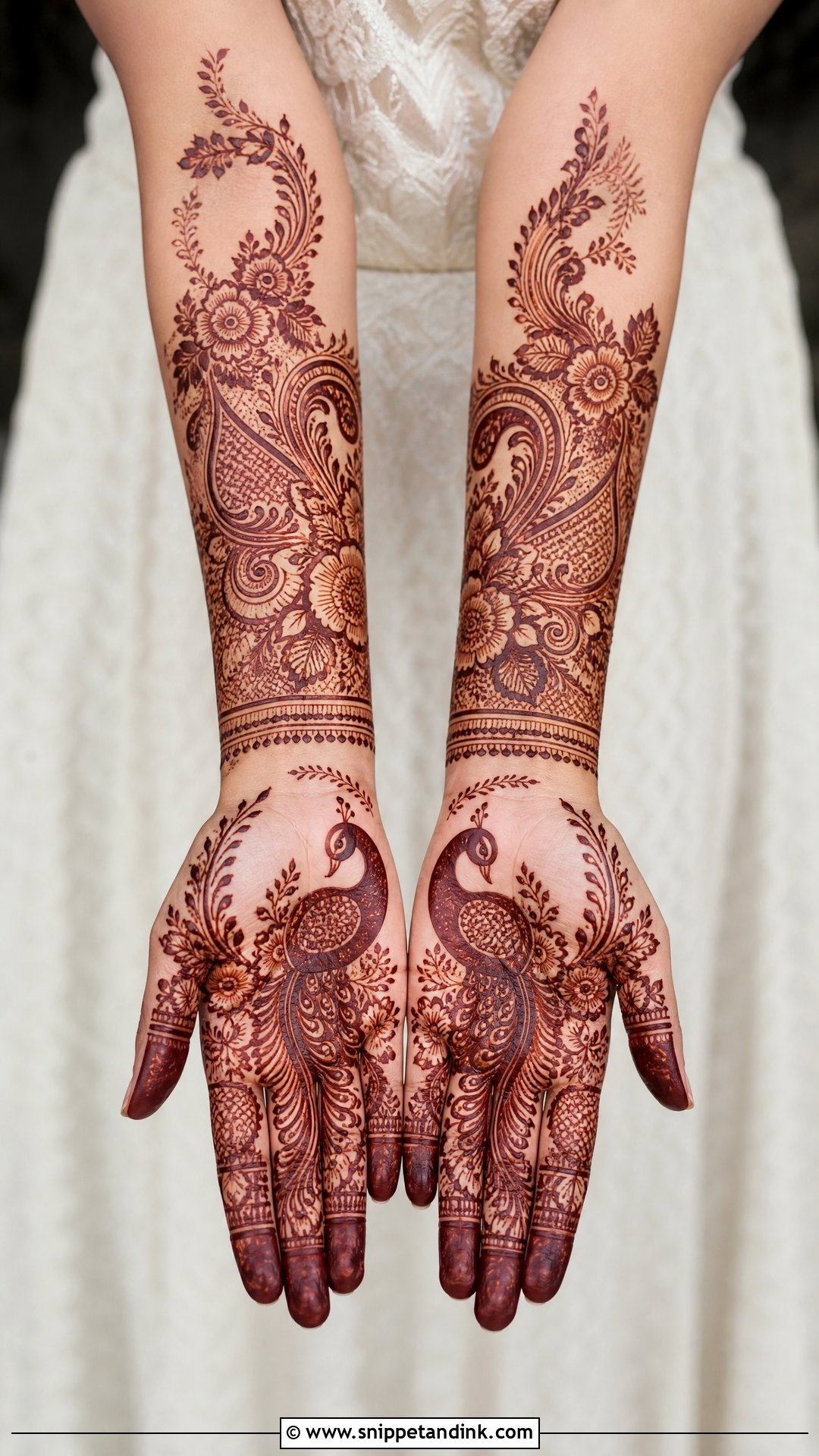
The peacock adds movement and a strong focal point; the flowers around it soften it. I usually place the bird along the forearm or palm, with floral vines curling around its feathers, and keep matching petals and dots on the fingers. The common mistake is filling every feather with pattern, which turns the peacock into a dark blob once it stains. I leave the body and some feathers partly open so the shape stays clear in close-up photos.
15. Floral Paisley Bridal Mehndi Design
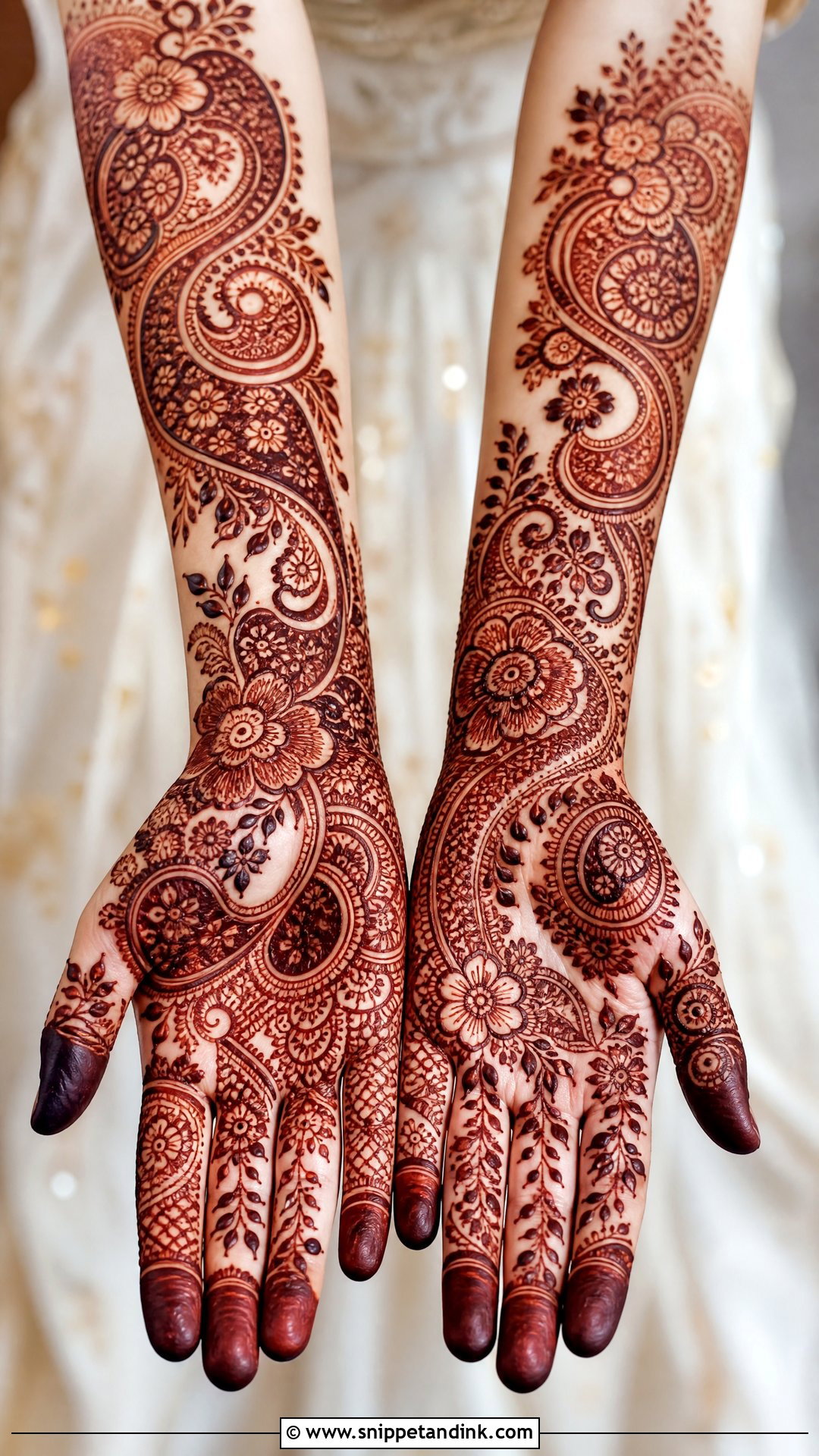
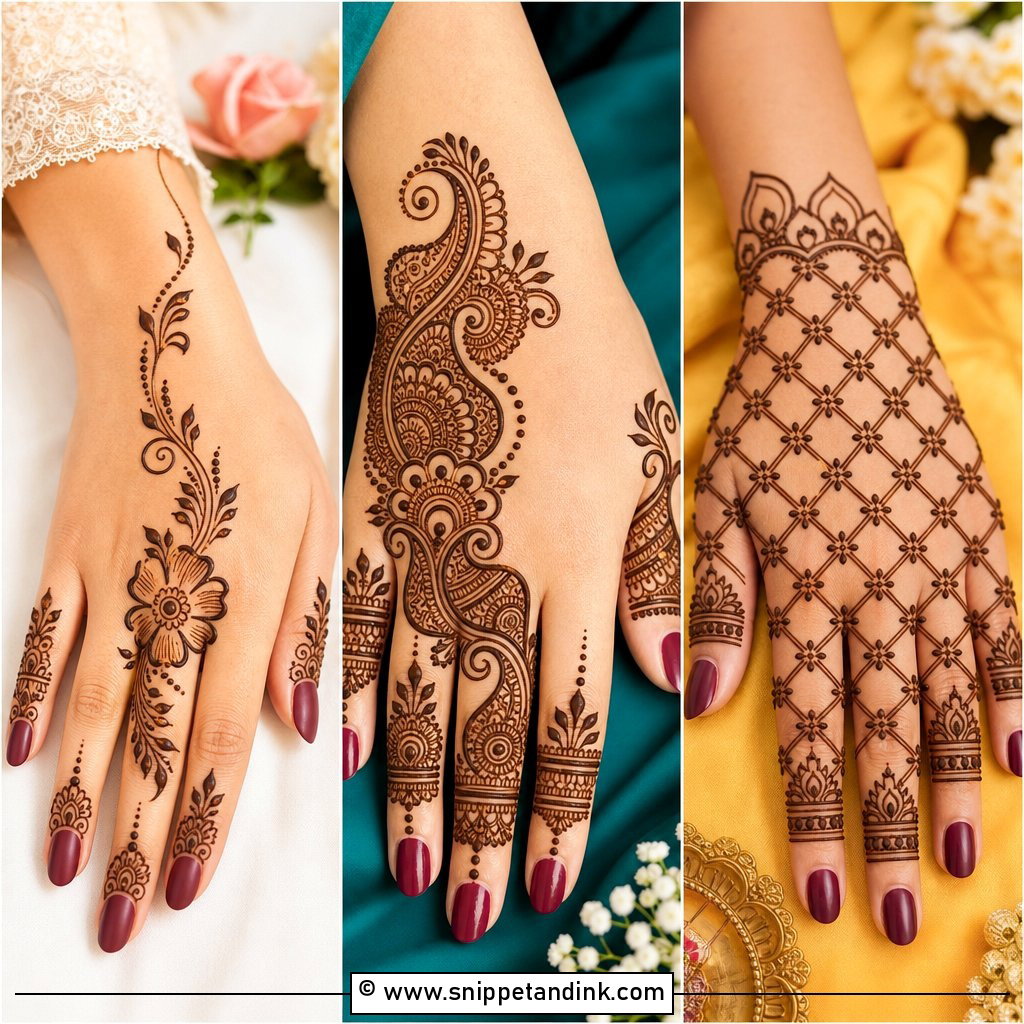
Paisleys are the most forgiving motif I draw, because their curve can stretch or shrink to fit any finger length or palm width. Paired with flowers, they cover the palm, wrist and forearm with constant movement. Large paisleys can hold tiny flowers inside; smaller blossoms fill the gaps between. I finish the fingers with mini paisleys, leaves and shaded tips. It works dense and traditional or open and modern, which is why it’s my go-to when a bride can’t decide.
16. Floral Bracelet Bridal Mehndi Design
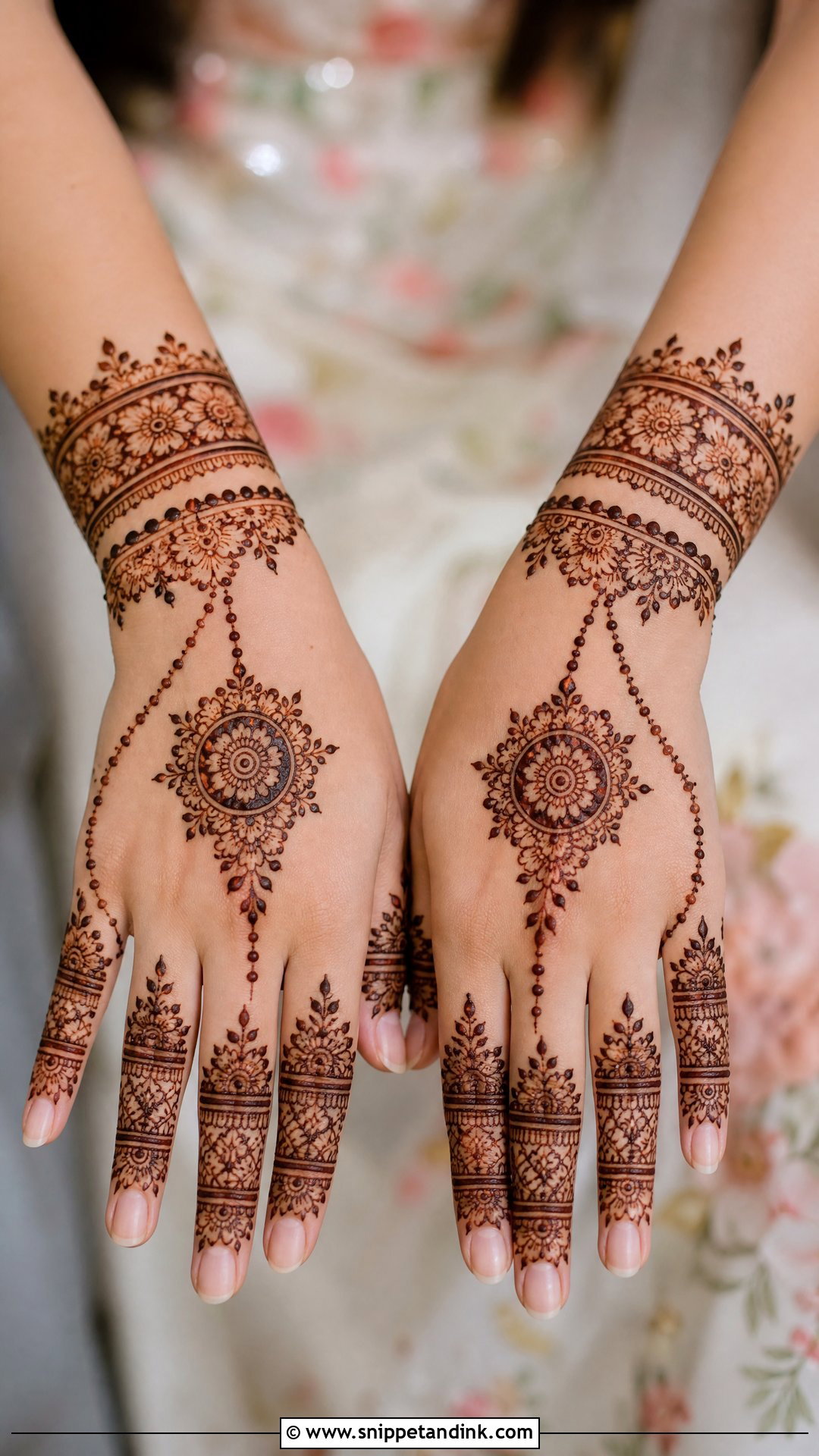
A floral bracelet bridal mehndi layout imitates jewellery: floral wrist bands, chain-like lines running up the hand, ring patterns on the fingers and a flower medallion in the centre of the back hand. Because the arm stays mostly bare, it takes far less time. I suggest it for pre-wedding functions and for brides wearing light jewellery. Avoid it if you’re wearing a real haath phool on the same hand; the two compete.
17. Moroccan Floral Bridal Mehndi Design
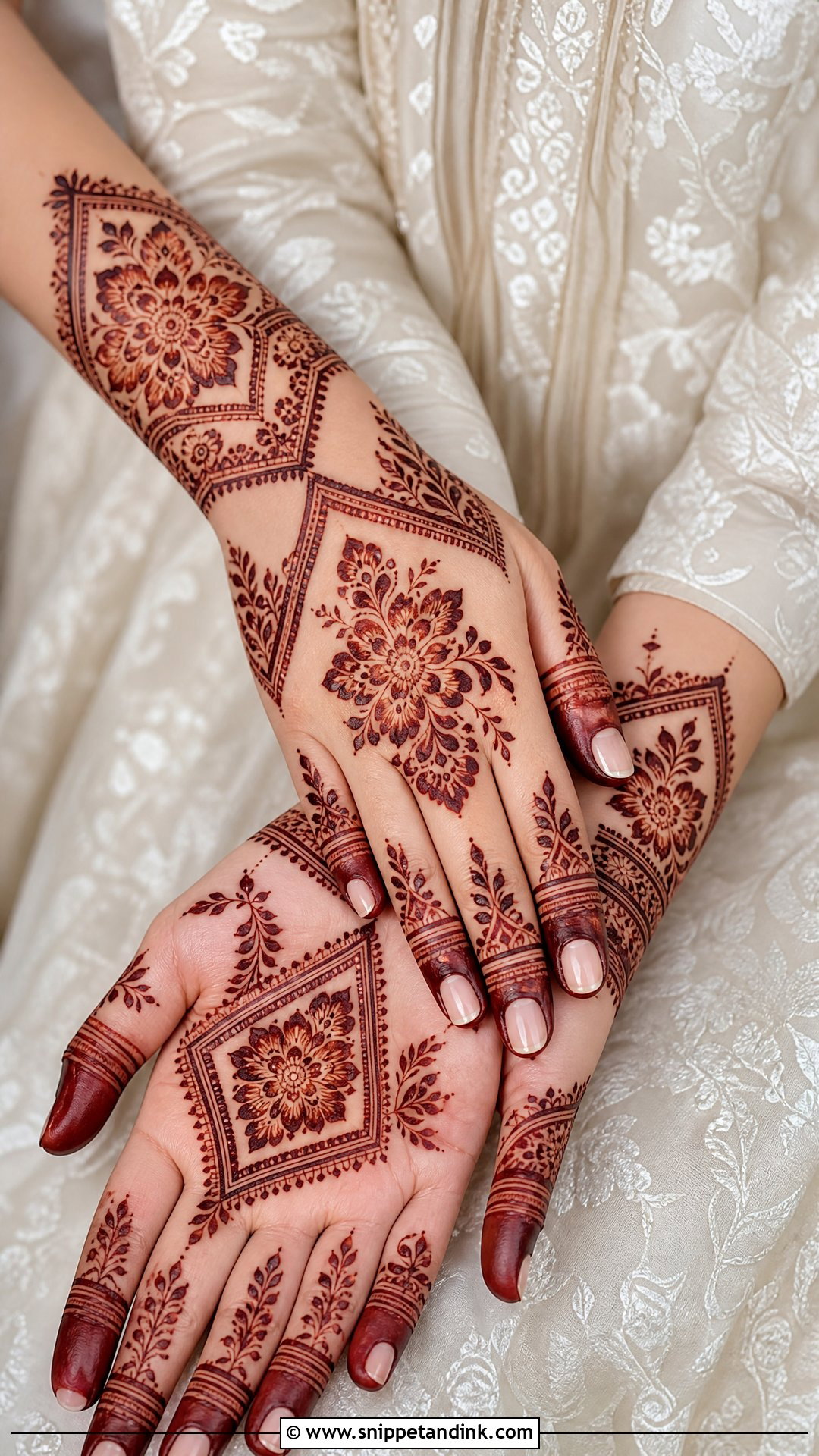
Moroccan-inspired work uses diamonds, angular borders and straight panels, and flowers dropped inside those panels make it feel bridal. It’s unusual, which is the appeal for brides who don’t want a standard Indian or Arabic layout. Straight lines on henna are less forgiving than curves, so I work slowly and keep the cone pressure even. Crisp lines and regular spacing are what make it look sharp rather than shaky.
18. Gulf Floral Bridal Mehndi Design
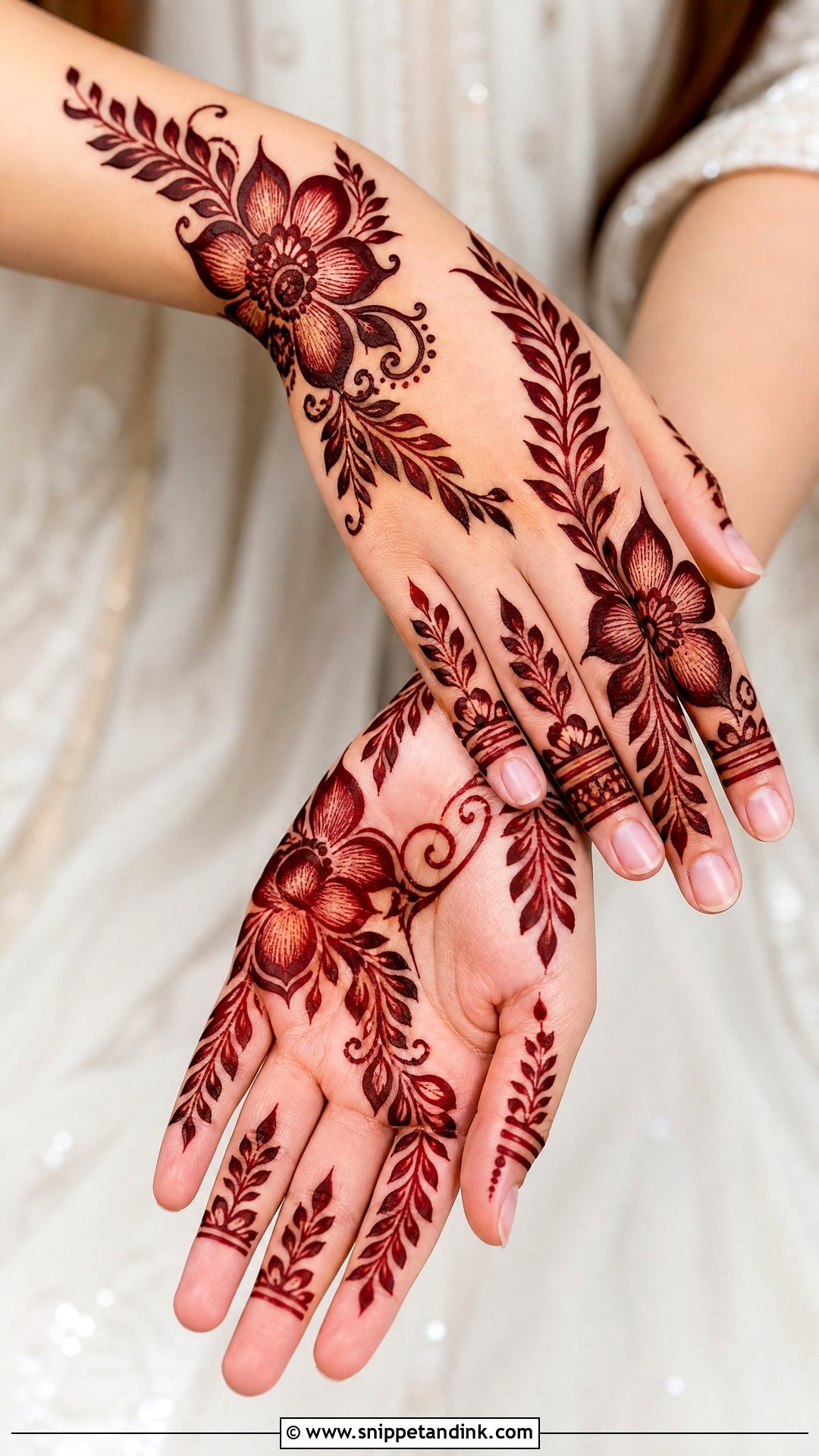
Gulf floral bridal mehndi, often called Khaleeji style, uses big flower clusters, thick confident outlines, shaded petals and plenty of open skin. Vines flow from the clusters toward the wrist and fingers. The heavy outline is what makes it read so clearly in photos, and it needs a well-mixed paste that flows without breaking. It suits gowns and shararas as well as lehengas, and it feels rich without full coverage.
19. Personalized Floral Bridal Mehndi Design
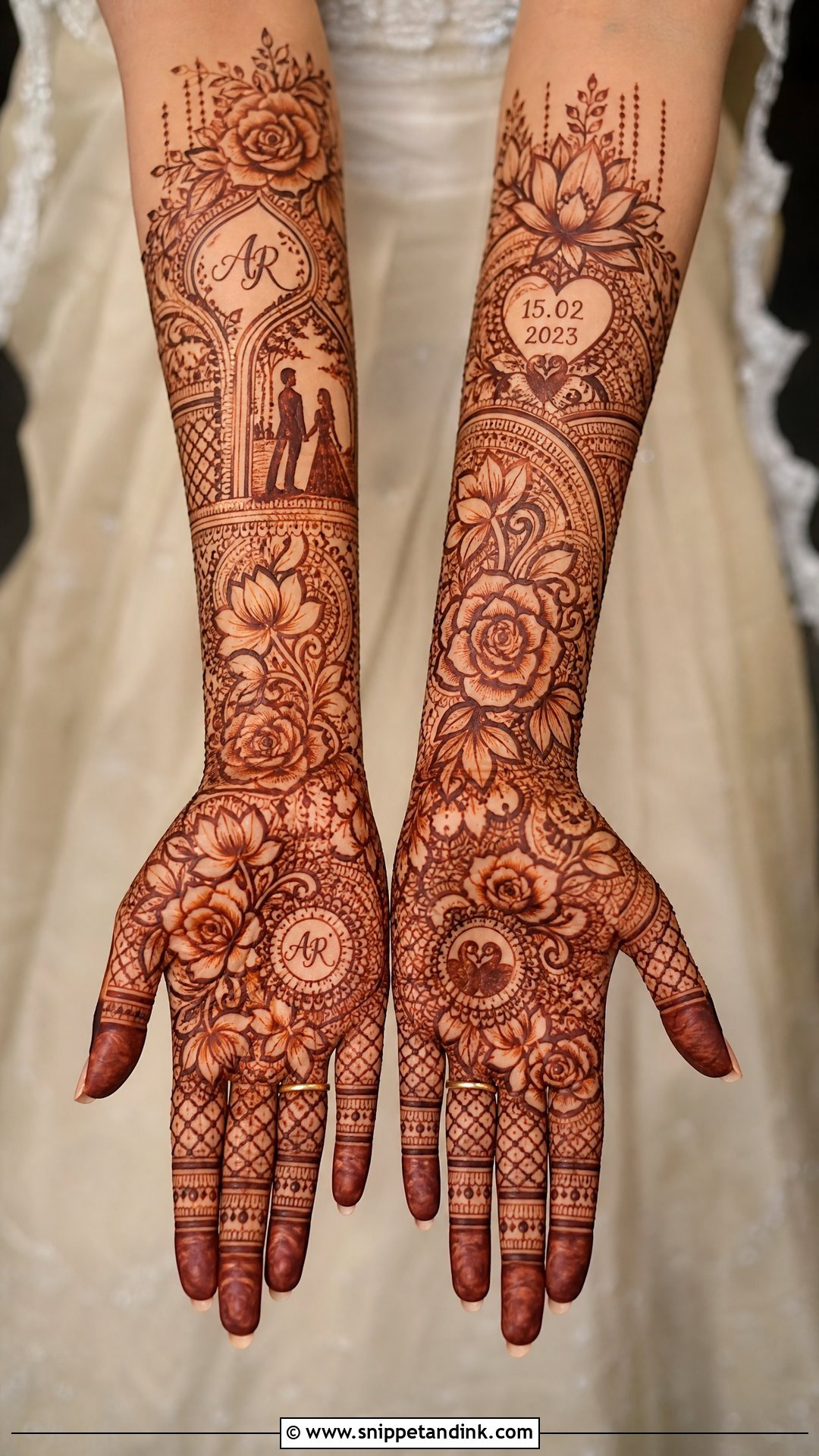
Personal details turn the design into a small story: initials, a wedding date, a couple motif or a pattern borrowed from your outfit, hidden inside roses, lotuses, vines or mandalas. I tuck names into petals, paisleys or a wrist band so they’re found rather than shouted. Agree the spelling in writing before the sitting; I’d rather check twice than redraw a letter on the bride’s palm. Hidden initials are also a fun game for the groom to look for.

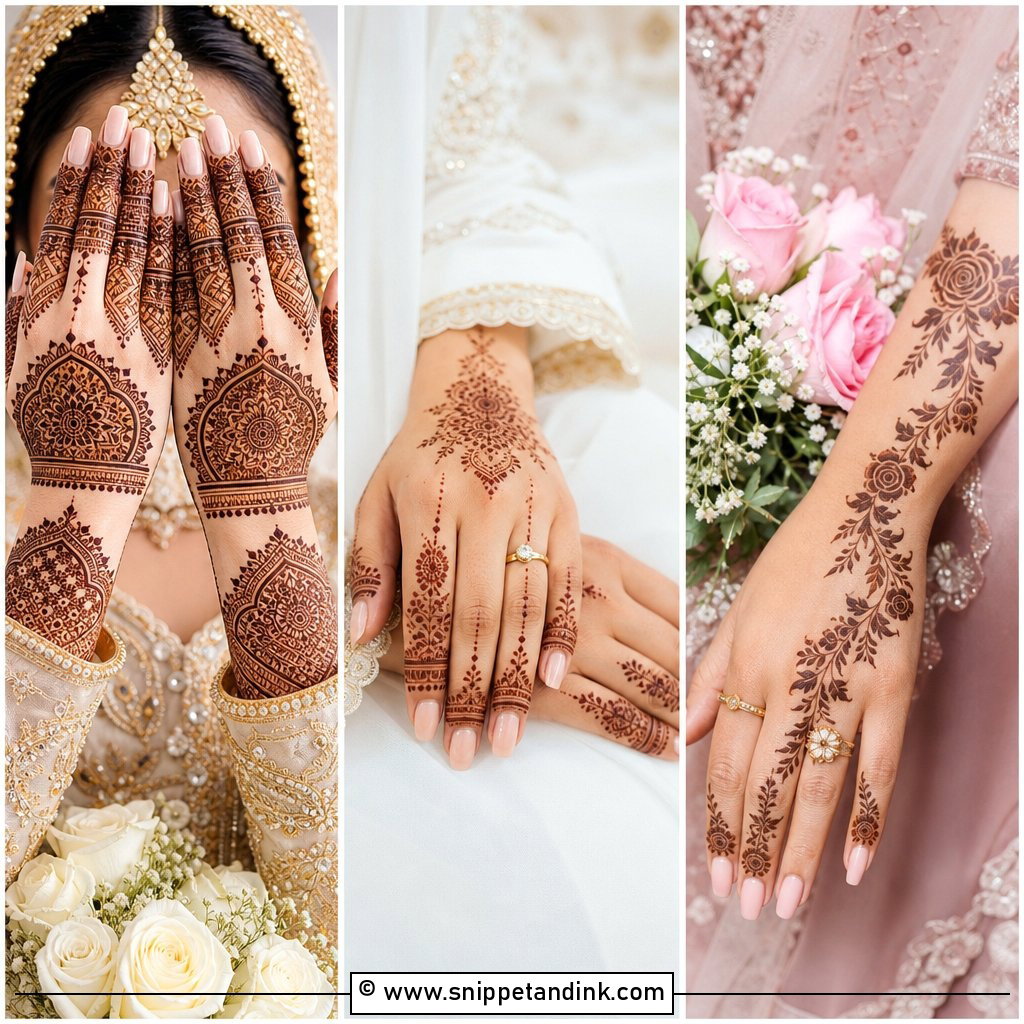
20. Modern Floral Bridal Mehndi Design
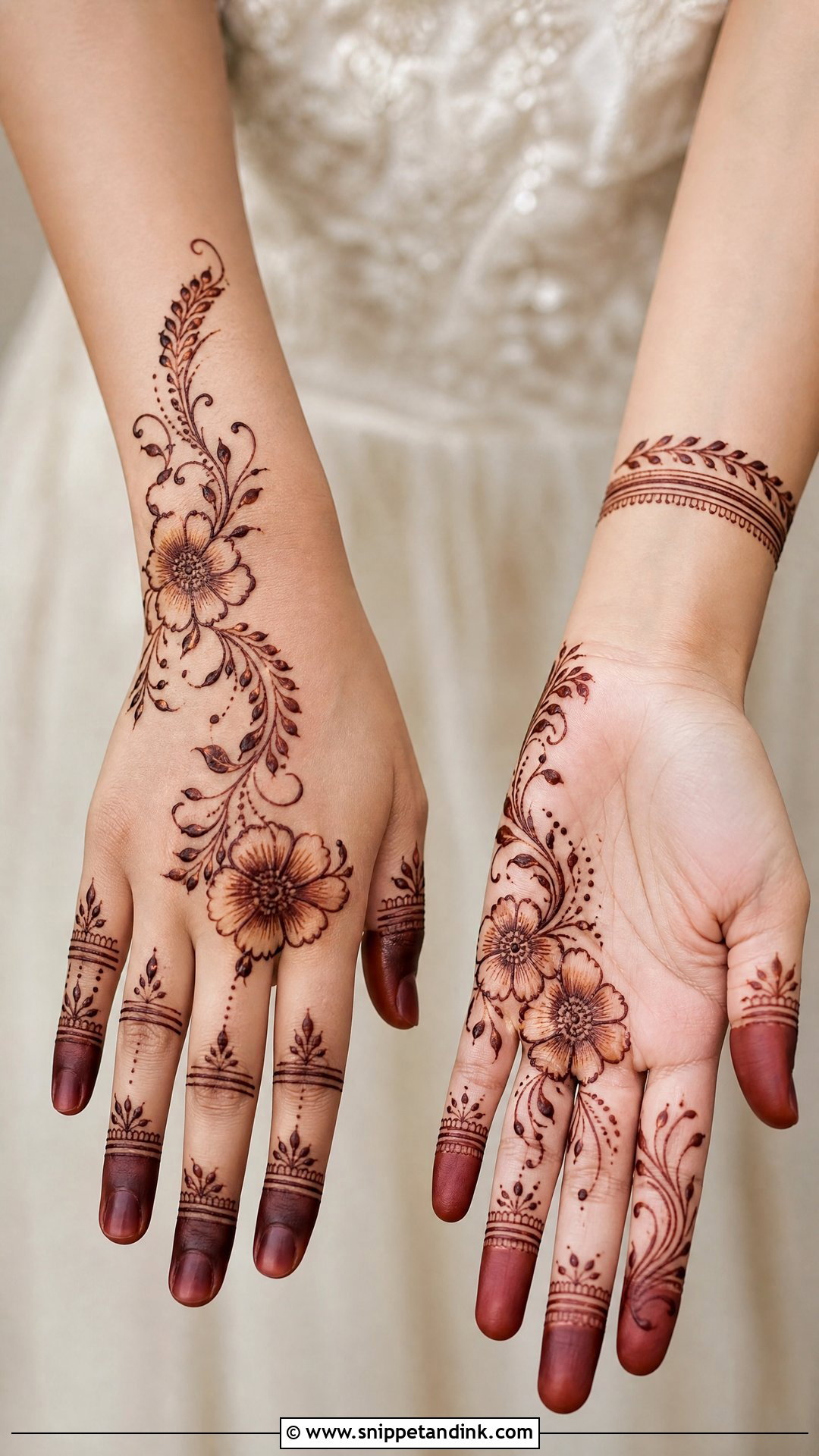
Modern floral work leans on oversized flowers, negative space, fine vines, bracelet accents and asymmetric placement on the palm and back hand. It looks fresh with pastel outfits, minimal jewellery and soft makeup. Thin lines and neat petals are essential, because a modern layout has nowhere to hide uneven work. Ask to see your artist’s portfolio of this style specifically; someone skilled at dense traditional coverage isn’t automatically comfortable with open designs.
From Orange Paste Marks to Deep Maroon Petals
When the dried paste first comes off, the stain is bright orange. That’s normal. Henna oxidises over the next day or two and deepens toward reddish brown or maroon, usually peaking around forty-eight hours. Fine floral detail looks its best at that peak, which is why timing the application matters so much.
What helps the colour develop
Leave the paste on as long as you comfortably can, ideally overnight. Once it’s dry, I dab on a light lemon and sugar mix so it stays stuck to the skin. Keep your hands warm; cold hands give a paler stain. Scrape the dry paste off rather than washing it, and keep water away for as long as possible afterward, ideally until the next day.
Why one area stains lighter
Palms and fingertips always stain darkest and forearms lightest, because the skin is thicker on the hand. Don’t panic if your wrist band looks paler than your palm flower. It’s skin, not a mistake, and a balanced design accounts for it by putting heavier detail where the colour will be strongest.
Matching the Floral Layout to Your Sleeves, Jewellery and Patience
Flowers fit alongside mandalas, paisleys, jaali, peacocks, vines and bracelet patterns, so there’s a floral version of every coverage level. Before you settle, think about your sleeve length, how much jewellery will sit on your hands, and honestly how long you can sit still. Full-hand Indian florals give the classic bridal hand; Arabic, Gulf or minimal layouts are quicker and lighter. Book a short trial patch with your artist, too, so you can see how your skin stains before the real day.
You'll Like These Ideas:




Leave a Reply