
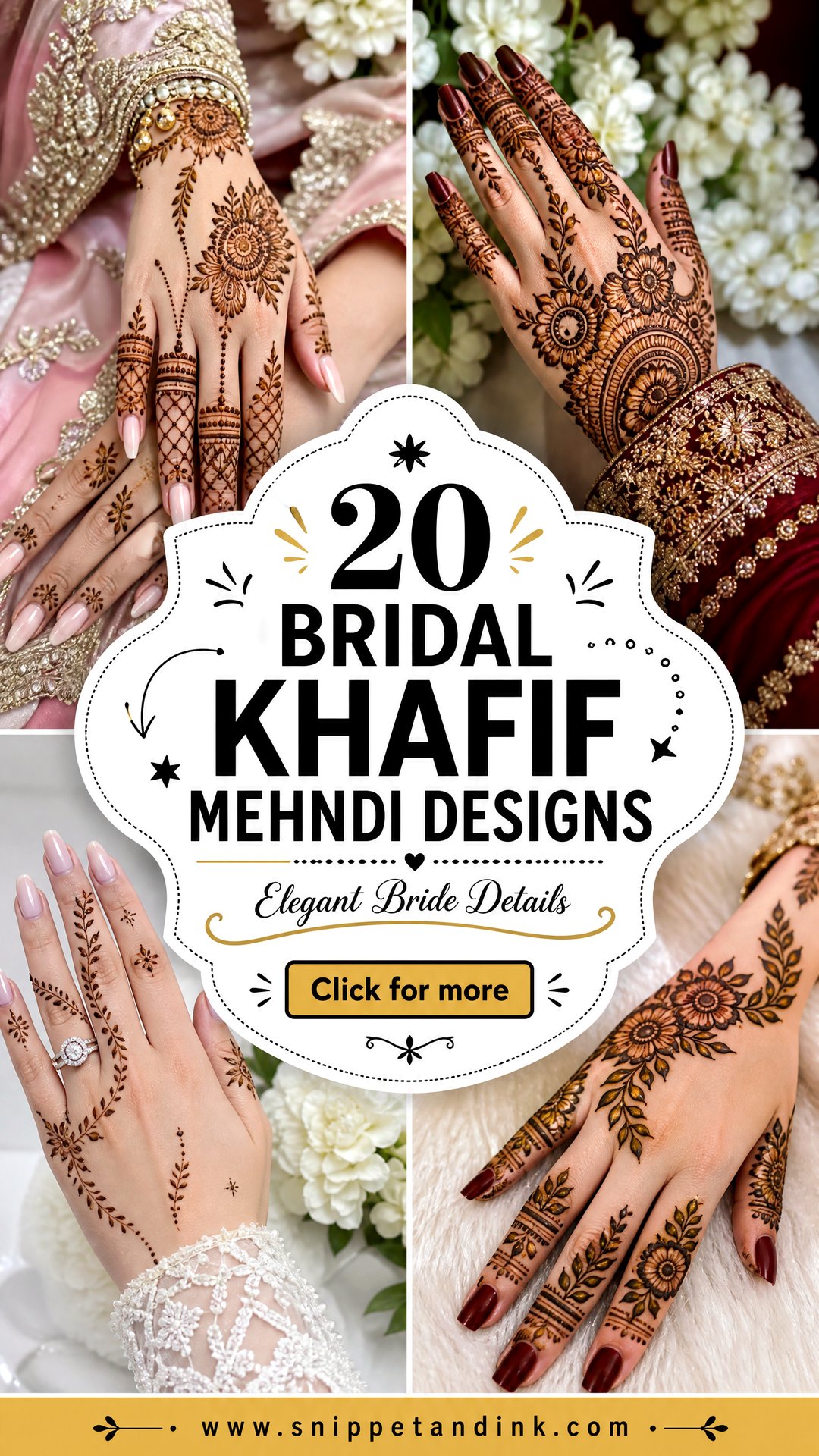
Khafif is Arabic for light, and that’s exactly what these designs are: bridal wedding henna built from fine lines, floral trails, leafy detail and deliberate gaps rather than solid filling. I do more of these each season, mostly for nikah, receptions and smaller weddings, where the bride wants her rings and bangles to stay the focus. Light doesn’t mean quick or careless, though. With so much skin showing, every line is on display, so spacing and stain color decide whether it looks bridal or unfinished. The twenty layouts below cover full hands, palms, back hands, forearms and feet.
Thin Lines Need a Darker Stain Than Dense Ones
With heavy bridal mehndi, a slightly pale stain hides inside all that coverage. With khafif work it can’t. Fine lines on open skin look washed out if the color stays orange, so I put more care into stain development for these designs, not less.
- Apply one to two days before the main event, so the stain has time to move from orange to deep brown or maroon.
- Keep the paste on for six hours at least, overnight if you can, and seal it with lemon and sugar once it starts to dry.
- Keep your hands warm while the paste sits; cold hands develop color slowly.
- Avoid washing with soap for the first day, and scrape the dry paste off instead of rinsing it.
Ask your artist for natural henna paste. Chemical cones promise instant dark color, but they can irritate skin, and on an open design any reaction is right there in your ring photos.
1. Full Hand Bridal Khafif Mehndi Design
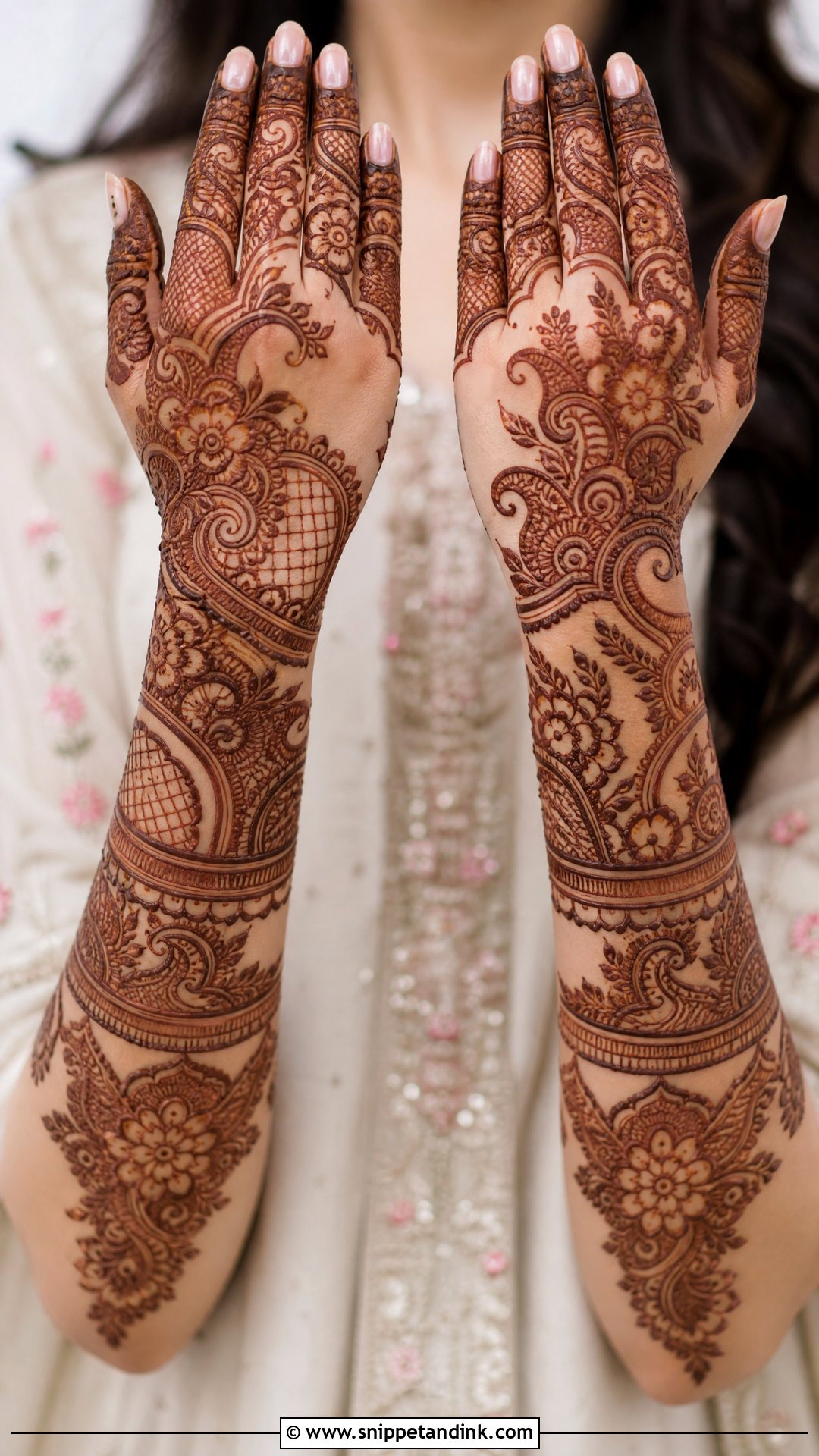
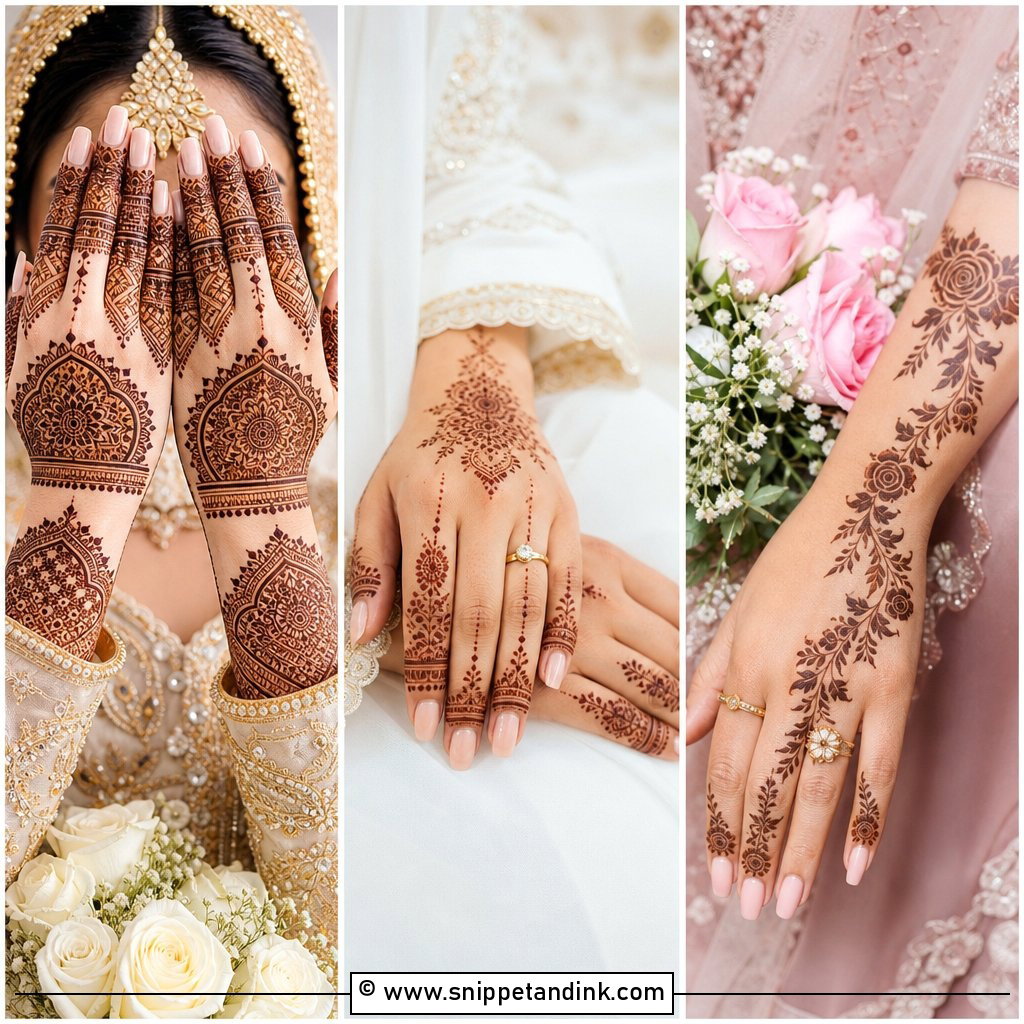
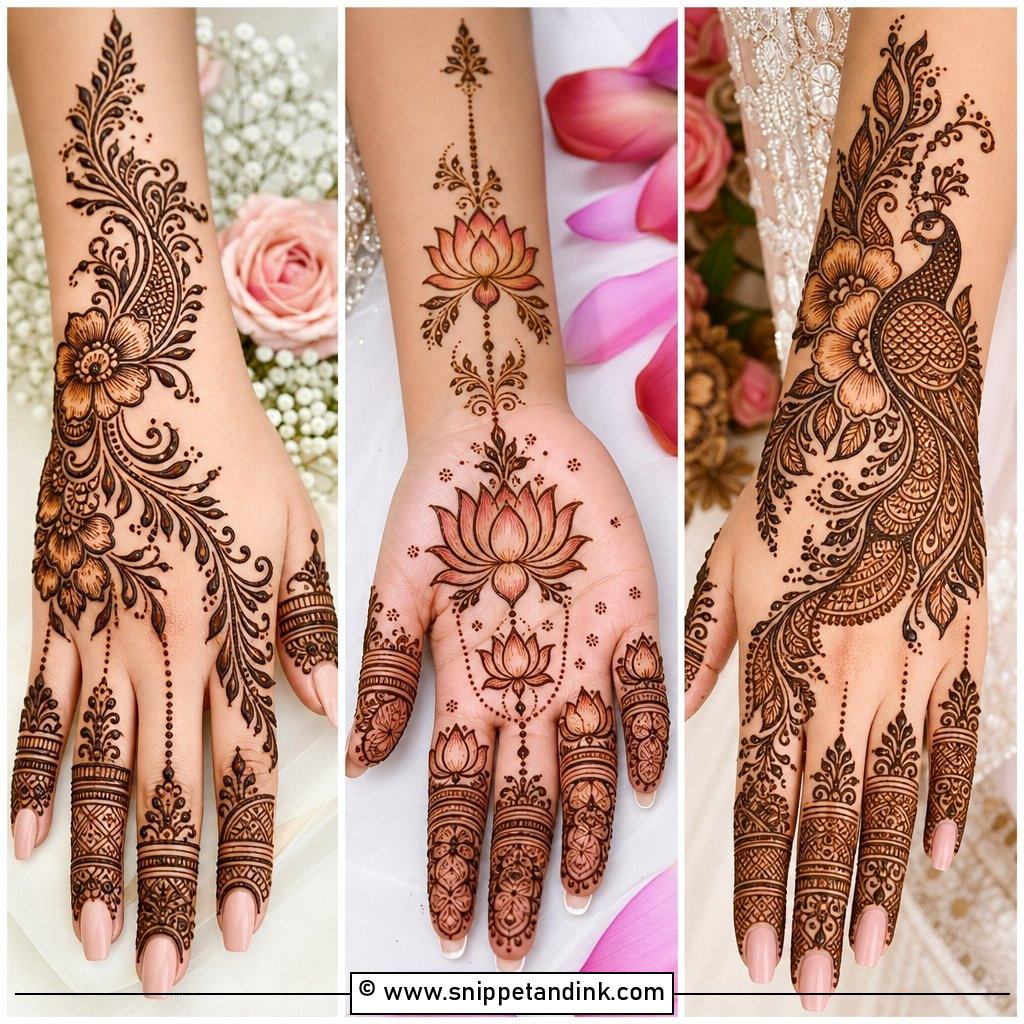
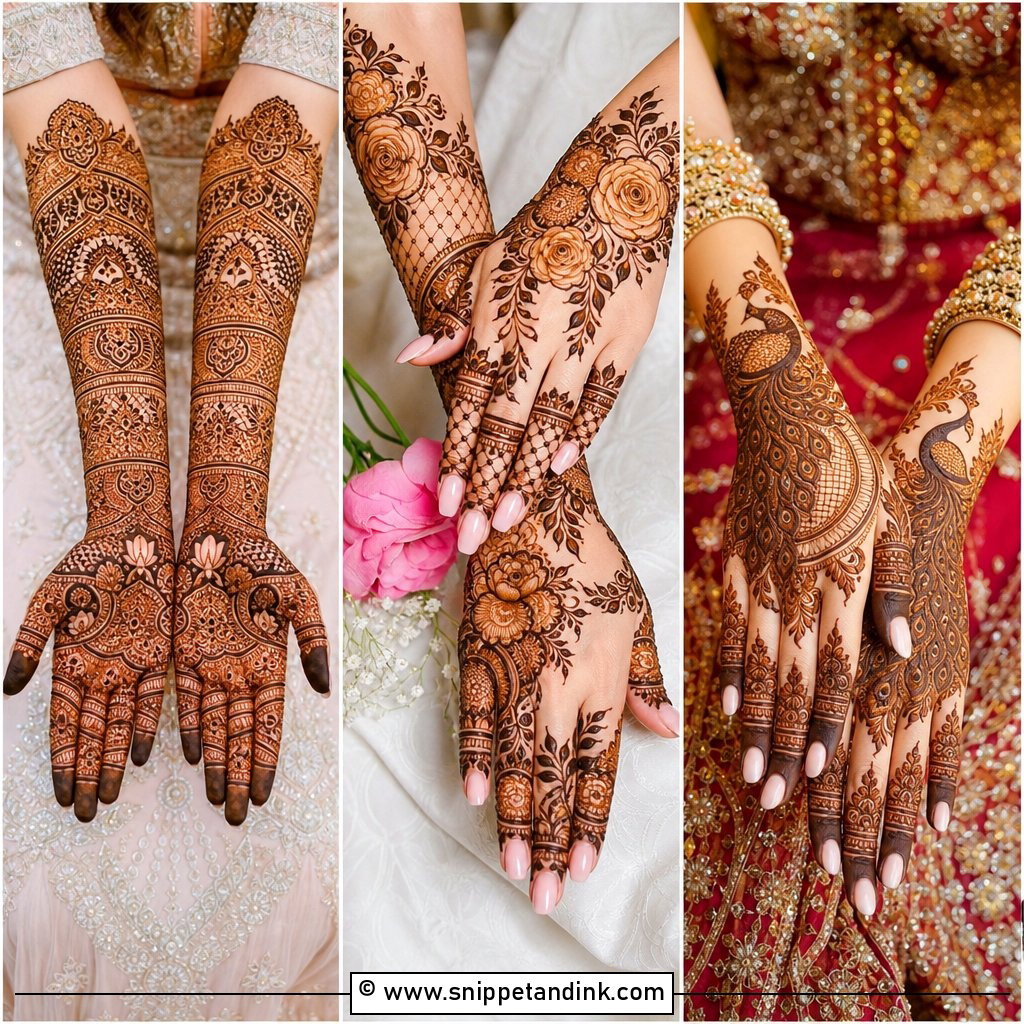
Full coverage in khafif style means the whole hand is decorated, but nothing is packed. Slim paisleys, floral vines and neat finger work run from the fingertips to mid-forearm, with light jaali sections and open skin around the palm and wrist. I plan the gaps before I draw a single flower; if the spaces aren’t mapped first, they end up uneven and the hand looks half done. It suits lehengas, shararas, sarees and pastel outfits, and it’s far kinder to sit through than a dense dulhan hand.
2. Back Hand Bridal Khafif Mehndi Design
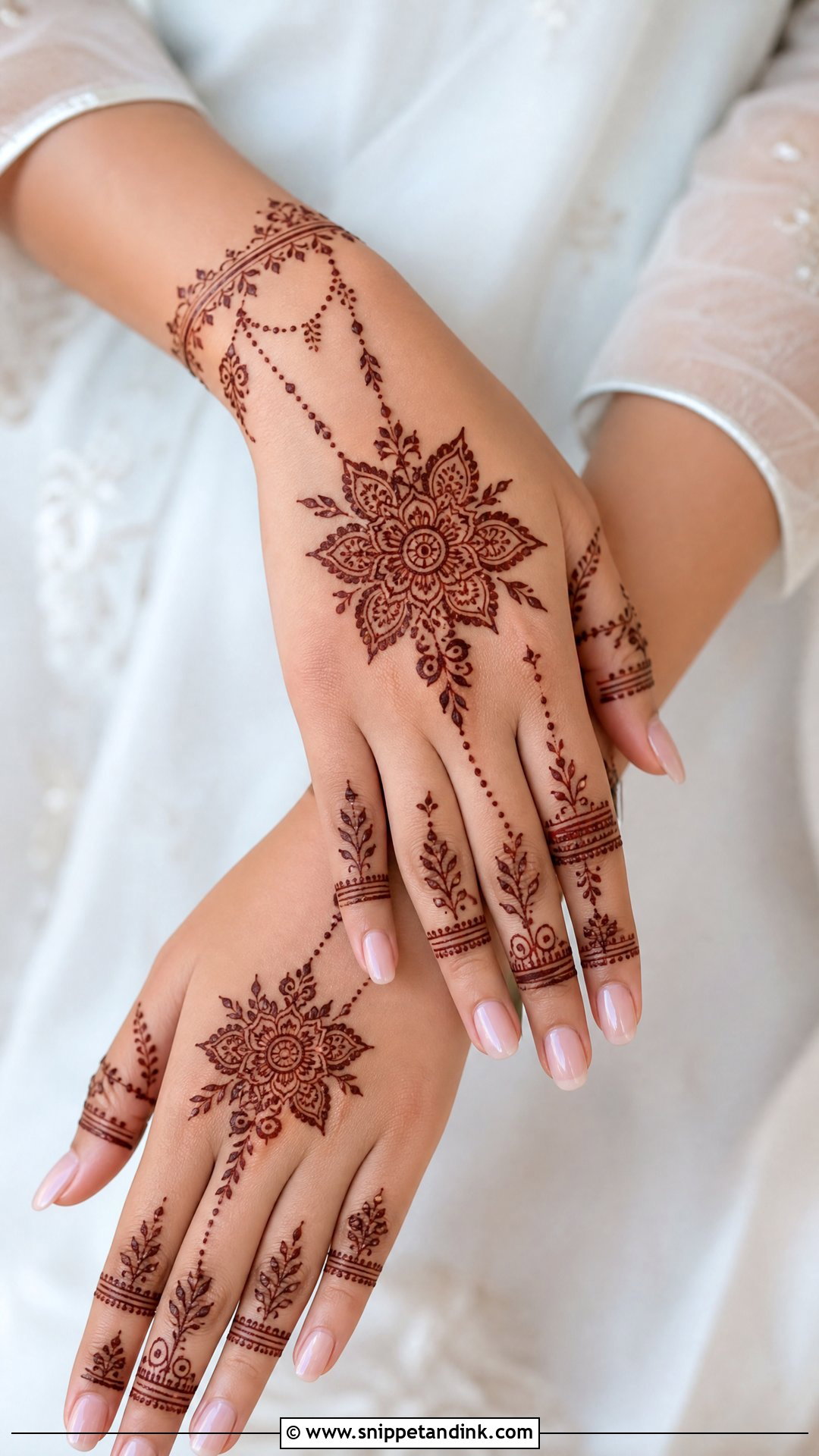
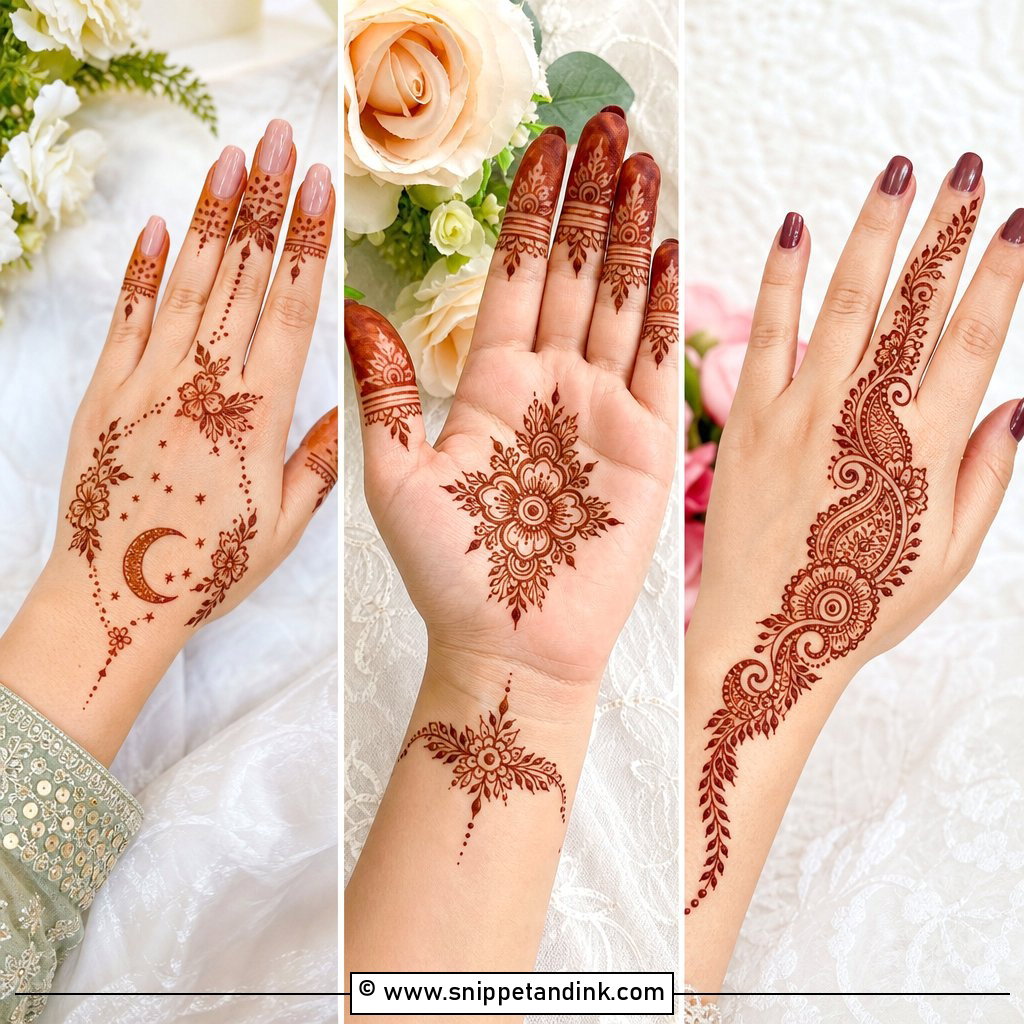
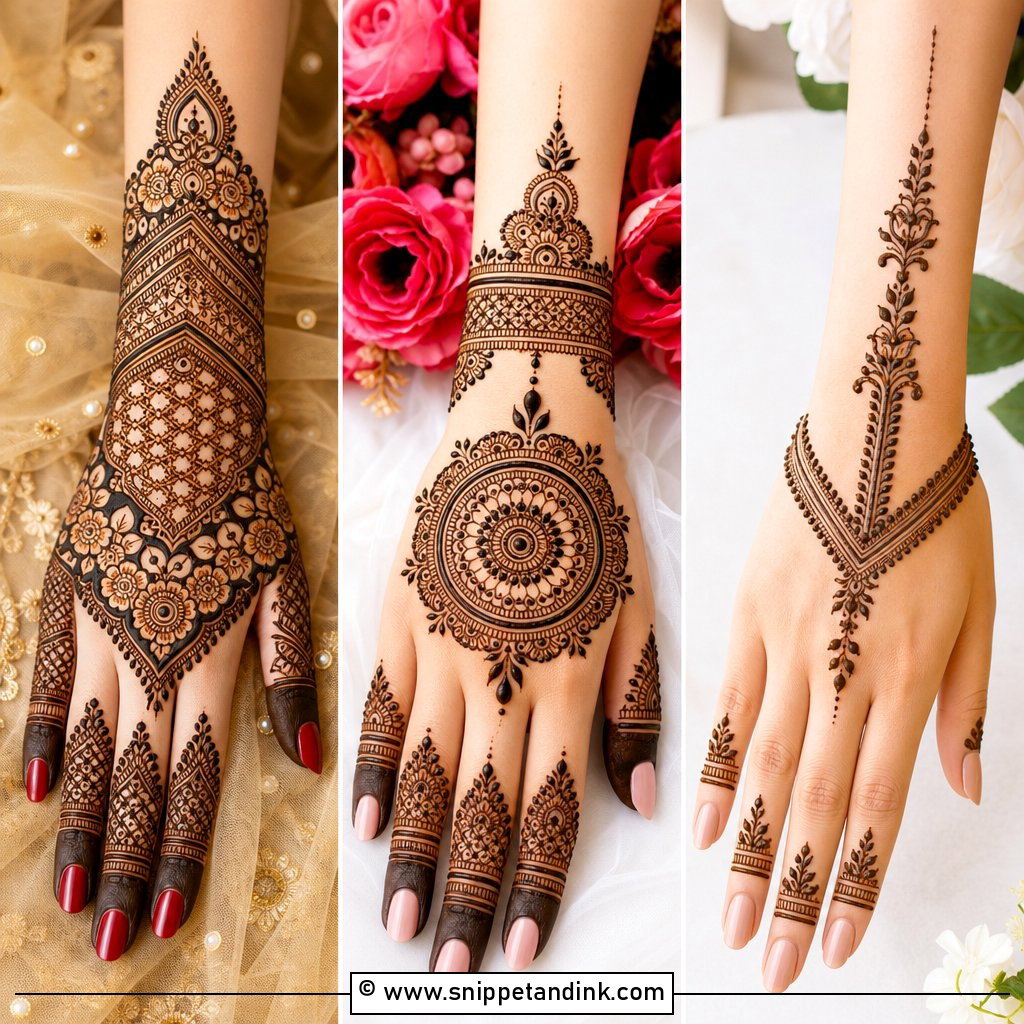
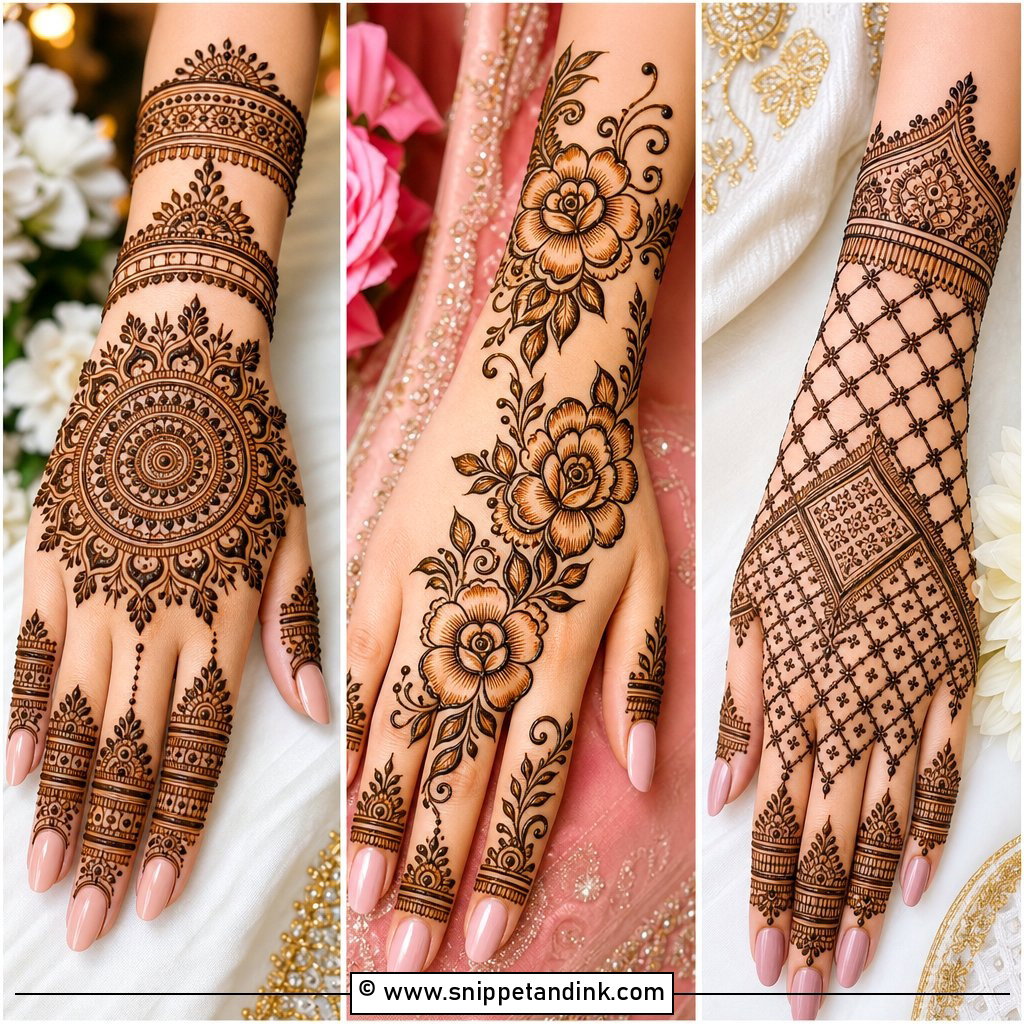
The back of the hand is what everyone photographs, from the ring shot to the bangles to the bouquet. I start with a floral centerpiece or round mandala on the back of the hand, then pull leafy trails toward the fingers and the wrist. Thin bands, dotted chains and small petals finish each finger. Because there’s open space, rings sit on bare skin instead of disappearing into dark henna.
3. Front Hand Bridal Khafif Mehndi Design
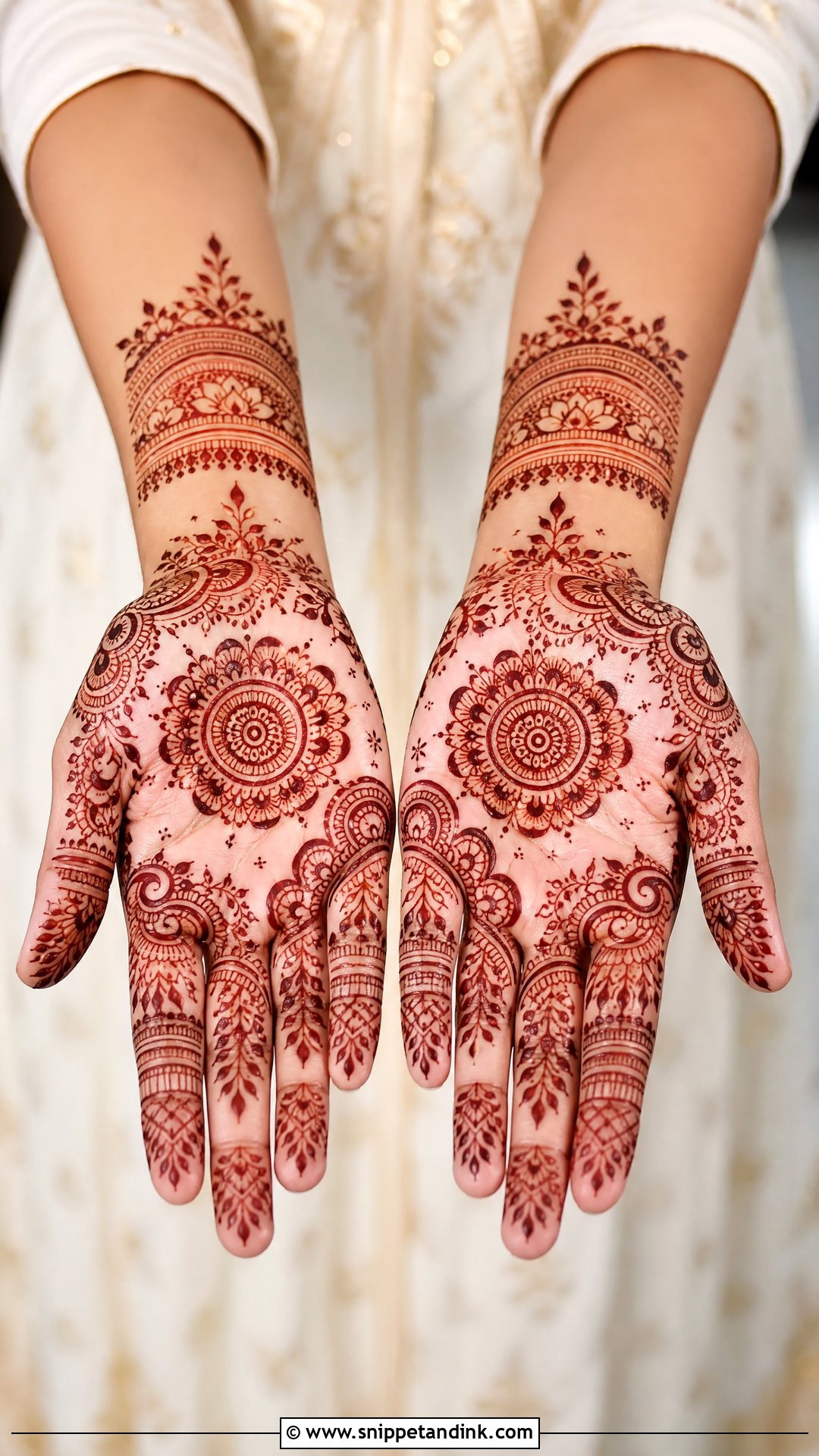
On the palm, I keep a central mandala, a floral bouquet or a small paisley cluster, then add curved vines and a few fillers around it. Instead of solid dark fingertip caps, I use fine lines on the tips, which keeps the whole hand airy. Palms stain darkest of anywhere on the body, so even a light design here reads strongly in close-ups. It gives you meaningful mehndi for the rituals without a crowded classic layout.
4. Arabic Bridal Khafif Mehndi Design
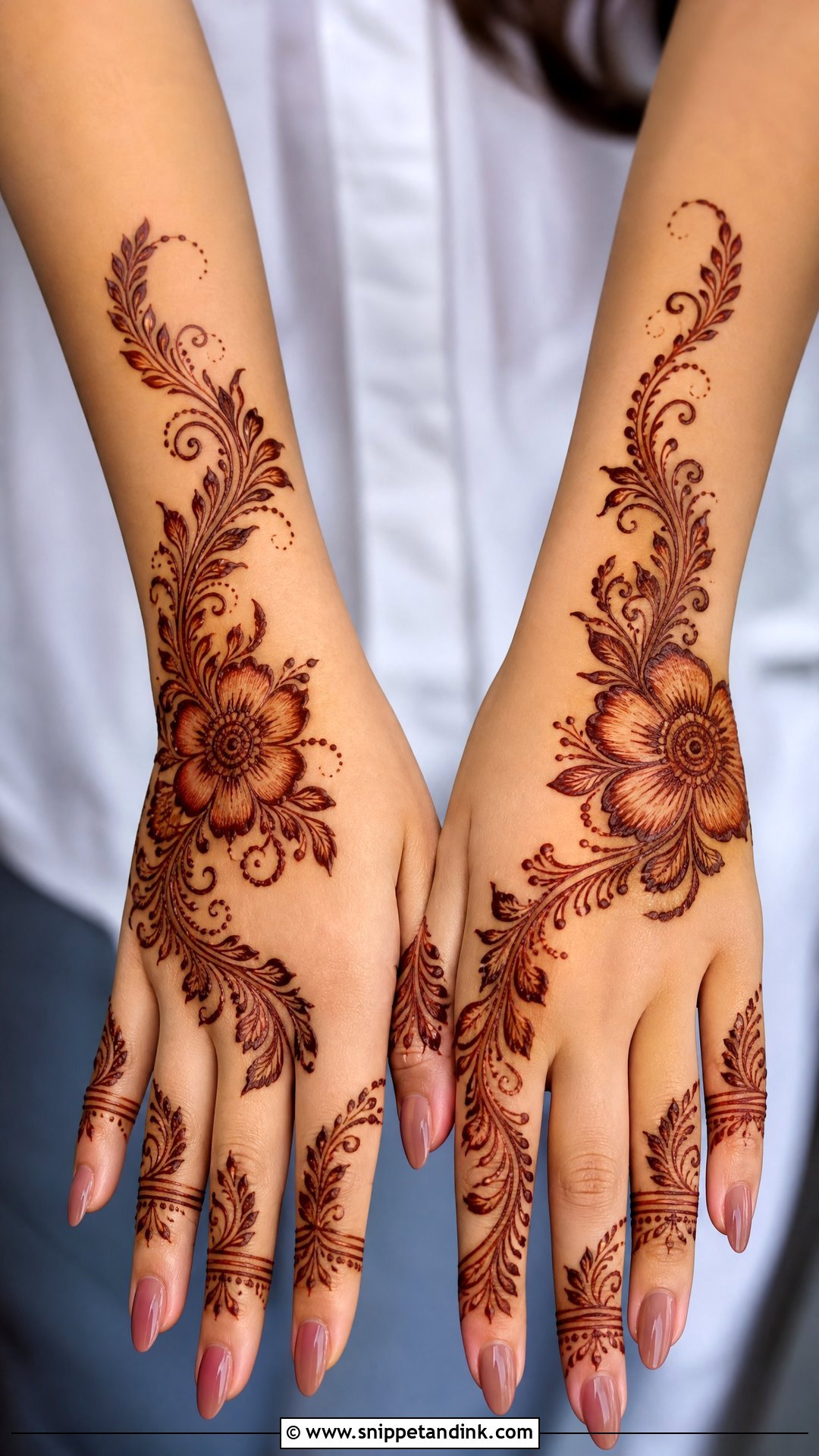
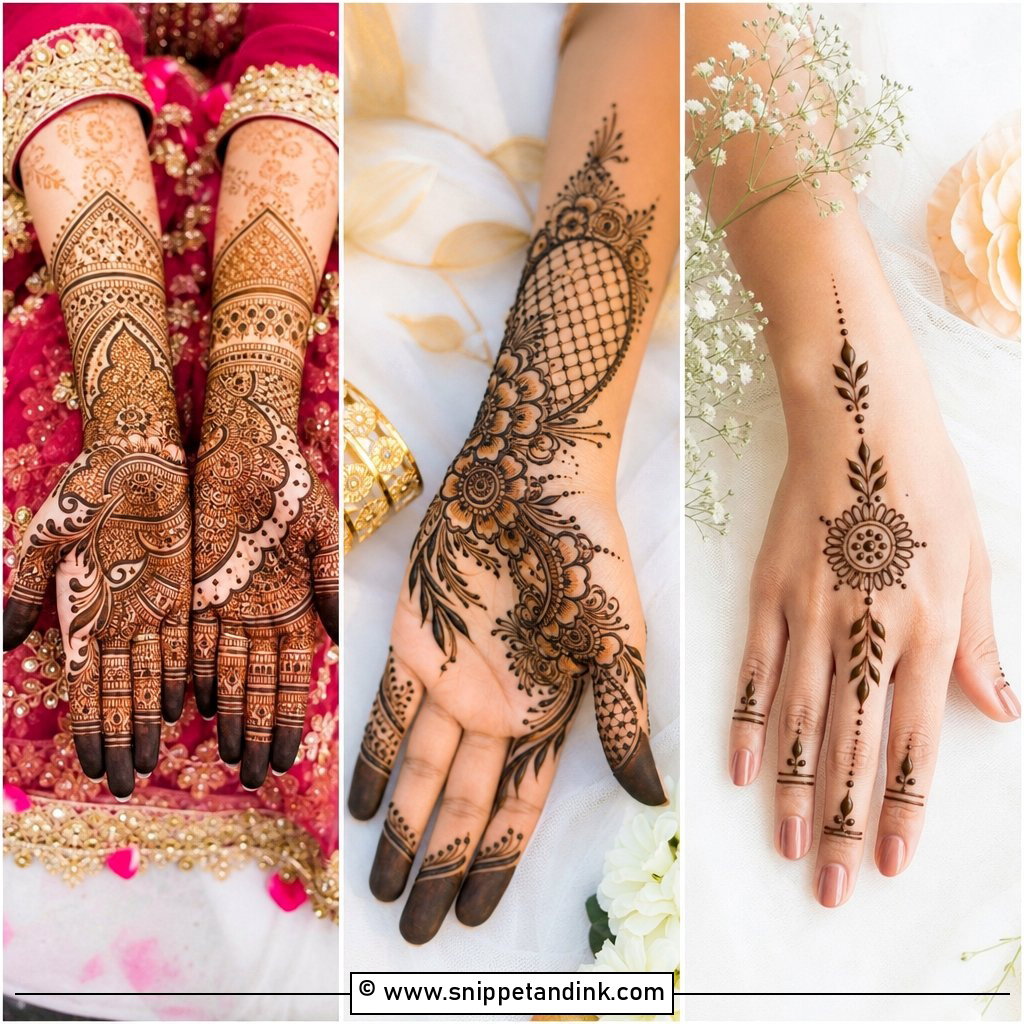
Arabic khafif is the one I’m asked for most by modern brides, because it moves across the hand the way a vine would. Bold flowers, leafy trails and curved lines usually start at the wrist, cross the palm or back hand diagonally and end on one or two fingers. For the bridal version, I add fine inner detail, small dots, slim paisleys and matching finger bands. The diagonal should follow the hand’s own line from wrist to index finger. Fight that line and the design looks pasted on.
5. Indo Arabic Bridal Khafif Mehndi Design
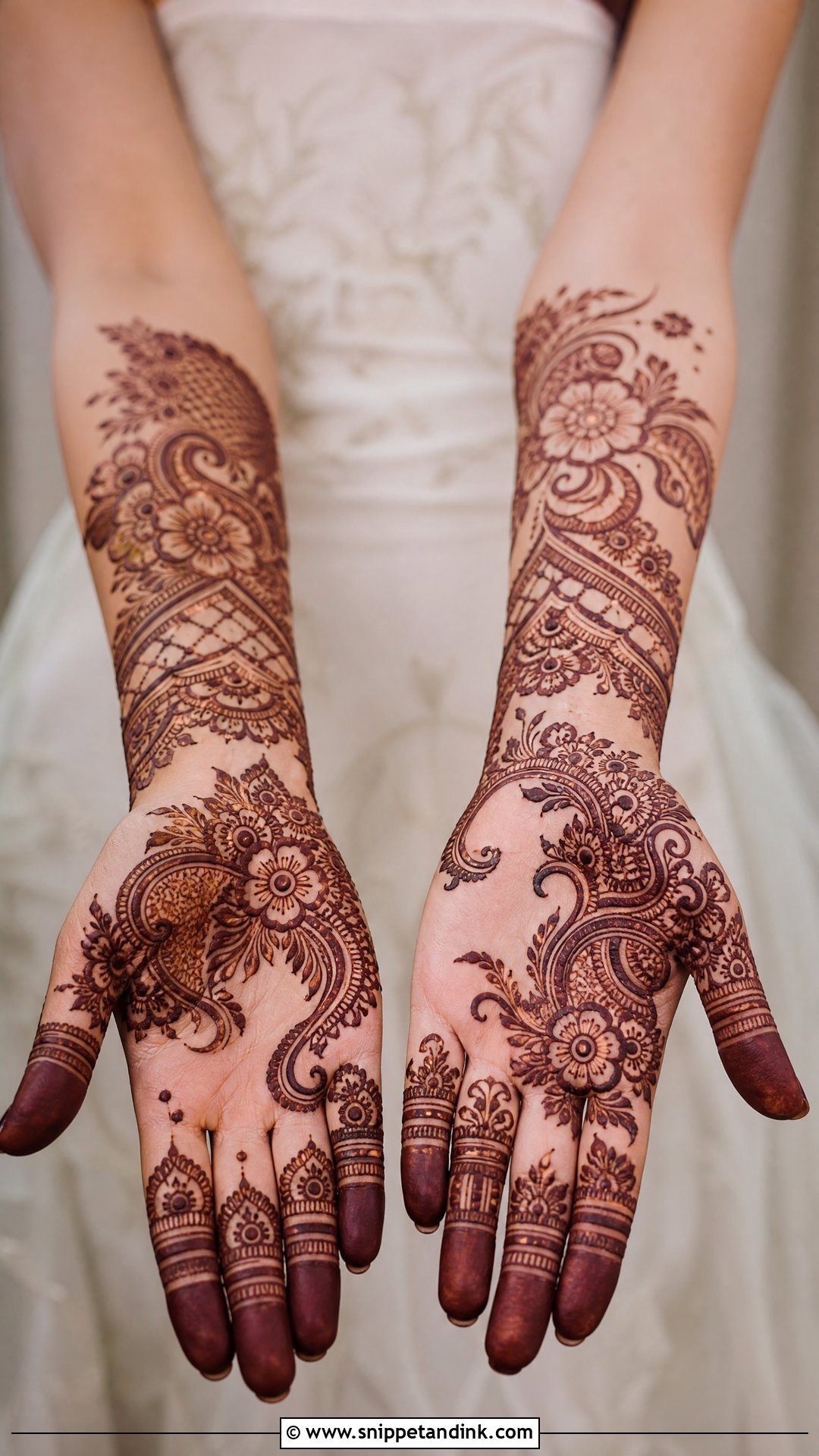
Indo Arabic bridal khafif mehndi design takes the open flow of Arabic work and adds some of the detail of Indian bridal mehndi. Bold flowers, curved paisleys, shaded leaves, a few mandala touches and thin borders sit with clean gaps between them. I suggest it when a simple Arabic trail feels too plain but a full Indian hand feels like too much. Initials, a tiny kalash, lotus elements or a fine wrist cuff make it more personal without filling the gaps.
6. Simple Bridal Khafif Mehndi Design
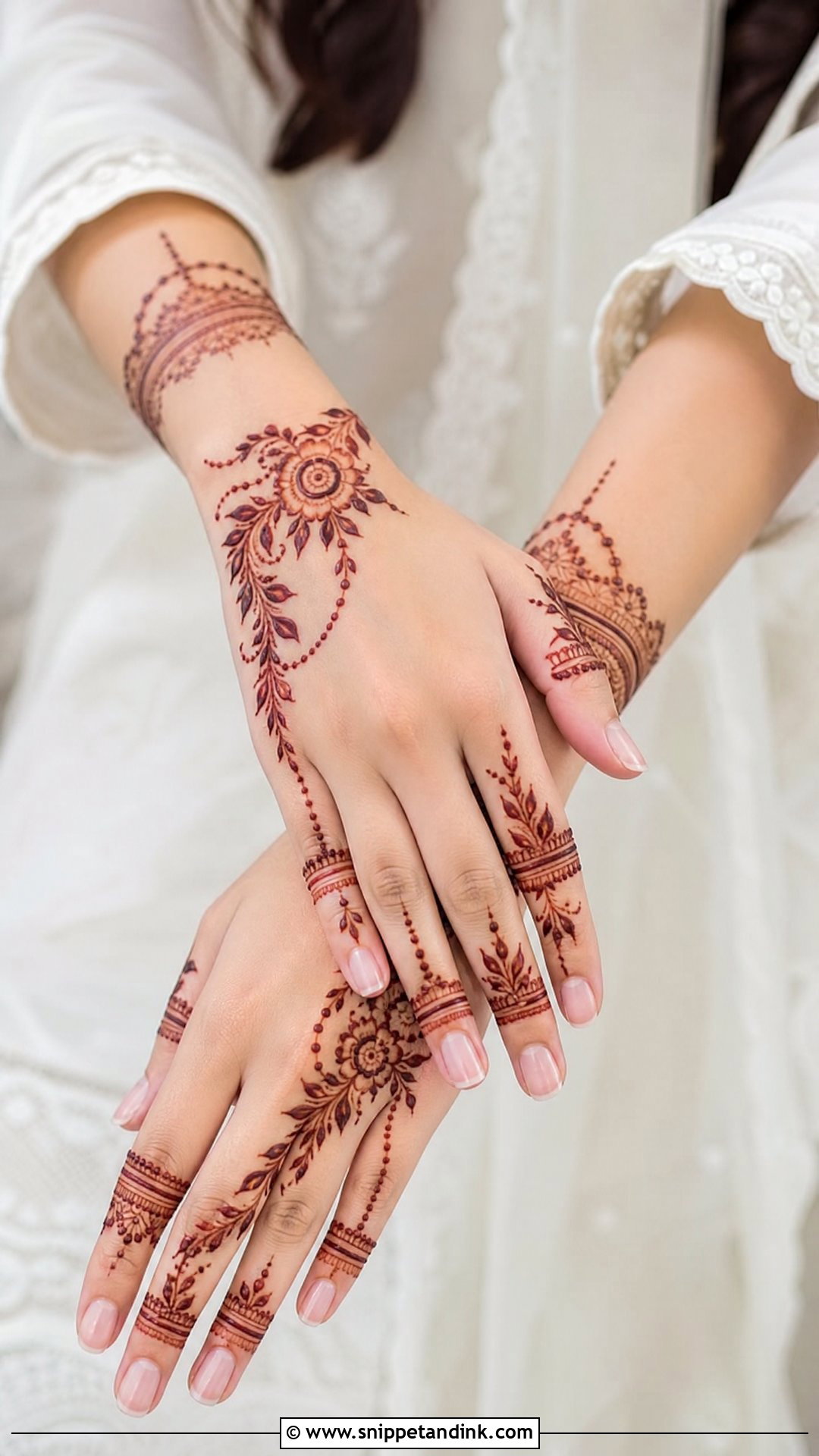
One floral trail, delicate finger patterns, a few dotted chains and a bracelet-style finish at the wrist: that’s all a simple khafif hand needs. It still looks bridal because the spacing is planned and the lines are clean. It’s also quick, which helps with intimate weddings or a packed schedule. Pair it with minimal jewelry and soft outfits in ivory, blush, peach or gold.
7. Modern Bridal Khafif Mehndi Design
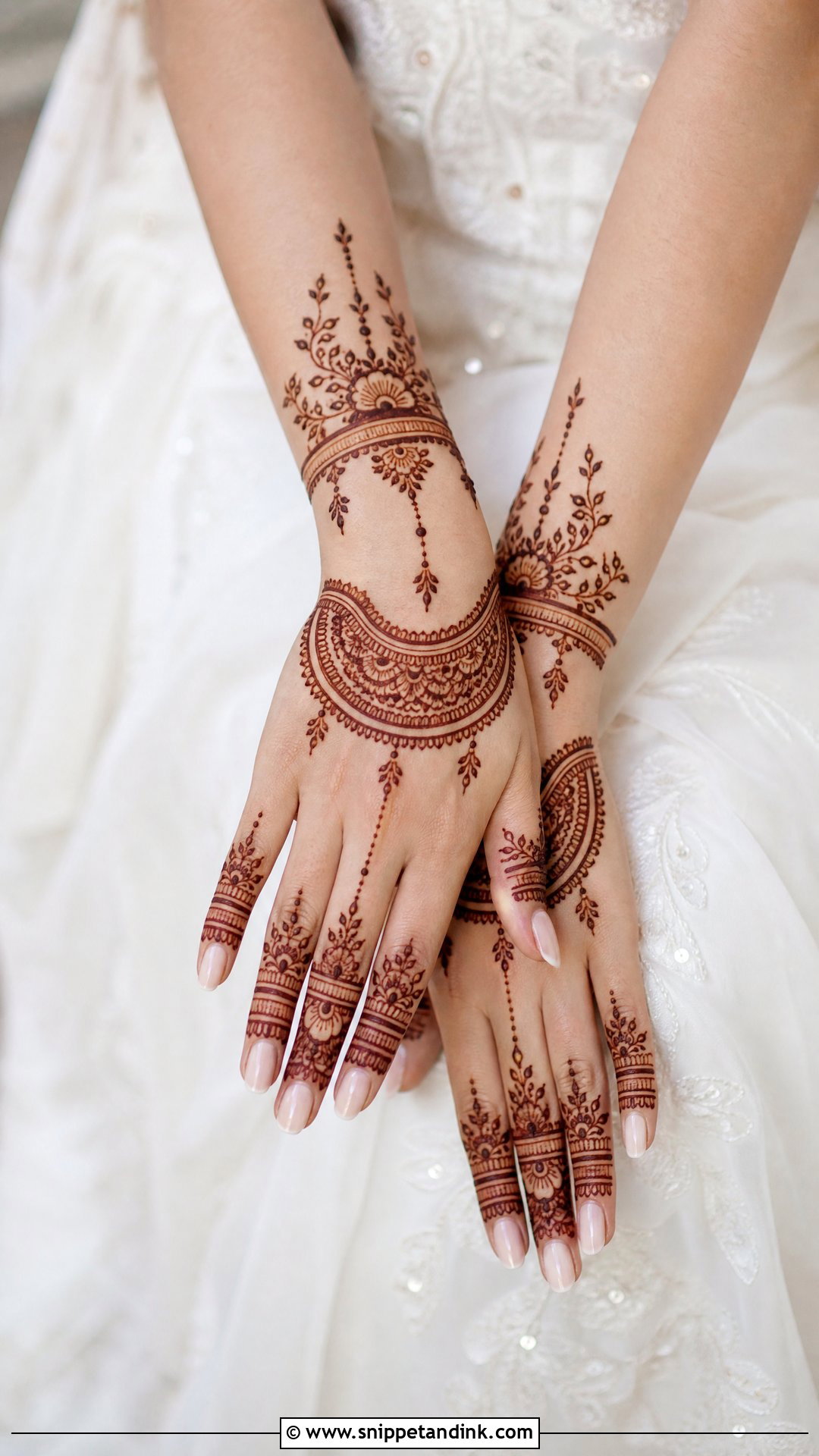
Modern khafif leans on sleek finger bands, negative space, fine-line florals, half mandalas and jewelry-like wrist details. The skill here is restraint. I place each element and then stop, because adding traditional fillers to fill the quiet areas undoes the whole idea. Initials, a wedding date or tiny heart-shaped elements fit in neatly without crowding it. It sits well with engagements, civil ceremonies, receptions and contemporary South Asian outfits.
8. Minimal Bridal Khafif Mehndi Design
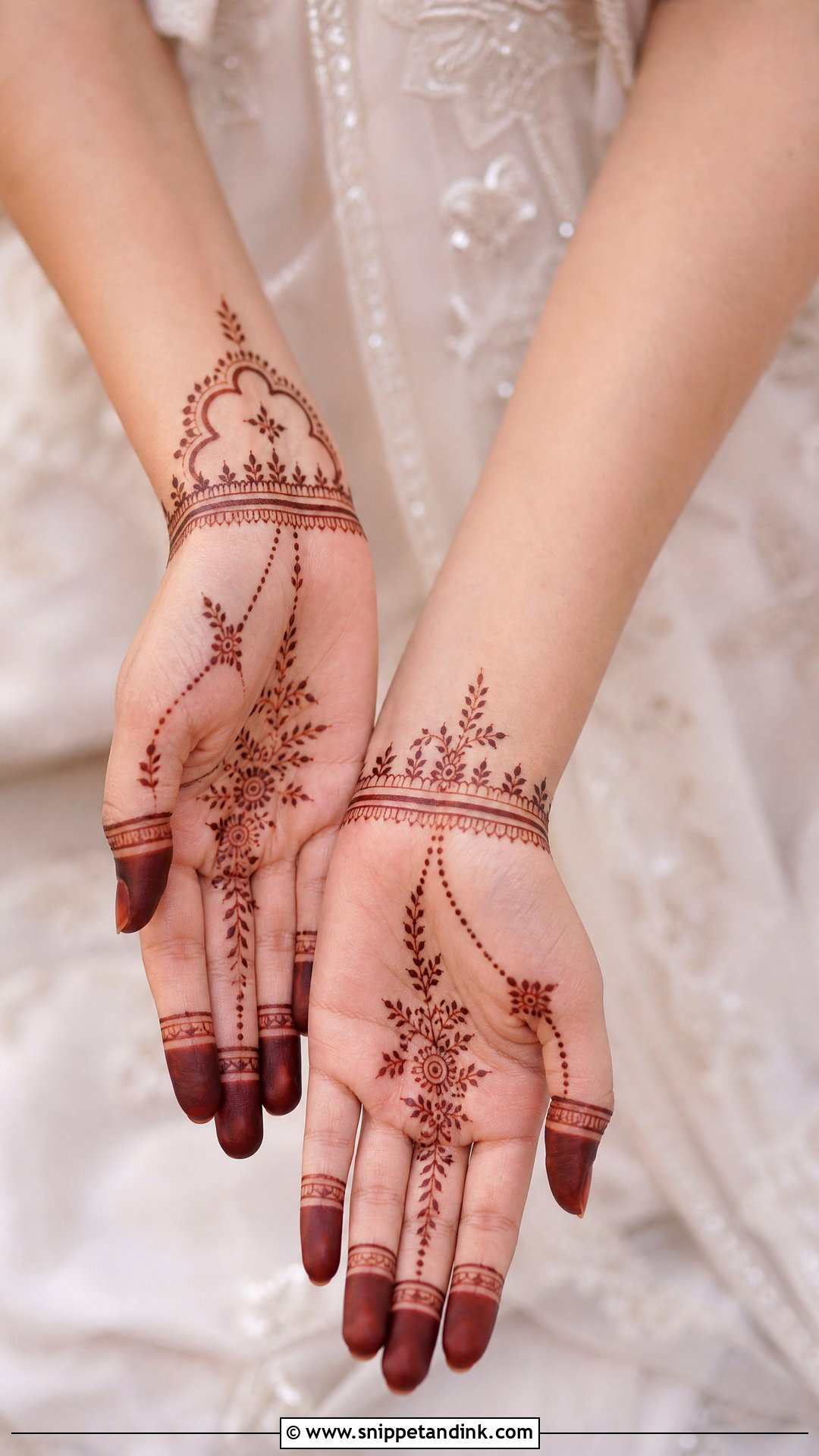
Minimal khafif covers only chosen areas: the fingers, the center of the palm, the wrist or a back-hand trail. Motifs stay small, with tiny flowers, leaves, dotted lines and slim borders. I’d steer you away from this one if your stain usually comes out pale, since with so little henna on the hand a weak color looks unintentional. With a good stain, it lets rings, bangles, nails and outfit details lead, which is why destination and small-ceremony brides like it.
9. Floral Bridal Khafif Mehndi Design
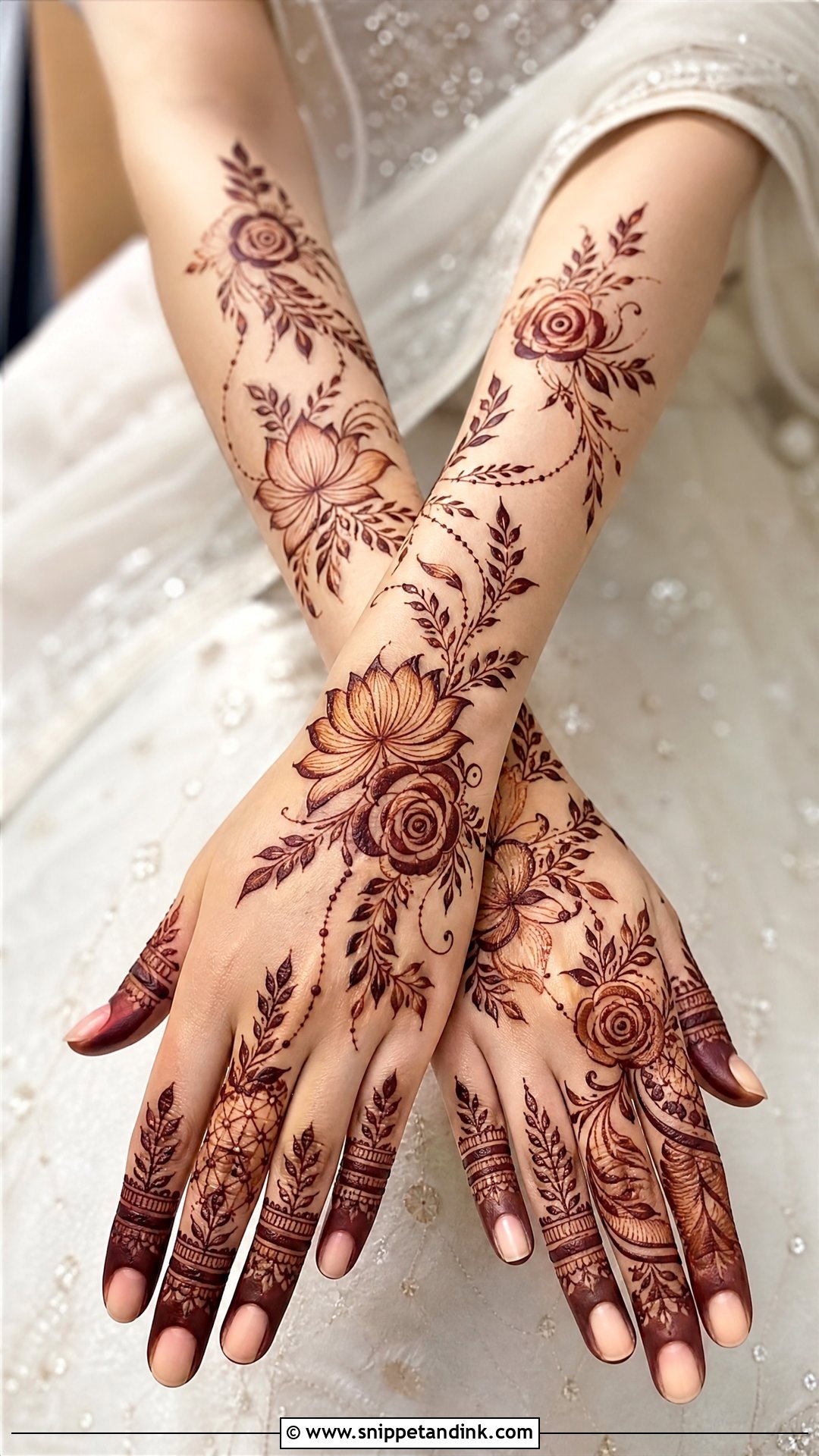
Rose-like blooms, lotus petals, daisy clusters, leafy vines and buds can flow across the whole hand. The risk with florals is crowding, so I vary flower sizes and leave gaps between clusters rather than letting them touch. Fine outlines and a little shading keep the petals light. Floral embroidery, pastel lehengas and soft net dupattas pick it up naturally, and flowers are easy to recognize even in group photos.
10. Mandala Bridal Khafif Mehndi Design
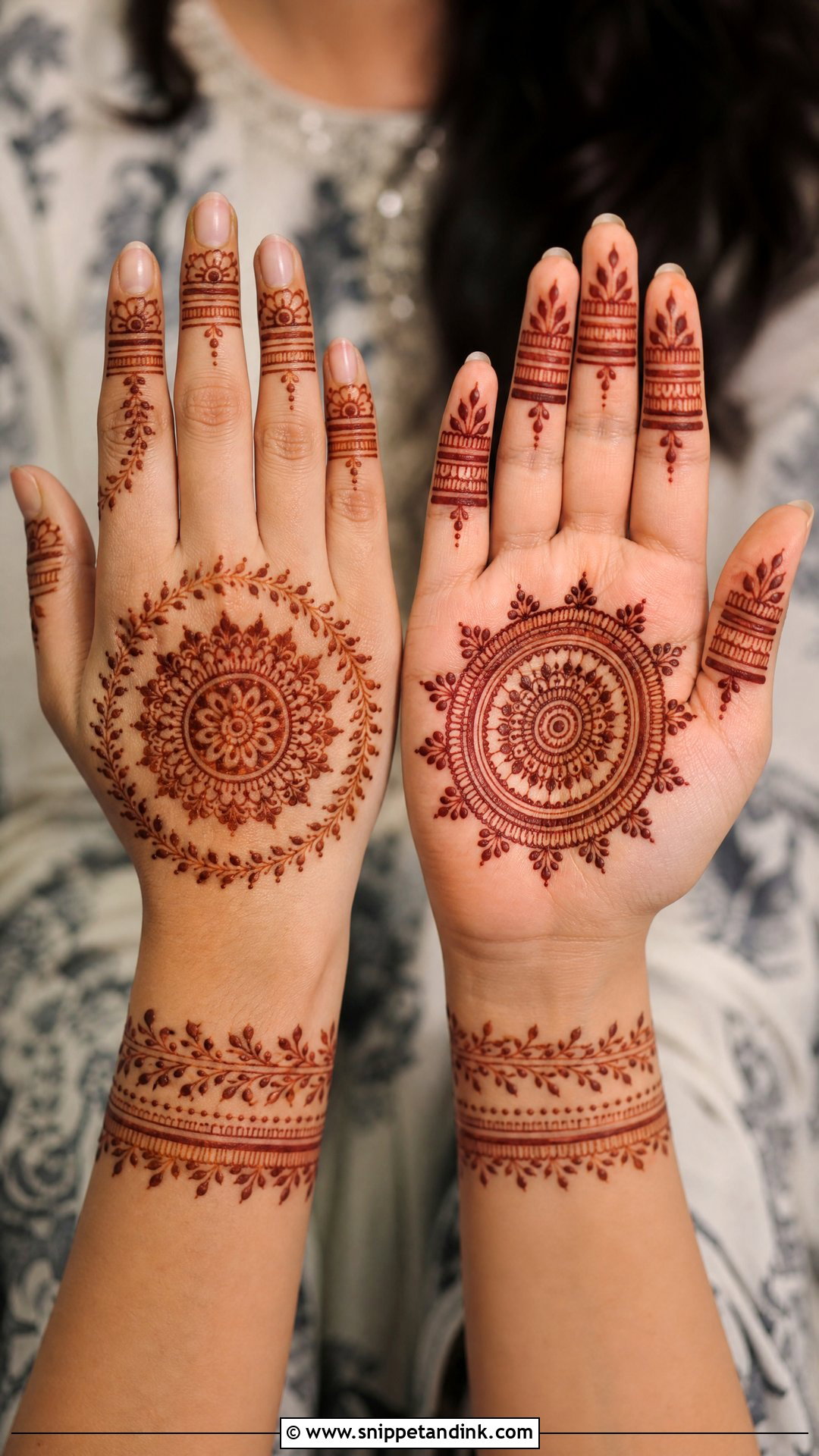
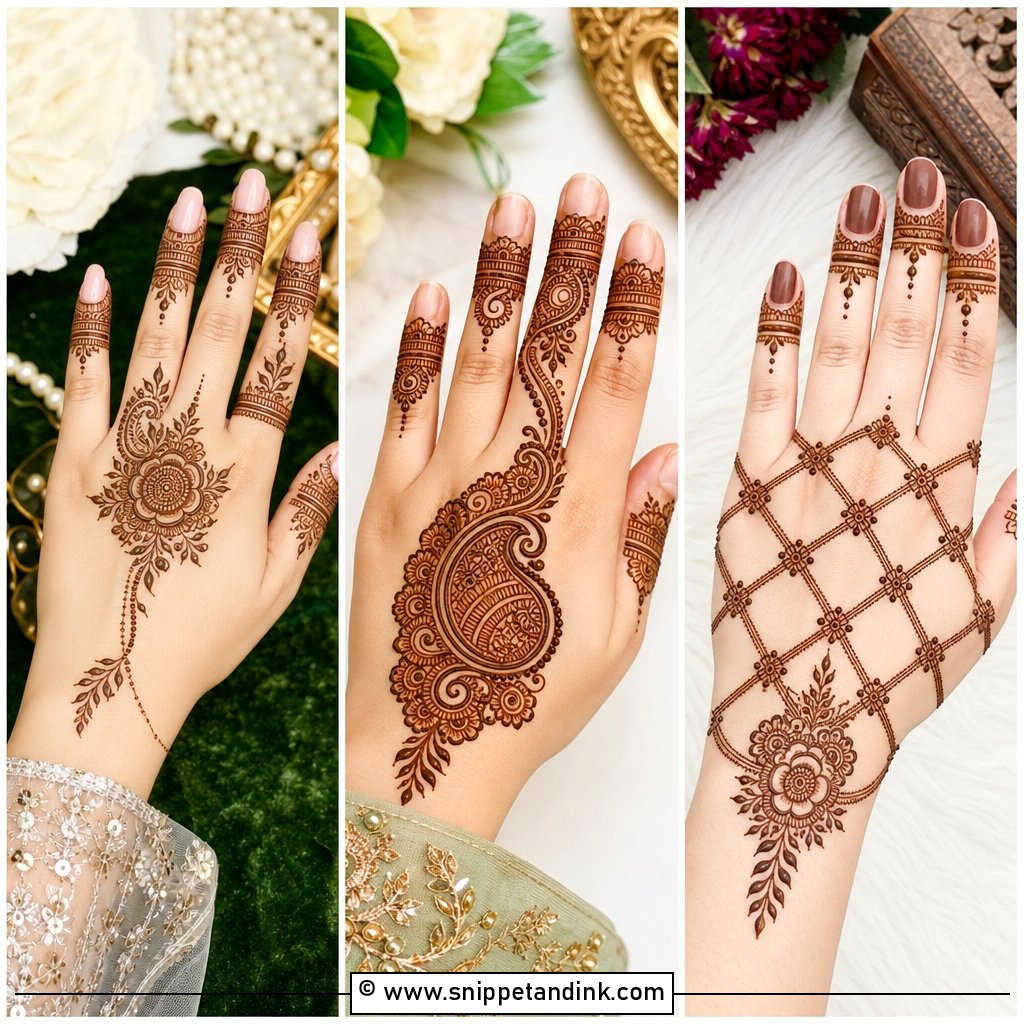
A mandala gives a khafif hand its center of gravity. I set it in the middle of the palm or back hand and surround it with small petals, dots, leafy rings and thin lines, then deliberately stop the filling a short way out. Matching bands, mini florals and fine mesh decorate the fingers. Brides who want symmetry and a traditional feel without full coverage tend to land here, for engagements, mehndi nights, nikah and simple weddings.
11. Jaali Bridal Khafif Mehndi Design
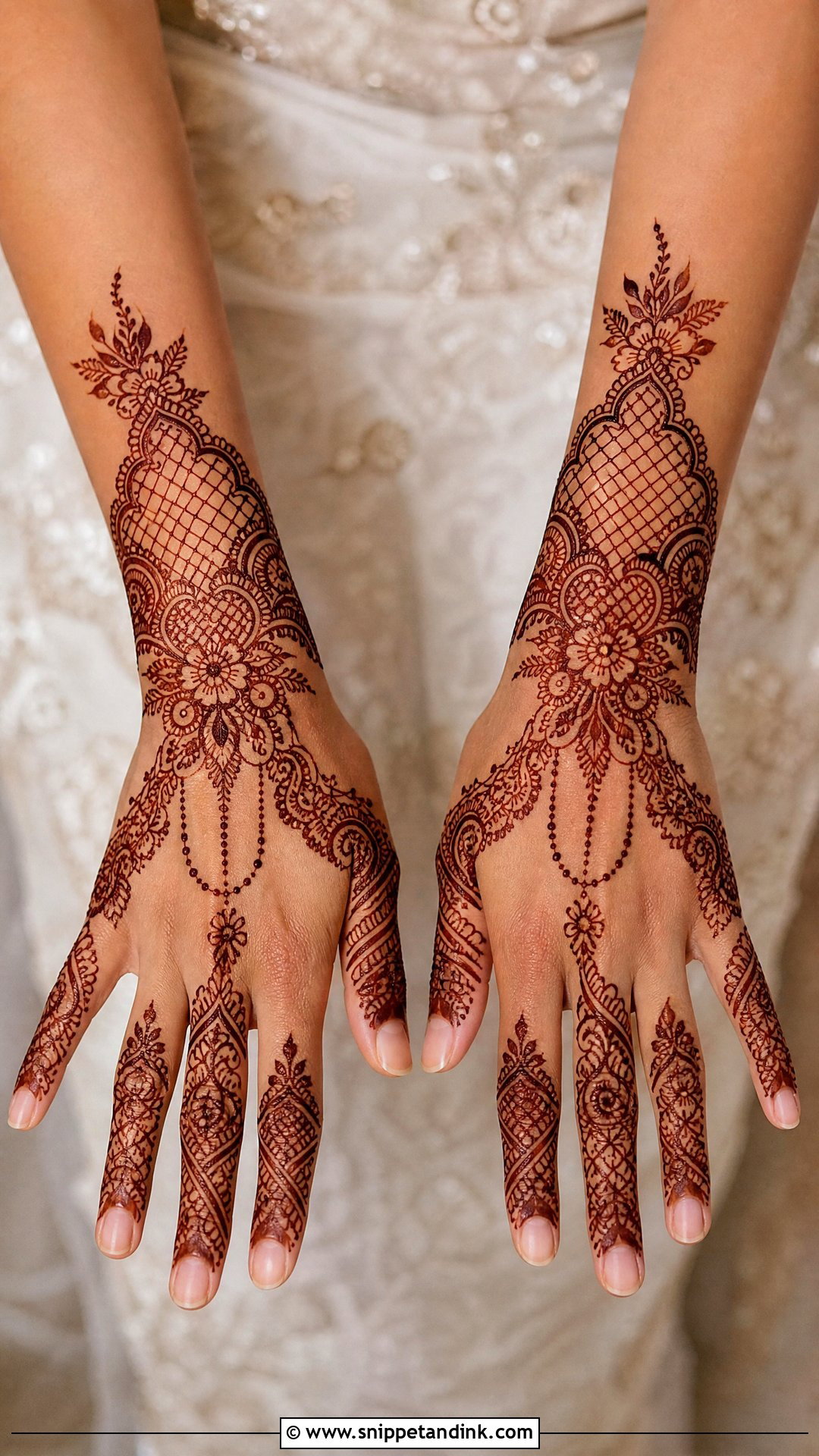
Net patterns are tricky in khafif work, because jaali is naturally a dense element. In a jaali bridal khafif mehndi design, I keep the mesh fine and widely spaced, placed on the fingers, wrist, palm corners or back hand and softened with florals and paisleys. If the cone is too wide, the net turns into a dark block and the light effect is gone. Diamond rings and bangles sit well against it, and matching wrist cuffs on both hands give it a more formal finish.
12. Paisley Bridal Khafif Mehndi Design
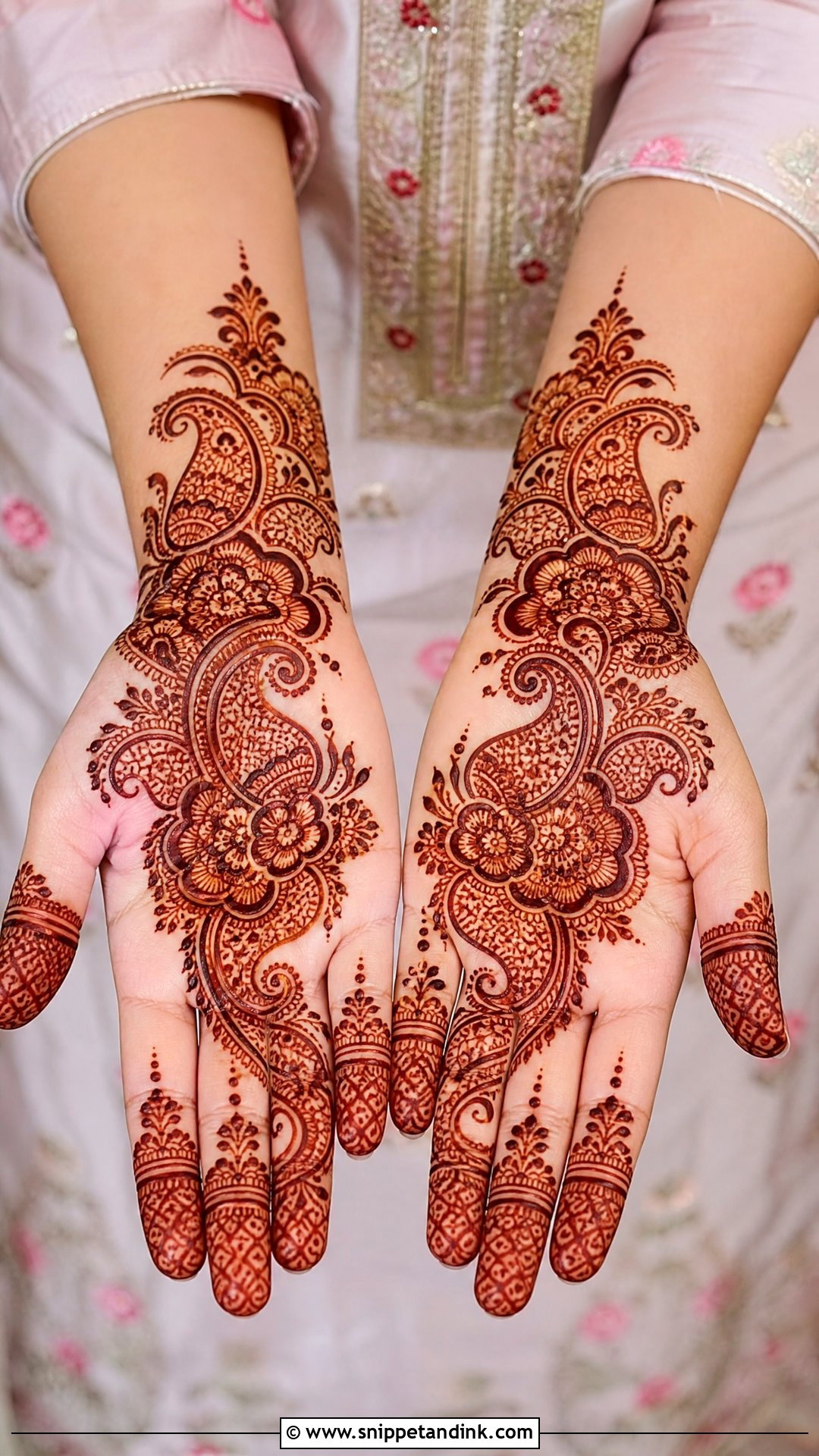
Paisleys bring classic wedding character to a lighter layout. They can run diagonally across the palm, curl around the wrist or line the back of the hand, each filled with tiny leaves, dots, petals and curved lines. My one rule is to leave a clean gap between paisleys instead of joining them into a chain, otherwise the design drifts back toward heavy bridal work. Traditional outfits and gold jewelry suit it well.
13. Peacock Bridal Khafif Mehndi Design
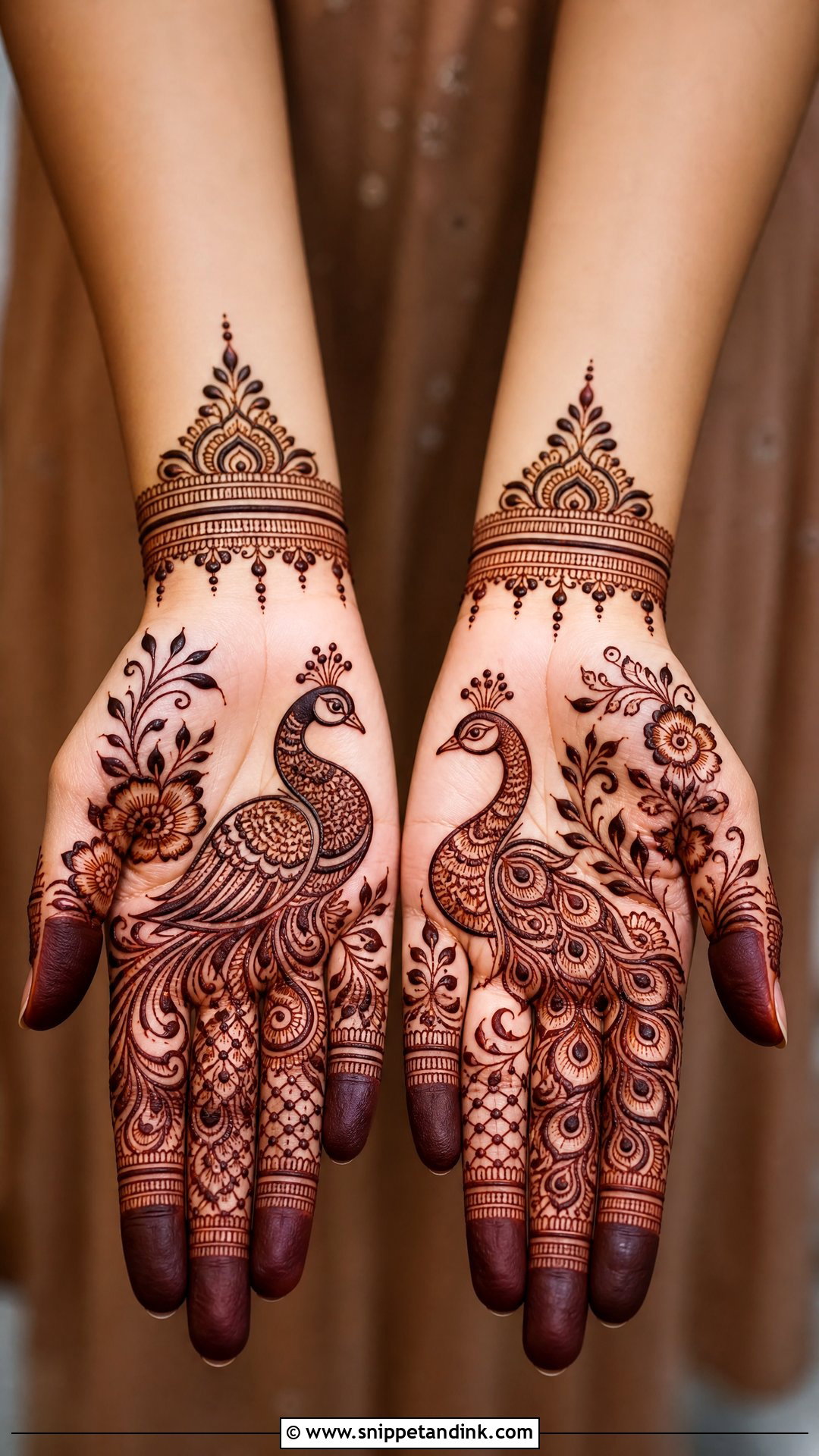
A peacock in khafif style keeps its curved neck and feather shapes but loses the heavy feather filling. I draw the feathers as fine lines, dots and open petal shapes, so the bird reads clearly without darkening half the palm. It can sit on the palm, wrist or back hand. Silk sarees, embroidered lehengas, temple jewelry and classic bridal bangles all bring out its traditional side.
14. Bracelet Bridal Khafif Mehndi Design
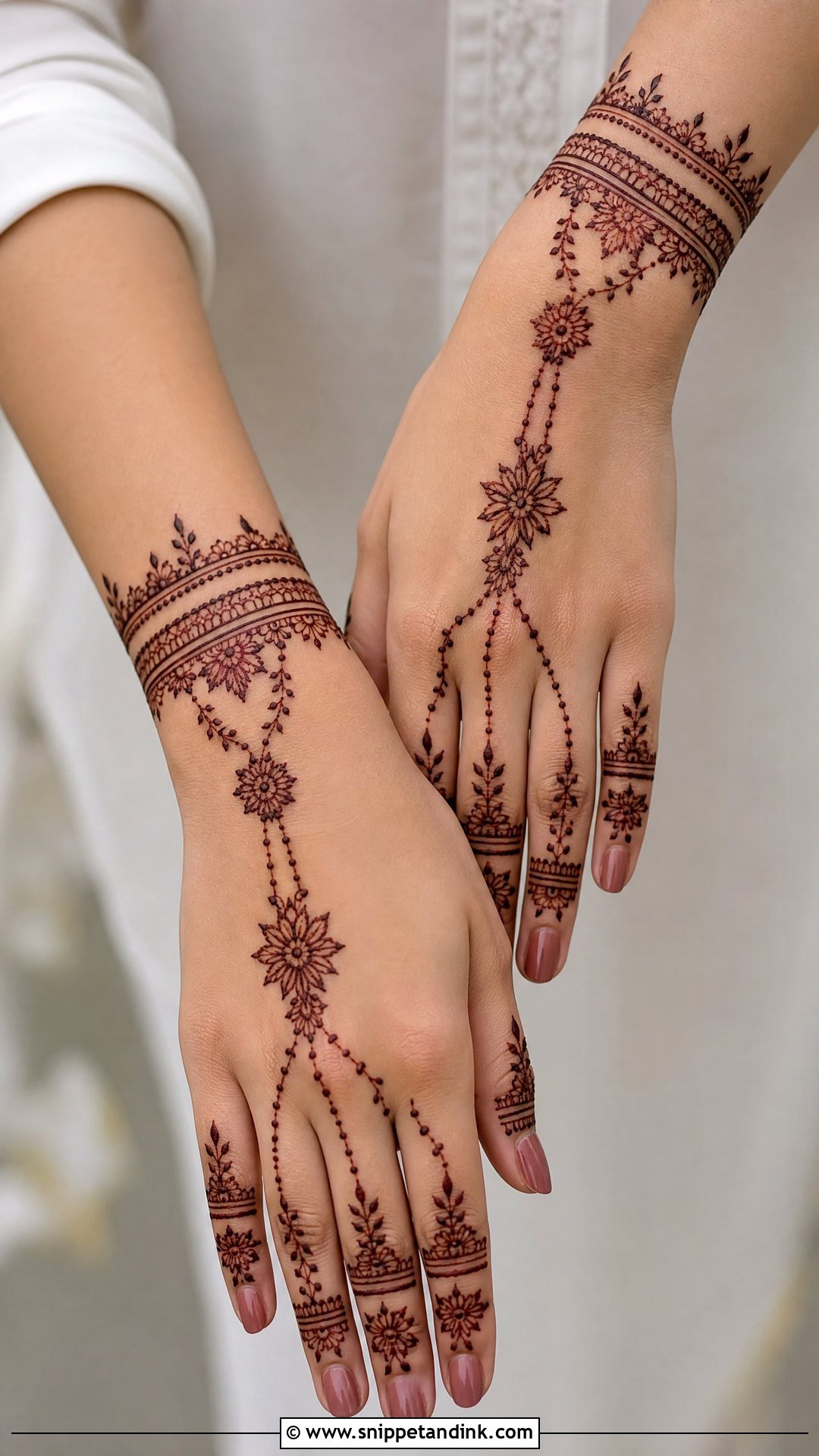
This is henna drawn as jewelry: a wrist cuff, chain lines, small floral links, finger rings and light trails between them. It frames real rings and bangles on the back of the hand. For a bridal version, I extend it slightly up the forearm with layered bands and small paisleys. If your sleeves or bangles are already detailed, this gives you mehndi without competing with them. Keep the drawn rings slightly away from where your real ring will sit, or the two overlap in photos.
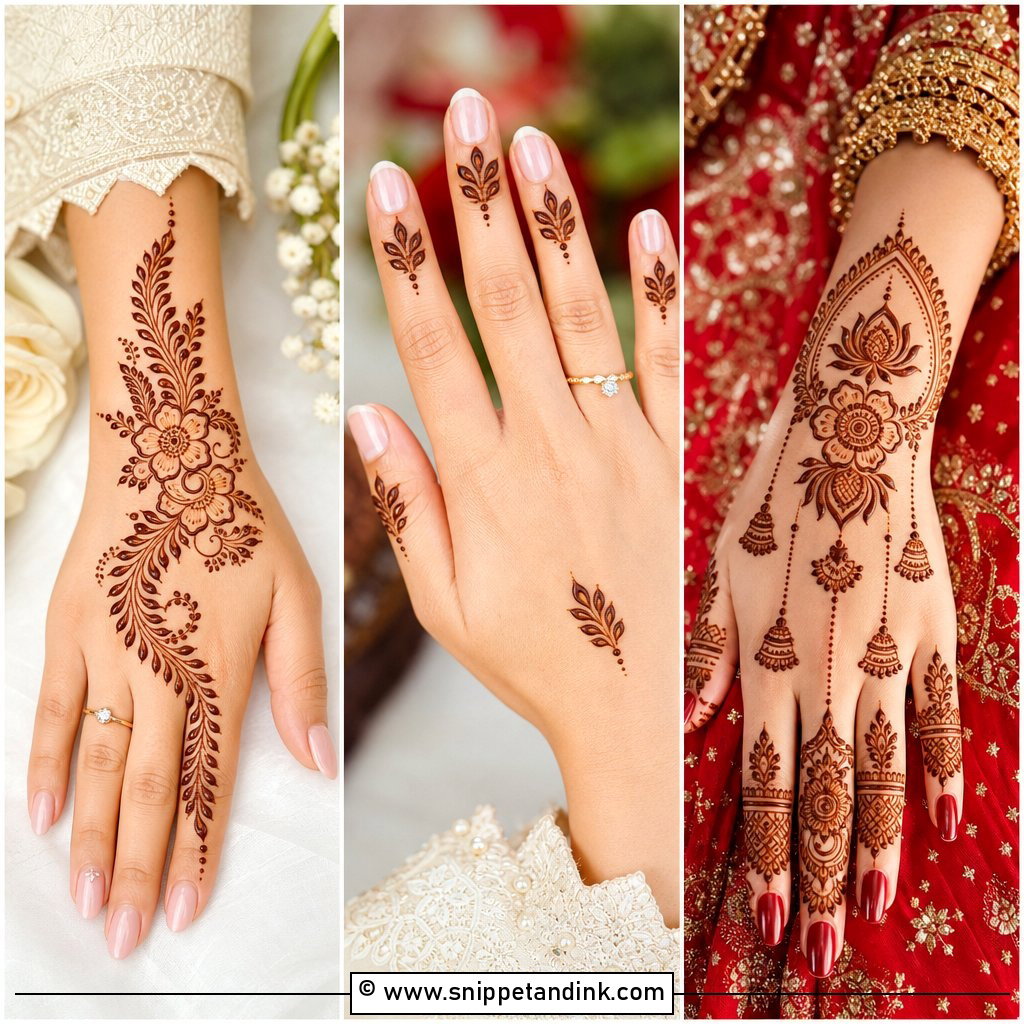
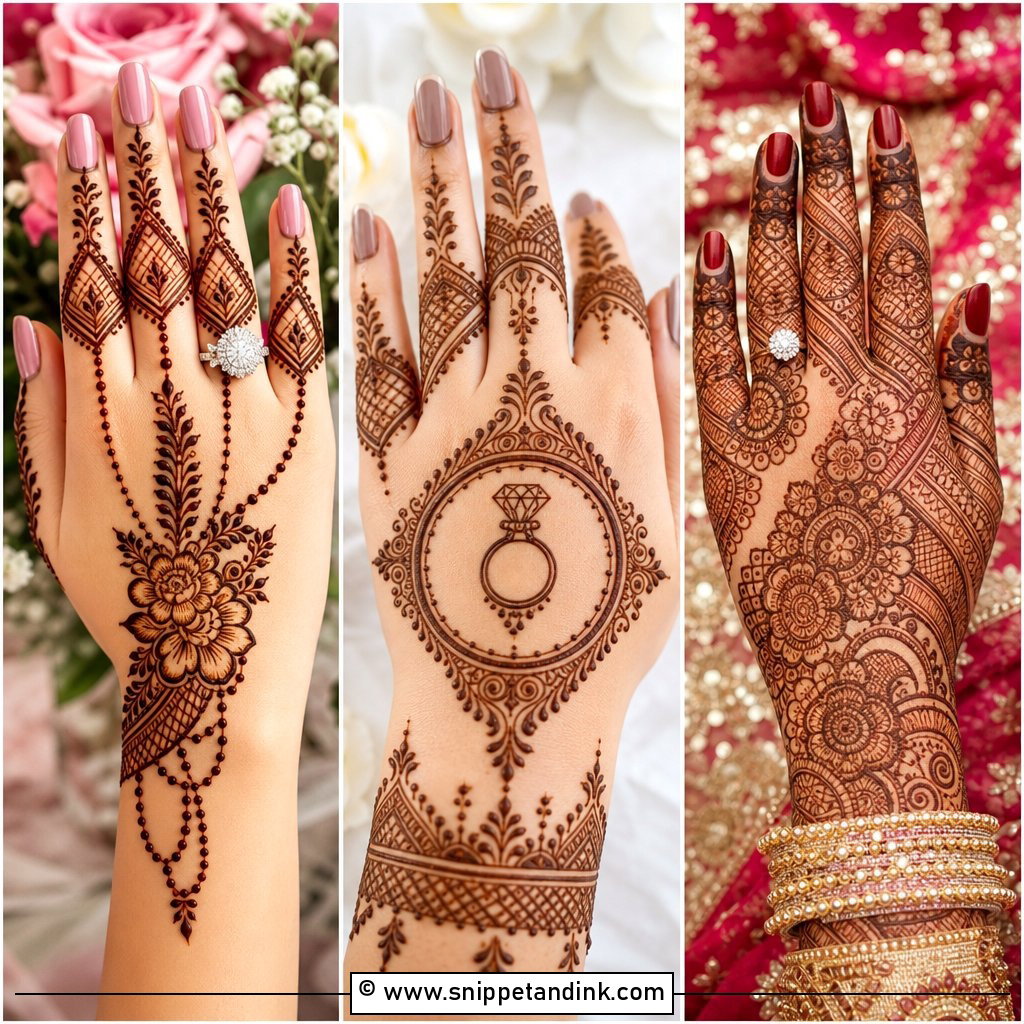
15. Finger Bridal Khafif Mehndi Design
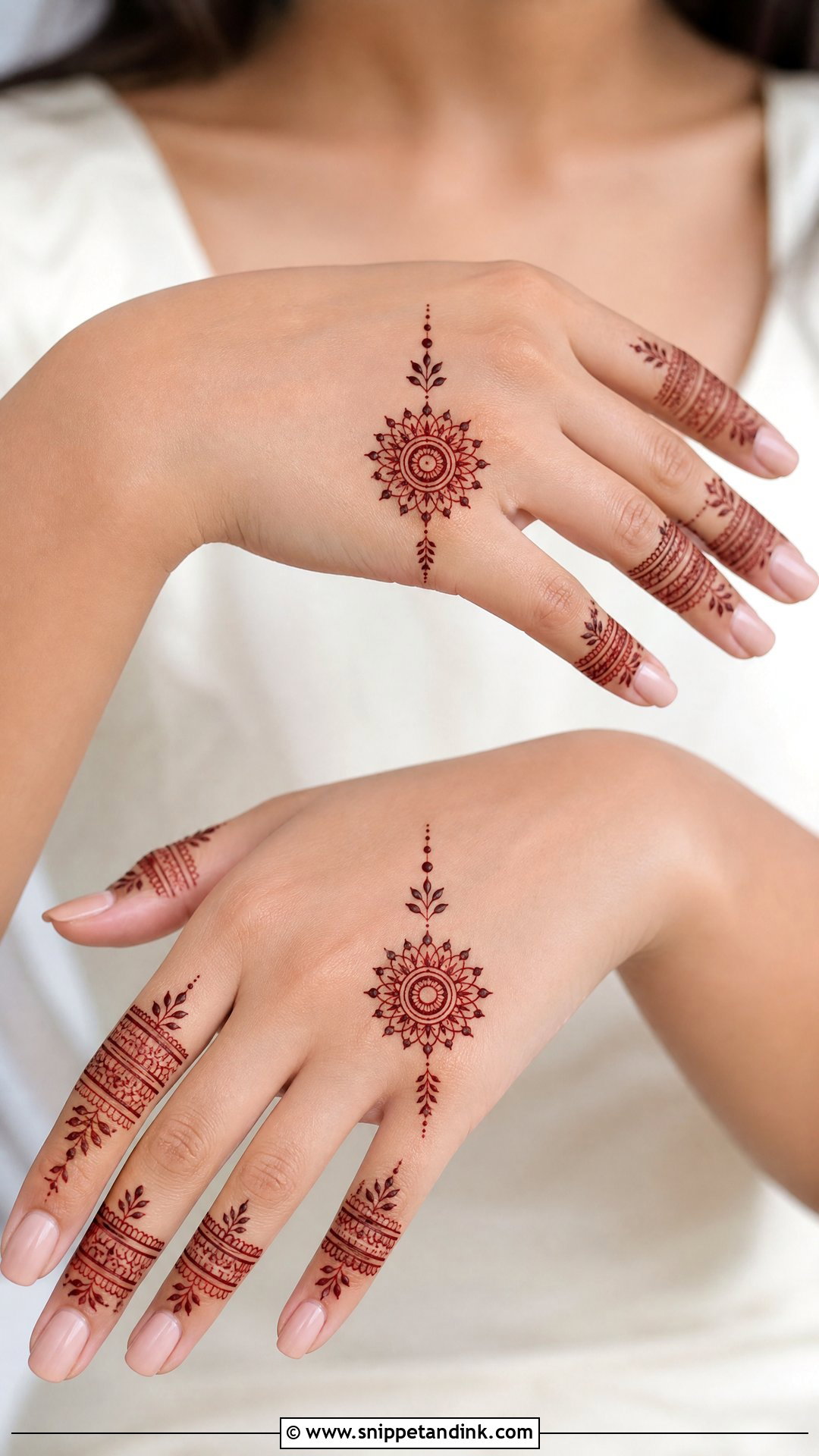
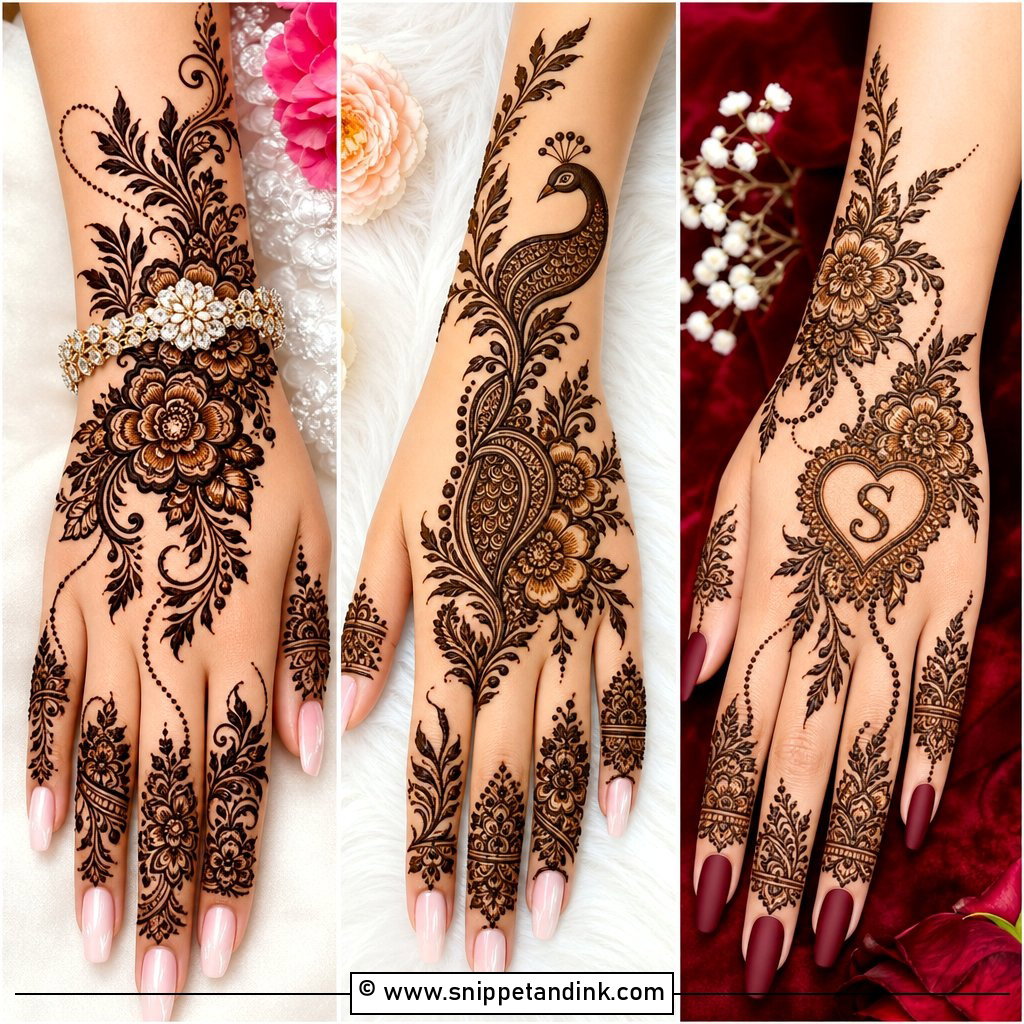
Finger-focused khafif leaves the palm or back hand mostly open and puts the detail on each finger: thin bands, tiny leaves, half flowers, dotted lines and small jaali. Each finger can carry a different but related pattern. A simple mandala or floral charm in the center of the hand ties it together. If you’re planning nail art, tell your artist, because fingertip henna right up against the nail can clash with a busy manicure.
16. Wrist To Forearm Bridal Khafif Mehndi Design
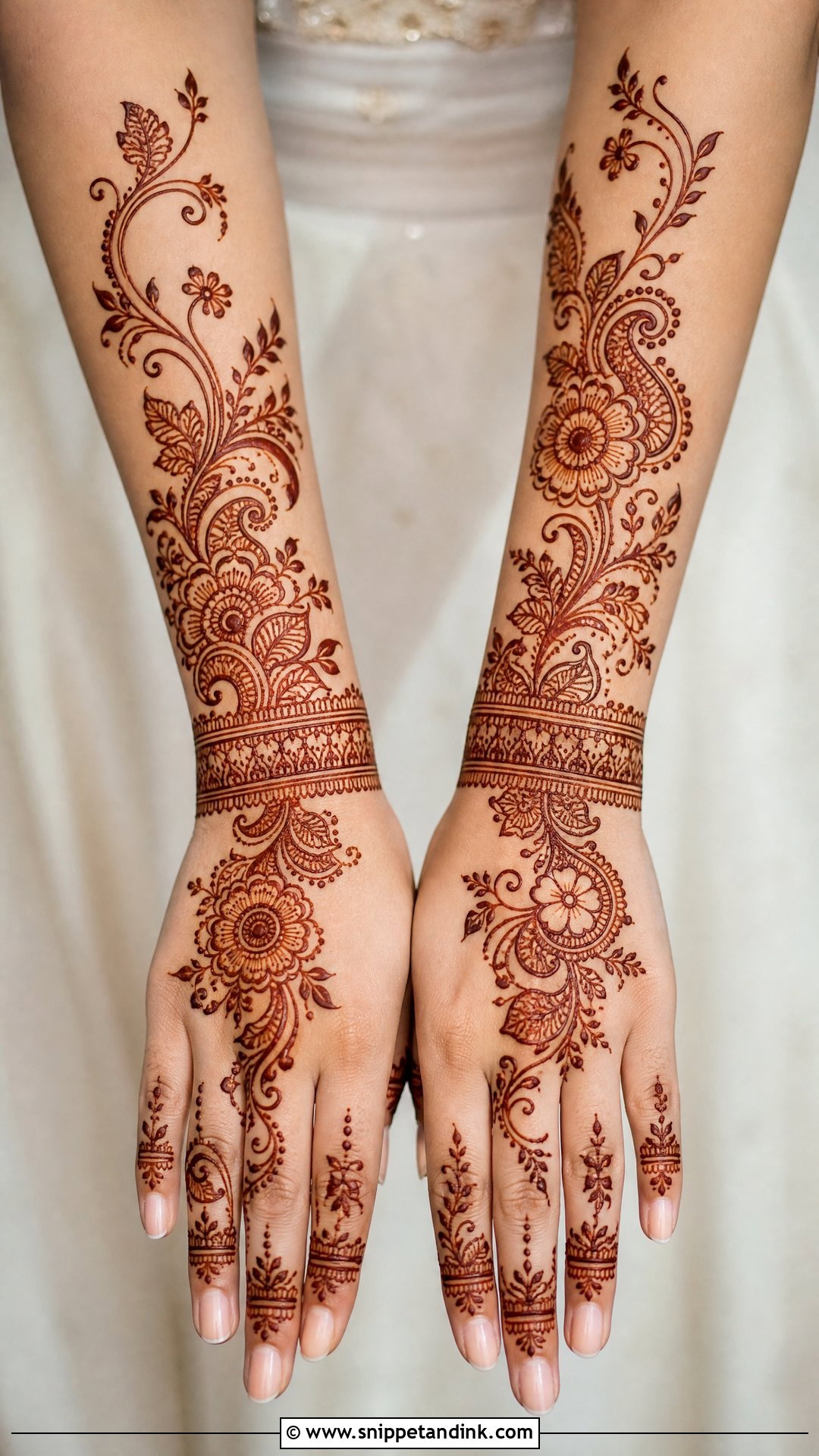
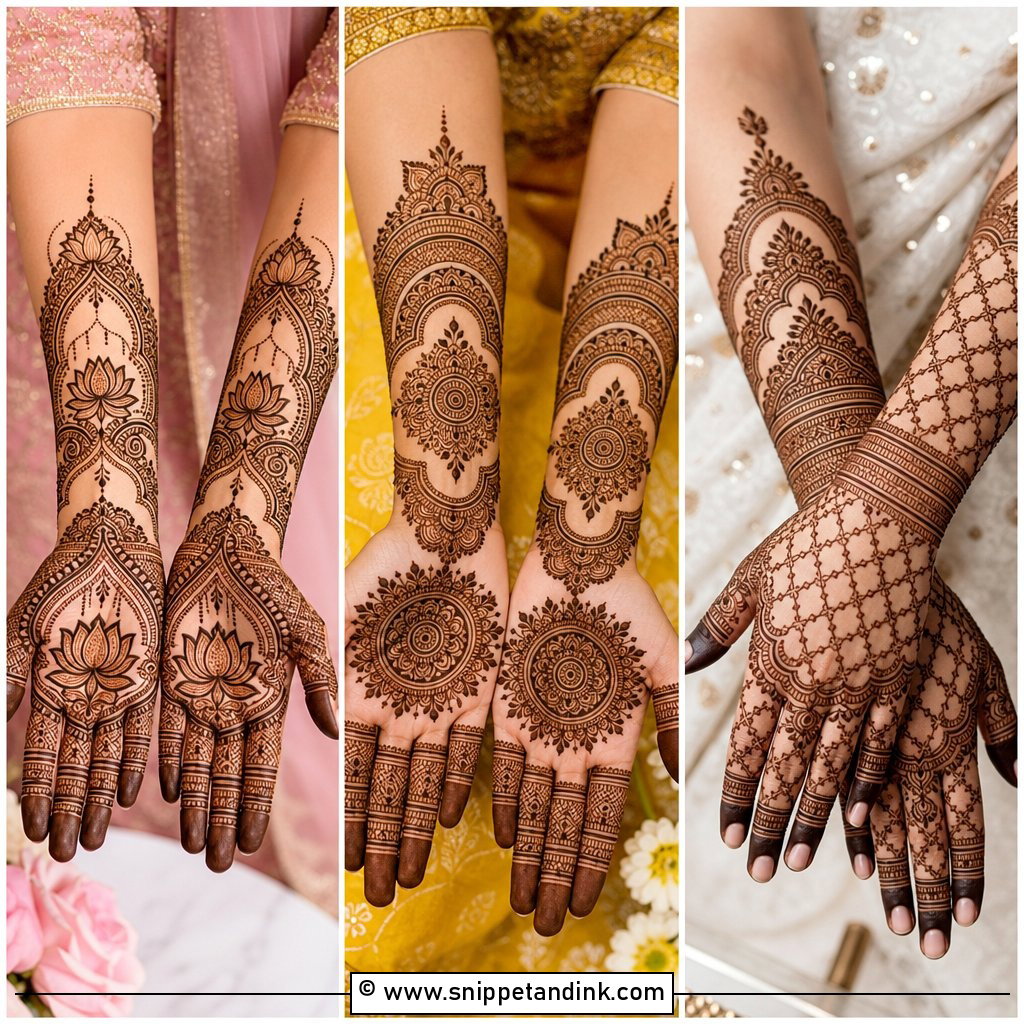
Starting from a wrist cuff, florals, vines, paisleys and thin borders climb the forearm while the hand itself stays light. This placement only makes sense if your sleeves show it, so it suits sleeveless, short-sleeved or sheer-sleeved outfits. Forearm skin stains lighter than palms, so I keep these lines a touch bolder than I would on the hand. It’s a practical way to get some drama and still keep a clean palm.
17. Gulf Bridal Khafif Mehndi Design
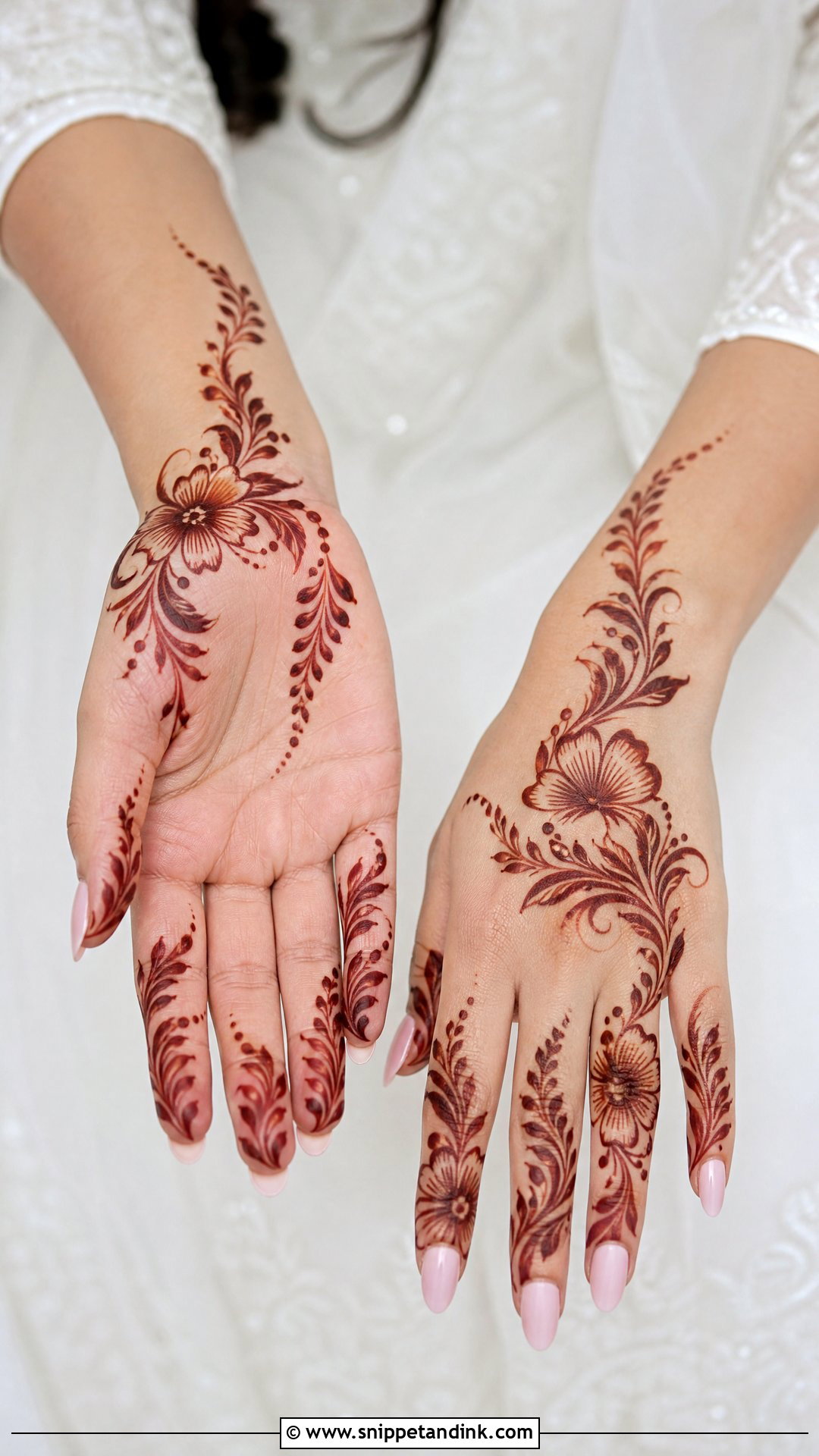
Gulf khafif uses large blooms, flowing leaves, curved vines and fine accents with plenty of open skin. Compared to dense bridal work, Gulf-inspired khafif work is lighter but still looks rich, especially with a deep maroon stain against the skin. Thick outlines need paste that flows evenly without cracking, so I test the cone before I start. It’s a natural choice for nikah, walima, engagements or receptions, alongside Arabic jewelry, embroidered gowns, abayas and modest outfits.
18. Pakistani Bridal Khafif Mehndi Design
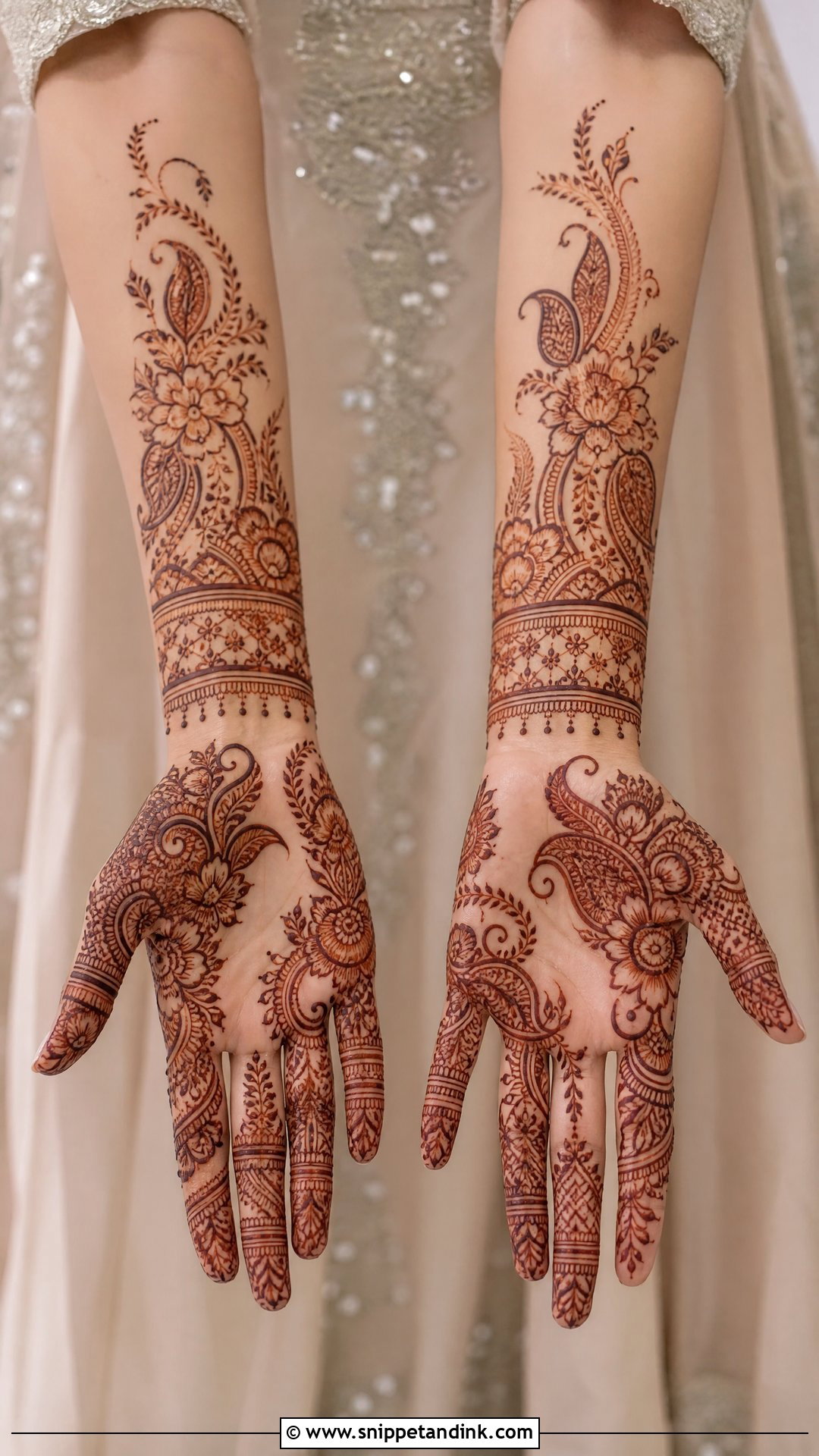
Pakistani khafif mixes floral trails, paisley clusters, shaded leaves and delicate wrist work across the front hand, back hand and forearm, with open space between the main motifs. Small domes, tikka-style circles or lace borders give it a traditional finish. It holds its own through nikah, baraat, and walima, especially when the mehndi is applied early enough to peak in color by the nikah. Shararas, ghararas, lehengas and heavily embroidered dresses all sit comfortably with it.
19. Indian Bridal Khafif Mehndi Design
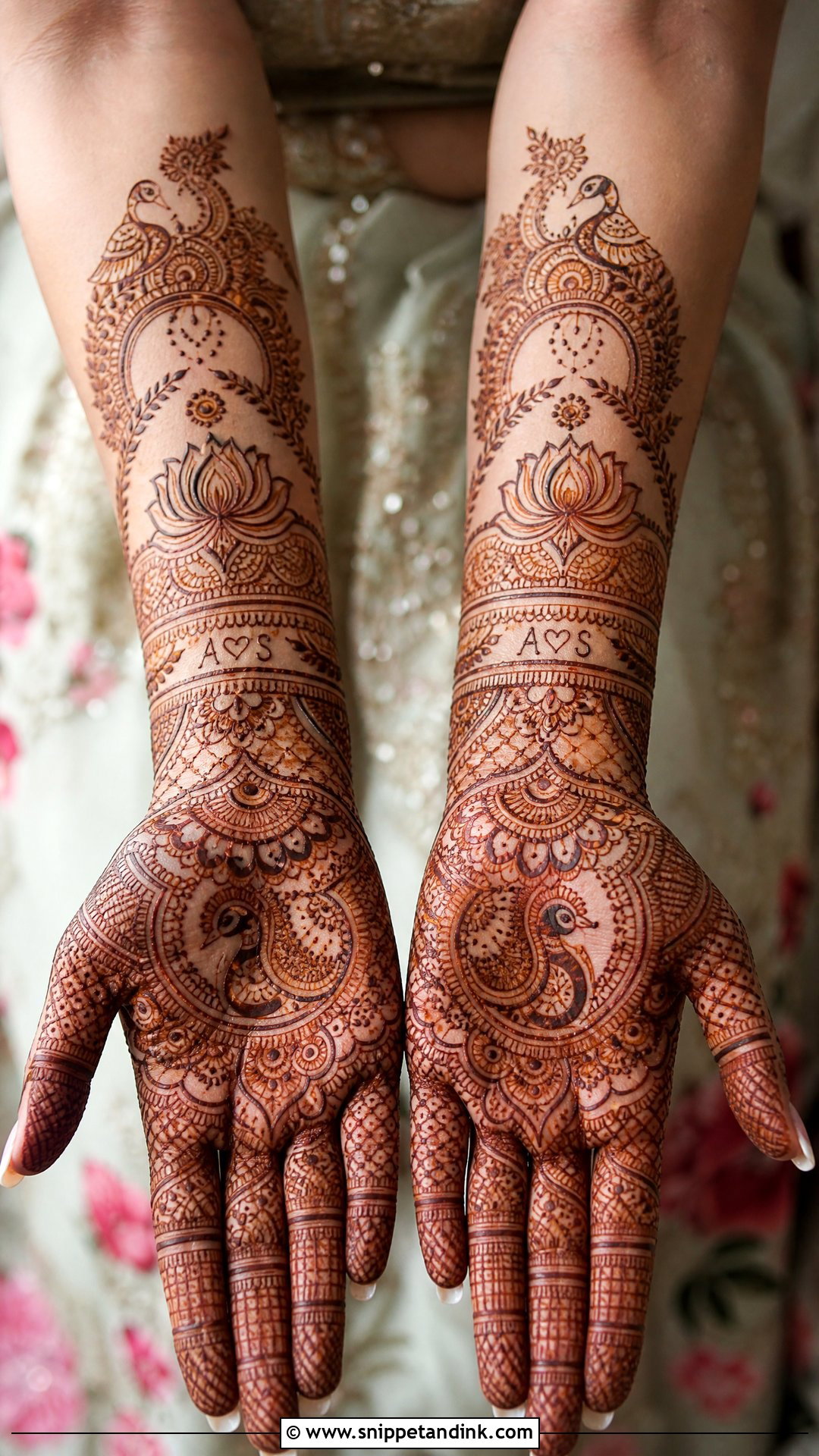
The Indian version keeps traditional motifs such as lotus, peacock, paisley, mandala and fine leafy borders but uses fewer of them. The palm holds the main design while fingers and wrist carry matching details. Initials or a small wedding symbol fit without crowding. I draw the main motif first and then decide how much supporting detail it actually needs, which is usually less than a bride expects. Red, maroon, gold and pastel outfits all work.
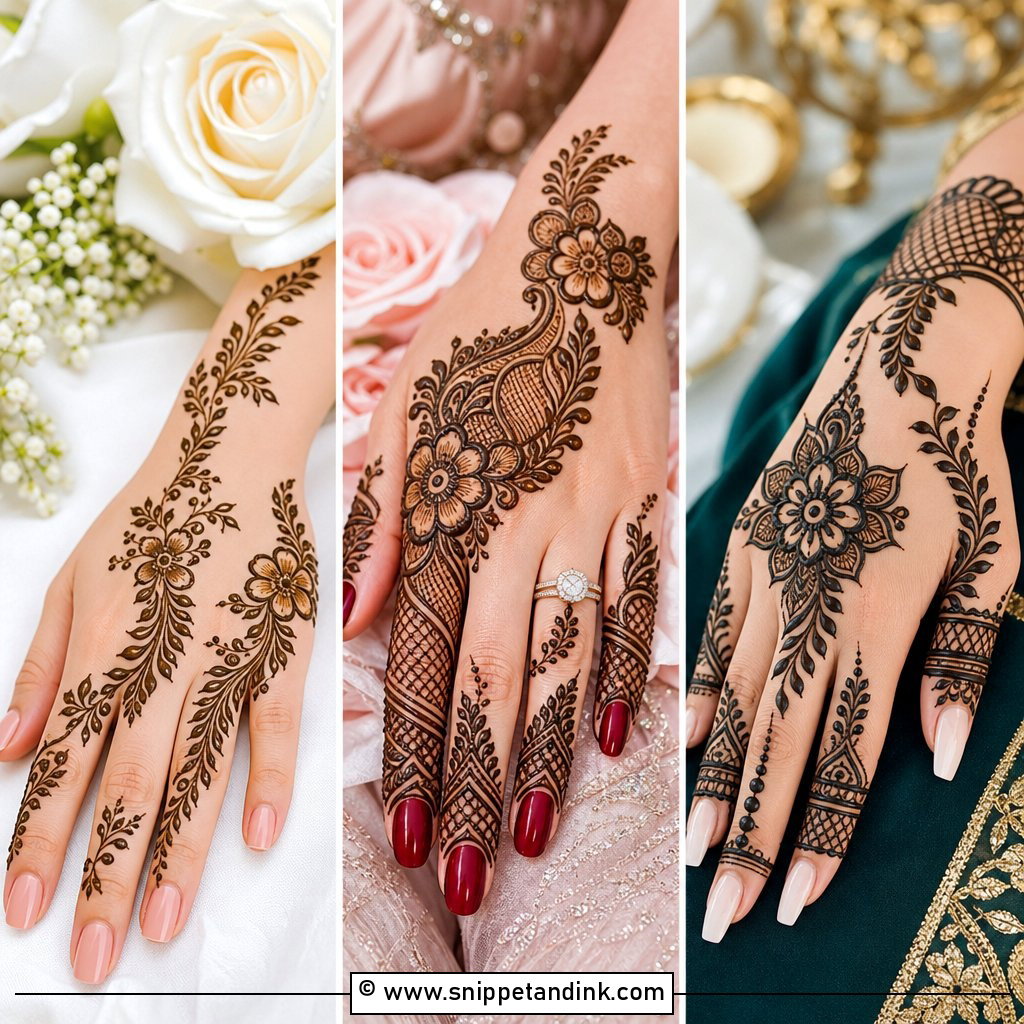

20. Bridal Khafif Mehndi Design For Feet
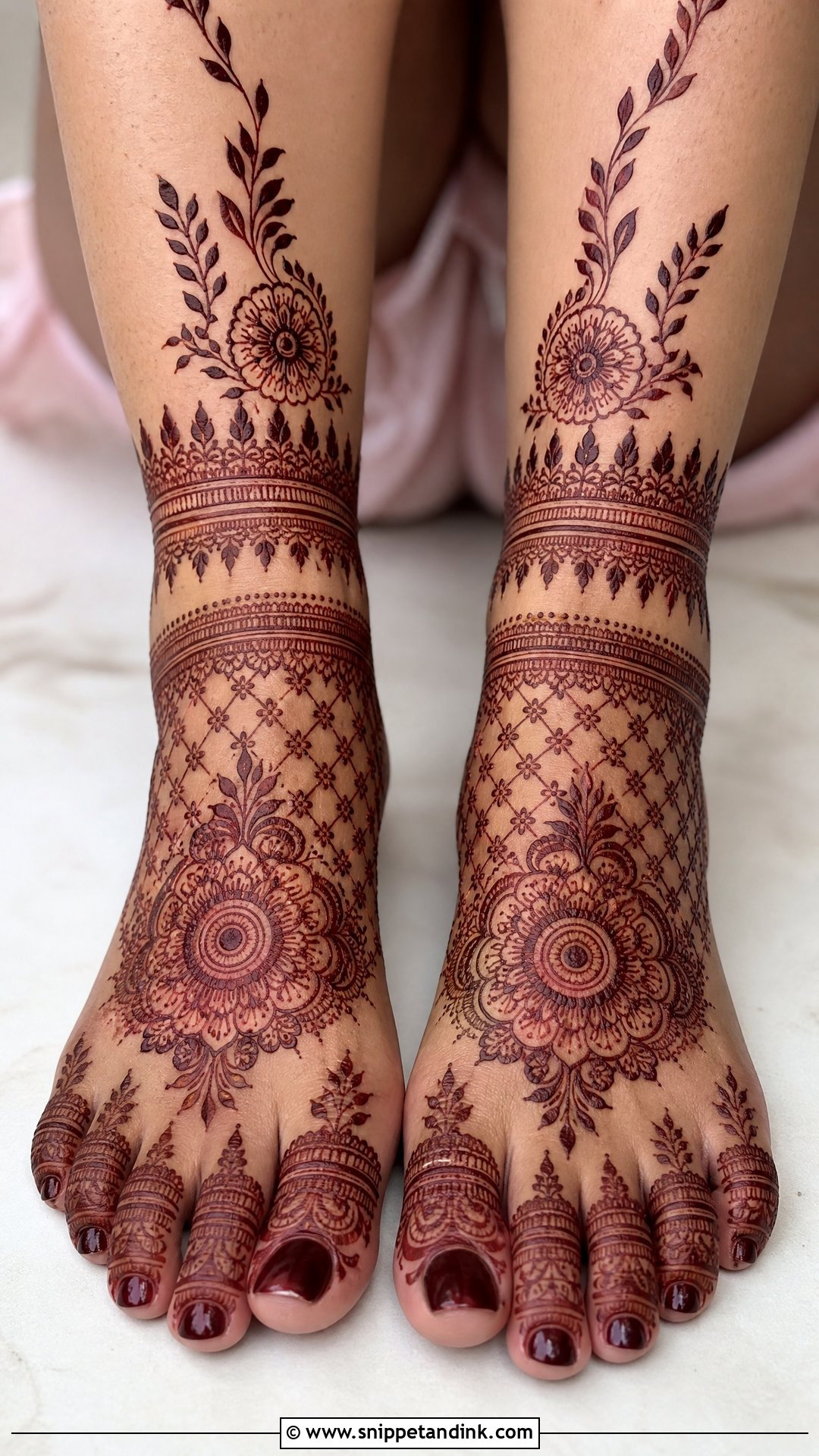
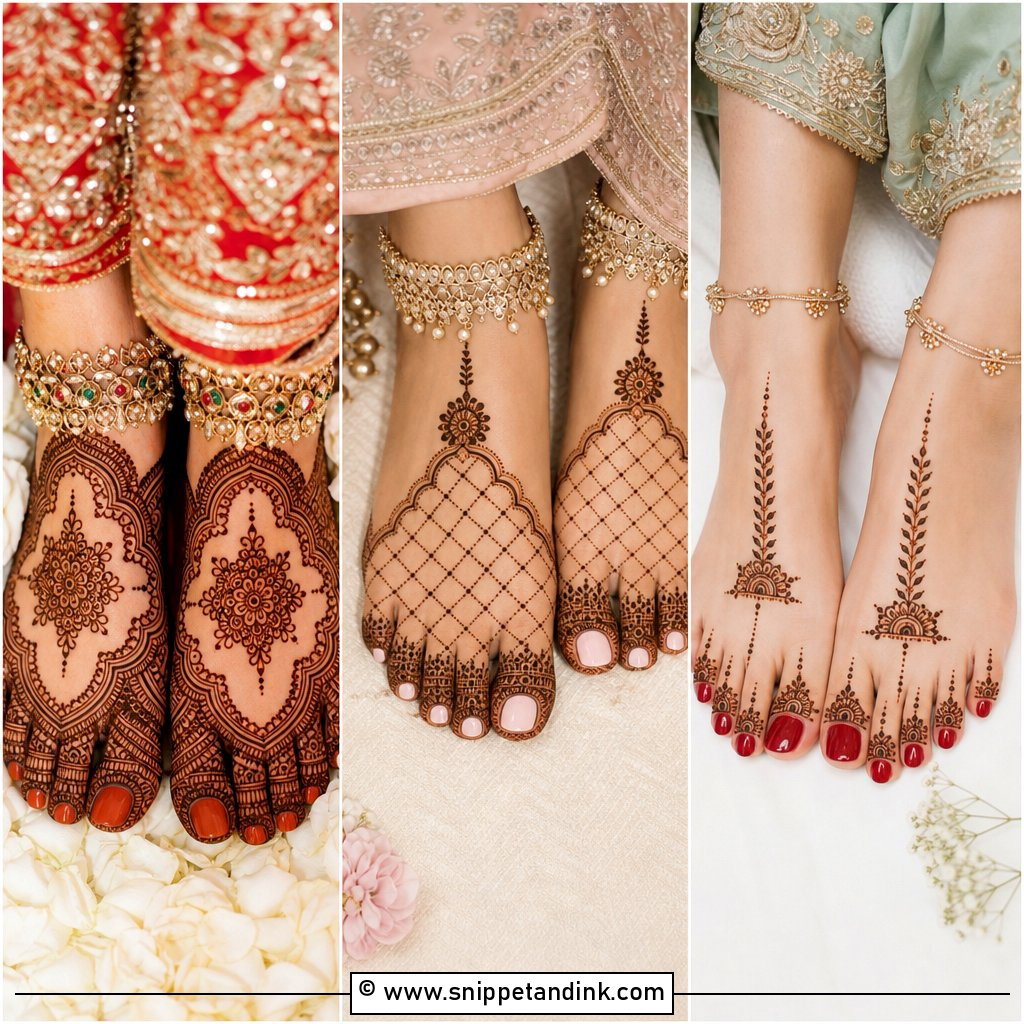
Feet in khafif style get ankle bands, floral vines, toe details, small mandalas, paisleys and light jaali across the top of the foot. The open spacing lets anklets, toe rings and sandals show. Matching hand and foot motifs tie the whole look together. It’s worth doing if your feet will be visible during rituals or in portraits; if not, your time is better spent on the hands.
One Application for Nikah, Baraat and Walima
Many brides want one mehndi session to carry several functions over a week or more. A henna stain usually peaks around two days after application and then fades gradually as the skin renews, faster on palms that get washed often. Fine lines fade sooner than filled areas, which matters here, because khafif designs are mostly fine lines.
Planning around the fade
Time the application so the stain peaks for the event where your hands matter most, usually the nikah or main ceremony. Put the strongest elements, like a solid central mandala or filled fingertips, on the palm, so something stays bold for the later events. Use rubber gloves for dishes and skip hand scrubs until your last function. If the gap between events is long, a light fresh khafif touch-up on the back of the hand is easier to blend in than redoing a dense pattern.
Lotion helps more than people expect. A little coconut oil or plain balm rubbed over the design before each bath keeps water and soap off the stain, and dry, flaking skin takes the fine lines with it. Chlorinated pools and hot tubs will strip a light design within a couple of swims, so save them for after the walima.
Leave Room for the Rings
Bridal mehndi doesn’t need to be dense to look bridal. Floral trails, mandalas, paisleys, jaali, bracelet details and open Arabic layouts can cover full hands, back hands, palms, wrists, forearms and feet while leaving skin to breathe. Match the layout to your outfit, your jewelry and how long you can sit. Then give the stain its full two days to darken, because in khafif work the color carries as much of the look as the pattern.
You'll Like These Ideas:






Leave a Reply