
Engagement henna has a different job from wedding henna. It frames one ring, sits through a long day of family portraits and greetings, and often has to make way for a heavier bridal design a few weeks or months later. That is why I steer most engagement brides toward balanced coverage that leaves some skin showing. Below you’ll find full Indian hands, Arabic trails, mandala backs, jaali, ring-focused layouts and minimal wrist-to-finger designs. Your outfit, your jewelry, the timing of the ceremony and how dark you want the stain in photos will decide between them.
When the Engagement and the Wedding Are Close Together
A good henna stain lasts one to three weeks, fading gradually. If your engagement and wedding are within a month of each other, that matters more than any motif choice. Bridal henna applied over a half-faded engagement stain can look patchy, because the old design still shows through as orange shadows on the palms and fingers.
- Wedding within about two weeks: go light for the engagement, an Arabic trail, a mandala back or finger work, and leave the palms mostly bare.
- Three to four weeks apart: most of the colour will be gone, but I’d still avoid solid fingertip caps, which hold longest.
- Months apart: wear whatever you love. The stain will be long gone.
I’d also keep a favourite motif back for the wedding. If the engagement hands already carried your portrait or a big peacock, the bridal hands lose some of their surprise.
1. Full Hand Engagement Mehndi Design
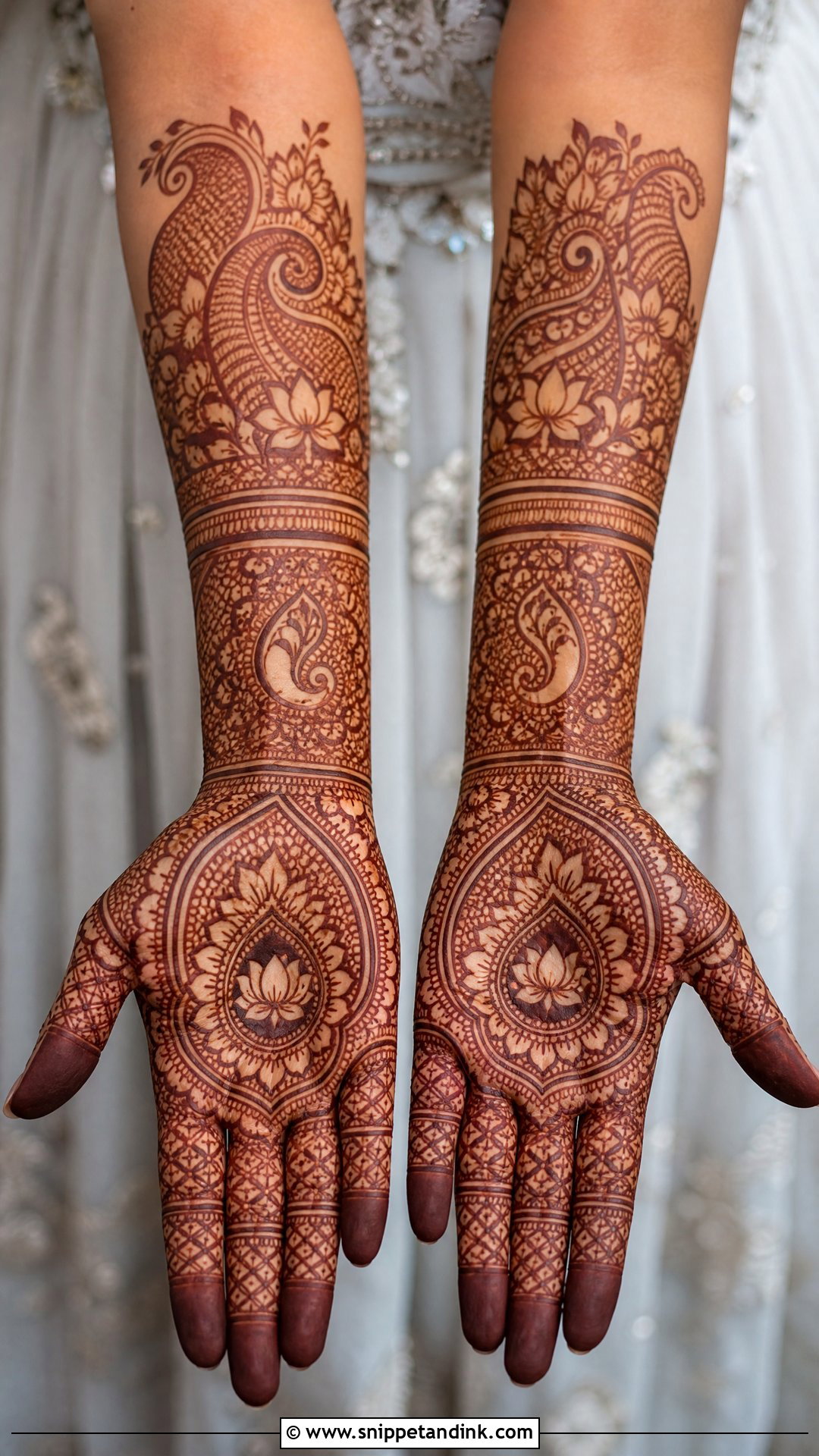
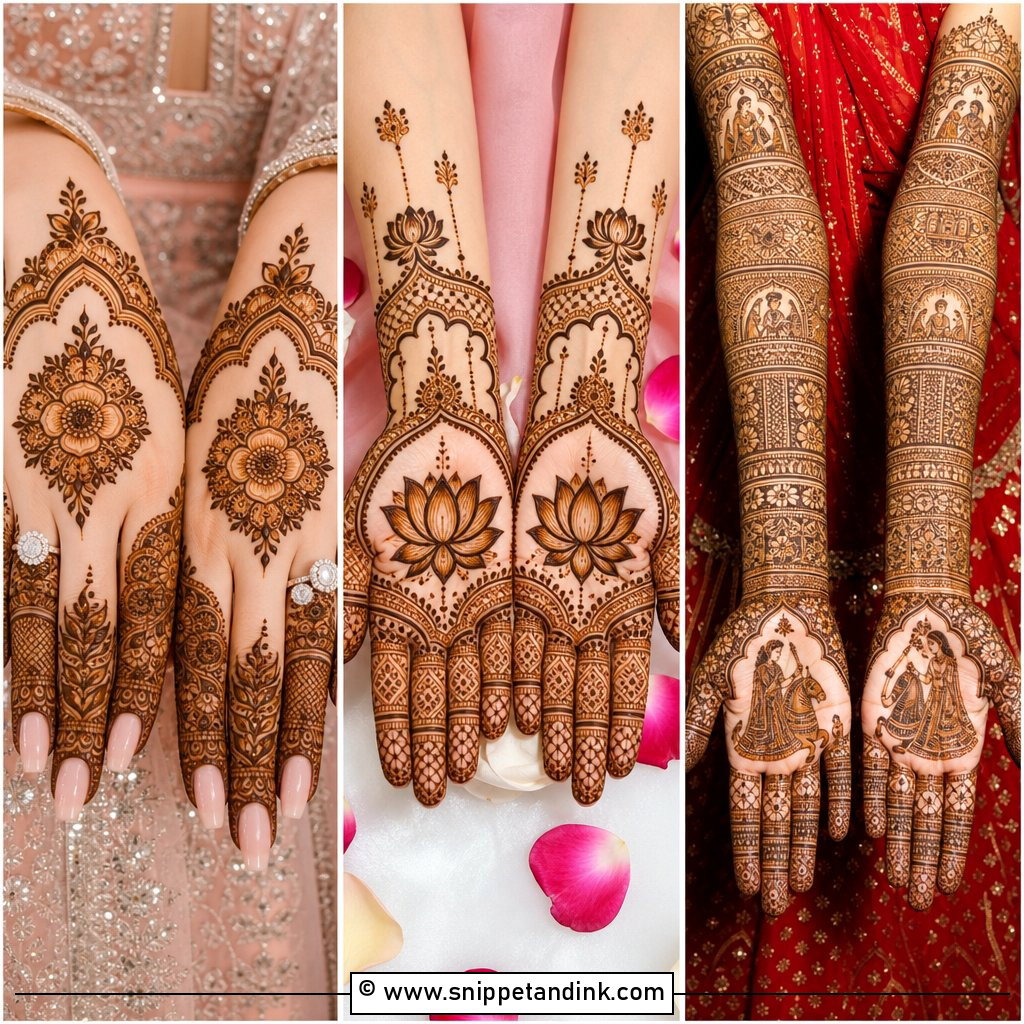
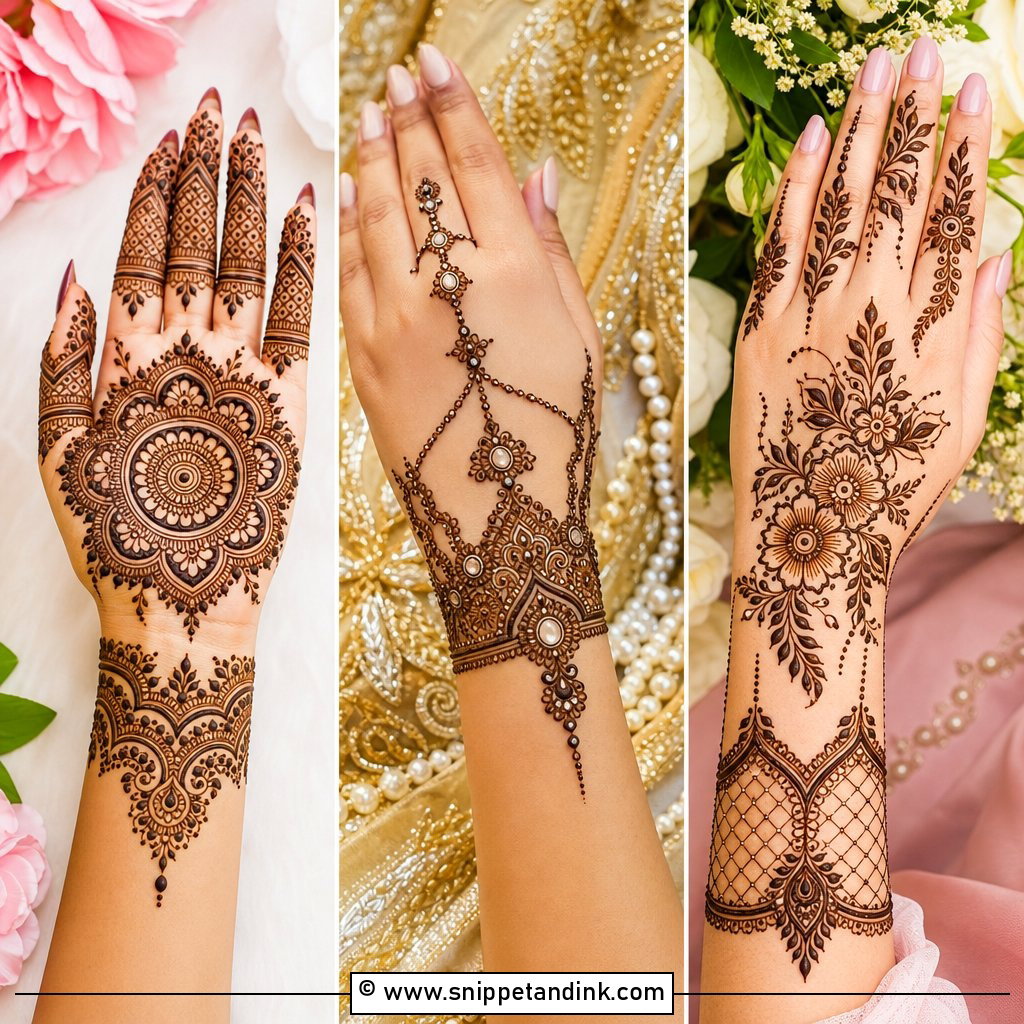
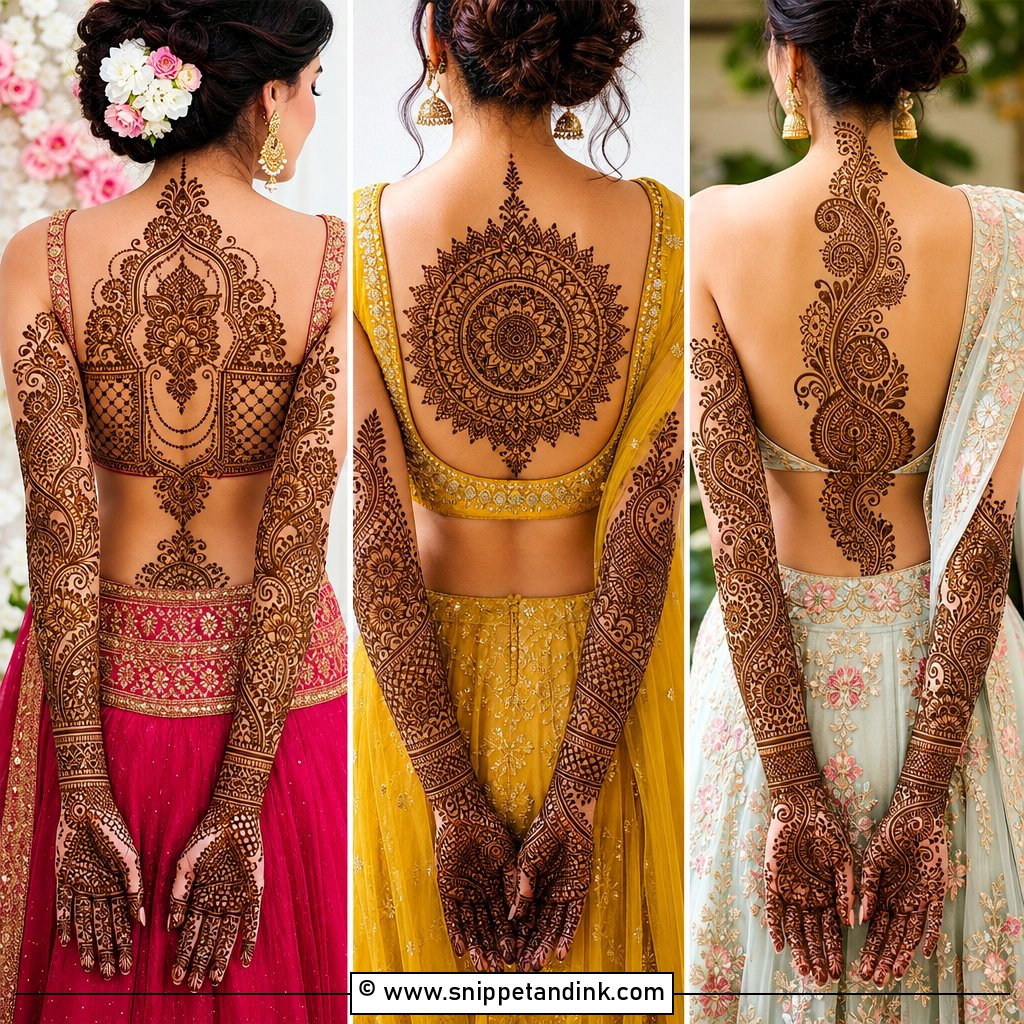
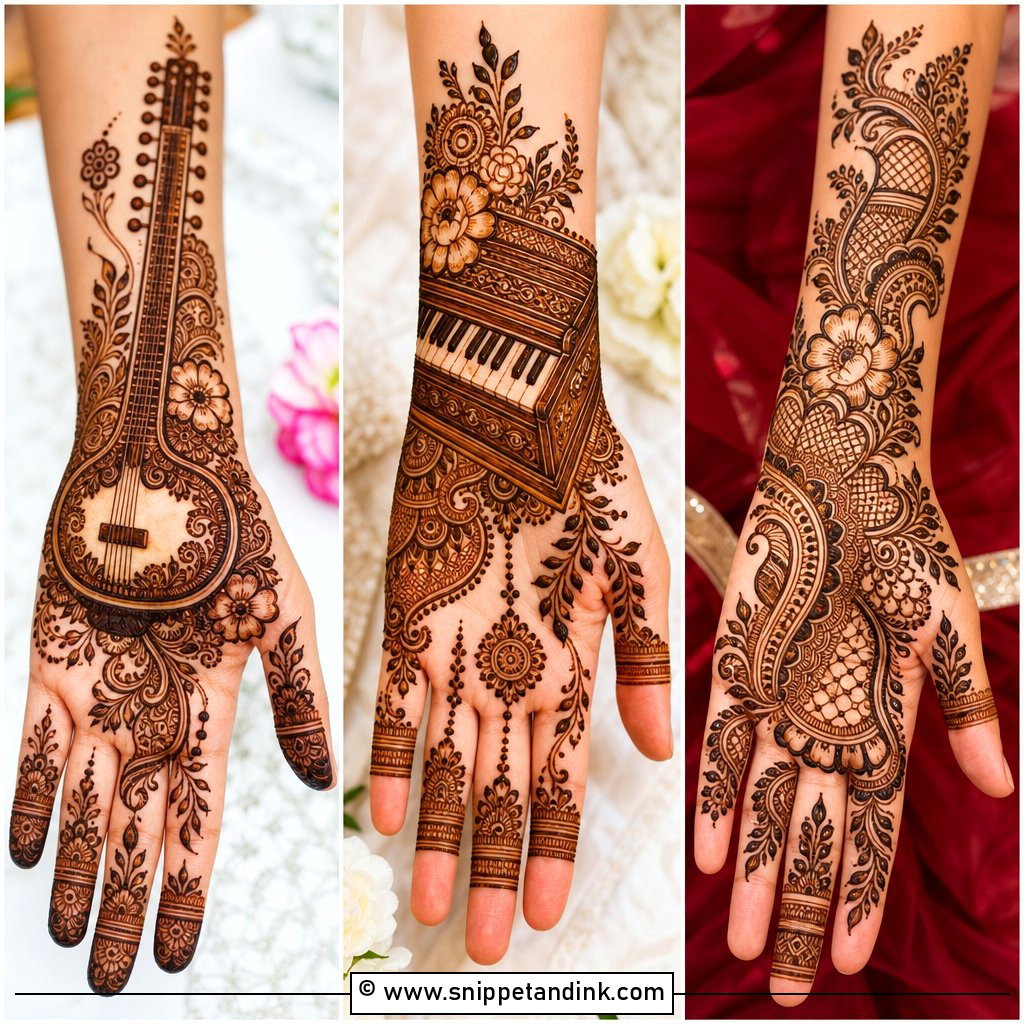
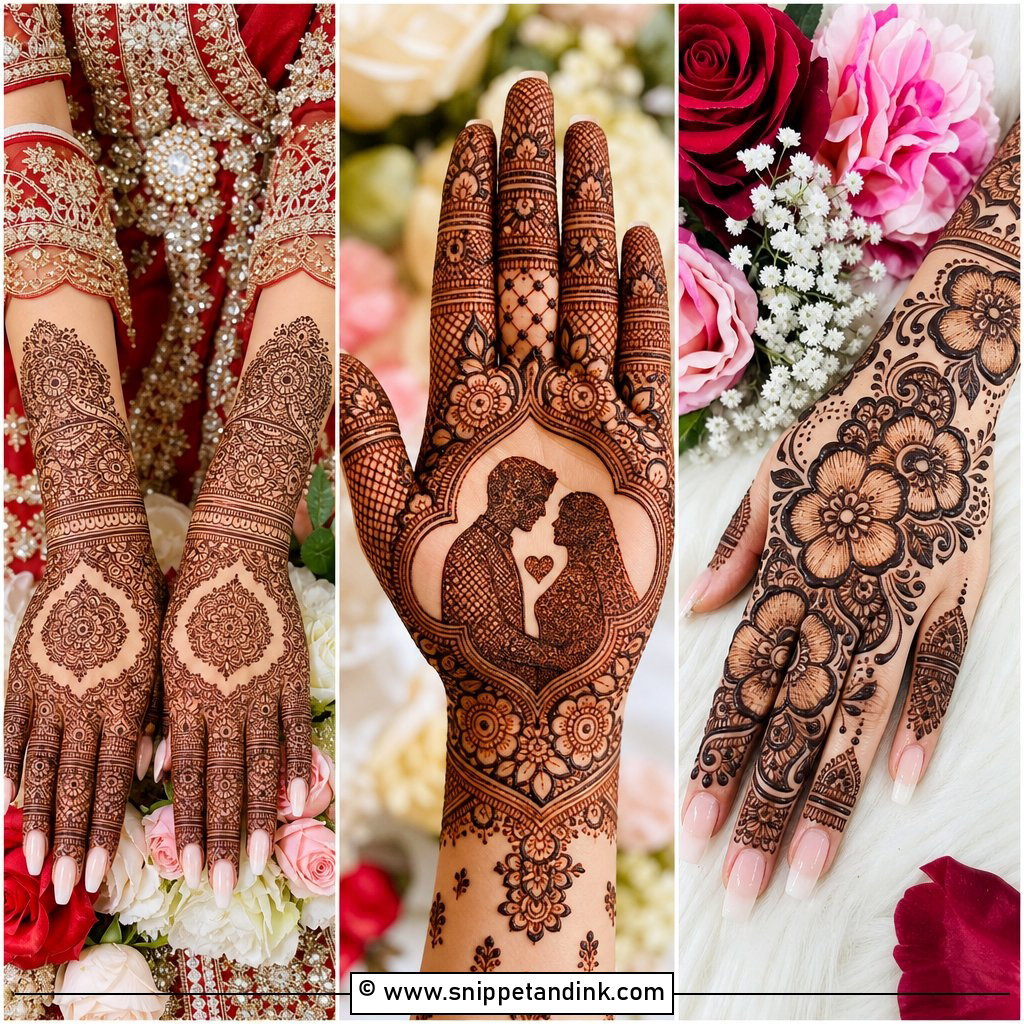
A full hand engagement mehndi design gives you rich coverage now without saving every flourish for the wedding: palm, fingers, wrist and lower forearm in paisleys, florals, leaves and fine fill. During the ring exchange the hand looks finished from any angle. I keep the centre a little open, a mandala, a heart or a ring motif, so it still reads as an engagement and not a dress rehearsal for the wedding. It matches the detail of a heavily embroidered outfit.
2. Arabic Engagement Mehndi Design
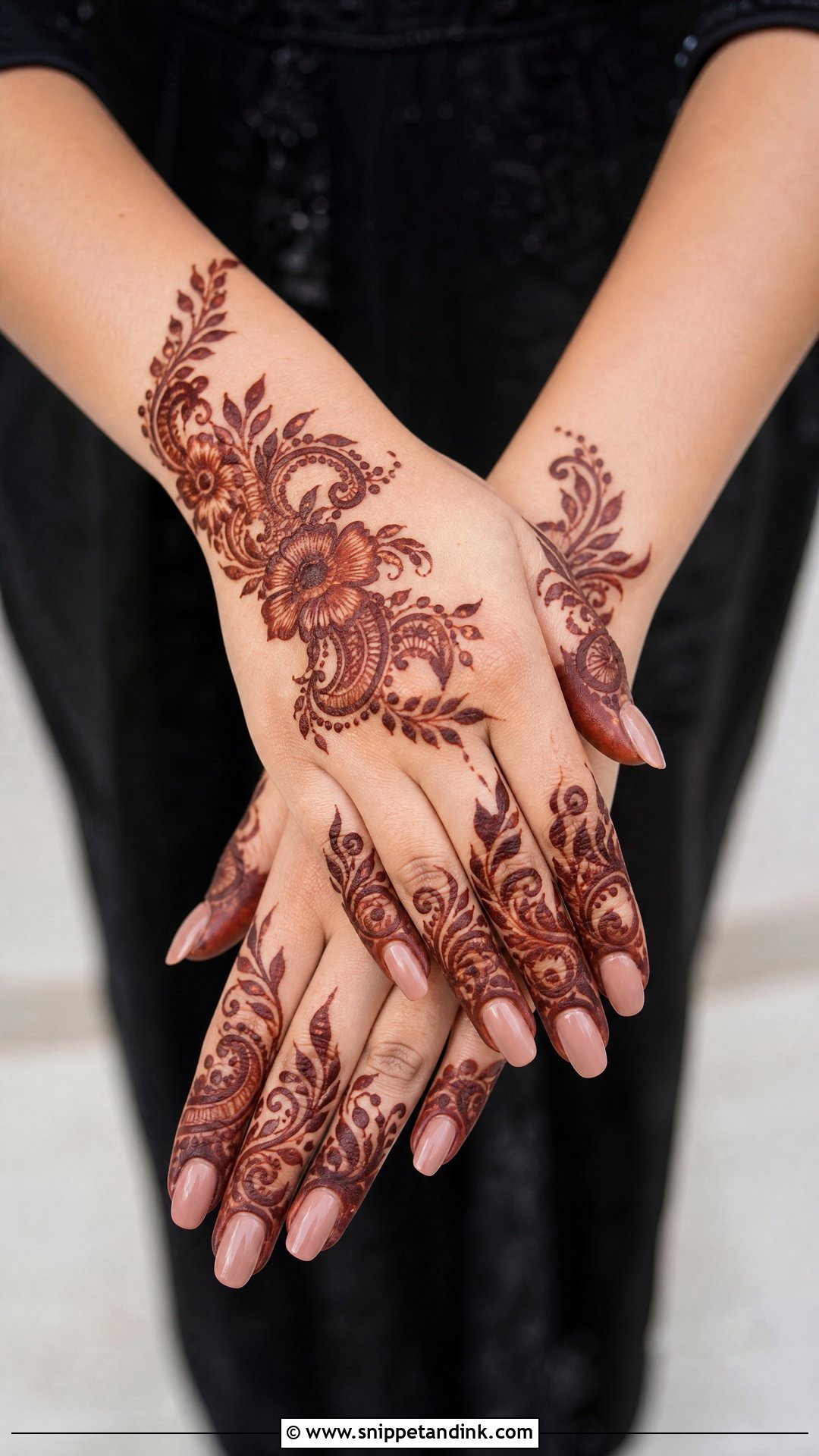
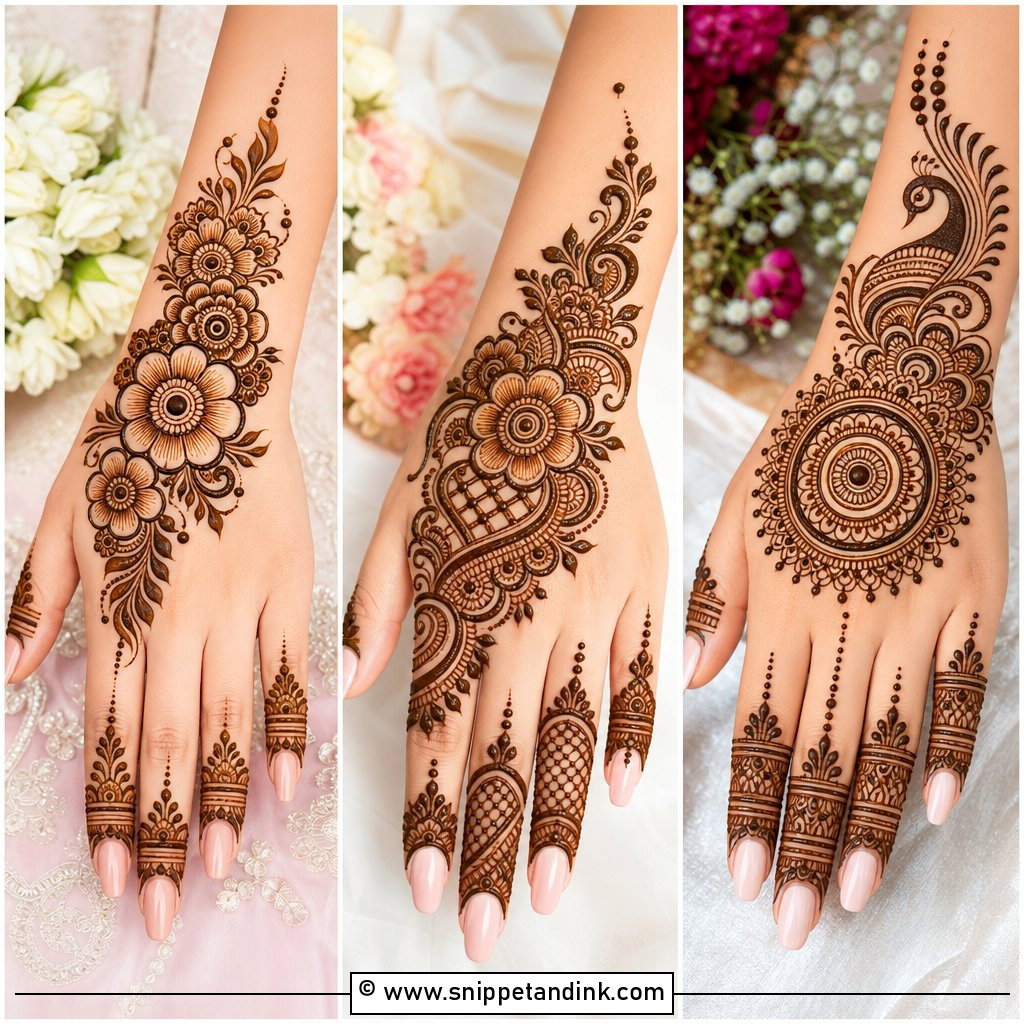
A diagonal sweep of bold flowers, leafy vines, shaded petals and curved paisleys across the palm or back of the hand, with skin left open between them. Arabic henna is clean and fast, which helps when the ceremony is close and time is short. To make it look bridal I run the trail from the fingertips all the way down to the wrist and close it with fine bracelet lines. Statement rings sit comfortably in all that open space.
3. Simple Engagement Mehndi Design
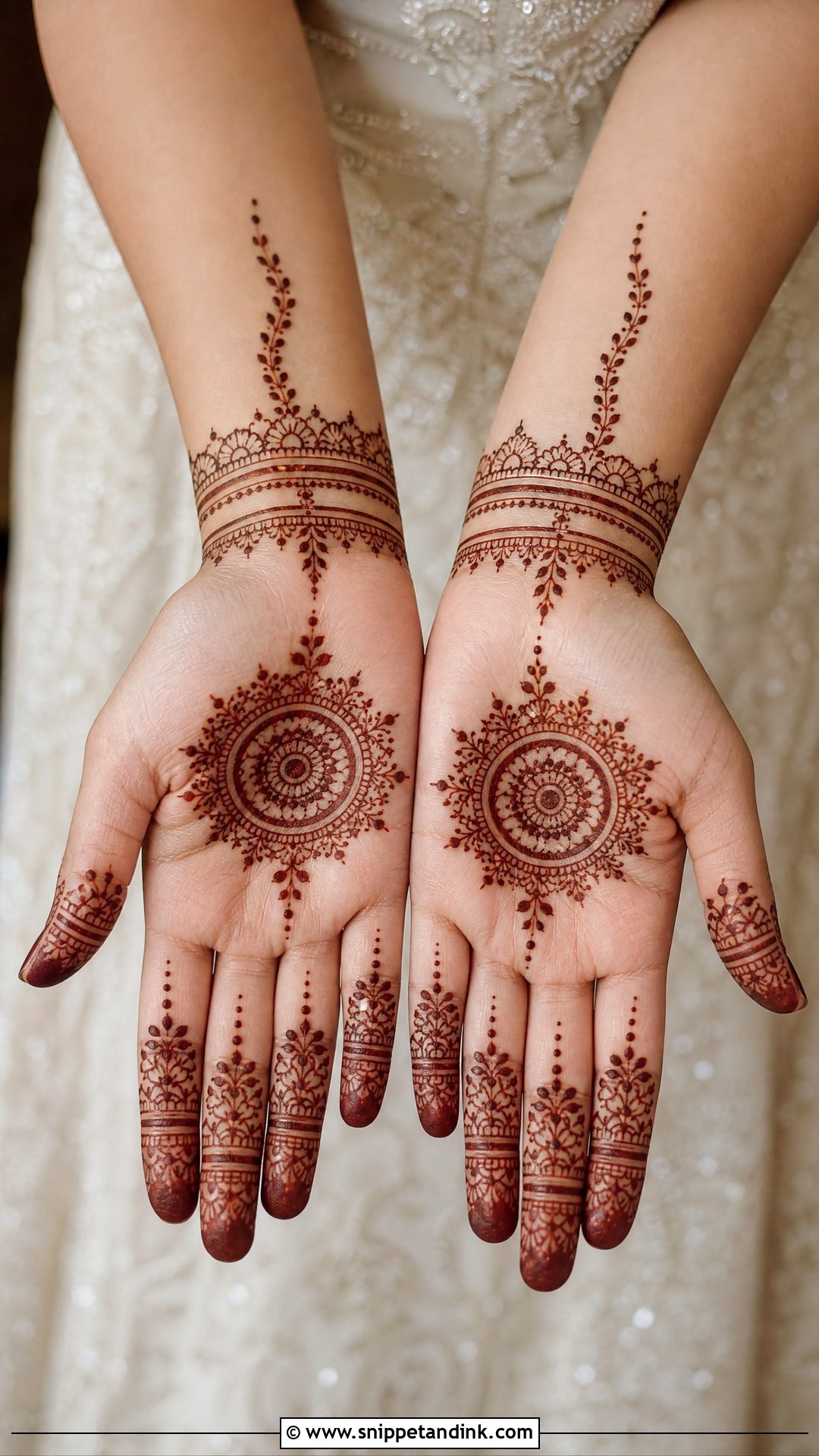
Simple works when the layout is disciplined. A clean mandala on the palm, decorated fingertips, a small wrist cuff and soft vines linking them is enough, especially if your outfit is already heavily embellished. Fewer lines around the ring finger also means the ring gets noticed. The thing I’d avoid is a scatter of unrelated tiny motifs. Pick one theme, florals, circles or leaves, and carry it across both hands.
4. Back Hand Engagement Mehndi Design
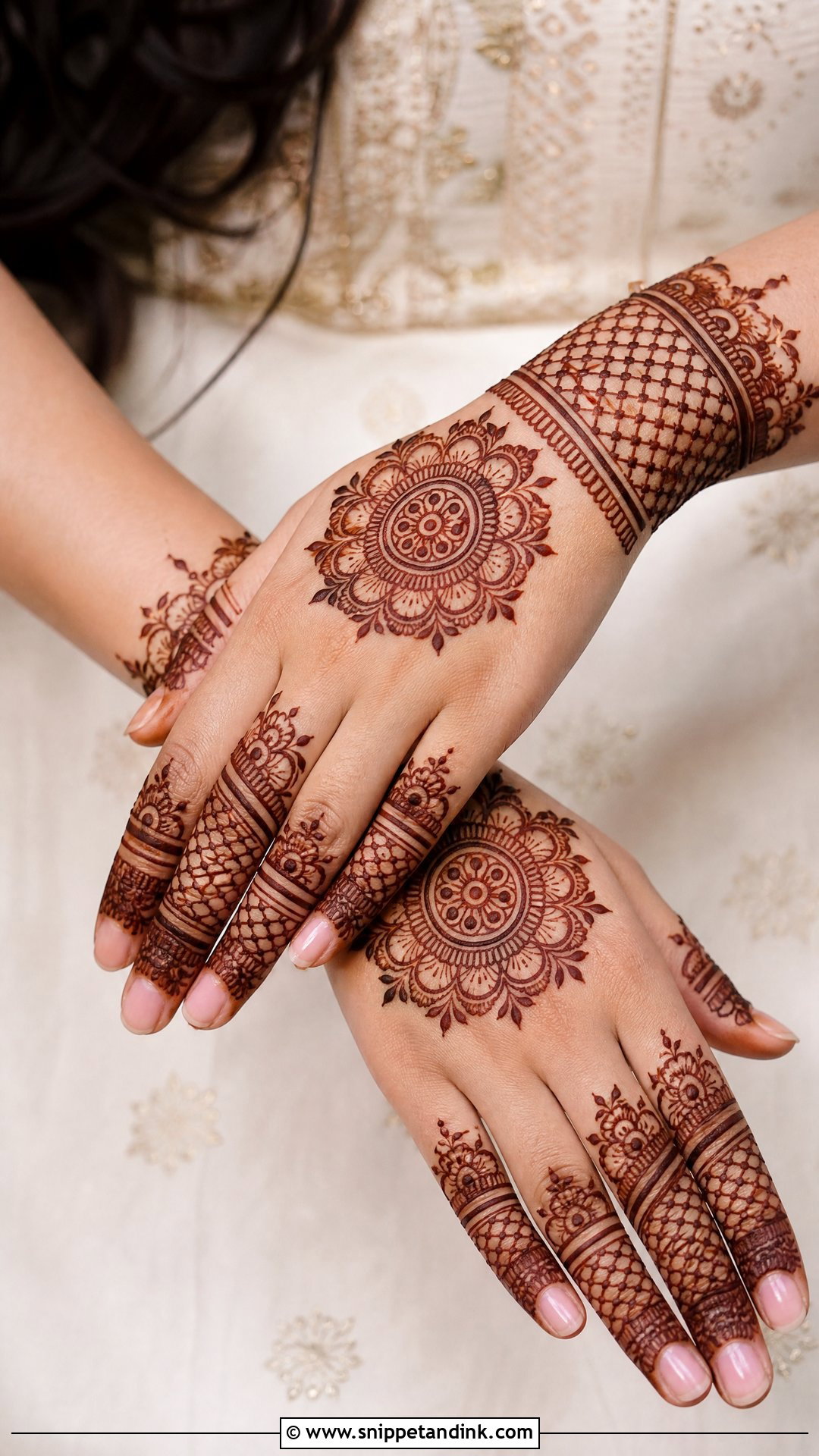
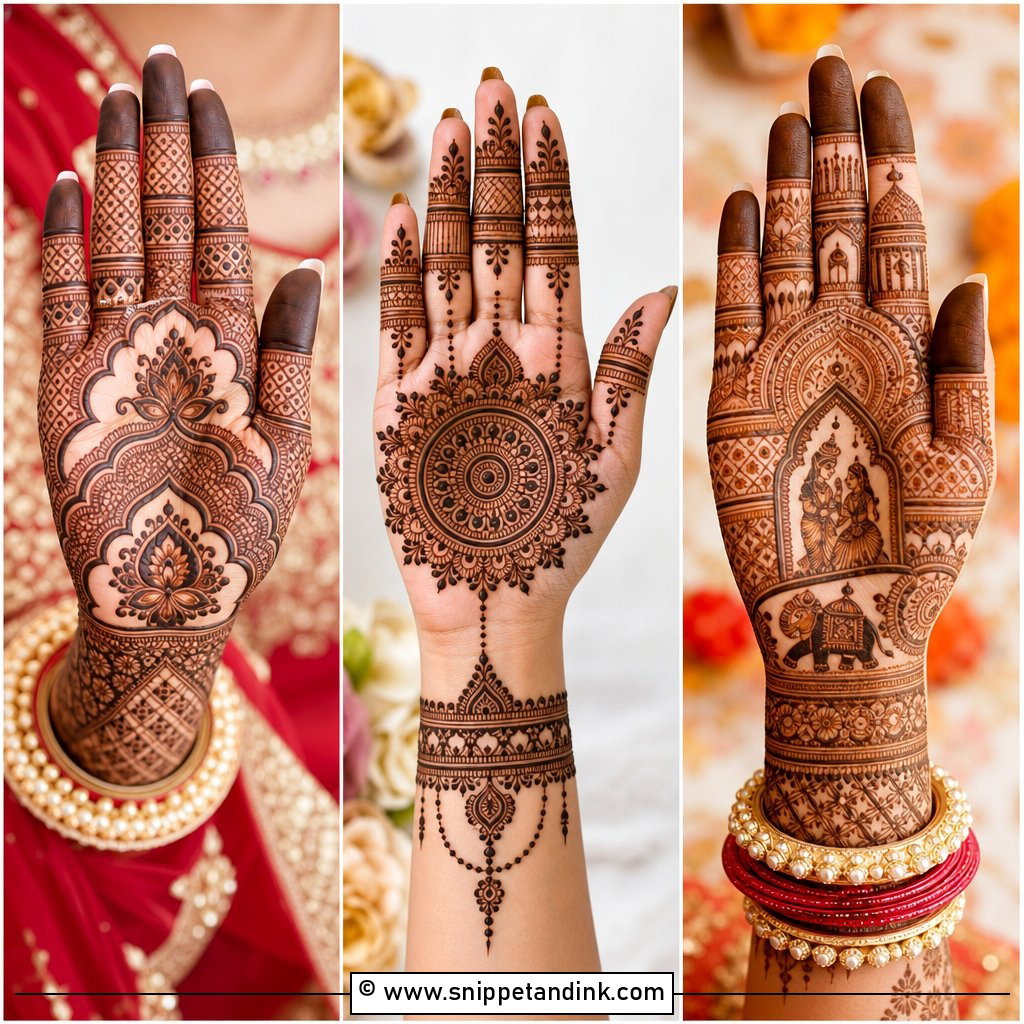
In ring photos, the camera sees the back of your hand far more than the palm. A central mandala, some jaali mesh, a floral cuff and decorated fingers make a polished back. If you’ll wear a hathphool or several rings, I map the henna to follow the jewelry so the two don’t overlap awkwardly. For a modern touch, leave the wrist clear and concentrate detail around the knuckles and fingers; it lengthens the hand without weighing it down.
5. Front Hand Engagement Mehndi Design
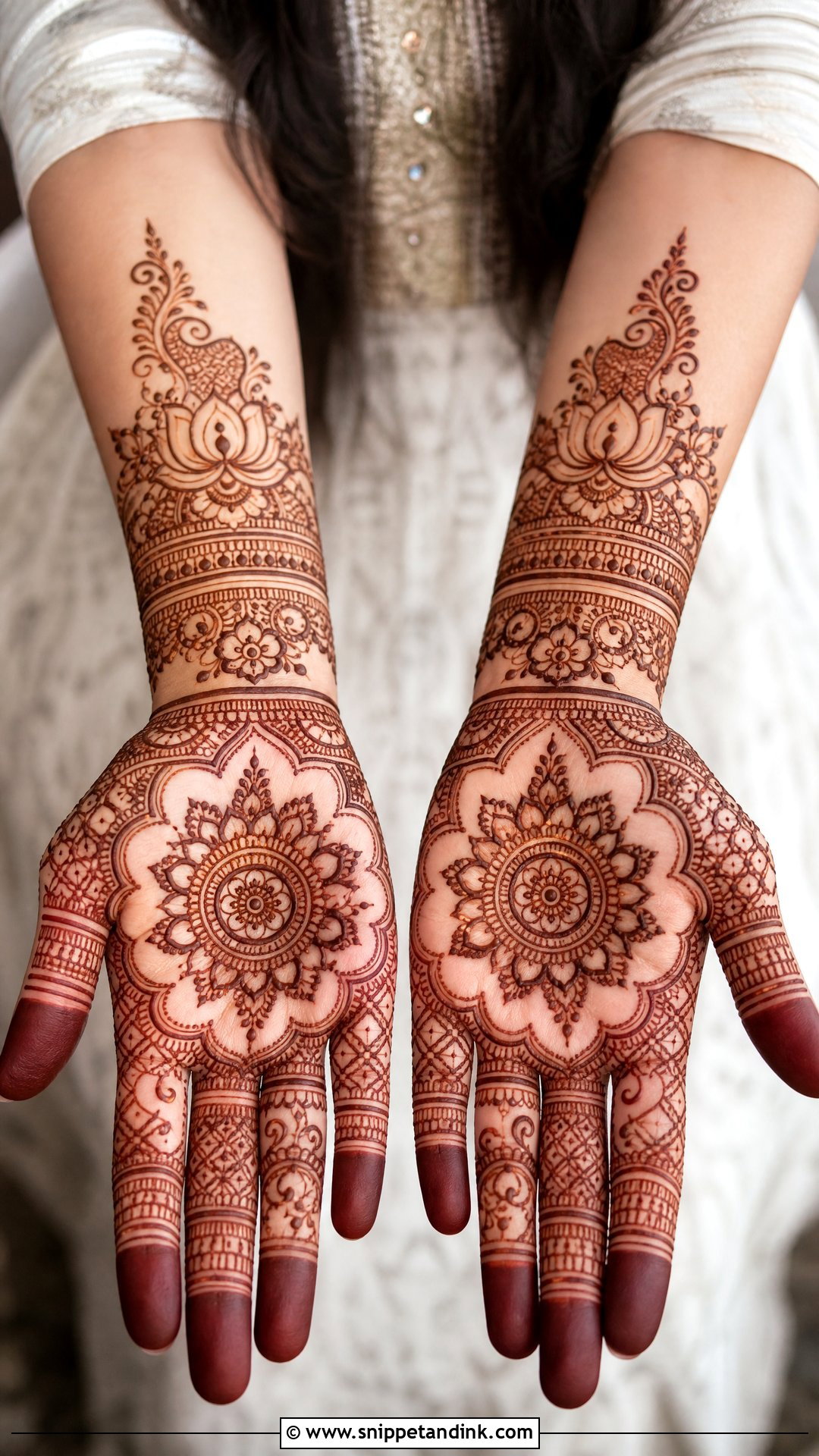
Front hand engagement mehndi design shows during blessings and close-up shots when your palms are open. A round mandala, a lotus, a paisley cluster or discreet initials can sit at the centre, with fine vines, dotted curves and shaded flowers around them. For an engagement I hold back on fill so the palm doesn’t go dark all over; palms stain deepest, and too much density there reads heavy. Decorated fingertips and a neat wrist border give it structure.
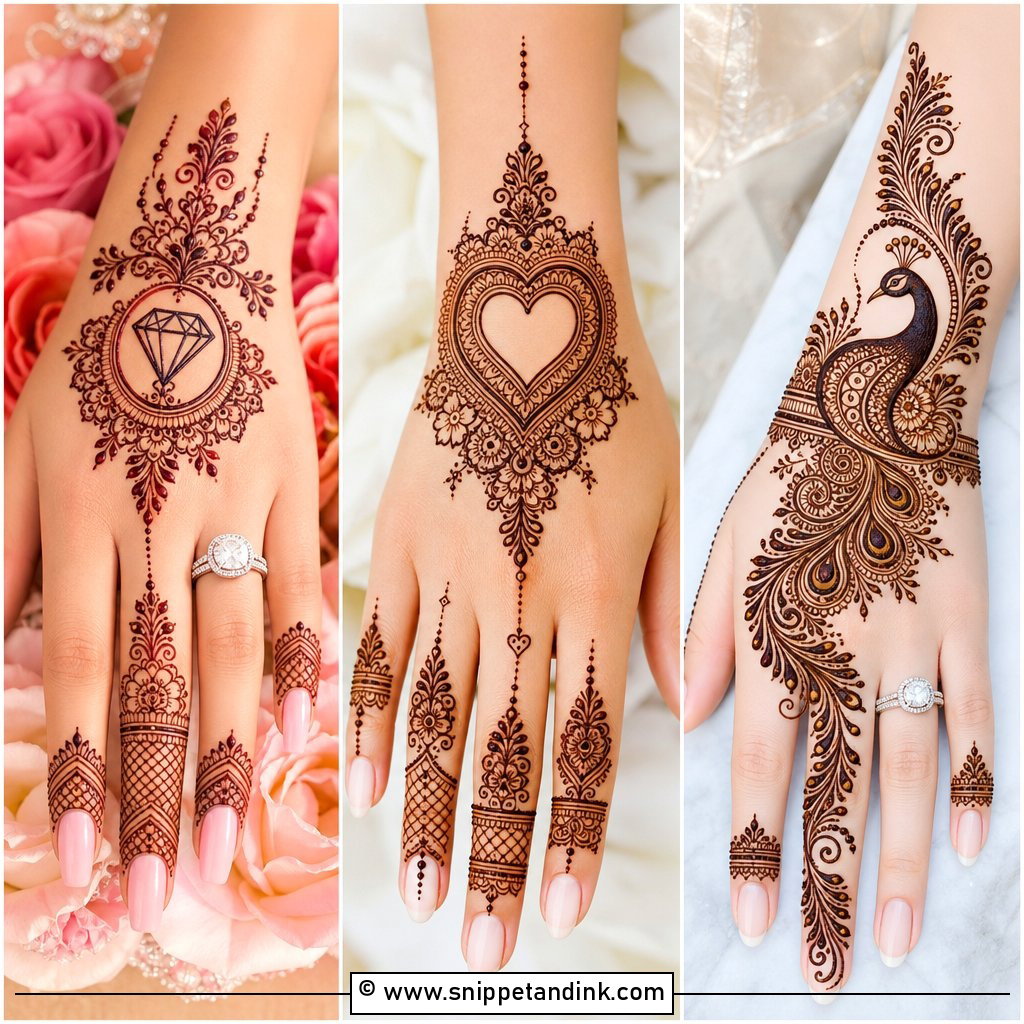
6. Engagement Ring Mehndi Design
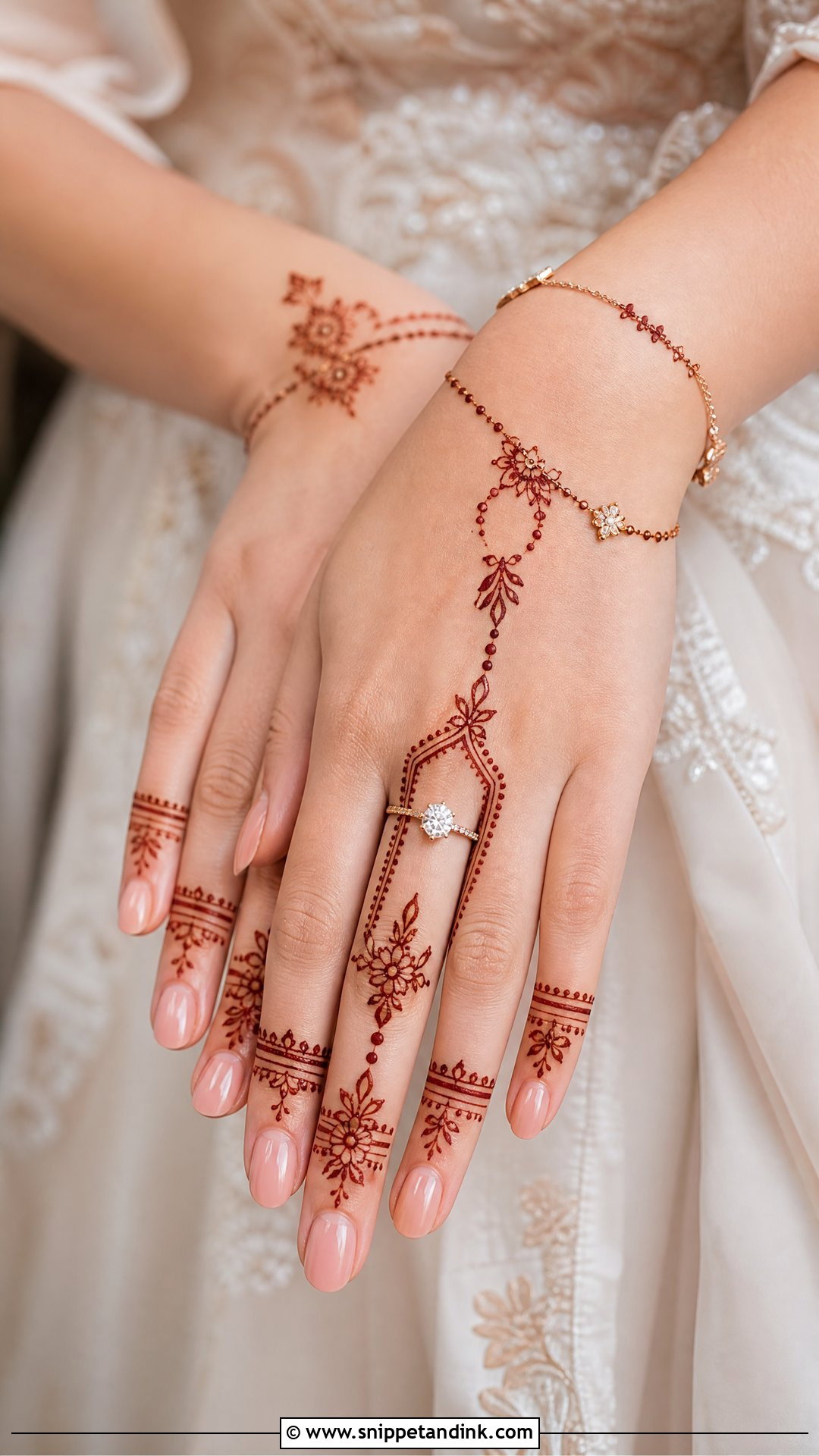
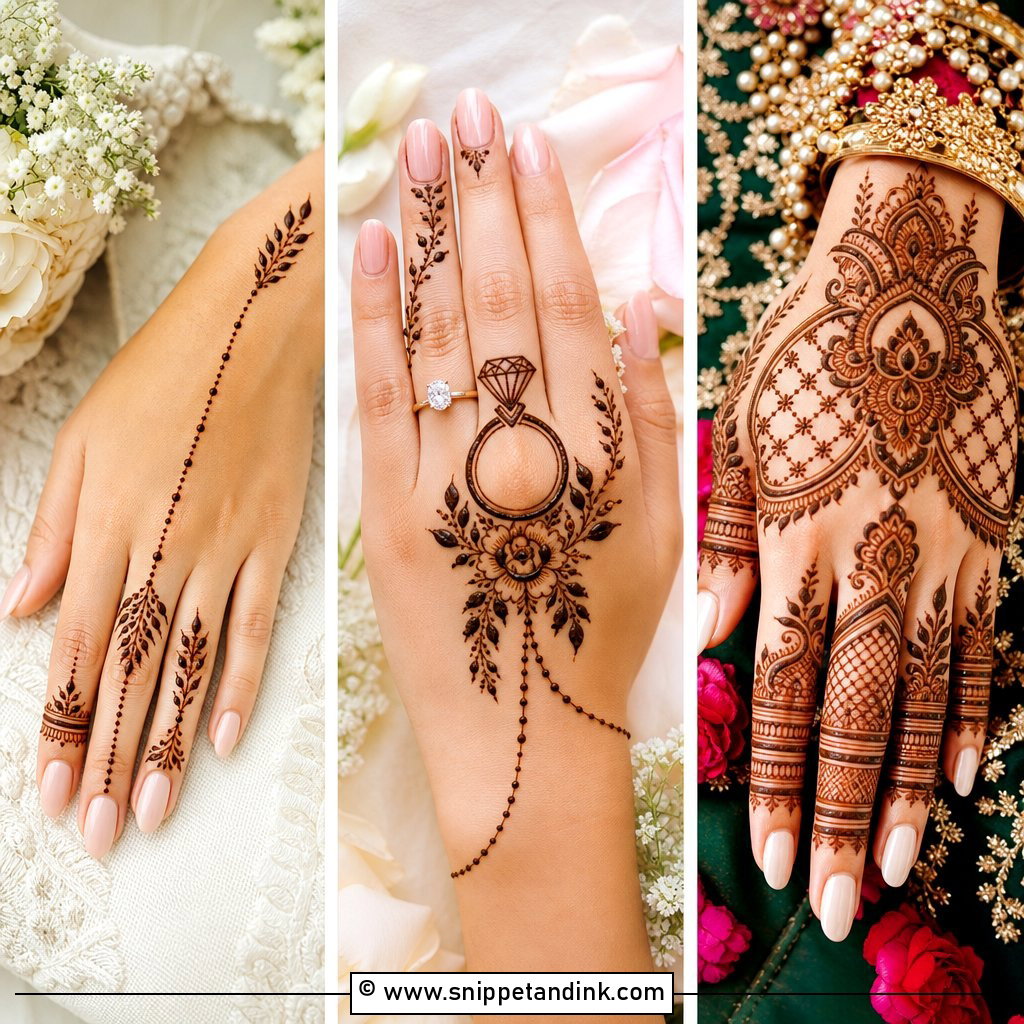
This design is built around one finger. A fine circular frame around the ring finger, bracelet lines across the back of the hand and small florals that lead the eye toward the ring. Some brides add tiny ring motifs on the palm or initials near the base of the finger. I always leave the skin where the band actually sits completely clear; henna under the ring looks muddy in macro shots. Keep it refined and the henna frames the jewelry instead of competing with it.
7. Mandala Engagement Mehndi Design
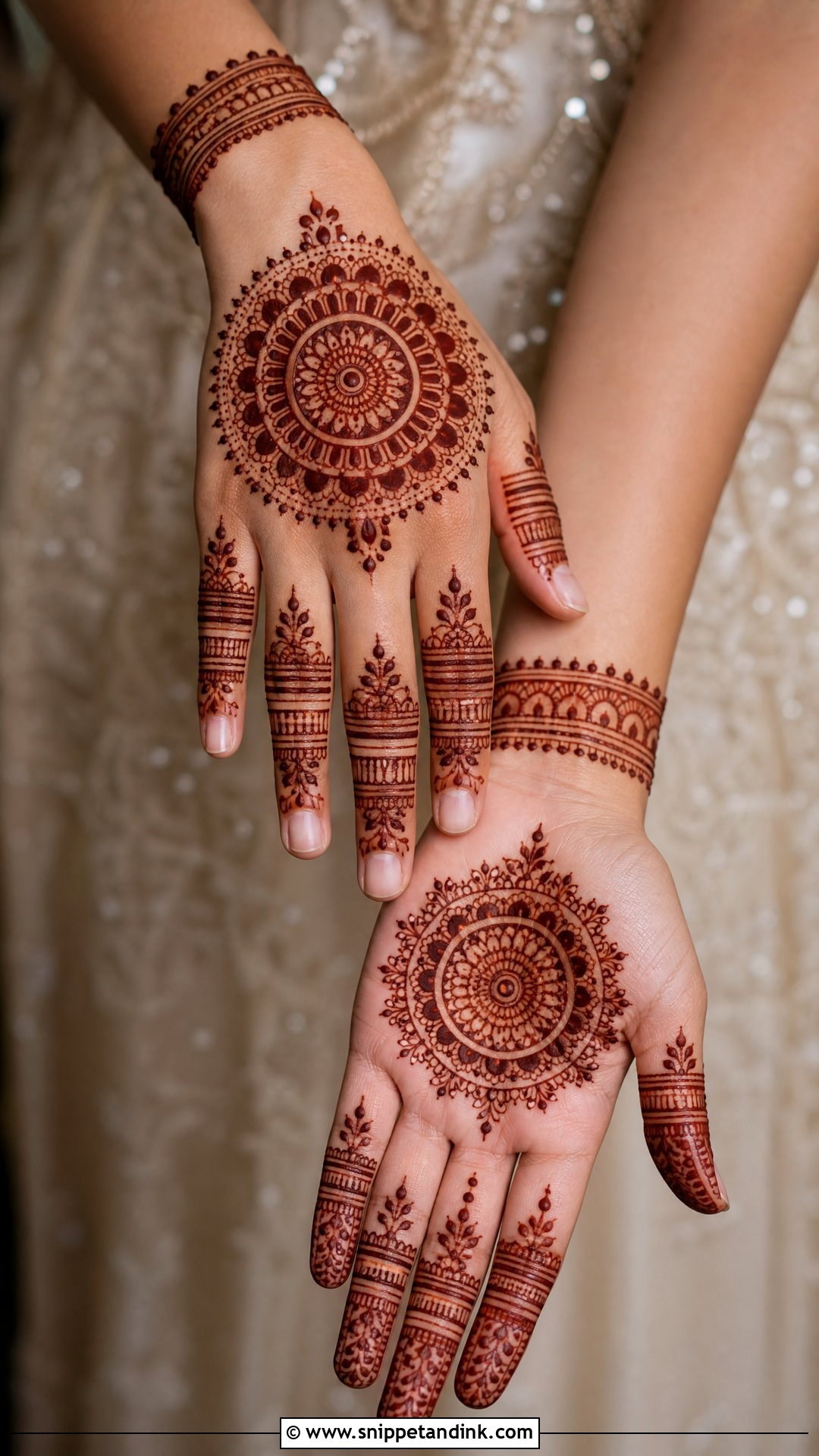
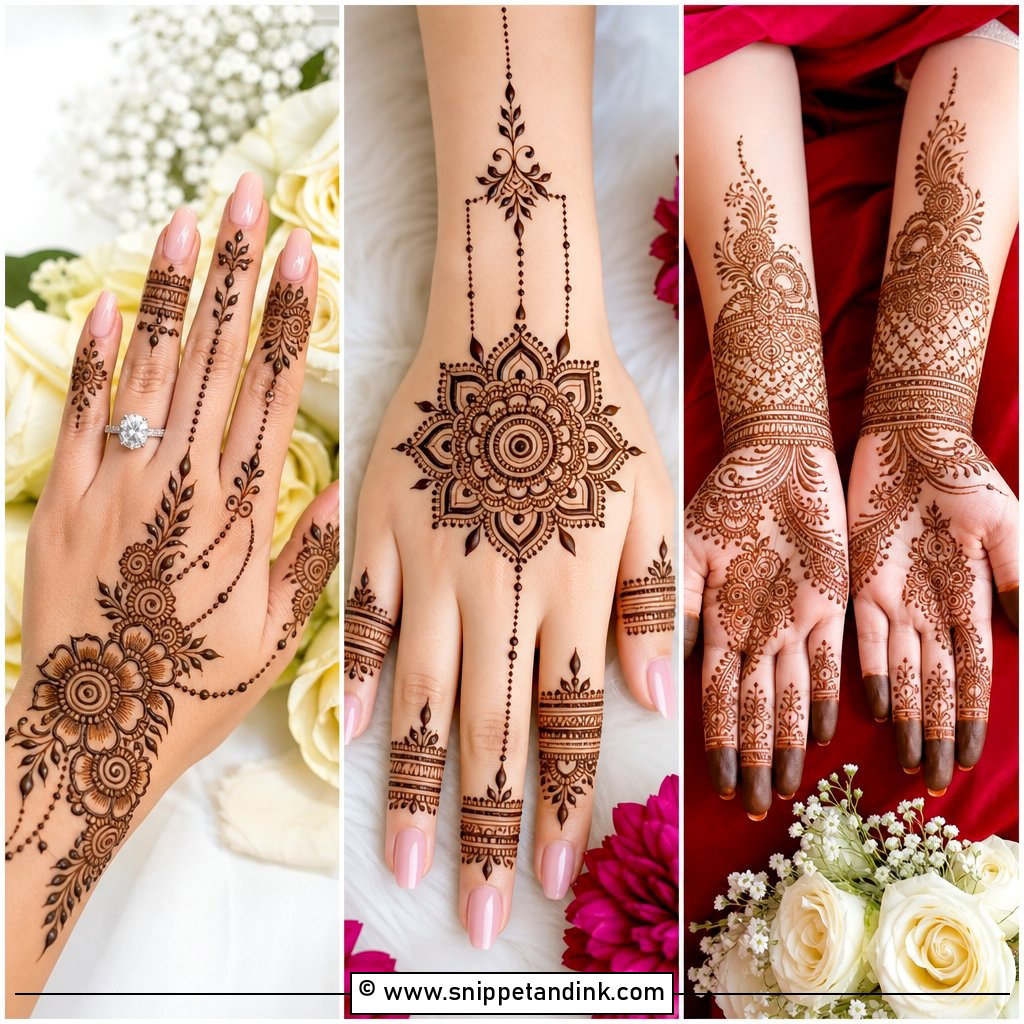
A round mandala in the centre of the palm or back of the hand gives one clean focal point, with decorated fingers and wrist bands completing it. Minimal with open space, or richer with petals, dots and lace-like rings around the circle; both work. On the back of the hand it sits well with rings and bangles, and on the palm it looks classic at small gatherings and big functions alike. I check the circle from arm’s length before filling it, since a slightly oval mandala is obvious in every photo.
8. Floral Engagement Mehndi Design
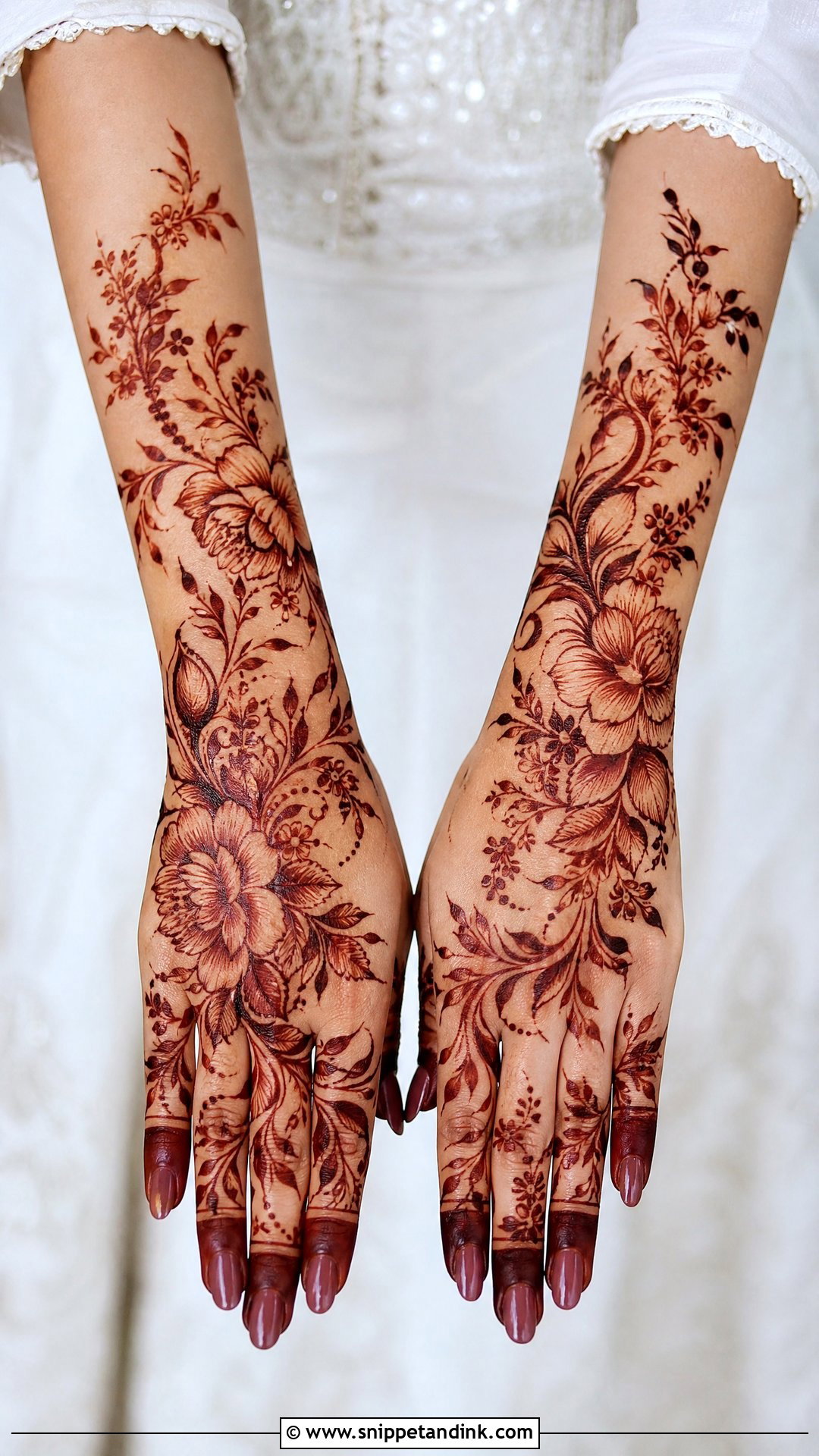
Floral engagement henna can be full, semi-full or minimal. Large flowers anchor the palm or back of the hand and smaller blooms travel across fingers and wrist. The shading inside the petals is where the depth comes from: I pull the cone lighter as I move from the petal edge inward, so the stain grades from dark to soft. It pairs naturally with pastel outfits, floral embroidery and pearls, and feels fresh yet ceremonial in family photos.
9. Jaali Engagement Mehndi Design
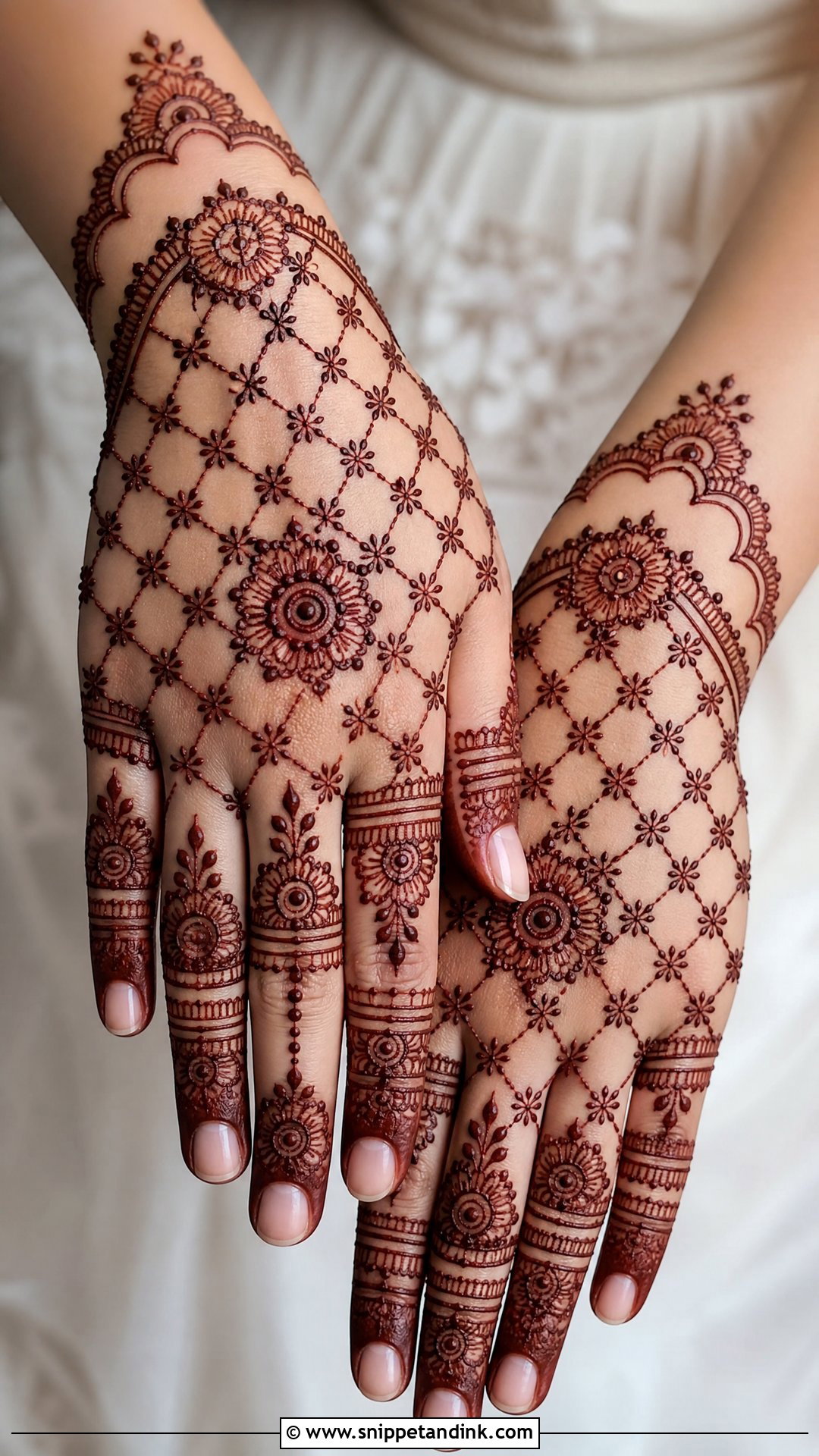
Jaali is crisscross mesh with small dots, floral centres and clean borders, and on the back of the hand it frames fingers and wrist like fine fabric. It gives a detailed look while staying lighter than fully filled henna. I prefer to keep jaali to one section and balance it with a mandala or florals; a whole hand of mesh can look busy at an engagement. Even spacing in the grid is non-negotiable.
10. Indo Arabic Engagement Mehndi Design
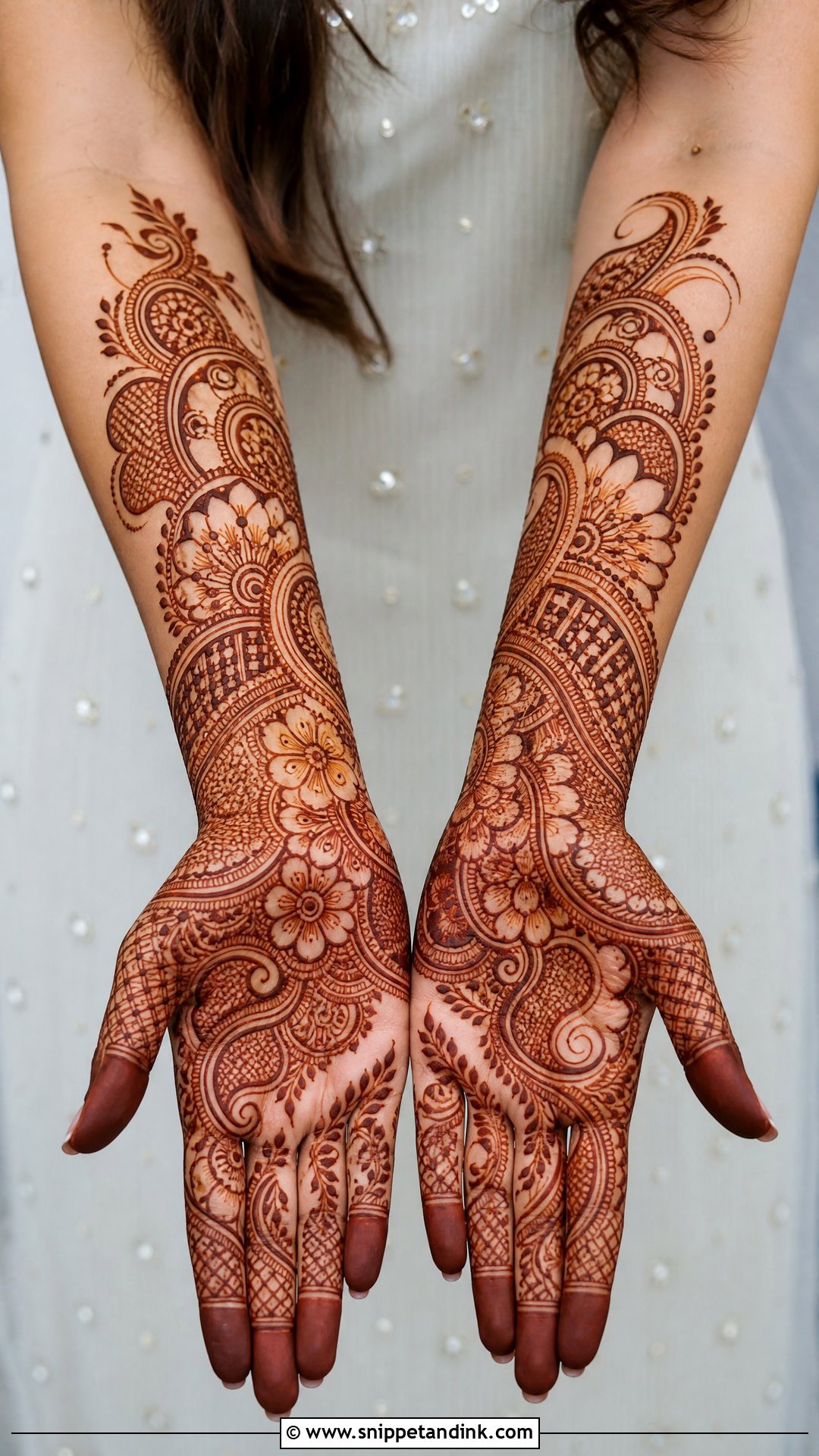
Indo Arabic layouts pair Arabic flow with pockets of Indian fill: large paisleys, floral trails, shaded leaves, jaali panels and dotted accents, often running from fingertips to wrist or forearm. It has richness and open space at once, so it suits almost any outfit. I design the two hands as a pair that’s coordinated, not identical; mirrored copies look stiff when you hold them up together for the camera.
11. Indian Engagement Mehndi Design
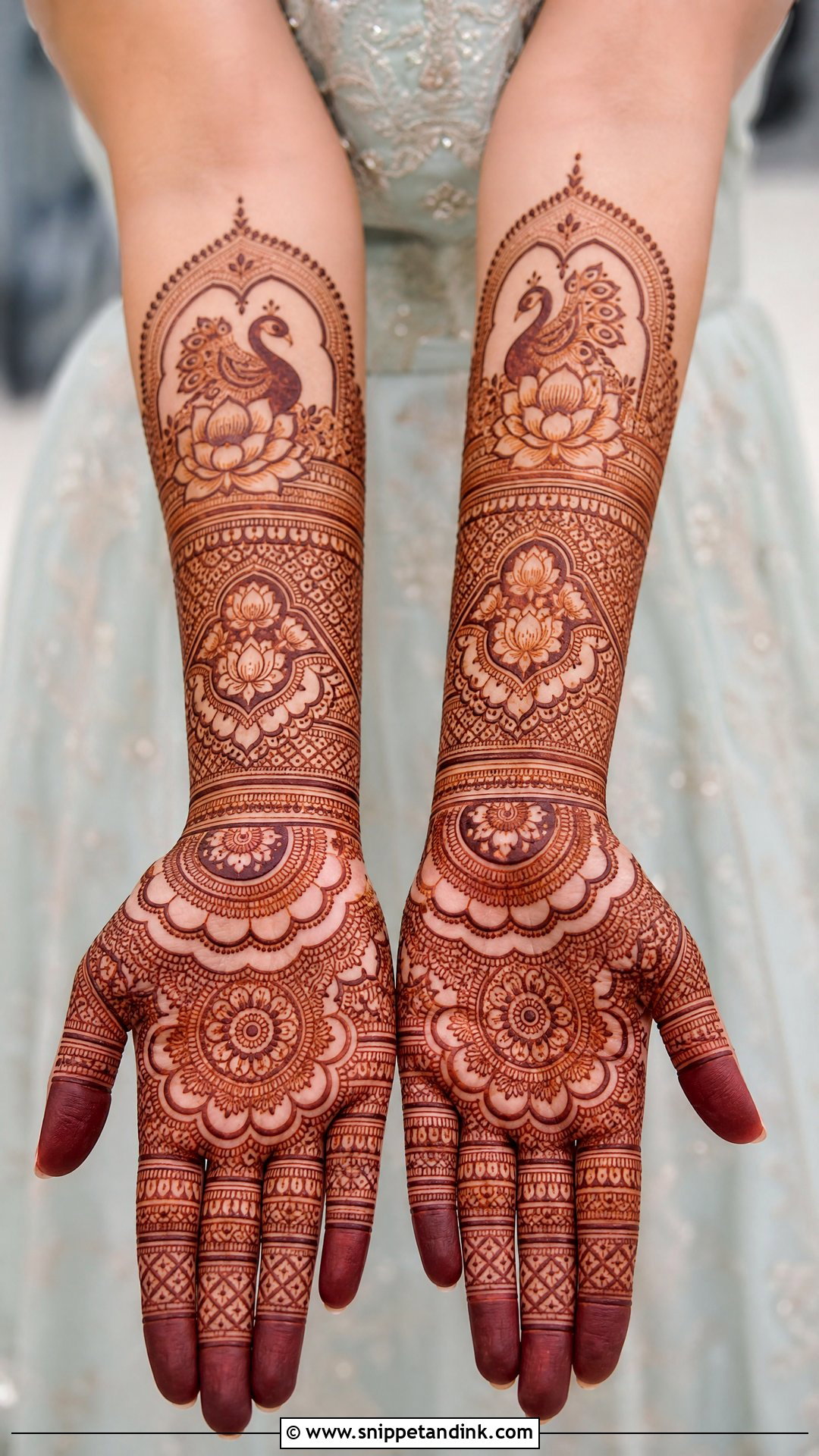
Paisleys, lotus, peacocks, vines, mandalas and filled fingertips: Indian engagement henna leans traditional. For an engagement I usually suggest medium-heavy coverage instead of the dense wedding version, with small initials, a ring motif or the date tucked in for a personal touch. It sits naturally with red, maroon, gold, emerald and royal blue. Keeping it a step lighter also leaves room for your bridal henna to feel like a progression later.
12. Minimal Engagement Mehndi Design
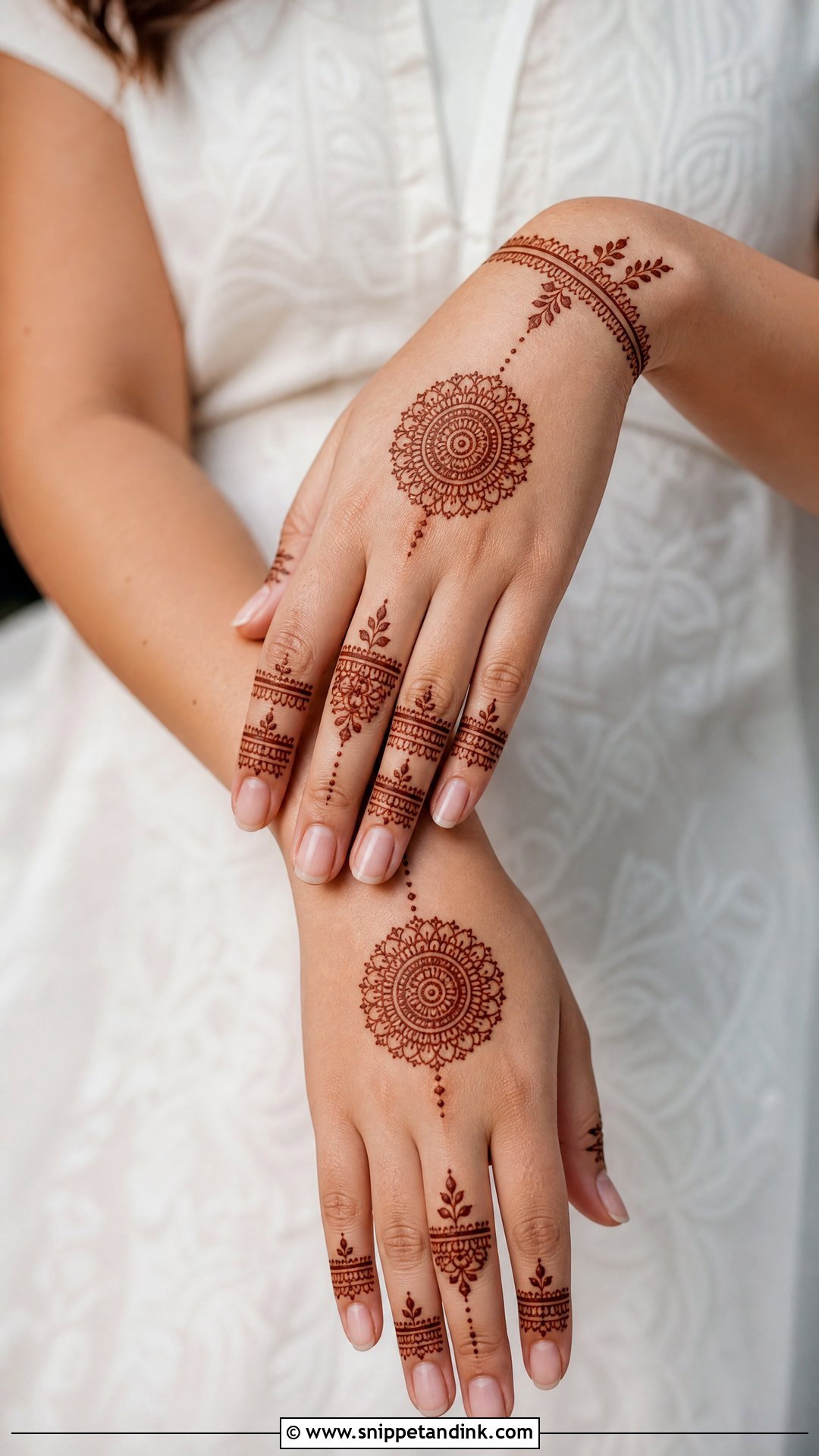
Fine finger patterns, a small mandala, a slim wrist band and a few leaves or flowers. Minimal henna pairs best with gowns, light lehengas and contemporary sarees, and it leaves the ring as the obvious focus. With so few elements there’s nowhere to hide uneven lines, so I work slower on minimal designs than on dense ones. Sharp lines and balanced placement are what keep it from looking like a quick party design.
13. Peacock Engagement Mehndi Design
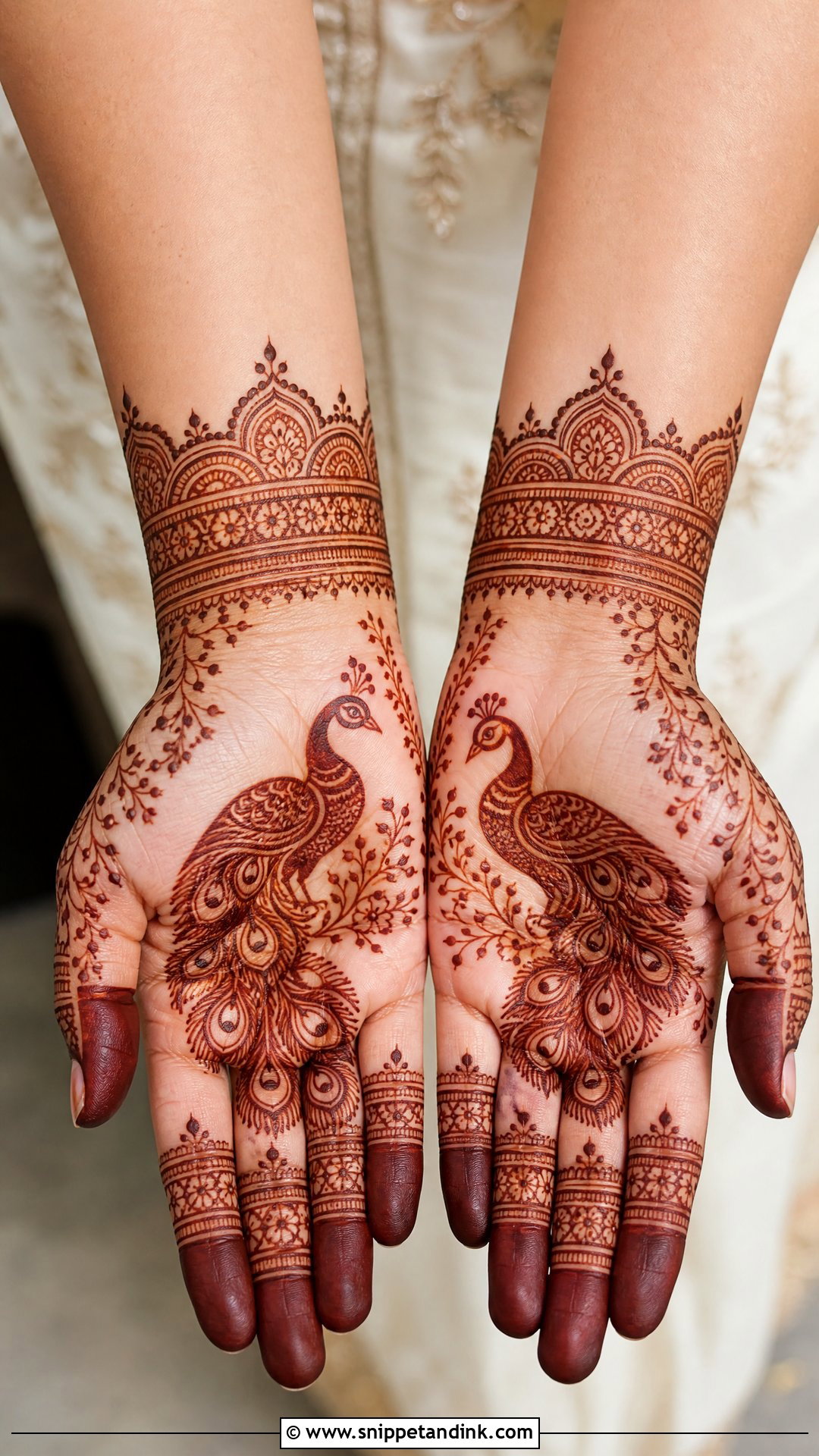
A peacock on the palm, wrist or back of the hand, wrapped in paisleys, flowers and vines, gives an engagement hand a royal feel. One well-drawn bird almost always beats several crowded ones. I let the tail feathers stretch toward the fingers, which adds movement and keeps the body uncluttered. Traditional outfits and temple jewelry suit it; for a softer version, surround it with open space and shaded florals.
14. Bridal Engagement Mehndi Design
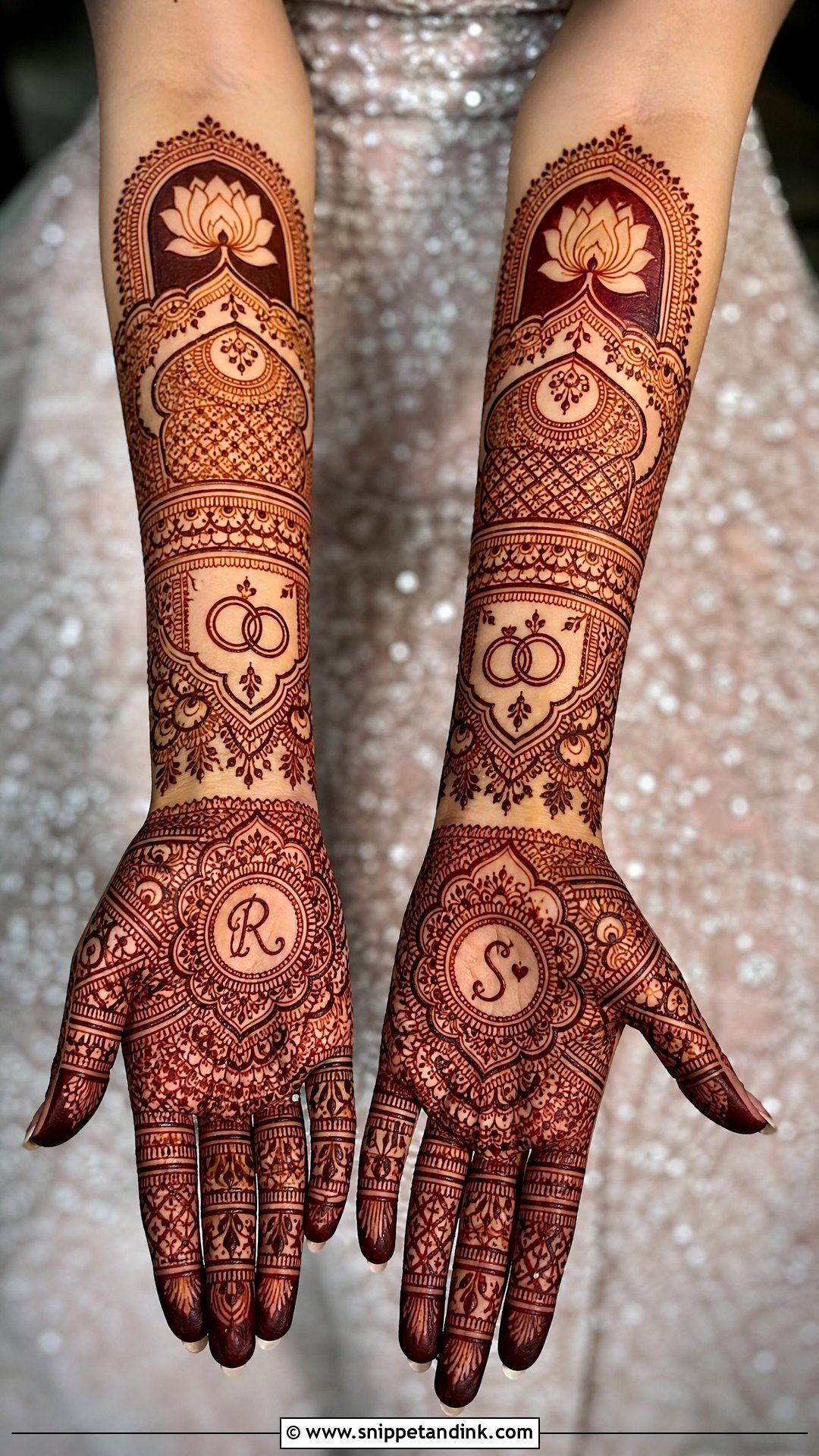
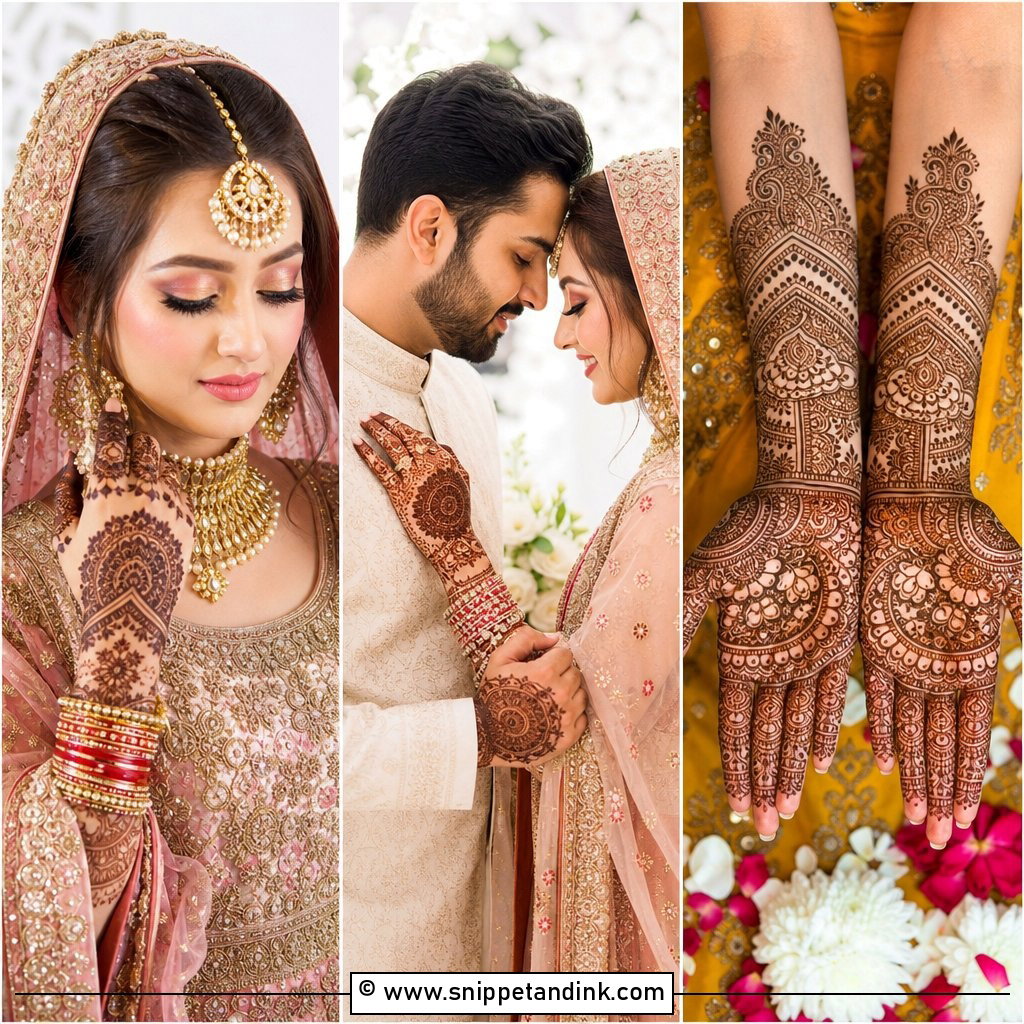
Bridal engagement henna sits between party henna and full wedding coverage: detailed palms, decorated fingers, wrist cuffs and a short forearm extension, with lotus, paisleys, mandalas, jaali, initials or small ring symbols. Go for this one when your engagement is a large event with professional photography and a full bridal outfit. Leave clean skin around the ring finger so the actual ring isn’t lost against the stain.
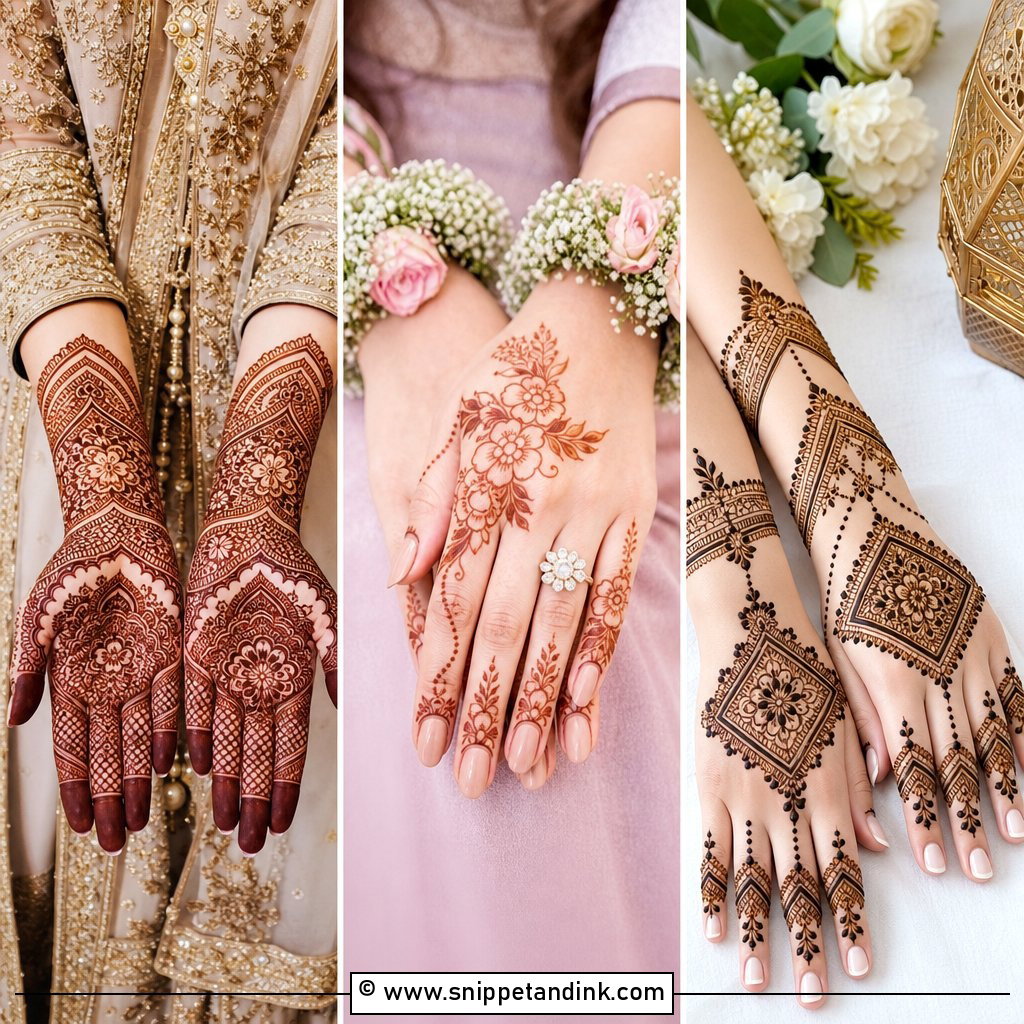
15. Half Hand Engagement Mehndi Design
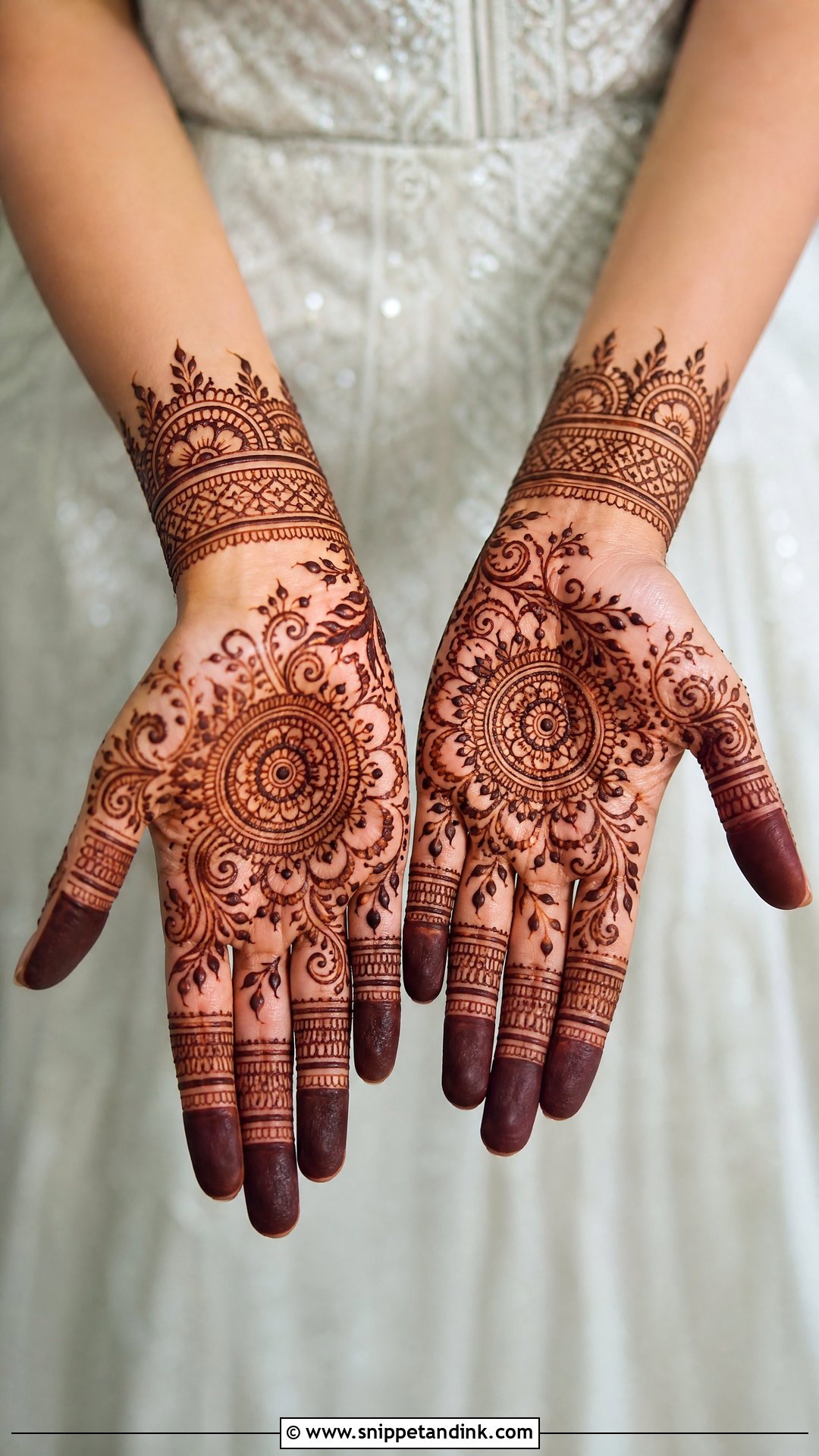
Half hand covers fingers, palm and wrist and stops before the forearm. It can be Arabic, Indian, floral or mandala-based. I suggest it to brides with outfit changes or a daytime function, since there is less to protect and the paste dries sooner. A strong wrist border and consistent fingers are what make it look bridal. It photographs as complete while saving a good chunk of sitting time.
16. Modern Engagement Mehndi Design
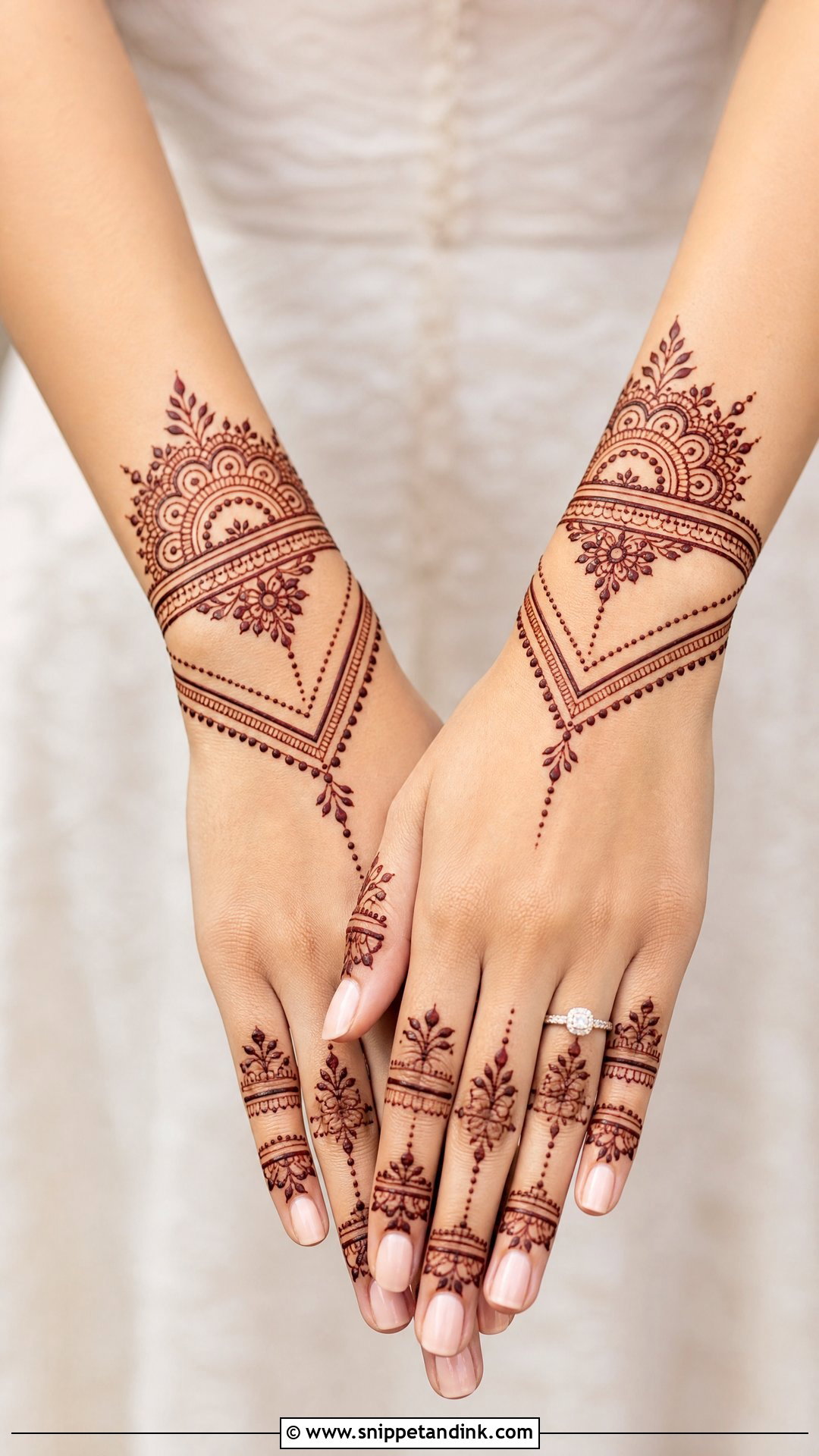
Modern engagement henna puts detail exactly where the camera goes: the fingers, the ring finger, the wrist and one bold motif on the back of the hand, with geometric lines, negative space, floral cuffs or a small mandala. Contemporary lehengas, gowns and fusion outfits pair best with it. The risk is looking half done. I keep the rhythm and spacing the same on both hands so the open areas read as deliberate, and every line has to be crisp.
17. Rose Engagement Mehndi Design
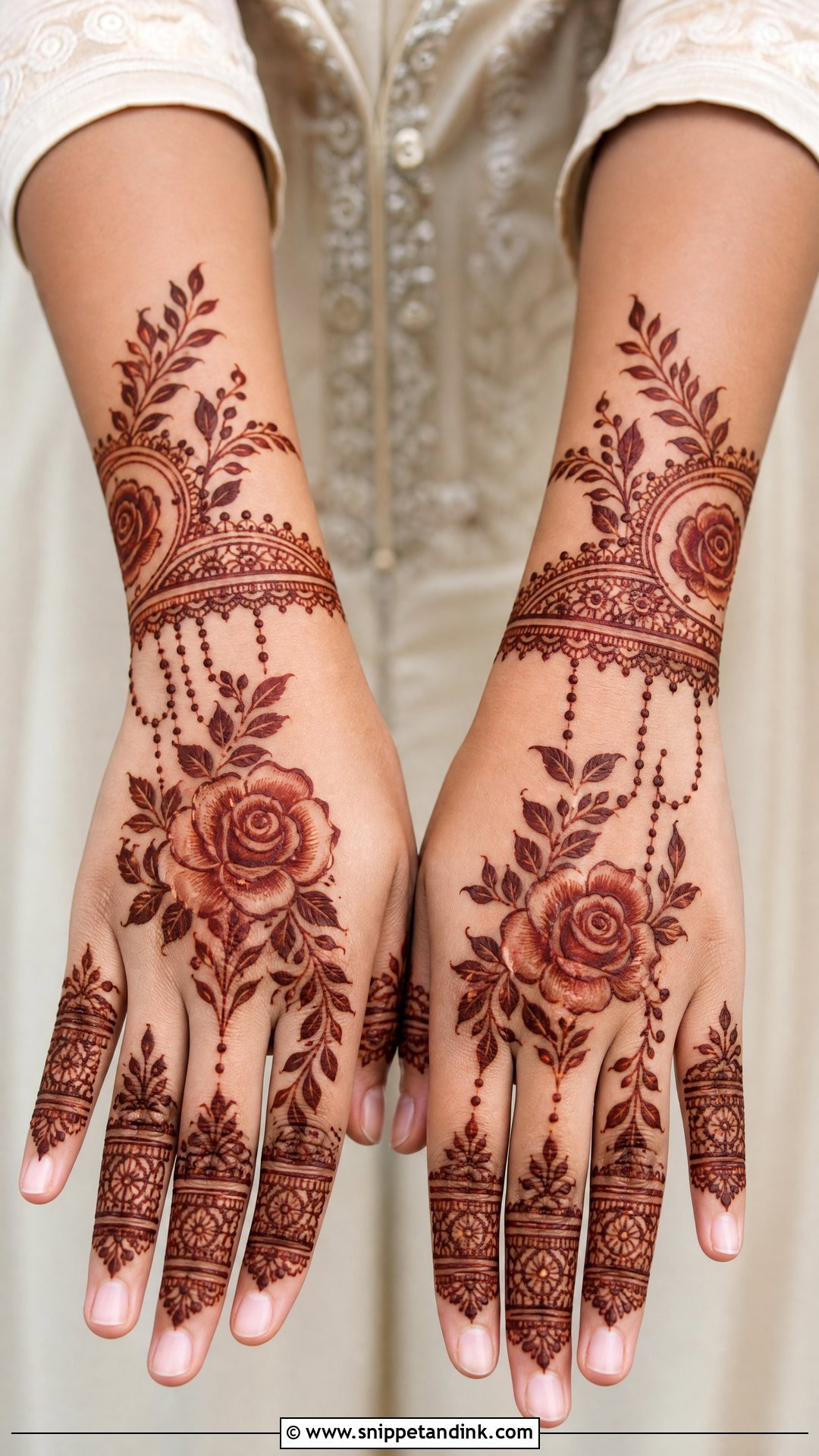
Large roses on the back of the hand, buds trailing toward the fingers and wrist, shaded petals and leafy vines connecting them. Roses suit brides who want a romantic design without many traditional motifs, especially with pastel lehengas, blush makeup and pearls or diamonds. I draw rose petals as overlapping curves with a darker edge on each, which is what keeps them from flattening into circles once stained. Lace borders and dotted chains richen it if you want more.
18. Lotus Engagement Mehndi Design
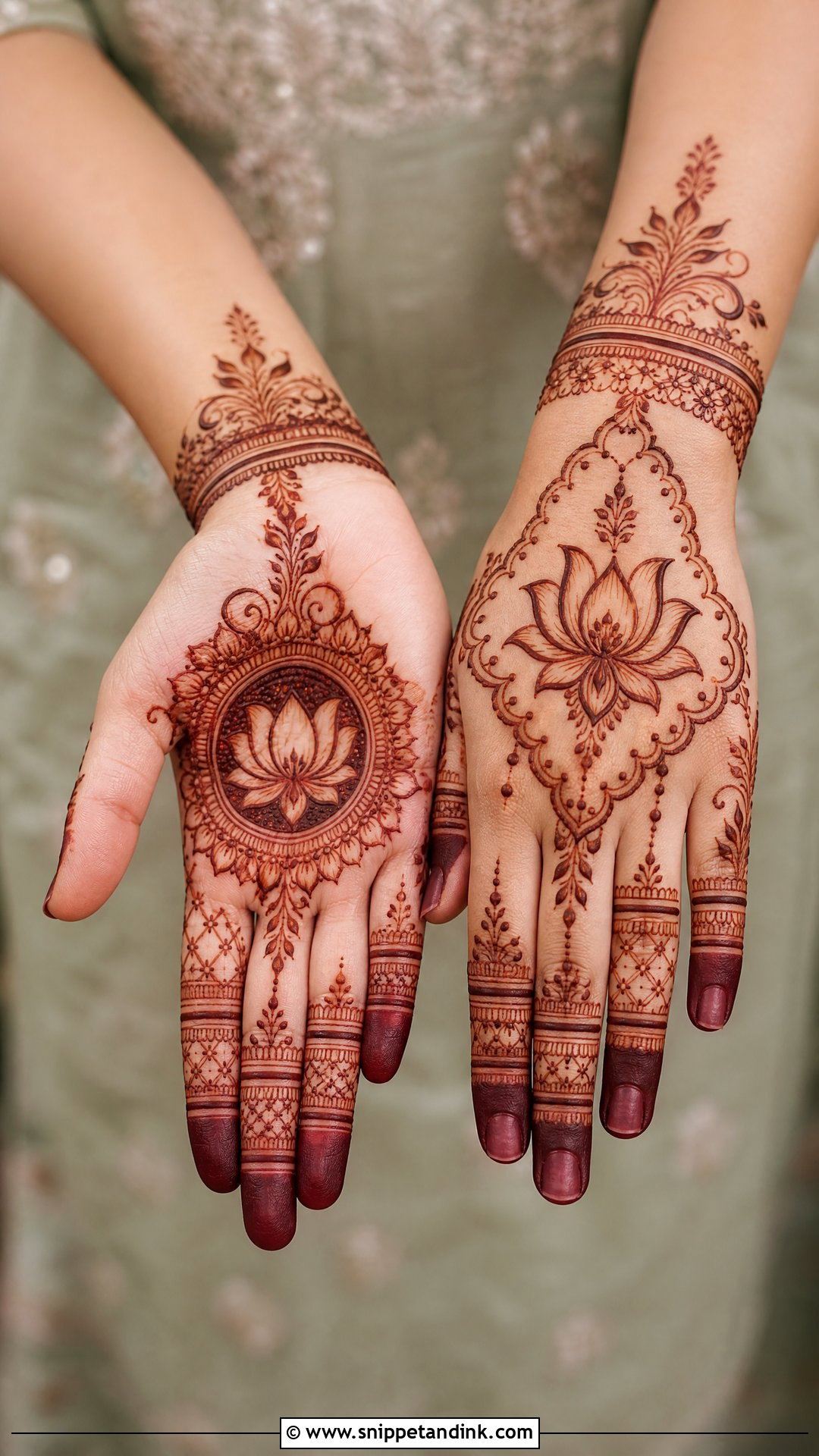
Lotus engagement mehndi design places the flower at the centre of the palm, near the wrist or inside a back-hand mandala. Its petals can be drawn bold or fine, so it fits Indian and Indo-Arabic layouts equally well. I pair it with fine dots, curved vines and a little jaali for balance. Classic outfits and soft jewelry suit it, and the clean shape stays recognisable even as the stain fades.
19. Paisley Engagement Mehndi Design
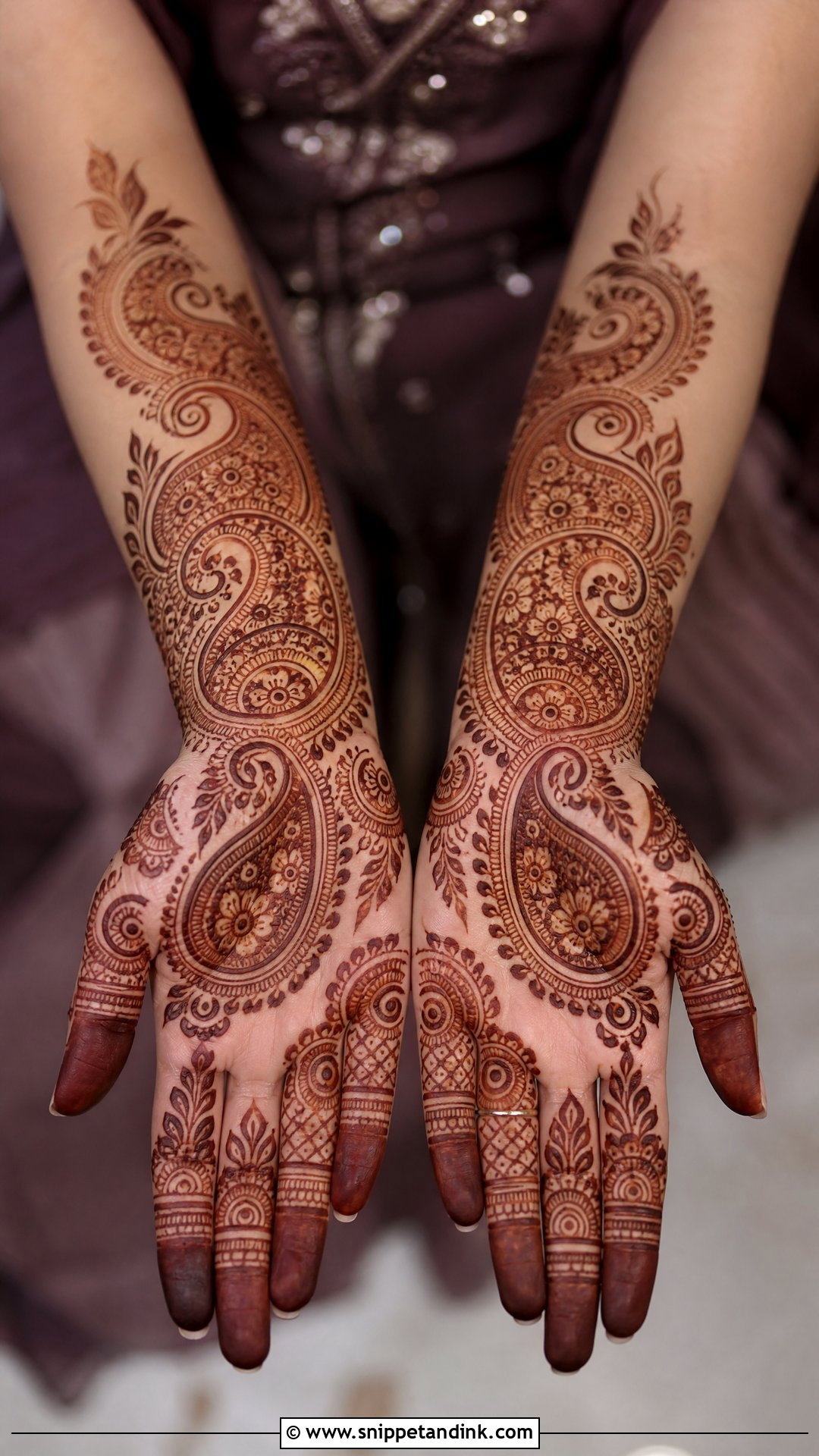
Paisleys stretch or shrink to suit the layout, big and bold for Arabic work or tiny and detailed for Indian patterns, and their curve follows the hand’s movement across palm, wrist and forearm. Combined with florals, leaf vines, dots and fine fill, they give a traditional look with flow. My habit on engagement hands is to keep the ring finger lighter than the others so the ring stands out against cleaner skin.
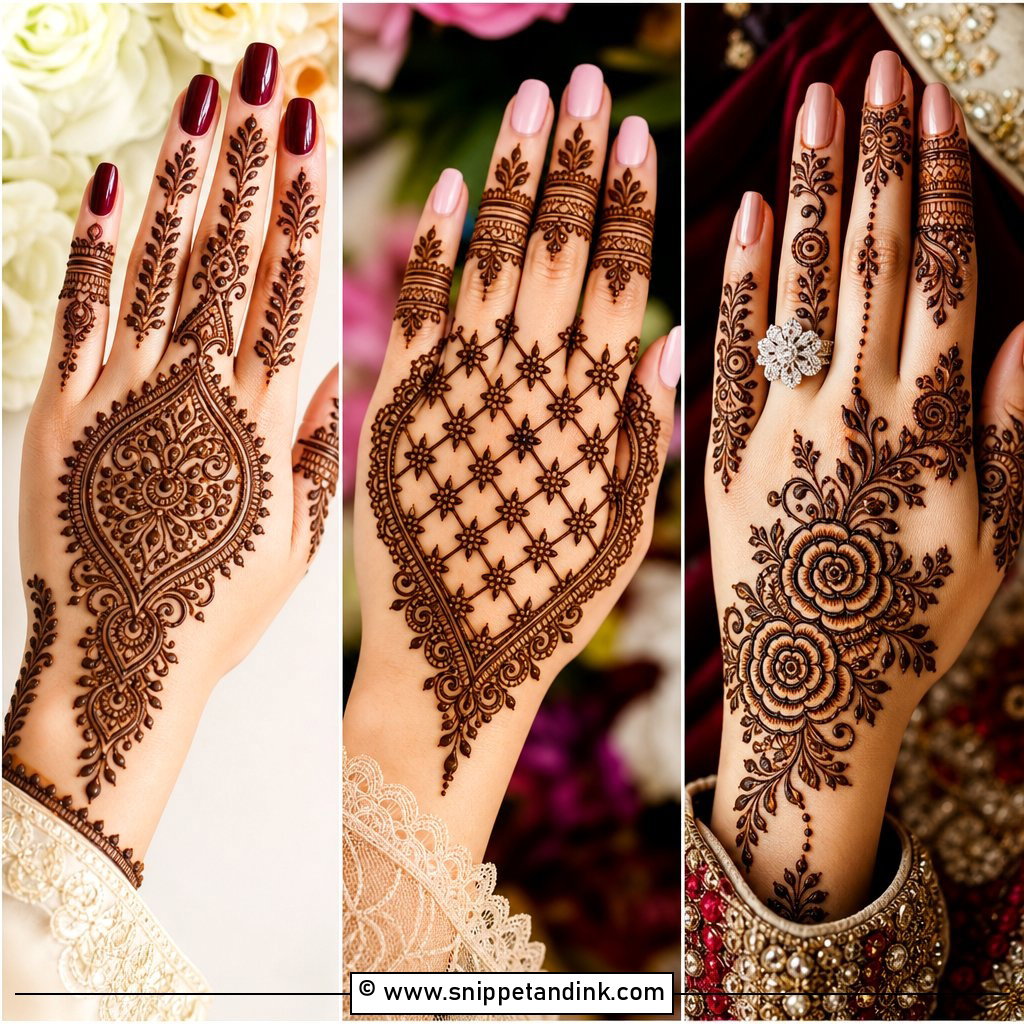


20. Finger Engagement Mehndi Design
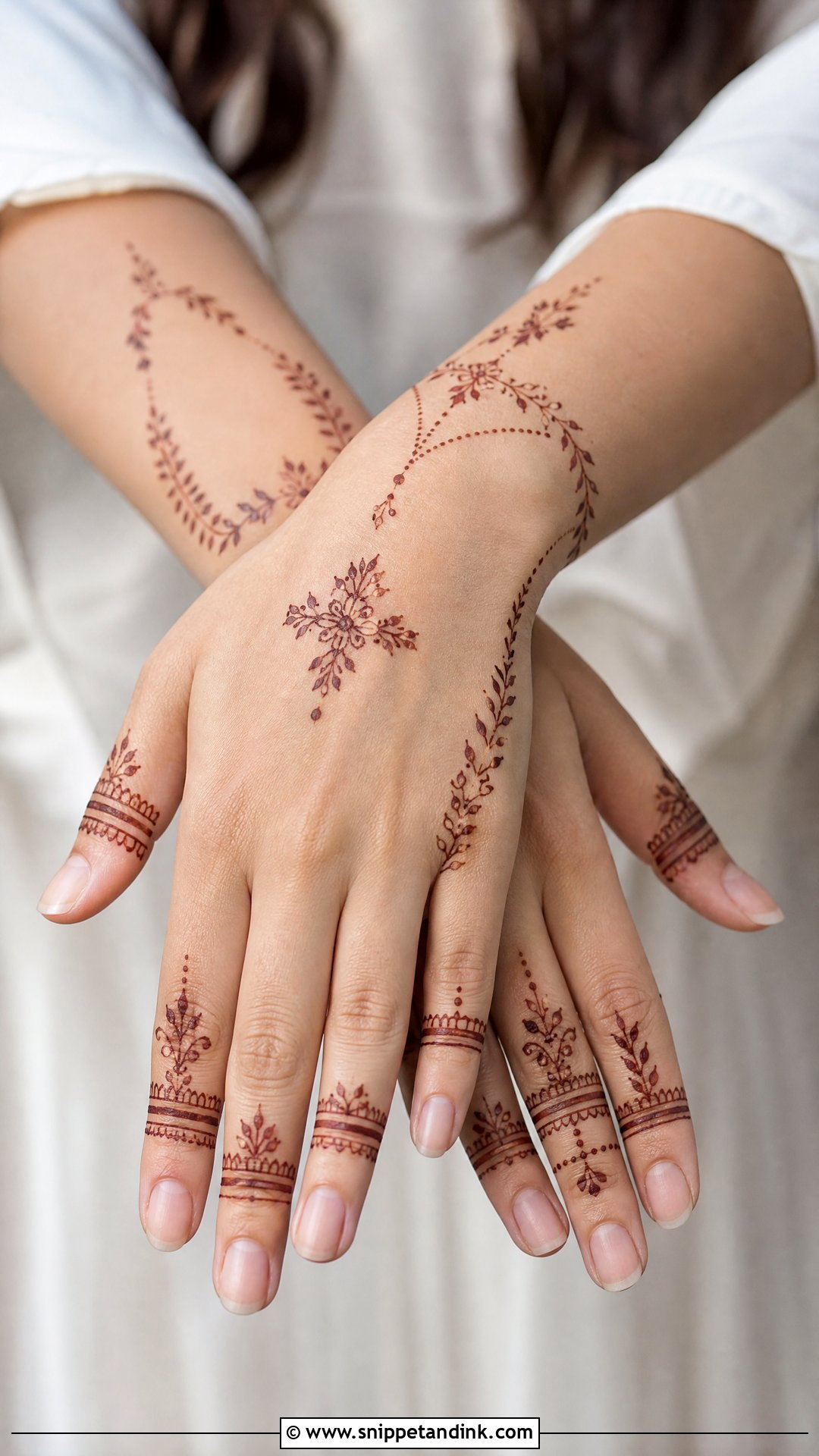
Bands, tiny florals, leaf chains, dots and fine linework on the fingers, with the palm or back of the hand kept light. Finger-heavy henna draws attention to rings and hand jewelry and makes the fingers look longer in photos. It suits minimal brides, modern outfits and intimate ceremonies. On its own it can look unfinished, so I tie it together with a slim wrist cuff or a small central mandala, and I match fingertip finishing exactly across both hands.
21. Jewellery Engagement Mehndi Design
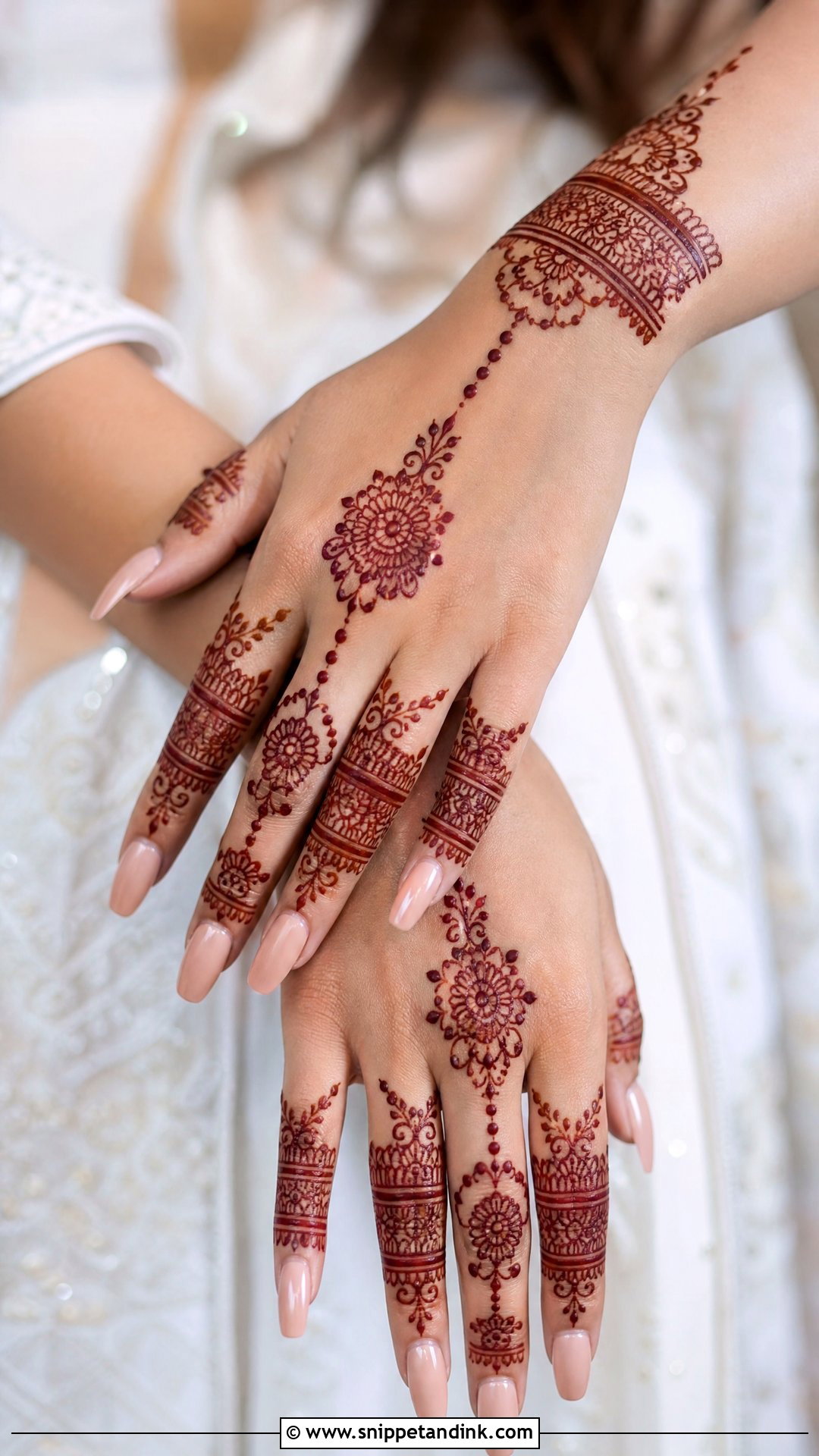
Henna jewelry draws bracelet bands, ring chains, hathphool shapes, finger rings and dotted strings straight onto the back of the hand. It’s useful if you’d rather wear fewer real accessories, because the hand still looks dressed, and it naturally frames the engagement ring. Go minimal or richer with florals and mandalas. The lines need to be fine and even, like metal chain; thick, wobbly lines lose the jewelry illusion.
22. Bracelet Engagement Mehndi Design
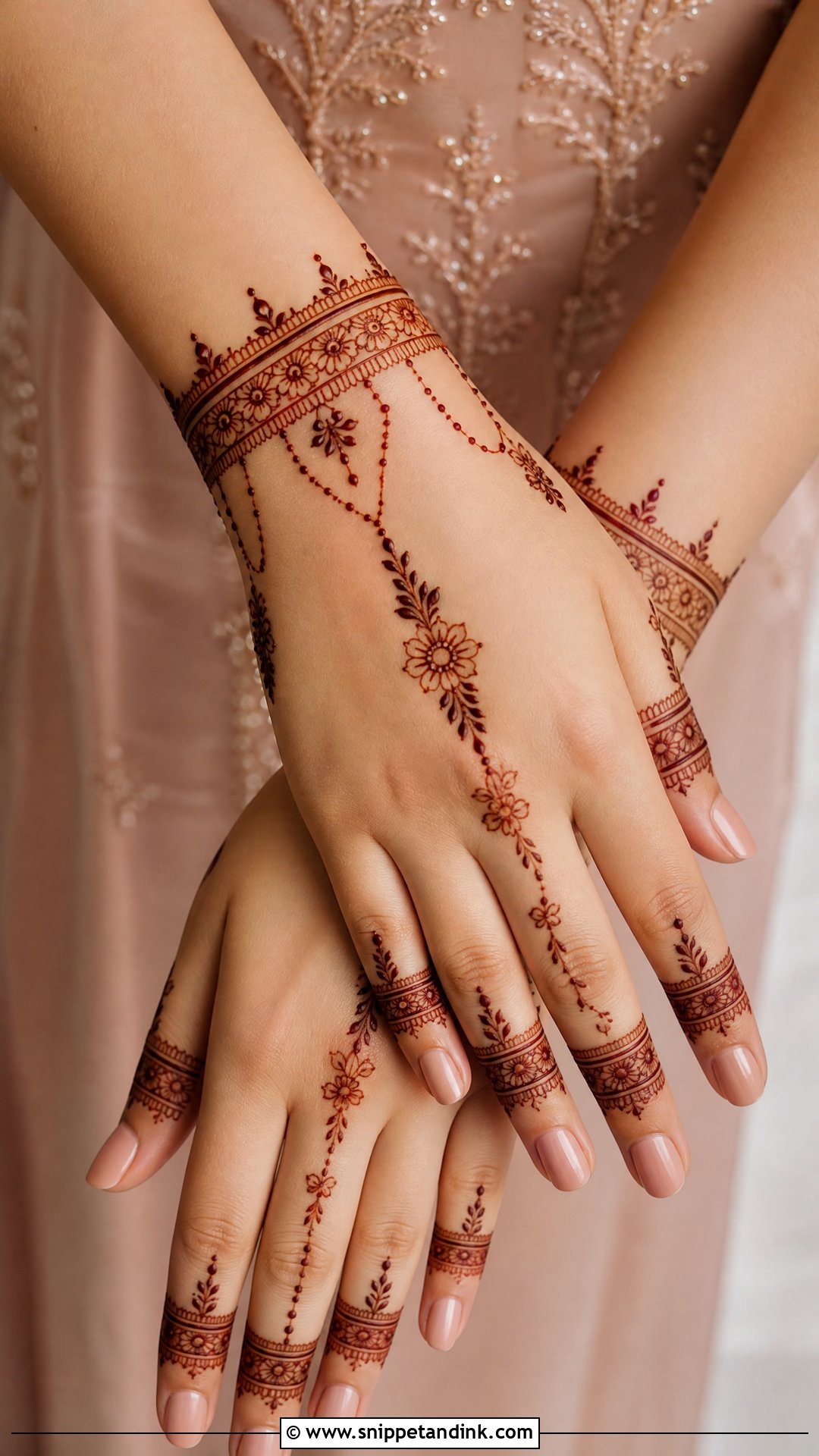
A bangle-like band at the wrist with the rest of the hand kept refined. The bracelet can be simple parallel lines and dots, or more bridal with flowers, jaali and hanging chain details, paired with finger patterns and a small back-hand motif. It’s handy if you’ll wear fewer bangles, and with longer sleeves it keeps henna visible right where the sleeve ends. Light, but it still looks complete.
23. Rajasthani Engagement Mehndi Design
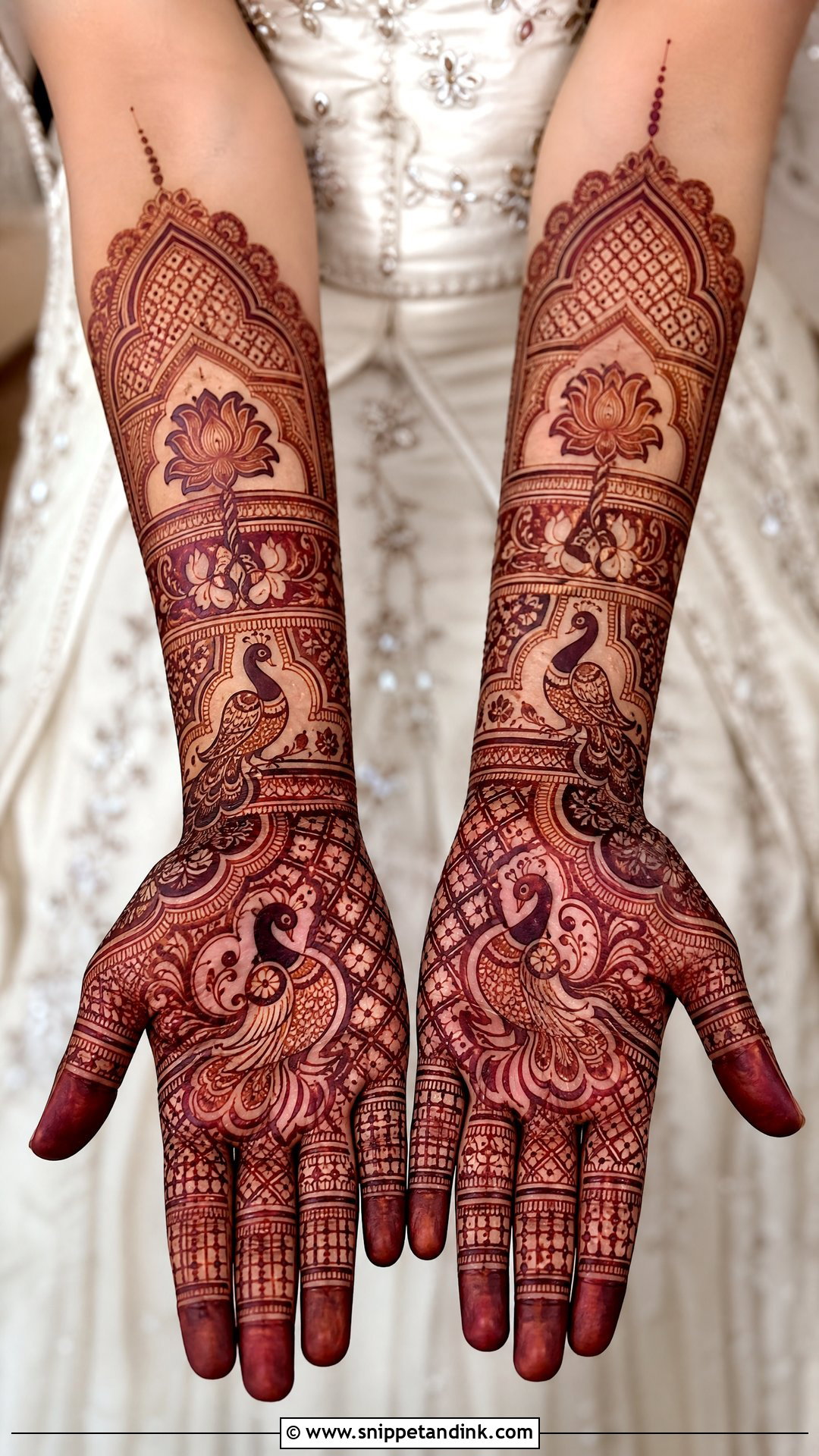
Rajasthani henna is detailed and full of character. For an engagement I adapt it into a medium-heavy layout of peacocks, paisleys, lotus, jaali and royal borders reaching the wrist or lower forearm, instead of dense wedding coverage. With traditional lehengas, bandhani dupattas, mirror work and gold, it looks right at home. A hidden ring motif or small initials inside the pattern makes it personal; I’d save the full portrait scenes for the wedding.
24. Pakistani Engagement Mehndi Design
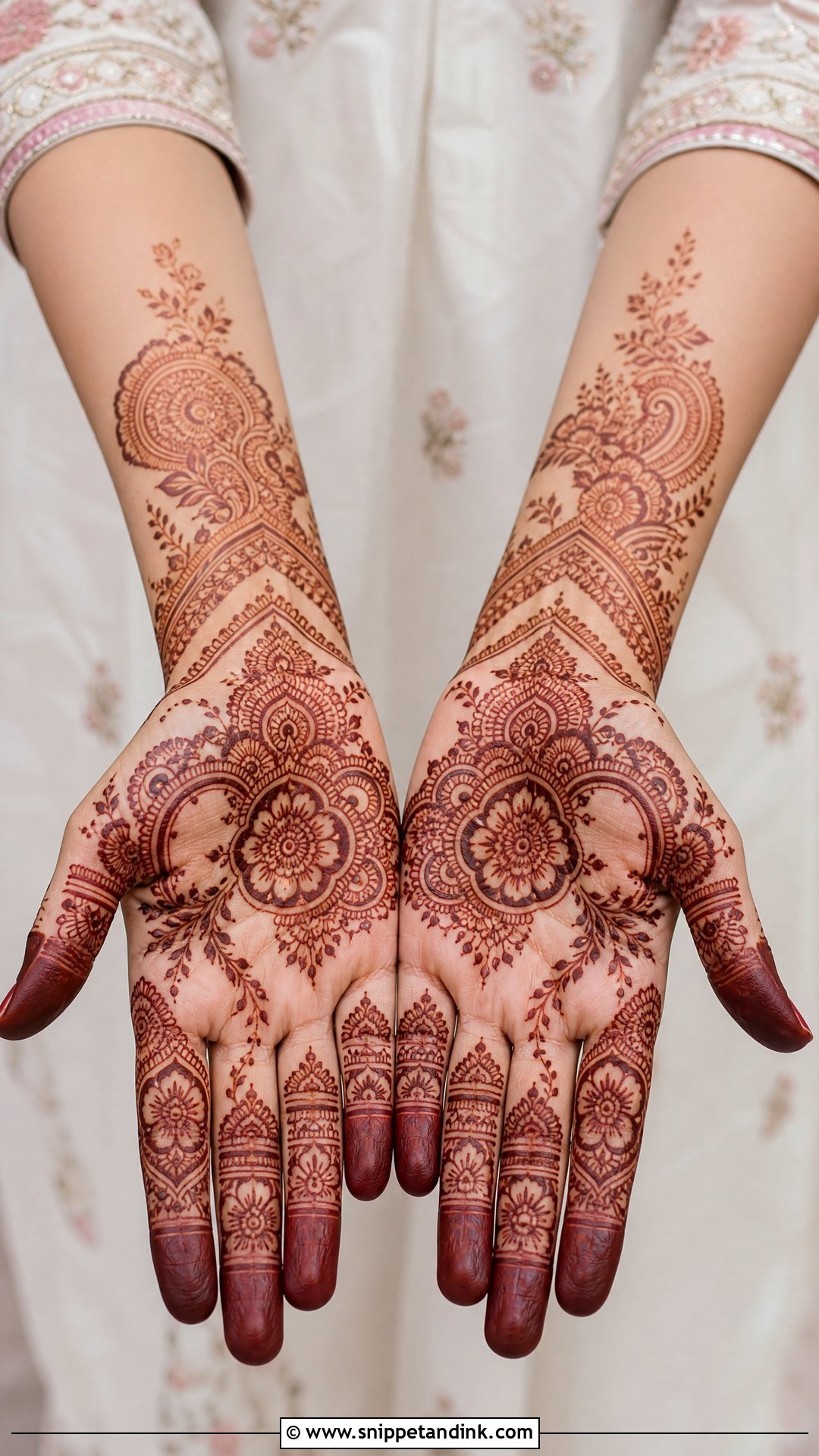
Pakistani engagement henna blends Indian fill with Arabic flow: florals, domes, paisleys, leafy trails and fine fingers, as a full hand, half hand or back-hand design. For engagements, brides usually go for a cleaner layout with open spaces and soft shading. Shararas, ghararas, anarkalis and embroidered suits suit it. When there will be many hand close-ups, I design the palm and back together so the motifs carry around the edge of the hand.
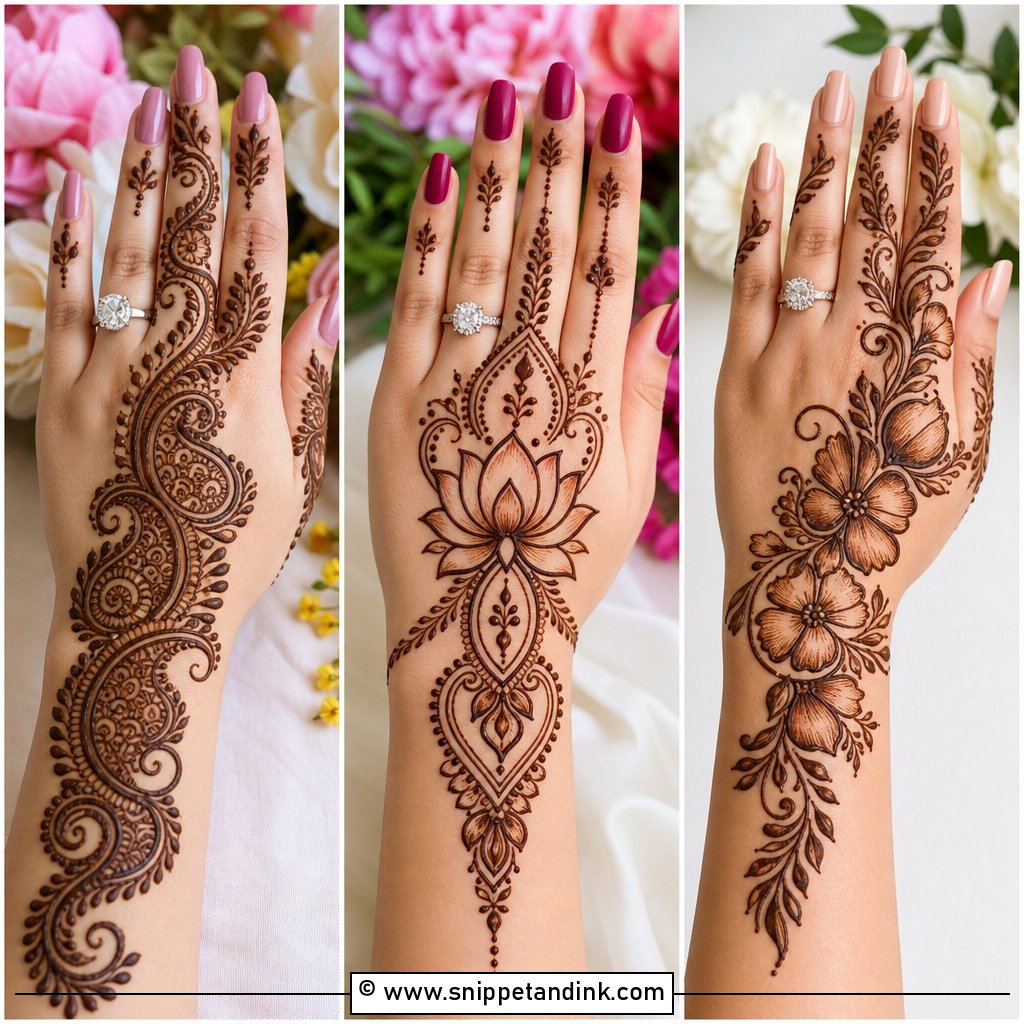

25. Moroccan Engagement Mehndi Design
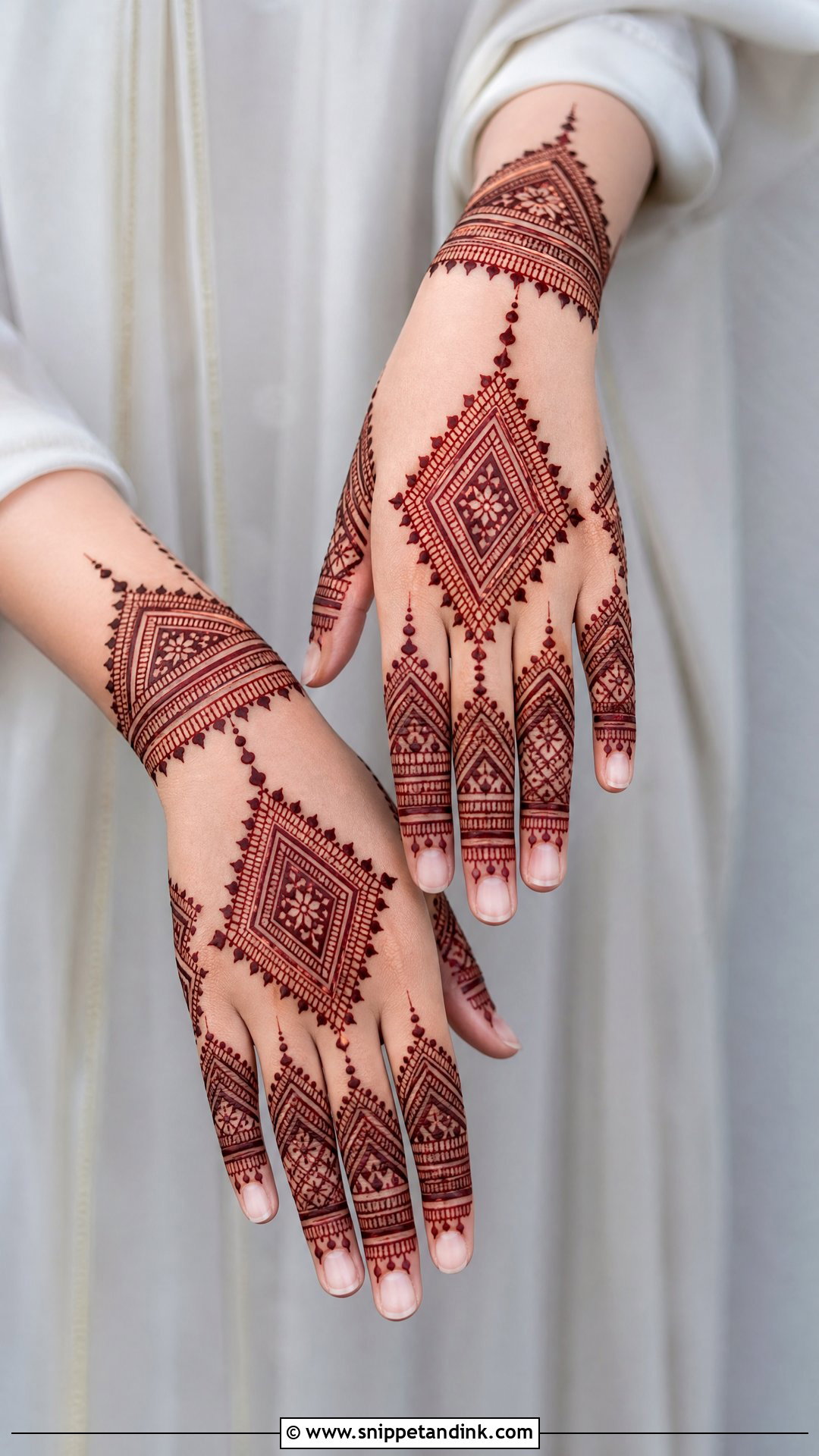
Diamonds, lines, grids, triangles and structured bands make Moroccan henna clean and modern. It’s usually less crowded than Indian work but still bold, thanks to sharp shapes. On the back of the hand, fingers and wrist it looks especially crisp. A few tiny leaves or dots soften it into a fusion. Geometric work exposes any shaky line, so check your artist’s portfolio for it; modern outfits and sleek jewelry suit it best.
26. Gulf Engagement Mehndi Design
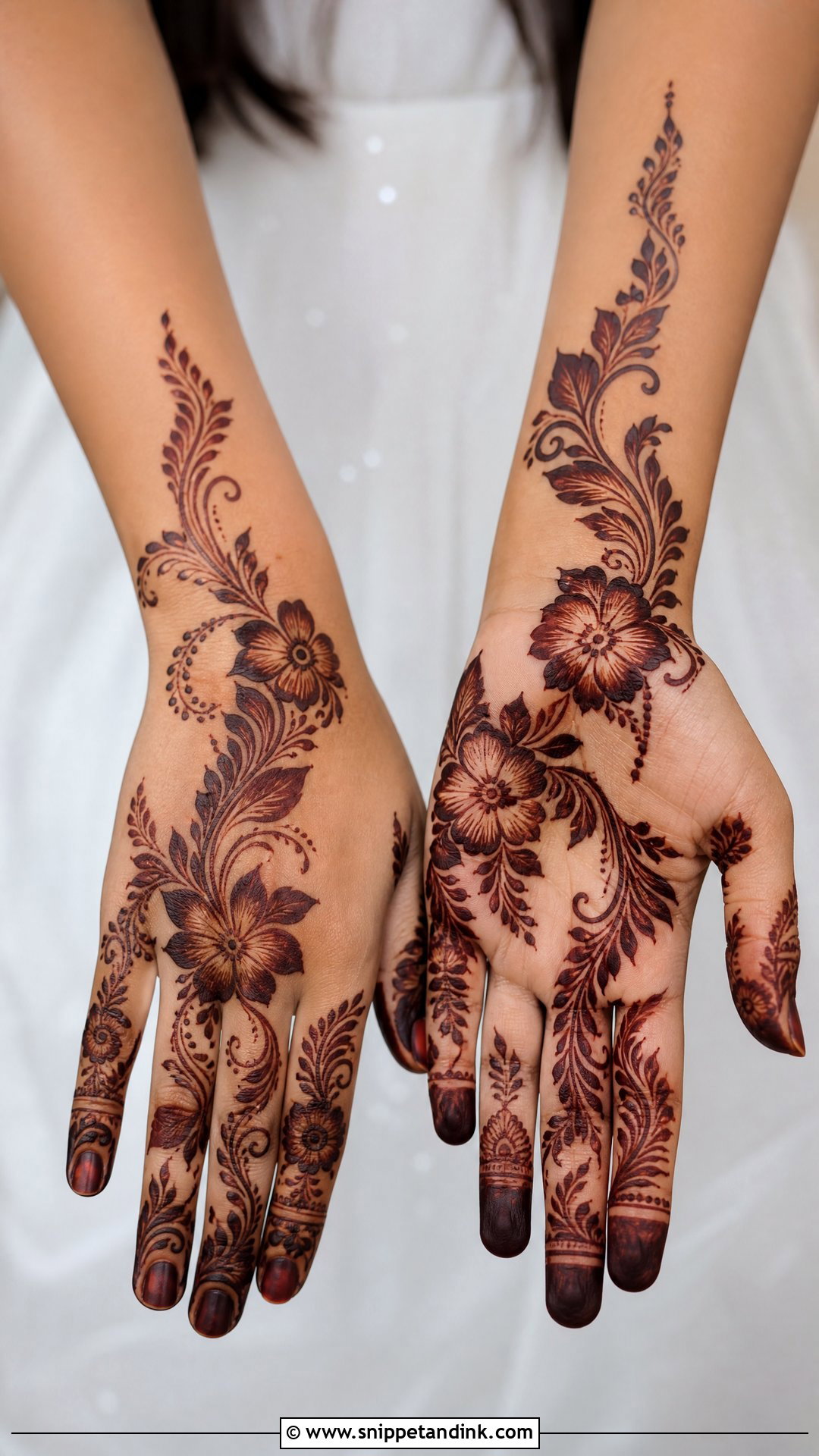
Gulf henna, often inspired by Khaleeji henna, uses bold florals, leafy curves and strong spacing, with bigger motifs and less fill. Those big shapes read clearly from across a room. It suits brides who like Arabic work but want something a bit richer, on palm or back of hand from fingers to wrist. I’m careful not to fill the negative space; it’s the open skin that gives the style its drama.
27. Khafif Engagement Mehndi Design
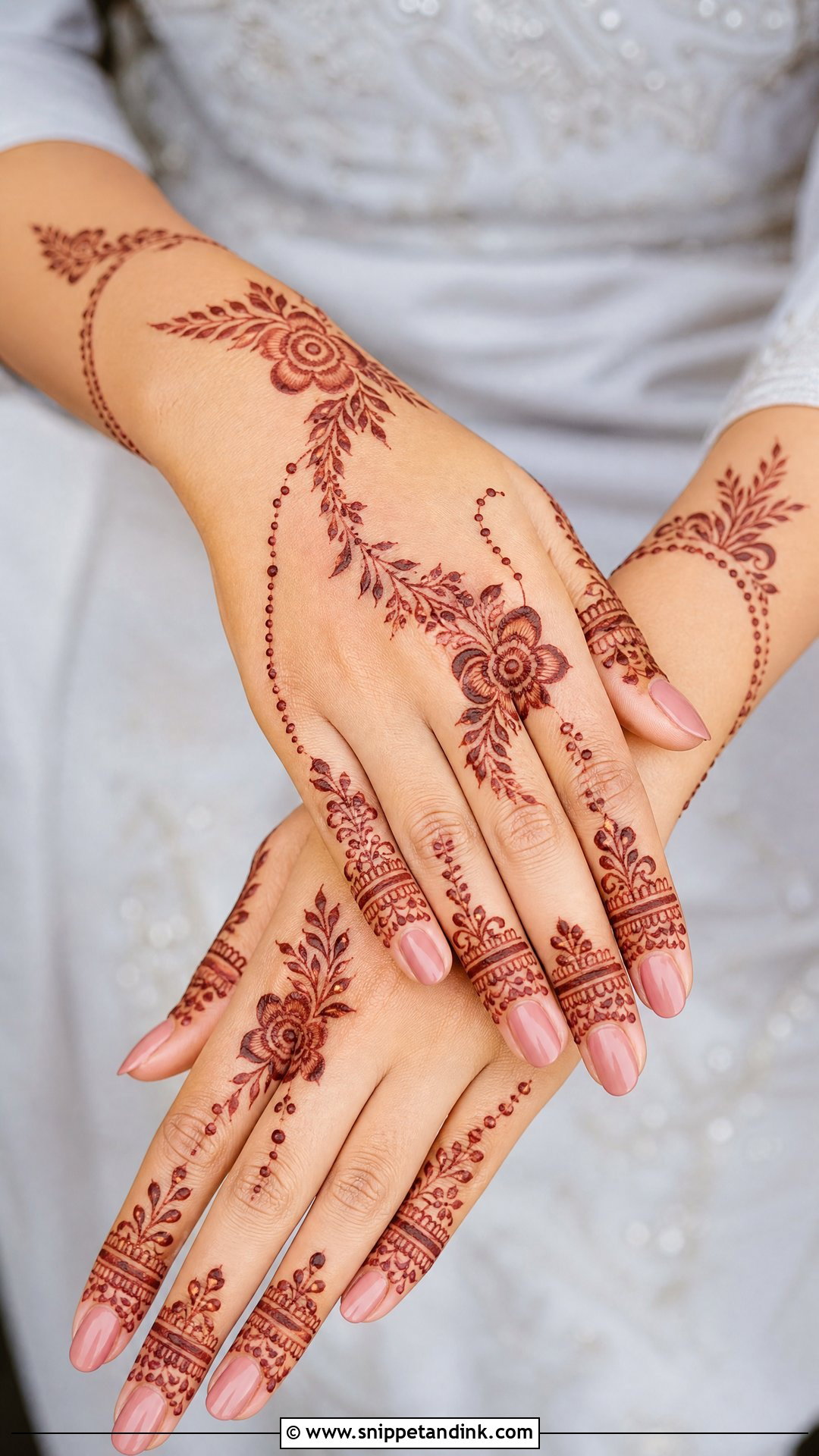
Khafif means light, and this style lives up to it: fine lines, small flowers, leafy trails, dots and soft curves that look intricate without being heavy. On the back of the hand and fingers, the fine work frames the ring well, and it can extend lightly to the wrist. Fine lines carry less paste, so khafif stains lighter than bolder styles. I’d keep the paste on as long as possible for this one. Pastel outfits and delicate jewelry pair naturally with it.
28. Shaded Engagement Mehndi Design
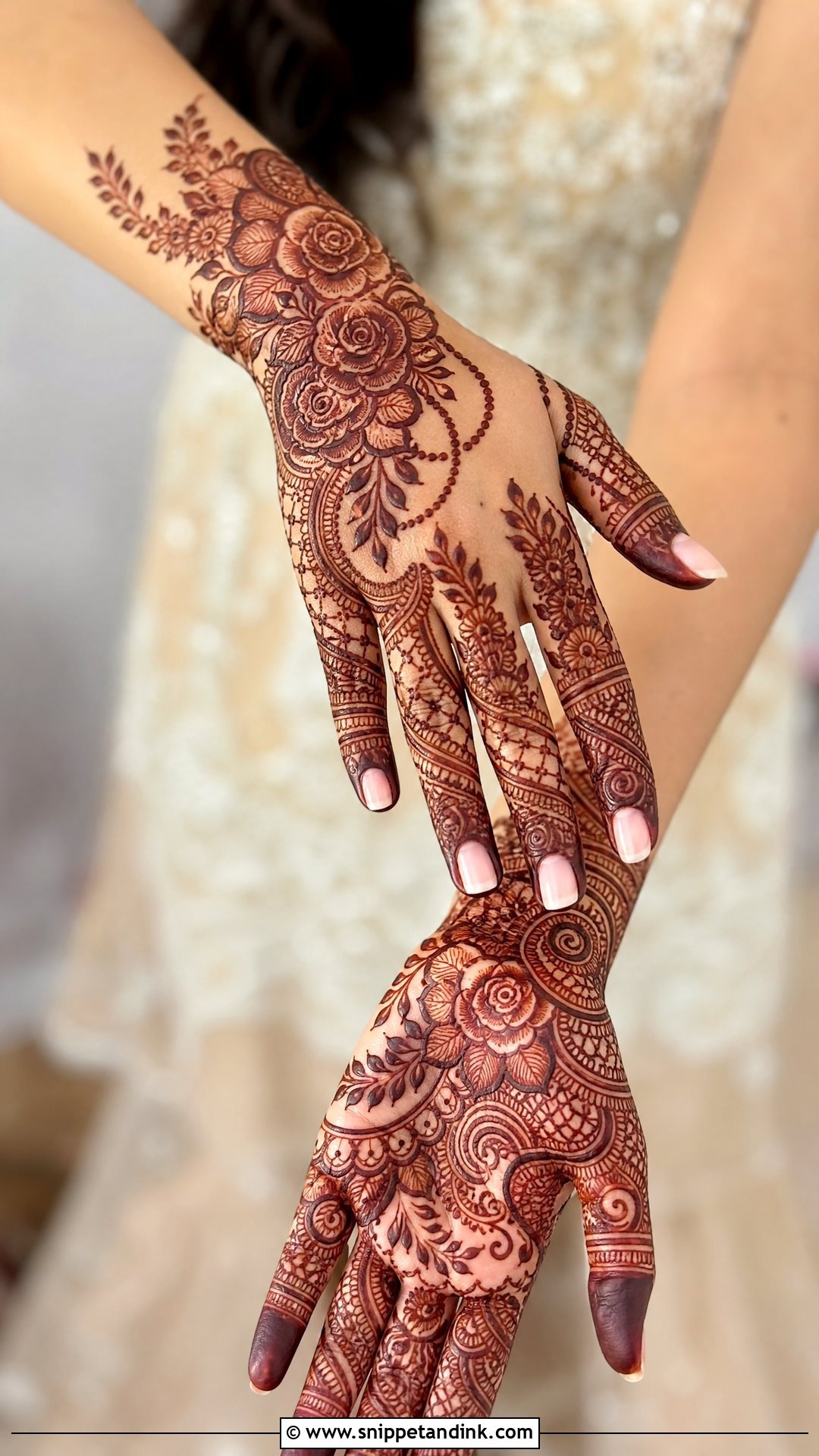
Shading fills petals, leaves, paisleys and borders with a soft gradient instead of dense lines, so motifs look bold without packing the hand. It suits Arabic, Indo-Arabic and floral layouts. To shade, I spread a thin layer of paste with the cone tip rather than drawing lines, which gives a lighter stain inside a darker outline. A shaded rose trail, lotus cluster or paisley pattern photographs clearly. Keep the fingers neat so the whole hand doesn’t look messy.
29. Portrait Engagement Mehndi Design
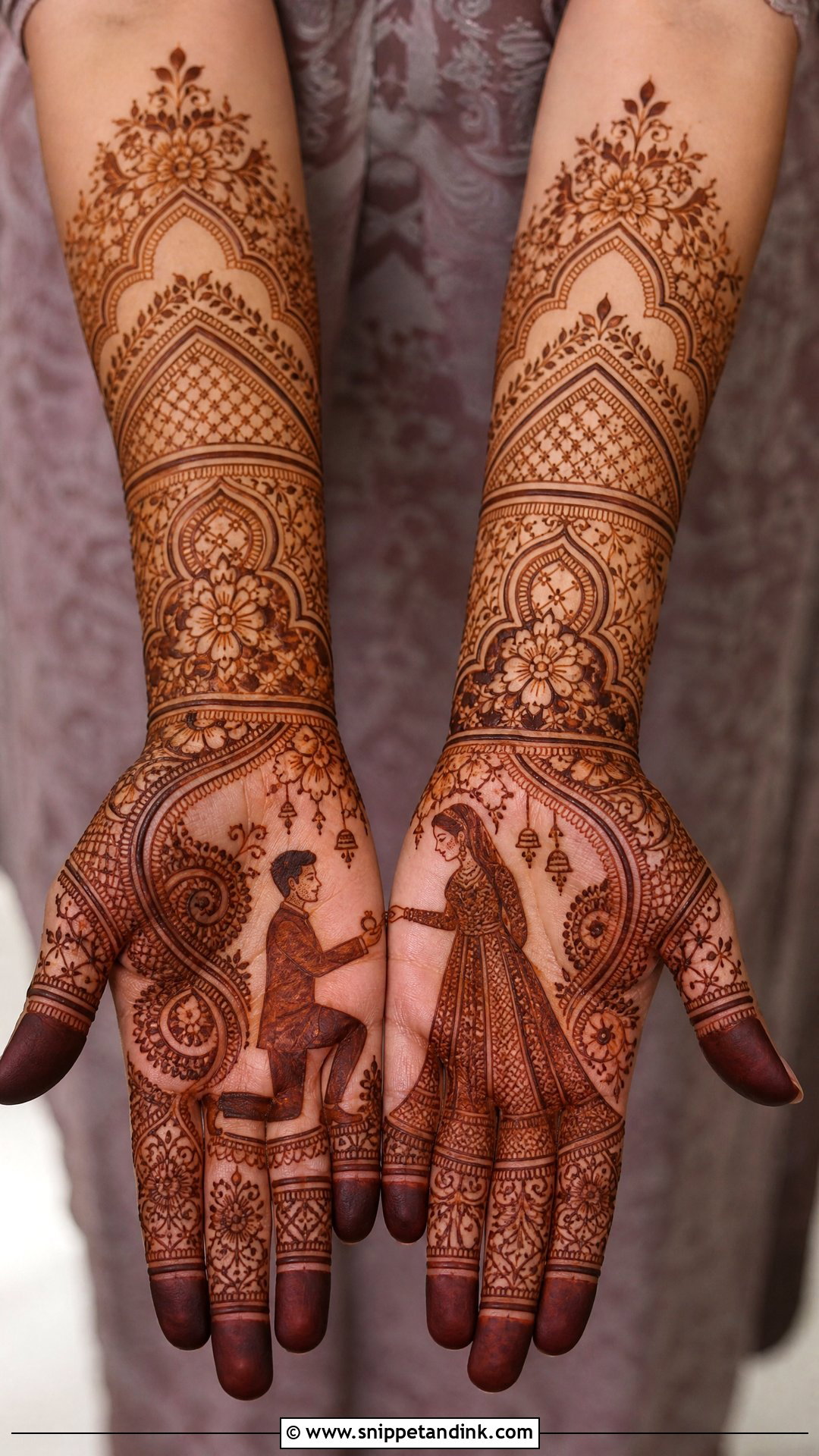
Engagement portraits can stay smaller and more subtle than wedding ones: a bride-groom silhouette, a ring exchange moment, a tiny couple motif on the palm or forearm, framed with florals, paisleys and fine borders. Faces need clean detailing, so book an artist who does figure work regularly. If realistic portraits feel too much, symbolic art such as two rings or a pair of birds carries the same meaning with less risk.
30. Feet Engagement Mehndi Design
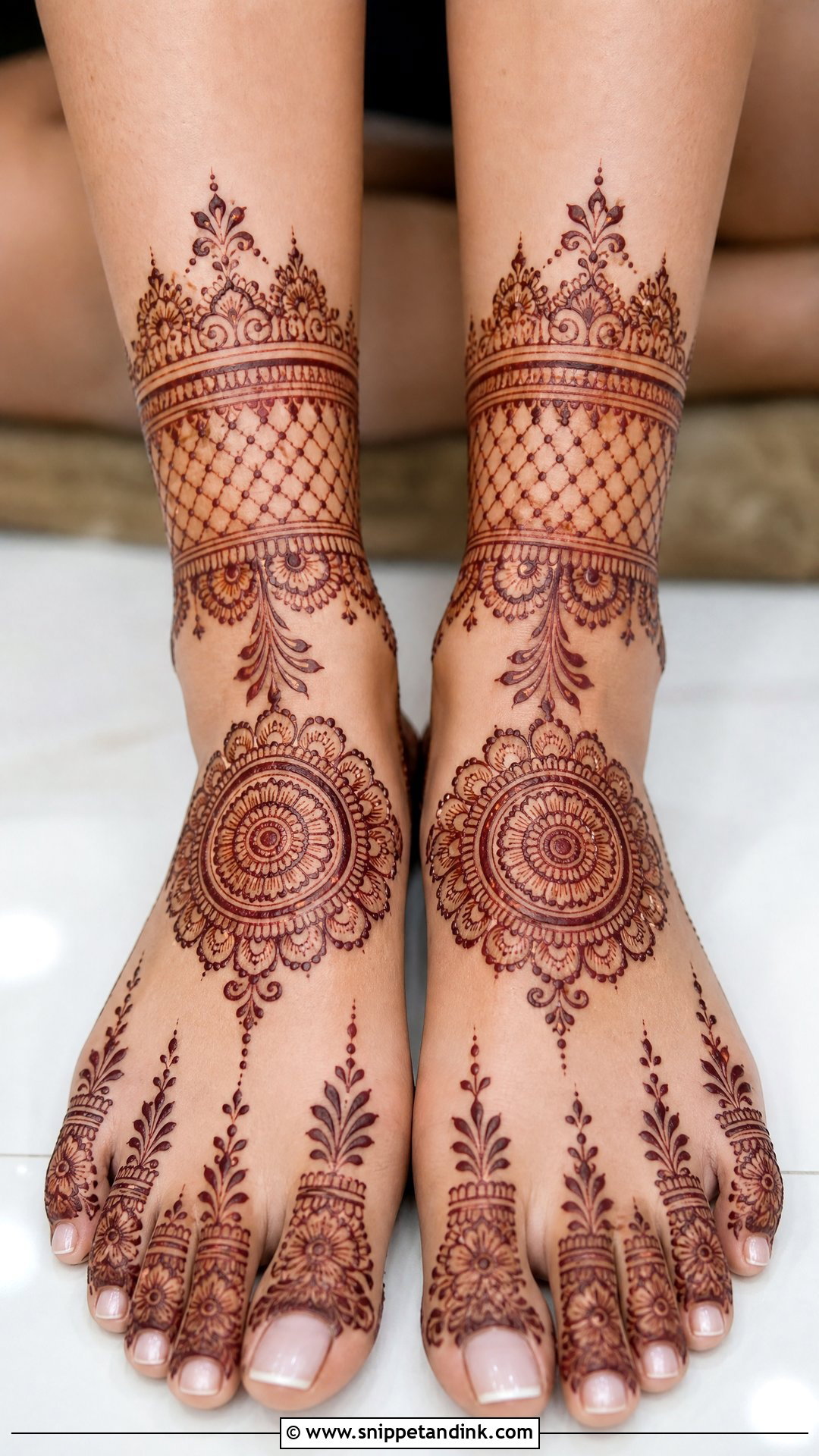
If you’ll wear open sandals, anklets or an outfit that shows your feet, a medium-light foot design usually looks better at an engagement than heavy coverage: a mandala on the top of the foot, floral trails near the toes, anklet patterns and small jaali sections. It should echo the hands without competing. I repeat one element, small flowers if the hands are floral, circles if they carry mandalas, so the set looks planned.
Three Photos to Send Your Artist Before the Appointment
The quickest engagement consultations I have are with brides who arrive with pictures, not just inspiration screenshots.
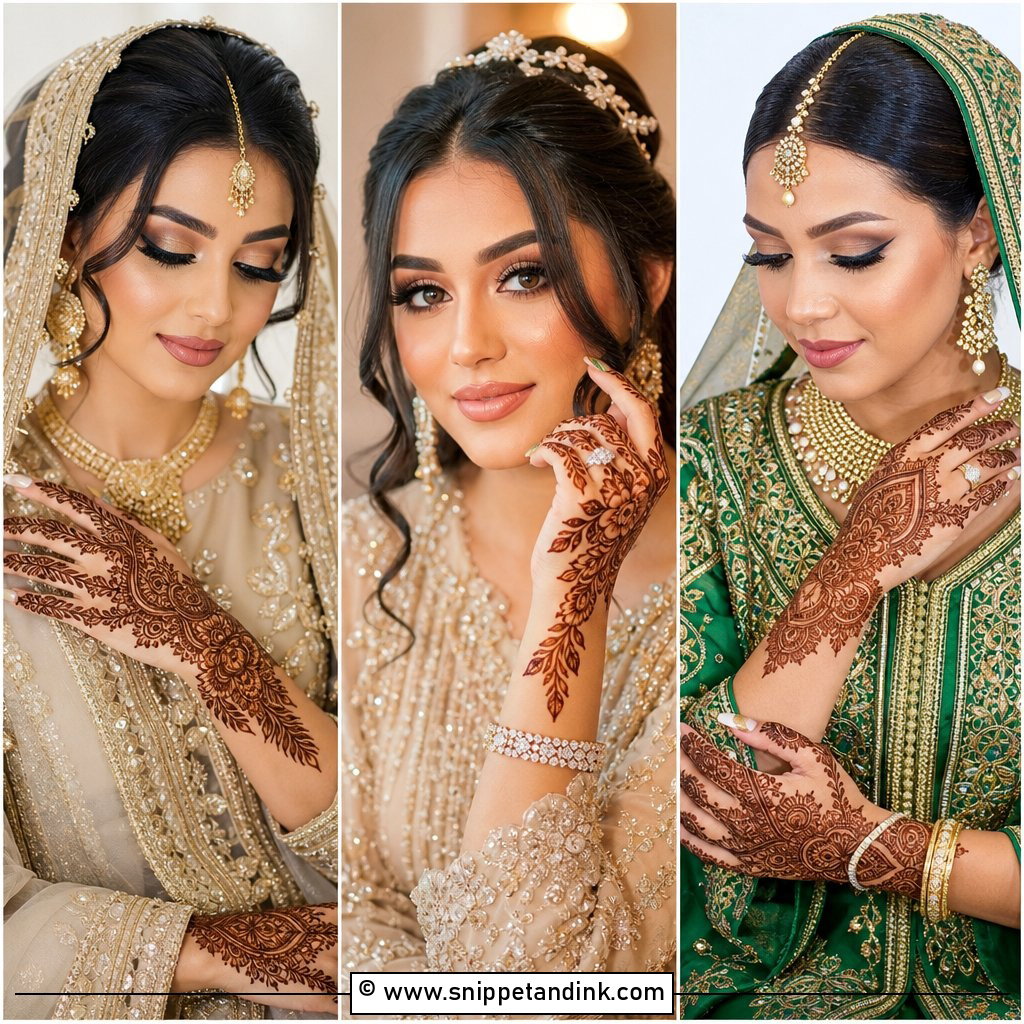
- Your outfit, especially the sleeve. It tells me how far up the arm the design needs to go and whether the wrist will be covered by bangles.
- The ring, and which hand and finger it goes on. I’ll keep that band area clean and build the design to lead toward it.
- Two or three henna designs you like, plus one you don’t. The one you dislike often teaches me more about your taste.
Tell your artist the ceremony date and time too. I want the paste on your hands one or two days before, so the stain has darkened from orange to its deep brown by the time the ring goes on, and so the dried paste is long gone before anyone slides metal over your finger.
Hand Sanitiser, Handshakes and a Day of Greetings
Engagement days involve a lot of hands: greetings, sweets fed by relatives, rings going on and off for photos. Alcohol sanitiser and harsh soap are the quickest way to fade a fresh stain, so in the first day or two I’d rinse with plain water, pat dry and rub in a little coconut oil or balm before you leave the house. Ask someone to carry a pack of tissues for sticky moments instead of the sanitiser bottle.
Save Something for the Wedding Hands
Engagement henna should fit your personality, outfit, jewelry and the mood of the day. Some brides want full Indian hands; others are happier with Arabic trails, minimal fingers, mandalas, jaali or a ring-focused layout. Think about your photos, how much coverage you like and how long you can sit. And if bridal henna is coming later, consider keeping the engagement design different, lighter or in another style, so the wedding hands still feel new. With a good artist and clear references, the decision gets easy.
You'll Like These Ideas:






Leave a Reply