
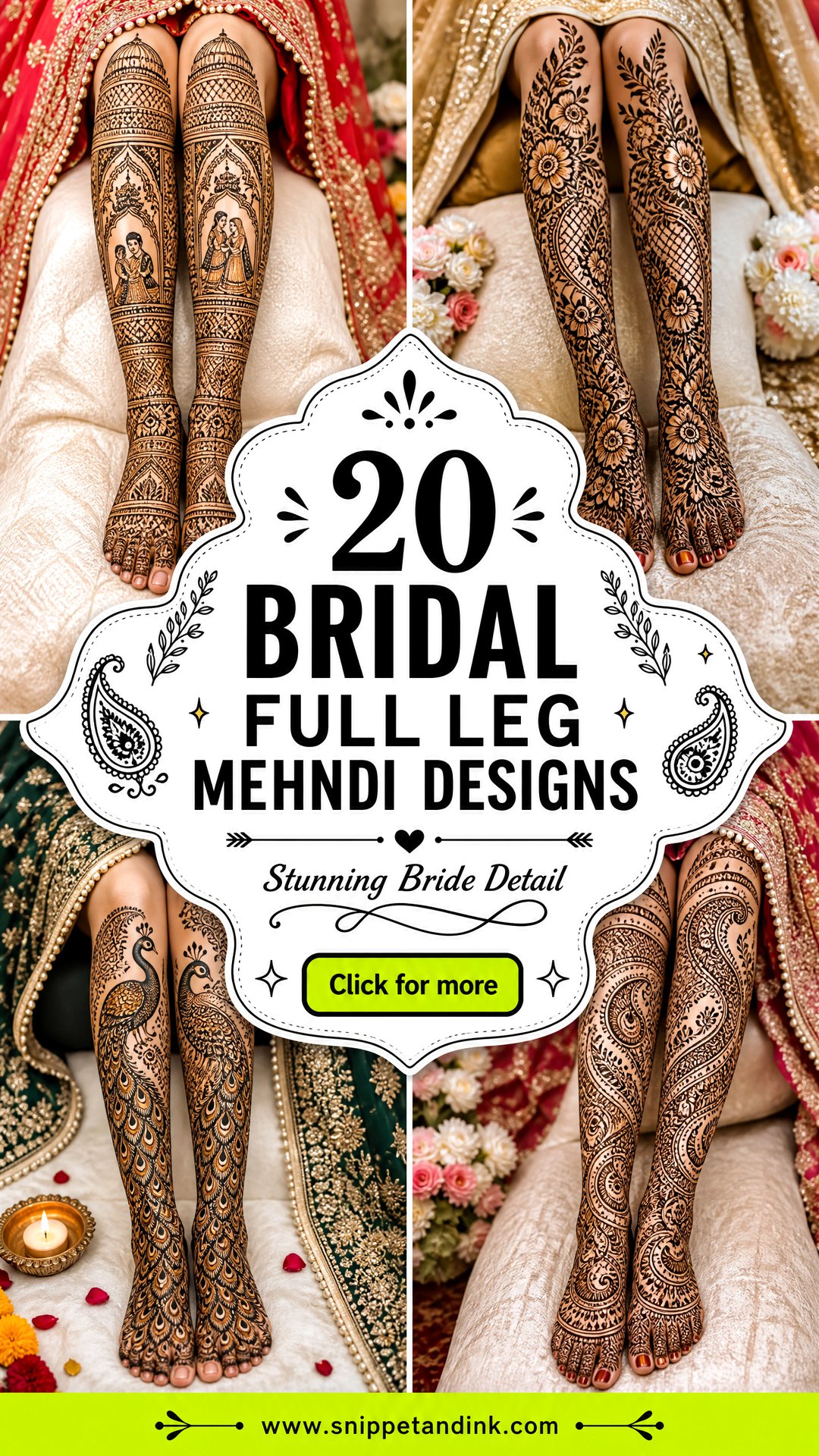
Leg mehndi is the biggest canvas a bride gives me, and the one most people underestimate. Full-leg henna can run from the toes over the feet and ankles, up the calves to the knee, and occasionally higher, depending on the outfit and the ceremonies. A good design has to read clearly from across the room when your lehenga lifts, look neat in close-ups of your feet with toe rings, and still flow as one piece. The twenty layouts below range from dense Indian and Rajasthani work to airy Arabic and Gulf spacing, with my notes on where each motif sits on the leg and what to watch for.
A Full-Leg Session Is Half a Day, So Plan It Like One
Brides are often surprised by how long legs take. Two full legs with detailed feet can take several hours on their own, and longer if hands are done in the same sitting. You also can’t walk until the paste on your feet is dry. I plan the session with the bride before the day so nobody is stuck sitting with wet henna and nowhere to go.
- Wear loose shorts or a skirt you can roll up past the knee. Tight leggings smudge the paste as you pull them down.
- Use the bathroom right before we start, and again before hands if both are being done.
- Have someone ready to bring water, snacks and your phone so you don’t need to move.
- Ask whether legs or hands go first. I usually do legs first, so your hands are free while the legs dry.
- Plan to sit with feet up and uncovered for a good while after the last stroke.
1. Indian Bridal Full Leg Mehndi Design
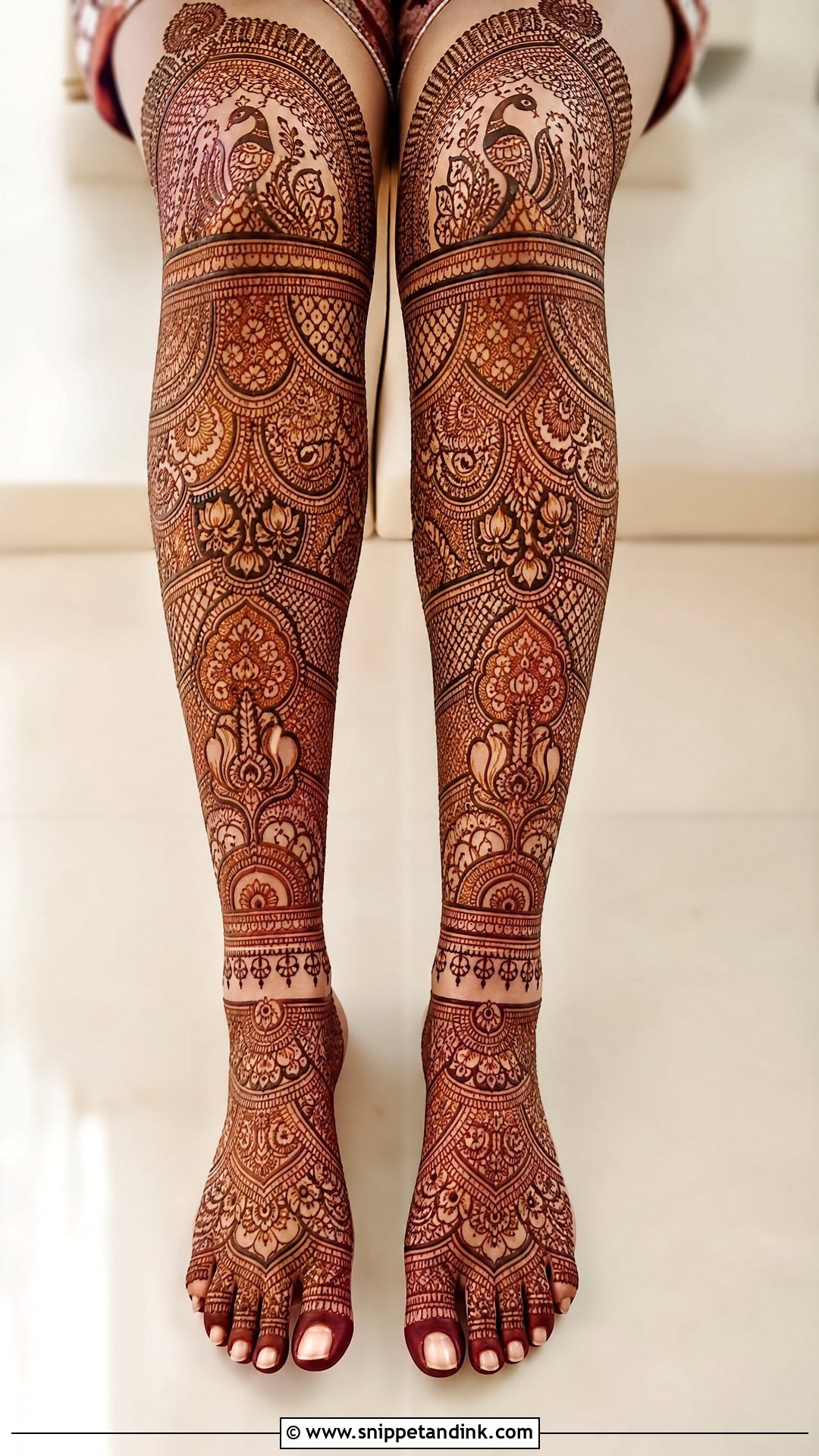
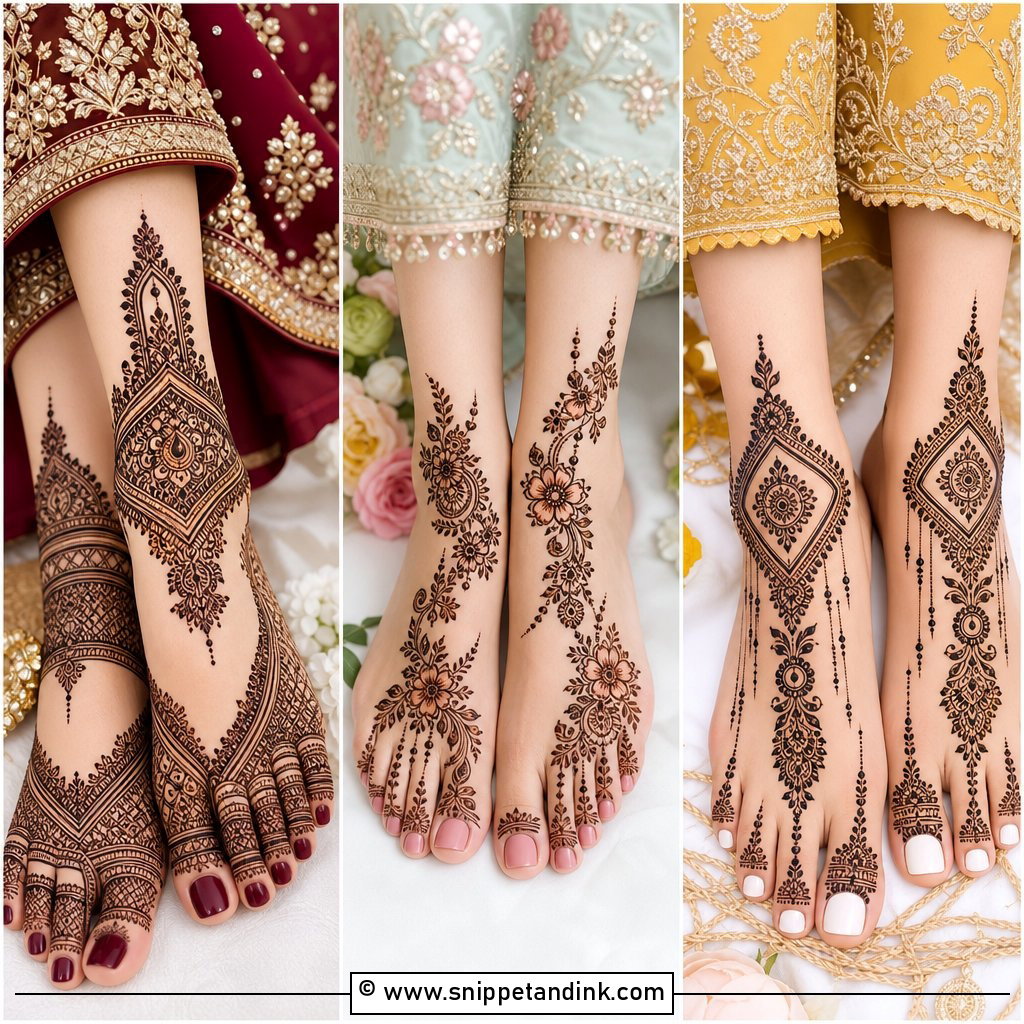
An Indian bridal full leg mehndi layout starts with detailed toes and filled foot panels, then climbs with paisleys, lotus, peacocks, vines and fine filler. Density is the appeal. I keep the top of the foot boldest and let the calf lighten slightly, partly for balance and partly because the calf stains paler anyway. With a heavy lehenga or a red silk saree, this matches traditional hand mehndi well.
2. Arabic Bridal Full Leg Mehndi Design
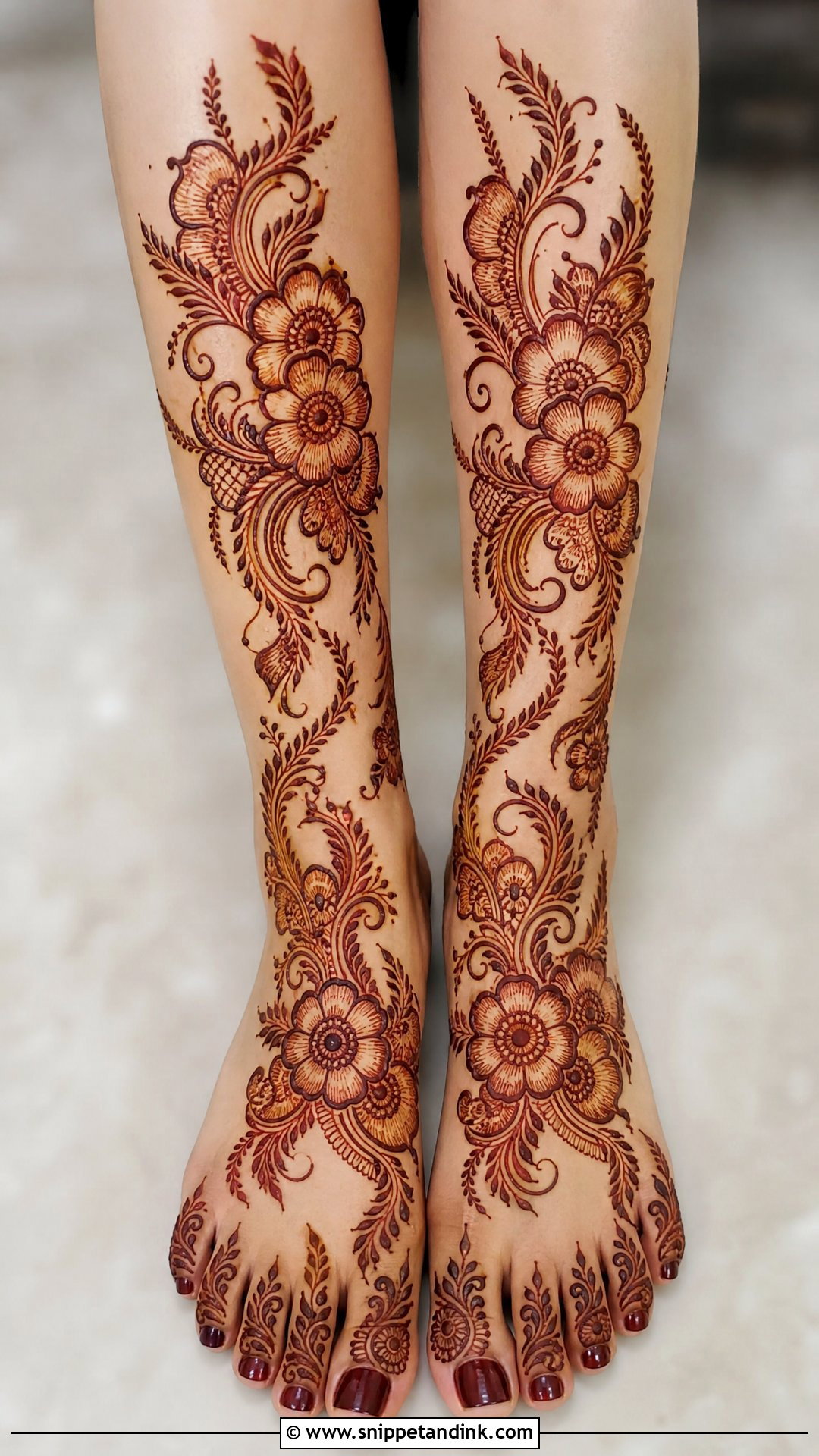
Want full-leg length without a packed finish? Arabic work uses bold flowers, curved vines and leafy trails with plenty of open skin between them, flowing from the feet up the calves. It takes noticeably less time to apply than dense Indian coverage, which matters when legs are booked on the same day as hands. I add more detail around the ankle and a few shaded petals near the knee so it still reads as bridal under pastel outfits.
3. Indo-Arabic Bridal Full Leg Mehndi Design
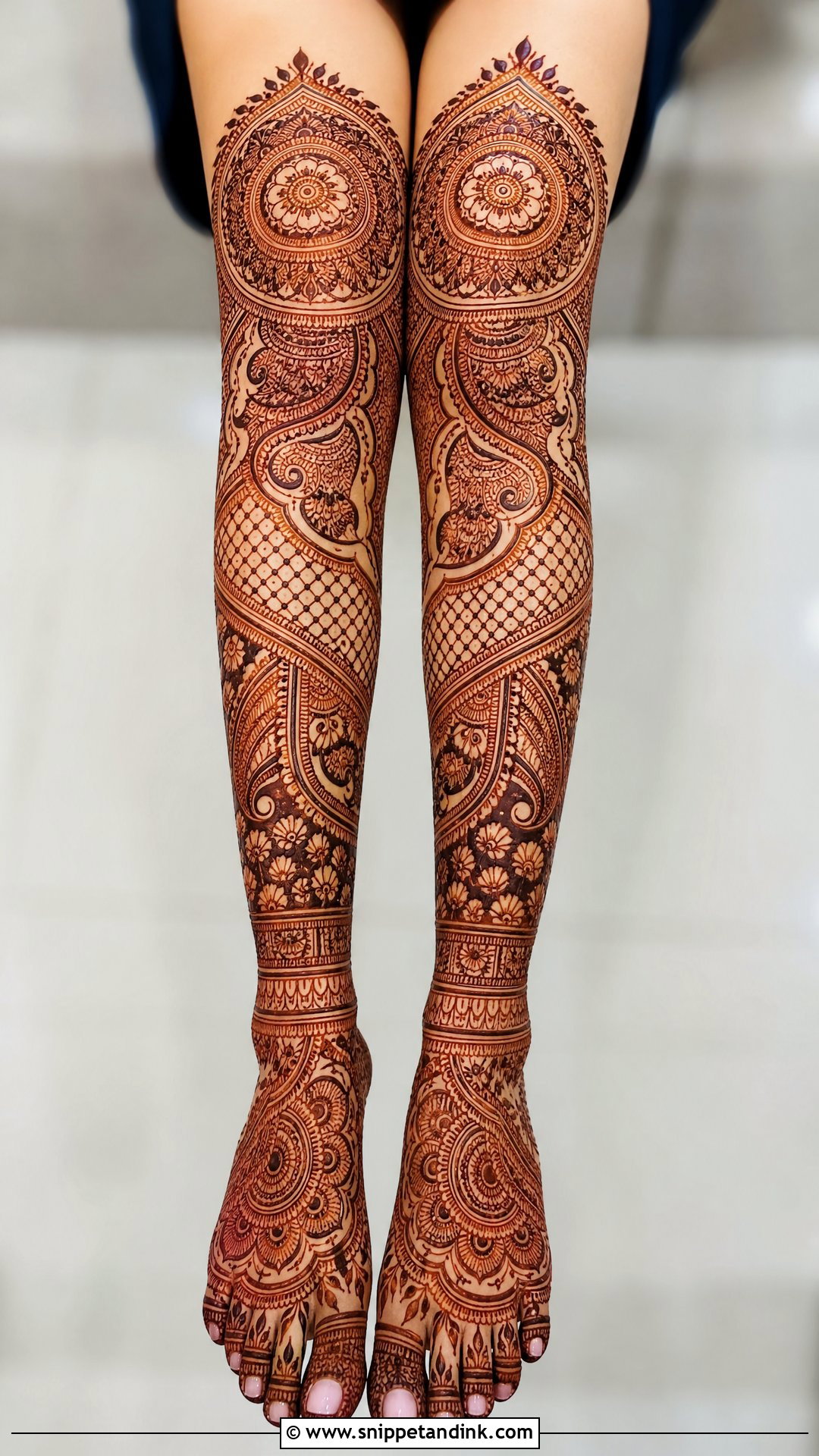
Indo-Arabic legs combine fine Indian detail with bold Arabic movement. Feet carry mandalas, paisleys and filled toes, while the calves get open floral trails, net sections and leafy borders. It’s the layout I suggest most often when someone asks for full coverage that still breathes. Bold outlines stay visible in wide shots, and the fine work holds up in close-ups of the feet.
4. Full Leg Bridal Mehndi With Mandala
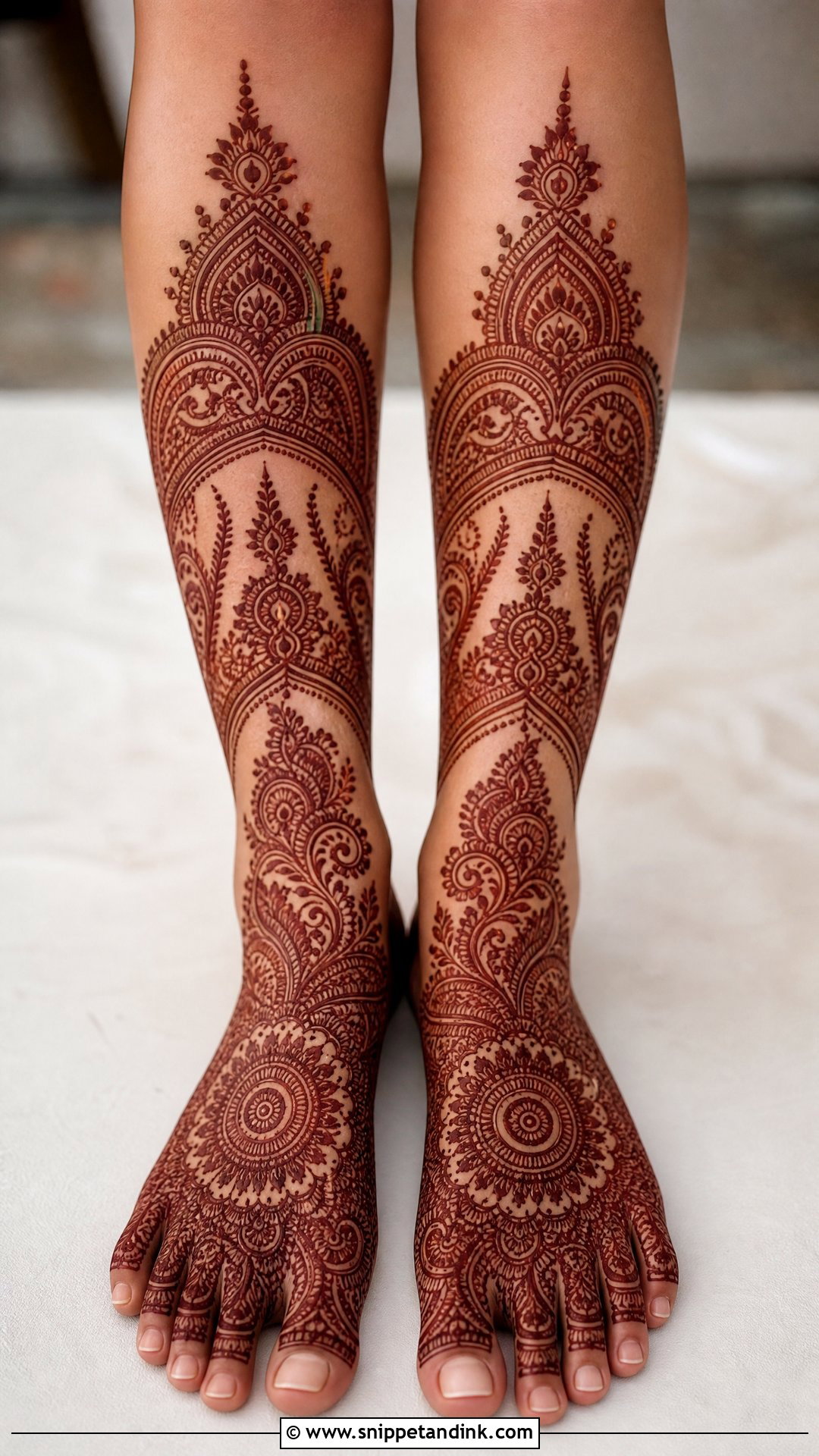
A mandala anchors the whole leg. It usually sits on the top of the foot or wraps the ankle, expanding in rings of petals, dots and borders, with vines and jaali climbing above it. The centre has to be placed carefully: the top of the foot isn’t flat, so I mark the middle point with the foot resting naturally, not pointed, or the circle looks oval once you stand. Anklets sit beautifully around a mandala ankle.
5. Peacock Bridal Full Leg Mehndi Design
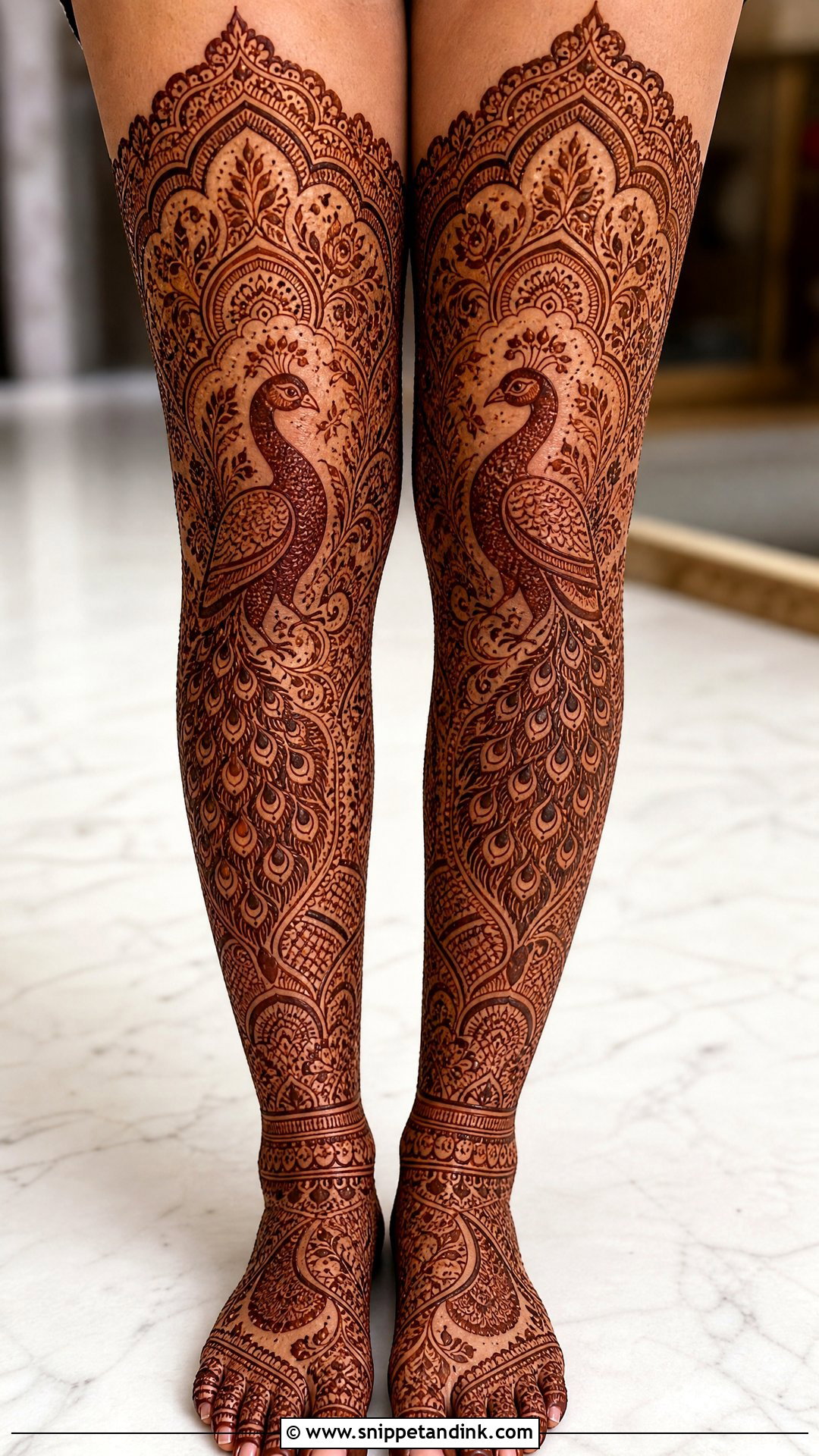
Peacock motifs give the leg a festive, royal feel. One large peacock on the foot, ankle or calf, surrounded by feathers, paisleys and floral filler, reads far better than several small birds. Traditional versions use dense feather lines; modern ones shade the body and leave open space. On the shin, where skin stains lighter, I draw the peacock outline slightly thicker so it doesn’t fade into the background.
6. Bridal Full Leg Mehndi With Jaali
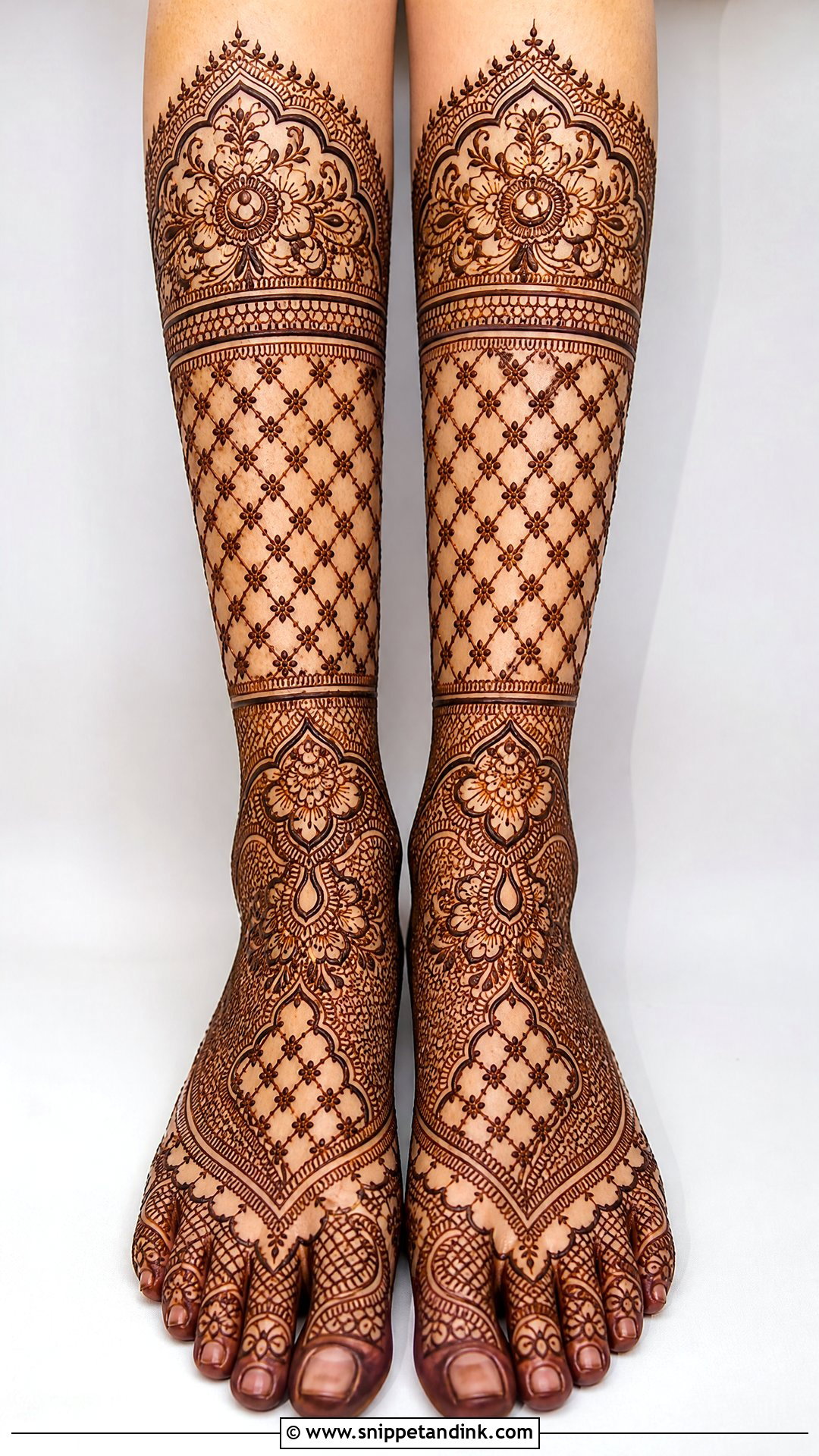
Jaali on the legs looks like fabric. A bridal full leg mehndi with jaali uses net patterns across the feet, ankles and calves, framed by floral borders and paisleys. Open-toe sandals show the foot section off well. Over a full leg, unbroken mesh starts to look flat, so I break it with plain skin gaps and bolder flowers placed between net panels. The grid lines must stay thin and evenly spaced, or squares fill in as the stain darkens.
7. Lotus Bridal Full Leg Mehndi Design
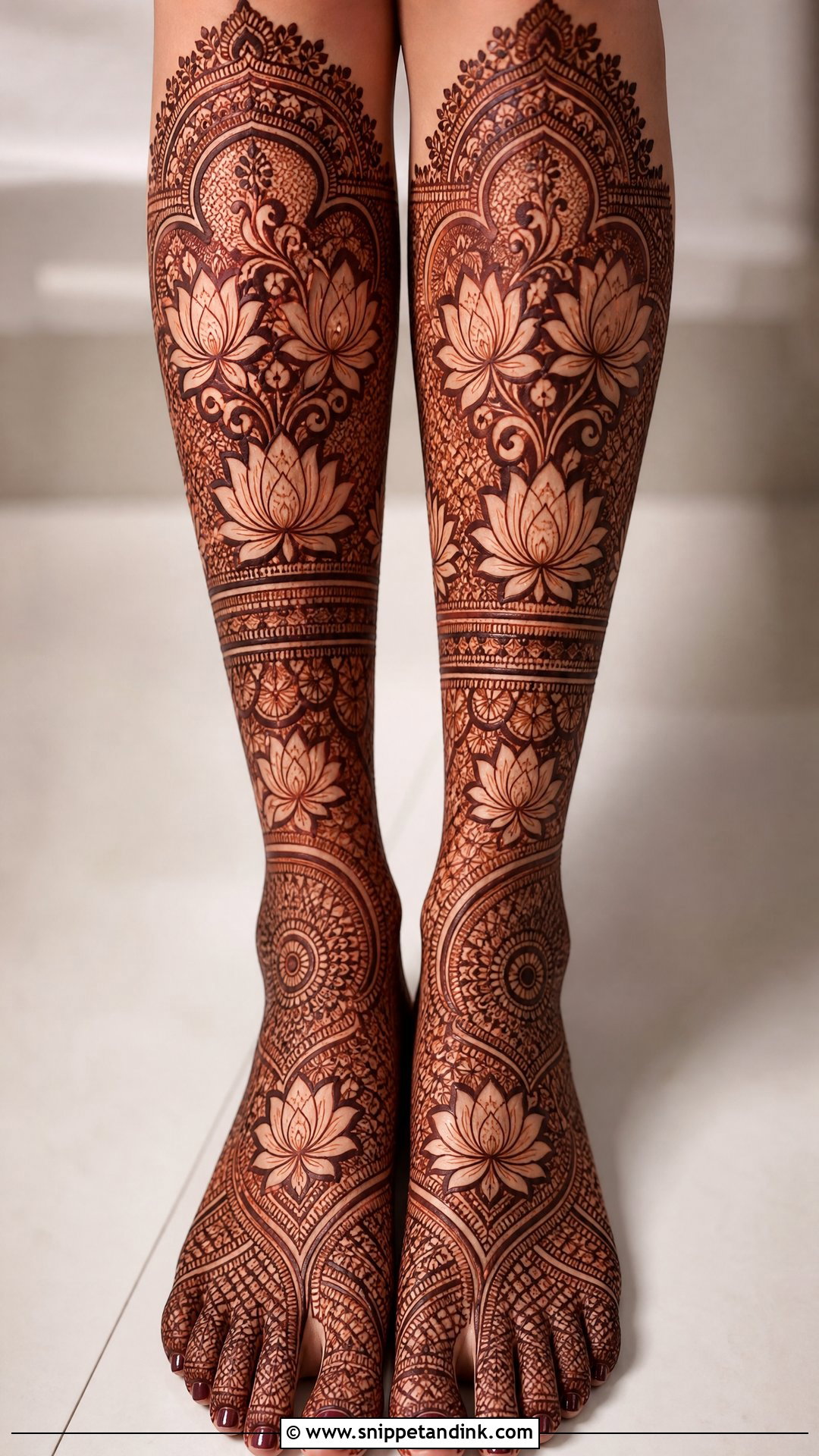
Lotus motifs sit on the feet, ankles and along the calves in layered forms, with petals shaded, outlined or filled with tiny strokes. They pair well with mandalas, temple borders and curved vines. If your outfit has lotus embroidery, repeating it on the legs ties the look together. Keep petals large enough to read; tiny lotuses on the calf disappear in photos.
8. Rajasthani Bridal Full Leg Mehndi Design
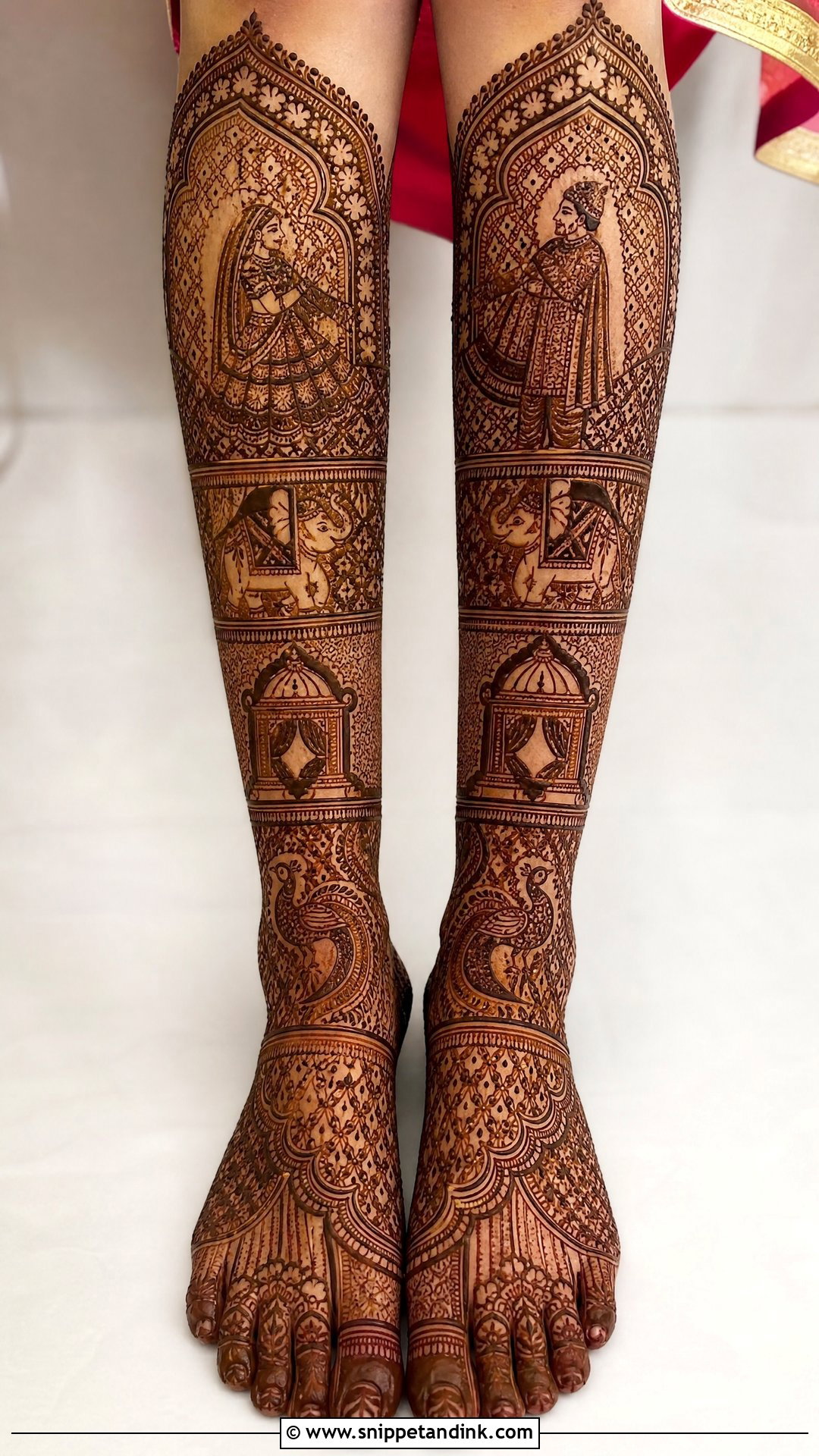
Rajasthani legs tell a story, with bride and groom figures, doli, elephants, peacocks, kalash and ornate borders. Feet are heavily filled while the lower legs carry scene-like panels. It needs an experienced artist and a long sitting. I divide the leg into clear zones before I start: toes, foot, ankle, calf, knee. That planning is what stops figures from looking squeezed together halfway up the shin.
9. Royal Bridal Full Leg Mehndi Design
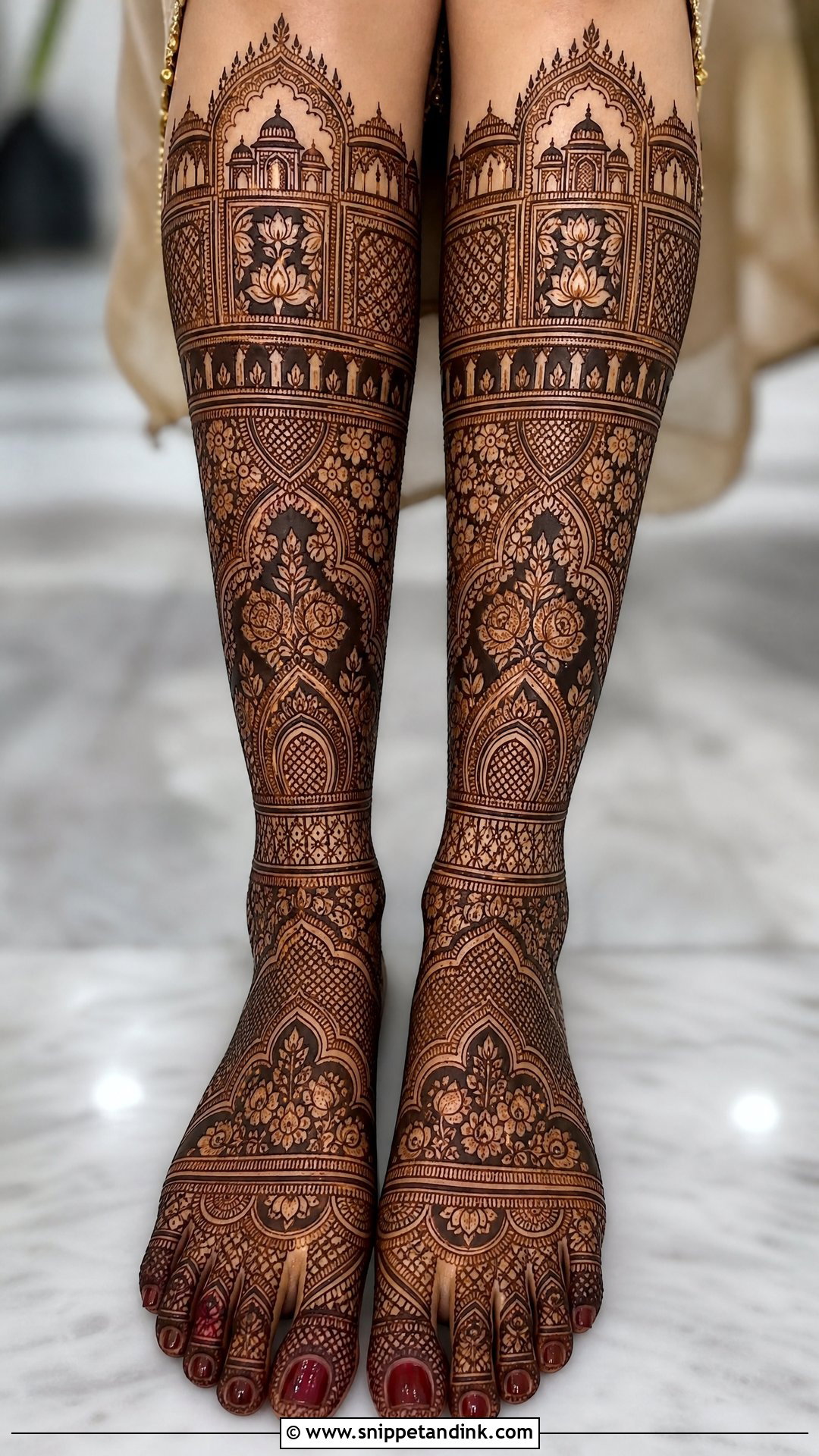
Royal layouts mean grand, symmetrical coverage with big paisleys, palace-style arches, jaali panels and jewellery-like borders on both legs. Heavily embroidered outfits suit them. I still mix filled sections with open curved trails, because solid coverage with no contrast can look muddy once the stain reaches its deepest shade. Symmetry between the two legs matters more here than in any other layout.
10. Minimal Bridal Full Leg Mehndi Design
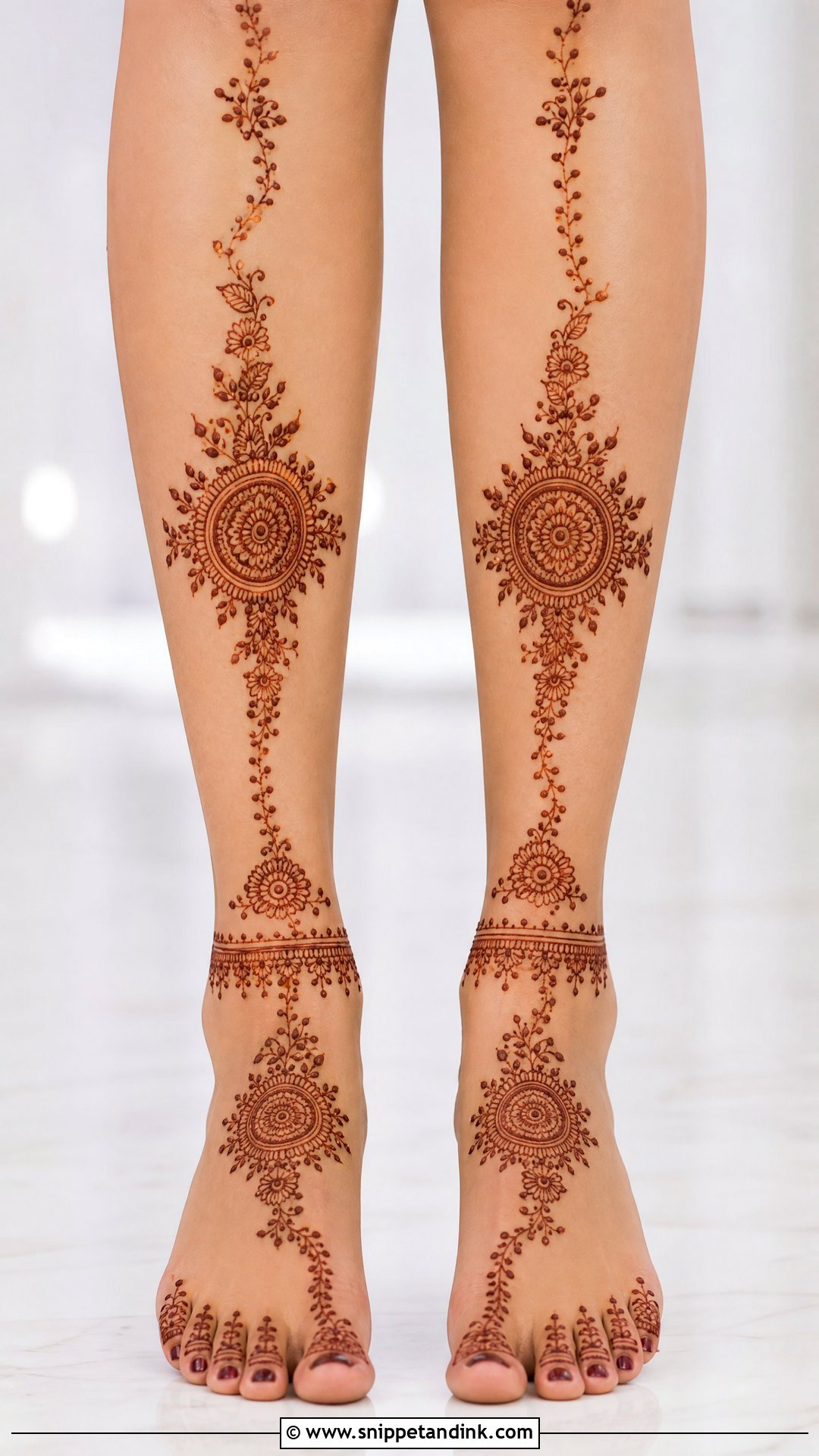
Minimal doesn’t mean short. A light design can still run the full length of the leg using slim anklet bands, small florals, spaced mandalas and clean vines. Beach weddings, destination events and lighter outfits suit it. Spacing must look deliberate, not accidentally empty, so I make sure there’s a clear path of design from toes to calf. I put the heavier details on the feet and ankles, since those are what get photographed.
11. Dulhan Bridal Full Leg Mehndi Design
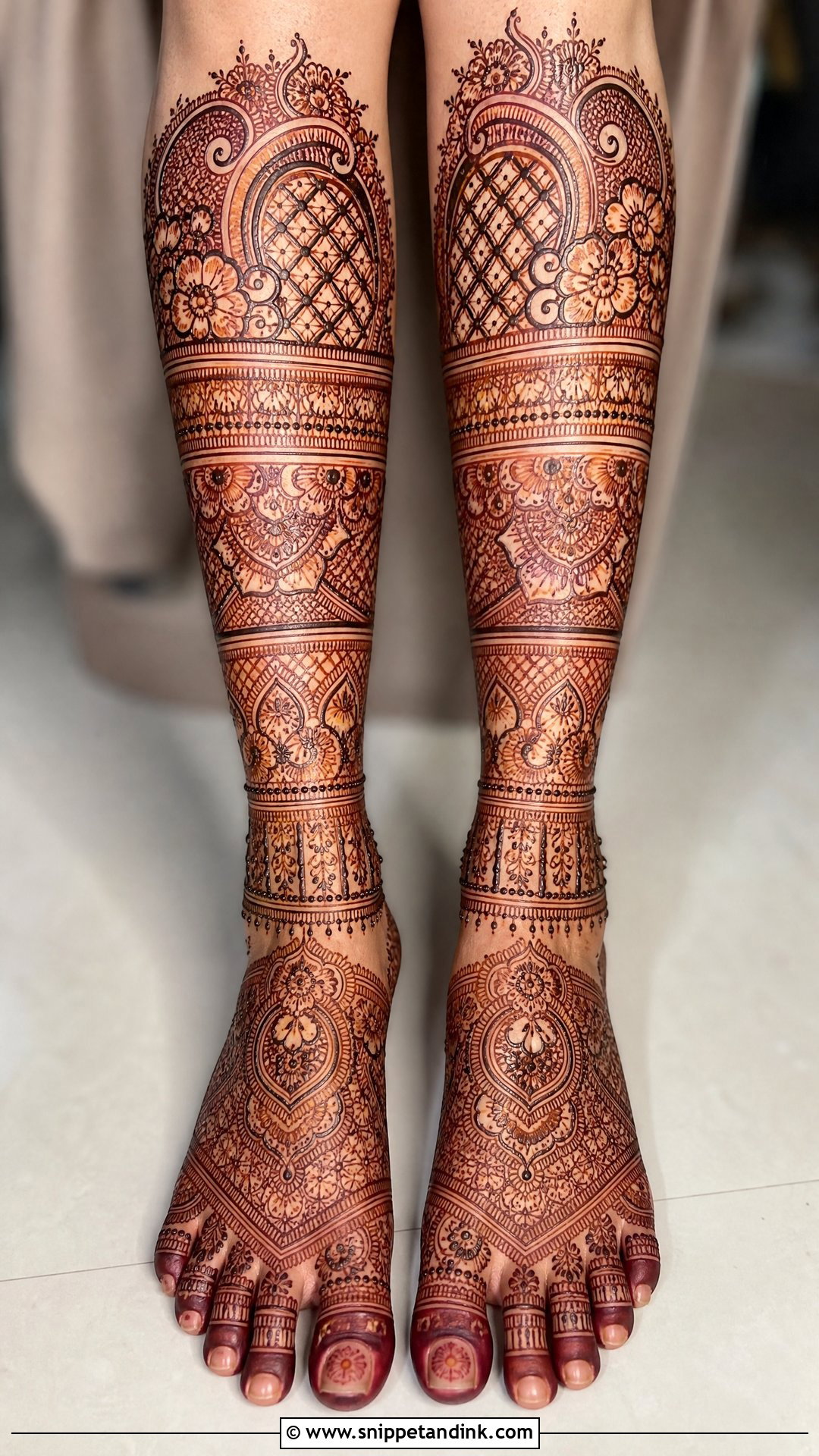
The dulhan layout is the classic wedding-day statement: dense feet, decorated toes, anklet bands, paisley panels, florals and sometimes hidden initials. It matches full bridal hand mehndi well. Coverage can reach the knee or beyond, depending on outfit length. With lehengas that swing open when you walk, the lower leg shows more than you’d expect. Keep both legs matching in structure, even if the inner details differ.
12. Bridal Full Leg Mehndi With Elephant
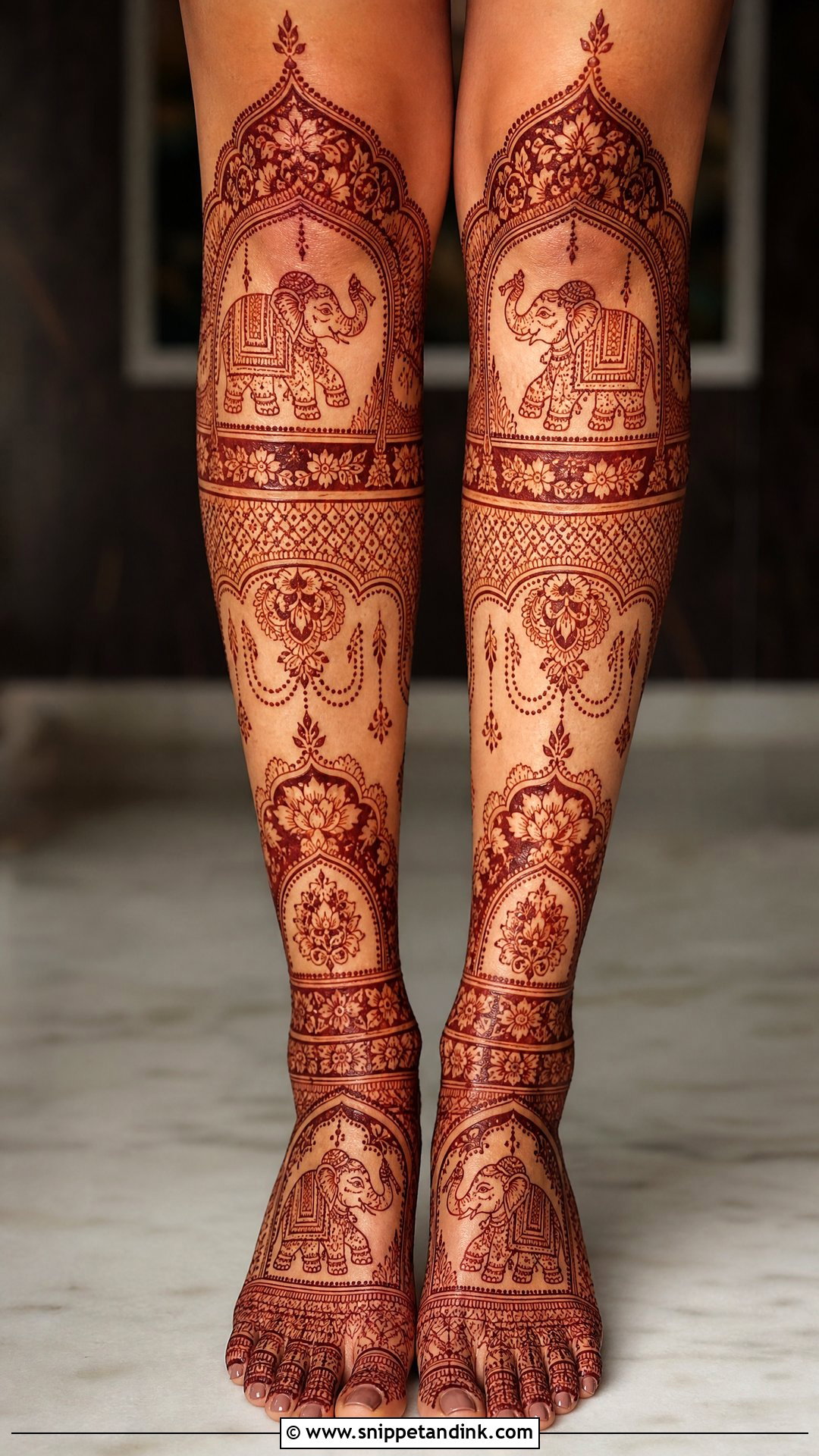
Elephants add a festive, auspicious touch near the ankle or calf, framed by arches, flowers, paisleys and dotted borders. I keep them ornamental rather than realistic, so they blend with the surrounding work. One elephant panel per leg, with floral trails above and below, is usually the right amount. Traditional ceremonies and heritage-inspired outfits suit this best.
13. Moroccan Bridal Full Leg Mehndi Design
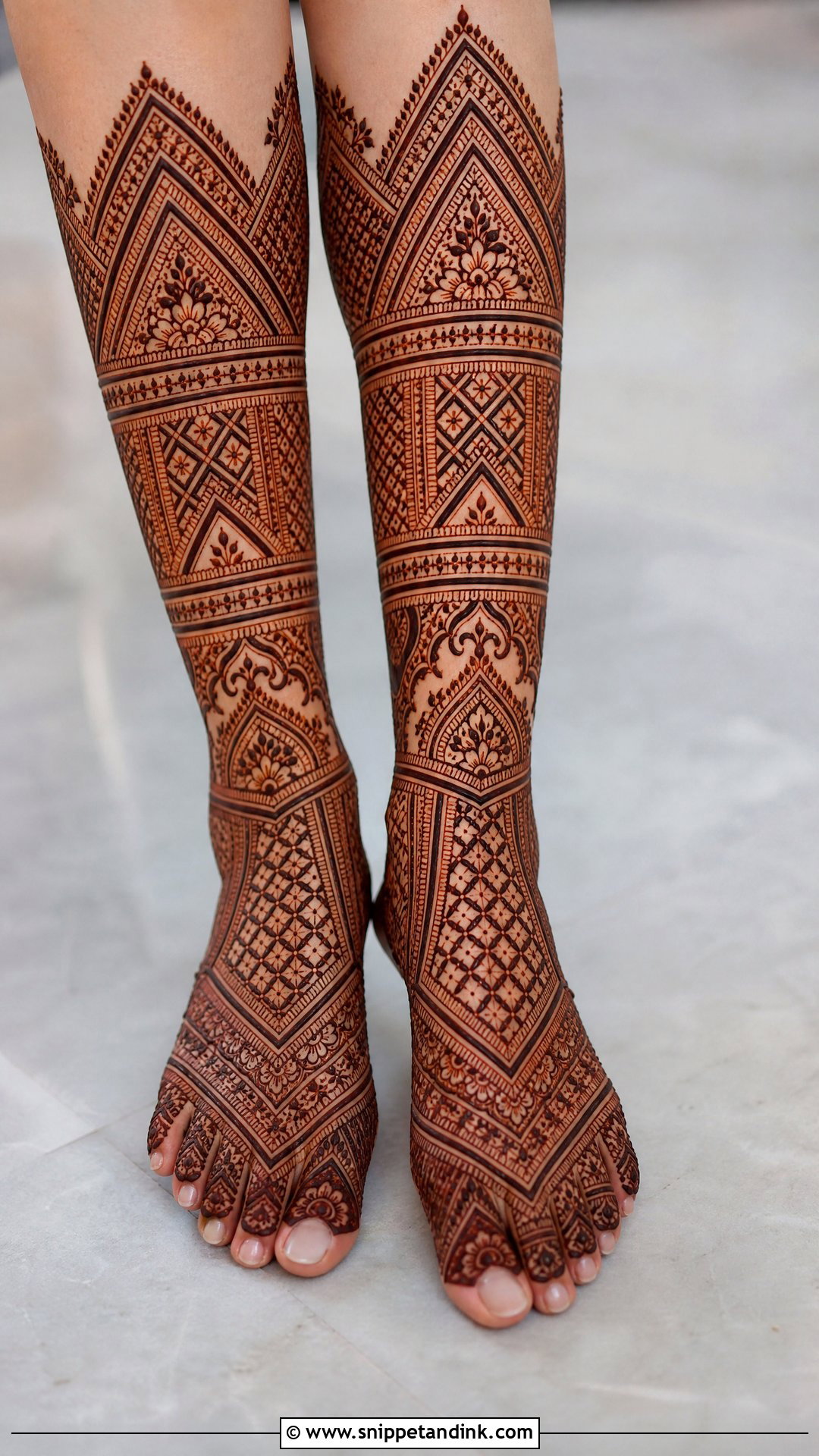
Moroccan geometry uses diamonds, triangles, grids and bold repeating lines. It starts with geometric toe details, moves into ankle cuffs and climbs the calf in structured panels. Straight lines are harder on a curved leg than on a flat palm, so I mark guide dots first and draw with the leg resting at the angle you’ll stand in. A few leafy accents between the shapes keep it bridal. Fusion outfits and sleek jewellery suit it.
14. Gulf Bridal Full Leg Mehndi Design
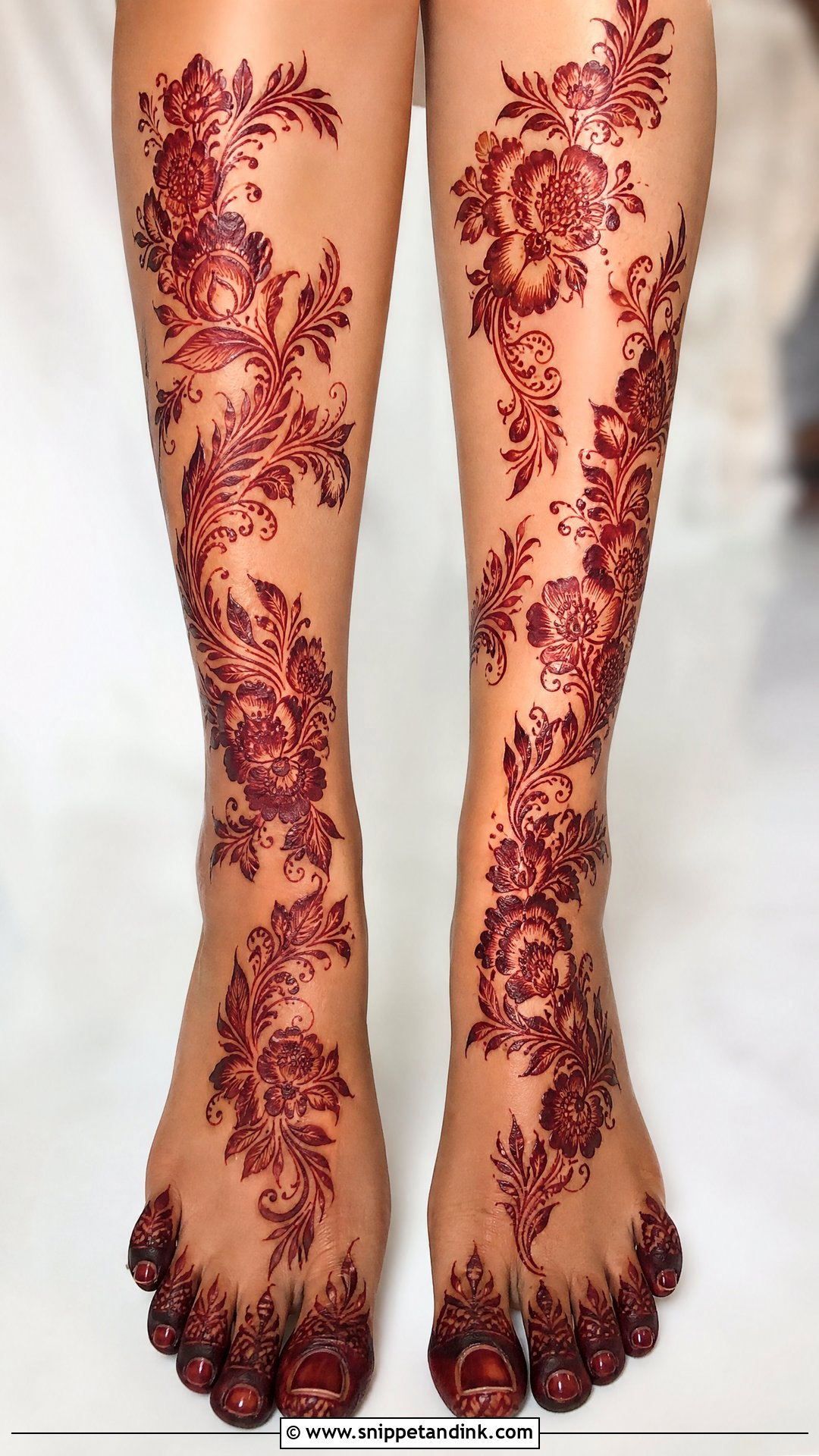
Gulf bridal full leg mehndi uses bold strokes, large florals, leafy curves and open spacing. Large flowers sit across the feet and the sides of the legs, with vines climbing toward the calves. The open skin makes the reddish-brown stain look dramatic. If you don’t like tiny filler, this suits you. I add detailed toe caps, anklet bands and shaded petals to finish it.
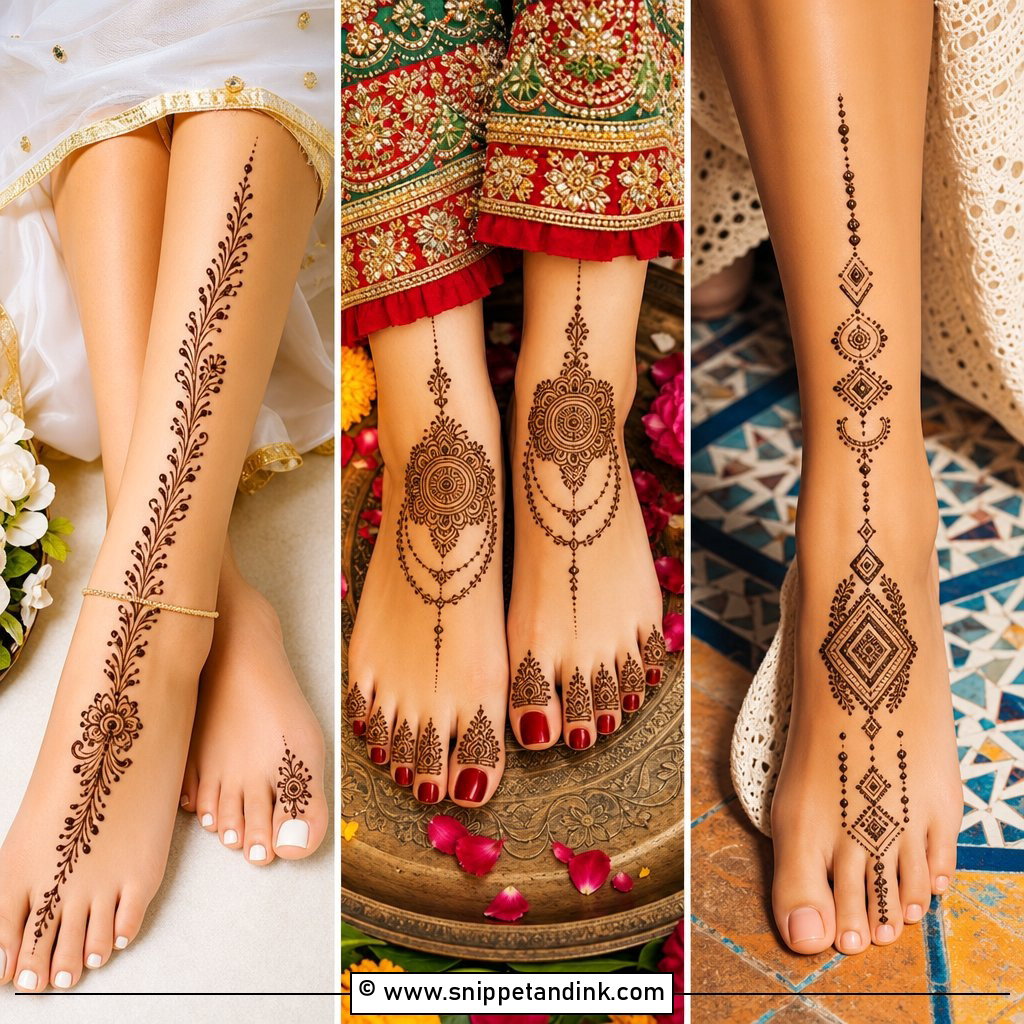
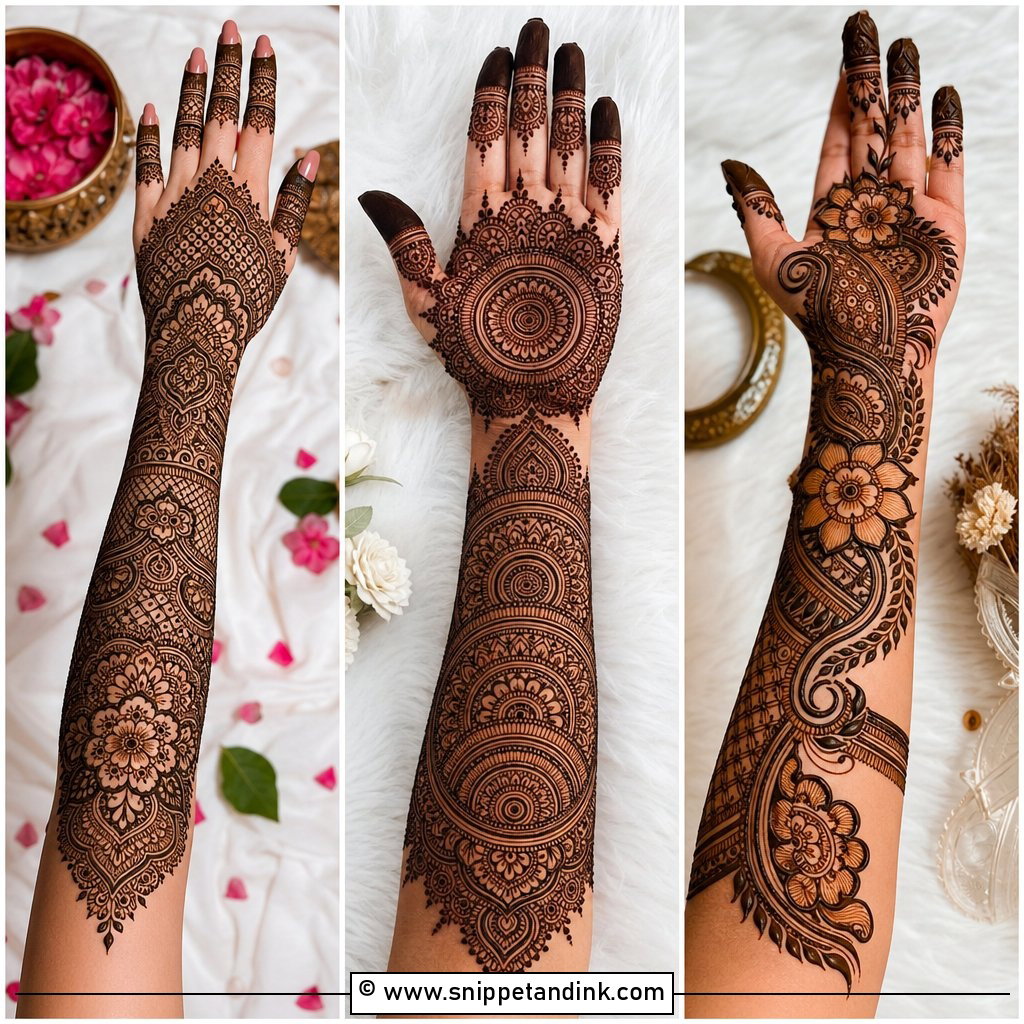

15. Bridal Full Leg Mehndi With Rose
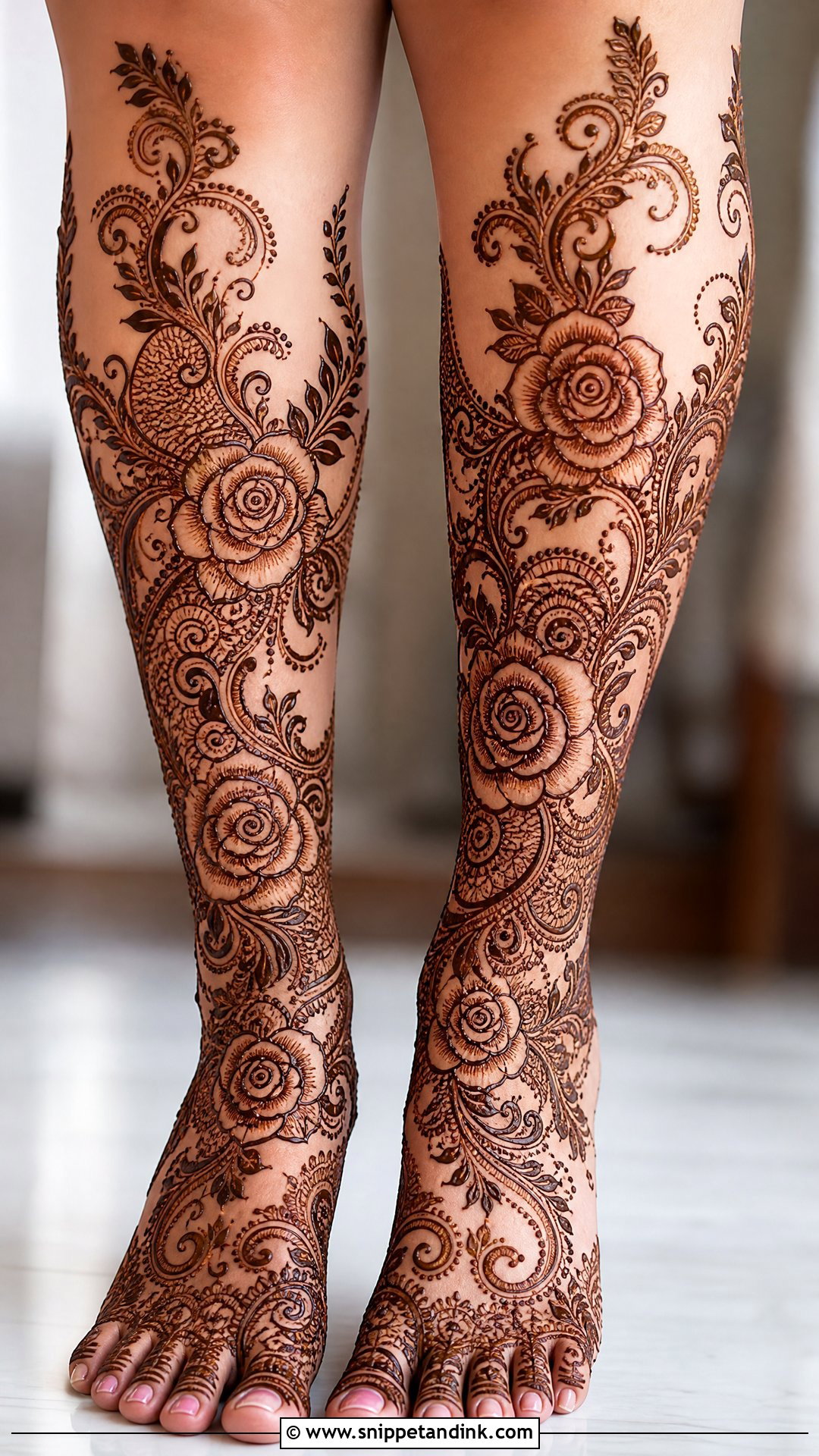
Roses work at any size, so they adapt well to the changing width of a leg: large roses for focal points on the feet and calf, small buds filling gaps around the ankle. Arabic, Indo-Arabic or modern Indian styles all take them. Shaded roses with bold outlines stain clearly and stay visible in both close-ups and full-length shots. They’re a natural match for an outfit with floral embroidery.
16. Bridal Full Leg Mehndi With Anklet Pattern
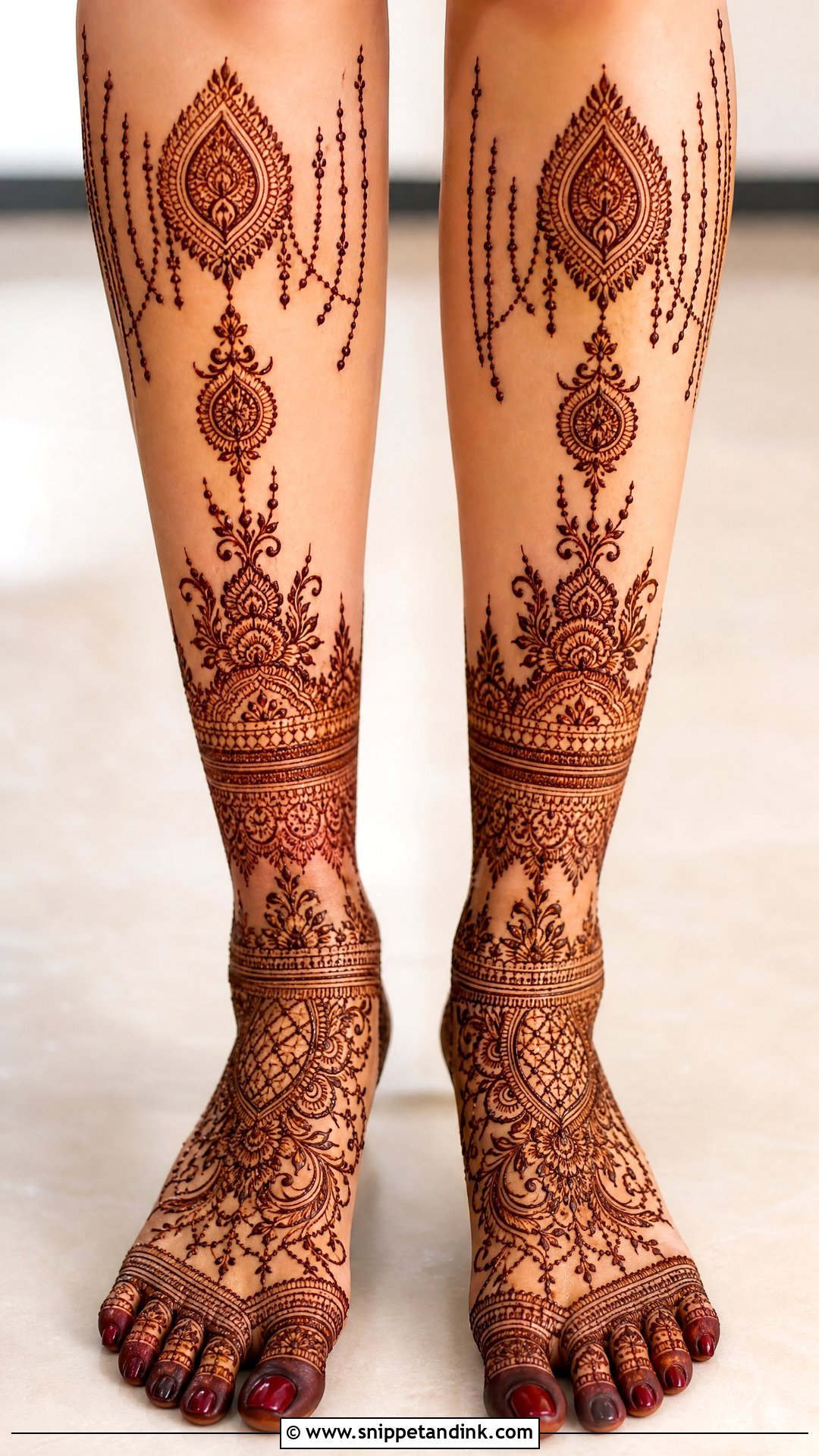
Anklet patterns make the henna look like jewellery: thick bands, hanging chains, bead-like dots, leafy drops and toe ring details. From the anklet, the design continues up with florals, mandalas and curved trails. If you’ll wear real payal, I check where it sits before drawing, so the henna band frames it instead of hiding under it. Keep the anklet band bold and the details above it finer.
17. Bridal Full Leg Mehndi With Paisley
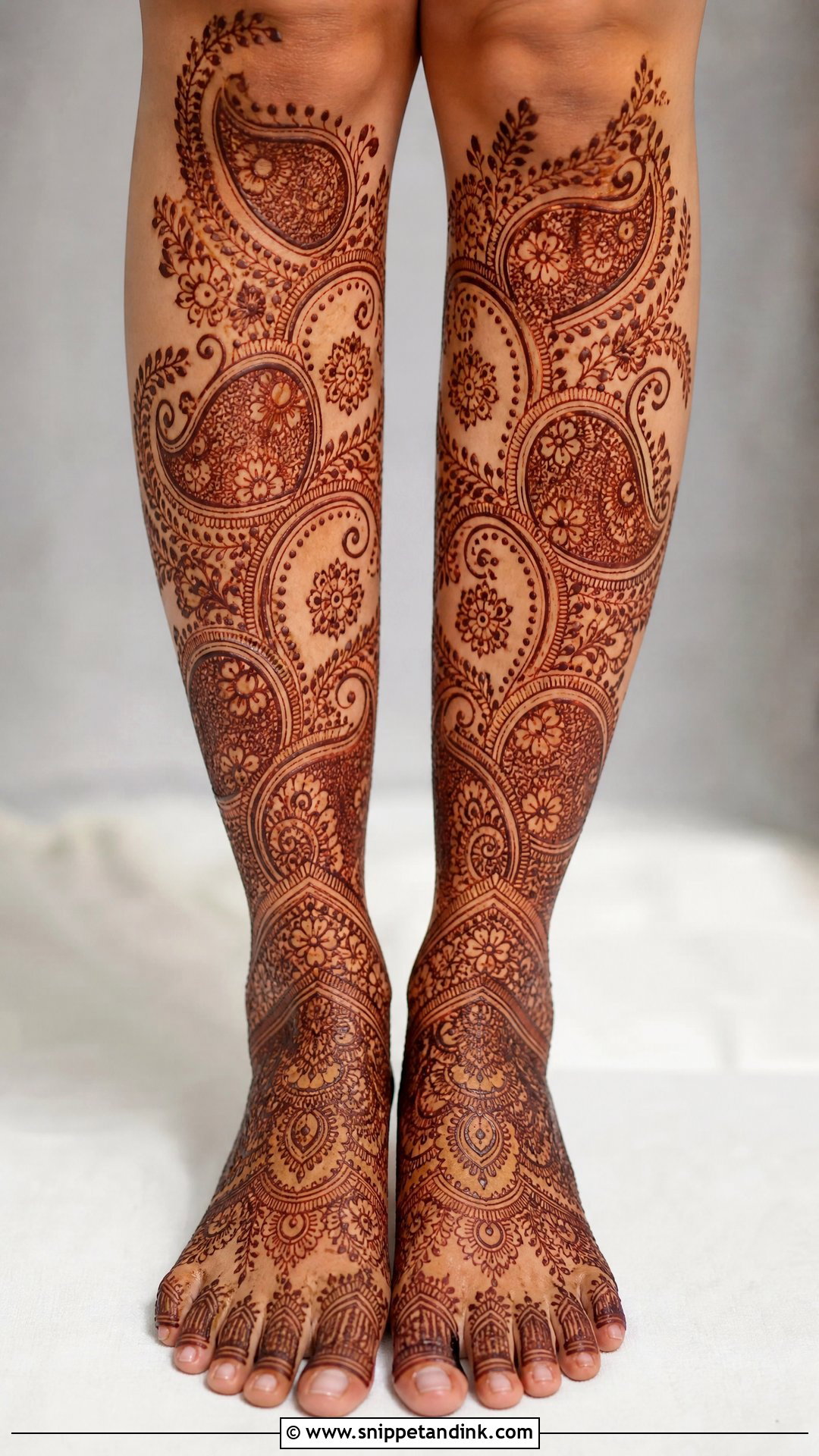
Paisleys follow the curve of the leg naturally, which is why they flatter it so well. Large shapes sit on the feet, smaller ones around the ankle, and paisley vines flow up the calves. Dense or Arabic-spaced, both work. I mix them with flowers, dots and fine filler. Large paisley panels are also my favourite place to hide initials or small personal symbols.
18. Bridal Full Leg Mehndi With Knee Coverage
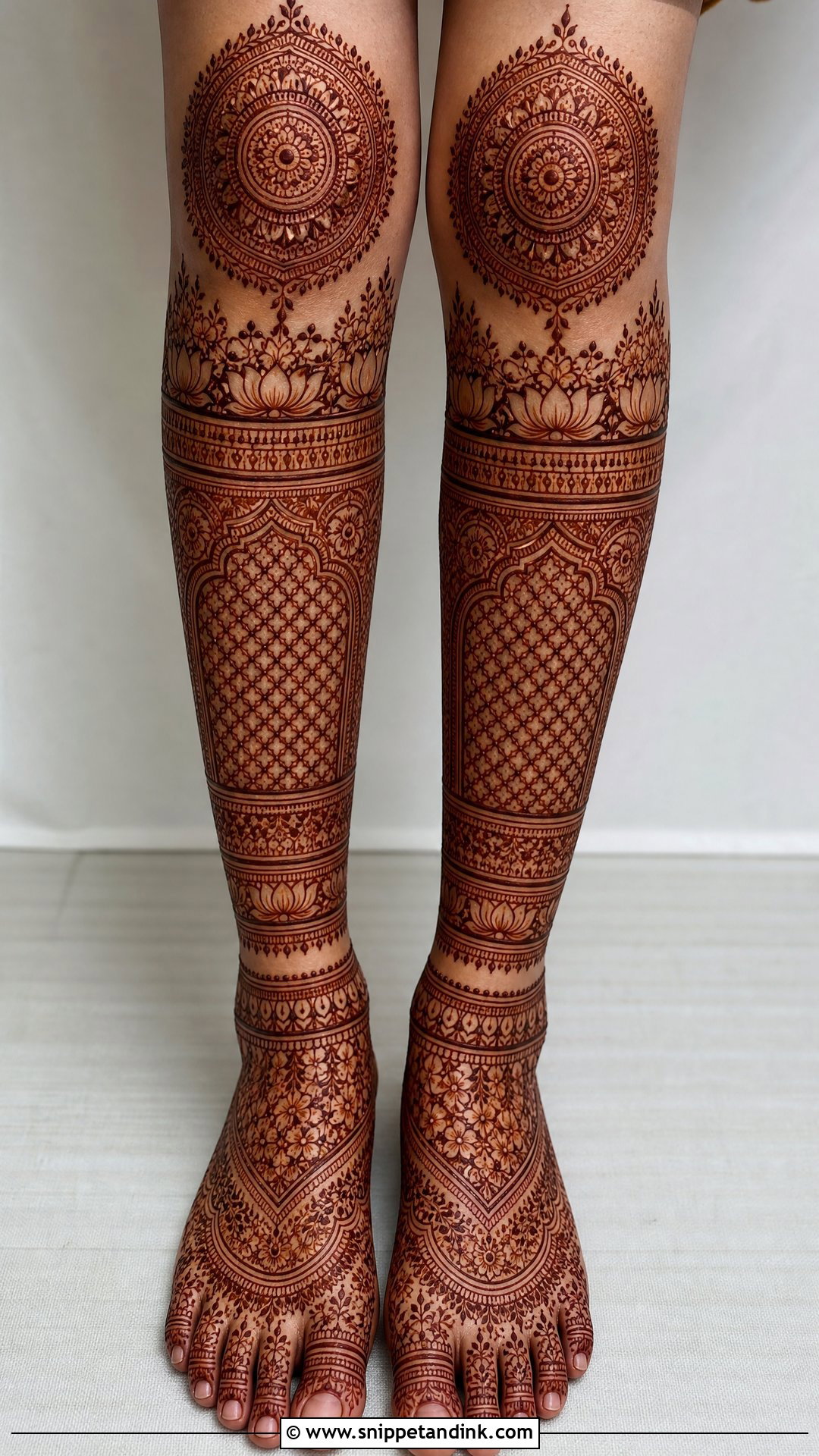
Knee coverage extends the design from toes to knee with mandalas, lotus borders, jaali or large floral panels. It makes sense when your outfit shows the lower leg while sitting, dancing or during rituals. The knee is curved and bends, so I avoid long straight lines across it and use circular mandalas, half-flowers and soft borders instead. Paste on the back of the knee cracks easily when you move, so you’ll need to keep the leg straight until it’s dry.
19. Bridal Full Leg Mehndi With Negative Space
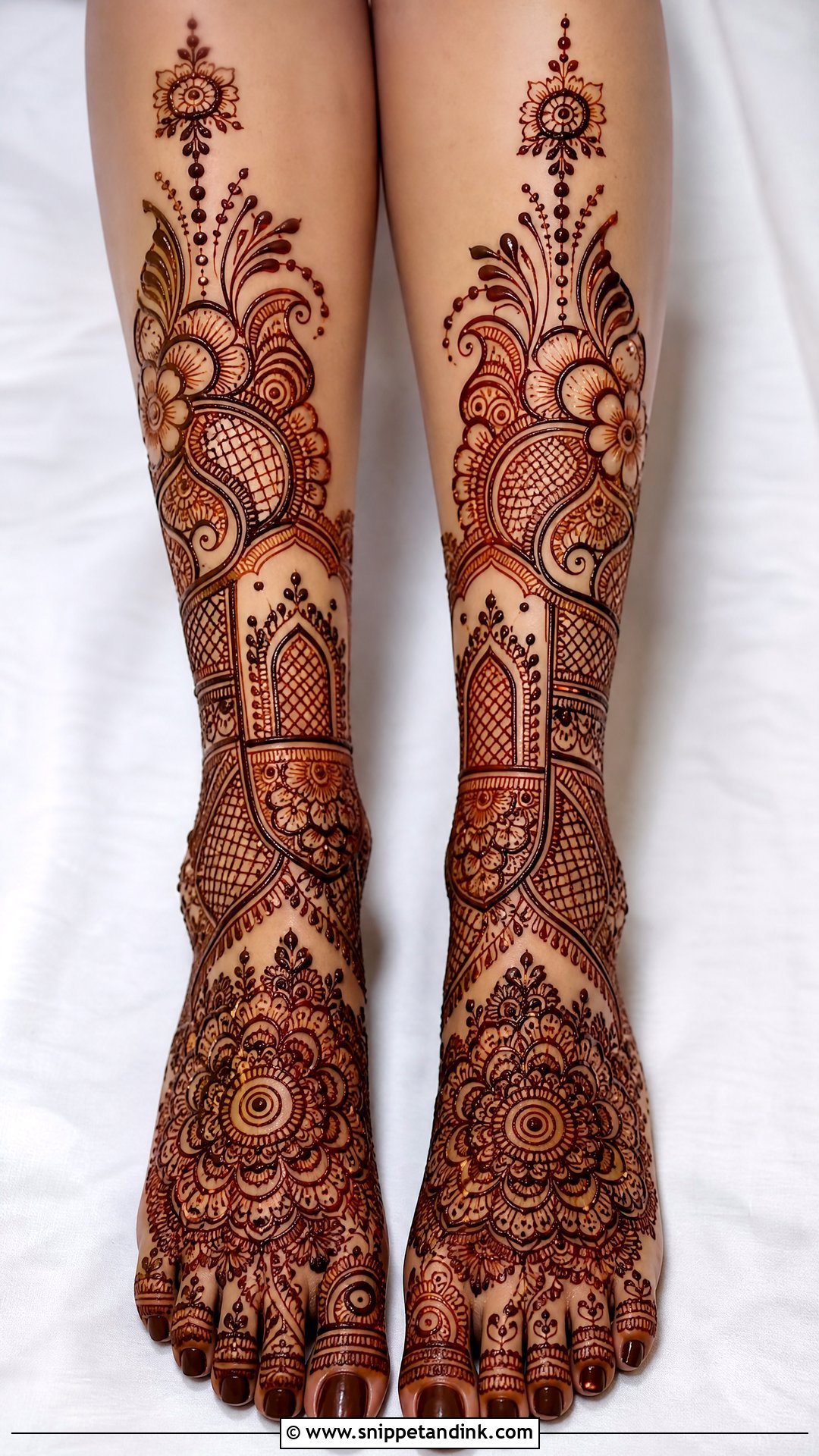
Negative space uses blank skin as part of the pattern. Bold florals, paisleys, mandalas and jaali sections are separated by open areas, so every motif stands out. It gives full-leg length without a heavy finish and looks very current. I keep the feet slightly more detailed and give the calves more breathing room.




20. Personalized Bridal Full Leg Mehndi Design
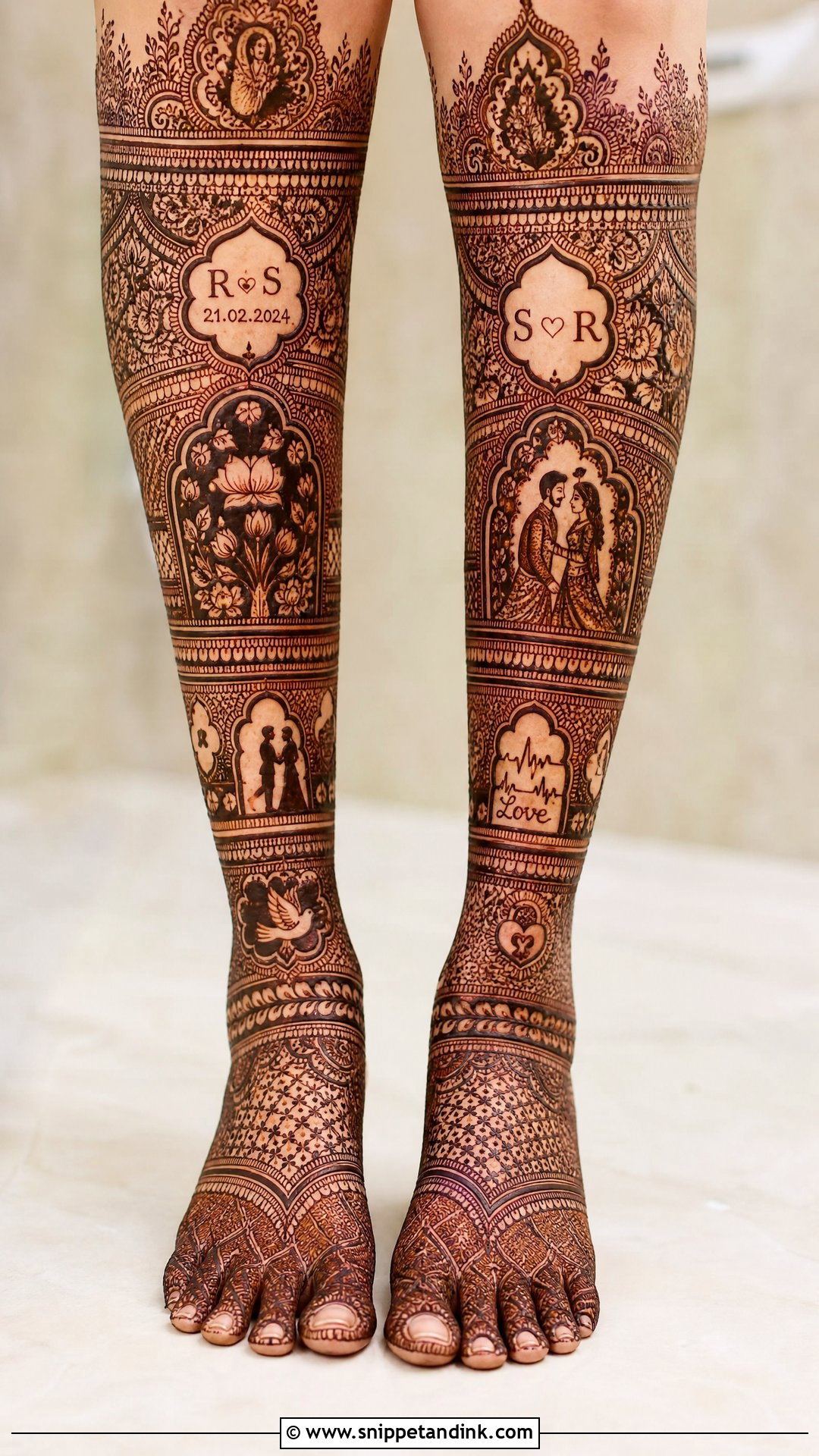
Personalised legs can carry initials, a wedding date, small couple symbols, cultural motifs, favourite flowers or details from your outfit. The trick is to make them part of the layout, not stickers added at the end. Initials hide well inside paisleys, dates fit inside anklet bands, and small symbols sit in calf panels. Tell your artist your details at booking, not on the day, so they can be planned into the design.
Waxing, Pedicures and the Night After Leg Mehndi
Anything that exfoliates the skin lifts henna stain, and legs get more of that treatment before a wedding than hands do. Wax or shave a day or two before your mehndi, never after, and get your pedicure done first as well. A foot scrub after mehndi will take the toe stain with it.
Sleeping with fresh paste on the legs needs a little preparation. Once the paste is fully dry, I suggest wearing loose old cotton socks and pyjamas and covering the bed with an old sheet. Paste flakes off overnight, and dried henna stains fabric. In the morning, scrape away what’s left rather than washing it off.
Why the calves come out paler than the feet
Henna stains deepest where the skin is thickest, which on the leg means the soles and tops of the feet. The shin and calf usually end up a lighter brown. That’s normal, not a bad batch. It’s also why I use bolder outlines higher up the leg and save the finest filling for the feet.
How Far Up the Leg Should Your Design Go?
Your outfit, the length of your sitting, the ceremony timeline and your own taste should decide the layout. Dense Indian and Rajasthani designs suit traditional brides, while Arabic, Gulf and negative-space work feels lighter and more modern. Mandalas, jaali, paisleys, peacocks, roses, anklet patterns and personal details can all be combined. Aim for a design that flows from toes to calf and still reads clearly in photos. Book enough time for application and drying, and let your artist see your outfit before the day.
You'll Like These Ideas:










Leave a Reply