
Figure mehndi is where henna stops being pattern and starts telling your wedding: the dulhan, the dulha, a doli, the baraat, a mandap, peacocks, elephants, whole palace scenes. It’s also the most demanding bridal work I do, because a face or a horse has to read clearly after the paste is gone, and henna doesn’t forgive a crowded line. Some brides want it dense, in the classic dulhan style; others want clean portrait panels with open skin around them. Your outfit, your hand size and how close the photographer will get all shape which of these 25 designs makes sense for you.
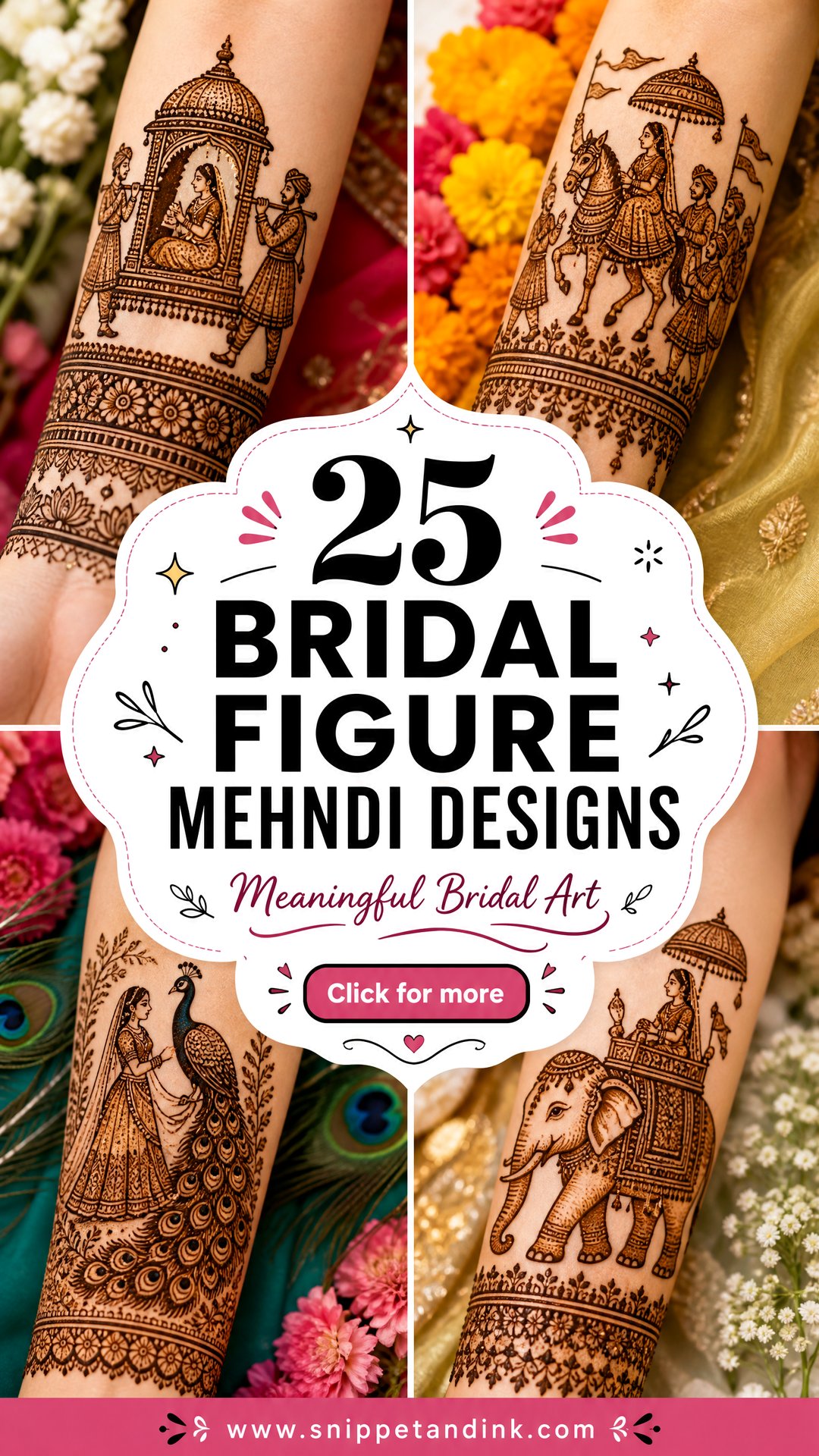
Figure Work Takes Hours: Plan the Sitting Backward From the Wedding
Full bridal hands with figures, plus feet, can easily take most of a day, and figure-heavy designs take longer than florals because every face is drawn slowly. Henna also needs time after the paste comes off: the stain starts bright orange and darkens over roughly the next one to two days. So I apply bridal figure mehndi one or two days before the wedding, which puts the deepest color on the wedding day itself.
- Agree the layout at a consultation: which figures go on palms, which on forearms, and where any name or date hides.
- Do a small patch test of the artist’s paste a week or two before, especially with sensitive skin.
- Insist on natural henna. So-called black henna can contain PPD, which can cause serious skin reactions; real henna stains in shades of orange, red and brown, never jet black.
- Skip lotions, oils and waxing on your hands and arms the day of application; clean, dry skin takes the stain best.
- Eat, use the bathroom and set up a comfortable seat before I start. You won’t be using your hands for hours.
1. Bride Groom Portrait Bridal Figure Mehndi
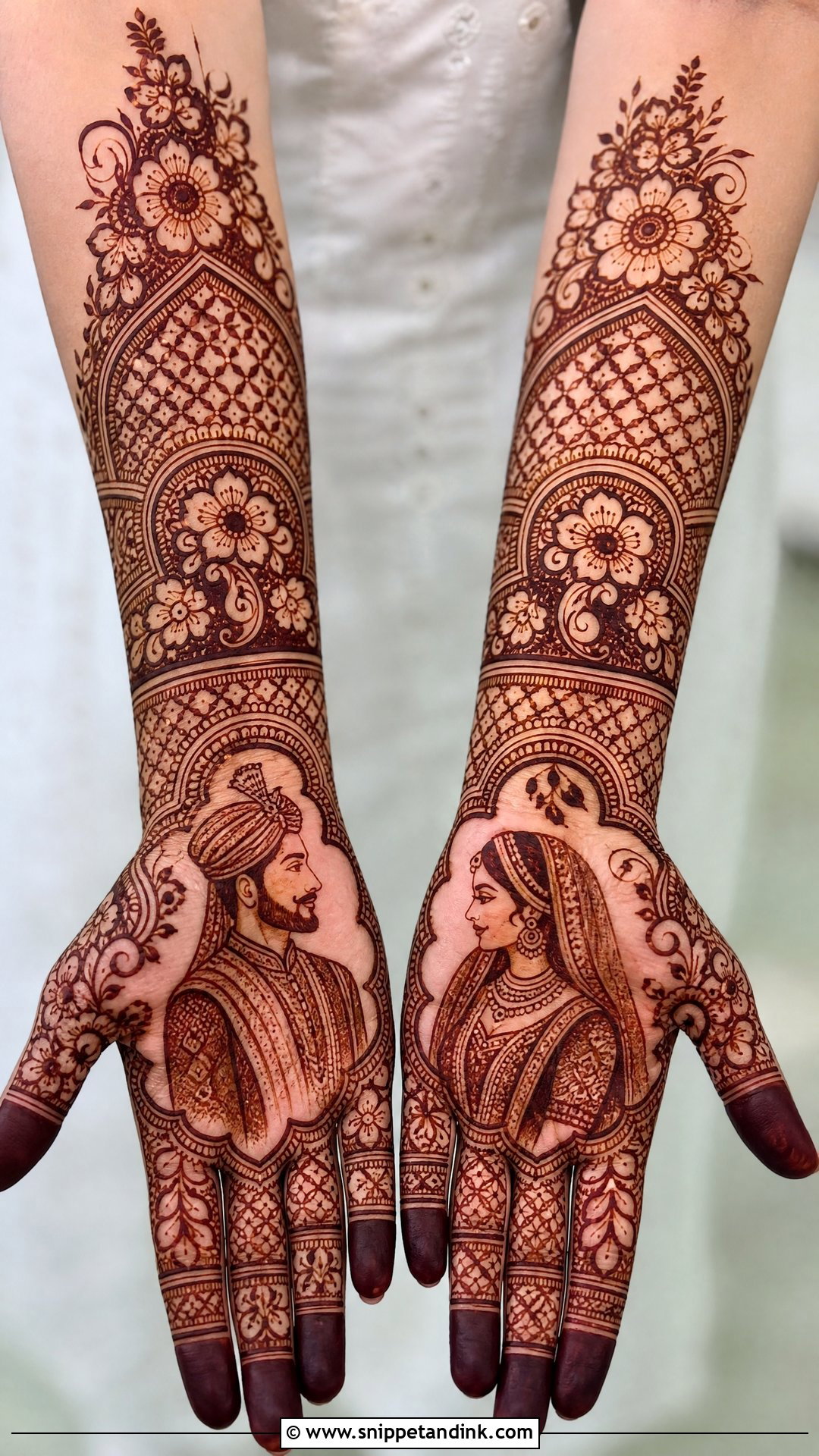
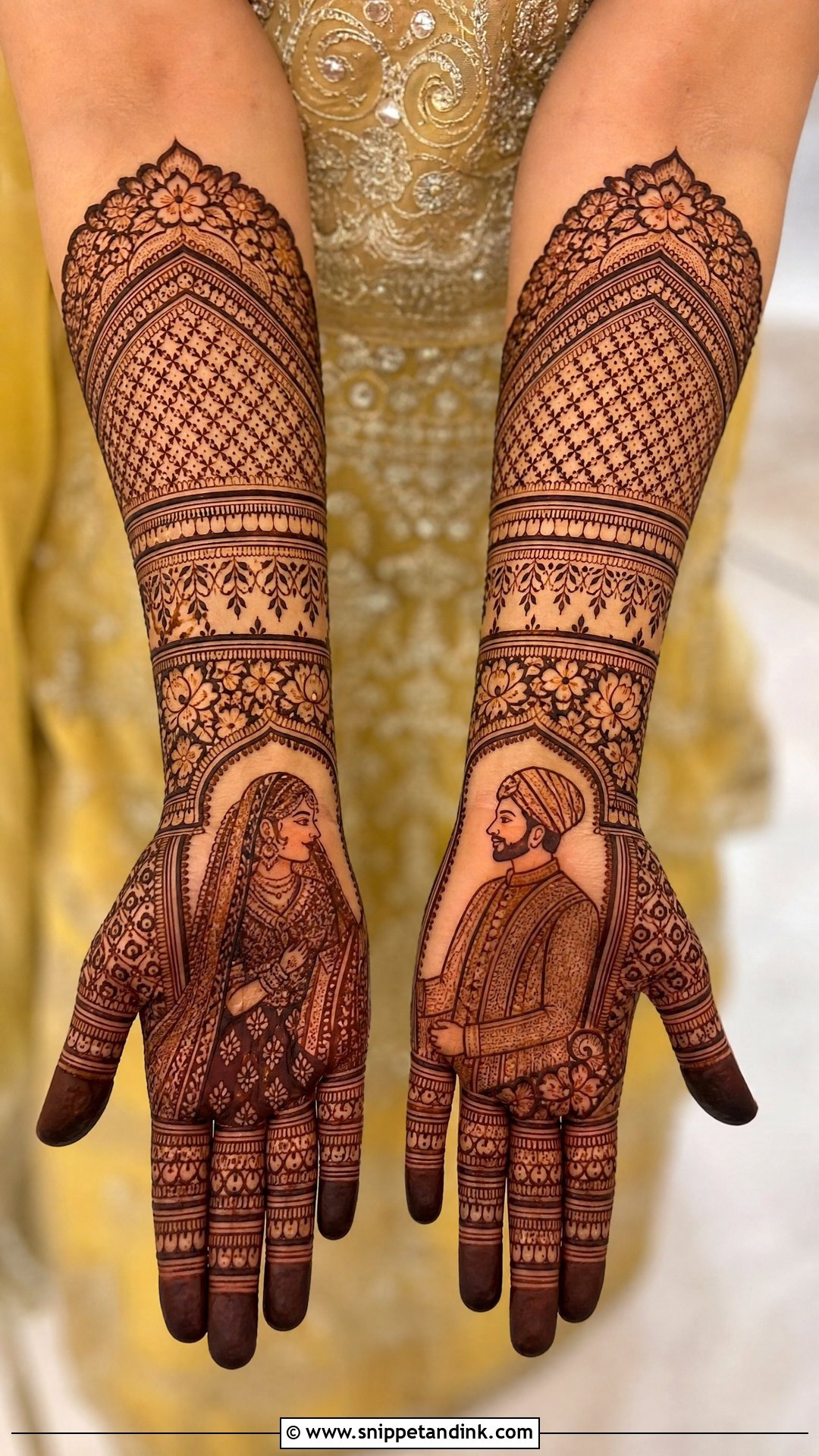
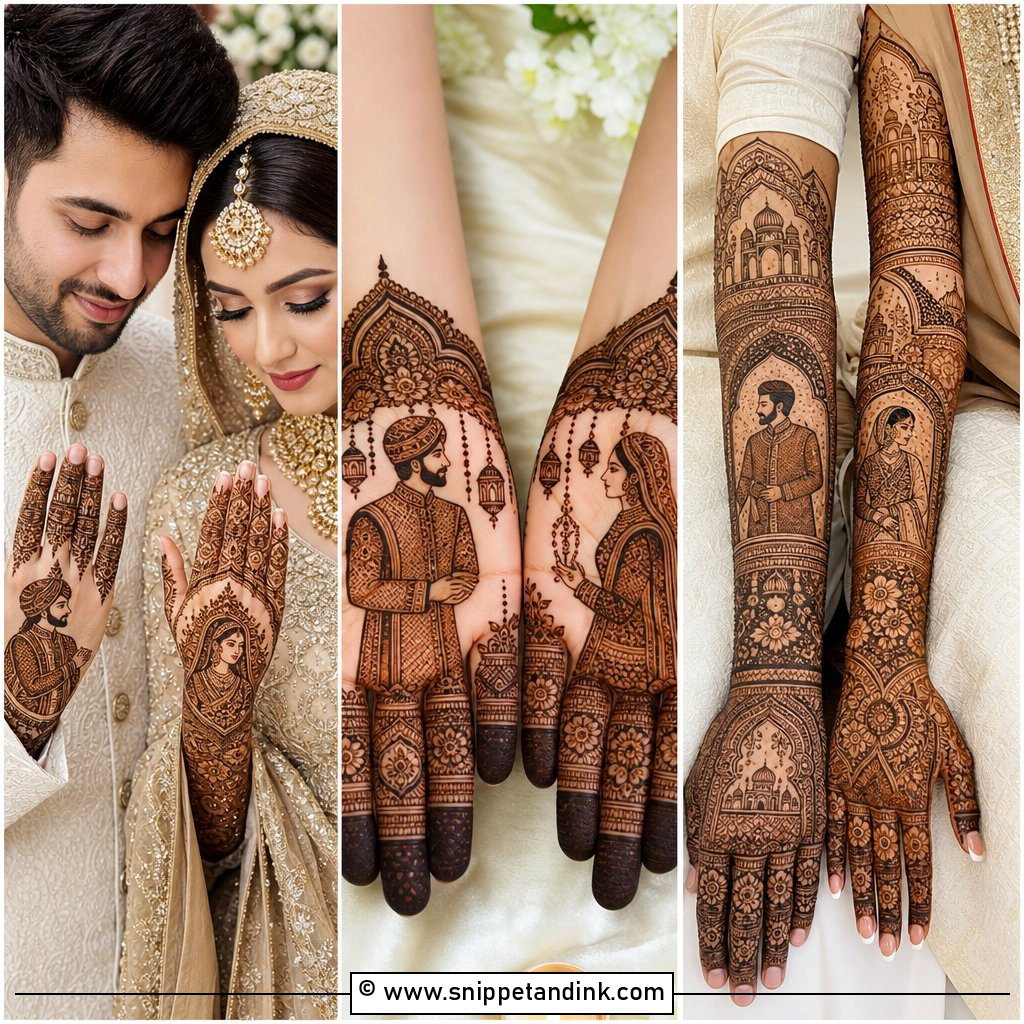
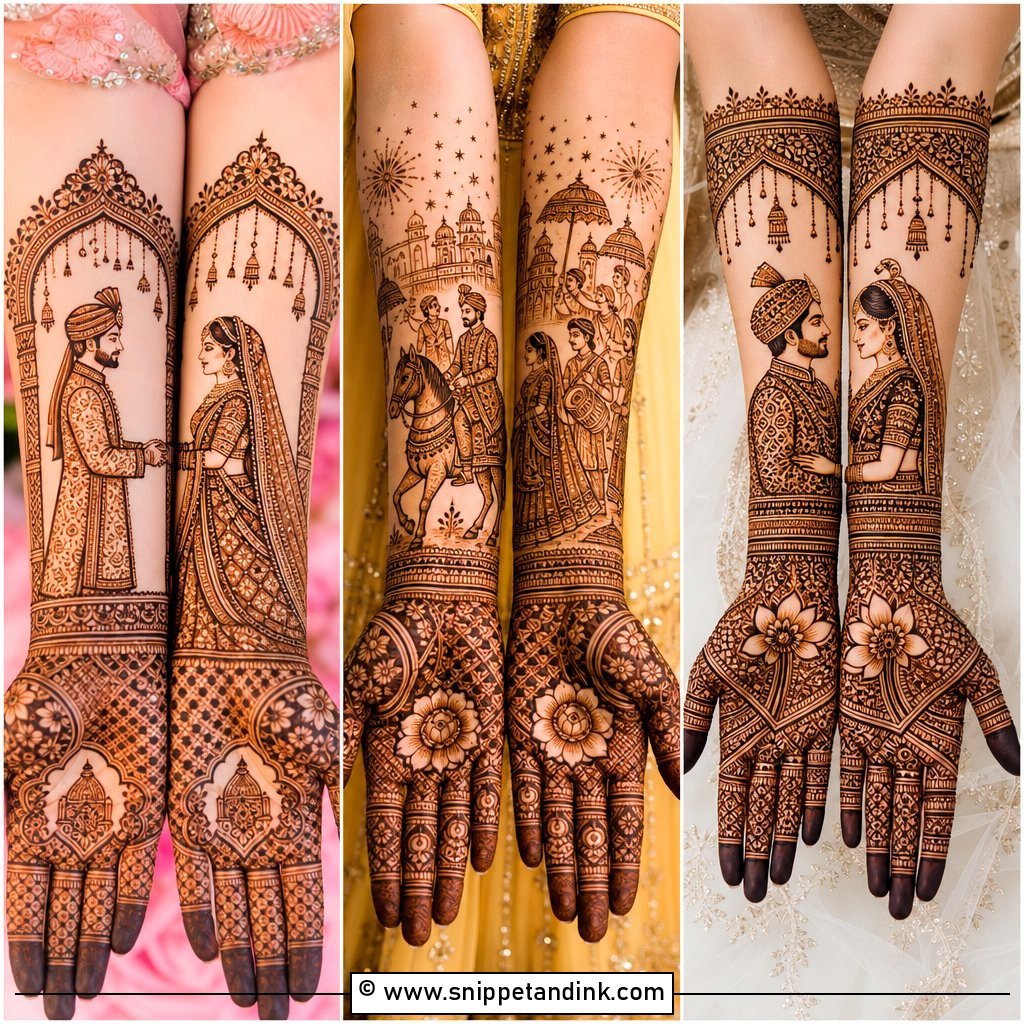
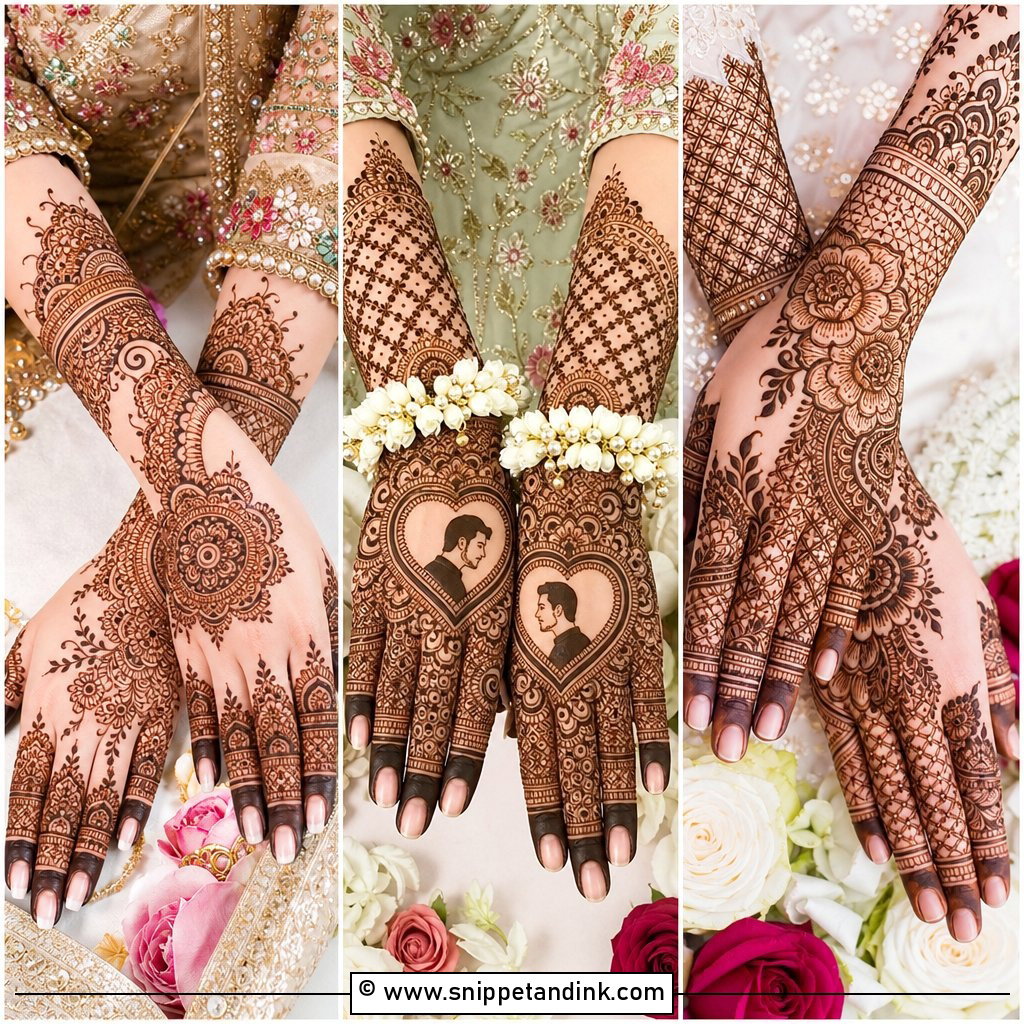
One palm carries the bride, the other the groom, and that’s the layout most brides picture when they ask for figure mehndi. Around the portraits I build paisleys, lotus petals, small florals, jaali and wrist cuffs, so the faces sit inside the design rather than floating alone. They need a full palm and room on the forearm to look clean. I keep the faces simple with soft outlines; every extra line inside a small face is a line that can blur as the stain develops. Lehengas with heavy embroidery suit this richness well.
2. Dulha Dulhan Bridal Figure Mehndi
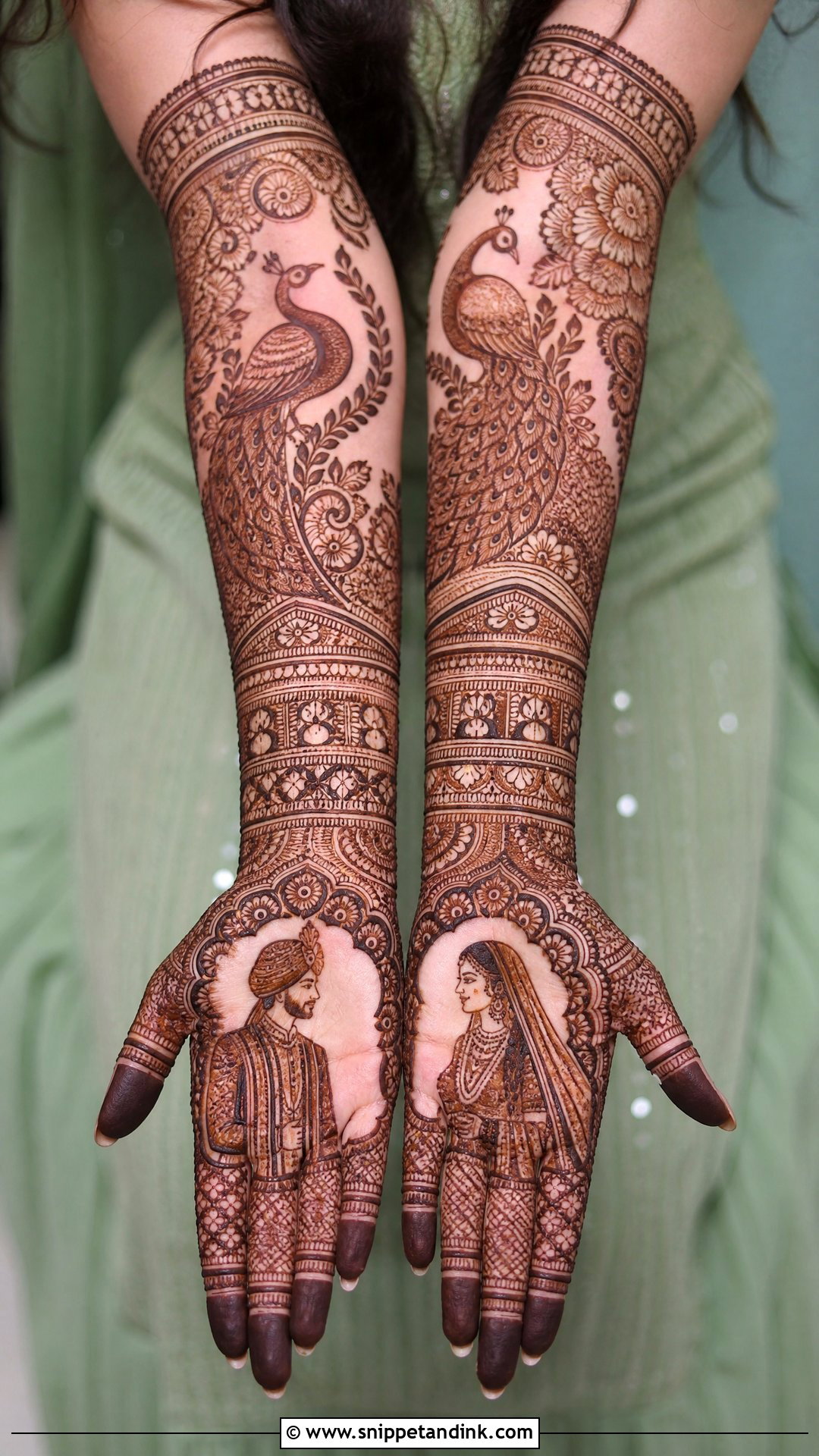
Dulha dulhan figures are symbolic rather than portraits, which makes them more forgiving. The bride and groom are recognized by what they wear: the dulhan with veil, jewelry and folded hands, the dulha with turban, sherwani and a royal sword detail. Mandalas, paisleys, peacock feathers and fine fillers surround them. Because nobody is checking for a likeness, I can keep the lines bolder, and the figures stay clear even from across the room. I center them on the palms, where the stain comes up darkest.
3. Full Hand Bridal Figure Mehndi
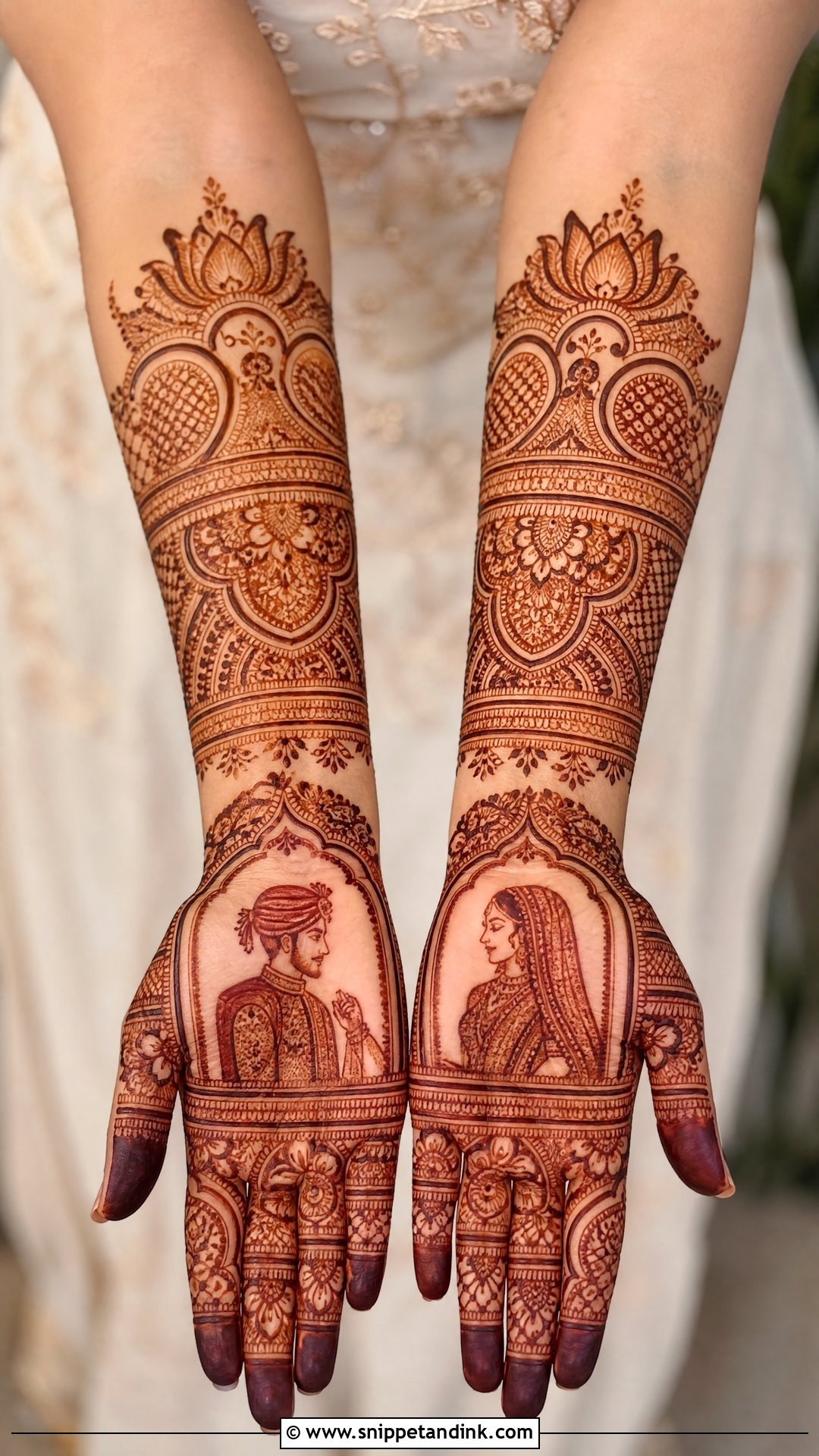
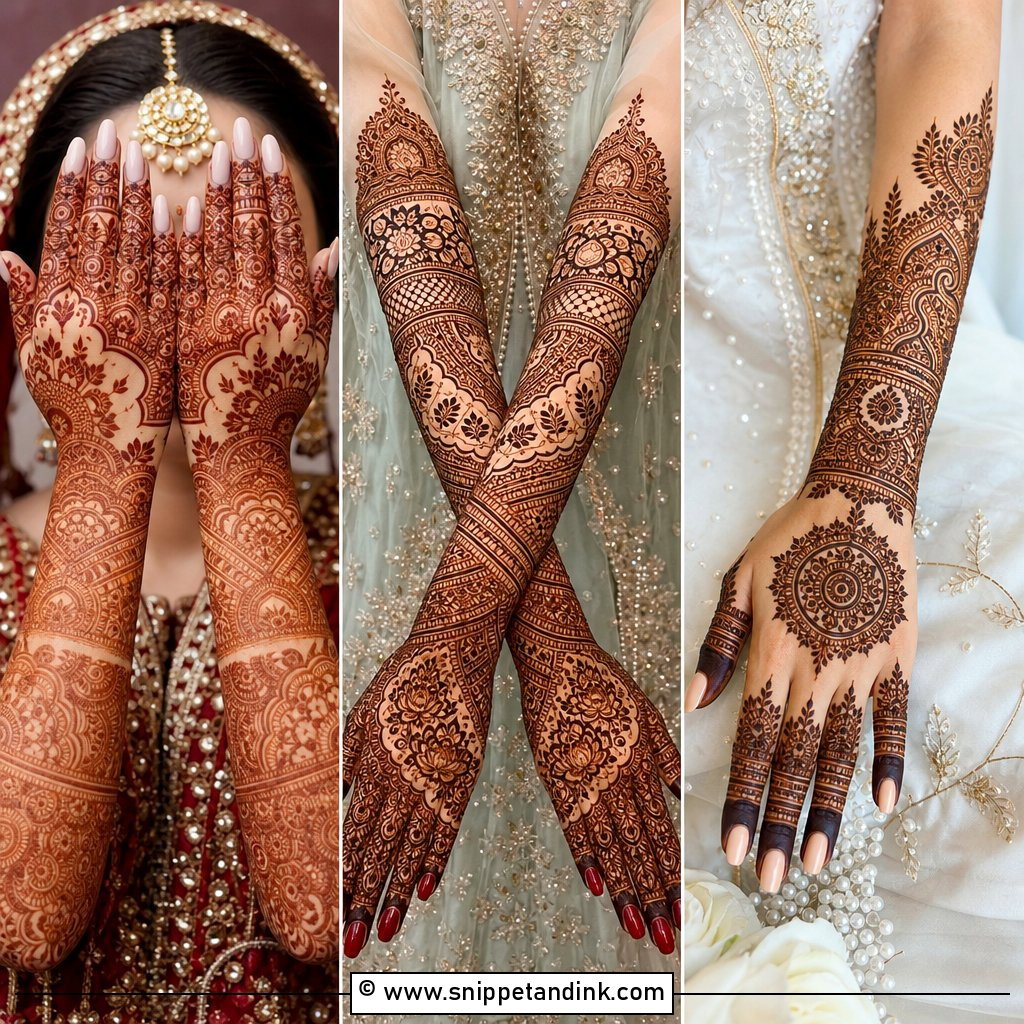
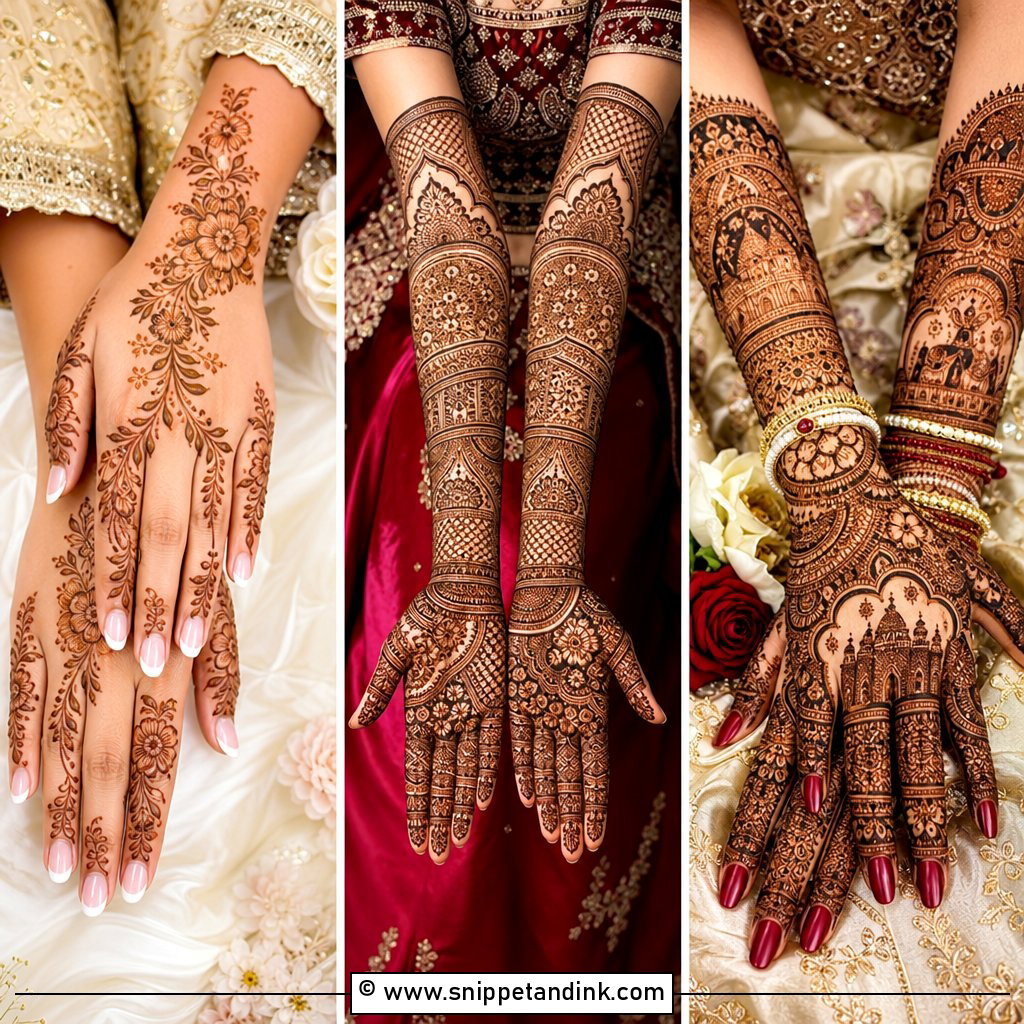
Full coverage from fingertips to forearms is the grandest version, and it’s the one that most needs a plan. If every inch carries equal detail, the figures drown. I place the main figures in circular frames, palace arches or mandap panels on the palms, then use borders and deliberate breaks to guide the eye, keeping initials or wedding symbols for the forearms. Vines, leaves and fine mesh fill what’s left. It sits naturally with heavy bridal jewelry and traditional sleeves.
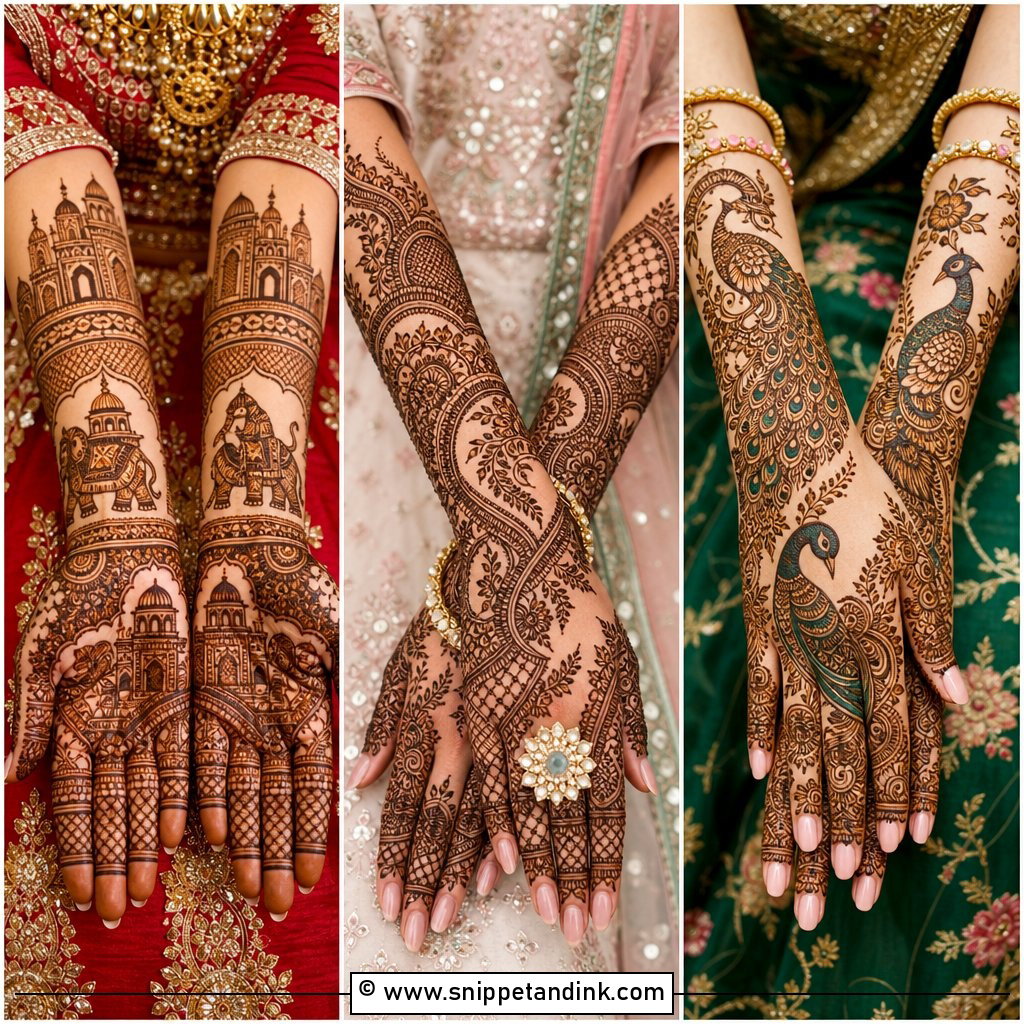
4. Rajasthani Bridal Figure Mehndi
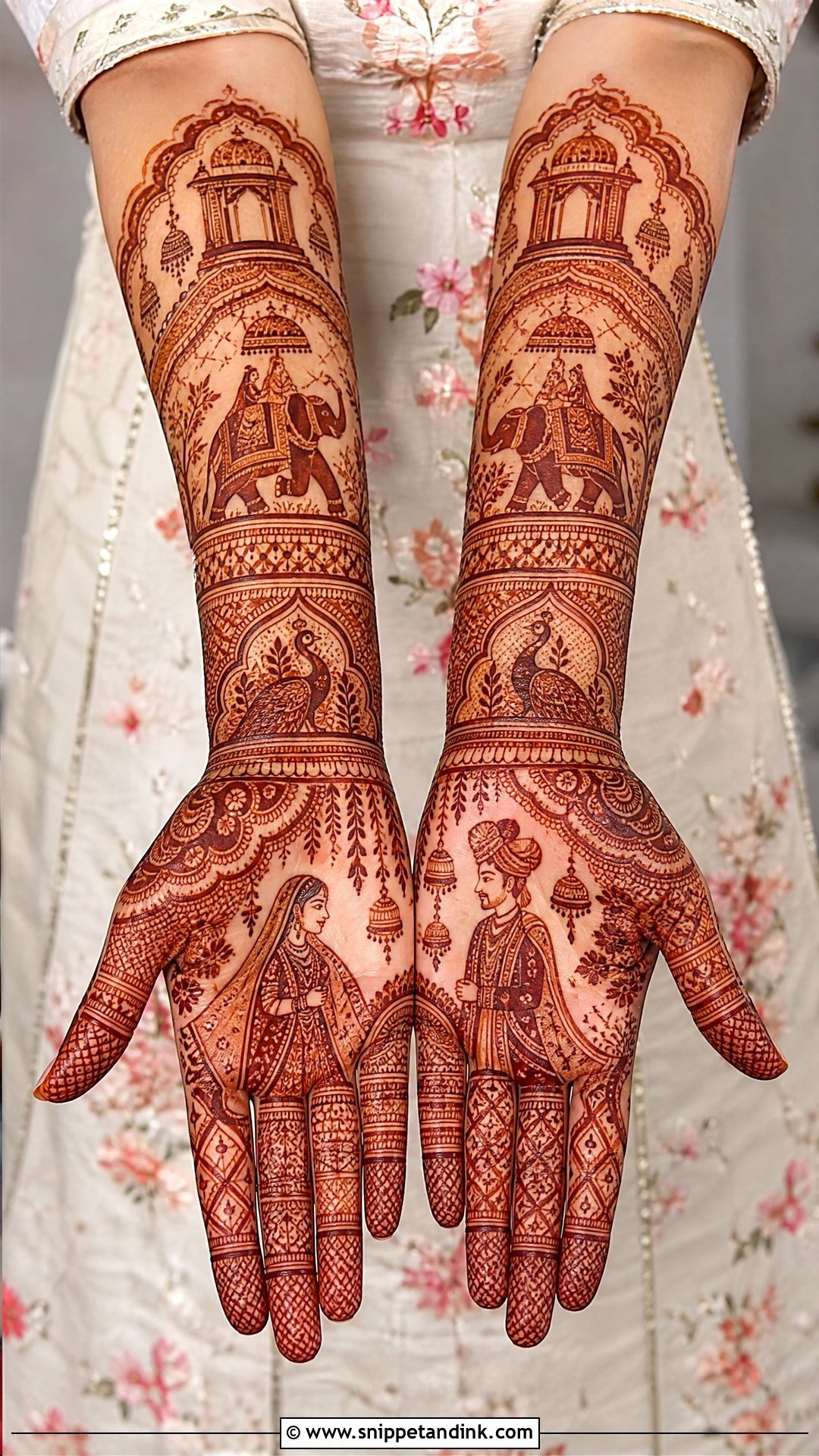
Rajasthani figure work is dense and full of royal storytelling: bride and groom figures, elephant processions, palace windows, doli scenes, peacocks and ornamental borders, all in one hand with very little bare skin. It covers palm, fingers, wrist and forearm. This needs an artist confident with fine figure lines, so ask to see stained photos of her figure work, not just fresh paste. A deep maroon stain makes the tiny details readable; on a pale stain, Rajasthani density turns into a blur.
5. Mandap Scene Bridal Figure Mehndi
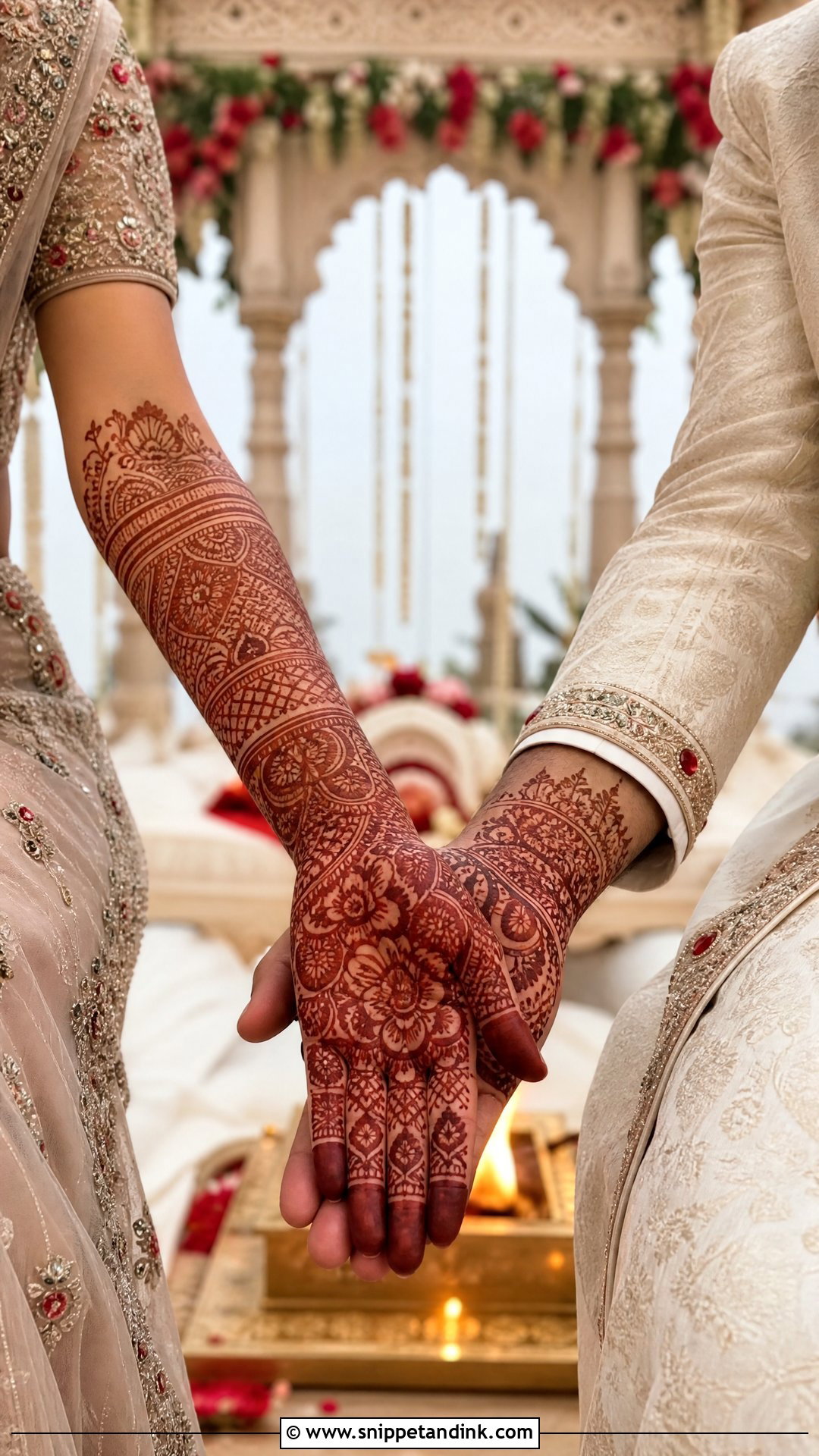
The mandap scene shows the moment itself: the couple seated under the canopy, pillars, hanging florals, the sacred fire and arches. It’s one of the most emotional designs to apply. I usually put the mandap on one palm and a matching bride-groom panel or large mandala on the other, then keep the outer areas lighter with vines or jaali so the scene isn’t swallowed. A small fire and tiny seated figures need some size to read, so I won’t squeeze this onto a small palm.
6. Doli Bridal Figure Mehndi
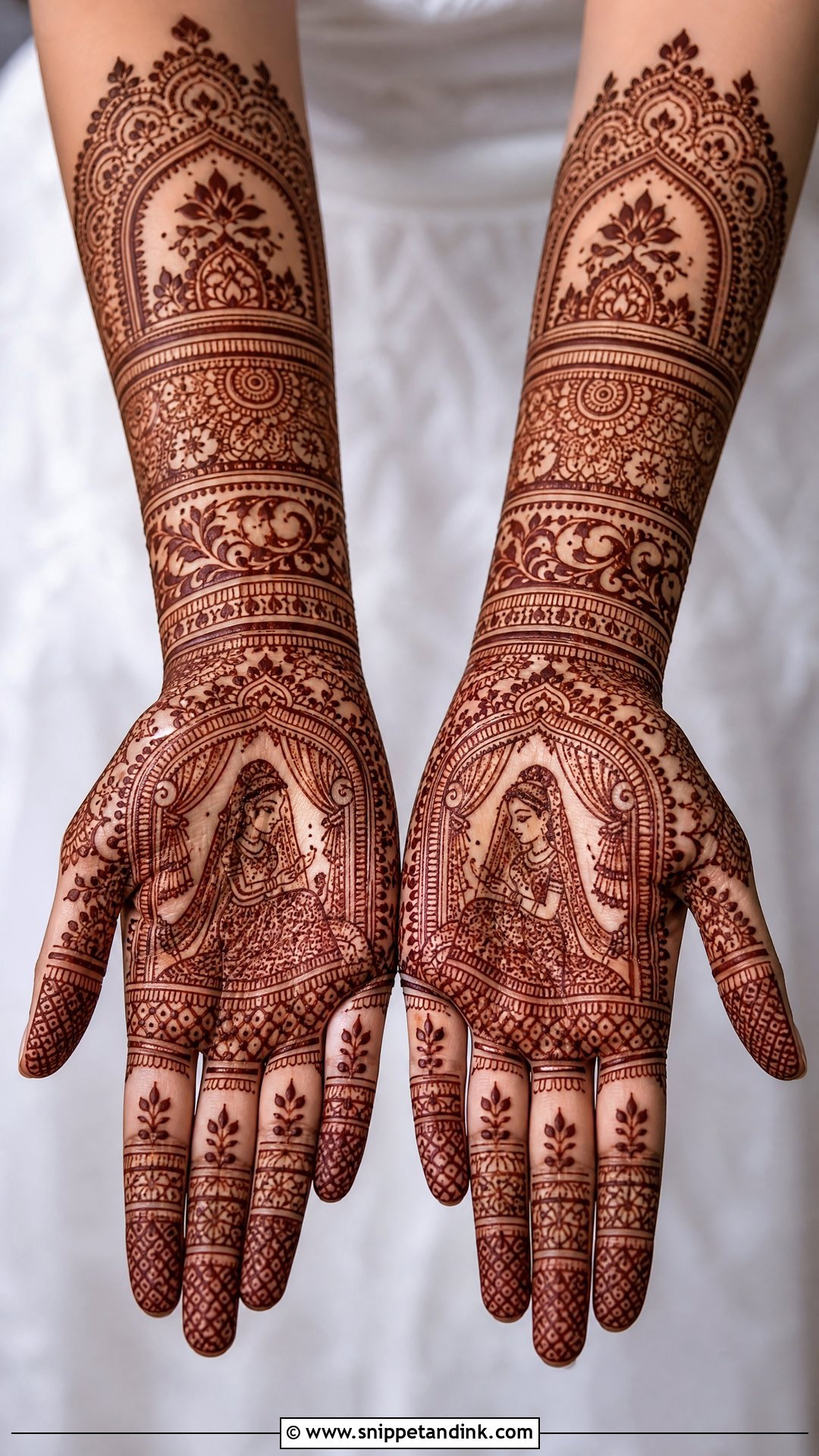
The doli is one of my favorite figures to draw because its shape does half the work. A bride inside a curtained palanquin fits naturally into a rounded or oval palm frame, with floral curtains, curved arches, paisley borders and delicate leaves around it. Pair it with a groom or baraat scene on the other hand and you have the full journey. If you’re nervous about faces, this is a good answer: the doli silhouette is recognizable without detailed features and still looks elegant after the stain darkens.
7. Baraat Bridal Figure Mehndi
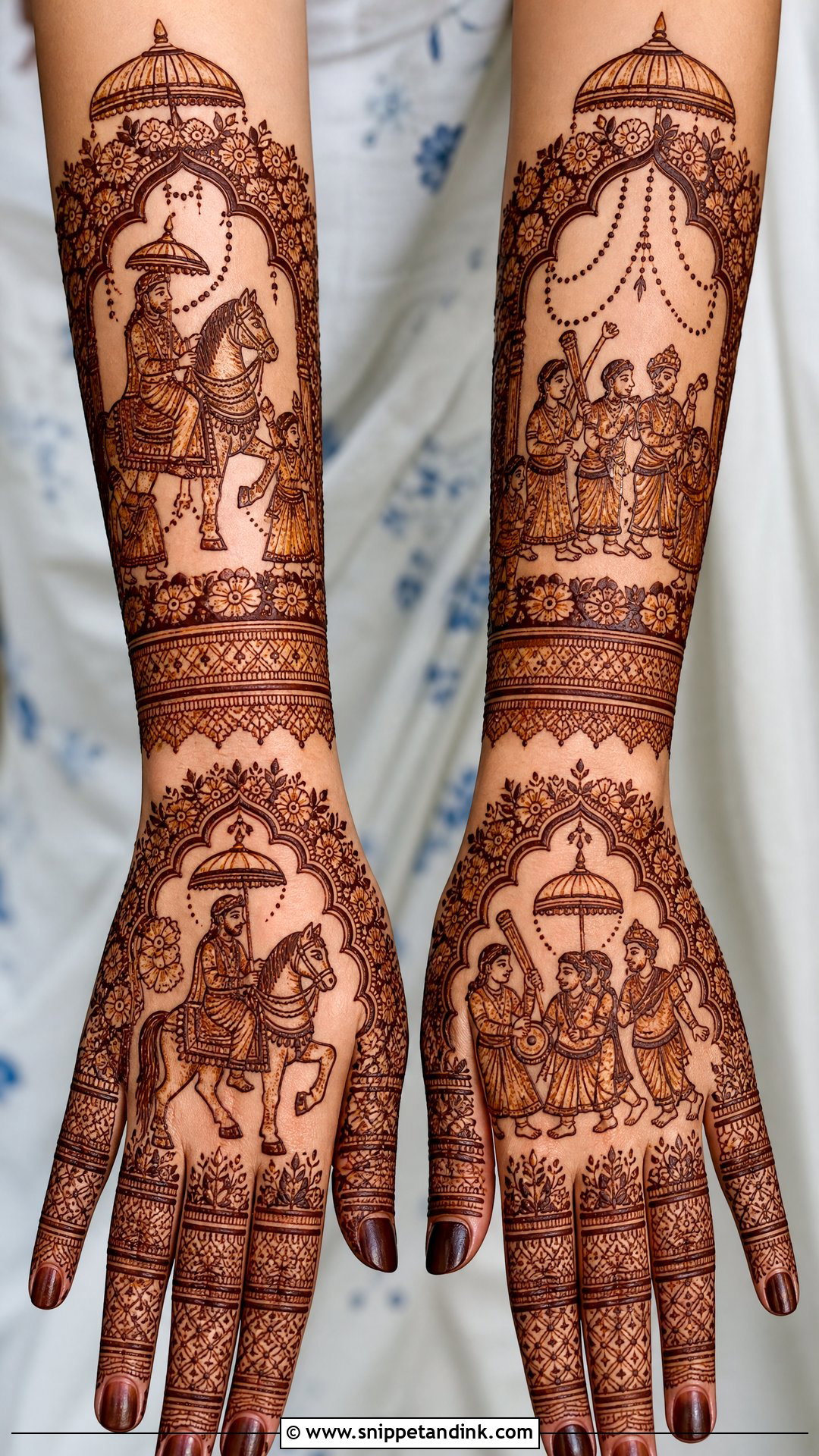
A baraat scene brings movement in place of a still portrait: the groom on horseback, musicians, dancing figures, floral arches and procession borders. It needs horizontal space, so I plan it along the forearm or across the back of the hand, with mandalas, jaali or bride figures on the palms. The common mistake is making every character tiny to fit more in. Fewer figures with clear silhouettes and confident outlines stain better and look far better in close-ups.
8. Peacock Bridal Figure Mehndi
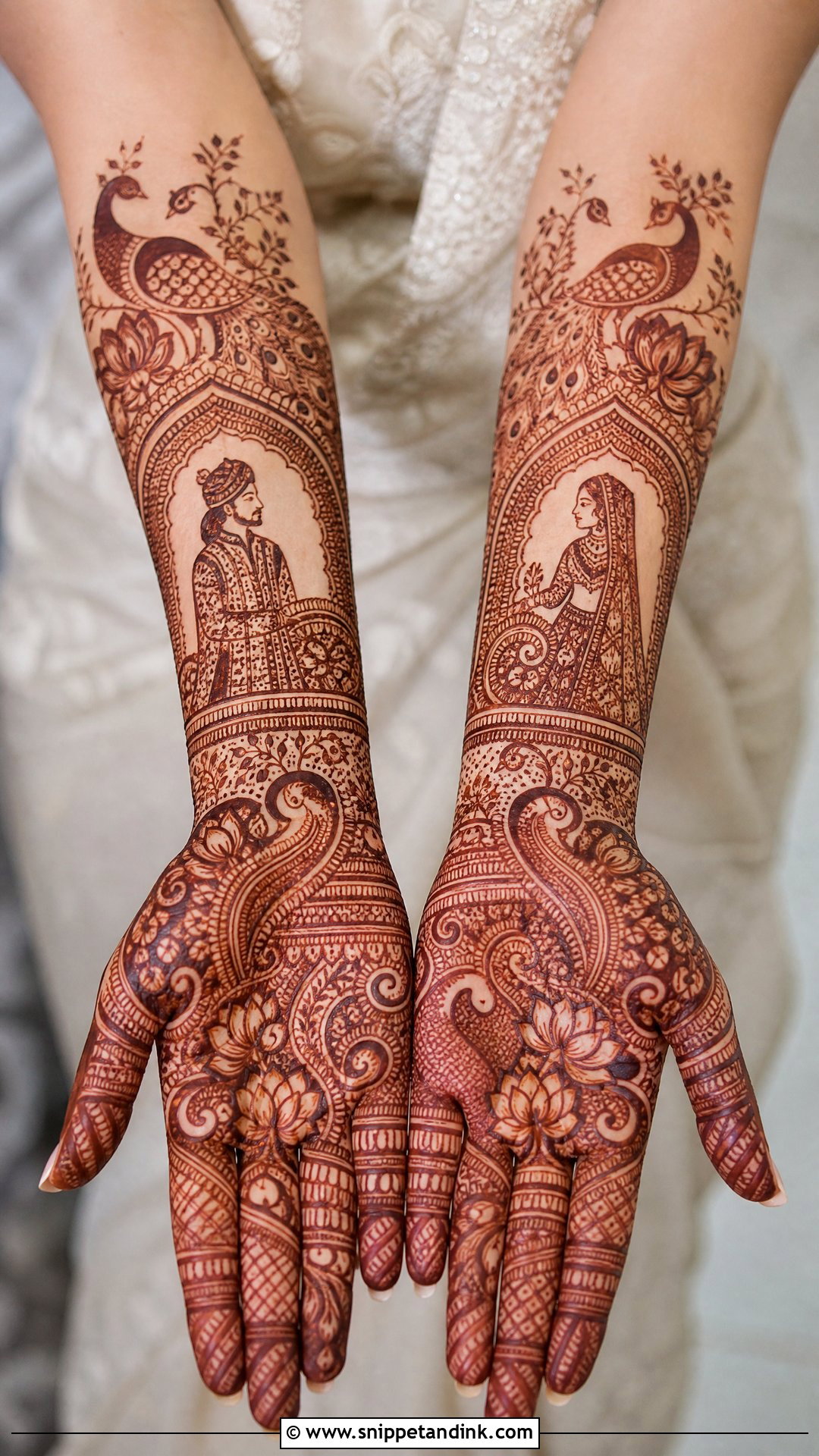
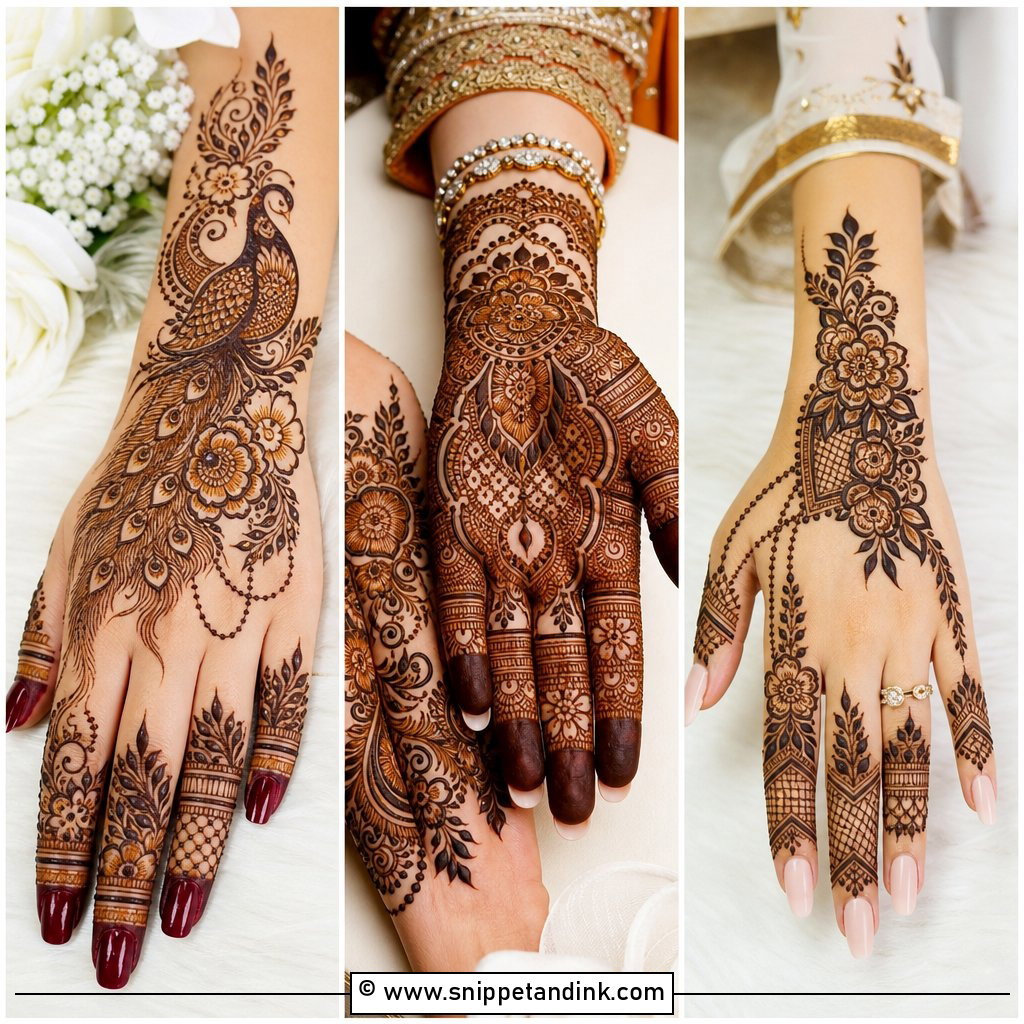
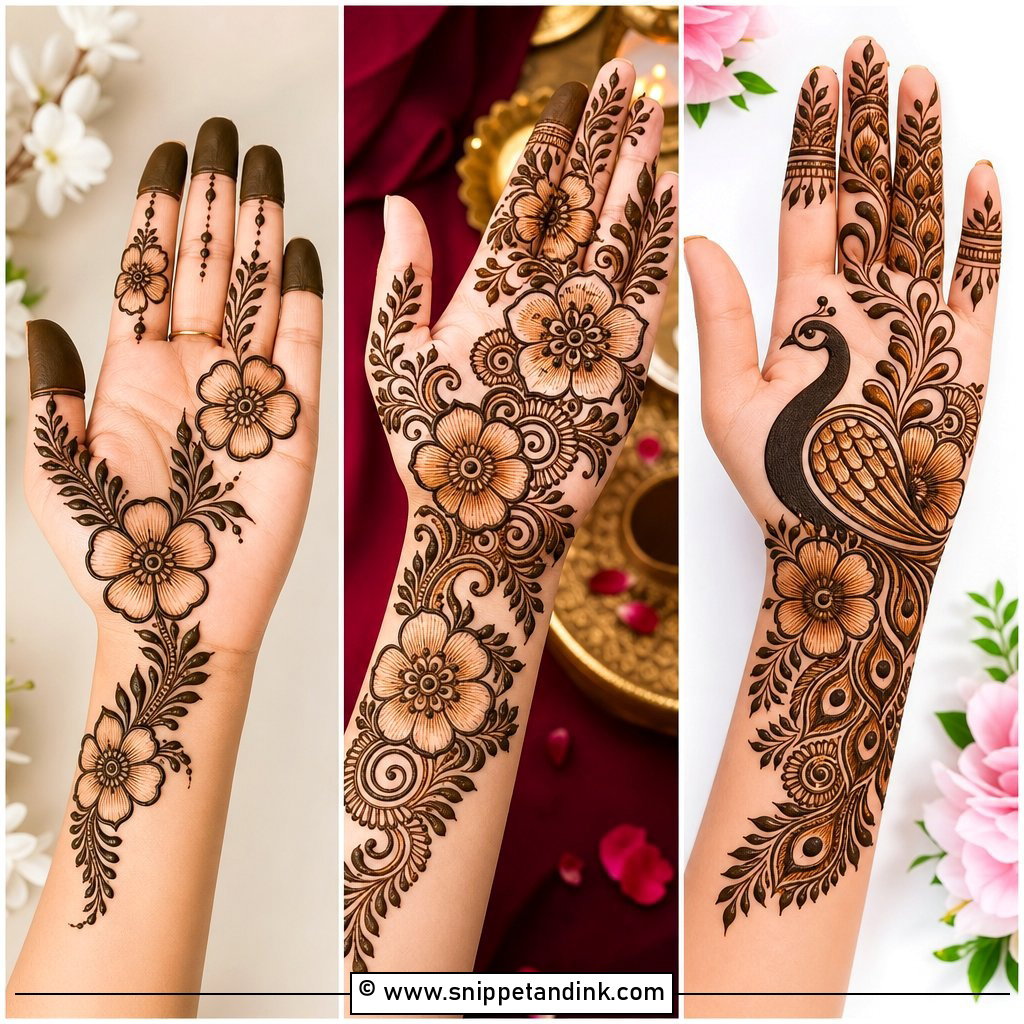
Peacocks are the most useful figure I have for awkward spaces. Their curved bodies fill the area around the wrist and lower palm, and the feathers can flow into paisleys and vines along the forearm or frame a dulhan portrait. I keep the body bold and put the fine lines inside the feathers, which keeps the bird readable once the stain settles. It works well with peacock-toned outfits, jewel colors and traditional silks.
9. Elephant Bridal Figure Mehndi
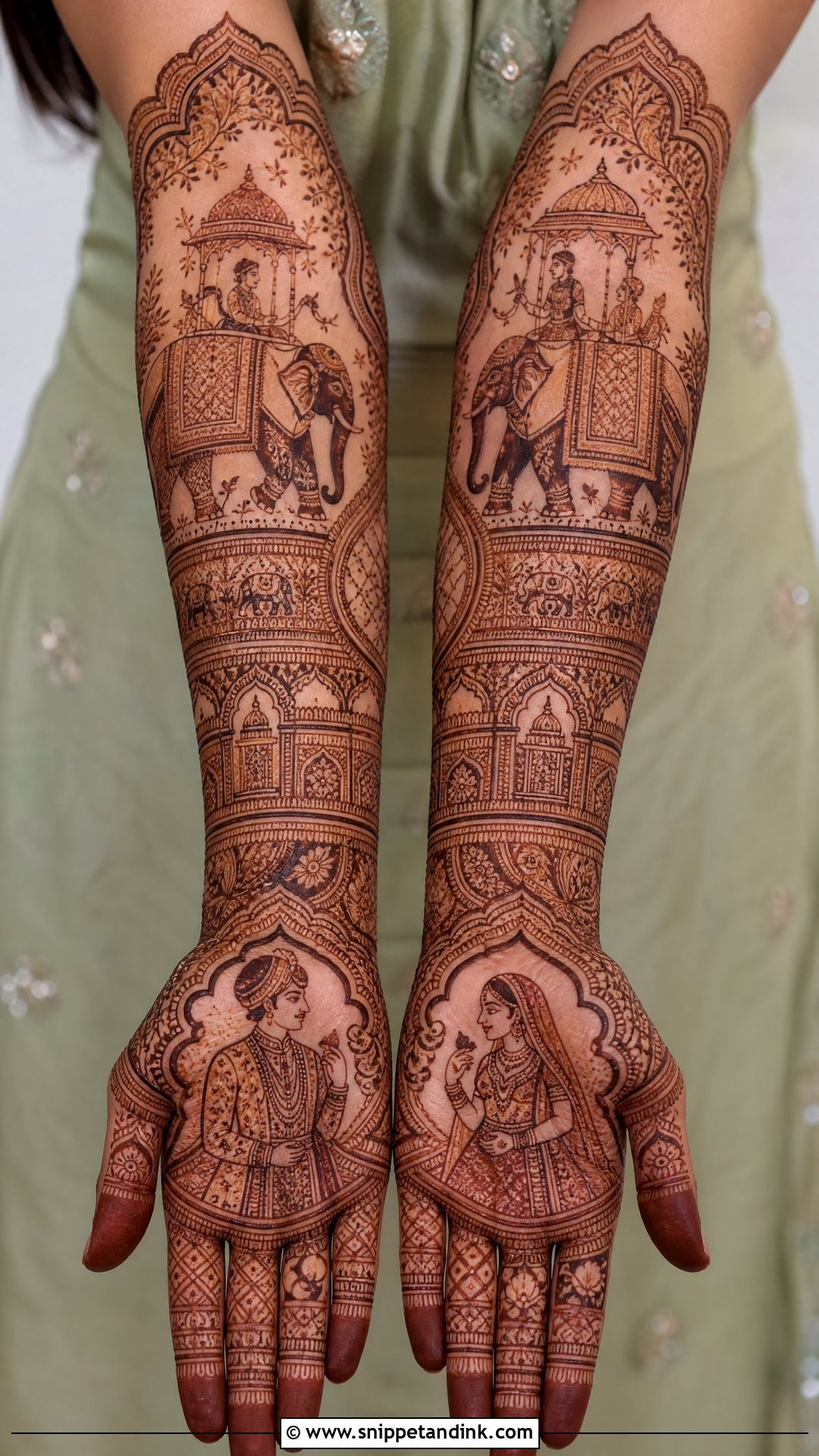
Elephants hold detail well because their shapes are large and simple. I add decorative blankets, bells, floral outlines and small mandalas to make them ceremonial, and place them on the forearms, near the wrist or within a baraat scene. One elephant on each arm keeps things balanced, or one paired with a doli or mandap panel. Neat borders and strong outlines matter more here than extra filling. They suit Rajasthani and Indian bridal layouts, and anyone wanting a royal feel without relying on portraits.
10. Radha Krishna Bridal Figure Mehndi
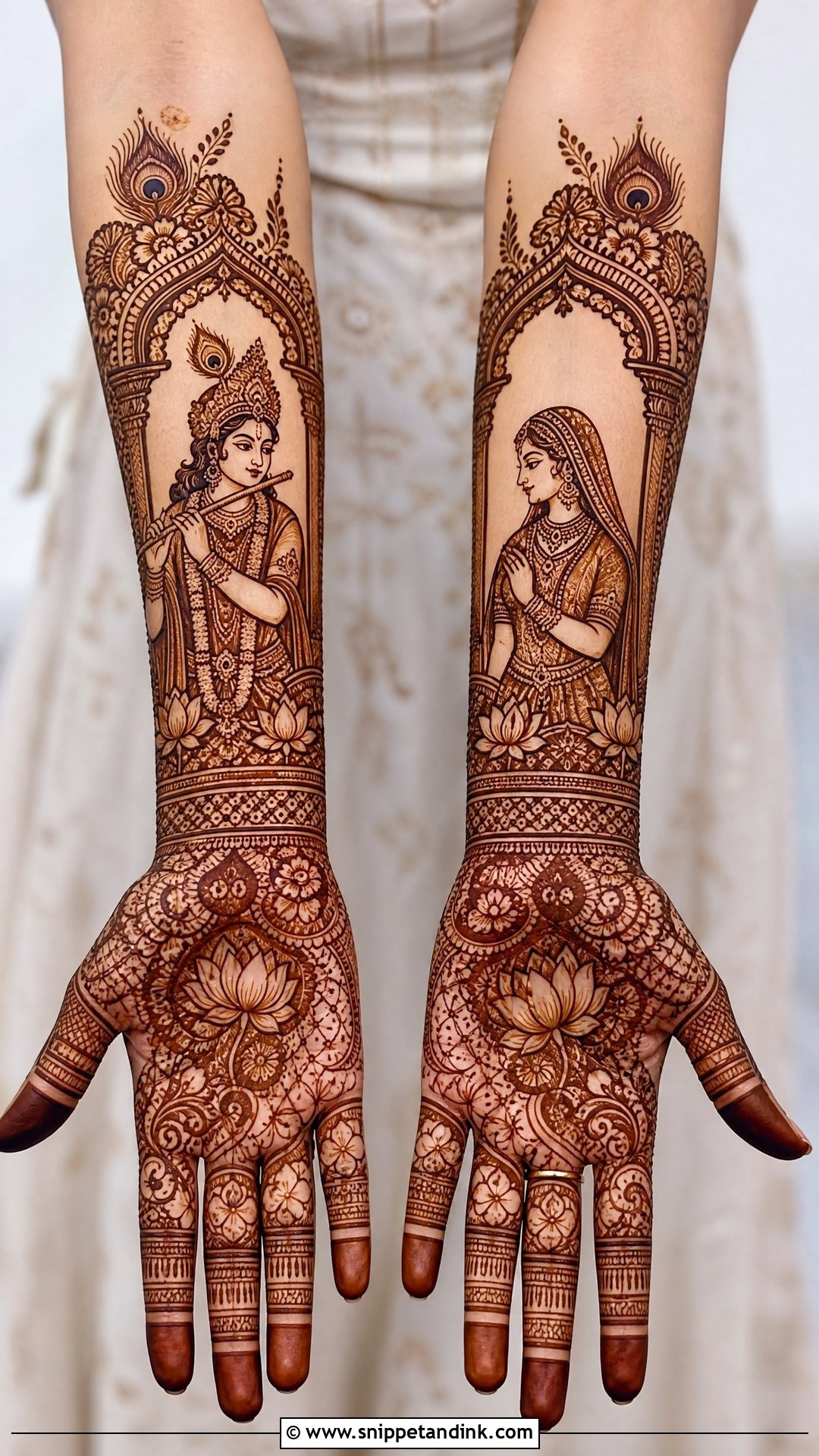
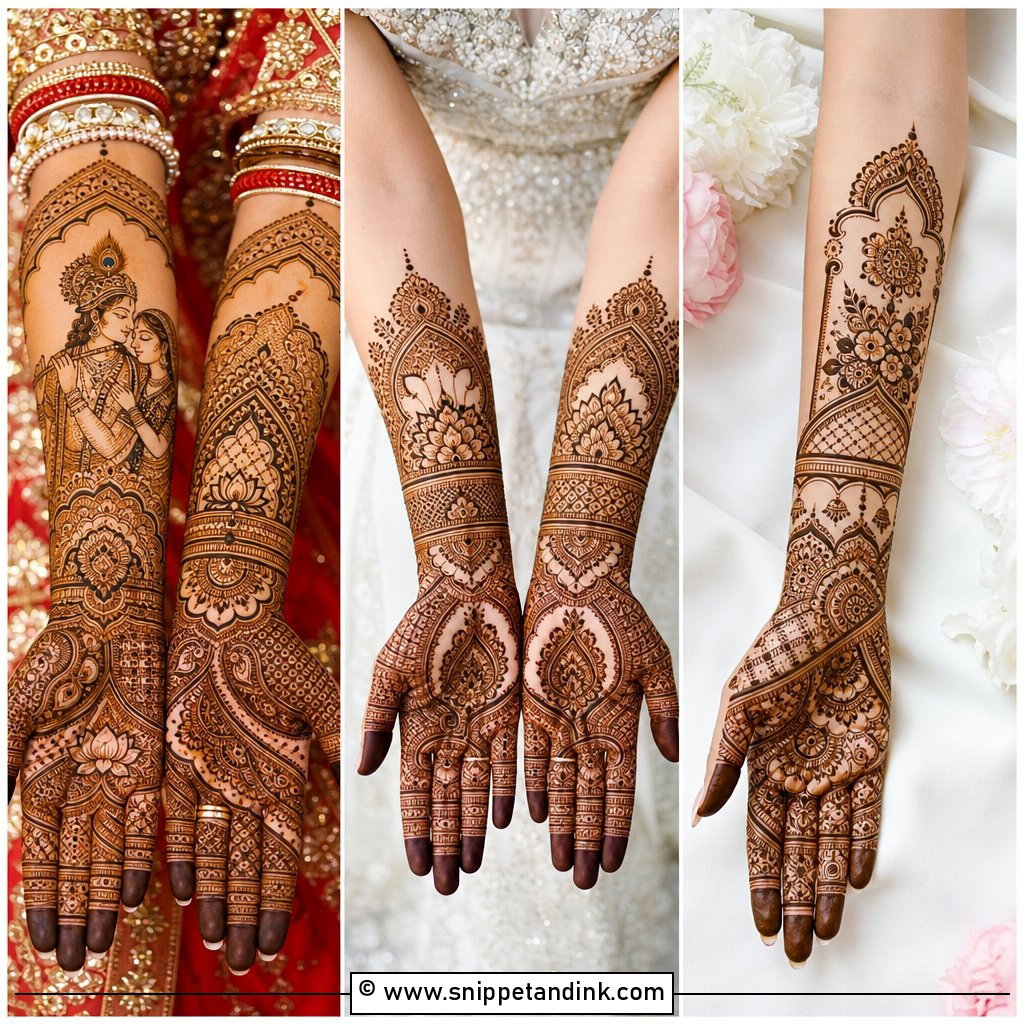
Radha Krishna mehndi adds a devotional, romantic layer, and I treat it with care. The figures sit in framed panels with lotus flowers, peacock feathers, temple arches and flute details. Because it’s so detailed, I usually suggest the Radha Krishna figures on the forearm and classic bridal patterns on the palms; the sacred artwork stays visible and isn’t creased every time you close your hand. The eyes, clothing and jewelry need fine but confident linework. Temple jewelry and traditional outfits suit it.
11. King Queen Bridal Figure Mehndi
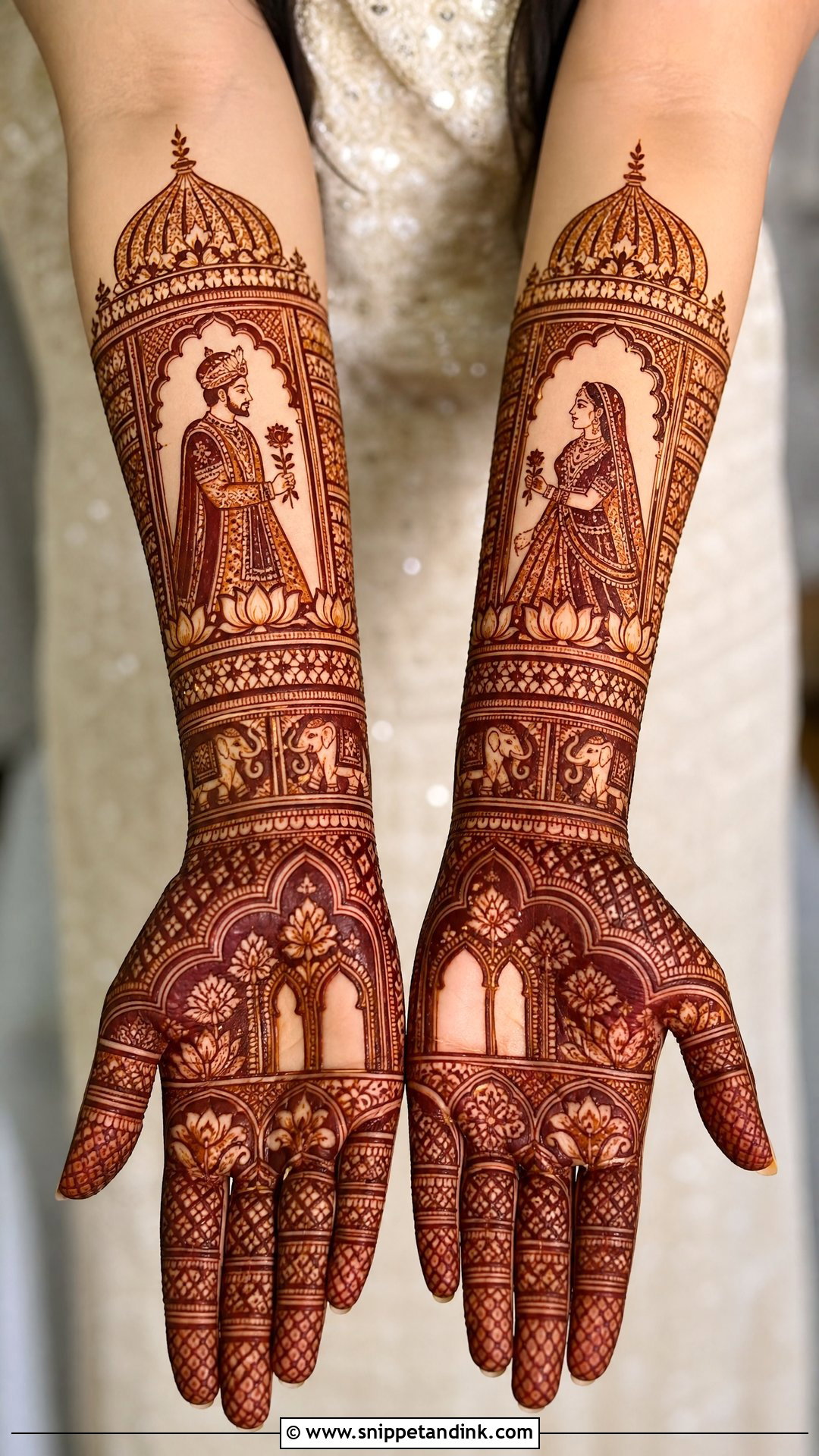
Here the couple appears as a king and queen inside palace arches, with crowns, jewelry and ornamental borders. Brides choose this when they want regal figures that feel artistic rather than realistic. The palms take the royal pair; jharokha windows, lotus bands, paisley vines and elephants fill the wrists and forearms. I keep the faces simple and let clothing, posture and framing do the storytelling. It suits traditional lehengas and grand portraits.
12. Wedding Couple Bridal Figure Mehndi
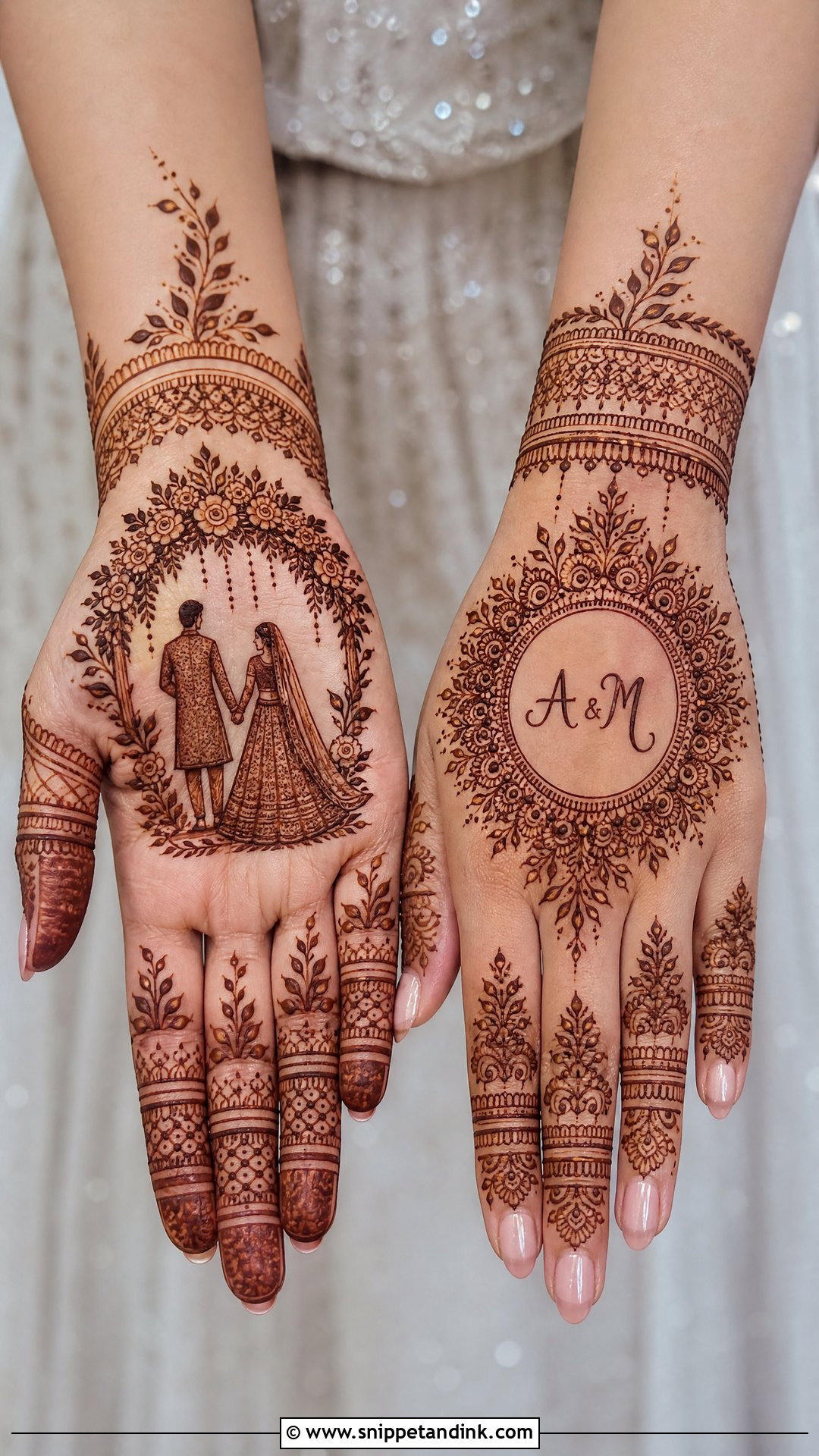
The couple can hold hands, sit together or face each other under a floral arch, and the layout can be more open than dense Rajasthani work. The figures need a strong frame around them so they stay the focus. I finish with finger detailing, wrist bands and floral trails. This is the easiest design to personalize: initials, a wedding date, or a small symbol from your story fit into the open spaces without crowding.
13. Bridal Figure Mehndi With Names
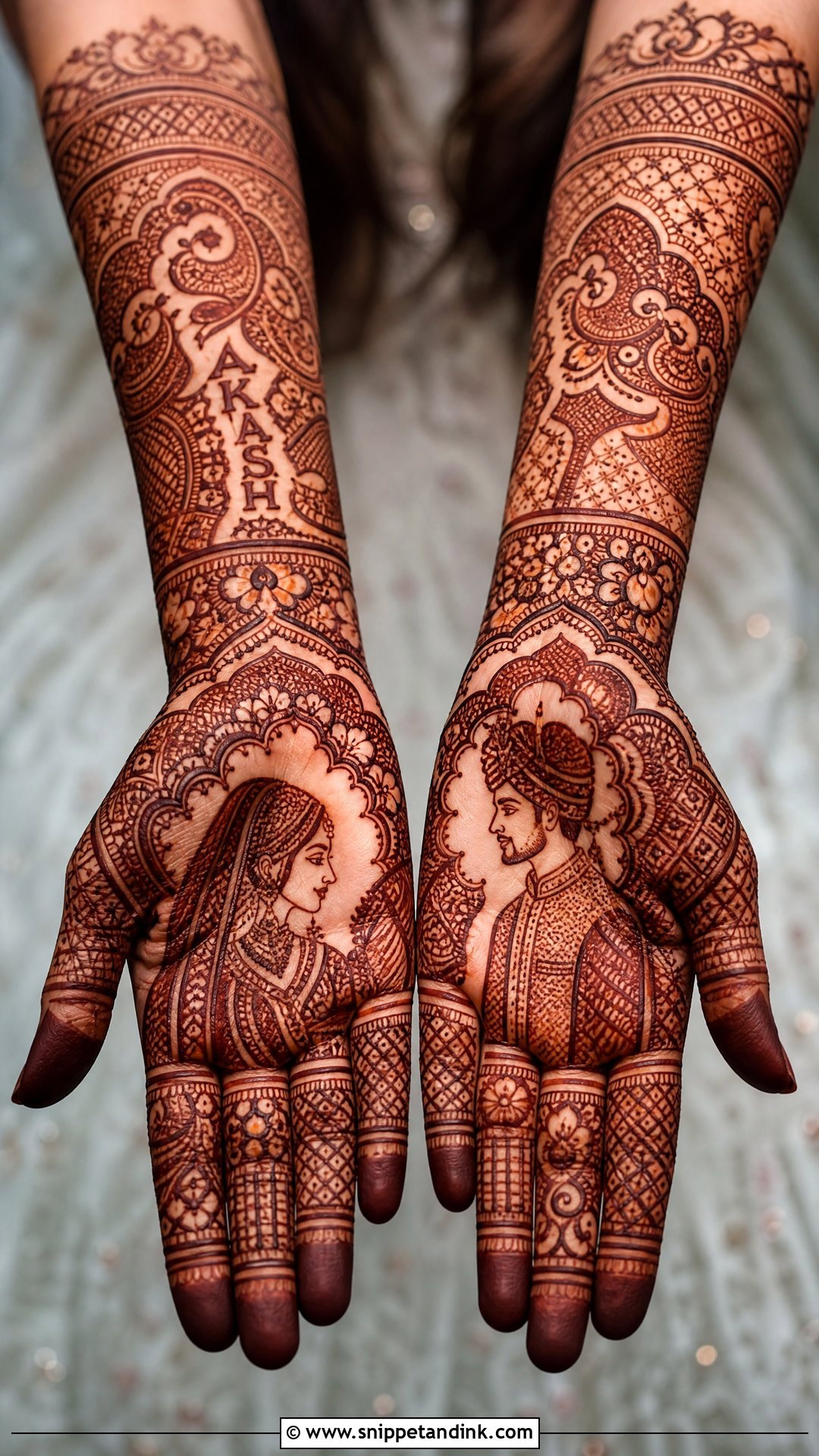
Hiding the groom’s name is a playful tradition, and it’s harder than it looks to get right. The bride and groom figures sit on the palms, and his name or initials are worked into vines, jaali lines, paisleys or a wrist border. Hide it too deeply and nobody can find it; too openly and there’s no game. I sketch the placement first, especially with a long name, and keep the letters a touch bolder than the surrounding filler so they survive the stain.
14. Bridal Figure Mehndi With Wedding Date
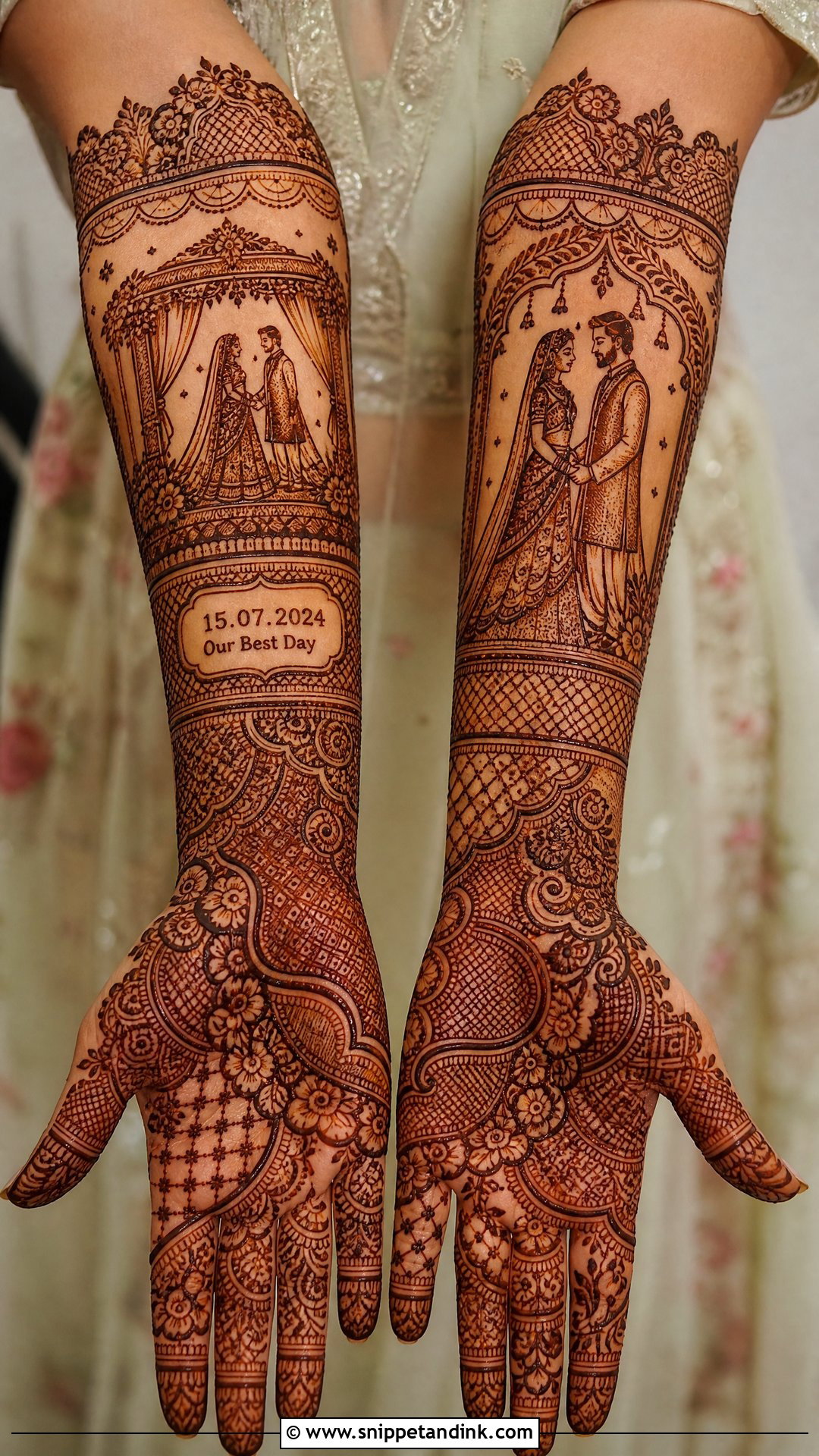
A wedding date turns the design into a keepsake. It can sit under a portrait frame, inside a small plaque, near the wrist cuff or within a mandap scene. I write numbers plainly; decorative lettering looks pretty in paste and then fills in when the stain darkens, and a 6 and an 8 become hard to tell apart. Florals, paisleys and jaali complete the rest of the hand.
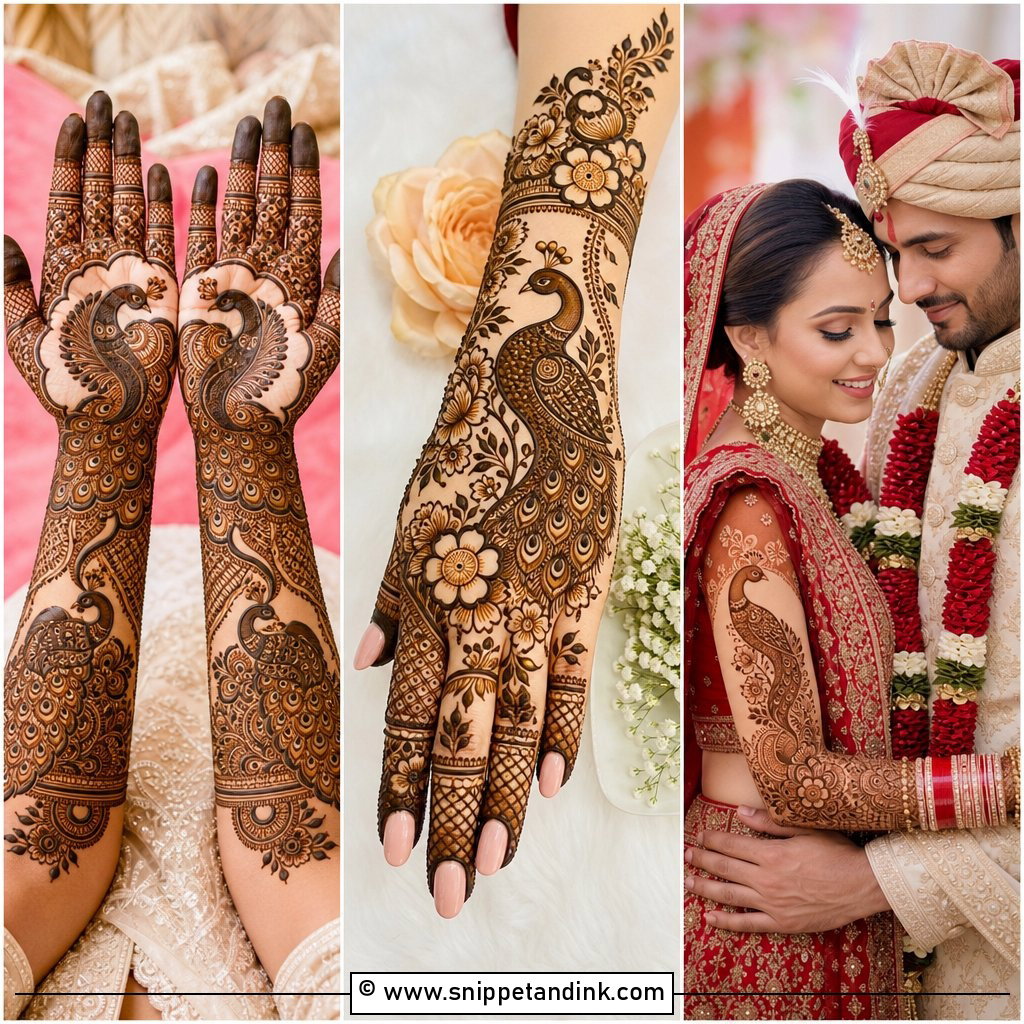
15. Back Hand Bridal Figure Mehndi
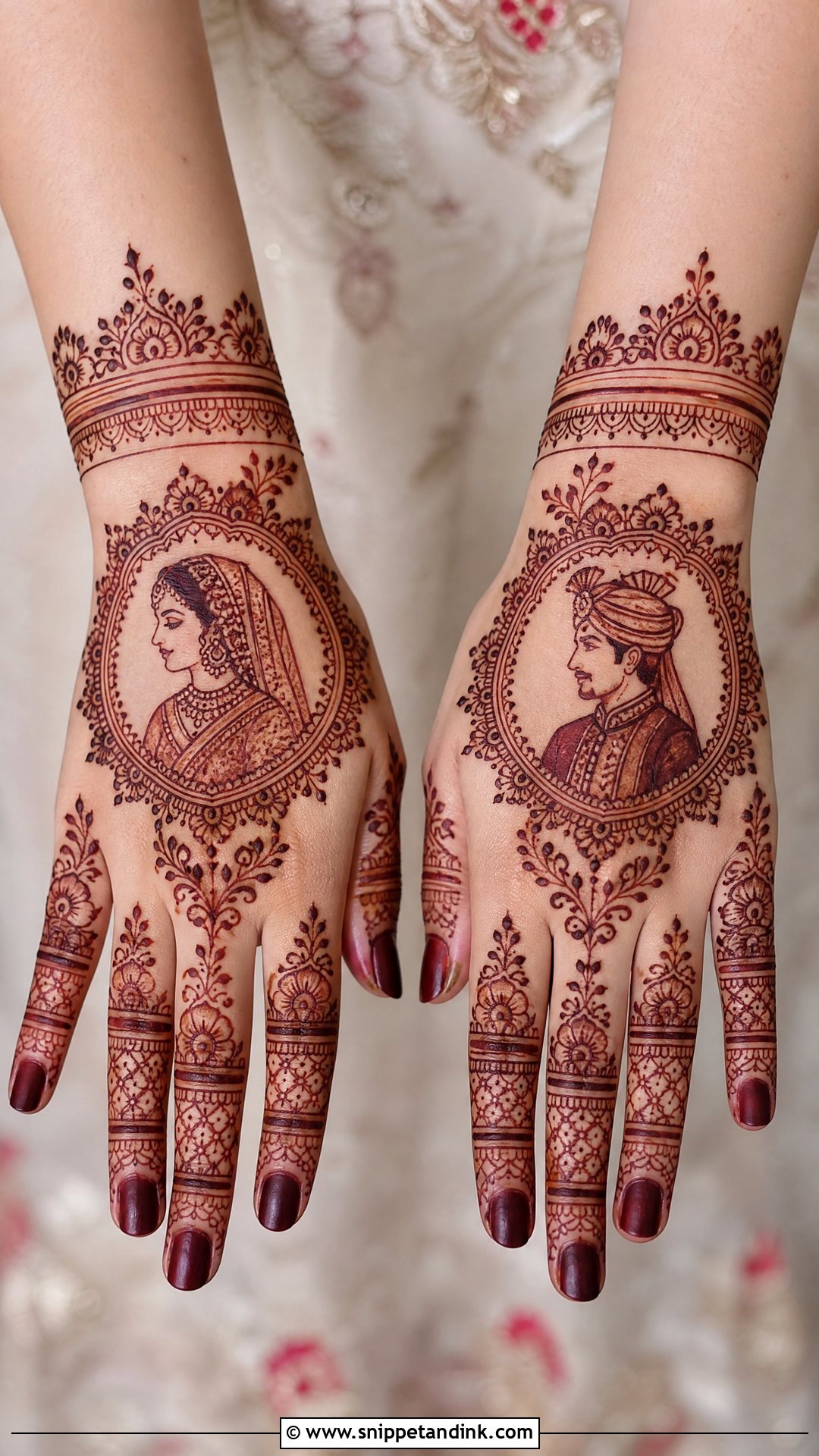
The back of the hand is what shows in ring shots, bangle shots and every photo of you holding something, so figures here get seen far more than palm figures. The surface is flatter, which helps: mandala frames, floral arches and bracelet-style layouts hold a figure cleanly from fingers to wrist and slightly onto the forearm. I keep the fingers tidy so they don’t pull attention from the panel. A bride on one hand and a groom on the other balances it.
16. Palm Bridal Figure Mehndi
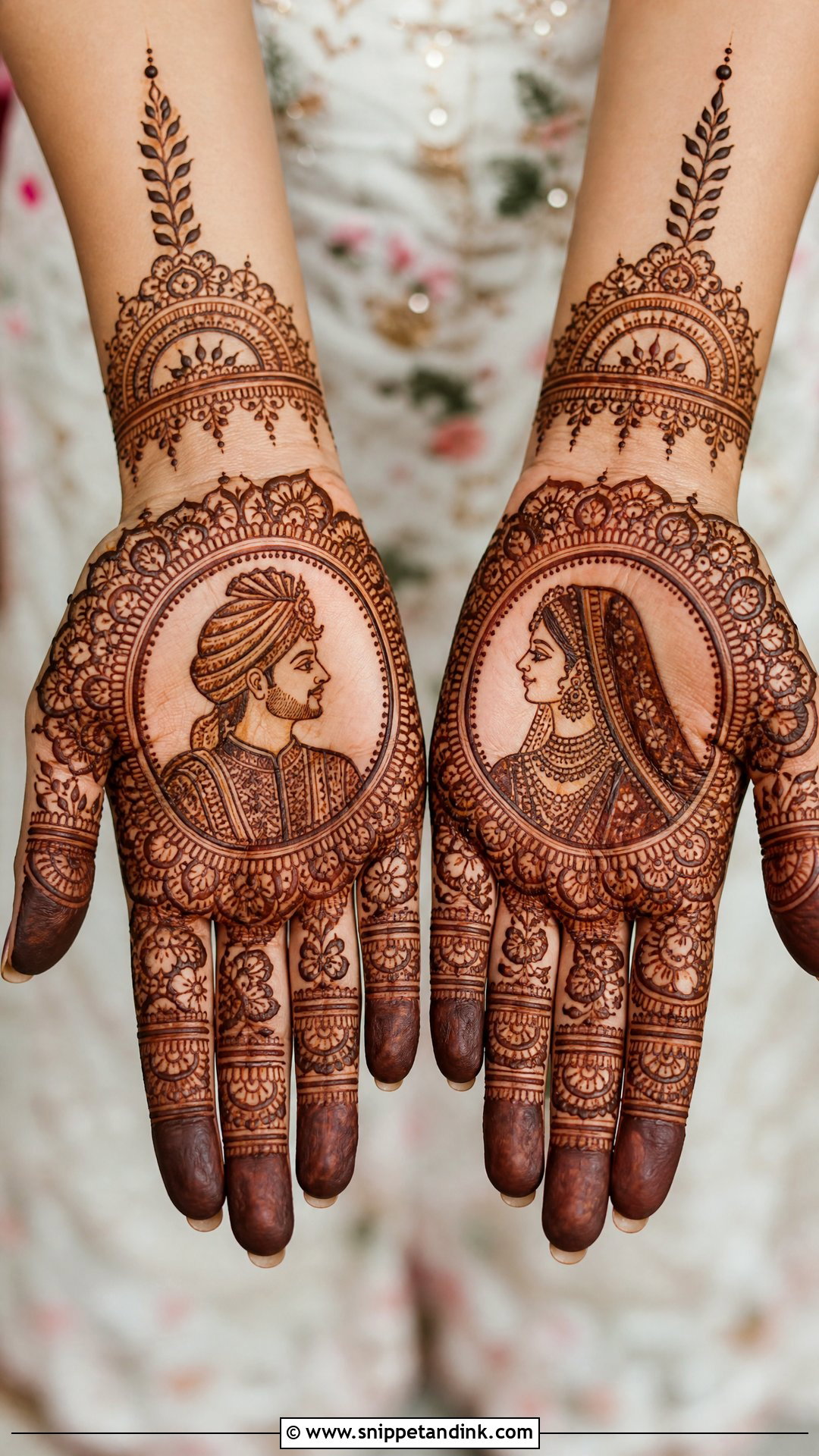
The palm is the traditional canvas, and it stains darker than anywhere else on the body, so palm figures come out the most defined. It fits dulha-dulhan figures, mandap scenes, doli artwork and portrait frames. The one thing to plan around is the palm creases: a face drawn across a deep line distorts every time the hand moves, so I set frames in the flatter areas. Fillers stay in organized sections, and fingers carry matching paisleys, leafy chains and jaali bands. For a reveal photo with both hands open, nothing beats it.
17. Forearm Bridal Figure Mehndi
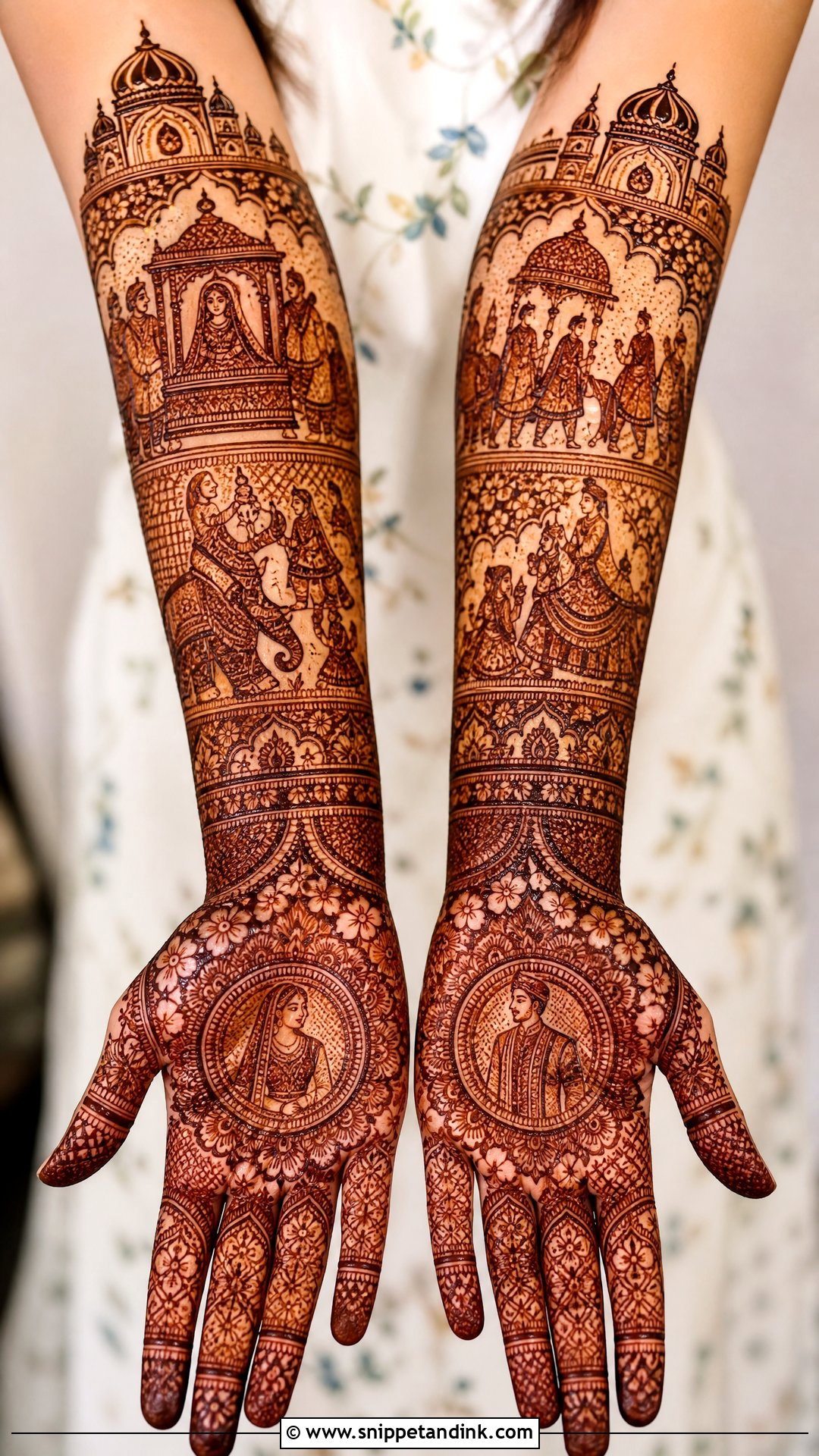
Long scenes need length. Scenes like baraat, doli, palace arches and Radha Krishna panels read more clearly along the forearm than squeezed onto a palm, with mandalas or floral fillers on the palms to complement them. One thing to know: forearm skin stains lighter than palms, so I make figure outlines there slightly bolder. I always connect the forearm scene to the wrist with a smooth border or vine, so the arm reads as one piece. Short or sheer sleeves and bangles show it off.
18. Minimal Bridal Figure Mehndi
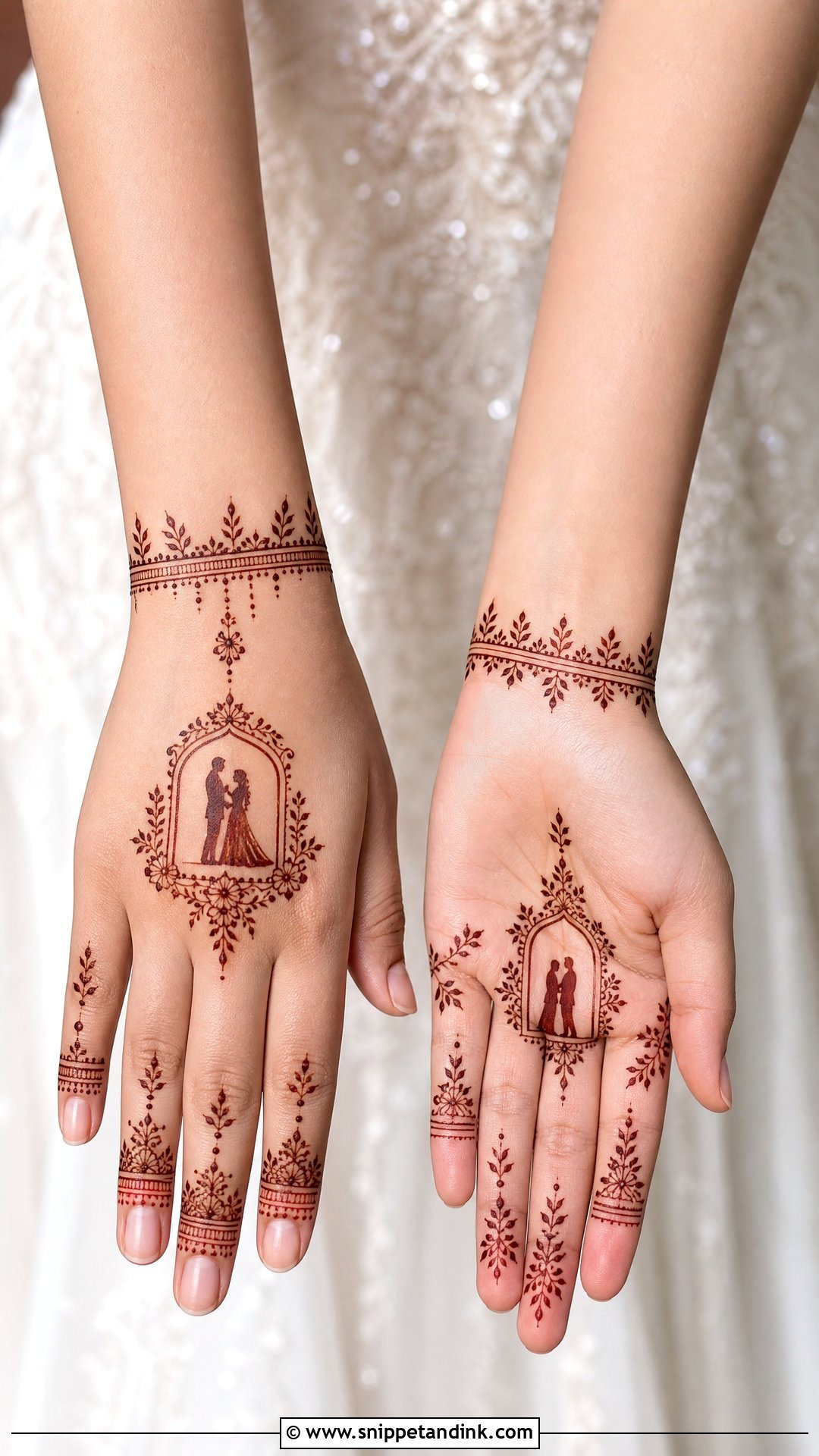
Minimal figure mehndi puts small bride and groom silhouettes inside simple frames, with open space, dots, leaves, florals and wrist bands around them. It’s lighter to wear and much quicker to sit for. The rule I hold to: small figures must be bold. A tiny portrait with lots of internal detail will blur into a brown smudge. It suits intimate weddings and modern outfits, and looks especially neat on the backs of the hands and lower palms.
19. Modern Bridal Figure Mehndi
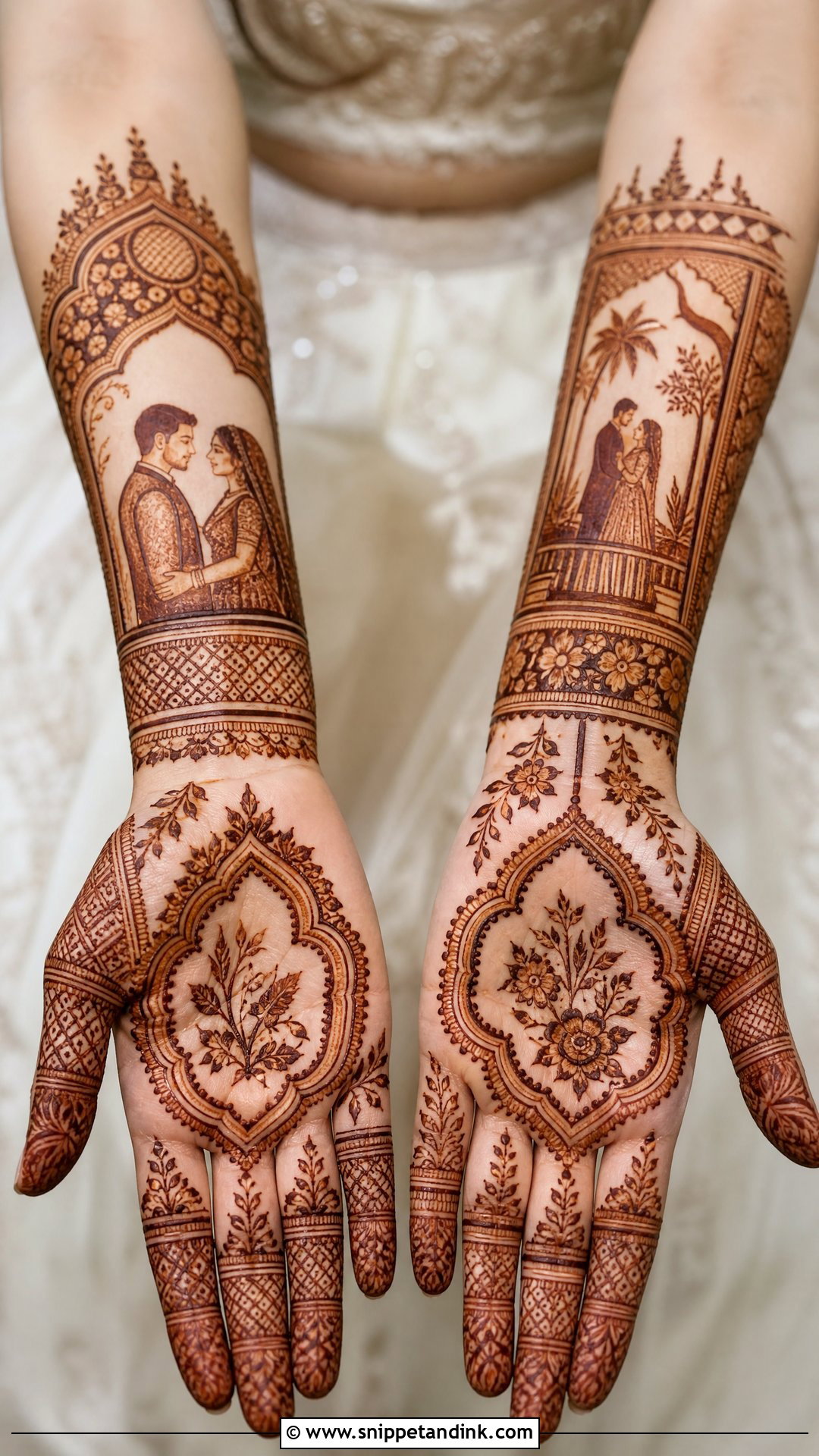
Modern figure work borrows the traditional figures but gives the skin room to breathe, unlike classic full bharwa mehndi. Portrait panels sit beside negative space, geometric frames, delicate florals and crisp finger patterns. The figures can be line-art, semi-realistic or pure silhouette. To keep it modern, I resist filling every gap; strong borders, clean arches and deliberate empty spaces are the design. The figure panels then stand out sharply against the reddish-brown stain.
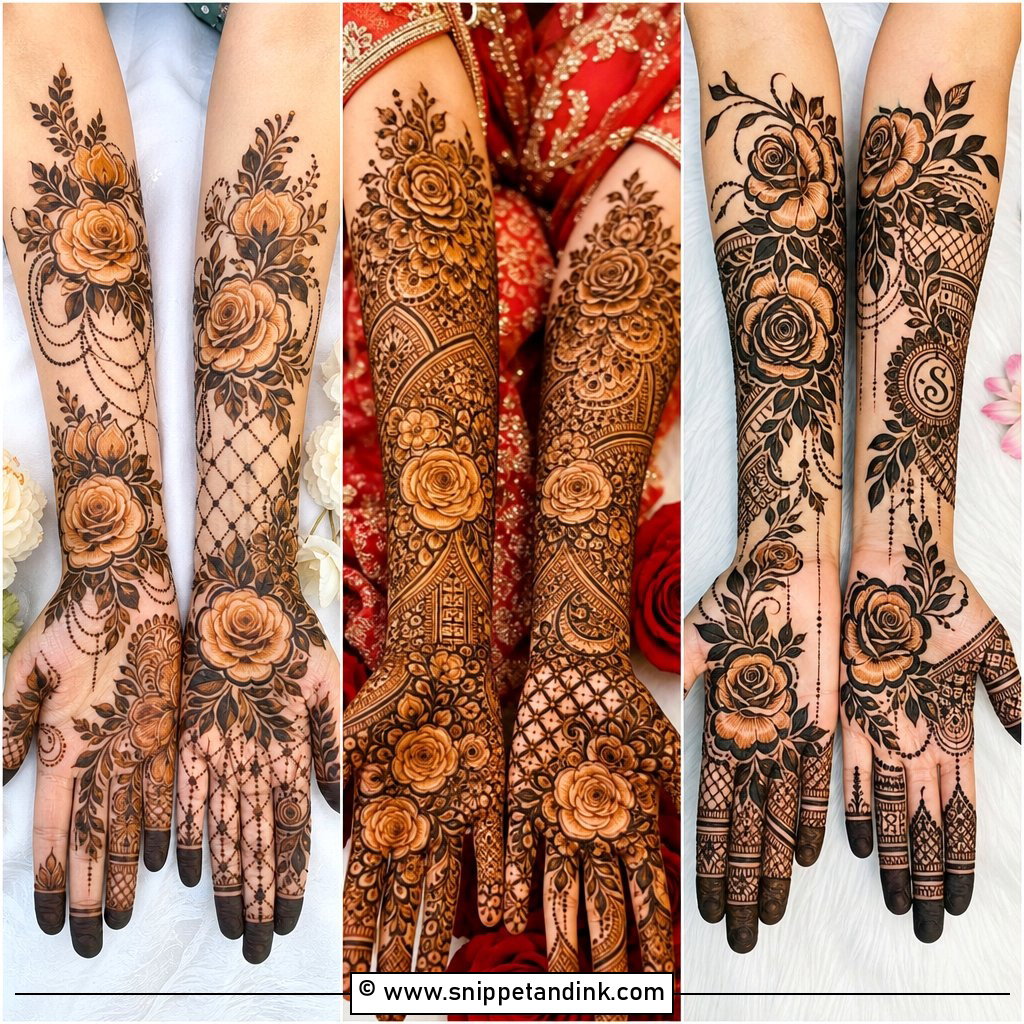
20. Arabic Bridal Figure Mehndi
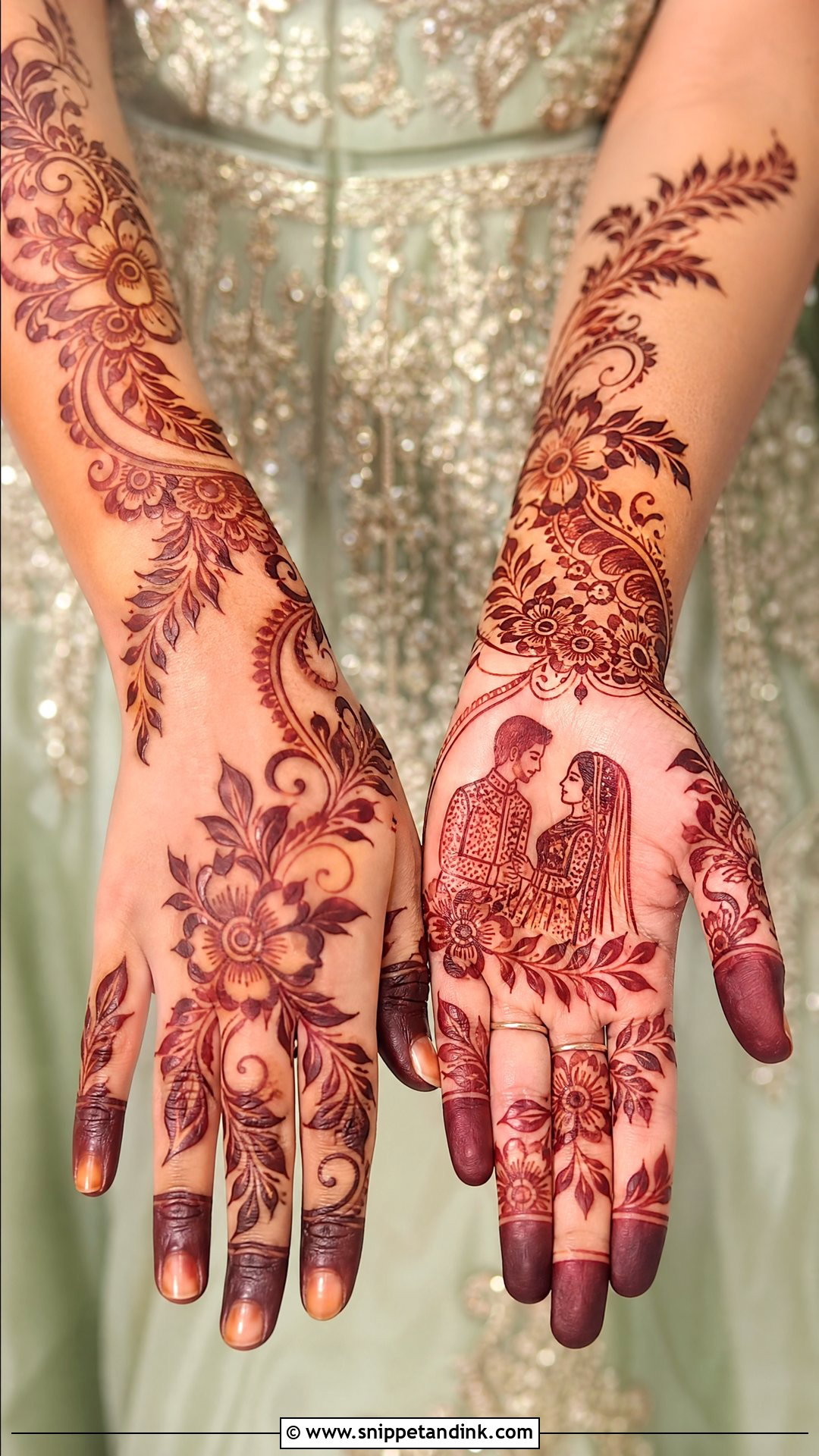
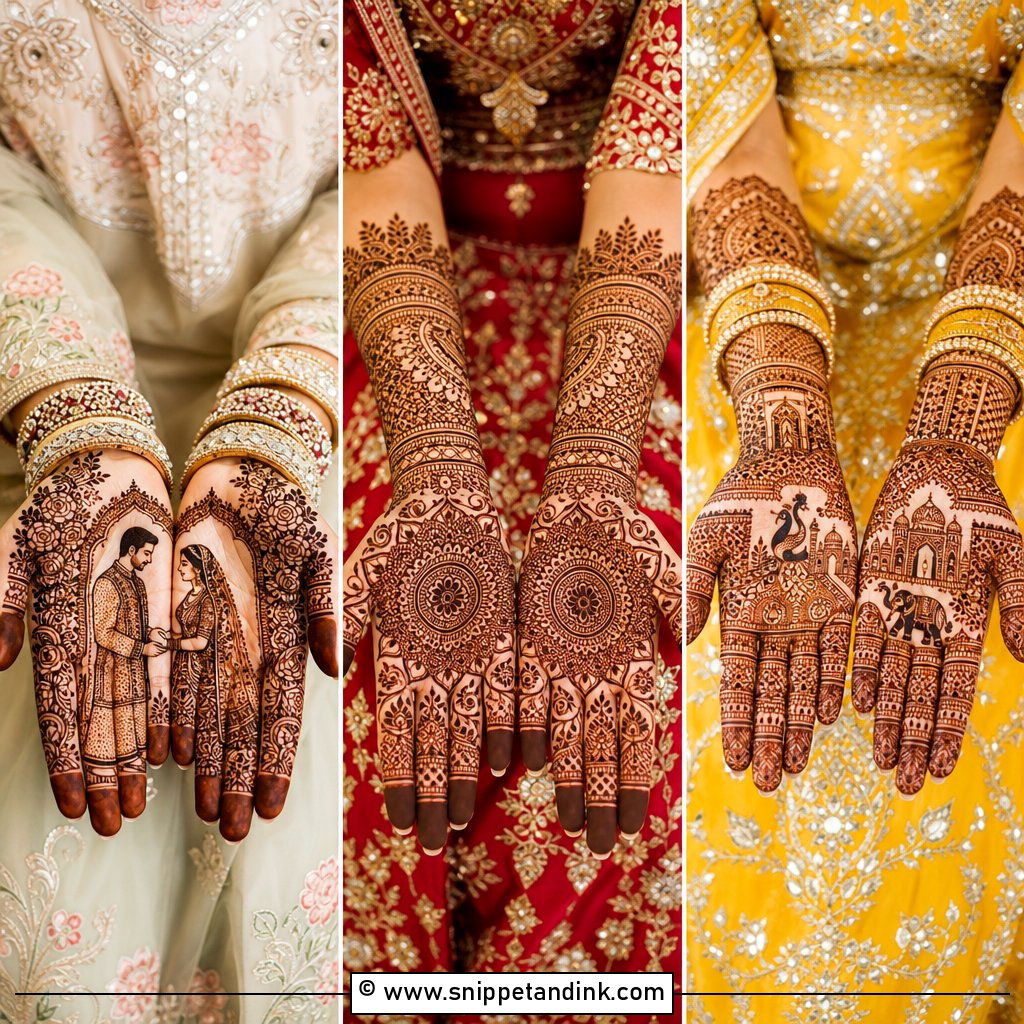
Arabic layouts are built on flow: bold vines, rose-like flowers, leafy trails and open skin. A small bride-groom figure or couple panel near the palm or wrist adds the wedding element. It’s less dense than Indian bridal work, so it’s faster to apply, and that makes it a sensible pick for engagement, nikah or pre-wedding functions as well as the wedding itself. The figure has to be simple and clearly framed; anything fussy fights the movement of the vines.
21. Indo Arabic Bridal Figure Mehndi
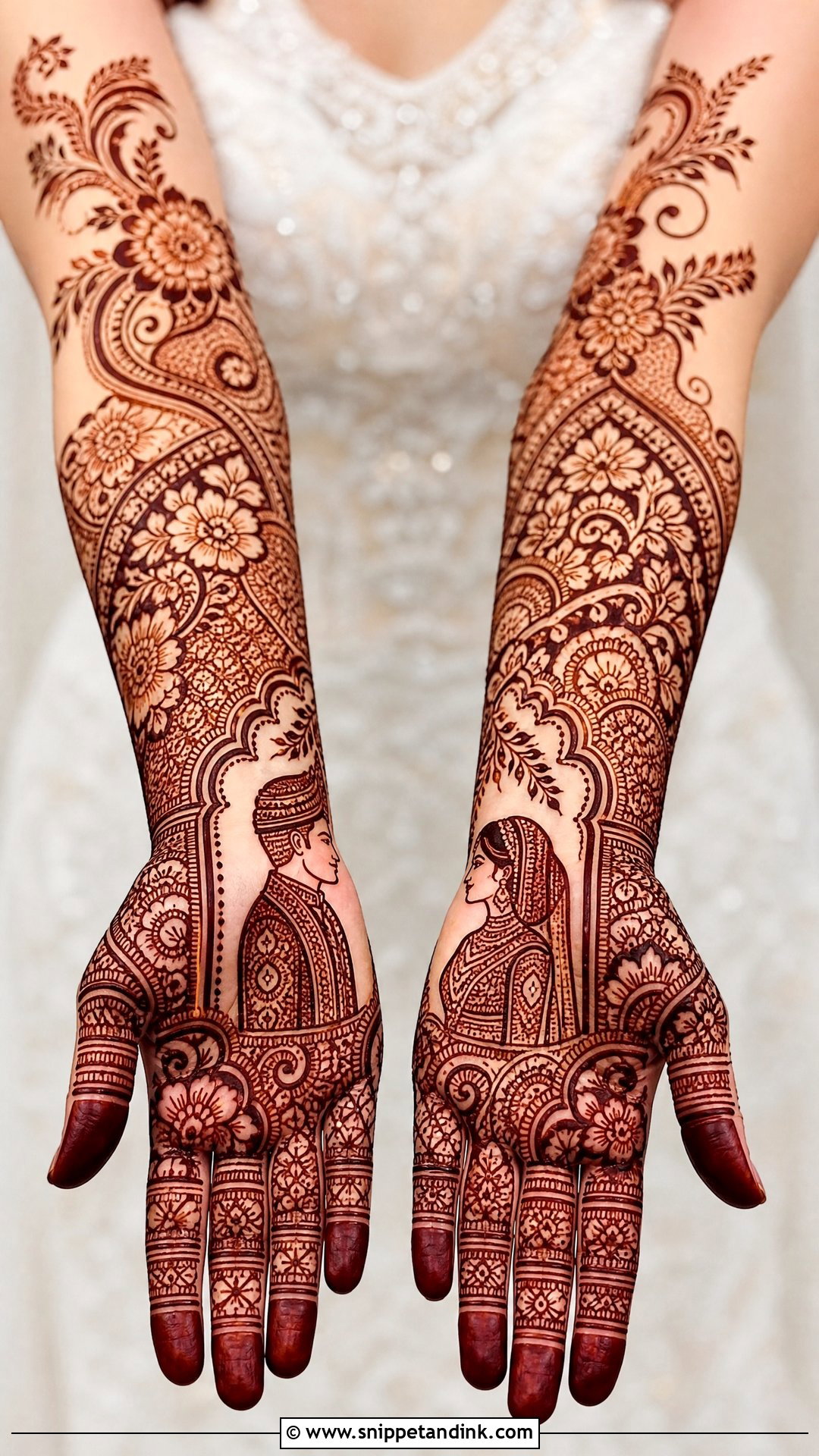
Indo Arabic bridal figure mehndi mixes Arabic flow with Indian bridal richness. A bride-groom figure sits inside a central frame, and the rest of the hand moves into diagonal floral trails, paisley clusters and open spaces. It looks special without the weight of full coverage, on palms or backs of hands. My approach is thicker outlines around the figure panel and finer detail in everything around it; that contrast is what keeps the eye on the couple.
22. Moroccan Bridal Figure Mehndi
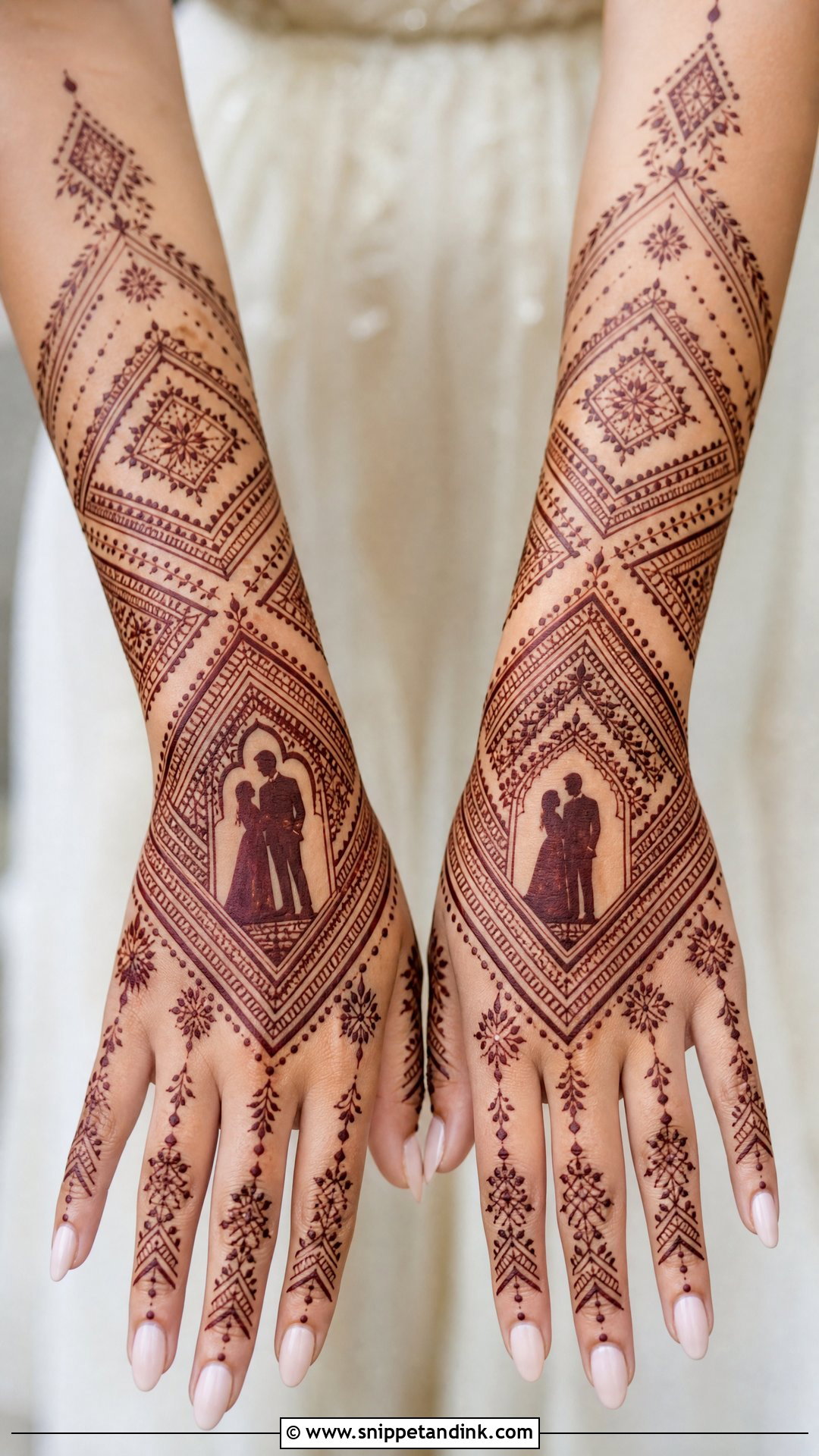
Moroccan-style mehndi swaps florals for geometry: diamond grids, chevron borders, star shapes and angular frames, with the figure panel set inside. The effect is modern and graphic. Symmetry is everything here, so I measure and mirror both hands before starting. A simple couple silhouette suits this style better than detailed faces, and I add florals or dots only where a corner needs softening. It’s a distinctive option that still keeps the figure theme at its center.
23. Gulf Bridal Figure Mehndi
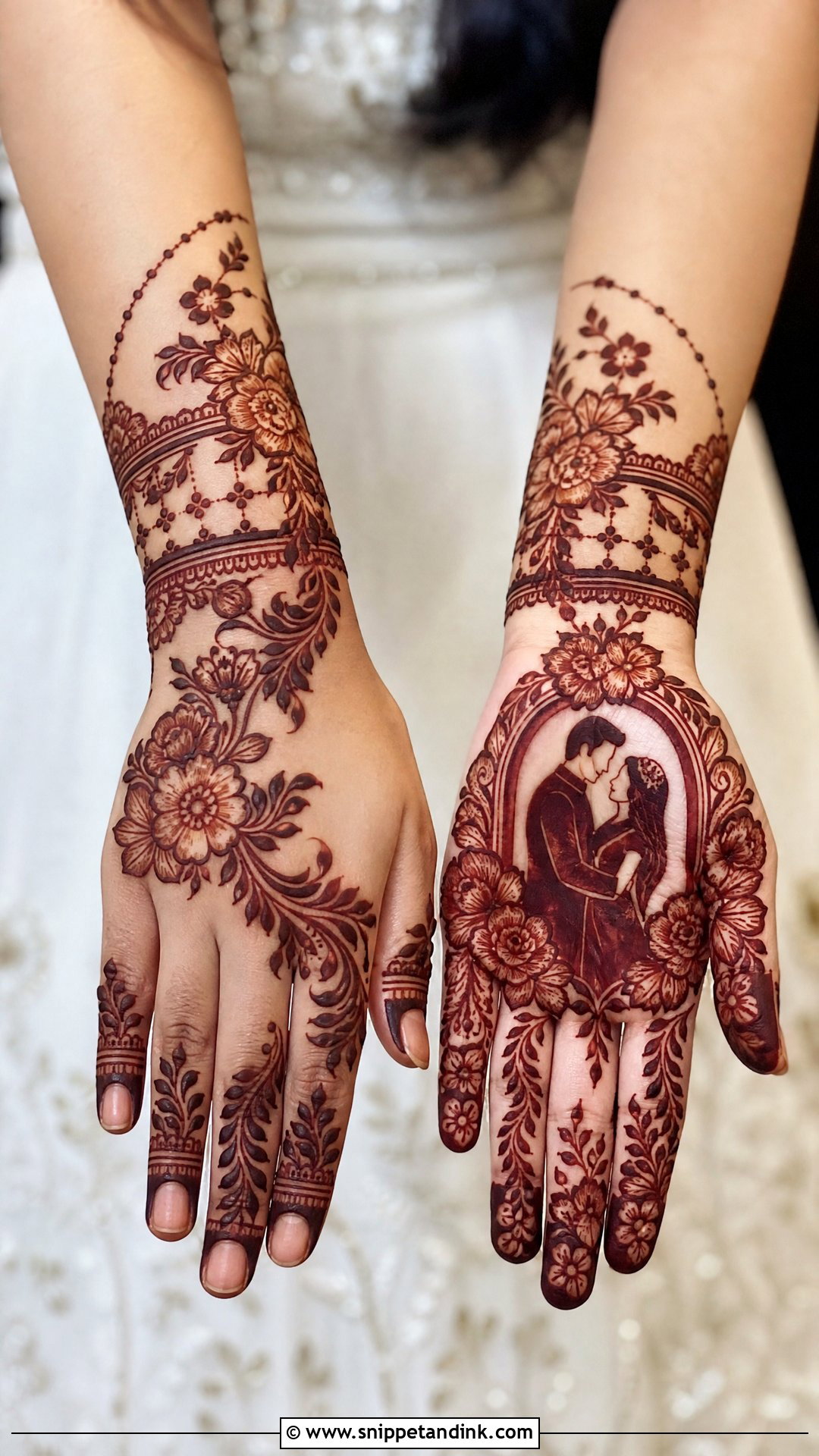
Gulf designs are bold and spacious, with large florals, leafy curves, bracelet-style wrist details and stronger outlines than dense Indian work. Those visible skin gaps are exactly what lets a figure stand out. A bride-groom silhouette, a doli or a small couple scene blends naturally into the floral flow on the palm or back of the hand. Fingers get repeated leafy bands or clean fingertip details. The result is high contrast and uncluttered.
24. Bridal Figure Mehndi With Lotus
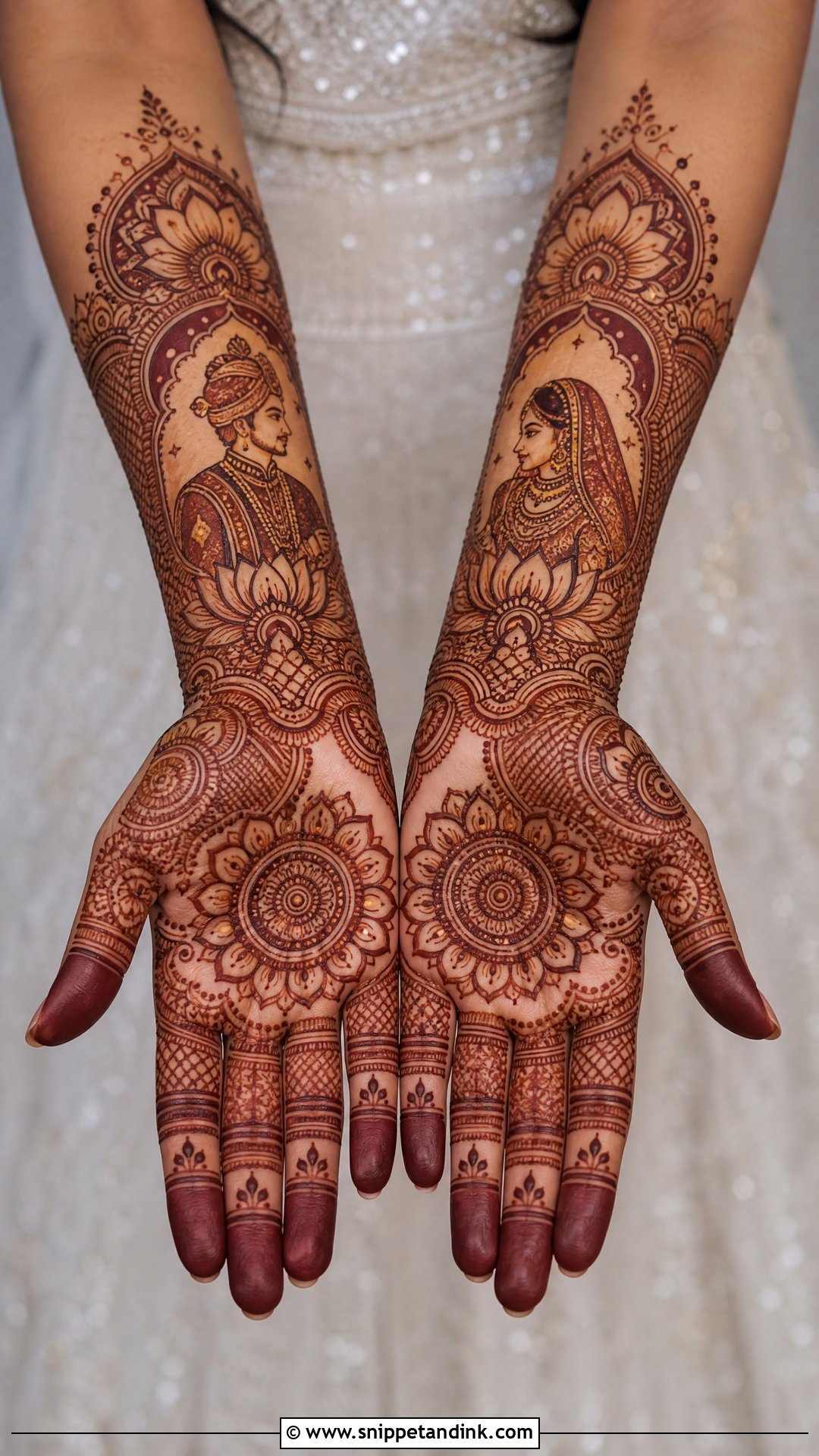
Lotus motifs make a natural border around portrait frames, which is why I use them so often in figure work. They can frame the couple, decorate a mandap scene or fill the wrist and forearm with layered petals, alongside mandalas, peacock feathers and fine jaali. I keep petals medium-sized; very small petals close up in the stain and lose their shape. It suits full hands and both pastel and classic red bridal outfits.
25. Bridal Figure Mehndi With Jaali
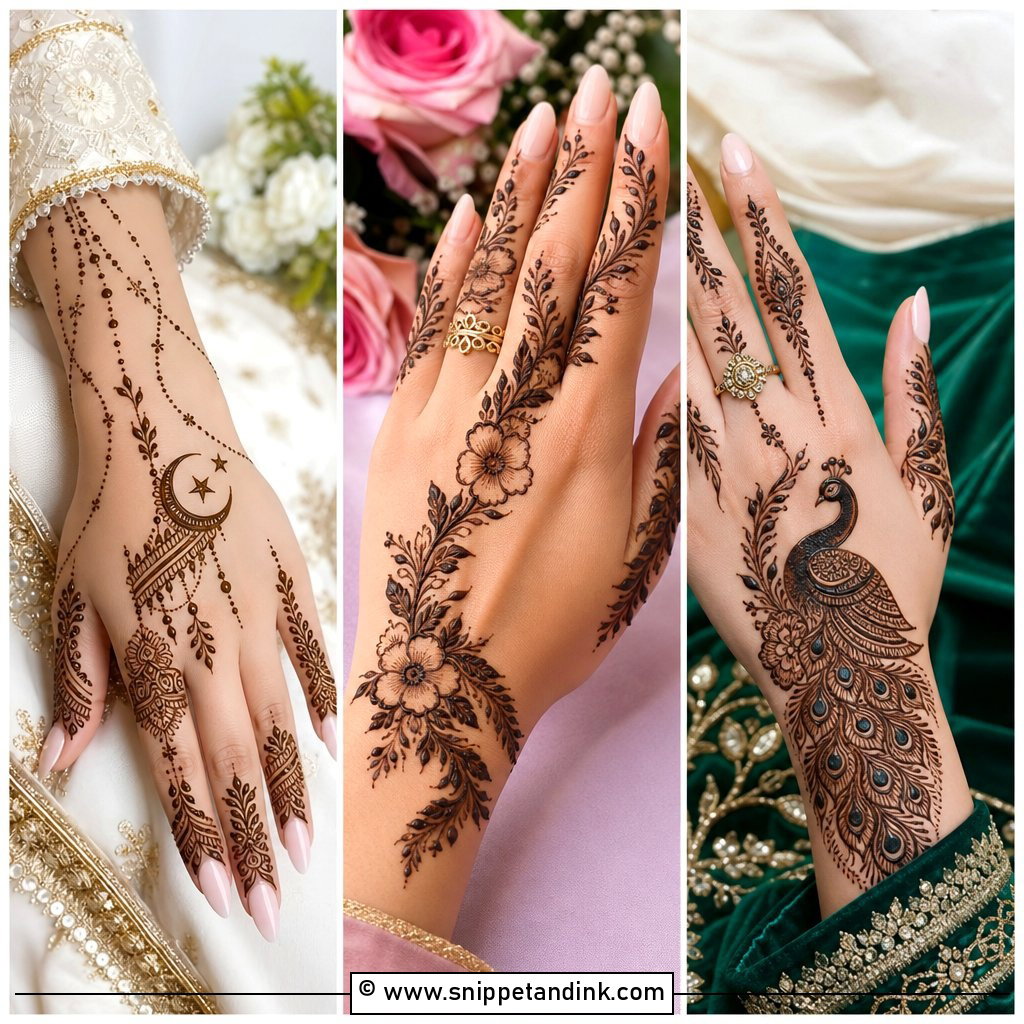
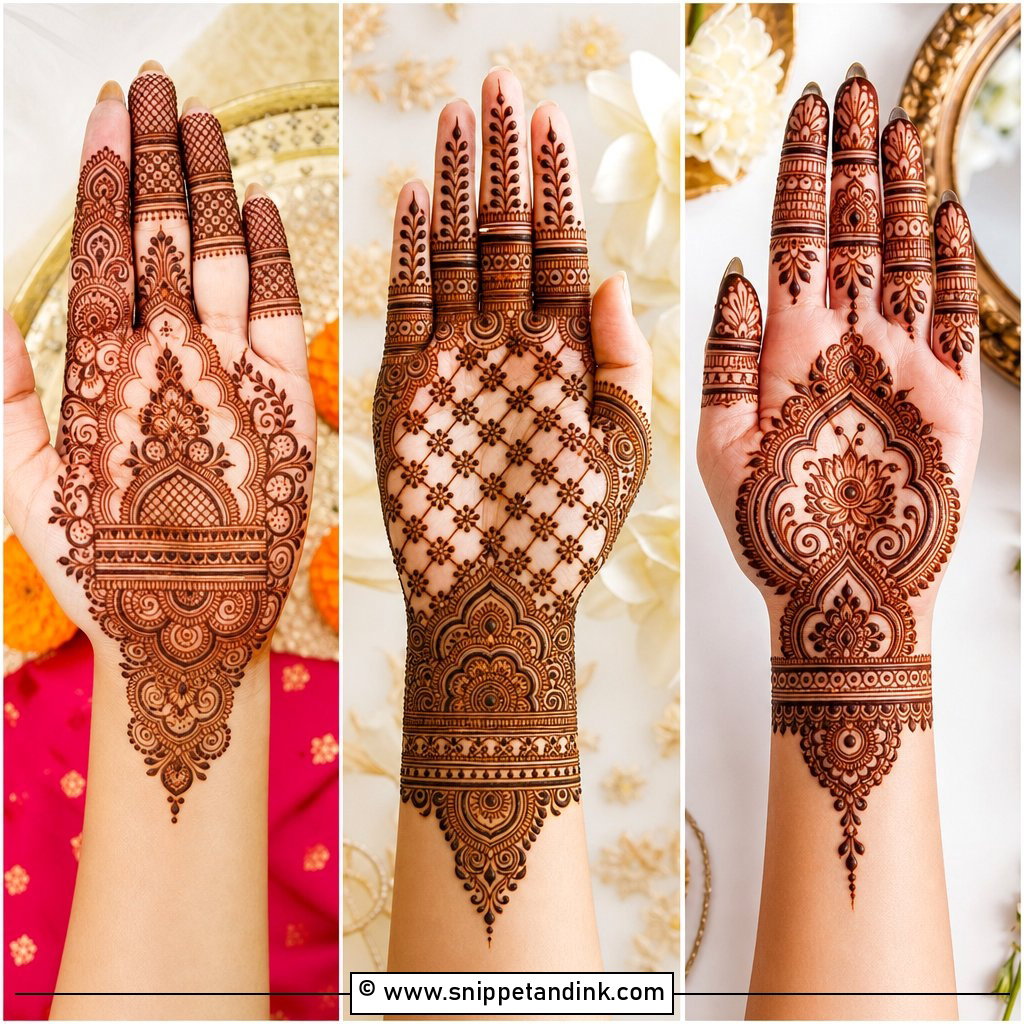
Jaali is the filler I trust most around figures, because a mesh adds texture without competing for attention. The figure panel can show the bride, groom, mandap, or doli, with jaali in neat sections on the fingers, wrist, back hand or forearm. Used alone it can look stiff, so I break it up with floral borders and paisley curves. The figures stay visible and the hand still looks intricate.
Dark Faces, Readable Names: The First 48 Hours of Aftercare
Fine figure lines show up only when the stain is deep, and the depth depends heavily on what you do after I leave. Keep the paste on as long as you can manage, ideally overnight. When it’s dry, I dab on a lemon and sugar mix to keep it stuck to the skin; dry paste that flakes off early takes the detail with it.
Taking it off
Scrape the paste off with a blunt edge or your fingers. Don’t wash it off. Keep water away from your hands for as long as possible afterward, ideally the rest of that day, and rub on a little balm or coconut oil before you do wash. Keep warm; henna darkens better on warm skin.
Making it last through the wedding
Palms stain darkest but also fade first, because that skin renews quickly. Avoid scrubbing, harsh soap, hand sanitizer where you can, and chlorinated pools in the days before the ceremony. Wear gloves for washing up. Treated gently, a good stain usually lasts one to three weeks, fading evenly rather than in patches.
Sketch the Story Before the Cone Touches Skin
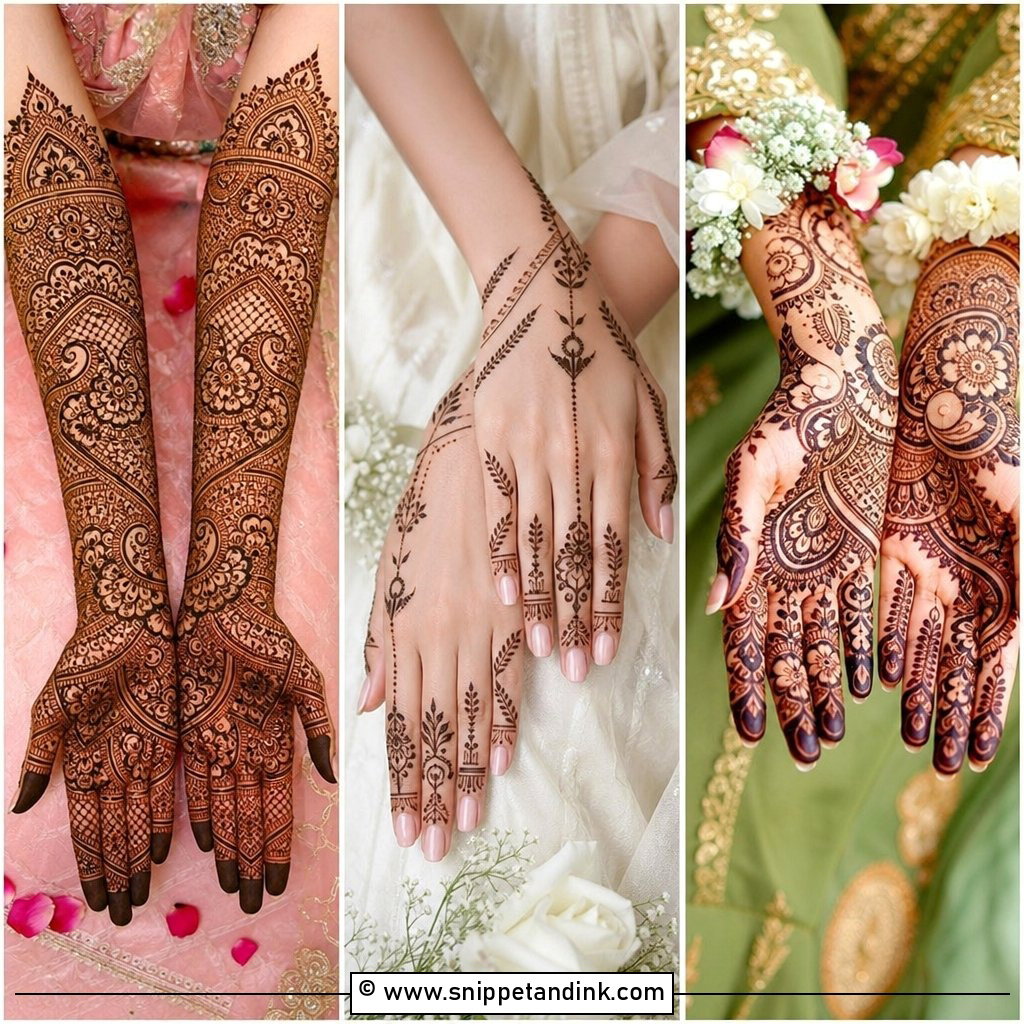
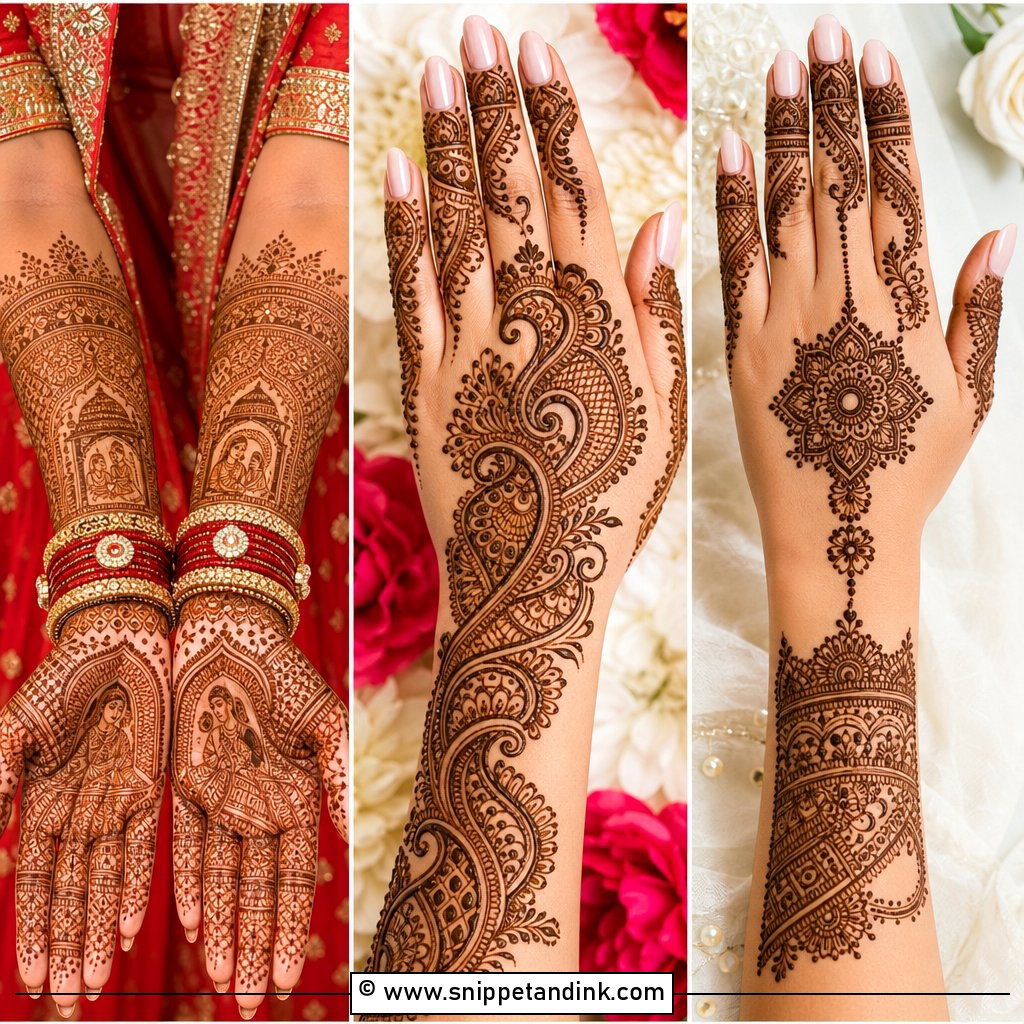
Start with the story you want your hands to tell. Dulha-dulhan, doli, baraat, mandap and Rajasthani work suit a traditional look; minimal, modern, Arabic, Gulf and Indo-Arabic layouts give one clear figure panel and more open skin. Names, initials, dates and small symbols personalize either. Whatever you pick, ask for a layout sketch before application, especially where faces are involved. Clear spacing, confident outlines and organized fillers are what make figure mehndi readable in person and in close-up photos.
You'll Like These Ideas:


Leave a Reply