
Marwari bridal mehndi is storytelling work. The tradition comes from Rajasthan, and one bride’s hands can carry dulha-dulhan portraits, peacocks, elephants, lotuses, mandalas, jaali, paisleys and hidden groom initials all at once. What separates good Marwari work from a crowded hand is planning: every panel, from the palm center out to the wrist, fingers and forearm, is decided before I start. Some brides want the densest traditional version; others want open space or an Indo-Arabic mix for a lighter function. The twenty designs below cover both, with my notes on placement and how each motif stains.
Mapping a Story Design Before the Cone Touches Skin
With this much imagery, I sketch before I draw. At the consultation we settle what goes on each palm, which motifs repeat to link the two hands, and where the design stops on the arm. My usual map looks like this:
- Palms carry the main scene: the couple, a mandap or a pair of peacocks, mirrored so they meet when your hands close together.
- The backs of the hands get one bold anchor, a mandala or lotus cluster, with jaali around it.
- Forearms take repeating bands of elephants, arches or paisleys, ending at a clean border.
- Personal details, the groom’s name, the date or a family symbol, are written down in advance and placed last.
Bring your blouse or tell me its sleeve length. A design that stops a few centimeters short of the sleeve, or disappears under it, looks unfinished in every photo.
1. Full Hand Marwadi Bridal Mehndi
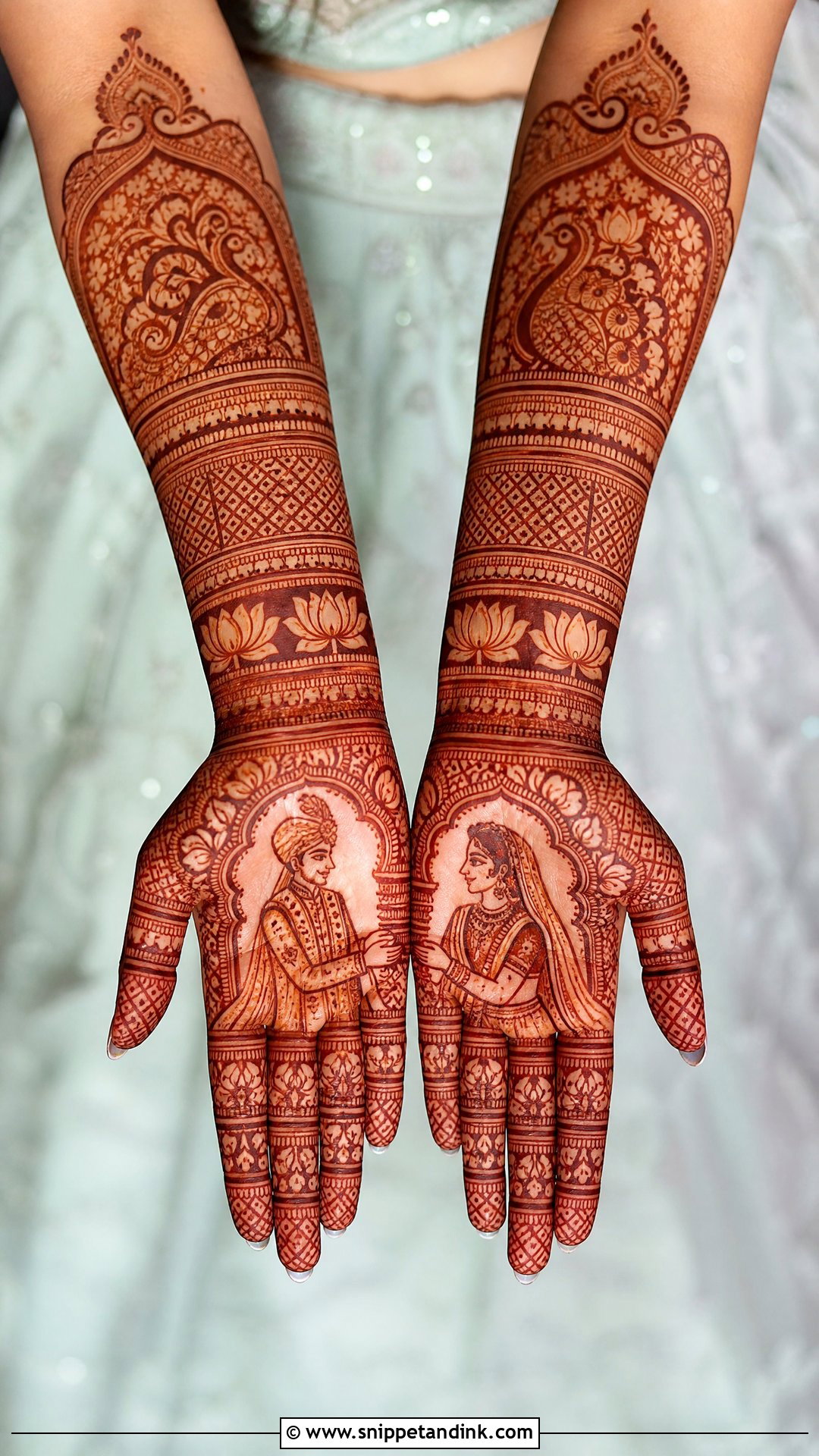
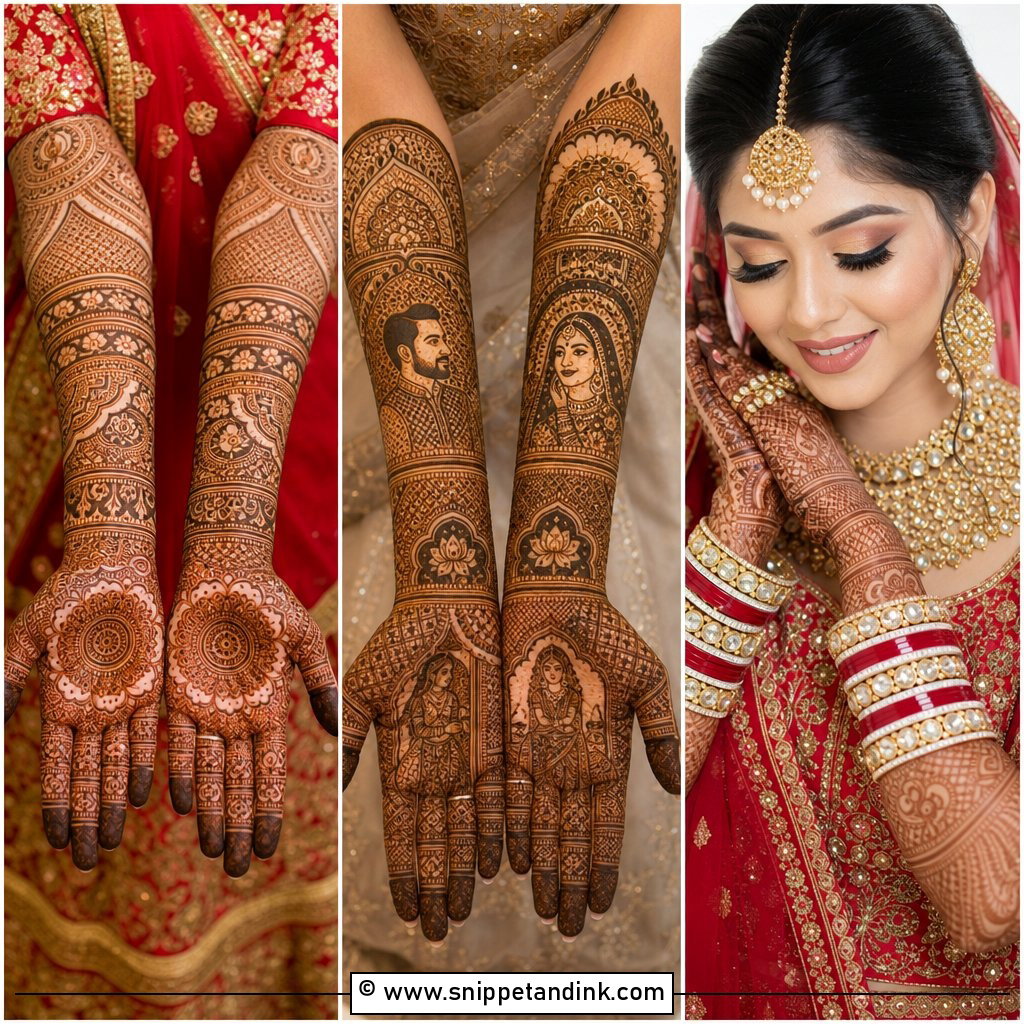
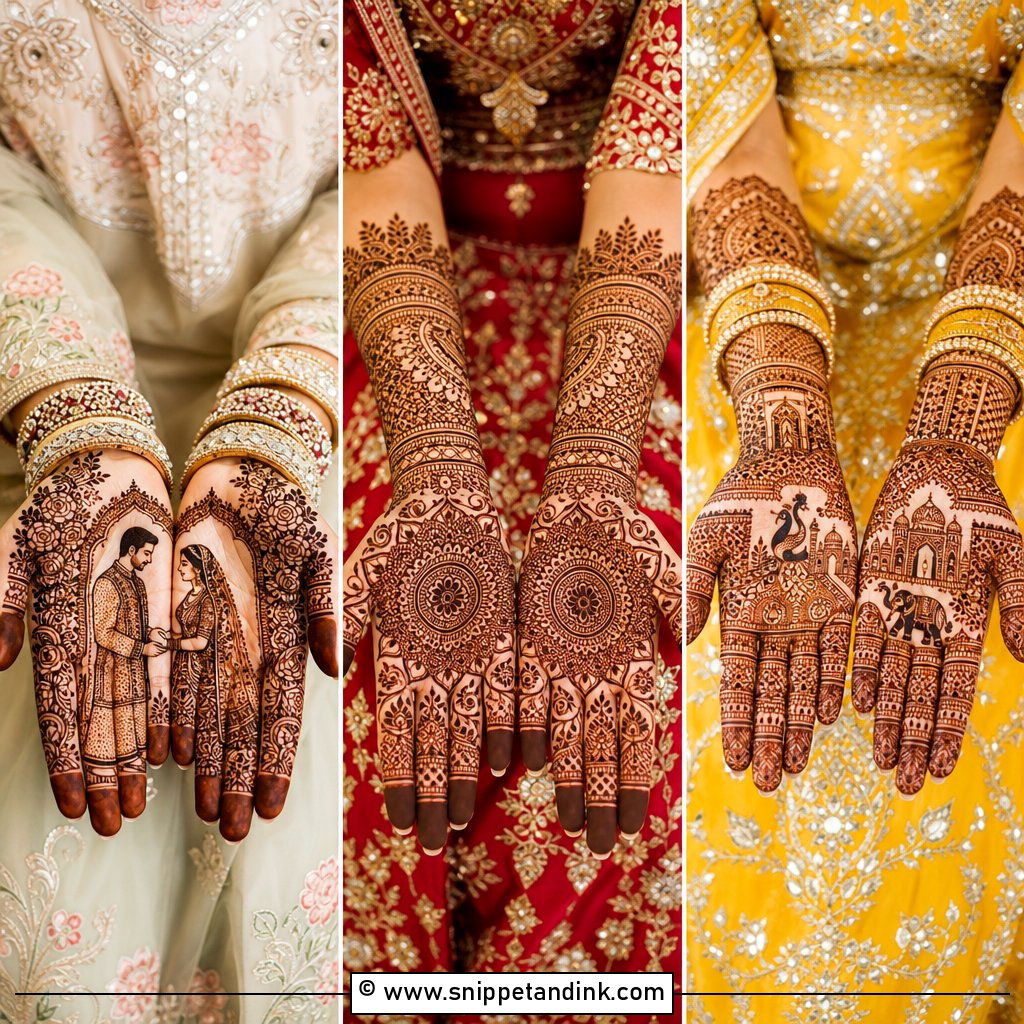
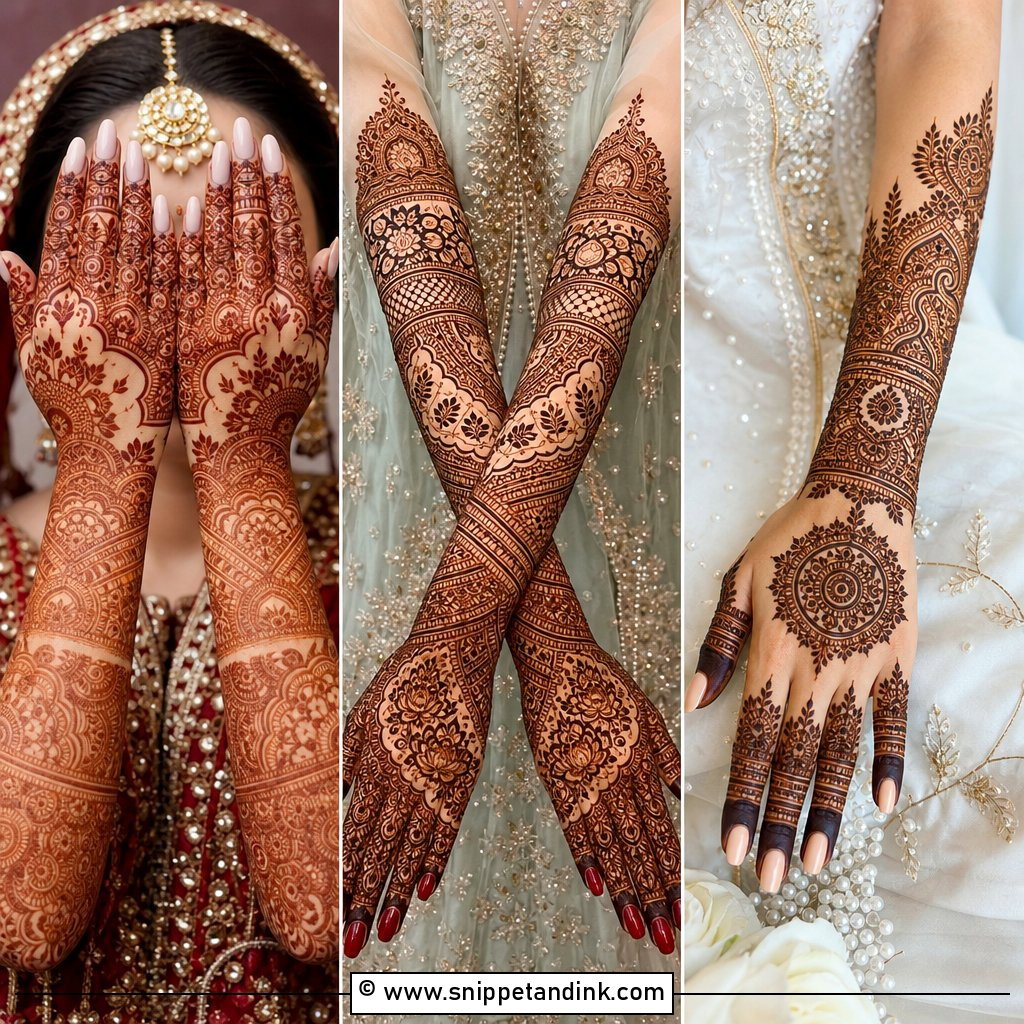
A full hand Marwadi bridal mehndi design covers fingertips, palms, wrists and forearms, and it’s the version most Marwari brides wear for the wedding itself. I give the palm its main subject, a mandala, portrait, lotus or peacock, and let the forearm carry paisley vines, jaali and bracelet bands. The rule I follow is contrast: bold outlines around the main shapes, fine fillers inside them. All fine work and no bold lines turns into a brown haze in photos. It sits naturally with a heavy Rajasthani lehenga, kundan jewelry and a full set of bangles.
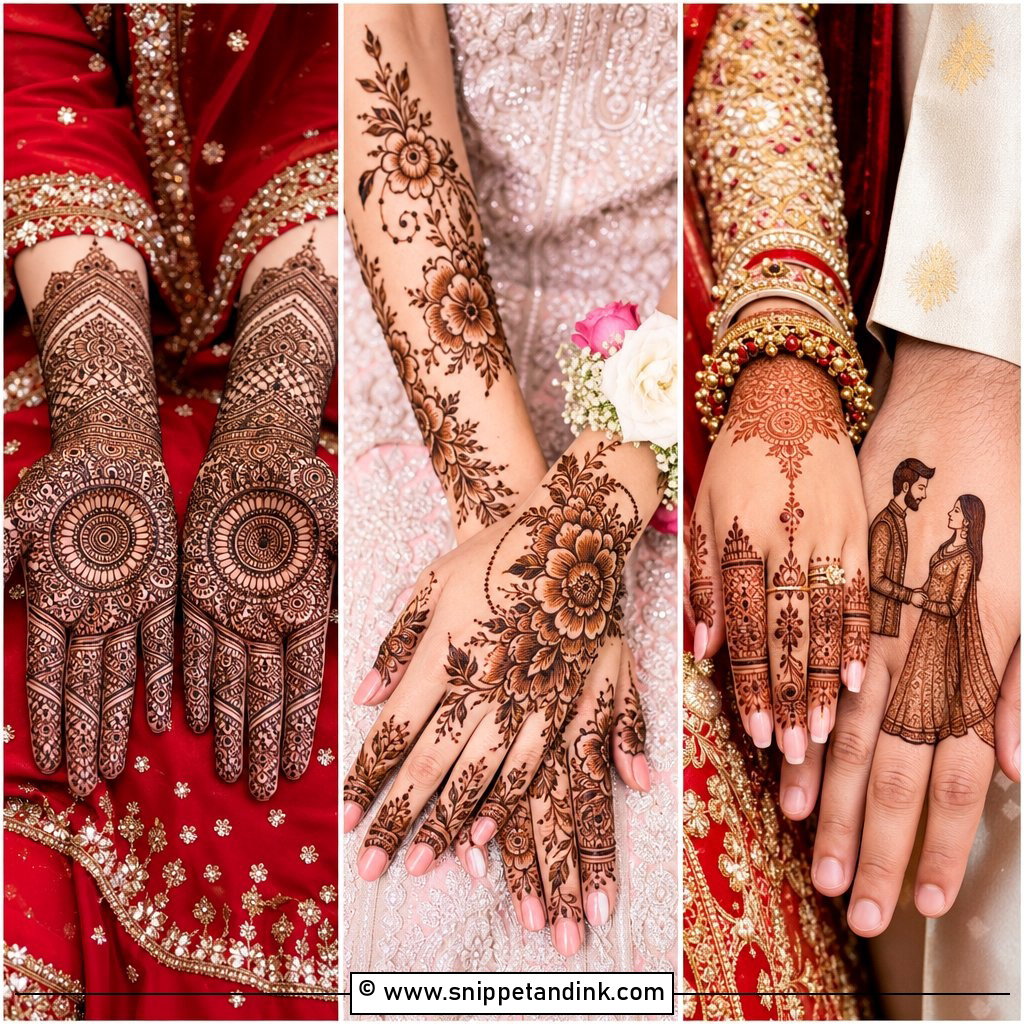
2. Marwadi Dulha Dulhan Mehndi
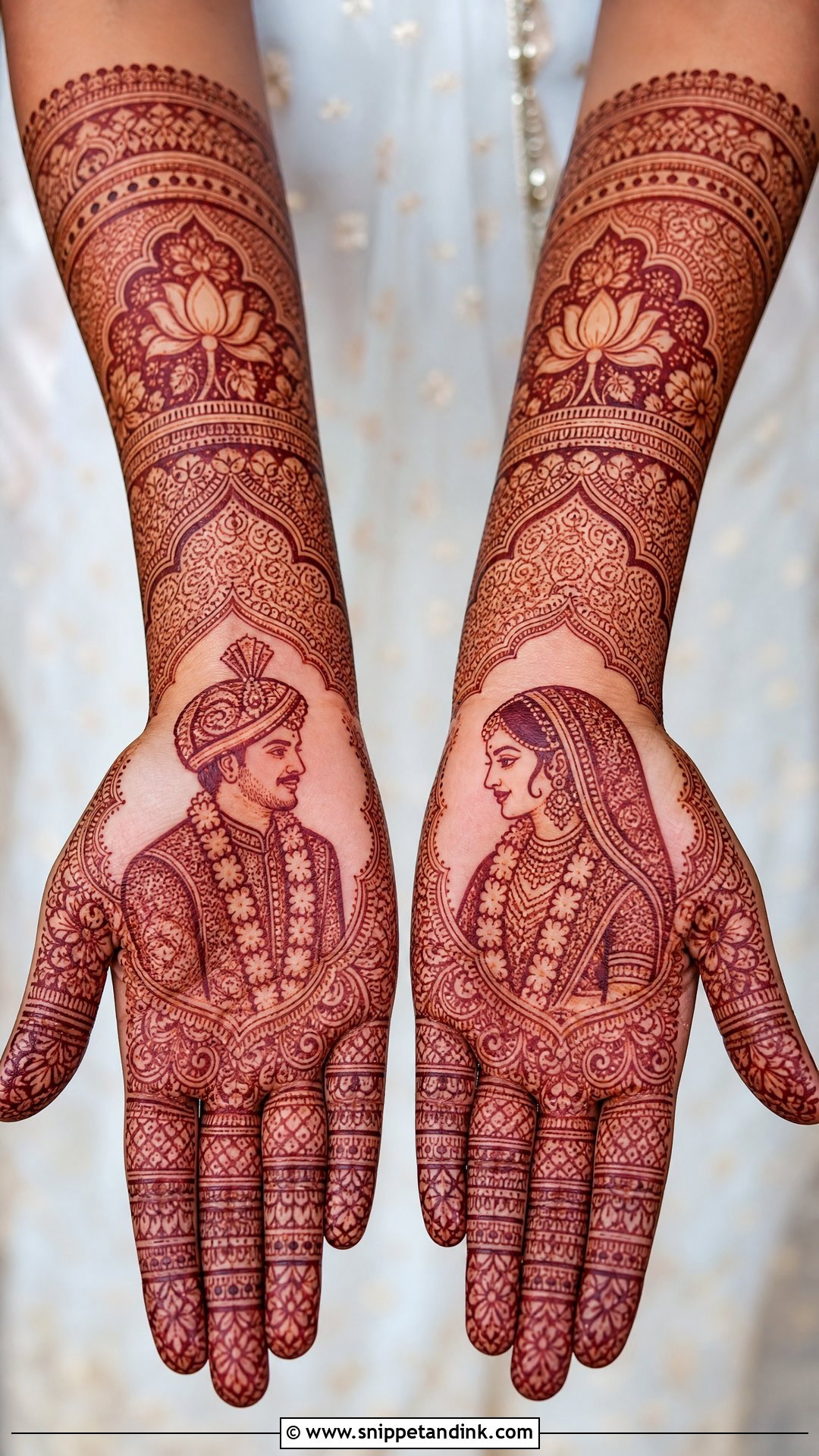
Marwadi dulha dulhan mehndi puts the bride on one palm and the groom on the other, usually facing each other with garlands, wedding clothes or a mandap frame. When you bring your hands together the couple meets in the middle, so I line the figures up at exactly the same height on both palms. Lotus petals, peacocks, kalash and fine dots fill the rest. Keep the portraits generous in size, because very small faces lose their eyes and mouths once the lines darken. This one belongs on the wedding day.
3. Rajasthani Marwadi Bridal Mehndi
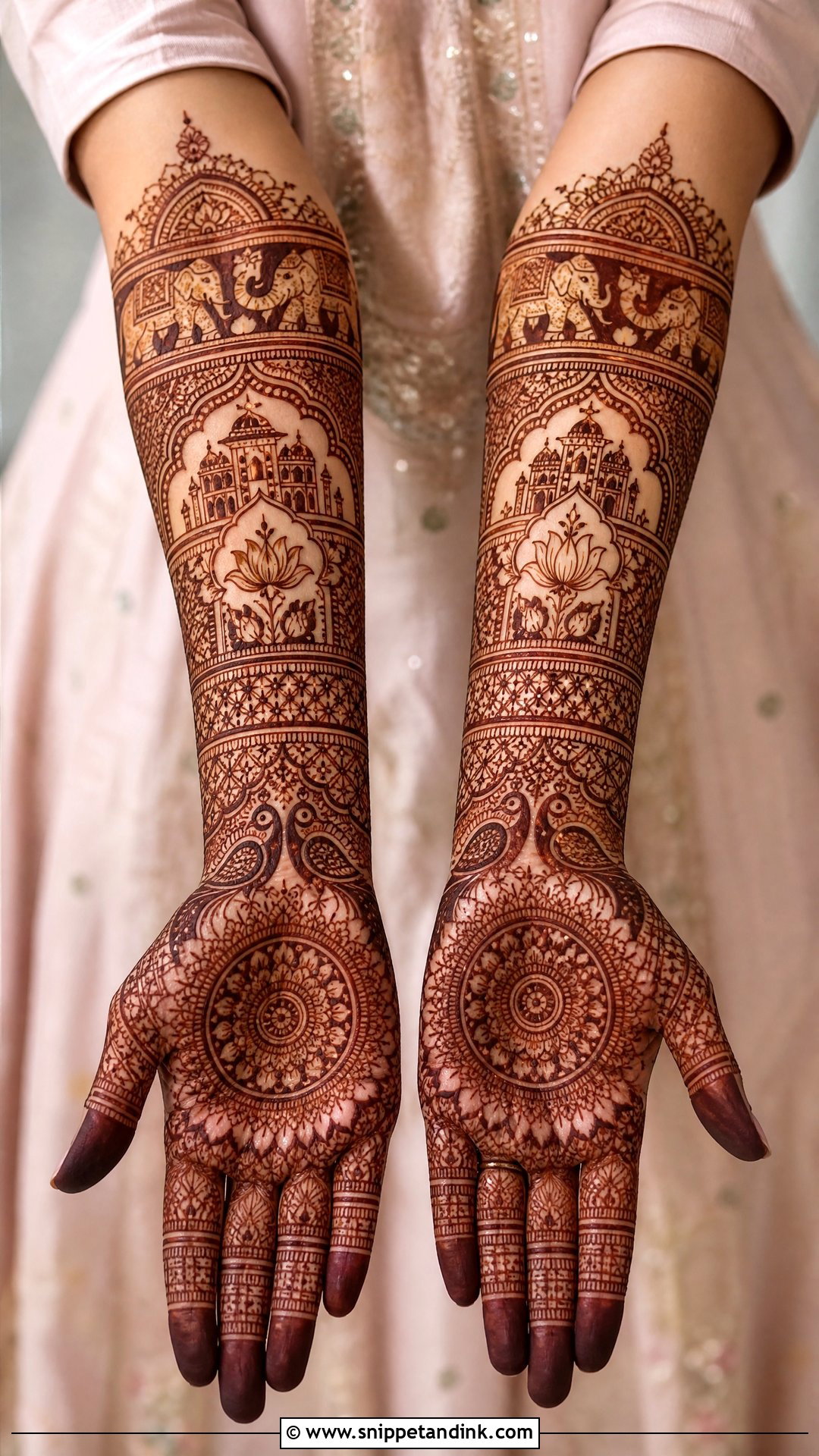
The Rajasthani version leans into royal imagery: elephants, palace arches, peacocks, chariots, lotus blooms and wedding figures, with very little bare skin left. It’s heavier than Arabic henna in every sense, drying time included. I ask brides to choose one main story motif, a wedding scene on the palm for instance, and let everything else support it with neat borders and traditional fillers. On the back of the hand, a bold mandala with cuff-like wrist bands balances the busy palm.
4. Marwadi Peacock Bridal Mehndi
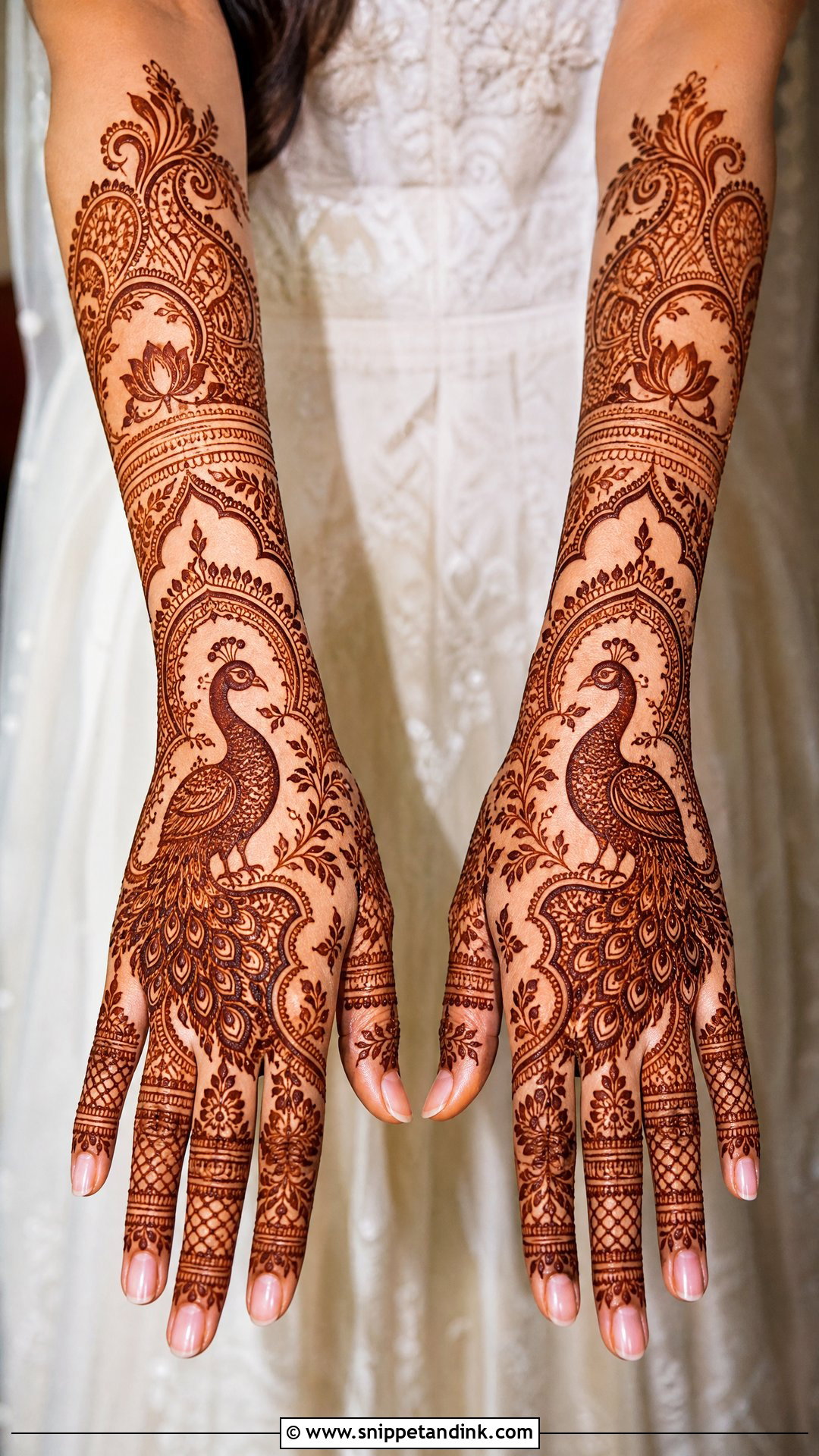
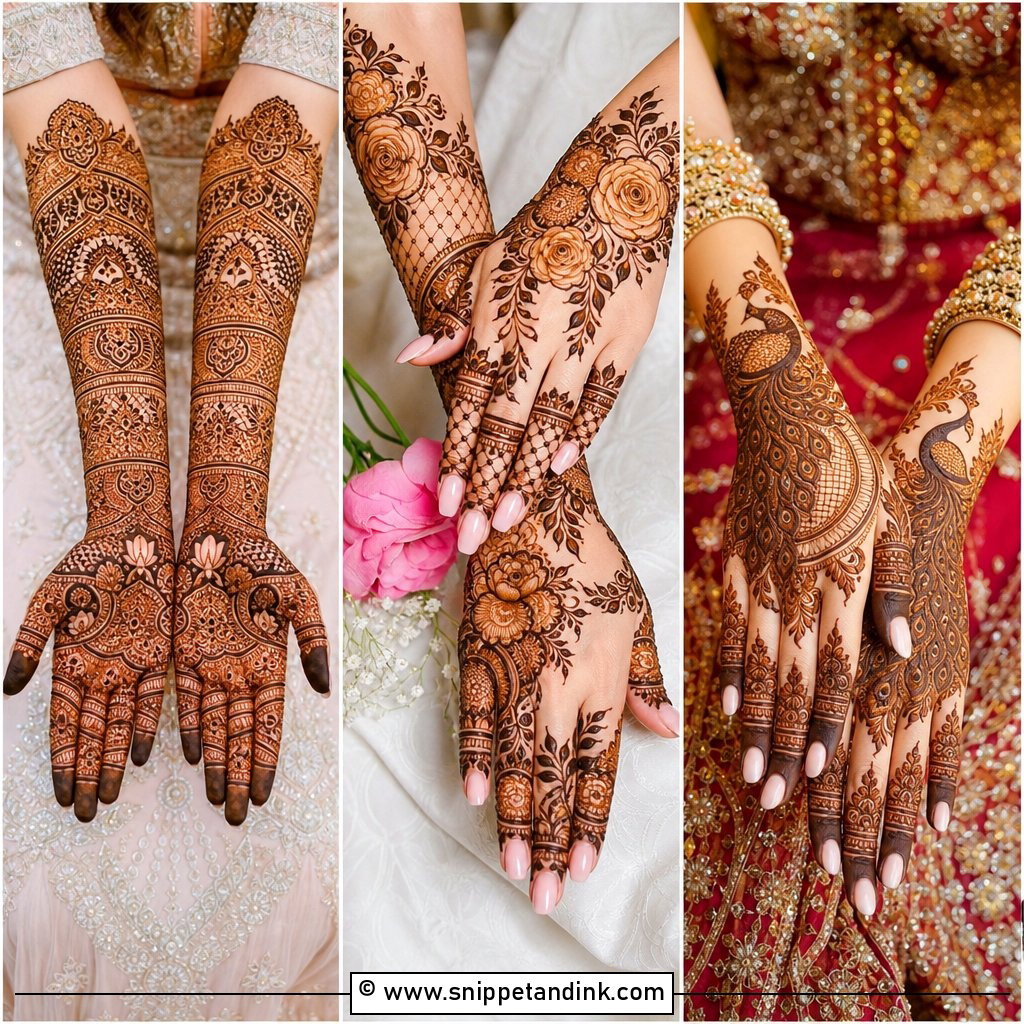
A peacock’s curved neck and long tail fit naturally into the shape of a palm or the length of a forearm, which is why it turns up in almost every Marwari design I draw. The feathers let me add tiny paisleys, dots and mesh without breaking the flow. It suits a bride who wants tradition without portraits, paired with lotus motifs and shaded vines. I mirror the birds on both hands so that when you hold your palms together for photos, the two peacocks face each other.
5. Marwadi Lotus Bridal Mehndi
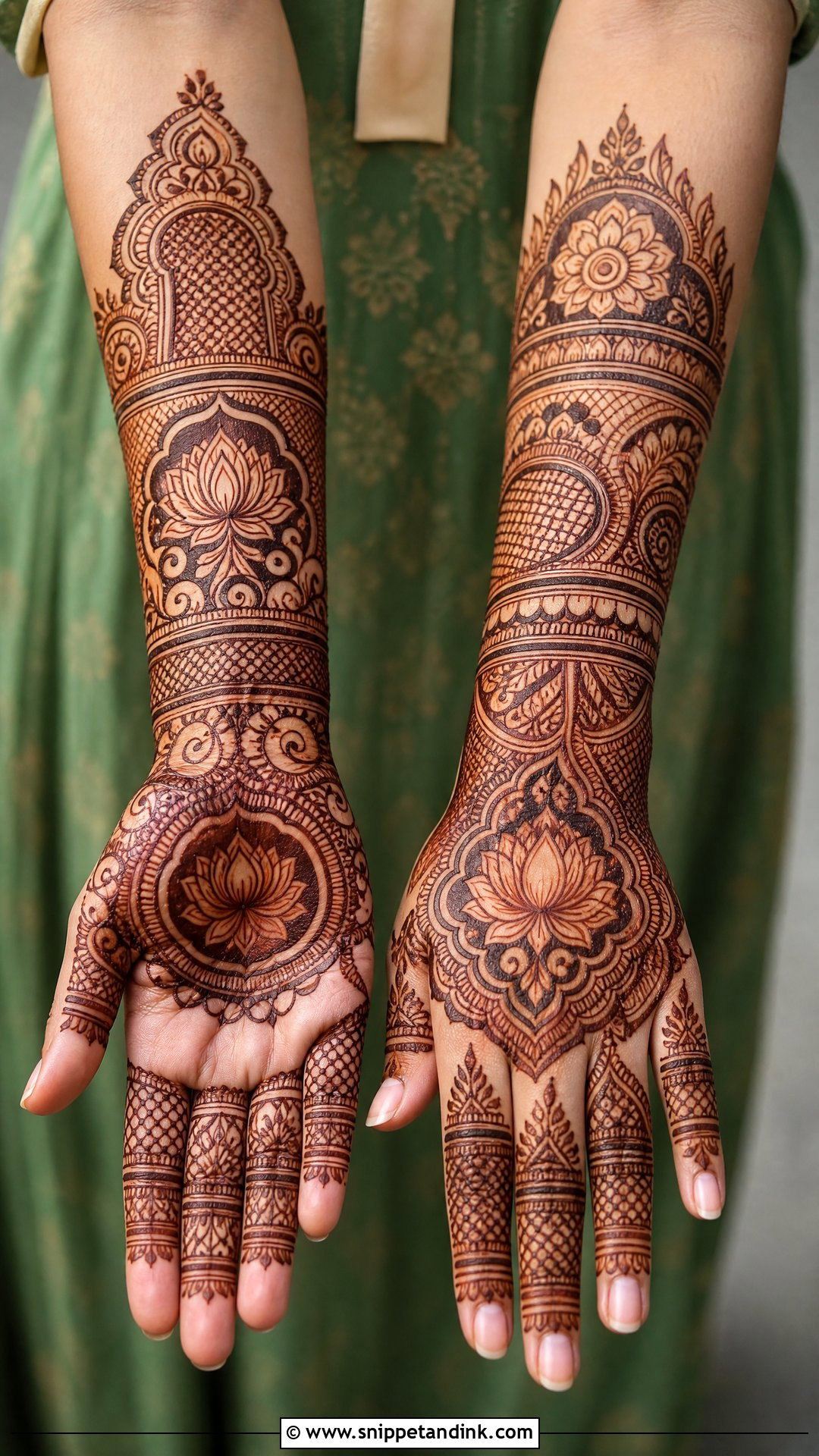
The lotus is auspicious and one of the easiest motifs to keep legible, because its petals are broad and simple. It can sit at the palm center, near the wrist, or repeat as a band up the forearm, with jaali, leafy vines, paisley borders and mandalas around it. For a Marwari touch I add small palace arches or an elephant band near the wrist. It keeps its shape on both sides of the hand, even inside dense work. Brides wearing pink, ivory or pastels often prefer it to heavier imagery.
6. Marwadi Elephant Bridal Mehndi
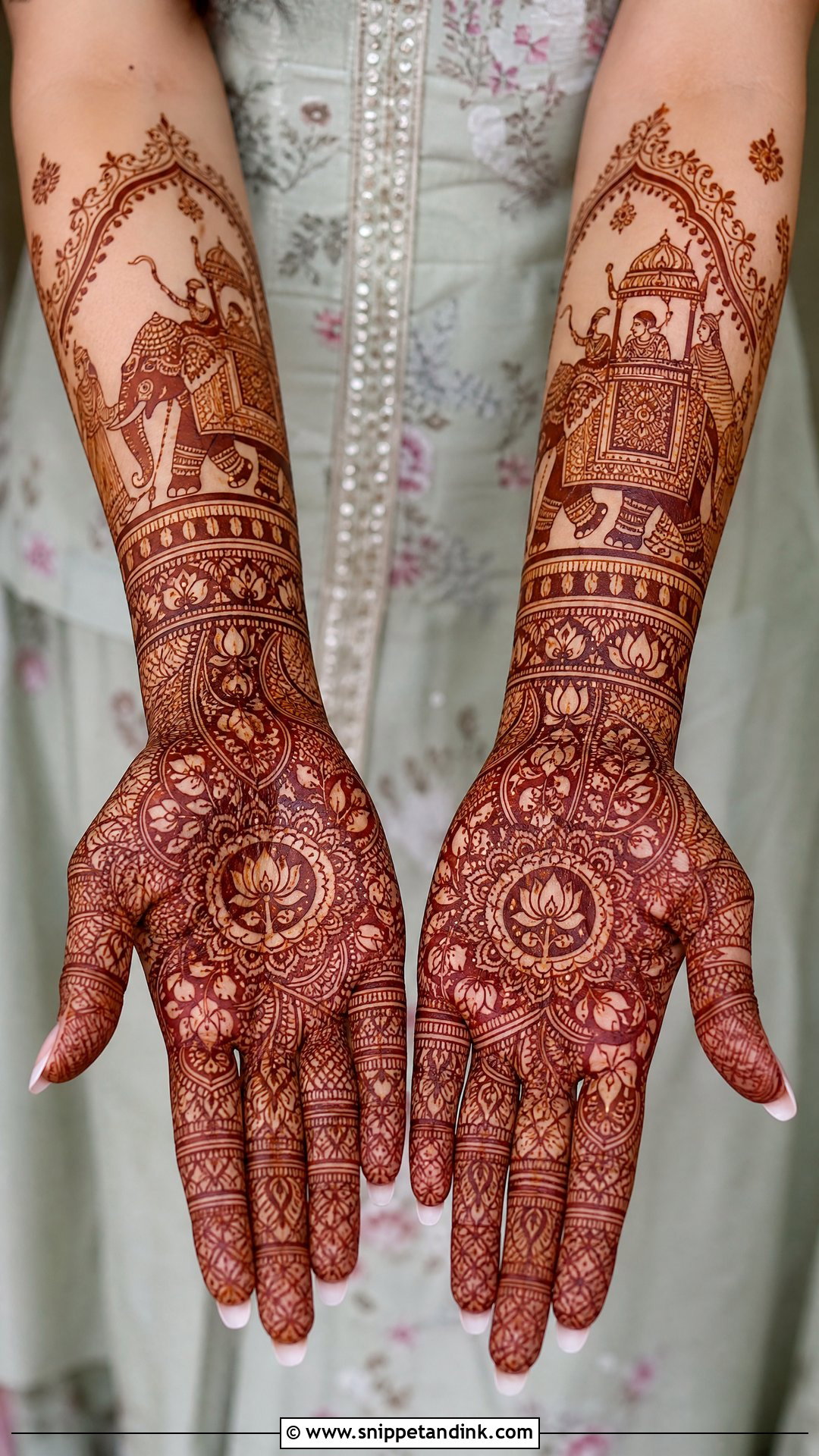
Elephants belong near the wrist, forearm or lower palm, dressed in tiny blankets, bells and ornamental borders. They stand for celebration and grandeur, a natural fit for a Rajasthani or Marwari bride. An elephant’s body is a large shape, and a big solid patch of henna stains as a blotch, so I fill the body with pattern and keep only the outline bold. A procession along the forearm, with a mandala or wedding scene on the palm, is the classic layout. Red and maroon lehengas set it off well.
7. Marwadi Mandala Bridal Mehndi
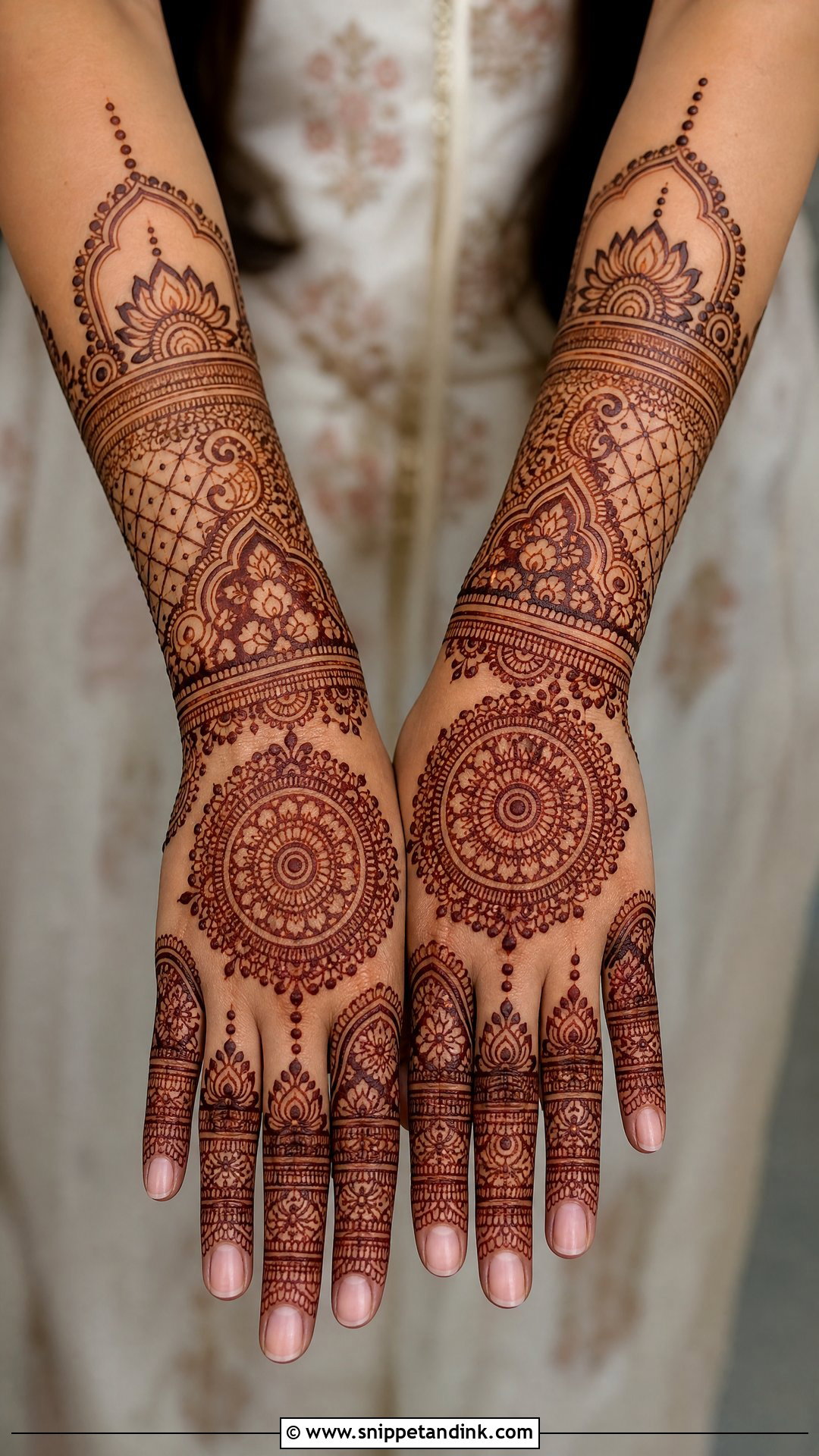
In a dense design the eye needs somewhere to rest, and a mandala gives it that. I put one at the center of the palm or the back of the hand, then build paisley chains, lotus borders, jaali panels and bracelet bands outward from it. The bold center keeps the design readable in photos even when everything around it is packed. For the wedding, extend it from fingertips to forearm instead of stopping at the palm. If portraits feel too busy for you, this gives you symmetry and tradition without large figures.
8. Marwadi Paisley Bridal Mehndi
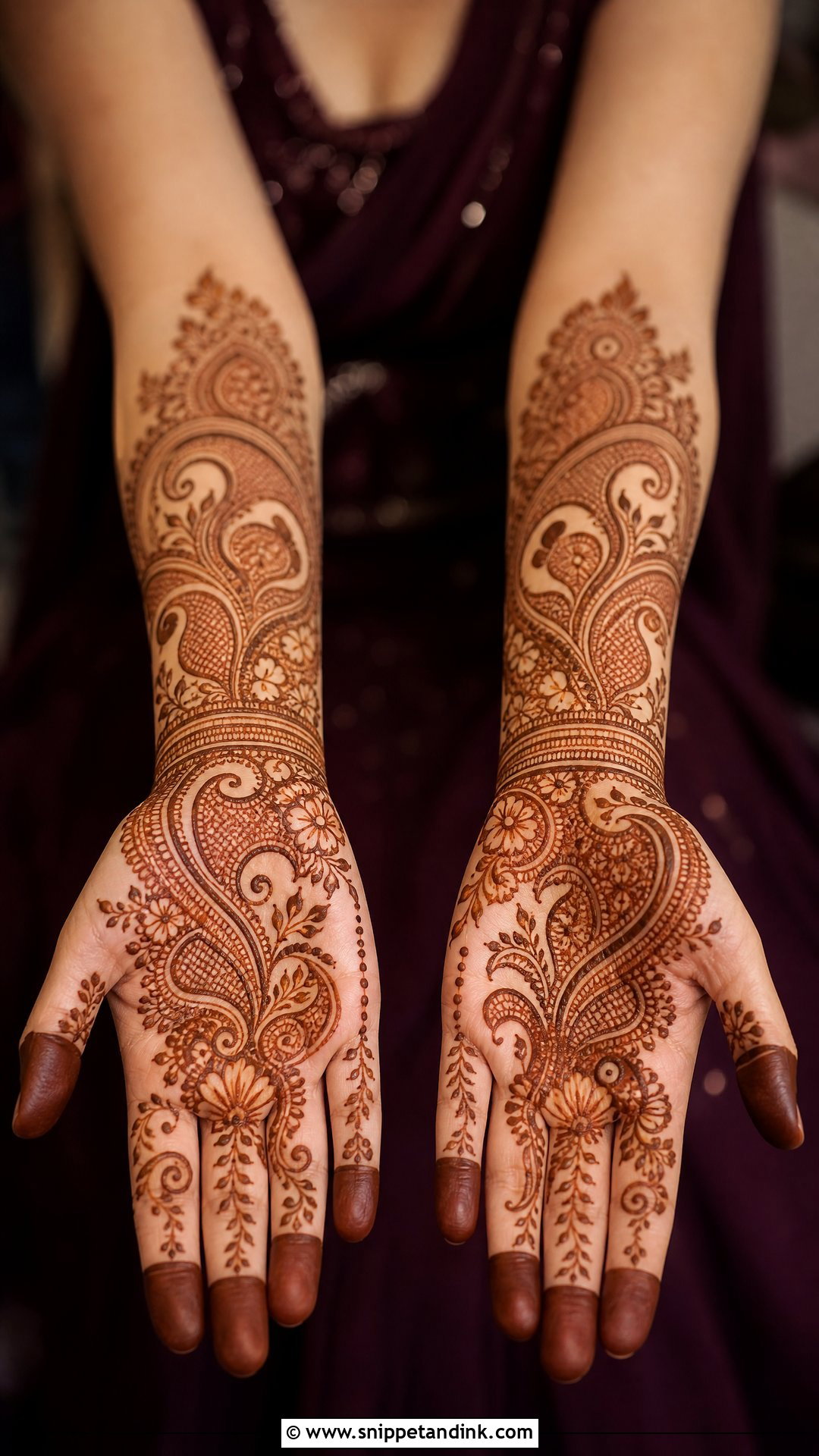
Paisleys are the curve that holds Marwari designs together. They stack across the palm, run diagonally over the back of the hand or climb from wrist to forearm like a vine, with small florals, dotted chains, leafy trails and mesh in the gaps. I tuck tiny peacock heads or lotus petals inside the larger paisleys for a Marwari finish. Set on a diagonal, they make fingers and palms look longer, which helps most hand shapes.
9. Marwadi Jaali Bridal Mehndi
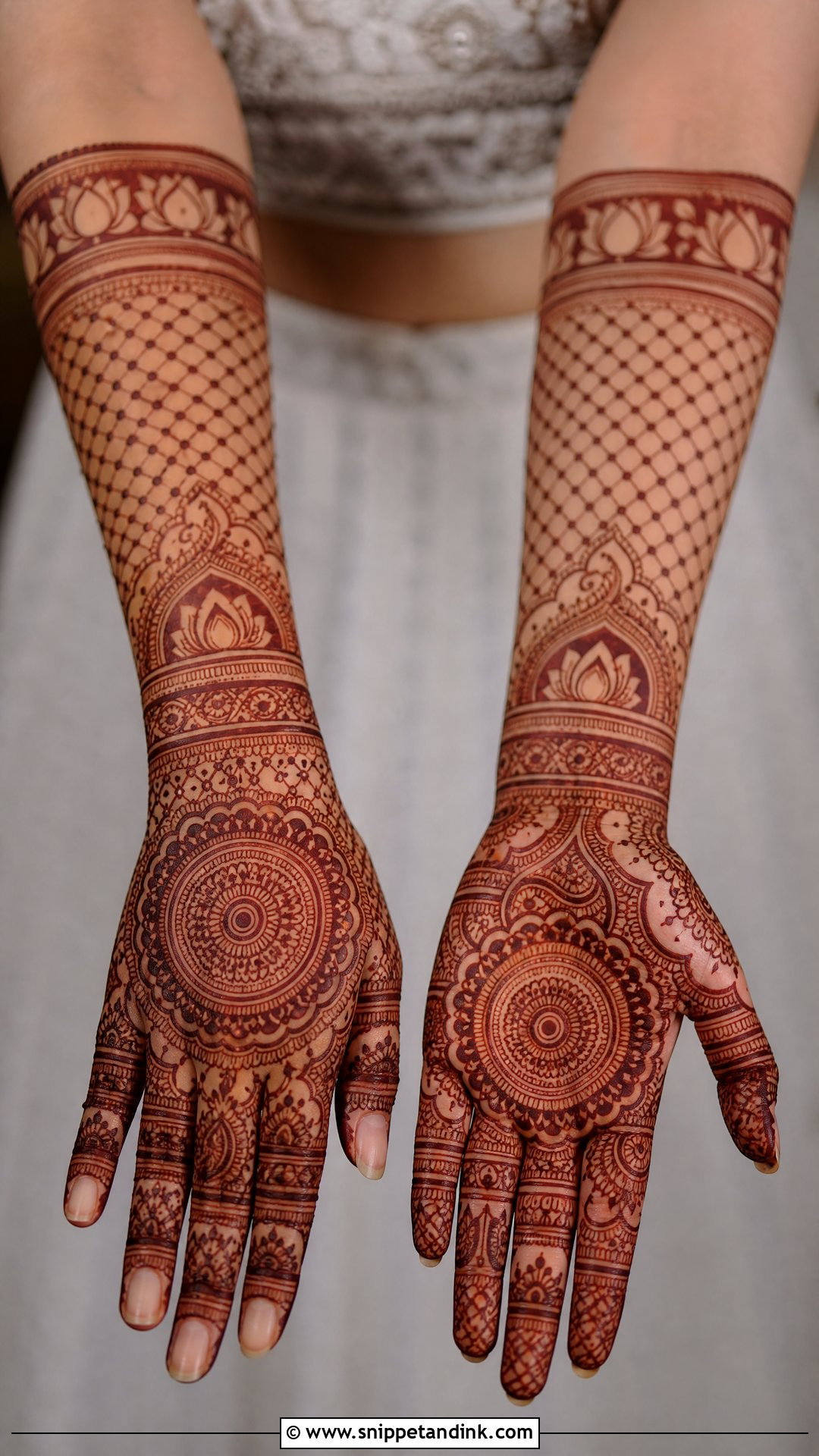
Jaali, the net pattern, is what gives Marwari henna its texture, on the back of the hand, the fingers, the sides of the palm or forearm panels. It works as background, so it needs a bold neighbor for contrast: a mandala, lotus, peacock or paisley. The lines have to be evenly spaced, because uneven mesh looks shaky once it stains. I add tiny dots or flowers at some of the crossings. Under a haath phool, the mesh shows between the chains while the main motifs stay clear.
10. Marwadi Groom Name Mehndi
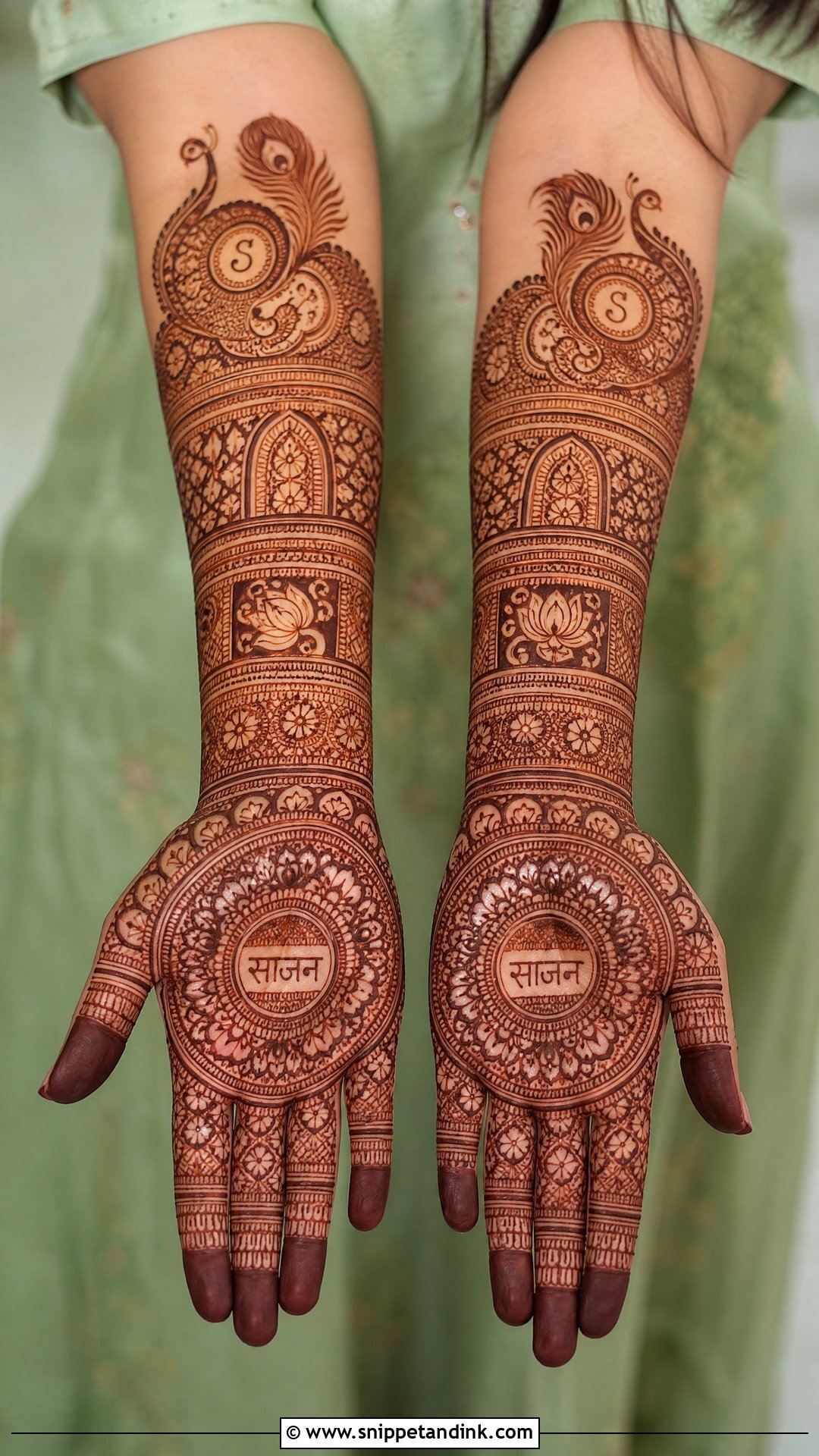
Hiding the groom’s name is one of the most fun parts of Marwari mehndi. His name or initials go inside a paisley, lotus petal, peacock feather, jaali panel or wrist band, and in many families he has to find it later. I place it where it blends into the pattern but can still be found; a name hidden too well turns a playful moment into a long search. The rest of the design stays fully bridal. Write the spelling down for me, in the script you want, before the day.
11. Marwadi Back Hand Bridal Mehndi
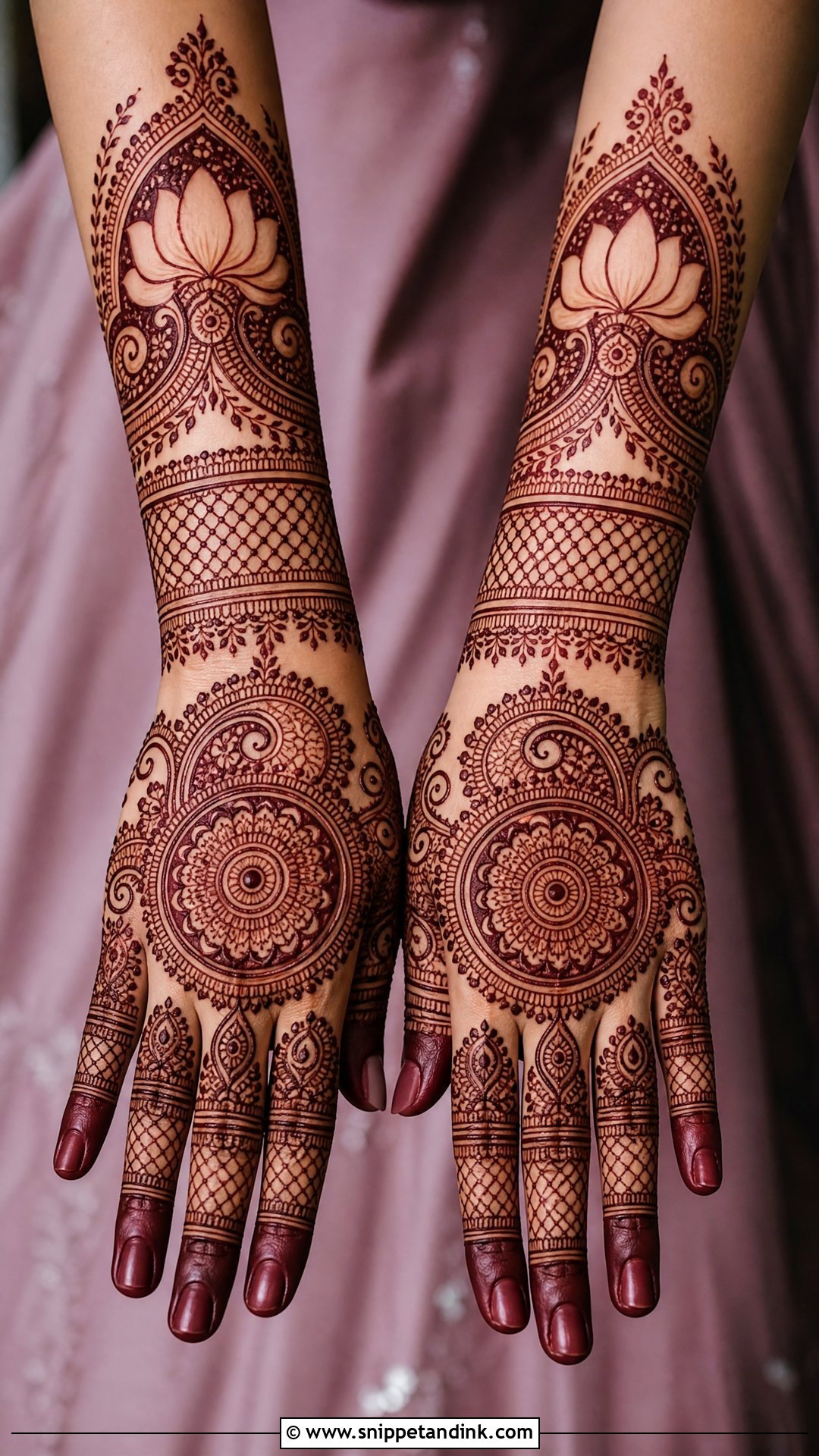
The back of the hand shows in ring, jewelry and pose photos, from wrist to fingertip. A bold center mandala, peacock trail or lotus cluster carries it, with small paisleys, leafy lines or jaali on the fingers and a bracelet cuff at the wrist. Extend it onto the forearm with arches or floral bands for the full bridal look. This side stains lighter than the palm, so I draw the lines a touch bolder and leave bare skin around the main motif to keep it crisp.
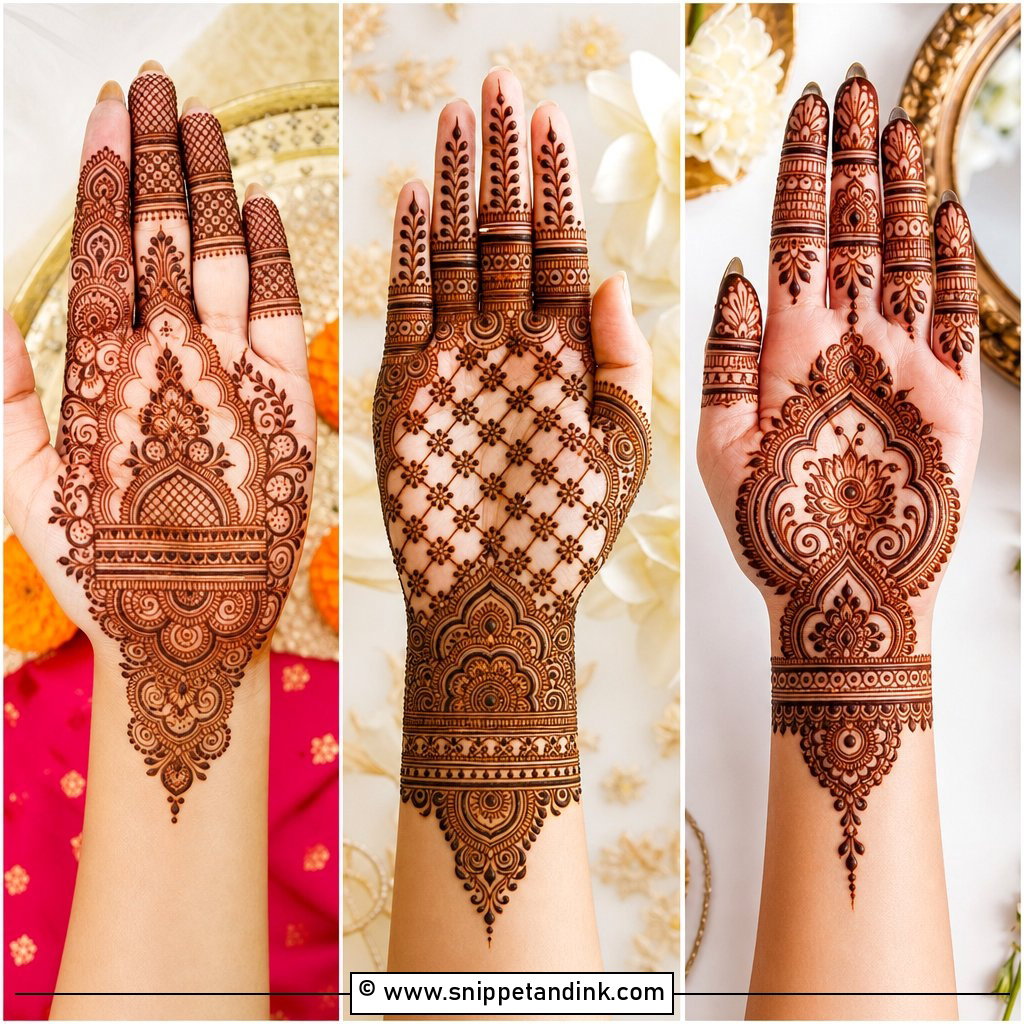
12. Marwadi Front Hand Bridal Mehndi
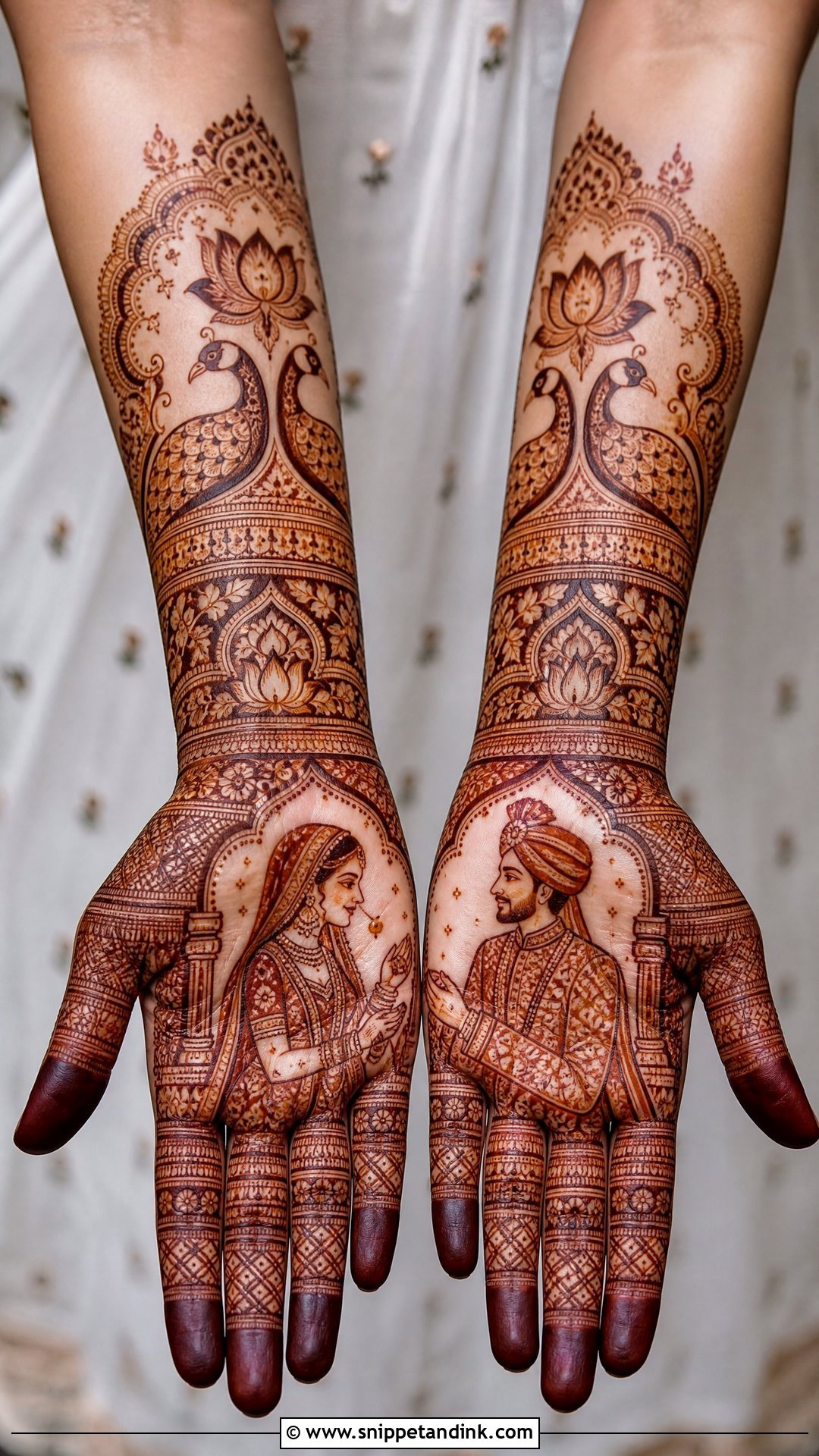
The palm has the most room, so it gets the story: dulha-dulhan portraits, mandap scenes, peacock pairs, lotus mandalas or wedding symbols. Fingers are usually fully covered with tiny checks, petals, swirls and leaves, while wrists and forearms take royal bands, paisley borders and jaali. A good front-hand design looks complete with the hand held open and flat. I pick one main palm feature and repeat smaller motifs around it, which keeps a rich design organized.
13. Marwadi Bridal Mehndi With Kalash
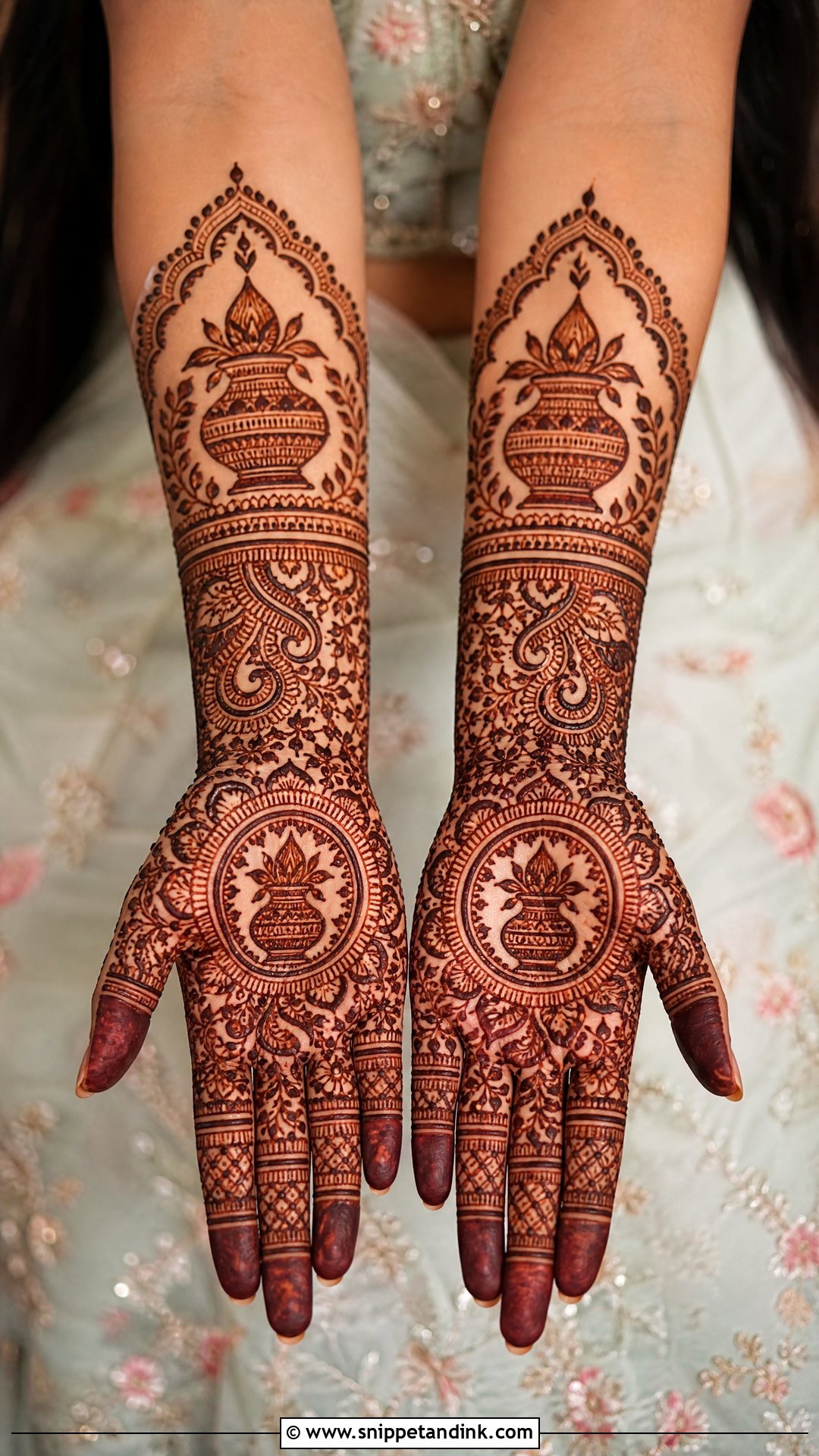
The kalash, the ritual pot crowned with mango leaves and a coconut, ties the mehndi to the wedding ceremonies themselves. I place it near the wrist, at the base of the palm or on the forearm, ringed with lotus petals, leaves and dotted borders. Draw it slightly larger than the fillers around it, or it disappears into the pattern. It supports a mandala or wedding scene on the palm rather than replacing one, and suits a classic red bridal outfit with gold jewelry.
14. Marwadi Bridal Mehndi With Radha Krishna
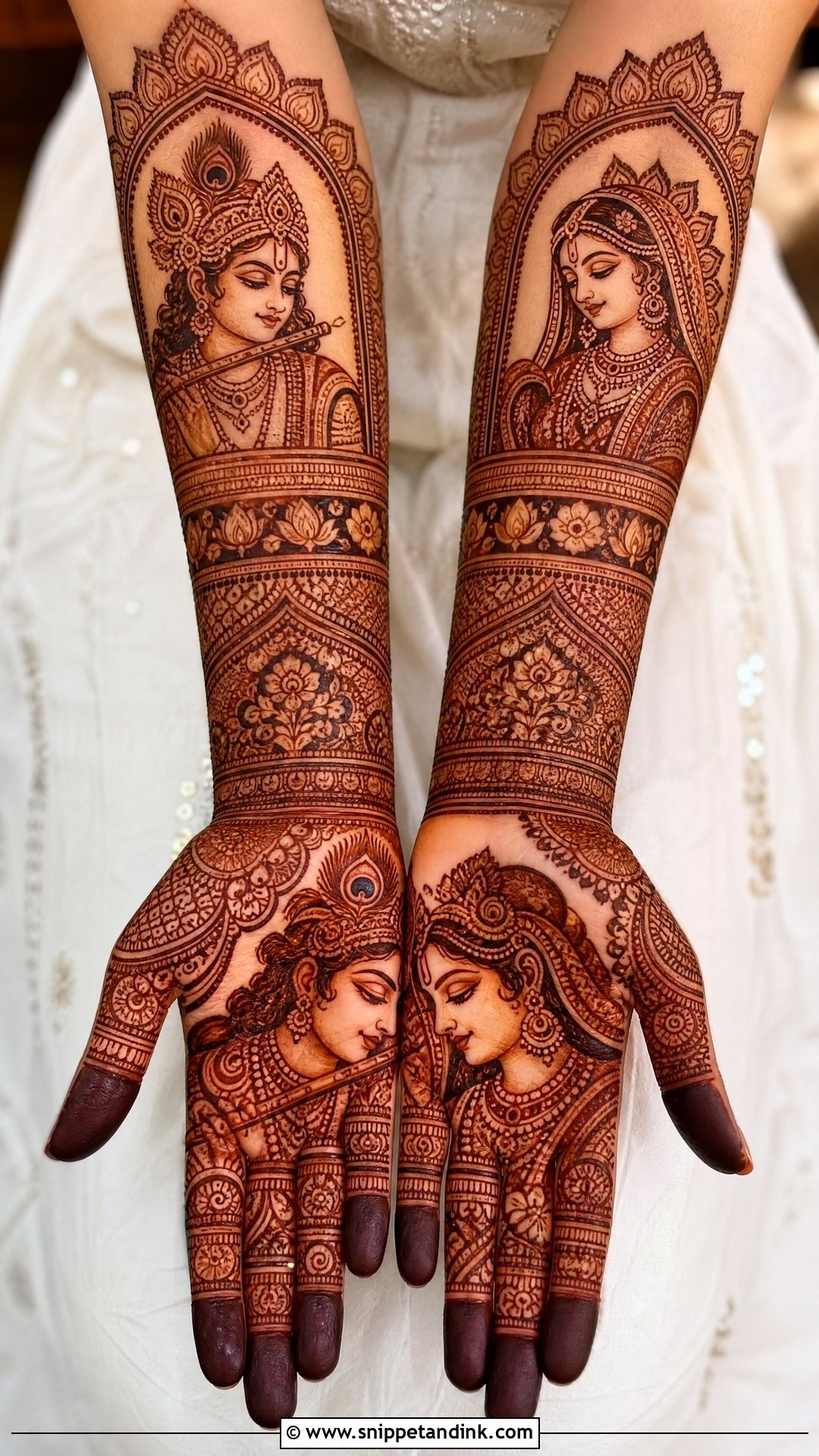
Marwadi bridal mehndi with Radha Krishna art brings devotion into the design. Radha and Krishna sit on the palms or forearm, framed by lotus borders, peacock feathers, a flute and fine vines. Figures need clarity, so I only take this on as a full-hand layout with room around them, and I keep Krishna’s peacock feather and flute bold, since those details identify him at a glance. Fingers stay detailed with paisleys and mesh, and the wrists carry bracelet bands.
15. Marwadi Bridal Mehndi With Royal Palace
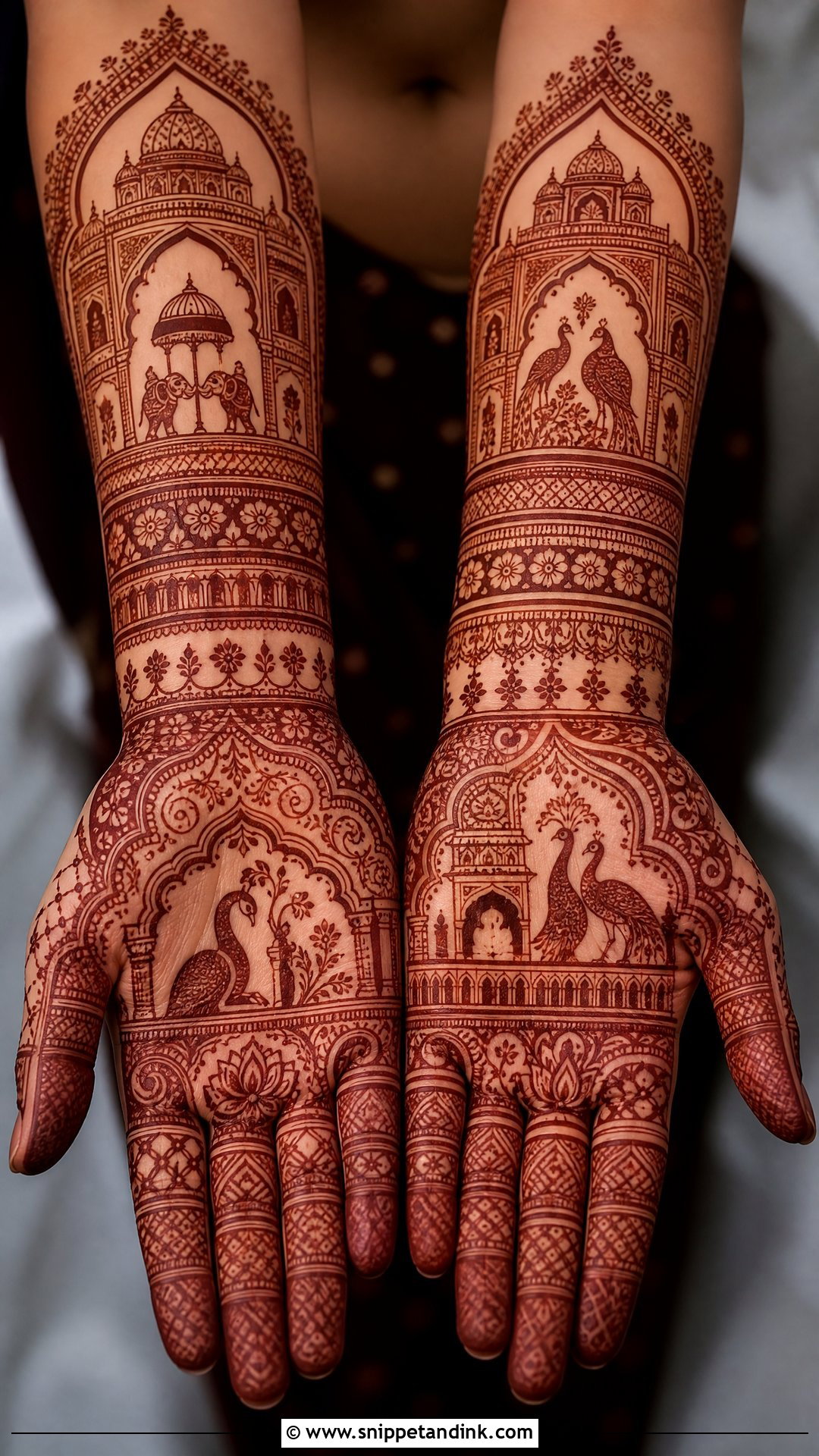
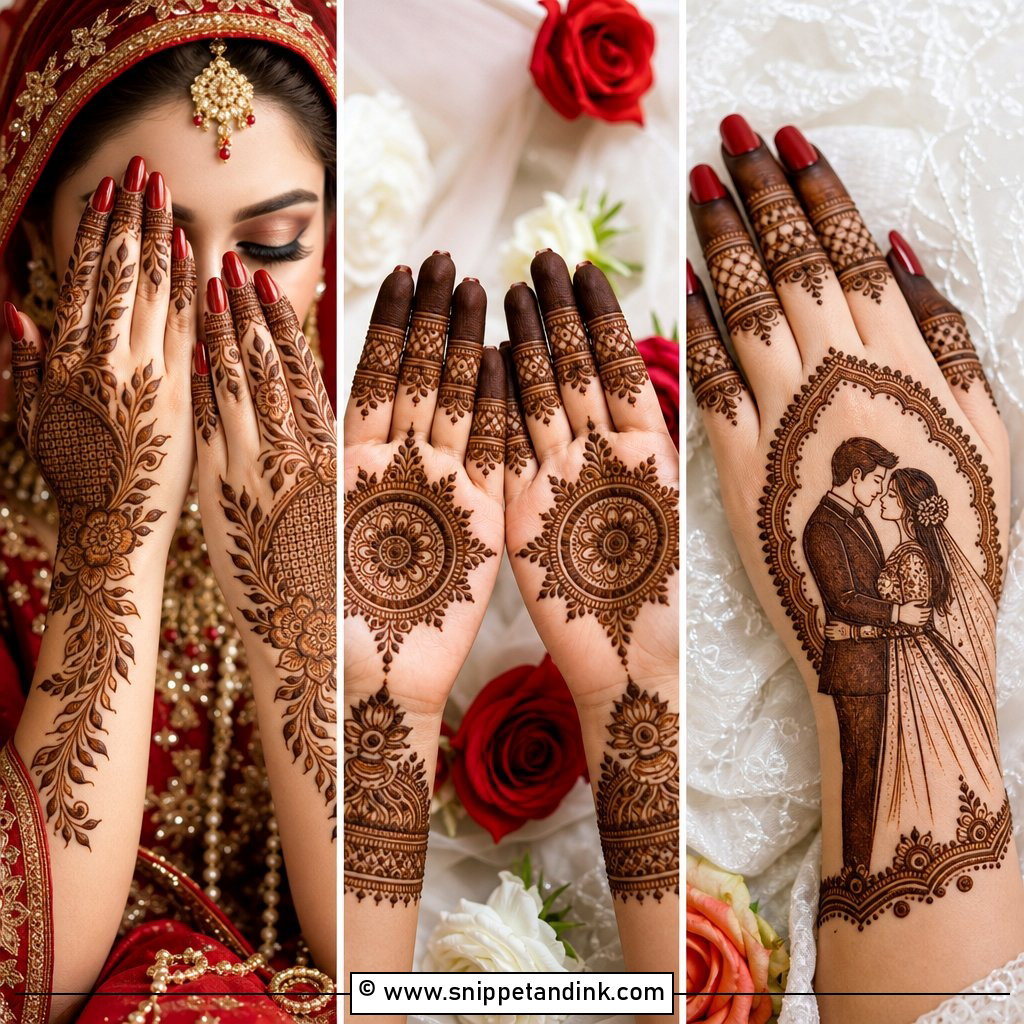
Marwadi bridal mehndi with royal palace elements borrows from Rajasthan’s architecture: arches, jharokha windows, domes and carved borders across the palms and forearms, often with elephants, peacocks and the couple inside the frames. Architecture needs straight, even lines, so I outline the arches boldly and fill them with fine pattern; otherwise the structure dissolves into the fillers. It needs full-hand coverage to have room. A Rajputi poshak or a heavy Marwari bridal outfit is its natural partner.
16. Simple Marwadi Bridal Mehndi
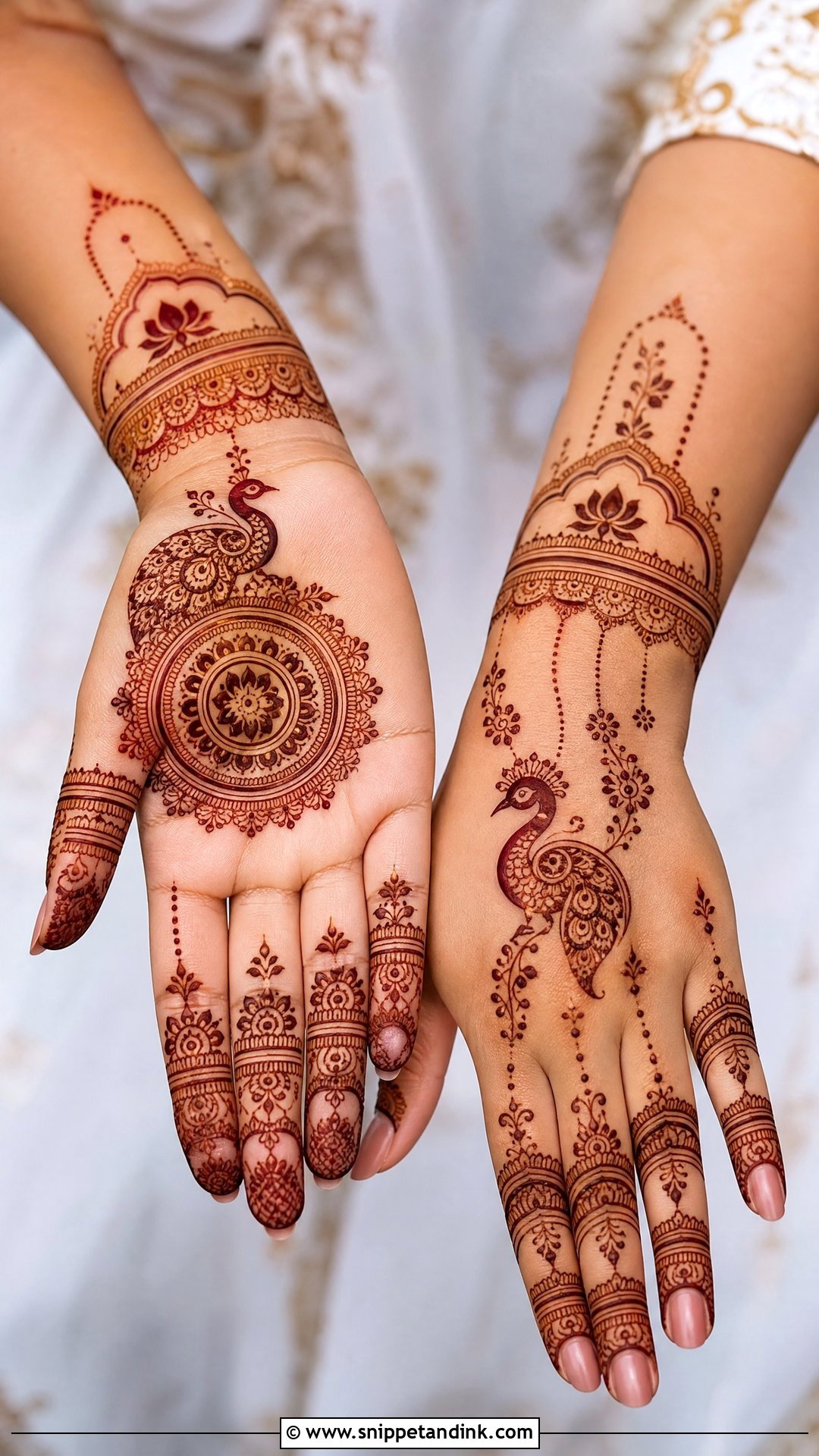
Not every bride wants the densest mehndi, and a lighter Marwari design still looks ready for a wedding. I keep at least one traditional motif, a peacock, lotus, elephant or arch, so it doesn’t lose its identity, and lighten the rest: a palm mandala, neat finger bands instead of fully covered fingers, a clean bracelet at the wrist. It’s what I suggest for an engagement, a haldi, a small wedding or a bride who finds long sittings hard. It dries far faster too.
17. Modern Marwadi Bridal Mehndi
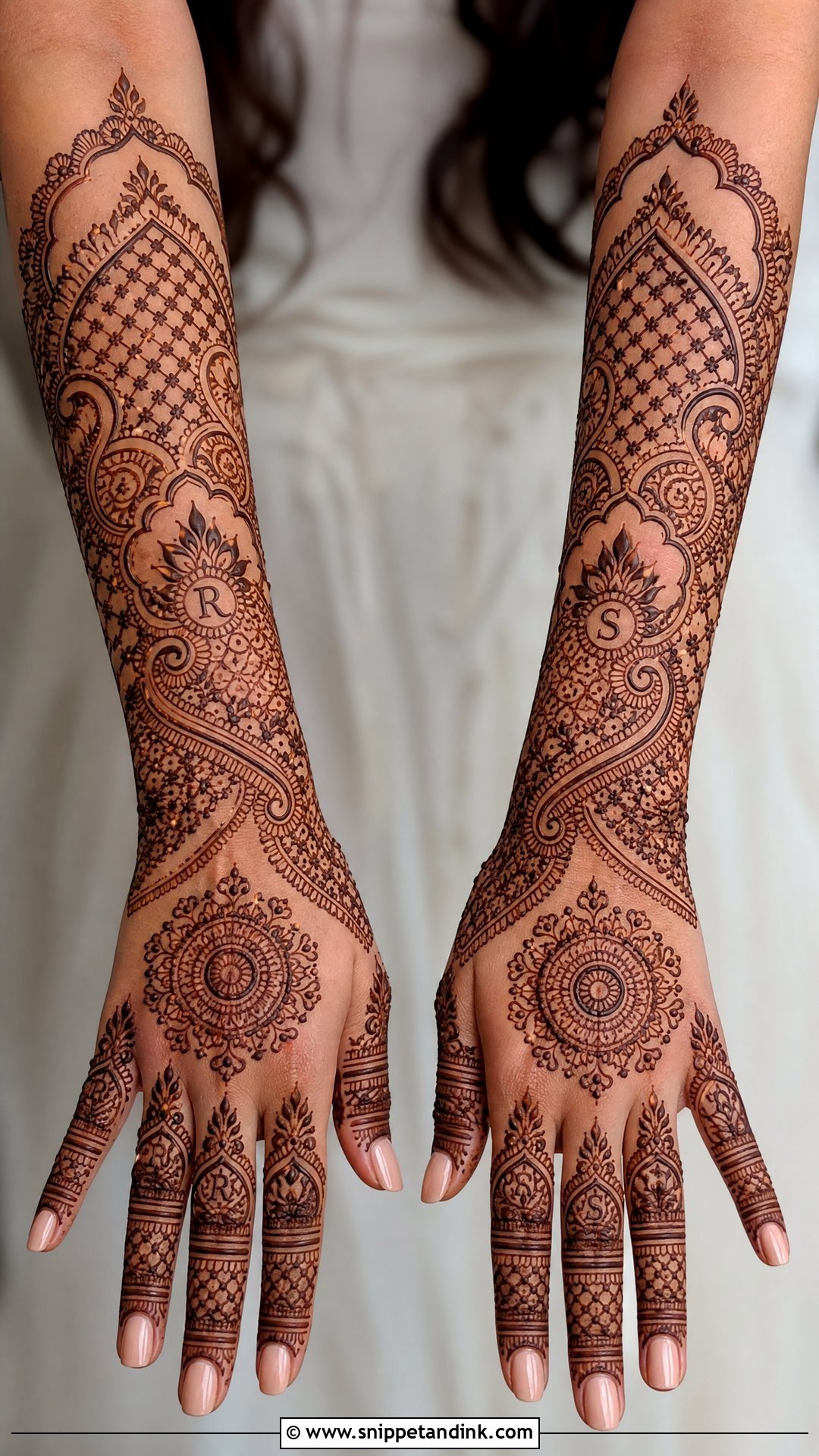
Modern Marwari designs keep the motifs but change the spacing: bold mandalas, open jaali panels, diagonal paisley trails and the couple’s initials picked out clearly. The trick is to keep the main motifs large and use bare skin to separate sections deliberately, never leaving gaps at random. It suits contemporary lehengas, pastels and minimal jewelry, and blends easily with Indo-Arabic flow.
18. Indo Arabic Marwadi Bridal Mehndi
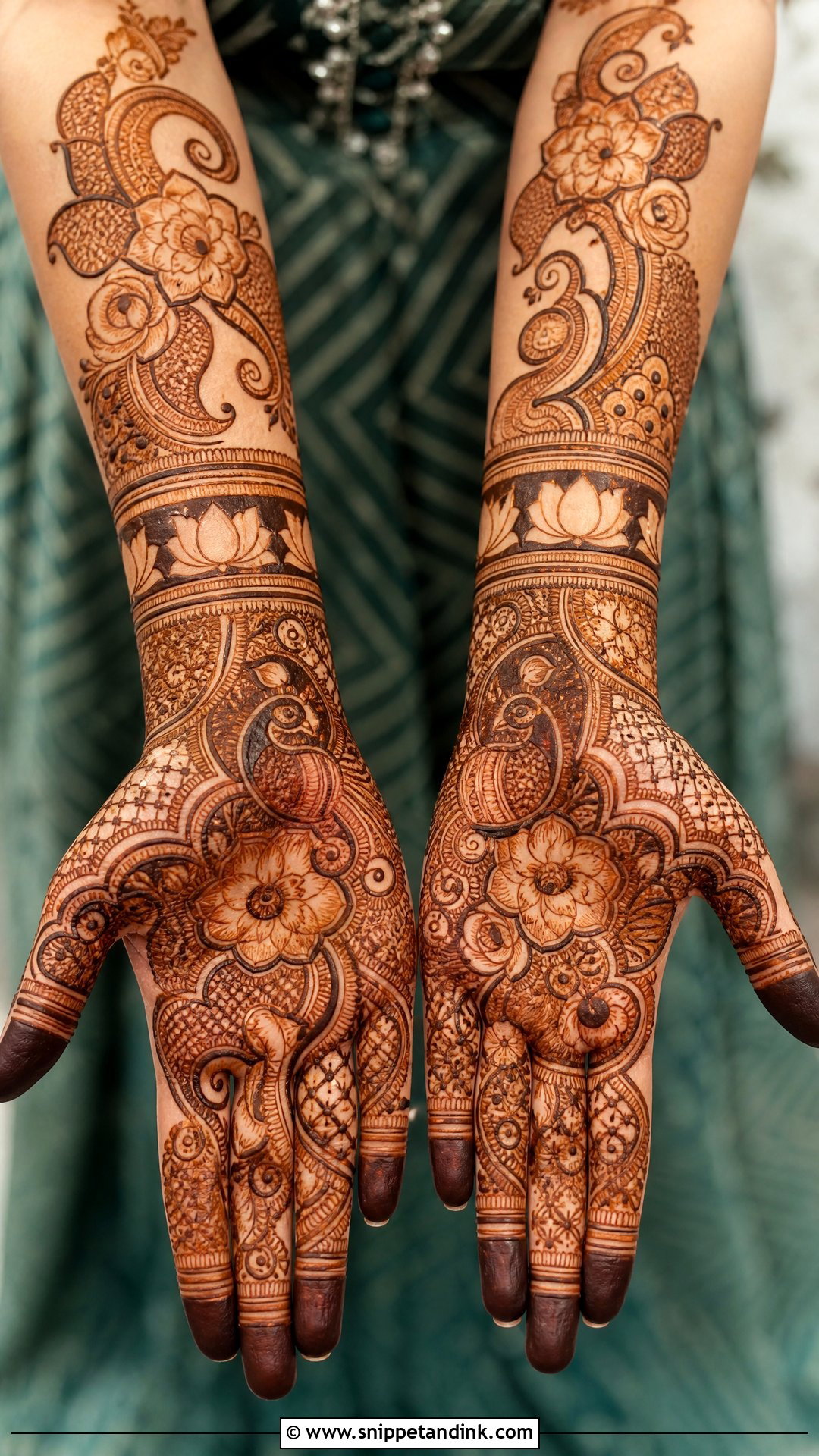
Indo-Arabic Marwari henna runs diagonally from wrist to fingers with bold florals and open skin around the paisleys and peacocks, then adds Marwari elements: lotus bands, groom initials, jaali panels or a small elephant border. It’s lighter than the full traditional version but still bridal. The practical advantage is time. A bride with several functions in a row can have it applied quickly and still look dressed for each one.
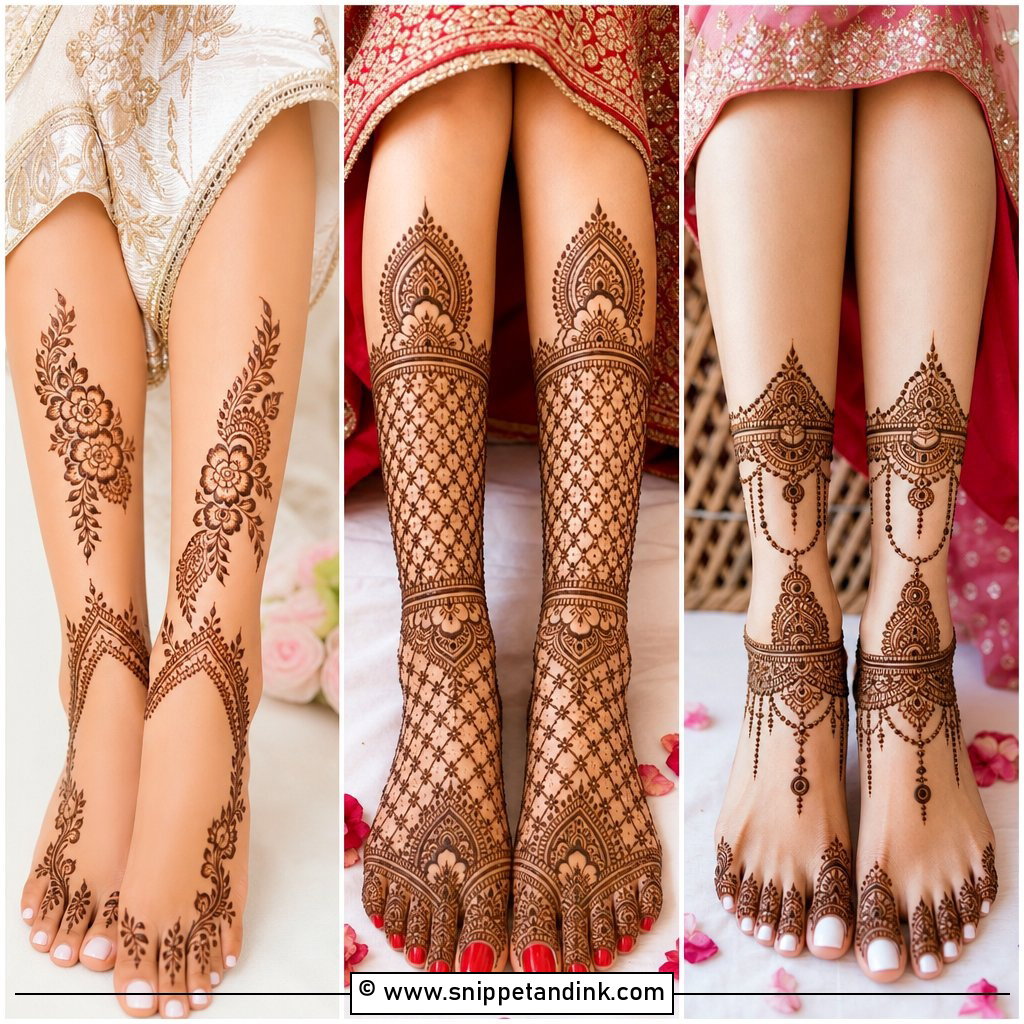
19. Marwadi Bridal Foot Mehndi
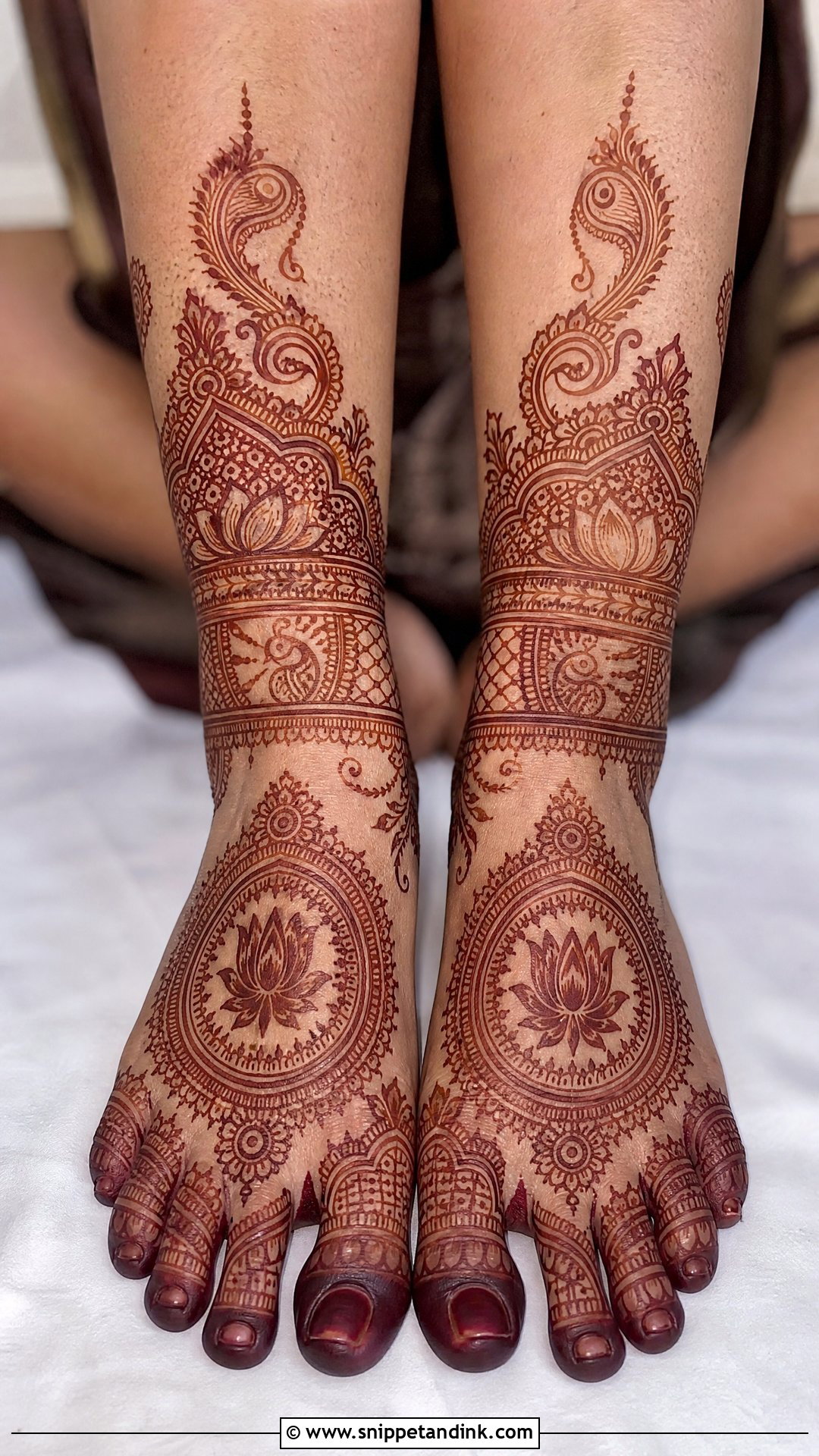
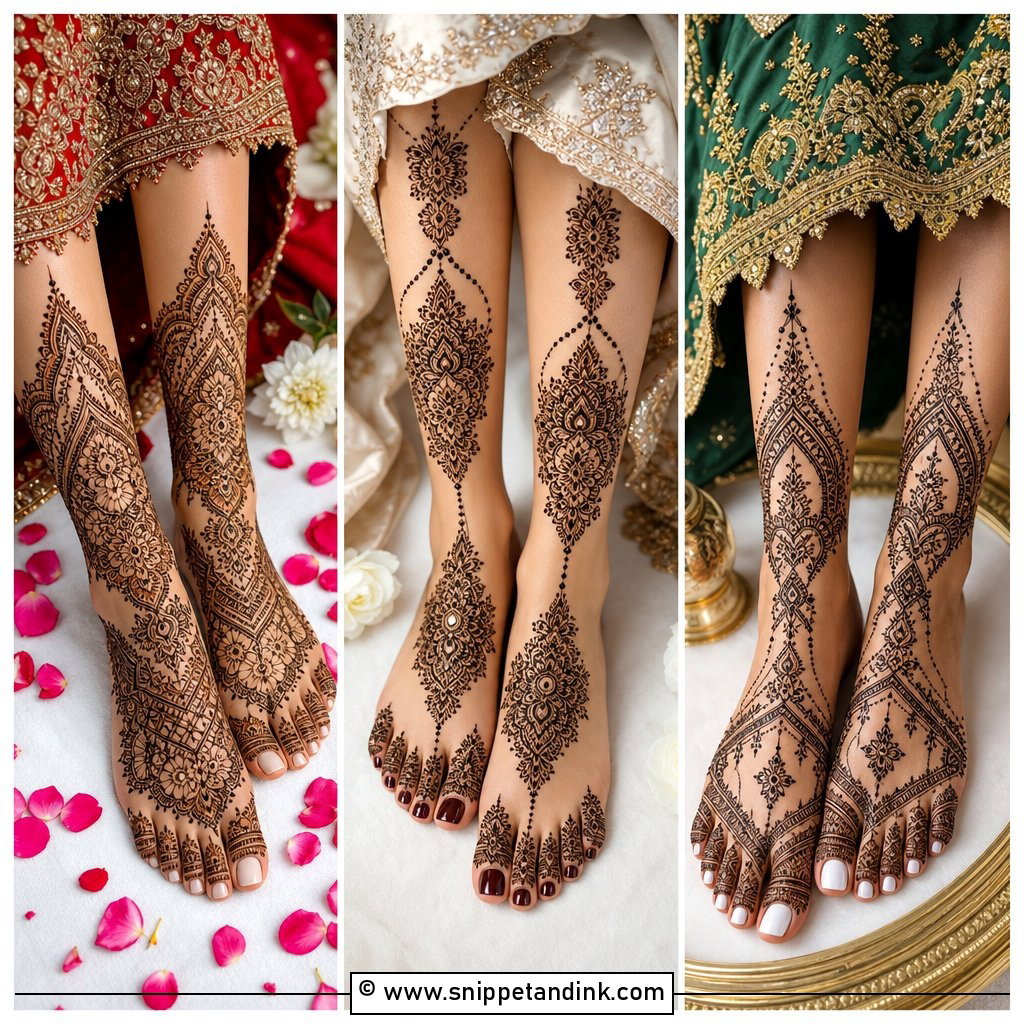
Feet complete the bridal set, especially with payal, toe rings and open footwear. The design can cover the toes, the top of the foot, the ankles and lower legs, using lotus mandalas, paisley vines, peacock feathers, jaali and anklet borders. Keep the center motif bold, because very fine detail on the top of the foot stains lighter and fades quickly. I repeat one motif from the hands, an elephant, a lotus or an arch, so hands and feet read as one set in portraits.
20. Marwadi Bridal Mehndi For Short Hands
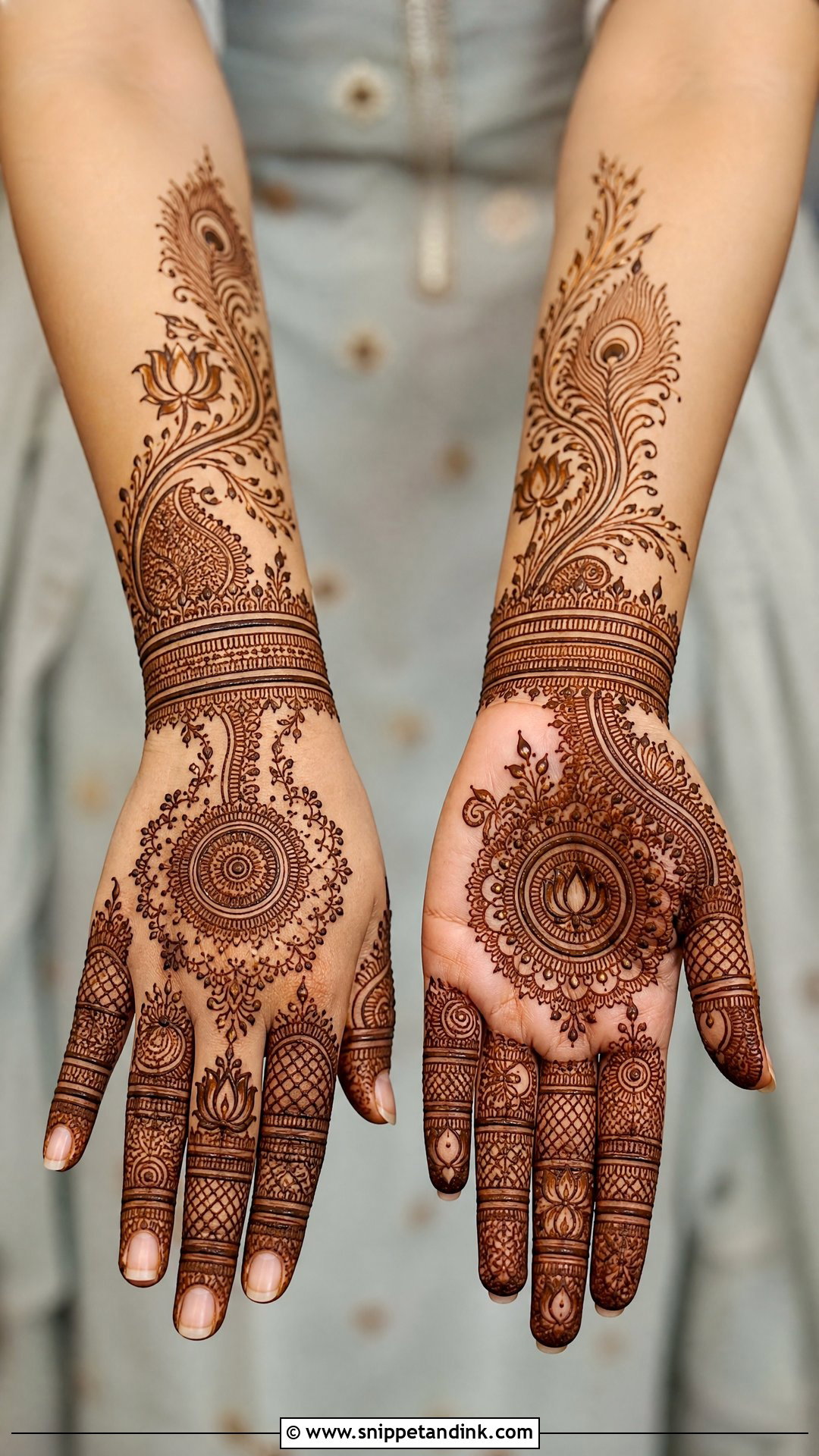
For shorter hands, I design for length. Vertical paisley trails, slim lotus vines, elongated peacock feathers and narrow jaali panels draw the eye upward. Large motifs placed side by side make a palm look smaller, so I avoid them. A center mandala with long finger detailing and a slim wrist cuff does the job, with light bands on the forearm instead of heavy blocks. You can still have full Marwari detail; only the direction of the lines changes.
The Folklore About a Dark Stain, and What Really Decides It
At almost every mehndi I hear the old saying that a darker stain means more love from your husband, or your mother-in-law. It makes for good teasing, but the color has practical causes. Fresh, finely sifted henna gives the deepest result, and Rajasthan’s Sojat region has long been known for its crop. Stale paste or old powder leaves a weak orange however long you wear it.
After that, it’s contact time and warmth. The longer the paste stays on, ideally overnight, the deeper the color, and warm skin darkens faster than cold. Palms and soles take the most color. Keeping water off the design for the first day matters more than any home remedy.
Lighter Mehndi for Sisters, Mothers and the Groom
- Sisters and cousins: an Arabic trail or half hand with one Marwari motif, so they match the bride without competing with her.
- Mothers and aunts: palms, backs and a wrist band, kept quick so they can get back to hosting.
- The groom: in many families he receives a small shagun design or a single dot on the palm. Ask him beforehand how much he’s comfortable with.
- Large families: tell your artist the guest count early. One artist can’t finish full bridal hands and twenty guests in a single evening, so helpers need booking too.
Which Story Do You Want Your Palms to Tell?
Portraits, peacock trails, lotus mandalas, jaali, elephants, palace arches and hidden names can each carry part of your wedding story, and you don’t need all of them. Your hand shape, your outfit, the ceremony and how long you can sit will narrow the list. Dense full-hand work feels royal; modern and Indo-Arabic versions are lighter; foot mehndi finishes the set. Bring me the one or two motifs that mean something to your family, and I’ll build everything else around them.
You'll Like These Ideas:





Leave a Reply