
Bridal mehndi is the one piece of the wedding look you can’t take off, so it’s worth thinking about before the cone comes out. Indian brides return again and again to peacocks, lotus, mandalas, jaali, paisleys, portraits and the groom’s hidden name, and the choice between a packed bharwa hand, an Arabic trail or a modern minimal layout changes how the whole outfit reads. I’ve put together 30 designs below, with notes from the artist’s side of the table: where each motif sits best, what it demands in sitting time, and who I’d steer toward something else.
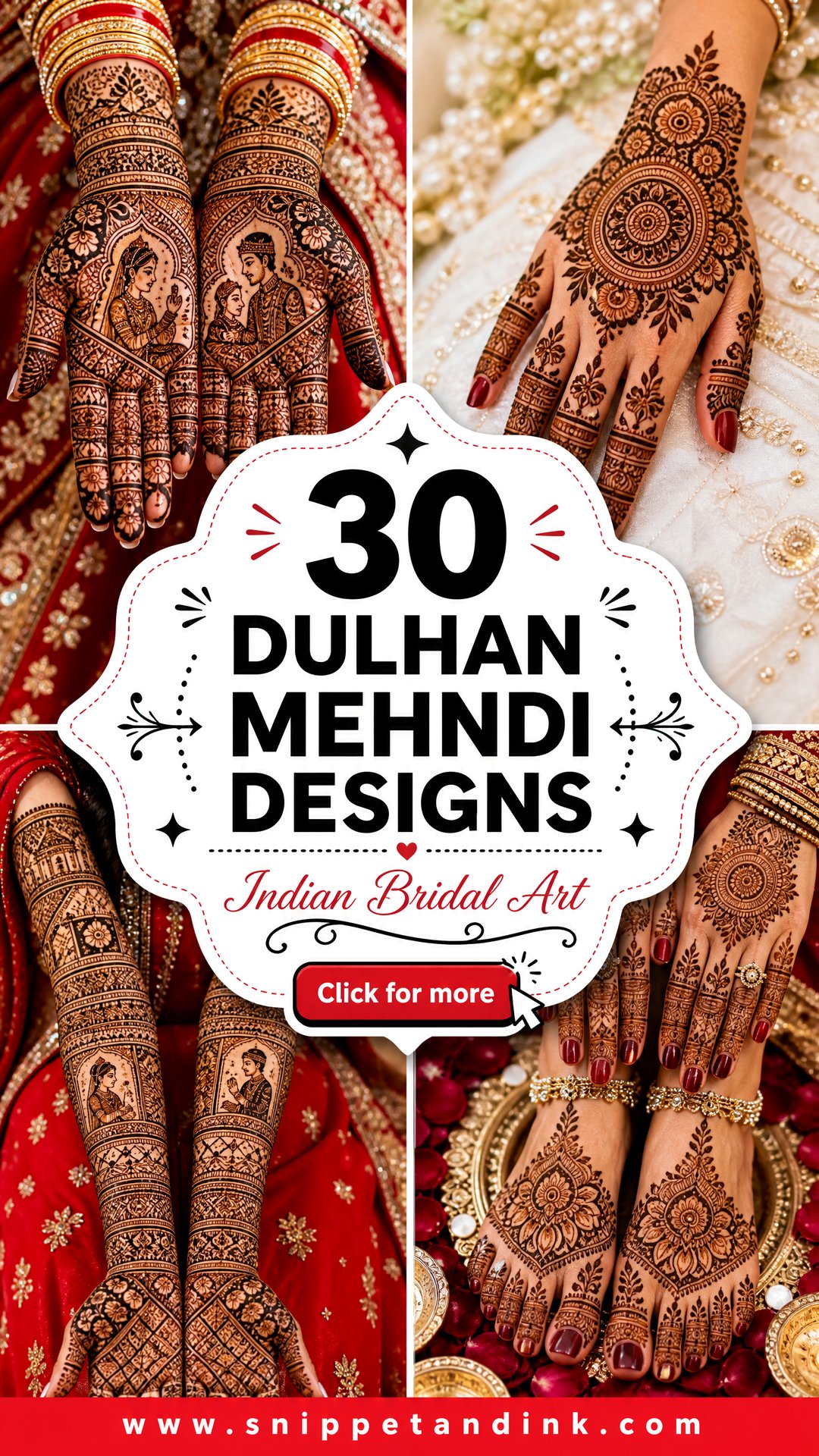
Which Part of the Hand Gets the Heaviest Work?
Before a bride picks a style, I ask her to walk me through her wedding events, because each ritual shows a different side of the hand. Placing the main motifs where they’ll actually be seen matters more than adding more of them.
- Pheras and kanyadaan: palms are held open or joined, so the central motifs and any portraits belong there.
- Ring ceremony and jewelry shots: the back of the hand faces the camera, so a cleaner back keeps rings readable.
- Chooda and kaleere: the forearm and wrist will be largely covered, so detailed wrist work may vanish under bangles for weeks.
- Sleeves: the edge of your blouse or kurti sleeve decides where the design should end. Henna that disappears under fabric halfway through a motif looks cut off.
Bring a photo of your outfit and jewelry to the booking. Heavy zardozi sleeves next to a bharwa hand can look busy, while a plain silk often welcomes dense work. Hand shape matters too: on short fingers I avoid thick horizontal bands, which shorten them further.
1. Full Hand Dulhan Mehndi Design
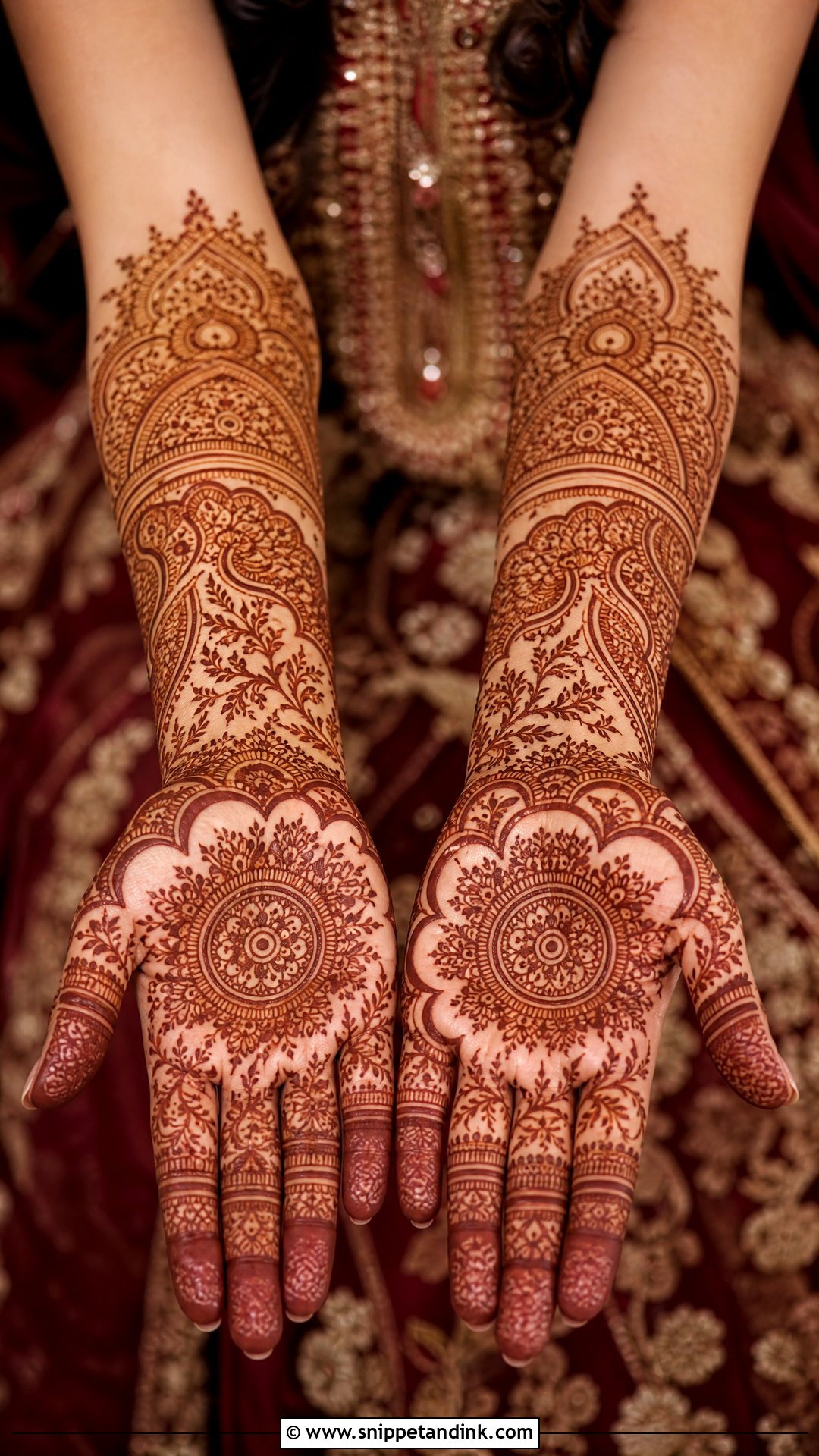
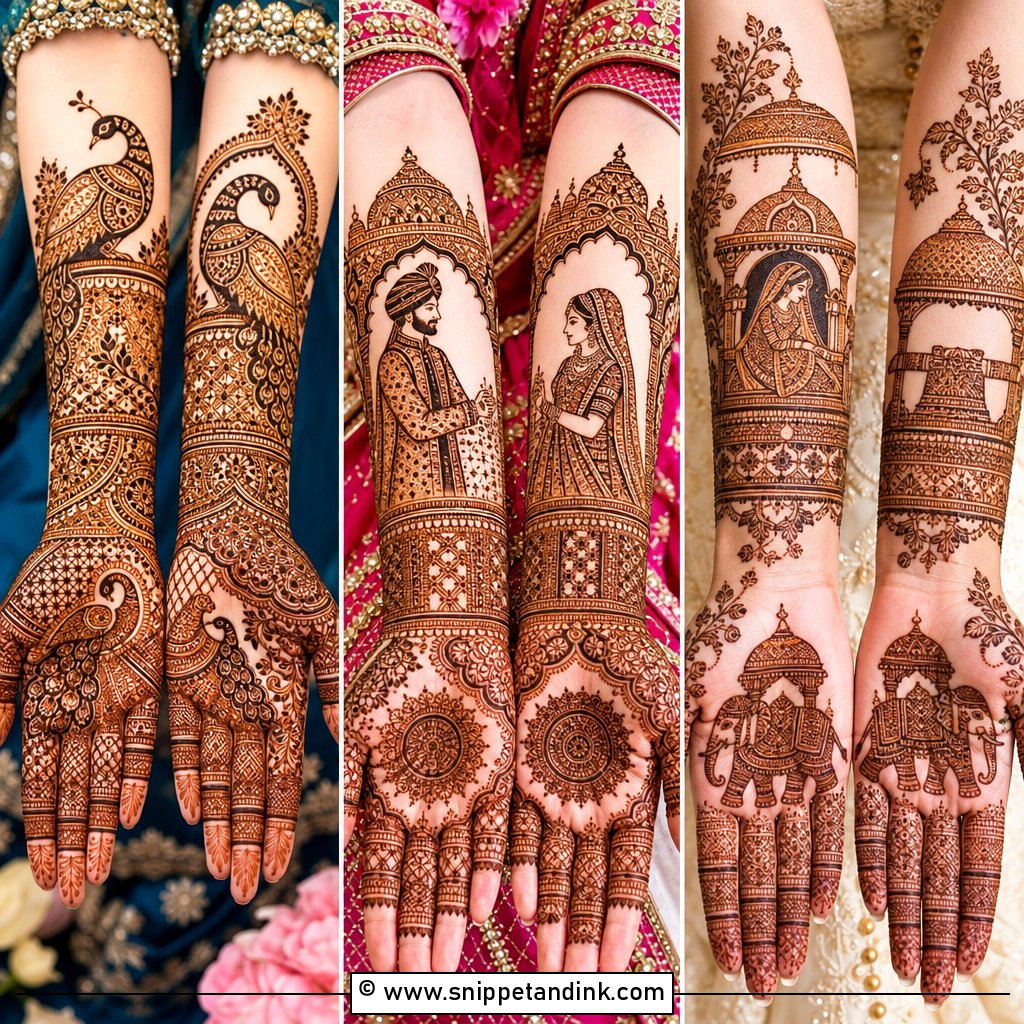
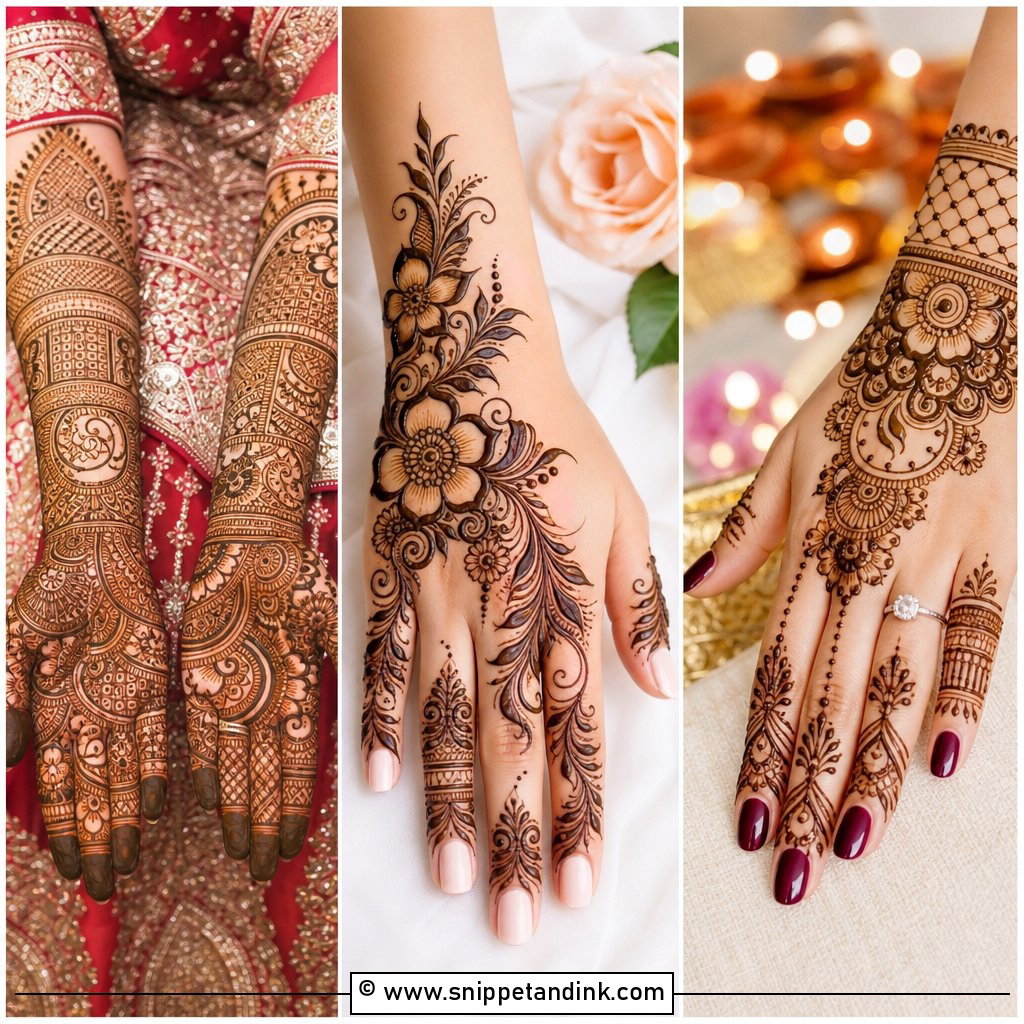
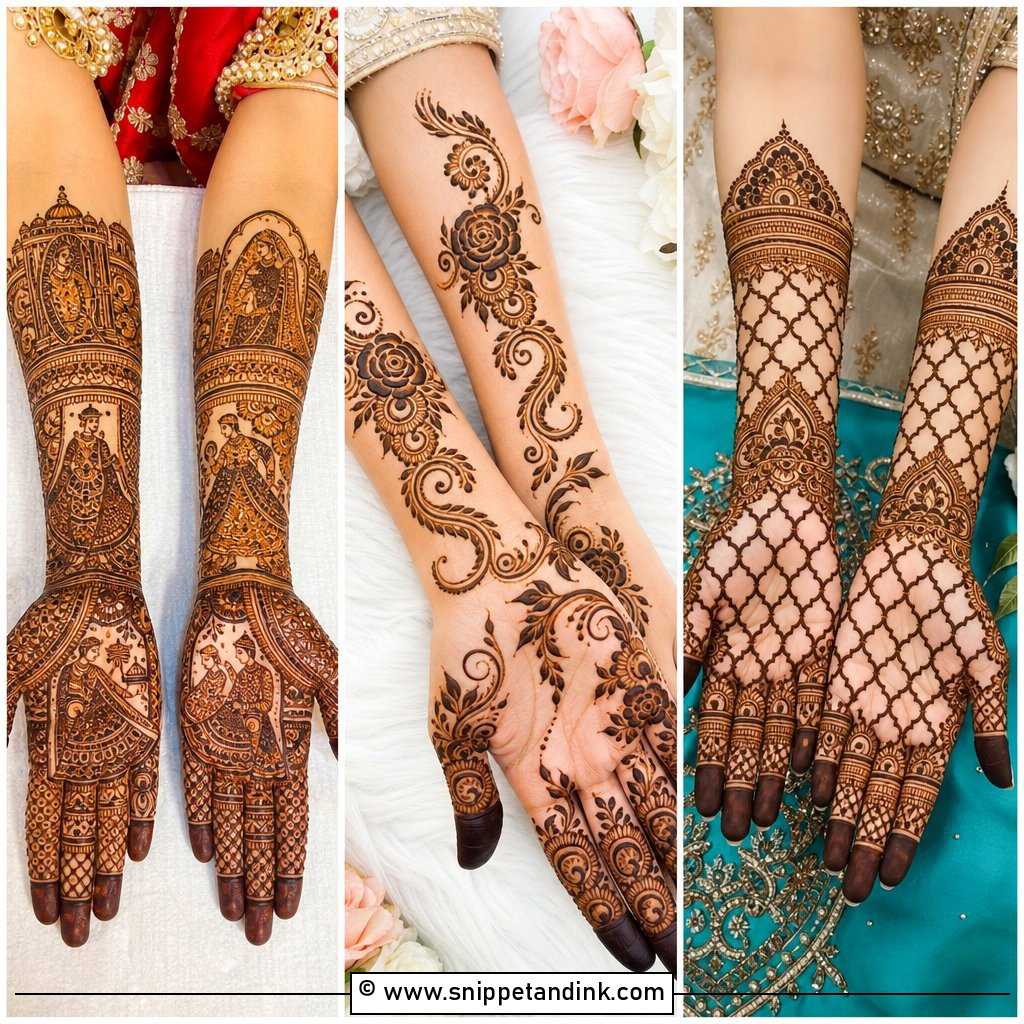
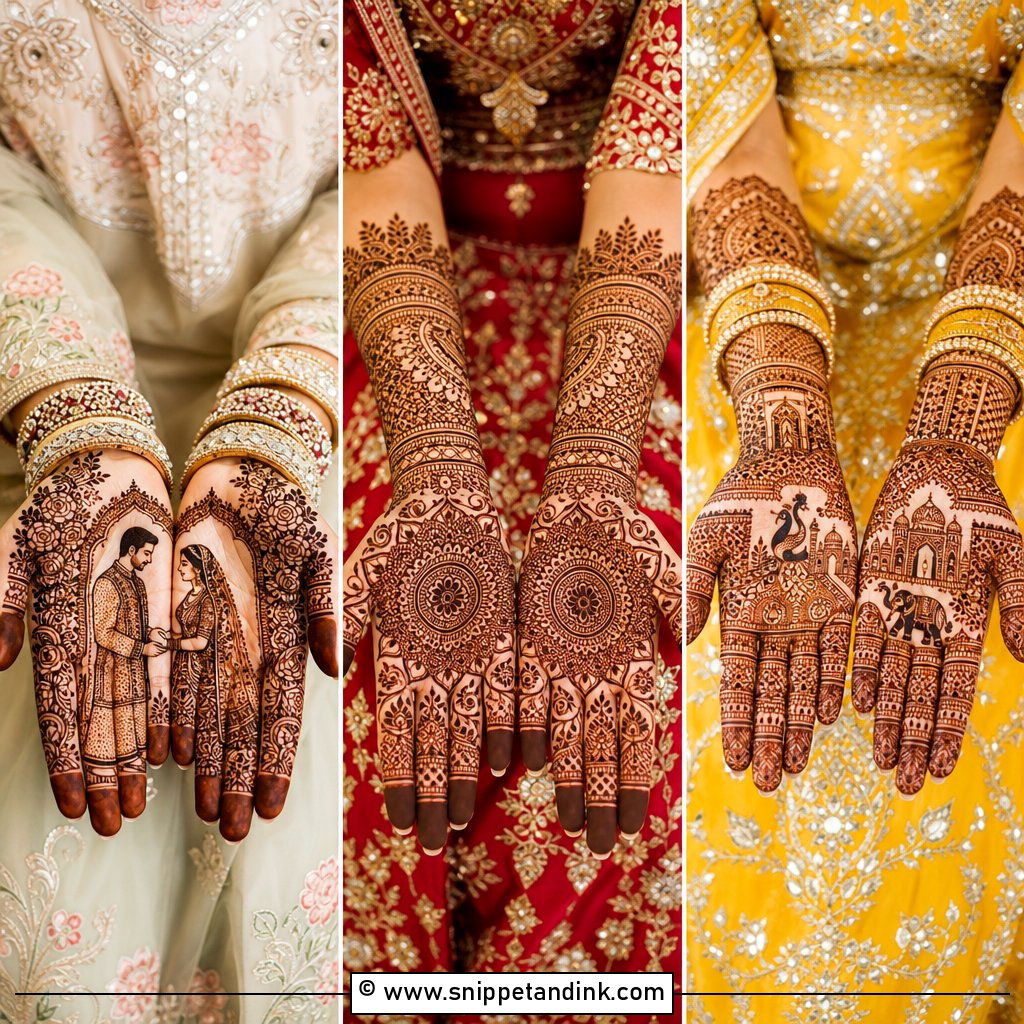
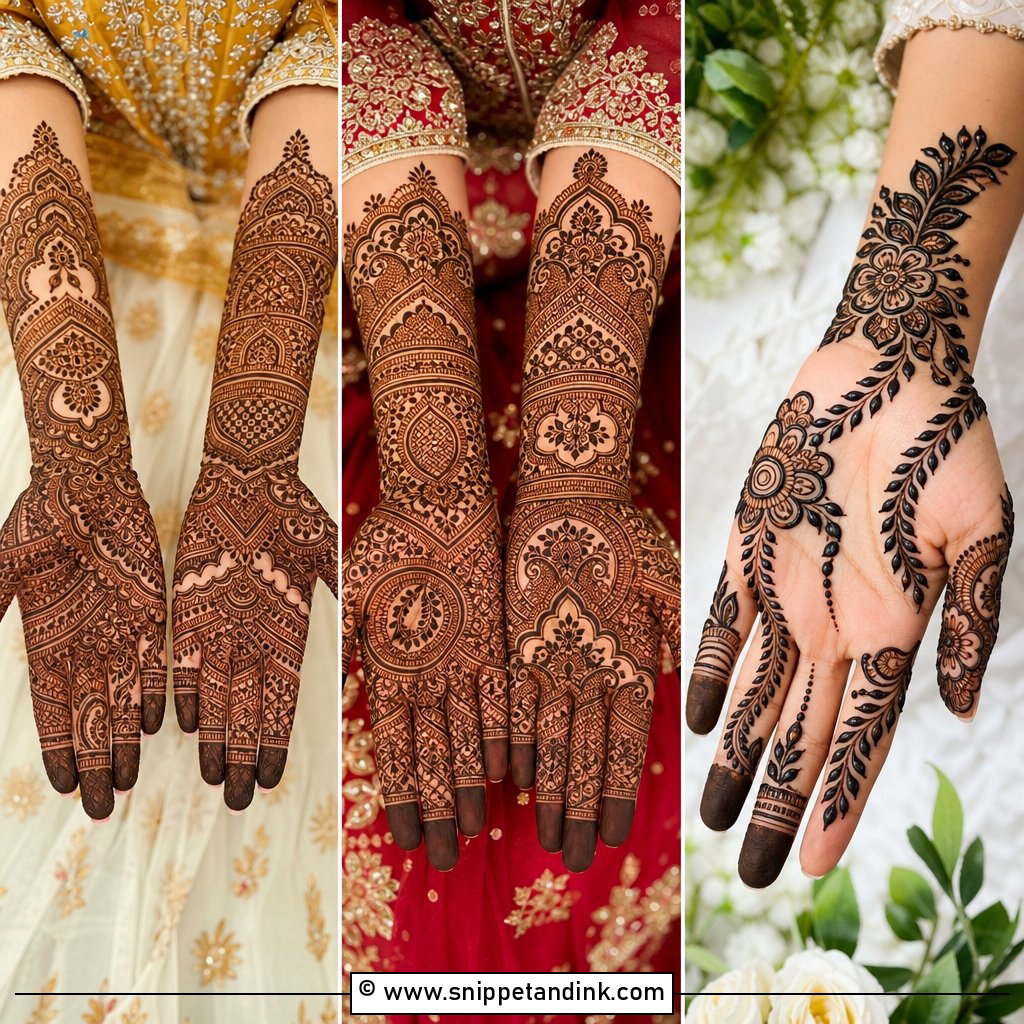
Full hand bridal mehndi runs from fingertips to forearm on both sides, palms, backs, wrists and arms, with paisleys, florals, mandalas, fine vines, shaded leaves and dotted fillers. It shows up in every frame from the haldi to the pheras, which is why so many brides still want it. The thing I watch on a full hand is balance between the two sides. If the main motif on the left palm sits higher than the one on the right, it’s obvious the moment you hold your hands together for a photo, so I place both anchors before drawing anything else.
2. Indian Bridal Mehndi Design
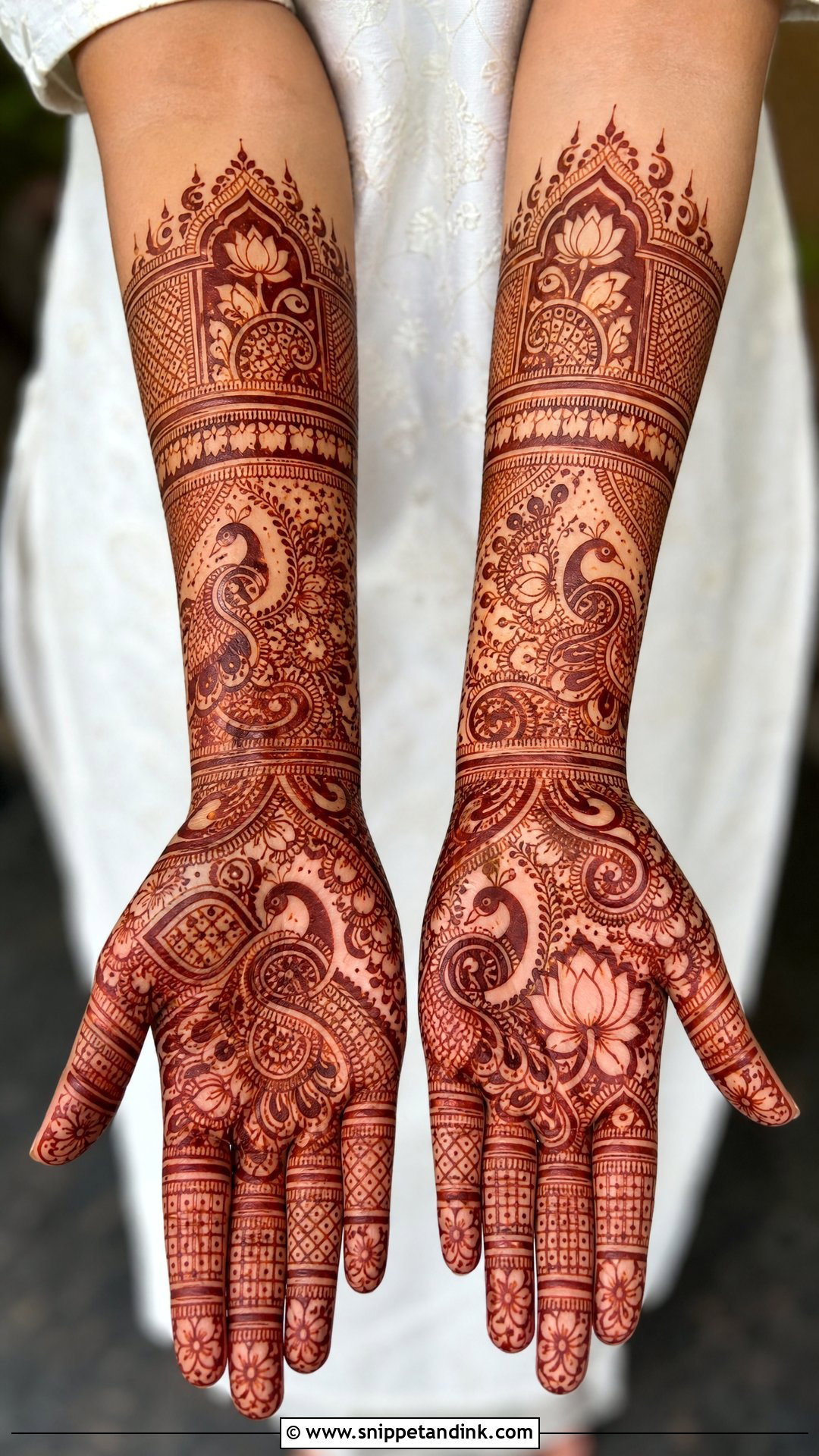
An Indian bridal mehndi design is built on storytelling: lotus, mango paisleys, peacocks, temple borders, bride-groom artwork and auspicious symbols, with the palms holding the main motifs and the fingers and forearms carrying repeats. Regional weddings shift the vocabulary. A Gujarati bride may want different symbols from a Maharashtrian one, so I ask about the family’s customs before sketching. A small personal mark, such as the date or the groom’s initials, slots into a paisley without disturbing the traditional layout.
3. Dulha Dulhan Mehndi Design
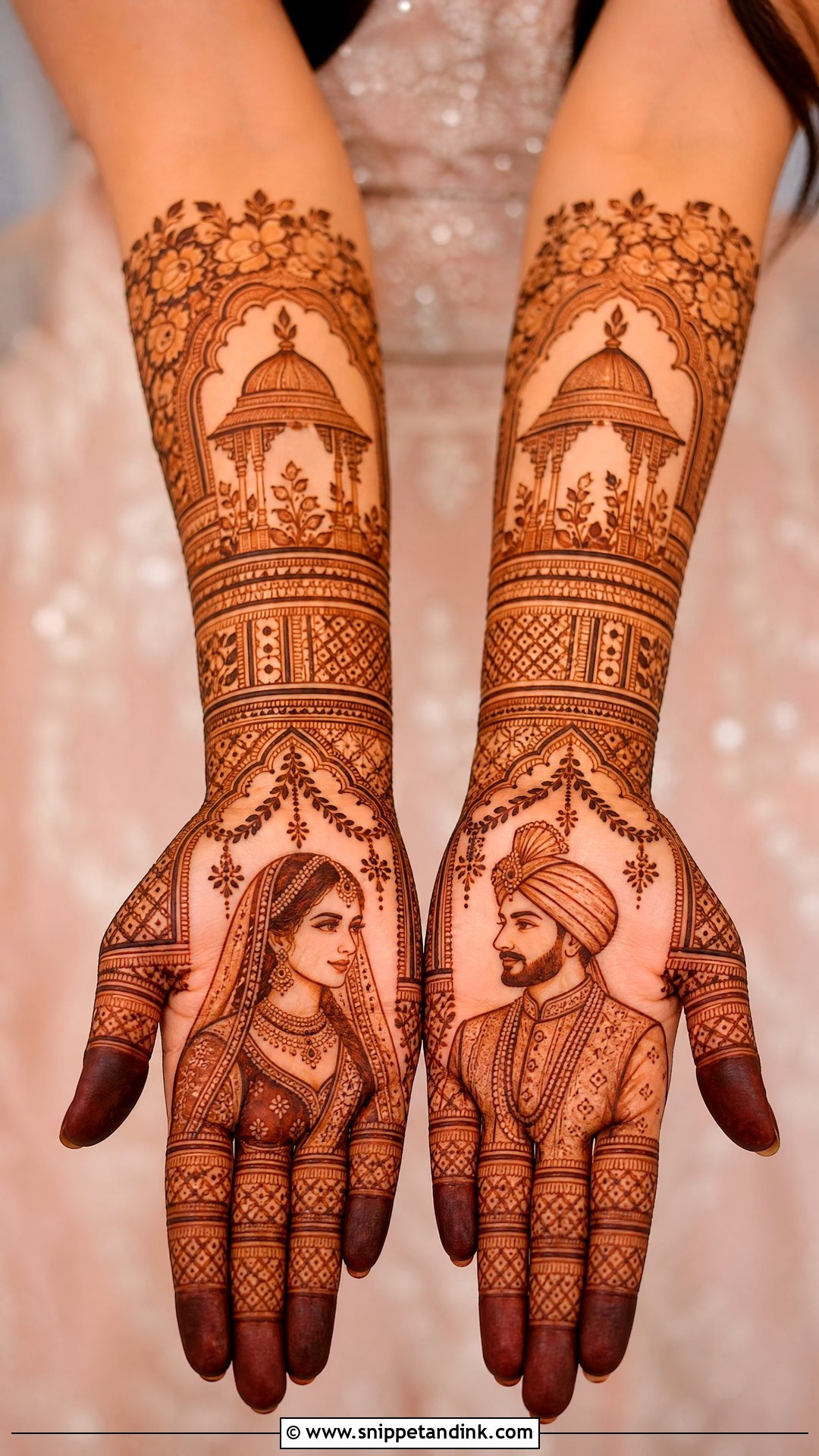
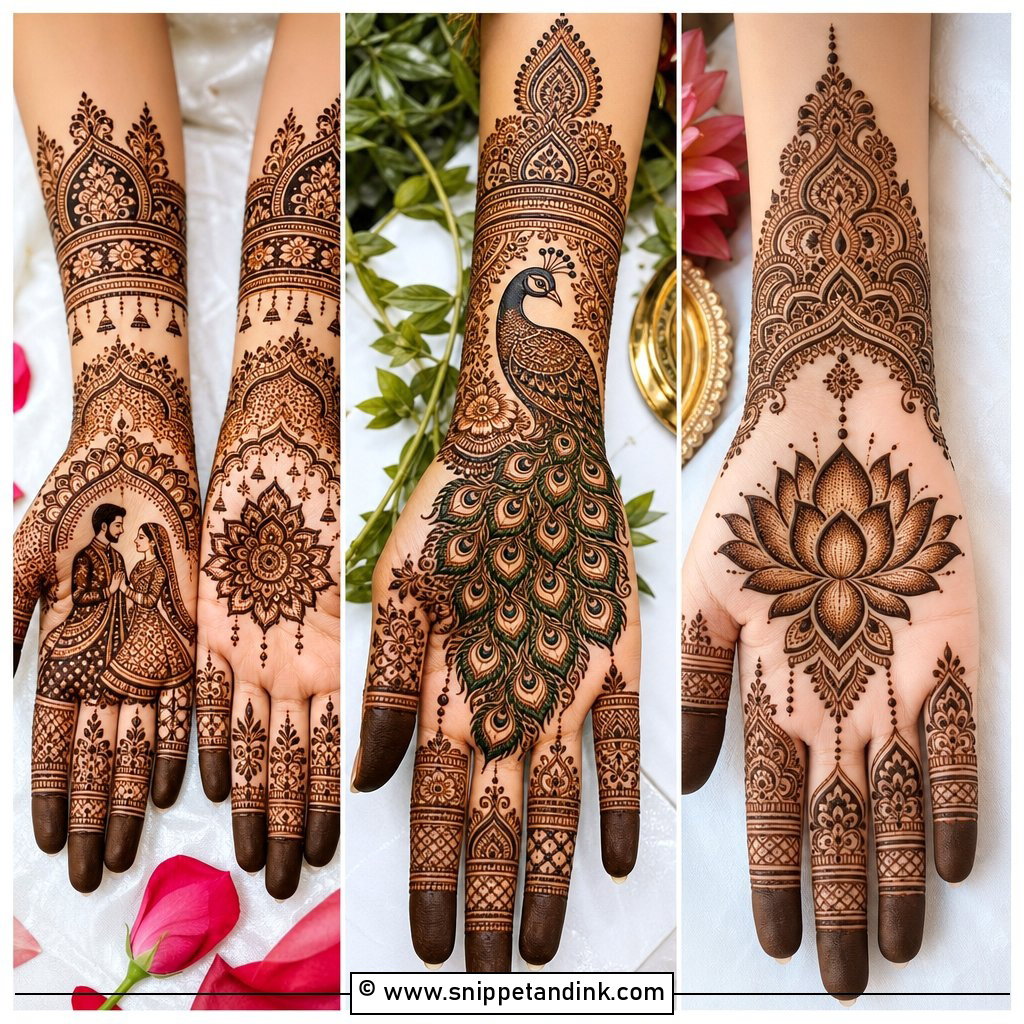
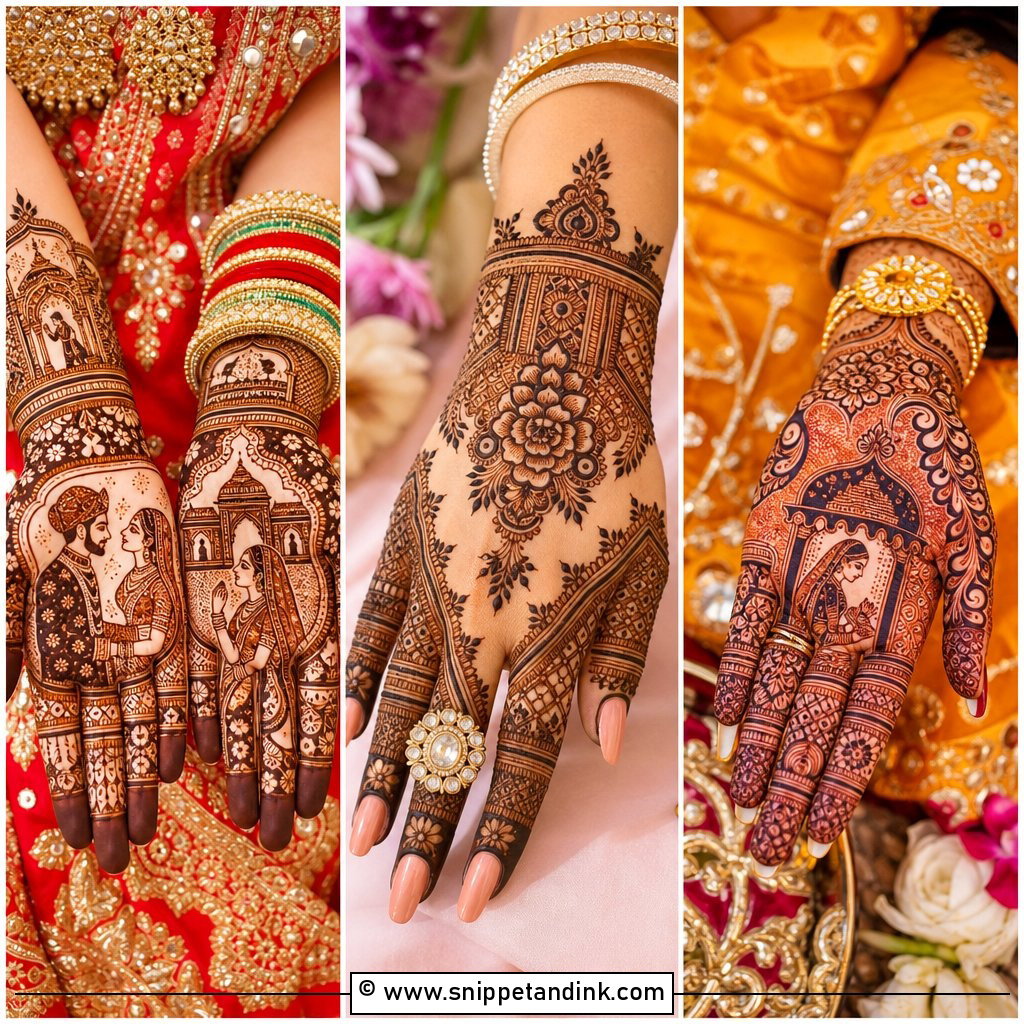
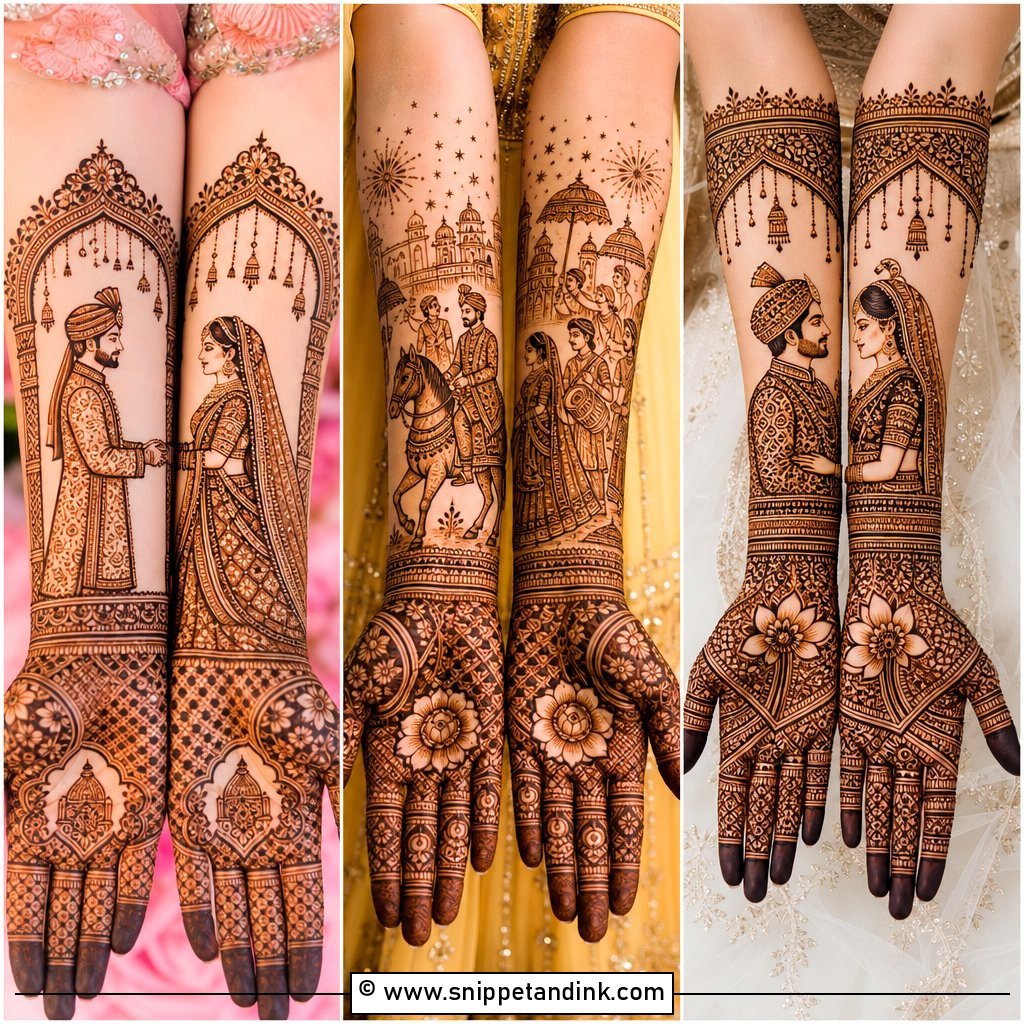
Here the bride’s portrait sits on one palm and the groom’s on the other, framed by flowers, mandalas and wedding details, sometimes with baraat, varmala, doli or mandap scenes added. A dulha dulhan mehndi design turns the hands into a small story of the day. Faces need clear skin around them, so I keep the palm centers lighter than the rest of the hand. Book an artist whose finished stains, not just paste photos, show faces you can recognise.
4. Rajasthani Dulhan Mehndi Design
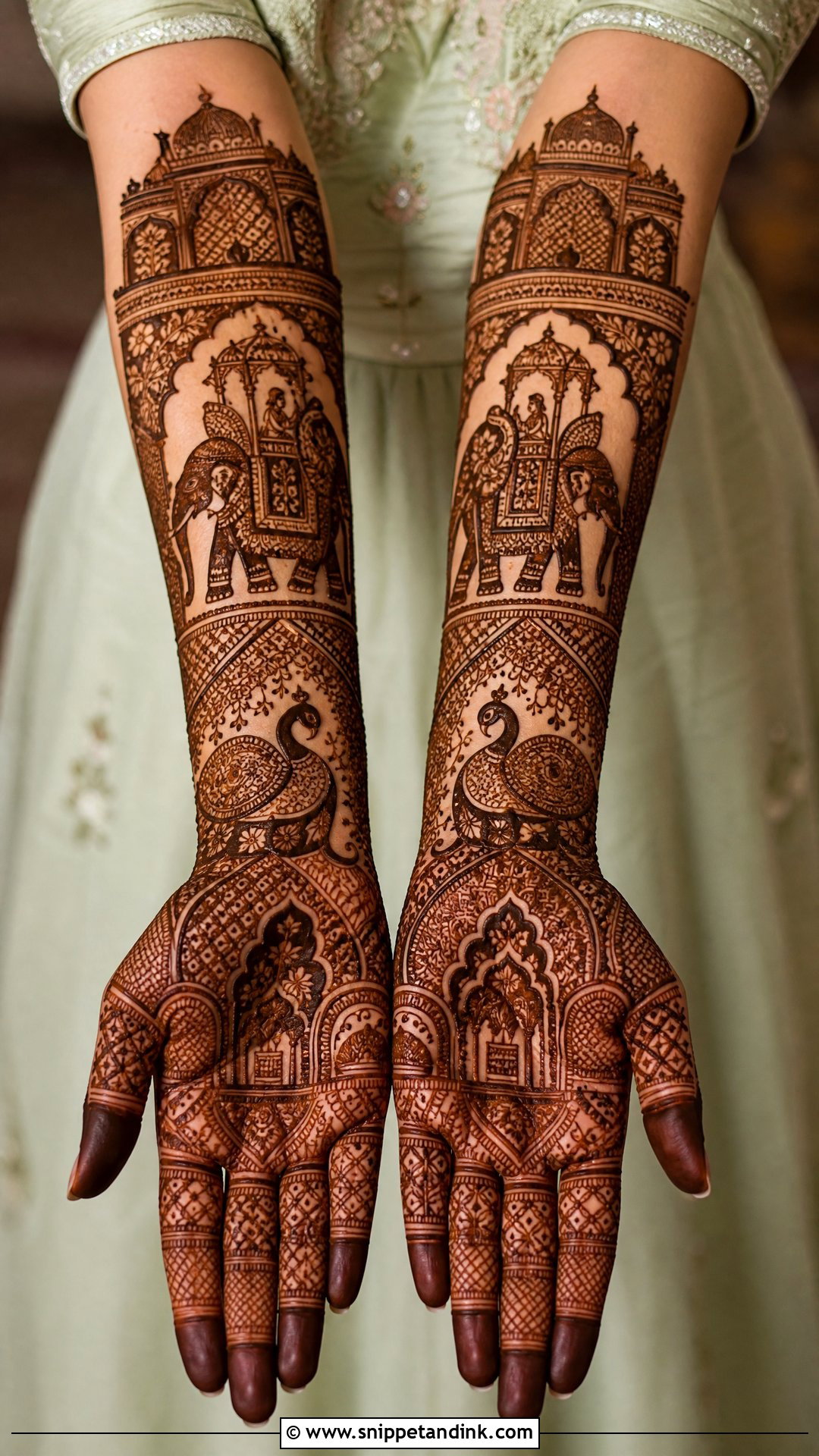
Rajasthani mehndi is dense and royal: elephants, palaces, jharokha windows, peacocks, doli scenes and full symmetrical coverage with almost no empty skin. It sits naturally with red, maroon, orange, green and gold outfits, and with kundan sets, chooda and heavy bangles. Plan the time honestly. This style can take far longer than an Arabic layout, and rushing the fine work is how jharokha grilles end up looking like scribbles once they stain.
5. Marwari Dulhan Mehndi Design
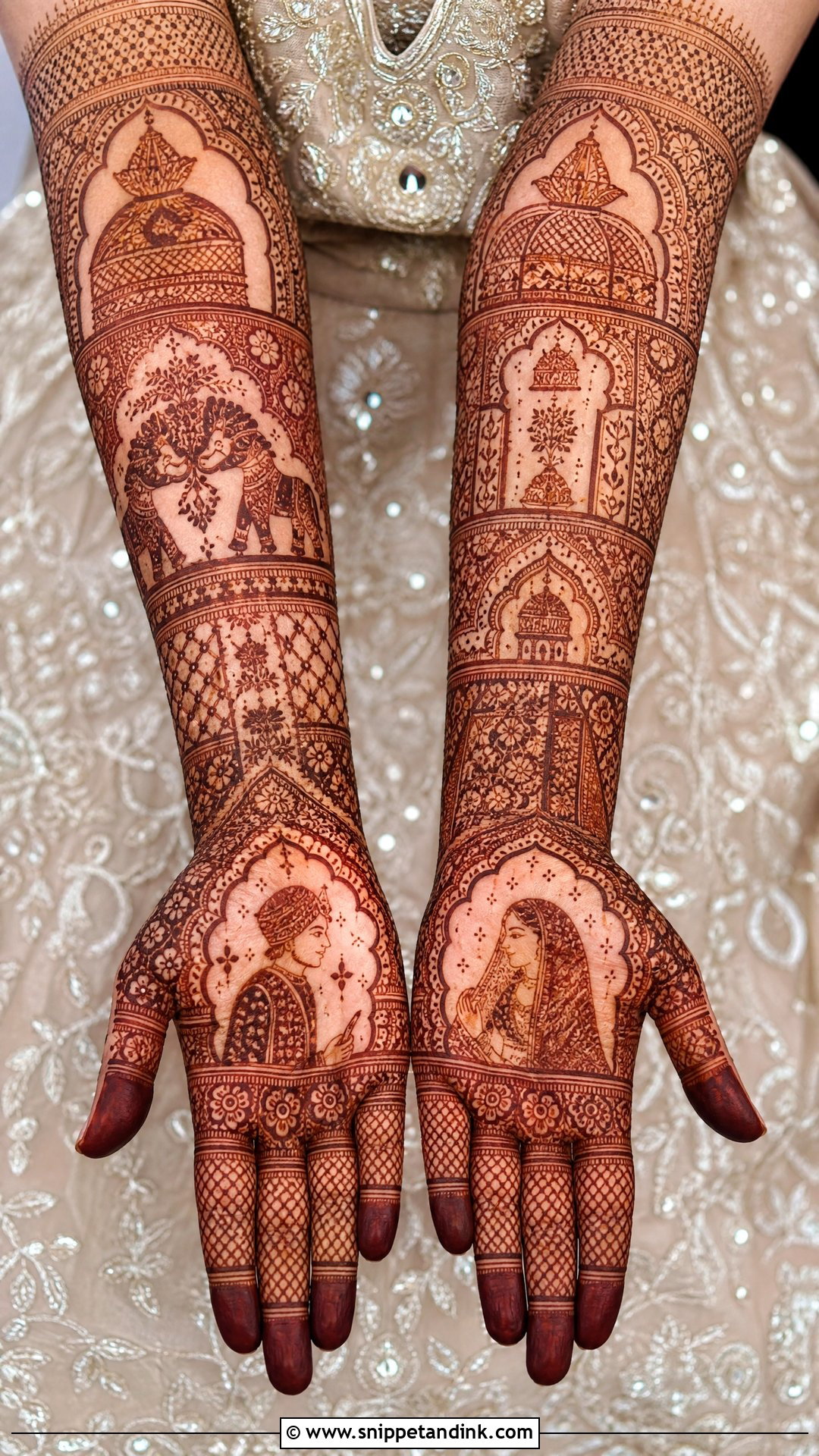
Marwari designs share Rajasthani roots but feel more measured. Bride-groom figures, elephants, kalash patterns, floral chains, mesh fills and sacred symbols cover front and back in balanced layers, and the finishing details are tiny. That neat spacing is the whole character of the style. It suits bandhani, gota patti and Rajputi-inspired outfits, and family initials can be tucked into a kalash without breaking the traditional look.
6. Peacock Dulhan Mehndi Design
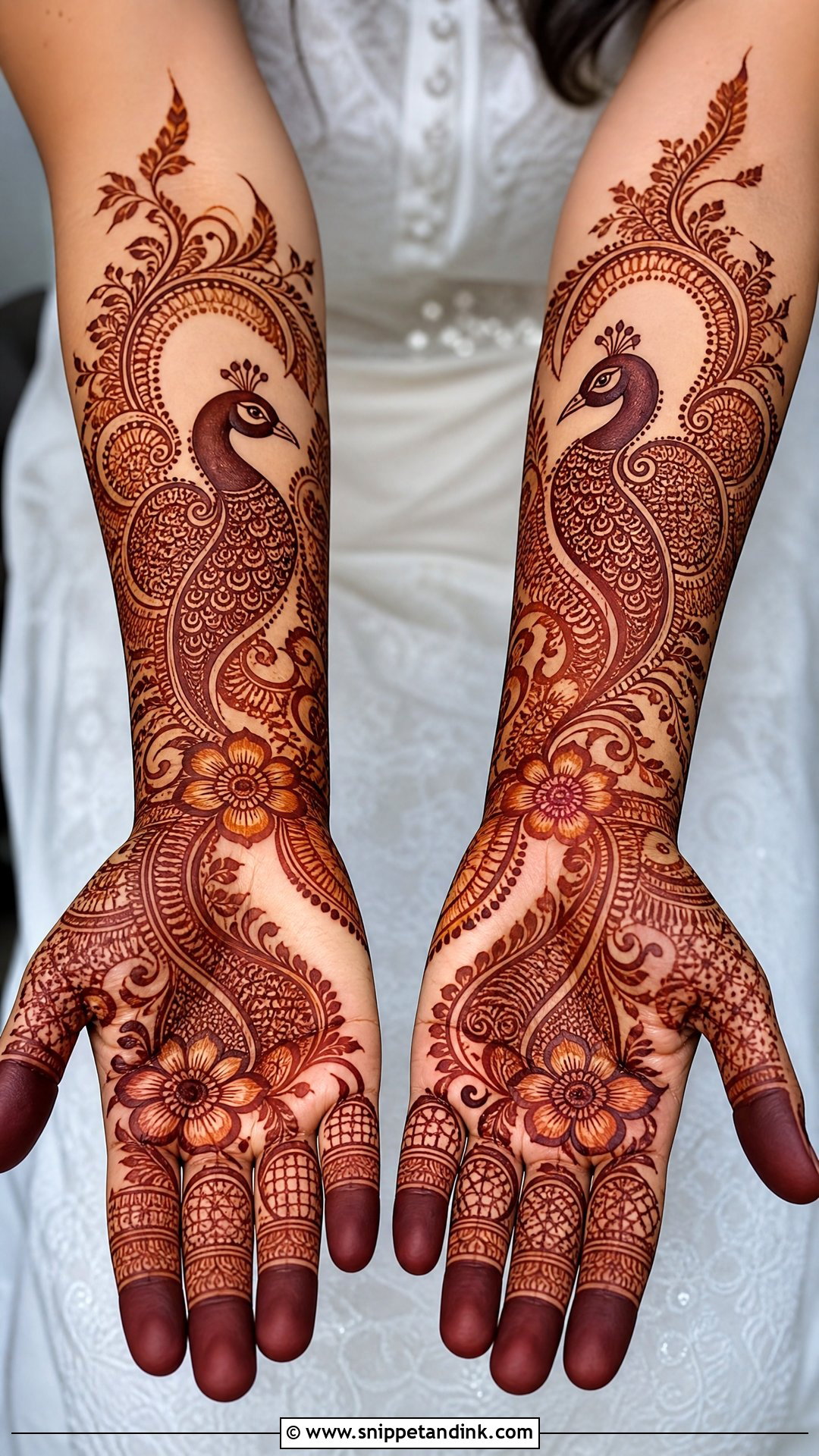
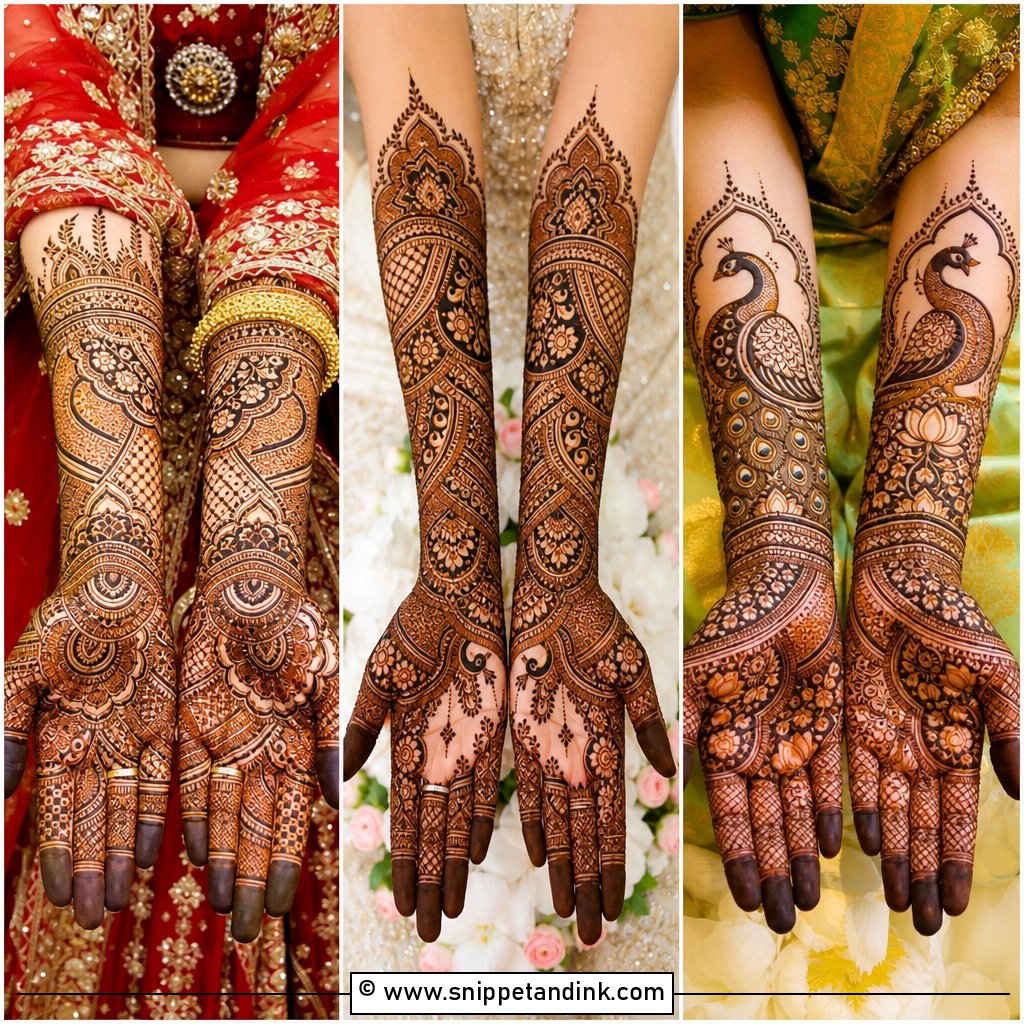
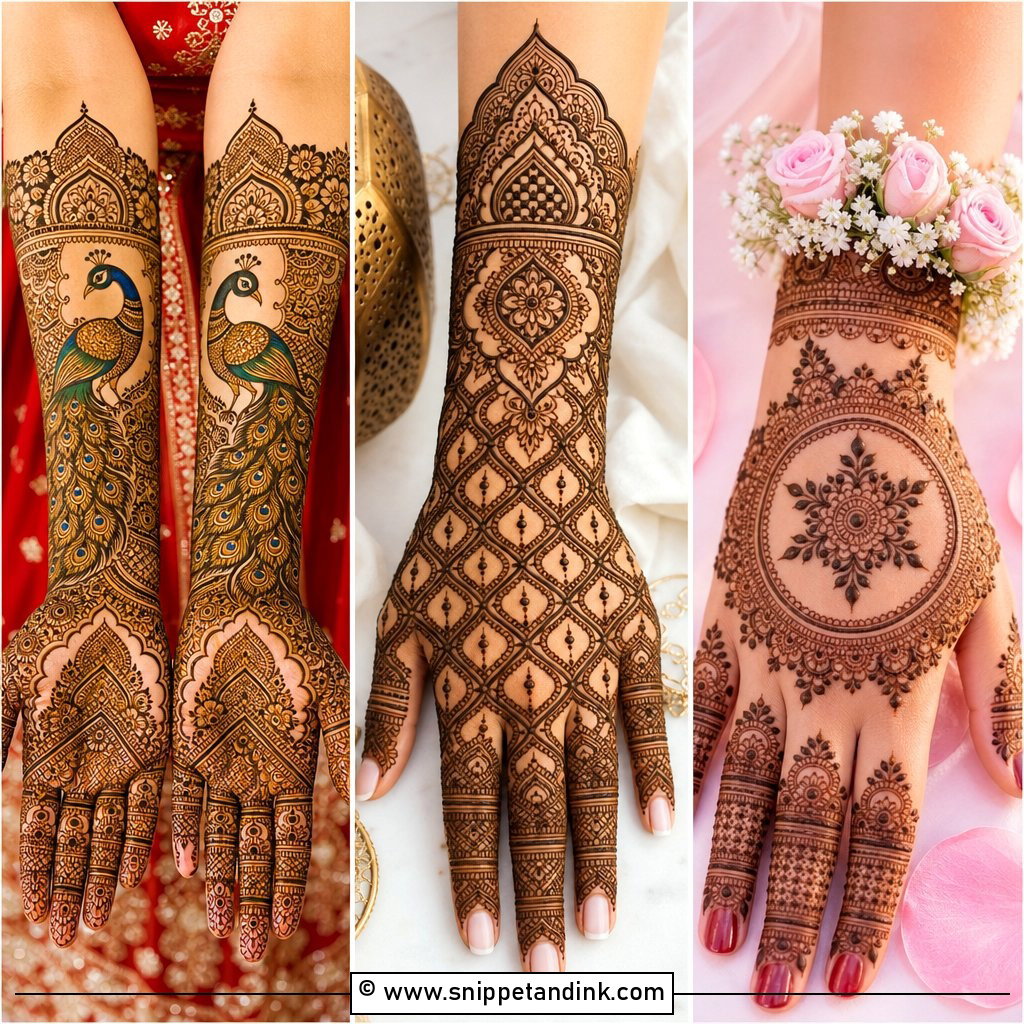
Peacocks give an artist room to show off, with feathers that take fine lines, shading, dots and leafy fill. They can sit on the palms, travel along the forearms or frame the wrists among paisleys and florals. I’d suggest this to a bride who wants detailed work but not portraits. Keep one large peacock as the anchor on each hand and scale everything else down around it; two equal birds on one palm fight for attention.
7. Lotus Dulhan Mehndi Design
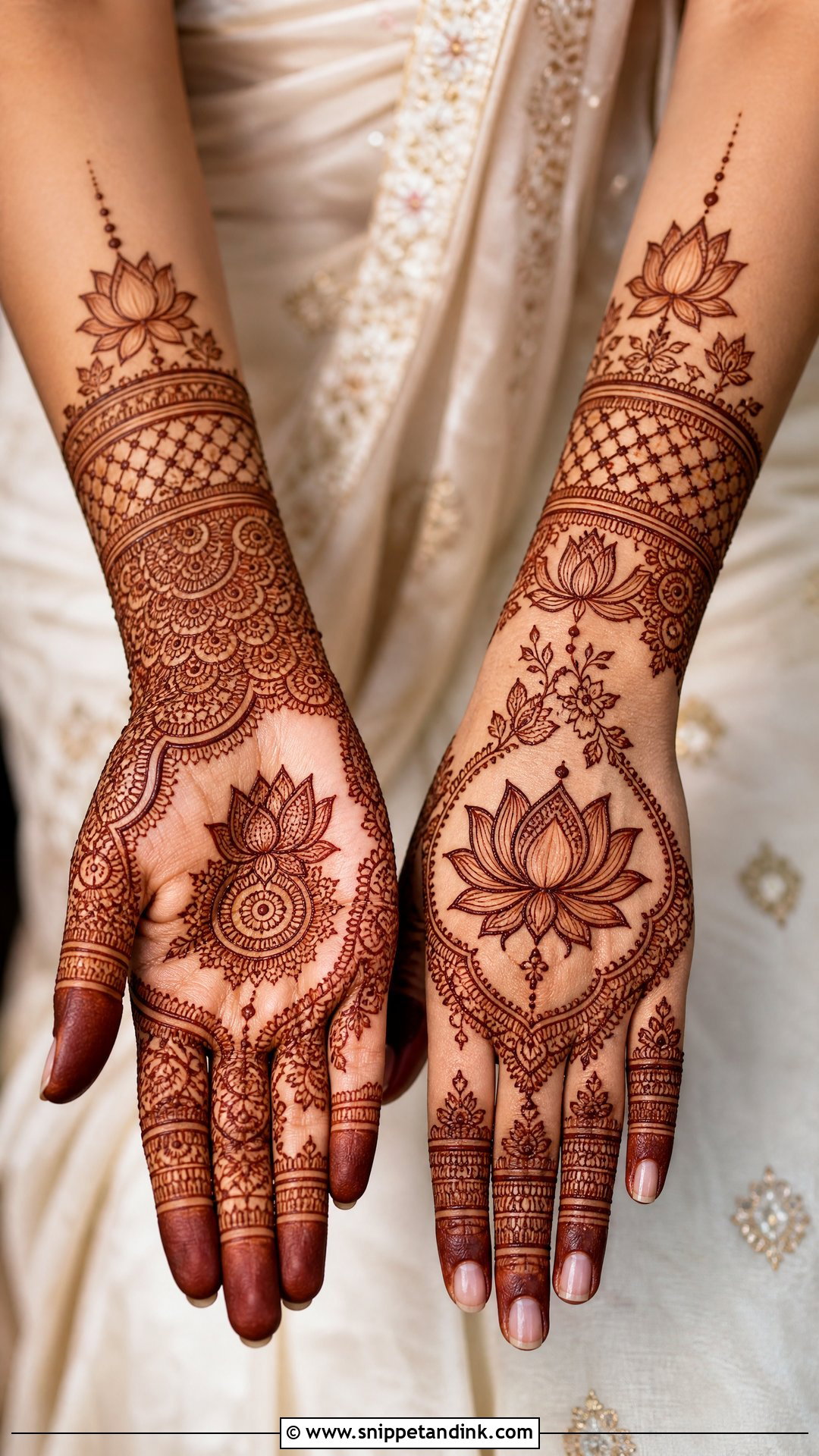
Lotus carries the meaning of purity and new beginnings, which makes it a natural fit for wedding rituals. Large blooms on the palms, opening lotus trails along the forearms and delicate petal work on the fingers give a traditional hand that still breathes. Its broad rounded petals stain cleanly because they’re drawn with open centers. If your outfit has lotus embroidery or you’re wearing temple jewelry, this motif ties the look together.
8. Mandala Dulhan Mehndi Design
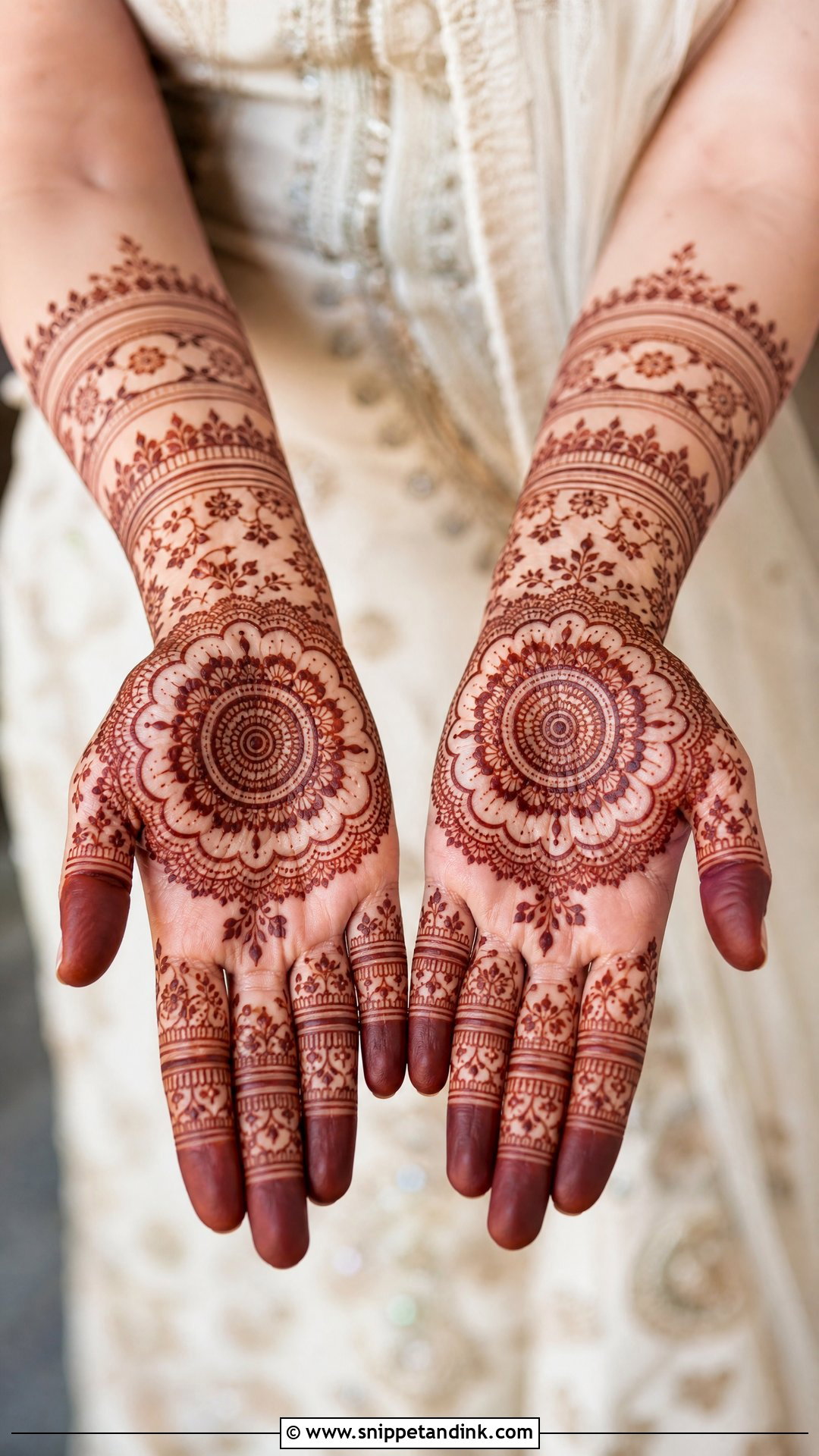
Symmetry is the draw. A central mandala on each palm expands outward into flowers, dots, leafy vines and wrist detail, and the bridal version adds full fingers, forearm bands and fine background fill. Mandalas read instantly in ring and kalire shots. The technical risk is a lopsided circle, so I build from a center dot ring by ring rather than drawing the outline first. A single mandala or a layout that grows toward the elbow both work.
9. Bharwa Dulhan Mehndi Design
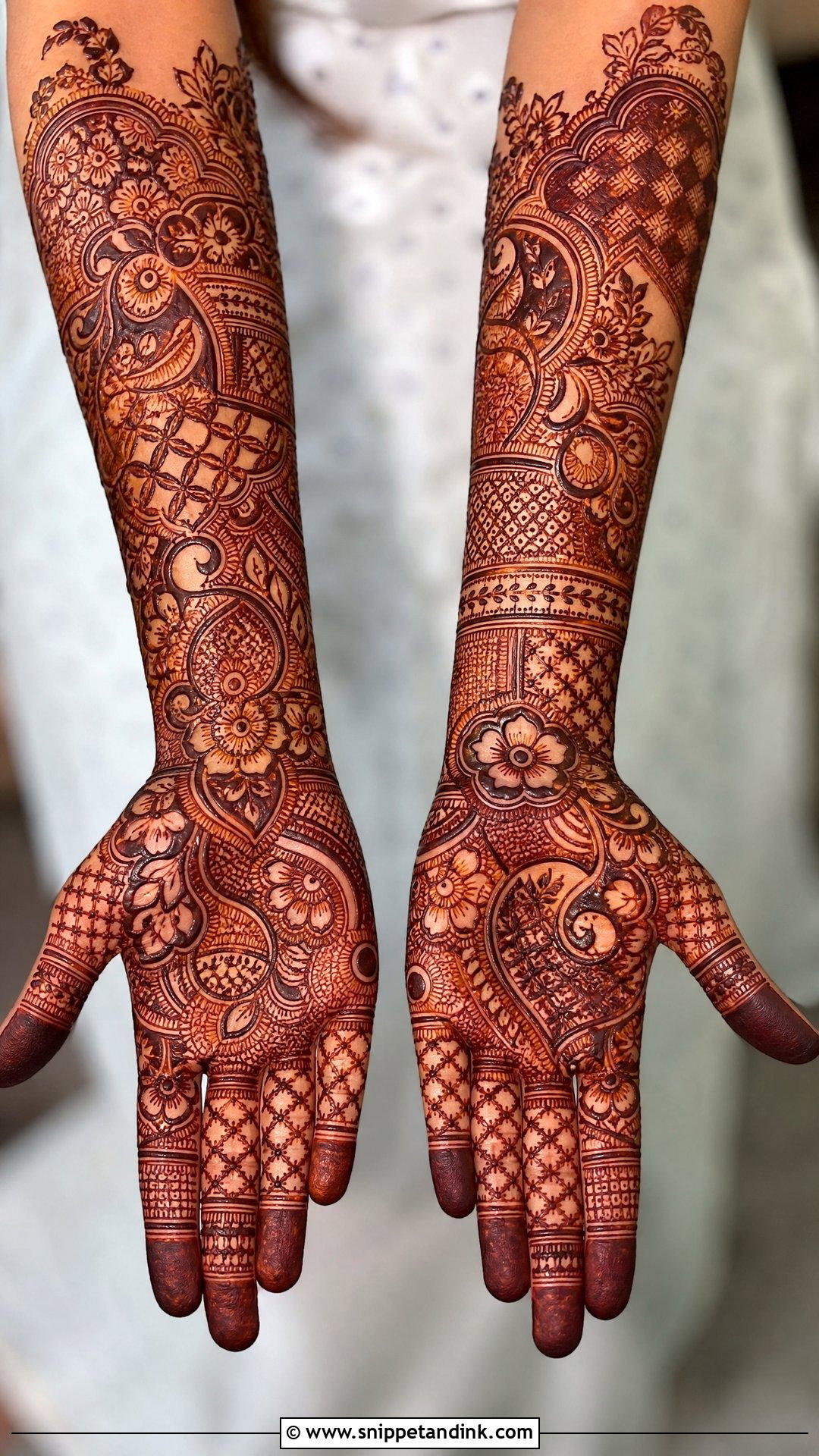
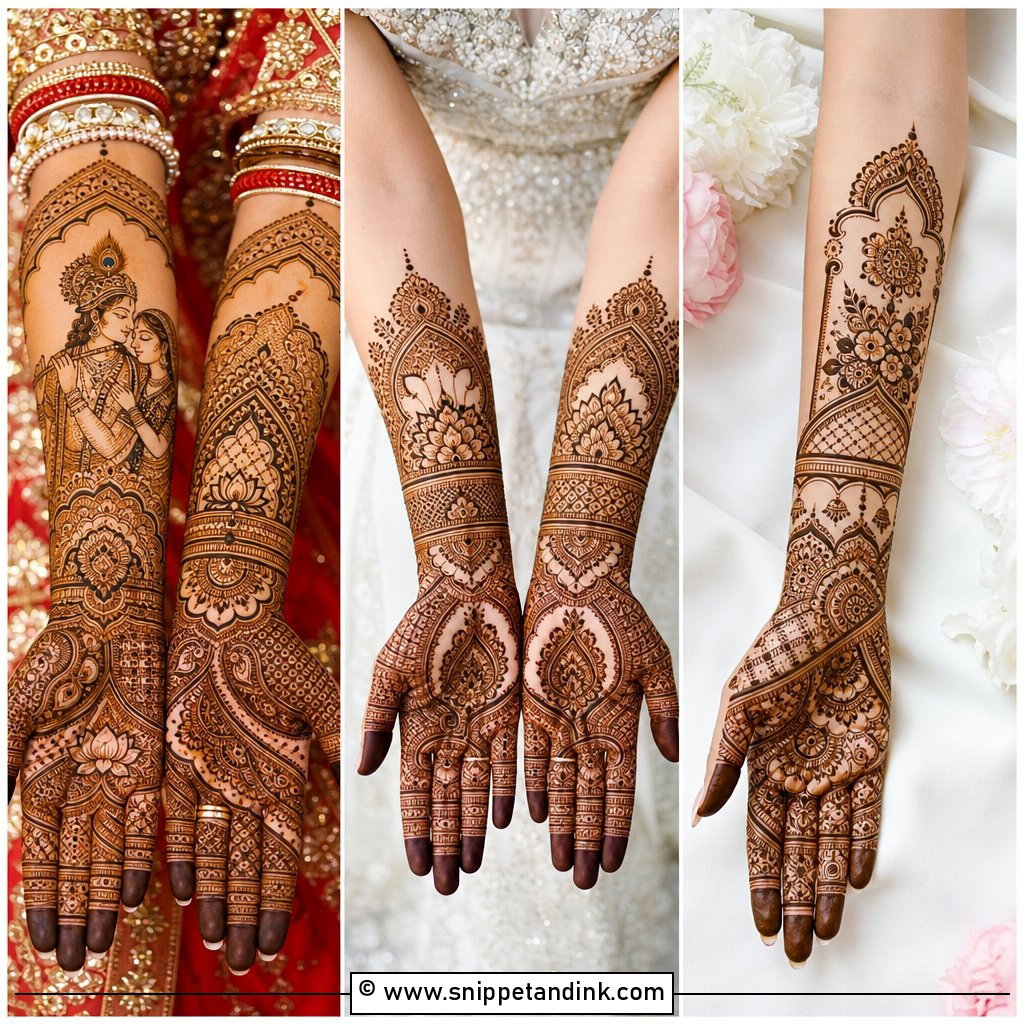
“Bharwa” means filled, and that’s the brief: closely packed paisleys, florals, checks, mandalas, peacocks, vines and tiny fillers with minimal bare skin. It gives the darkest, most dramatic result and reads from across a hall. The catch is that dense work punishes a careless artist, because lines that touch merge into blotches as the stain develops. I keep a hairline of skin between every element even when the hand looks completely full. Red lehengas and classic gold jewelry carry it best.
10. Arabic Dulhan Mehndi Design
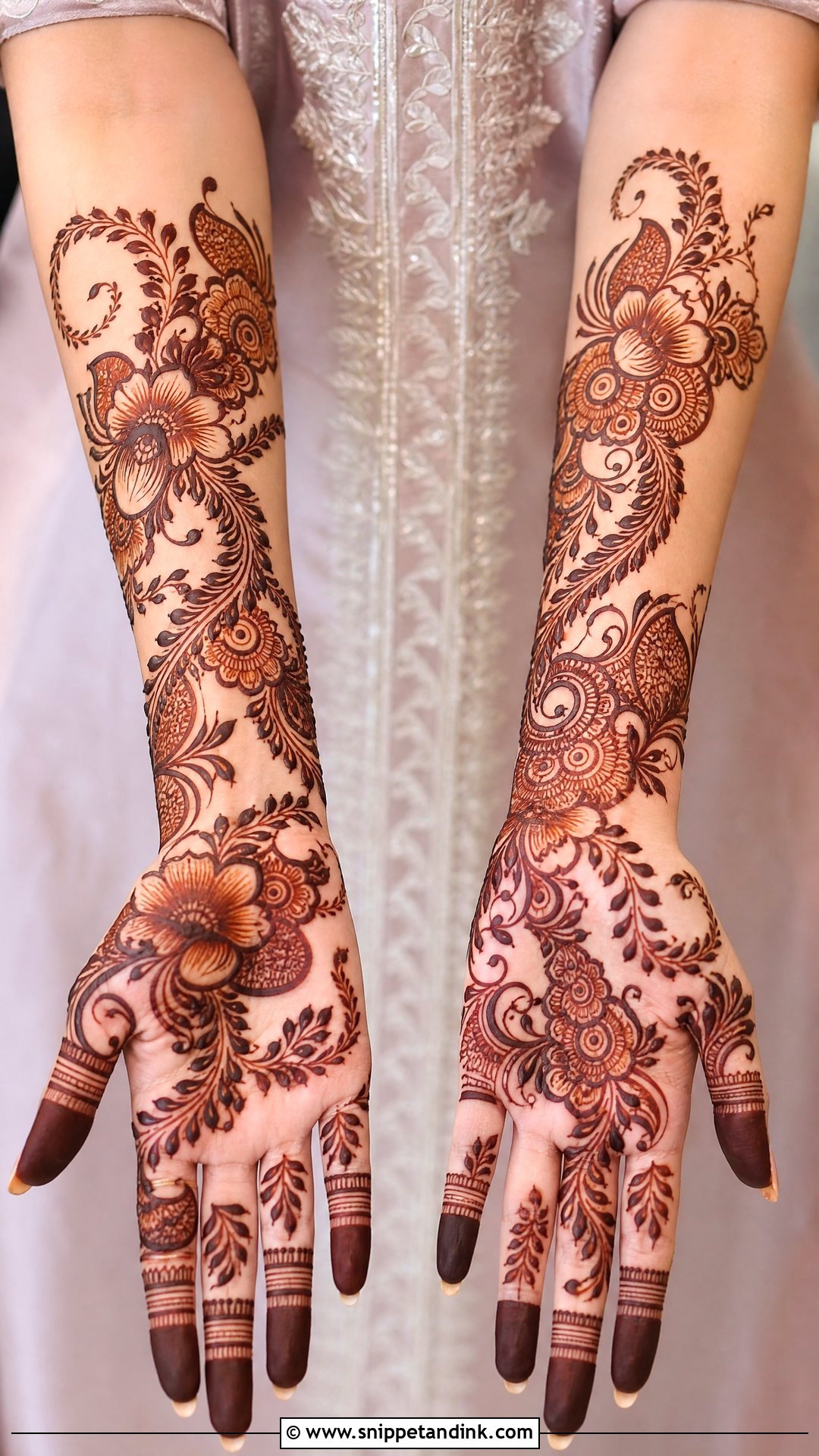
Arabic bridal work flows diagonally with bold flowers, leafy vines, paisleys and open gaps, extended from fingertips to forearm while staying airy. It goes on much faster than Indian bridal coverage, which is useful when the mehndi function is crowded with family. To make it read as bridal rather than party henna, I thicken the outlines and shade the petals, which adds weight without filling the gaps.
11. Indo Arabic Dulhan Mehndi Design
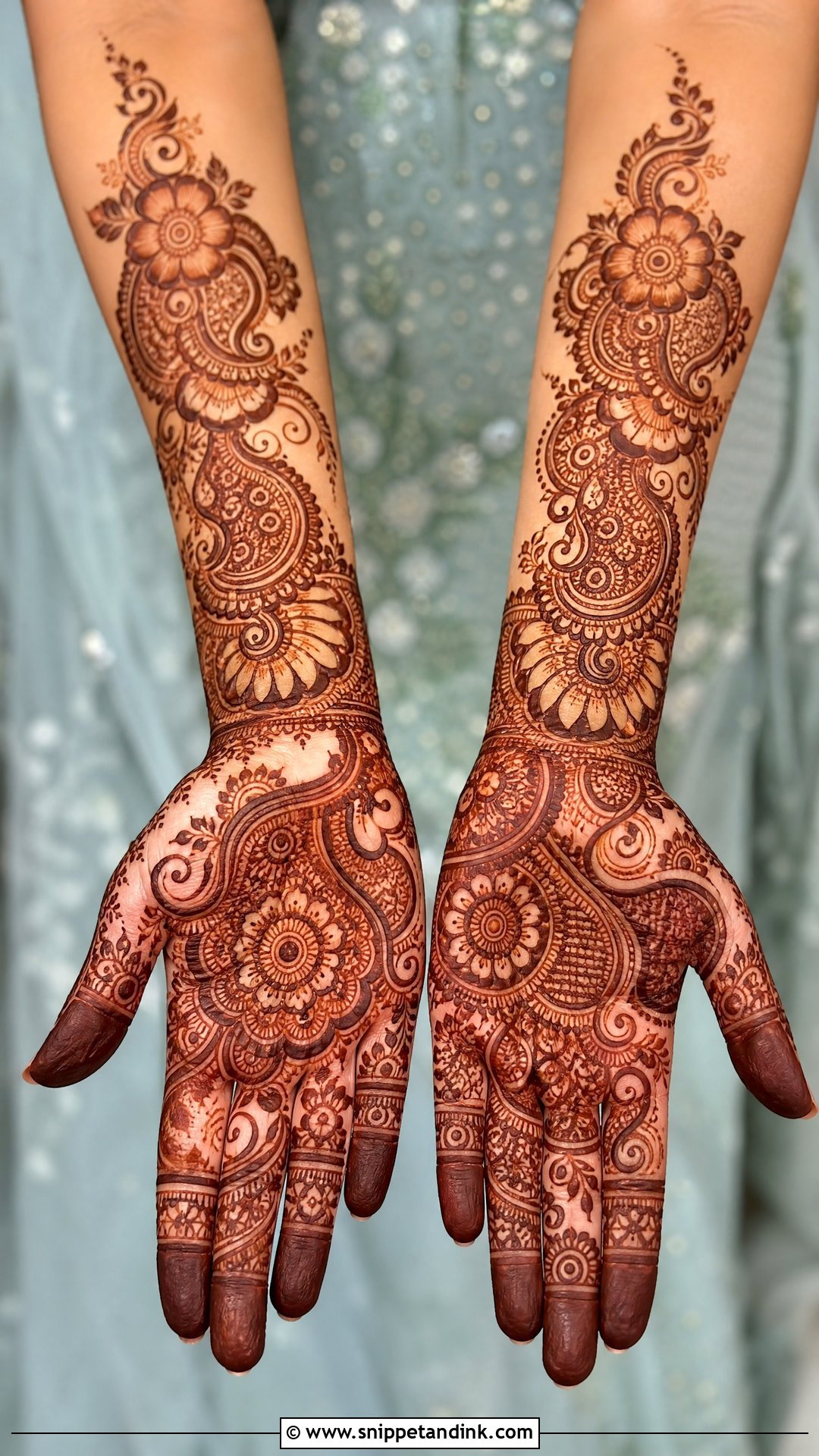
An Indo Arabic dulhan mehndi design takes the bold flow of Arabic henna and adds Indian detail: floral trails, paisley clusters, mandala accents, filled fingers and decorative wrist-to-forearm bands. It’s fuller than Arabic and less packed than bharwa. I draw bold outlines first and keep the inner details fine, so the structure still shows clearly after staining. The same layout adapts well across an engagement, sangeet, nikah and reception.
12. Back Hand Dulhan Mehndi Design
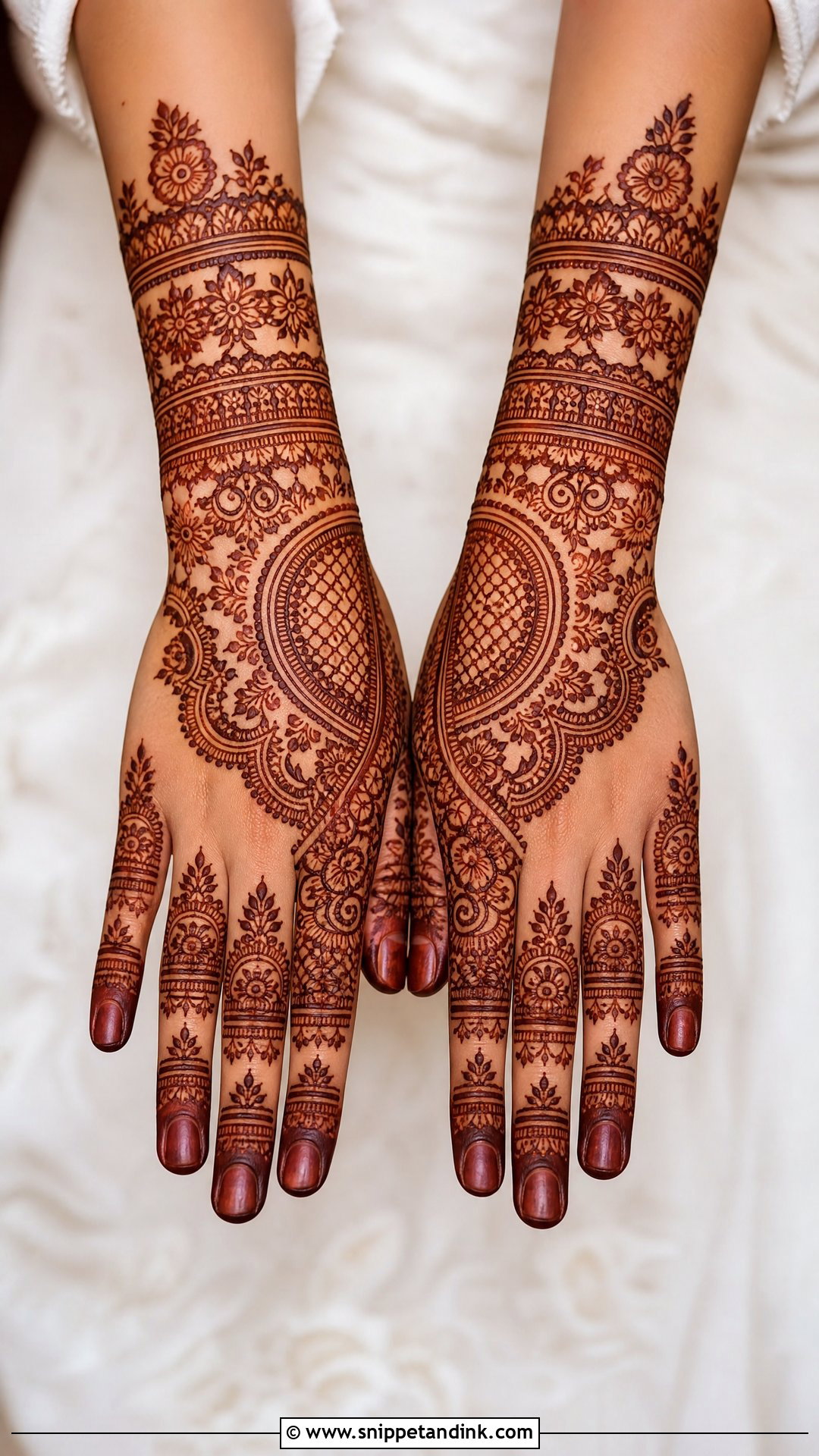
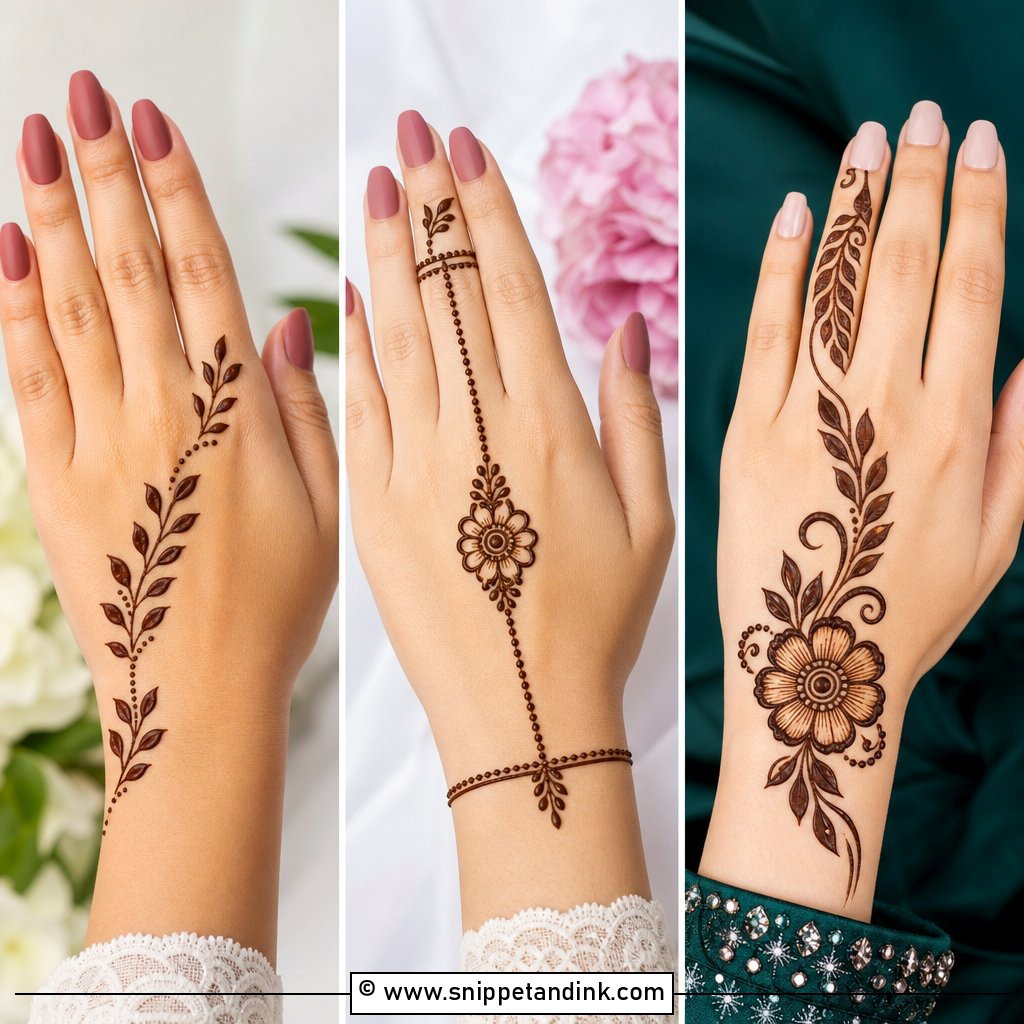
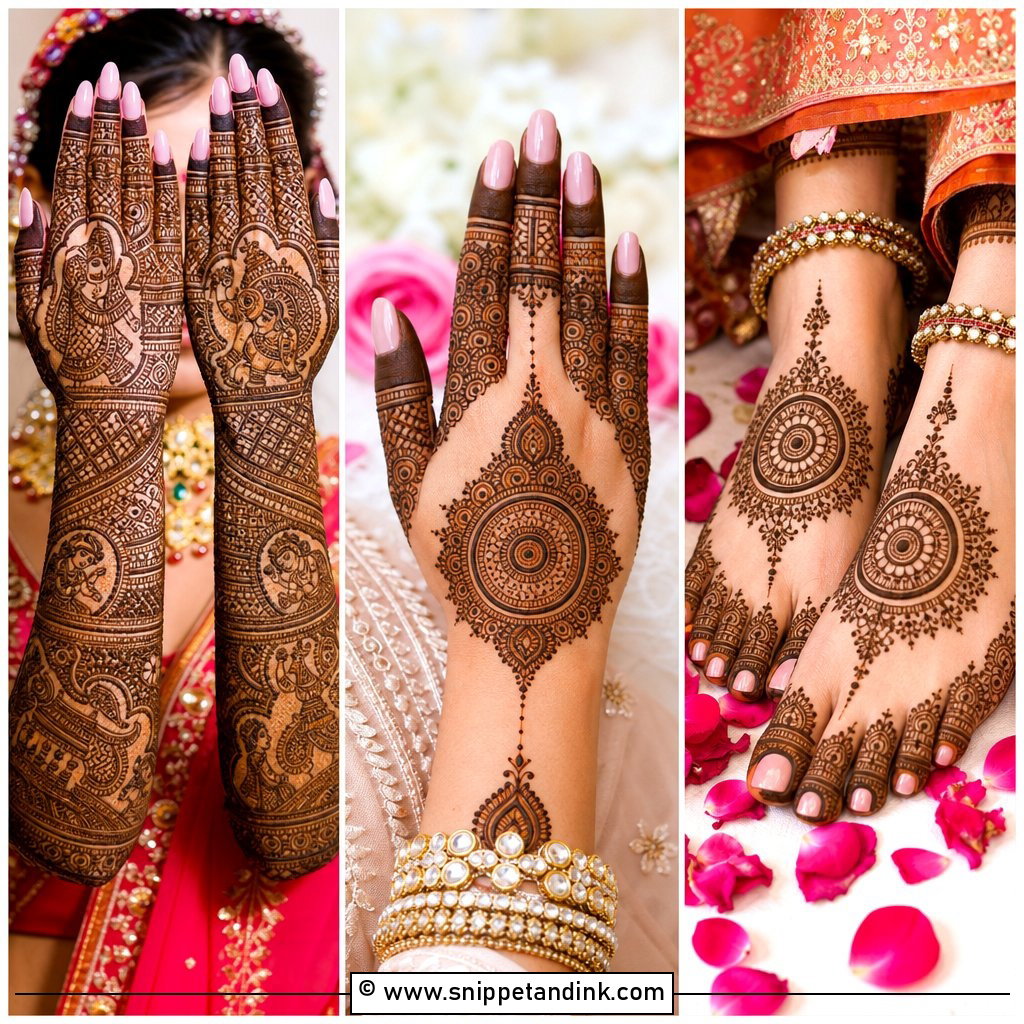
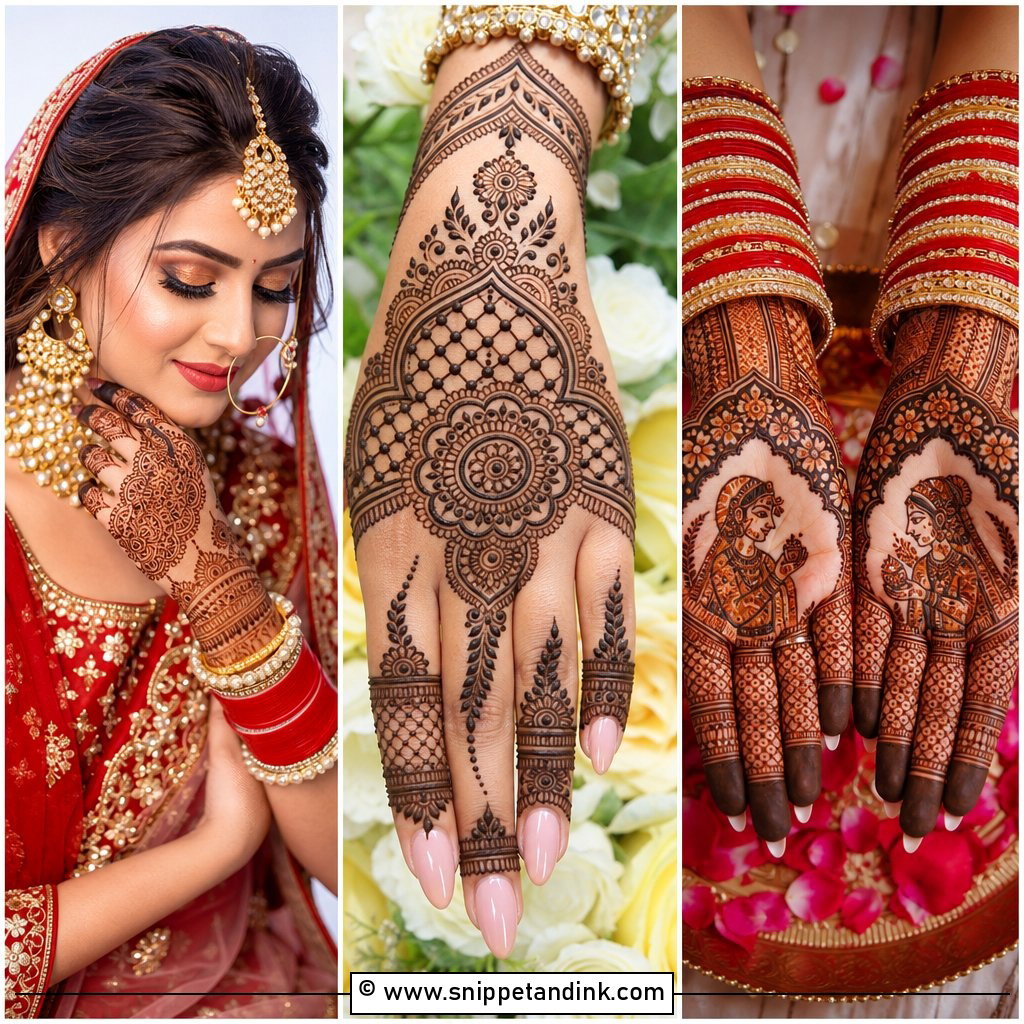
The back of the hand is in more photos than the palm, because rings, bangles and kaleere are shot from that side. Bracelet bands, floral vines, mandalas, jaali mesh and finger detailing can run from the fingers to the forearm. Brides split two ways: a lighter back so jewelry stands out, or a dense back that matches the palms. Both work. What doesn’t work is a messy knuckle area, so I line up the finger patterns across all four knuckles before moving on.
13. Front Hand Dulhan Mehndi Design
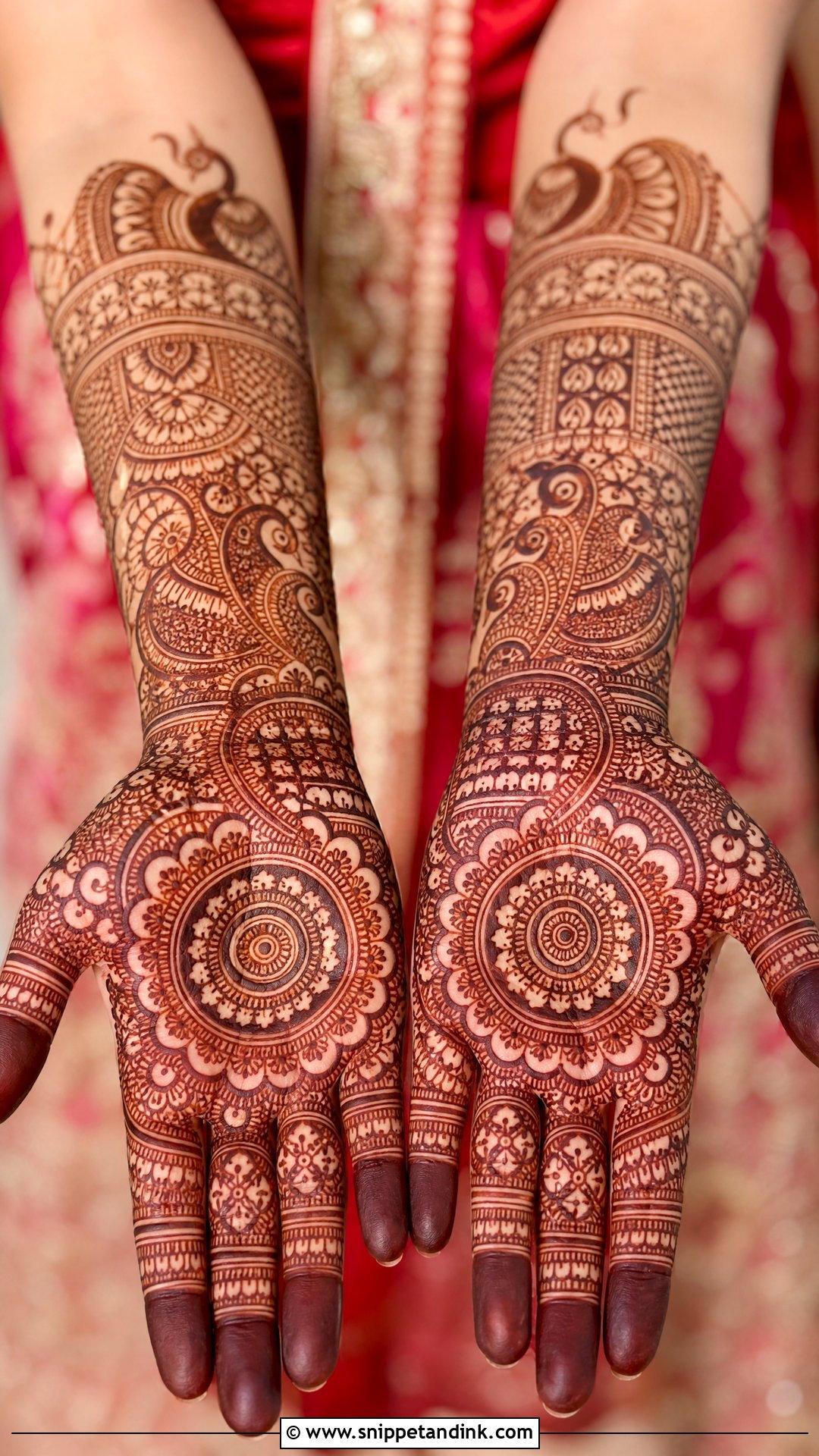
Palms carry the ritual symbols because they’re held open during the ceremonies: mandalas, portraits, lotus, peacocks, paisleys or full wedding scenes, with fully filled fingers. A strong front-hand design should form one picture when both palms are placed side by side, so I draw across the gap rather than treating each palm separately. Leave small pockets of bare skin among the heavy motifs; a palm with none can stain almost solid and lose its pattern.
14. Simple Dulhan Mehndi Design
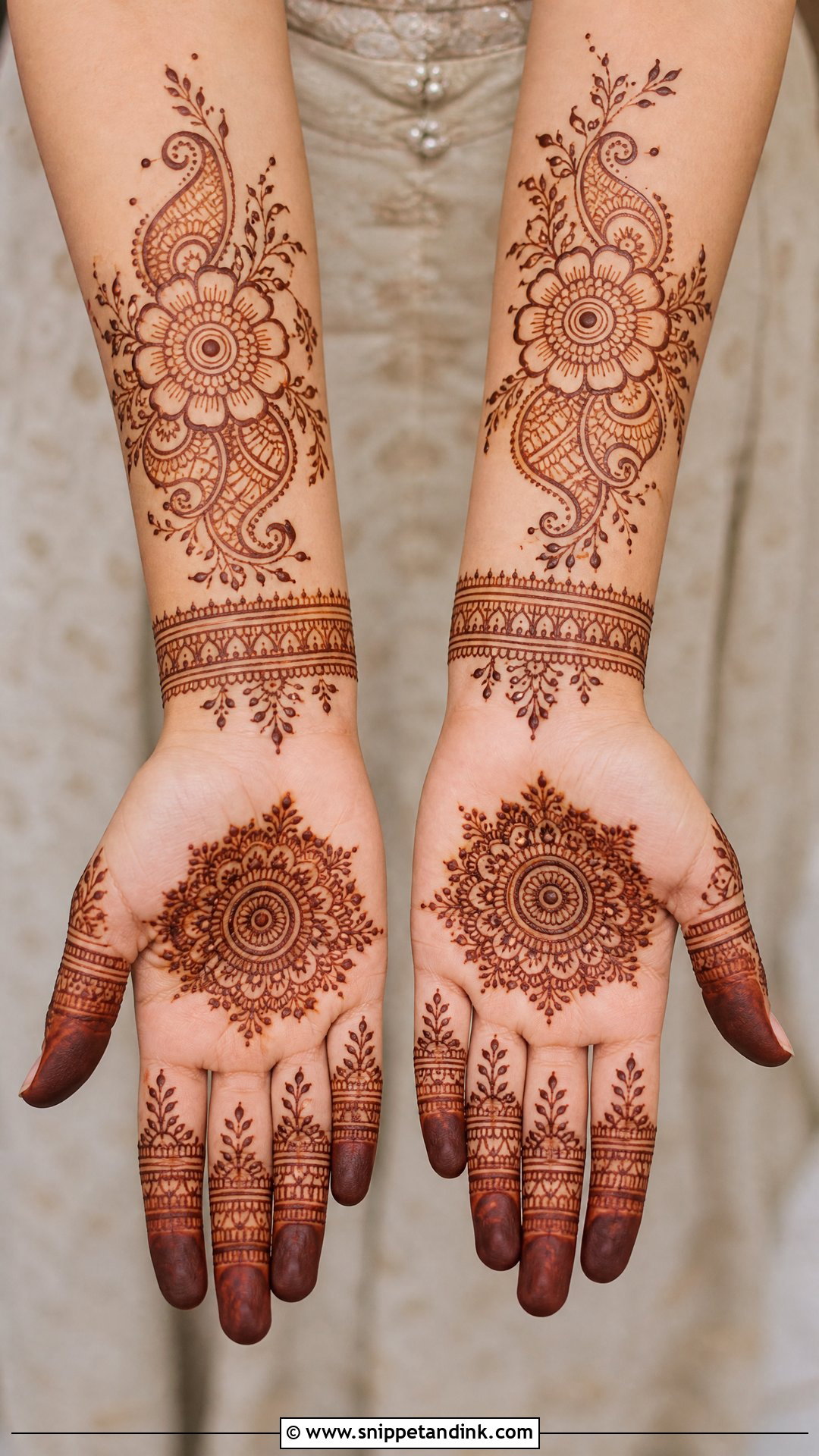
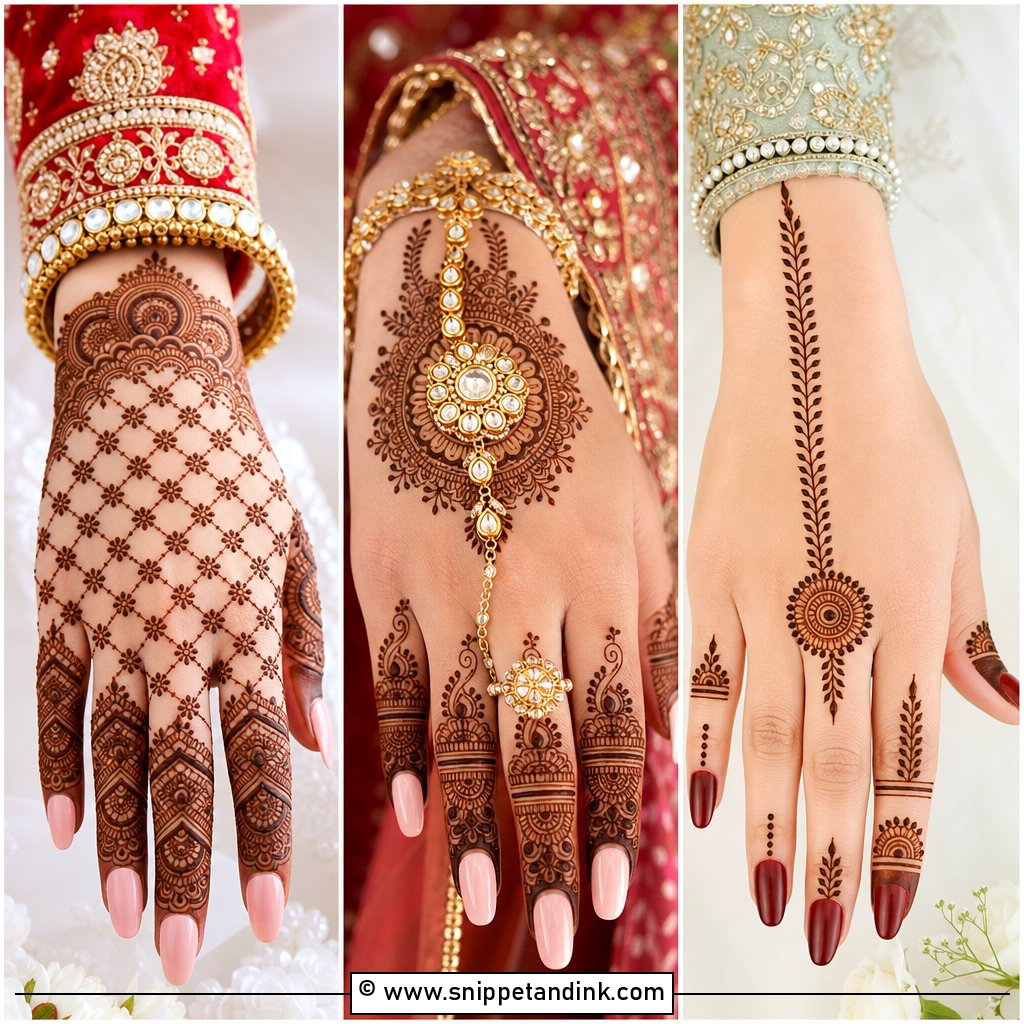
Simple doesn’t mean plain. A neat mandala, a floral wrist band, filled fingers, light paisleys and soft vines up the forearm make a complete bridal hand with far less sitting time. It suits intimate, court and destination weddings, and anyone who knows she’ll be restless after an hour. Even spacing and medium-sized motifs do most of the work. It pairs well with pastel sarees, light lehengas and minimal jewelry.
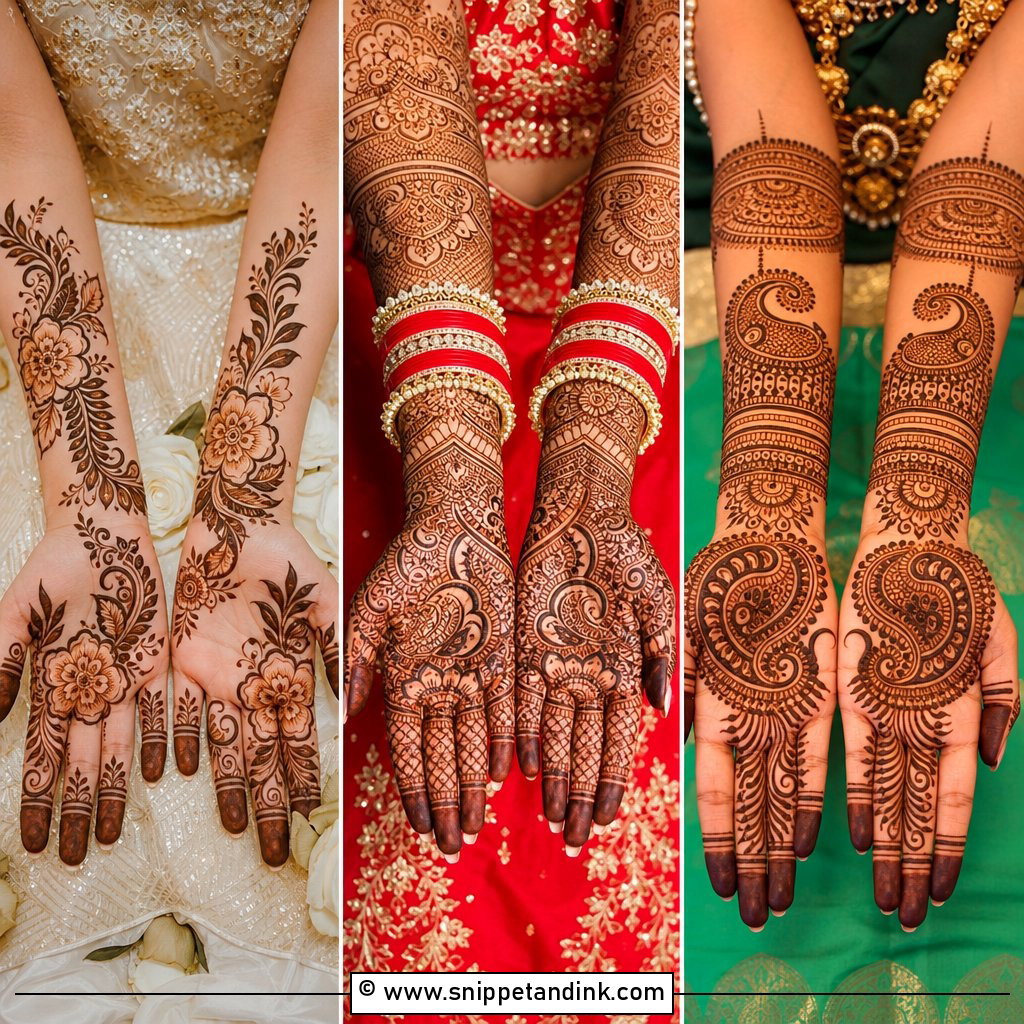

15. Heavy Dulhan Mehndi Design
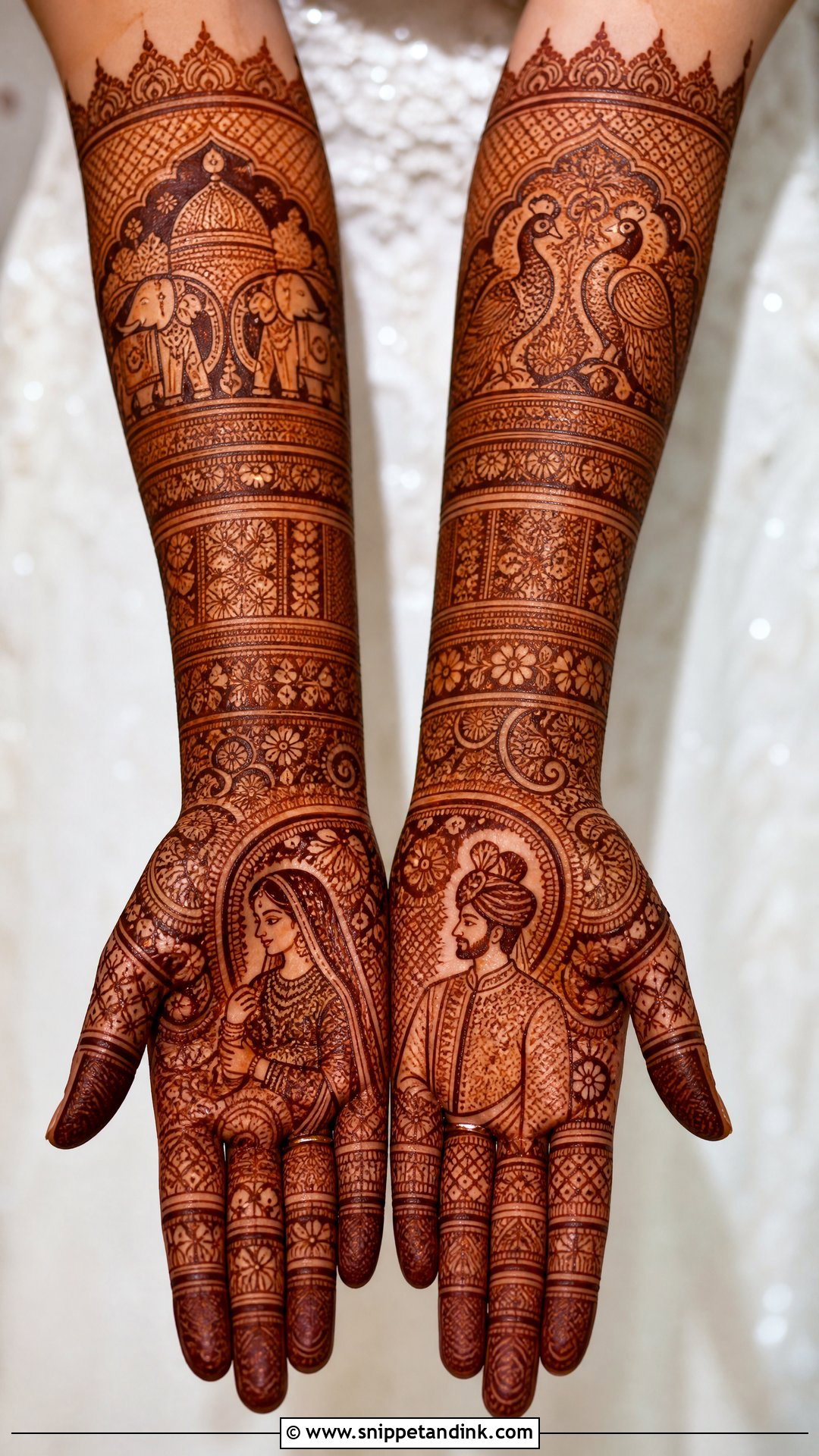
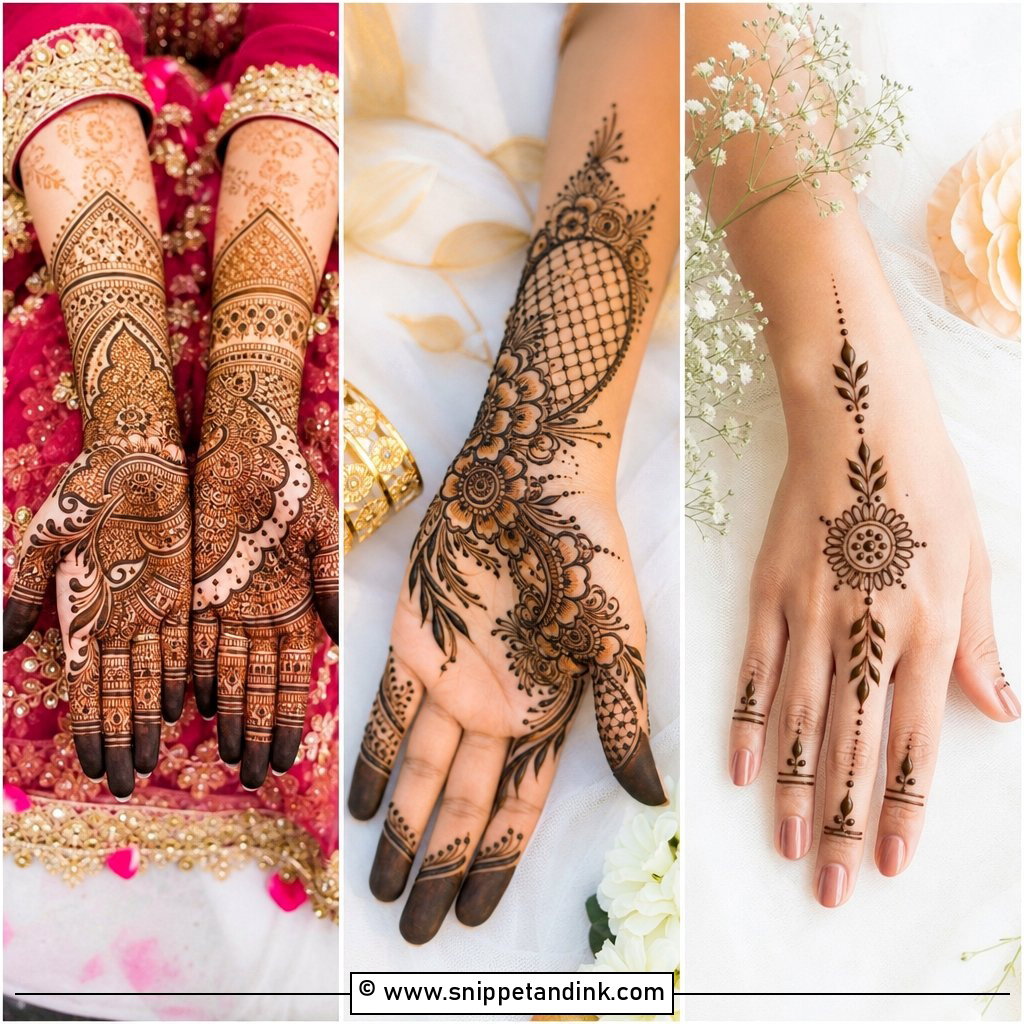
Dense coverage over hands and forearms, with portraits, peacocks, elephants, paisleys, mandalas, jaali and wedding symbols, leaves almost no skin showing. Up close, every angle has new detail, which is why grand weddings still favour it. It is also a long, physically tiring sitting. Schedule it for the day or two before the wedding rather than the morning of, wear something loose with sleeves you can push above the elbow, and have someone ready to feed you.
16. Modern Dulhan Mehndi Design
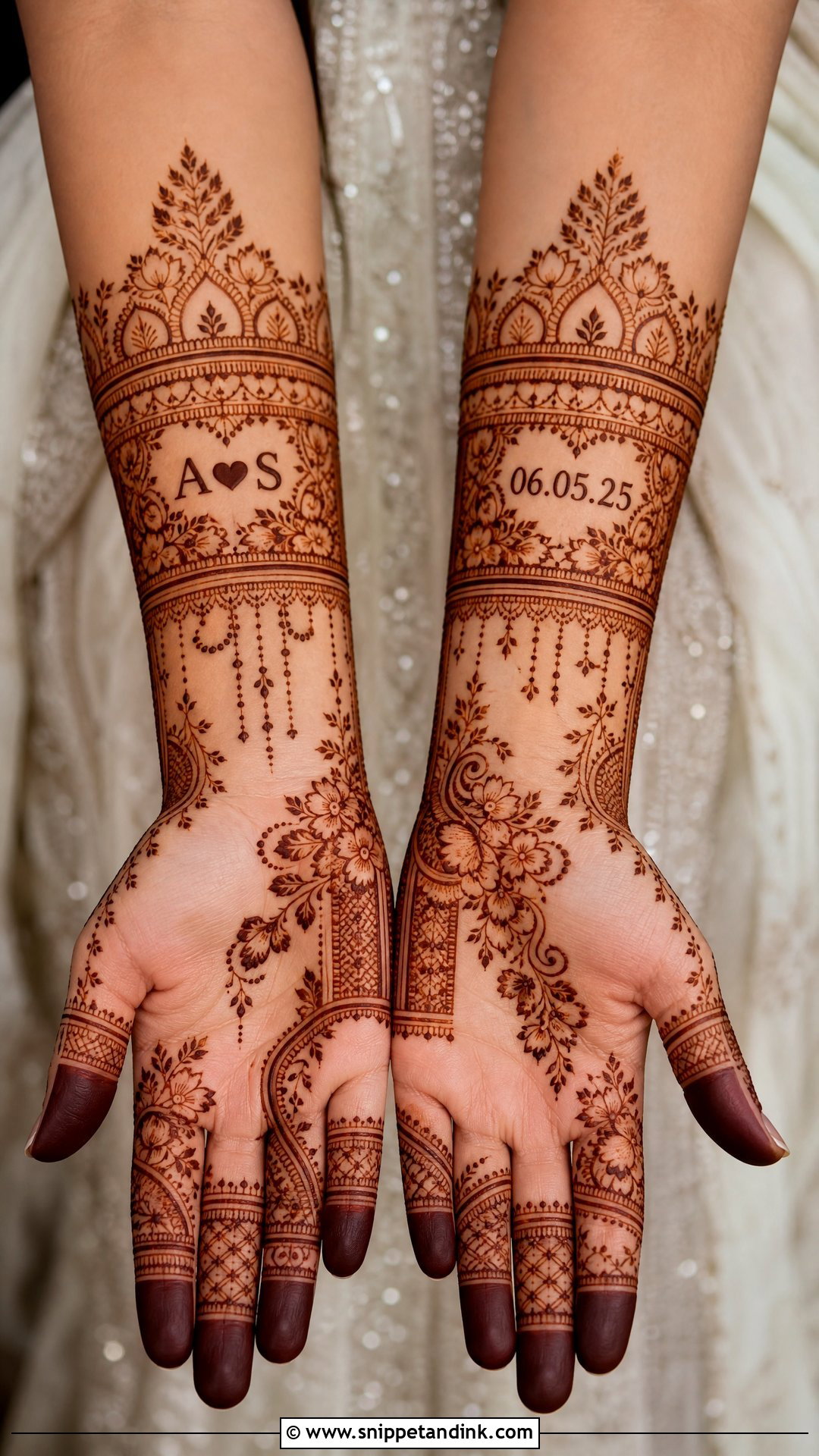
Modern bridal mehndi relies on layout rather than fill: clean spacing, geometric bands, bracelet patterns, initials, dates, small symbols and floral sections arranged around strong focal points. It still needs well-decorated fingertips, wrists and forearms to read as bridal; leave those bare and it looks like guest henna. Contemporary lehengas, fusion sarees and minimal jewelry suit it, as do photographers who shoot clean, bright frames.
17. Minimal Dulhan Mehndi Design
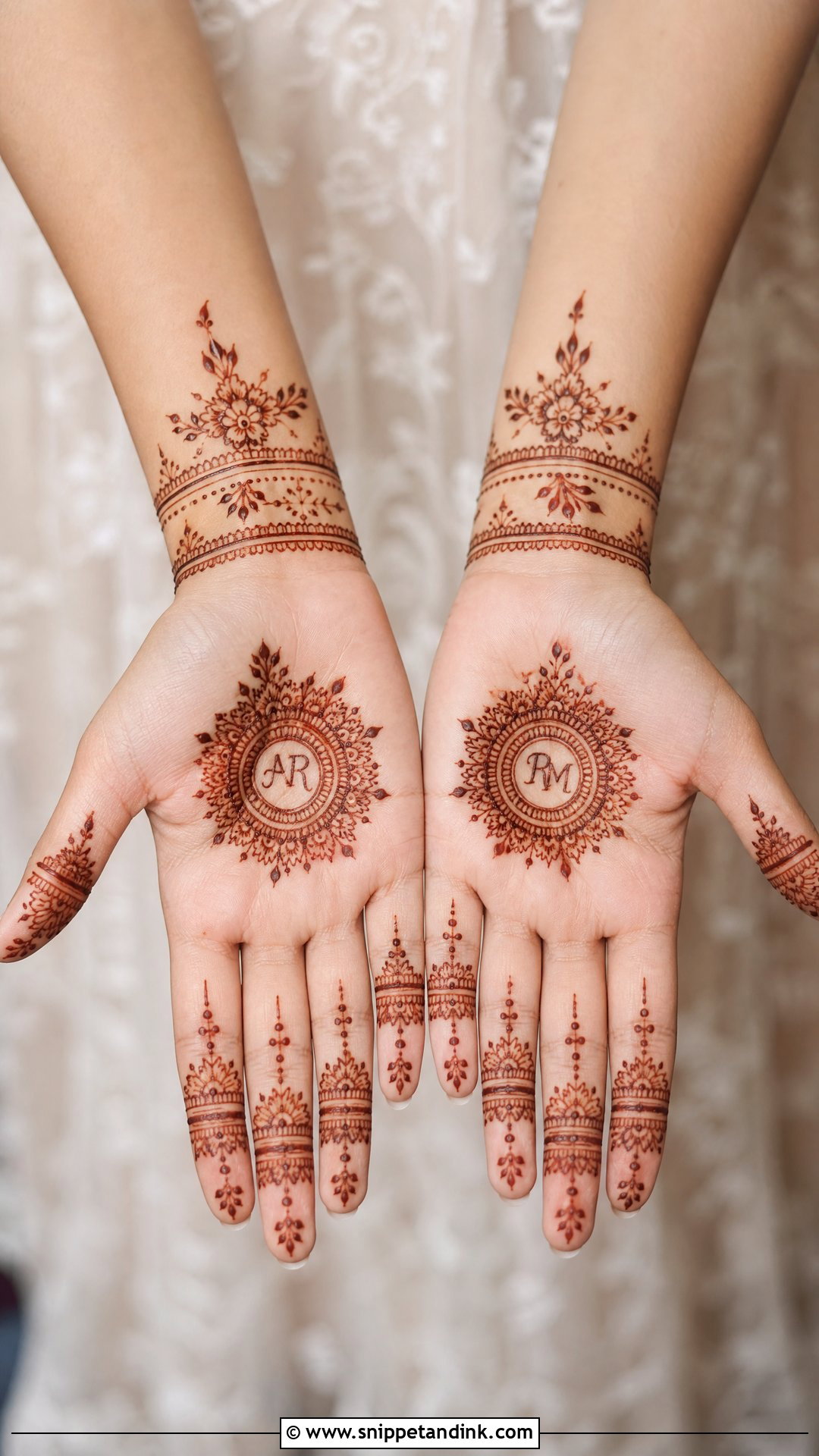
A central mandala, delicate finger work, slim wrist bands, small florals and plenty of open skin. Minimal layouts flatter smaller hands because they don’t swamp the shape. The risk with minimal bridal henna is that it can look unfinished next to a heavy outfit, so I always add one personal element, initials or the date, and finish every finger rather than leaving some bare.
18. Personalized Dulhan Mehndi Design
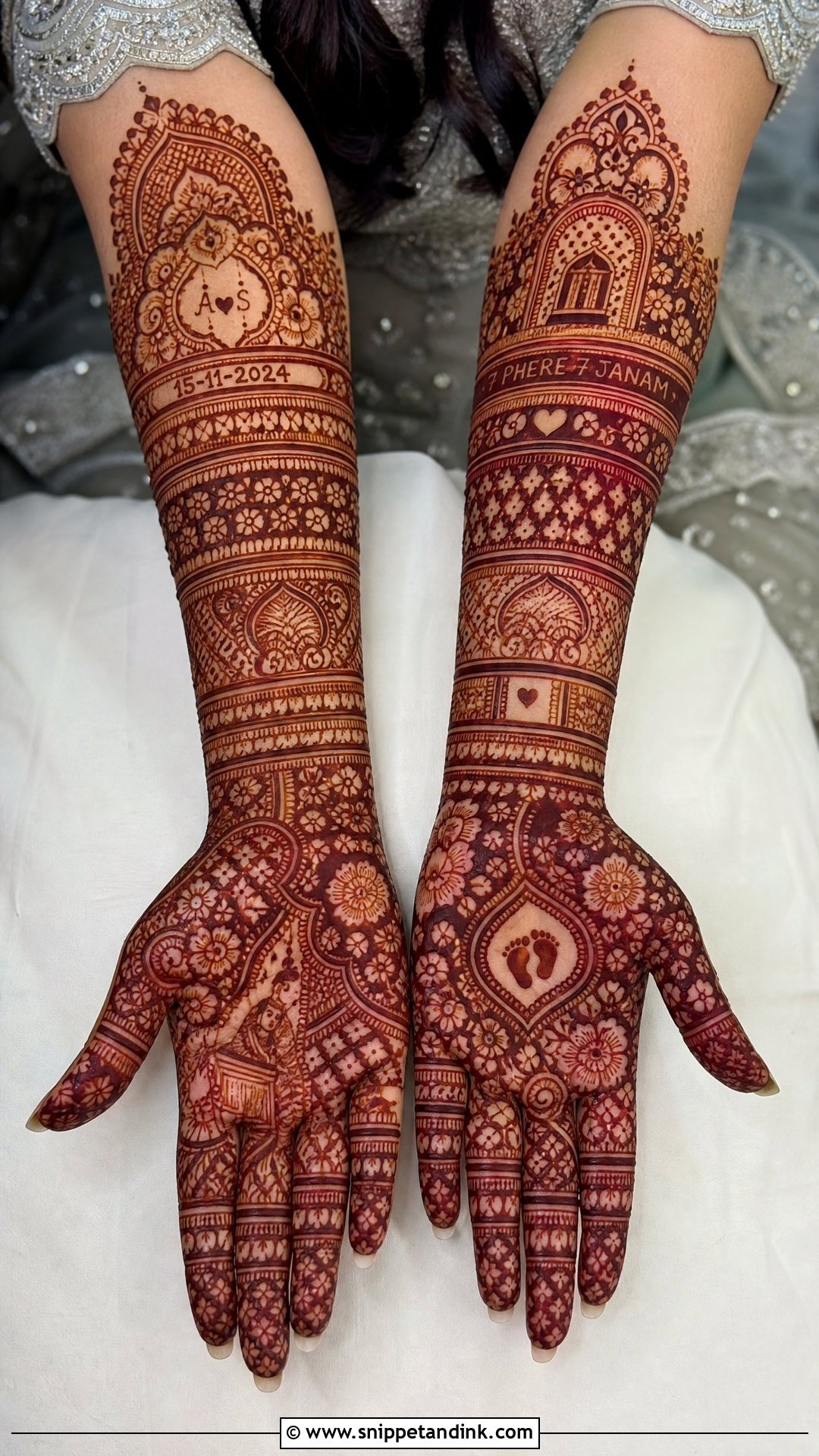
Personal details can go far beyond a name: the groom’s name, couple initials, the wedding date, a proposal symbol, a travel memory, a pet or a favourite flower. The skill is blending them into the pattern so they don’t look stuck on. I draw each symbol in the same line weight as the surrounding motifs, which is what makes it read as part of the design. Keep the list short; three personal touches feel special, ten feel like clutter.
19. Name Dulhan Mehndi Design
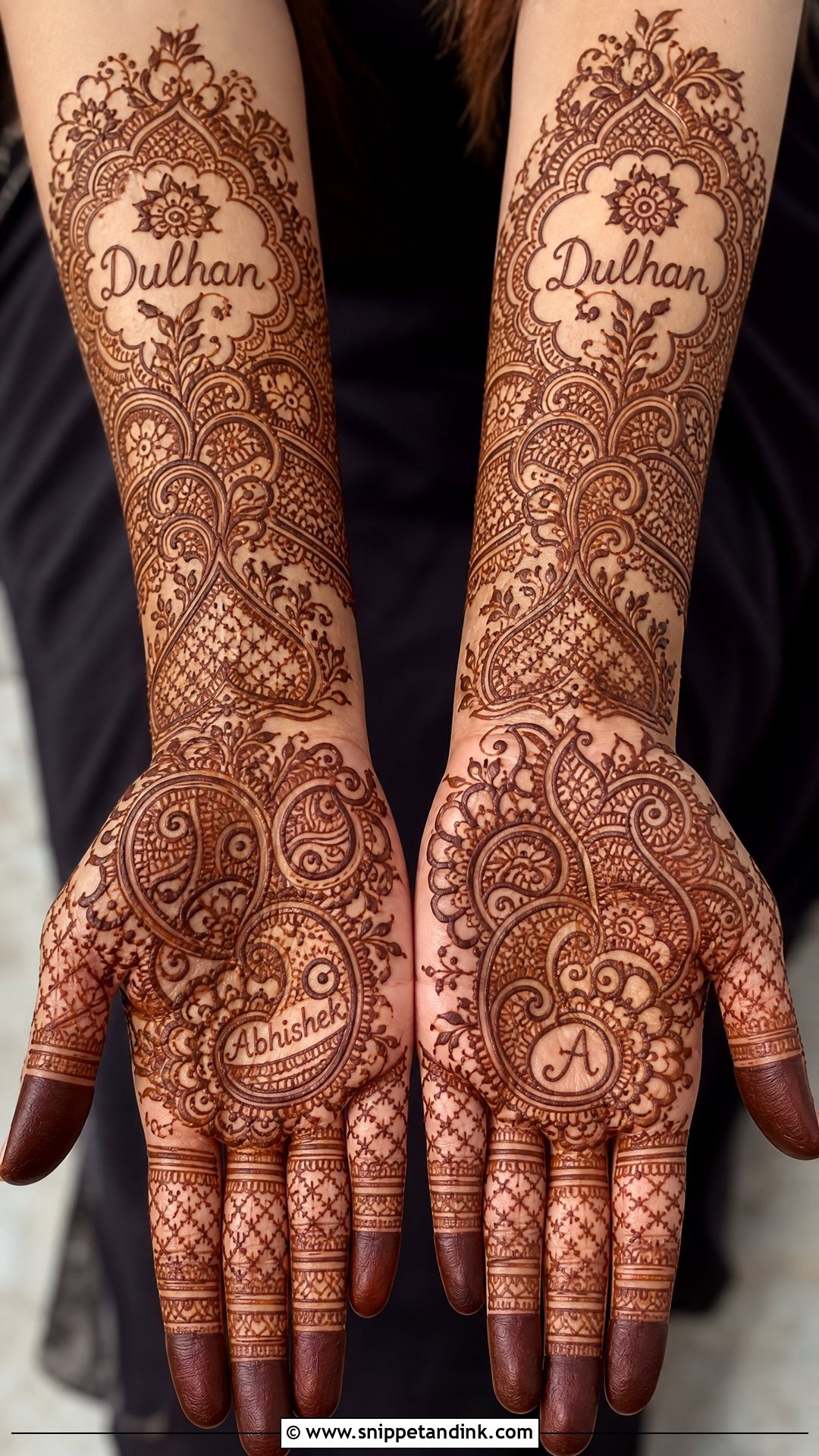
Hiding the groom’s name in the mehndi is a tradition that still makes guests lean in. The letters disappear into paisleys, leaves, jaali, mandalas or wrist bands. If you want the name visible in photos, place it on the wrist, forearm or near the center of the palm; if it should stay hidden, it needs to be woven into dense pattern. I write names with single fine strokes, because doubled lines thicken as they stain and give the game away.

20. Wedding Story Dulhan Mehndi Design
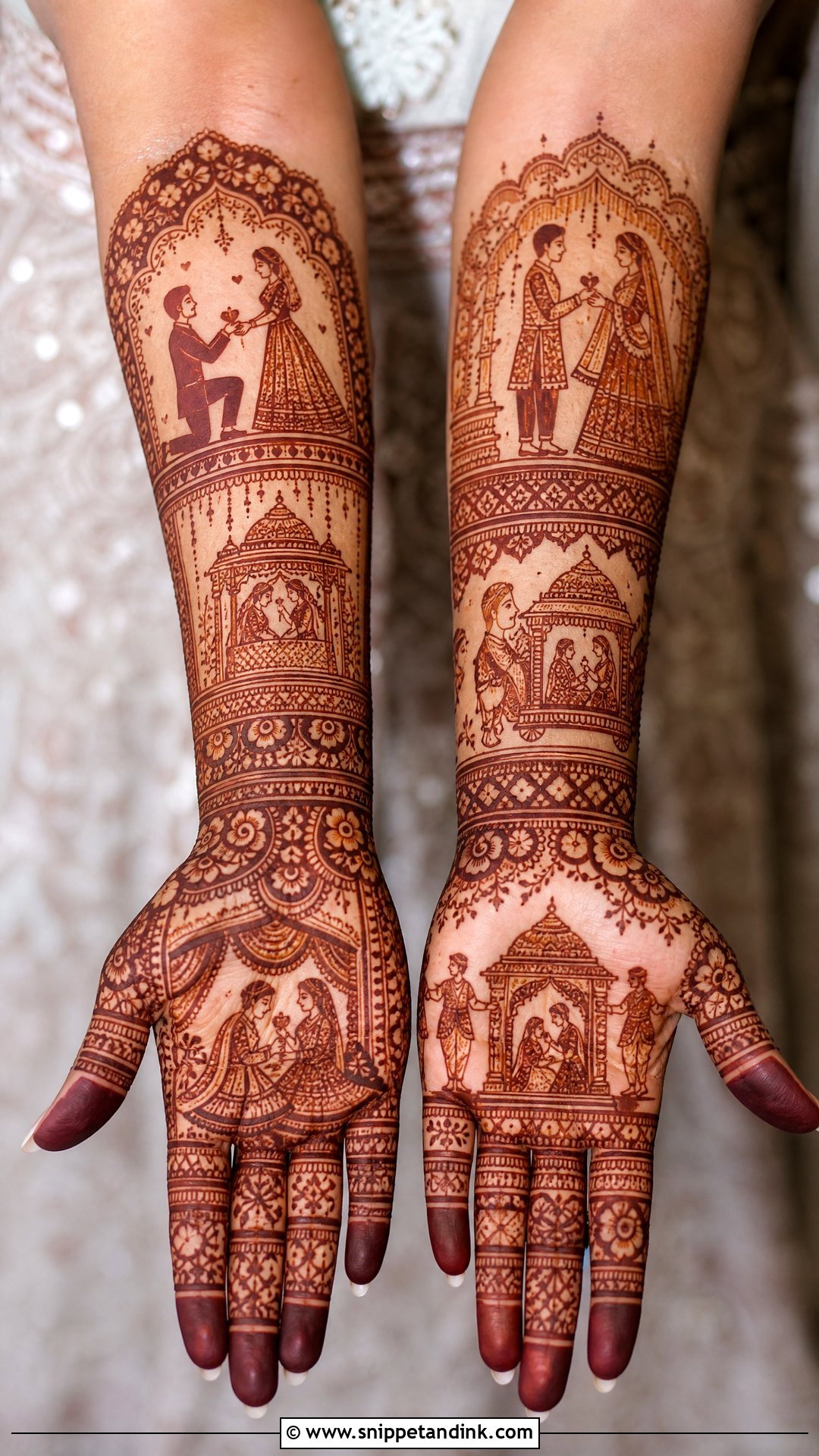
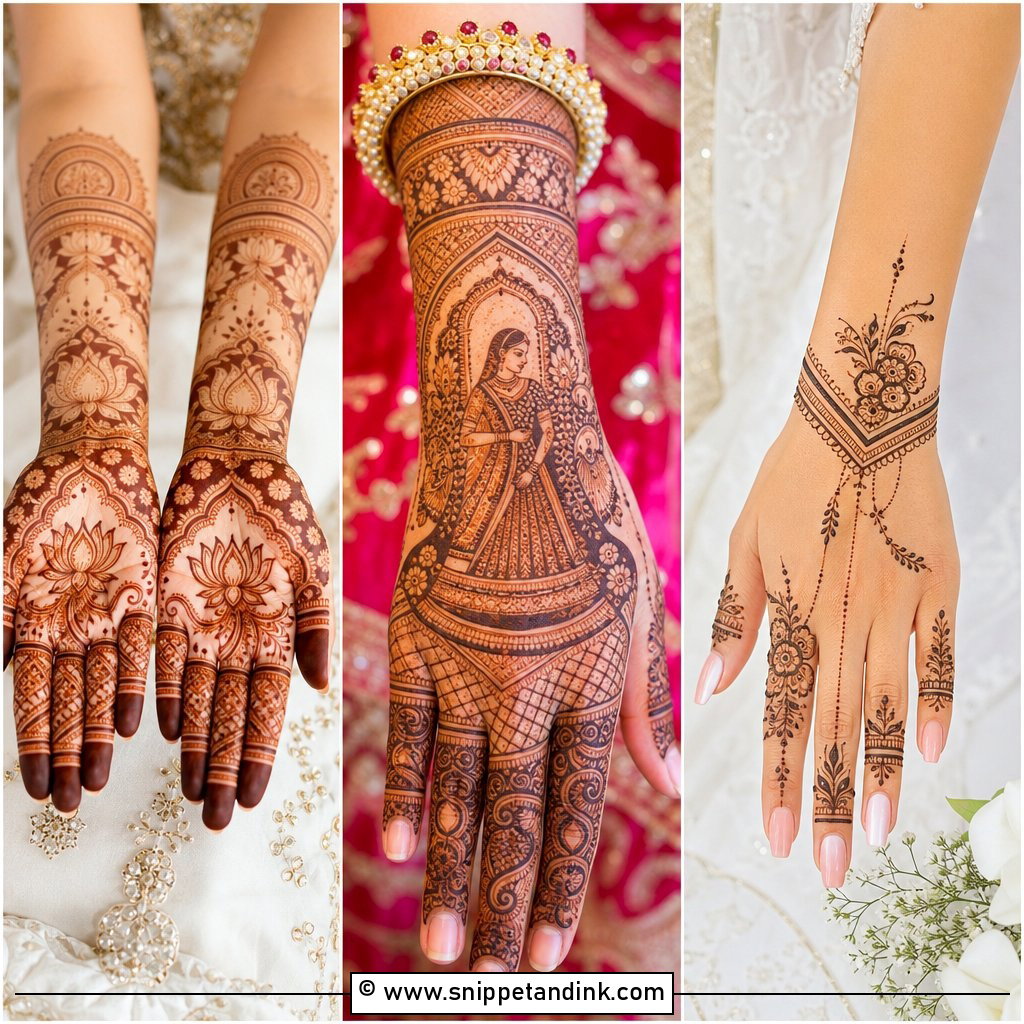
Story designs can trace the whole relationship: how the couple met, a proposal, the rings, the venue, the mandap, the varmala and the doli, with the palms carrying the scenes and the forearms filled with florals, paisleys and jaali. It sparks conversation all through the mehndi function. My advice is to pick three or four moments at most. Each scene needs room, and a palm crammed with tiny icons becomes unreadable the moment the stain darkens.
21. Portrait Dulhan Mehndi Design
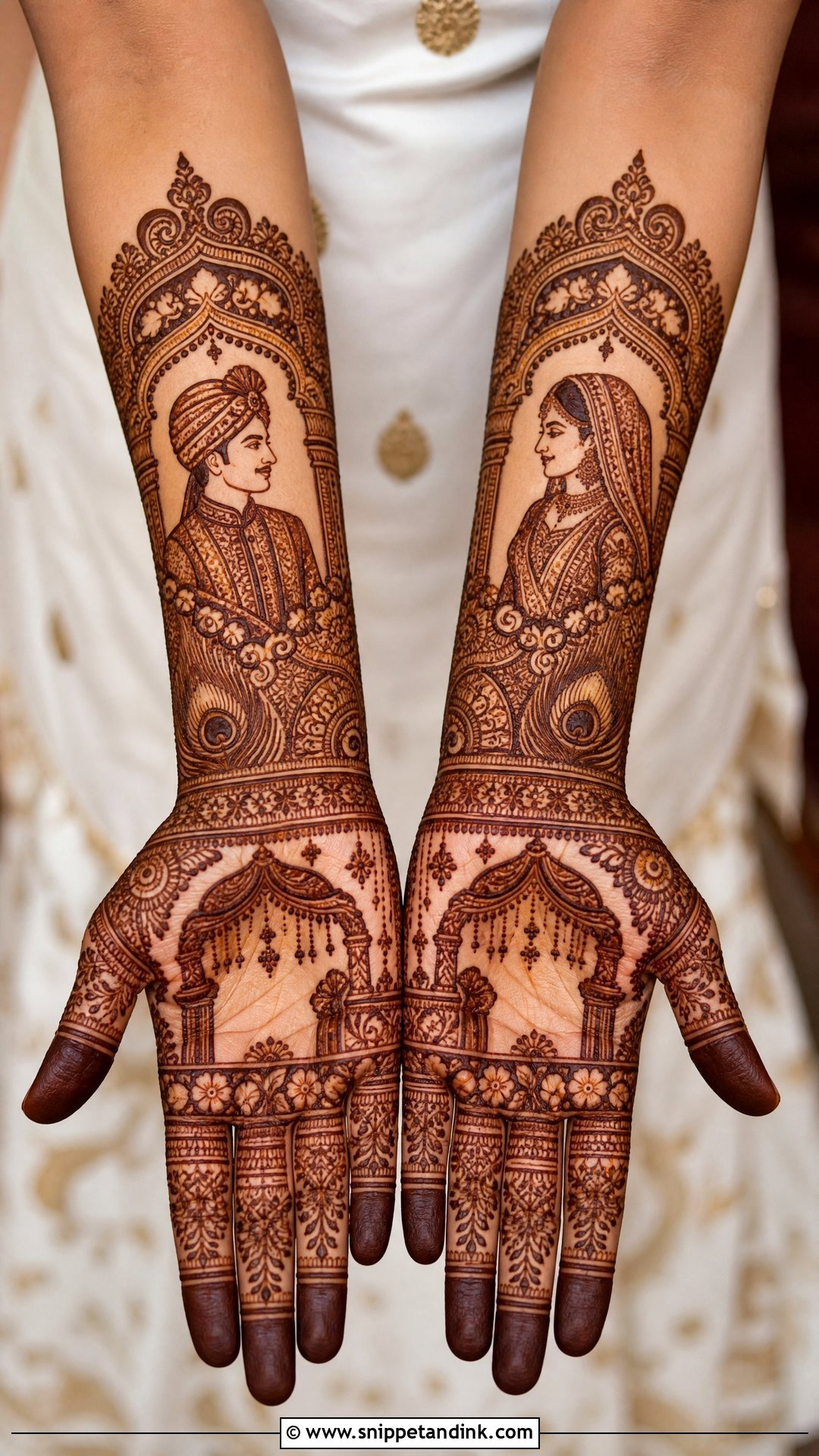
Portraits of the bride and groom on the palms or forearms need an artist with a genuinely steady hand, because faces have no margin for error. Mandap arches, floral borders, peacock feathers, paisleys and garlands frame them. Ask for medium-sized portraits rather than very small ones; tiny faces blur once the henna darkens. Portraits give a full-hand design a strong center, which helps the rest of the hand organise itself around them.
22. Jaali Dulhan Mehndi Design
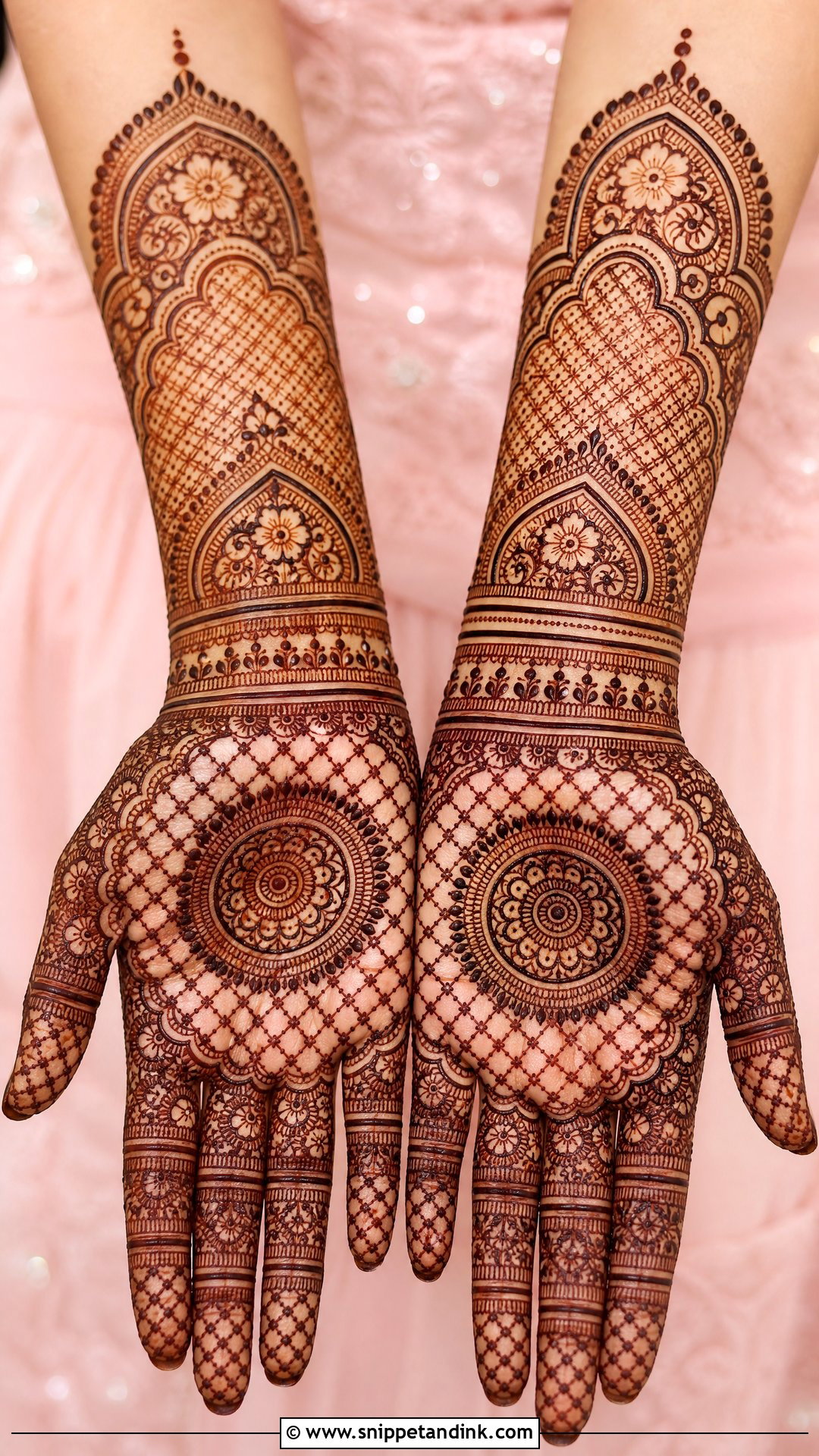
Done right, a Jaali dulhan mehndi design brings a lace-like texture to the back hands, palms, fingers, wrists or forearms, combined with florals, paisleys, mandalas and bracelet bands. Jaali adds detail without visual weight, which is useful when you’re wearing busy rings and bangles. Even spacing is everything. I draw all the lines in one direction, pause, then cross them, so intersections stay crisp instead of pooling into dots.
23. Paisley Dulhan Mehndi Design
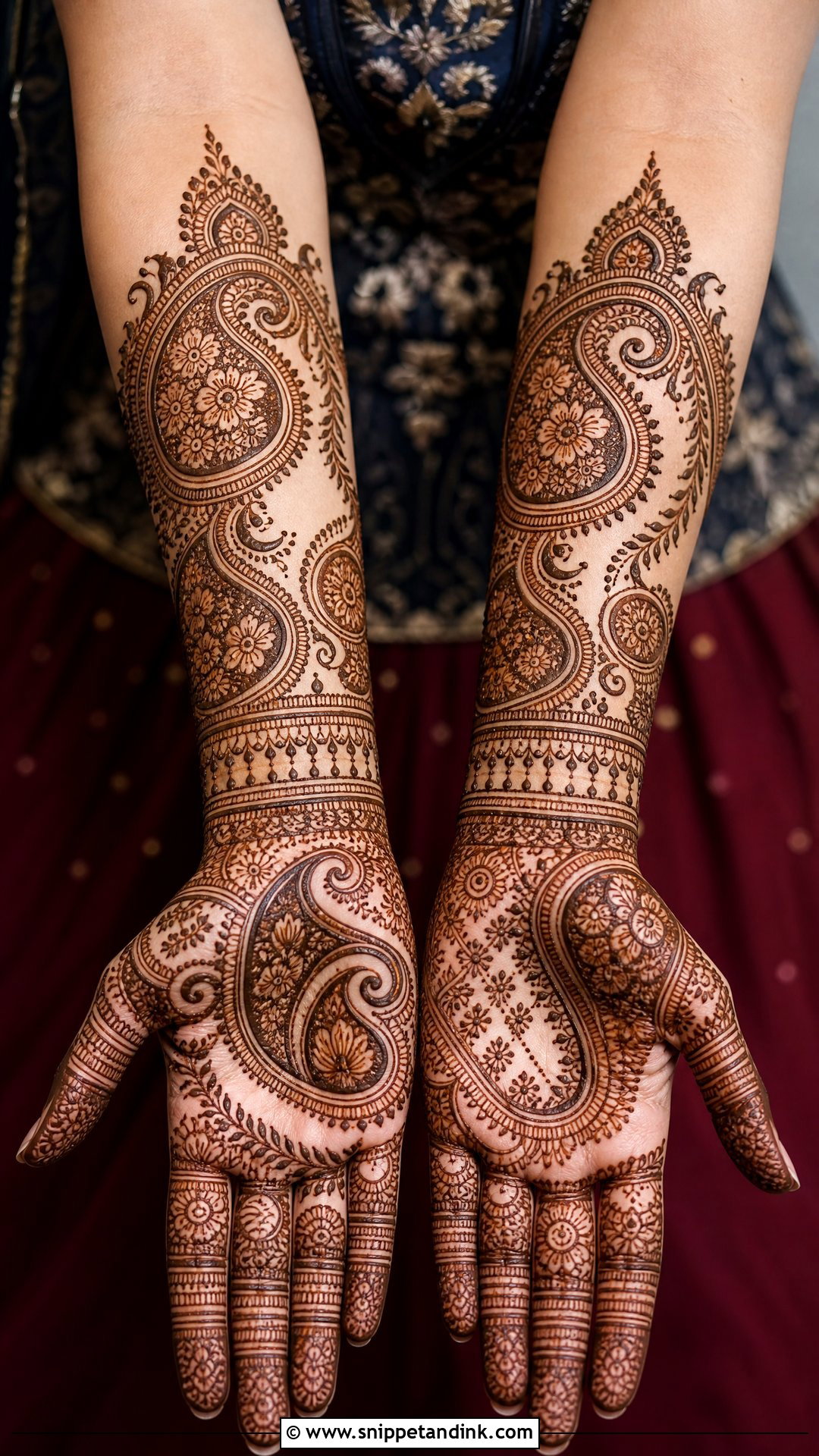
Paisleys, the mango motif, curve naturally along palms and forearms and can be filled with tiny flowers, dots, leaves, checks or fine lines. Large ones form the structure while small ones fill gaps at the fingers and wrists. The motif adapts to dense or medium coverage and to almost any hand shape. I point the tip of each large paisley toward the fingers so it follows the direction of the hand rather than cutting across it.
24. Floral Dulhan Mehndi Design
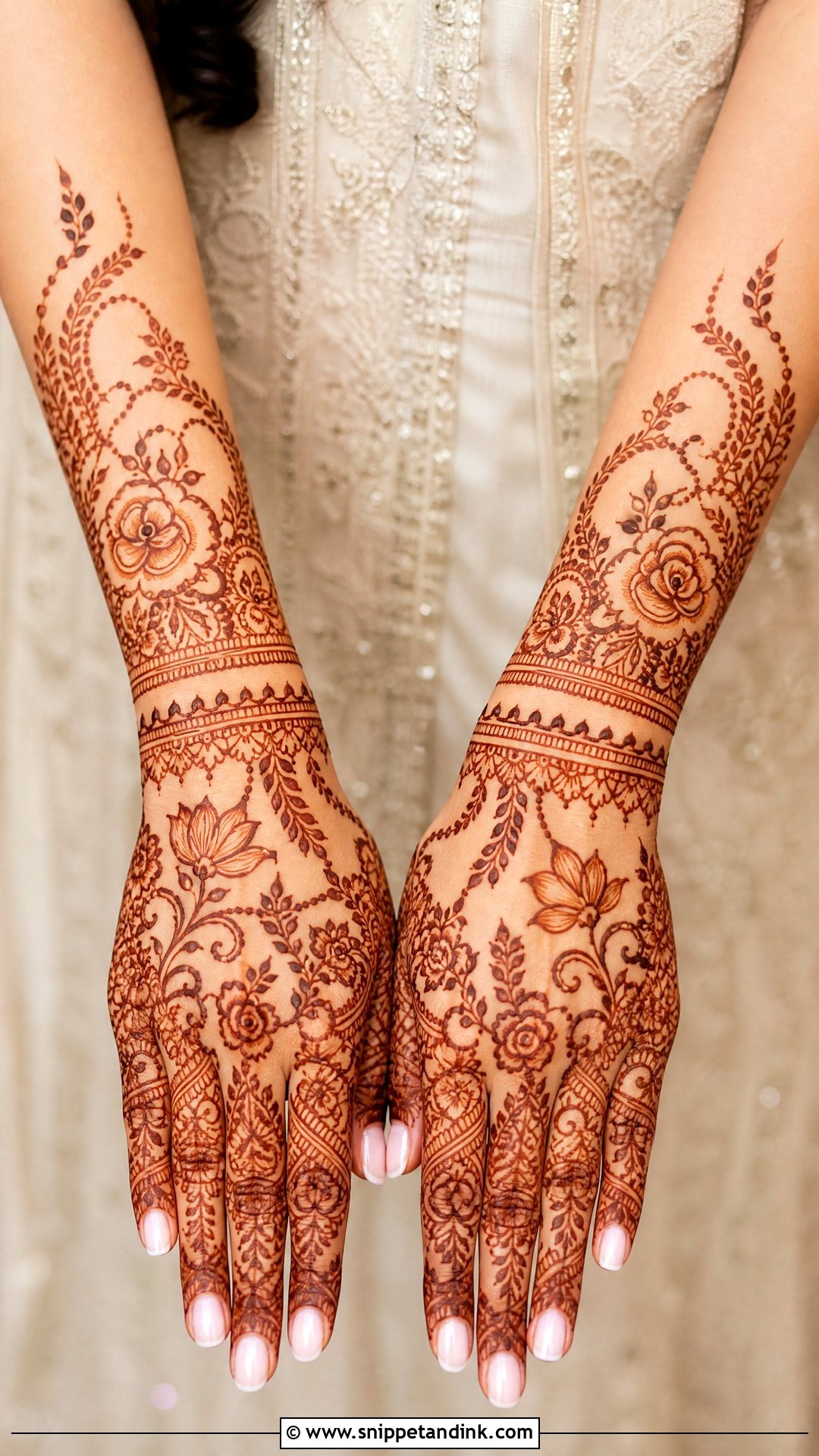
Florals are the most adaptable choice: roses, lotus, leafy vines, garden trails, shaded petals and buds, dense for a traditional bride or airy for a modern one. They pair naturally with pastel lehengas, floral jewelry and daytime mehndi functions. To make florals read as bridal, I extend them into filled fingers, wrist bands and forearm sections. Large blooms make a bold hand; tiny ones give texture without drama.
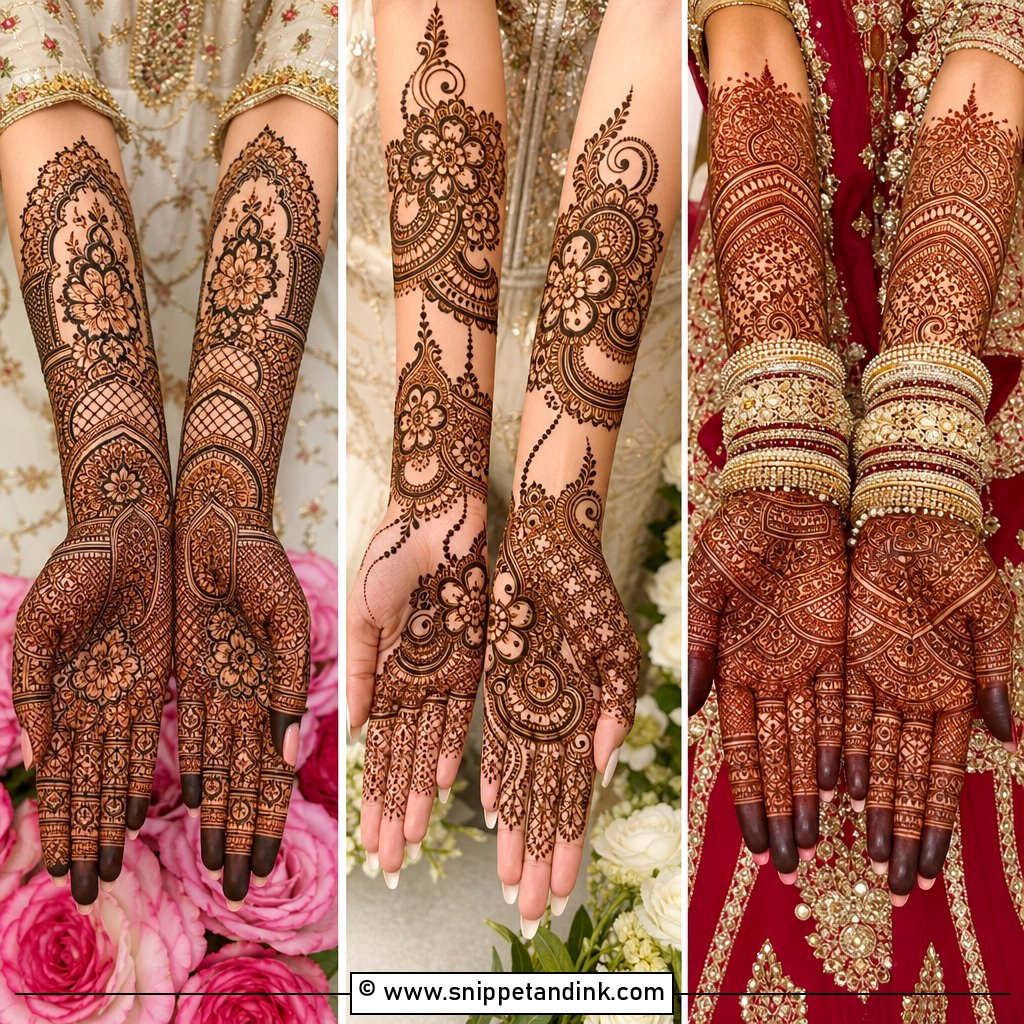
25. Bracelet Dulhan Mehndi Design
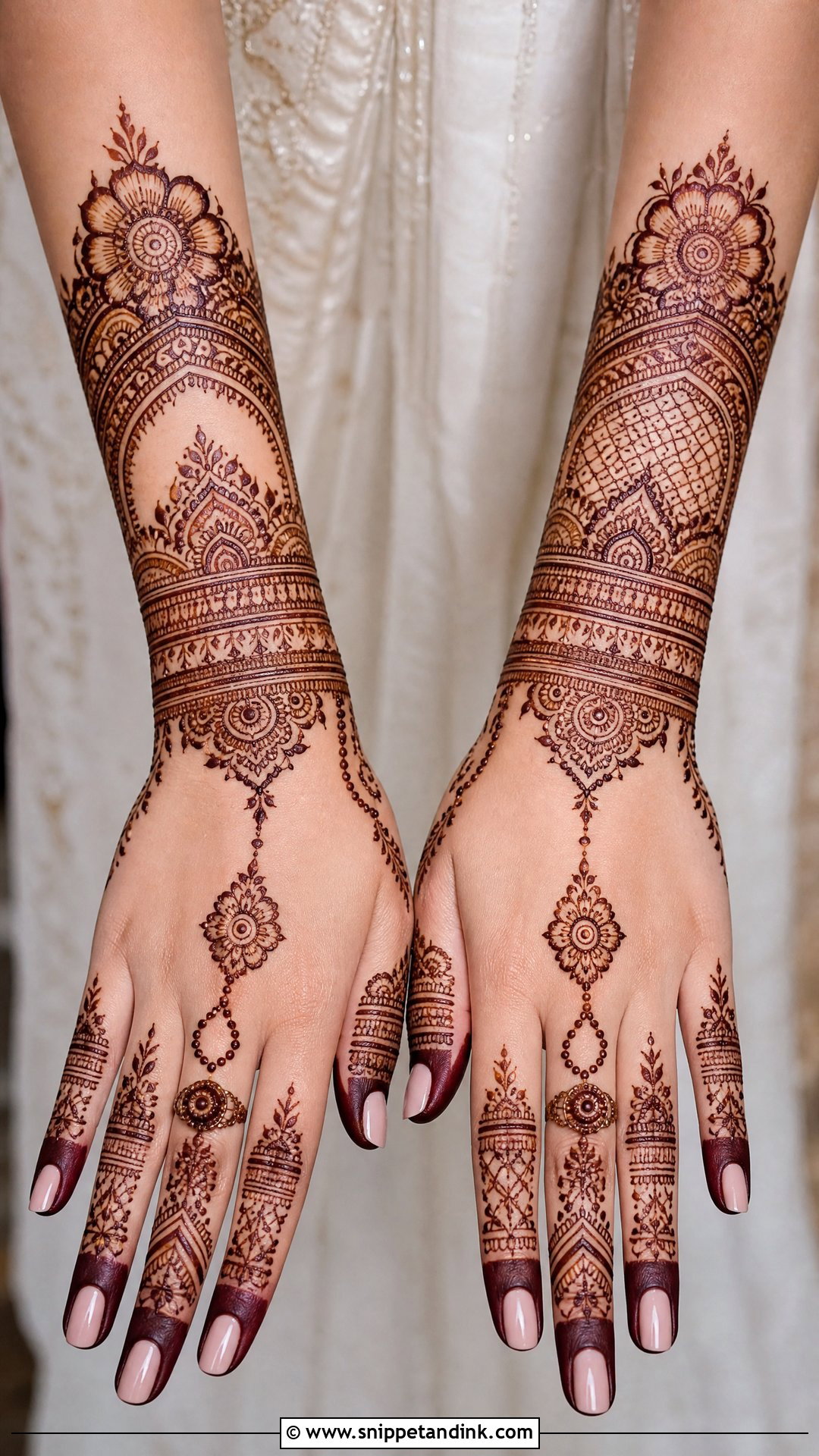
Bangles, hathphool, chains and cuffs drawn in henna cover the back hands, wrists and fingers, with fine connections between the motifs. The bridal version runs up the forearm with floral bands, jaali panels and paisleys. Jewelry-style mehndi has to be symmetrical or the illusion breaks, so I measure by eye against the wrist bone on both hands before drawing the cuff. It shows clearly in ring shots and pairs well with real bangles or kaleere.
26. Finger Dulhan Mehndi Design
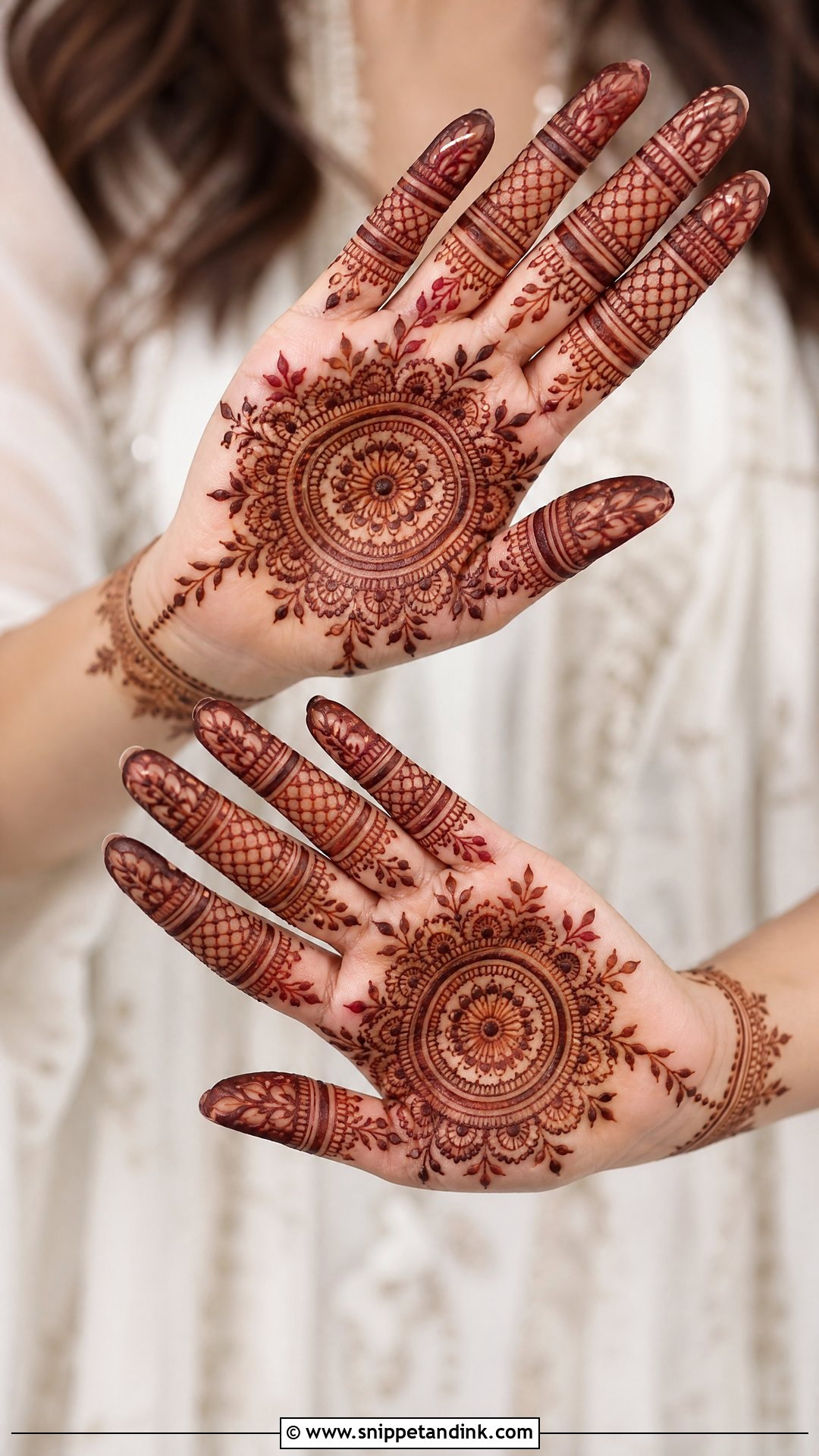
Fingers get the heaviest detail here, lines, leaves, dots, mesh and tiny florals, while the palm carries a mandala, paisley or open floral. Fingertips stain darkest of anywhere on the hand, so finger-focused designs look intense even when the rest is lighter. Keep the fine lines on the fingers truly fine or they fuse into solid colour. Extending into wrist bands and forearm motifs keeps it from looking like finger henna alone.
27. Wrist To Forearm Dulhan Mehndi Design
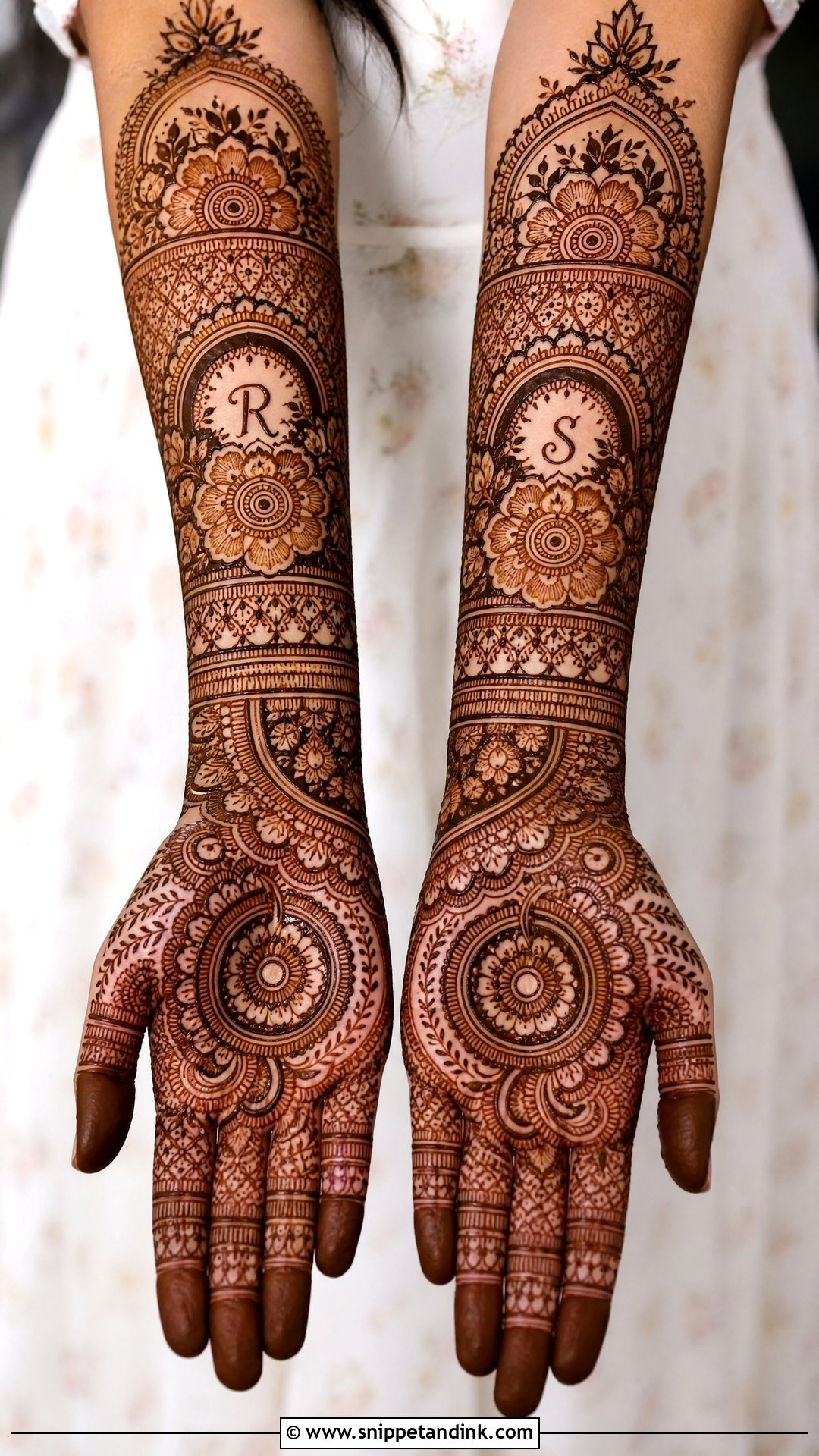
This length covers the fingers, palms, wrists and lower arms with bands, vines, florals, paisleys, mandalas and personal elements, stopping well below the elbow. It frames the arm neatly with bridal bangles and most blouse sleeves and spares you hours of extra sitting. The ending is what I take most care over. I taper the design toward the forearm with smaller motifs and a finishing band, so it closes rather than just stops.
28. Full Arm Dulhan Mehndi Design
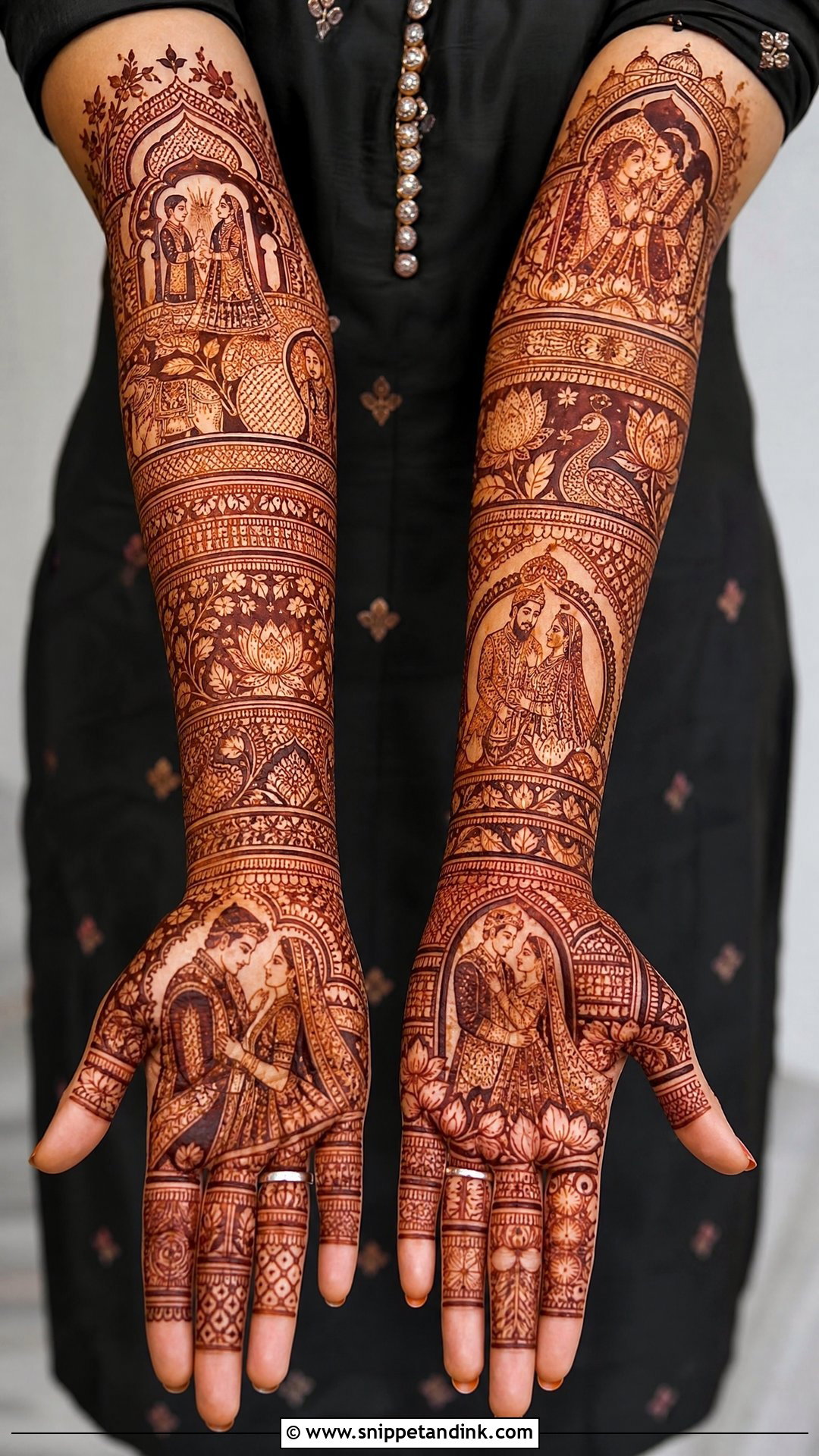
From fingertips to elbows or beyond, full-arm mehndi holds large storytelling scenes, portraits, peacocks, elephants, lotus and layered borders. It’s made for sleeveless, short-sleeve or sheer-sleeve outfits. It also takes several hours, so plan breaks, a comfortable chair with arm support and something to eat beforehand. Upper-arm skin stains lighter than the palm, so expect the top of the design to look paler than the hands and keep the paste there on longest.
29. Foot Dulhan Mehndi Design
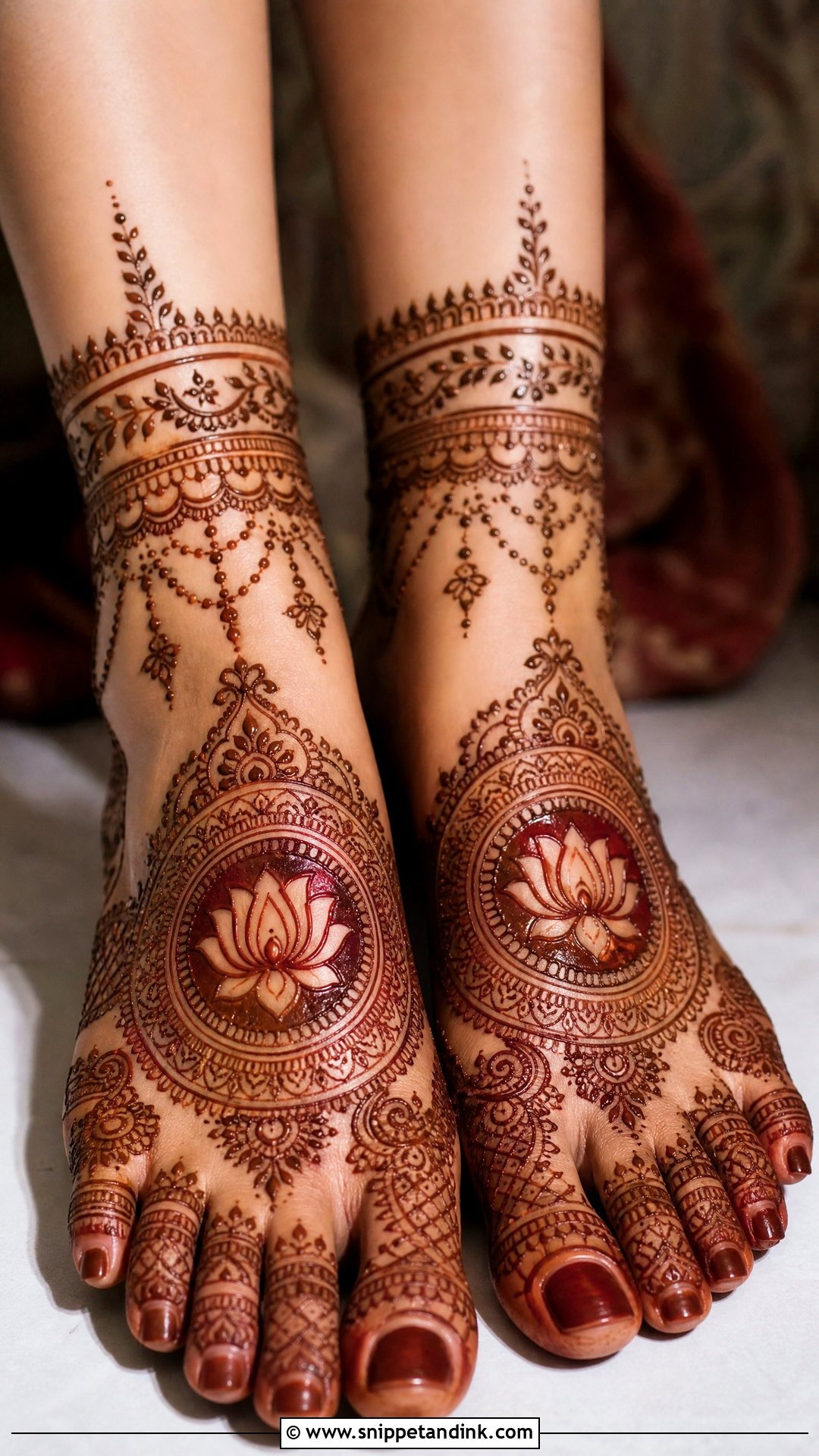
The Foot dulhan mehndi design completes the look for anklet shots, alta-inspired styling and the rituals where feet are seen. Lotus, mandalas, paisleys, anklet bands, toe details and floral trails decorate the tops of the feet, dense or light. Feet are the last part to dry and the first to smudge, so I always do them before the hands. The style should echo the hands even if it’s simpler, and it pairs with payal and toe rings.
30. Matching Hand And Foot Dulhan Mehndi Design
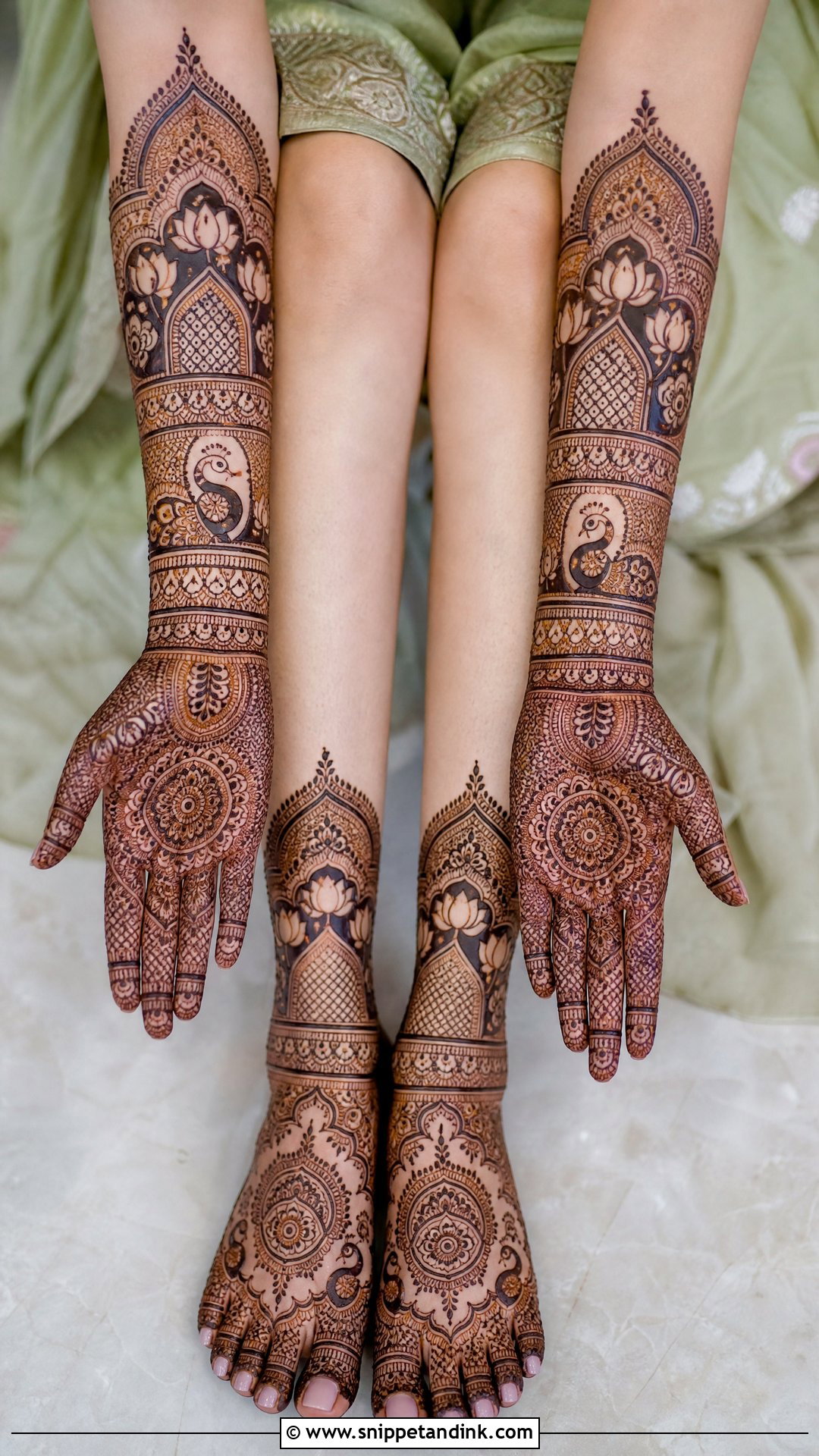
Matching designs repeat the same language across hands and feet, lotus, paisleys, peacocks, mandalas or jaali, with the hands carrying the heavier storytelling and the feet a simplified version. Share one theme rather than copying every detail; an exact copy on the foot rarely fits the shape. When I plan a matching set, I pick two motifs from the hands and repeat only those at the ankles and toes. It looks planned in full-length portraits and getting-ready photos.
What Belongs in the Cone, and What Doesn’t
Every design above depends on natural henna, and not every cone sold for bridal use is natural. Fresh body-art henna is a greenish-brown paste with an earthy smell, often blended with essential oils such as eucalyptus, tea tree or lavender. It stains orange when the paste comes off and darkens to reddish brown over a day or two. A cone that leaves black or near-black colour within an hour is not natural henna and can contain PPD or other dyes that cause blistering and lasting skin damage.
Ask your artist whether they mix their own paste and how fresh it is. If you’ve never worn henna, have a small patch done on the inner arm a few days before the bridal sitting.
The week before your mehndi
- Finish waxing, threading, exfoliating and any manicure before the mehndi. Scrubbing and nail-polish remover afterward fade the stain.
- Skip lotion and oil on your hands and feet on the day itself, since they form a barrier the dye has to get through.
- Wash your hands with plain soap and dry them fully just before the artist starts.
- Book the sitting a day or two before the main ceremony so the colour peaks when it matters.
Design for the Rituals You’ll Be Photographed In
The right bridal mehndi depends on your rituals, outfit, jewelry, comfort and the story you want on your hands. Some brides want heavy bharwa, others Arabic spacing, modern minimalism or personal scenes. Before booking, save a few references, agree on timing, and ask your artist how much coverage suits your hands and your ceremony schedule. Portraits, paisleys, florals, jaali or full arms, the best result is the one that still looks clear and deep on the day you’re photographed most.
You'll Like These Ideas:




Leave a Reply