
Bridal mehndi is the one part of the wedding look that takes hours to apply and keeps changing for days afterwards. The paste comes off orange, deepens to a rich reddish brown over the next two days, and is still on your hands in the honeymoon photos. That’s why I think about the stain as much as the pattern. Dense full-hand work, open mandala palms, Arabic trails, portrait scenes and hidden initials all stain differently and suit different hands, outfits and amounts of sitting time. Below are 20 bridal designs I’d discuss with a bride, with notes on how each one is built and what to ask your artist.
Working Back From the Wedding Date for the Darkest Stain
Henna doesn’t reach its deepest color the moment the paste comes off. It starts a bright orange and darkens over the next day or two as it oxidizes. If your mehndi is the night before the wedding, you’ll walk into the ceremony with a lighter stain than you’ll see in the honeymoon photos.
- I recommend applying bridal mehndi one to two days before the wedding, so the stain peaks on the day itself.
- Leave the paste on for as long as you comfortably can, ideally six to eight hours or overnight. Longer contact means a deeper stain.
- A light dab of lemon and sugar keeps the paste moist and stuck to the skin while it dries.
- Scrape the dry paste off with a blunt edge. Don’t wash it off with water.
- Avoid water on the stain for the next twelve to twenty-four hours. Warmth helps, so keep your hands warm and covered.
Stains also vary by body area. Palms and fingertips take the darkest color, the backs of the hands are lighter, and forearms are lighter still. That’s normal, not a sign of weak henna.
1. Full Hand Indian Bridal Mehndi
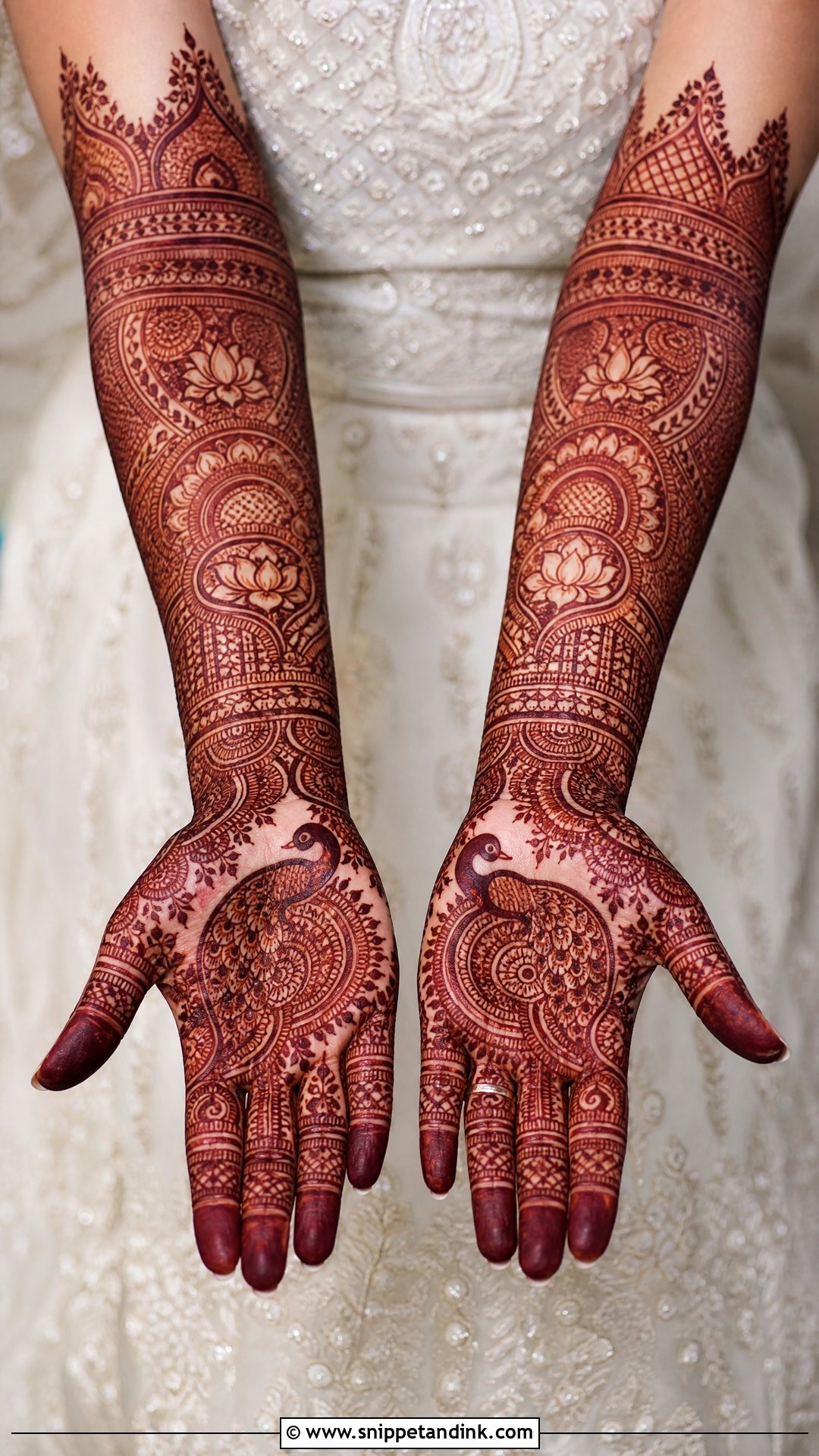
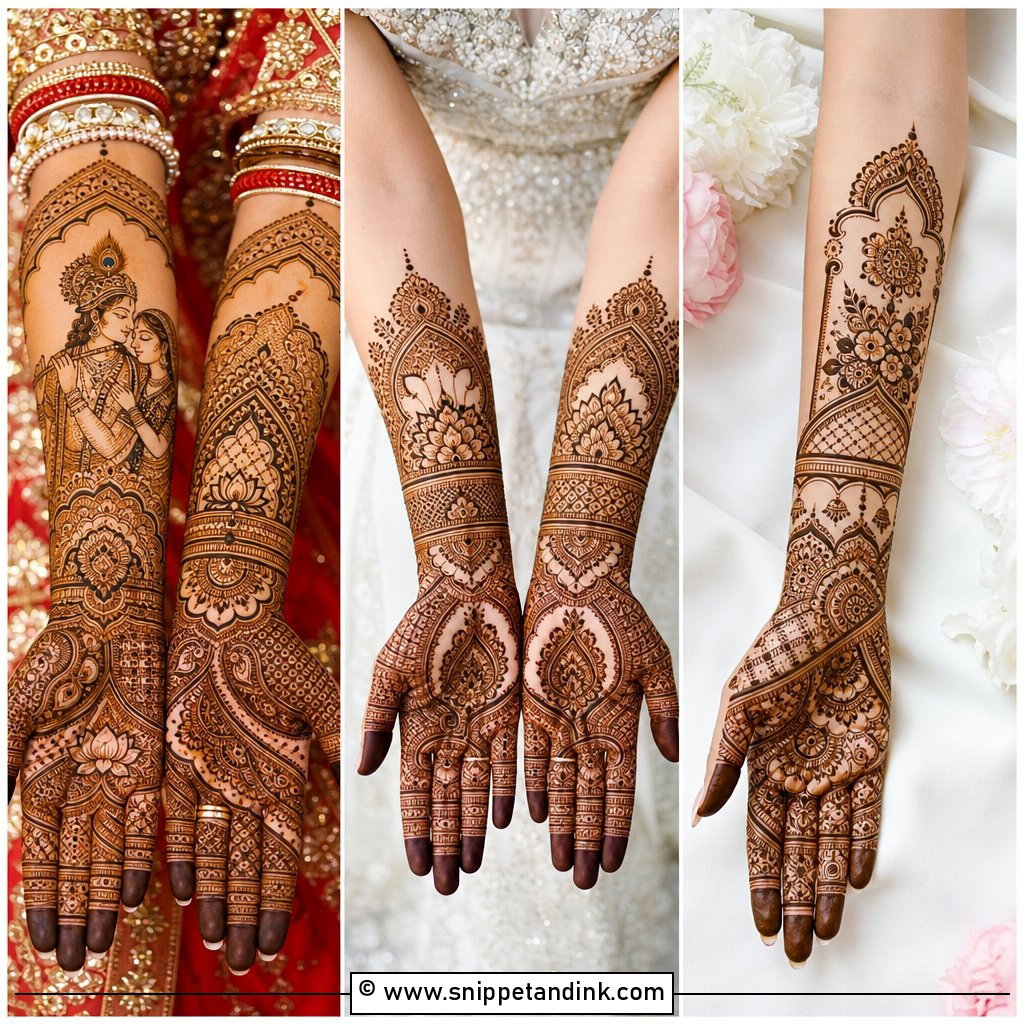
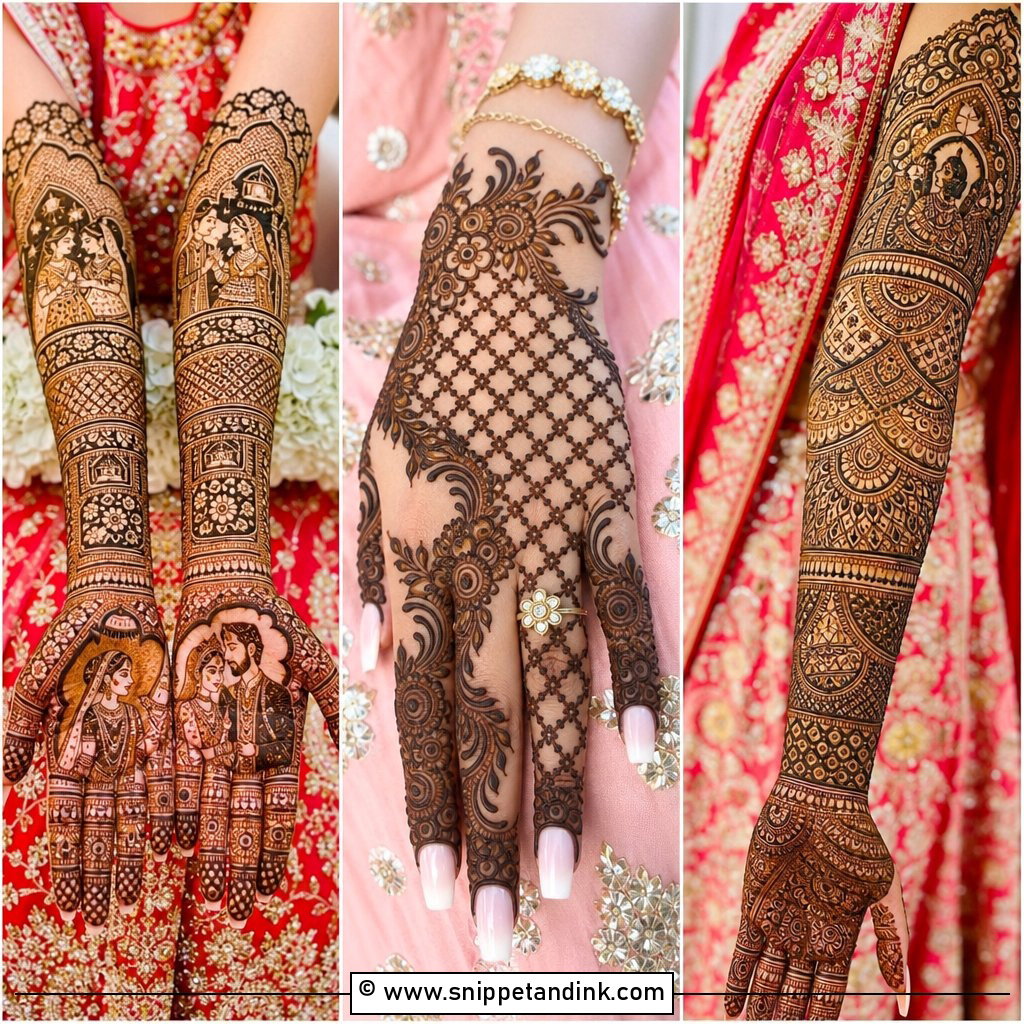
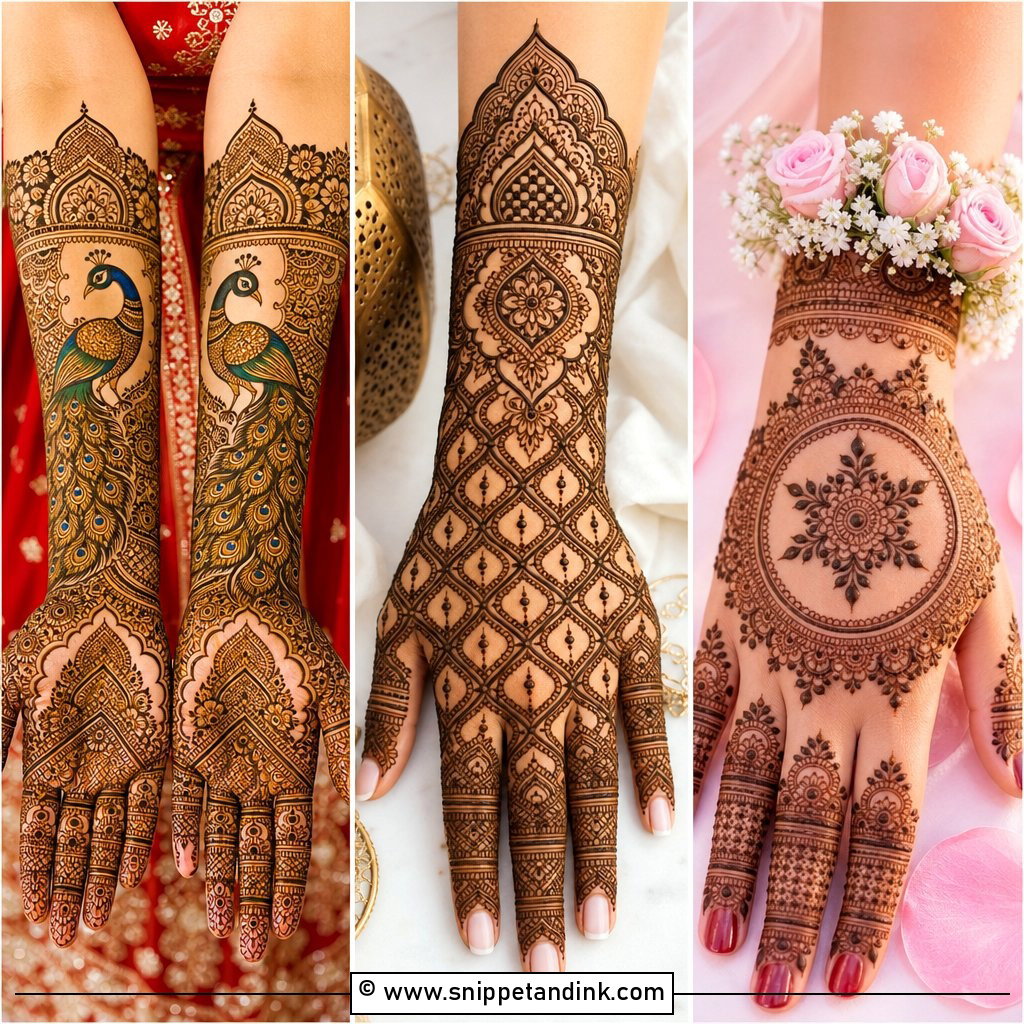
When a bride asks for full hand Indian bridal mehndi, I map the whole arm before I draw a single line: where the wrist crease falls, where the bangles will sit, where the design should stop. Paisleys, florals, peacocks, lotus and jaali then fill palms, fingers and forearms. I usually mirror the two hands, though some brides want the bride on one palm and the groom on the other. The stain is darkest on the palms and fingertips and lighter toward the elbow, so I place the most important motifs low, where the color will be richest.
2. Rajasthani Bridal Mehndi
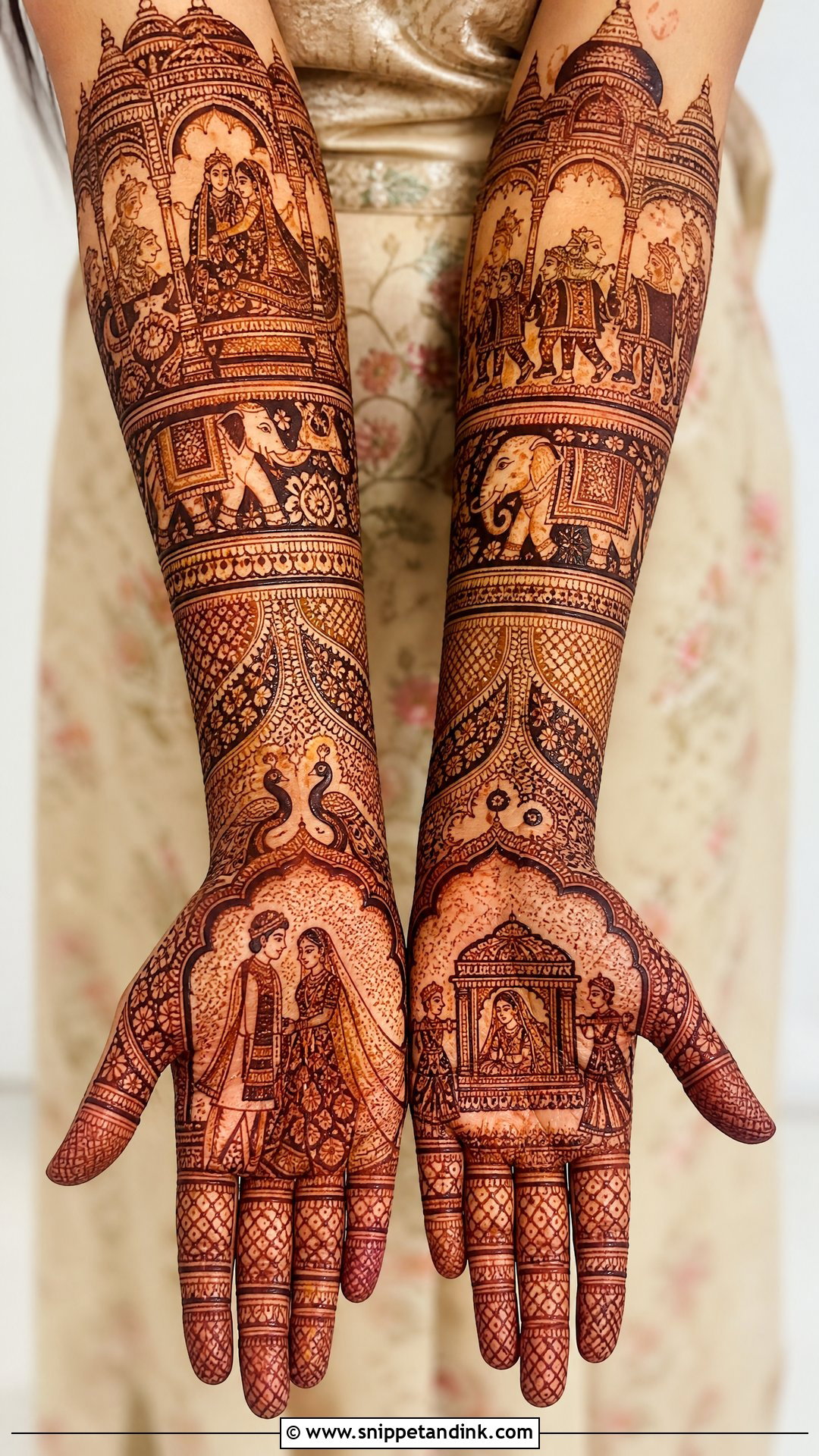
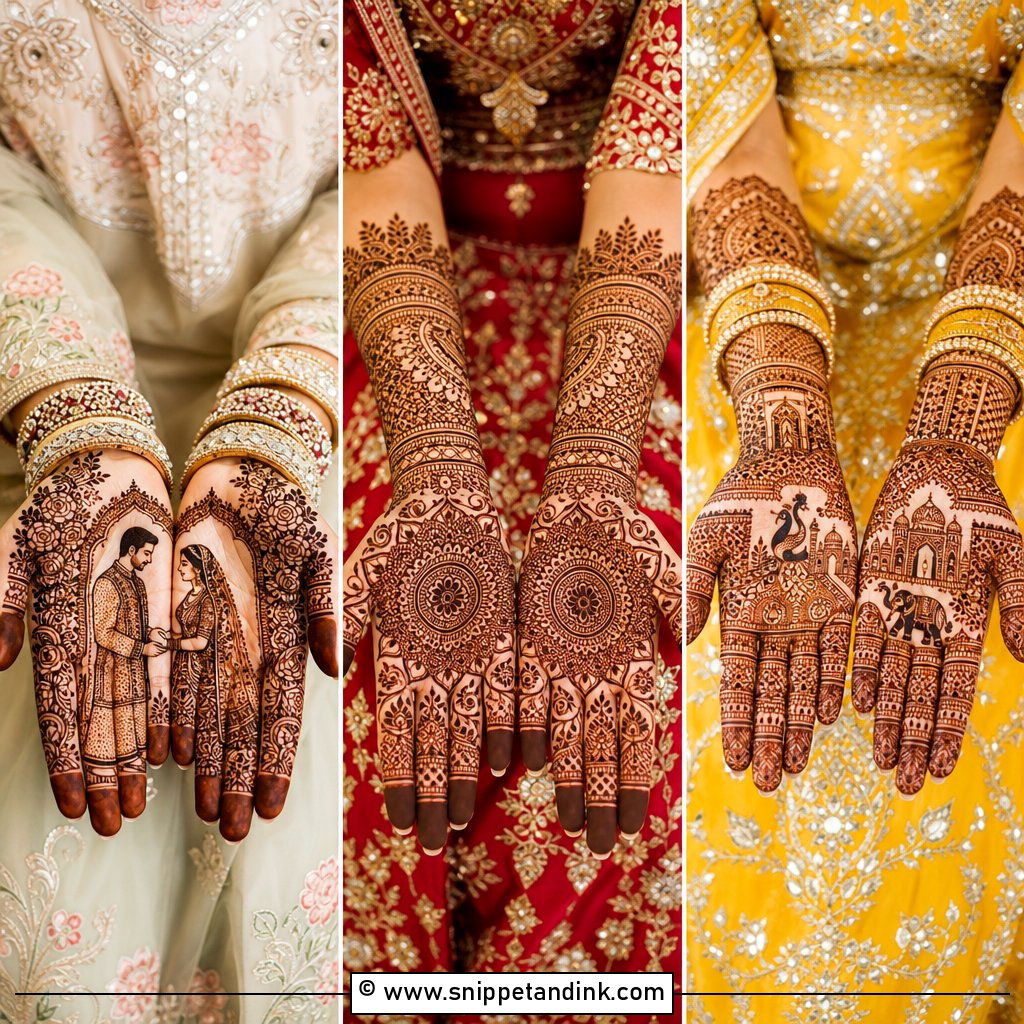
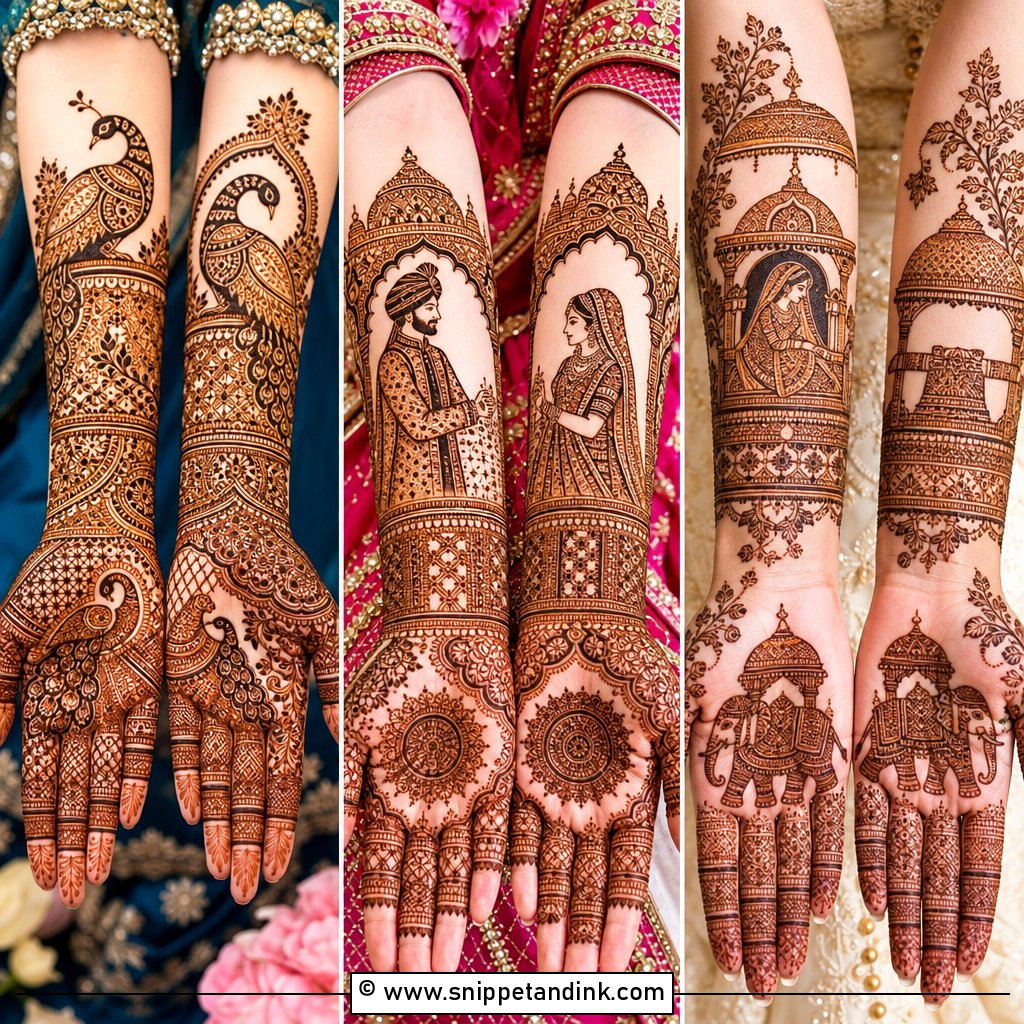
Rajasthani mehndi tells a story up to the elbows: the bride and groom, a doli, elephants, peacocks, the mandap, all framed with layered borders. It’s among the most time-consuming designs I do, often taking most of a day, and it needs a steady artist because the fine lines sit very close together. Packed lines mean very little bare skin, which reads as a deep, dense stain from a distance. I’d only suggest it if you’re comfortable sitting still for hours and booking someone experienced in figure work.
3. Marwari Bridal Mehndi
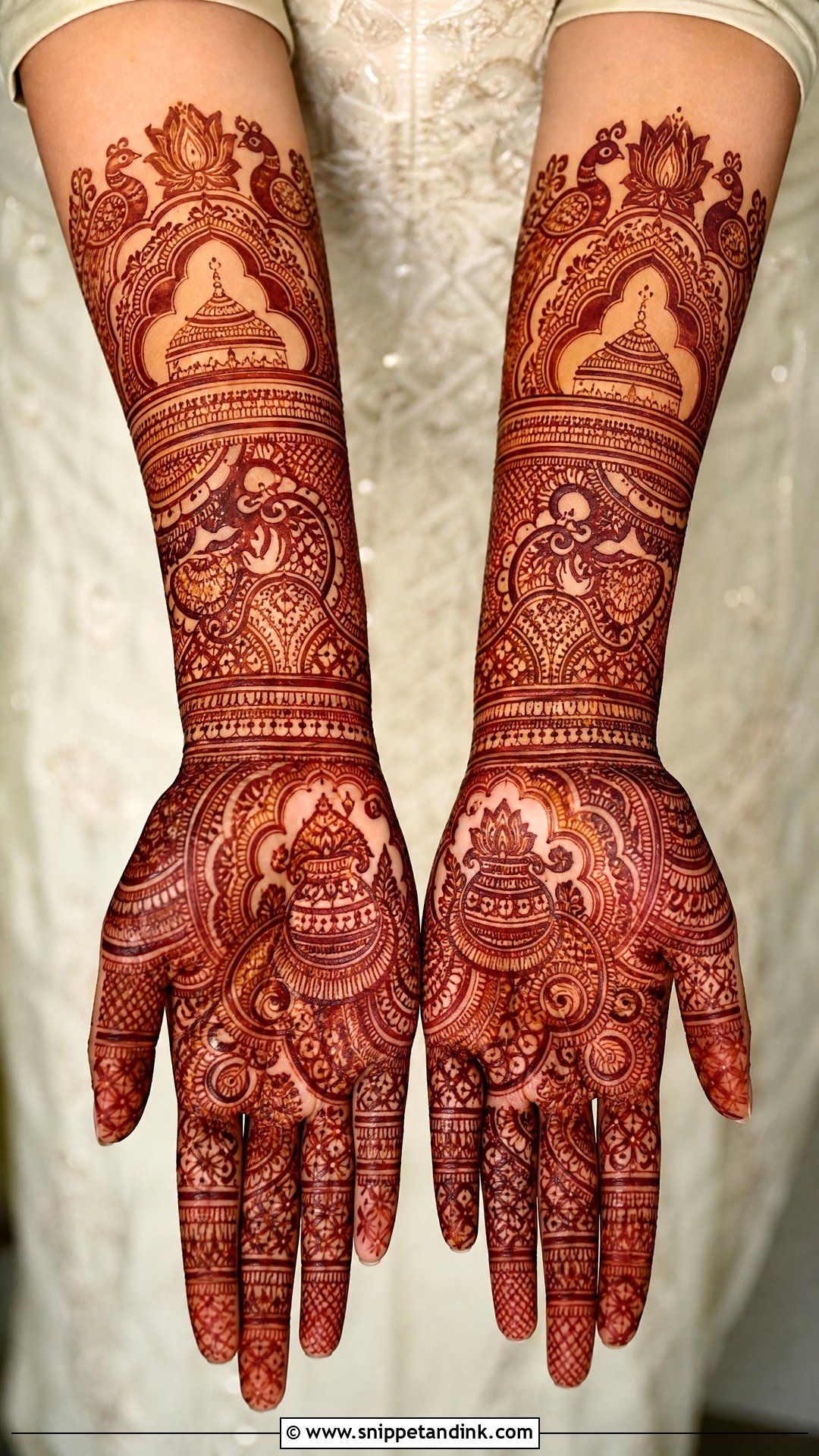
Symmetry is the backbone of Marwari bridal mehndi. I build mirrored layouts with paisleys, floral bands and wrist cuffs drawn to look like bangles, often adding a kalash, lotus or procession detail. It’s dense but organized, with each section filled carefully rather than crowded. The motifs read clearly in close-up photos. Ask your artist to keep the central palm motifs bold, because fine detail in the middle of the palm can blur as the stain darkens.
4. Peacock Bridal Mehndi
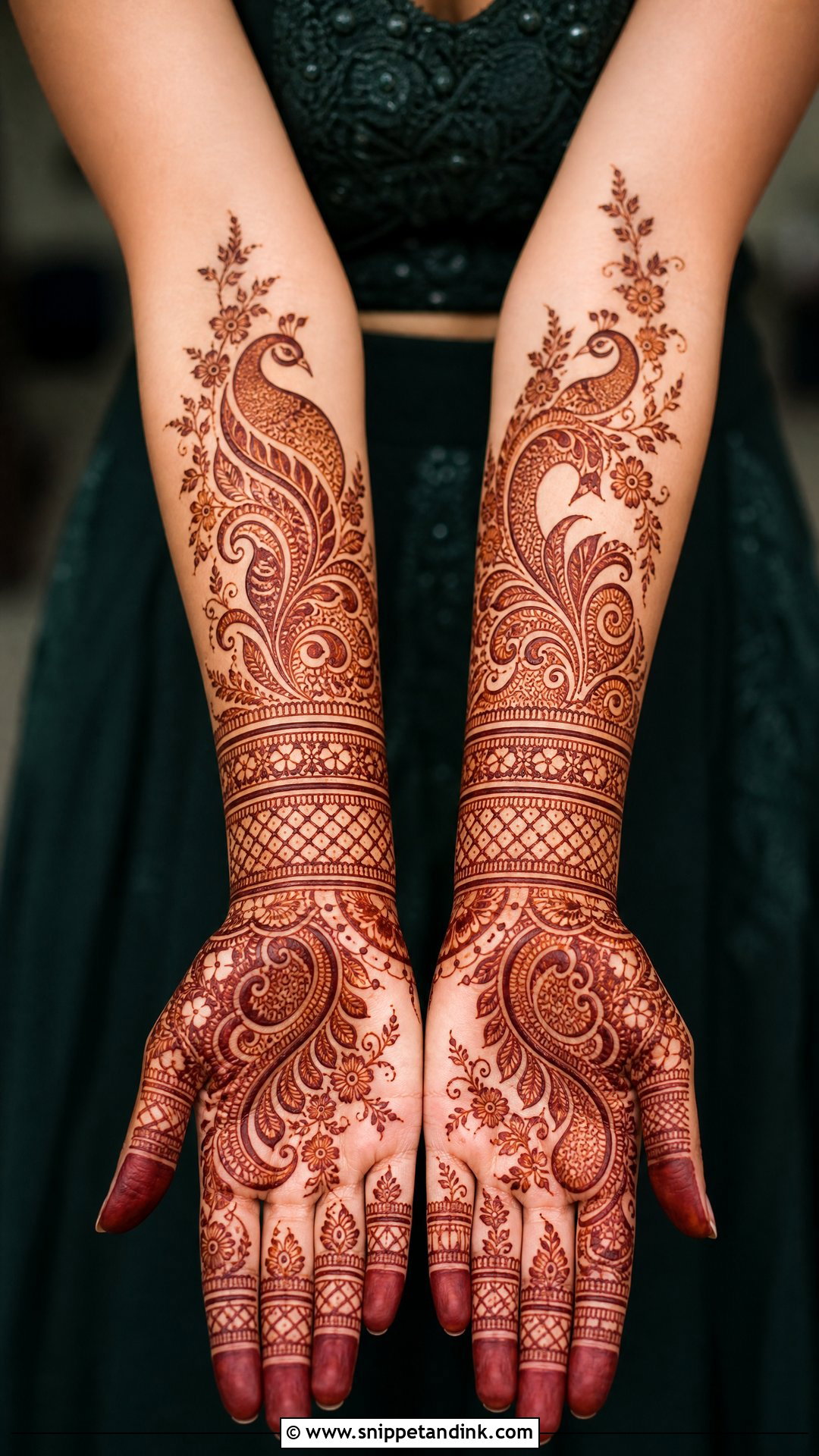
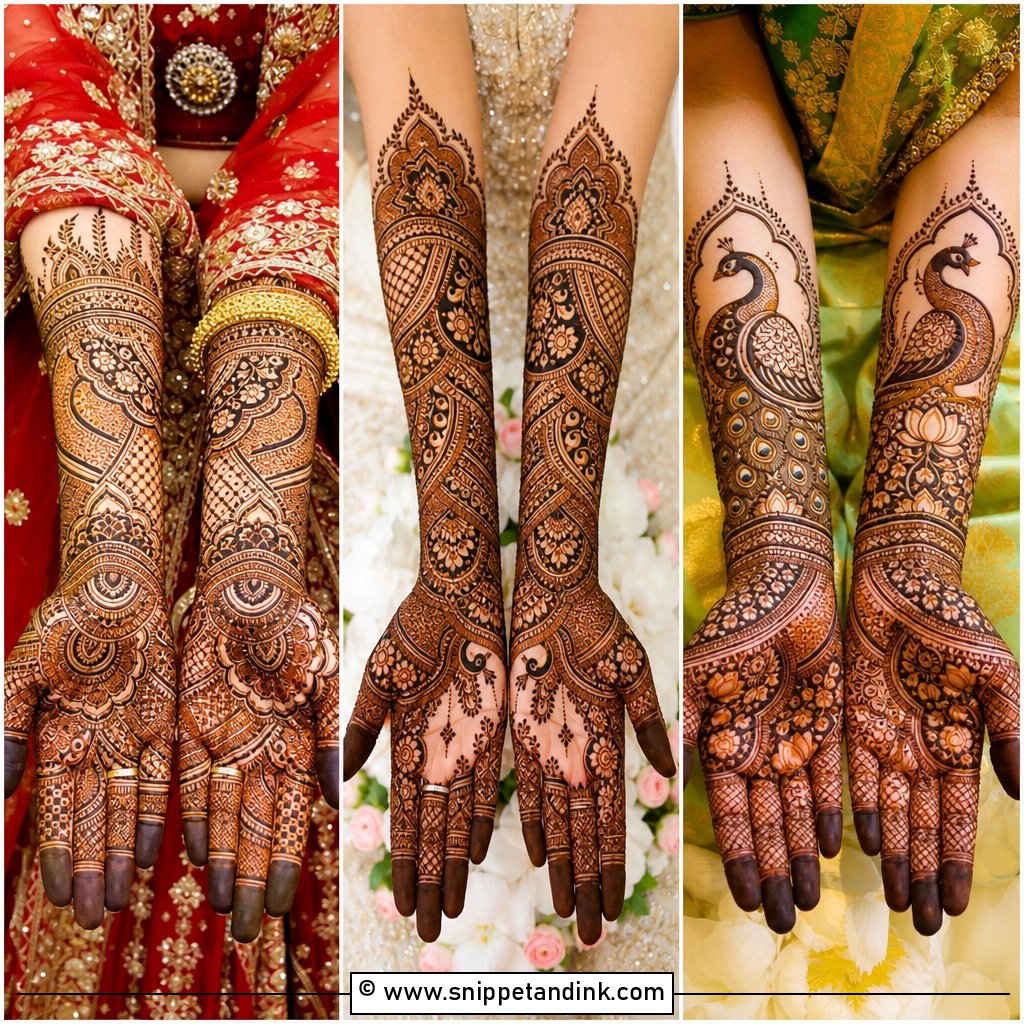
Peacocks are my favorite motif to draw, because the curve of the neck and the fanned tail follow the natural lines of the hand. I place them at the center of the palm, near the wrist or along the forearm, and let the feathers blend into paisleys and jaali. On long fingers and slim wrists, the flowing shape lengthens the hand even more. Keep the peacock bodies bold and outlined thickly; the fine feather fillers around them can stay delicate.
5. Lotus Bridal Mehndi
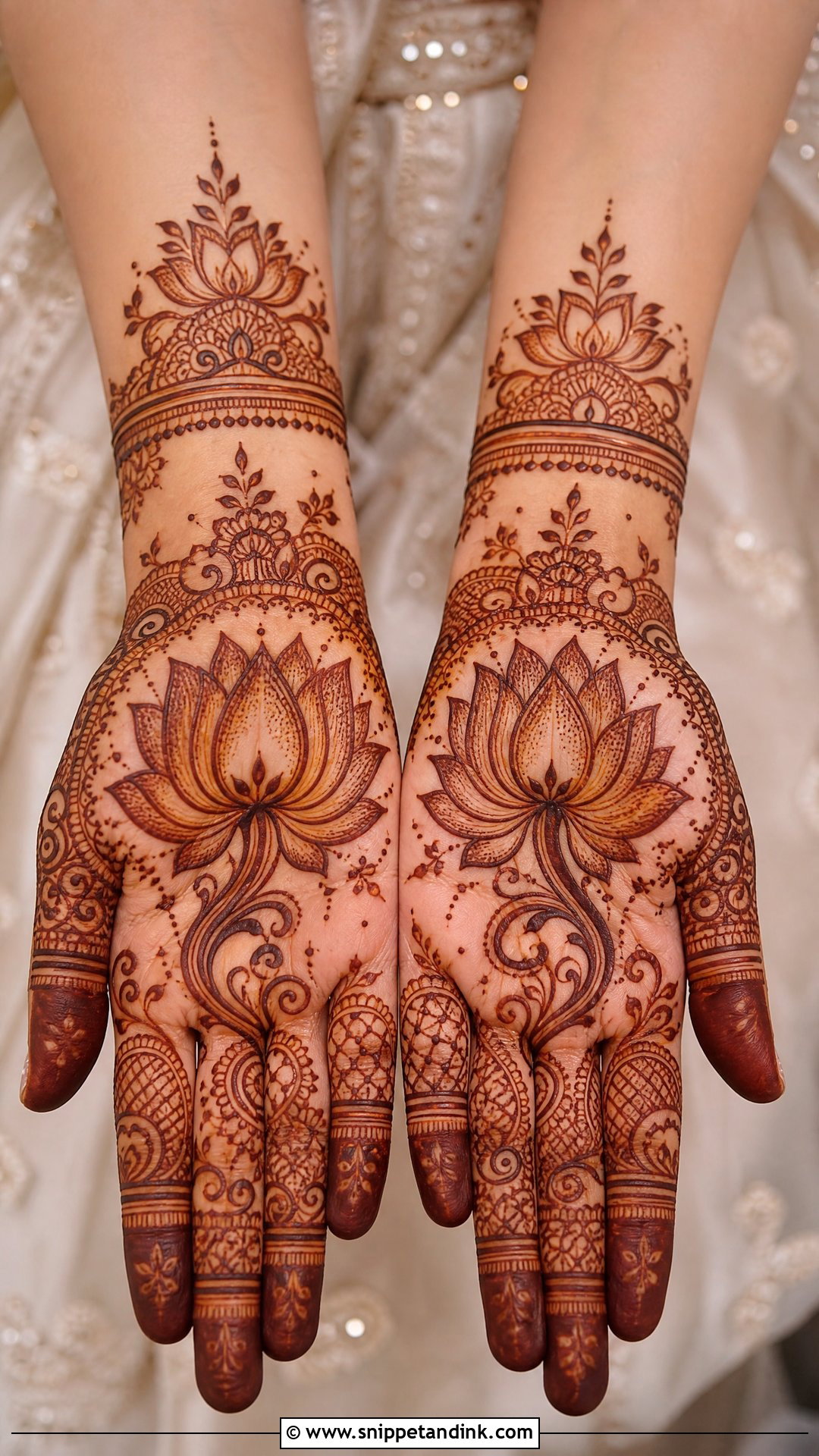
A lotus usually starts as one large bloom on the palm, with petals layered outward and shaded with fine lines. From there I run vines and smaller mandalas across the fingers and up the forearm. Lotus motifs sit well next to temple jewelry and silk sarees. It can be dense or open, depending on how much bare skin you want to show. Bracelet-style lotus bands around the wrist make it feel more modern; combining it with peacocks and jaali makes it more royal.
6. Bride And Groom Mehndi
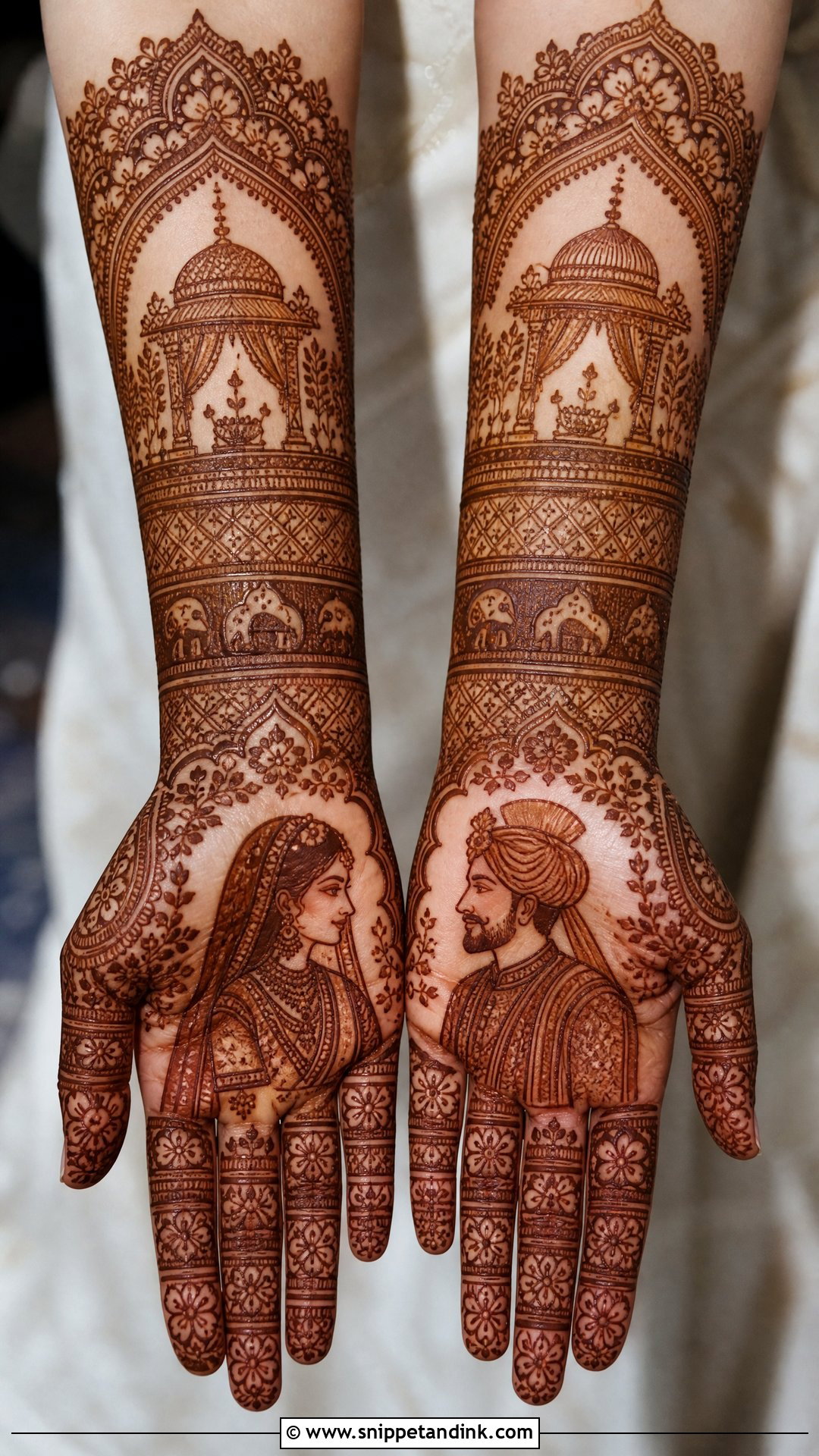
Portrait mehndi puts the bride on one palm and the groom on the other, framed by a varmala, mandap, pheras, doli or shehnai. The faces are where this design succeeds or fails. If they’re drawn too small, the stain bleeds the features together and they become unrecognizable. I keep each face at least the width of two fingers. The rest of the hand can be filled with paisleys, vines and detailed cuffs. Send your artist clear reference images in advance so the faces can be practiced.
7. Personalized Bridal Mehndi
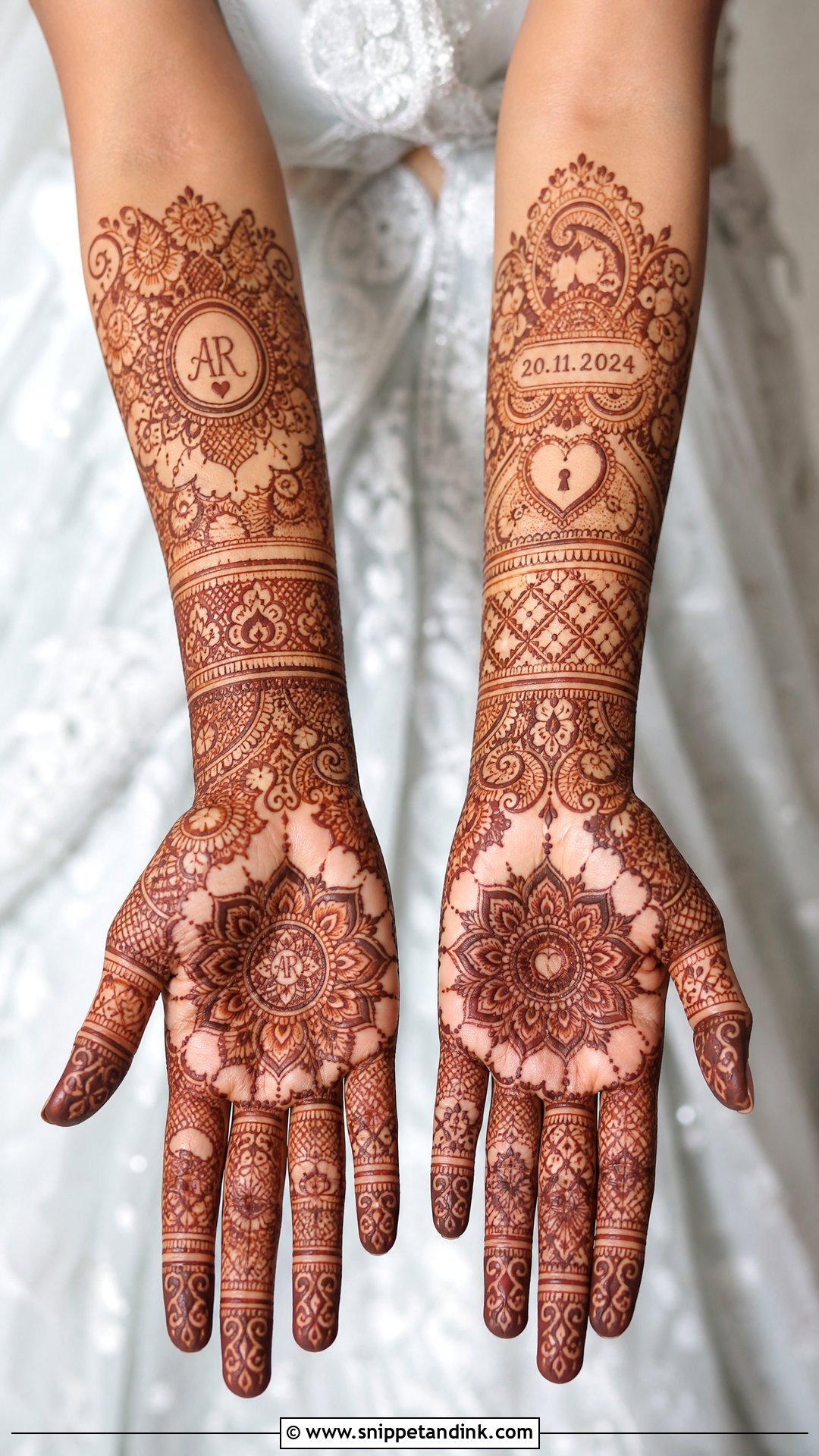
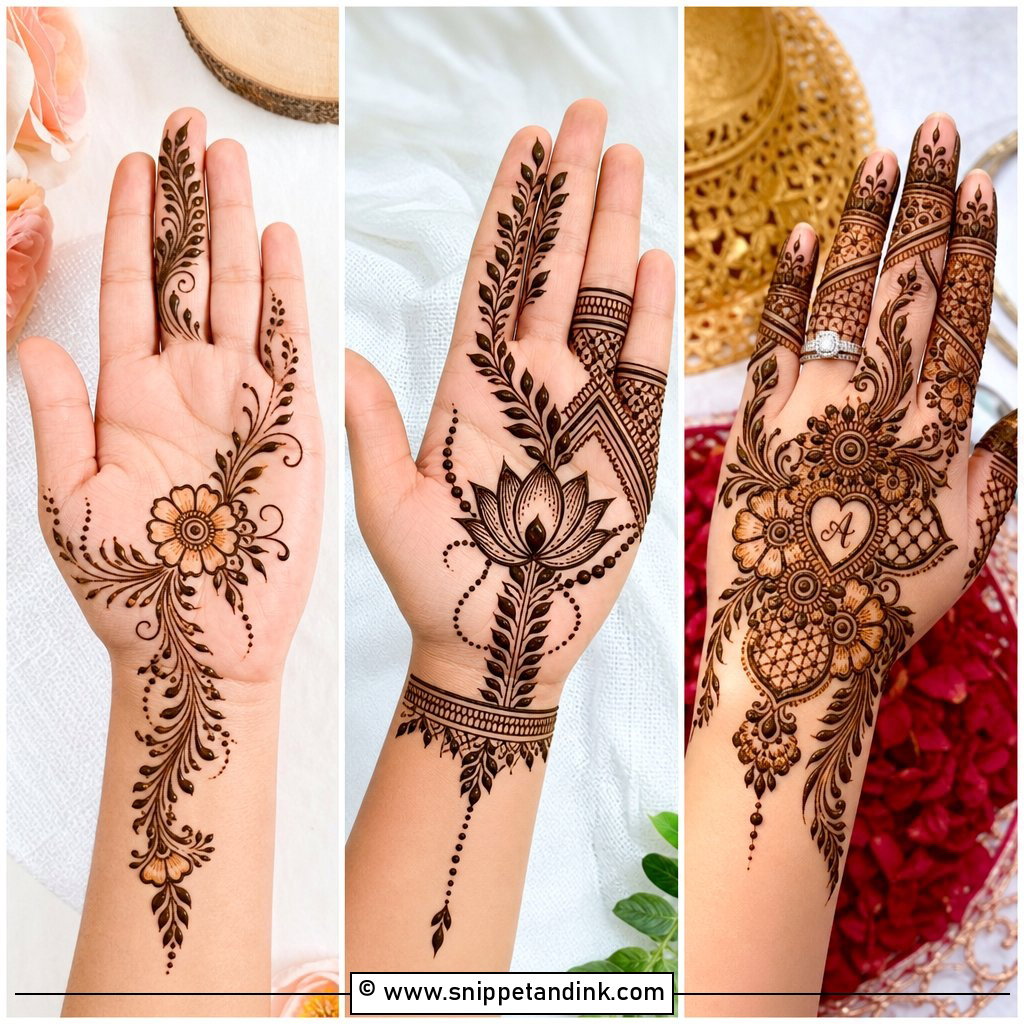
Personalized details can include initials, the wedding date, a proposal symbol, a favorite place, a pet or flowers that mean something to you. The trap is ending up with a scattered set of icons. I build a strong traditional base first, with paisleys, mandalas or floral sleeves, and tuck the personal elements into it so they look like part of the pattern. That also makes the groom’s name search more fun. Keep it to a few meaningful details; too many and the design looks crowded.
8. Indo Arabic Bridal Mehndi
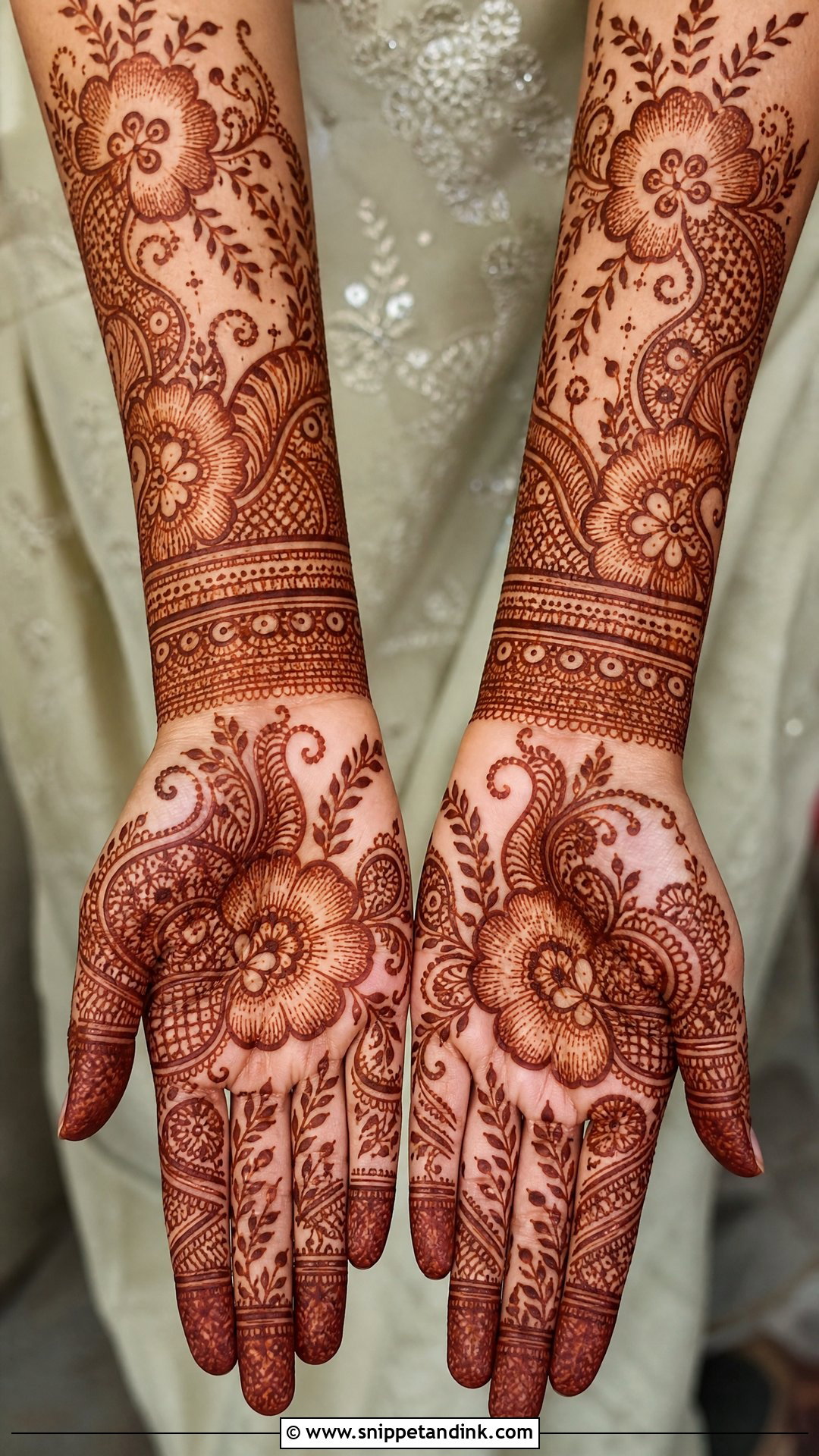
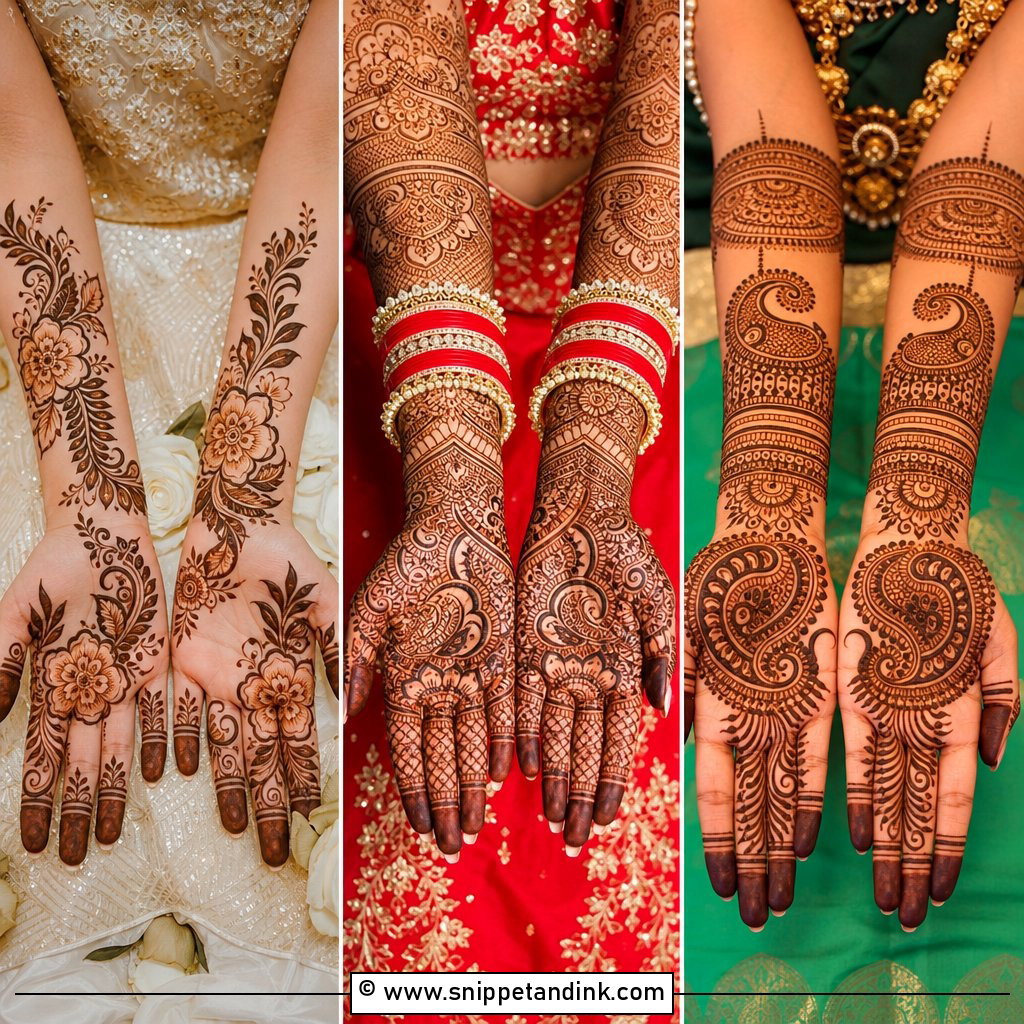
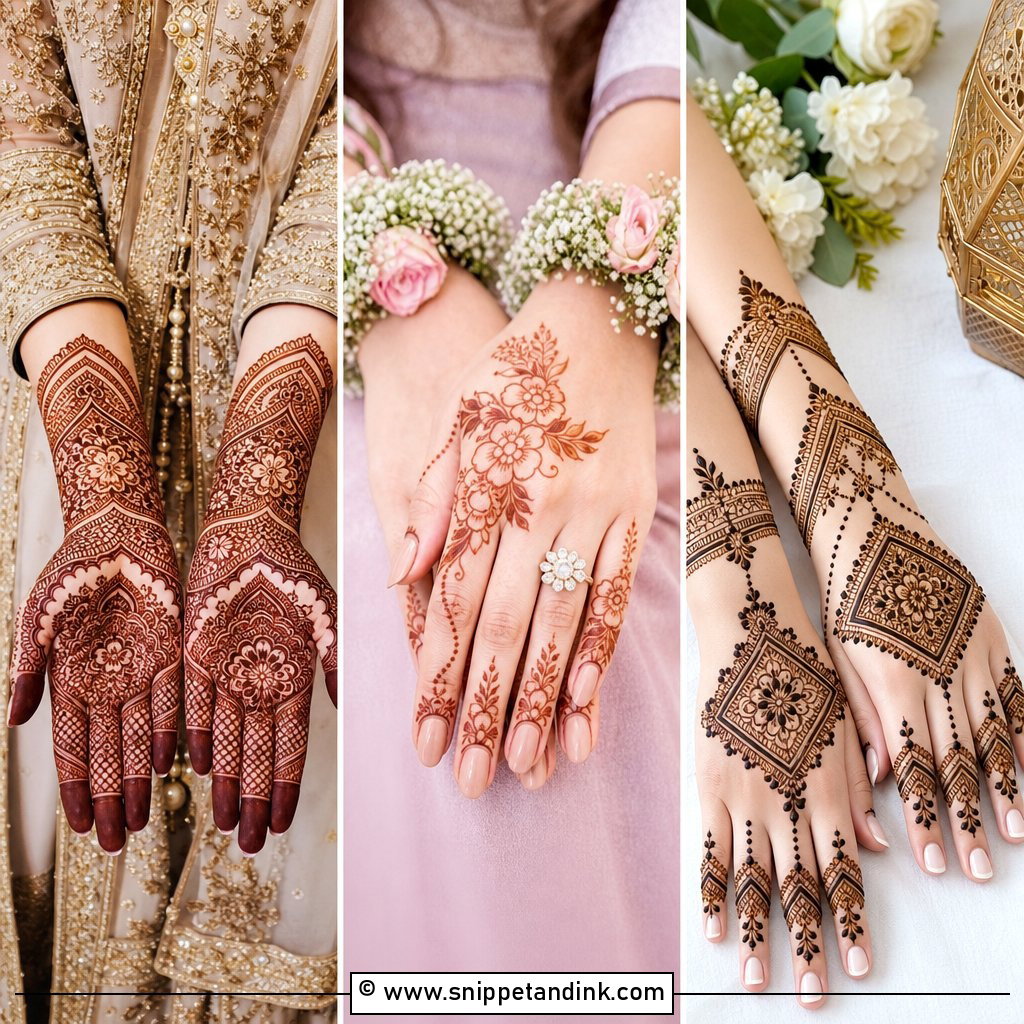
Indo-Arabic designs take the bold flowing trails of Arabic mehndi and fill them with Indian-style fine detail. I draw large floral trails, leafy vines and paisleys with shaded petals, and leave open skin between them. That spacing makes each motif sharp in photos and gives a bridal look that isn’t as heavy as full Indian coverage. Back hands carry bold diagonal trails well. It suits daytime ceremonies and destination weddings, and it flatters most hand shapes.
9. Arabic Indian Bridal Mehndi
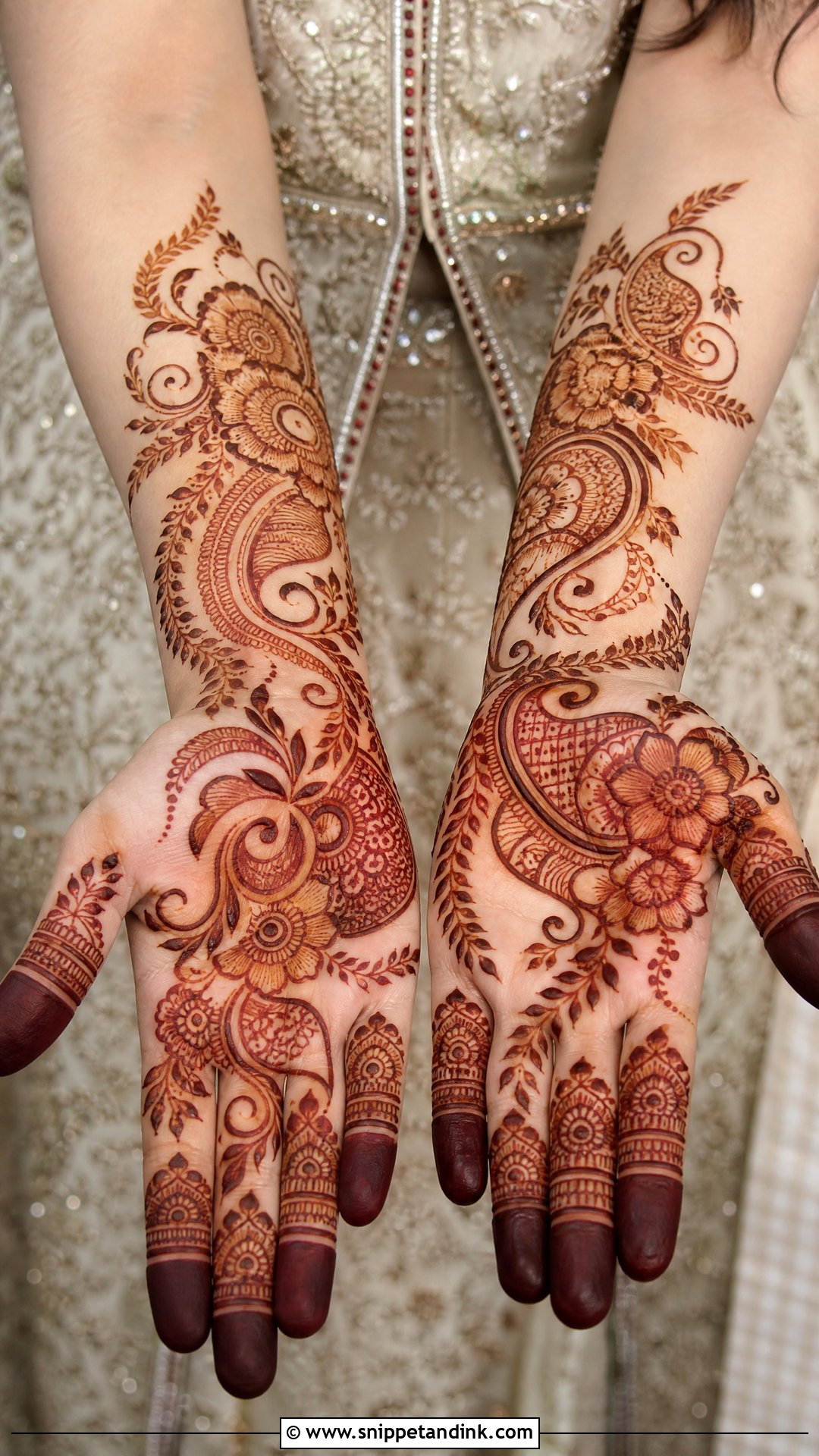
Arabic-Indian designs are faster to apply than dense full coverage, which matters if your mehndi evening is crowded with guests also waiting for henna. Bold flowers, curved vines and leafy trails form the structure, with Indian fine fillers added around them. The soft negative space gives the hands a fresh look that suits lighter lehengas, shararas or fusion outfits. For a more bridal finish, I add detailed finger caps, wrist bands and small mandalas between the trails.
10. Mandala Bridal Mehndi
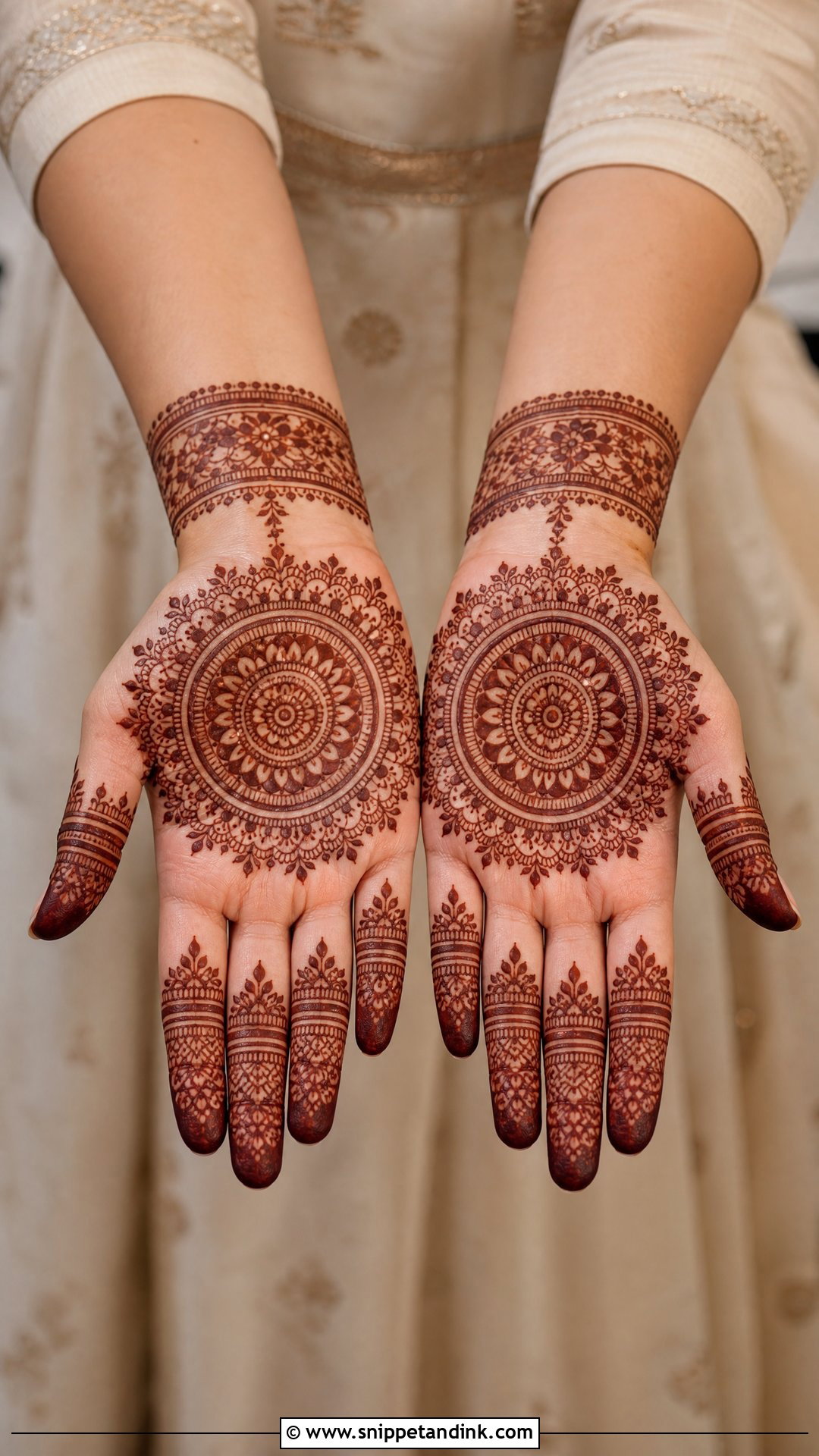
A large mandala at the center of the palm has real visual weight even though the structure is simple. I build outward with finger detailing, wrist bands, dots and fine borders. It can be minimal or full bridal. Smaller palms suit it well because a single centered motif doesn’t overwhelm the hand. The circle shows clearly in photos. Extend the wrist into a decorative cuff and add matching back-hand mandalas for a fuller bridal look.
11. Jaali Bridal Mehndi
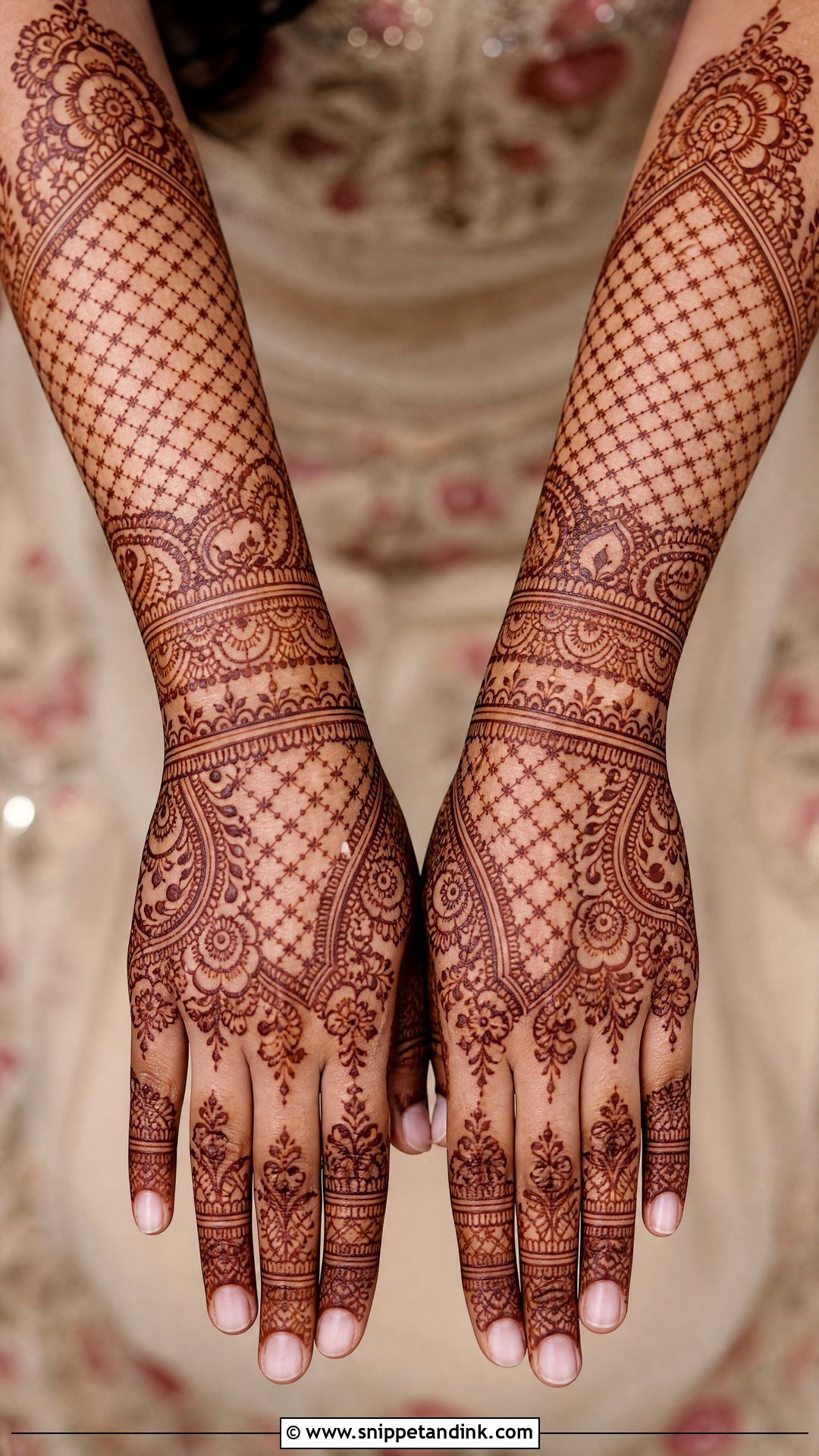
Jaali, the net-like mesh, is the pattern that most often fails in the stain. When the grid is drawn too tight, the lines bleed into each other as the paste sits for hours, and the mesh turns into a blotch. I keep the squares open, at least a few millimeters across, and the lines thin and even. Done well, jaali on the back of the hands looks like lace gloves. Lotus, roses or peacocks combine well with it for a fuller design.
12. Paisley Bridal Mehndi
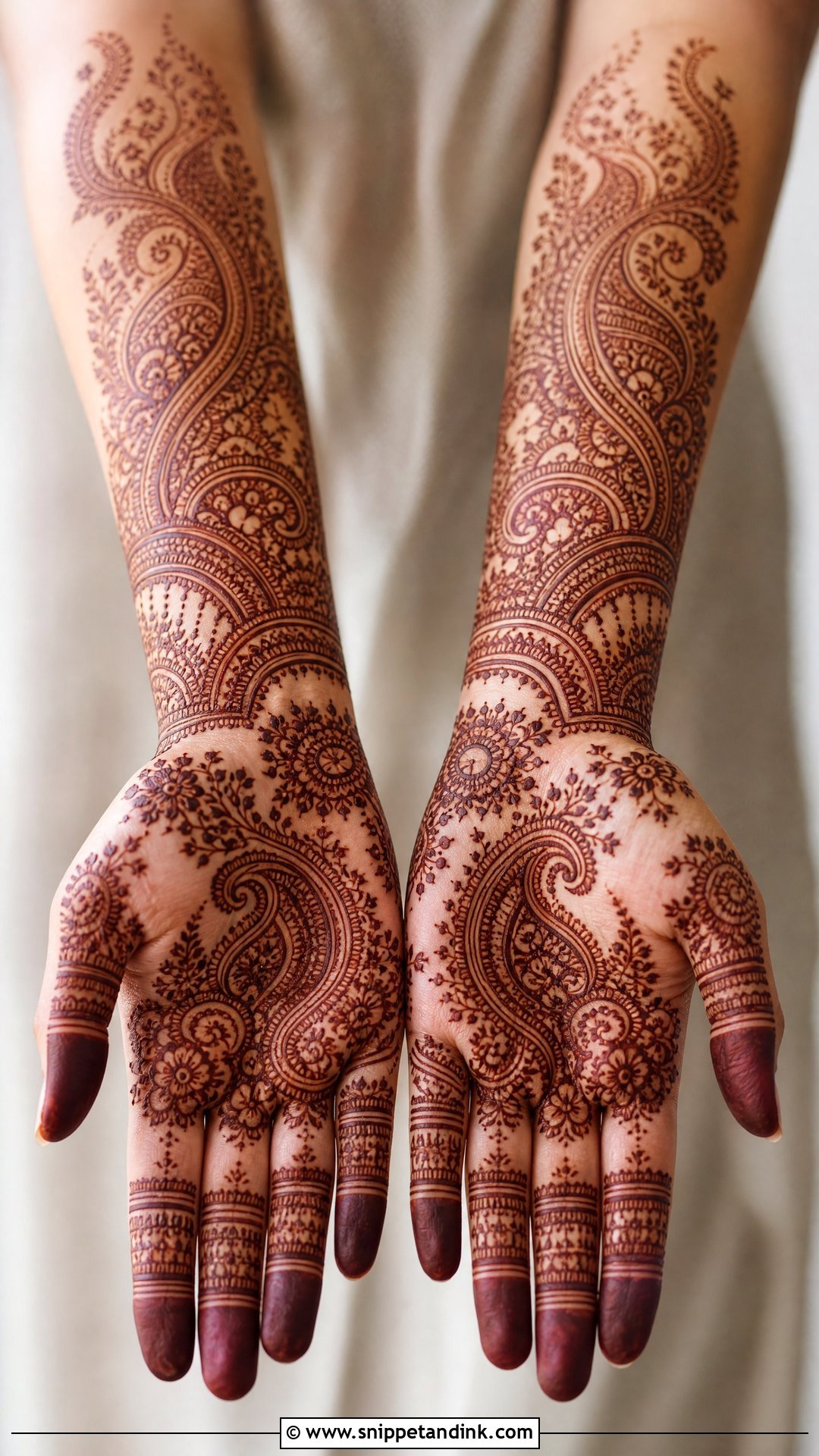
Paisley is the most flexible motif I use. It can be a large central shape, a trail down the wrist, a finger pattern or a forearm filler. A full paisley design mixes large mango-shaped curves with flowers, dots, leaves and spirals inside. It suits traditional and modern outfits, and it’s a good option for full coverage without portraits or story scenes. Mix sizes: big paisleys with small fillers, and fingers detailed but not crowded.
13. Floral Bridal Mehndi
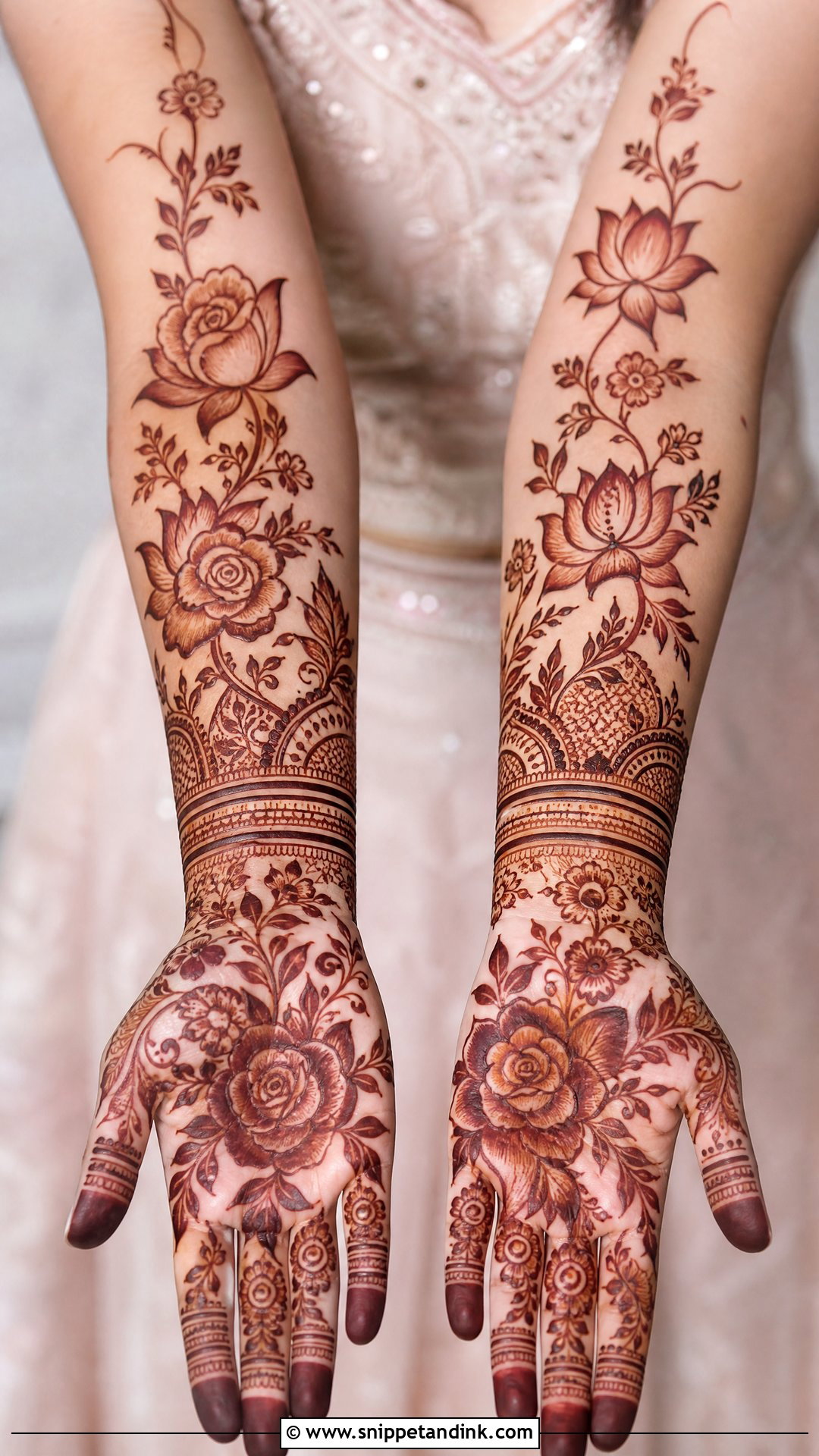
Florals are the easiest designs to customize. I combine large roses, lotus, small blossoms and leafy vines with shaded petals and delicate wrist borders. Shading is done by thinning the paste line or filling a petal partly, so it needs a cone with a fine tip. Florals work on front and back hands, and can be dense for the ceremony or lighter for an engagement or destination wedding. For more Indian depth, mix flowers with paisleys, mandala centers and fine finger work.
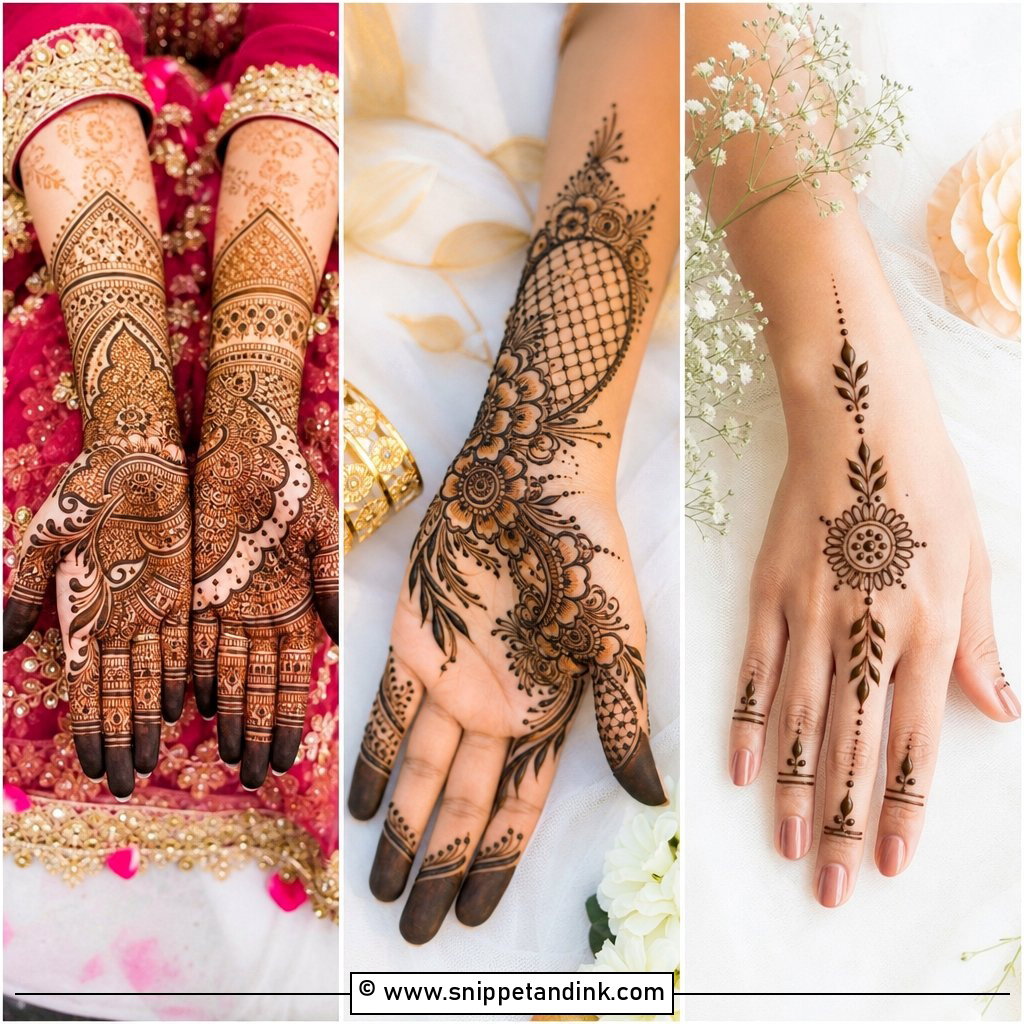
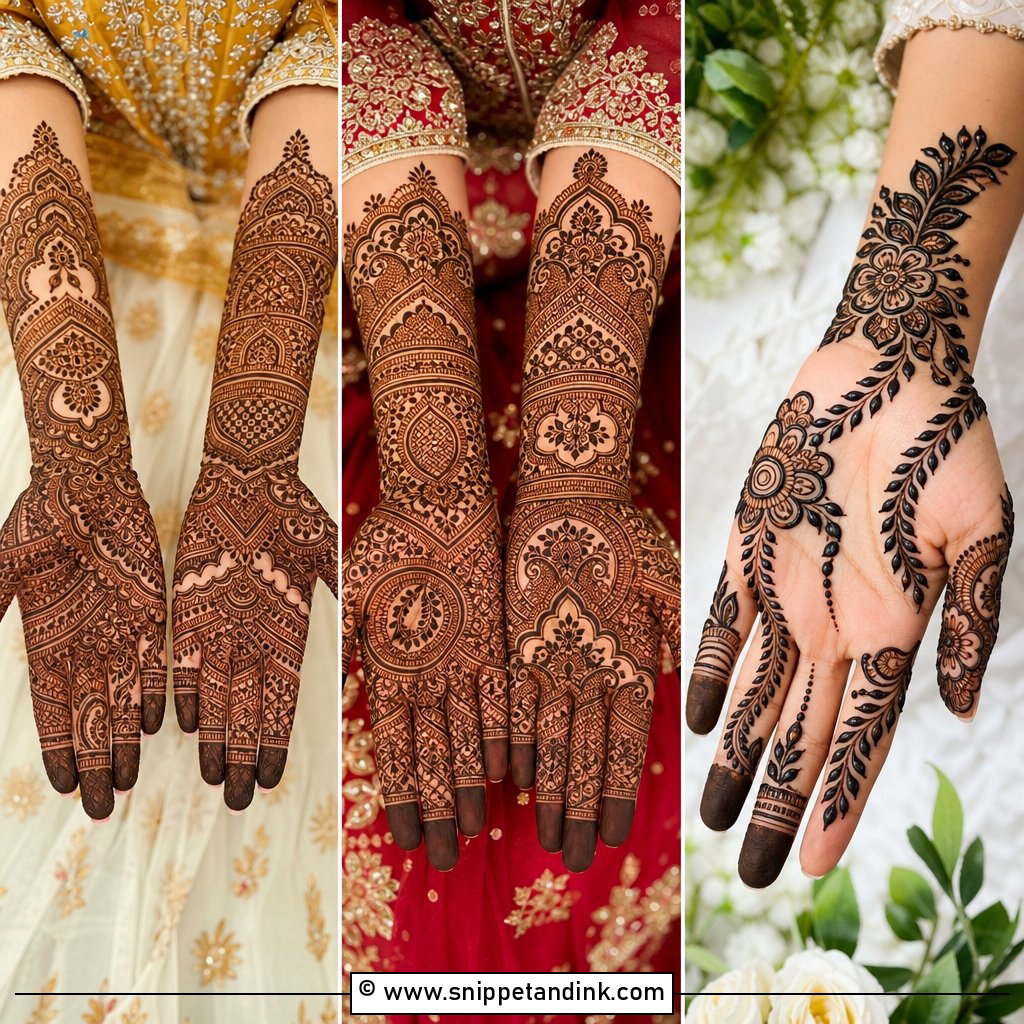
14. Back Hand Bridal Mehndi
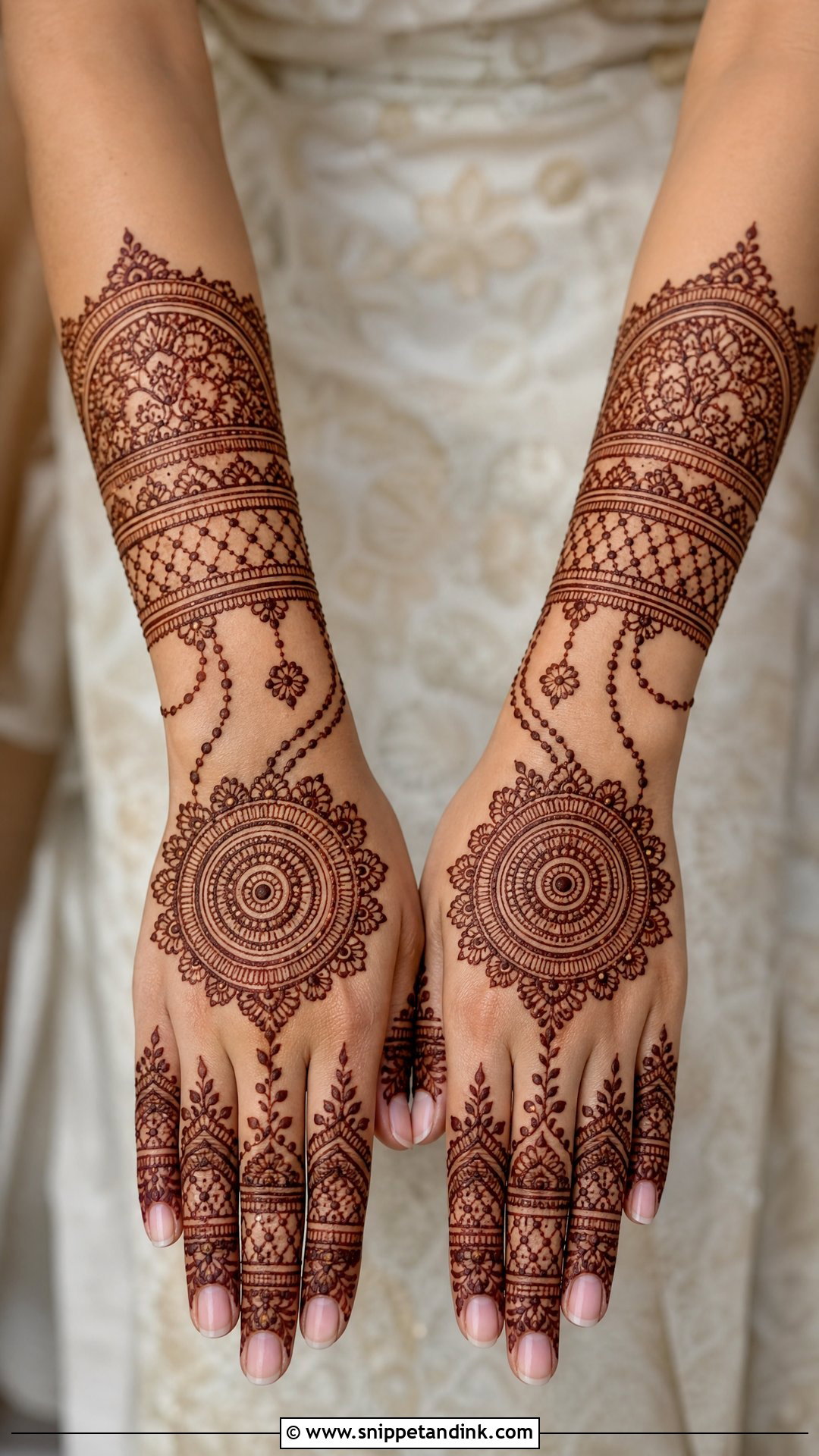
Back hands show up in nearly every ring shot and jewelry close-up. A full back-hand design usually includes a central mandala, floral trails, jaali panels, wrist cuffs, finger caps and chain-like lines that mimic a hathphool. I ask brides to bring their rings and bangles, or photos of them, because heavy pieces can hide a carefully drawn cuff. Symmetrical layouts look traditional; diagonal ones look more modern. Match the finger detailing on both hands.
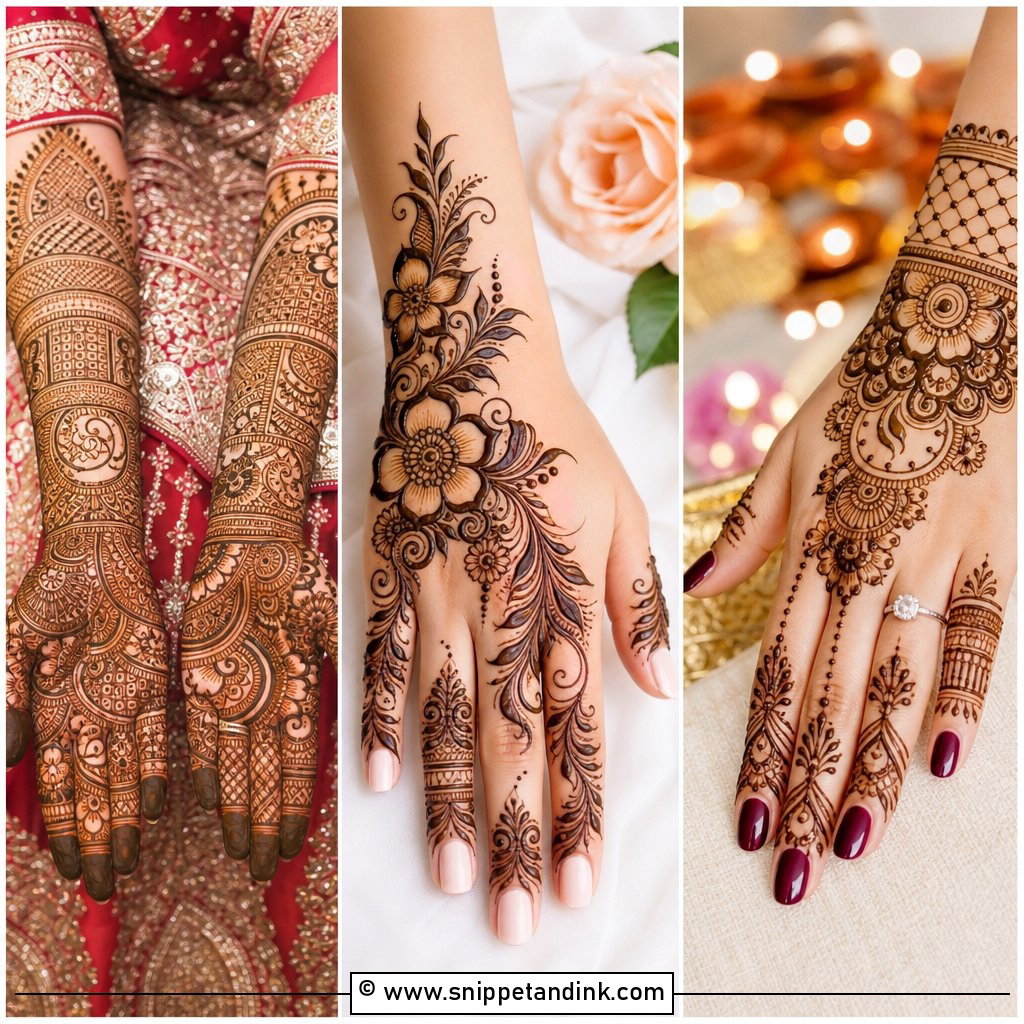
15. Front Hand Bridal Mehndi
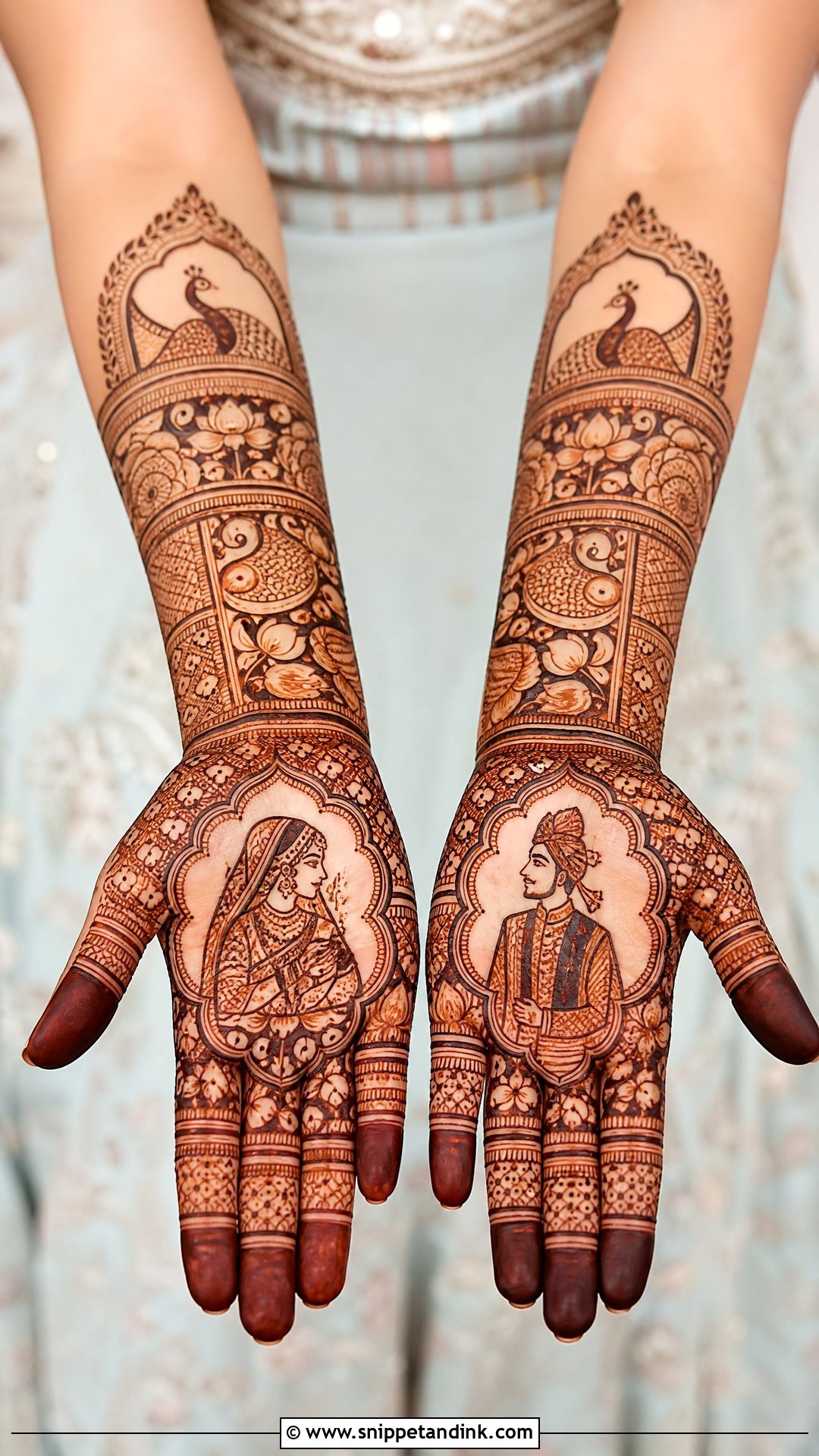
The palms are the focus during many rituals, from the kanyadaan to the haath-pheras. I design the front hands around one clear central motif, a portrait, a mandala, a peacock or a lotus cluster, and build fingers, wrist borders and forearm patterns around it. A common mistake is making every section equally busy, which flattens the design. Contrast between large shapes and fine fillers is what gives it impact.
16. Minimal Bridal Mehndi
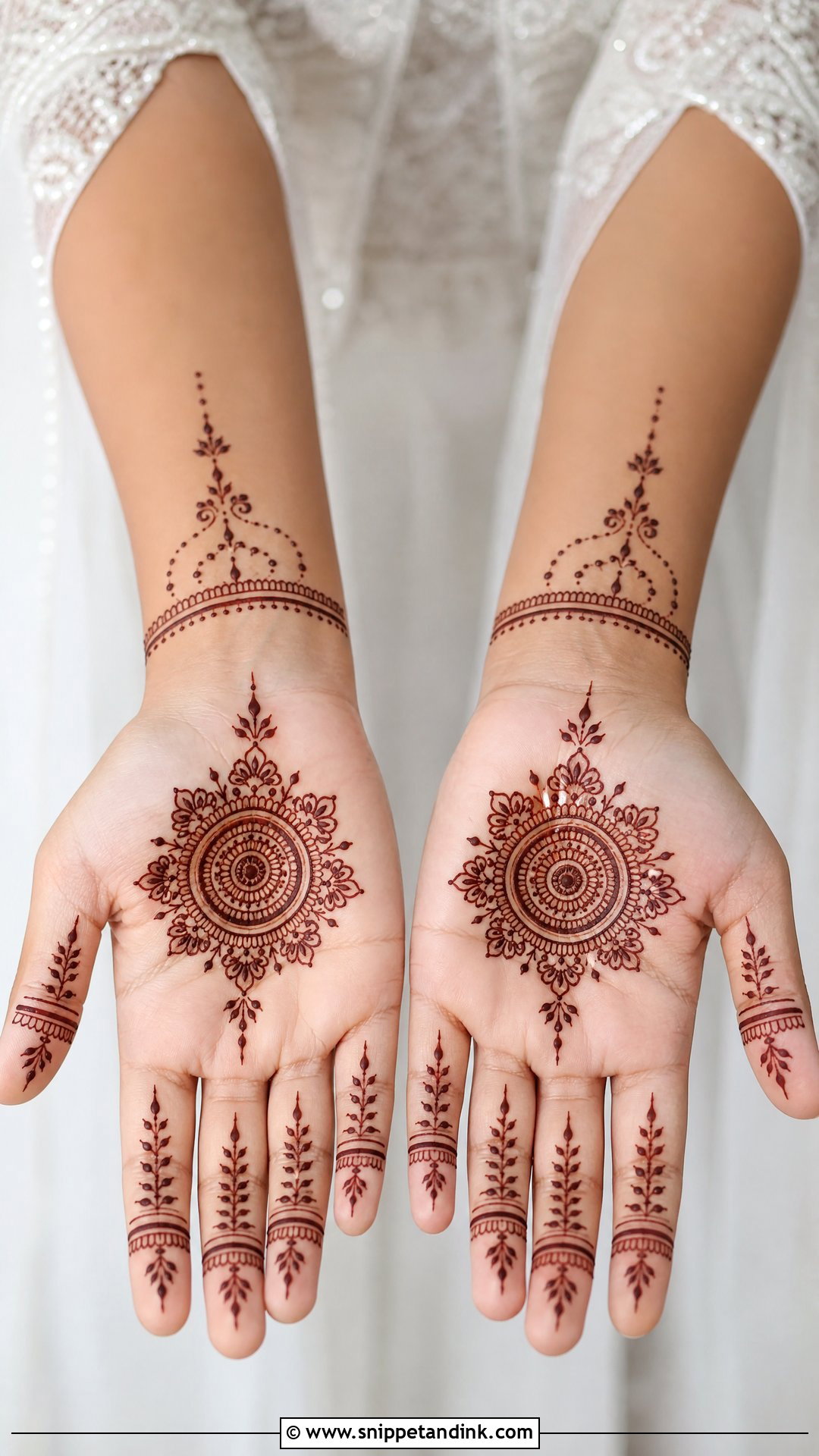
With minimal mehndi, there’s nowhere for a wobbly line to hide. A mandala palm, delicate finger patterns, slim wrist bands, light florals and a few personal details can still look bridal when the placement is balanced. Intimate weddings, civil ceremonies and beach weddings suit it. It also lets rings and nails stand out. I’d suggest it if you want to keep hands free for longer on the day, since application is much quicker.
17. Heavy Bridal Mehndi
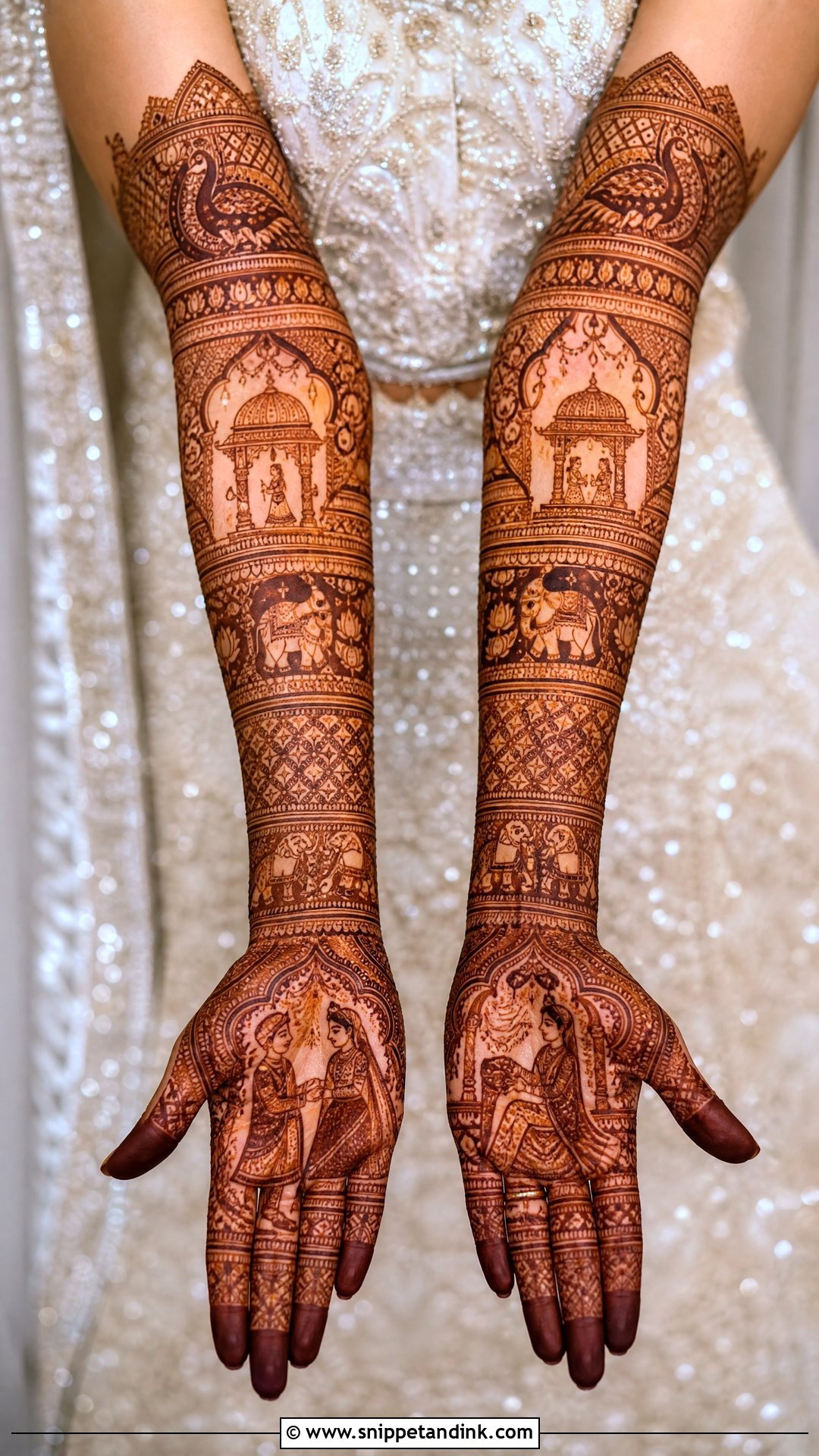
Heavy designs run from fingertips to elbows with barely any bare skin: peacocks, paisleys, lotus, jaali, bride-groom figures, mandap scenes, elephants and floral bands. Application takes several hours for hands alone, so plan comfort breaks, food and someone to help you eat. The stain looks rich and festive with red lehengas, Banarasi sarees and gold bangles. To keep it readable, I put a few bold anchor motifs among the fine details; otherwise the whole arm reads as one dark mass.
18. Simple Indian Bridal Mehndi
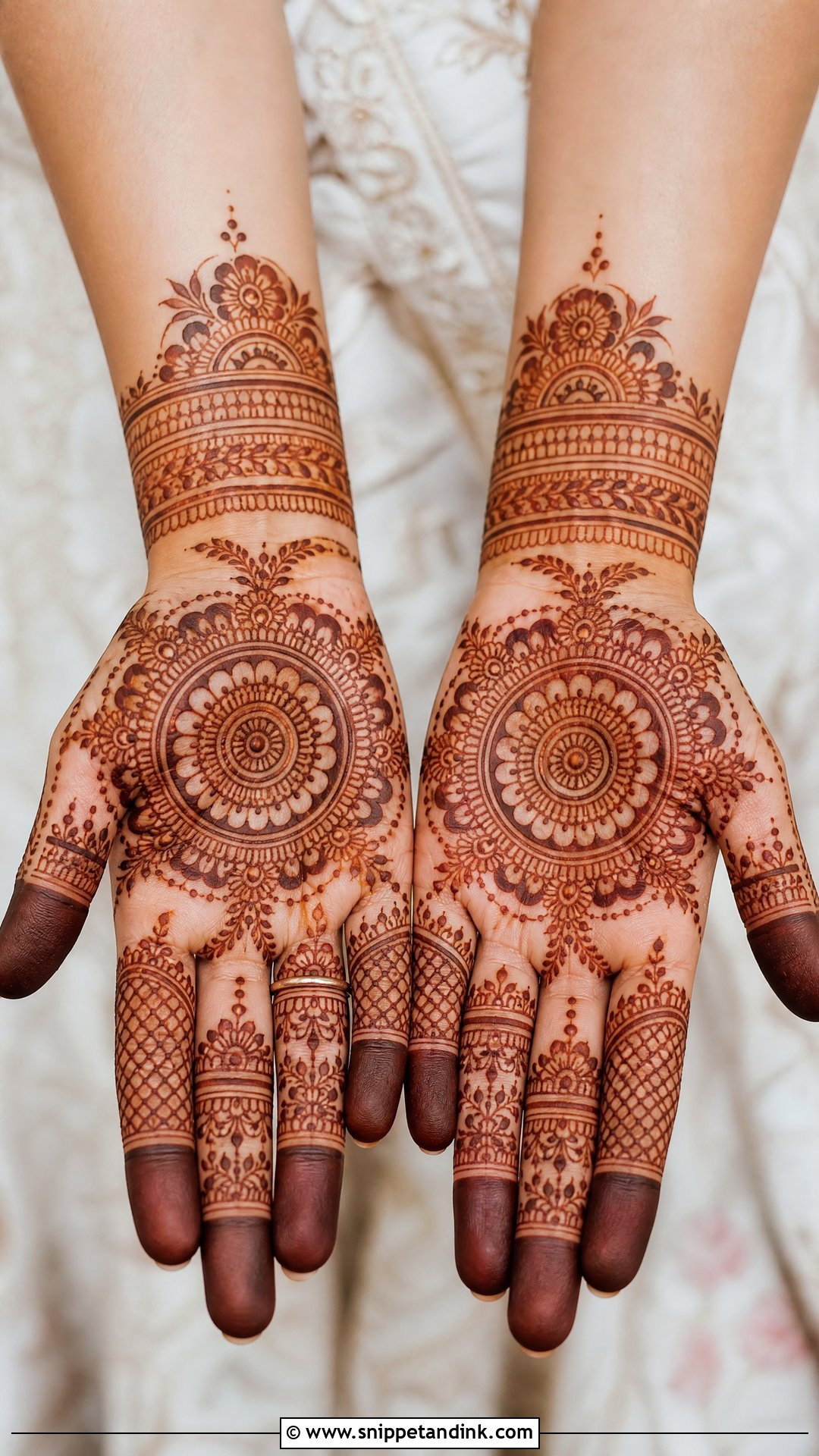
Simple Indian bridal mehndi keeps tradition without the weight of an elbow-length design. Palms, fingers and wrists carry neat mandalas, paisleys, flowers, dotted borders and small jaali sections. It’s comfortable and quick to apply, a good choice if you have limited time. It can extend slightly toward the forearm for more presence. Symmetry and clear spacing make it look finished. Simple is not plain.
19. Modern Bridal Mehndi
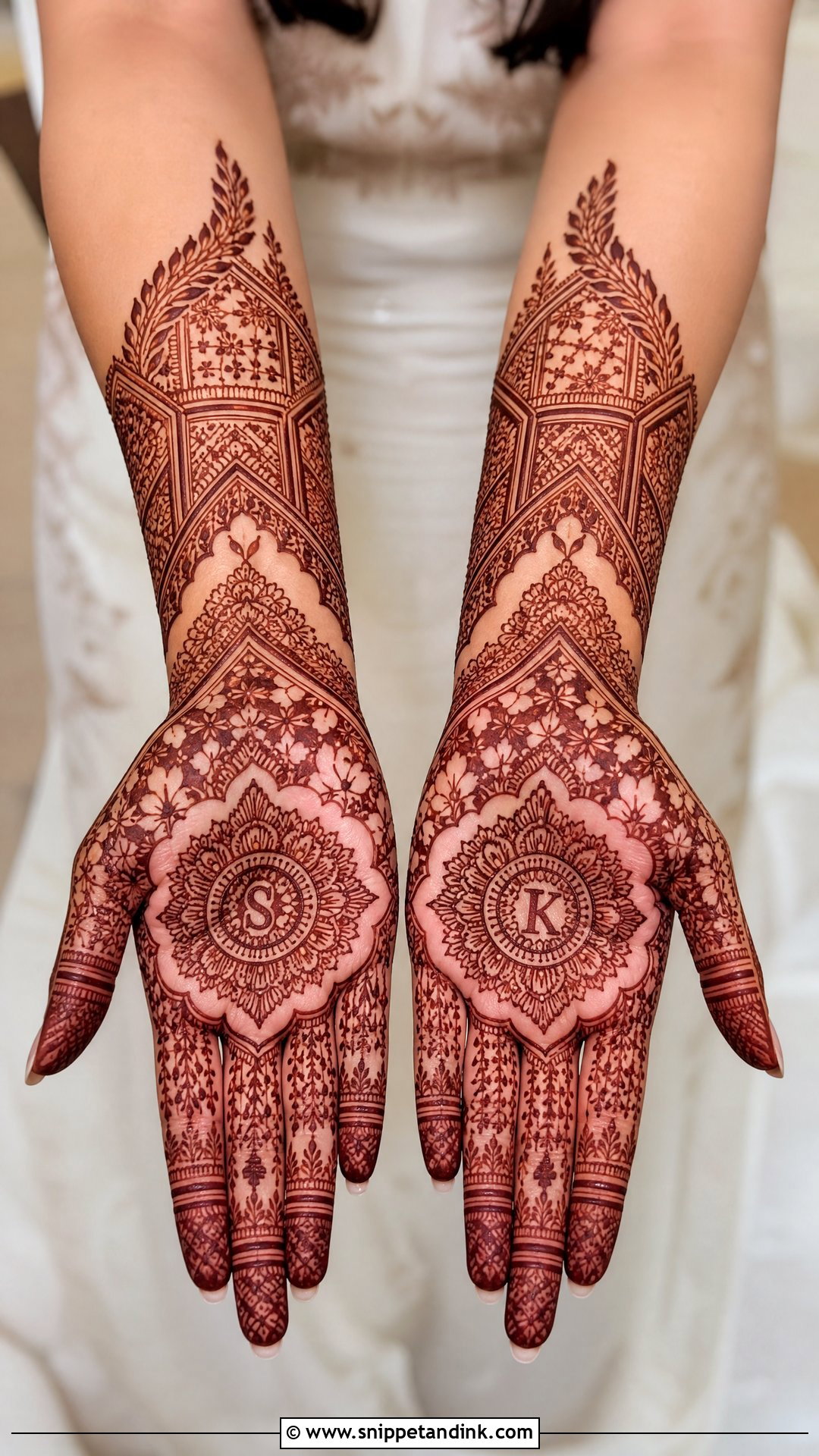
Modern designs use geometric panels, negative space, clean mandalas, fine florals, leafy cuffs, initials and sleek finger patterns, with a layout more open than classic bridal mehndi. It suits pastel lehengas, contemporary jewelry and fusion outfits, and photographs with a clean, editorial feel. I always keep a few traditional motifs in, a lotus, paisley or peacock, so it still reads as bridal rather than a festival design.
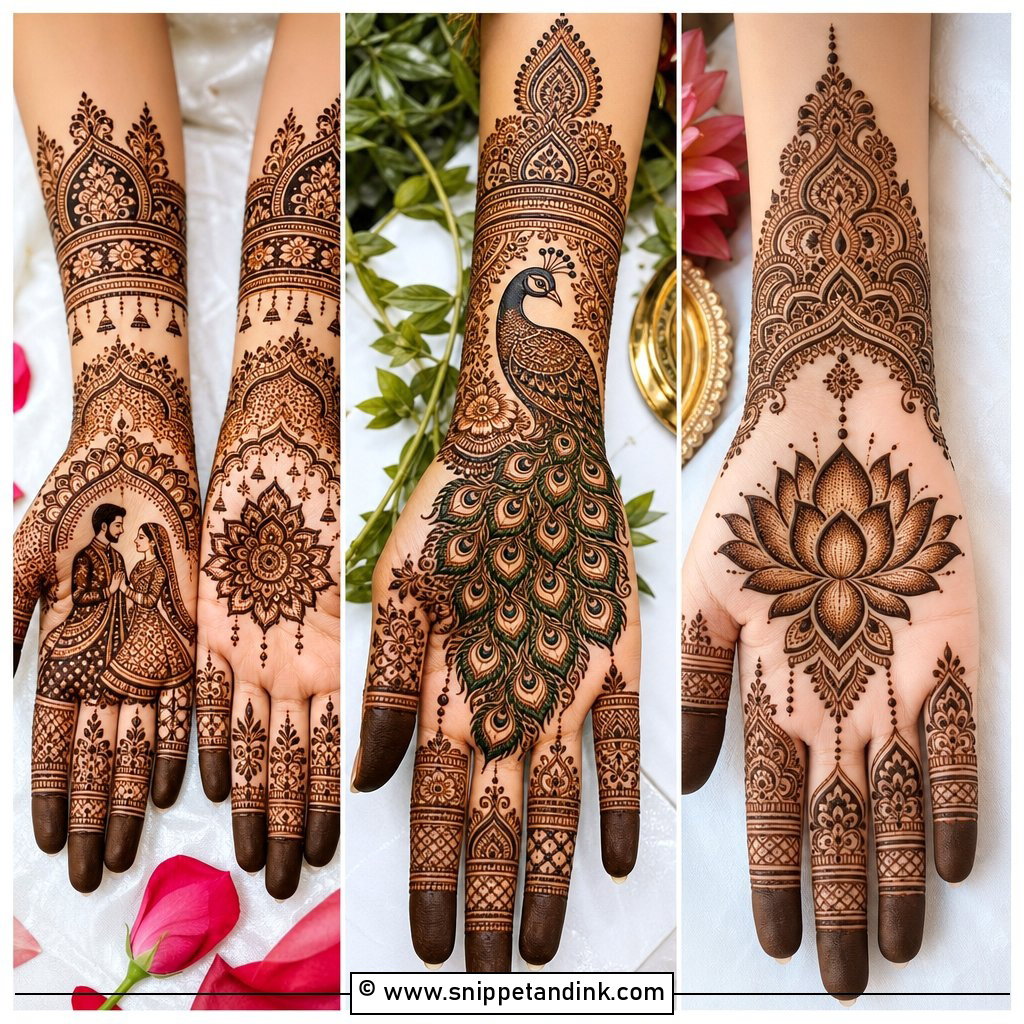
20. Bridal Mehndi For Feet
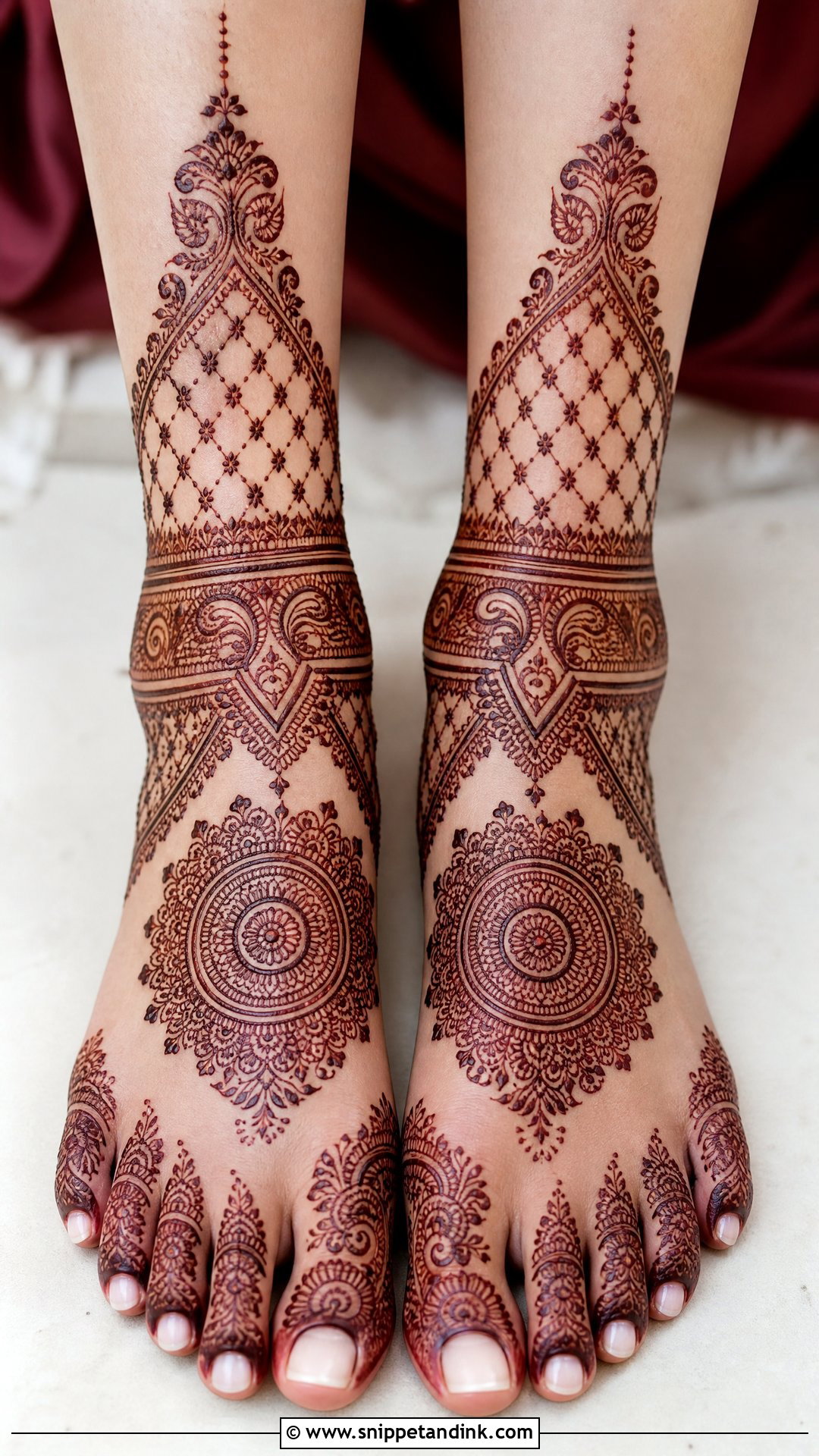
Bridal mehndi for feet shows during rituals when the lehenga lifts, and with anklets and toe rings. A full foot design can cover the toes, the top of the foot, the ankles and lower legs with mandalas, florals, paisleys and anklet-style bands. Some brides match it to the hands; others keep the feet lighter for comfort. Feet are the slowest part to dry and the easiest to smudge, so I usually apply them first and have the bride sit with legs up. Avoid tiny detail near the toes, where the stain blurs.
What Should Be in Your Artist’s Cone
Natural henna is made from dried henna leaf powder mixed with liquid, sugar and essential oils such as eucalyptus or lavender. It stains orange to reddish brown, never black. Any paste that promises a jet-black stain within an hour likely contains chemical dyes such as PPD, which can cause severe skin reactions and scarring.
Ask your artist what goes into her cones and whether she mixes them herself. If you have sensitive skin or allergies, ask for a small patch test a few weeks before the wedding. A reputable artist will be happy to do it.
Getting Through a Long Sitting
A full bridal design on hands and feet can take most of a day. Eat a proper meal before we start, use the bathroom, and wear a loose top with sleeves you can push above the elbows. Have someone nearby to feed you and hold your phone. Once the paste is on, keep your hands still and flat until it dries, because a smudged line can’t be fully fixed once it starts to stain.
Let the Lehenga Decide How Far Up the Arm
The right design starts with the look you want to carry on your wedding day. Some brides want dense Rajasthani or Marwari designs, others want modern mandalas, floral trails or Indo-Arabic spacing. Think about your sleeve length, jewelry, ceremony length, hand shape and how long you can sit. Book your artist early and share clear references so the design can be planned properly, then give the stain the time and warmth it needs to deepen.
You'll Like These Ideas:




Leave a Reply