
Pakistani bridal henna borrows from Indian, Arabic and regional traditions, and the best of it mixes all three on one pair of hands. Filling the skin is the easy part. What takes thought is how the design sits with a heavily worked jora, a set of kundan bangles, the bride’s skin tone and the mood of her mehndi night. Some brides want dense work to the elbow with portraits and paisleys. Others ask for clean Arabic trails, khafif florals or modern negative-space layouts. Whatever the style, I’m aiming for a deep, even stain and a design that reads clearly in photographs from fingertip to forearm. These are the layouts brides ask me for most, with notes on where each one works and where it struggles.
Mehndi Night, Barat and Walima on a Single Application
Most Pakistani weddings stretch over several functions, and most brides have their henna applied only once. So the question I ask first is which event the stain needs to look best at. Natural henna comes off orange and darkens over the next day or two, then holds for about a week before it starts to fade. Fingertips and the edges of the palms, which get washed and rubbed most, lose color first.
For that reason I usually apply a day or two before the barat. The color is still developing at the mehndi function itself, which nobody minds because the paste and the celebration are the focus, and it’s at its deepest for the barat photos and still strong at a walima the following day. If your functions are spread over a week or more, tell your artist; she may suggest keeping the heaviest work for the palms, which hold color longest.
1. Full Hand Pakistani Bridal Mehndi Design
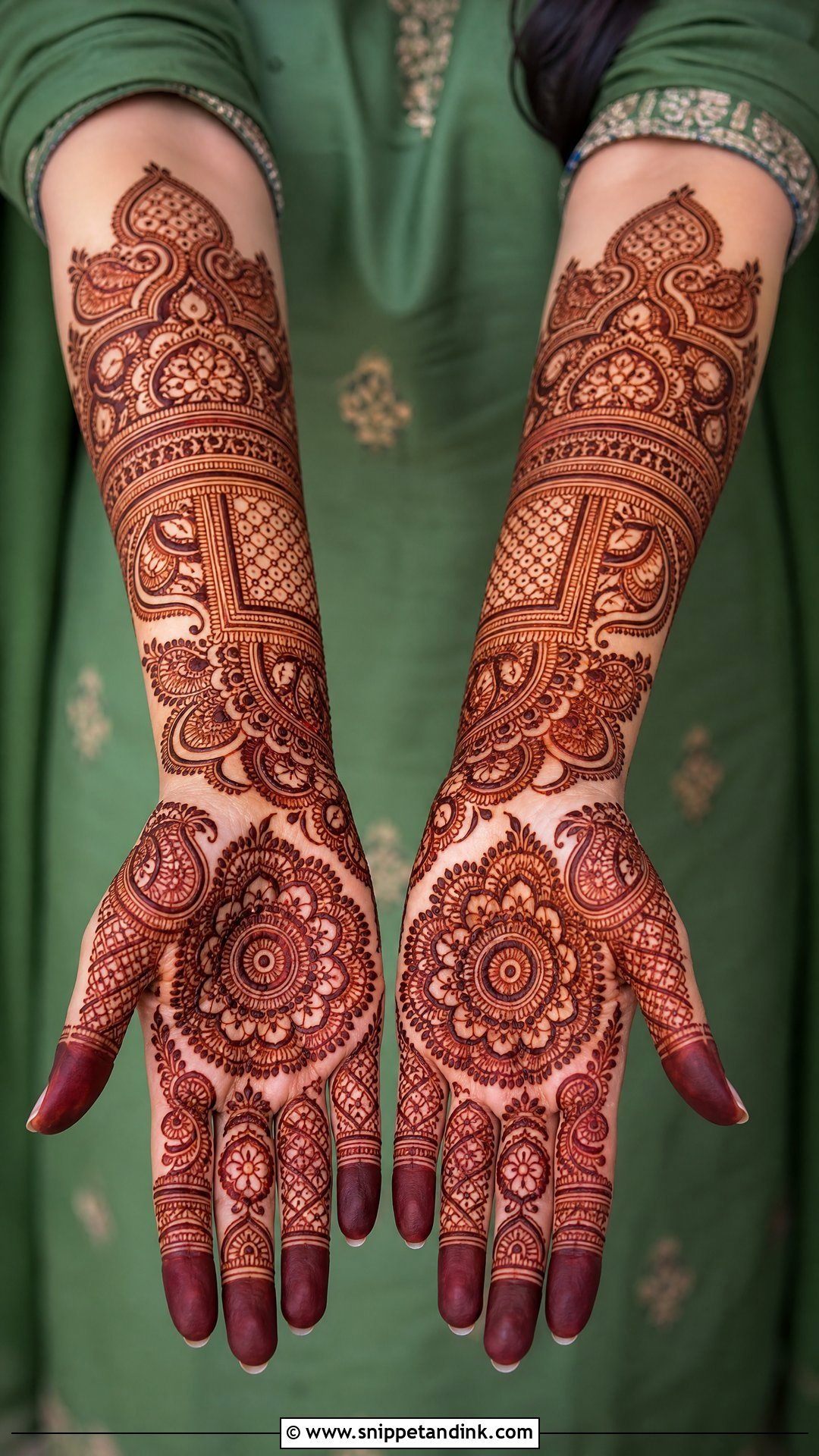
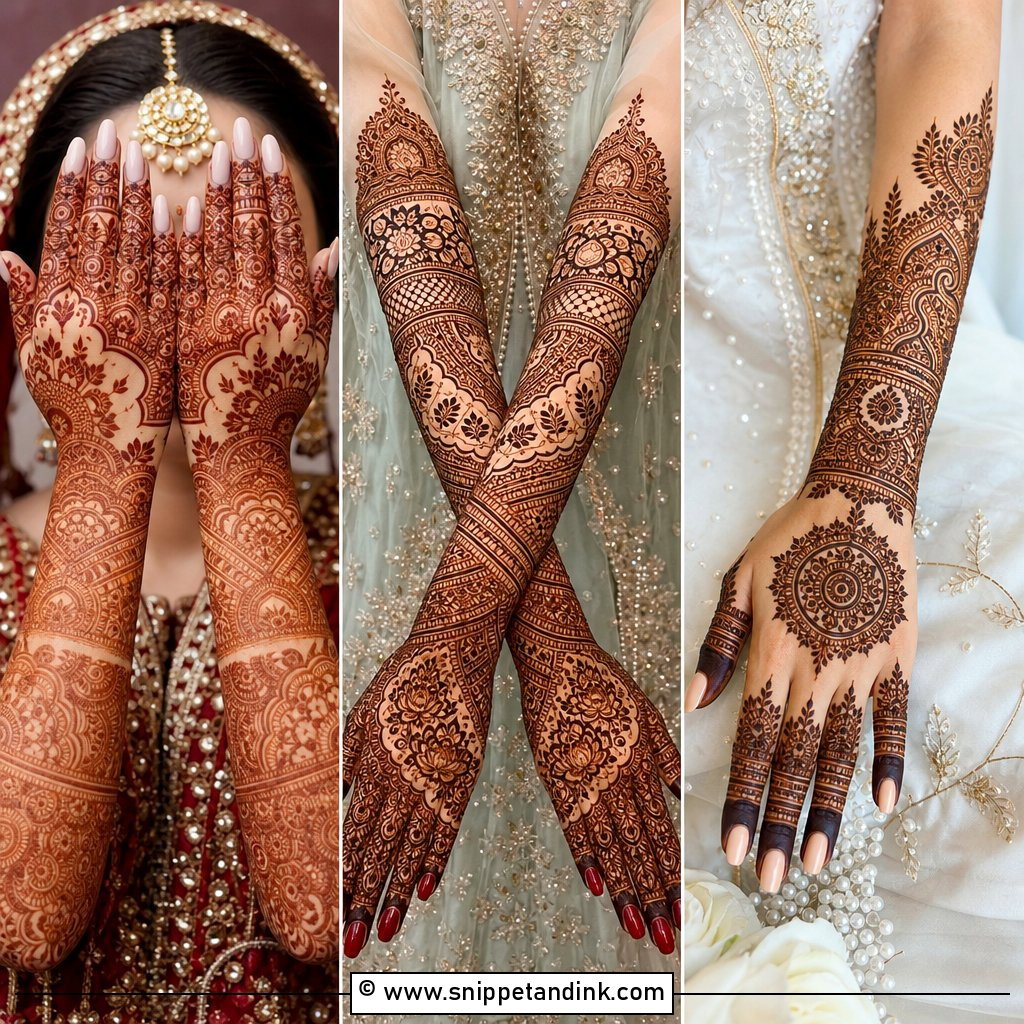
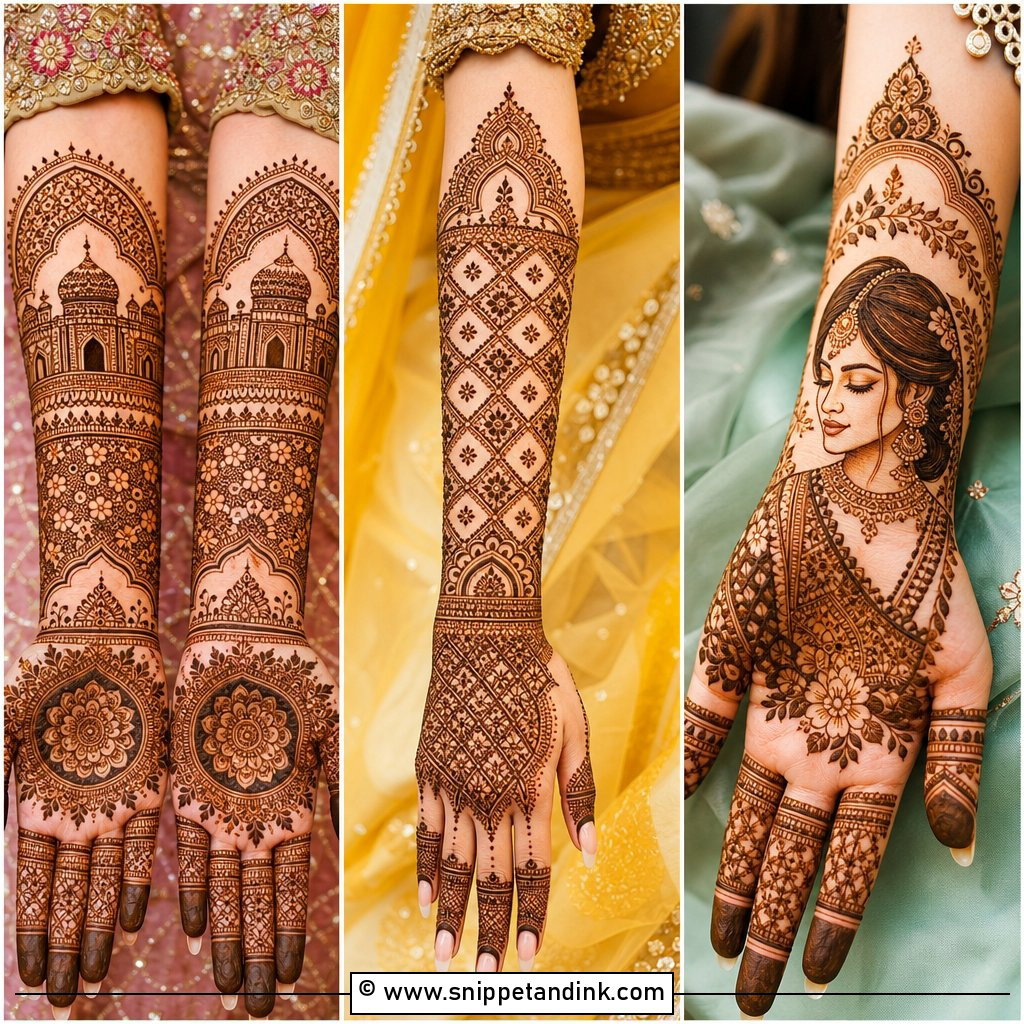
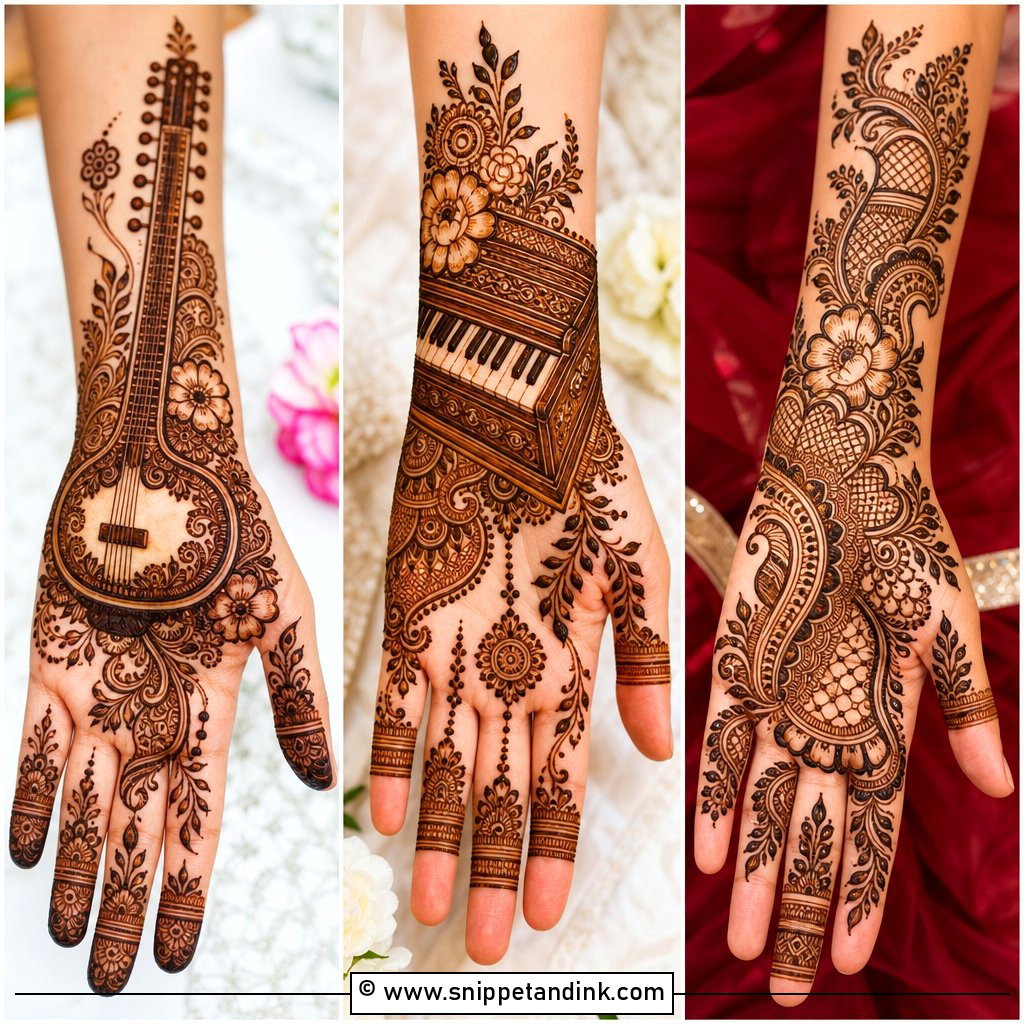
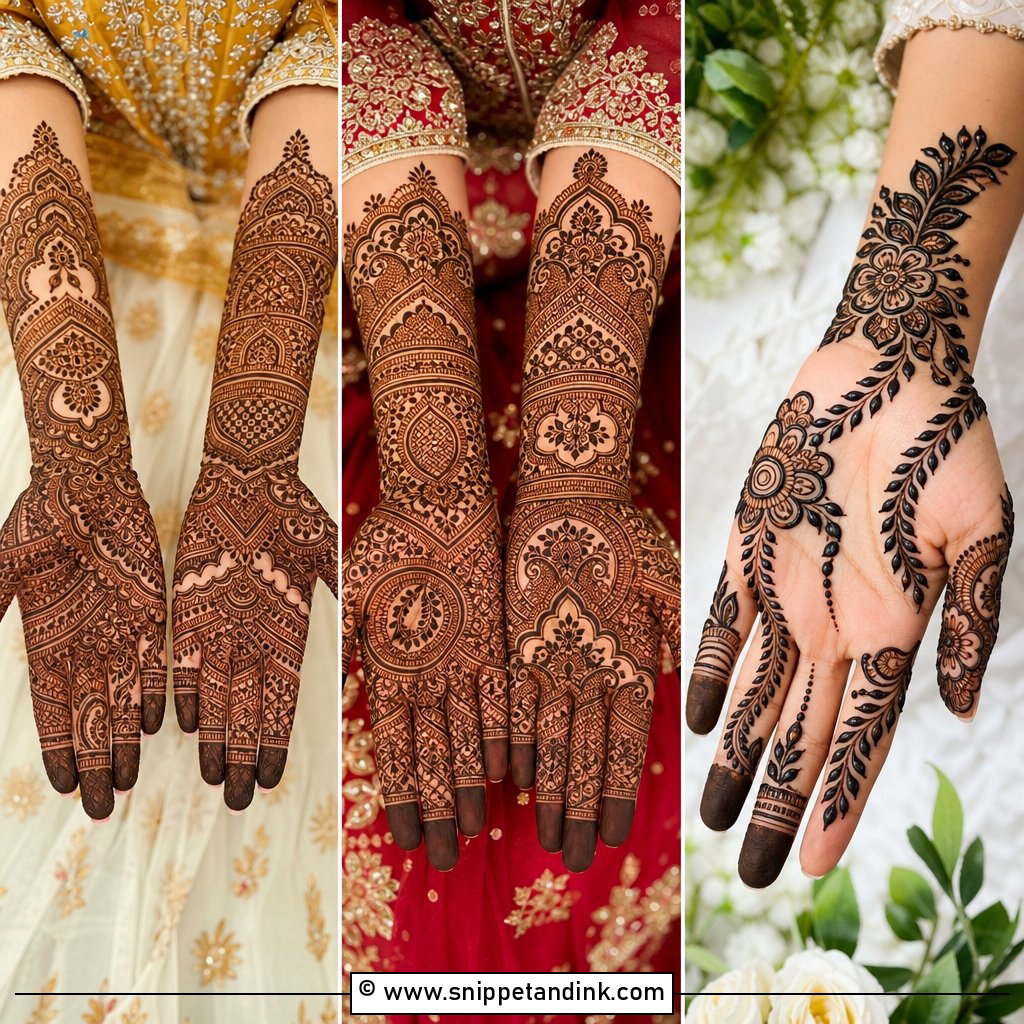
Dense coverage from fingers to forearms is still the image most families have of a Pakistani dulhan, and it’s the design I plan hardest. Paisleys, florals, jaali mesh, mandalas, leafy vines and tiny filler strokes all have to fit together without the hand turning into one dark mass. My approach is to give the palm a bold centerpiece and let the arms carry layered bands, keeping the major motifs a size larger than feels necessary. Once the stain deepens, small motifs merge, and larger ones stay legible in photos. Heavily embroidered bridal dresses and gold jewelry carry this much detail comfortably.
2. Pakistani Dulhan Mehndi Design
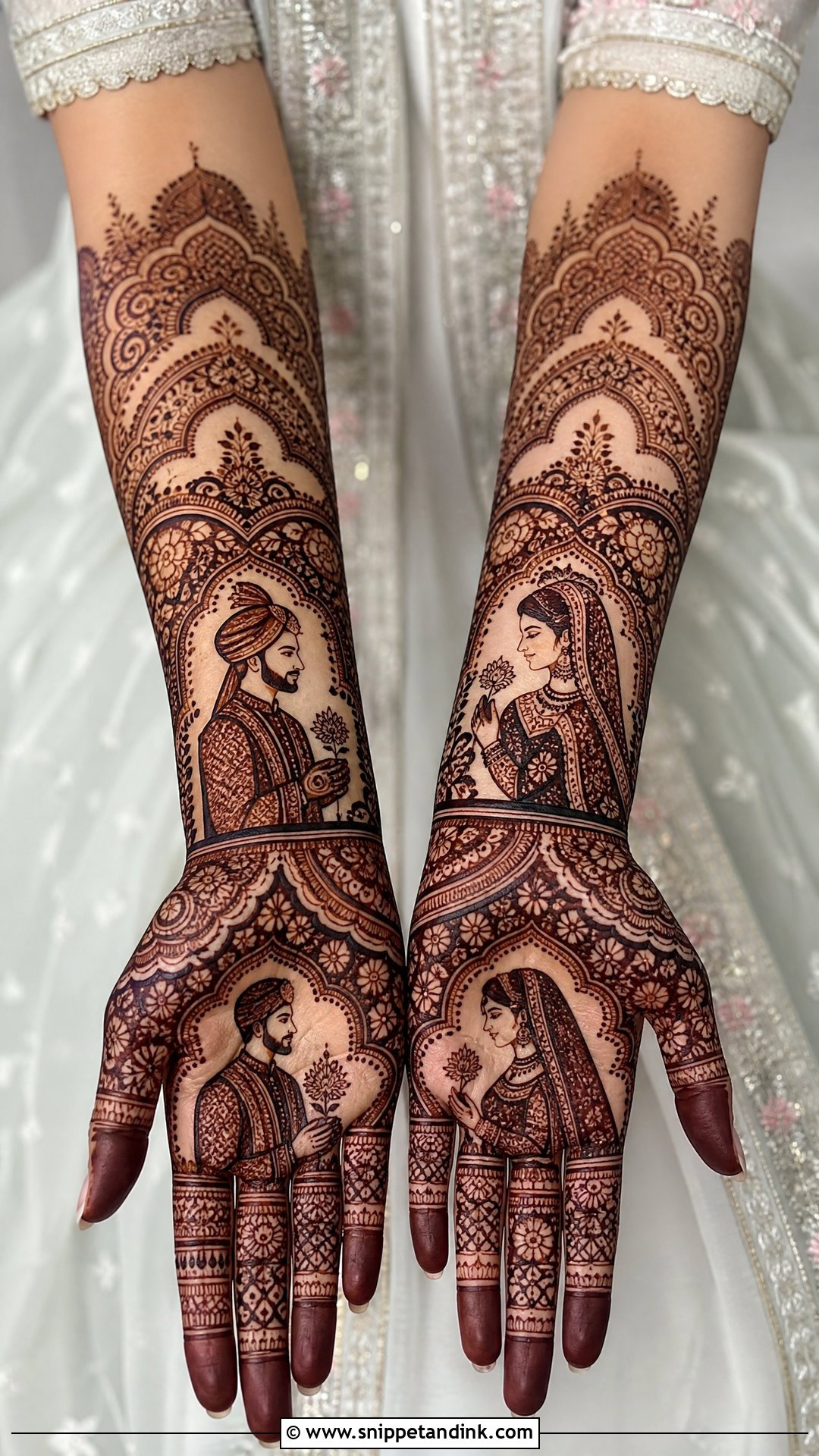
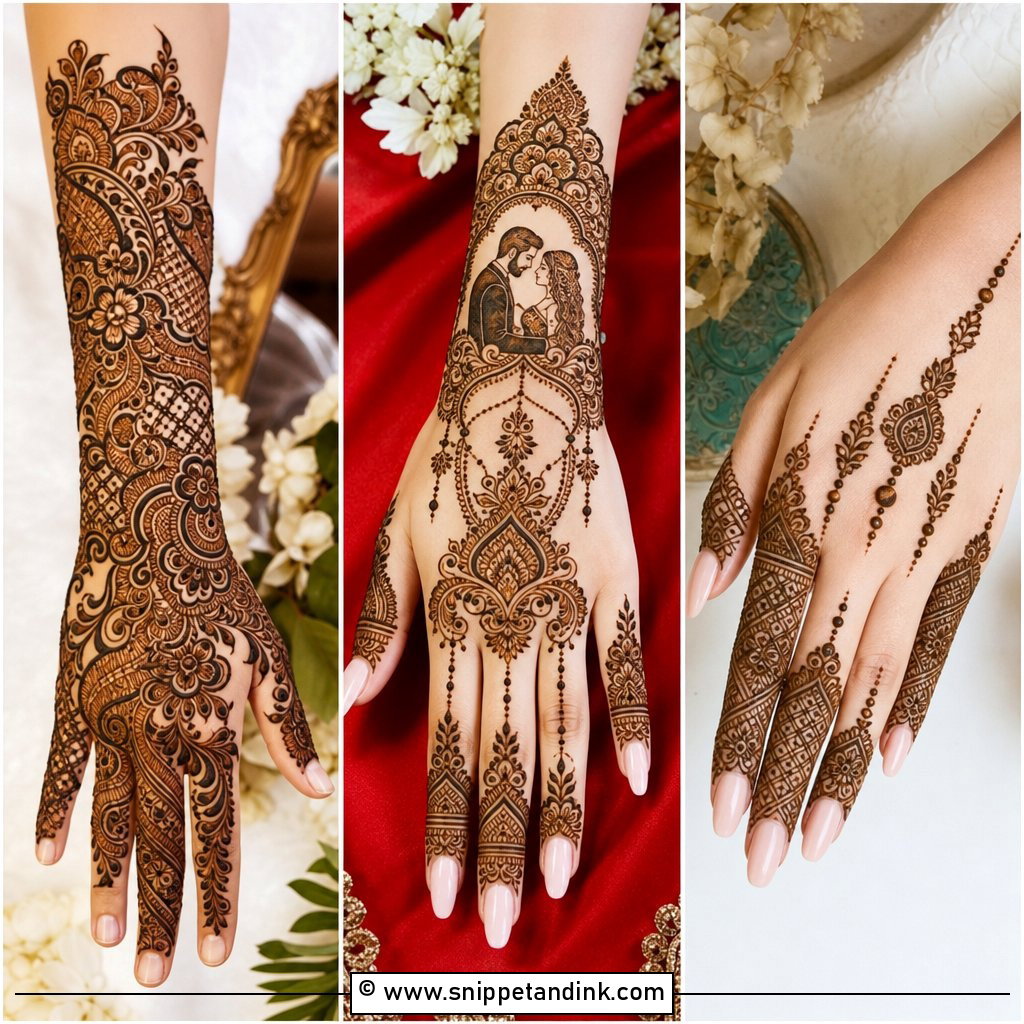
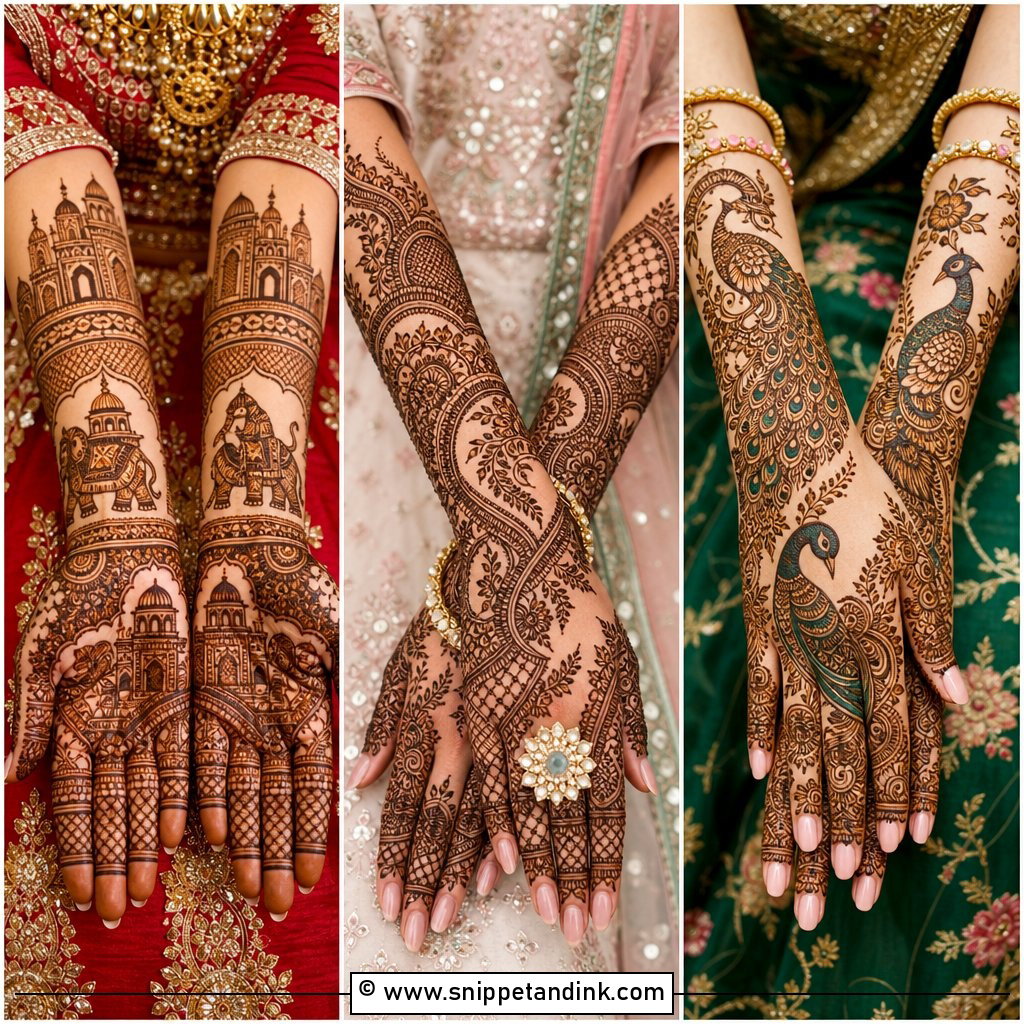
Placing a bride on one palm and a groom on the other gives the dulhan design its personal meaning. Around the figures I frame flowers, paisleys, arches, dots and fine mesh; the fingers fill with small repeating patterns and the wrists take bangle-style borders. Faces are where this design succeeds or fails. I keep the features simple, with clean eyes and a clear nose line, because heavy shading inside a small face blurs into a blot once the color darkens. If your artist’s portfolio shows only finished, filtered photos of faces, ask to see a fresh stain.
3. Pakistani Arabic Bridal Mehndi Design
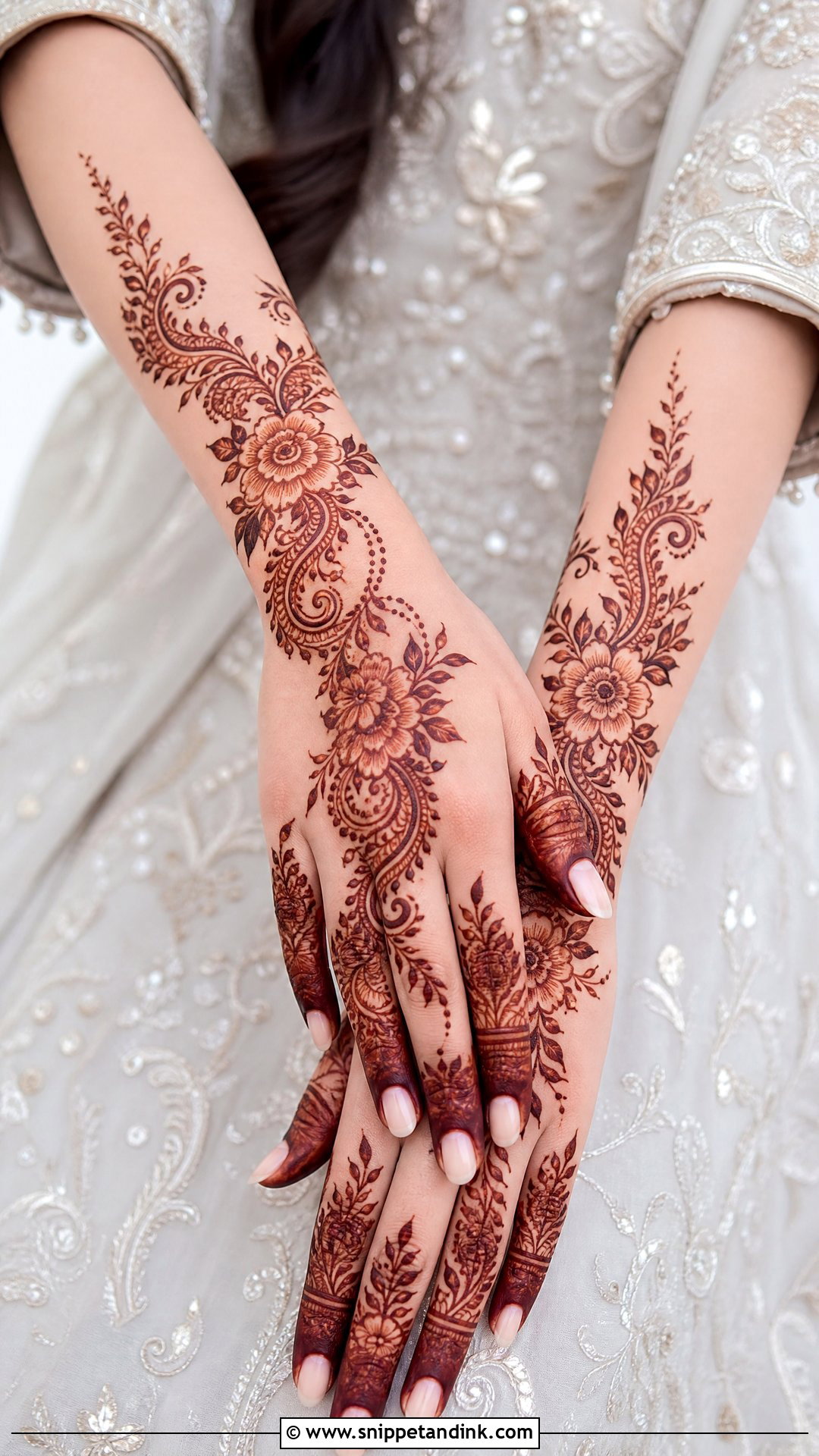
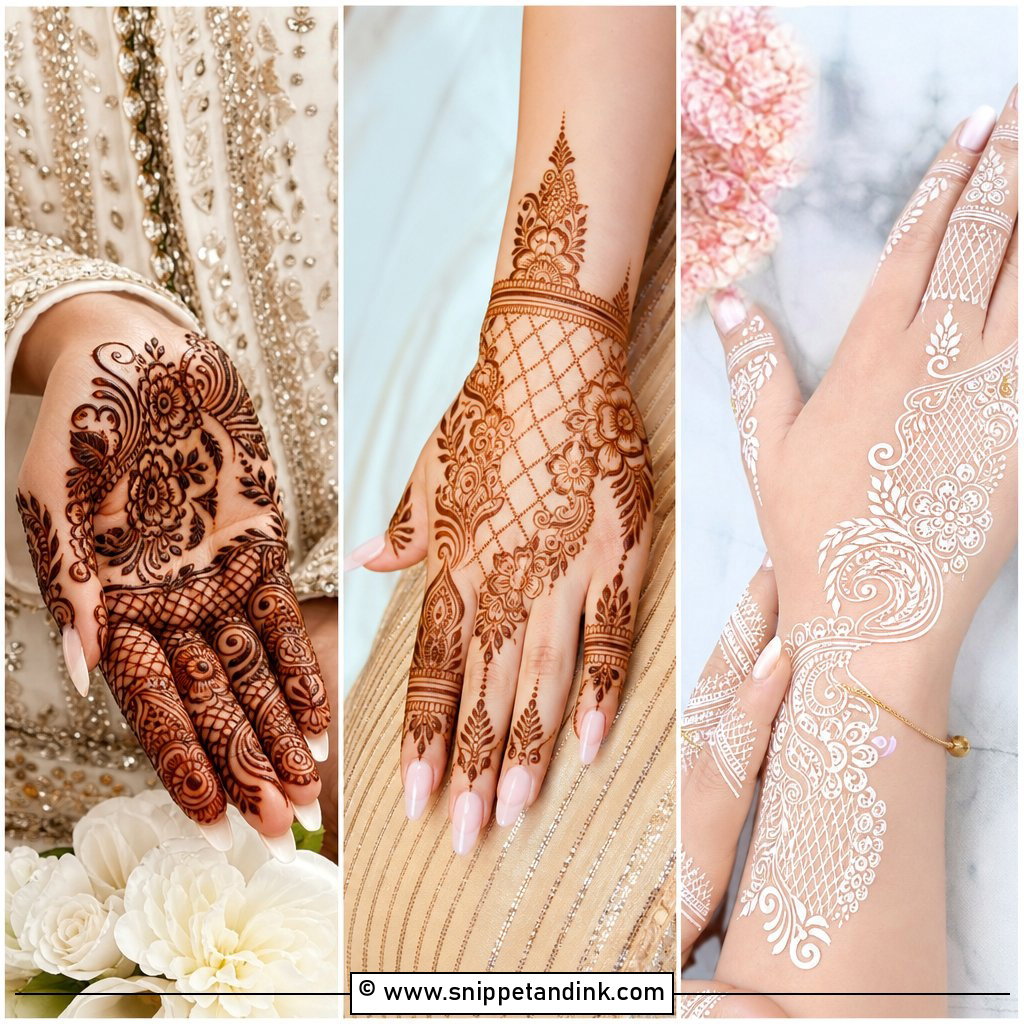
Brides who want bold movement with room to breathe usually end up here. A Pakistani Arabic bridal mehndi design takes the flowing vines of Arabic henna and adds the fuller detail of Pakistani bridal work, running diagonally across the palm or back hand before extending toward the wrist and forearm. Large flowers, shaded leaves, paisley curls and dotted trails fill the path. The open skin between the motifs keeps it clear on every skin tone. It’s quicker to apply than dense coverage, and it pairs well with pastel outfits and lighter jewelry at a nikkah or engagement.
4. Pakistani Khafif Bridal Mehndi Design
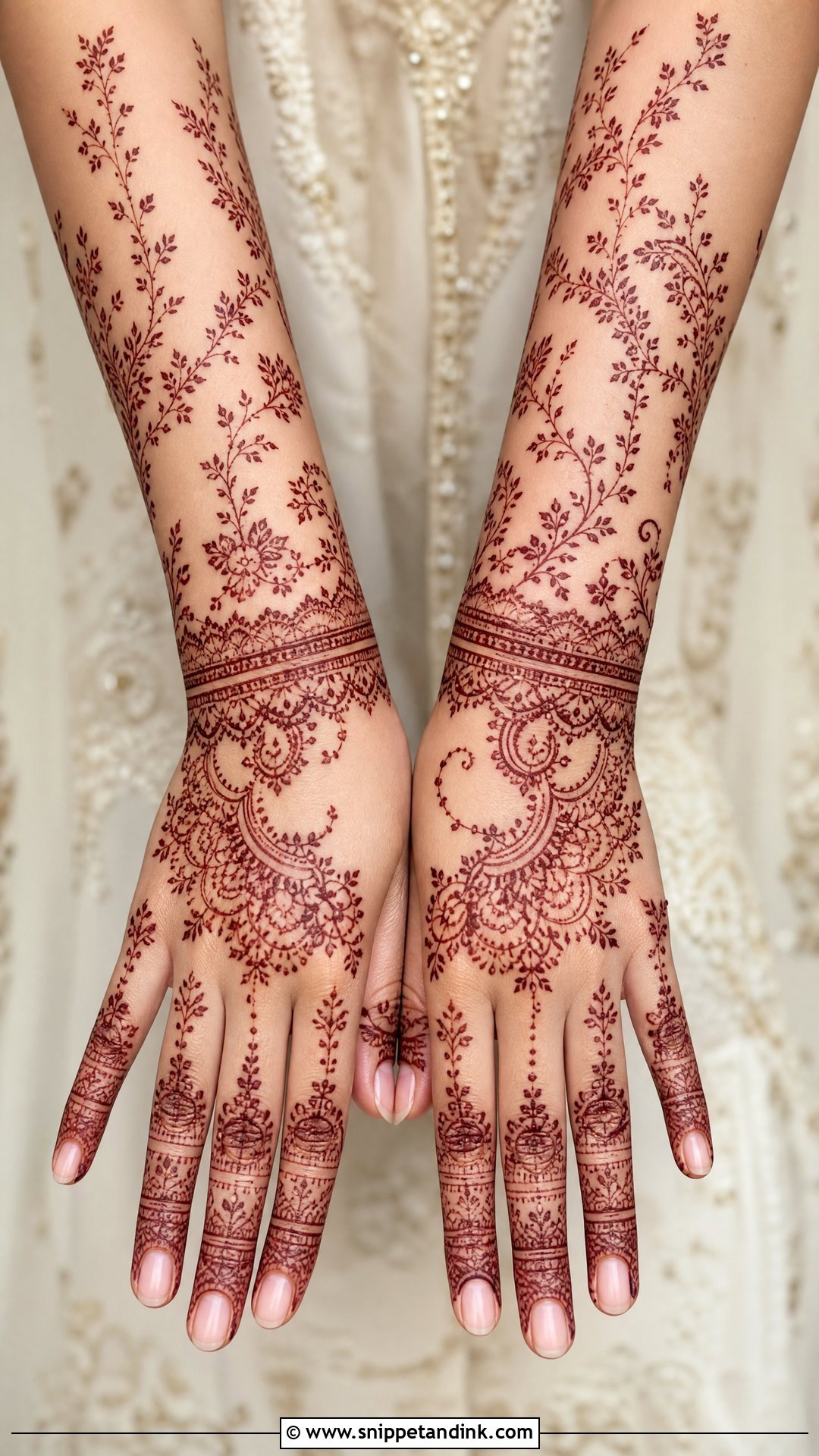
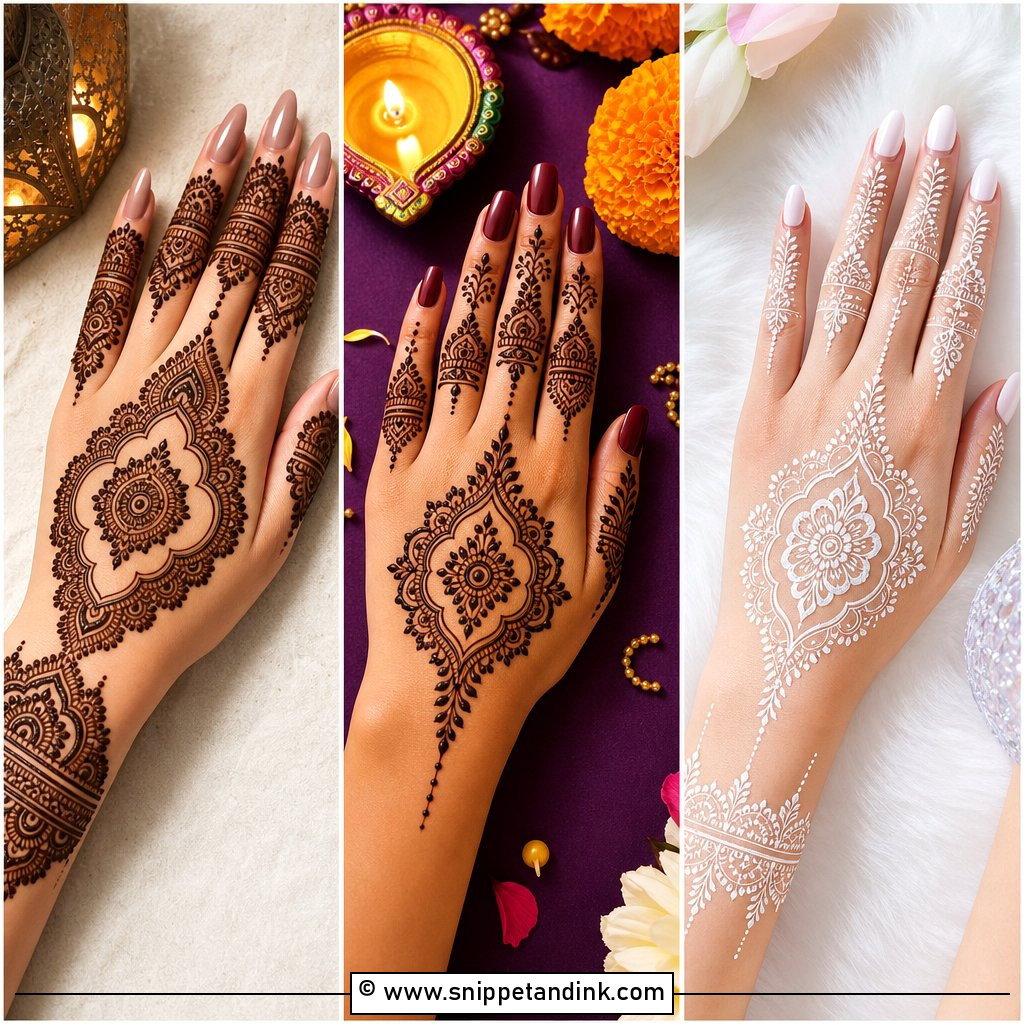
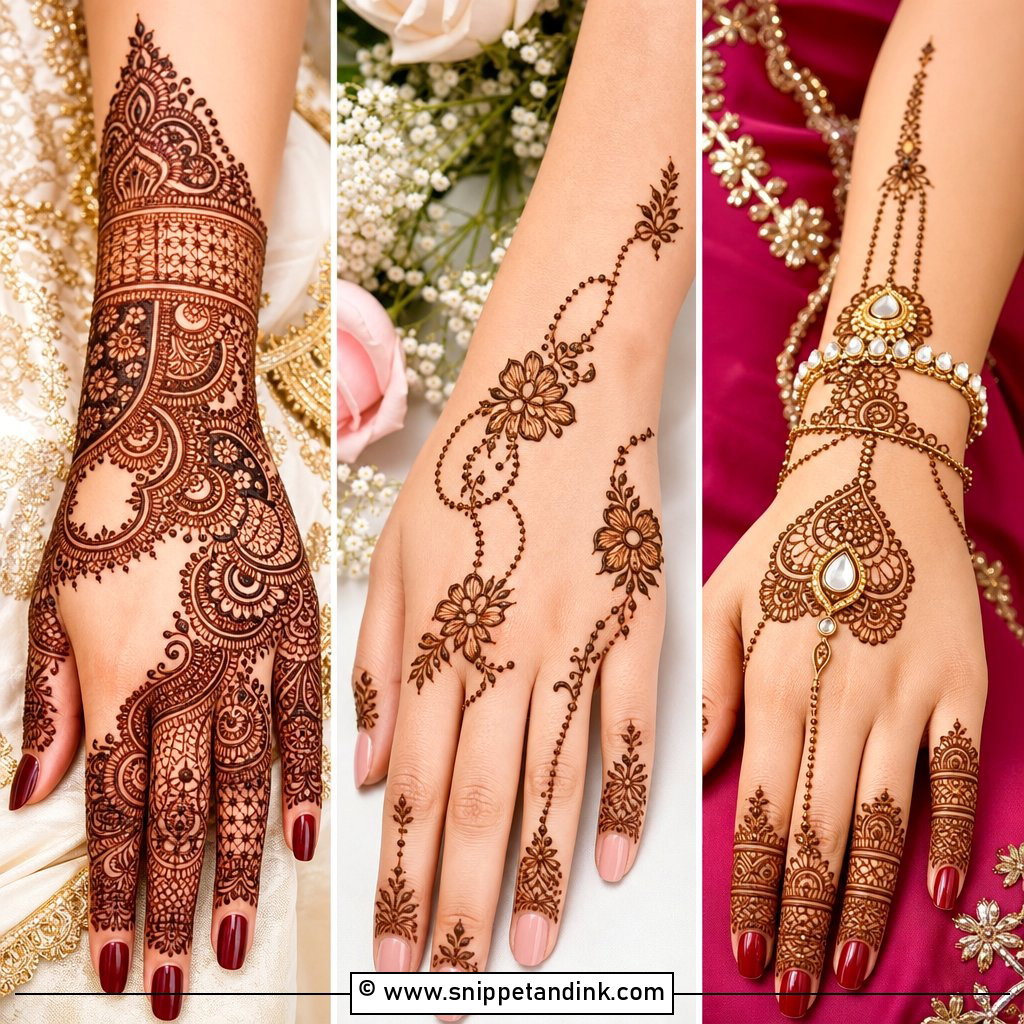
Khafif is fine-line work: slim vines, tiny leaves, floral clusters, small dots, lace-like filling and plenty of empty space. On the back of the hand and wrist it looks almost like embroidery. The catch is that very thin lines carry very little paste, so they stain paler than thick ones. For a bride, I extend khafif at least to the forearm and anchor it with one or two bolder shapes, a mandala or a floral bouquet, so the hands don’t look faint next to a heavy outfit. Lighter outfits and soft makeup suit it best.
5. Pakistani Tikki Bridal Mehndi Design
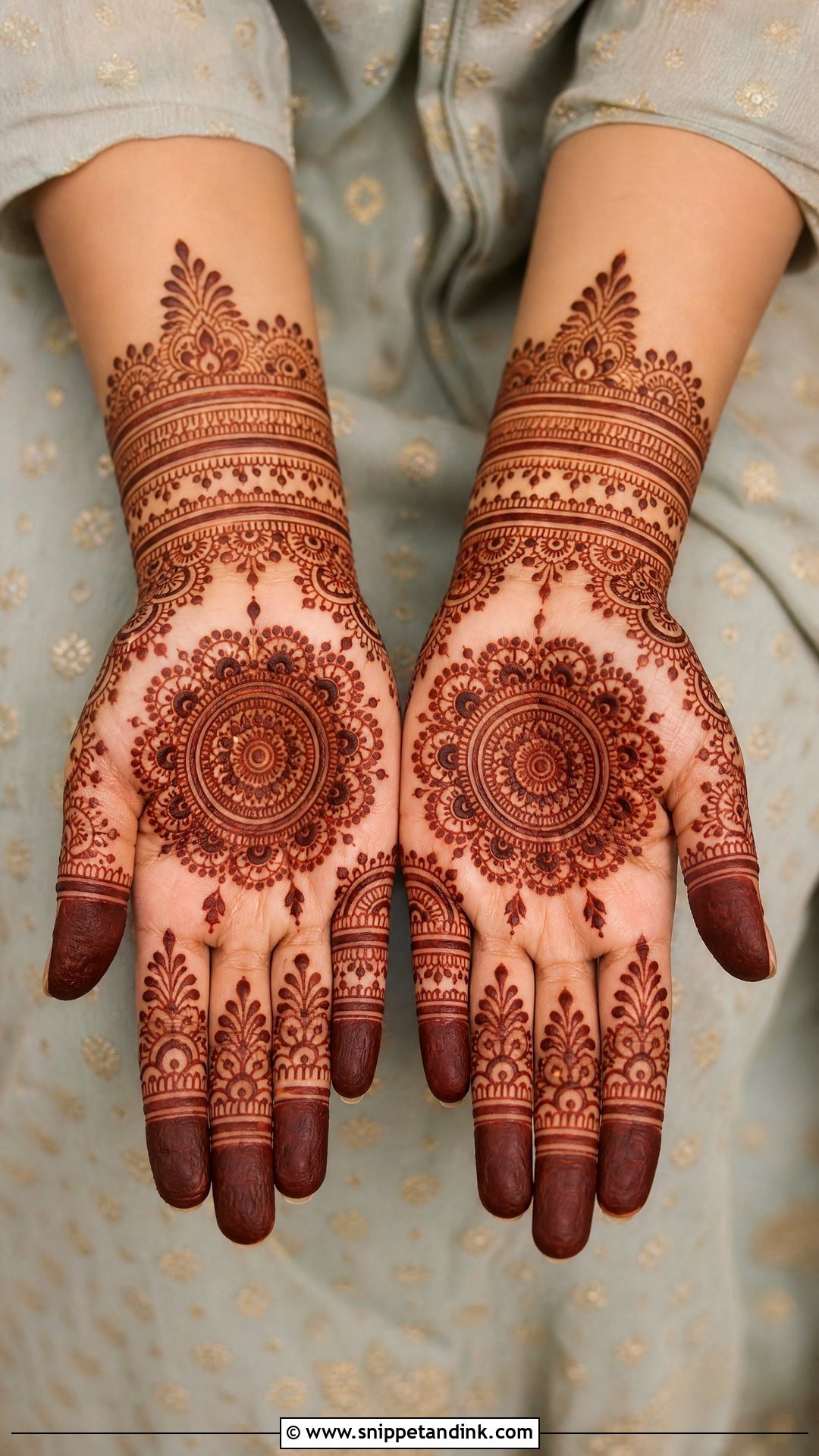
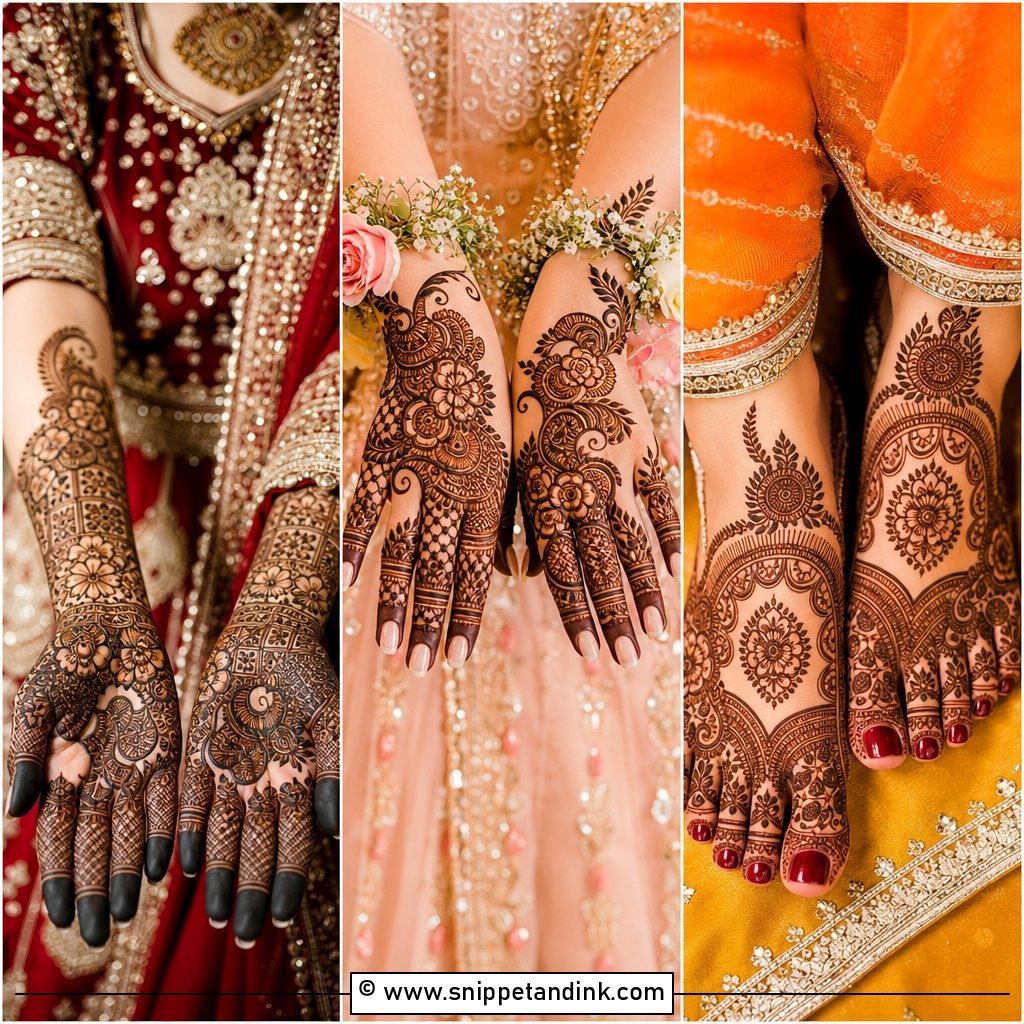
The tikki is a round medallion, and the whole design hangs off it. I place it in the center of the palm or back hand, then build floral rings, paisley borders, dotted circles and fine mesh outward. Fingers take bands, leafy trails and shaded tips, and bangle-style patterns close the wrist. On small hands this layout is a gift, because a centered shape gives the palm a clear focal point and leaves the fingers looking longer. It gives a traditional result without the hours of full coverage.
6. Pakistani Mandala Bridal Mehndi Design
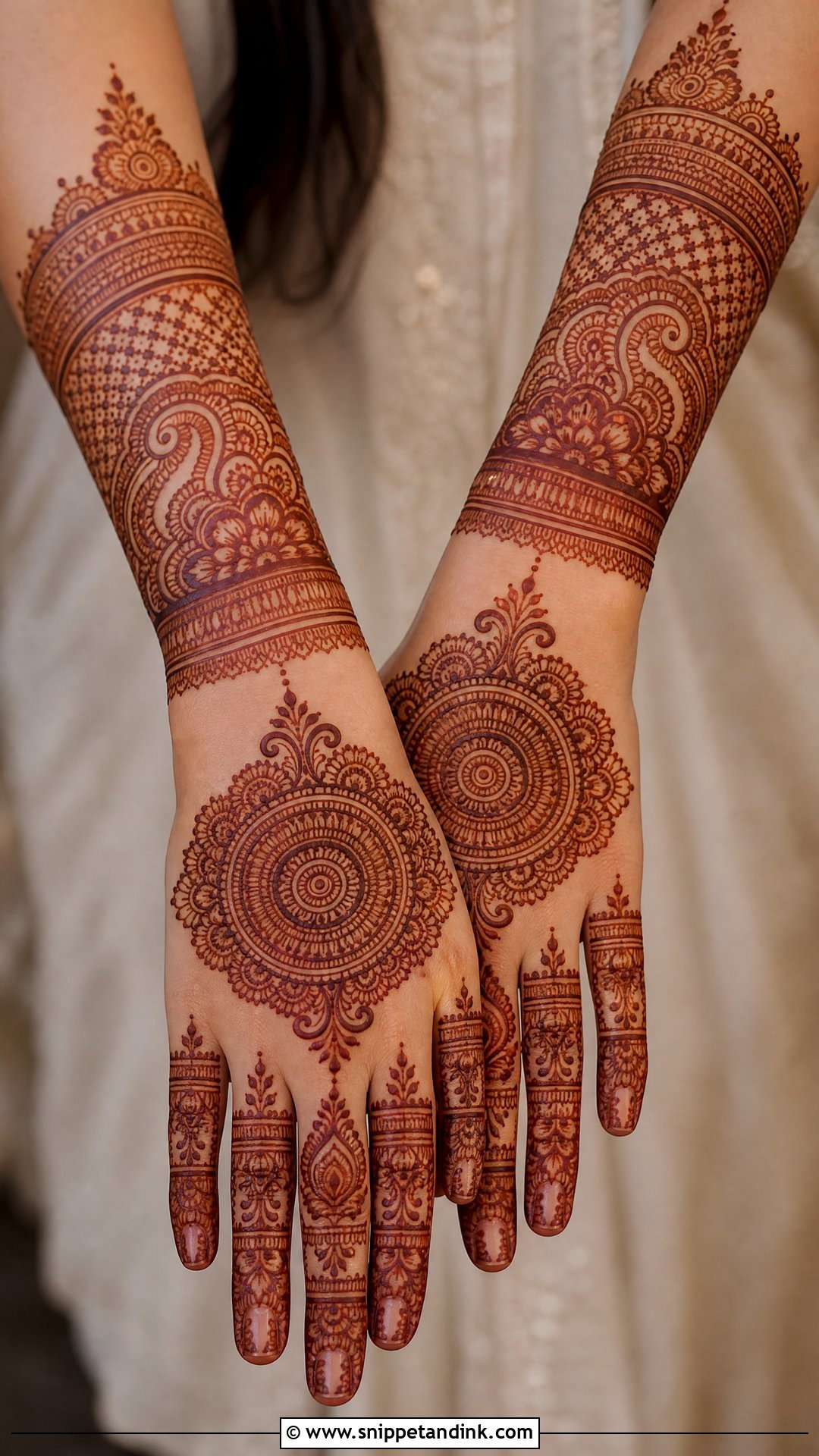
Symmetry is the appeal here. A large mandala fills the palm with layered petals, dots, scallops and fine inner detail, and paisleys, floral vines and small filler sections connect it to the fingers and wrist. On the back hand it sits as a centerpiece with cuffs near the wrist. The hard part is keeping the rings even: I mark the center and outer edge with dots first, then work from the middle out. Brides who prefer neat structure over free-flowing patterns tend to choose it.
7. Pakistani Jaali Bridal Mehndi Design
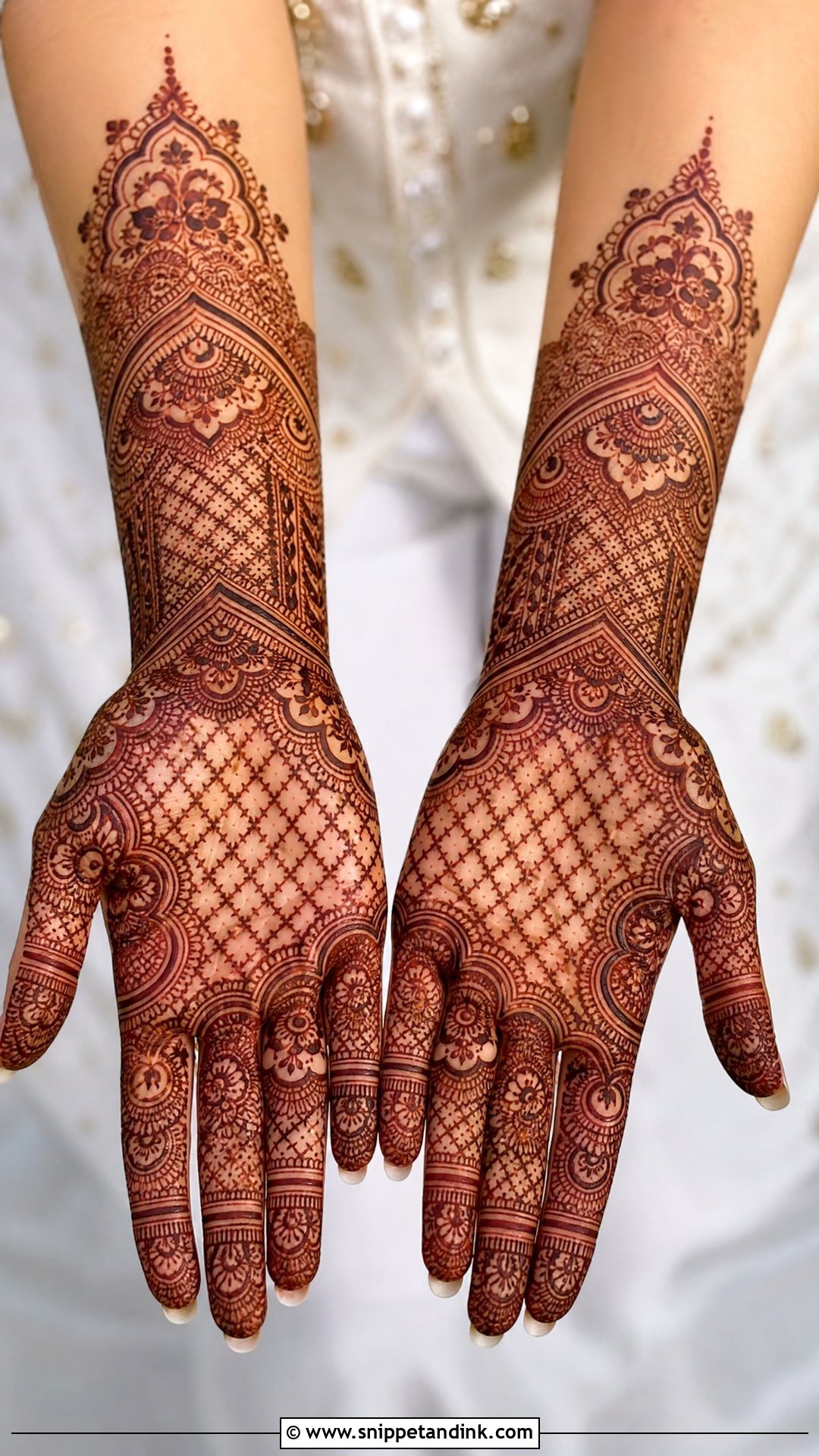
Jaali means mesh, and this design uses crisscross lines, tiny dots, floral corners and shaded borders to build a lace effect across the palm, back hand or forearm. A whole hand of mesh can look flat, though, so I break it up with bold paisleys, roses, mandalas or a peacock. That contrast between open net and solid motif is what makes it work. It suits brides in lace sleeves or net dupattas, and anyone wearing heavily detailed jewelry.
8. Pakistani Floral Bridal Mehndi Design
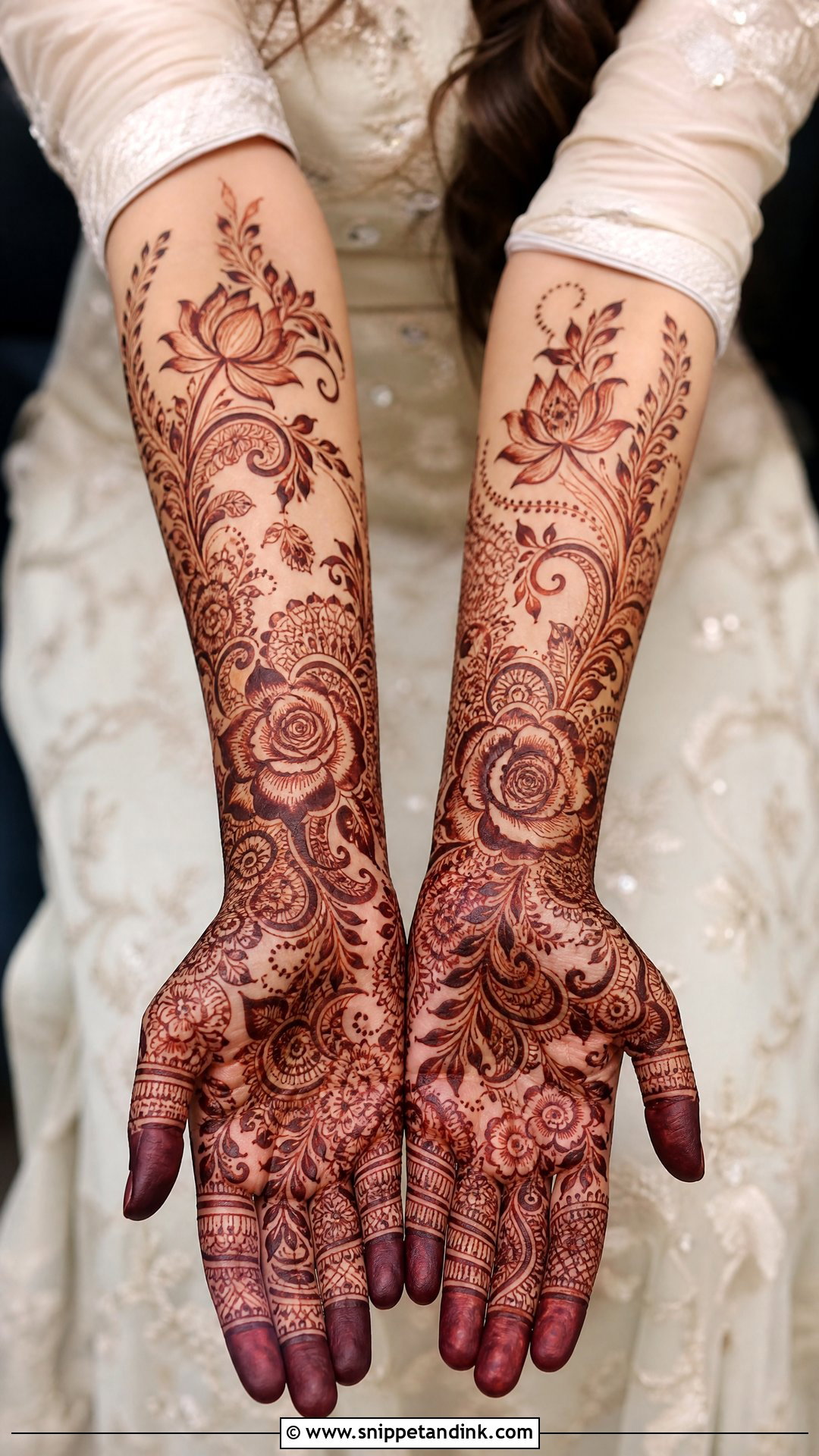
Roses, lotus shapes, small blossoms, leafy stems and shaded petals can run across the palms and forearms as full coverage, a diagonal trail or a clustered bouquet. For bridal weight, I fill around the flowers with dots, curls, mesh and mini paisleys. Shaded petals give depth; outlined petals look cleaner. Florals suit a bride who wants romance without heavy traditional figures, and they sit naturally with pink, ivory, peach and pastel outfits.
9. Pakistani Paisley Bridal Mehndi Design
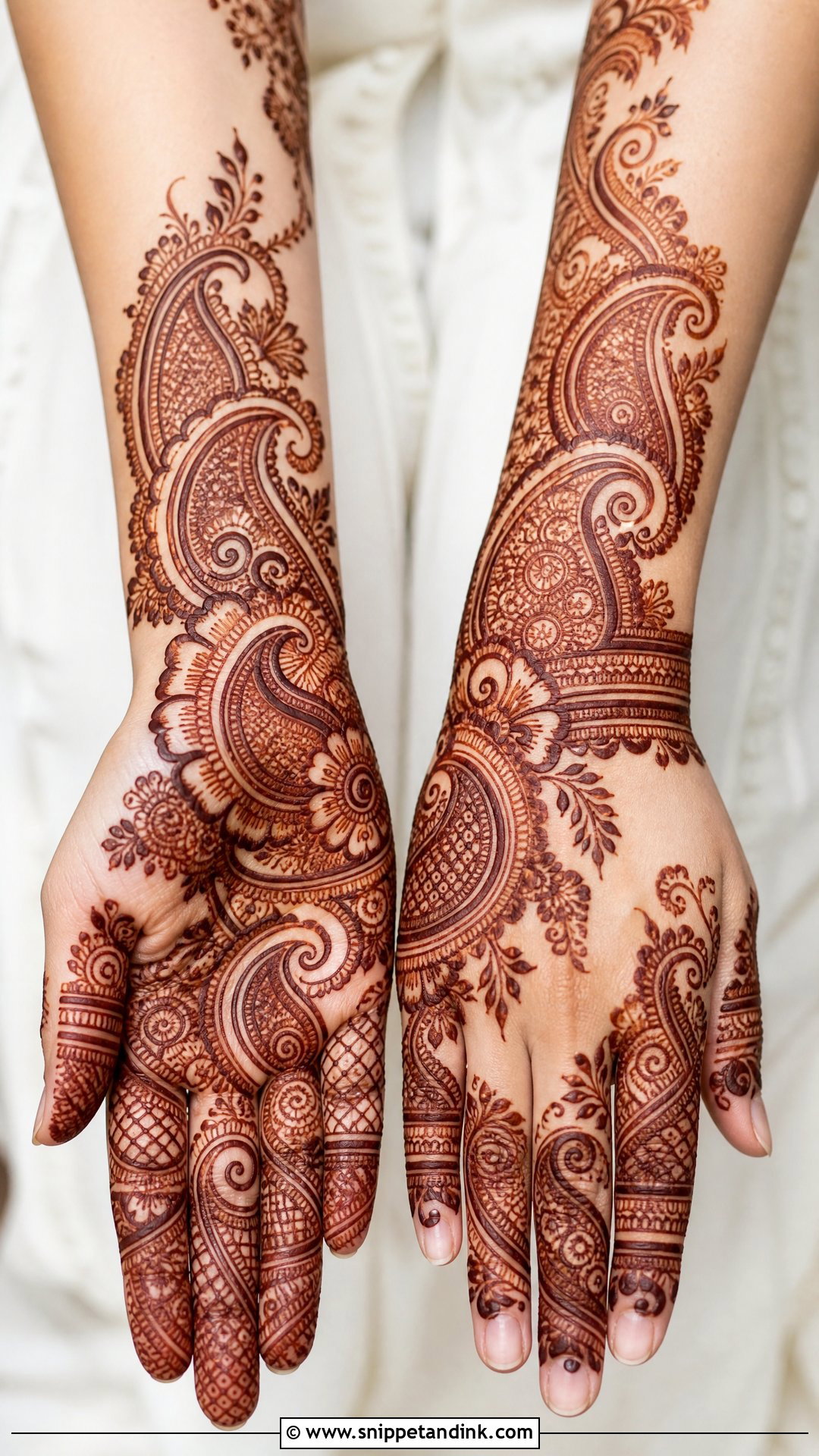
If I could only draw one motif, it would be the paisley. It curves to fit any space on the hand and joins easily to florals, vines and mesh. A full bridal paisley layout can start in the palm, sweep across the wrist and climb the forearm in layered sections, with smaller paisleys on the fingers and borders. Variety keeps it from looking repetitive: large paisleys with tiny inner detail, shaded leaves and clean gaps between them. It never dates.
10. Pakistani Peacock Bridal Mehndi Design
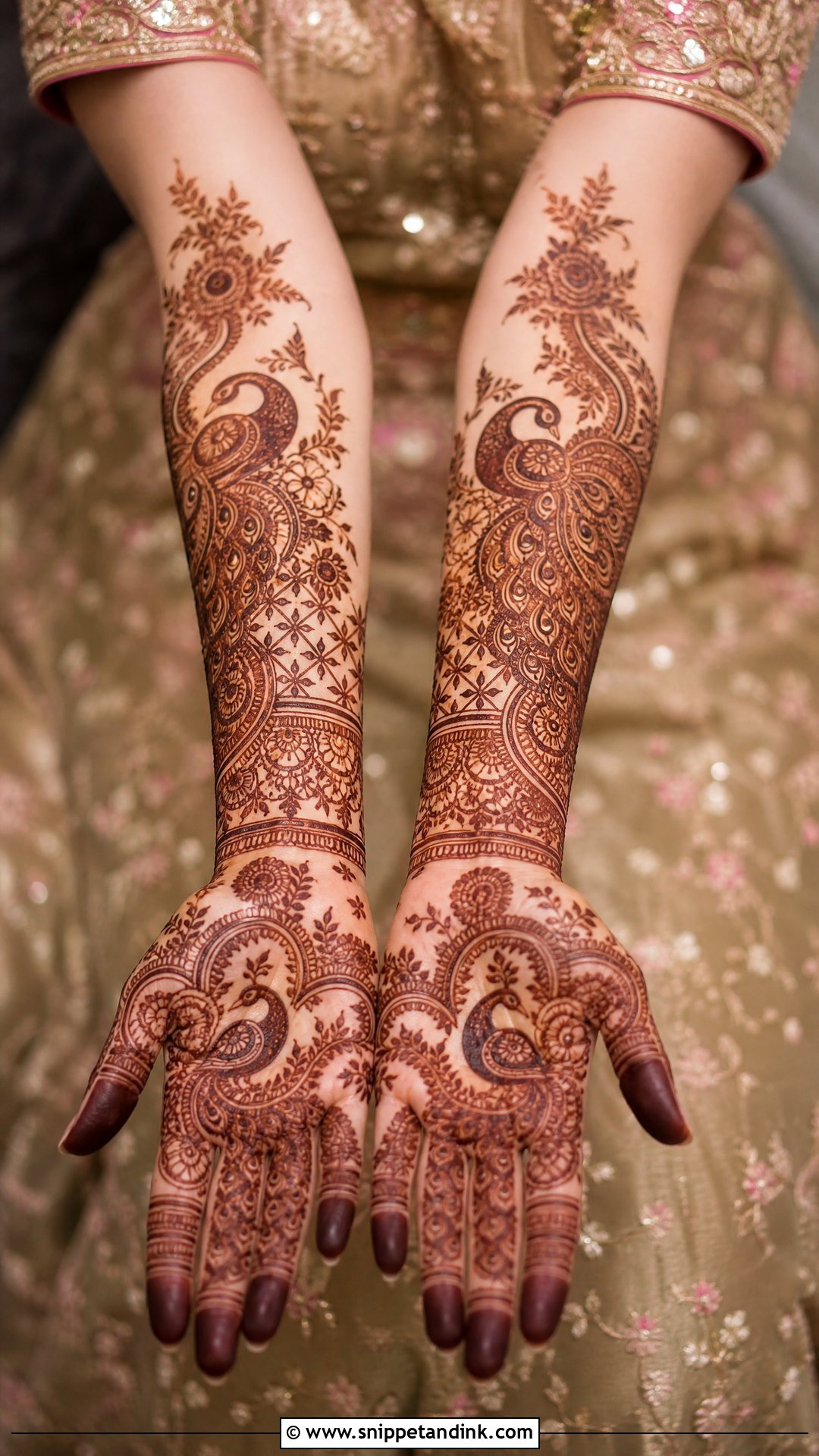
A peacock brings a regal feel to the palm, forearm or back hand, usually surrounded by florals, feathers, paisleys and curved vines. The bird must be bold enough to stand out from the fine detail around it, otherwise it disappears. Brides often save it for the barat or walima. Feather-inspired bands on the fingers and bracelet patterns at the wrist round it off. I’d rather draw clean feather lines with balanced shading than crowd the tail with tiny fillers, which close up as the stain darkens.
11. Pakistani Bride And Groom Mehndi Design
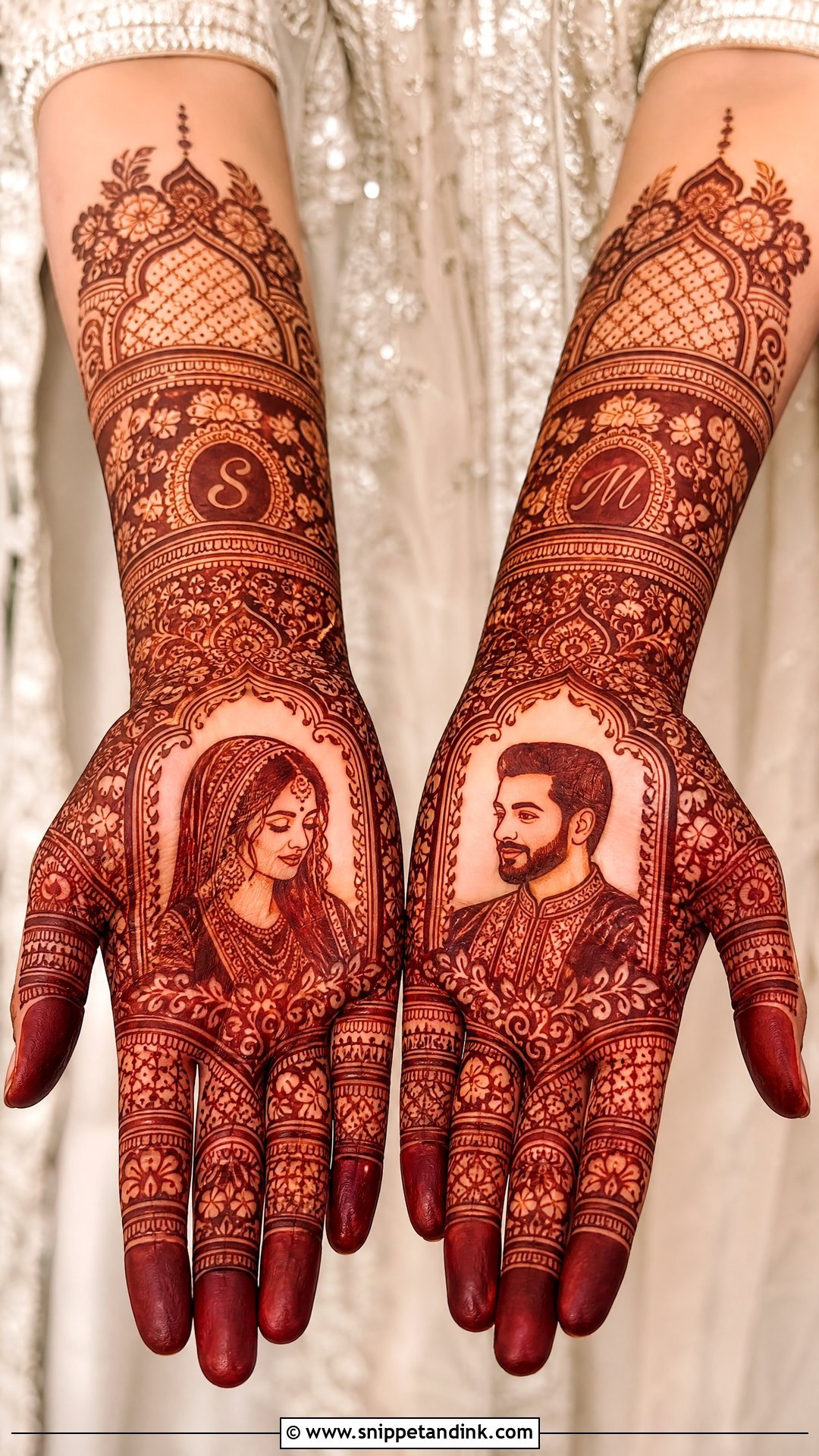
Figures of the couple are a favorite for meaningful wedding art. A Pakistani bride and groom mehndi design usually shows the bride on one hand and the groom on the other, framed with arches, flowers, jaali and traditional patterns, sometimes with initials or the date tucked in. The surrounding work needs to stay detailed but not crowded, or the figures get lost. On the palms it looks classic; carried onto the forearms it looks grander. Close-up photos during the mehndi ceremony show it best.
12. Pakistani Nikkah Mehndi Design
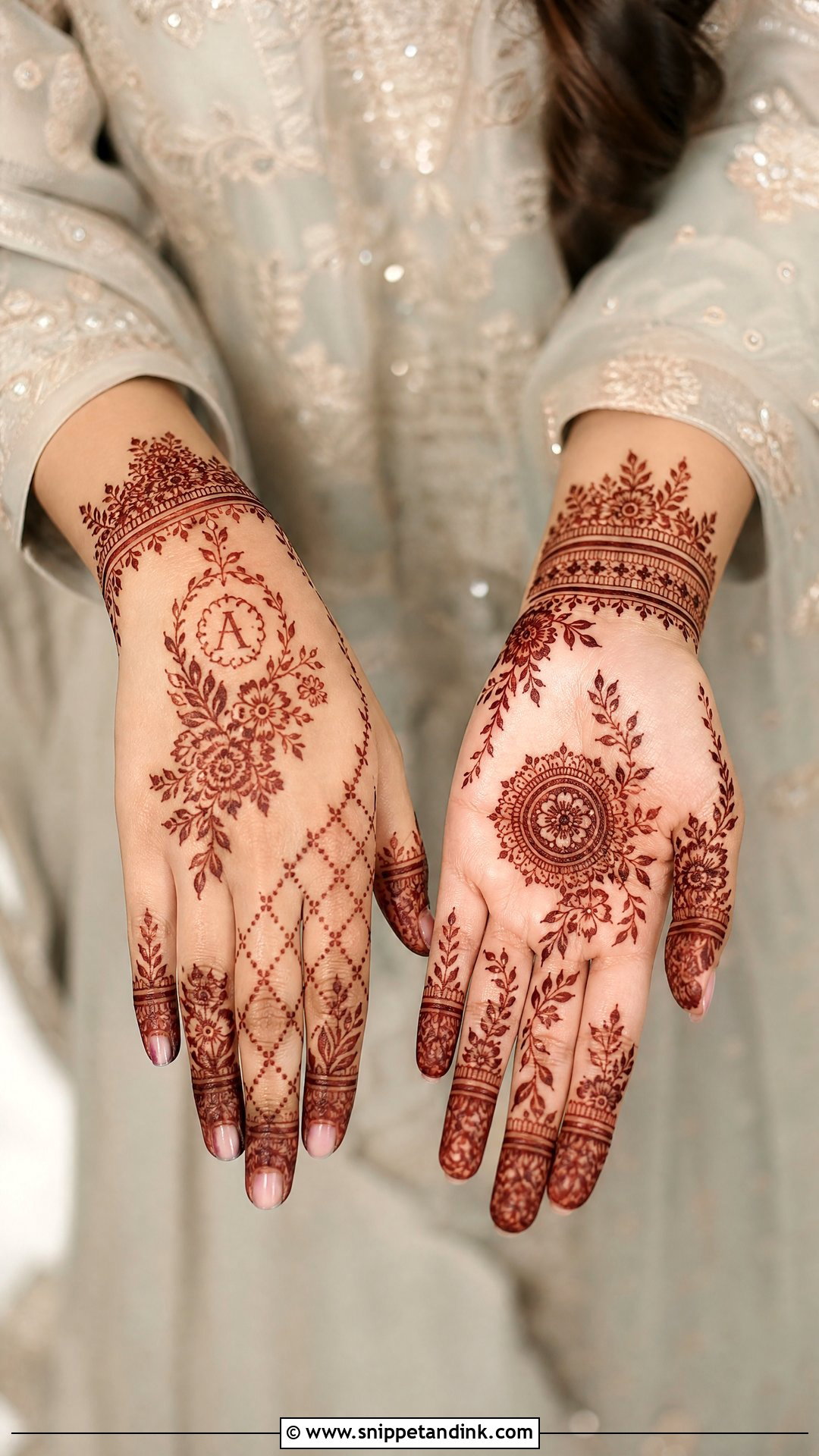
Softer than a barat design, a Pakistani nikkah mehndi design leans on floral trails, mandalas, fine jaali, leafy vines and bracelet-style wrists. Coverage can be full hand, half hand or wrist to forearm. Many nikkah outfits are white, ivory, pastel or gold, and against pale fabric a cleaner layout looks far more refined than dense work. It also lets the natural shape of the hand show. A small set of initials or the date adds a personal note without changing the overall calm.
13. Pakistani Barat Bridal Mehndi Design
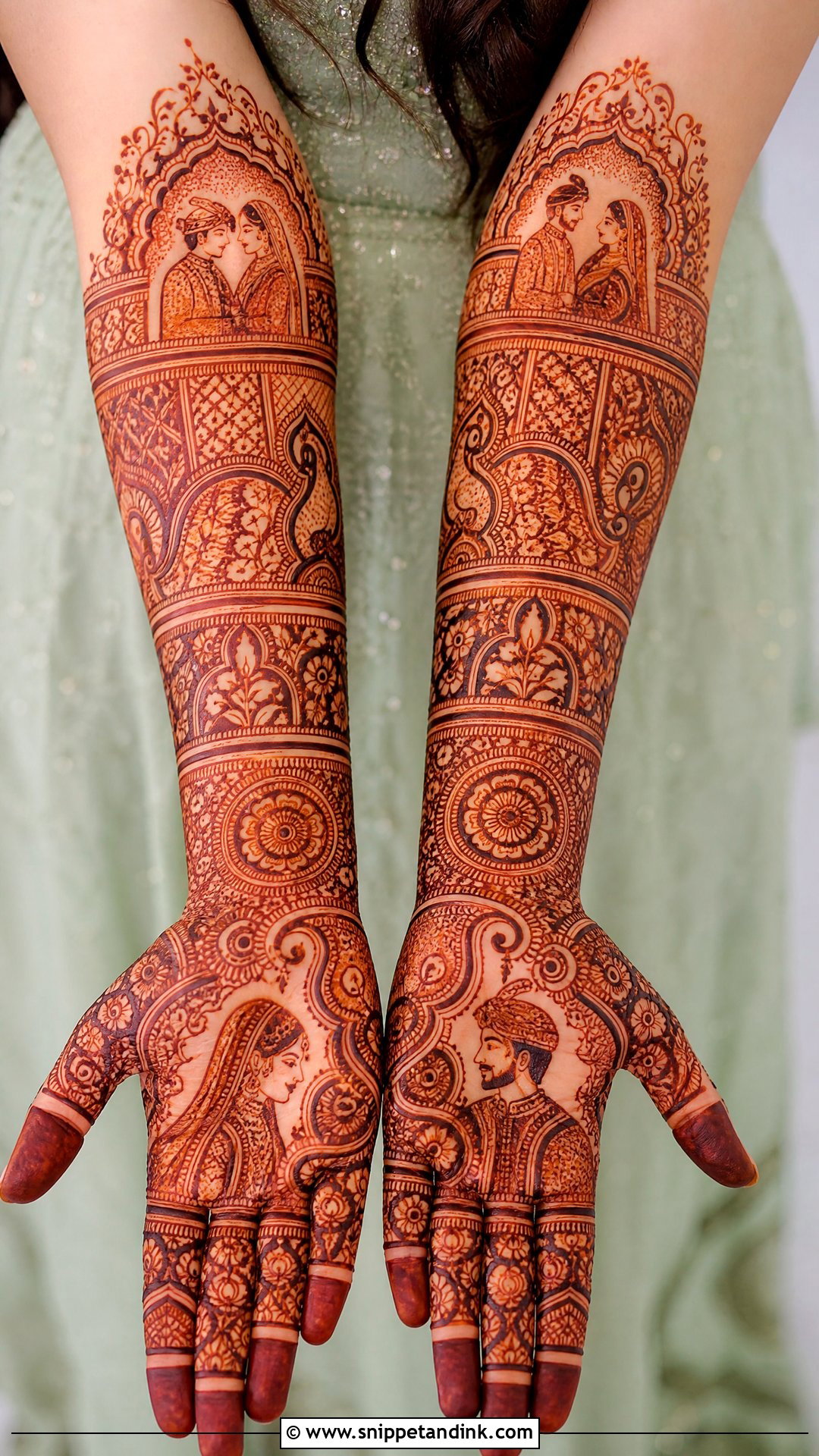
For the barat, most brides want the full traditional weight: dense paisleys, florals, mandalas, jaali panels, bride and groom figures and ornamental borders over hands and arms. Red, maroon, gold and deep jewel-toned outfits can hold that much pattern. The mistake I see most is filling every space with the same tiny motif, which reads as texture rather than design in formal photos. Mix large motifs, medium borders and fine fillers, and give the palms and back hands clear focal points.
14. Pakistani Walima Bridal Mehndi Design
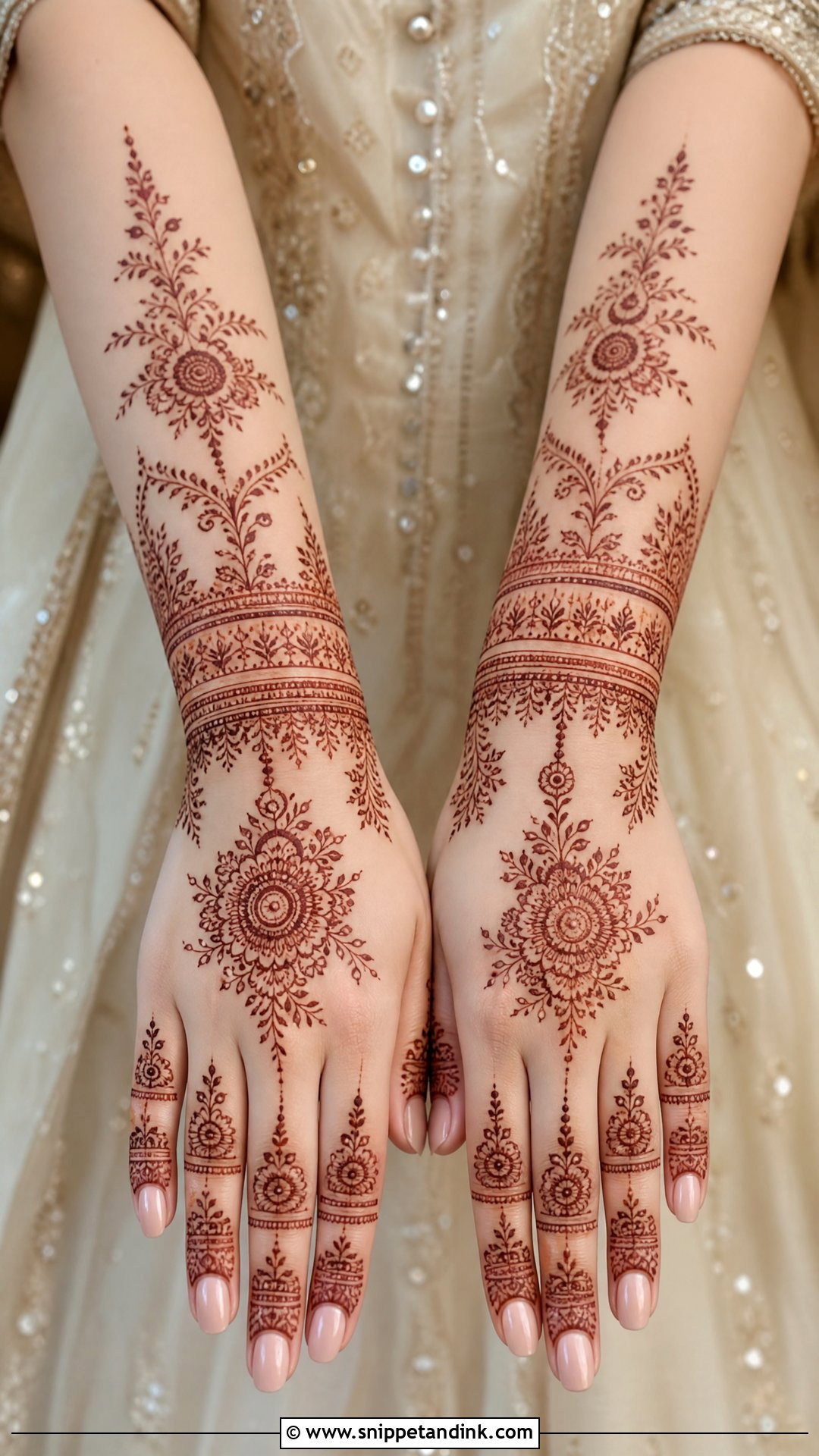
Walima outfits tend toward pastel, silver, champagne and ivory, so a lighter, more open design often suits them better than a second round of heavy work. Floral back hands, khafif vines, mandalas, bracelet cuffs and fine finger detail are the usual picks, with a centered motif on the palm and a flowing pattern on the back hand to sit with rings. Some brides keep their barat henna for the walima; others plan the whole application around the softer look. Balanced spacing keeps the stain crisp against delicate styling.
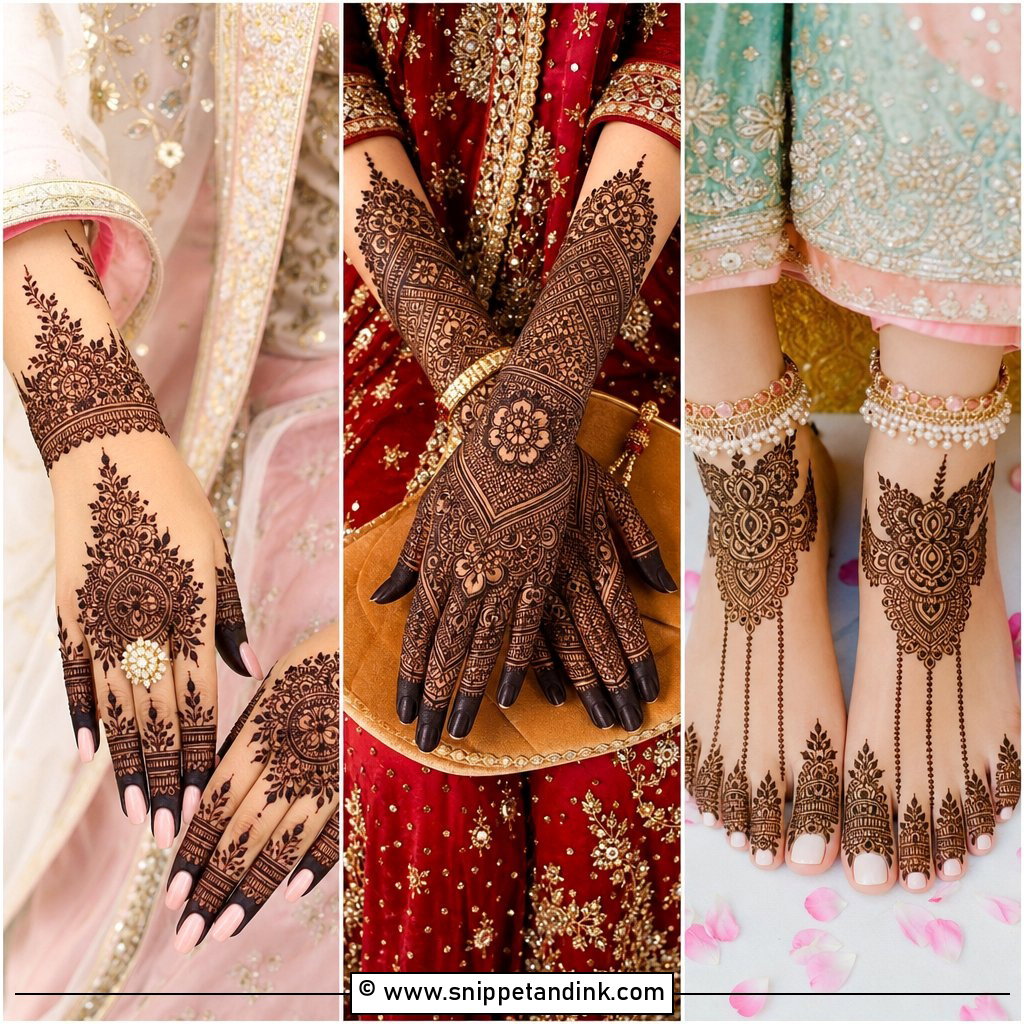
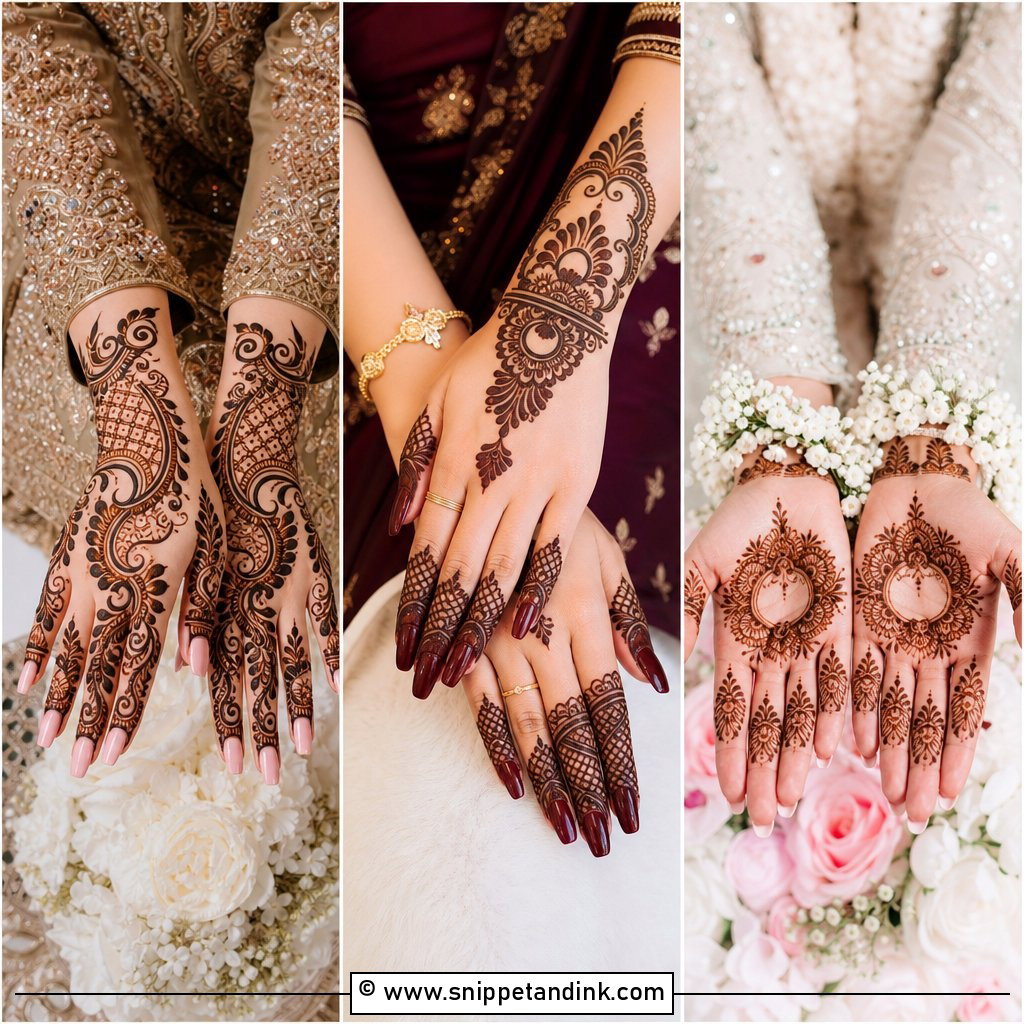
15. Pakistani Back Hand Bridal Mehndi Design
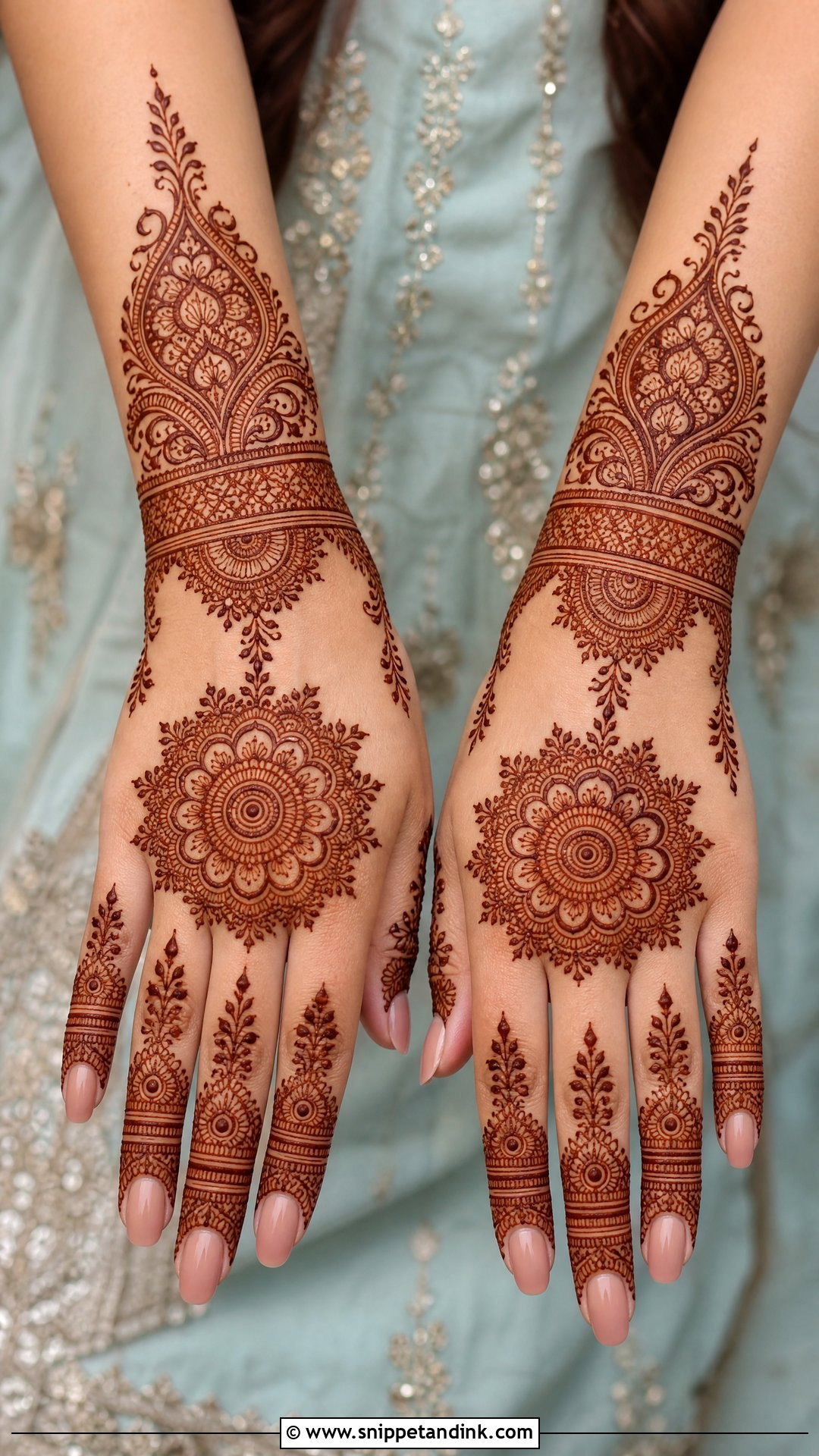
The back hand is in more photographs than the palm, so a Pakistani back hand bridal mehndi design needs to look finished from every angle. A central mandala, floral mesh, bracelet cuffs, finger bands and leafy extensions toward the wrist are the usual pieces. If you’ll wear statement rings or a haath phool, tell your artist, so she can leave gaps that frame the jewelry instead of drawing under it. The fingers and wrist should flow into each other; separate pieces placed side by side look patched together. Soft jaali, paisleys or floral borders carry it up the forearm.
16. Pakistani Front Hand Bridal Mehndi Design
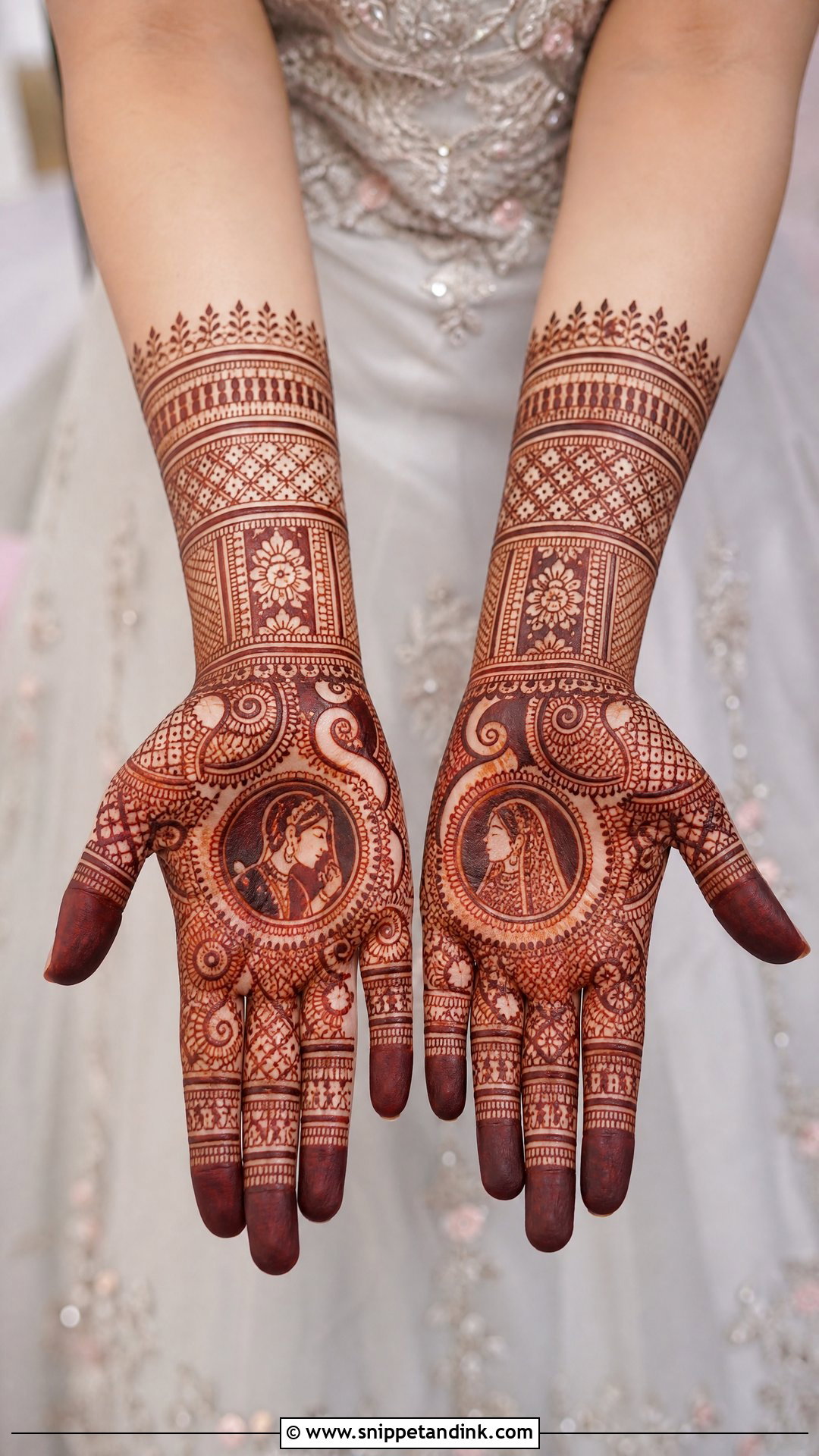
Palms stain darkest of all, which makes the front of the hand the place for the strongest symbolism: tikki circles, portraits, paisleys, peacocks and floral panels. Fingers carry filled tips, bands, small leaves and geometric fillers, and the wrist and forearm close it with bangle borders or stacked sections. A strong center matters for palm photos during the ceremony. On small hands, ask for medium-sized motifs rather than tiny crowded detail, which turns muddy as the color deepens.
17. Pakistani Half Hand Bridal Mehndi Design
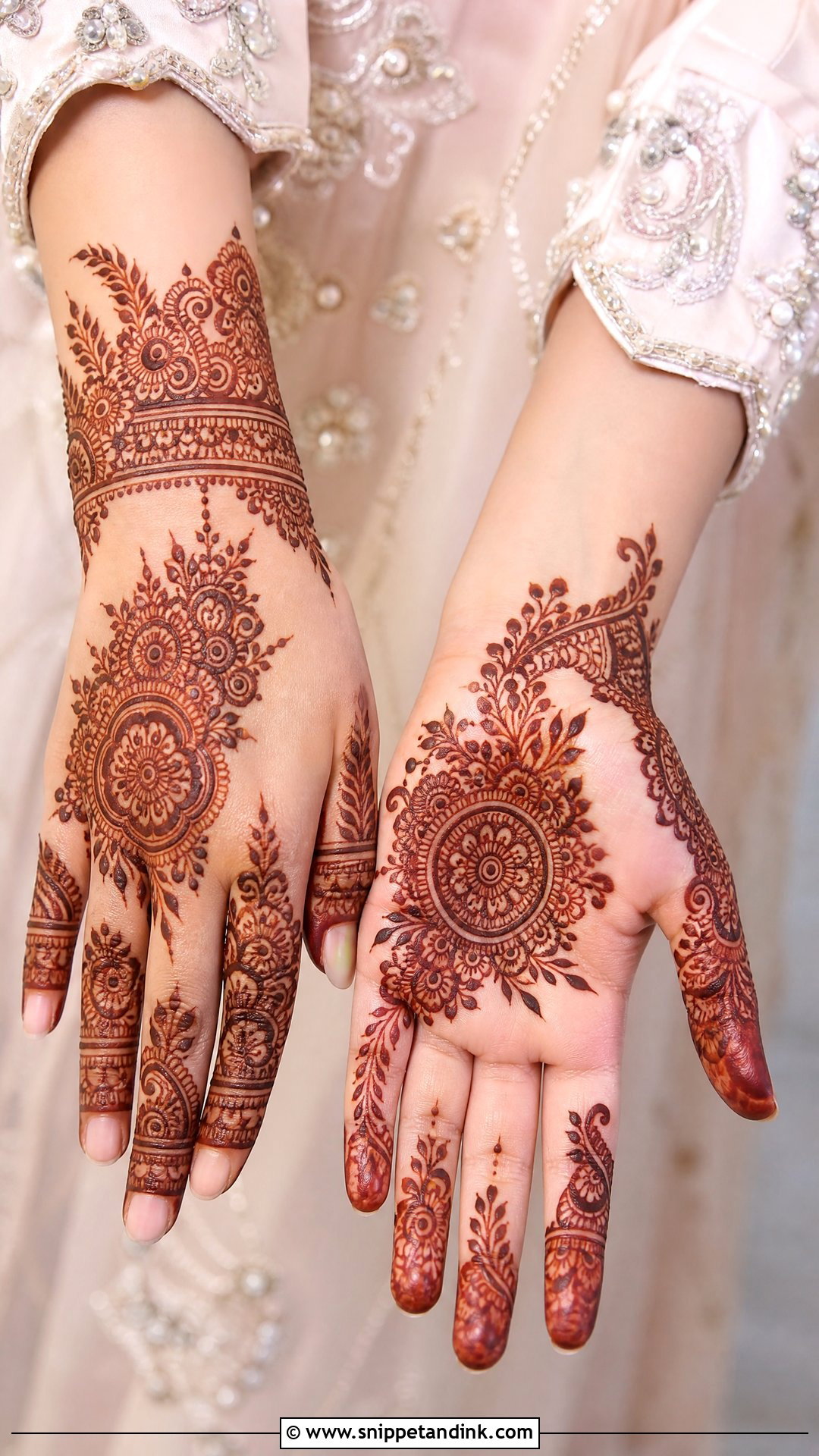
Stopping before the mid-forearm is a sensible middle ground. A Pakistani half hand bridal design covers the fingers, palms or back hands and the wrists, and it still reads as bridal with detailed florals, paisleys, mandalas and cuffs. Intimate weddings, nikkah ceremonies, engagements and brides who value comfort all suit it, and it’s far easier to live with through several days of functions. Connected sections matter more than quantity. A bold palm centerpiece with a detailed wrist border makes a half hand feel complete.
18. Pakistani Minimal Bridal Mehndi Design
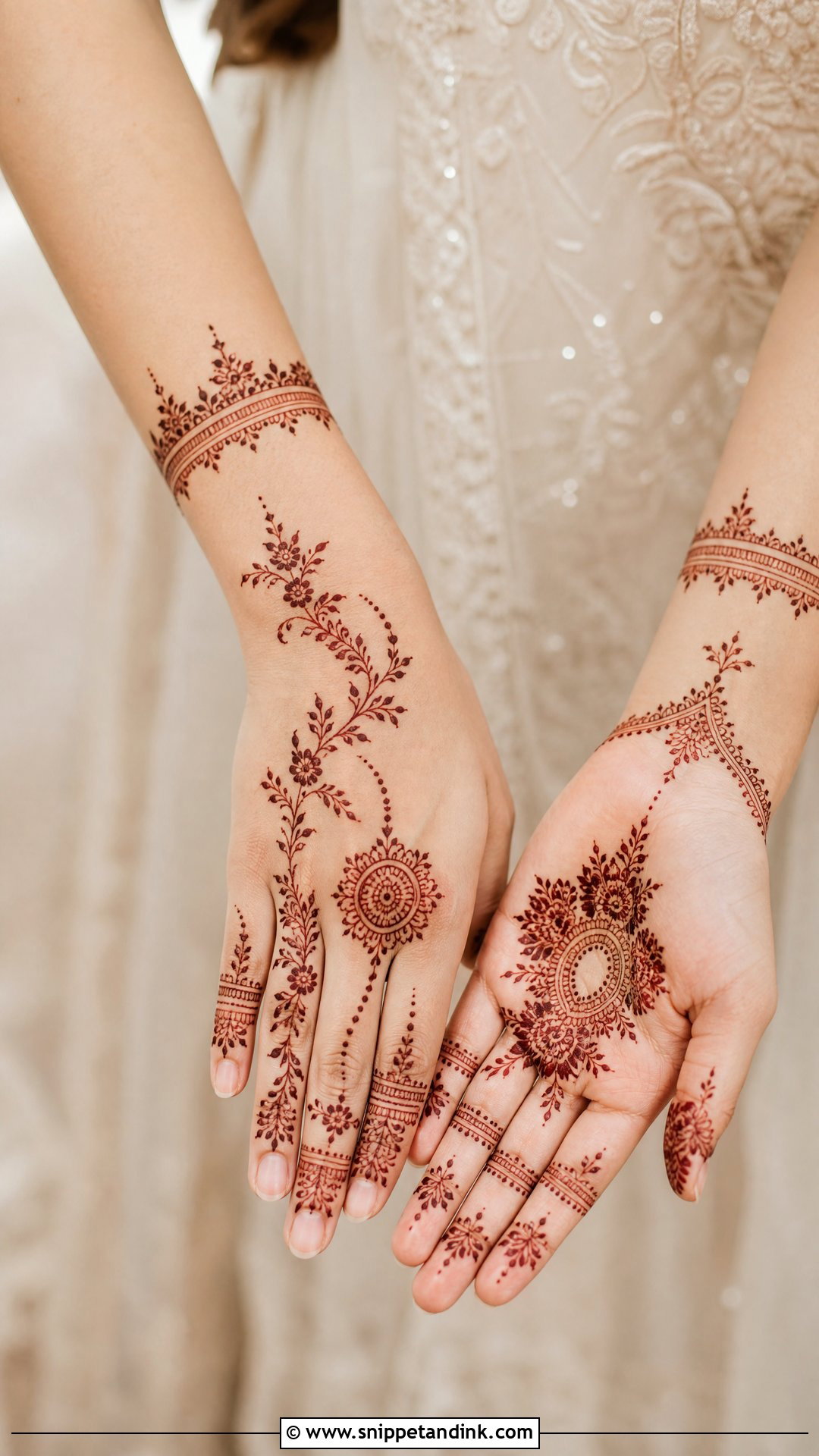
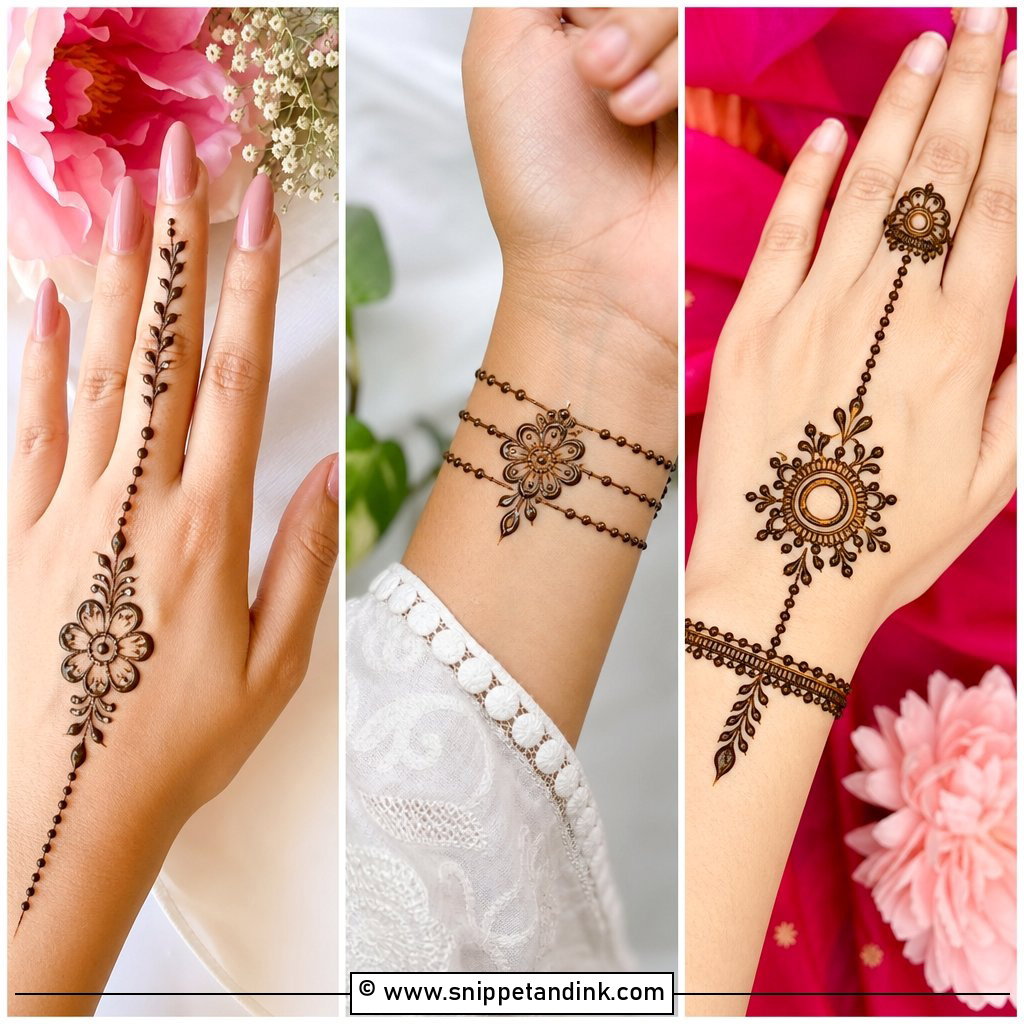
Minimal bridal henna has to be precise, because open space hides nothing. Slim vines, small flowers, fine finger detail and light wrist patterns are enough when the layout is deliberate: perhaps a small palm mandala, a floral trail on the back hand and fine cuffs. It suits daytime nikkahs, registry-style ceremonies and brides in simpler outfits, and leaves room for jewelry and nail color. I’d only steer a bride away if her family expects traditional coverage, and that’s a talk to have before the appointment.
19. Pakistani Heavy Bridal Mehndi Design
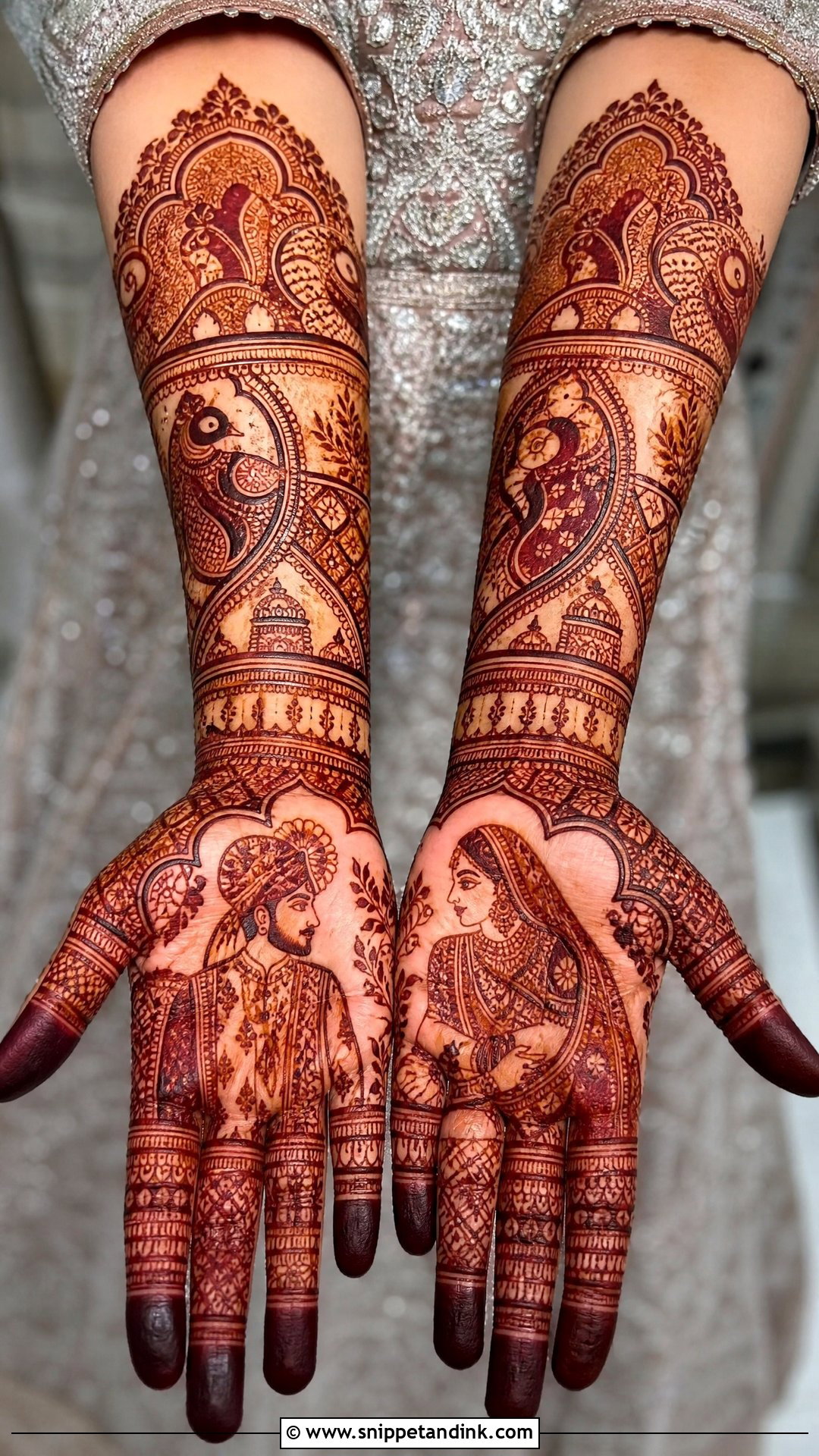
Fingertips to elbows, every section layered: this is the full heavy design, with large paisleys, figures, peacocks, jaali panels, florals, domes and dense filler. It takes many hours, so book an experienced artist who has done heavy bridal work before, plan to sit comfortably with breaks, and eat first. Even heavy work needs breathing room. A few clean gaps around the major motifs keep the artwork readable and stop the finished stain from looking muddy.

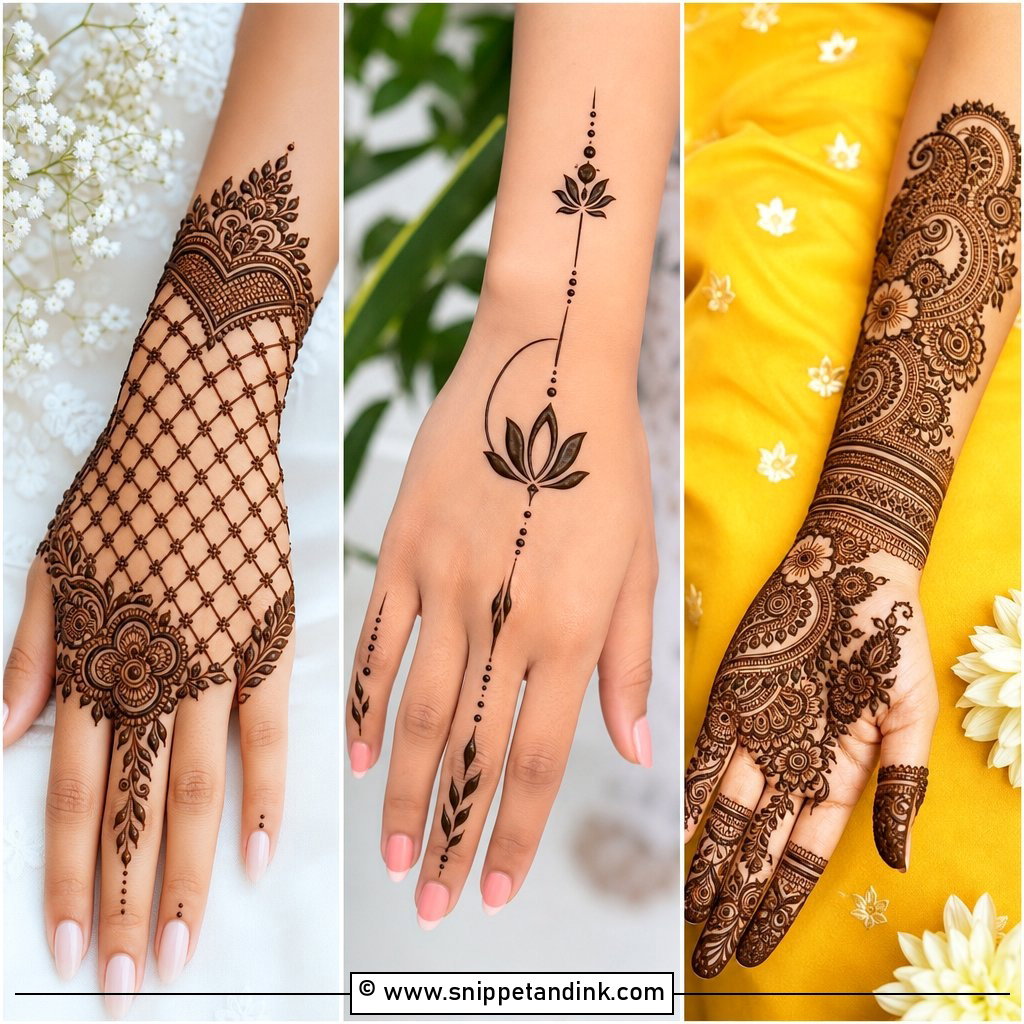



20. Pakistani Rose Bridal Mehndi Design
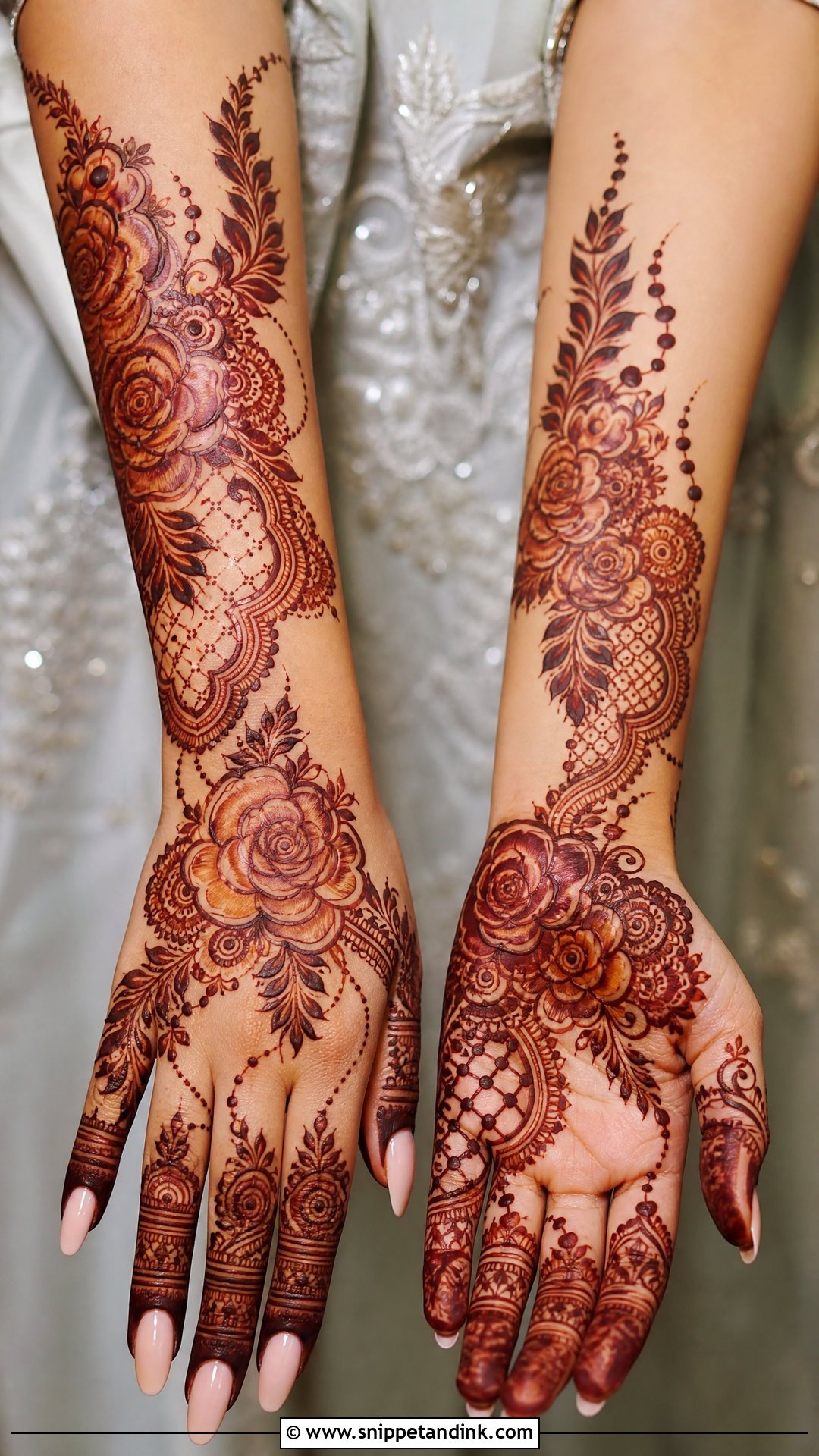
Roses can be drawn as large shaded blooms, small clusters or trails across the hands and forearms, and on the back hand a rose bouquet frames the fingers and wrist nicely. For bridal fullness I pair them with leafy vines, lace-like jaali, dotted trails and paisley borders. Shading inside the petals gives depth, while outlines alone look cleaner and more modern. Blush, peach, ivory and rose-gold outfits suit it, and it’s light enough for a walima or nikkah.
21. Pakistani Jewelry Bridal Mehndi Design
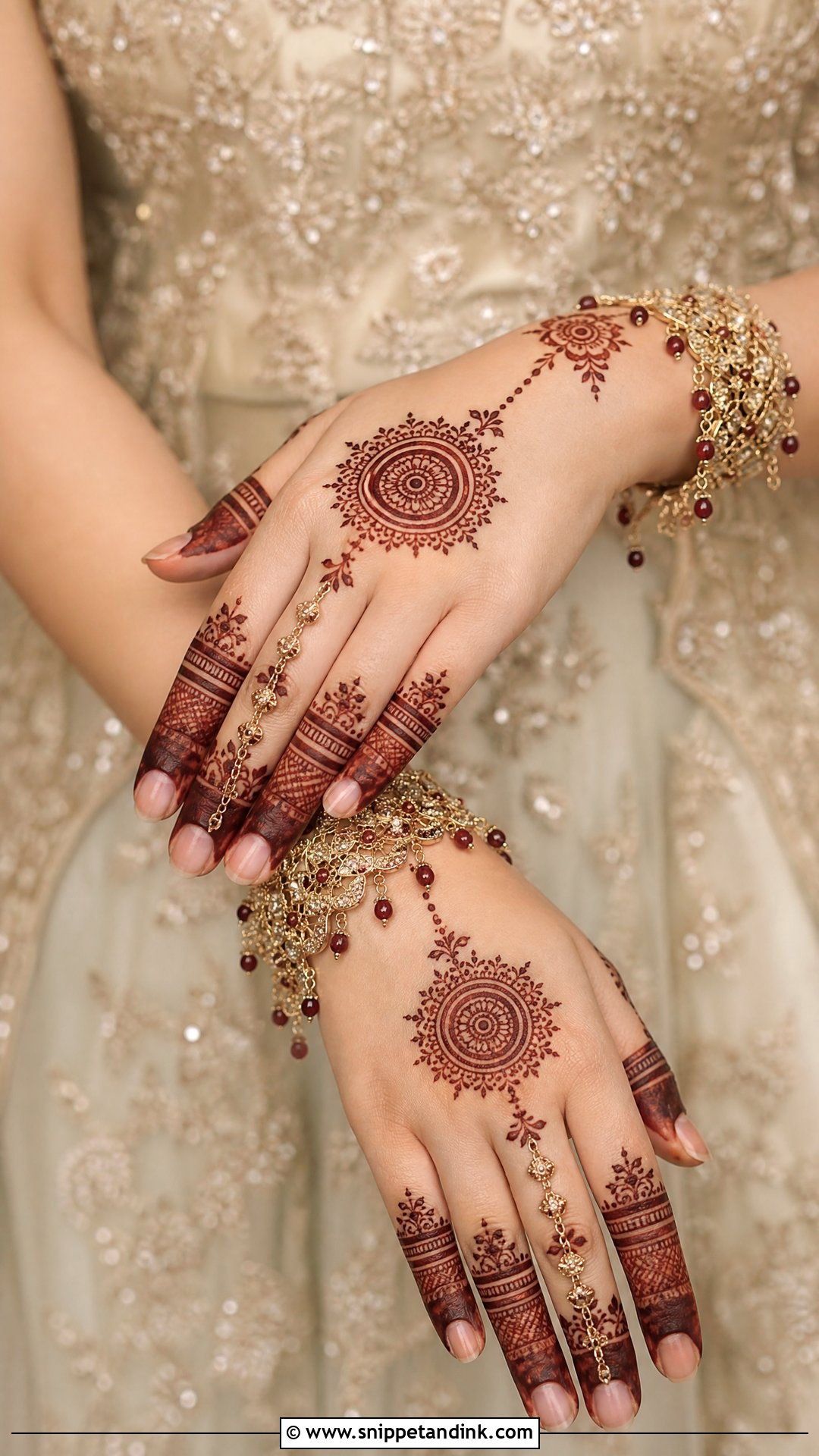
Henna jewelry draws ring chains, bracelet cuffs, finger bands, wrist bangles and dangling bead details onto the back of the hand, or pairs them with palm motifs for fuller coverage. Symmetry is what sells it; a chain that sits lower on one finger looks like a mistake. I keep chains fine and cuffs detailed, and add small florals or mandalas for a more bridal finish. It works alongside a real haath phool, bangles or statement rings, as long as you’ve told your artist where the real pieces will sit.
22. Pakistani Moroccan Bridal Mehndi Design
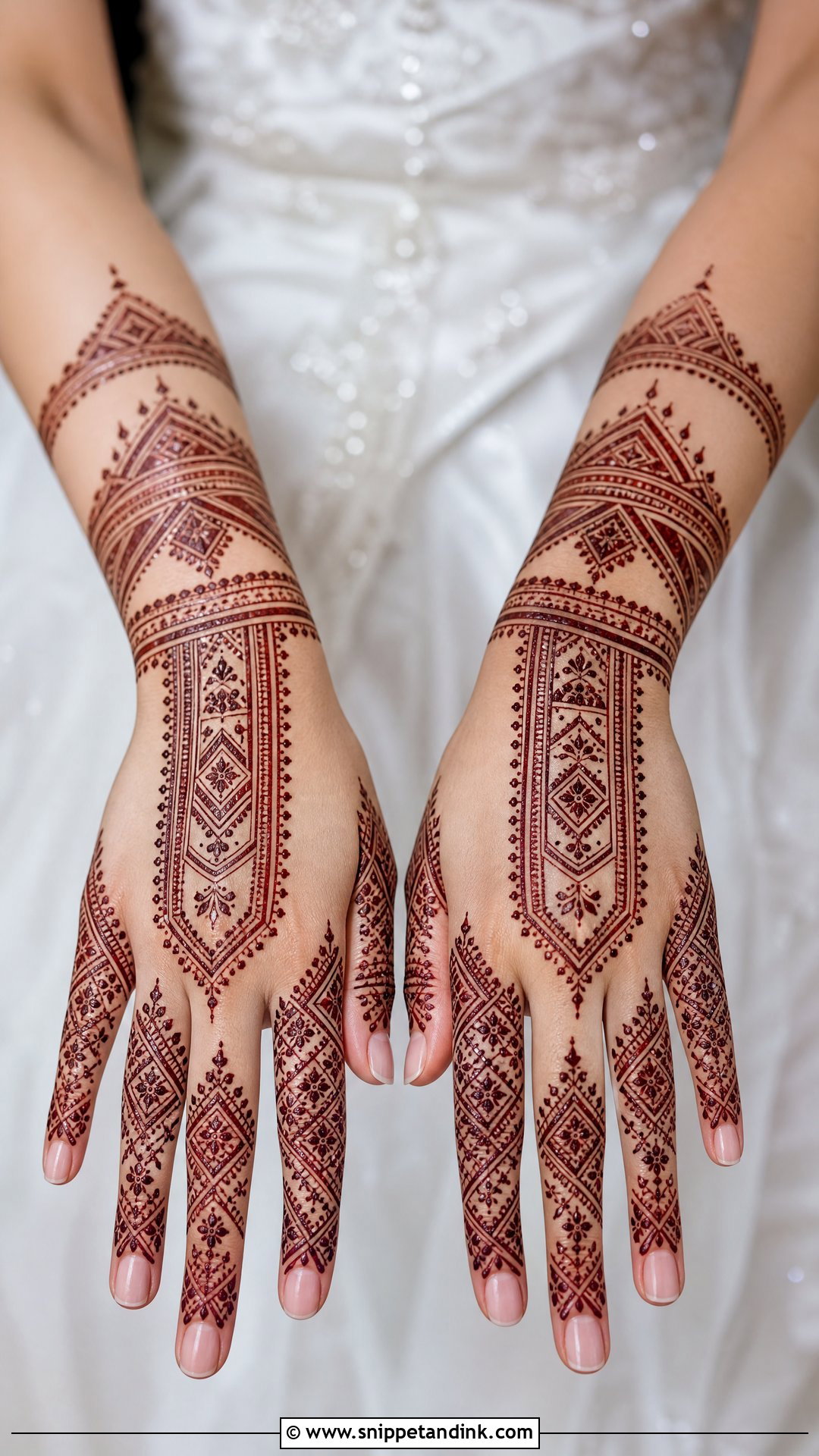
Geometry replaces heavy florals here: diamonds, triangles, lines, grids, dots and structured bands. Blended with Pakistani bridal details such as paisley corners, wrist cuffs and fine finger work, the Moroccan style softens enough for a wedding. Vertical and angled lines visually lengthen the hand, which flatters short fingers. Straight lines expose every tremor, though, so this is not the design to try with an inexperienced artist. Extend it from fingers to forearm with a few decorative borders to keep it bridal.
23. Pakistani Gulf Bridal Mehndi Design
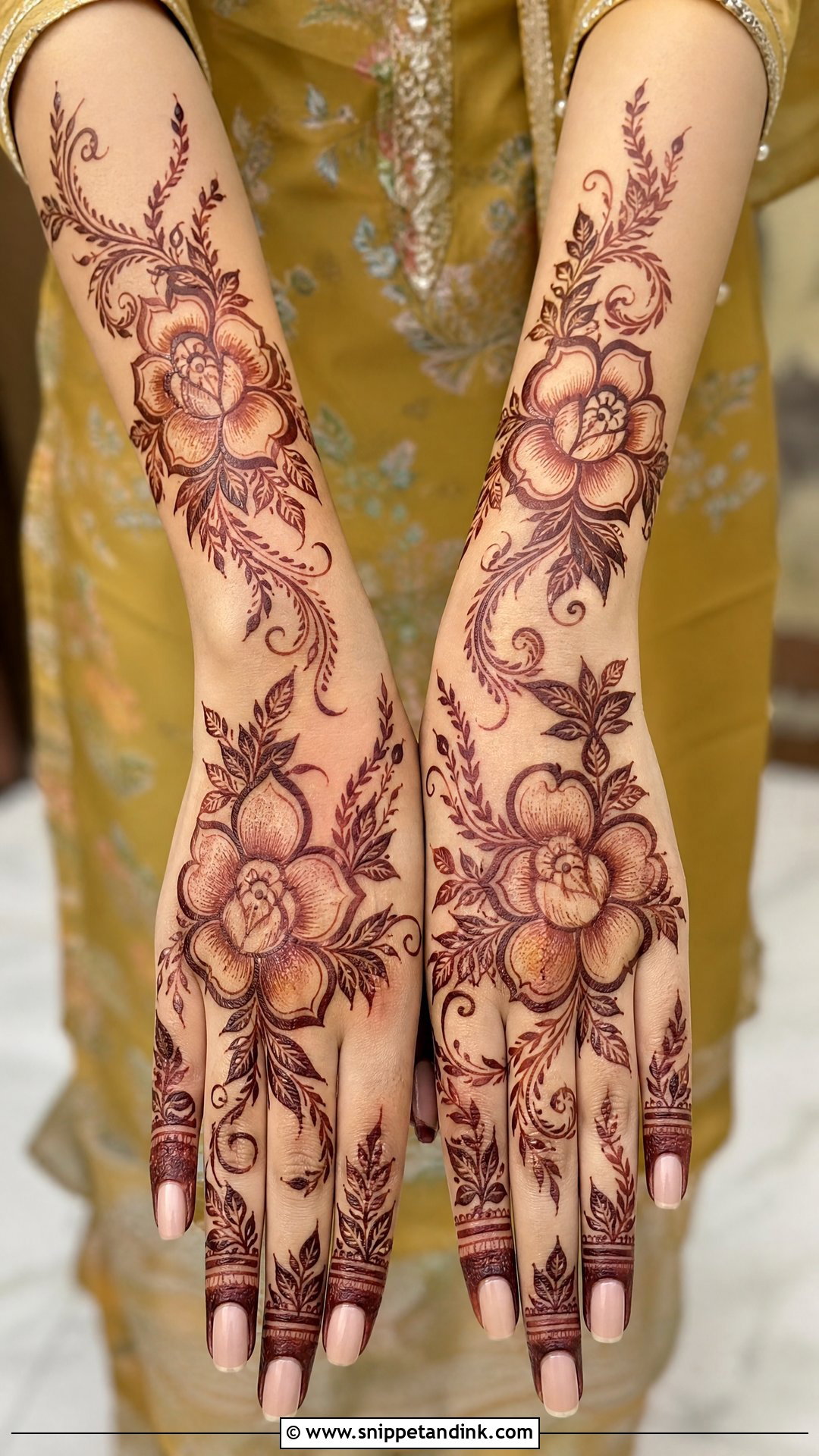
Gulf-Khaleeji henna puts large motifs and flowing layouts ahead of dense filling, with bold florals and generous open space. For a Pakistani bride, I add wrist-to-forearm coverage, fine finger detail and shaded floral clusters. The thick outlines hold plenty of paste, which helps toward a deep maroon stain. Back hand and forearm show it best, where the flowing line can stretch out. Keep the open areas clean, because they’re what make the style feel fresh.
24. Pakistani Indo Arabic Bridal Mehndi Design
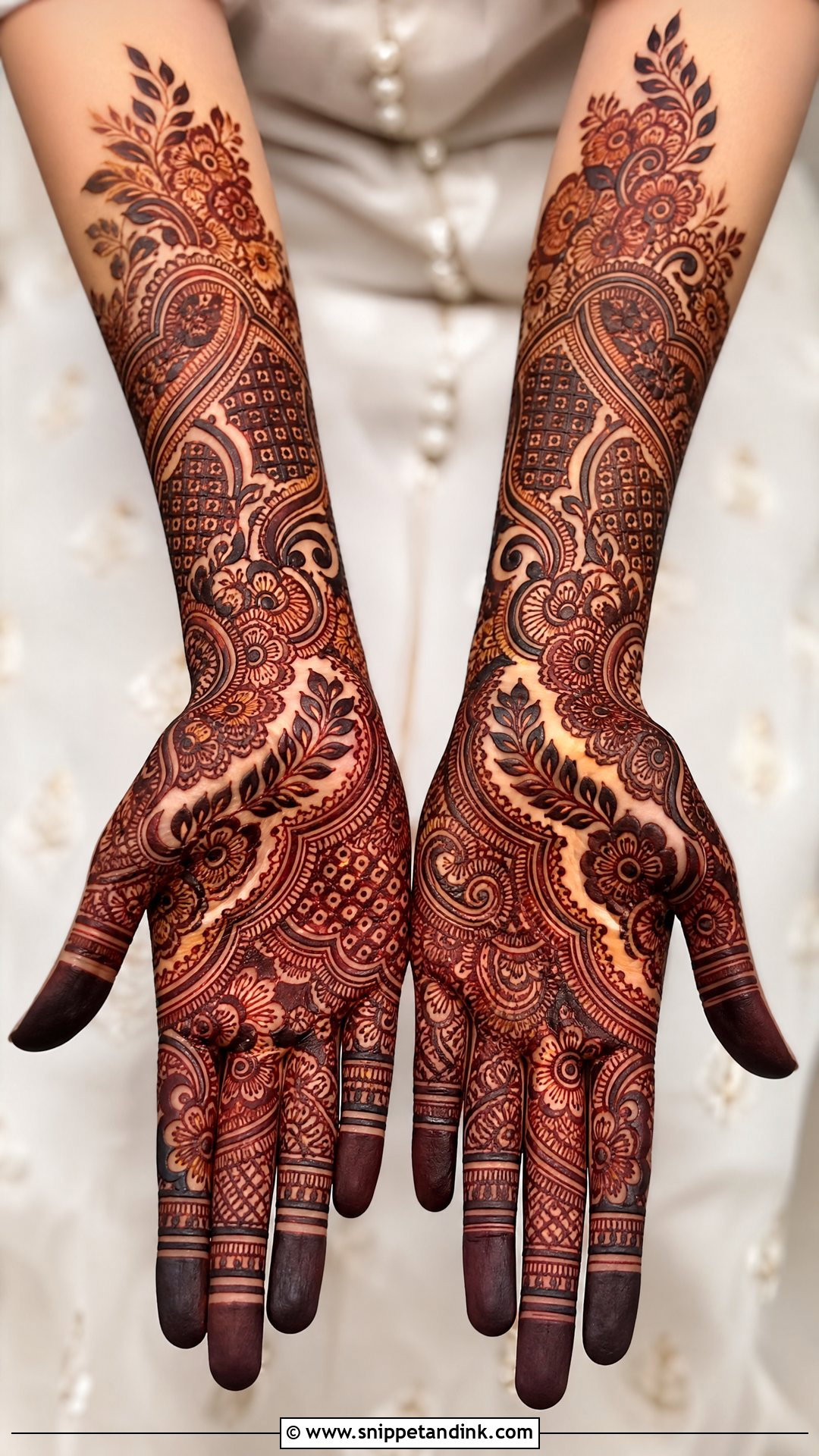
Combining Indian-style filling with Arabic curves and open space gives a balanced bridal look. The design might start with a bold palm motif, then move into diagonal vines, paisleys, jaali panels and wrist borders. It suits the nikkah, mehndi night, barat or walima, and brides who want full coverage without the weight of dense Indian work often settle here. Everything depends on the connections: palm, fingers, wrist and forearm should read as one continuous design. Bold outlines with fine inner detail give the strongest stain.
25. Pakistani Personalized Bridal Mehndi Design
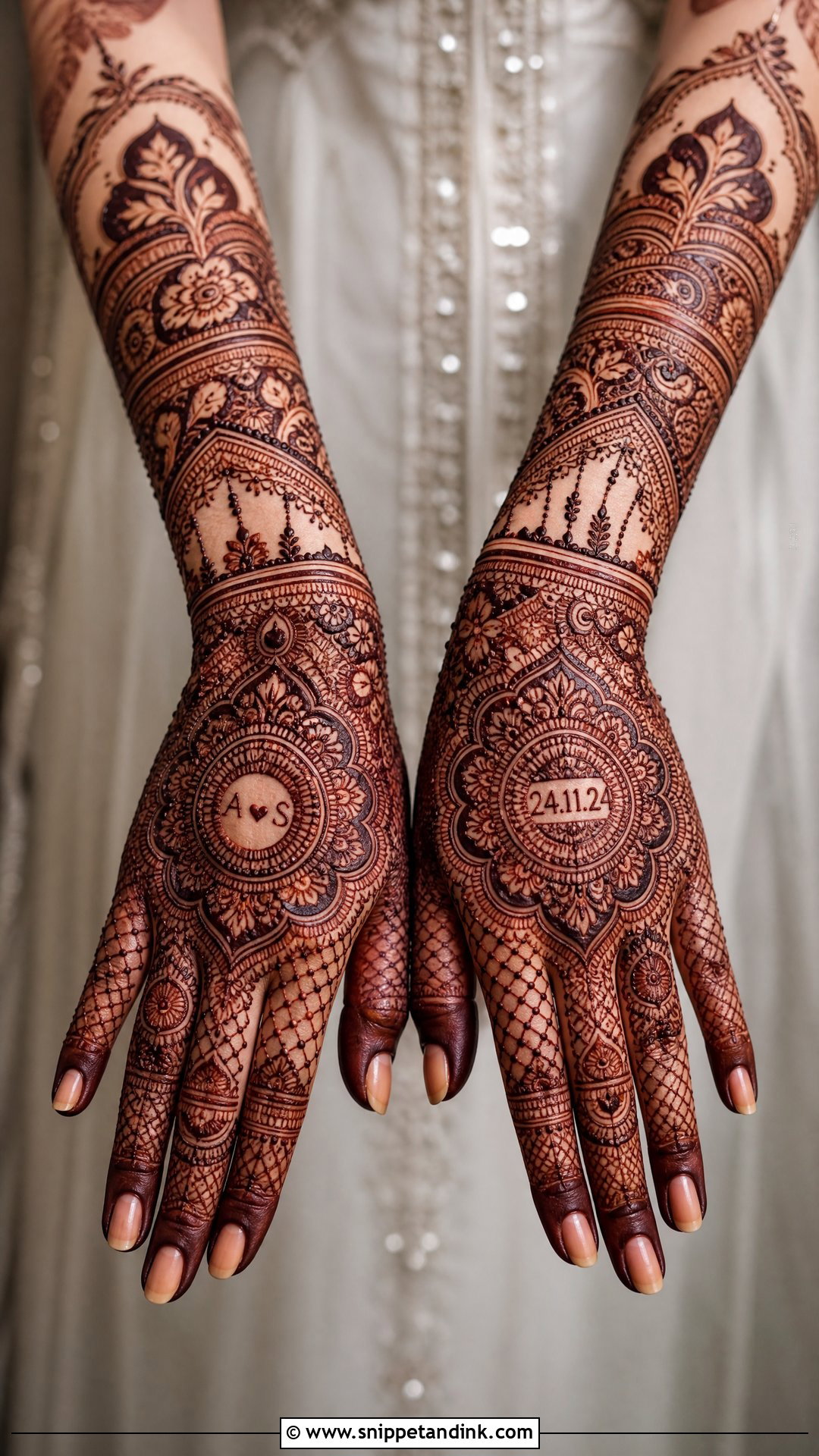
Hidden details turn wedding henna into a keepsake: initials, the date, a meaningful symbol, something from the venue, a favorite flower or a short phrase tucked into the pattern. I usually hide them inside paisleys, mandalas, wrist borders or forearm panels, while the rest stays traditional with florals, jaali, tikki circles and vines. The groom searching for his initials is a fun moment at many mehndi nights. Keep it subtle. The hands should read as bridal mehndi first, with the personal touches found on a second look.
Sleeves, Haath Phool and How Much Arm Actually Shows
Before deciding on coverage, look at your outfits. A full-sleeved jora or a heavily embroidered sleeve hides most of the forearm, so hours of detailed elbow work may never appear in a photo. A three-quarter or elbow sleeve shows the wrist and a band of forearm, which is where I’d put the richest border. Sleeveless or short sleeves at the mehndi function show everything.
- Bring a photo of each outfit, or wear the sleeve length to the appointment, so the design can end where the fabric starts.
- If you’ll wear a haath phool, show your artist the piece. She can leave a clean channel for the chain rather than drawing detail that will sit underneath it.
- Stacked churiyan cover several centimeters of wrist; a heavy cuff there will mostly be hidden, so a lighter band works better.
When the Paste Smudges or the Stain Comes Out Light
Wet paste gets knocked. If a smudge happens, don’t wipe it, which spreads it. Let your artist scrape the stray paste away gently; a faint mark may still show, and she can often build a leaf or dot over it so it becomes part of the design.
A light stain on the first evening is usually just early. Keep your hands warm, keep water off them and wait until morning before judging. If it’s still pale on the second day, scrubbing won’t help and neither will a quick chemical darkener, which can irritate skin right before the wedding. Some honest causes are thin lines, paste removed too early or simply skin that stains lighter, and on the back of the hand and arms a softer brown is normal.
Which Event Should Your Hands Be Ready For?
Your ceremony, outfit, hand shape and taste all shape the right design. Some brides feel most themselves in heavy patterns with portraits and paisleys; others prefer khafif florals, Arabic flow or a minimal nikkah layout. Pakistani henna lets you mix tradition and modern detail in one design, so there’s room to compromise. Before your appointment, gather clear references, decide how far up the arm you want to go, and talk to your artist about the stain you’re hoping for and when it needs to peak. A design that’s comfortable to sit for and meaningful to you will look right in every photo.
You'll Like These Ideas:






Leave a Reply