
Bridal mehndi is the first thing guests see when you offer your hands for a blessing, and it sits under your jewelry in every close shot for the rest of the week. When I sketch a bride’s design, I’m working with paisleys, peacocks, lotus, mandalas, jaali and the small personal symbols she wants hidden in it, and the range runs from dense full-hand Indian work to airy Arabic trails, Indo-Arabic fusion, Rajasthani storytelling and modern minimal layouts. The pattern has to suit more than your taste. It has to suit your sleeve length, the size of your palm, how many hours you can sit still and which rituals put your hands on camera. Below are twenty layouts I draw regularly, from a traditional dulhan look to lighter work for a modern ceremony, with notes on where each one shines and where it struggles.
Mapping Coverage to Your Sleeves and Your Calendar
The first thing I ask at a consultation isn’t which motif you like. It’s what you’re wearing on your arms. If your blouse has elbow-length or three-quarter sleeves, I end the forearm design under the cuff so nothing looks cut off mid-pattern. Sleeveless or short-sleeved outfits need the design to finish on purpose, usually with a band or a soft trail, because the whole arm will be visible.
Then we talk about time. Henna comes off orange and keeps darkening for roughly two days, so I book most brides one to two days before the wedding. That way the deepest colour lands on the ceremony itself, not the day after.
- Bring a photo of your outfit and the jewelry you’ll wear on your hands, especially chooda or kaleere.
- Show me two or three designs you love and one you don’t. The dislike tells me as much as the likes.
- Know how long you can sit. Full bridal hands and feet can run most of a day, and you’ll need someone to feed you.
- Finish waxing, manicures and any scrubbing before the appointment, never after.
1. Full Hand Bridal Mehndi Design
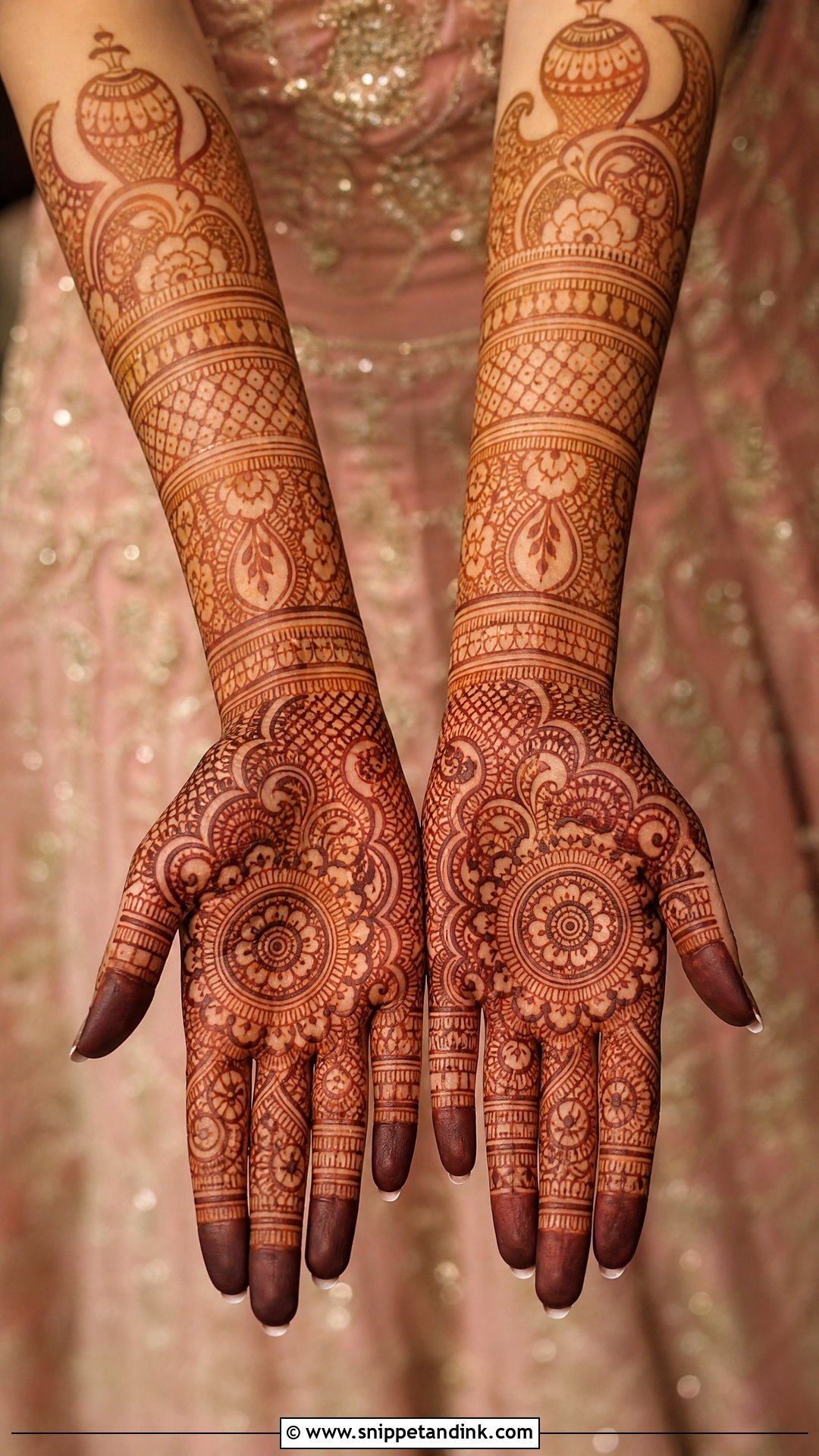
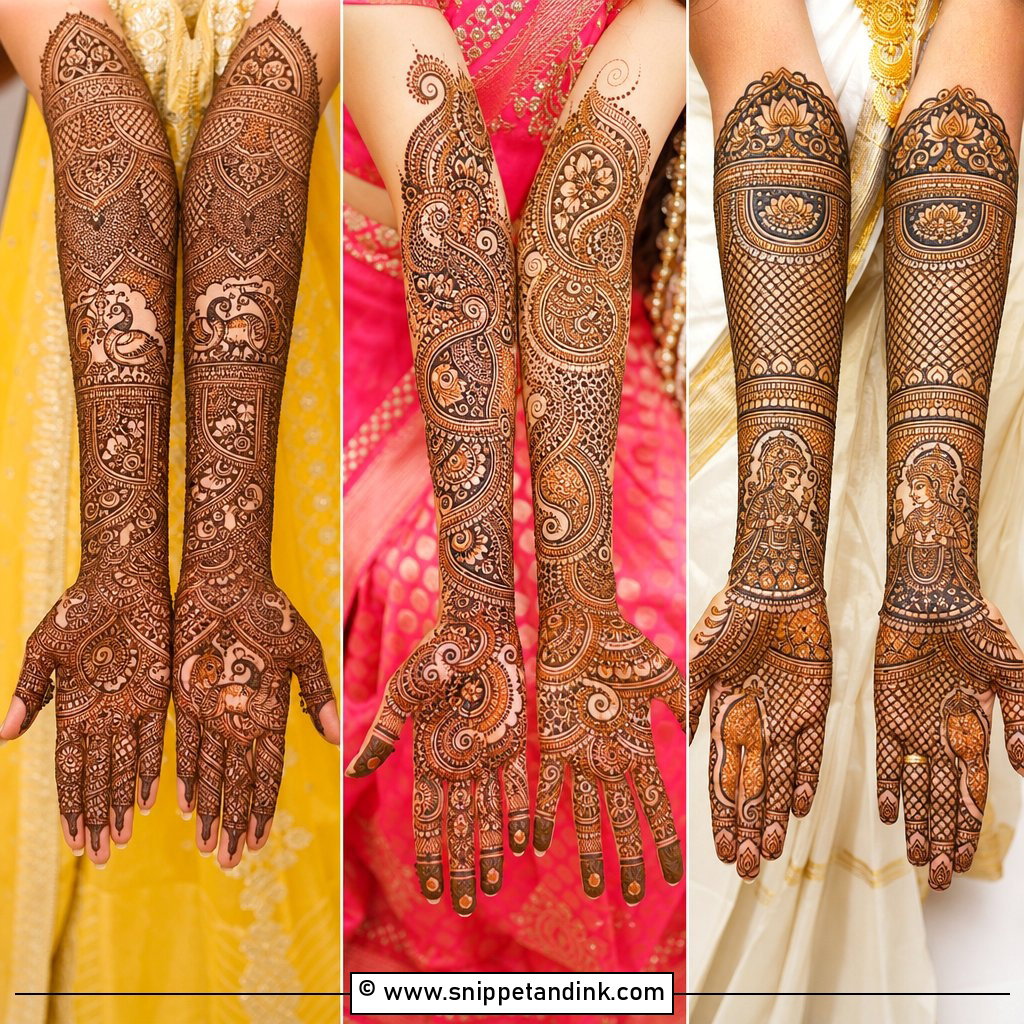
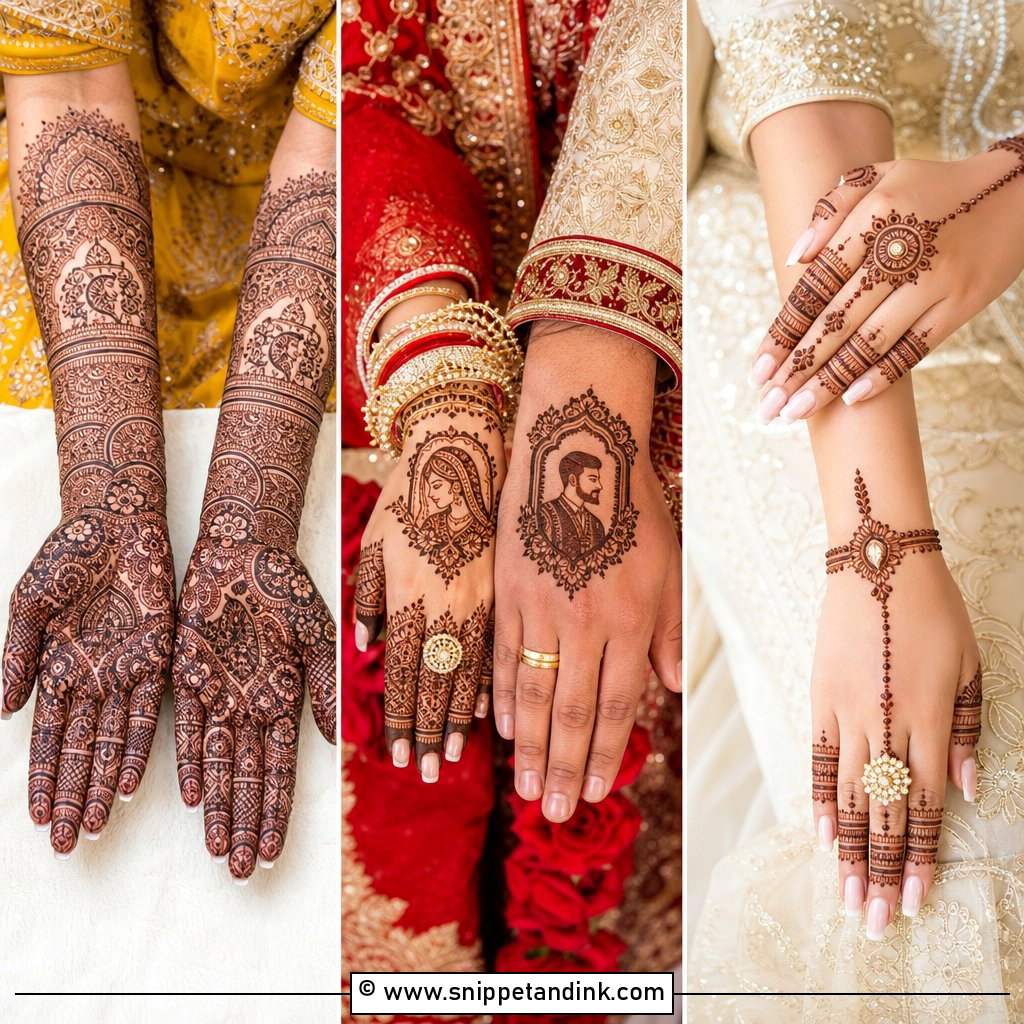
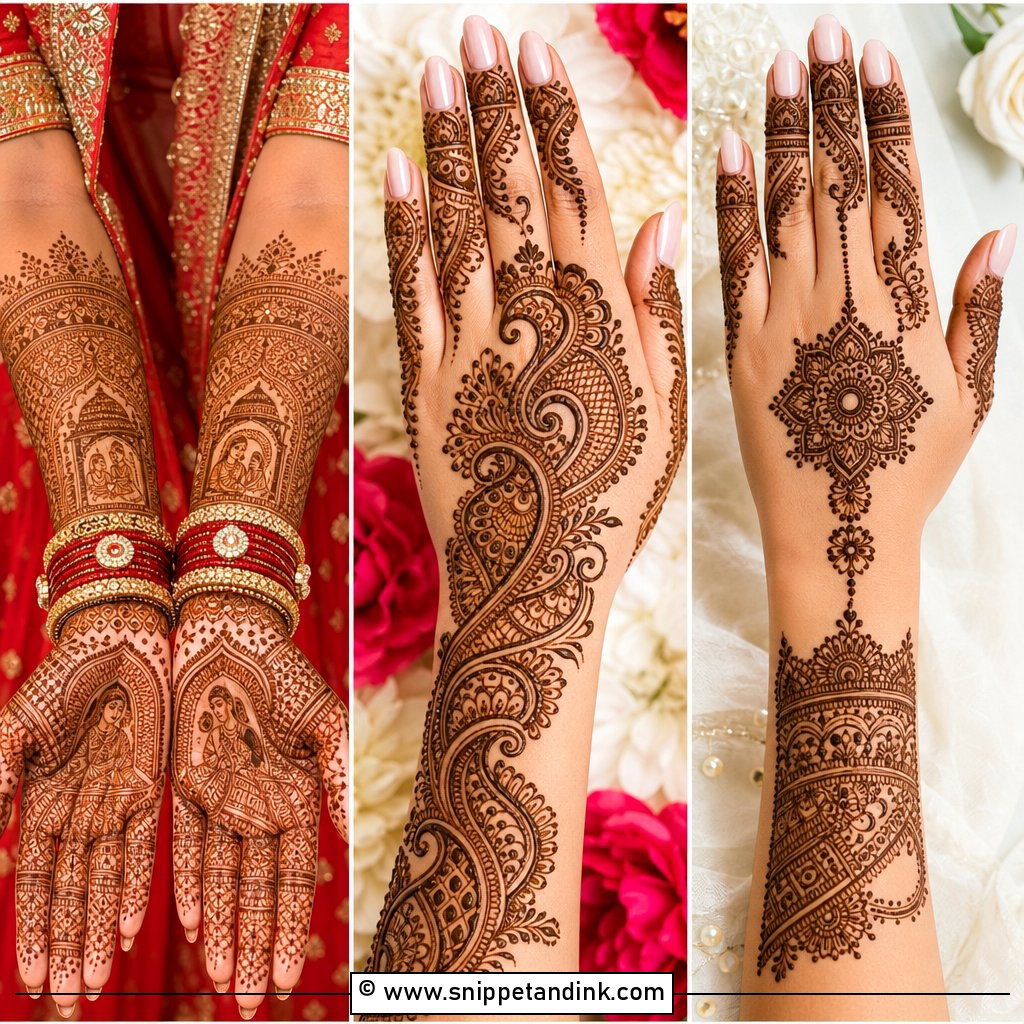
This is the layout most brides picture first: palms, fingers, wrists and forearms filled with paisleys, florals, leaves, jaali mesh and fine fillers. What keeps it from turning muddy is contrast. I give the palm one bold anchor, usually a mandala or a bridal motif, and let layered bands and vines carry the forearm. Budget for the sitting, because a dense design to the elbow on both sides can easily take five hours or more and you can’t use your hands while it dries. It belongs under heavily embroidered lehengas and sarees, where a sparse design would look lost against the fabric.
2. Rajasthani Bridal Mehndi Design
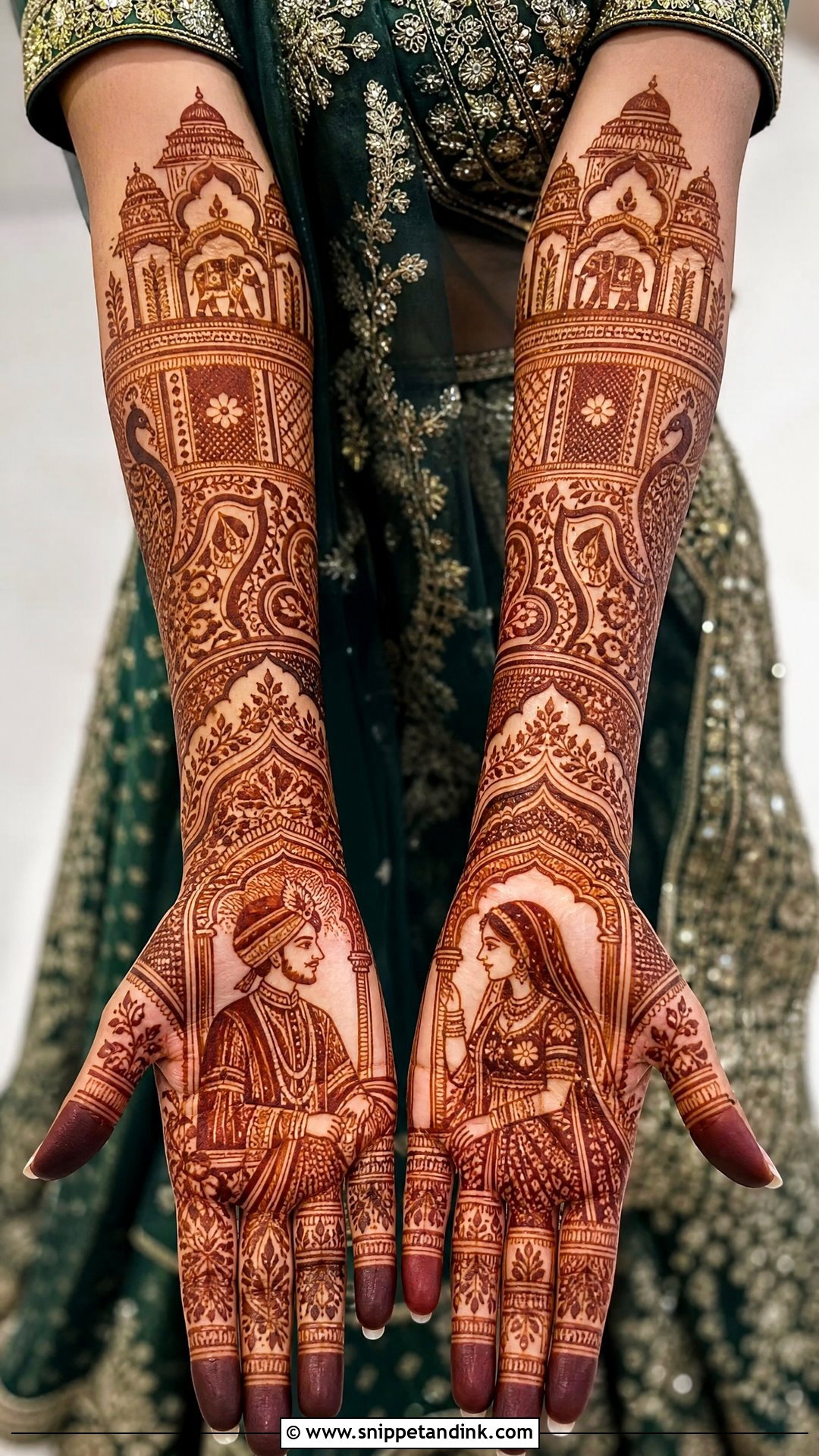
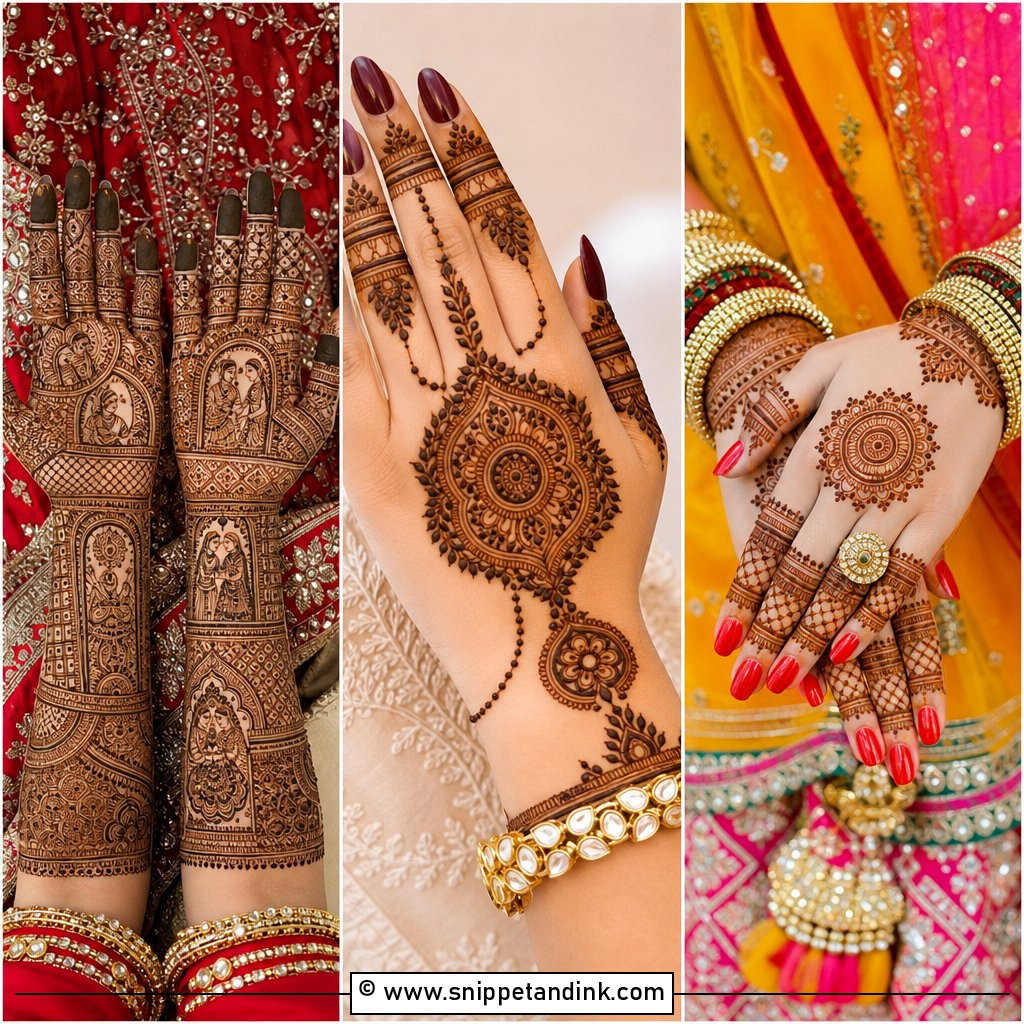
Rajasthani bridal mehndi design is narrative work: bride and groom figures, elephants, palanquins, peacocks, domes and palace borders, packed so tightly that almost no skin shows. Before I start, I divide the hand into panels so each scene gets a frame and the story reads from fingertip to elbow. The real test is the cone. Faces and tiny figures need a very fine tip and a paste that flows without blobbing, so this isn’t a style to hand to a newer artist. Expect the longest application on this list, and ask to see photos of developed stains on figures your artist has drawn, not only the wet paste.
3. Arabic Bridal Mehndi Design
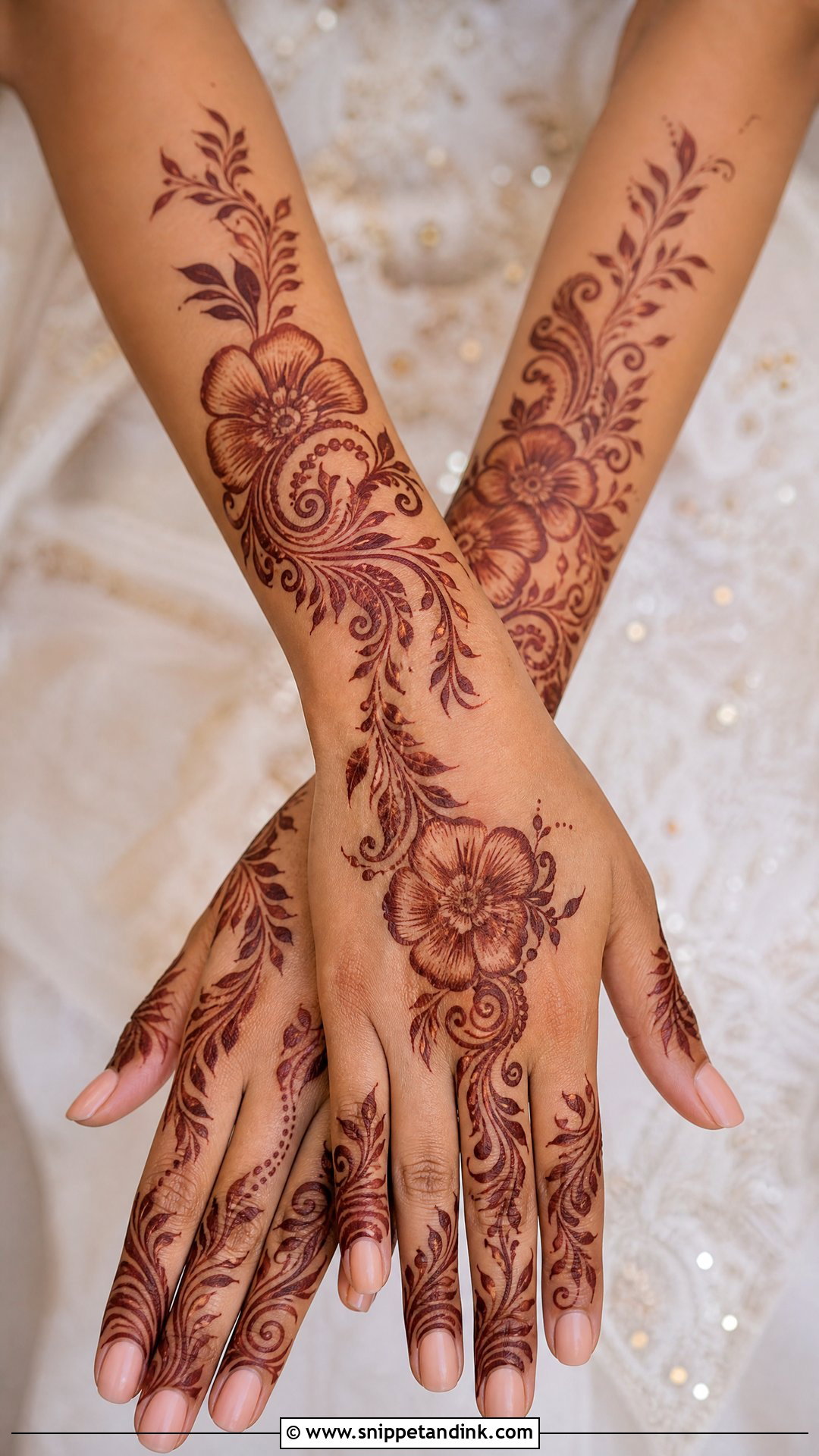
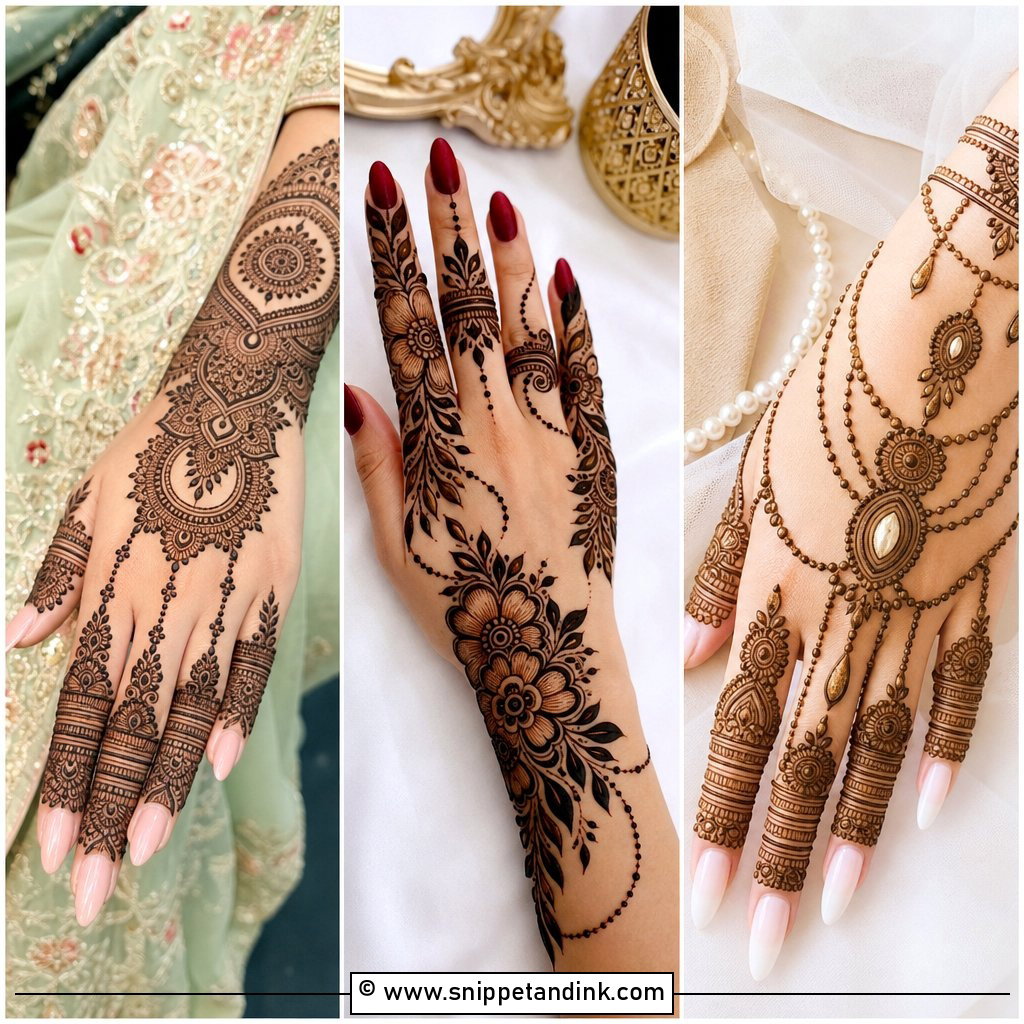
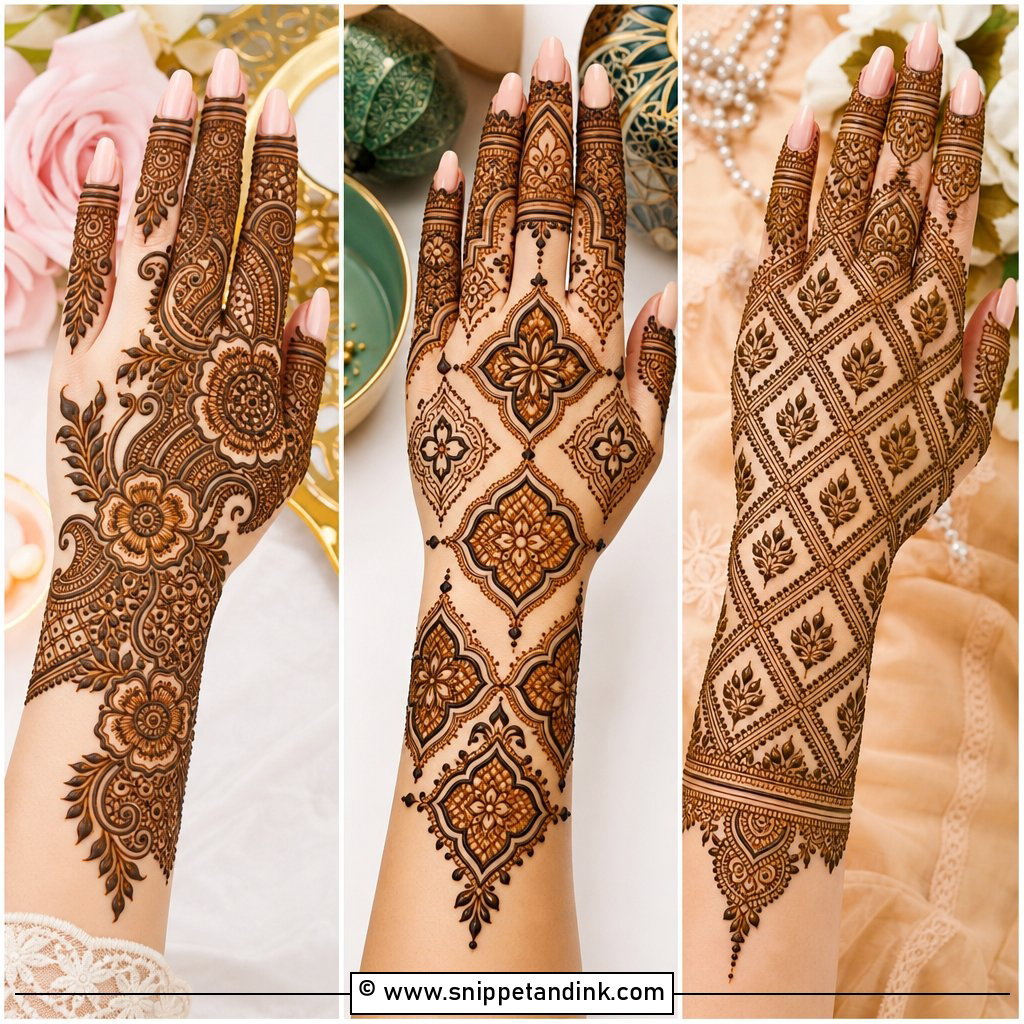
Arabic work trades density for flow. Large paisleys, trailing florals, leafy vines and curved bands leave real skin between them, and that open space is why the pattern reads clearly from across a room. I also like it for colour: thicker lines hold more paste, and they tend to develop a deeper stain than hairline fillers do. A single trail per hand suits bridesmaids. For a bride, I build a fuller version across both sides of the hand so she doesn’t look like a guest in the group photos.
4. Indo Arabic Bridal Mehndi Design
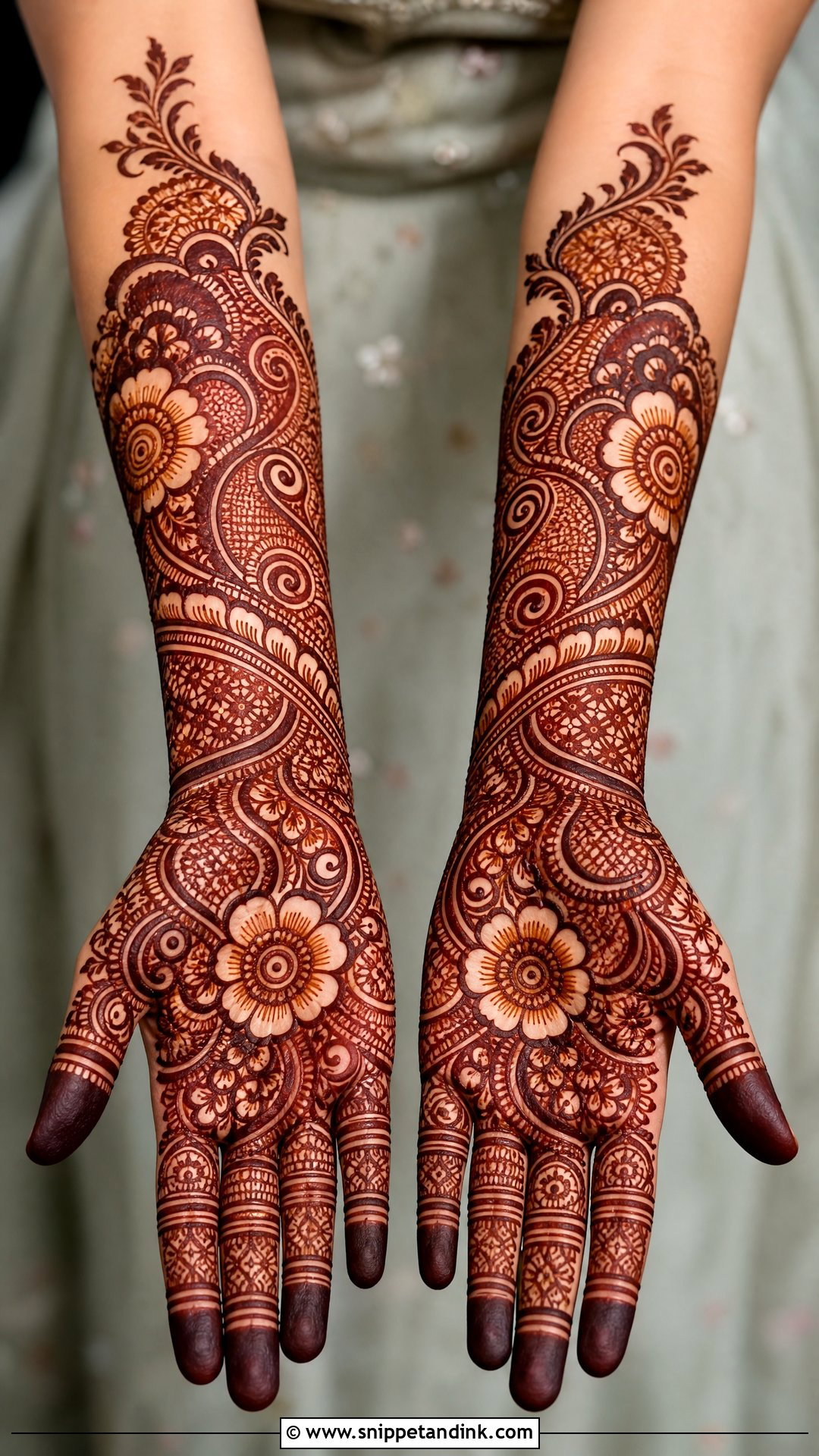
Fusion layouts borrow the spacing of Arabic mehndi and the fine work of Indian bridal art, so one hand might carry bold flowers, curved paisleys, shaded leaves, small jaali patches and delicate fingers. I usually run it on a diagonal from fingertips to forearm, which keeps it festive without the weight of full coverage. The detail I watch is shading. Shaded petals are made with thinned, feathered strokes, and on a palm that sweats they blur, so I keep most of the shading on the back of the hand. Plenty of my brides land here after going back and forth between heavy and light.
5. Peacock Bridal Mehndi Design
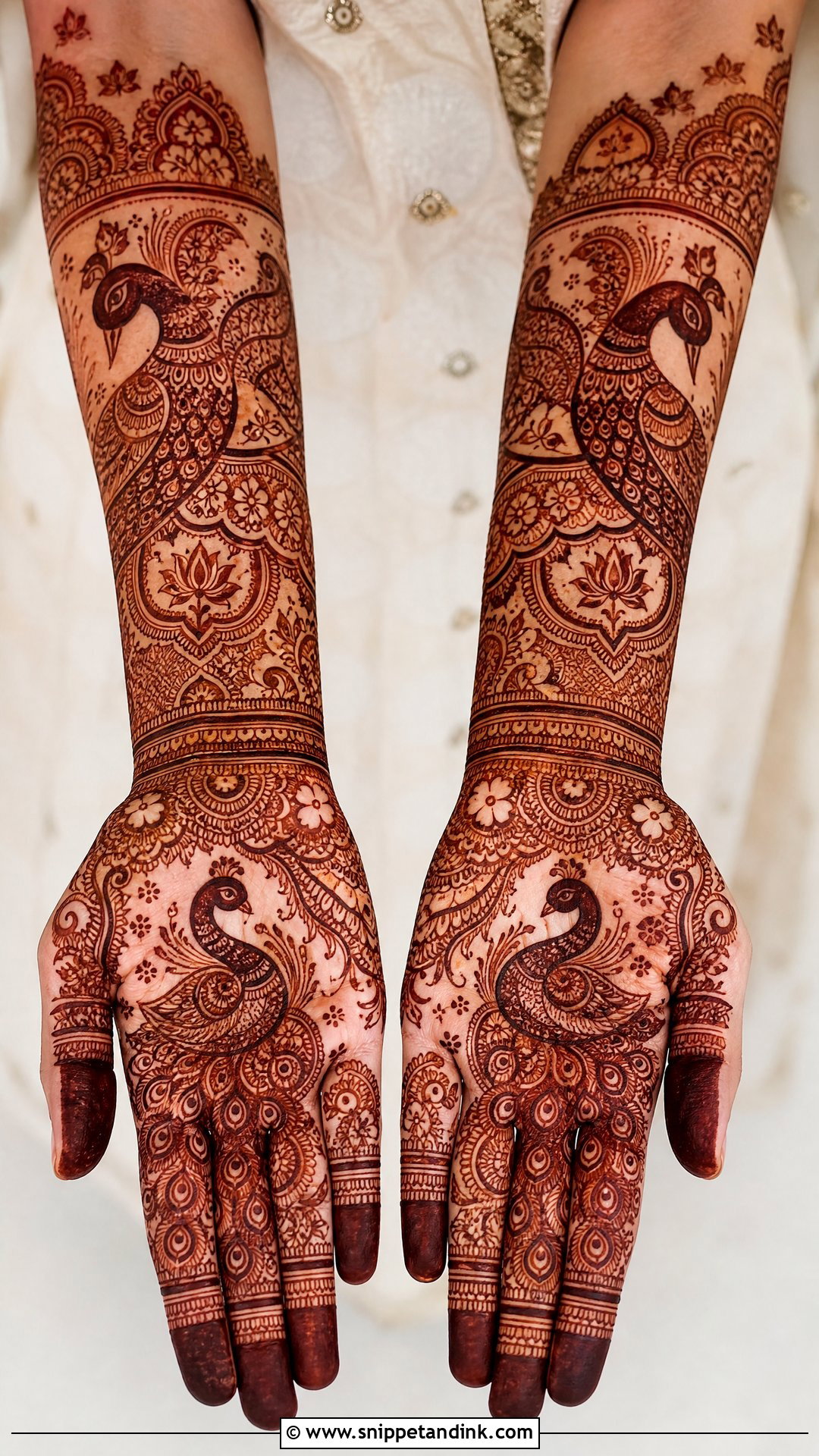
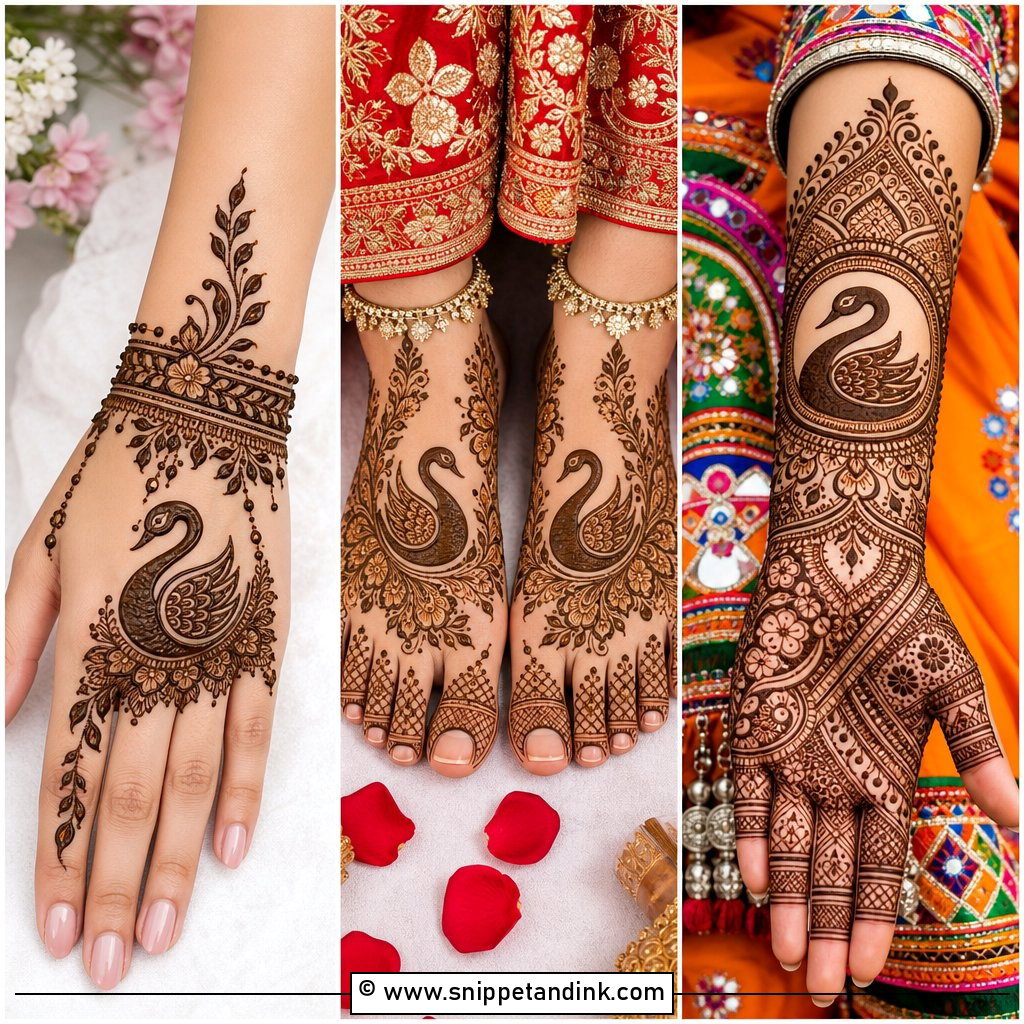
The Peacock bridal mehndi design is popular because the bird is recognisable from a distance and still gives me room for detail up close. I can centre it on the palm, stretch it along the forearm, or mirror it so two halves meet when you hold your hands together. The feathers are where the hours go: curves, dots, checks, petals and fine line work layered inside each eye, with paisleys and lotus filling the gaps around the neck and tail. One honest warning. A peacock squeezed onto a narrow palm loses its silhouette, so on petite hands I move it to the forearm.
6. Lotus Bridal Mehndi Design
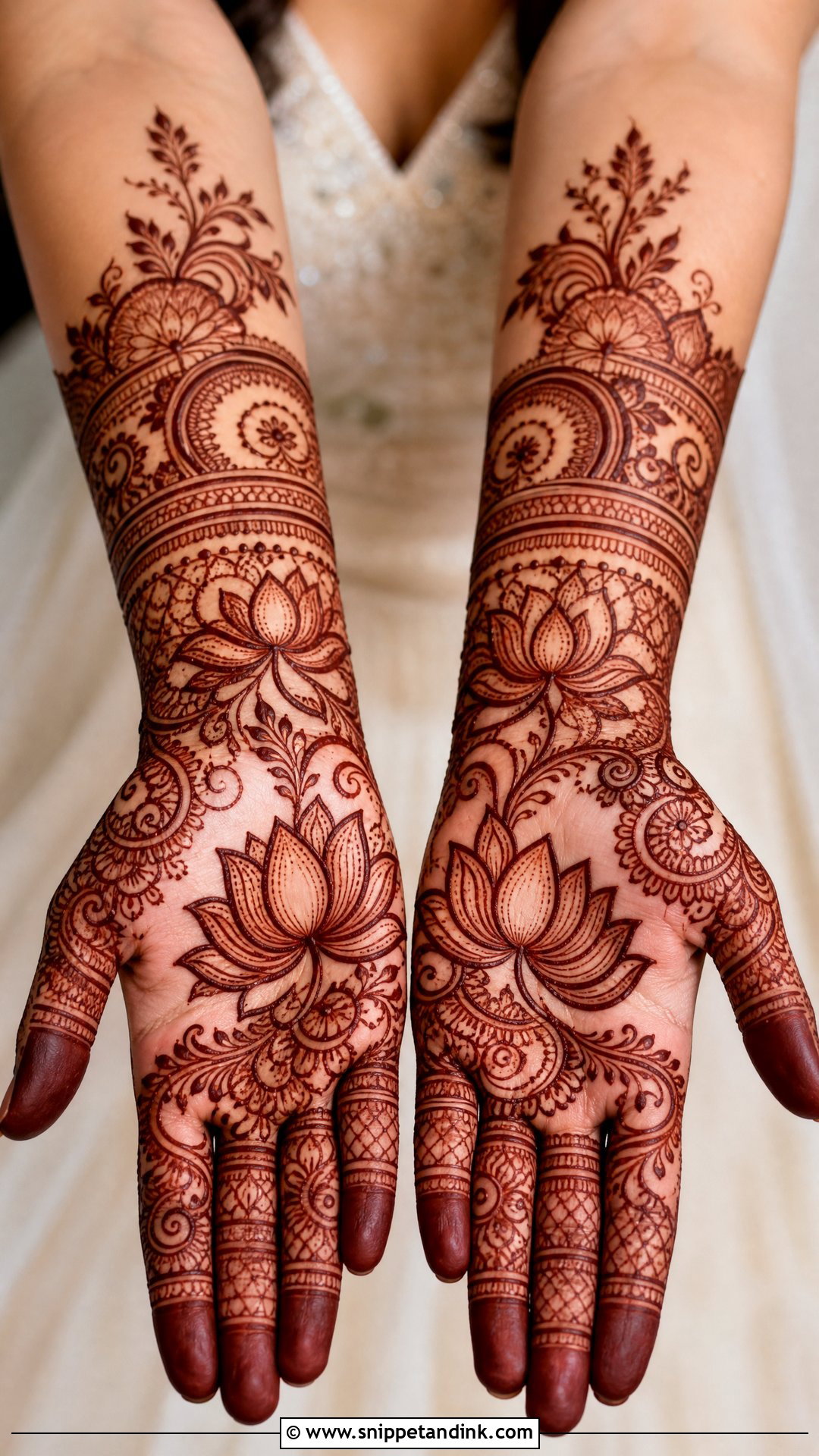
I reach for the lotus when a bride wants clean symmetry without a crowded hand. It can sit in the middle of the palm, open across the back of the hand, or repeat down the wrist and forearm like a rhythm. Because the petals start as simple outlines, I can leave them bold or pack them with fine work, which lets the same motif follow a traditional outfit or a modern one. Mandala rings, leafy vines or a light net frame it well. It’s the motif I suggest when someone tells me she’s worried about looking busy.
7. Mandala Bridal Mehndi Design
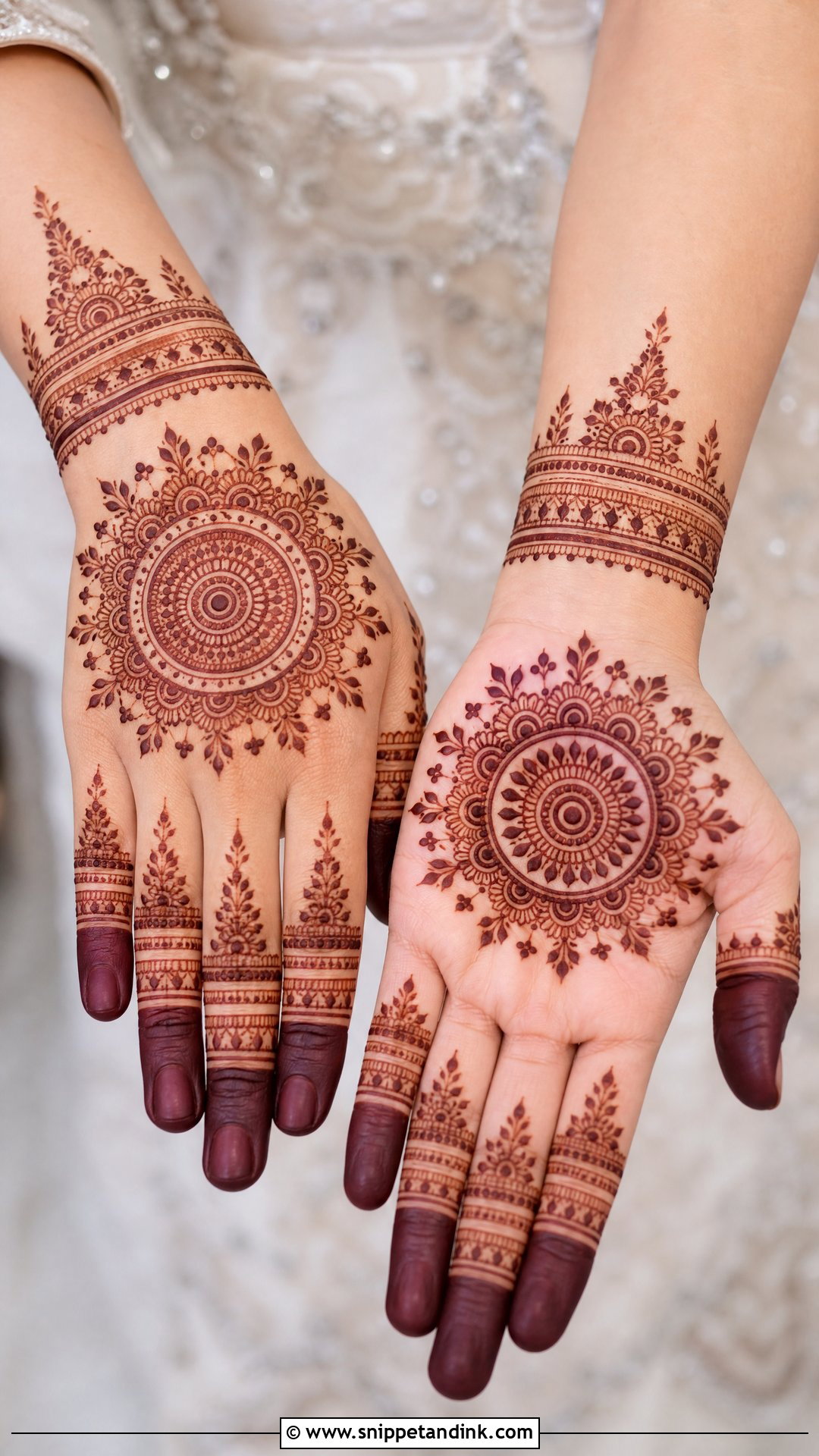
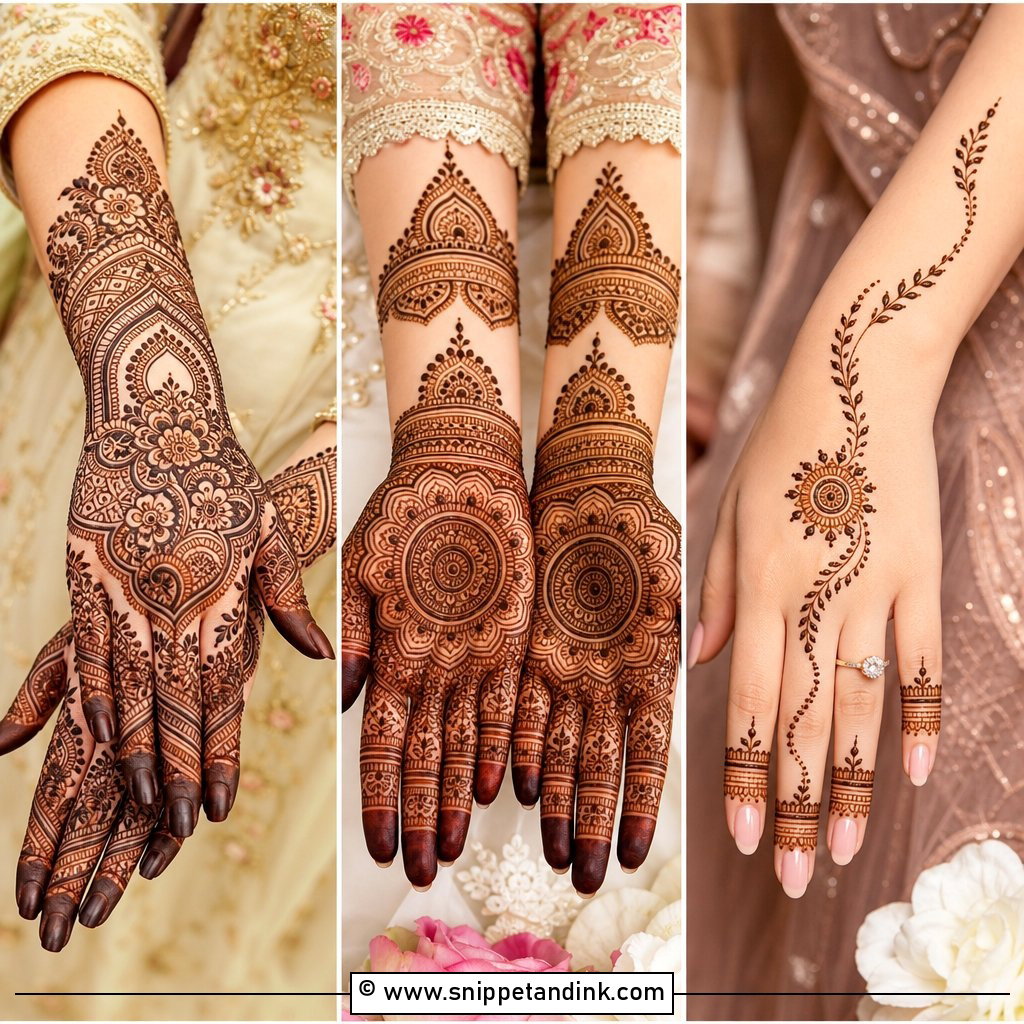
A mandala gives the eye one place to land. I place the main circle on the palm or back hand and build outward in rings of petals, dots, leaves and fine borders, then add detailed fingers, a wrist cuff and forearm work for the bridal version. Getting the centre right matters more than any filler. I ask the bride to relax her hand so I can find the natural hollow of the palm, because a circle positioned on a hand lying flat on a table ends up off-centre once the fingers curl. Done well, it reads cleanly in photos and suits almost any hand shape.
8. Portrait Bridal Mehndi Design
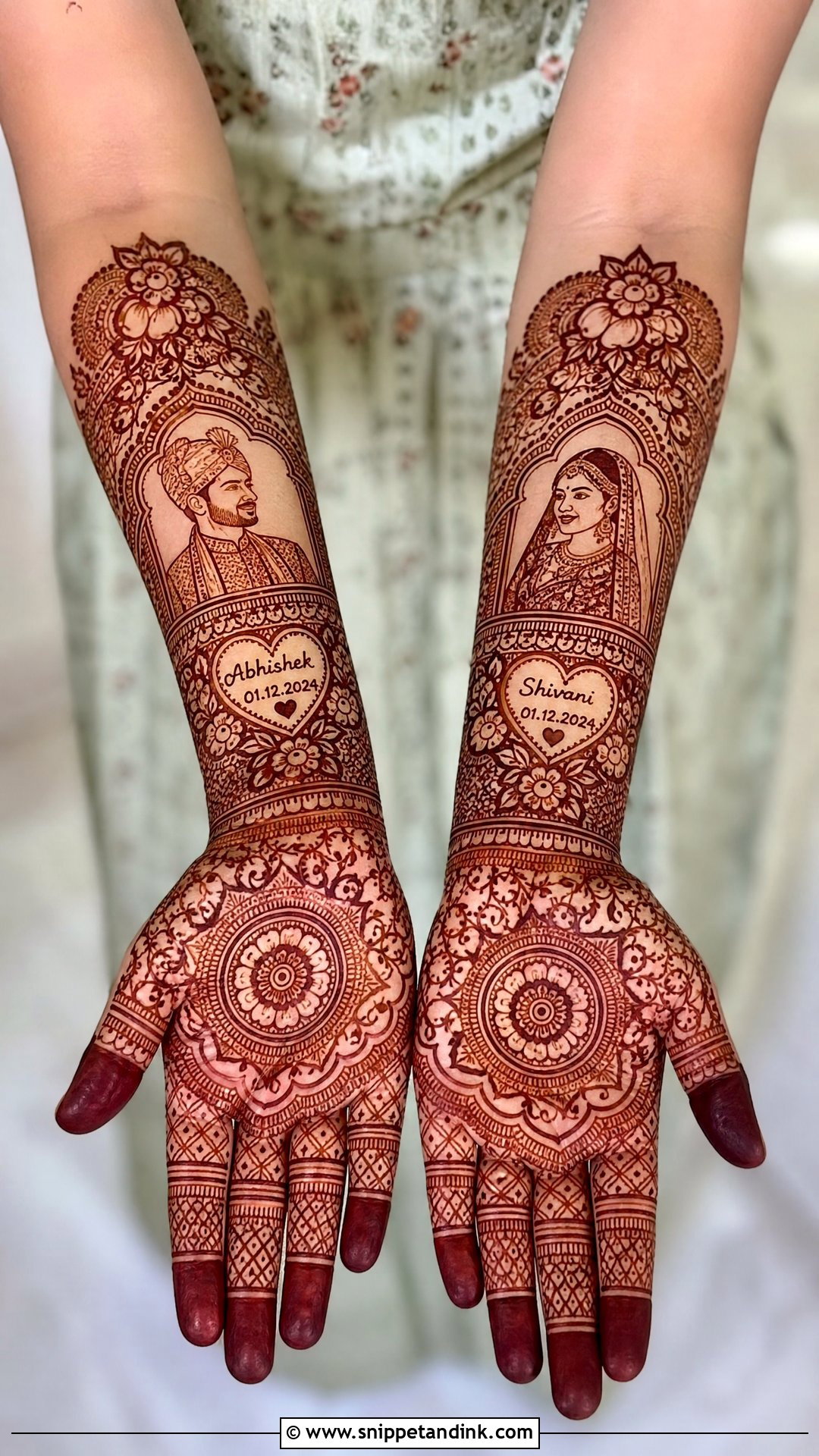
Portrait work lets a bride carry her own story: a bride and groom pair, a ritual, the proposal, a pet, initials or a date. Faces need room, so I put them on the palms or forearms and frame them with florals, paisleys, mandalas and borders. This is where an artist’s skill shows most, and where it fails most visibly. Henna can’t do soft shading the way ink can, so features are built from line weight alone. Book early, send clear reference photos weeks ahead, and expect your artist to simplify the faces so they stay readable once the stain develops.
9. Back Hand Bridal Mehndi Design
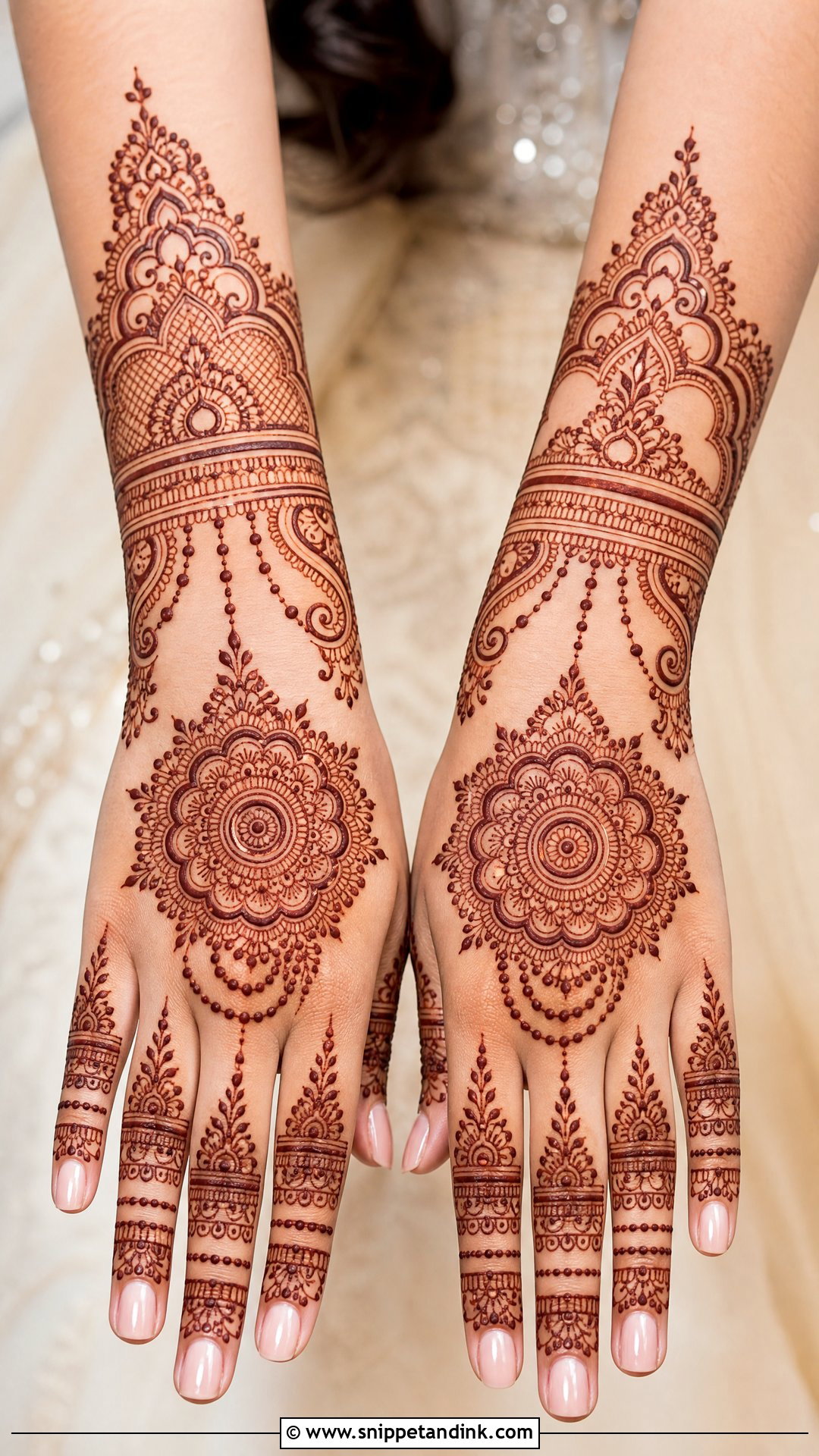
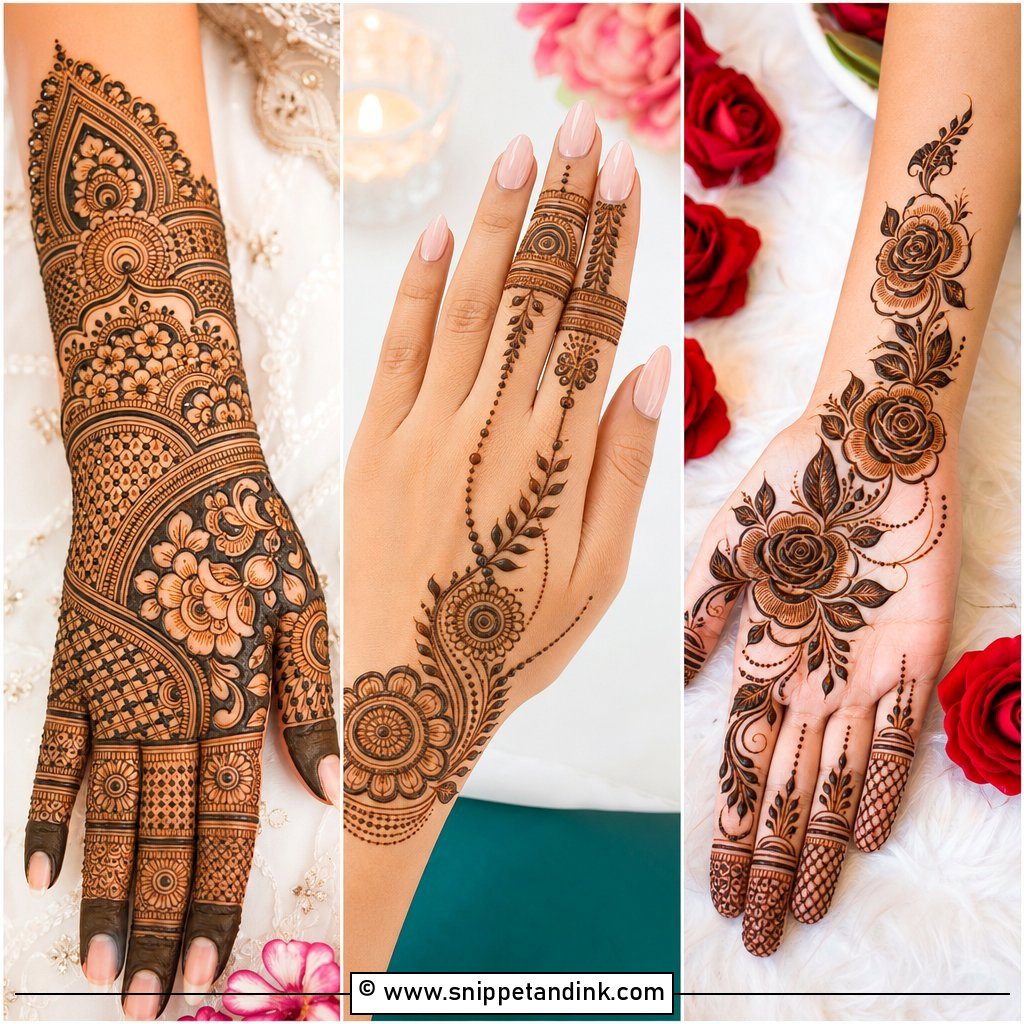
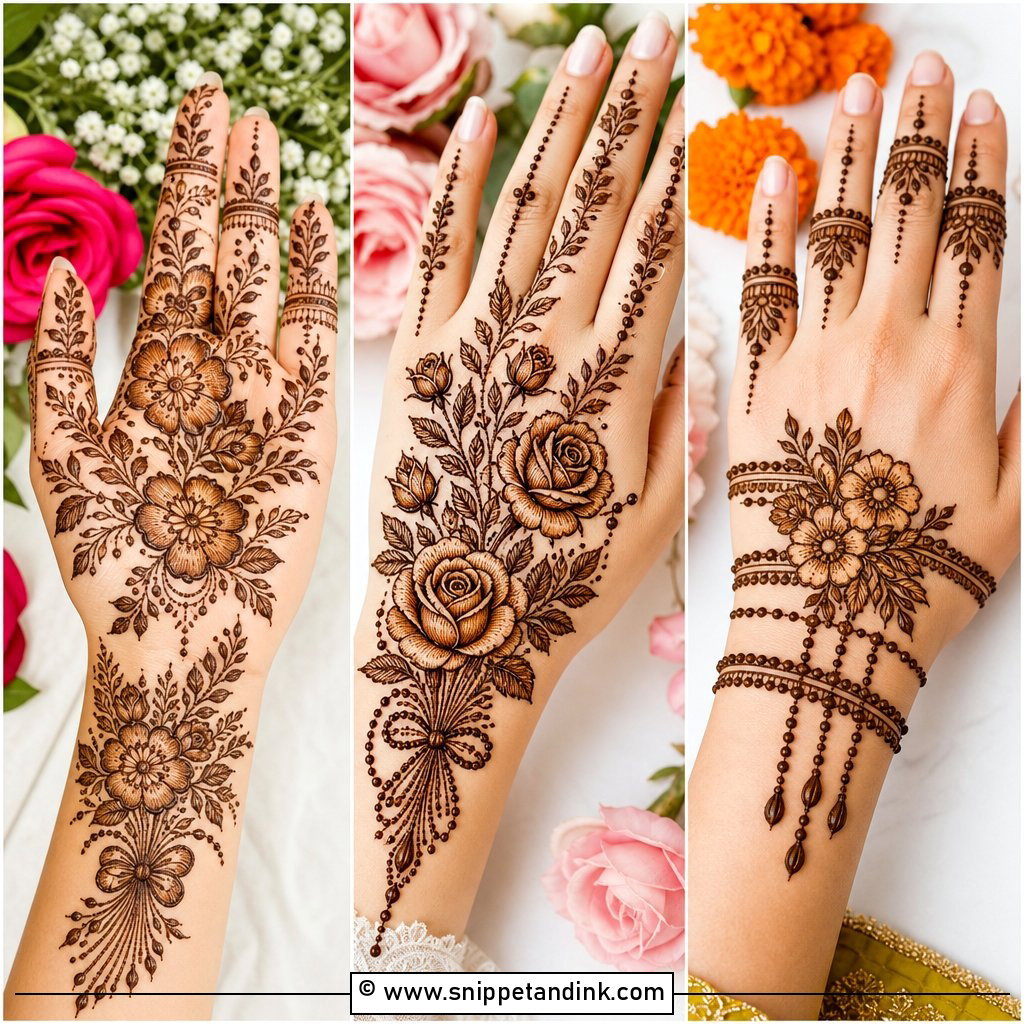
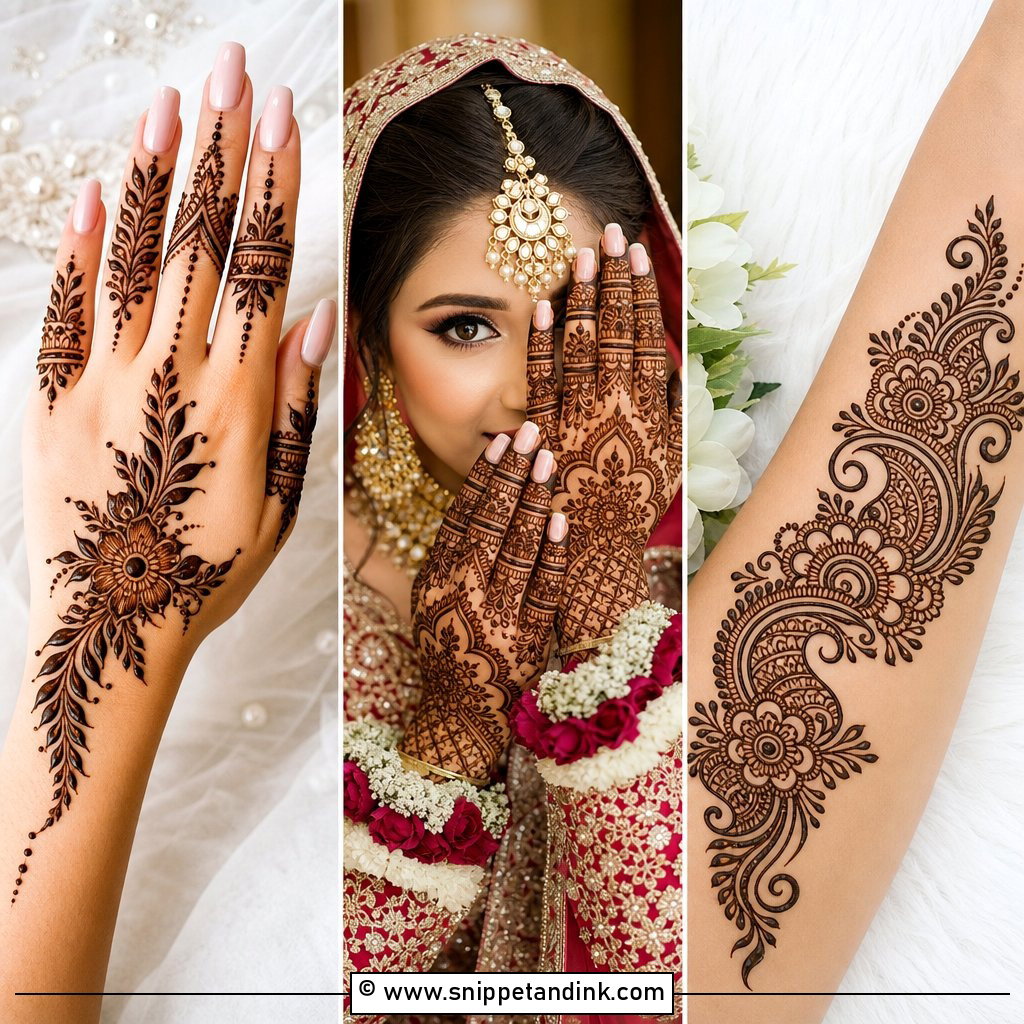
The back of the hand turns up in more photos than brides expect: the ring shot, the bangle close-up, the hand resting on the bouquet. I start at the fingers and let the design travel toward the wrist with a mandala, floral vines, jewelry-style chains, paisley trails or a bracelet cuff. Fingers get neat bands and small motifs, and the centre gets the bold piece. I make it deliberately different from the palm side so the two don’t look like a copy. If you’re wearing heavy rings, kaleere or chooda, tell me before I begin, because I’d rather keep the area under the chooda lighter than hide my best work under bangles.
10. Front Hand Bridal Mehndi Design
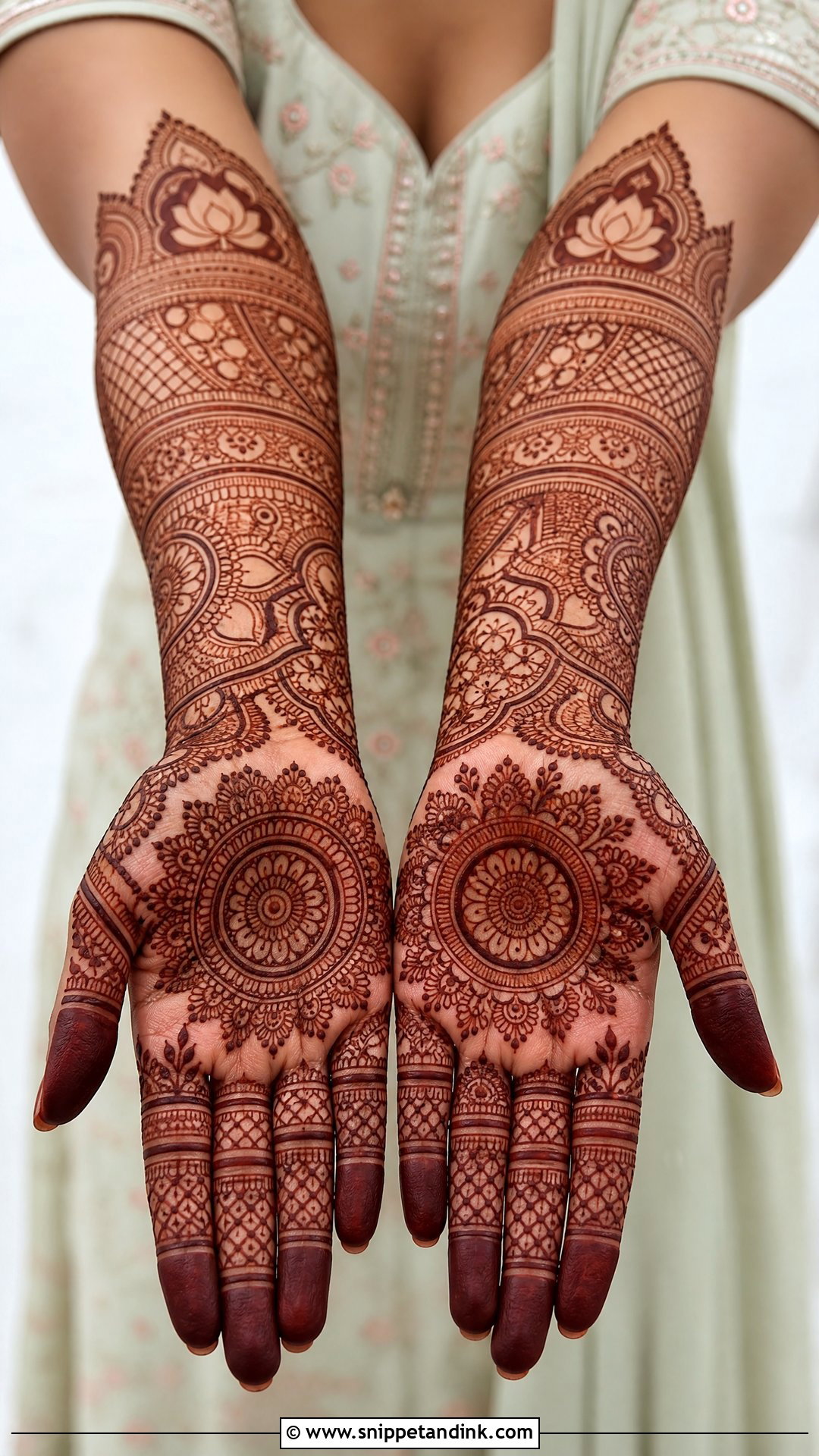
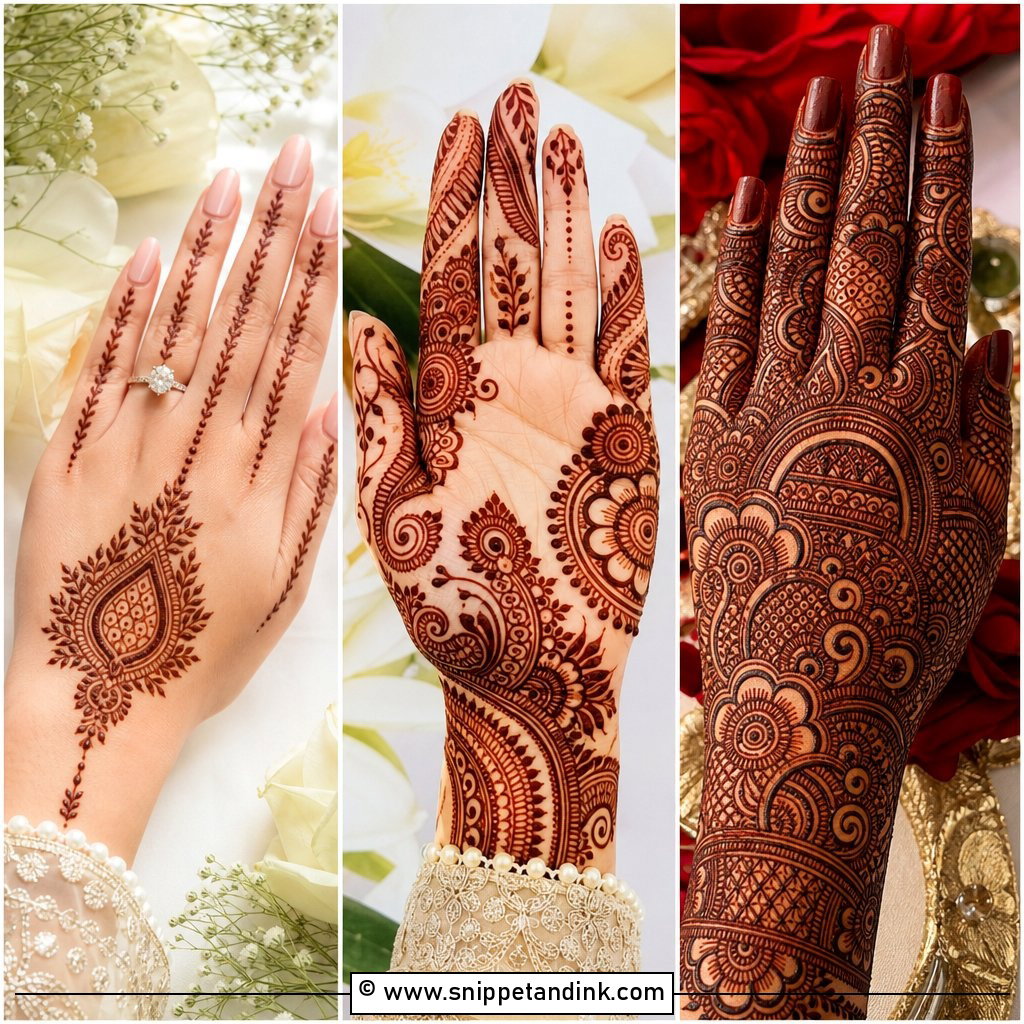
Palms are on show during rituals, blessings and the moment you hold your mehndi up to the camera, so this is where I spend the most care. The centre might hold a mandala, a lotus, a bride and groom, a peacock or a dense paisley arrangement, with the fingers filled in fine lines, leaves, dots and tiny florals. The usual failure is a flat palm, where every element is drawn at the same weight. I set one heavy motif against delicate fillers so there’s contrast. Full coverage and a little breathing space around the main motif both work; what I won’t compromise on is symmetry between the two hands.
11. Minimal Bridal Mehndi Design
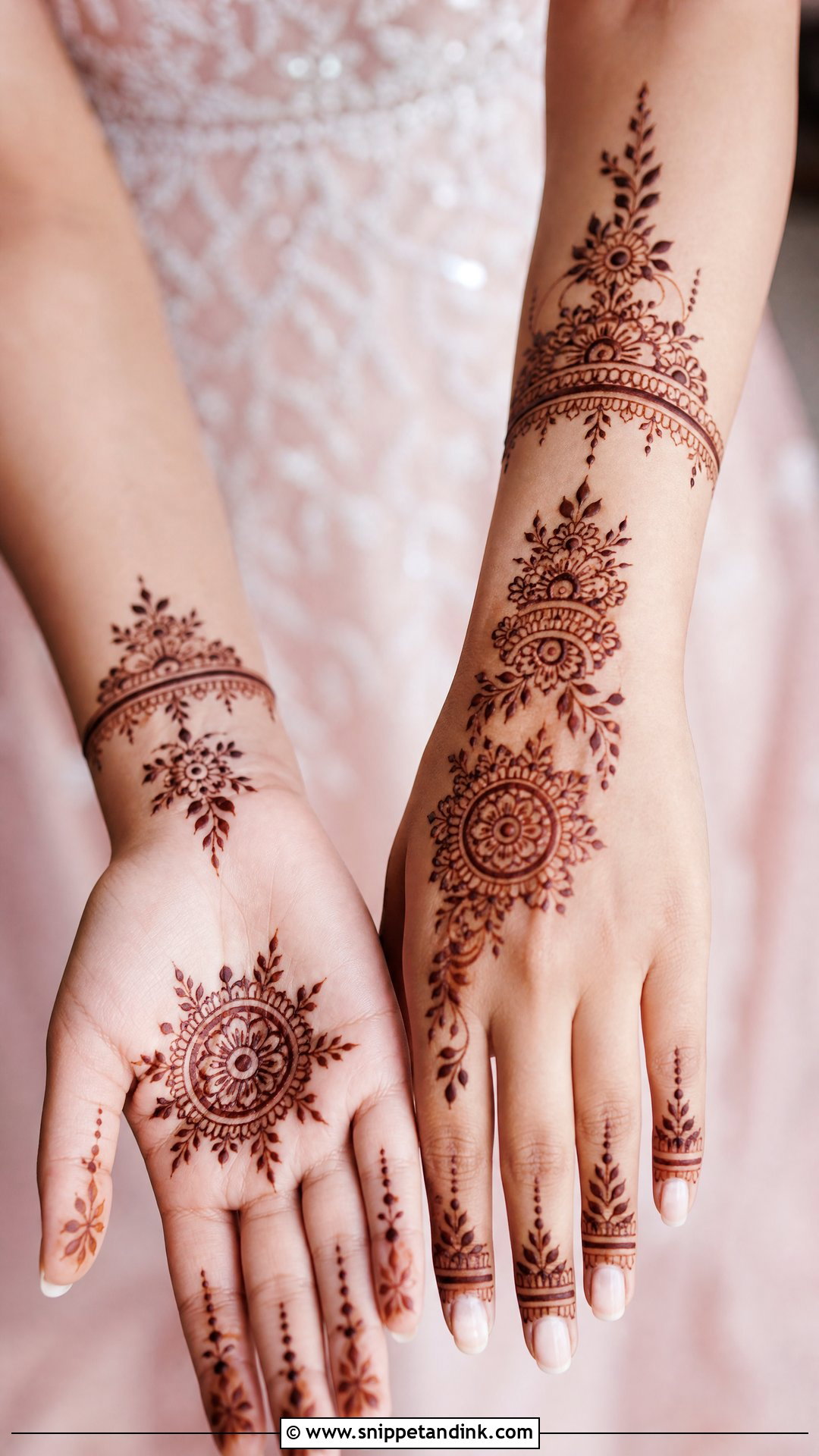
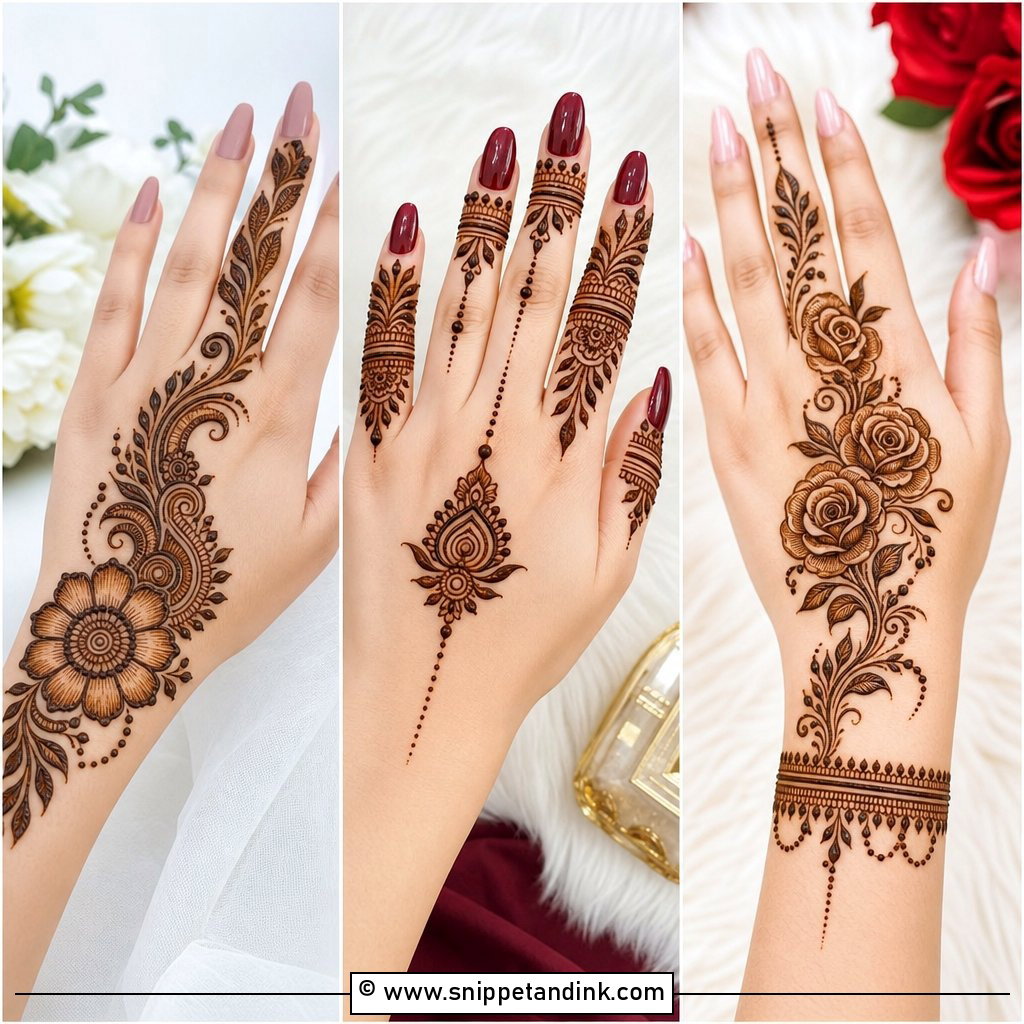
Minimal bridal work leaves plenty of open skin around a neat mandala, fine finger patterns, a light floral, a leafy trail or a delicate wrist cuff. I recommend it for intimate weddings, civil ceremonies and destination trips where losing a whole afternoon to sitting isn’t realistic. The risk is that it ends up looking like a guest’s design. To keep it bridal, I make the line work finer and the placement deliberate, so it’s clearly planned rather than one small casual motif. Sleek jewelry and pastel outfits sit well beside it.
12. Jewelry Bridal Mehndi Design
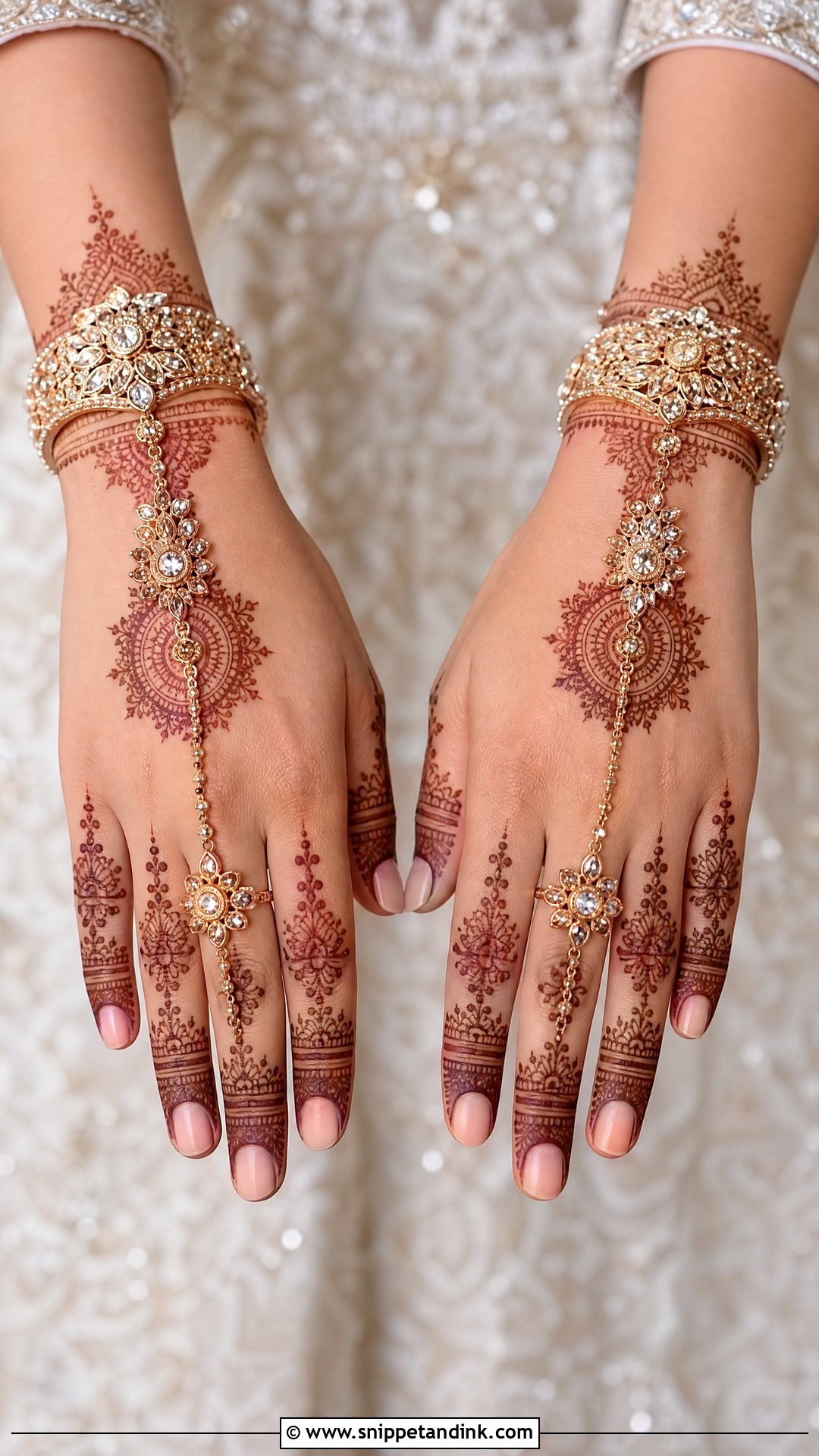
Here the henna imitates ornaments: haath phool, ring chains, bracelet cuffs, wrist bands and fine finger detail. It follows the lines a real piece of jewelry would rest on, which is why it looks so natural on the back of the hand. Before I draw, I ask whether you’ll wear actual rings over it. If you will, I keep the chain joins away from the ring band so the metal doesn’t hide them. Small flowers, dots, paisleys and netted chains finish it, and it gives a polished look without dense coverage across the whole hand.
13. Jaali Bridal Mehndi Design
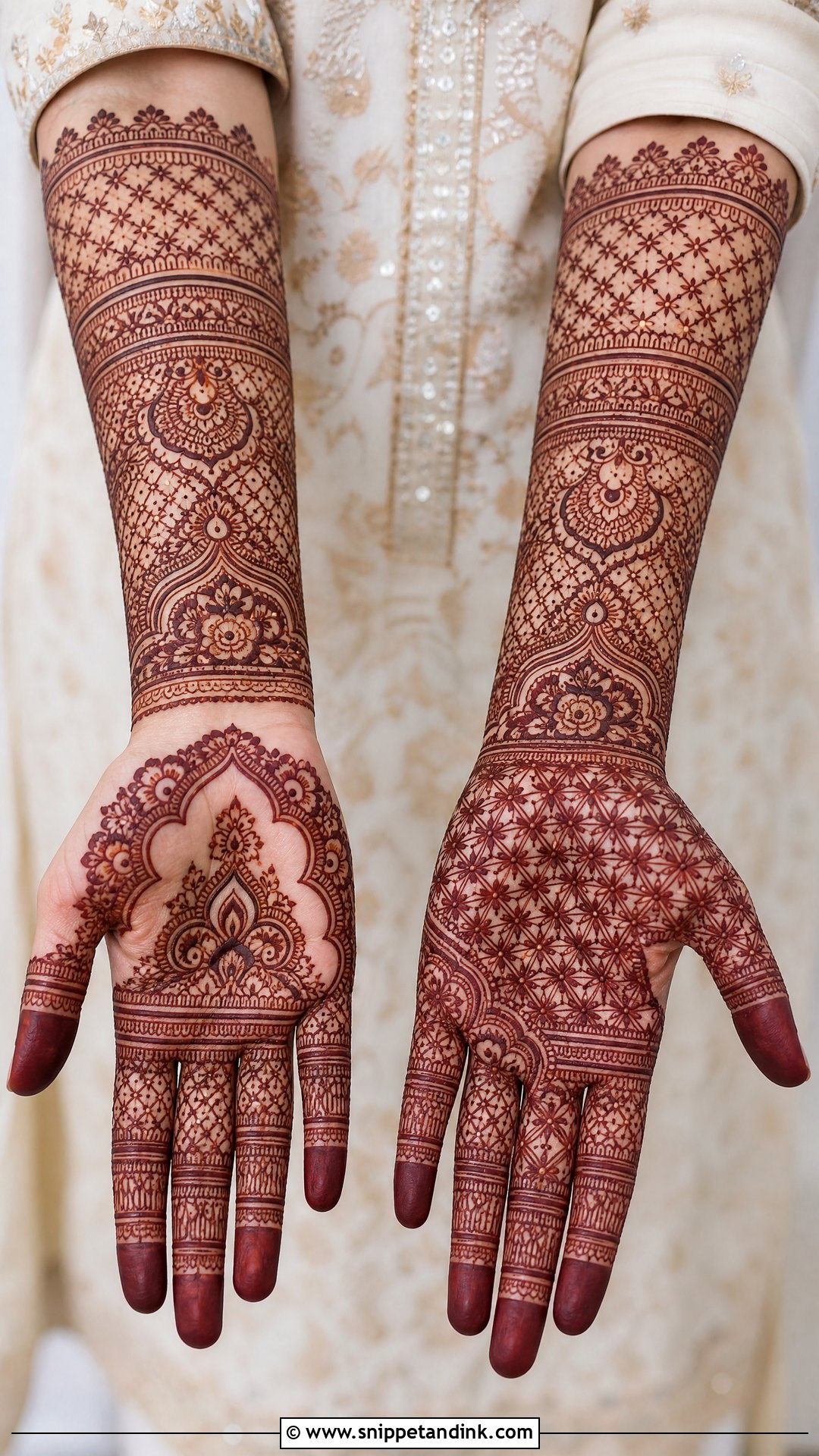
Jaali is a net pattern that reads like lace on skin. It can cover the back hand, palm, wrist or forearm, and I border the mesh with florals, paisleys, a mandala or bold bands so it has structure. Mesh is unforgiving. Every square or diamond needs to match its neighbours, and one wobbly line in a grid is far easier to spot than in a floral, so I pull the lines at a steady pace and check spacing as I go. The crisp contrast it gives shows clearly under sheer dupattas and embroidered sleeves.
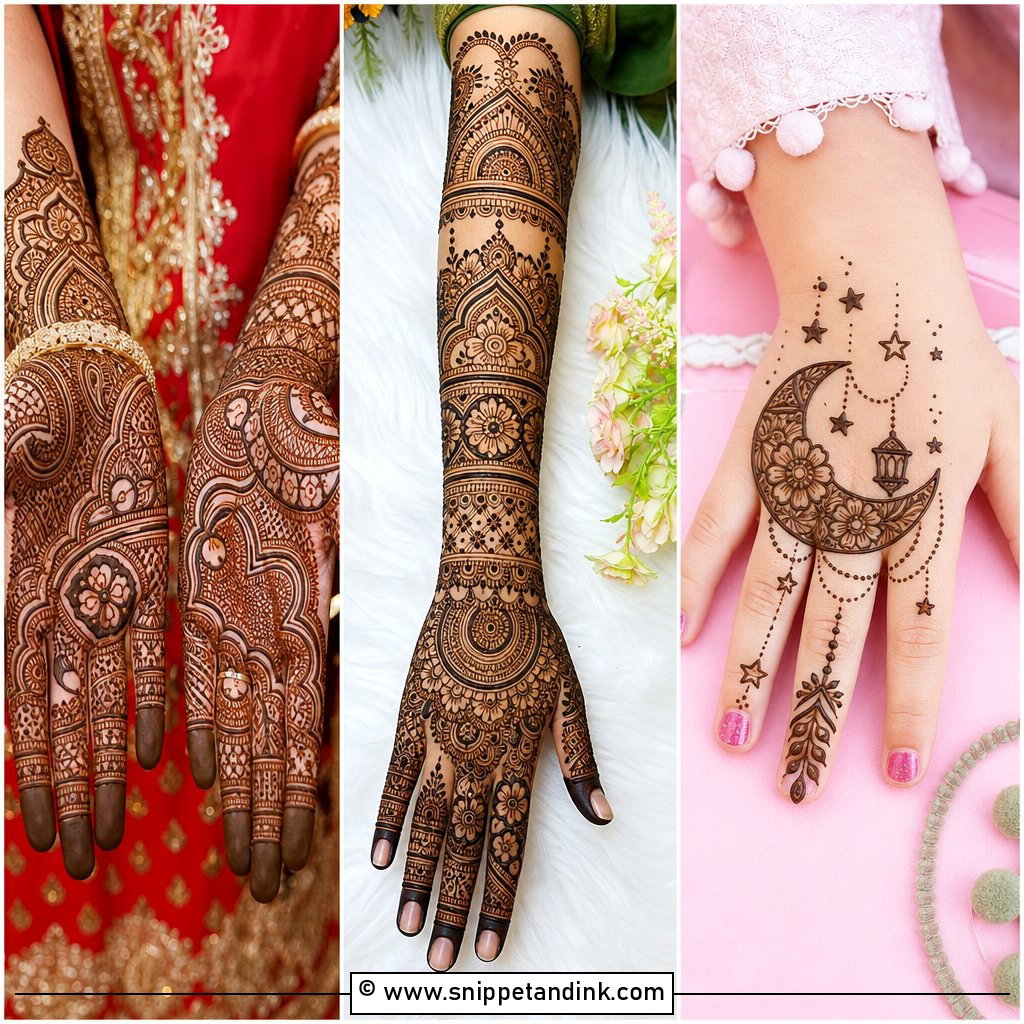
14. Paisley Bridal Mehndi Design
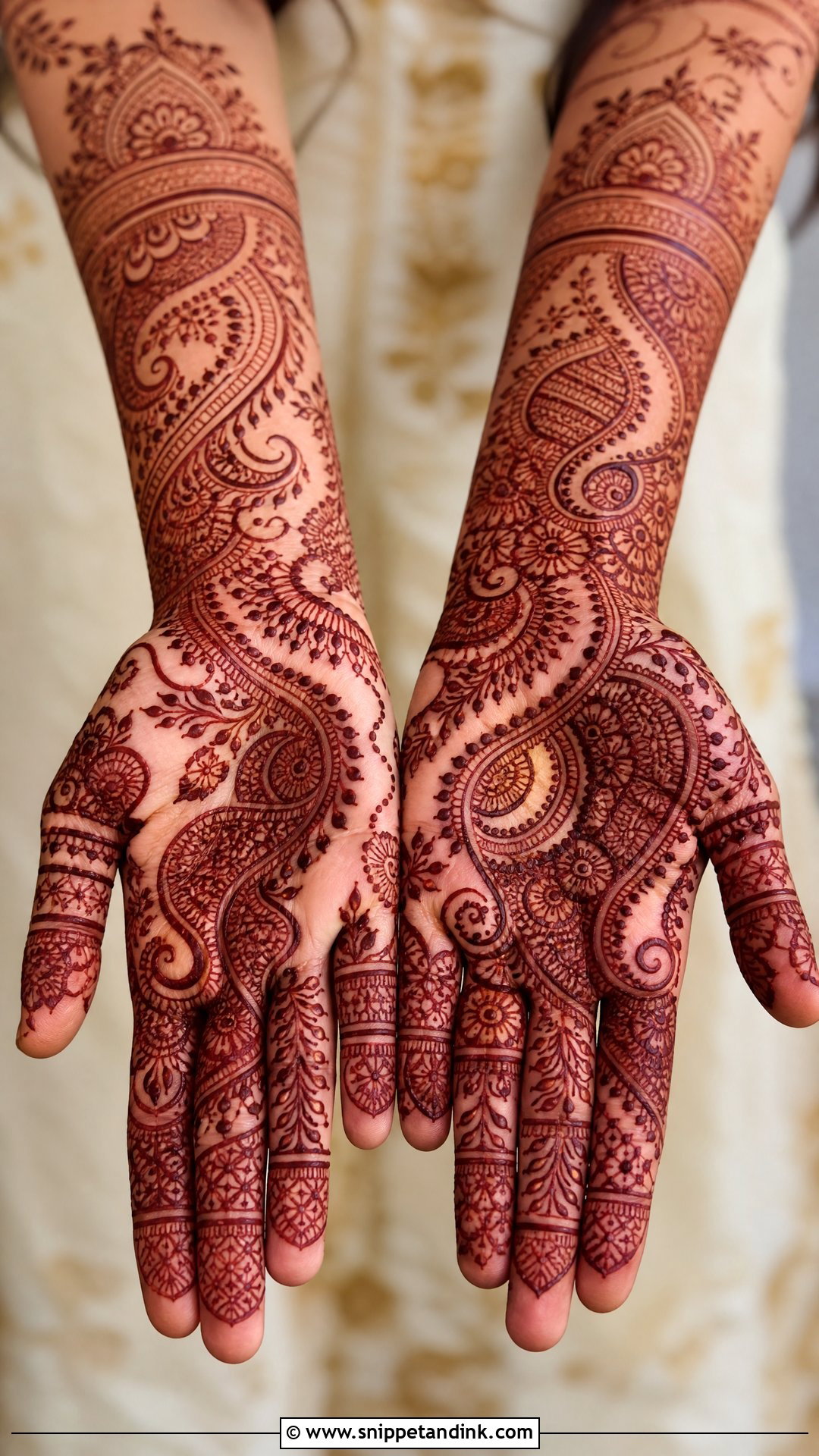
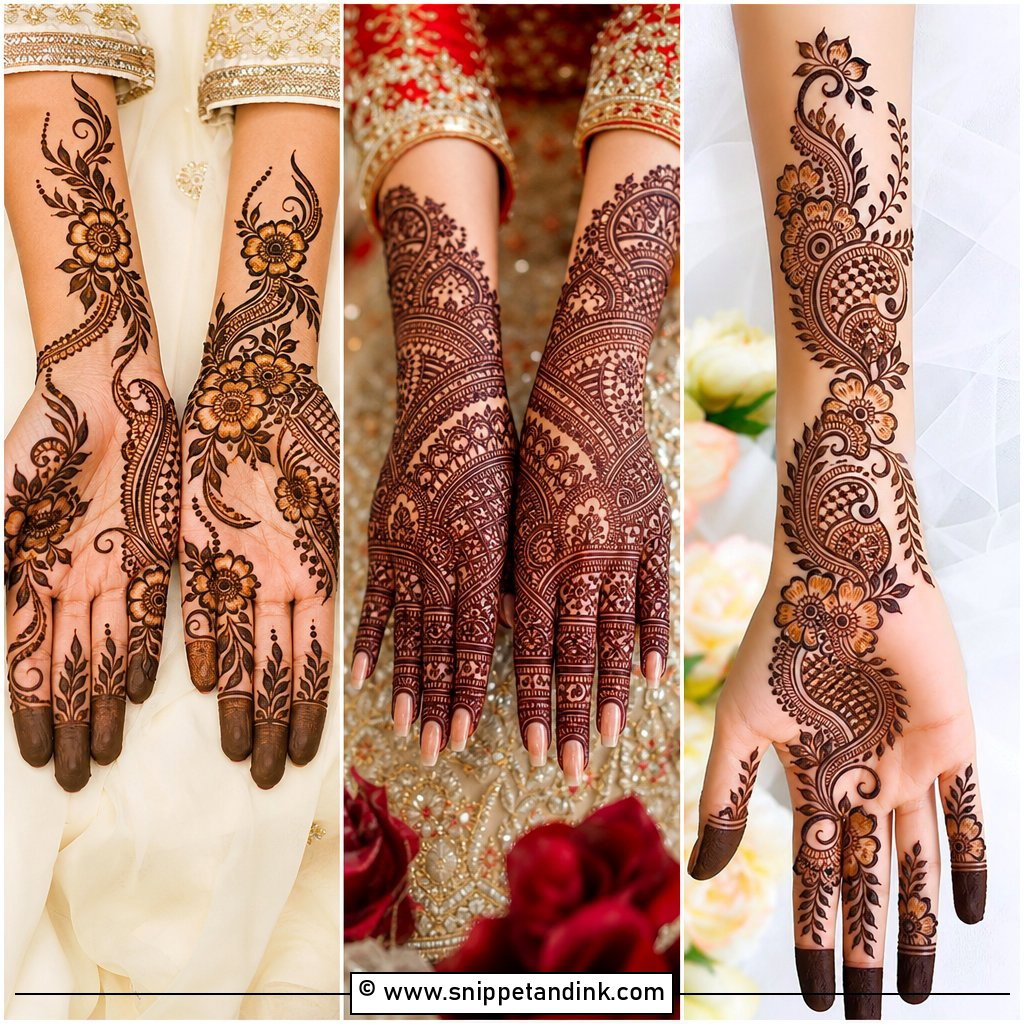
The curved mango shape is the backbone of Indian mehndi, and it works at any scale. I draw it large and bold, or small and repeated for dense coverage, on the palm, fingers, wrist or forearm, pairing it with flowers, leaves, dots, swirls and shaded fillers. Look at the tips. A clean, sharp curl at the end of each paisley is where you can see an artist’s control; blunt tips make the whole hand look rushed. It’s my default suggestion when a bride wants rich coverage without portraits or figures, because it carries movement from fingertips to forearm without needing a story.
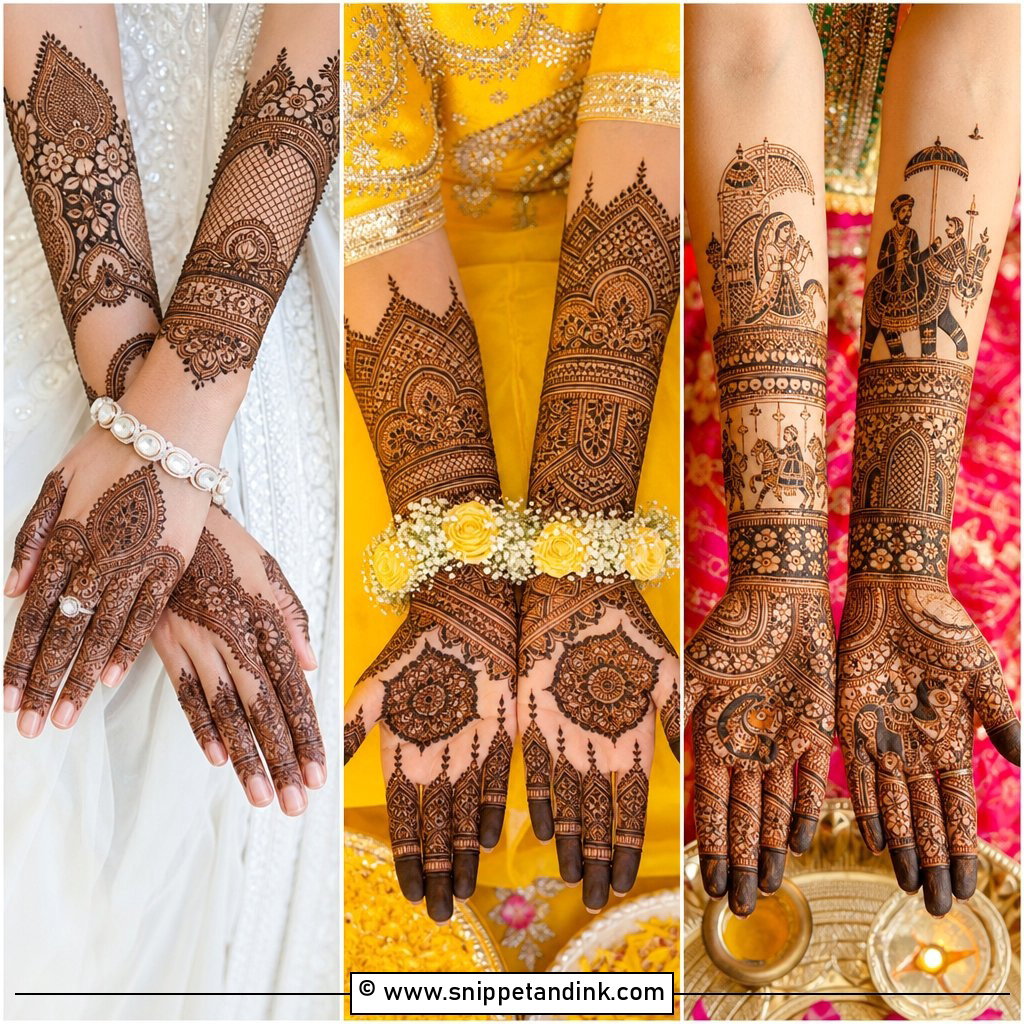
15. Floral Bridal Mehndi Design
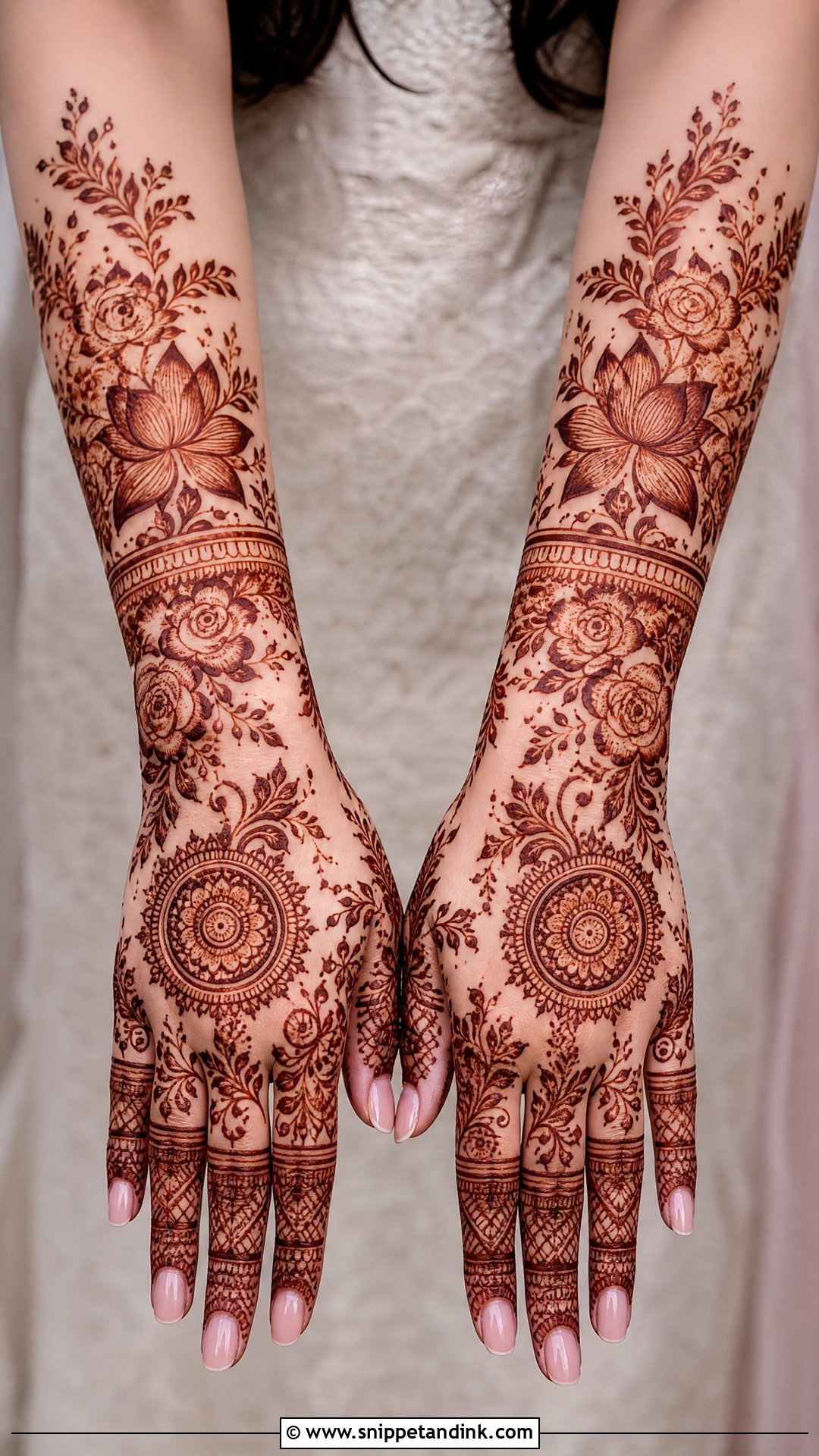
Florals are the easiest style to personalise with roses, lotuses, small blossoms, vines, shaded petals and circular flower mandalas. Some brides ask for bold Arabic flowers with open space; others want dense Indian florals across the whole hand. My best bridal versions mix one or two large blooms with tiny filler flowers, which stops the pattern from repeating itself. For bridesmaids and family I keep florals on the hand. For the bride, I carry them into wrist cuffs and forearm trails so the look is clearly hers.
16. Moroccan Bridal Mehndi Design
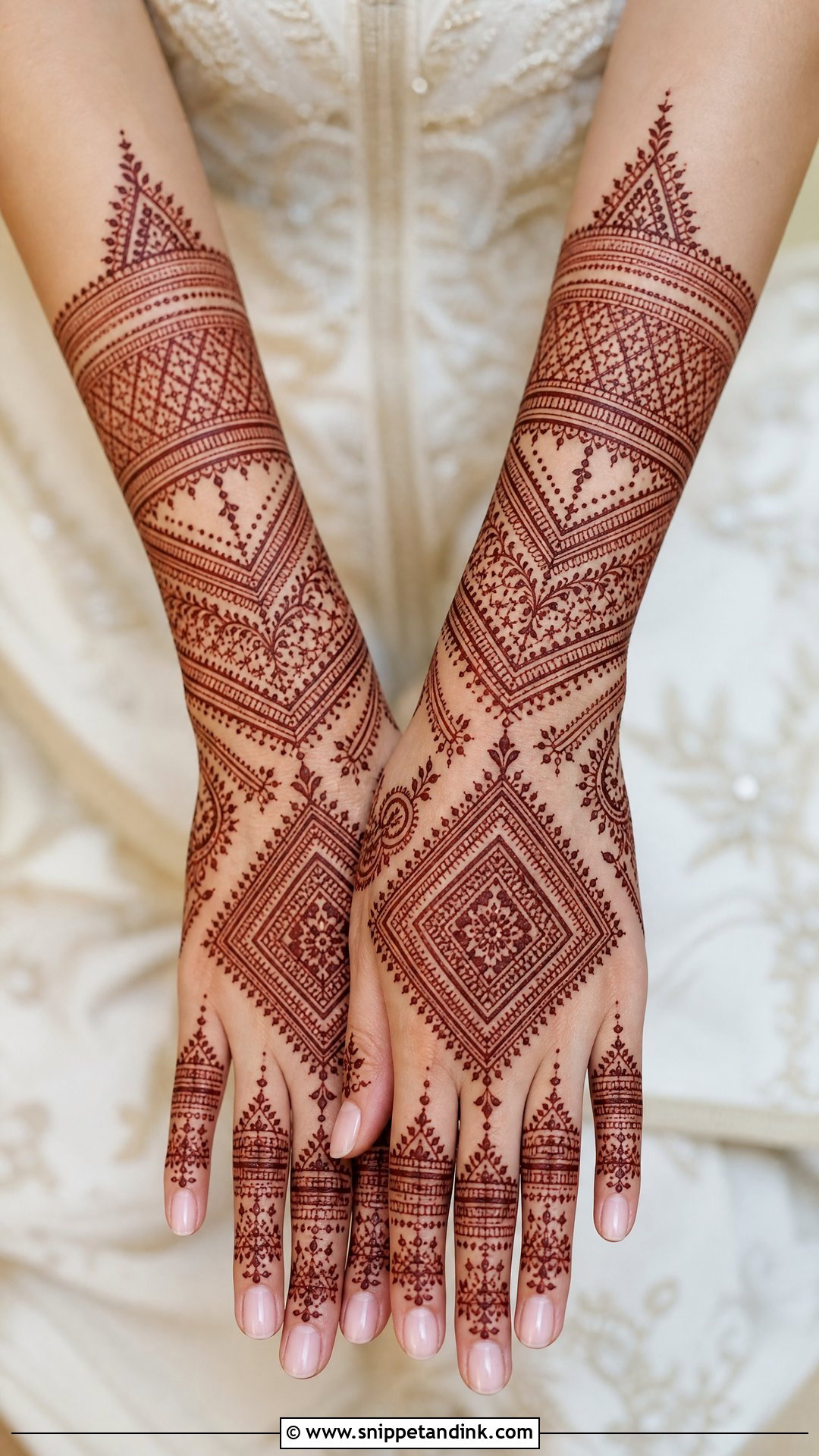
Moroccan work is geometry: diamonds, lines, grids, triangles, dots and structured bands in place of soft flowers. For an Indian wedding I soften it with a paisley, mandala or lotus so it still reads as bridal. It’s crispest on the back hand and wrist, where the skin is flatter and the symmetry holds. Straight lines are harder to pull than curves and they show every tremor, so check your artist’s portfolio for geometric work specifically. Modern lehengas, fusion outfits and minimal jewelry suit it, since the pattern already does the talking.
17. Gulf Bridal Mehndi Design
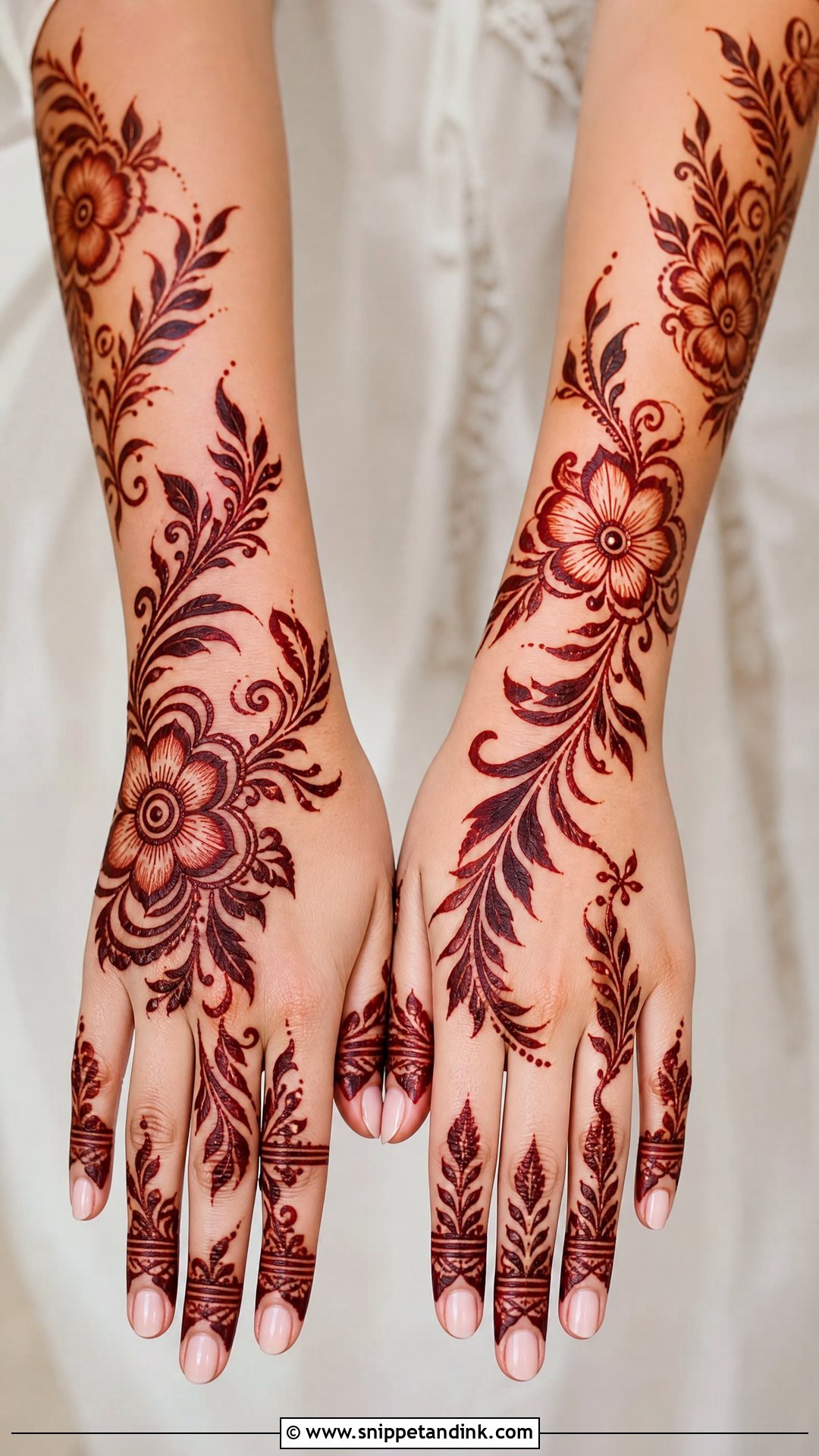
Gulf, or Khaleeji-inspired, mehndi uses bold florals, sweeping leaves, thick outlines and generous spacing, so it lands between simple Arabic and dense Indian work in weight. I flow it from the fingers across the back hand toward the wrist or forearm, adding shaded petals and bold vines. Those thick outlines carry a lot of paste, which usually gives a dark, dramatic stain. I suggest it to brides who want drama without full coverage. It also suits the engagement, sangeet or reception, when you want something glamorous that doesn’t eat the whole day.
18. Bridal Mehndi With Names
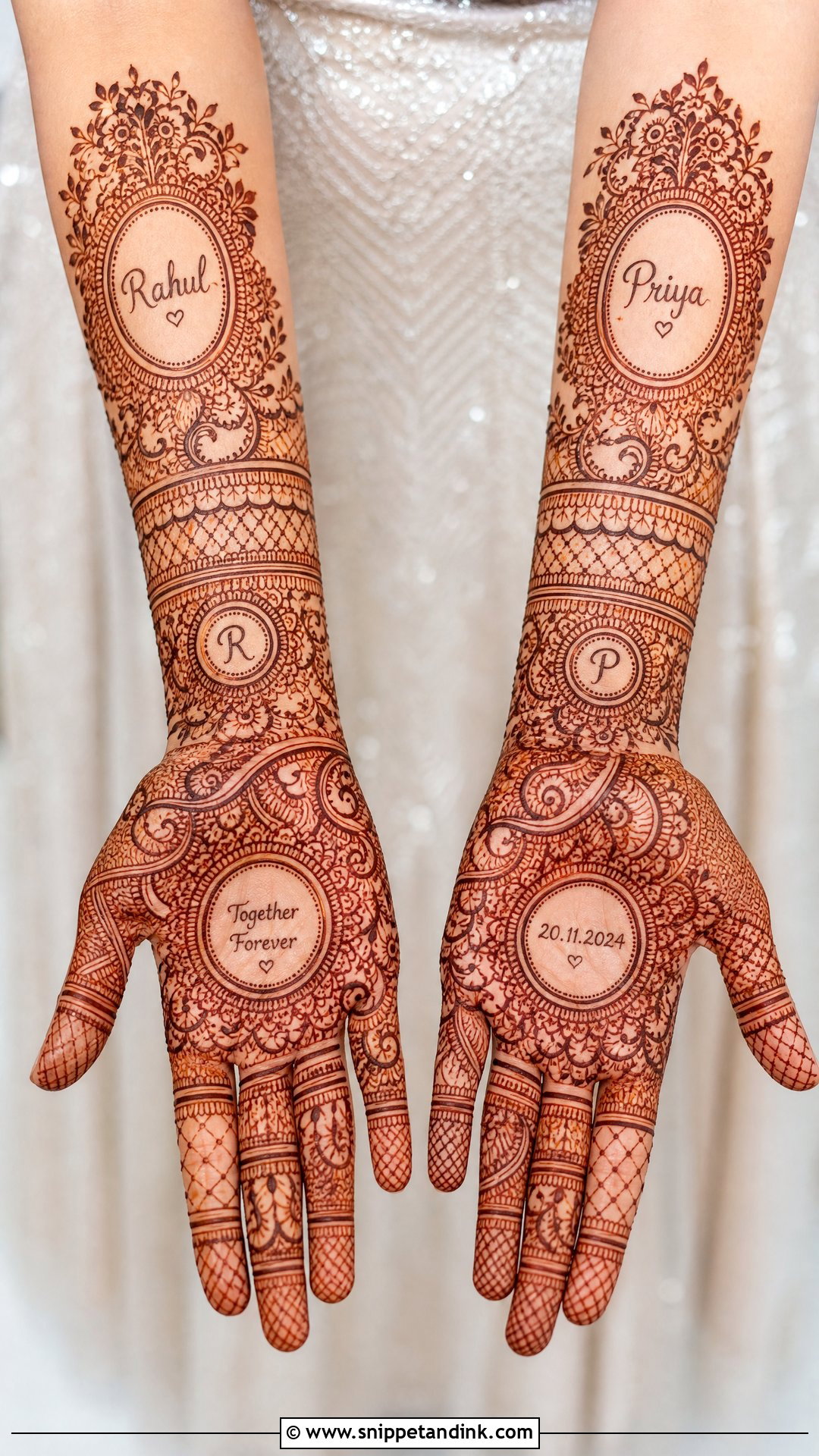
Bridal mehndi with names hides the groom’s name, initials, the wedding date or a short phrase inside paisleys, flowers, mandalas or forearm panels. Watching the groom hunt for it after the stain darkens is one of my favourite moments of the whole celebration. The trick is legibility. Letters should be readable once you know where to look, but not spotted in a second, so I weave them into vines, jaali or border details and draw the strokes slightly thicker than the fillers around them. It fits inside heavy or minimal designs.
19. Simple Wedding Mehndi Design
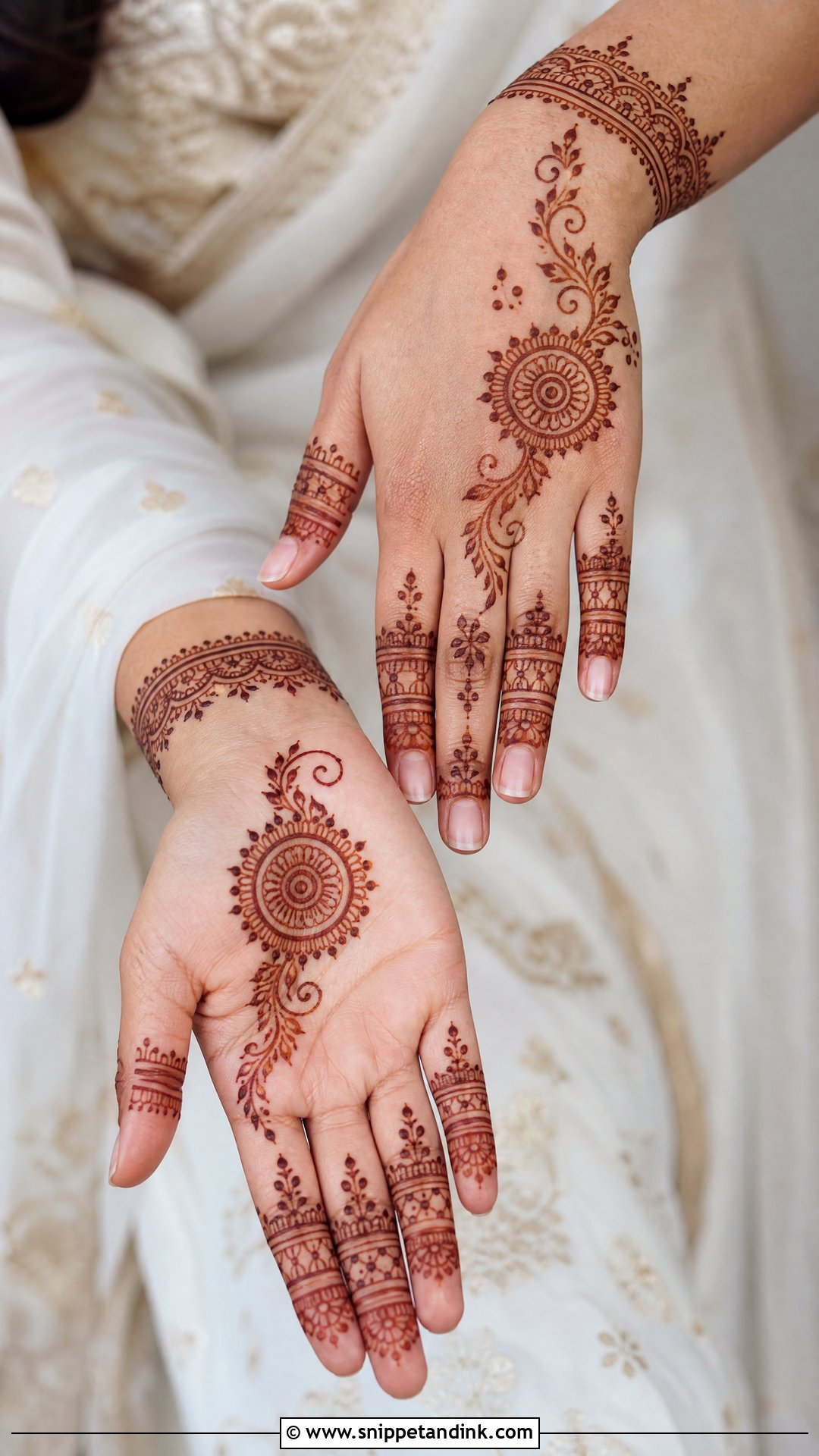
Simple mehndi suits bridesmaids, sisters and mothers, as well as brides who want a softer look: a palm mandala, a floral trail on the back hand, neat finger bands and a bracelet finish at the wrist. It still has to feel festive, so I add a paisley border or tiny leaf fillers to stop it looking plain. It’s quick to apply and comfortable through a long day. For pre-wedding functions and small ceremonies, it keeps the family’s hands coordinated without anyone sitting for hours.
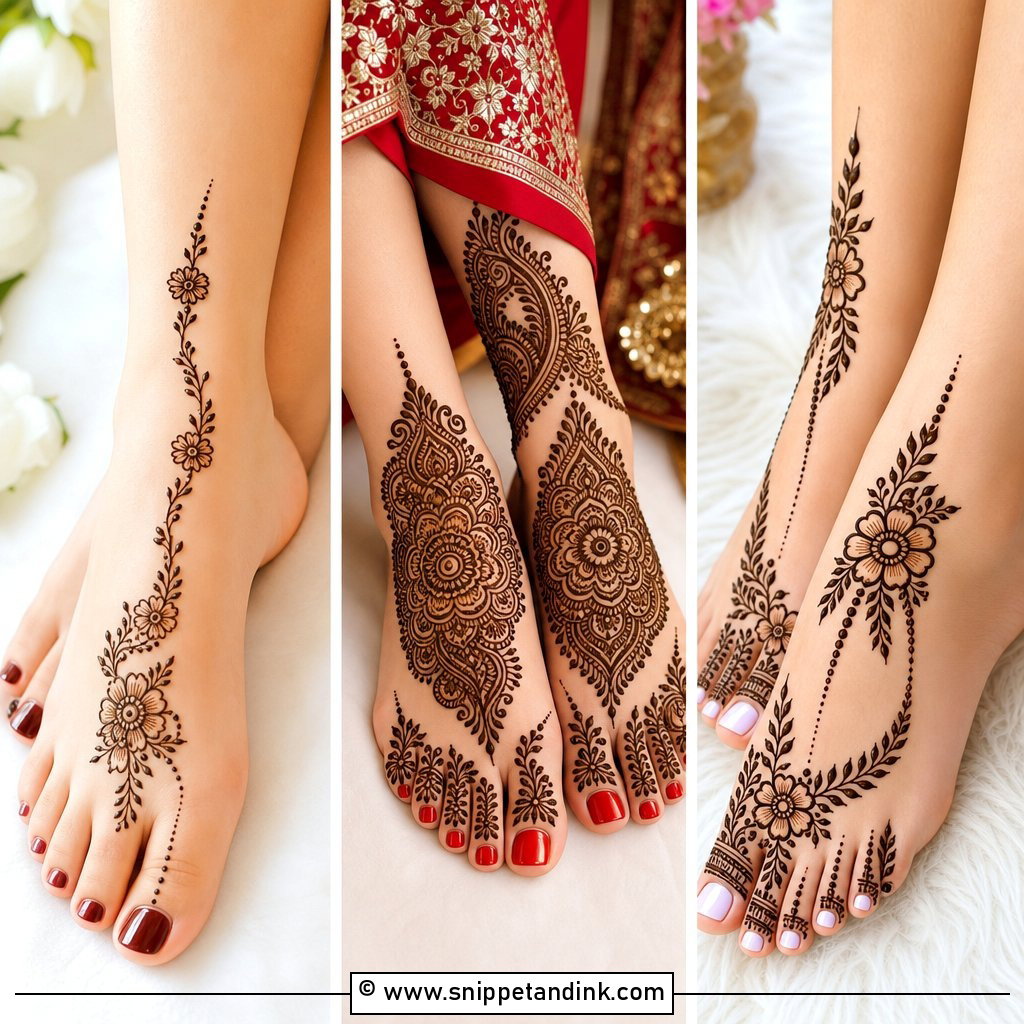
20. Modern Indian Bridal Mehndi Design
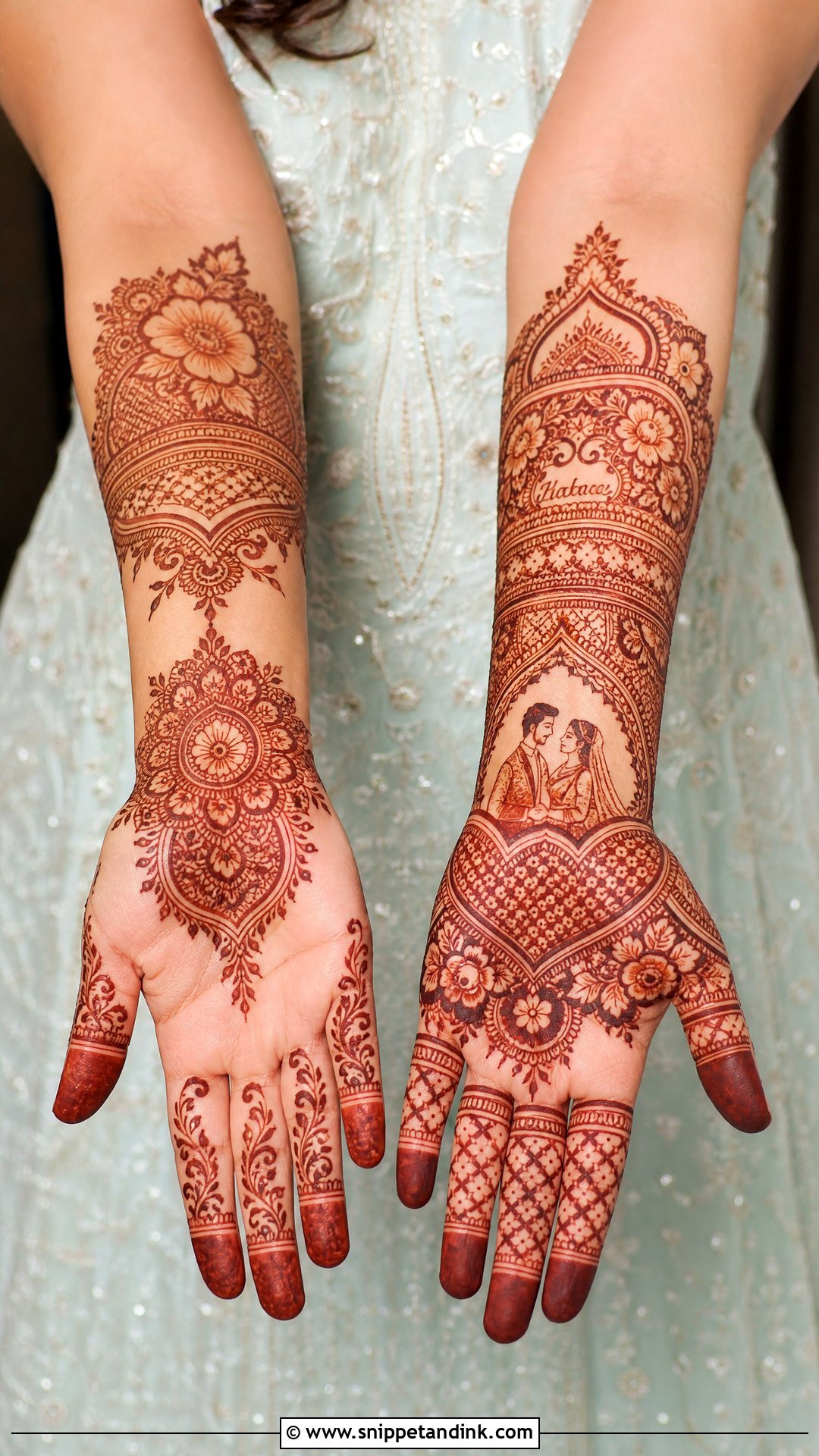
Modern bridal layouts keep the tradition but organise it differently, with negative space, a bold mandala, fine jaali, a small portrait, floral cuffs or asymmetric trails. Many brides tie the pattern to their outfit, jewelry or a personal story. I often keep the front hand detailed and the back hand lighter and jewelry-inspired, which looks balanced in photos rather than half-finished. It’s practical for destination weddings and contemporary ceremonies where comfort matters, and it still delivers Indian wedding beauty with a fresh finish.
From Wet Paste to Deep Maroon in Forty-Eight Hours
Most of the colour you’ll see at your wedding is decided after I’ve packed up my cones. Here’s how I tell brides to handle the first two days.
While the paste is on
Once the surface dries, I dab on a light lemon and sugar mix so the paste stays stuck to the skin instead of flaking off early. Leave it on as long as you can, at least six to eight hours, and overnight if you can sleep with your hands wrapped. Warmth helps the stain develop, so keep the room comfortable rather than cold.
After it comes off
Scrape the dried paste away with a blunt edge or your fingers. Don’t wash it off. Try to keep your hands away from water for the rest of that day, and skip hand sanitizer, soap scrubs and chlorine pools until after the wedding. The palms will turn darkest because the skin there is thicker; the forearms and backs of the hands usually settle a shade lighter, and that’s normal.
Why I only use natural paste
Real henna never stains black. If an artist promises jet-black colour in an hour, the paste likely contains a chemical dye that can cause blistering and lasting skin reactions. Ask what goes into the paste, and if you have sensitive skin, ask for a small patch test a few days ahead. A properly mixed natural paste smells earthy and leaves an orange stain that deepens to rich brown or maroon.
Matching a Pattern to Your Outfit, Hands and Sitting Time
Twenty styles is a lot to weigh, but most brides narrow it quickly once they know how much coverage and what mood they want. Traditional brides tend to gravitate to full hand, Rajasthani, peacock, paisley or portrait work, while modern brides often prefer minimal, jewelry, Arabic, Gulf or Indo-Arabic layouts with room around each motif. Add initials or a date if you’d like a private detail. Then bring your outfit, jewelry and photographer’s shot list into the conversation, and book an artist whose developed stains, not just fresh paste, show clean lines and even spacing.
You'll Like These Ideas:


Leave a Reply