
Engagement henna has a different job from wedding henna. It needs to look finished in ring ceremony photos, but you’ll also be hugging relatives, holding plates and shaking hands for hours, and in many families the full bridal mehndi is only weeks away. So I usually draw engagement hands a step lighter than the wedding set, with the ring finger planned first. Below are twenty designs, from classic Indian full hands to Arabic trails, mandalas, minimal work and little personal touches like initials and dates, with what I’d watch for in each.
Planning Henna Around the Ring Exchange
The ring finger is the one spot I design before anything else at an engagement. Check which hand your family uses for the ring, since customs differ, and tell your artist. Then decide whether you want the base of that finger left clear, framed with a fine chain, or drawn as a henna ring that the real one sits beside.
Apply it the day before if you can
Fresh henna is bright orange when the paste comes off and darkens over the following day or two. If your mehndi is applied the morning of the ring ceremony, the photos will show the palest version of it, and wet or crumbling paste will be on your hands during the exchange. Applying the day before, with the paste left on overnight, gives you a deeper colour and clean hands for the ring.
- Have any manicure done first. Polish over a fresh stain is fine; soaking and filing afterwards fades it.
- Keep the paste off the nail beds of the ring hand if you’re wearing light polish; henna stains nails and cuticles orange.
- Wear the ring for a minute at your trial if possible, to see where the band actually sits on the finger.
1. Full Hand Bridal Mehndi Design For Engagement
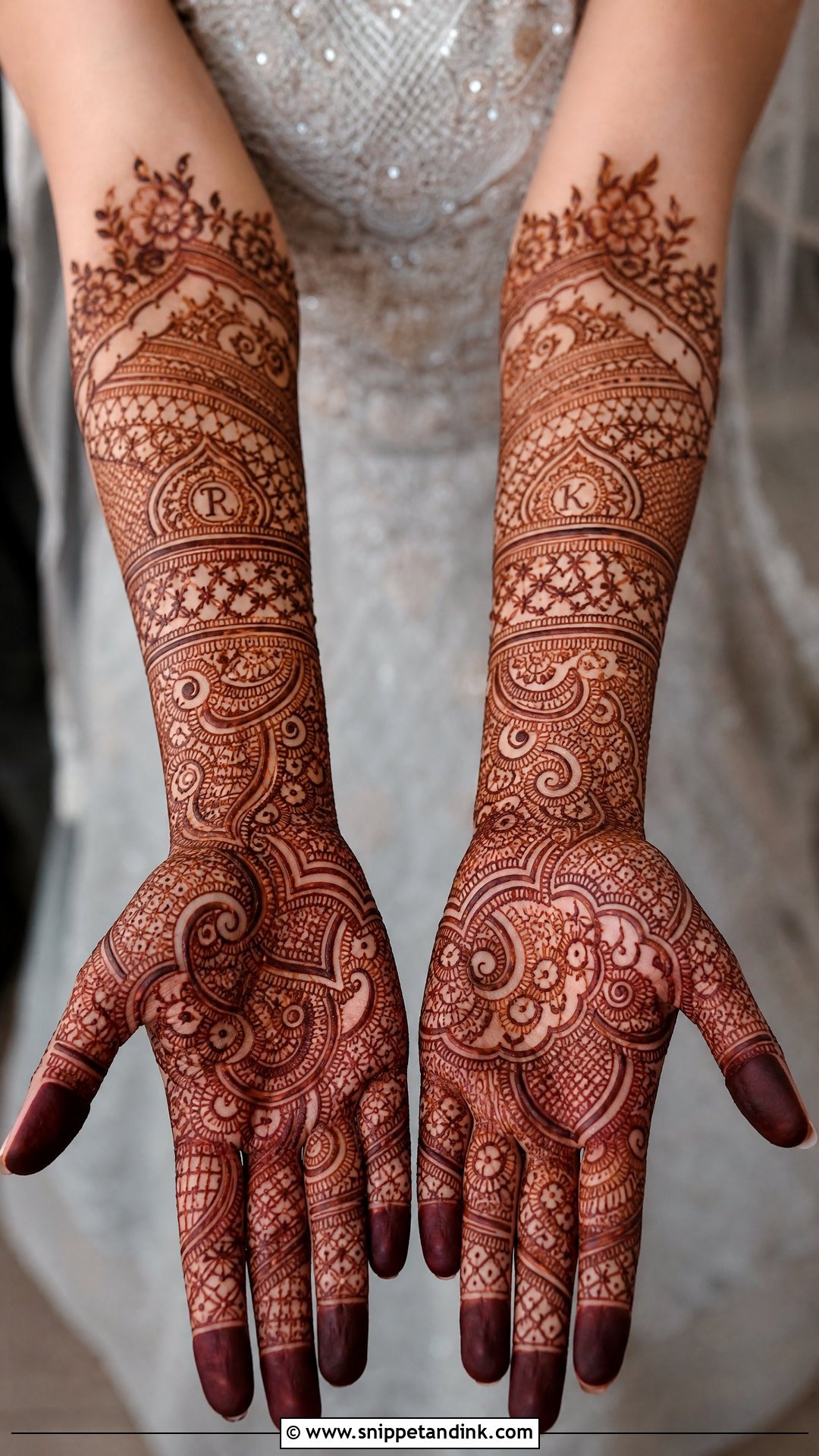
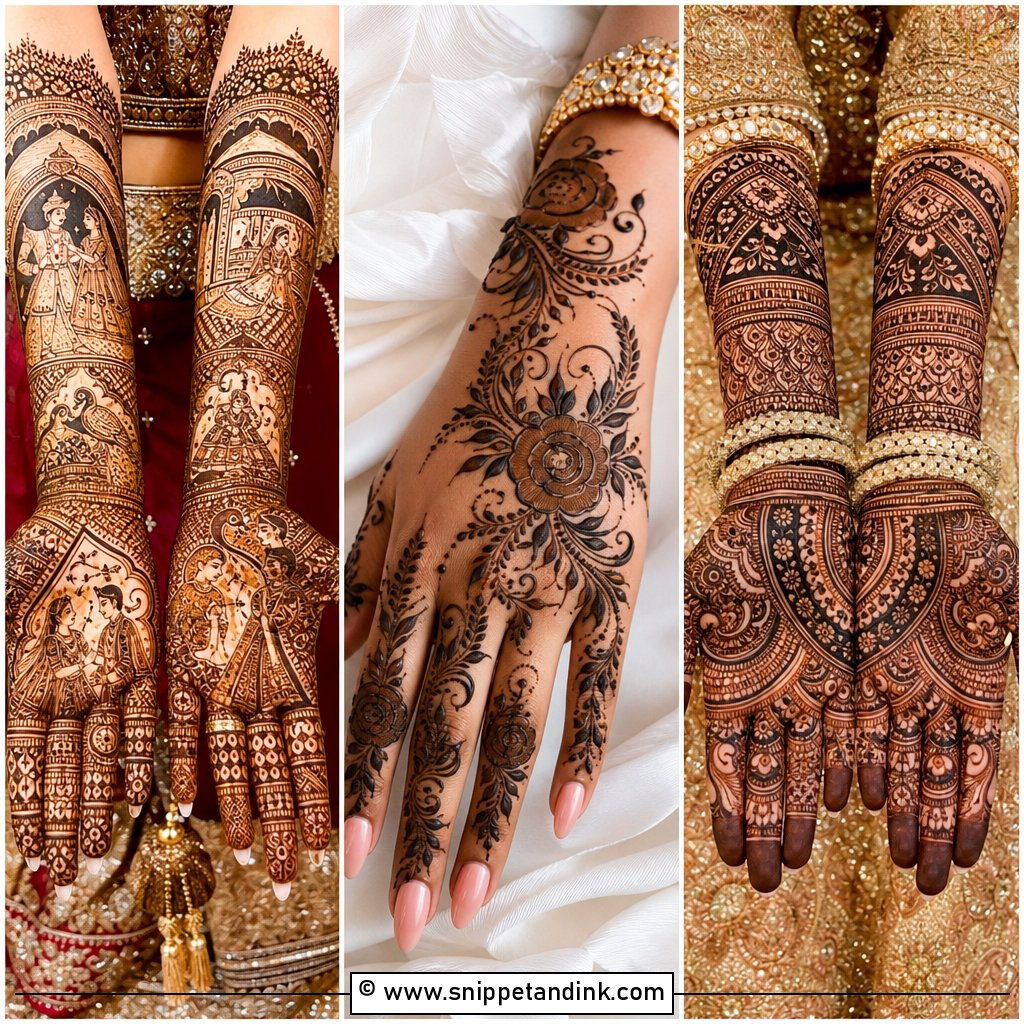
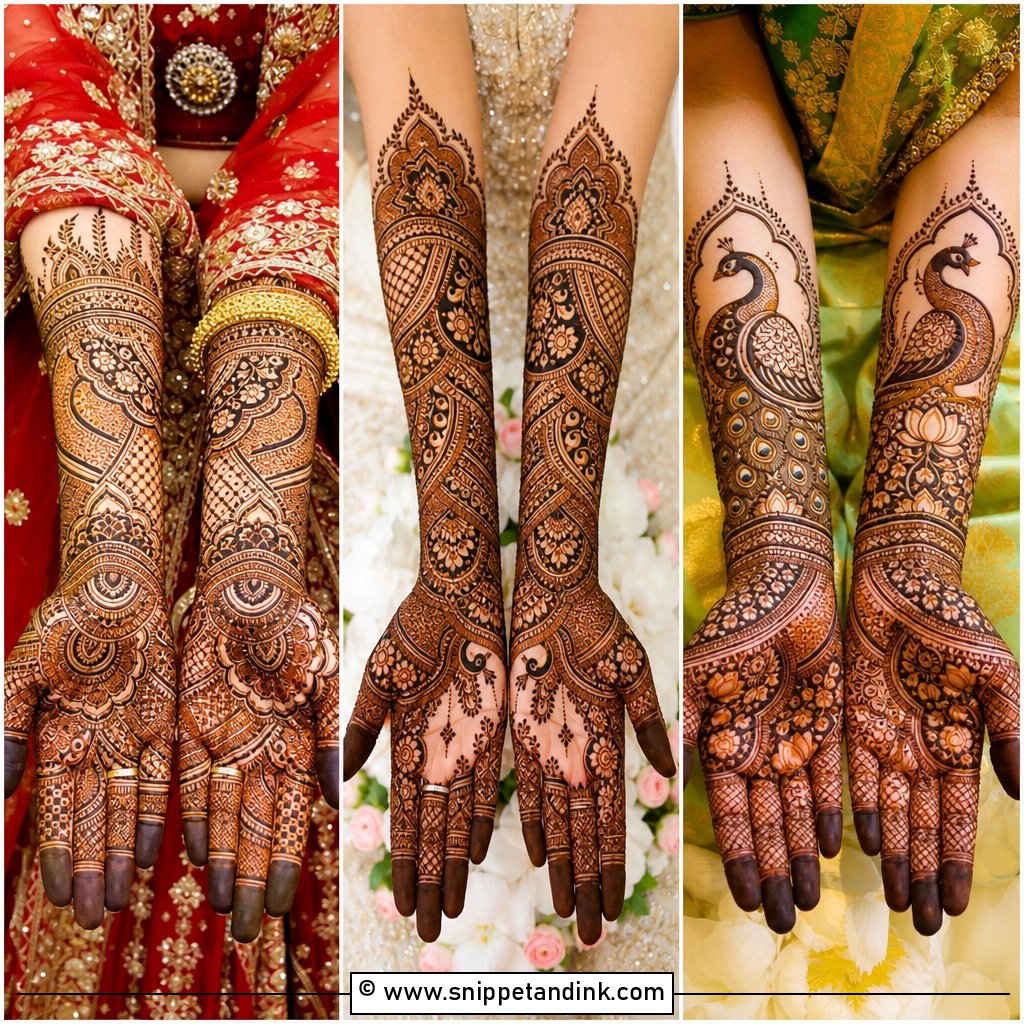
A full hand bridal mehndi design at the engagement covers the palms, fingers, wrists and part of the forearm in paisleys, florals, jaali, leafy bands, dots and bracelet borders. It balances a heavy lehenga or gharara. For a ring ceremony I loosen the density slightly around the base of the ring finger, so the ring sits on a clear patch of skin rather than disappearing into pattern. Initials tuck easily into the palm or wrist.
2. Arabic Bridal Mehndi Design For Engagement
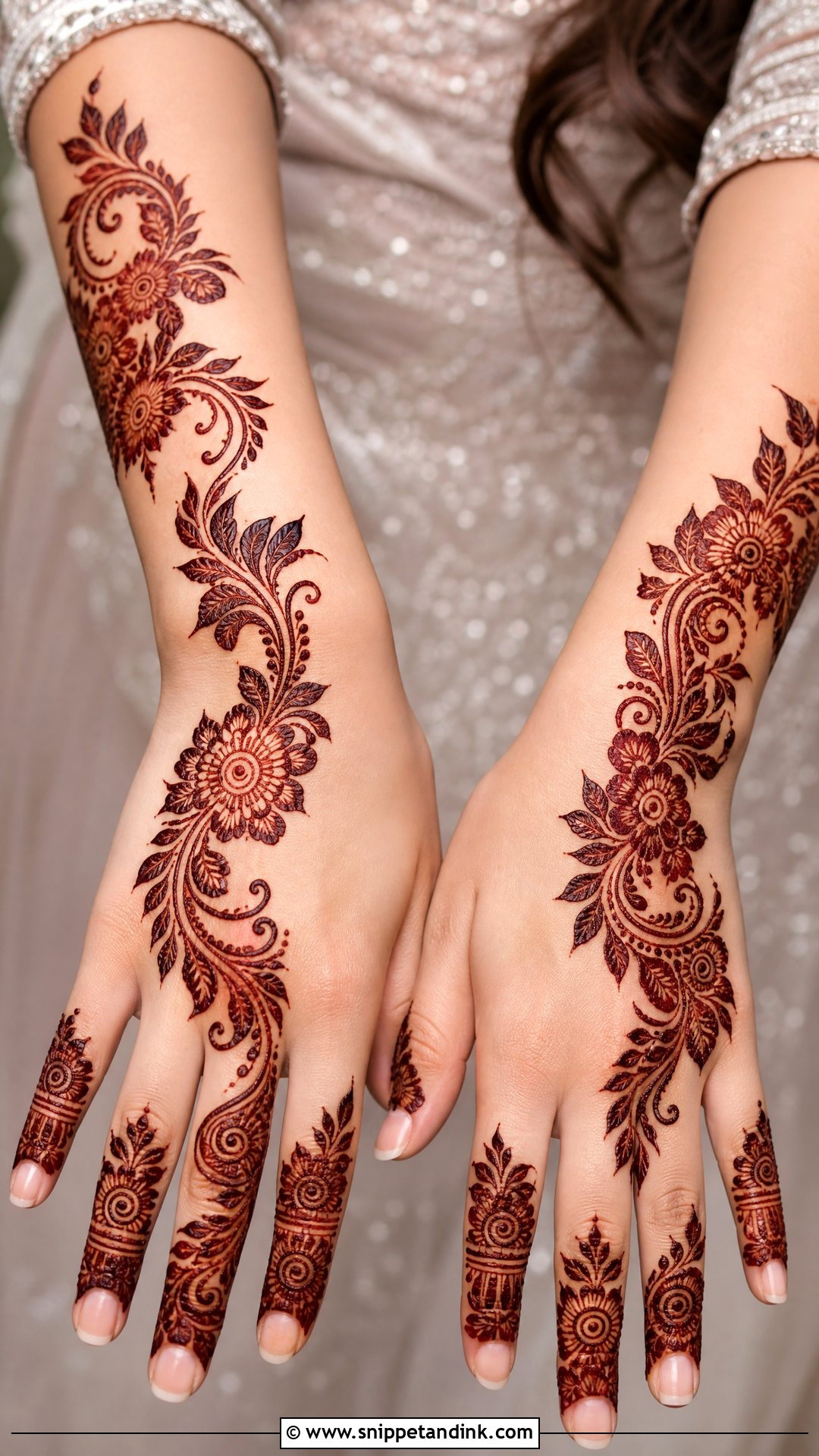
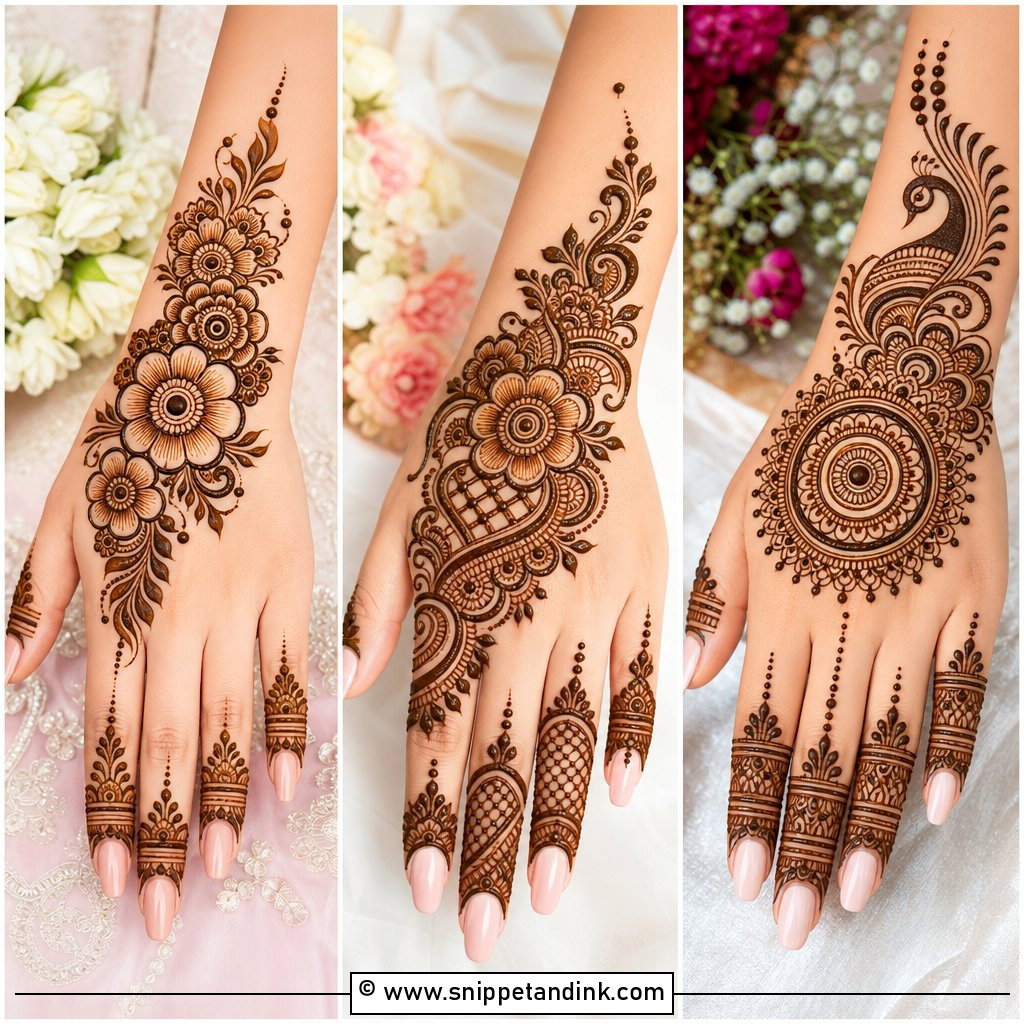
Arabic trails are my most practical engagement recommendation. They flow diagonally with bold flowers, leafy vines and curved paisleys, leave open skin, dry quickly and read clearly in photos. I usually run the main trail from the outer wrist up toward the index finger and fill the remaining fingers with matching leaves. It leaves room for a statement ring, nail art and fine hand jewelry.
3. Indo Arabic Bridal Mehndi Design
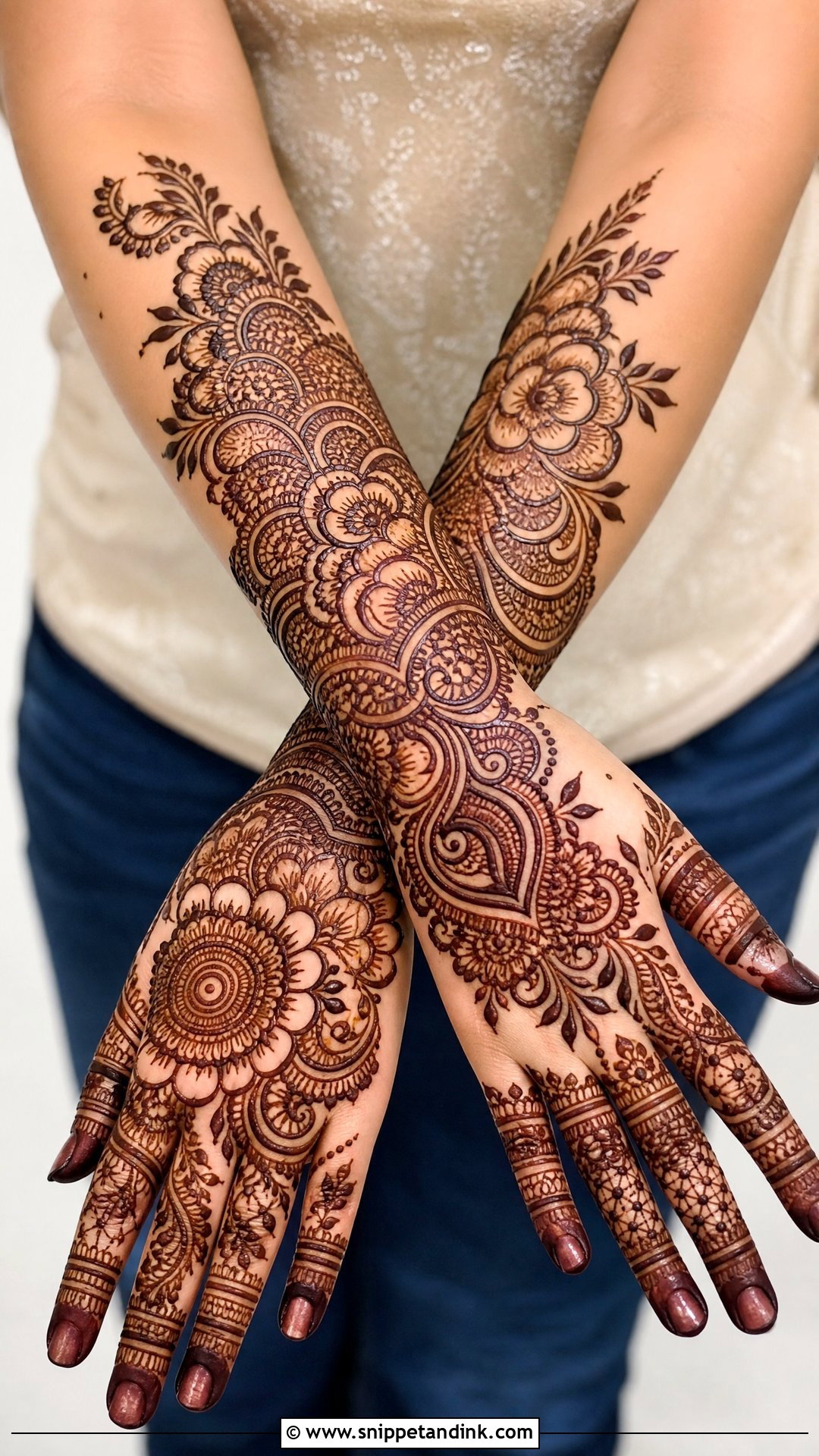
Indo-Arabic pairs bold Arabic outlines with fine Indian detail: large florals, paisleys, mandalas, shaded petals, net filling and detailed fingers. It reads as festive without full dense coverage. A combination I like for engagements is a detailed palm with a slightly more open back hand, since the back hand is the side in the ring photos and benefits from contrast. Bold outlines next to delicate fill are what make it legible up close.
4. Simple Bridal Mehndi Design For Engagement
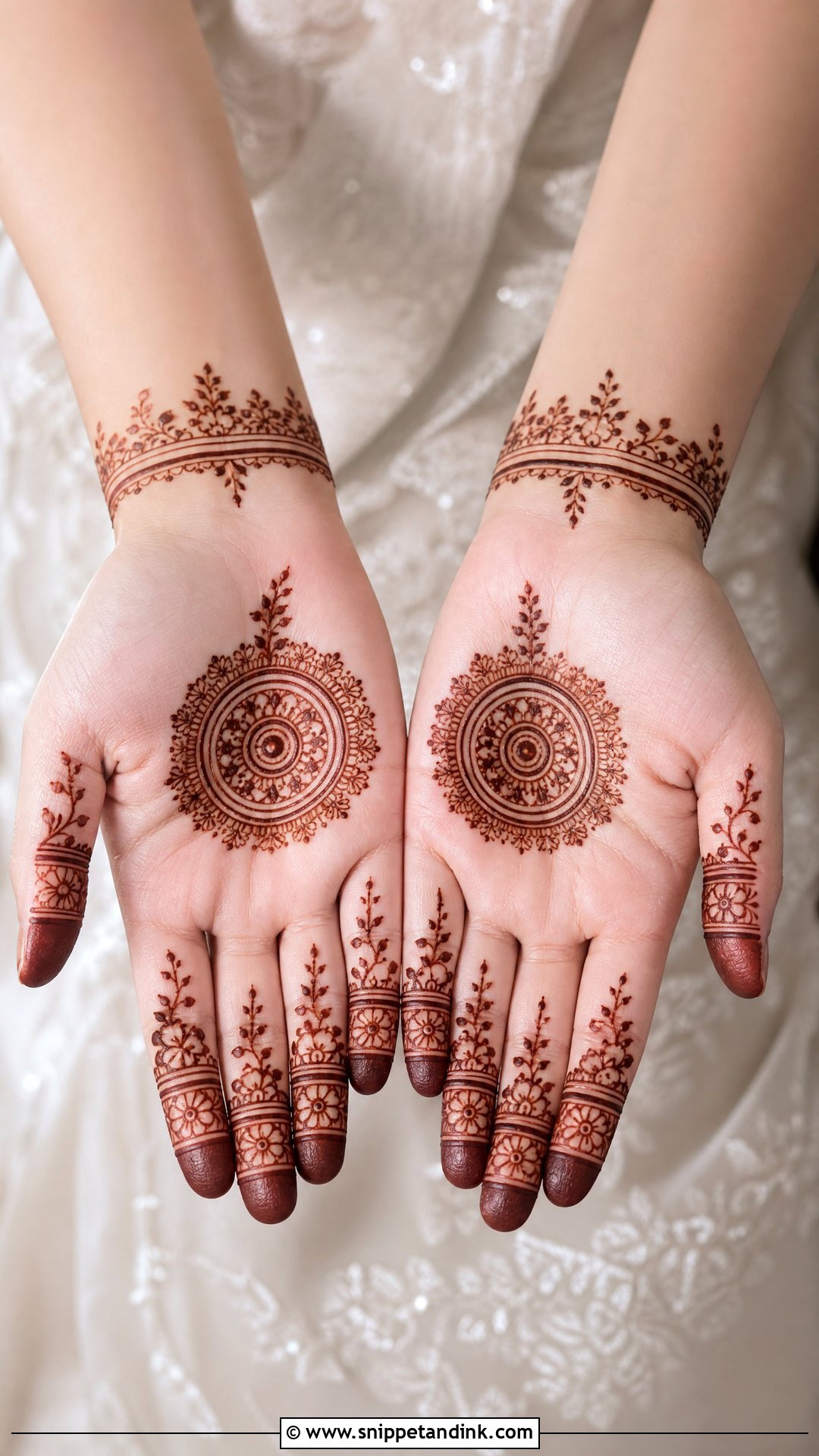
A simple design works when it’s planned, not just sparse. A neat palm motif, light wrist detail, decorated fingers and short floral or leafy extensions are enough. A small mandala in the palm with fine finger caps and bracelet-like wrist bands is the version I draw most often. It suits pastel outfits, minimal jewelry and modern silhouettes, and it’s comfortable to carry through a long event.
5. Back Hand Bridal Mehndi Design For Engagement
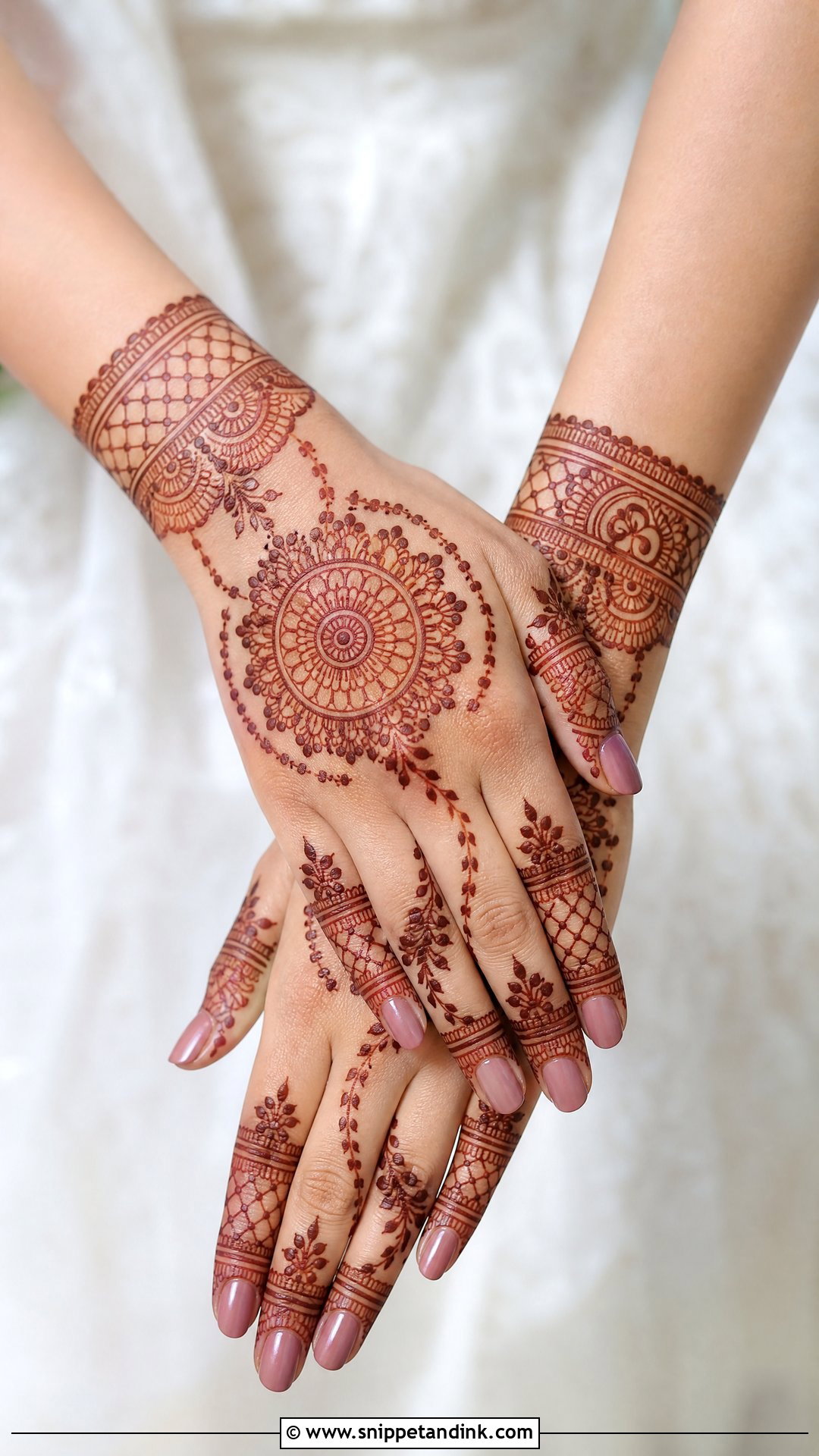
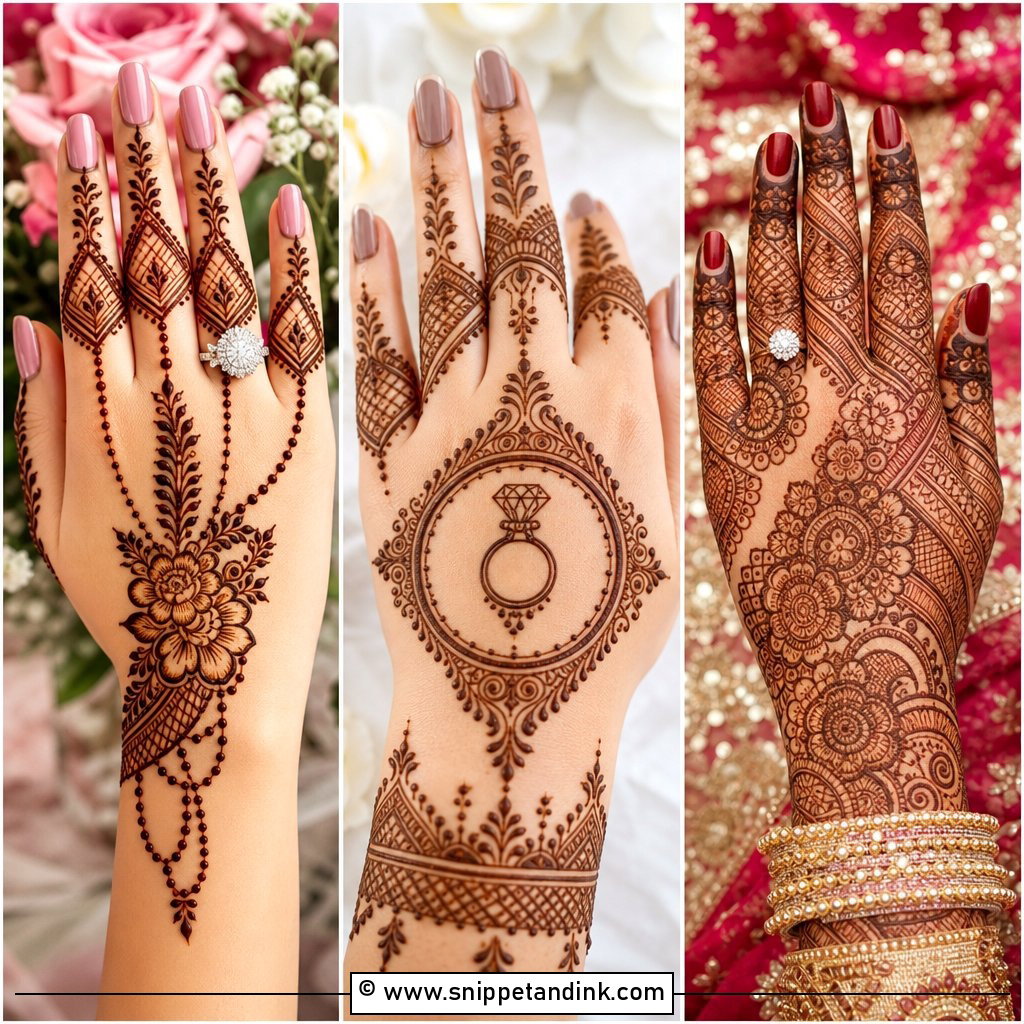
Back hand mehndi is what everyone photographs at an engagement: rings going on, flowers being held, jewelry being shown. A central motif, decorated fingers and a wrist cuff make up the basic structure, using mandalas, florals, leafy trails or jaali. The rule I follow is to frame the ring finger rather than bury it. Either keep that finger slightly more detailed than the others, or draw a fine chain leading toward it, and the ring becomes the point the design is built around.
6. Front Hand Bridal Mehndi Design For Engagement
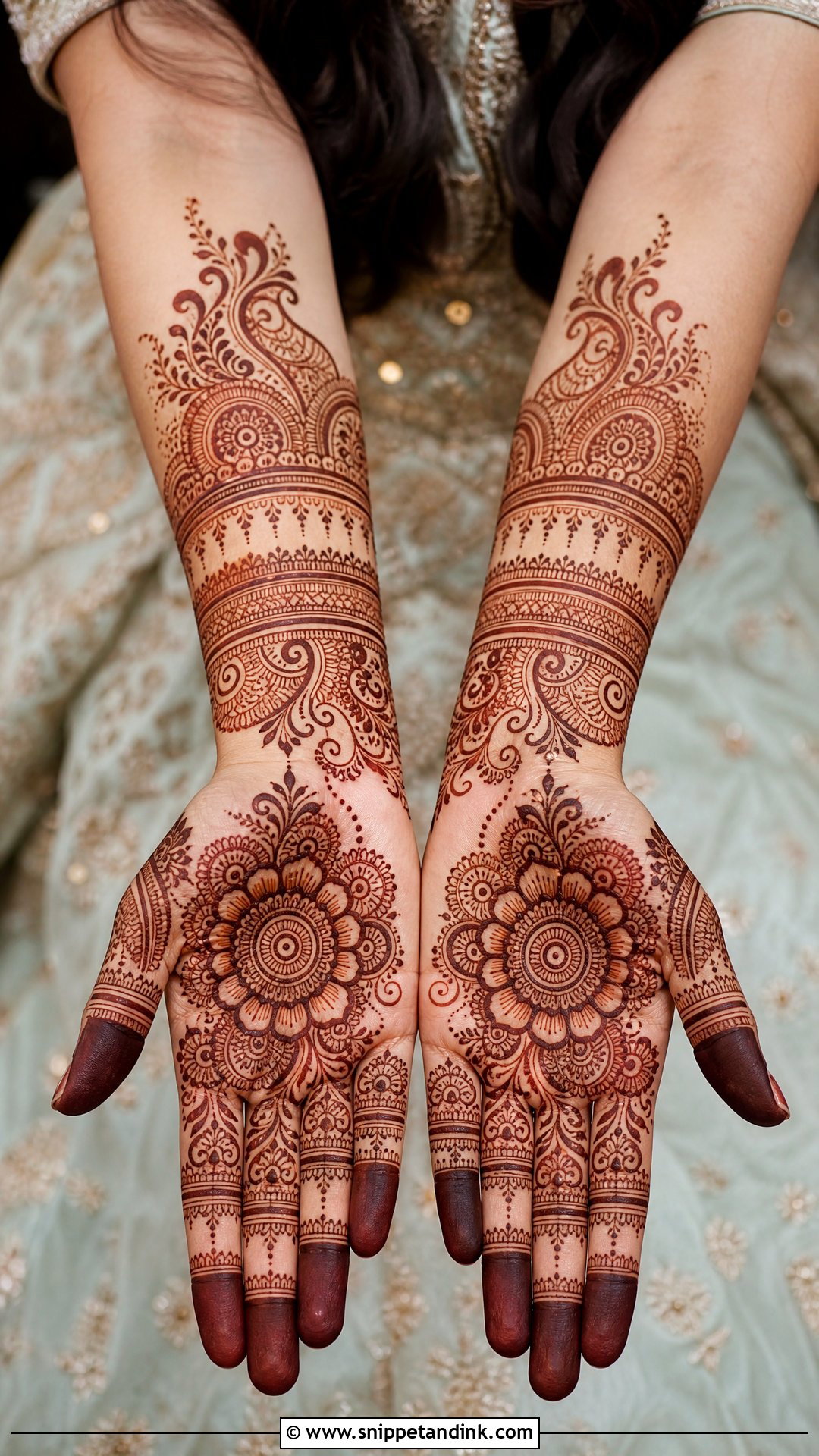
Palms give space for mandalas, paisleys, peacocks, florals and couple initials. At an engagement they can be less dense than wedding-day hands and still feel festive. A large centre motif, filled fingertips, curved paisley borders and a wrist band that connects to the forearm make a balanced layout. Palms stain the darkest of anywhere on the hand, so fine lines hold up well here, though I keep the symmetry strict because palms-to-camera poses show every mismatch.
7. Minimal Bridal Mehndi Design For Engagement
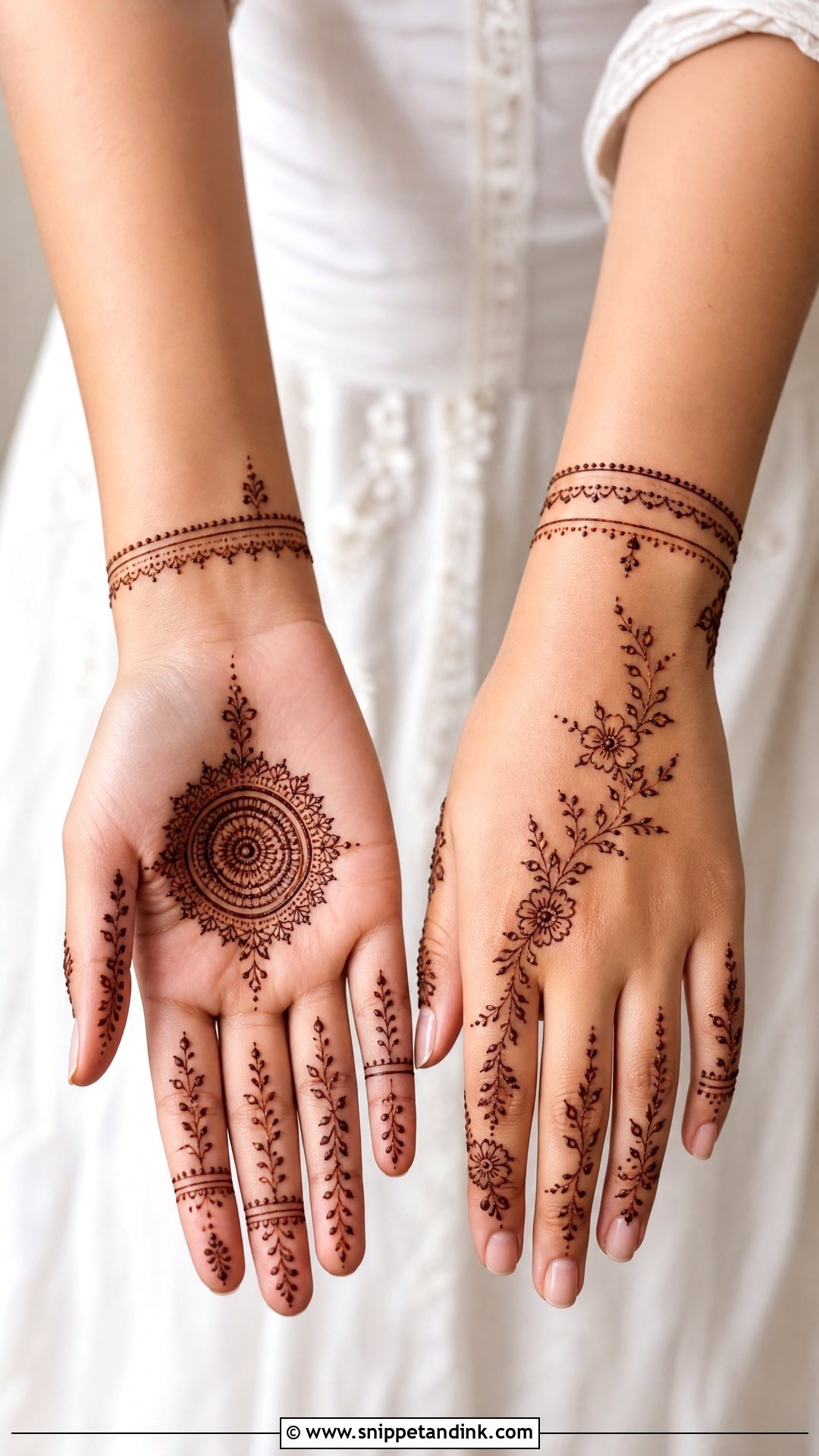
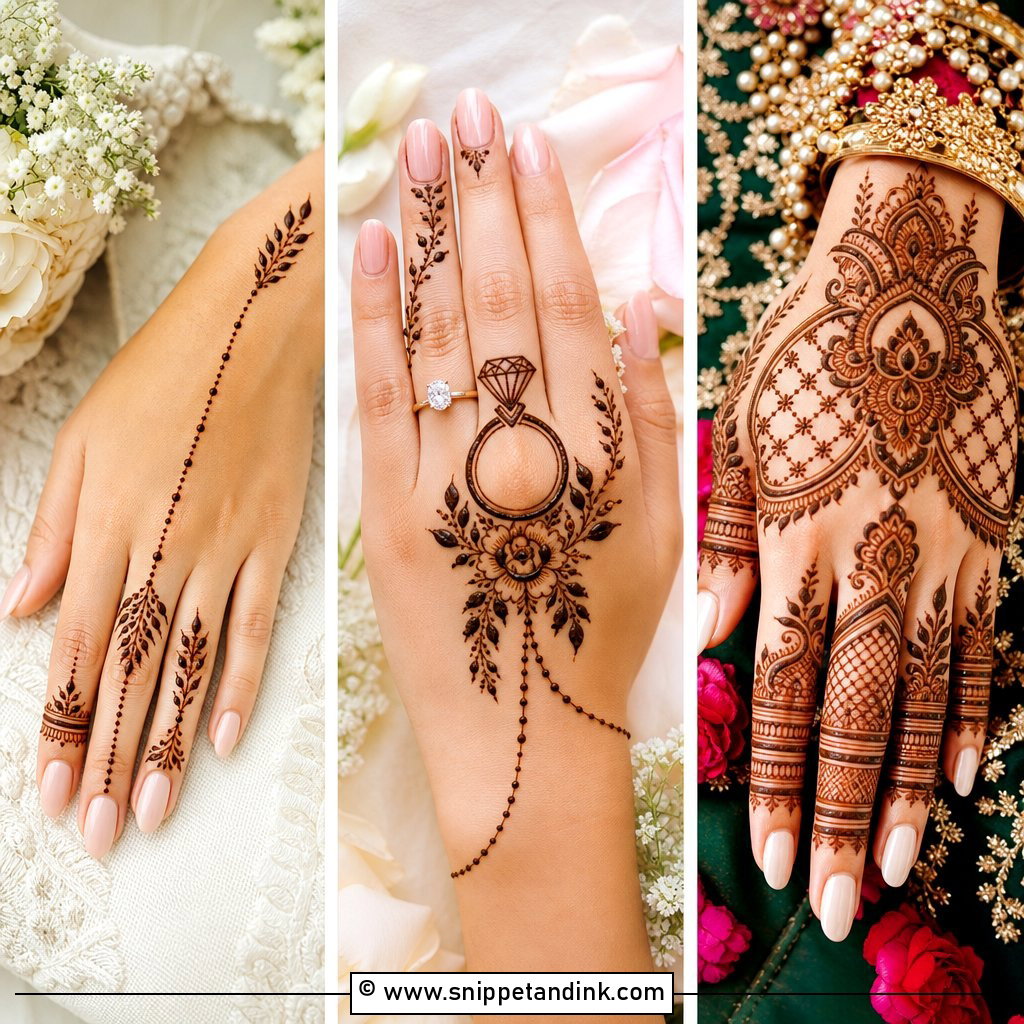
Minimal engagement henna uses fewer elements and places them carefully: delicate finger patterns, tiny florals, thin vines, a small palm mandala and a fine wrist bracelet. Every line has open skin around it. It sits well with gowns, pastel lehengas and pearls. It’s also the sensible choice when the engagement is close to the wedding, because a light design fades out more cleanly before the bridal mehndi goes on.
8. Mandala Bridal Mehndi Design For Engagement
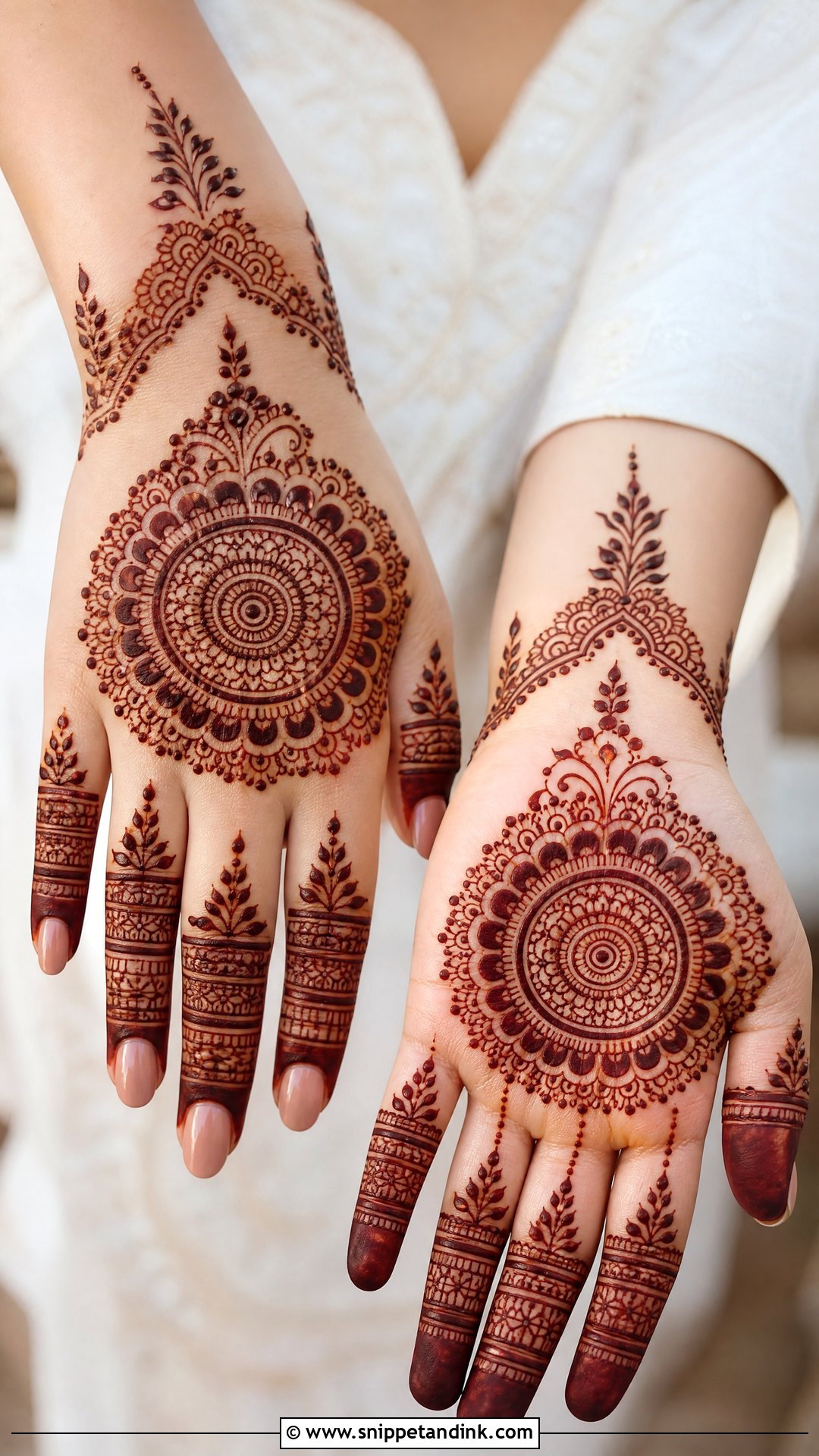
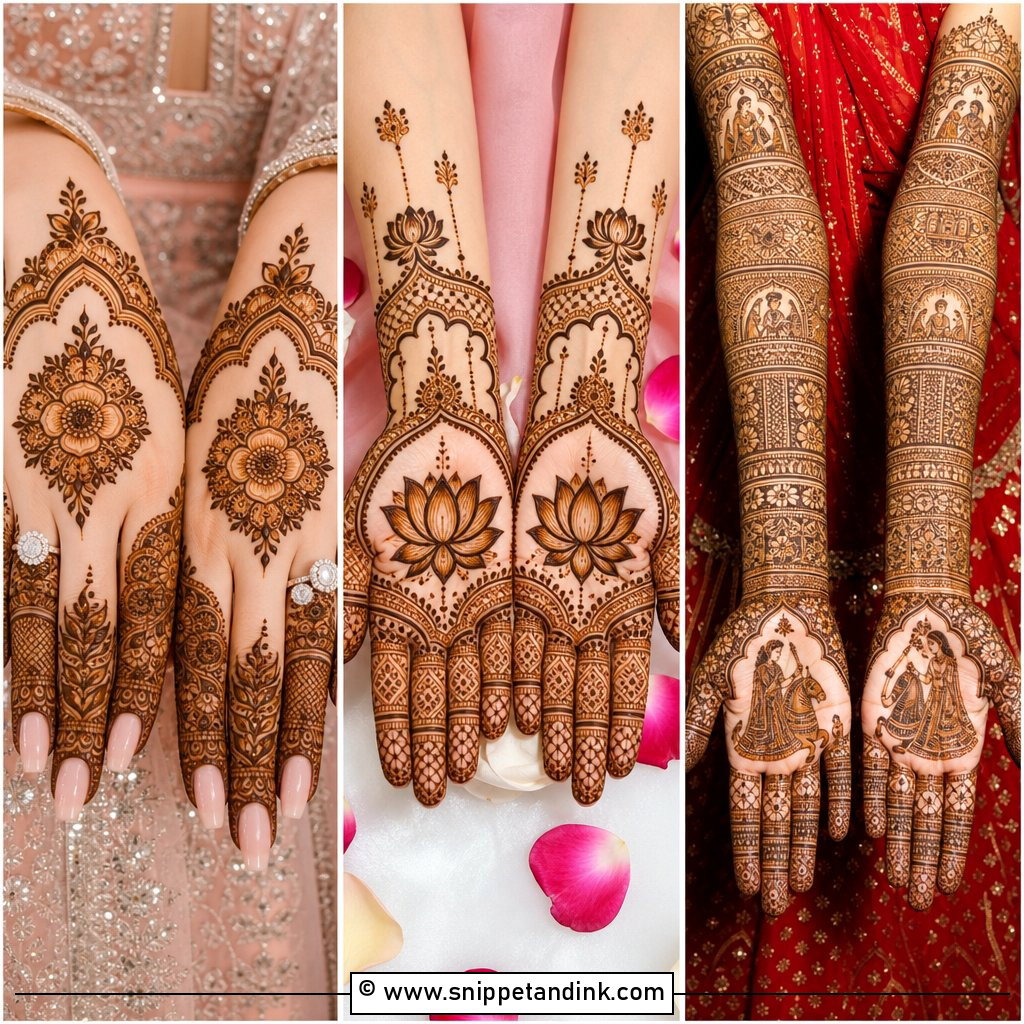
One centred circle on the palm or back hand, supported by finger detail, wrist bands, dots, petals and fine borders, gives a mandala design its focus. It doesn’t need heavy coverage to feel complete, which is why it works so well for engagements. Keep it bold with open space around it, or fill it out with paisley extensions for a more traditional look. Getting the circle truly round is the whole test of the artist; an oval mandala is obvious in a ring close-up.
9. Floral Bridal Mehndi Design For Engagement
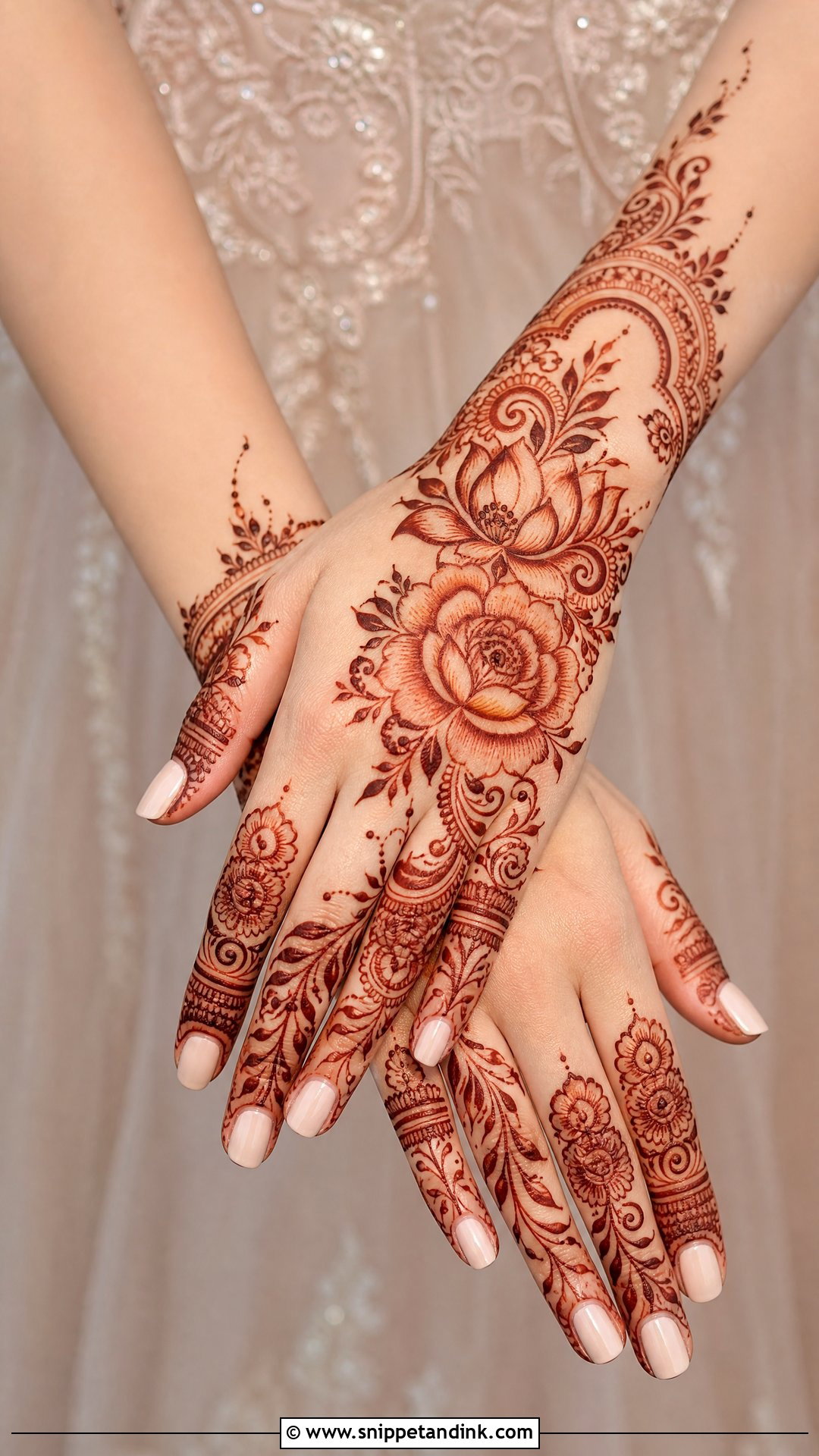
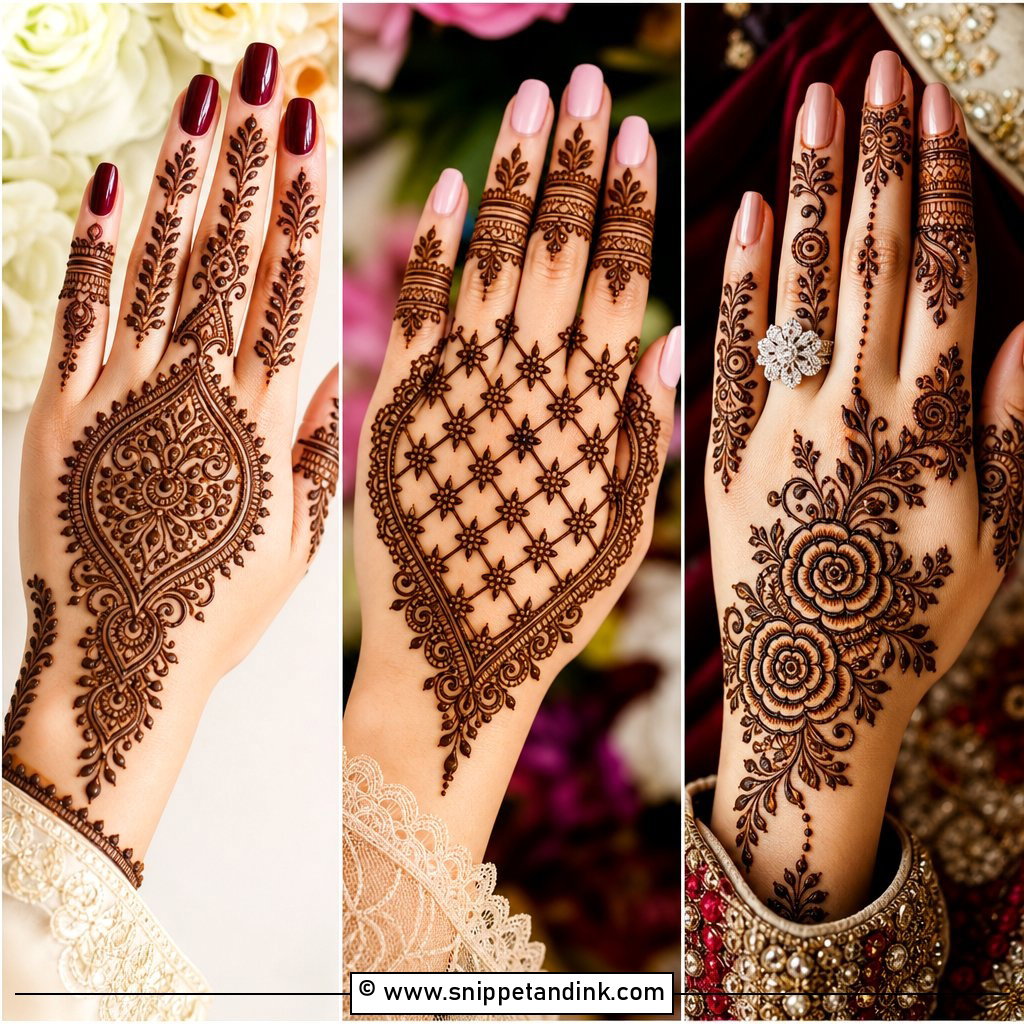
Flowers can run as a full-hand pattern, a diagonal Arabic trail or a back-hand bracelet design. Roses, lotuses, small blossoms, leafy vines and shaded petals are the usual vocabulary. What keeps floral work from looking flat is scale: a few big blooms with tiny fillers between them. A wrist cuff built from the same flower shapes ties it together, and it pairs naturally with embroidered or pastel outfits.
10. Peacock Bridal Mehndi Design For Engagement
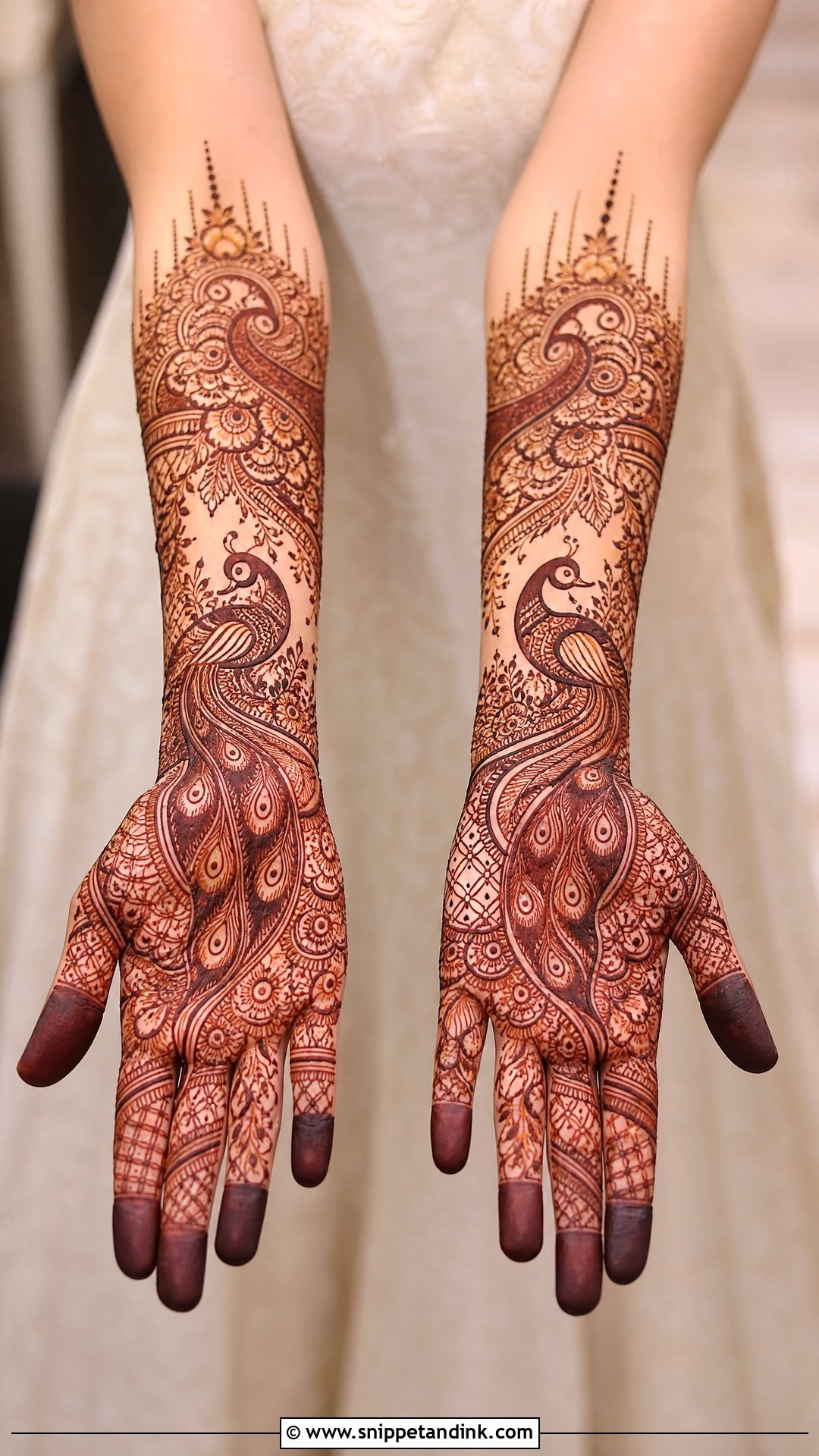
Peacocks feel classic, but at an engagement I keep them balanced rather than dominant. One bird per hand, on the palm, wrist or forearm, with feathers, paisleys and florals around it, leaves enough open skin. A mirrored pair facing each other across both palms looks more dramatic when the hands are held together. Fine feather detail gives depth; open space stops it getting heavy. It sits naturally with traditional Indian outfits.
11. Paisley Bridal Mehndi Design For Engagement
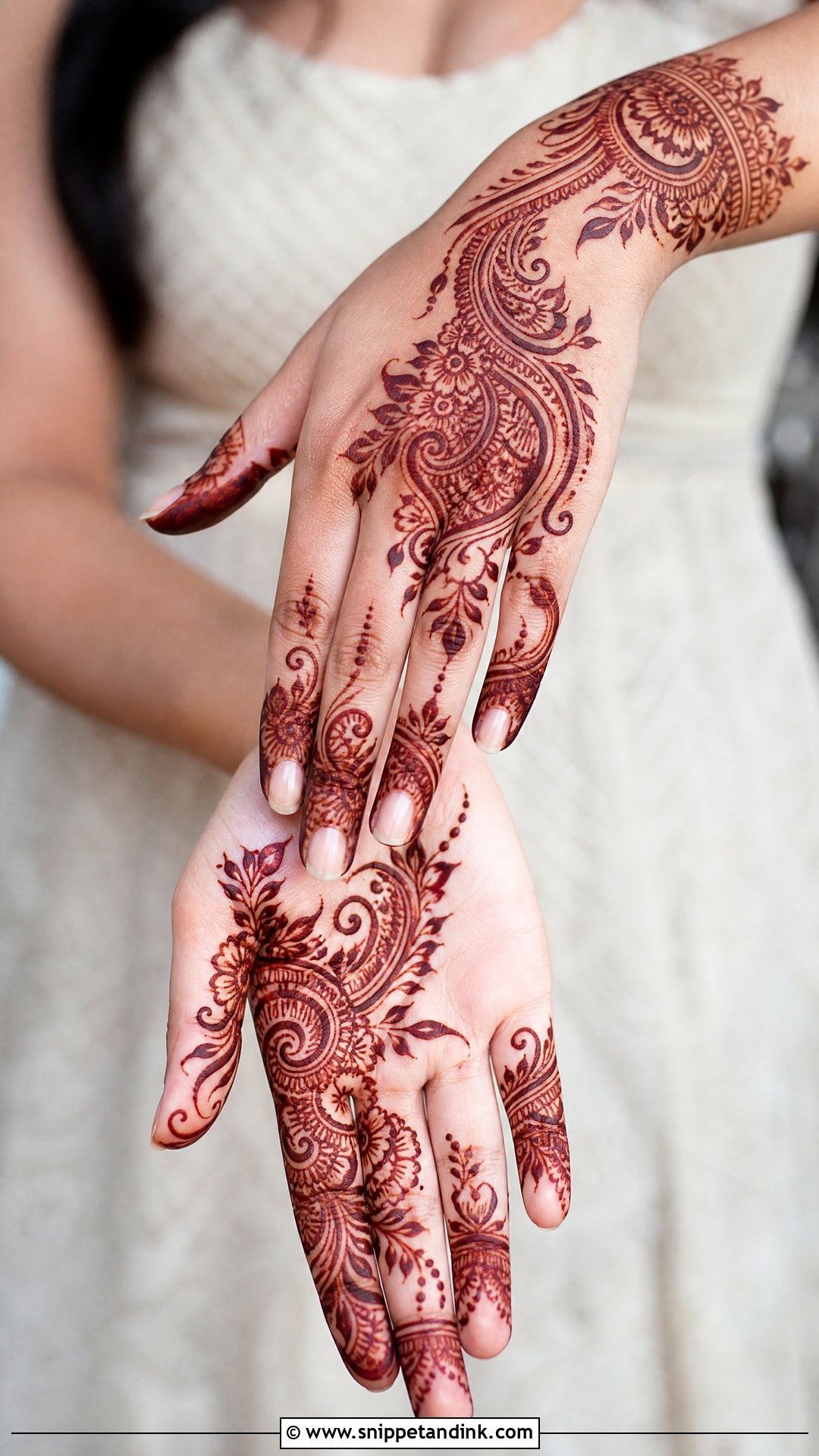
Paisleys are dependable because they flow from wrist to fingers so naturally, with small florals, dots, leaves and mesh filling around them. They work on palms and back hands alike, which makes matching a pair easy. For engagement hands I keep them medium-sized and well spaced. Very small, densely packed paisleys can merge once the stain darkens, and you lose the shape that makes them recognisable.
12. Jaali Bridal Mehndi Design For Engagement
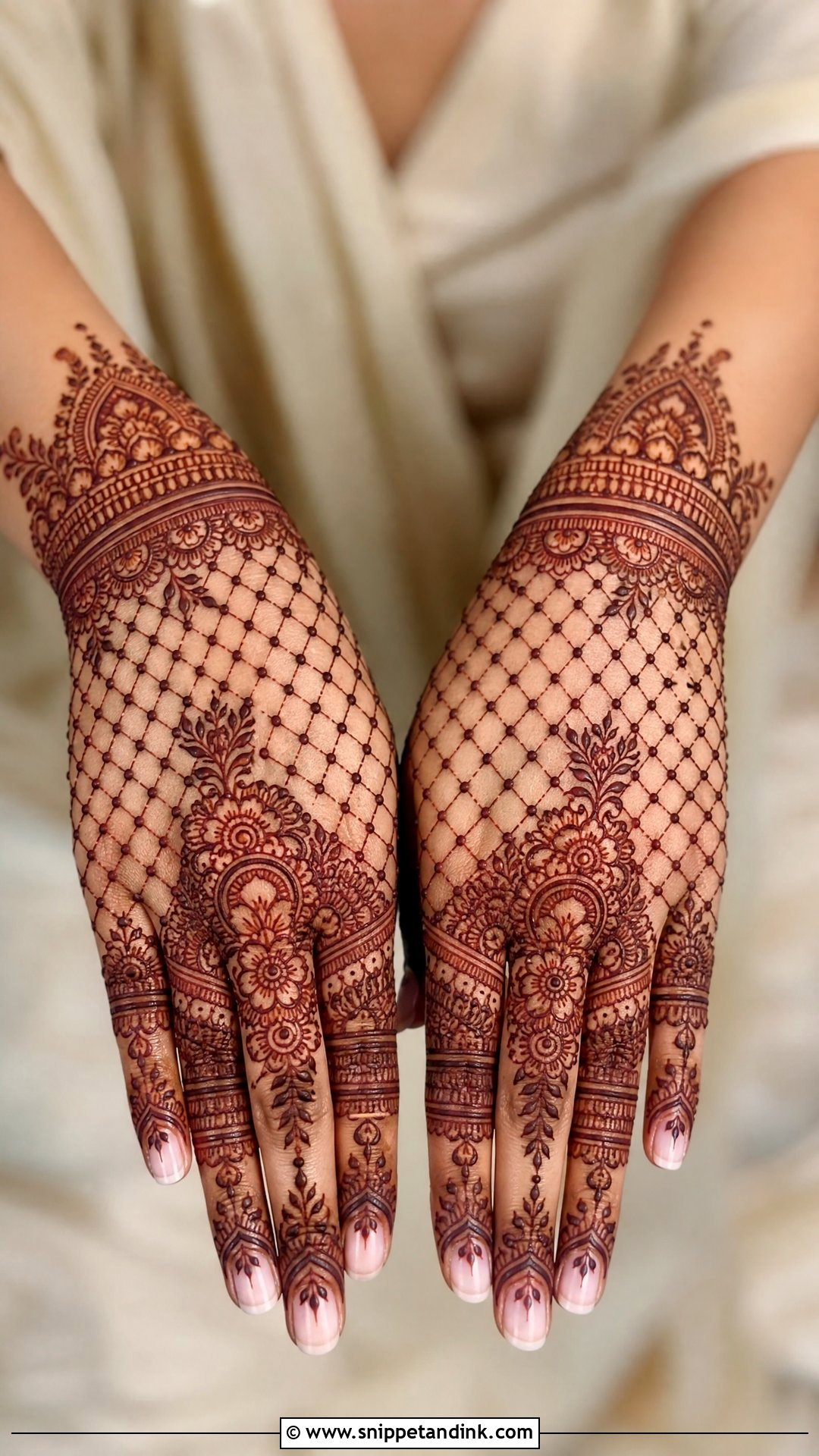
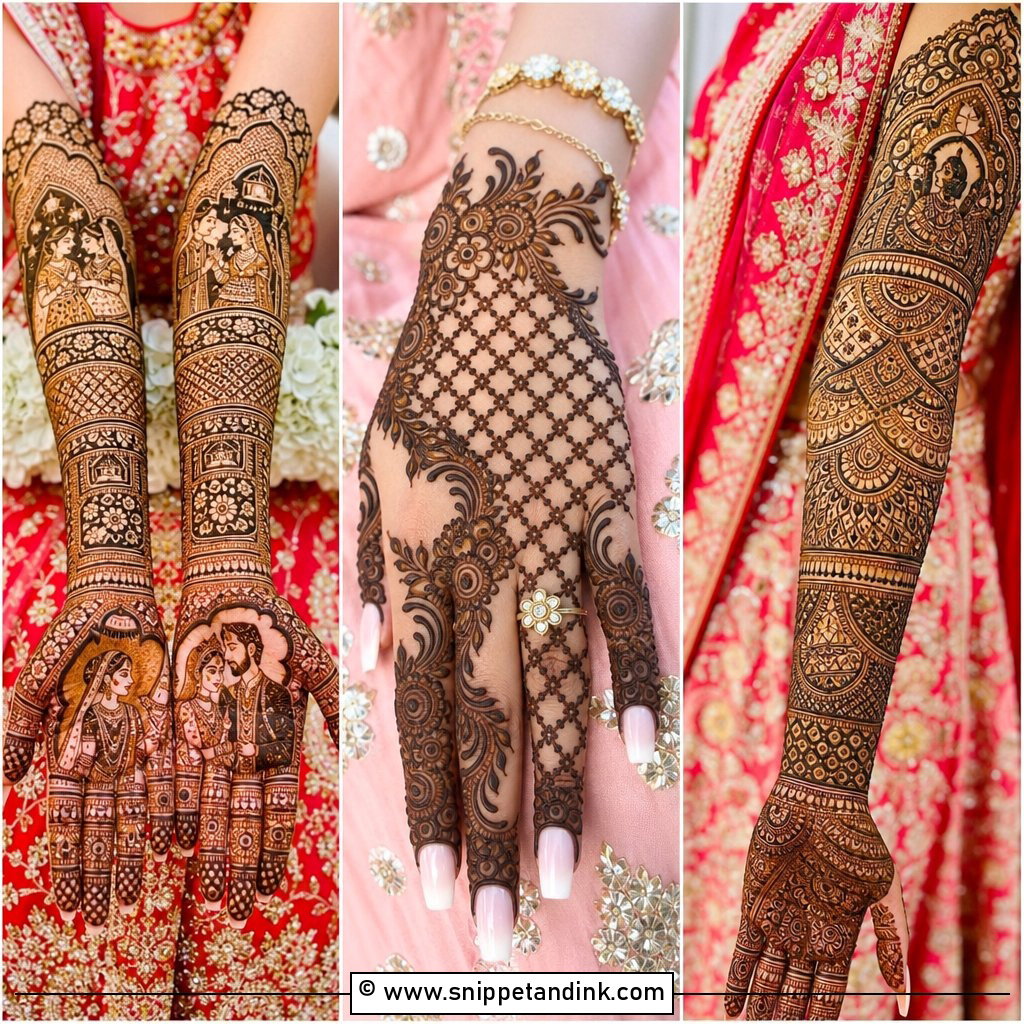
Jaali gives a lace-like texture that looks refined in engagement portraits, built from mesh, tiny dots, florals, borders and bracelet details. On the back of the hand, a mesh panel can frame the fingers and the ring area. Pairing it with a mandala, paisleys or an Arabic trail adds depth. Even line spacing is everything; cramped or uneven mesh looks crowded. Rings, bangles and embroidered sleeves all sit well beside it.
13. Ring Ceremony Mehndi Design
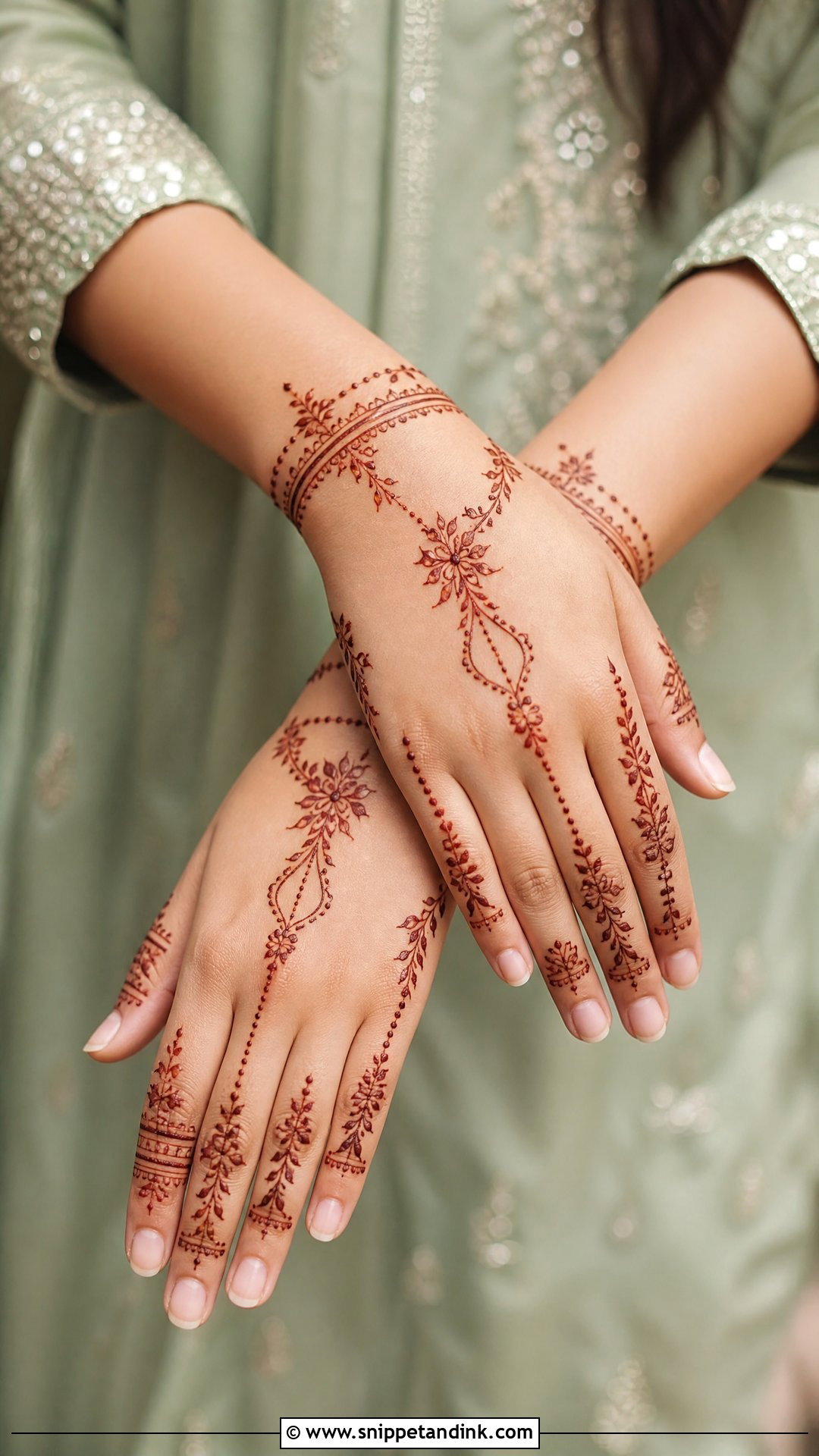
A ring ceremony design is built backward from the ring finger. Finger vines, delicate ring frames, bracelet chains, florals and small mandalas decorate the hand without covering the spot where the ring will sit. A fine trail from the wrist to the ring finger, or a chain pattern that looks like hand jewelry, draws the eye exactly where you want it. Make sure the paste is fully off and the skin dry before the ring goes on, or you’ll smudge the design and stain the band.
14. Bride And Groom Mehndi Design For Engagement
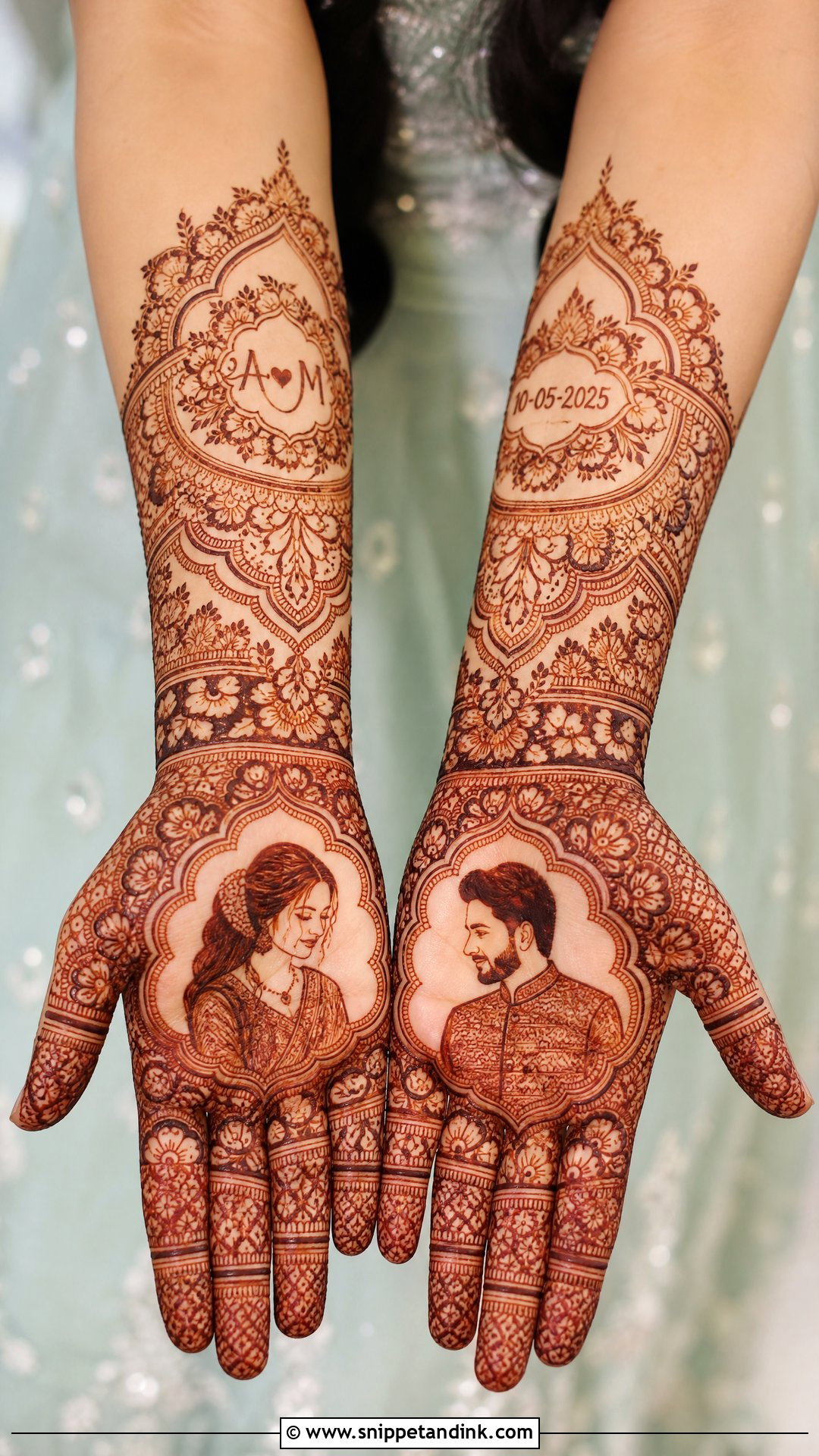
Portraits at an engagement don’t need to be large or elaborate. A small couple motif on the palm, framed by florals, paisleys and fine borders, does the job, and initials, a date, a tiny ring symbol or a simple engagement scene fit around it. Medium to full-hand coverage gives the story elements room to read. Faces are the hardest thing to draw in henna, so ask for them simple rather than detailed; small faces with too many lines tend to blur as the stain develops.

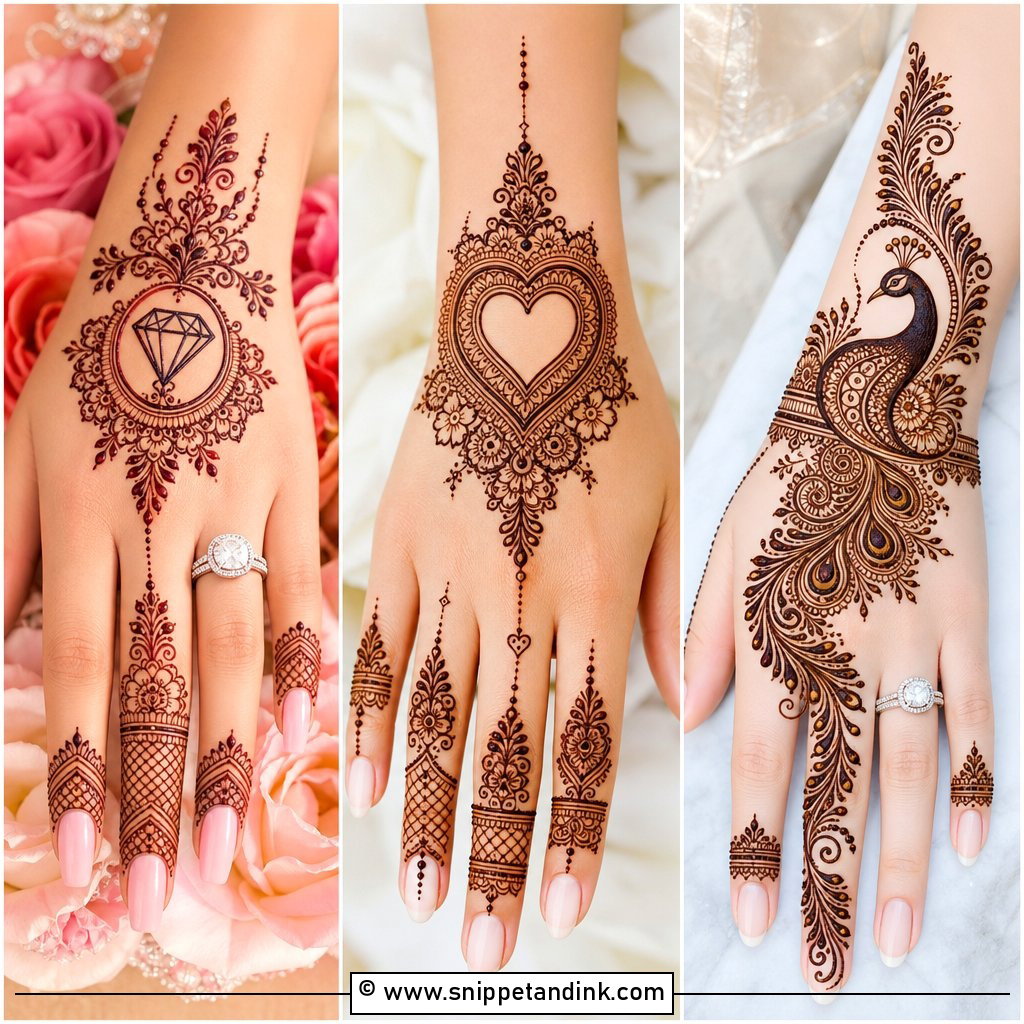
15. Engagement Date Bridal Mehndi Design
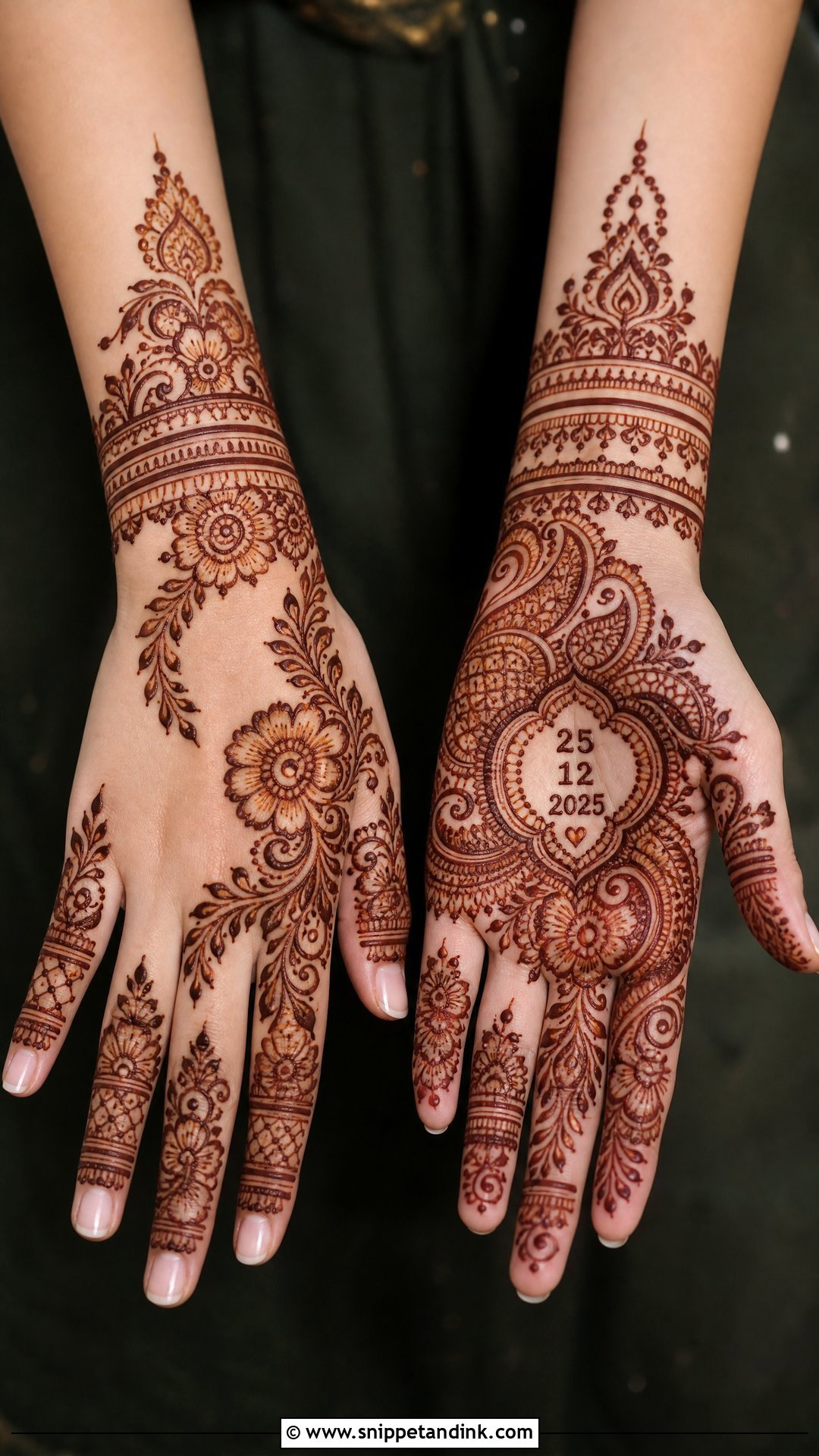
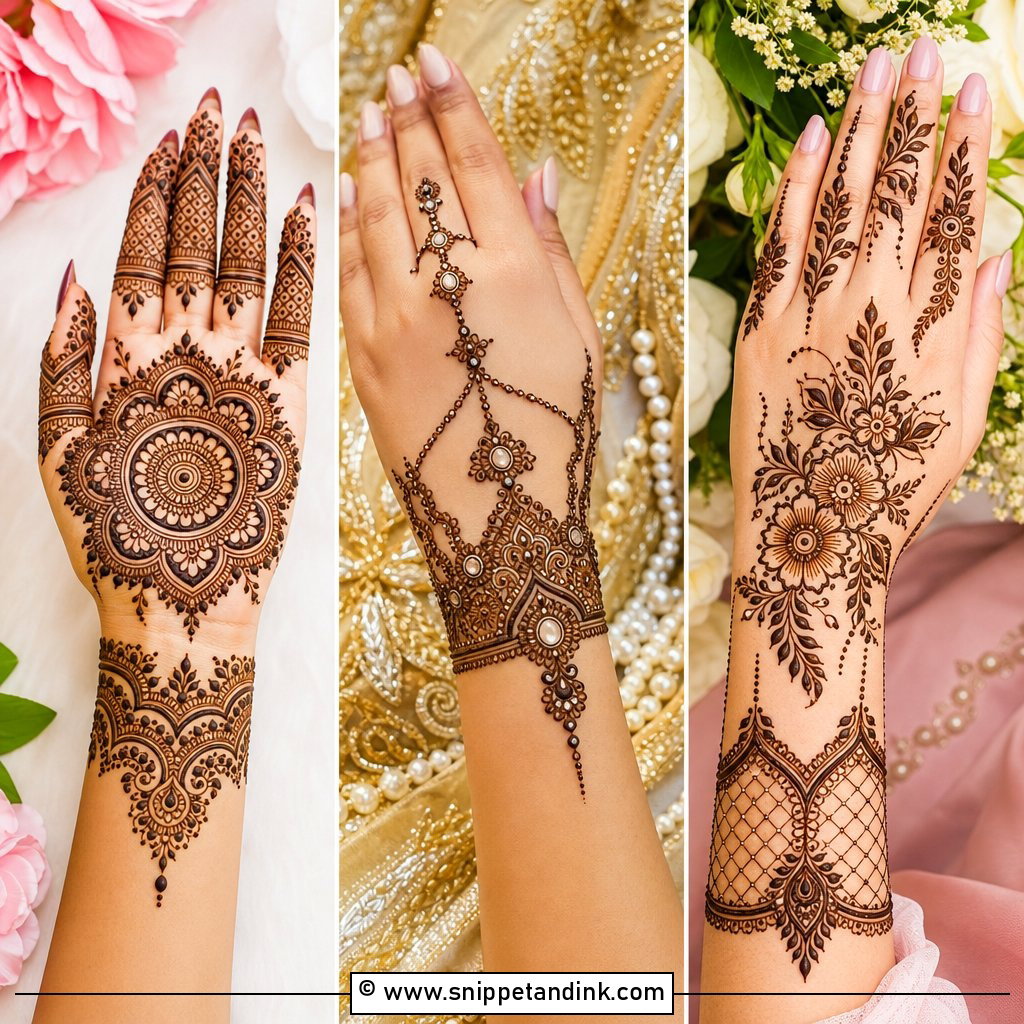
Hiding the engagement date in the design is a quiet way to personalise it. It can sit inside a paisley, along a wrist band, next to initials or in a small frame on the palm, in any style from Indian to Arabic. I write numbers slightly larger than people expect. Henna lines spread a touch as the stain develops, and a 6 and an 8 written too small can become indistinguishable in close-ups.
16. Initials Bridal Mehndi Design For Engagement
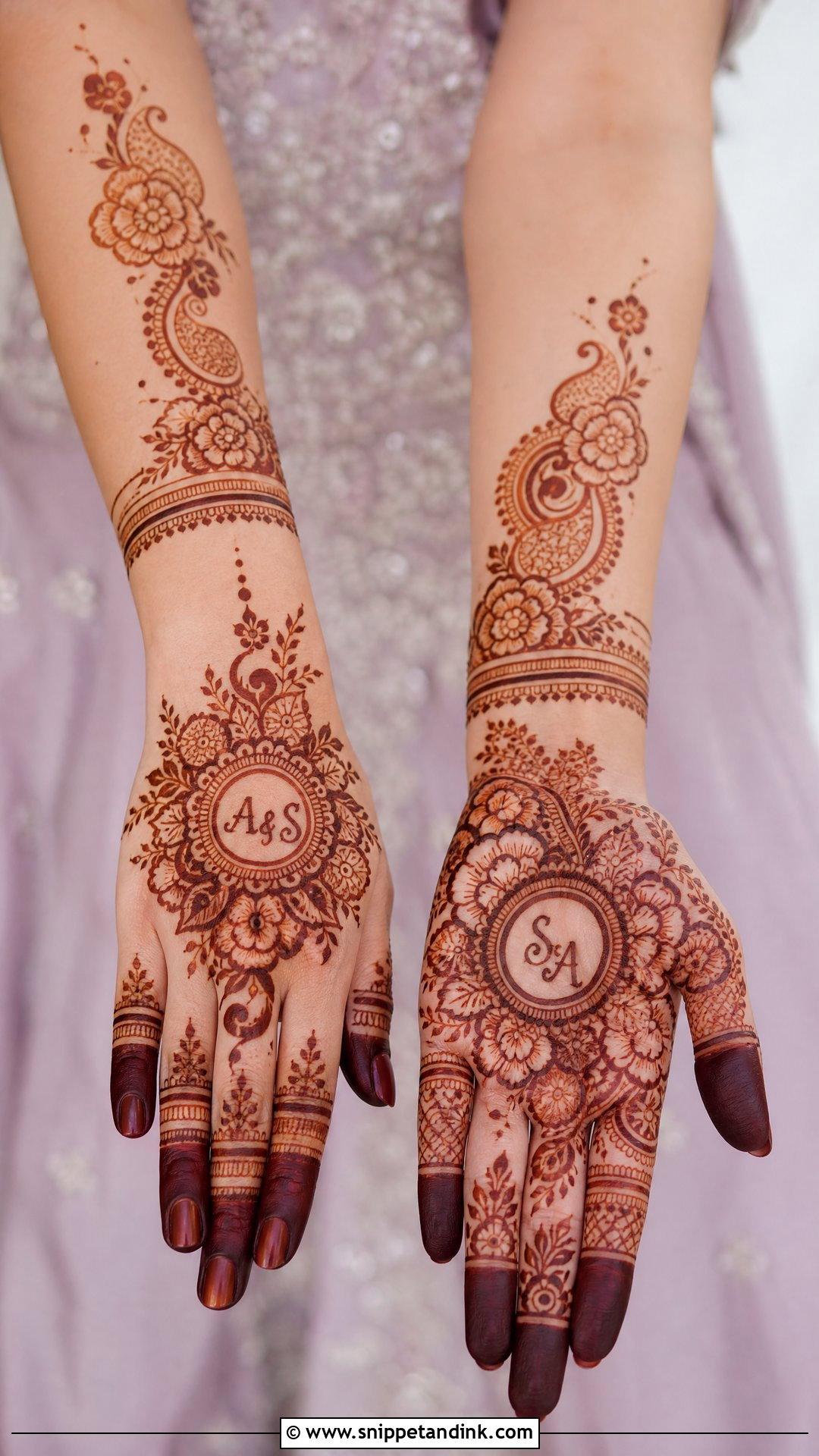
Initials are simple, meaningful and a lot of fun at engagement events, because guests love finding them. They can go in the palm, inside a flower, near the wrist or within a mandala. On a modern design, initials worked into fine back-hand vines near the ring finger look neat. On a traditional design, they hide inside a dense palm. I shape letters to follow the curve of whatever motif they sit in, so they belong to the pattern.
17. Bracelet Bridal Mehndi Design For Engagement
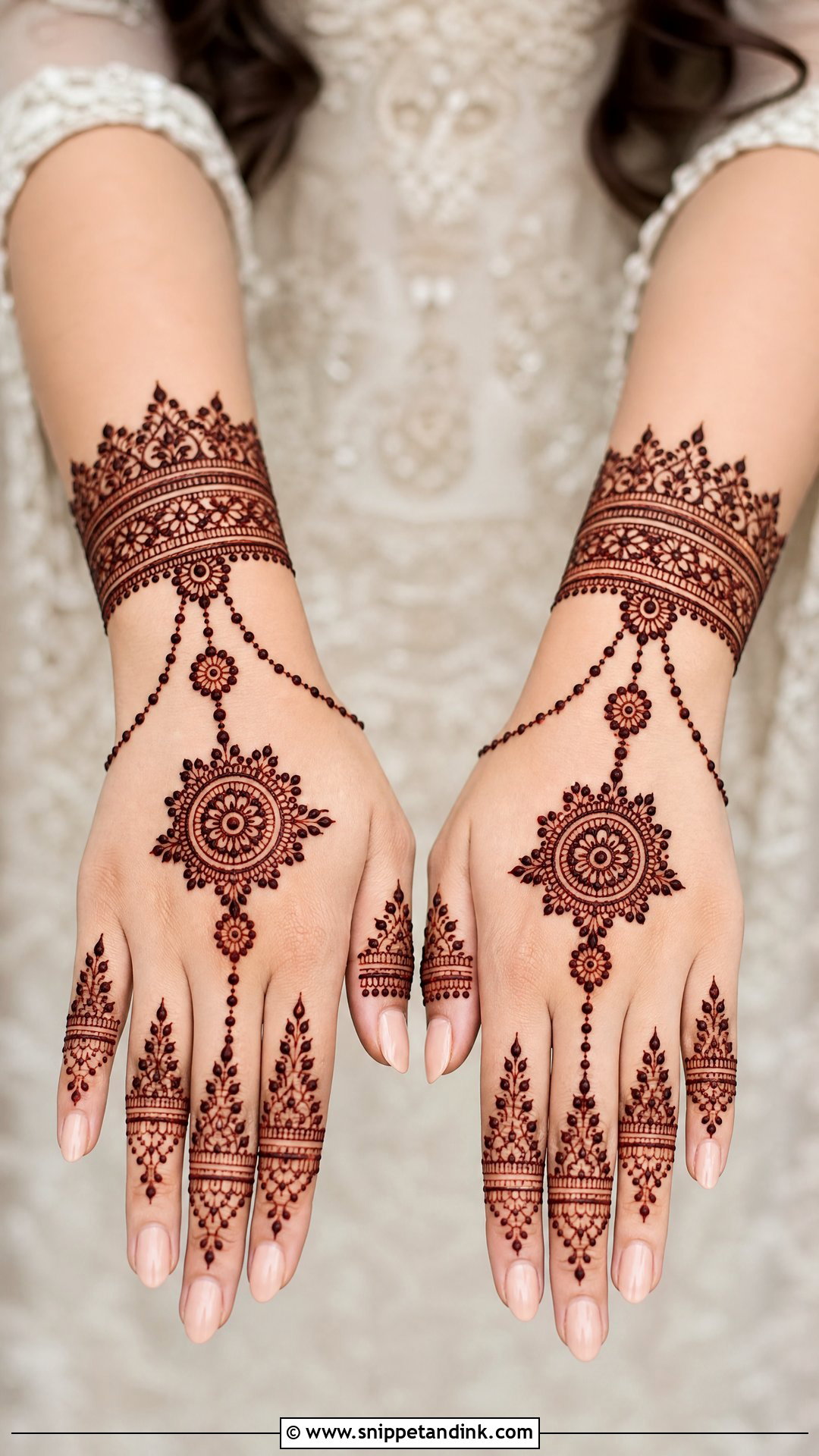
Bracelet mehndi draws jewelry on the skin: wrist cuffs, chains, finger rings, delicate vines and small motifs across the back hand. It sits naturally next to an engagement ring and bangles. Detail stays around the wrist and fingers while the palm side stays light. One wide band or several thin ones are both options. A small floral or mandala on the back of the hand keeps it bridal rather than party henna.
18. Modern Bridal Mehndi Design For Engagement
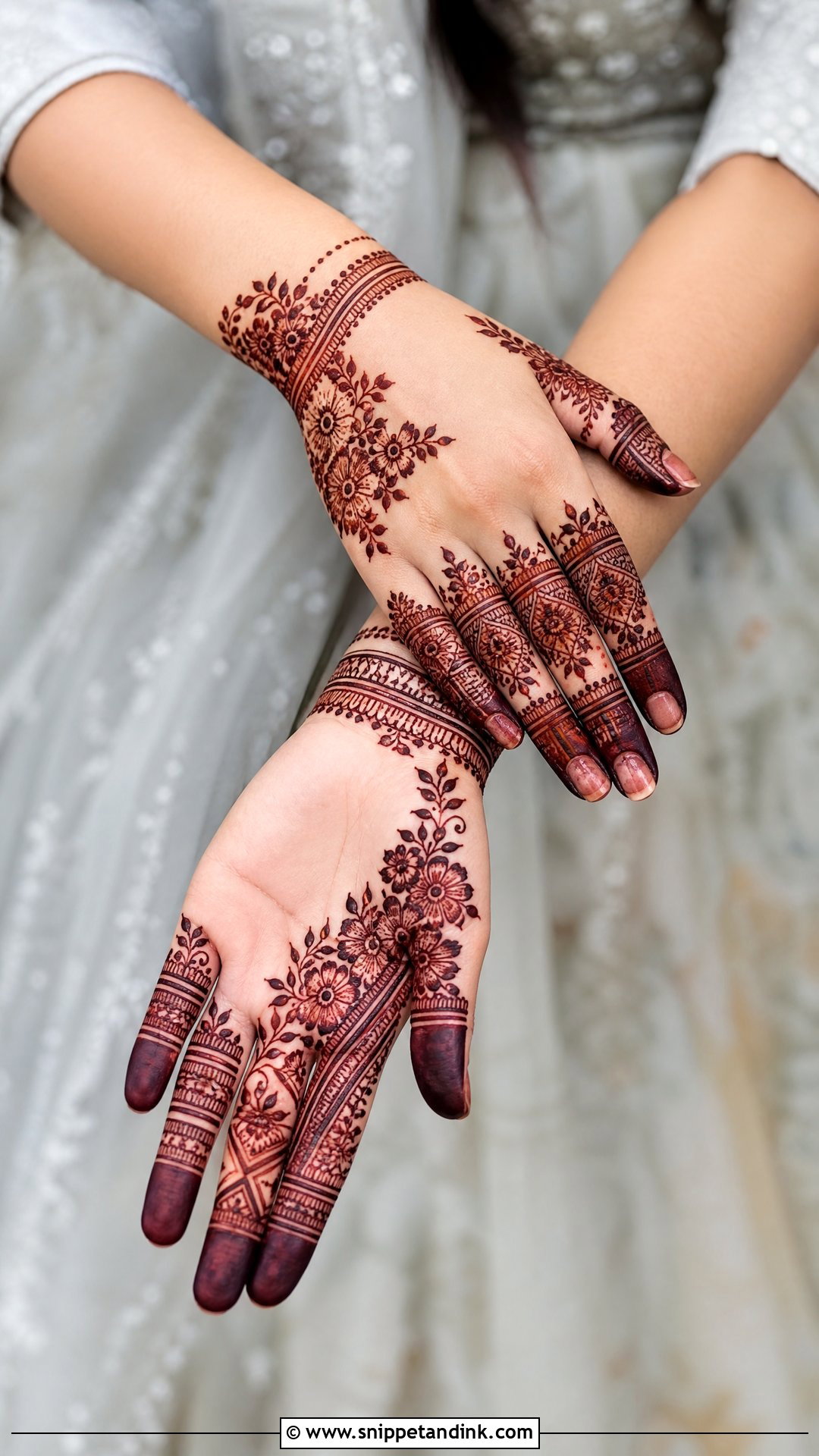
Modern layouts use geometric lines, half-hand coverage, negative space, fine florals, cuffs and bold finger detail rather than filling every inch. They suit contemporary lehengas, fusion outfits, gowns and simple sarees, and leave room for the ring, nails and jewelry to show. Without at least one statement motif, though, it can read as everyday henna. I always anchor it with a mandala, a floral cluster, a paisley trail or a strong cuff.
19. Gulf Bridal Mehndi Design For Engagement
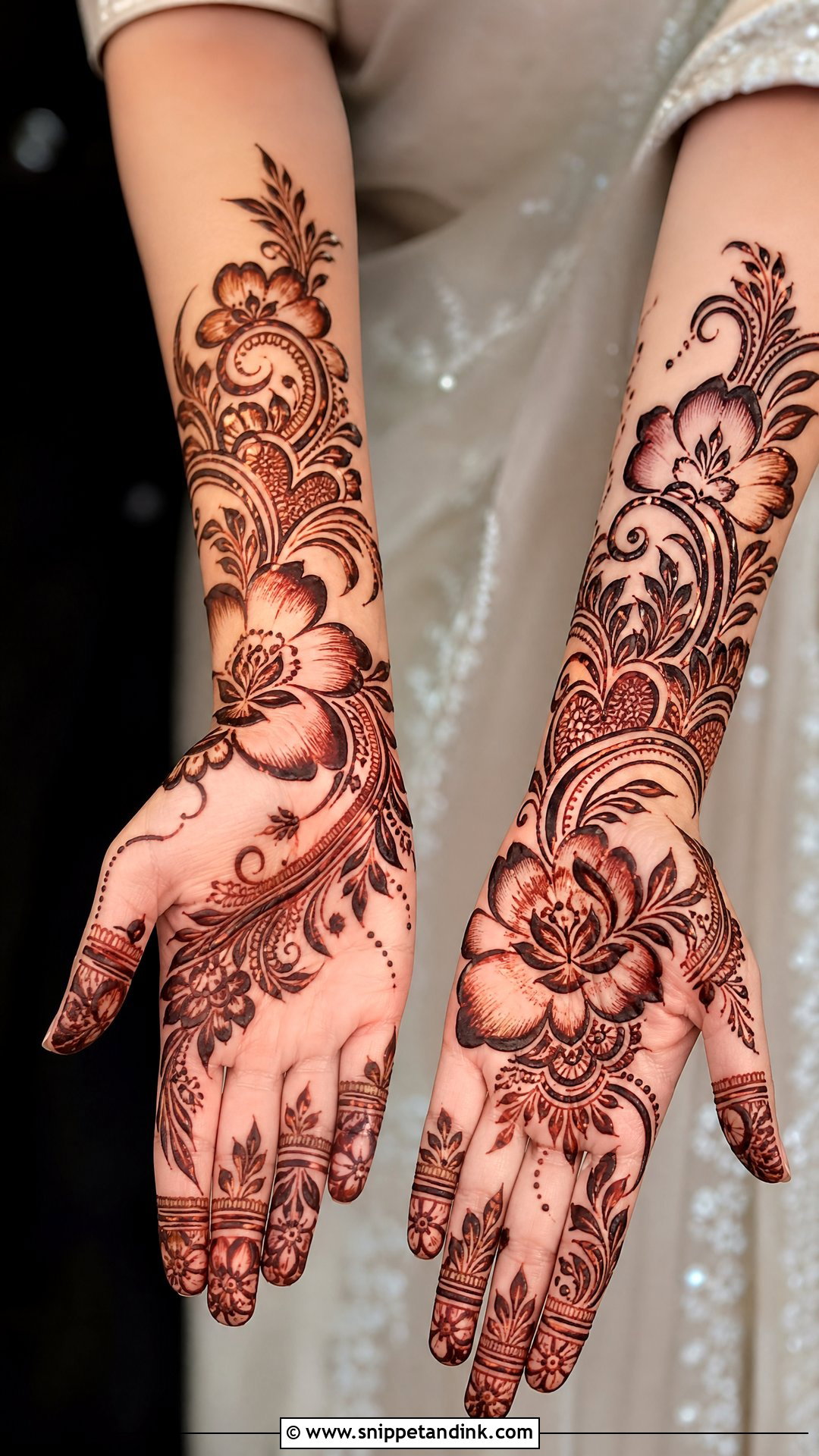
Gulf bridal mehndi, often called Khaleeji style, uses bold flowers, flowing leaves, shaded spaces and wide open areas. It’s fuller than simple Arabic work but lighter than Indian bridal coverage. The trail often starts at the wrist, sweeps across the hand and ends in detailed fingers. Shading softens it and the thick outlines give it strength, and those big motifs show clearly on both palm and back hand.
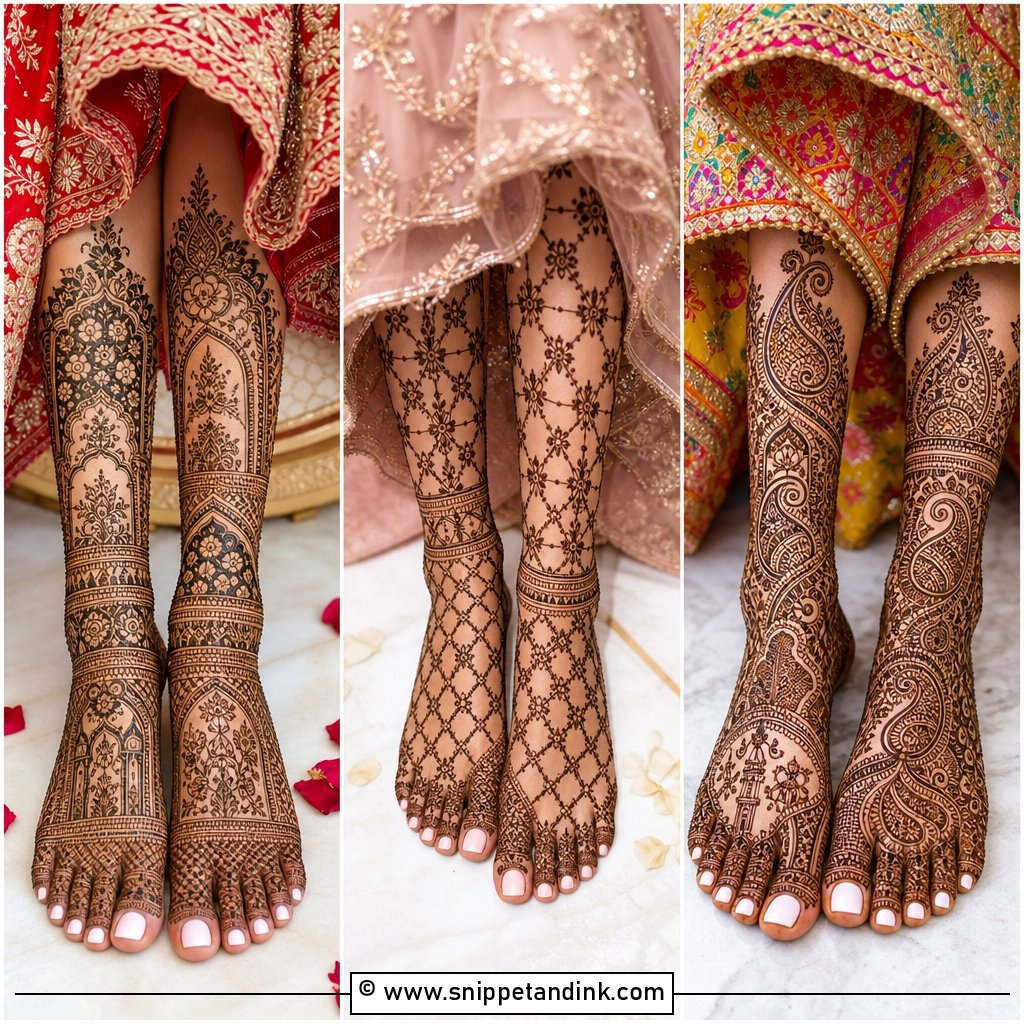
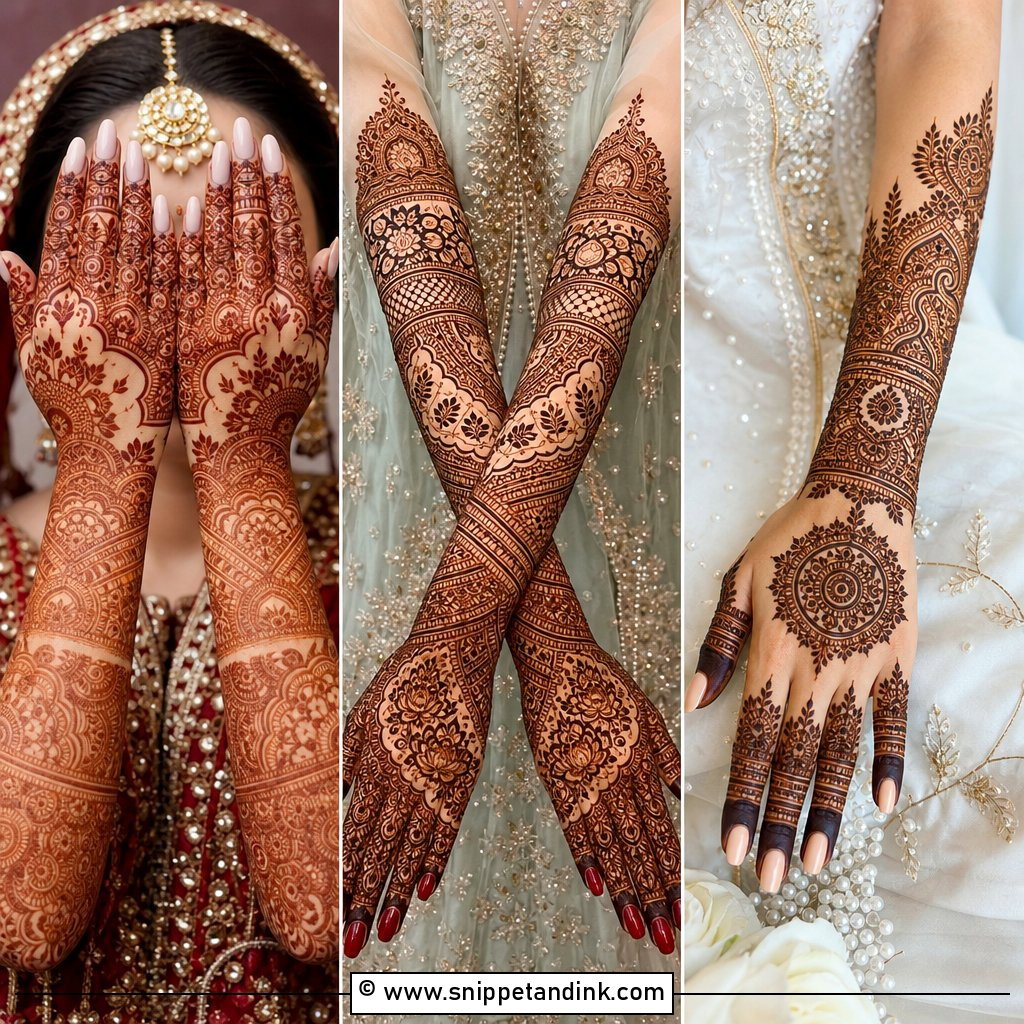
20. Moroccan Bridal Mehndi Design For Engagement
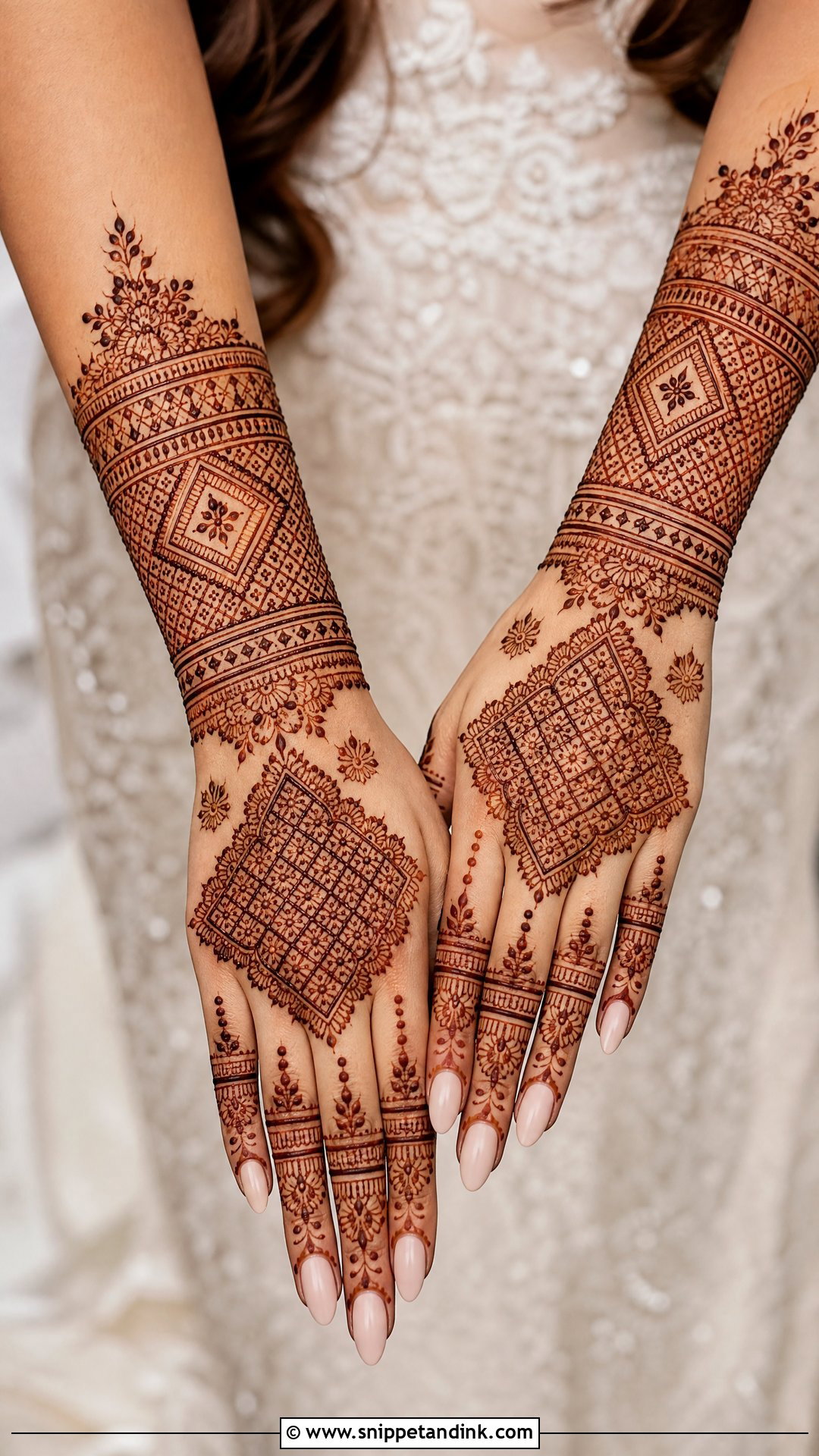
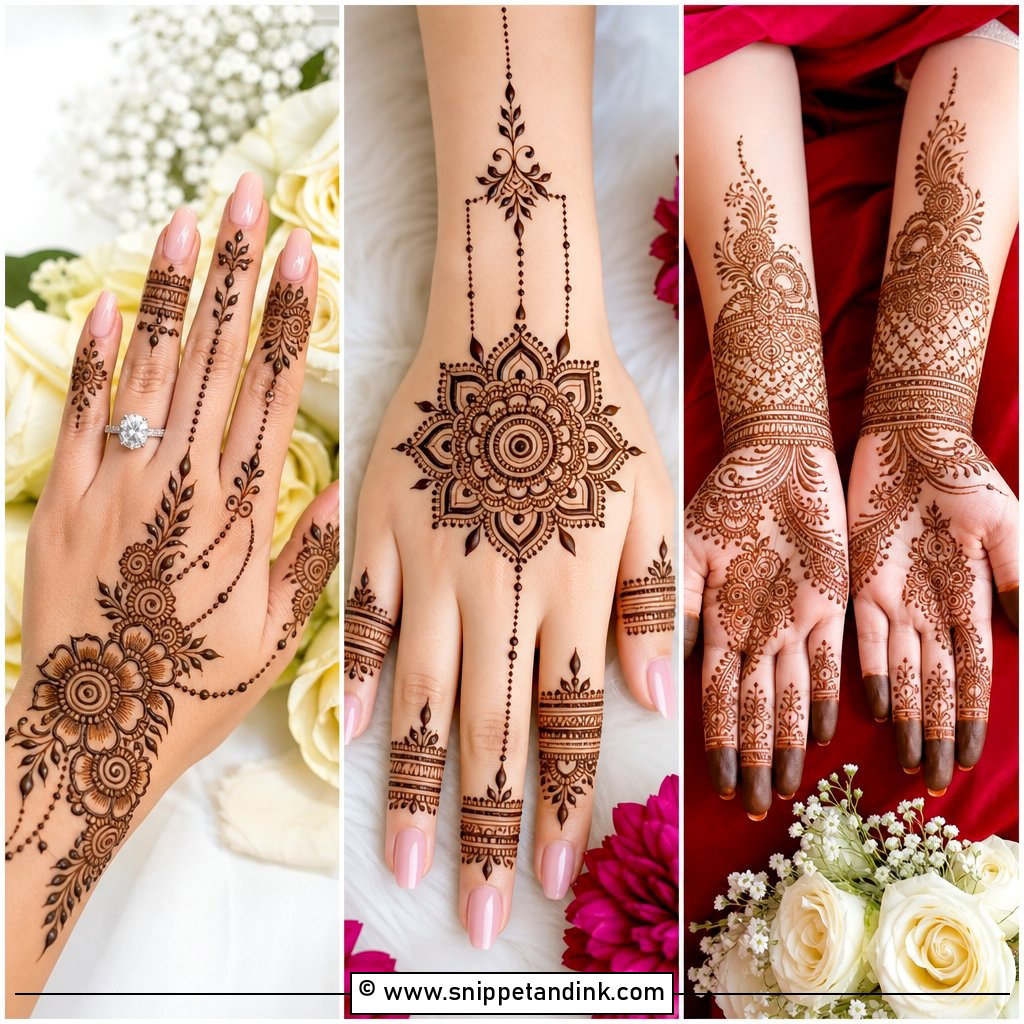
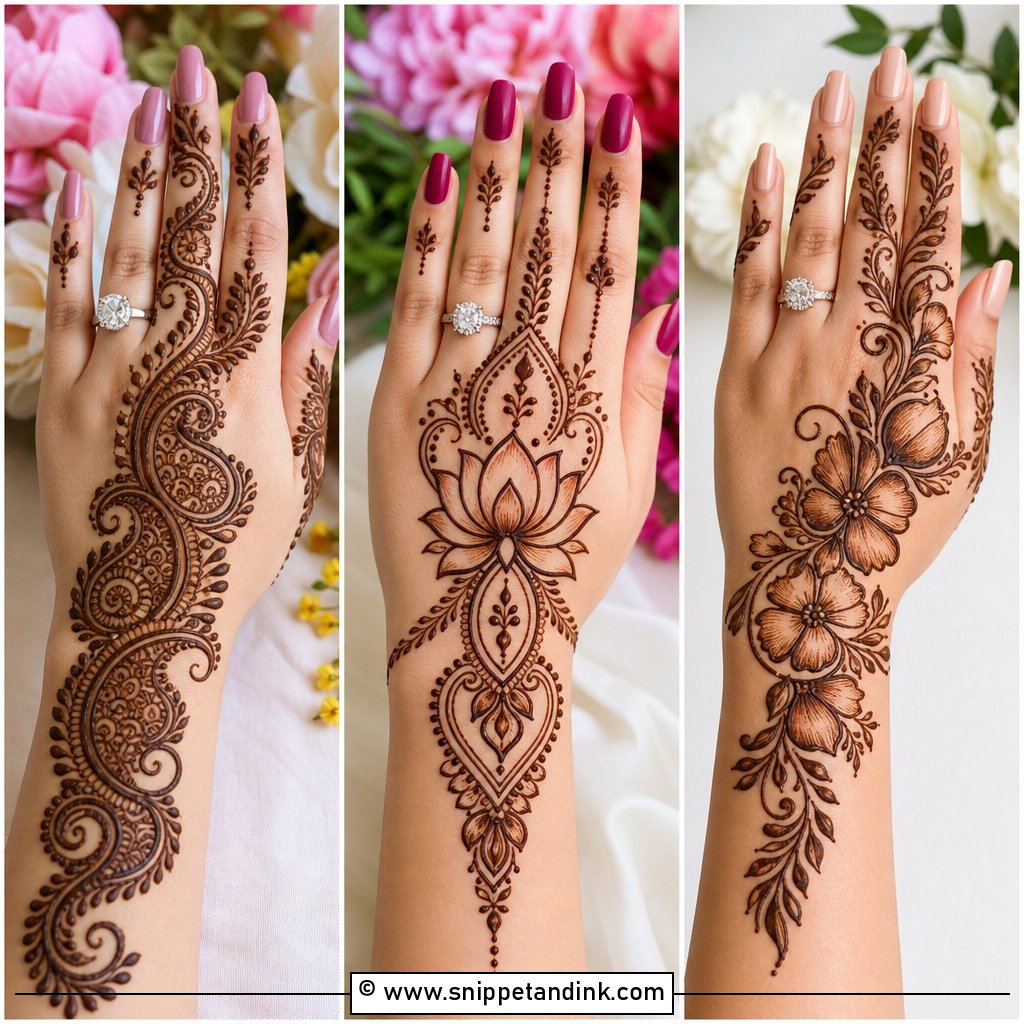
Moroccan work brings diamonds, grids, lines, triangles, dots and symmetrical bands. On the back of the hand, fingers and wrist the shapes start to look like jewelry. For an engagement I’ll soften it with a few small florals or leaves so it doesn’t feel severe. Even spacing is what keeps geometry crisp rather than heavy. It goes well with modern outfits and minimal accessories.
When the Wedding Is Only a Few Weeks Later
A henna stain fades as the top layer of skin naturally sheds, usually over one to three weeks. Palms, which stain darkest, are also the slowest to fade completely. If your bridal mehndi is booked within a month of the engagement, the old design may still be faintly visible underneath the new one.
That’s the main reason I suggest lighter, more open engagement designs for brides with a short gap. Ghost lines from Arabic trails disappear under fresh bridal work far more easily than a dense Indian palm does. In the week before your bridal mehndi, regular warm-water washing and gentle exfoliation will help the old stain go. Don’t use bleach, lemon scrubs or anything harsh, because irritated skin takes the new stain badly.
If the two events are a few days apart instead, think about it as one continuous look: a lighter engagement design on the back hands, with the bridal artist filling in around and above it.
Light Hands Now, Full Hands at the Wedding
Comfort matters as much as beauty at an engagement. Some brides want full traditional hands, others Arabic trails, mandalas, initials, bracelets or modern negative space. If the ring photos are your priority, put the detail on the back hand and plan the ring finger first. If you want a rich bridal feel, go for full palms and forearms. And if your wedding is close behind, choose something that will fade gracefully in time for the bridal mehndi.
You'll Like These Ideas:





Leave a Reply