
More brides now ask me for bridal mehndi with breathing room: open spacing, a few strong florals, a soft mandala, an Arabic trail, clean finger work. Dense coverage from fingertip to elbow can mean five or six hours sitting still, and many brides would rather spend that evening with their families. A lighter layout still reads as wedding henna, it just relies on placement instead of sheer quantity. The designs below range from full-hand Indian work to modern back-hand patterns, and they suit intimate weddings, destination ceremonies, nikahs, court weddings and engagement functions alike. I’ve noted where each one stains best and where it can look thin.
Why Your Mehndi Night Is Two Days Before, Not the Night Before
Henna doesn’t reach its deepest color when the paste comes off. Right after removal the stain is bright orange, and it darkens to a deep reddish brown over the next one to two days as it oxidizes. So I plan bridal application roughly 48 hours before the wedding, which puts the darkest stain on the wedding day itself.
Sitting time matters too. A simple bridal design on hands only might take around two to three hours, while adding feet and forearms adds more. Brides should eat beforehand, use the bathroom, and wear something with loose sleeves. Avoid applying lotion, oil or sunscreen to hands that day, since anything on the skin acts as a barrier.
One safety point I always raise: only natural henna should go on your skin. So-called black henna often contains a chemical dye that can cause serious skin reactions. Natural henna paste is greenish brown, smells earthy and stains orange first, never black on day one. If you’ve never had henna, do a small patch test a week or two before.
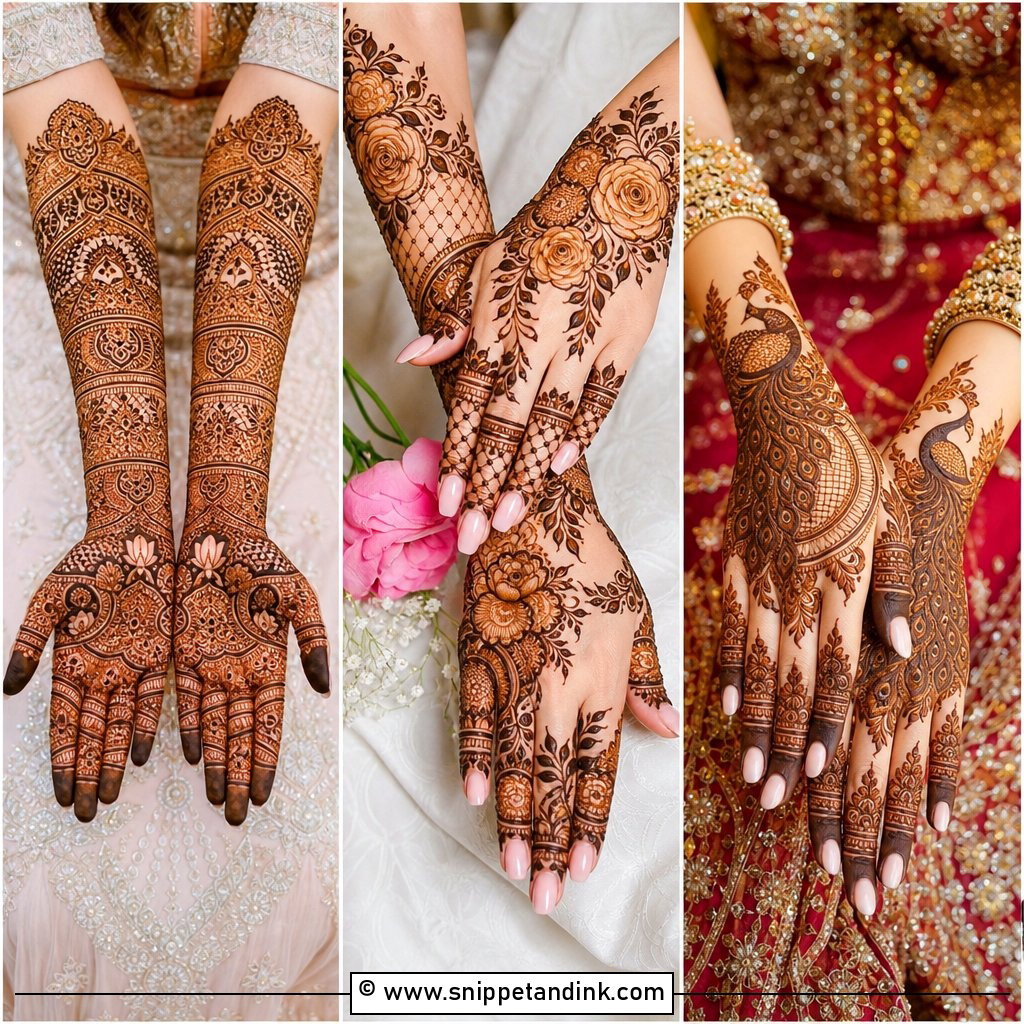
1. Simple Full Hand Bridal Mehndi Design
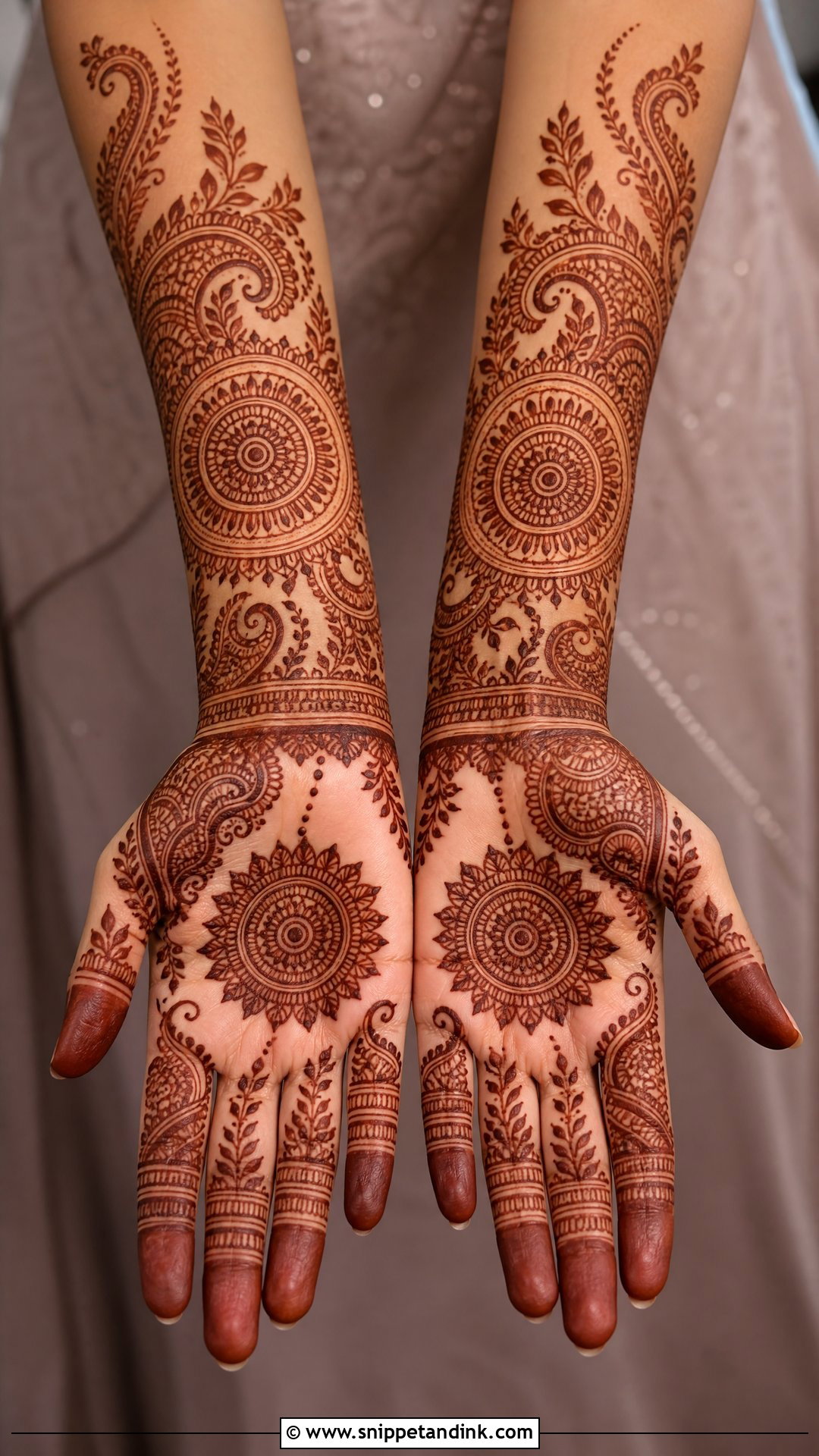
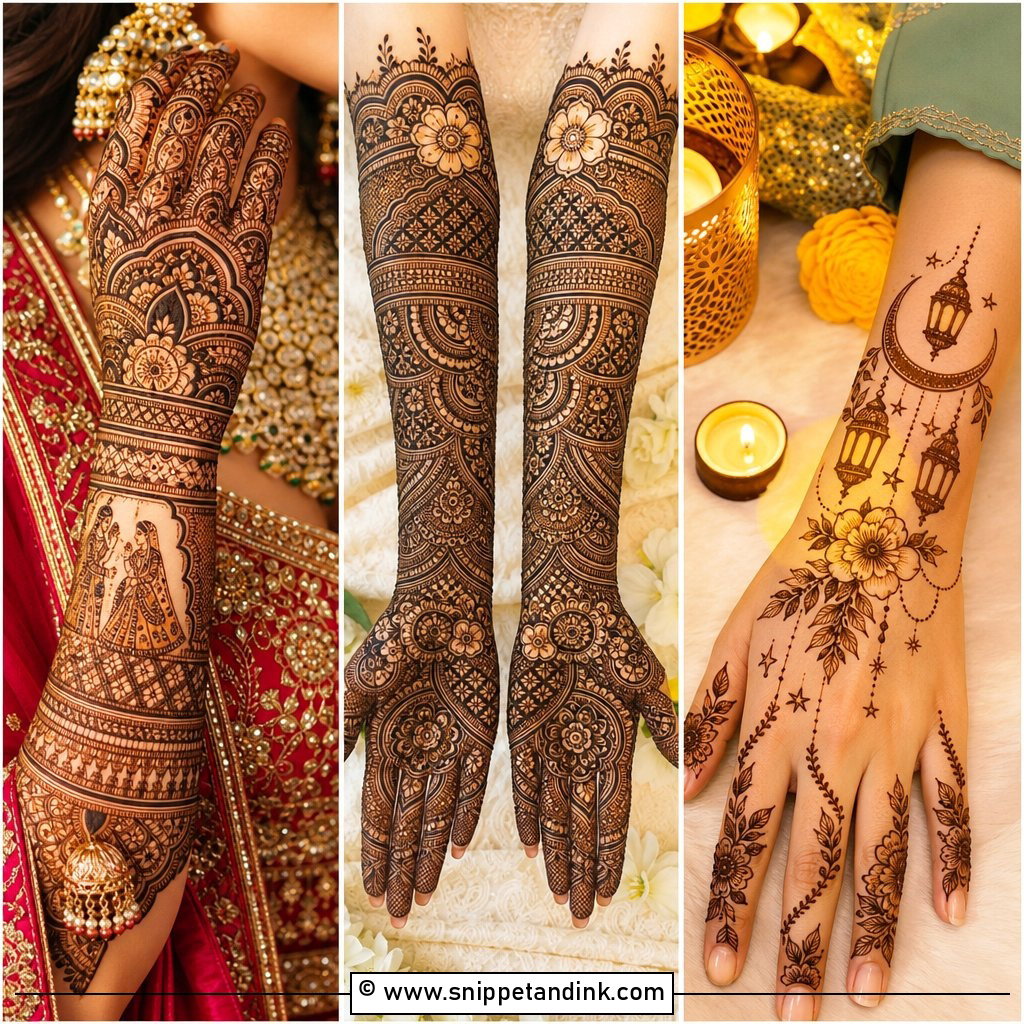
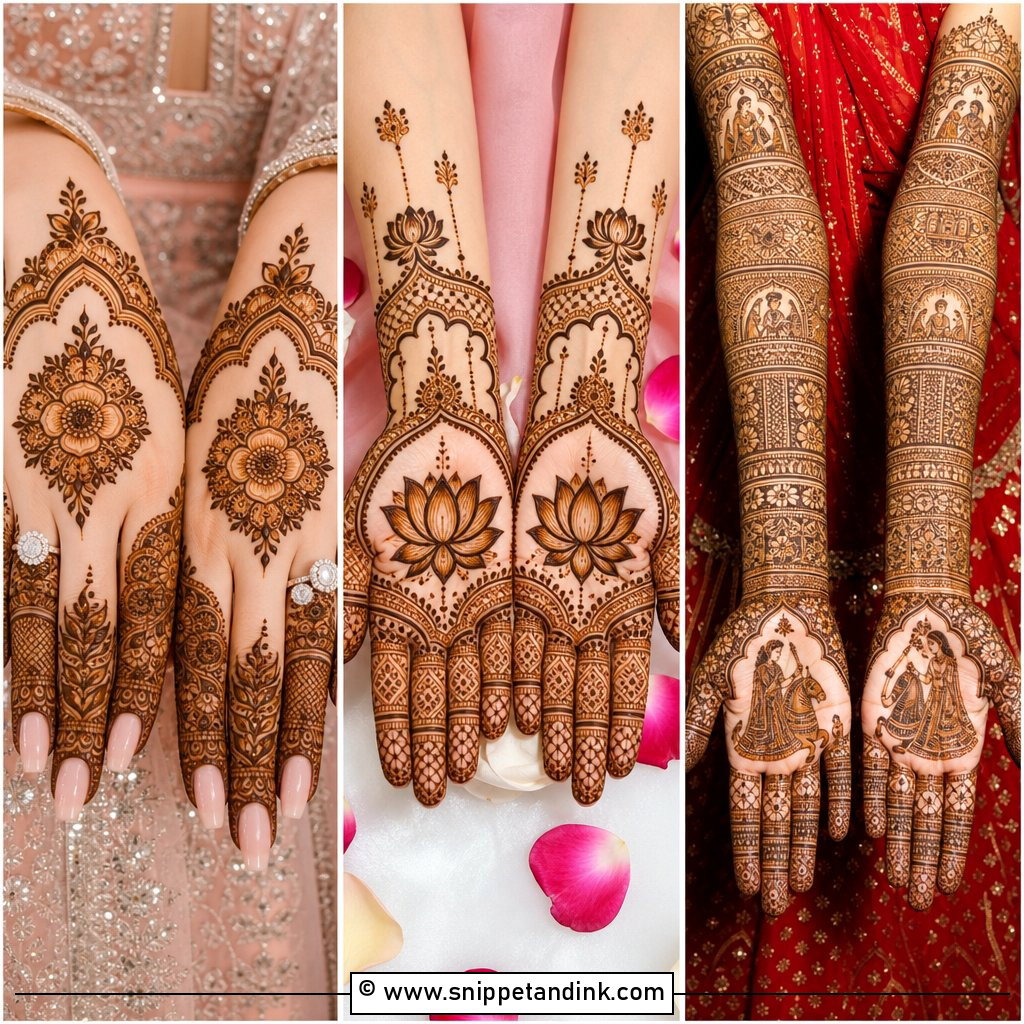
When I plan a full hand that still feels light, spacing does the work. I place a mandala in the center of the palm, then build paisleys, small flowers, dots and leafy fillers outward, leaving deliberate gaps of bare skin so the stain contrast shows. Fingers carry bands, vines and fine lines, and the forearm gets a bracelet-style extension that stops a few inches above the wrist. Traditional coverage, without the six-hour sitting.
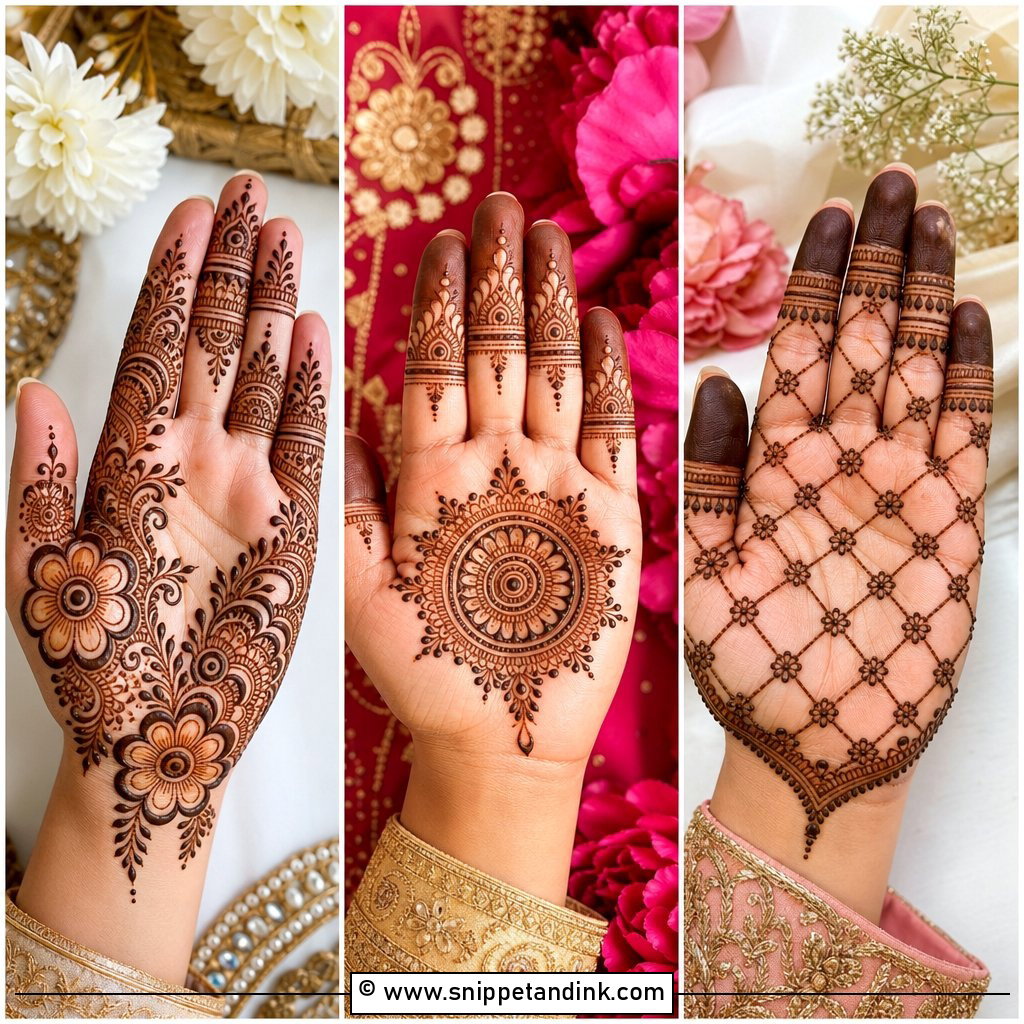
2. Simple Front Hand Bridal Mehndi Design
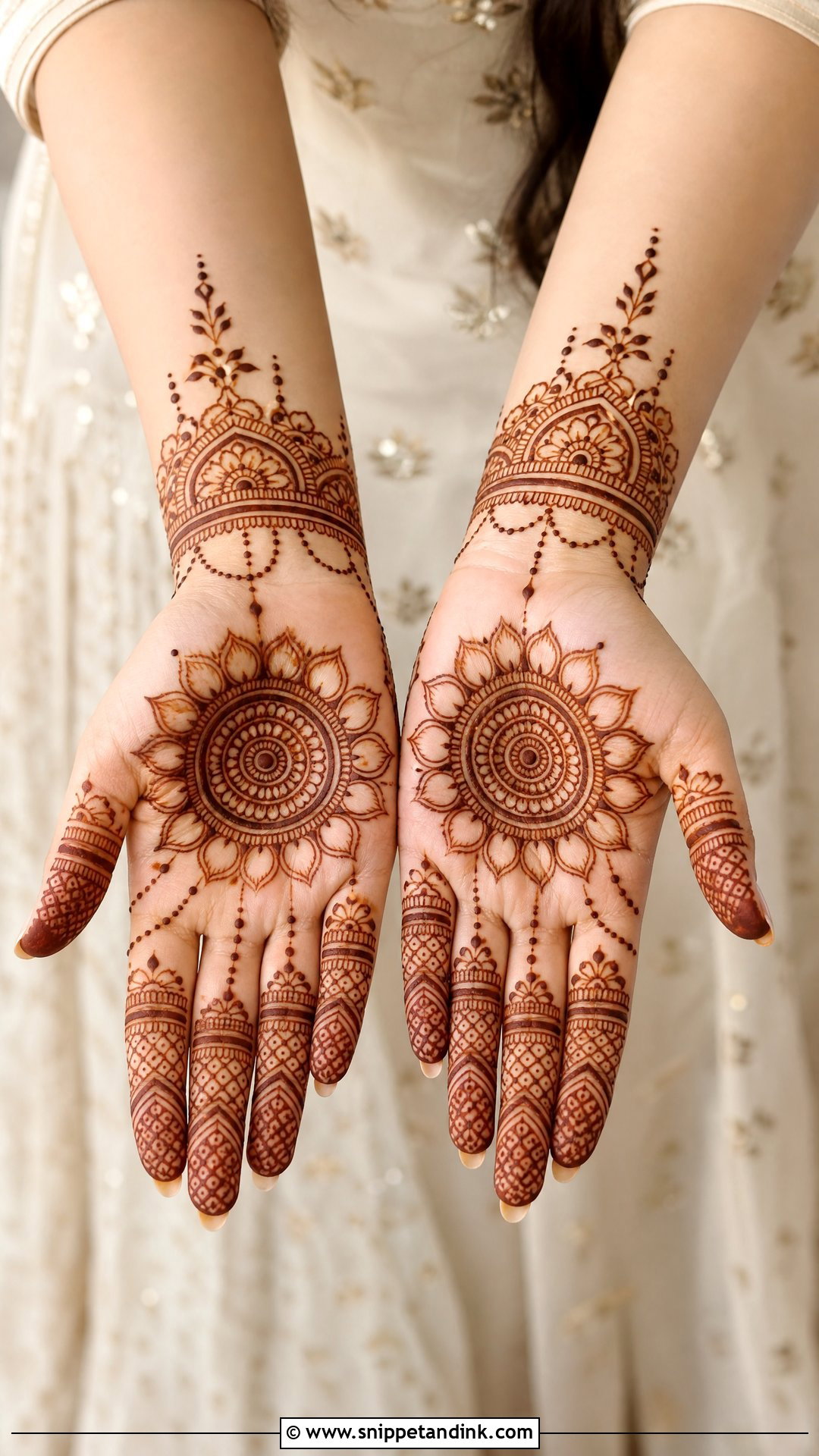
The palm stains darker than any other part of the hand, because the skin there is thicker and warmer, so a simple front hand bridal mehndi design makes the most of that. I center a round mandala, lotus or paisley cluster in the palm, then add light vines, dotted chains, small arches and thin borders around it. Fingers get alternating bands and floral tips. Leaving open skin between elements stops the palm from turning into one dark blur once the stain deepens, and it lets rings and bangles sit without hiding anything.
3. Simple Back Hand Bridal Mehndi Design
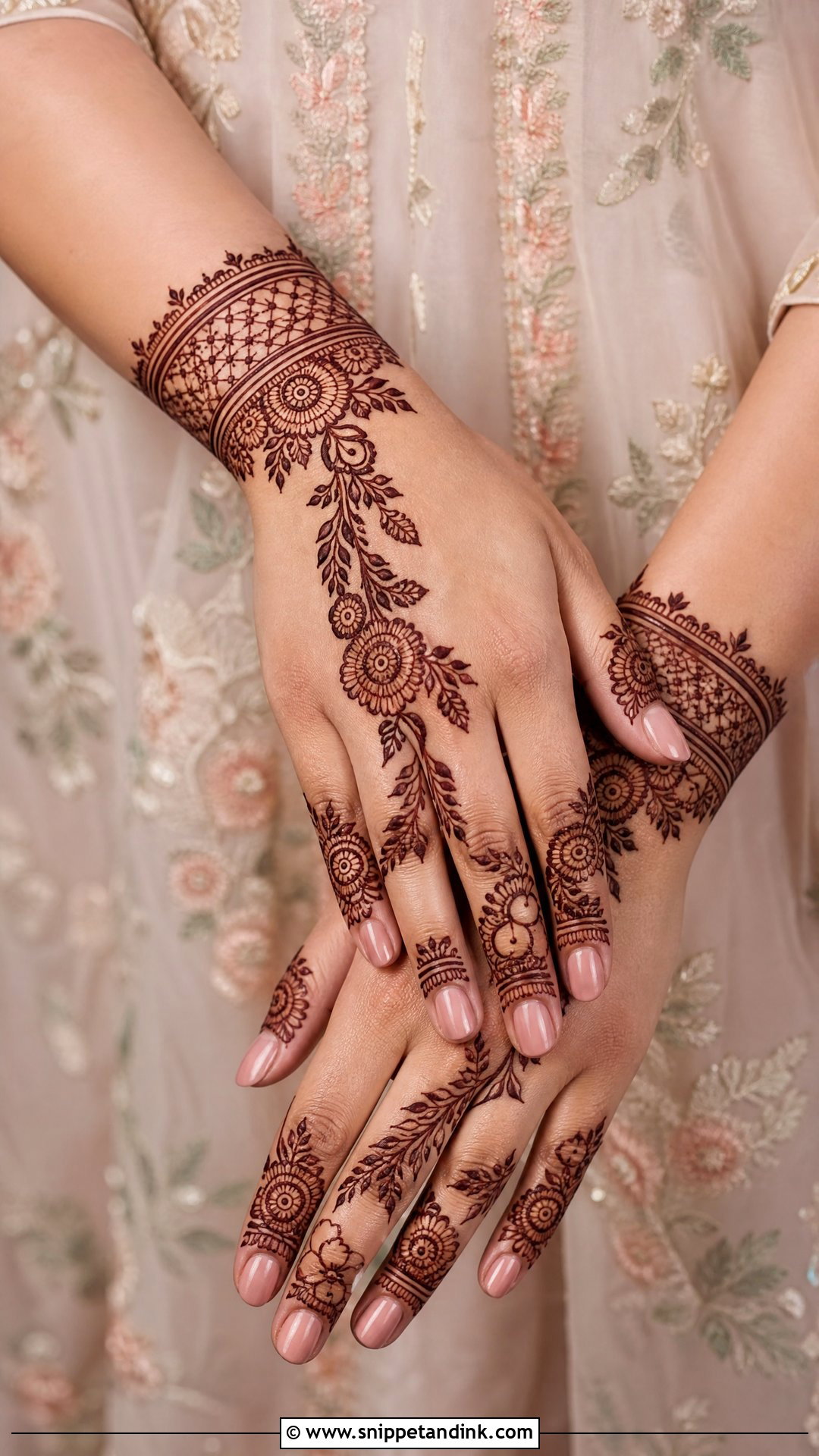
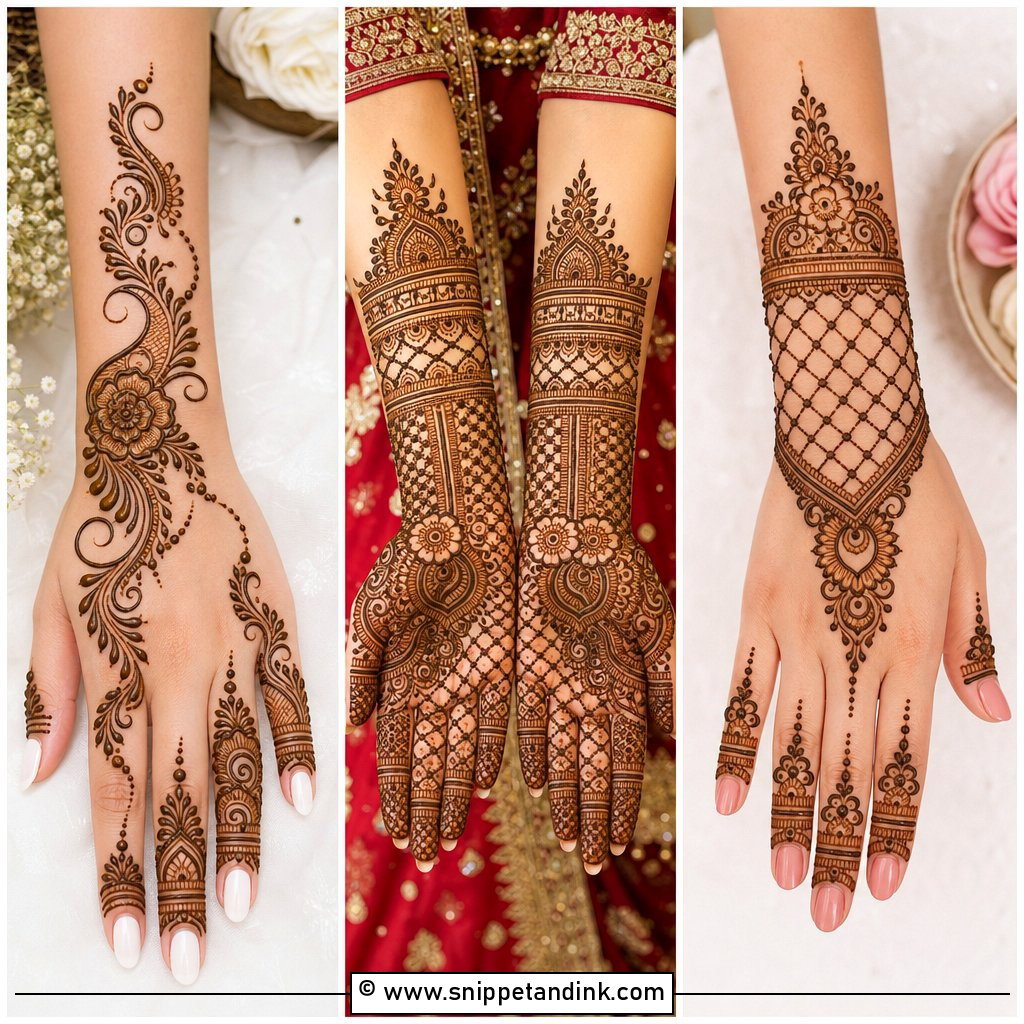
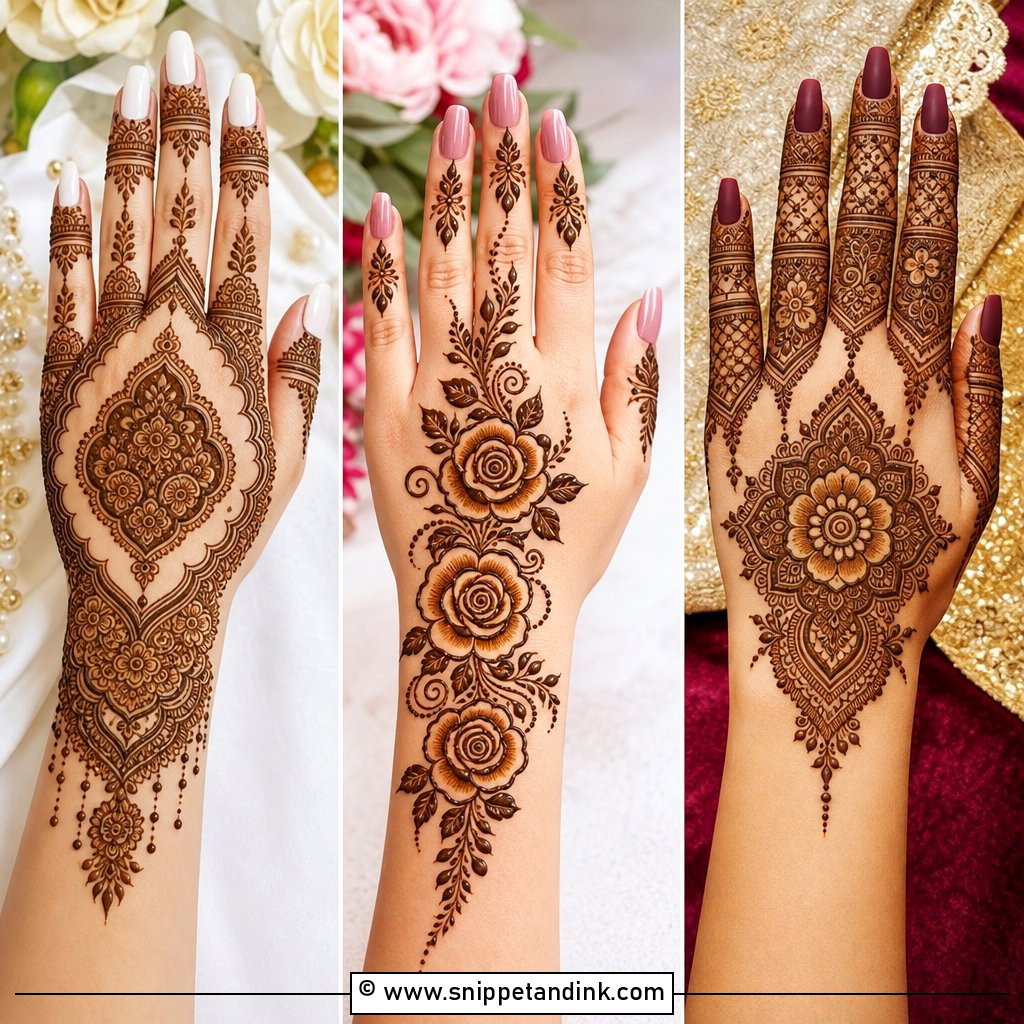
The back of the hand is what shows in ring shots and during rituals, so it’s where precise linework matters most. I usually start with a bracelet band near the wrist and lead into a floral trail across the back of the hand, then add fine leafy lines, small jaali sections and fingertip accents. A flower or small mandala near the center gives it a focal point. Be aware the back of the hand stains a shade lighter than the palm, so I pipe slightly bolder lines there. It’s quicker to apply than dense full-hand work.
4. Simple Arabic Bridal Mehndi Design
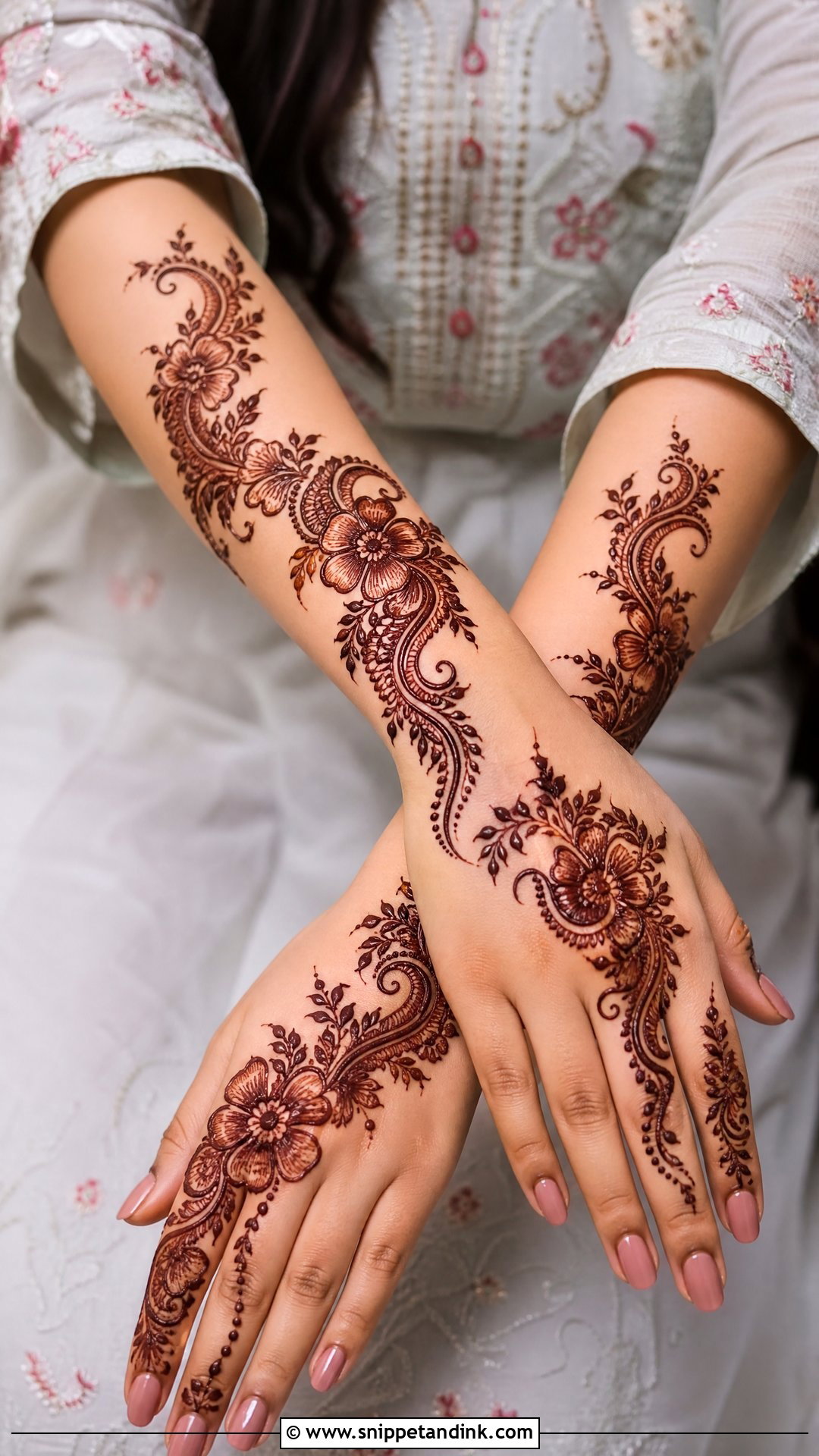
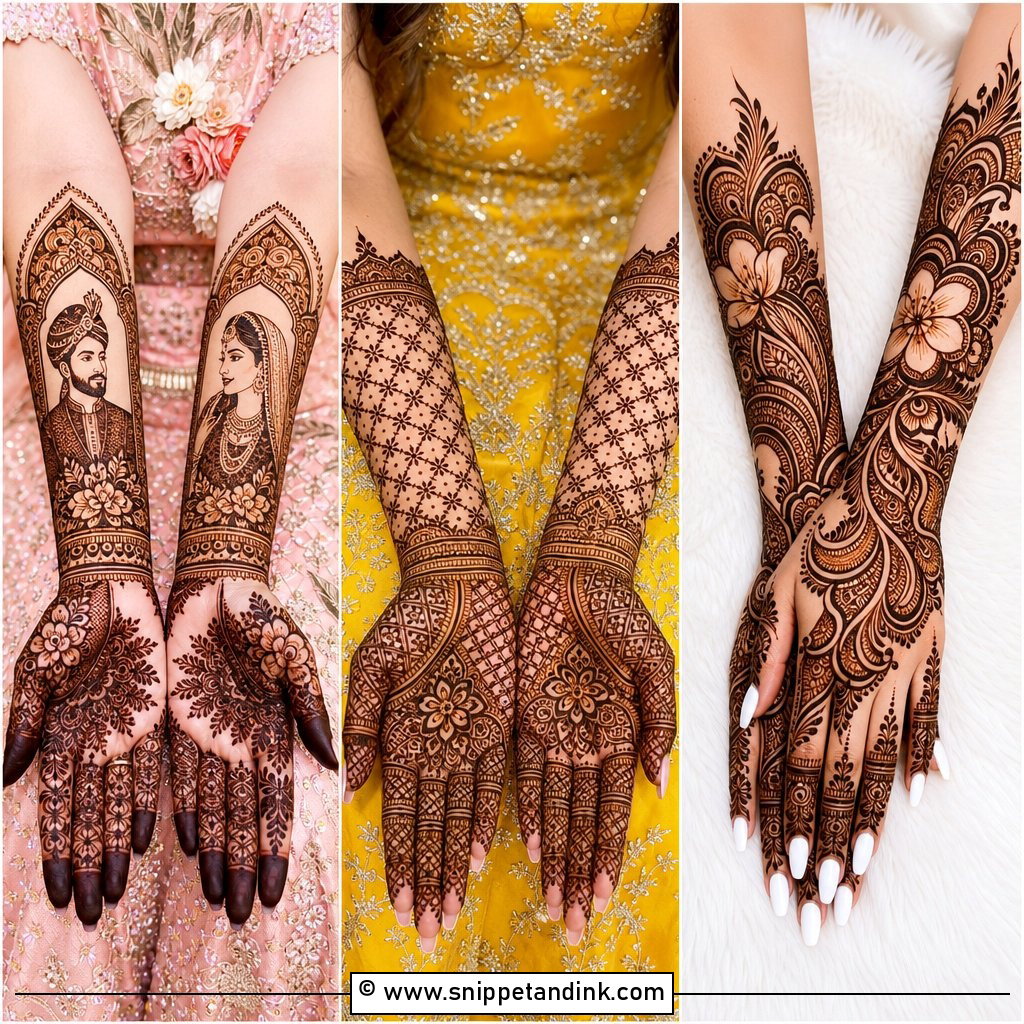
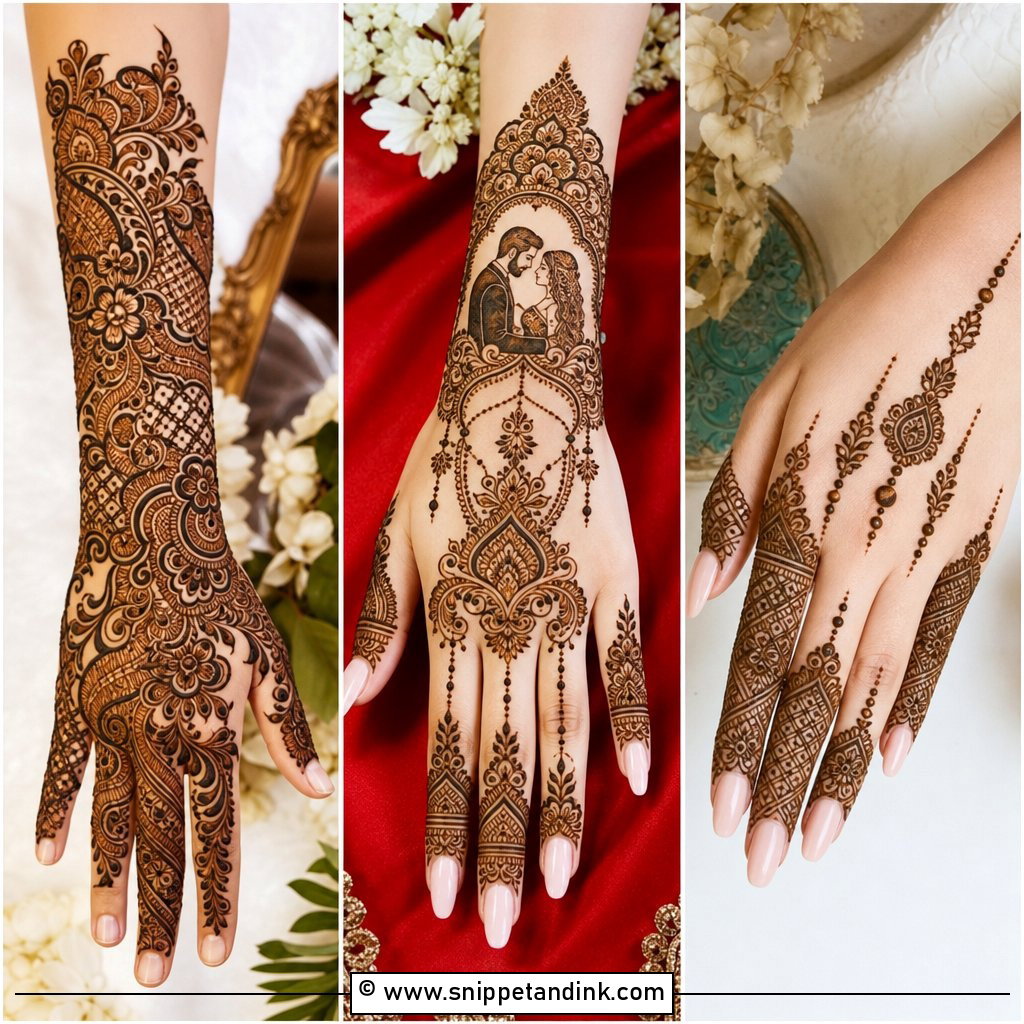
Arabic mehndi is built on movement. Bold florals, leafy vines and paisley trails run diagonally from the wrist to the fingers, and the skin between them is left open on purpose. Each motif has room, which is why it looks graceful rather than busy. Brides often pick it for engagements, nikahs and receptions. It’s forgiving to apply because it doesn’t rely on tiny filling, but the diagonal has to be planned before I start; a trail that drifts off line can’t be hidden with fillers.
5. Simple Indian Bridal Mehndi Design
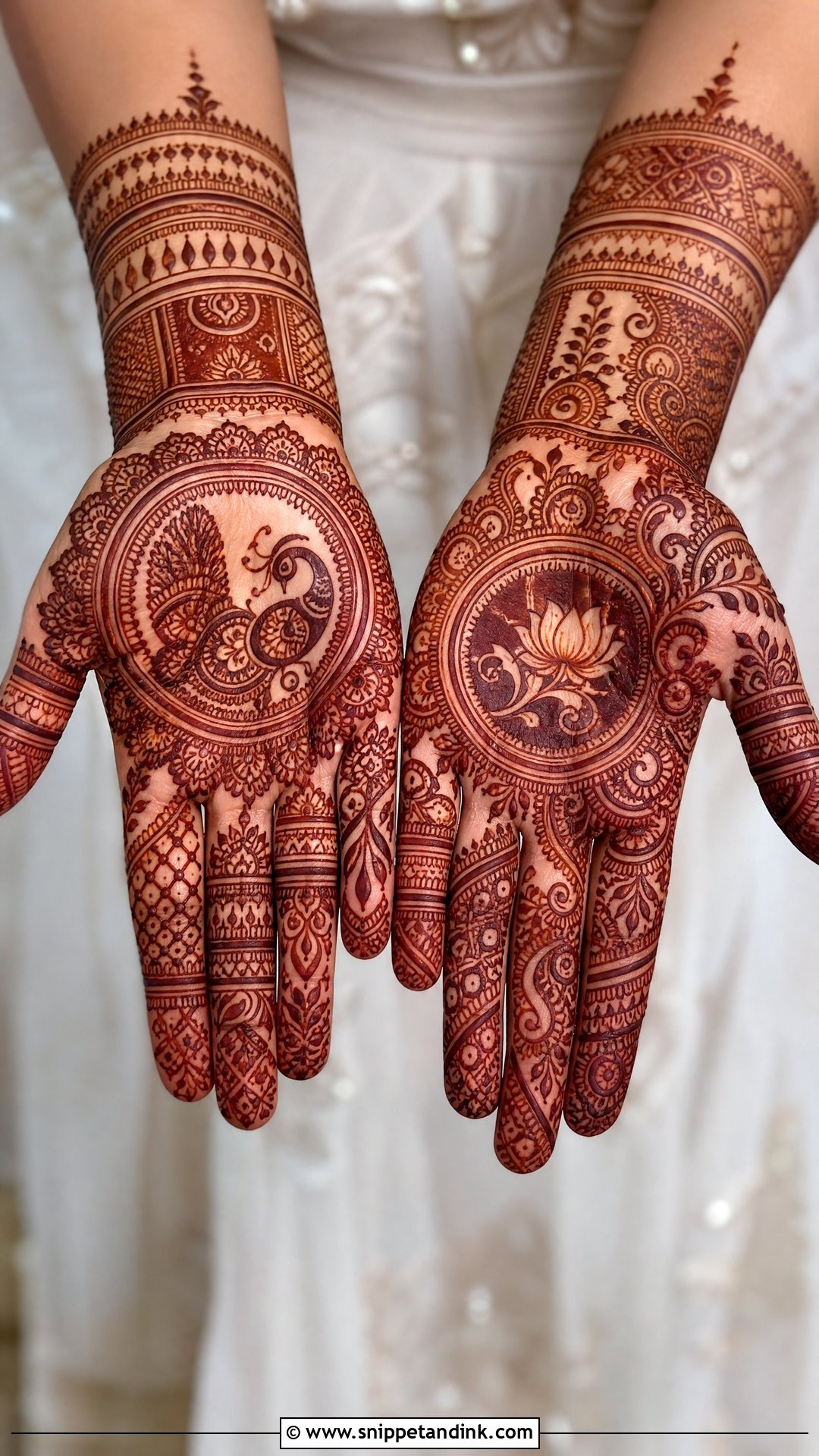
Indian bridal mehndi can be pared back and still keep its character. Paisleys, peacocks, flowers, mandalas and neat fingertips stay; what changes is spacing. I set the motifs farther apart instead of packing every gap. A small bride-and-groom symbol, kalash, lotus or doli adds a personal note. Bangle-style bands at the wrist and a round motif in the palm finish it. This suits brides who want the cultural motifs without the full hours of a heavy bridal design.
6. Simple Indo Arabic Bridal Mehndi Design
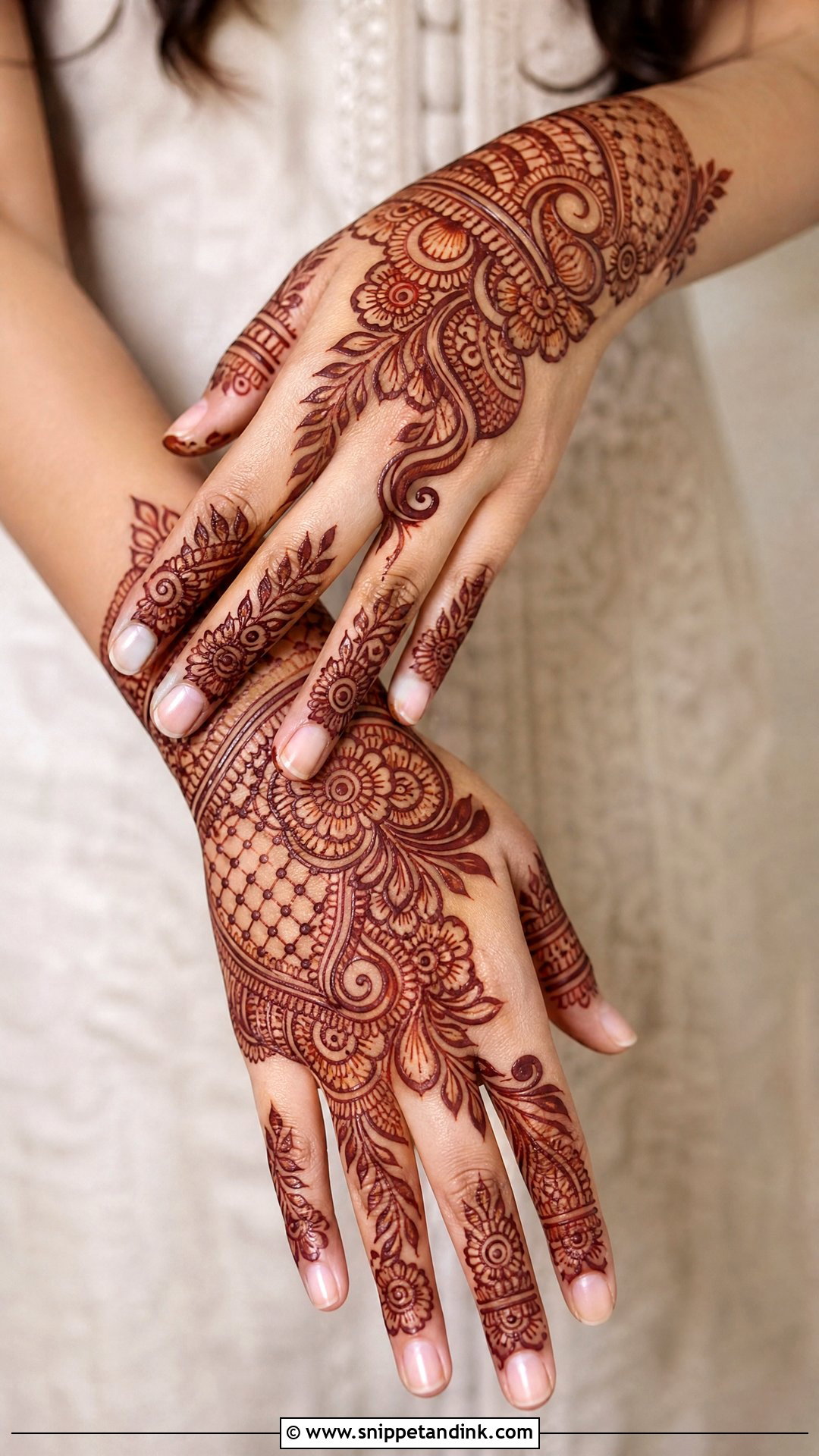
A simple Indo Arabic bridal mehndi design borrows the flowing trail of Arabic work and the fine detail of Indian motifs. I often begin with a floral band at the wrist, run paisley curves across the palm and finish with detailed fingers. Small jaali mesh, dots, shaded petals and thin borders add bridal weight without filling everything. It works on the front or back of the hand. Shading needs a thinner cone tip and steadier pressure than outlines, so it takes a little longer than it looks.
7. Simple Mandala Bridal Mehndi Design
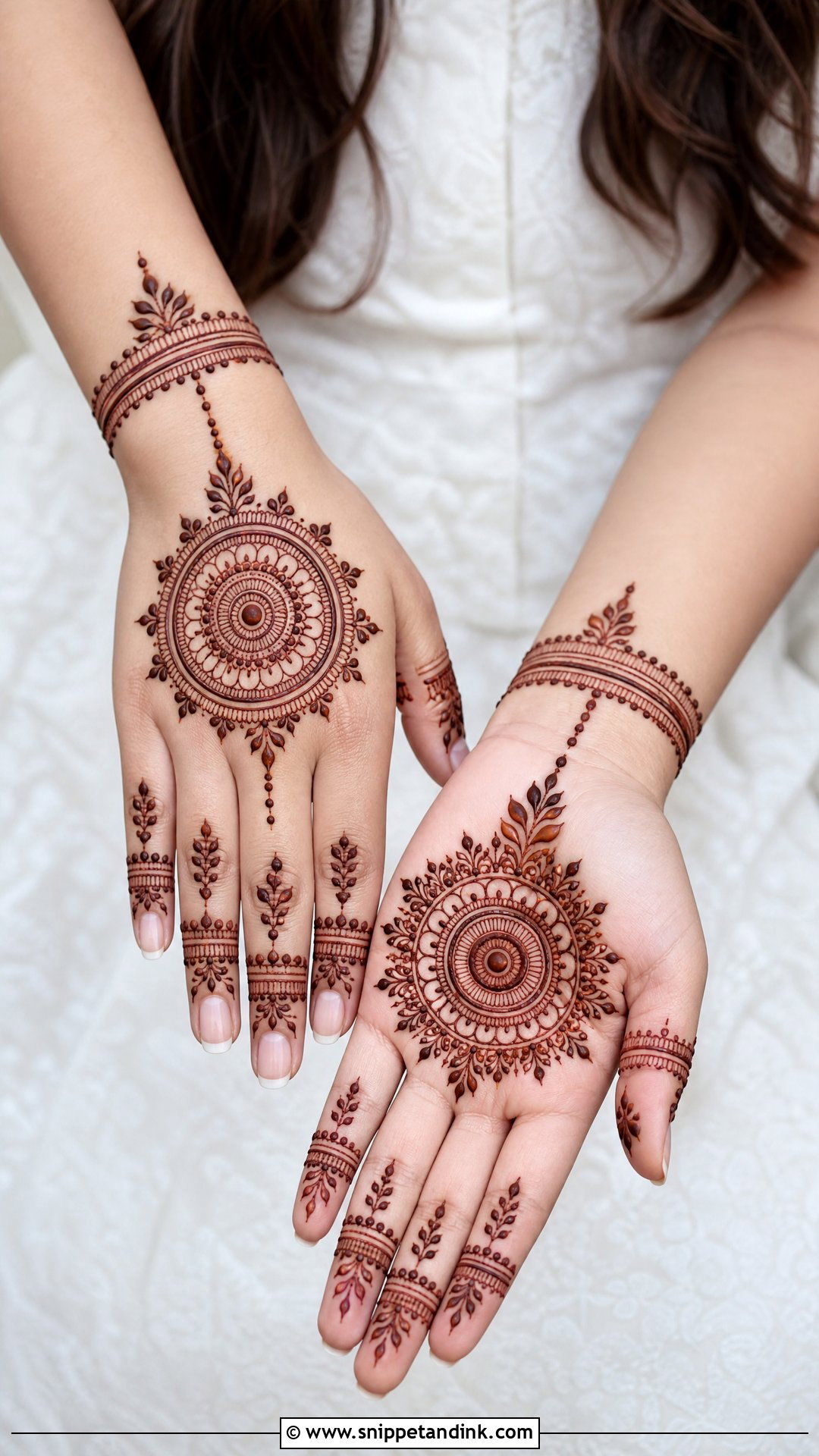
Mandalas are calming to look at because they’re symmetrical, and symmetry is unforgiving to draw. I mark the center point first and build outward ring by ring, dots, petals, leafy rings and thin borders, turning the hand rather than my wrist so each ring stays even. Fingers get matching lines, small flowers and fine tips. Small hands suit this well, since the central circle gives the hand a clear balance point. A light wrist cuff or ring-chain adds a bridal finish.
8. Simple Floral Bridal Mehndi Design
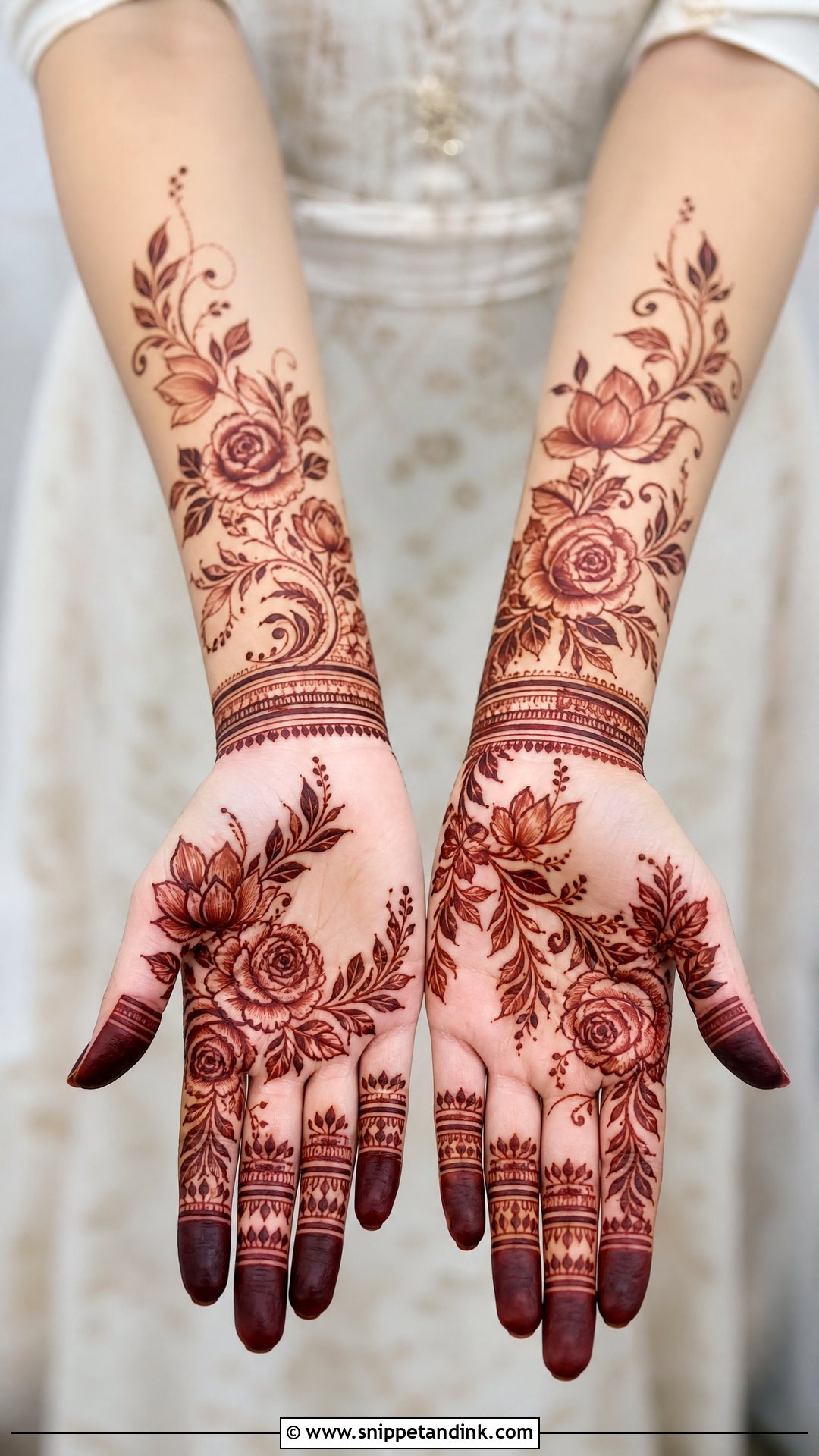
Florals are the gentlest bridal option. Roses, lotus petals, small blossoms and leafy stems spread across the palm and wrist, joined by curved vines so the design reads as one piece from fingers to forearm. Shaded petals add depth while open spaces keep it light. Pastel outfits and daytime ceremonies suit it. One thing I watch: very fine petal shading can fade into a single blot if the paste is applied too thickly, so I keep shading strokes thin and let them dry before adding the outline.
9. Simple Peacock Bridal Mehndi Design
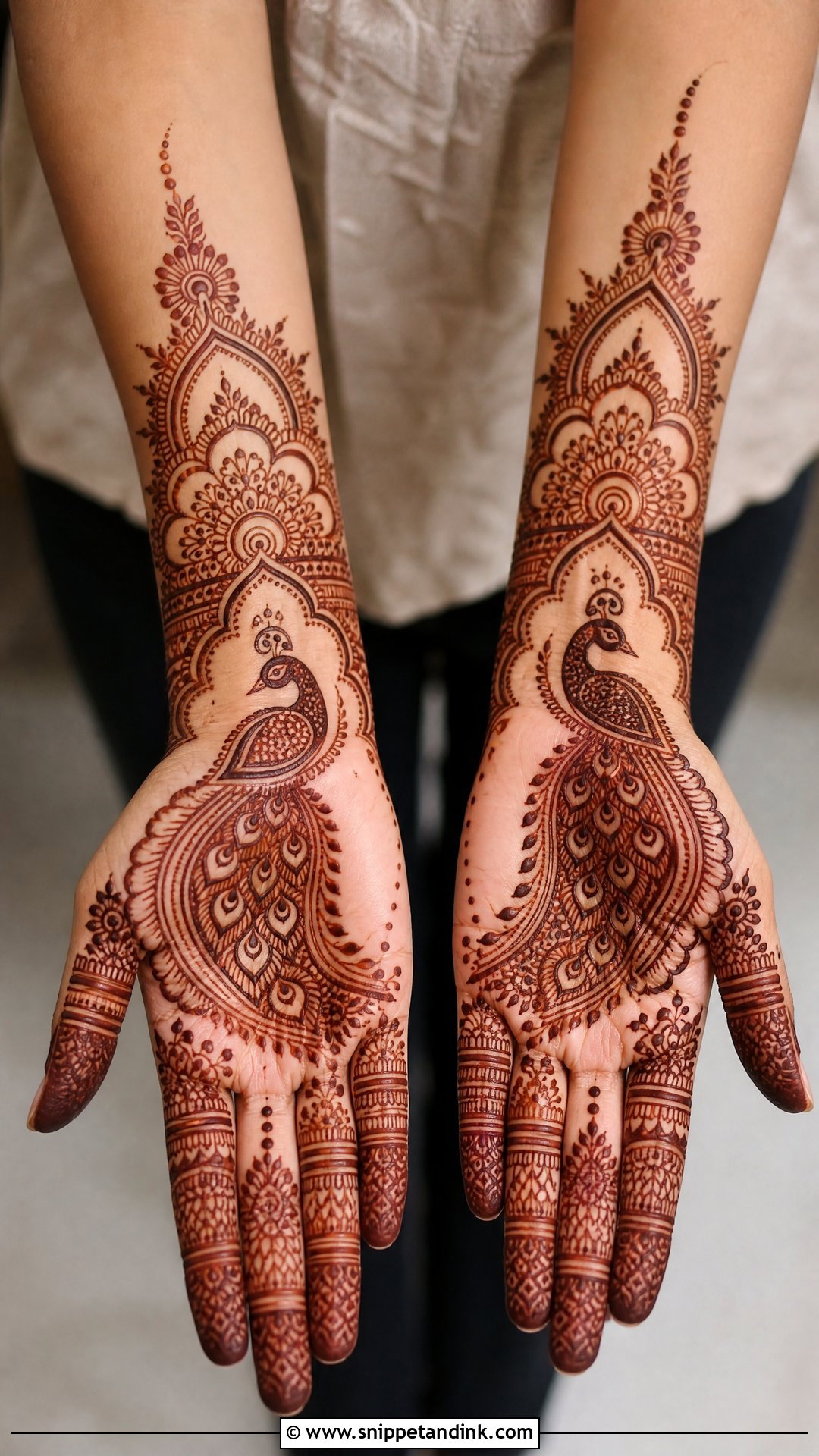
One peacock is enough. I place it on the palm, wrist or lower forearm and let its feathers open into floral curves and paisleys, with simple feather lines, dotted curves and leafy borders around it. Fingers stay clean with bands or small vines so nothing competes. Several small peacocks crowd a simple layout quickly. The motif feels traditional and festive without filling the hand.
10. Simple Paisley Bridal Mehndi Design
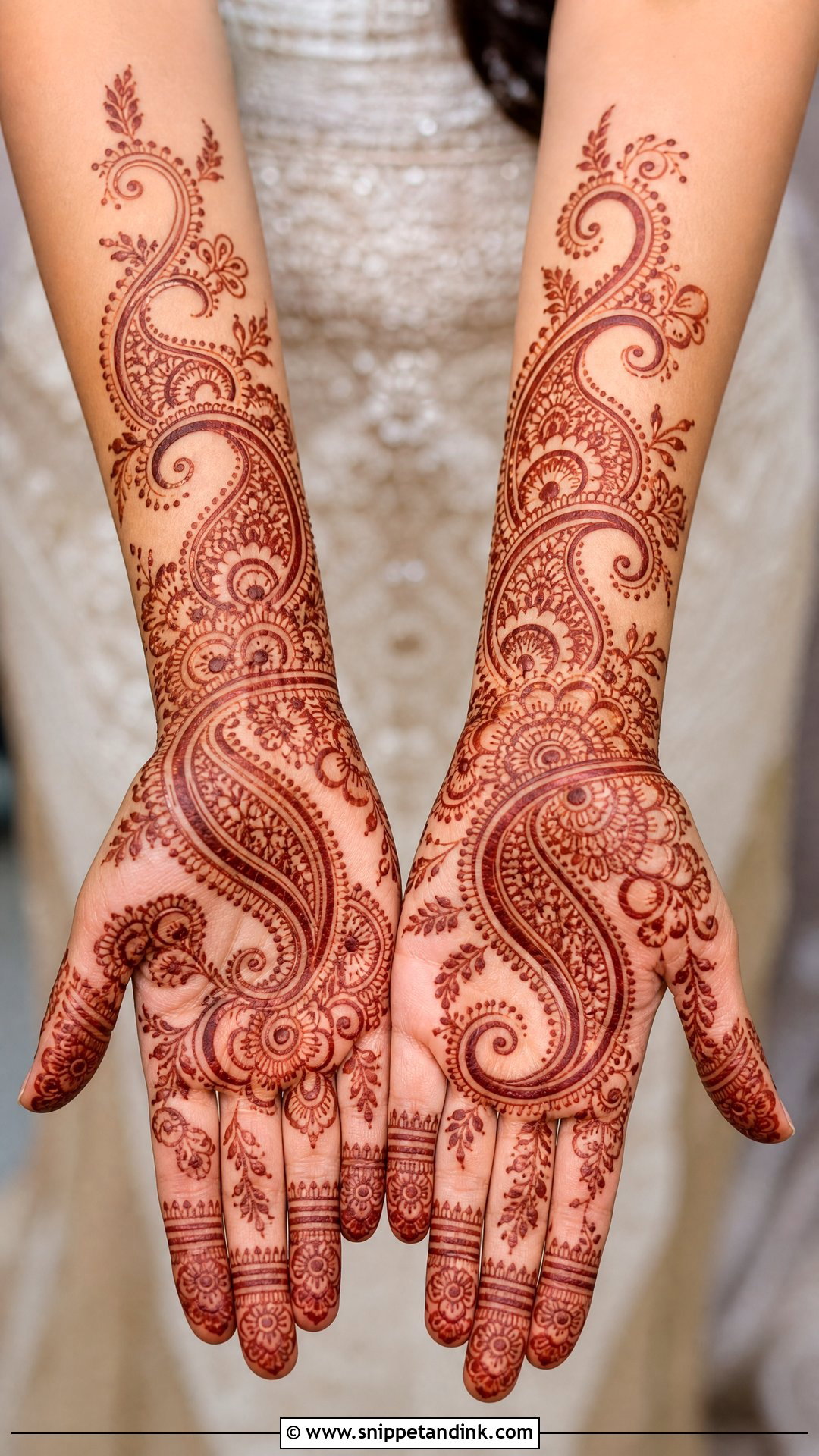
Two or three large paisleys flowing across the palm and wrist do more than a dozen small ones. Each can be filled with fine lines, dots, tiny flowers or shaded sections, while the surrounding skin stays open with slim vines and leaves. The curve of a paisley follows the natural line of the hand, which is why it makes fingers and wrists look longer. It adapts easily to full-hand, half-hand or back-hand placement and shortens application time.
11. Simple Jaali Bridal Mehndi Design
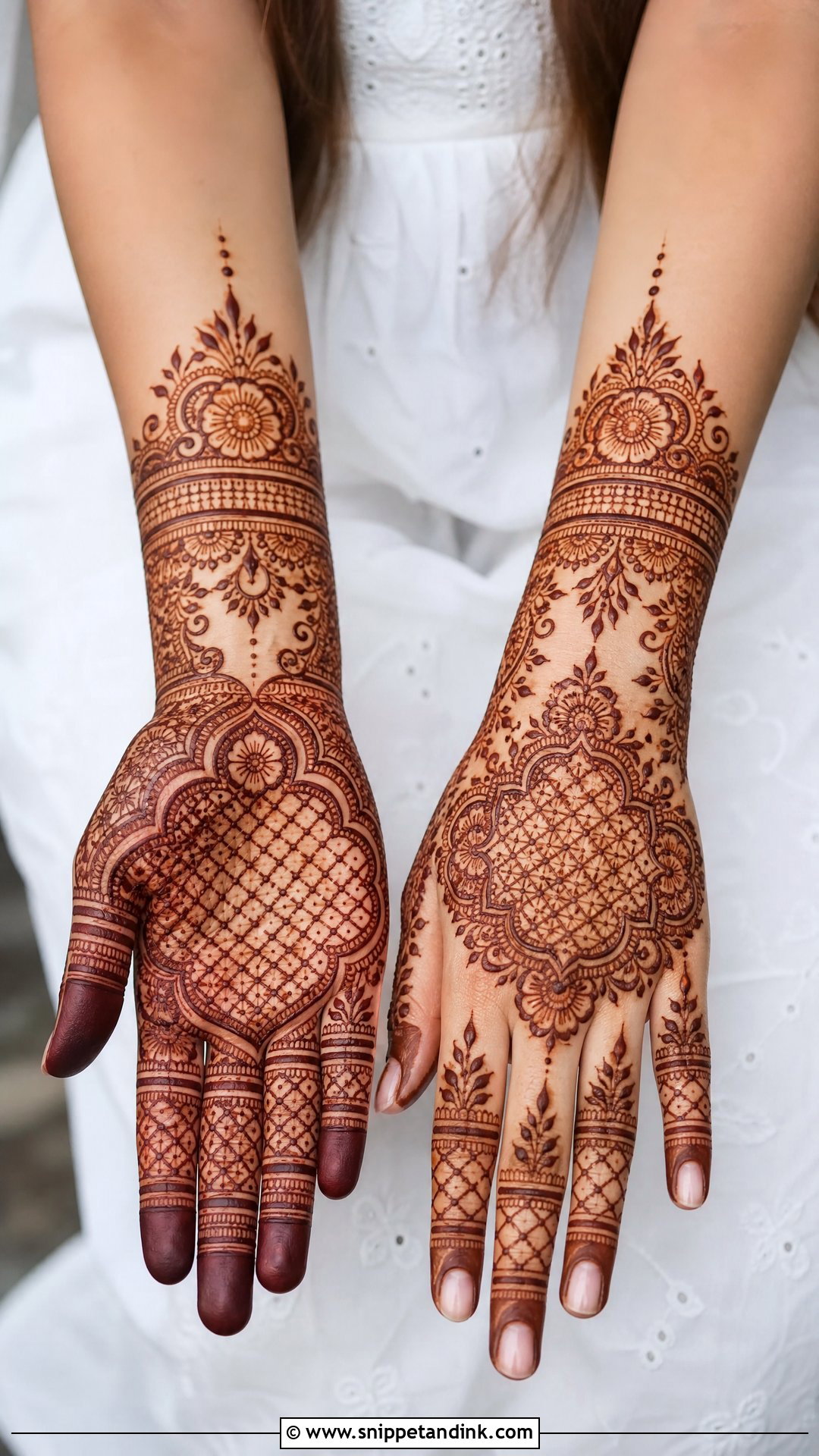
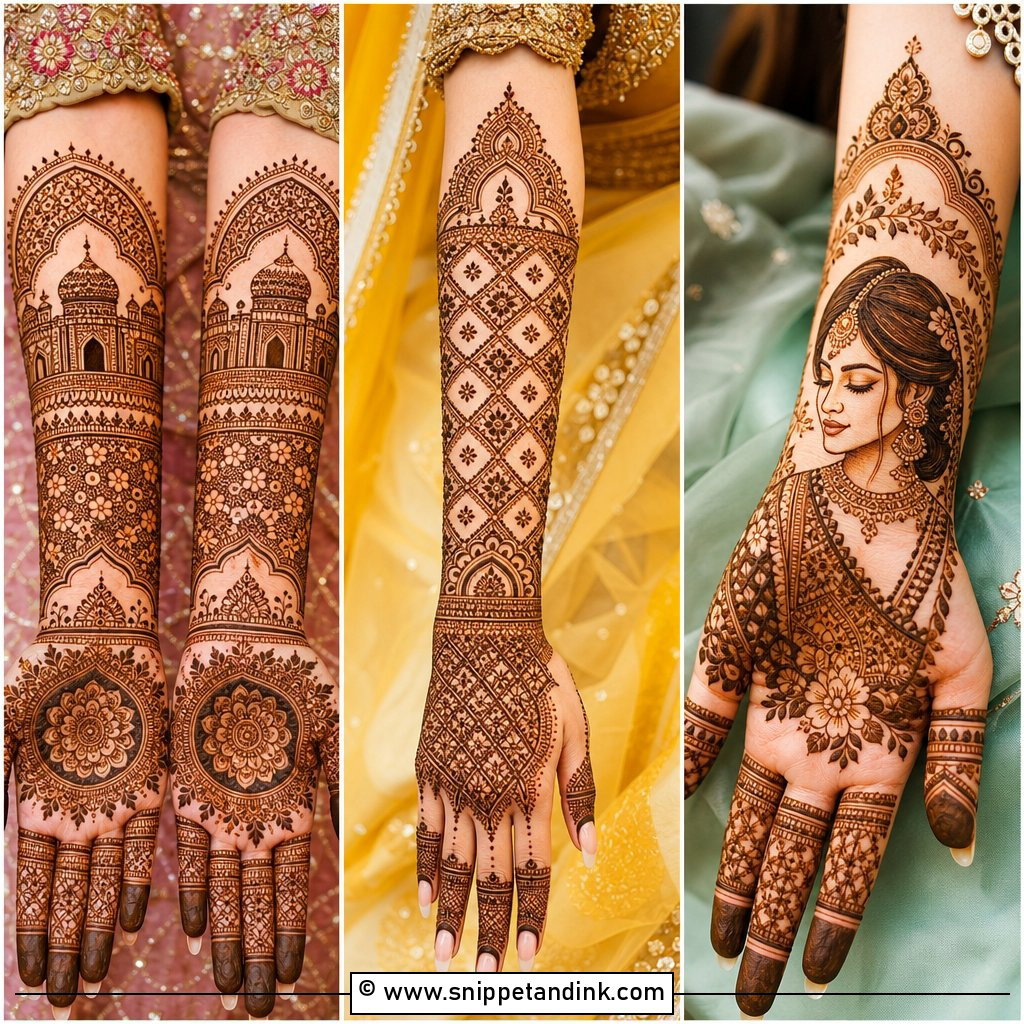
Jaali is a net pattern, and its scale matters more than anything else. Tiny mesh looks delicate wet but often stains into a solid patch once the lines spread slightly, so I keep the diamonds medium-sized for brides. A dot in each diamond adds detail without crowding. The jaali can sit on the palm, wrist or back of the hand, framed by floral borders or paisley edges, with crisscross lines or bands on the fingers. Close-up photos show the texture well.
12. Simple Finger Bridal Mehndi Design
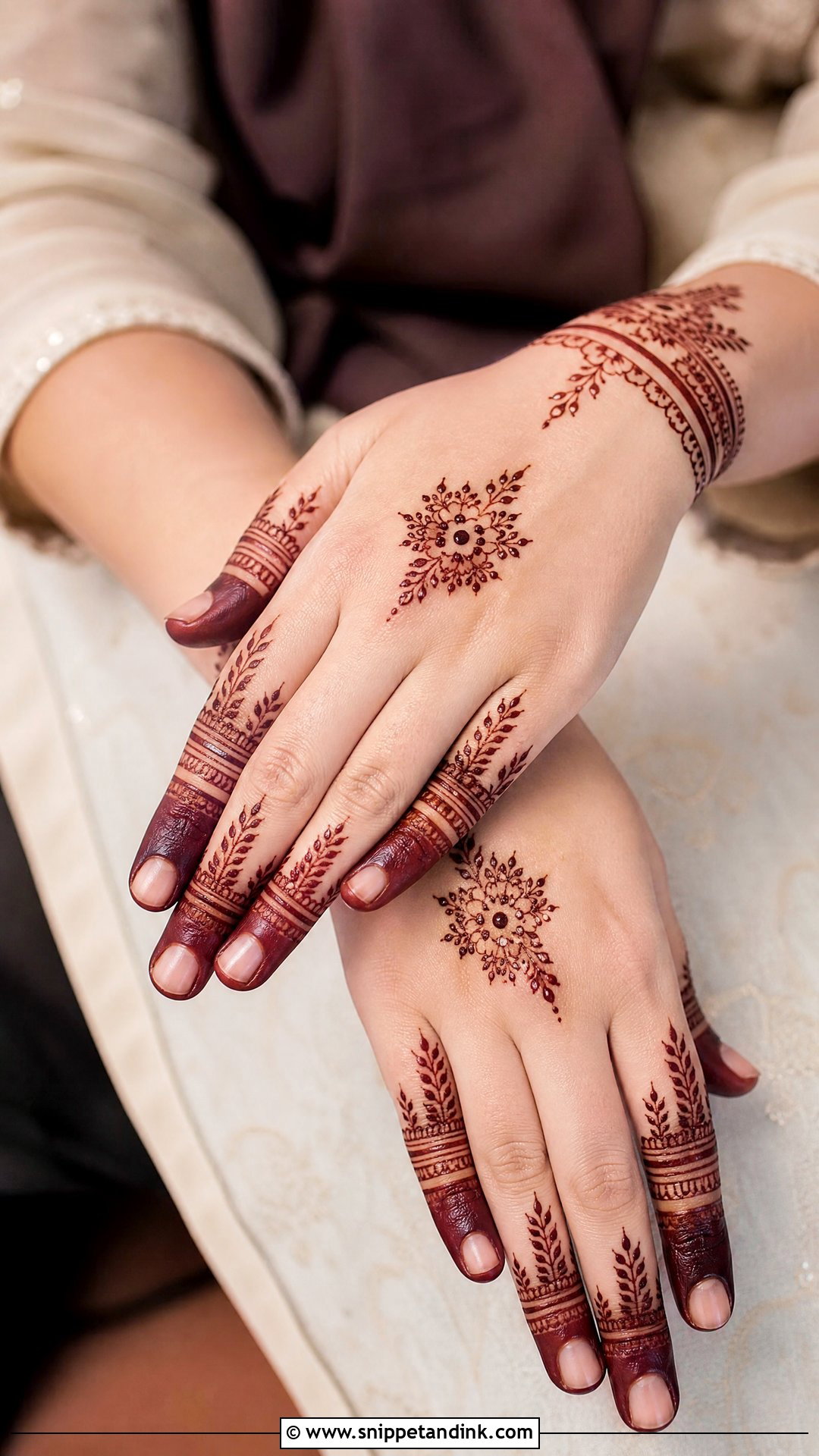
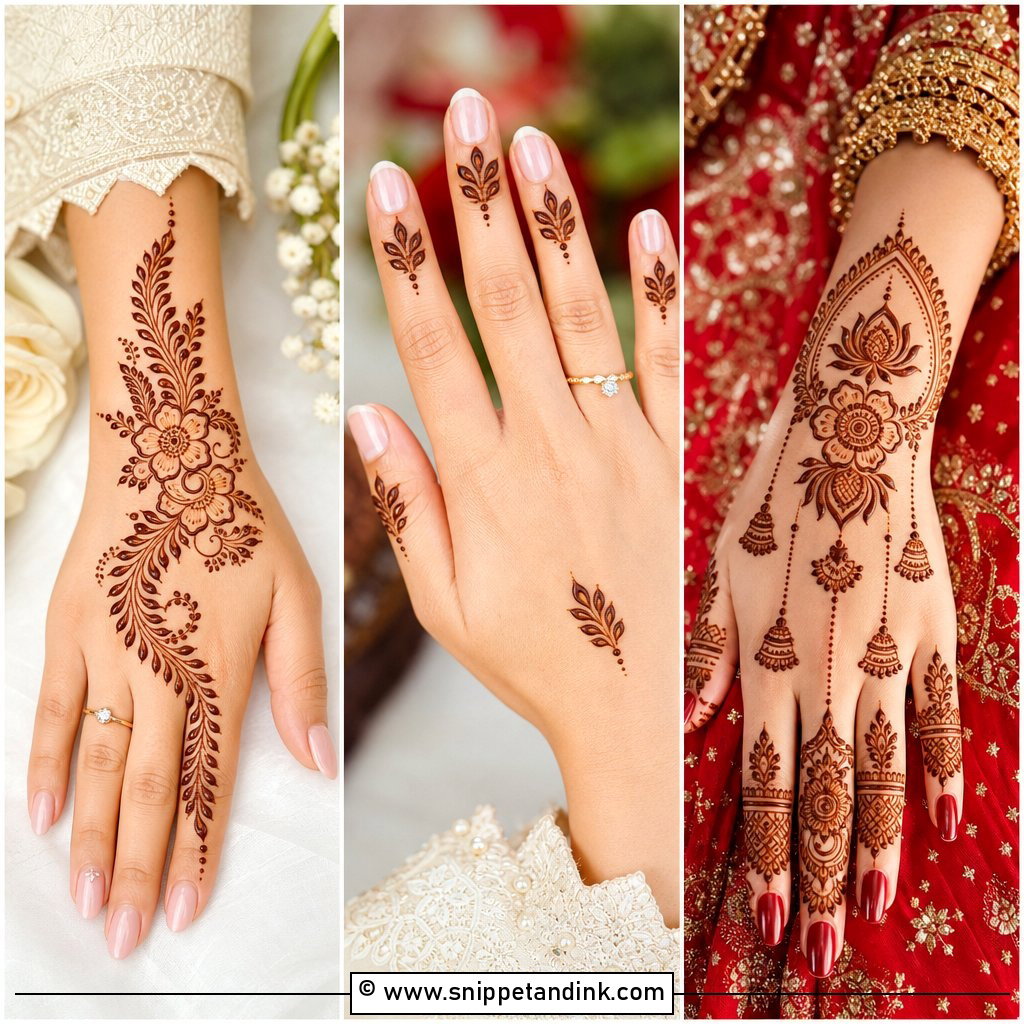
Finger-focused mehndi is the lightest bridal option I do. Each finger gets small bands, dots, leafy lines, tiny flowers and shaded tips, while the palm or back of the hand stays mostly bare apart from a small mandala or floral ring to connect it. It frames rings nicely. Fingertips stain very dark, so the detail there reads clearly. It suits engagements, registry weddings and brides who don’t enjoy heavy henna, though some families may expect more coverage for the main wedding day.
13. Simple Half Hand Bridal Mehndi Design
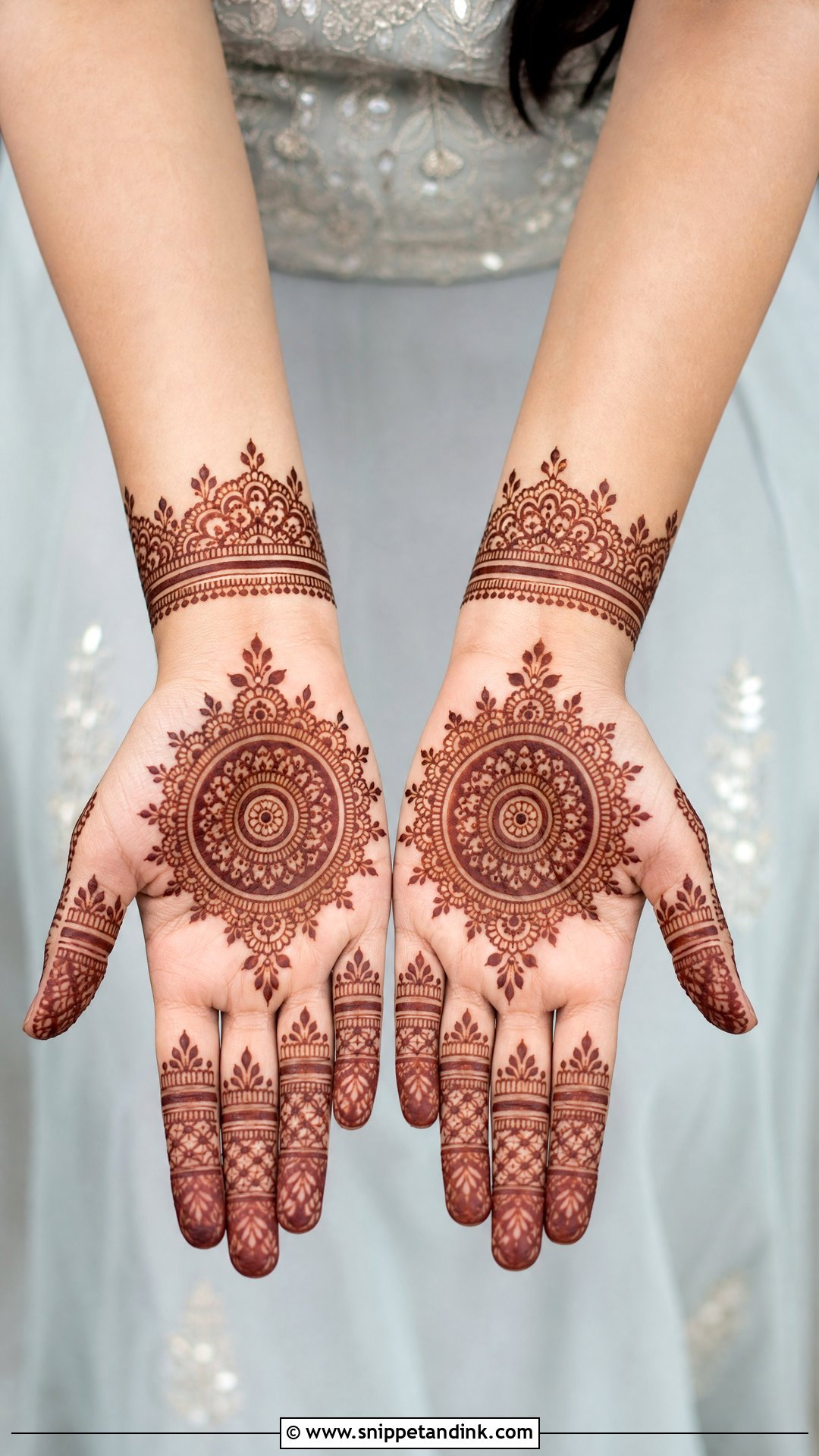
Half-hand designs cover the fingers, palm and wrist and stop before the forearm. They cut sitting time noticeably and feel lighter to wear. I usually anchor them with a central mandala, then floral borders, paisley trails and bracelet lines at the wrist, keeping the fingers detailed to balance the open palm. I stop the pattern at the wrist crease with a clean border so the edge looks finished, not abandoned. It’s also a good choice for pre-wedding events when the bride wants henna without a long session.
14. Simple Bridal Mehndi With Names
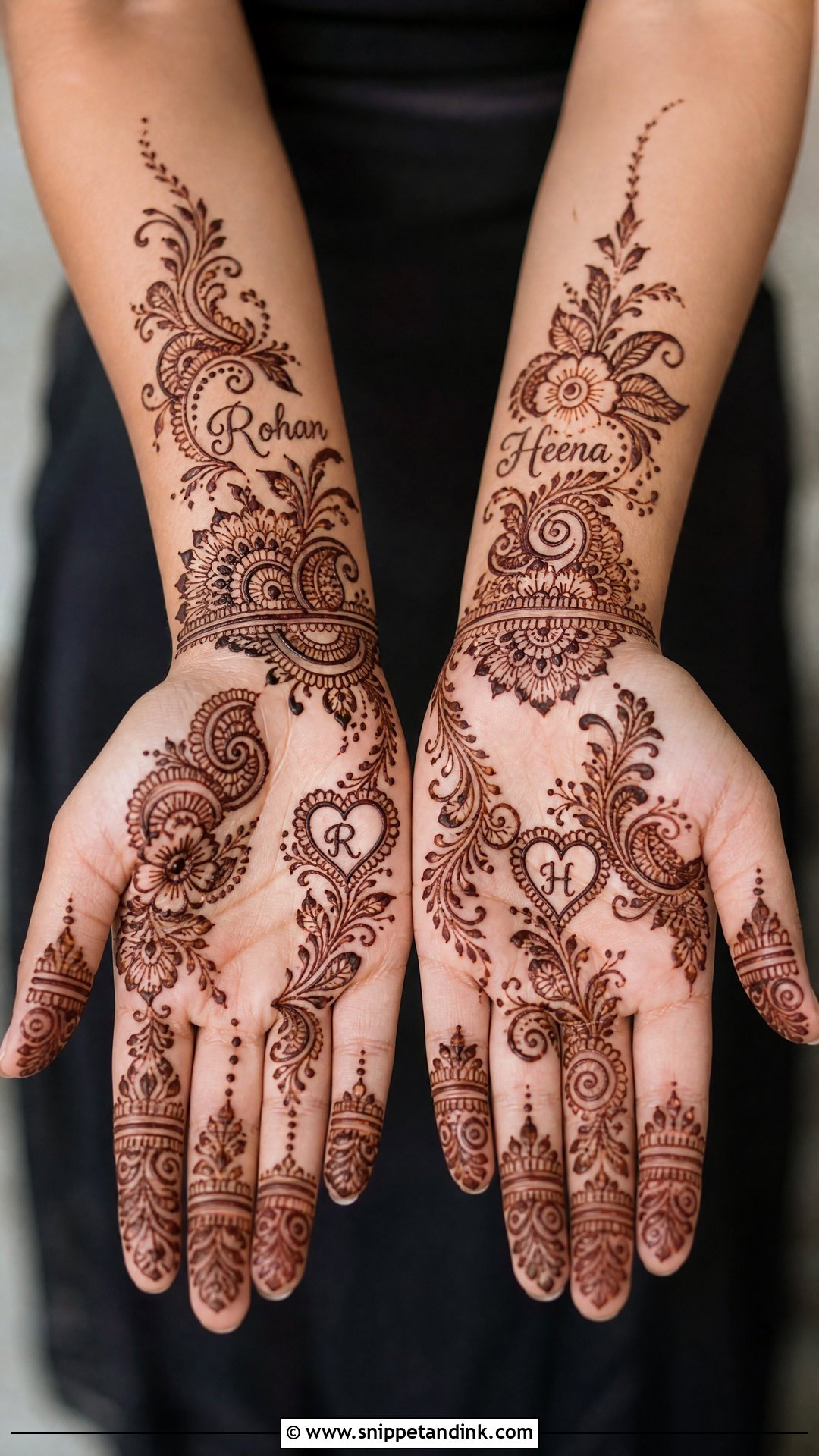
Hiding the groom’s name is a tradition many families love, and the fun depends on how well it’s hidden. I tuck the name or initials inside a paisley, along a vine, or within a small heart, flower or bracelet band, drawing the letters in the same line weight as the surrounding pattern so they don’t jump out. The rest stays light: mandalas, floral trails and finger details. The name-finding moment after the ceremony is always livelier when the letters blend in.


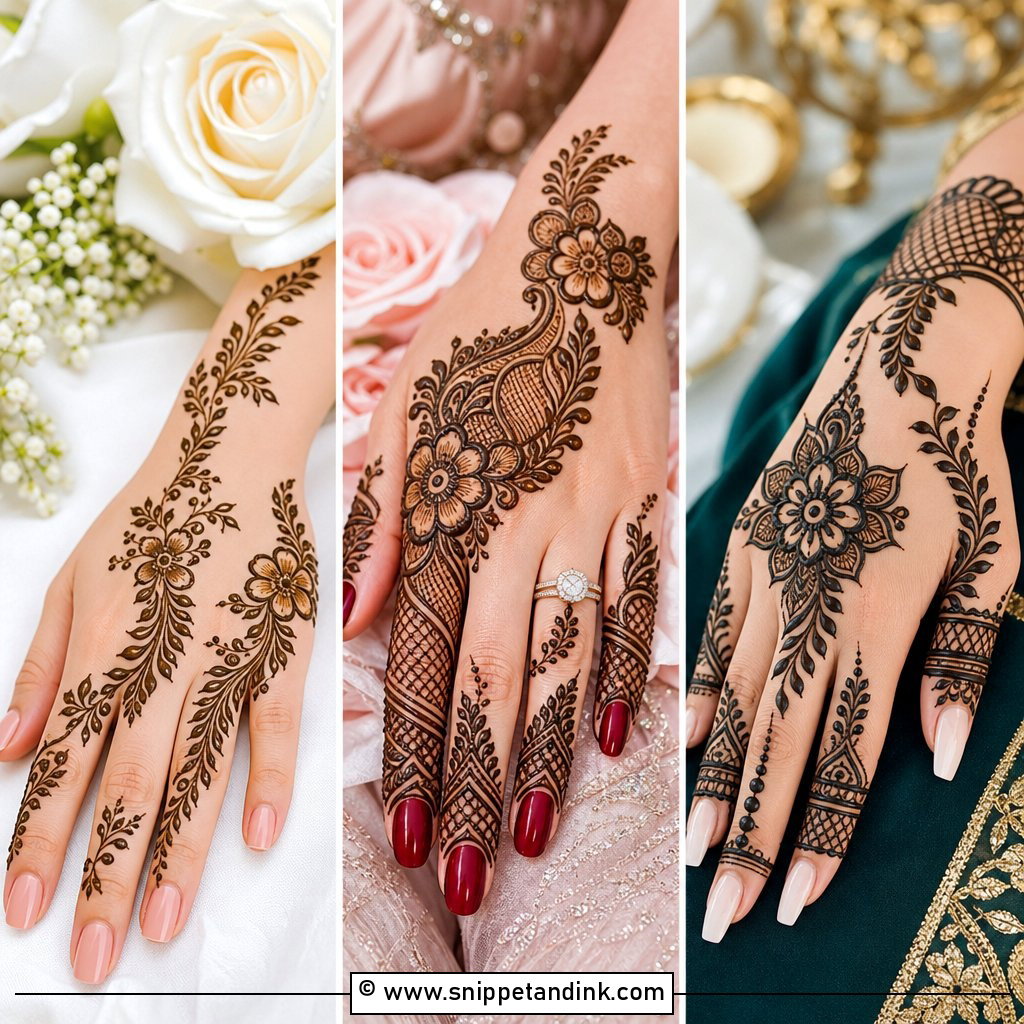
15. Simple Bridal Mehndi With Bride And Groom Art
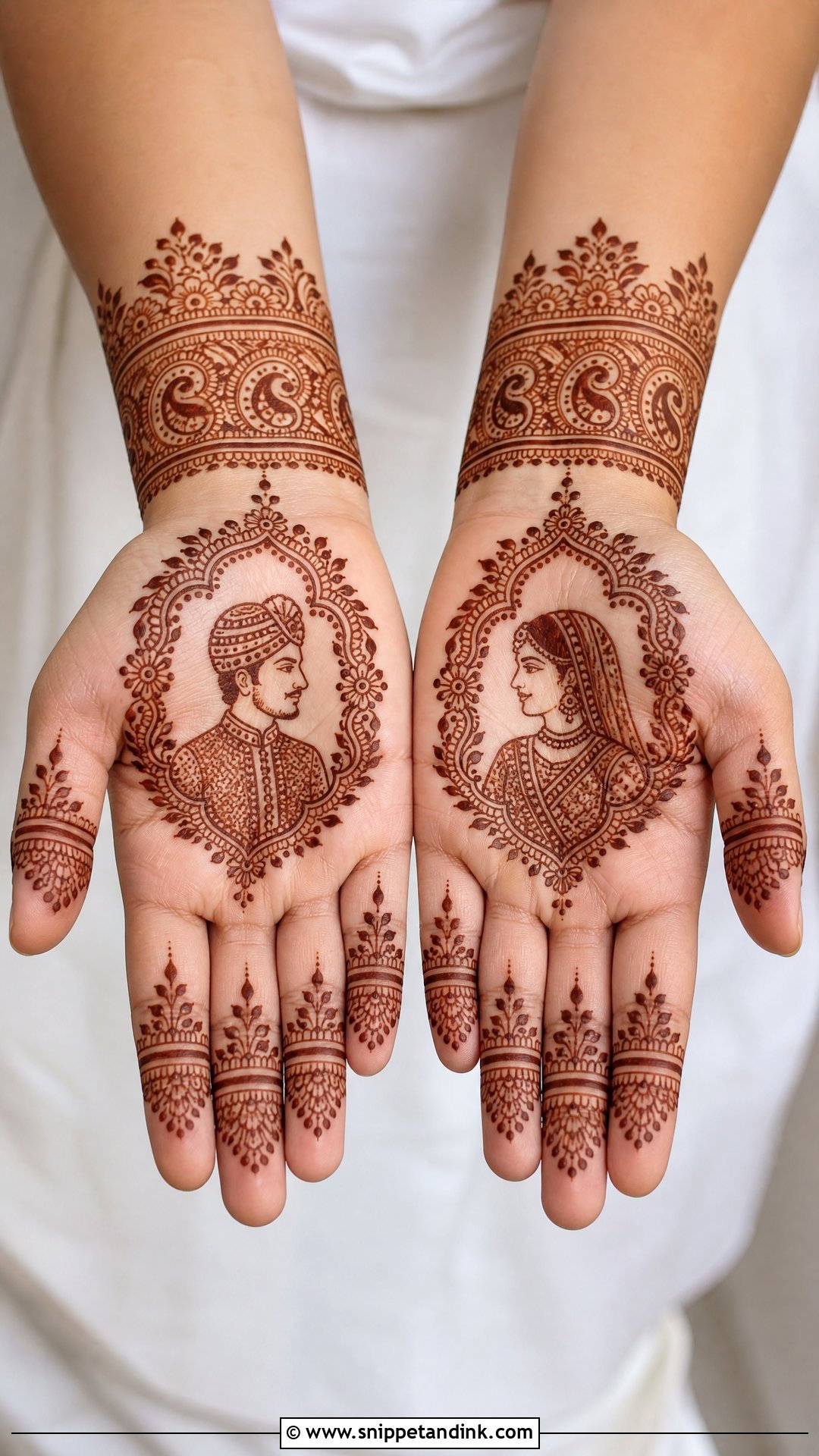
Bride and groom figures don’t need full portraits. I draw small symbolic figures, or simple outlines framed by flowers, one on each palm: the bride on one hand, the groom on the other, ringed with paisley borders, dots and soft mandala circles. Fingers stay neat with matching bands and vines. Faces drawn too small often lose detail as the stain develops, so I keep the figures stylized rather than realistic. It adds a story without heavy full-hand work.
16. Simple Bracelet Bridal Mehndi Design
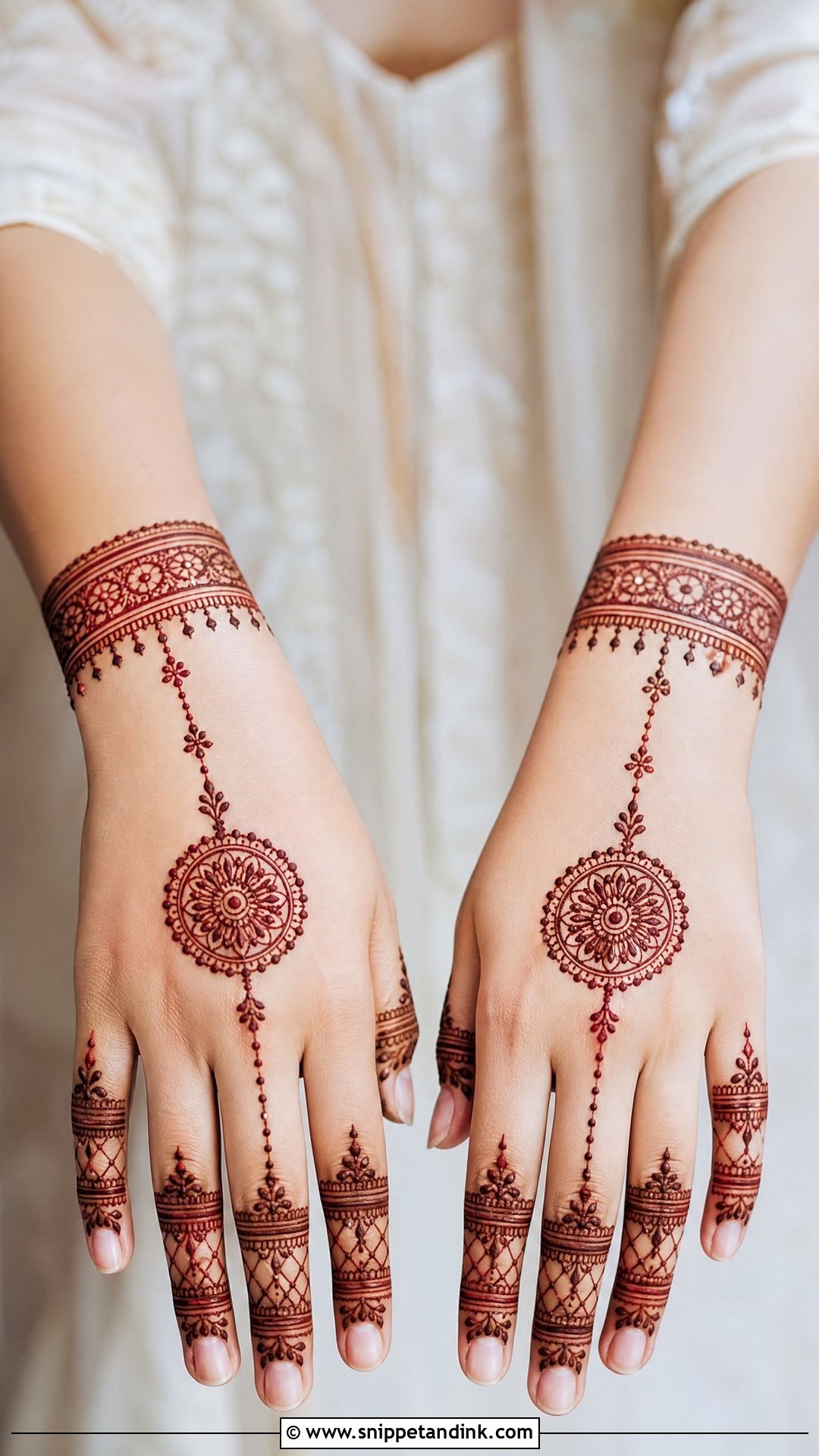
Bracelet designs treat the wrist like a bangle or cuff, with chains, dots and floral lines running toward the fingers. A small mandala or flower on the back of the hand connects to the bracelet with a ring-chain pattern, so it reads as hand jewelry. Real bangles sit over the wrist band, so I place the band a little below where the bangles rest; otherwise they hide it. It’s quick to apply and photographs clearly from the back.
17. Simple Minimal Bridal Mehndi Design
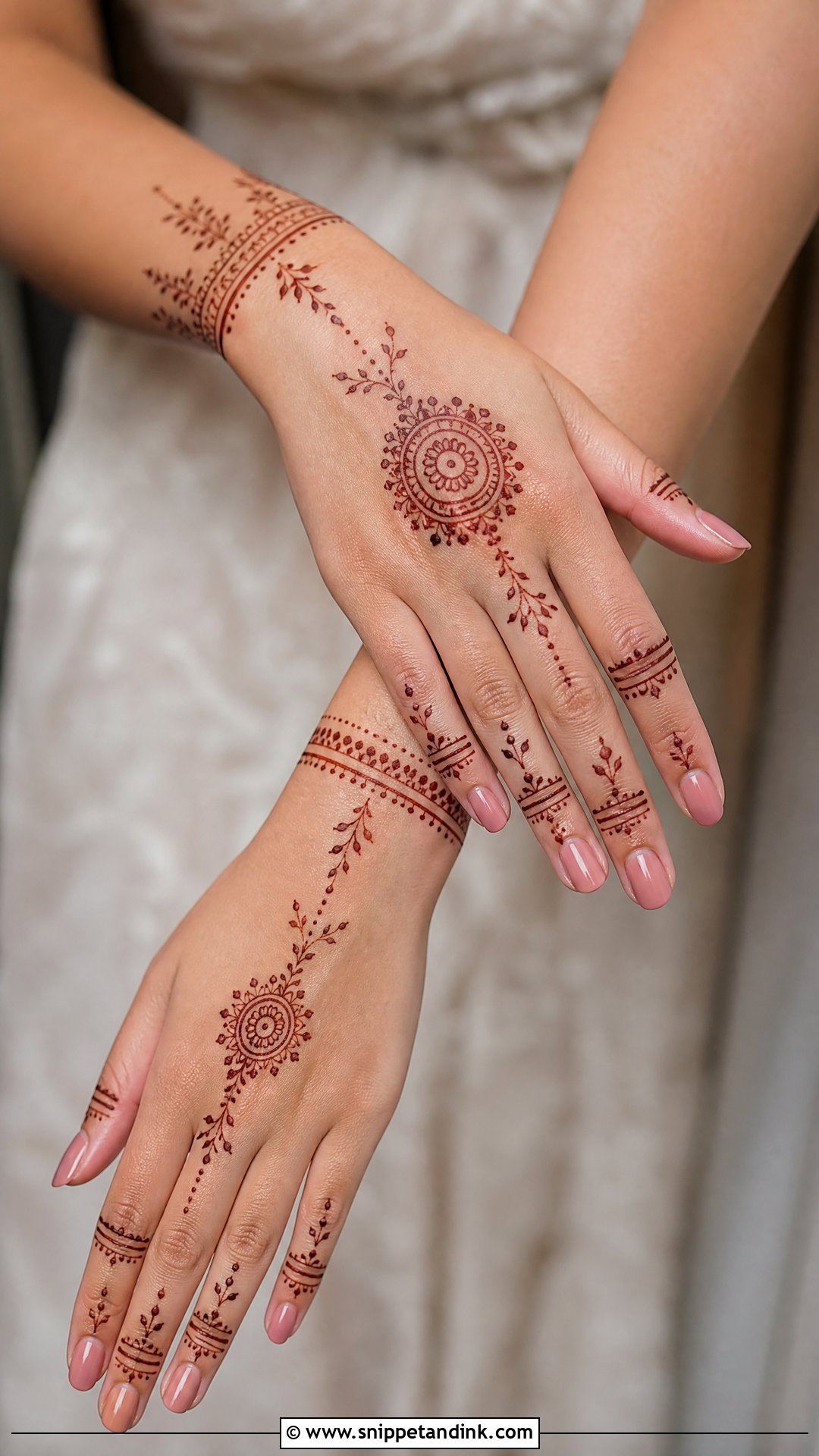
Minimal bridal mehndi depends entirely on clean lines and open skin. A small mandala, fine finger detail, a slim wrist band and a few floral or leafy accents are enough. It doesn’t need to cover the whole hand to feel bridal. Neatness matters more than ever here, since every wobble shows, so I use a fine cone tip and work slowly. It suits smaller ceremonies, contemporary outfits and lighter jewelry.
18. Simple Gulf Bridal Mehndi Design
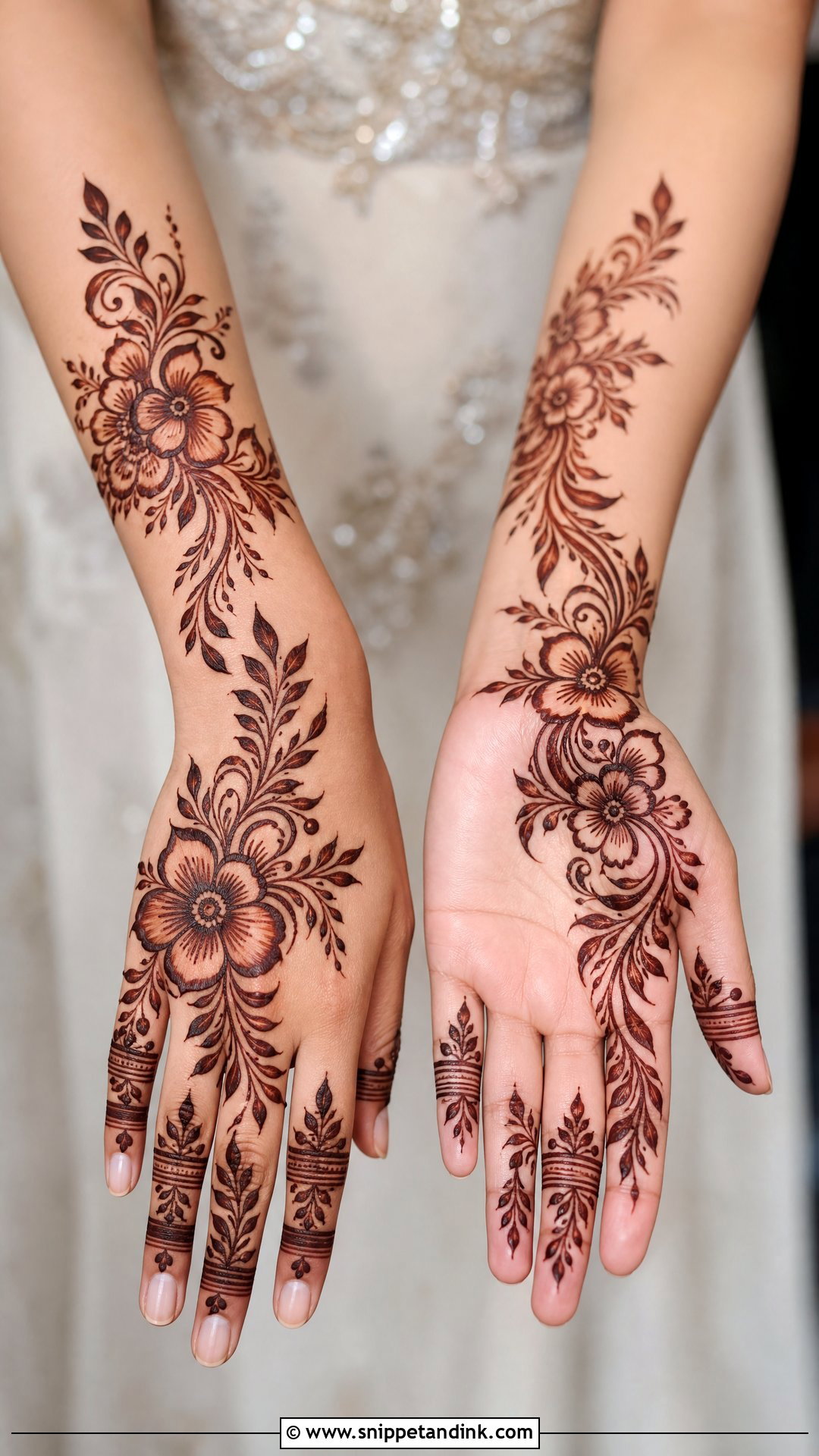
Gulf-style mehndi uses bold flowers, leafy curves and shaded petals with clean space between them. It looks fuller than minimal work but lighter than dense Indian bridal patterns. The pattern flows from wrist to fingers in large floral clusters, with heavy outlines that hold up in photos and lighter shading inside the petals. Gulf designs often use a thicker outline than other styles, so the paste consistency needs to be smooth enough to pipe a bold line without breaking. It works on both front and back, and can extend to the forearm.
19. Simple Moroccan Bridal Mehndi Design
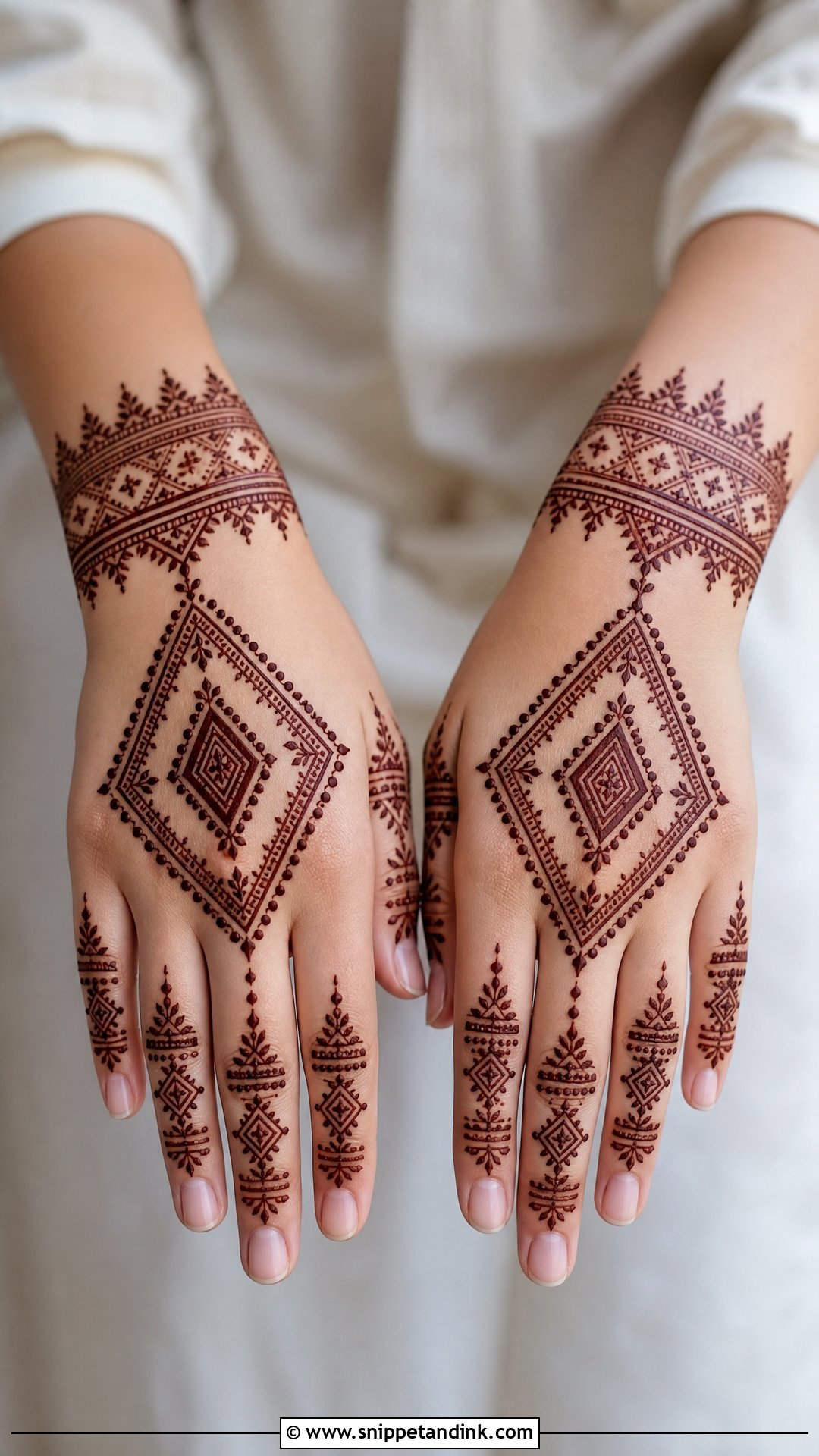
Moroccan mehndi swaps florals for geometry: diamonds, lines, dots, triangles and structured borders. The back of the hand carries a central geometric panel, the fingers repeat the pattern, and cuff-like bands at the wrist give it a bridal finish. Straight lines are harder than curves to pipe cleanly, because any wobble is obvious, so I keep the panel compact. I suggest it to brides wearing modern outfits who’d like something artistic and less traditional.

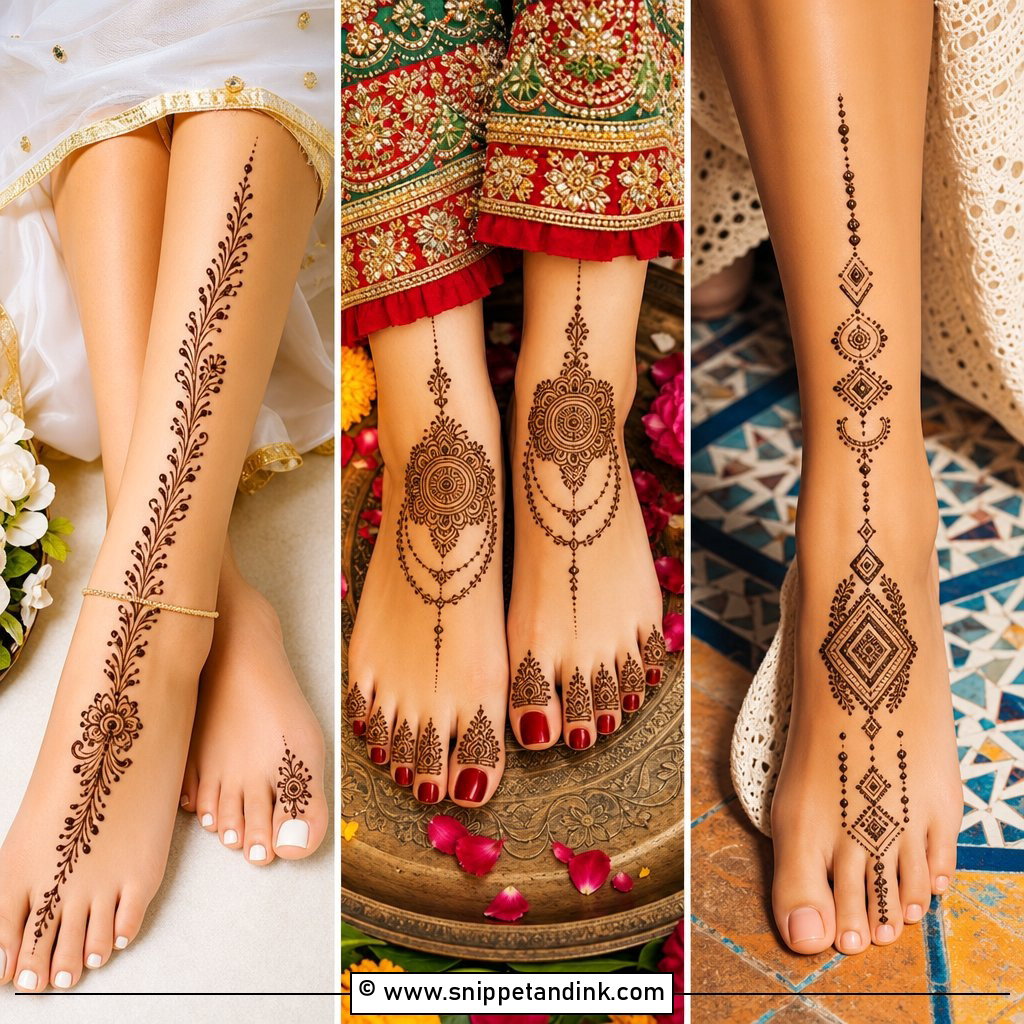
20. Simple Bridal Feet Mehndi Design
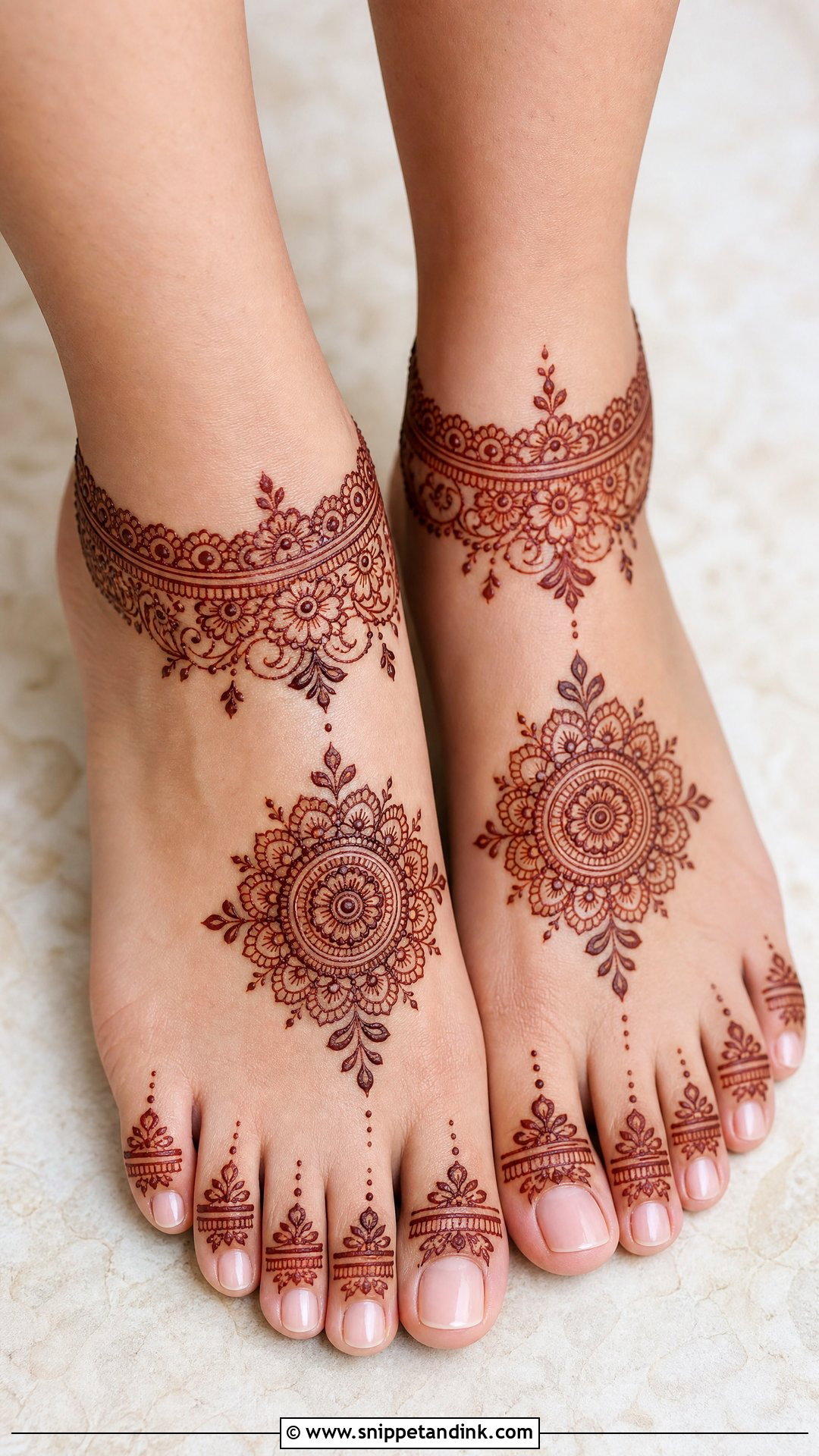
Feet usually stain darker than hands, since the skin is thicker, so a simple pattern there still shows strongly. I start with a floral anklet, move onto the top of the foot with paisleys, vines and a small mandala, and finish the toes with thin lines and dots instead of heavy filling. Open space looks clean with bridal sandals. Feet need longer to dry and the bride can’t walk while they do, so I usually apply foot mehndi before the hands.
Getting the Darkest Stain From a Light Design
With open layouts, every line counts, so aftercare decides how the design looks on the day. What I tell every bride:
- Keep the paste on as long as you can, ideally six to eight hours or overnight. The longer it stays, the deeper the stain.
- Once the paste is dry, I dab on a lemon and sugar mix to keep it stuck to the skin. Don’t soak it; a light dab is enough.
- Scrape the dried paste off with a blunt edge or your fingers. Don’t wash it off.
- Keep water away for as long as possible after removal, ideally until the next morning.
- Warmth helps the stain develop, so keep your hands warm. Some families hold the hands near clove smoke; a warm room works too.
- Skip chlorinated pools, hand sanitizer and exfoliating scrubs until after the wedding; they fade a stain fast.
A natural henna stain typically lasts one to three weeks, fading as the skin renews. Palms and fingertips hold it longest. If the color looks pale on the first evening, don’t panic; it is still developing.
Lighter Henna, Same Bridal Meaning
Bridal mehndi doesn’t have to be heavy to feel meaningful. A considered layout, clean lines, balanced spacing and motifs that matter to you carry the design, with less time in the chair and less discomfort. Indian, Arabic, Indo-Arabic, Moroccan, Gulf, floral, mandala or jewelry-inspired styles can all be pared back. Match the pattern to your outfit, your ceremony and how long you’re willing to sit, then add a small traditional detail if your family expects one. A simple design applied well and cared for properly will stain as richly as an elaborate one.
You'll Like These Ideas:



Leave a Reply