
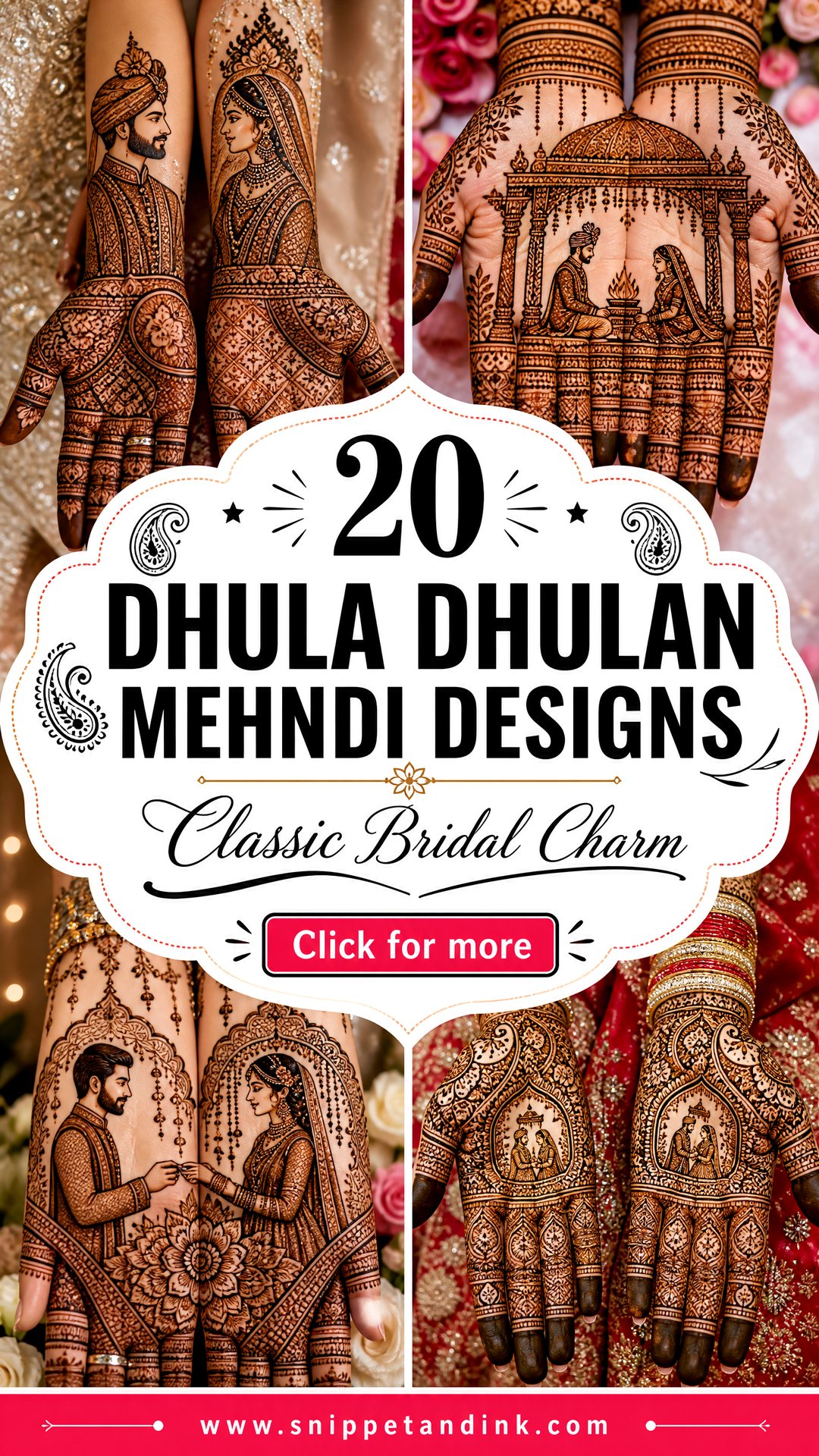
Dulha Dulhan mehndi tells the wedding story on the hands themselves: the couple’s faces, the mandap, the baraat, initials, sometimes the date. It is the most demanding kind of bridal henna I draw, because a face is far less forgiving than a paisley. A slightly heavy line on a petal disappears into the pattern, while the same wobble on a nose or an eye changes the whole expression. Some brides want portraits on both palms with every inch filled; others want a single couple motif floating in open Indo-Arabic space. Your outfit, your hand size and how many hours you can sit still decide more than any picture does. The 20 layouts below are the ones I’d actually recommend, with notes on how each behaves once the stain develops.
Sketching the Couple Before the Cone Touches Skin
Portrait henna goes wrong most often in the planning, not the drawing. When a bride books me for a couple design, I ask for the details a day or two ahead: which palm the bride goes on, how the groom will be dressed (turban, sehra or bare head), any initials or date, and a few reference pictures she likes and dislikes. That lets me rough out the layout on paper so the faces land in the flattest, widest part of the palm rather than across the creases.
Hand creases matter more than people expect. A face drawn over the deep line that runs across the palm will look split once you close your hand or hold it at an angle, so I shift portraits slightly up toward the fingers or down toward the heel of the hand.
- Sitting time: a simple couple motif on both hands can be done in an hour or two; full bridal hands and forearms with portraits often run four to six hours or longer.
- Timing: I apply bridal henna one to two days before the wedding, because the stain keeps darkening for roughly a day and a half after removal and peaks around then.
- Skin prep: clean, dry hands with no lotion, oil or fresh wax. Oils block the dye from reaching the skin.
- Paste: ask for natural henna only. So-called black henna can contain PPD, a hair-dye chemical that can cause serious skin reactions, and I won’t use it.
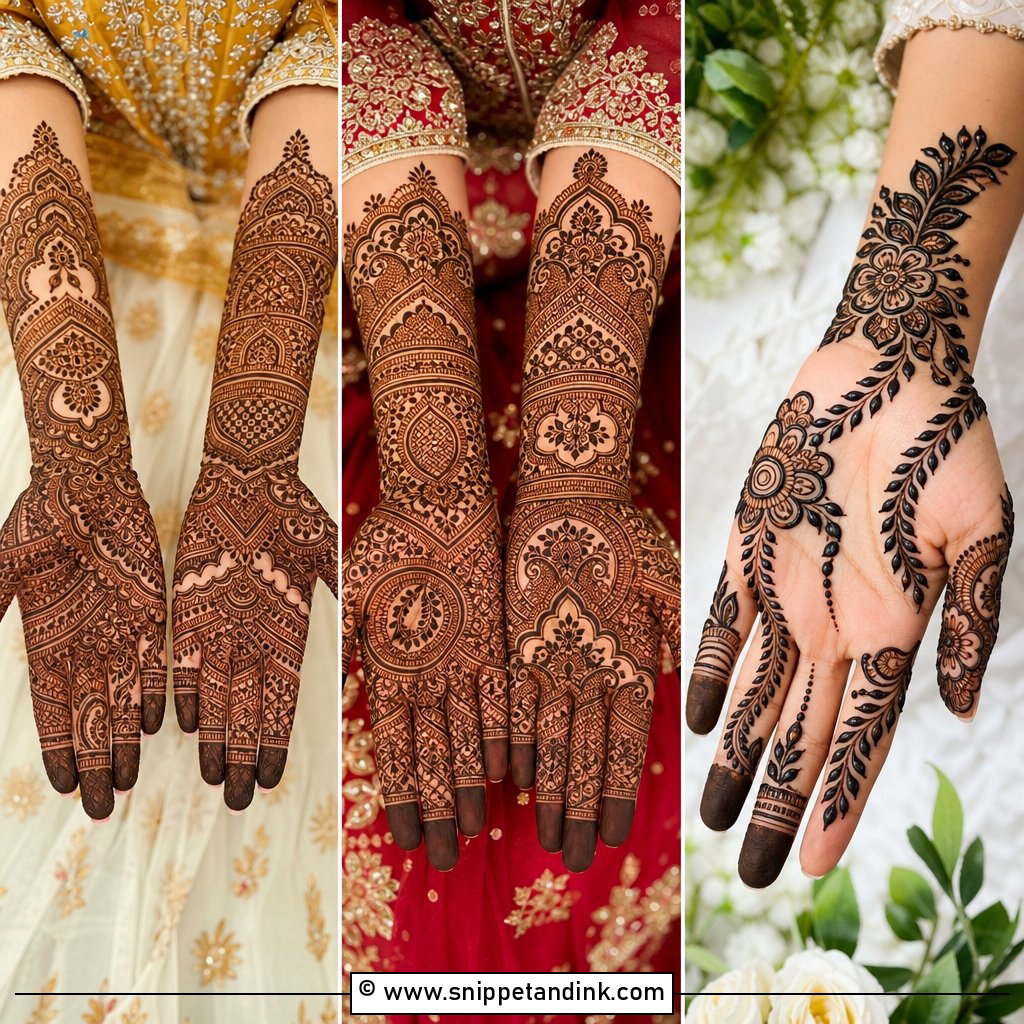
1. Dulha Dulhan Full Hand Mehndi Design
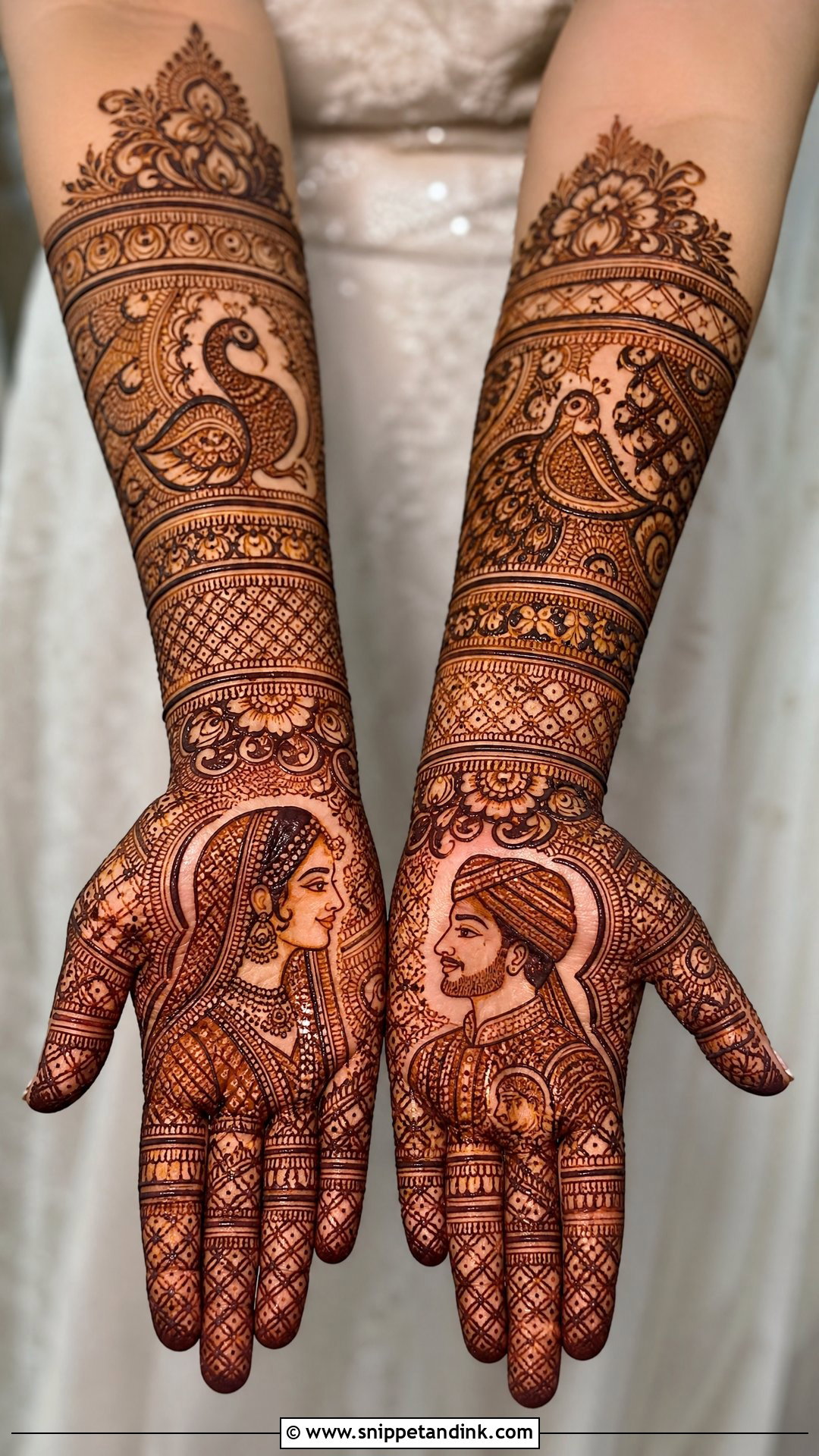
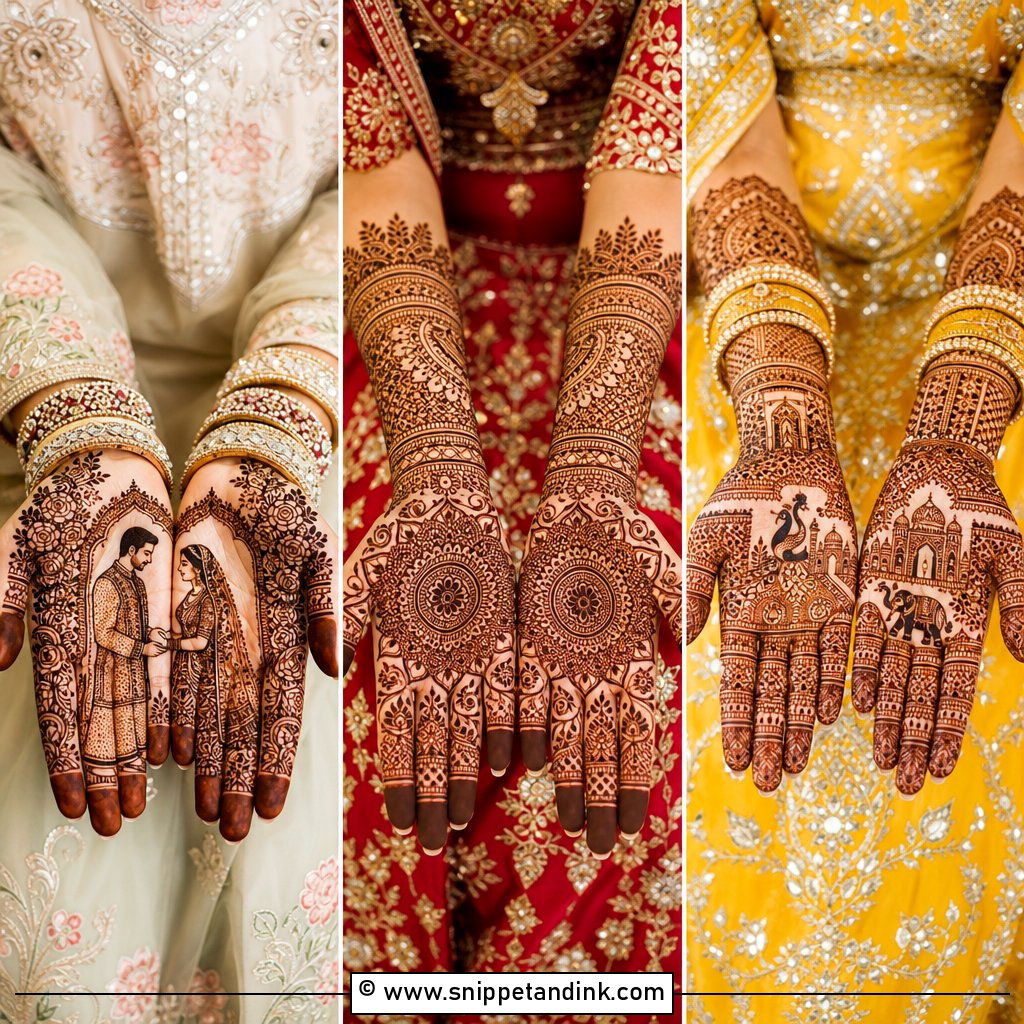
A Dulha Dulhan full hand mehndi design puts the bride’s portrait on one palm and the groom’s on the other, then builds paisleys, florals, peacocks, jaali and wrist bands around them, often carrying on up the forearm with mandap arches, bells and lotus borders. The one thing I insist on here is a frame. A clean circle or arch around each face gives the eye a resting point; without it, the portraits sink into the surrounding fill and nobody can find them in the photos. Hold the palms together at the shoot and the two frames should line up into one scene.
2. Dulha Dulhan Portrait Mehndi Design
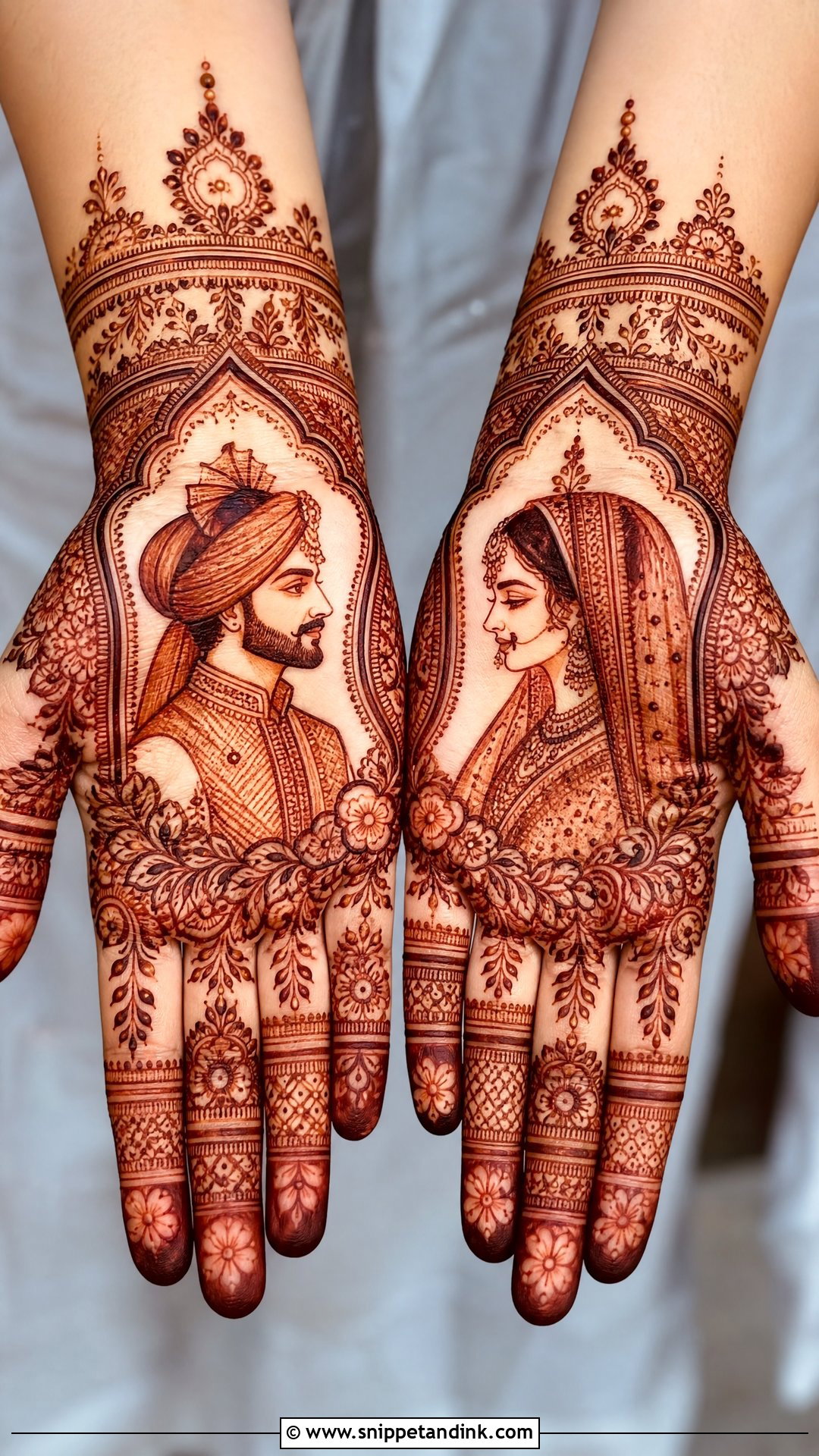
Portrait-led designs put most of the work into the couple’s faces and clothes: the bride’s veil, nath and lehenga border, the groom’s turban, sherwani collar or sehra. I draw faces with a slightly larger outline than feels natural, because henna paste spreads a little as it sits and fine features close up. If a face is smaller than a fingertip, expect the eyes and mouth to merge after the stain darkens. Keep the filler around it quiet, leaves and soft florals rather than dense jaali, so the portraits stay the focus. Mirroring the couple across both palms gives the strongest result when your hands meet.
3. Dulha Dulhan Front Hand Mehndi Design
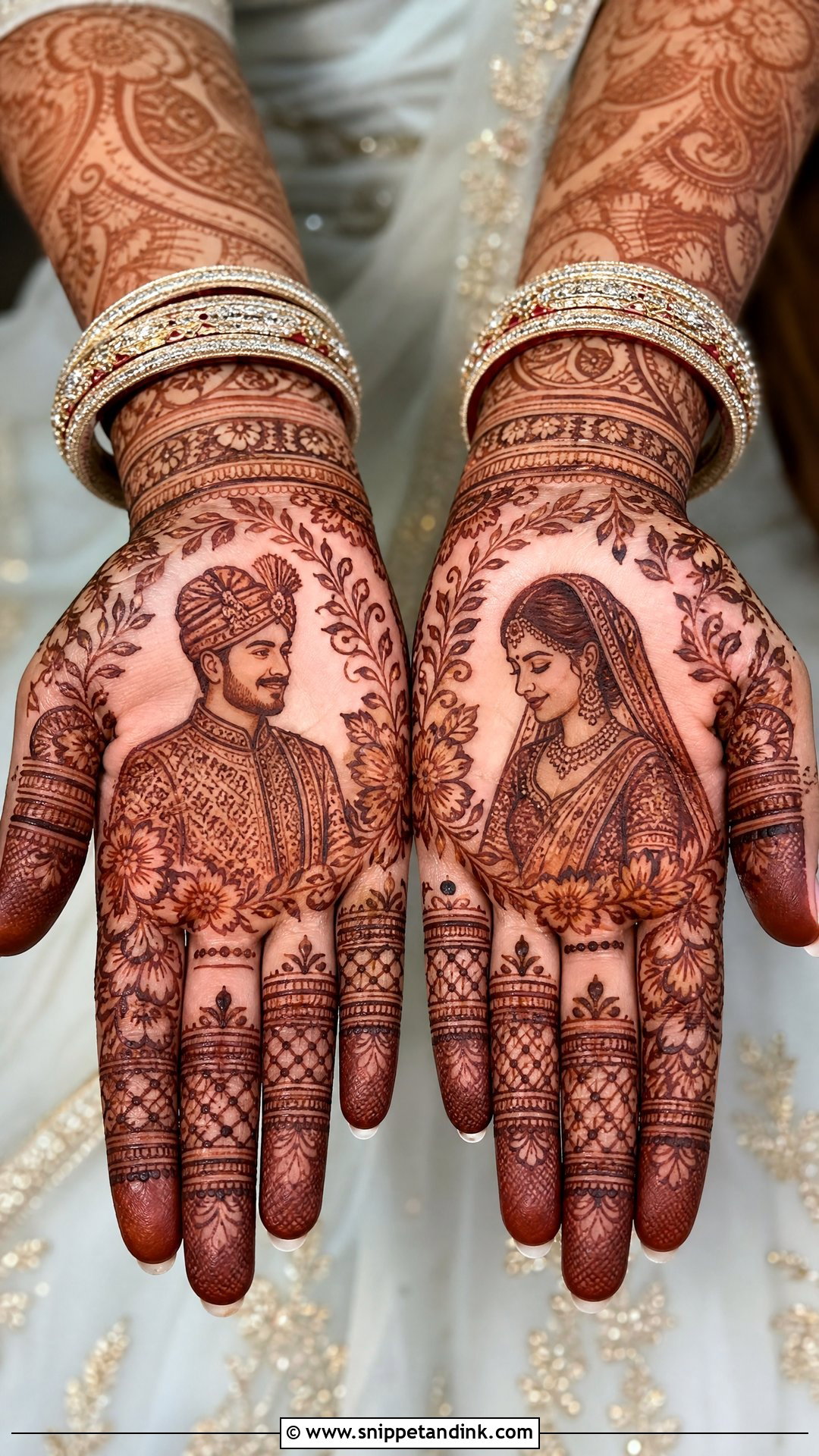
The palm side is where a wedding story has room to breathe: bride on one palm, groom on the other, fingers carrying fine bands, dots, leafy vines and net work, and the wrist closed off with bangles, lotus chains or bells. Palm skin also takes the darkest stain on the body, so this is where detail pays off. With small hands, I scale up rather than squeeze in. Fewer, bigger figures read clearly; ten tiny guests crowding the mandap just turn into brown texture.
4. Dulha Dulhan Back Hand Mehndi Design
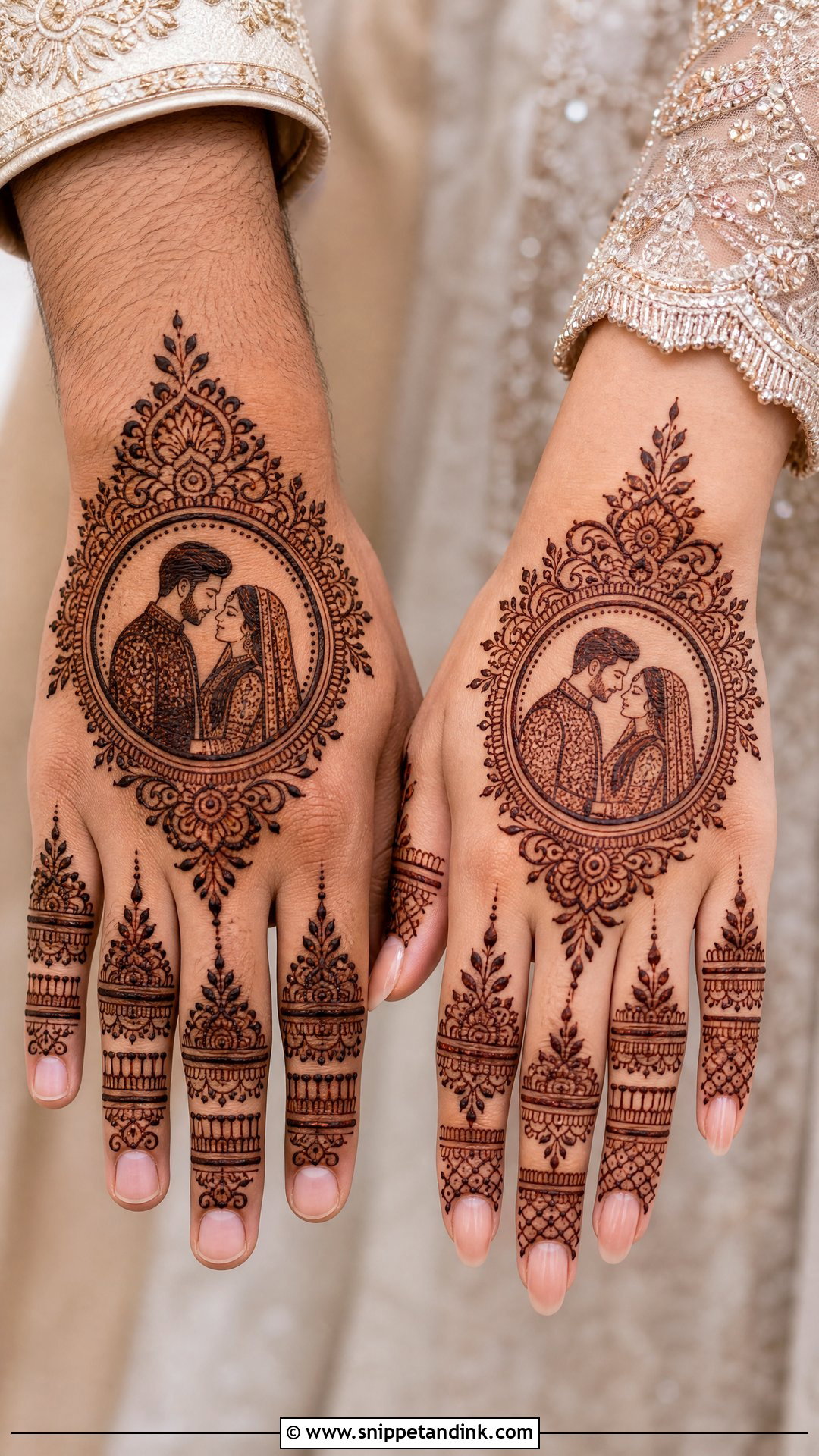
Back-hand placement keeps the couple theme in shot during ring, kalire and jewelry photos, which is where most close-ups happen. Instead of full portraits, I usually draw a framed couple motif or a mandala with two small figures at the center of the back hand, then add heavy fingertips, leafy trails or lace sections on the fingers and a bracelet shape at the wrist. Be aware that back-of-hand skin stains lighter than the palm, usually a shade or two toward orange-brown. Bolder lines compensate for that. It suits a heavy bridal outfit and a lighter engagement look equally well.
5. Dulha Dulhan Mandala Mehndi Design
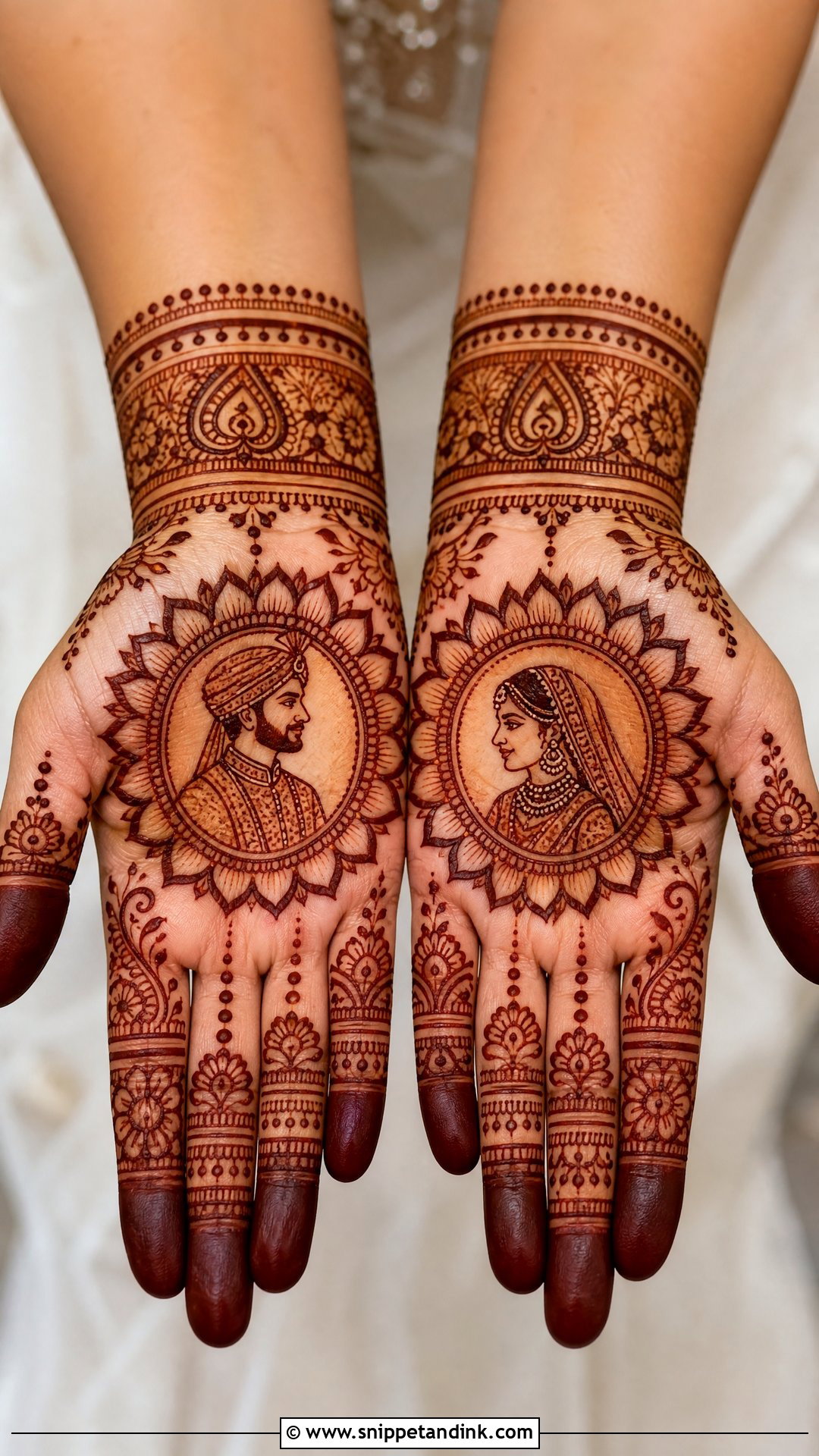
Symmetry does a lot of the work in a mandala layout. The couple can sit inside two round mandalas, or one mandala can frame a small bride-and-groom scene in the center of the palm, ringed with petals, dots, paisley bands and shaded borders. Round, fuller palms suit it especially, since the circle follows the shape of the hand instead of fighting it. I keep the fingers bold with filled tips and pattern bands so the center doesn’t look like it was dropped onto a bare hand.
6. Dulha Dulhan Arabic Mehndi Design
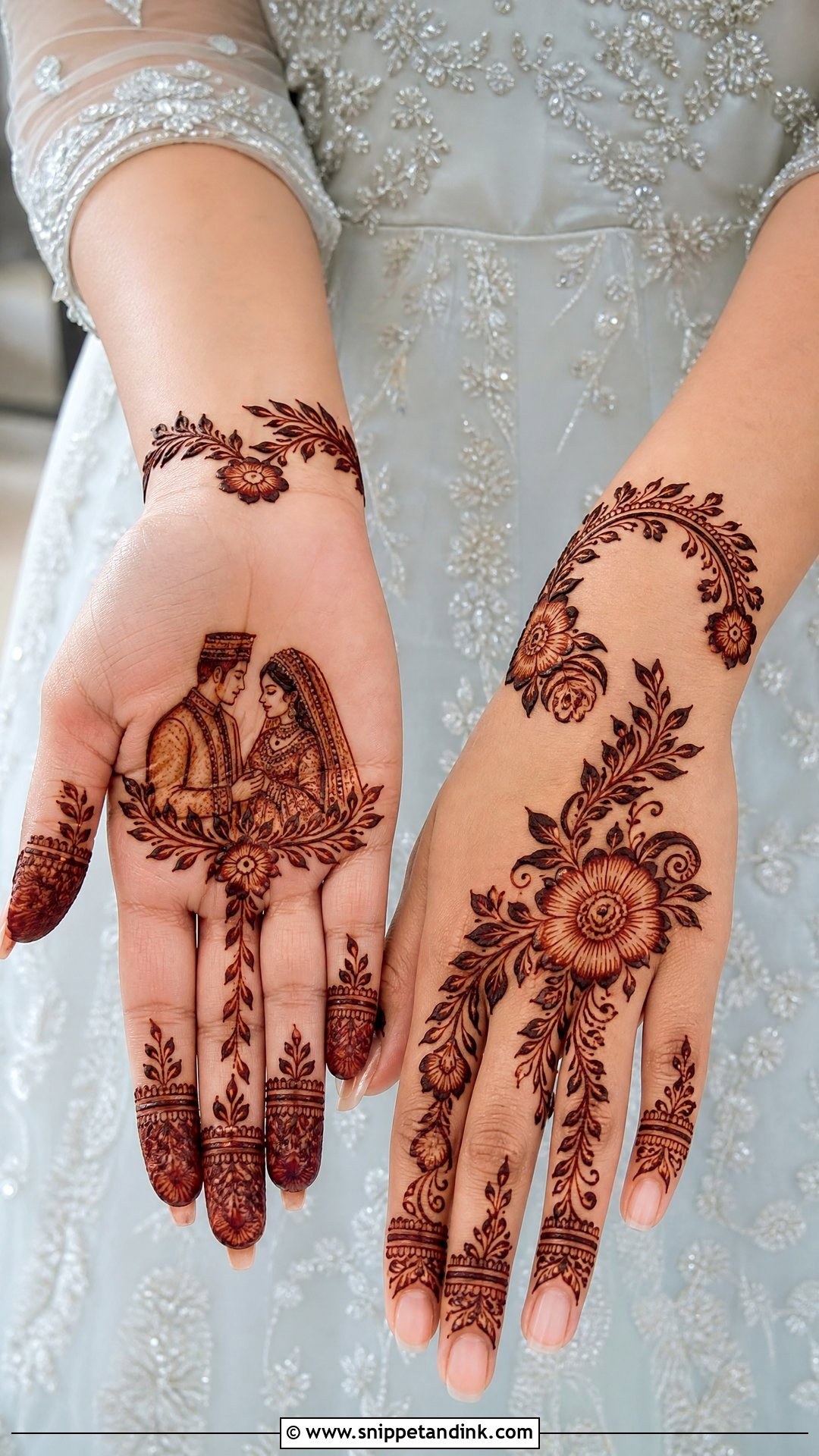
Arabic layouts run diagonally, with bold outlines, shaded petals, leafy vines and plenty of bare skin. The couple motif sits on one side of the palm or back hand, and the floral trail carries the eye from fingertip to wrist or a little past it. Because the shapes are larger and spaced out, this is the version that stains most cleanly, and it dries faster than a dense bridal hand, which matters if you have errands the same evening. You get the bride-groom theme without covering everything.
7. Dulha Dulhan Indo Arabic Mehndi Design
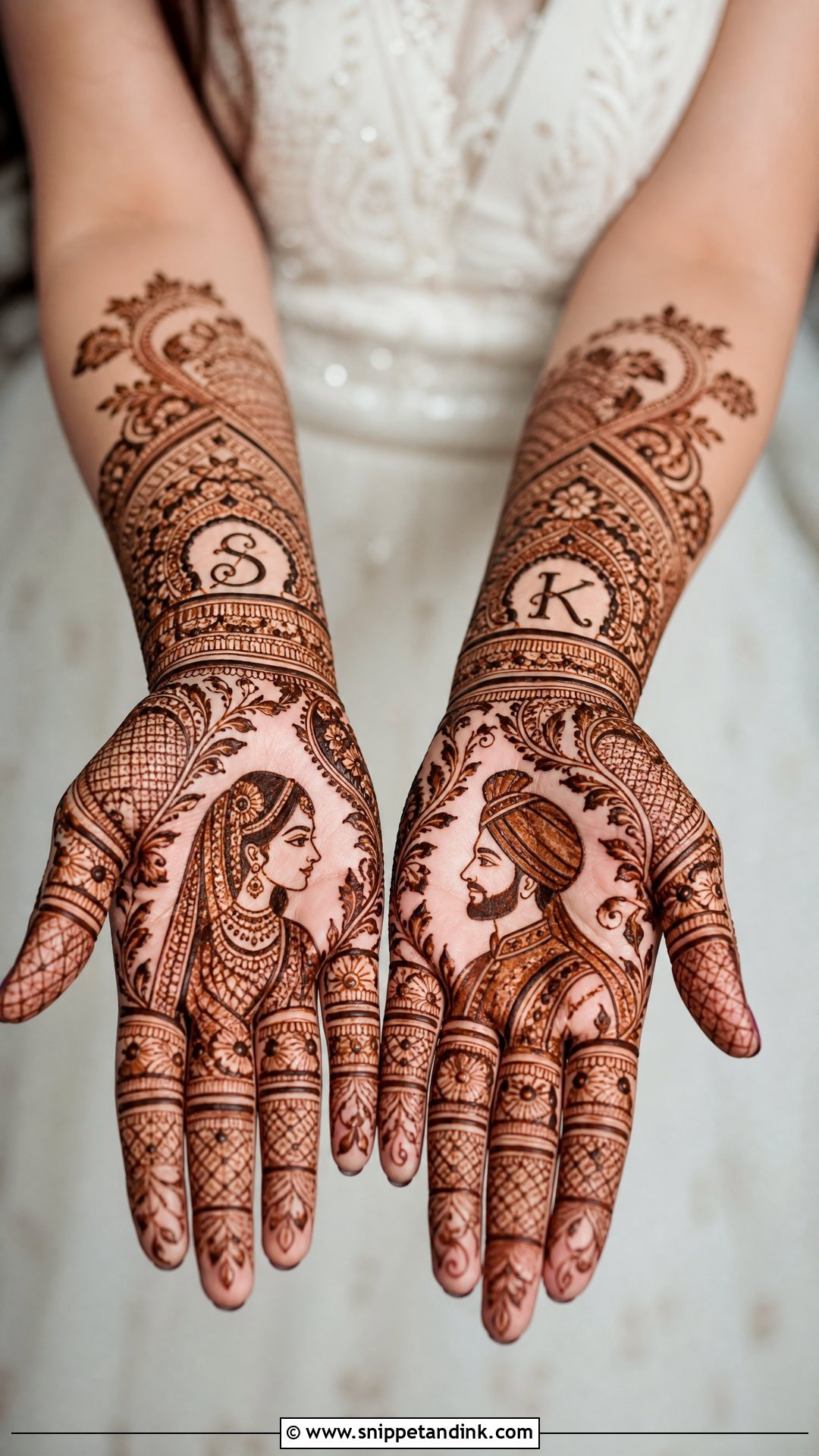
Indo-Arabic Dulha Dulhan mehndi takes Indian storytelling and lays it into Arabic flow. Small portraits go in the palm; diagonal floral vines, paisley blocks and shaded leaves fill the rest with deliberate gaps. Those gaps are what make each motif readable once the henna darkens. I often tuck initials, the wedding date or a tiny heart near the wrist here, since the open spacing gives them room. It’s the version I’d suggest if you have the engagement, sangeet and wedding close together and want one design that suits all three.
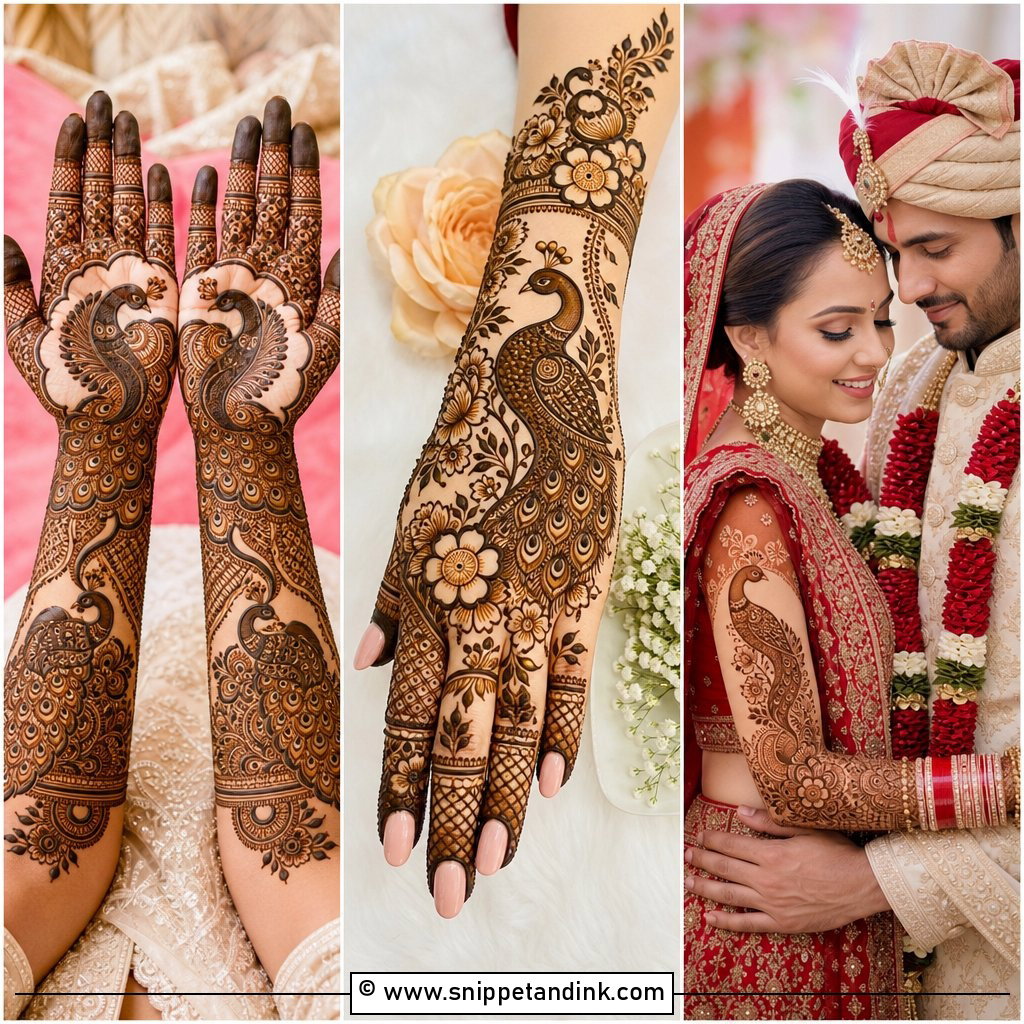
8. Dulha Dulhan Peacock Mehndi Design
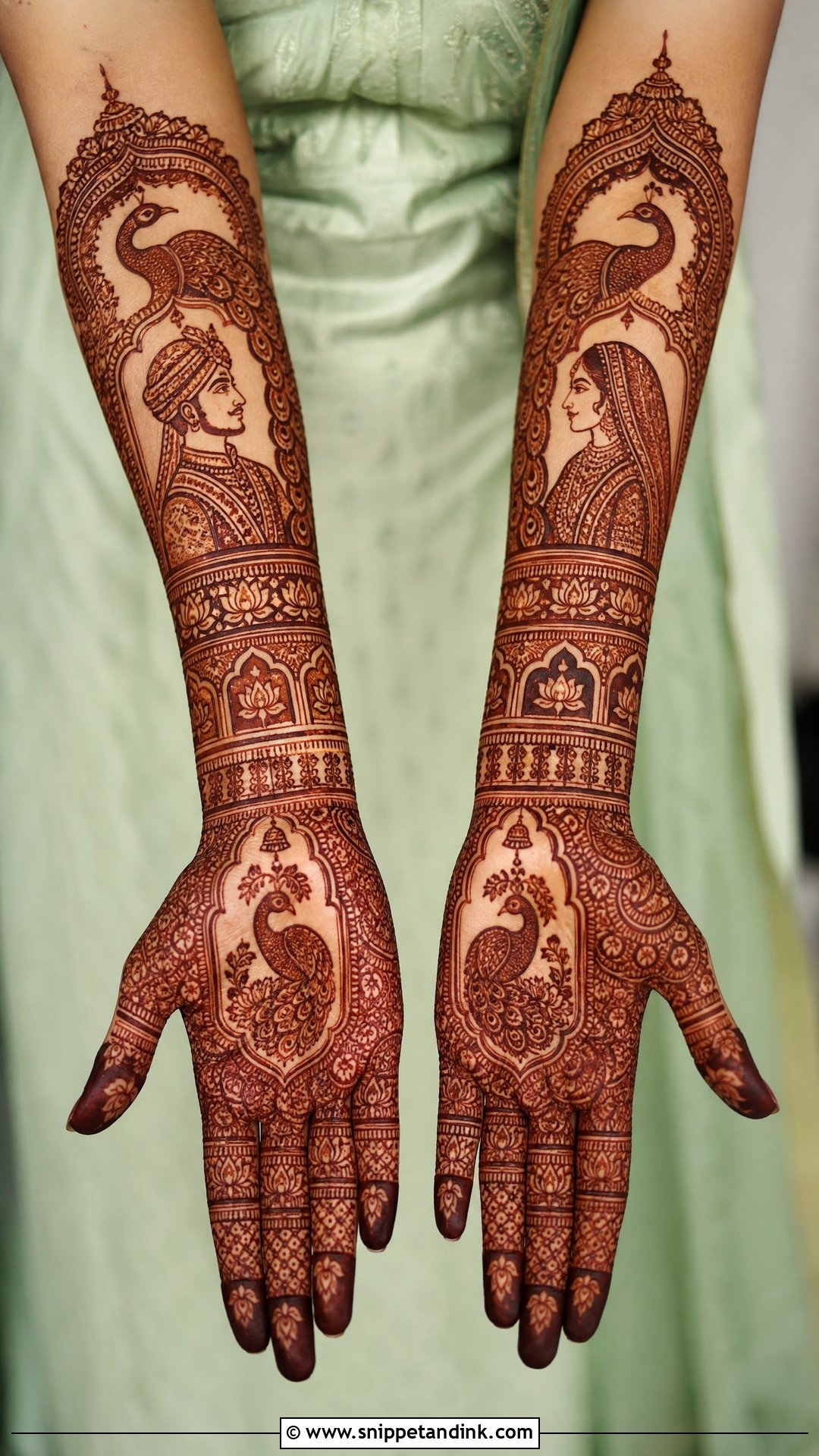
Peacocks frame couple portraits well because their curved necks naturally bracket a face from either side, and the feathers give space for fine lines, dots, scallops and tiny paisleys. Carried onto the forearm with palace arches, lotus chains and curved borders, the effect is very regal. The balancing act is weight: if the peacock bodies are drawn thin and delicate, the portraits and birds compete, so I fill the bodies boldly and keep the faces in finer line. That contrast is what lets you read the hand from across a room.
9. Dulha Dulhan Baraat Mehndi Design
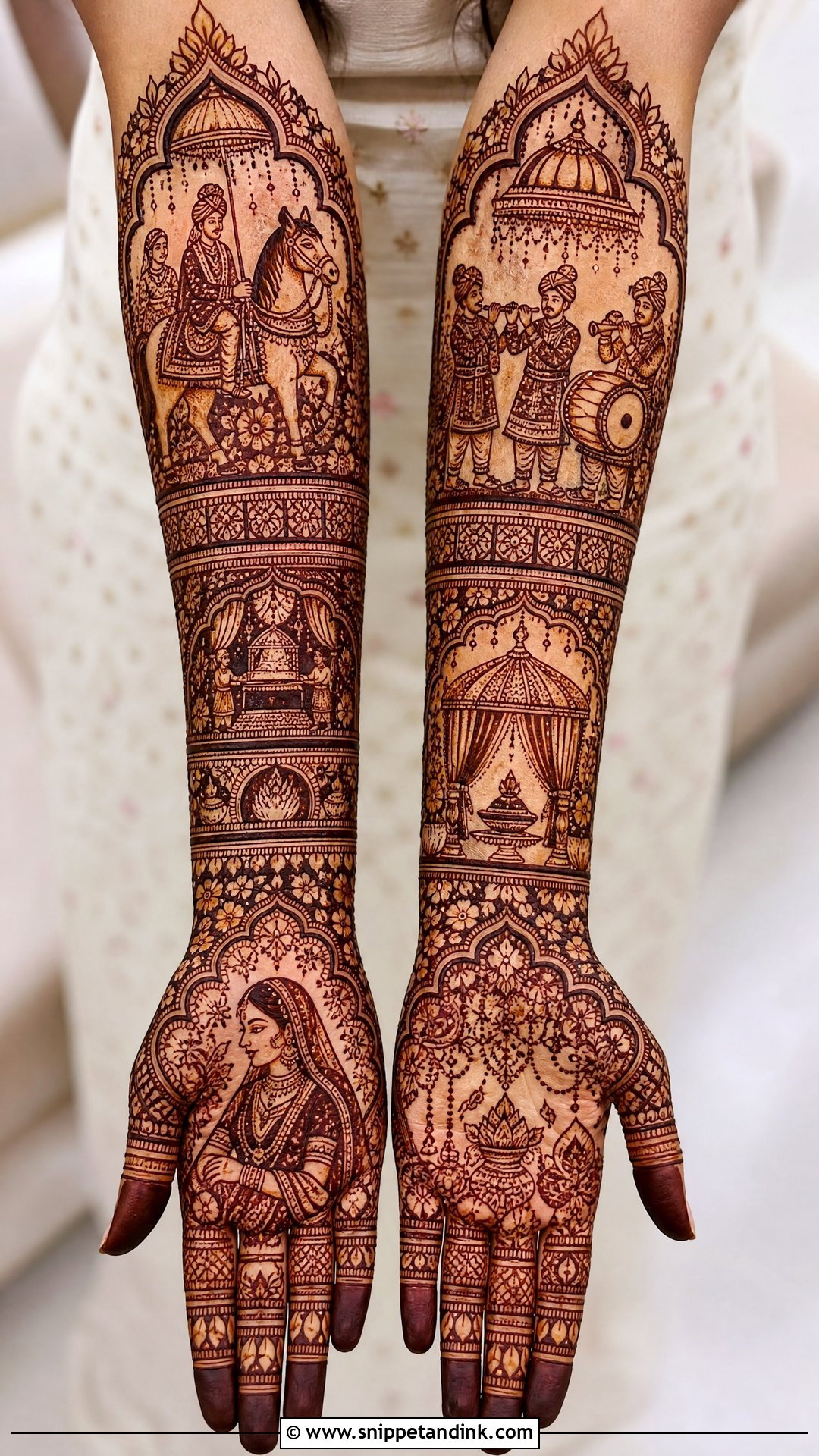
A baraat Dulha Dulhan mehndi design turns the hands and arms into a whole procession: the groom on a horse or elephant, dhol players, music, lights and guests, with the bride waiting under a veil or beside the mandap. It needs full-hand or arm-length coverage to have room, and I’d budget a long sitting for it. Main scenes go on the palms; the forearms take the crowd, flowers and borders. Plan which figures matter most to you before the appointment, because a procession can grow forever if nobody stops it.
10. Dulha Dulhan Mandap Mehndi Design
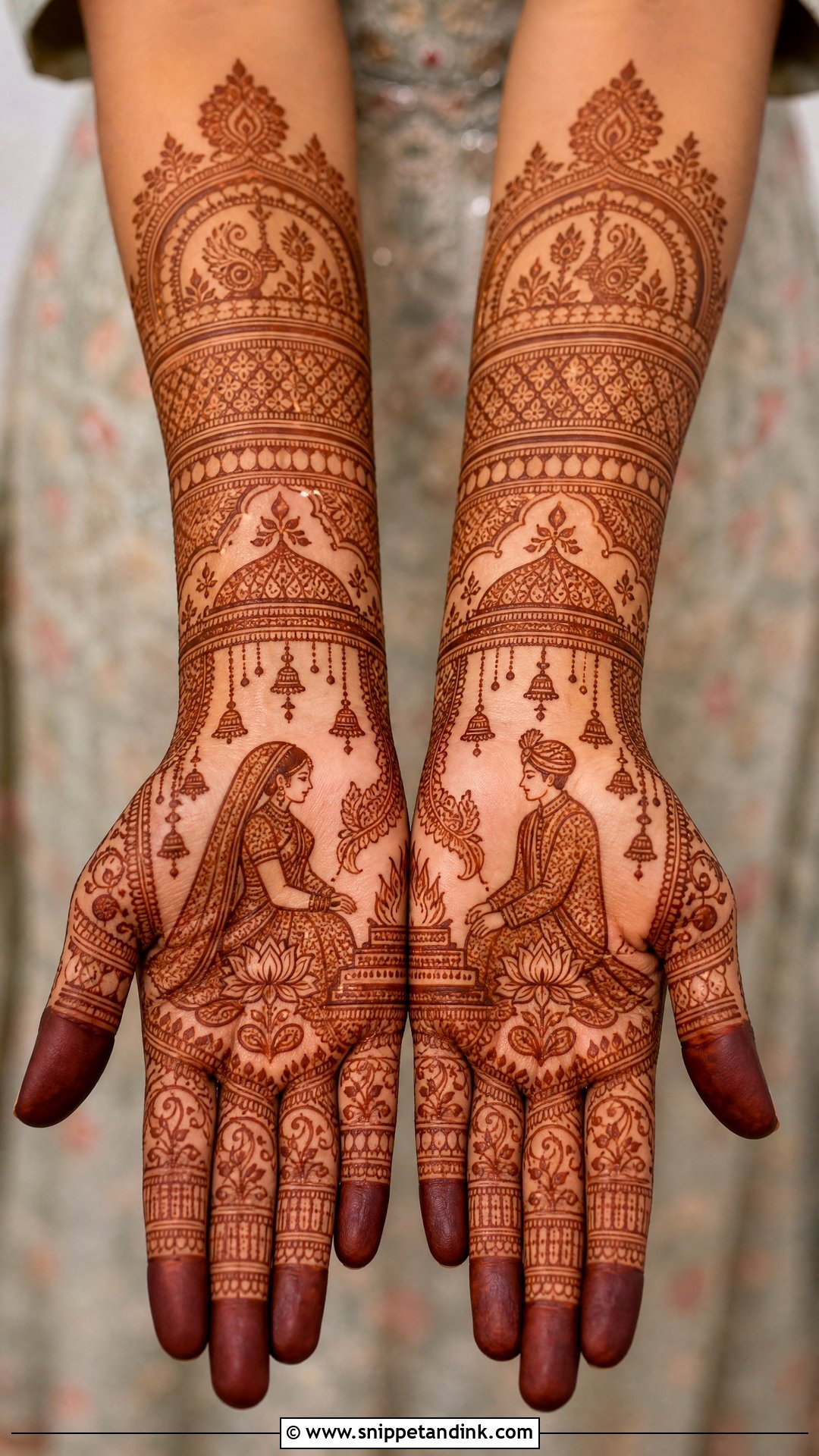
A mandap scene is the most ceremony-focused option on this list. The couple sits under a decorated canopy with hanging bells, floral strings, the sacred fire and arch details, and the rest of the hand carries lotus petals, paisleys, vines and matching wrist bands. I center the mandap on the palm and draw the couple a little larger than any filler, otherwise the canopy dominates and the people look like decoration. Done that way, it reflects the actual ritual without needing random motifs to fill space.
11. Dulha Dulhan Engagement Mehndi Design
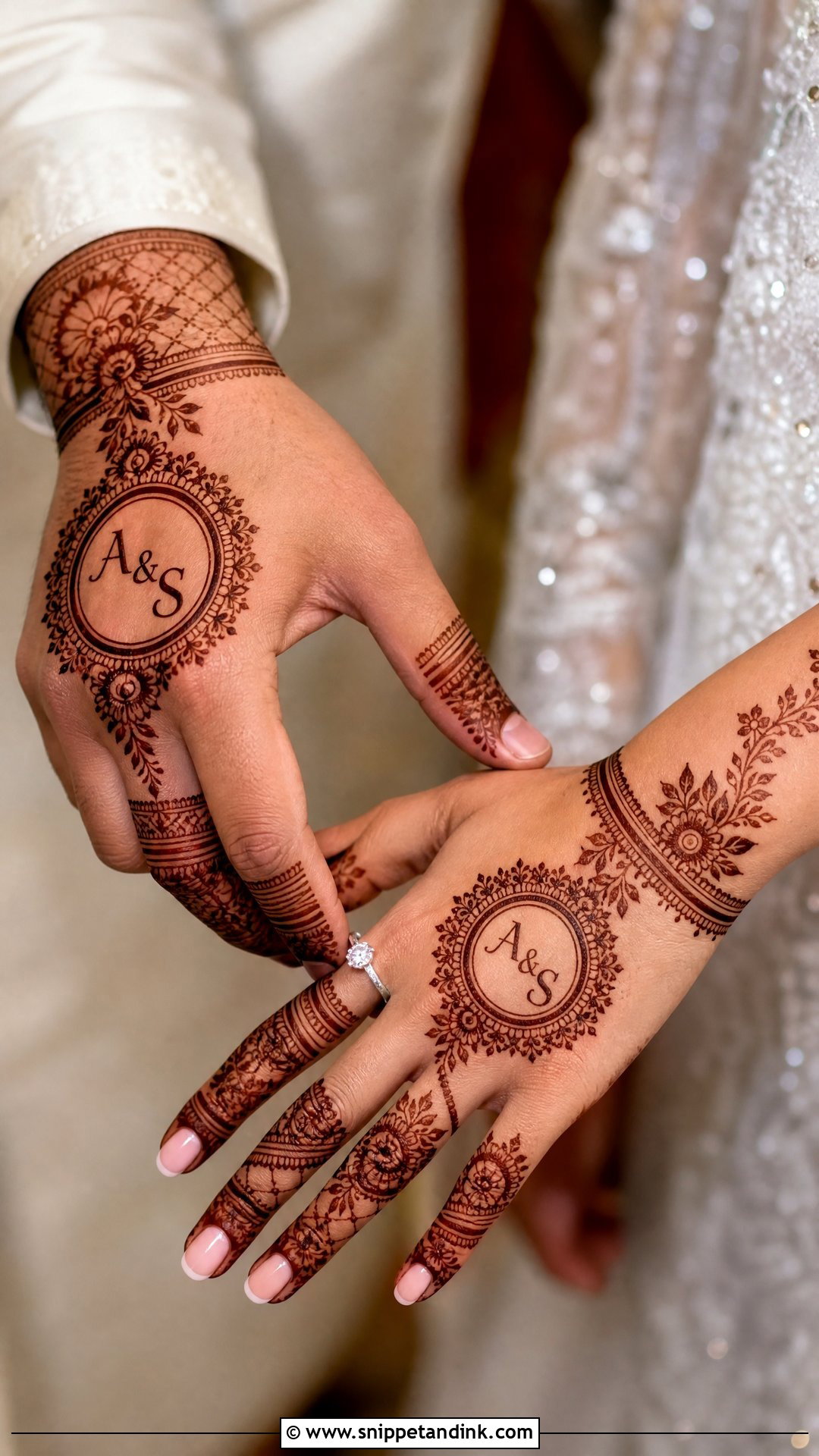
Engagement versions are deliberately lighter. A ring exchange scene, joined initials or simple silhouettes sit in the center, with partly open palms around them and bracelet bands plus finger detail on the back for jewelry photos. I keep the portraits simpler than wedding-day ones because engagement henna is often applied in a busier setting with less sitting time. Bridesmaids who want to echo the couple theme without a heavy layout can borrow this one too.
12. Dulha Dulhan Minimal Mehndi Design
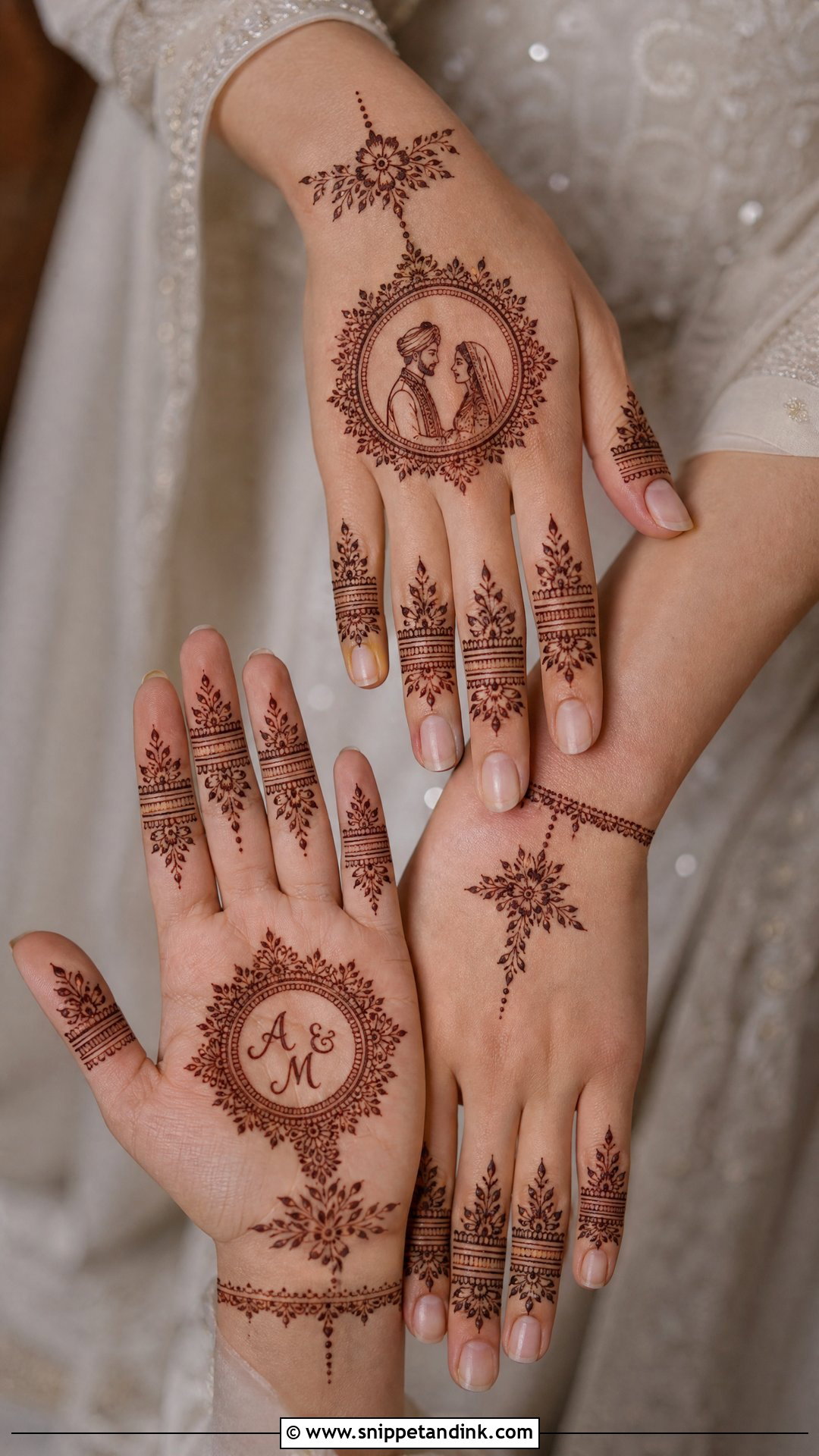
Not every bride wants elbow-length coverage, and a minimal couple design proves you don’t need it. Small bride and groom motifs, neat initials, a simple mandala and clean floral trails can sit on the palm, the back hand or the wrist-to-finger strip. Negative space carries the look, so I’m careful that every line is crisp; in a sparse design there’s nowhere for a shaky stroke to hide. Matching finger bands and a slim bracelet border at the wrist make it look finished. It suits intimate weddings and registry ceremonies well.
13. Dulha Dulhan Heavy Bridal Mehndi Design
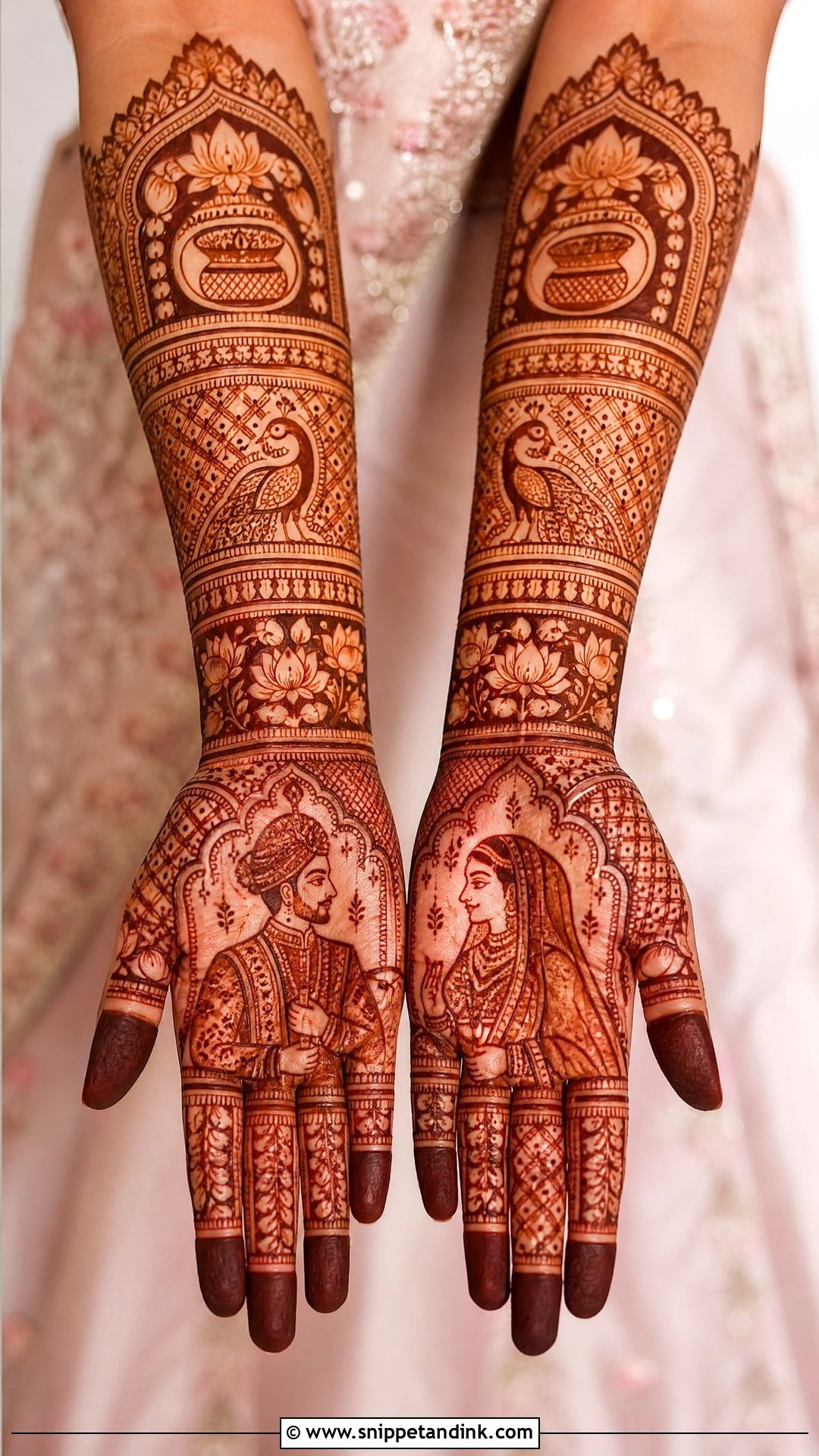
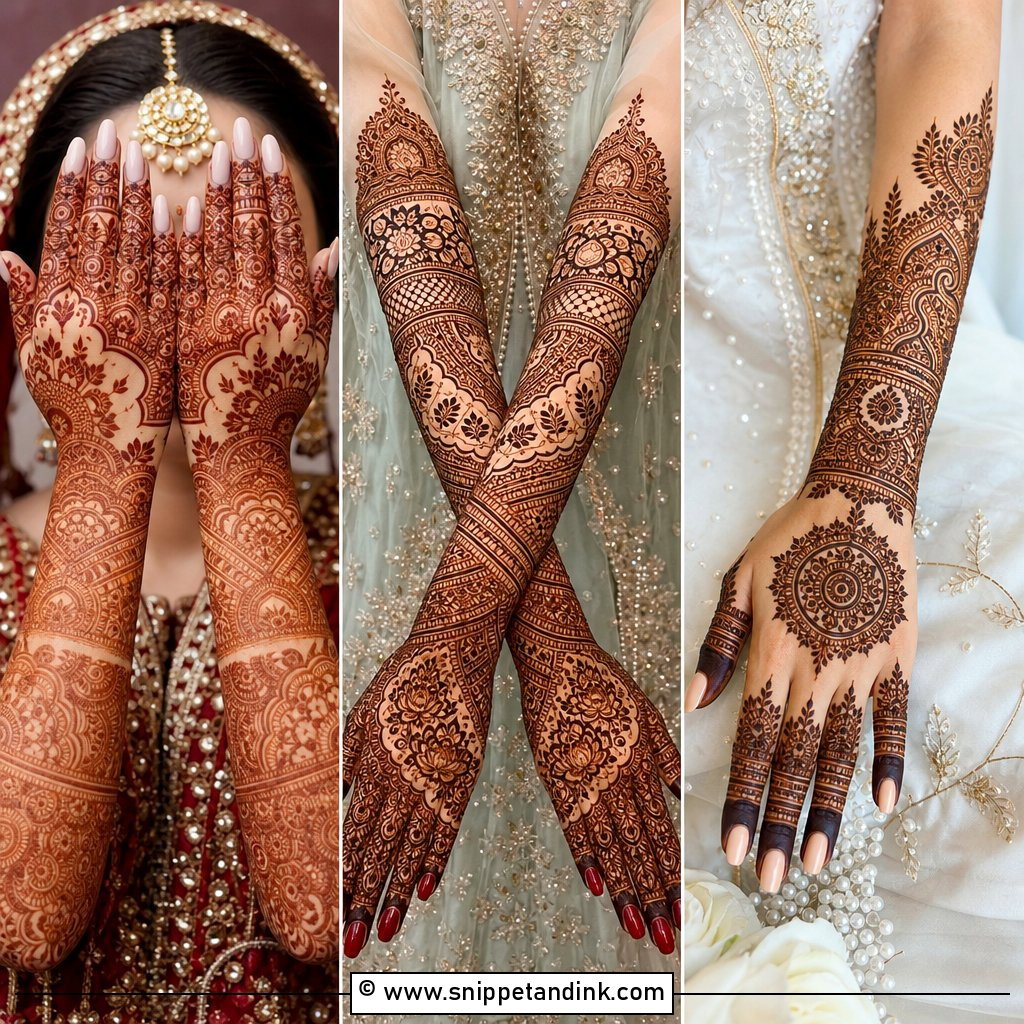
Heavy bridal coverage runs across palms, back hands, wrists and forearms, with the couple in the palms and the arms carrying peacocks, lotus, paisleys, jaali grids, kalash motifs and scene elements. Fingers are fully filled or layered with bands. Expect the longest sitting of any design here, and plan food, a phone charger and someone to help you, because once both hands are wet you can’t do much. The stain on dense work comes up rich and festive with heavy lehengas and full traditional jewelry. Planning the layout before the first line is what stops it looking messy.
14. Dulha Dulhan Simple Mehndi Design
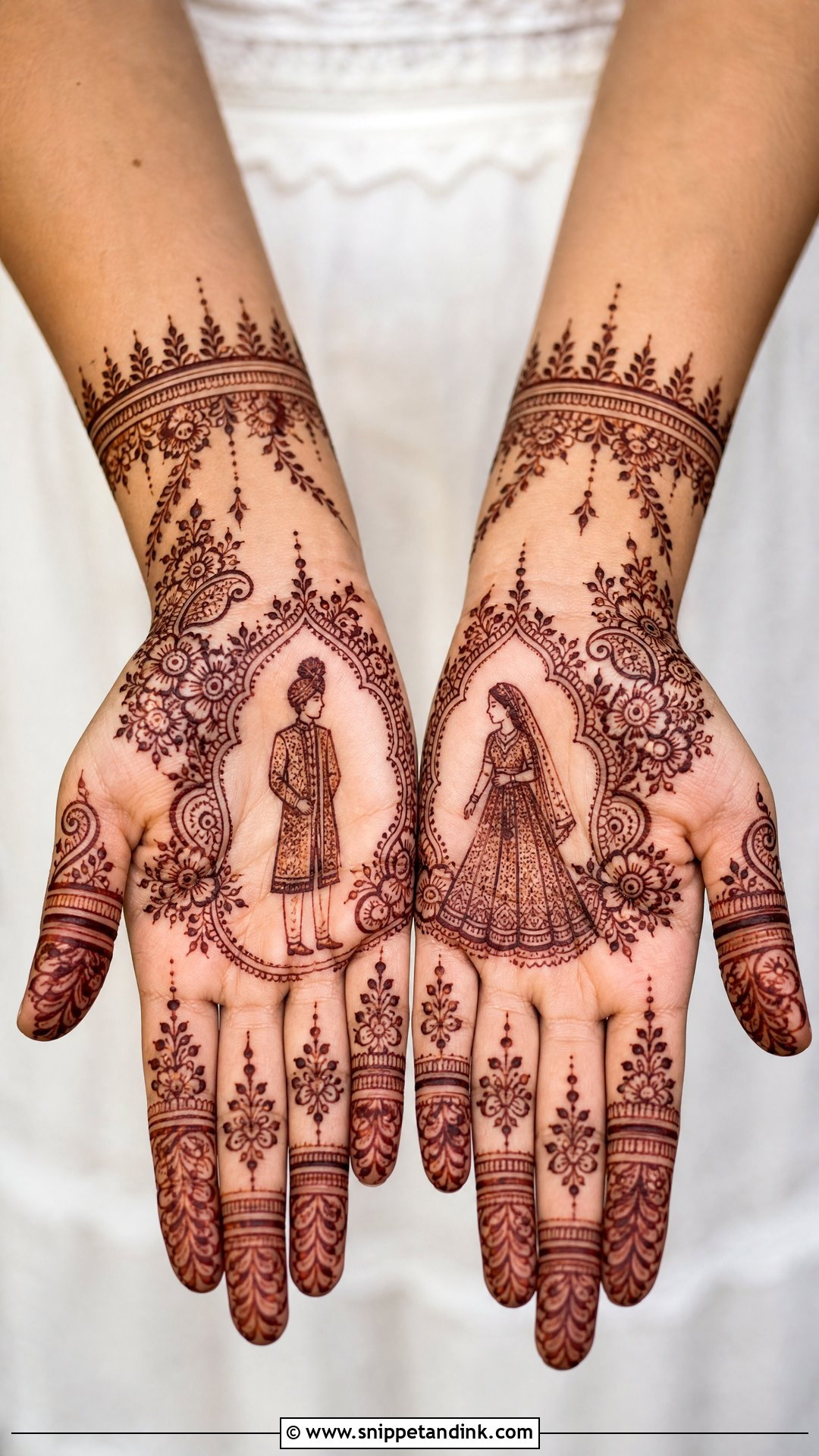
A simpler couple design keeps the theme and drops the density: small figures in the palm, easy floral lines, dots and curved bands on the fingers, and a neat bracelet border to close the wrist. It’s faster to apply and far more comfortable if long sittings make your back or shoulders ache. I recommend it for pre-wedding functions where the main bridal henna is still to come. Clear outlines and sensible spacing are what keep fewer details looking bridal rather than unfinished.
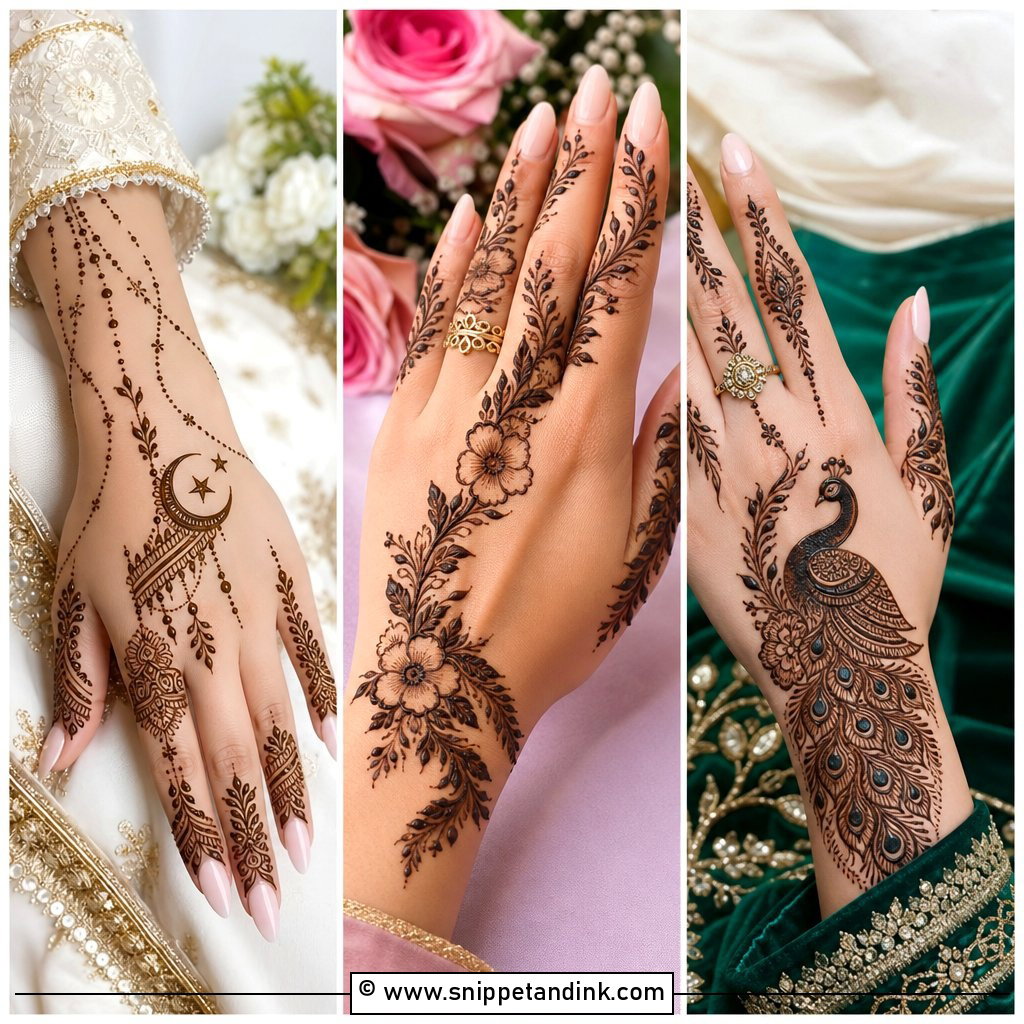
15. Dulha Dulhan Rajasthani Mehndi Design
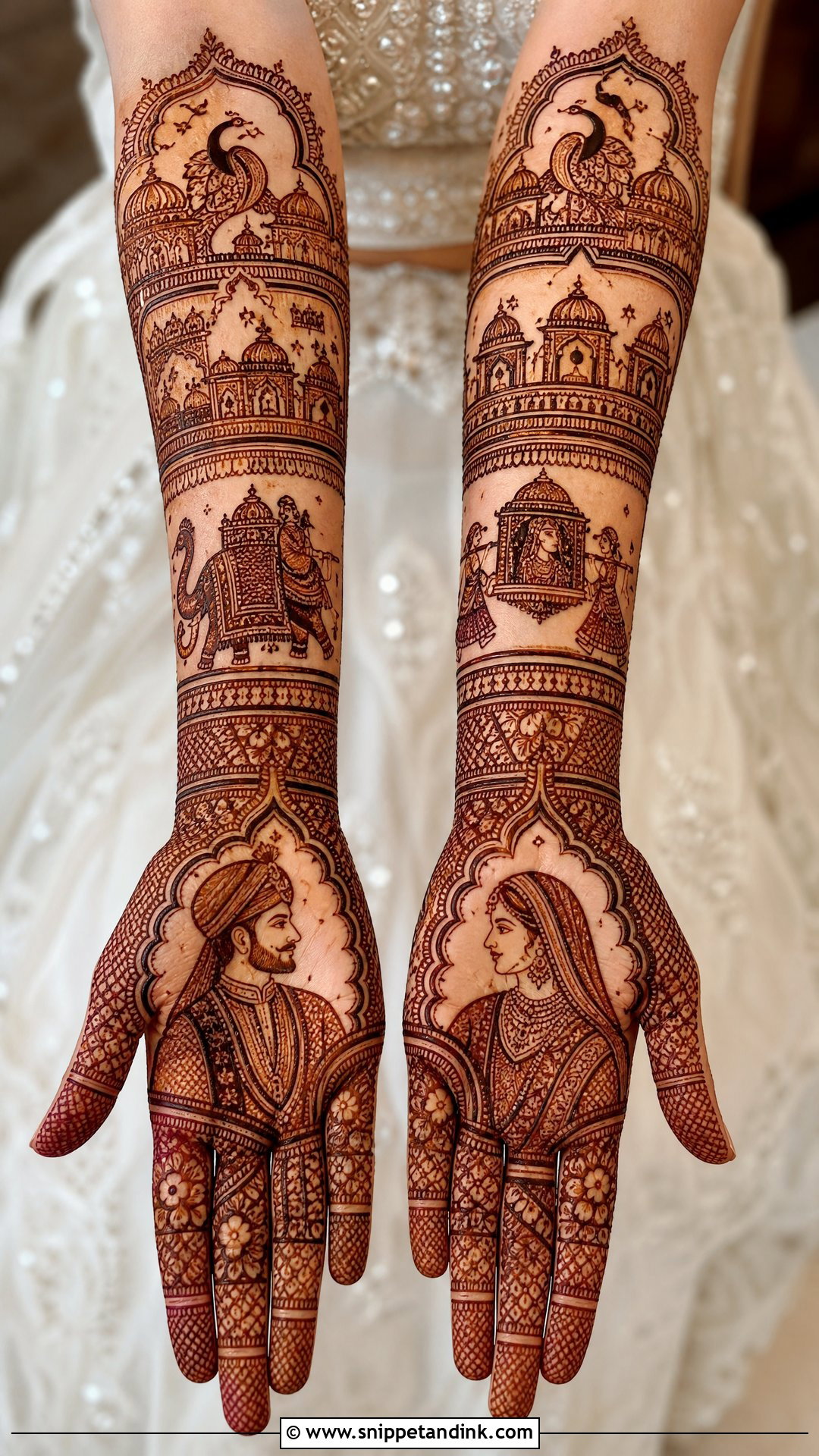
Rajasthani Dulha Dulhan mehndi carries royal storytelling: the couple with palace arches, elephants, peacocks, doli scenes and decorative borders, usually across the full hand and forearm with very little empty skin. Main portraits go in the palms; the arms repeat paisleys, floral blocks and fine jaali. Because so little space is left open, figure drawing skill shows immediately. Before booking, ask to see an artist’s healed stain photos of faces, not just fresh paste pictures, since wet paste always looks neater than the final stain.
16. Dulha Dulhan Pakistani Mehndi Design
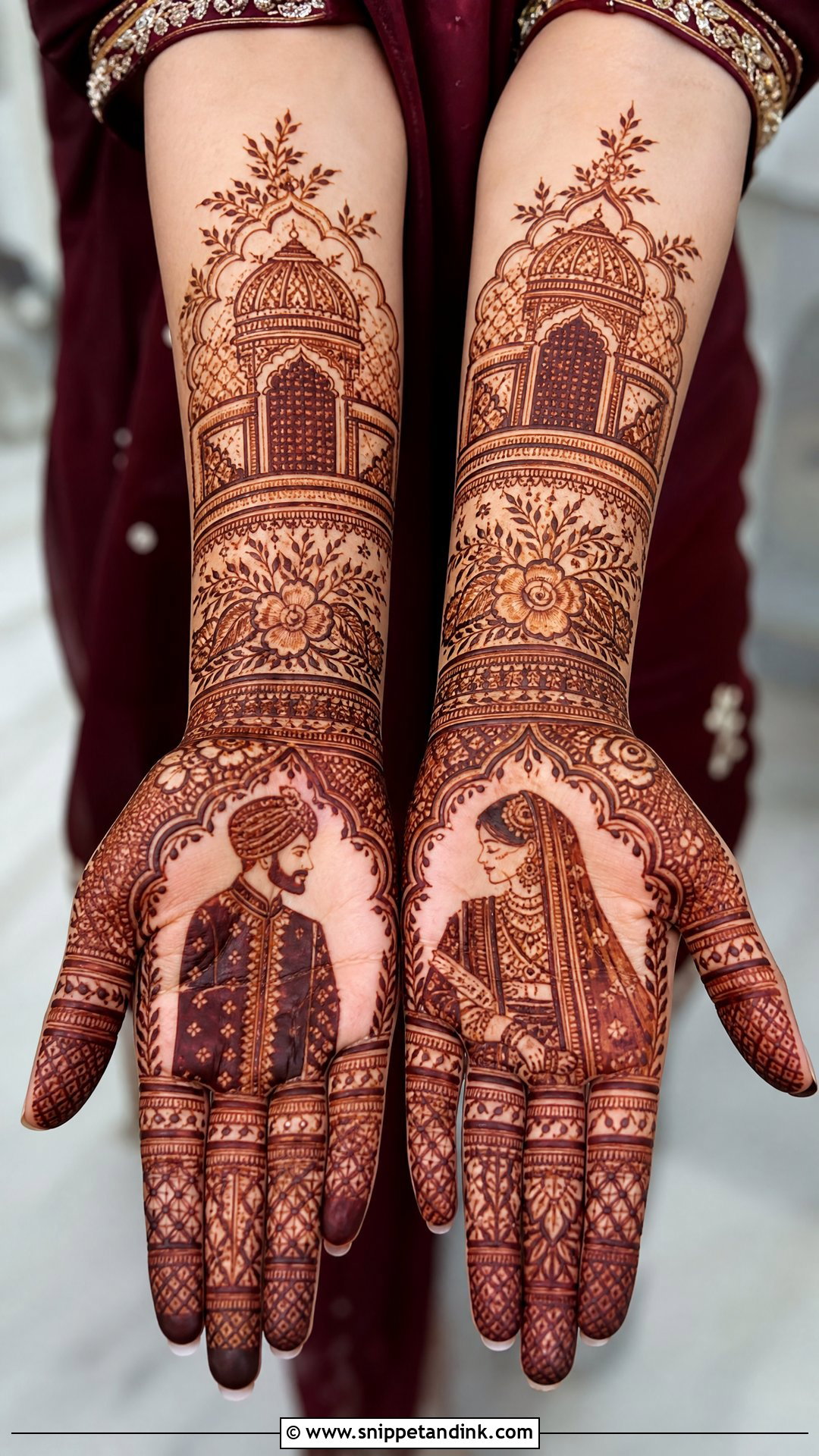
Pakistani bridal layouts tend to pair bold outlines with balanced spacing, so even heavy work keeps a graceful flow. The couple appears in the palms, and the rest of the hand fills with florals, leafy vines, domes, paisleys and fine net patterns, often finished on the back with jewelry-style bands and long finger detail. It’s a common choice for nikah and mehndi night. The deep maroon stain it’s known for comes from good paste and patient aftercare more than from the pattern itself.
17. Dulha Dulhan Wedding Date Mehndi Design
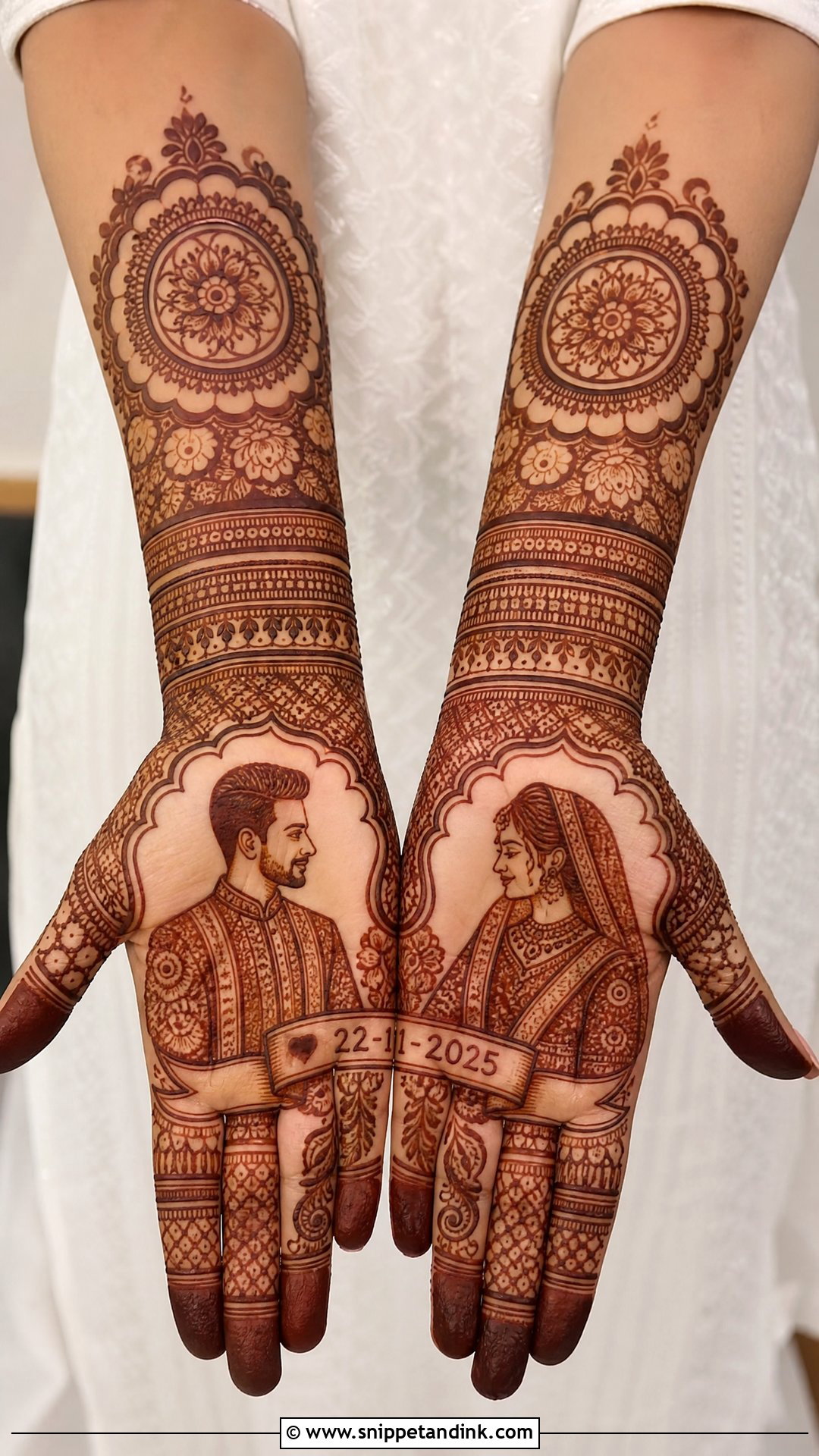
A wedding date adds a personal detail that guests love to spot. I hide it inside a paisley, a wrist band, a mandala ring or a tiny banner, with the portraits kept in the palms. Some couples add initials, a short phrase or a symbol beside it. My rule is that numbers get drawn larger than you’d expect: a 6, 8 and 9 can blur into each other as the stain deepens, and a date nobody can read defeats the point.
18. Dulha Dulhan Initials Mehndi Design
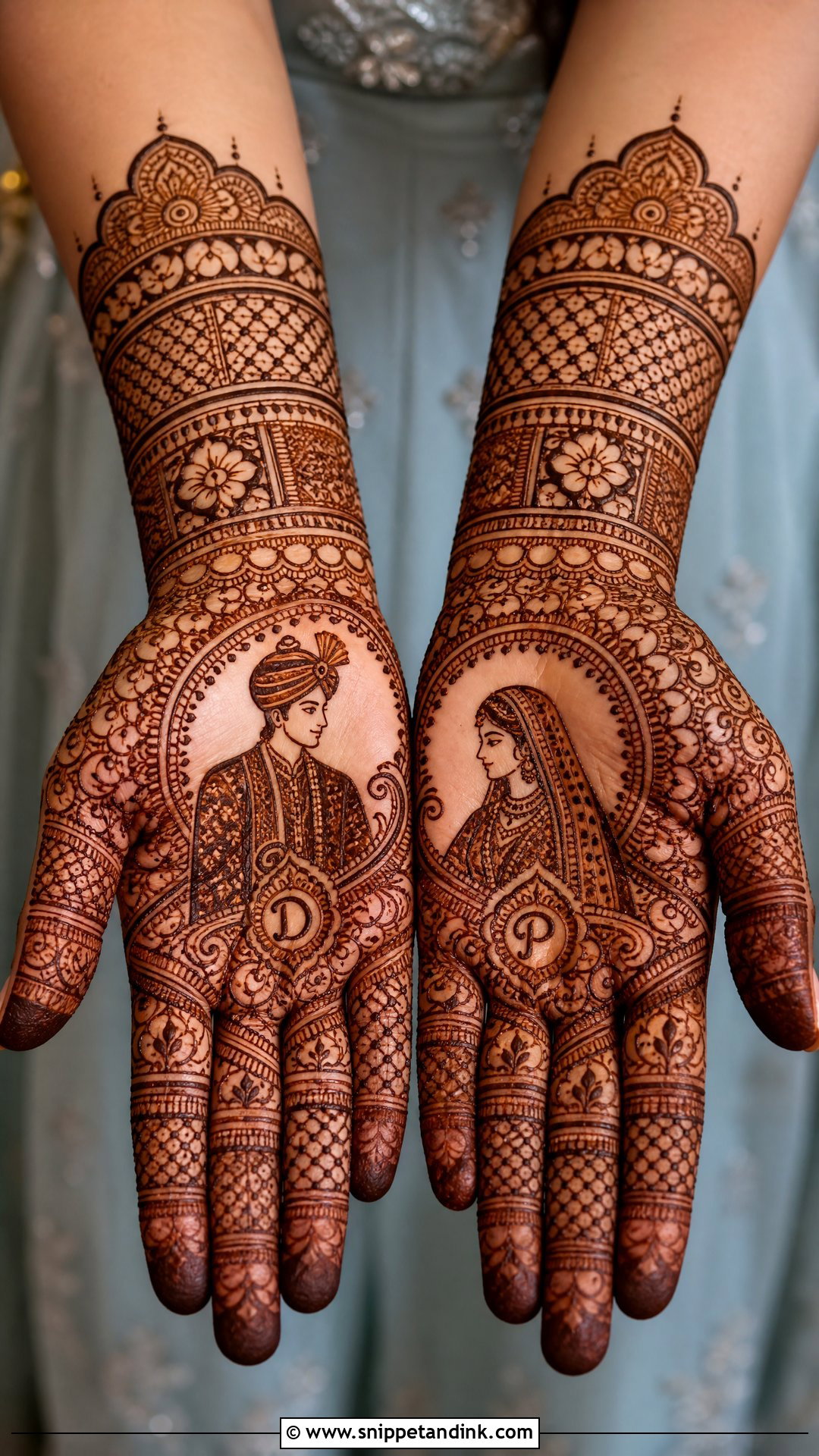
Hidden initials make a playful extra, and tradition says the groom has to find them. I tuck them into paisleys, petals, mandala rings, jaali or bracelet bands, keeping the bride and groom motifs central. They fit any layout, full, front, back or minimal. The trick is hiding them in pattern without disguising them completely; I draw the letters with the same line weight as the surrounding fill so they blend, but keep their shapes intact so they can actually be found.
19. Dulha Dulhan Doli Mehndi Design
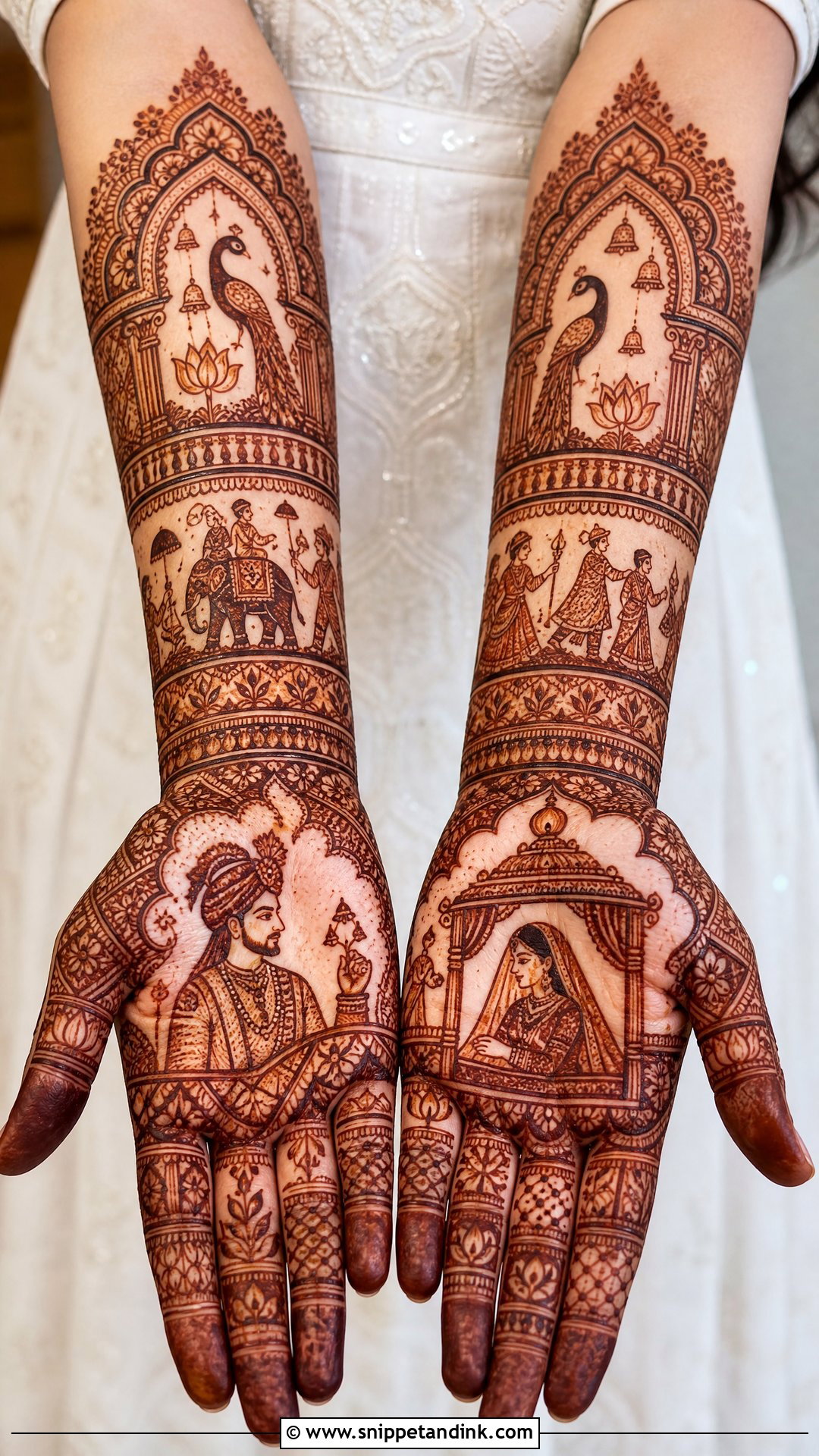
A doli design shows the bridal farewell: the bride carried in a doli on one hand, the groom or a procession on the other, with peacocks, lotus, paisleys, bells and palace arches around them. It’s emotional imagery, and some brides find it bittersweet, so it’s worth deciding whether you want that note on your hands. The doli needs real space to stay recognizable, which means full-hand coverage. Bracelet borders and finger bands then tie the two hands together.
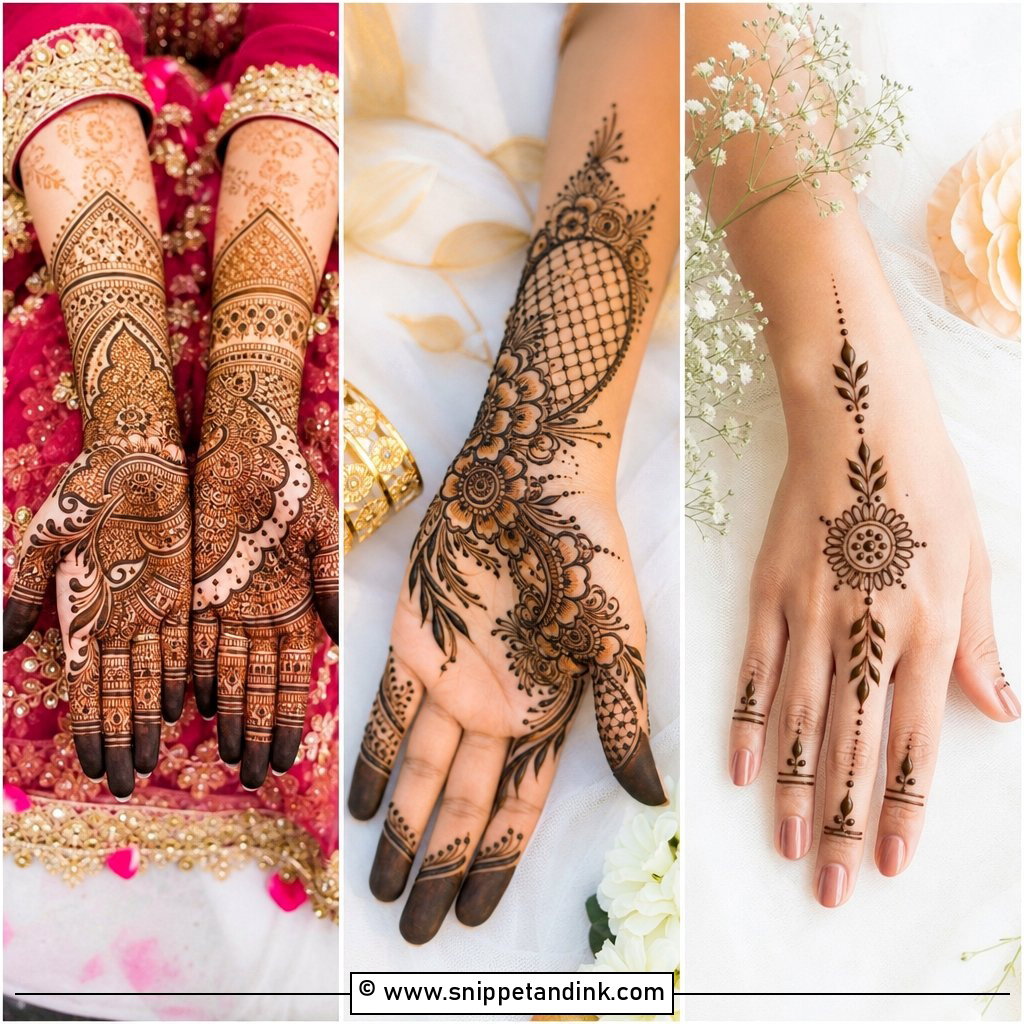
20. Dulha Dulhan Couple Story Mehndi Design
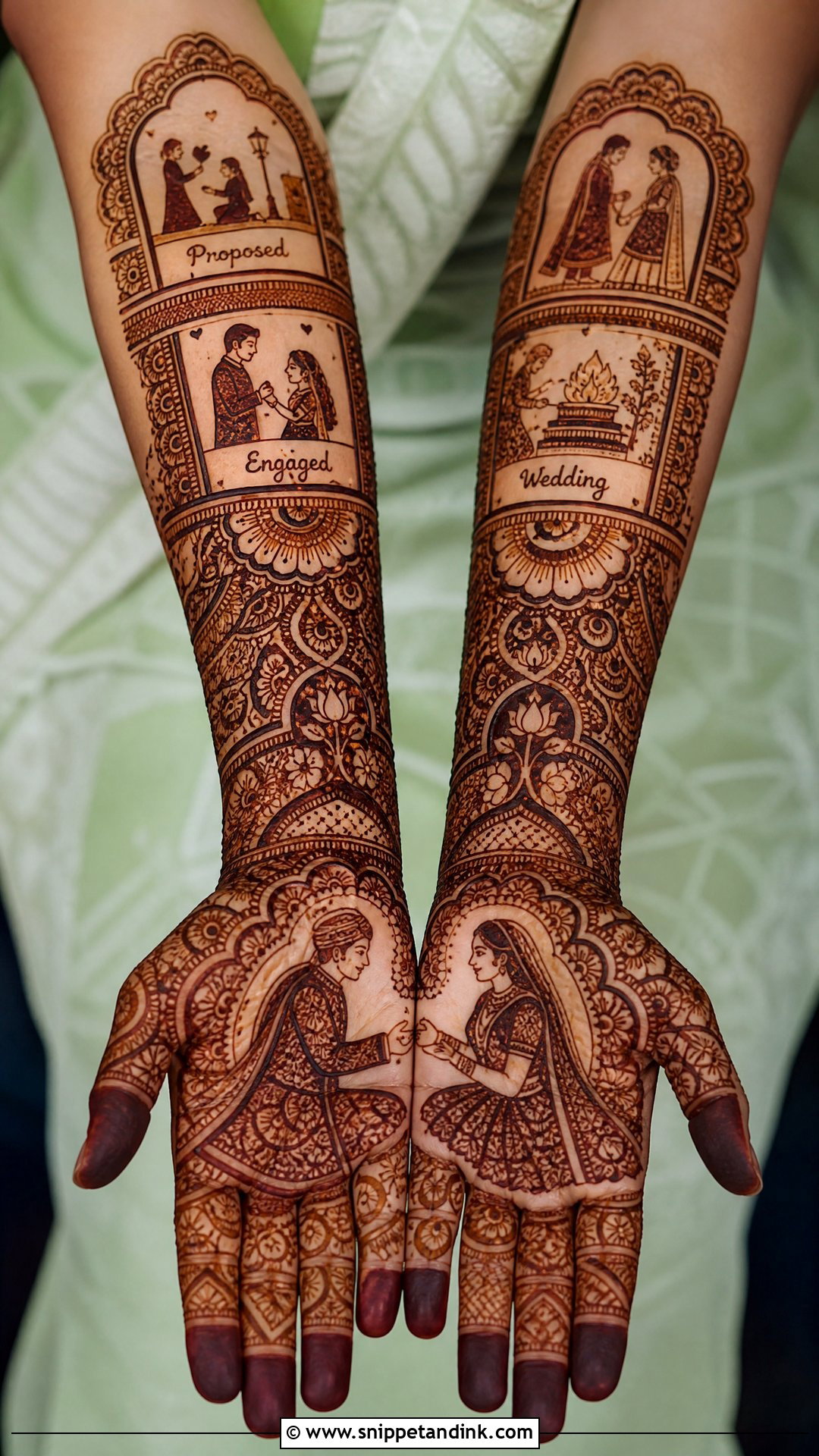
A couple story Dulha Dulhan mehndi design goes beyond portraits into the couple’s own history: the proposal, the engagement, shared hobbies, travel symbols, rituals. Palms hold the main bride and groom scene and the forearms carry smaller story panels. Send your artist the list of moments a few days ahead so she can sketch the layout; working it out while the cone is in hand never goes well. Pick three or four details that really mean something. Ten small panels stain into clutter.
Getting the Faces to Stain Dark and Stay Sharp
The paste comes off orange. That’s normal, and it’s the moment brides panic most. Henna stain oxidizes, so a bright orange at removal deepens to brown or maroon over the next day or two. Fine portrait lines need that full development time to look their best, which is another reason not to schedule bridal henna the night before.
Here is the aftercare I give every bride:
- Leave the paste on as long as you can manage, ideally six to eight hours or overnight. I dab on a lemon and sugar mix once it starts to dry so it stays stuck to the skin.
- Scrape the dried paste off with a blunt edge or your fingers. Don’t wash it off.
- Keep water away from your hands for twelve to twenty-four hours if possible. If you must rinse, be quick and pat dry.
- Warmth helps the stain develop, so keep your hands warm rather than cold, and avoid scrubbing, chlorine and harsh soap until after the wedding.
- Rub a little natural balm or coconut oil over the design before any unavoidable hand washing to give it a barrier.
If a face smudges while the paste is wet, tell the artist straight away. A fresh smudge can be lifted with a cotton bud and redrawn within a few minutes. Once it has sat and stained, it can’t be erased, only worked into the surrounding pattern.
Matching the Story to Your Hands, Your Outfit and Your Patience
If you want a royal, ceremonial feel, look at the heavy full-hand, Rajasthani, peacock, baraat and mandap layouts. For something lighter, Arabic, Indo-Arabic, minimal and simple couple designs keep the theme with more open skin. Initials, dates and story panels can be added to almost any of them. Before you finalize, I’d weigh three things honestly: how big your hands are, how heavy your outfit is, and how many hours you can actually sit. The design that suits all three is the one whose faces will still be clear when you look back at the photos years from now.
You'll Like These Ideas:





Leave a Reply