
Every time you lift a hand on your wedding day, someone sees the back of it. That’s why I spend so long on back hand mehndi: it’s the side in the ring shots, the ceremony close-ups and every candid frame where you’re laughing with a hand at your face. The designs brides bring me now mix the classics, such as florals, paisleys, peacocks, jaali and mandalas, with names, portraits and jewellery-style lines. Arabic, Indo-Arabic, Moroccan and Gulf layouts all have a place, as do very heavy and very simple ones. Below are twenty I draw often, with what each one asks of the artist and the bride.
Sleeves, Chooda and How Much of Your Hand Will Show
Before we look at patterns, I ask a bride three questions: what sleeve length is the outfit, will she wear a chooda or stacked bangles, and is there a haath phool? The answers decide where the detail should go, because there’s no point spending an hour on forearm work that a full sleeve will cover.
- Full sleeves: put the effort into fingers and the back of the hand, and finish the design neatly just below where the cuff falls.
- Elbow or short sleeves: the forearm is on show, so the design needs a planned ending, not a fade-out.
- Chooda or heavy bangles: the wrist band will be mostly hidden. Keep it simple and move the detail onto the hand.
- Haath phool: lighten the lines under the chains and keep the ring finger open.
Bring a photo of the outfit and the jewellery to the booking, not just mehndi references. It saves both of us from designing for a hand that won’t look like that on the day.
1. Full Back Hand Bridal Mehndi Design
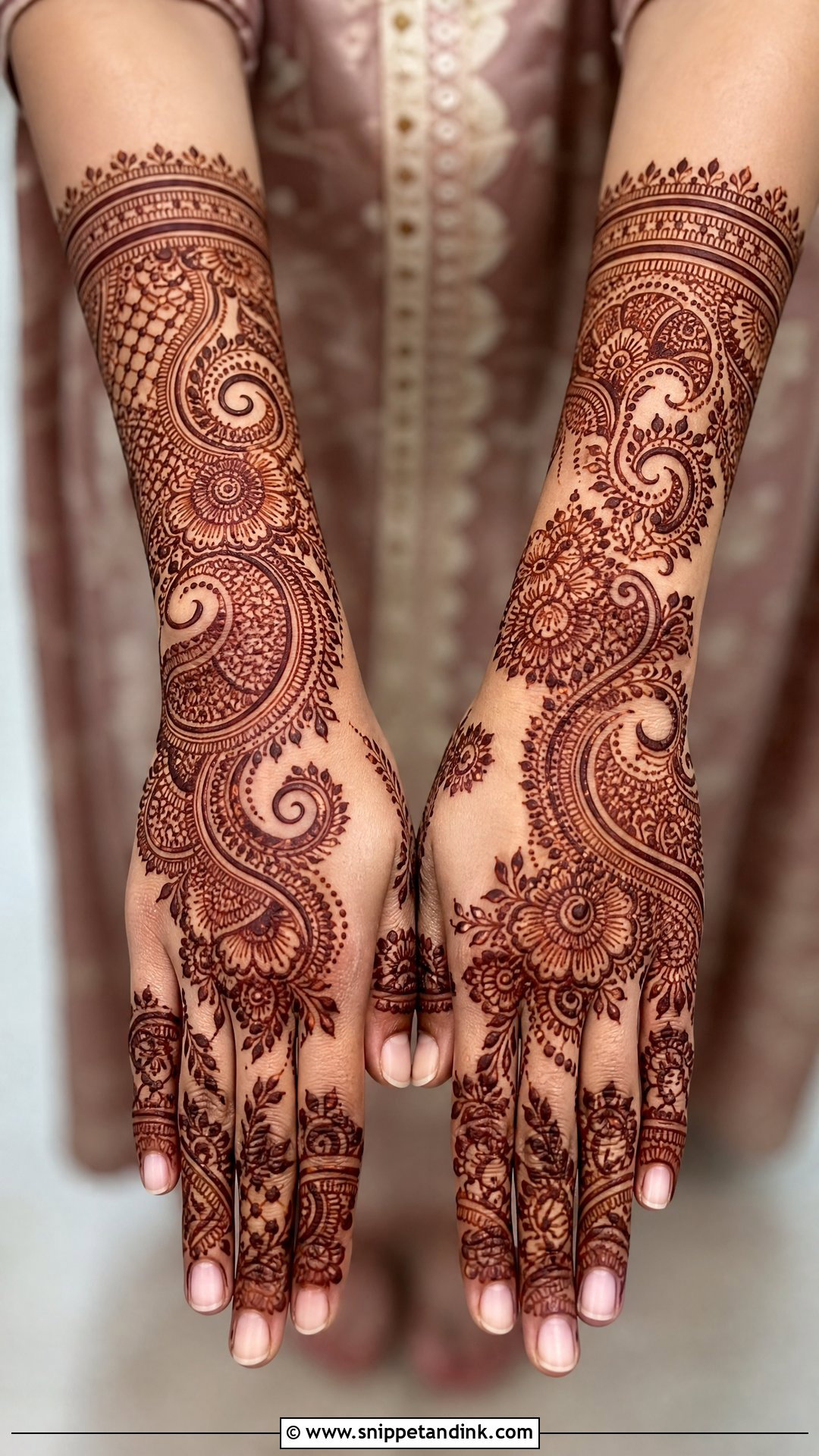
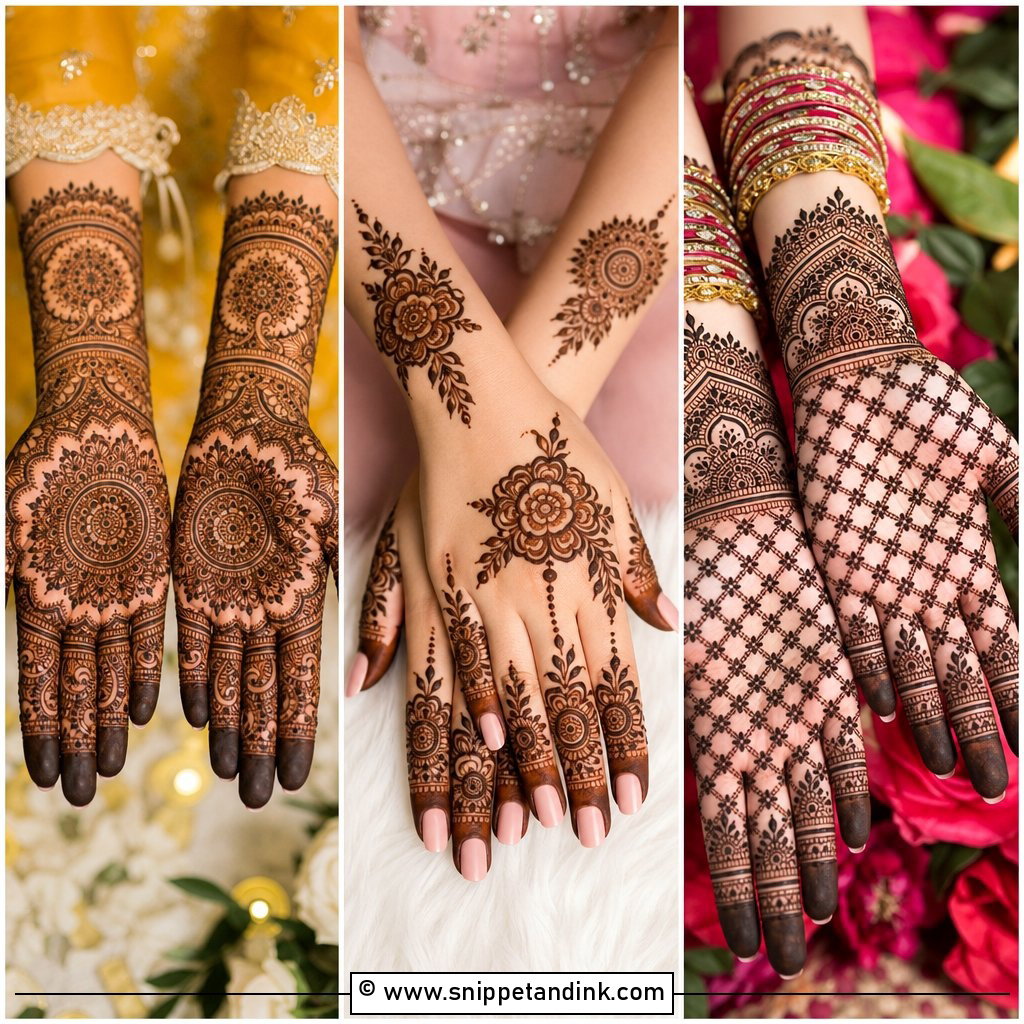
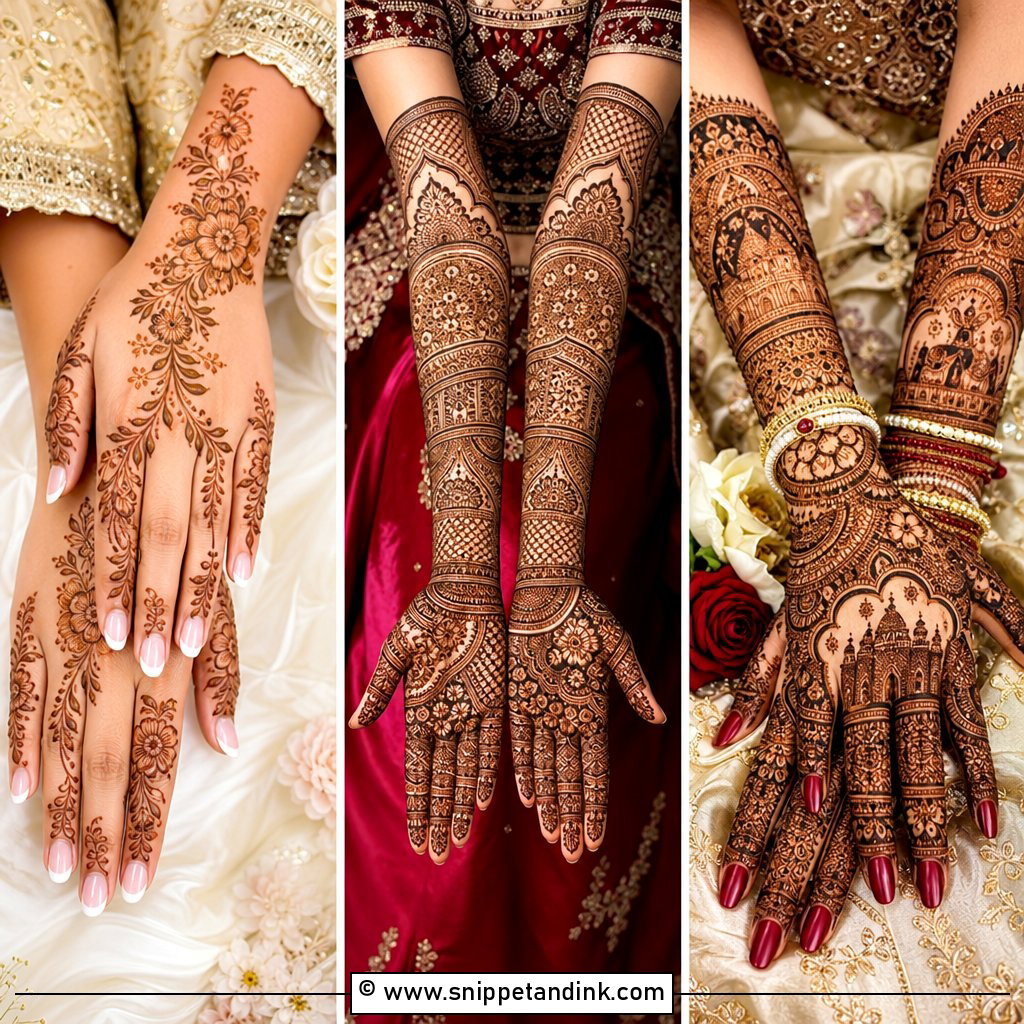
Full coverage takes in the fingers, the back of the hand, the wrist and the lower forearm, layered with paisleys, florals, vines, small grids and filler. Under heavy bangles or embroidered sleeves it reads as one continuous piece from jewellery to skin. My rule for it is bold main shapes and fine fillers, never the other way round. Once the stain darkens to reddish brown, fine fillers merge together, and only strong outlines keep the design legible.
2. Arabic Bridal Back Hand Mehndi Design
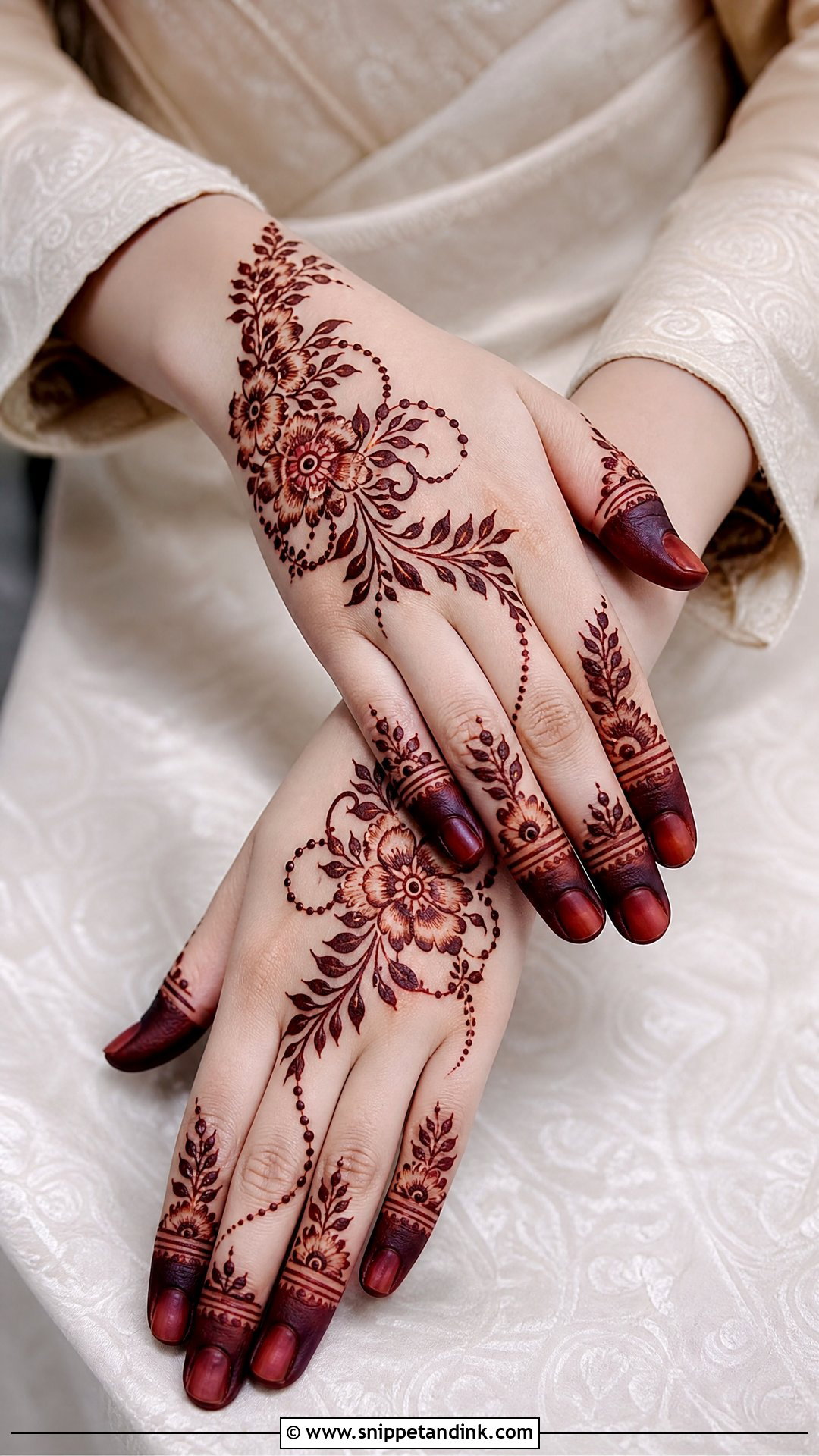
Arabic work leaves skin open on purpose. The design flows diagonally from one side of the wrist toward the fingers, with large flowers, vines, curved strokes and shaded petals, and the gaps let your skin tone create contrast with the stain. It’s quicker to apply than full Indian work, which is one reason nikah and engagement brides like it. For the wedding I’d add filled fingertips and a delicate wrist band so it doesn’t look like guest mehndi.
3. Indo Arabic Bridal Back Hand Mehndi Design
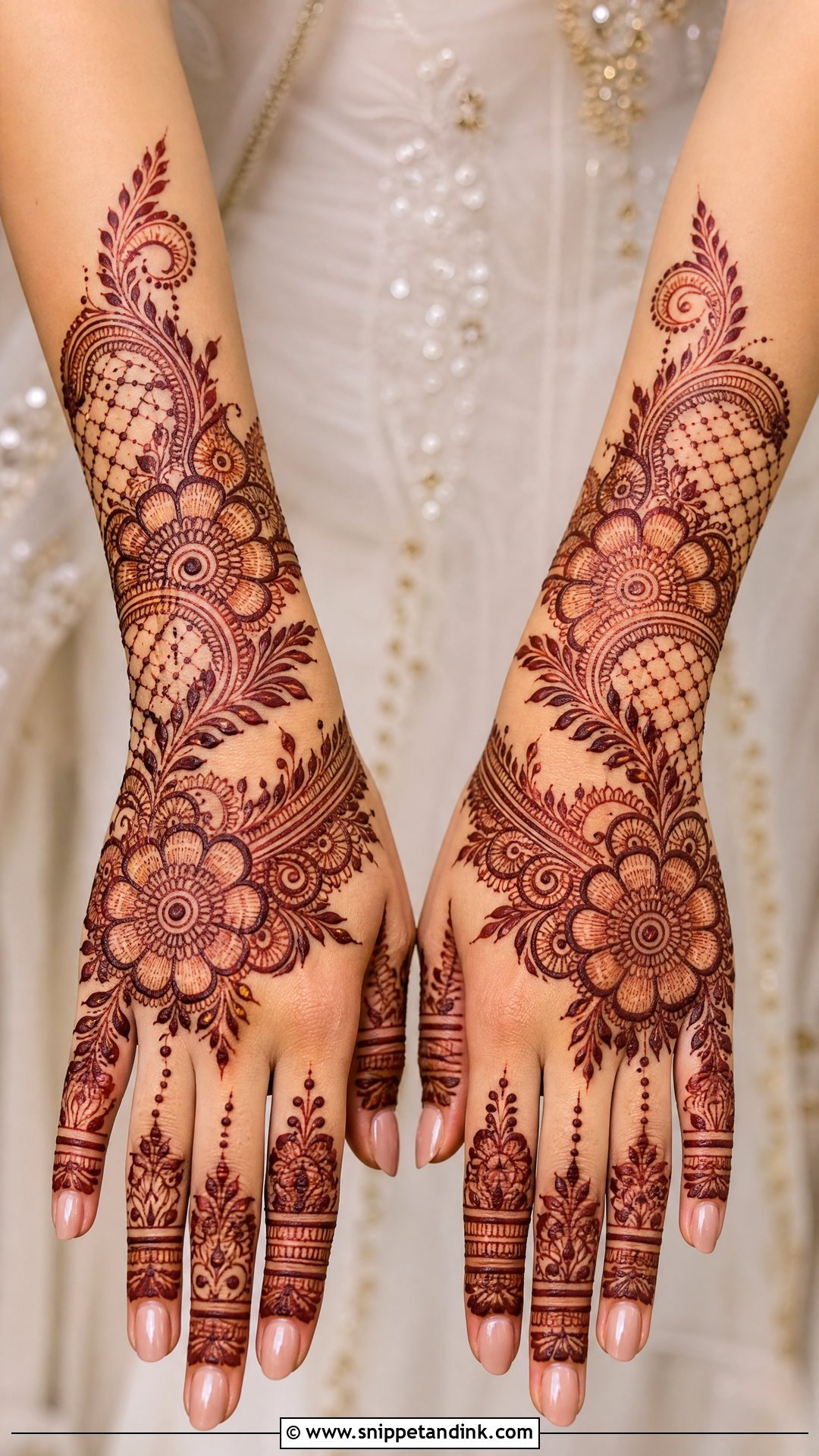
An Indo Arabic bridal back hand mehndi design keeps Arabic flow and spacing but fills it with Indian richness: floral clusters, paisley curves, jaali sections and decorated fingers. I usually put a central floral trail on the hand and concentrate the finest work on wrist and fingers. It looks full without covering every inch, so it dries faster and is less tiring to sit for. Brides with long days of functions appreciate that.
4. Mandala Bridal Back Hand Mehndi Design
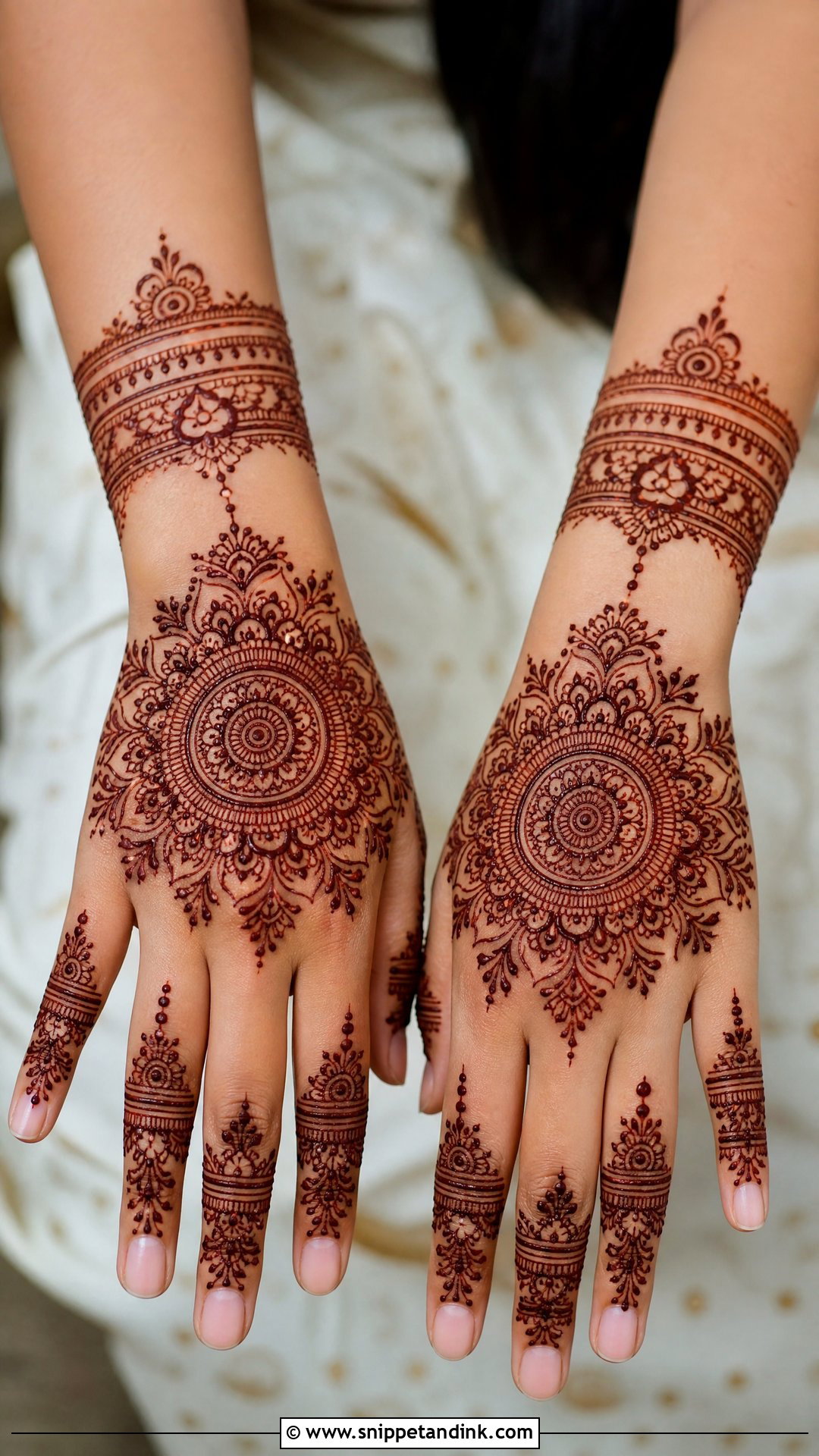
A mandala bridal back hand mehndi design puts one circle at the centre and coordinates everything else around it. It can be bold and simple or packed with tiny petals, scallops and dots. The thing I check first is the bride’s knuckles. If the circle is too large, it bends over them when the hand makes a fist and distorts in photos, so I size it to the flat part of the hand. Bracelet bands and full finger work turn it bridal.
5. Jaali Bridal Back Hand Mehndi Design
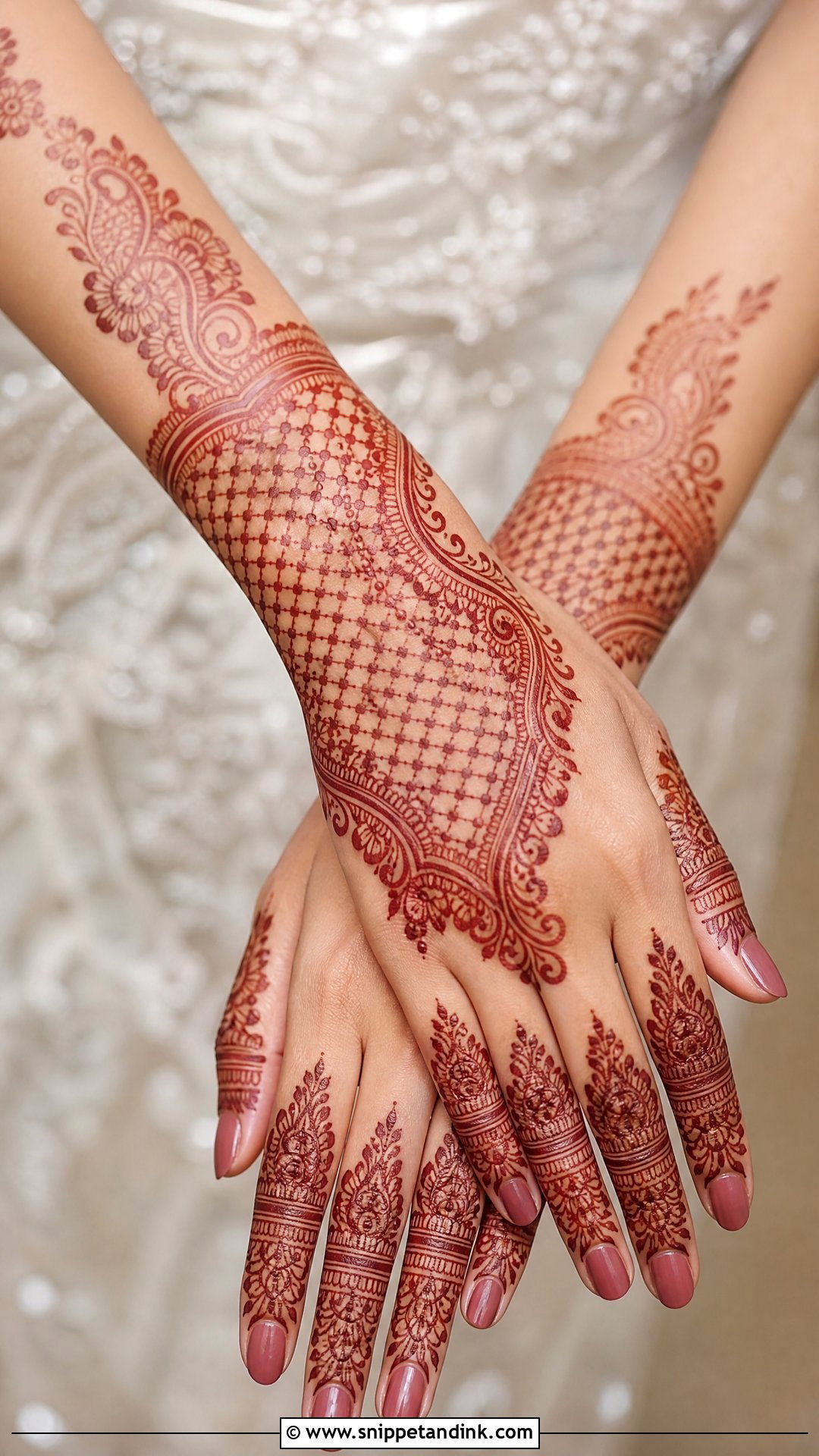
The net pattern of jaali reads like lace, framed by borders, florals and paisleys, and it sits well with bridal rings and hand jewellery. Precision is everything. Lines must be even, and the dots or tiny leaves inside each cell placed carefully. Pair it with open space so the mesh stands out, because jaali surrounded by heavy filler just turns into a dark patch once the colour develops.
6. Floral Bridal Back Hand Mehndi Design
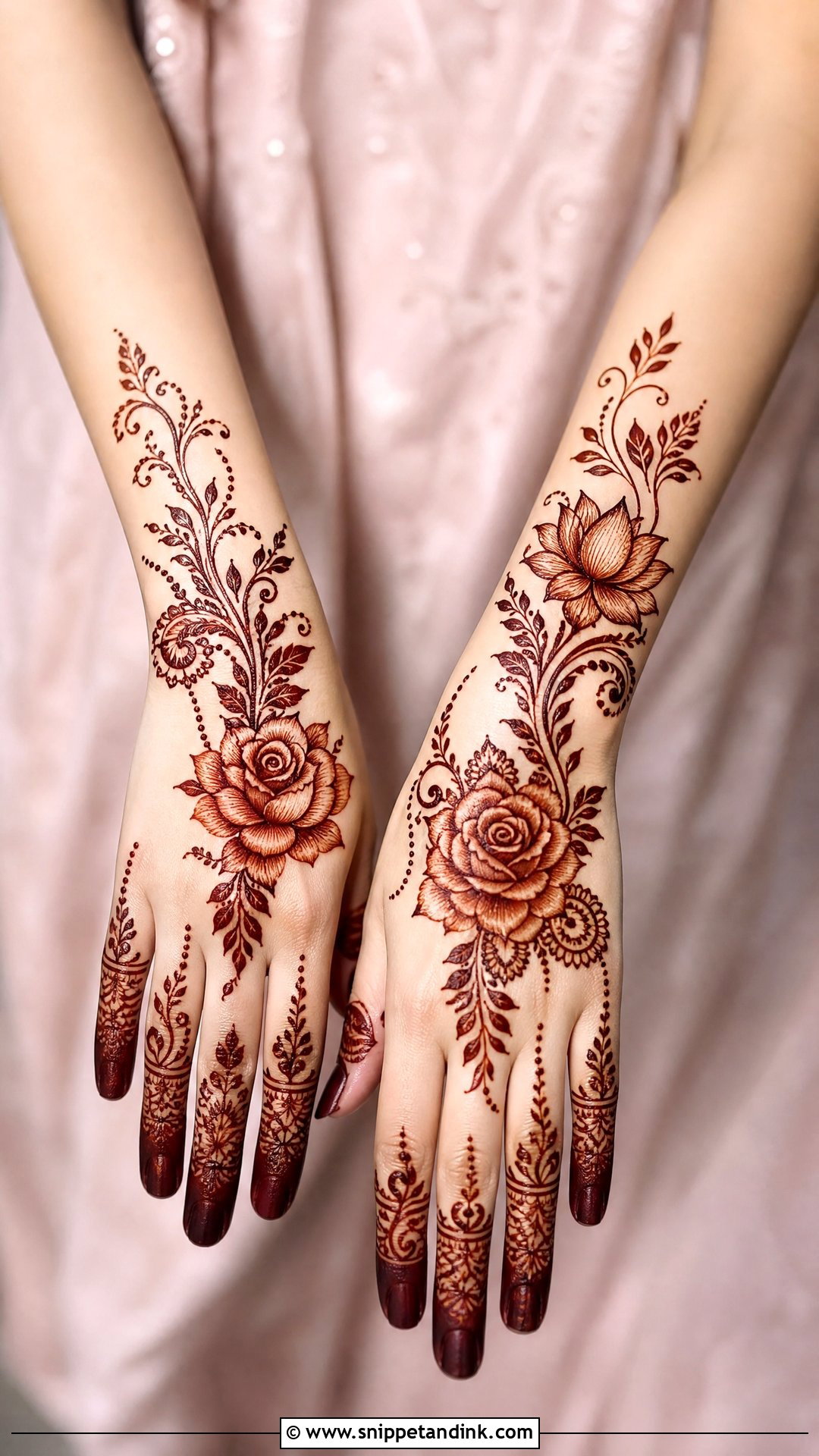
Flowers are the most adaptable motif I use. The same rose can sit in a heavy Indian layout or a light Arabic one depending on how much space I leave around it. Large roses, lotus blooms, vines and petal clusters all show clearly from a distance, and fine dots, curls and shaded leaves add detail for close-ups. I often take the flower shape from the embroidery on the bride’s lehenga so the hands and outfit quietly match.
7. Paisley Bridal Back Hand Mehndi Design
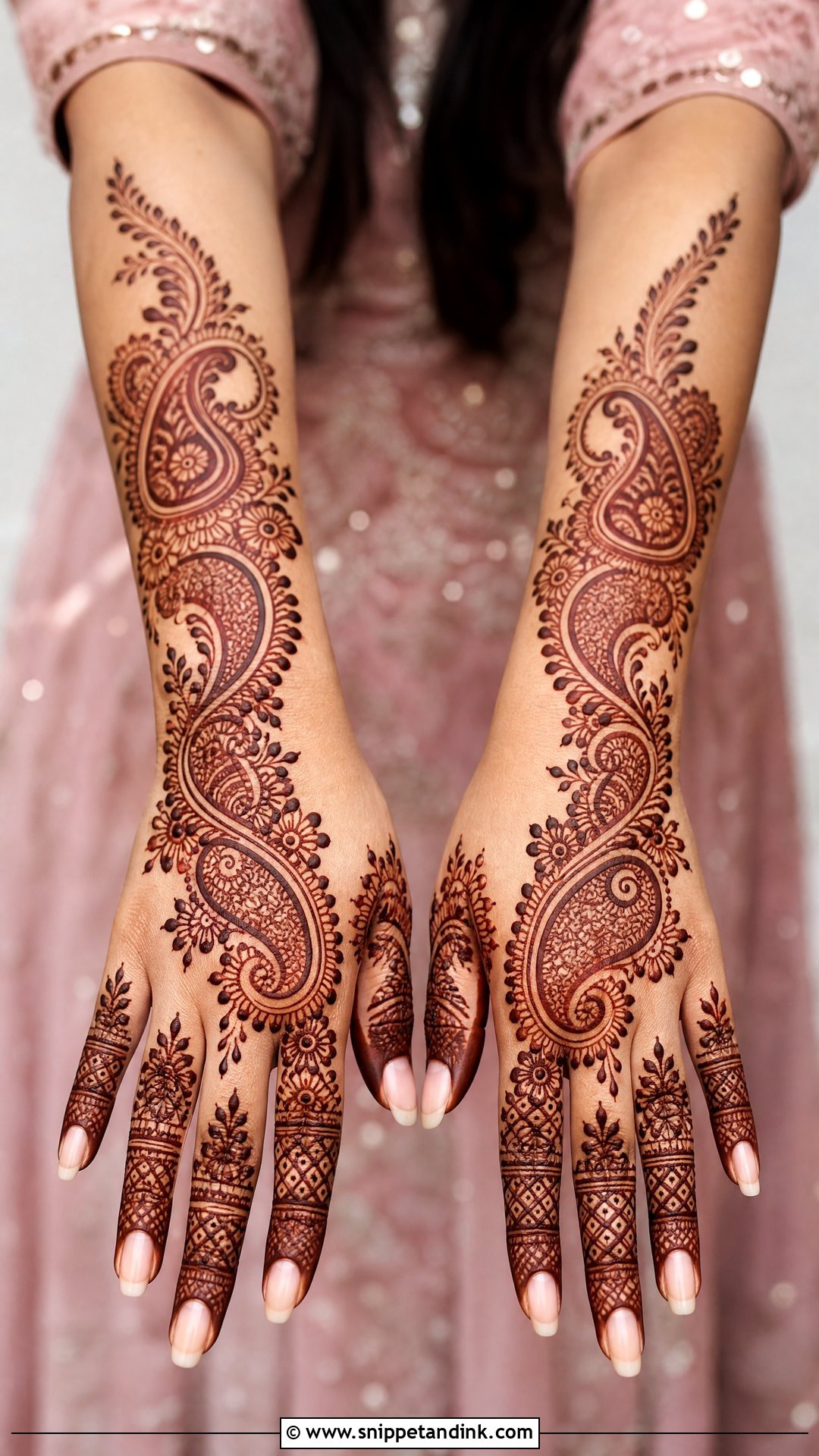
Paisleys are the backbone of traditional Indian mehndi. They can run from wrist to fingers, ring a mandala or fill the whole hand, each one detailed inside with mini flowers, dots and curved lines. They suit red, maroon, green and jewel-toned outfits. On the back of the hand, I outline each paisley more boldly than I would on the palm, because the stain there is lighter and thin outlines fade into the filler.
8. Peacock Bridal Back Hand Mehndi Design
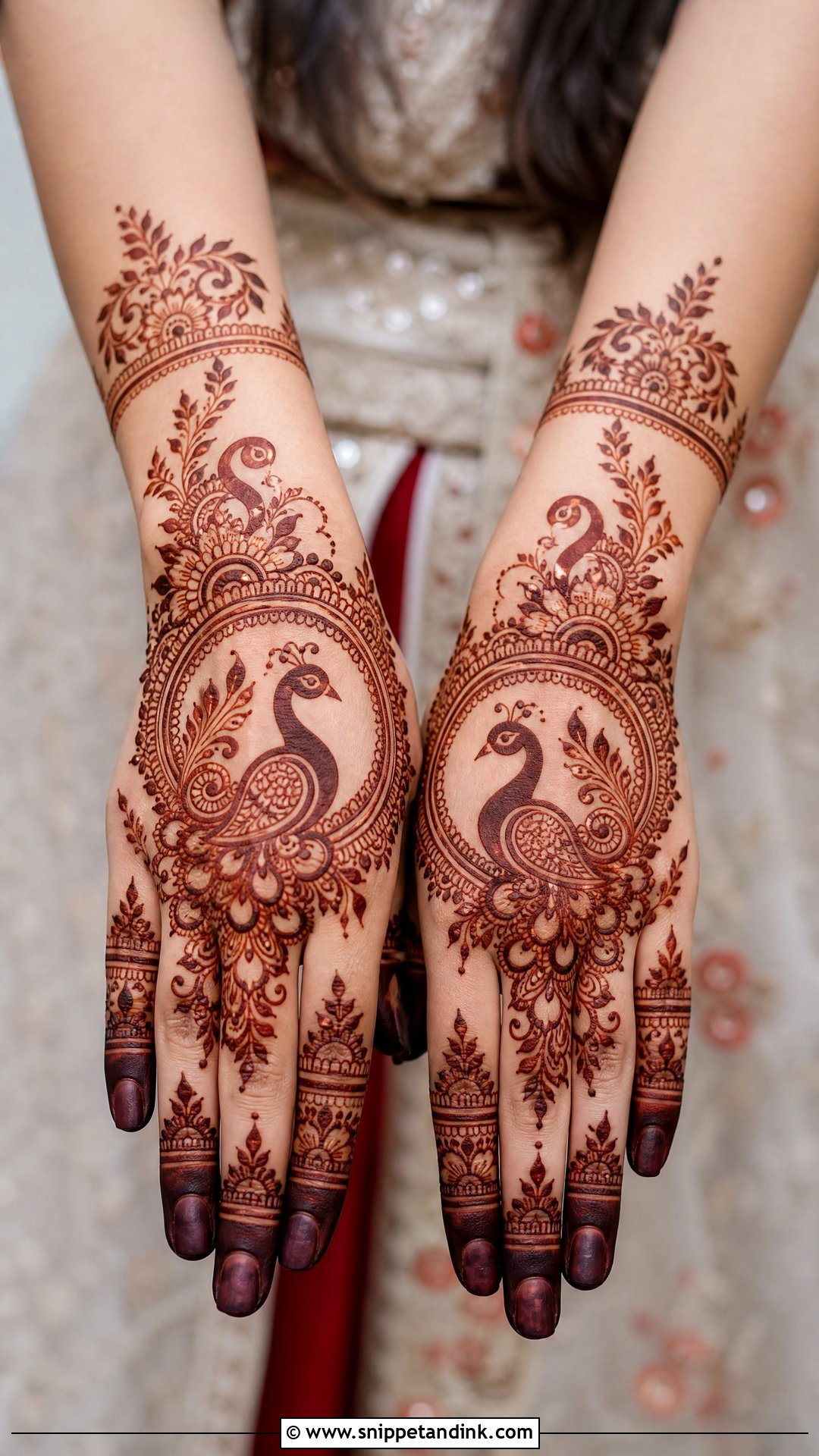
A single peacock near the wrist, one across the centre, or a facing pair for symmetry: all three work. The feathers leave room for paisleys, dots and leafy strokes. I keep the body clean and simple and put the detail in the tail, otherwise the bird loses its shape. Peacocks suit a traditional bride with heavy bangles and silk, and they give the hand one strong focal point to build around.
9. Bridal Back Hand Mehndi With Name
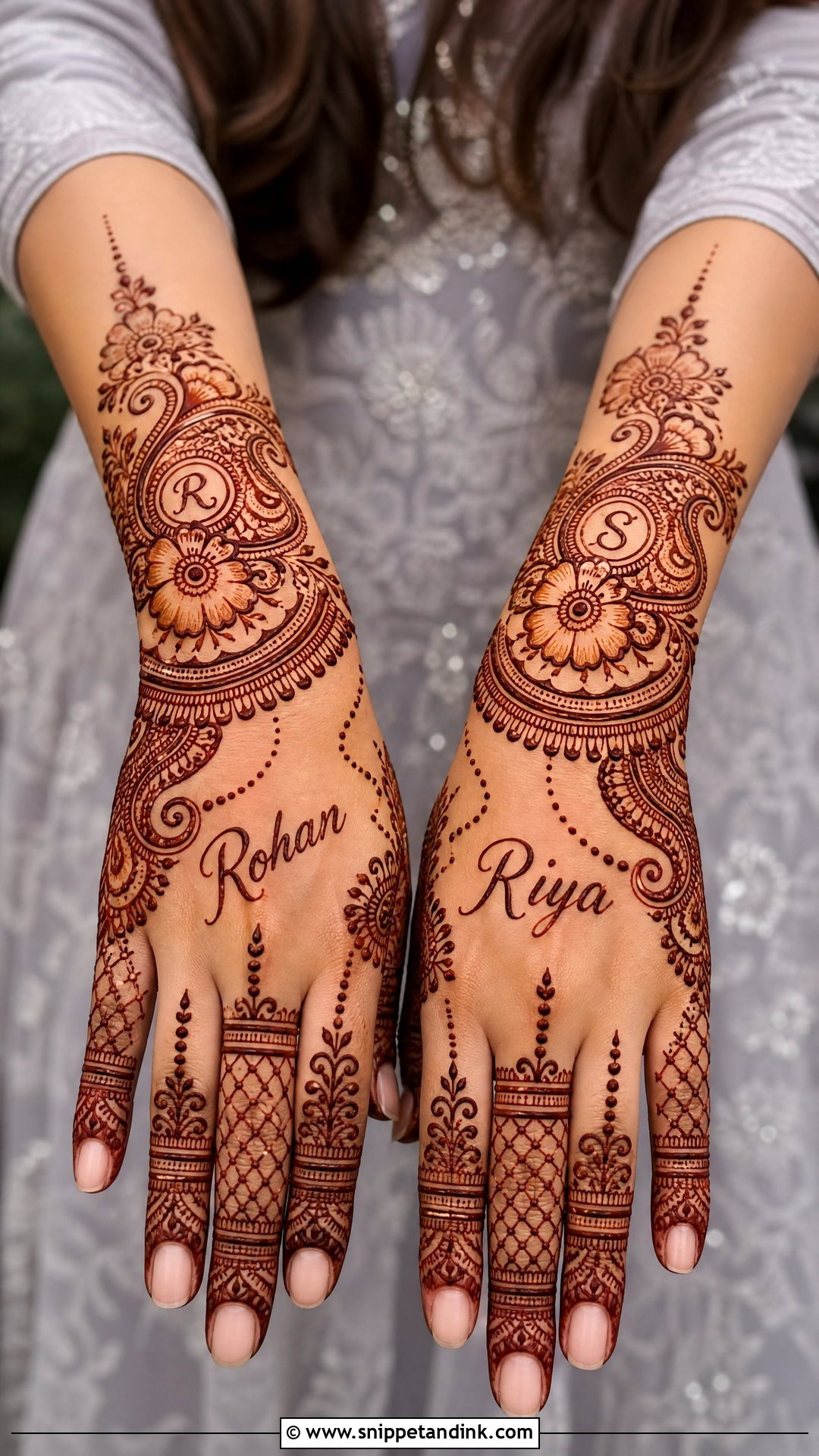
Adding a name changes nothing about the overall design if it’s done well. The groom’s name or initials can hide in a paisley, a floral curve, a mandala border or the wrist pattern, and some brides add a wedding date, couple initials or a small personal symbol. I always confirm spelling in writing before I start, since henna can’t be erased. If you’re playing the find-the-name game, tell me whether you want it findable in a minute or a challenge.
10. Bridal Back Hand Mehndi With Portrait
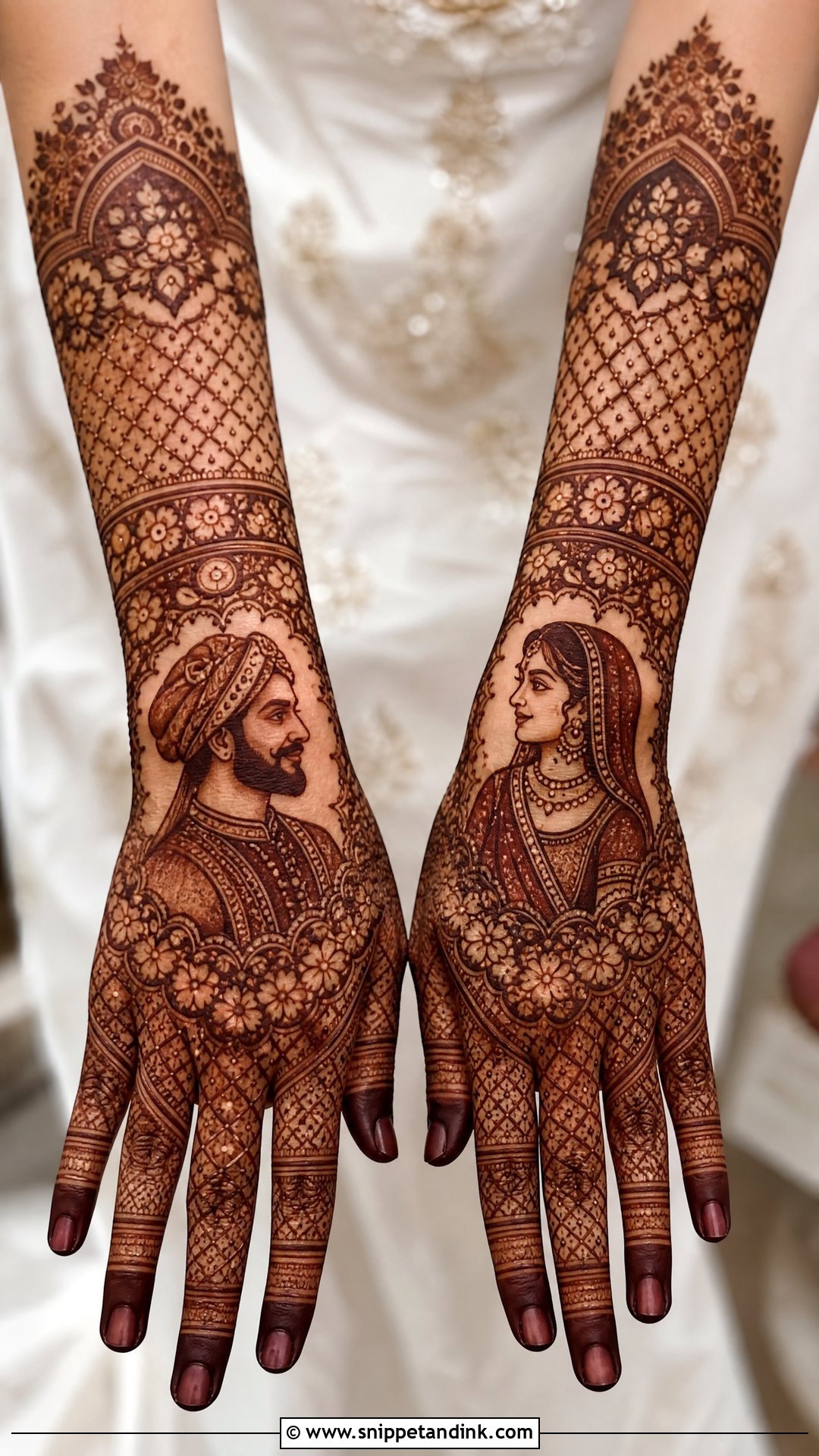
Portraits need an artist with real control, and I’d judge one only on their previous portrait work. A bride and groom, a doli scene or a simple couple silhouette fits best near the wrist or lower hand, where there’s enough flat space. Faces are drawn with very fine lines that soften as the stain settles, so expressions should be simple. Florals, jaali and finger work frame the scene. A short trial on the forearm is worth it if you’re unsure.
11. Jewelry Bridal Back Hand Mehndi Design
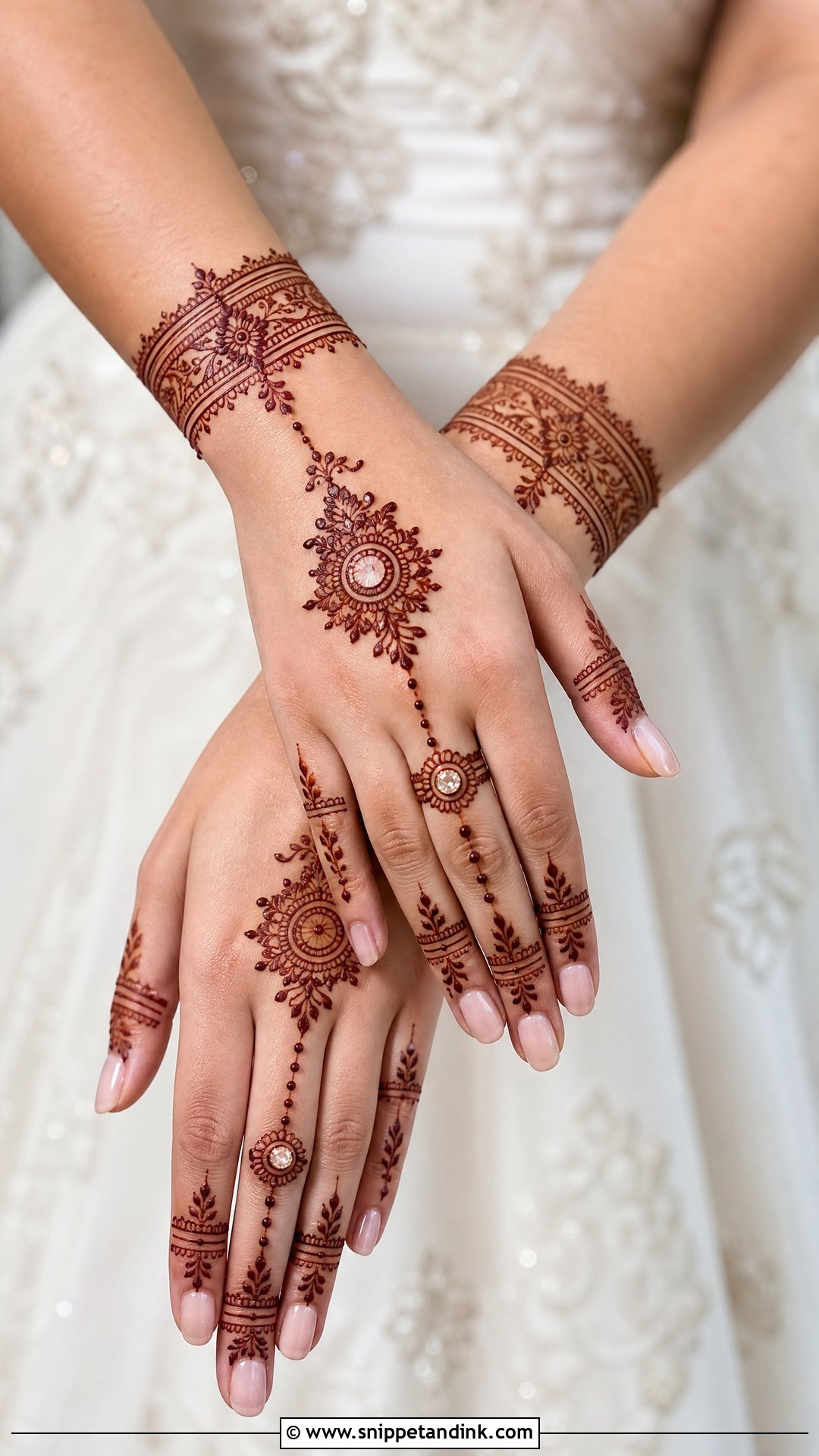
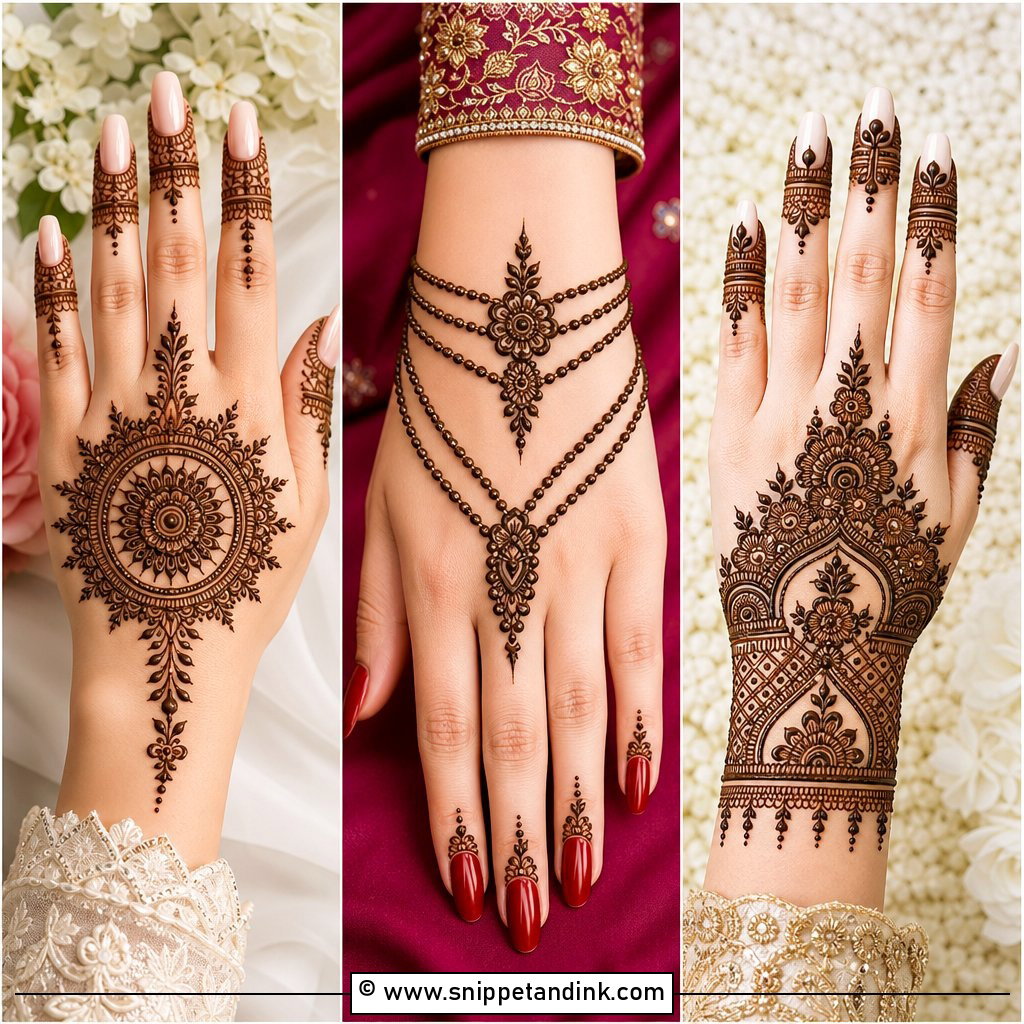
Jewellery-style mehndi draws ring chains, bracelet bands, finger trails and hathphool shapes with delicate connecting lines. It complements real jewellery rather than competing with it, and it can be minimal or filled with florals and jaali. If you’ll wear a haath phool on the day, I keep my lines lighter under where it sits, or the drawn and real chains blur together. It suits engagement, sangeet and reception looks particularly well.
12. Bracelet Bridal Back Hand Mehndi Design
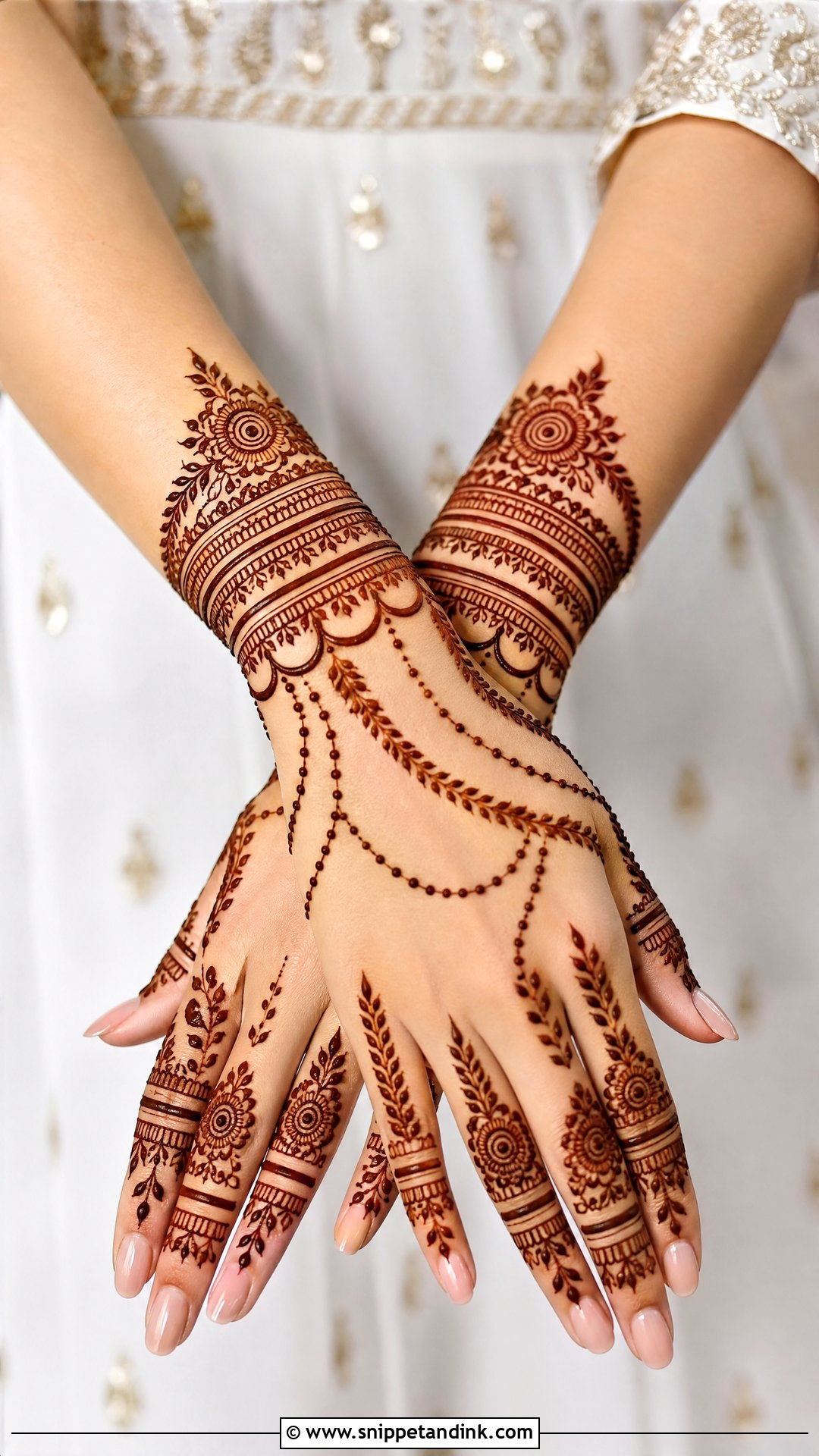
Bracelet designs build up the wrist and lower hand with scalloped borders, florals, small checks and leafy bands, then extend toward the fingers. Worth knowing: bangles and a chooda cover a lot of the wrist, so check with your artist how much of the bracelet work will actually show once they’re on. With short or sheer sleeves it’s a different story, and the wrist becomes the main event. Two or three different band patterns look richer than one border repeated.
13. Finger Bridal Back Hand Mehndi Design
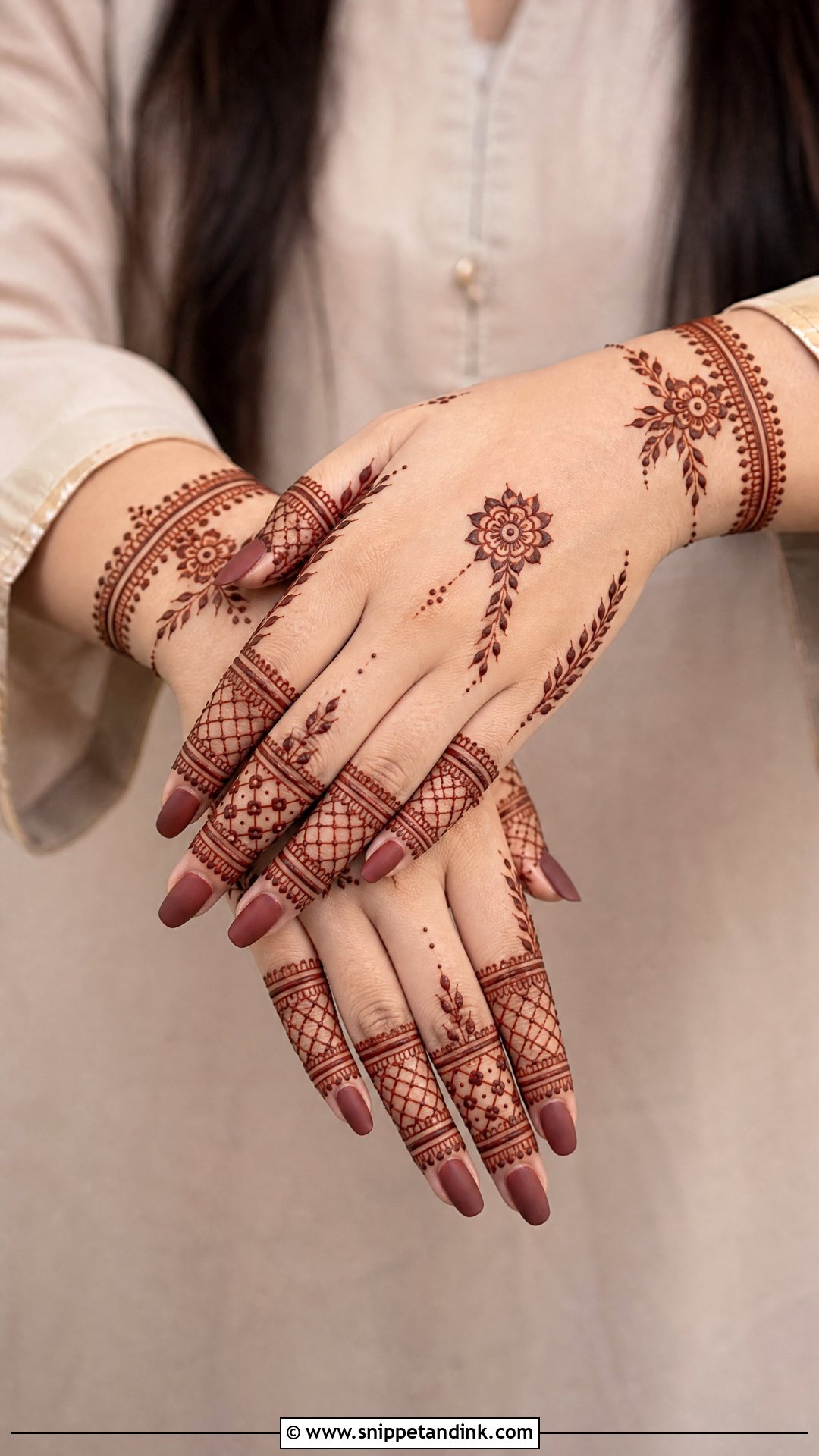
Finger-focused designs keep the hand centre light, with a mandala, floral trail or Arabic curve, and put the detail on the fingers: leafy lines, small jaali, bands and filled tips. Finger skin takes a deeper stain than the back of the hand, so this layout tends to look darker and crisper in ring photos. It’s my suggestion when the bride’s jewellery is bold. I make each finger slightly different but related so the hand doesn’t look stamped.
14. Minimal Bridal Back Hand Mehndi Design
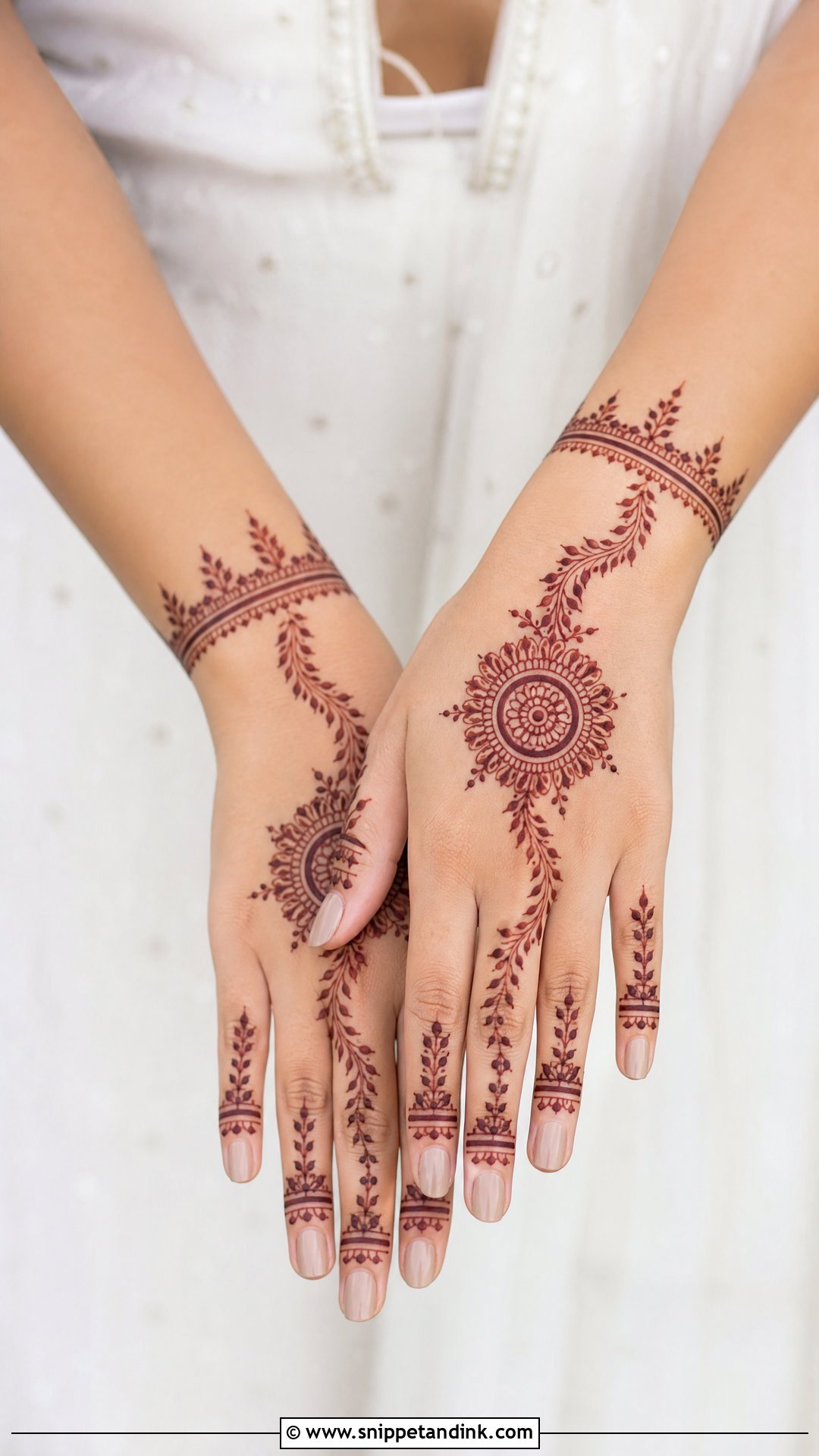
Minimal doesn’t mean plain. A small mandala, a slim floral trail, fine finger detail and a delicate wrist band can look very modern with pastel outfits and pearls. With so few elements, neat lines and even spacing are non-negotiable, and one motif must clearly lead. I’d steer brides away from minimal if they’re wearing a very heavy outfit, because a light hand can look unfinished next to dense embroidery.



15. Heavy Bridal Back Hand Mehndi Design
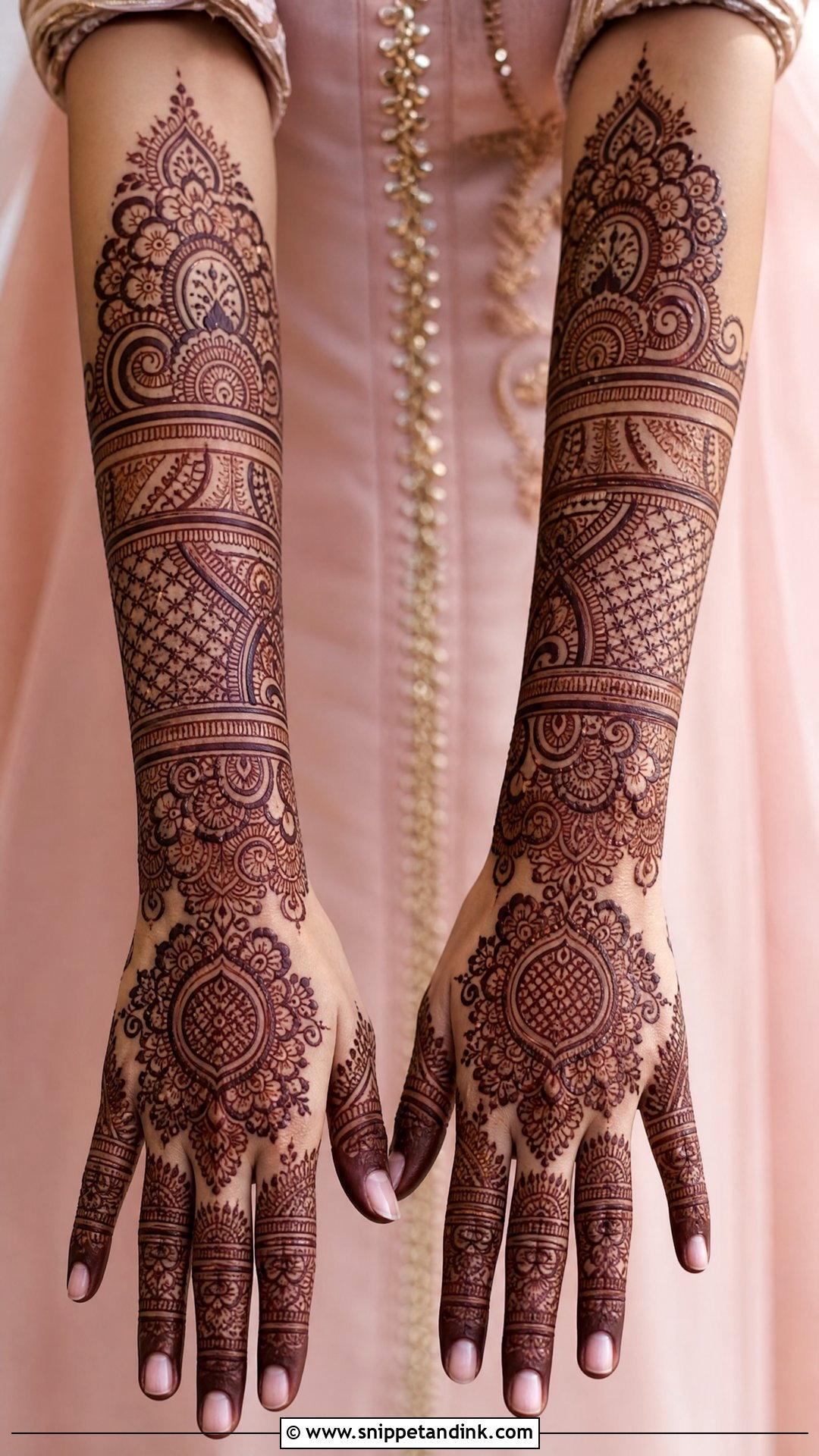
Heavy designs cover fingers to forearm in dense fillers, bold borders, paisleys, mandalas and jaali panels, usually divided into sections that each carry their own pattern. They suit the main ceremony and heavy outfits. The work takes hours, and the paste needs to stay on long enough to stain properly, so plan a full evening. I build in bold outlines and small breathing spaces, and the aftercare is worth doing properly because a dense design shows patchy fading more than an open one.
16. Simple Bridal Back Hand Mehndi Design
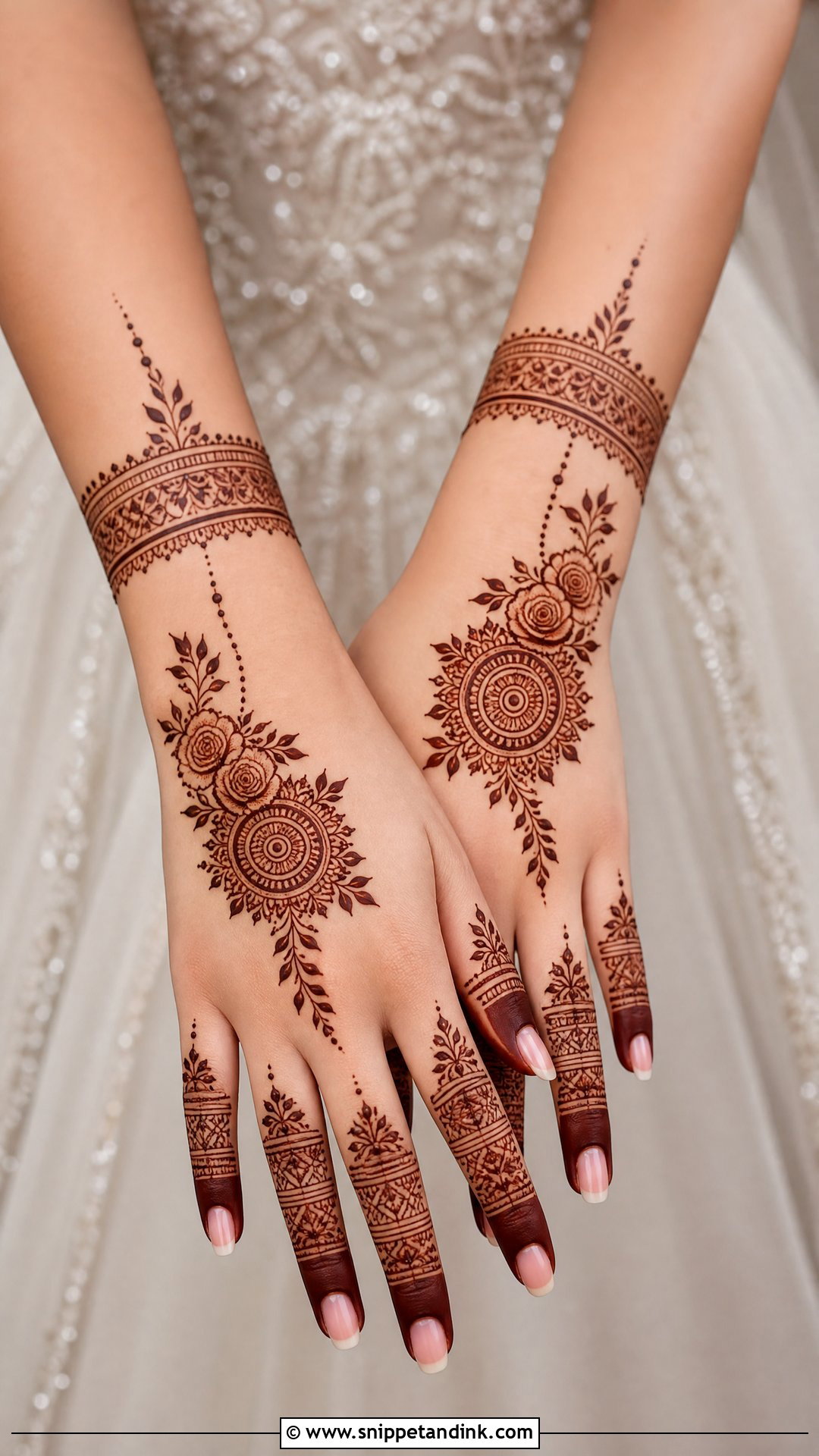
Simple bridal mehndi is quick, comfortable and suits bridesmaids, sisters and brides with small ceremonies. A clean floral trail, a small mandala, decorated fingers and a neat wrist pattern are enough. The design should look intentional, not unfinished, so I add filled fingertips and place motifs where the hand naturally curves. It’s the one I recommend to brides who have to work or travel the day after their mehndi.
17. Modern Bridal Back Hand Mehndi Design
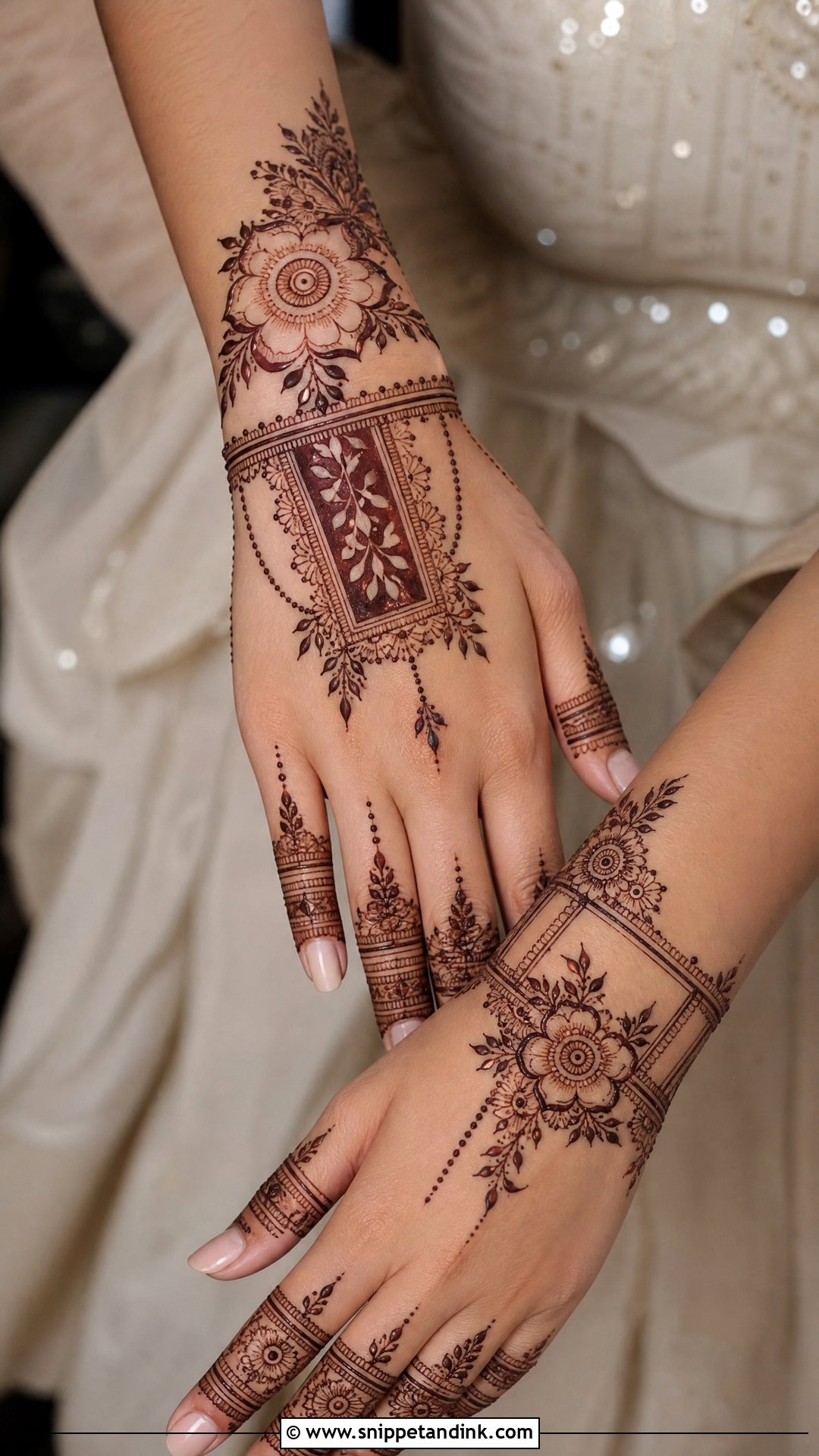
Modern layouts aim for composition over coverage: bold florals, geometric sections, negative space, bracelet details and fine finger work in one considered arrangement. Asymmetry is common, but the hand still needs to feel balanced. I take cues from the outfit, with florals for soft embroidery and geometric jaali for structured designs. Contemporary lehengas, fusion outfits and gowns all suit it.
18. Moroccan Bridal Back Hand Mehndi Design
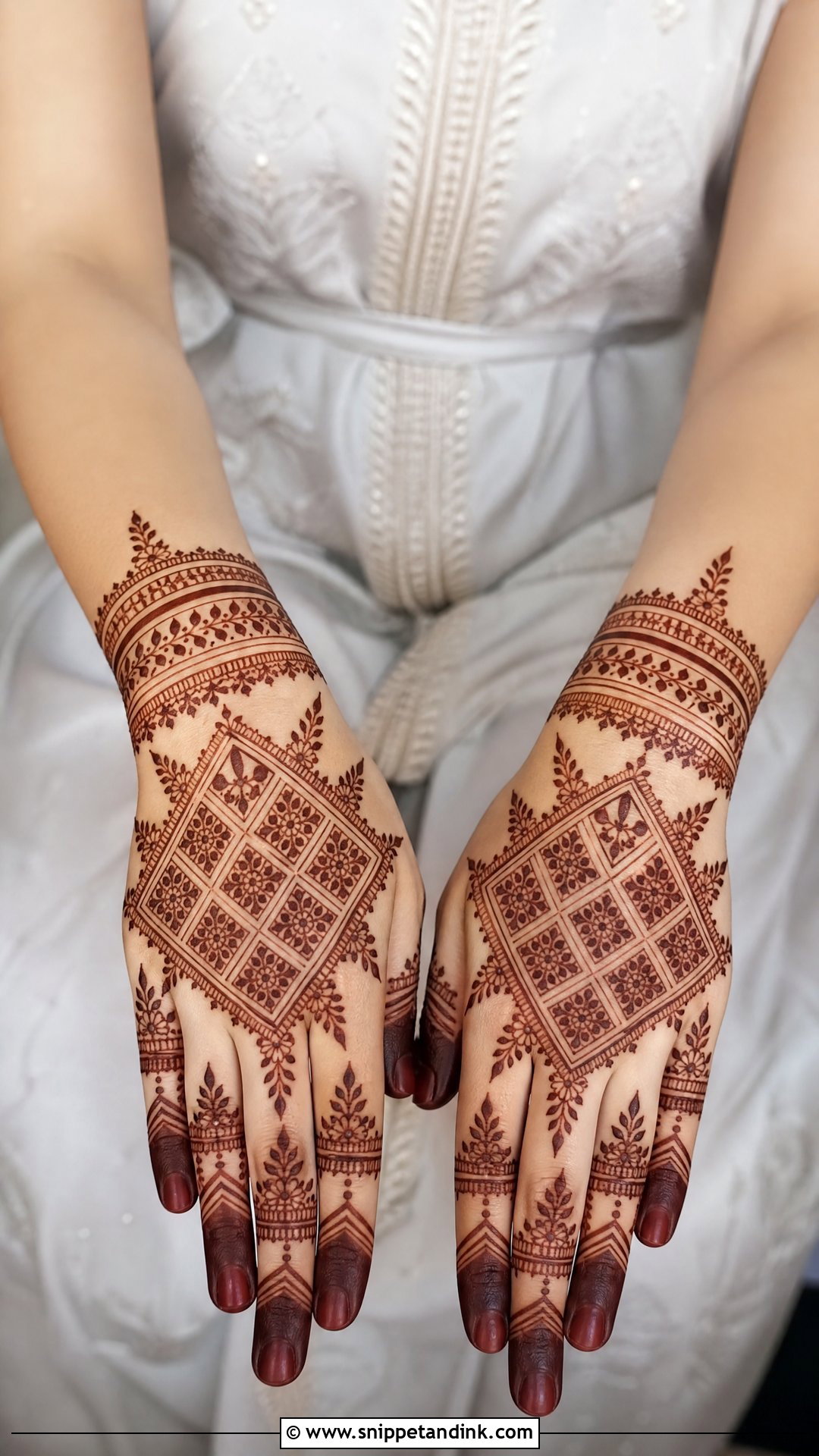
Moroccan patterns use diamonds, grids, chevrons and repeating lines instead of florals. On the back of the hand they look clean and confident, and bridal versions add wrist bands, filled fingertips and the odd small flower. This is precision work. A straight line drawn across the knuckles will curve when the hand moves, so I plan where the grid breaks rather than forcing it over joints.
19. Gulf Bridal Back Hand Mehndi Design
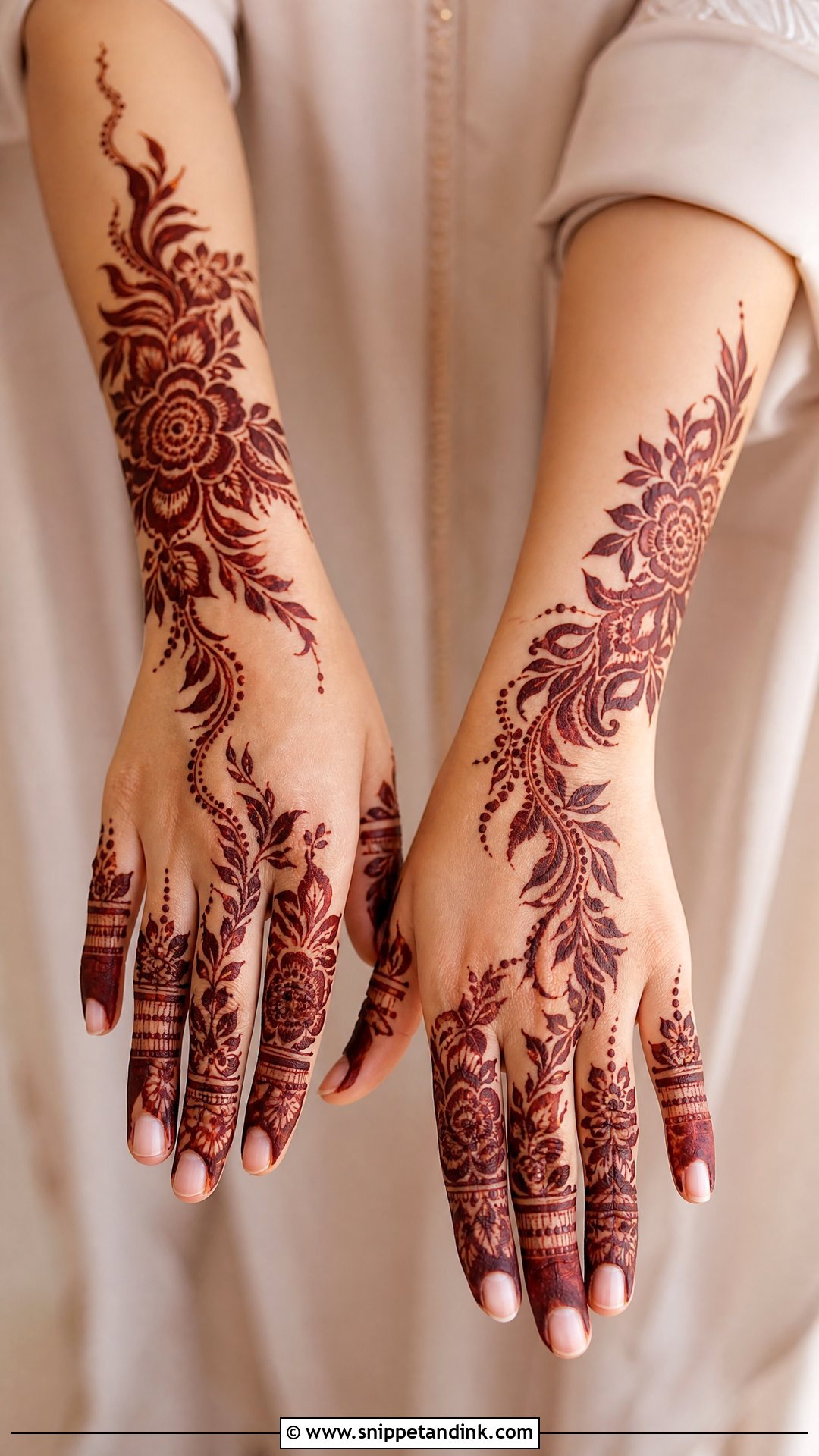
A Gulf bridal back hand mehndi design, also called Khaleeji-inspired, uses bold florals, flowing leaves and generous open space, with motifs larger than Indian fillers. It flows from the wrist to the index finger or across the hand in a soft diagonal. Shaded flowers and thick outlines give a deep stain even on the back of the hand. It pairs well with gold jewellery and suits both traditional and modern looks.




20. Bridal Back Hand Mehndi For Engagement
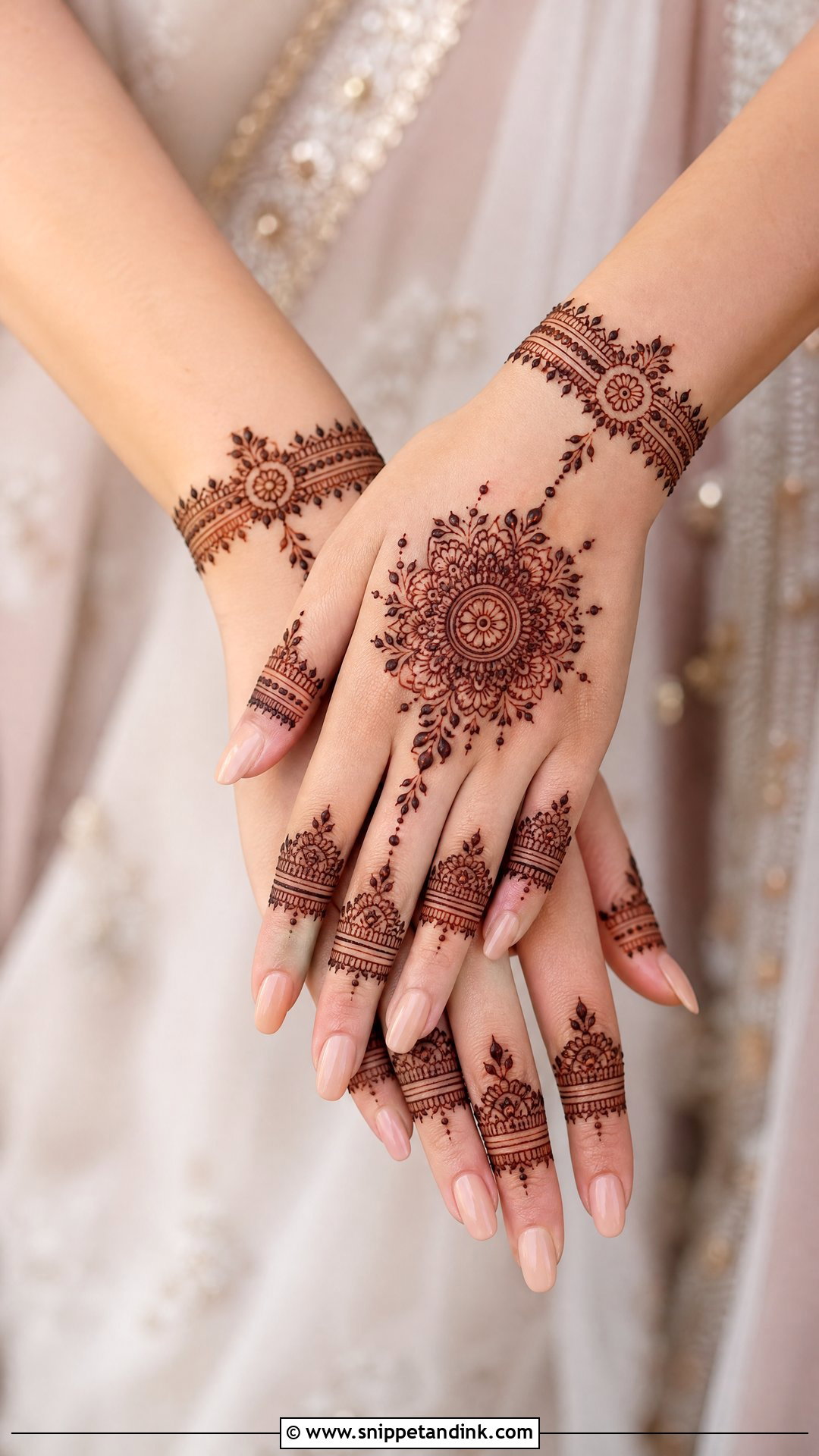
A bridal back hand mehndi for engagement centres on the ring. Clean fingers, a clear centre motif and open space around the ring finger matter more than coverage. A mandala, floral trail, jewellery pattern or Indo-Arabic layout all work, with a slim wrist band instead of forearm work. Brides having separate wedding mehndi later should keep this one light, since the stain may still be fading when the next application goes on.
How Many Hours Will You Be Sitting Still?
Time is the part brides underestimate. Application speed depends on the artist and the design, but heavy bridal work on both hands and arms is a long sitting, often several hours, and feet add more. Arabic and simple designs are much quicker. After application, the paste still has to dry and stay on for hours to stain well.
Planning the mehndi evening
- Book early. Experienced bridal artists fill up months ahead in wedding season.
- Do nails, waxing and any scrubs beforehand. Nothing touches the hands after.
- Eat before you start and have someone ready to feed you and hold your phone.
- Ask what’s in the paste. Natural henna is mixed with essential oils, and a quick patch test a few days before is sensible if your skin reacts easily.
- Schedule it one or two days before the wedding so the colour has time to deepen.
If guests are getting mehndi at the same event, make sure there’s a second artist. Otherwise the bride’s design gets rushed, and that’s the one that ends up in every photo.
Tradition, Open Space or Something Fresh?
Match the design to your ceremony, outfit, jewellery and taste and the list gets short quickly. Tradition points to full hand, paisley, peacock, portrait or heavy Indian work. A cleaner look points to Arabic, minimal, jewellery, bracelet or engagement styles. Something fresh points to Moroccan, Gulf, modern or Indo-Arabic. Whatever you pick, the version that lasts is the one that stays clear and balanced in the photos you’ll keep for years.
You'll Like These Ideas:







Leave a Reply