
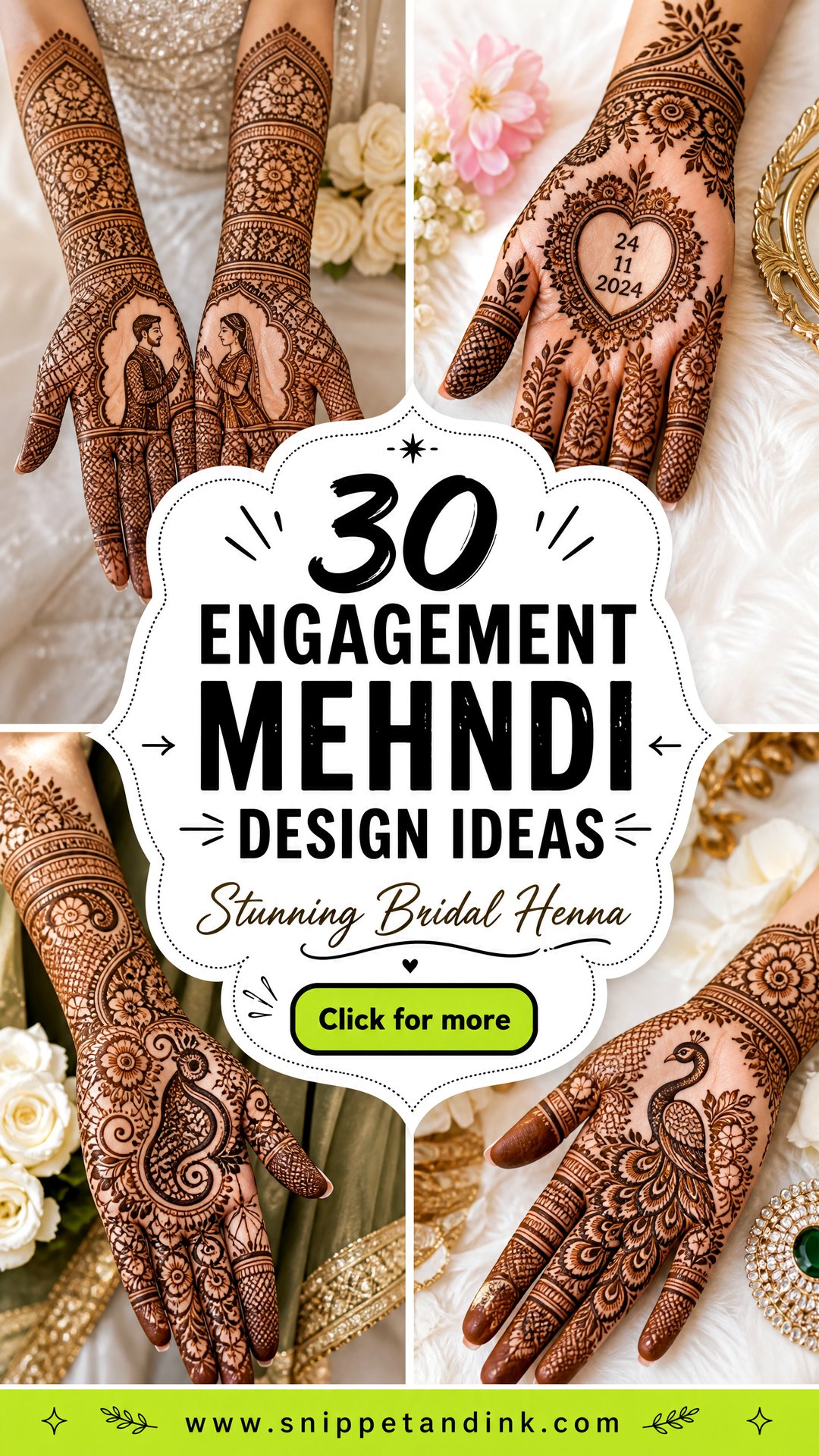
Engagement mehndi sits in an odd spot. It’s the first time many brides wear real henna for their own ceremony, but it shouldn’t steal the thunder from the wedding set that comes later. What I plan for is the ring hand, the outfit and how long the bride can sit still. Some want packed Indian work from fingertip to wrist; others want an Arabic trail, a mandala on the back of the hand or just a few lines on the fingers so the ring stays the star. Initials, ring motifs, lotus layouts and bracelet-style wrists are what I’m asked for most at the moment. Here are 30 layouts, each with notes from my side of the cone.
A Brief Your Henna Artist Can Actually Work From
Most of the disappointment I hear about engagement henna comes from a vague booking. ‘Something not too heavy’ means different things to different people. A short, specific brief saves time in the chair and gives you a design that fits the day.
- Two or three photos of designs you like, and one of a design you don’t.
- A photo of your outfit, especially the sleeves, since long sleeves hide wrist work.
- Which hand the ring goes on, so I can keep that finger clear.
- How much coverage you want: fingers only, to the wrist, or onto the forearm.
- Any initials, dates or names, written down with the exact spelling.
- Whether your wedding henna is booked and how heavy it will be.
I also ask how long you can sit. A bride who has to greet relatives all afternoon is better off with a design I can finish in under an hour than with a full hand she has to rush.
1. Engagement Mehndi Design For Back Hand
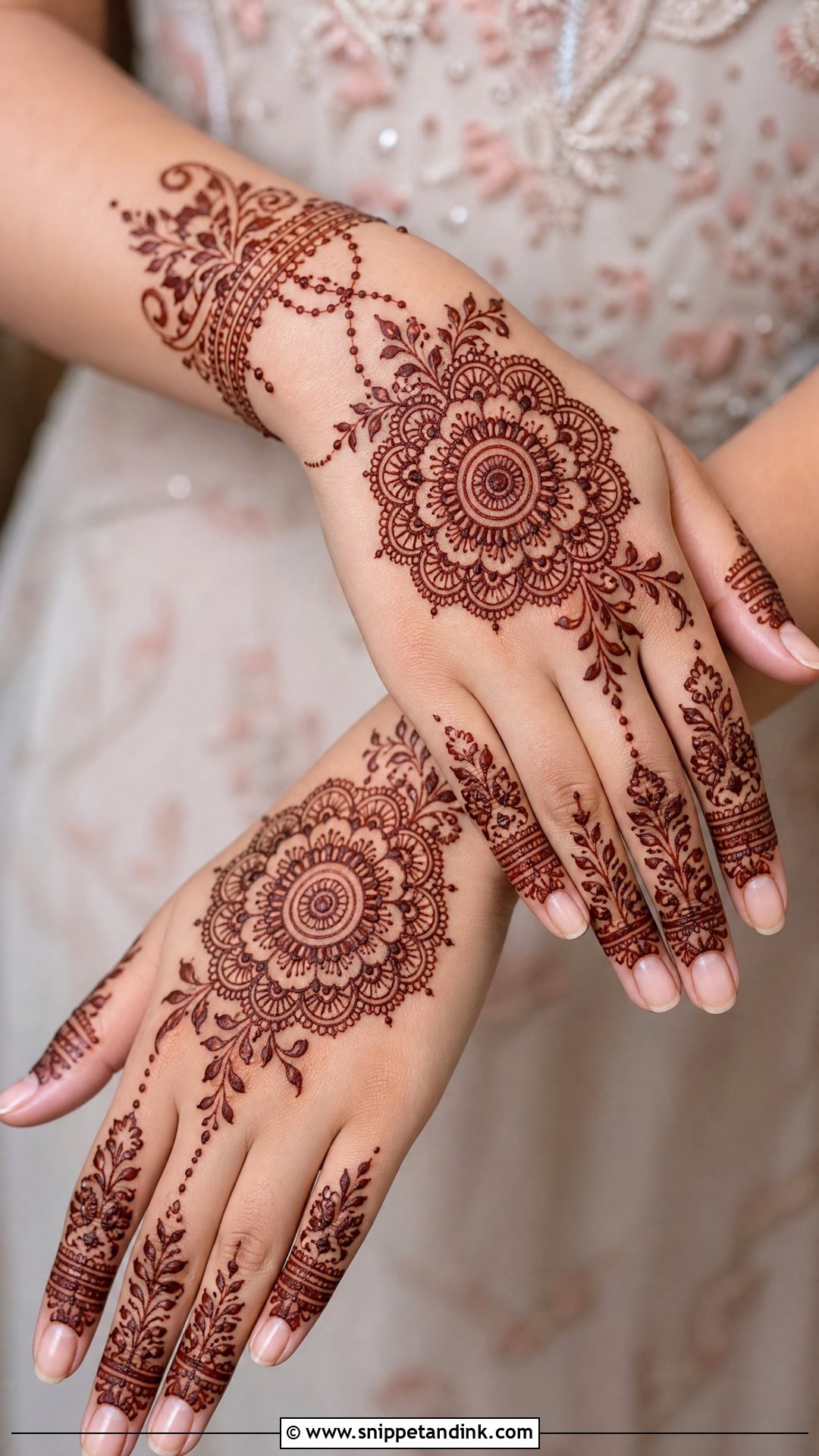
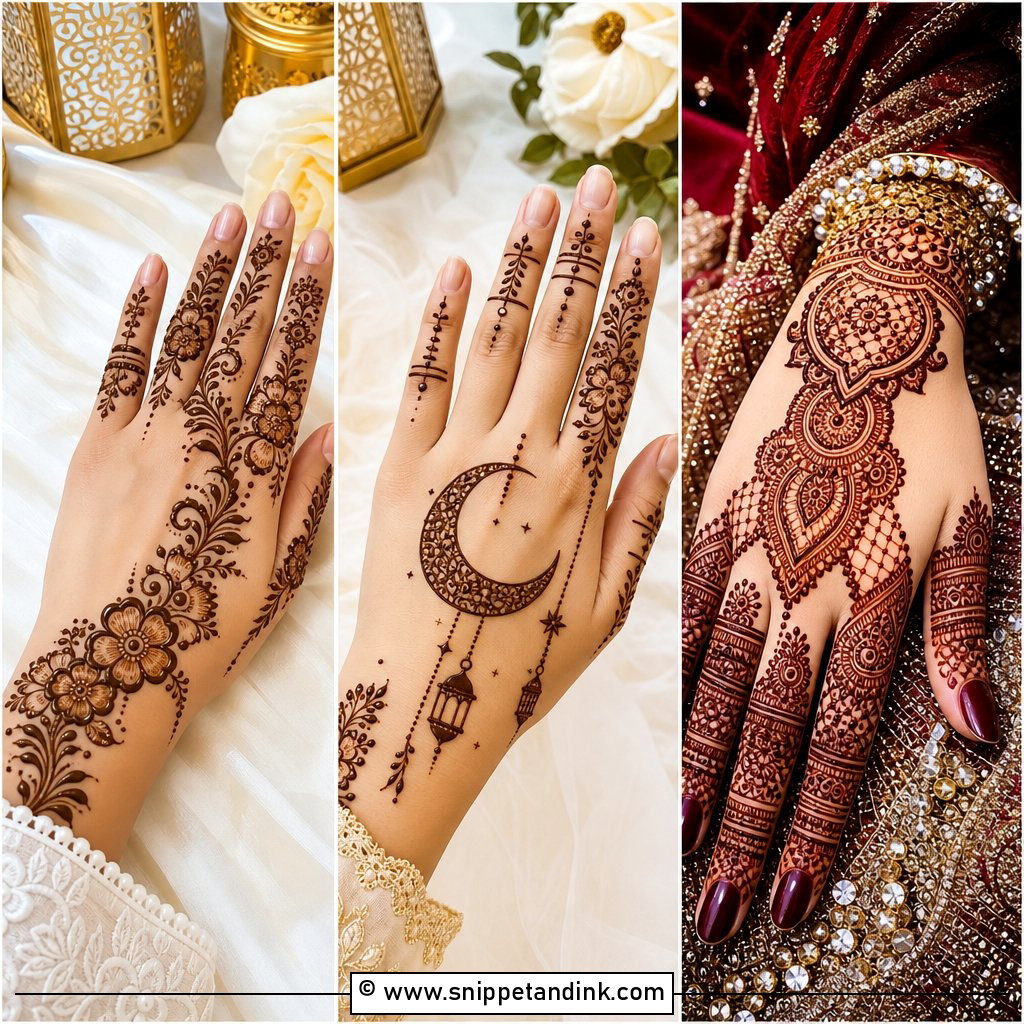
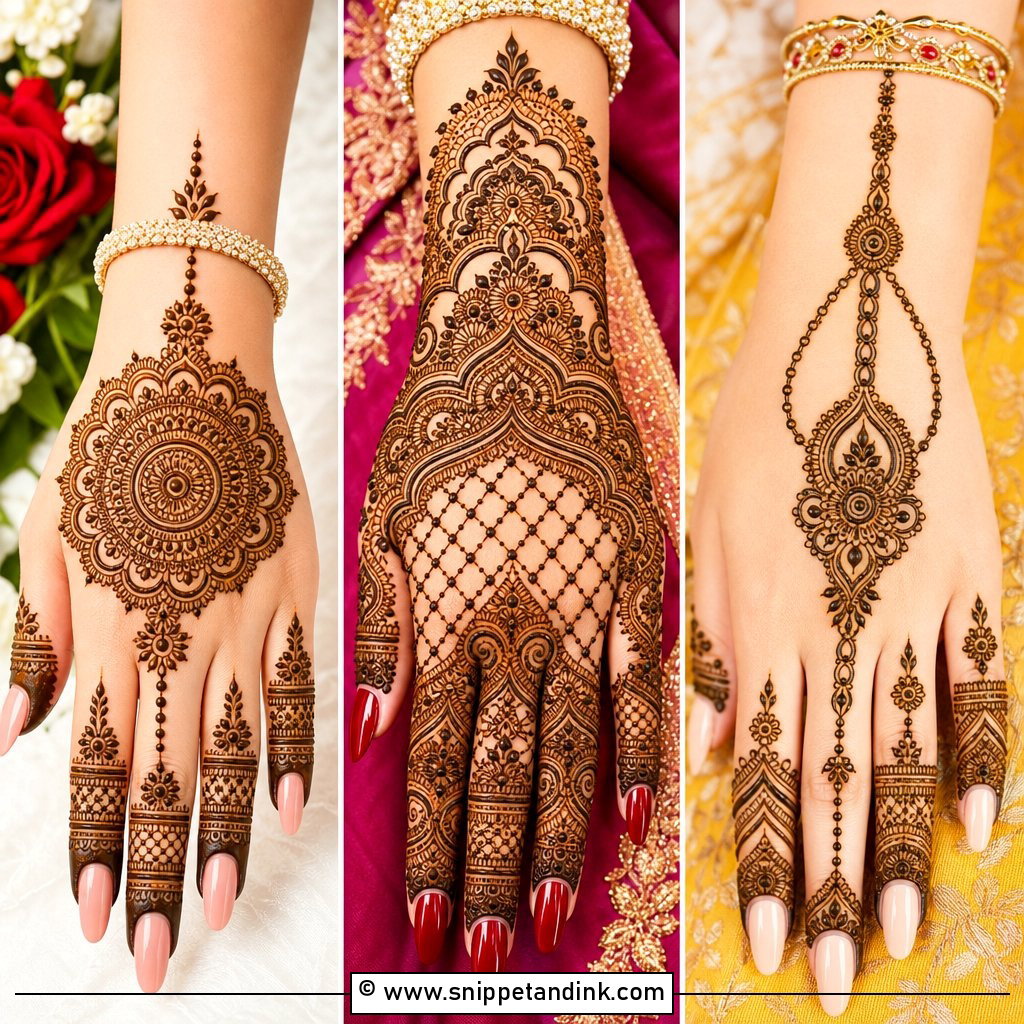
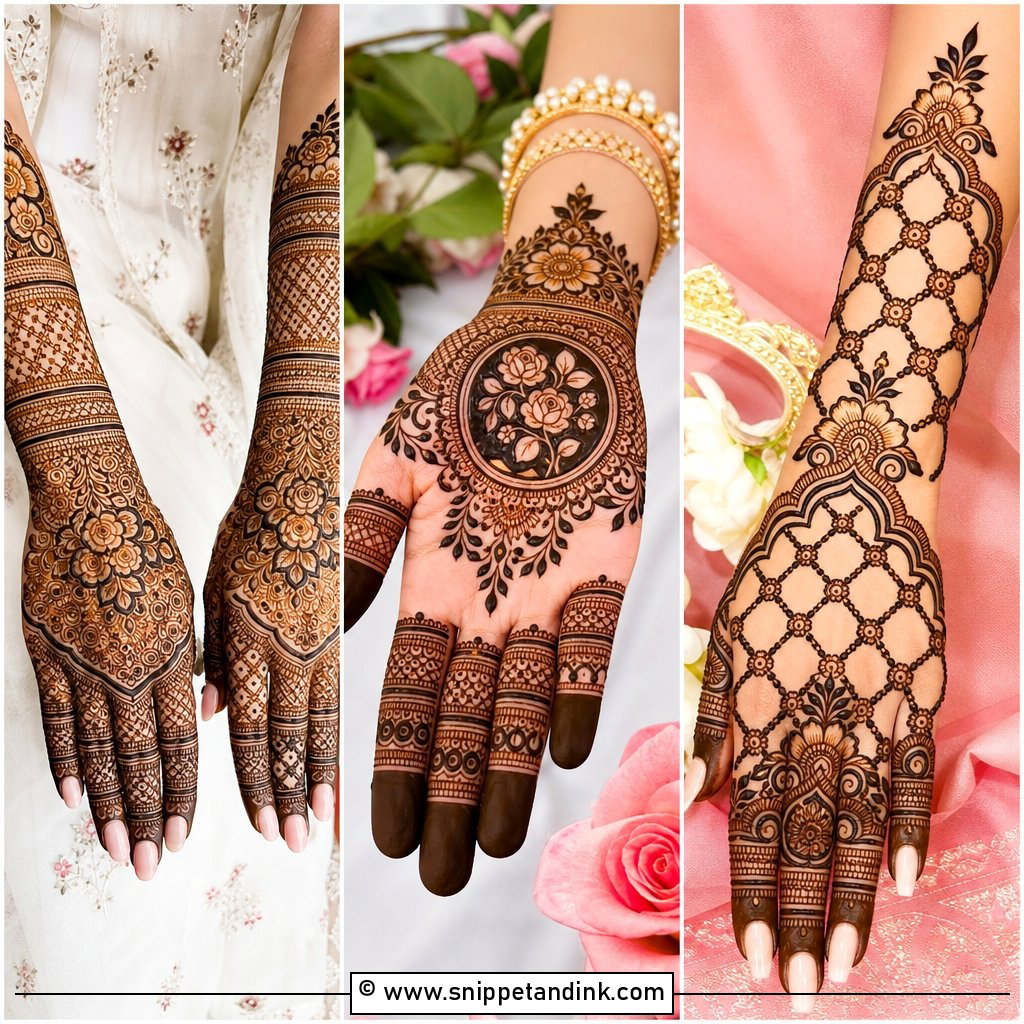
A back-hand engagement mehndi design is built for the ring exchange. I start with a bold centre, a mandala, flower or paisley cluster, then send vines and dots toward the fingers and close it at the wrist with a bracelet band. The ring finger gets fine detail but never a heavy block, so the ring reads clearly. Back-hand skin is thinner than the palm, so it stains a shade lighter; I make the outlines a touch bolder to compensate. It leaves plenty of room for heavier wedding mehndi later.
2. Simple Engagement Mehndi Design
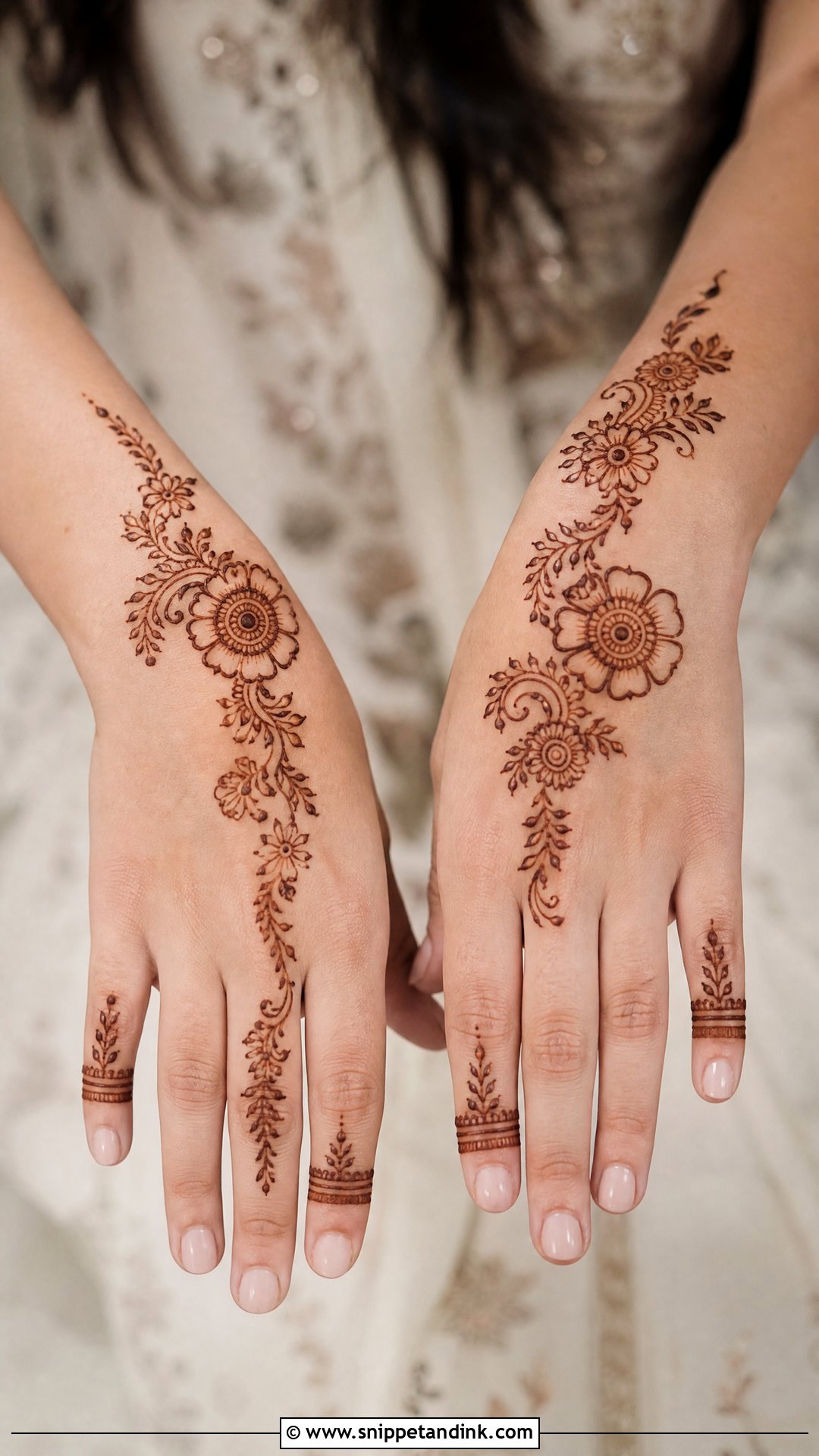
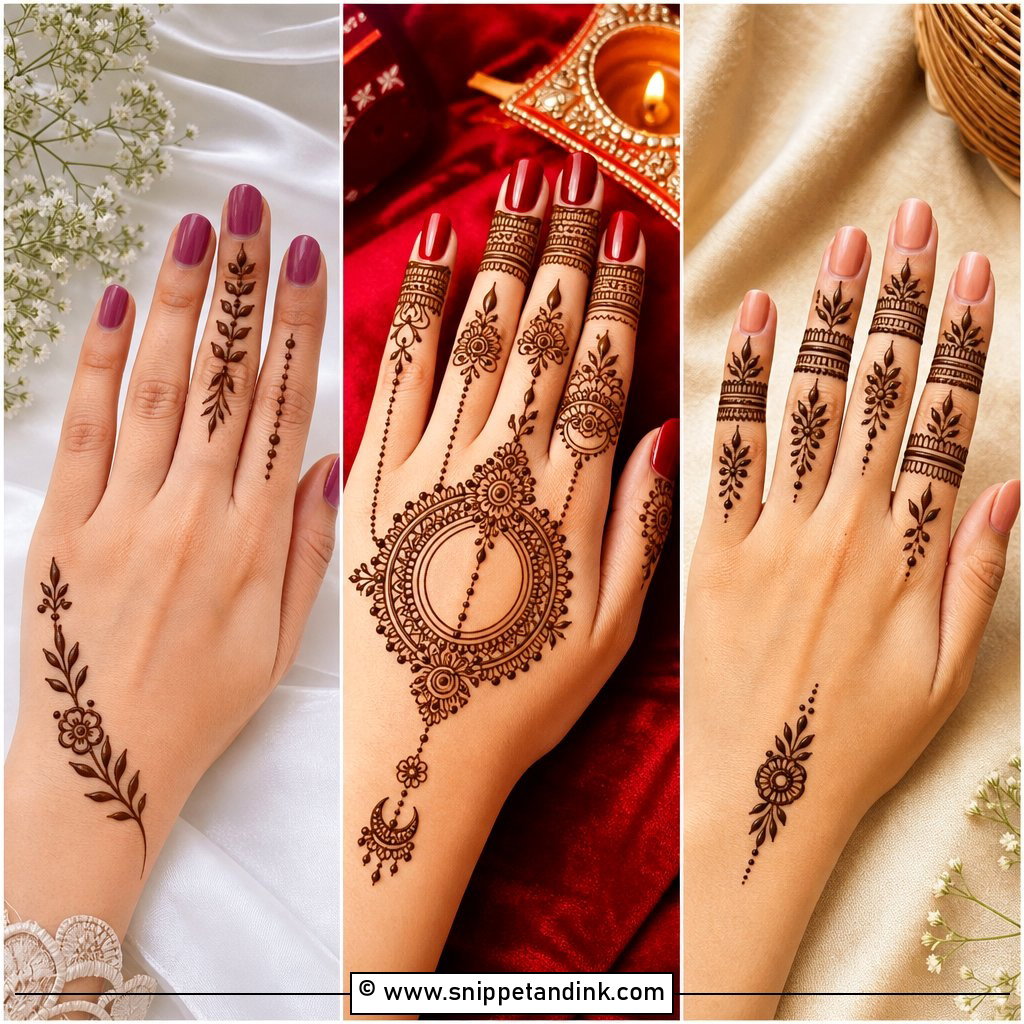
Simple henna works best when the outfit is already busy. If your lehenga is heavily embroidered or your jewelry is large, a neat floral trail, soft leaves on the fingers and a slim wrist border keep the overall look balanced. I leave clean gaps on purpose. A small circle near the centre, something like a ring, adds a ceremonial note. It’s quick to apply, around half an hour for both hands, which suits a roka or nikkah where the day is already full.
3. Arabic Engagement Mehndi Design
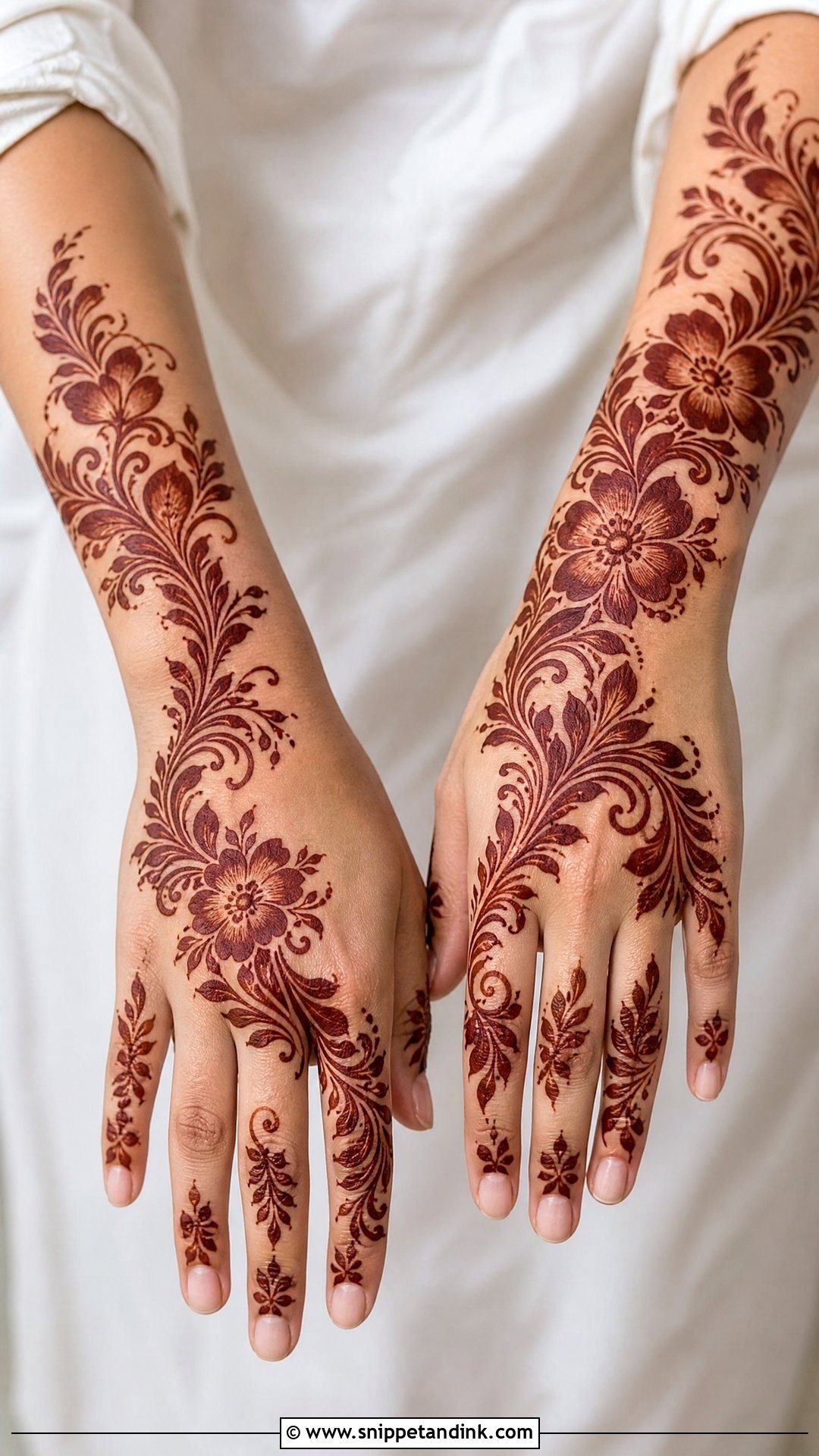
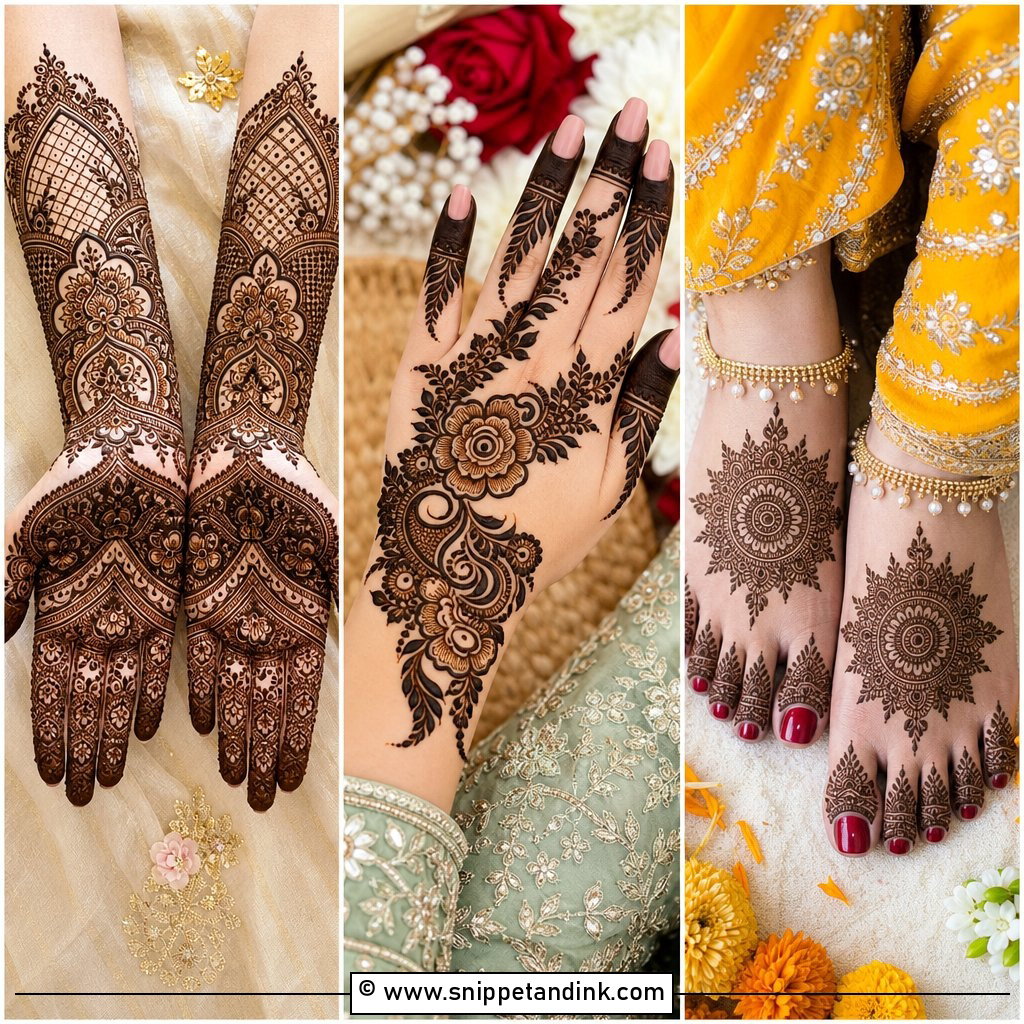
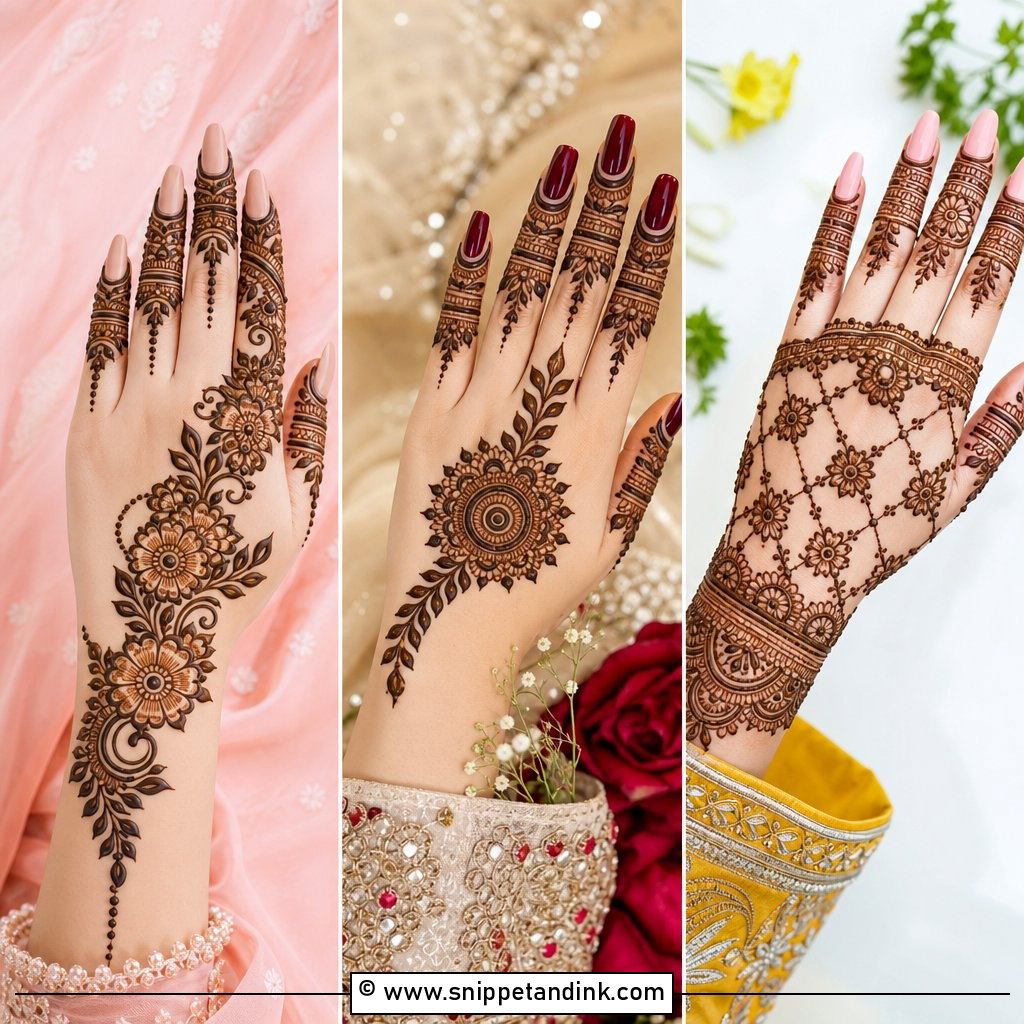
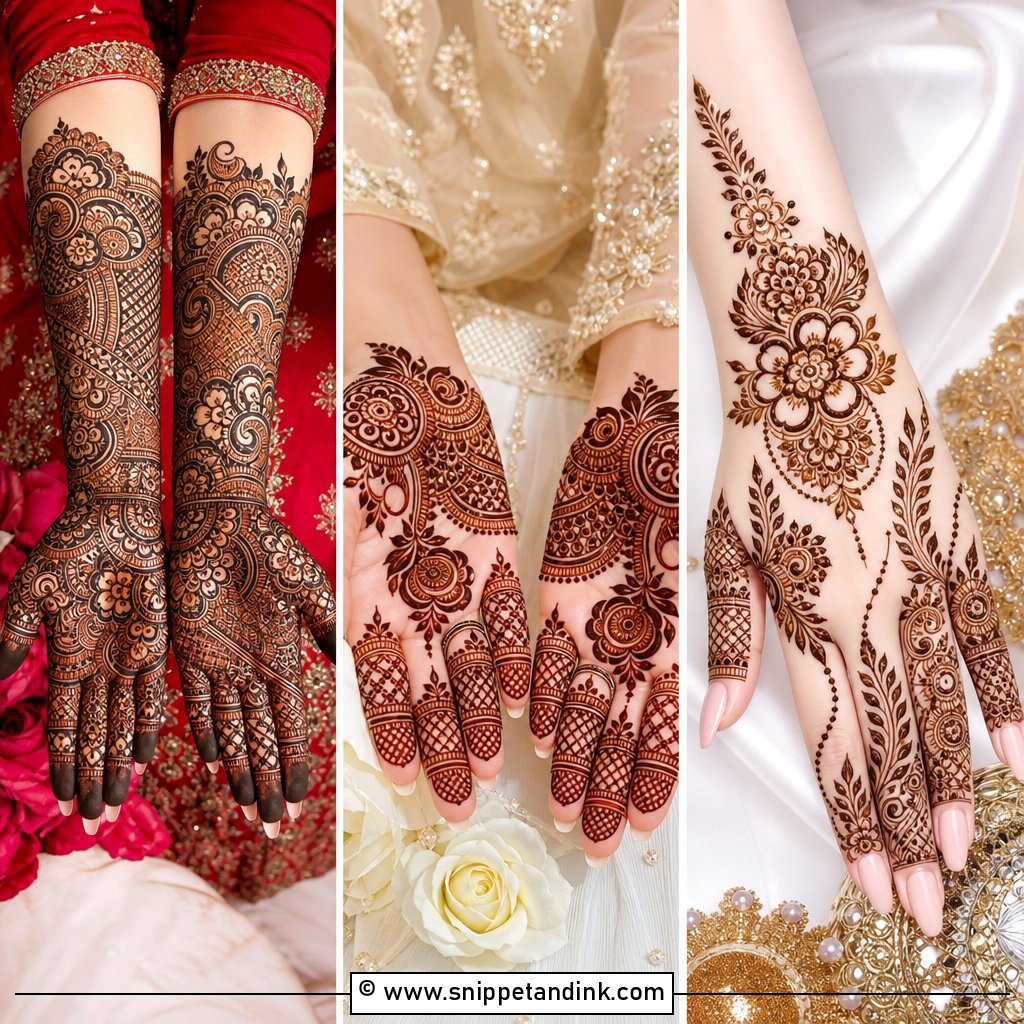
Arabic designs travel diagonally from the wrist toward the index finger in large flowers, leafy vines and shaded petals. The open spacing is what makes them suit an engagement: the hand looks decorated, yet plenty of skin shows. I keep the ring finger clean around the knuckle or give it only fine lines. For the bride, I make the wrist cuff bolder and the fingertips more detailed than I would for bridesmaids, so she stands out in group photos.
4. Indian Engagement Mehndi Design
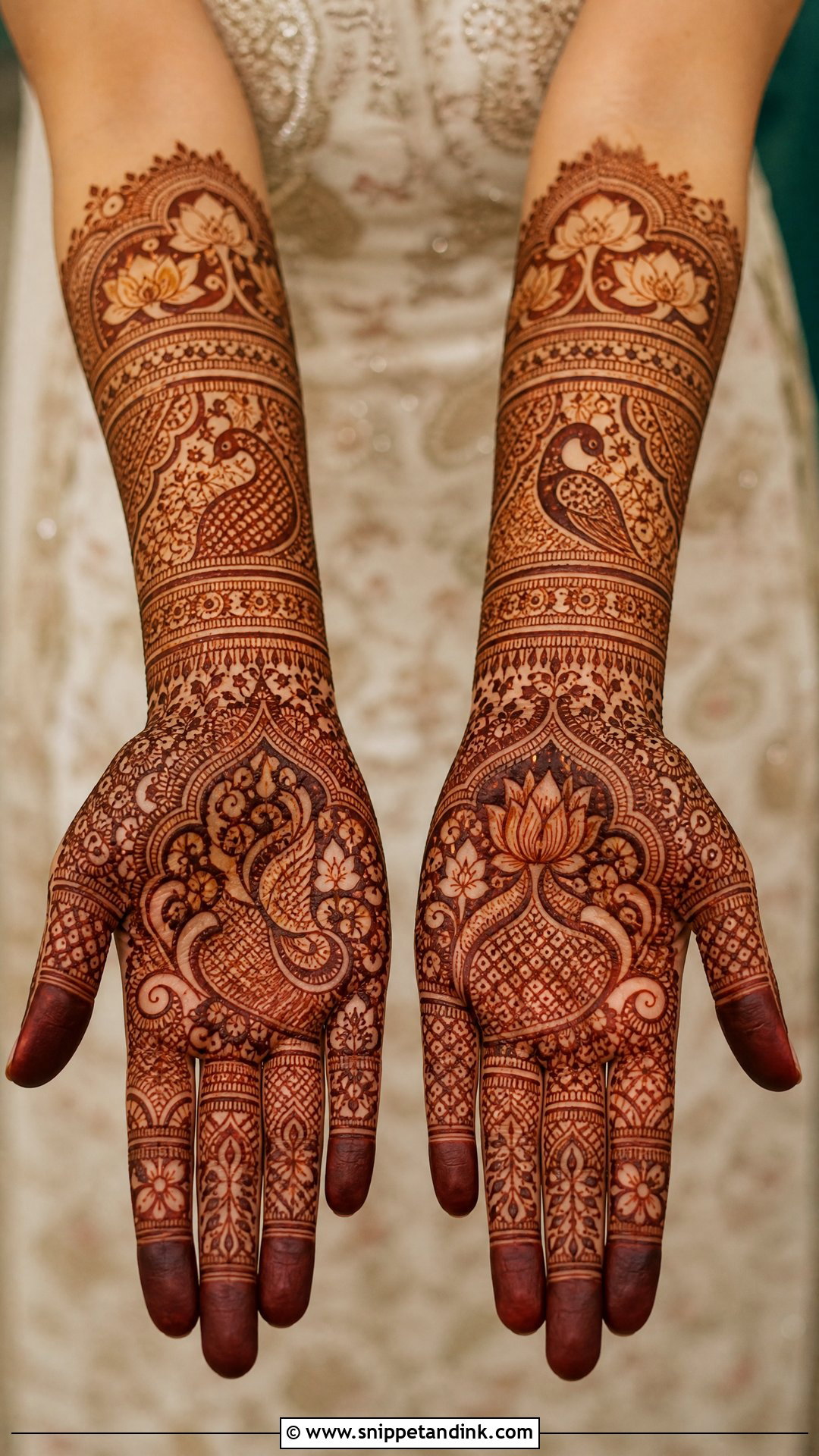
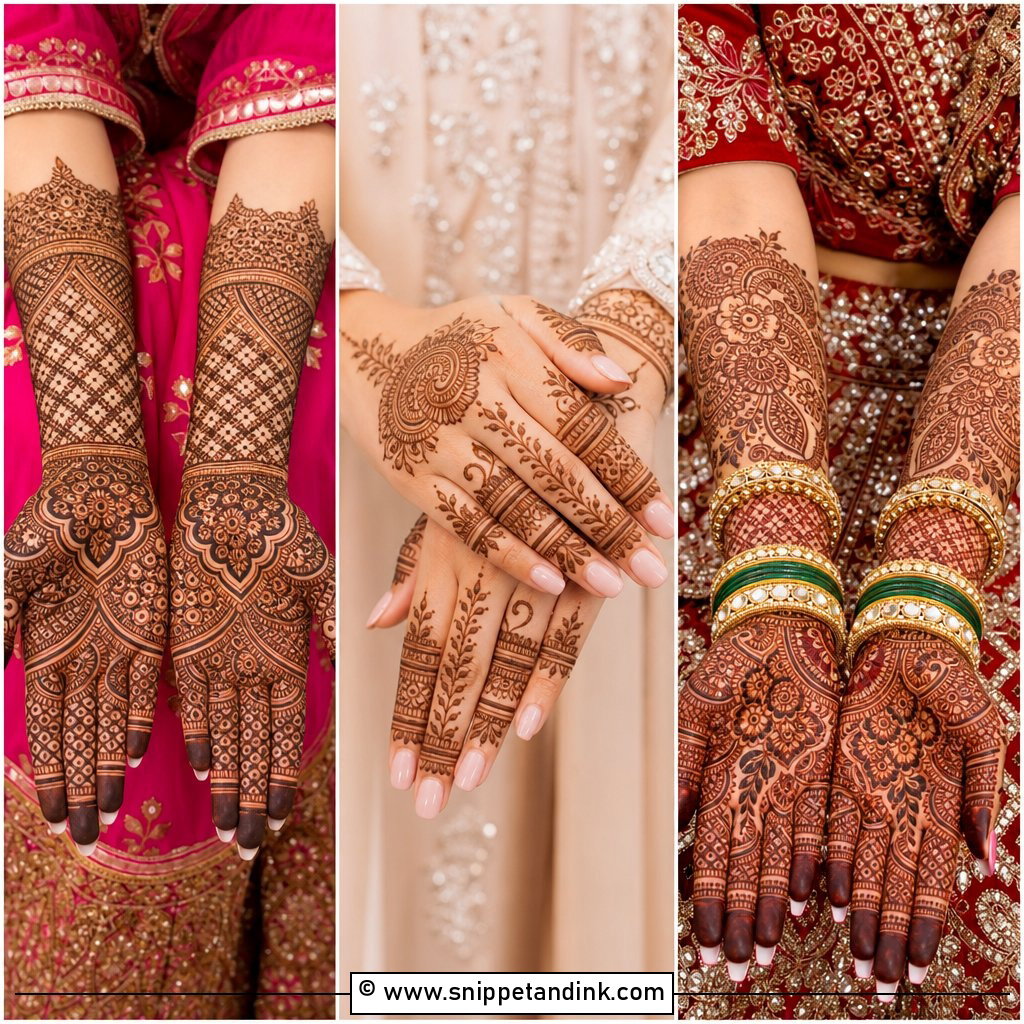
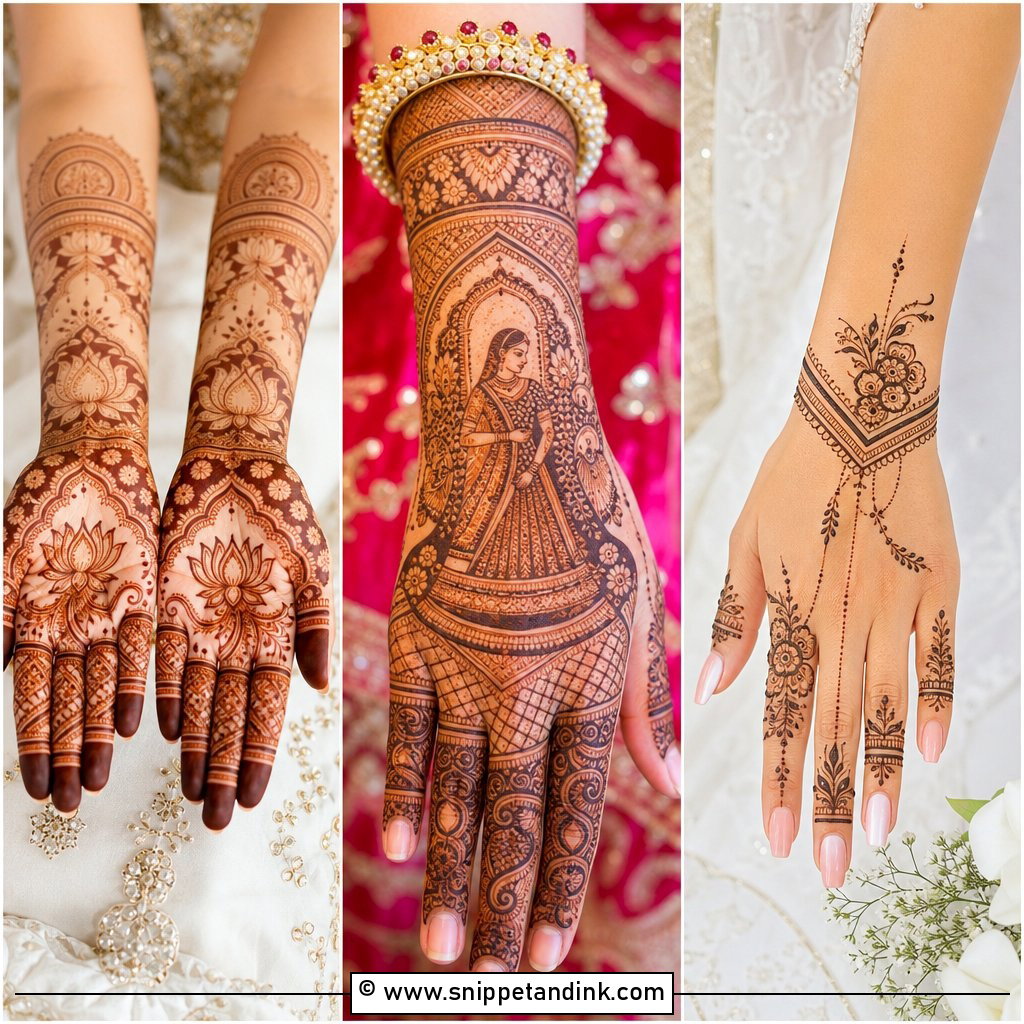
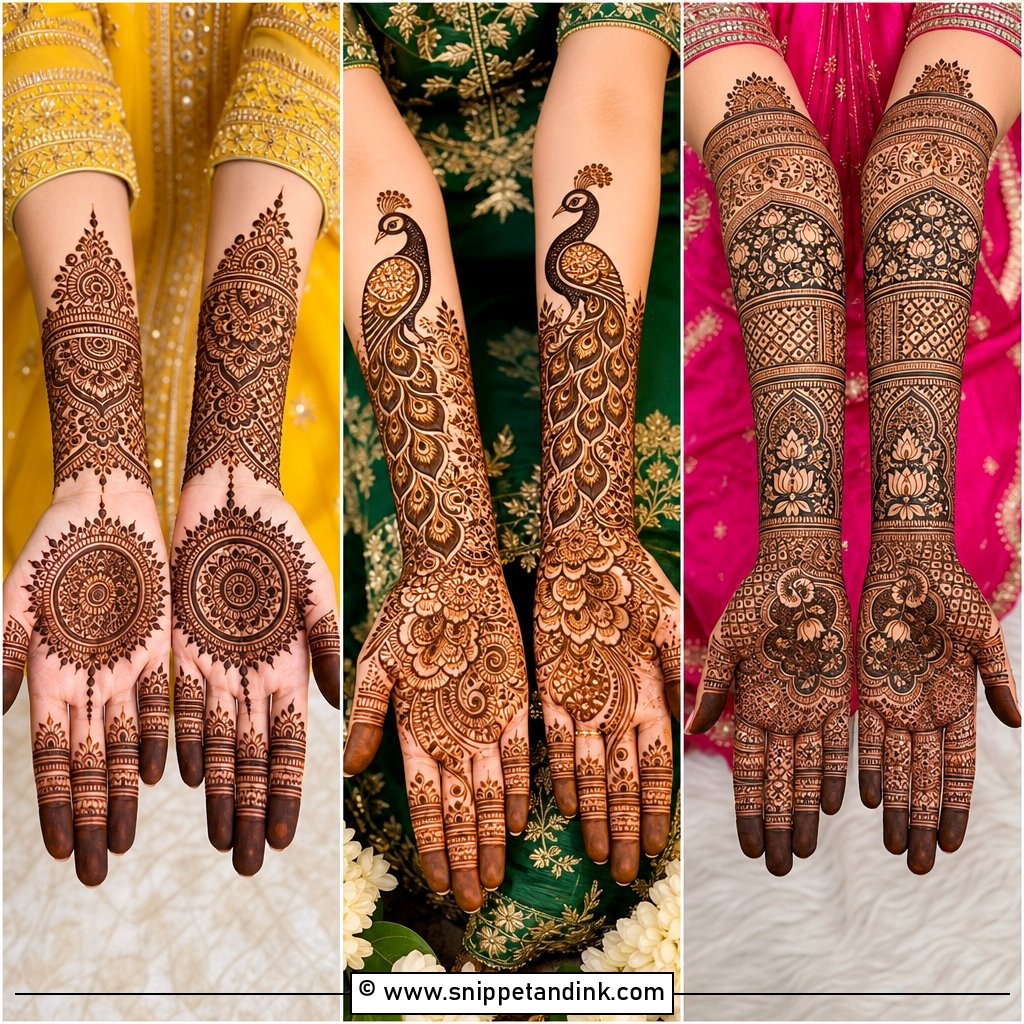
Indian henna is the most traditional choice: paisleys, lotus flowers, peacocks, jaali mesh and tiny fillers across palms, backs, fingers and wrists. For an engagement I draw it a little lighter than a full bridal set, with a mandala or a bride-groom symbol on the palm and a structured floral layout on the back. It takes a fine-tipped cone and a fresh, smooth paste; lumpy paste breaks the thin lines. Silk sarees, embroidered lehengas and haath phool all sit naturally with it.
5. Full Hand Engagement Mehndi Design
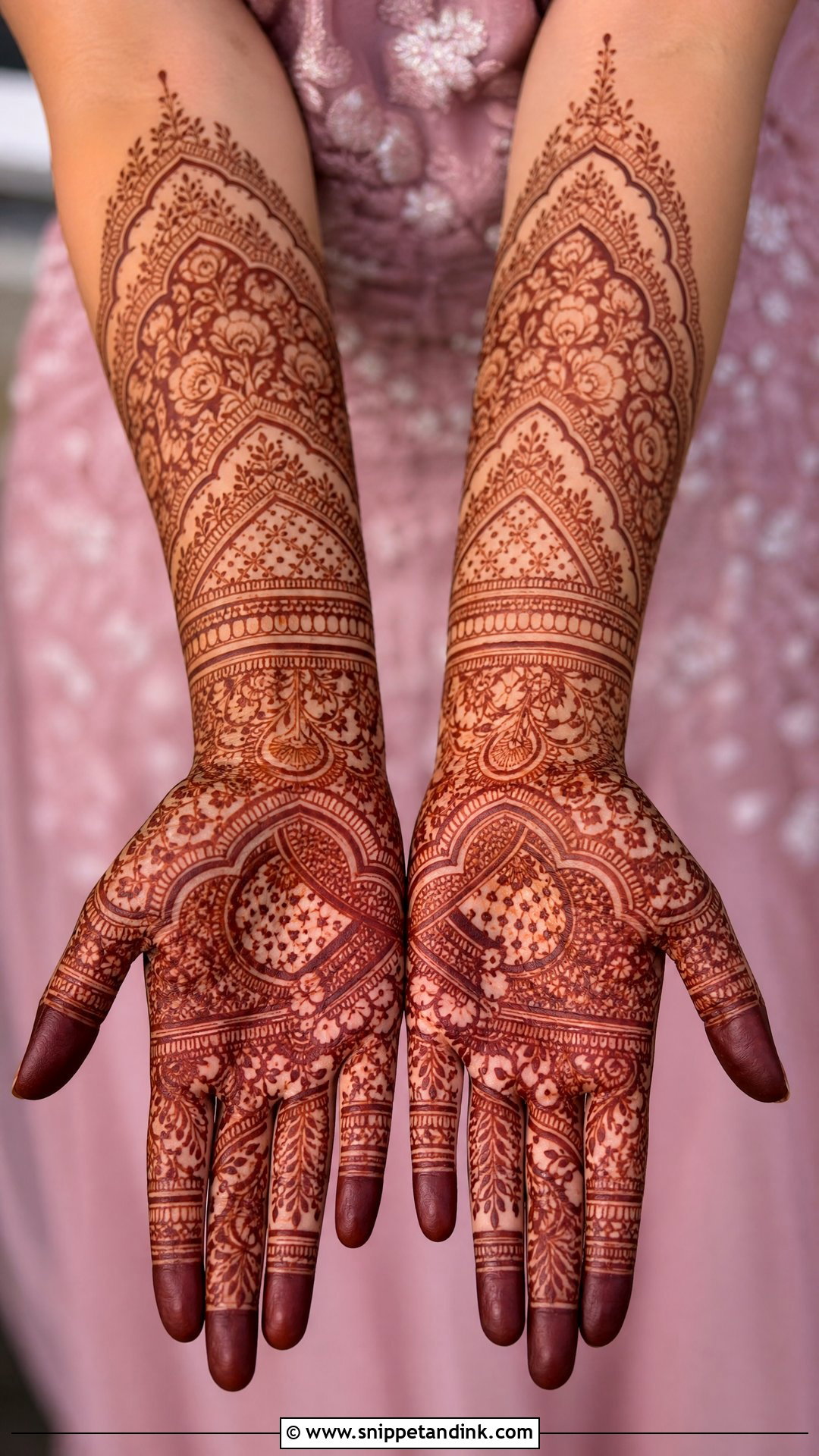
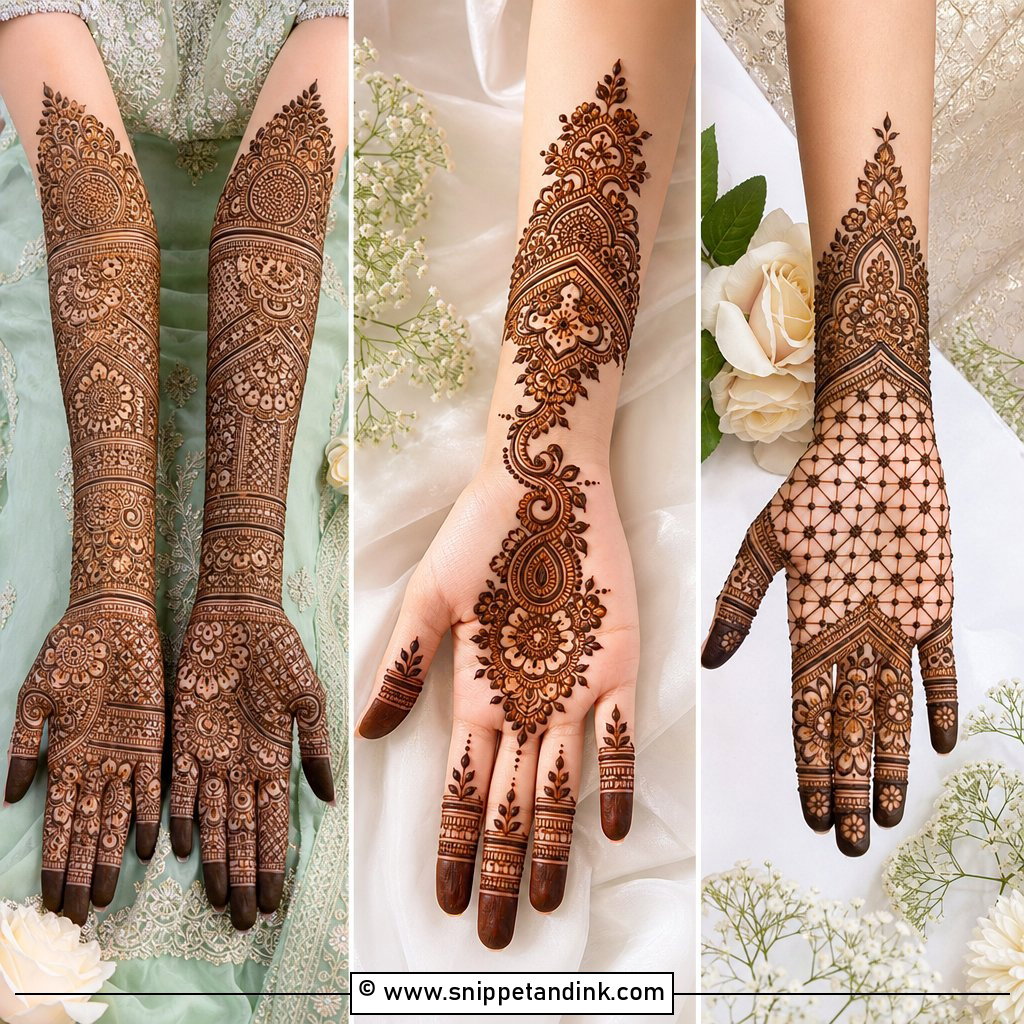
Full hand engagement mehndi runs from fingertips to forearm and makes engagement photos look almost bridal. I fill the palm, detail every finger, add bracelet bands and floral arches, then extend paisleys or lotuses up the arm. The danger is overcrowding; I leave tiny gaps around the main motifs so each one still reads after the stain darkens. Freshly made paste gives the deepest stain, so ask your artist when her batch was mixed.
6. Front Hand Engagement Mehndi Design
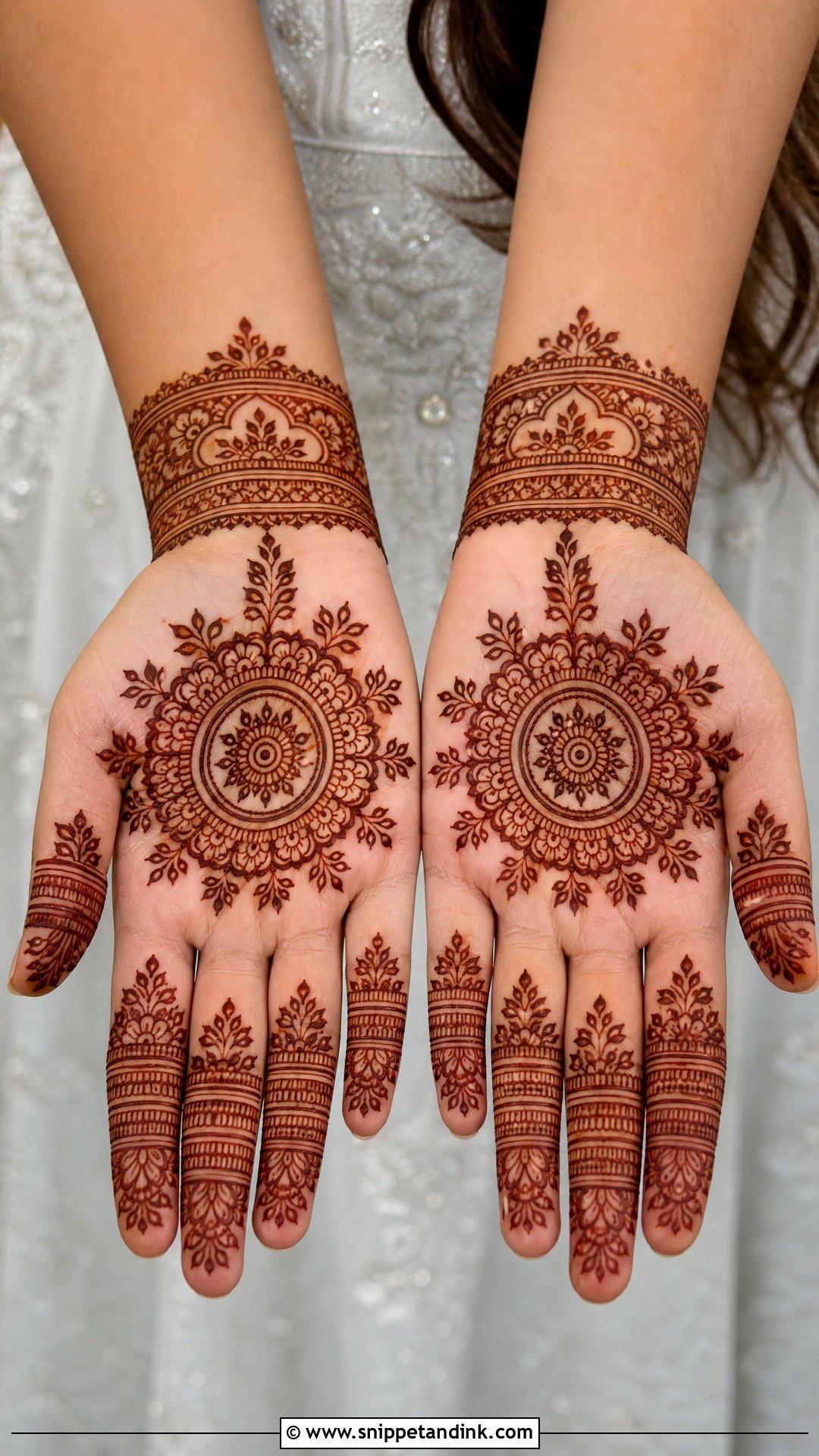
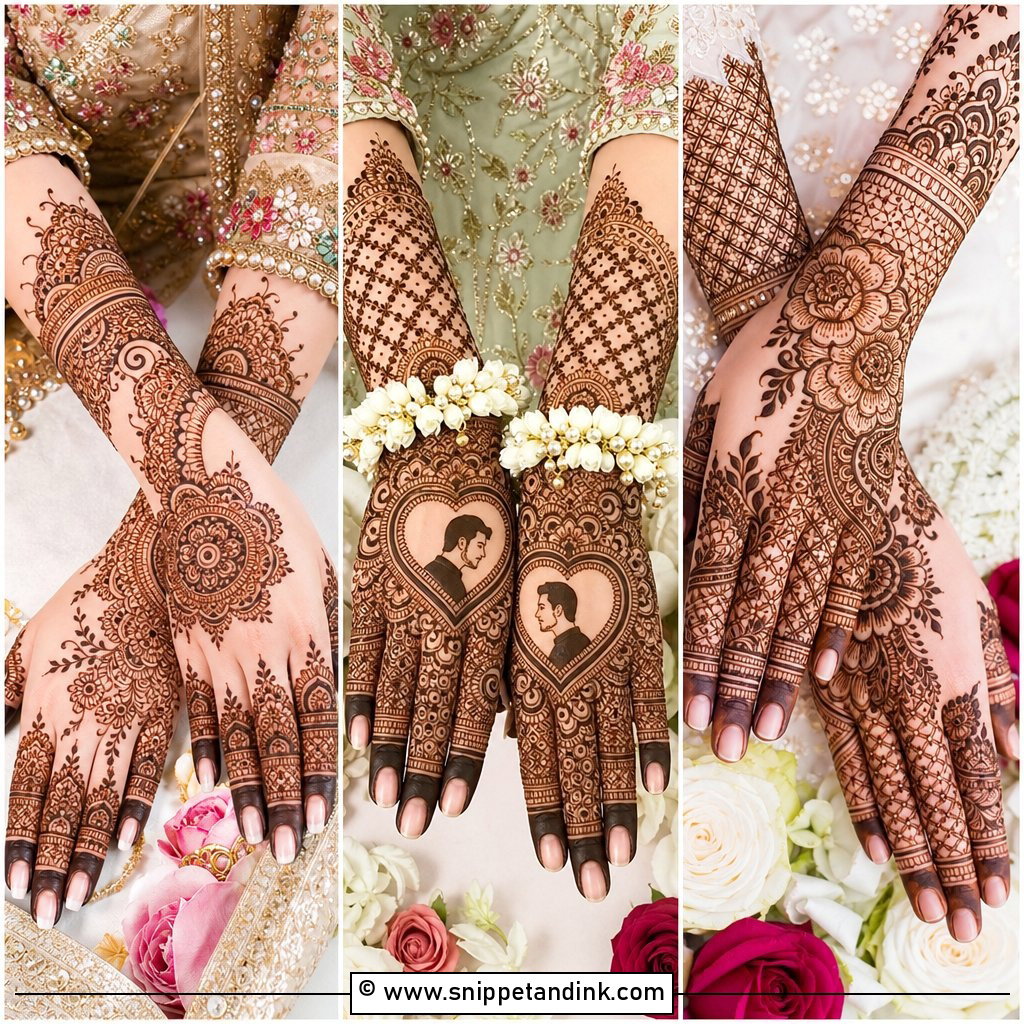
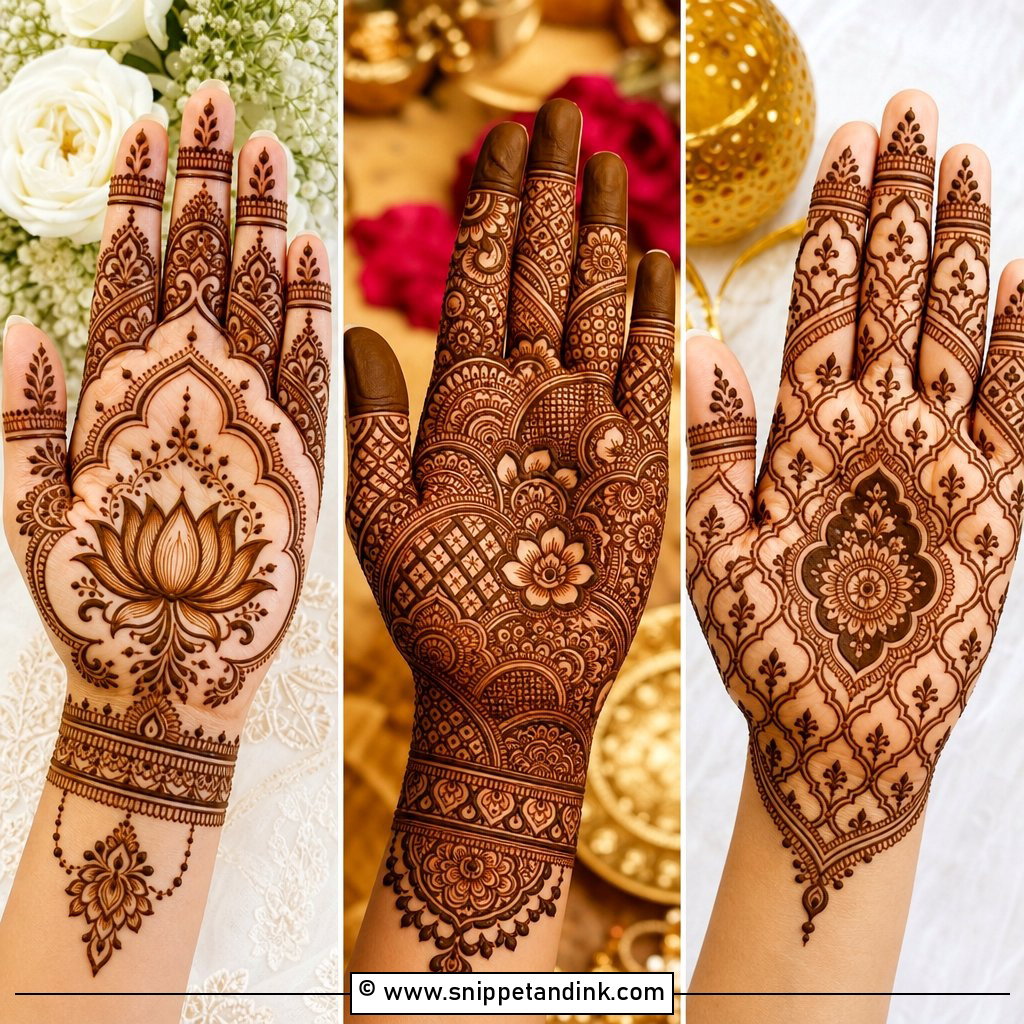
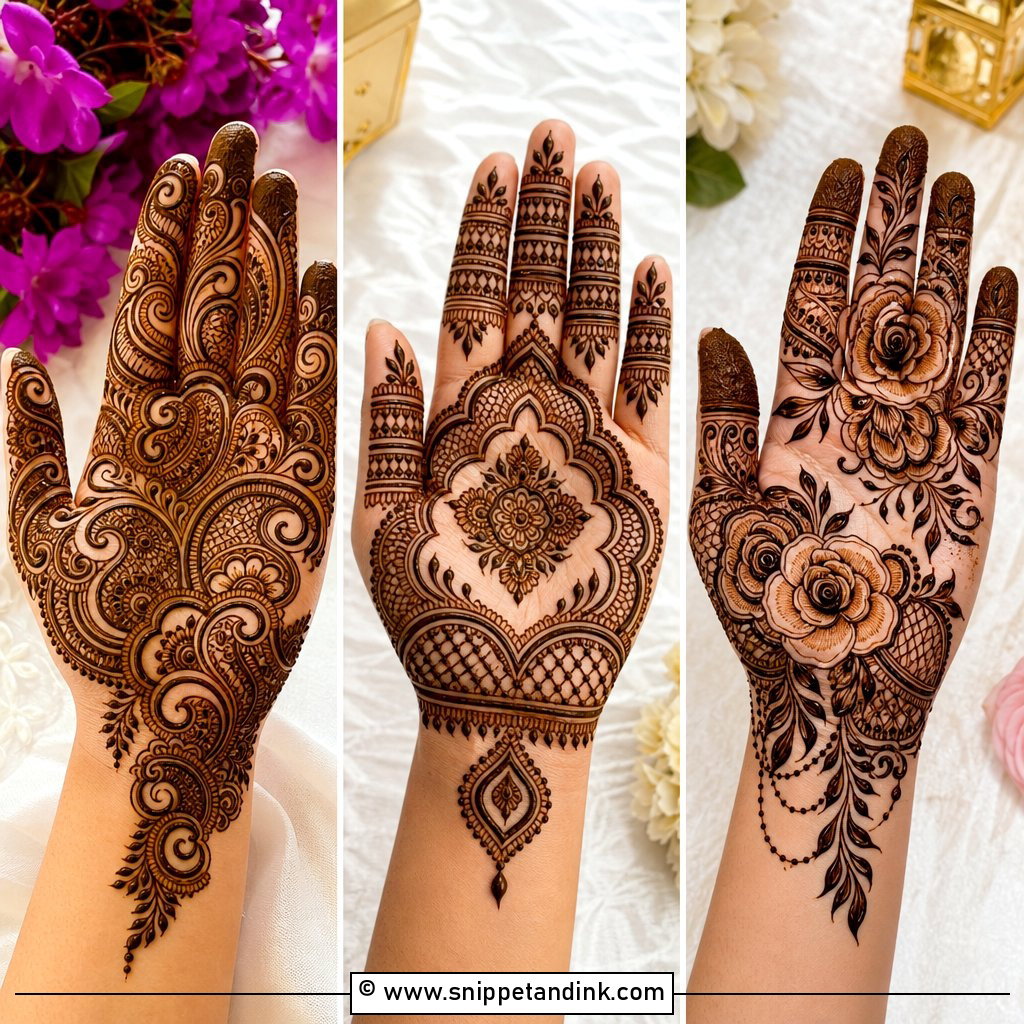
Palms show every time you hold flowers, touch your dupatta or raise your hands during a ritual. I centre the palm on a round mandala, a lotus or a heart-shaped ring motif, put stacked bands and leafy tips on the fingers and fill around the centre so it doesn’t look empty. A cuff at the wrist ties it to the bangles. It’s an easy design to scale up or down, which helps if you’re unsure how heavy you want to go.
7. Modern Engagement Mehndi Design
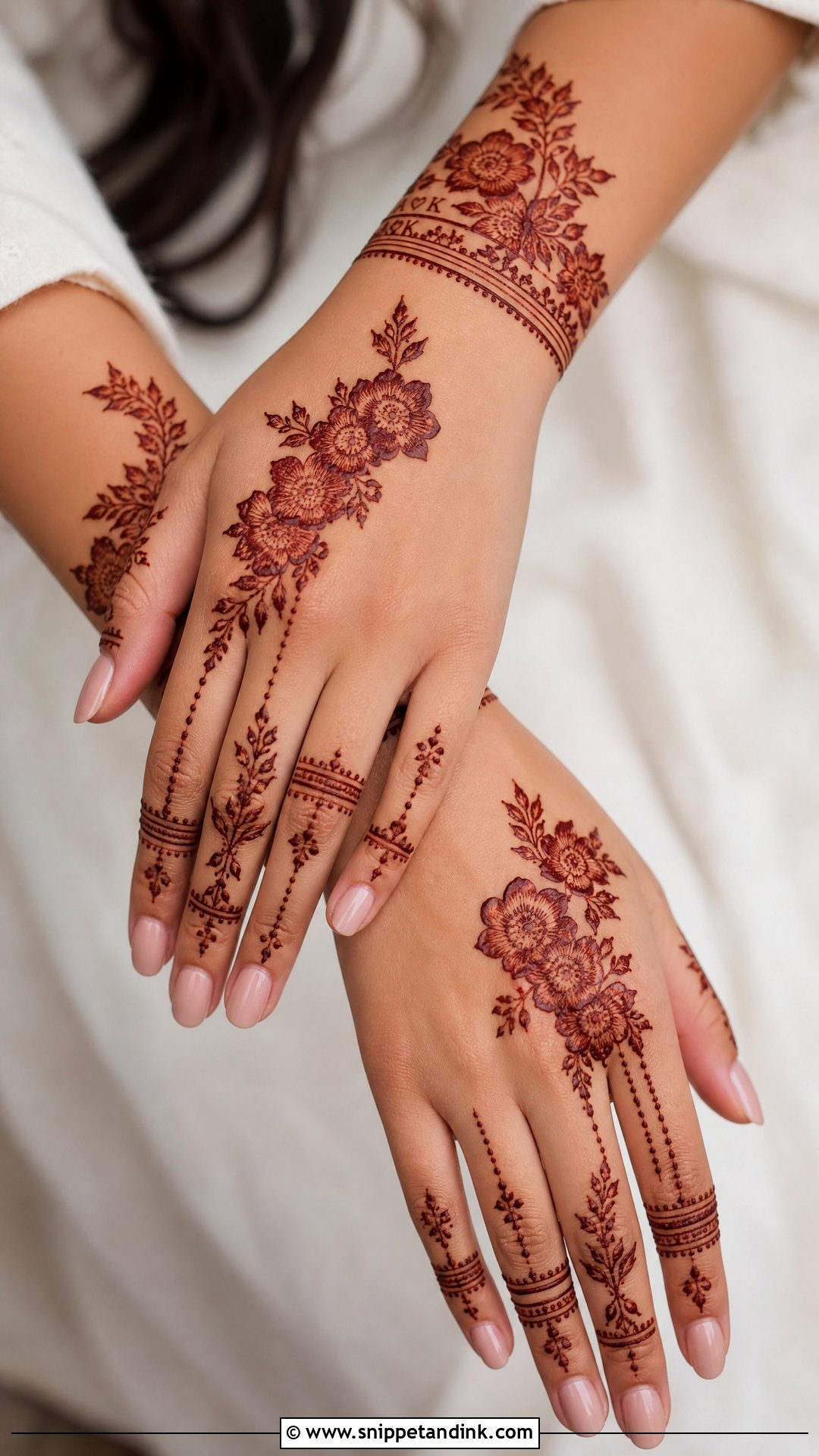
Modern henna is about composition: a half-hand layout, delicate finger chains, a bold floral patch and a bracelet-style wrist band. Negative space carries the design, so I plan the layout with light dots before drawing any real line. Initials, the date or a small ring motif fit easily. It suits pastel outfits, gowns and fusion lehengas, and it’s light enough to leave room for a fuller wedding design.
8. Bridal Engagement Mehndi Design
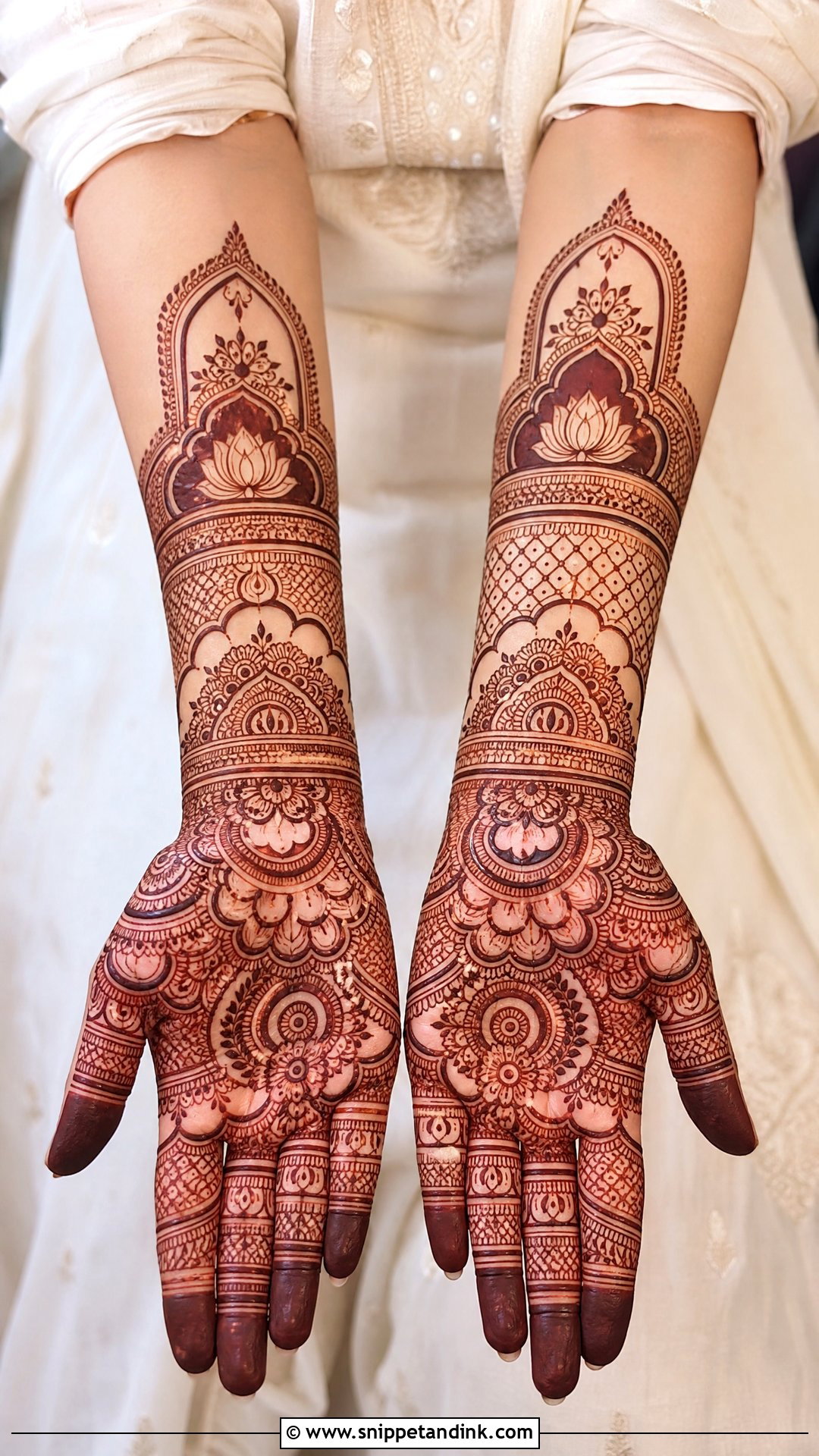
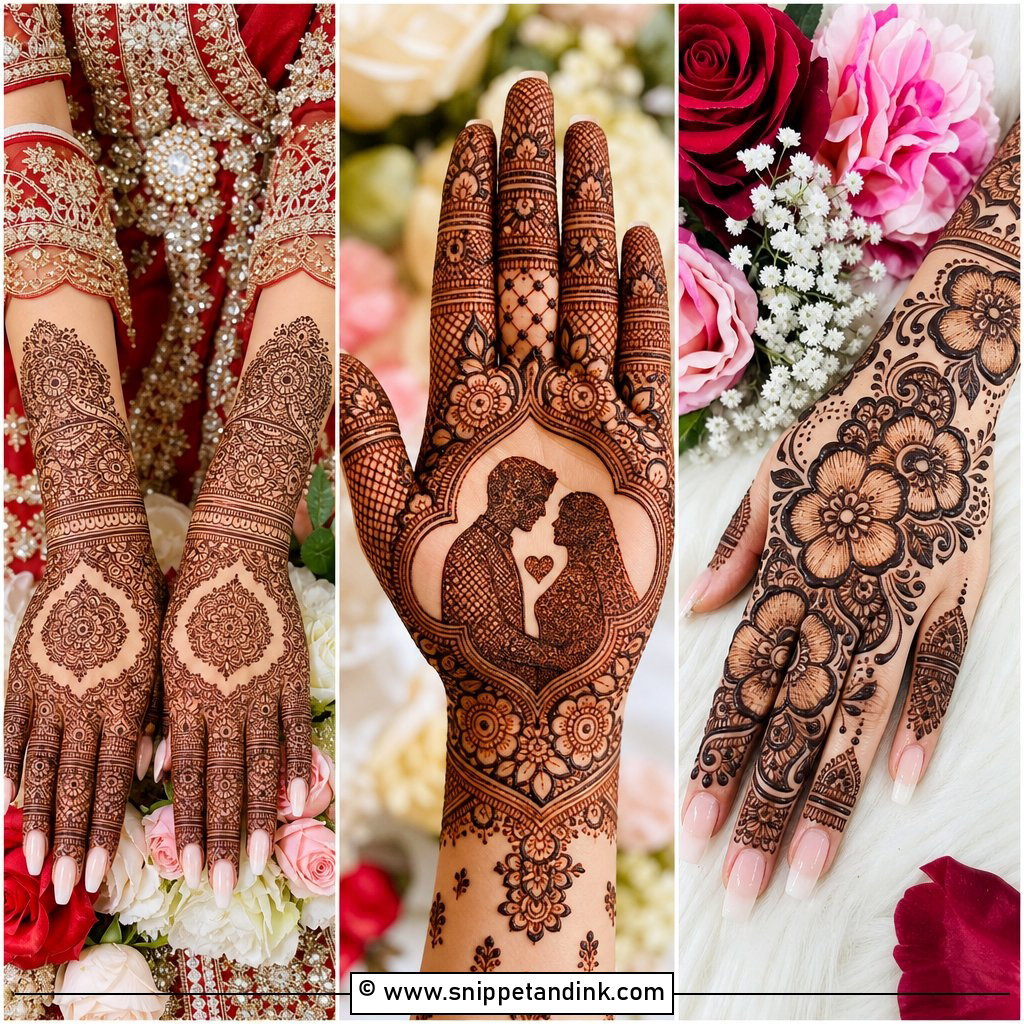
Bridal engagement mehndi sits between simple roka henna and the wedding set. I give it detailed palms, decorated fingers, structured backs and short forearm extensions, with lotus, paisley, peacock or jaali motifs and maybe initials. The ring hand gets extra fine work on the fingers, with a clean gap at the base of the ring finger. This is what I suggest when a bride wants to feel properly bridal at the engagement without repeating the wedding look.
9. Engagement Mehndi Design With Ring Motif
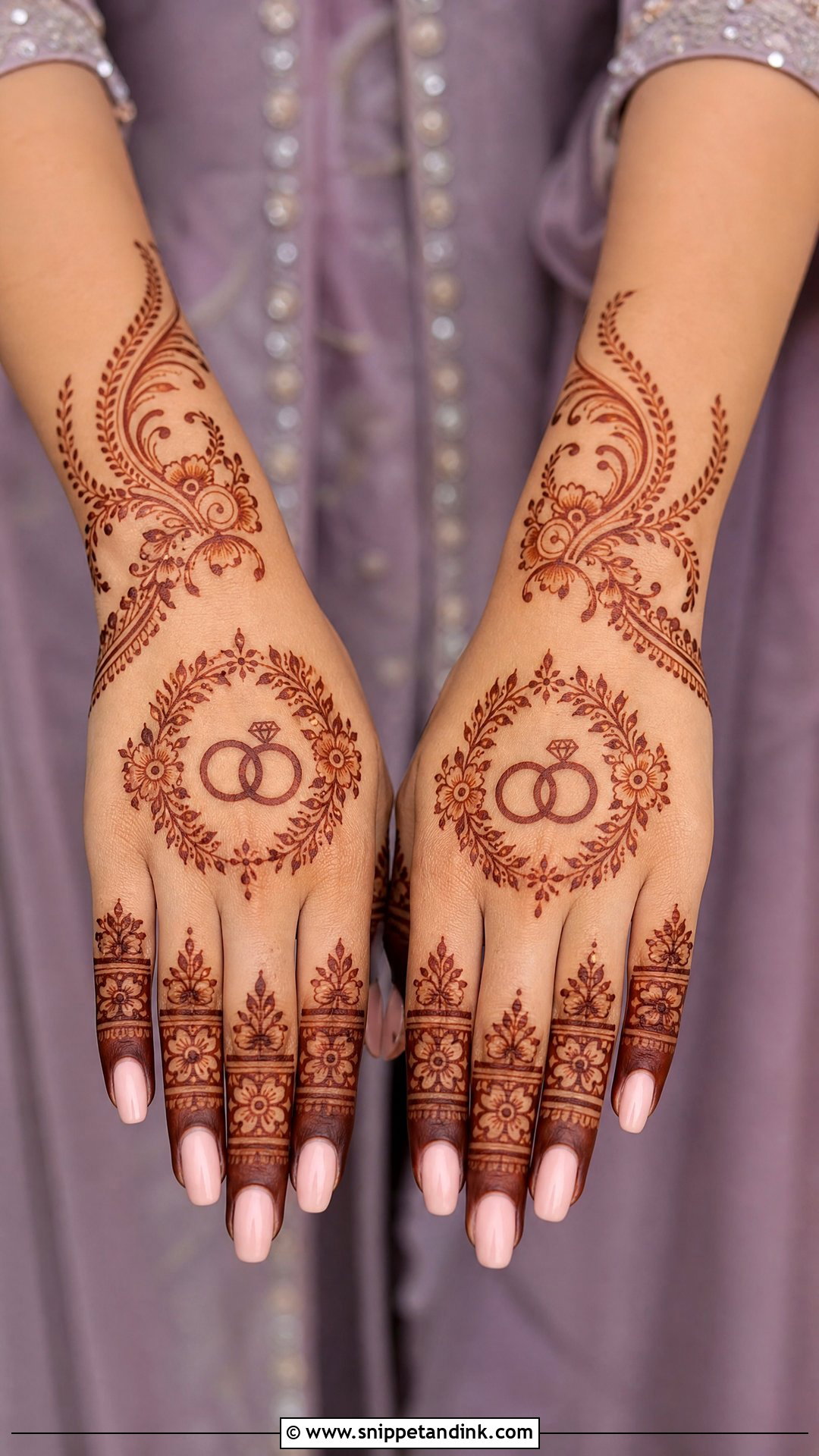
A ring motif ties the henna directly to the ceremony. I draw a circular ring symbol on the back of the hand or the palm and surround it with florals and fine lines; some brides like two linked rings near the wrist instead. Size matters here. If the ring motif is smaller than a fingernail, the stain blurs it and nobody sees it in photos. It suits Arabic, Indian and Indo-Arabic layouts.
10. Engagement Mehndi Design With Couple Initials
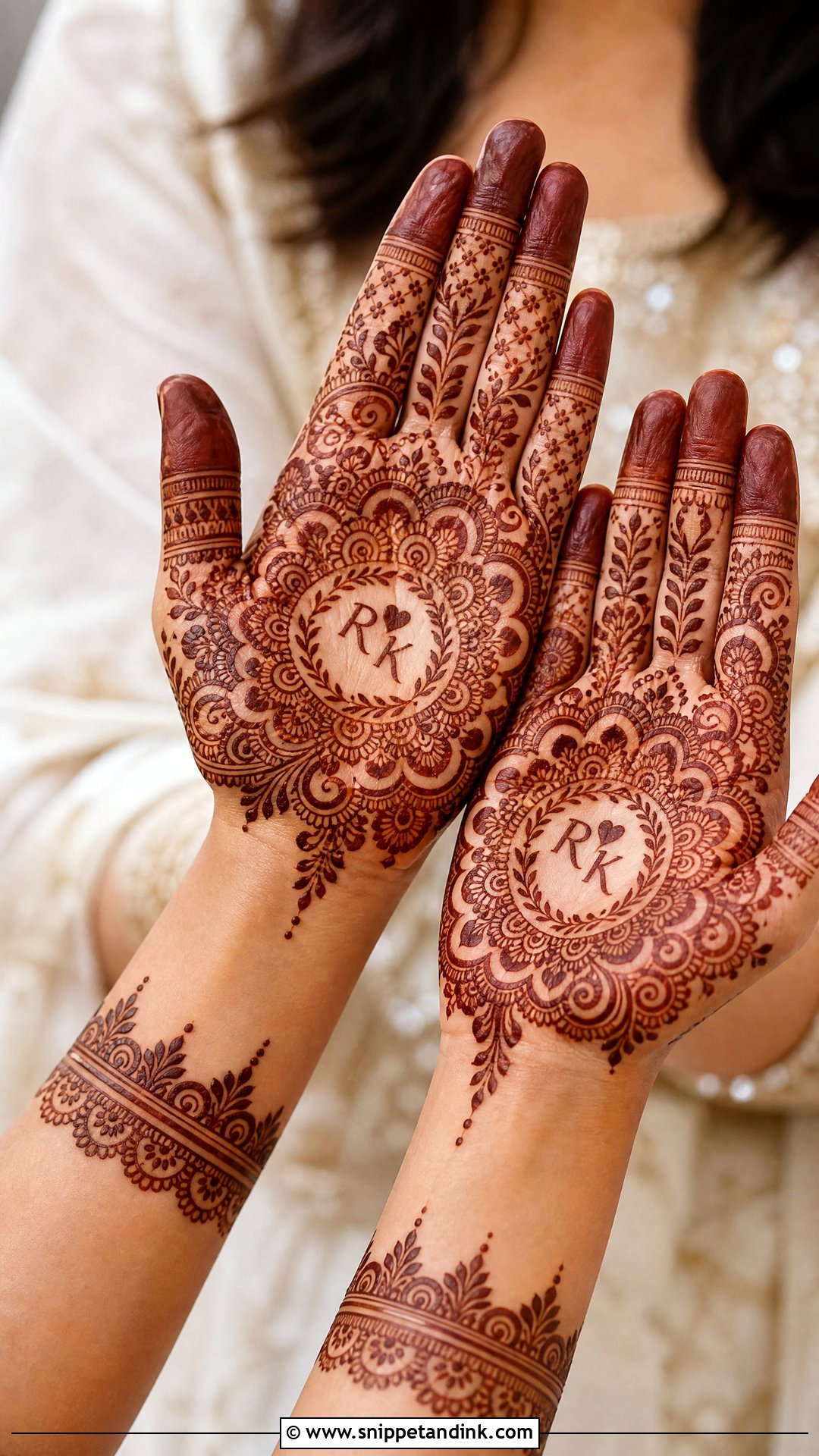
Initials are a quiet way to make the hand personal. I hide them inside a mandala, in a heart-shaped floral frame or near the wrist with vines around them. On the palm, they only show in close-ups; on the back near the ring, they’re visible in the exchange photos. I write initials slightly larger than you’d expect, with clear space around each letter, because thin letters fill in as the stain darkens.
11. Engagement Mehndi Design With Date
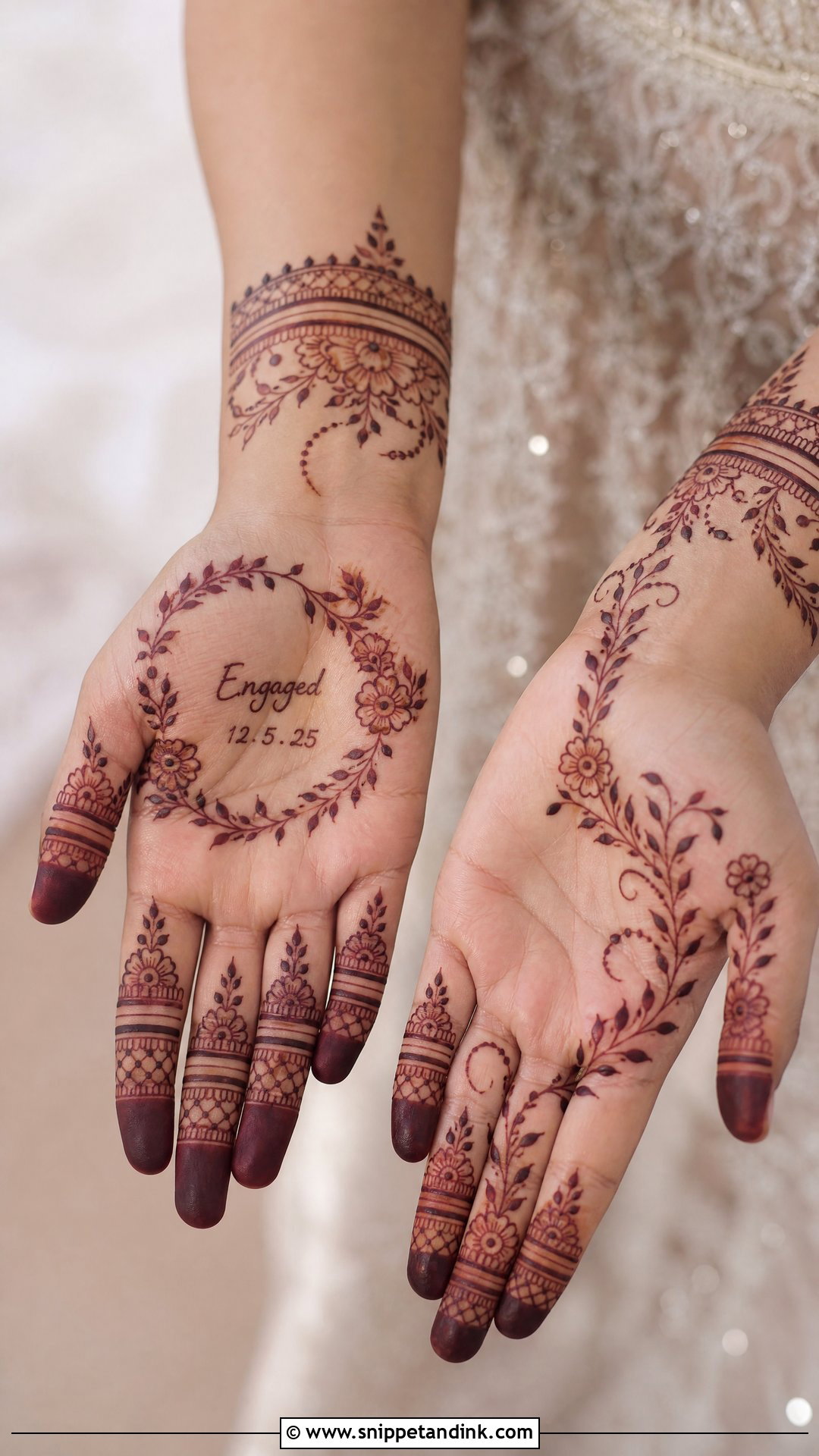
A date makes the hand a keepsake. I place it along the wrist cuff, in a small floral frame or near the palm mandala, and keep it from dominating the pattern. Roman numerals look modern but take more space; plain numbers are clearer. Confirm the format before I start, since henna can’t be erased once it’s on the skin.
12. Engagement Mehndi Design With Mandala
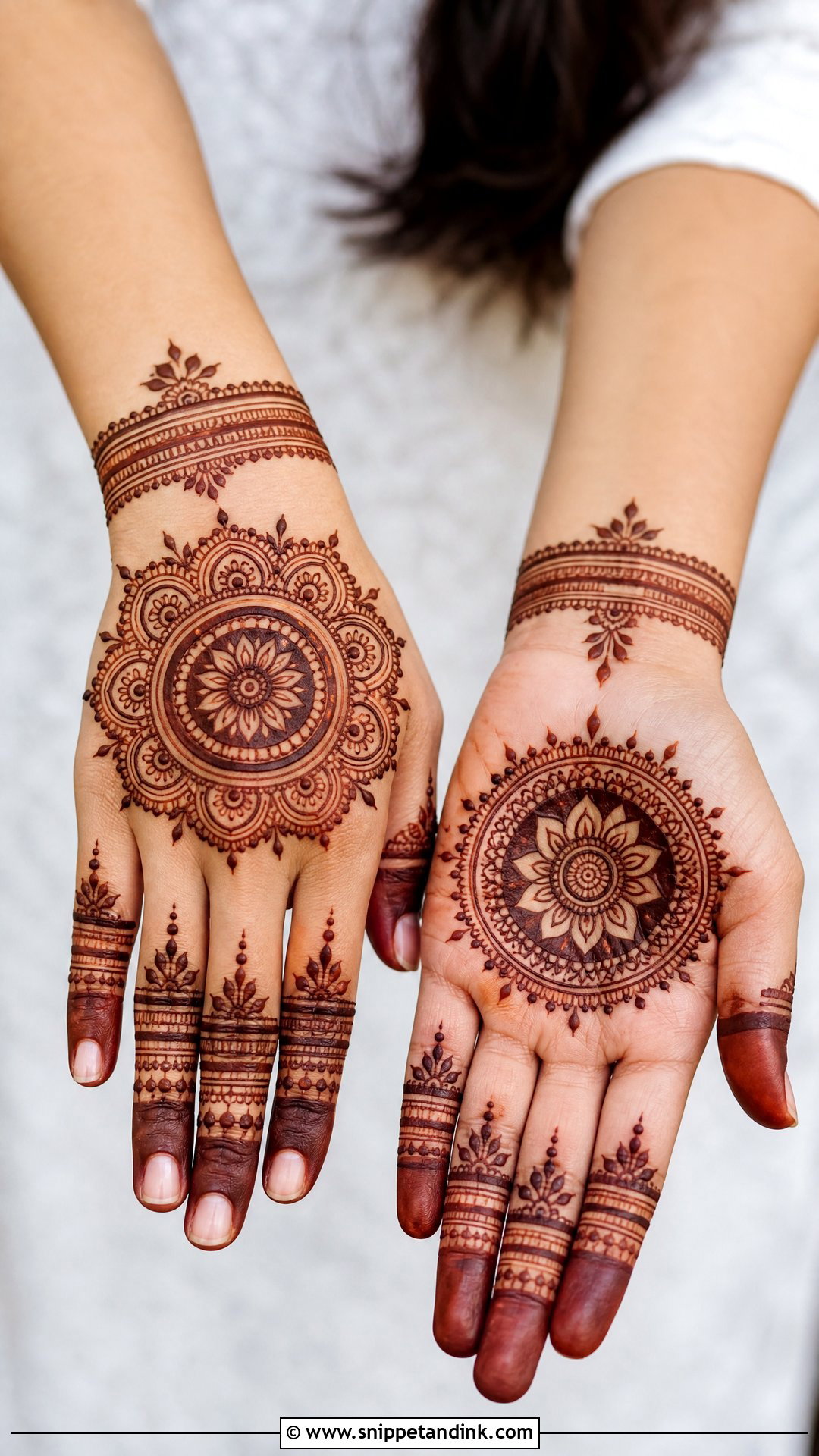
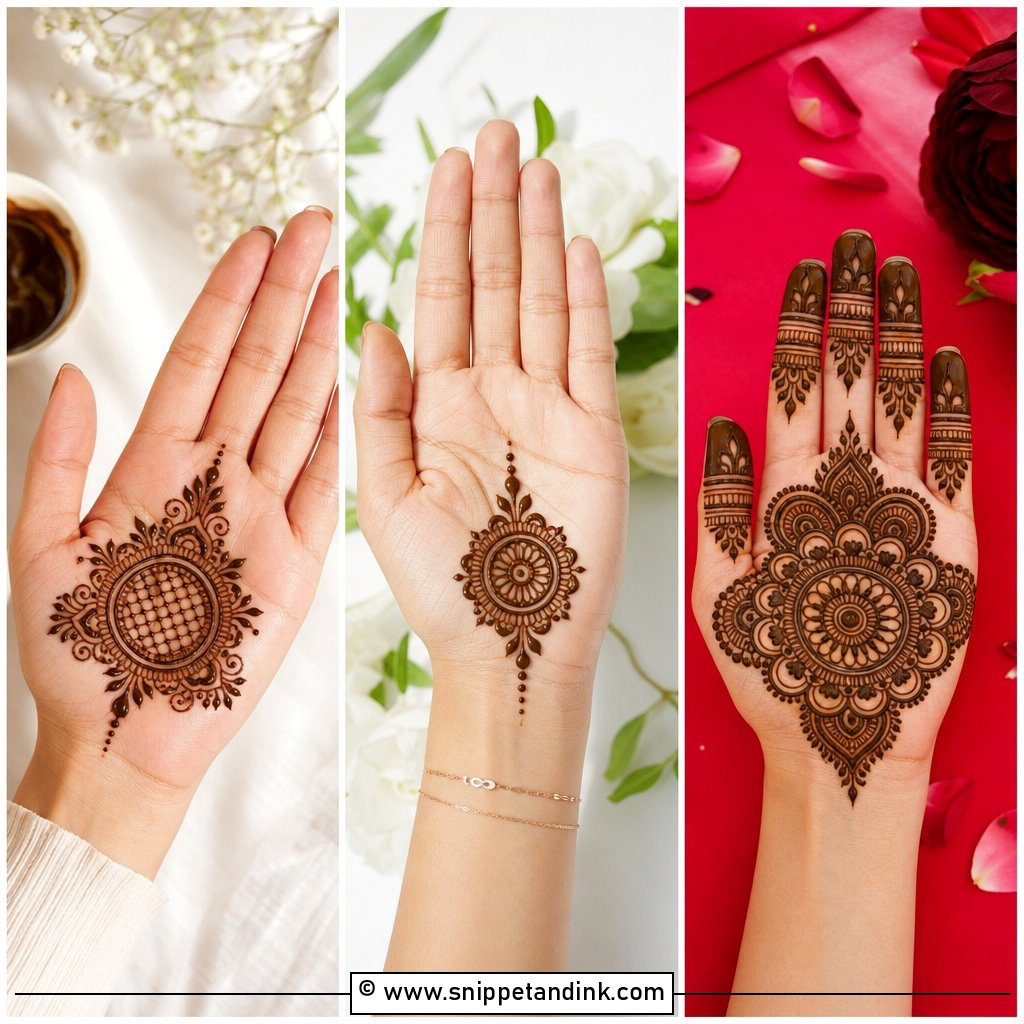
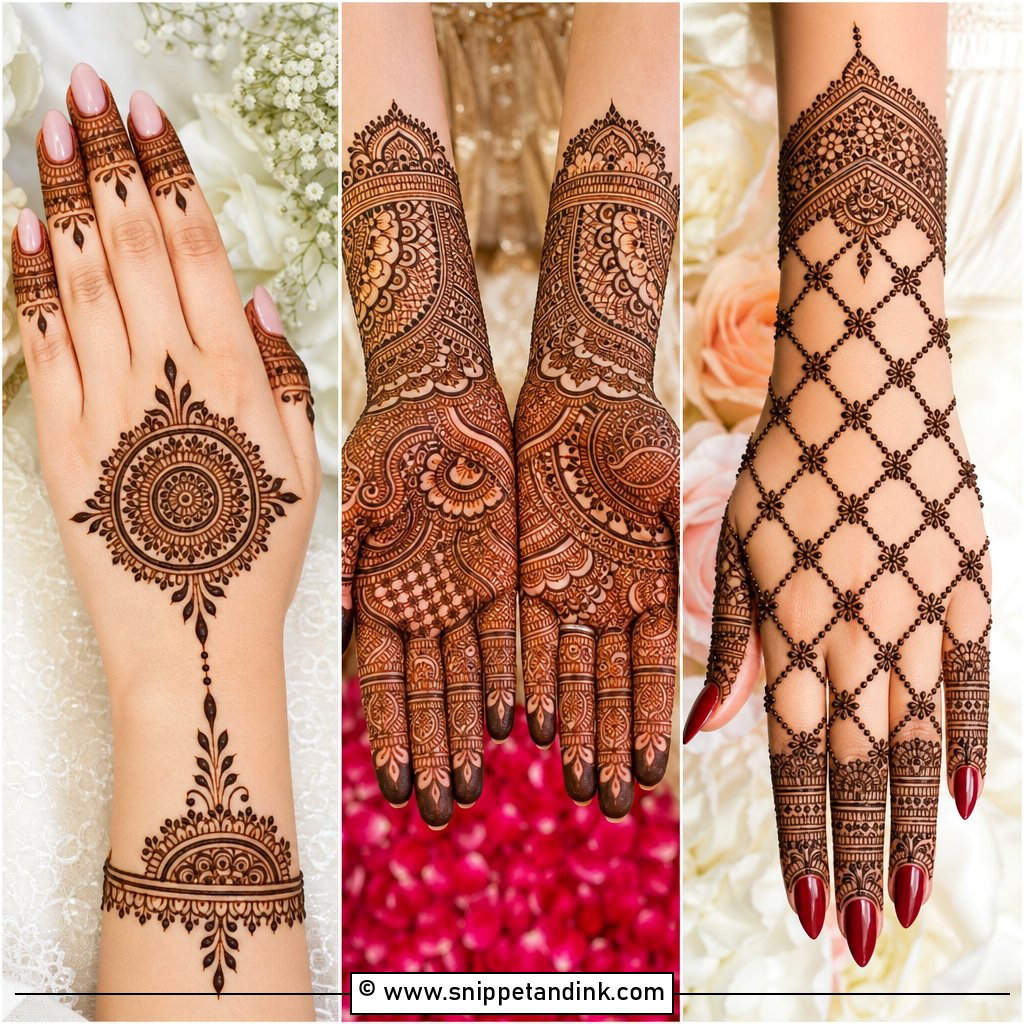
A mandala is the easiest design to resize, which is why it suits every hand. I draw a large circle on the back or palm, balance the fingers around it and match the wrist band. For a lighter look, the mandala stays bold with open space around it; for a richer look, I add lotus petals, dotted rings and jaali sections inside. I always build it from the centre outward, ring by ring, to keep it round.
13. Engagement Mehndi Design With Floral Trail
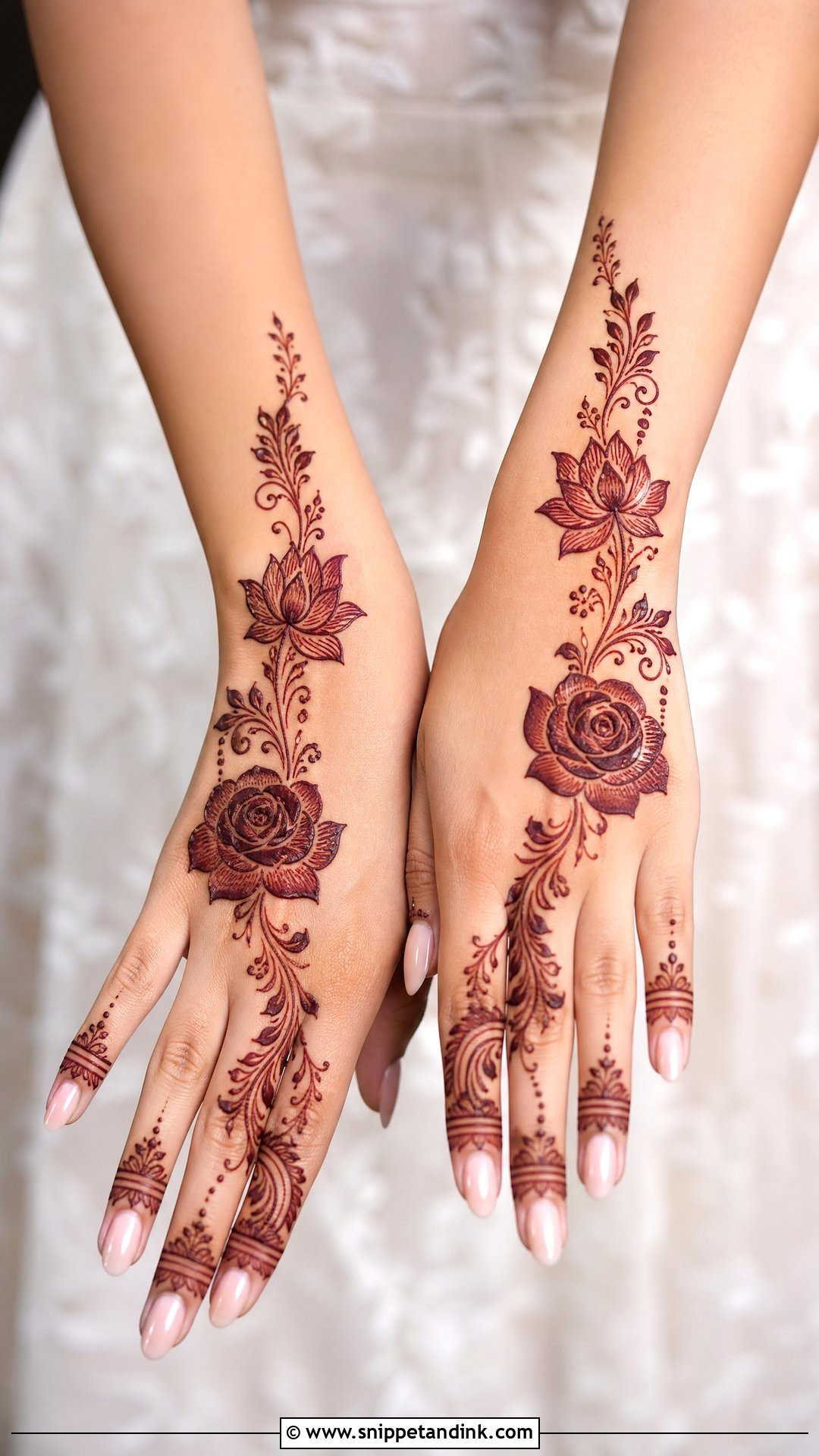
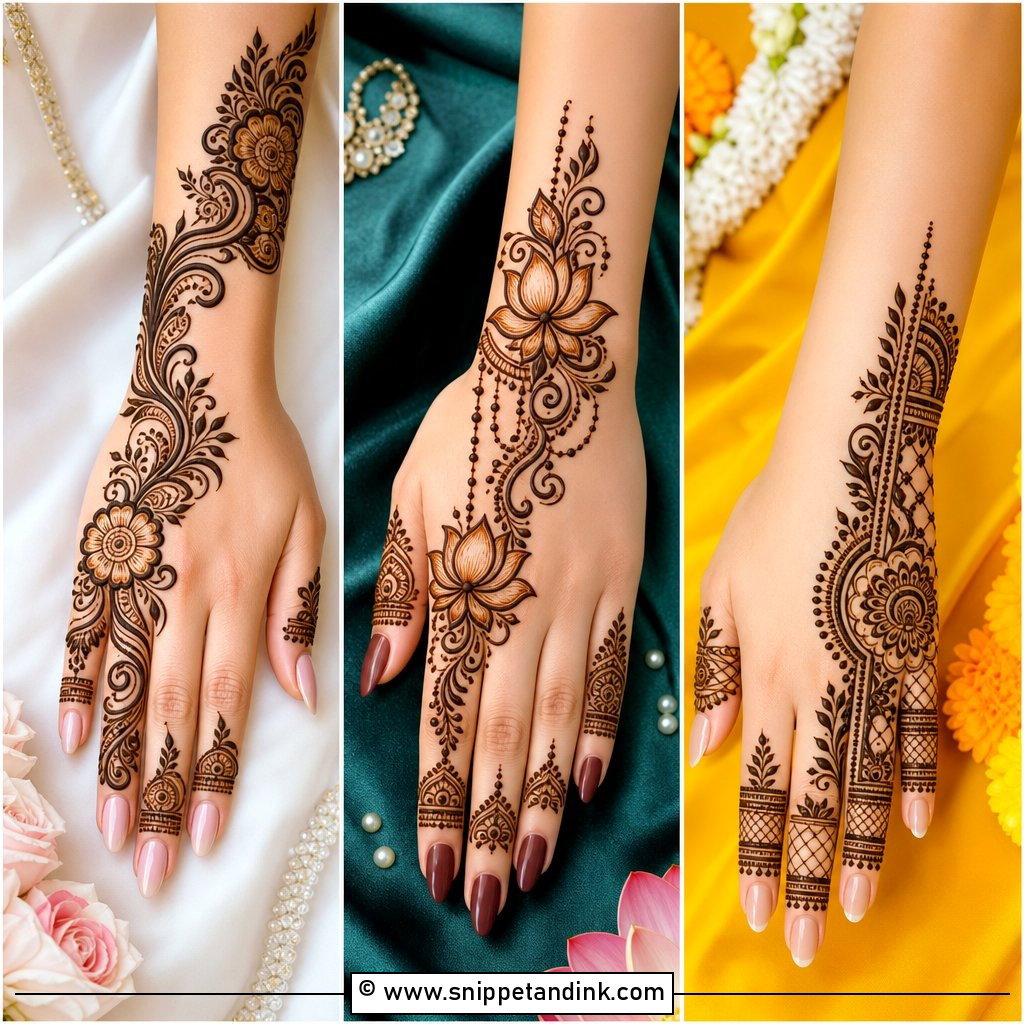
A floral trail flows from the wrist toward one finger in roses, lotus petals, leaves and stems. Because it runs diagonally, it lengthens the hand in photos. I keep the other side of the hand nearly bare so the movement is obvious. Pastel outfits and pearl jewelry suit it well. It’s a good pick if you want something pretty without fully traditional coverage.
14. Engagement Mehndi Design With Paisley
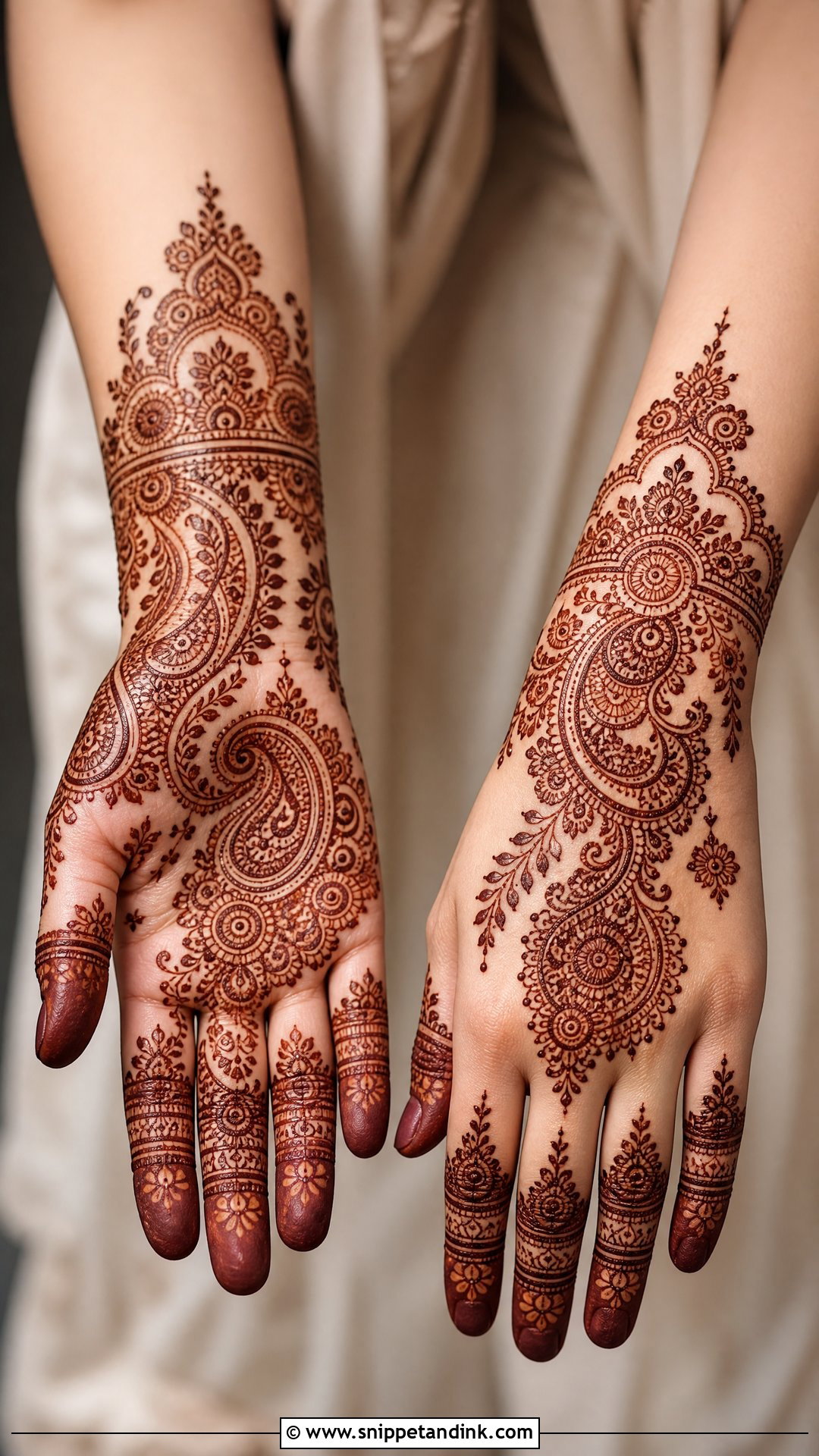
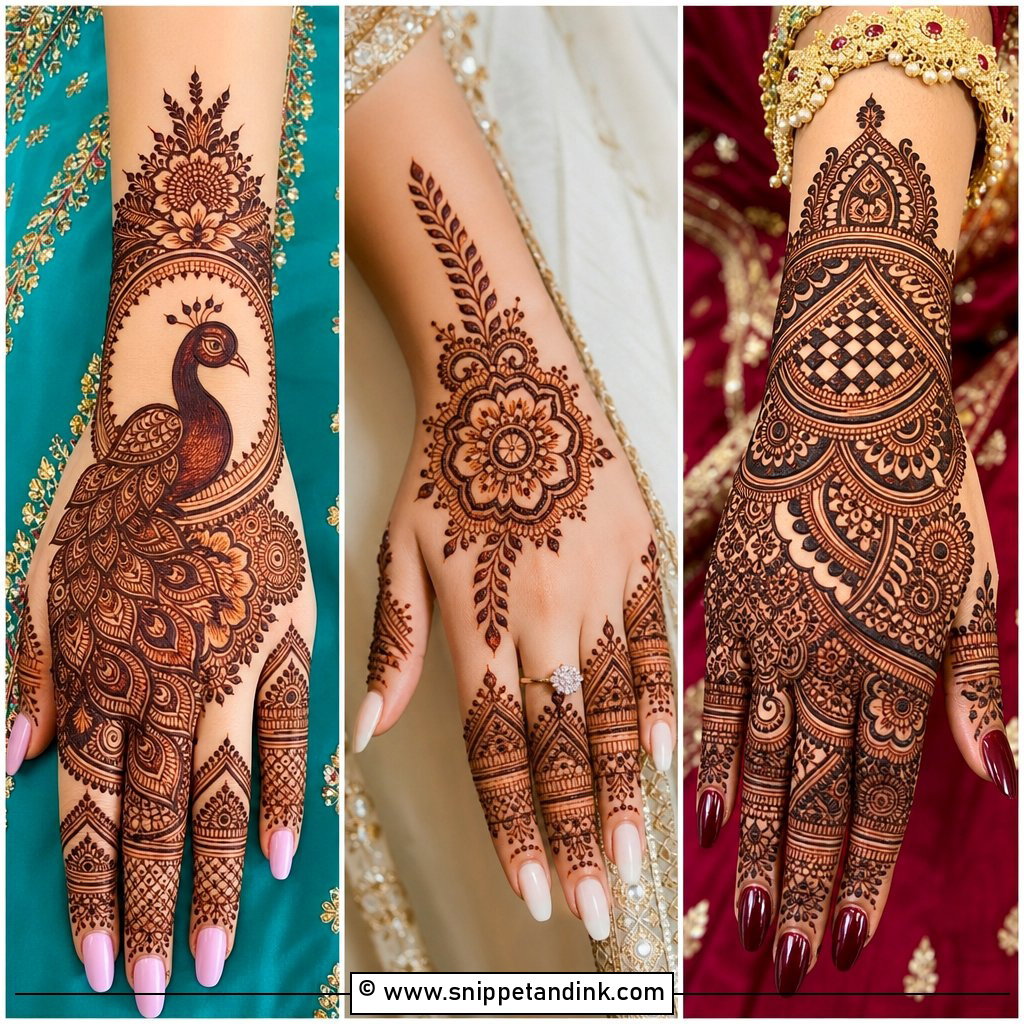
Paisleys are the motif I draw most, festive and graceful in equal measure. A paisley design can fill the palm or back with large mango shapes surrounded by tiny flowers, dots and mesh, then repeat smaller paisleys at the fingertips. A broad wrist cuff closes it. Paisleys can be packed or kept airy, so they work in Indian and Indo-Arabic designs alike.
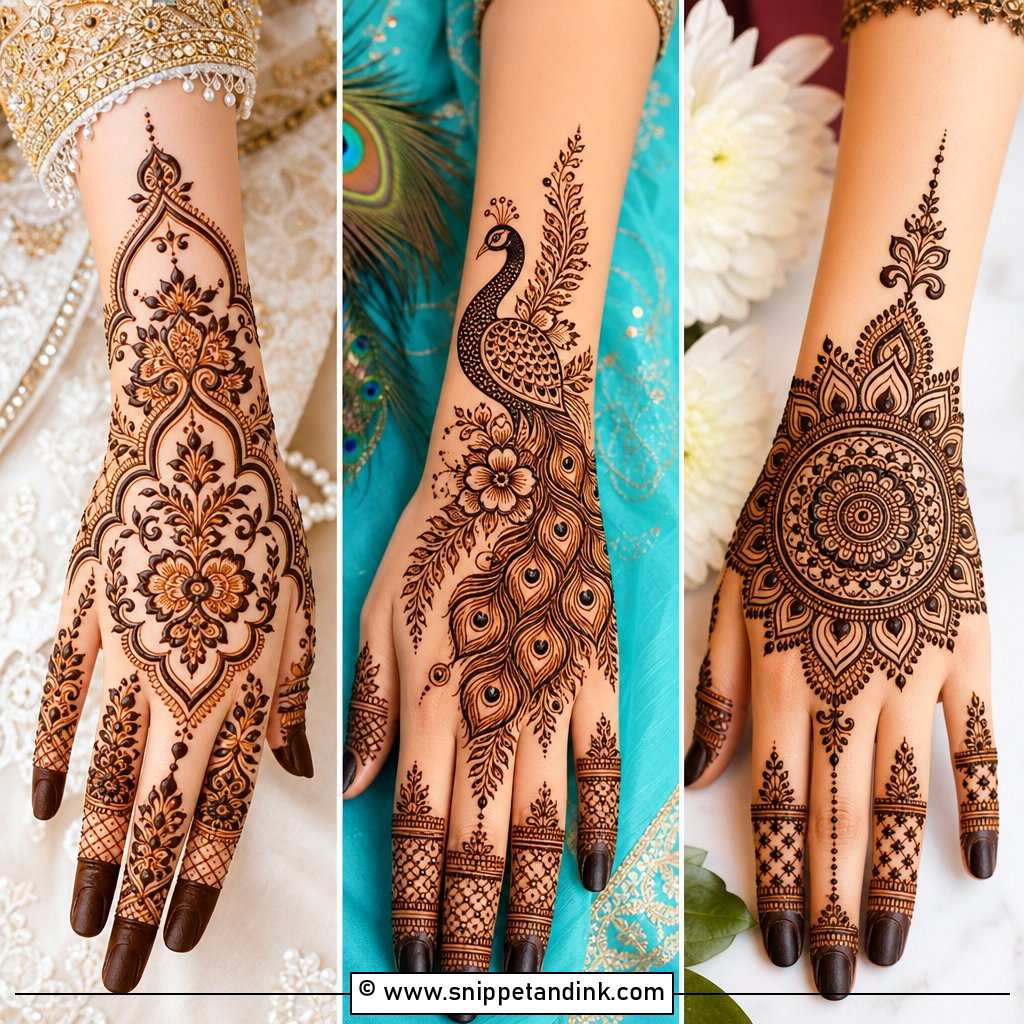
15. Engagement Mehndi Design With Peacock
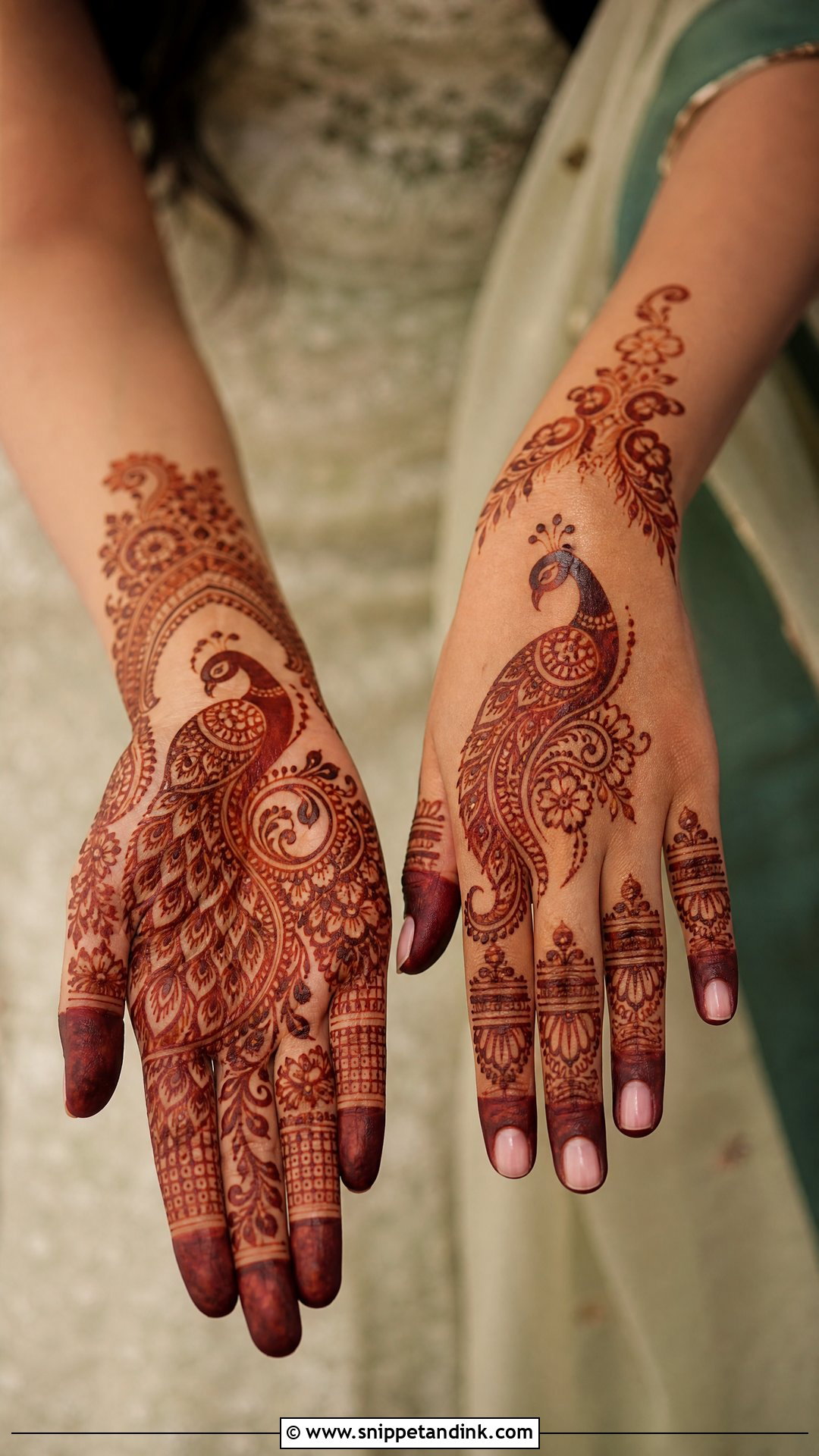
A single peacock gives the hand a strong centre. I place it on the palm or the back and let its feathers break into paisleys and florals. For an engagement, I keep the bird a moderate size; too large and it takes over. Fine finger work and a wrist border balance it. Jewel-toned outfits and kundan jewelry suit this design, and its silhouette stays readable even in distant photos.
16. Engagement Mehndi Design With Lotus
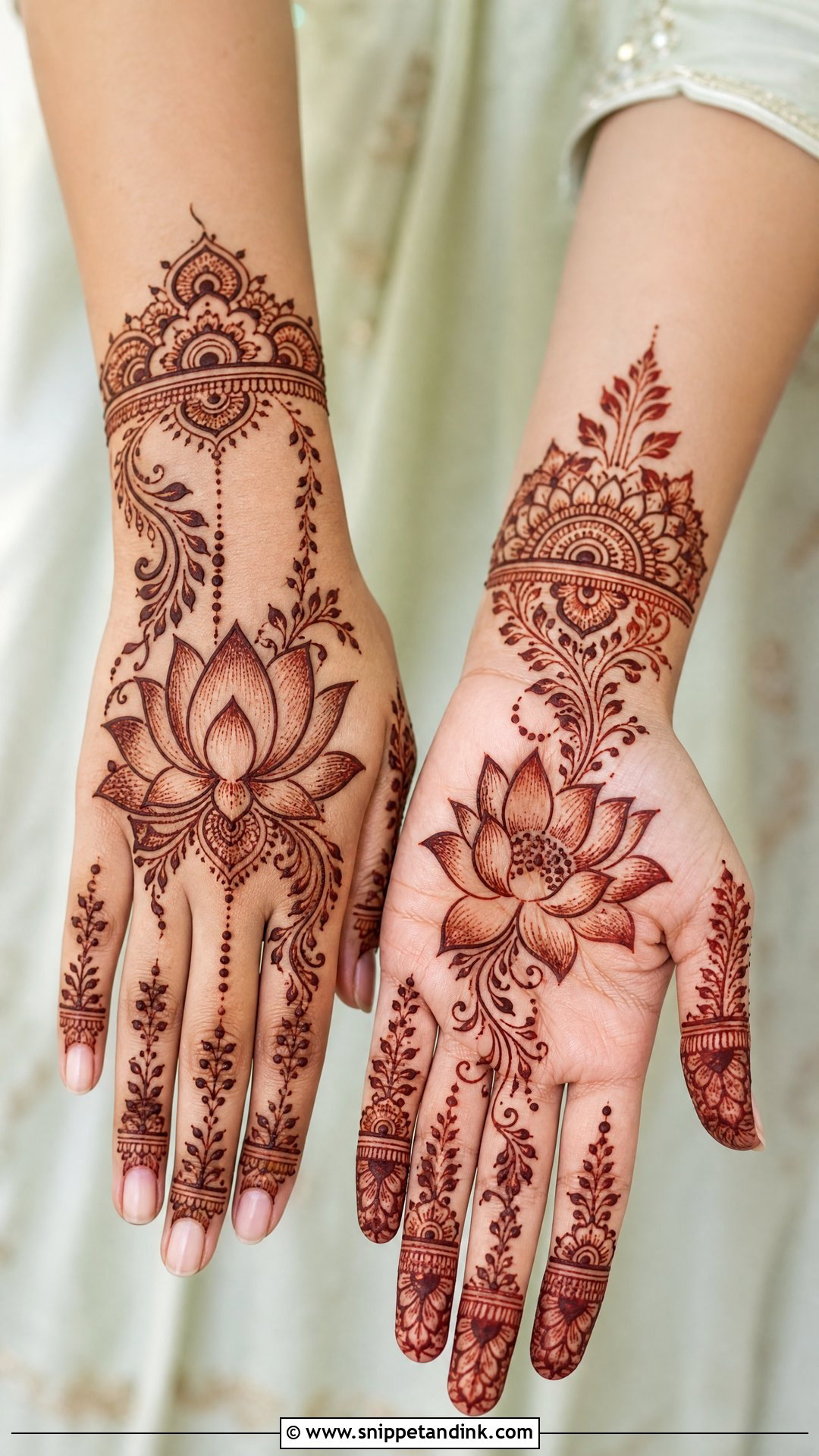
A lotus suits daytime ceremonies and pastel outfits. I draw a large bloom on the palm, wrist or back, then extend petals, vines and dots across the fingers. A modern version keeps one big lotus with clean space around it; a traditional one layers the petals and adds fine fillers. Lotus petals need crisp edges, so I draw each outline once and avoid going back over it, which thickens the line.
17. Engagement Mehndi Design With Jaali
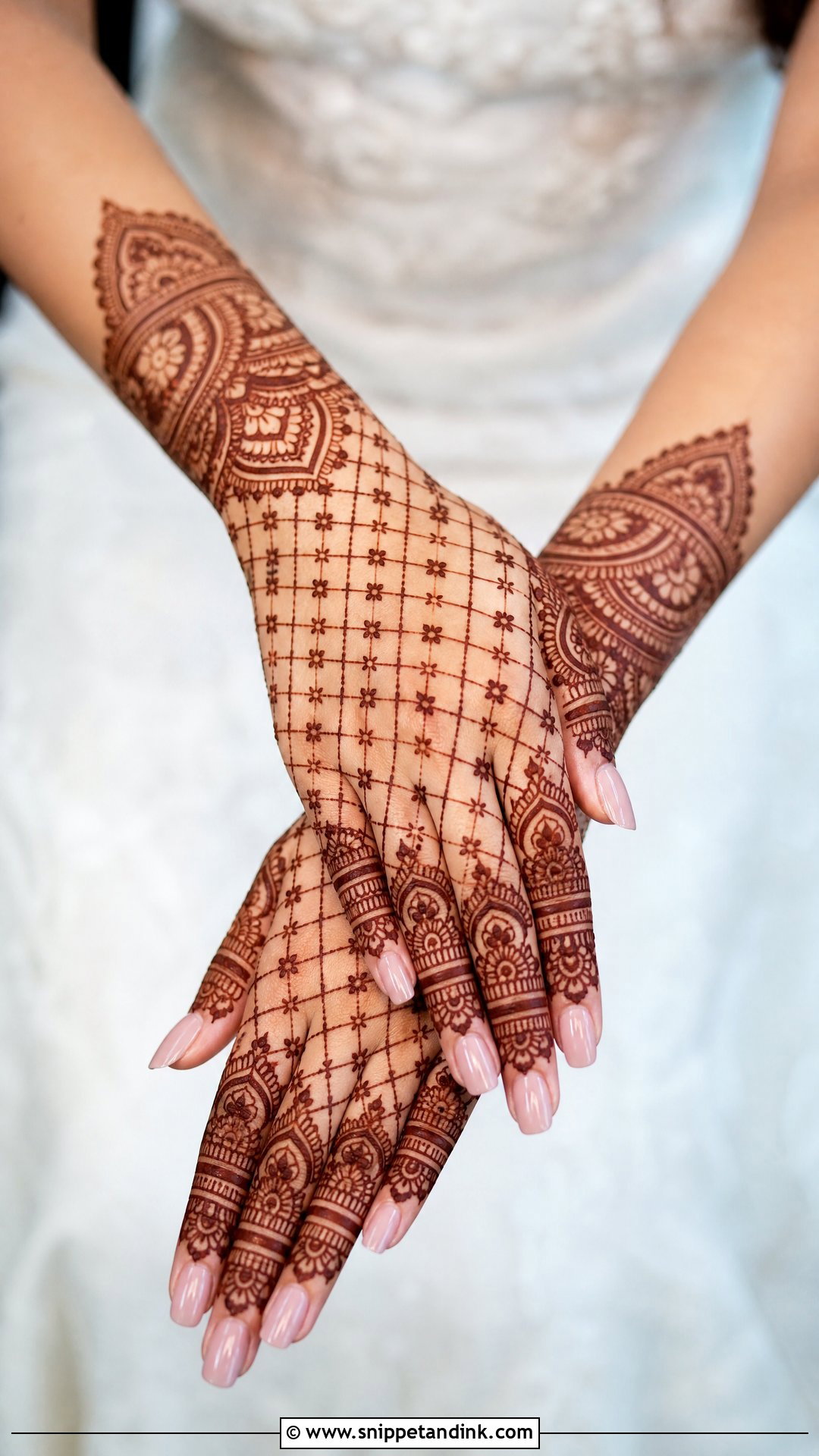
Jaali is a net pattern, and it only looks rich if the grid is even. For an engagement I use it on part of the back, palm or wrist and fill the rest with florals, paisleys and finger bands. I keep the grid lines fine and put small dots or flowers in selected squares. It gives intricate detail with a cleaner structure than fully filled work, and the geometric texture frames rings well.
18. Engagement Mehndi Design With Bracelet
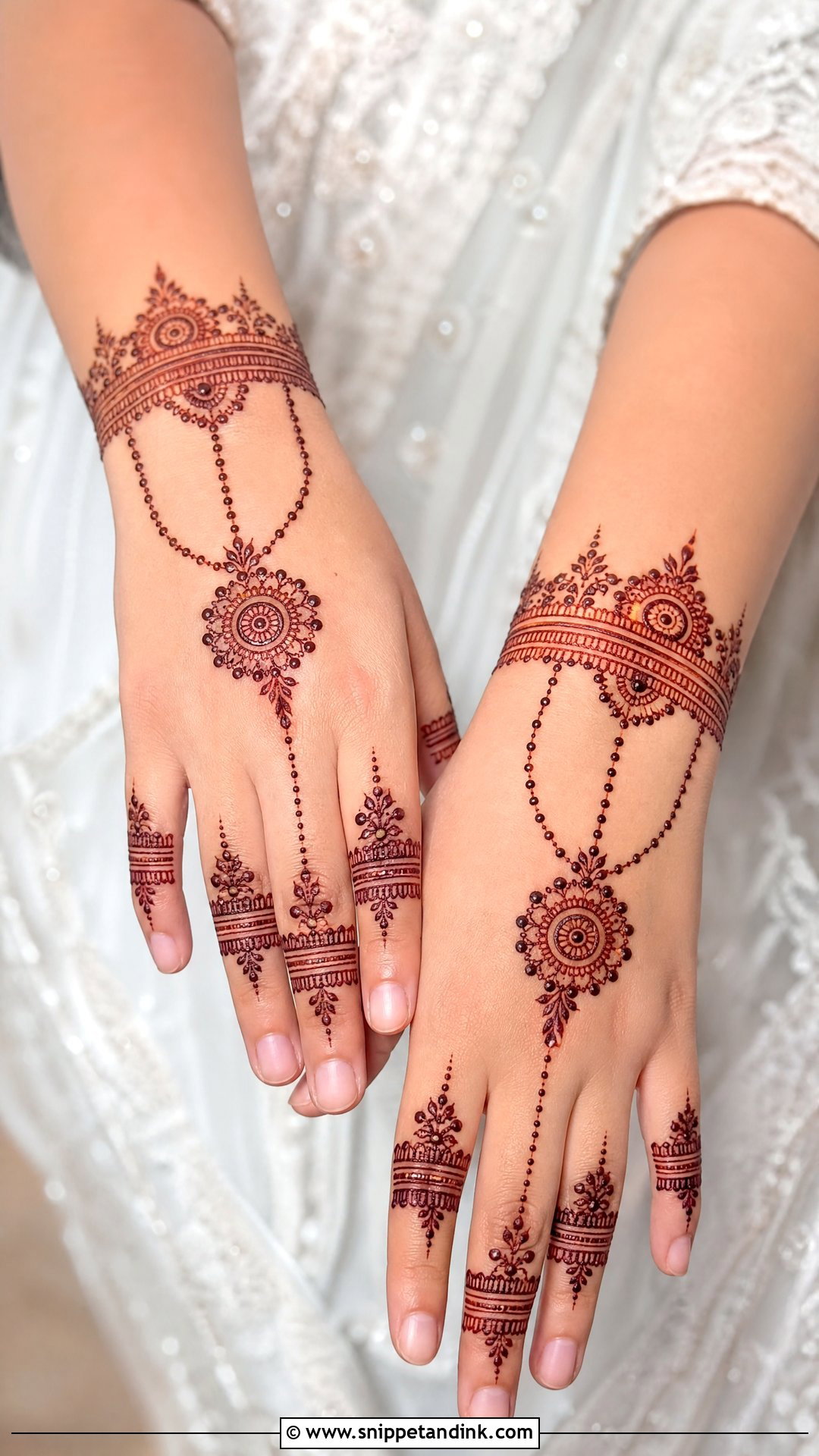
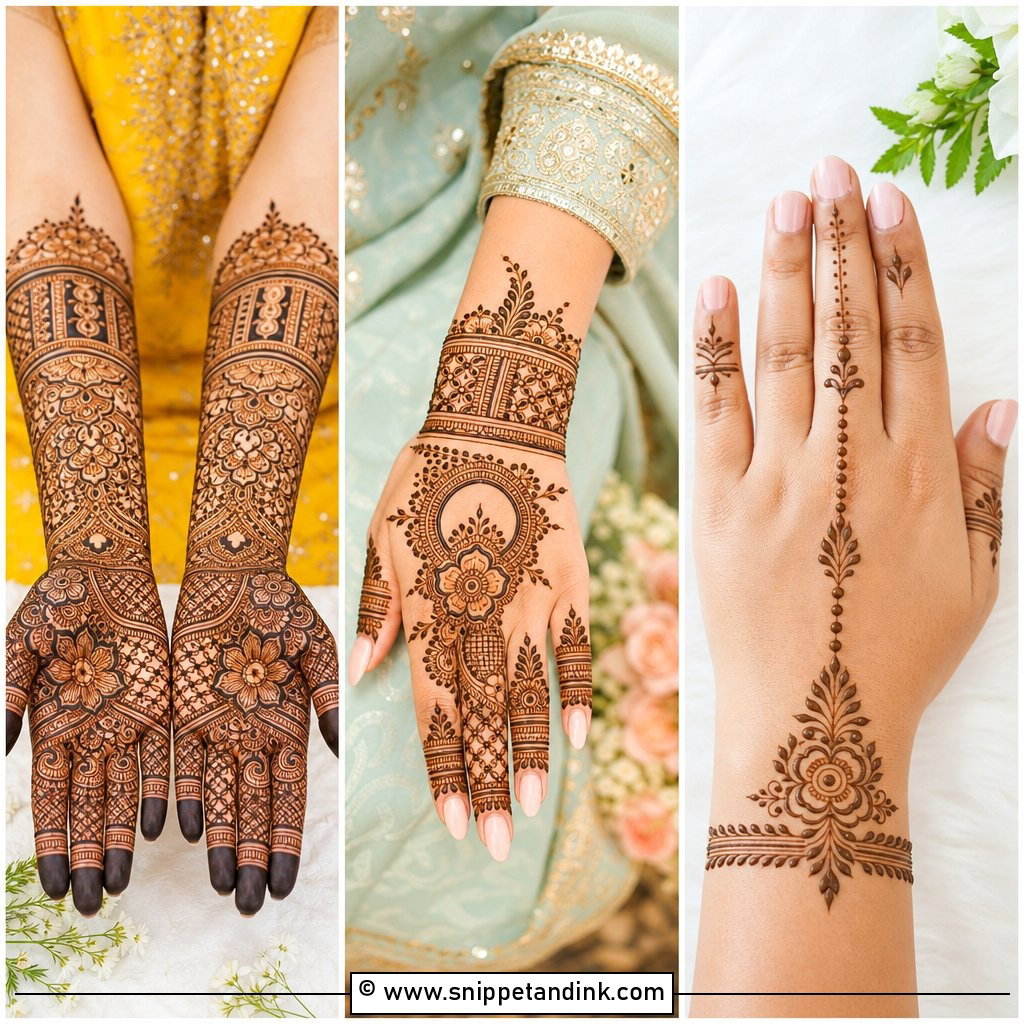
A bracelet design is henna drawn as jewelry: a wrist cuff, chain-like lines to the fingers and a small floral or mandala motif on the back. The cuff can be thin or broad depending on the outfit. Finger bands connect it all from wrist to fingertips. Bridesmaids often choose it, and it works for a bride who wants something complete but minimal.
19. Engagement Mehndi Design For Ring Finger
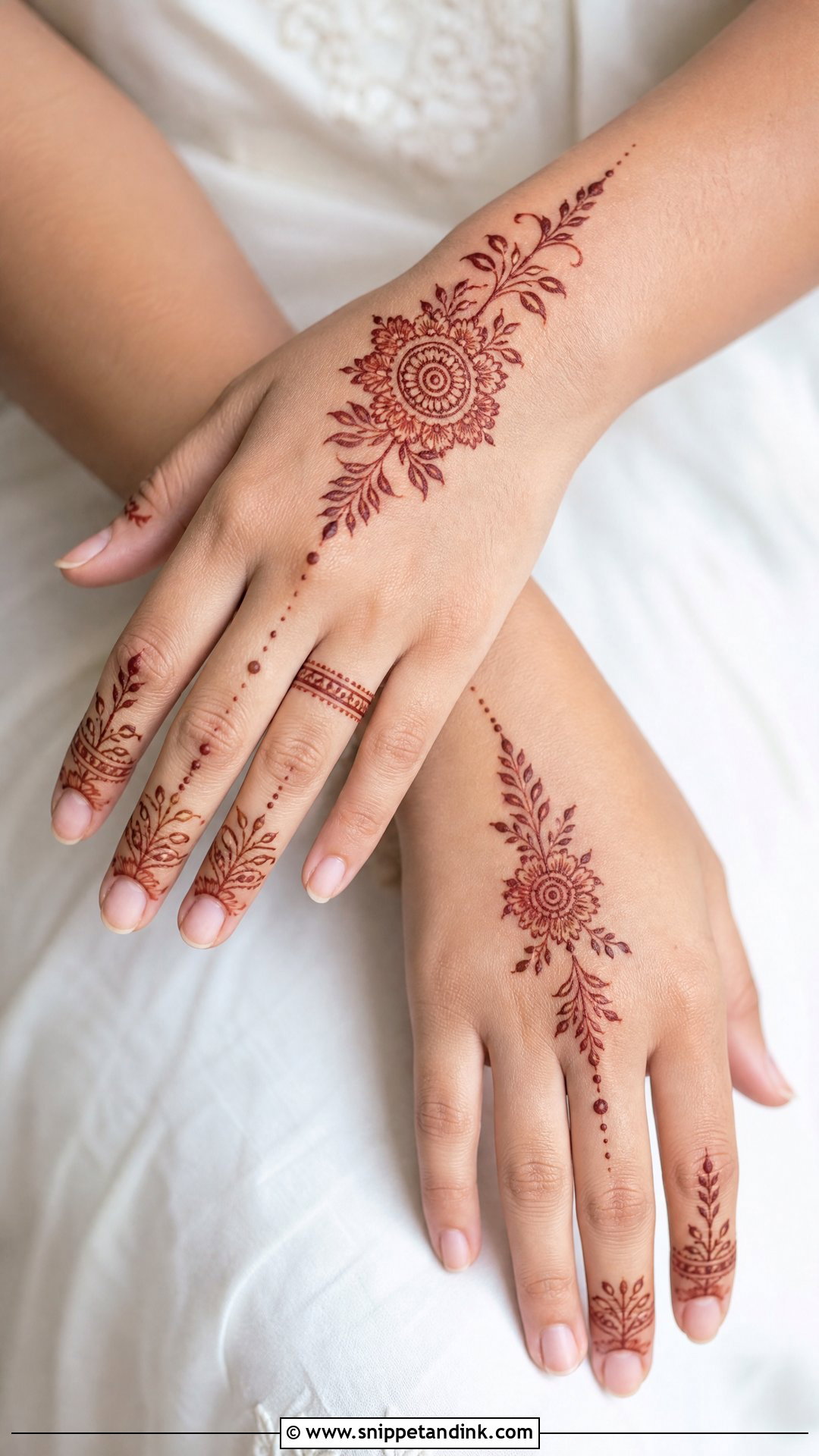
The ring finger design has one goal: frame the ring without hiding it. I put fine bands along the finger, a small flower or mandala on the back of the hand and delicate chains to the wrist, and leave the exact spot where the ring sits nearly clear. Henna under a ring tends to fade unevenly anyway, since the band rubs it. Dots and slim leaves frame the finger instead of filling it.
20. Engagement Mehndi Design For Short Fingers
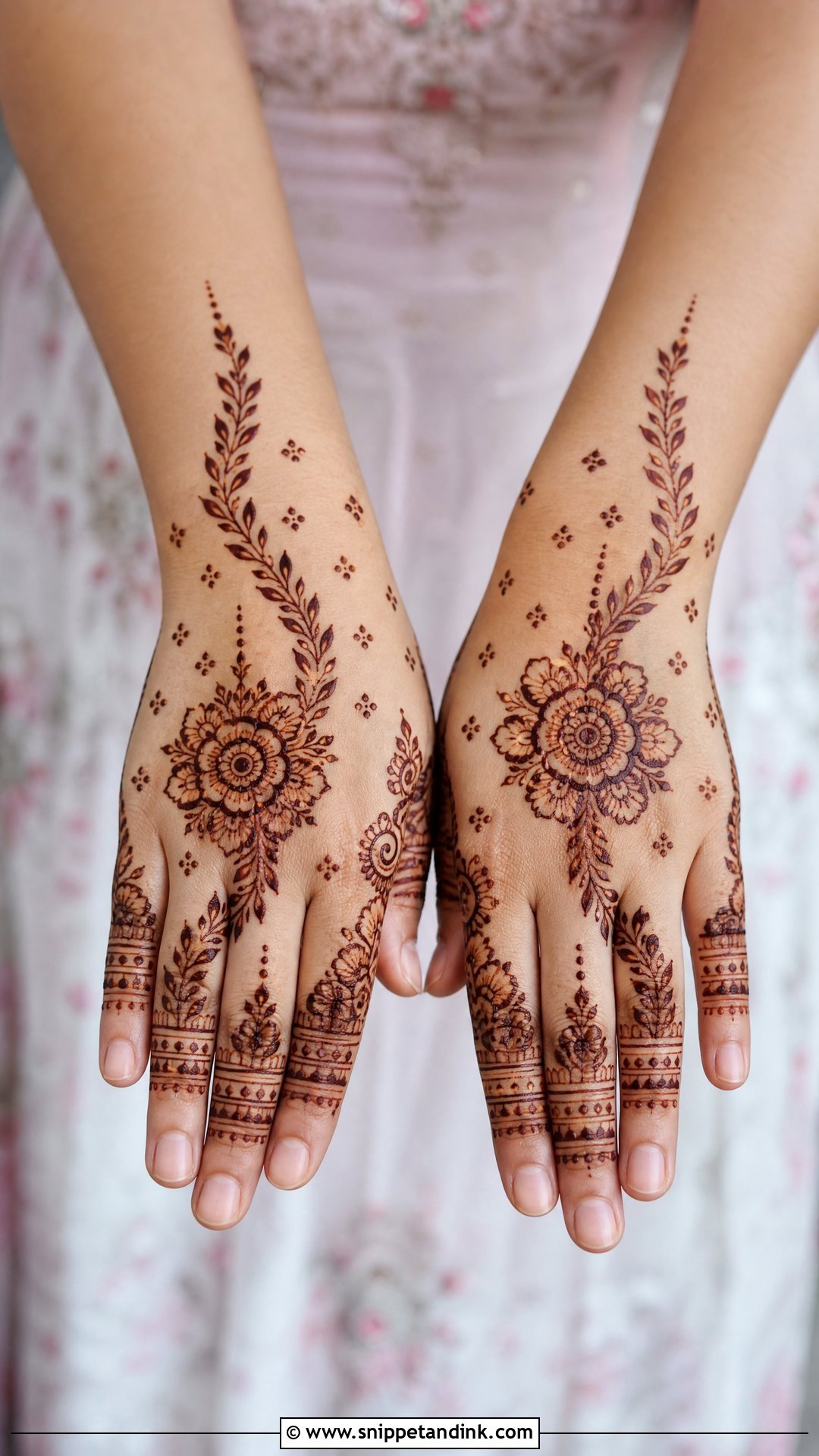
Short fingers look longer with vertical lines, narrow leafy trails and slim bands at the tips. I avoid thick solid blocks on the fingers, which shorten them visually. A diagonal Arabic trail across the back helps elongate the whole hand. Keep the finger work detailed but airy, then finish with a neat wrist cuff.
21. Engagement Mehndi Design For Long Fingers
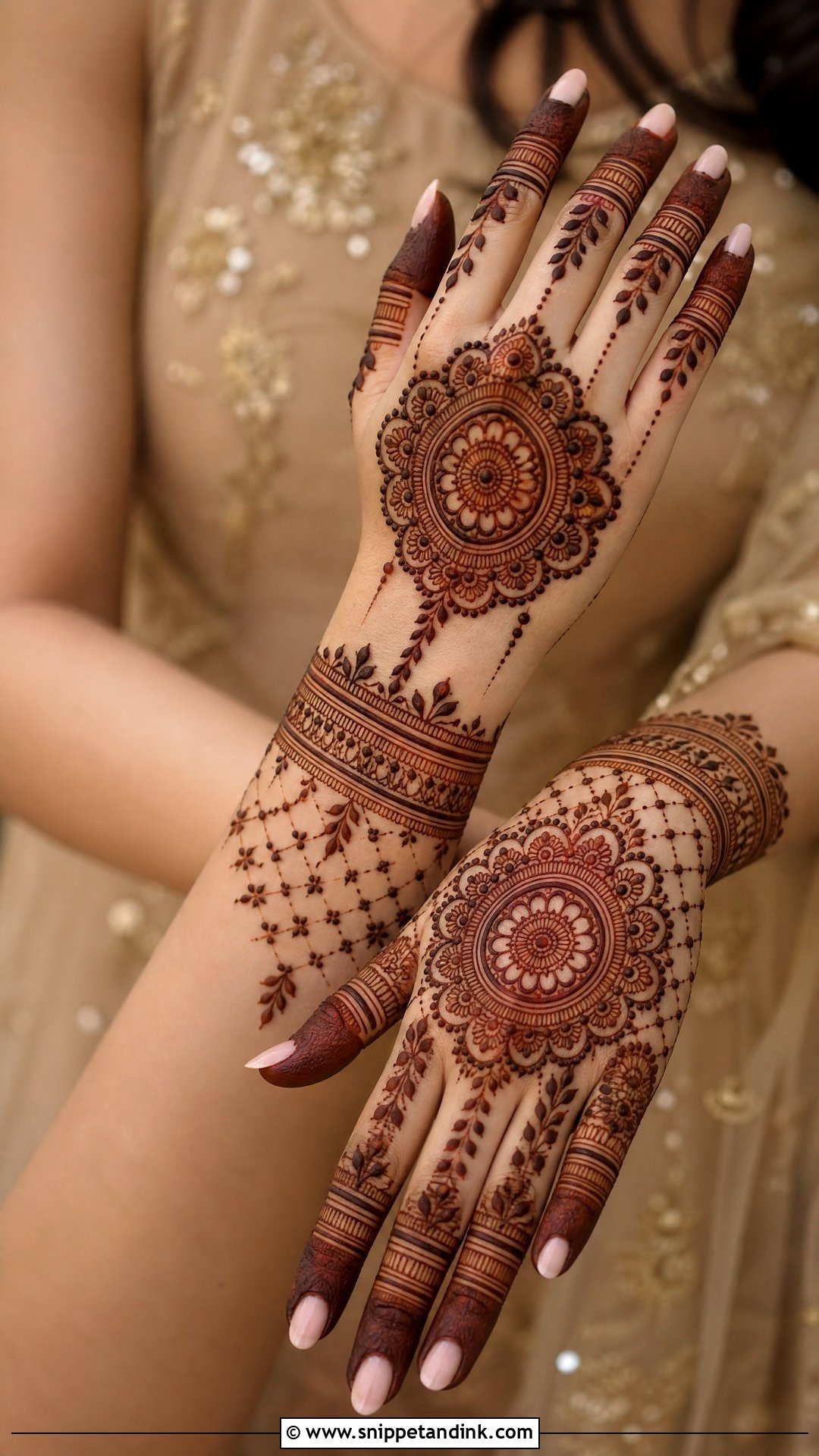
Long fingers give me room to play. I can use stacked finger bands, leafy vines and filled fingertips, alternating dots, jaali and small florals along each finger. The risk is fingers that look busier than the rest of the hand, so I make the central motif bold enough to hold its own. In ring photos, detailed long fingers frame the jewelry very well.
22. Indo Arabic Engagement Mehndi Design
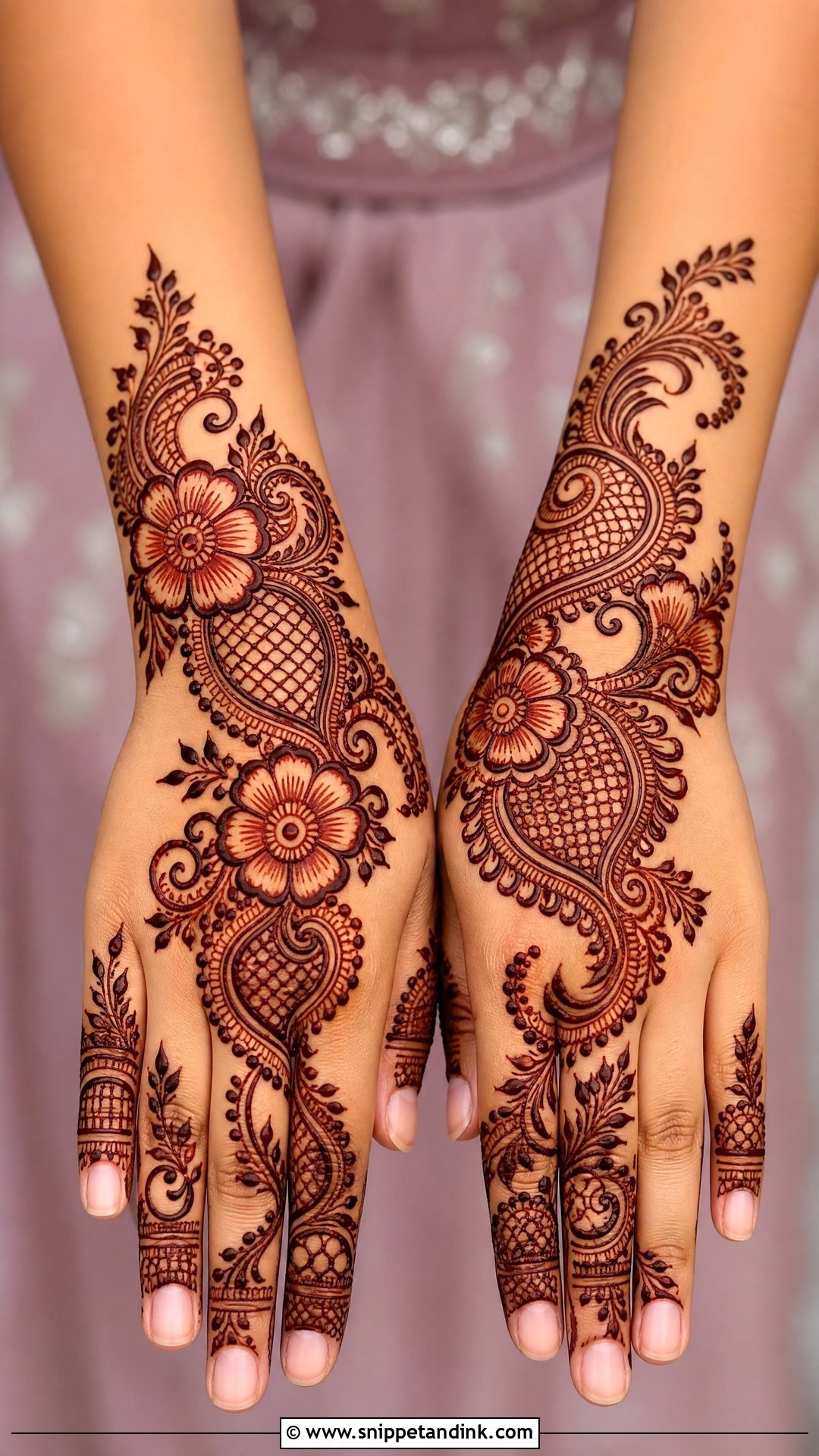
Indo-Arabic combines bold diagonal flowers and vines with Indian detail inside: paisleys, jaali, dots and fine fillers. It’s the style I suggest when a bride can’t decide between Arabic and Indian. The back can stay open and modern while the palm carries more detail. It suits almost every outfit.
23. Minimal Engagement Mehndi Design
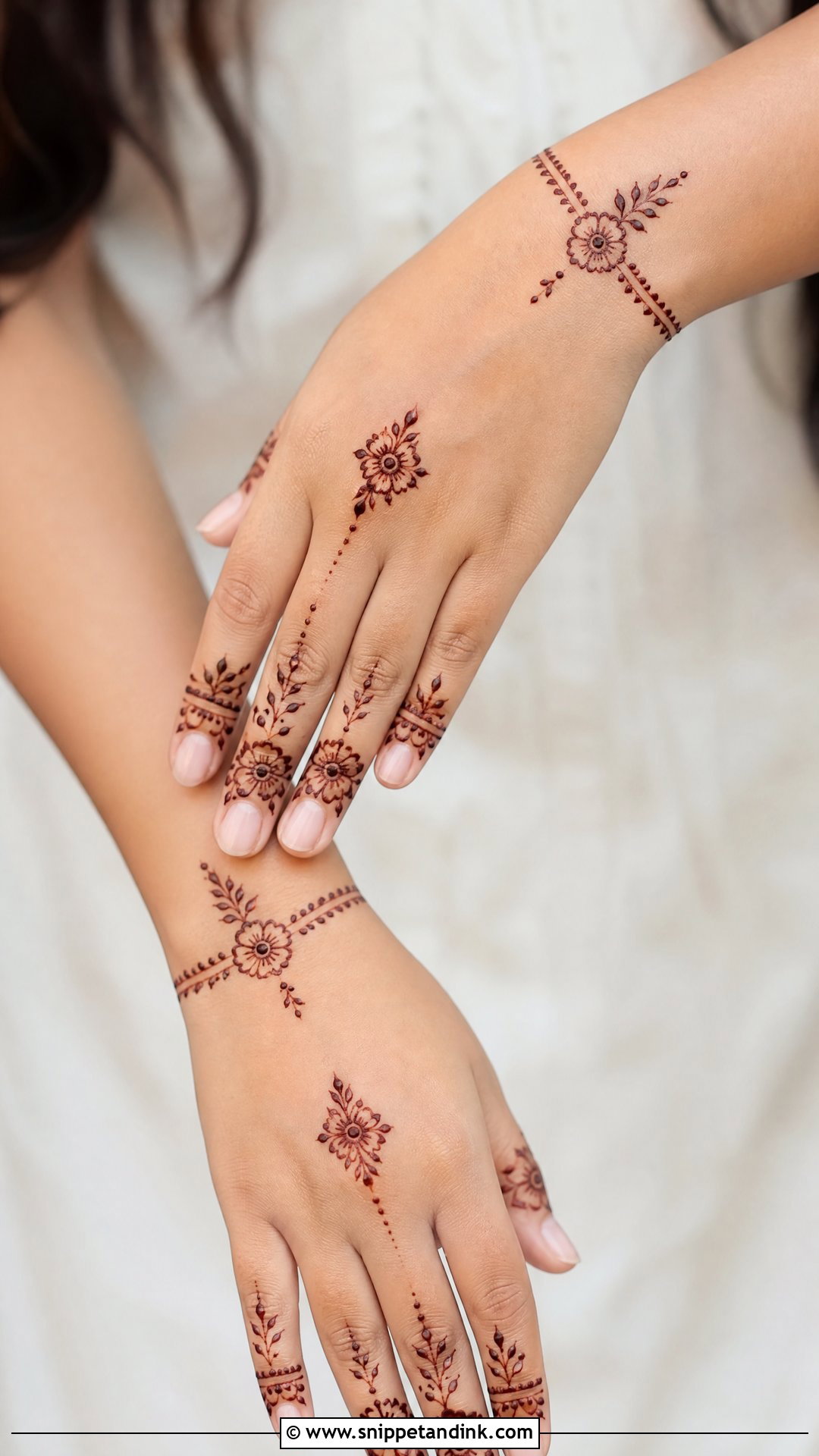
Minimal henna leaves the ring, nails and jewelry in charge. I draw tiny finger details, a small flower on the back, a slim bracelet band and lots of bare skin. It suits office-friendly celebrations, small home engagements and anyone new to henna. A small initial, date or ring motif keeps it from feeling plain. Minimal never looks unfinished when the spacing is planned and the lines are crisp.
24. Heavy Engagement Mehndi Design
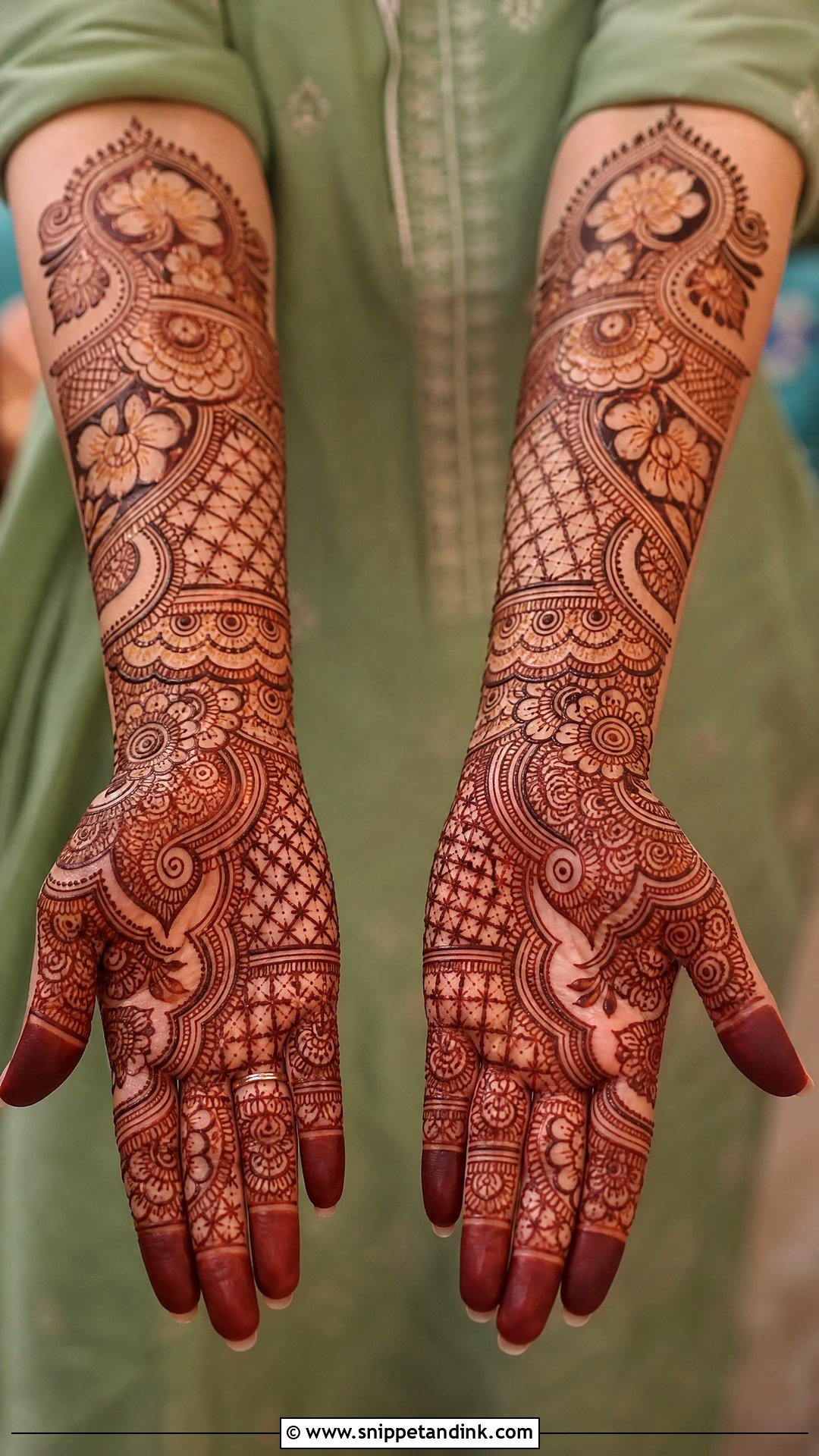
Heavy henna covers palms, backs, fingers, wrists and part of the forearms with dense paisleys, florals, jaali, mandalas and layered borders. To keep it distinct from the wedding set, I hold back on storytelling elements and stick to decorative patterns. Expect three hours or more in the chair and a long drying time after. Large functions and elaborate outfits suit it, and so does a bride who loves a deep stain.
25. Engagement Mehndi Design For Palm
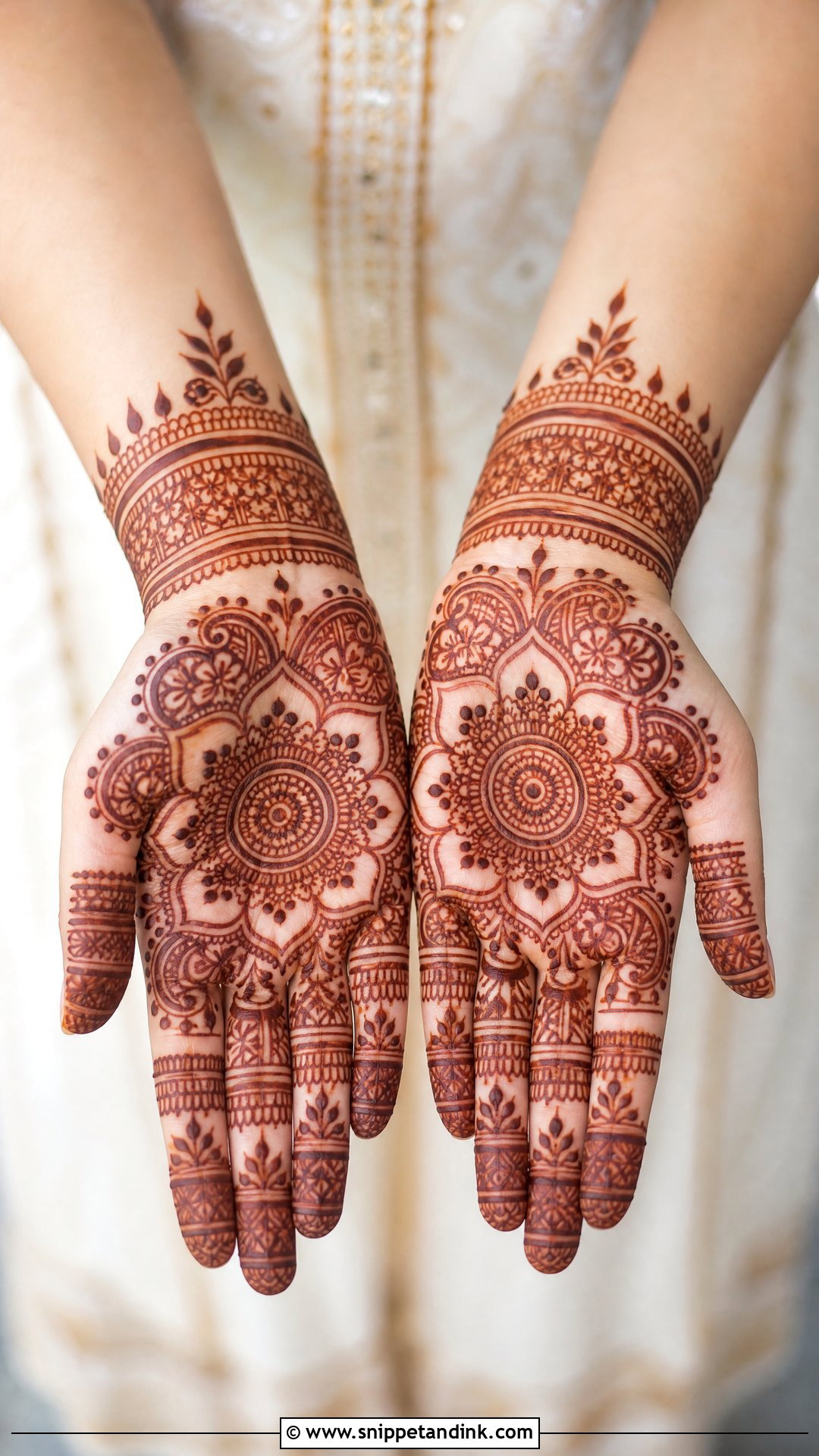
Palms are visible during rituals and blessings, and they stain darker than any other part of the hand. A central mandala, lotus, paisley cluster or ring motif works well, with detailed fingers and a wrist border. I fill around the centre with dots, leaves and curved fillers so there are no empty patches, but keep the main motif clear. If your family’s ceremonies involve a lot of open-palm moments, prioritize this over the back of the hand.
26. Engagement Mehndi Design For Both Hands
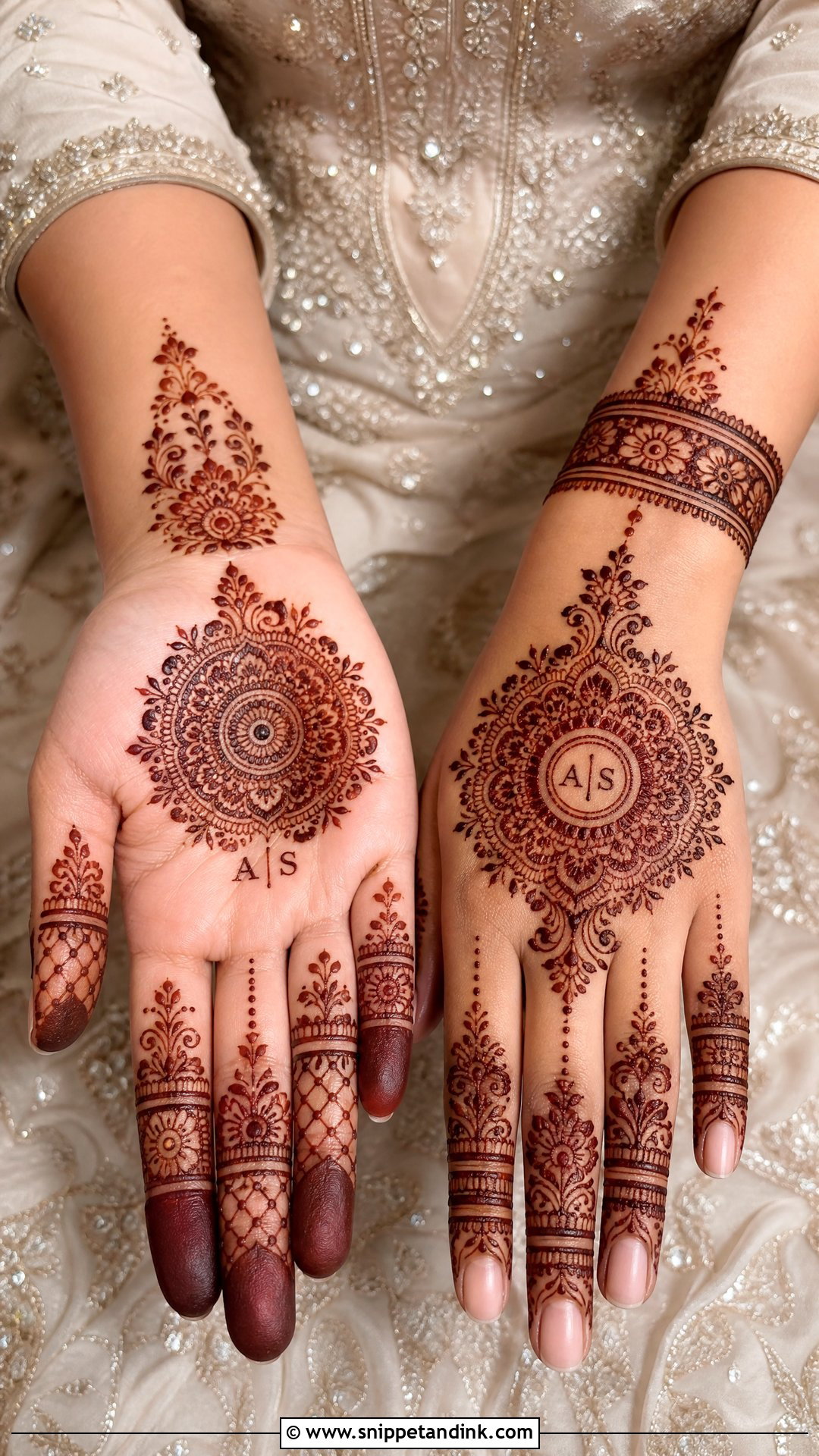
Both-hand engagement mehndi should look coordinated, not copied. I like mirrored floral trails or matching mandalas, with one hand holding the ring motif and the other the initials or date. A traditional pair has dense palms and structured backs; a modern pair shares bracelet cuffs and airy fingers. I always check both hands side by side halfway through so the spacing matches.
27. Engagement Mehndi Design For Bride
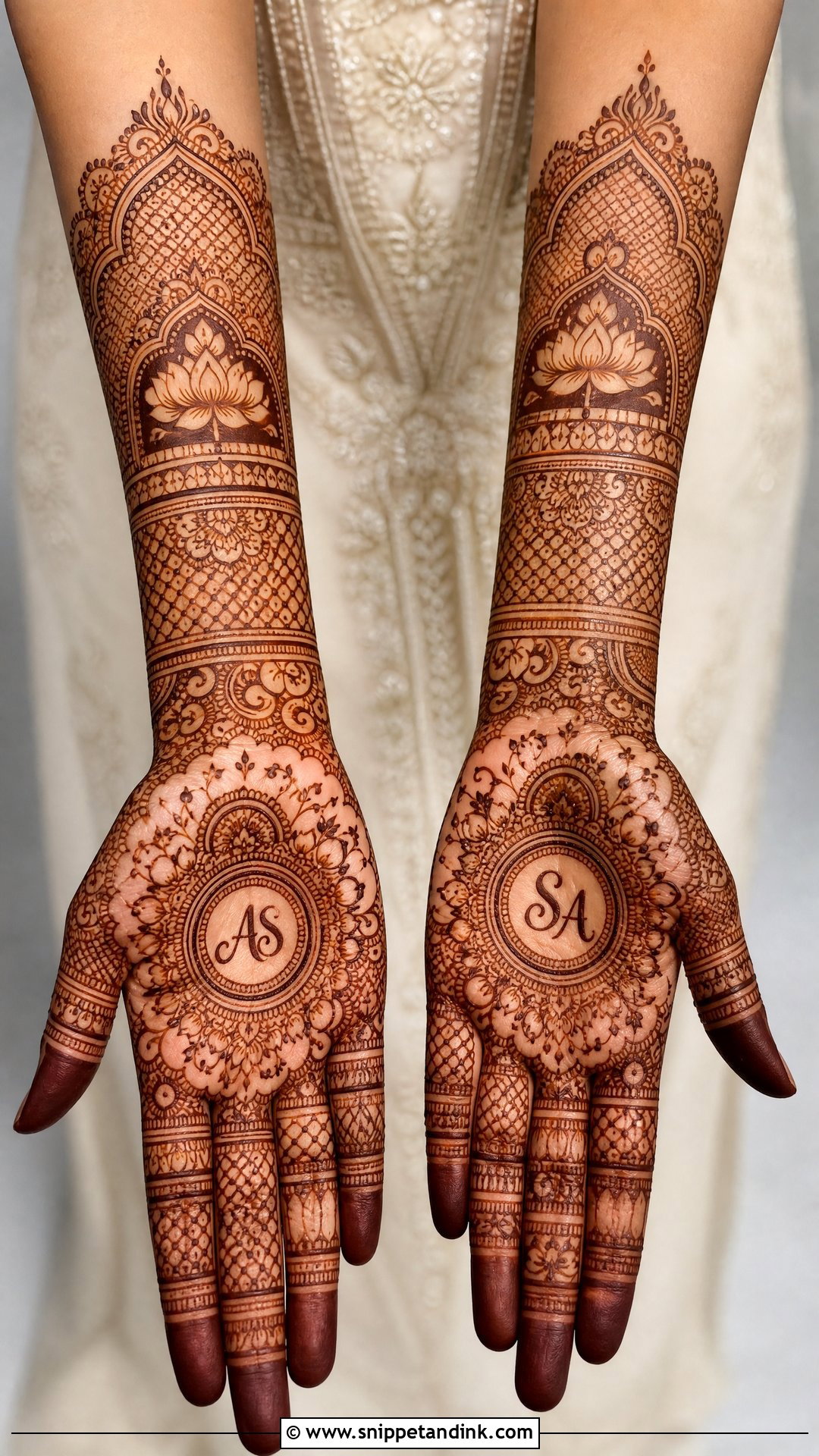
The bride’s henna should feel more special than any guest’s. I give her decorated palms, elegant backs, detailed fingers and short forearm extensions, plus one personal element such as initials, a ring symbol or a date. Traditional motifs fill the rest. The ring hand gets extra attention, with the ring area left visible.
28. Engagement Mehndi Design For Roka
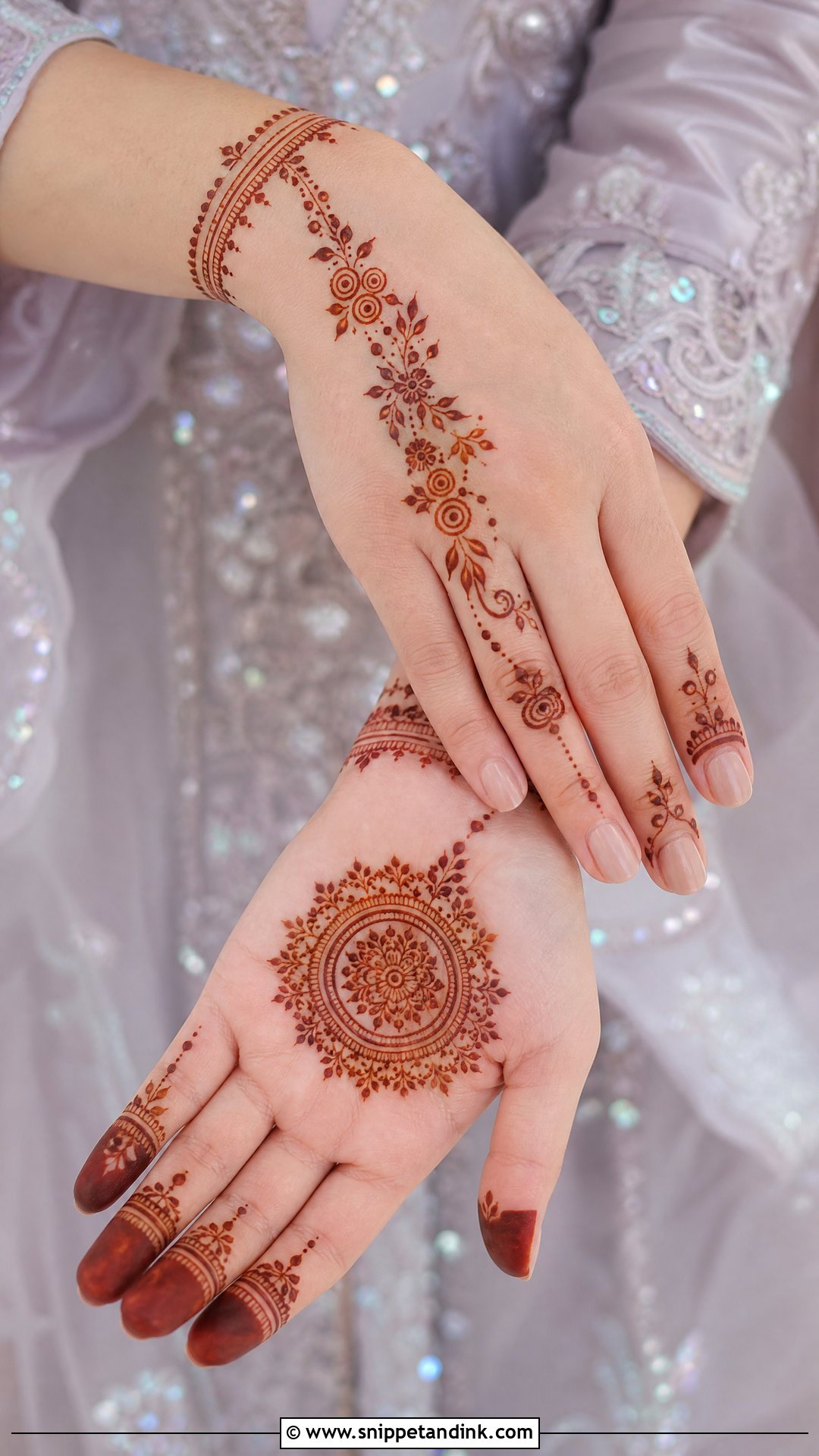
Roka henna is usually lighter than wedding henna but still festive enough for family photos. I draw a simple floral trail on the back, a light palm mandala, decorated fingers and a thin wrist band, sometimes with a tiny ring shape. It should look neat, never rushed, even at a small home function. Sisters and close family can wear matching versions.
29. Engagement Mehndi Design For Reception Look
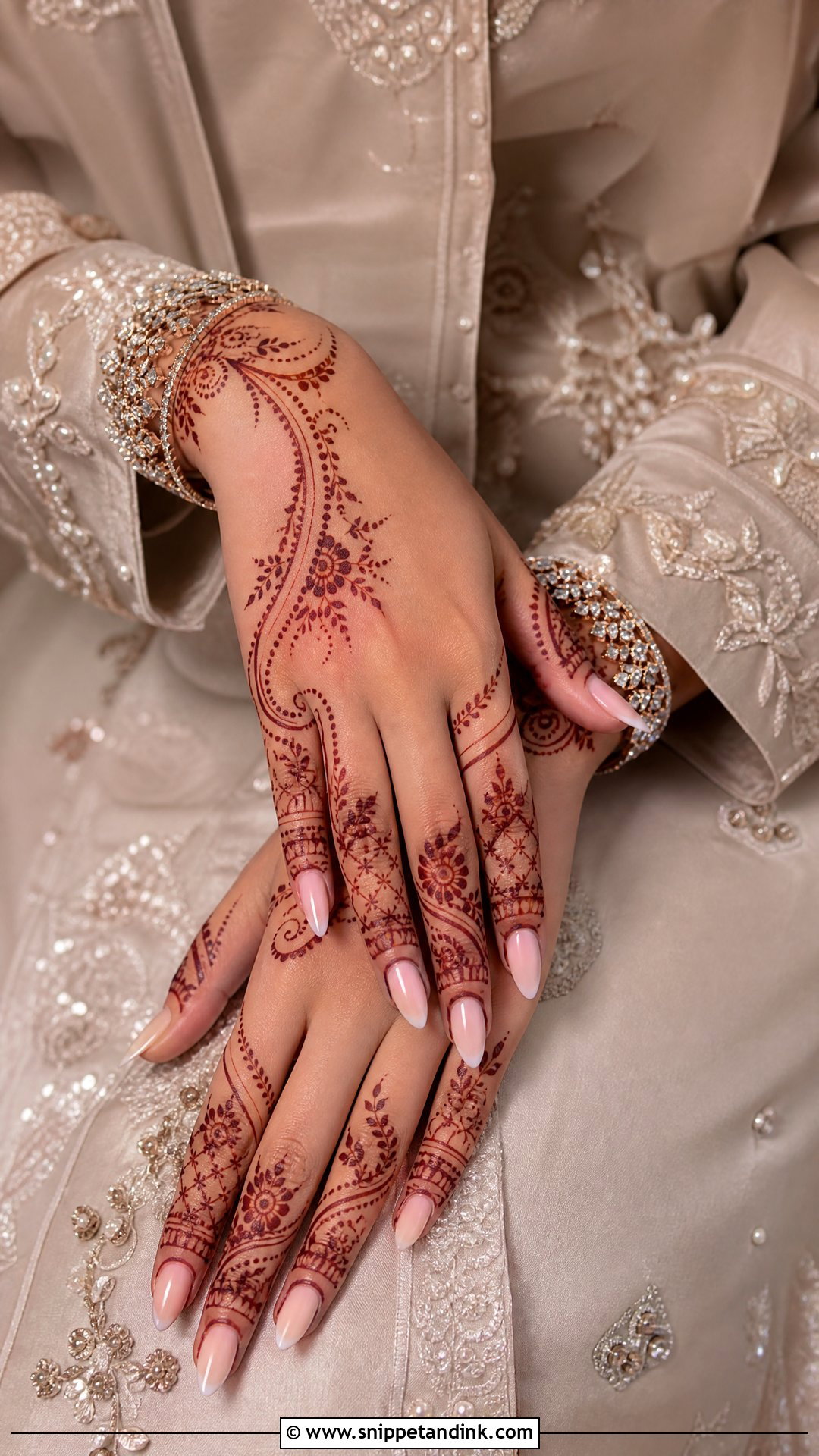
A reception-style engagement calls for sleek henna: a modern back-hand layout, bracelet cuffs, finger jewelry patterns and open space. If the outfit is western or heavily embellished, I keep the palm lighter. For a more traditional reception, Indo-Arabic florals and fine jaali work well. Bright stage lighting shows every line, so clean spacing matters more than density here.
30. Engagement Mehndi Design For Feet
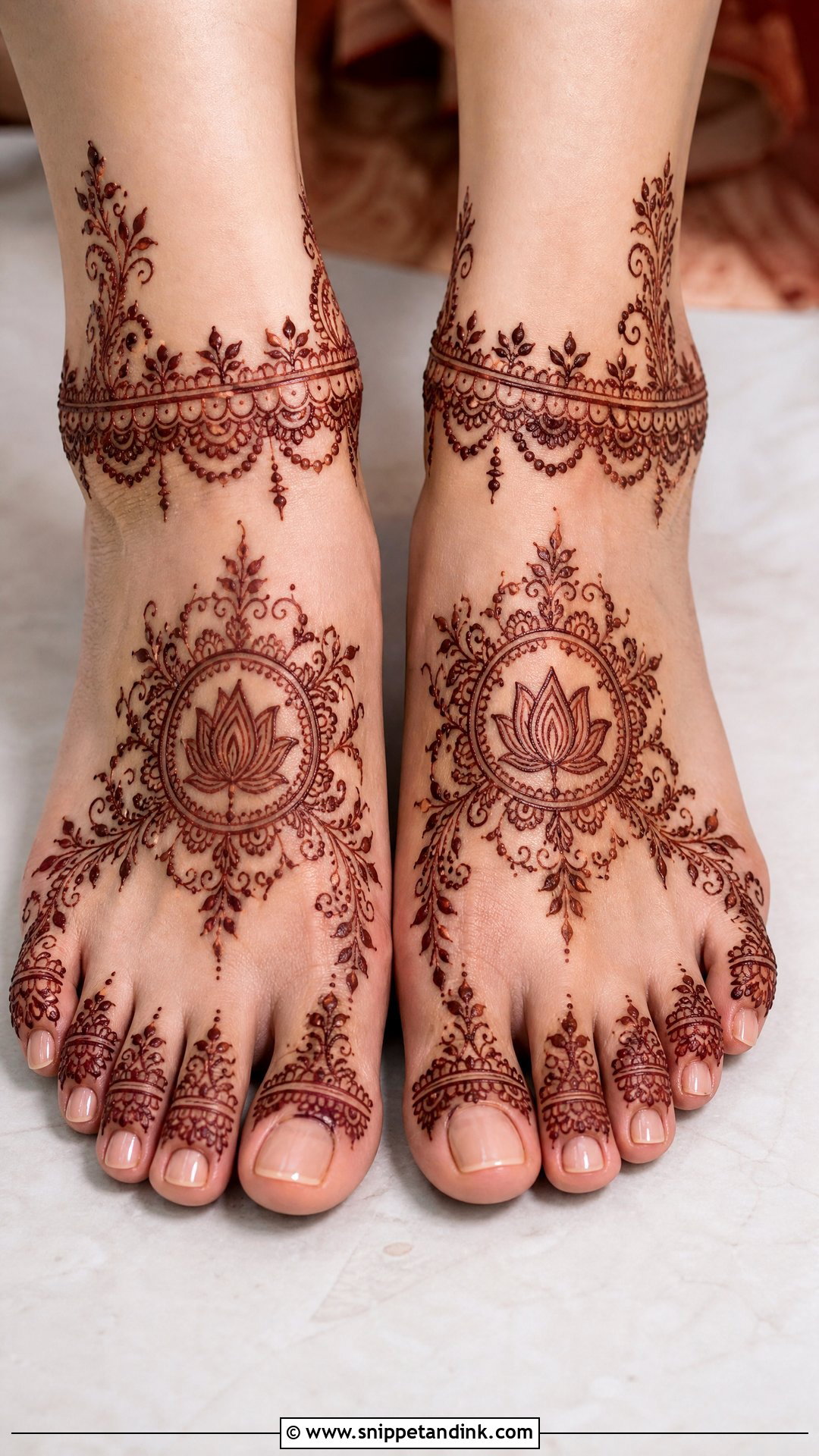
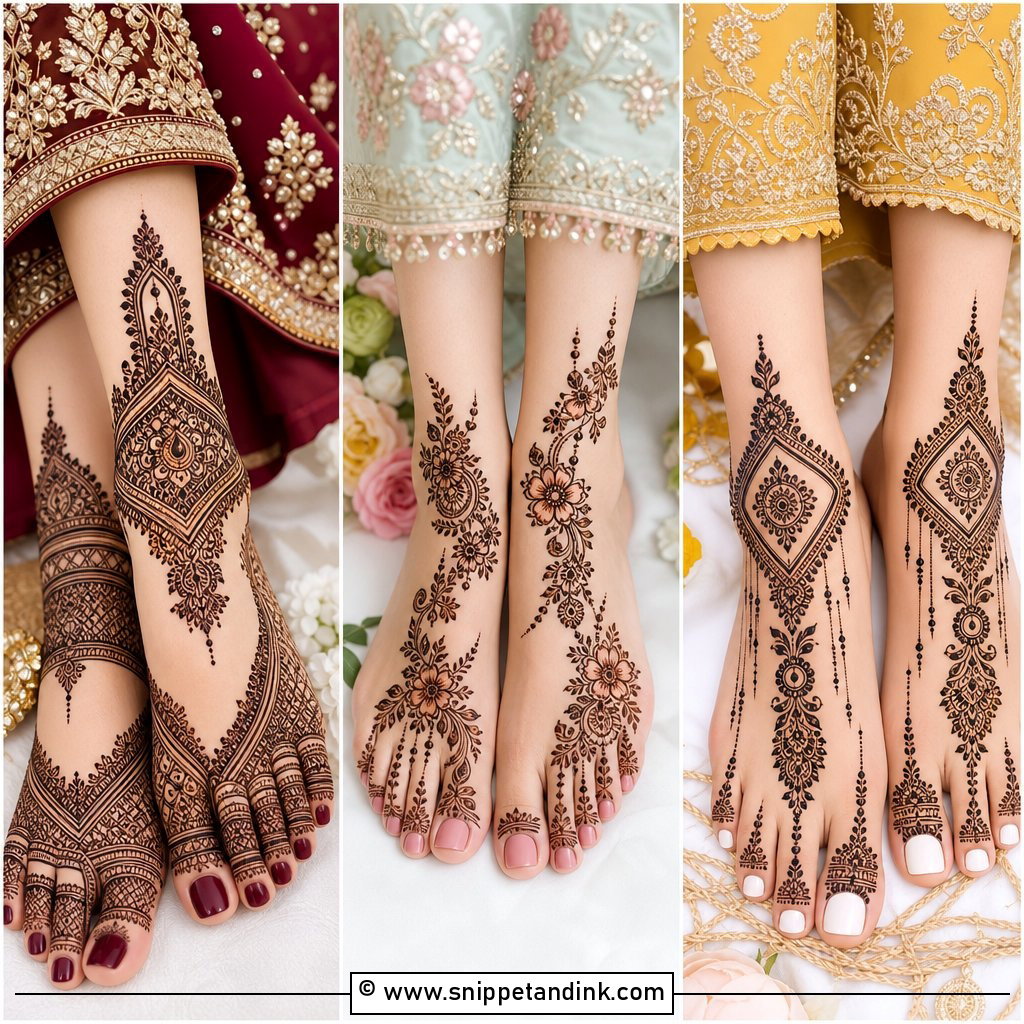
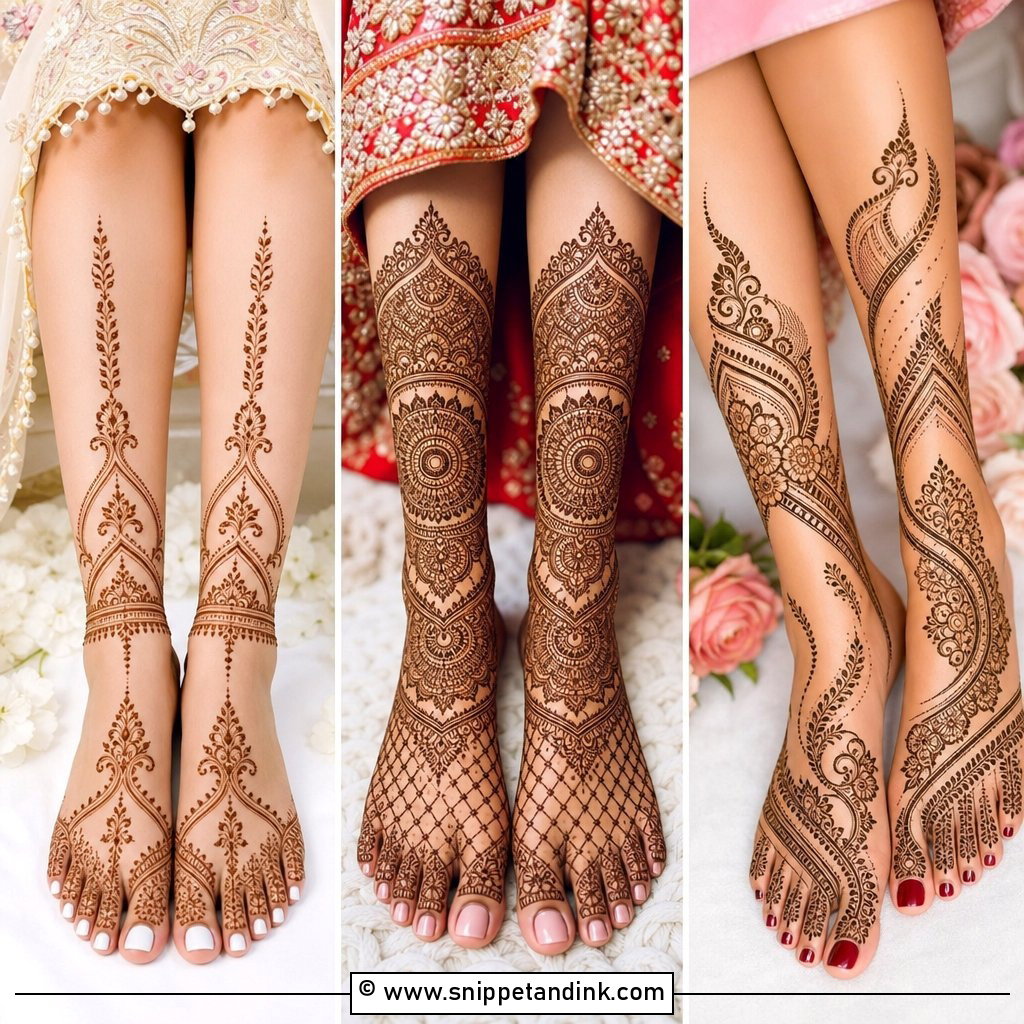
Foot henna completes the look with lehengas, sarees and open sandals. I draw anklet-style borders, toe details, side floral trails and a mandala or lotus on top of the foot. If your footwear has embroidery or stones, keep the design light so the two don’t clash. Feet stain well but take a long time to dry, and you can’t walk until they do, so I do feet first while you can still use your hands.
Light Stain, Patchy Fingers or Fading Too Soon
Henna doesn’t stain evenly across the body. Palms and fingertips go darkest, the back of the hand is lighter, and the wrist and arm lighter still. A slightly paler back of the hand is normal, not a failed design.
A stain that’s pale everywhere usually means the paste came off too early, the hands got wet in the first few hours, or the room was cold. Keep the paste on overnight if you can, and keep your hands warm. Some families hold their hands over the steam of cloves on a warm pan, an old practice that adds gentle warmth; just keep a safe distance from the heat. Never reach for products that promise to darken henna instantly.
Leaving enough of a gap before the wedding henna
A natural stain lasts one to three weeks and fades as the skin renews. If your wedding is close, I make the engagement design lighter and place it so the wedding pattern can cover different areas. Exfoliating gently in the days before the bridal henna helps the old stain fade so the new one looks clean.
Settle the Ring Hand First, Then Build Around It
Good engagement henna is about balance: festive, flattering to your hands, matched to your outfit and leaving the ring clearly visible. Indian, paisley, peacock and full-hand designs carry tradition. Arabic trails, florals, bracelet henna and minimal layouts feel softer. Initials, dates and ring motifs add meaning. Bring a few photos of designs you like to your artist, and let her adjust them to your hand shape, ceremony and comfort.
You'll Like These Ideas:


Leave a Reply