
A wedding usually needs two kinds of henna: the bride’s, which takes hours and carries the story, and everyone else’s, which has to be quick, pretty and done before the music starts. I draw both, often on the same night. The bridal designs below run from full Indian coverage to Arabic spacing, Indo-Arabic fusion, mandala palms, jaali and peacocks, and several scale down well for bridesmaids and guests. Current wedding henna trends lean toward cleaner layouts, deeper stains and story motifs like initials, portraits and bracelet bands, but tradition still anchors most of them. Use these as a starting point for the main day, the sangeet or the reception.
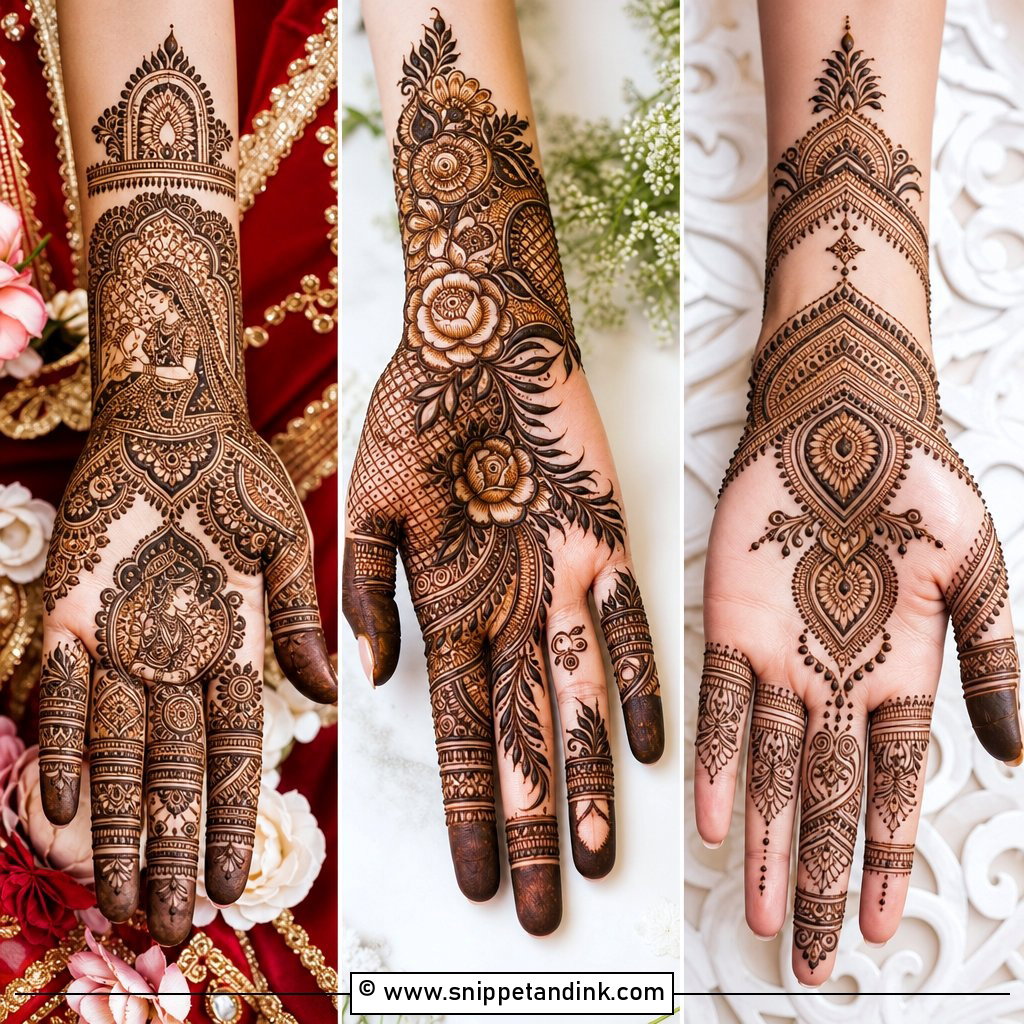
1. Full Hand Bridal Mehndi Design
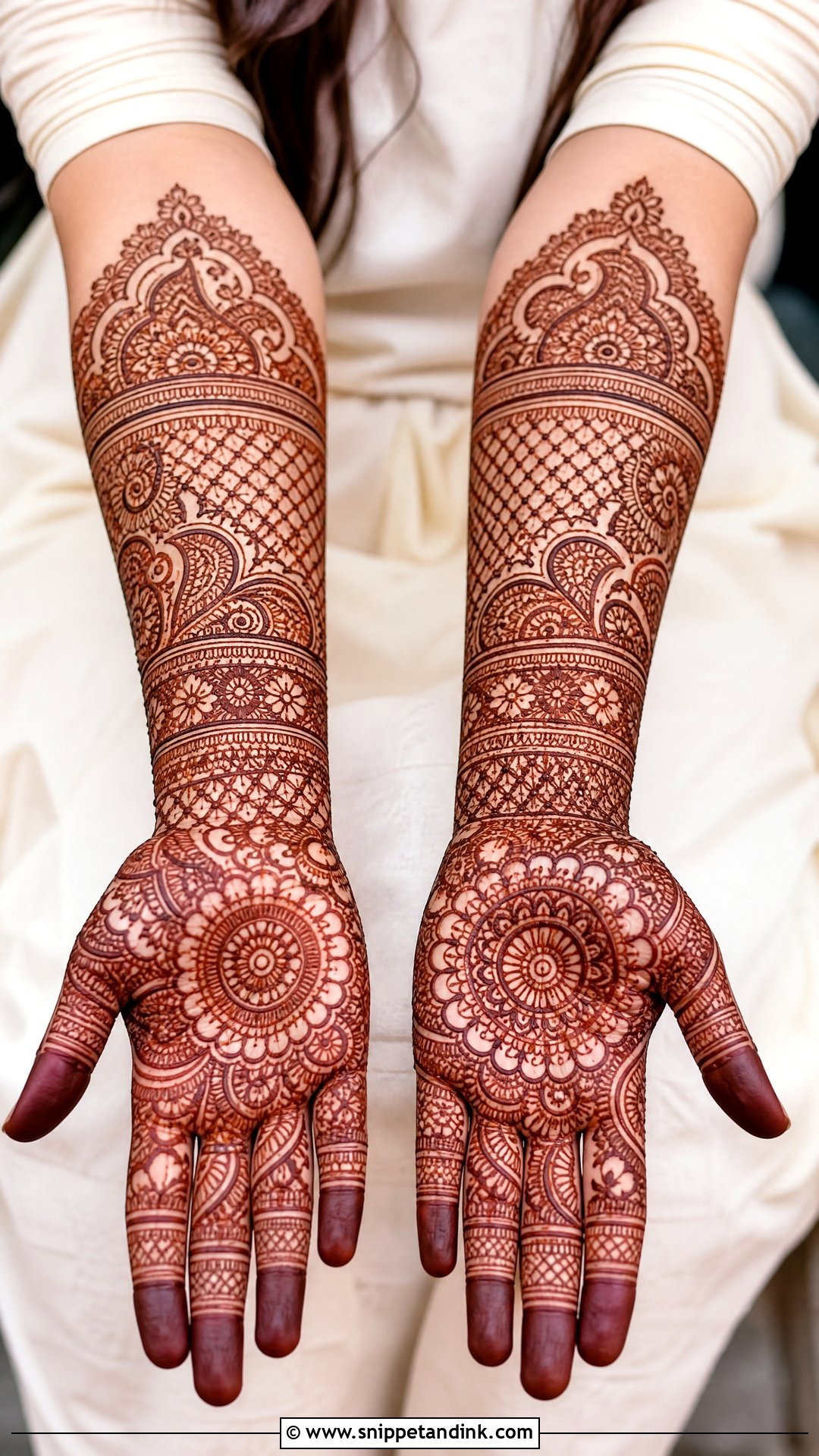
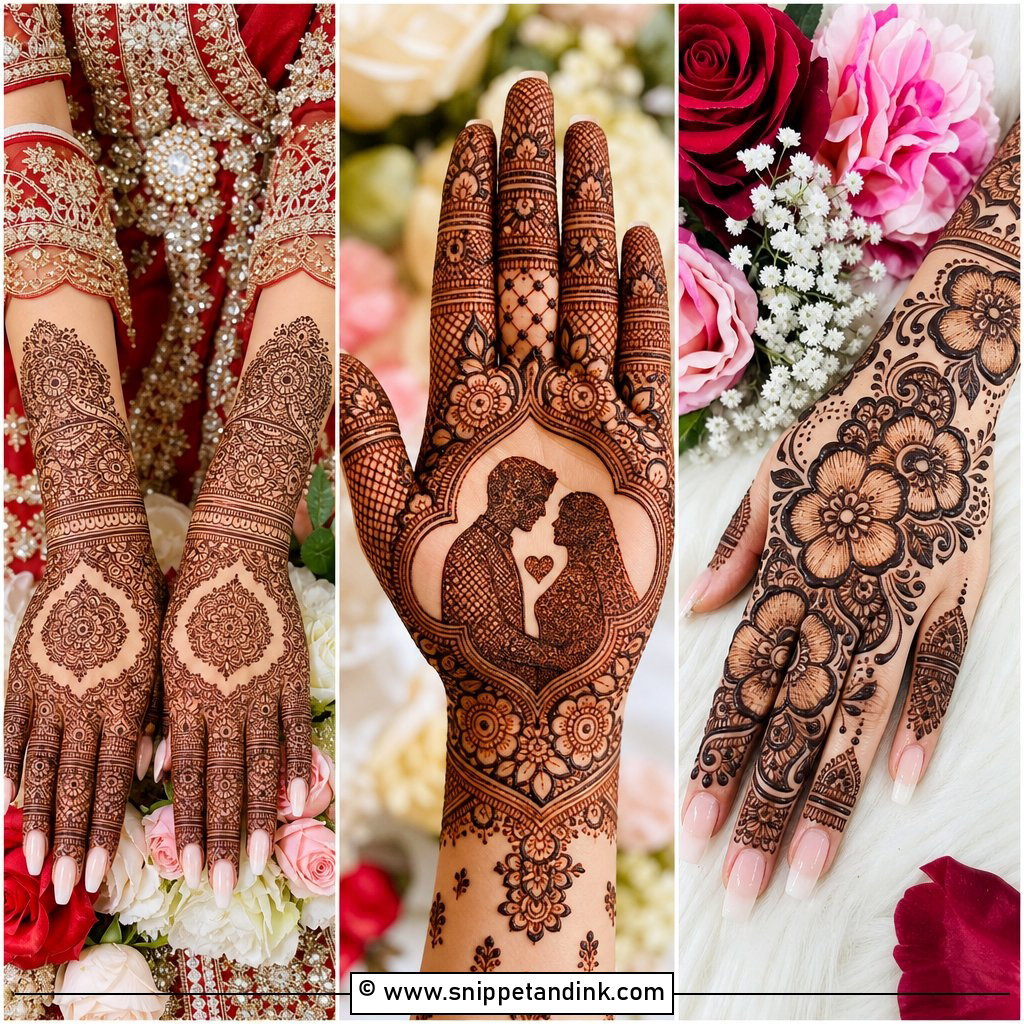
Palms, back hands, wrists and forearms all covered: this is the version most families picture when they think of wedding henna. Paisleys, florals, jaali, mandalas and fine filler work together so the hands look complete from every angle. I plan the major motifs on both hands before touching a single filler, because balance is much harder to fix once the paste is down. Clean spacing around the big shapes keeps it readable. Lehengas, sarees and heavy bridal jewelry carry its weight well.
2. Arabic Bridal Mehndi Design
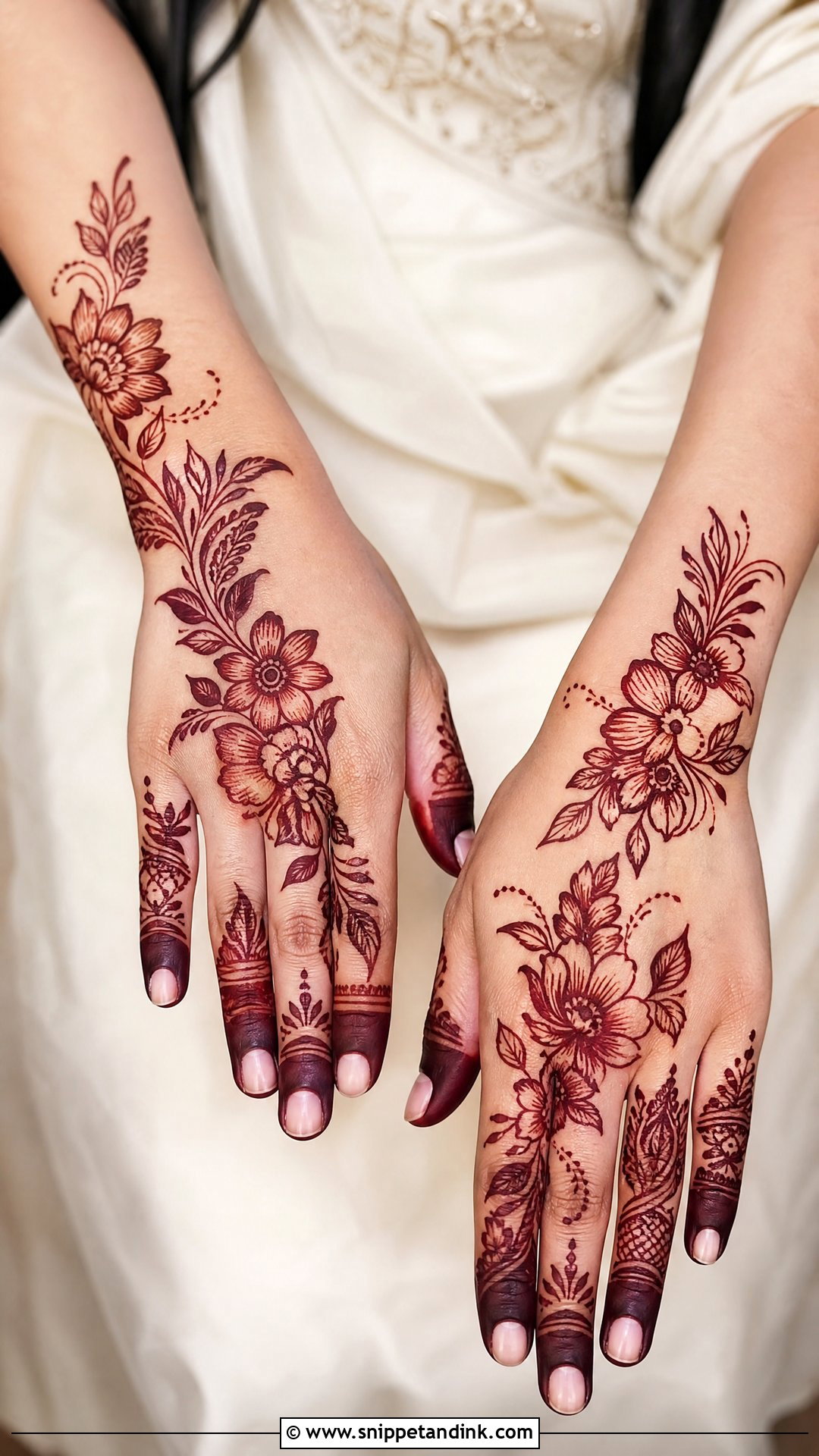
Arabic bridal henna moves diagonally across the palm and back hand, often running toward the wrist or forearm, with bold flowers, leafy trails and generous empty skin. Those bold outlines stain strongly, which is why it shows so clearly in photos. It suits modern bridal outfits, pastel lehengas and lighter jewelry. For a bride, I add shaded petals, dotted borders and filled fingertips but keep the main trail open; once you fill the gaps, it stops being Arabic.
3. Indo Arabic Bridal Mehndi Design
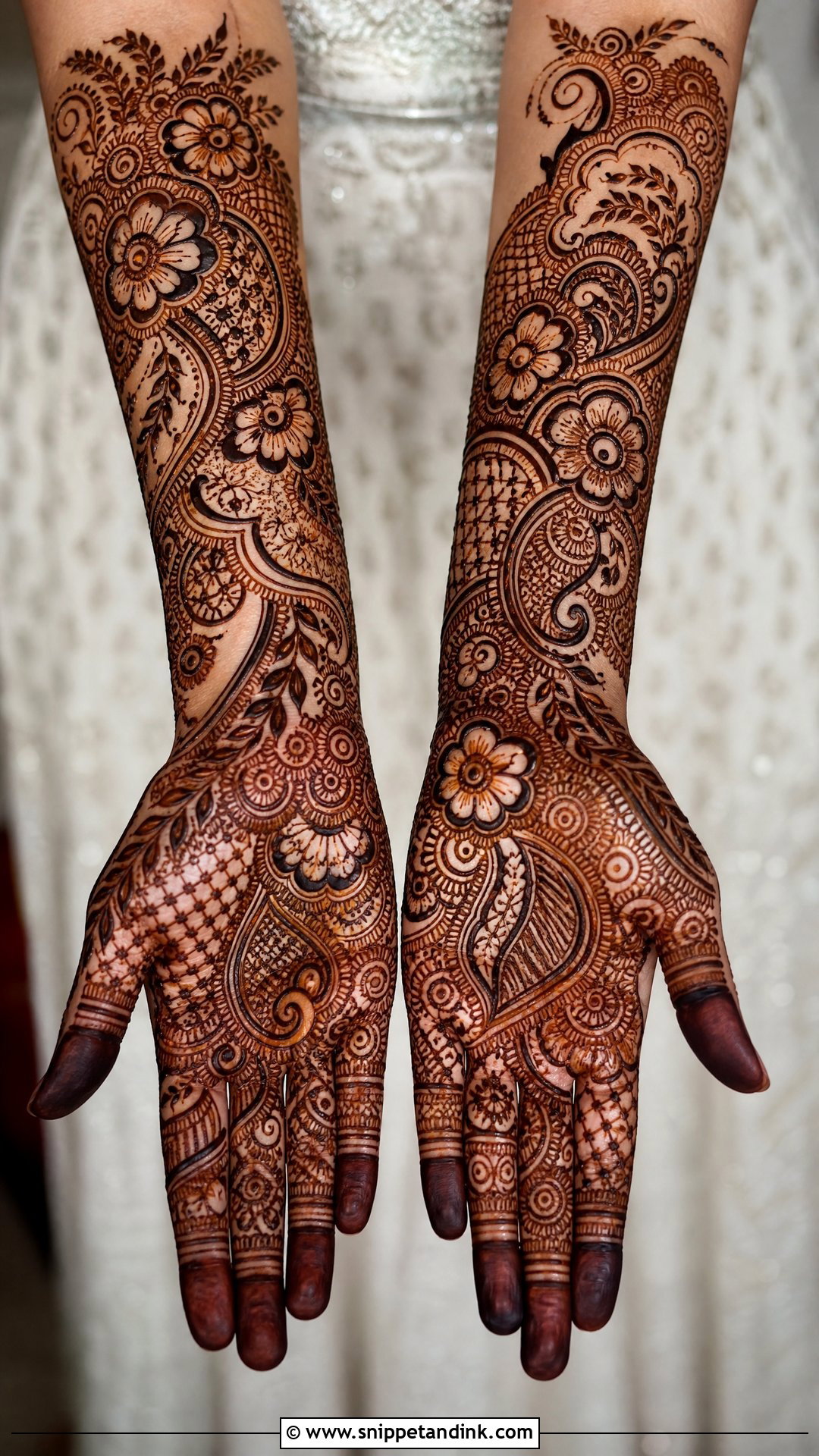
Indo Arabic work pairs the bold flow of Arabic henna with Indian fine detail: large floral trails, paisley clusters, mandala centers, jaali sections and detailed fingers in one design. It gives full-looking hands with visible skin gaps. For the bride, I extend it from fingertips to mid-forearm and work in initials or small wedding symbols. Drawn a size lighter, it’s also my most-requested design for sisters and bridesmaids.
4. Indian Bridal Mehndi Design
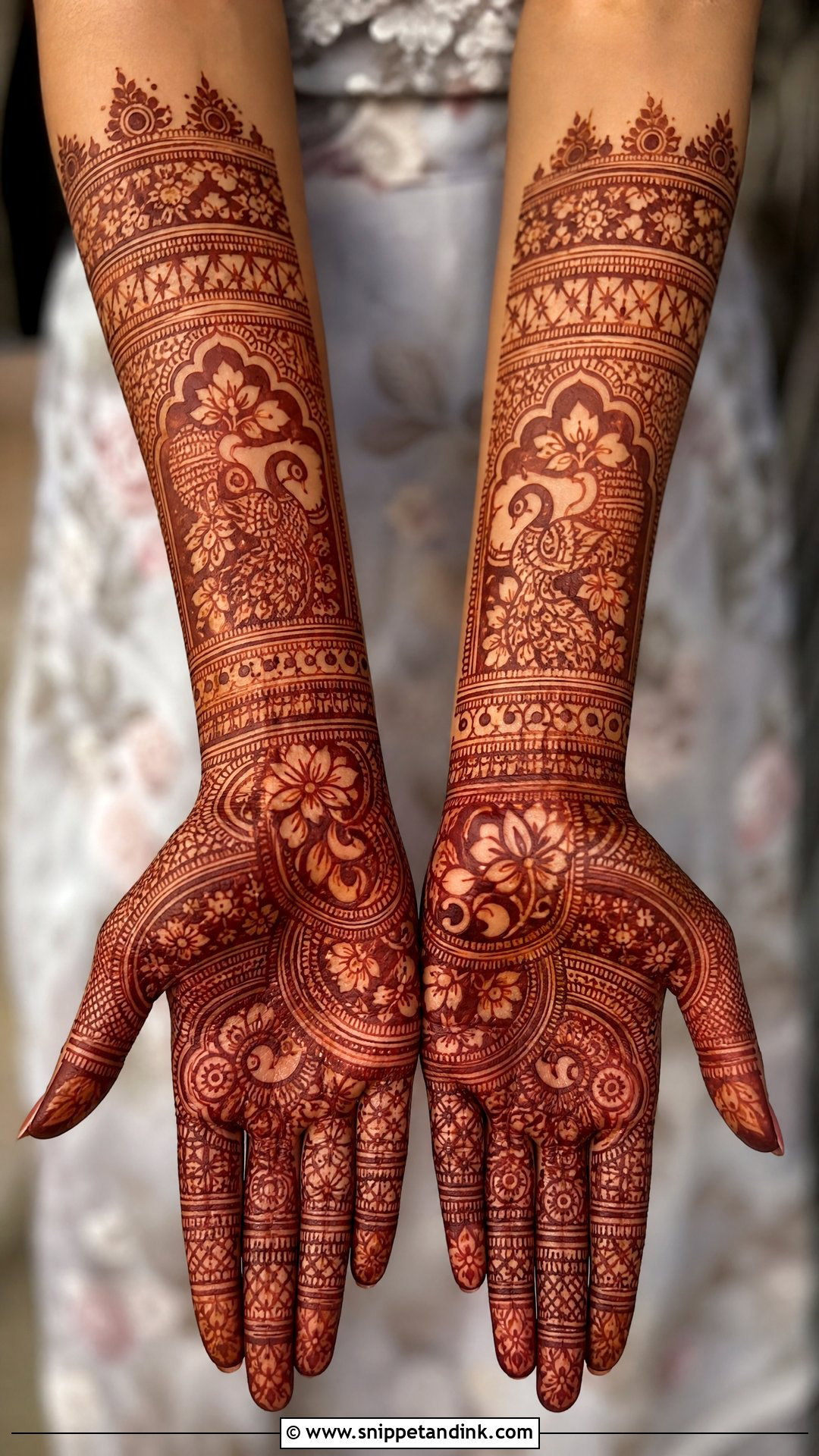
Indian bridal henna is a story told in sections: paisleys, lotus motifs, peacocks, bride-groom art, elephants, doli scenes and layered borders across hands and forearms, all held together by symmetry. It takes time, and that’s part of the ritual. The biggest risk is too many small motifs fighting for attention. I give the design a clear focal point on each palm and let everything else support it. Red, maroon, gold and jewel tones suit it best.
5. Bridal Mehndi Design With Bride And Groom Portrait
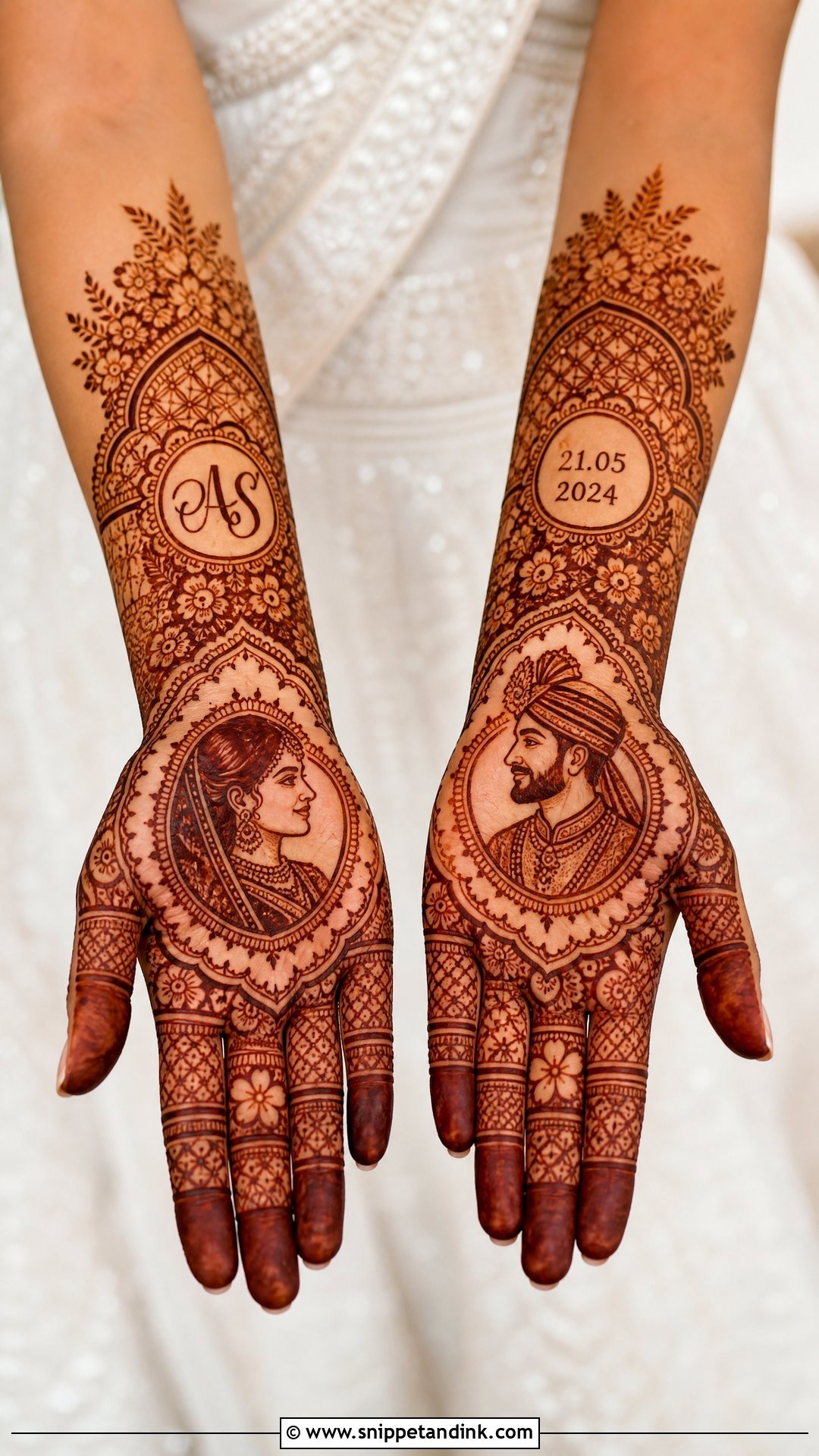
A bridal design with a bride and groom portrait usually puts the bride on one palm and the groom on the other, surrounded by mandalas, paisleys, florals and traditional fillers. Realism isn’t the goal. A clean, symbolic face stays clear once the stain develops, while overworked features blur. I draw both figures to meet when the bride joins her palms, which is the close-up everyone wants. A wedding date, initials, a doli, a varmala or palace motifs can frame the portraits.
6. Peacock Bridal Mehndi Design
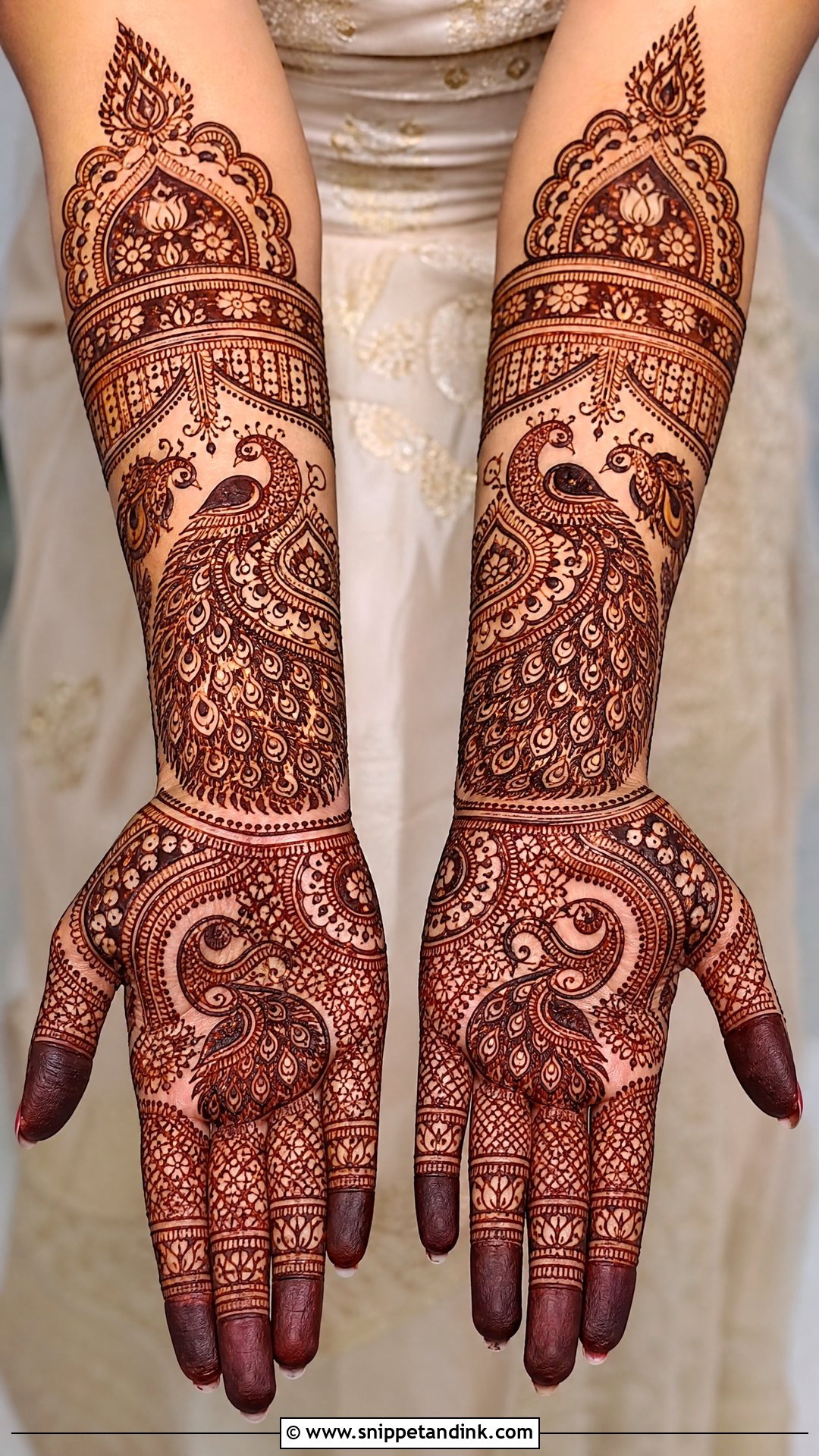
Keep the peacock readable and the rest follows. On the palm, back hand or forearm, its feathers can flow into paisleys, florals and curved vines, but the head, neck and feather lines must stay clear of the fillers or the bird disappears. A pair of mirrored peacocks across both hands looks rich; one large bird with detail around it feels more artistic. Shaded feathers and dotted borders add depth without weighing the hand down.
7. Mandala Bridal Mehndi Design
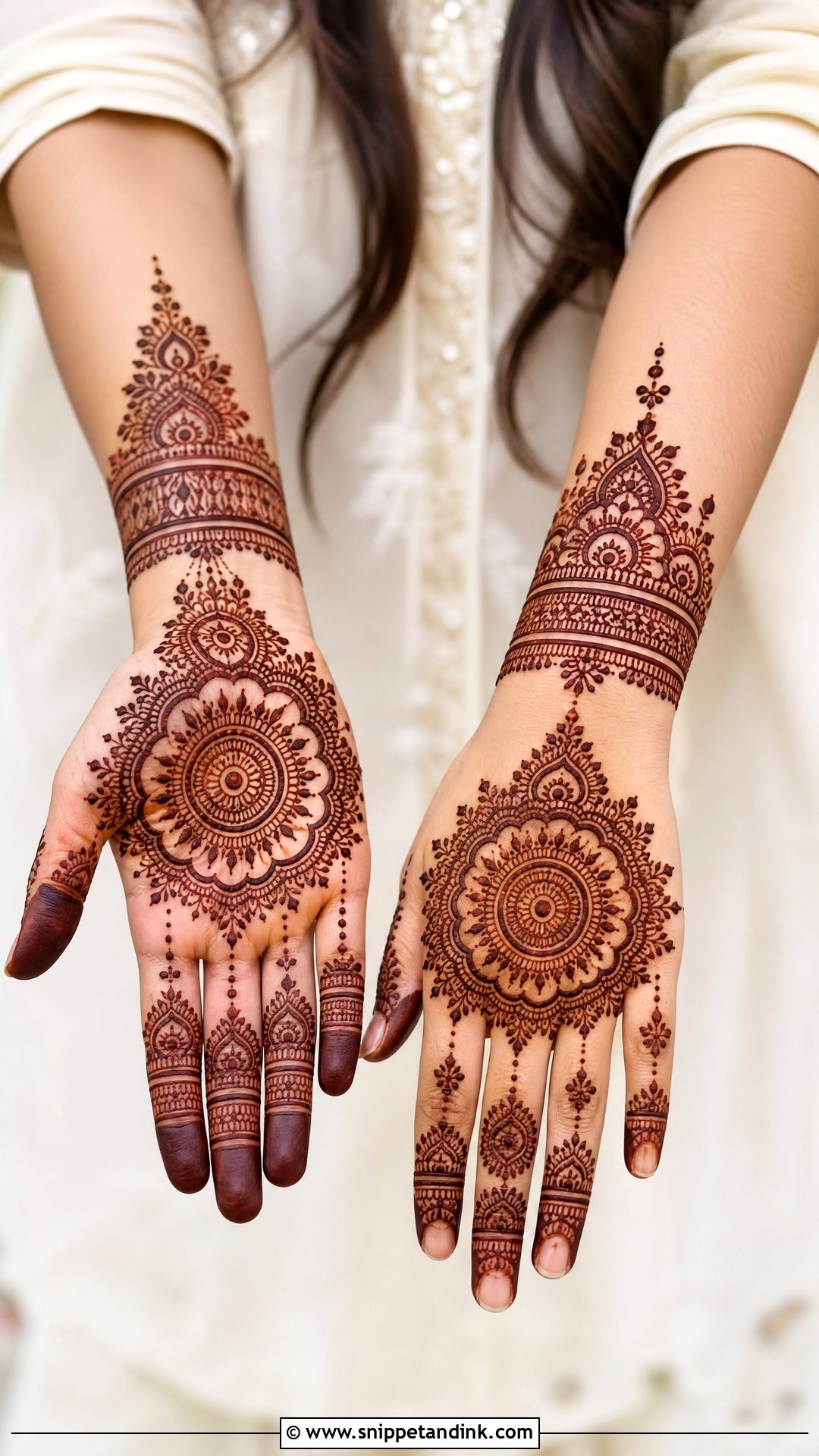
The round mandala sits on the palm or back of the hand and connects to the fingers and wrist with chains, florals, dots or bracelet bands. For the wedding, I layer extra circles, paisley borders and detailed fingertips; for engagement or pre-wedding events, a lighter version works just as well. It scales better than almost any other motif, from a simple modern hand to dense wrist-to-forearm bridal work. Symmetry is the point, so I mark the center before starting.
8. Floral Bridal Mehndi Design
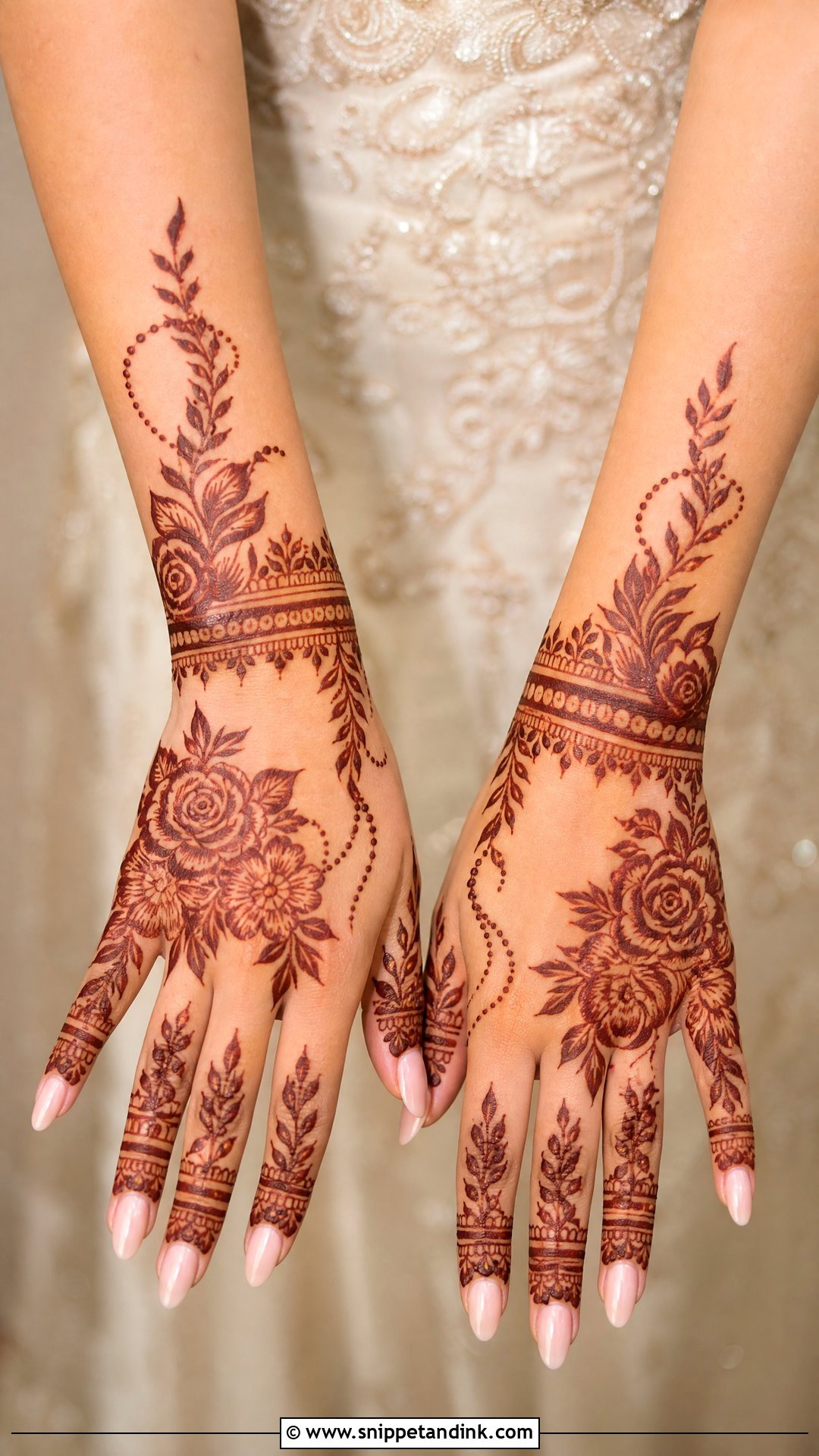
Large flowers anchor floral bridal henna on the palm and back hand, then smaller leaves, buds and dotted trails connect everything. I adjust the size and direction of the blooms to the hand, which is why it flatters almost every hand shape: long, narrow hands take flowers angled down the fingers, while broader hands suit a single wide bloom. Filled fingertips, shaded petals and a wrist cuff make it bridal. More gaps between flowers make it lighter.
9. Paisley Bridal Mehndi Design
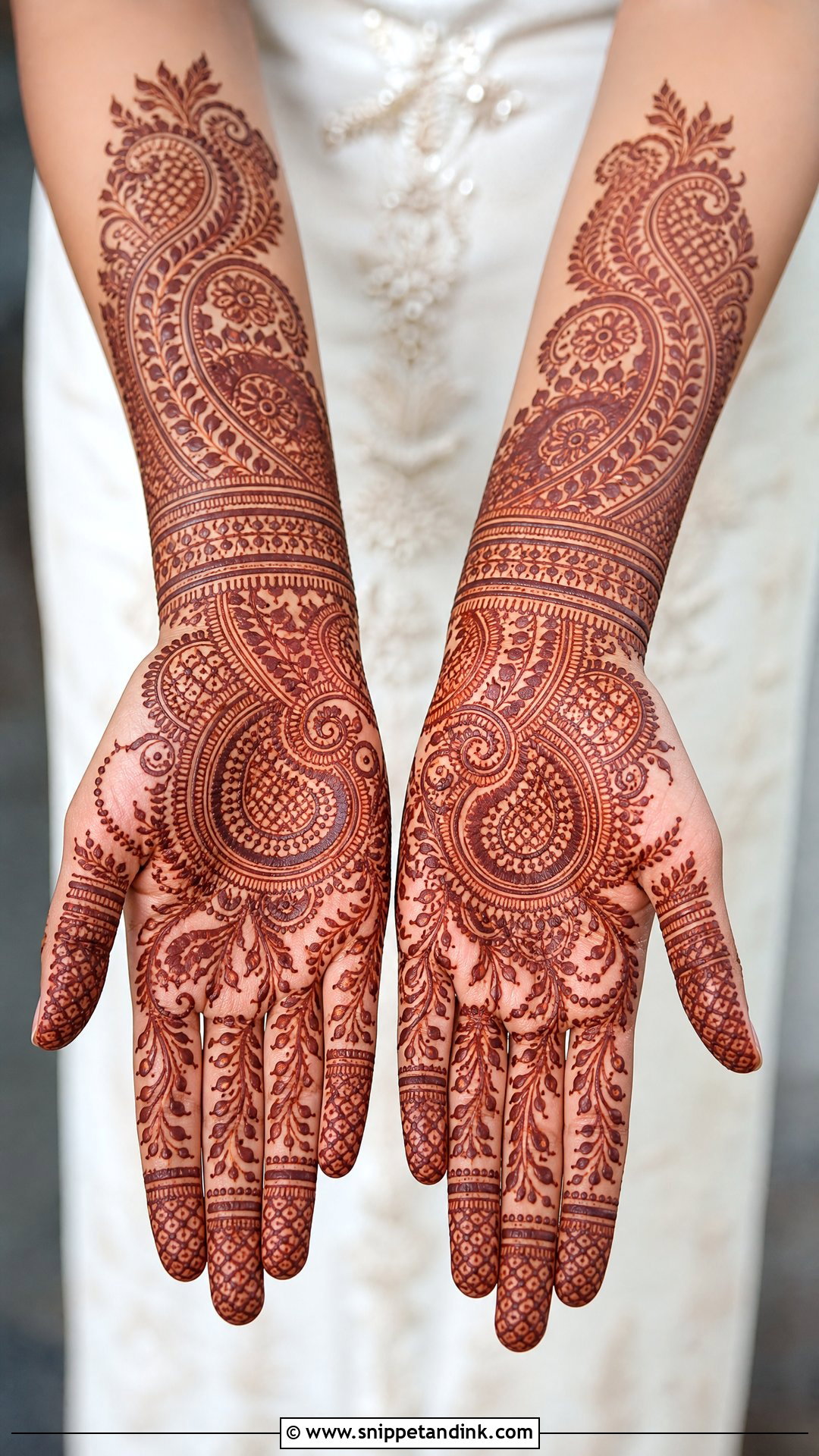
Paisleys bring movement and tradition to the hand. A full wedding version uses large ones on the palms, smaller ones on the fingers and curved paisley chains along the wrists and forearms, each filled with tiny florals, checks, dots or lines. It’s detailed without needing portraits. For a modern take, I mix big paisley shapes with open spaces and clean borders. A deep maroon stain shows the fillings best, so leave the paste on as long as you can.
10. Jaali Bridal Mehndi Design
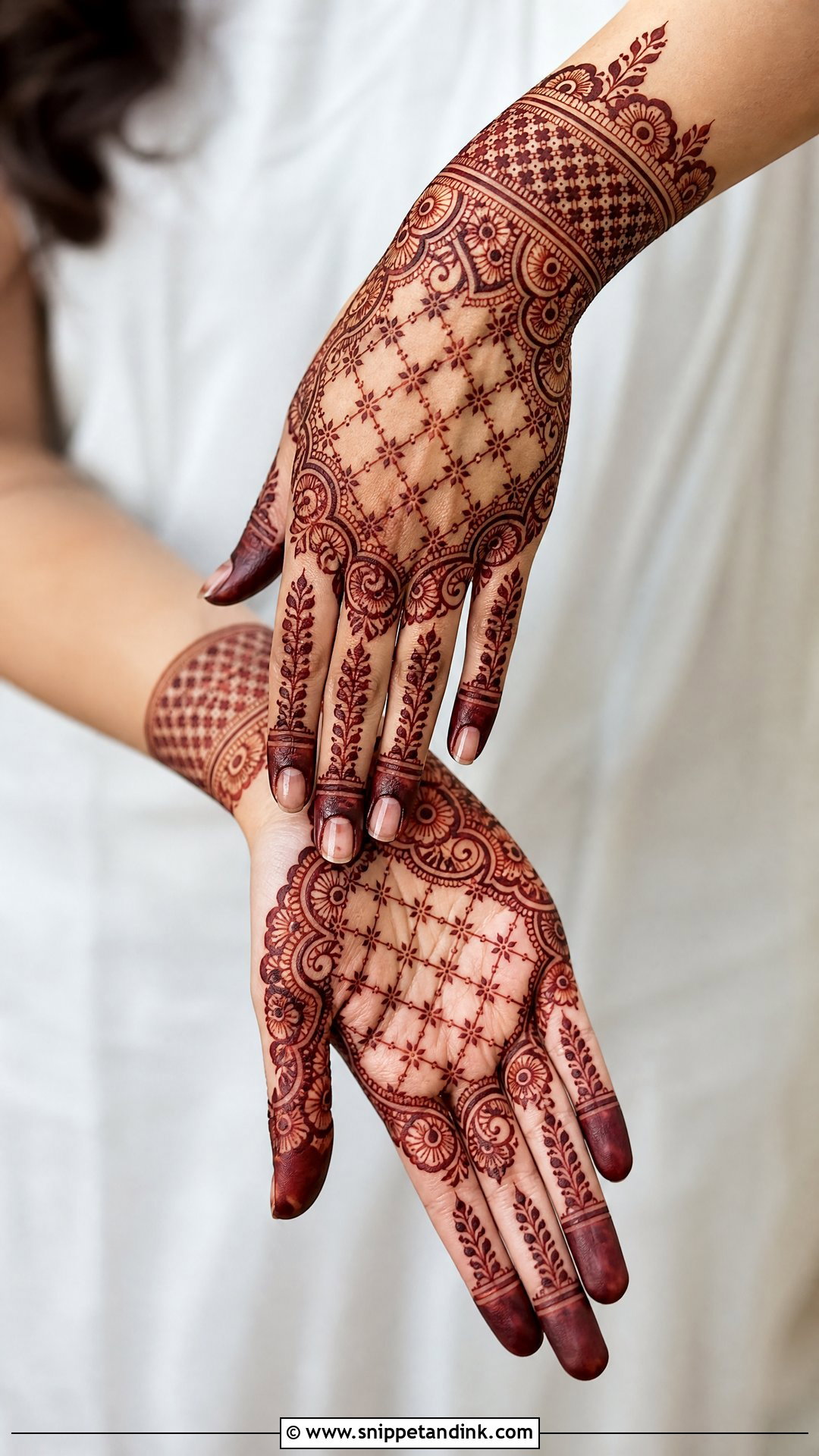
Net-like jaali patterns on the palms, back hands, fingers or wrists give organised detail rather than crowding. I frame the mesh with bold outlines and heavier motifs so it doesn’t look too simple for a bride. On the back hand, the open grid creates a lace effect around rings and bangles. Even squares are everything; mesh that drifts out of line is the first flaw anyone notices.
11. Rajasthani Bridal Mehndi Design
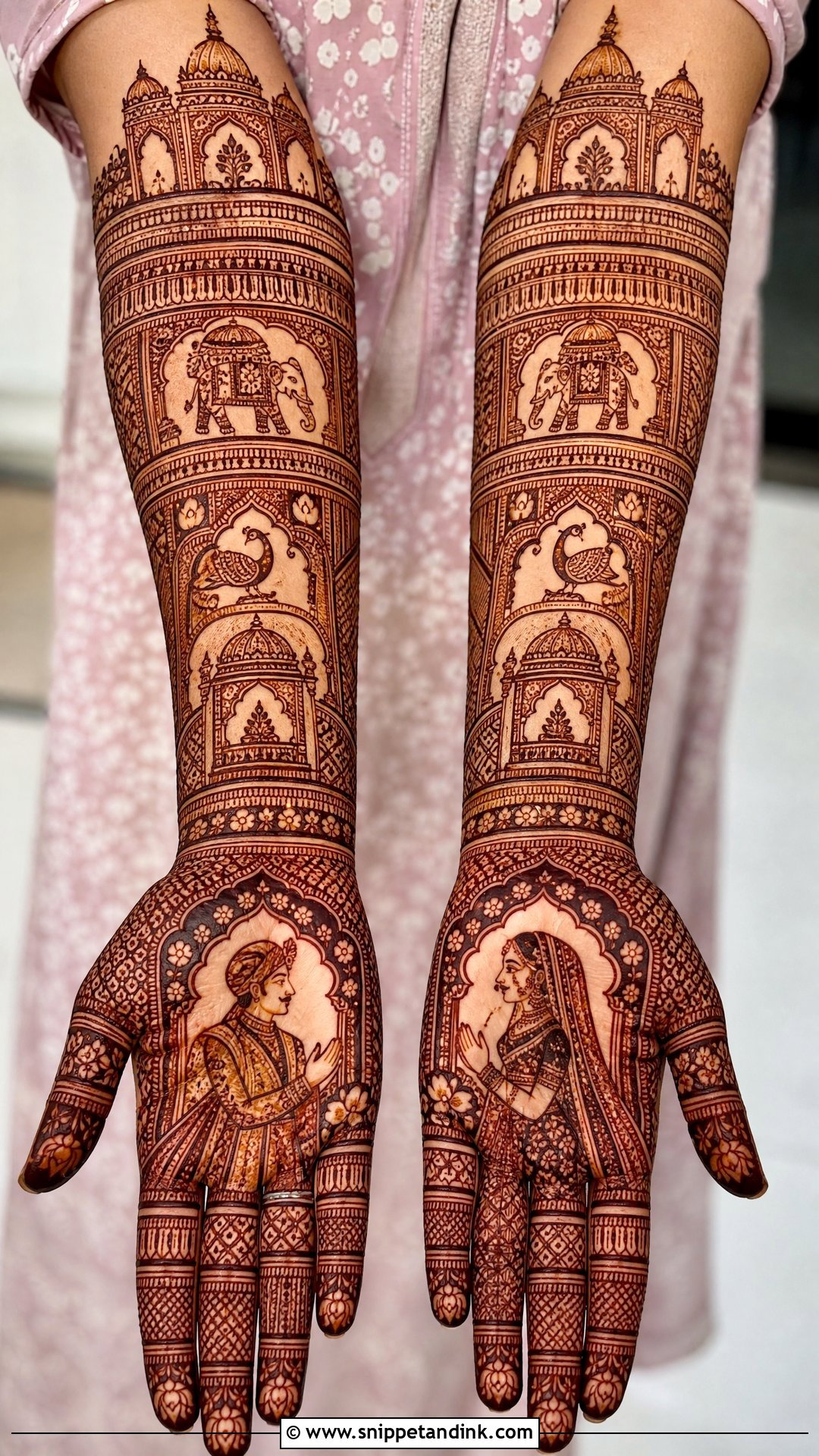
Rajasthani bridal henna fills hands and forearms with bride and groom figures, palaces, elephants, peacocks, doli scenes, musical elements and detailed borders. Precision matters enormously at this scale. I sketch where the main scenes go before adding any filler, and each hand can carry a different part of the wedding story. It suits brides who love heavy traditional art and are ready for a long sitting with breaks.
12. Moroccan Bridal Mehndi Design
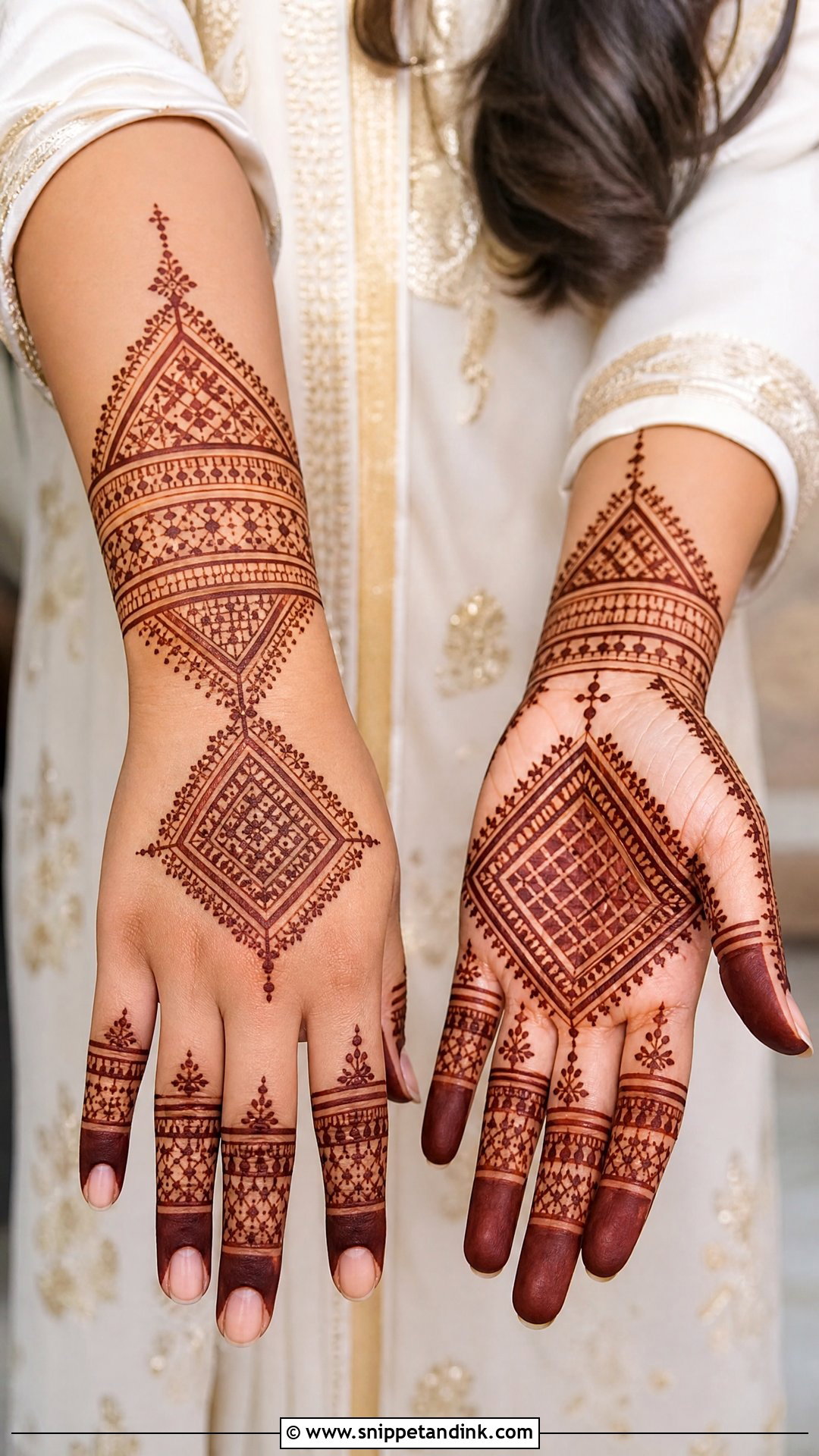
Diamonds, lines, grids, triangles, dots and bold borders give Moroccan-style henna its structured look across the back hands, palms and wrists. It feels modern yet festive, and it suits contemporary outfits and fusion events. Thin geometry looks weak, so I draw the lines with a slightly heavier hand than florals would need. Add small floral accents to soften it, or keep it fully geometric for a sharper effect. The well-defined shapes stain clearly.
13. Gulf Bridal Mehndi Design
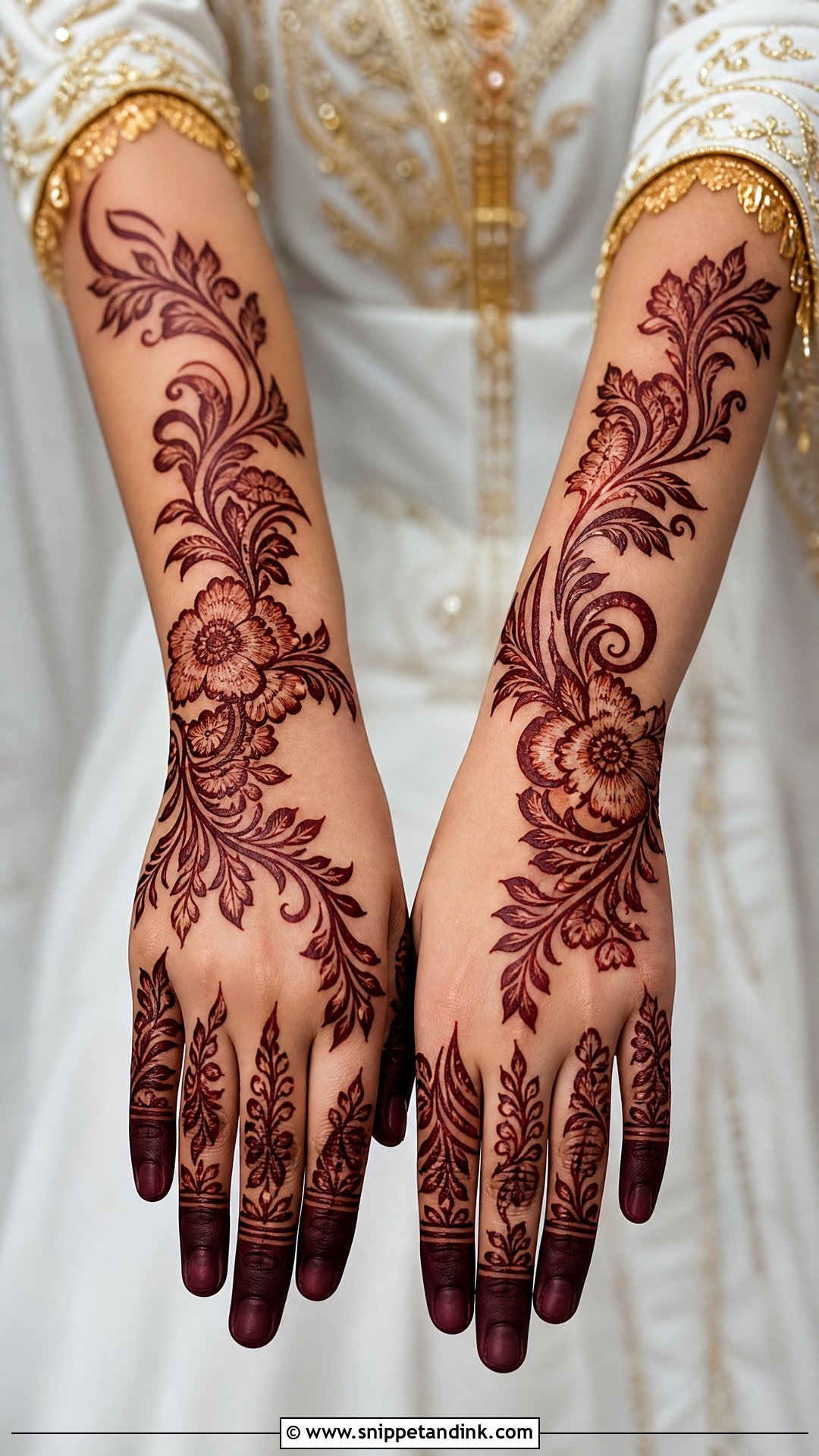
Gulf or Khaleeji henna is spacious: large flowers, leafy vines, shaded petals and sweeping wrist patterns with plenty of open skin. It usually focuses on the back hand and fingers, extending to the palm and forearm for a bride. Rings, bangles and even long sleeves sit comfortably with it because nothing is crowded. For a wedding, I darken the fingertip coverage, thicken the floral outlines and keep the shading soft inside the petals.
14. Minimal Bridal Mehndi Design
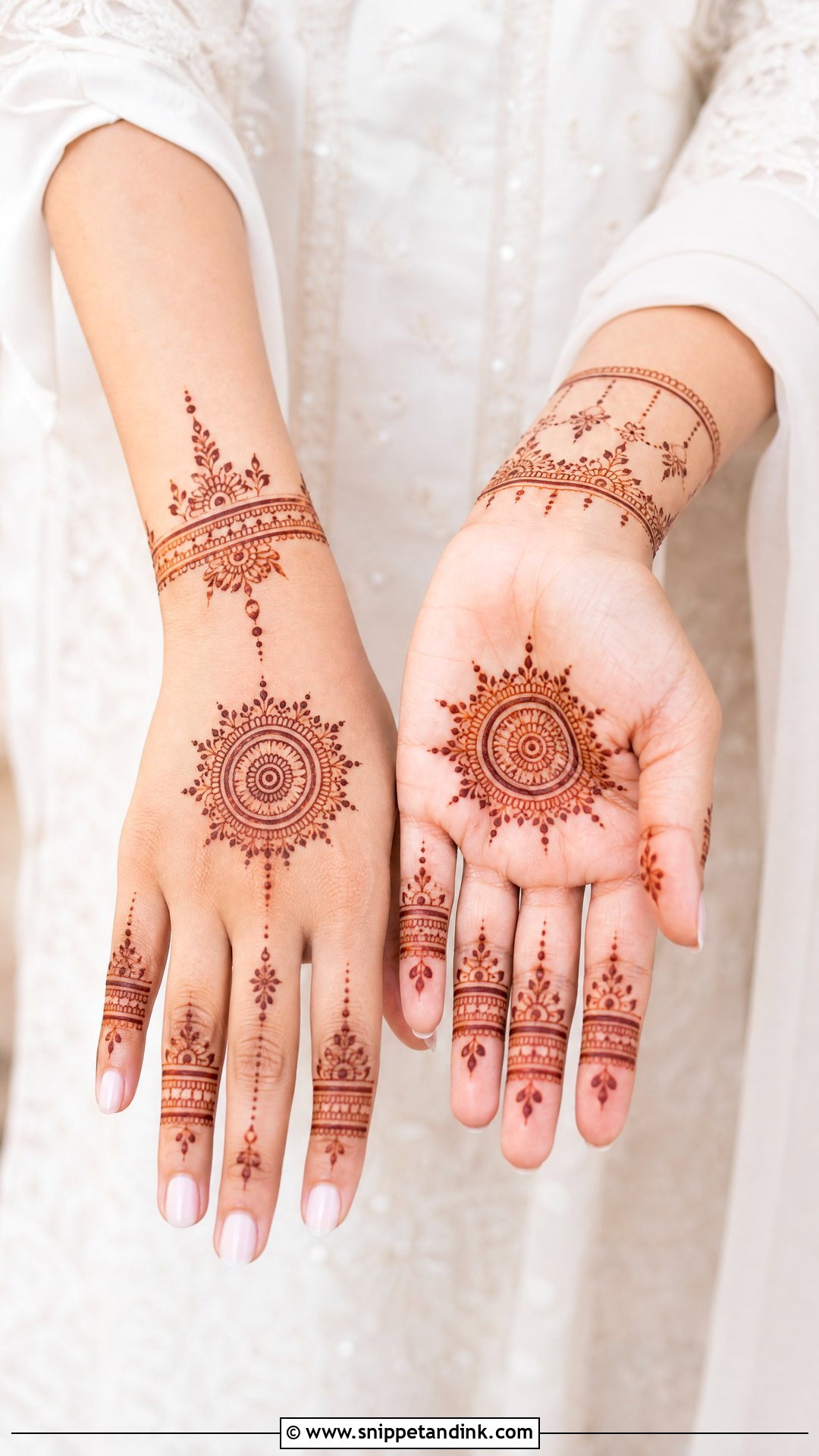
Minimal bridal henna swaps dense coverage for a central mandala, delicate finger work, slim wrist bands and tiny florals. Intimate weddings, courthouse ceremonies and brides who dislike heavy henna all suit it. Every line has to look placed, because there’s nothing to hide behind. Pastel outfits, pearl jewelry and soft makeup go well with it. On the wedding day, I’ll often slip in initials or a small date so it feels personal.


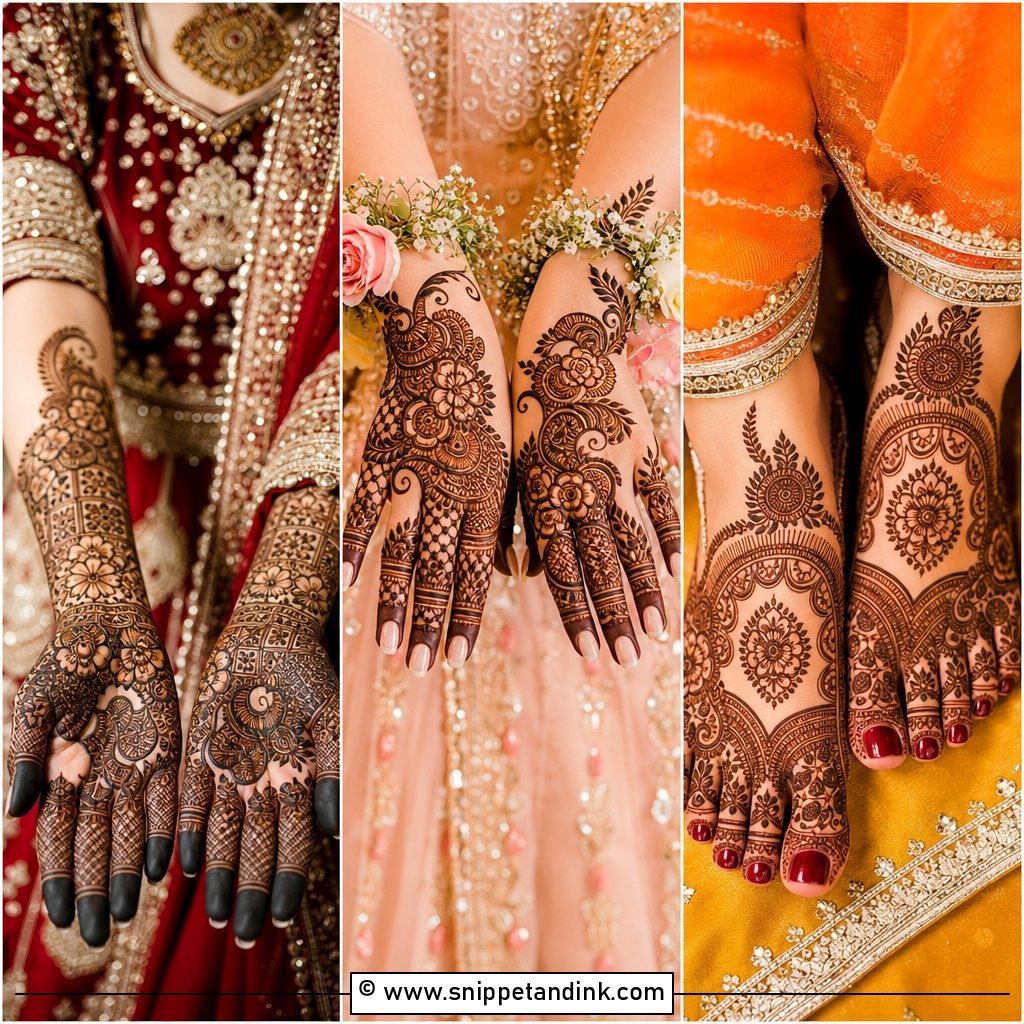
15. Simple Wedding Mehndi Design
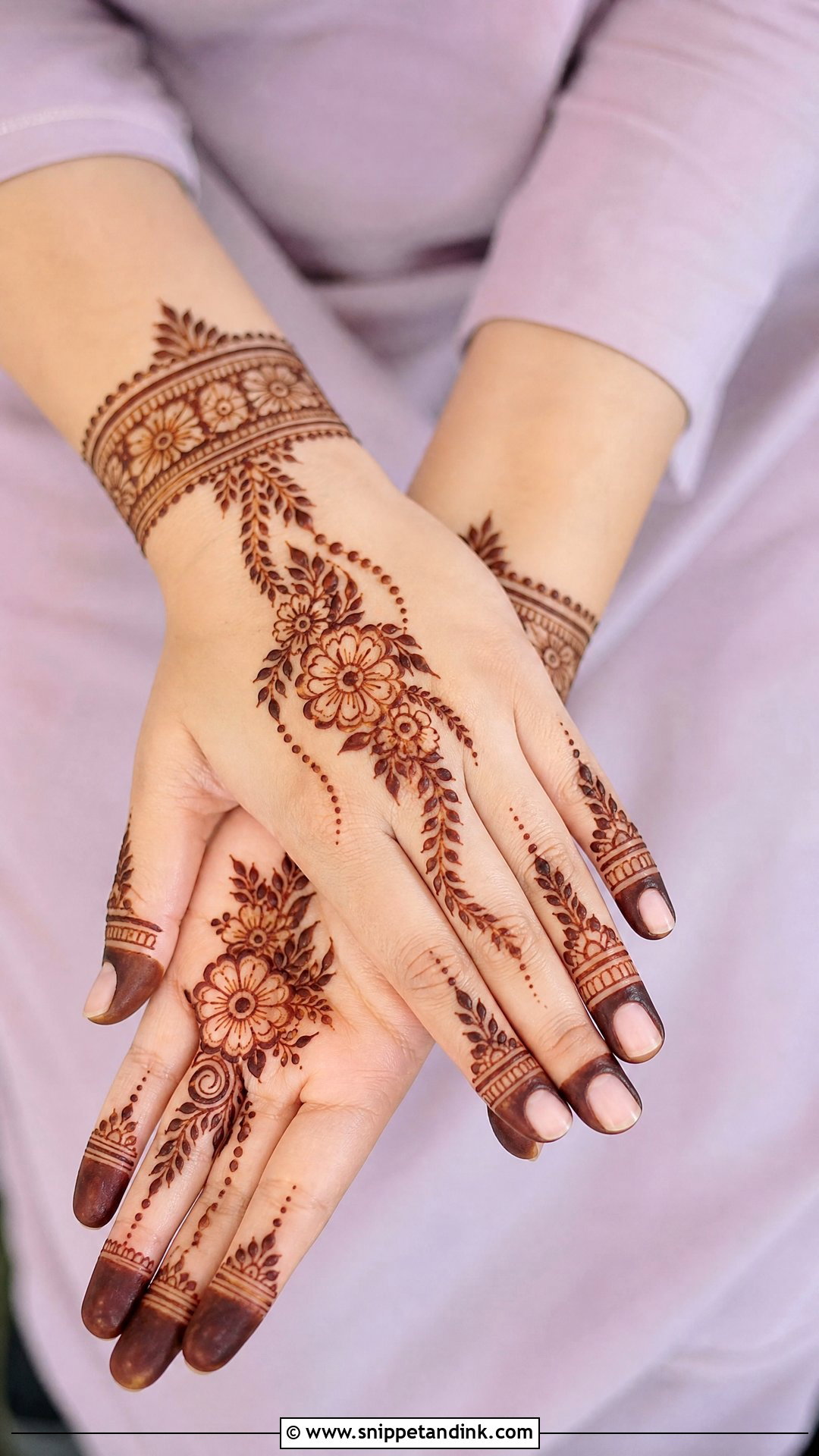
This is my workhorse design for bridesmaids, guests and mothers, or for a bride’s lighter function: a floral palm, decorated fingers, a slim wrist cuff and a few leafy trails. It should look festive without taking long to apply. Bold motifs and balanced spacing do the work. Flowers, vines and dots keep it soft, and it suits traditional and modern outfits alike. When I’m working through a queue of guests, this is the design that keeps the line moving.
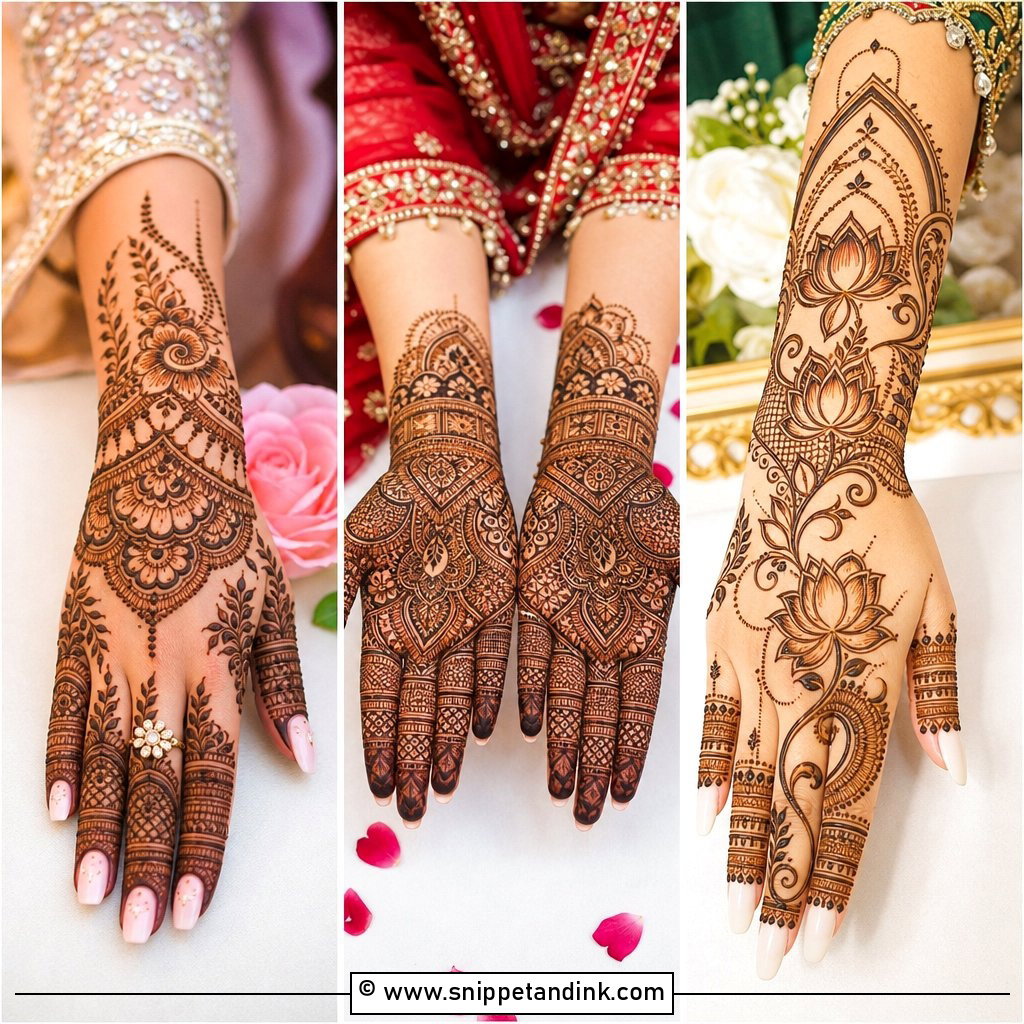
16. Back Hand Bridal Mehndi Design
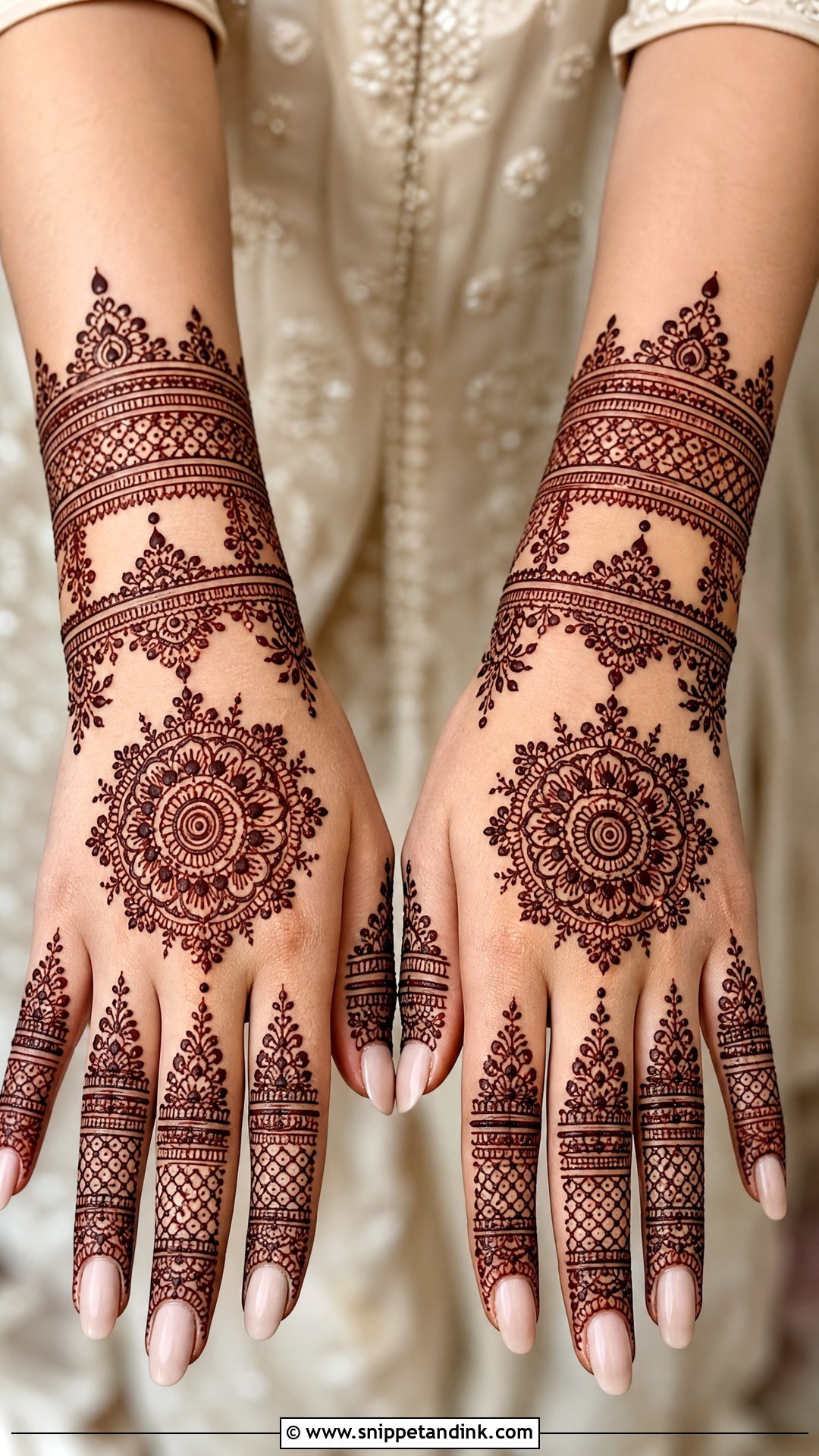
Ring photos, jewelry shots and candid moments mostly catch the back of the hand, which stains lighter than the palm. A complete bridal back hand might have a central mandala, floral mesh, bracelet bands, finger trails and a wrist-to-forearm extension, flowing around rings and bangles rather than hiding under them. Brides who want a lighter palm can still go detailed here. Keep the center motif clear so the hands look composed when relaxed or posed together.
17. Front Hand Bridal Mehndi Design
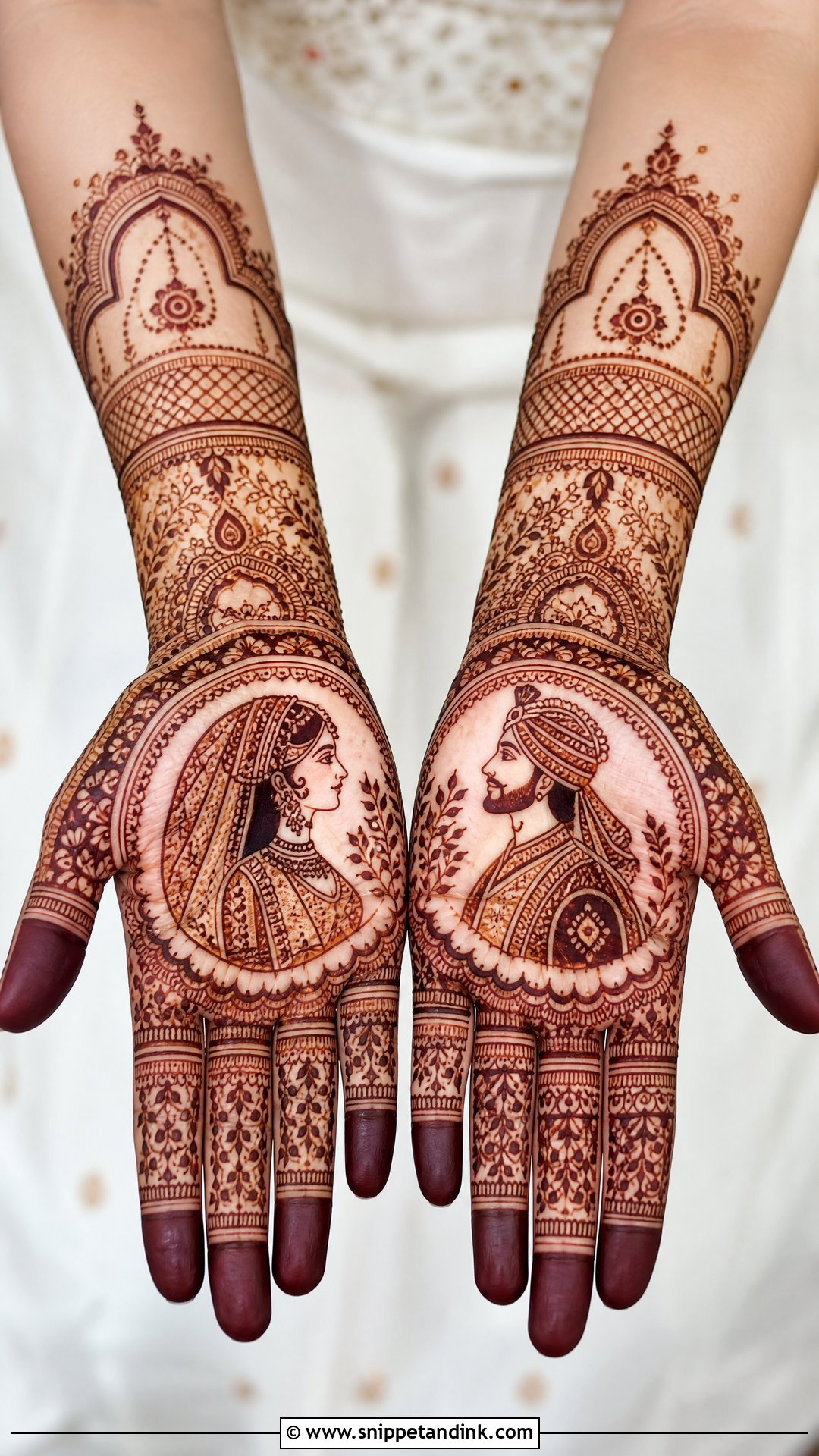
Palms stain darkest, so front hand designs give you the boldest color in photos. Mandalas, paisleys, peacocks, bride-groom art, jaali and detailed fingertips all fit. The palm feels flat but isn’t; its creases fold whenever you curl your fingers, so I keep faces and fine lettering off the main crease lines. A heavy Indian palm or a cleaner Arabic-inspired one both work. Connect the fingers smoothly to the palm so the hand doesn’t look divided.
18. Finger Bridal Mehndi Design
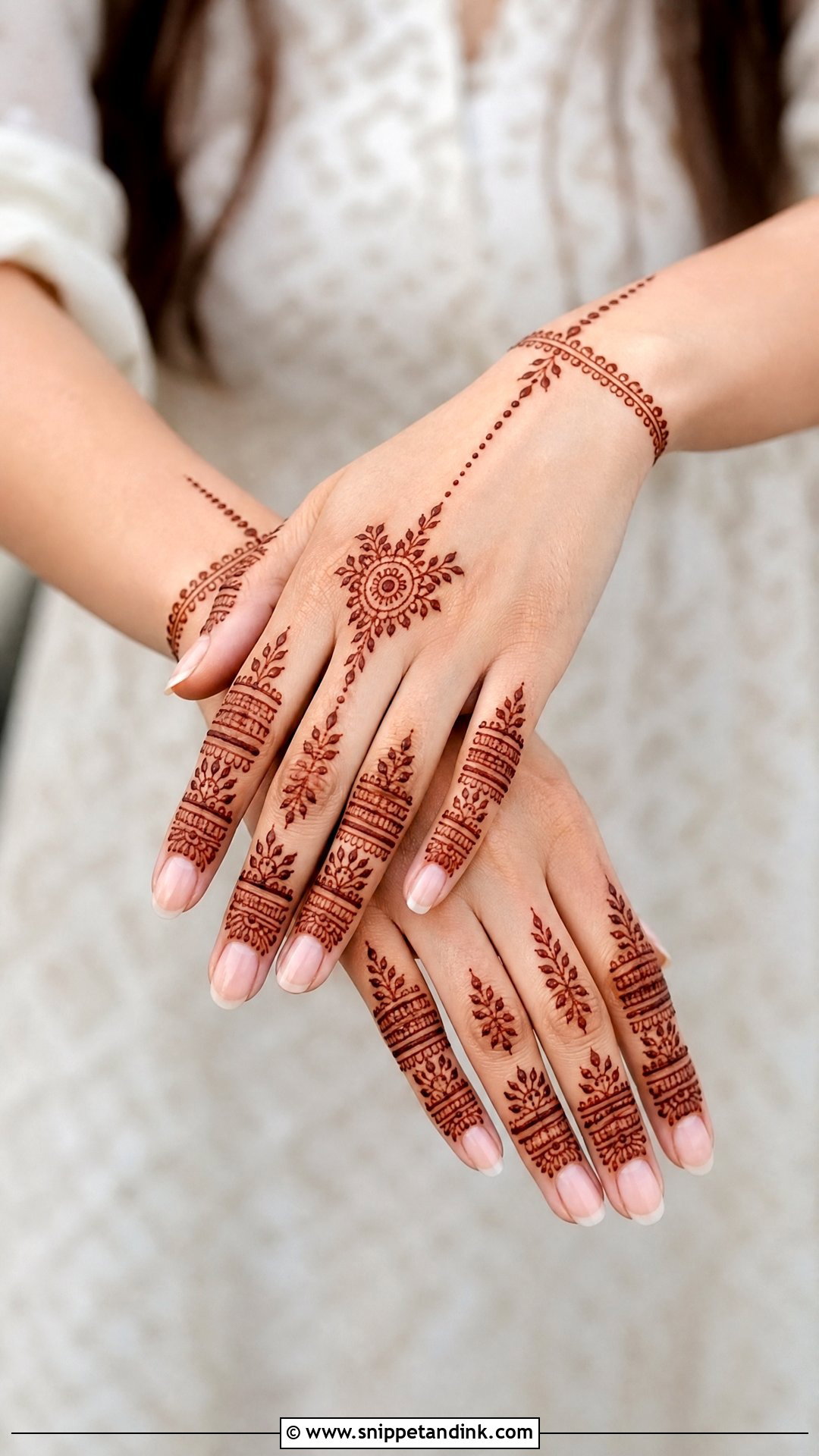
Fingers filled with leafy chains, rings, dots, mini mandalas and lace-like bands, with a cleaner palm or back hand: planned as a whole hand, this looks modern and detailed. Brides often pick it for the engagement, reception or a second-day ceremony, and anyone wearing statement rings will appreciate it. Stained fingertips and a small wrist bracelet keep it bridal. Do your manicure before the appointment, not after.
19. Bracelet Bridal Mehndi Design
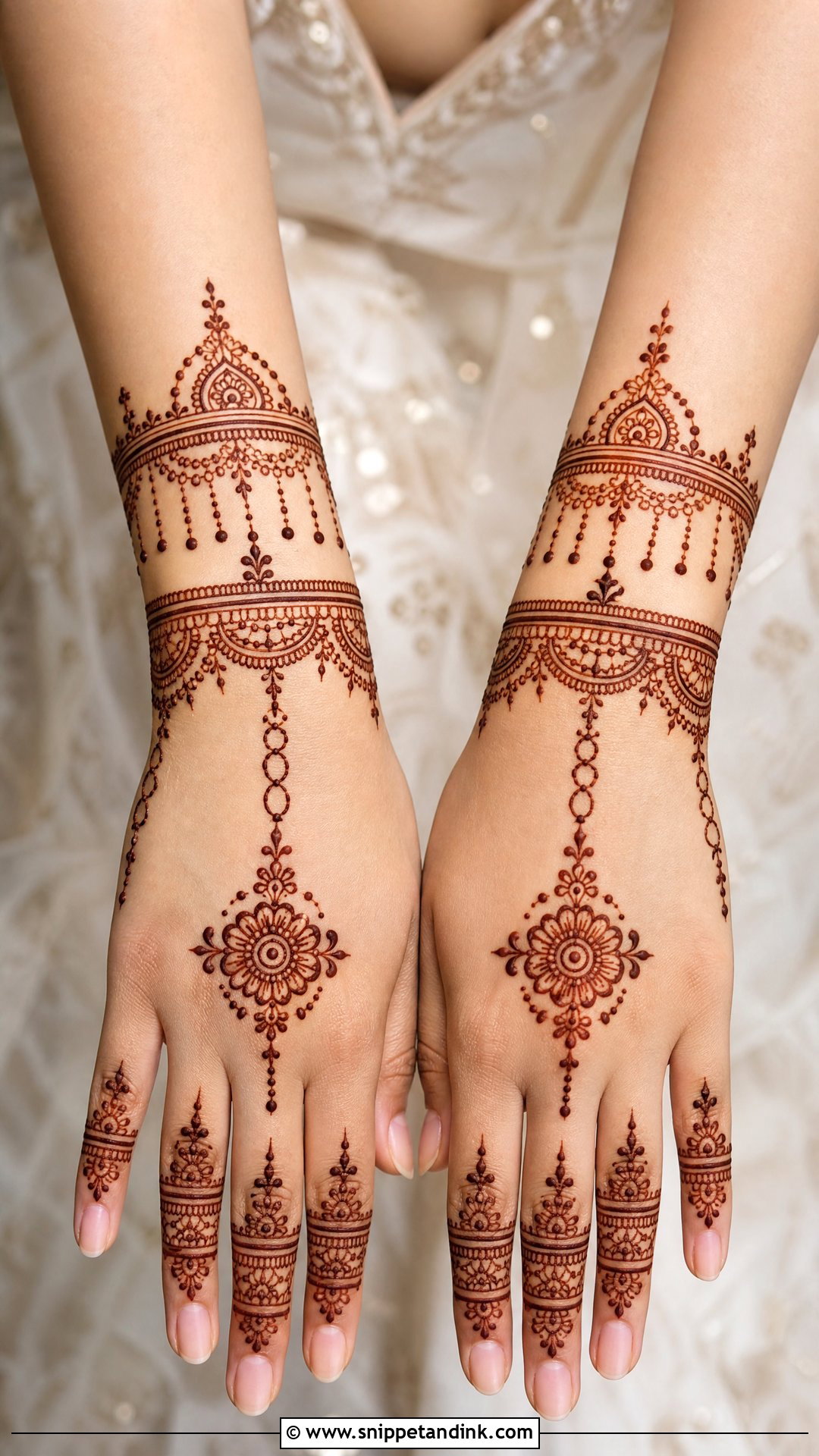
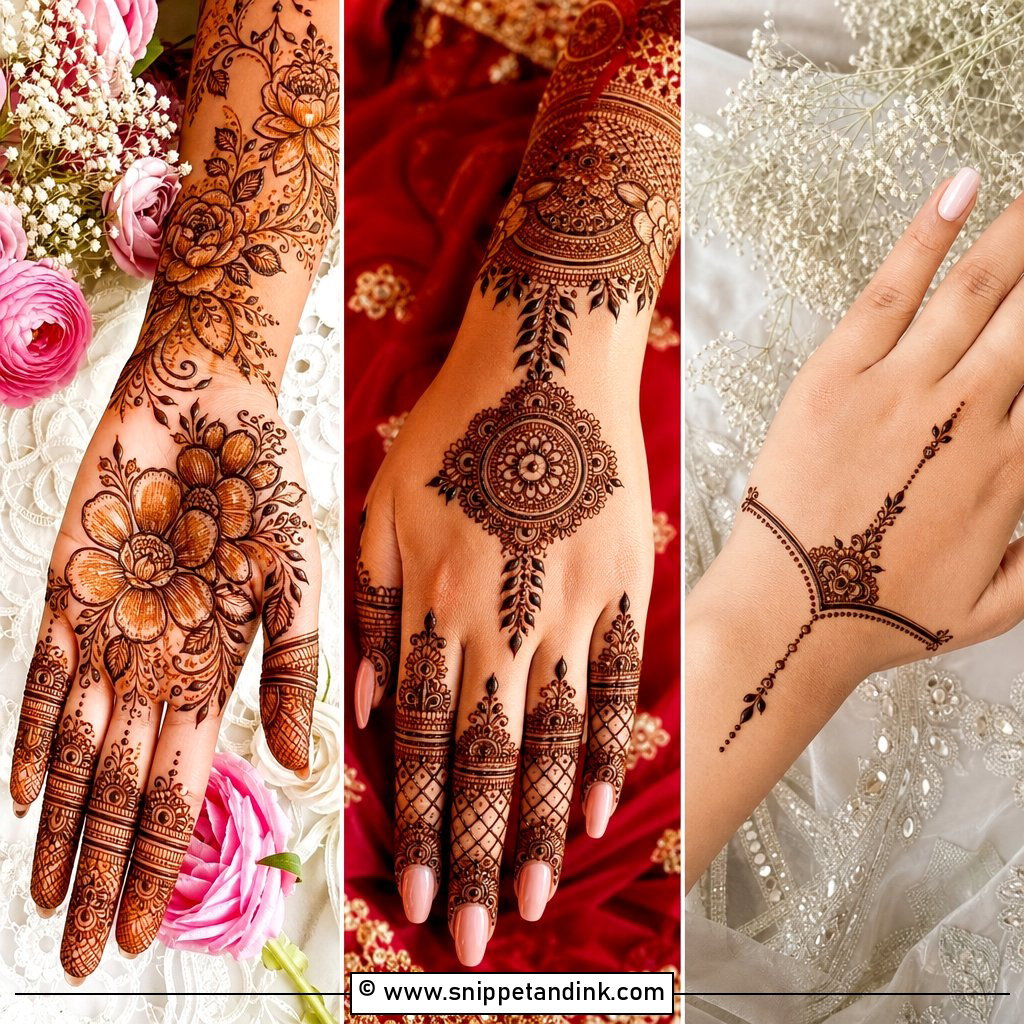
Wrist cuffs, chain links, finger rings, hanging dots and a central hand motif turn henna into jewelry. It’s decorative without being dense, and on the back hand it sits well alongside real bangles and rings. A minimal version suits pre-wedding events; florals, jaali and mandalas make it heavier for the main ceremony. Uneven cuffs are distracting, so I measure the bands by eye from the wrist bone on both hands before drawing.
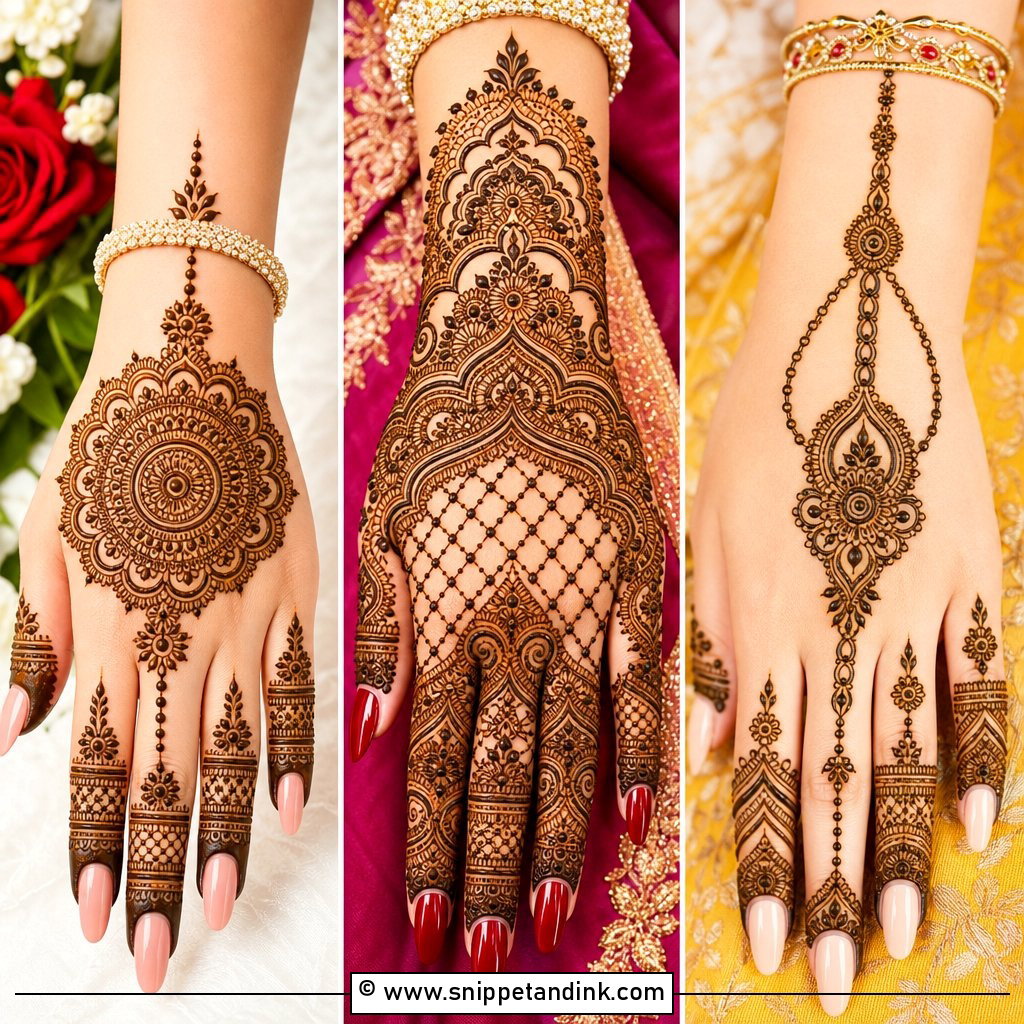
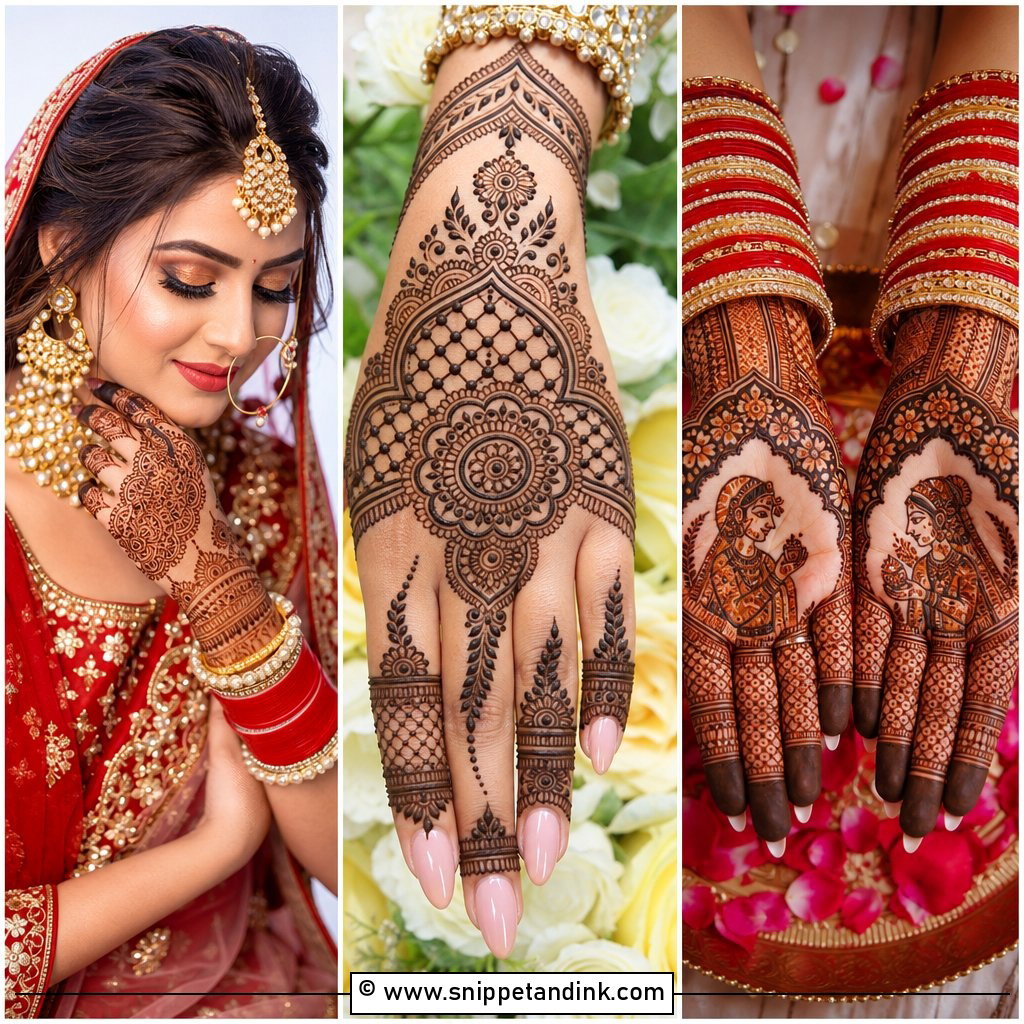

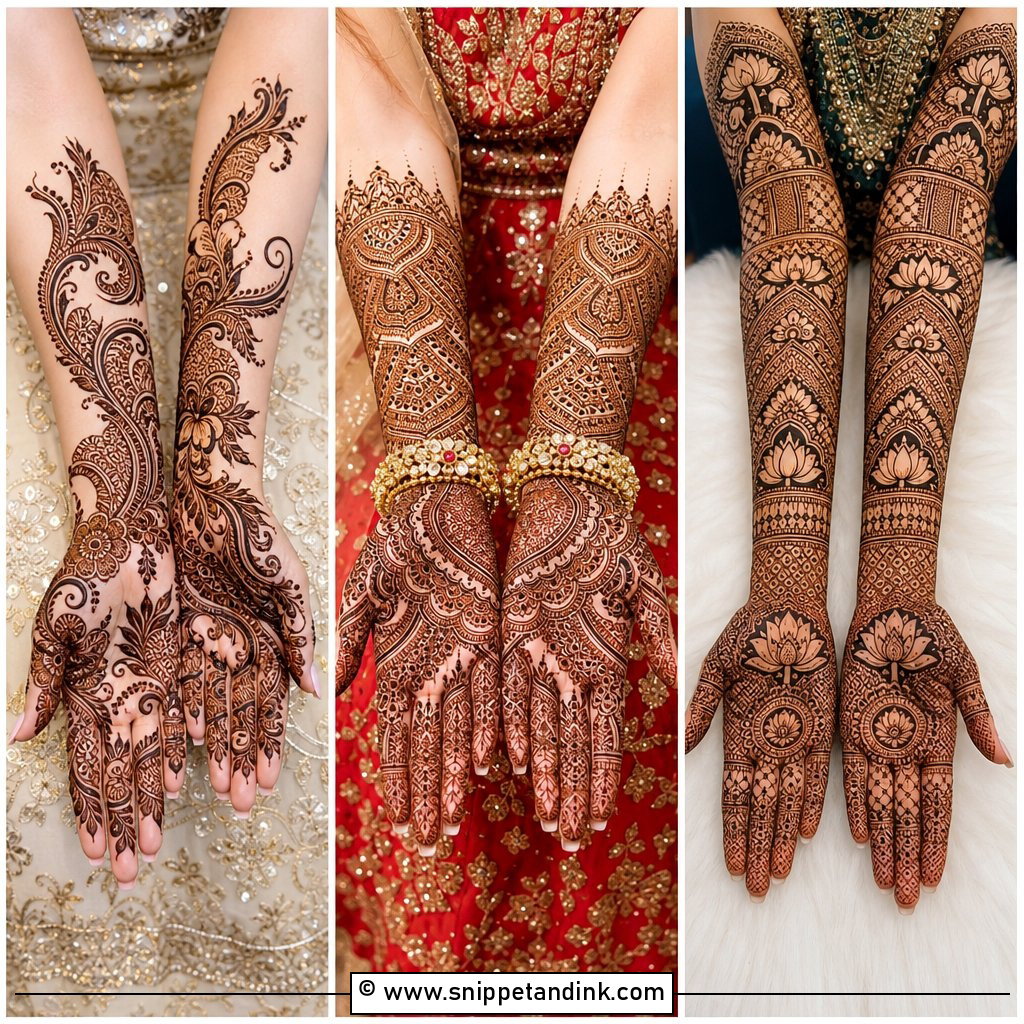
20. Lotus Bridal Mehndi Design
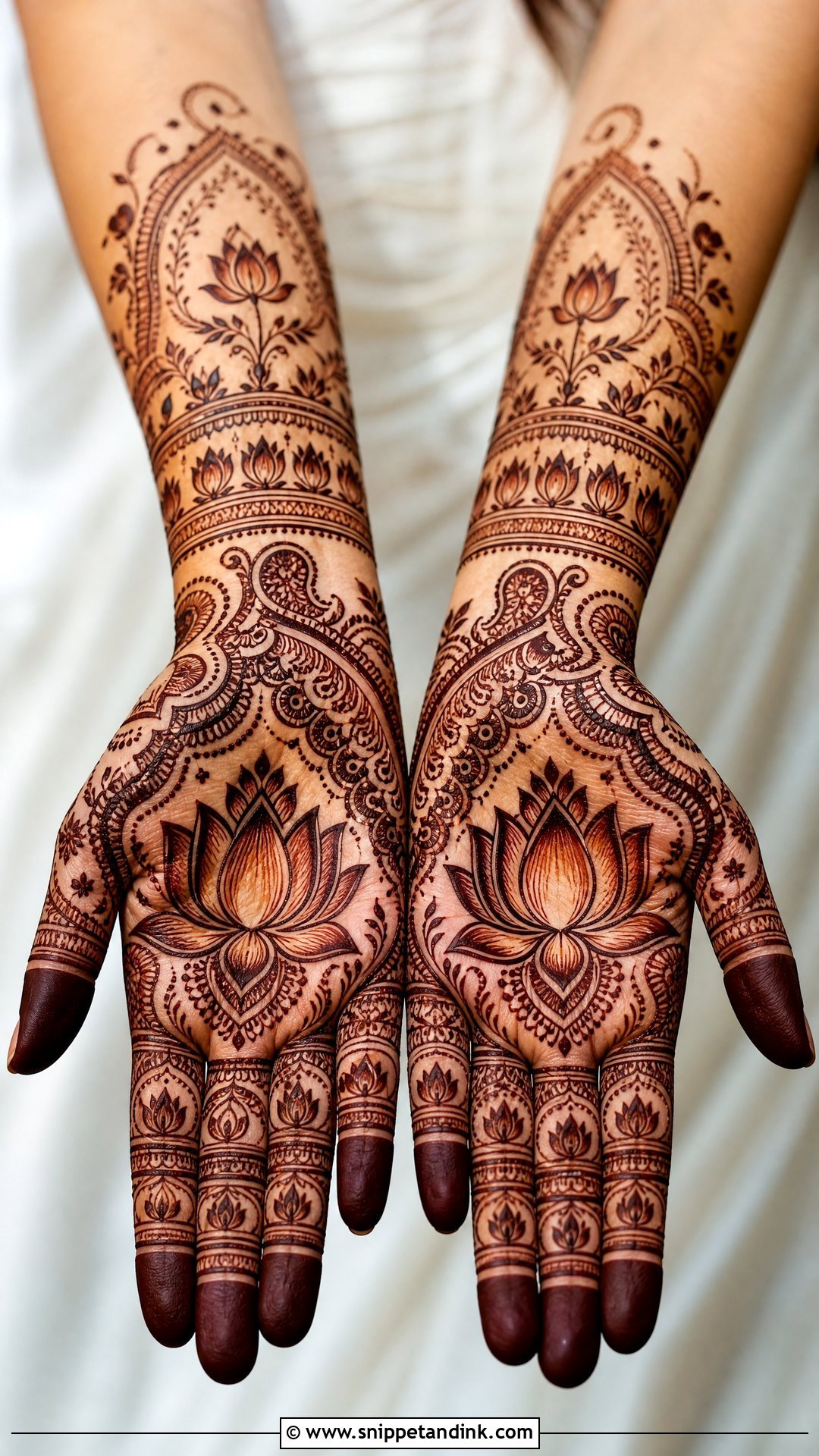
The lotus works as a palm centerpiece, a wrist border or a repeated pattern up the forearm, with paisleys, dots, mandalas and fine leafy curves around it. It feels symbolic without being busy. Large petals give a clean focal point; smaller buds fill the fingers and wrist. Shaded petals and bold outlines help it stand out after staining. Silk sarees, lehengas and temple jewelry are natural partners.
21. Elephant Bridal Mehndi Design
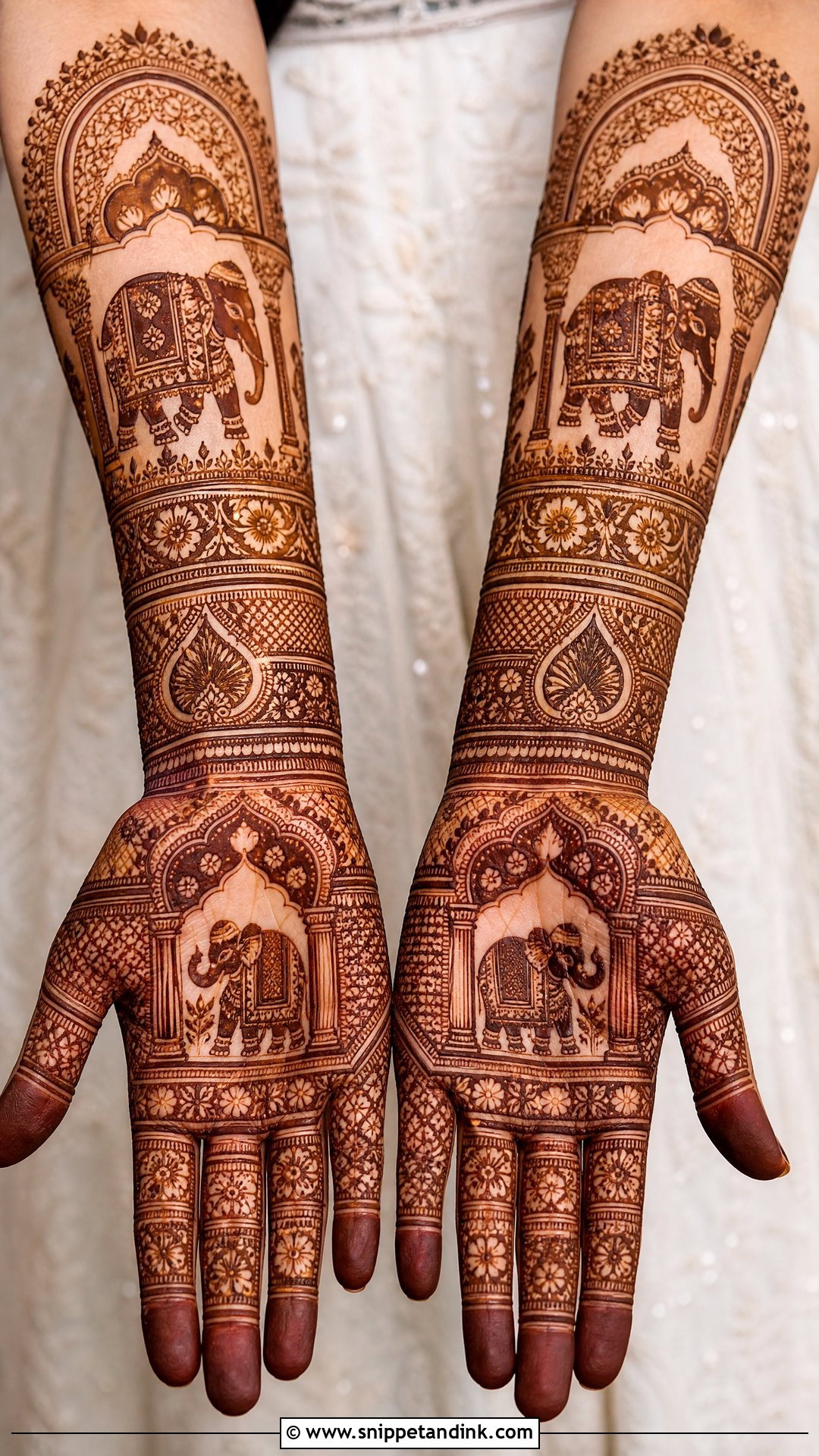
An elephant on the forearm or palm, framed by arches, florals, paisleys and decorative borders, has a royal, festive feel. Size is the deciding factor. A tiny, overloaded elephant turns into a brown smudge once the henna darkens, so I draw it large with a clean outline and keep fillers outside the body. One elephant on each hand is enough, or combine it with doli, palace or peacock details for a Rajasthani-inspired design. Jaali fillers around it add finish.
22. Personalized Bridal Mehndi Design
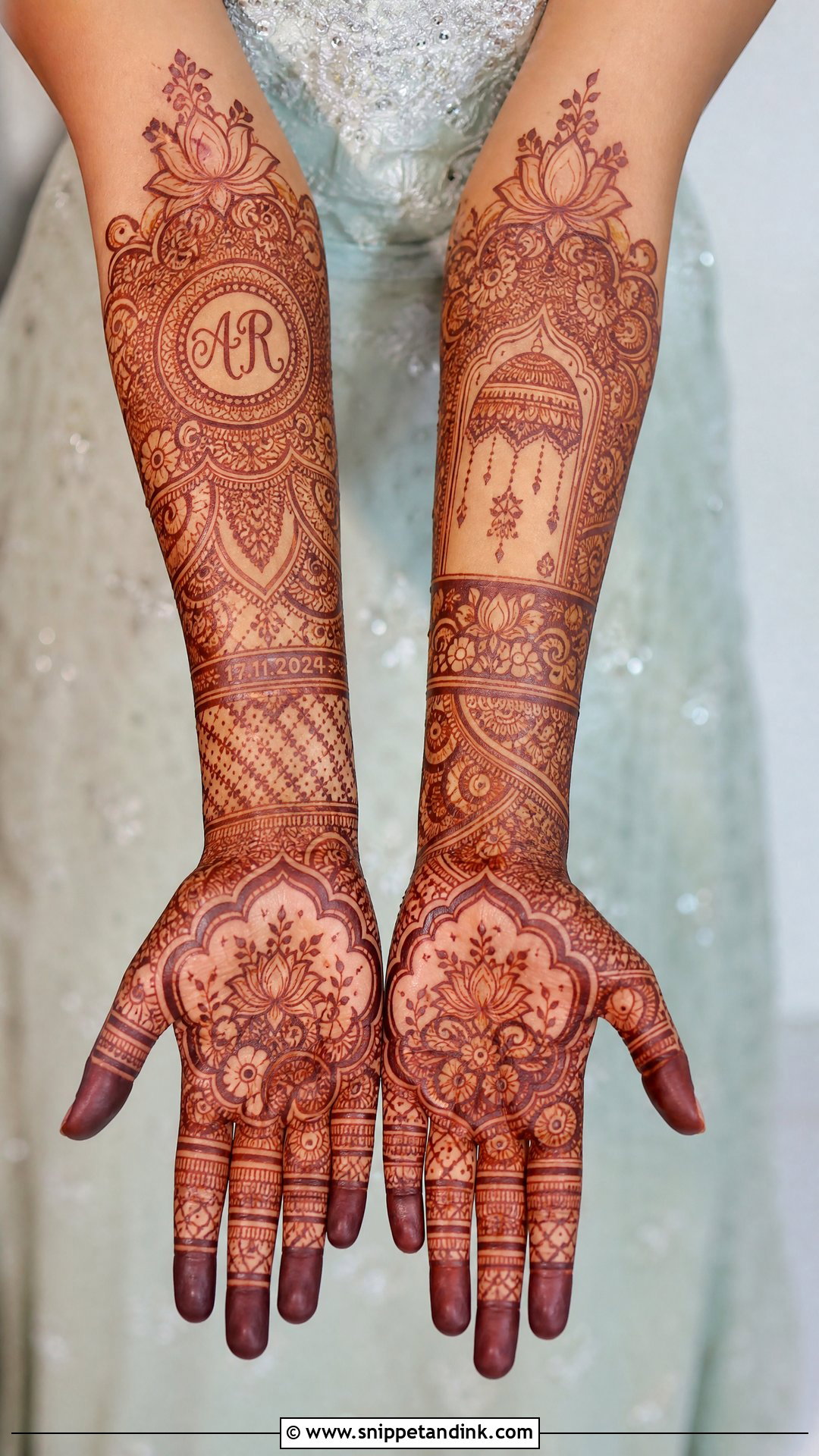
Initials, wedding dates, proposal symbols, favourite flowers, pets or travel icons can all go into a personalised bridal design. They must belong to the pattern, not float on top of it. I hide initials inside paisleys, set dates near wrist bands and tuck small symbols into mandala borders, keeping each one small. Guests love spotting them during the mehndi ceremony, and the photographer usually asks for a close-up.
23. Dulhan Mehndi Design
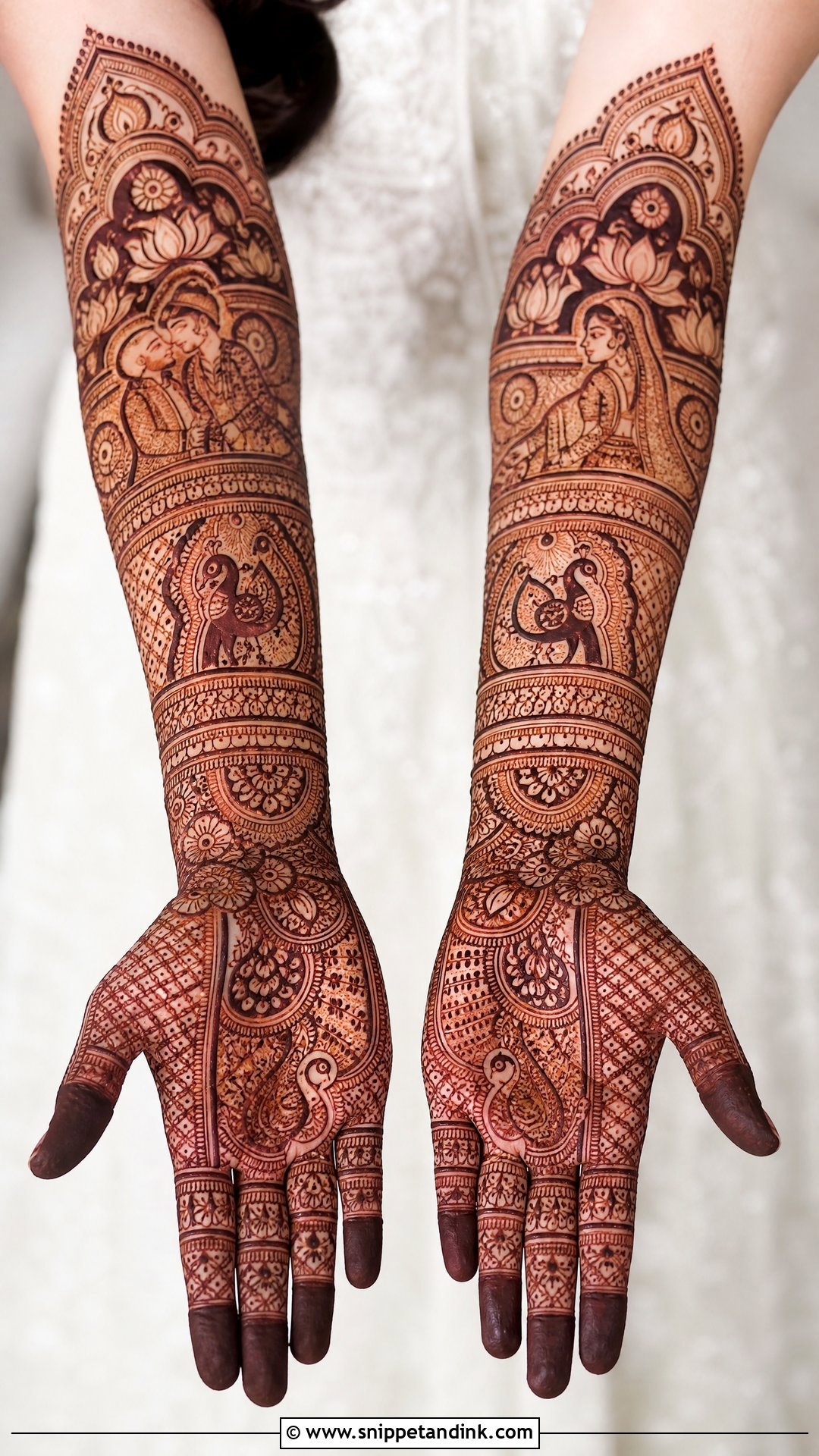
Dulhan mehndi design is the heavy bridal look many brides imagine: hands, arms and feet, sometimes higher, with dulha-dulhan figures, paisleys, peacocks, lotus motifs, jaali and layered borders. Its quality comes from contrast between dense fillers and strong focal motifs. If every area is filled the same way, it turns flat. I divide each hand into clear sections, match the layouts between hands and finish the fingertips neatly.
24. Modern Bridal Mehndi Design
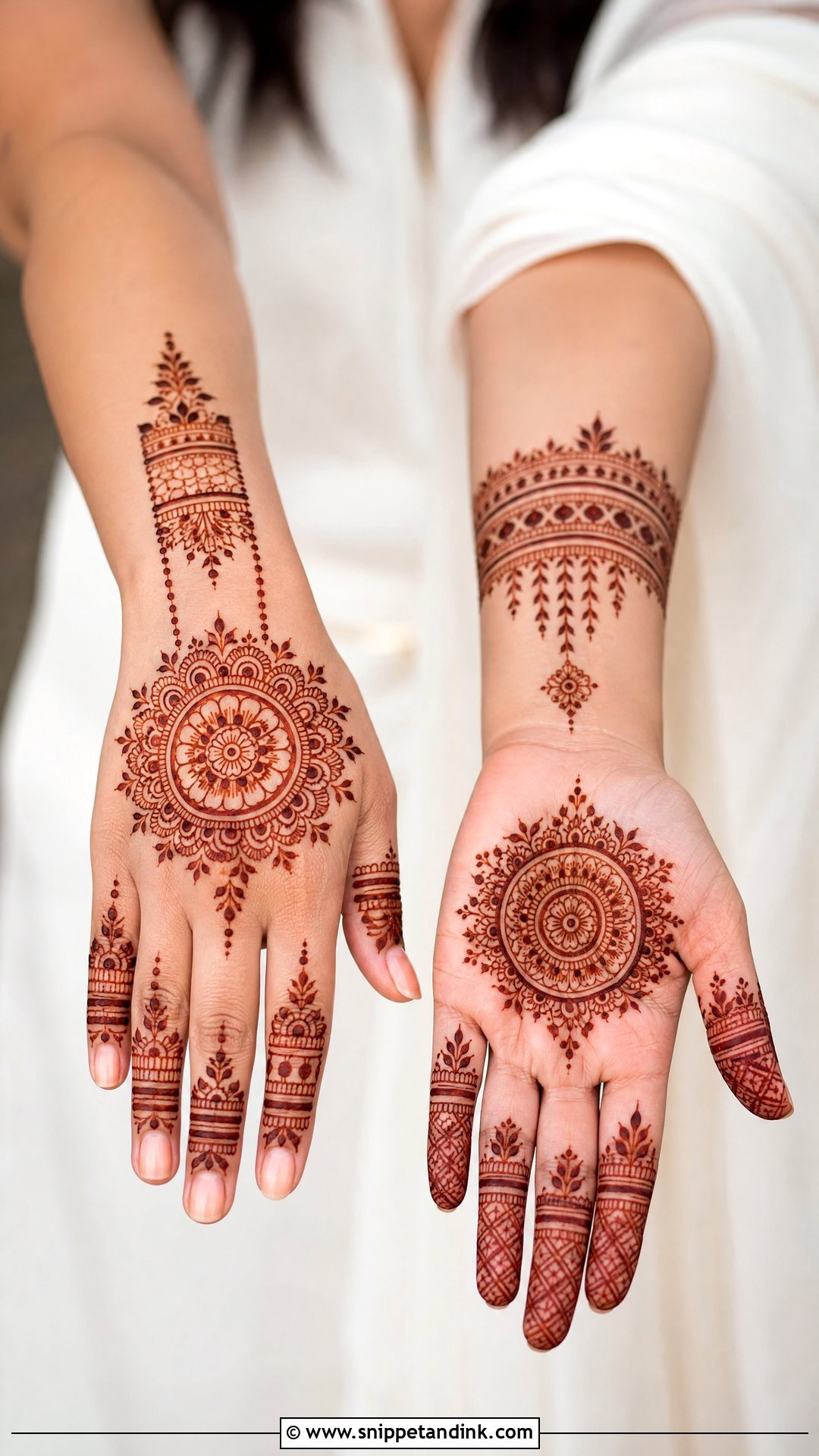
Modern bridal henna simplifies tradition rather than abandoning it. Designs built on negative space, geometric bands, clean florals, fine-line mandalas, half-hand coverage and stylish finger details give each motif room, which helps in photos. It’s lighter than classic bridal henna but still special enough for the wedding, and it matches contemporary lehengas, gowns and fusion outfits. A hidden initial, a wrist cuff or a forearm extension gives it a bridal upgrade.




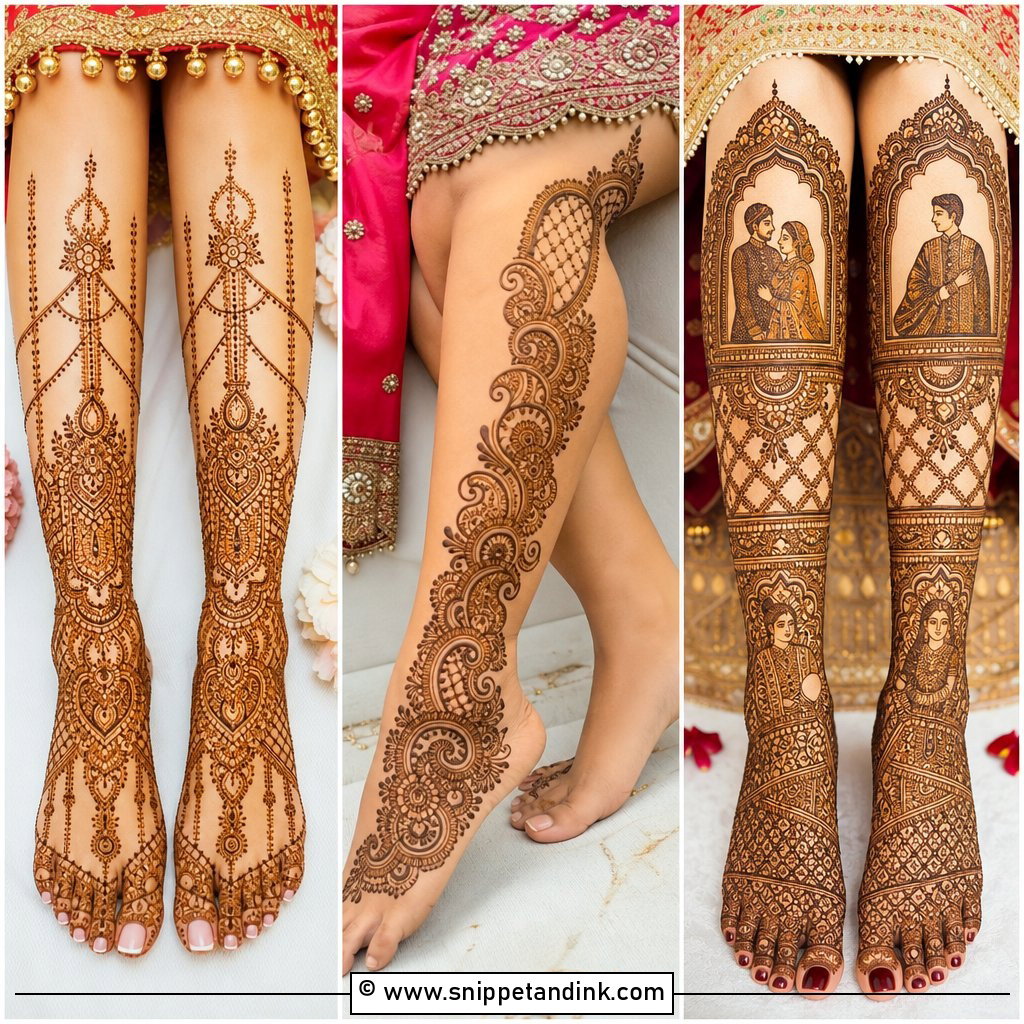
25. Bridal Foot Mehndi Design
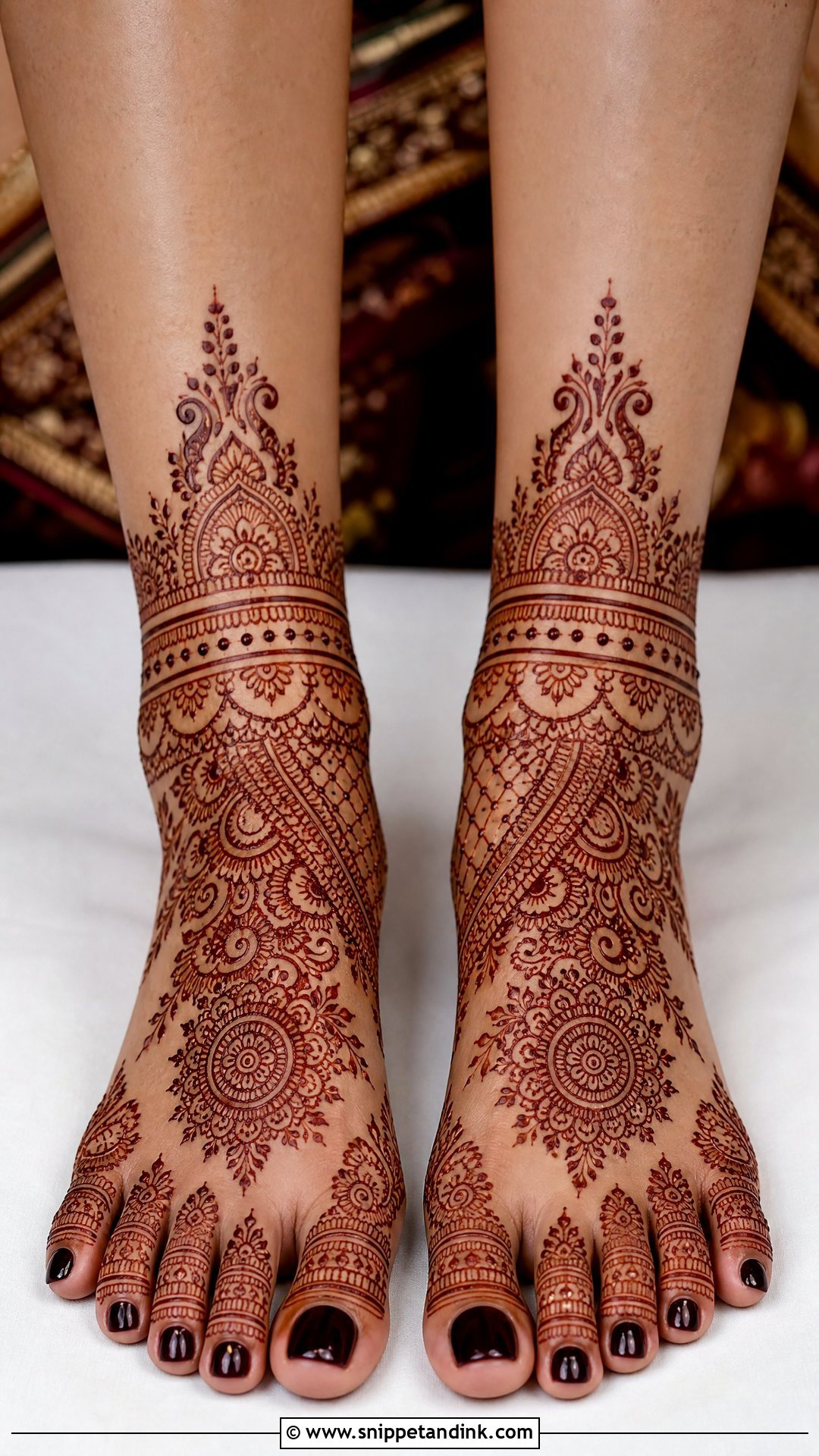
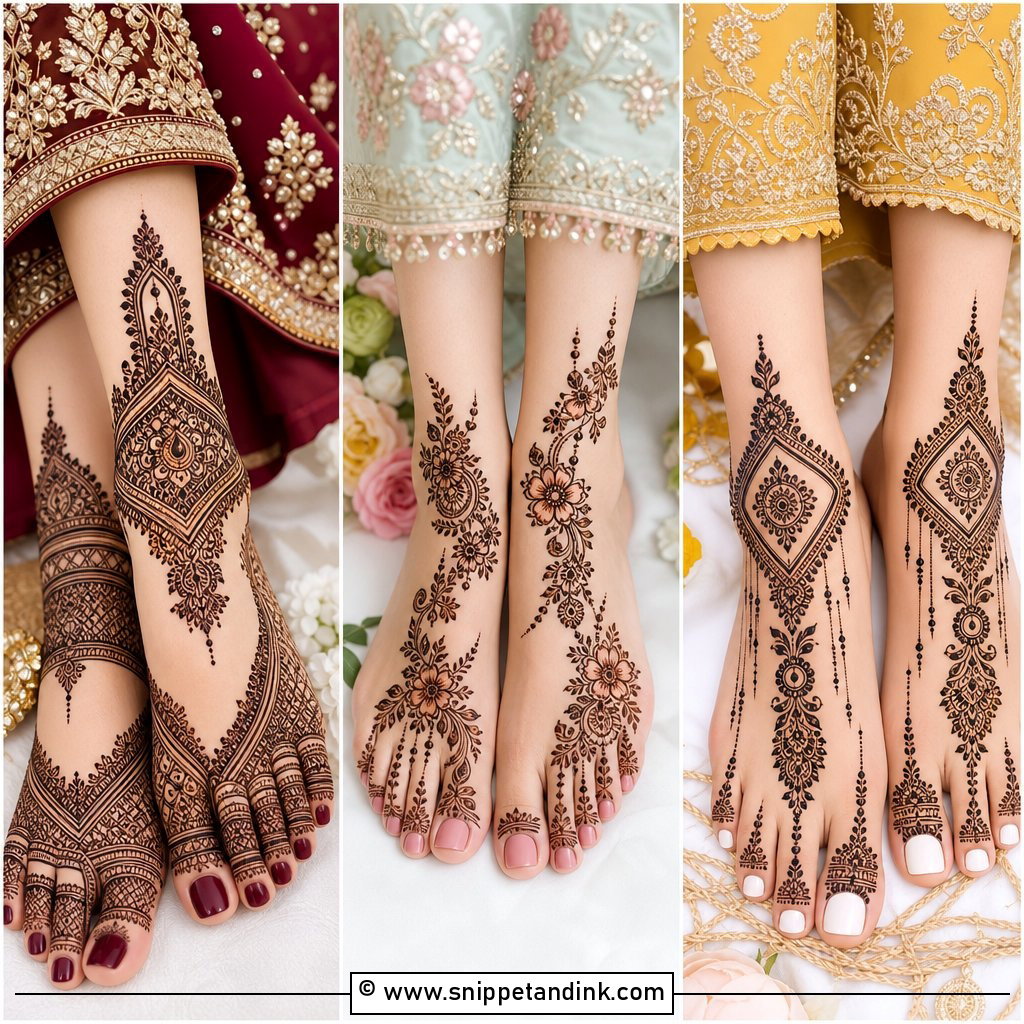
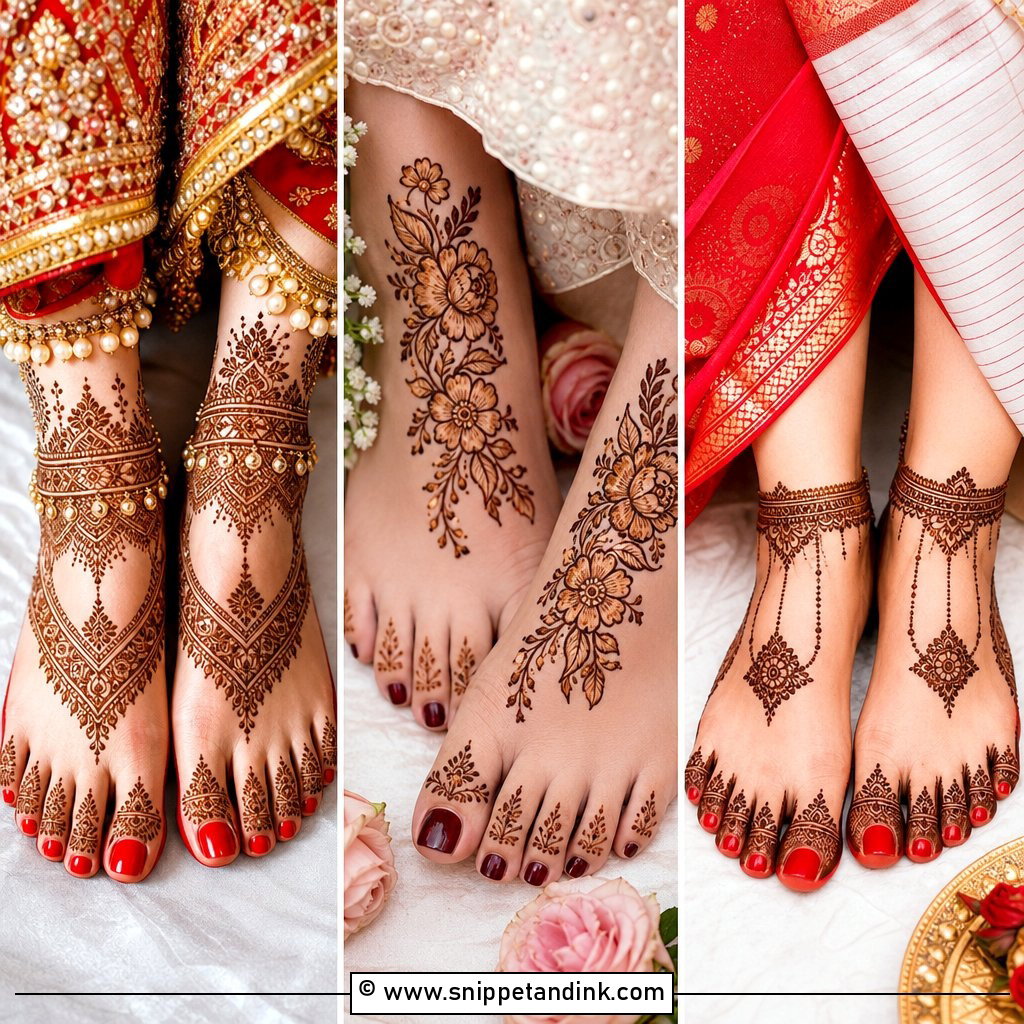
Foot henna completes the look for ceremonies where the feet show. Anklet-style bands, toe details, mandalas, paisleys, florals and jaali sections can cover the top of the feet. Some brides match hand and foot motifs; others go lighter on the feet when the hands are very heavy, which also shortens the sitting. I keep the area around the toes and ankle straps comfortable and well spaced, since feet move constantly and crowded lines blur. Payal and bridal footwear show it off.
Setting Up a Guest Henna Station That Keeps Moving
Guest henna is a different job from bridal work. Speed matters more than detail, and a queue that stalls ruins the mood of the evening. Here’s how I’d organise it.
- Book a separate artist, or two, for guests. The bride’s artist should not be pulled away mid-design.
- Offer three or four set designs: a finger and wrist pattern, a palm mandala, an Arabic trail. Guests choose quickly, and quality stays consistent.
- Decide whether it’s one hand or both. Most guests are happy with one, which nearly halves the waiting.
- Set up near good light, with a table at elbow height and chairs on both sides.
- Keep tissues and cotton buds at the station so any smudge can be lifted while the paste is still wet.
Ask the artist to bring fresh cones made for the day. Natural paste loses strength if it sits warm for too long, so a cool box under the table helps on a hot night.
When the Stain Comes Out Paler Than You Hoped
Henna stains vary from person to person, and even from one part of the hand to another. Warm, well-hydrated skin on the palms and fingertips takes the deepest color, while thicker or drier skin on the back hand and arms stays lighter. That’s chemistry, not a fault.
A truly weak stain usually comes down to one of a few things: the paste came off too soon, the hands got wet within the first day, the room was cold, or the paste itself was old. If you’re worried, keep your hands warm and dry and give it the full two days before judging; the color keeps deepening. The traditional trick of warming the hands over the smoke of cloves warmed on a dry pan is fine if done carefully at a safe distance. What I’d never do is reach for a chemical darkener or black henna to fix it. Those can burn, and a slightly lighter stain is far better than a reaction days before the wedding.
For the next bride in the family, the fix starts earlier: an application one or two days before the ceremony, paste left on overnight, and no water on the hands until the following afternoon. Those three habits matter more than any recipe.
Bridal Hands and Guest Hands Need Different Plans
Outfit, ceremony, comfort and taste decide the design. Heavy Indian and Rajasthani work feels grand for the main day, while Arabic, Gulf, minimal and bracelet patterns suit the engagement, sangeet or reception. Portraits, initials, dates and cultural motifs carry meaning; florals, mandalas, jaali and paisleys carry elegance. Save clear references and agree on coverage, timing and stain care with your artist ahead of time. And book the guest henna separately from your own, so your artist’s hours belong to you.
You'll Like These Ideas:







Leave a Reply