
Engagement mehndi has a different job from wedding mehndi. The hands will be photographed up close while a ring slides onto one finger, so the design has to leave room for the ring, the bangles and the outfit instead of covering every inch. In my work, a lighter engagement design is also kinder to the bride’s schedule, because she often has her full bridal mehndi only weeks later. Simple doesn’t mean plain, though. The designs below include soft florals, neat mandalas, Arabic trails, bracelet cuffs, a little jaali and ring-focused back-hand layouts, with notes on how each one stains and who it suits, from the bride to her sisters and guests.
Getting the Stain to Peak on the Day of the Ring Ceremony
Natural henna doesn’t look its best the moment the paste comes off. It starts out bright orange, then deepens over the next day or two toward reddish-brown or maroon. That delay is the reason I ask brides to plan the appointment around the engagement, not on the same morning.
- Book the application one to two days before the ceremony, so the color has time to darken.
- Arrive with clean, dry hands and no lotion or oil, which blocks the dye from reaching the skin.
- Skip waxing, scrubs and manicures for the day before; freshly exfoliated or broken skin stains unevenly and can sting.
- Tell your artist about any skin sensitivity. Fresh paste usually contains essential oils, and a small patch test a few days ahead is sensible if you react easily.
Also expect color to vary by area. Palms and fingertips stain darkest, the back of the hand lighter, and the forearm lighter still, so a design that looks even in paste will settle into a natural gradient once it stains.
1. Simple Engagement Mehndi Design Front Hand
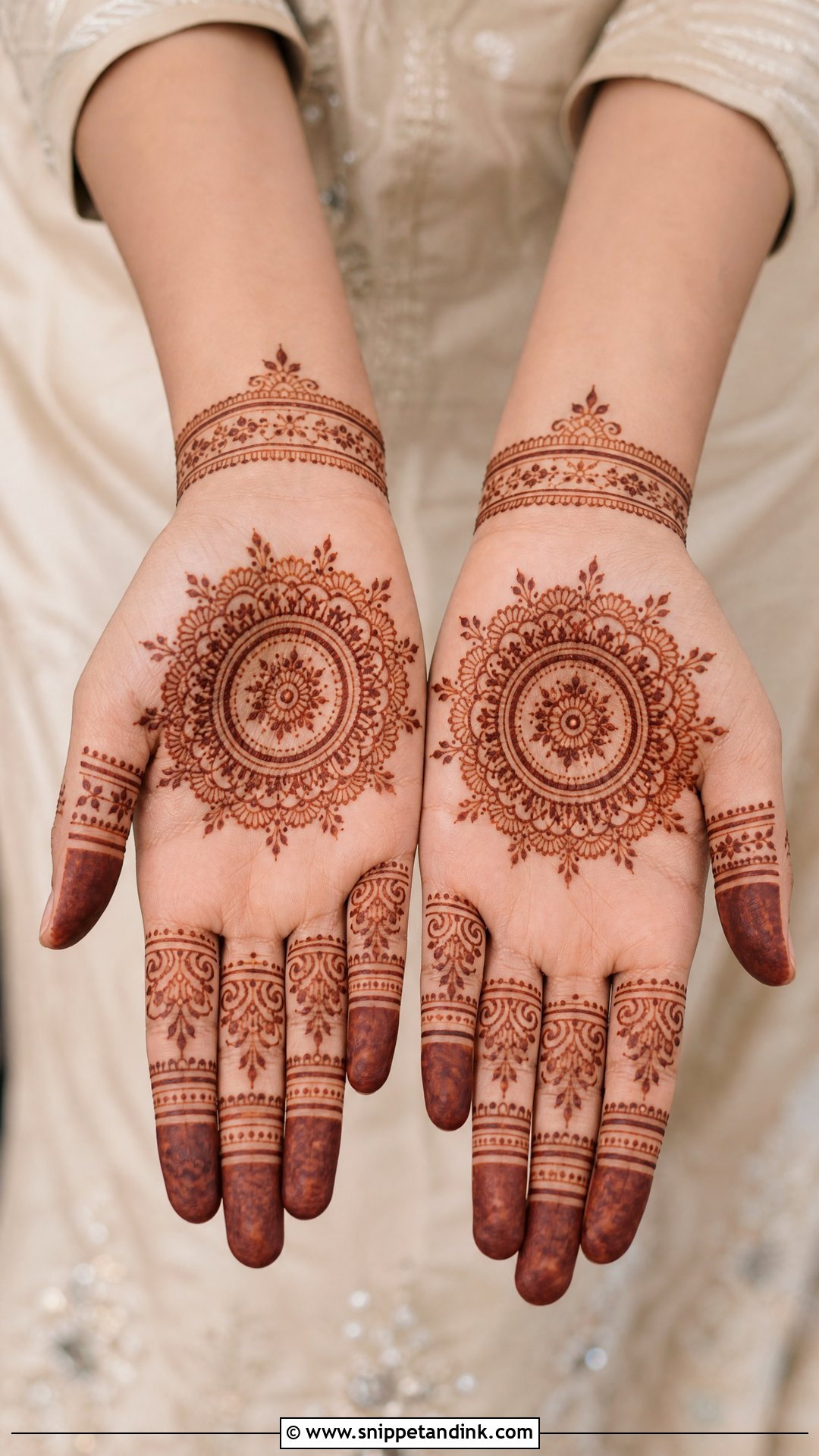
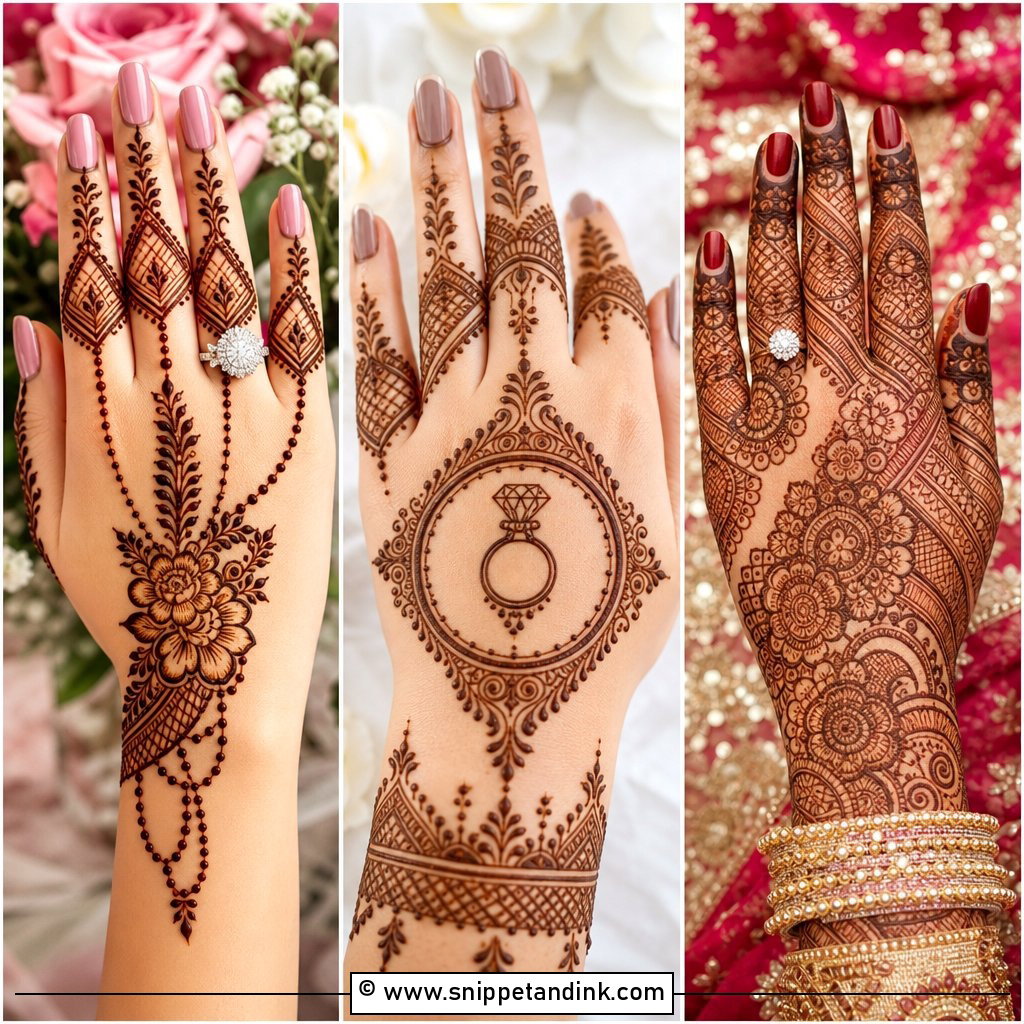
On a front hand I give the palm one clear focal point, usually a round mandala, and keep the fingers light so they match without crowding. Small leaves around the mandala and clean fingertip caps finish it. I keep the wrist to a narrow band, because heavy wrist work disappears under bangles anyway. The open spaces matter more than they seem: henna lines spread slightly as the paste sits, and gaps keep the stain crisp instead of blurring into a dark patch. It reads as festive without looking bridal, so sisters wear it as happily as brides.
2. Simple Engagement Mehndi Design Back Hand
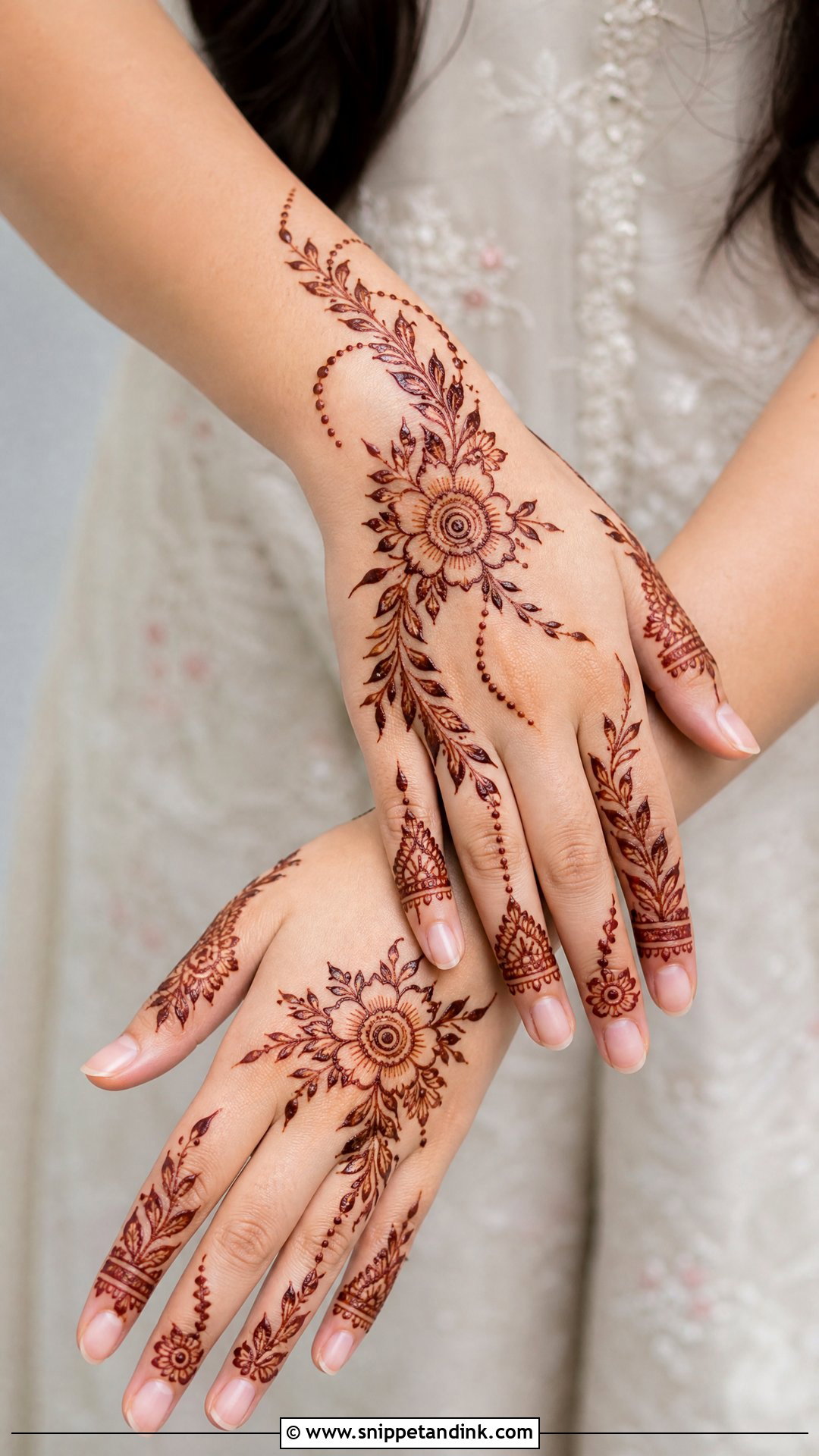
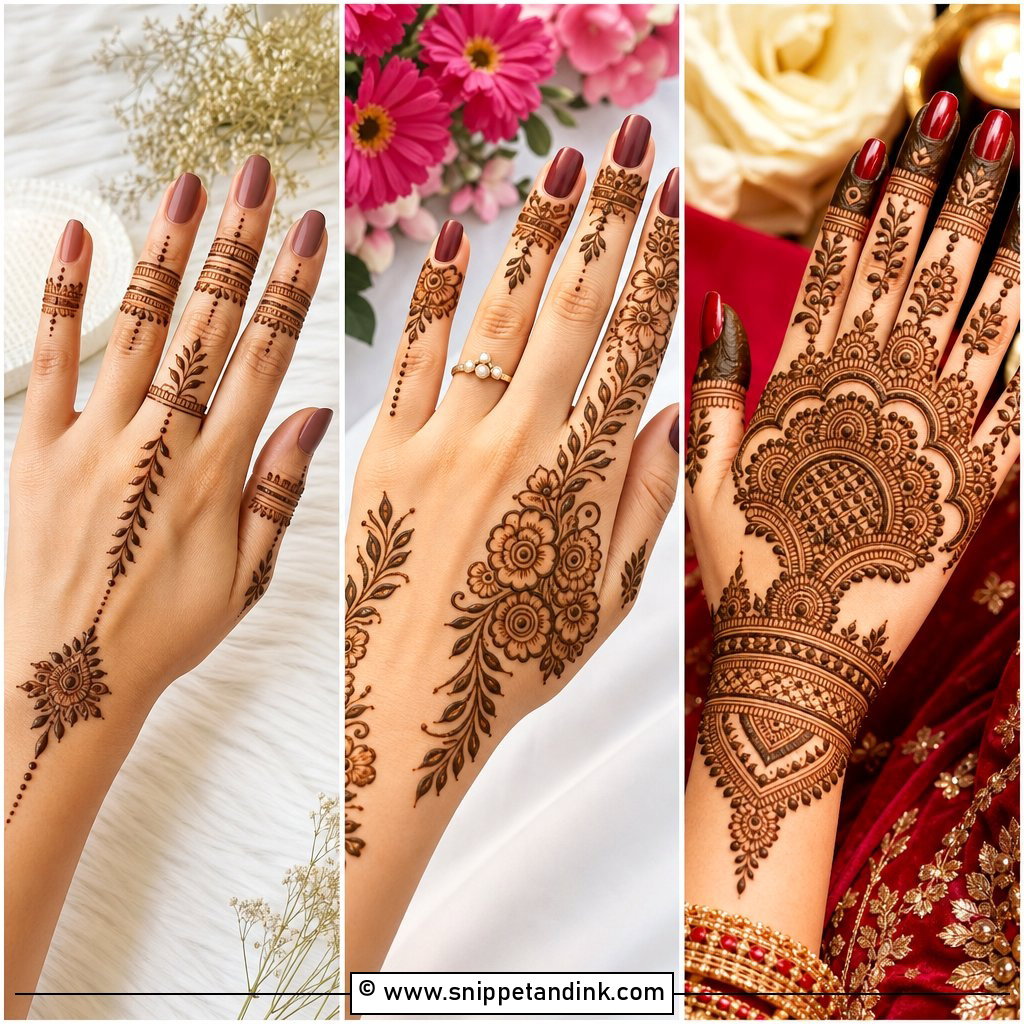
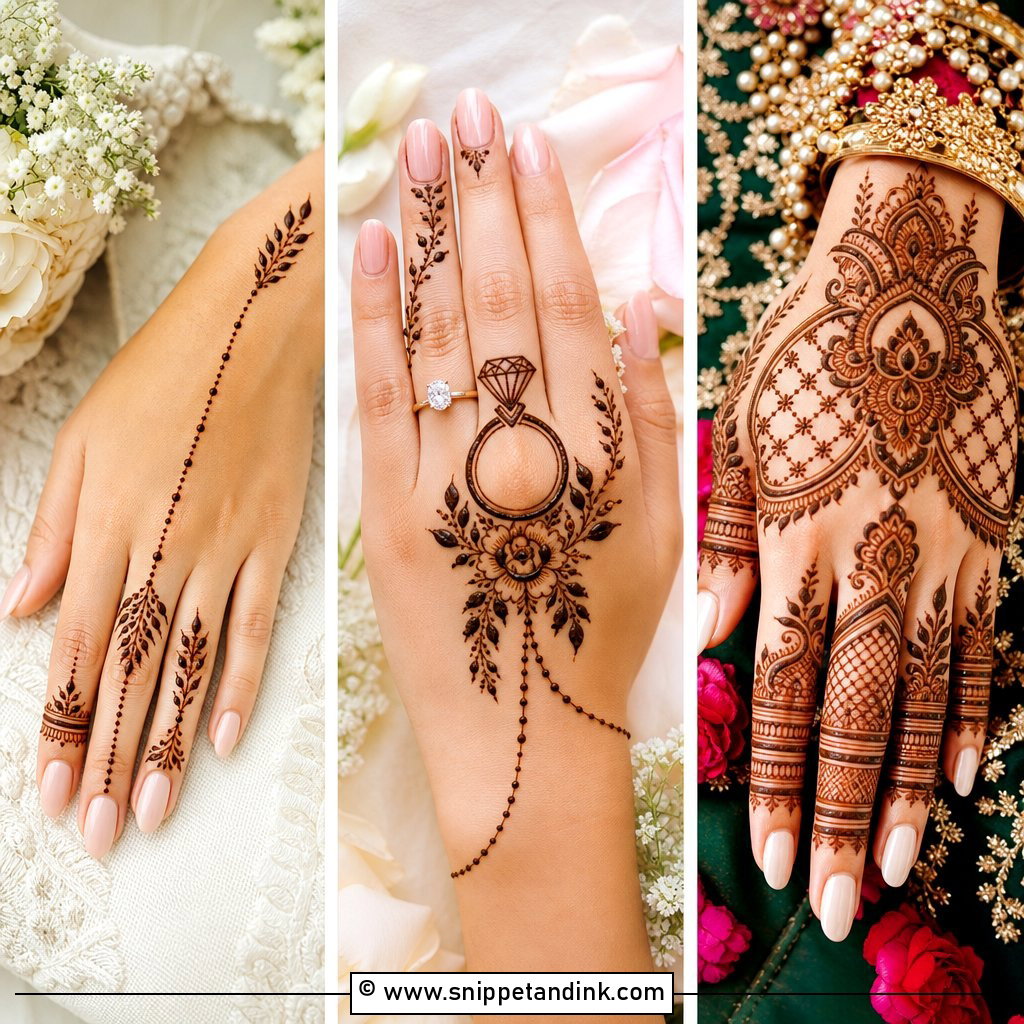
The back of the hand is what the camera sees during the ring exchange, so I design it around the ring finger before anything else. A small floral circle near the center grows into leafy vines toward the index finger and the wrist, with fine dots and petals filling the gaps. I leave clear skin around the base of the ring finger. One thing to expect: the back of the hand stains lighter than the palm because the skin is thinner and drier, so bold outlines read better here than delicate shading.
3. Simple Arabic Engagement Mehndi Design
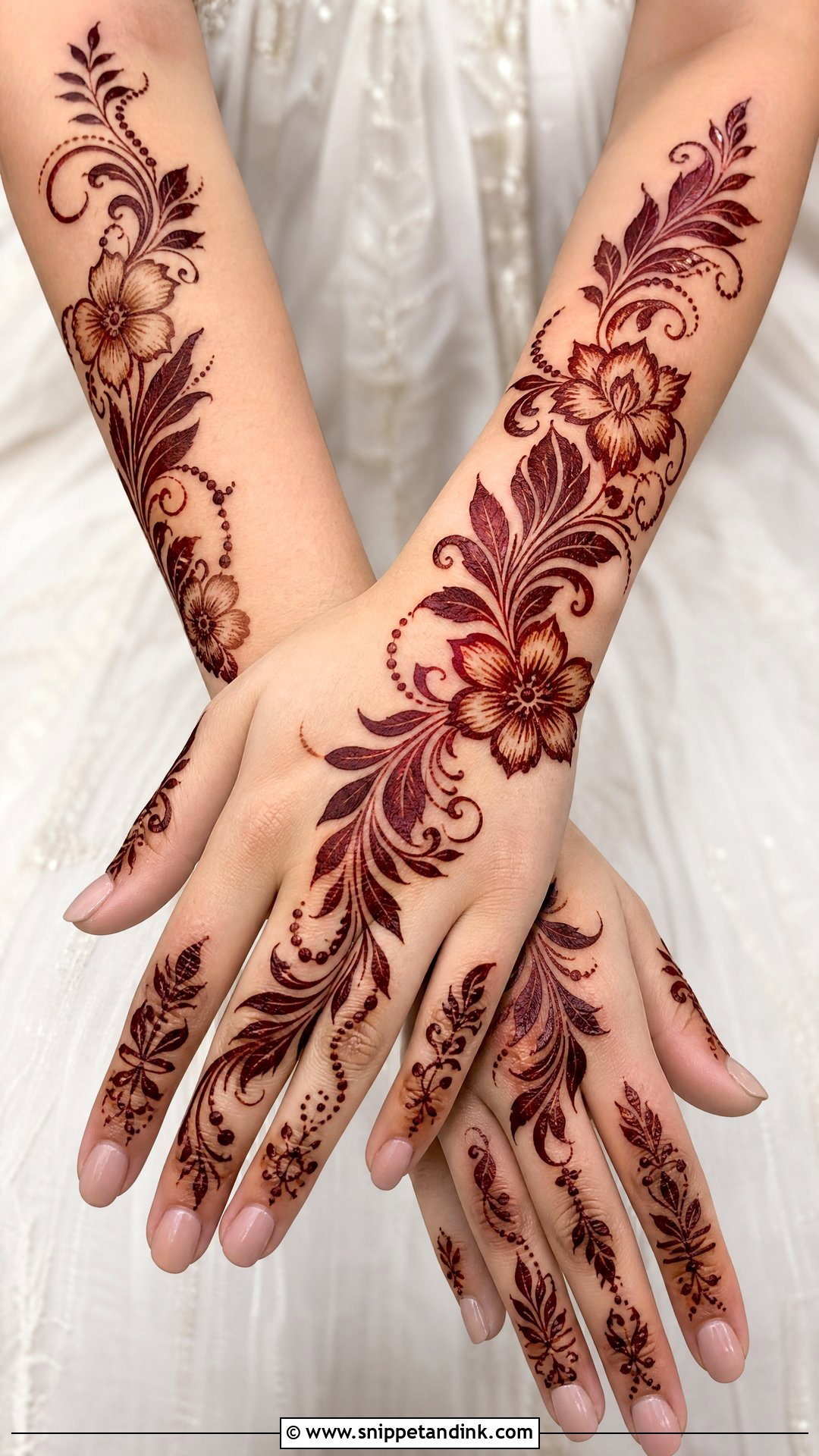
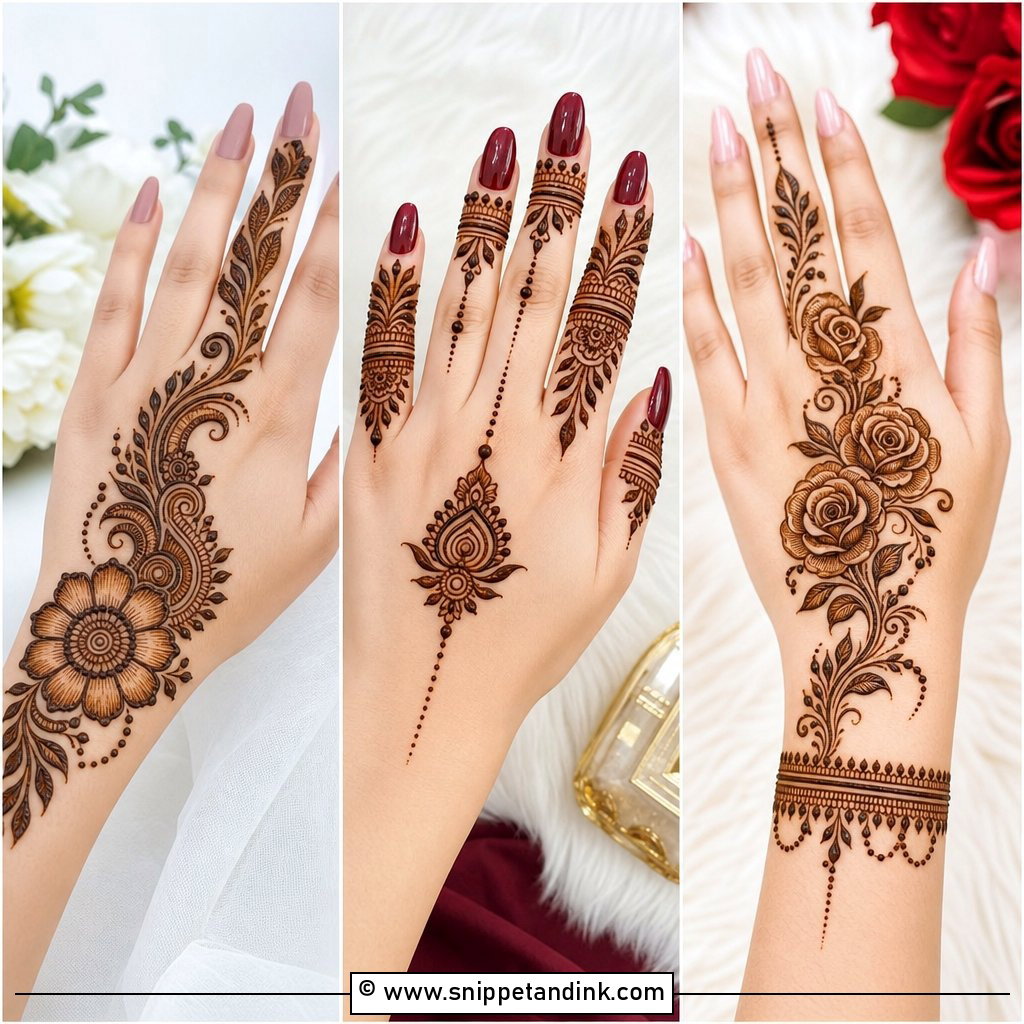
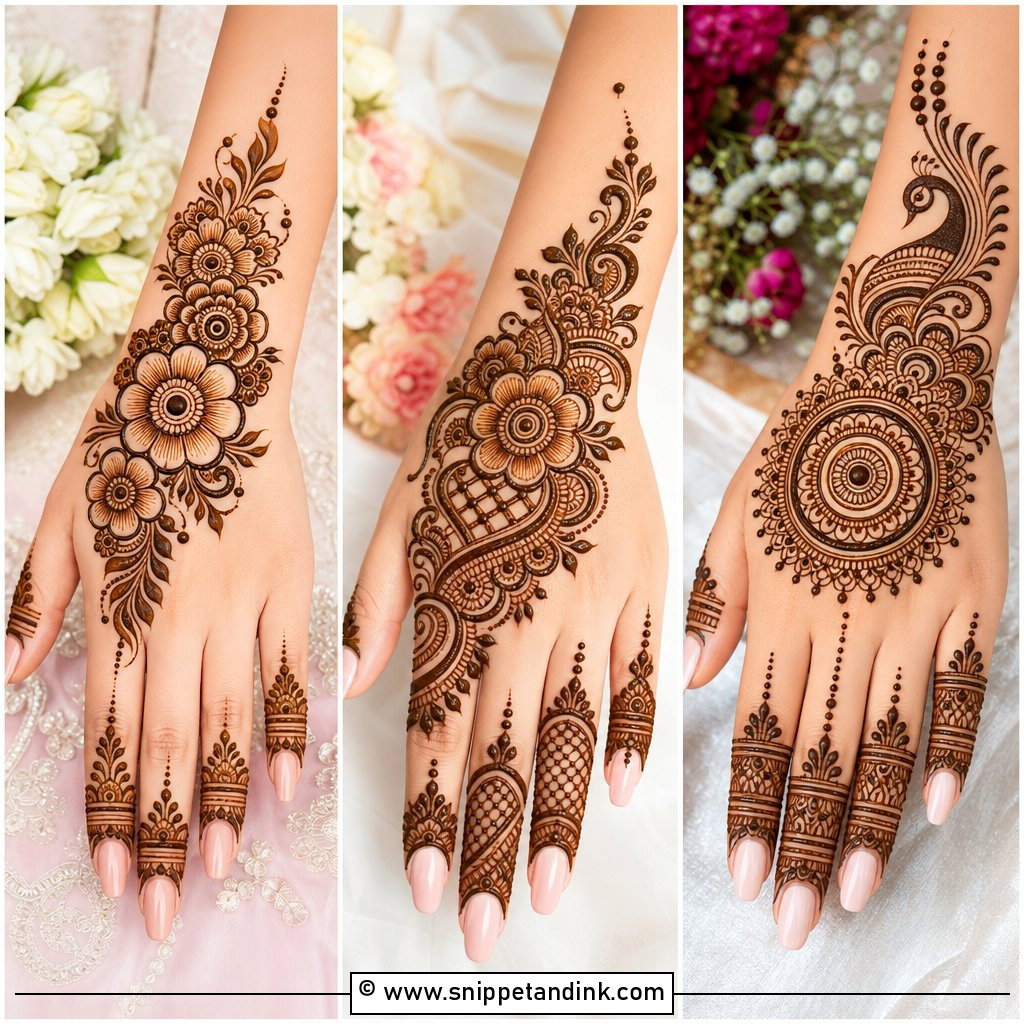
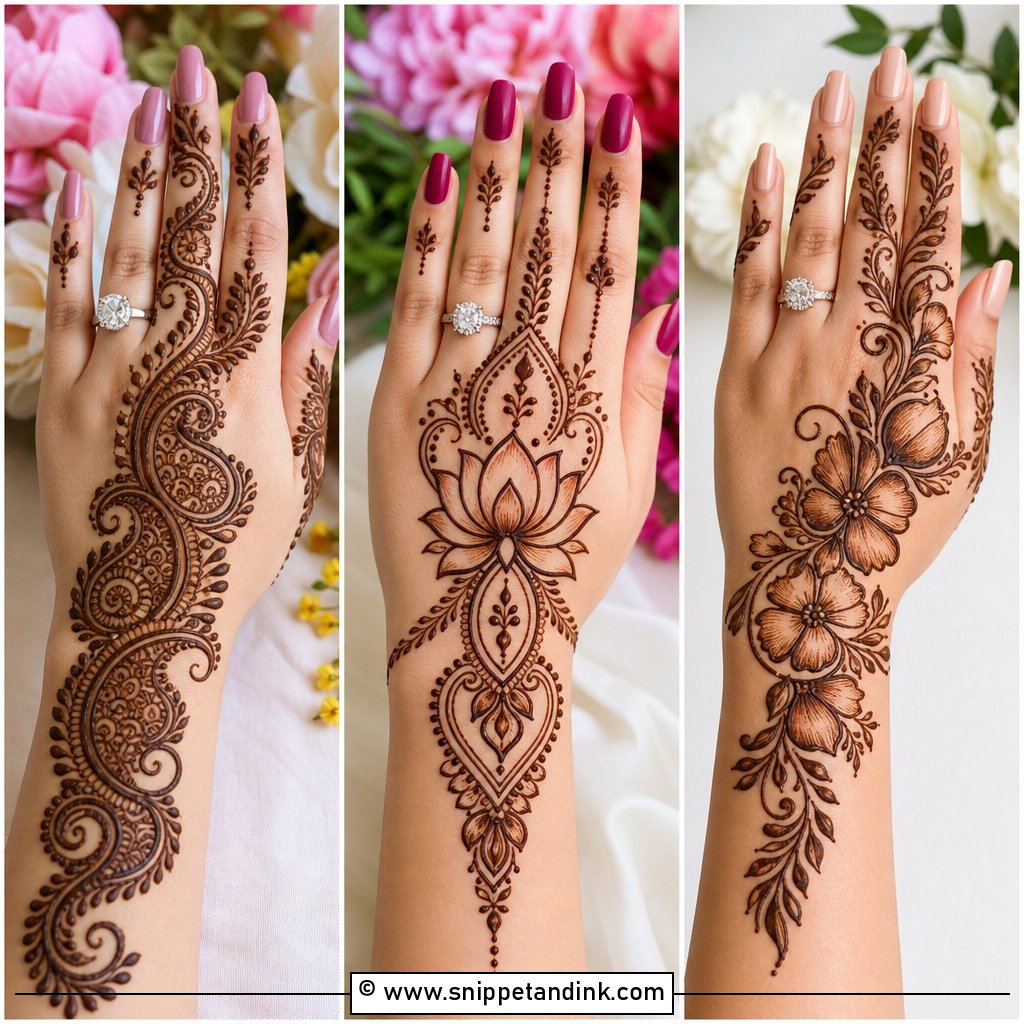
Flowing movement and bold empty space are what define Arabic engagement mehndi. A simple version runs diagonally from one side of the wrist to the opposite finger, built from large flowers, leafy vines and curved paisleys. It’s fast to apply, which helps on a busy engagement morning, and the open skin makes the stain look clean. For an engagement I use thinner outlines and fewer shaded blocks than I would for a party guest, so the hand stays soft rather than graphic. It works on both front and back.
4. Simple Indian Engagement Mehndi Design
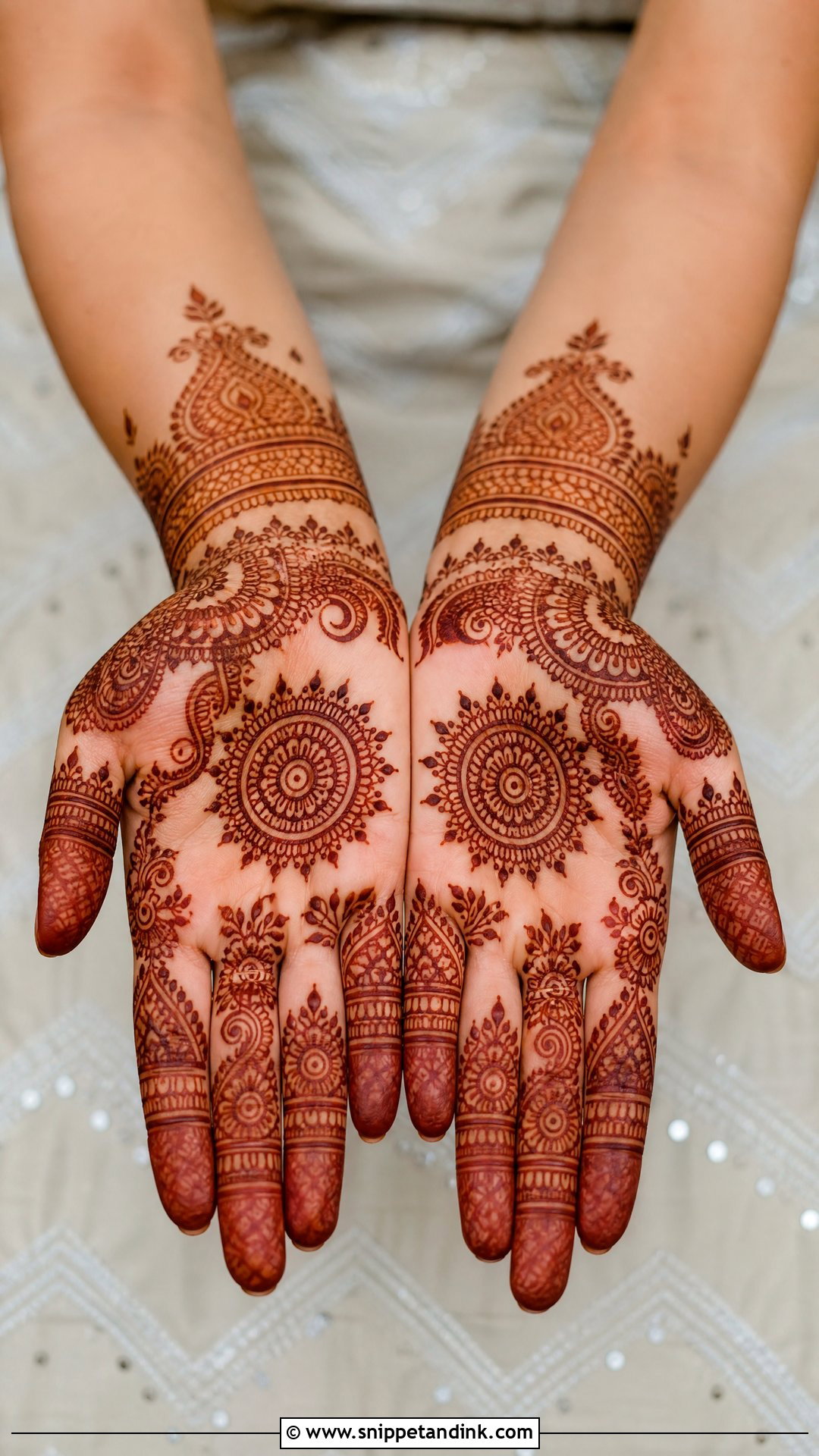
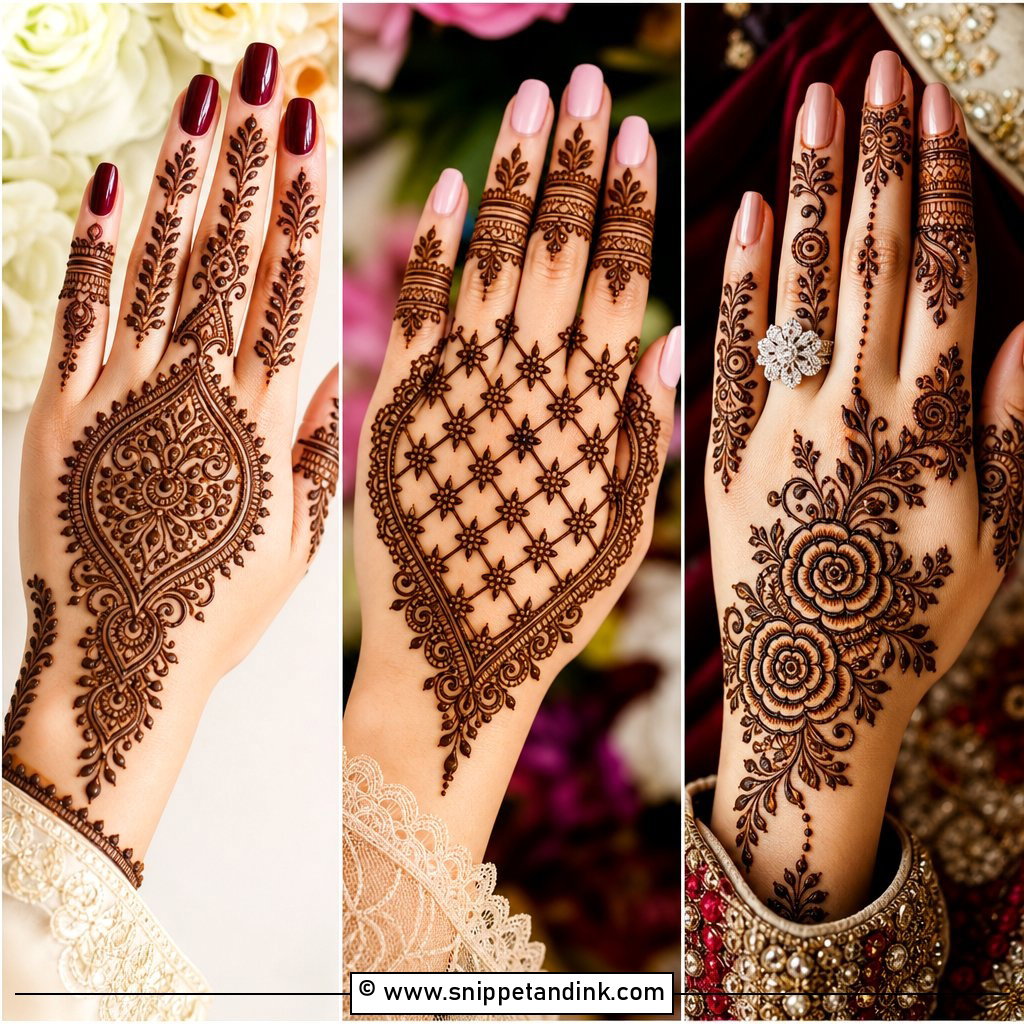
Indian engagement mehndi keeps the traditional vocabulary, paisleys, dotted borders and a palm mandala, but stops well short of dense bridal coverage. I let the palm carry the main pattern and give the wrist a delicate cuff that looks like jewelry. The thing I watch most in Indian work is even spacing. Uneven gaps make a lighter design look unfinished, while even ones make it look deliberate. It scales easily, slightly fuller for the bride and softer for family.
5. Simple Indo Arabic Engagement Mehndi Design
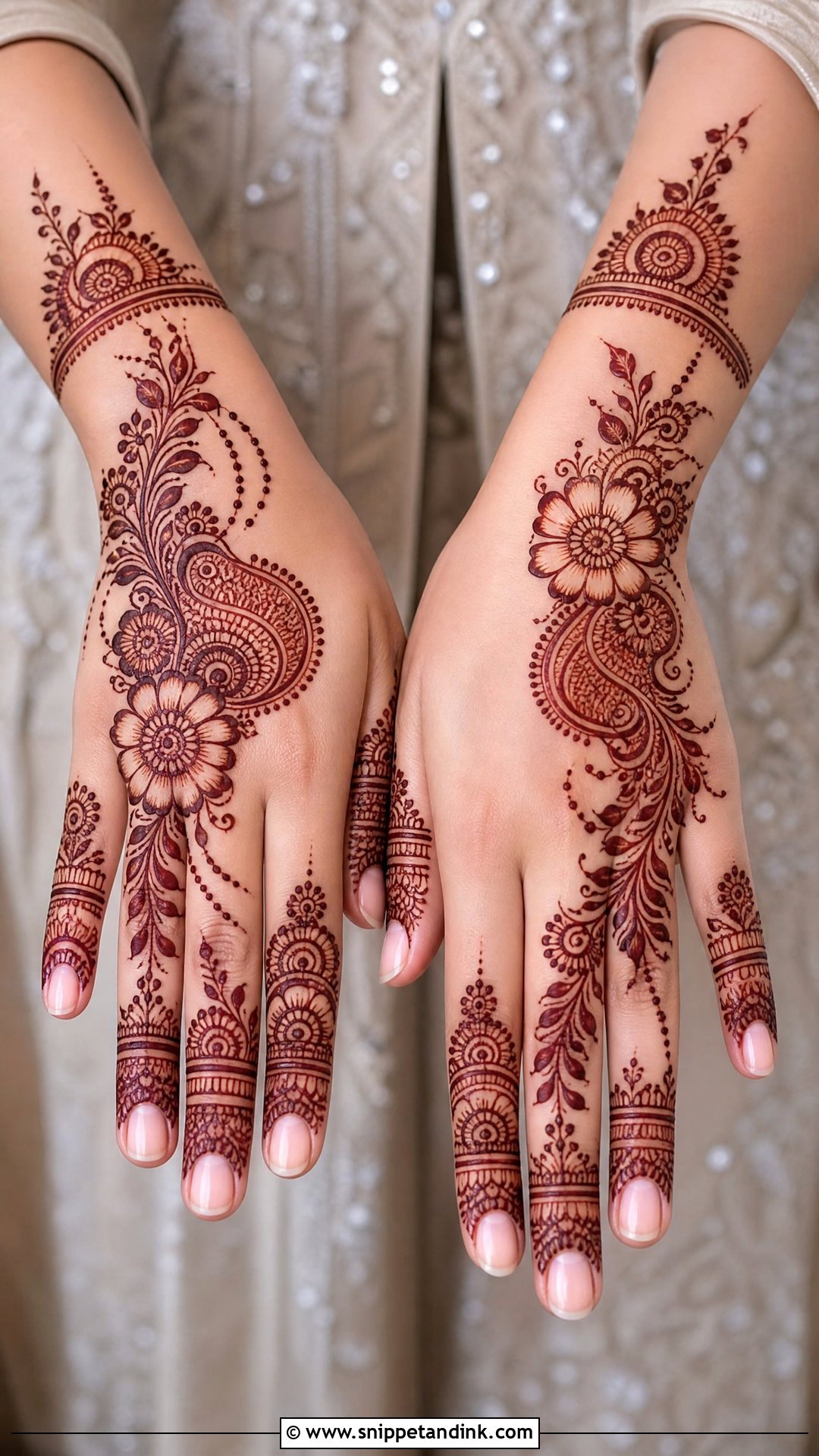
Many brides land between two styles. Indo-Arabic engagement mehndi borrows the bold diagonal flow of Arabic work and the fine detail of Indian patterns: a floral trail, small paisley sections, half-mandalas and light finger filling. The open spaces let the reddish-brown stain stand out on every skin tone. When I place the heavier detail, I keep it away from the ring finger so the design frames the ring rather than competing with it.
6. Simple Engagement Mehndi Design With Ring Space
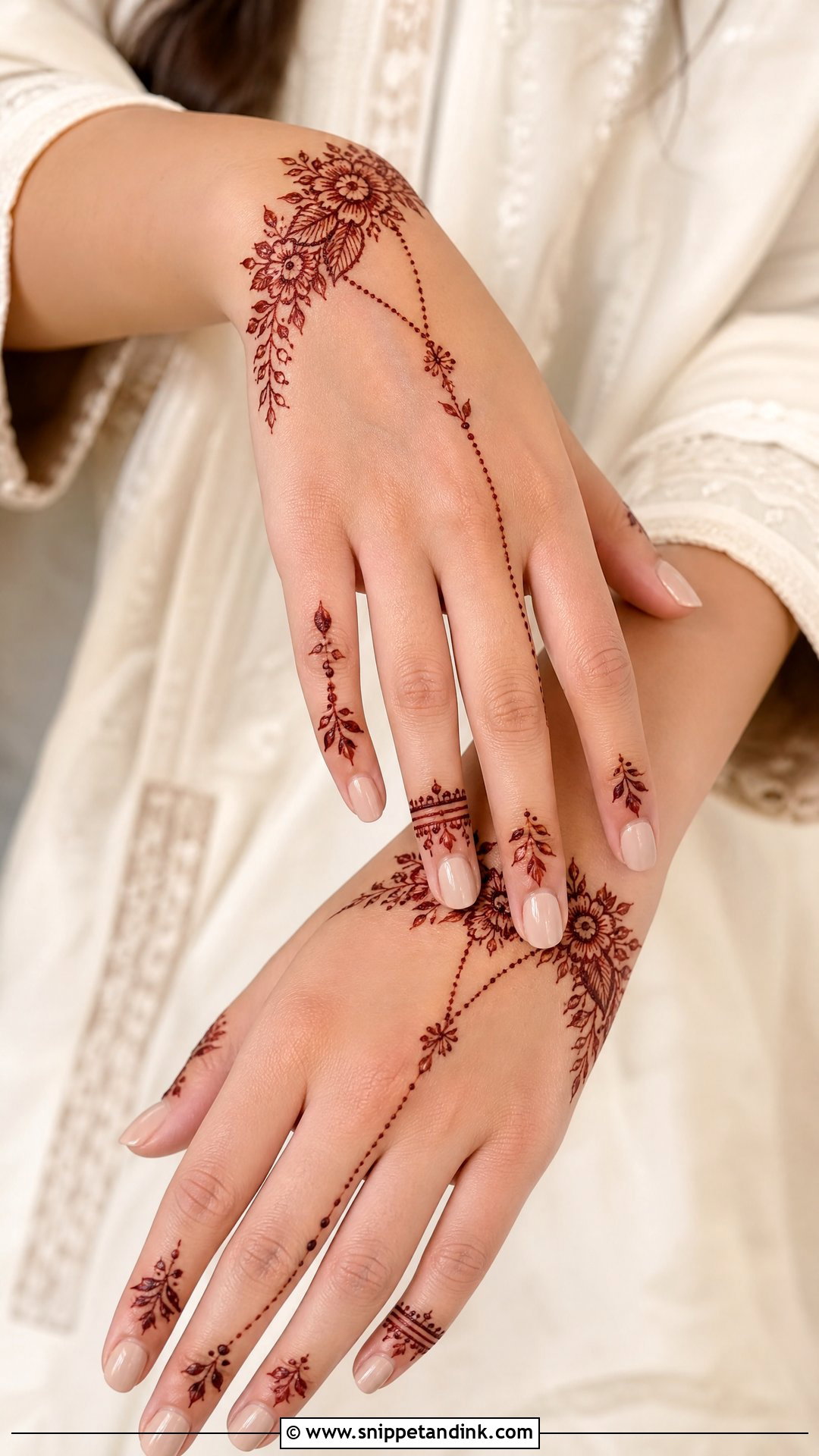
Ring-space designs are built around one deliberate gap. The ring finger is left clean or only outlined, with a floral bracelet at the wrist, fine chains across the back of the hand and small motifs on the other fingers. I frame the blank area with a ring of tiny dots so it looks planned, not forgotten. This matters most for brides with a detailed ring or nail art, where a busy finger would hide both. Ask your artist to see the ring, or a photo of it, before she starts.
7. Simple Floral Engagement Mehndi Design
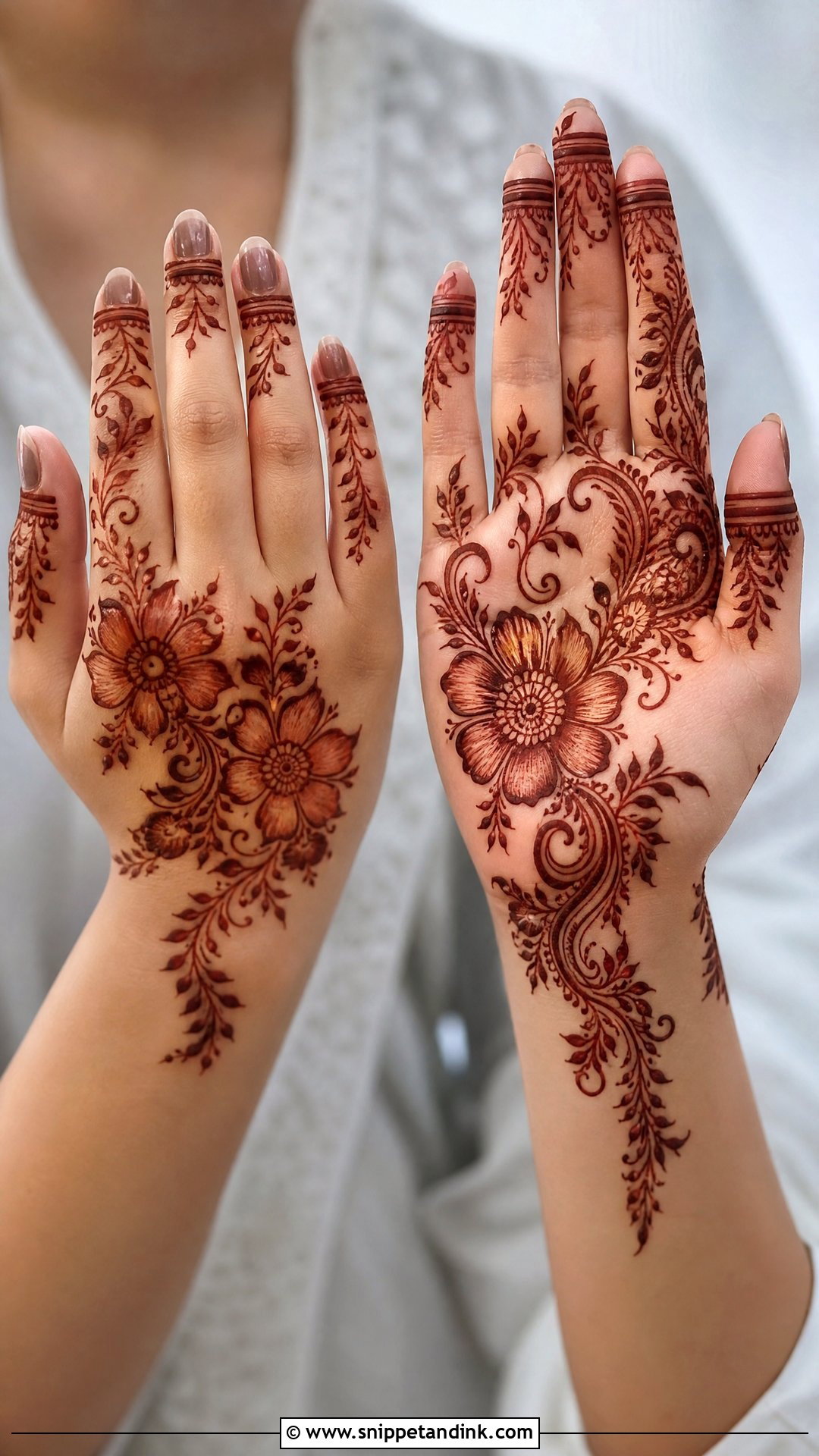
Florals stain more forgivingly than geometric work, since a slightly uneven petal still looks like a petal. I use two or three main flowers with leafy stems and thin curved lines, and I keep the petals open and rounded so they don’t fill in as the paste spreads. On the front hand, a flower sits in the palm with a vine running to the wrist; on the back, the flowers travel toward the fingers. It suits pastel outfits, light jewelry and daytime ceremonies.
8. Simple Mandala Engagement Mehndi Design
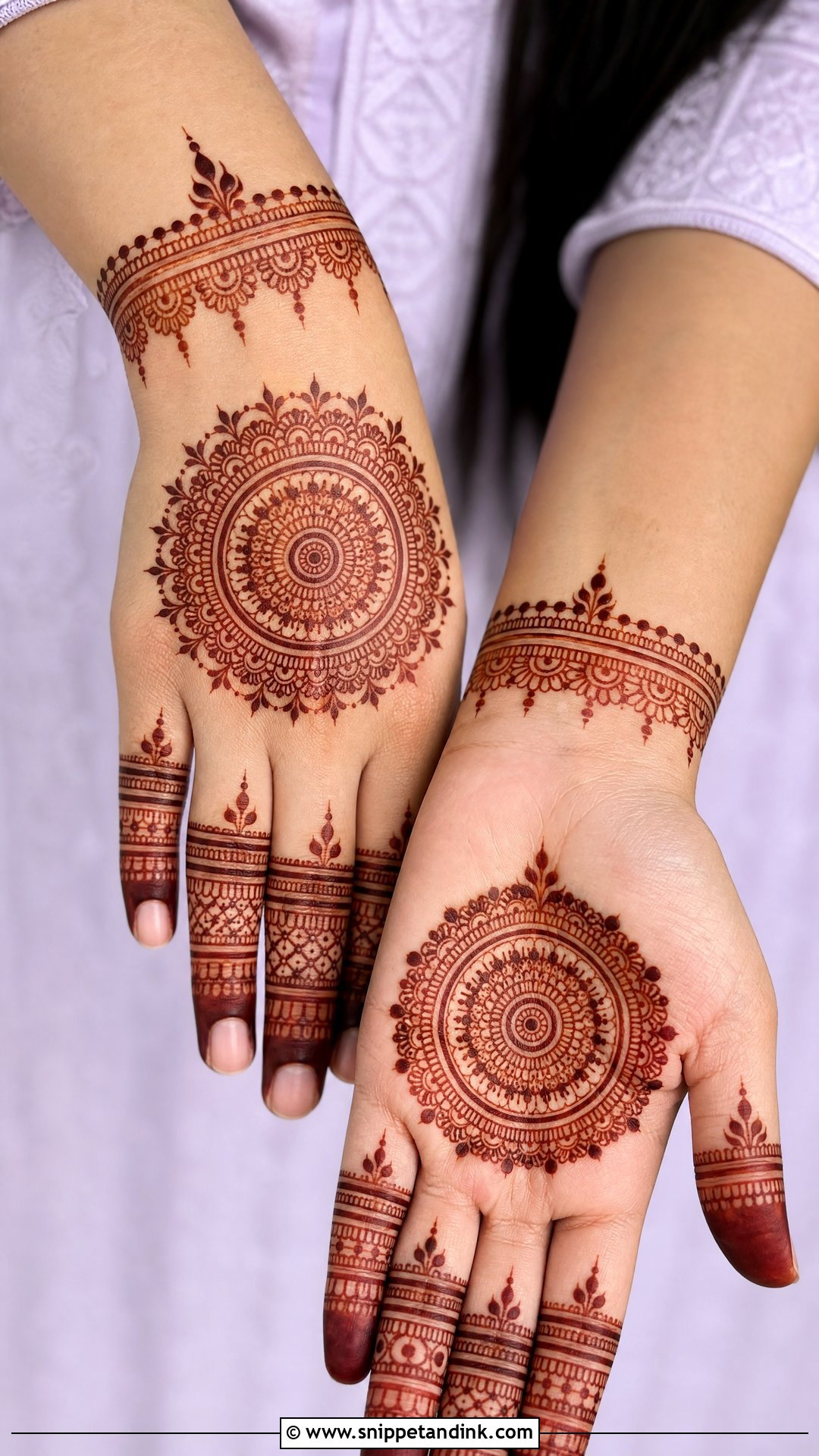
A single mandala gives a complete look with very little clutter. It sits in the center of the palm or back of the hand, with finger details that echo its circles and a bare or lightly dotted wrist. Mandalas punish a shaky start, so I mark the center point and draw outward ring by ring, checking symmetry after each one. When the circle is clean and centered, even a small design looks polished. If you like symmetry but not heavy coverage, start here.
9. Simple Engagement Mehndi Design For Short Fingers
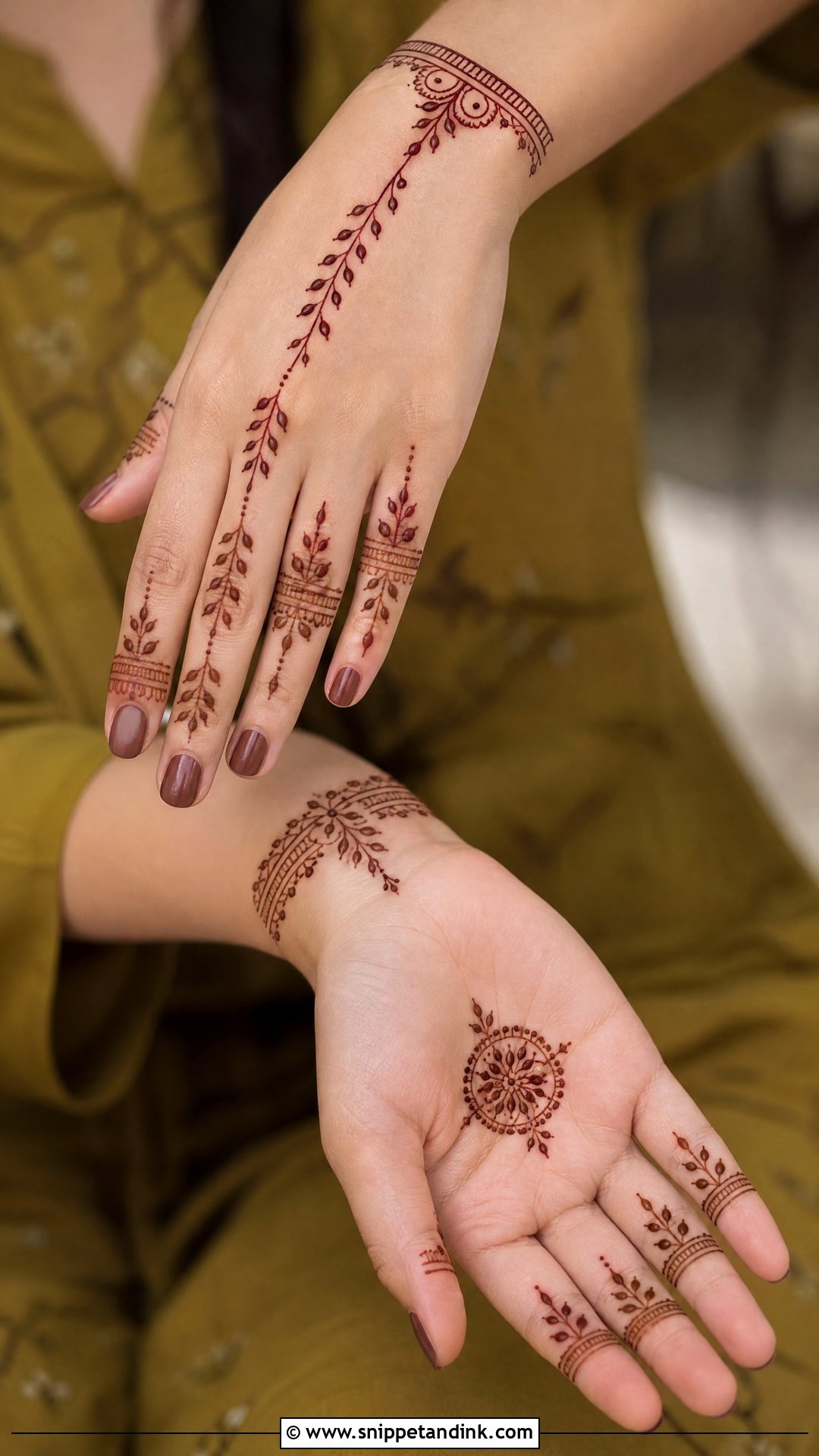
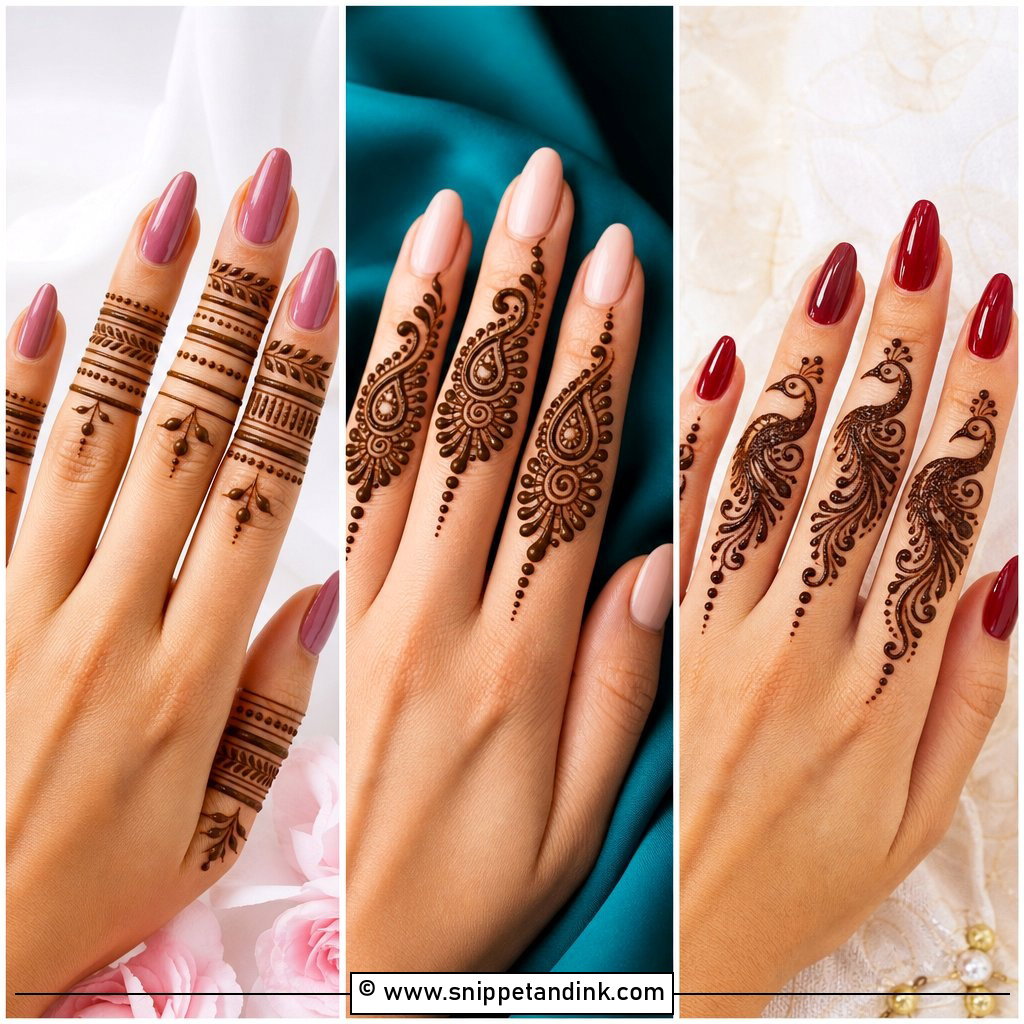
On short fingers, heavy blocks of filling make the hand look shorter in photos. I use vertical vines, slim leaf trails, fine bands near the fingertips and a small palm motif instead. A narrow line running from the wrist up to the middle finger creates a longer visual flow. On the back, I keep the ring finger lighter so the ring stands out. This approach suits anyone who wants her hands to look more slender, bride or guest.
10. Simple Engagement Mehndi Design For Long Fingers
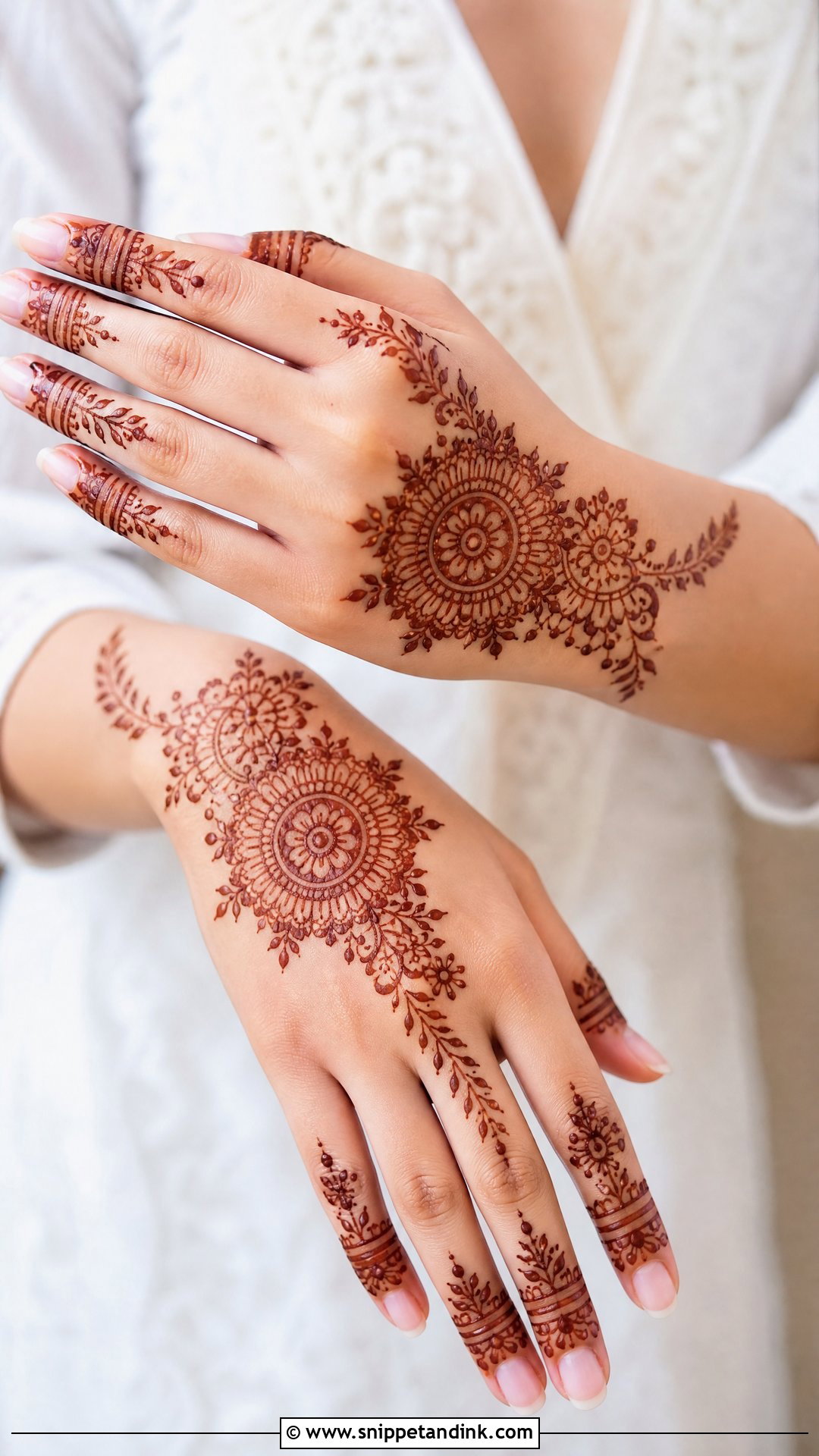
Long fingers can take finer detail: thin finger bands, small leafy trails and tiny floral caps near the tips. The palm or back of the hand gets a medium mandala, a half-flower or a slim Arabic trail. The risk with long fingers is the opposite of short ones. Overly stretched lines make the design look sparse, so I add small dots and curved connectors to hold it together. It looks simple from across a room but has enough detail for close-up ring photos.
11. Simple Bracelet Engagement Mehndi Design
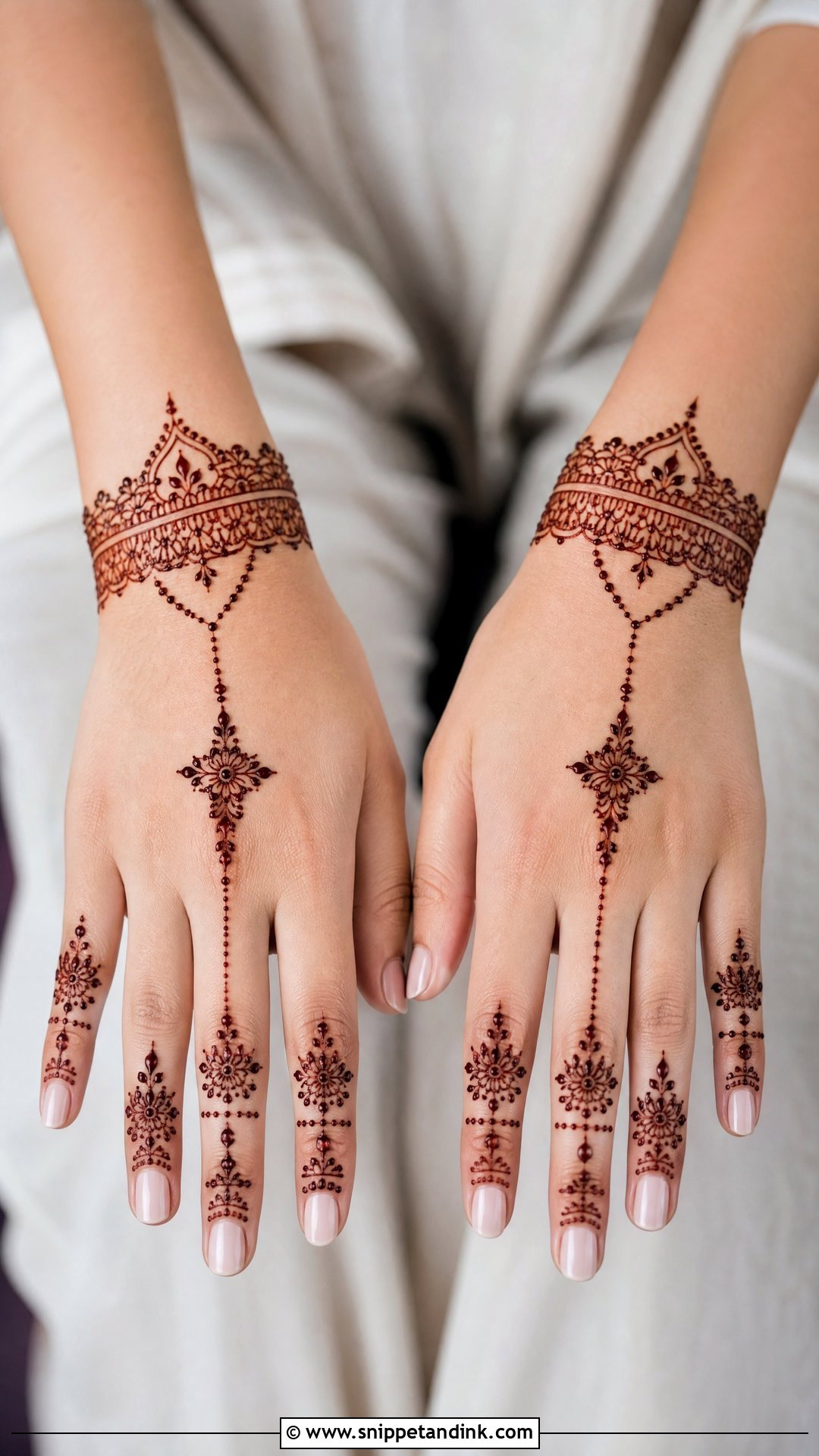
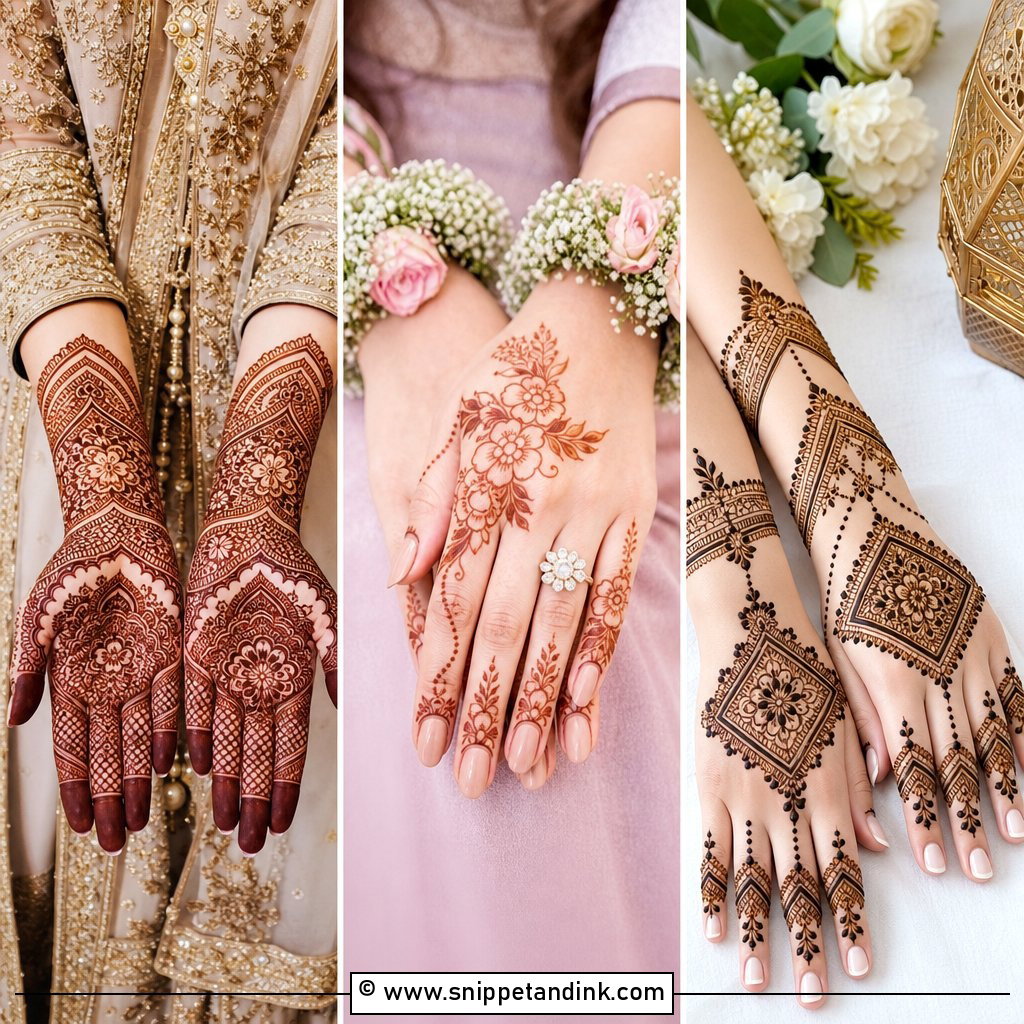
A bracelet design treats the wrist like jewelry: a slim cuff, light chains leading toward the fingers and a small floral or mandala centerpiece on the back of the hand. Plenty of skin stays bare, which suits modern brides and guests. Because real bangles sit right over the cuff, I keep the band thin and detailed with dots, leaves or small arches rather than wide and solid. It’s comfortable for a long ceremony and quick to apply.
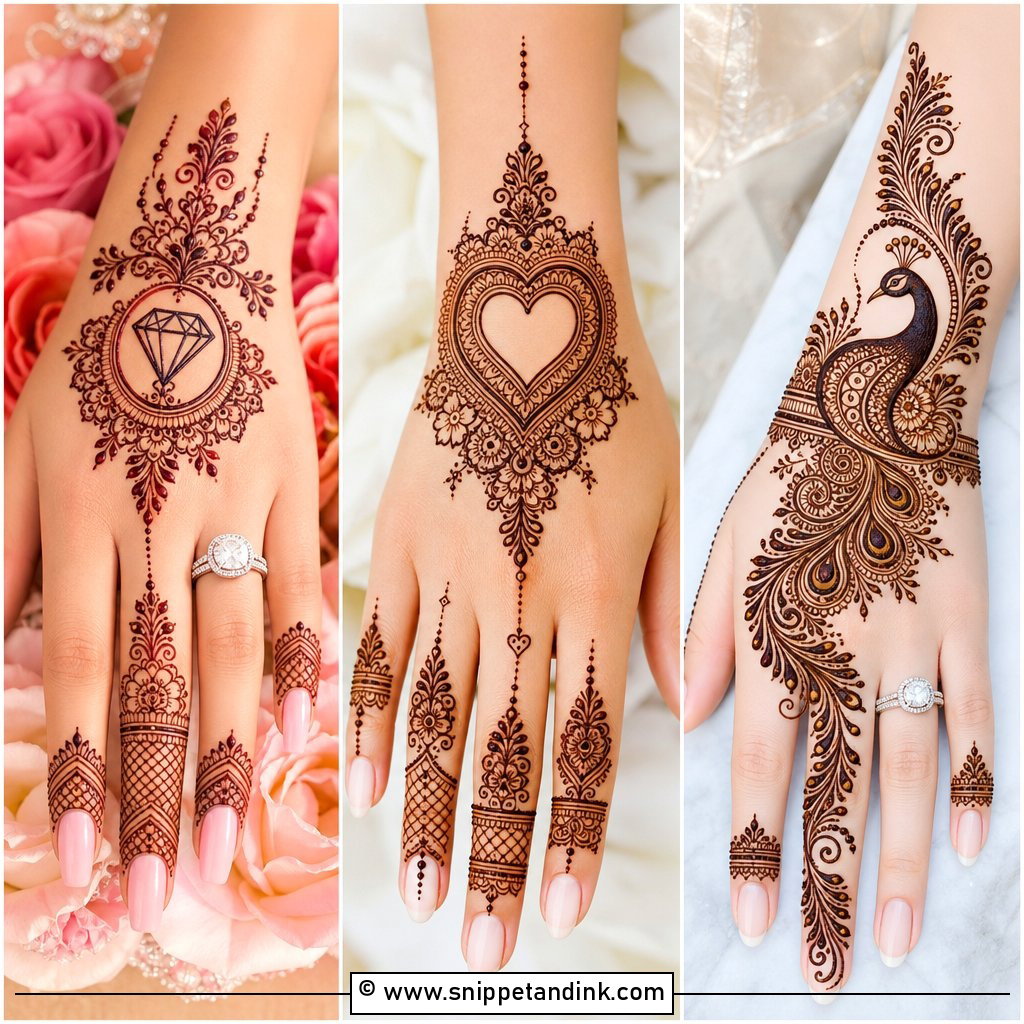
12. Simple Engagement Mehndi Design With Initials
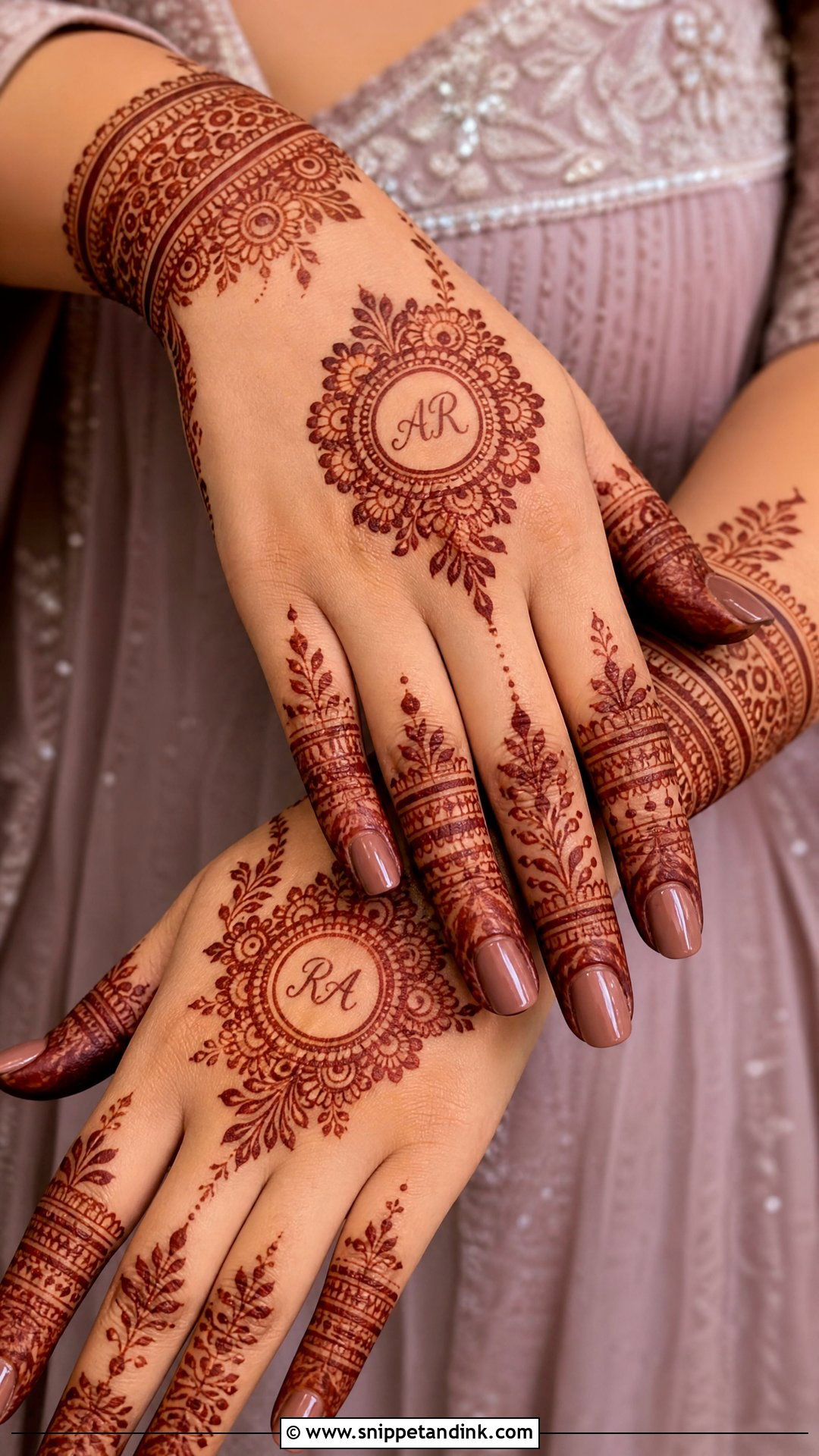
Initials make a simple design personal. I hide them inside a tiny heart, a small mandala, a flower center or a neat wrist motif, and keep the letters small. Henna letters thicken slightly as the paste settles, so tiny script needs a fine cone tip and a steady hand, and very ornate letters can blur into a blob. Place them on the palm if you want to show them in photos, or near the back of the wrist as a quieter detail. Light leaves and dots around them work better than dense shading.
13. Simple Engagement Mehndi Design With Heart
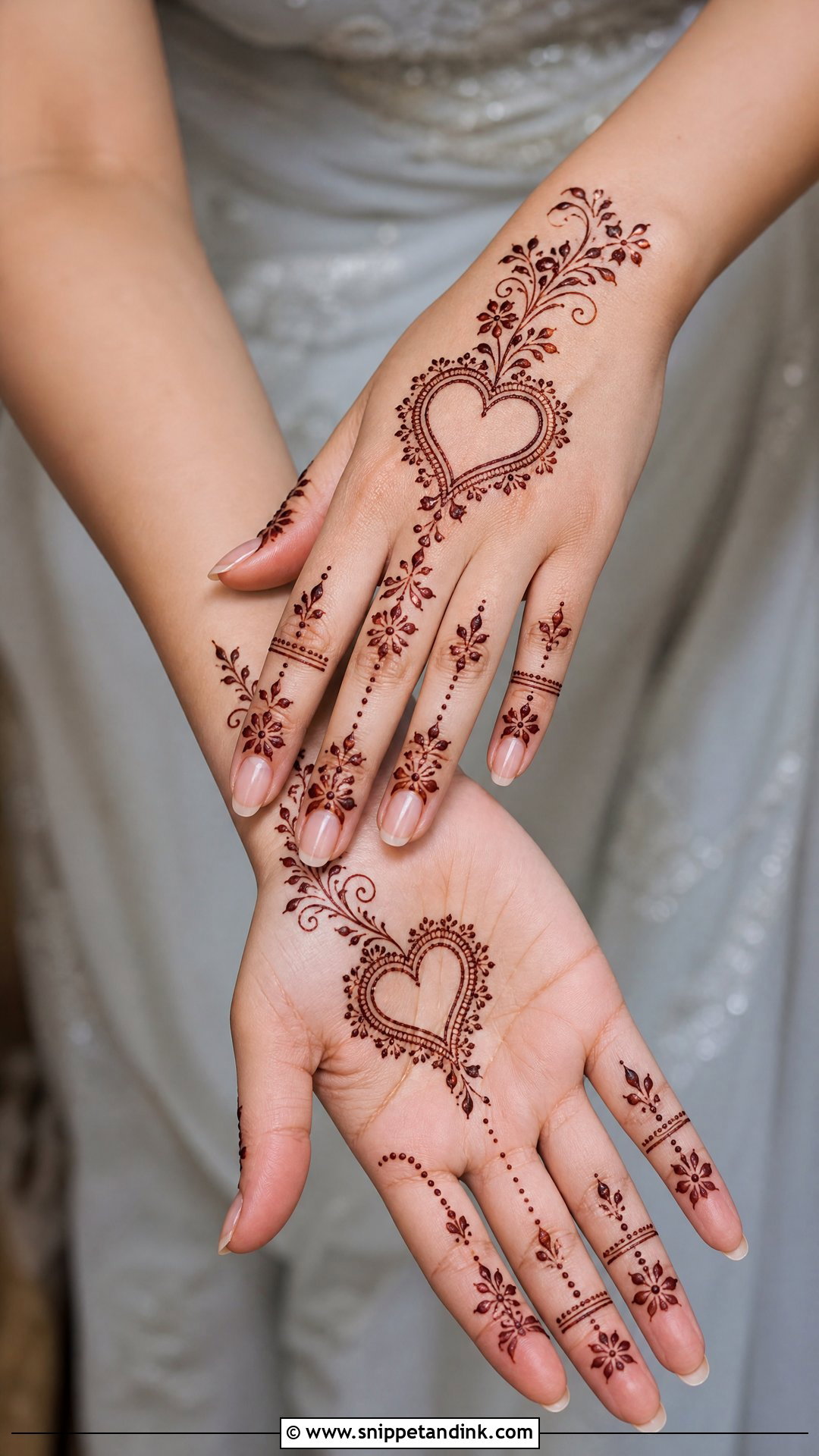
A heart can look tasteful if it stays small and belongs to the wider design. I place one in the palm, near the wrist or beside a floral back-hand pattern, surrounded by tiny flowers, vines and fine finger bands. Make it too large and the hand starts to look like a sticker. It suits brides who want something youthful and personal, and it’s popular with friends and bridesmaids too.
14. Simple Minimal Engagement Mehndi Design
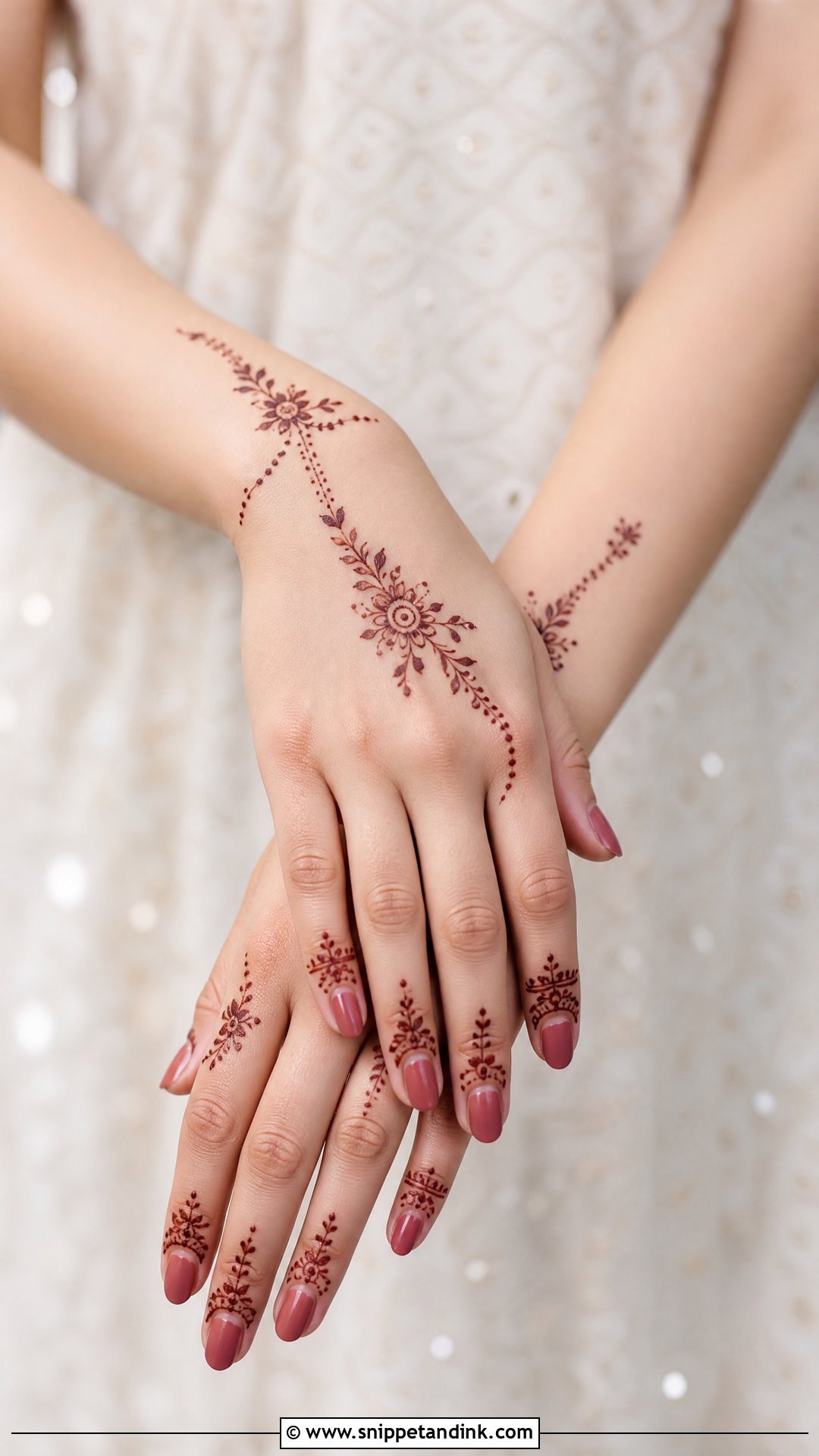
Minimal mehndi uses clean lines, small flowers, delicate finger accents and a lot of empty space, sometimes only the back of the hand and fingers. I’d recommend it for brides wearing a statement ring, a heavy outfit or detailed nail art. It also dries faster, so you’re not sitting still for hours on the morning of the engagement. The trick to making it look intentional is repetition: choose one or two motifs and repeat them across the hand, instead of scattering unrelated shapes.
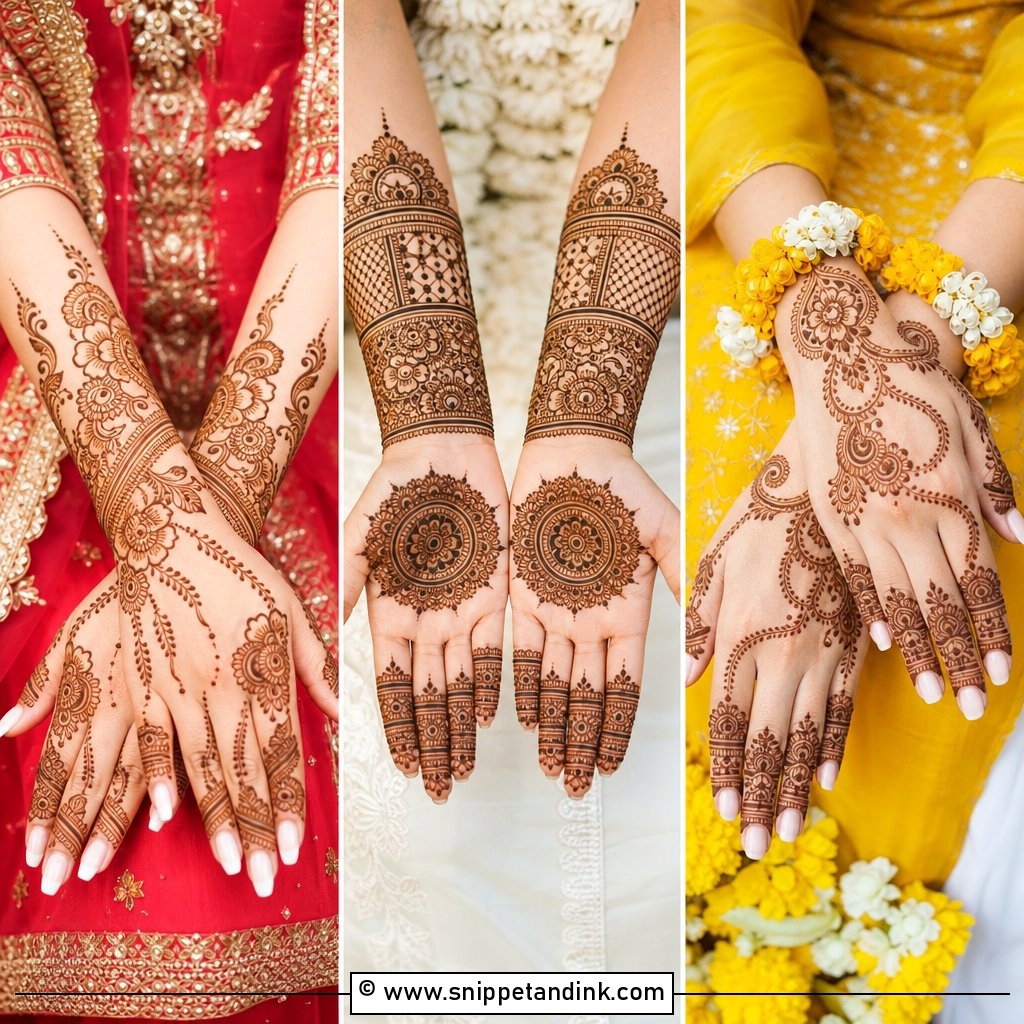
15. Simple Engagement Mehndi Design Full Hand
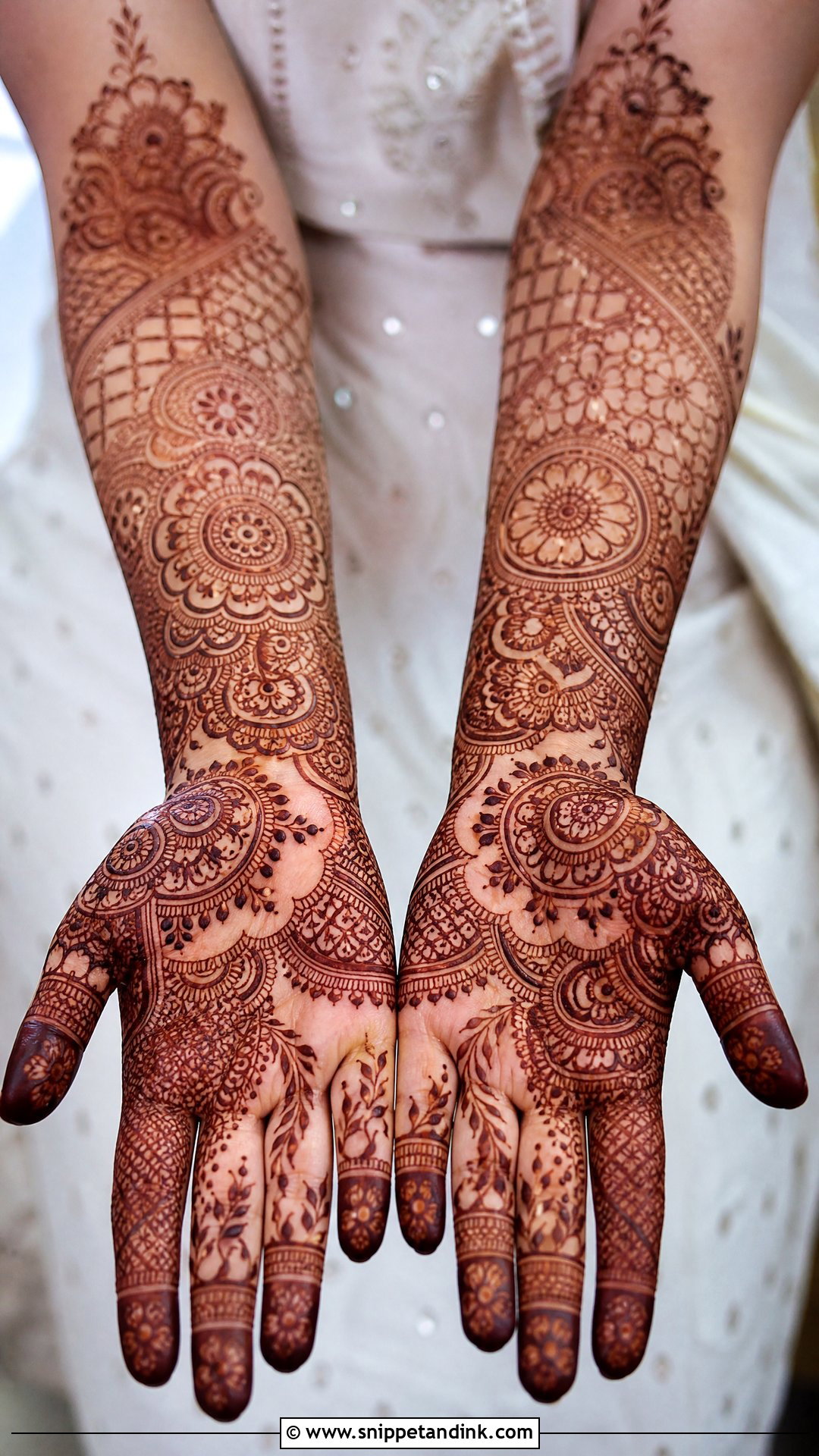
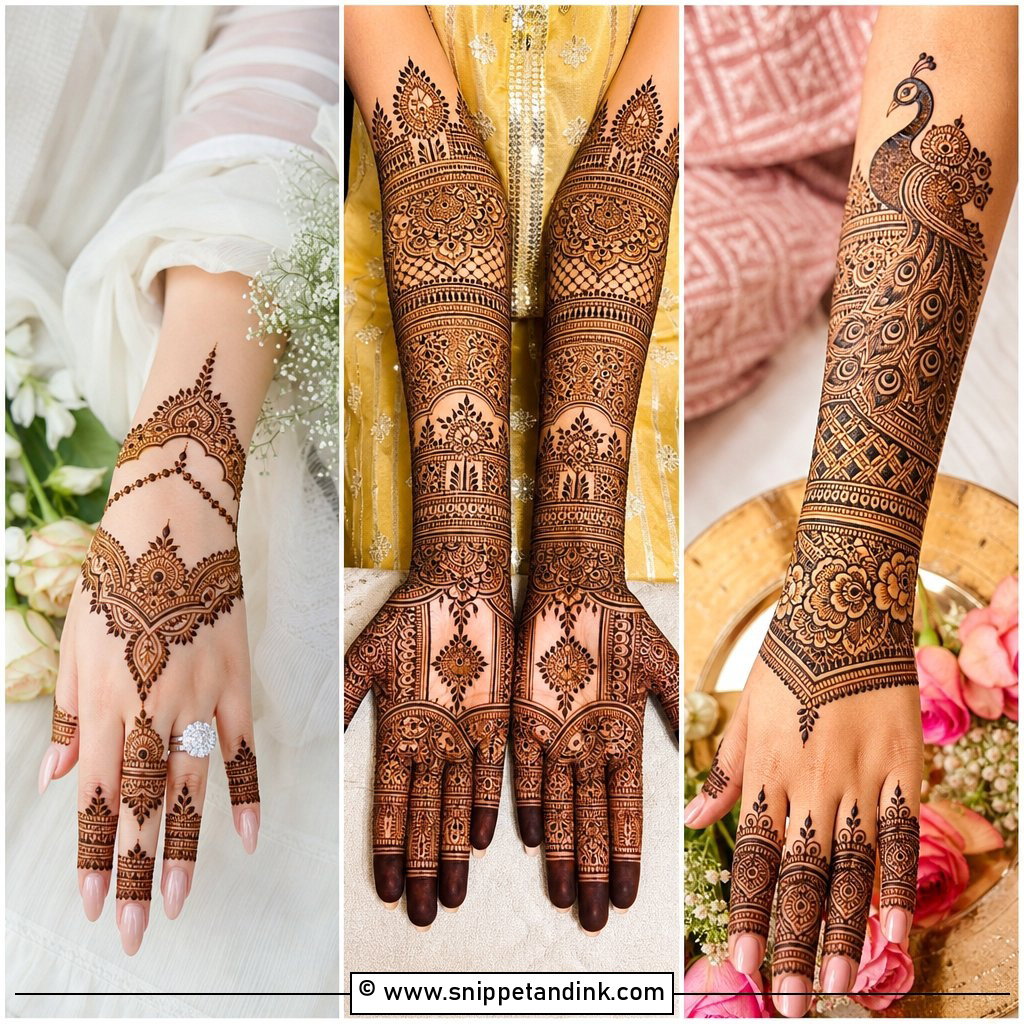
A full-hand engagement design covers the palm, fingers, wrist and lower forearm, but with open florals, paisleys, mandalas and soft jaali sections rather than bridal density. I use larger motifs and lighter filling so the hand still breathes. On the forearm, I keep the pattern narrow and flowing; a wide forearm panel quickly tips into wedding territory. I suggest it when the engagement deserves a ceremonial look but the full bridal coverage is being saved for the wedding. It sits well under bangles.
16. Simple Engagement Mehndi Design Half Hand
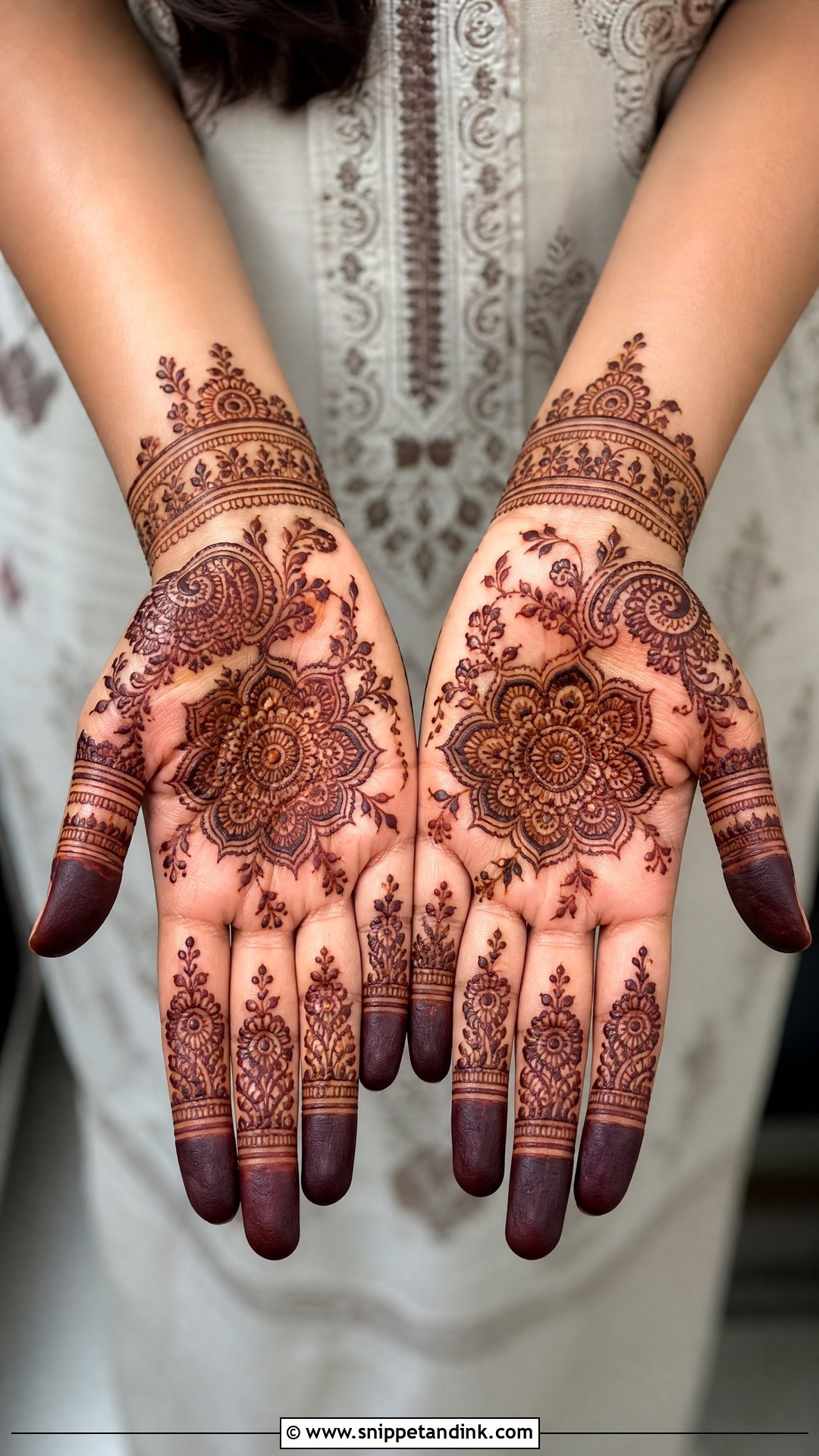
Half-hand mehndi covers the fingers, palm and wrist and stops before the forearm. It gives enough decoration for photos and is far easier to protect while it sets, because there’s less paste to keep still. A palm mandala, floral vines, paisley corners and a bracelet band at the wrist are typical. I keep the palm slightly fuller and the fingers thinner for balance. Both front and back hands take it well.
17. Simple Engagement Mehndi Design For Bride
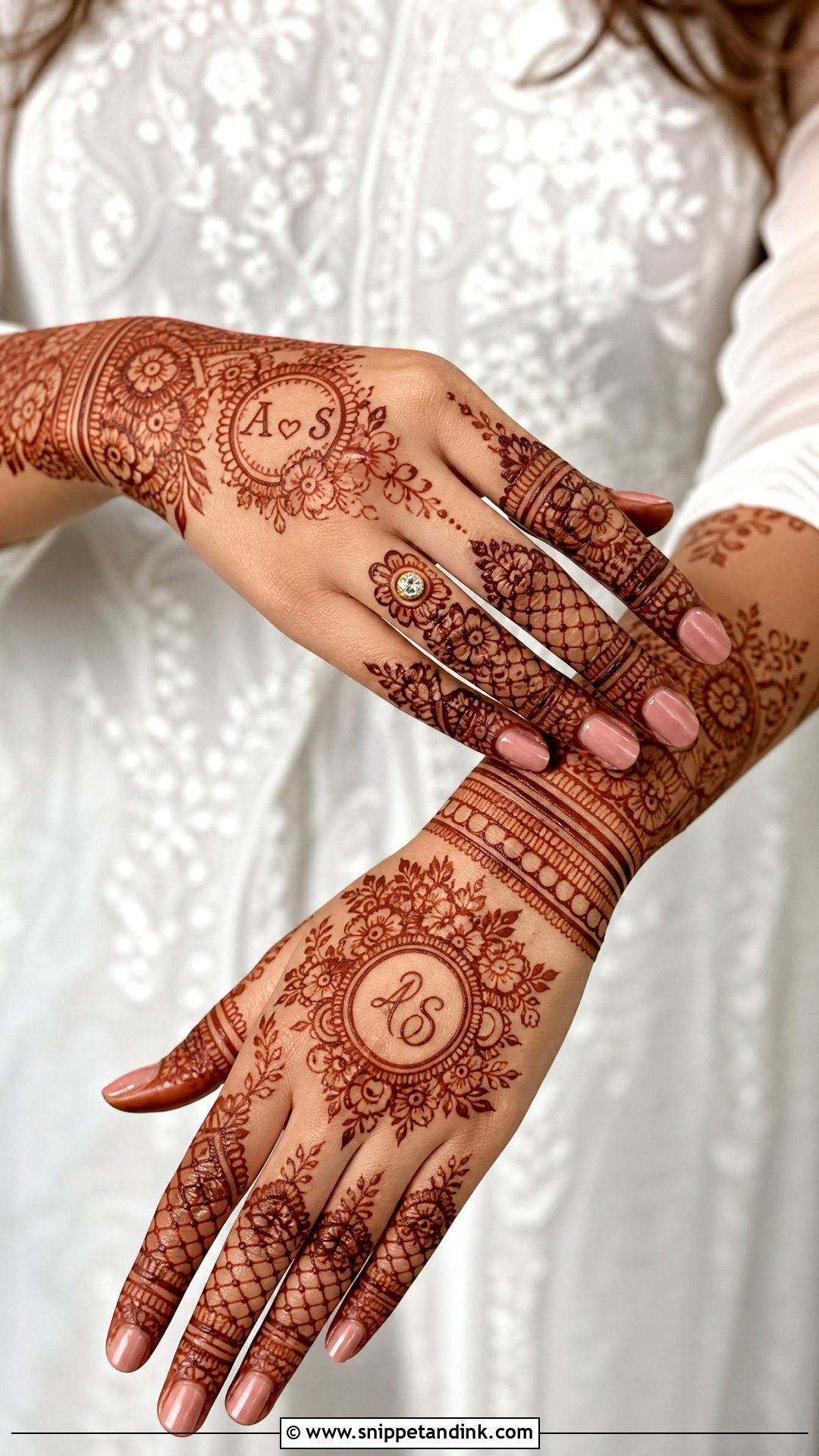
A bride’s engagement mehndi should look special while still staying light. I usually suggest front and back coverage, light wrist detail and one personal element, such as initials or a small ring motif. Soft Indian or Indo-Arabic patterns leave room for jewelry and nails. I match the density to the outfit: airy florals for pastels, slightly deeper paisley and jaali for rich colors. Keep the fingers especially neat, because they appear in nearly every ring photo.
18. Simple Engagement Mehndi Design For Sister
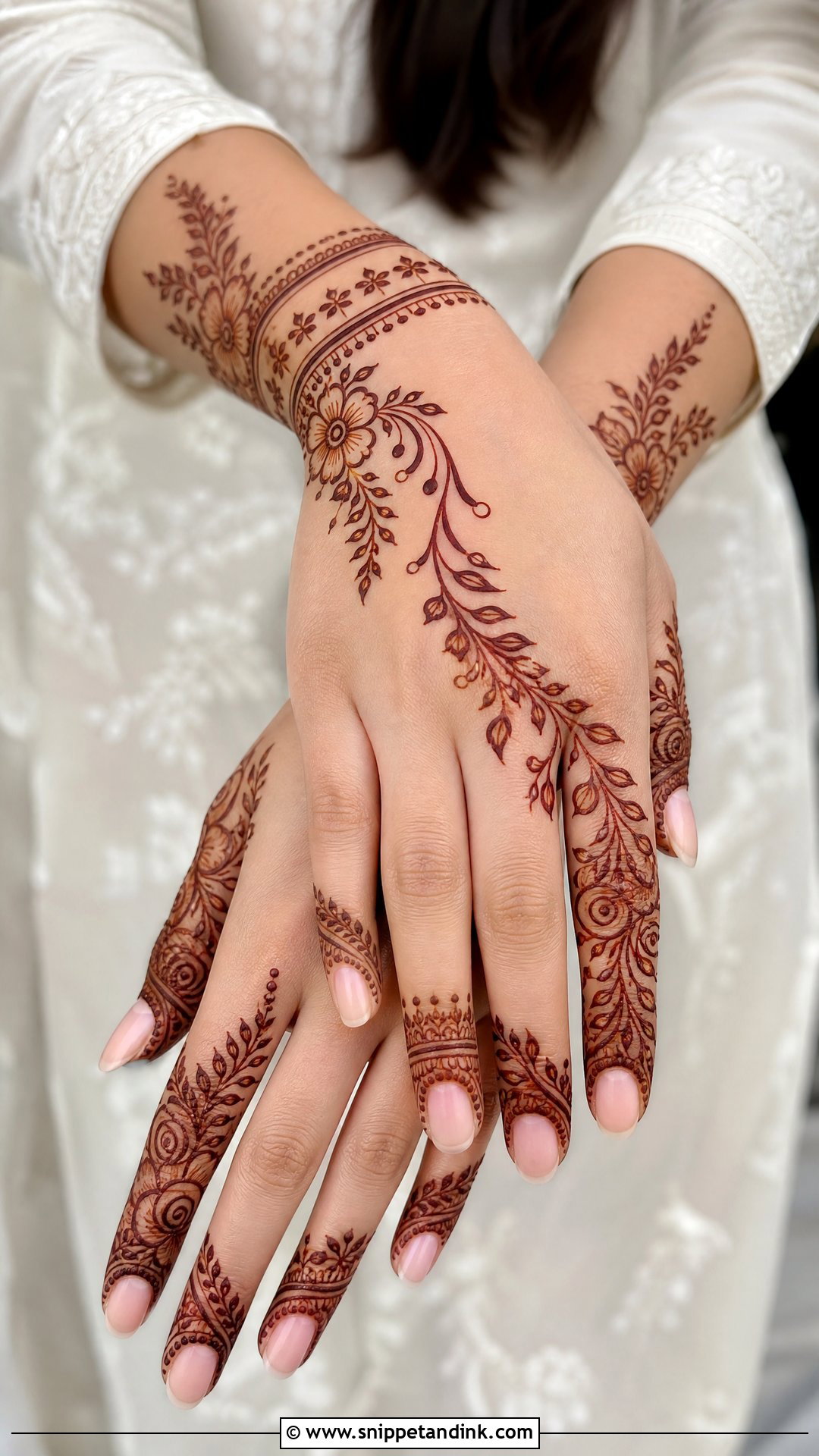
Sisters of the bride or groom usually want something festive but clearly not bridal. A back-hand floral trail, a bracelet wrist and lightly filled fingers do that well, and a front-hand version can carry a small mandala with leafy borders, leaving the forearm bare. It goes with lehengas, sarees, salwar suits and fusion outfits alike. I keep the pattern medium-sized so it reads in group photos, where small detail disappears. Expect each sister’s design to take less time than the bride’s, which helps when the artist is working through a family queue.
19. Simple Engagement Mehndi Design For Guests
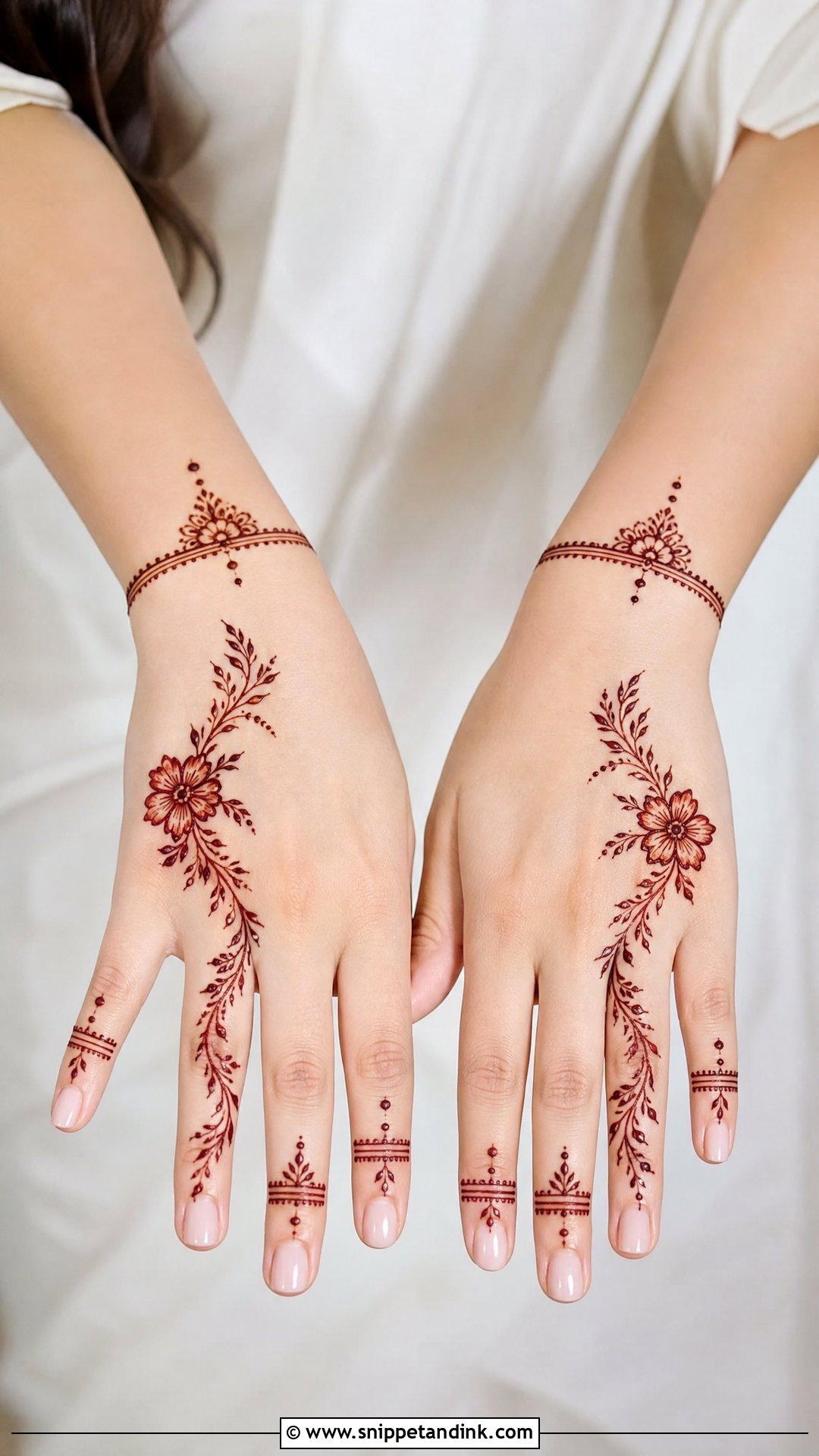
Guest mehndi needs to be quick and neat. A single floral vine on the back of the hand, thin finger lines and a small wrist detail take only a few minutes per hand, which matters when cousins and friends are queuing at the function. Repeating it on both hands keeps it balanced. I usually leave the palm free for guests, because they’ll be eating, greeting people and holding phones long before the paste can be scraped off.


20. Simple Engagement Mehndi Design For Palm
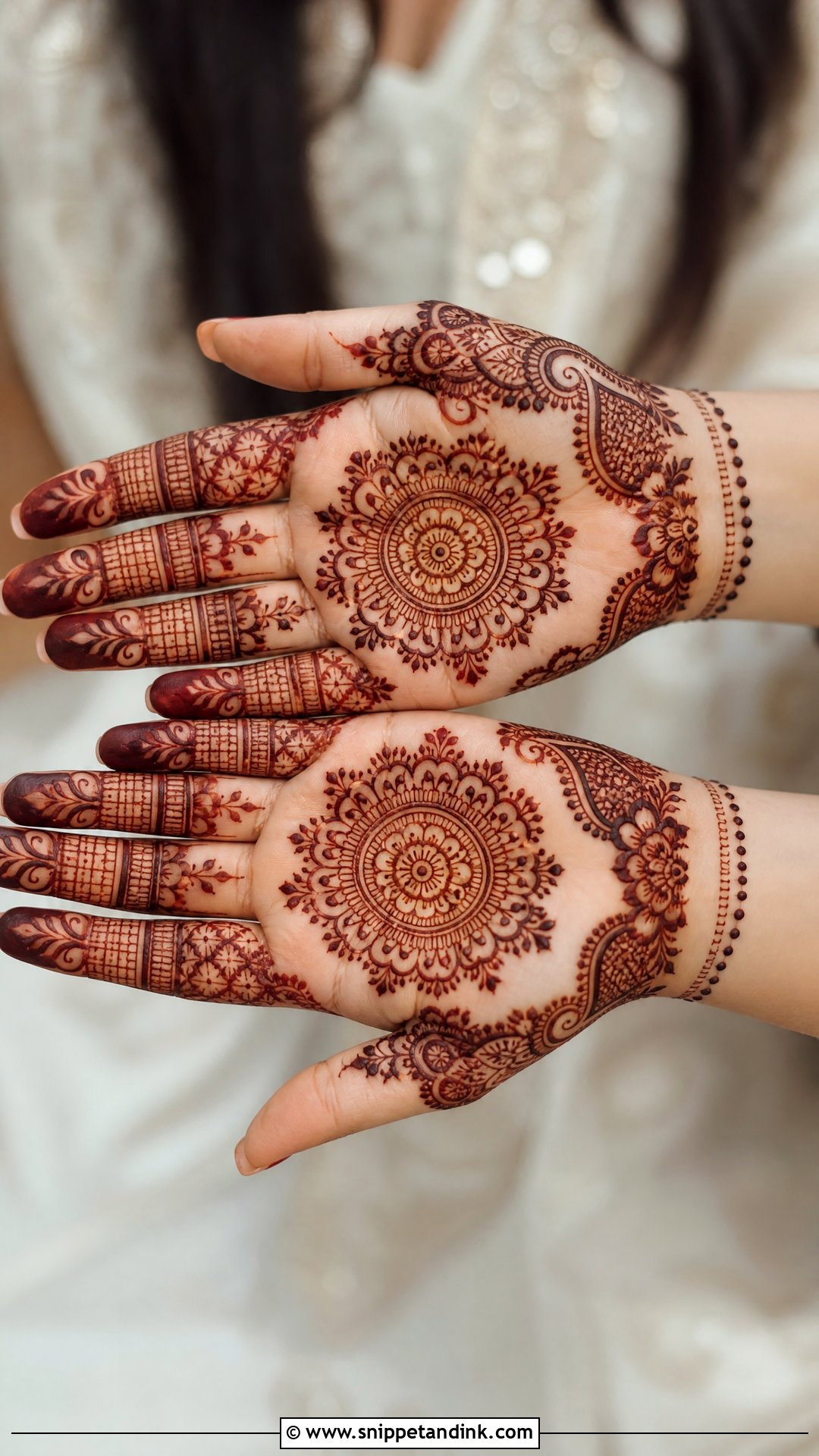
Palm mehndi has a classic charm at ceremonies where blessings and open hands are part of the ritual. A simple palm design might have a centered mandala, small paisley corners, floral borders and clean fingertips. Palms hold color better than anywhere else on the hand because the skin is thicker, so this is the design to choose if you want the darkest stain. I check that it looks complete with the hand open and graceful with the fingers slightly bent. Keep the wrist light.
21. Simple Engagement Mehndi Design Back Hand Arabic
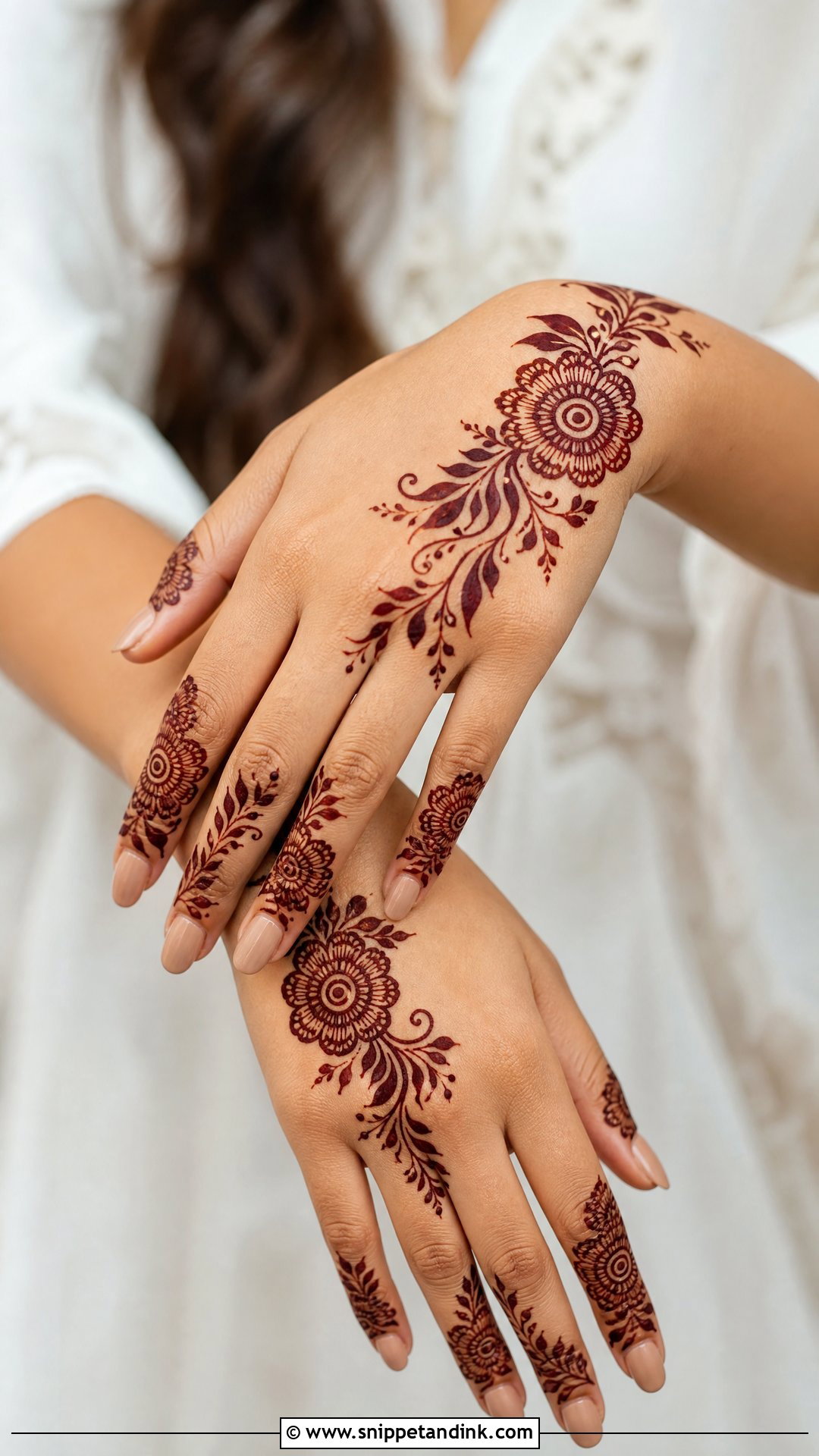
Back-hand Arabic is one of the most requested engagement styles, mostly because of how it looks in ring photos. A curved floral trail runs from the wrist to one finger, with open space around the center of the hand. The flowers can be bold, but I keep their inner details light, with small leaves, dots and curved stems giving the pattern movement. Leave the ring finger less crowded so the ring stands out. It’s quick to apply and suits almost any outfit.
22. Simple Engagement Mehndi Design With Jaali
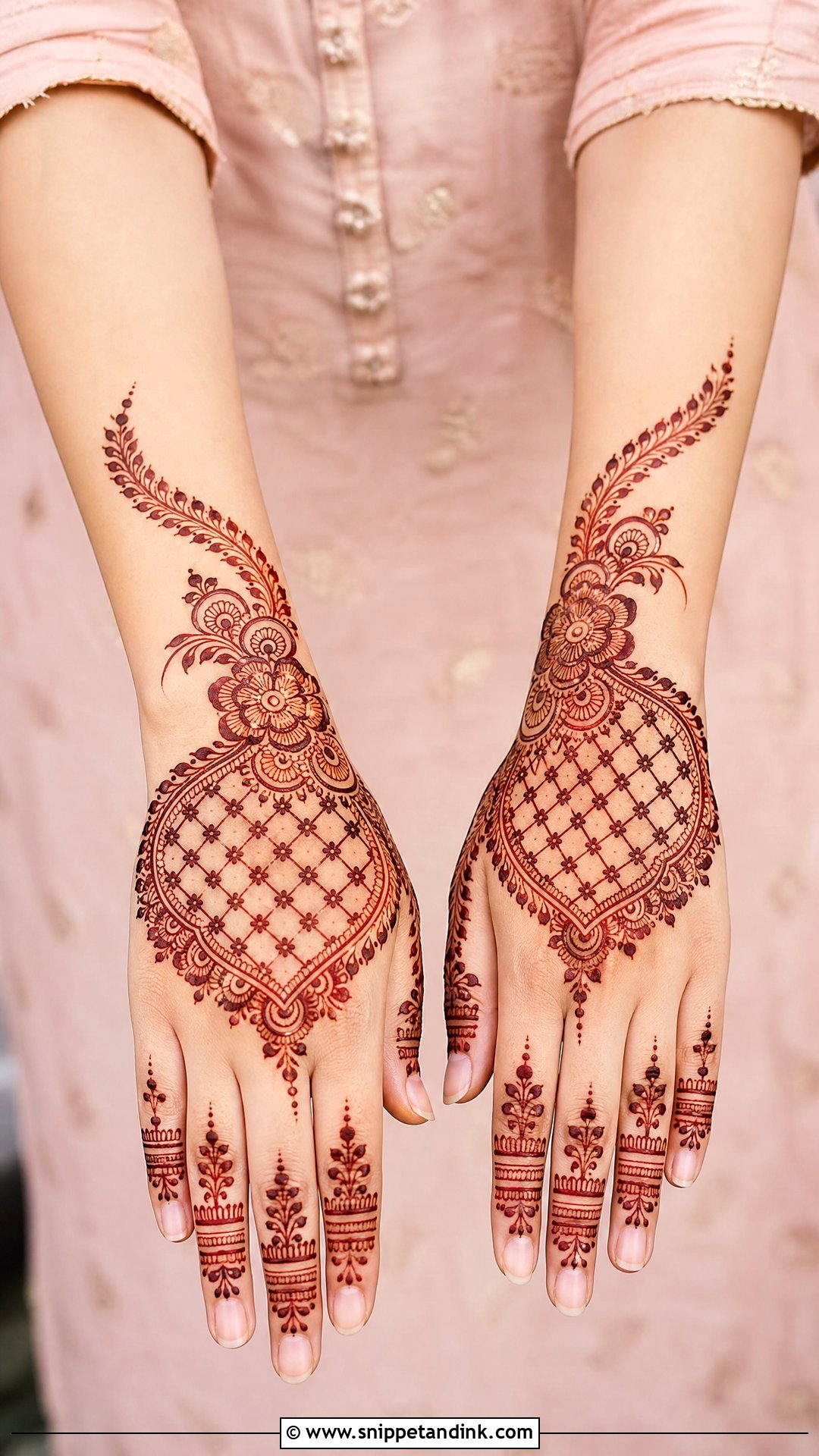
Jaali is a fine mesh of crossing lines, and it gives texture without heavy motifs. For an engagement I use a small panel on the back of the hand or the wrist, paired with flowers and slim finger details. The lines must be evenly spaced and the paste consistent, or the mesh fills in and turns into a dark smudge once it stains. A small panel is enough. Covering the whole hand in jaali looks bridal and takes far longer.
23. Simple Engagement Mehndi Design With Paisley
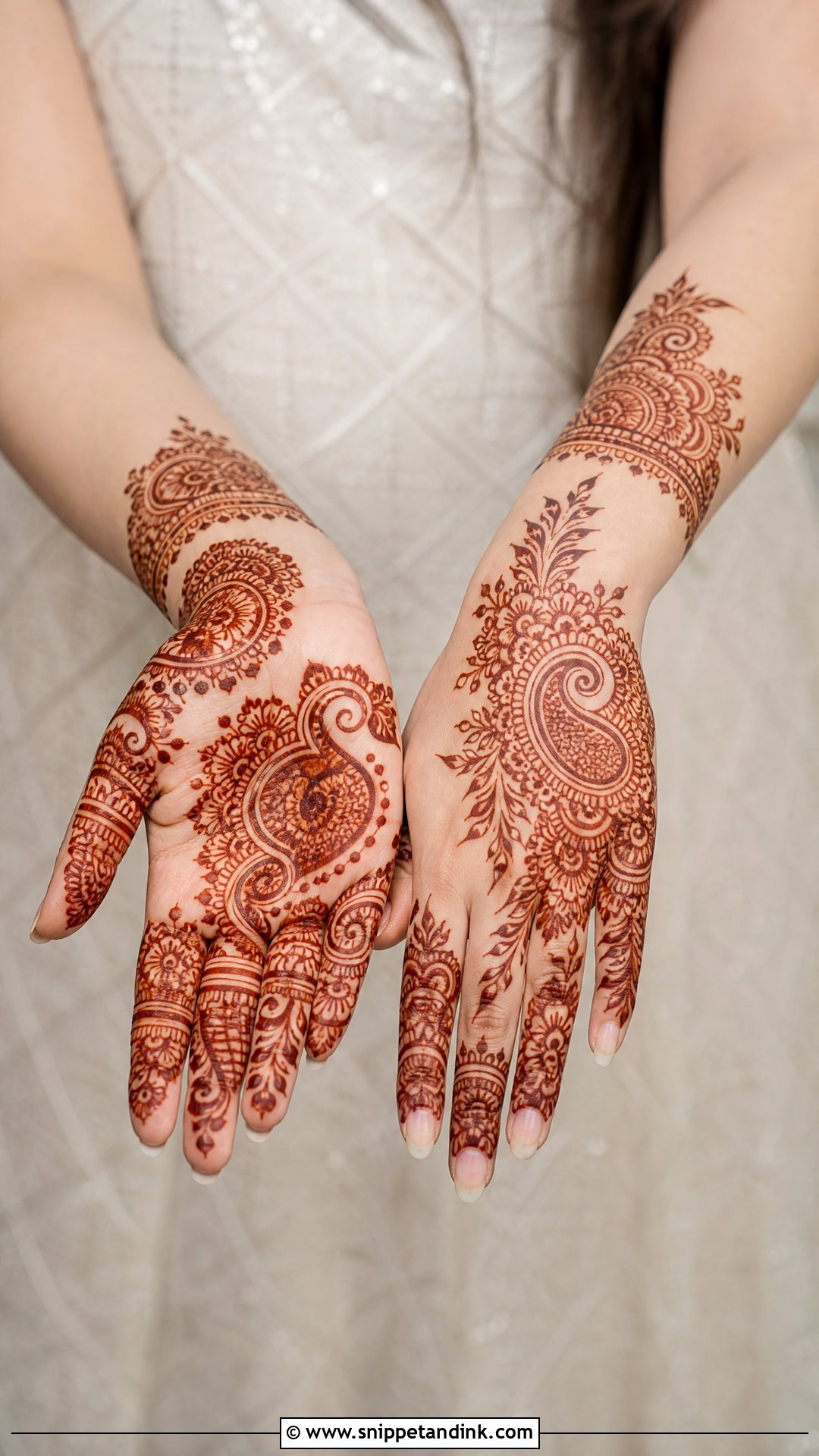
Paisleys bring a traditional note to a simple design. One or two medium paisleys on the palm or back of the hand, surrounded by leaves, dots and small florals, are plenty. I fill them with curved lines rather than solid shading, which keeps the pattern readable after staining. On the back, I angle the paisley toward the wrist or middle finger for flow. It sits naturally with Indian outfits, gold jewelry and classic bangles.
24. Simple Engagement Mehndi Design With Peacock
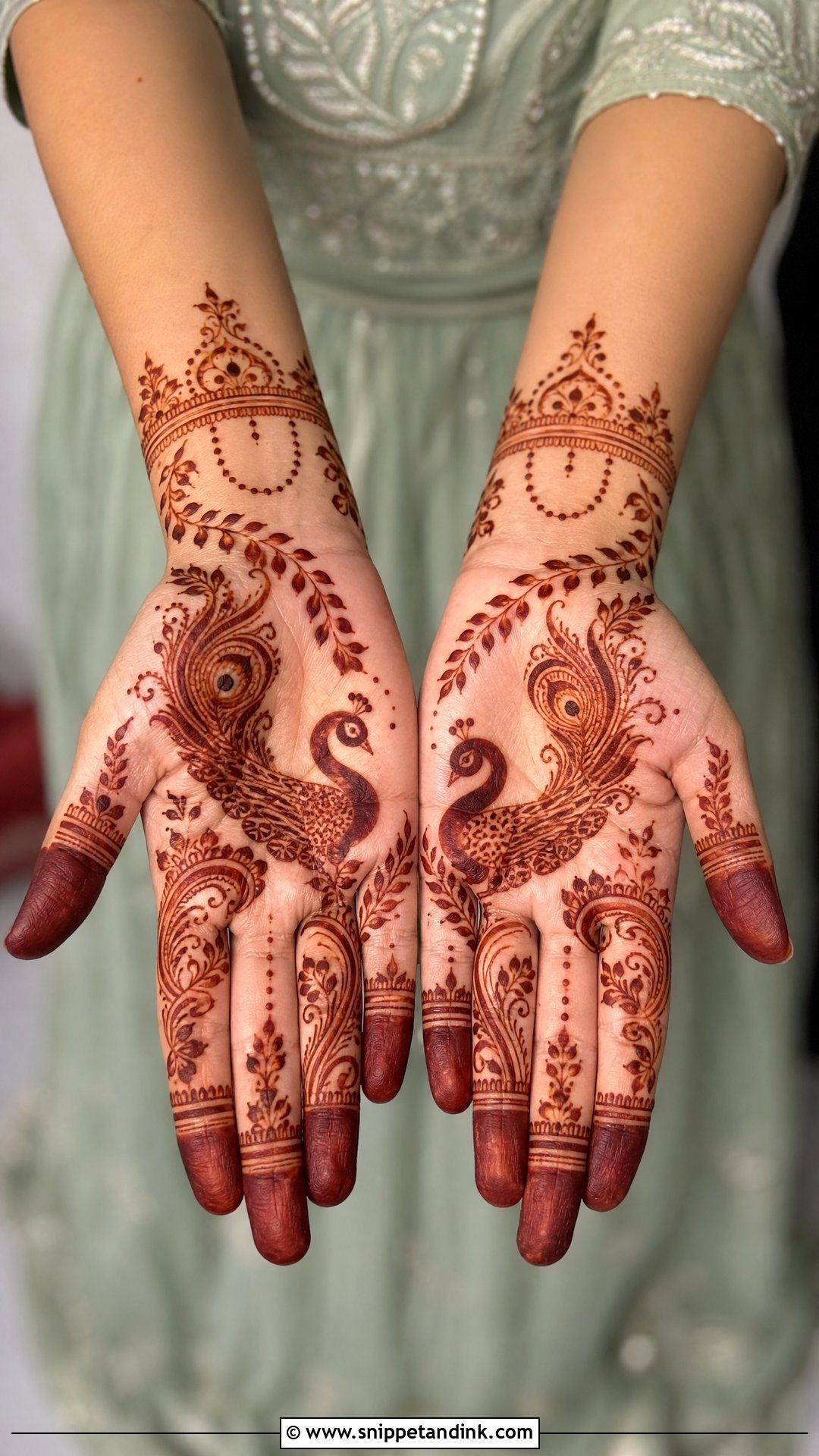
A peacock can stay simple if it’s small and well placed: one bird on the palm, wrist or side of the back of the hand, with light feathers, vines and tiny dots around it. The shape needs a clear curved neck and soft feather detail, otherwise it reads as an abstract swirl once it stains. I keep the fingers simple so the motif gets the attention. It carries a traditional Indian meaning without asking for bridal coverage.

25. Simple Engagement Mehndi Design For Both Hands
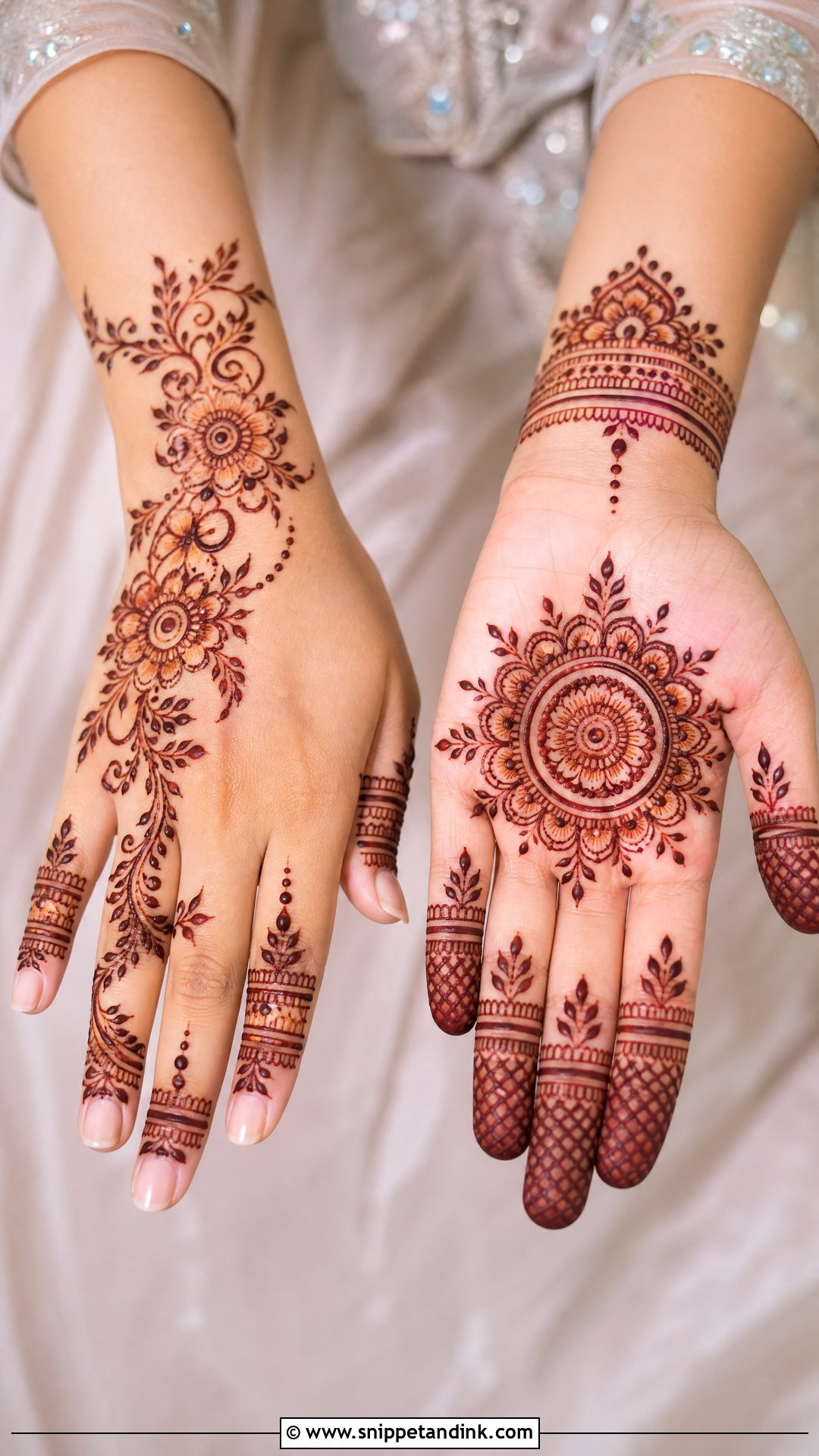
Both hands should feel like a pair without being mirror images. I often give one hand a mandala with finger accents and the other a floral trail or bracelet layout, then tie them together with shared dots, leaves and thin borders. Matching the coverage matters more than matching the motifs; if one hand is visibly heavier, it looks lopsided in every photo where you hold them together. The variety gives the photographer two different close-ups during the ring exchange.
Aftercare From the First Hour to Day Three
Most pale stains I see come from paste removed too soon or washed off with water. The design itself is rarely the problem.
While the paste is on
Keep it on as long as you comfortably can, ideally six hours or overnight. Once it’s touch-dry, I dab on a little lemon and sugar mixture to keep it stuck to the skin. Keep the hands warm; cold hands stain weaker.
Taking it off and the next day
- Scrape the dried paste off with a blunt edge or your fingers. Don’t rinse it away.
- Avoid water on the hands for as long as possible, ideally until the next morning.
- Rub in a little balm or natural oil before showering to protect the stain.
- Leave chlorine, hand sanitizer and harsh soaps alone for a couple of days; they fade the color fastest.
Say no to black henna
Natural henna never stains black. Paste that promises an instant jet-black result often contains PPD, a hair-dye chemical that can cause blistering and lasting skin reactions. If a cone’s color seems too dark or too fast, ask what’s in it, and walk away if you don’t get a clear answer.
How Much Mehndi Is Enough for a Ring Ceremony?
Less than you’d wear at your wedding, and placed with the ring in mind. The 25 Simple Engagement Mehndi Designs above range from a single back-hand vine to a light full-hand pattern, and any of them can be adjusted to your outfit and hands. Brides can afford a little more detail and one personal touch. Sisters, friends and guests do best with something soft and quick. Whichever you pick, leave space around the ring finger, give the paste time to work, and the stain will be at its darkest when the cameras come out.
You'll Like These Ideas:






Leave a Reply