
Hands carry the bridal mehndi. They are in every ring shot, every bangle ceremony and half the candid photos, and they are the first thing guests ask to see. The heaviest design is not automatically the right one. What I look at first is the hand itself: finger length, how far the sleeves of your outfit come down, and how many hours you can realistically sit. Below are twenty designs I’m asked for most, from dense Indian work and open Arabic florals to portrait panels, jaali and modern negative space, each with the detail that makes it succeed or fail on real skin.
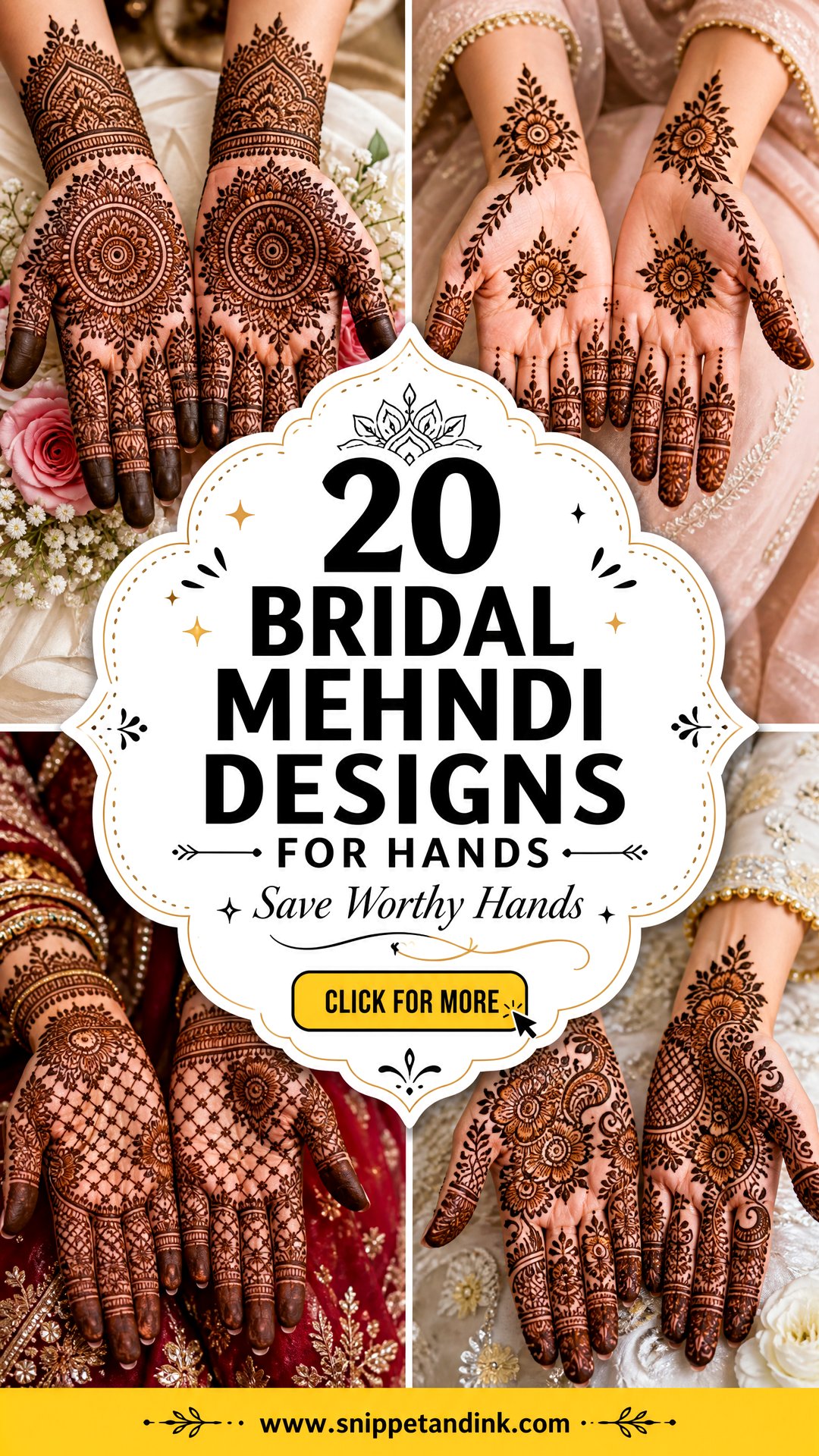
Matching a Design to Short Fingers, Long Fingers and Your Sleeve Length
Before I look at a single reference photo, I look at the bride’s hands. Short or wide fingers look longer with motifs that run lengthwise, such as vertical vines, slim finger chains and diagonal Arabic trails. Wide horizontal bands across every finger shorten them. Long, slender fingers can carry those bands, and they handle geometric work well.
Then check your outfit. If your blouse or kurta has three-quarter sleeves, there’s little point in paying for detailed elbow work that nobody will see on the day. On the other hand, a sleeveless or cap-sleeve outfit shows the whole forearm, so a design that stops abruptly at the wrist can look cut off.
- Bring a photo of your outfit, sleeves included, to the consultation.
- Decide which bangles and rings you’ll wear, since they cover parts of the wrist and fingers.
- Tell your artist which hand you write and eat with. Many of us keep that palm a touch lighter or apply it last so you can still manage.
1. Full Hand Indian Bridal Mehndi Design
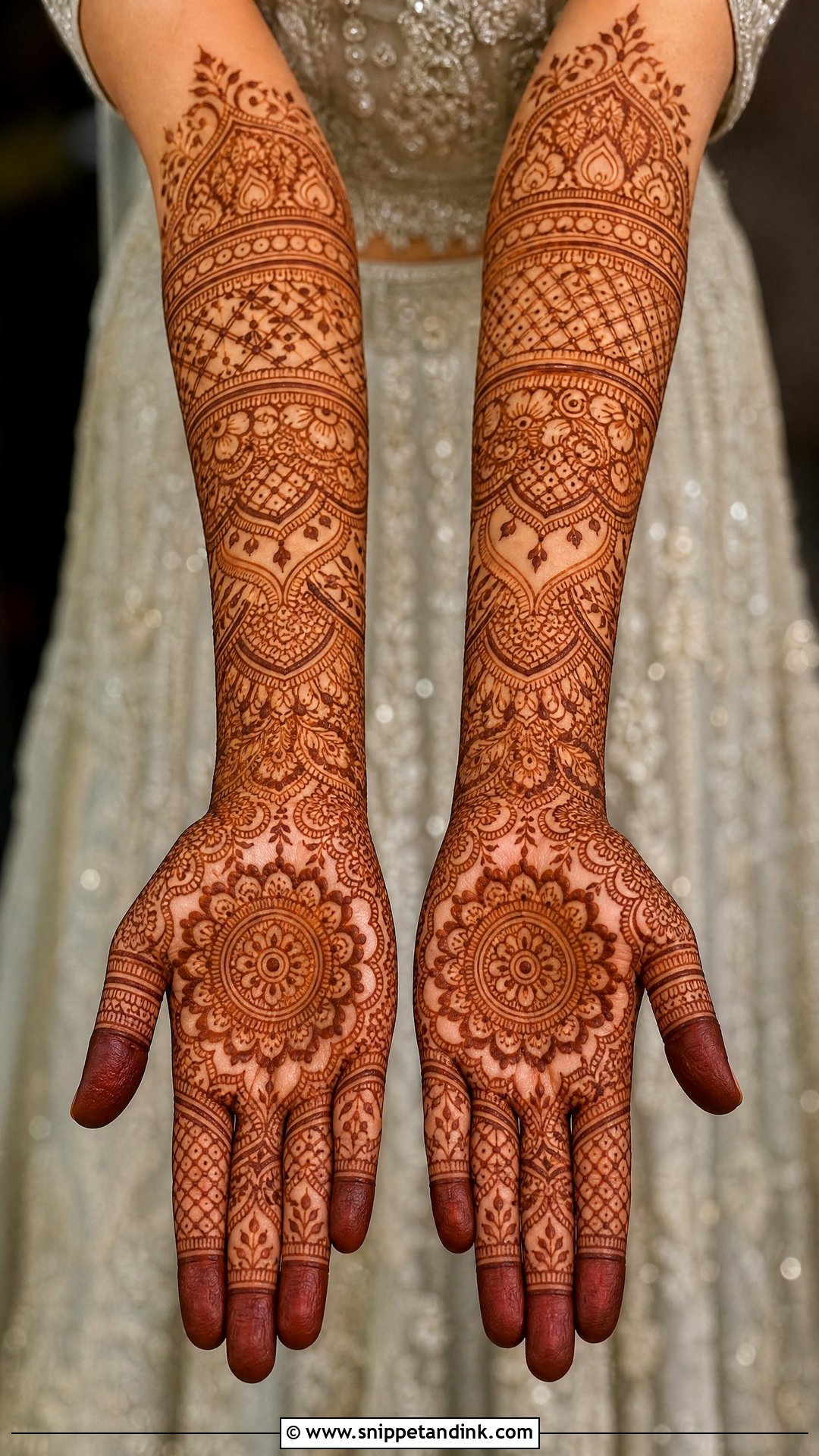
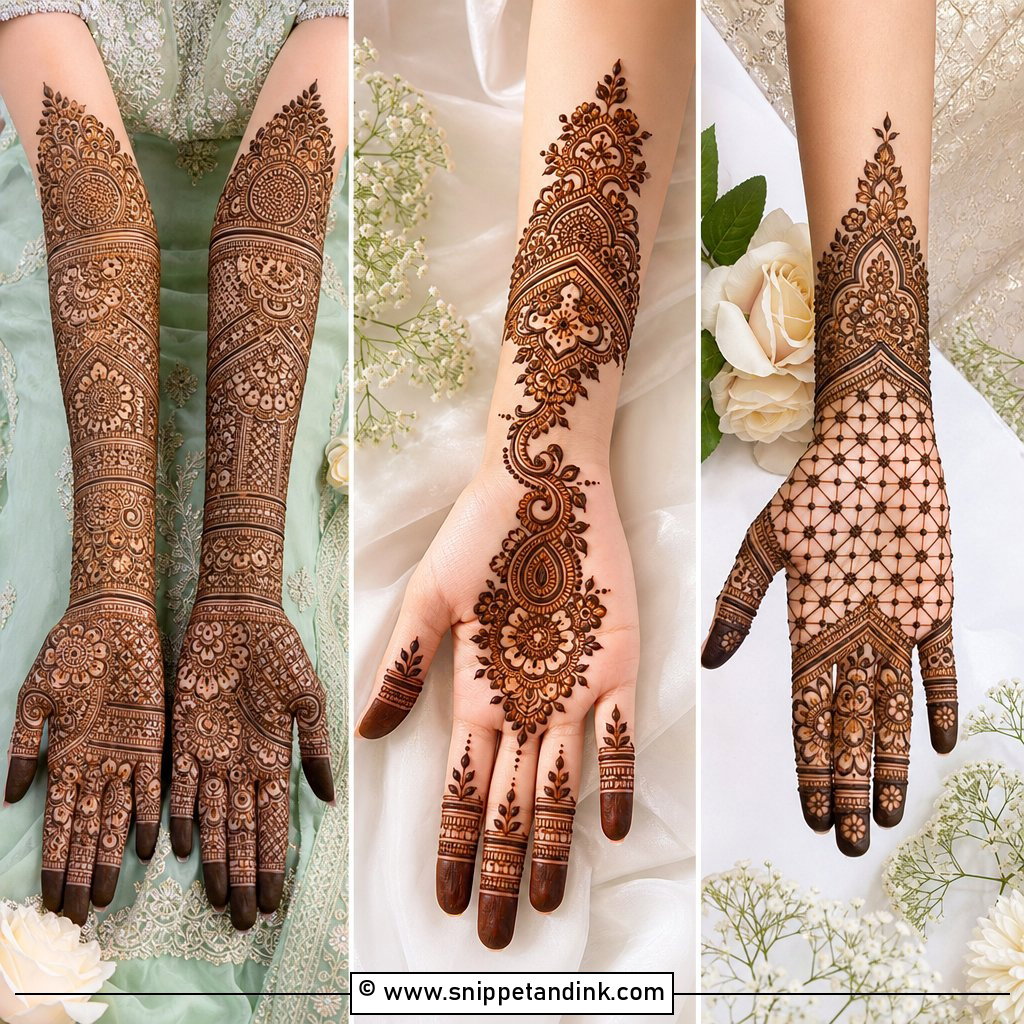
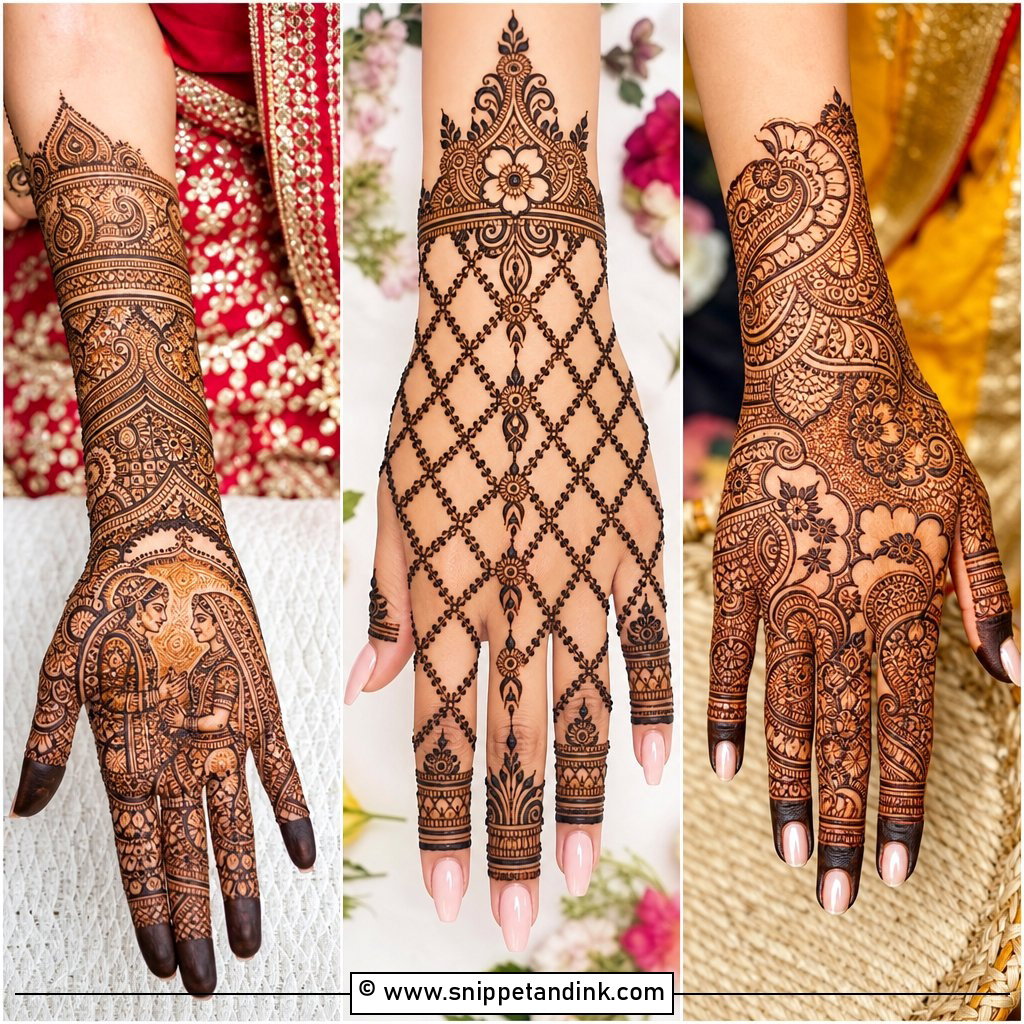
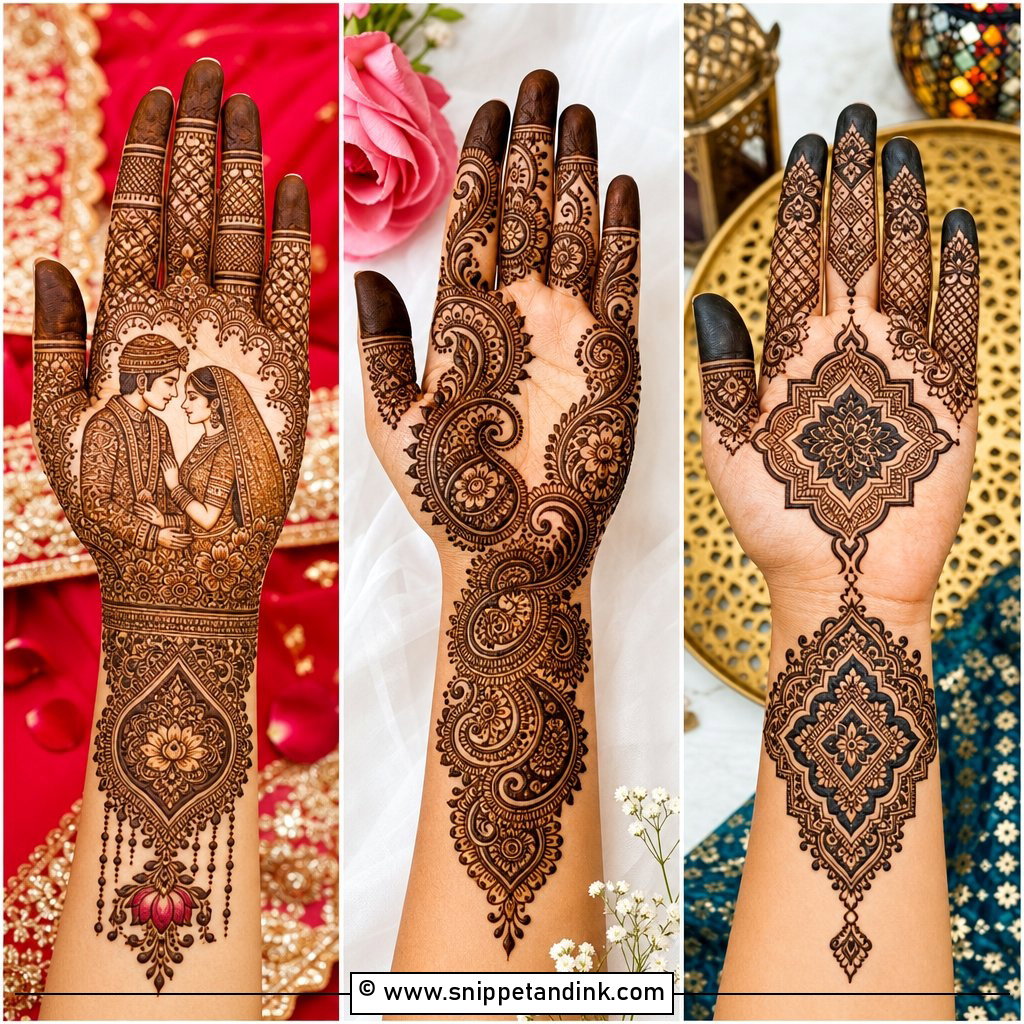
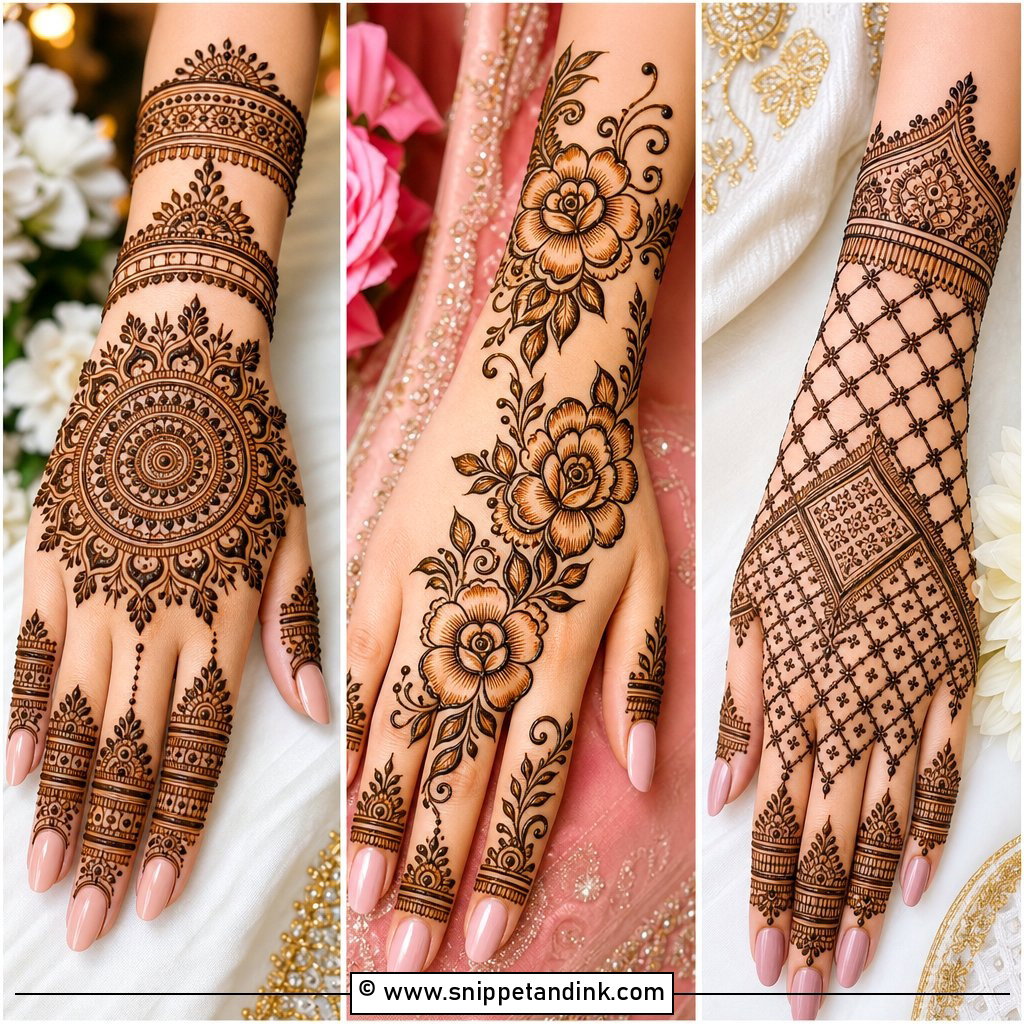
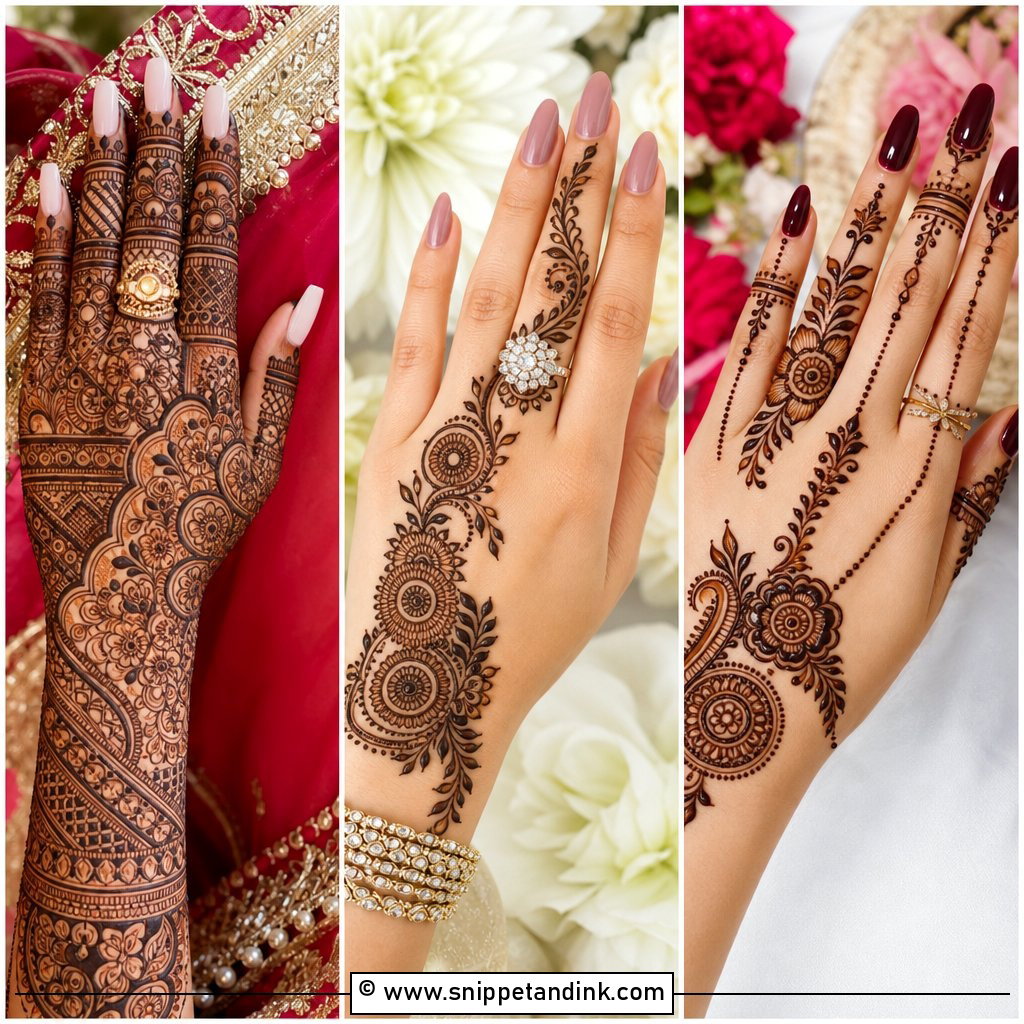
Fingertips to forearm, palm and back, filled with fine paisleys, flowers, vines, mandalas and small filler patterns. Done well, nothing looks empty but every section still has a direction, so the eye can follow it from the fingers up to the elbow. I build it in zones: fingers first, then the palm centre, then the wrist bands, and the forearm last, which keeps the density even instead of crowding the palm. Fully detailed fingers and bold wrist bands give a jewellery-like finish that holds up in ring and bangle close-ups. It suits red, maroon and deep pink outfits that can take a lot of colour.
2. Arabic Bridal Mehndi Design For Hands
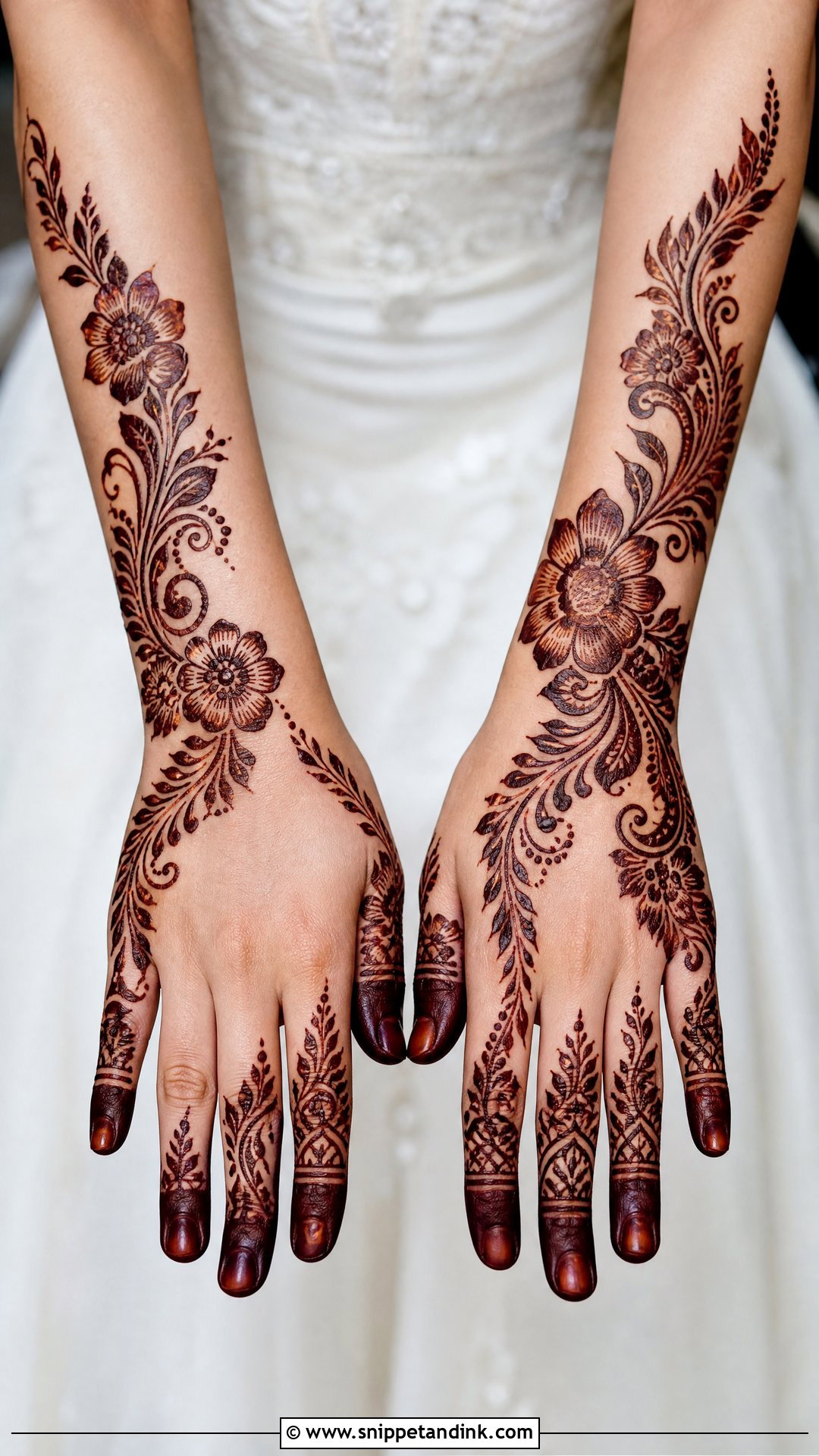
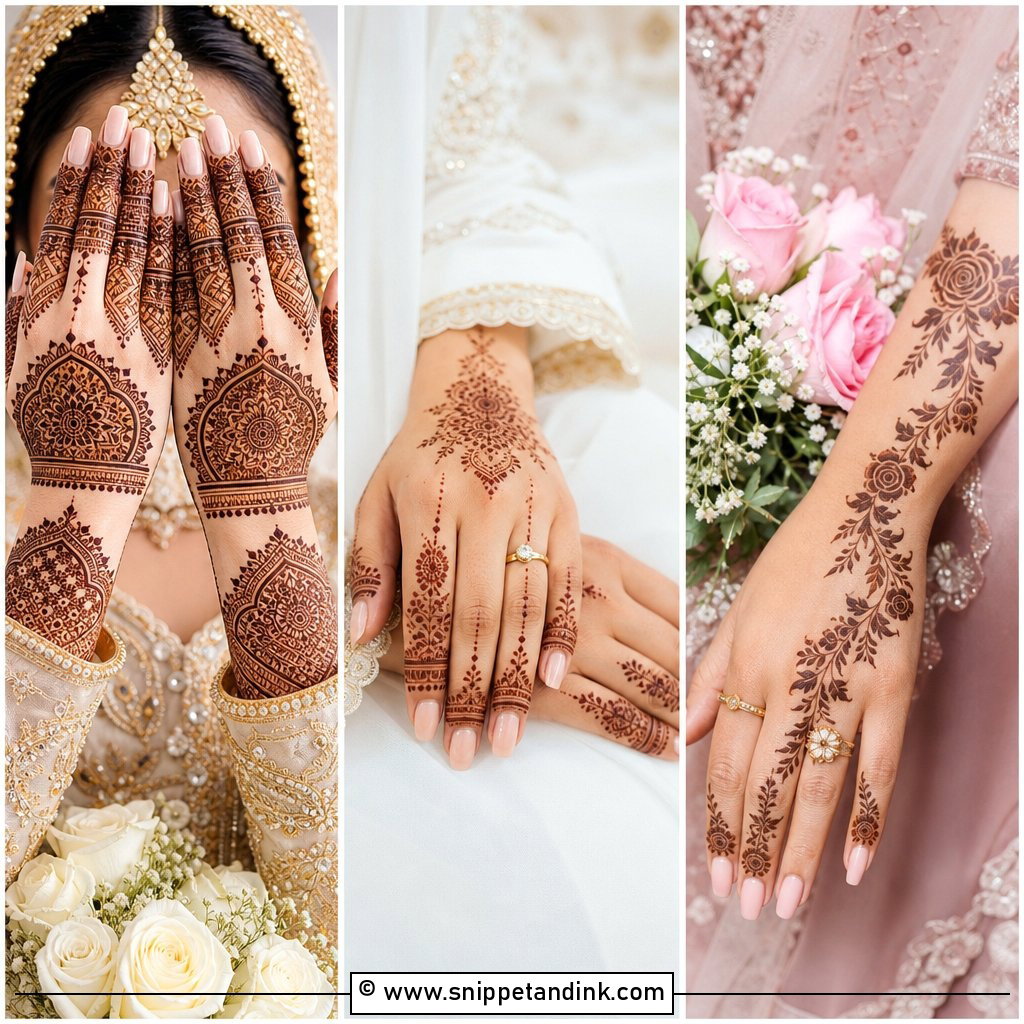
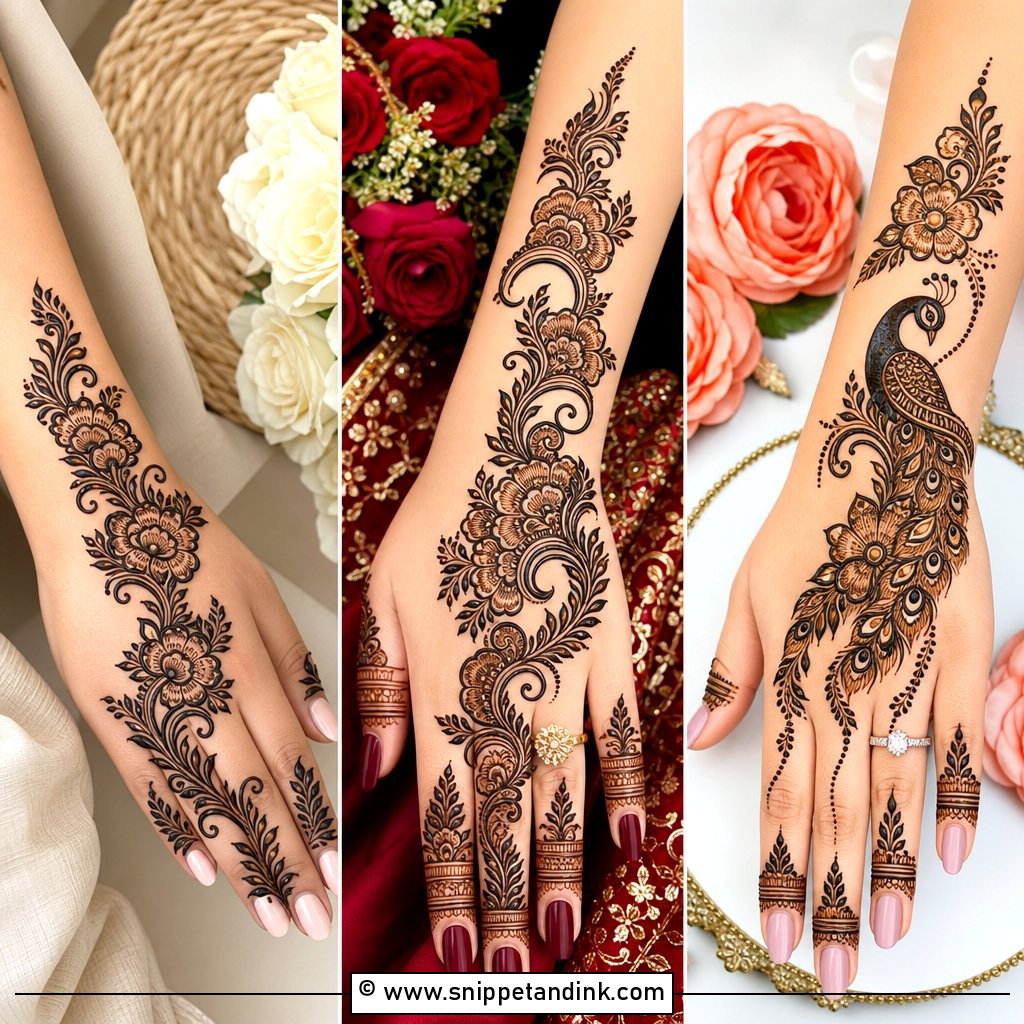
An Arabic bridal mehndi design for hands runs on a diagonal: large flowers, leafy vines and shaded petals sweep from the index finger across to the opposite side of the wrist. That movement is what makes it look elegant, and the open skin lets the reddish brown stain read clearly. It also takes far less time than a full Indian design, which matters if you have a sangeet the same evening. To make it bridal, I fill the fingertips fully, add a wrist cuff and stretch the trail onto the forearm.
3. Indo Arabic Bridal Mehndi Design
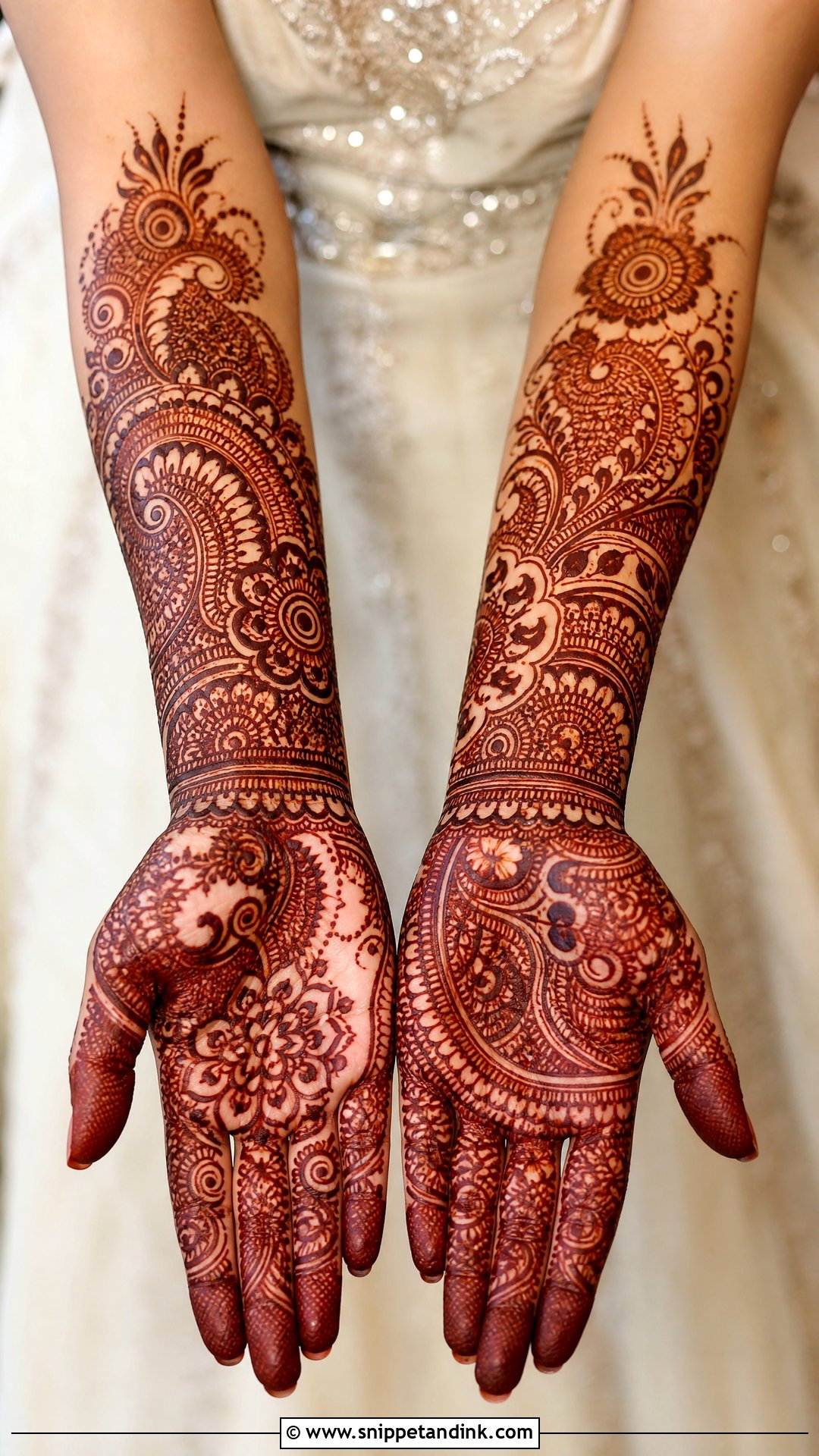
Here the structure comes from Arabic work, with big roses, paisleys and trails, and the inside of each shape is filled with Indian detail: dots, curls, checks and lace strokes. The Indo Arabic bridal mehndi design is my usual suggestion when a bride can’t decide between heavy and light. On medium-length fingers it makes the hand look longer, because the bold elements run lengthwise. Bracelet bands at the wrist and detailed fingertips close the design off.
4. Rajasthani Bridal Mehndi Design
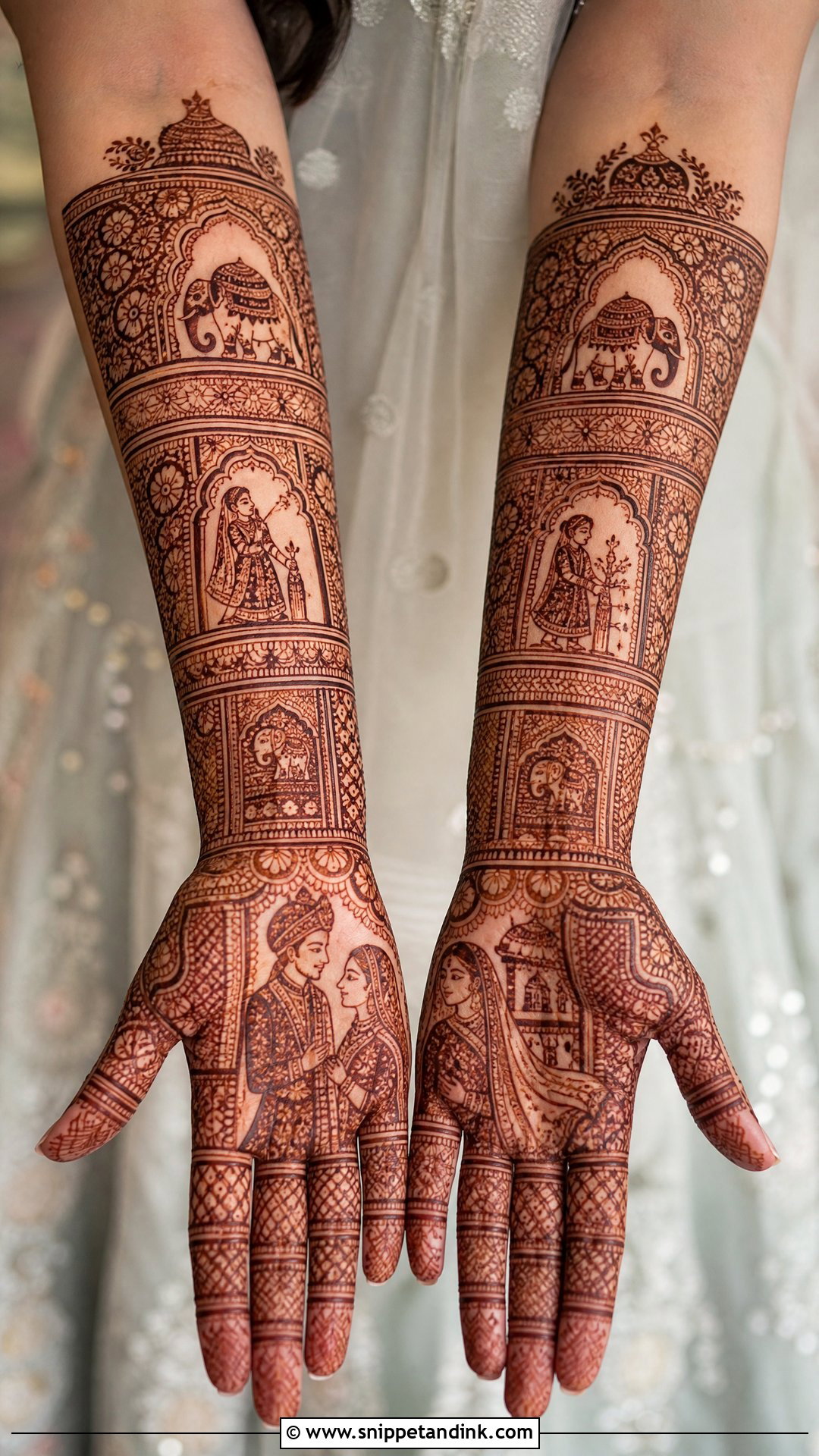
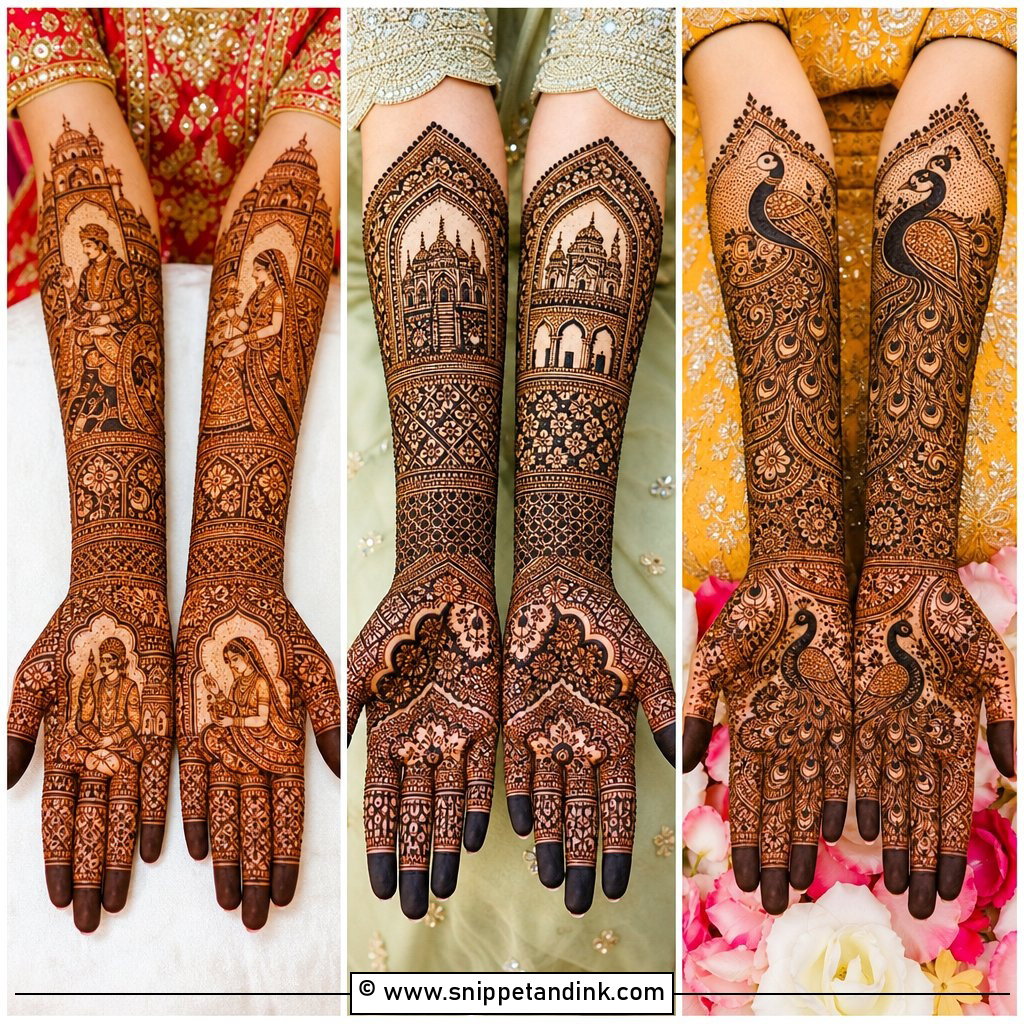
Rajasthani mehndi tells the wedding as a picture: bride and groom figures, royal arches, elephants, peacocks and musicians, usually across the full palm and often up to the elbow. It is slow work and there is no shortcut. The faces and figures need a very fine cone and a steady hand, and I always set the central figures slightly larger than the reference photo shows, because small figures blur as the stain darkens. Fillers go around them last, so the scene stays readable from a step away.
5. Dulha Dulhan Bridal Mehndi Design
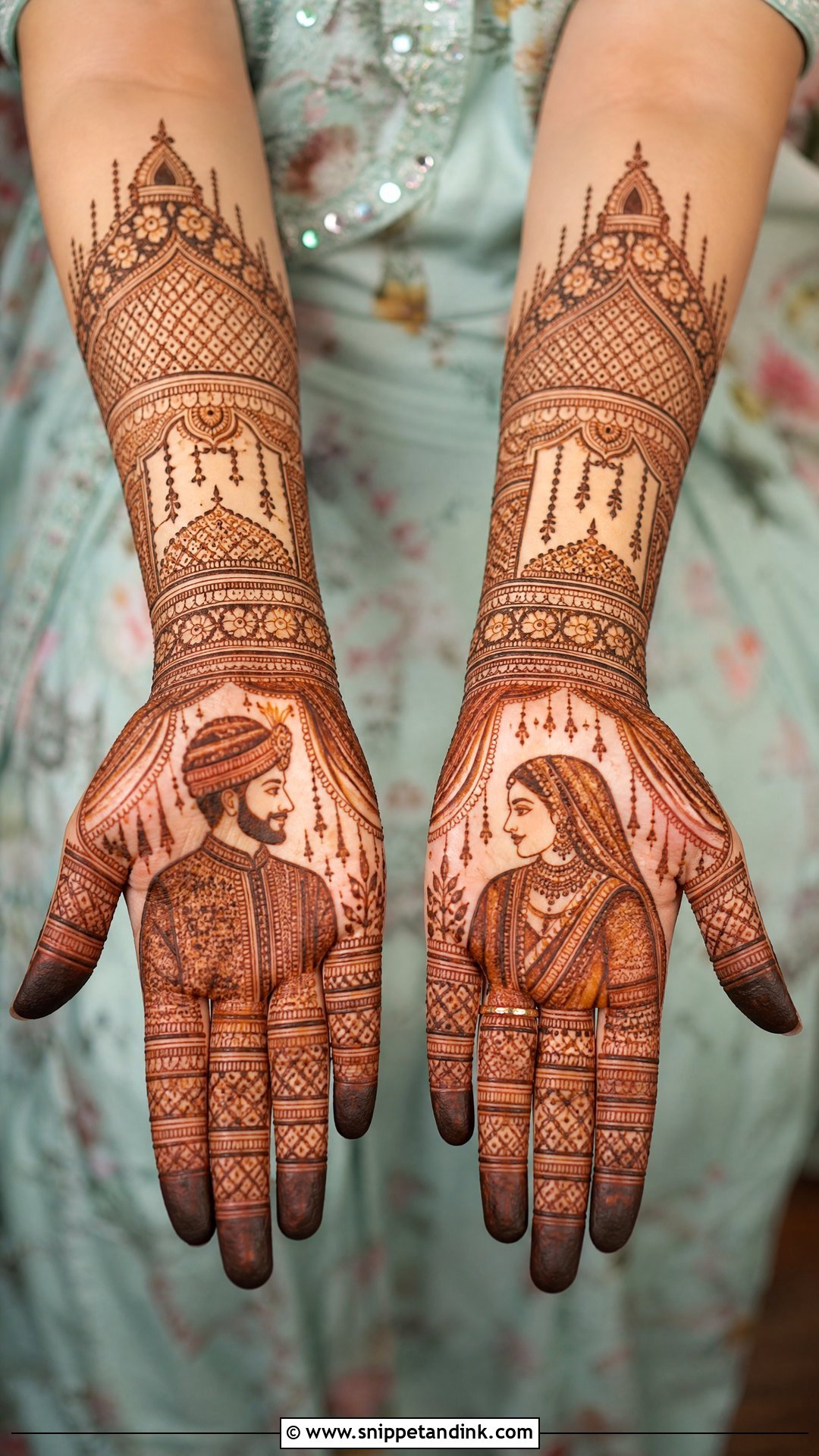
The bride is drawn on one palm and the groom on the other, so the two only make sense when you hold your hands side by side. That’s the moment people photograph, so I plan the figures to face each other and line up at the same height. Mandaps, flowers, jaali and wedding symbols fill the space around them. Keep the faces and clothing simple. Eyelashes, nose rings and fine embroidery lines look charming in fresh paste and turn into dark smudges once the stain sets. Dense fingers and wrist cuffs complete it.
6. Peacock Bridal Mehndi Design
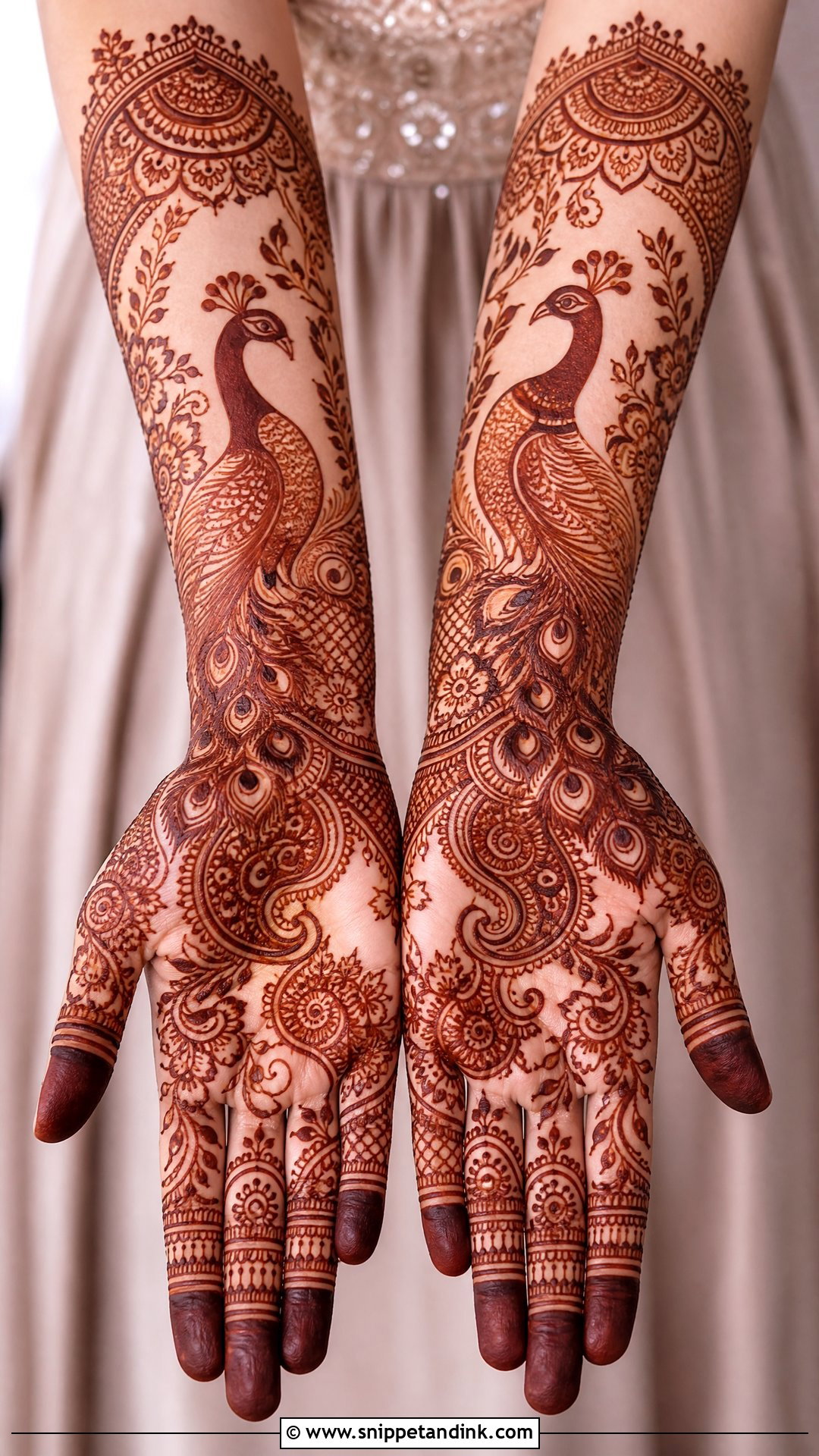
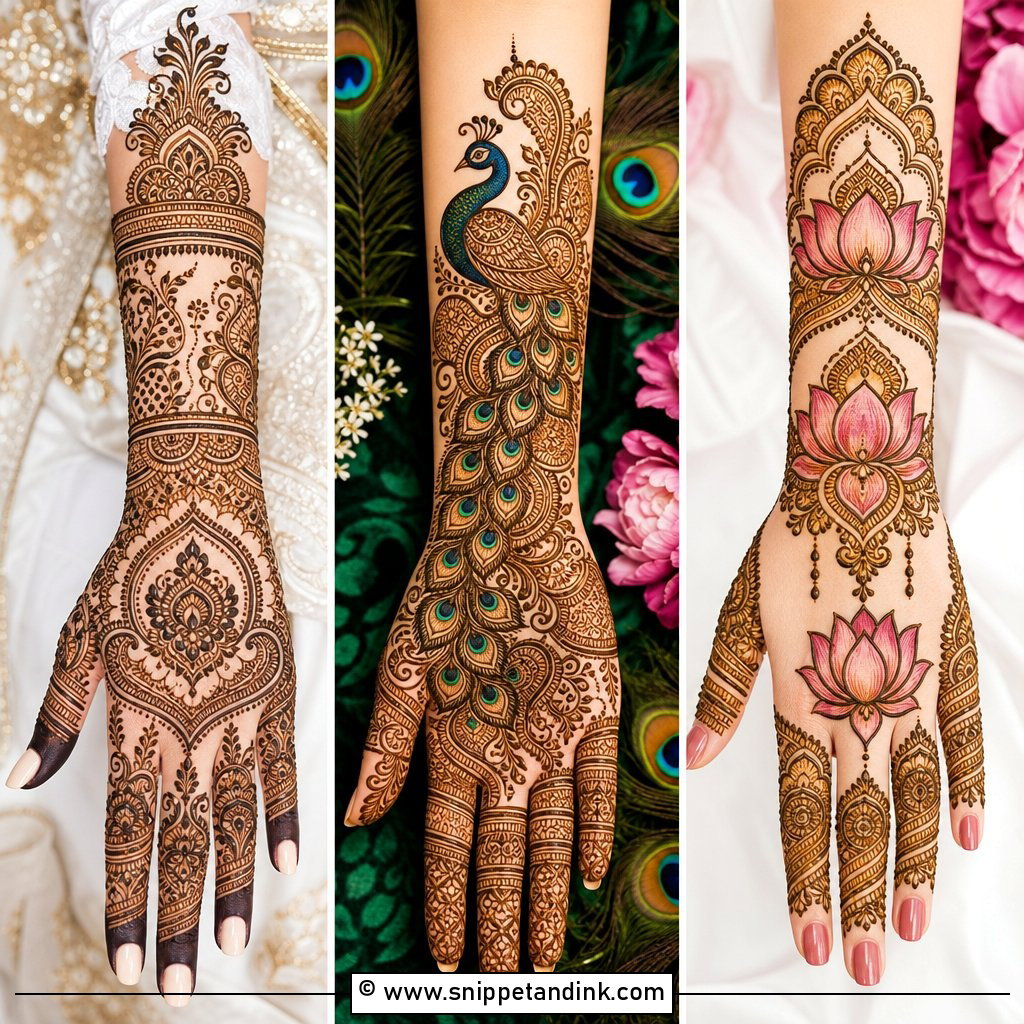
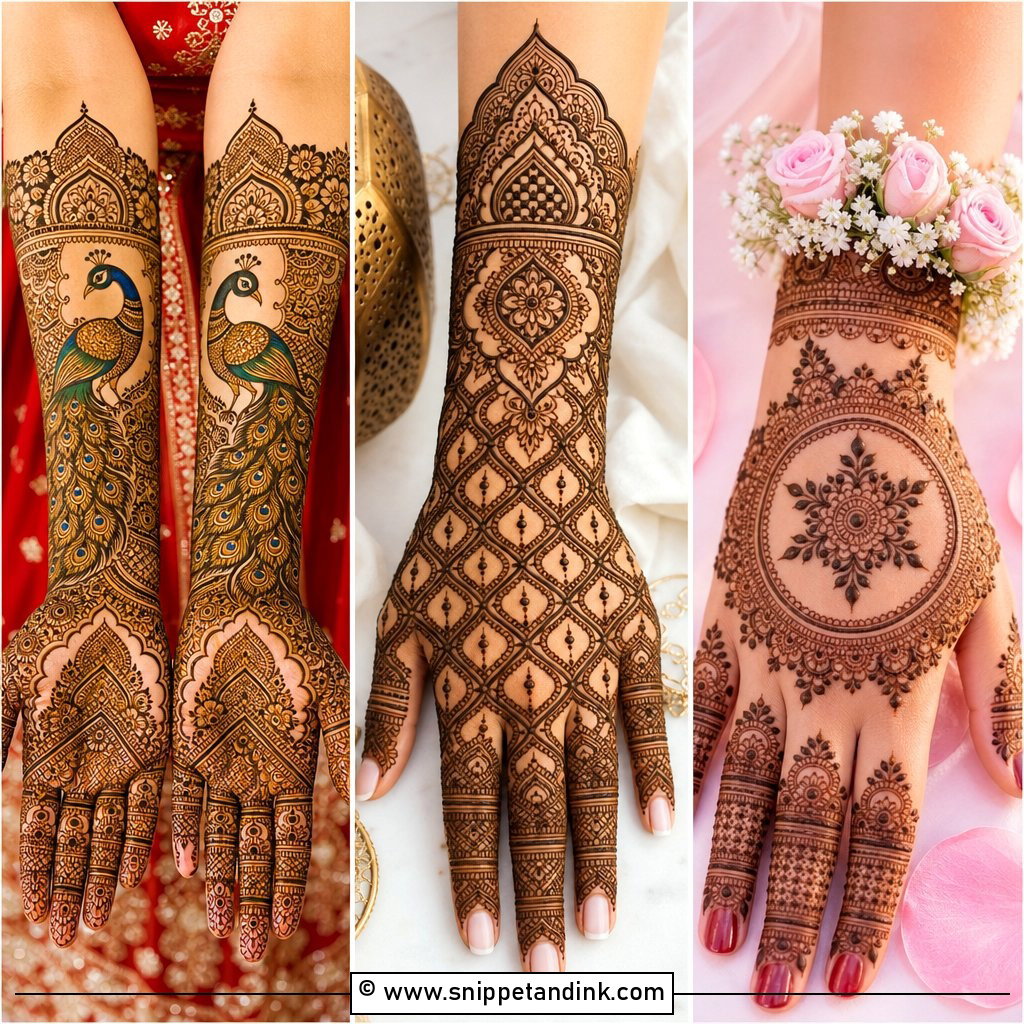
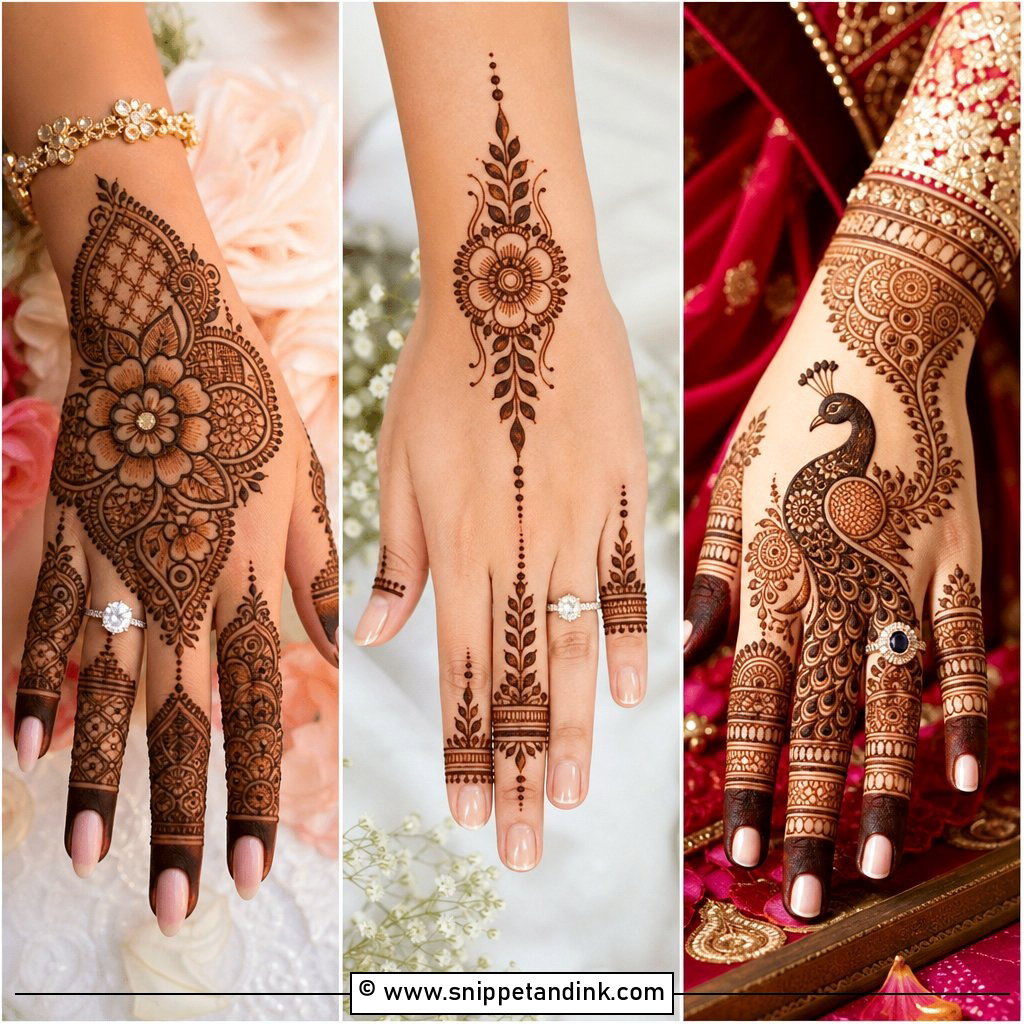
Peacocks fit henna naturally because their curves already match the way mehndi flows. I usually give the bird the palm or let it stretch across the back of the hand, with feathers that trail toward the wrist and carry most of the fine detail: paisleys, dots and thin lines. One large peacock with smaller florals around it reads far better than three competing birds. It stays recognisable after the stain darkens, which crowded multi-peacock layouts rarely do.
7. Mandala Bridal Mehndi Design For Hands
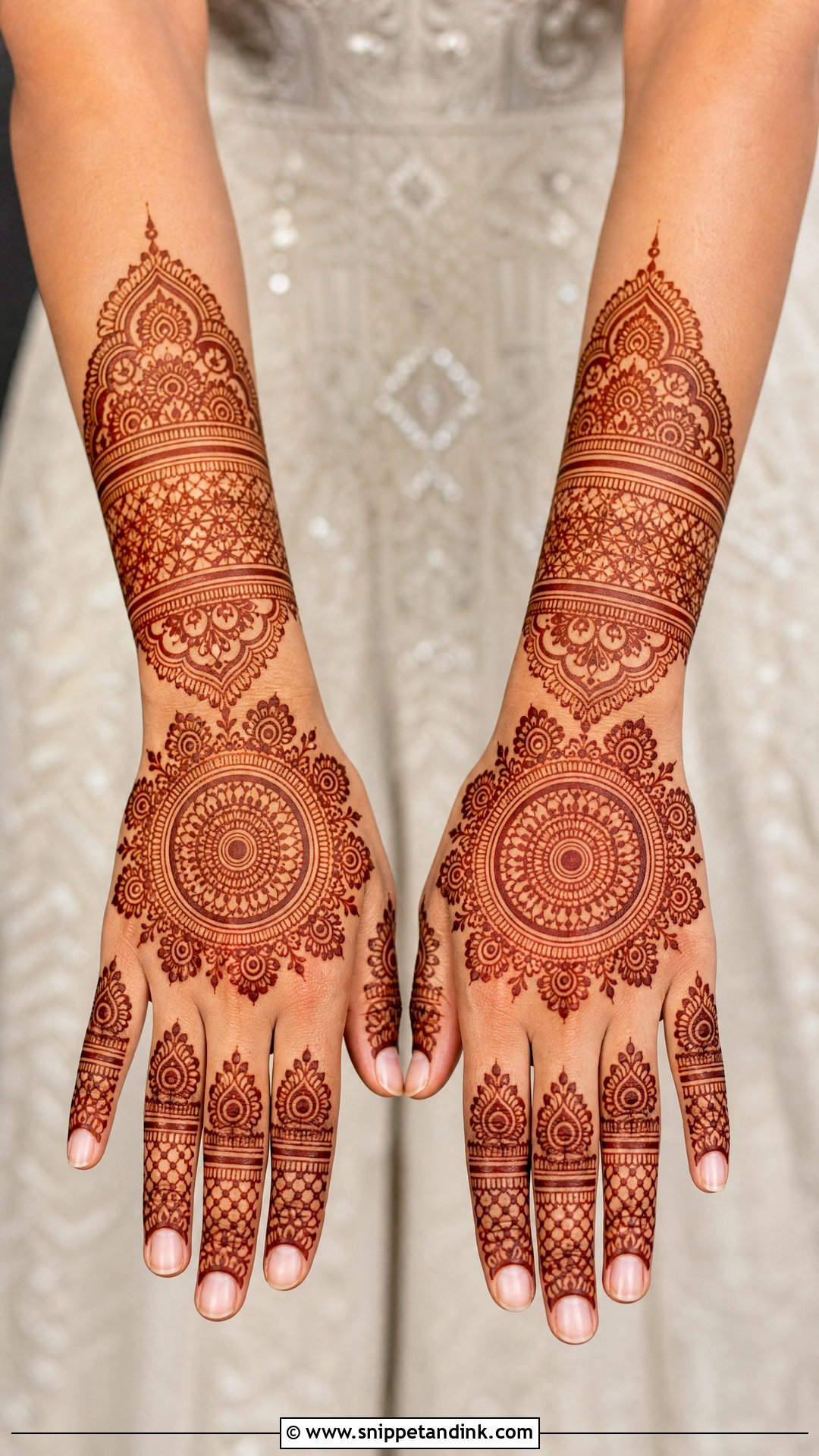
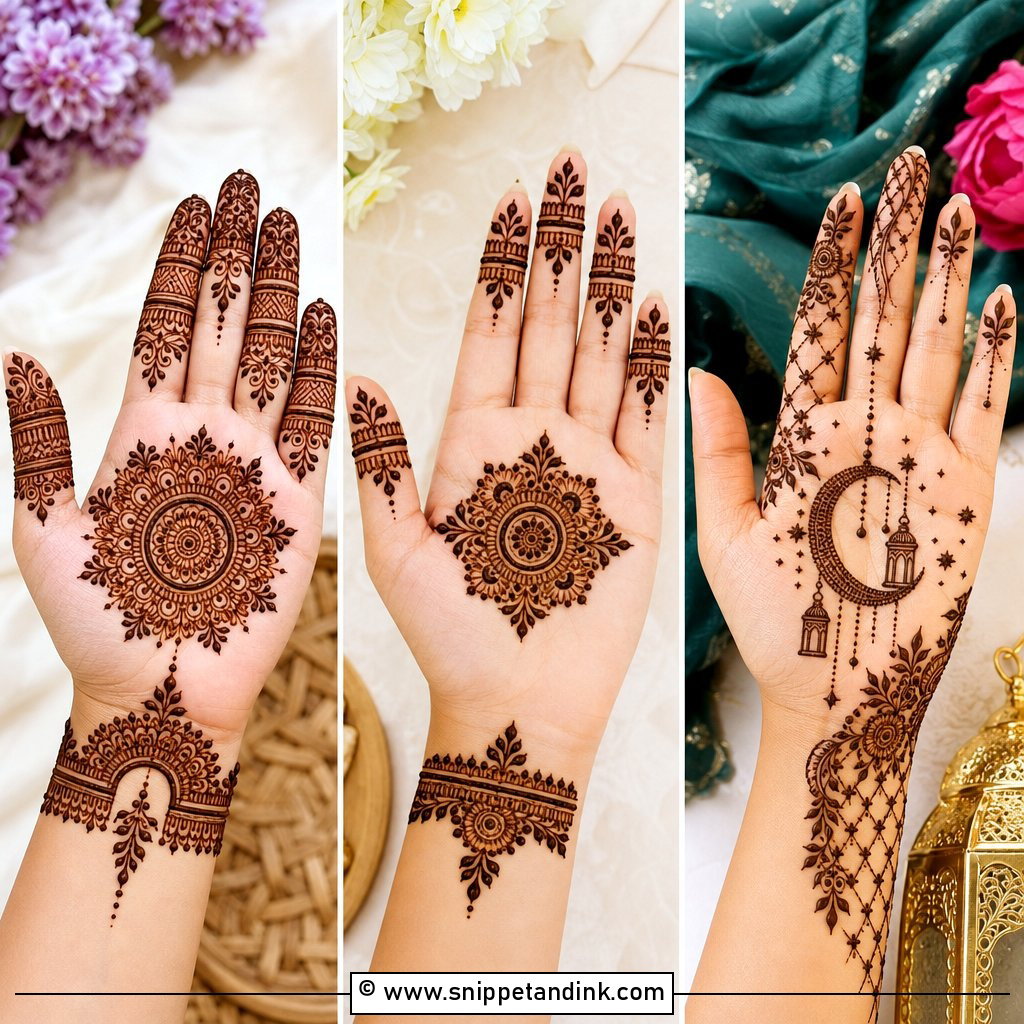
A mandala in the centre of the palm or the back of the hand gives the whole design a fixed point, and everything else, the finger bands, the wrist and the forearm, radiates out from it. The size of that circle sets the tone: small and the hand stays airy, large and it becomes the main event. I measure it against the width of the palm so it doesn’t creep onto the thumb mound, where it distorts as you grip. Lace, paisley borders and floral cuffs dress it up. It flatters almost every hand, which makes it a safe pick if you’re torn.
8. Back Hand Bridal Mehndi Design
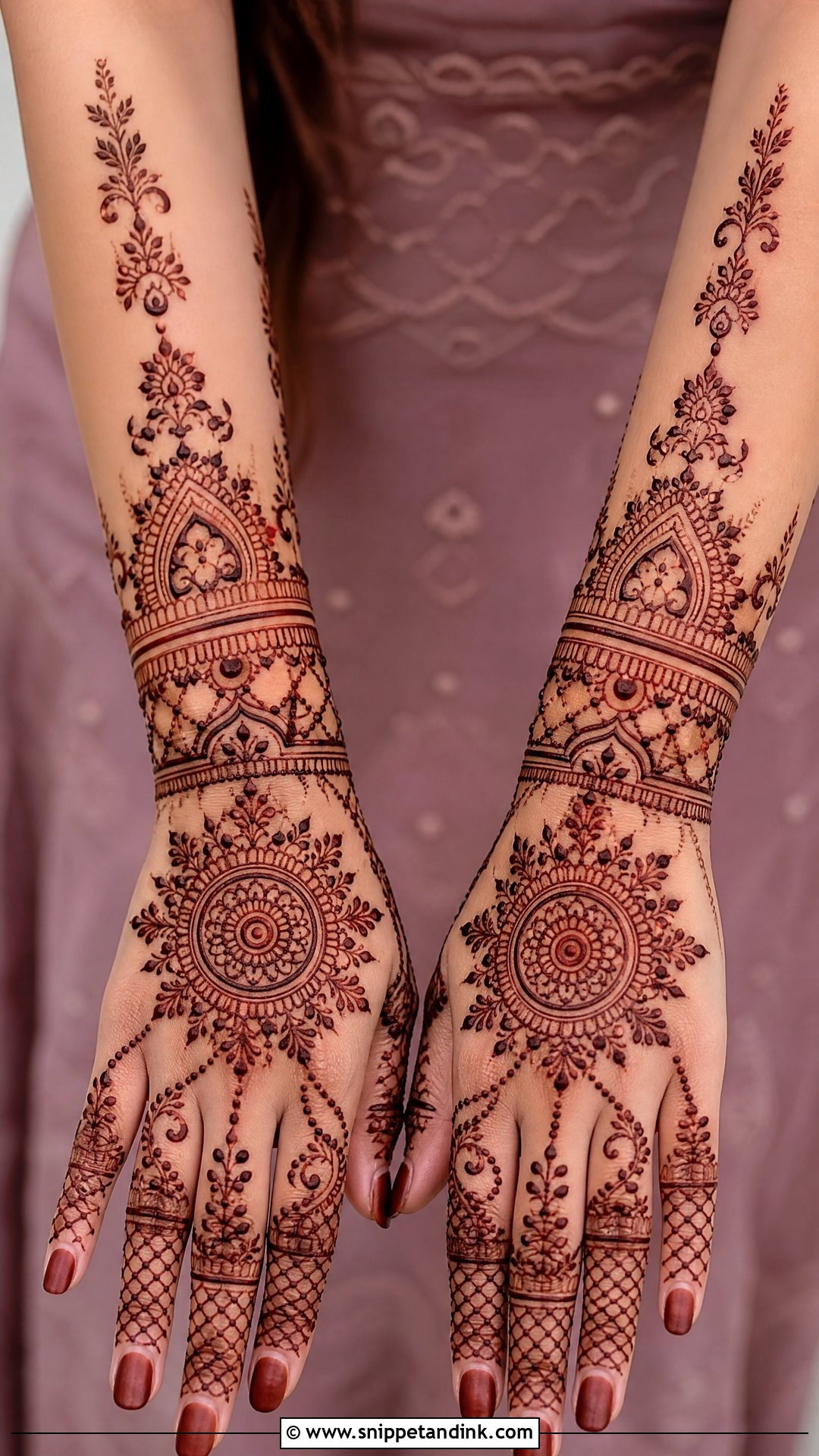
The back of the hand is what shows during the ring ceremony, while you hold a bouquet or lift your bangles, so it deserves as much planning as the palm. A central mandala, floral trails, bracelet bands and finger chains can mimic a haath phool without any extra jewellery. I keep some negative space around the main motifs here, since the back of the hand stains a little lighter than the palm and dense fill can look patchy. If your sleeves or bangles cover the wrist, push the bold elements toward the knuckles where they’ll stay visible.
9. Front Hand Bridal Mehndi Design
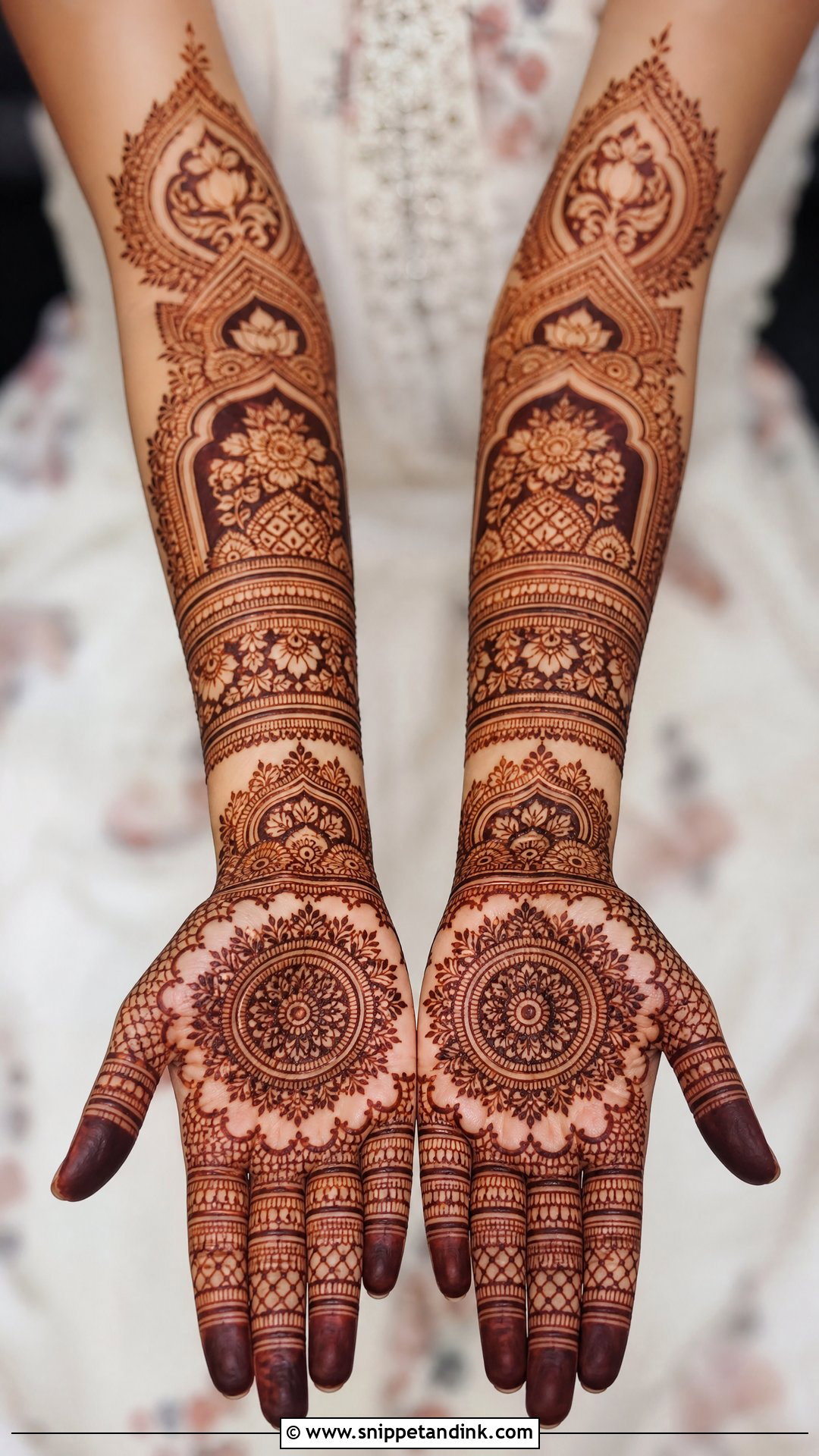
The palm is the traditional heart of bridal henna, and it is also where the stain goes darkest, so intricate work pays off most here. A Front hand bridal mehndi design can be dense, symbolic, floral or built around portraits, usually with a central mandala, paisley clusters or lotus motifs and fully detailed fingertips. The risk is muddiness. Because the palm takes colour so strongly, very tight fill merges into a solid patch, so I leave hairline gaps between sections. Wrist bands and a forearm extension connect it to the rest of the arm.
10. Minimal Bridal Mehndi Design
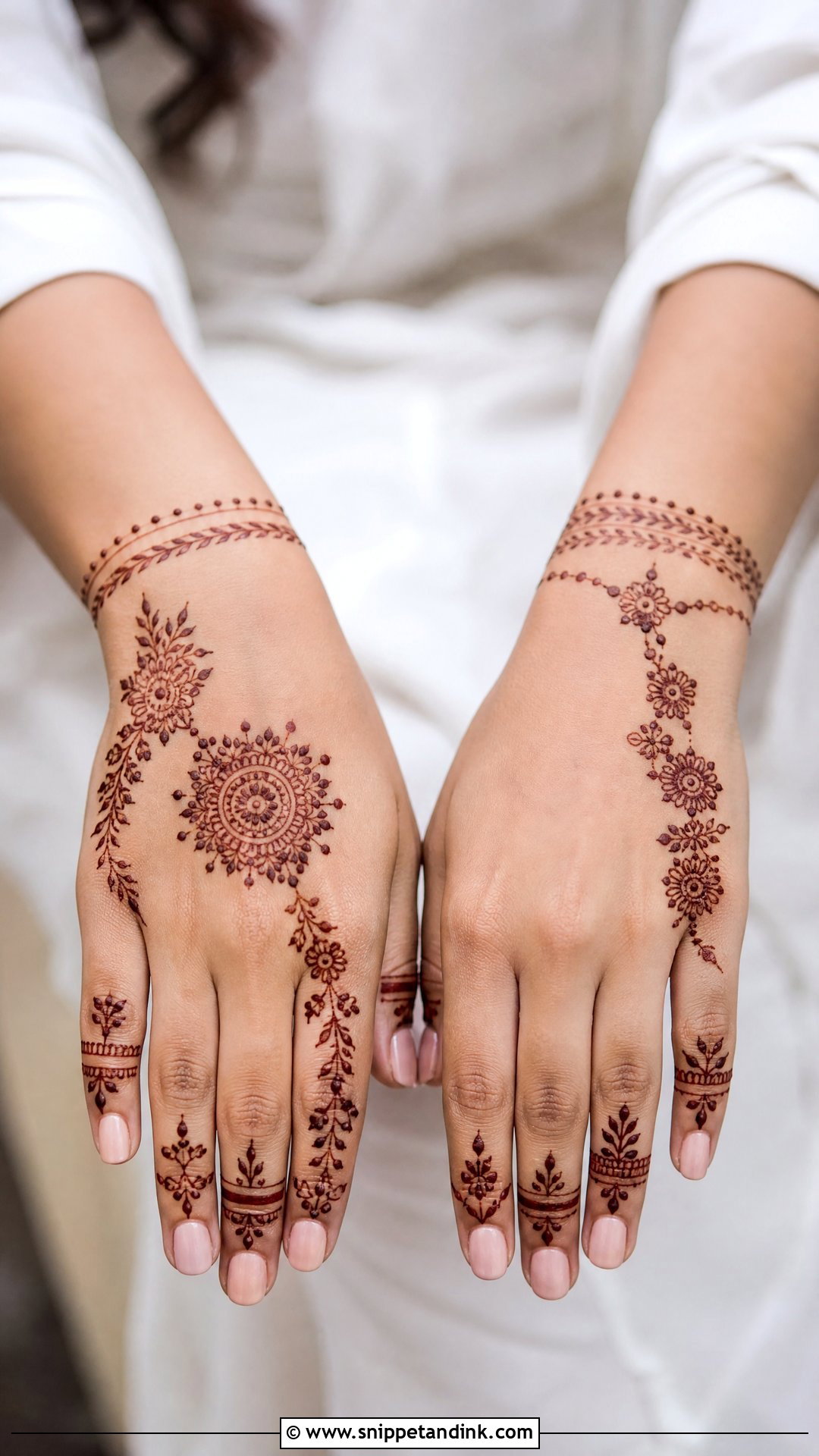
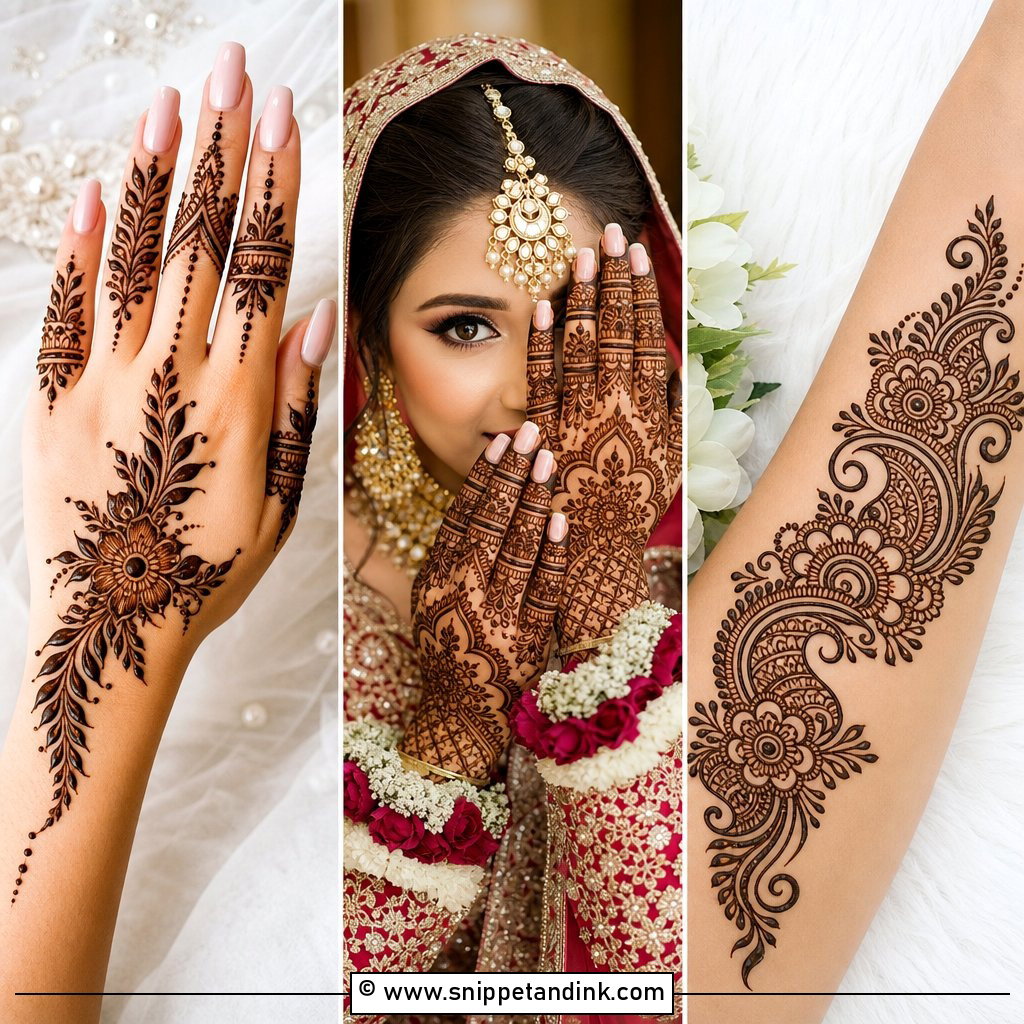
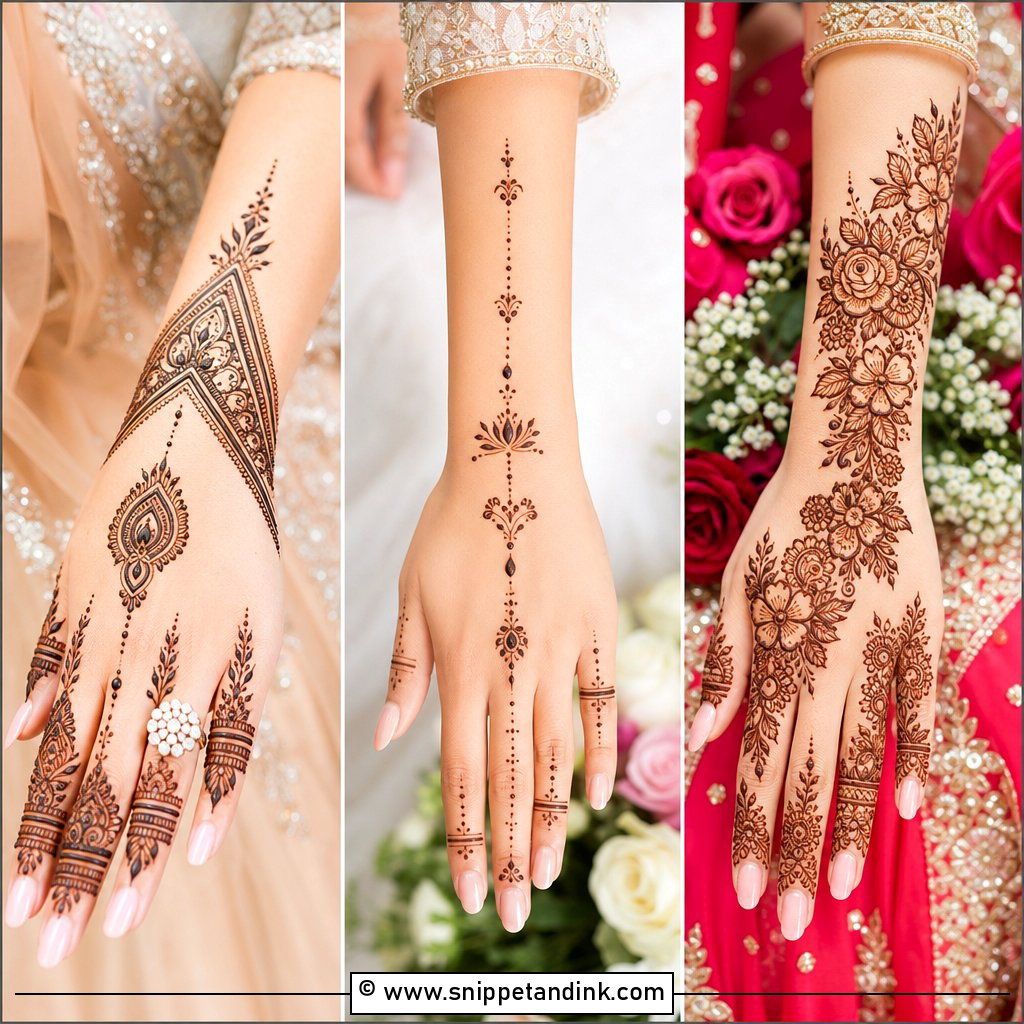
Minimal is not the same as plain. Delicate florals, a small mandala, fine finger patterns and a bracelet line leave lots of open skin, so every line has to be clean and every placement deliberate. It fits courthouse ceremonies, intimate weddings and brides who still need to use their hands the day it’s applied. I put most of the effort into the fingers and one strong wrist element. A deep maroon stain against bare skin can hold its own next to a full bridal hand.
11. Modern Bridal Mehndi Design
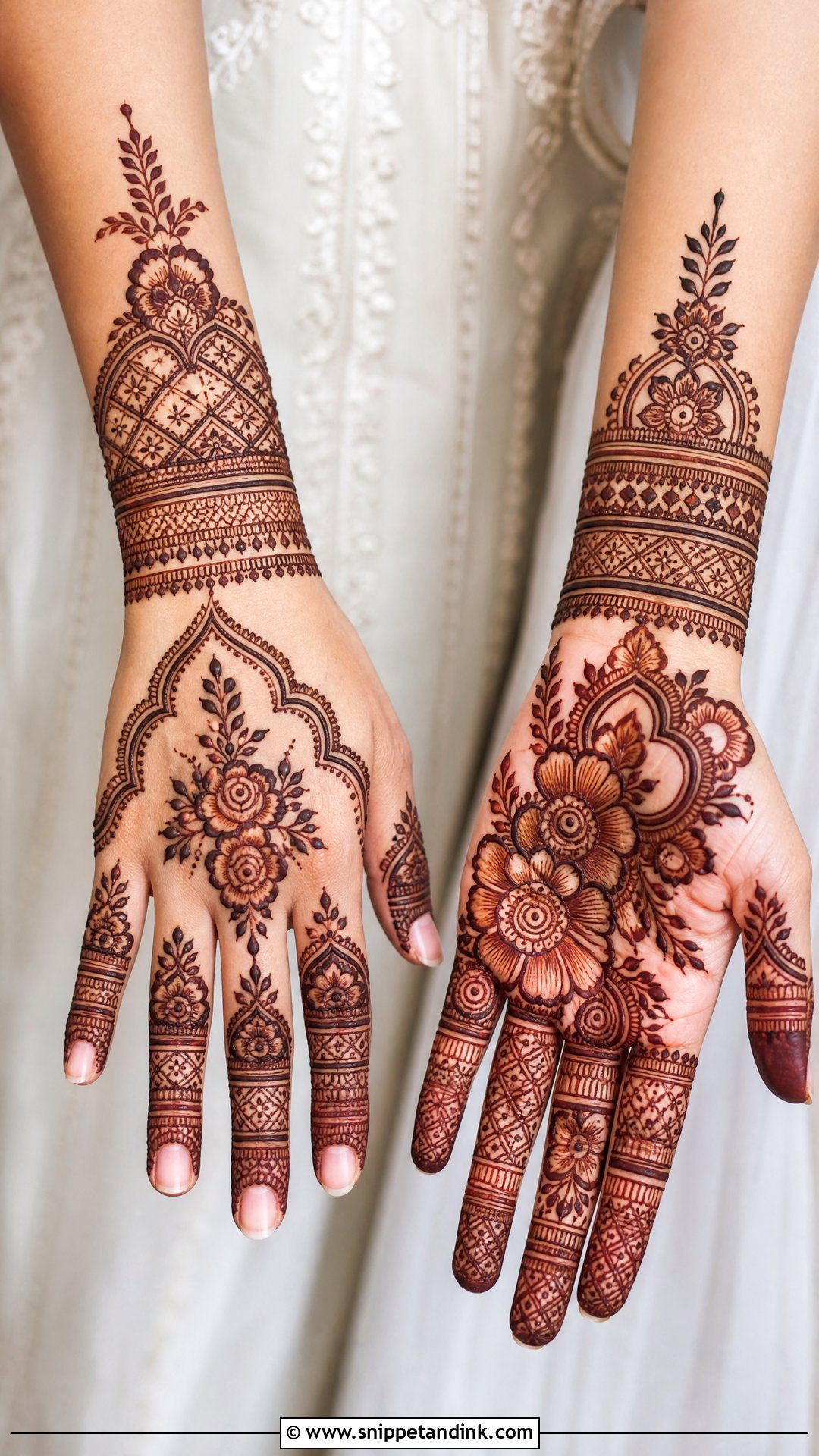
Modern layouts drop the crowded fillers in favour of strong shapes: negative space, clean geometry, bold florals and neat wrist cuffs. They suit receptions, engagements and fusion outfits. I often design the two hands to match in elements without being identical, a flower on the left palm answered by a smaller version on the right, which looks artistic rather than mirrored. Keep the fingers detailed and give the wrist to forearm area a clear flow so it still reads as bridal.
12. Simple Bridal Mehndi Design For Hands
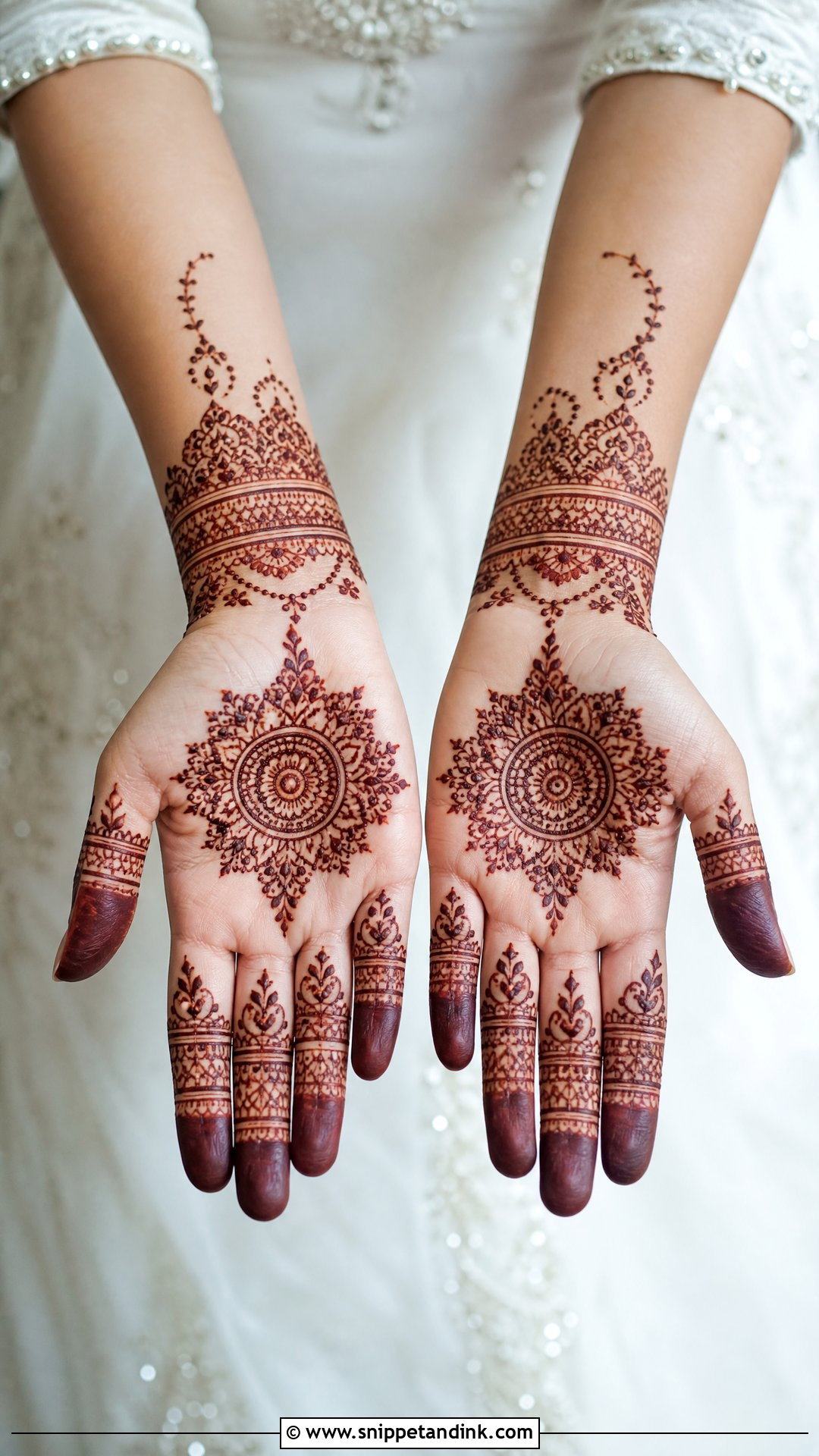
Short on application time? A simple design with medium palm coverage, decorated fingers, floral cuffs and light forearm work covers the hand properly in a fraction of the hours. The mistake I see is scattering small motifs across the skin with nothing linking them, which looks unfinished. Commit to full-hand coverage at a lighter density instead: a central mandala, a few paisleys, leafy vines and clean borders. Even spacing and matched fingertips make it look intentional, and it sits comfortably with traditional or contemporary outfits.
13. Heavy Bridal Mehndi Design
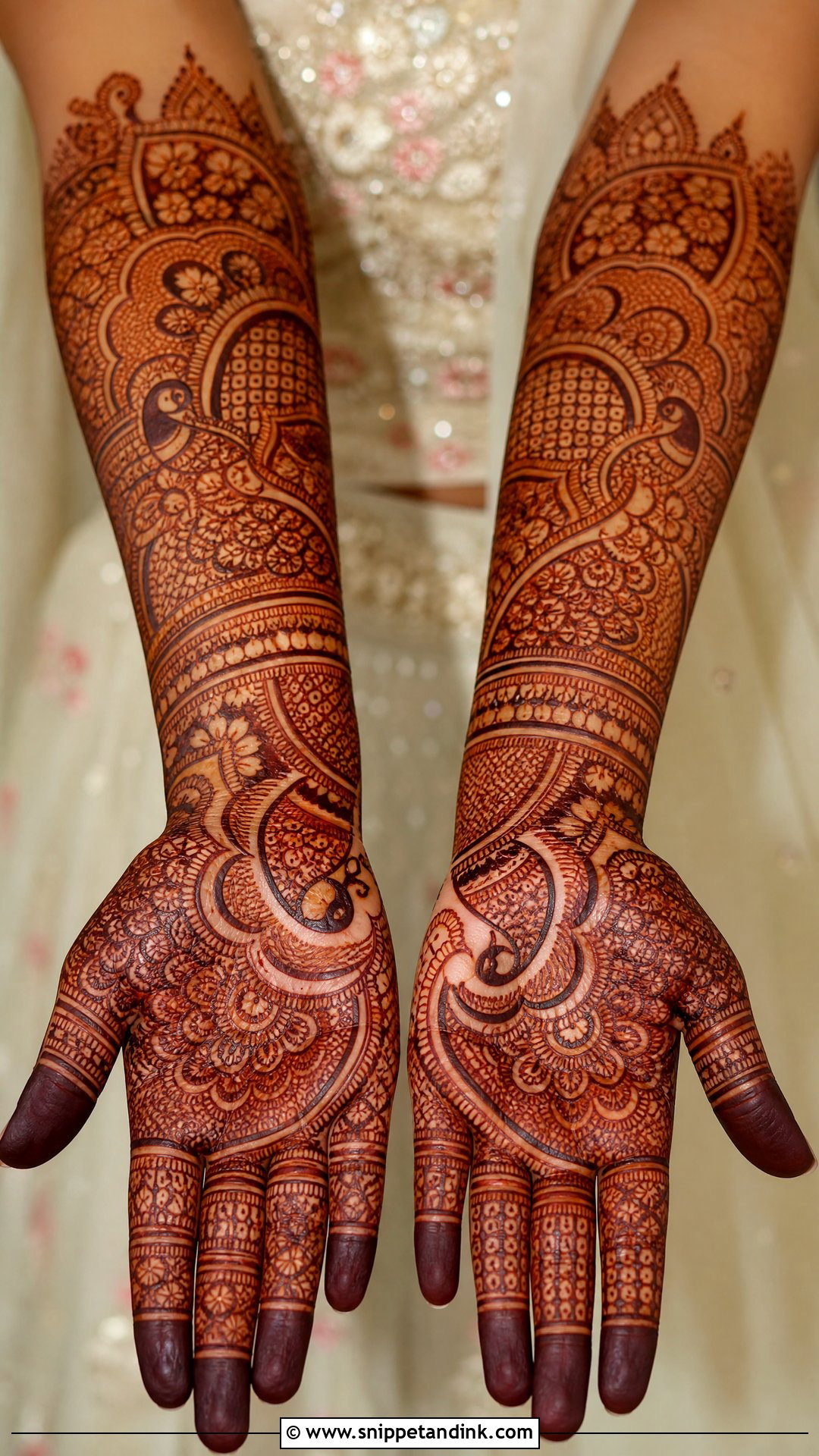
Dense paisleys, flowers, peacocks, jaali, mandalas and layered borders over almost the whole hand and forearm: this is the most dramatic option, and it goes best with heavily embroidered lehengas, sarees and traditional jewellery. It needs the longest sitting. What separates a rich heavy design from a messy one is sectioning. I divide the hand into clear zones, anchor the palm and wrist with larger motifs and only then fill the gaps. Without that structure the stain just reads as dark.
14. Bridal Mehndi Design With Names
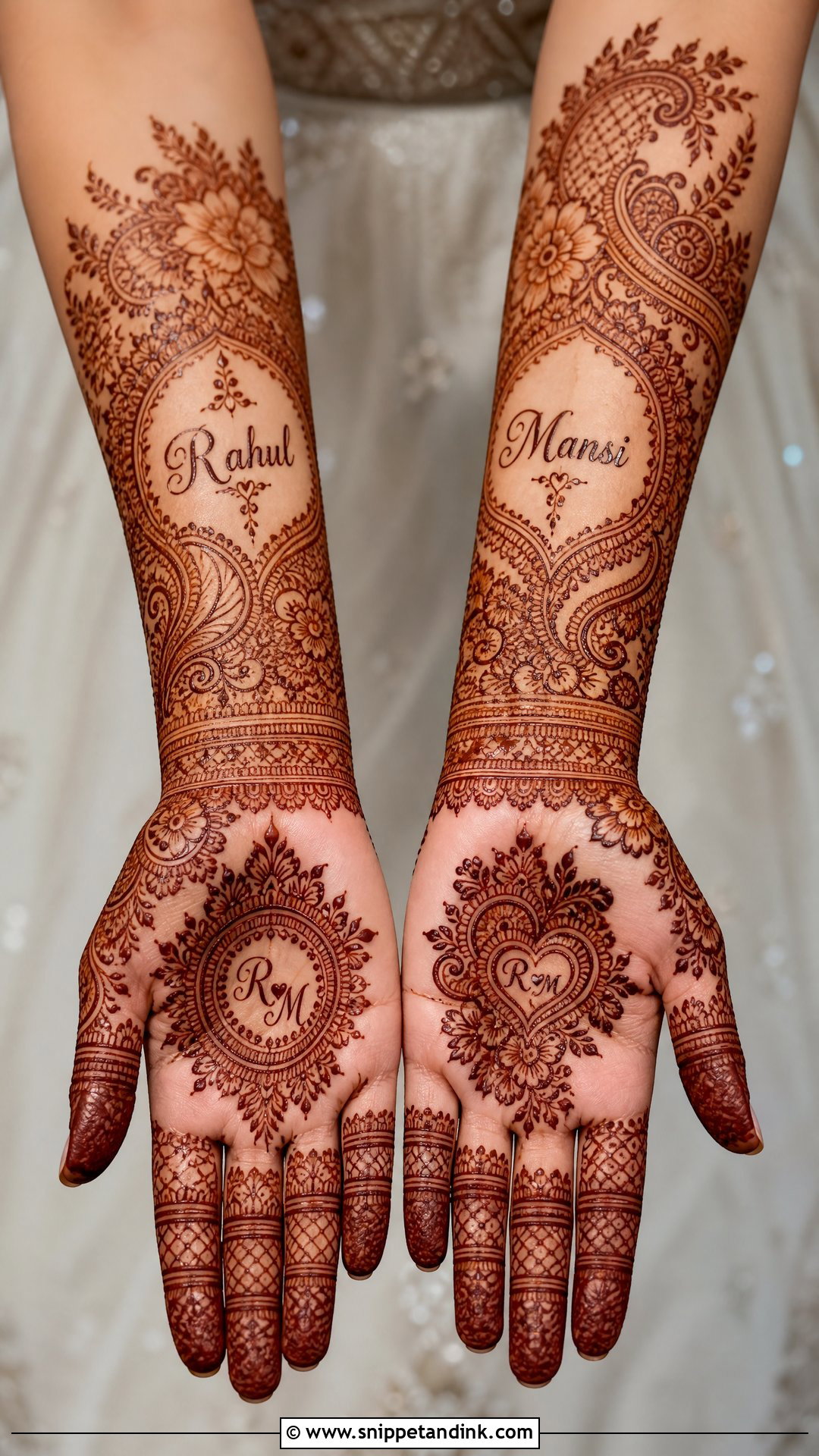
Hiding the groom’s name, initials or the wedding date inside the design turns it into a game at the mehndi function. Inside a paisley in the palm, along a vine near the ring finger or woven into a wrist band are the usual spots. Keep the lettering simple and give it a little breathing room, because heavy decoration around a name makes it impossible to find, and the groom does need a fair chance. Classic motifs around it keep the hand looking bridal rather than like a puzzle.
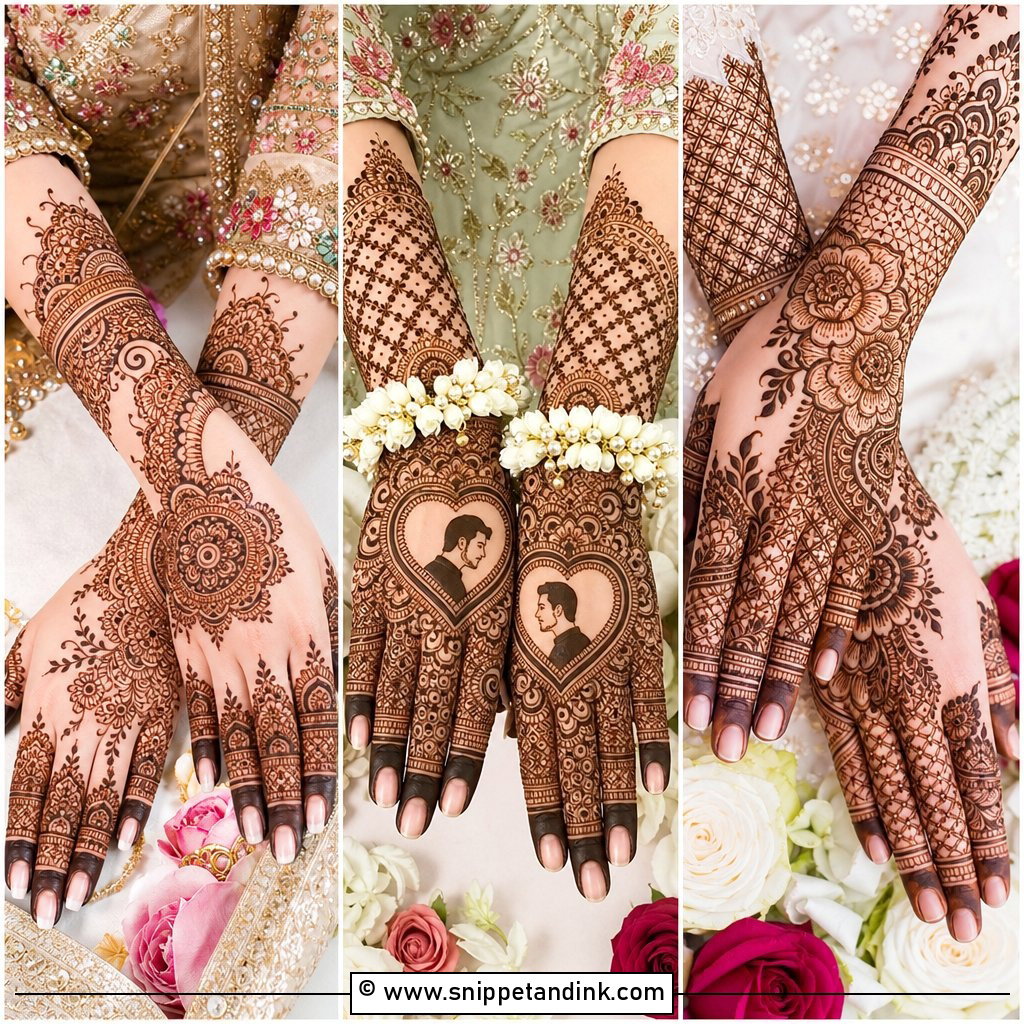
15. Jaali Bridal Mehndi Design
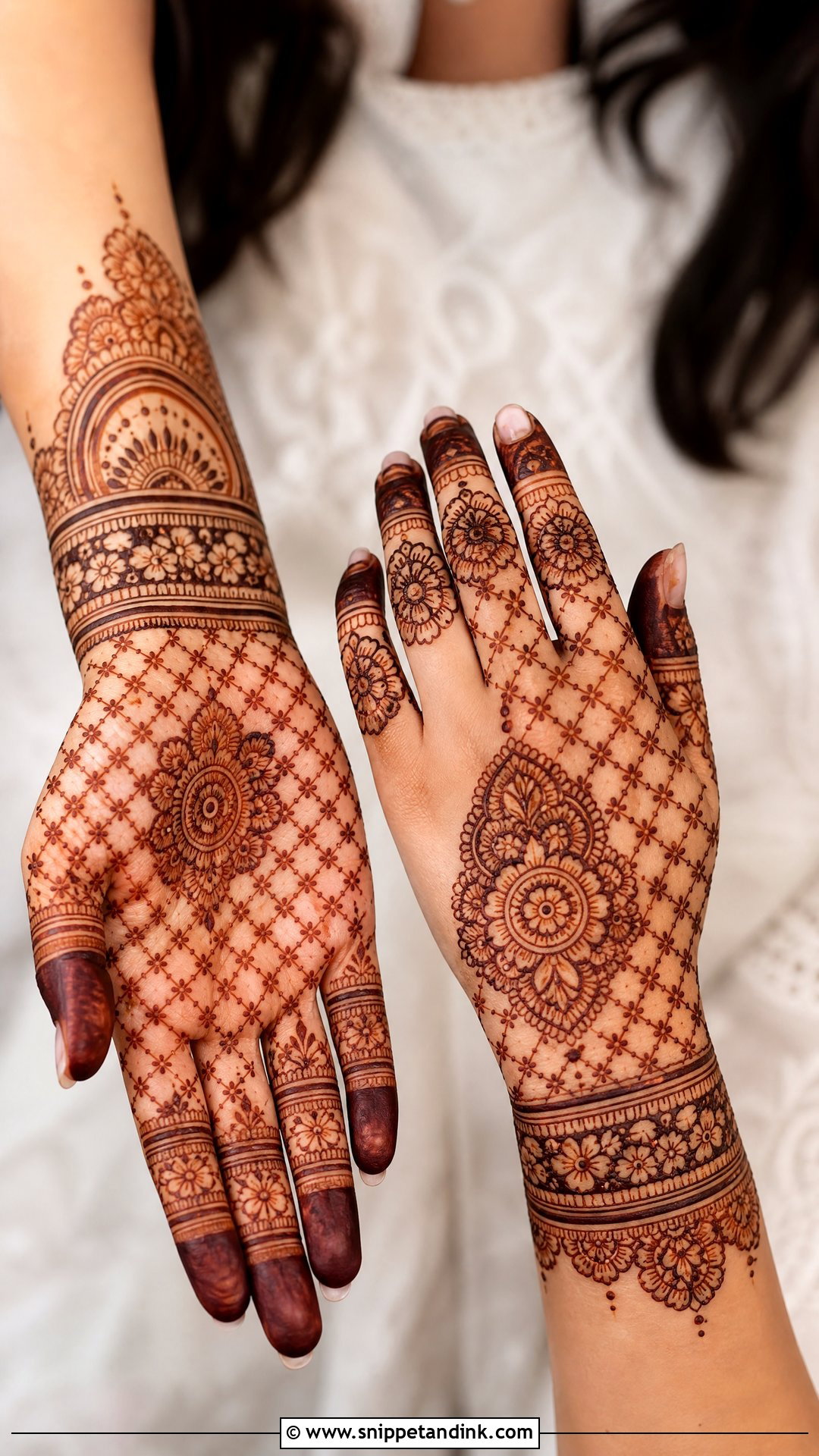
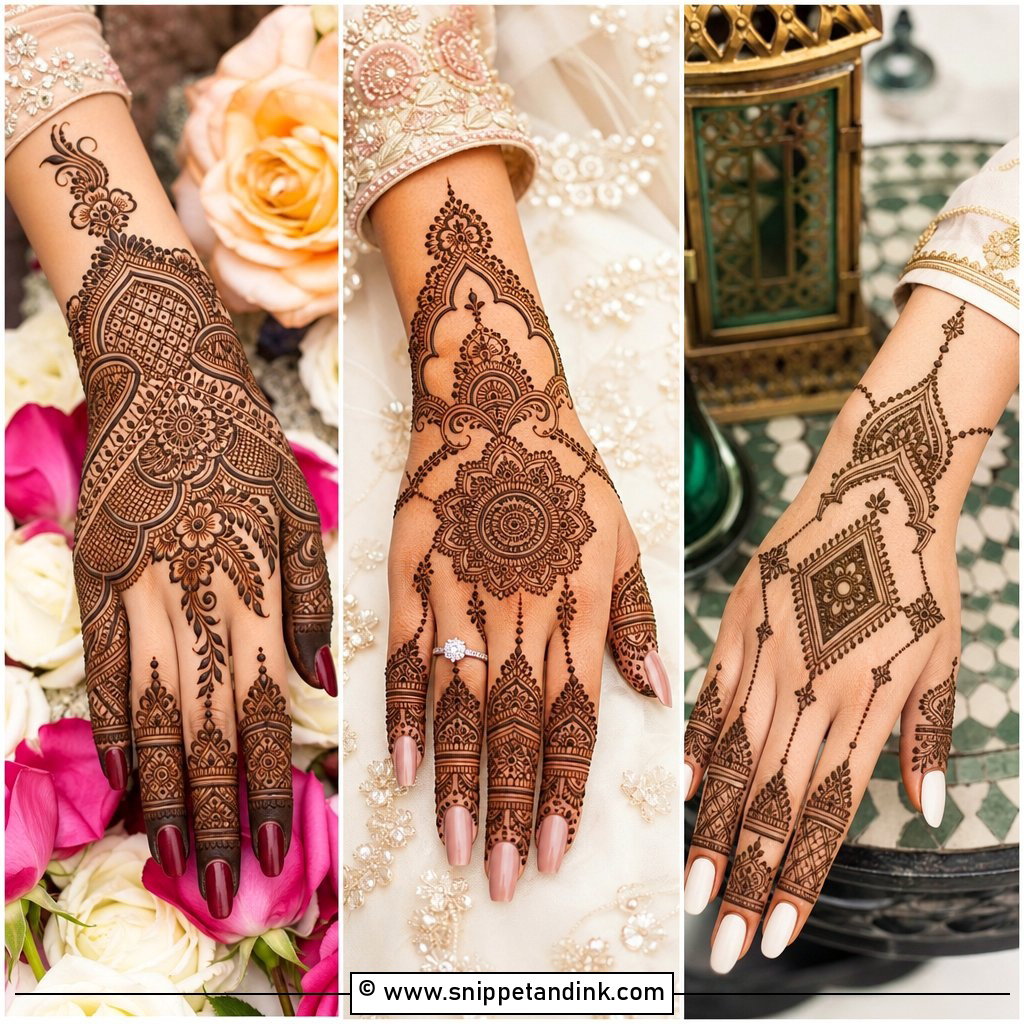
Jaali is a mesh of crisscross lines that gives the hand a lace effect. On the back of the hand it reads like embroidered fabric or hand jewellery, and on the palm it works as filler between larger motifs. The grid has to be even, so it’s a good test of an artist’s control. Over the knuckles I open the mesh slightly, because the skin creases there and a tight grid smudges. Mandalas, paisleys and wrist cuffs alongside jaali give it the contrast it needs to stand out in close-ups.
16. Lotus Bridal Mehndi Design
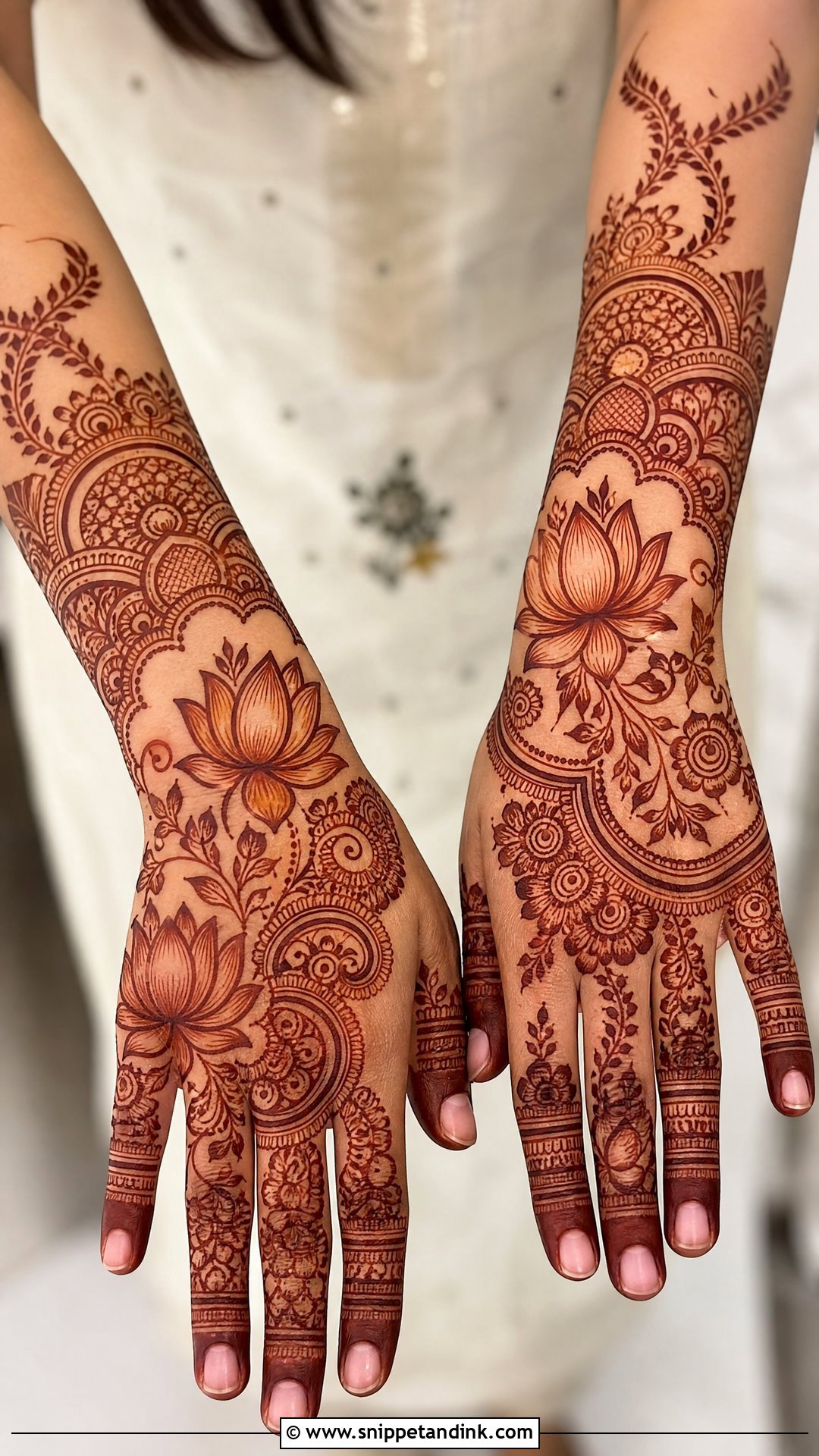
Lotus blooms sit well on the palm, wrist, back of the hand or forearm, with vines, leaves and mandala borders linking them. The petals take shading easily, which makes the design look full without packing every gap with fill. I use larger blooms as the anchors and connect them with fine chains or leafy trails. It suits pastel outfits and temple jewellery, where a dense design would compete.
17. Bracelet Bridal Mehndi Design
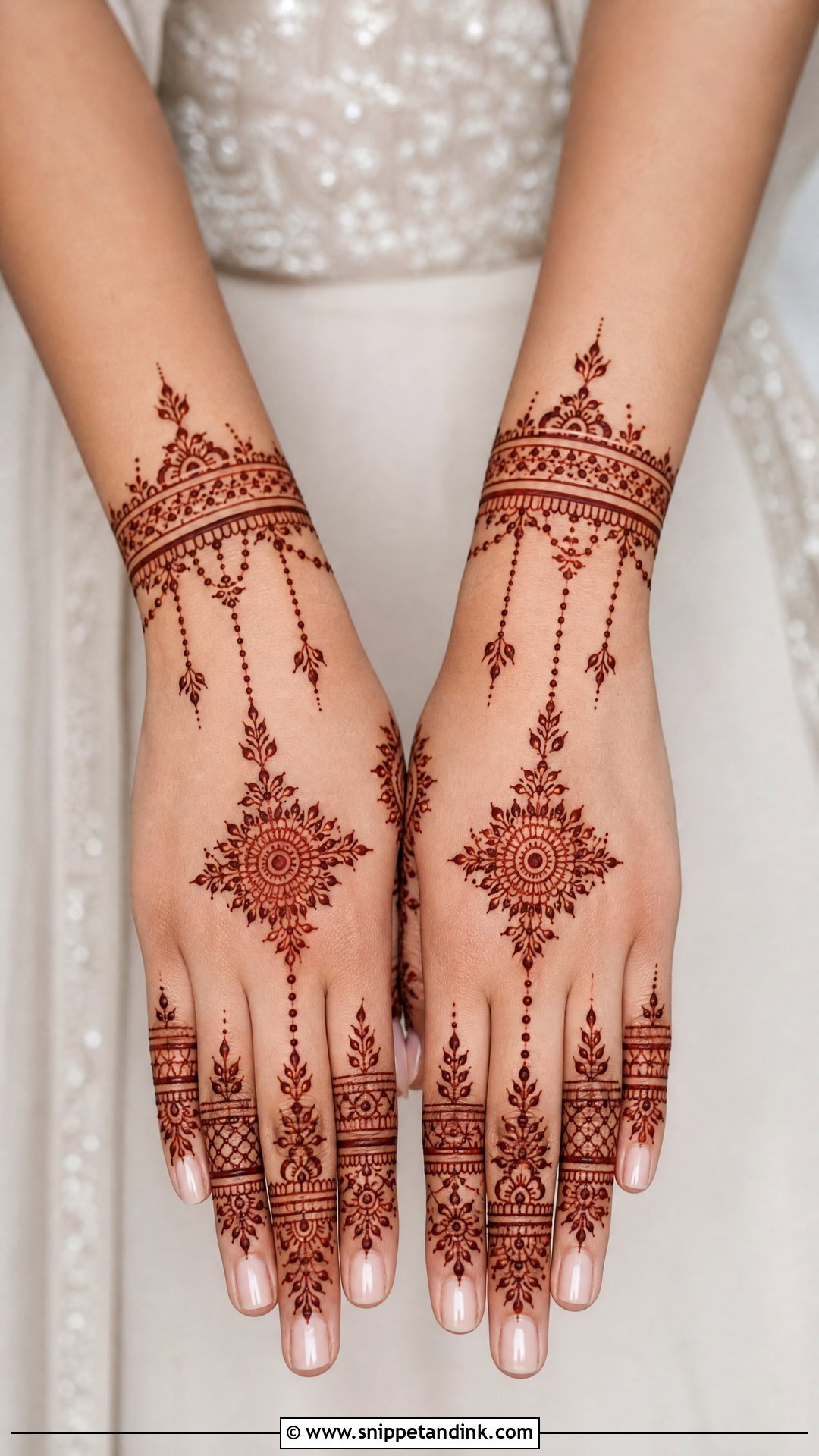
Think of this as jewellery drawn in henna: wrist cuffs, finger chains, ring details and a back-hand pattern shaped like a haath phool. It stays visible even when bangles cover part of the wrist, because the main interest sits on the back of the hand and the fingers. Bold wrist band, thin connecting chains. That contrast is the whole trick. The palm can stay lighter or carry a mandala and floral border.
18. Moroccan Bridal Mehndi Design
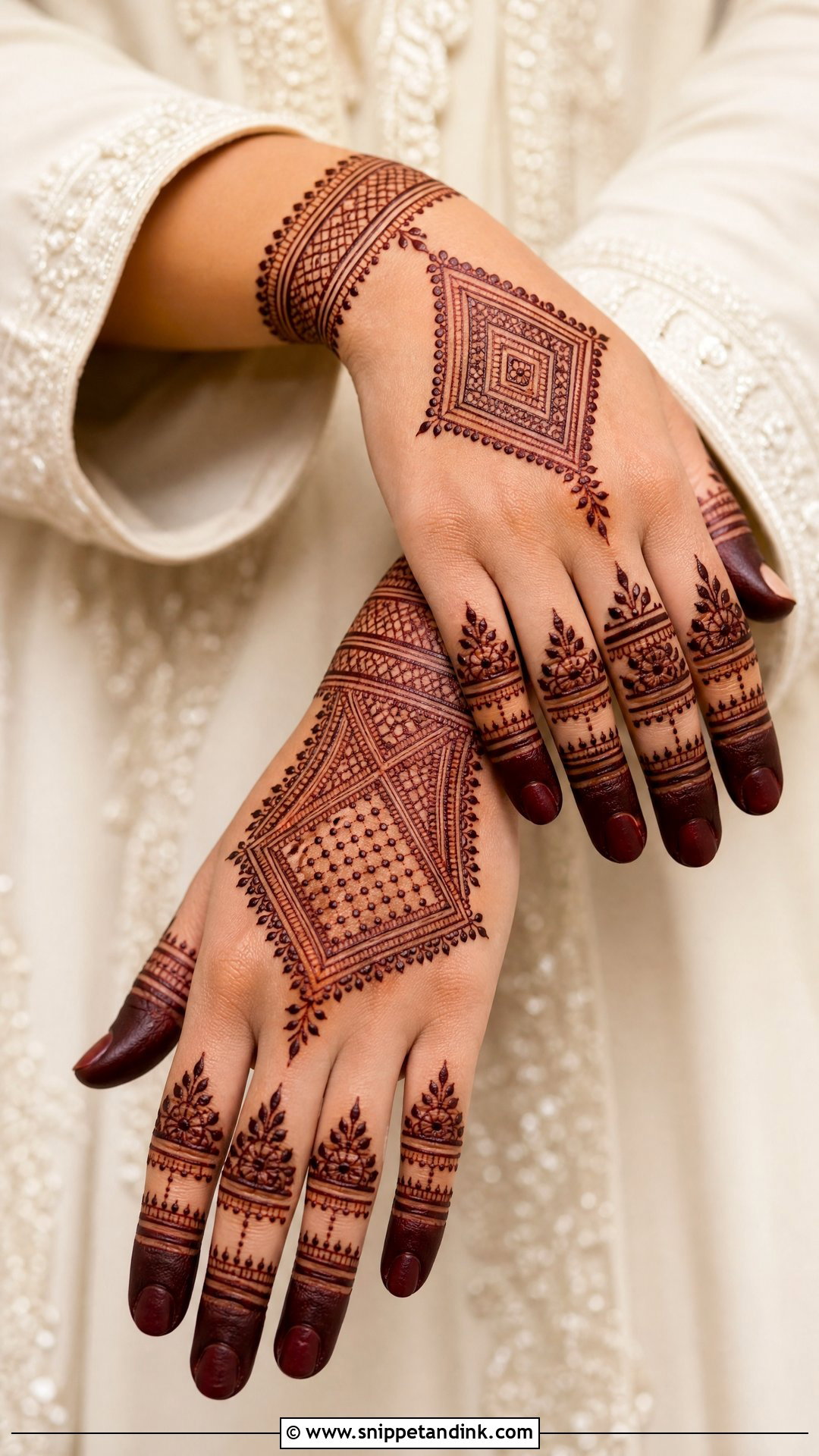
Diamonds, triangles, grids and straight borders replace floral trails in Moroccan-inspired work. Geometry looks sharpest on long fingers and the back of the hand, where there’s enough flat surface for straight lines. On short, wide hands I scale the shapes down, since big diamonds can make the hand look broader. Wrist cuffs and fuller finger coverage make it bridal, and a few small florals can soften the edges if you want less severity.
19. Khaleeji Bridal Mehndi Design
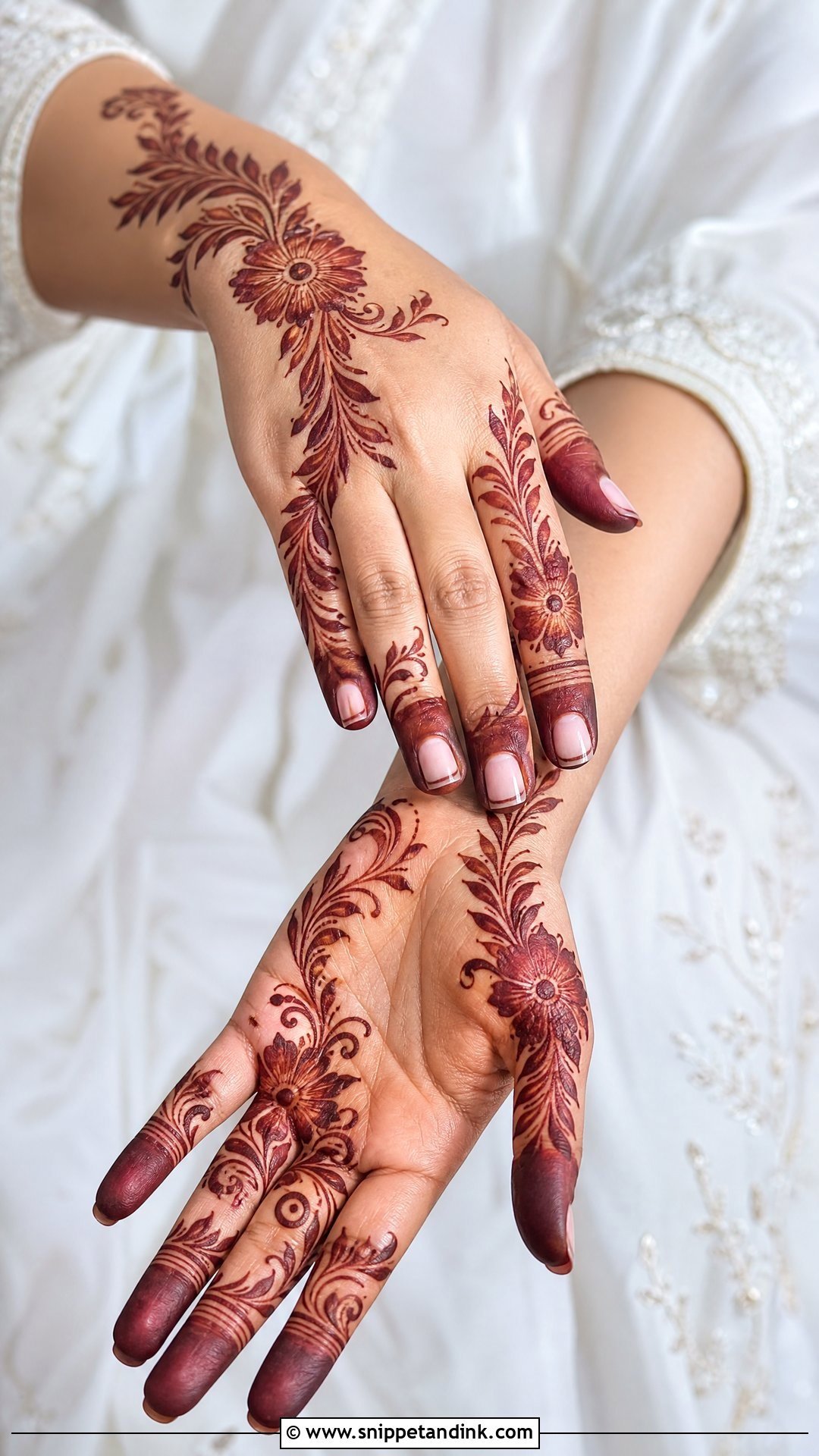
Khaleeji henna comes from Gulf traditions: big bold flowers, leafy branches, curved vines and a lot of open skin. It looks glamorous and takes less time than dense Indian work, though the flowers have to be drawn confidently in one pass, since hesitant outlines show at that scale. It flows best from the fingers toward the wrist on both palm and back. Fuller fingertips, a bold wrist and matching motifs on both hands make it wedding-ready.
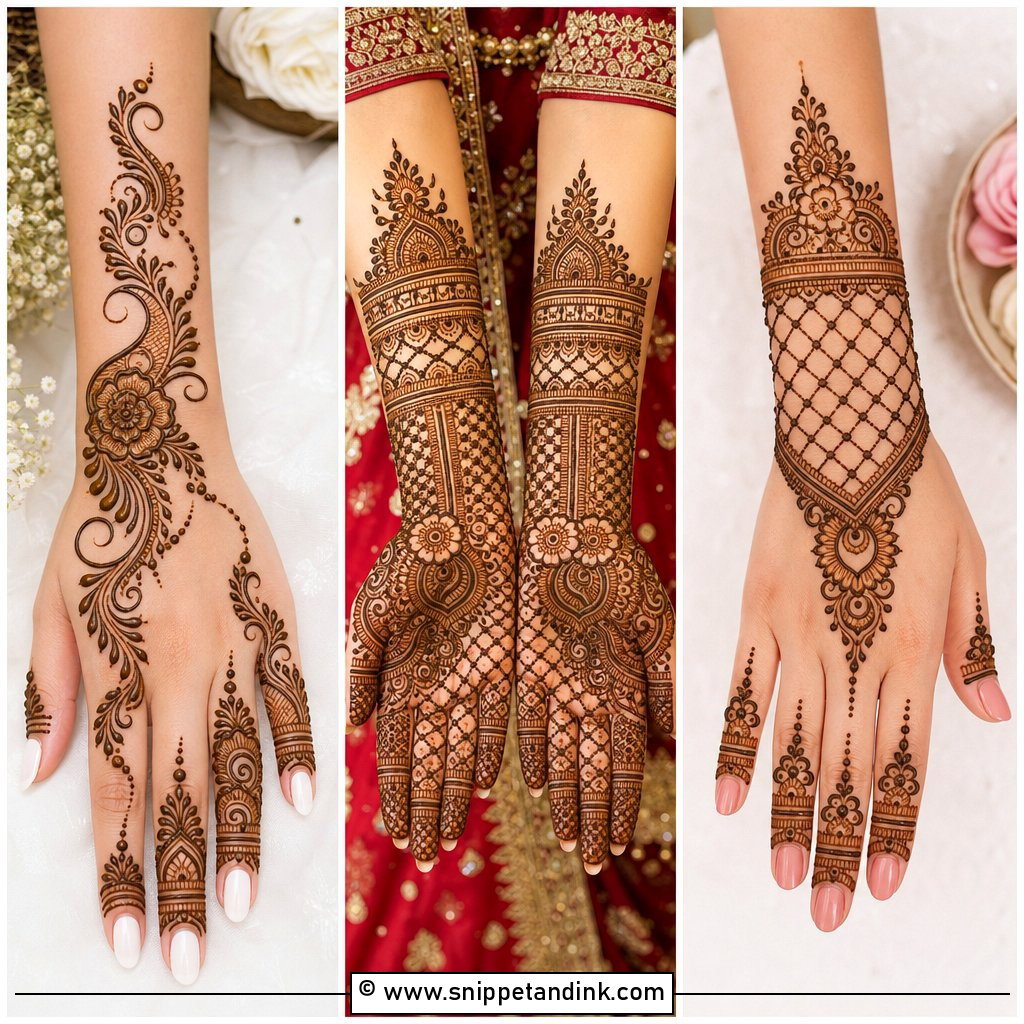
20. Pakistani Bridal Mehndi Design
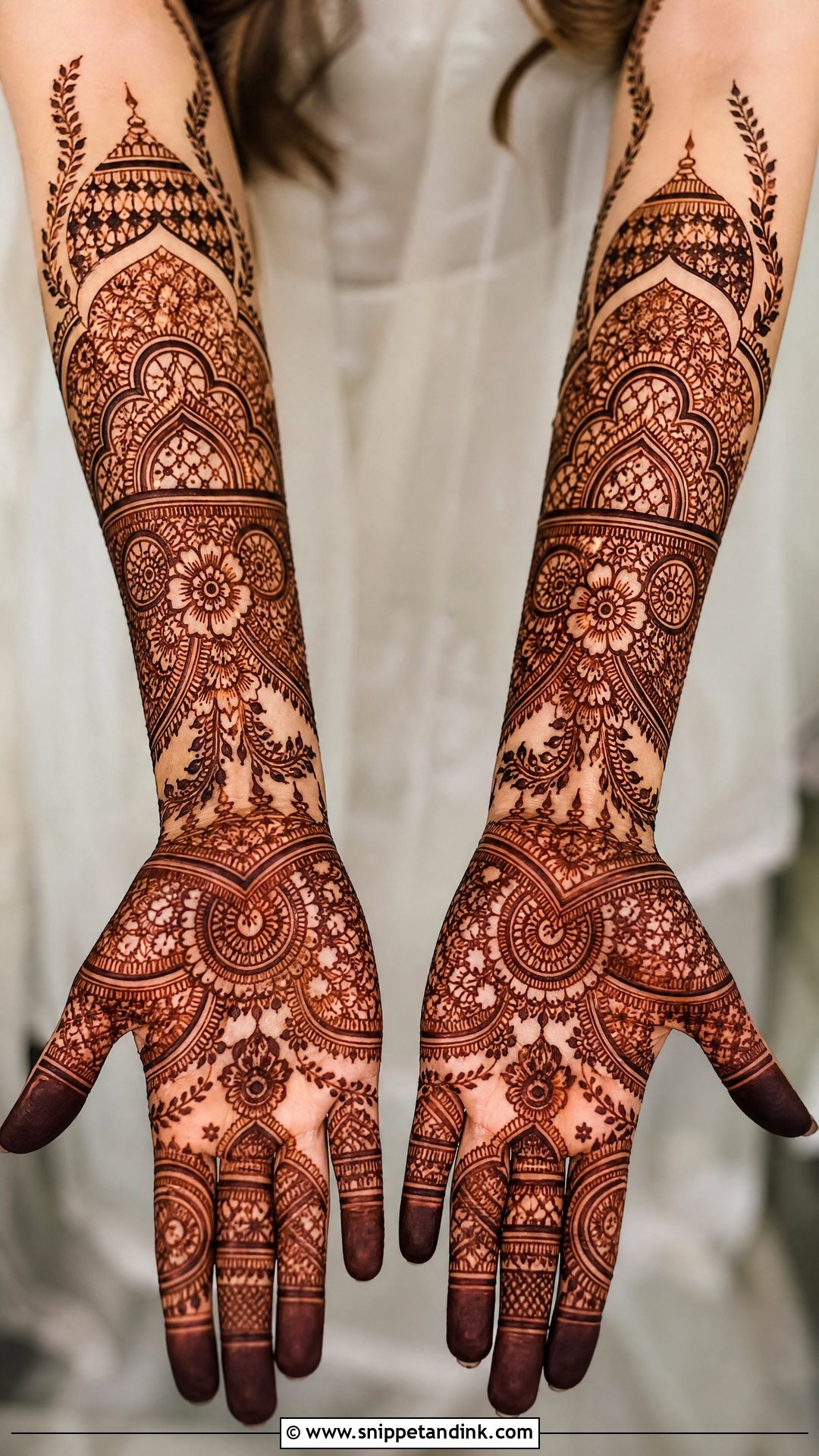
A Pakistani bridal mehndi design combines dense Indian-style detail with the flow of Arabic work and very clean separation between sections. Florals, domes, paisleys, jaali, mandalas and full finger coverage are common, and it’s a favourite for nikkah, baraat and walima events. I outline the large motifs boldly and keep the fine fill inside them, which is what keeps the pattern visible after it darkens. Brides who love detail but dislike a cluttered look usually land here.
Is the Paste Safe? Ask What Is in the Cone
Natural henna stains orange first and darkens to brown or maroon over a day or two. It never goes jet black straight away. Any paste that promises an instant black stain is likely to contain PPD, a chemical hair dye that can cause blistering and lasting skin reactions. I tell every bride to ask her artist what the cone contains and to walk away from a vague answer.
Natural paste is usually henna powder, lemon juice or water, sugar and an essential oil such as eucalyptus or lavender. Even that can irritate sensitive skin, so if you’ve never worn henna, a small dot on the inner wrist a week or two before the wedding is a sensible test.
How Long the Bridal Session Really Takes
Minimal hands can be finished quickly, but a full bridal set with detailed palms, backs and forearms often takes several hours, and longer for portrait or Rajasthani work. Plan it for one or two days before the main ceremony so the stain peaks on the day. Eat before you start, use the bathroom, charge your phone and have someone ready to feed you. Once the paste is on, keep it on as long as you can, ideally overnight, and keep your hands warm to help the colour deepen.
Your Hands Will Be in Every Ring Photo, So Plan the Back as Well as the Palm
Once you know whether you lean traditional, modern, minimal or personal, the list narrows quickly. Full hand Indian and Rajasthani designs feel ceremonial, while Arabic, Khaleeji and minimal work leave more skin and more comfort. Indo-Arabic, Pakistani, jaali, lotus and bracelet patterns sit in between. Check your sleeves, your jewellery and how long you can sit still, then pick the design that still looks like you when you glance down at your hands a week later.
You'll Like These Ideas:


Leave a Reply