
In Ramzan, most of the henna I put on is small and quick: a crescent before a family iftar, a bracelet band for a Quran khatam, then a rush of fuller hands on Chand Raat. The Ramadan and Eid henna trends I see requested lean toward crescent moons, stars, Arabic floral trails, bracelet layouts, mandalas and plenty of bare skin. Some designs here take ten minutes for a beginner; others need a long evening sitting. Which one suits you depends on the shape of your hand, the outfit, and how much time you can give it between fasting, prayer and cooking.
Reading Your Hand Shape Before You Pick a Layout
The same design can look elegant on one hand and crowded on another, so I look at the hand before I suggest anything.
Long, slim fingers
These carry almost anything. Full finger grids, long Arabic trails and detailed rings all sit well. The only thing I avoid is a tiny central motif, which looks lost on a long palm.
Short fingers or a broad palm
A diagonal trail from wrist to index finger visually lengthens the hand. Keep finger designs vertical, such as a single vine or a line of dots, rather than horizontal bands, which make fingers look shorter. A dense palm mandala can make a broad hand look wider, so I leave more open space at the edges.
Small or child-sized hands
Scale everything down. One motif and a bracelet line fill a small hand; a full-size adult design squeezed onto it turns into a dark patch once the stain develops.
1. Simple Ramzan Mehndi Design
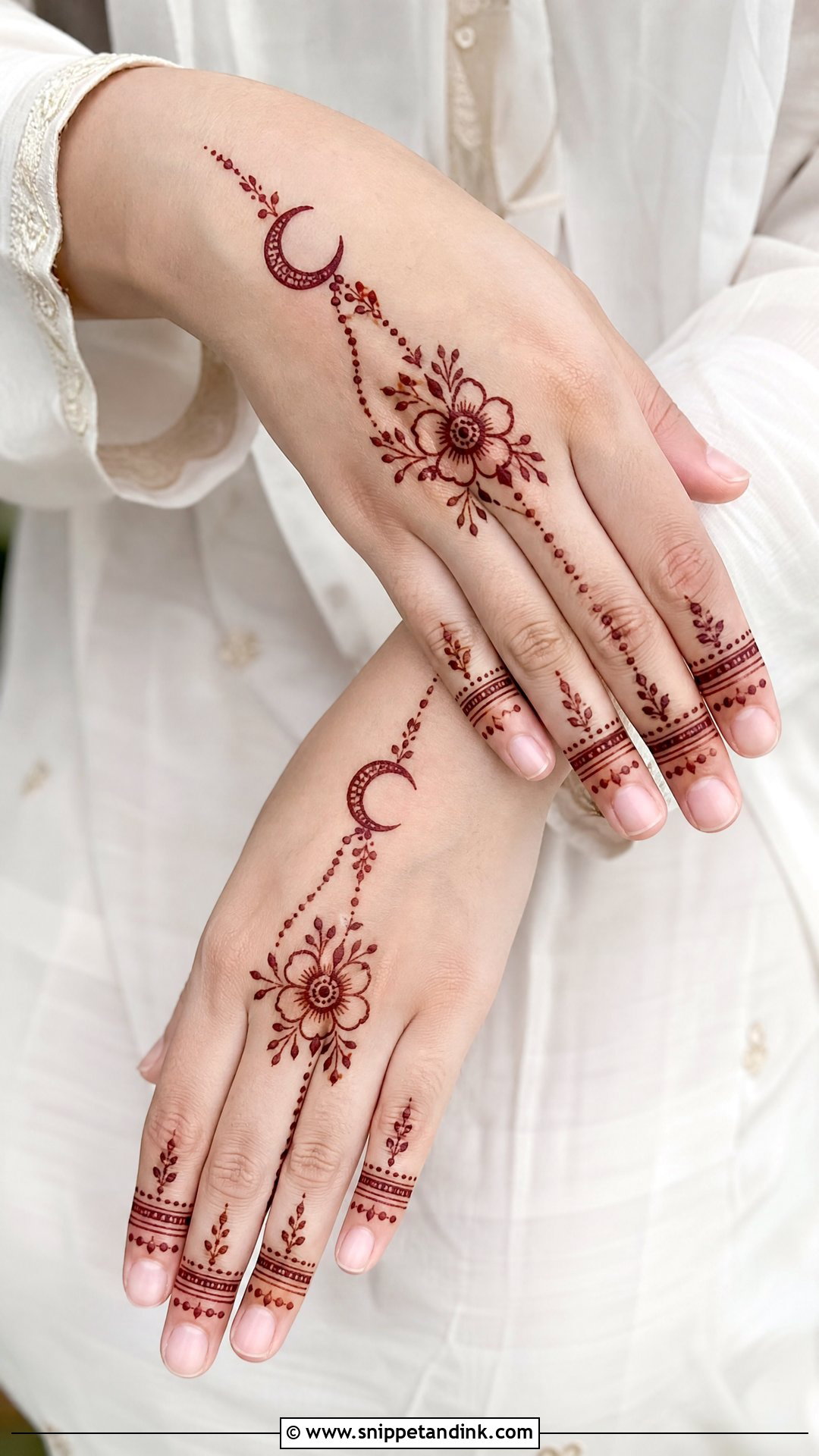
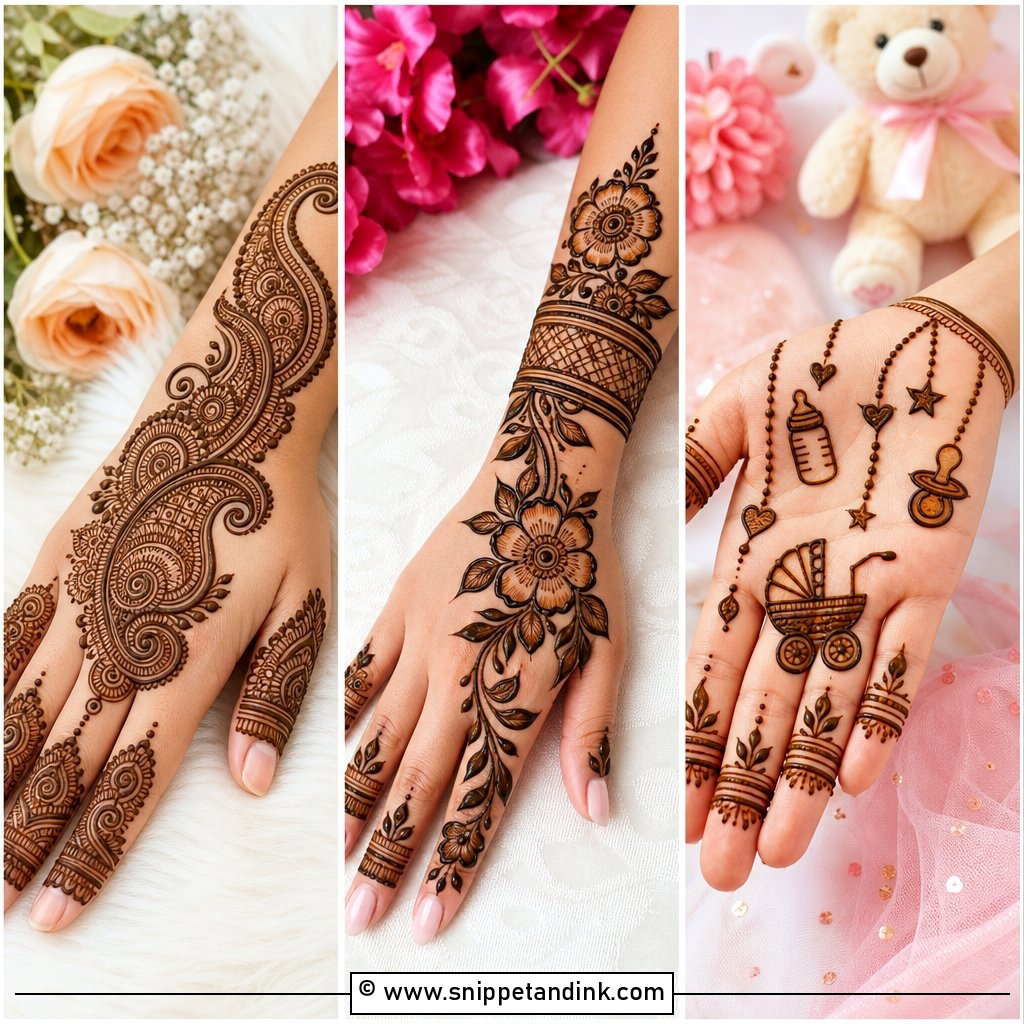
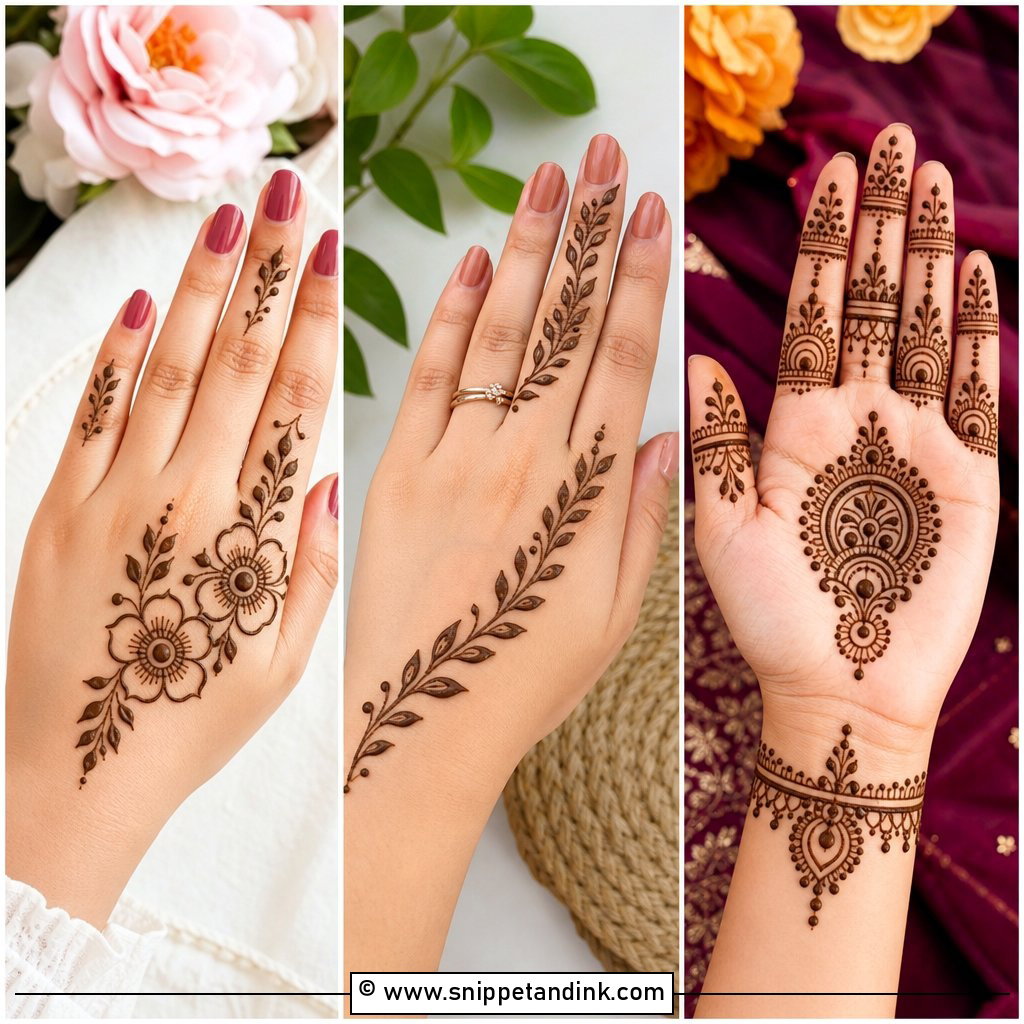
One small flower or crescent on the palm or back of the hand, a few light vines, dots and delicate finger lines: that’s the whole design, and for an ordinary iftar or a khatam gathering it is enough. I keep the lines thin and evenly weighted so nothing looks heavy, and leave clear skin around the main motif. The stain shows best where it has space. No complex fillers are needed, which is why I teach this layout to people learning on their own hands.
2. Arabic Ramzan Mehndi Design
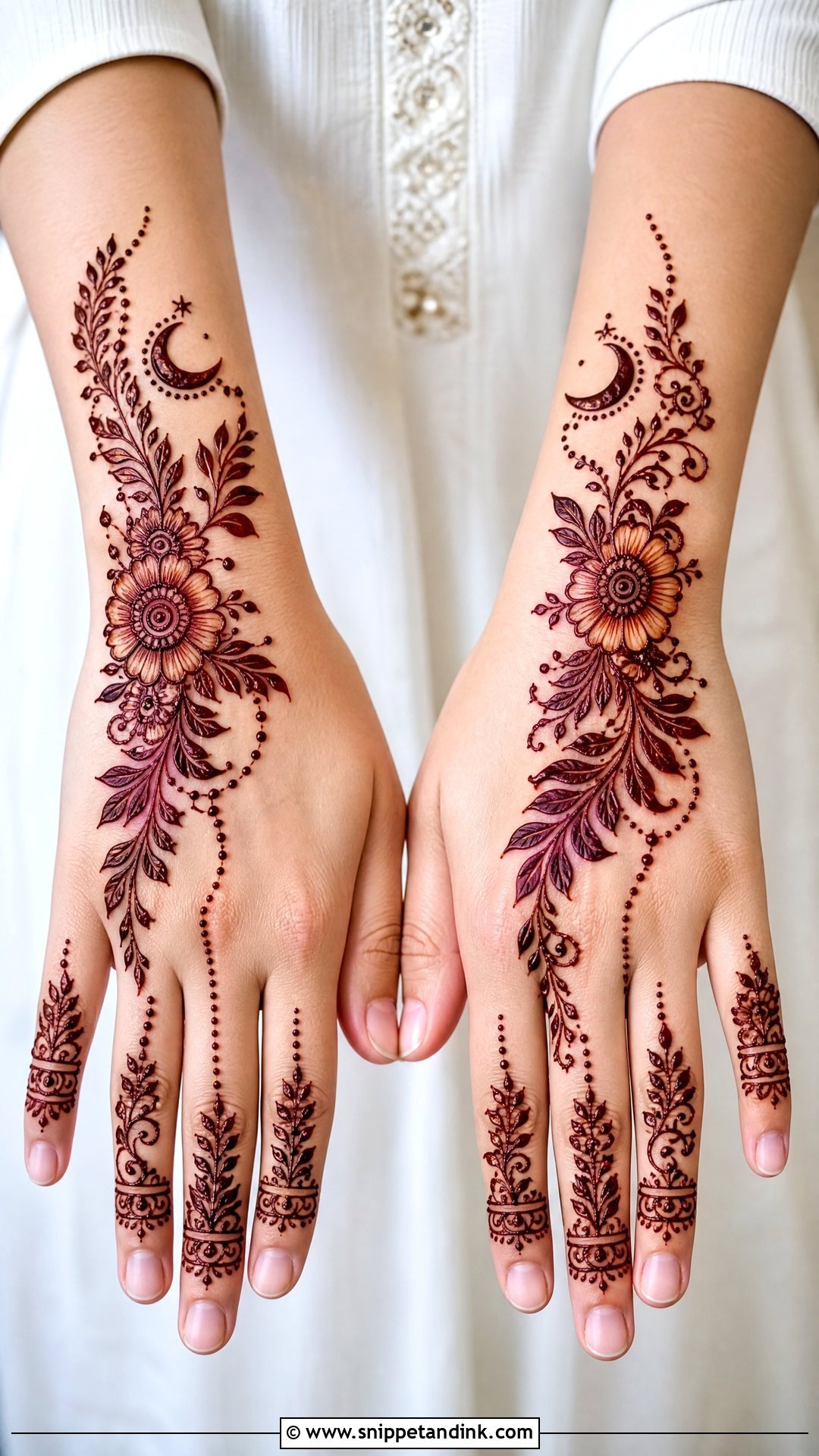
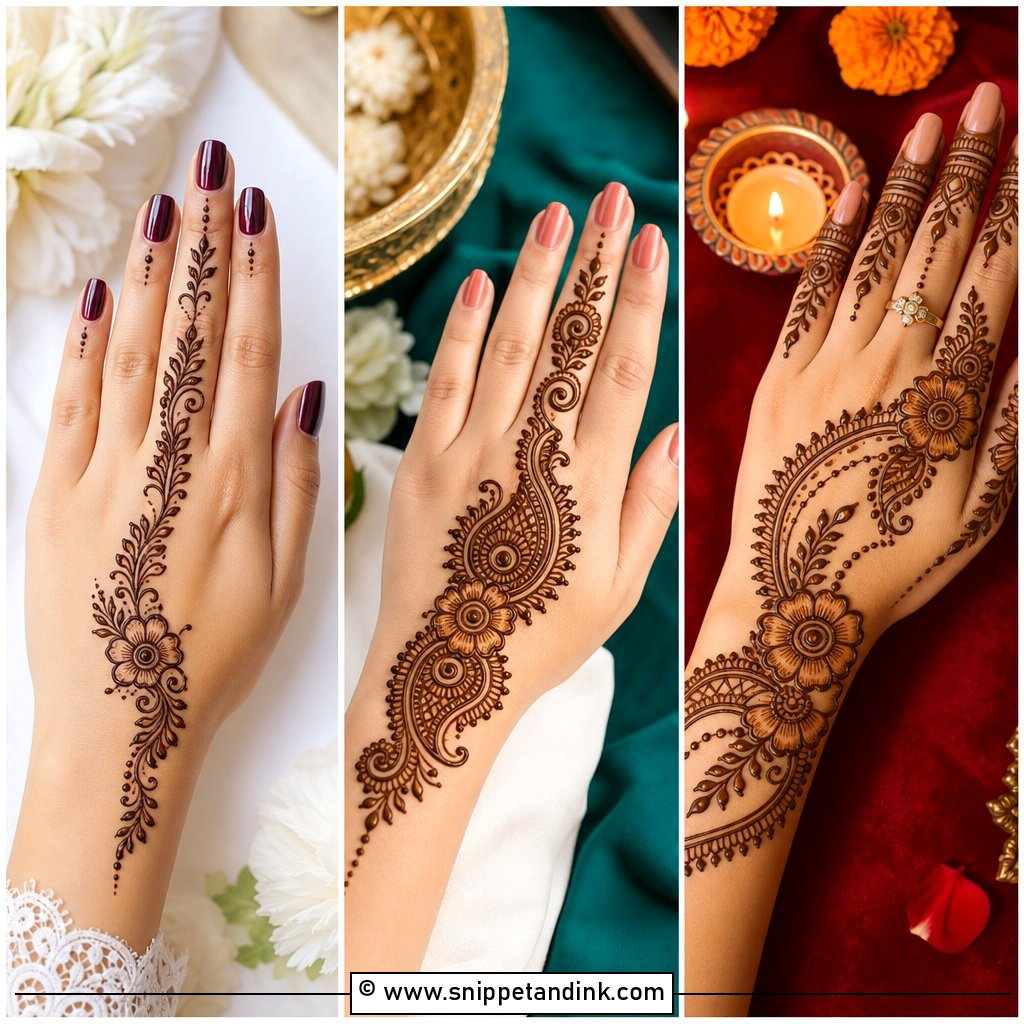
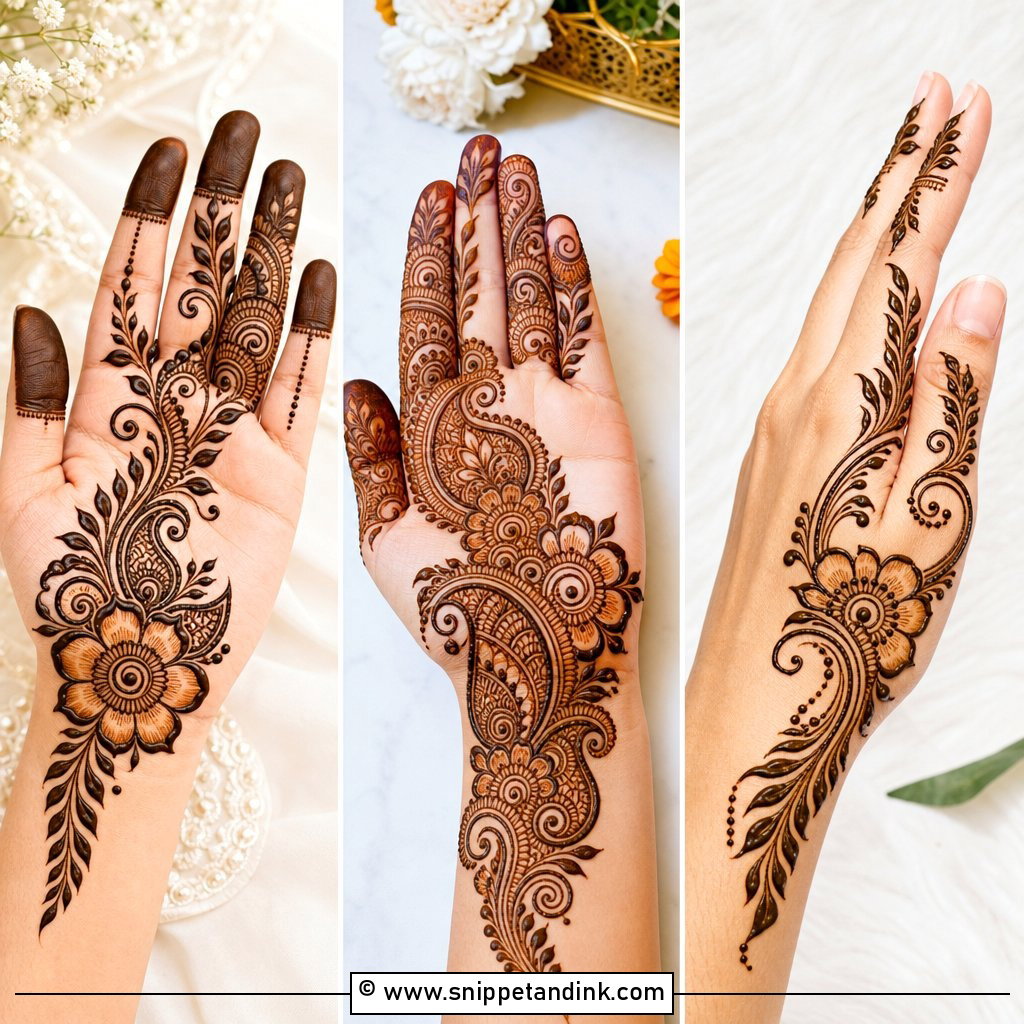
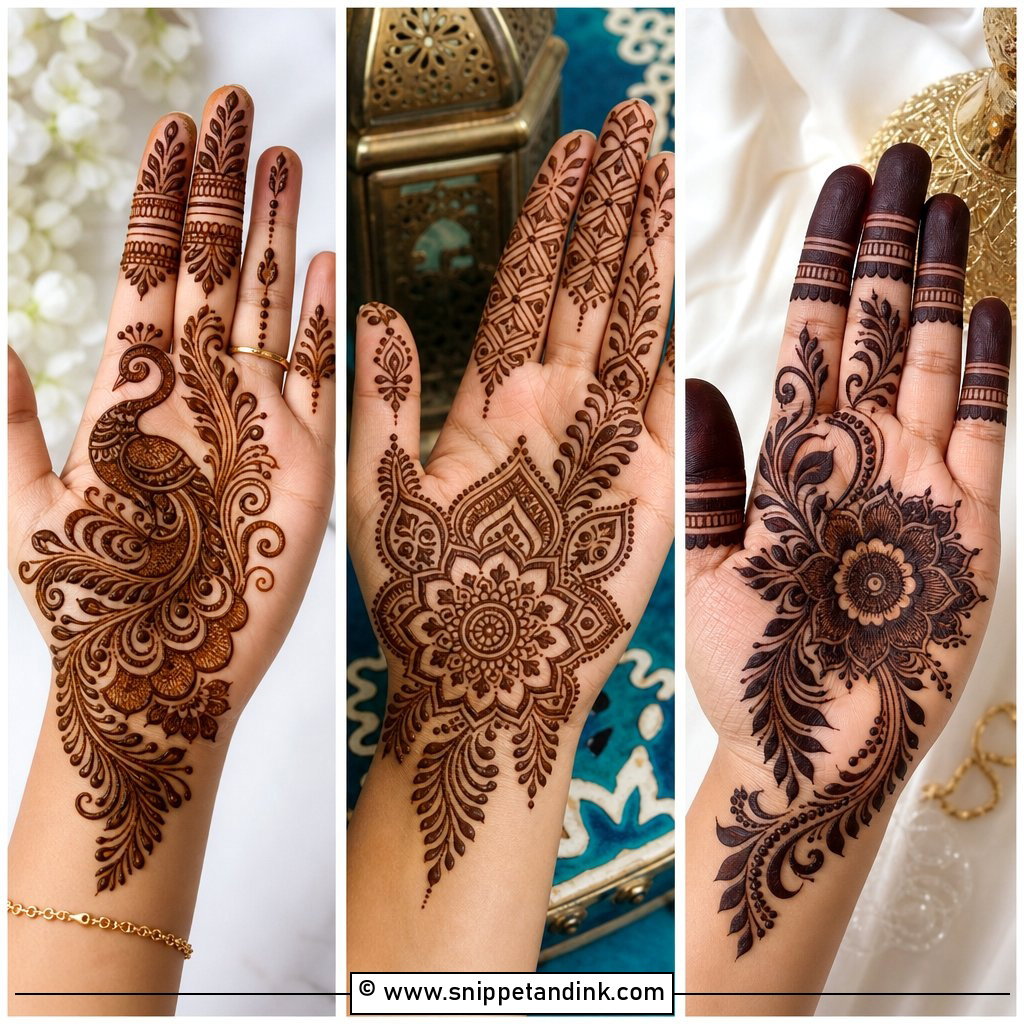
Arabic layouts move diagonally from the wrist toward the fingers with bold flowers, leafy vines, shaded petals and open skin, and they look full without hours of work. A small crescent near the wrist or along the index finger gives it a Ramzan meaning. The open spaces are not filler you skipped; they are what lets each flower read clearly once the henna darkens. I keep the diagonal running toward the index or middle finger, because a trail ending at the little finger makes the hand look like it tilts.
3. Crescent Moon Ramzan Mehndi Design
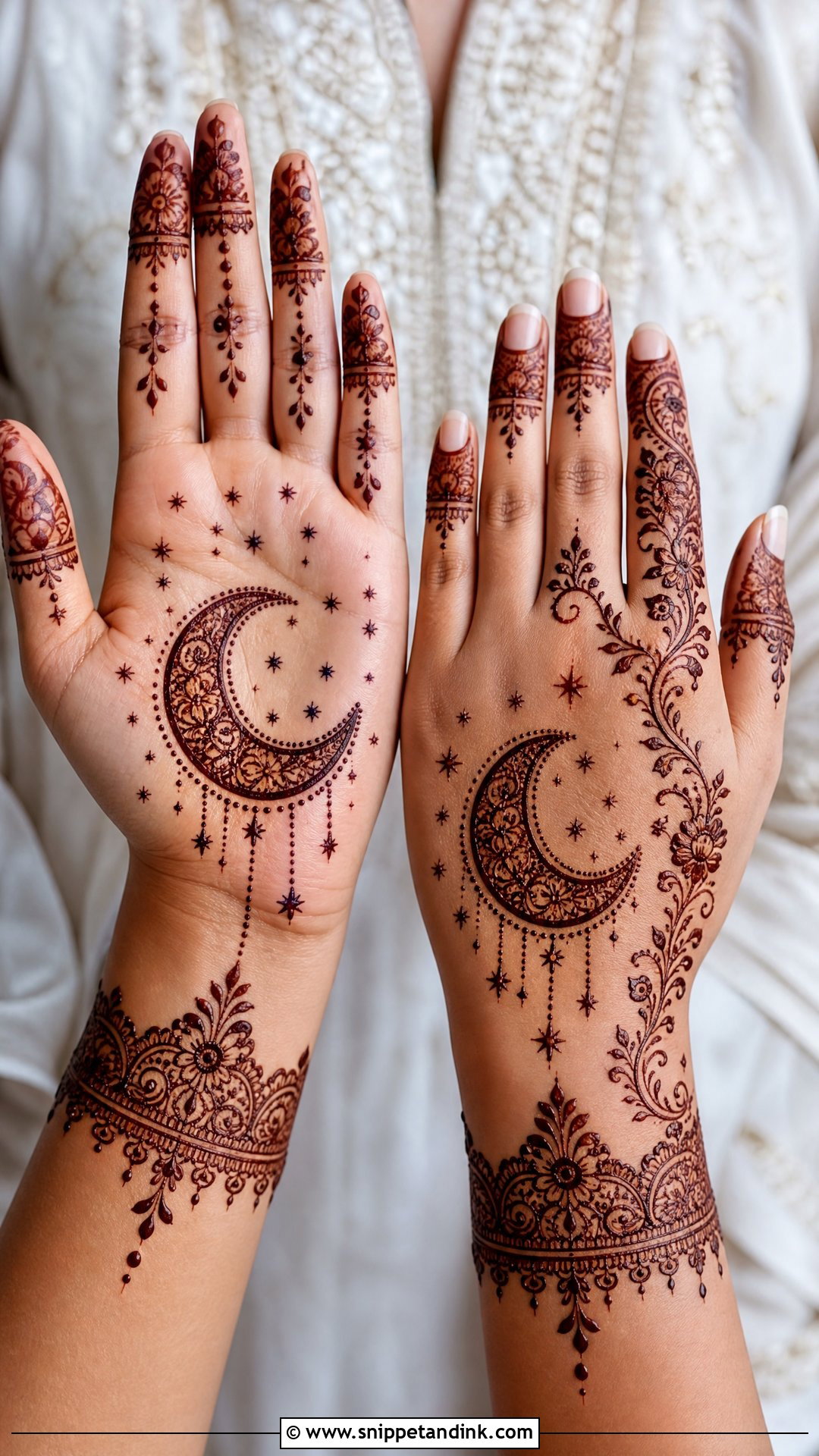
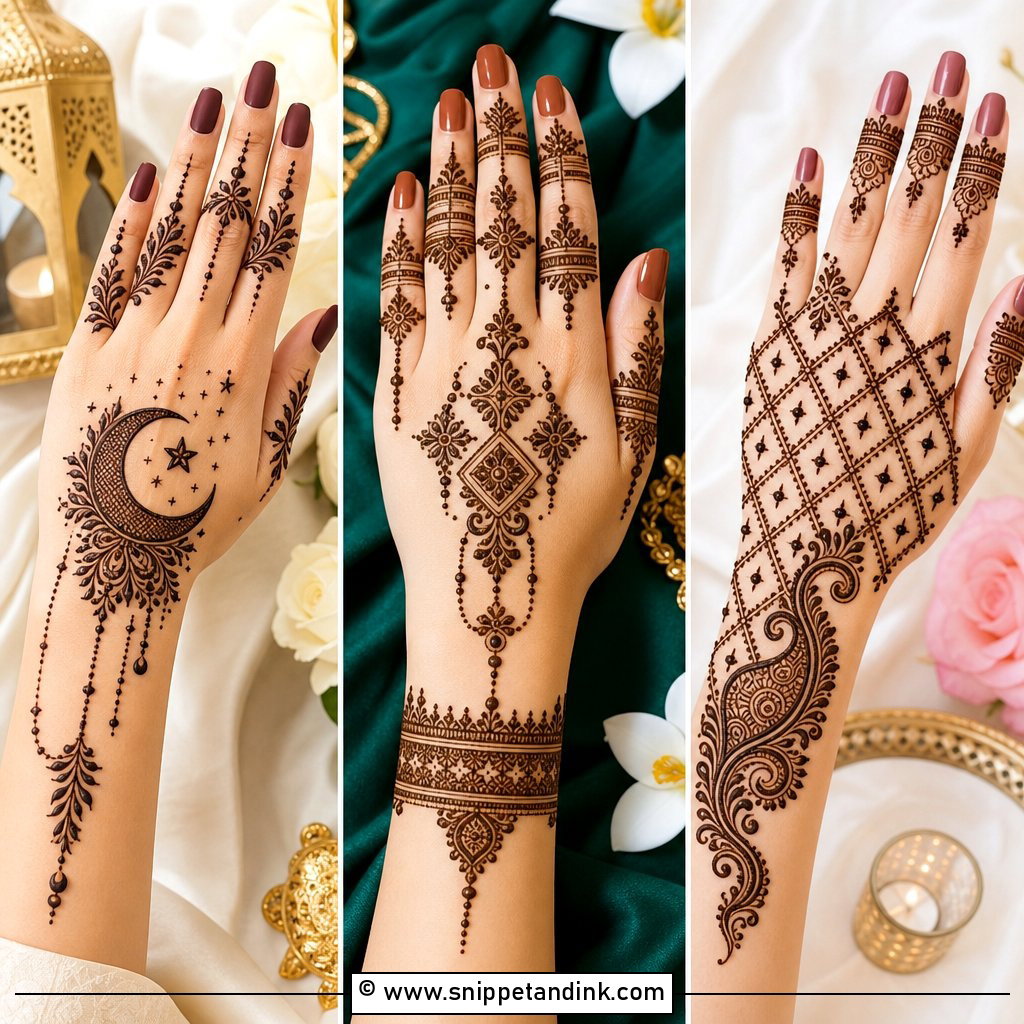
The crescent can sit in the centre of the palm, on the back of the hand or near the wrist like a charm, with tiny stars, dots and curved vines around it. On Chand Raat I draw it larger and frame it with soft florals. Since the moon is the focus, its curve has to be perfectly smooth. I draw the inner arc in one pull, then the outer one, and fill the shape solid. A crescent with a wobbly edge looks like a banana once it stains.
4. Front Hand Ramzan Mehndi Design
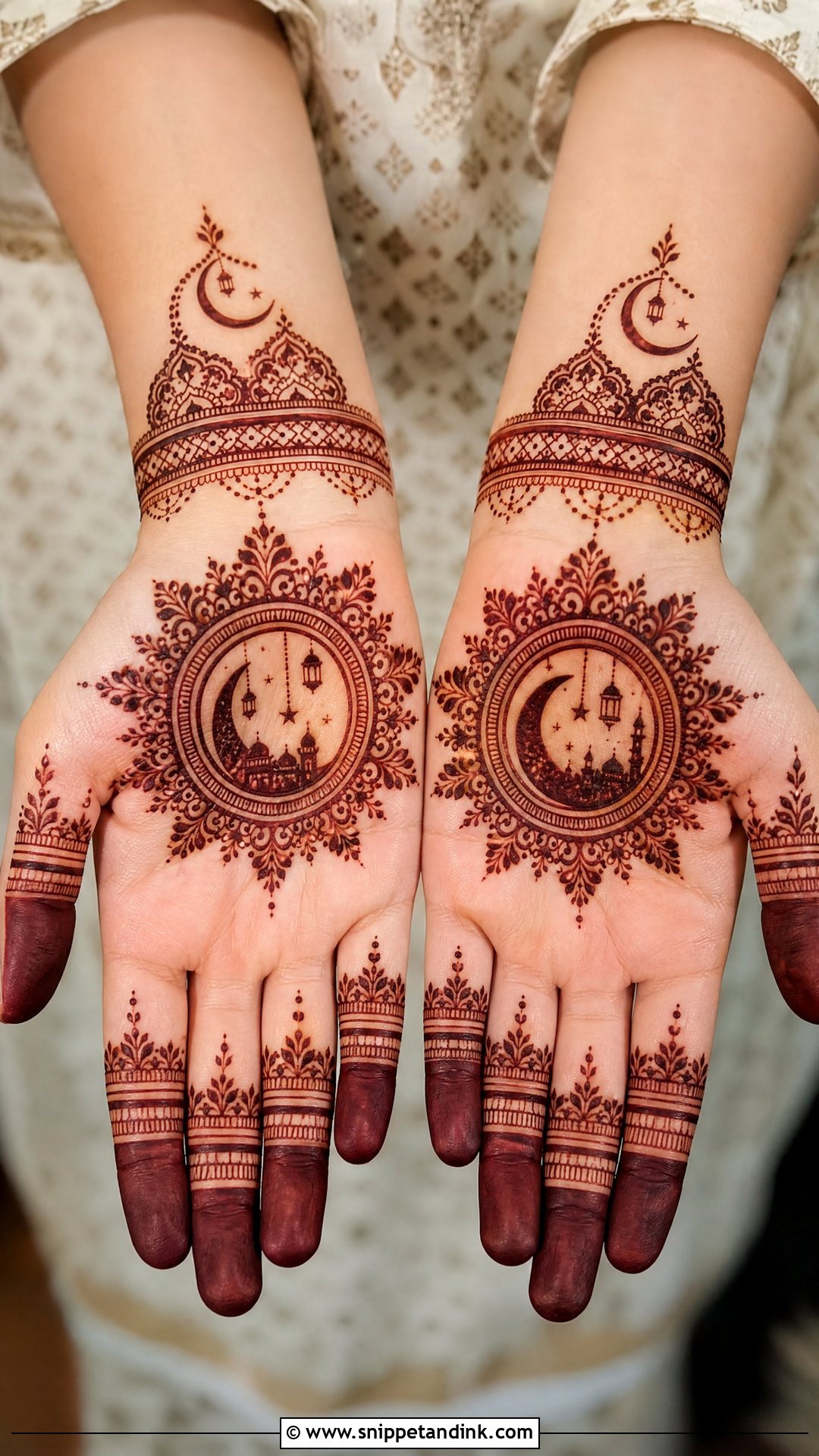
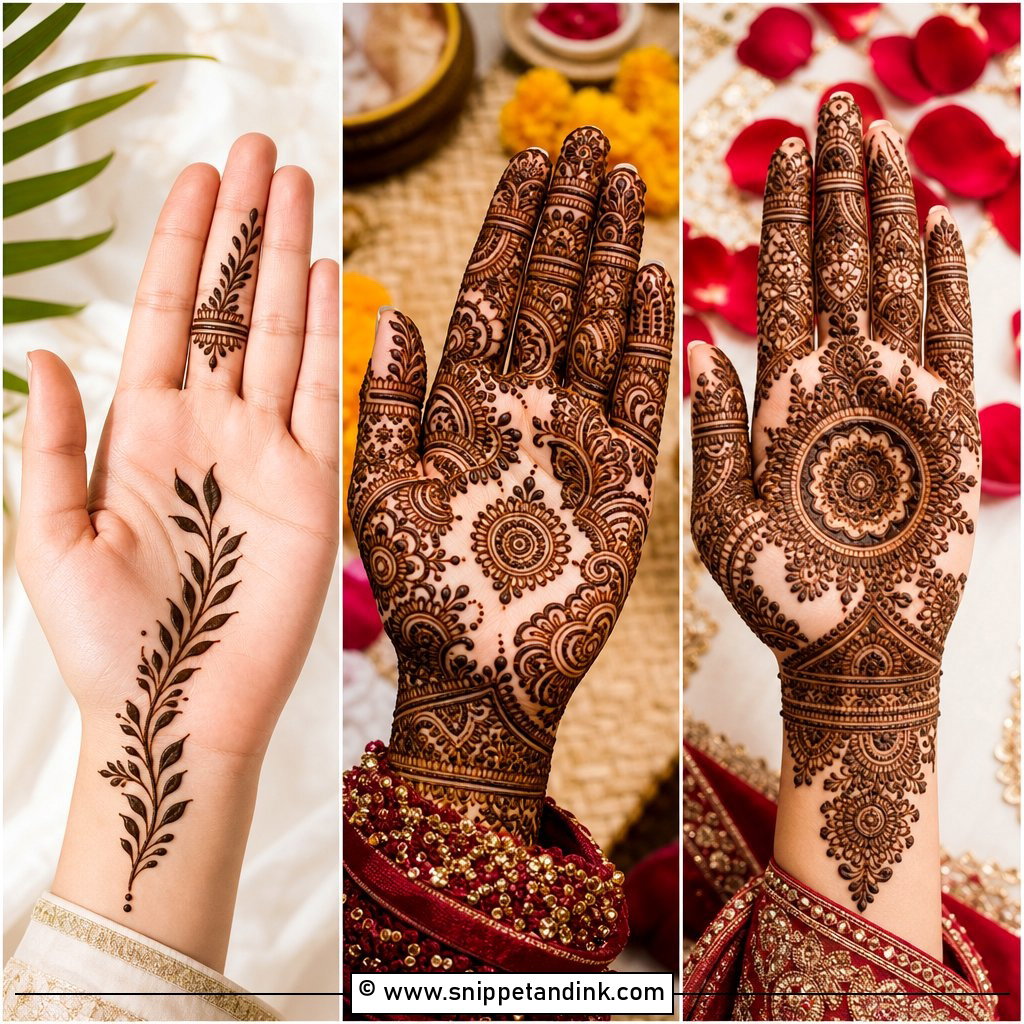
The palm gives you the most room for traditional detail: a round mandala, a crescent centrepiece or a floral cluster, with slim bands, leaves, dots and small jaali patches on the fingers. It feels festive without the weight of bridal work. The palm and fingers should feel connected, not like two separate drawings, so I carry one element, a vine or a dotted line, from the centre motif up into the fingers. A little open space around the centre keeps the darker stain looking crisp.
5. Back Hand Ramzan Mehndi Design
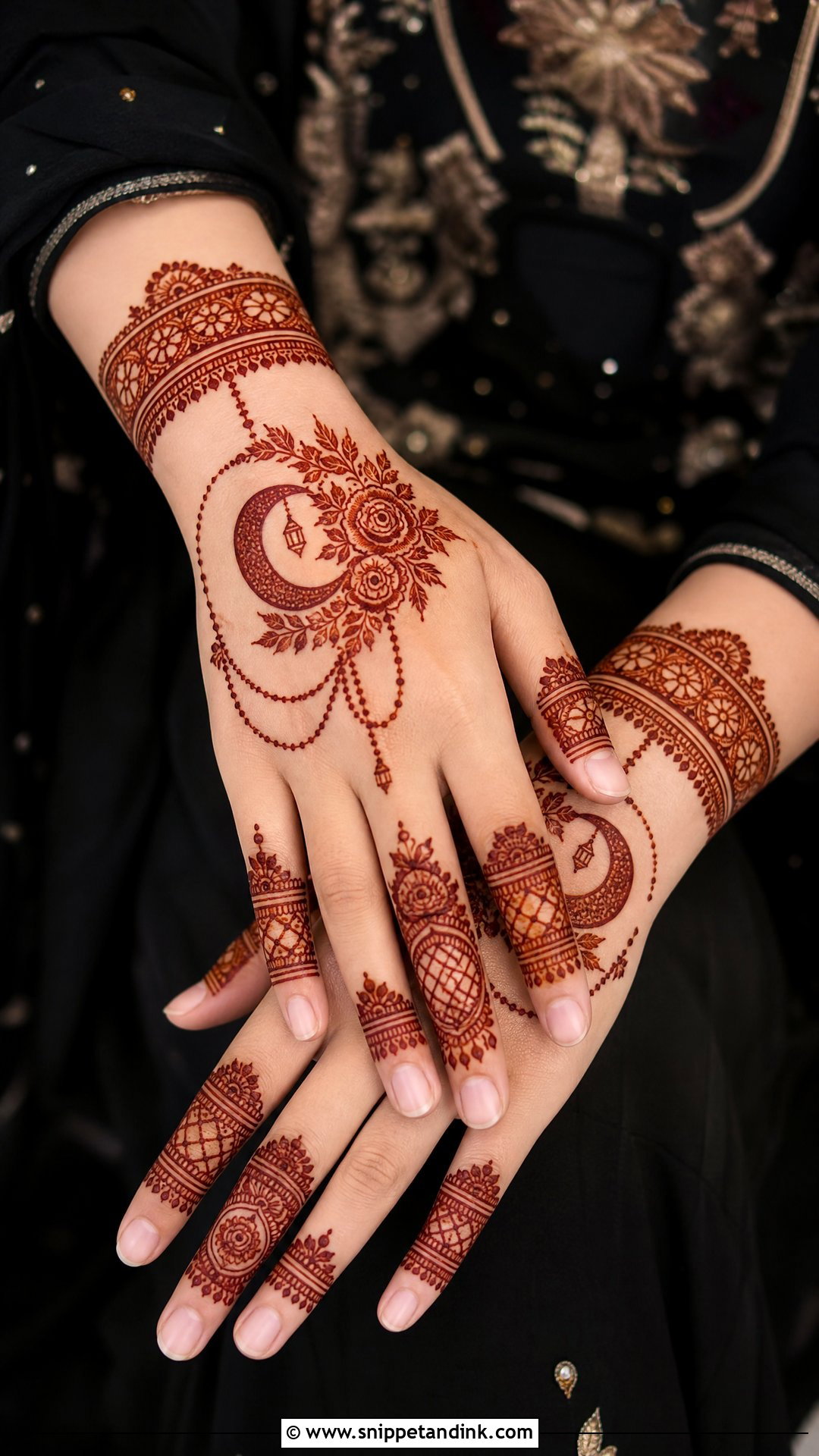
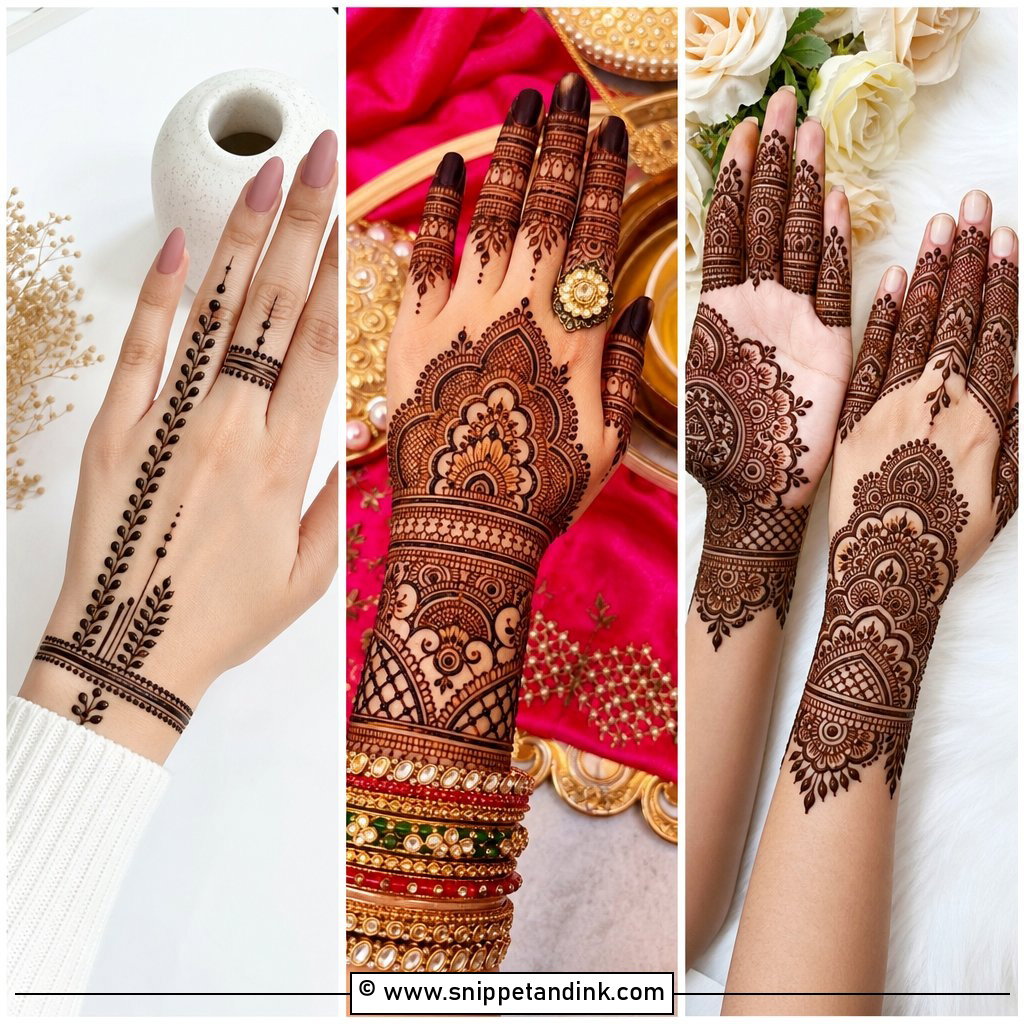
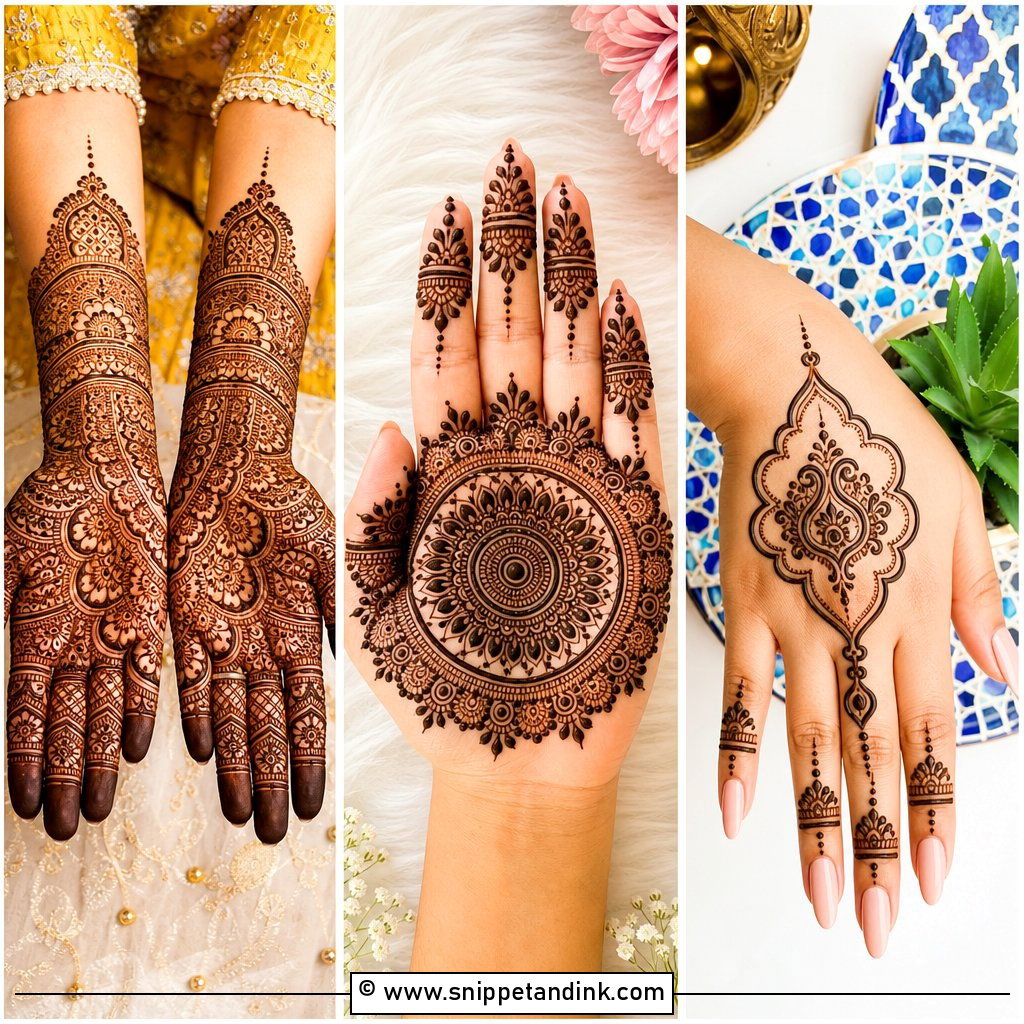
A bracelet at the wrist, a floral or moon motif in the middle of the hand and ring-like details on the fingers: this back-hand layout acts like jewellery and is the one teenage girls and young women ask me for most. Simple fingertips keep it light; leafy fills make it stronger. It suits Arabic and Indo-Arabic styles because both use open space. The back of the hand stains a shade lighter than the palm, so I keep the paste on longer for Eid photos.
6. Full Hand Ramzan Mehndi Design
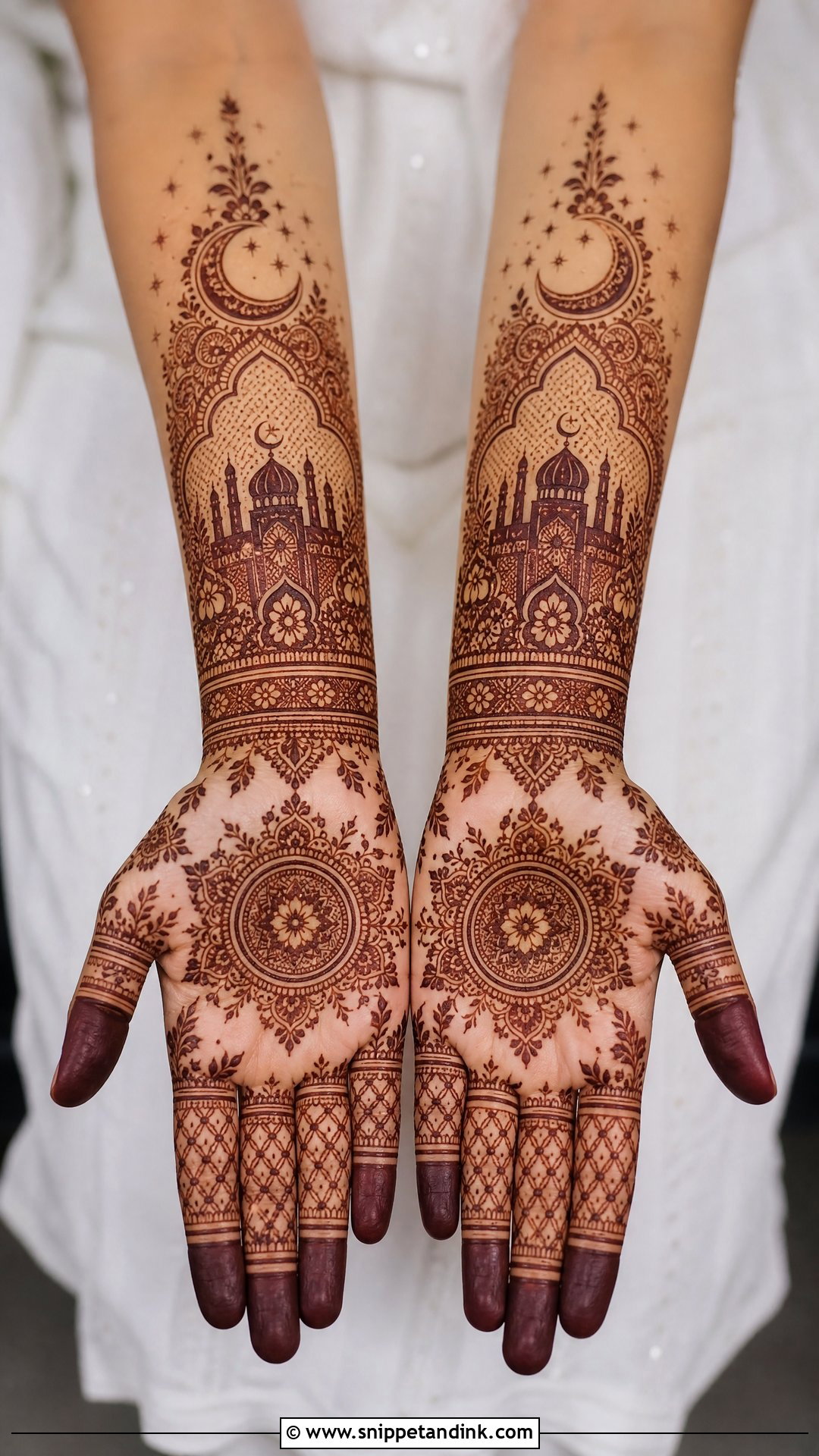
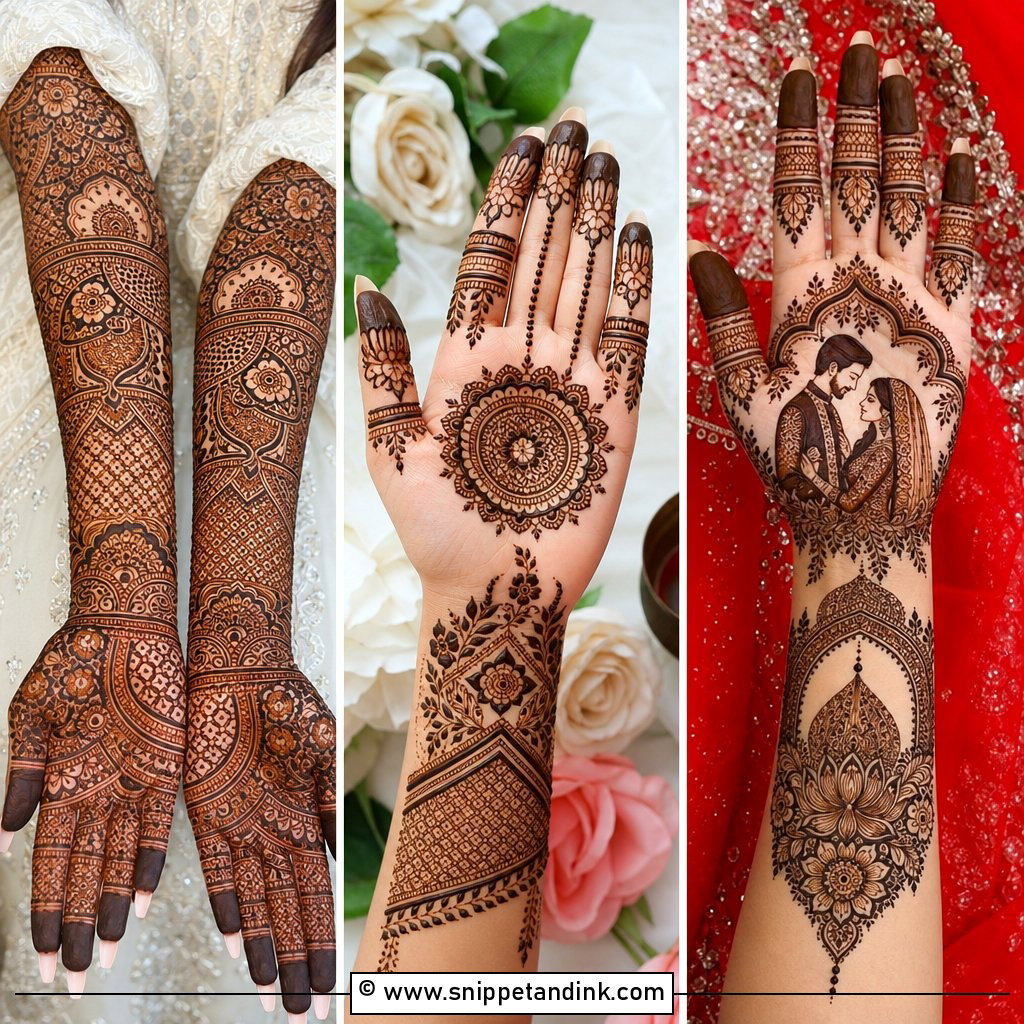
A full hand Ramzan mehndi design belongs to special nights, Chand Raat or the run-up to Eid, covering palm, fingers, wrist and sometimes the lower forearm. Balance stops it from becoming heavy: a palm mandala, a floral wrist cuff, paisley borders and finger grids, with crescents and stars tucked between. My rule is that if the palm is dense, the wrist gets lighter, and vice versa. Without that contrast, a full hand stains into one dark mass from a distance.
7. Minimal Ramzan Mehndi Design
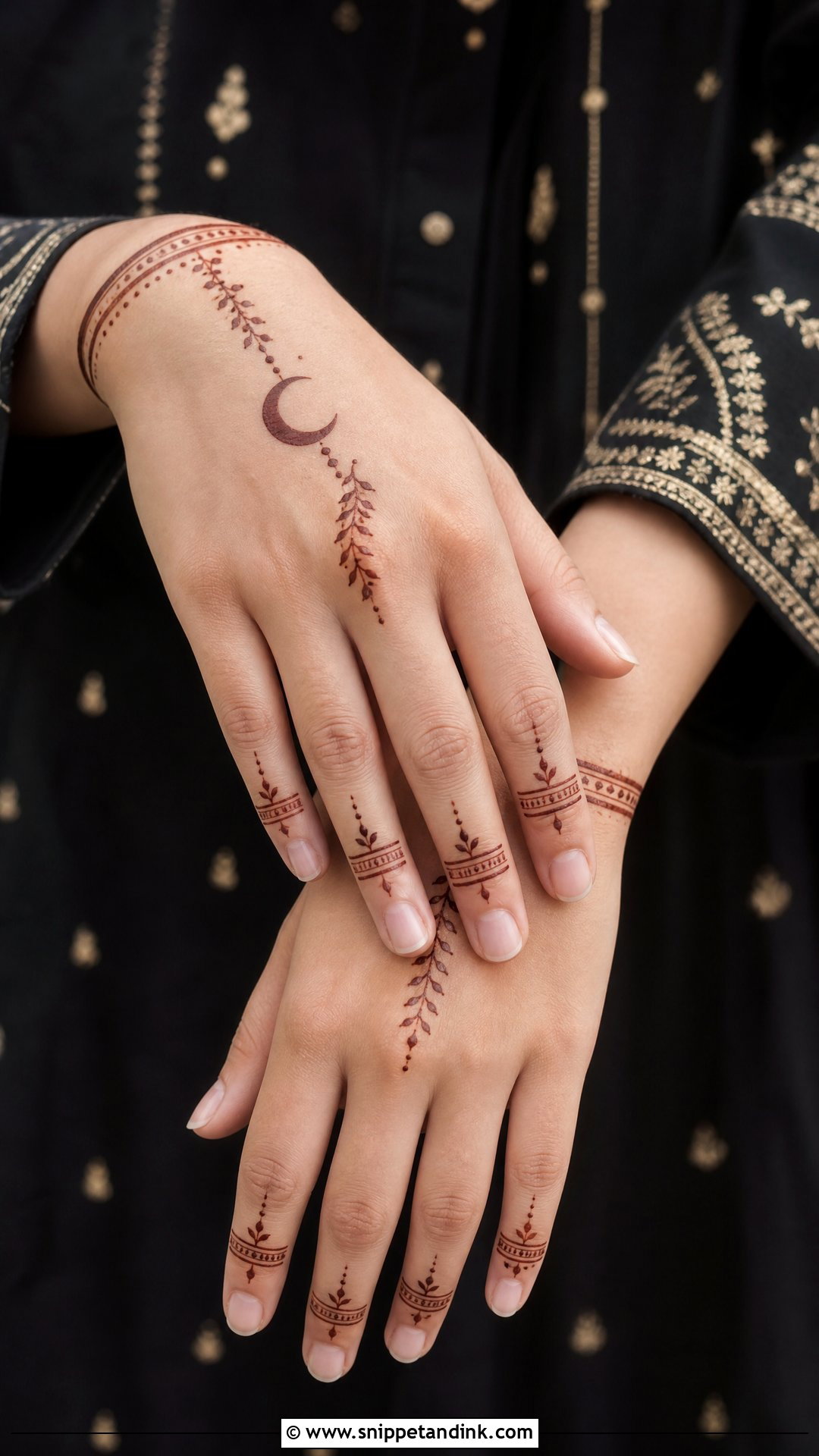
A small moon on the back of the hand, thin finger bands, a short floral trail or a bracelet line: minimal henna dries quickly and suits school, work and a quiet iftar. Fine lines, tiny dots and small leaves keep it delicate. The catch is that thin lines carry less dye, so they stain lighter and fade faster with every wash. Good paste and a long wait before scraping it off make the difference between a crisp maroon outline and a faint orange one.
8. Easy Ramzan Mehndi Design
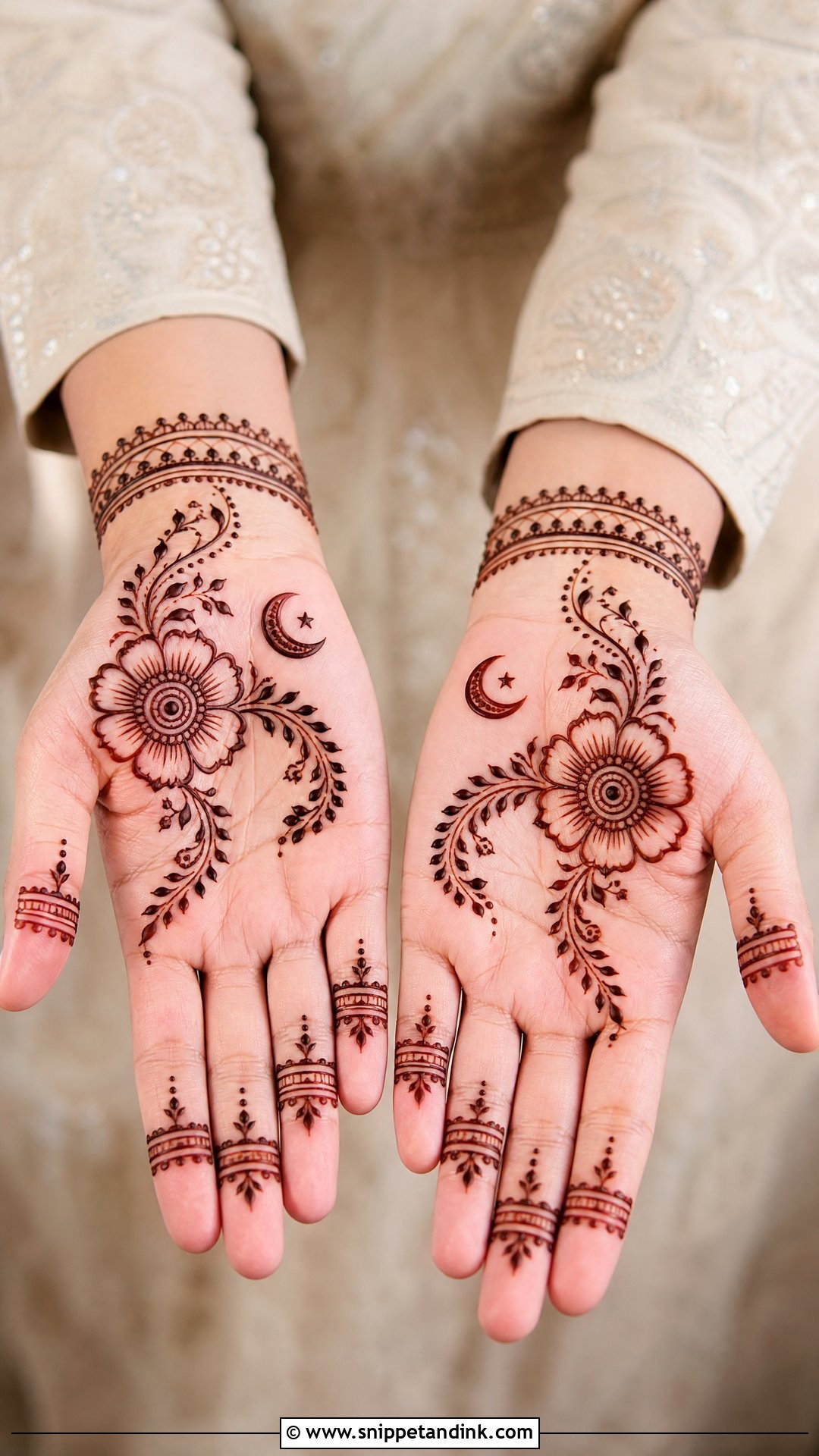
Start with a round flower, mandala or crescent in the centre, add curved vines around it, then dots, small leaves and thin bands on the fingers. Repeatable shapes are easier for a beginner than shading, which is why this layout works. If the hand still looks empty, a wrist border fixes it. When a line goes wrong, I wipe it straight away with a damp cotton bud rather than covering it with extra filling; over-filling to hide mistakes is what makes beginner henna look crowded.
9. Ramzan Mehndi Design For Girls
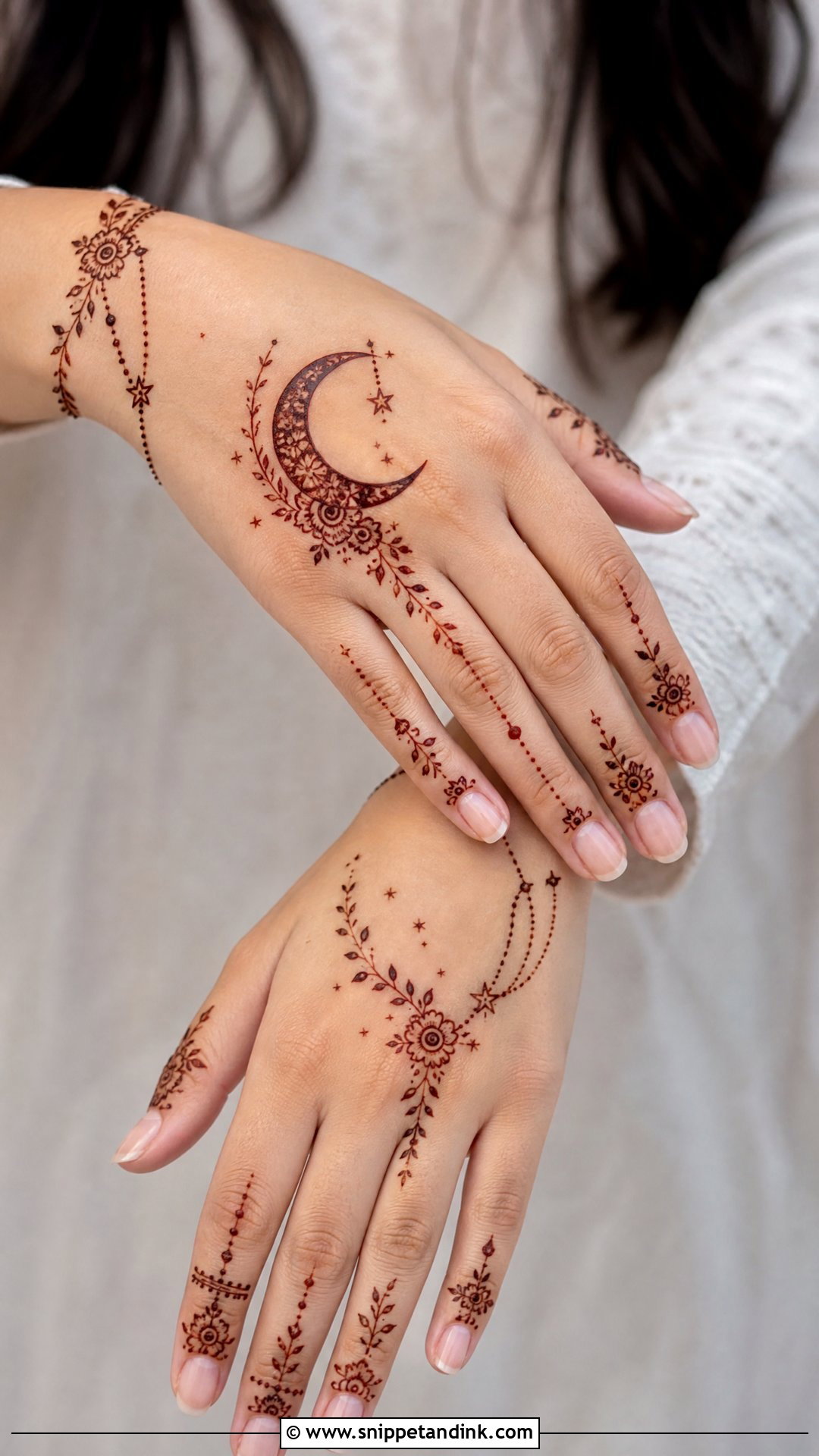
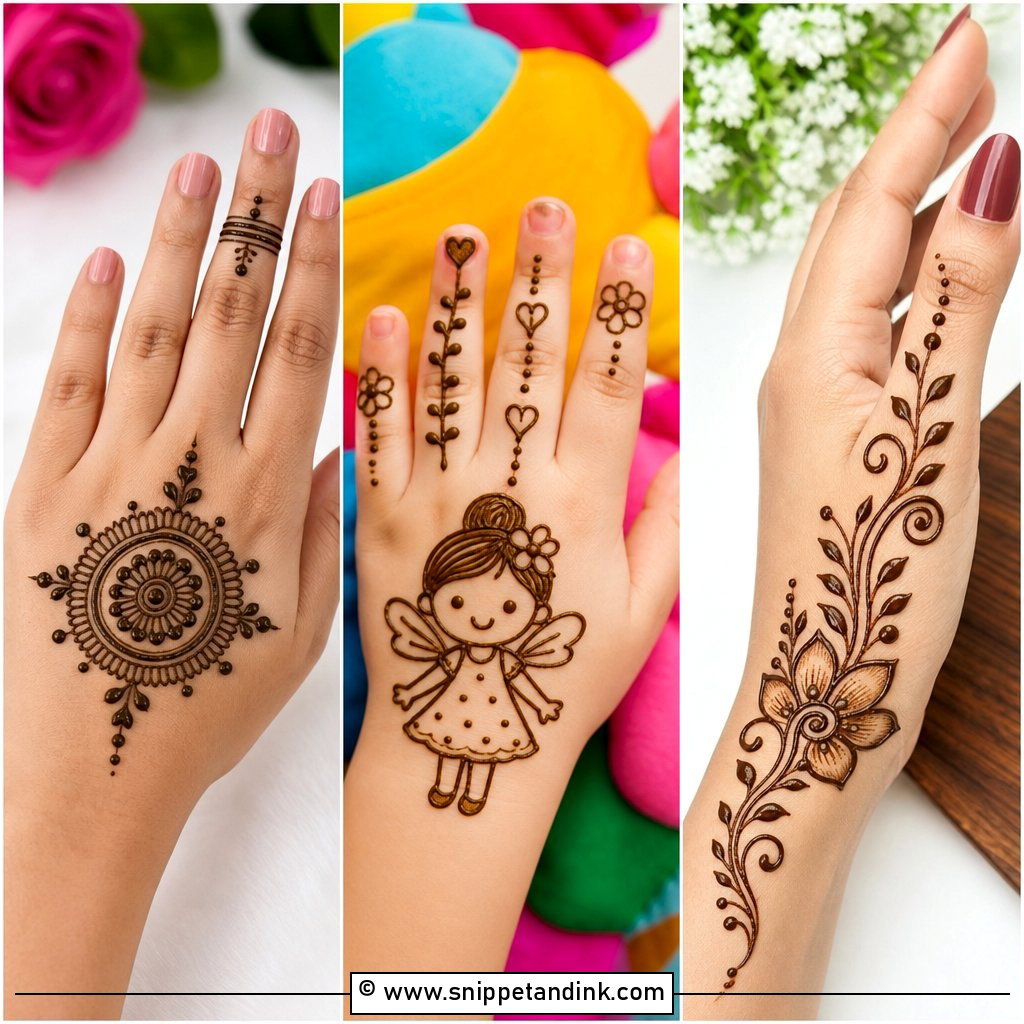
For girls, I stick to small flowers, hearts, stars, crescents and simple finger trails, which look right on young hands without seeming grown-up. A back-hand layout with a tiny bracelet and one decorated finger is a favourite with younger girls; on the palm, a small mandala with a ring of dots. Dense filling takes long to dry and girls rarely want to wait. Natural henna’s reddish-brown stain suits every age, and I only ever use plain natural paste on young skin.
10. Ramzan Mehndi Design For Kids
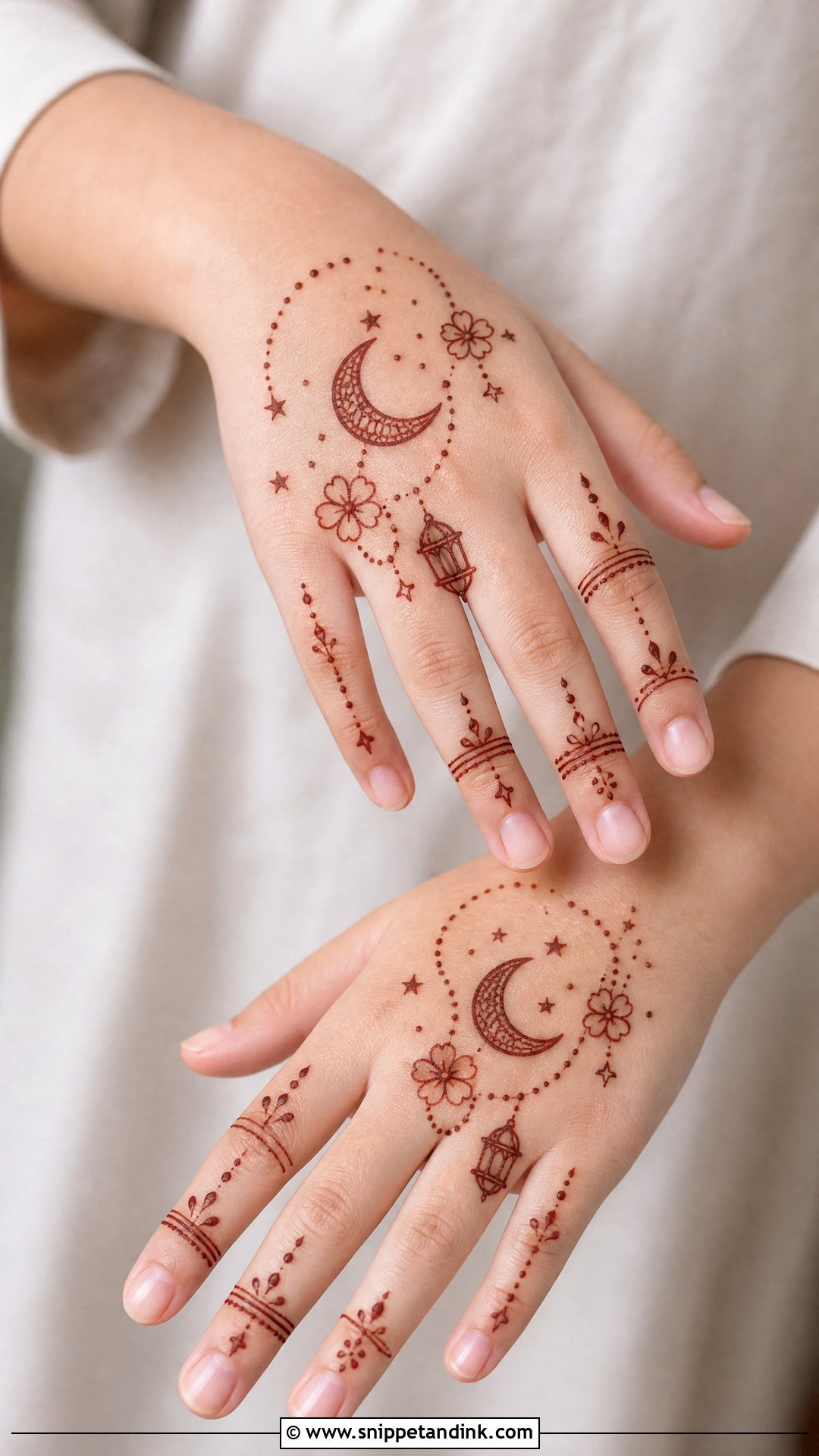
Little hands suit a playful, Ramzan mehndi design for kids: one small centrepiece, such as a crescent, flower, star cluster or mini mandala, a few dots and curved lines, and only one or two fingers decorated. I work fast with children and keep the lines bold, since fine crowded detail smudges the moment they move. The back of the hand is more practical than the palm for an active child, because they can still hold a plate and eat their iftar while it dries.
11. Ramzan Eid Mehndi Design
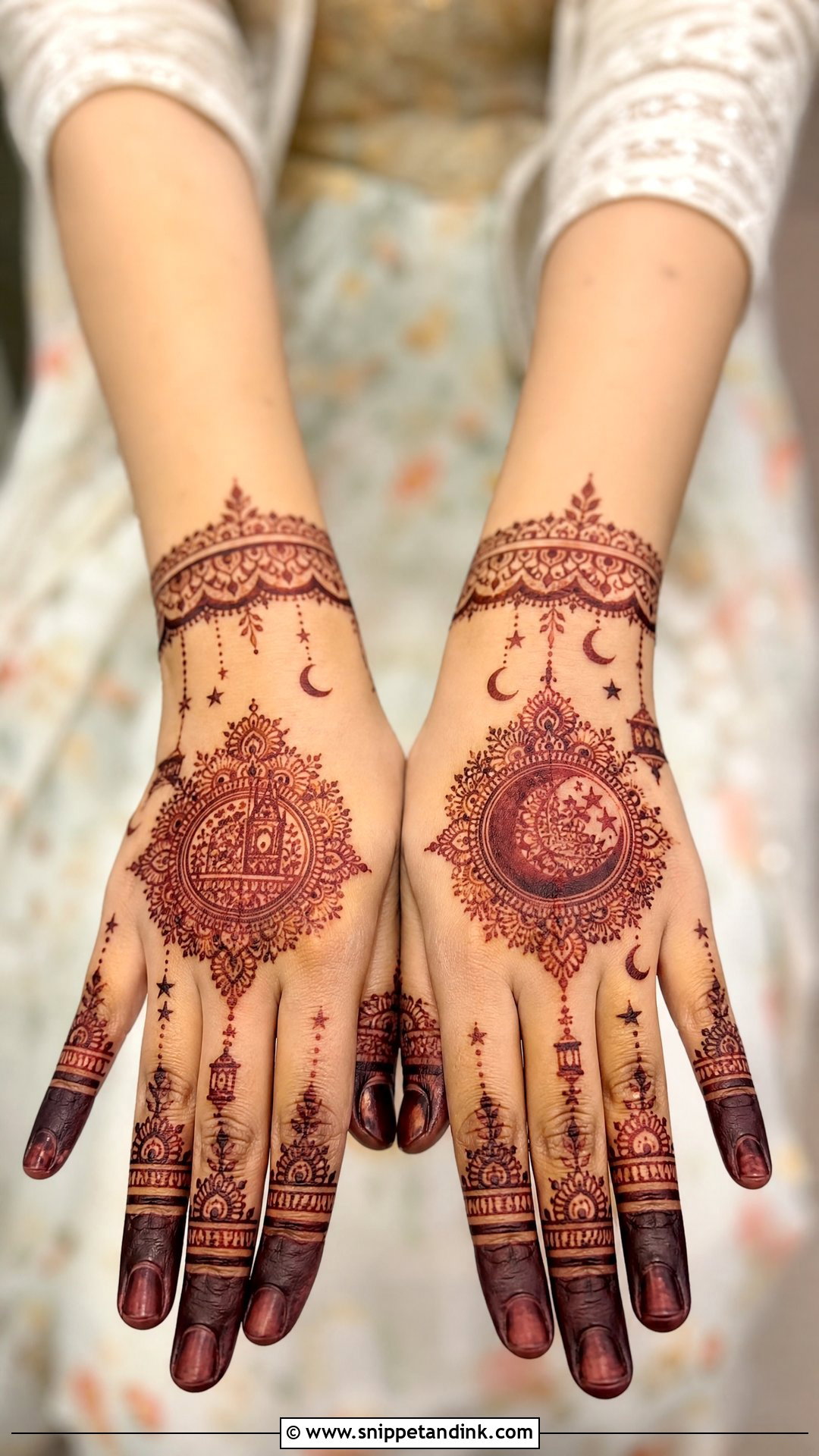
Eid henna can be richer than everyday Ramzan work. On the front hand, I’d use a palm mandala, crescent accents, floral borders and decorated fingertips; on the back, a bracelet-and-ring pattern with Arabic flowers. Paisleys make it more traditional, negative space more modern. Applied on Chand Raat, it gives good colour by Eid morning, though henna keeps darkening for a day or two, so a day earlier gives the deepest shade at Eid prayer. It sits well with traditional outfits and simpler dresses alike.
12. Chand Raat Mehndi Design
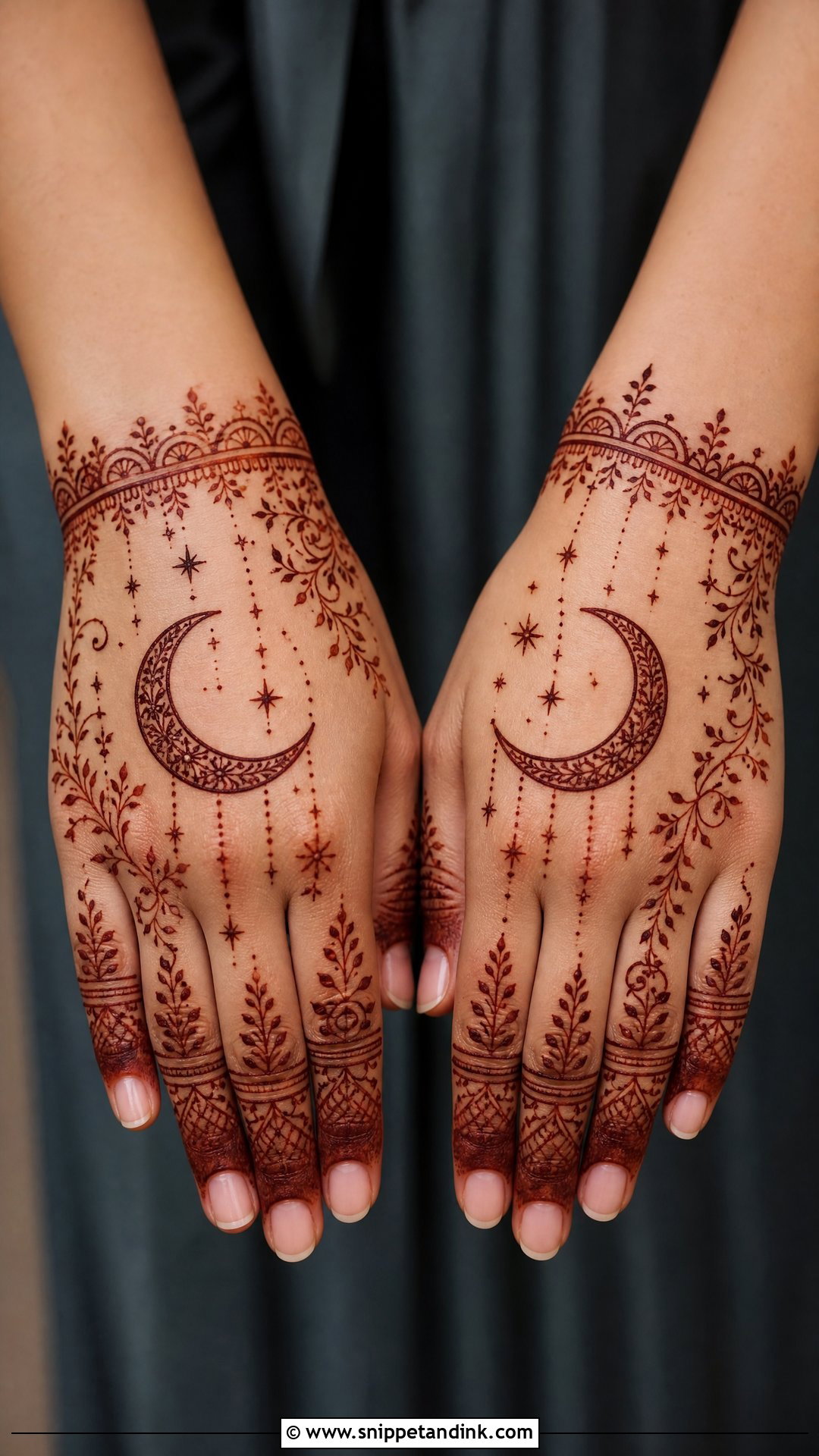
Chand Raat is when everyone wants henna at once, often late at night, so the design has to give impact quickly. A crescent with stars, florals and dotted trails does that, on the back of the hand for a modern look or the palm for a traditional one. Slim bands and leafy tips finish the fingers, and a bracelet border at the wrist fills it out. When the queue is long, I do the crescent and wrist band for everyone first, then add finger detail for whoever has time to wait.
13. Ramzan Bridal Mehndi Design
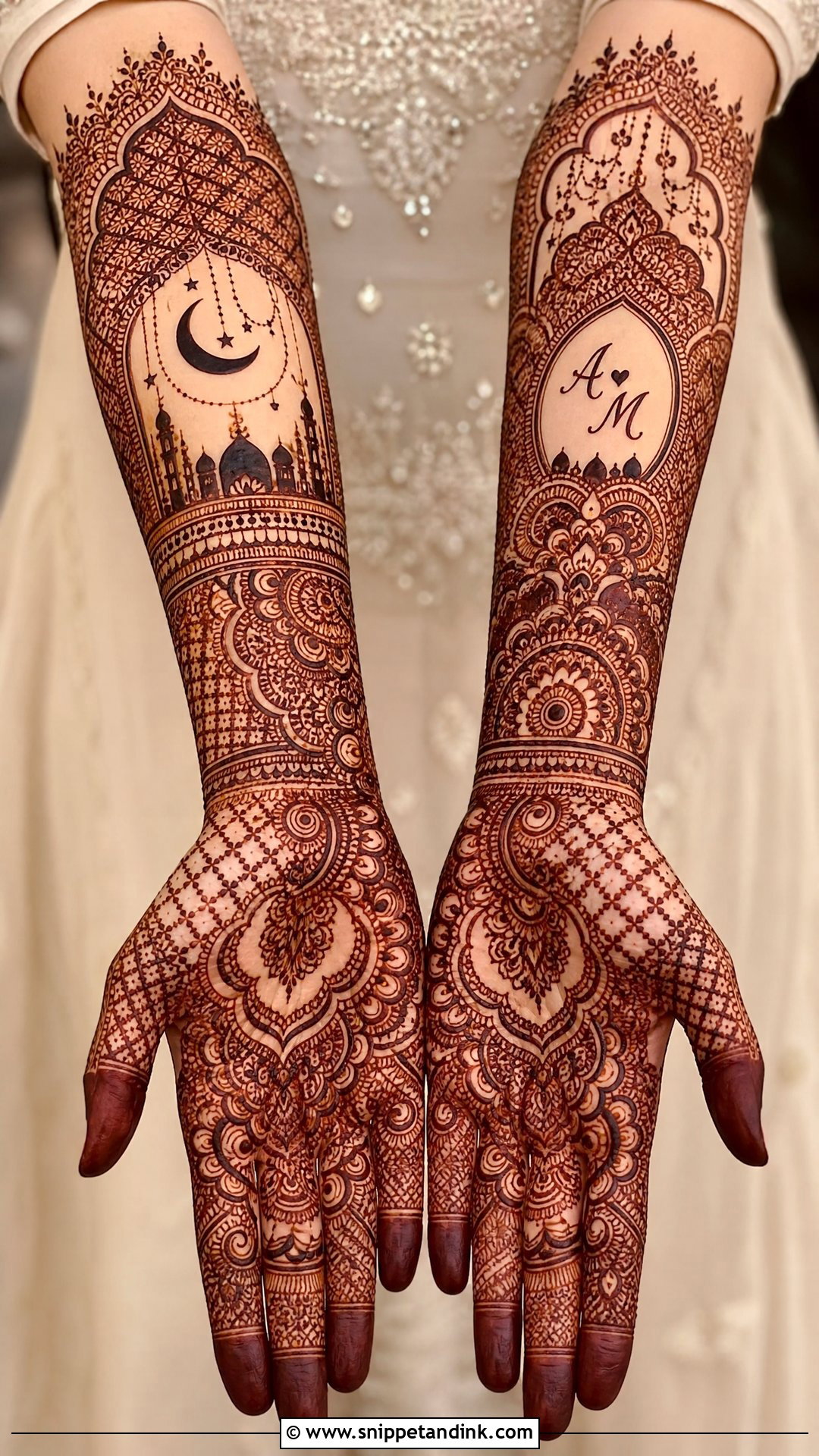
Bridal henna for a nikah, engagement or Eid bride brings in the full vocabulary: paisleys, mandalas, jaali, floral vines and crescent details, sometimes with name initials, small mosque-inspired arches or jewellery-style wrist work. Symmetry between both hands gives a traditional finish; more negative space suits a modern bride. Bridal henna is a long sitting, and during Ramzan I schedule it after iftar, ideally two days before the event, so the deep maroon has time to develop in every fine filler.
14. Indo Arabic Ramzan Mehndi Design
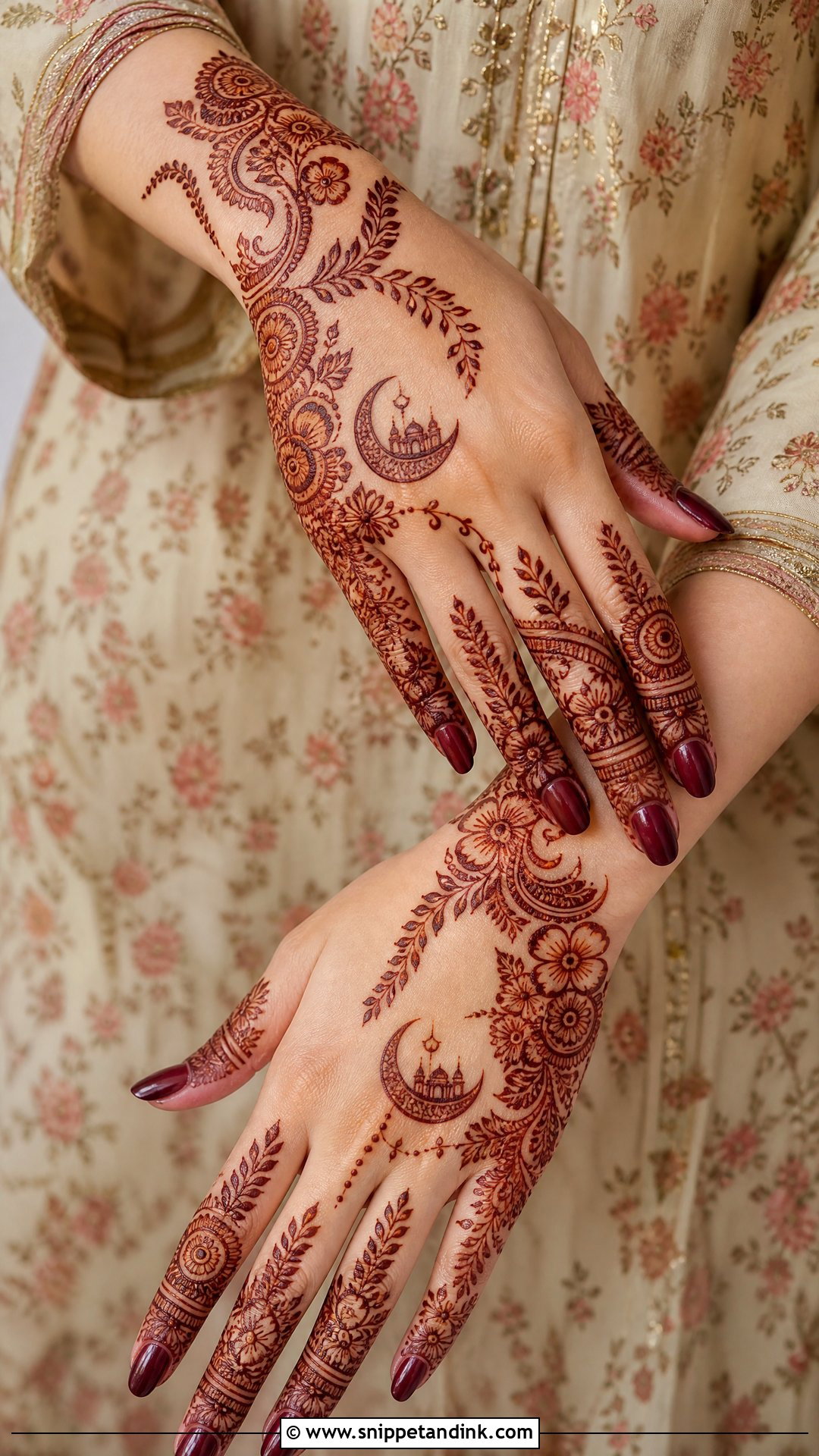
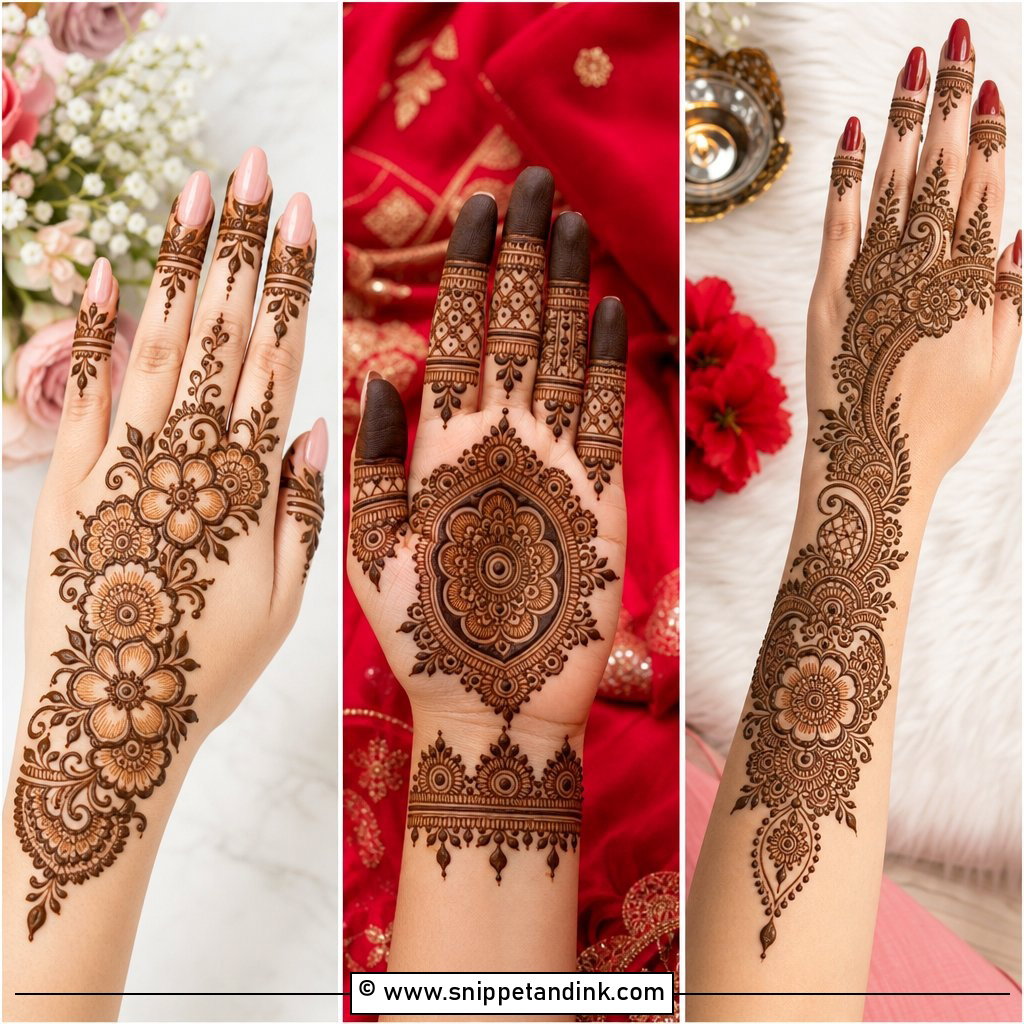
Indo-Arabic combines Arabic flow with Indian filling: large flowers and paisleys run diagonally, and some of the spaces between them are filled with dots, lines, tiny leaves and jaali. Crescents near the wrist or between flower sections tie it to Ramzan. I decide which pockets get filled before I start; otherwise the filling spreads and the Arabic open space is lost. It sits between simple and heavy, on palm or back of hand.
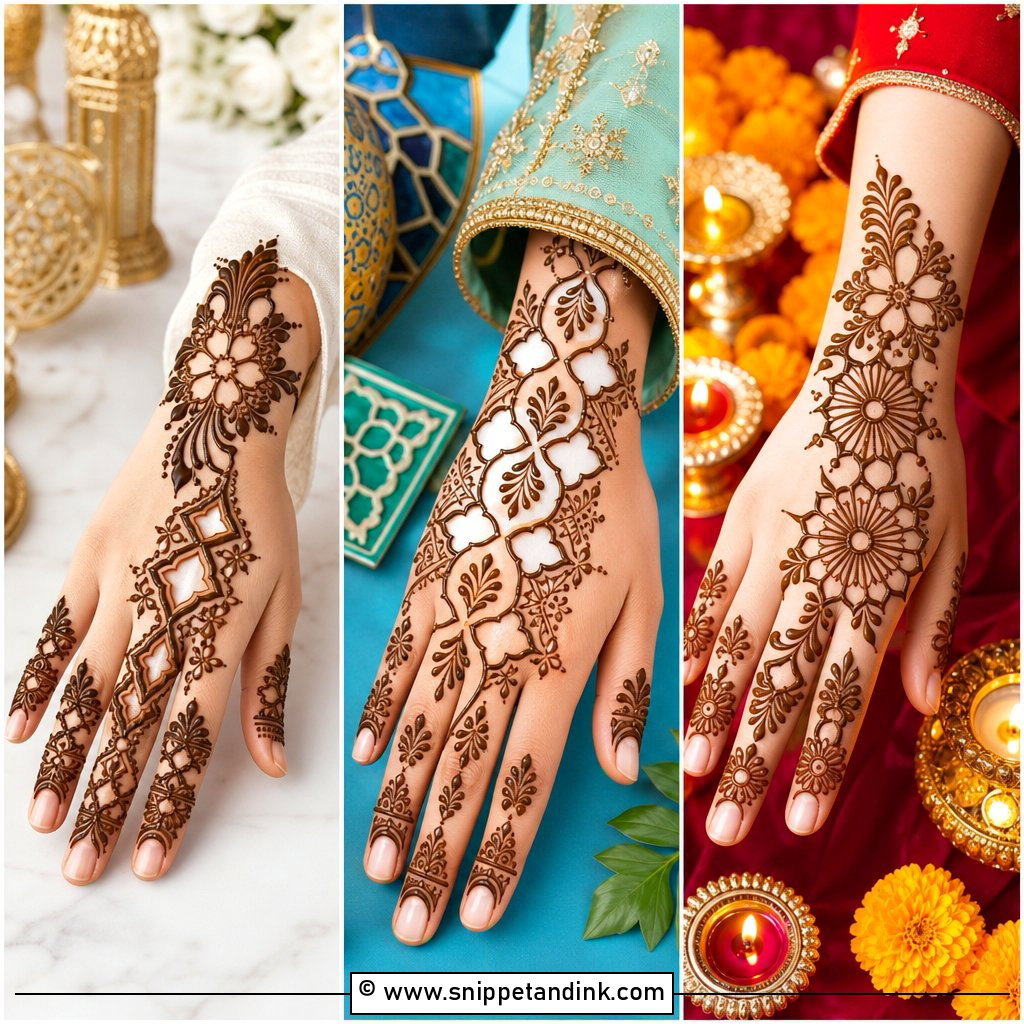
15. Khaleeji Ramzan Mehndi Design
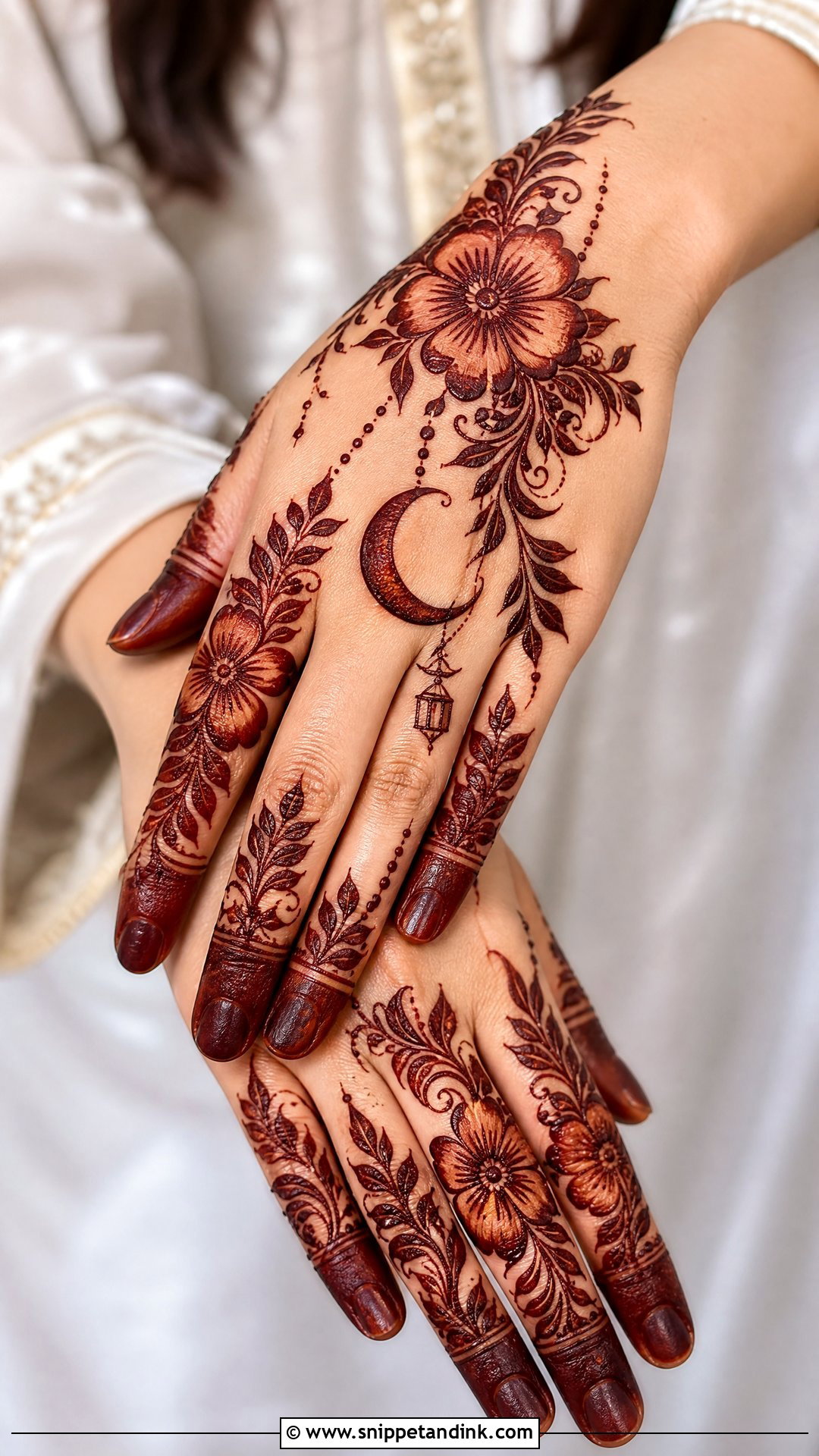
Khaleeji, the Gulf style, uses large shaded flowers, thick outlines, leafy clusters and areas of bare skin, often with heavily decorated fingers against a clearer hand. A crescent charm or a star near the wrist marks the month. Its shading is a lighter drag of paste inside each petal, so it shows depth best with a deep maroon stain. Good paste matters more here than in most styles, because the thick outlines are the whole design.
16. Moroccan Ramzan Mehndi Design
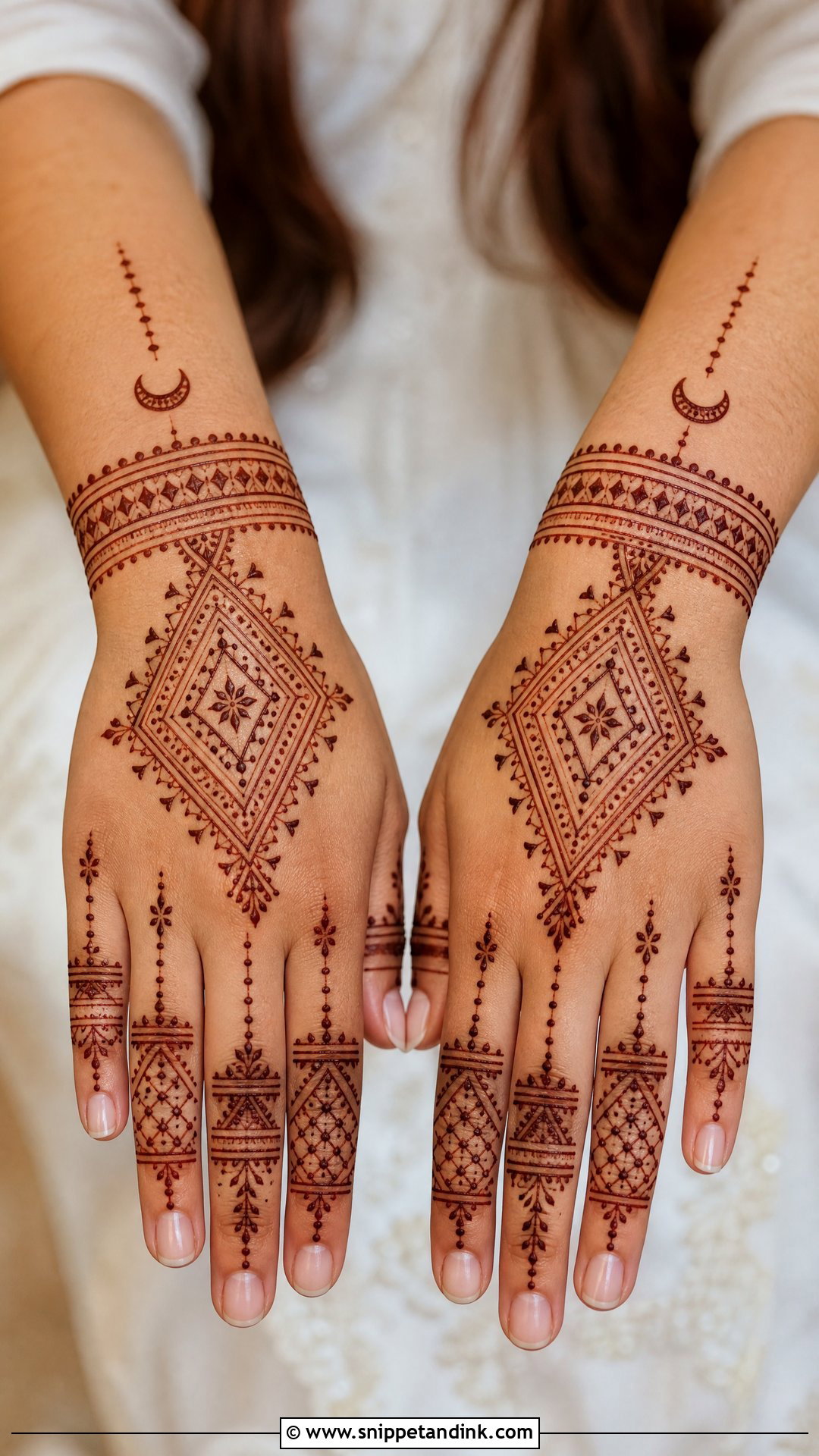
Diamonds, lines, grids, triangles and careful symmetry replace florals in Moroccan henna. For Ramzan, I combine geometric wrist bands with a small crescent or star on the back of the hand. It looks strong next to simple outfits. Geometry is the least forgiving style for an unsteady hand, since every straight line shows a wobble, so I hold the cone slightly above the skin and pull each line in one movement. Even spacing makes it look polished once stained.
17. Floral Ramzan Mehndi Design
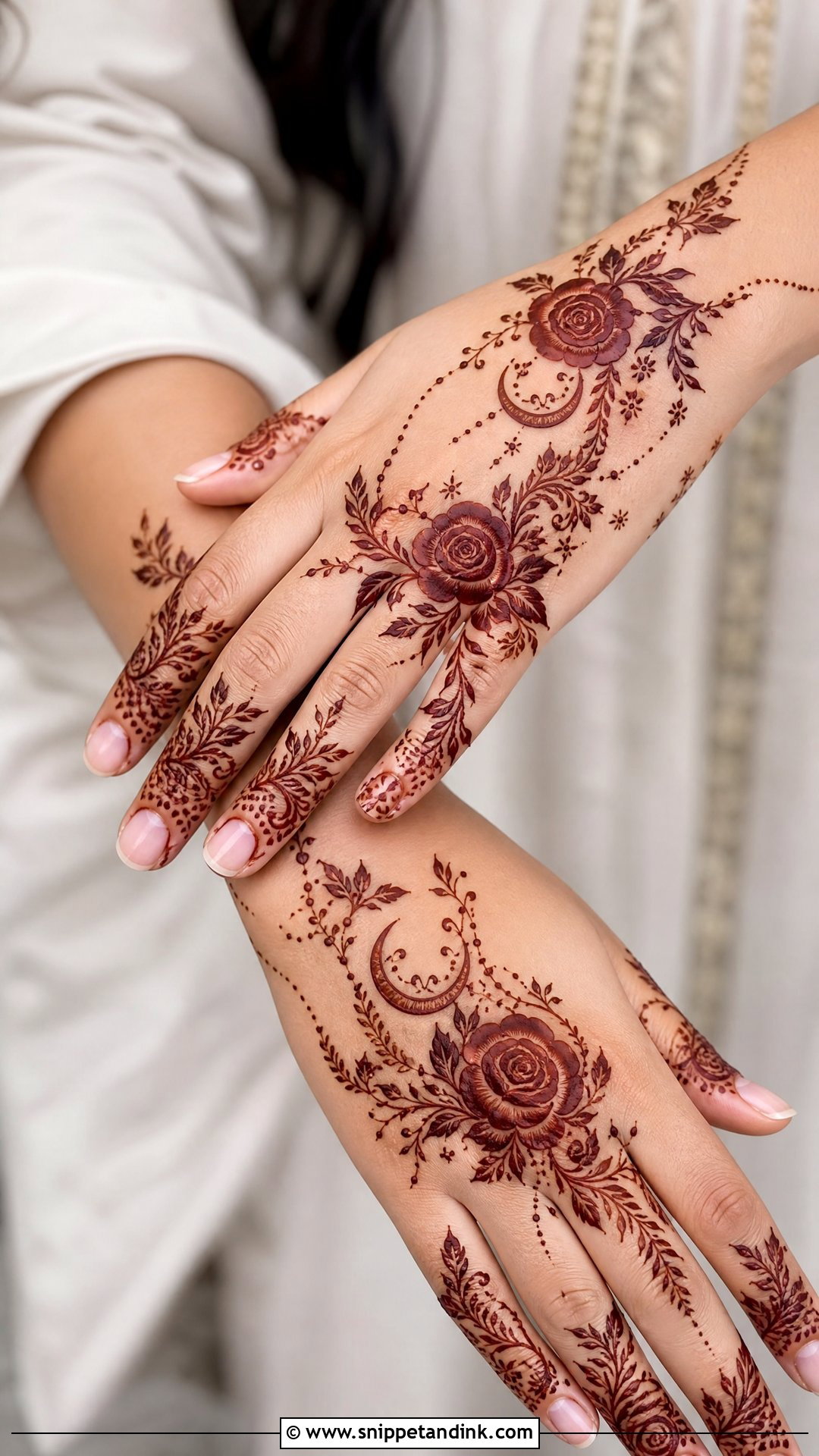
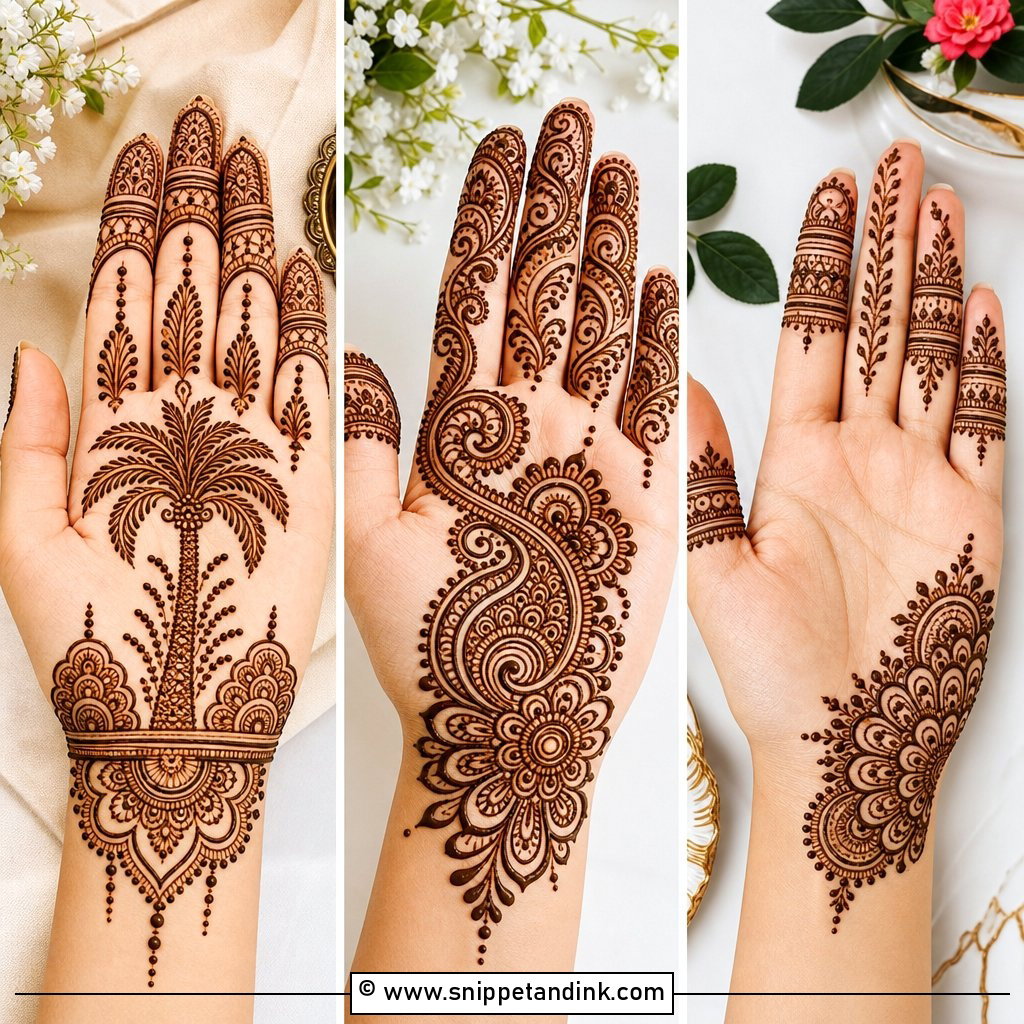
Roses, lotus-like blooms, small buds, leafy vines and dotted borders can fill a palm around one large flower or run as a diagonal trail across the back of the hand, with a tiny crescent between the blooms. Florals adapt to simple, Arabic or full-hand layouts. I outline main flowers bold and leaves fine, and vary the bloom sizes. That contrast is what keeps a floral design from looking flat after it stains.
18. Mandala Ramzan Mehndi Design
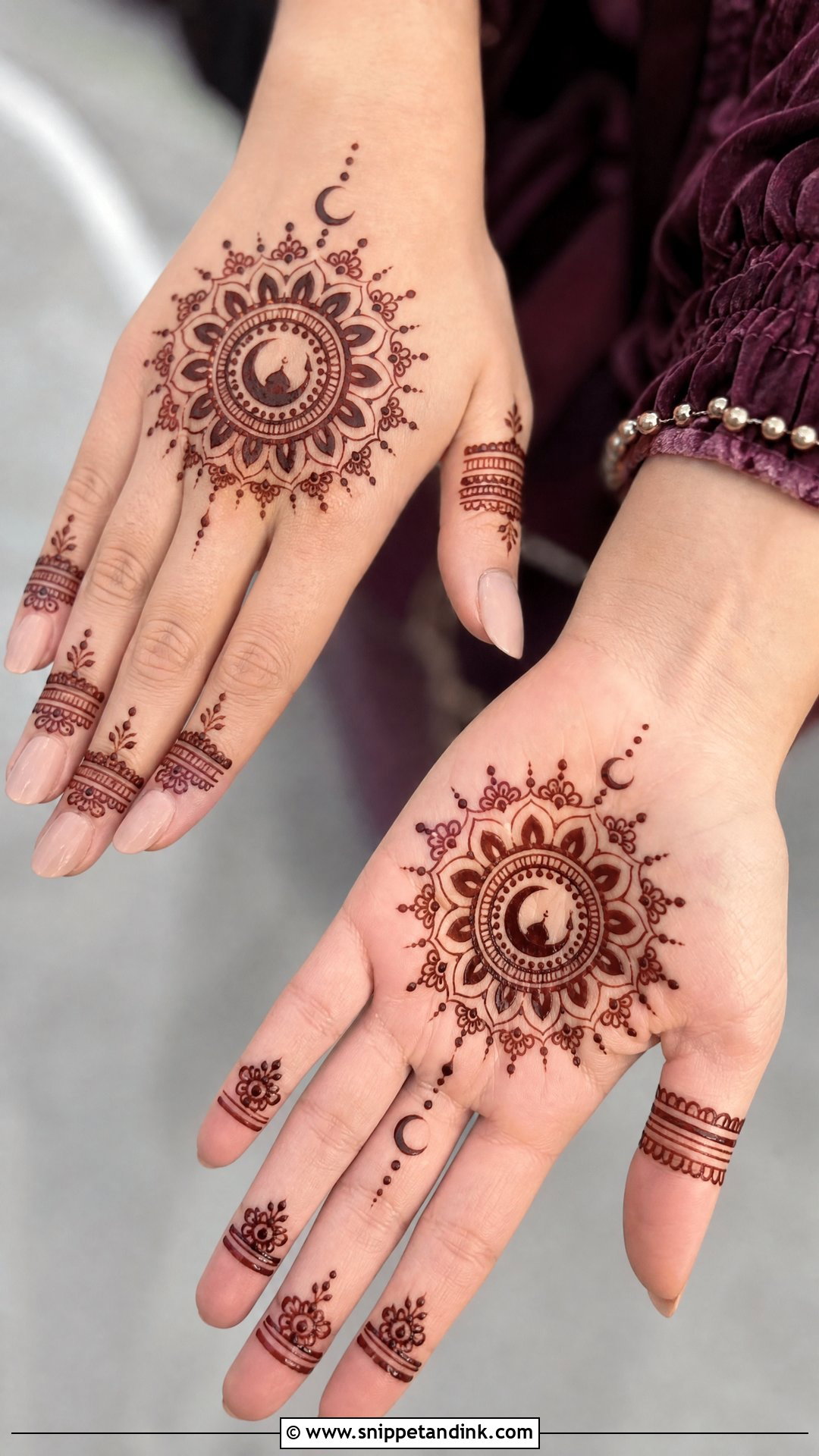
A mandala sits at the centre of the palm or the back of the hand, as one circle of petals or a detailed piece with dots, fine lines and small crescents. Matching finger bands or leaf trails complete it. More space around the mandala gives a modern version. I always begin with the outermost guide circle and work inward. Starting from the centre and building outward is how most home mandalas end up lopsided.
19. Bracelet Ramzan Mehndi Design
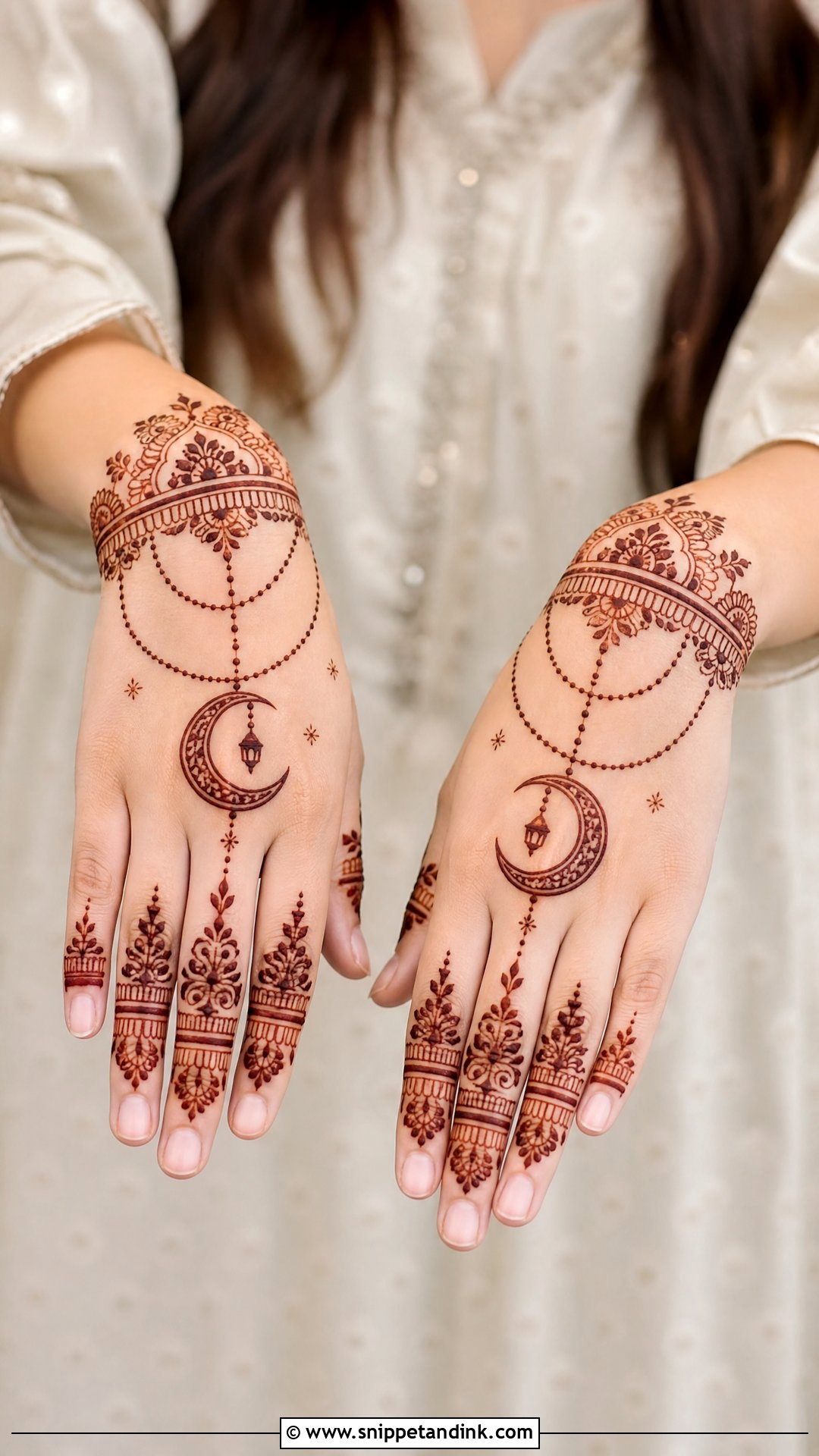
The main pattern circles the wrist like a cuff and connects to the fingers with chains, dots or fine floral lines, with a small moon pendant on the back of the hand. It pairs with rings and bangles and leaves most of the hand open. The wrist band is the highlight, so it must be level. I mark faint top and bottom guide lines all the way round before filling, because the wrist curves, and a band drawn freehand tends to climb on the outer side.

20. Finger Ramzan Mehndi Design
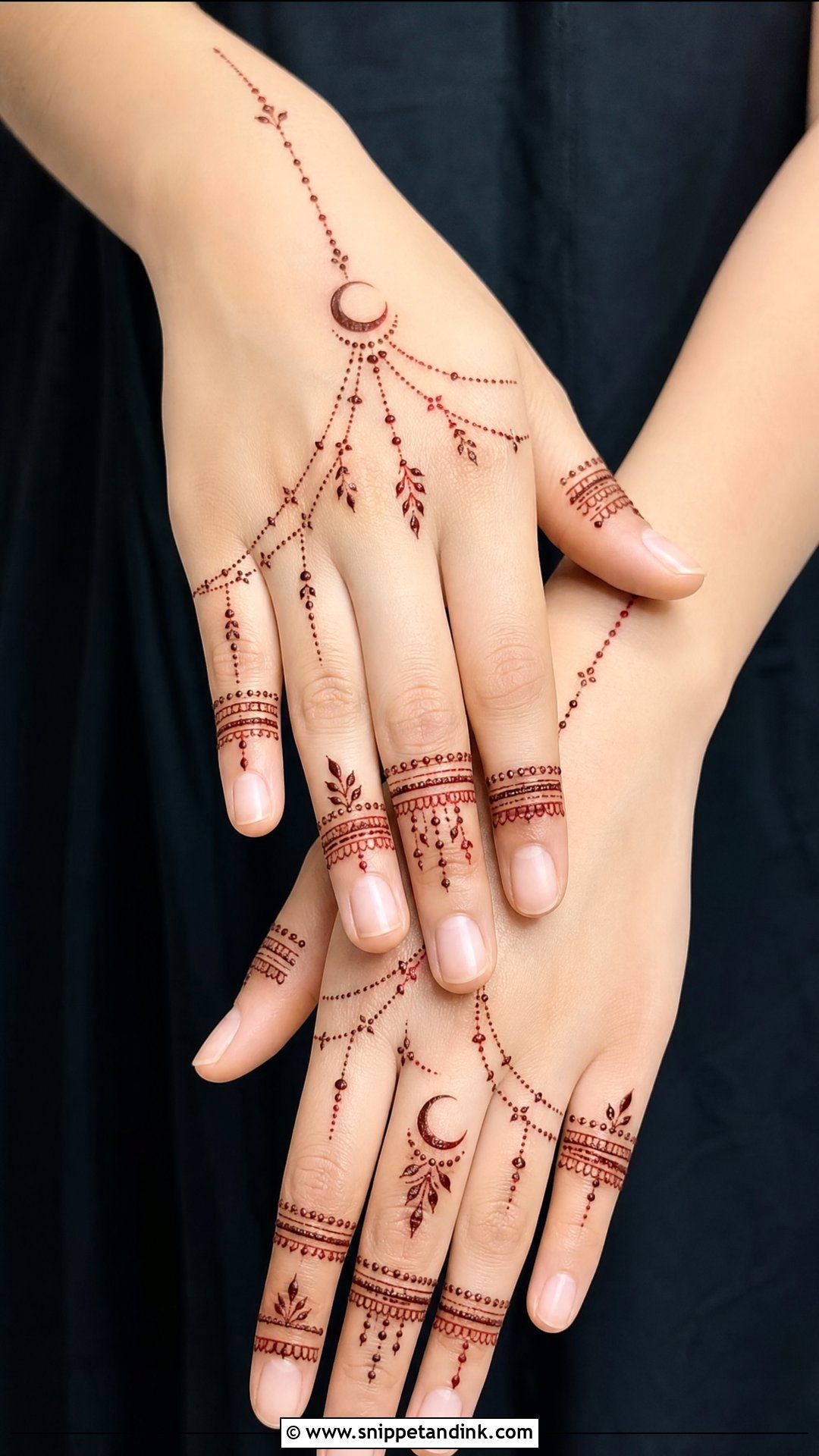
Slim bands, tiny leaves, dots and ring-like details on all five fingers give a small but visible look, with a crescent at the base of one finger or a fine chain leading toward the wrist. It dries quickly and suits women who prefer clear palms. Make each finger slightly different but linked by a shared motif. Fingertips take colour very well, but they also fade first once you start cooking and washing, so expect the tips to lighten within a few days.
21. Palm Ramzan Mehndi Design
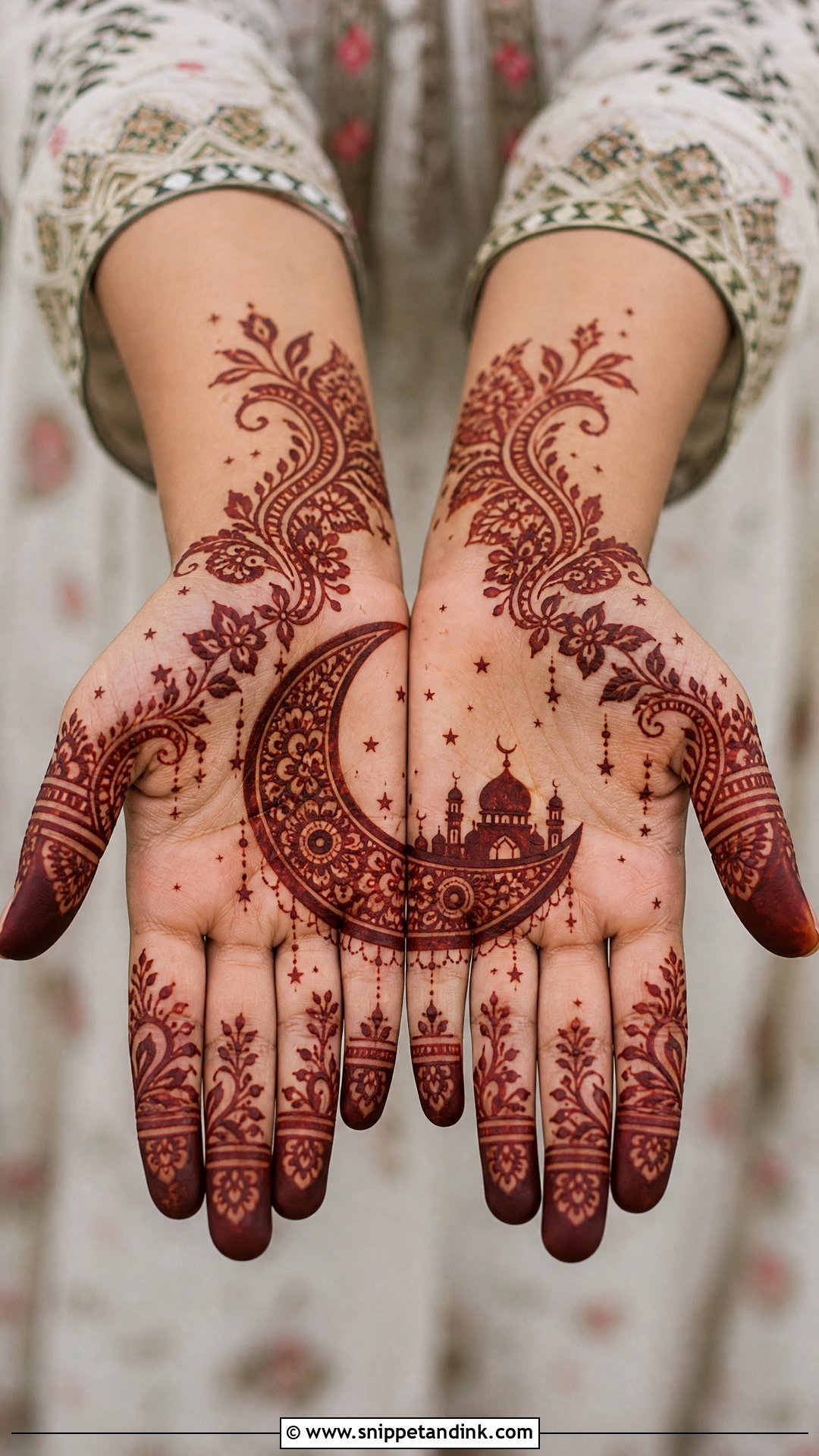
A mandala, crescent or floral centrepiece in the middle of the palm, surrounded by paisley curves, vines, dots and a little shading, with simple bands or filled tips on the fingers. The palm stains darker than any other part of the hand because the skin is thicker, so even fine detail shows well after drying. Keep the centre strong and clear so the eye lands somewhere. It is the classic choice for Eid morning with family.
22. Jaali Ramzan Mehndi Design
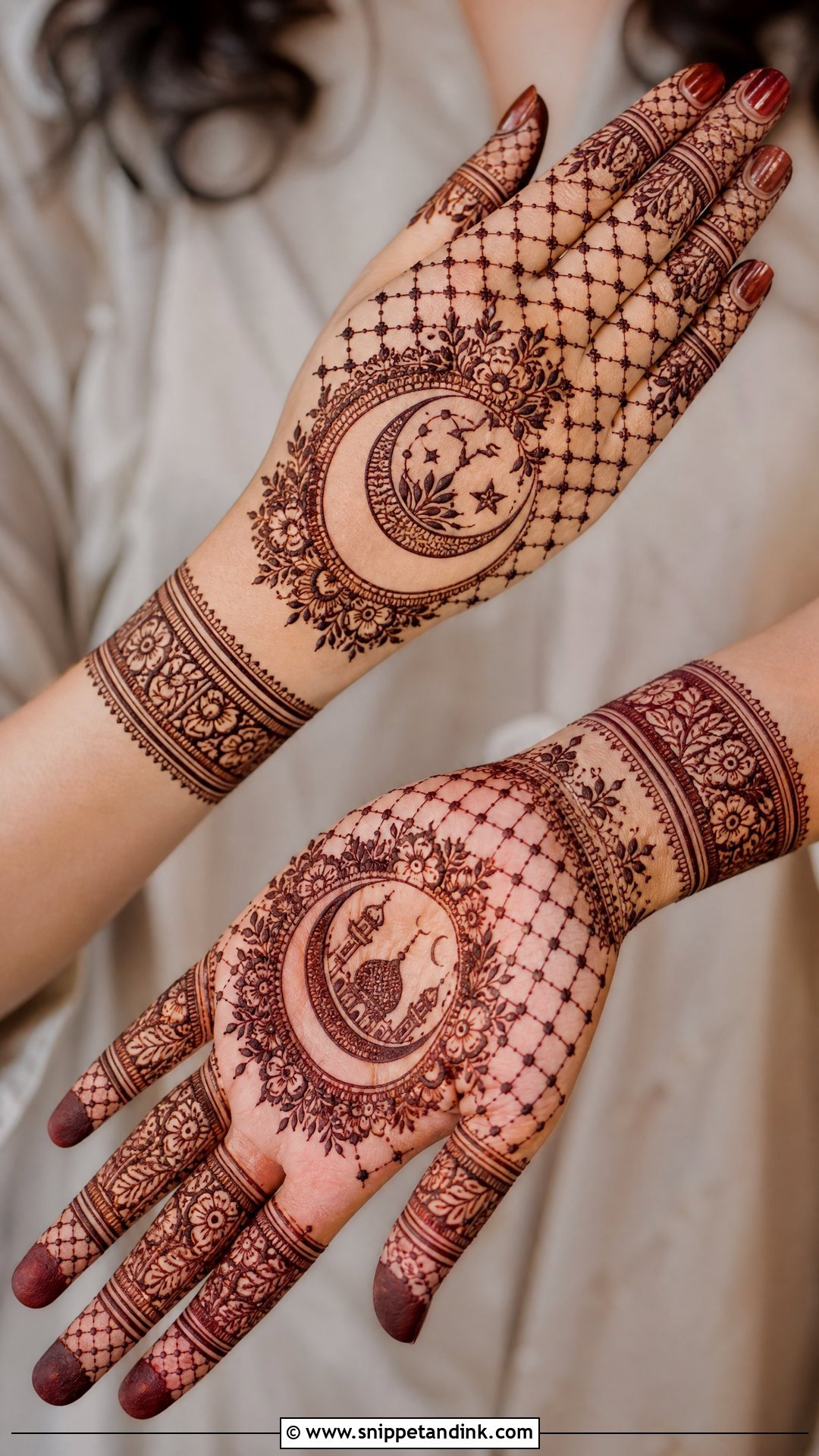
Jaali is net-like mesh, and set beside a central floral or moon motif it adds texture without making the hand heavy. It can go on the palm, the back of the hand, the fingers or the wrist. Steady, evenly spaced lines are non-negotiable, so I work slowly and keep the paste consistent; lumpy paste breaks the grid. If your hand is not steady yet, keep the jaali patch small and let the motif beside it do more of the work.
23. Paisley Ramzan Mehndi Design
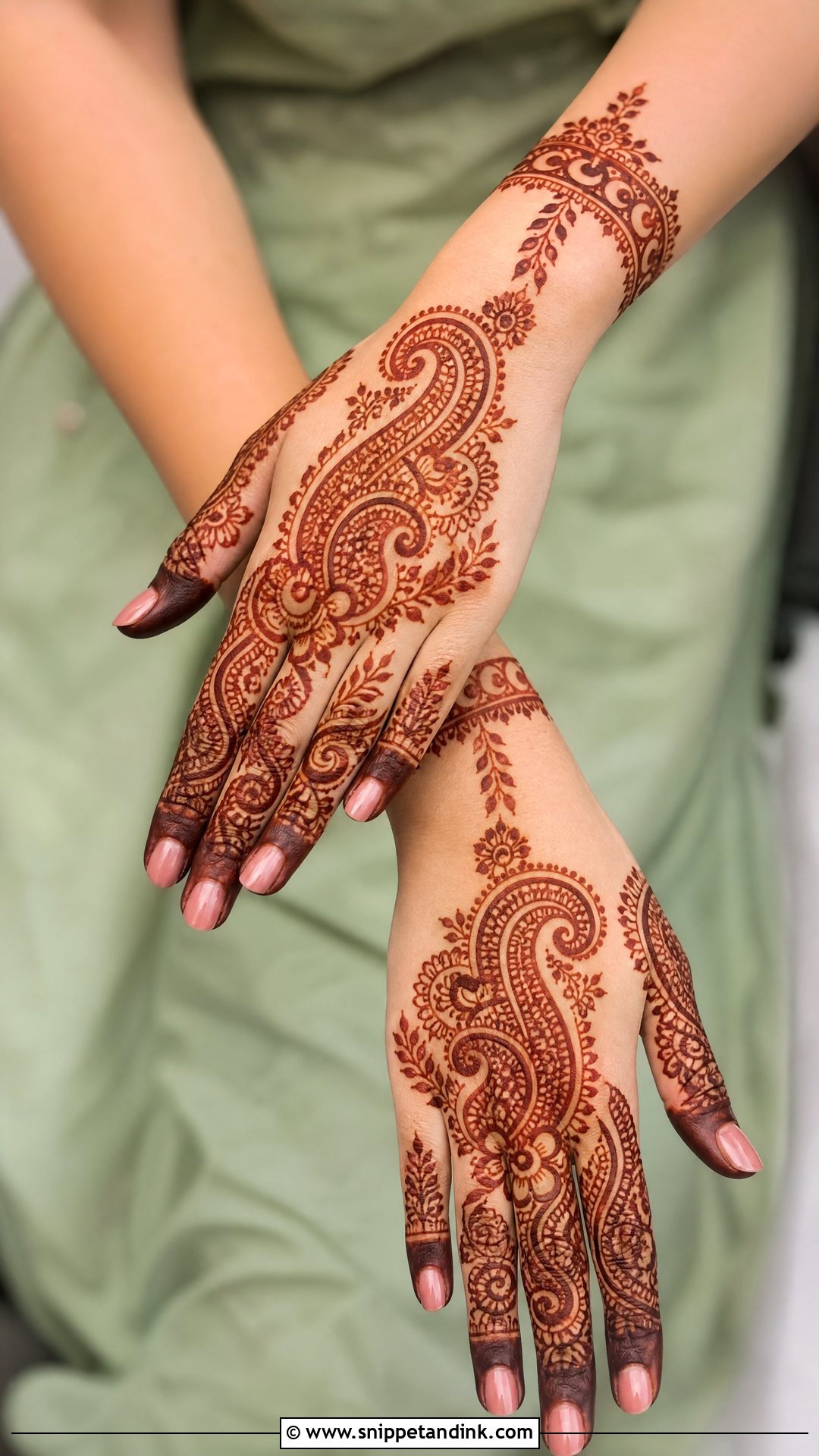
Paisleys bring a South Asian character to Ramzan henna. They sit in the palm, along the wrist or within an Arabic trail across the back of the hand, filled with tiny flowers, curved lines, dots and small leaves, with a crescent near the border. They fill space naturally, which makes them useful in full and half hand designs alike. The curled tip is the hardest part to draw cleanly, so I start each paisley there while my cone pressure is fresh.
24. Peacock Ramzan Mehndi Design
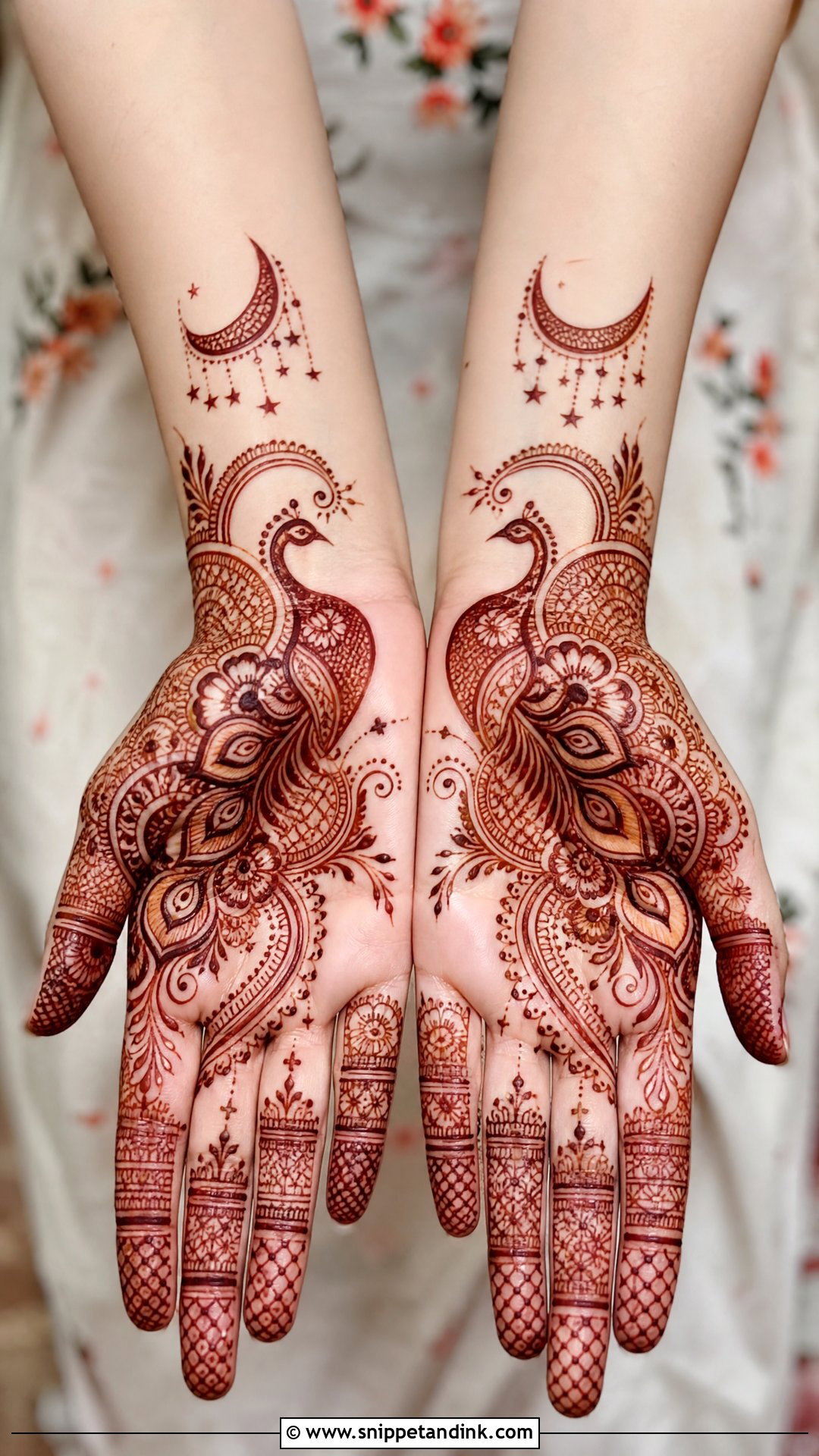
The peacock can sit on the palm with feathers spreading into florals and paisleys, or appear on the back of the hand within a curved trail. The bird’s shape must stay clear, so I keep the body solid and bold and put stars or a crescent in the surrounding border, never on the peacock itself. It needs time and patience. It is the design I’d suggest for someone who enjoys sitting for henna and wants something more artistic than a floral trail.
25. Star Ramzan Mehndi Design
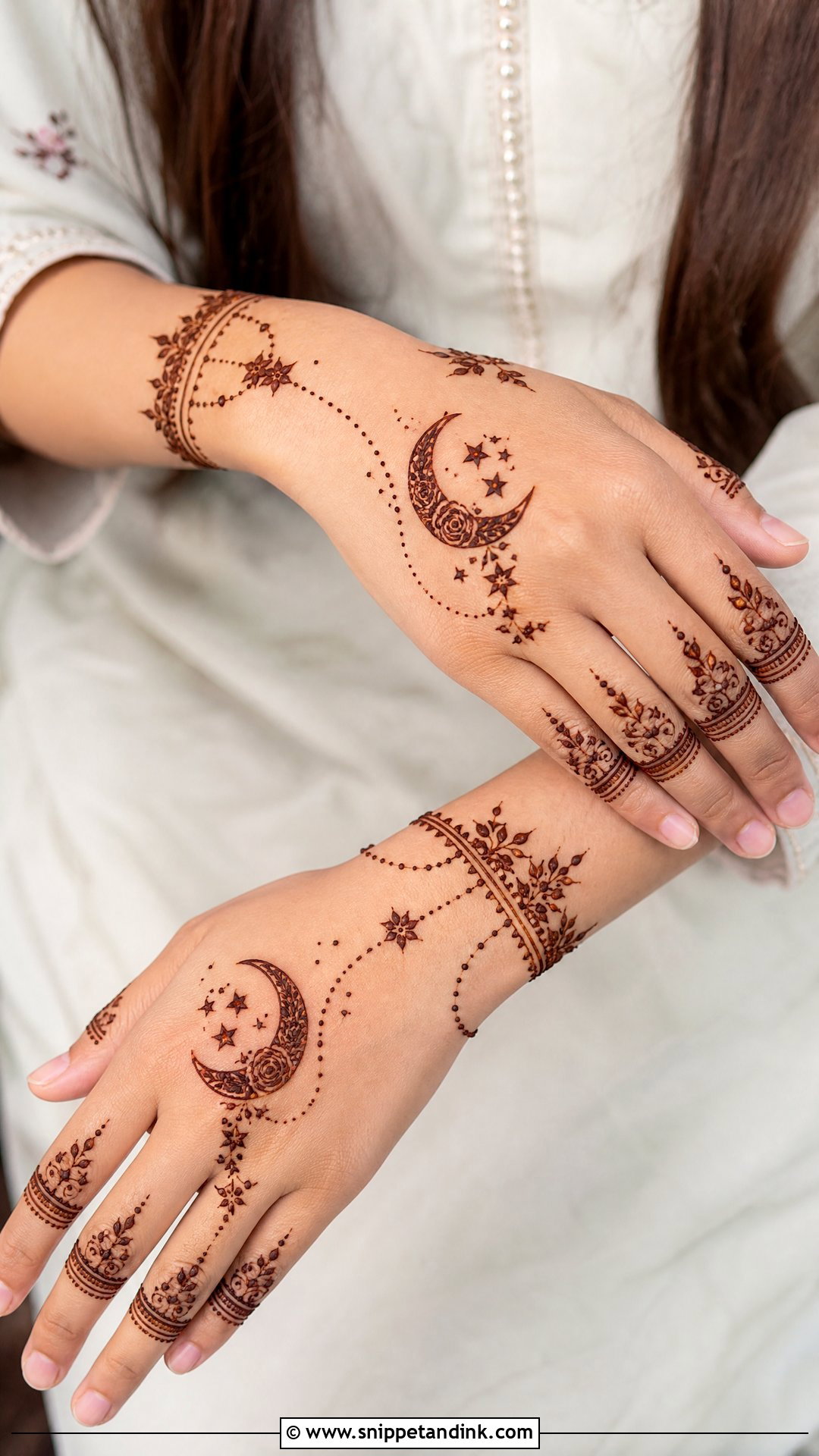
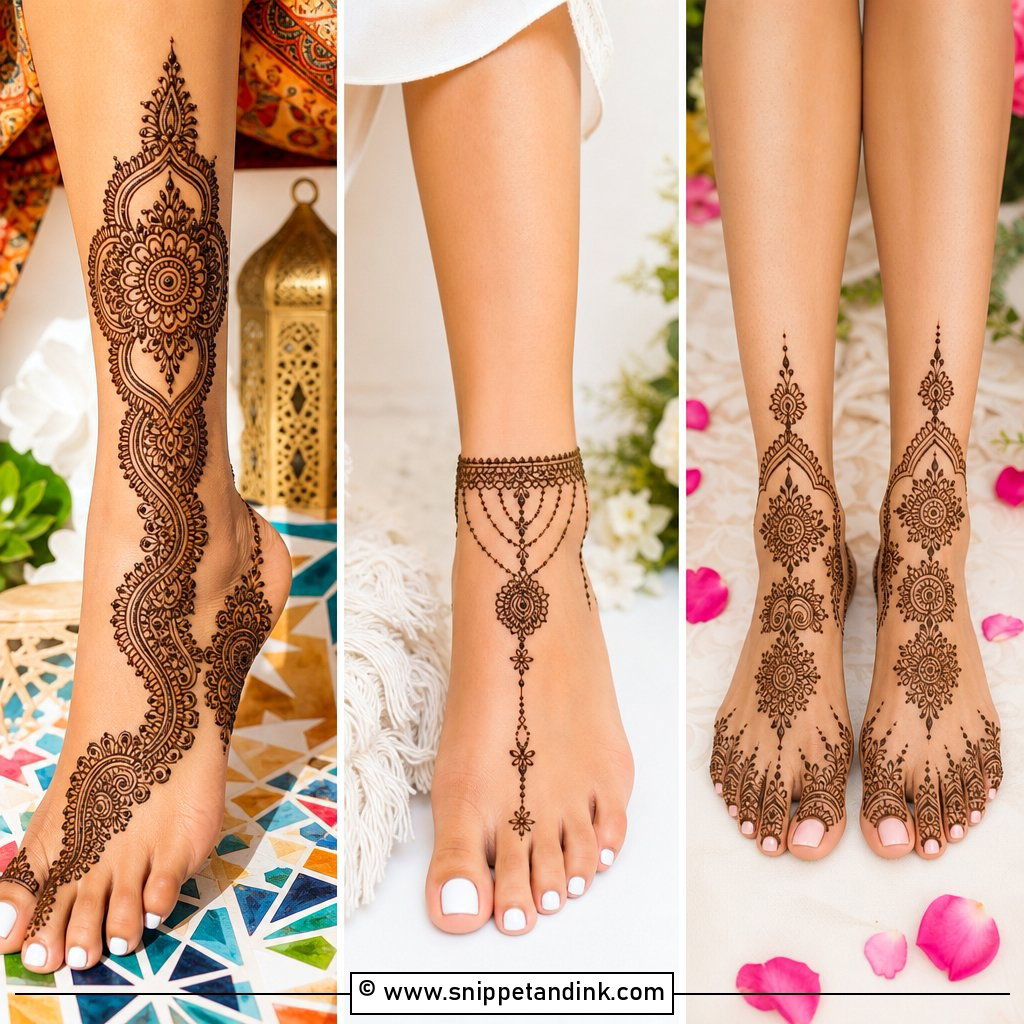
Tiny stars around a crescent, scattered on the fingers or between flowers keep a design light and cheerful, especially for Chand Raat. A moon and star cluster on the back of the hand connected to a bracelet at the wrist makes a complete look. Keep the stars small and evenly spaced; large uneven stars look childish. With a thick cone, I use dot clusters instead of drawn five-point stars, since points fill in and turn into blobs once the paste spreads.
26. Modern Ramzan Mehndi Design
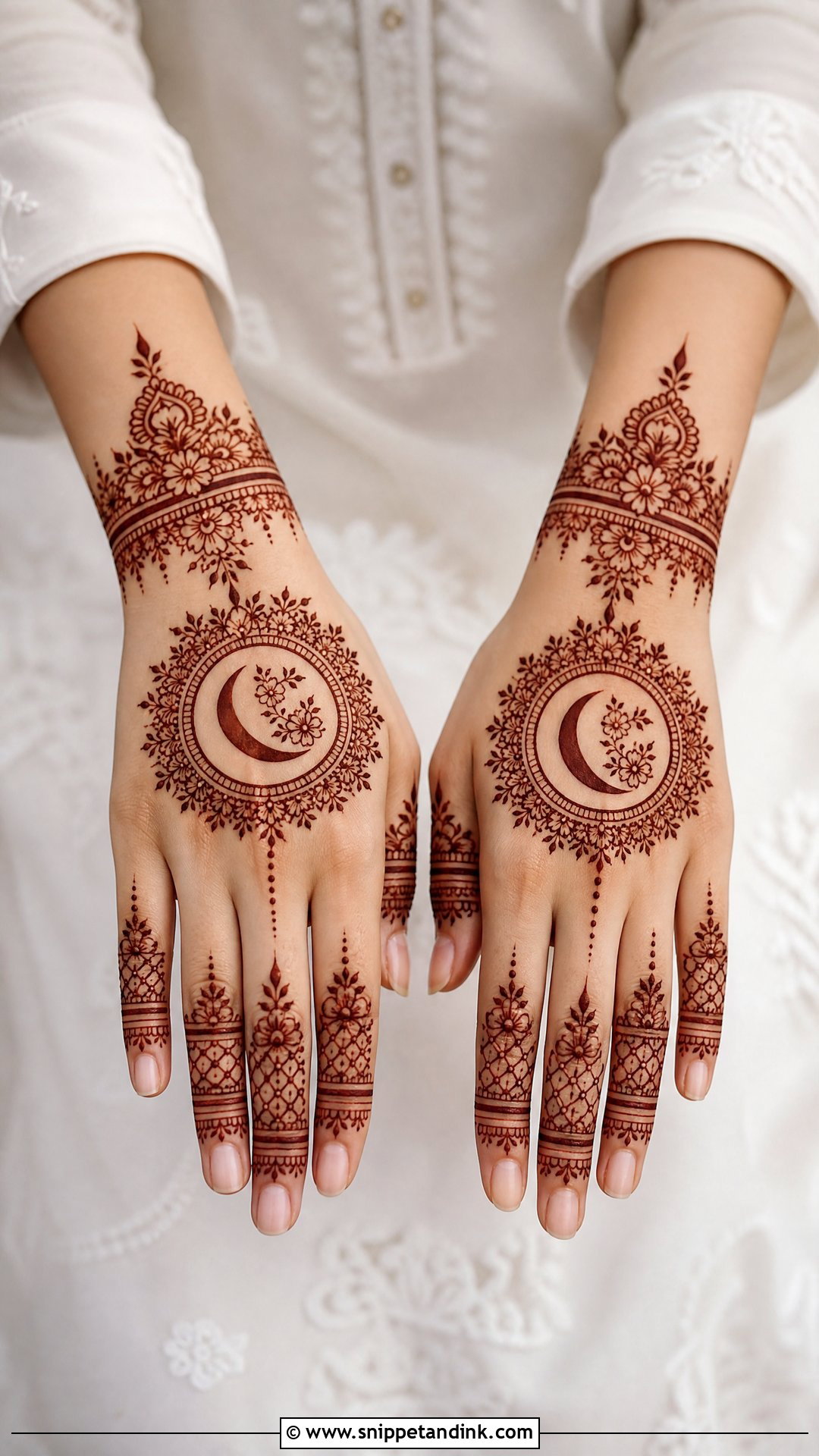
Modern Ramzan henna picks one strong focal point, such as a crescent mandala, a floral cuff or a diagonal Arabic trail, and pairs it with thin finger bands, open space and small geometric touches. It suits simple abayas, embroidered kurtas and Eid outfits. Avoiding clutter is the whole discipline. I stop adding detail the moment the design reads clearly from arm’s length, which is usually earlier than most people expect.
27. Shaded Ramzan Mehndi Design
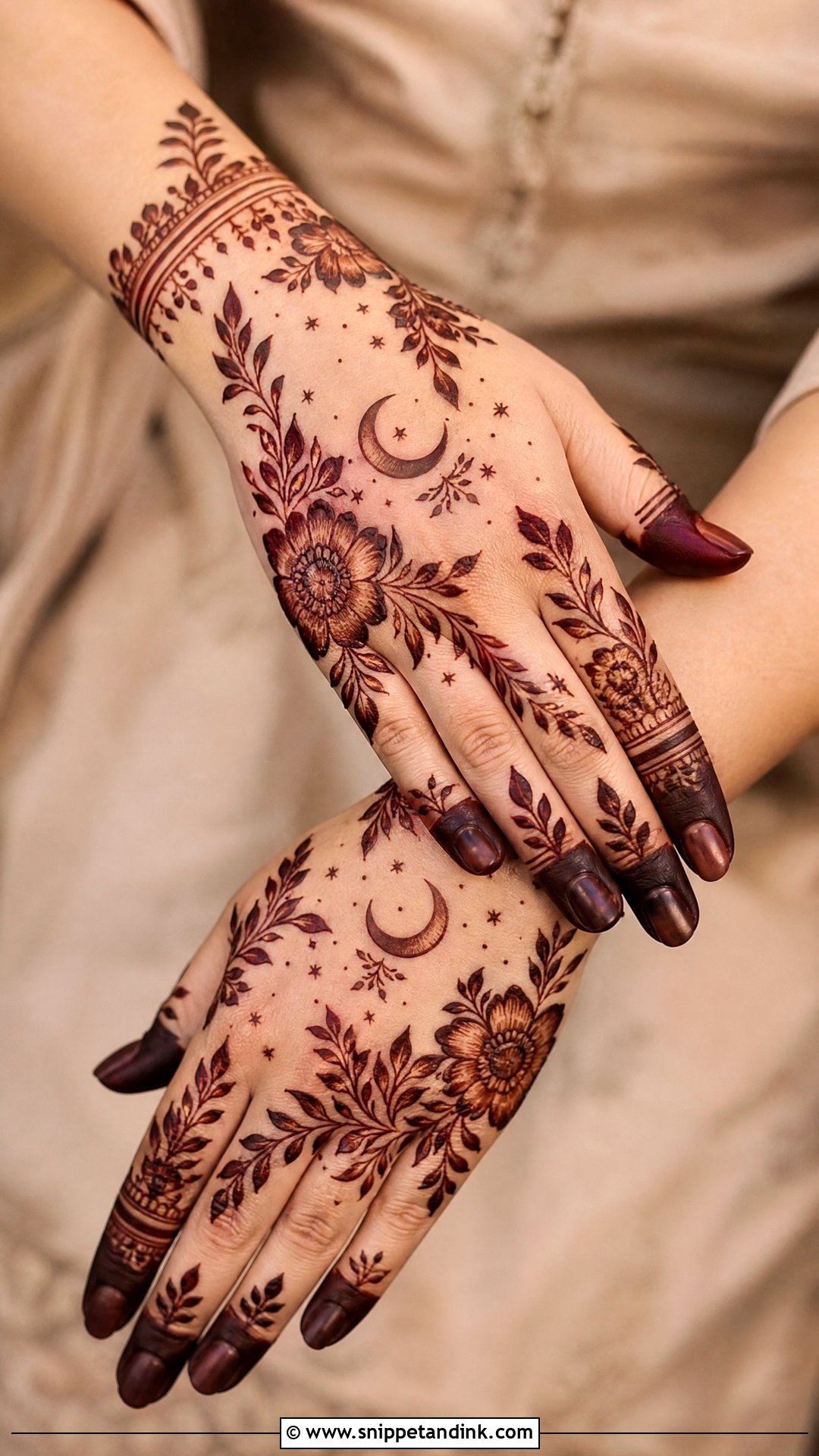
Shading adds depth to flowers, leaves and paisleys, either softly or in the bold Gulf manner. I draw thick outlines first, then fill petals with fine strokes or partial shading, and pair the result with a crescent and dotted stars for Ramzan. Shaded petals stain lighter than solid outlines because less paste sits on the skin, which is what creates the dimension. Keep the fingertips simple when the main motif is bold.
28. Half Hand Ramzan Mehndi Design
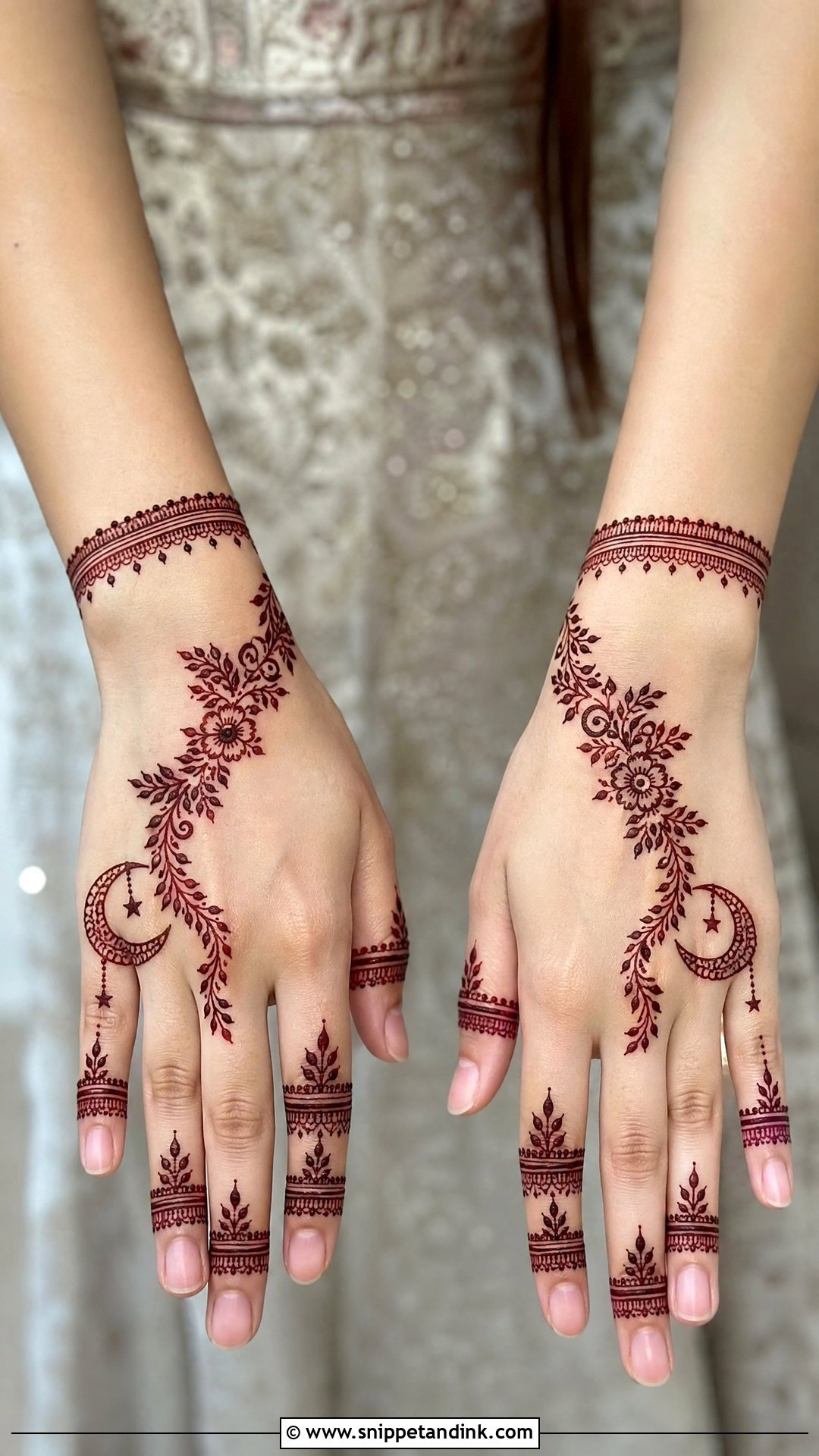
Half coverage means either palm to wrist or back of hand to fingers, with the rest left open. A diagonal Arabic floral trail suits it, as does a mandala with finger detail or a bracelet with a small moon charm. It gives a festive effect quickly and stays comfortable while cooking, serving and praying. If you are the one making iftar, ask for the half design on your non-dominant hand and keep the working hand lighter.
29. Pakistani Ramzan Mehndi Design
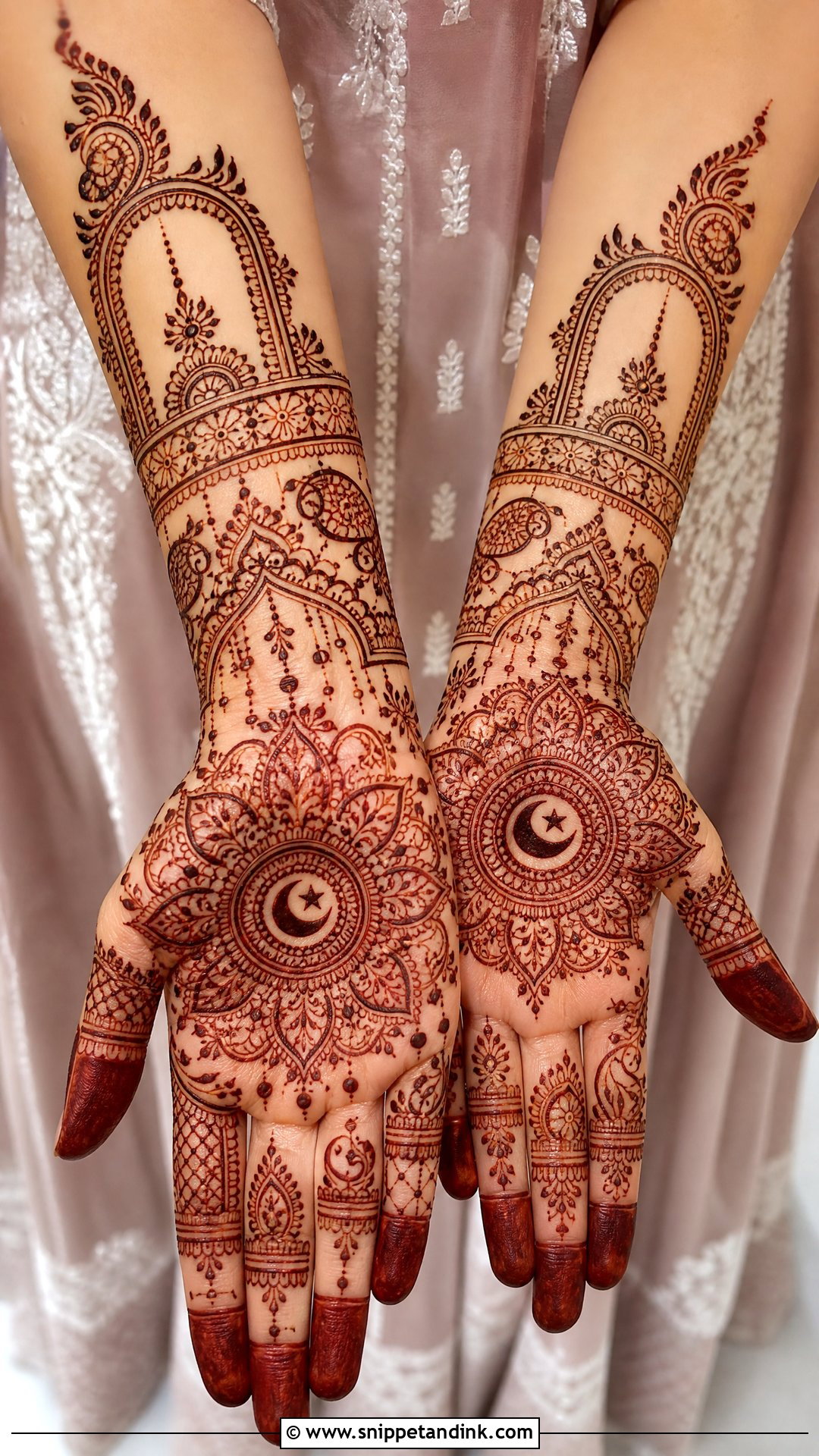
Pakistani Ramzan mehndi design combines detailed filling with florals, paisleys, mandalas and graceful wrist borders, and it can be medium or heavy. For the month, I’d lay out a palm mandala, paisley curves, finger grids and small moons near the wrist. It is richer than minimal henna and softer than bridal. Clear sections are what keep it elegant: I separate areas with fine borders instead of filling every gap, so the fine detail still reads when the stain darkens.
30. Quick Ramzan Mehndi Design
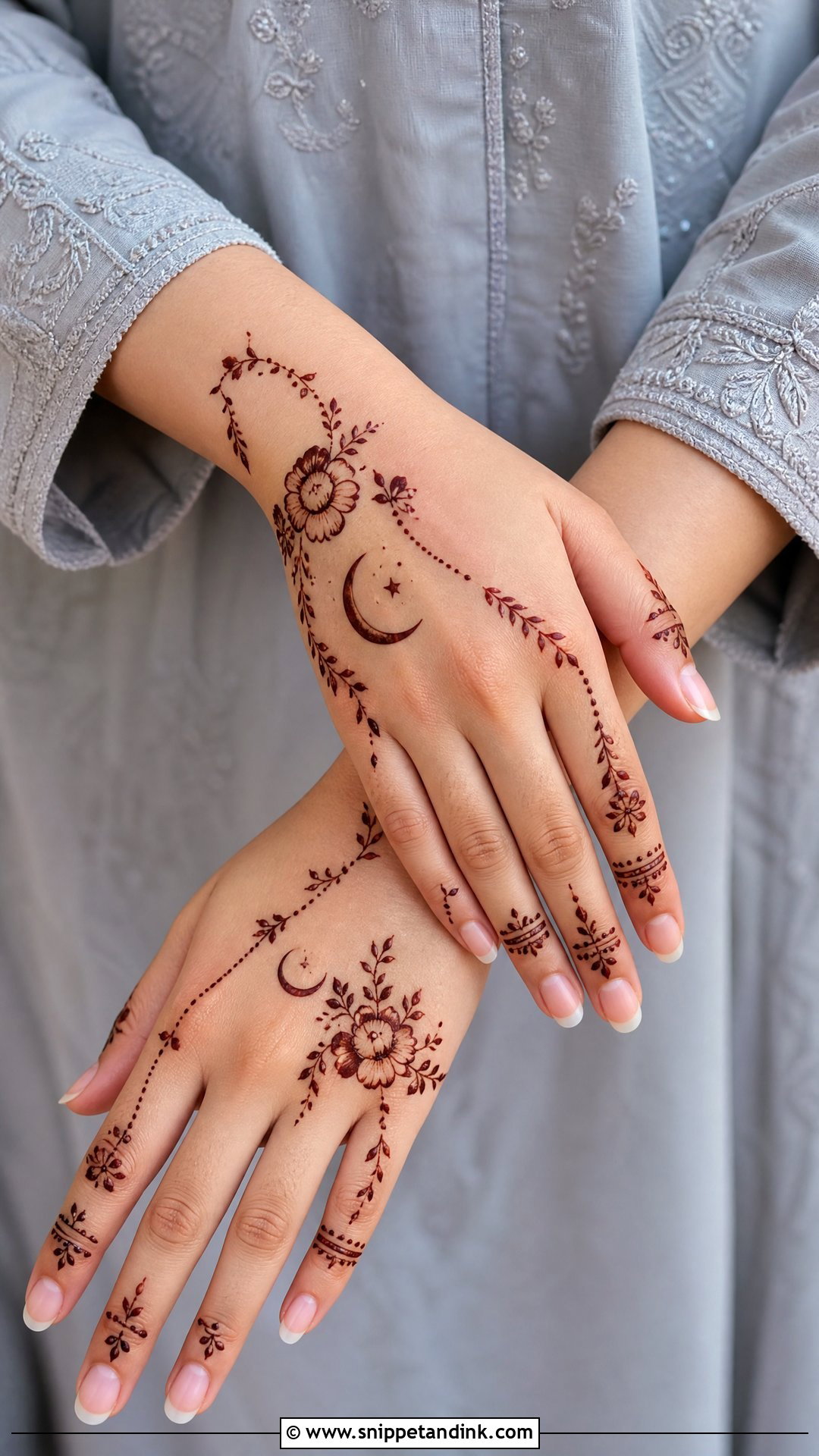
When time is short, one main motif does the work: a flower, a moon, a mandala or a bracelet cuff, then a few vines, dots and finger bands. Back hand designs go on faster because they need less filling than the palm, and fingers plus wrist alone make a clean modern look. Quick henna before iftar is fine, but remember the paste wants hours on the skin; do it right after the meal and you will have a better stain than one rushed in before sunset.
Mixing a Cone at Home That Actually Stains
A pale stain is usually a paste problem, not a skin problem. If you make your own, use fresh body-art-quality henna powder, sift it well and mix it with lemon juice or water, a spoon of sugar and a few drops of an essential oil suited to henna. Mix it to a toothpaste texture, cover it, and let it rest somewhere warm until the dye releases. That can take a few hours in hot weather and overnight in a cool kitchen. You can tell it is ready when a little dabbed on your palm leaves orange after a minute.
Thin the paste slightly before filling cones; it should flow in a smooth thread without breaking. Store extra filled cones in the freezer and thaw one at a time. Shop-bought cones are fine if the ingredients are listed and natural. Avoid any cone that promises black colour or an instant stain.
When the Colour Comes Out Pale Orange
Orange right after scraping is normal; it darkens over the next day or two. If it stays pale, the usual culprits are old powder, paste scraped off too early, water on the hands within the first hours, or cold hands. Keep the paste on for six hours or more, seal it with a dab of lemon and sugar once dry, and keep the hands warm afterwards. The backs of the hands and forearms will always stain lighter than palms; that is skin thickness, not your paste.
How Much Henna Each Night of the Month Calls For
Ramzan henna can be simple, detailed, modern, traditional or playful. A clean crescent, a neat Arabic trail, a soft mandala or a bracelet-style back hand can feel as festive as full coverage. I’d keep lighter designs for daily gatherings and save richer patterns for Chand Raat and Eid. Natural henna needs time to deepen, so apply early whenever you can, and give your paste the hours it needs before you scrape it away.
You'll Like These Ideas:




Leave a Reply