
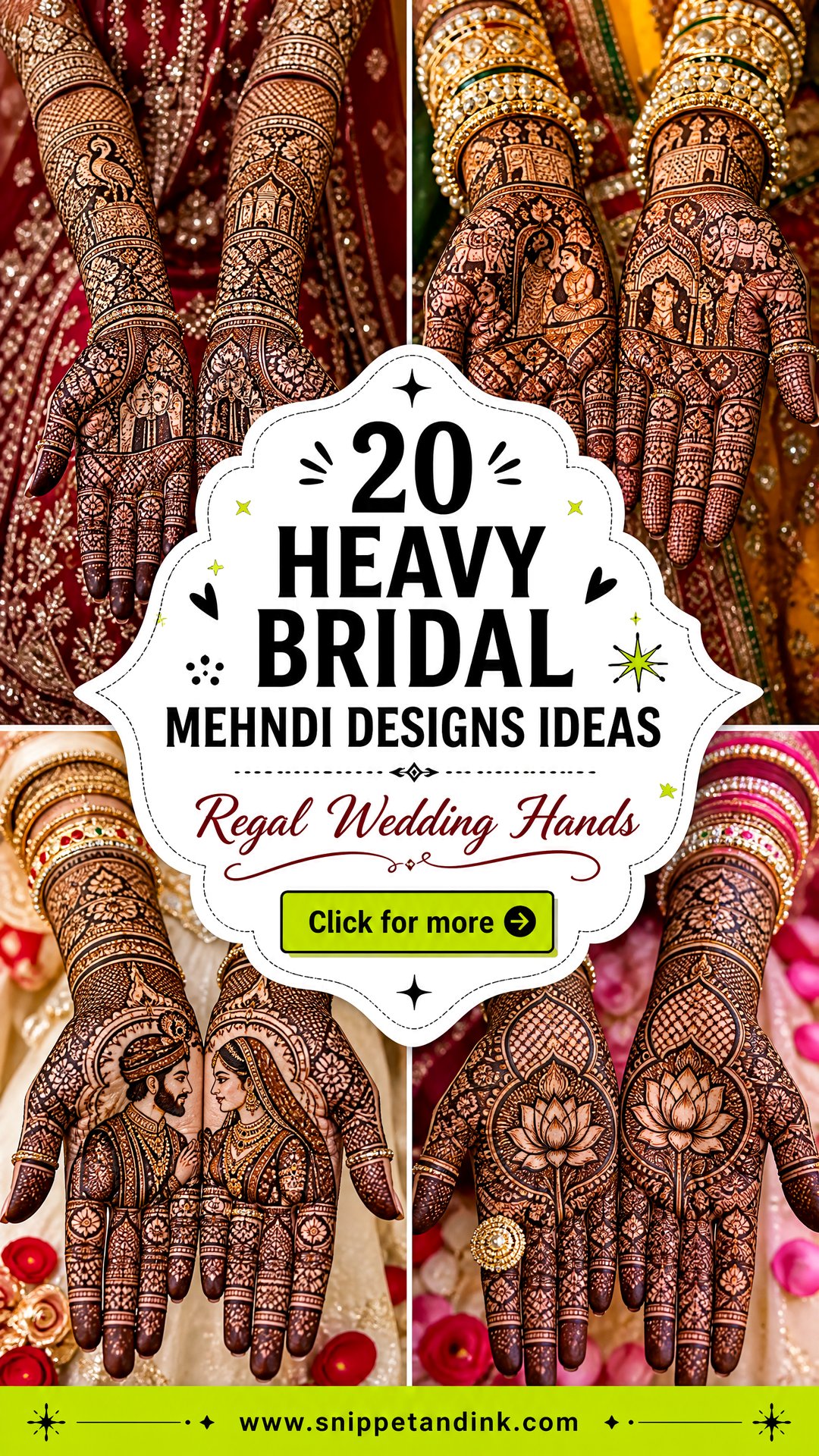
A heavy bridal design is the one where I’m still drawing long after the guests have started dancing at the mehndi night. It covers the hands from fingertips to forearms with dense florals, paisleys, jaali, mandalas, peacocks, dulha-dulhan figures, wedding symbols and sometimes hidden initials. Some brides want classic Indian full-hand filling; others lean toward Arabic spacing, an Indo-Arabic mix, Moroccan geometry or bold Gulf vines. Your outfit, jewellery and how much detail you want the camera to catch should guide the choice. Dense doesn’t have to mean muddled, as long as the layout is planned before the cone touches skin. These are the twenty layouts I’m asked for most, with what I watch for in each.
How Long a Full Bridal Sitting Really Takes
Heavy bridal mehndi on both hands and arms, plus feet, usually fills most of an afternoon or evening. Brides are often surprised by that. The timing on the calendar matters just as much, because henna doesn’t show its true colour on the day it’s applied.
- Schedule the application one or two days before the wedding. The stain keeps darkening for a day or two after the paste comes off, so it peaks right on time.
- Get waxing, threading, manicures and pedicures done first. Waxing over fresh henna strips the top layer of stained skin.
- Come with clean, dry hands and arms. Skip lotion, oil and sunscreen that day; they stop the dye from reaching the skin.
- Eat, use the bathroom and set up your phone before I start. Once both hands are covered, someone else will be feeding you for hours.
- Wear something loose with short sleeves that you don’t mind getting stained.
If you’ve never worn henna before, ask your artist for a small patch on the inner arm a few weeks ahead. It shows you how dark your skin takes the stain, and fresh natural paste should never sting.
1. Full Hand Heavy Bridal Mehndi Design
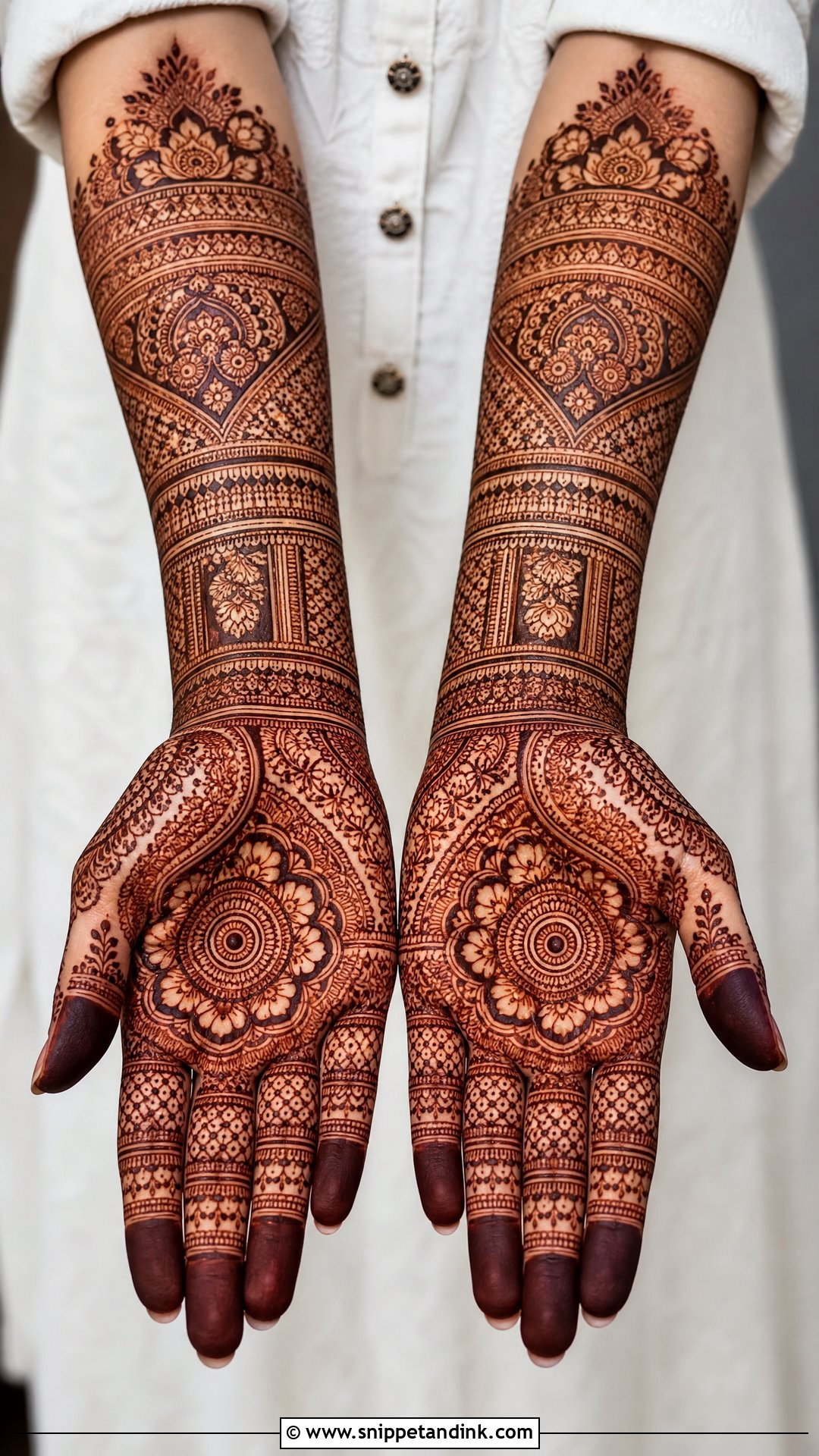
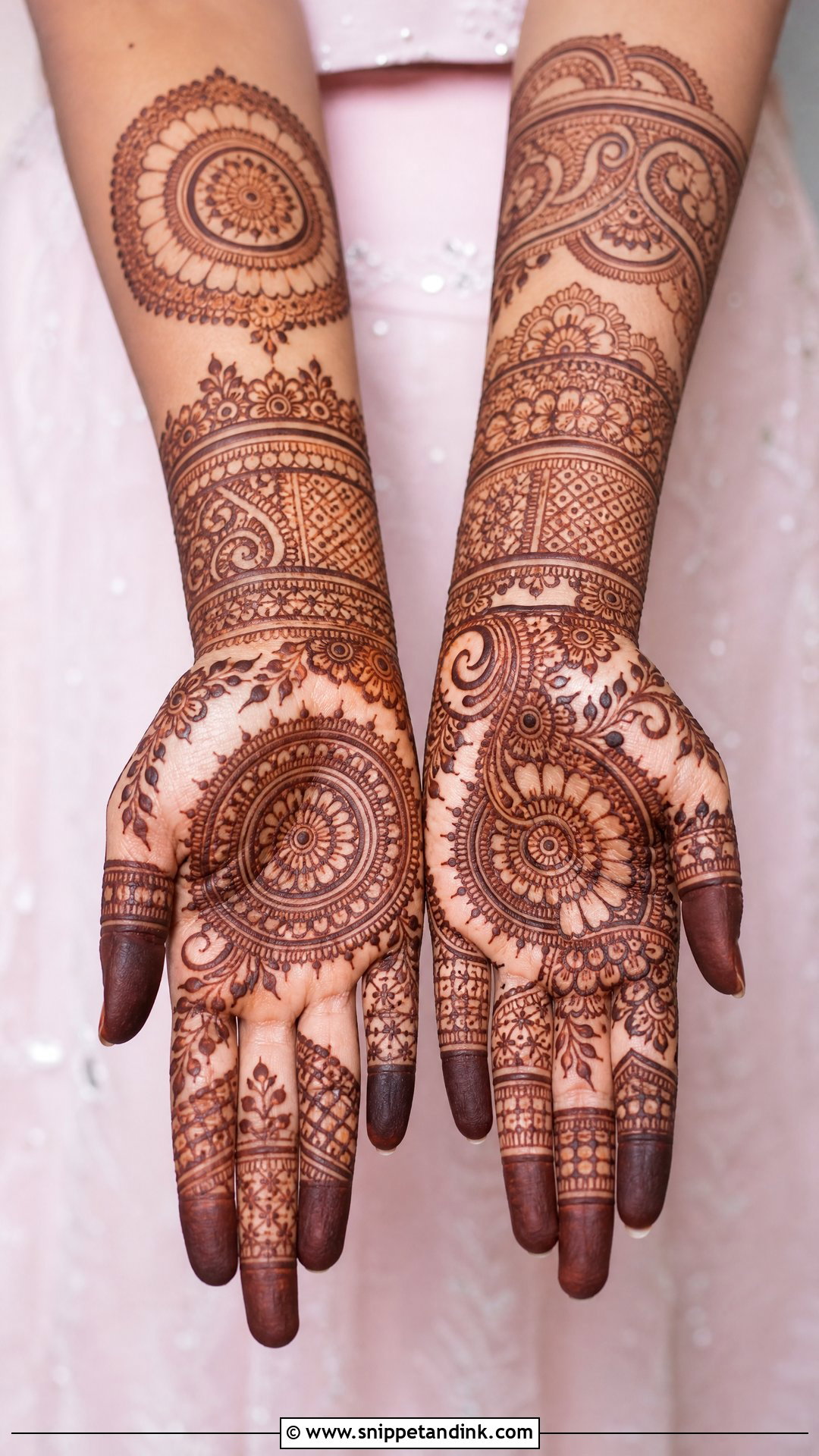
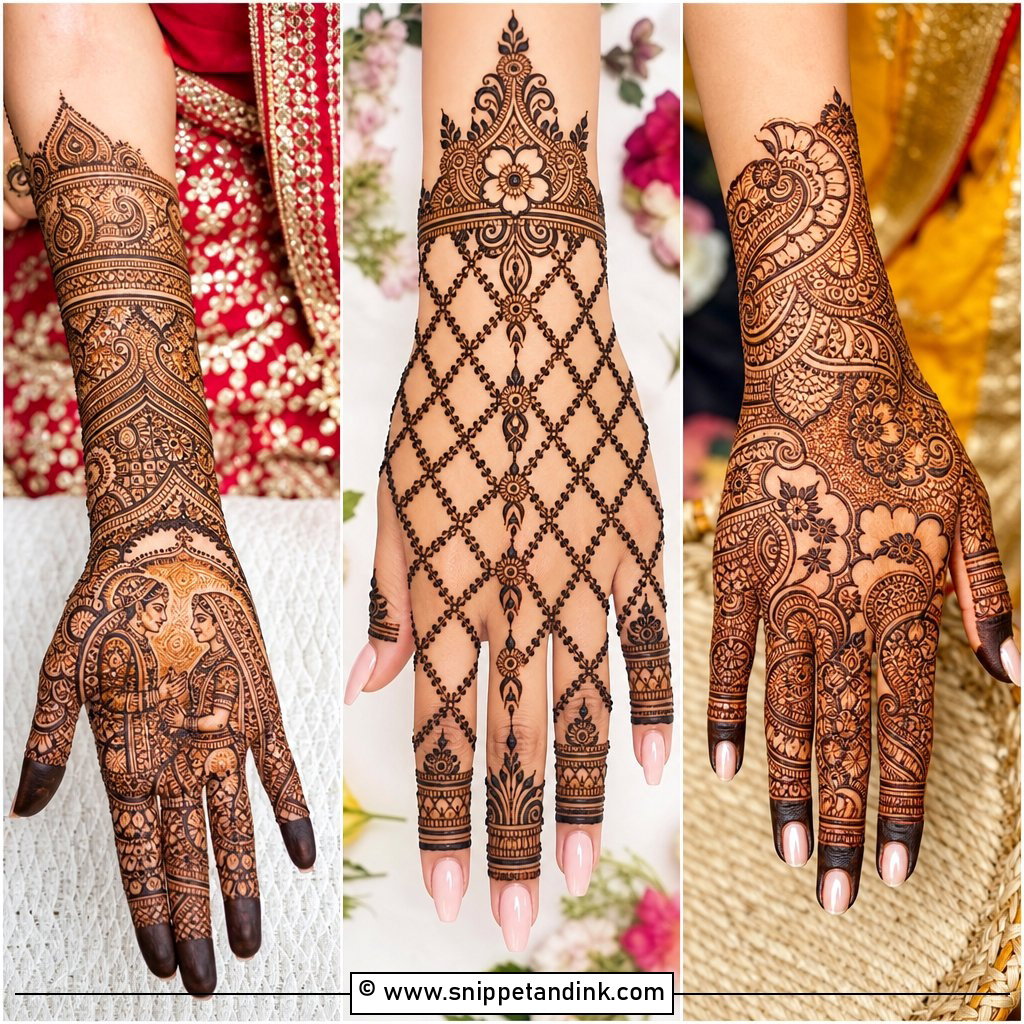
Every bit of the hand is covered: fingertips first, then a palm of mandalas, paisleys, flowers and fine mesh, then layered bands to the wrist and up the forearm. It looks complete because each motif still has a defined place. When I map a full hand, I draw the main palm motif first on both hands before filling anything, so the two sides match when you hold them together at the ring ceremony. A deep maroon stain sets it off against gold, red, ivory or pastel outfits.
2. Indian Heavy Bridal Mehndi Design
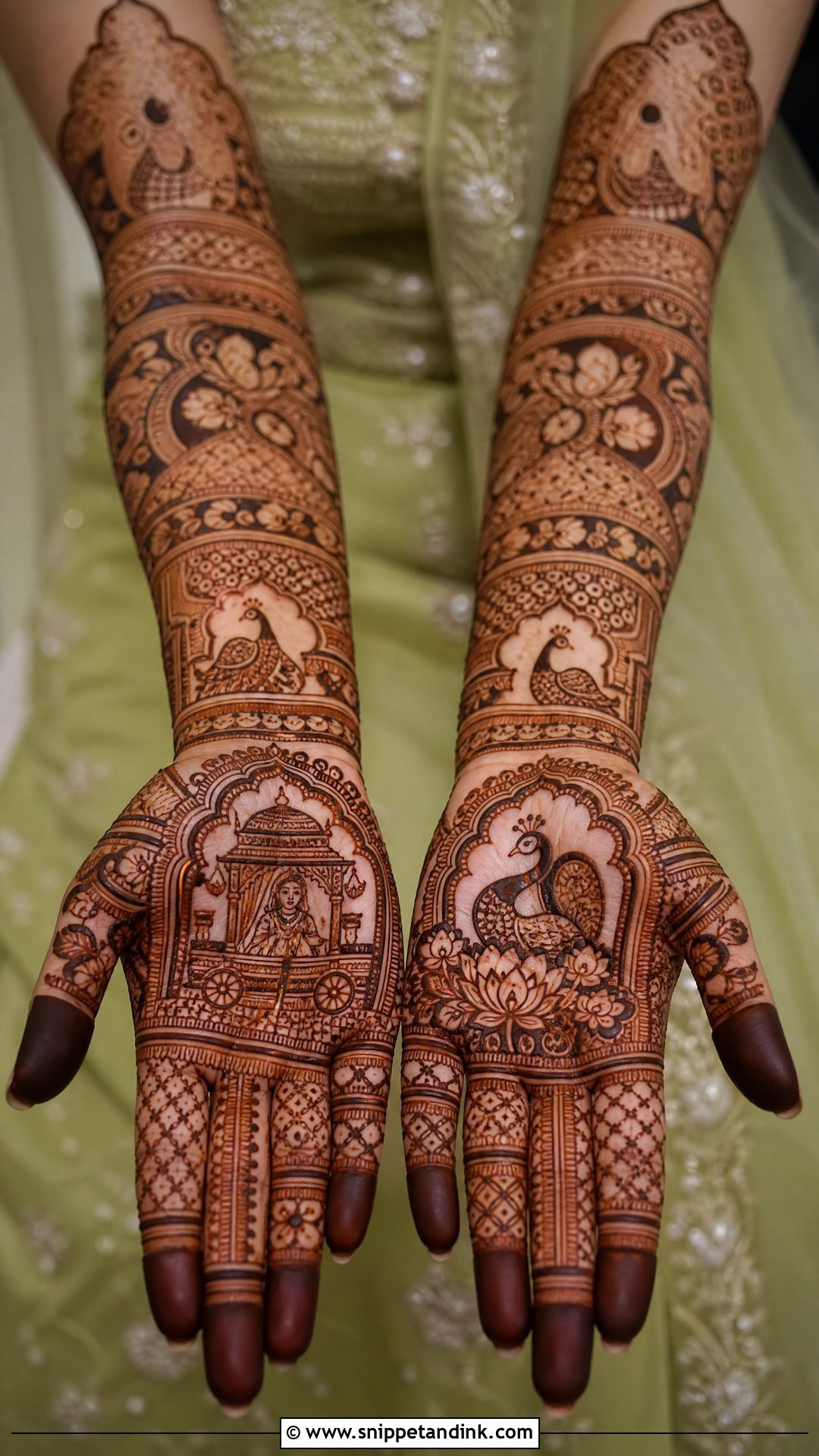
Classic Indian bridal work tells stories. Palms carry peacocks, paisleys, lotuses, bride and groom figures, kalash motifs, doli scenes and tiny checks; fingers are packed with fine lines and leafy borders so no skin is left bare. It suits the traditional dulhan look and heavily embroidered lehengas or sarees. The risk is that so much fine work blurs into one dark patch once the stain deepens. I keep the central palm motif bold and let everything around it get smaller and finer, which gives the eye somewhere to land.
3. Arabic Heavy Bridal Mehndi Design
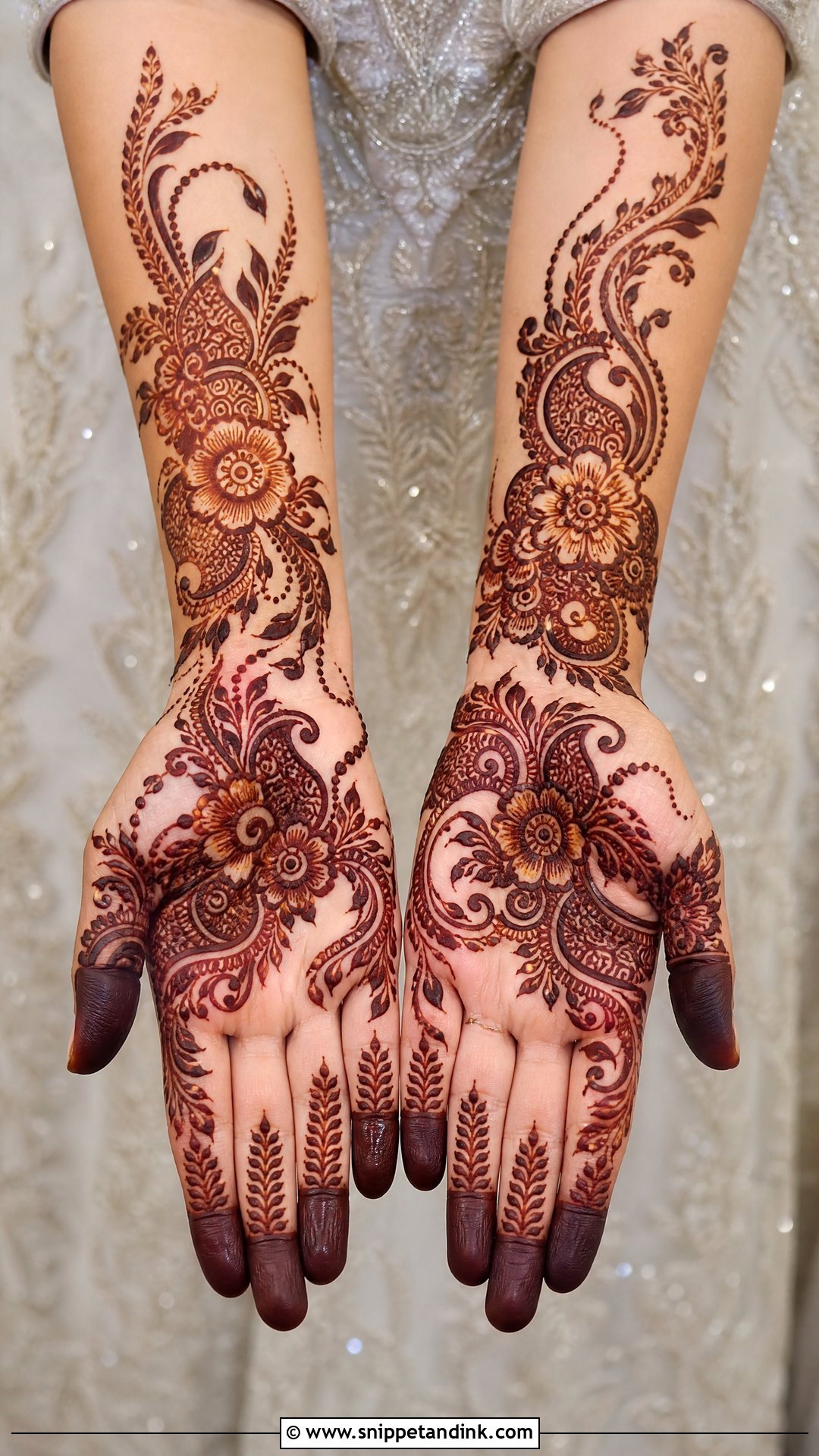
Arabic work leaves deliberate gaps. Large flowers, flowing vines, shaded leaves and paisley trails sit on open skin, so the pattern breathes. For a bridal version I carry it over the full palm and up the forearm with thicker outlines and filled fingertips. Shading in Arabic designs is done by thinning the paste at the edge of a petal; it stains lighter there, which is where the depth comes from. Every motif stays easy to read in photos, and it suits statement rings, bangles and outfits with floral embroidery.
4. Indo Arabic Heavy Bridal Mehndi Design
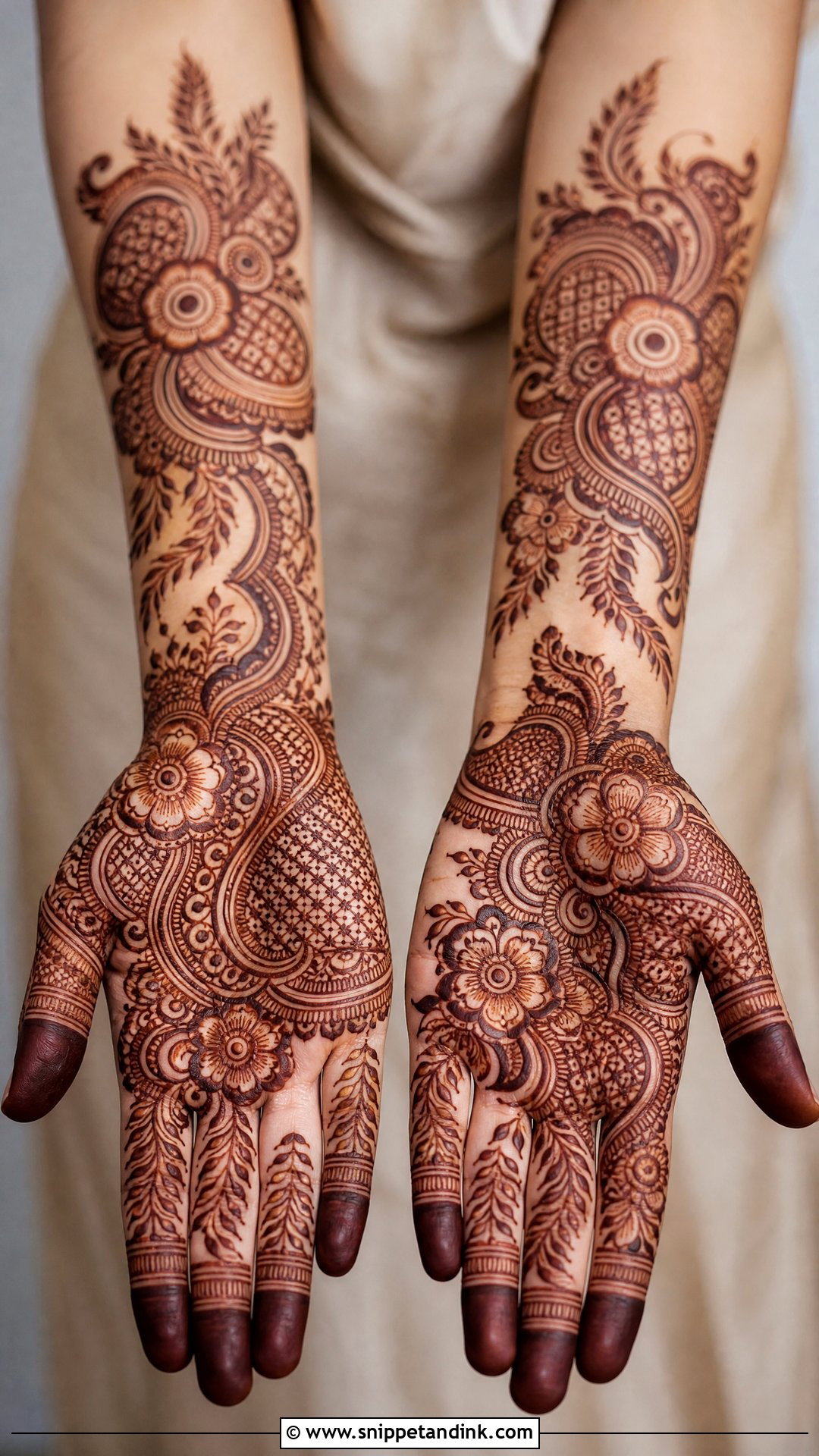
Indo-Arabic takes the bold flowers and flowing direction of Arabic work and adds the fine filling and bands of Indian bridal mehndi. A typical layout: a floral trail across the palm, jaali sections around it, shaded paisleys near the wrist and filled fingers. It’s what I suggest to brides who want heavy coverage but worry about looking overdone, because there is still some skin showing between the motifs. Those gaps also keep the design legible in wide photos taken from across the mandap.
5. Rajasthani Heavy Bridal Mehndi Design
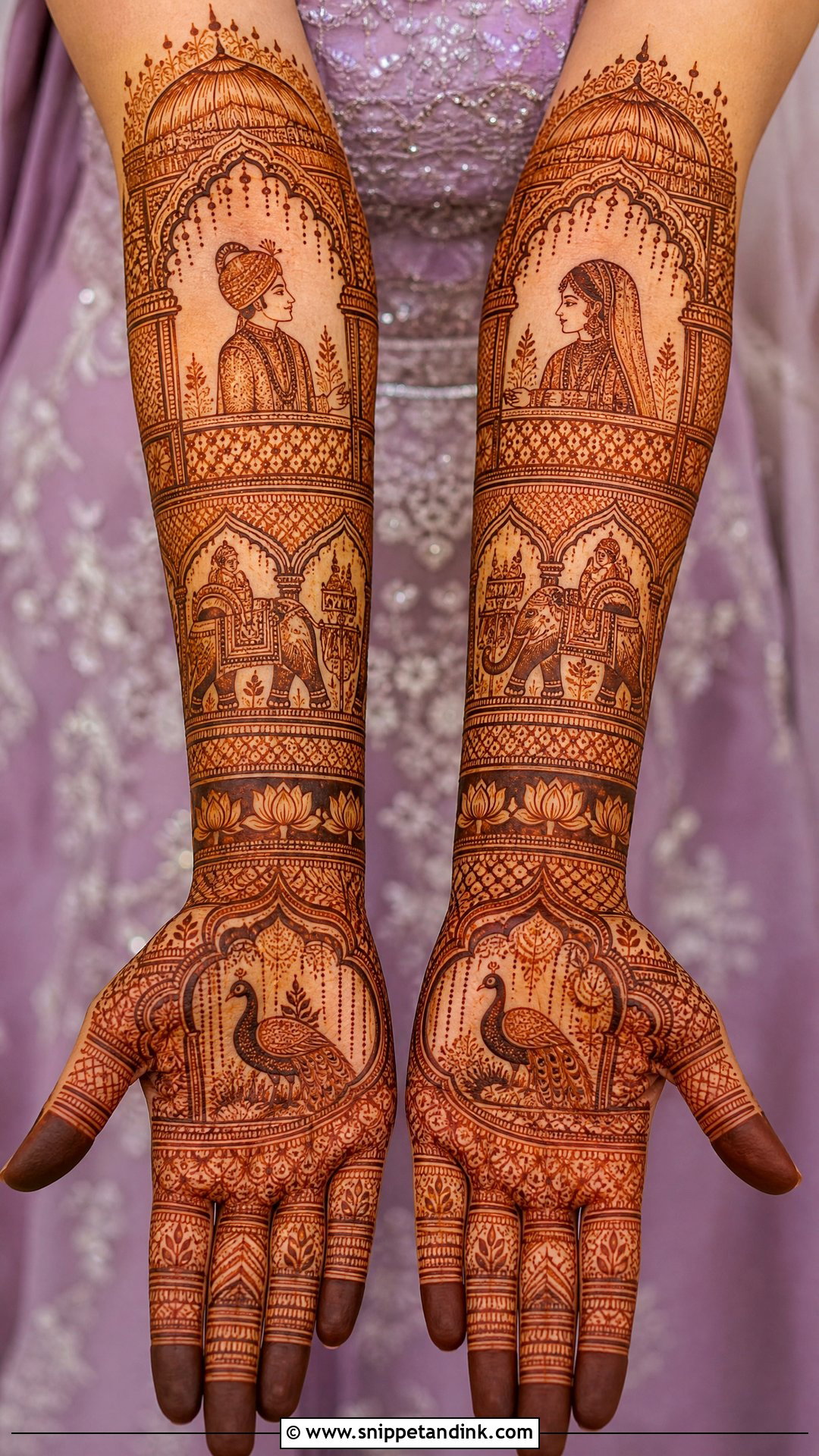
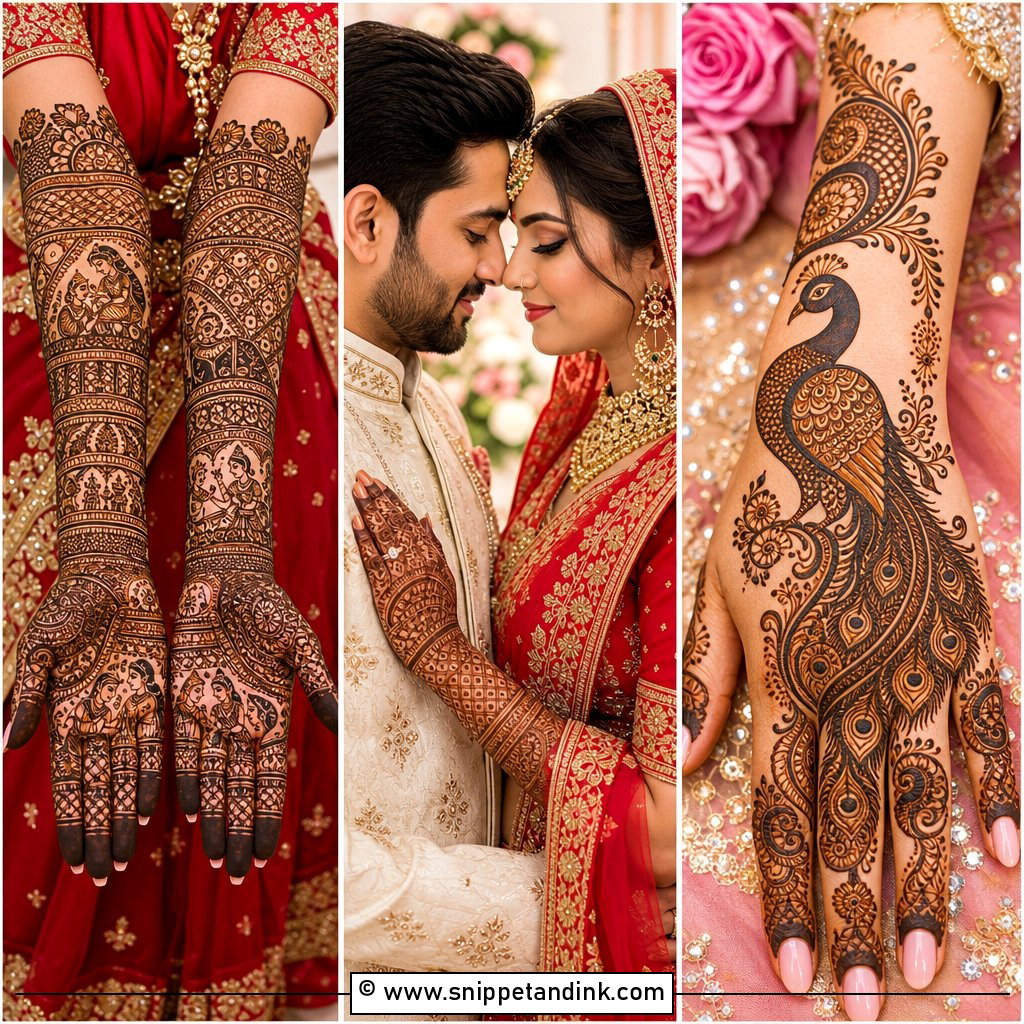
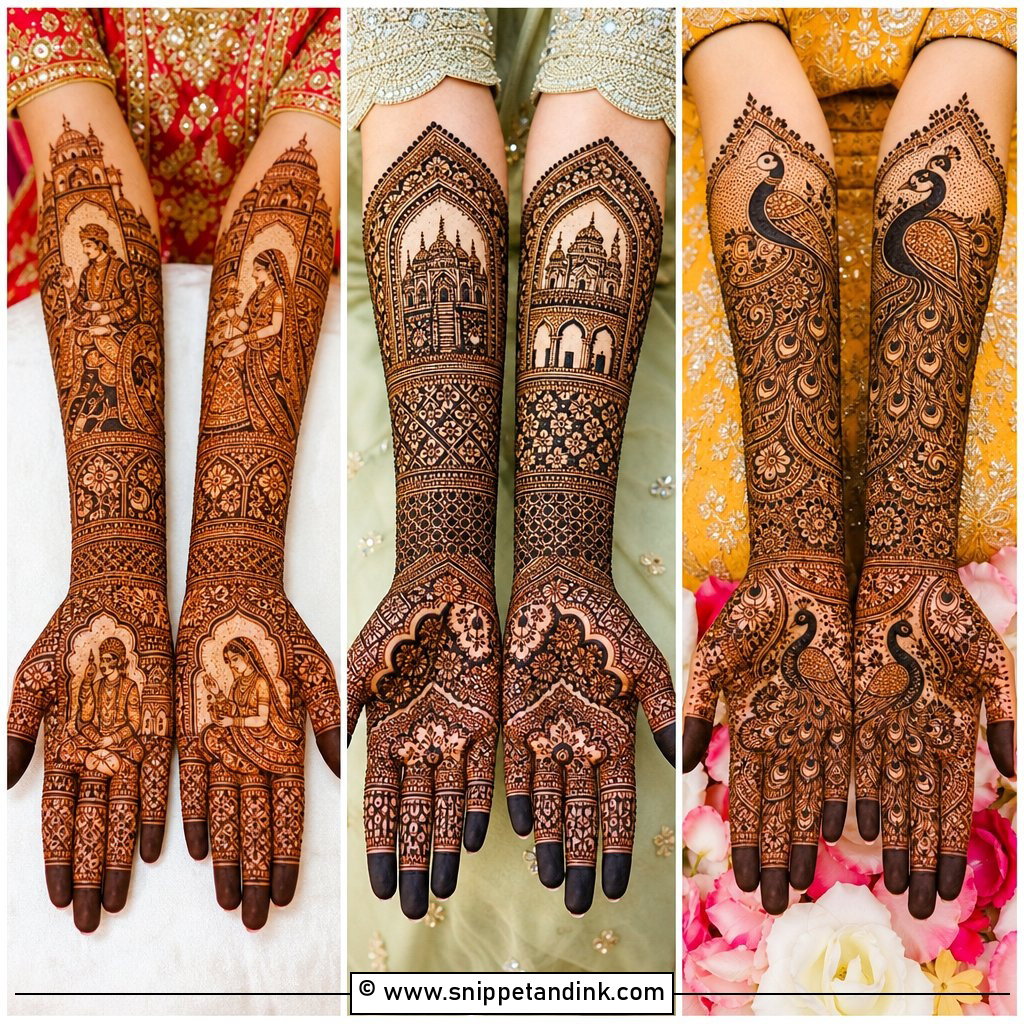
Rajasthani mehndi is the most narrative style I draw: bride and groom portraits, palace windows, elephants, peacocks, lotuses, doli scenes and tiny traditional fillers. It can run from fingertips to mid-forearm, or above the elbow for a grand wedding. It takes much longer than other styles, so I book these brides for a long sitting and tell them to eat first. Clean space around each main figure keeps it from getting lost in the filler. Kundan jewellery, a red lehenga and heritage outfits all suit it very well.
6. Dulha Dulhan Heavy Bridal Mehndi Design
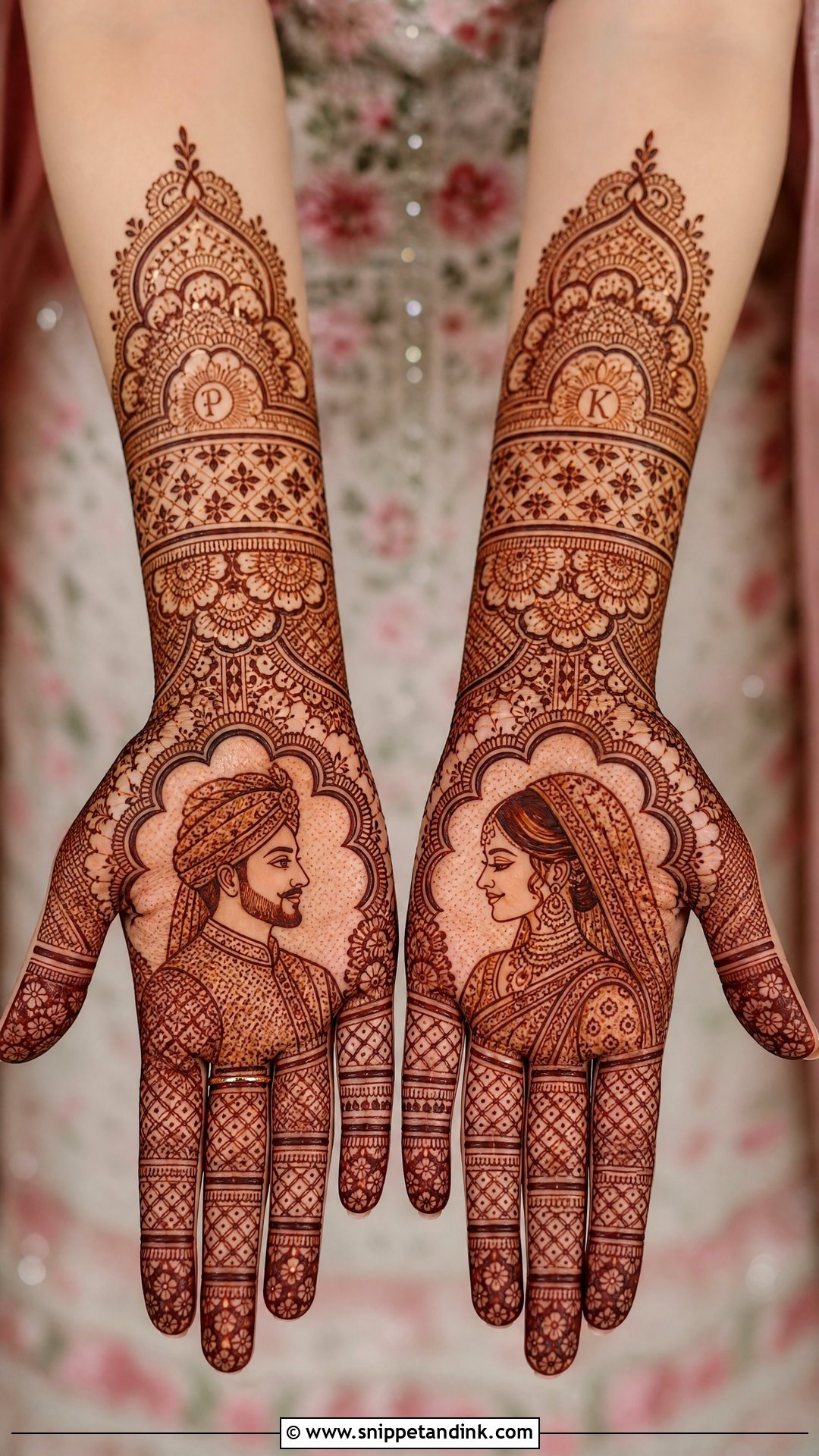
Dulha dulhan designs put the bride on one palm and the groom on the other, surrounded by mandalas, flowers, paisleys, jaali and wedding symbols. Many brides add the date, initials or a hidden name for the groom to find. Faces are the hardest thing to draw in henna, because a line that’s too thick fills in as the stain darkens and the expression disappears. Ask to see photos of an artist’s finished stains, not just fresh paste, before you book. Keep the fingers and forearms heavily worked so the portraits sit inside a full bridal frame.
7. Peacock Heavy Bridal Mehndi Design
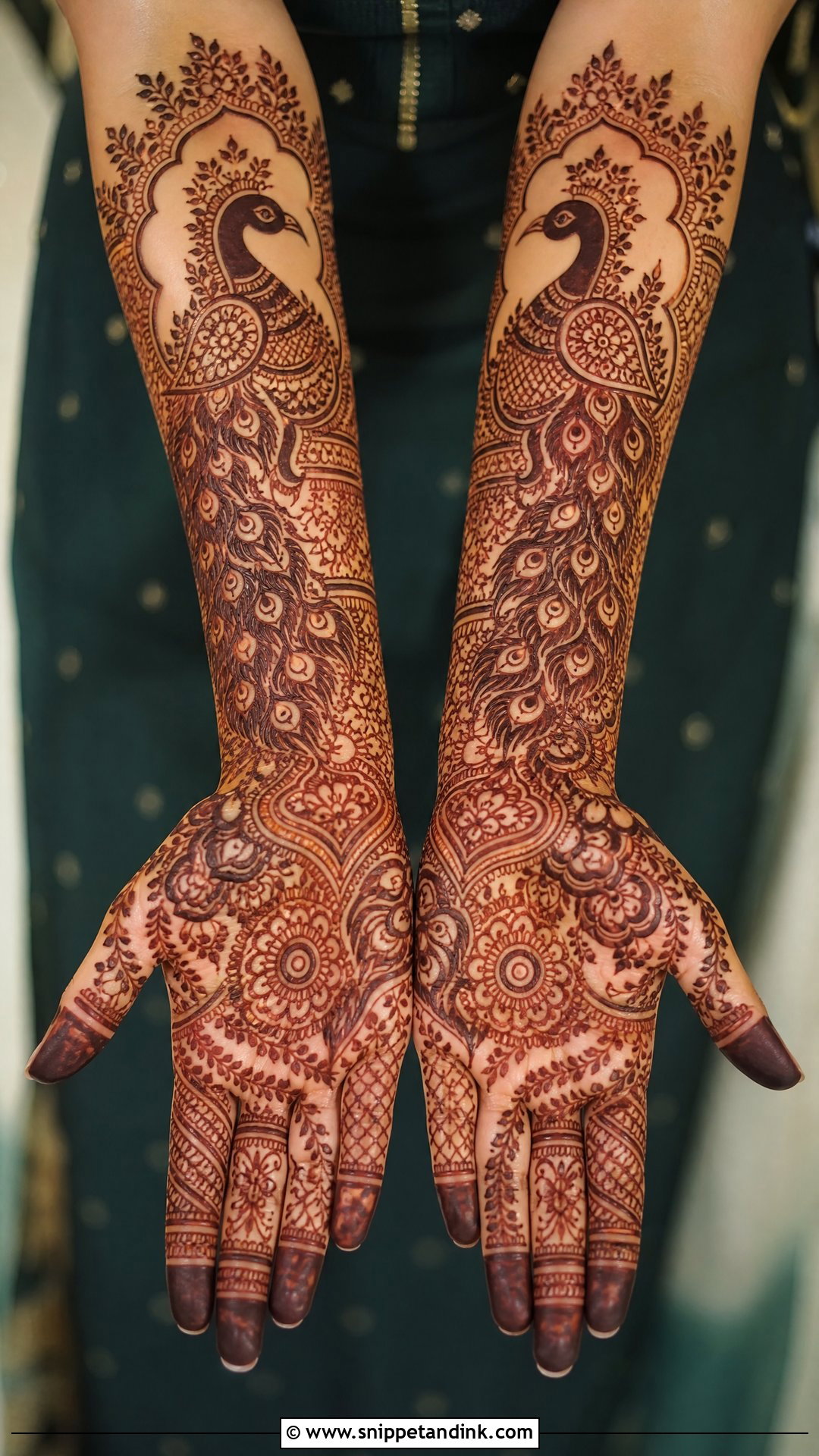
A peacock can sit in the centre of the palm, curve along the wrist or stretch its feathers up the forearm. Paisleys, vines, mandalas, flowers, dots and fine mesh fill in around it. I draw the body bold and solid, then keep the feathers light and patterned; if both are dense, the bird disappears. The long tail is a useful shape, since it can link the palm to the arm without an awkward band. It’s classic and still catches the eye, and the stain looks rich next to green, gold, maroon or royal blue.
8. Mandala Heavy Bridal Mehndi Design
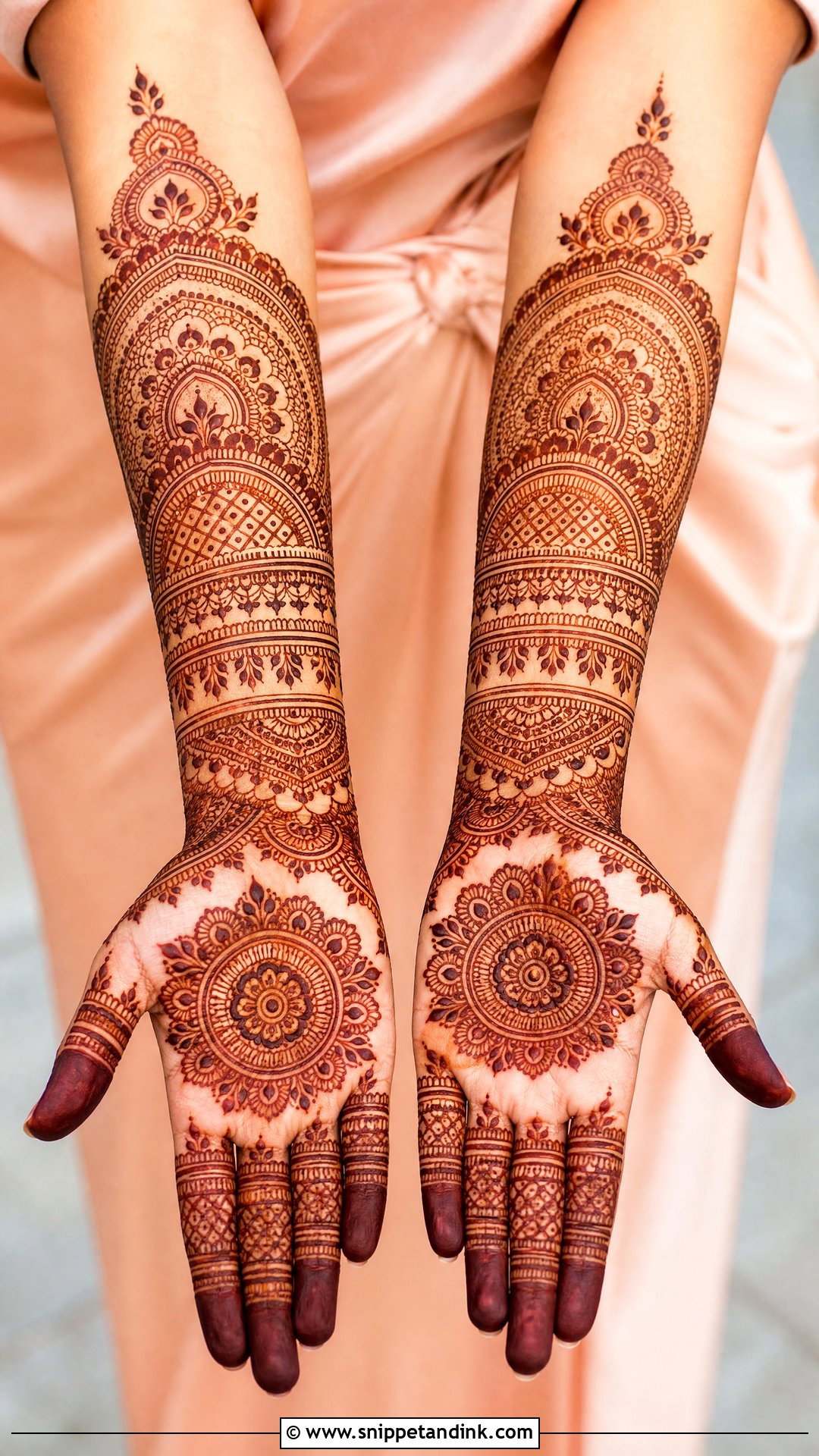
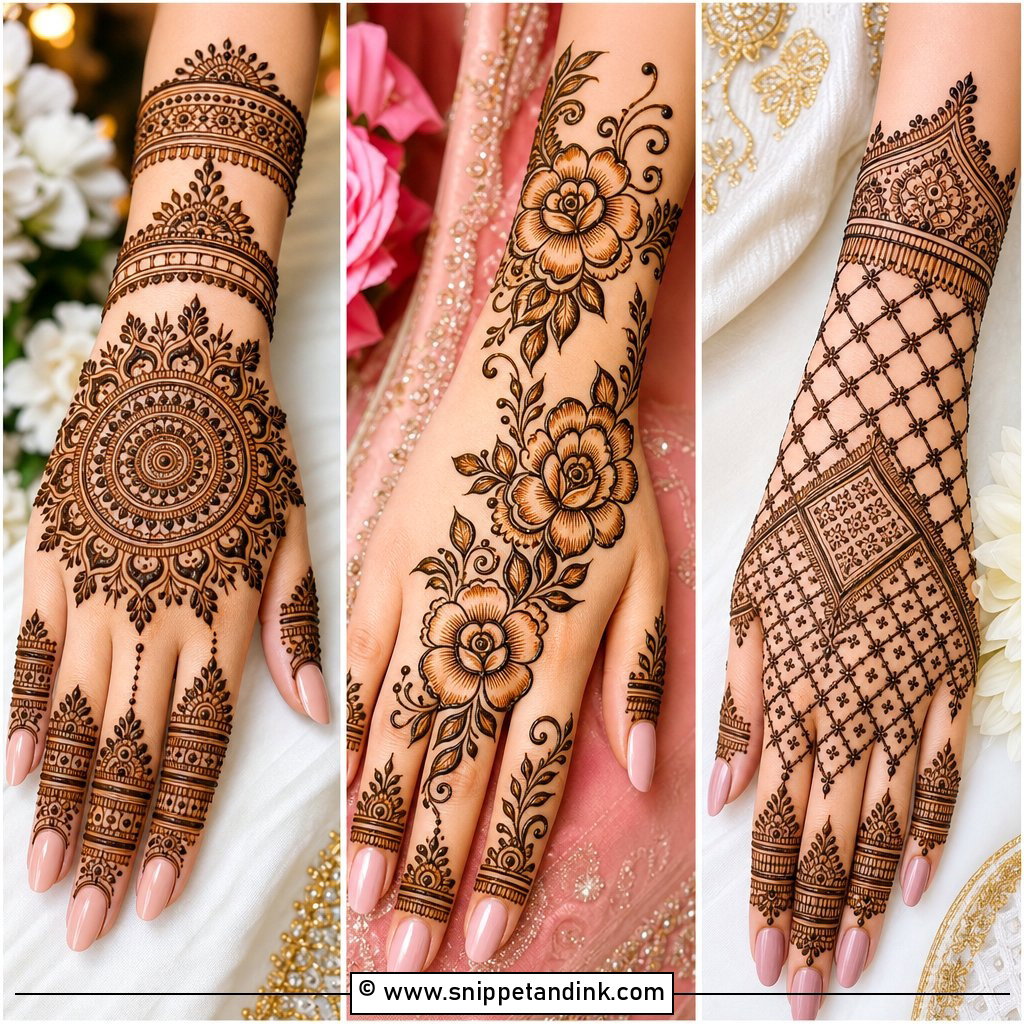
Mandalas suit brides who like symmetry. A large round motif fills the palm, ringed with petals, dots, paisleys and fine filler, then linked to filled fingers, wrist cuffs and forearm bands for full coverage. The centre has to be truly round, and that is harder on a curved palm than it looks, so I check it with the hand slightly cupped, the way it will be held in photos. If your outfit is already heavily embroidered, a mandala keeps your hands orderly instead of competing.
9. Jaali Heavy Bridal Mehndi Design
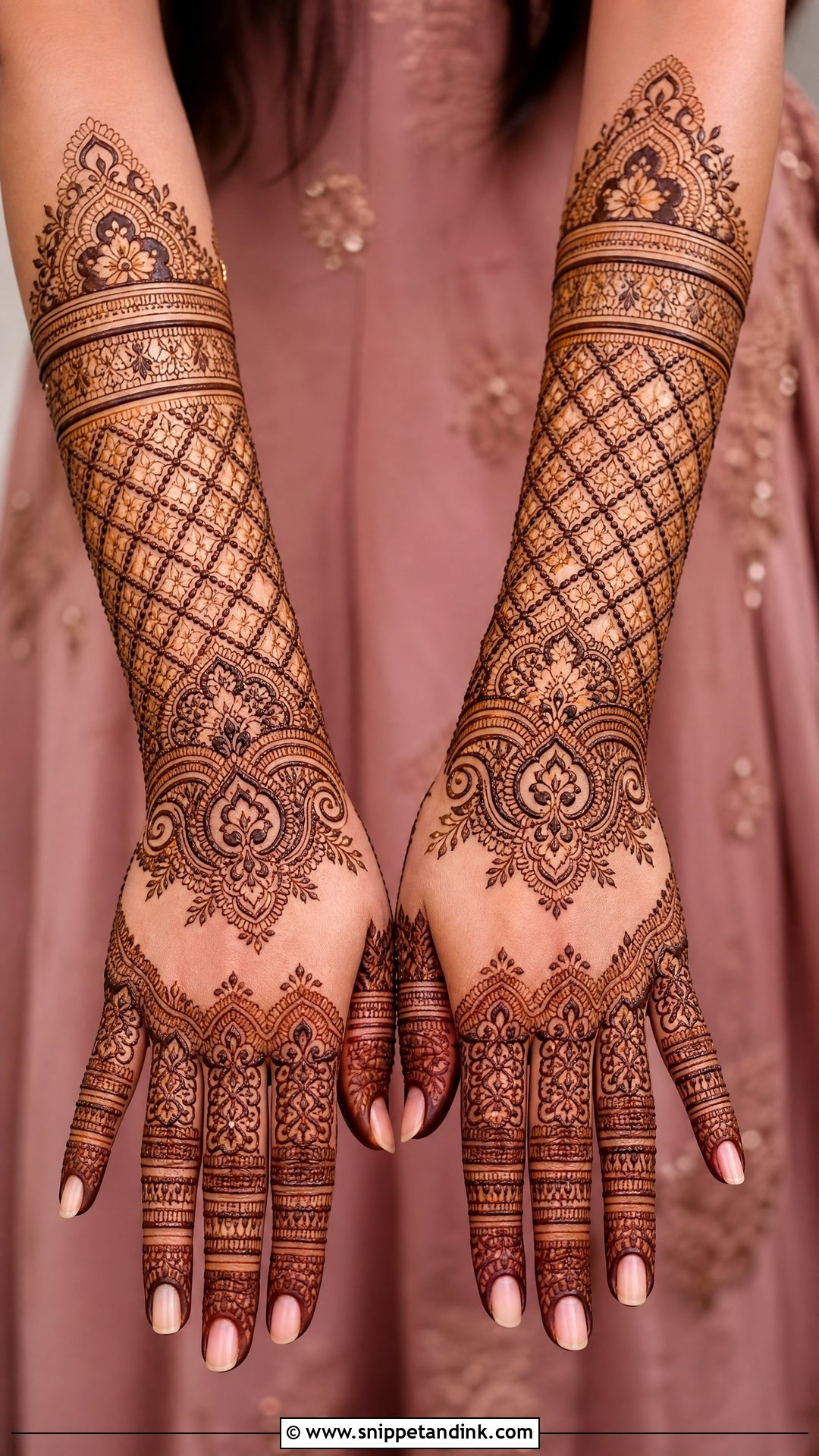
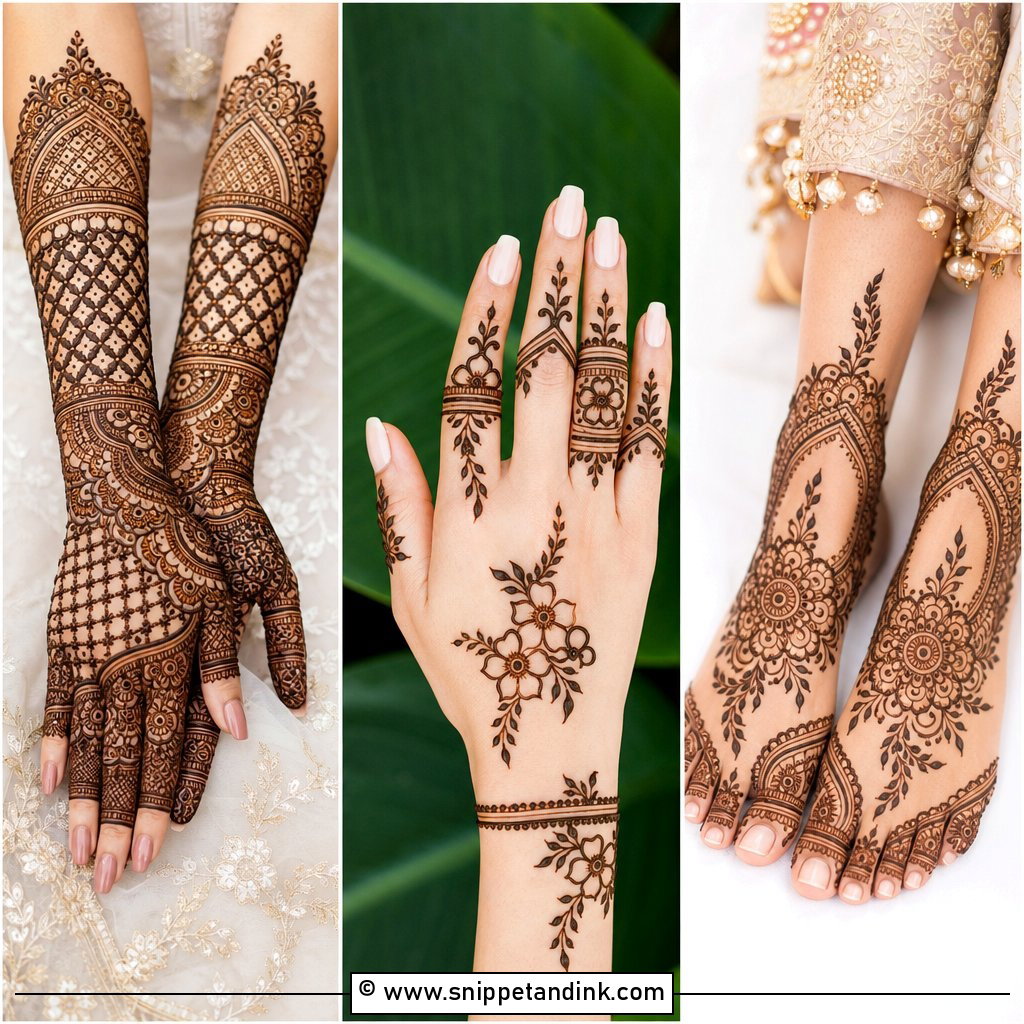
Jaali is net work: small squares, diamonds or lattice lines that look like a piece of jewellery laid over the skin. It can cover the palm, back of the hand, wrist or forearm, framed by flowers, paisleys and vines. Very fine lattice tends to merge where the skin creases, especially on the palm, so I space the lines slightly wider in those areas. Mix it with bold motifs or it reads flat. Stacked bangles, haath phool and mirror-work or geometric embroidery all go well with it.
10. Lotus Heavy Bridal Mehndi Design
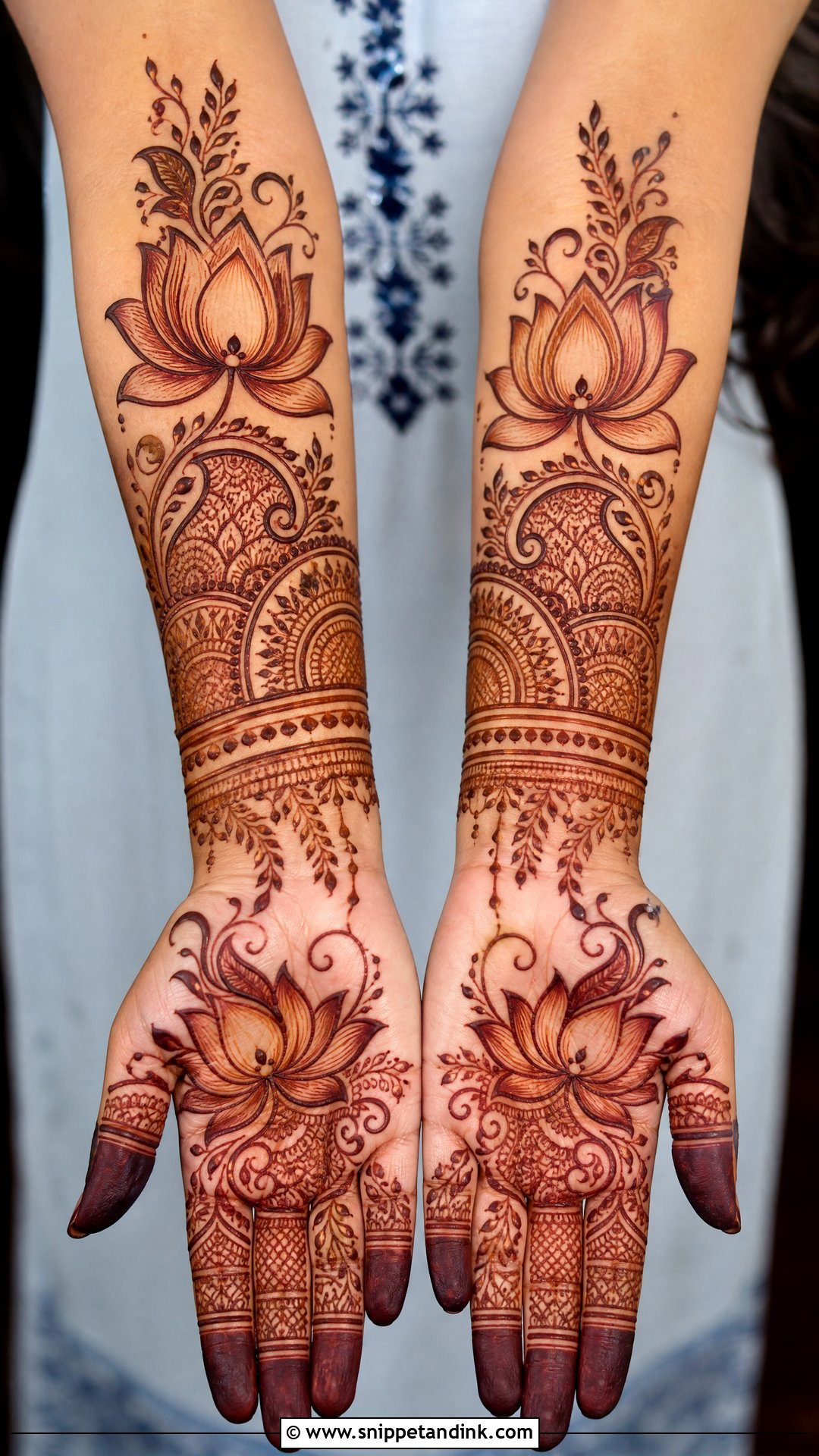
The lotus keeps its shape even in dense work, which is why I like it as an anchor. It can be a big palm motif, a wrist band or a repeating flower up the arm, surrounded by shaded petals, vines, paisleys, mandalas and dotted borders. I outline the petals with a slightly thicker line than the filler around them, so the flower still reads clearly after the stain has deepened. Smaller patterns around it give depth. It suits a bride who wants florals with meaning rather than pure decoration.
11. Paisley Heavy Bridal Mehndi Design
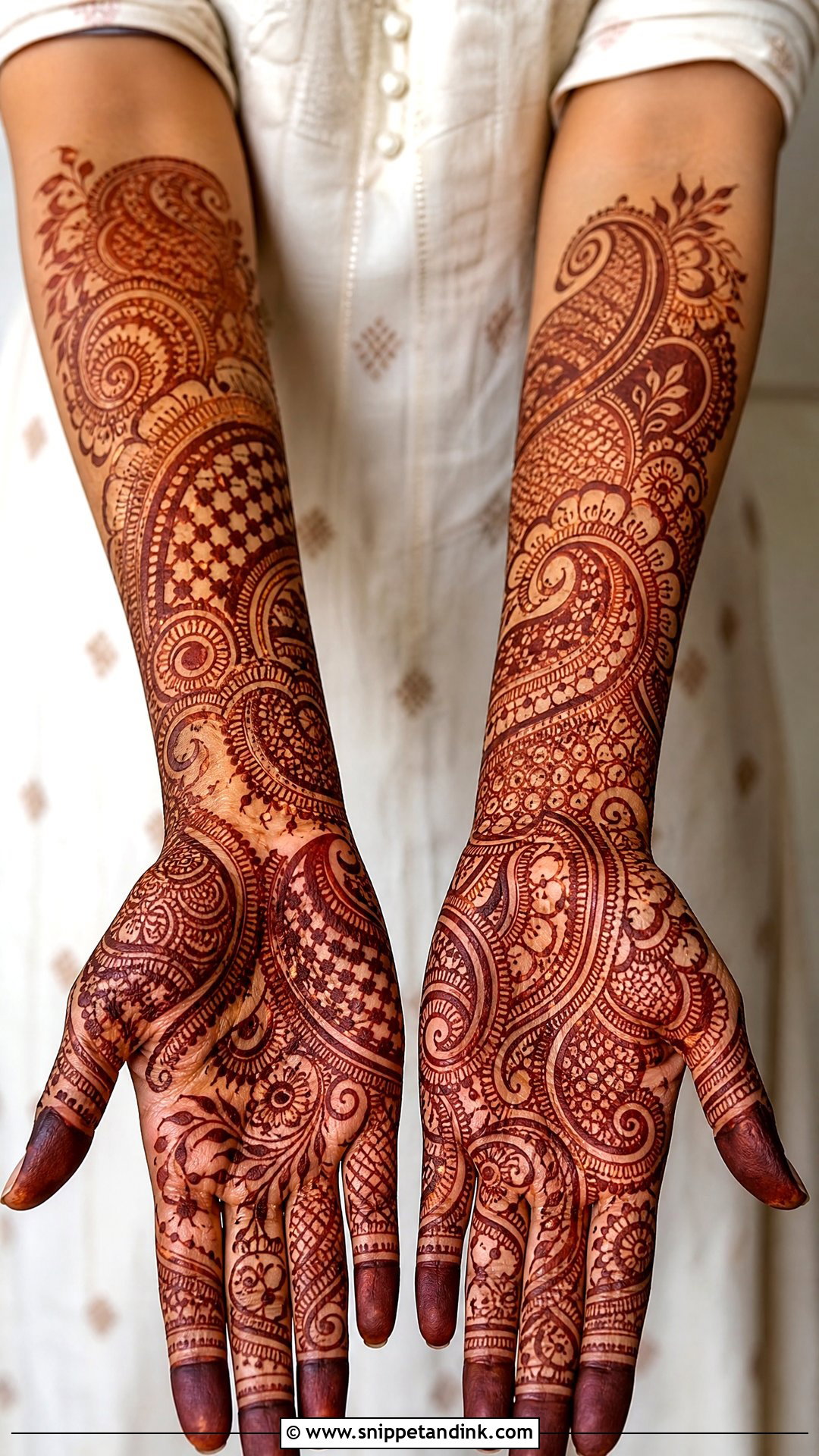
Paisleys follow the natural curve of the hand and wrist, so they fill space without fighting the shape. Large ones can flow from the fingers through the palm toward the forearm; smaller paisleys, leaves, dots, flowers and checkered fillers make it fuller. If you’d rather not have portraits, this is the traditional route. The common problem is monotony, so I vary the sizes deliberately, big, medium, small, to give the design a rhythm instead of a stamped look.
12. Floral Heavy Bridal Mehndi Design
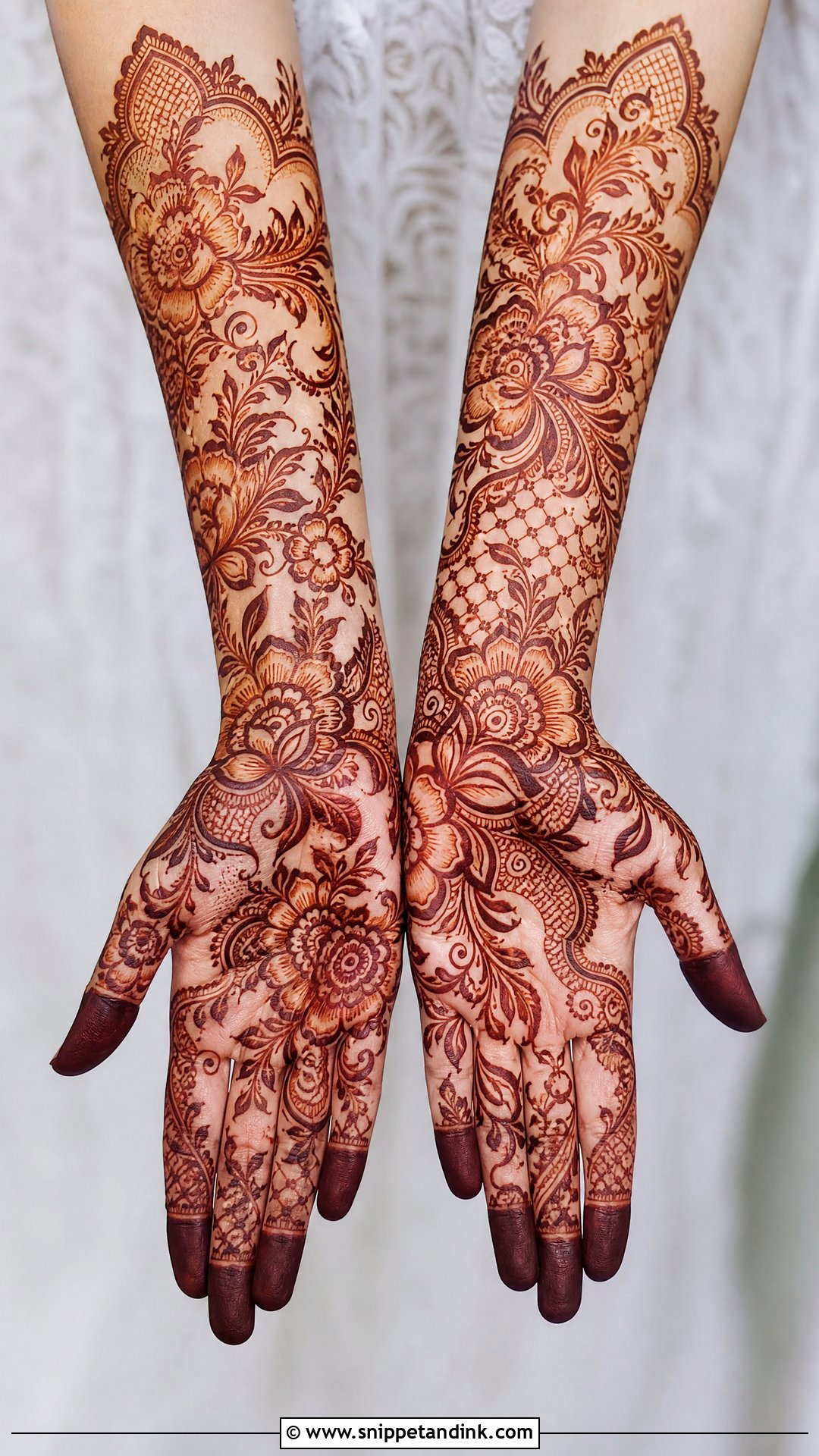
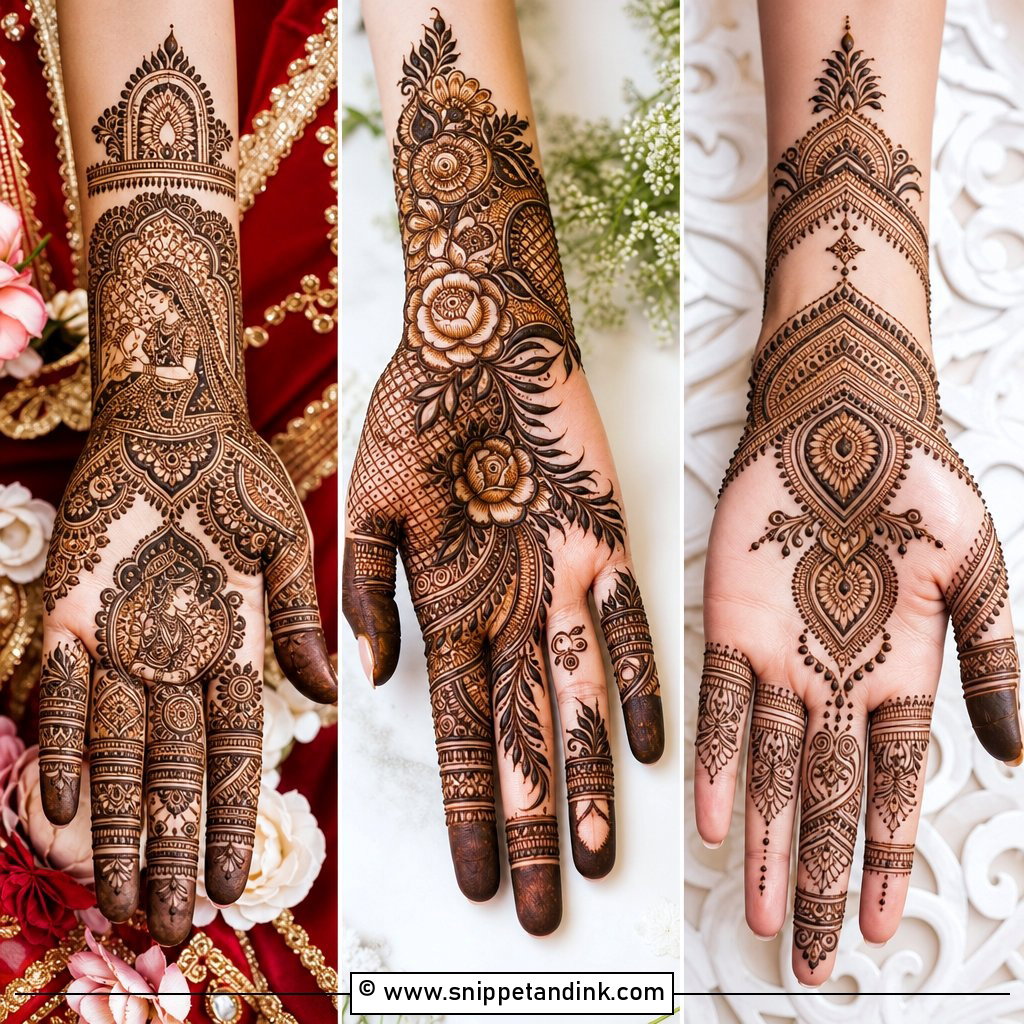
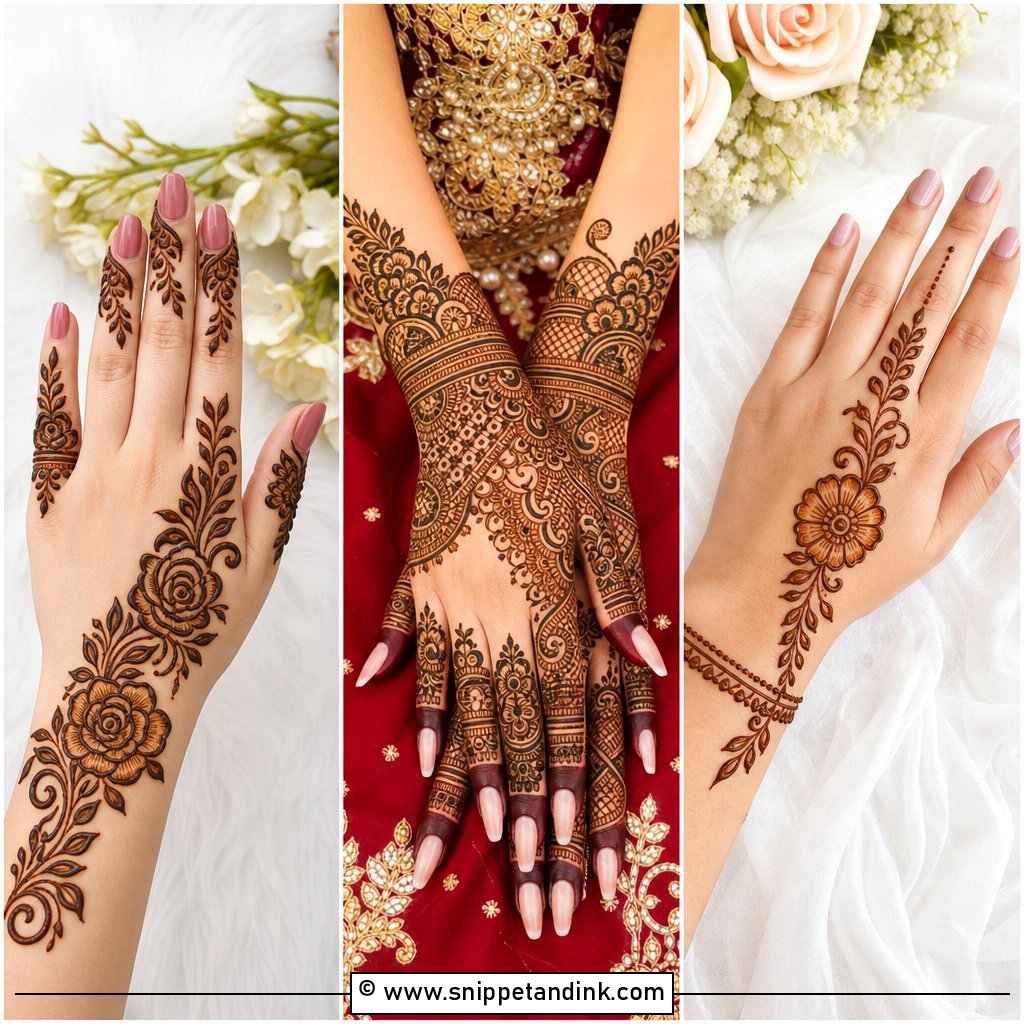
A floral bridal design covers the hand with layered blooms, vines, shaded petals and bands from wrist to forearm. The flowers can run in a diagonal trail, a circular palm layout or a full-hand spread, and a heavier version adds filled fingertips, lace-like mesh and bold outlines. I usually ask brides to send a photo of their lehenga embroidery, because pulling one flower shape from the outfit into the mehndi ties the whole look together. Pastel, blush, ivory and floral lehengas pair especially well.
13. Moroccan Heavy Bridal Mehndi Design
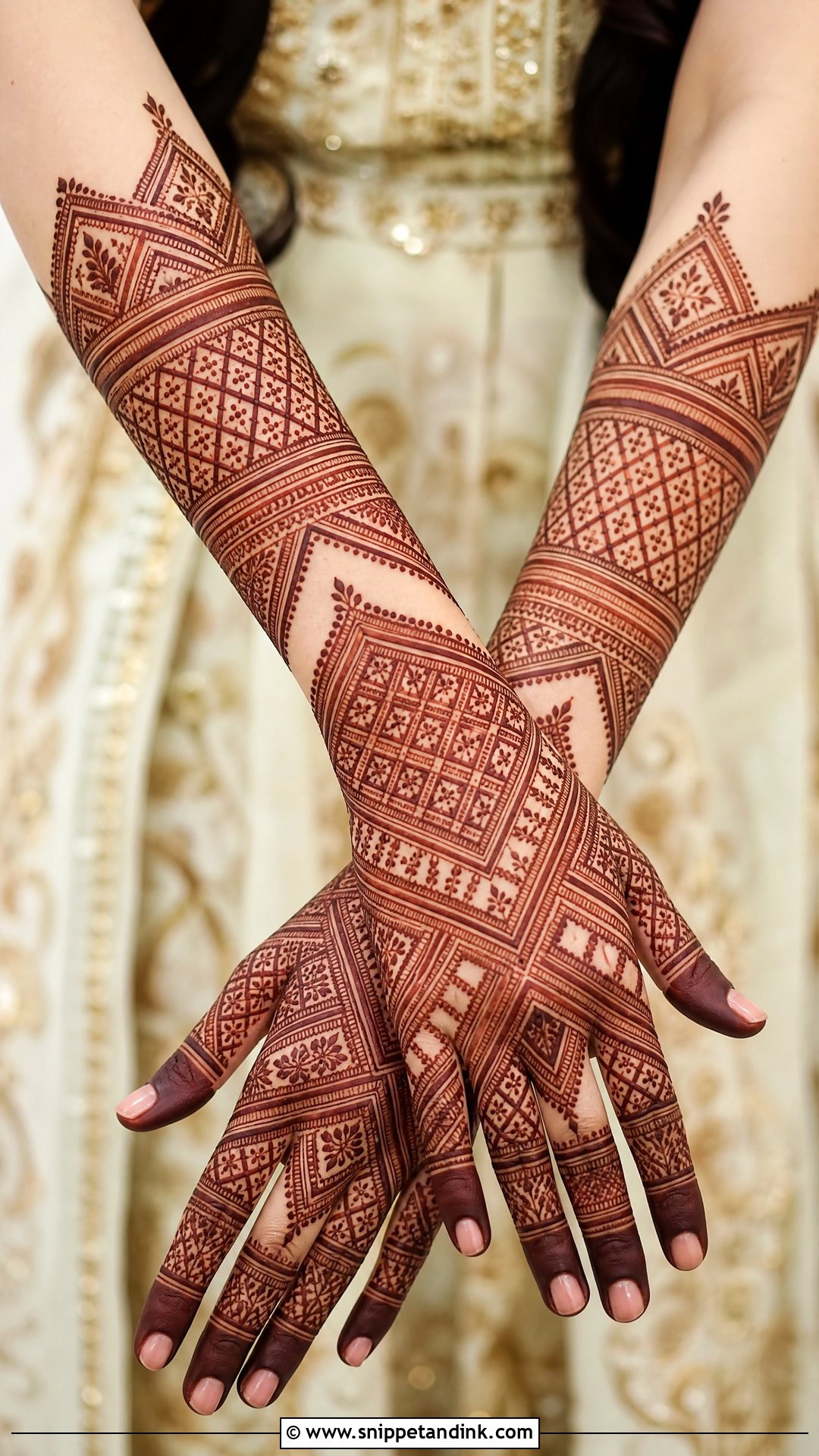
Moroccan work trades curves for structure: diamonds, triangles, straight lines, grids and sharp geometric bands repeated across the palm, fingers, wrist and forearm. It reads modern and artistic, and clearly different from Indian or Arabic patterns. Precision is the whole job. Henna lines wobble if the cone pressure changes mid-stroke, so I pull long straight lines in one steady motion and break panels into short sections I can control. A few small flowers or dots soften it. Contemporary lehengas, fusion outfits and metallic jewellery suit it.
14. Gulf Heavy Bridal Mehndi Design
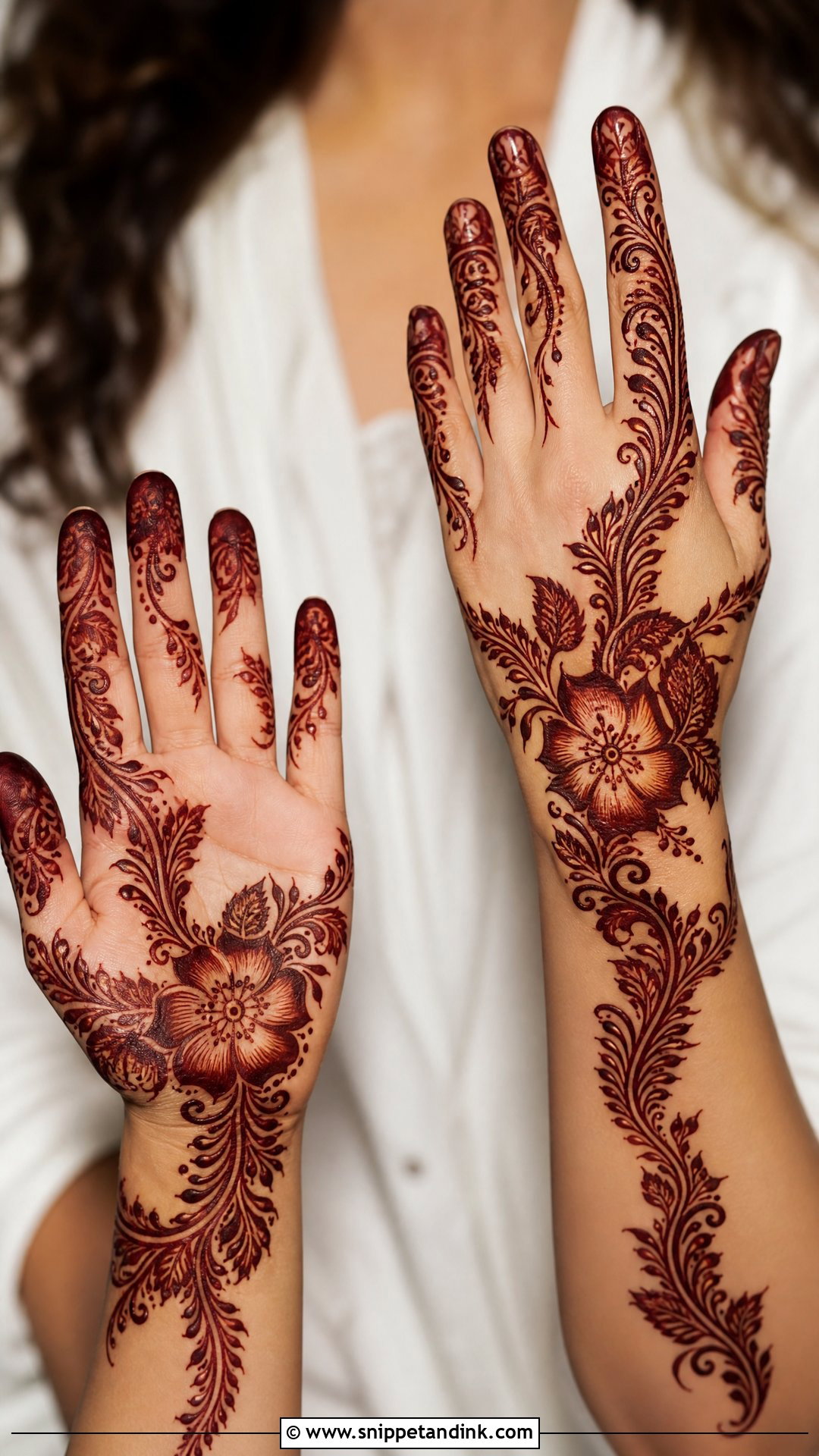
Gulf work is bold and loose: large flowers, leafy trails, thick outlines and generous spacing, flowing across the hand in one clear direction. For a bride I cover the back of the hand, palm and forearm while still leaving skin showing. Those thick outlines need a slightly firmer paste so they don’t spread. The look is rich without feeling cramped, and modern rather than traditional. A dark stain makes the outlines stand out clearly on camera.
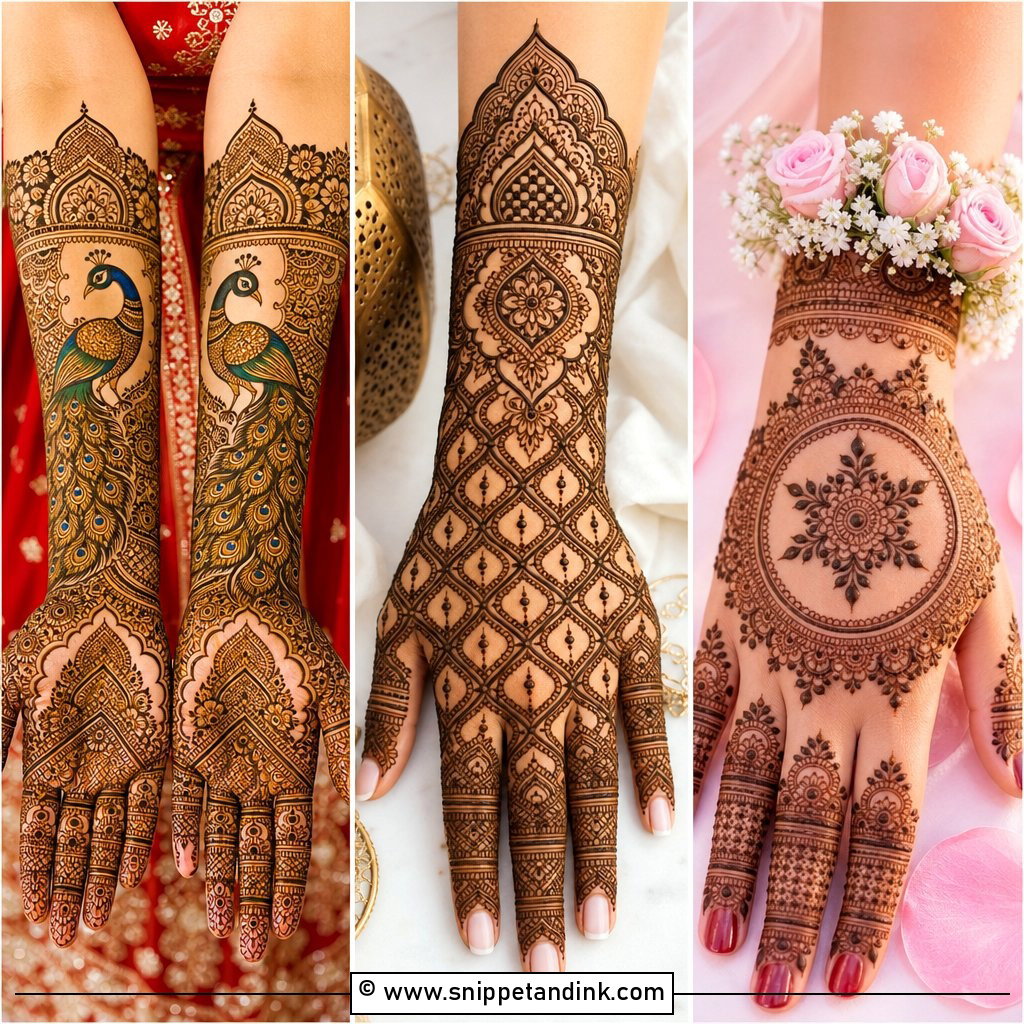
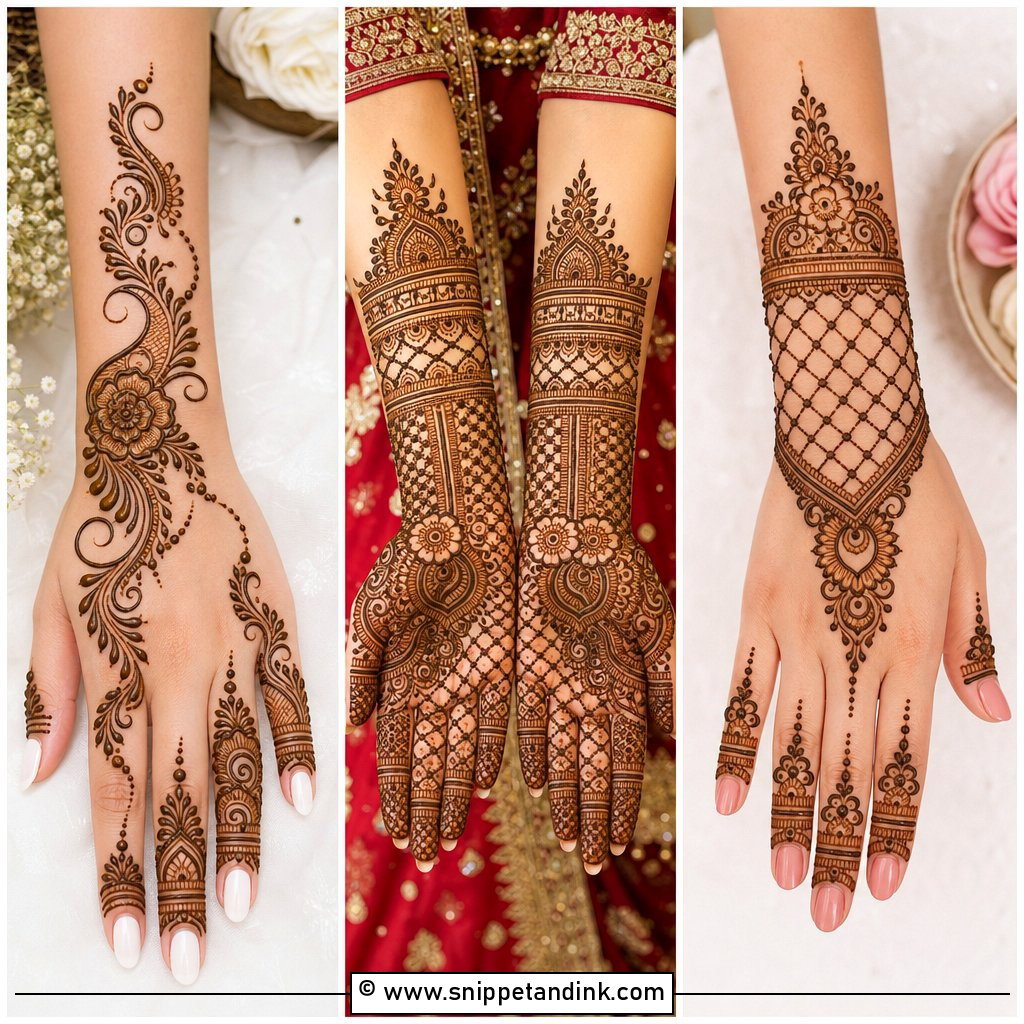
15. Back Hand Heavy Bridal Mehndi Design
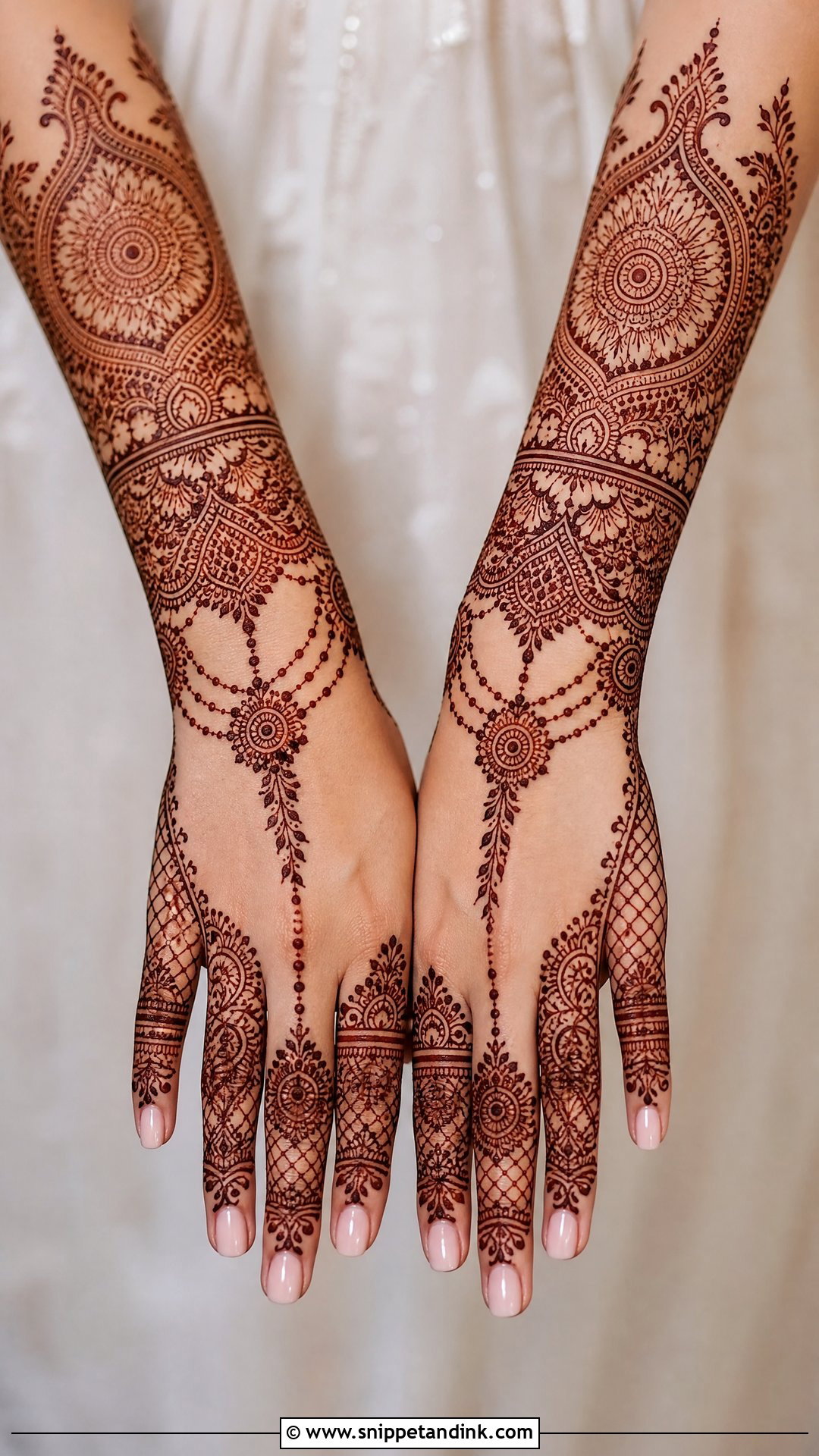
The back of the hand is what everyone sees in ring shots and close-up portraits. A full design here covers fingers, knuckles, back of the hand, wrist and forearm with florals, jaali, mandalas, bracelet bands and vines. Since the back hand is on show all through the ceremonies, it deserves the same care as the palm. One honest note: the back of the hand stains lighter than the palm, because the skin there is thinner. If you’ll wear haath phool, I design around where the chains sit; otherwise a full mesh gives dense coverage. Keep the wrist neat so bangles don’t cover the best part.
16. Front Hand Heavy Bridal Mehndi Design
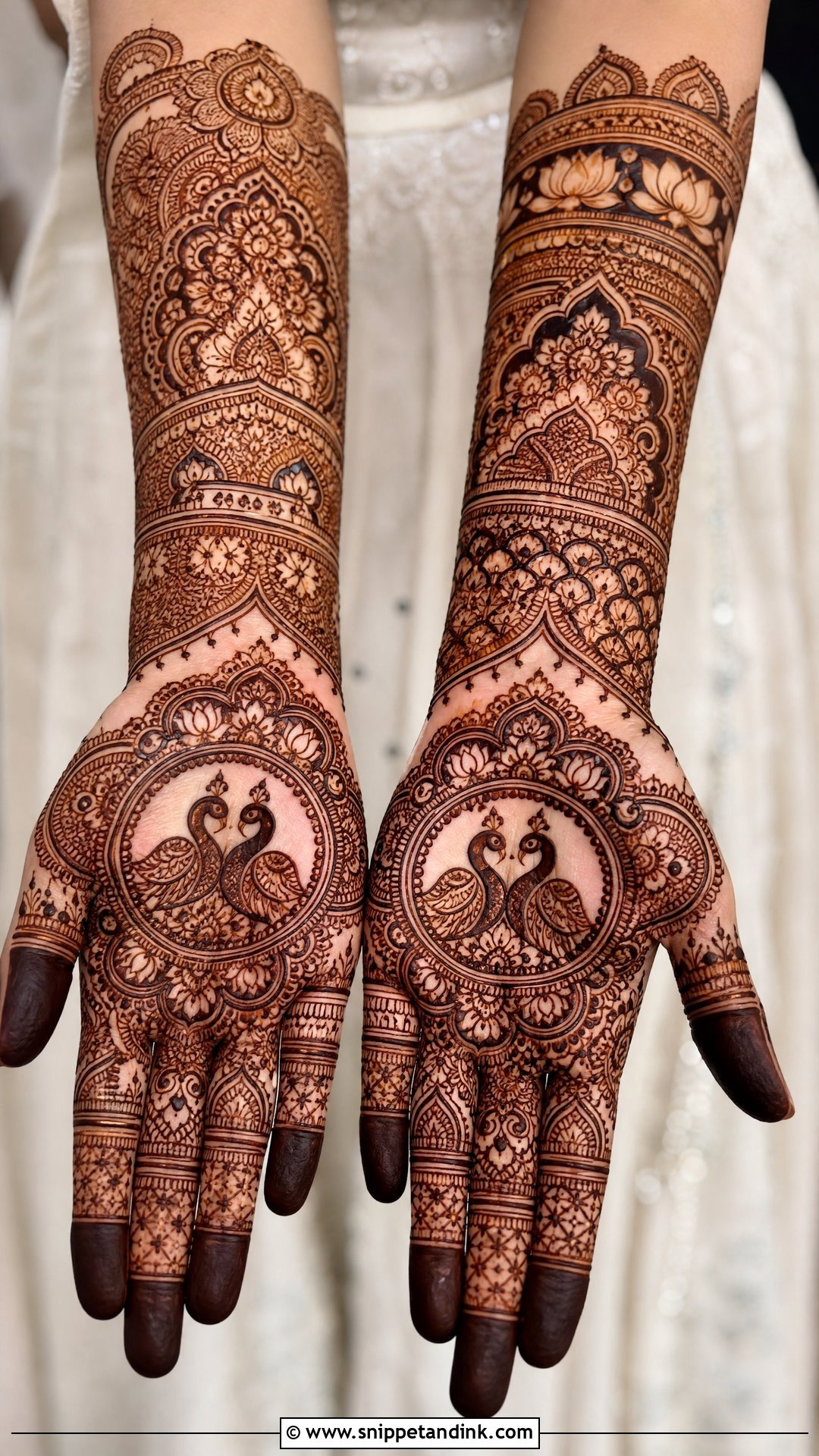
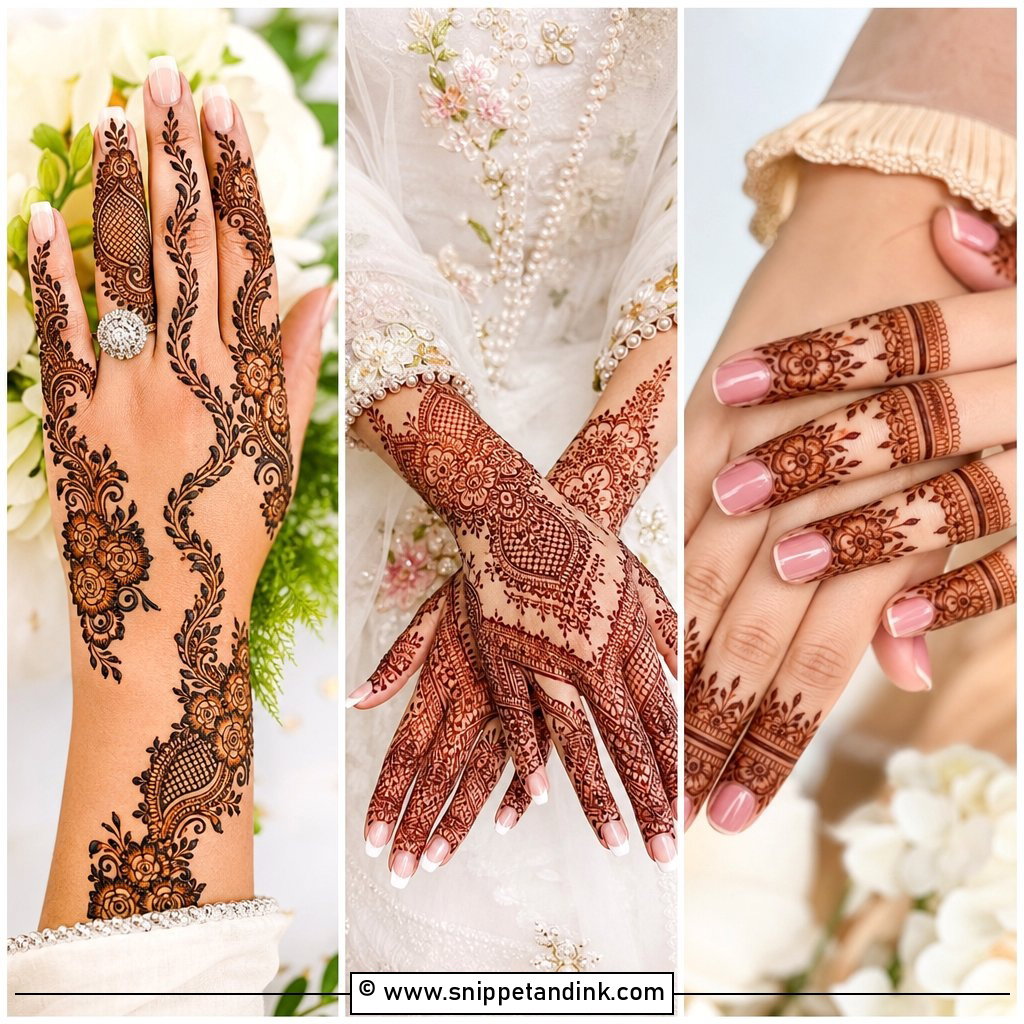
A Front hand heavy bridal mehndi design concentrates on the palm, fingers and inner wrist, where henna stains darkest. Central mandalas, peacock pairs, dulha-dulhan art, paisley clusters, lotus borders and tightly filled fingertips are the usual layouts. When I finish, I ask the bride to put both palms together and check that the halves line up, since that’s exactly how they’ll be photographed. Keep the main motif clear with tiny filler around it. It’s the classic layout for traditional ceremonies.
17. Wrist To Elbow Heavy Bridal Mehndi Design
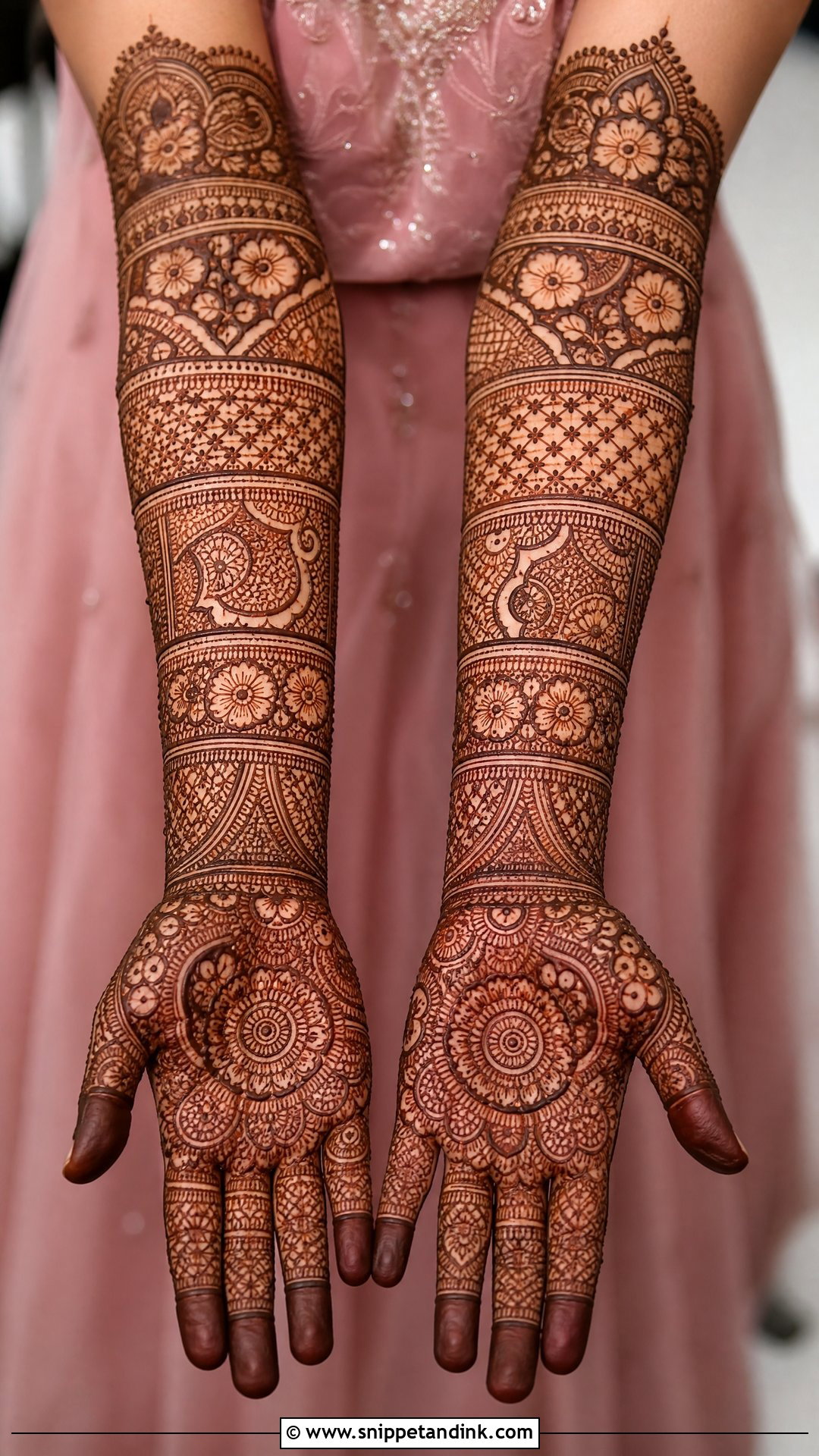
Taking the design from wrist to elbow makes it regal. It can start at the fingertips or the wrist and carry on with dense bands, floral panels, jaali, paisleys, mandalas and sometimes wedding scenes. Short or sheer sleeves show it off. This adds real time to the sitting, and the inner forearm stains lighter than the palm, so I put the bolder motifs on the arm and save fine work for the hand. Larger motifs between the fine details keep the arm from looking packed. Plan the appointment around the extra hours.
18. Personalized Heavy Bridal Mehndi Design
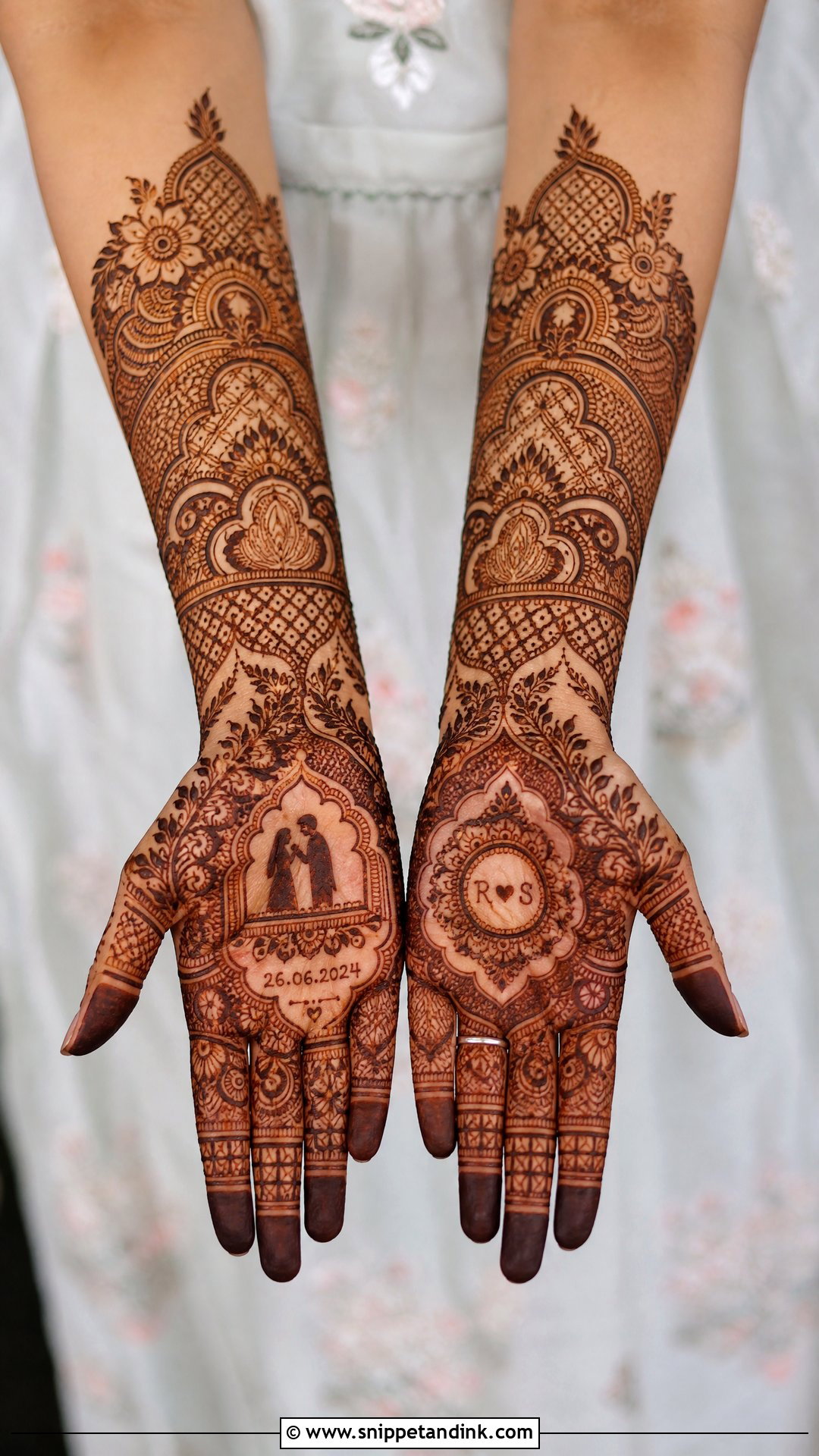
Personal details turn the henna into your own story. Brides add initials, wedding dates, proposal symbols, pets, travel references, favourite flowers, the outline of the venue or small cultural motifs, while the rest of the hand stays fully bridal. Send me these details before the appointment. Small personal elements need sketching and sizing in advance; improvising them at the end, when the hands are already filled, never works as well. Decide which details to hide for the groom and which to highlight. The result reads rich at a glance and meaningful up close.
19. Pakistani Heavy Bridal Mehndi Design
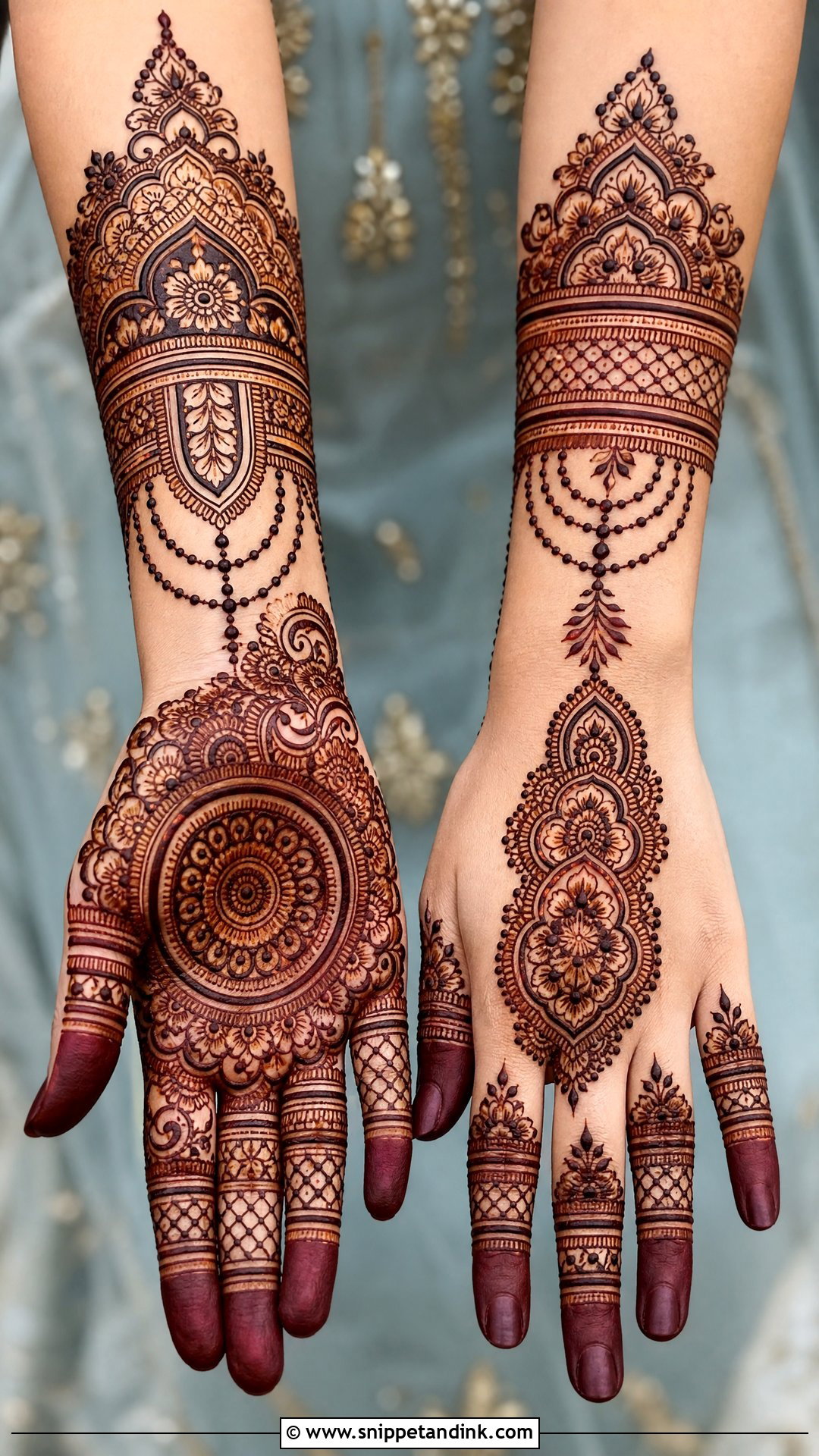
A Pakistani heavy bridal mehndi design usually blends dense traditional filling with graceful floral and geometric structure: bold wrist cuffs, detailed palm circles, paisley clusters, leafy borders and fine finger work. Some designs add arch shapes, lattice panels or chain-like lines that echo jewellery. It’s typically applied on both the front and back of the hands. The fine work only shows if the stain is deep, so aftercare matters even more here. Gold jewellery, sharara sets, ghararas, lehengas and traditional dupattas all suit it.
20. Minimal Space Heavy Bridal Mehndi Design
This one is for the bride who wants full coverage but is afraid of looking too dark. Instead of packing every space, I leave small open gaps around the bigger motifs: a large mandala, a floral trail, jaali blocks, paisley bands and filled fingertips, but with skin showing between them. That contrast between stain and skin is what keeps each motif sharp in photos. It feels bridal and detailed, yet modern.
From Wet Paste to Deep Maroon
Fresh henna comes off bright orange, and almost every bride panics at that point. That’s normal. The colour oxidises over the next day or two into reddish brown and then maroon. How dark it gets depends a lot on what you do in those first hours.
- Leave the paste on as long as you can, ideally overnight. I dab a lemon and sugar mix over it once it’s dry so it stays stuck to the skin.
- Keep your hands warm. Cold hands stain lighter, so stay away from air conditioning blowing straight onto them.
- Scrape the dry paste off with a blunt edge or rub it away. Don’t wash it off.
- Keep water off the design for as long as you can after removal, ideally until the next morning. Soap and hand sanitiser fade it quickly.
- Rub a little oil or balm over it before showering in the days after, so the water doesn’t strip it.
Palms and fingertips always come out darkest; the backs of the hands and the arms stay lighter. That’s how skin takes the dye, not a sign the paste was weak.
Why I never use black henna
Natural henna only stains in shades of orange, red and brown. Anything sold as instant black henna usually gets that colour from added chemical dye, which can cause severe skin reactions and lasting scars. If a cone promises black or works within minutes, refuse it. Ask your artist what goes into her paste; someone who mixes her own will happily tell you.
Rich Is Good, Readable Is Better
Bridal mehndi is part of the ceremony as much as the outfit, and it shows up in nearly every close-up of your hands. Indian detail, Arabic flow, an Indo-Arabic mix, Rajasthani storytelling, Moroccan geometry or personal artwork can all be right, if it suits your outfit, your jewellery and how long you can sit. Ask for clear motifs and balanced coverage, and book an artist who does dense bridal work regularly. Heavy should look rich, never confusing. Save the layouts you love, compare them side by side, and get your date in early, because good bridal artists fill wedding season fast.
You'll Like These Ideas:









Leave a Reply