
Bridal henna carries more than pattern. In many families it holds blessings, a hidden name for the groom to find and a stain the aunties will judge the next morning. Brides come to me wanting two things that pull against each other: enough richness for the ceremony, and a design that still suits their outfit, jewellery and patience for sitting. The twenty dulhan designs below cover that whole range, from heavy Indian work with peacocks and portraits to Arabic florals, mandalas, lotus bands and quieter modern layouts. For each one I’ve added what I watch for when I actually draw it.
What I Need From You at the Henna Consultation
A good bridal design is decided weeks before the cone touches your skin. When a bride sends me only a screenshot of someone else’s hands, I end up guessing. These details let me draw something that fits you.
- A photo of your outfit, especially the sleeve and the cuff embroidery.
- How far up your arms and feet you want coverage.
- Two or three reference images, with a note on what you like in each, such as the fingers in one and the palm in another.
- Any names, initials or dates, written out exactly as they should appear.
- Whether you’ll wear a haath phool, bangle stacks or kalire, so I can plan clear space for them.
Does the Design Suit the Size of Your Hands?
Small hands and short fingers look crowded under very fine, dense patterns. I scale the motifs up and reduce their number, and I often give short fingers vertical bands that lengthen them visually. Long, slim fingers can carry full caps, geometric grids and chains with ease. Wide palms are the best canvas for a single large mandala or a portrait. Your skin matters as well: henna stains palms darker than the backs of hands on everyone, so if you know your skin takes colour lightly, favour bolder outlines over hairline detail.
1. Full Hand Dulhan Mehndi Design
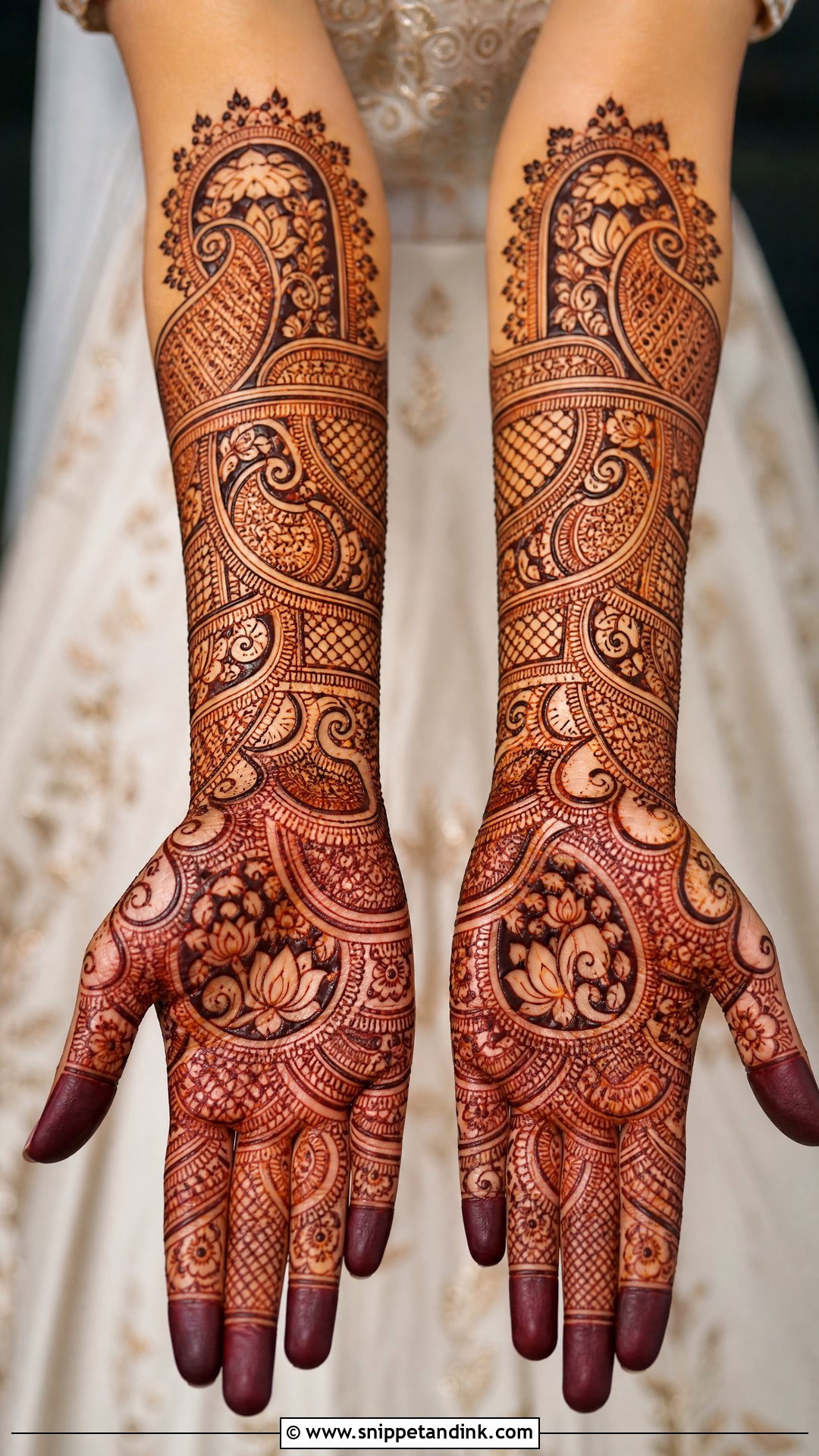
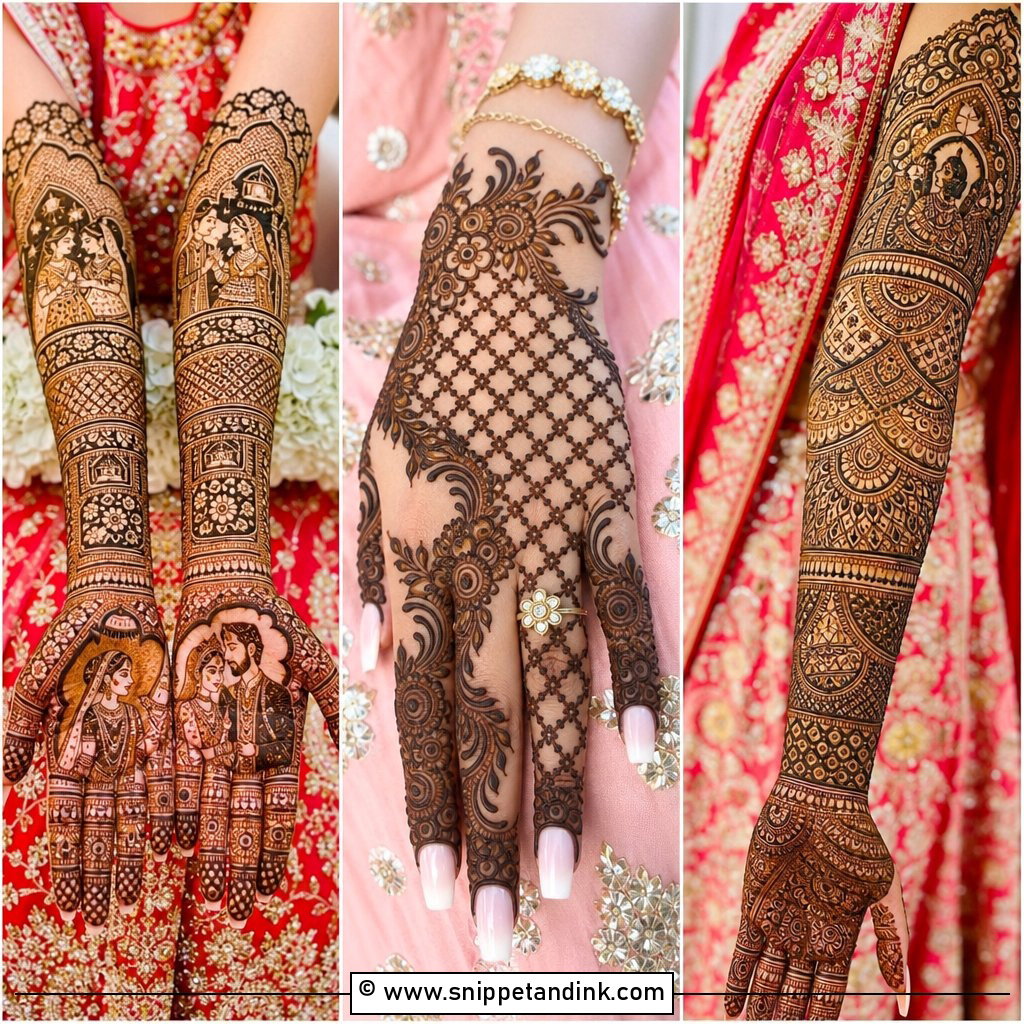
Palms, backs, wrists and forearms, all filled. This is the dulhan design most families picture first, built from paisleys, lotus flowers, vines, mandalas, jaali and tiny filler strokes. It photographs evenly because there’s no bare patch to draw the eye when you hold your lehenga, dupatta or kalire. I still leave the very centre of each palm slightly open. When that area is packed solid, the stain blurs into one dark patch and the motifs you paid for disappear.
2. Indian Dulhan Mehndi Design
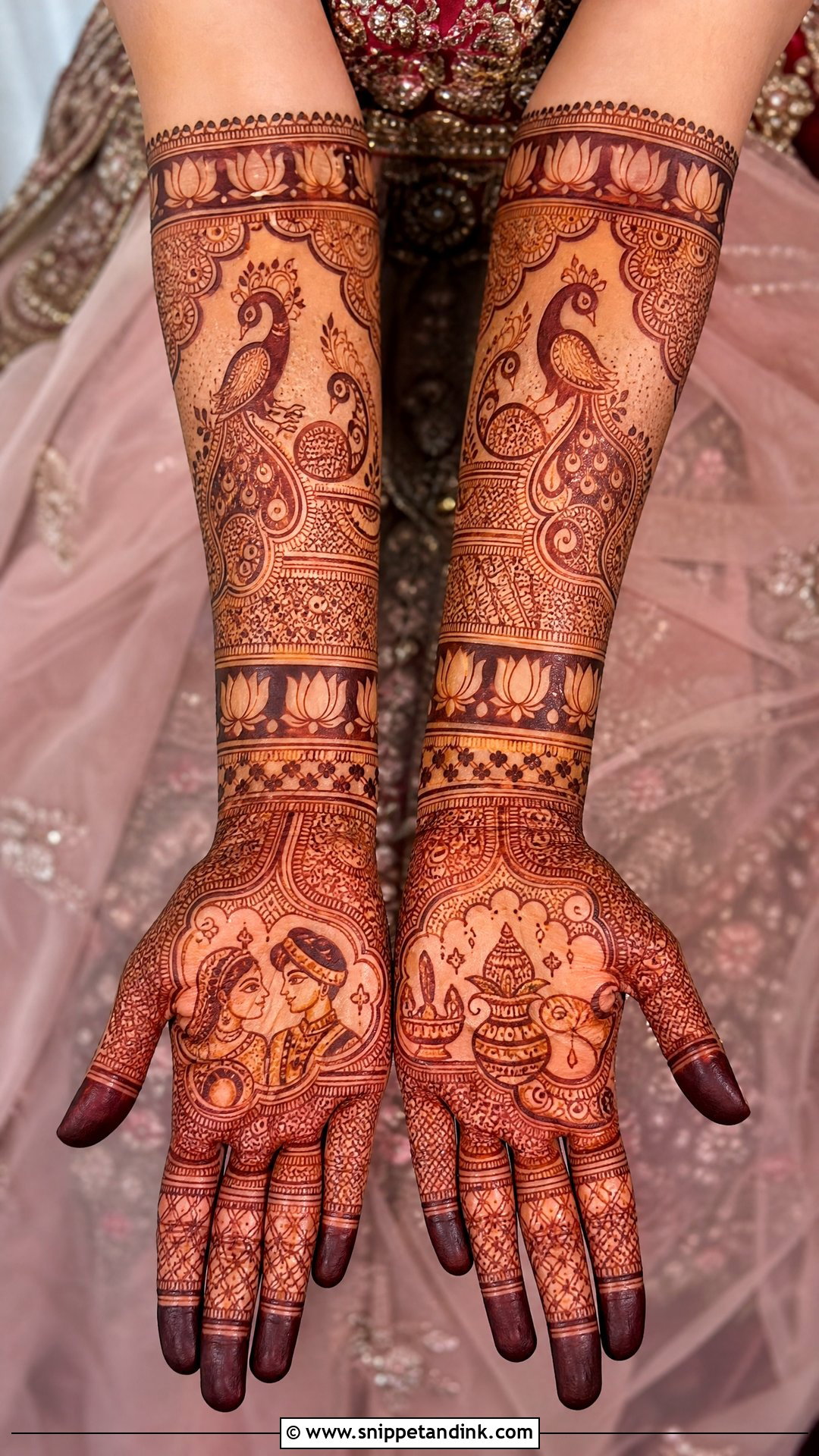
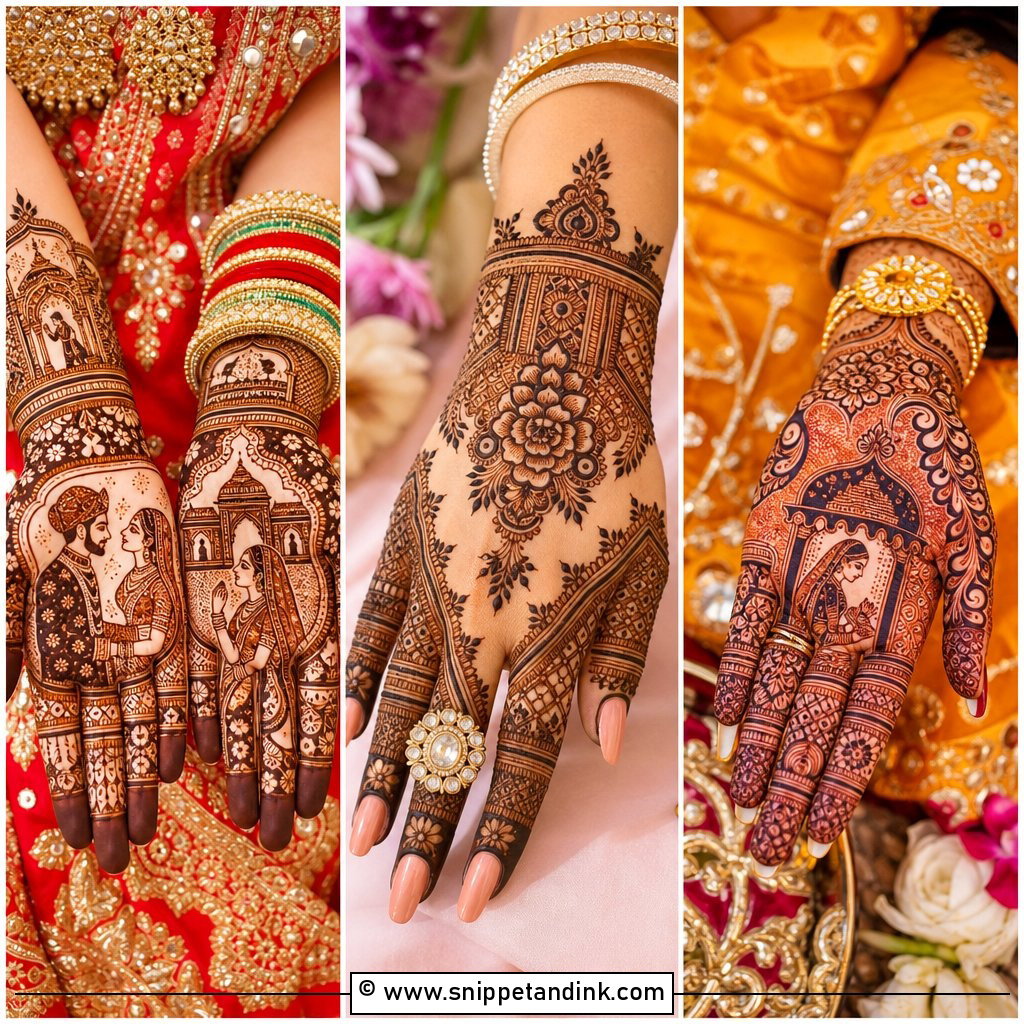
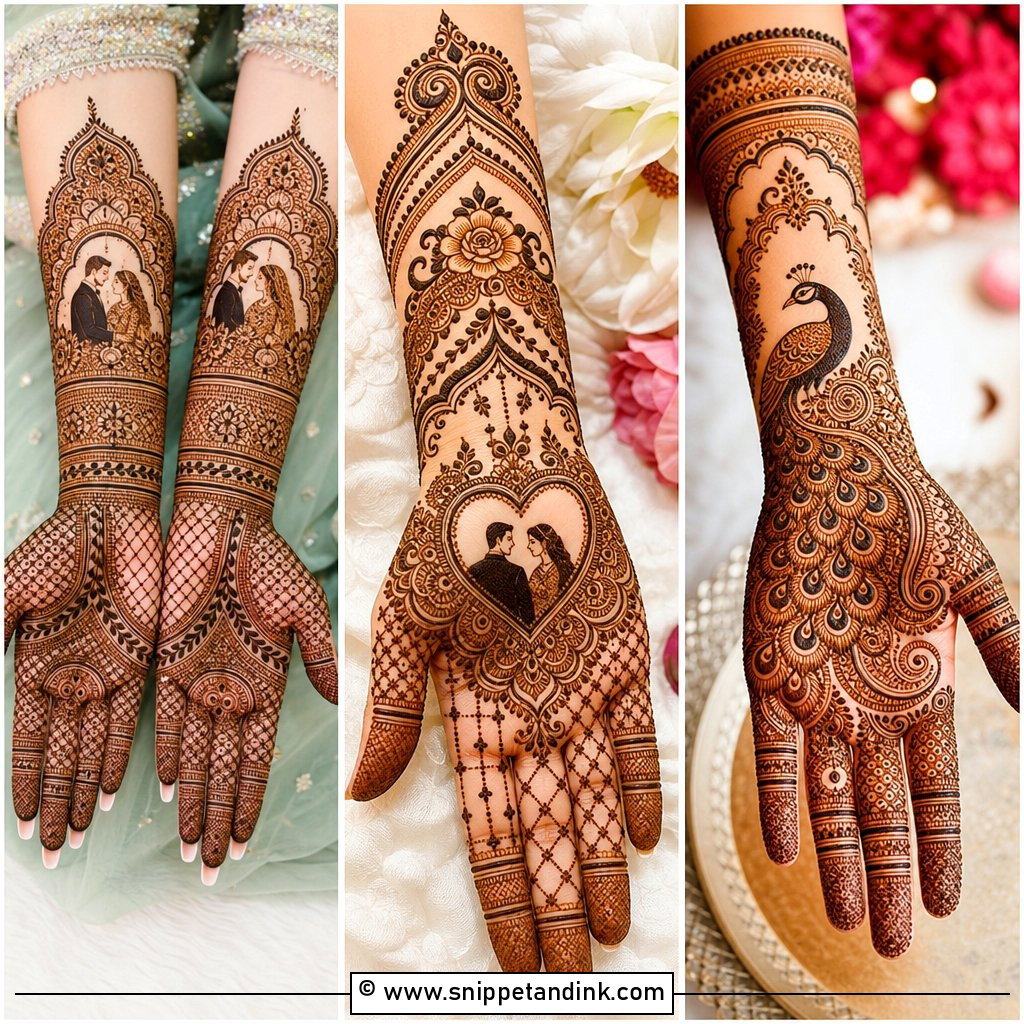
Storytelling is the heart of Indian bridal work: peacocks, paisleys, lotus, the couple, elephants, bells and fine borders, with the palm holding a central scene and layered bands running up the fingers and arms. The filled areas hold more paste, which is a large part of why these designs stain so richly. If you want it properly traditional, ask for tight spacing and fine linework, and expect a long sitting. Red, maroon and gold outfits carry the depth best, though ivory and green work too.
3. Arabic Dulhan Mehndi Design
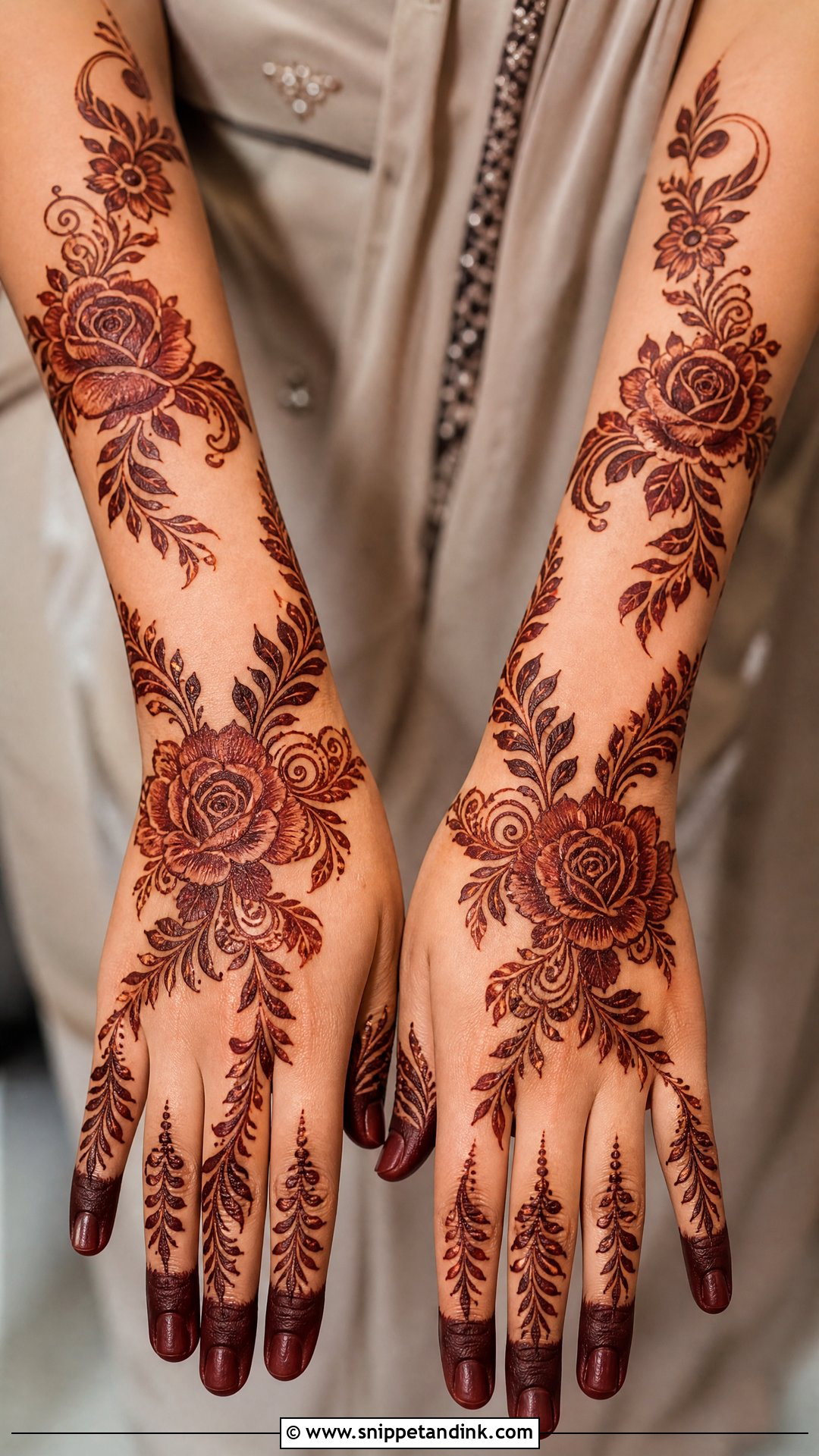
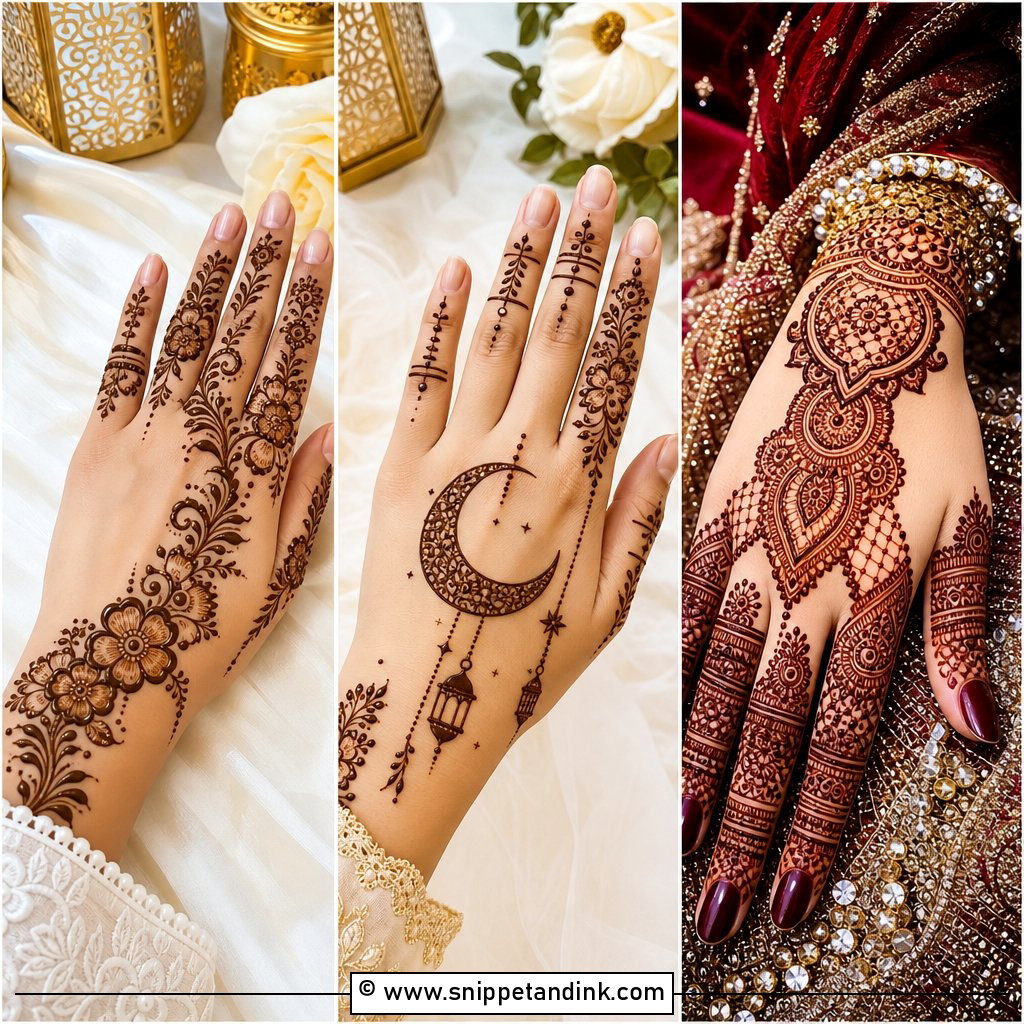
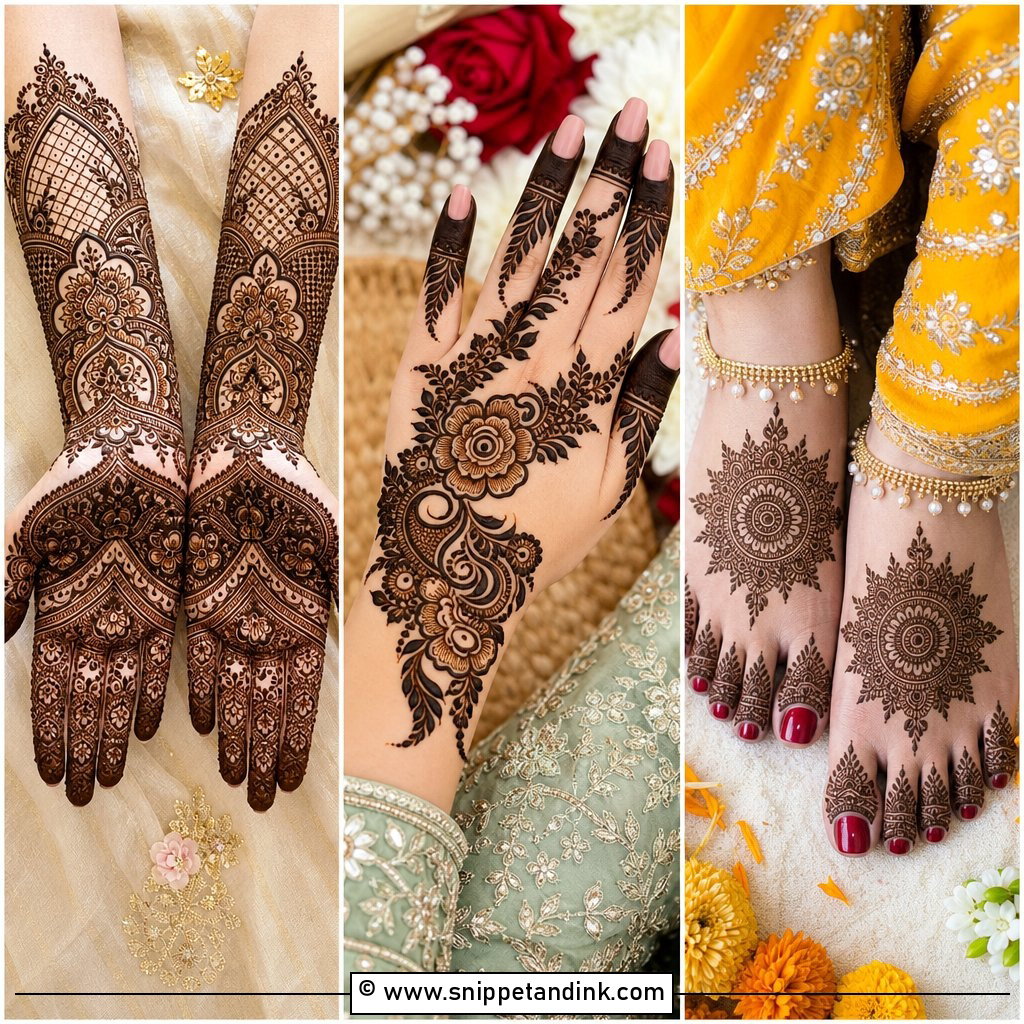
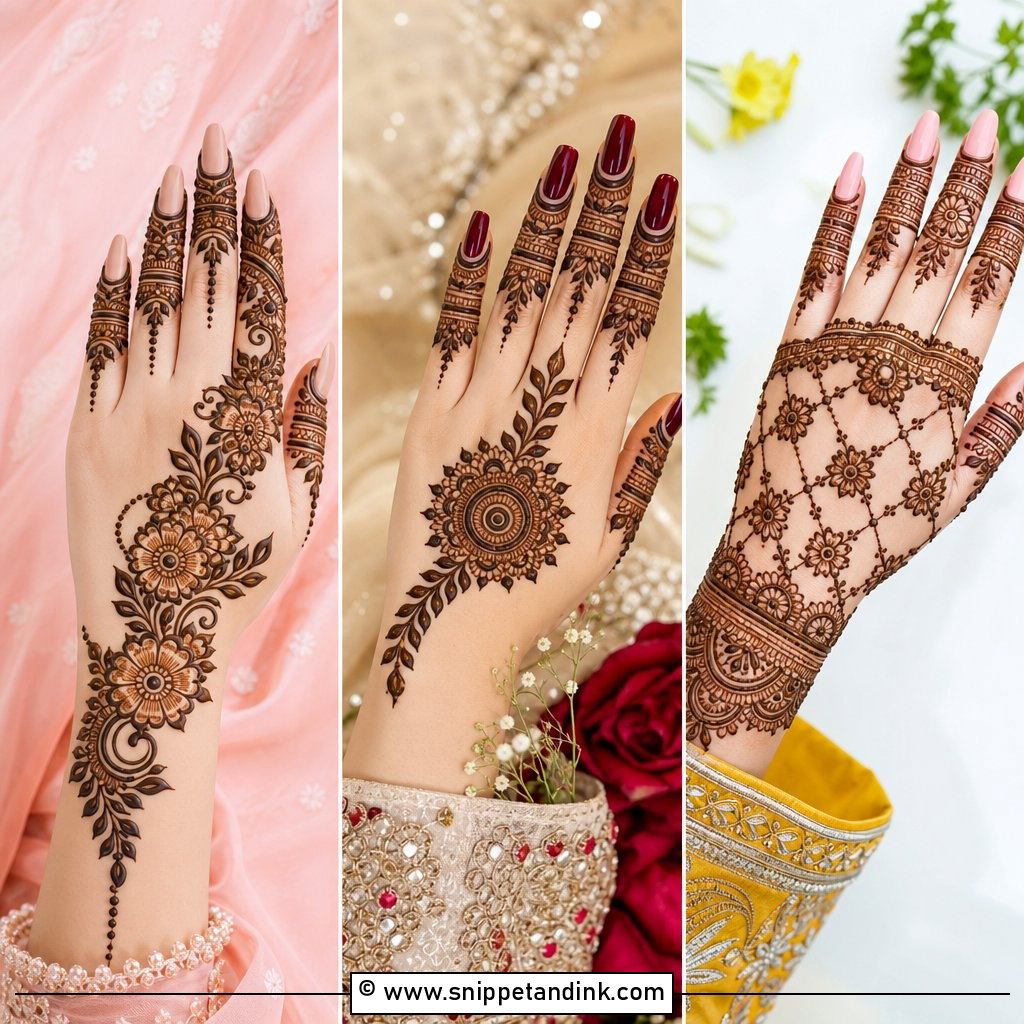
Bold flowers, flowing vines and open skin define Arabic dulhan mehndi design, which usually travels diagonally from the index finger across the palm toward the wrist and arm. Large roses, leaf trails and shaded petals give presence without density. Because each motif is big and separated, the stain reads clearly on camera even from across a room. I shade petals with a fine gradient line rather than solid fill, which keeps the colour even. It suits engagement, nikah and reception brides as much as the main day.
4. Indo Arabic Dulhan Mehndi Design
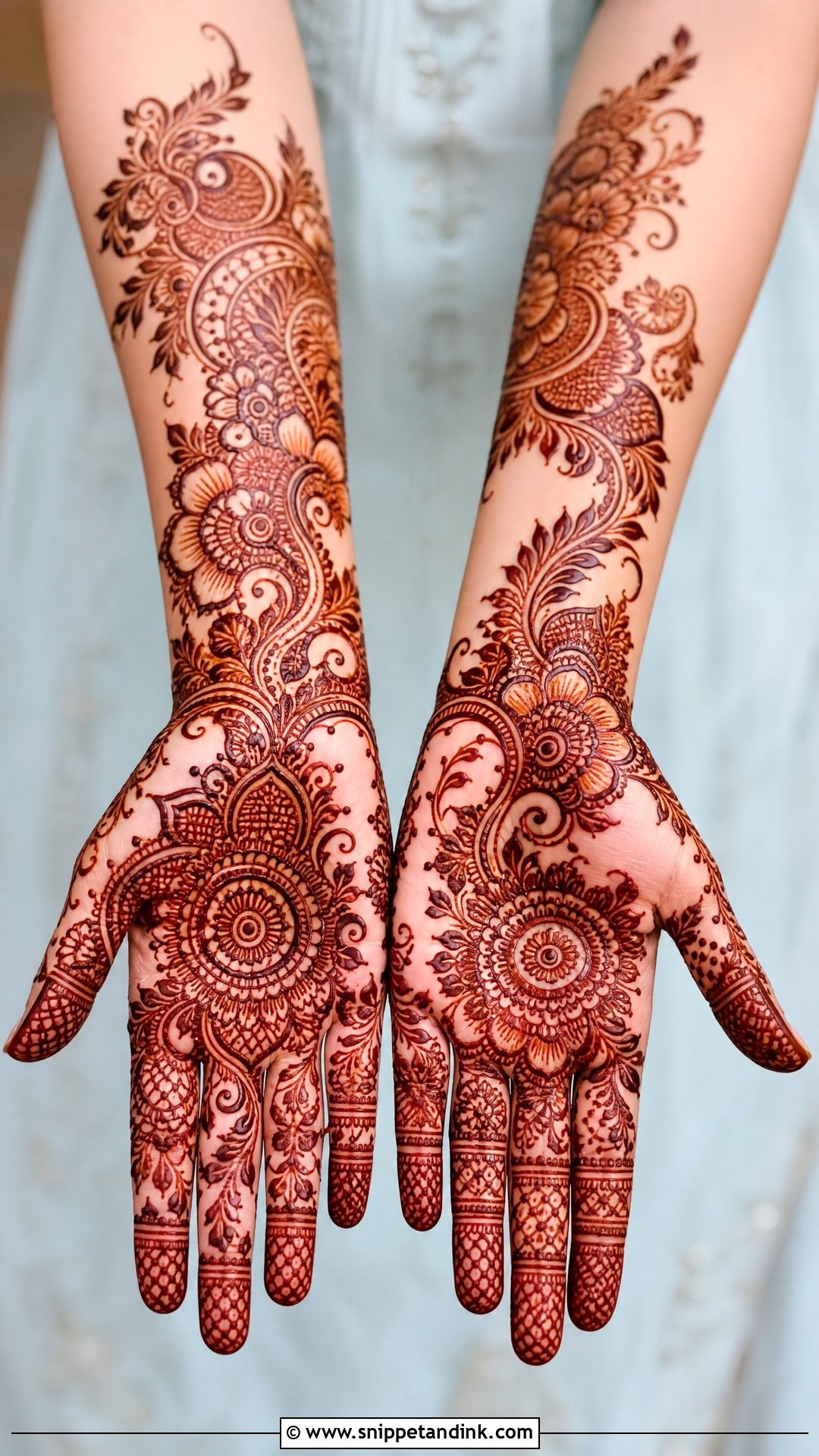
Heavy coverage without packing every millimetre is what Indo-Arabic delivers. Big floral trails, paisley blocks, mandala centres and shaded leaves sit together with small traditional fillers, and the open channels between them keep the hand breathing. It’s my usual suggestion for a bride who wants to look fully bridal but hates the feeling of a dense hand. The tricky part is the transition between styles; I sketch the joins with dots before committing the cone so the hand reads as one design, front and back.
5. Dulha Dulhan Mehndi Design
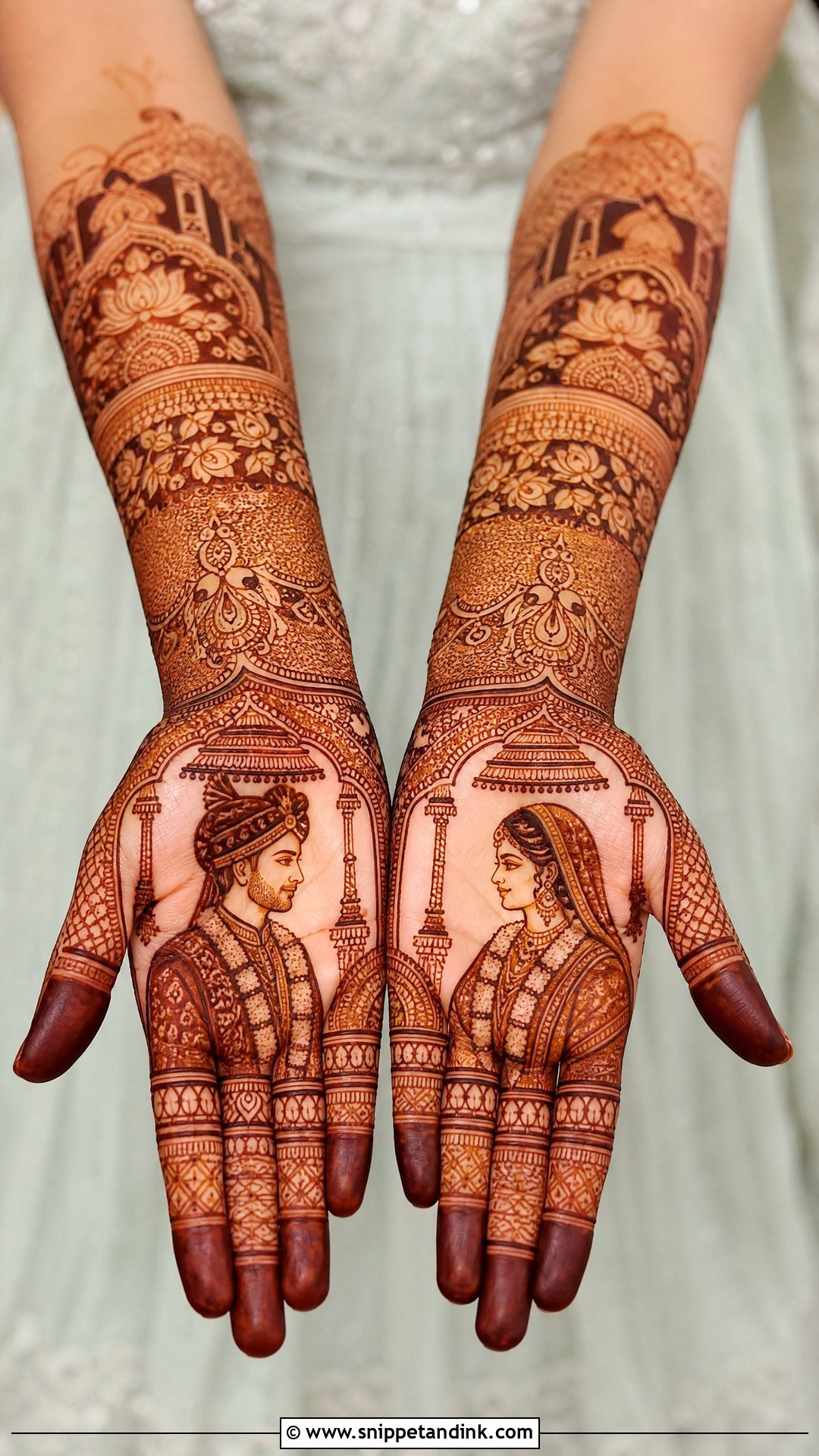
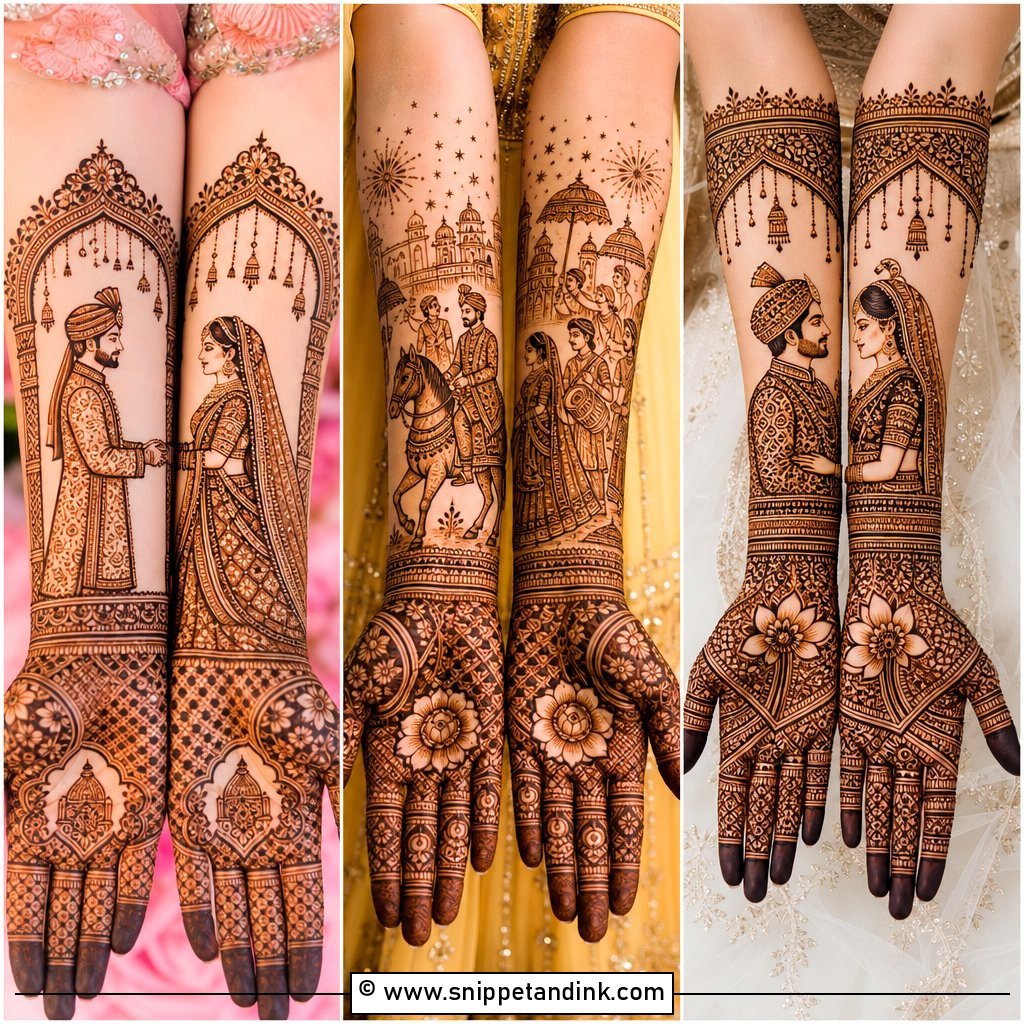
Bride on one palm, groom on the other, framed by mandaps, garlands, dhols, elephants and lotus borders. Placing the couple this way turns your hands into a wedding story, and it’s the design guests crowd around. Faces need space. I leave a clean margin around each portrait so the fine lines of eyes and jewellery don’t merge with the filler once the stain darkens. Close-ups during the ring and kalire moments are where this design earns its sitting time.
6. Bridal Portrait Mehndi Design
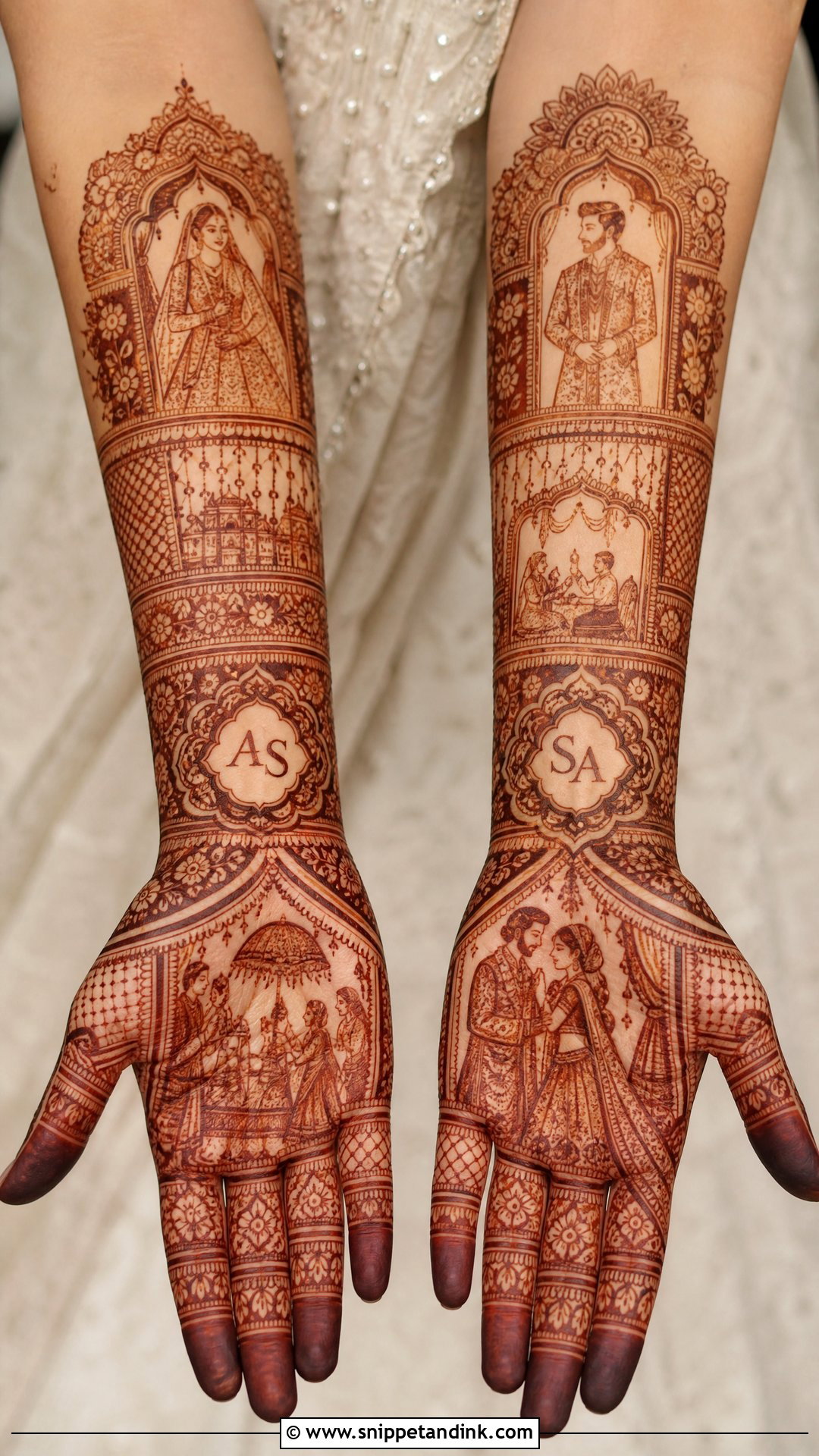
Portrait work goes further than the dulha dulhan pair: a proposal scene, the sindoor moment, the varmala, a nikah detail or your entry. Be selective about who draws it. A face in henna has no room for error, and a single heavy line can change an expression entirely, so ask to see photos of an artist’s finished stains, not just fresh paste. The rest of the hand can carry florals, jaali and paisleys, with initials or dates tucked in.
7. Peacock Dulhan Mehndi Design
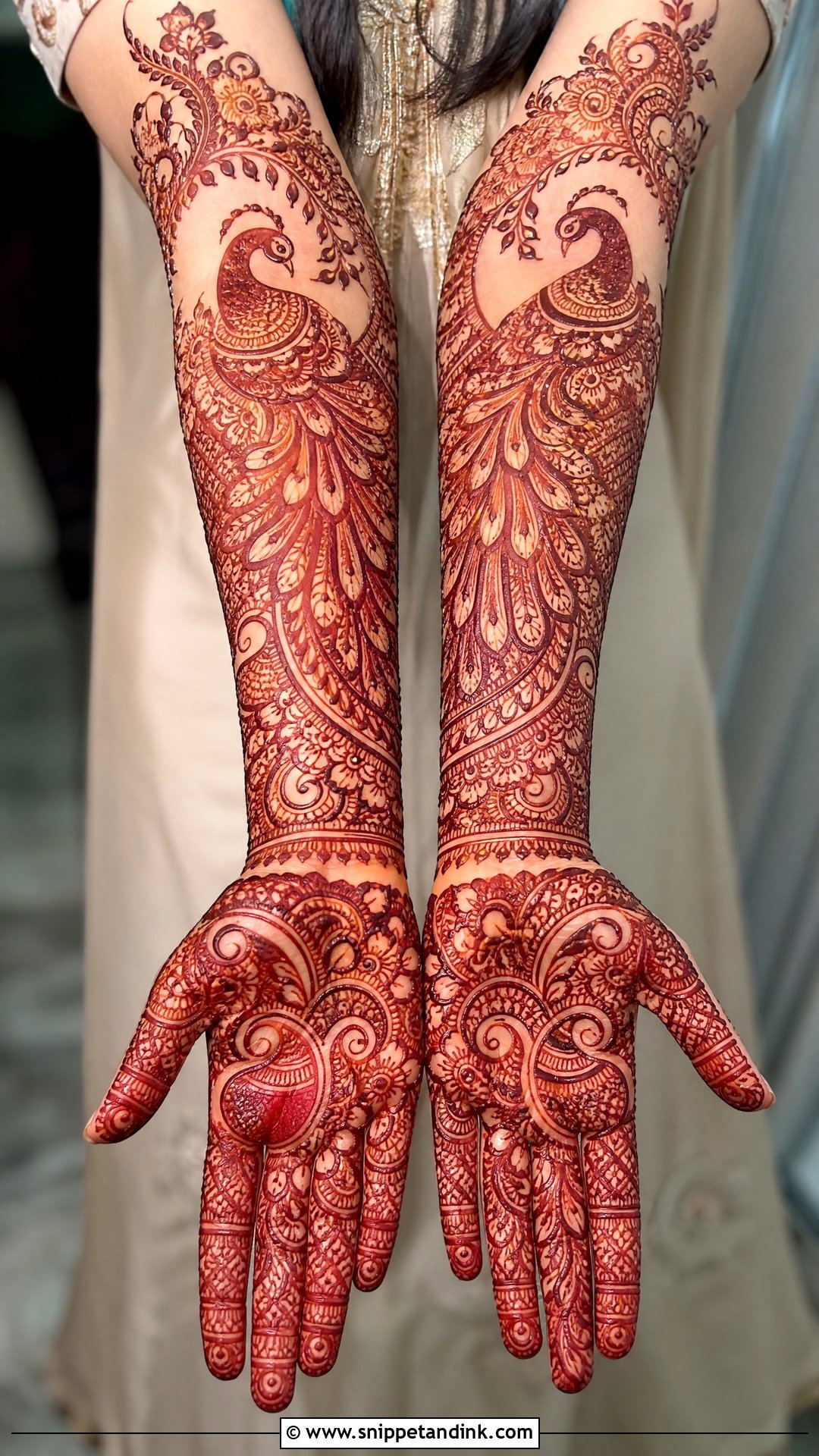
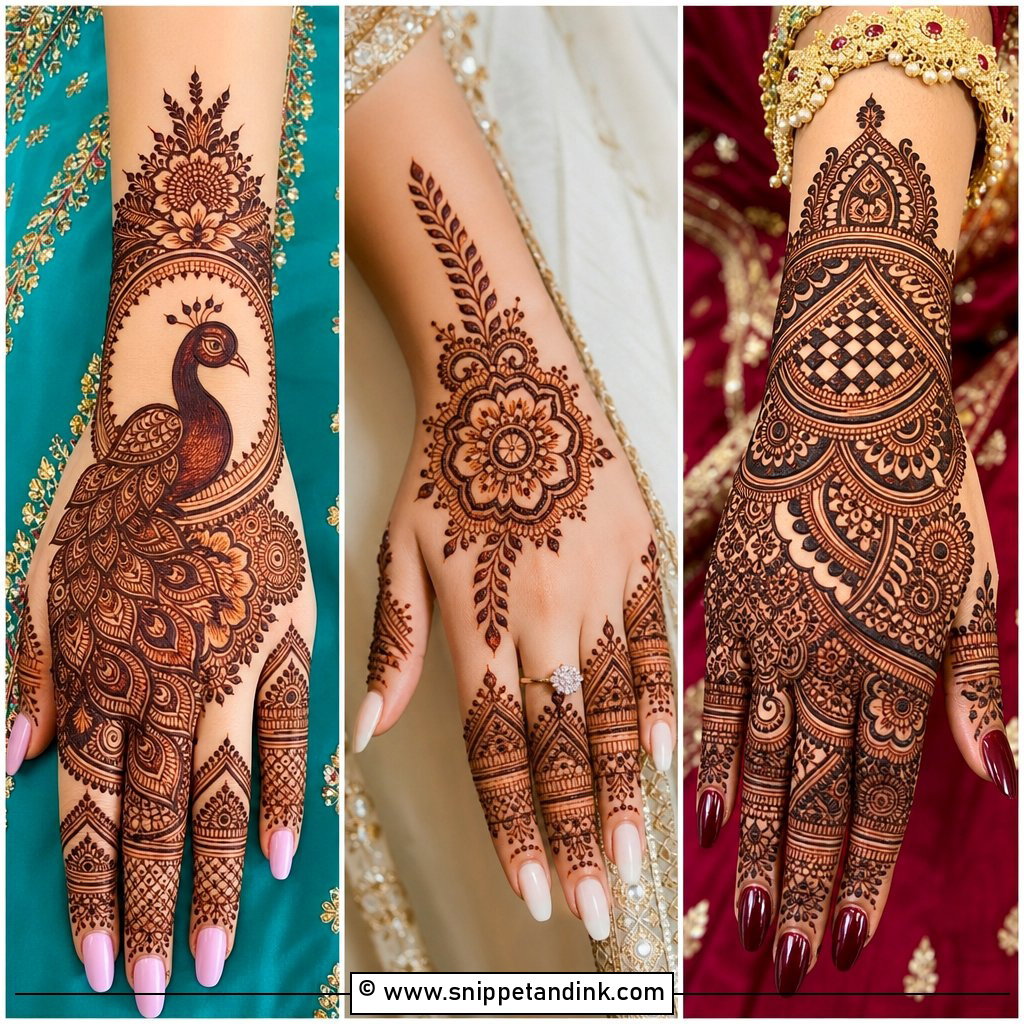
Peacocks give bridal hands movement and a royal feel without any modern extras. The bird sits on the palm, wrist or forearm, its feathers spilling into paisleys, vines and dots. My rule is a bold body with fine feathers: if both are drawn at the same weight, the peacock loses its shape. A dense full-hand version suits heavy outfits; a single large bird with open florals around it is lighter. Emerald, royal blue, maroon and gold outfits echo the motif nicely.
8. Lotus Dulhan Mehndi Design
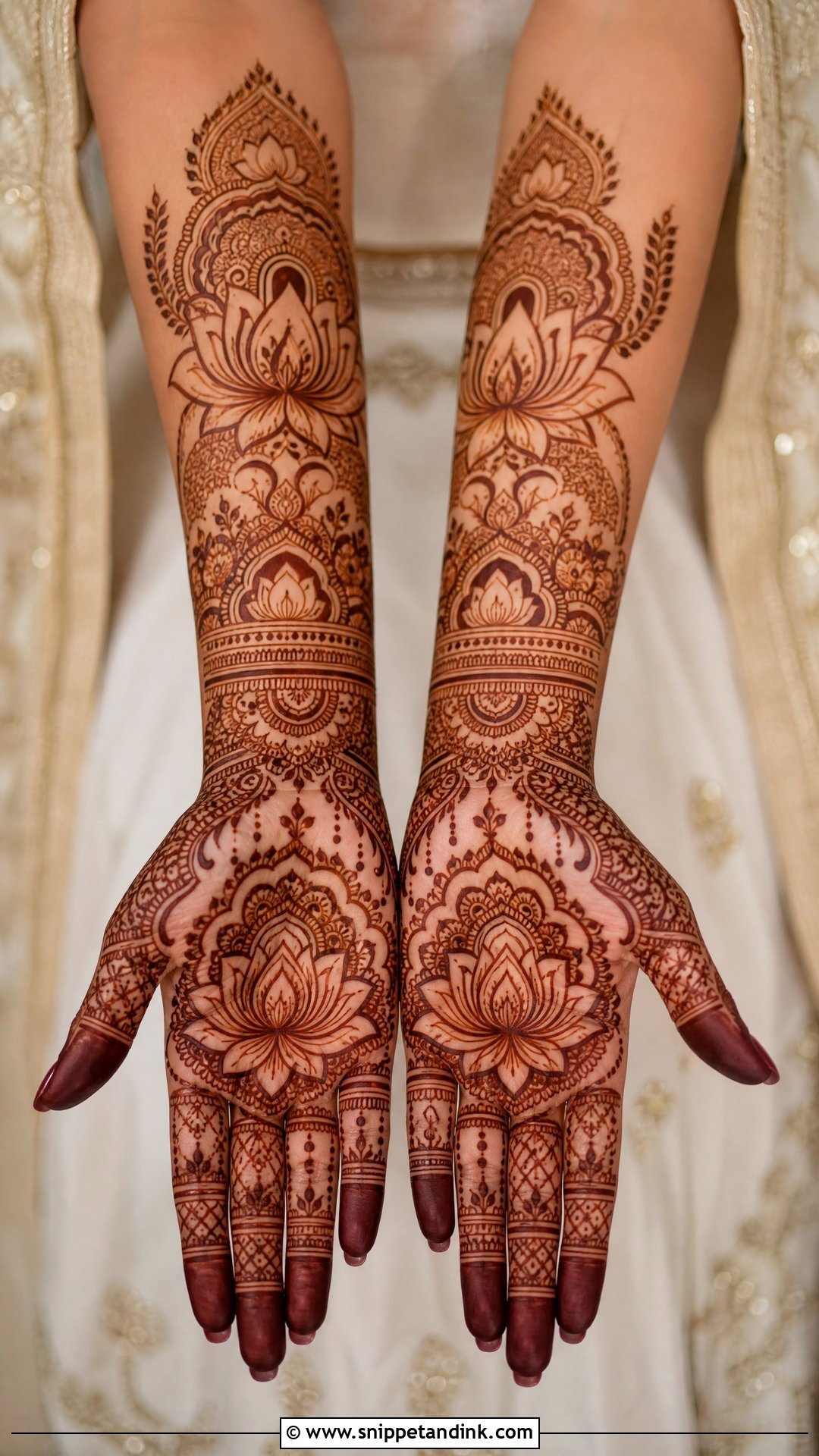
Lotus motifs can anchor the palm, run as repeated bands around the wrist or climb the forearm. Bold shaded petals or thin detailed ones change the whole mood, so I ask which you prefer before sketching. Lotus sits naturally with mandalas, paisleys, scalloped borders and vines, and it suits a bride who wants traditional work without portraits or heavy figures. Mirroring the layout on both hands matters more here than in most designs, because the petal shapes make any imbalance easy to spot.
9. Mandala Dulhan Mehndi Design
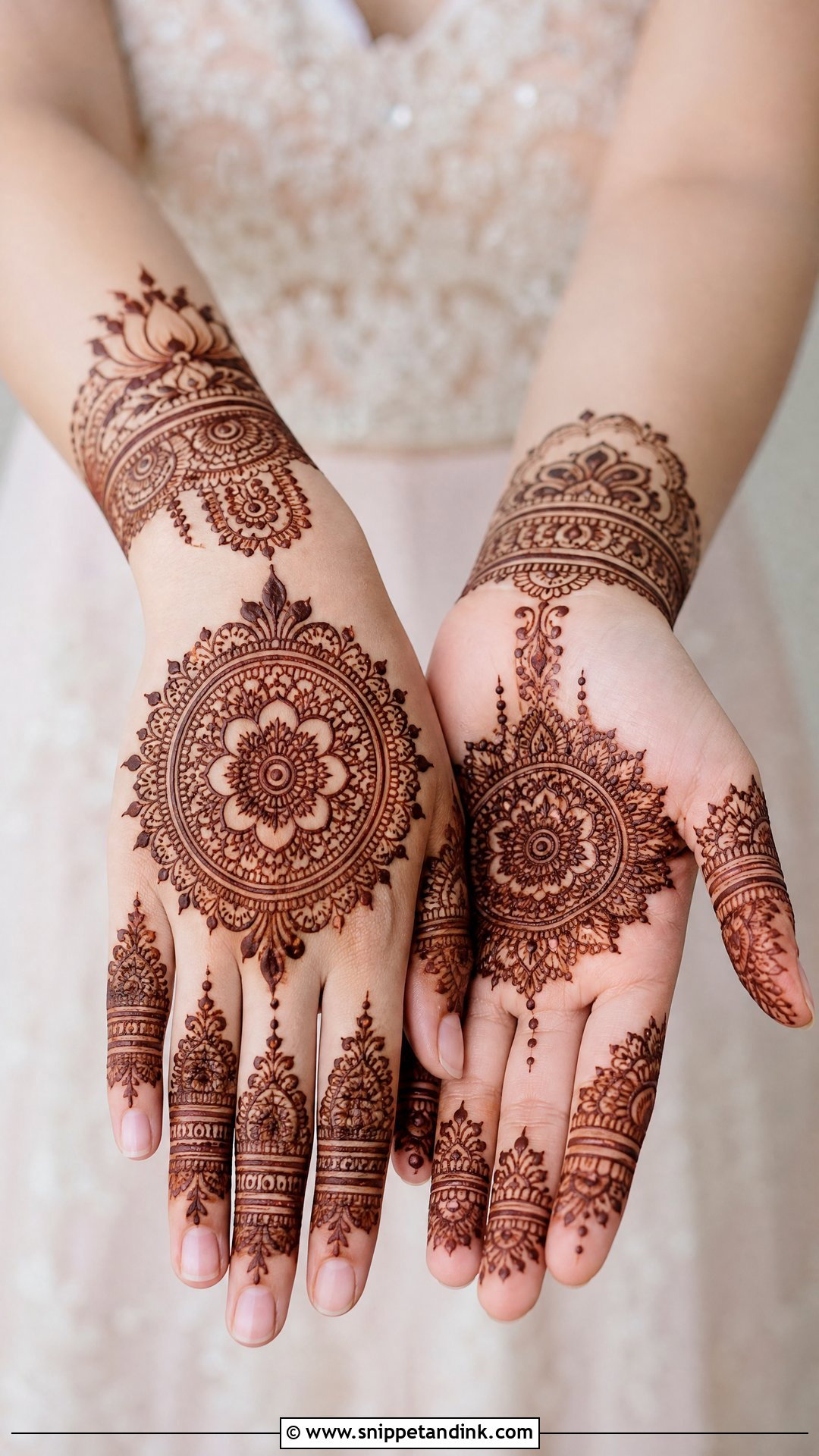
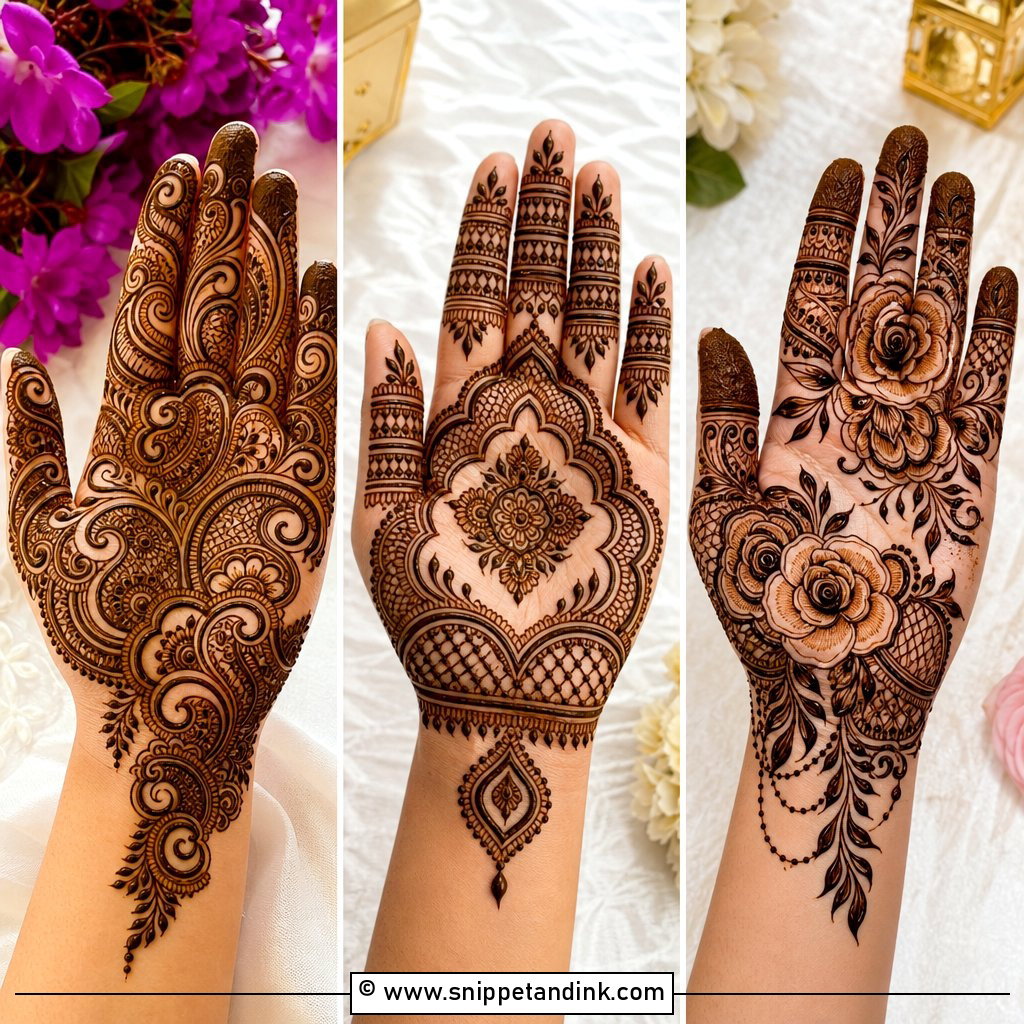
Symmetry lovers usually end up here. A large mandala goes in the centre of the palm or back, then extends through detailed fingers, wrist bands and forearm patterns. Place both palms together in photos and the circles line up, which is why I draw both centres at the same height measured from the wrist crease. A bridal version can surround the mandala with lotus petals, paisleys, jaali, dots and lace borders. Keep open spacing between rings and it reads modern as well as classic.
10. Jaali Dulhan Mehndi Design
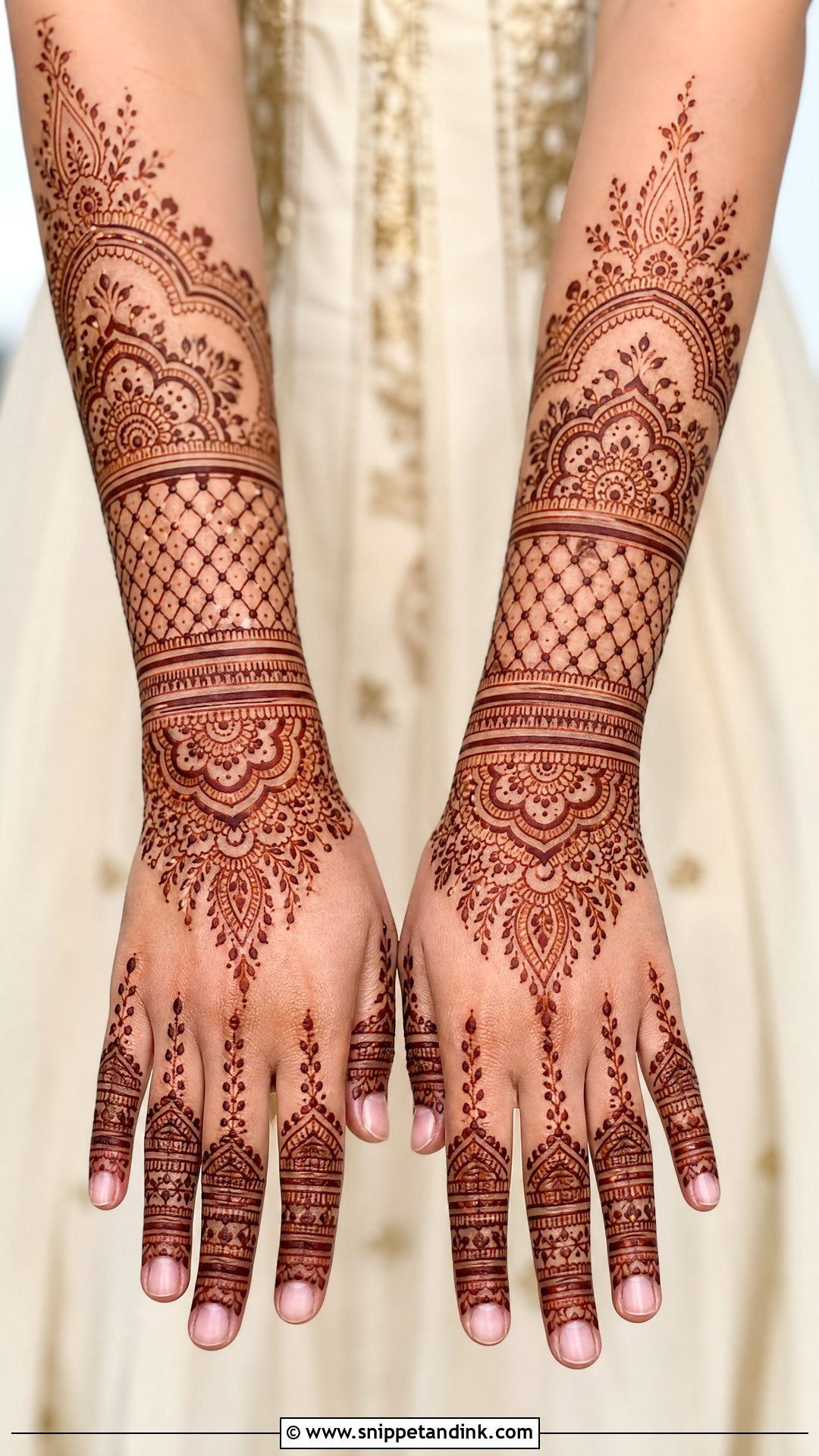
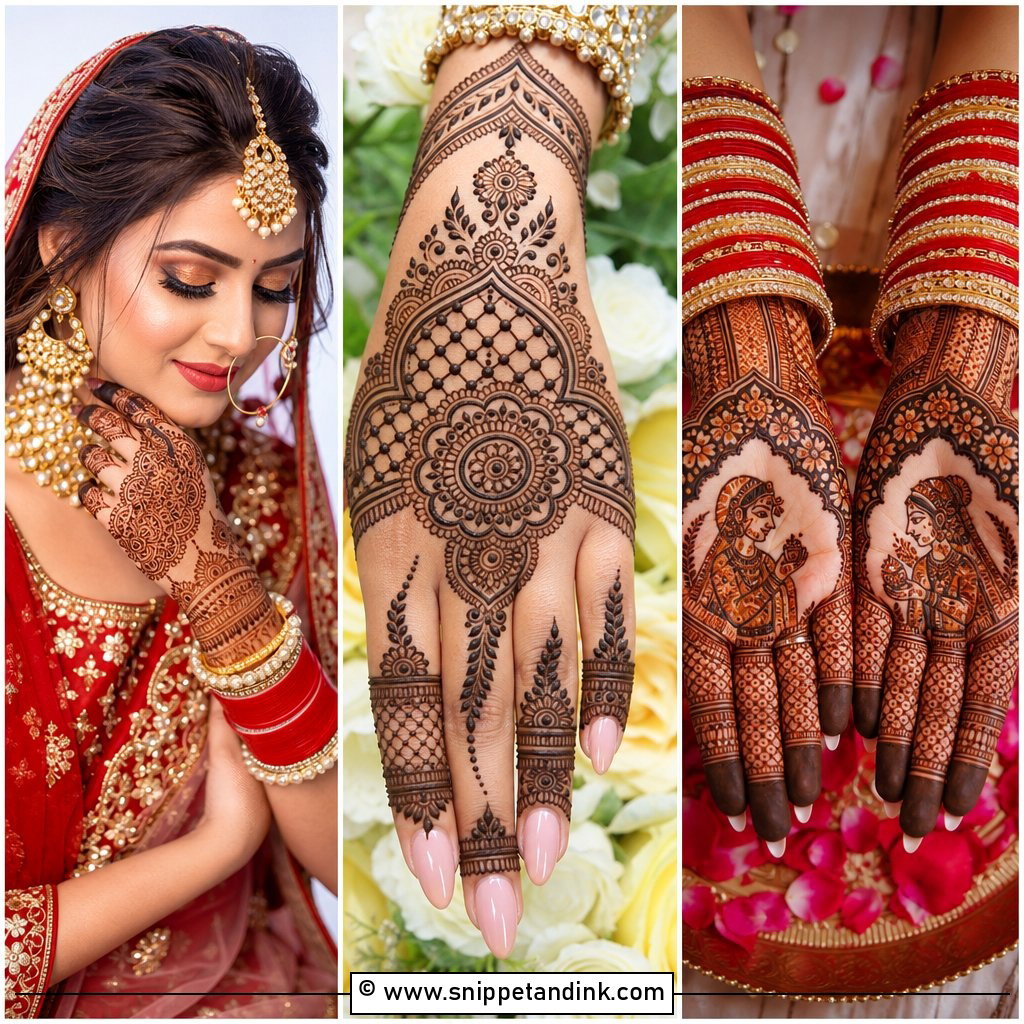
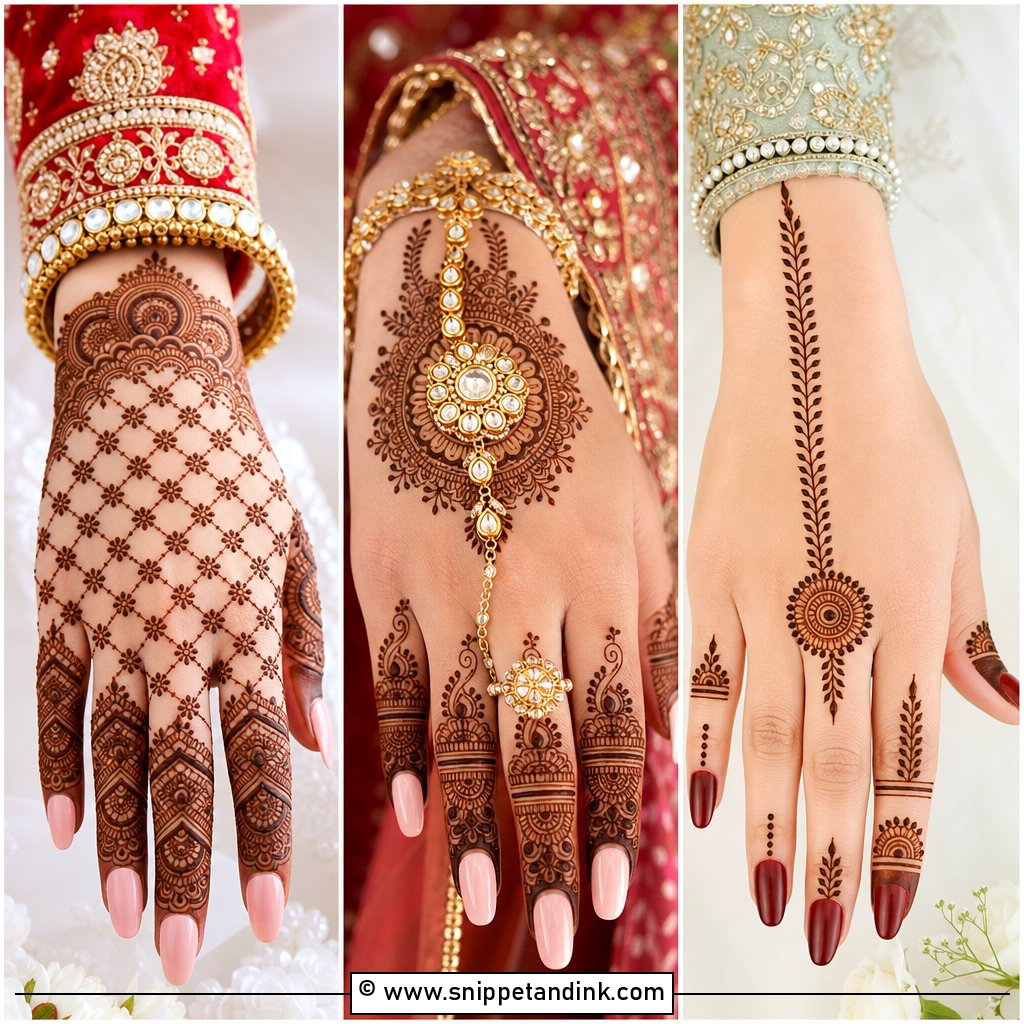
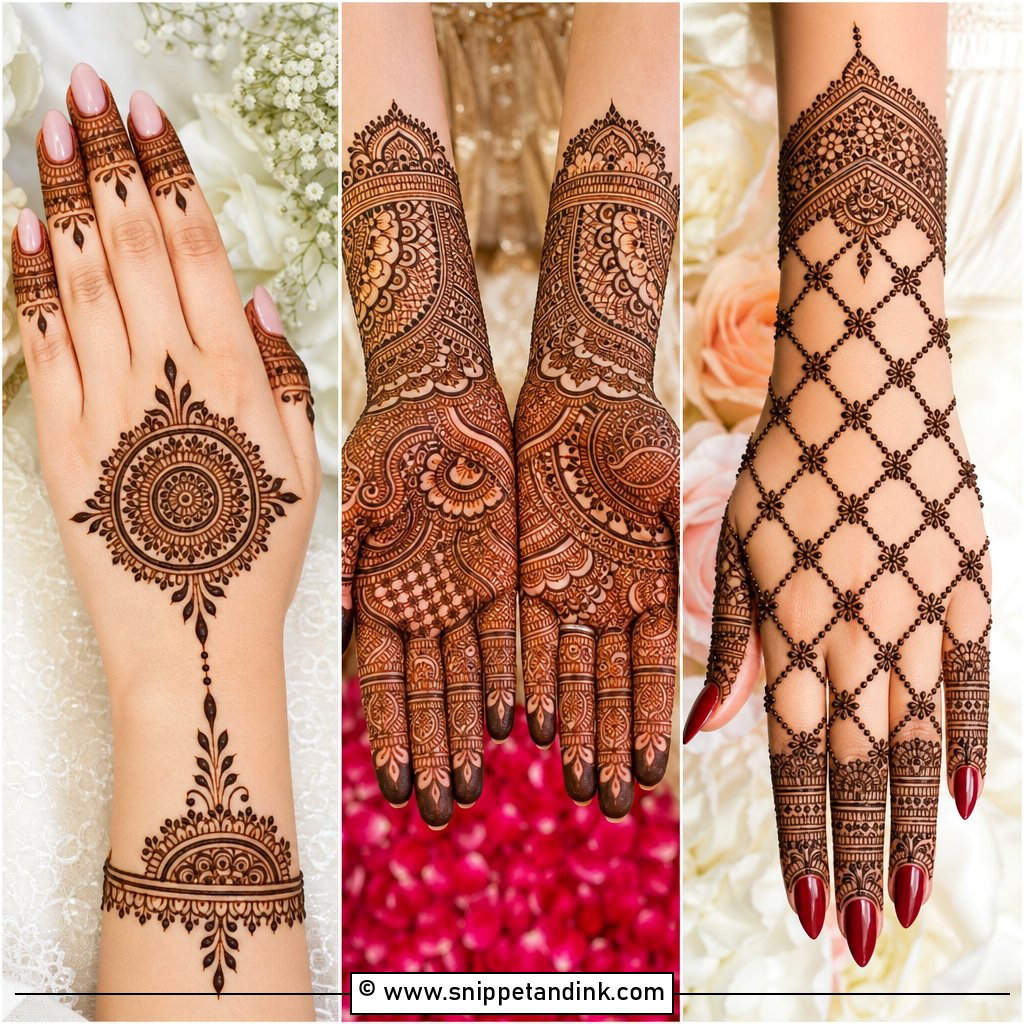
Jaali looks like lace on the skin. The mesh can be diamond, floral or geometric, with a dot or leaf in each cell, on the back of the hand, the wrist, the forearm or the palm. It gives texture without crowding, as long as the grid is even and wet lines never touch; if they do, the cells fill in and the lace becomes a smudge. I balance wide jaali panels with bold borders and a few solid motifs so the stain keeps some depth.
11. Rajasthani Dulhan Mehndi Design
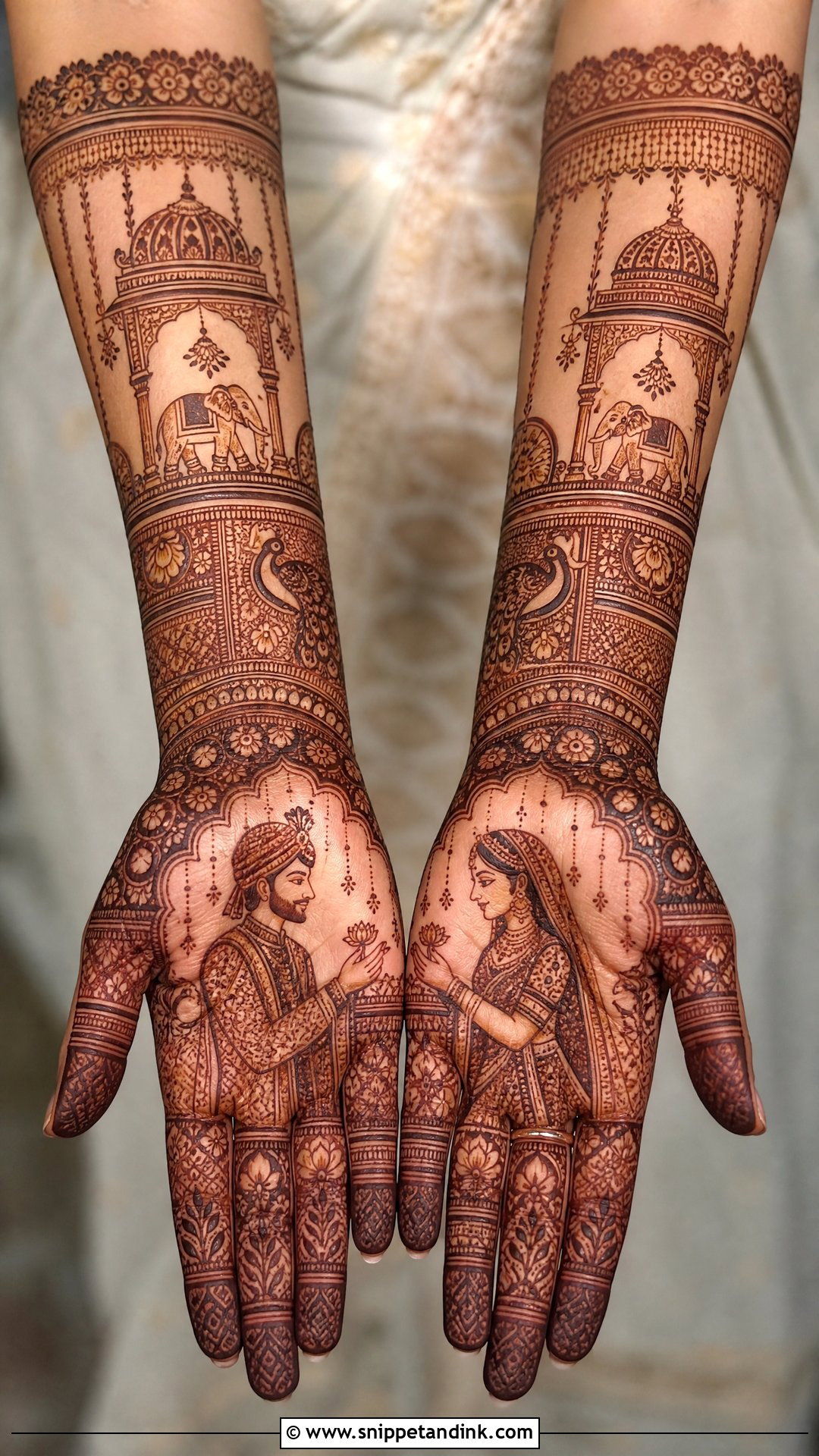
Rajasthani dulhan work leaves almost no empty skin. Couple figures, elephants, palanquins, peacocks, musical instruments and palace arches run from fingertips to forearms in very fine lines. It’s the longest sitting I do, so plan the mehndi ceremony around it rather than squeezing it in. Hiding the groom’s name somewhere in the pattern is a playful custom that fits naturally into this style. Heavy lehengas and traditional jewellery suit its density.
12. Marwari Dulhan Mehndi Design
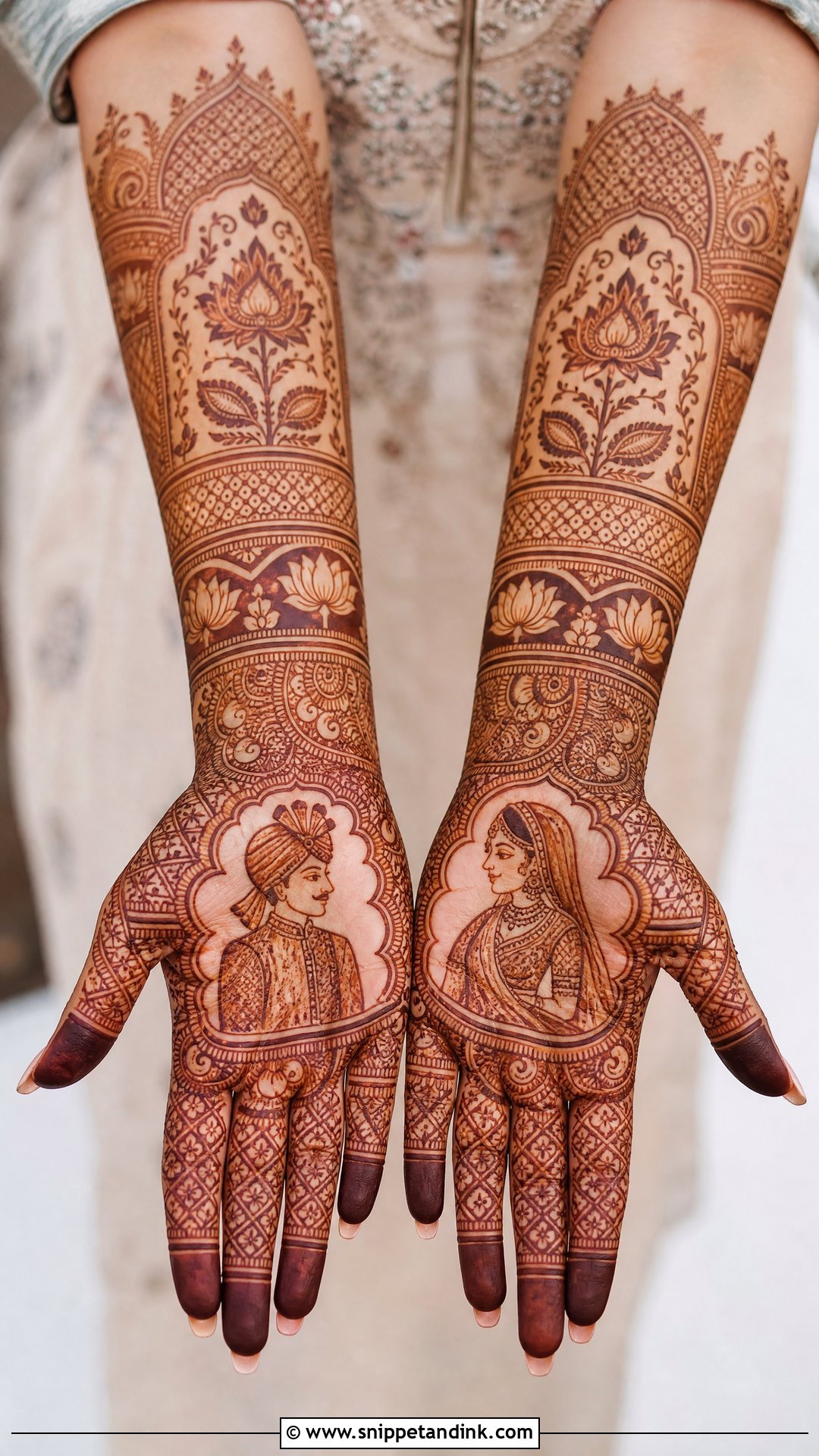
Closely related to classic Indian bridal art, Marwari dulhan mehndi design leans on packed paisleys, fine lines, lotus bands, couple figures and symmetrical palms, with detailed finger caps and layered wrist bracelets. It suits brides who want heavy henna organised into neat sections rather than open trails. Because so much of the design is filled, the result depends on the stain more than any other style here. A pale stain makes Marwari work look muddy, so aftercare is not optional.
13. Pakistani Dulhan Mehndi Design
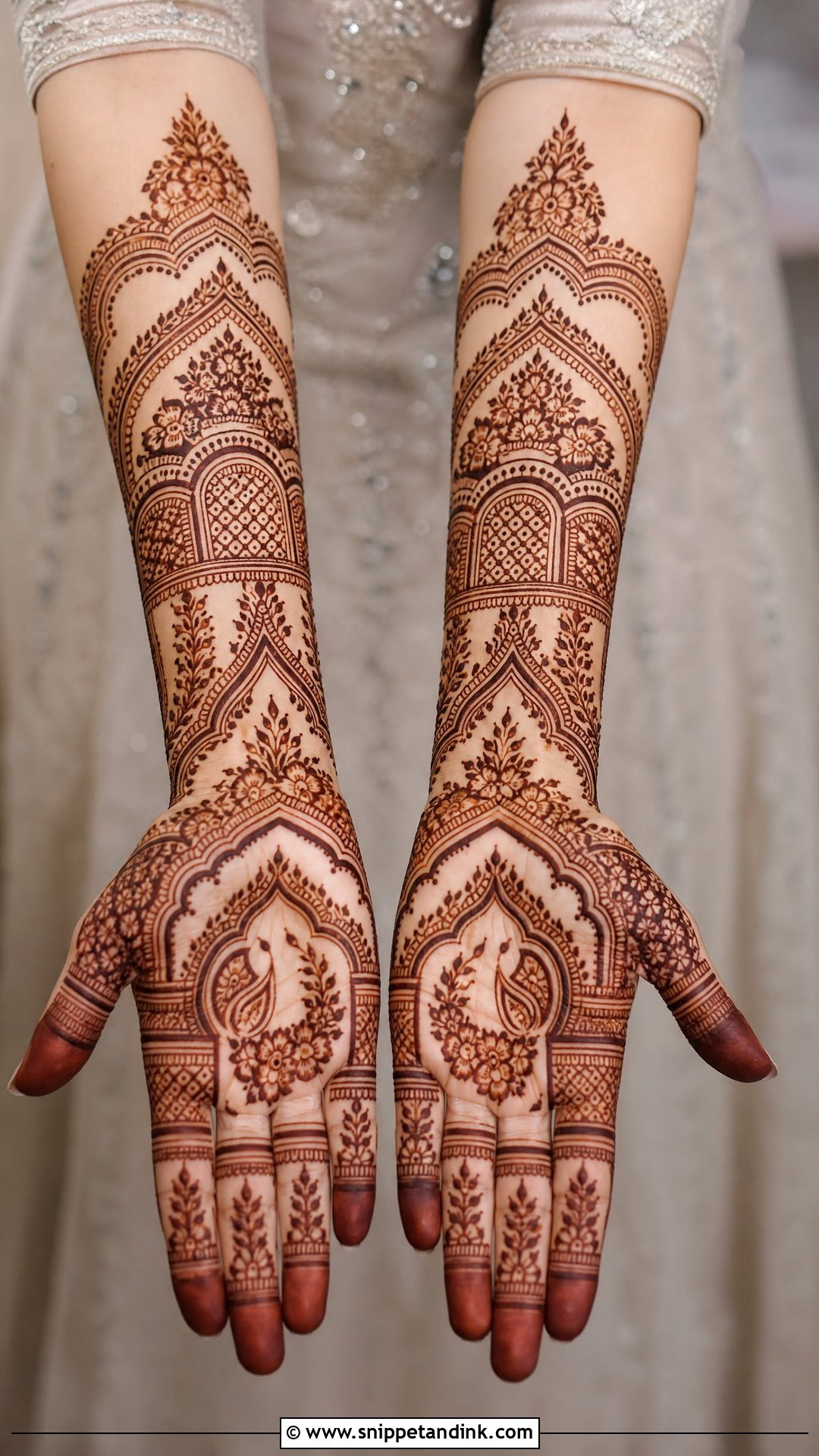
Detail with soft flow is the mark of Pakistani dulhan mehndi design: florals, paisleys, domes, jaali panels and leafy trails extending from wrist to forearm, with smarter spacing than dense Indian work. It reads rich without weight, which suits nikah, walima, baraat or engagement. The back can carry bracelet patterns and ring chains; the palm holds mandalas or floral frames. Bring a photo of your outfit embroidery, because I like to match the density of the henna to the density of the fabric.
14. Moroccan Dulhan Mehndi Design
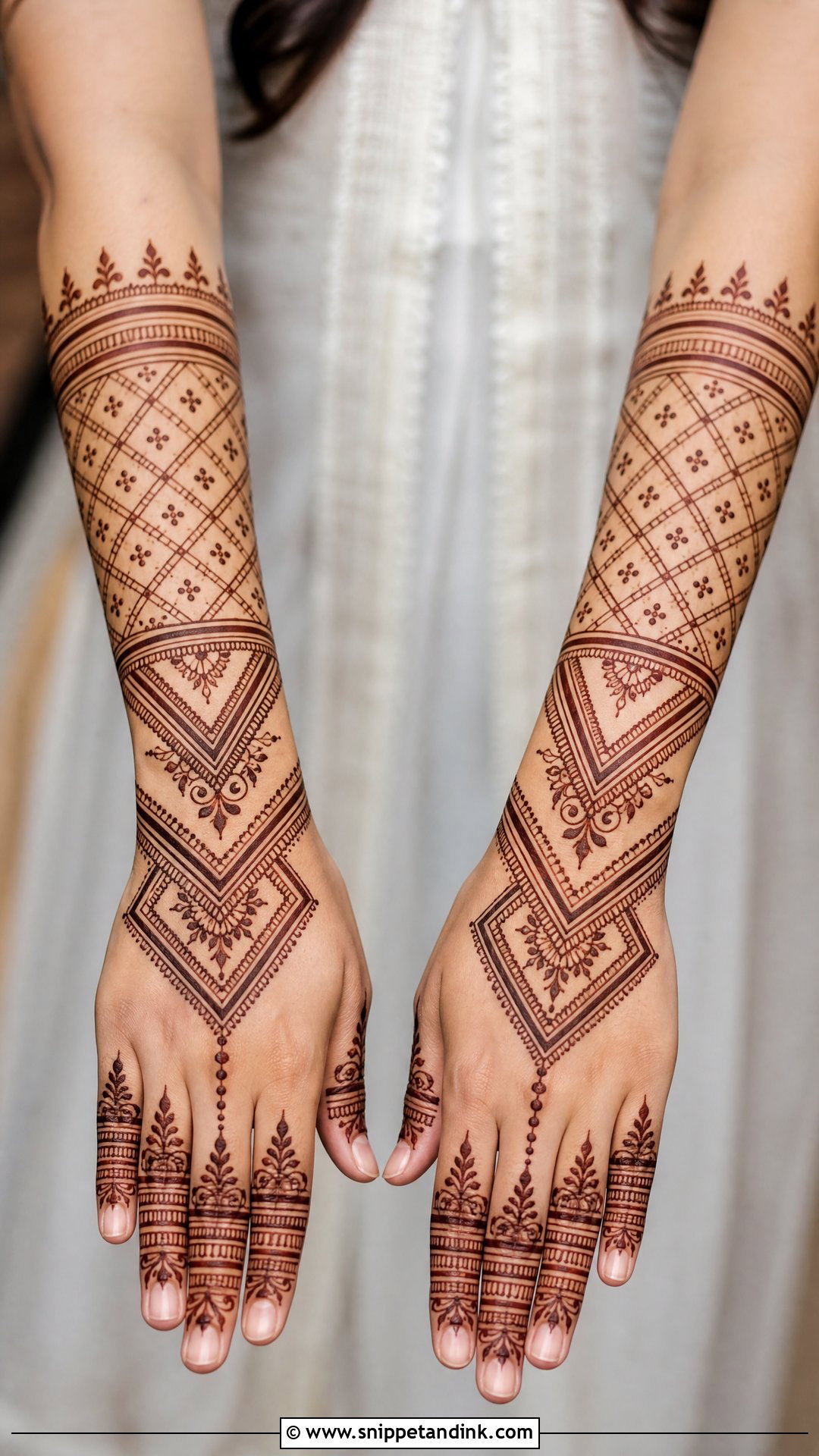
Diamonds, triangles, grids, lines and strong borders give Moroccan henna its architecture. On the back of the hands and forearms the geometry looks sharp and current, which suits fusion outfits and minimal jewellery. For a bride I soften the base with a few small flowers or leaves. Straight lines are less forgiving than curves, so I mark guide dots first; even spacing is what makes the finished stain look deliberate.
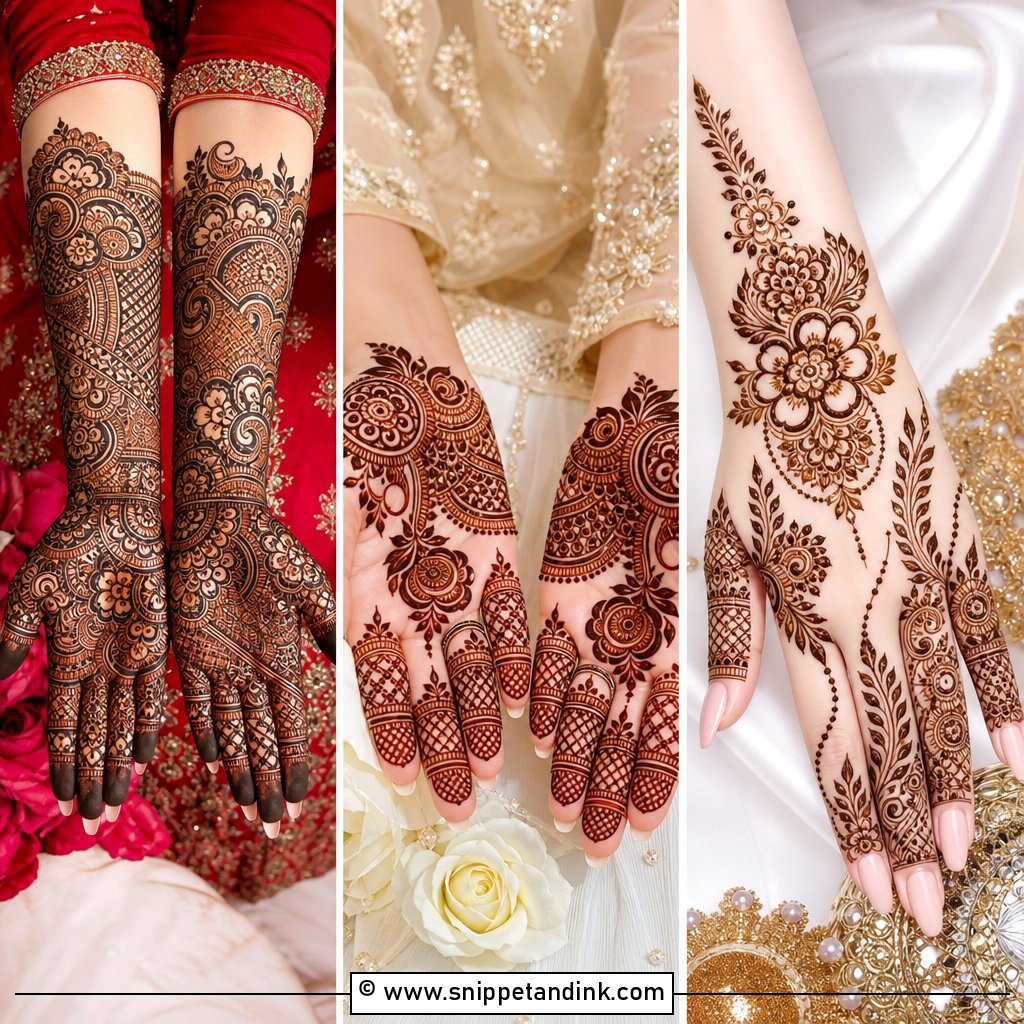
15. Gulf Dulhan Mehndi Design
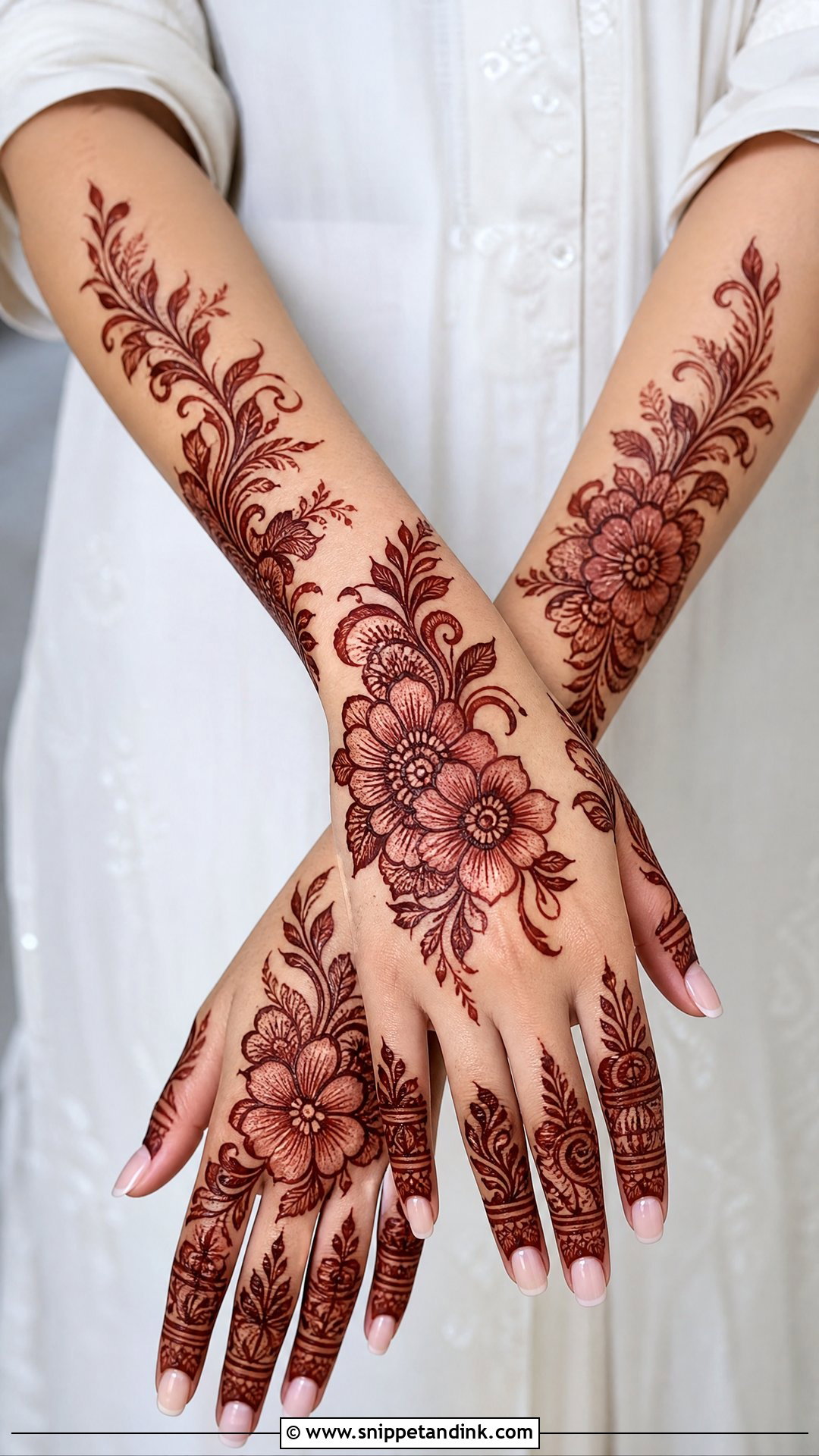
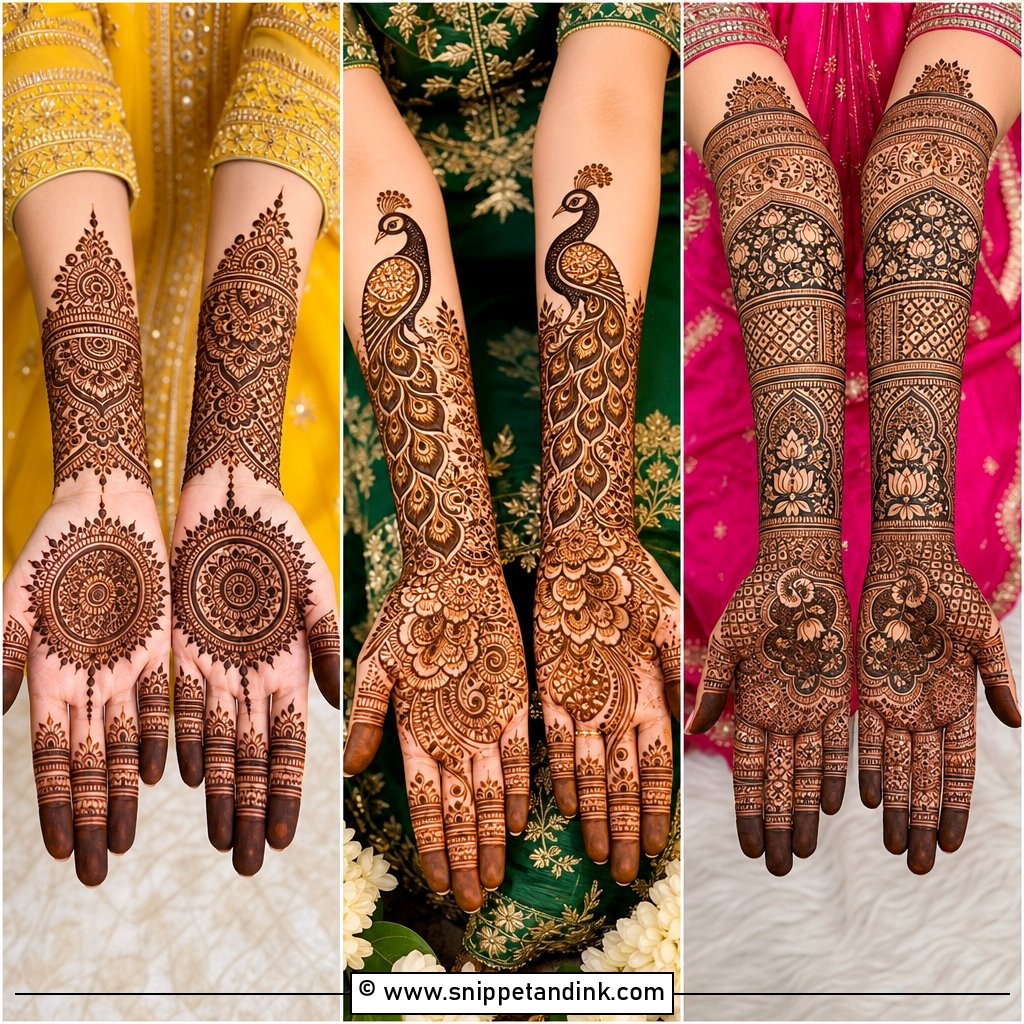
Khaleeji, or Gulf, bridal henna means large floral clusters, leafy curves and generous negative space, with vines flowing toward the wrist and strong fingertips. The open skin around each flower is what makes a deep maroon stain look so clear in close-ups. It’s a strong choice for nikah looks and modern outfits. Brides who have never worn henna often feel more like themselves in it than in full Indian coverage.
16. Back Hand Dulhan Mehndi Design
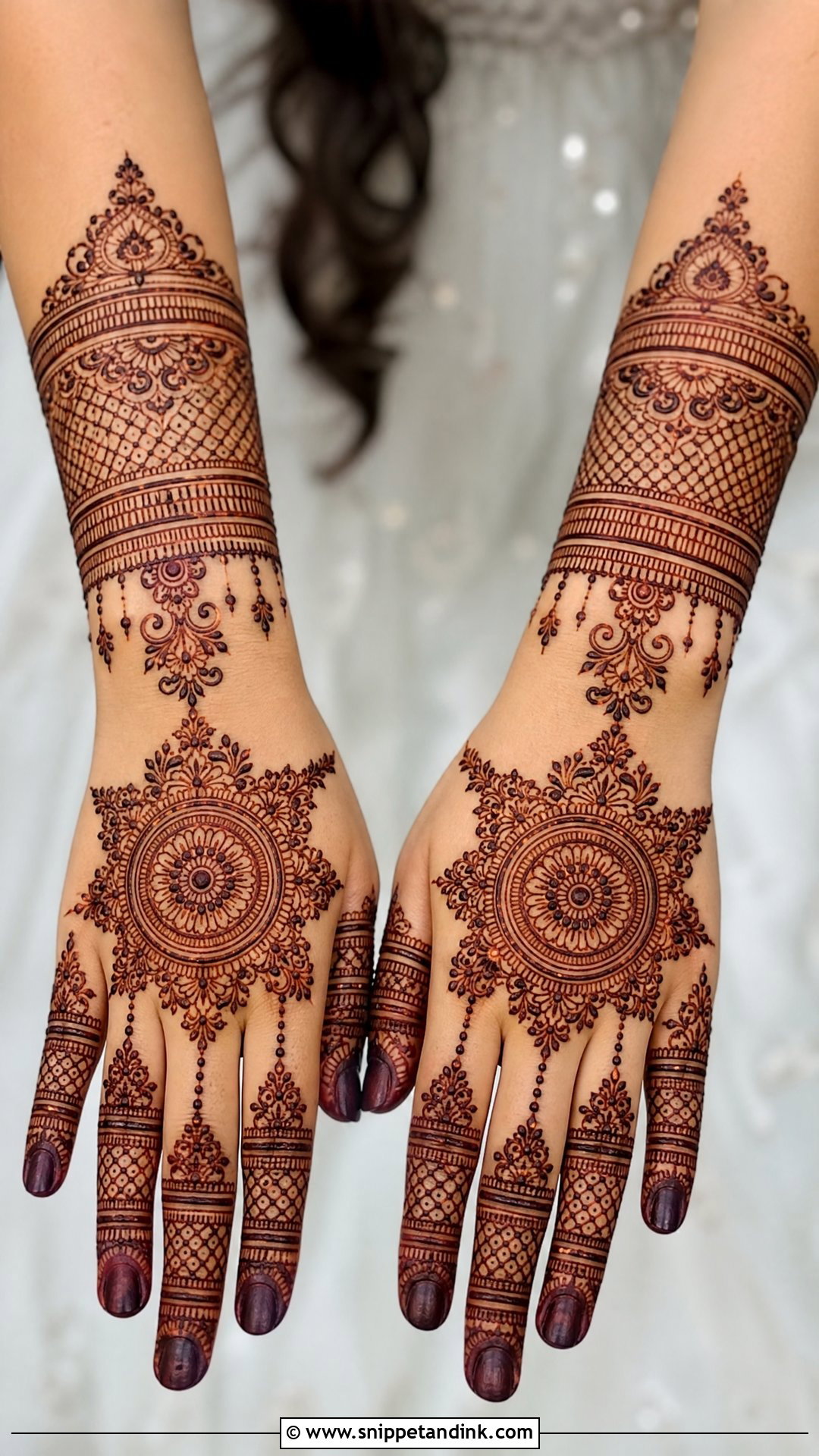
Ring shots, bangles, kalire, dupatta poses and blessings all show the back of your hands, so Back hand dulhan mehndi design deserves as much planning as the palm. A central mandala, bracelet cuffs, detailed fingers, jaali panels or hand-jewellery patterns can run from the nails to the wrist or up the arm. Expect a slightly lighter stain here, since the skin is thinner than on the palm. I carry one motif across from the palm, a lotus or a paisley, so front and back look like a set.
17. Front Hand Dulhan Mehndi Design
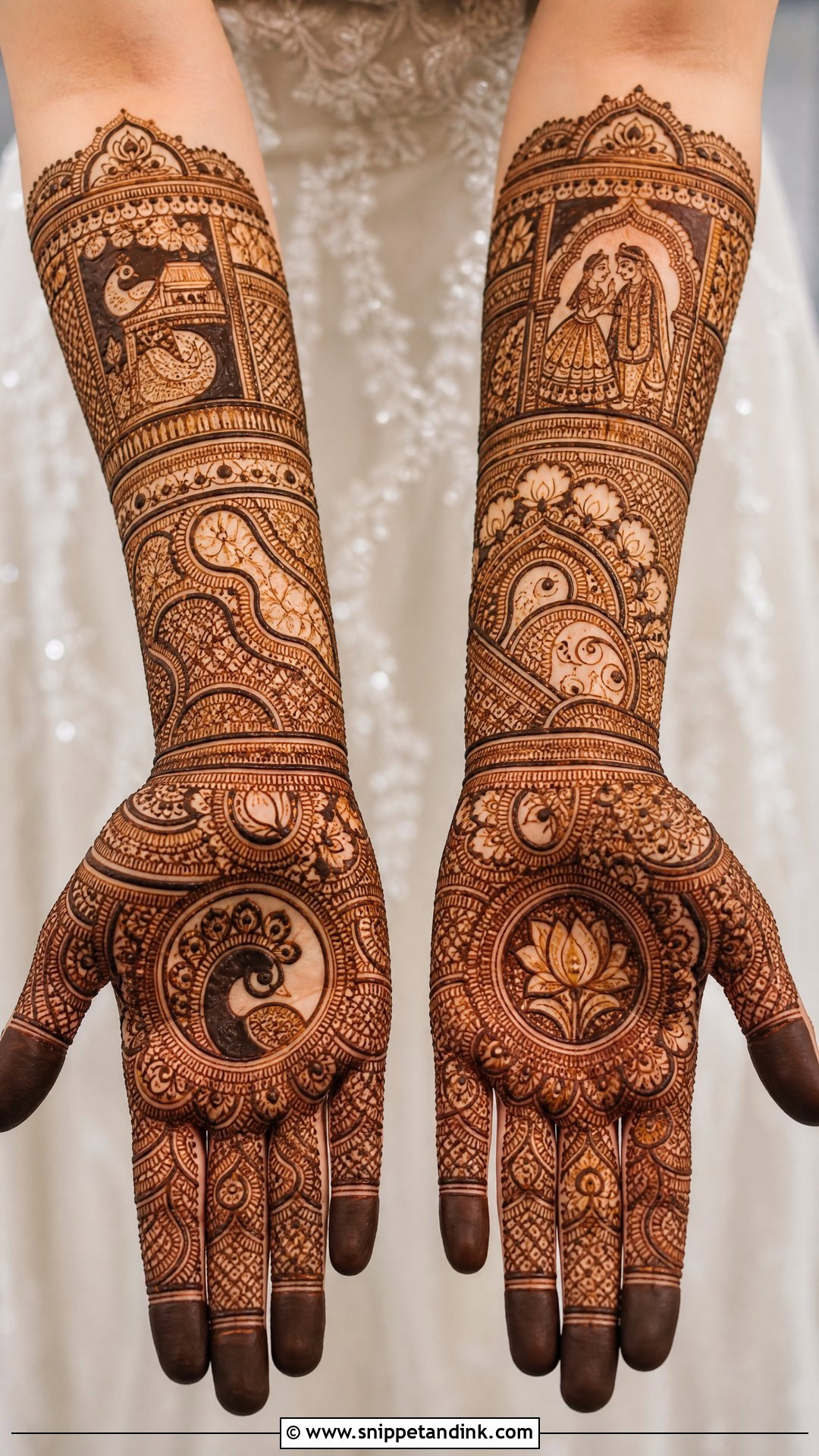
The palm is the smoothest surface I get to work on and it stains darkest, so most brides want their most detailed work here: mandalas, portraits, peacocks, lotus frames, paisley gardens or whole wedding scenes. Place both palms together and the design should look complete. Matching symmetry or different scenes on each hand both work. For a crisp dark result, avoid cramming tiny details into the very centre, where the paste is easily rubbed and the lines run together.
18. Minimal Dulhan Mehndi Design
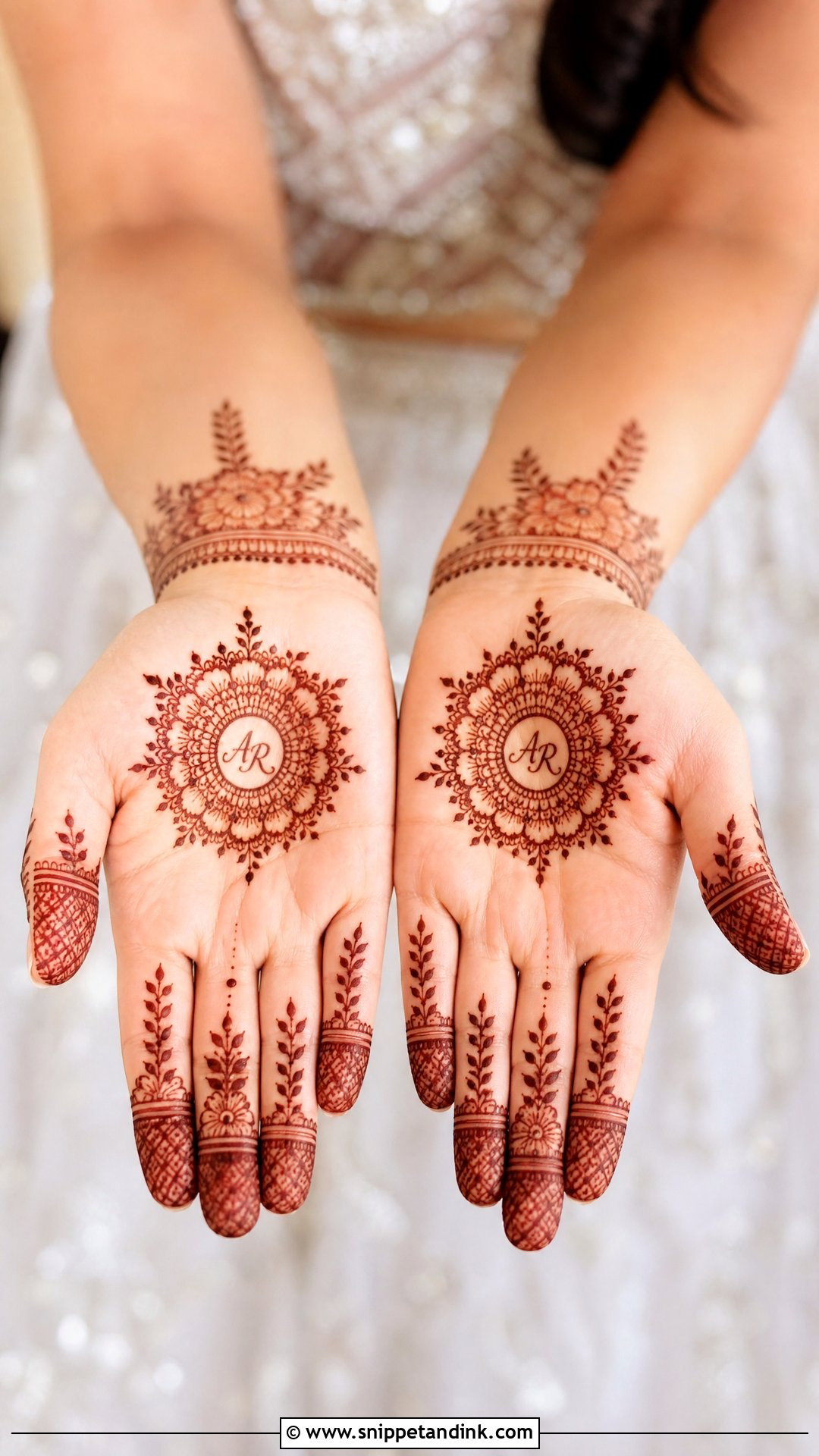
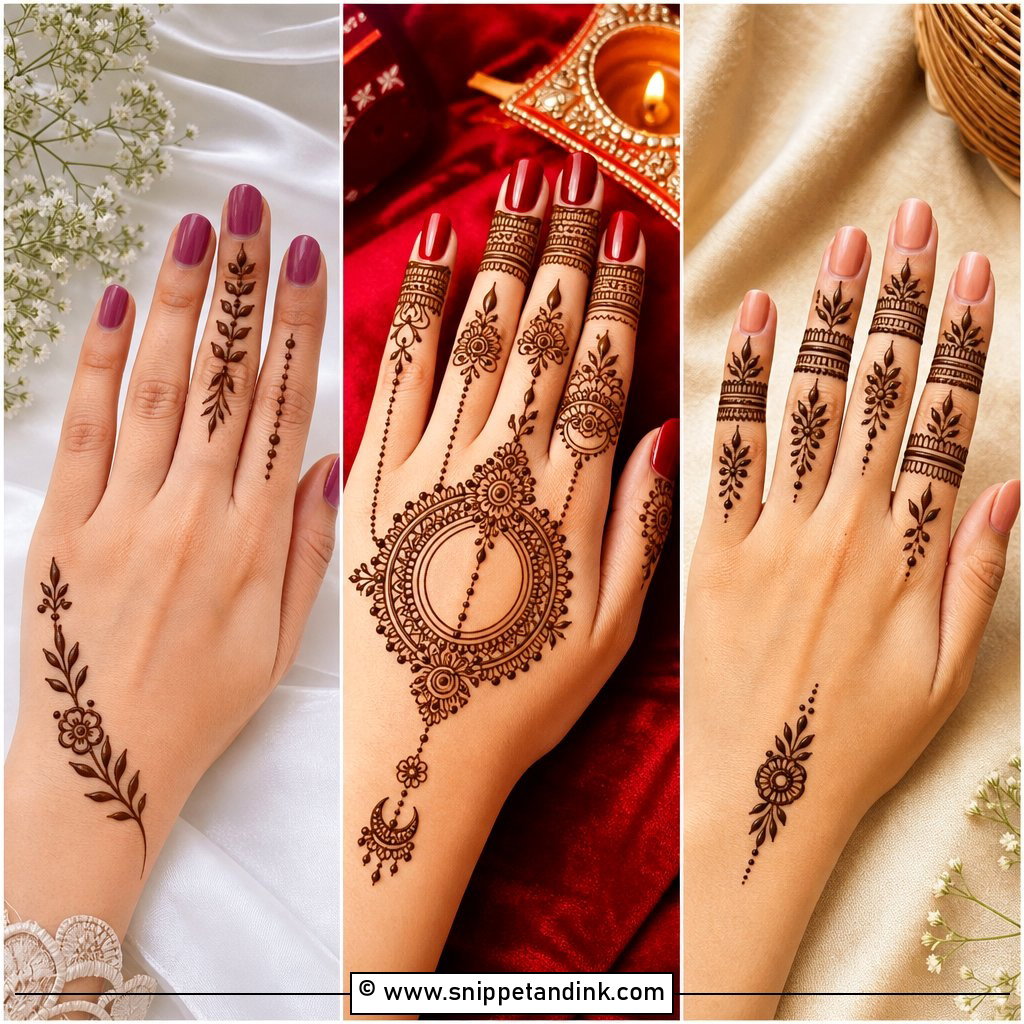
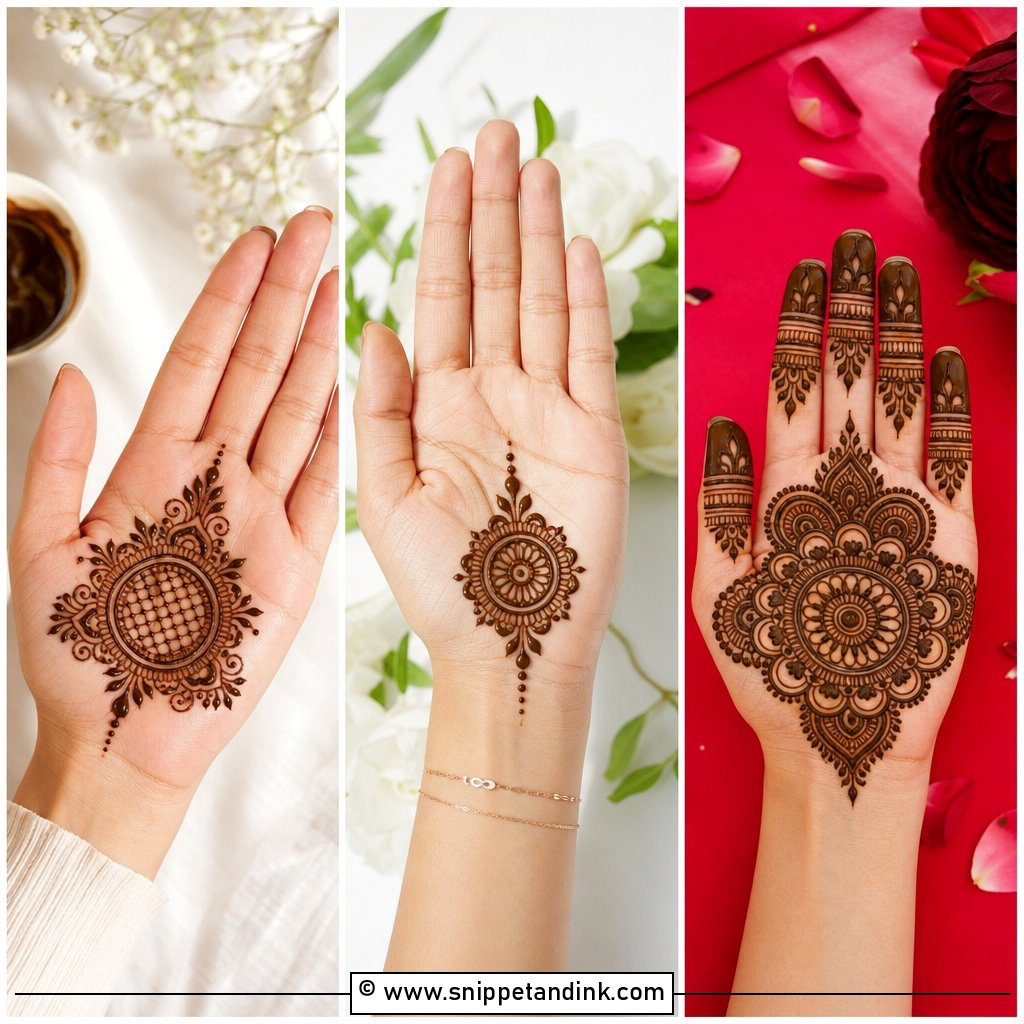
Lighter but still bridal. A small mandala, fine fingers, delicate wrist bands, spaced florals or a single Arabic trail suit intimate weddings, court ceremonies and destination weddings. Clean lines and a balanced layout make the difference between minimal and unfinished. Initials, a date or one small symbol make it personal. It also leaves room for statement rings, stacked bangles and embroidered sleeves to do their part.
19. Modern Dulhan Mehndi Design
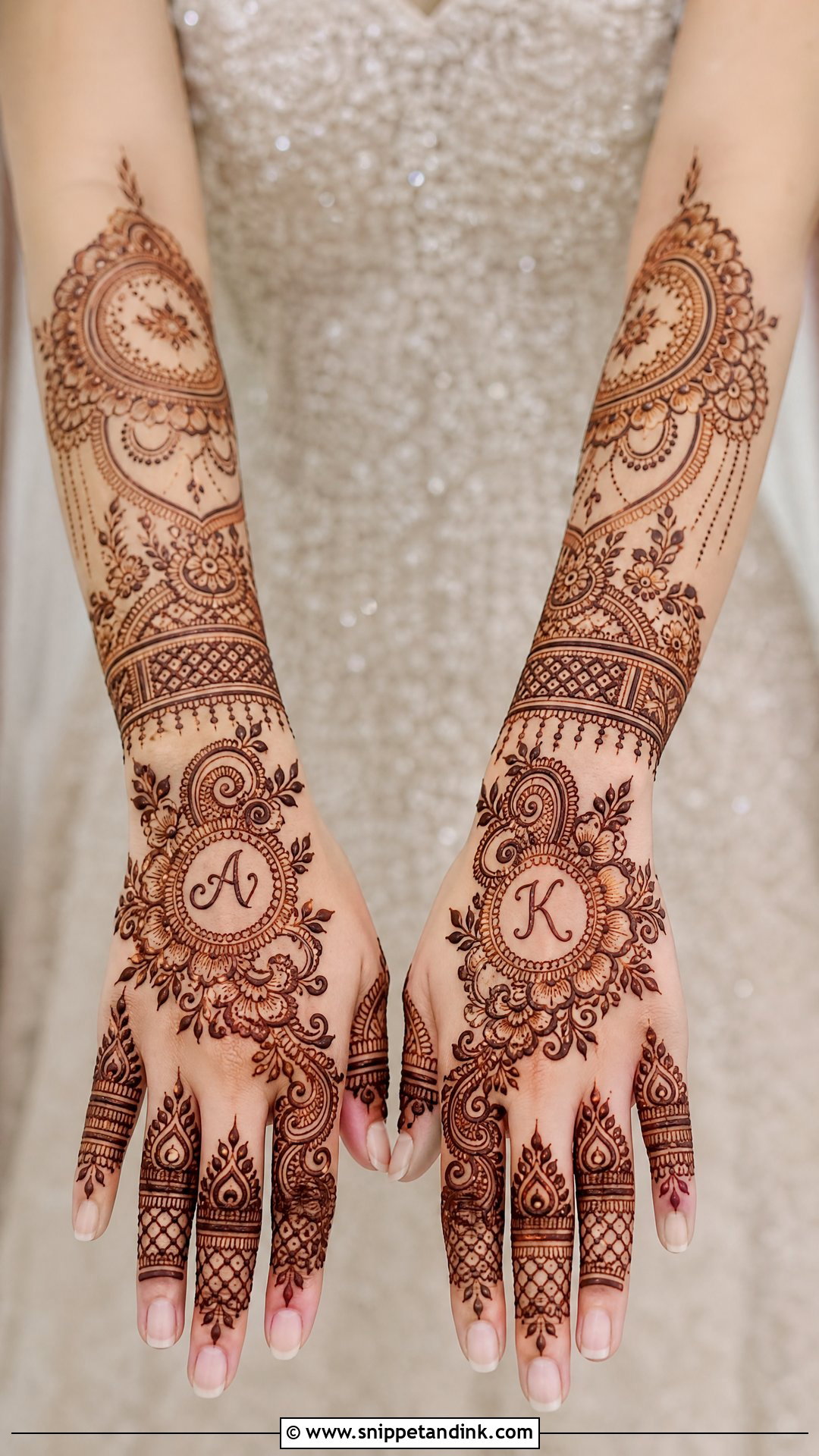
Modern bridal henna mixes tradition with current details: clean spacing, half-and-half layouts, initials, a wedding hashtag, geometric cuffs, floral mandalas or jewellery-inspired lines. Some brides wear one heavy hand and one light one. The most common problem I see is too many unrelated ideas in one design. Choose a single theme, florals or portraits or geometry, and let everything else support it.
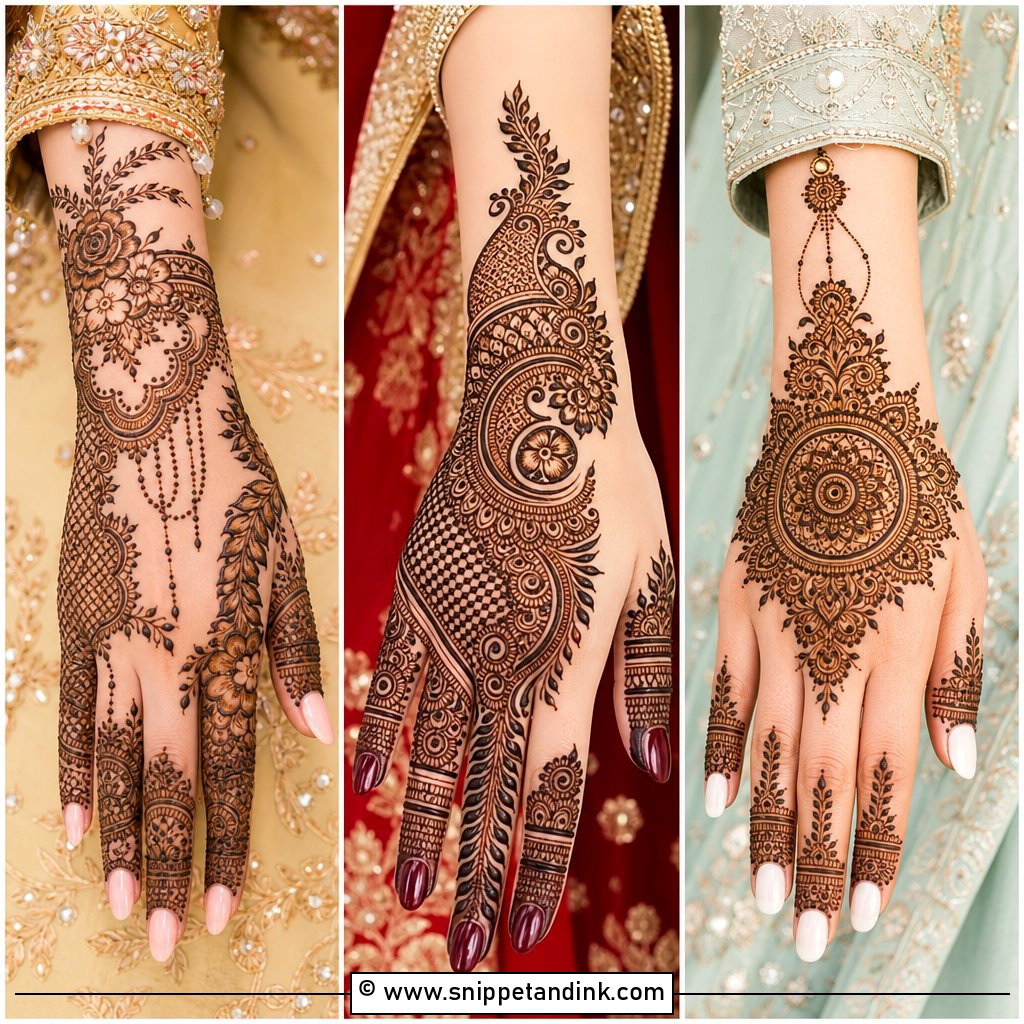
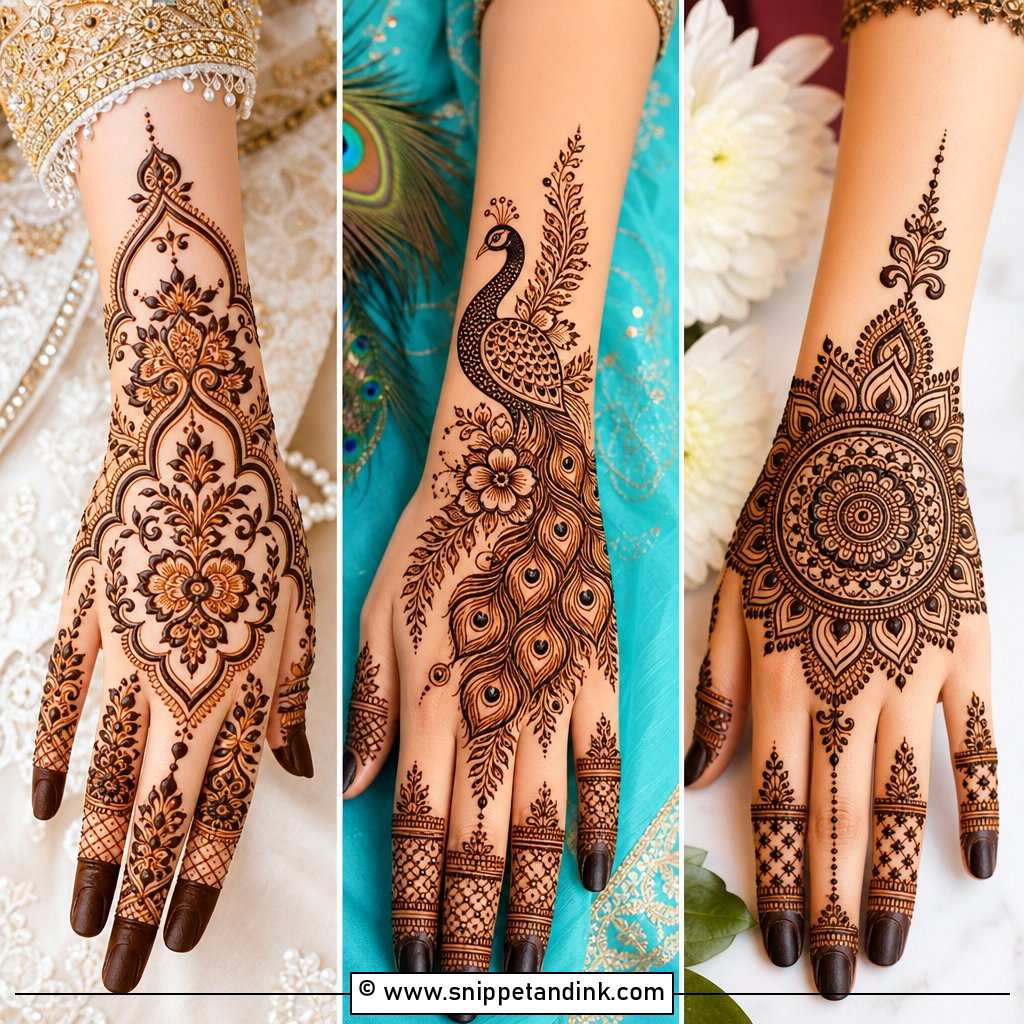
20. Simple Dulhan Mehndi Design
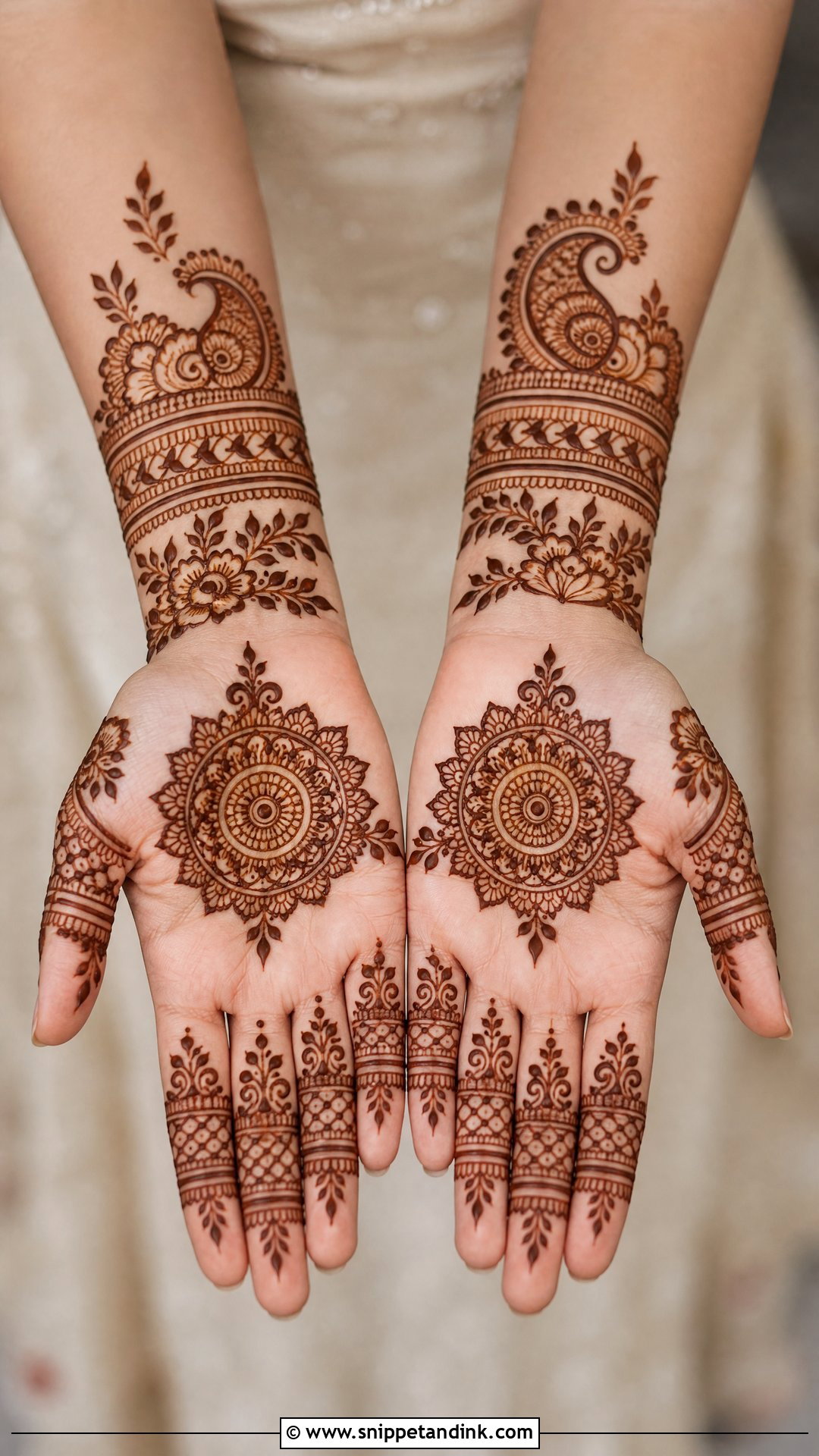
Simple dulhan designs still cover the hands; they just do it with less density. Palm mandalas, leafy wrist bands, floral trails, paisley corners and finger patterns usually stop at the wrist or just past it. A shorter ceremony suits them. Breathing room helps the stain too, since well-spaced motifs stay crisp as they darken. Ask for firm outlines and soft fillers rather than very tiny, crowded detail.
If Your Bridal Stain Comes Up Pale
Paste comes off bright orange on everyone. Don’t panic on the first evening; the colour keeps deepening for a day or two. If it still looks weak after that, these are the usual reasons I find.
- The paste came off too soon, or the hands were washed with soap straight after.
- Hands were cold during and after the sitting. Warmth helps the dye take.
- Waxing, scrubbing or a manicure happened after the henna instead of before it.
- Lotion or oil was on the skin when the paste went on, which stops it bonding.
What you should not do is reach for a darkening product or a so-called black henna touch-up. Those can contain chemicals that burn skin, and a reaction on your wedding day is far worse than a lighter stain. A gentle balm and keeping your hands out of water as much as possible are the honest fixes.
One Theme, Carried From Palm to Forearm
Your outfit, the ceremony, how long you can sit and your own taste all point toward a design. Heavy Indian or Rajasthani work feels grand; Arabic, Gulf and minimal designs feel lighter and more current. Portraits, peacocks, lotus, mandalas and jaali can all make a fine dulhan look when the placement is planned. Book an experienced artist early, send references in advance and leave time for aftercare. Then wear a design that feels like you, not like your cousin’s.
You'll Like These Ideas:


Leave a Reply