
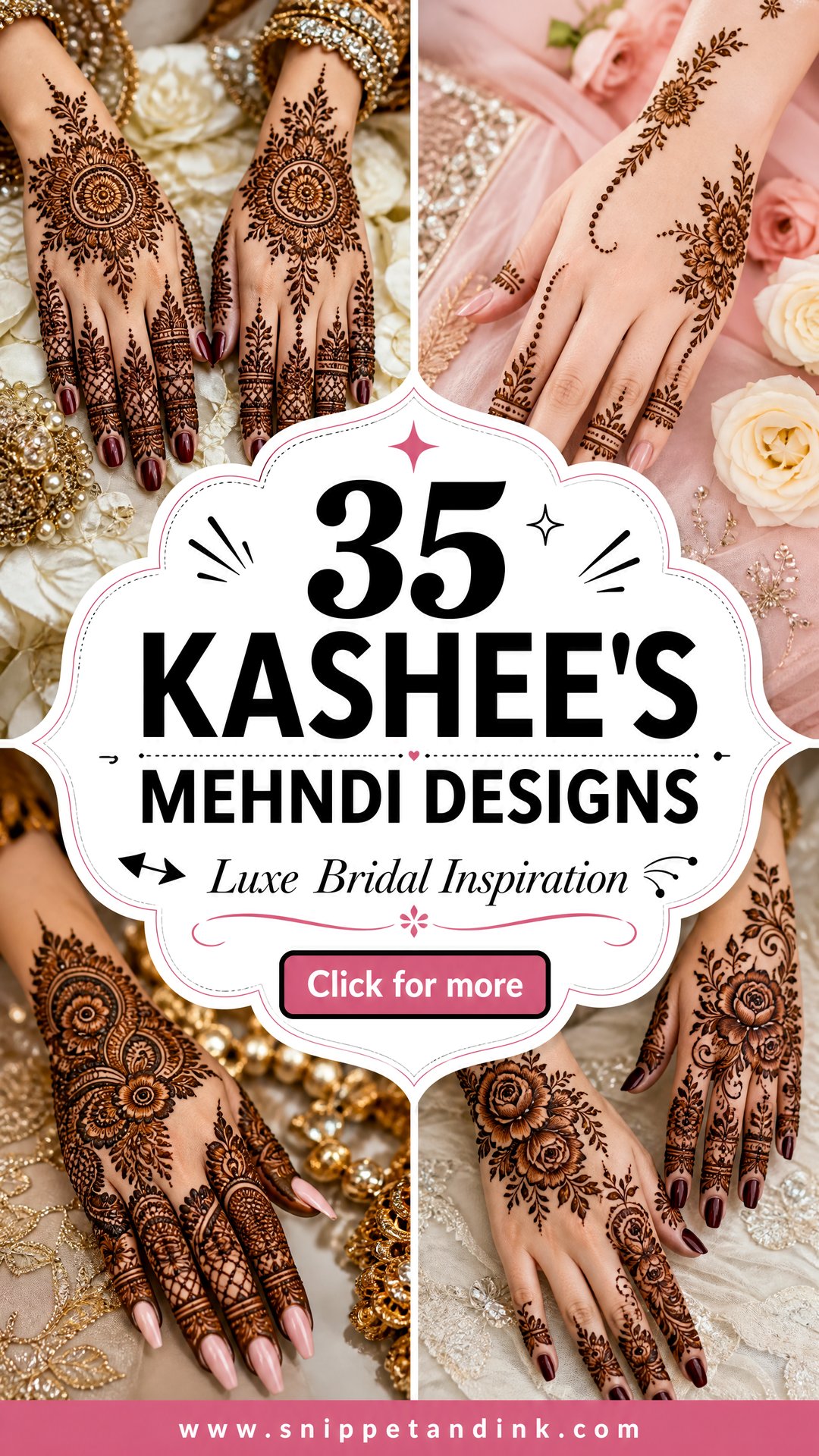
The Kashee’s look is shorthand, among brides, for a very particular finish: heavy but crisp bridal coverage, fine jaali, bold shaded florals and a deep, glossy stain that photographs well under studio lights. It sits firmly in the tradition of Pakistani elegance, but it borrows from Arabic spacing, Indian density and Gulf florals too. I apply designs in this style for dholki, mayun, mehndi night, barat, nikkah, walima and Eid, and below I’ve written up thirty five of them, with notes on placement, time in the chair and how each one wears.
Which Design Goes to Dholki, Mayun, Mehndi Night, Barat and Walima
A Pakistani wedding can mean five or six events in a week, and a bride does not wear fresh henna for each one. I plan the designs as a sequence so the stain looks its best when it matters most.
- Dholki and early functions: guests often wear tikki, bel or finger designs; the bride usually keeps her hands bare so the bridal stain starts fresh.
- Bridal mehndi: applied one to two days before the barat, so the color has darkened fully on the wedding day.
- Mehndi night: guests and family get quick Arabic or Indo Arabic designs, often from a team of artists working in a queue.
- Walima: a light top up on the back of the hand if the bridal stain has faded, never dense palm work over the old design.
If the nikkah is on a separate day, tell your artist early. I either work the nikkah design into the bridal one or keep it light enough that a second session will not look crowded.
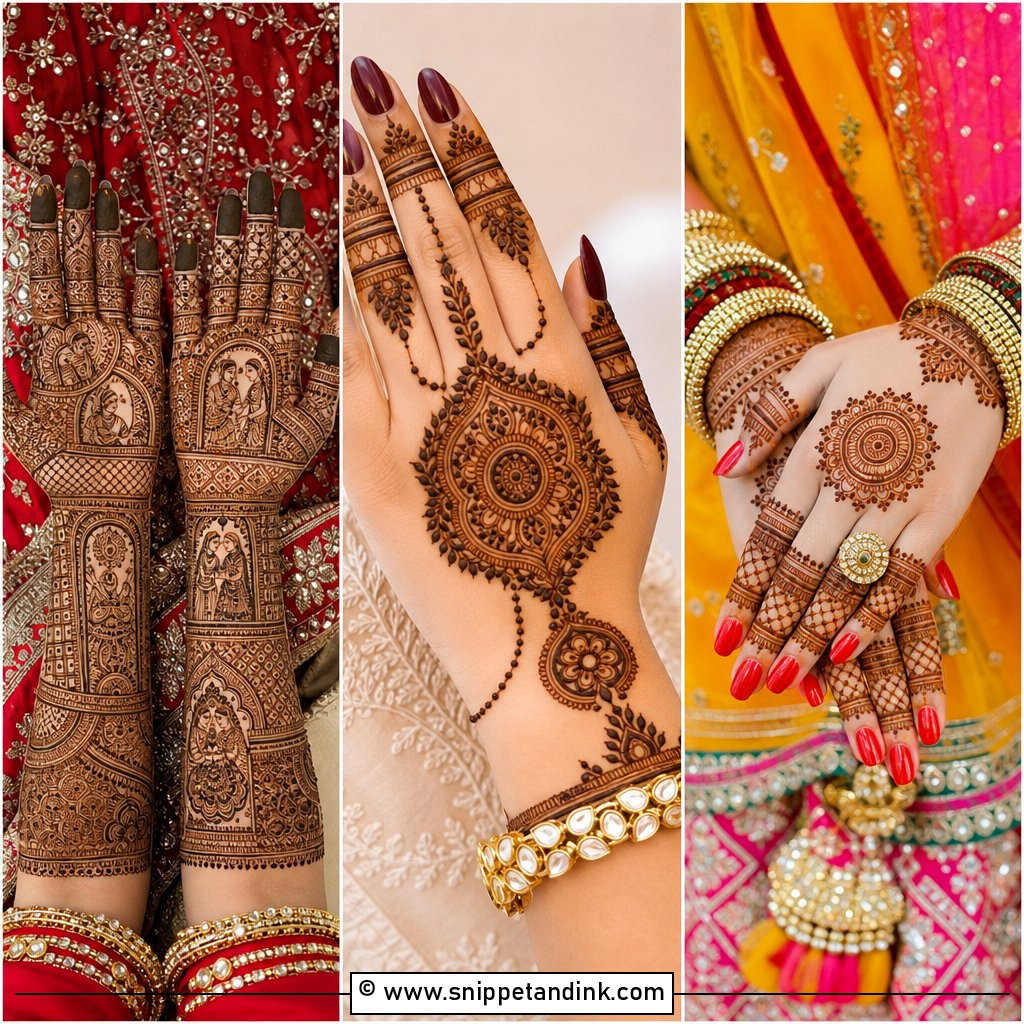
1. Kashee’s Bridal Mehndi Design
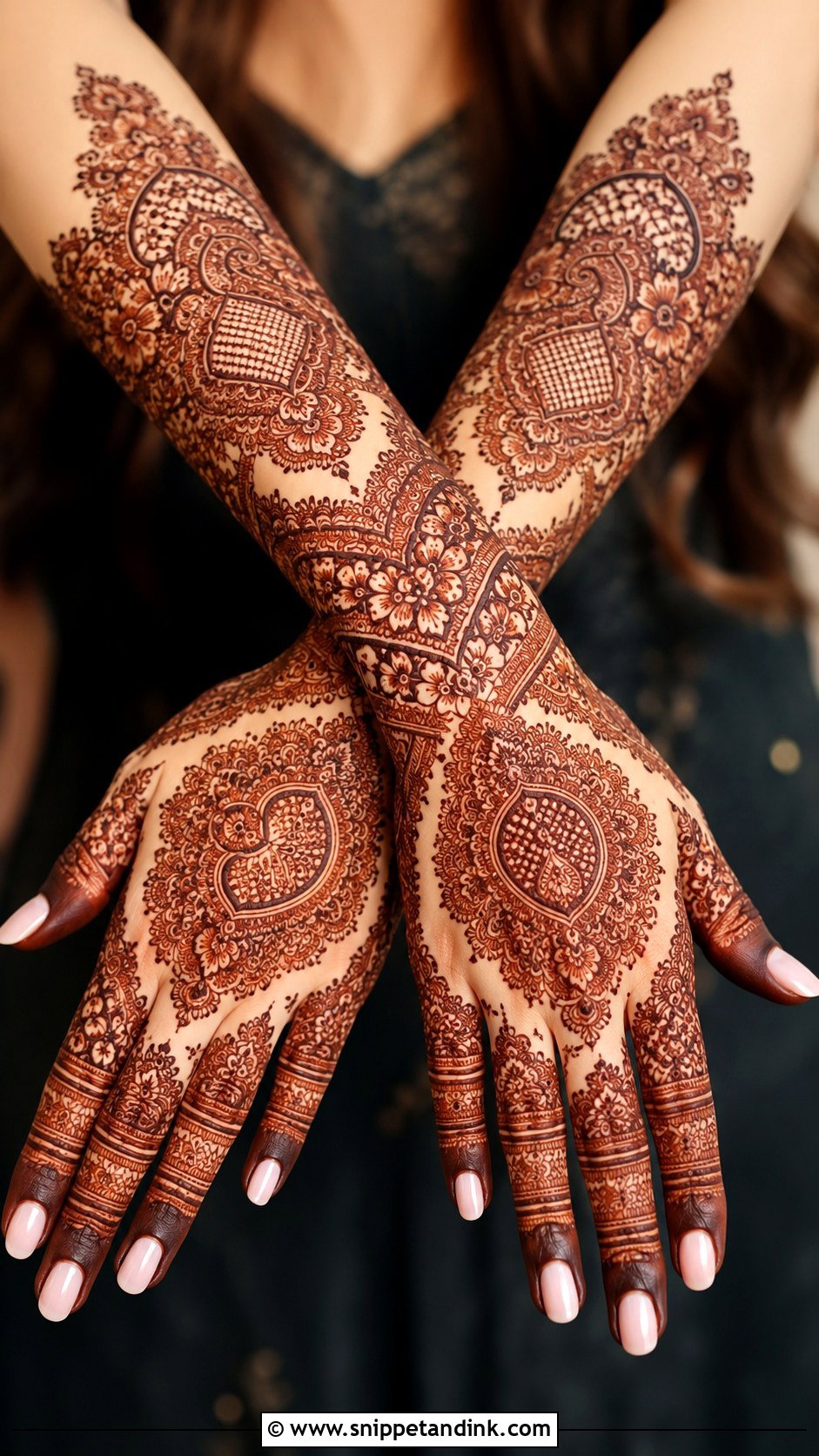
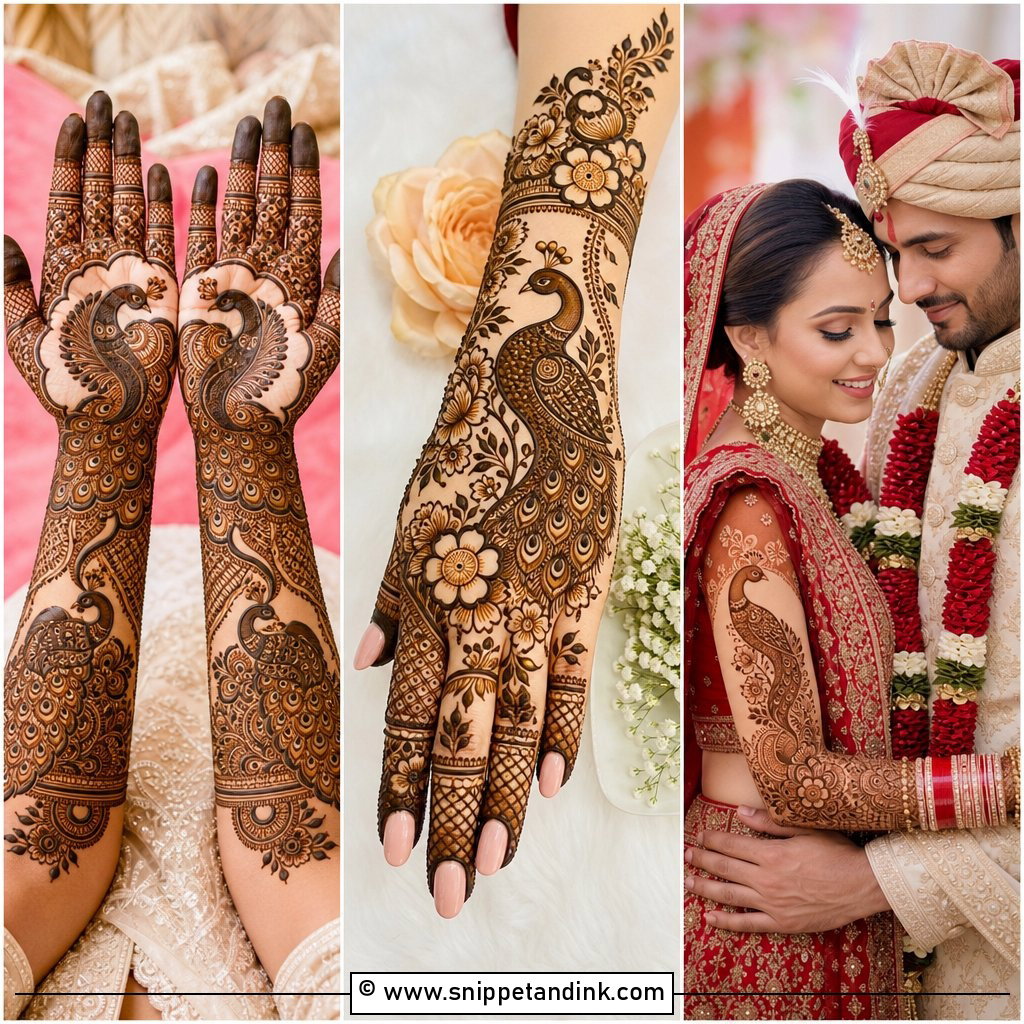
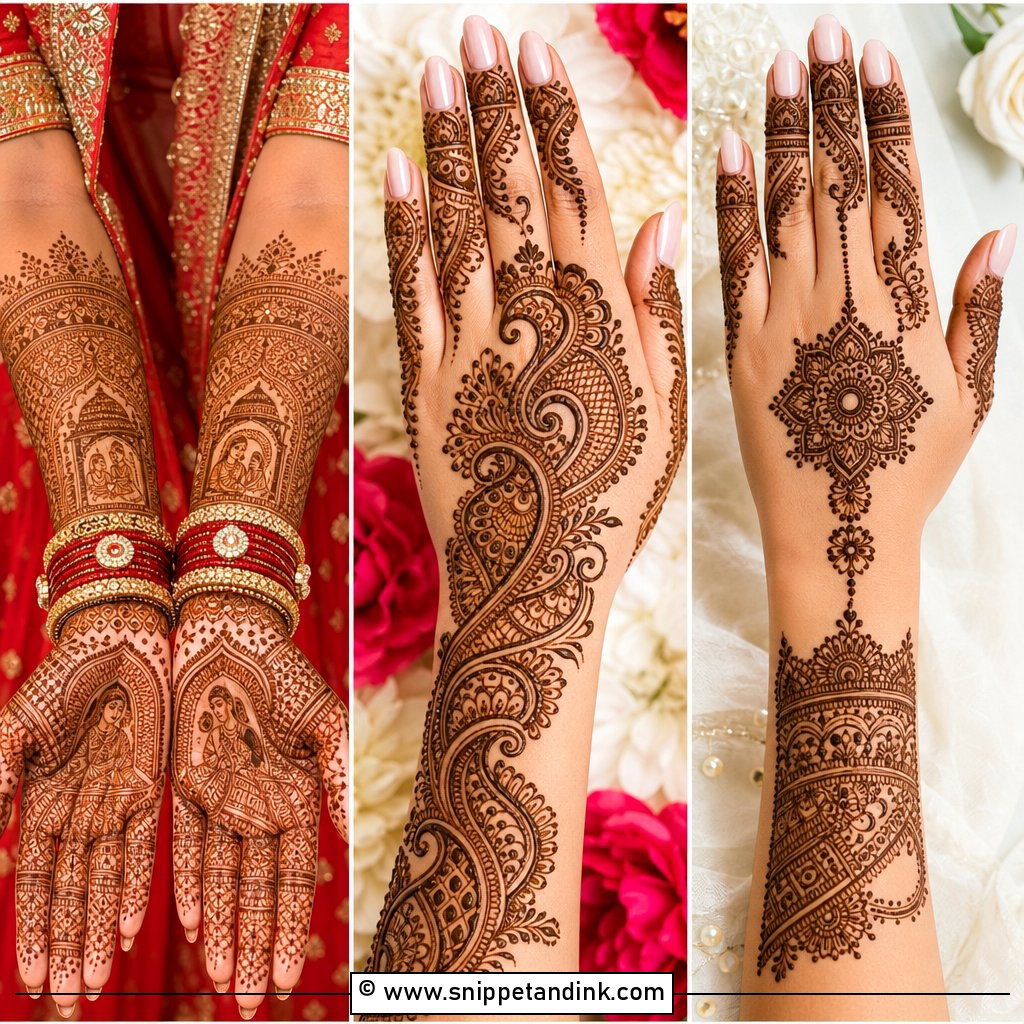
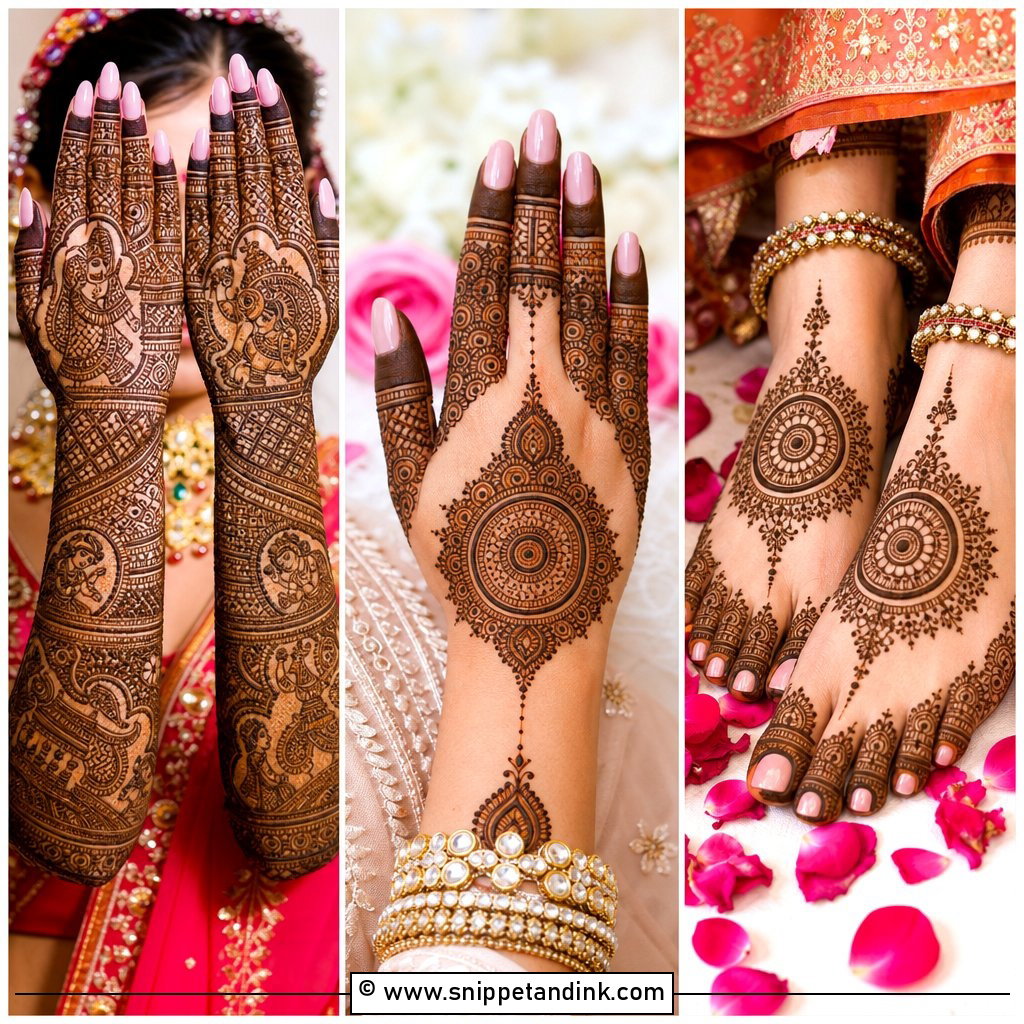
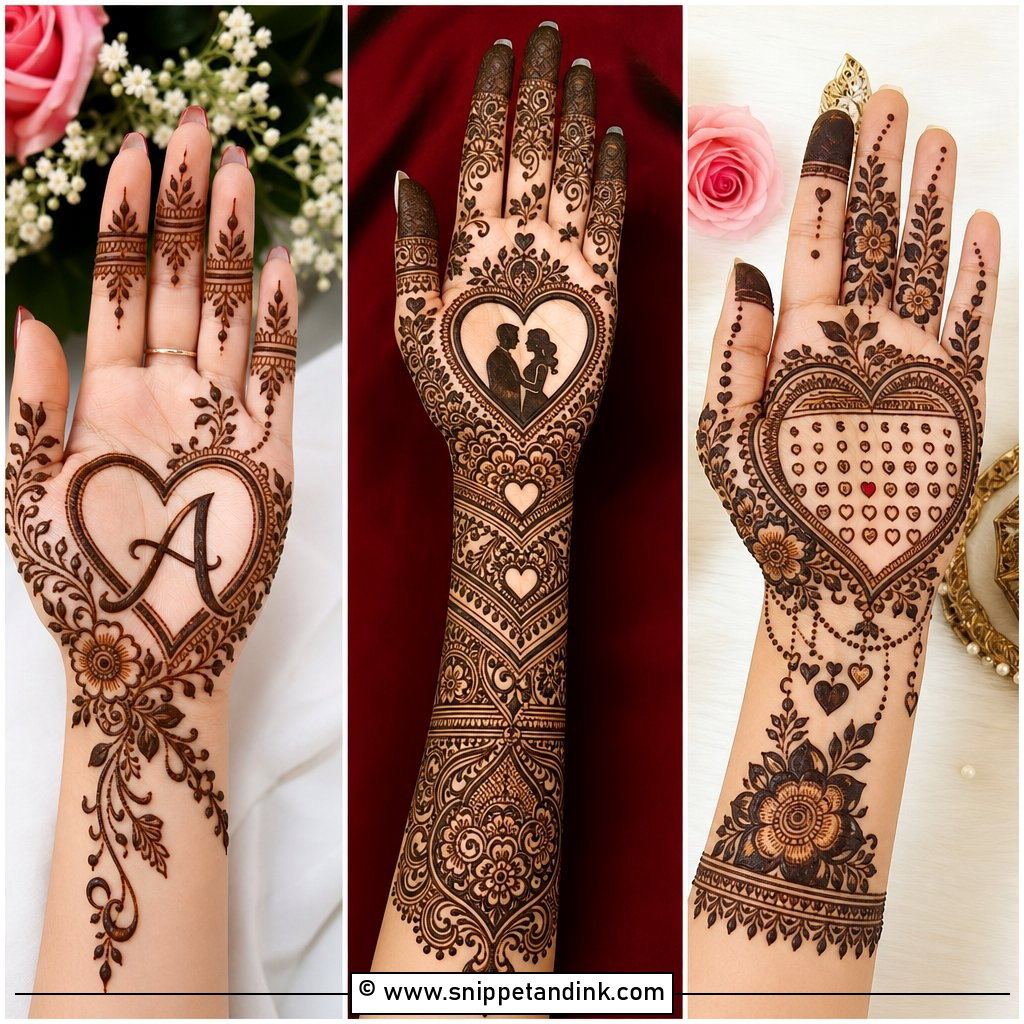
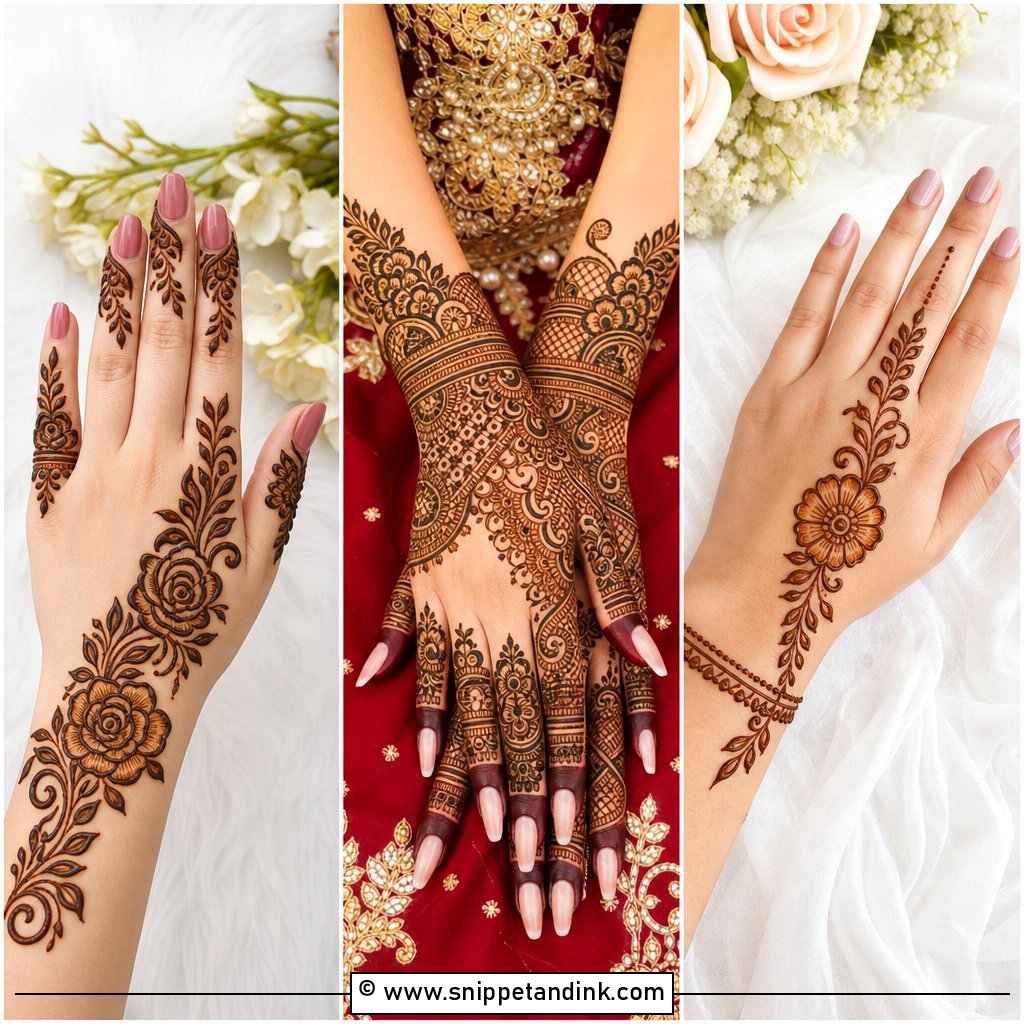
Bridal work in this style covers palms, fingers, wrists and forearms with florals, paisleys, mandalas and jaali, all held together by very neat filler. What separates it from ordinary full coverage is the control: every section is readable even though there is almost no bare skin. I let the palm carry the main story, sometimes initials or tiny bride and groom figures, and fill the fingers heavily. Plan on a long sitting, and a second shorter one if feet are included.
2. Kashee’s Full Hand Mehndi Design
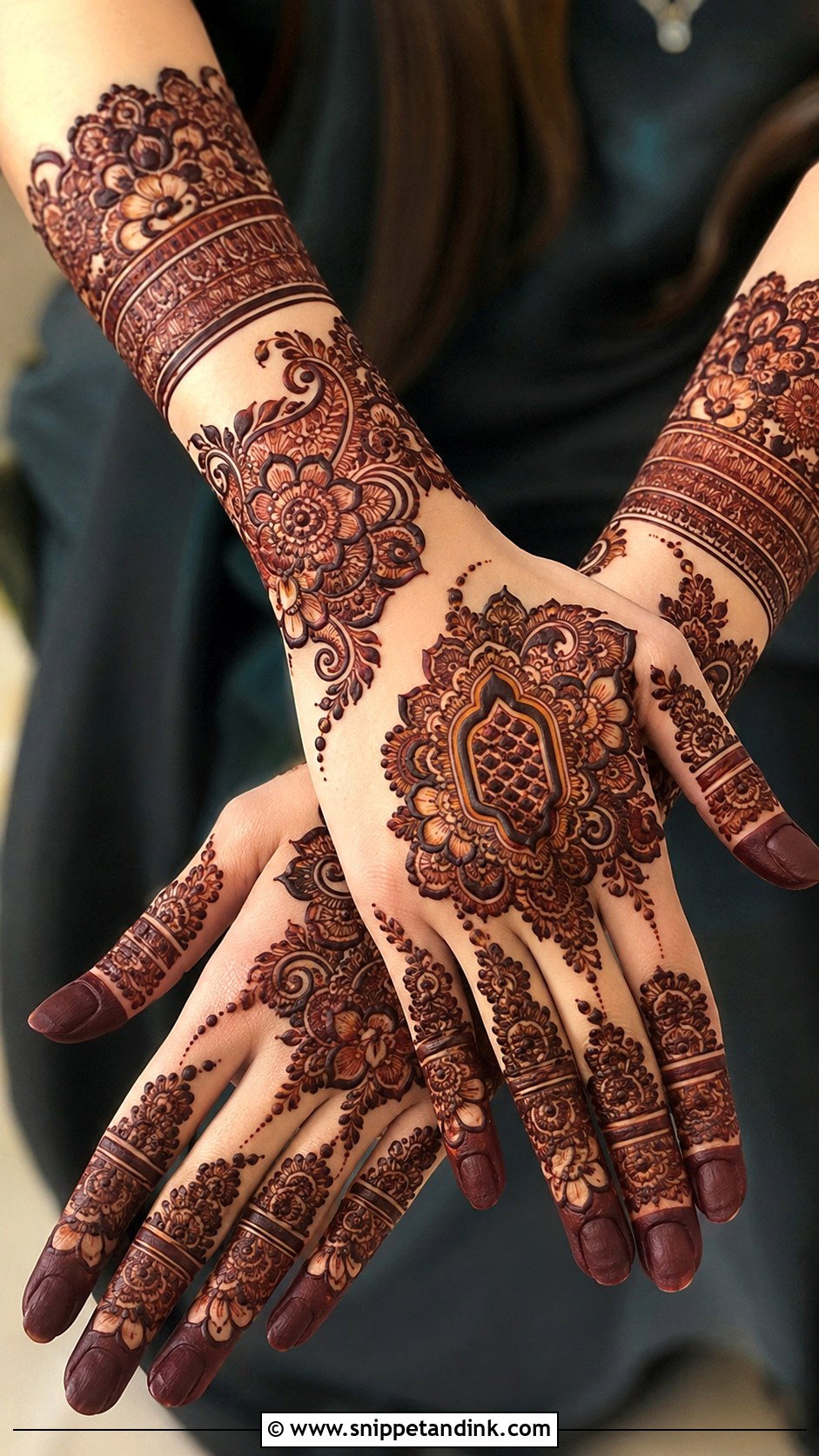
A full hand design runs as one continuous piece from fingertips to wrist or forearm: detailed tips, then floral and paisley panels, then a bracelet cuff. On the palm I usually build around a mandala; on the back of the hand, a diagonal vine or a symmetrical floral layout. The look depends on fine outlines and neat shading, and on small gaps left between motifs. Without those gaps, a full hand design stains into one dark patch and loses its detail by day two.
3. Kashee’s Front Hand Mehndi Design
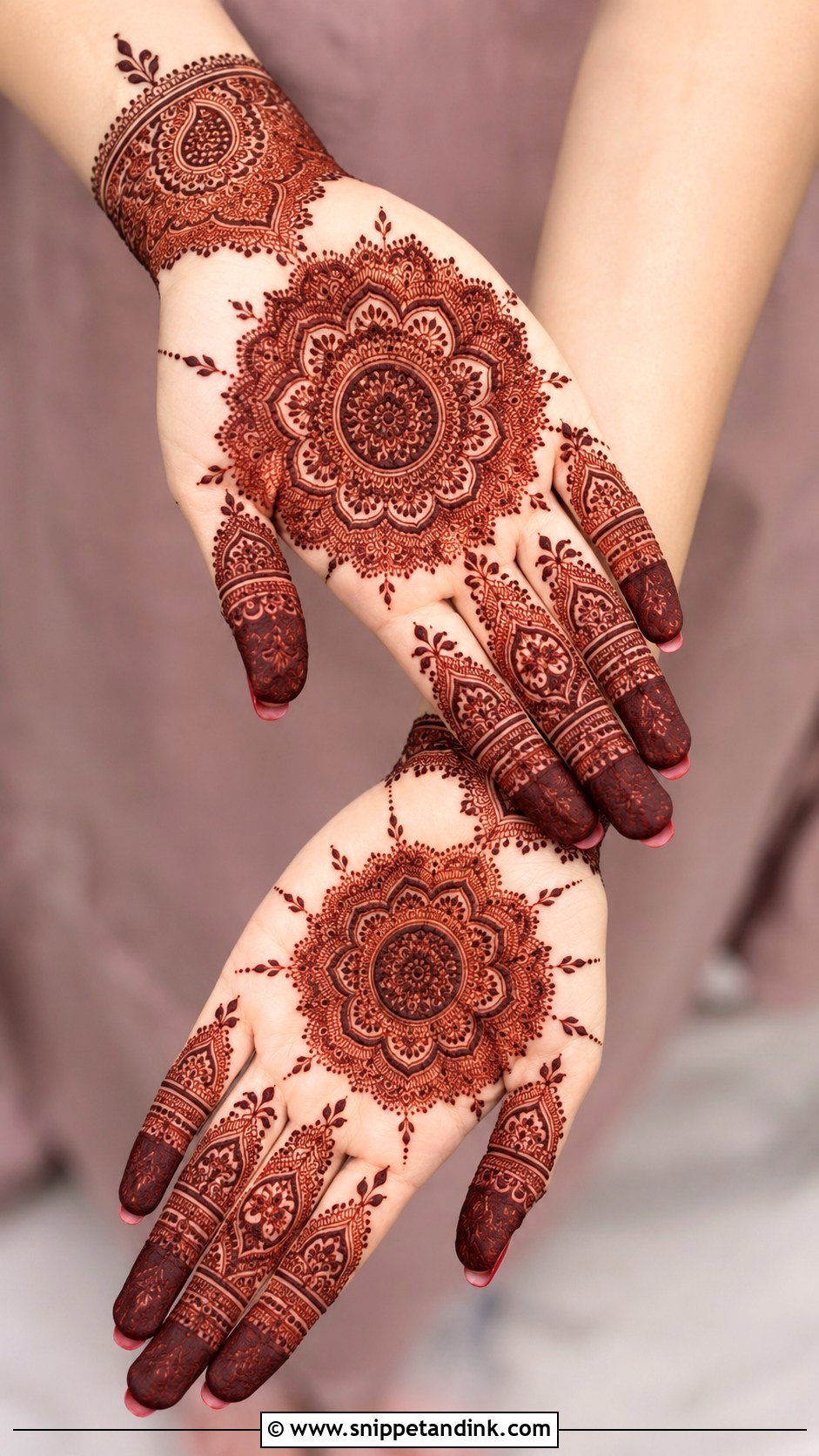
The palm faces the camera during rituals like rasm and the ring ceremony, so it is worth getting right. I start with a large tikki in the center, layer paisleys around it, then add vines, dots and fine mesh toward the fingers. Palm skin takes the deepest color on the body, so even moderate detail shows richly. For a softer version, keep the wrist light. It suits dholki, mehndi night and Eid.
4. Kashee’s Back Hand Mehndi Design
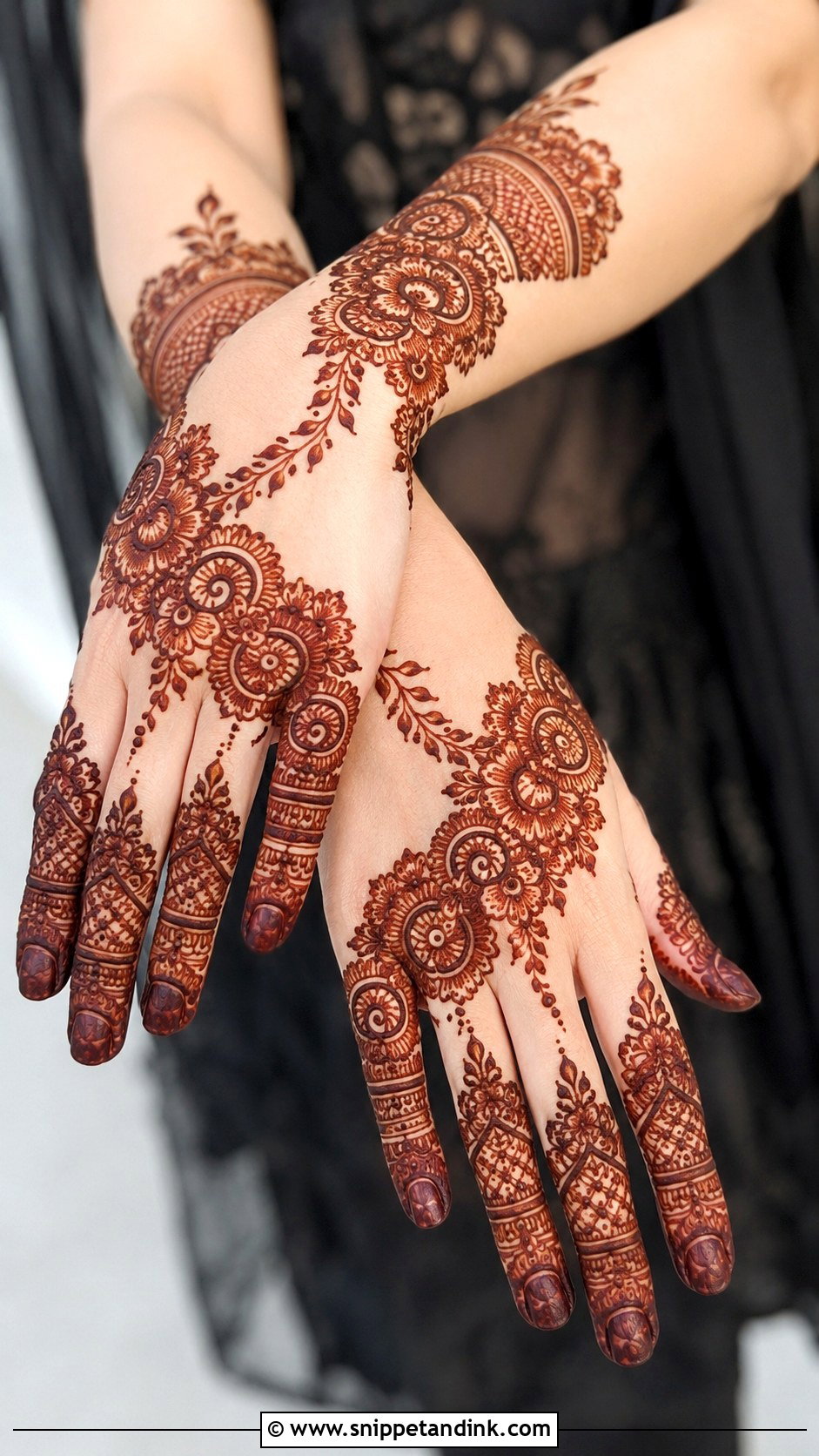
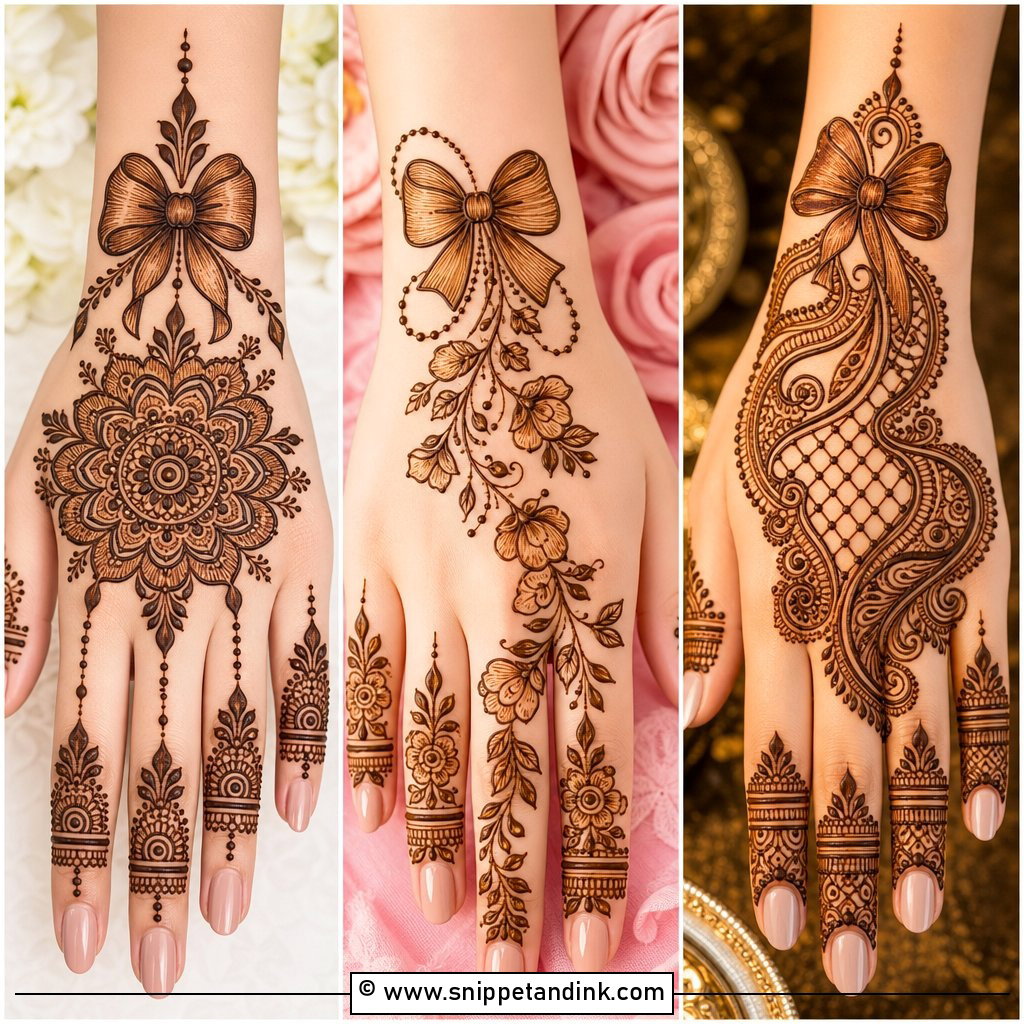
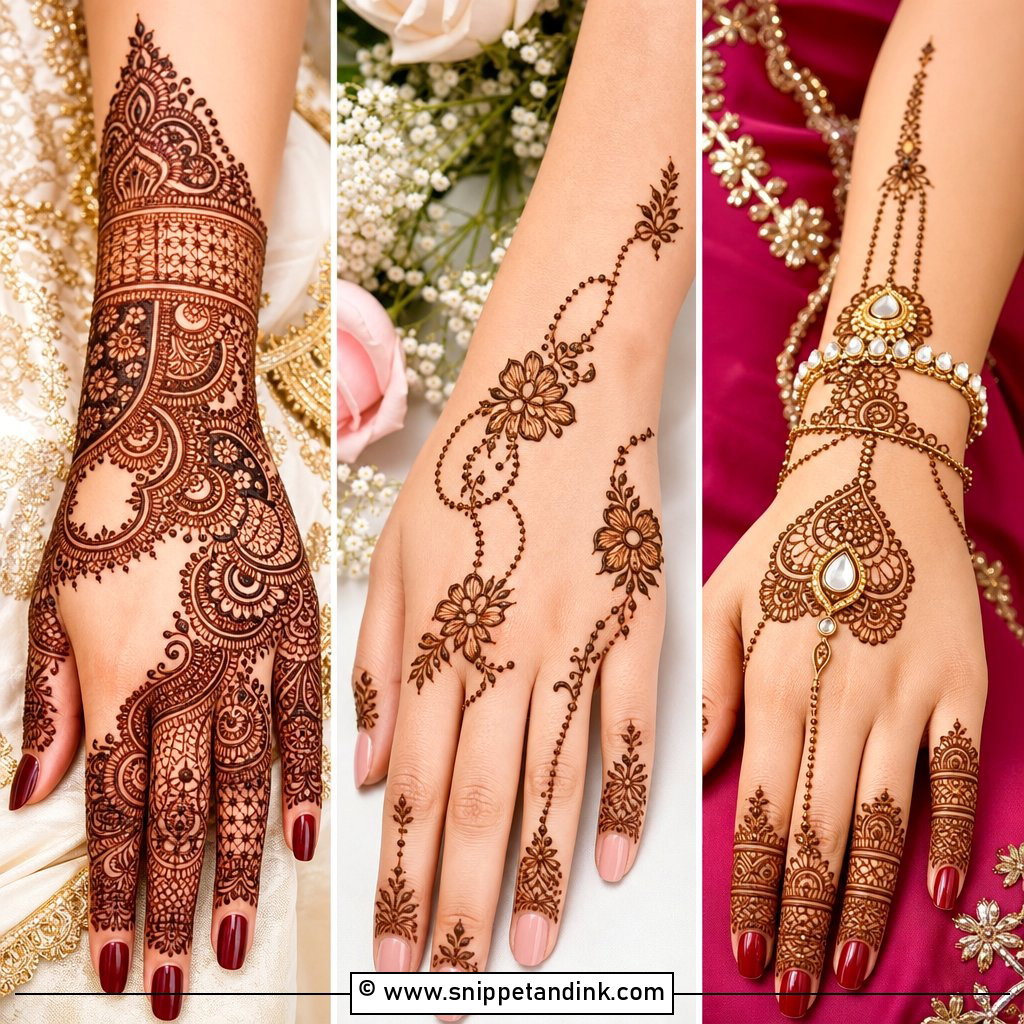
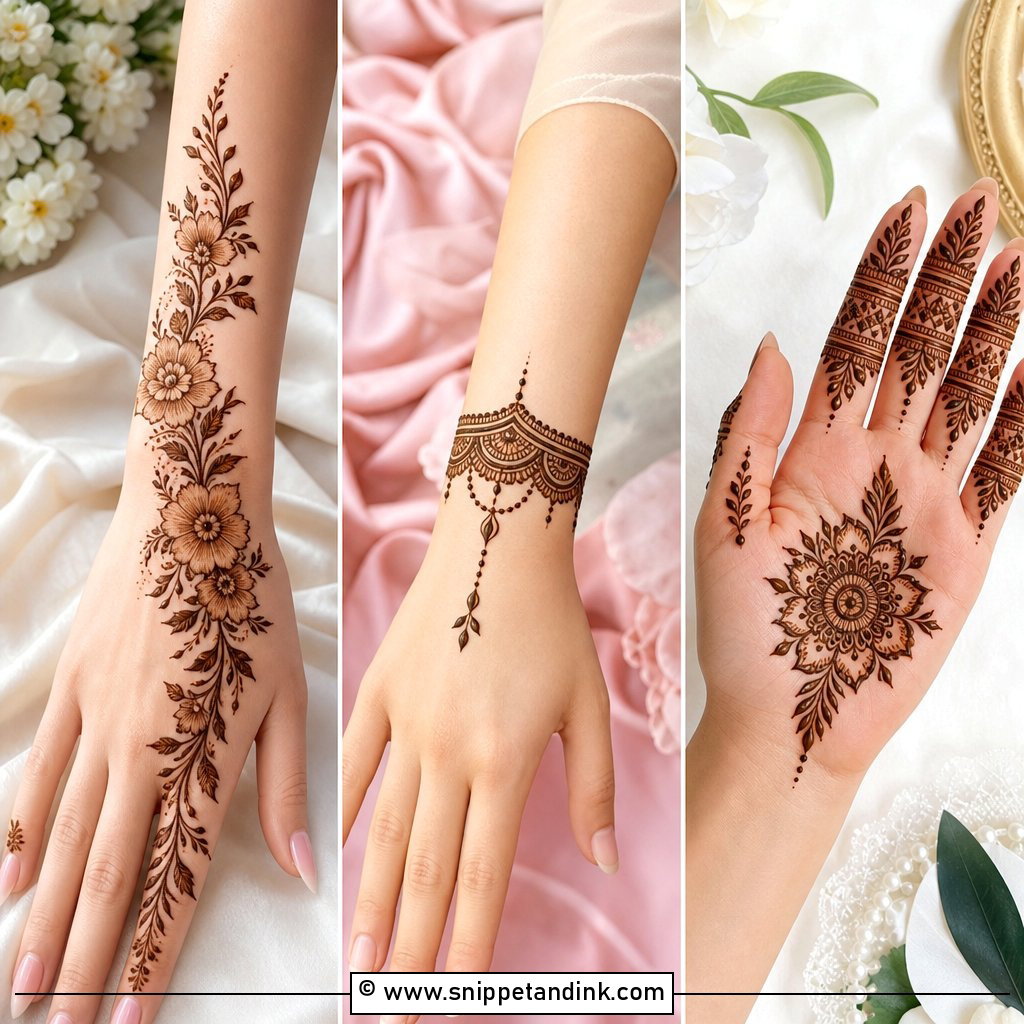
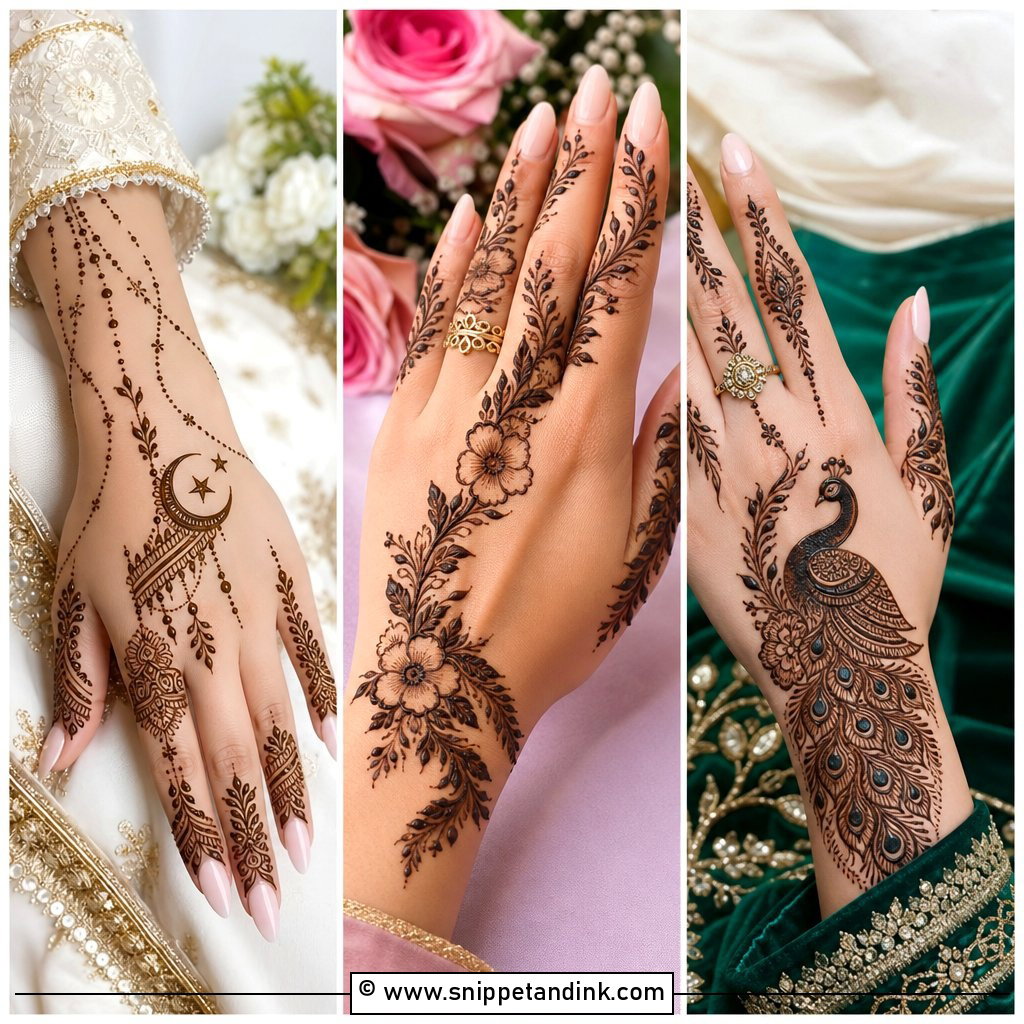
A back hand design should follow the shape of the hand: a diagonal floral trail from the wrist, a bracelet cuff, ring details on the fingers and fine leaves. Done that way it looks like jewelry. I add jaali around the center for a heavier version. The back of the hand stains lighter than the palm on most people, often a shade or two, so I tell clients to leave the paste on overnight. It also leaves the palm free, which is handy if you’re working the next day.
5. Kashee’s Arabic Mehndi Design
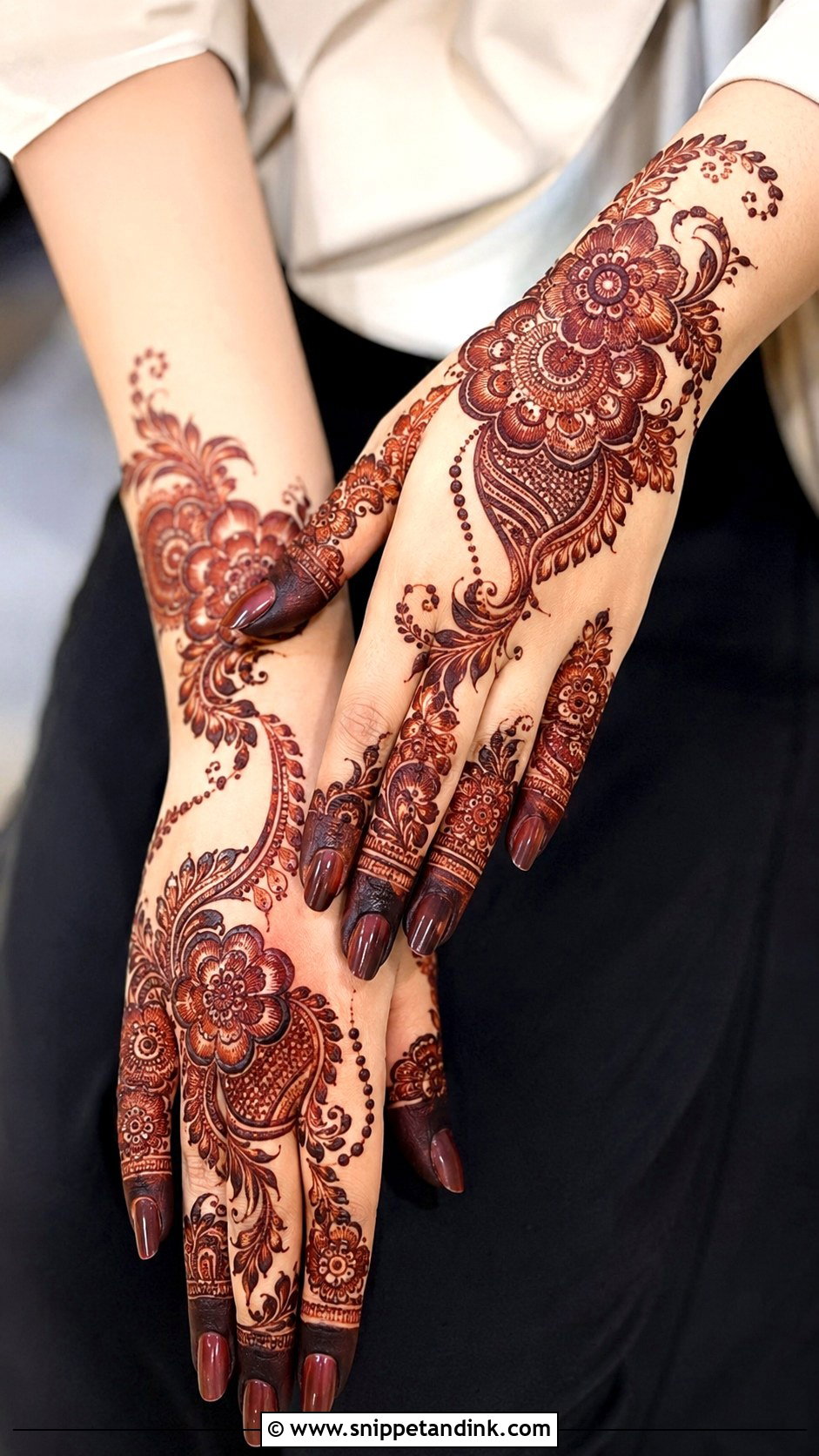
Arabic layouts run diagonally from one side of the wrist to the fingers with large shaded flowers, leafy vines and dotted trails. The Pakistani influence shows in the finer filling inside each flower. Open skin makes the stain stand out, and the large shapes are forgiving, so it is a good starting design for anyone practicing at home. In my chair it is one of the quickest festive designs I offer.
6. Kashee’s Indian Mehndi Design
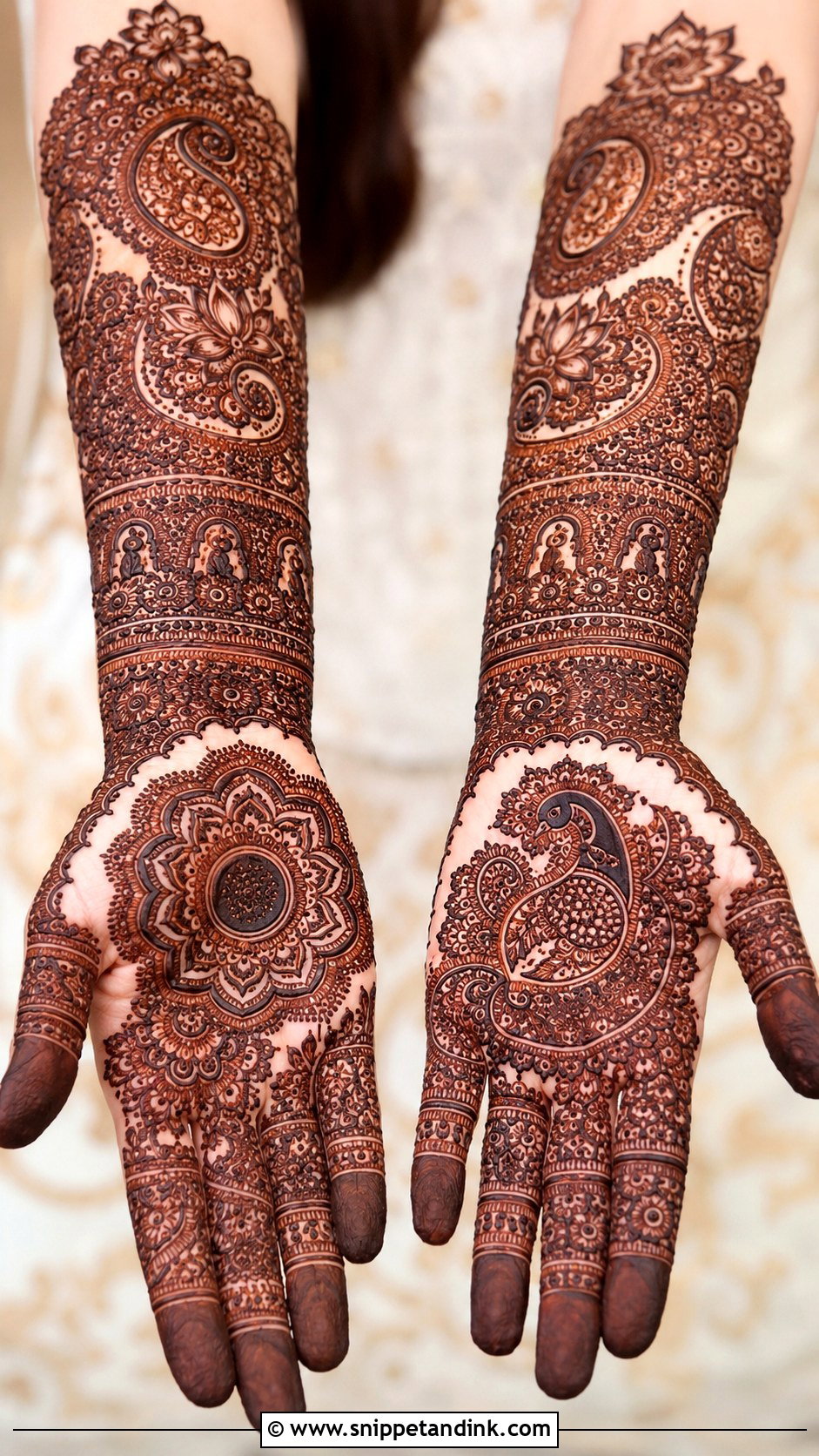
Indian density in this style means full palm coverage with peacocks, paisleys, lotus and mandalas, with lace like detail between them. Fingers are fully patterned and the wrist and forearm carry stacked borders. I keep clean channels between the major motifs, because a design this rich turns into noise if nothing separates the shapes. It suits brides who want a classic, heavily decorated hand.
7. Kashee’s Indo Arabic Mehndi Design
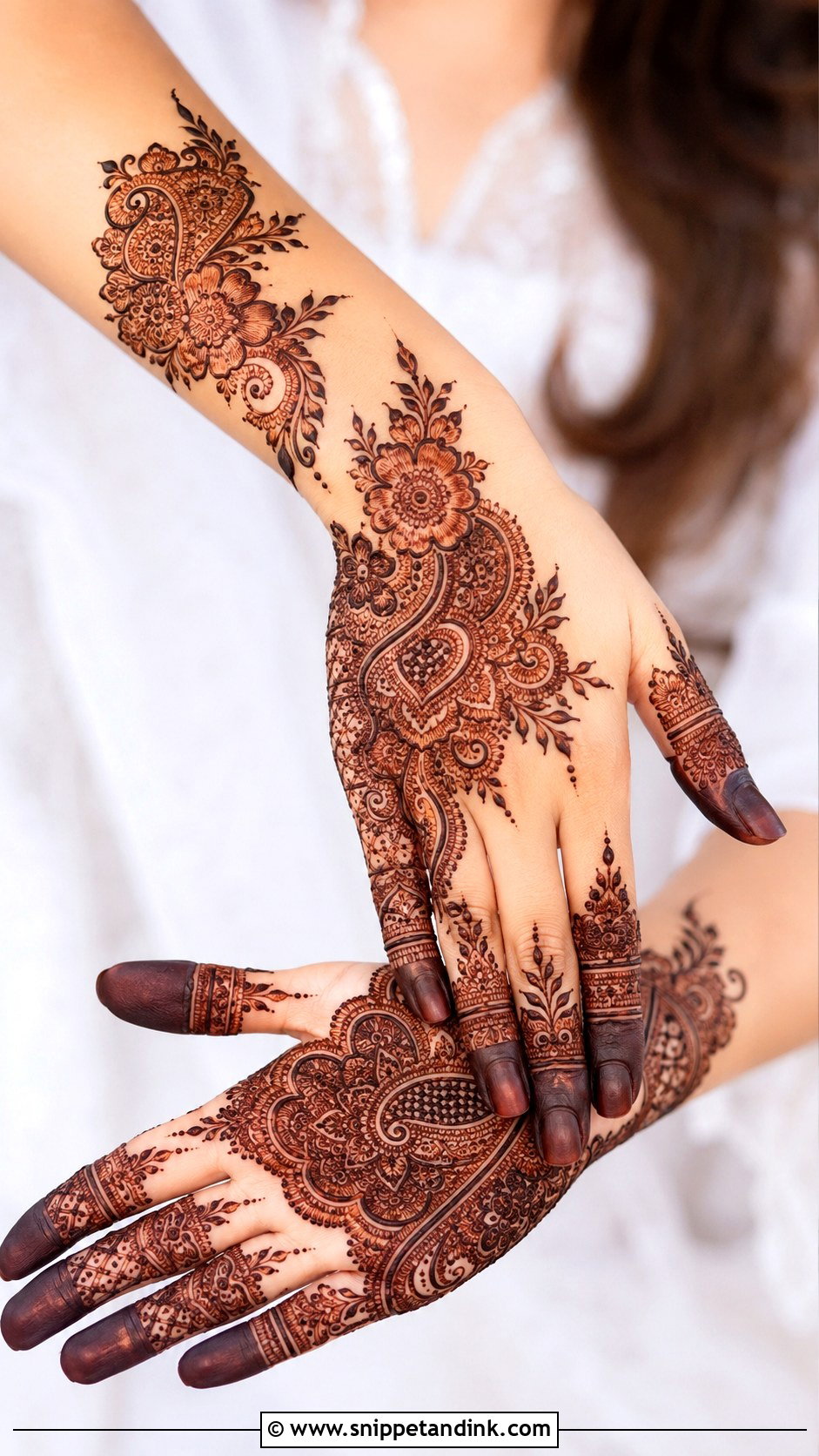
Indo Arabic combines a diagonal floral flow with detailed paisley sections, shaded leaves and patterned fingertips. I usually leave part of the palm open and put the heavier work on the fingers and wrist. It is my standard suggestion for bridesmaids and cousins at a big function, because it looks dressed up but can be done in under an hour per pair of hands, which keeps the queue moving.
8. Kashee’s Pakistani Bridal Mehndi Design
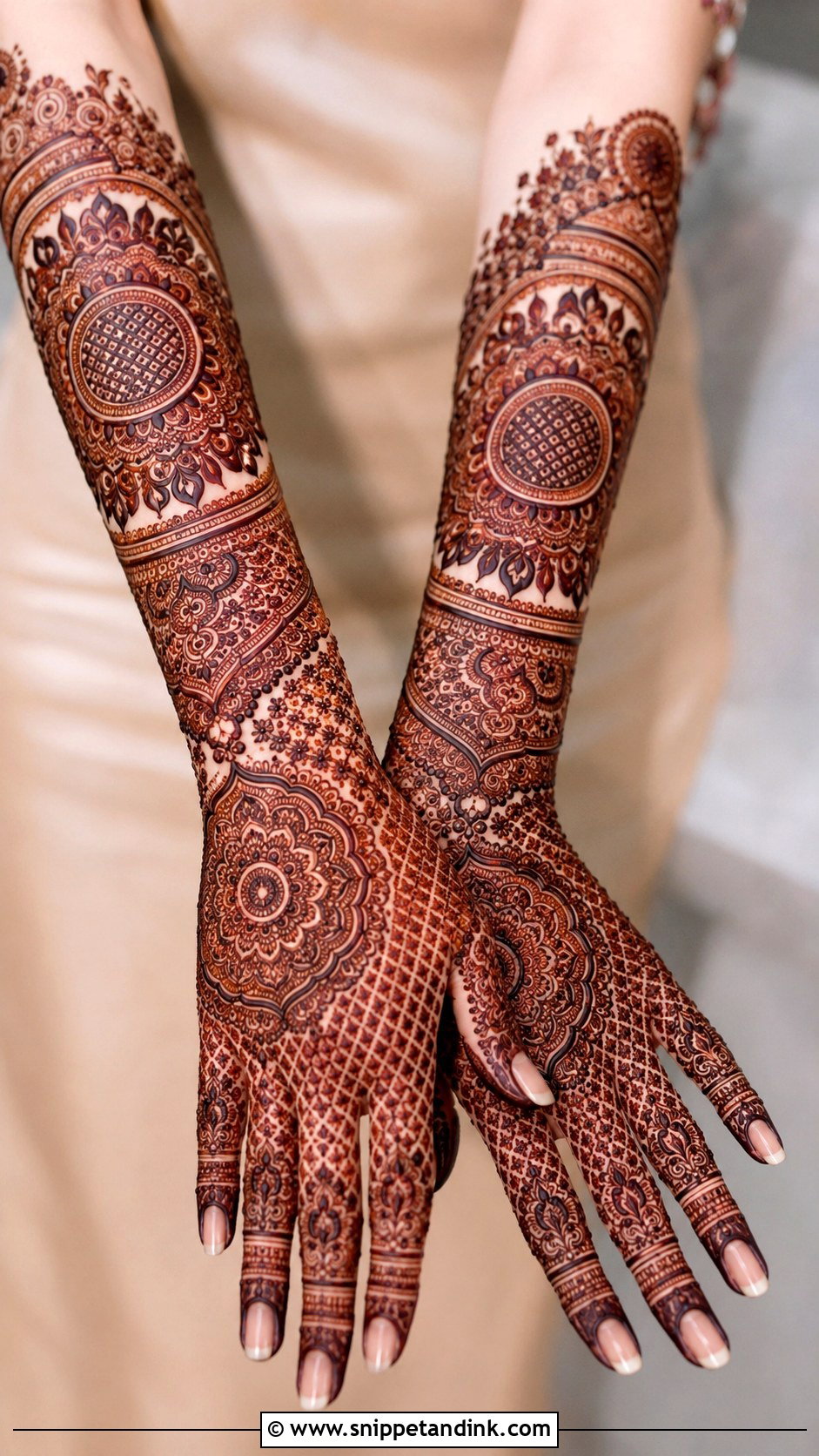
Pakistani bridal mehndi in this style is the regal version: full hands, wrists and forearms with dense jaali, round mandalas, paisleys and bridal symbols. It is applied to sit with gharara, sharara and heavily embroidered outfits. The two hands can mirror each other or differ while sharing a theme. I outline boldly and fill finely; that contrast is what makes the hand look finished when the stain darkens to maroon.
9. Kashee’s Khafif Mehndi Design
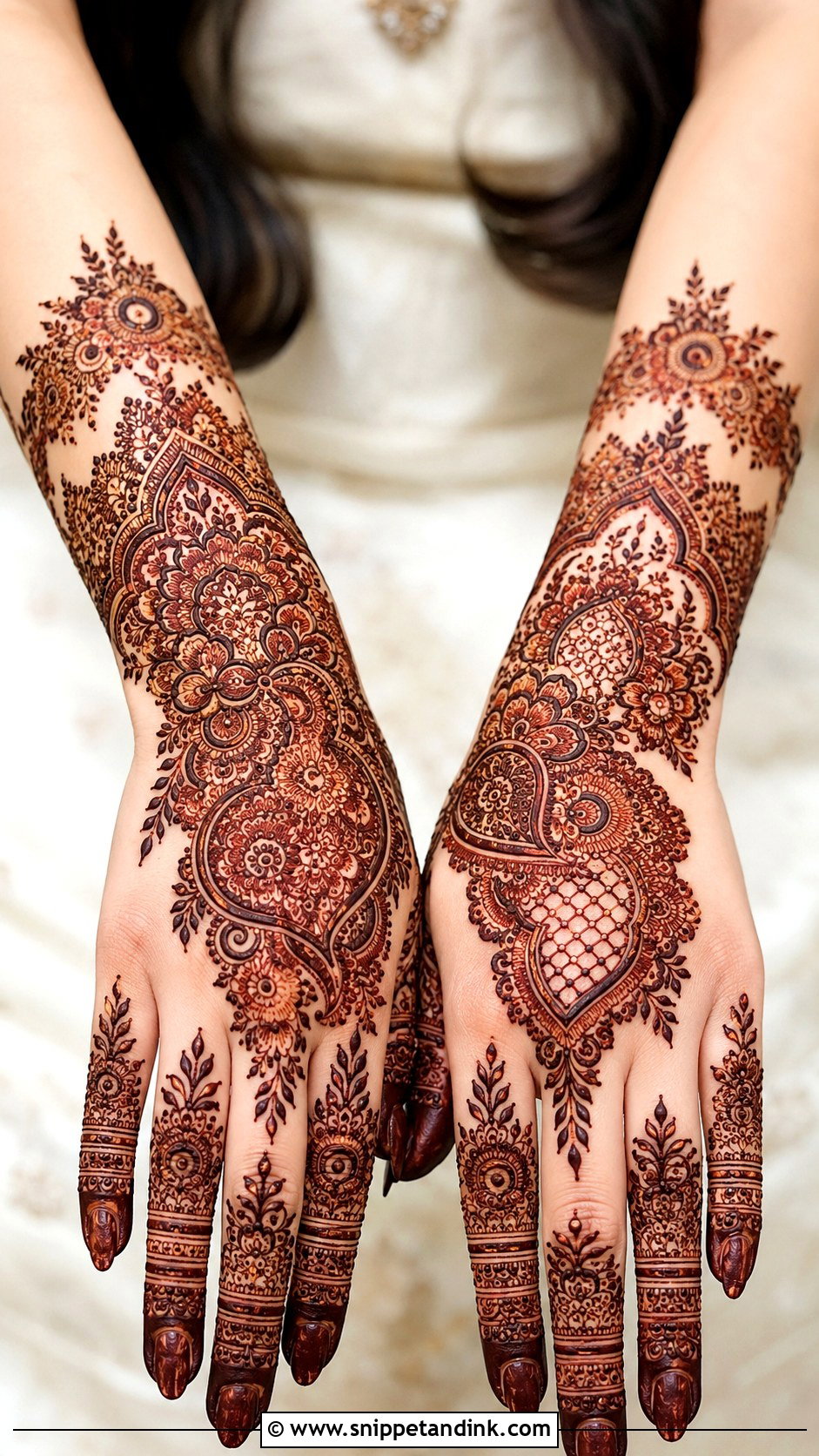
Khafif here means fine florals, tiny leaves, slim paisleys and lace like jaali, laid out with precise spacing. It suits engagement, Eid and nikkah for anyone who dislikes heavy coverage. The back of the hand shows it best. This style is unforgiving of a shaky cone; one thick line among thin ones stands out. I use a fine tip and fresh paste with a smooth, stringy consistency so the lines stay even.
10. Kashee’s Tikki Mehndi Design
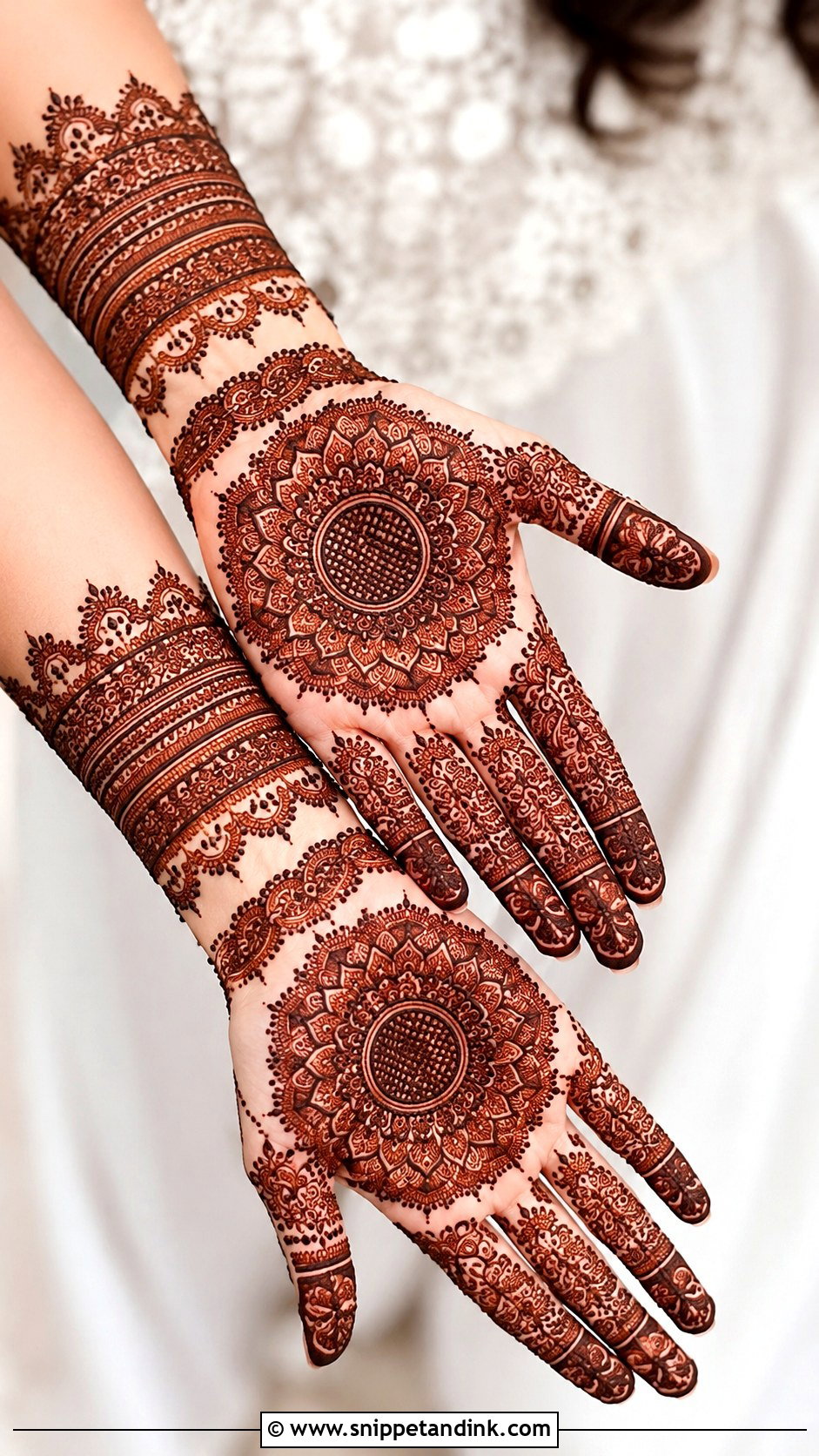
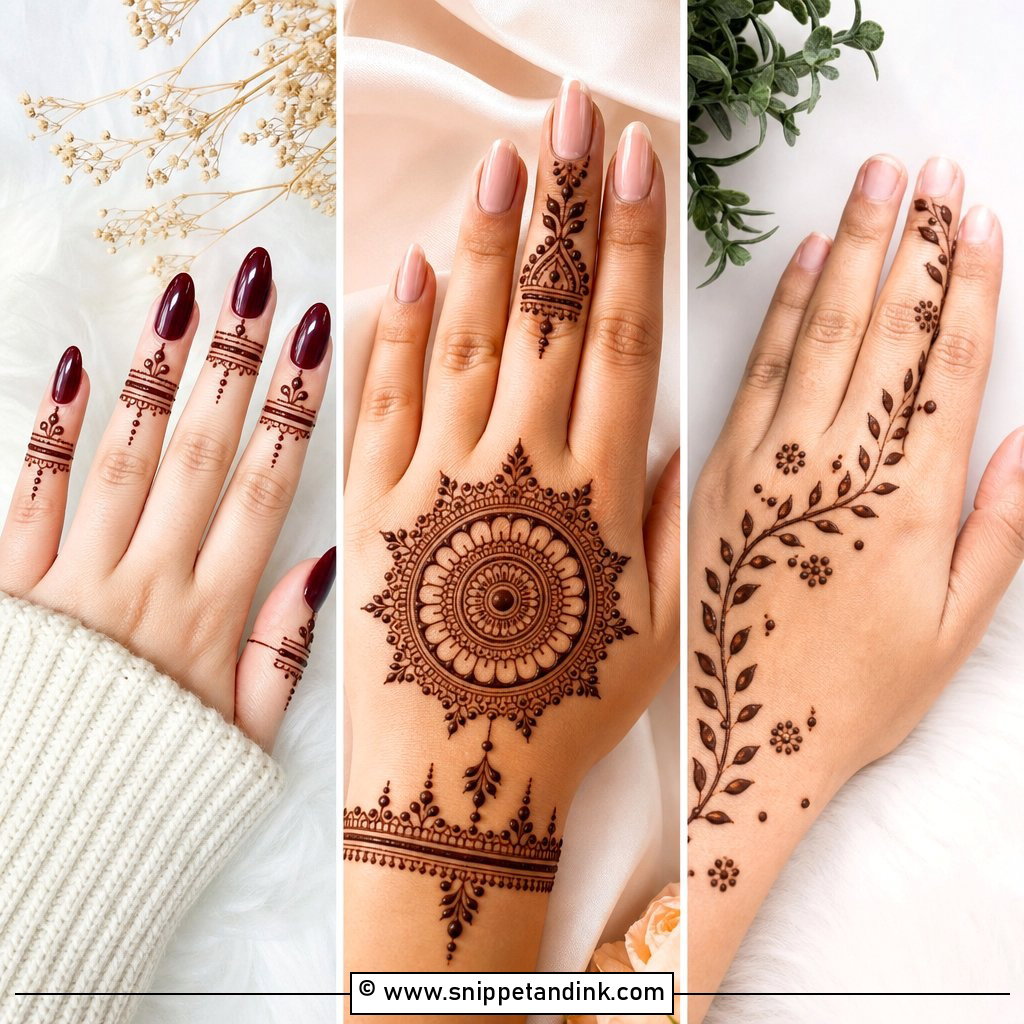
A tikki mehndi design is built around one round mandala in the center of the palm or back hand, with petal rings, dotted circles, leafy borders and slim finger designs around it. It suits mayun, dholki, Eid and family gatherings, and every age from girls to grandmothers. I draw the outer ring lightly first and check it is centered before filling. A small chain linking the tikki to a wrist band makes it feel current.
11. Kashee’s Gol Tikki Mehndi Design
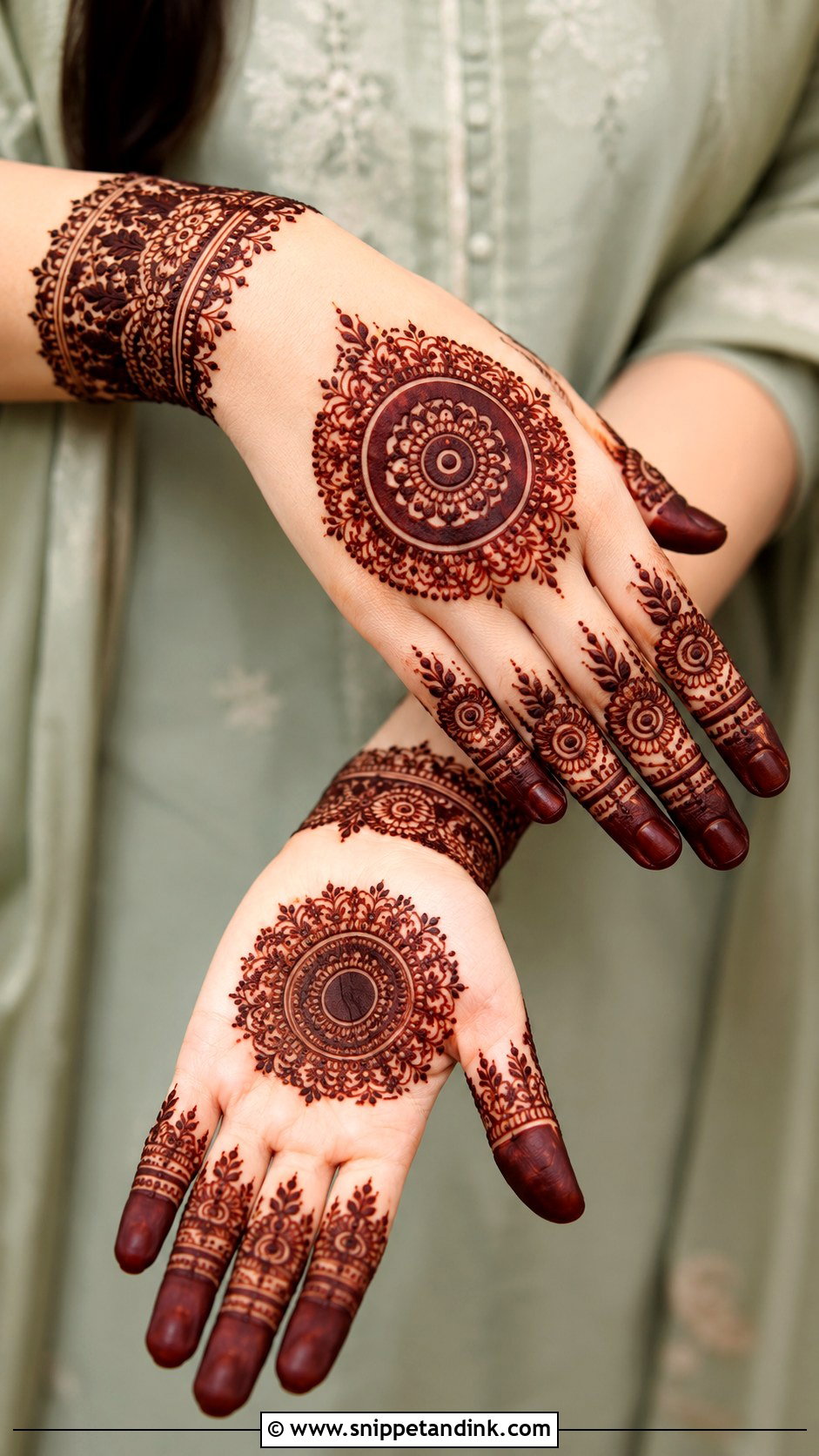
Gol tikki is the traditional quick design: a bold circle with fine floral rings, small paisleys and clean finger coverage around it. It’s fast, so I use it for young girls and mothers at busy family events. A back hand gol tikki with bracelet cuffs suits bangles. Do not skip the fingers. A tikki without finished fingertips looks half done, and filled tips are traditional in their own right.
12. Kashee’s Jaali Mehndi Design
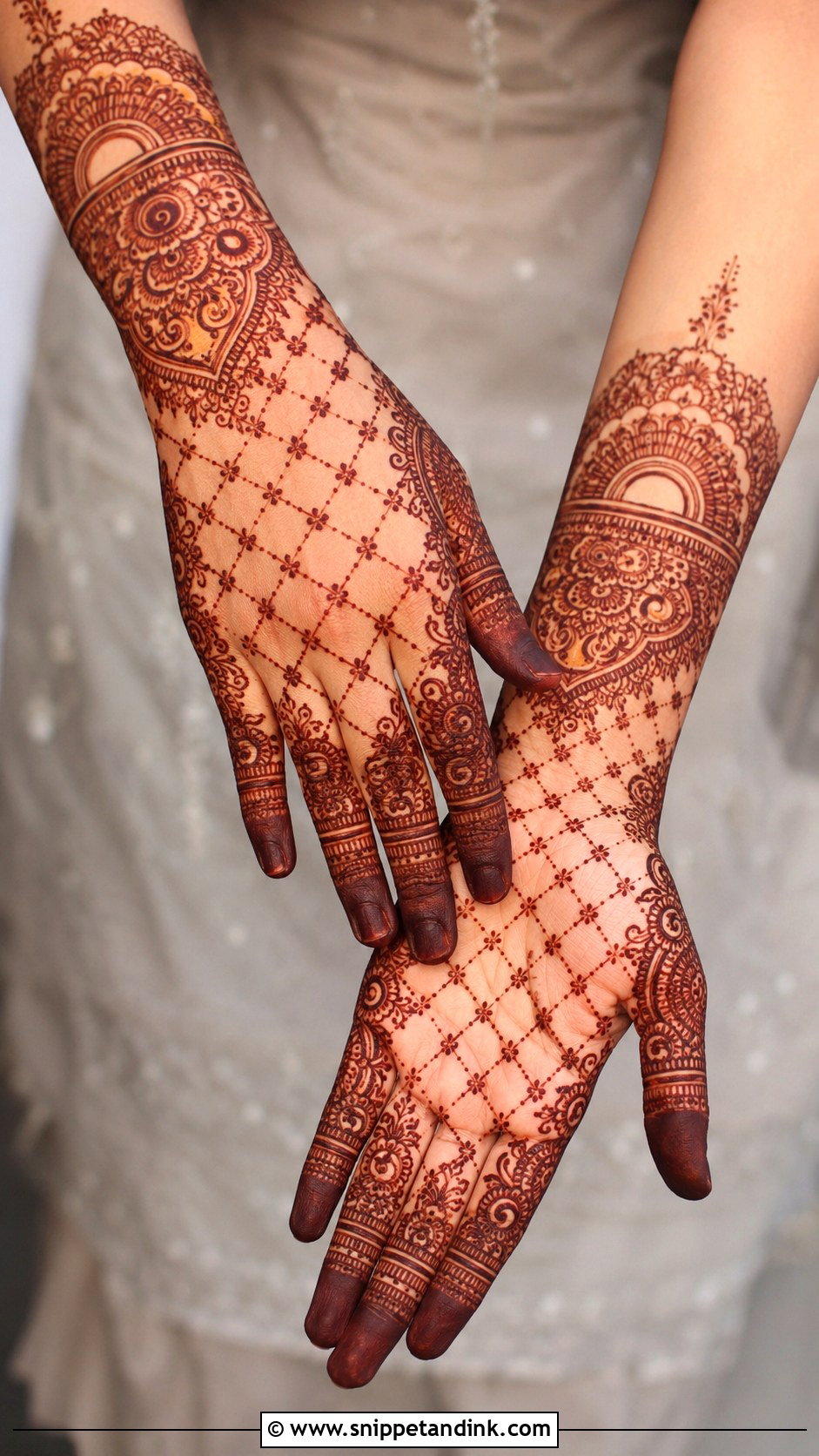
Jaali creates the lace effect: a mesh across the back of the hand, with florals, dots and leafy bands on the fingers. On the palm I mix jaali with mandalas and paisley sections. Evenness is everything. I draw the frame of the mesh first, then lines in one direction, then the other, keeping the spacing medium, since very tight mesh fills in once the stain darkens. Clean diamonds instantly make the whole hand look professional.
13. Kashee’s Floral Mehndi Design
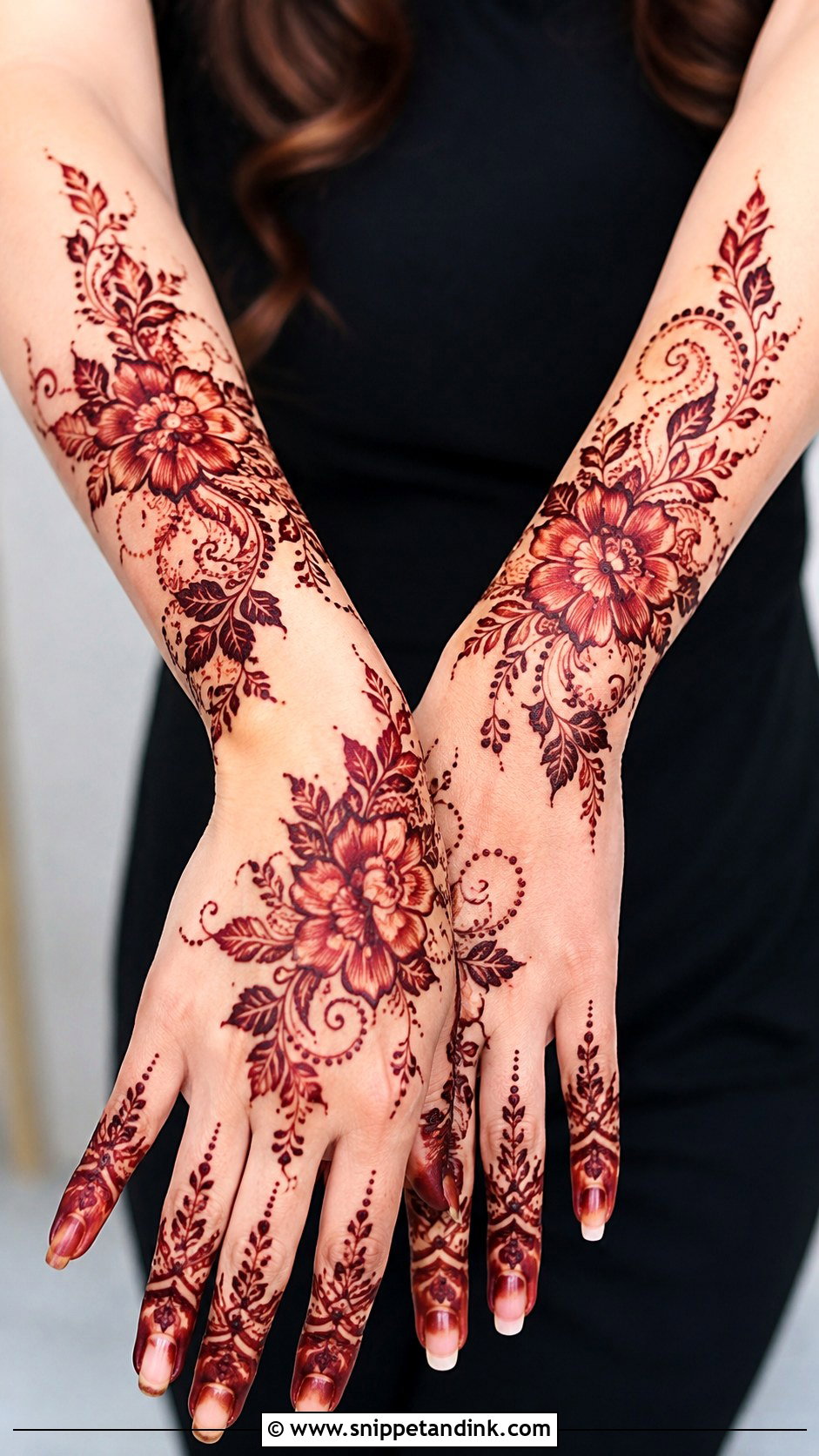
Floral work uses large statement flowers with shaded petals and leafy trails across the hand, diagonal for an Arabic feel or symmetrical for bridal. For weddings, I add fuller fingers and wrist cuffs; for Eid or a party, I leave more skin around the flowers. Shading is what gives the petals depth. I shade from the center of each flower outward with lighter pressure on the cone, so the edges stay darker and crisp.
14. Kashee’s Paisley Mehndi Design
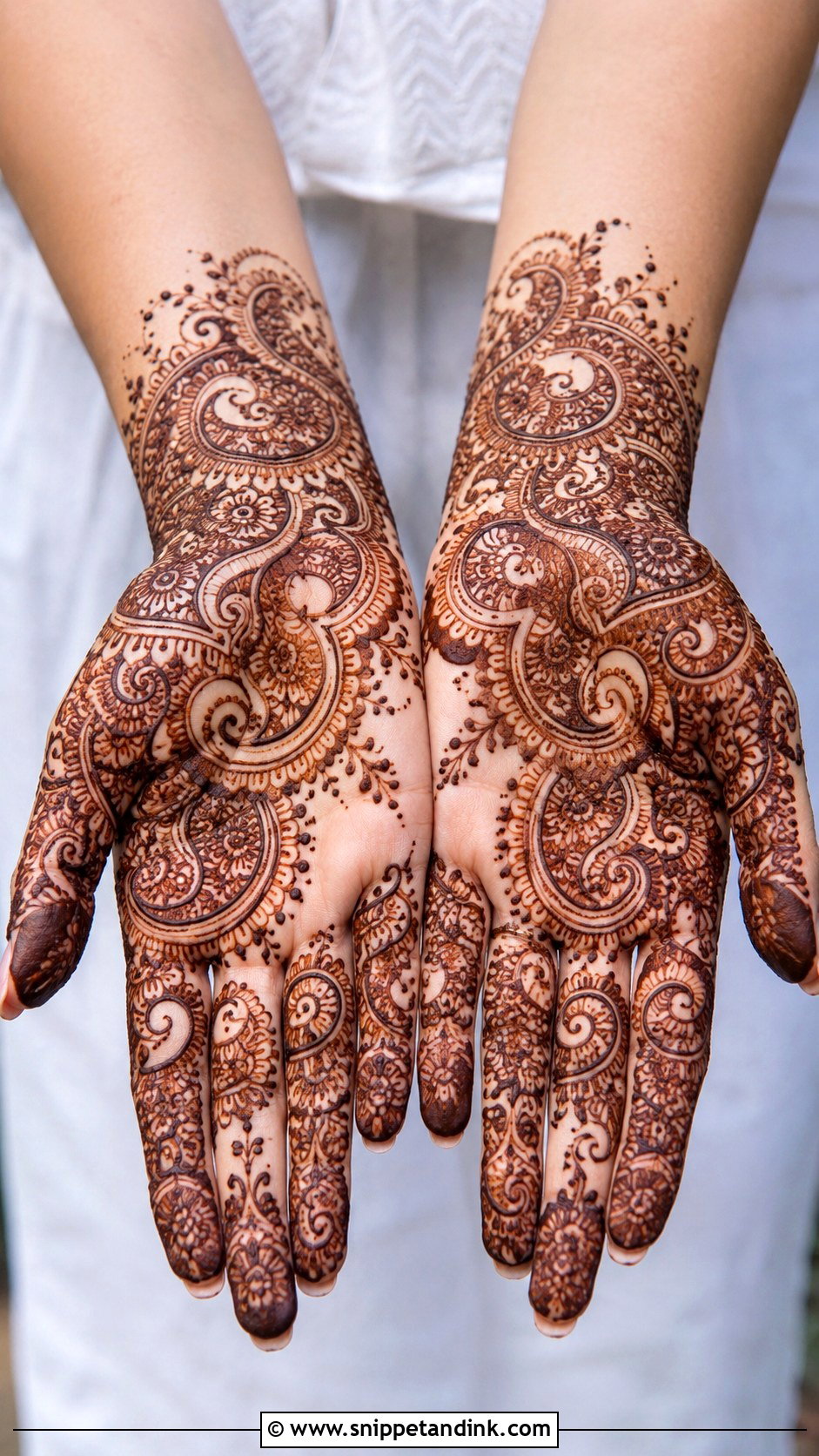
Paisley shapes are filled with tiny flowers, lines, dots and mesh, and they flow naturally from the wrist across the palm toward the index finger. For bridal, I combine large paisleys with mandalas and peacocks; for lighter occasions, one paisley trail with decorated fingers is enough. I always vary the size of the paisleys. A row of identical shapes looks stamped, while mixed sizes look drawn by hand.
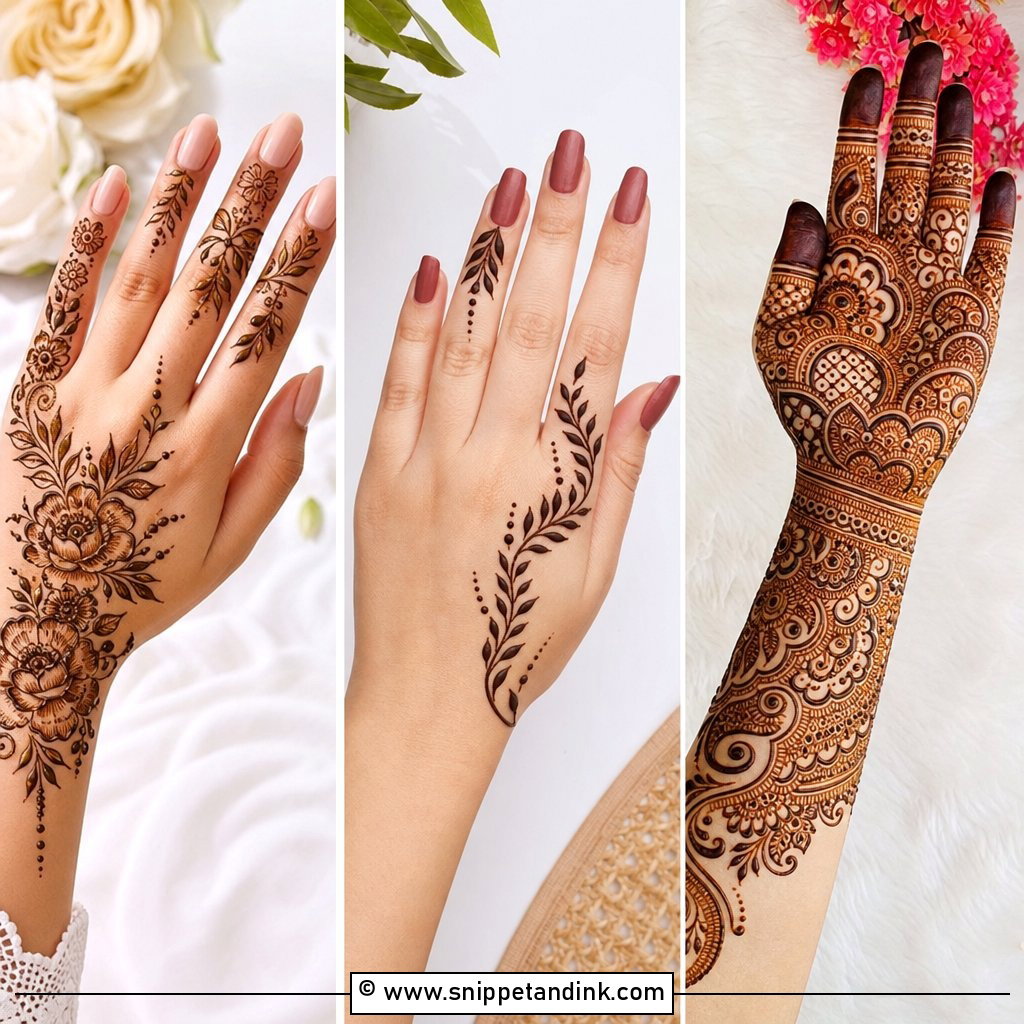
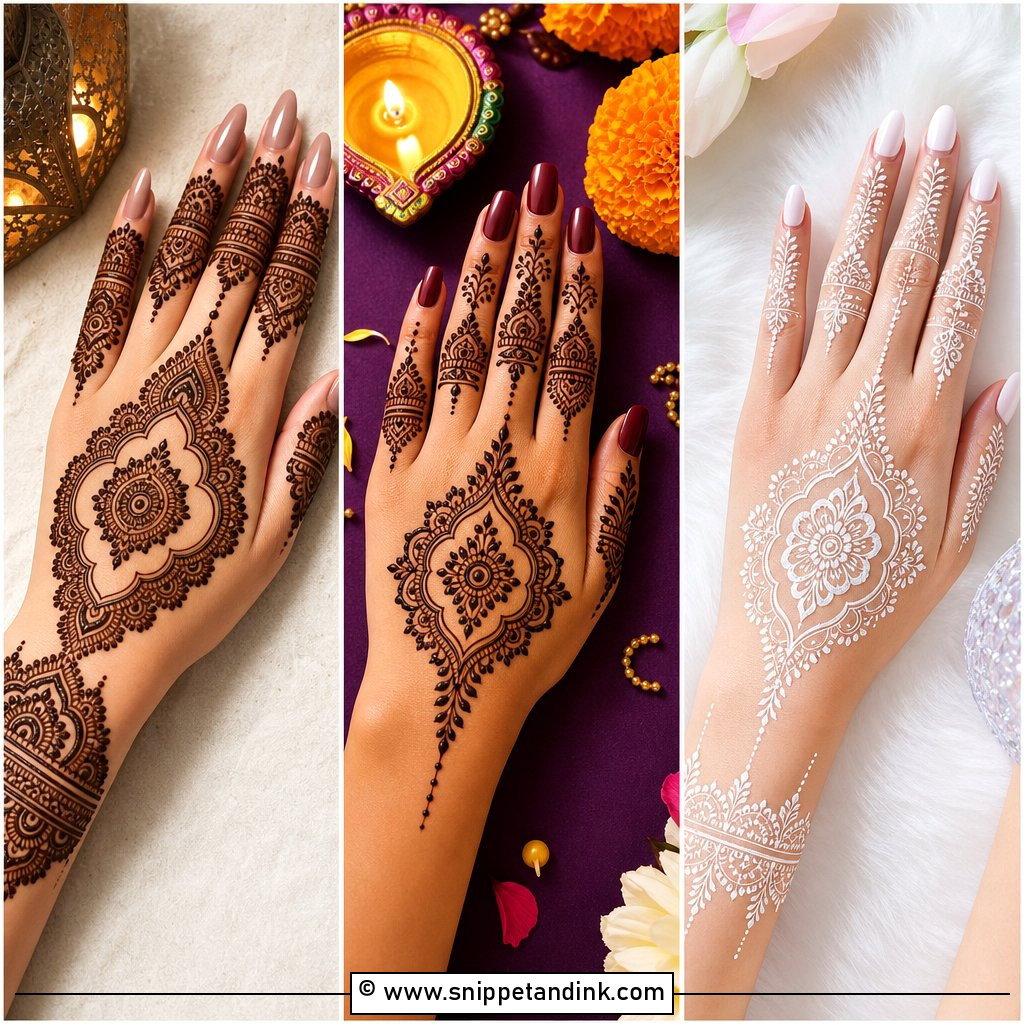
15. Kashee’s Peacock Mehndi Design
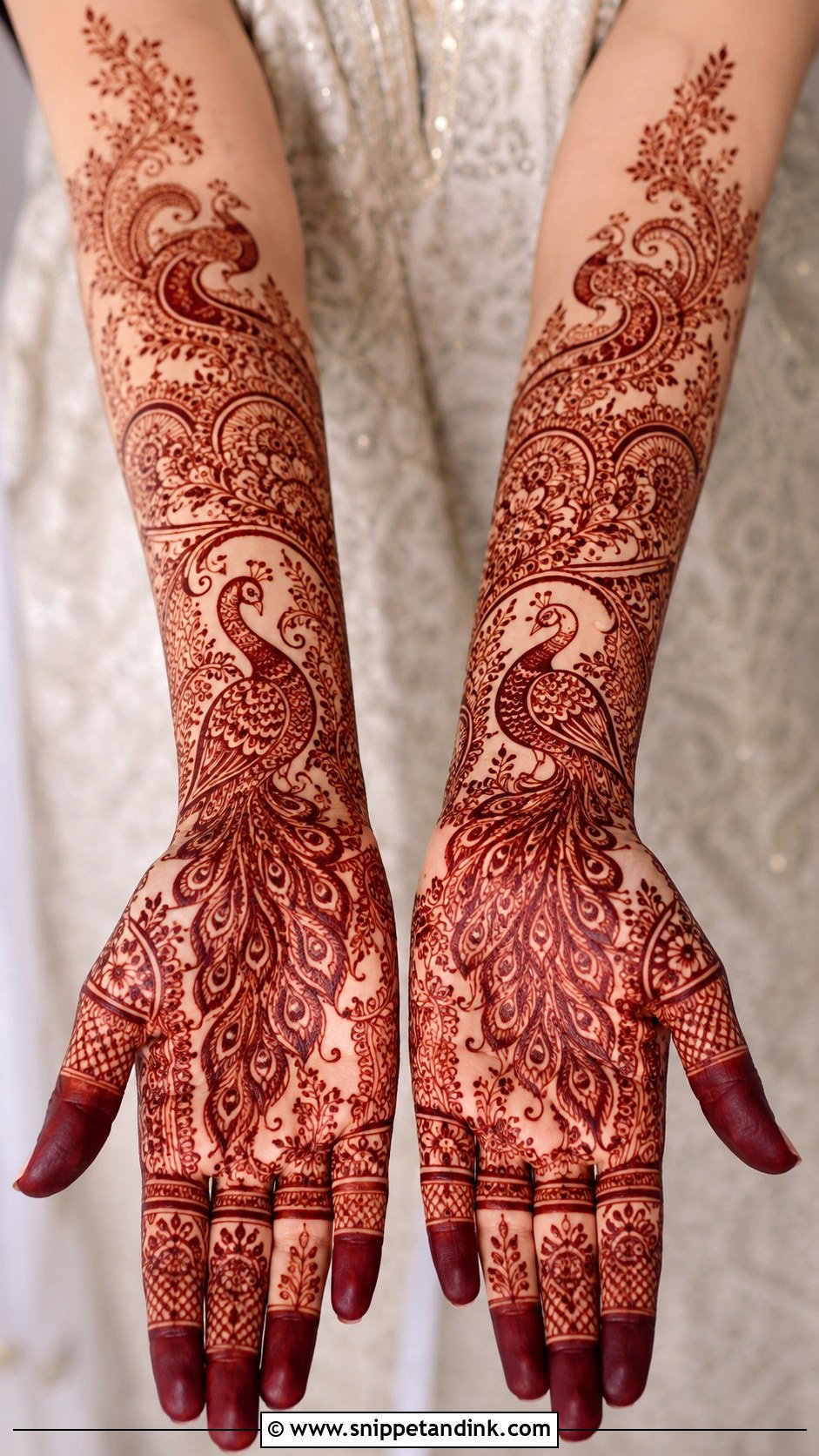
Peacock mehndi gives bridal hands a royal focal point. The bird sits on the palm, wrist or forearm with feathers spreading into paisleys, florals and fillers. It must stay clear; buried under detail, a peacock reads as a smudge once stained. I place it on the flattest part of the hand and draw the neck curve first. The other hand can repeat the peacock or answer it with florals and jaali.
16. Kashee’s Mandala Mehndi Design
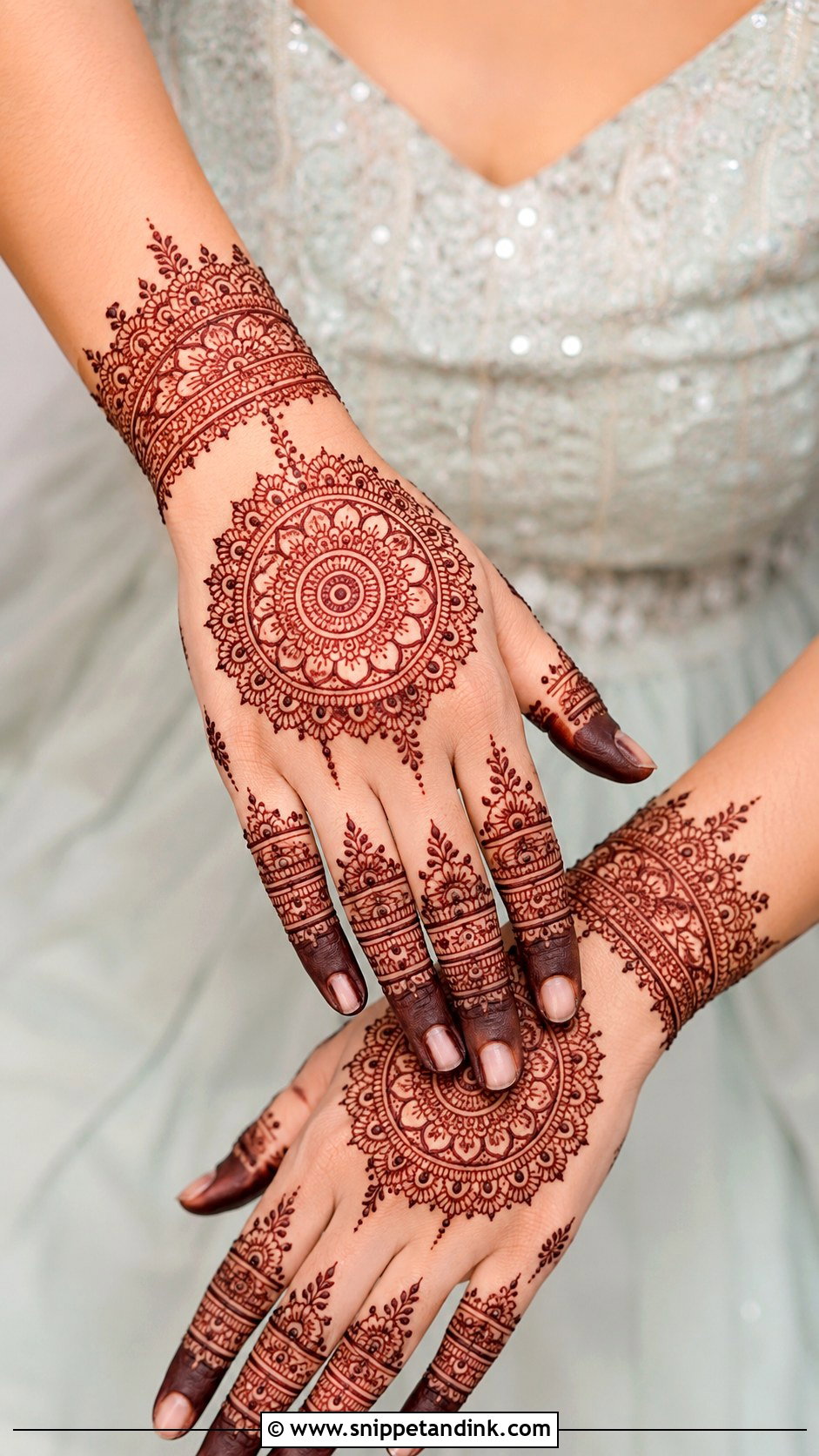
A mandala can be light for Eid or heavy for a bride. It starts with a round center, then grows with petal rings, dots and scalloped borders, finished with slim finger patterns and a matching wrist band. Size the circle to the hand. On small hands I keep a medium mandala with fine outer detail rather than a big circle that wraps onto the sides of the palm and distorts when the hand closes.
17. Kashee’s Bel Mehndi Design
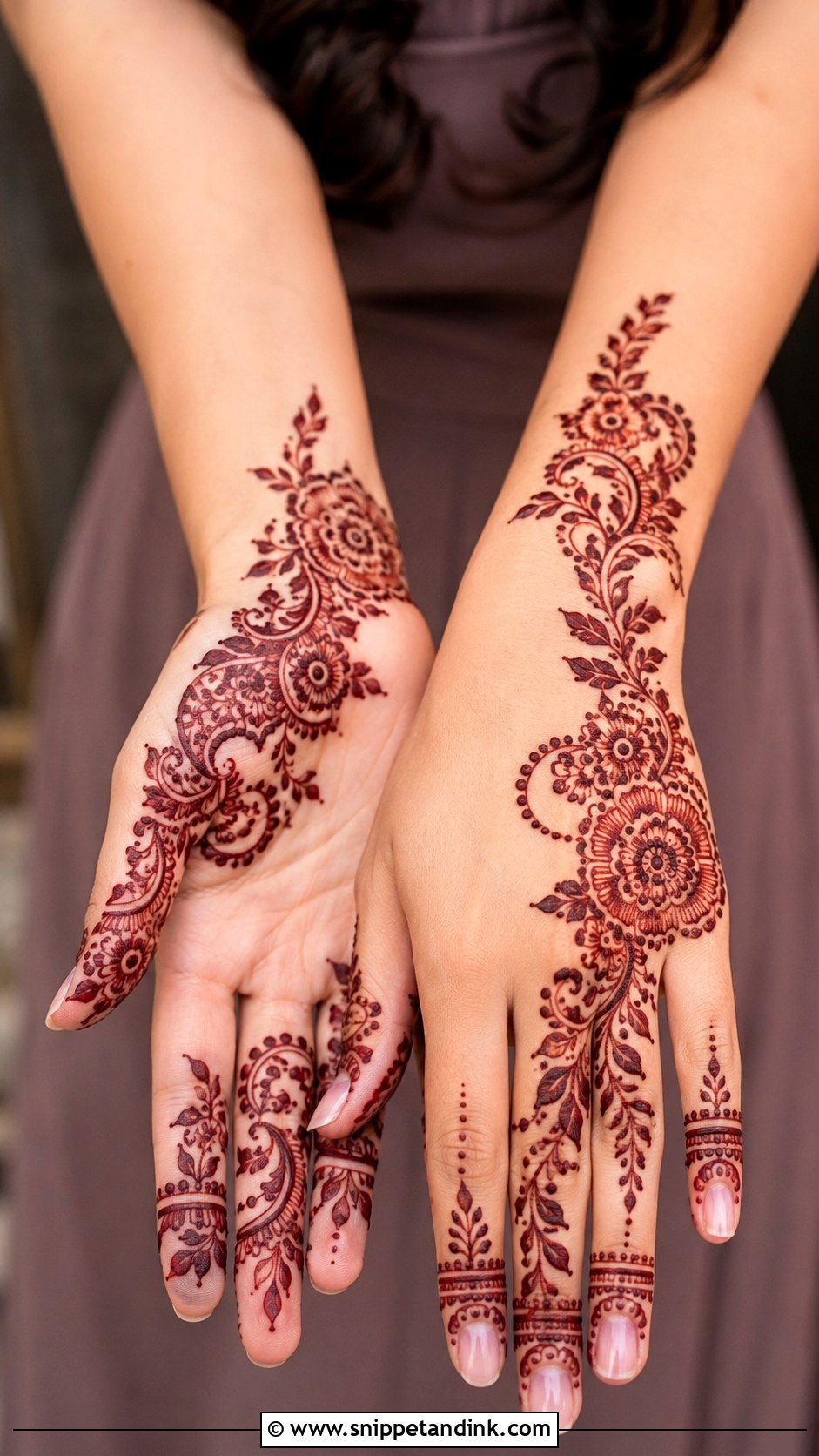
Bel means vine, and a Kashee’s style bel mehndi design moves flowers, leaves and paisleys in one trail from the wrist to one or two fingers. It is lighter than full coverage but still festive, which makes it popular with guests and bridesmaids. The flow is everything: a vine that breaks in the middle looks unfinished. I sketch the main curve in a single movement before adding any leaves.
18. Kashee’s Jewelry Mehndi Design
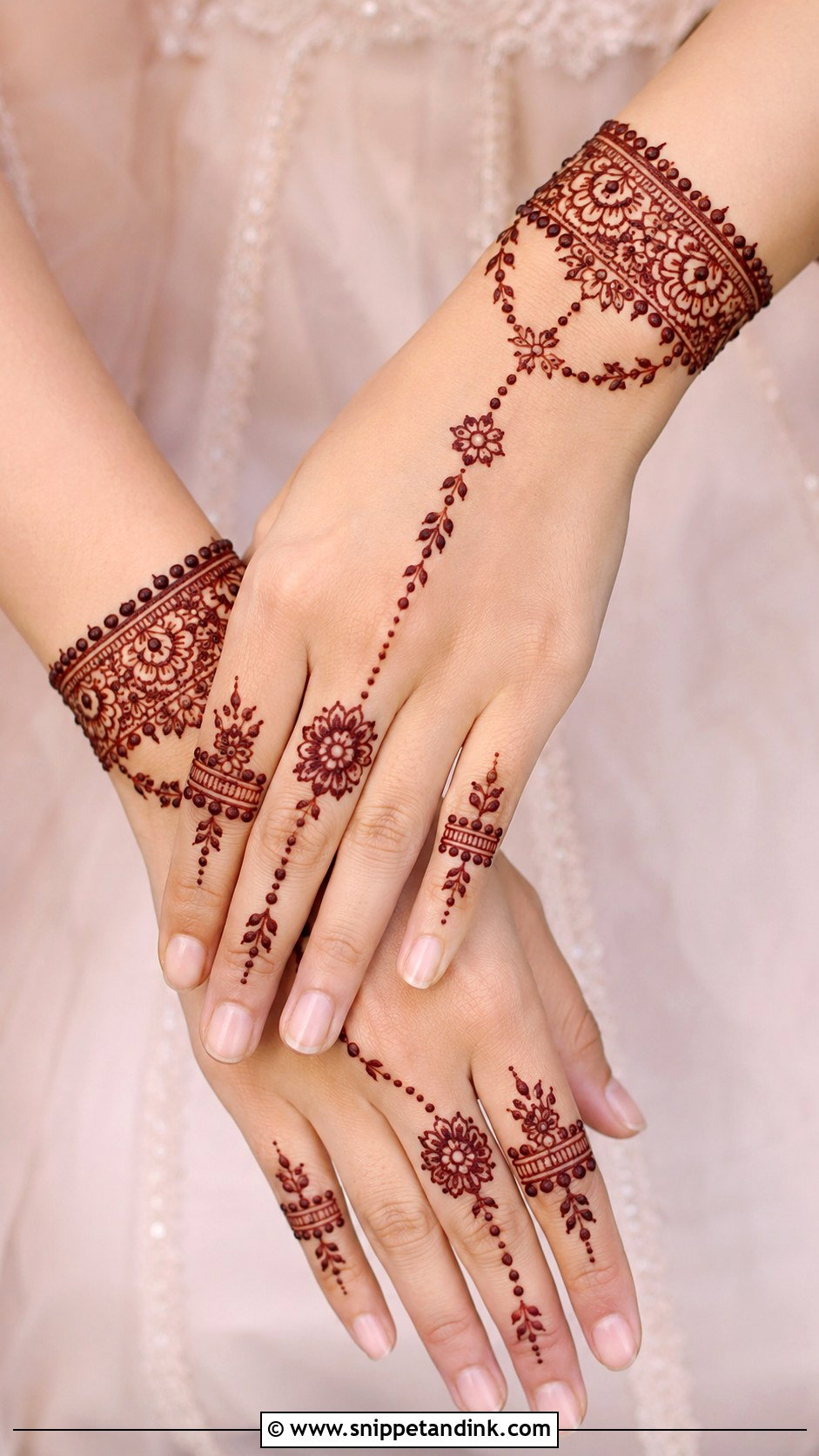
Jewelry mehndi draws rings, chains, bracelets and a hand harness on the back of the hand, joined to a central motif. It suits engagement, nikkah, Eid and bridesmaids. Thin, neat lines keep it delicate; small dots and leaves sit at the joins where real jewelry would have links. Leave the palm simple or almost bare. When I draw this for an engagement, I leave a gap where the real ring will sit.
19. Kashee’s Finger Mehndi Design
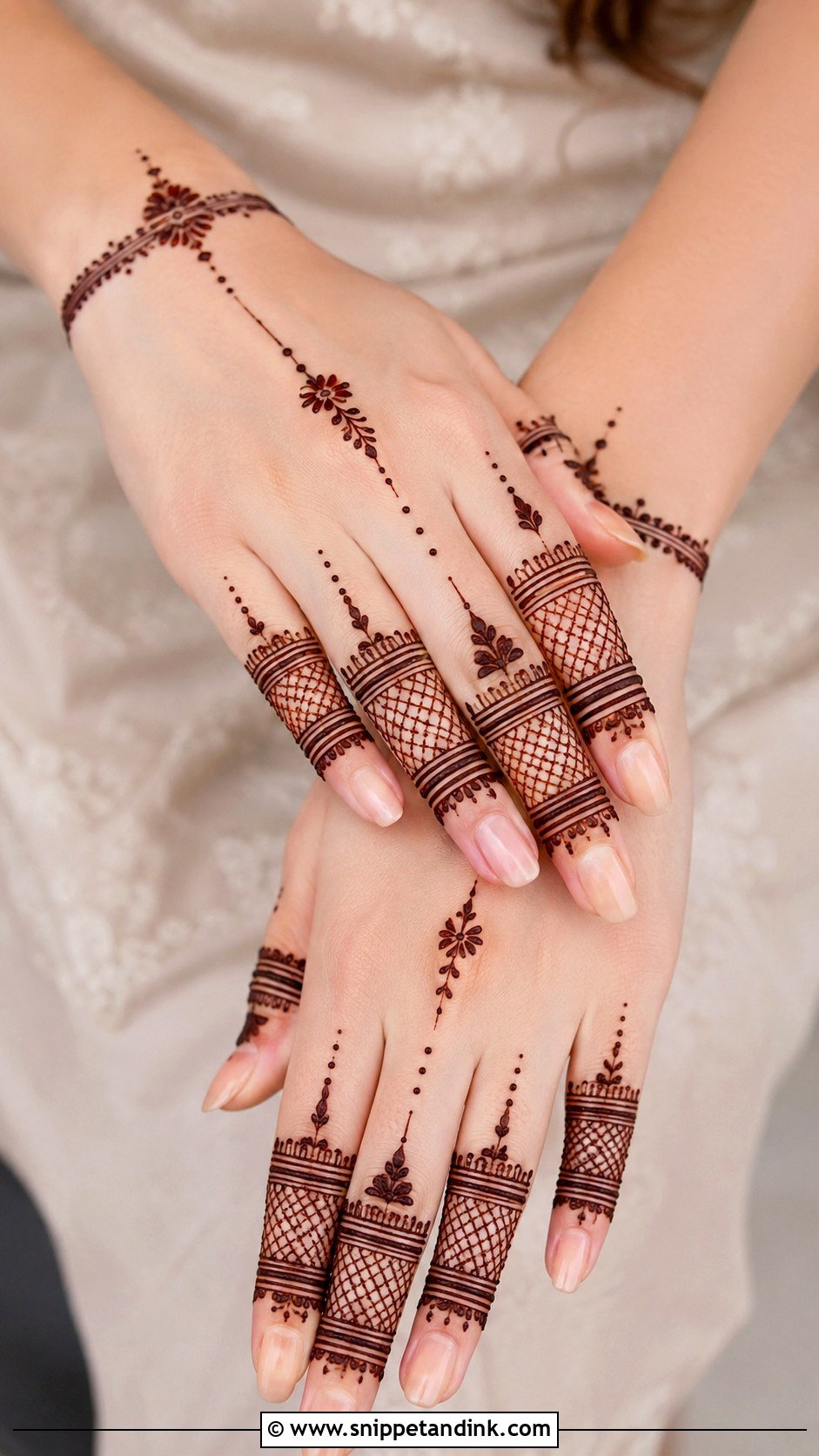
Finger designs cover each finger with bands, florals, mesh and dots, keep the palm minimal and finish with a small tikki or bracelet. They suit modern Eid looks and office friendly events. Long fingers carry repeated horizontal bands well. On shorter fingers I switch to vertical lines and smaller motifs, which make them look longer instead of chopping them into segments.
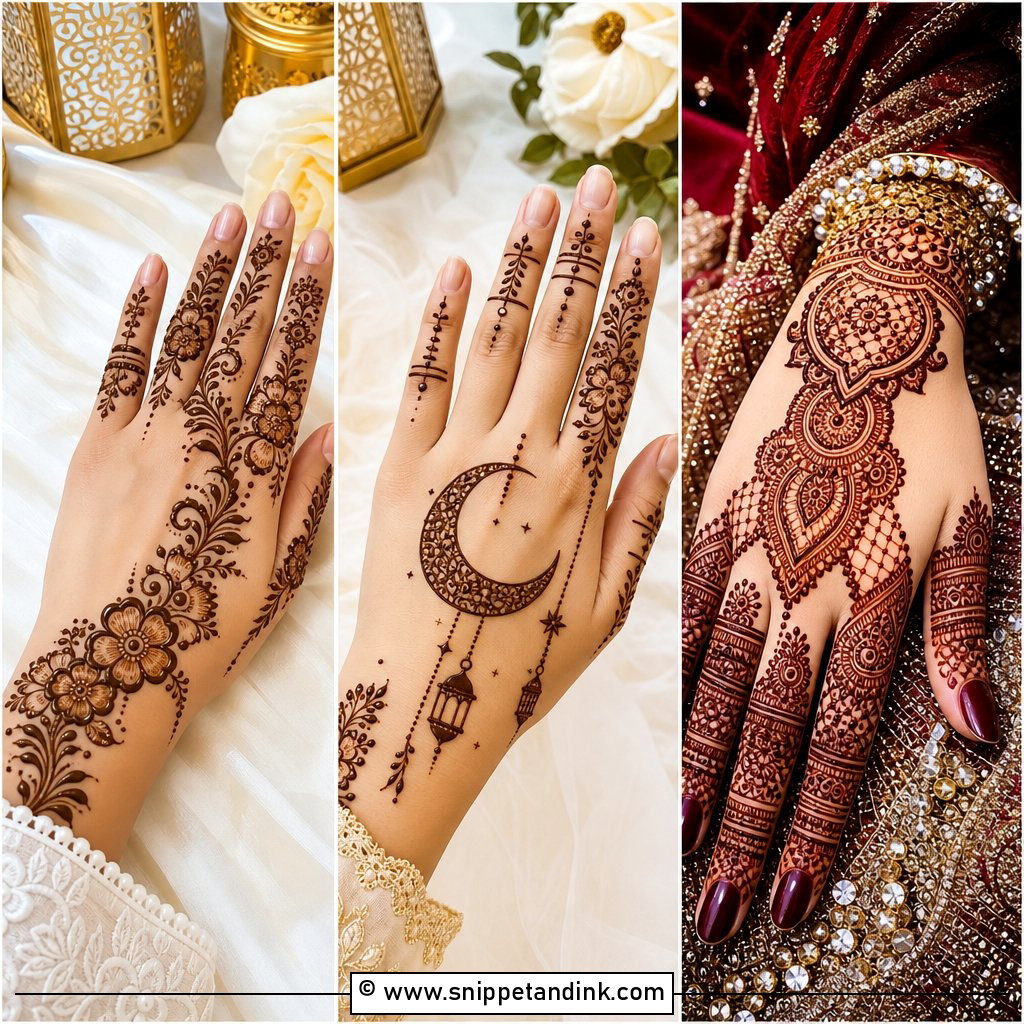
20. Kashee’s Eid Mehndi Design
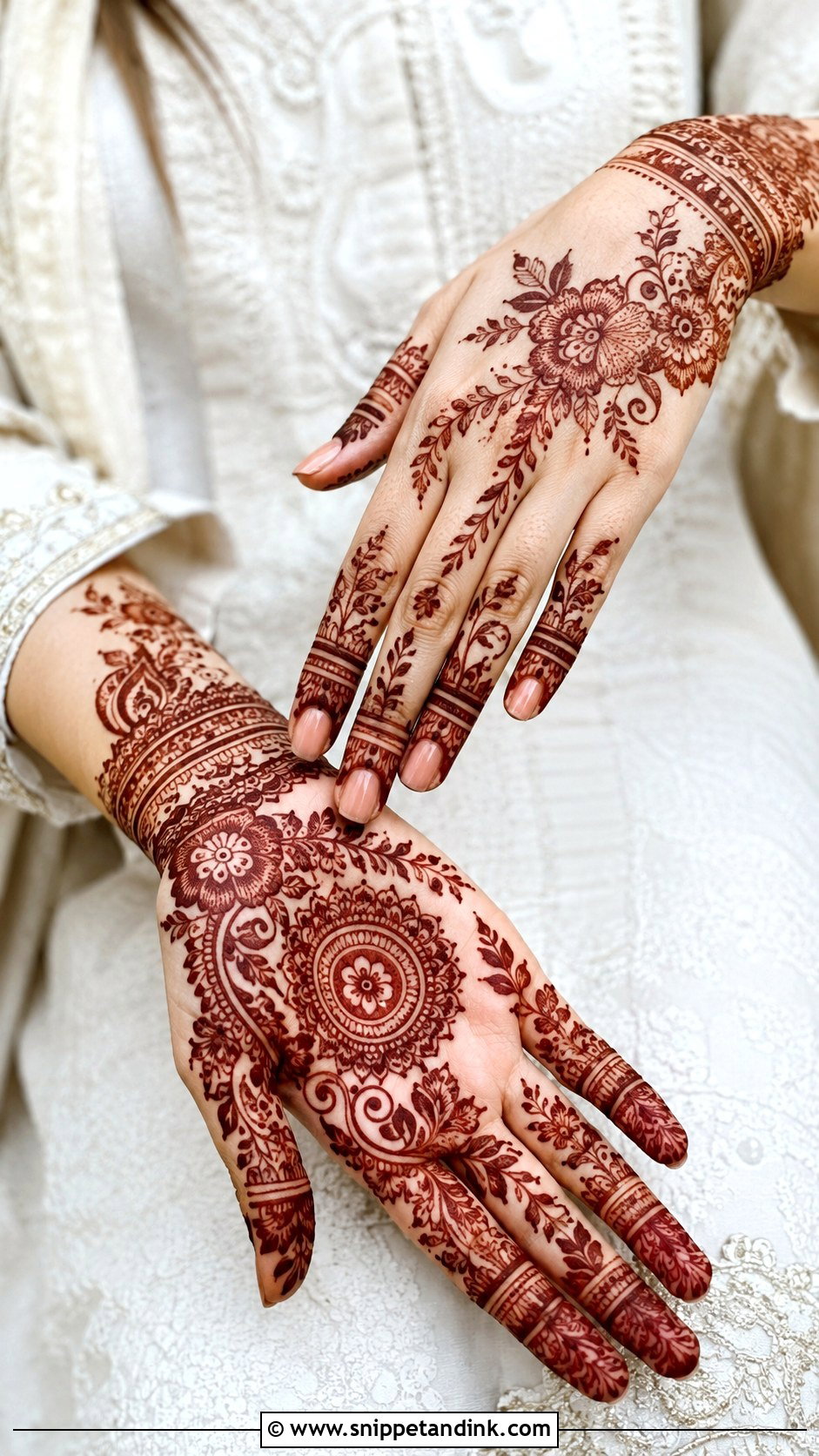
Eid henna has to last through prayers, cooking, visits and greetings. A back hand floral trail, a front hand tikki or a light Indo Arabic layout with decorated fingers are the designs I do most on Chand Raat, when the queue is long and time is short. Clear shapes that can be finished quickly are better than dense work rushed at midnight. Neat cuffs and shaded leaves give it polish.
21. Kashee’s Nikkah Mehndi Design
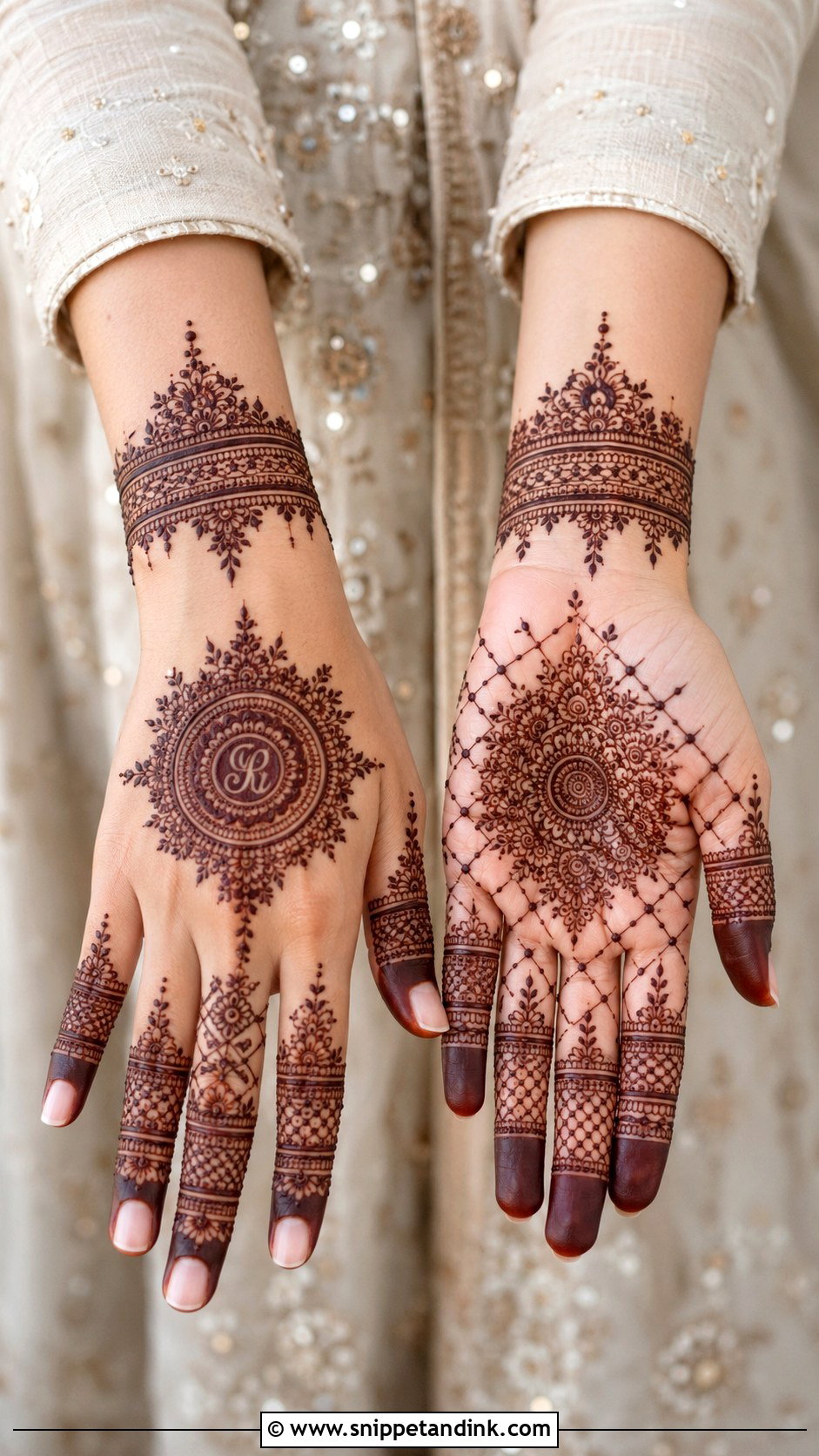
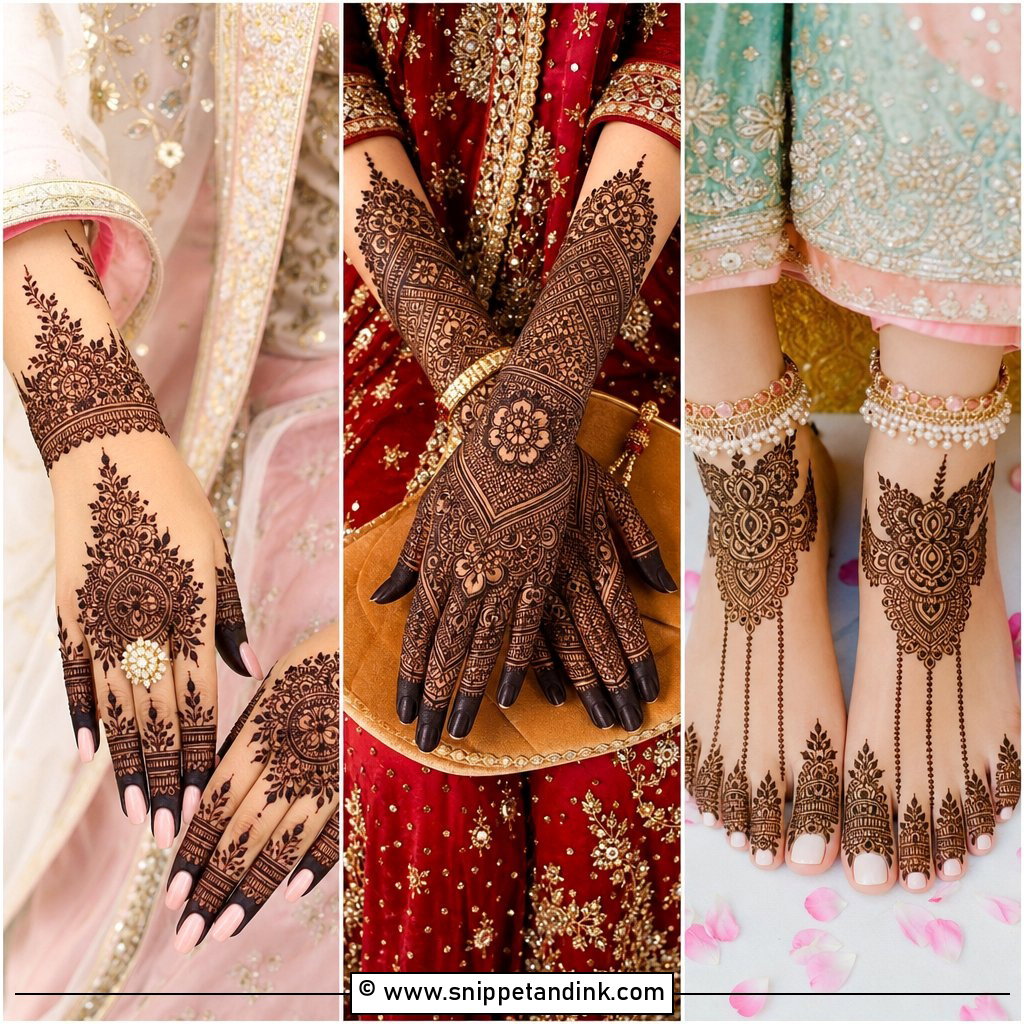
Nikkah mehndi is usually softer than barat henna: fine florals, light jaali, slim mandalas and graceful fingers. Many brides keep the palm lighter and put the detail on the back of the hand, which feels modest and looks refined with white or pastel outfits and pearls. Initials or a date can hide in a corner. Since the nikkah is often close to the main event, I plan it so both designs work together.
22. Kashee’s Engagement Mehndi Design
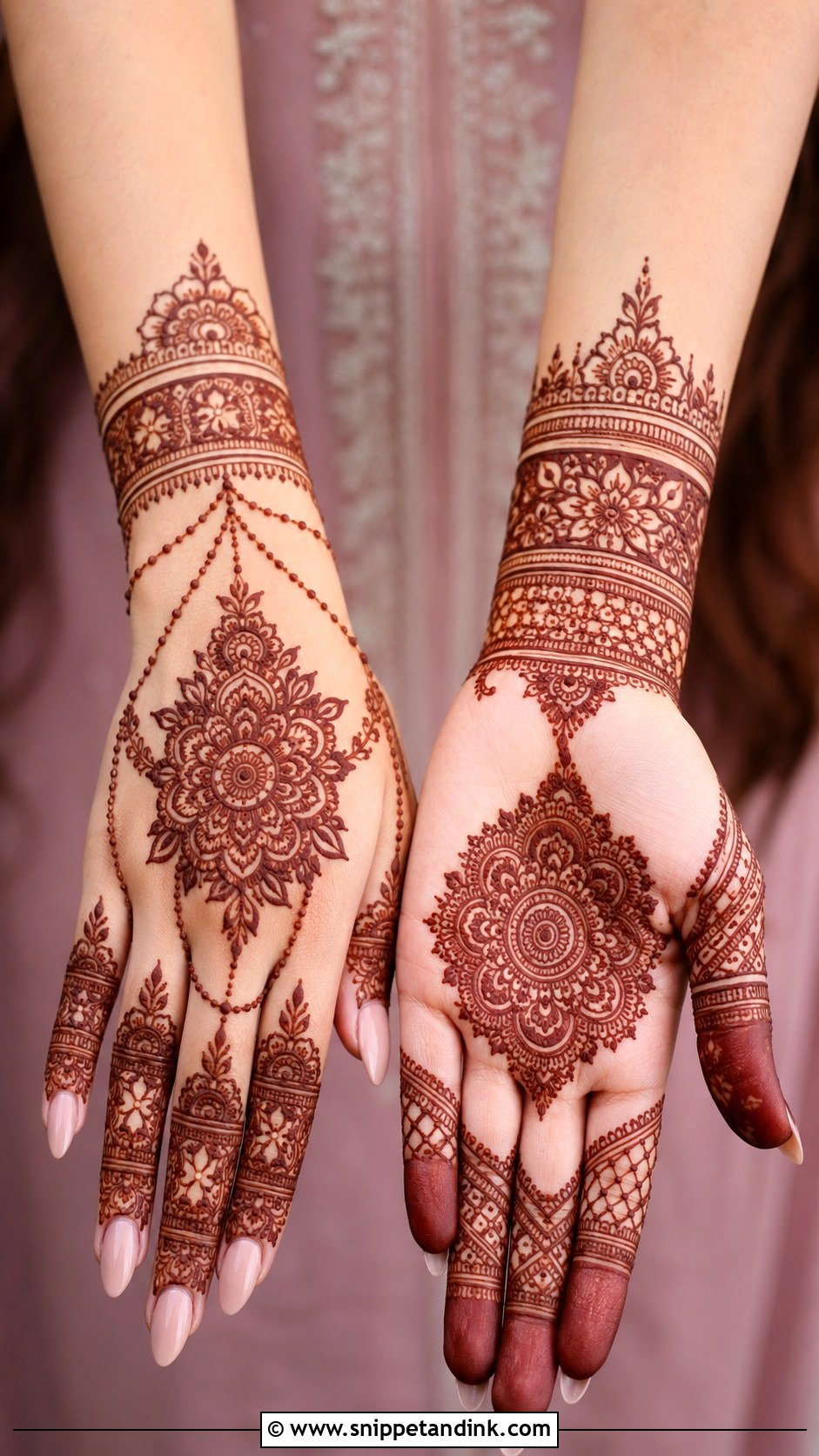
An engagement design frames the fingers and wrist so the ring photos look good: jewelry details on the back hand, floral trails, mandalas and neat bands. A lighter tikki with matching fingers on the palm keeps the focus on the ring. Brides who want more can extend toward the forearm. I keep both hands close to symmetrical for formal photos, but stop short of bridal density; the engagement shouldn’t steal from the wedding.
23. Kashee’s Walima Mehndi Design
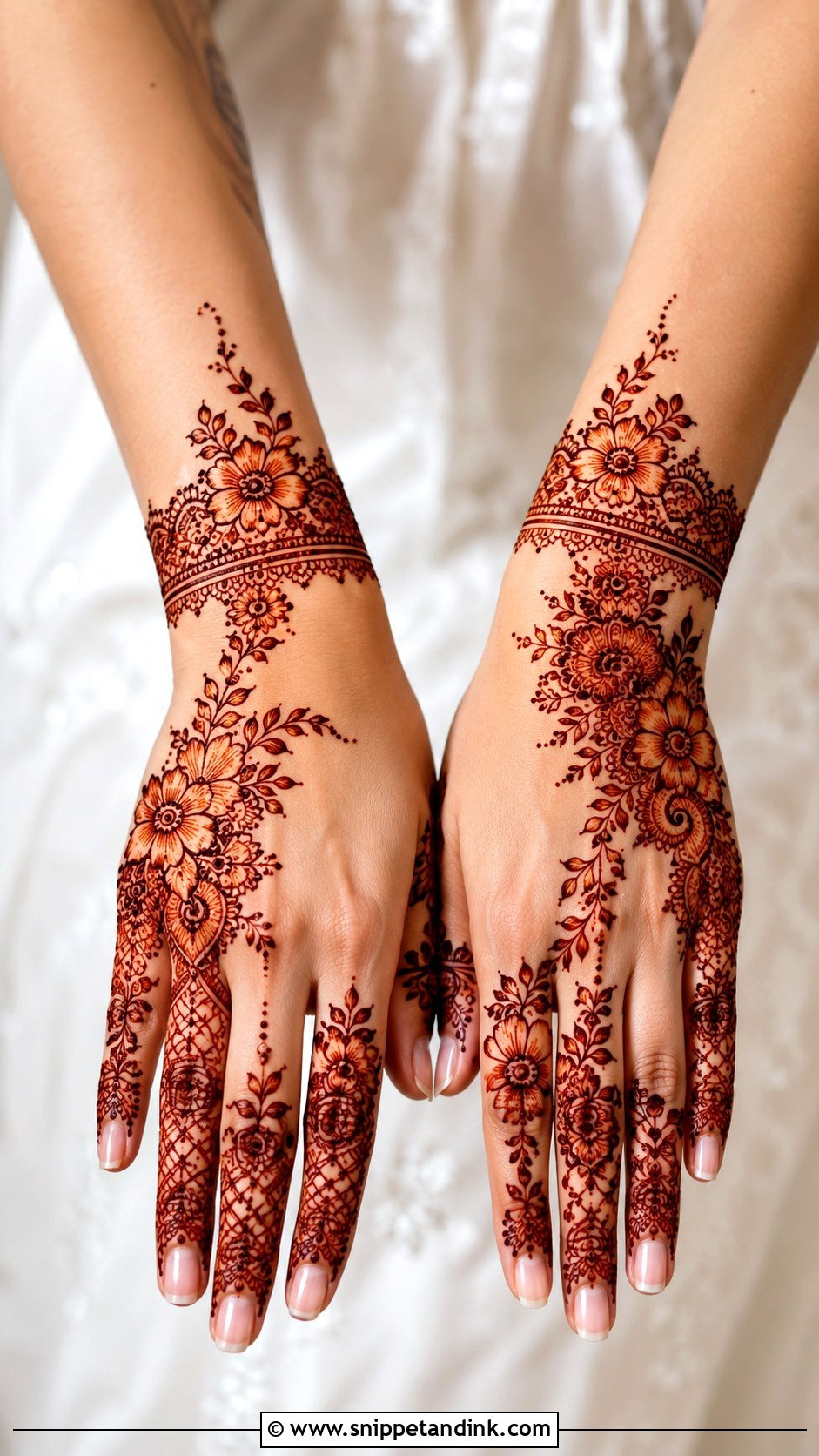
By the walima, bridal mehndi has usually started to fade, especially at the fingertips. A light walima design with shaded florals, fine lace patterns and slim wrist cuffs on the back of the hand freshens things up. I avoid dense palm work here, because new paste over an old stain can look patchy. Keep it clean and slightly modern to suit formal walima outfits.
24. Kashee’s Mehndi Design For Bride Sister
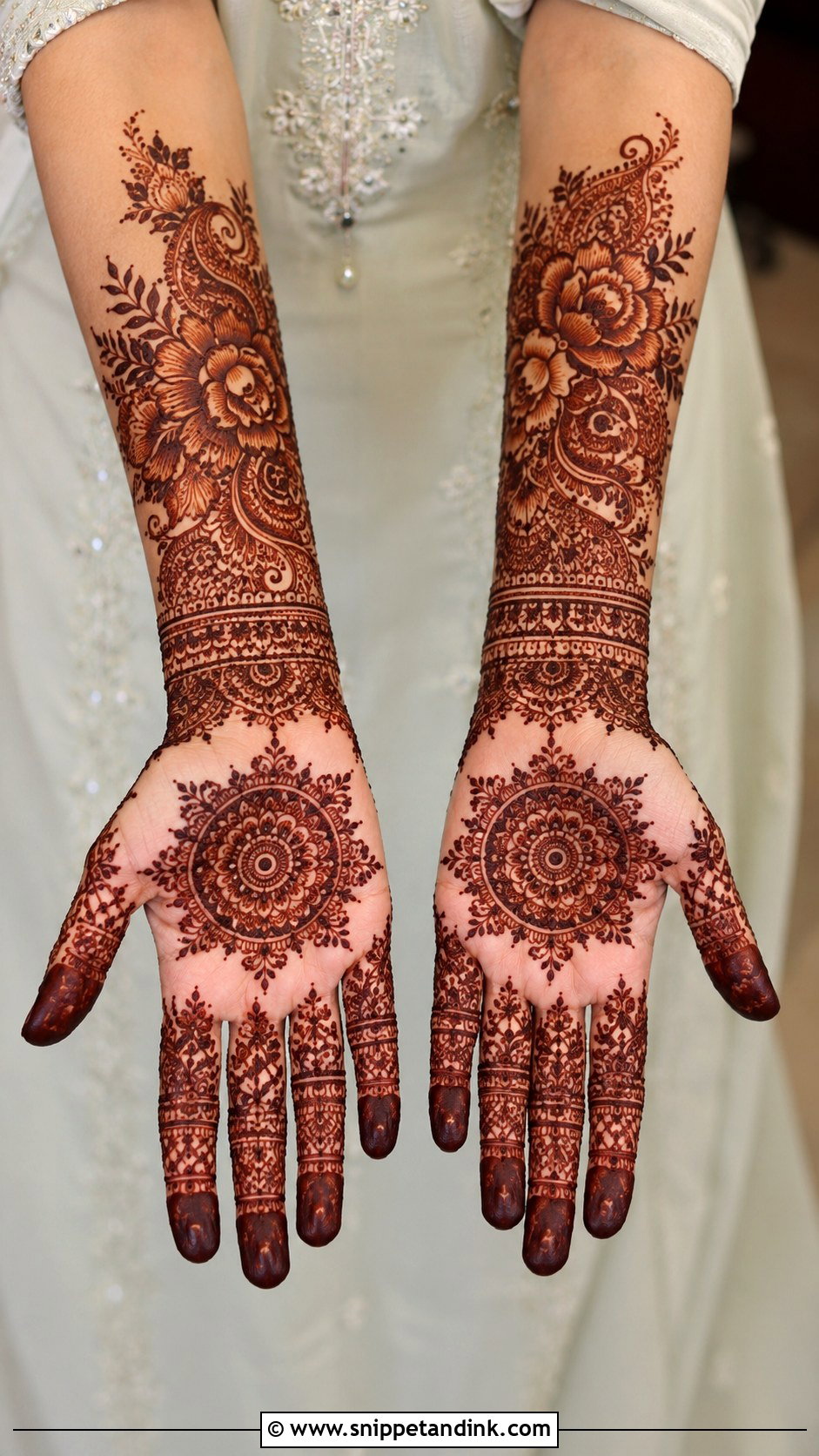
The bride’s sister needs to look festive in photos but should not outshine the bride. Back hand florals, a front mandala, decorated fingers and wrist cuffs in an Indo Arabic layout usually strike that balance. I often repeat one element from the bride’s design, the same flower or paisley, so the family looks coordinated. Wrist to hand coverage is right for most sisters; forearms only if the event is very formal.

25. Kashee’s Simple Mehndi Design
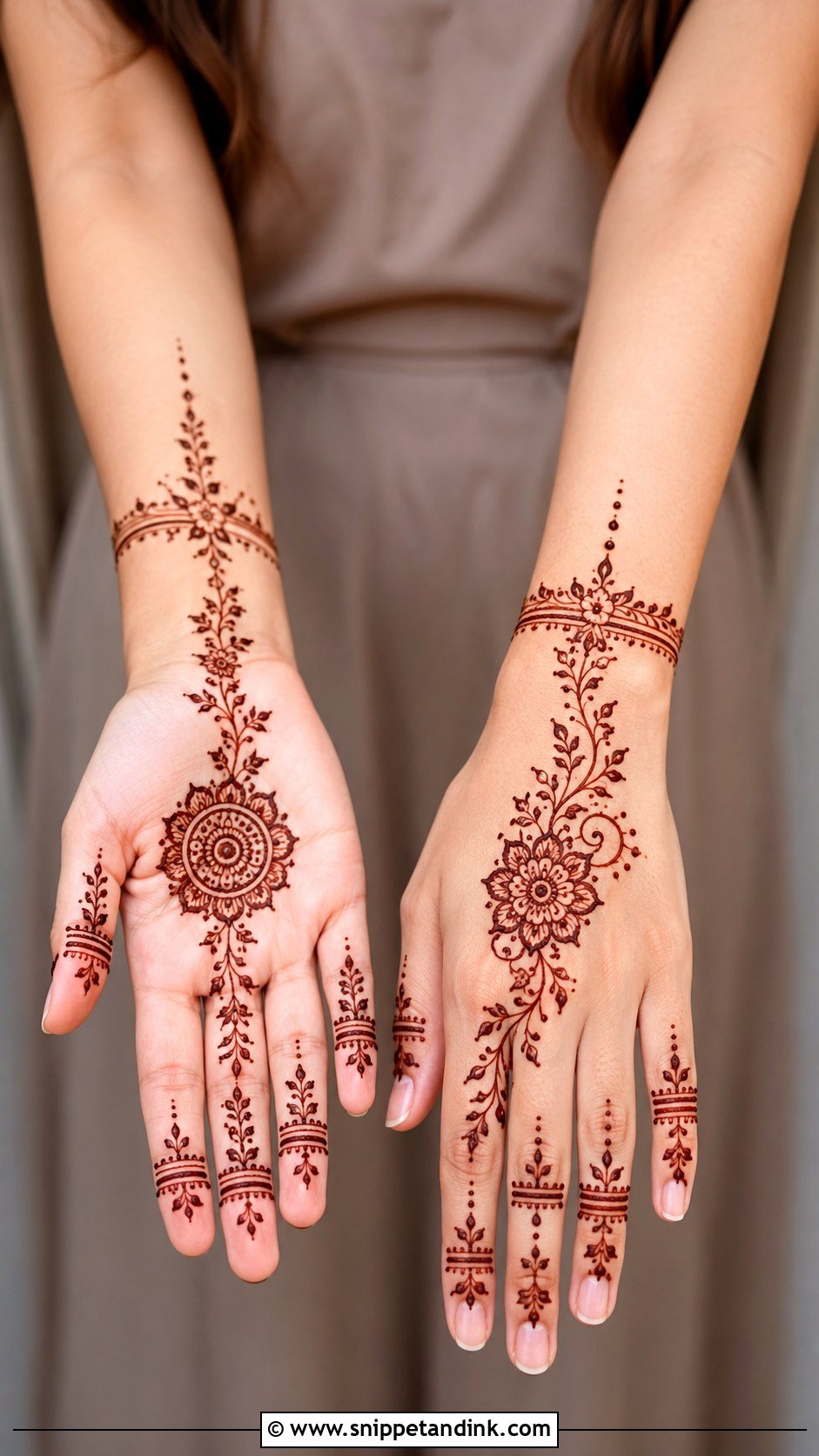
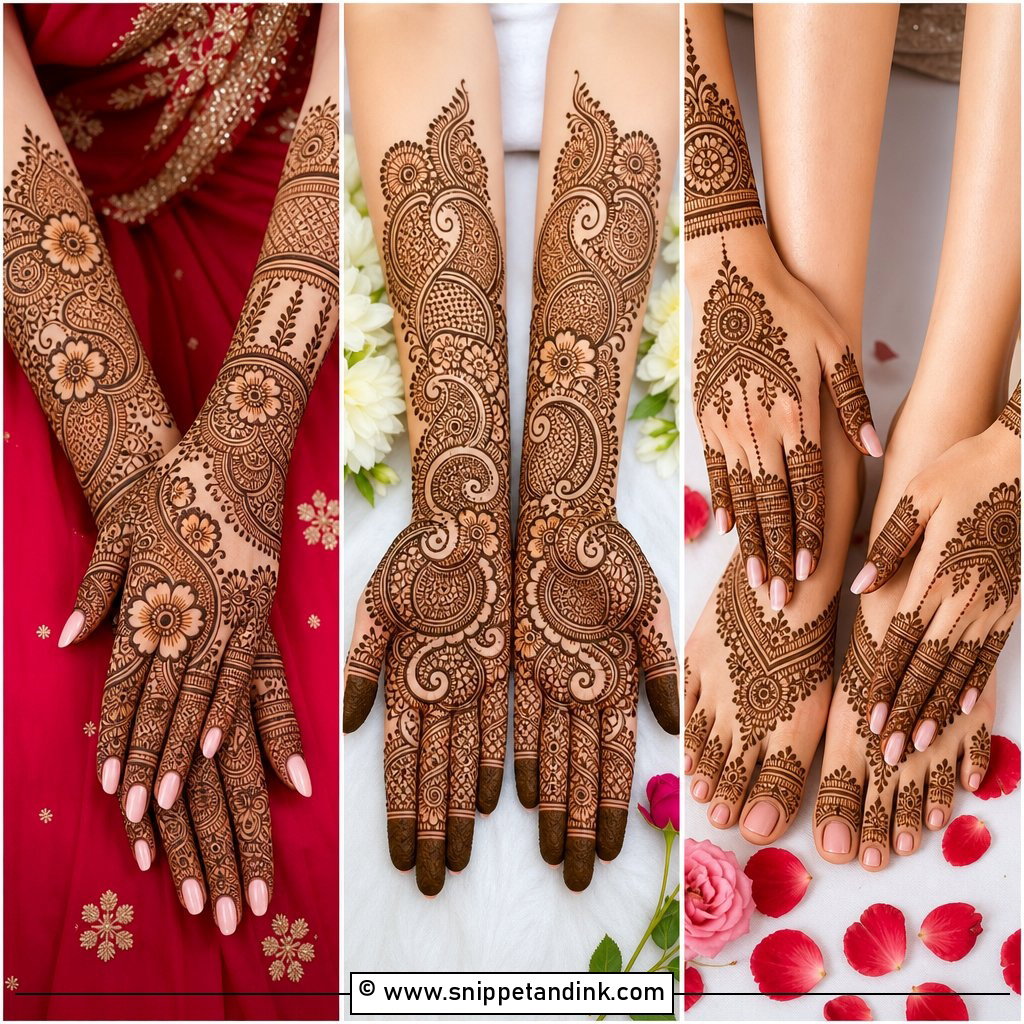
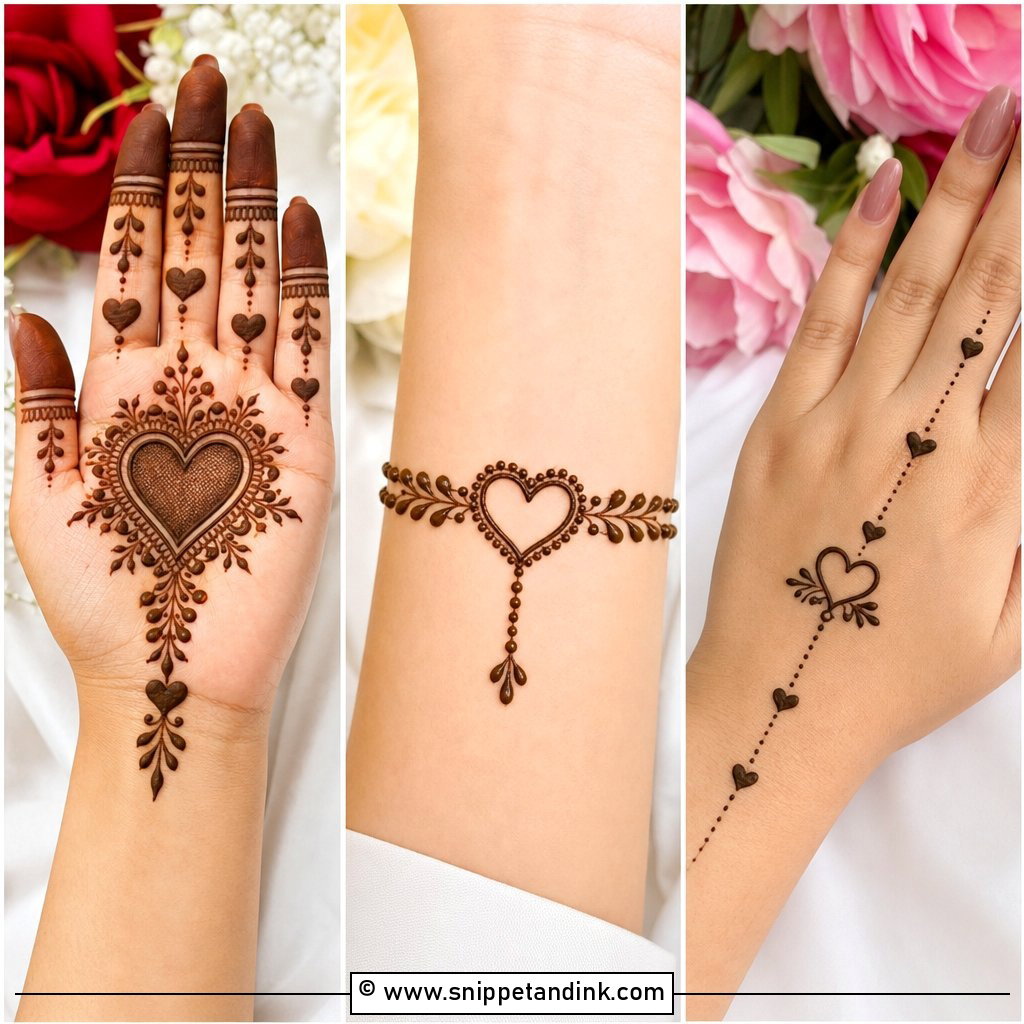
Simple does not mean basic. Clean florals, a small mandala, neat finger bands and a slim wrist detail make a complete hand. This is the design I suggest for beginners, young girls and office friendly occasions. The look relies entirely on neatness, so I avoid random fillers and keep the structure clear. A back hand vine or palm tikki looks polished once the fingers are finished properly.
26. Kashee’s Modern Mehndi Design
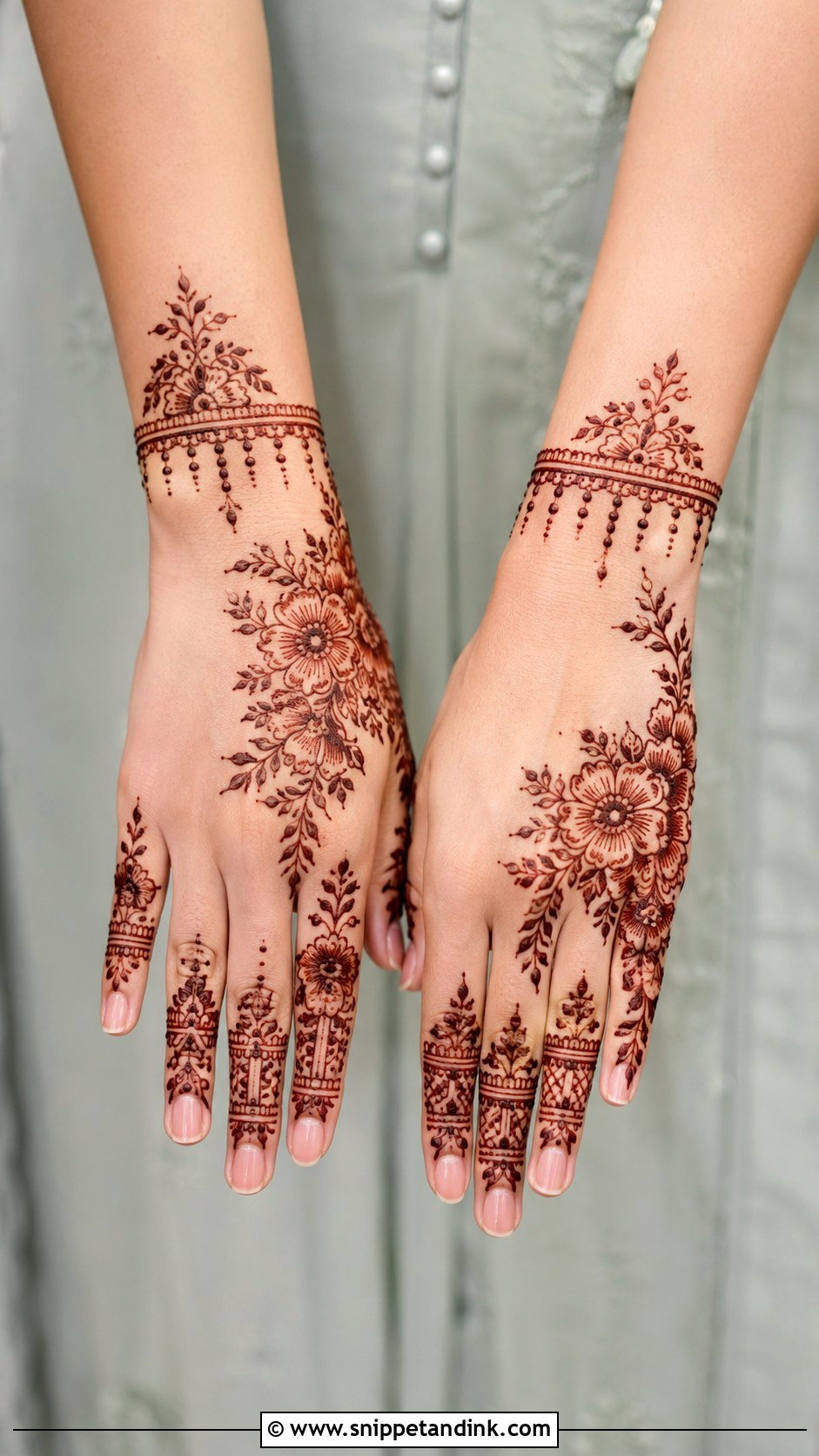
Modern layouts use negative space and placement: a half hand floral design, bracelet details, fine finger art and a lot of bare skin. It suits engagements, Eid and bridal showers. Mandalas can be mixed with geometric bands, or florals with jewelry chains. In my experience, the design works when there is one clear focus area and the rest of the hand supports it quietly.
27. Kashee’s Heavy Mehndi Design
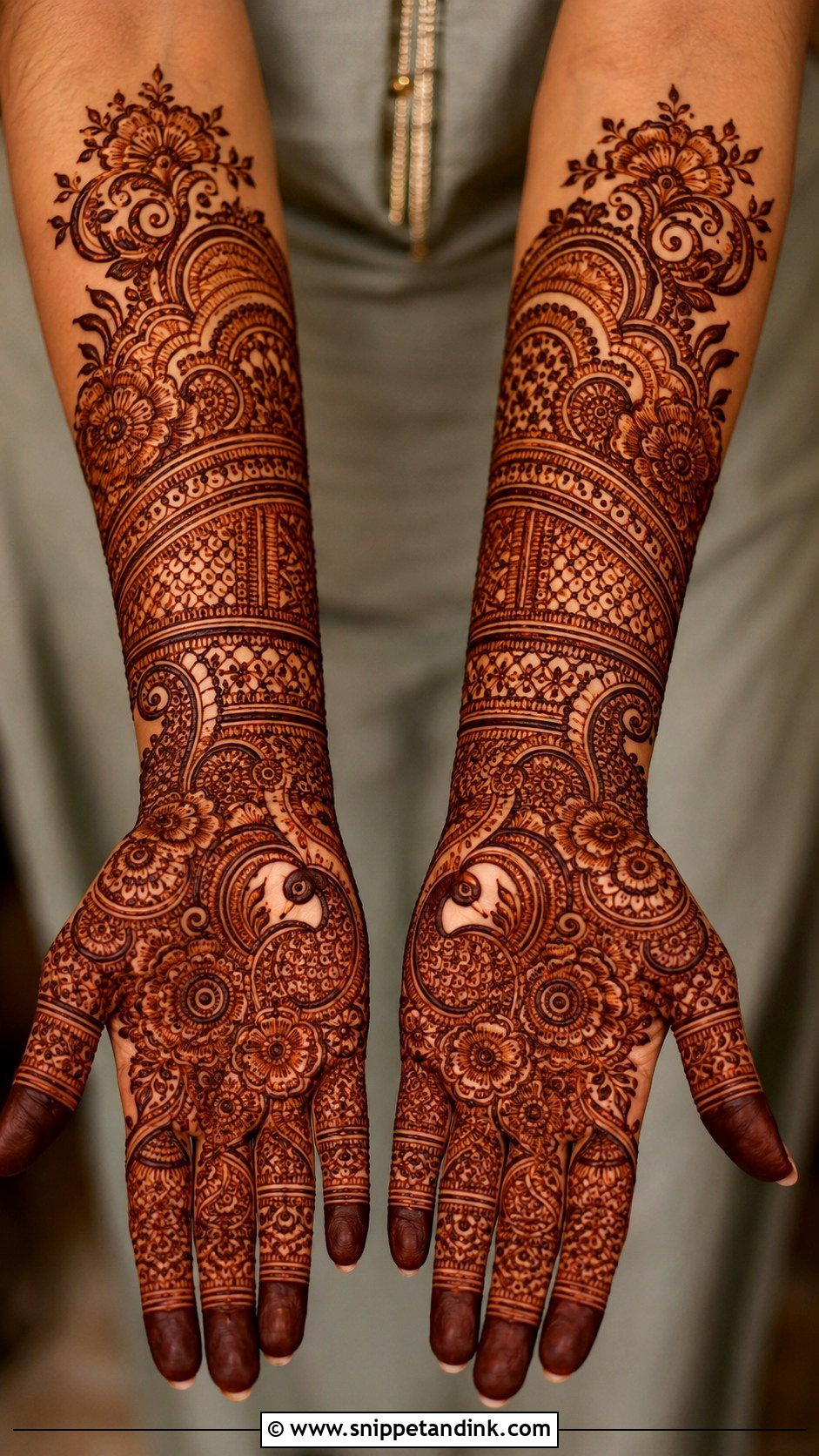
Heavy mehndi suits brides and close family who want full tradition. It covers the hand and often the forearm with dense florals, peacocks, paisleys, jaali, mandalas and layered borders, with fully filled fingers that stain dark. I divide the hand into sections before starting, each with its own motif, then connect them, which keeps a dense design unified. Book time accordingly; this is not a twenty minute job.
28. Kashee’s Minimal Mehndi Design
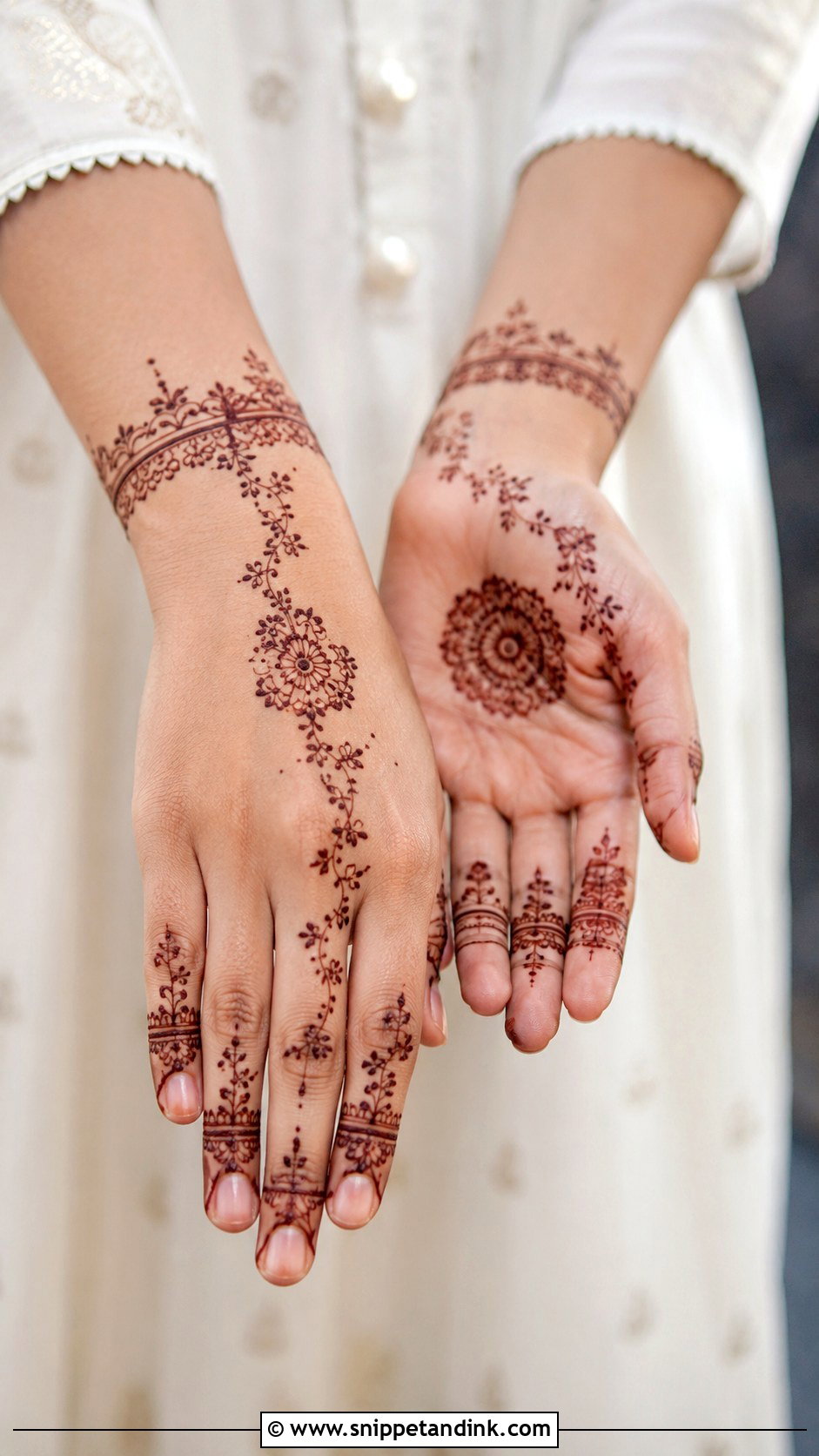
Minimal designs use a small floral trail on the back of the hand, slim finger patterns and a tiny wrist cuff, or a single palm mandala with open space around it. They suit Eid, nikkah or a casual event and anyone who dislikes heavy coverage. The empty space is the design, so I resist filling corners. Fine lines, small dots and soft leaves keep it graceful.
29. Kashee’s Moroccan Mehndi Design
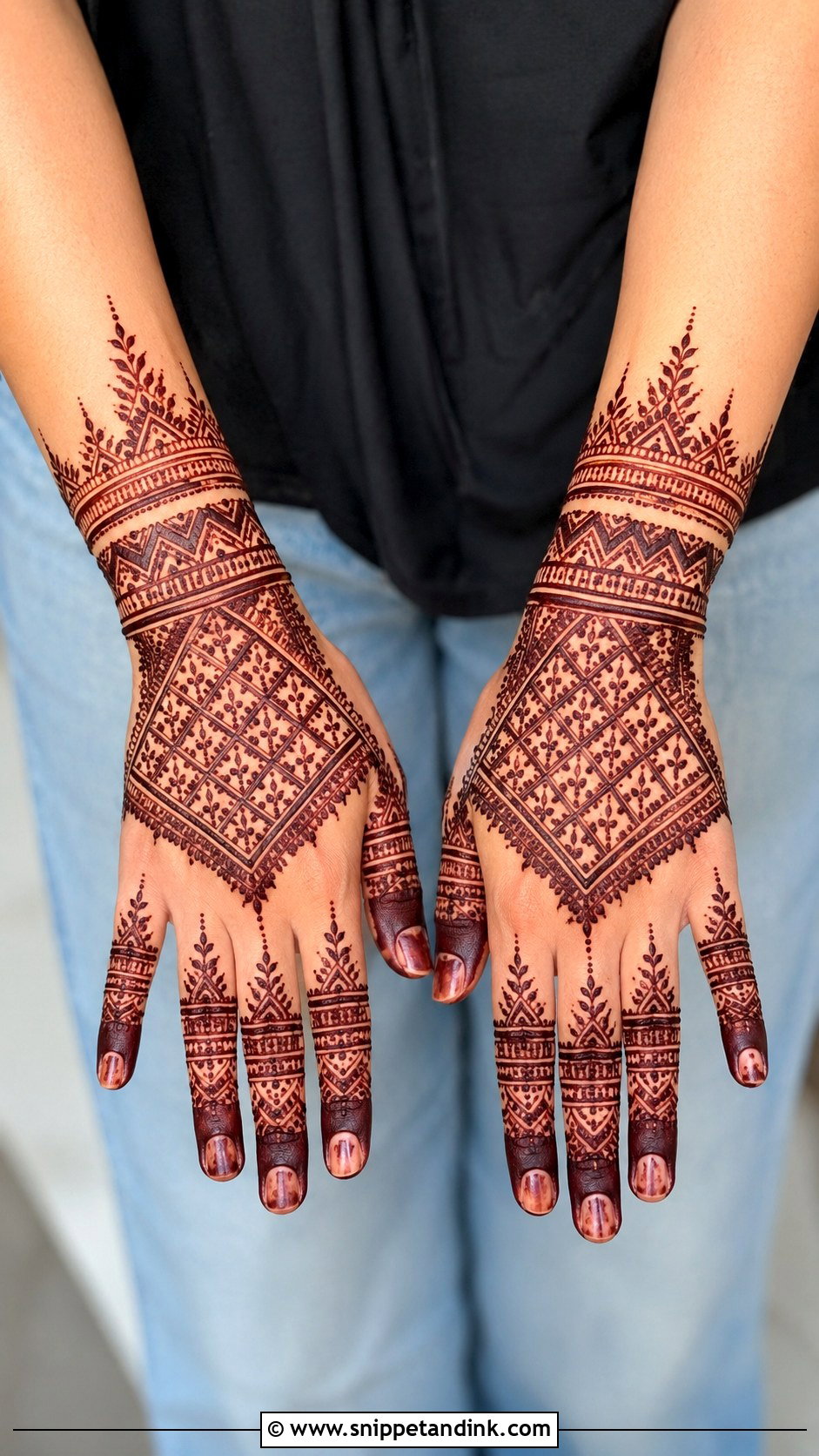
Moroccan influence brings diamond grids, angular bands, triangles and clean wrist cuffs. It looks graphic and modern on the back hand and fingers. Tiny dots or leaves between the geometric sections soften it. Straight lines are harder than curves, so I mark the key points with dots before drawing and pull each line in one confident stroke; a hesitant line shows a kink.
30. Kashee’s Gulf Mehndi Design
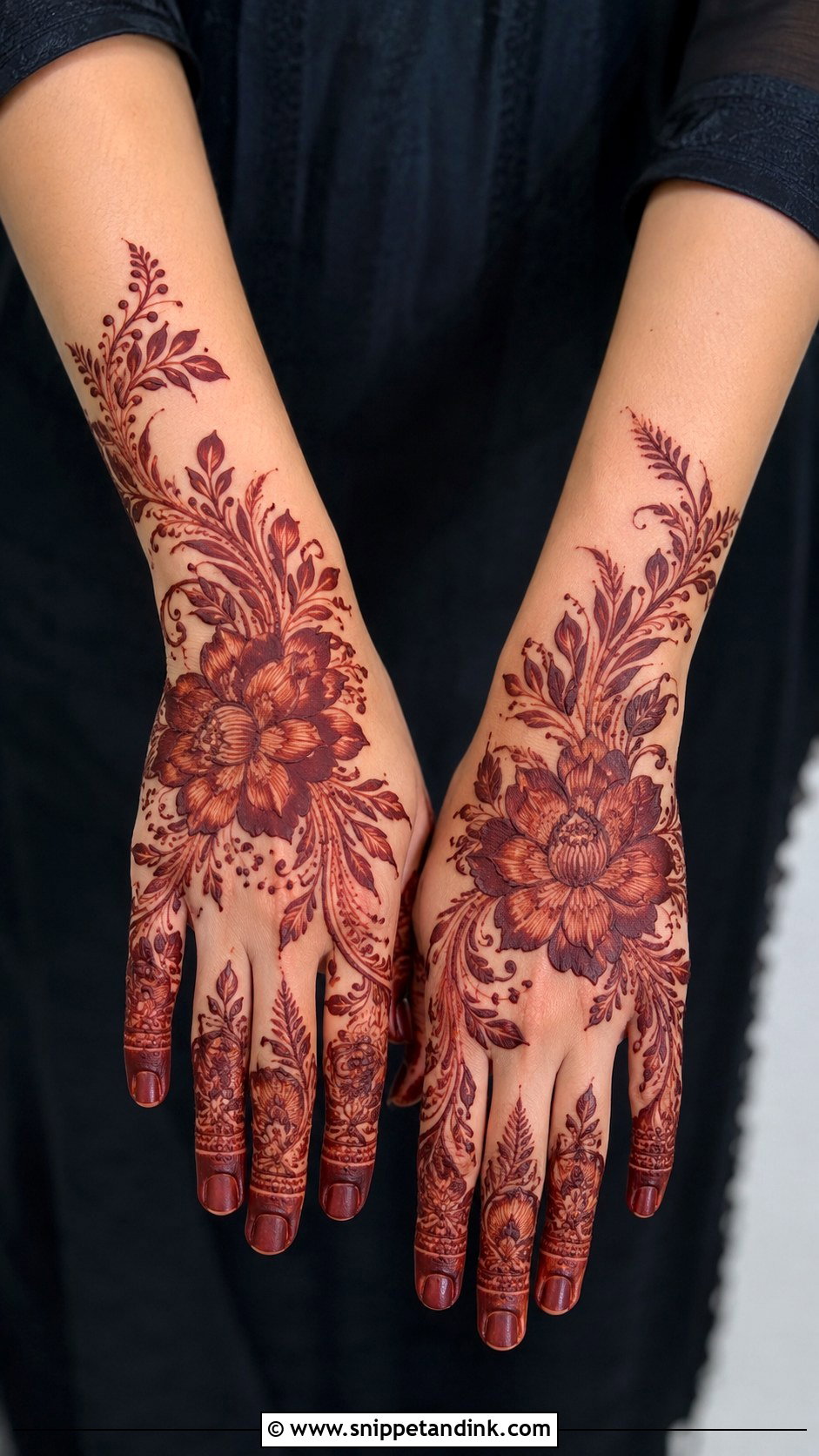
Gulf or Khaleeji inspired mehndi uses bold florals, open space and sweeping flow: large flowers on the back of the hand, leafy strokes on the fingers, shaded vines near the wrist. It looks glamorous without covering every inch of skin. The contrast between bold flower outlines and fine inner detail is what makes it look luxurious. It suits Eid, parties and wedding guests who want to be noticed.
31. Kashee’s Shaded Mehndi Design
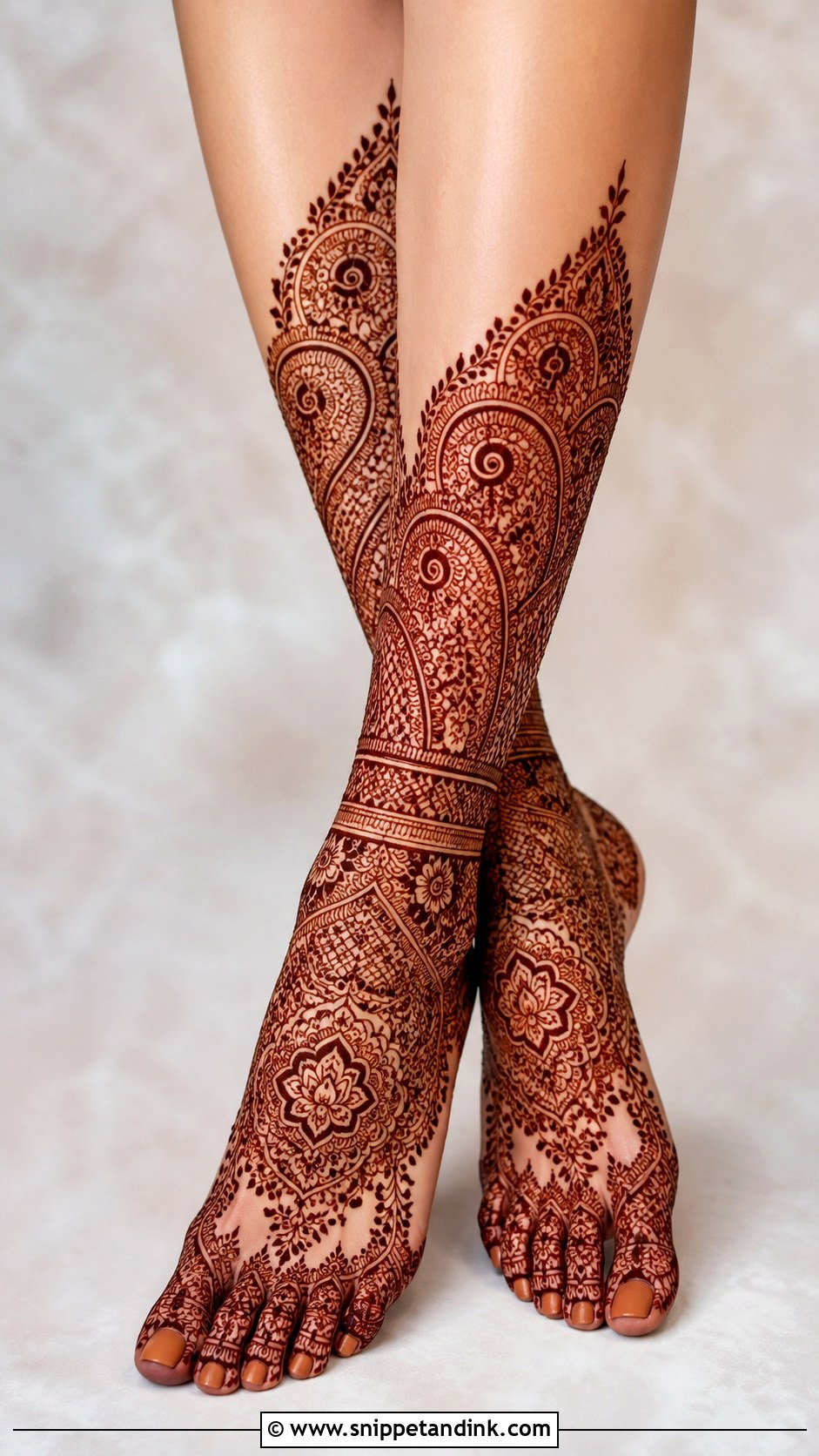
Shading fills petals, leaves and paisleys with soft color inside bold outlines, so large motifs look full without many tiny details. It suits Arabic, Indo Arabic and Gulf layouts and is often faster than fine filling. Shading everywhere makes the design flat, though, so I leave some petals open for contrast. Even, smooth shading depends on steady pressure; blotchy shading shows clearly once stained.
32. Kashee’s Forearm Mehndi Design
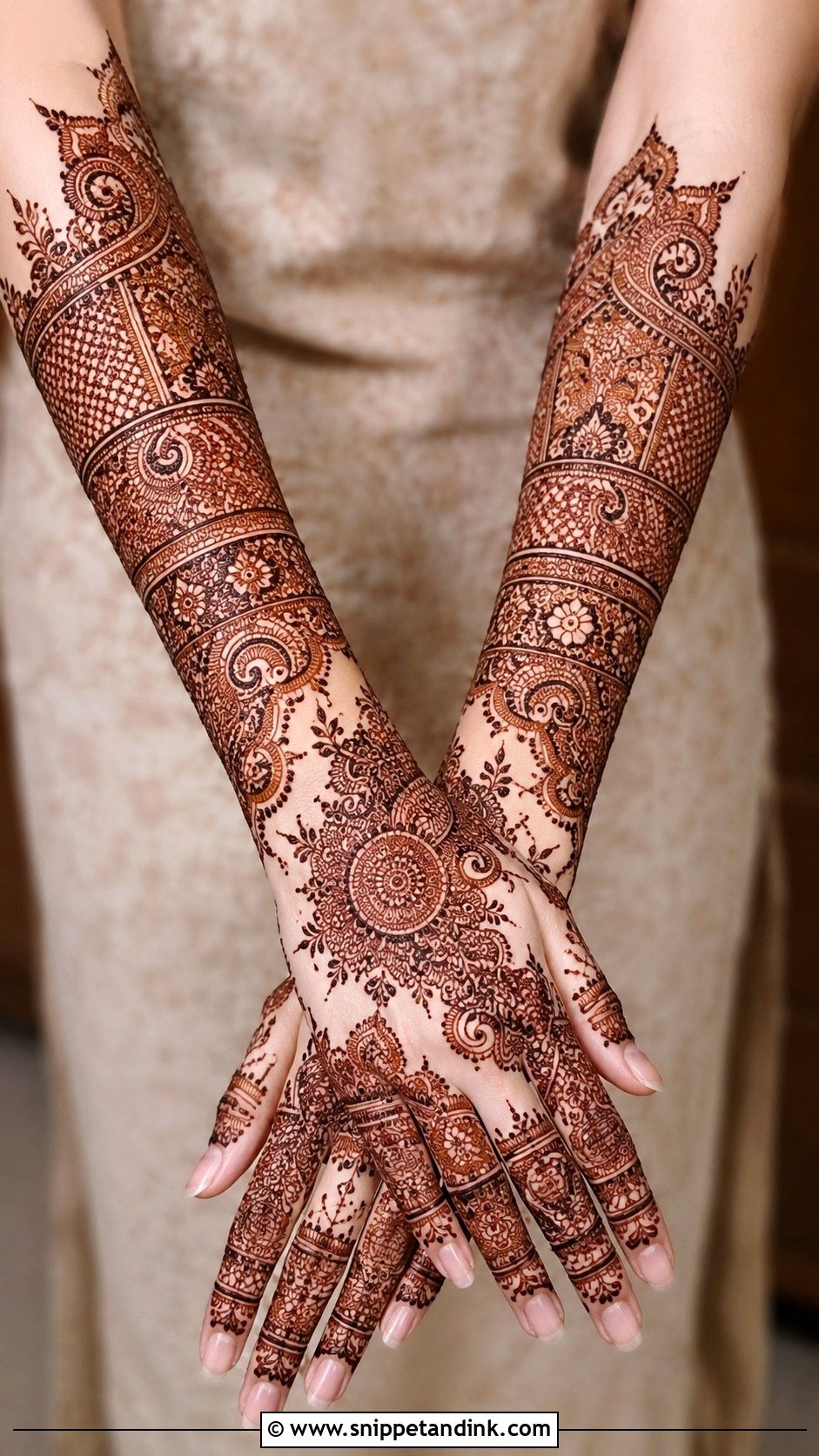
Forearm mehndi turns a hand design into a bridal statement: stacked cuffs, paisley panels, floral vines, jaali and mandala borders running up the arm. It has to flow from the fingers through the wrist to the arm, not look like separate pieces. I place larger motifs higher on the arm and finer work near the hand. Arm skin stains lighter, so keep the arms warm while the paste sets.
33. Kashee’s Feet Mehndi Design
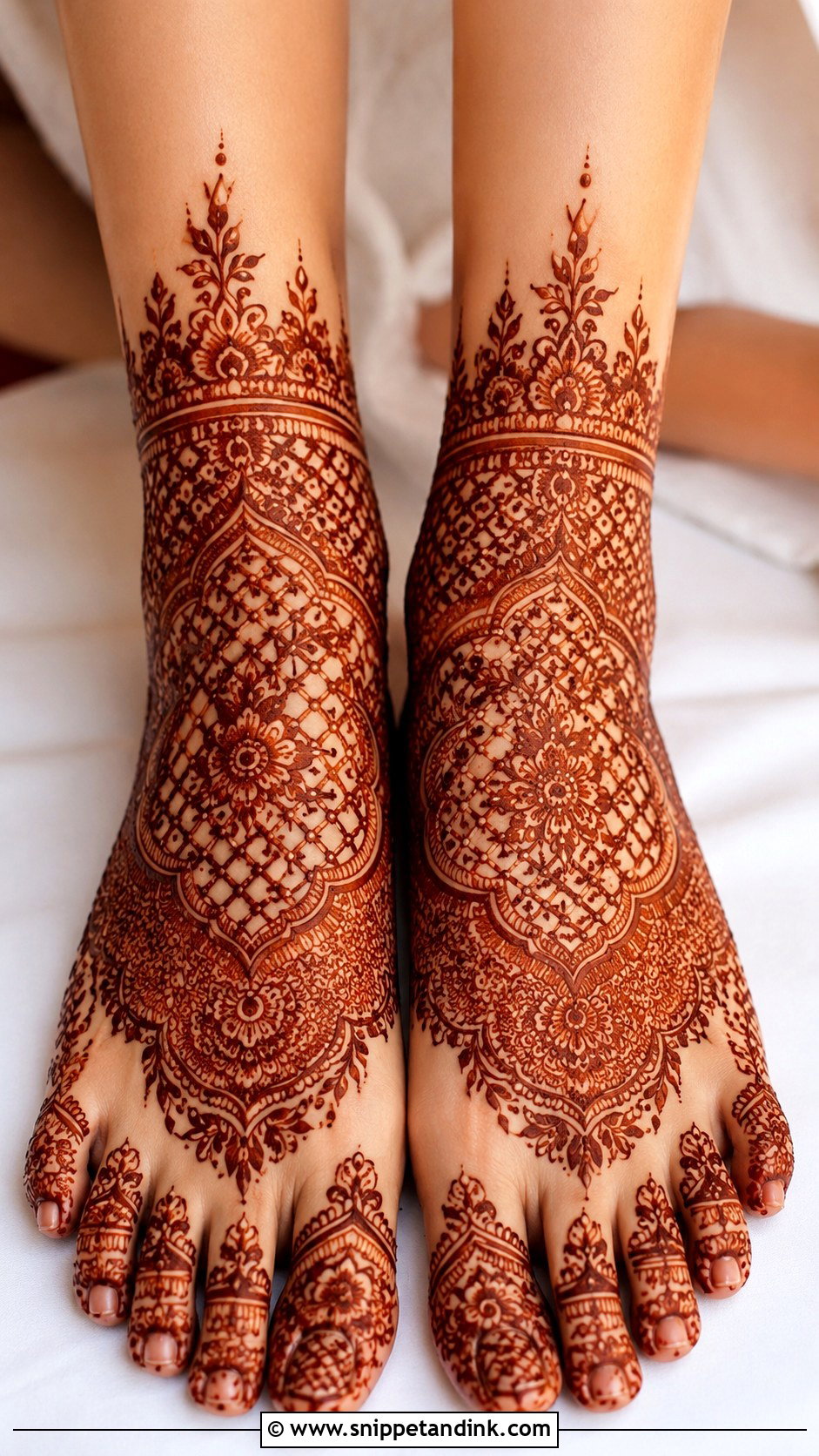
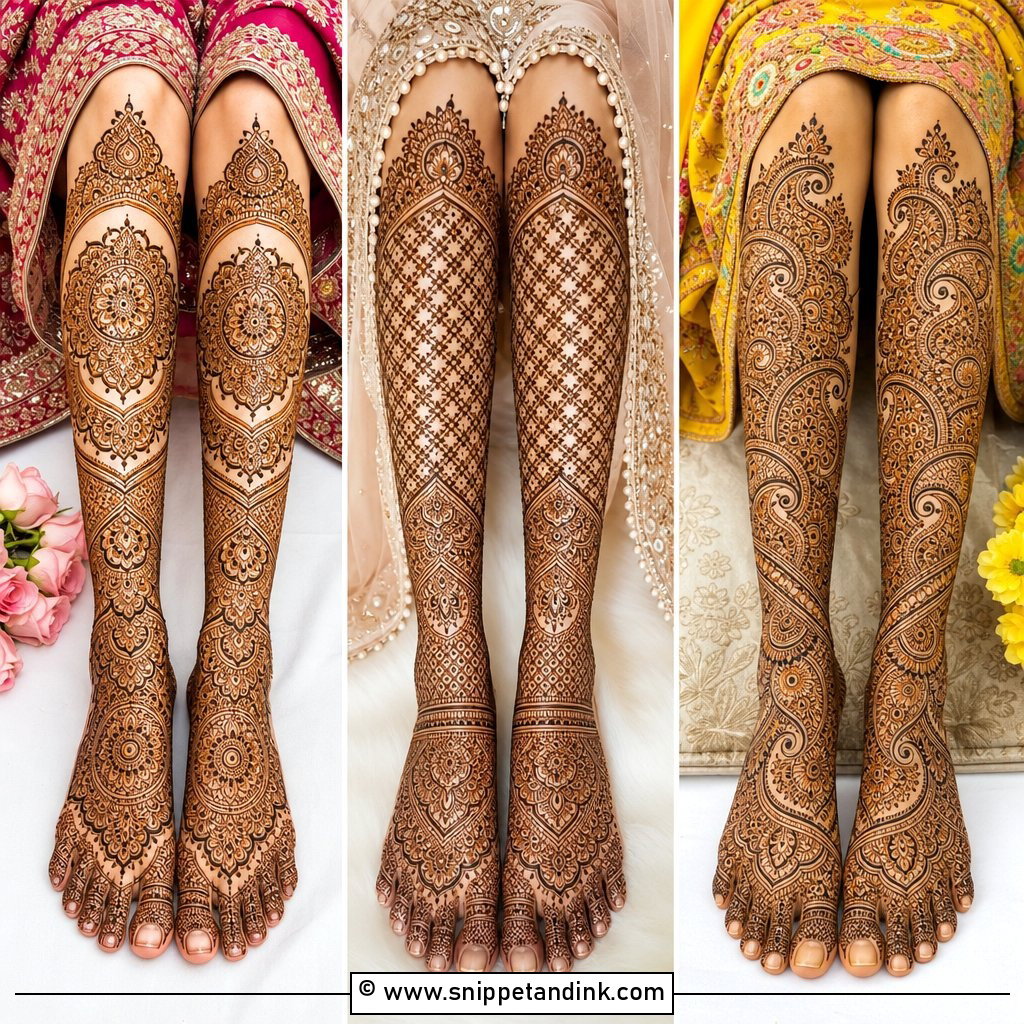
Feet complete the bridal look: toes, tops of the feet, ankles and sometimes the lower legs, with florals, mandalas, jaali and anklet borders. Brides usually go heavy; guests often choose a light vine or ankle design. I avoid fine detail on the edges near the sole, which rubs off fast once you walk. Feet stain very dark, so a balanced top of foot design with ankle cuffs looks rich in photos.
34. Kashee’s Leg Mehndi Design
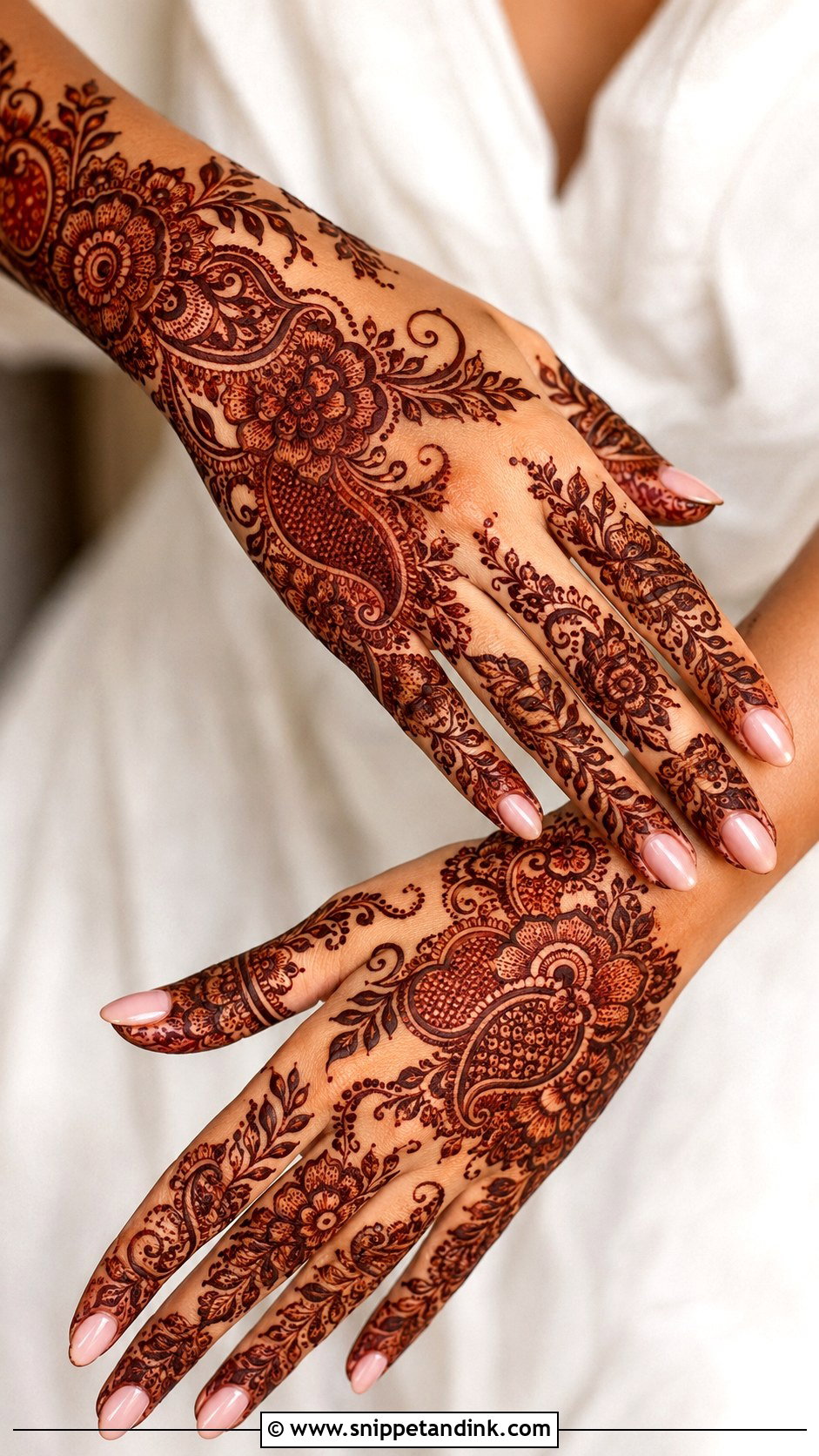
Leg mehndi extends from the feet to the calves with layered anklets, floral panels, paisleys, mandalas and mesh. It suits brides wanting the full traditional finish under lehengas and ghararas. It takes a long time, so comfort matters; I prop the legs on a stool and work in stages. Densest work goes near the feet and ankles, with larger motifs as the design moves up, so it stays readable.
35. Kashee’s Dulhan Mehndi Design
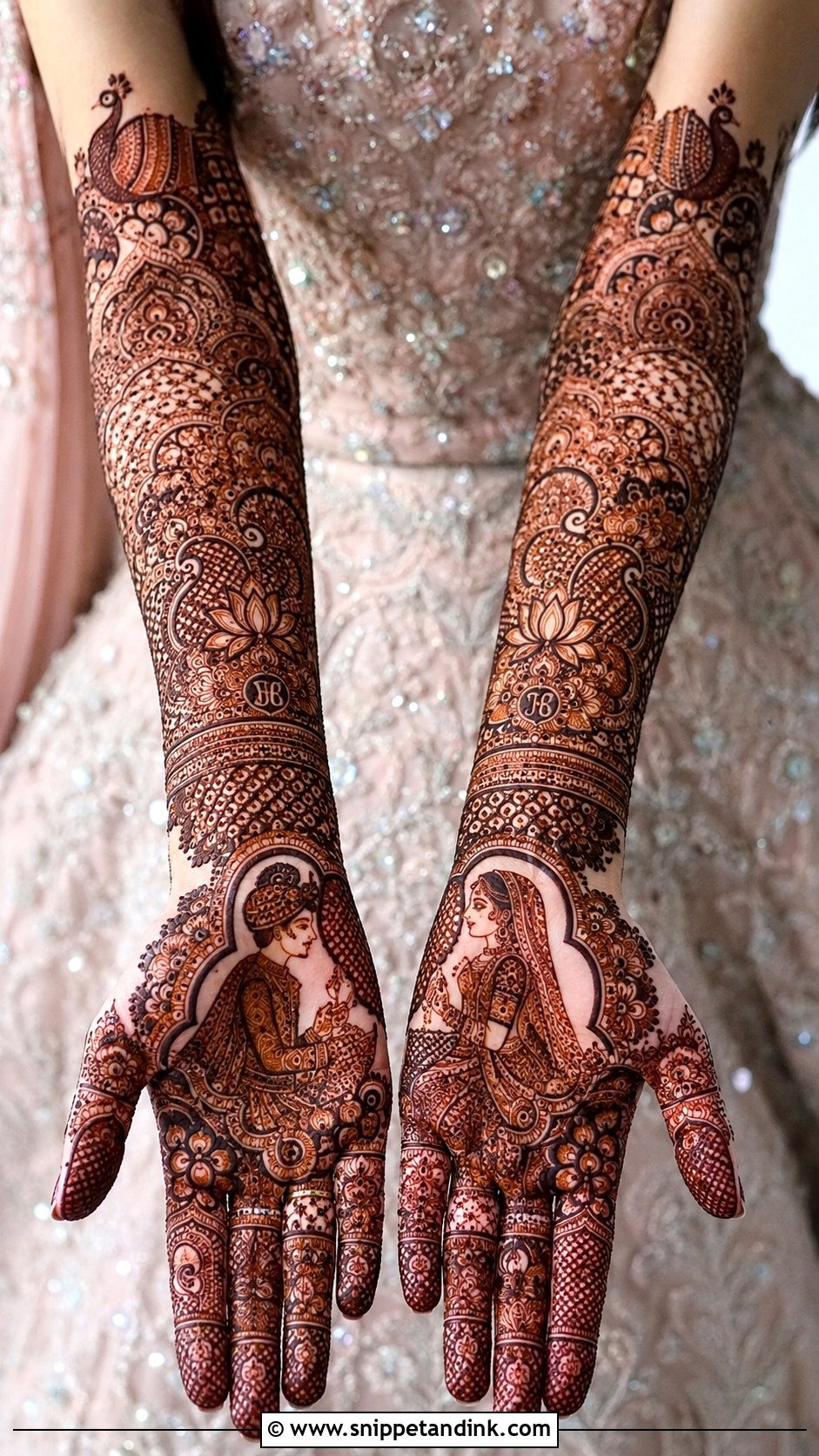
Dulhan mehndi is the grandest version: both hands, arms, feet and sometimes lower legs, with bride and groom elements, peacocks, lotus, paisleys, mandalas, jaali and hidden initials. The hands carry the main story and the feet echo the same motifs more softly. A deep stain helps, but neat application matters more; an uneven line is visible for weeks. Plan this across two sittings if you can.
Telling a Skilled Bridal Artist From Edited Photos
Bridal henna in this style needs a very steady hand, and many portfolios are filtered or show the best day of the stain only. When you meet an artist, look for these signs:
- Photos of wet paste, before removal, where line thickness and symmetry are easy to judge.
- Matching left and right hands. Mirroring two hands accurately is harder than it looks.
- An honest answer about the paste: what it contains, when it was made, how it is stored. Fresh natural paste is mixed in small batches and frozen.
- A willingness to do a small sample on one finger so you can check how it stains on your skin.
Sitting Through Hands, Arms, Feet and Legs
Full dulhan mehndi is hours of keeping still. I split it into two sessions where possible, hands and arms one day and feet and legs the next, or feet first so the bride can still move her hands. Eat beforehand, use the bathroom right before we start, and have someone ready to hold your phone and drink.
In winter, keep the room warm. Cold skin takes a weaker stain, and a heater or warm blankets near, not on, the drying paste help more than people expect.
Heavy Dulhan Hands or a Light Eid Trail?
Every design here can be scaled up or down for your event, outfit, hand shape and patience. For a royal bridal finish, full hand, Pakistani bridal, peacock and forearm designs are the ones to look at. For something softer, khafif, jewelry, minimal, tikki or a floral back hand will suit you better and fade more gracefully. Whatever you choose, clean lines, balanced spacing and a natural stain from good paste matter more than the name attached to the style.
You'll Like These Ideas:




Leave a Reply