
Apart from the outfit, wedding mehndi gets photographed more than anything a bride wears. Hands show up in the rituals, the ring shots, the jewelry close-ups and every emotional moment in between. So when a family books me, I’m thinking about the bride’s outfit, the shape of her hands, the feel of the ceremony and how long she can comfortably sit. Some brides want dense Indian work with portraits and paisleys; others prefer airy Arabic trails, clean mandalas or modern back-hand layouts with space left around rings and bangles. Guests and bridesmaids usually want something lighter that still looks polished. The twenty designs below cover all of those.
Planning Henna for Everyone, Not Just the Bride
At most weddings I’m not only doing the bride. Mothers, sisters, cousins, bridesmaids and guests all want henna, often on the same evening. The way to keep that calm is to decide in advance who gets which level of design, so nobody sits waiting for a full hand that was never going to fit in the time.
A simple tier system
- Bride: full bridal hands and feet, at her own appointment, usually a day or two before the wedding.
- Mothers and sisters: a half hand or Indo-Arabic design, drawn earlier in the day if the schedule allows.
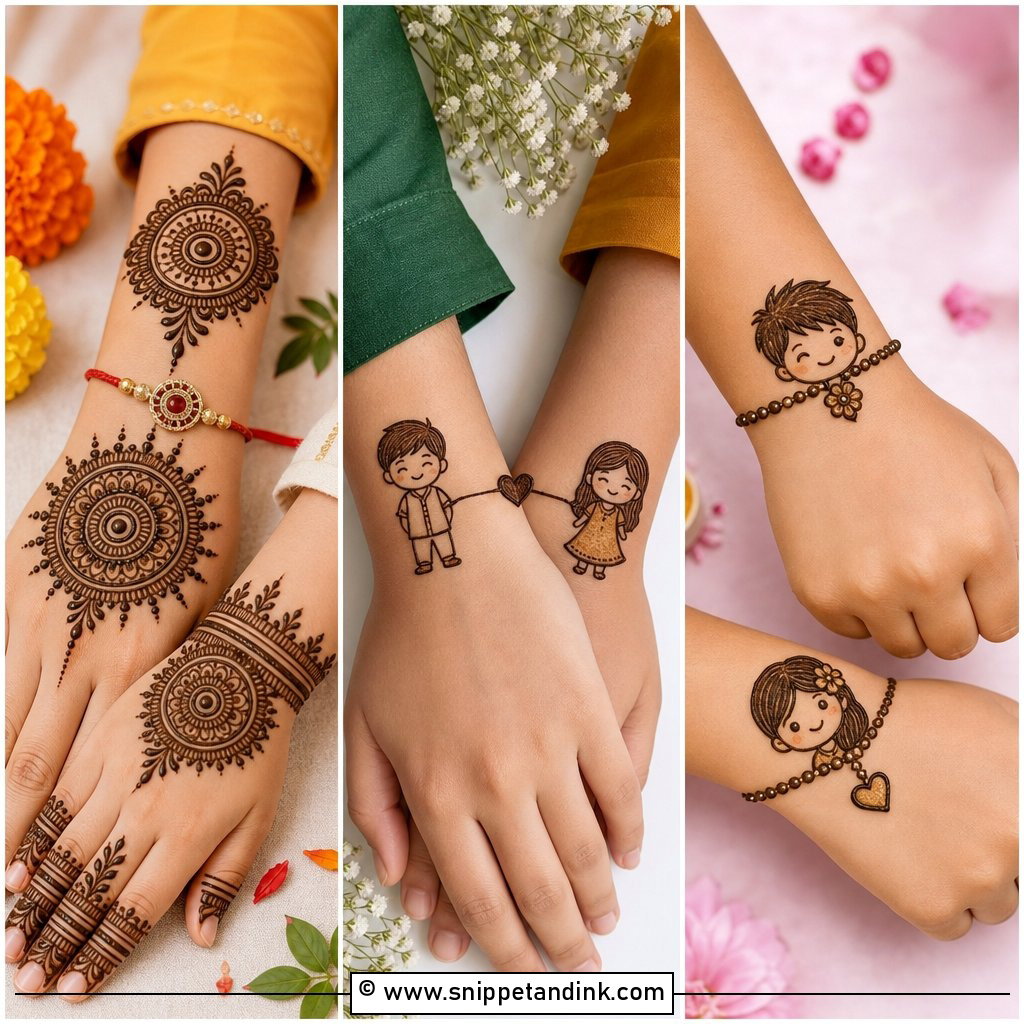
- Bridesmaids: one shared base design such as a bracelet, mandala or Arabic trail, with small changes for each friend.
- Guests: finger designs, a small back-hand motif or a short Arabic trail on one hand.
A quick guest design on one hand takes a fraction of the time of family work, so one artist can see plenty of guests in an evening but not many full hands. If the family list is long, book a second artist for guests and keep the main artist with the bride and close family. Ask guests to arrive with clean, lotion-free hands; it saves time at the table and gives a better stain.
1. Full Hand Bridal Mehndi Design
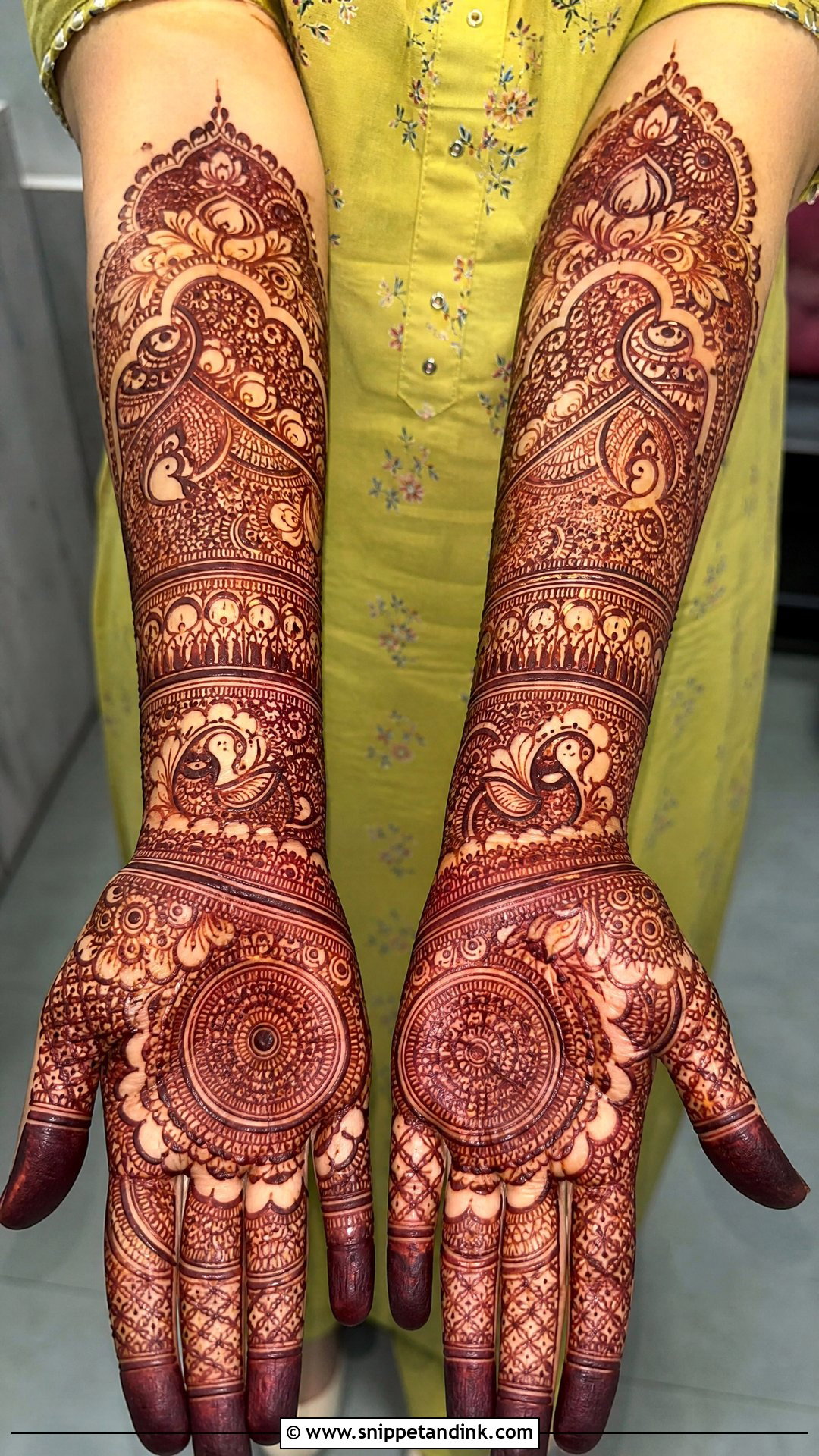
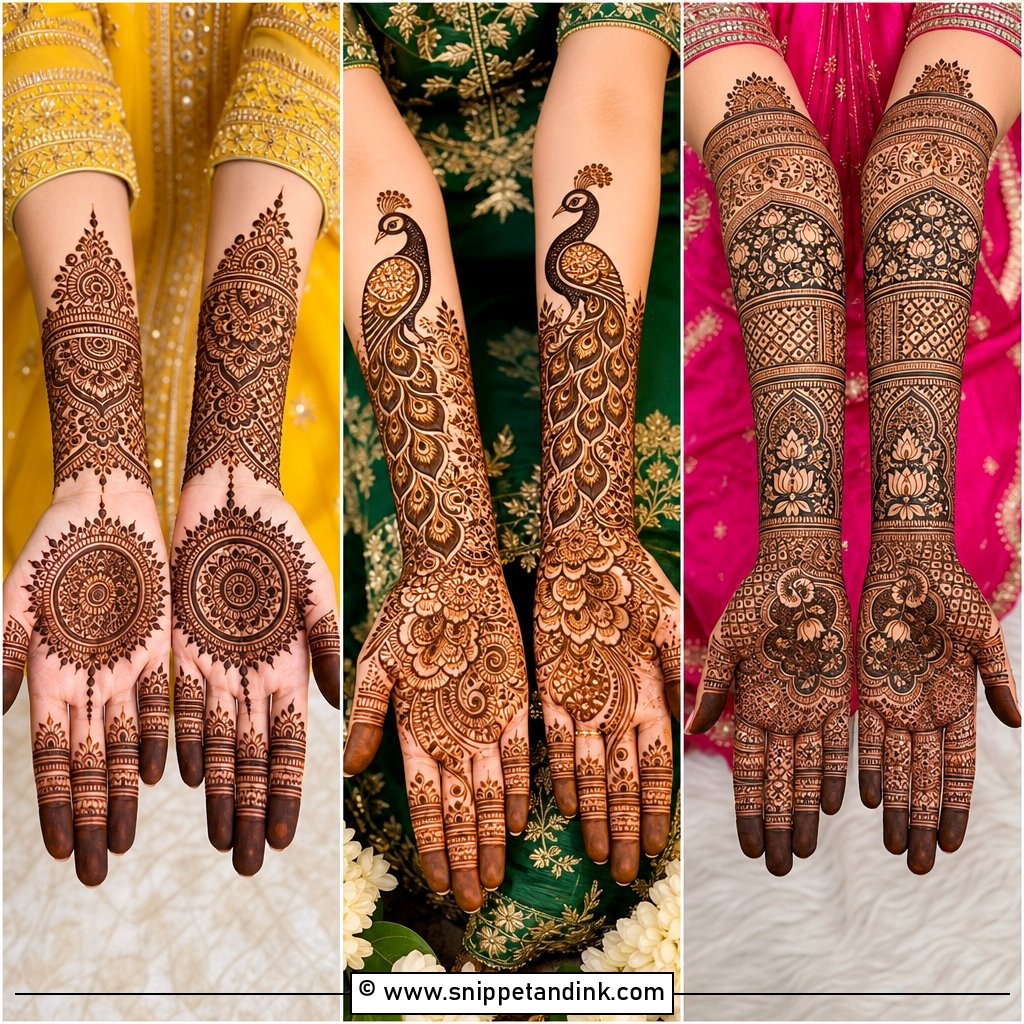
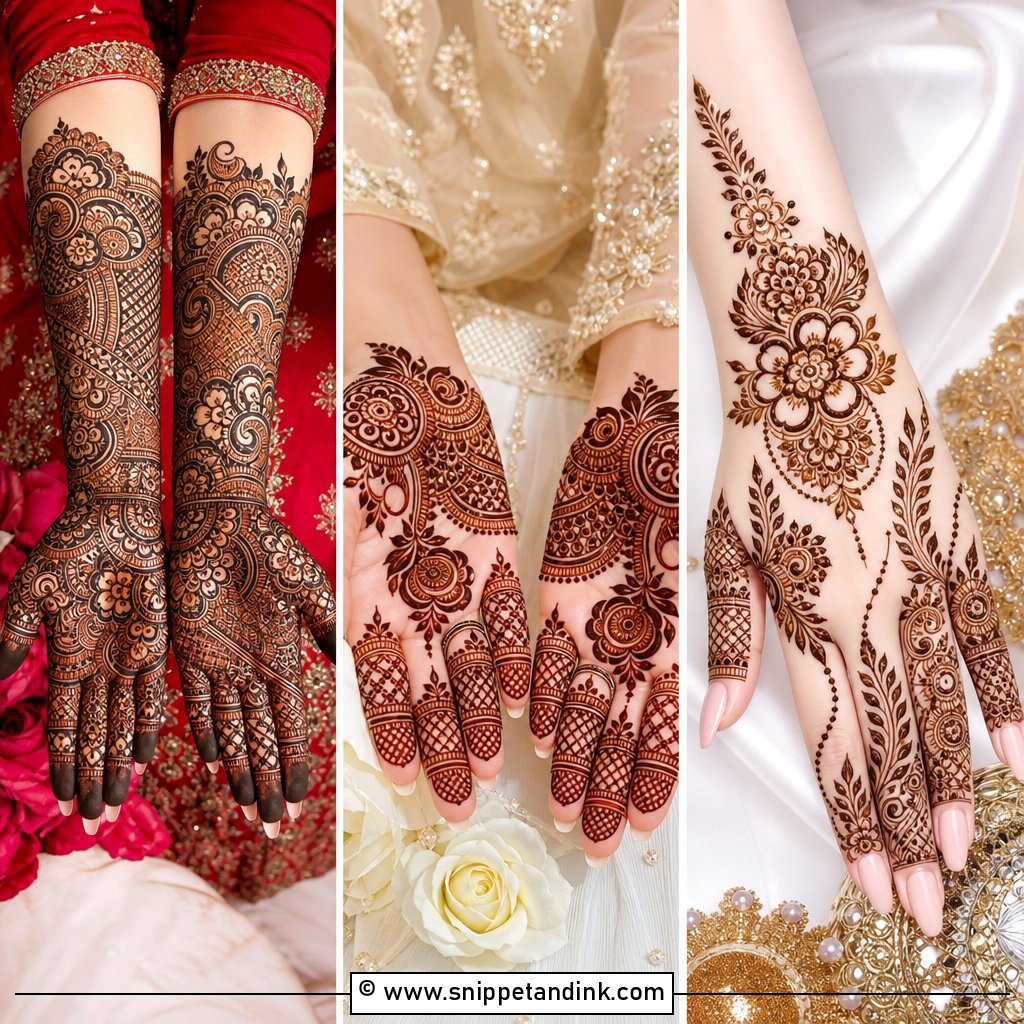
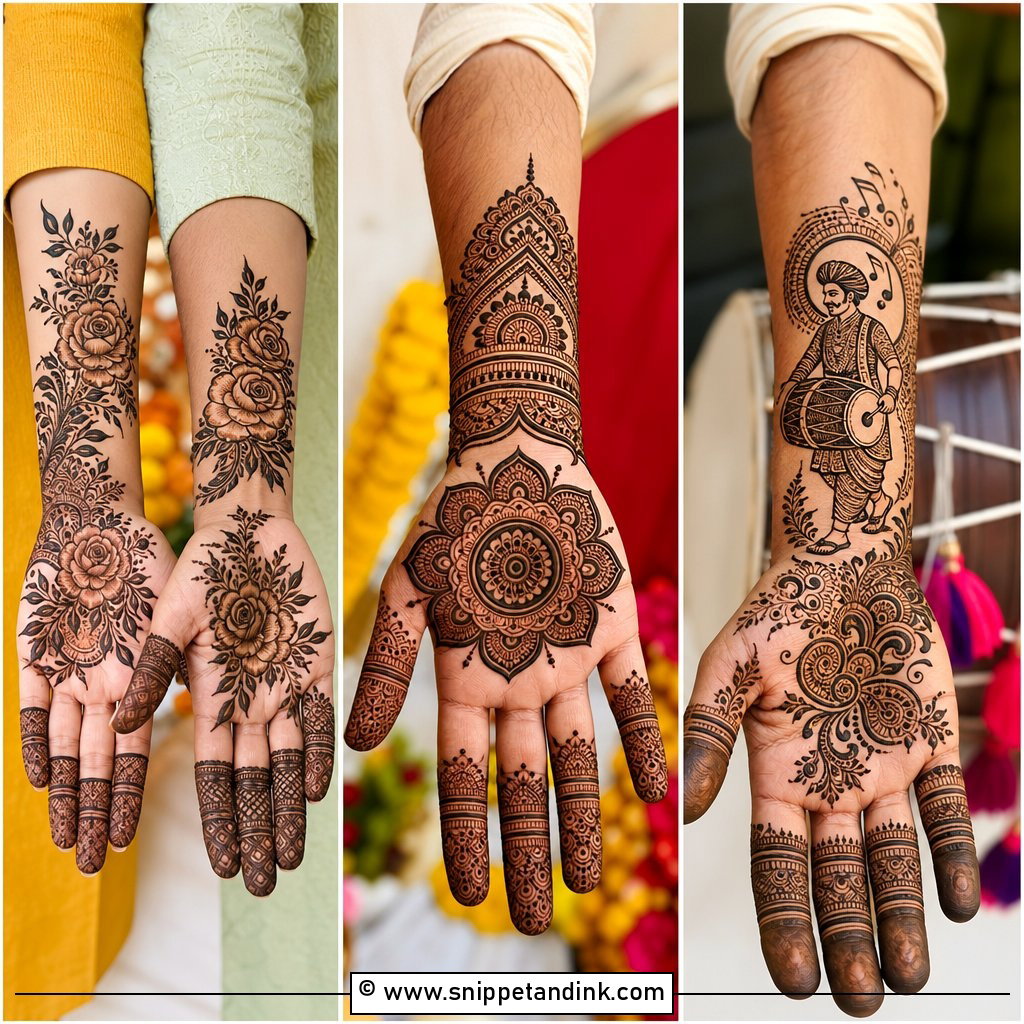
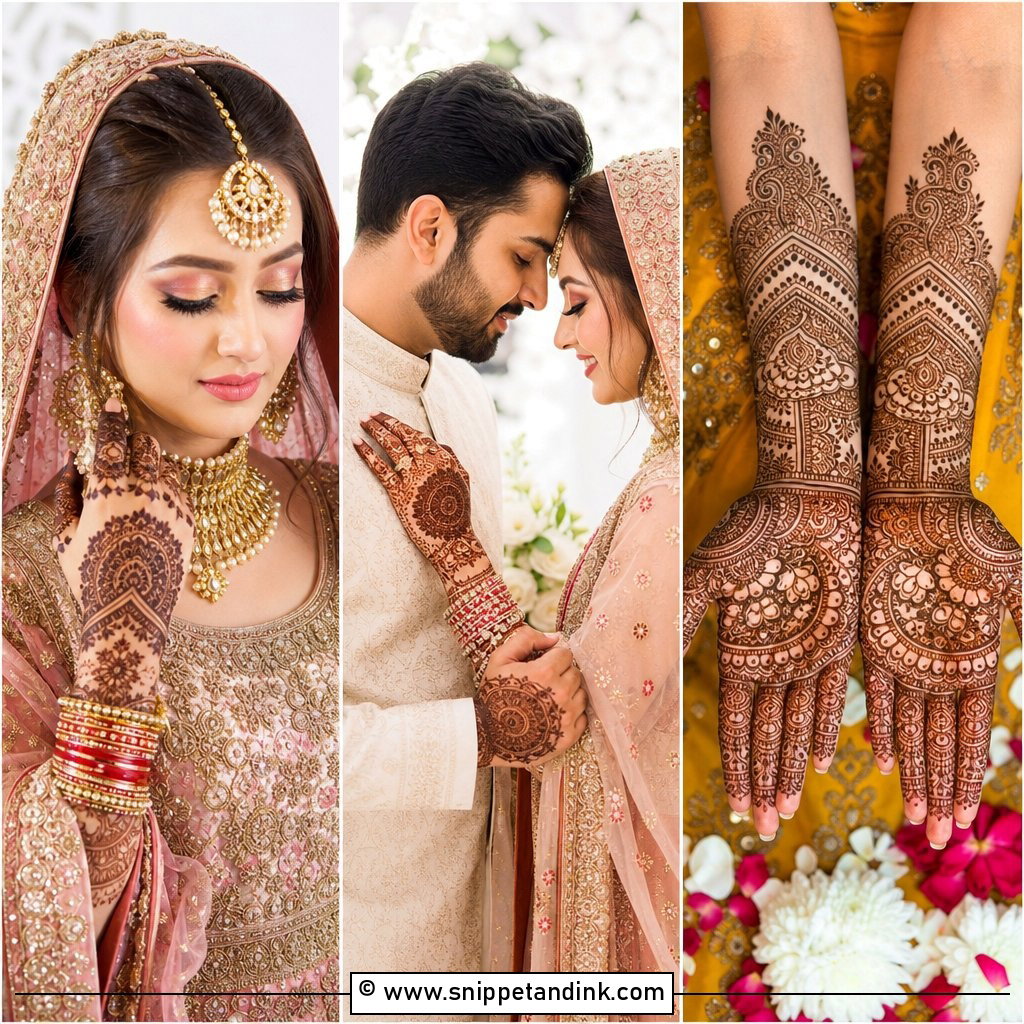
This is the classic, and the slowest to apply. Palms, fingers, wrists and forearms are covered in dense detail: paisleys, lotus flowers, peacocks, mandalas and fine fillers. I keep the main motif bold in the palm and let smaller details flow toward the wrist, which gives the eye somewhere to land in close-ups. It belongs with heavy bridal bangles, embroidered lehengas, silk sarees and traditional jewelry. The real risk is fatigue. Toward the end of a long sitting brides start to shift, so I draw the most important motifs first while the hands are still relaxed.
2. Arabic Bridal Mehndi Design
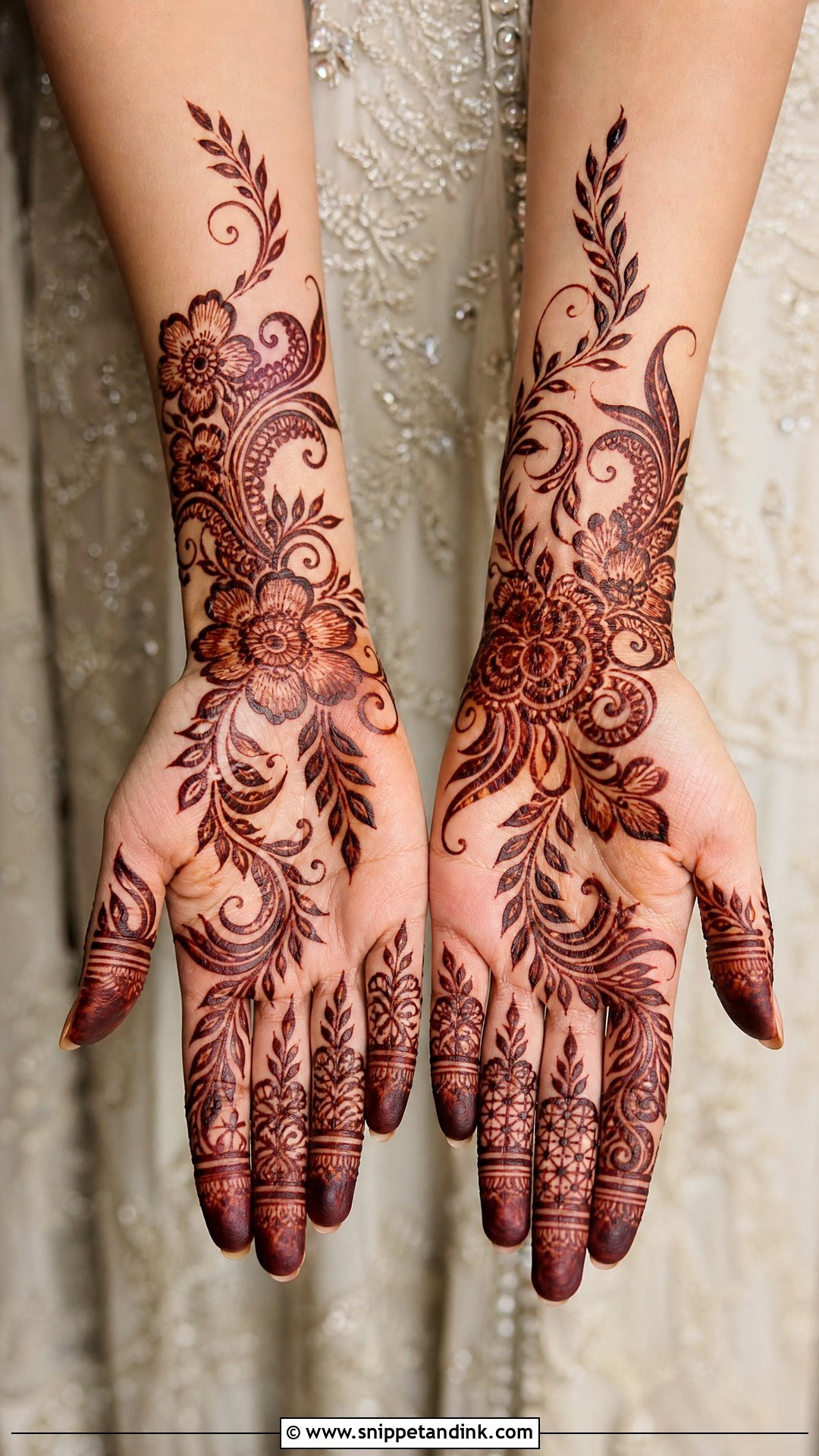
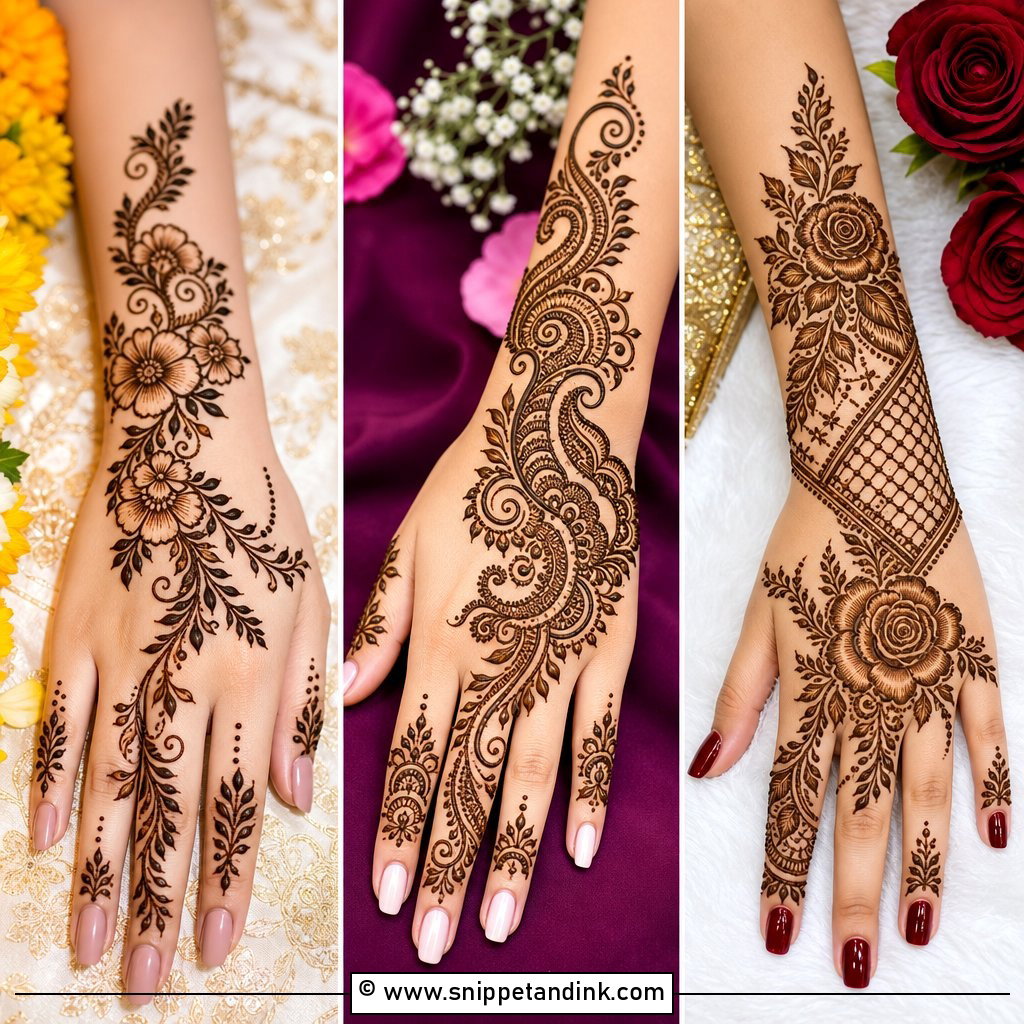
An Arabic bridal mehndi design leaves the hand open, using flowing floral trails, leafy vines, curved paisleys and bold outlines with bare skin in between. It feels light but still special enough for a wedding, and it goes on faster than dense work, which is why sisters, bridesmaids and close family often choose it too. For a bride, I run the trail from the index finger across the palm and down the wrist, add shaded flowers, and finish the fingertips neatly. Without that fingertip finish, Arabic work can look half done.
3. Indo Arabic Mehndi Design
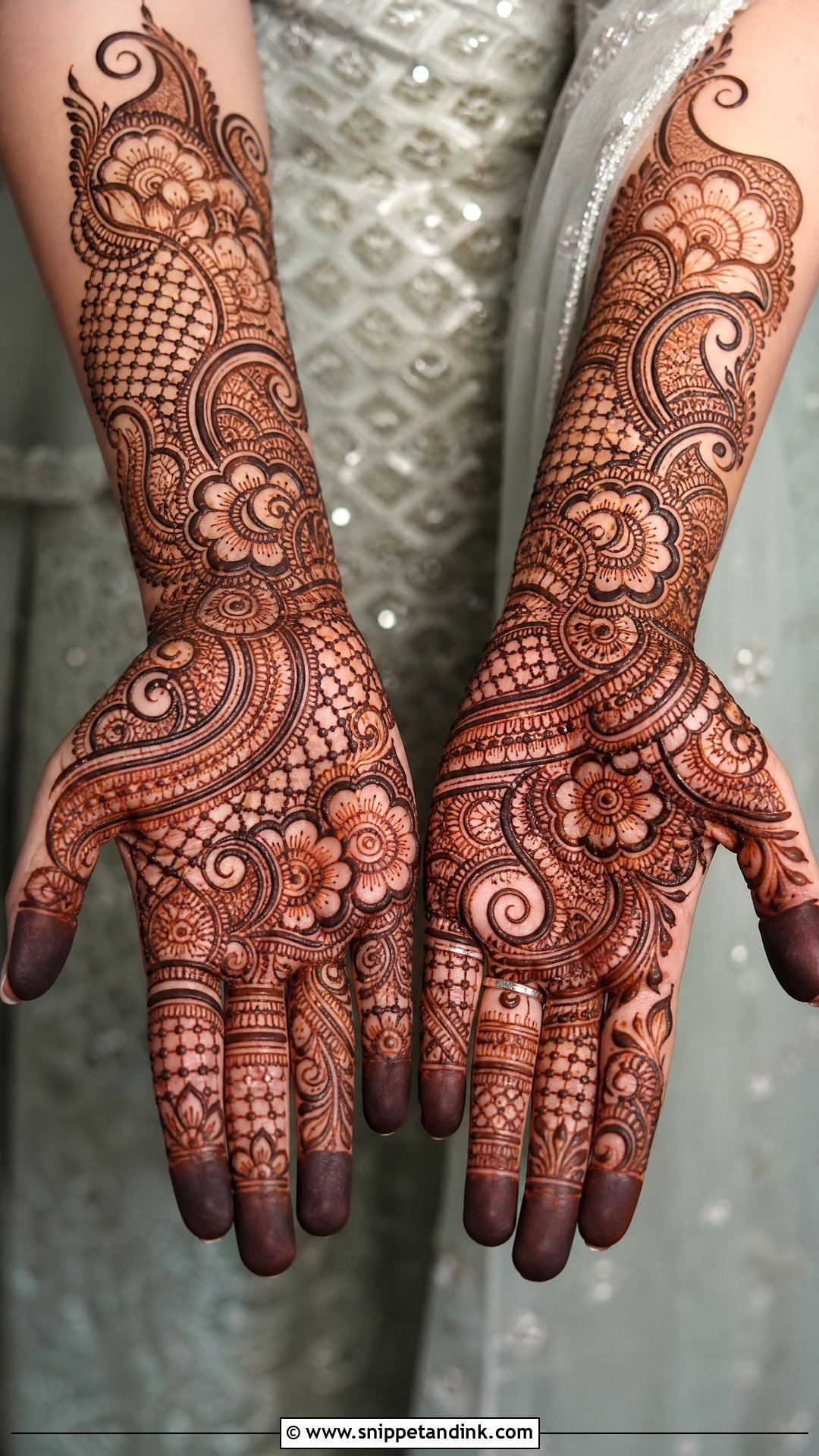
Indo-Arabic takes Arabic flow and adds Indian fine detail. A common layout puts large flowers or paisleys across the palm, detailed finger work, and smaller Indian-style fillers tucked around the main pattern. With structure and softness together, it suits the front and back of the hand equally. For a bride I make it heavier with jaali mesh and wrist bands. For guests I keep the spacing open and fill fewer sections, which also keeps the queue moving.
4. Bridal Front Hand Mehndi Design
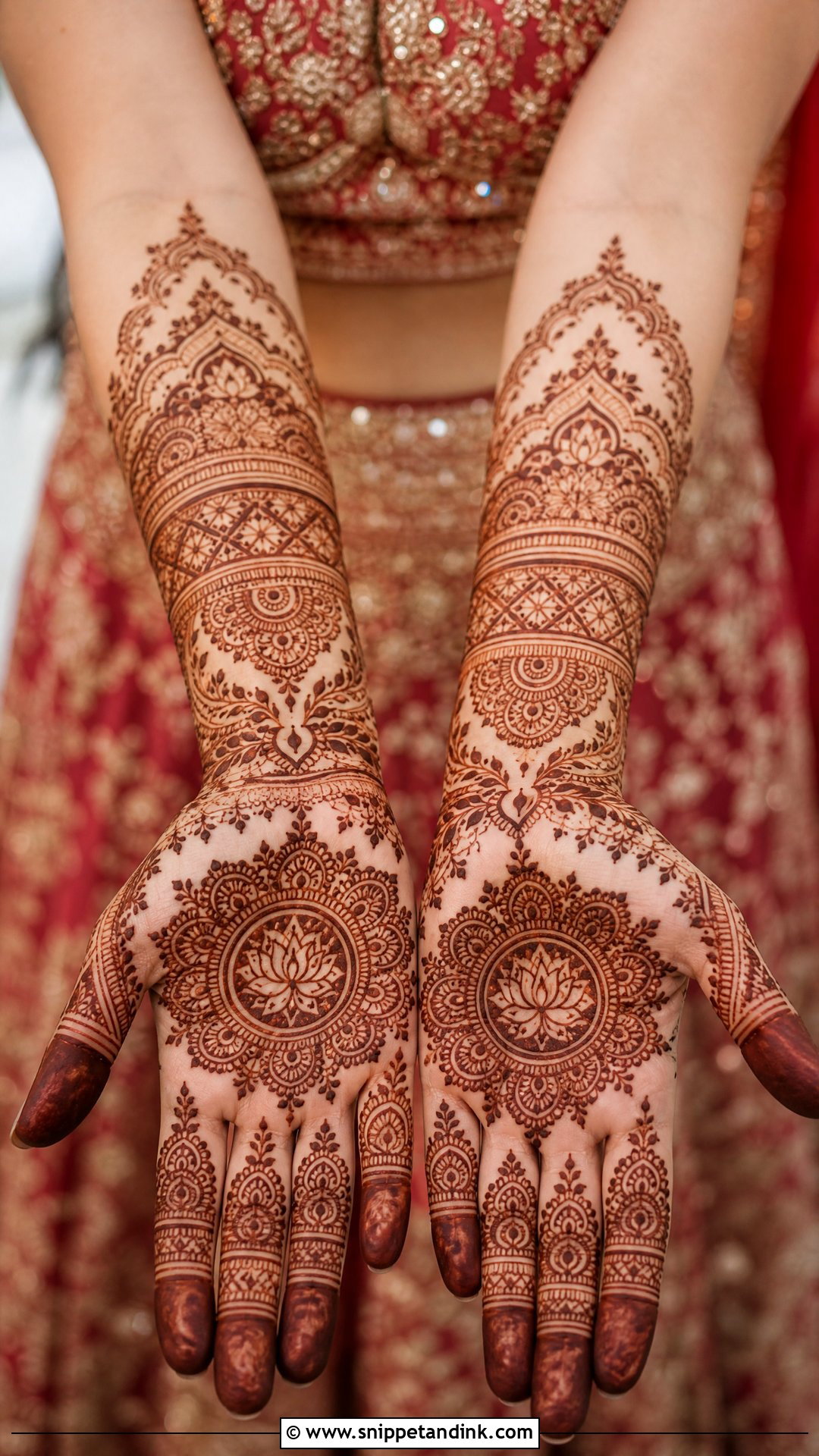
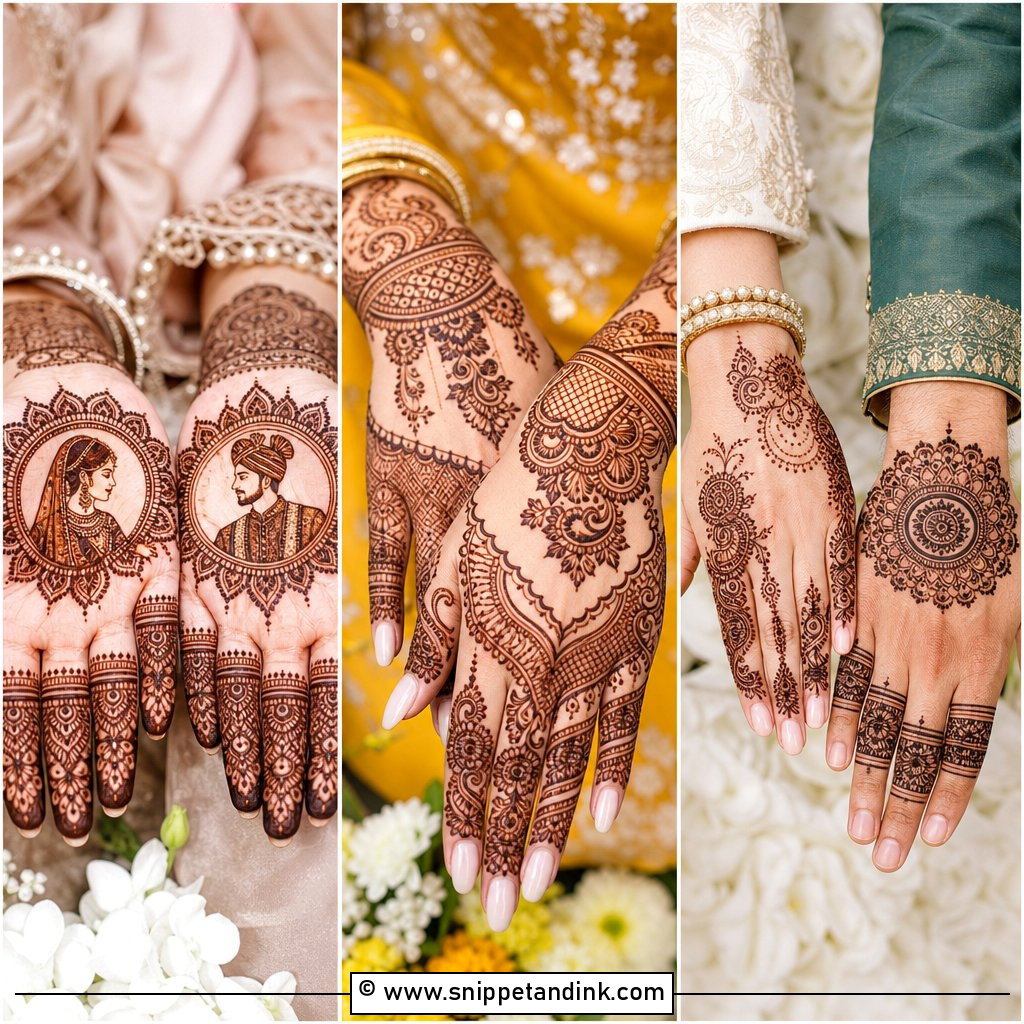
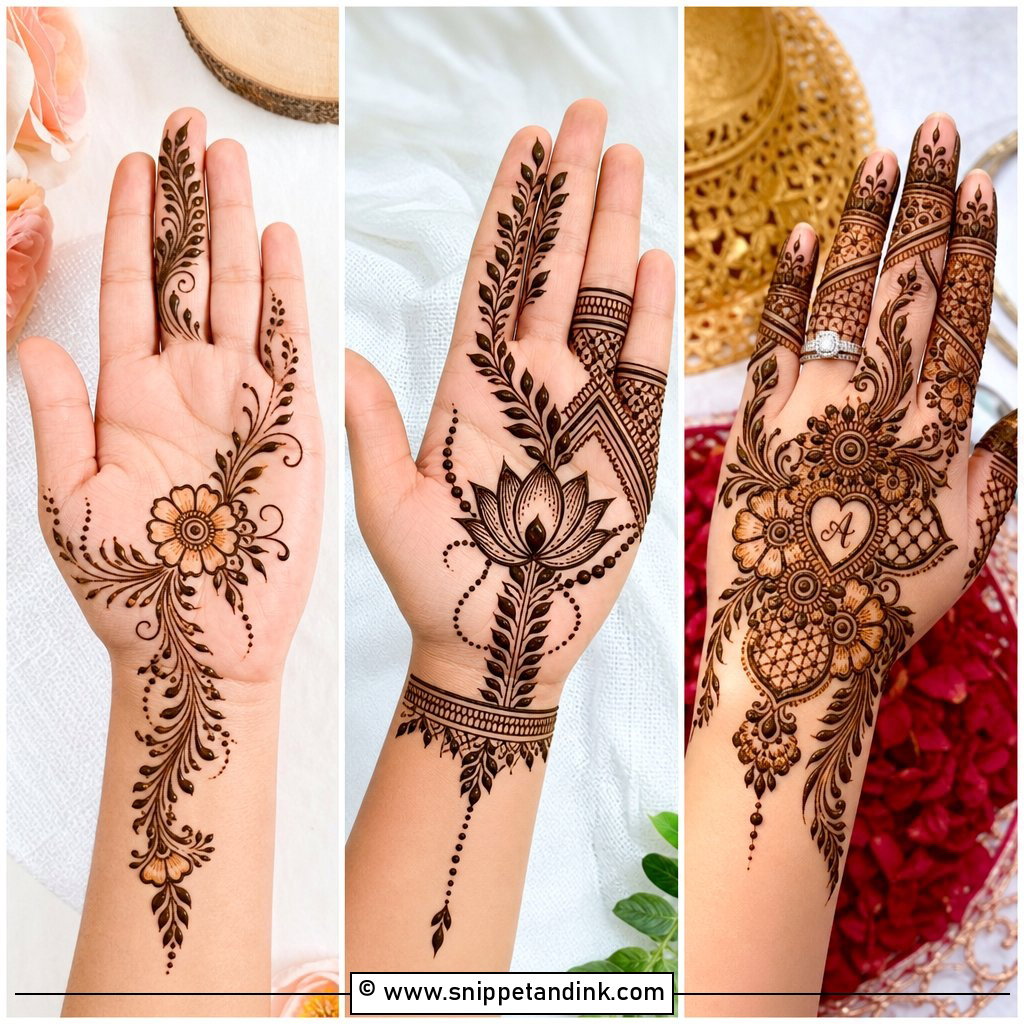
Palms come up again and again in wedding rituals and photos, so the front of the hand deserves extra planning. I start with a strong center motif, such as a mandala, lotus, peacock or bride and groom artwork, then build out with paisleys, petals, vines, dots and delicate borders. The fingers need detail without mud. Lines piped too close together on a finger merge once the stain develops, so I leave a hairline of skin between them. Ring shots, haldi moments and palms-to-camera poses all show this side. With a heavily embroidered outfit, clean sections keep the hands from competing.
5. Bridal Back Hand Mehndi Design
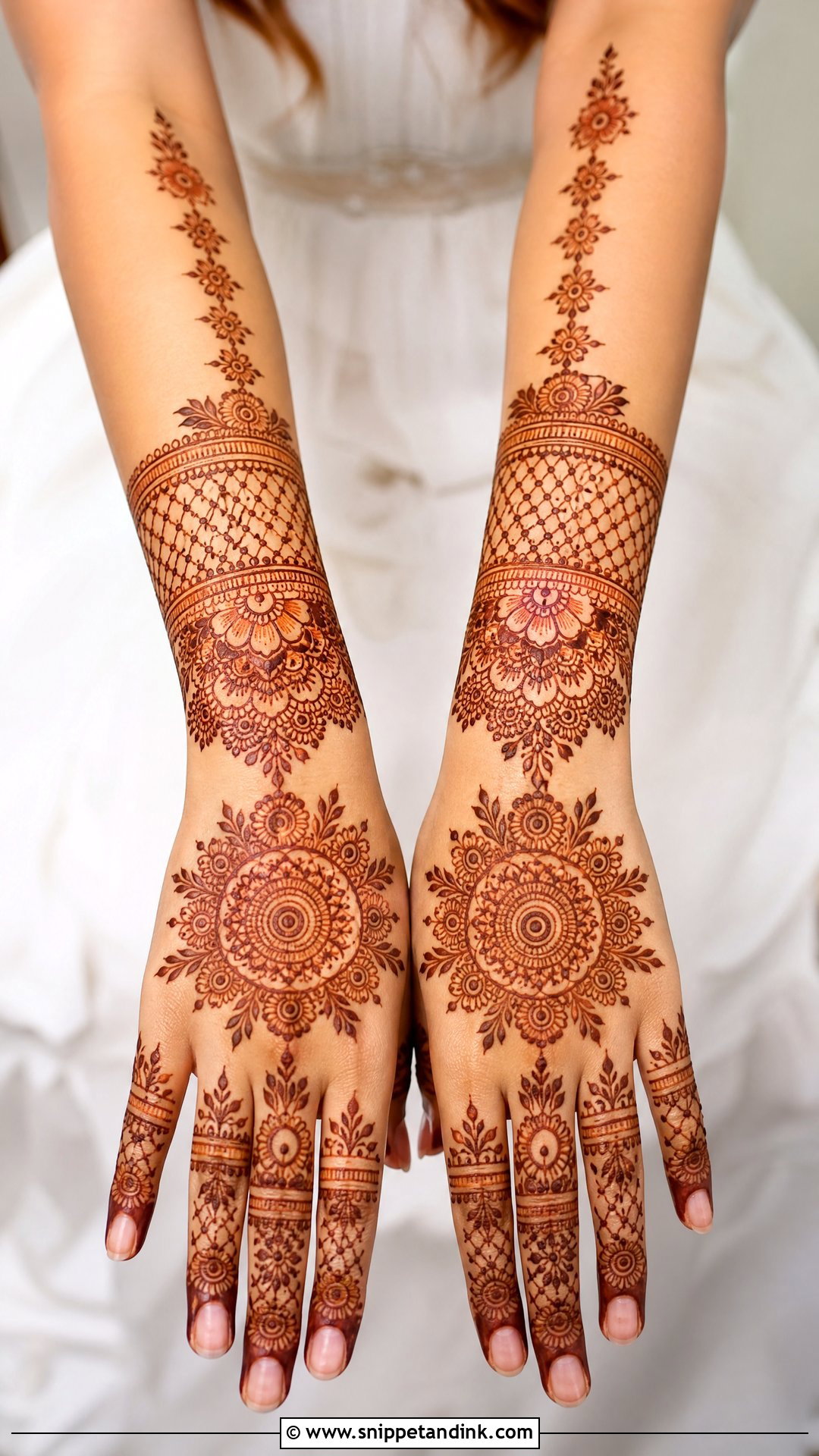
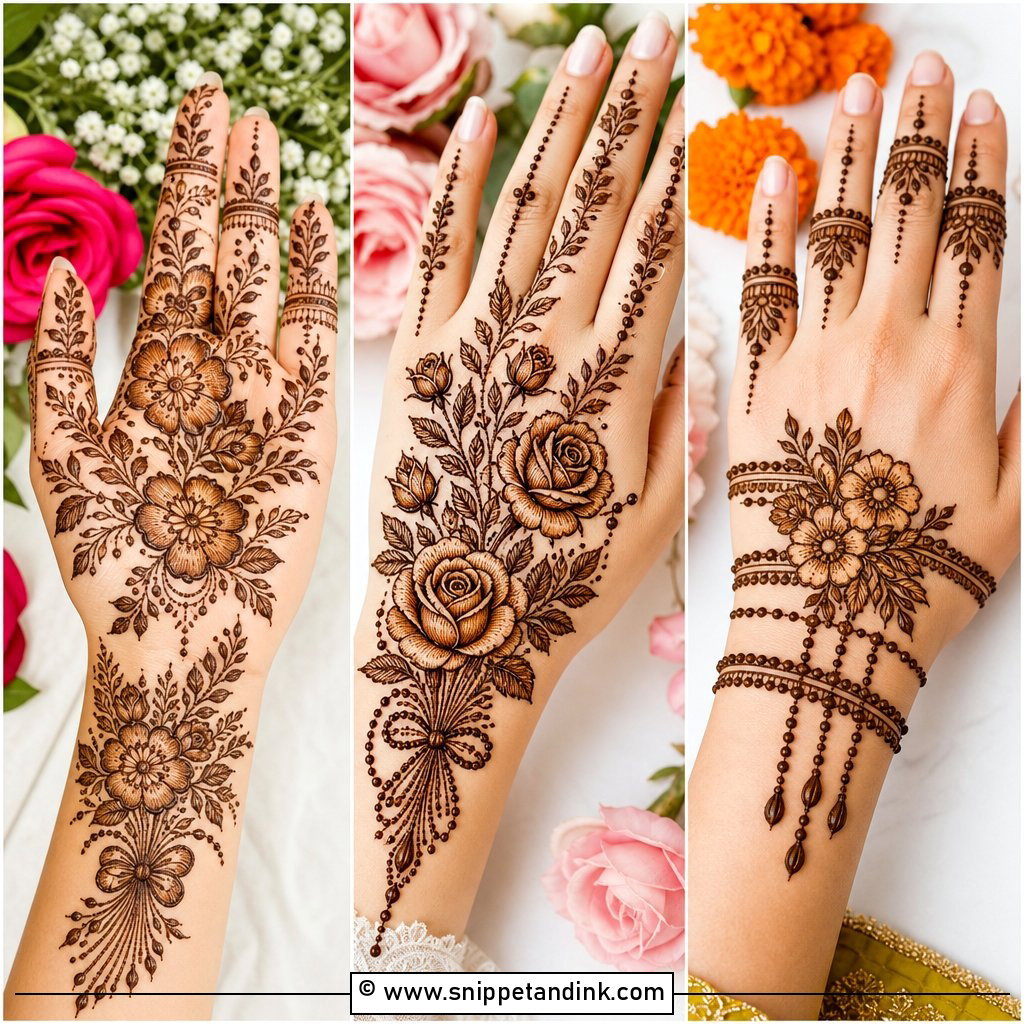
The back of the hand is in frame constantly: holding a dupatta, showing rings, resting on bangles. A bridal back hand mehndi design can be full, medium or airy, built from a central mandala, floral bracelet, jaali or a chain-style layout from fingers to wrist. It should support the jewelry rather than hide it. I leave a little open skin around the ring finger so the engagement ring and wedding band sit on clean skin in close-ups. Coordinated bands and leafy trails carry it up the wrist and forearm for a more bridal feel.
6. Simple Wedding Mehndi Design
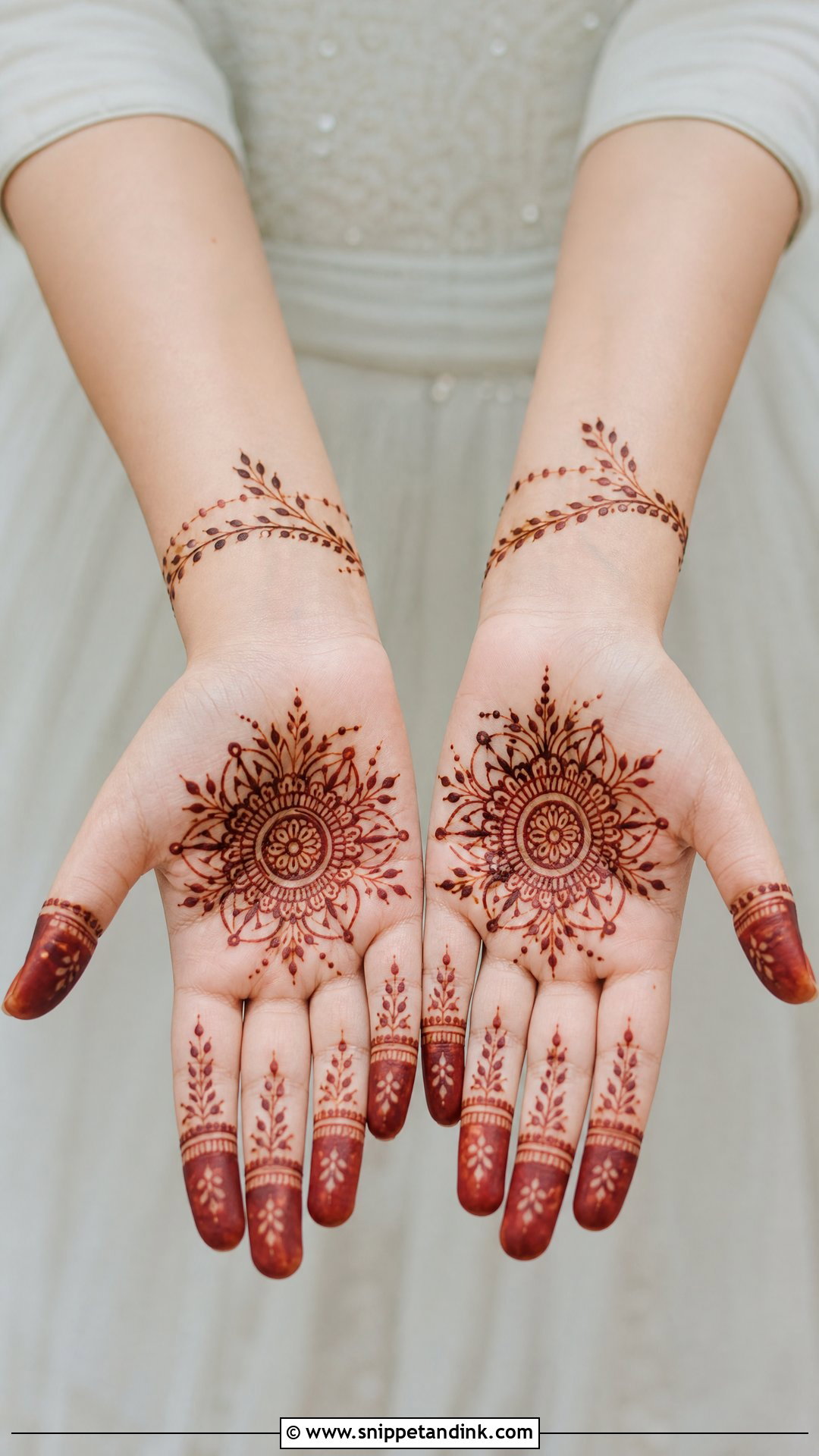
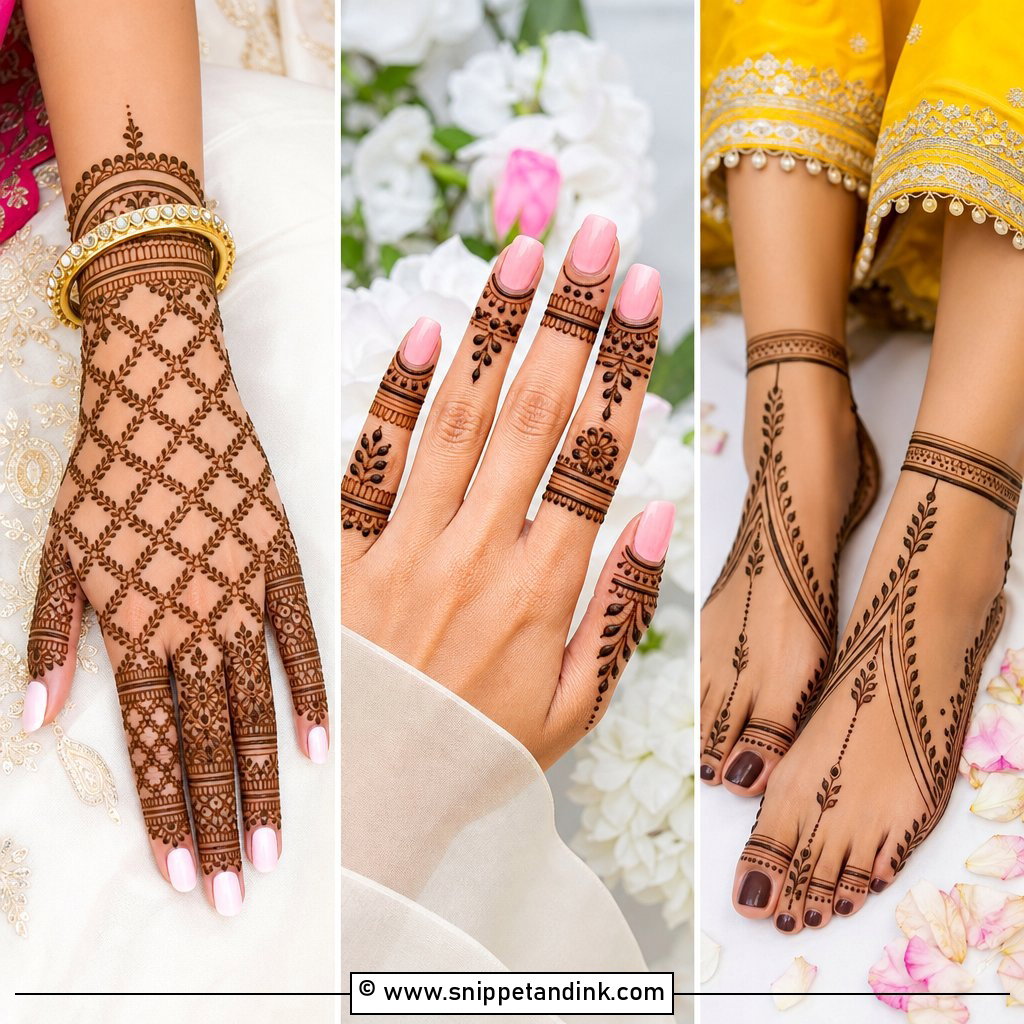
Simple doesn’t mean plain. A neat palm motif, decorated fingers and a small wrist detail, drawn from florals, half-mandalas, vines or soft paisleys, can look completely wedding-ready. The difference lies in linework and spacing. I pay most attention to the edges, since finished fingertips and a small cuff at the wrist make a simple design look intended. It’s what I suggest for engagement functions, courthouse weddings, intimate ceremonies and guests who can’t sit for long.
7. Modern Bridal Mehndi Design
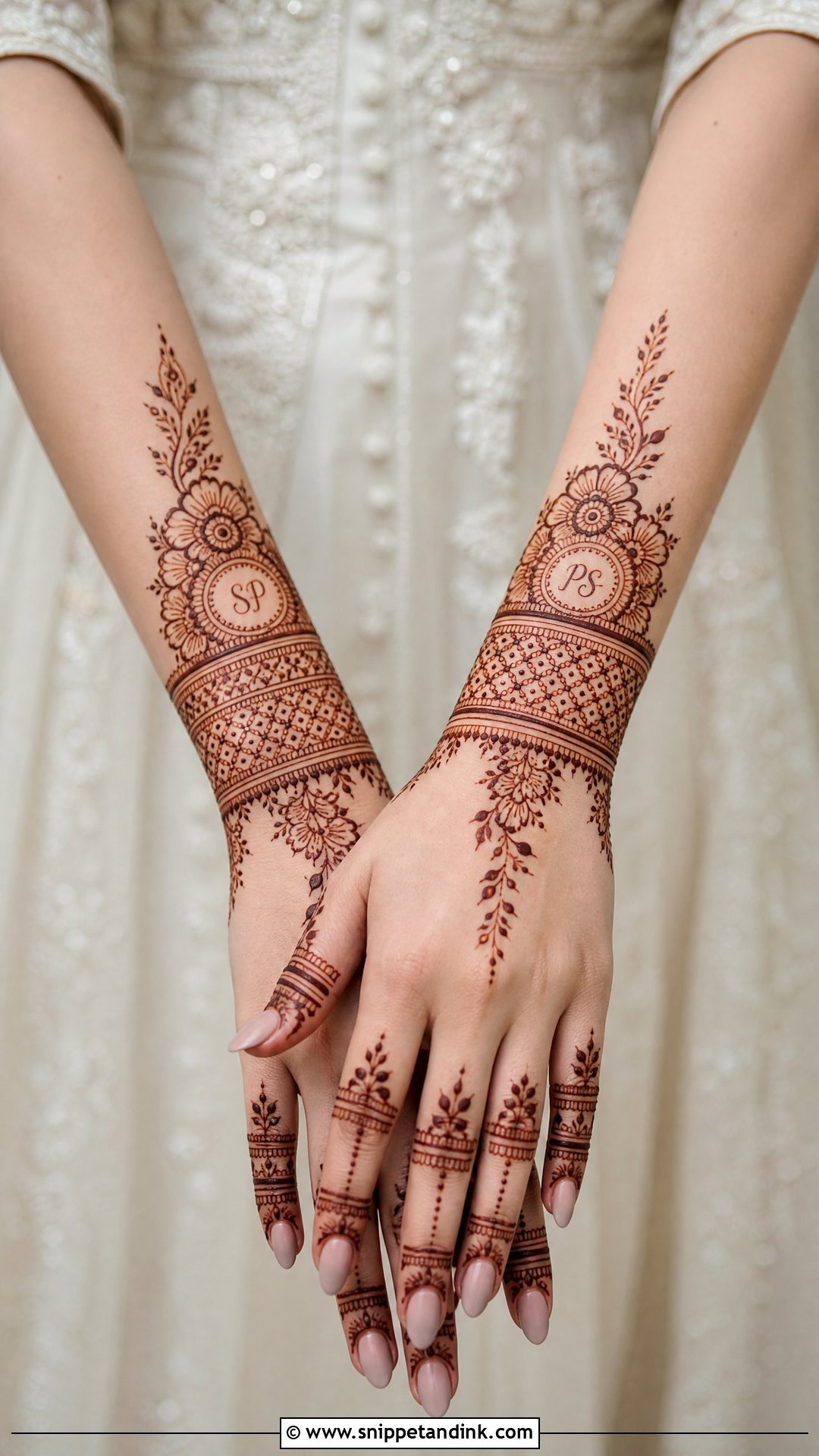
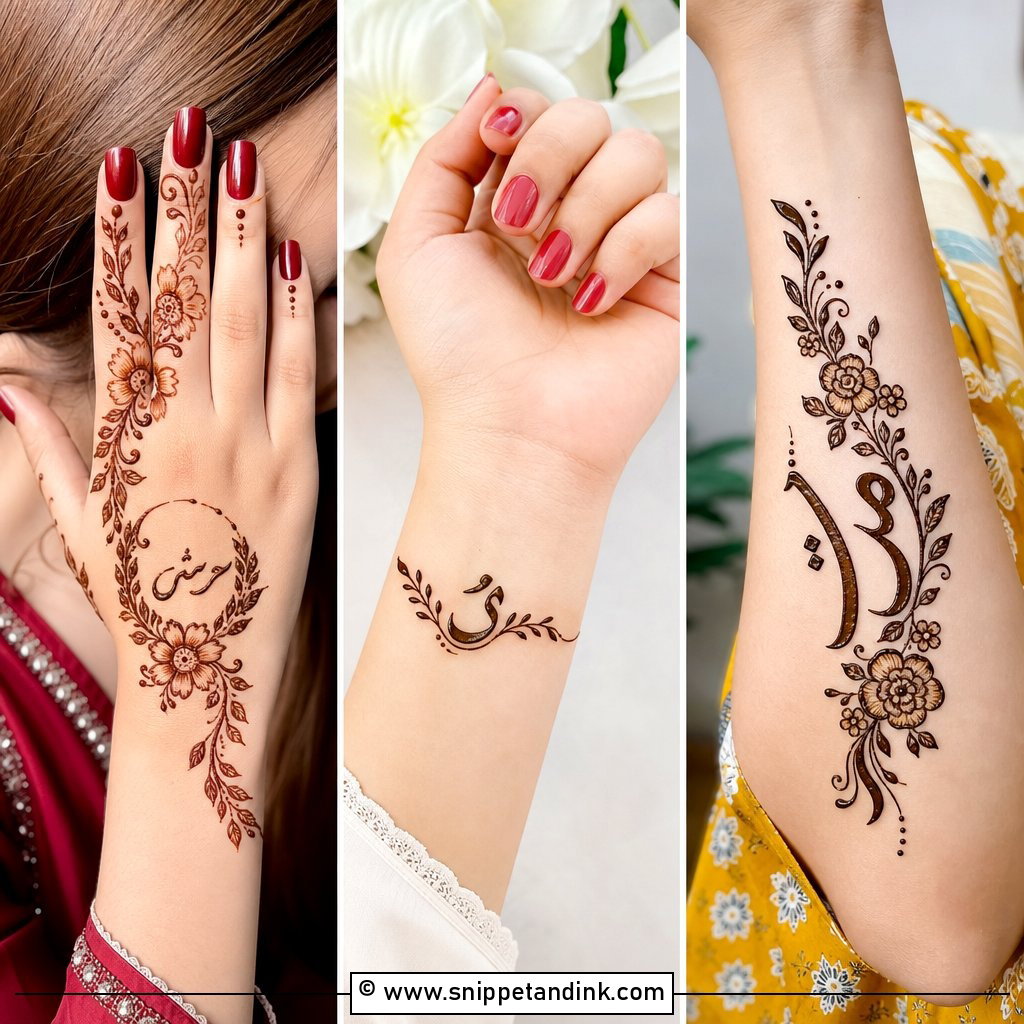
Modern bridal mehndi design mixes tradition with a fresh touch: negative space, clean geometric bands, initials, wedding dates, portrait accents or minimal floral sections. Instead of one dense layer, it plays detailed areas against open skin, which looks sharp in photos and suits contemporary bridal outfits. Back-hand versions pair well with rings and sleek bangles. I always include one rich focal point, a mandala, lotus or detailed wrist cuff. Without it, a modern design can read as guest henna rather than a bride’s.
8. Indian Bridal Mehndi Design
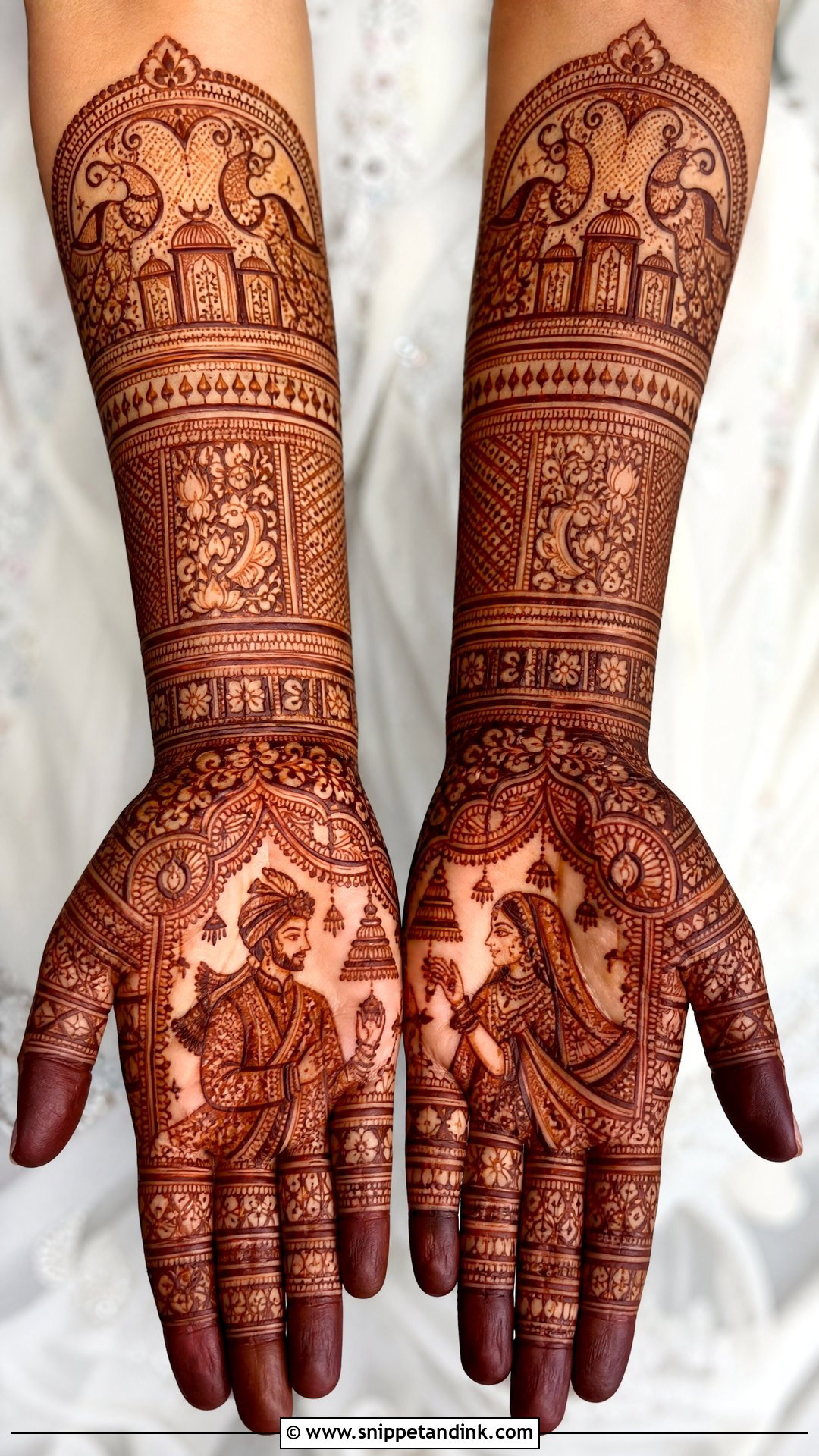
Indian bridal mehndi is storytelling with full coverage: peacocks, paisleys, bride and groom figures, elephants, lotus motifs, kalash elements and fine mesh, often continuing up both forearms. It suits a bride who wants a deeply traditional finish and can give it a long sitting. Its richness comes from layers, each small section adding meaning and texture. Where it goes wrong is clutter around the main figures. I leave a clear margin around faces and key motifs, because filler pressed right up against them makes the story hard to read once the stain darkens.
9. Minimal Bridal Mehndi Design
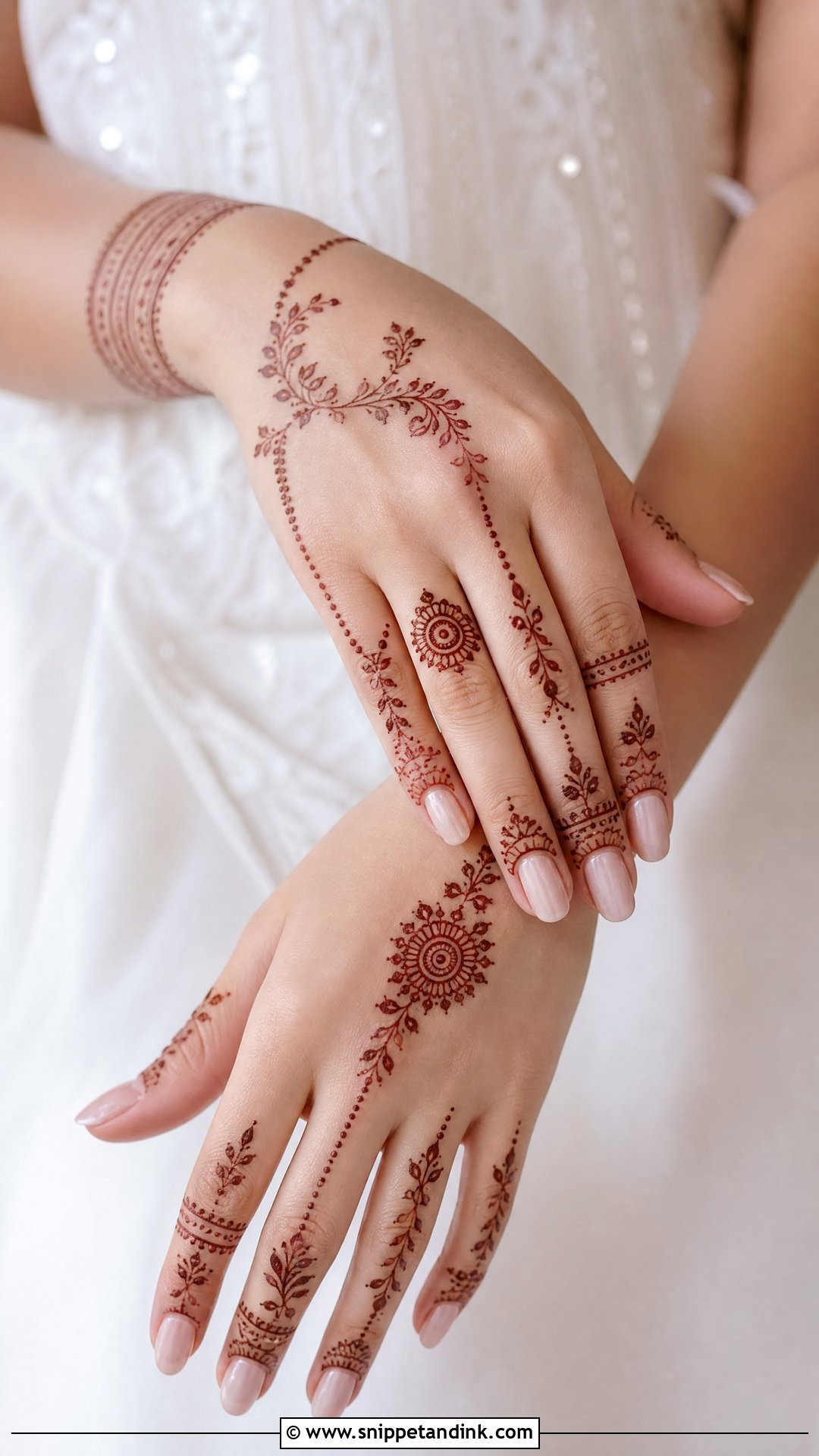
Minimal bridal mehndi trades coverage for refinement. It focuses on the fingers, the wrist and one main palm or back-hand motif, using fine flowers, tiny dots, delicate vines and slim bracelet bands. Modern brides, destination weddings, smaller ceremonies and clean silhouettes suit it, and it leaves room for jewelry and nail color. To make it feel bridal, I lean on symmetry and finish. Matching designs on both hands, even with lots of open skin, look deliberate in photos; two slightly different hands just look unfinished.
10. Mandala Wedding Mehndi Design
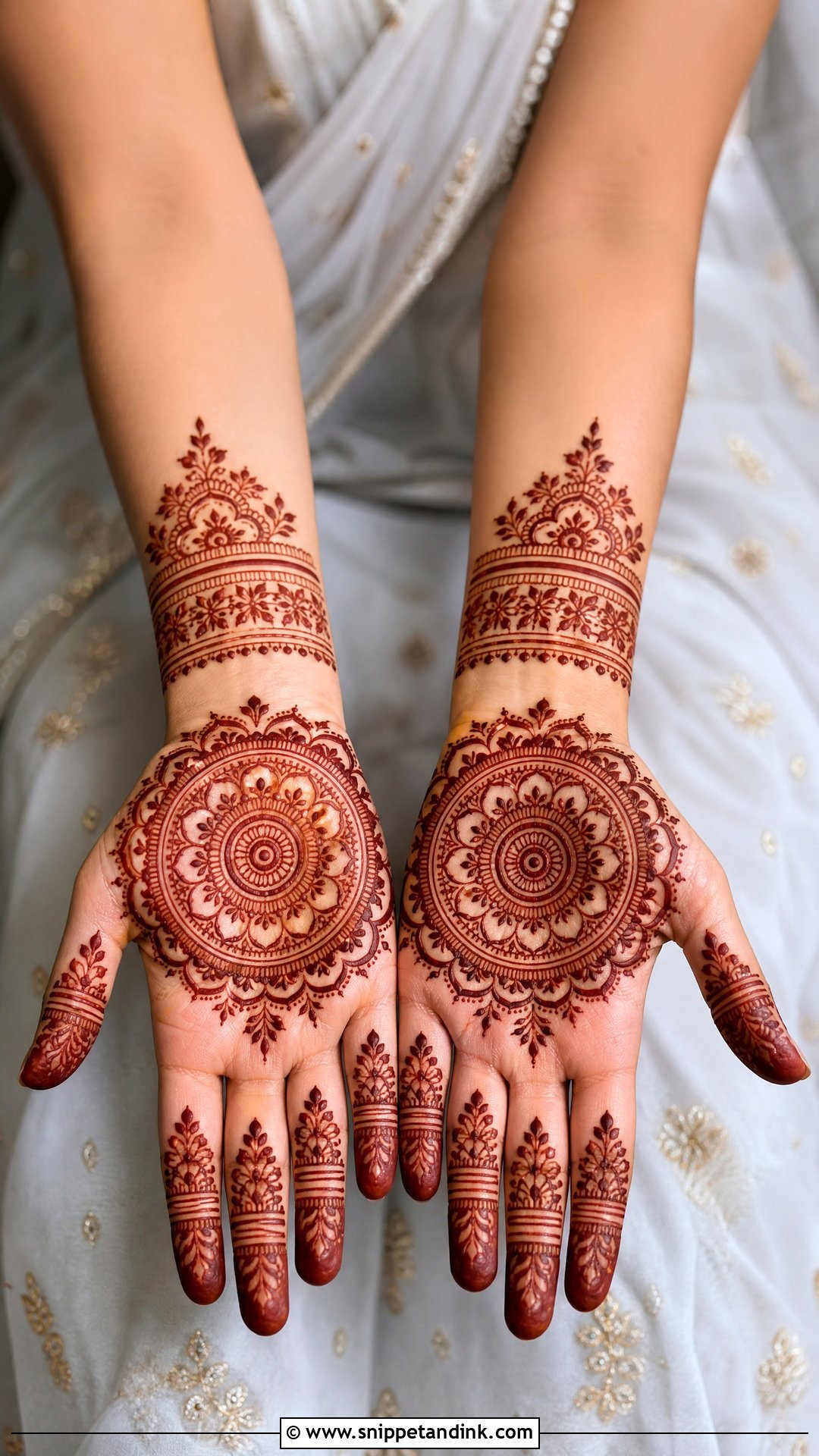
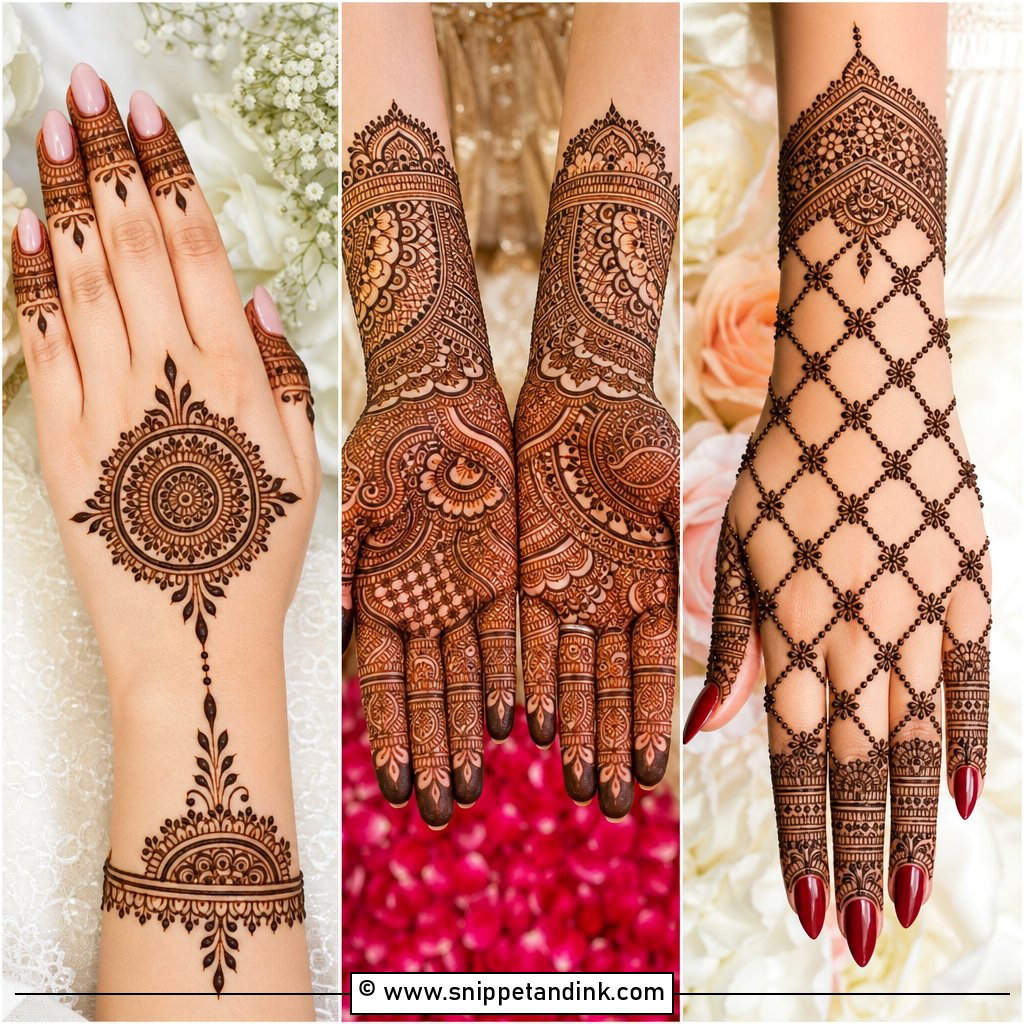
A mandala gives the hand one clean focal point. The circle sits in the center of the palm or back of the hand, with the fingers carrying matching lines, dots, leaves or mini florals. It adapts to most hand shapes, which is why I draw so many. Brides add wrist cuffs and detailed borders, while guests can stop at a single mandala and simple fingers. The circle has to be truly round and evenly spaced. I mark the center with a dot and build outward in rings, because a mandala that drifts off-round is the flaw everyone notices.
11. Peacock Bridal Mehndi Design
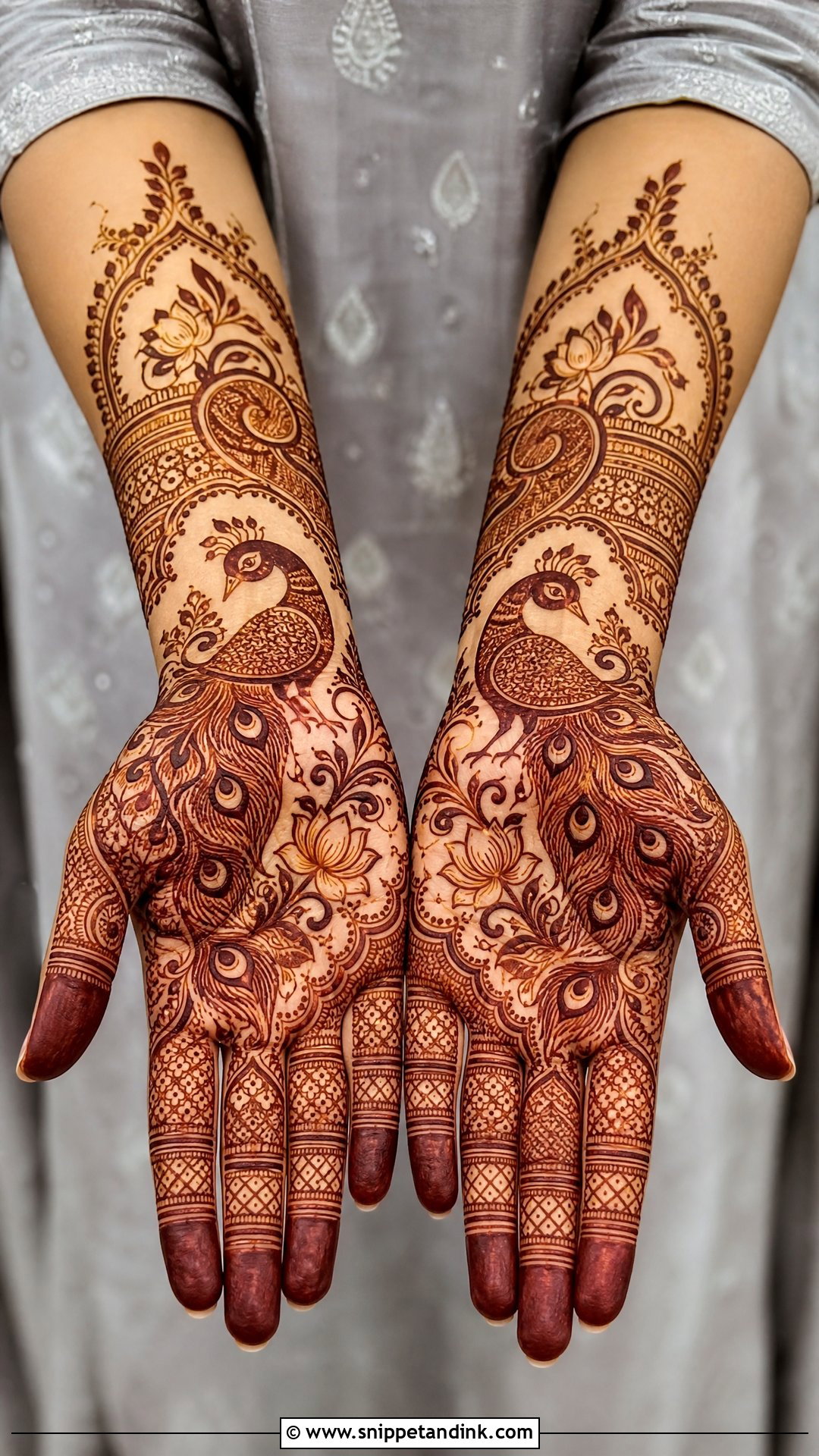
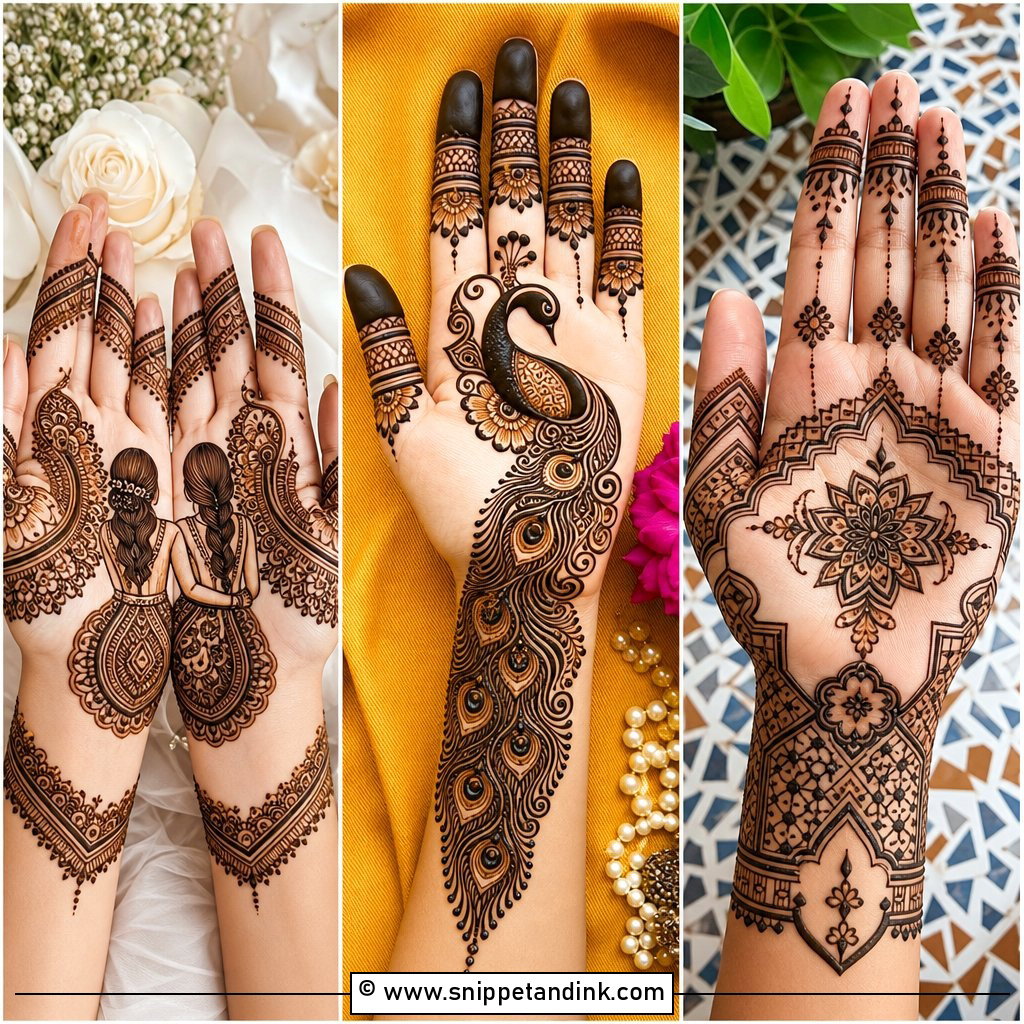
A peacock’s curved body and feathers give a design movement, so it looks rich without random fillers. It can sit on the palm, forearm or back of the hand among paisleys, flowers, leaves and fine mesh, and it pairs naturally with classic Indian bridal outfits, temple jewelry and embroidered dupattas. I use one large peacock as the focus and keep the motifs around the wrist and fingers smaller. For the feathers I draw lines and dots rather than solid fill, since a solidly filled feather stains as one flat dark patch with no detail.
12. Floral Bridal Mehndi Design
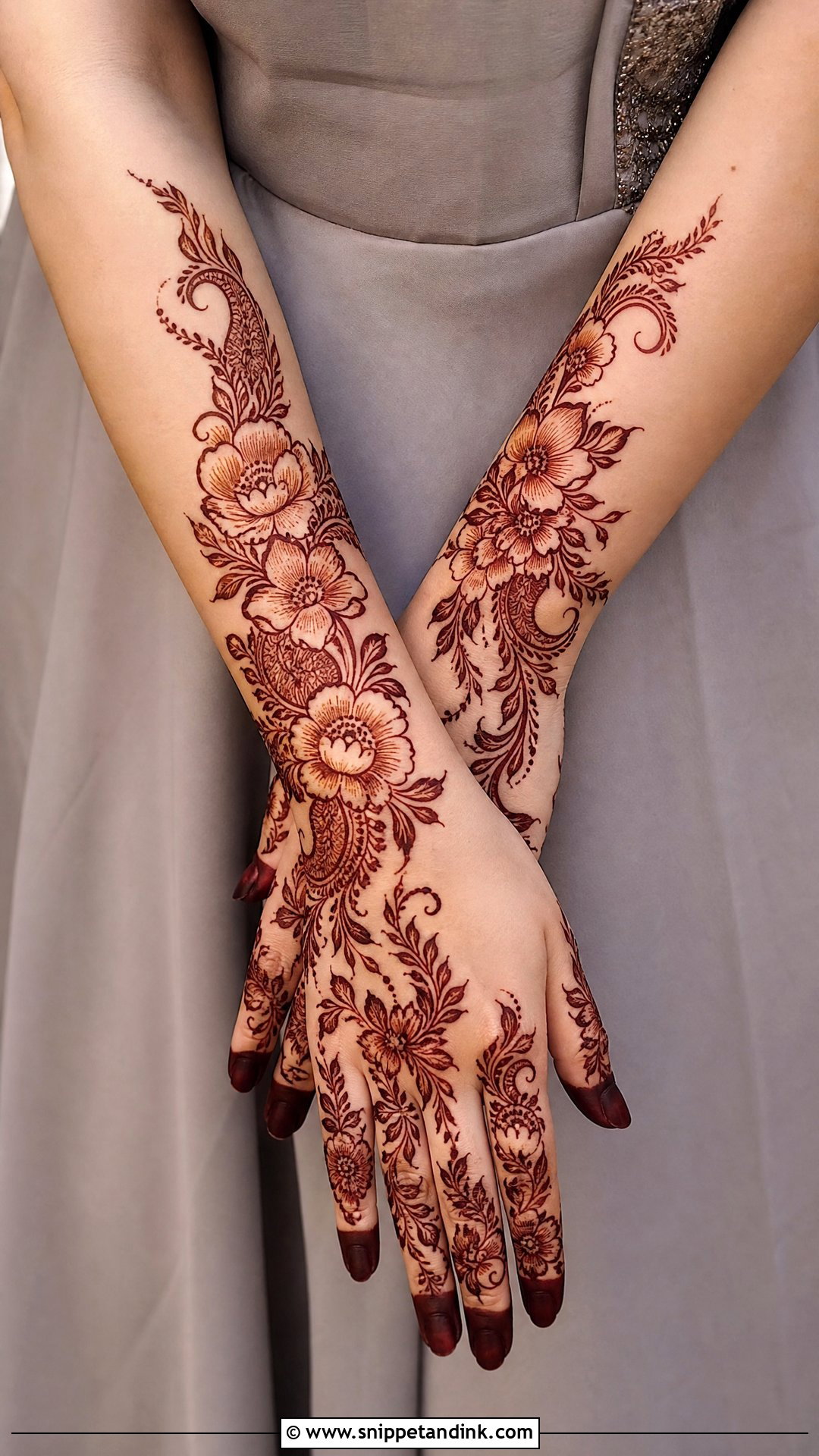
Soft petals and leafy curves make floral bridal mehndi design one of the most requested wedding styles, and it adapts easily for brides, bridesmaids and guests. Large flowers sit across the palm or back of the hand while smaller blooms trail toward the fingers and wrist. Shading adds depth, and bold outlines keep the flowers visible after the stain darkens. It fits Indian, Arabic and Indo-Arabic layouts. For a bride I add paisleys, jaali and wrist bands; for a lighter function I keep the flowers open and let the vines carry the flow.
13. Paisley Wedding Mehndi Design
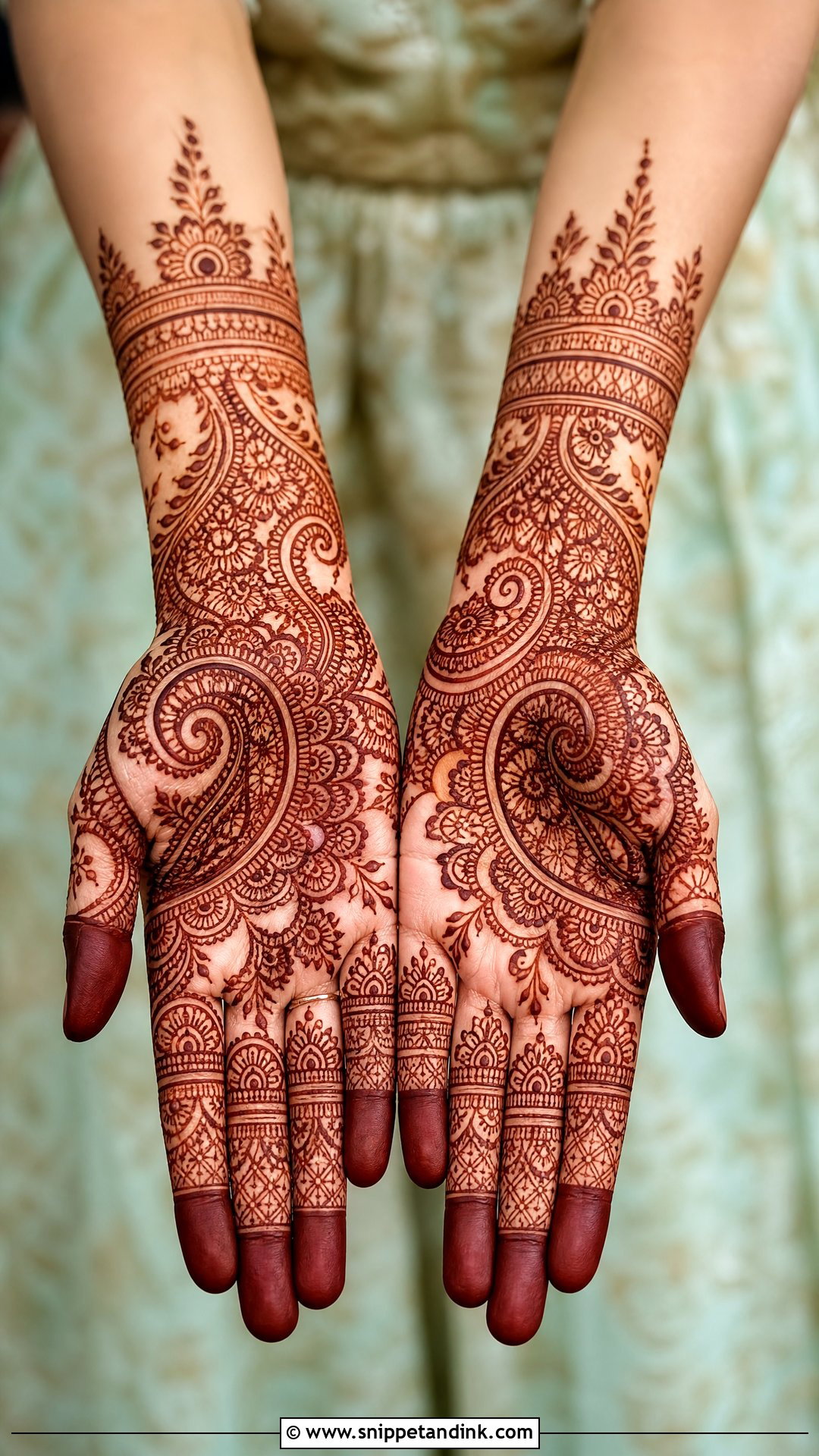
The paisley is the backbone of wedding henna. Its curve fits palms, wrists and forearms naturally, so a complete hand design is easy to build around it. Brides often choose large paisleys filled with dots, petals, swirls and fine lines, with smaller ones running along the fingers or trailing across the back of the hand. It works in dense Indian bridal work and in lighter Arabic layouts. I angle the paisley tips toward the fingers, which follows the direction of the hand and makes the whole design look longer. Floral borders and a detailed wrist cuff complete it.
14. Jaali Bridal Mehndi Design
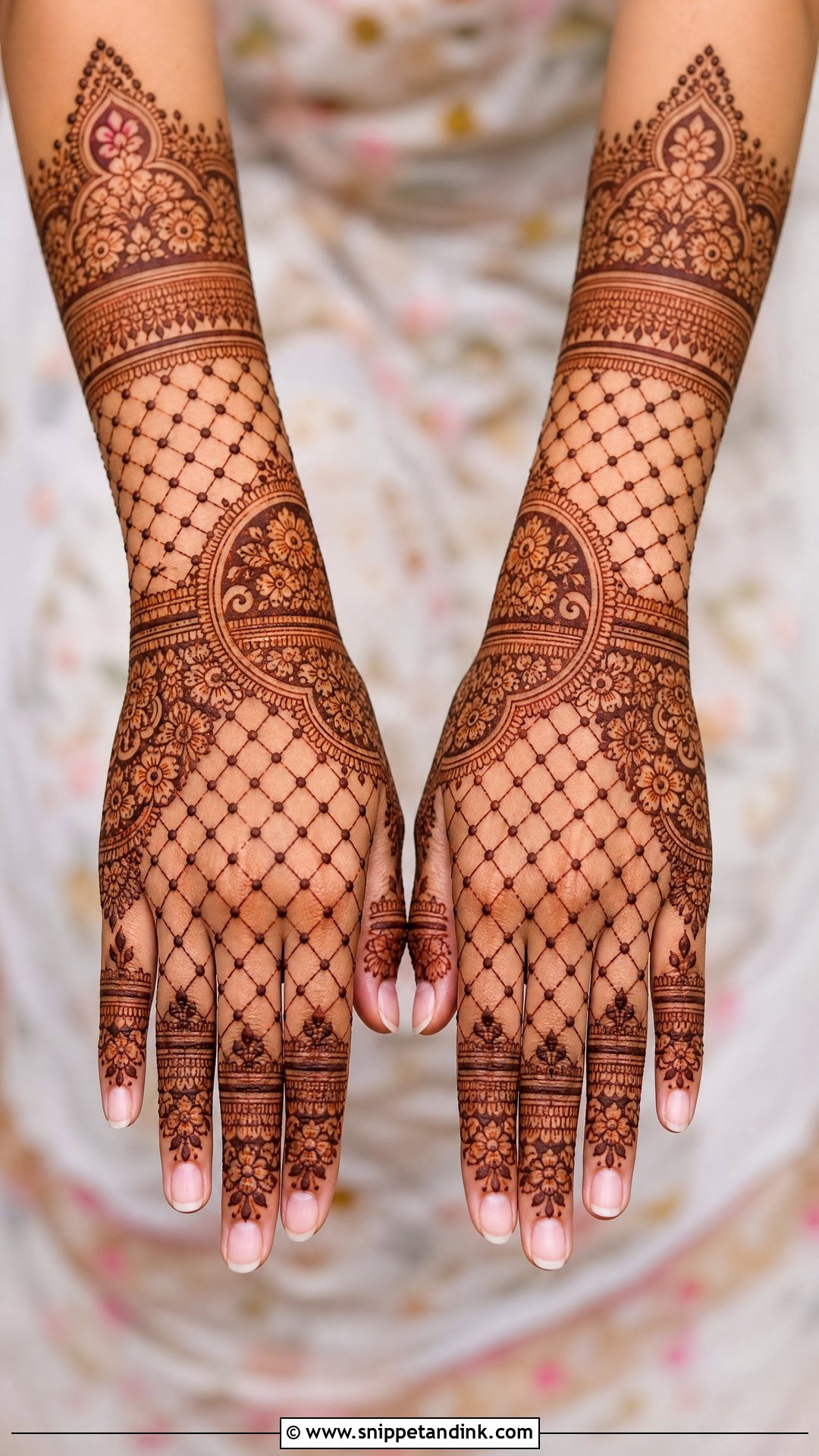
Jaali gives texture without darkening the whole design. The net-like pattern goes on the back of the hand, the fingers, the wrist or the forearm, paired with flowers, paisleys, mandalas or bracelet-style bands, and around rings and bangles it reads almost like lace. On a bride it needs bold motifs nearby for contrast. Keep the lines even and the spaces clean: a messy mesh looks crowded, a neat one looks luxurious. I pipe jaali with a finer cone opening than the outlines, so the mesh sits visibly lighter than the frame around it.
15. Portrait Bridal Mehndi Design
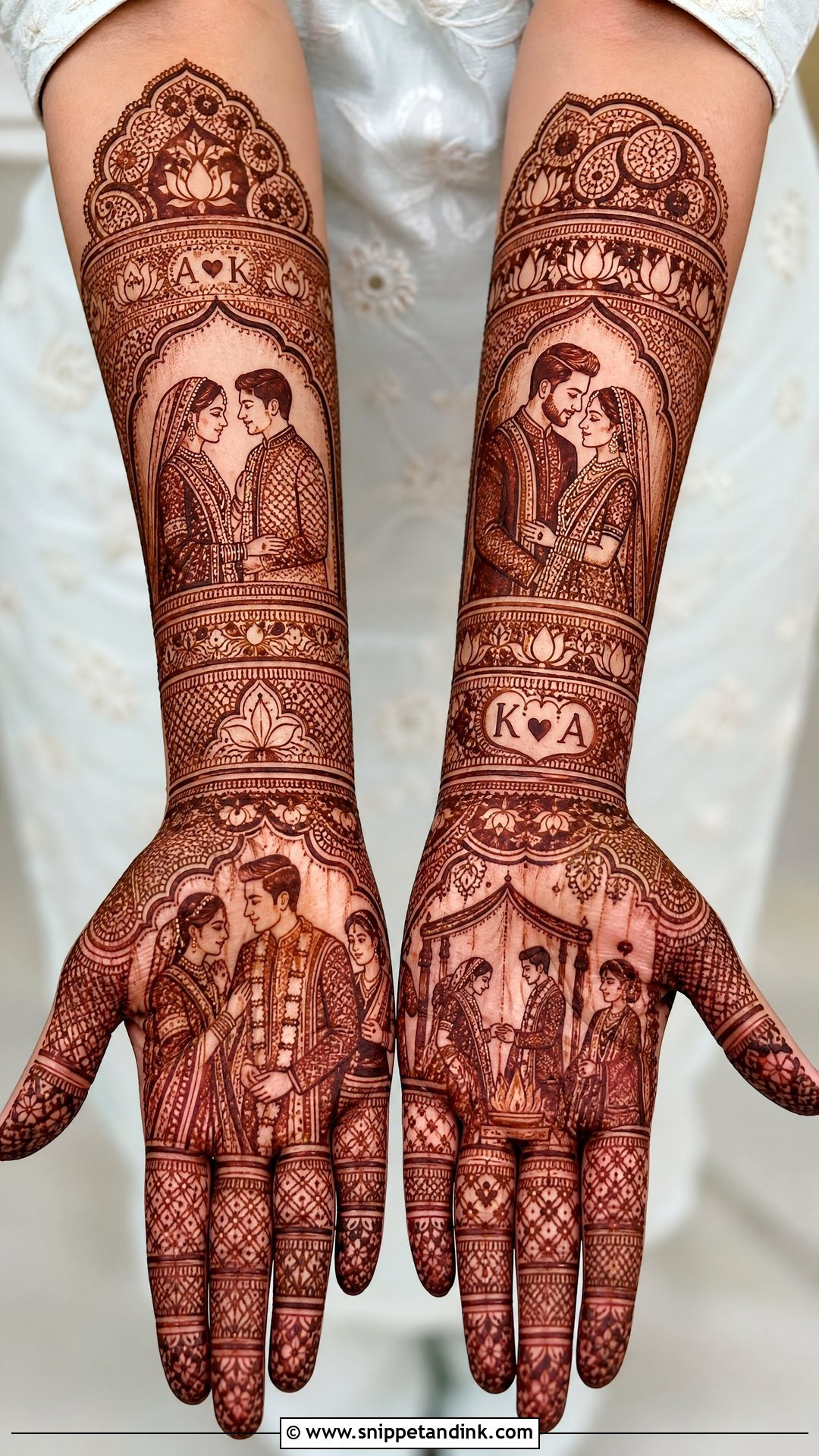
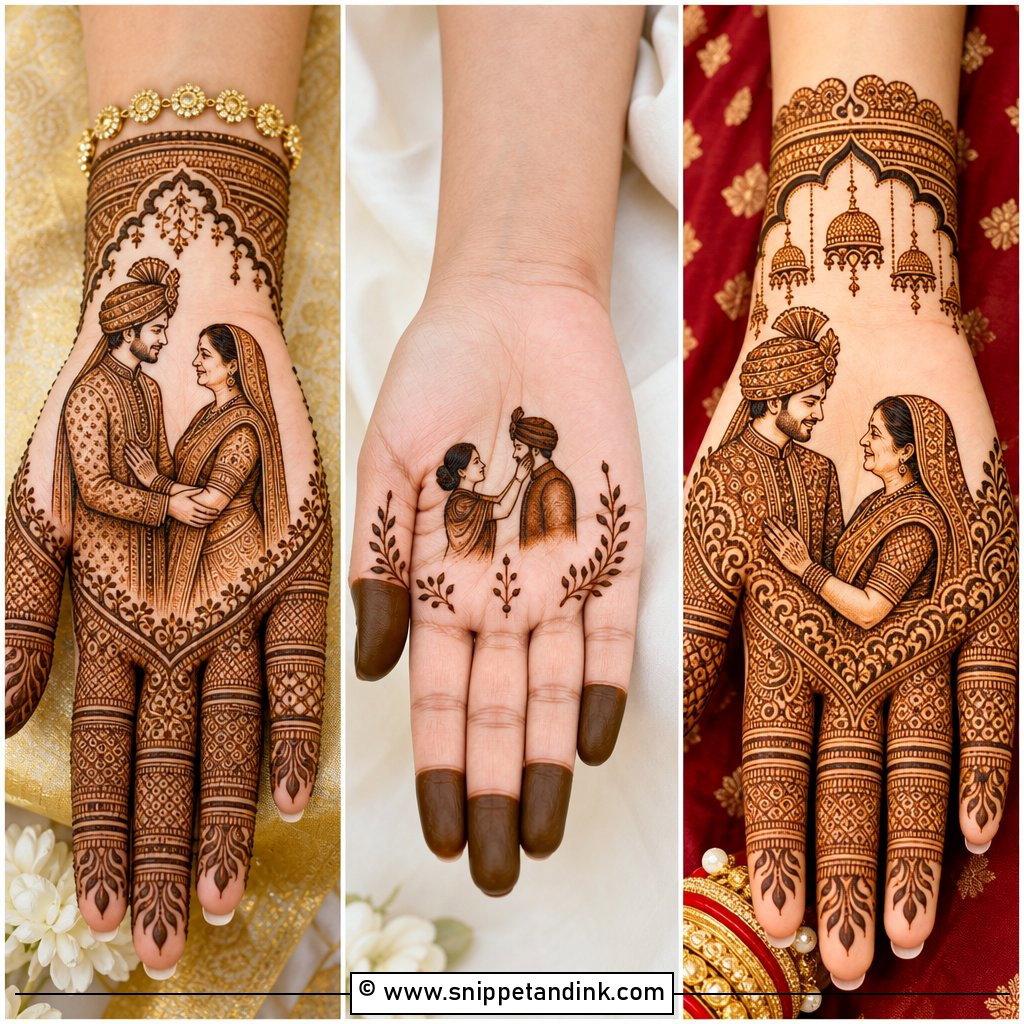
Portrait mehndi gives a bride the most personal design possible: bride and groom faces, wedding scenes, varmala moments, musical details or symbols from the couple’s story. Faces and figures must stay readable after the henna stains, so it needs an artist with real experience drawing them. The portraits usually sit on the palms or forearms, framed by paisleys, florals and fine fillers. I keep the area around each face lighter than the rest of the hand, otherwise the figures sink into the background. Initials, dates or small symbols add a custom touch.
16. Bracelet Mehndi Design For Wedding
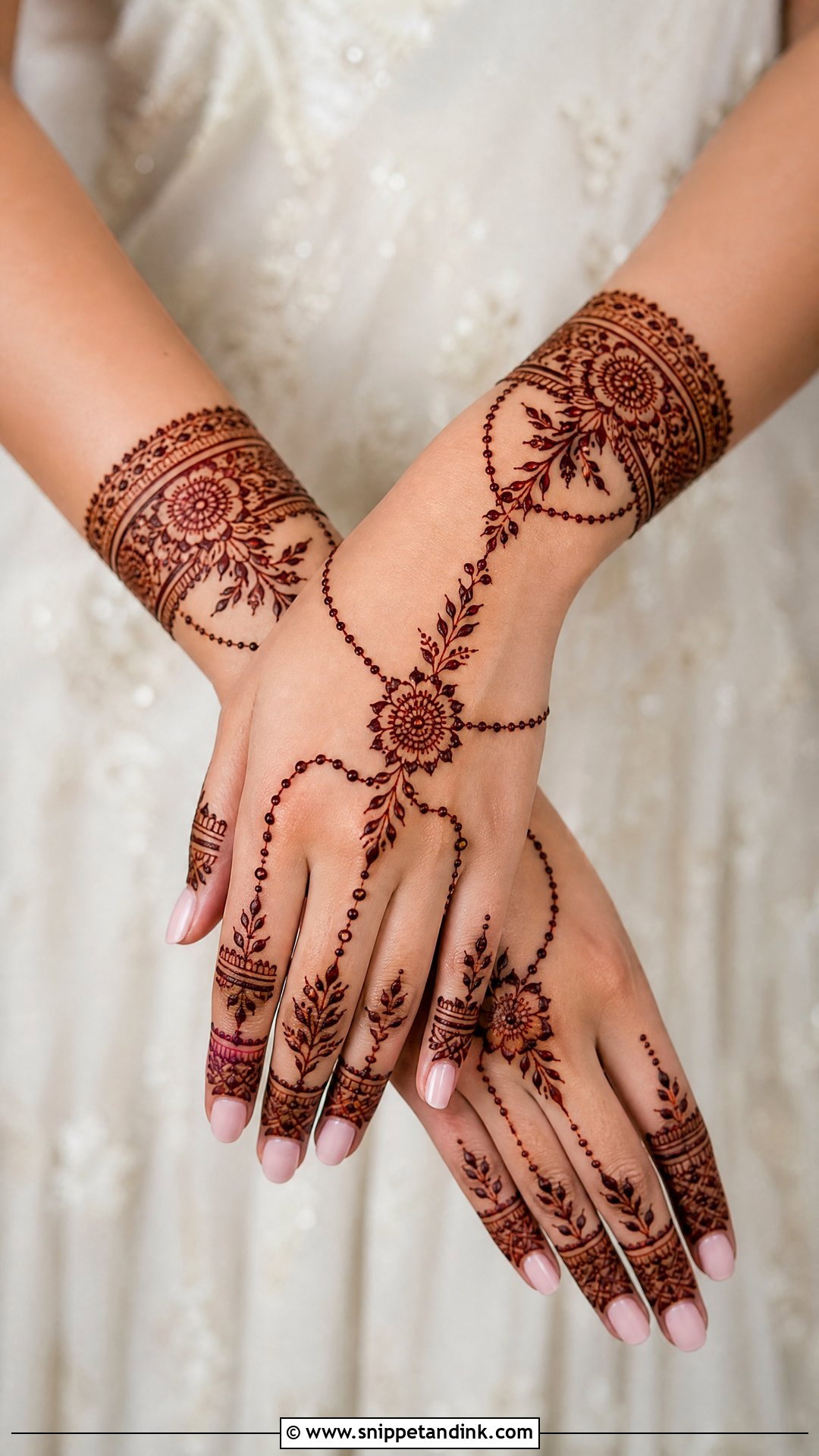
Bracelet mehndi looks like delicate jewelry drawn in henna: a central motif on the back of the hand, chain-like lines, ring-style finger details and a wrist cuff. Brides go for a heavier version with florals and jaali, guests a lighter one with clean chains and dots. It leaves room for bangles, rings and a manicure to show, and the open areas keep it comfortable through a long day. Before drawing the cuff, I check where the guest’s real bangles sit, so the henna isn’t hidden under metal all evening.
17. Finger Mehndi Design For Wedding
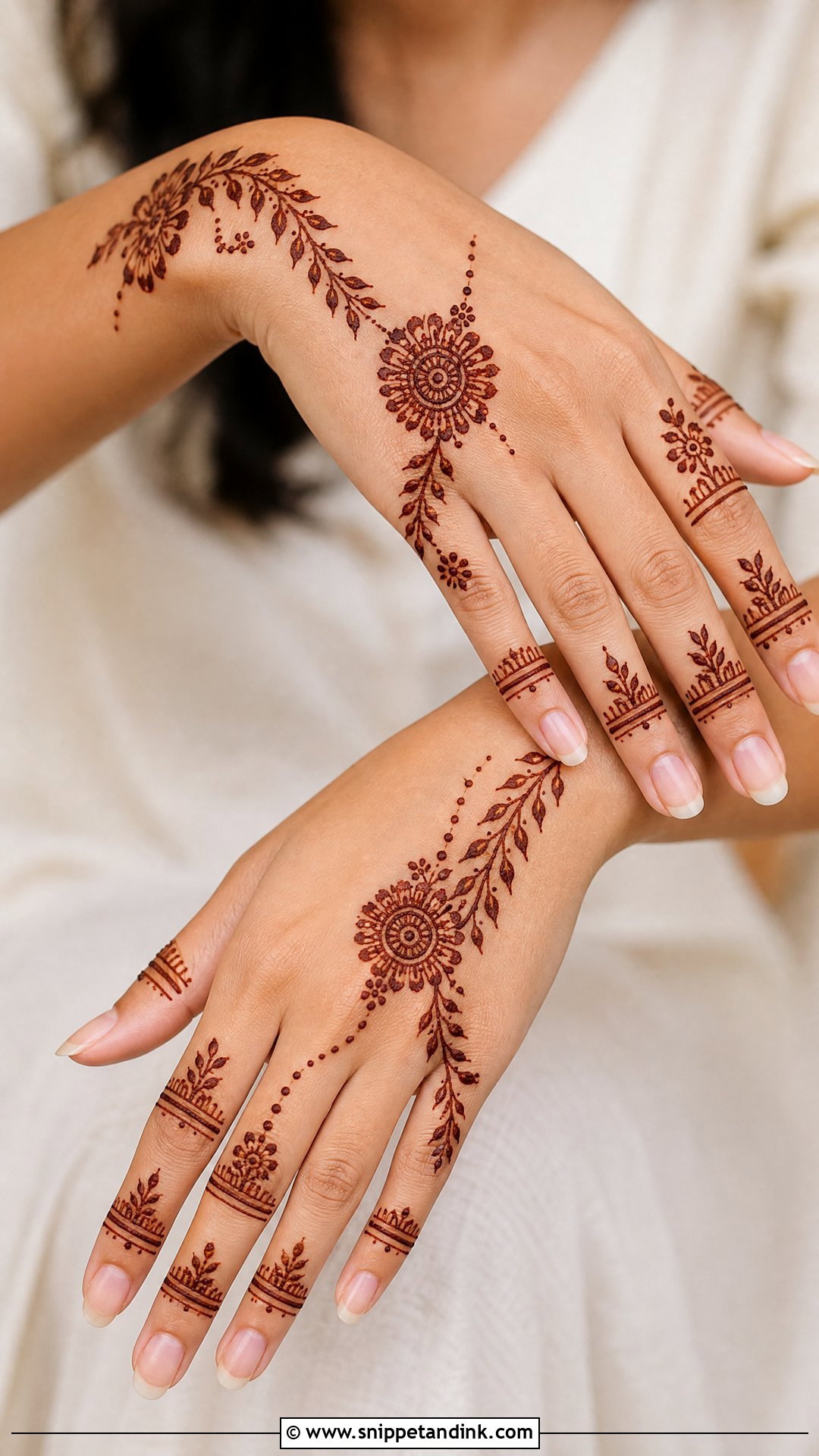
Finger mehndi is the quickest way to look dressed up. The design stays on the fingers with slim lines, leafy patterns, mini flowers, dots and small bands, and the palm or back of the hand gets a tiny mandala or stays mostly open. Bridesmaids, guests and brides who want something minimal for pre-wedding events ask for it often, and it draws attention to rings naturally. I keep all ten fingers coordinated rather than identical. Repeating one element, such as a dotted band at the same knuckle, ties the hand together.
18. Moroccan Mehndi Design For Wedding
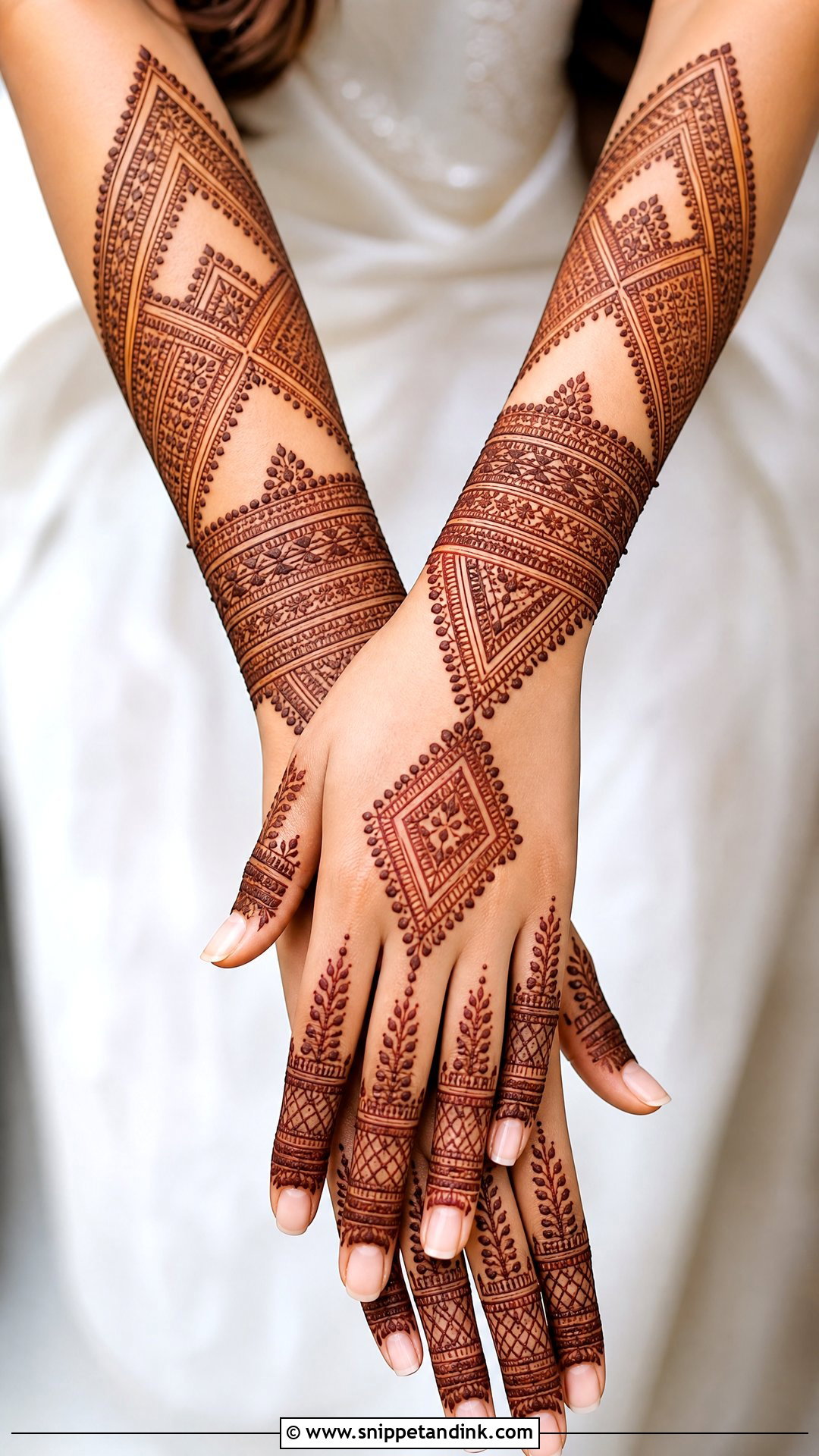
Moroccan mehndi replaces vines and paisleys with diamonds, lines, grids, triangles and structured bands, so it stands well apart from floral work. The shapes follow the bones of the back of the hand and wrist, which is where it looks strongest. Keep it minimal with open spaces, make it bridal with dense wrist-to-forearm coverage, or soften it with small floral accents. Geometric lines leave no room for an unsteady hand, so I’d look at an artist’s geometric portfolio specifically before booking this one.
19. Gulf Bridal Mehndi Design
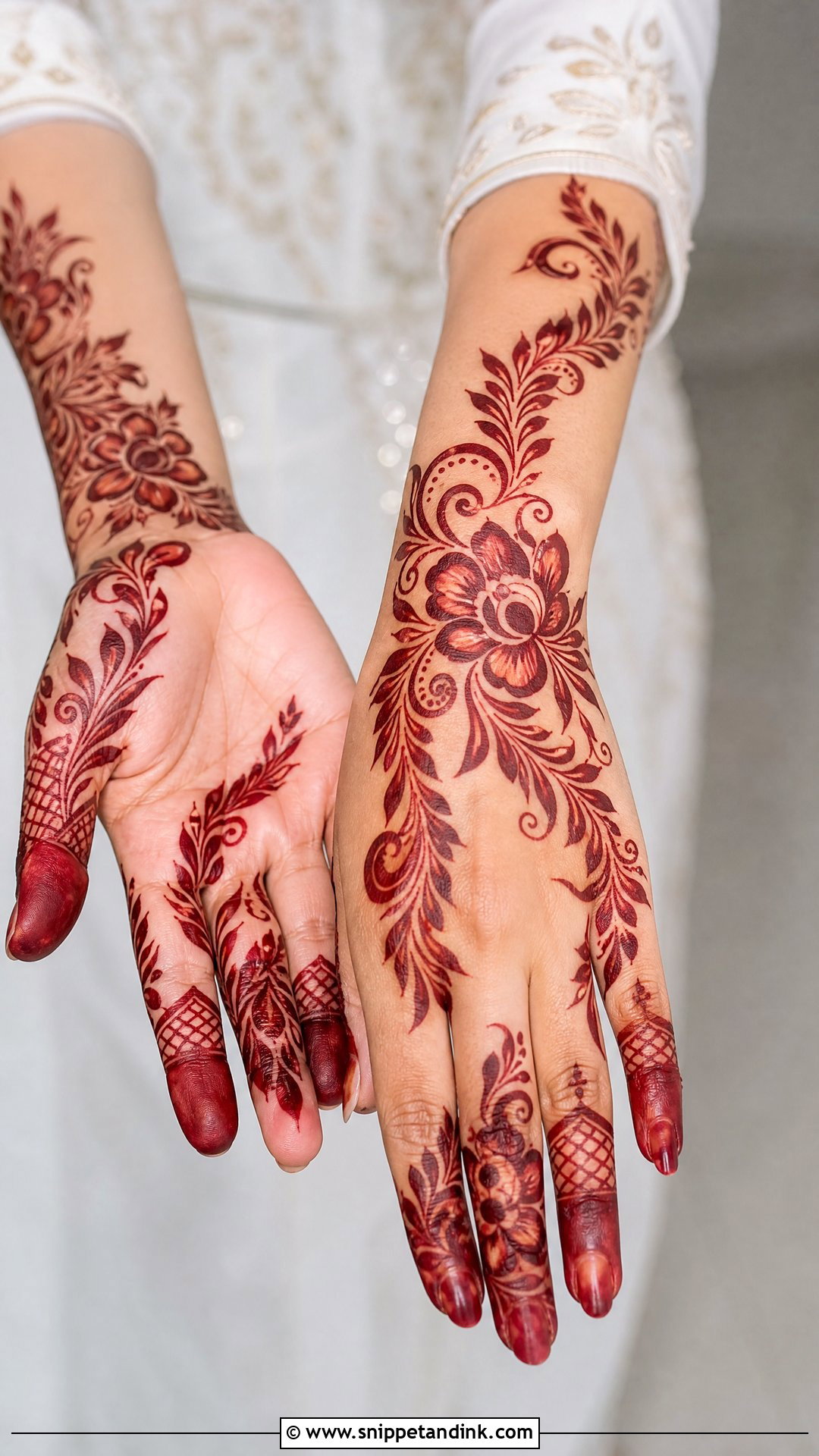
Gulf bridal mehndi design, also called Khaleeji-inspired mehndi, uses bold florals, dramatic spacing and an elegant flow, with larger motifs and deep shading in place of tiny dense fillers. The design trails diagonally across the palm, back of the hand, wrist and forearm, which makes hands look long and refined. For a bride who wants luxury without crowding, it’s a strong pick, and the bold outlines help the stain read rich and clear. I’d pair it with statement rings or bangles and leave enough open skin for the design to breathe.

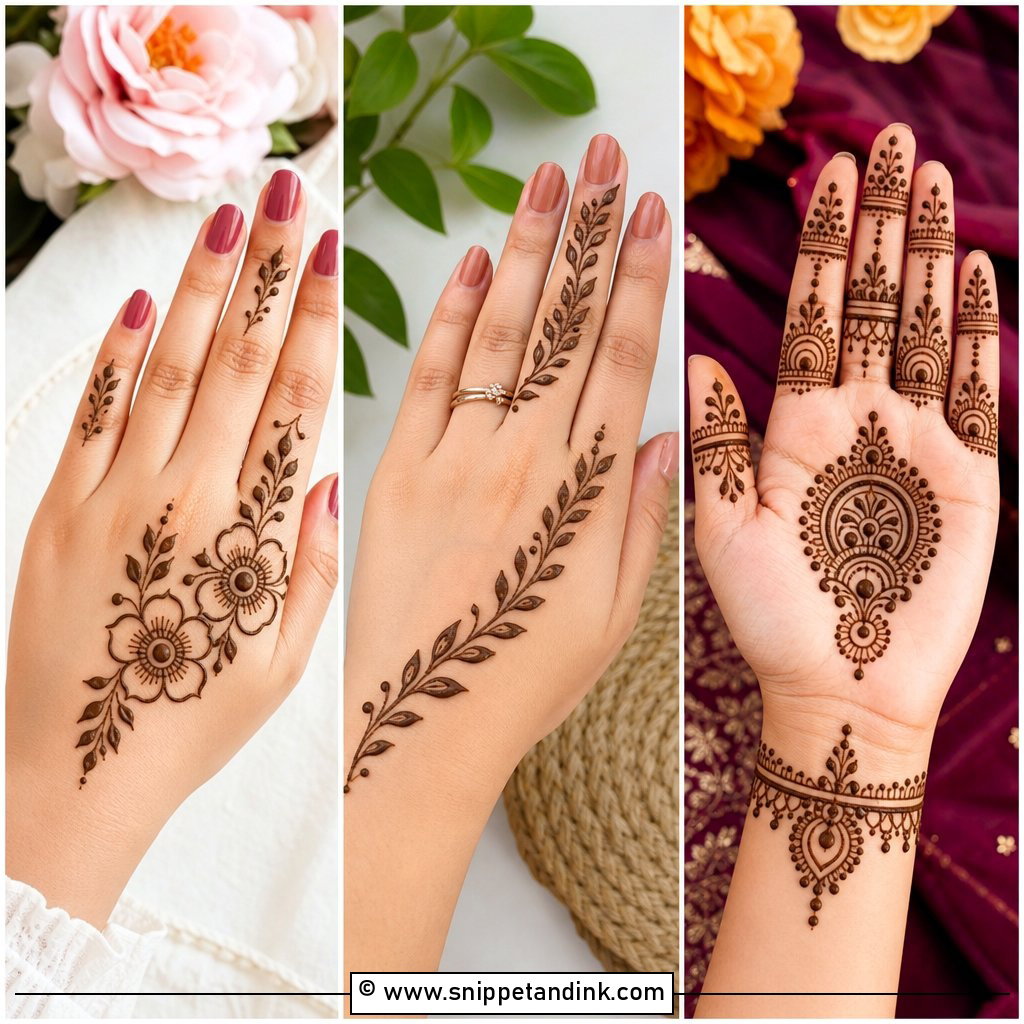
20. Feet Mehndi Design For Wedding
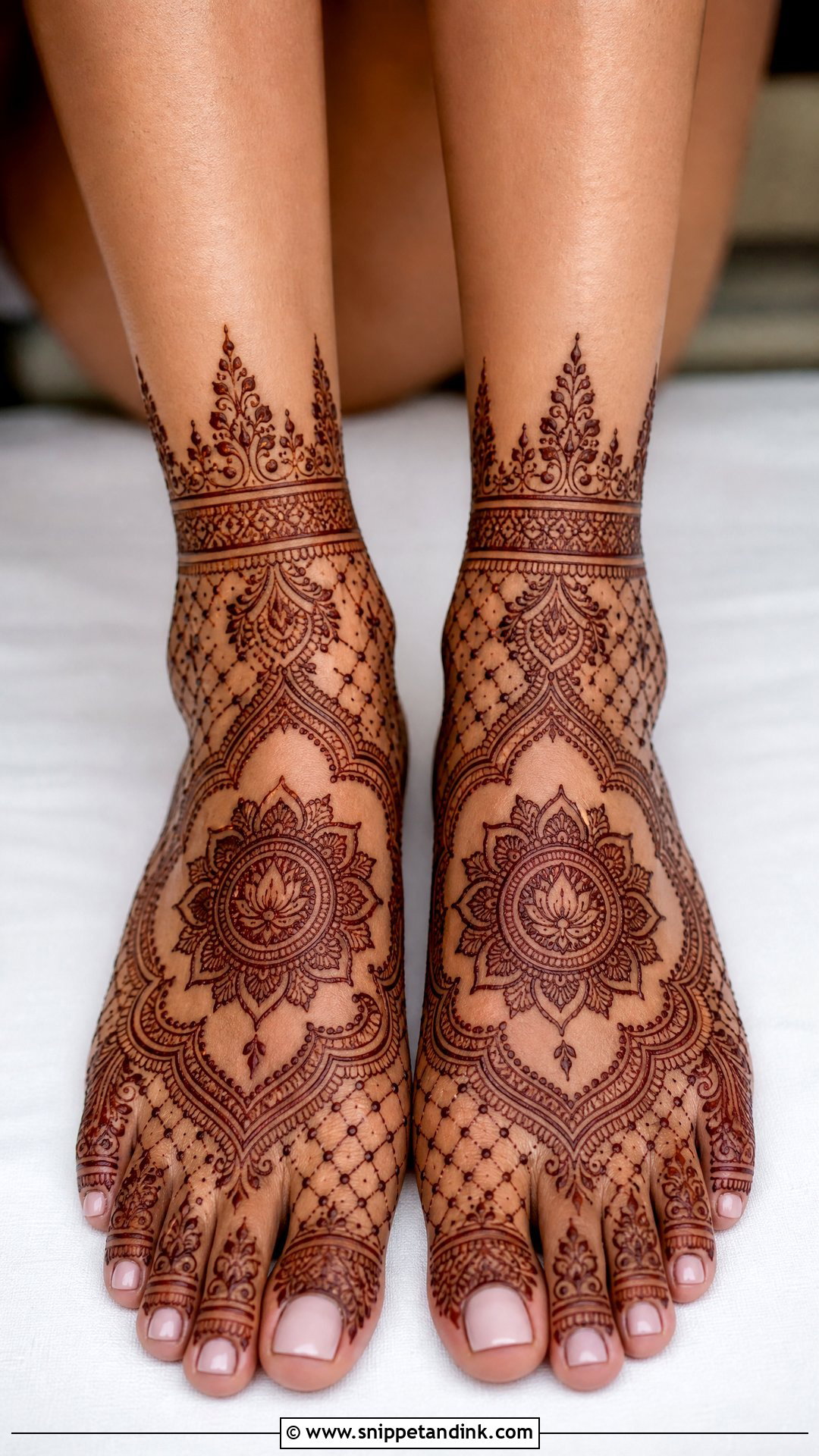
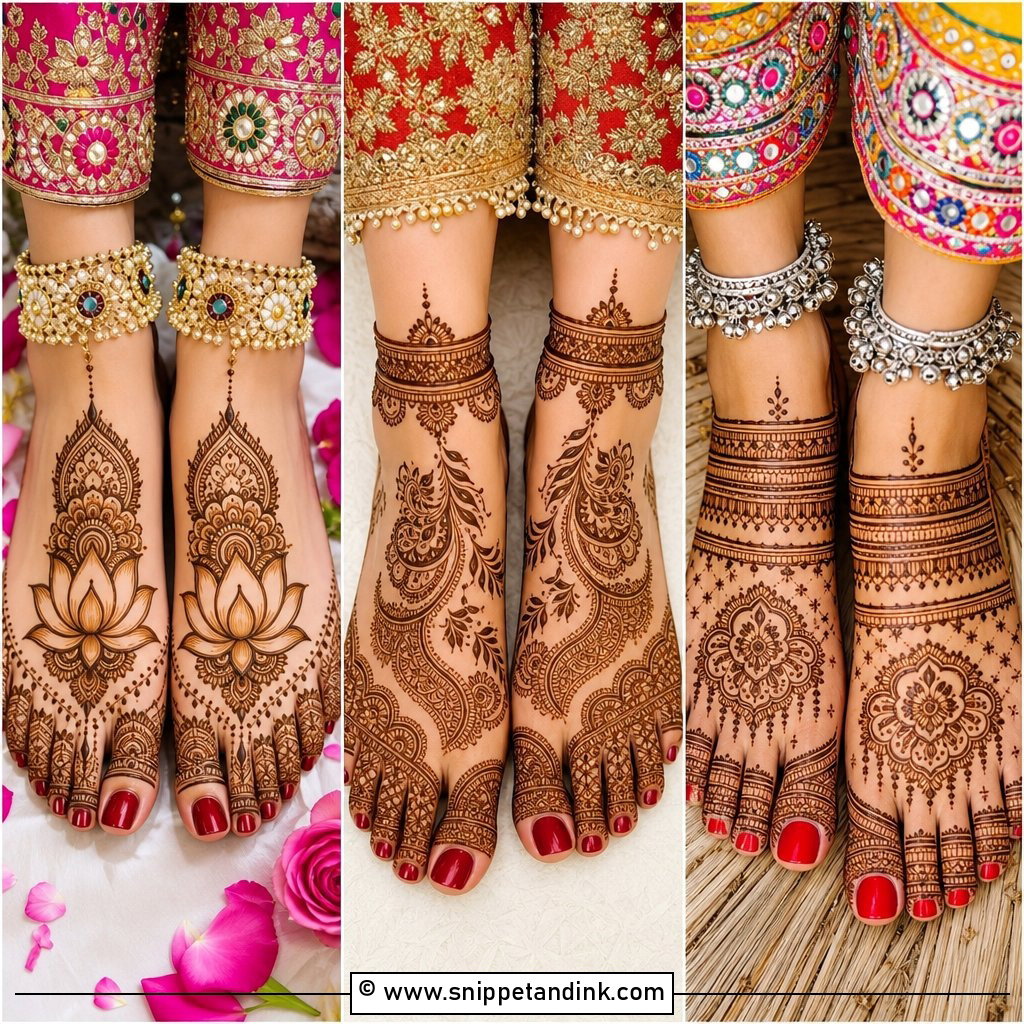
Feet mehndi design completes a bridal look, especially with anklets, sandals and traditional outfits. Bridal foot designs often cover the toes, the top of the feet, the ankles and sometimes the lower legs, with mandalas, lotus flowers, paisleys, anklet bands, jaali and leafy borders. The design should follow the shape of the foot, not fight it, and very tiny patterns on the toes tend to blur. I match feet to hands: heavy hands get detailed feet, minimal hands get softer ones. Feet usually come last, once the hands are drying, so the bride isn’t trying to stand on wet paste.
How Your Henna Will Look on Camera
Henna gets photographed twice: as wet paste at the mehndi night, and as a stain at the wedding. The paste is dark brown and slightly raised, and it photographs crisply. The stain looks entirely different. It starts orange and deepens over a day or two, so if the wedding falls a day or two after the mehndi, your stain will be near its richest just as the wedding photographer arrives.
Getting the detail shots right
- Ask your photographer for close-ups of the hands in soft daylight. Direct flash flattens the stain and hides the fine work.
- Smooth a drop of oil over the stained skin shortly before the detail shots. It deepens the color on camera and hides dry patches.
- Choose nail color with the stain in mind. Nudes, reds and deep berry sit well beside a reddish brown stain, while very pale pastels can look chalky next to it.
- On deeper skin tones, bold spacing and outlines show more clearly than fine fillers, because the stain has less contrast against the skin.
If the stain comes out lighter than you hoped, don’t scrub at it or try harsh home remedies. The color usually keeps darkening for a day or two, and an even, lighter stain still photographs far better than a patchy, irritated one.
Clean Lines Matter as Much as the Motif
Wedding mehndi should feel personal and comfortable for whoever wears it. A bride might want full Indian work with portraits and peacocks, while a bridesmaid prefers Arabic florals, a bracelet pattern or simple fingers. Ceremony, outfit, jewelry, time and taste all play a part. Think about placement and spacing, and picture how the design will look in photos once the stain deepens. From where I sit with the cone, clean lines matter as much as the motif itself. Traditional, modern, minimal or bold, start from the ideas above and let your artist adapt one to your hands.
You'll Like These Ideas:


Leave a Reply