
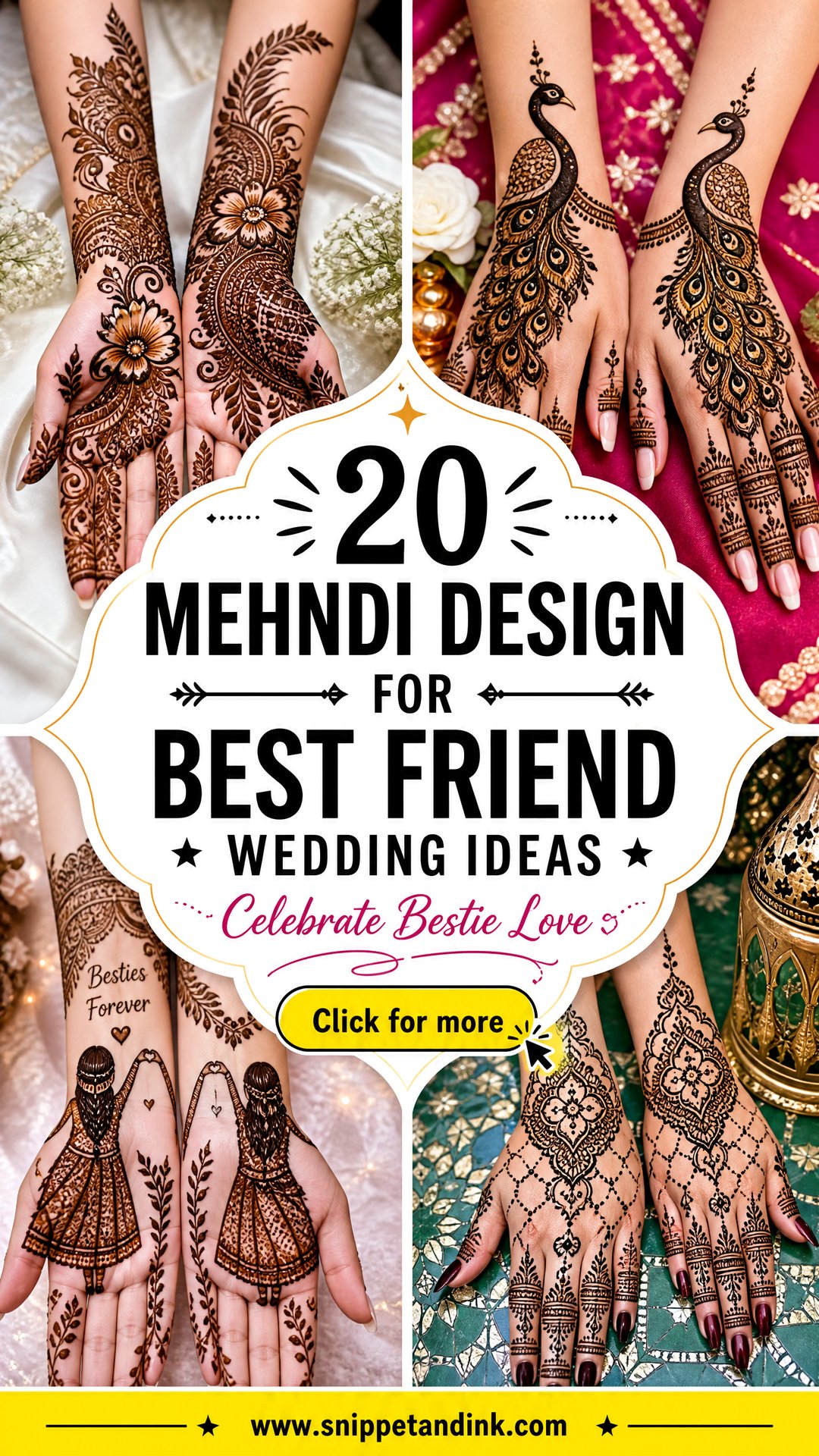
At a best friend’s wedding, your henna has a job the bride’s doesn’t. It has to look festive beside hers without competing, and it has to let you get on with dancing, hosting and helping her into her dupatta. When I’m doing a bridal party, I steer each friend toward coverage that fits her role across the events. The designs below span Indian detail, Arabic spacing, Indo-Arabic balance, mandalas, bracelet cuffs, florals, initials and modern negative space. Full hands suit the mehndi night, a lighter back-hand design suits the sangeet, and a neat palm pattern is the quiet option for the ceremony itself.
When to Get Your Henna So It Peaks on the Wedding Day
Henna doesn’t show its real color when the paste comes off. A fresh stain is bright orange, and it darkens to reddish brown or maroon over the next day or two. So the best time to have it done is one to two days before the event you care most about, not that morning. If your design goes on at the bride’s mehndi night and the wedding is the following day, the timing works in your favor; the stain will be close to its peak for the ceremony.
At the event itself, the bride goes first and takes the longest. Guests queue after her, and by evening the artists are working fast. If you want a detailed design, I’d book your own slot ahead of time, or ask the family whether the bridal party has appointments earlier in the day.
If you’re on bride duty
Wet paste and helping hands don’t mix. If you’ll be pinning her dupatta, fixing her hair or holding her phone, choose a back-hand or bracelet design so your palms stay free, or have yours done once she’s finished and seated with her own paste drying. Then leave the paste on as long as you can. I tell friends to aim for six hours at the very least, and overnight if they can sleep with their hands loosely wrapped.
1. Full Hand Bridesmaid Mehndi Design
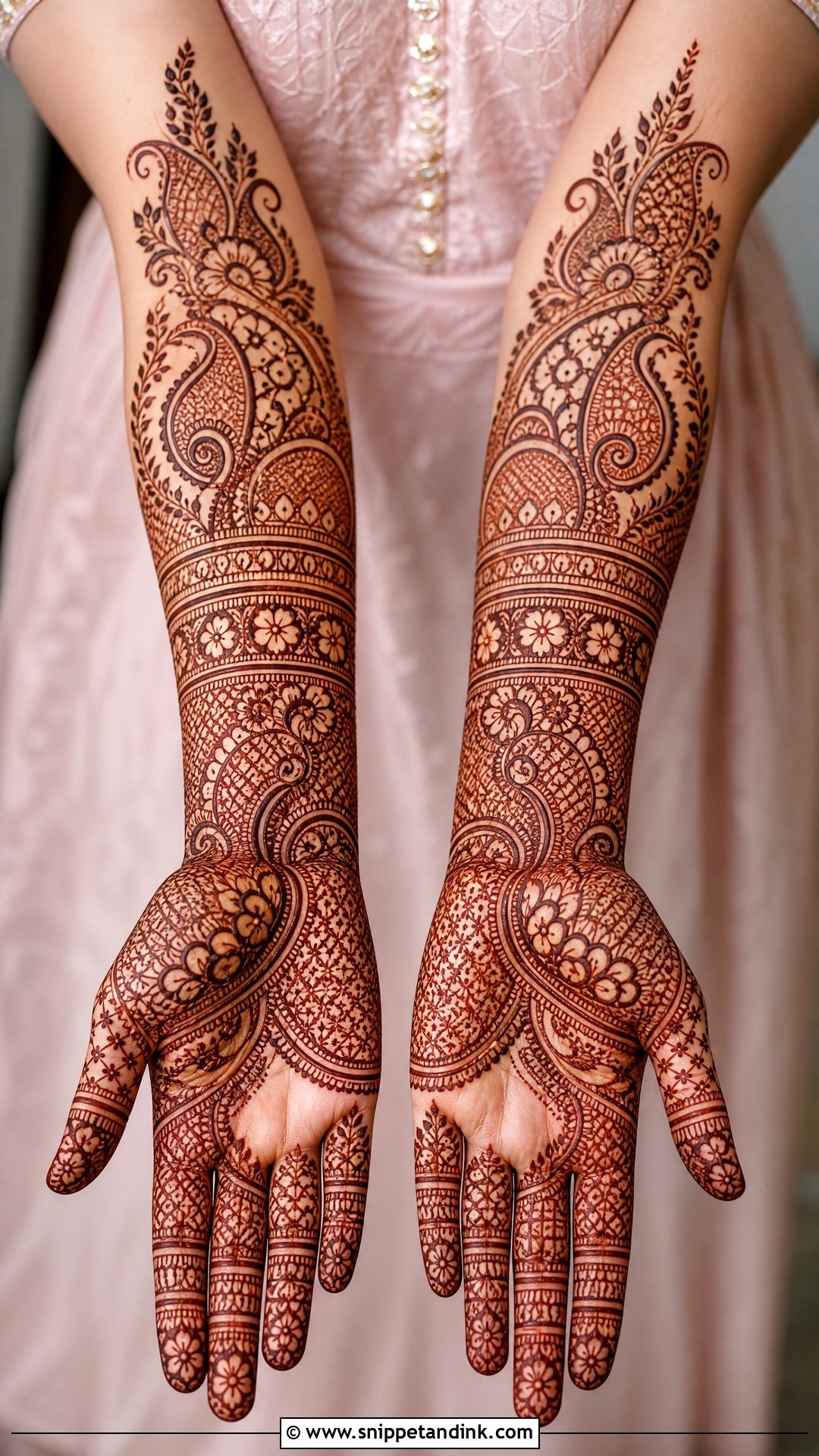
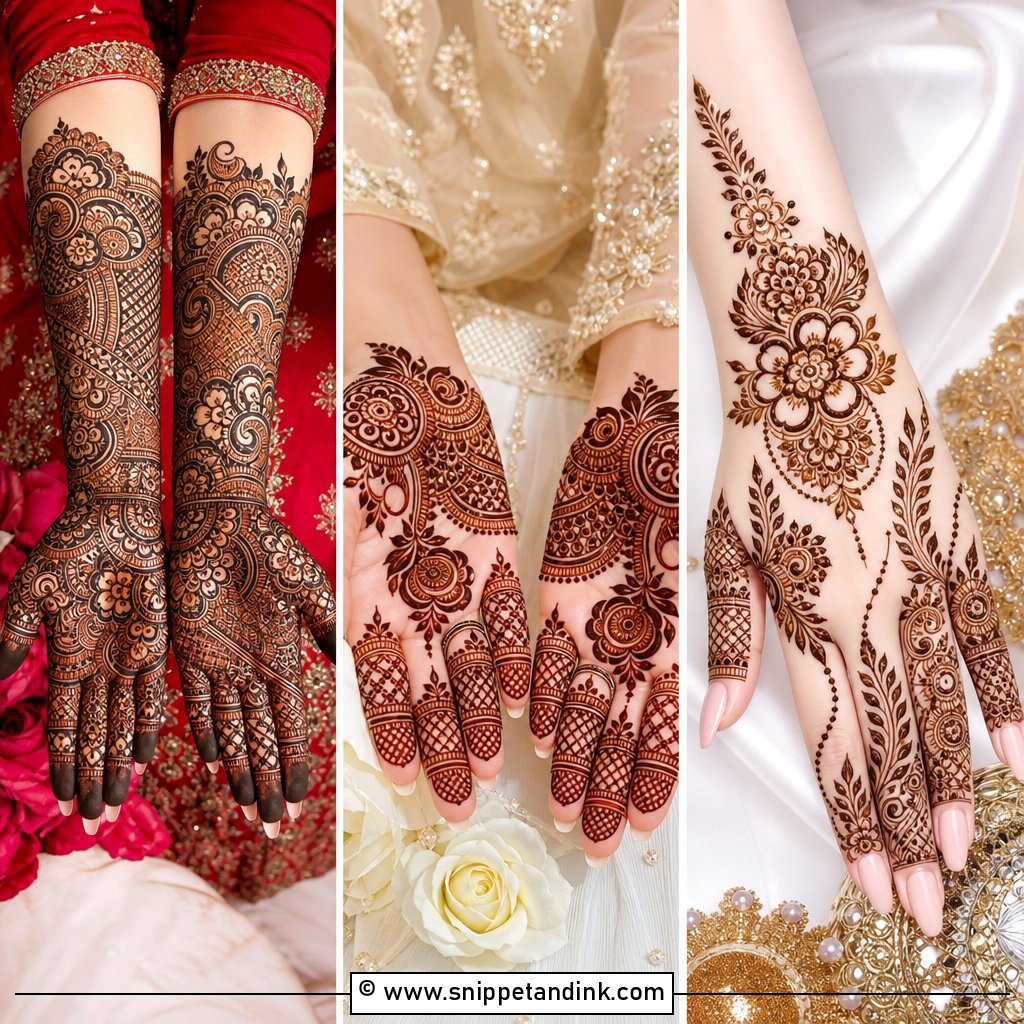
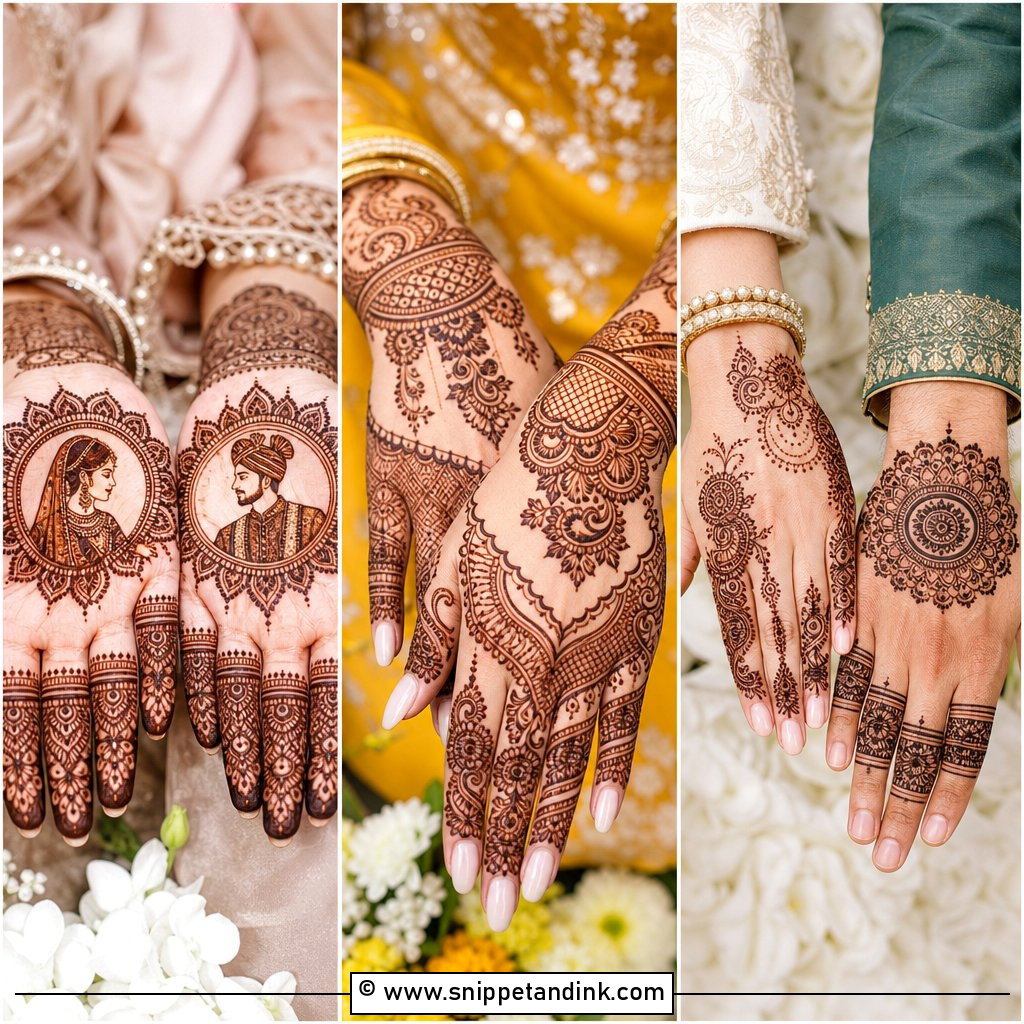
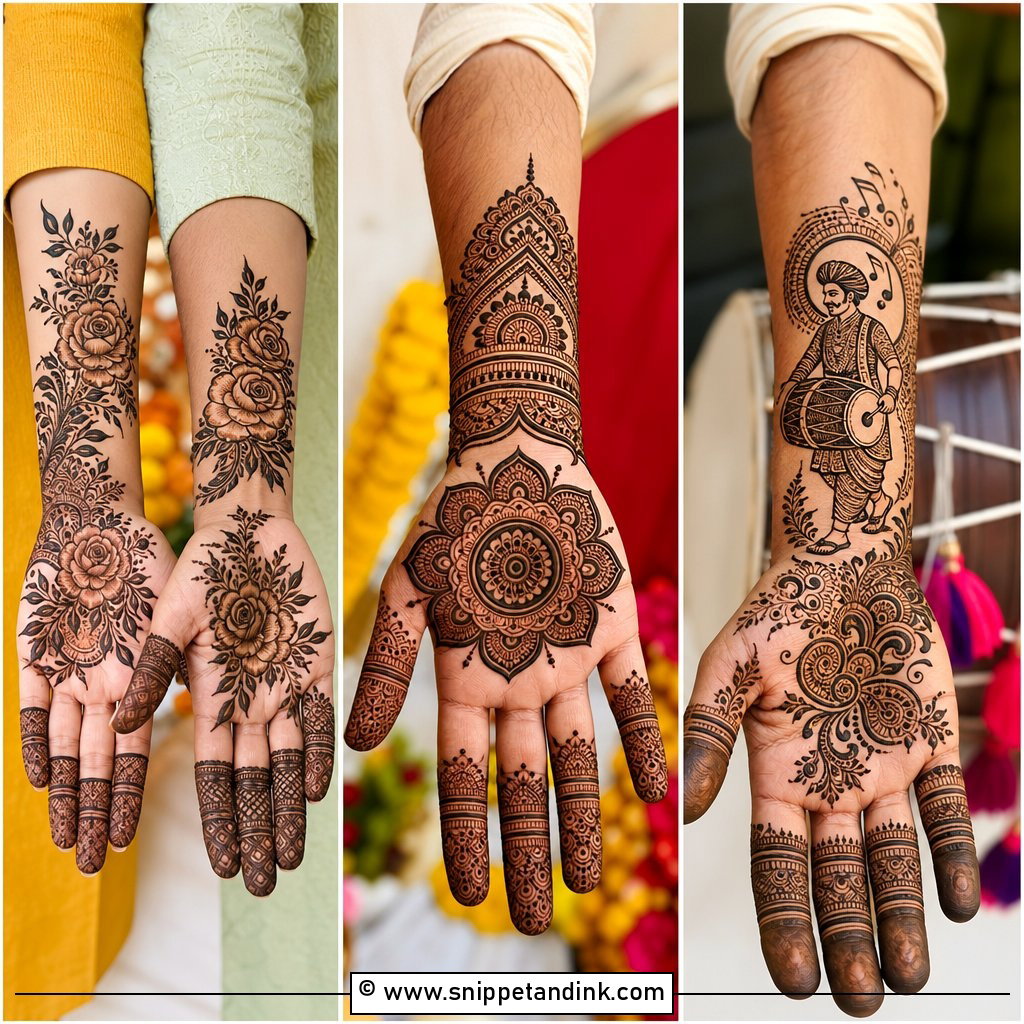
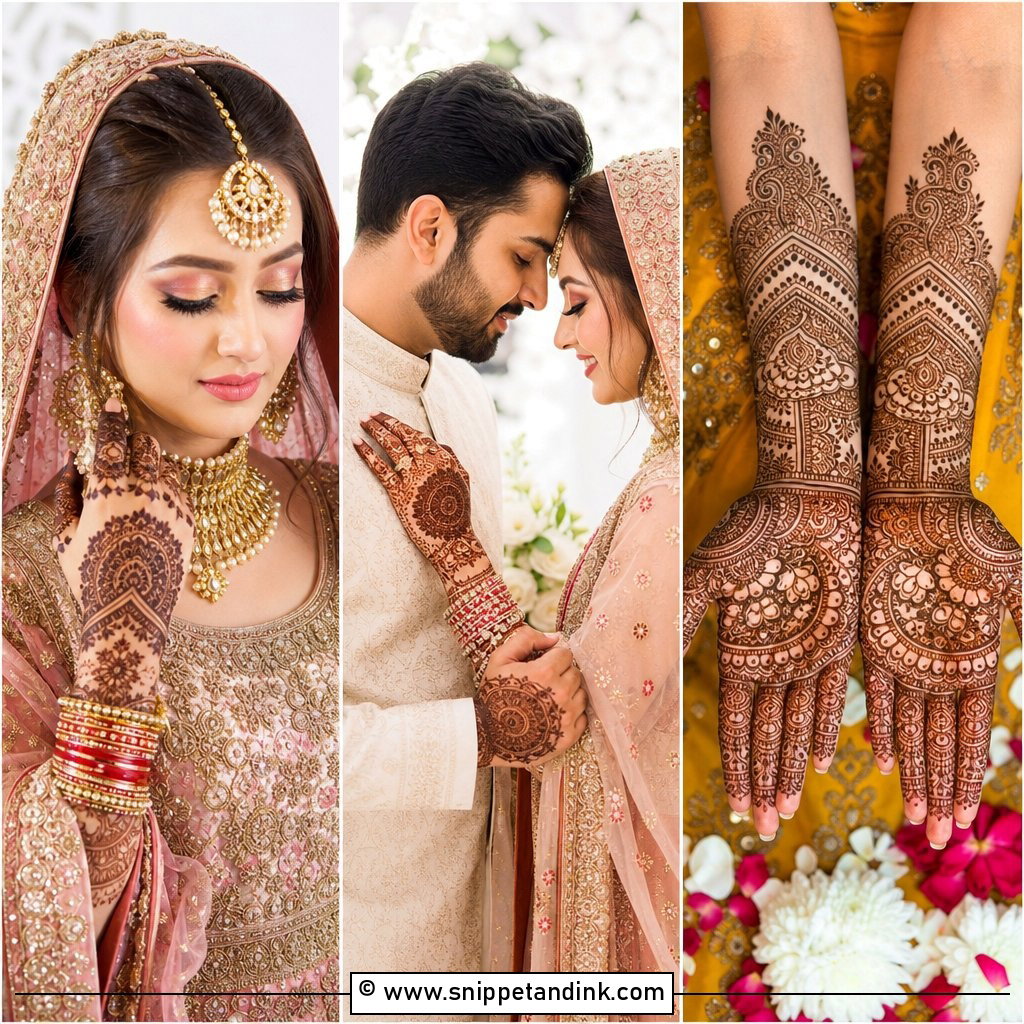
Full hand bridesmaid work covers the palm, fingers, wrist and lower forearm, but with less density than bridal mehndi. I use paisleys, florals, small vines, dots and neat fillers, and I deliberately leave more open skin than I would on the bride, so that side by side in photos her hands still read as the main ones. A little space around the wrist or palm lets the pattern breathe. Plan for the time, too: front and back on both hands keeps you seated for a good while, and then the paste needs hours on the skin. Lehengas, sarees, shararas and coordinated bridesmaid outfits all suit it.
2. Arabic Mehndi Design For Best Friend Wedding
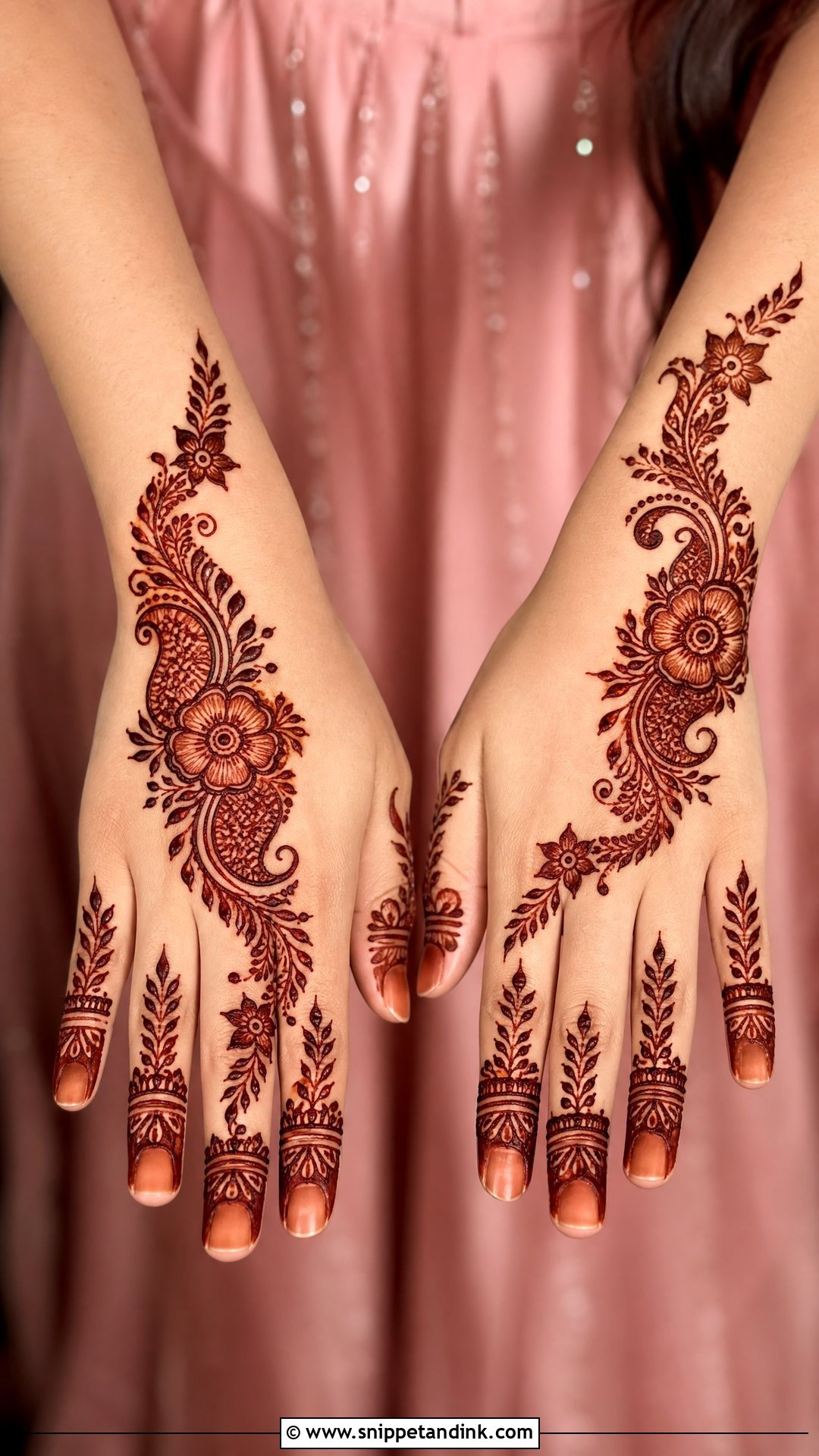
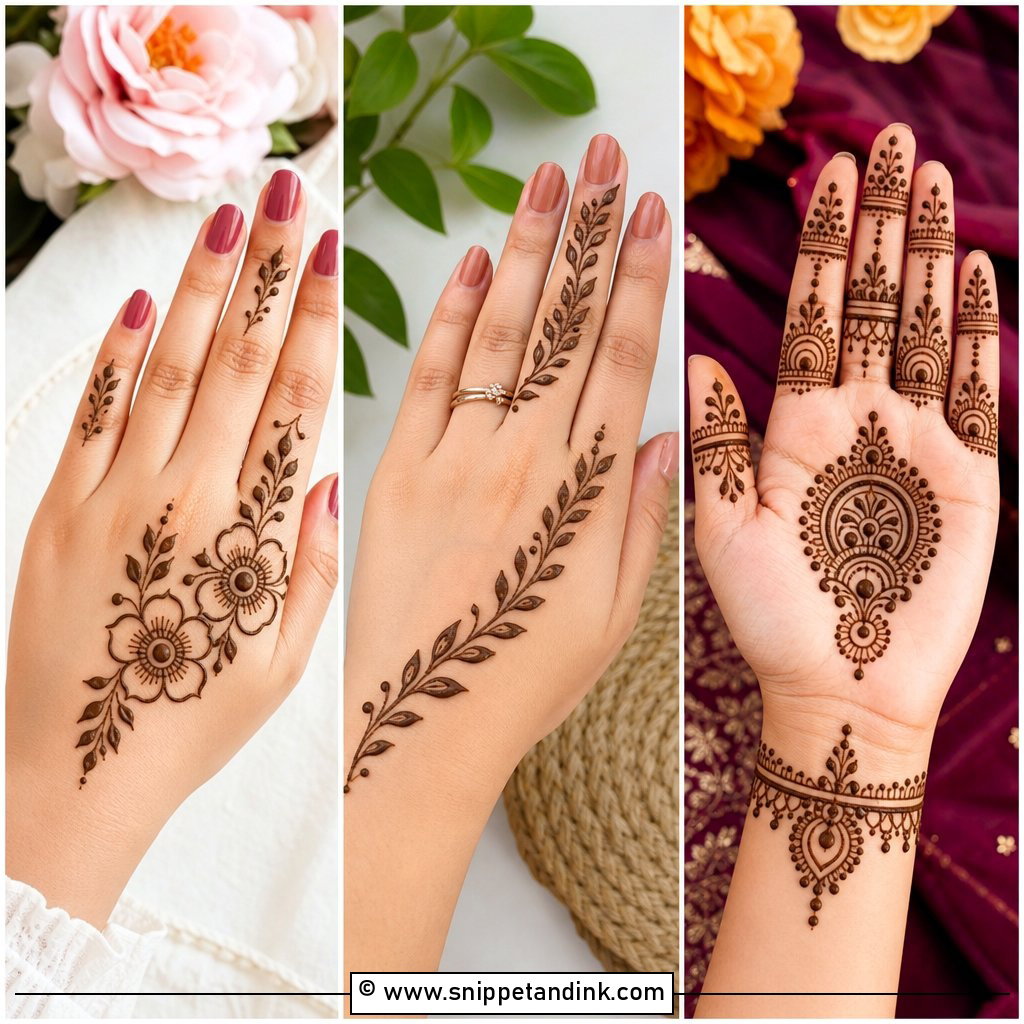
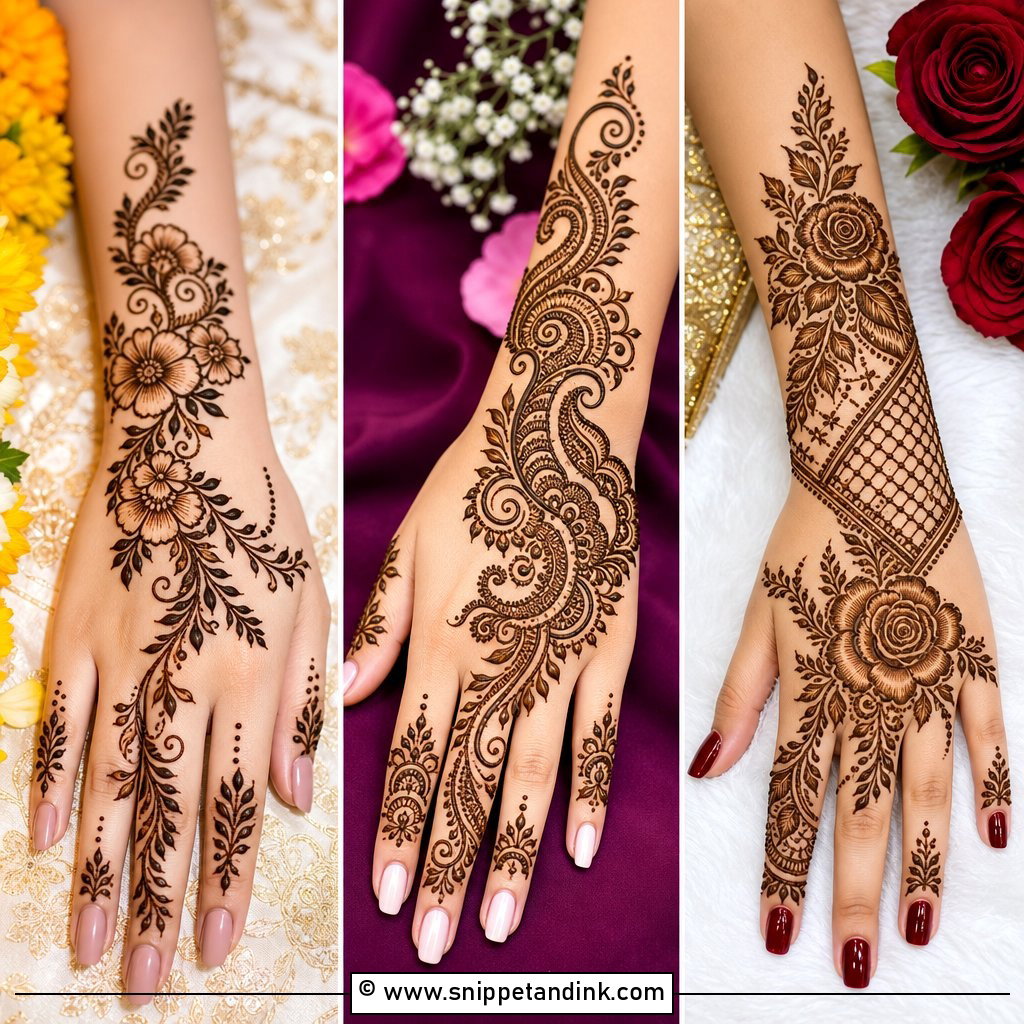
Arabic mehndi is my go-to when a guest wants something bold and quick. It flows diagonally across the hand with large flowers, leafy trails, paisley curves and clean gaps, and those gaps are what make the stain stand out next to bangles and rings. I usually start the trail near the wrist and lead it toward the index or middle finger, which makes the hand look longer and slimmer. It takes a fraction of the sitting time of a full Indian design, and it goes well with pastel outfits, mirror-work suits and modern looks.
3. Simple Back Hand Mehndi Design
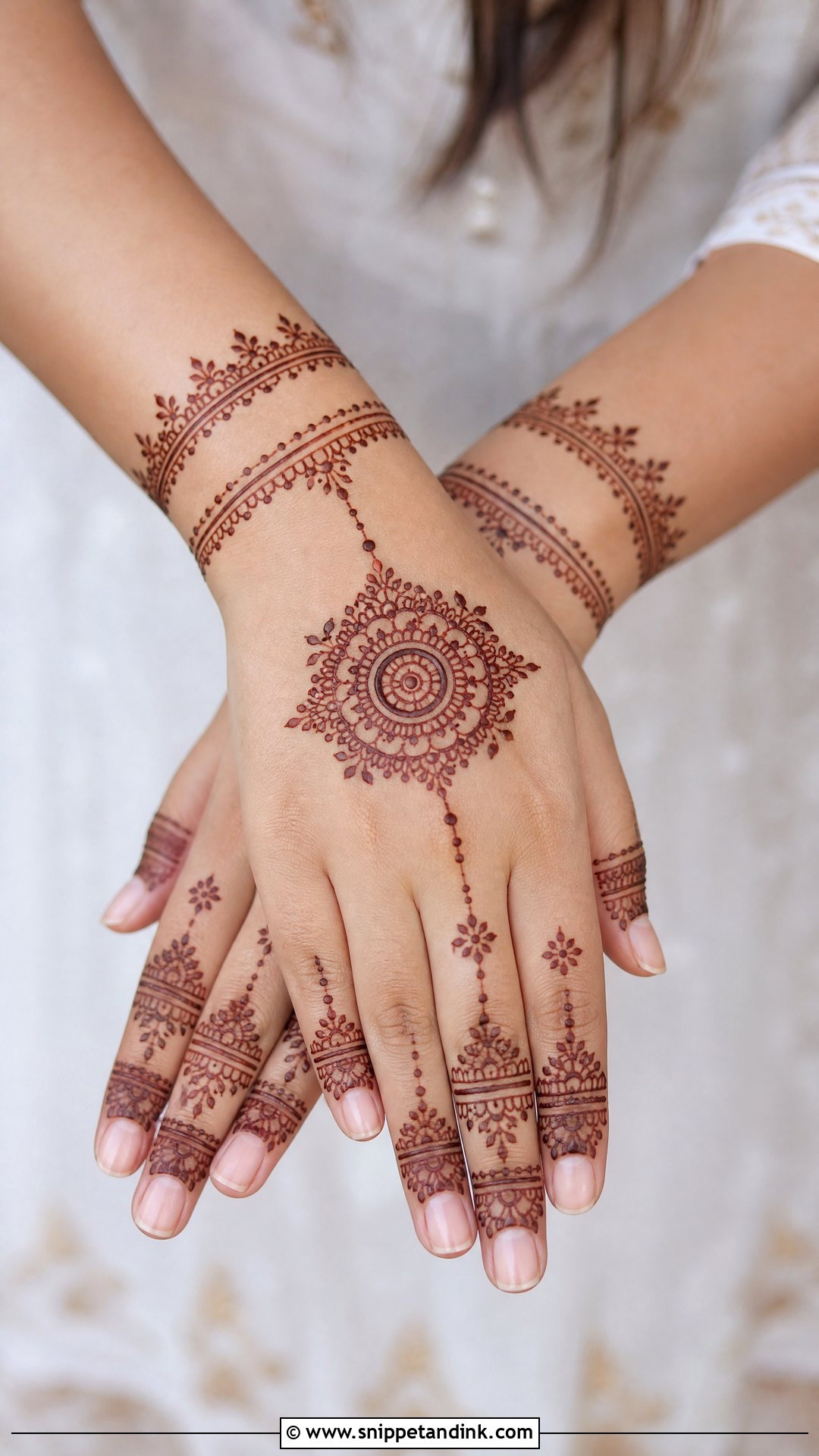
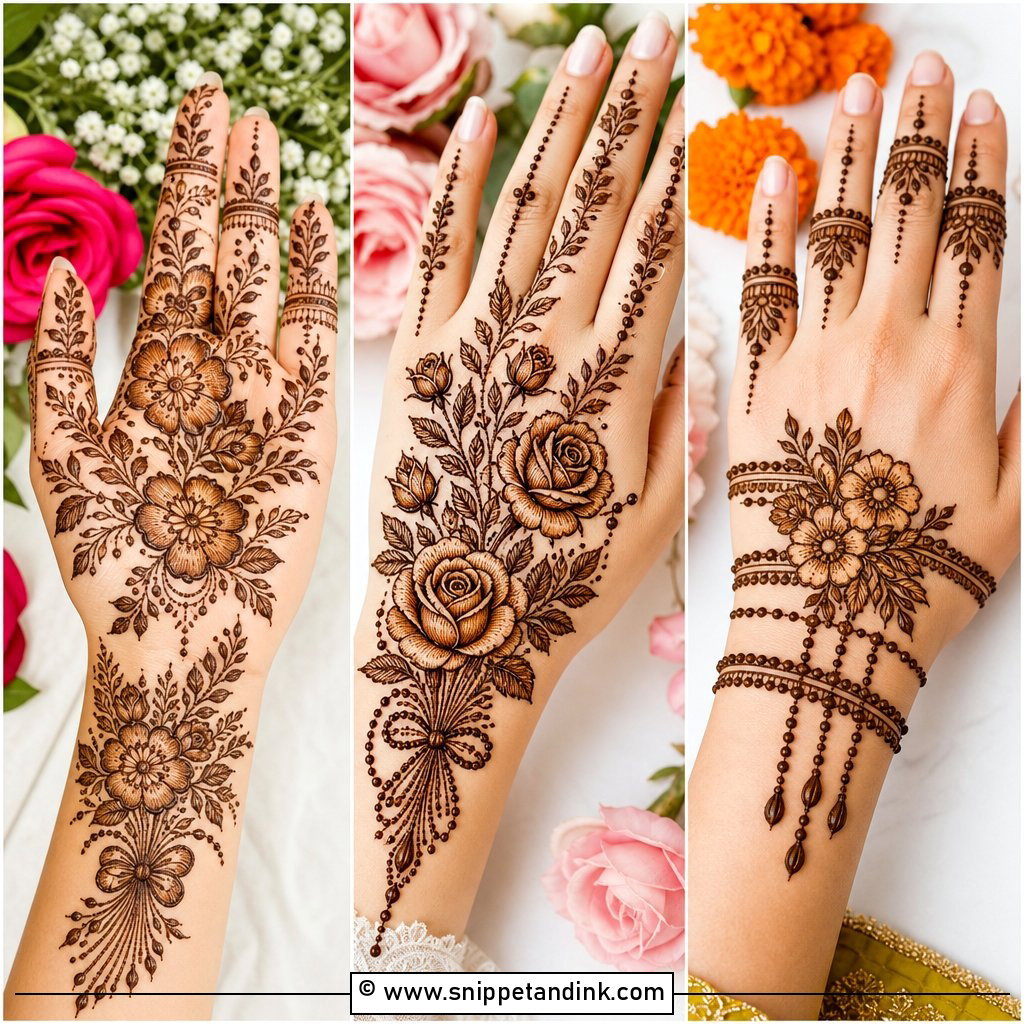
A clean back-hand design often looks more polished than a crowded one. Everything goes on the visible side: a central mandala, soft florals, finger bands and a bracelet-style border, reading complete without covering every inch. I keep the spacing even so the hand looks neat from across the room. For the friend who’ll be running around for the bride, this is the one I suggest. Your palms stay free, so you can still hold a phone, pin a dupatta or carry a tray while the paste dries. A few dots or leafy lines around the knuckles finish it.
4. Front Hand Mandala Mehndi Design
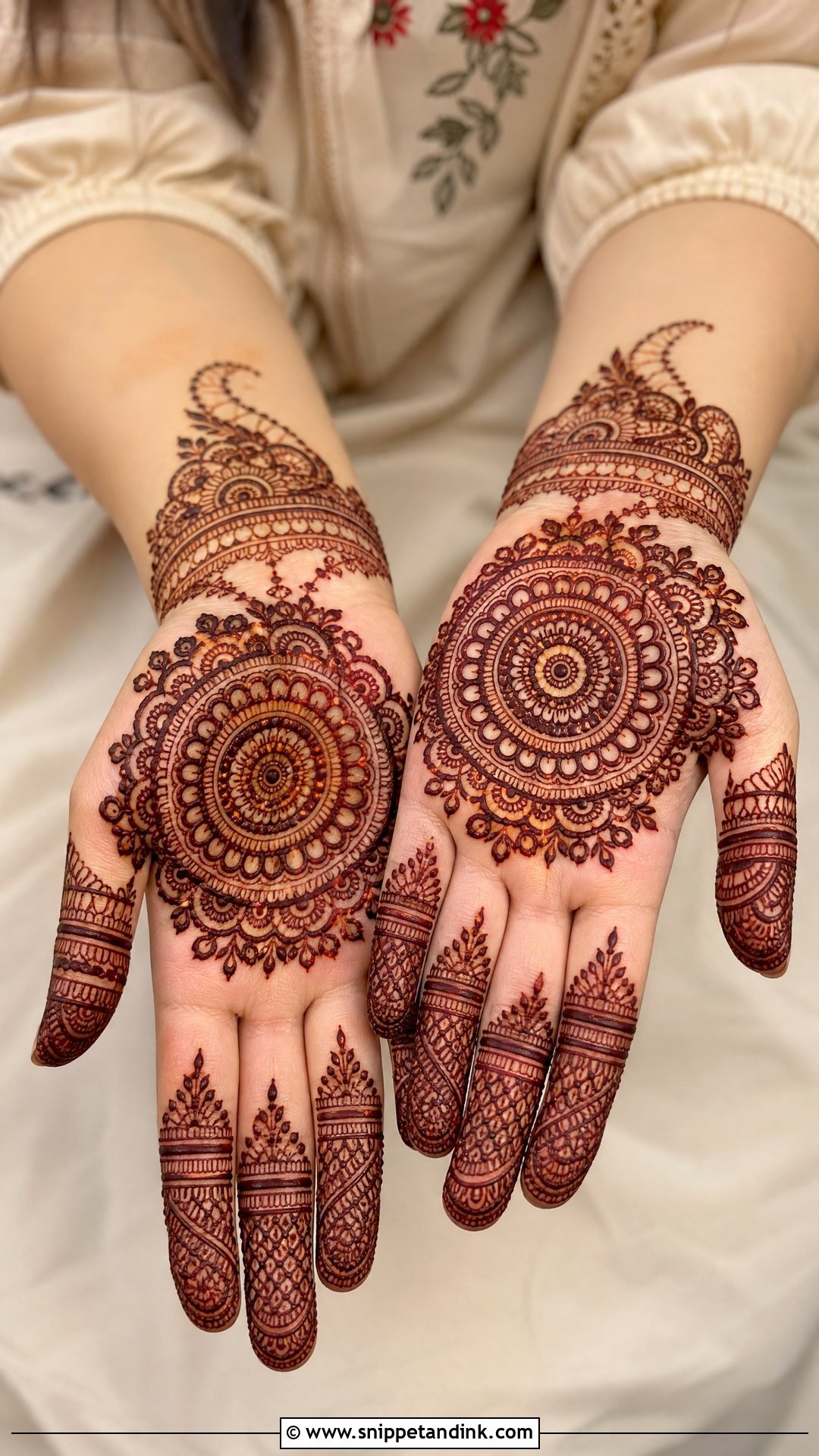
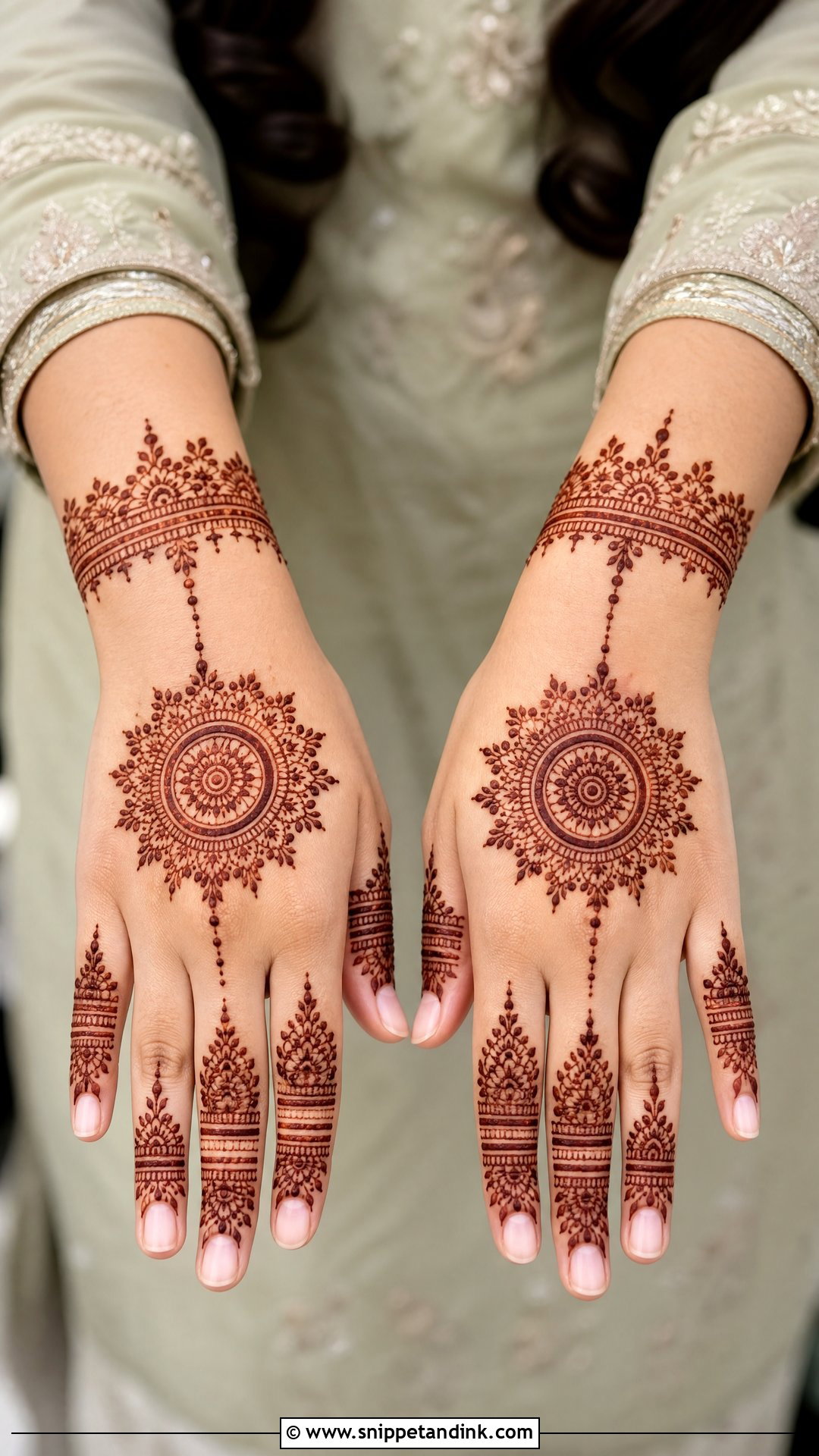
A front hand mandala mehndi design puts a round motif in the center of the palm and builds out with finger detailing, small floral chains, paisley corners and a wrist cuff. It feels traditional without going full bridal, and friends can wear matching mandalas with small differences. I pipe the center bold and keep the edges lighter. That contrast stays clear after the stain deepens, and since palms take henna darker than anywhere else on the hand, the mandala becomes the richest part of your look.
5. Indo Arabic Mehndi Design For Wedding Guest
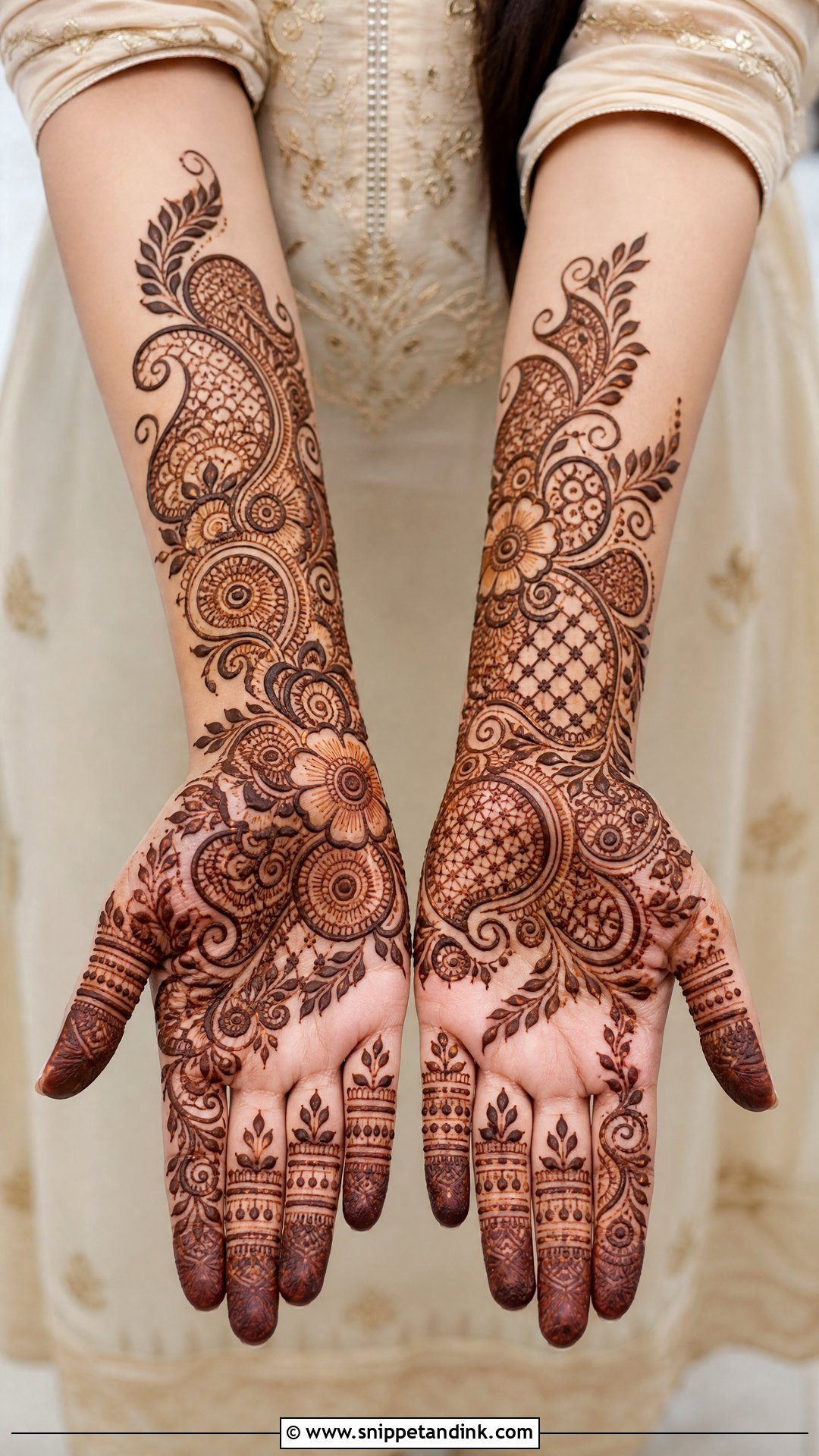
Indo-Arabic mixes the bold flow of Arabic work with the fine detail of Indian mehndi. For a friend’s wedding I’d build it from a floral trail, paisley clusters, shaded leaves, finger bands and a few small jaali sections. It adapts easily to the front or back of the hand, which helps when you have several functions. Ask your artist for thicker outlines with delicate inner detail; very thin fillers soften as the stain develops, while outlines hold their shape. Sangeet, mehndi night, haldi or the ceremony all suit it.
6. Minimal Finger Mehndi Design
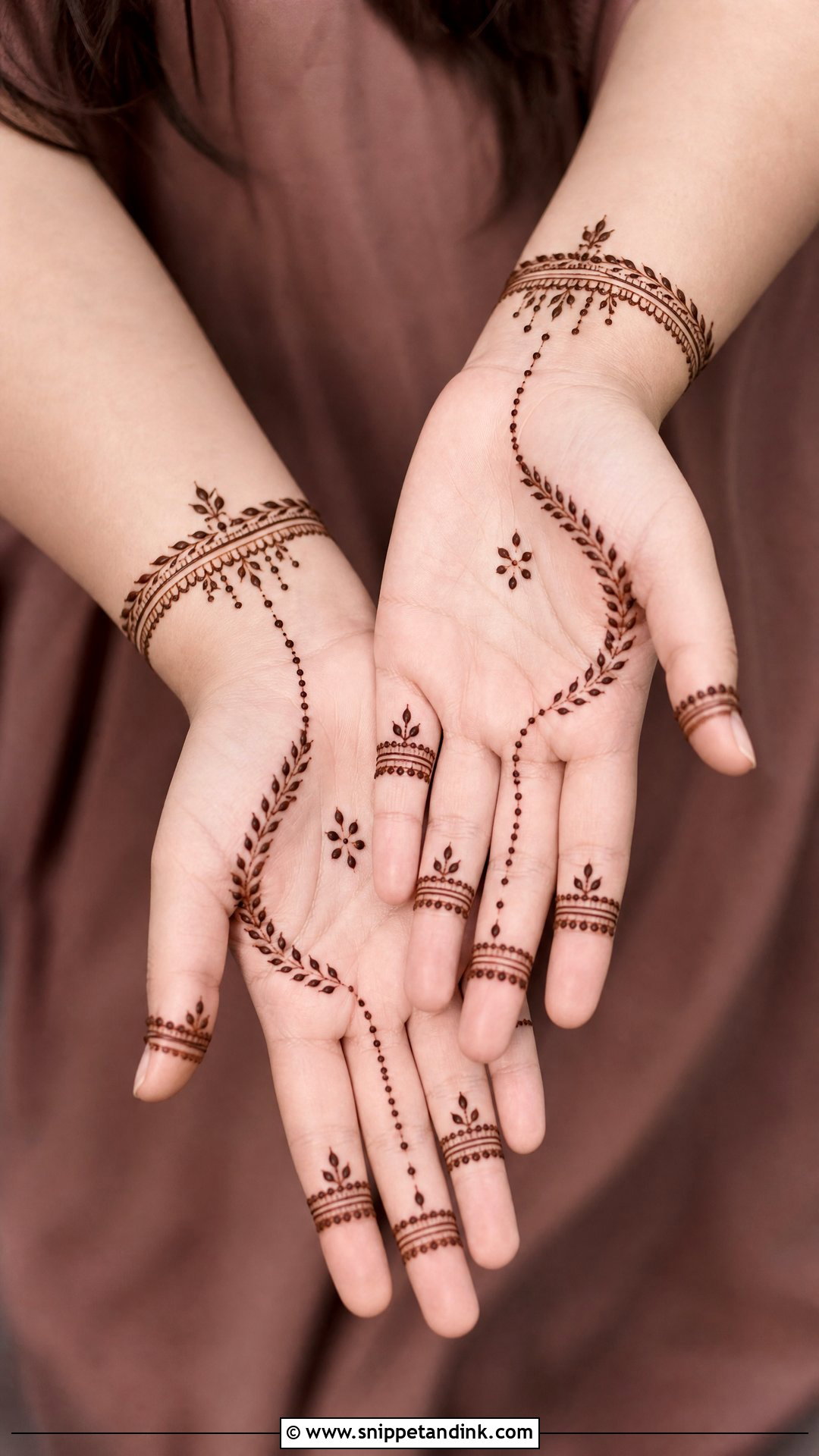
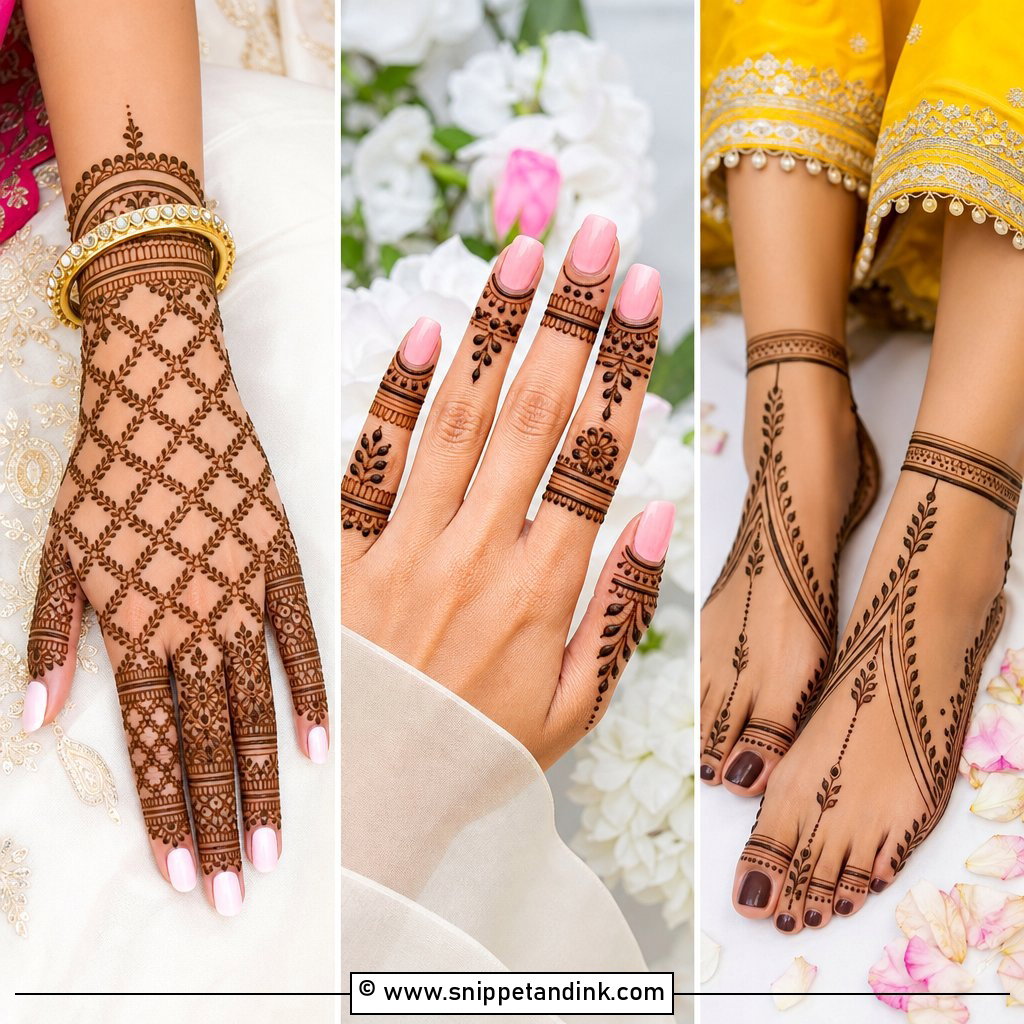
Minimal finger work suits a guest who loves a modern, clean look. The design stays on the fingers with a touch at the wrist: ring-like bands, leafy trails, tiny florals and dotted chains, with plenty of open skin. It looks fresh beside nail polish, bangles and statement rings, and I suggest it when the outfit is already heavily embellished. Fingertips stain darker than most of the hand, so even a light design shows up well. I keep every line crisp, because on a finger a wobble is easy to spot.
7. Floral Trail Mehndi Design
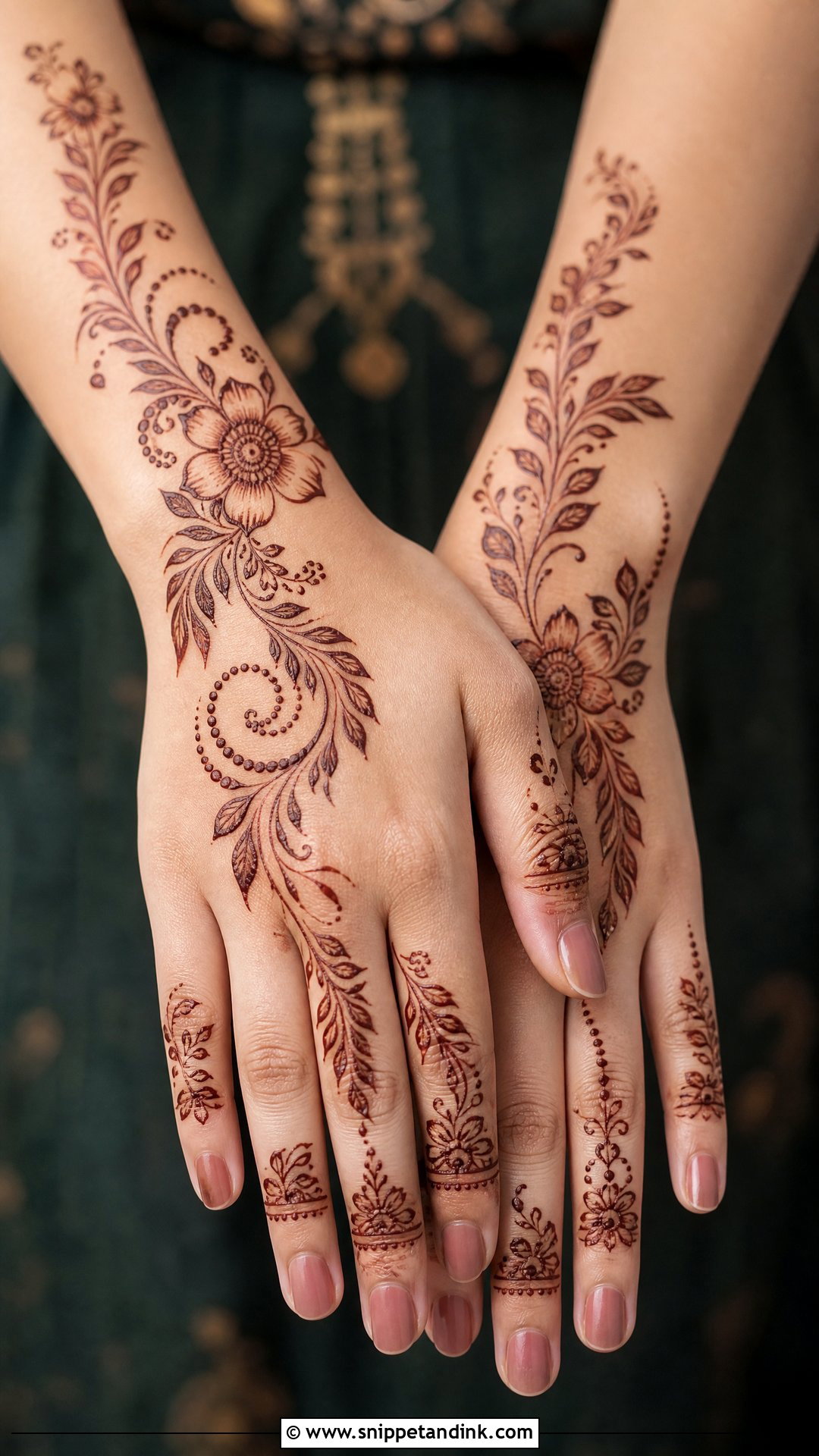
A floral trail starts at the wrist or lower palm and travels across the hand toward one finger, built from large flowers, small buds, curved leaves and dotted fillers. It feels joyful without competing with bridal mehndi. I can make it Arabic with bold spacing or Indo-Arabic with finer detail, and it shows best on the back of the hand. Medium-sized flowers are the safe size. Tiny ones close up as the paste spreads slightly on the skin, and very large ones can look hollow once only the stain is left.
8. Bracelet Mehndi Design For Bridesmaid
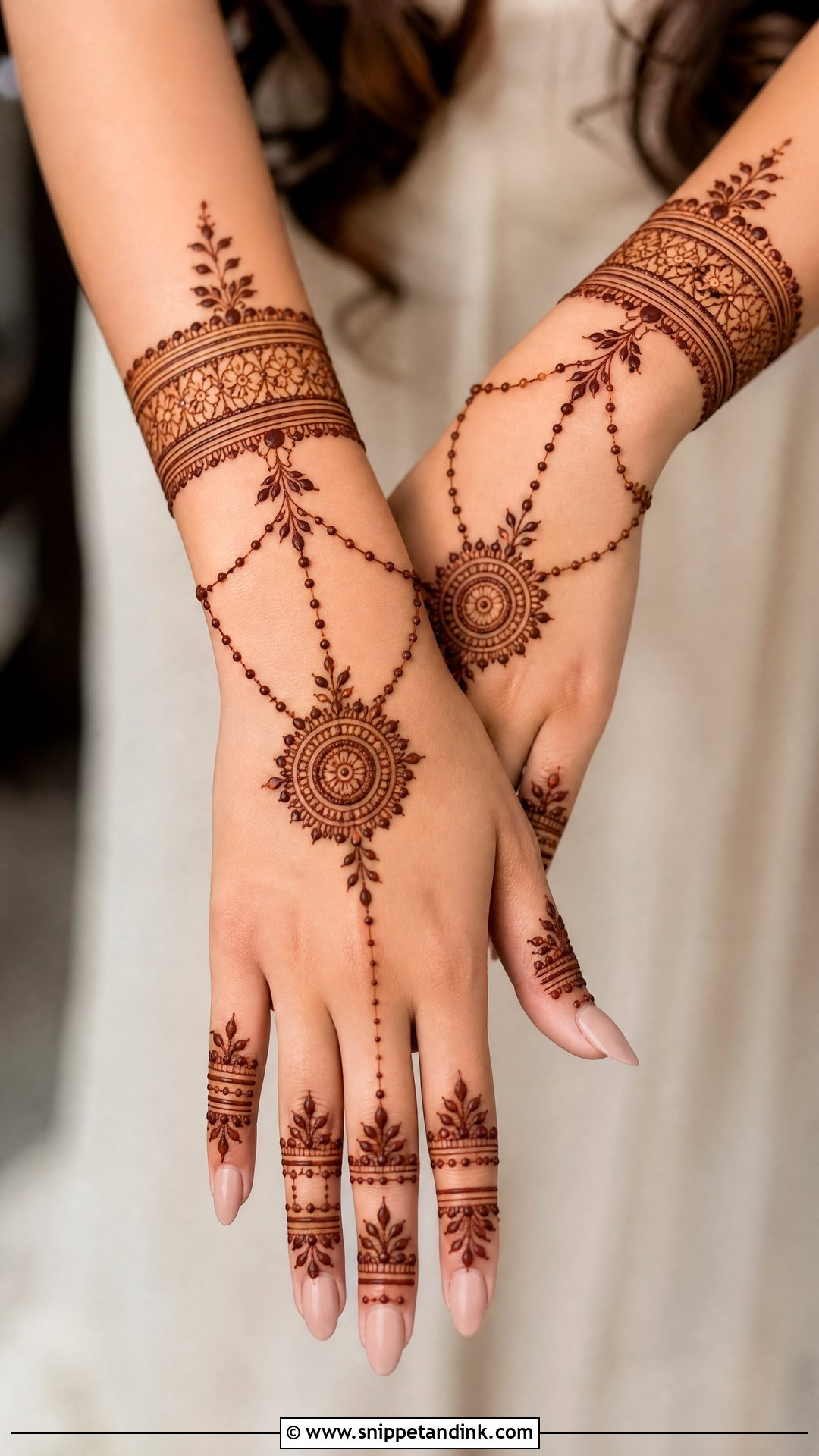
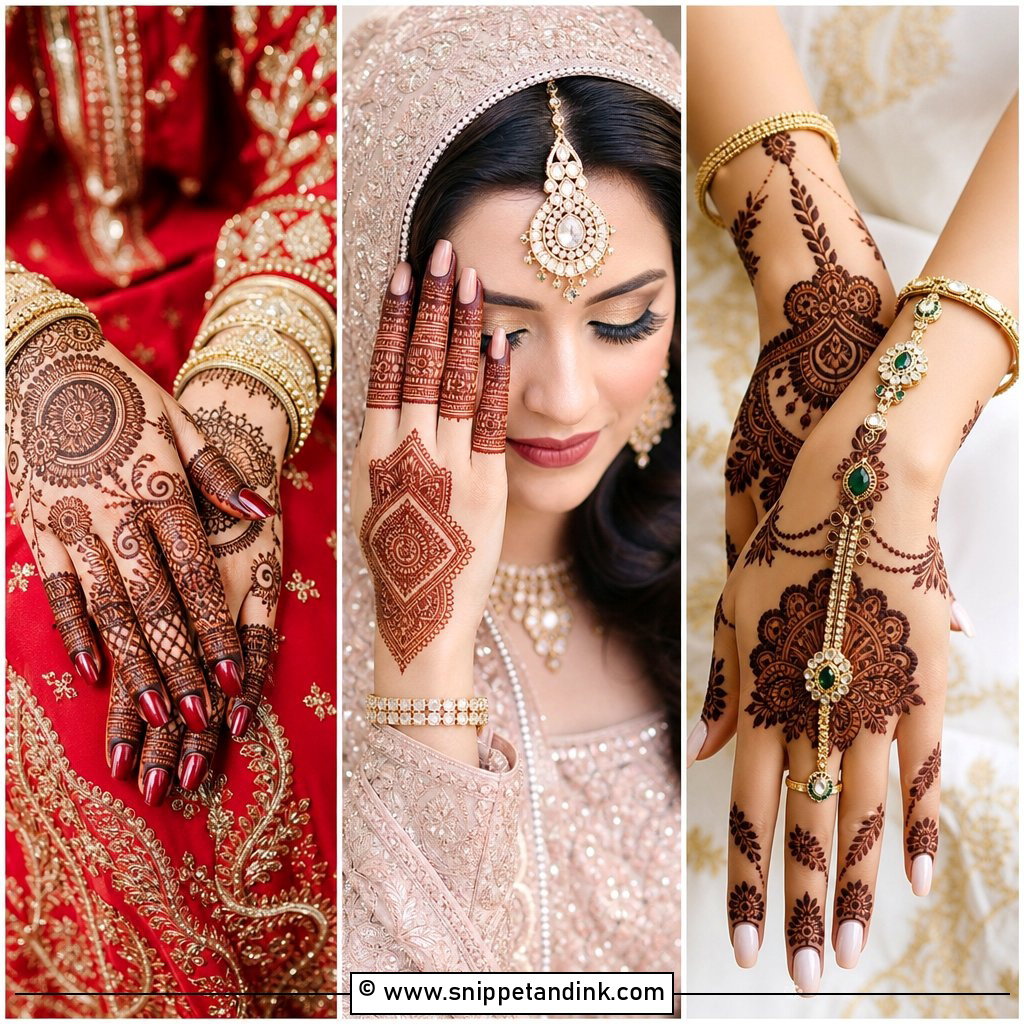
Bracelet mehndi treats the wrist like a cuff, bangle or chain, then links it to the fingers with delicate lines or floral connections. Bridesmaids like it because it sits naturally with real bangles and rings. The palm can stay simple or mostly open, and small mandalas, leafy chains or dotted strings add detail. Lighter coverage means less sitting time and quicker drying. One thing I check first is where your actual bangles will sit. A cuff drawn right under a stack of metal bangles gets hidden in every photo, so I move it a little higher or lower.
9. Jaali Mehndi Design For Best Friend Wedding
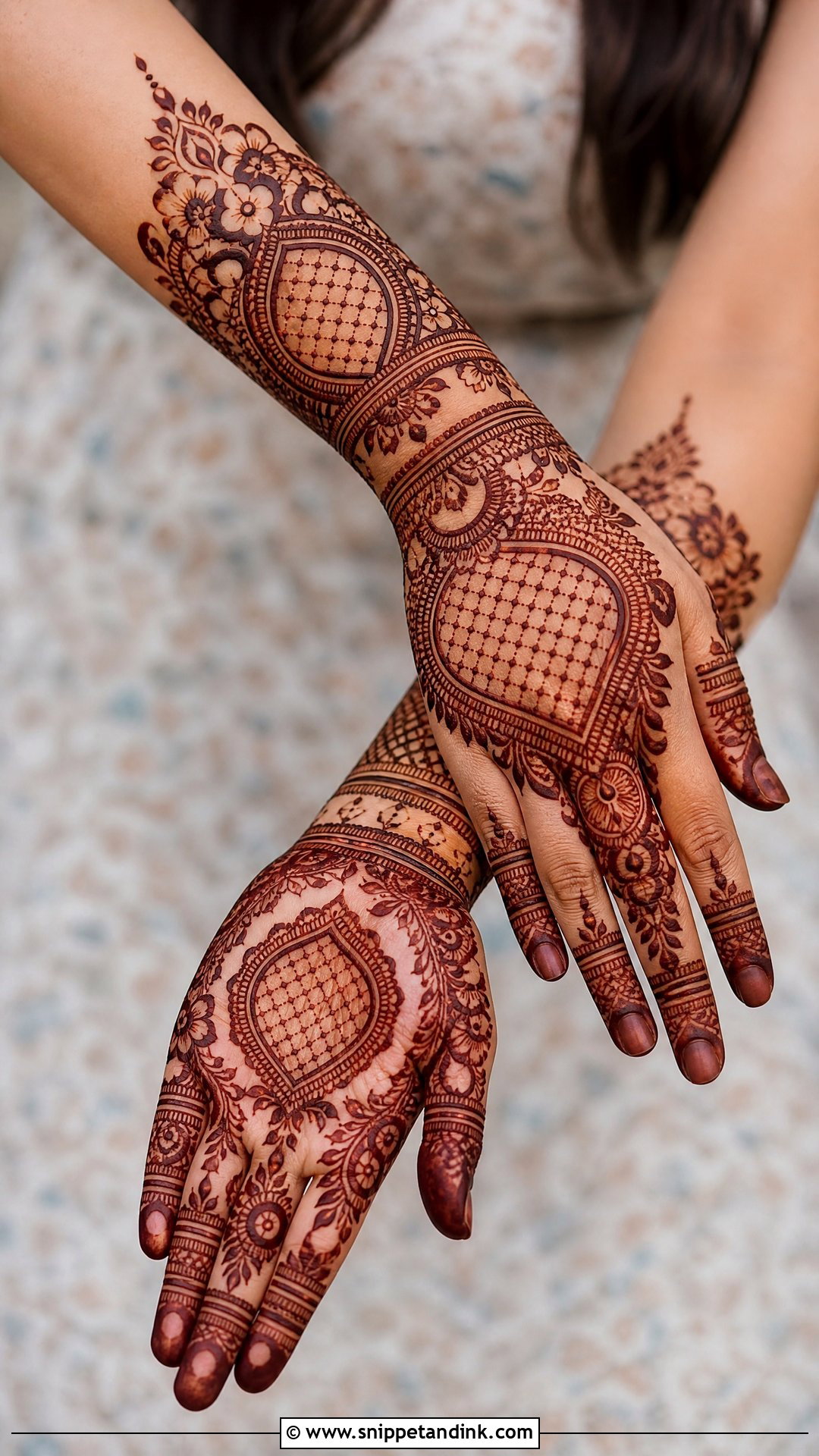
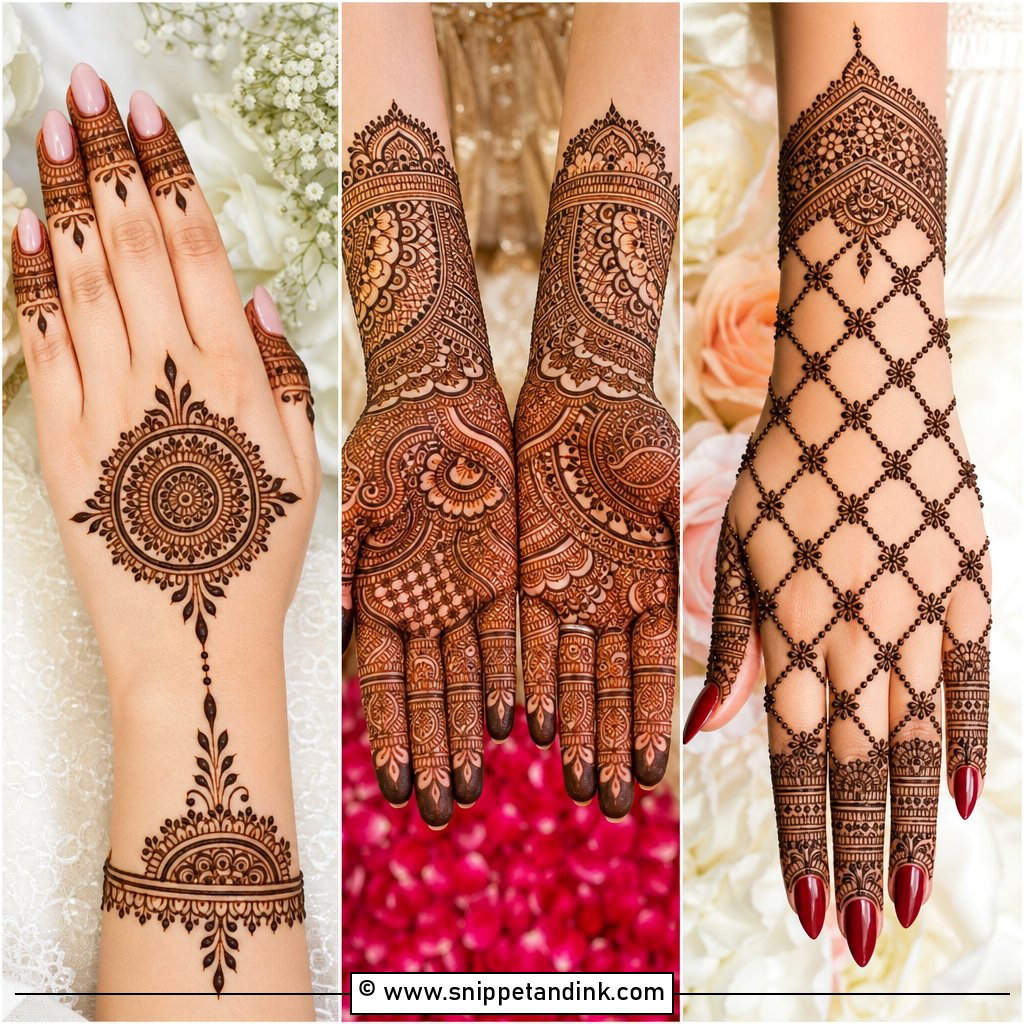
Jaali is a mesh pattern, detailed but orderly. For a best friend’s wedding I place it on the back of the hand, the wrist cuff or one side of the palm, then balance it with florals and paisleys so it doesn’t look like a plain grid. Close-ups pick up its texture and symmetry. The craft point is spacing: piped too tightly, the gaps fill in as the stain spreads and the whole area reads as a smudge, so I leave the gaps a little wider than looks right on fresh paste. Pairing it with negative space gives a more modern finish next to silk outfits and embroidered sleeves.
10. Peacock Mehndi Design For Wedding Function
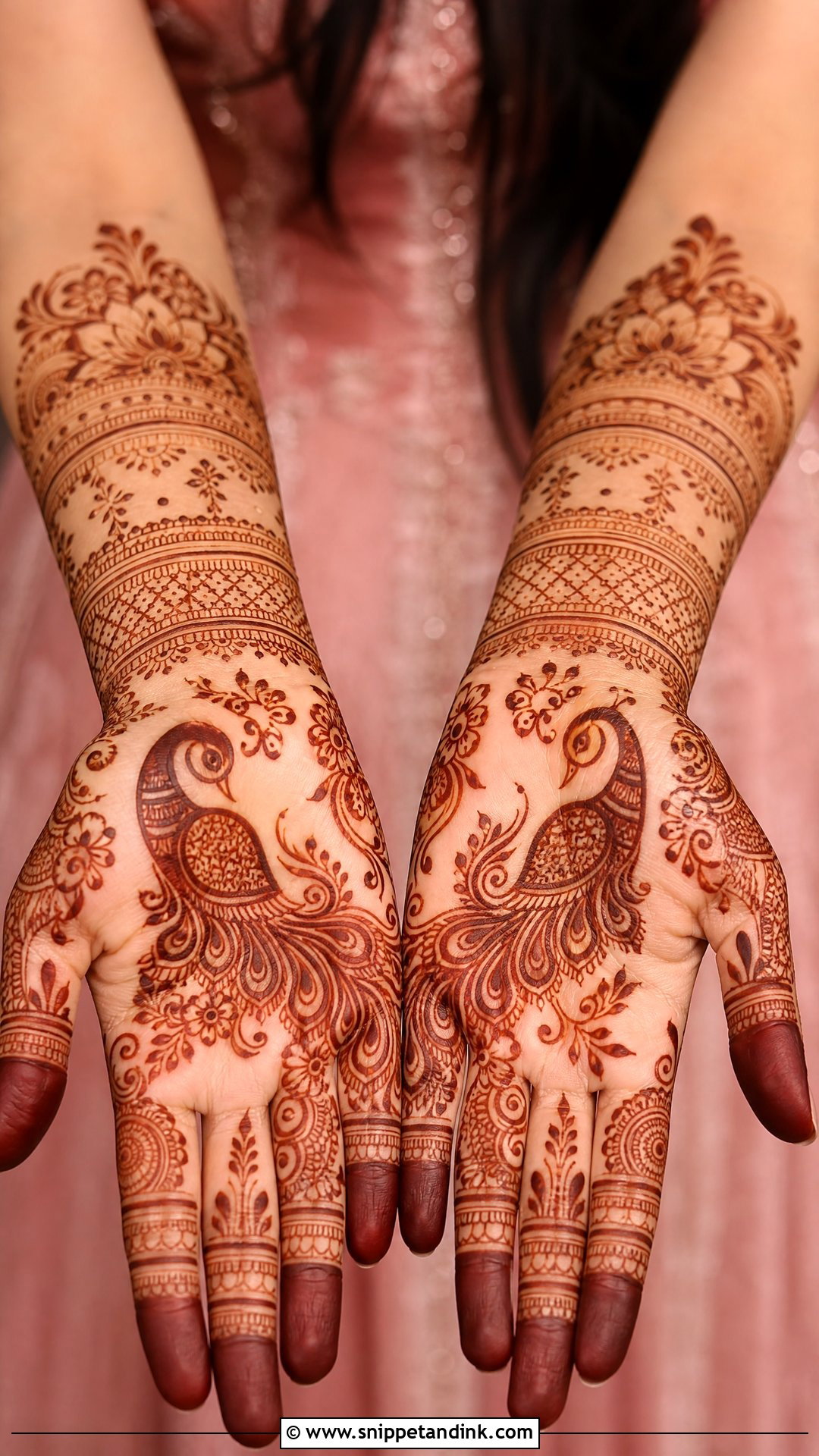
Peacocks belong to Indian wedding functions and carry a celebratory meaning. The bird can sit on the palm, the back of the hand or the wrist-to-forearm area, surrounded by paisleys, florals and curved vines. On a bridesmaid I keep it medium-sized, since a large peacock with a full fan of feathers is a bridal statement. Open space around the motif lets it read clearly from a distance. Fine feather detailing adds intricacy, but I limit it to the tail so the design never turns heavy. Colorful outfits set it off well.
11. Half Hand Mehndi Design
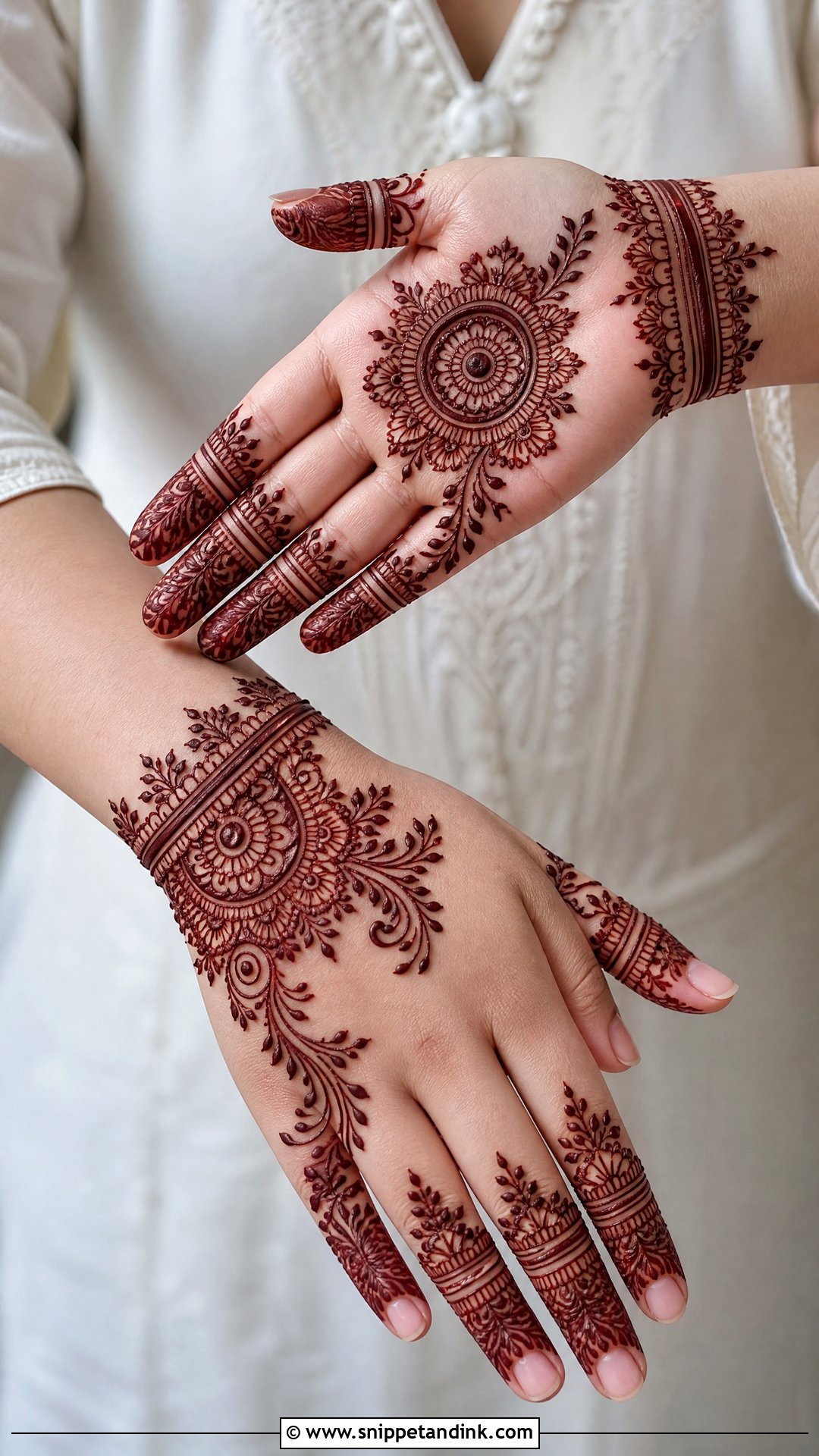
A half hand mehndi design gives noticeable henna without full coverage. It covers the palm or back of the hand and stops before the forearm, which is practical when you have many events in one week. A mandala center, a floral side pattern, an Arabic diagonal or Indo-Arabic paisleys all work. The wrist ending is what I fuss over most, because a design that simply stops looks unfinished; a small cuff, dotted border or leafy band closes it. It’s also my answer to last-minute requests at a busy mehndi.
12. Modern Negative Space Mehndi Design
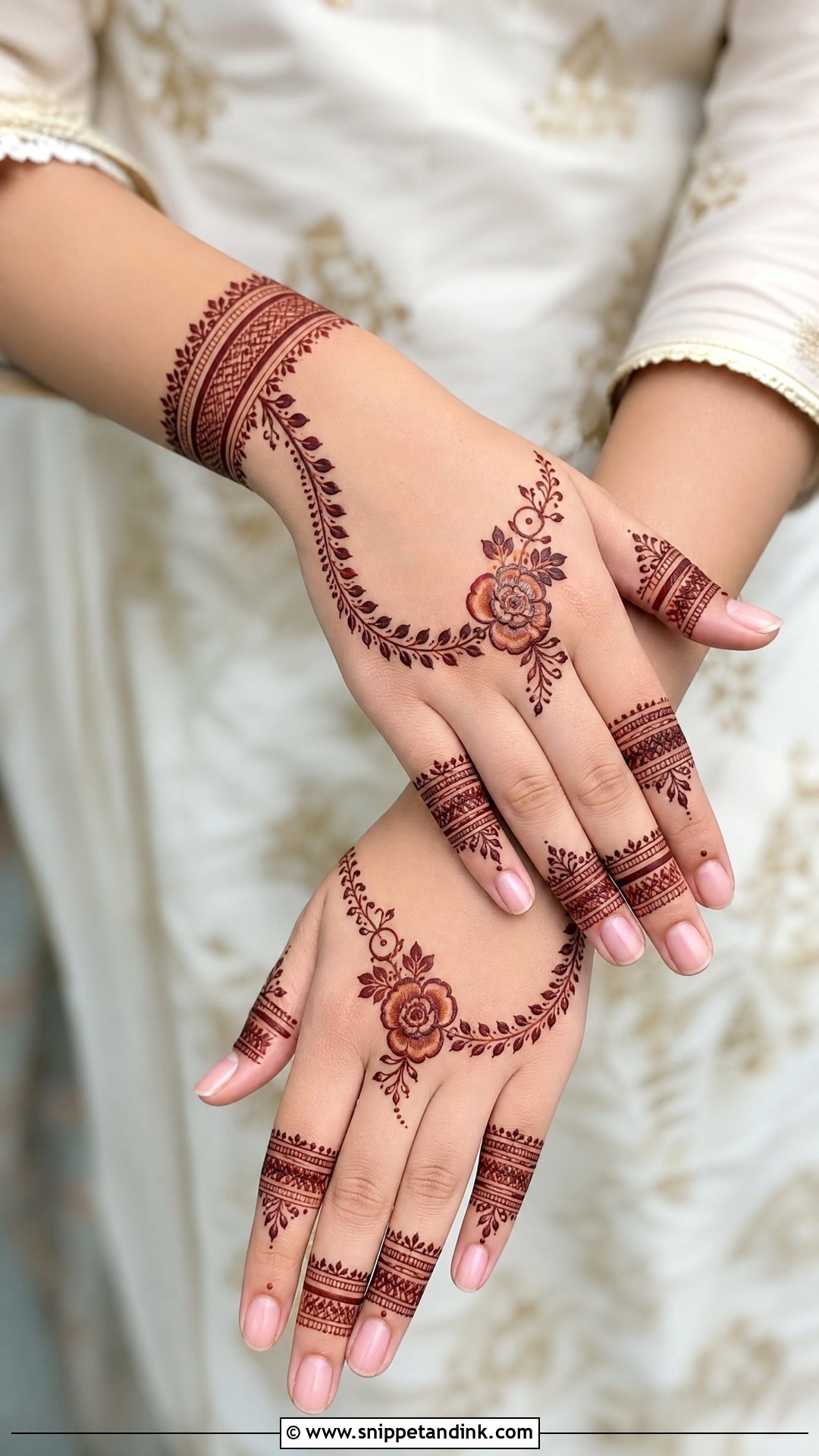
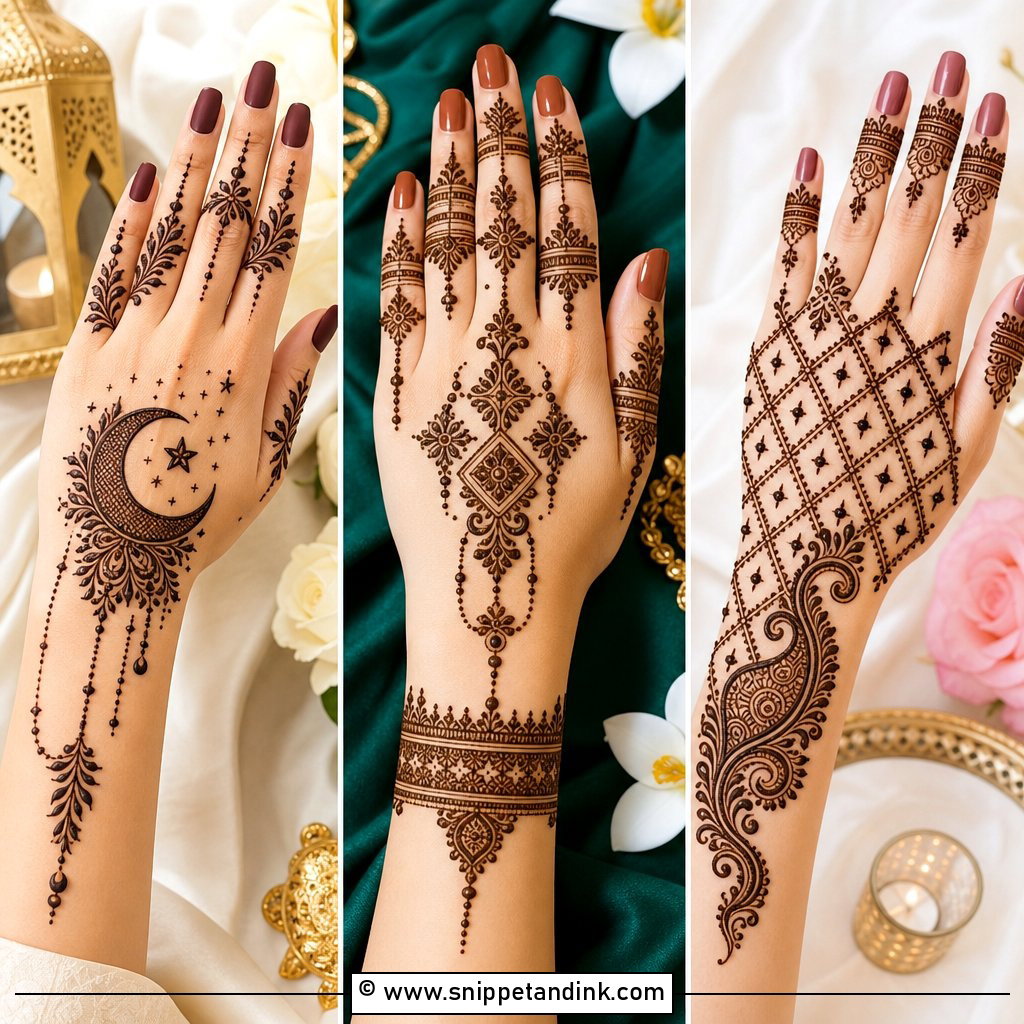
Negative space work leaves clear skin between bold motifs: separated flowers, curved leafy vines, geometric bands and neat finger patterns. Each motif stands on its own, which shows off a deep maroon stain. It suits lighter outfits, fusion wear and bridesmaid dresses, and it’s the most current of the festive options here. I ask clients to trust fewer fillers. Tiny dots and hairlines are the first details to blur over days of handwashing, so strong outlines are what keep this design crisp until the wedding is over.
13. Personalized Best Friend Mehndi Design
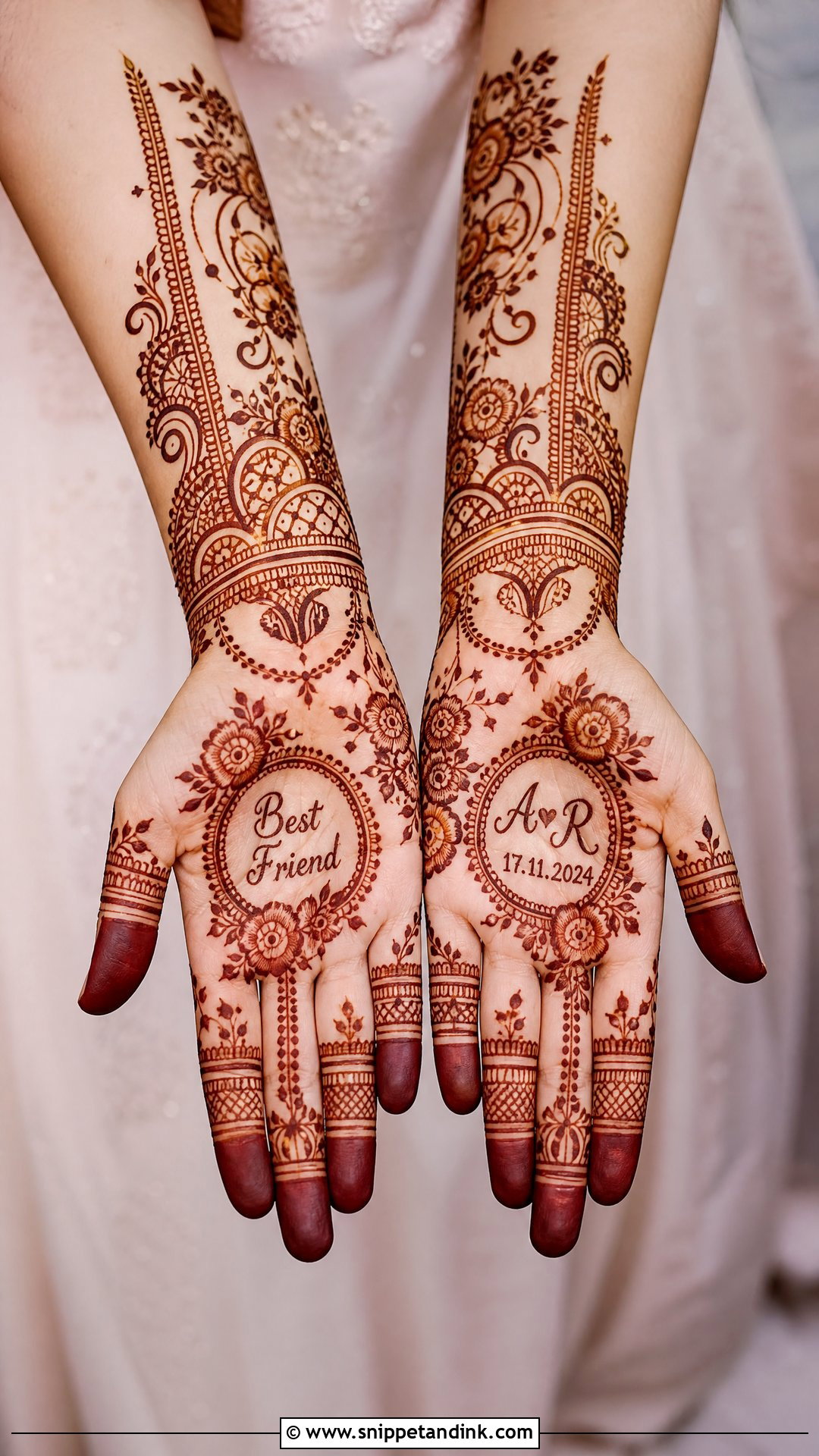
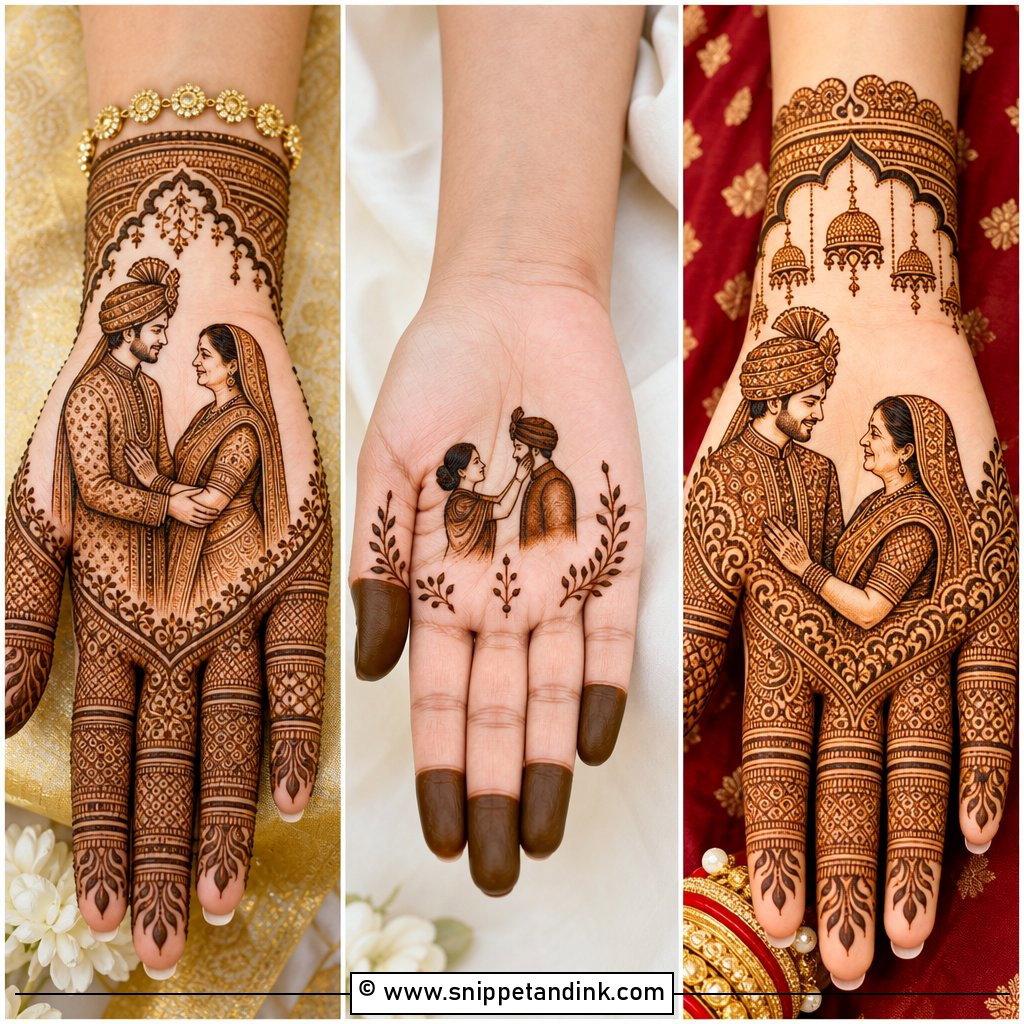
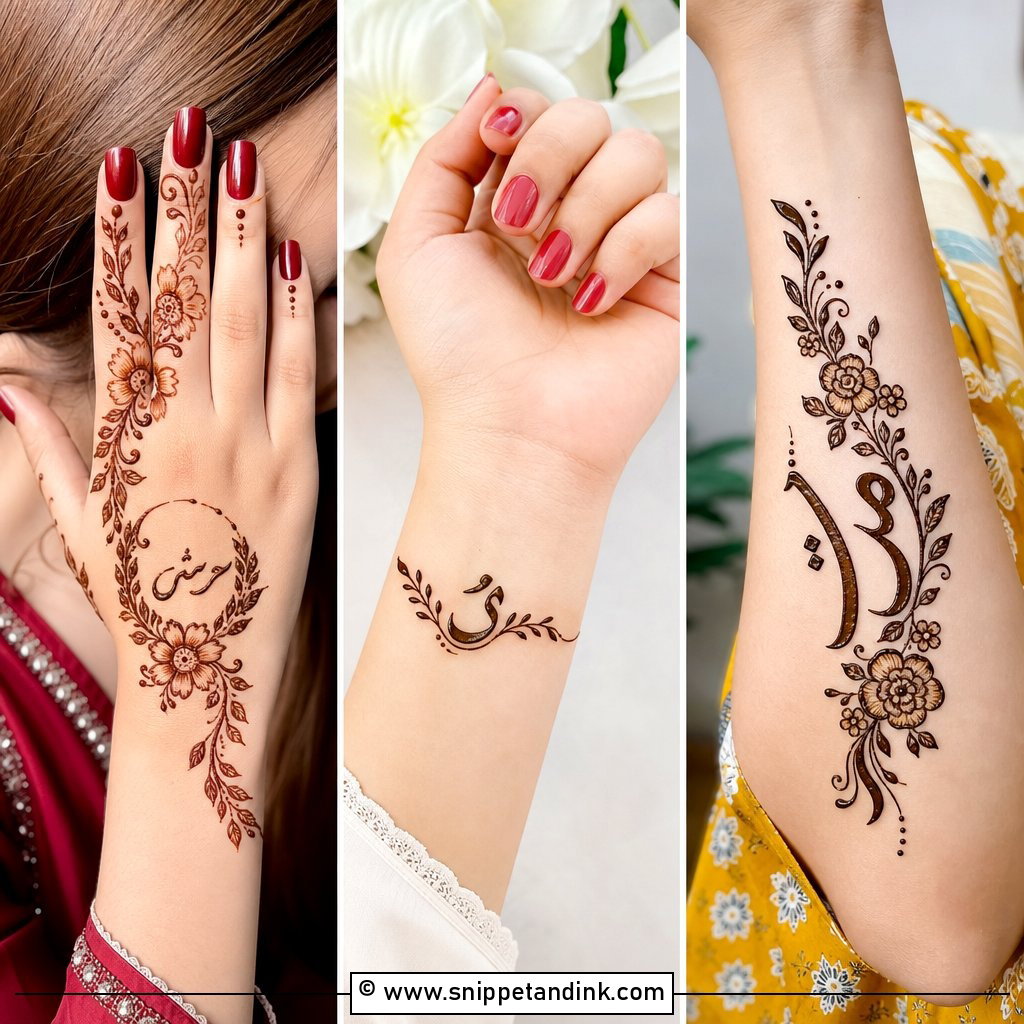
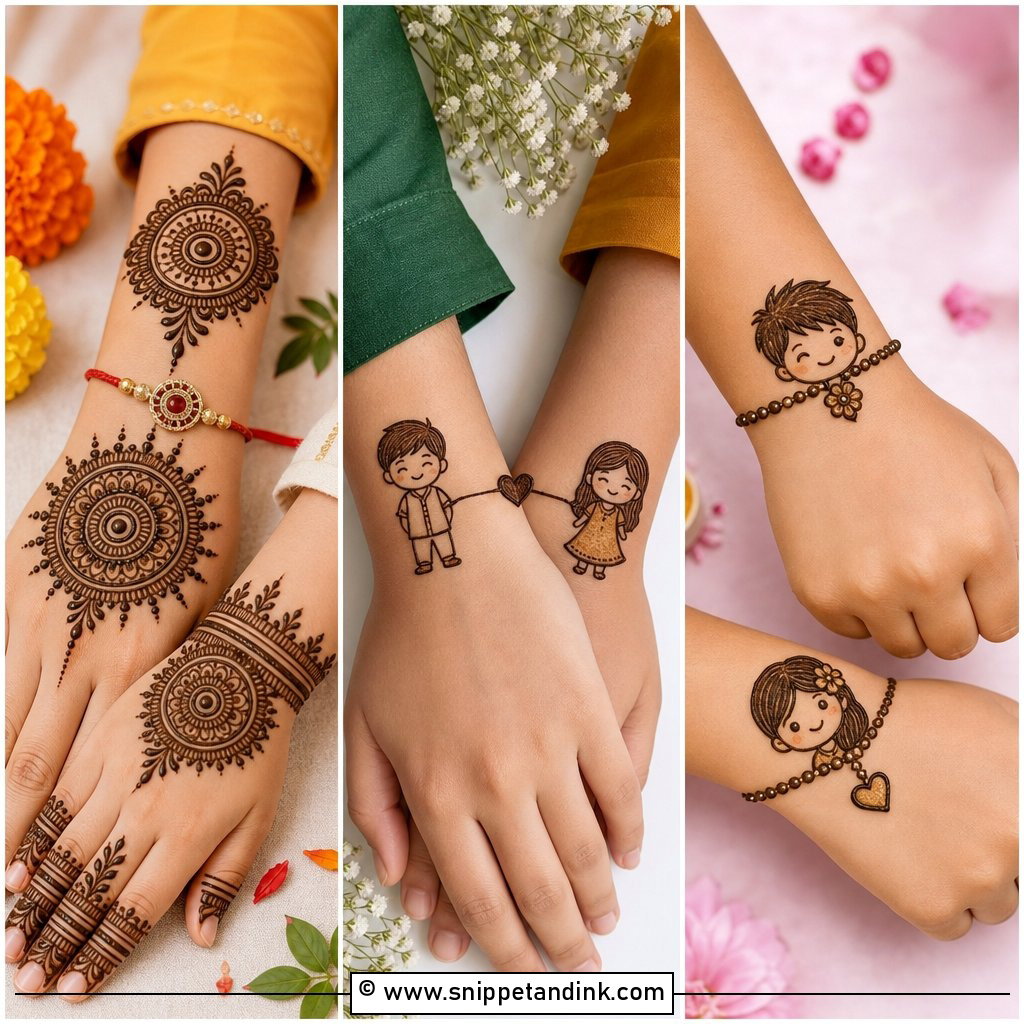
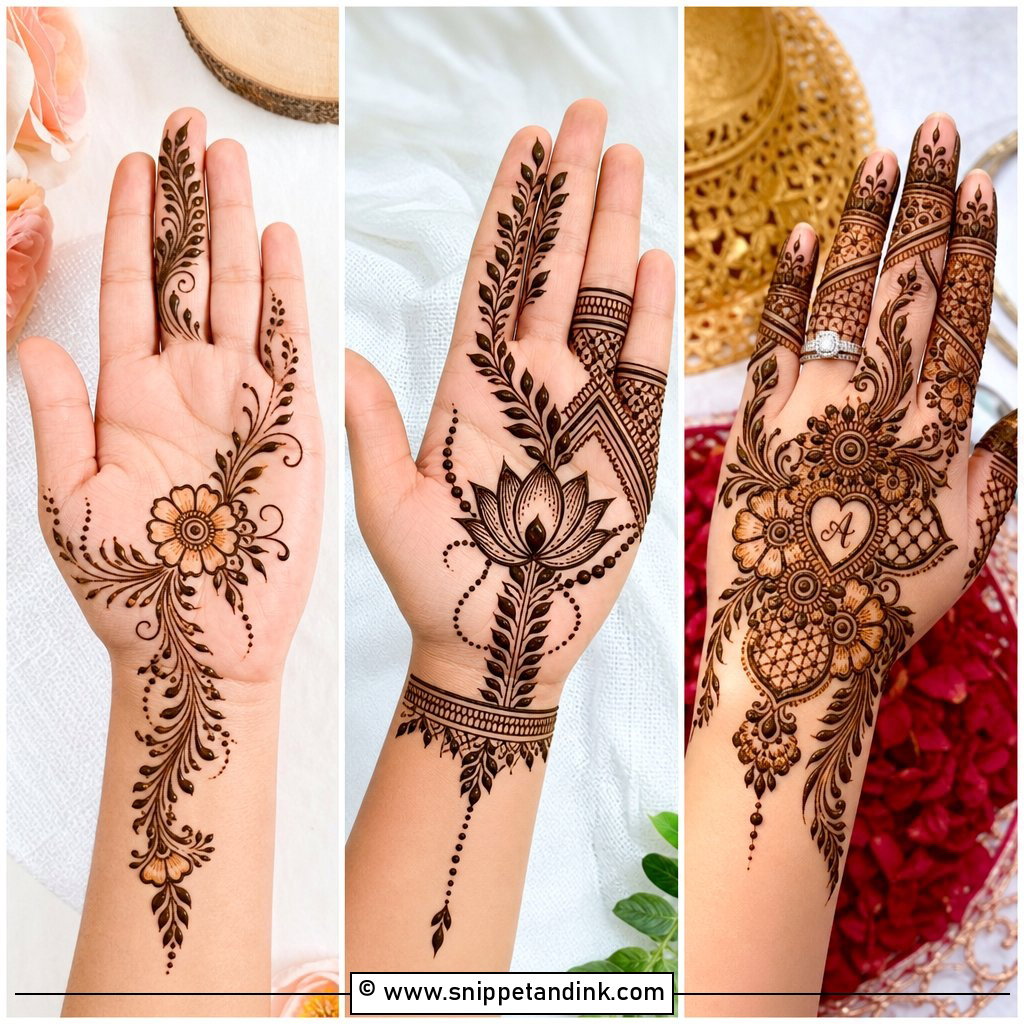
Hiding something personal in the design is my favorite request from a bride’s best friend. It might be her initials, a tiny wedding date, a small doli, a shared symbol or a fun bridesmaid detail. I tuck it near the wrist, inside a mandala or within a floral frame, and keep it subtle so the hand still reads as one design. Letters and numbers need more size than people expect; anything much smaller than a fingernail can blur into a blot once the stain sets. Paisleys, vines, finger patterns and soft borders around it complete the look.
14. Matching Bridesmaid Mehndi Design
Matching mehndi makes the bride squad look coordinated in group photos. Everyone wears the same base layout, perhaps a back-hand mandala, Arabic trail or bracelet pattern, and each friend gets small changes in the fingers or wrist. I always choose a layout that adapts to different hand sizes and nail lengths, because the mandala that fills a small hand can look stranded on a large one. Avoid very complex designs when many people are booked together; a simple shared layout keeps the queue moving. It shows up nicely in dance poses and the bridal entry.
15. Rajasthani Mehndi Design For Wedding
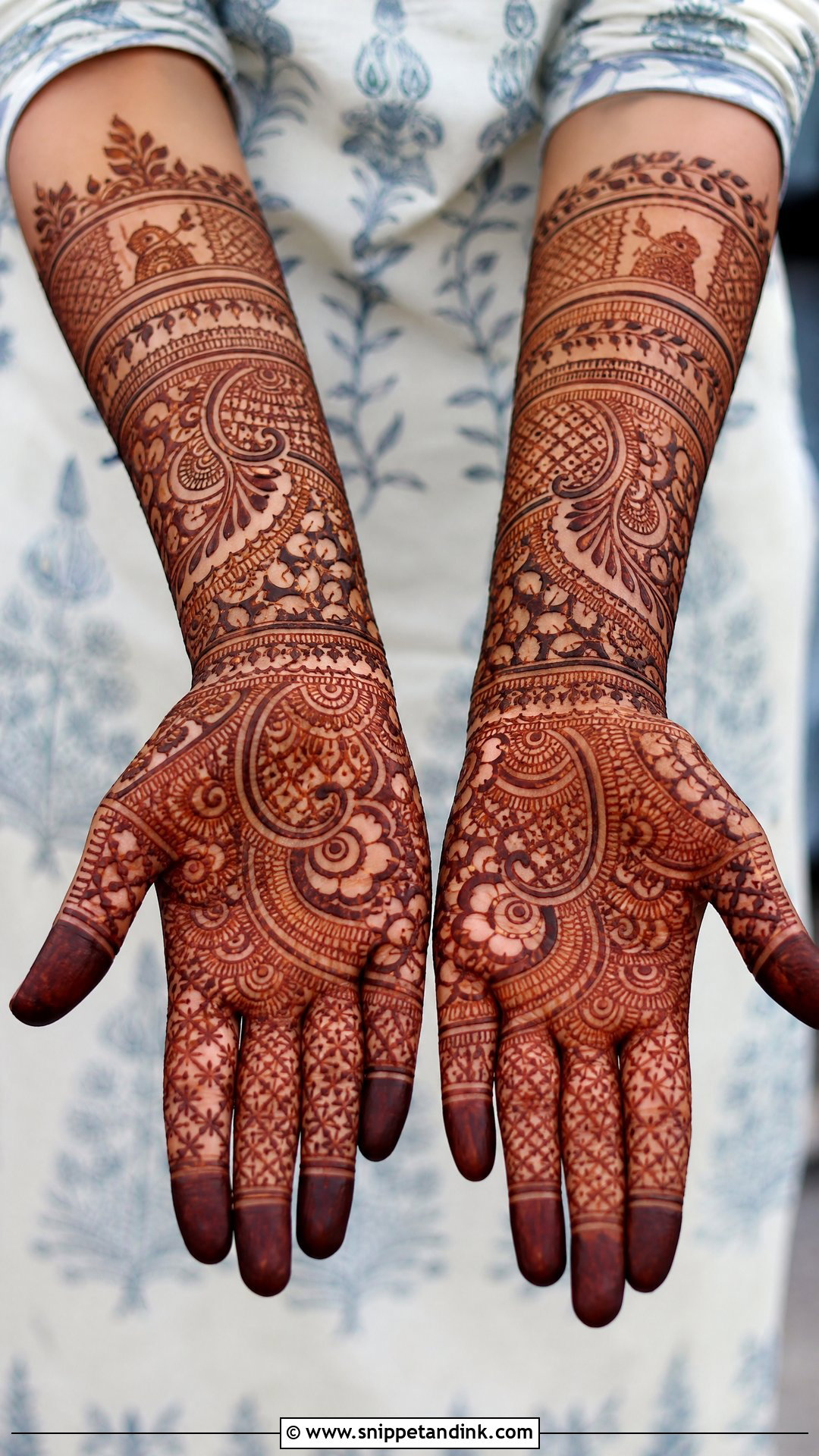
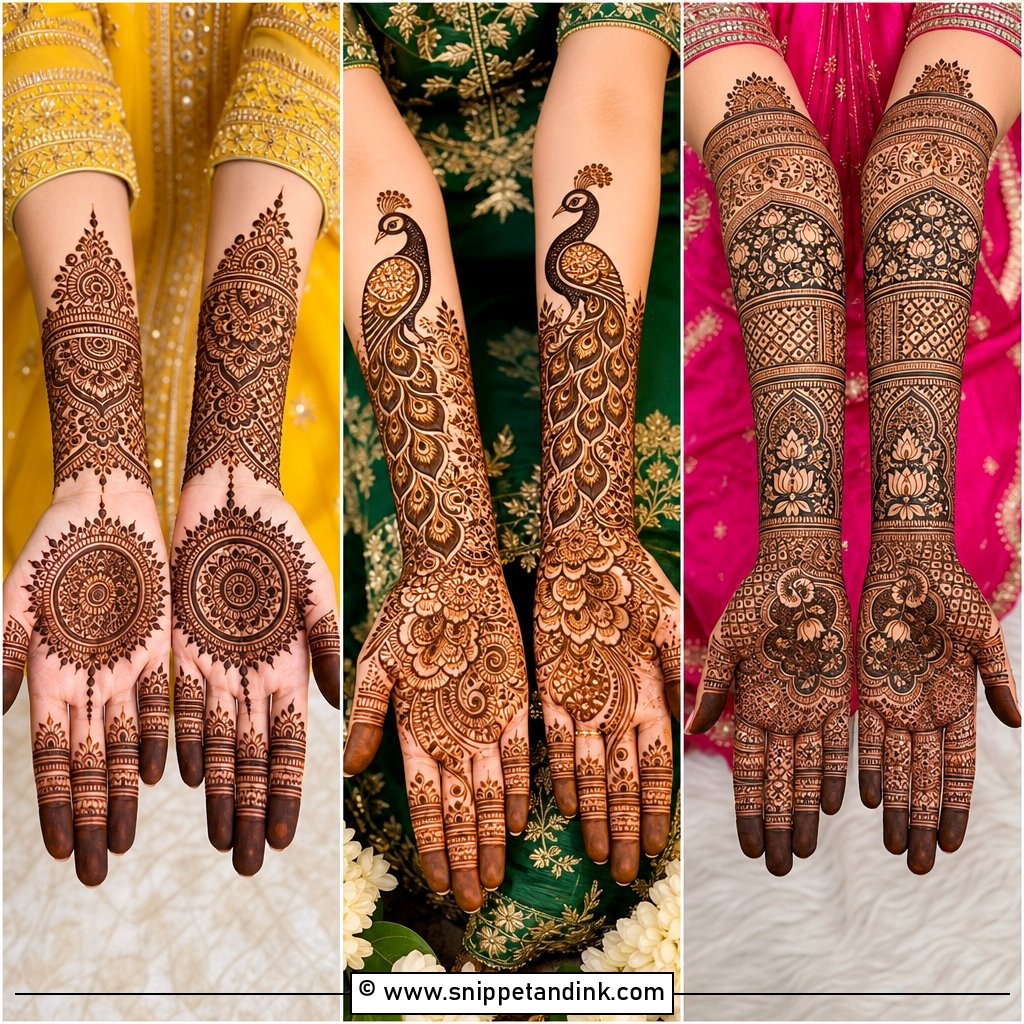
Rajasthani mehndi is dense and traditional, so for a friend’s wedding I draw a lighter version: paisleys, flowers, small checks, leafy borders and folk details. A full palm or half-hand layout gives cultural richness without bridal coverage. The look depends on fine lines and carefully filled spaces, so I use a fine-tipped cone and take my time. It sits naturally with bandhani, gota patti, mirror work and bright colors. To keep it from turning busy, I leave one or two larger motifs visible, and I sometimes extend it just past the wrist for a finished edge.
16. Moroccan Mehndi Design For Wedding
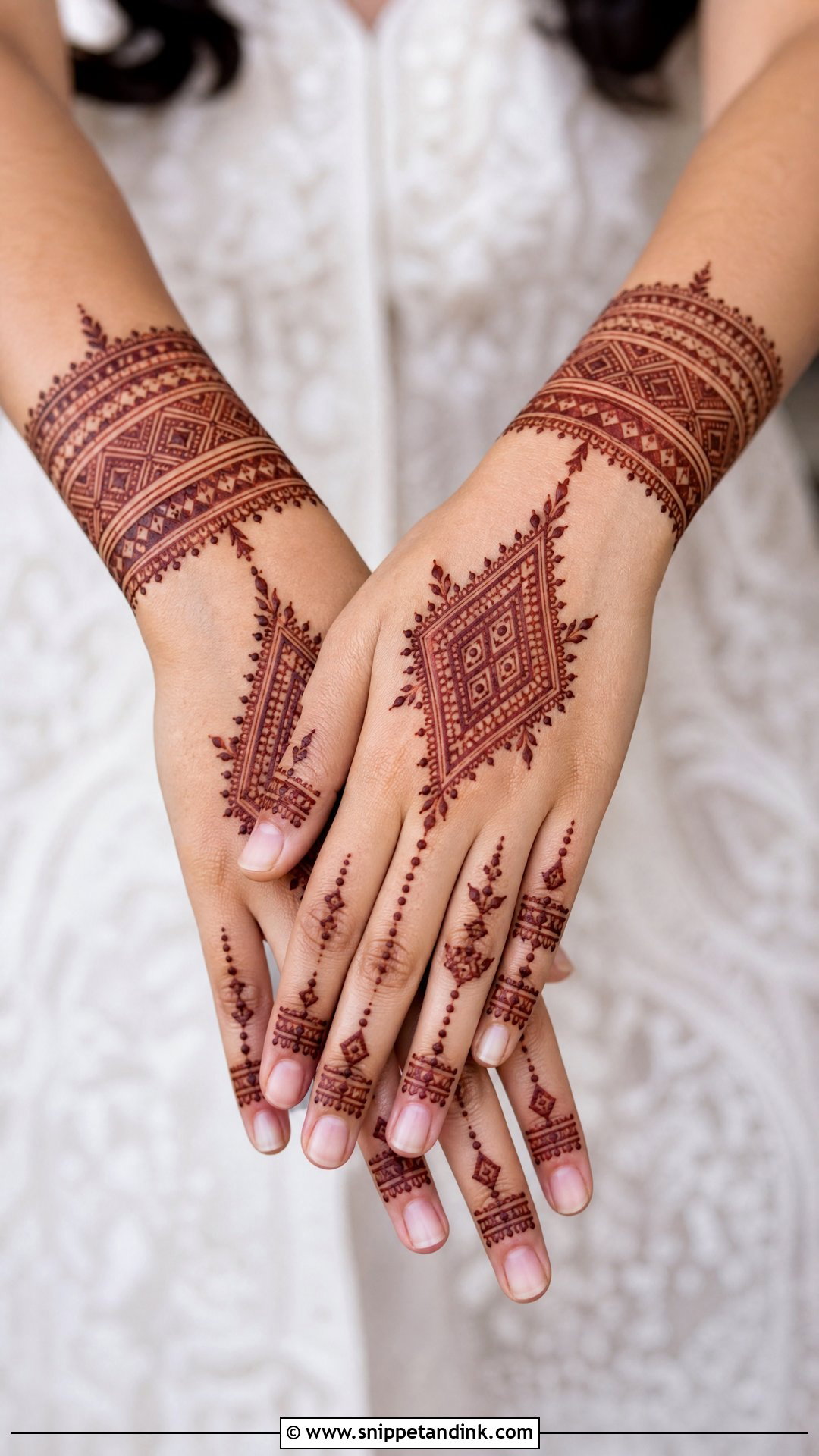
Moroccan work trades florals for geometry: diamonds, lines, grids, triangles and structured bands. I put it on the back of the hand with decorated fingers and a wrist cuff. Anyone who likes symmetry and sharper shapes tends to love it, and it looks modern while staying festive. A few dots or tiny leaves soften it, but the layout should stay geometric. Straight lines are the hardest thing to pipe cleanly, so ask to see your artist’s geometric work before you commit. Solid-colored outfits and minimal jewelry let it stand out.
17. Gulf Mehndi Design For Wedding Party
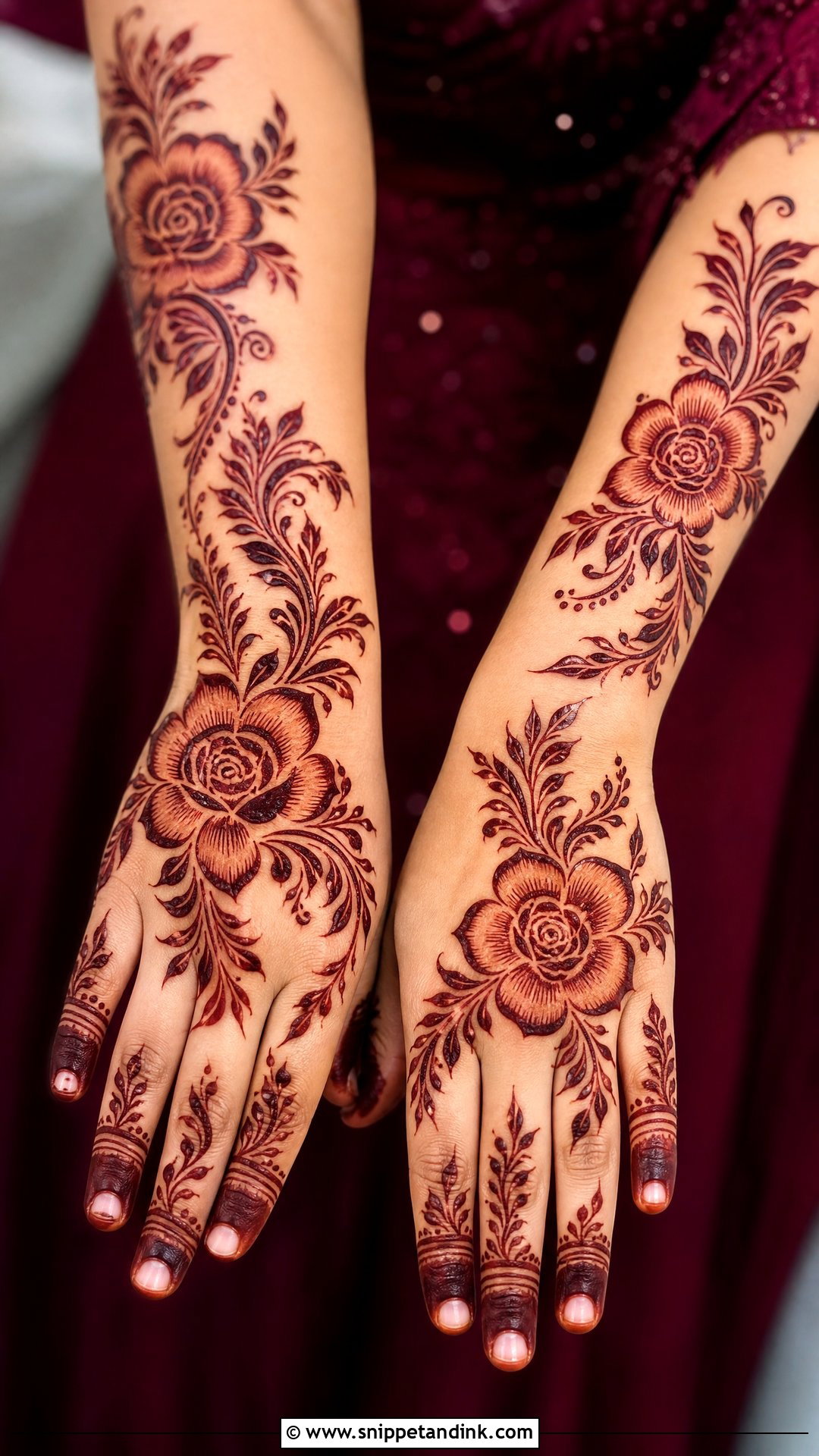
Gulf-style designs, often called Khaleeji-inspired henna, use bold florals, flowing leaves and open layouts. They look rich without covering the whole hand, which suits a wedding party. The design curves from wrist to fingers with space around each motif: large flowers, shaded petals, leafy sprays. Shading comes from piping a thinner, lighter layer inside part of each petal so it stains paler than the outline, and that contrast is what makes these flowers visible from across a room. Bangles, rings or sleeve details sit beside it without crowding.
18. Wrist To Forearm Mehndi Design
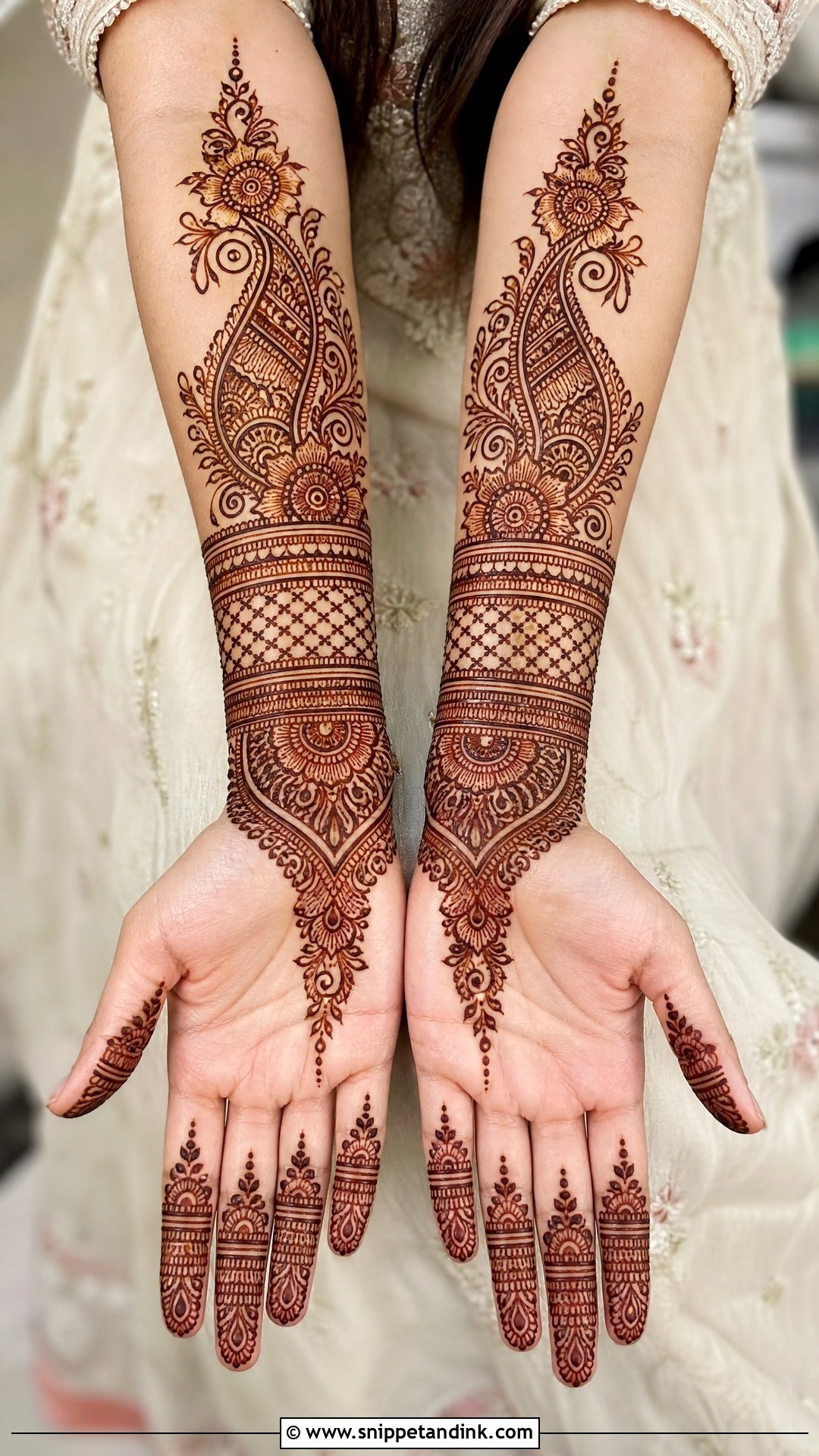
Wrist-to-forearm work dresses the arm and keeps the palm light. Bridesmaids in short sleeves, sleeveless blouses or sheer cuffs get the most from it. A bracelet band at the wrist extends upward with flowers, paisleys, vines or geometric strips, while the fingers stay simple, and it shows in side poses and dance photos. Two honest notes from the cone: forearm skin stains lighter than palms, so expect a softer brown rather than maroon, and the design has to taper as it climbs, or it ends abruptly halfway up the arm.
19. Palm Mehndi Design For Wedding Guest
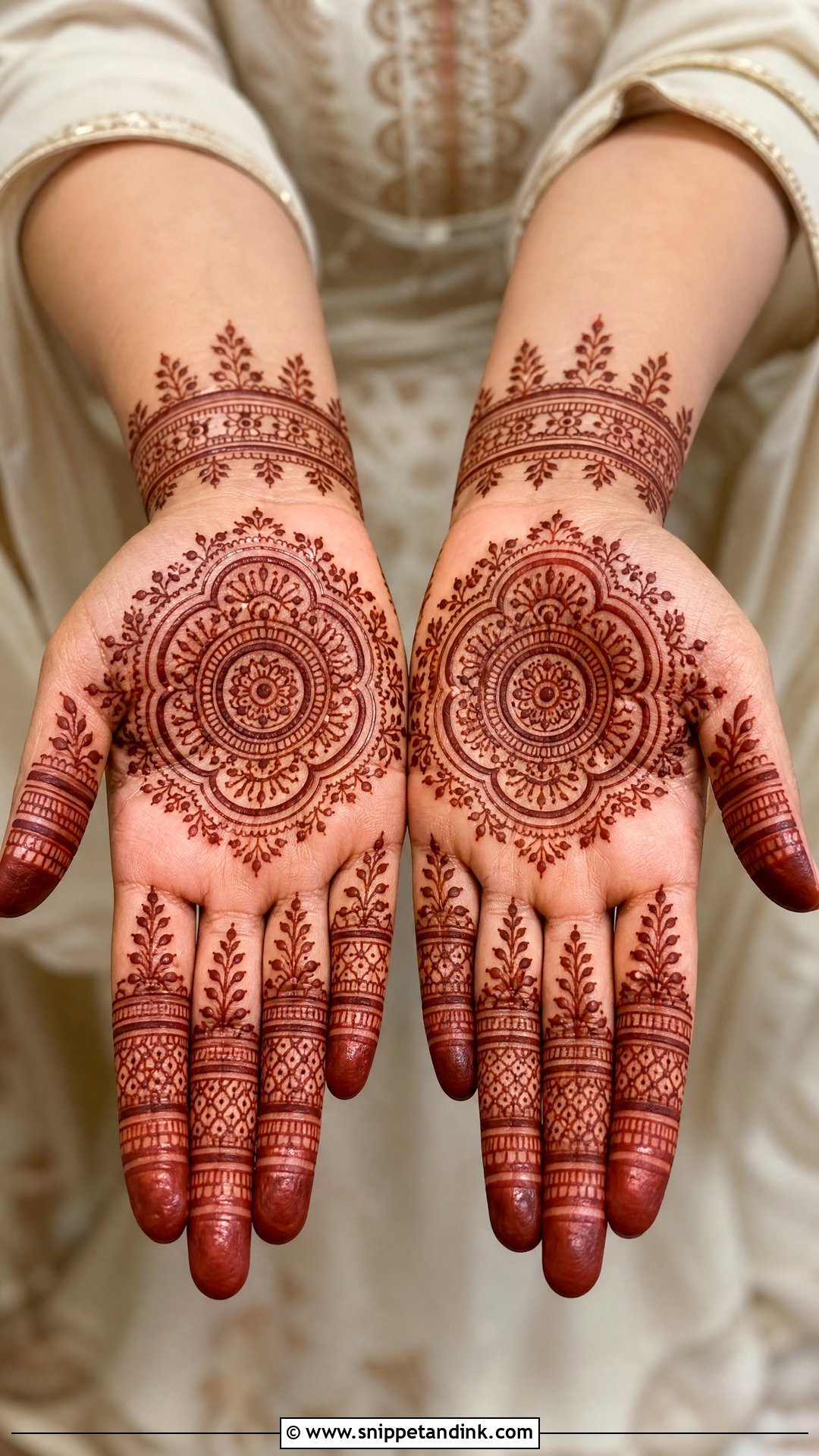
A palm mehndi design is the classic, and it shows during rituals when hands are held open. I build it around a mandala, paisley circle, floral frame or symmetrical Indian layout, decorate the fingers with bands, leaves and small dots, and add a simple wrist border to connect it all. It suits a guest who loves traditional mehndi but doesn’t want forearm coverage. Palms take the richest stain on the body, so a clean central motif ends up deep and clear. The catch is that you can’t use your palms while the paste is on.

20. Elegant Foot Mehndi Design For Wedding
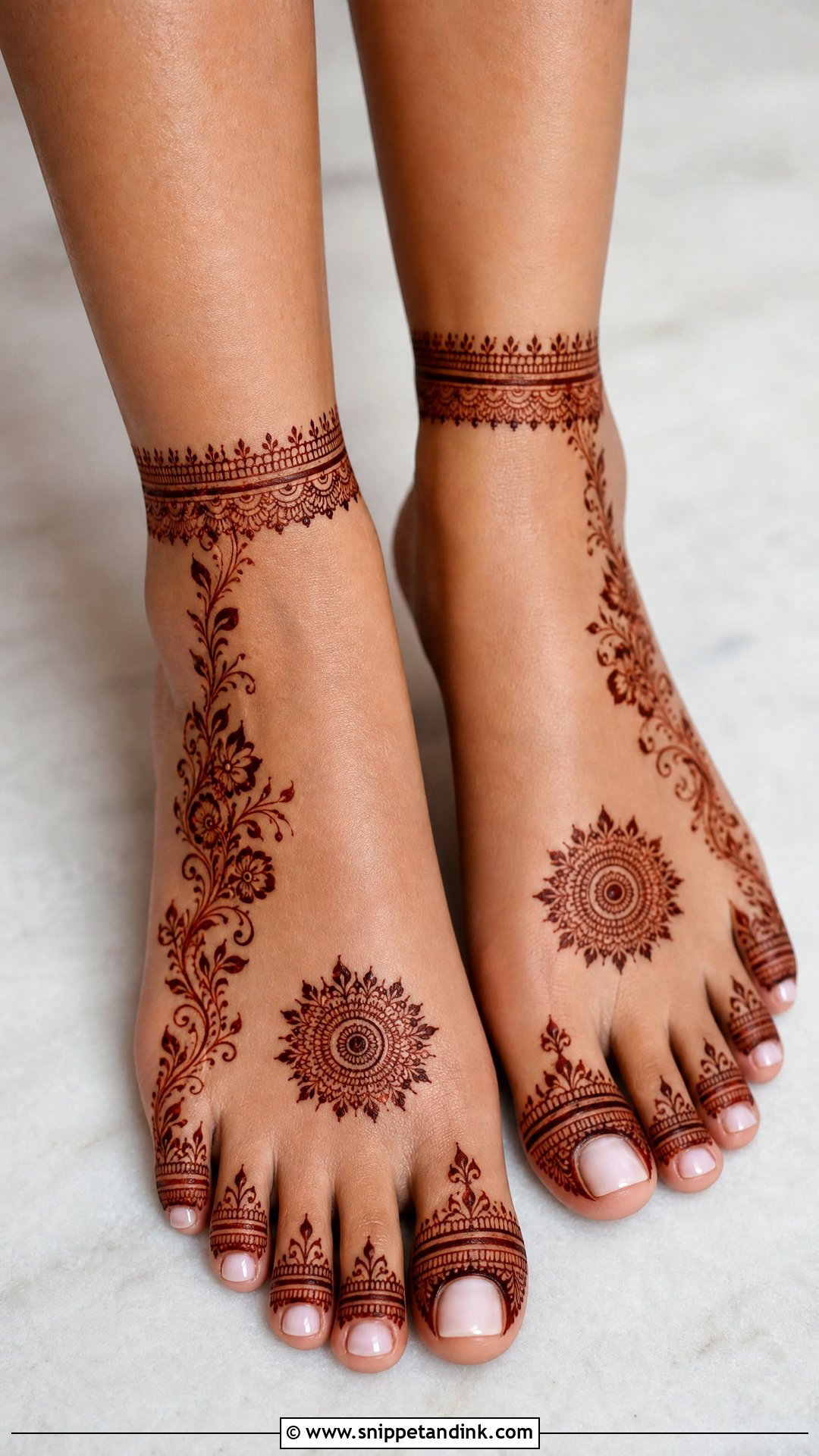
Foot mehndi is worth adding if sandals, anklets or your lehenga will show your feet. On a friend rather than the bride, I keep it graceful: a side floral trail, toe detailing, an anklet-style band or a small mandala on top of the foot. It can echo your hand design without copying it, and open spacing keeps it neat. Feet often stain darker than people expect, but paste is hard to protect once you’re walking, so I do feet at the end of the session and ask you to stay seated a while after. Mehndi night, sangeet and wedding-morning photos all show it off.
Scrape the Paste Off, Never Wash It
Most pale stains I see weren’t caused by bad henna. They came from rinsing the paste off early or getting the hands wet straight away. Aftercare is simple, and it changes the final color more than the design does.
- Dab a little lemon juice and sugar over the dry paste. It keeps the paste stuck to the skin and slightly moist, which helps the dye move in.
- Keep your hands warm. Henna stains better on warm skin, which is partly why cooler areas like the forearm come out lighter.
- When it’s time, scrape the dry paste off with a blunt edge or your fingernail instead of washing it.
- Keep water away for as long as you can after removal, ideally until the next morning, and smooth on a little balm or coconut oil before you do wash.
- Skip scrubs, long hot baths and swimming pools until after the wedding, since exfoliation and chlorine fade a stain fastest.
Say no to black henna
If anyone offers you a jet black design that stains within an hour, decline it. Natural henna never stains black. Instant black pastes often contain PPD, a hair-dye chemical that can cause serious skin reactions and lasting marks. Real henna paste smells earthy, often with a hint of essential oil, and always stains orange first. Ask your artist what goes into her cones; anyone mixing her own paste will happily tell you.
Coverage That Lets You Hug the Bride and Still Dance
Mehndi for your best friend’s wedding comes down to balance. You want something festive and personal that’s still comfortable across days of events. Full hands, Arabic trails, mandalas, bracelet cuffs, jaali and minimal finger work each set a different mood. Before your appointment, think about your outfit, your jewelry, which events you’re attending and how much you’ll need your hands. If you’re part of the bride squad, matching or personalized mehndi adds something sweet. Whatever you pick, book it early enough that the stain is at its darkest when she walks in.
You'll Like These Ideas:


Leave a Reply