
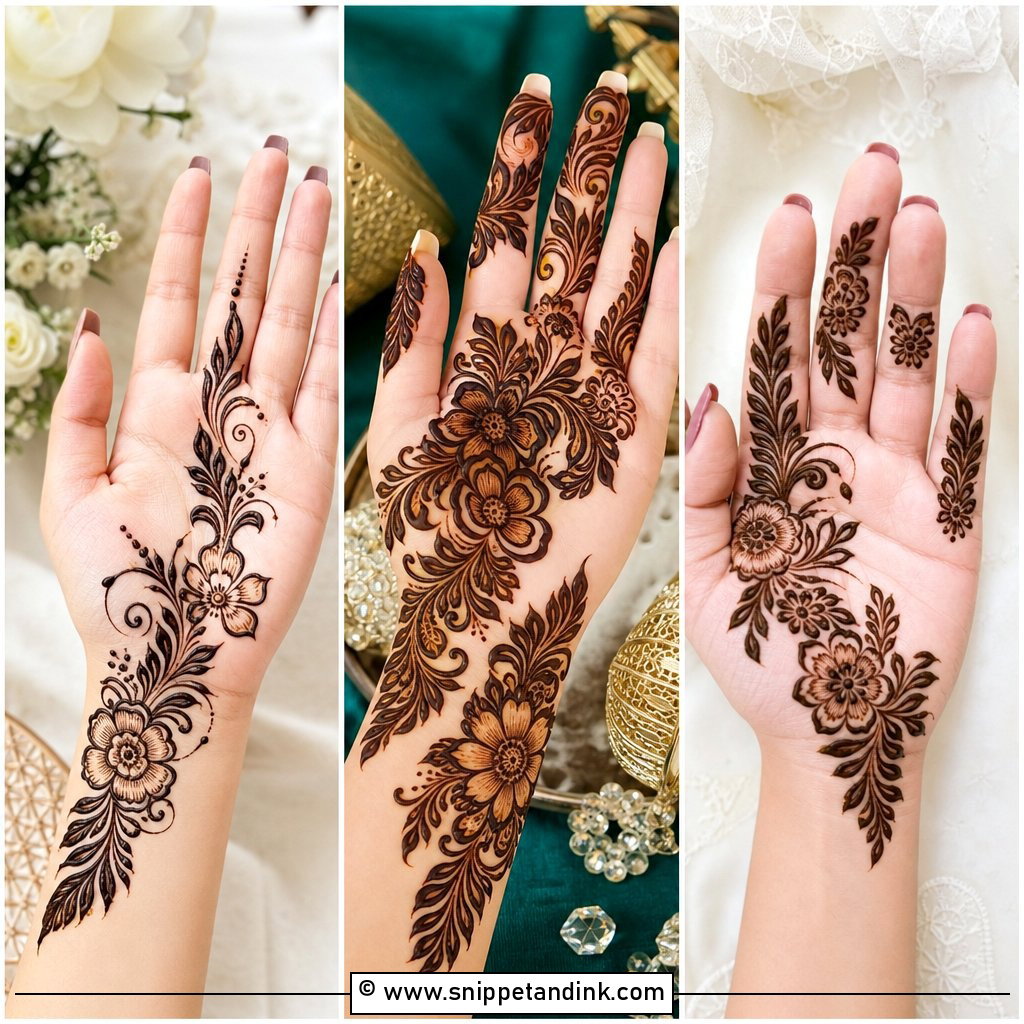
Arabic henna is the style I reach for whenever someone wants decorated hands without a long sitting. It’s built from bold floral trails, leafy vines, shaded petals, bracelet bands and neat finger work, arranged on a diagonal with plenty of skin left between. That structure makes it quick to apply, forgiving for beginners and easy to scale from a single vine to a fuller wedding hand. The designs below cover back hands, palms, fingers and wrists, and for each one I’ve added what I watch for when I’m drawing it.
Mixing a Practice Cone at Home
If you’re planning to try these designs yourself, the paste matters as much as your hand. Ready-made cones vary hugely, and some contain chemical dyes you don’t want on skin. Making your own is simple once you know what each ingredient does.
- Start with fresh, finely sifted body-art quality henna powder. It should smell green and grassy; dull, dusty powder gives a weak stain.
- Mix it with lemon juice or water into a thick mud, cover it and leave it at warm room temperature for several hours, often overnight, until the dye releases. The surface darkens slightly when it’s ready.
- Add a little sugar for a stringy, smooth texture that lets fine lines flow, and a few drops of a skin-safe essential oil traditionally used with henna, such as lavender, to help the colour.
- Loosen it gradually to a toothpaste consistency, then fill cones rolled from cellophane or mylar, sealing the backs with tape.
- Freeze any cones you won’t use within a day or two. Henna paste loses strength at room temperature.
Test a small patch on the inside of your arm before a full hand, especially if you’ve added oils. And snip the cone tip a tiny bit at a time; you can always make the opening bigger, never smaller.
1. Simple Arabic Mehndi Design For Back Hand
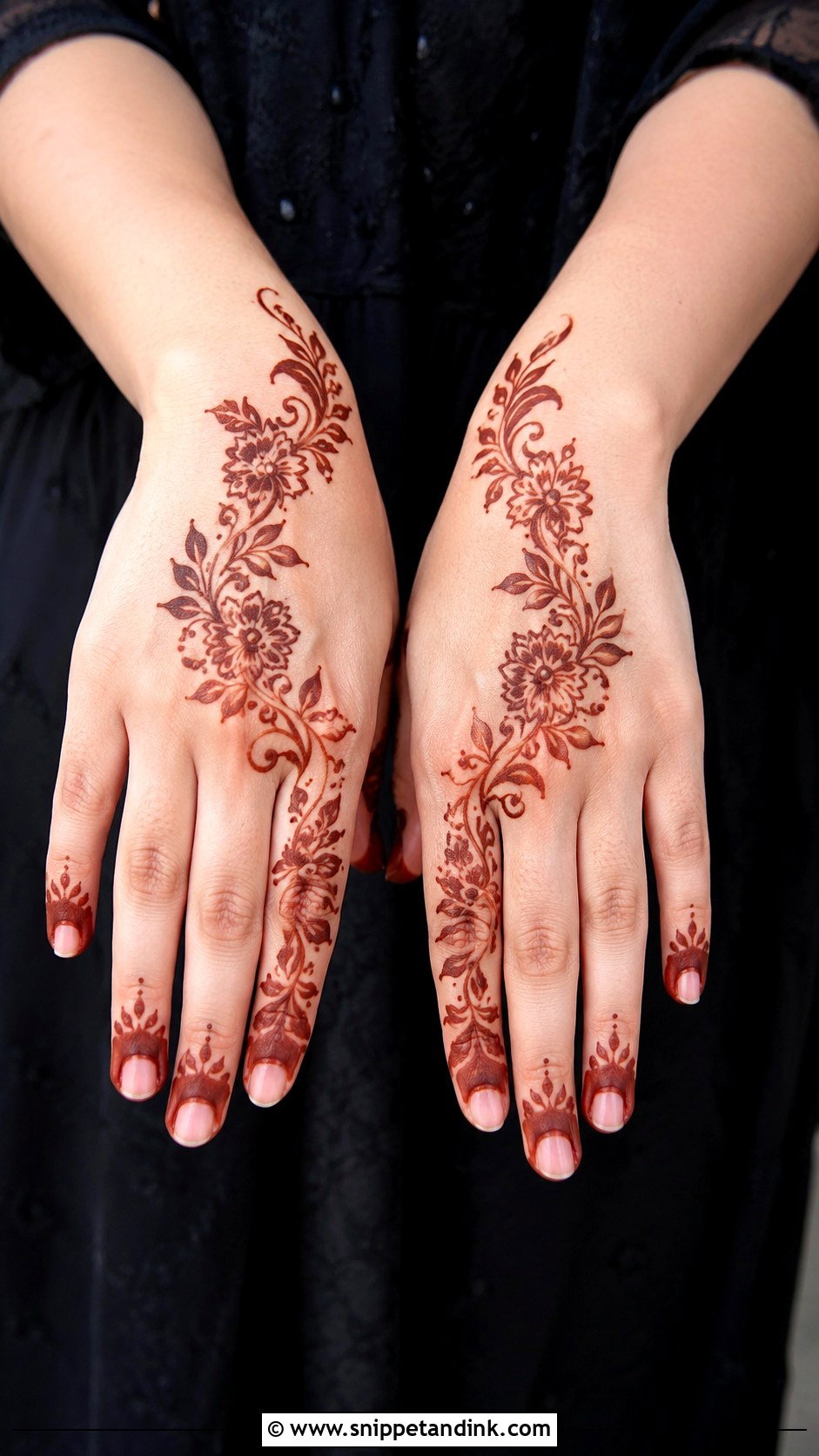
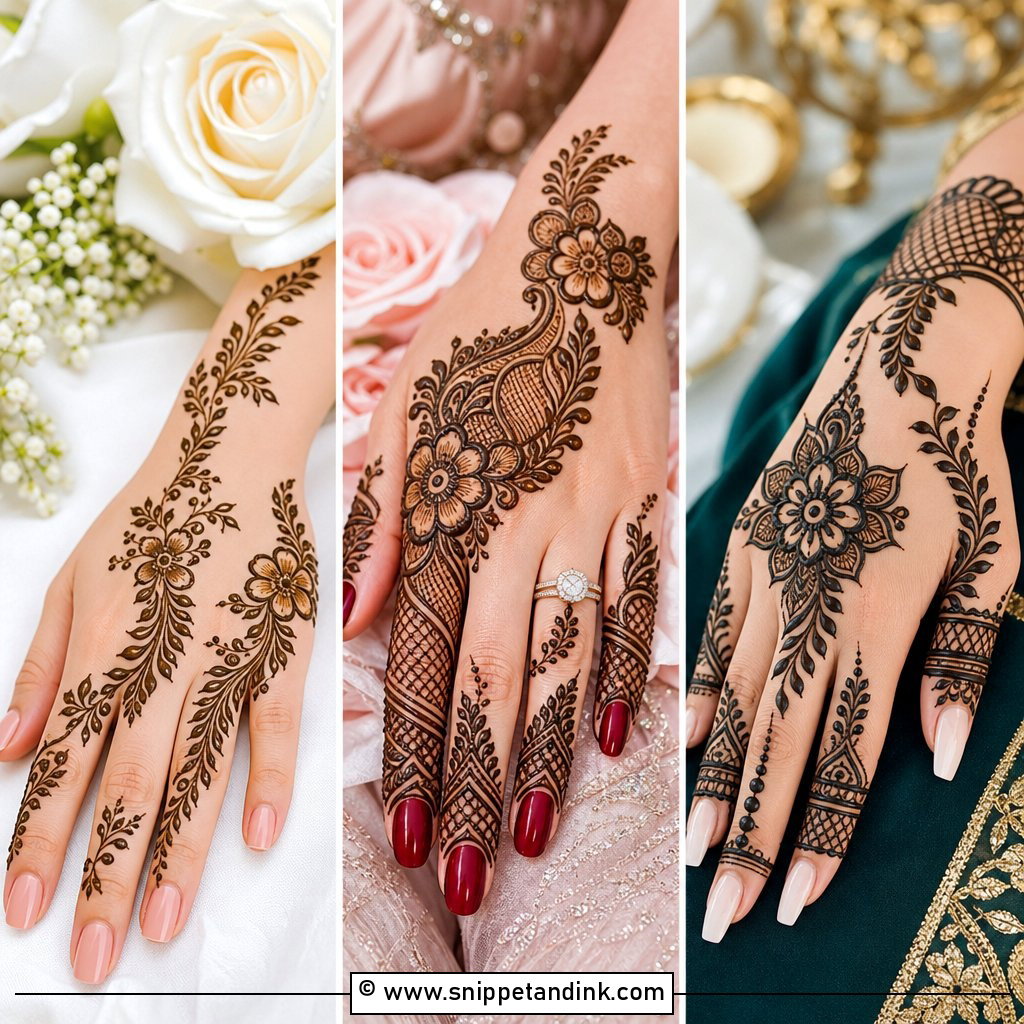
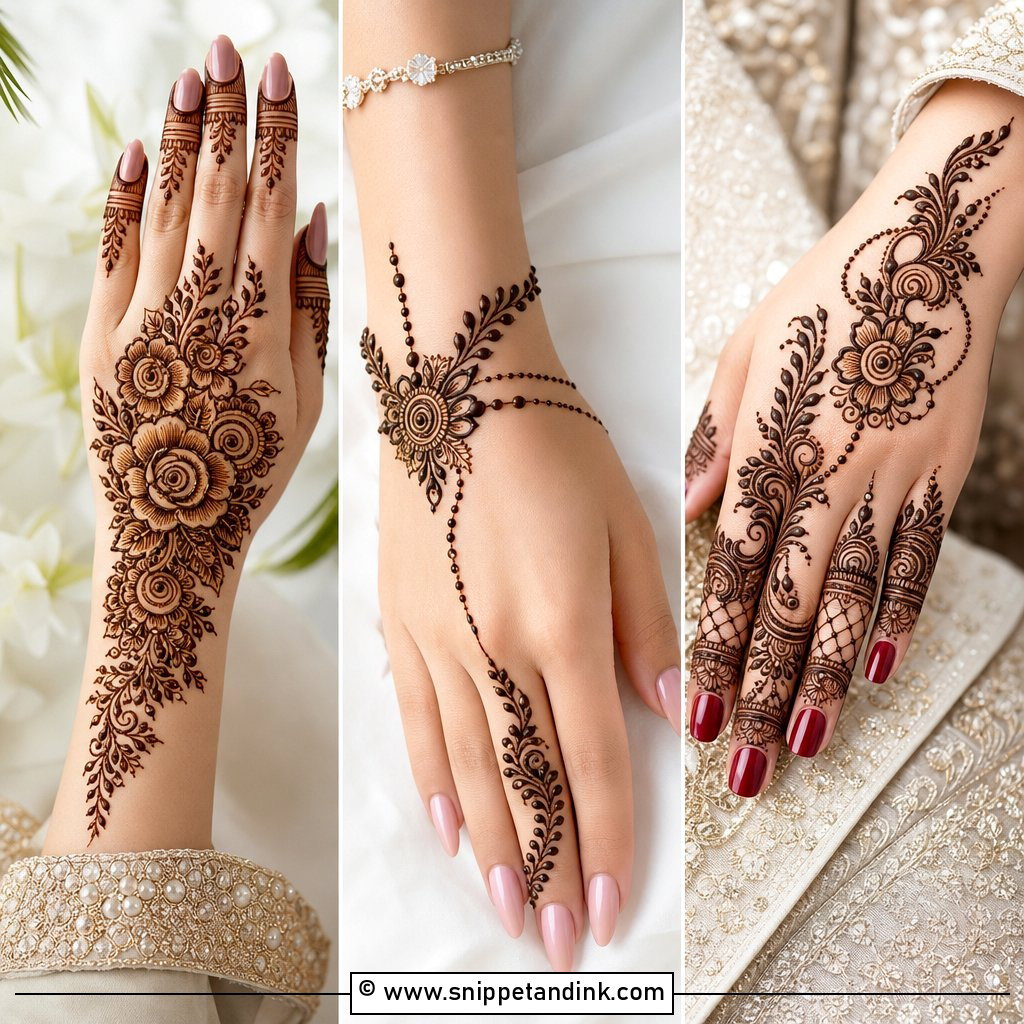
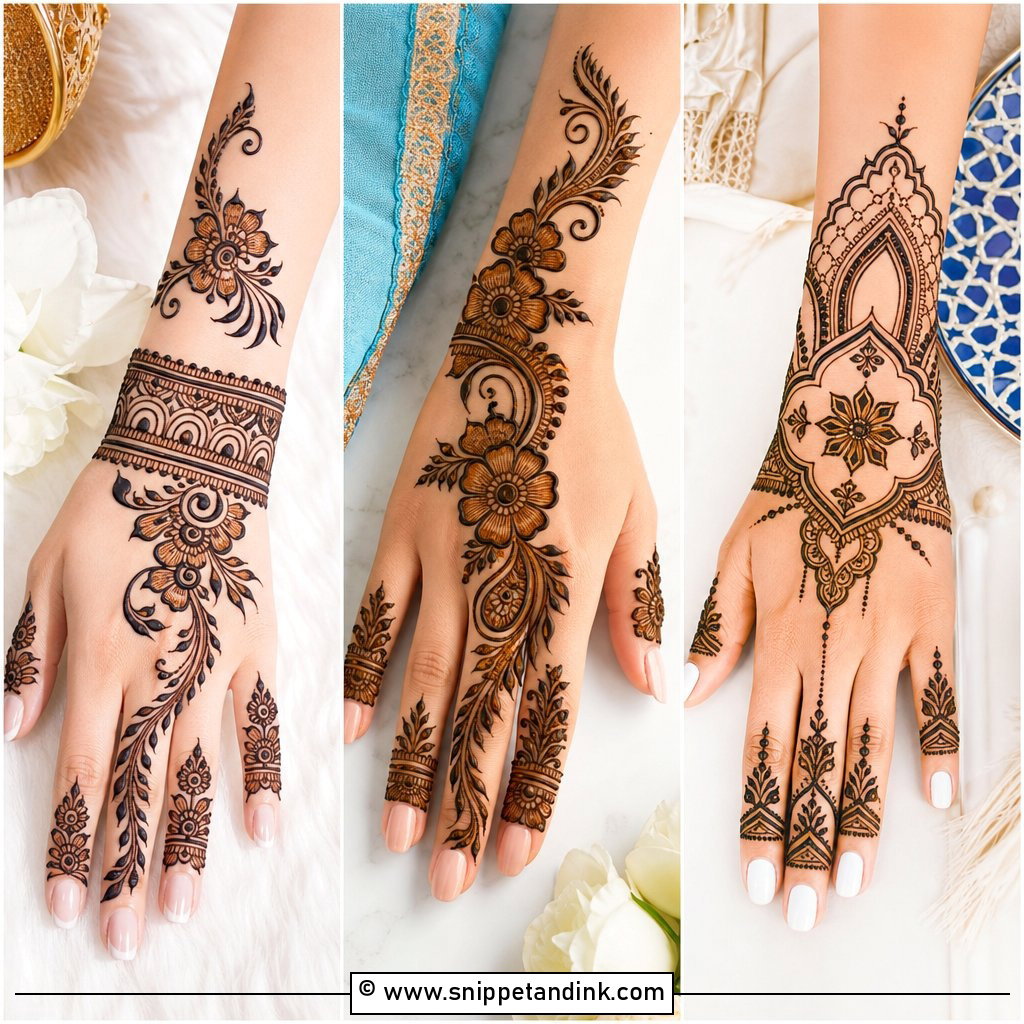
Start near the wrist with one medium flower, curve a few leaves around it, then send a thin vine up toward the index or middle finger. On the back hand that single diagonal does almost all the work. Fingertips get dots, tiny leaves or a half flower. The back of the hand stains a little lighter than the palm, so I give the main flower a slightly fuller outline and ask for the paste to stay on overnight if possible.
2. Simple Arabic Mehndi Design For Front Hand
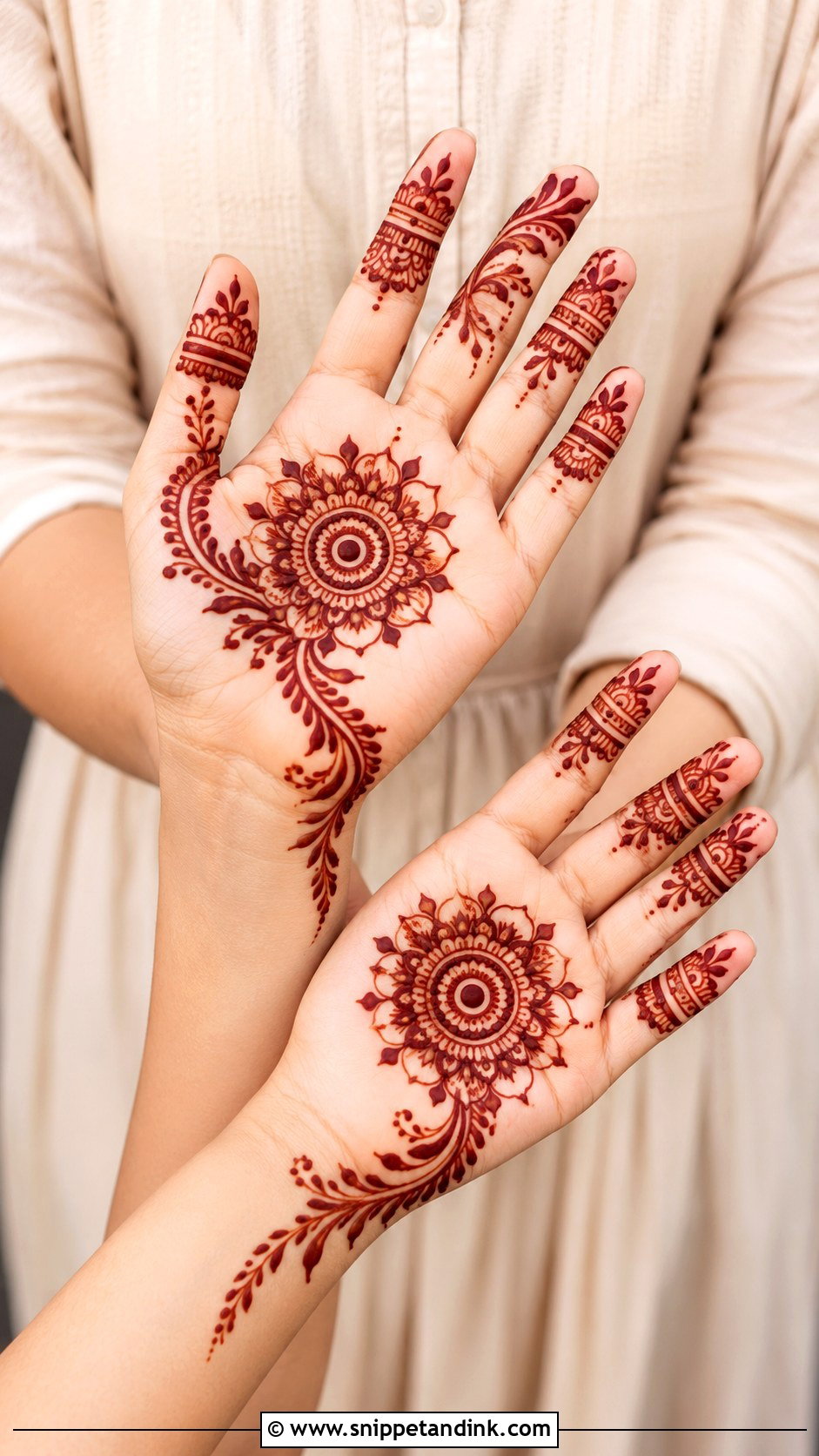
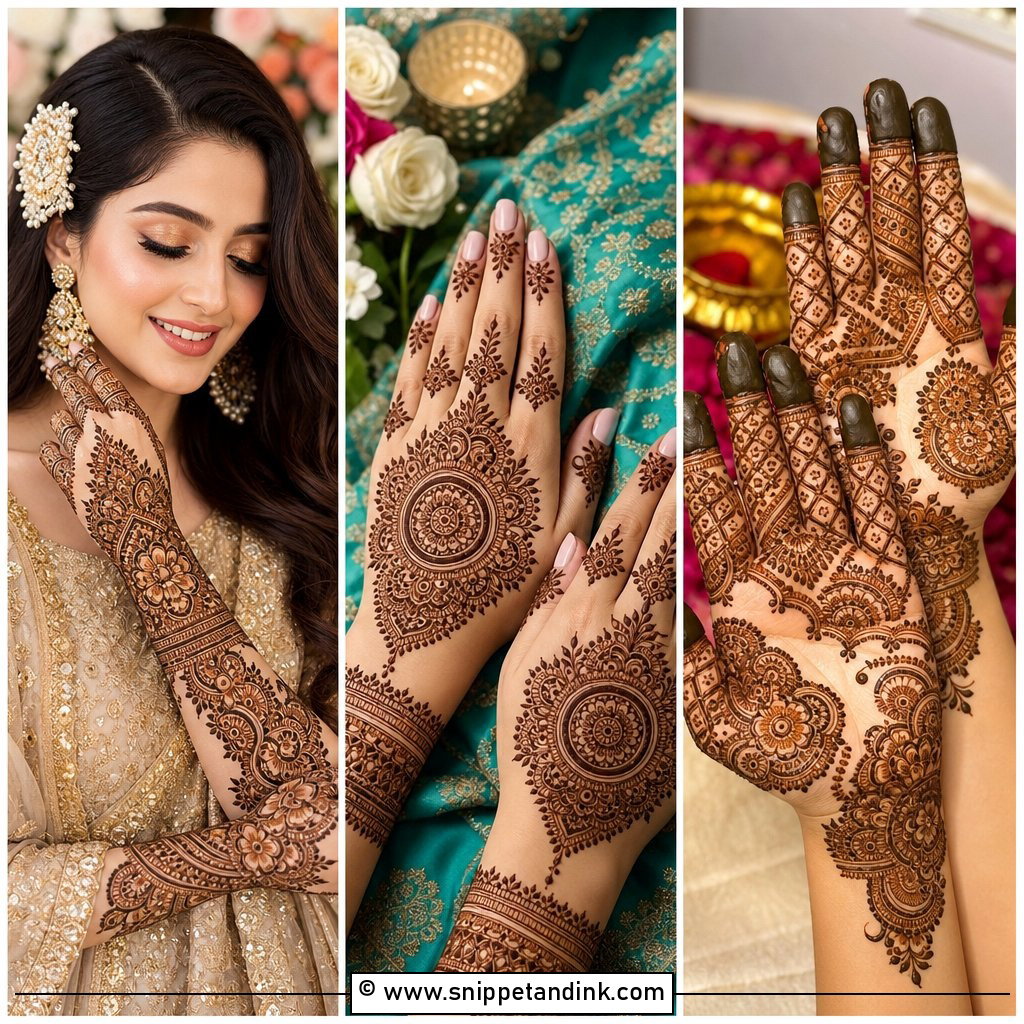
On the palm I give the design one clear centre, usually a round floral mandala, with one short trail heading toward the wrist and another toward the fingers. Leafy lines on two fingers and a few dots near the tips finish it. Balance carries this one, not filling. Leave the gaps open; palm skin stains so deeply that crowded motifs merge into a single dark patch by the next day.
3. Arabic Floral Trail Mehndi Design
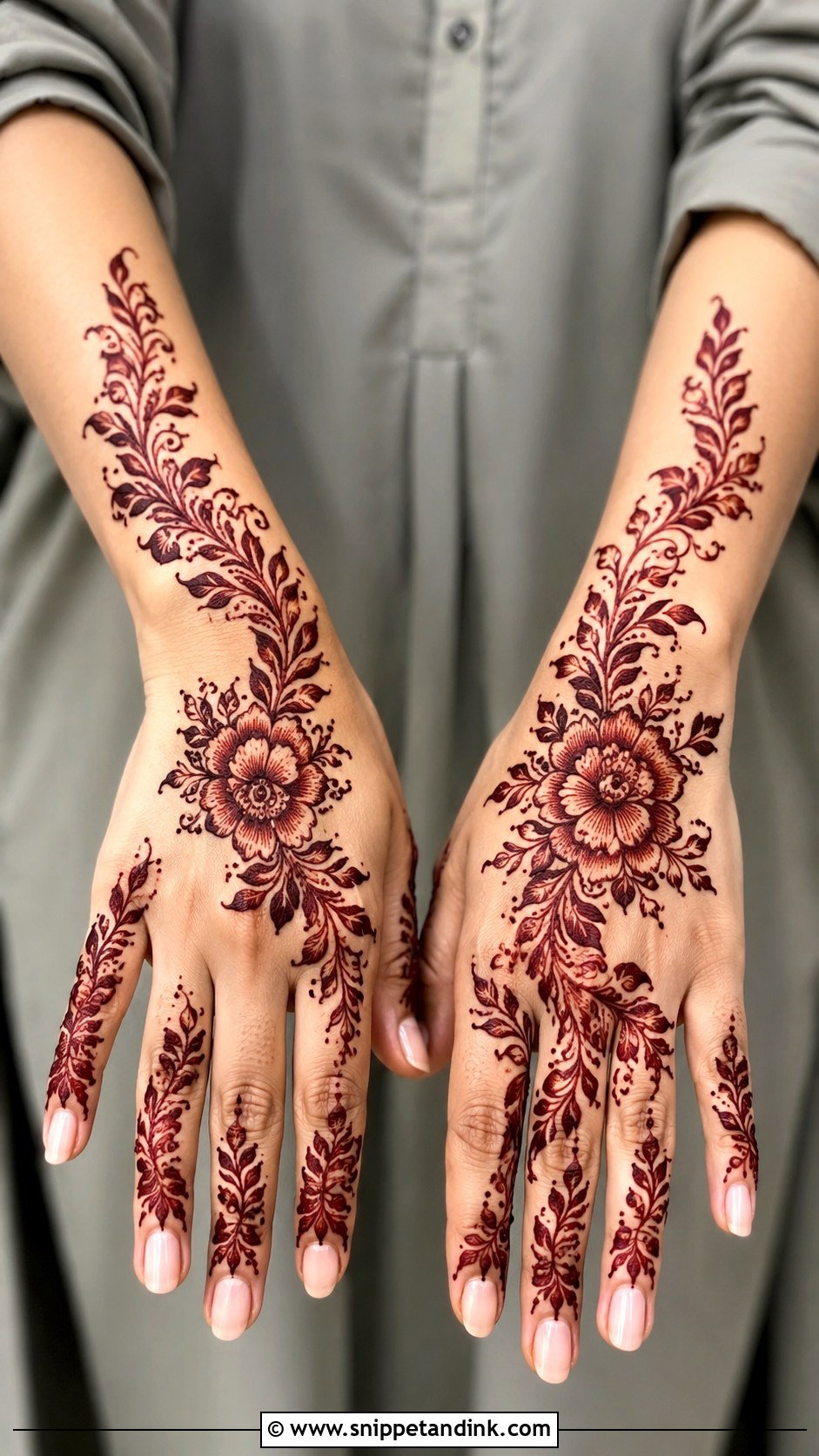
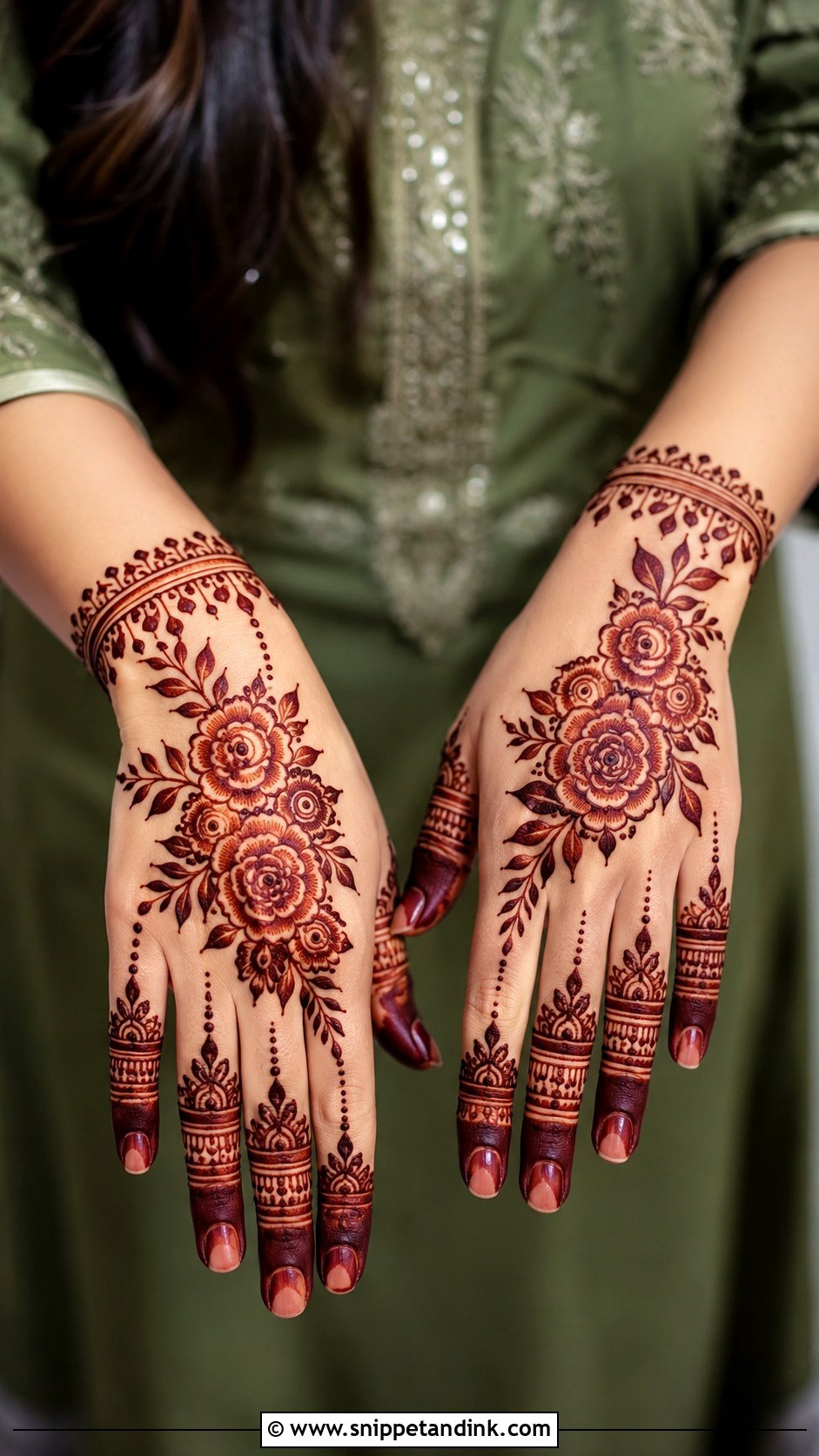
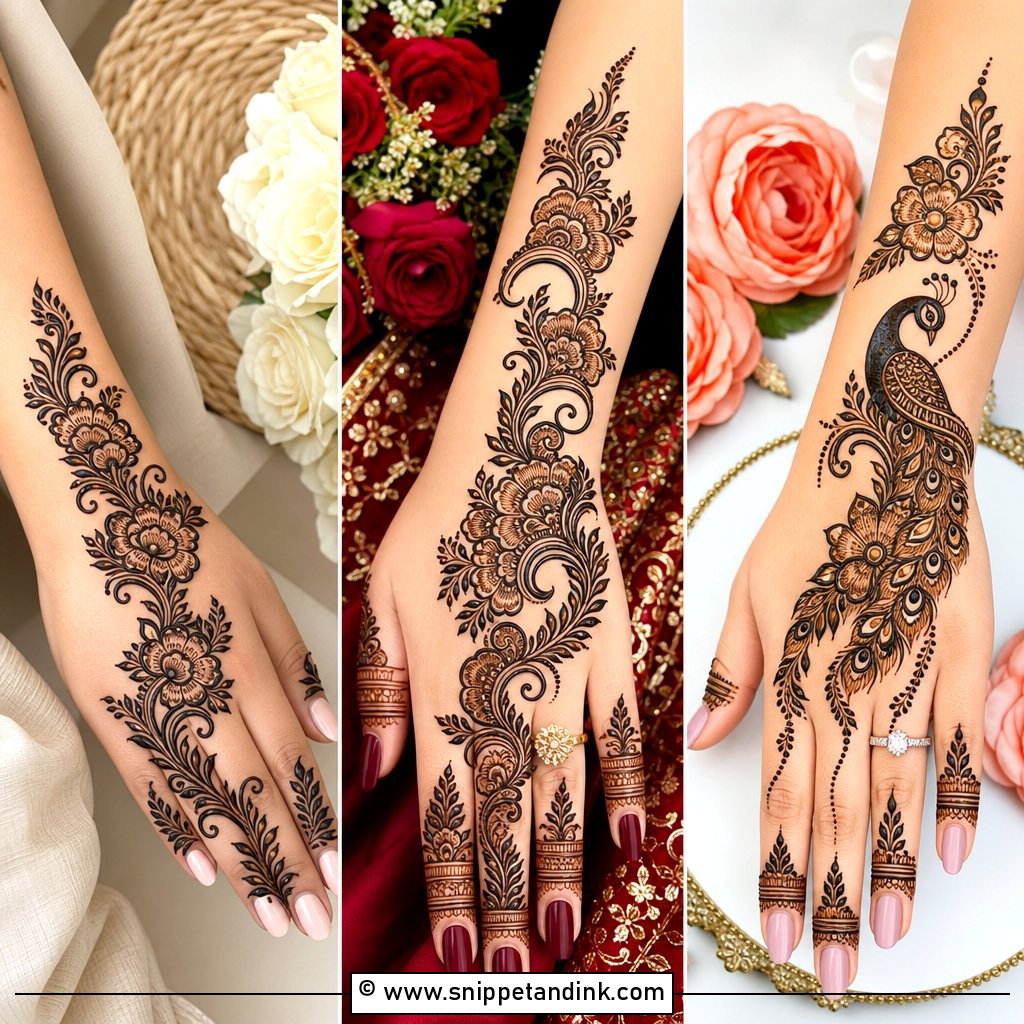
A large flower at the wrist or lower palm, smaller ones linked by curved stems and leaves, all moving in one direction. The trail can cross the back of the hand diagonally or follow the side of the palm. I keep the petals bold and rounded with only light shading inside, because the flowers themselves create the movement. Young girls, bridesmaids and festival guests all wear it well.
4. Arabic Leaf Vine Mehndi Design
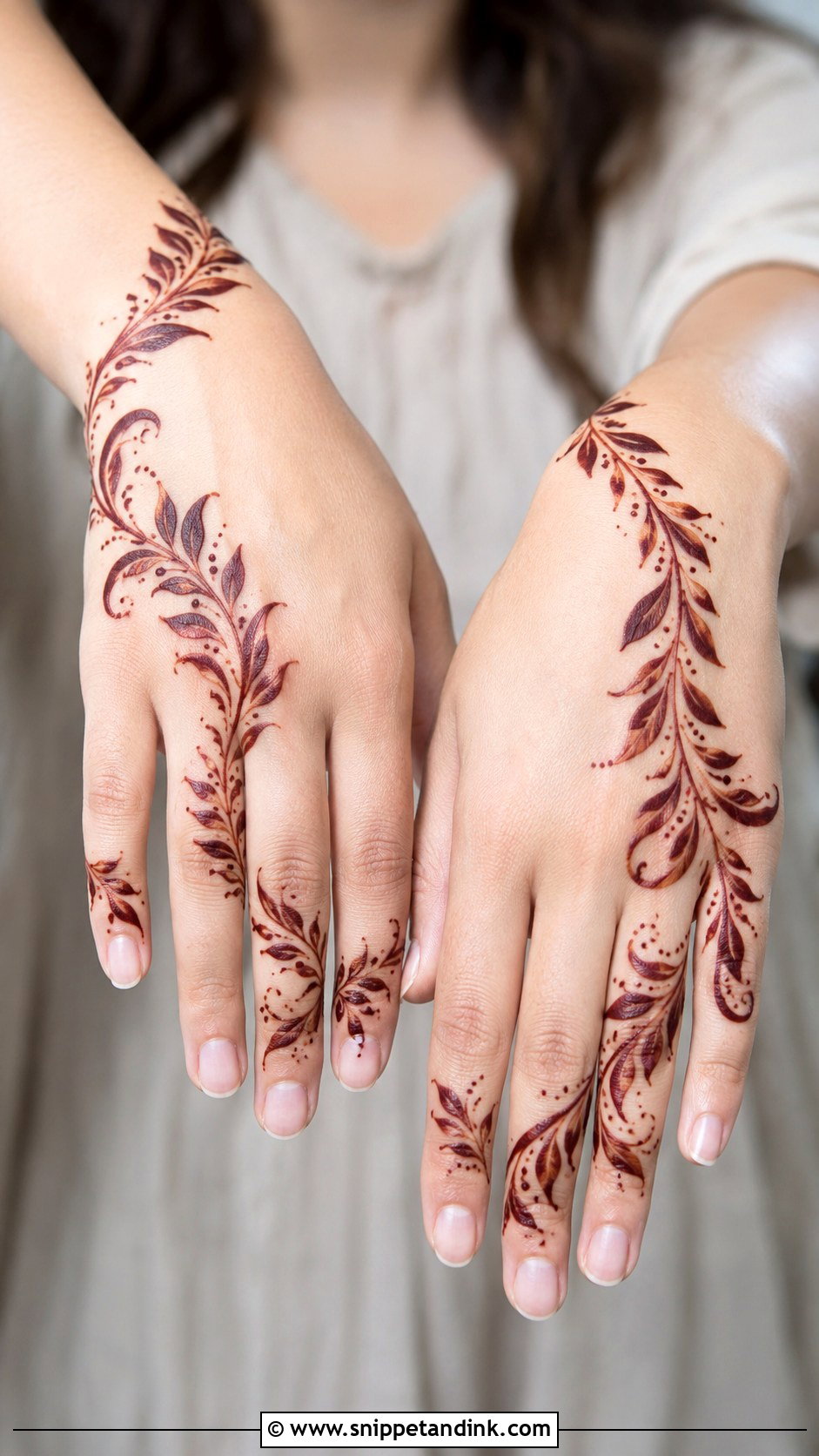
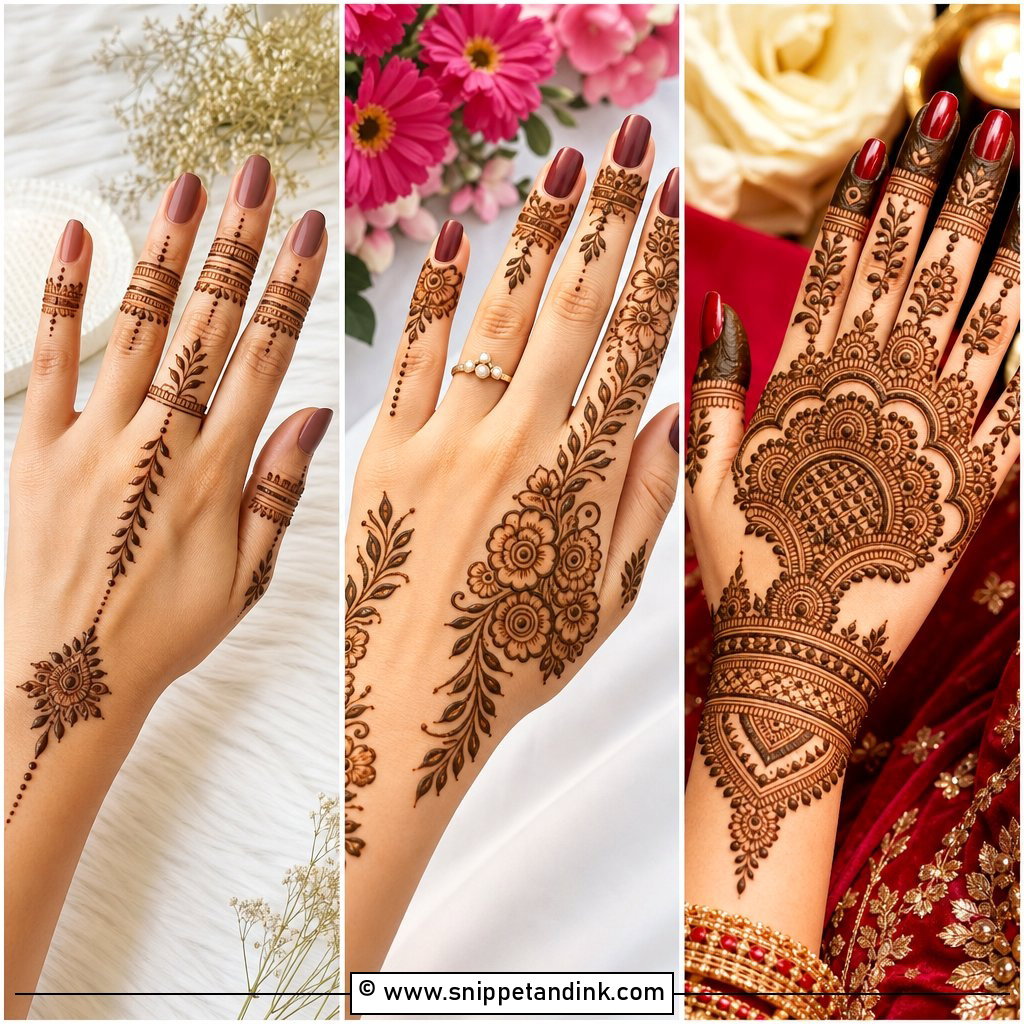
The quickest design in this list to draw well. A curved vine runs from the wrist to the fingers with leaves on both sides, sized slightly differently so it looks grown rather than stamped. Tiny dots between the leaves and a small curl at each end soften it. Slim hands and short fingers both suit it, since the vine stretches the hand visually without adding bulk.
5. Arabic Finger Mehndi Design
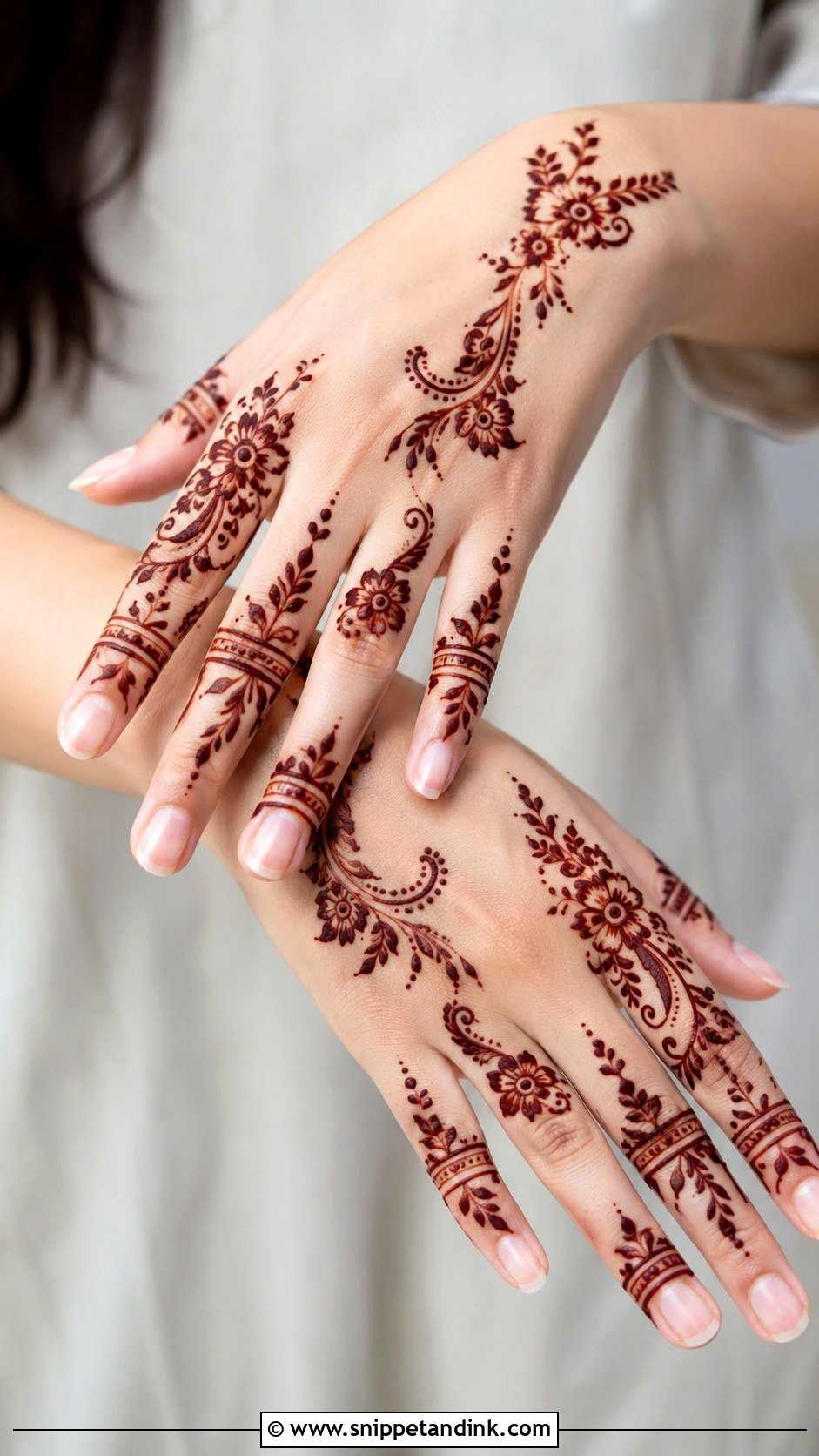
Here the fingers carry everything: leaves, small flowers, curved lines and dots on each one, with the palm or back of the hand left mostly open. Linking the ring finger to a thin wrist band gives a jewellery effect. Fingertip caps must be clean and even, since they’re the first thing people notice. It takes very little time and stains dark, because fingers take colour so readily.
6. Arabic Bracelet Mehndi Design
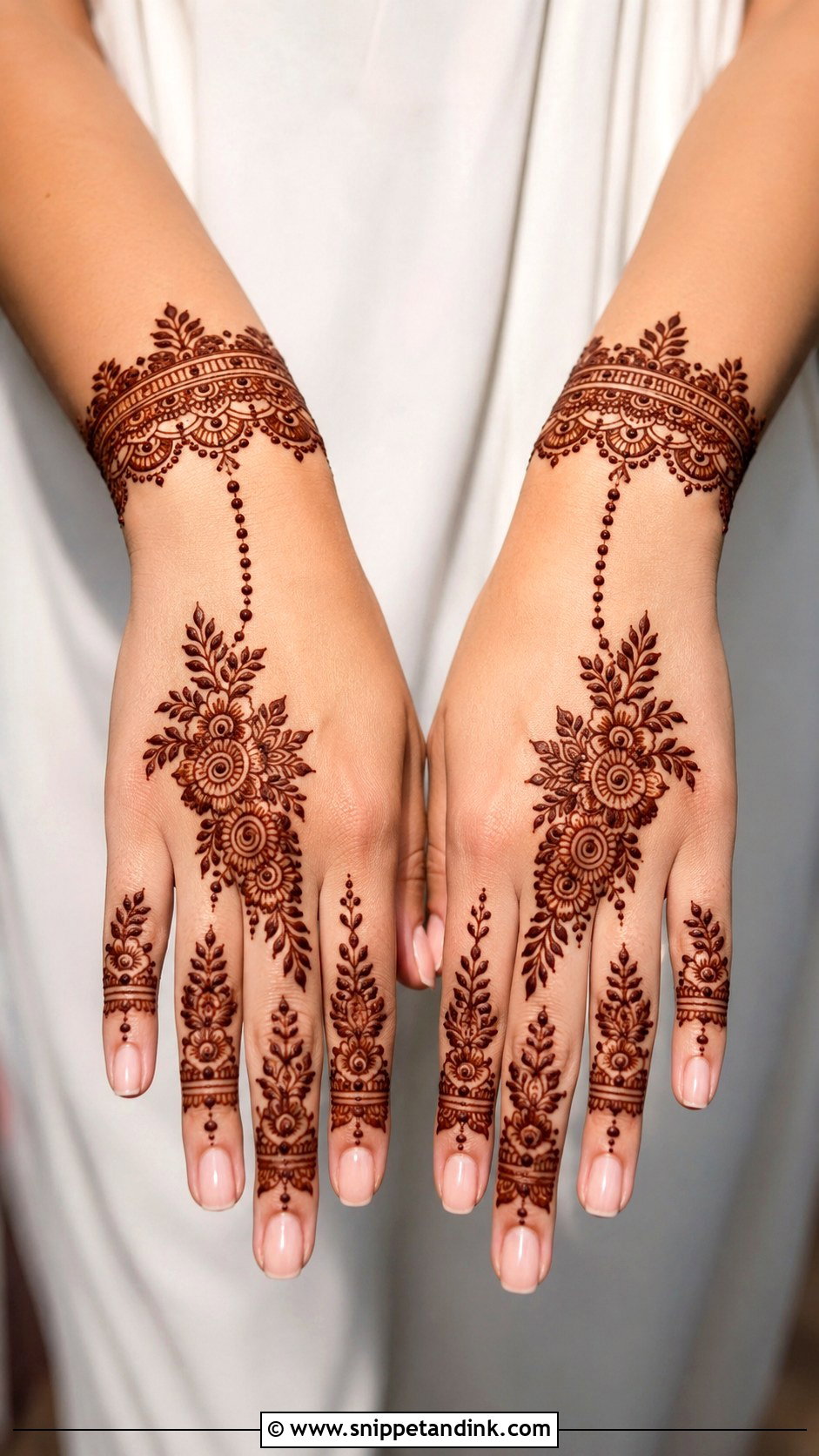
A bracelet band around the wrist, a short chain-like trail and a floral or leafy motif on the back of the hand. The band can be a thin line or a wider strip with dots, scallops and shaded petals, and the chain can run up to one finger like a hand harness. I keep the band narrower than people expect. The wrist bends constantly, and a wide band of wet paste cracks and smudges before it can set.
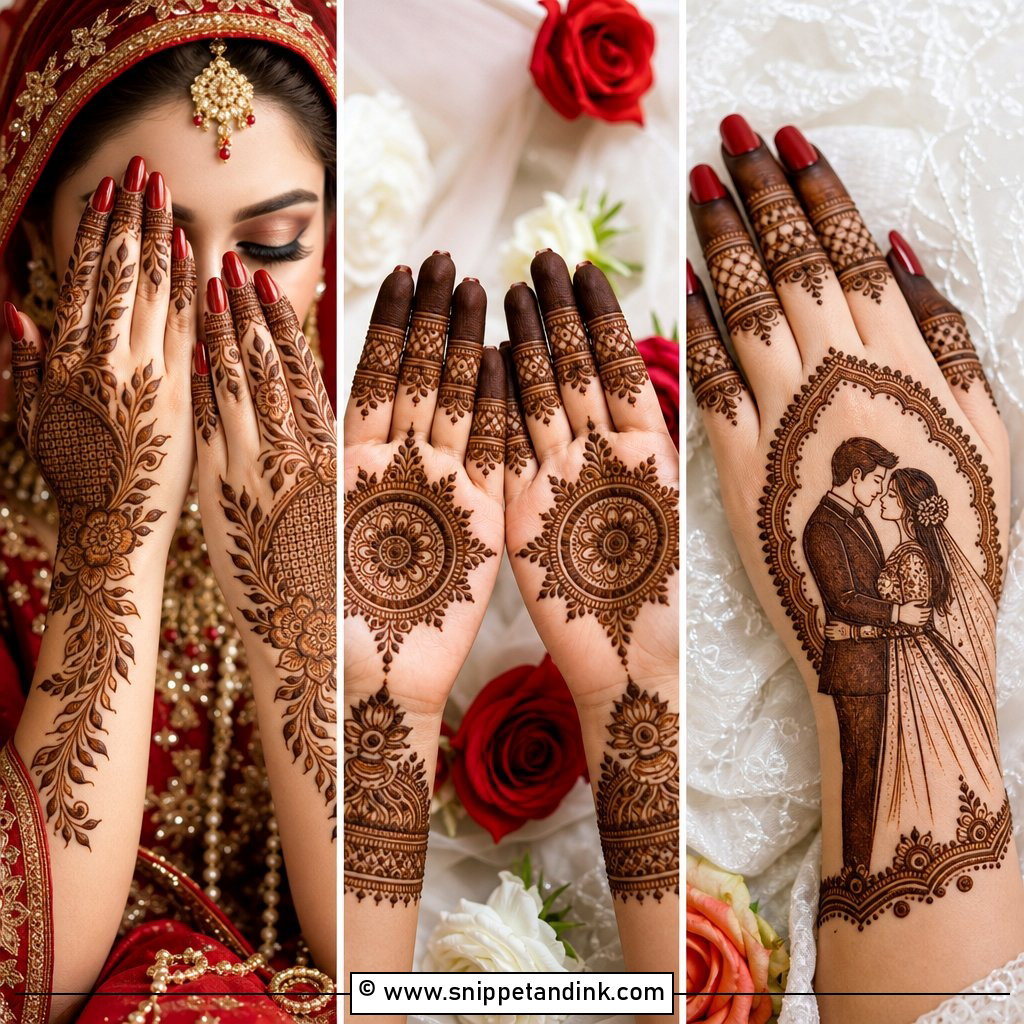
7. Arabic Mandala Mehndi Design
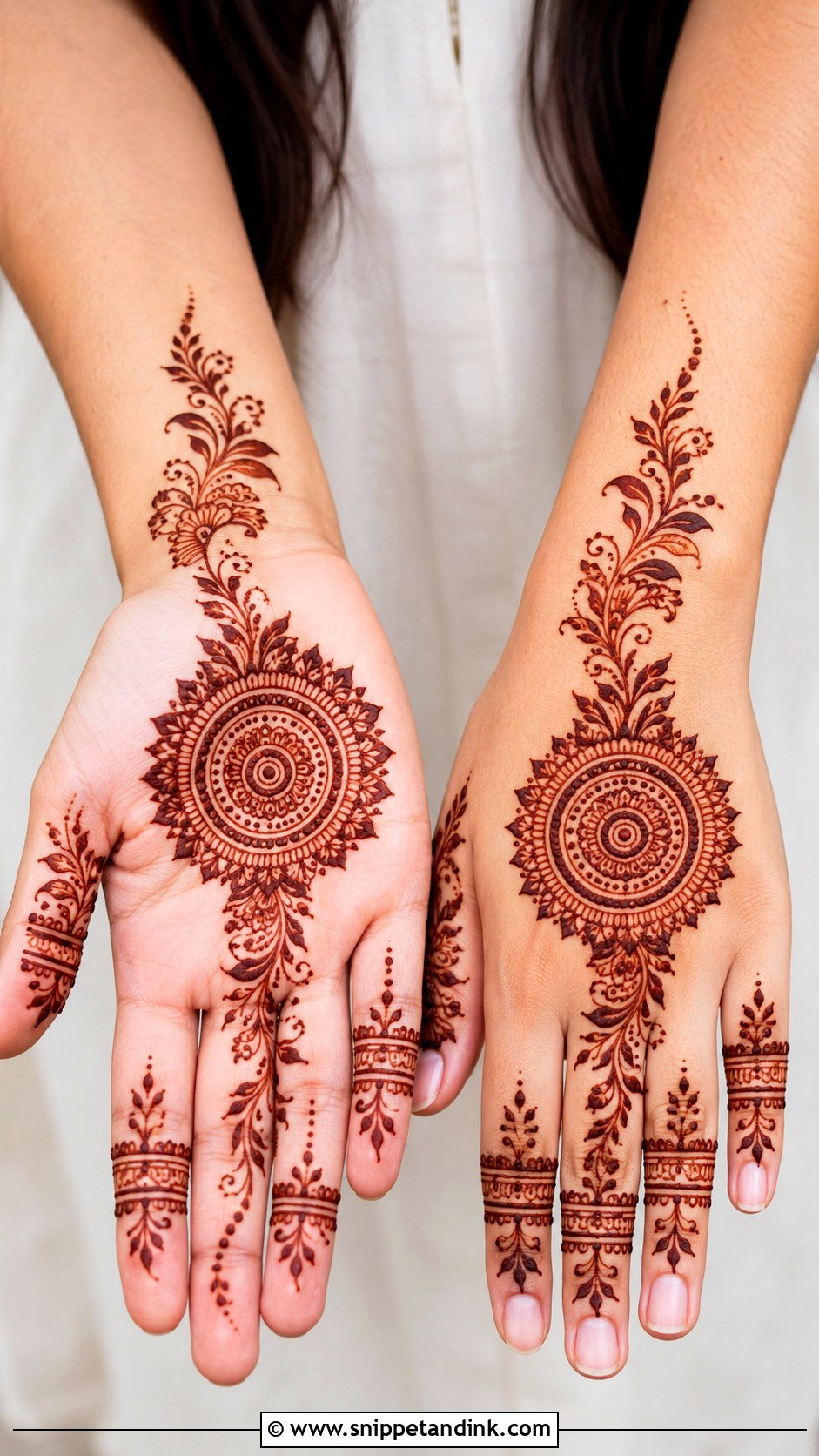
Pairing a mandala with an Arabic vine gives you symmetry and movement at once. The mandala sits in the centre of the palm or back of the hand, built from circles, petals, dots and a scalloped edge; a curved vine runs from it toward the wrist, and leafy bands or half flowers tie in the fingers. Beginners find it easy to plan because the main shape is fixed. My one warning is to resist over-detailing the circle, which turns it into a dark blot on the palm.
8. Arabic Rose Mehndi Design
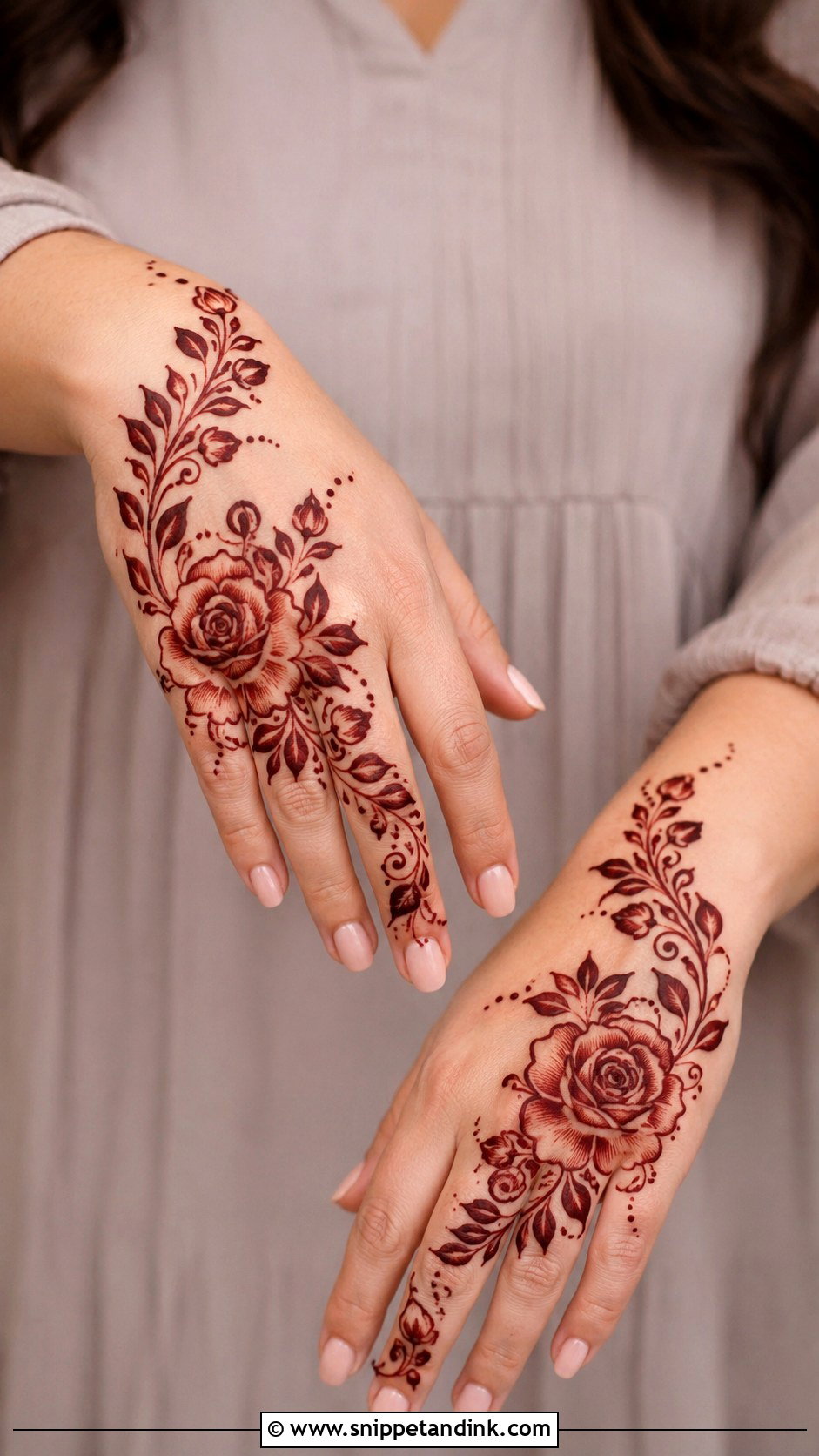
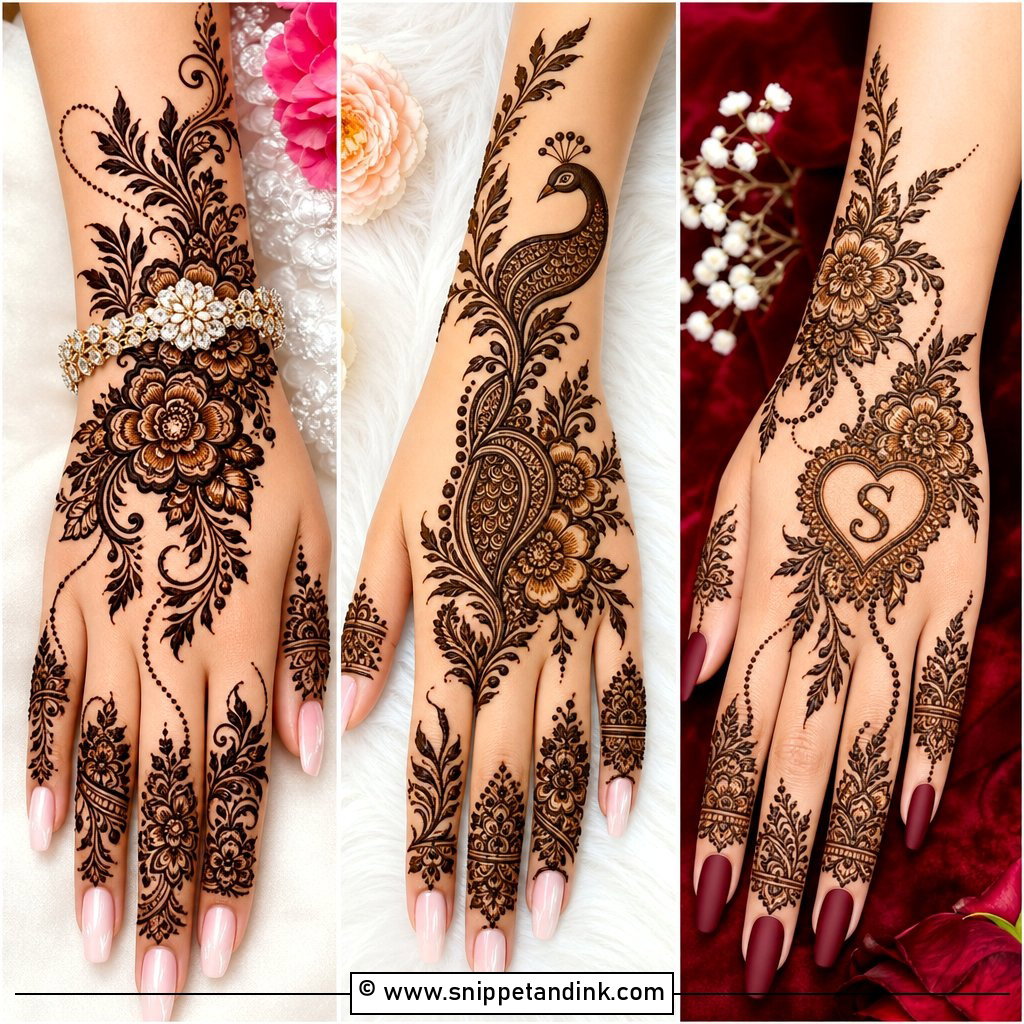
One large rose near the wrist or on the lower palm, then smaller rosebuds strung along a curving vine. Bold outer petals with light shading inside give depth; pointed leaves and a few dots fill the gaps. On the back of the hand the trail flows naturally toward the fingers. The common failure is a rose with too many inner lines; it reads as a scribble once stained, so I stop at two or three.
9. Arabic Paisley Mehndi Design
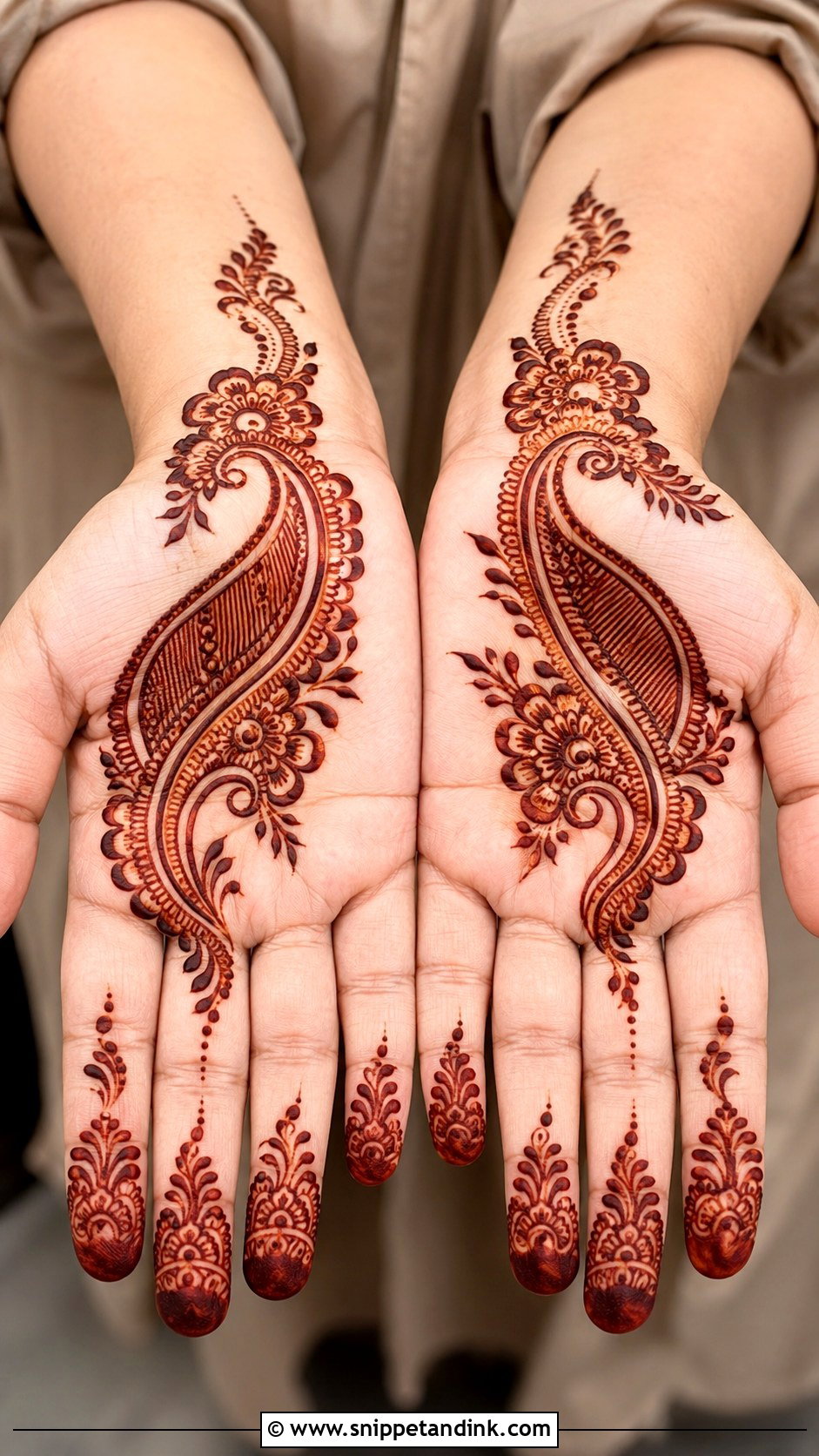
Paisleys give an Arabic design a backbone. I place one large paisley on the lower palm or the back of the hand with its tail curving toward the fingers, then surround it with leaves, dots and small flowers. Inside, a few fine lines, tiny petals or a little mesh is plenty. Overload the interior and the shape vanishes when the stain develops. It suits anyone who wants a traditional motif on a lighter hand.
10. Arabic Jaali Mehndi Design
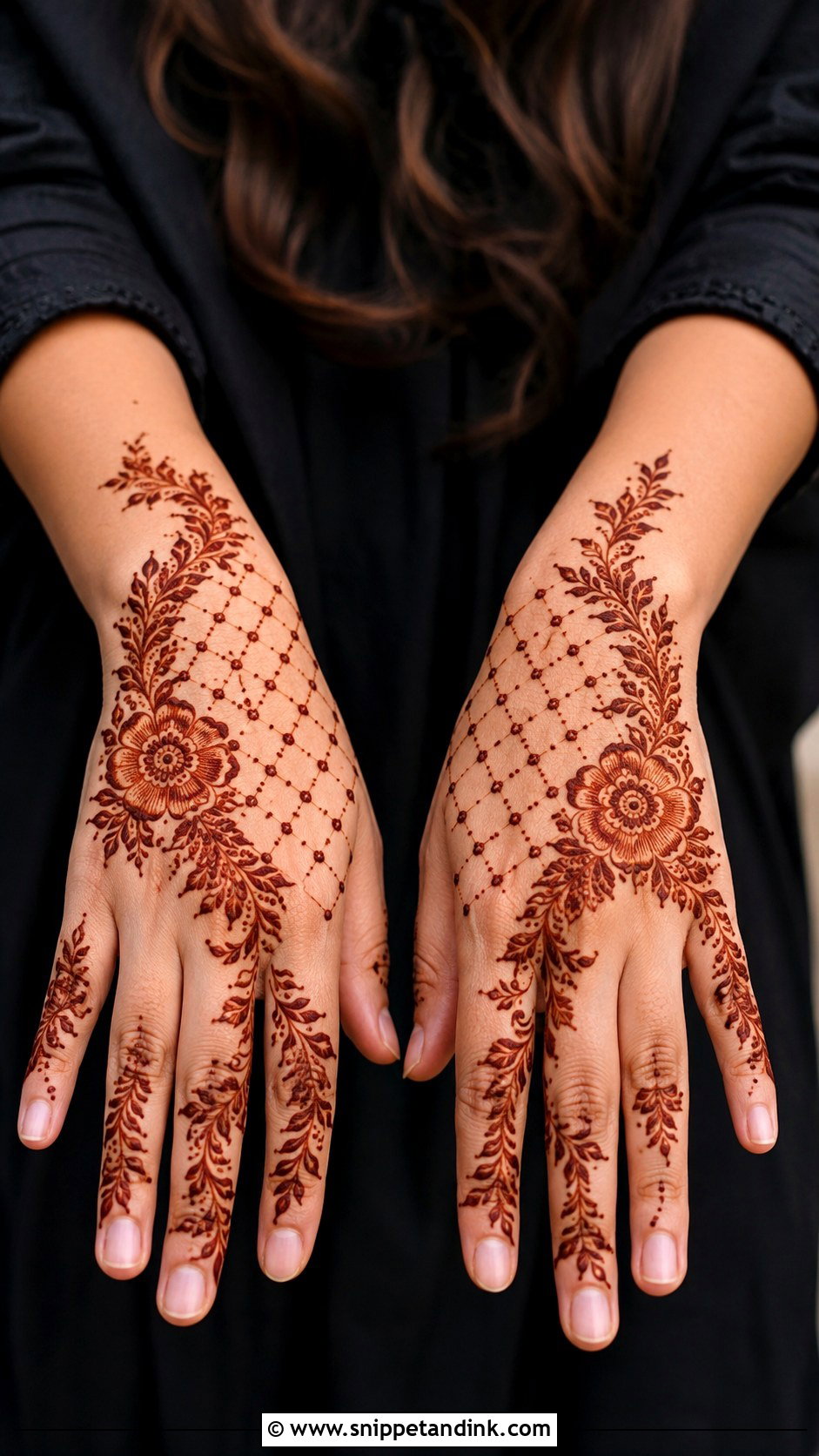
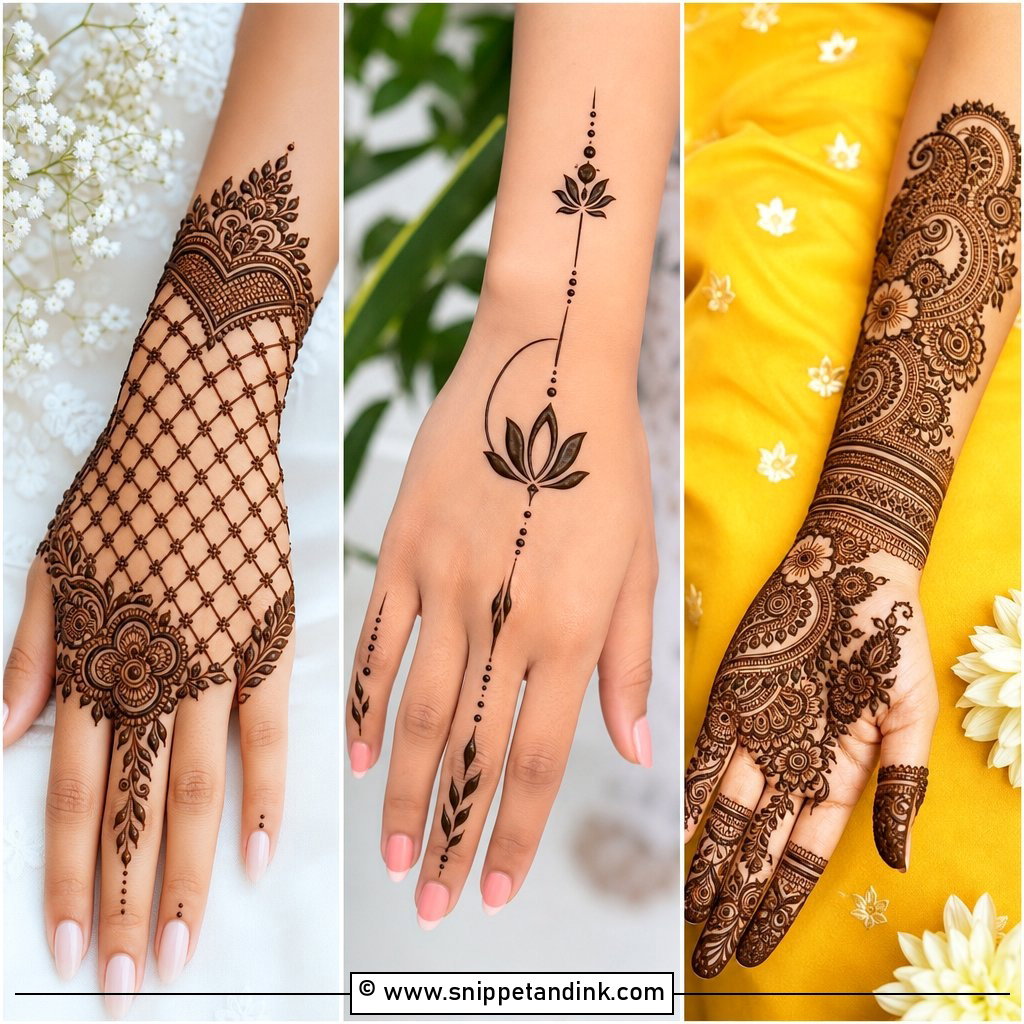
Mesh adds texture without darkening the whole hand. A simple version has a floral trail down one side and a small patch of jaali near the wrist or at the base of the fingers. Even diamond or square spaces are essential, with a dot at each crossing. Leave the rest open with leaves and curved lines. I draw the mesh last, when my hand is warmed up, because it’s the least forgiving part of the design.
11. Arabic Half Hand Mehndi Design
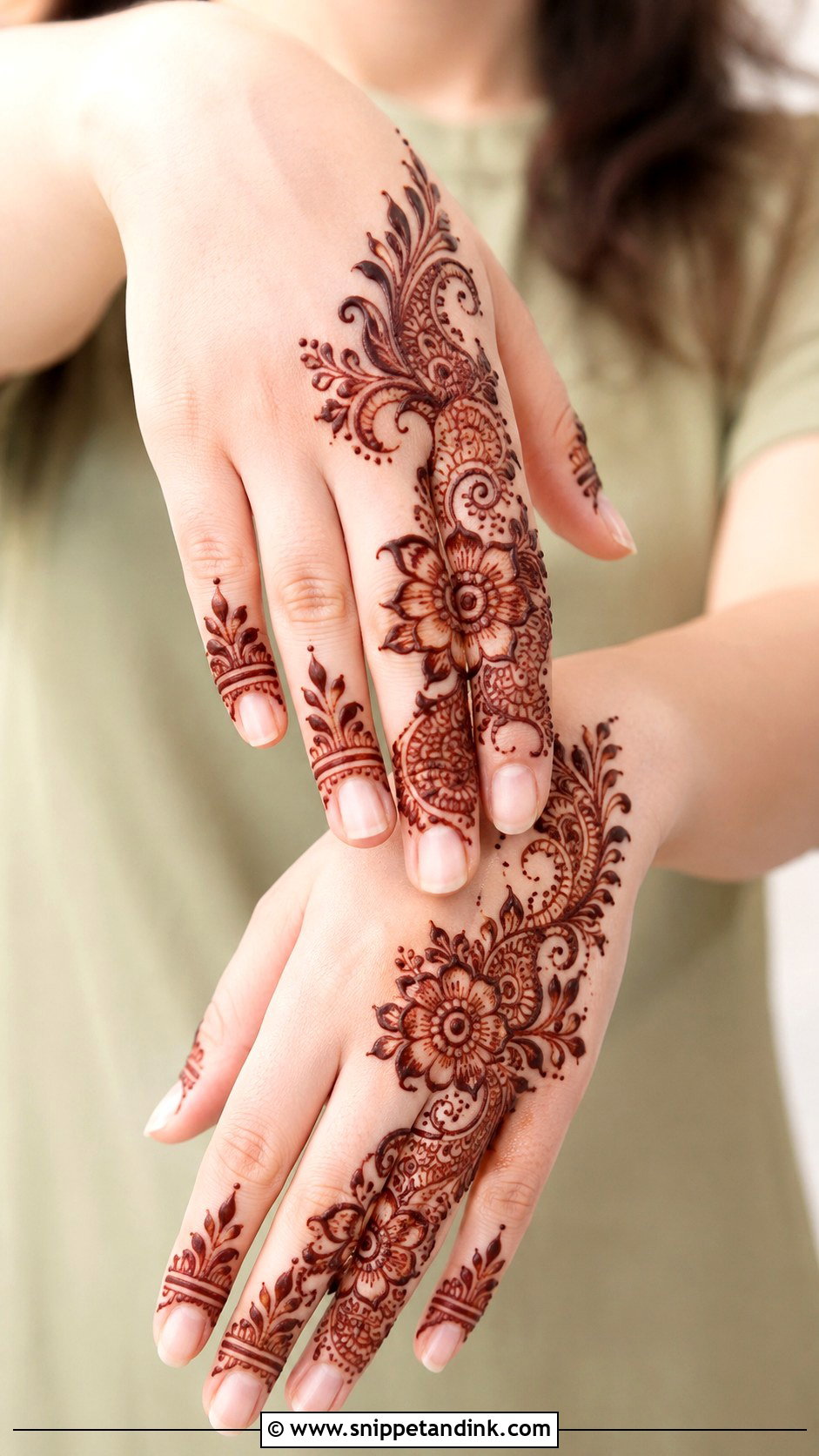
Half coverage means one side of the palm or back of the hand carries the design and the other side stays clear. I start with a floral cluster near the wrist, then build a diagonal of leaves, paisleys and dots. Only the fingers on the decorated side get matching detail, so the layout looks intentional. It’s comfortable through a long event, and it can be built in sections if the wearer needs breaks.
12. Arabic Full Hand Simple Mehndi Design
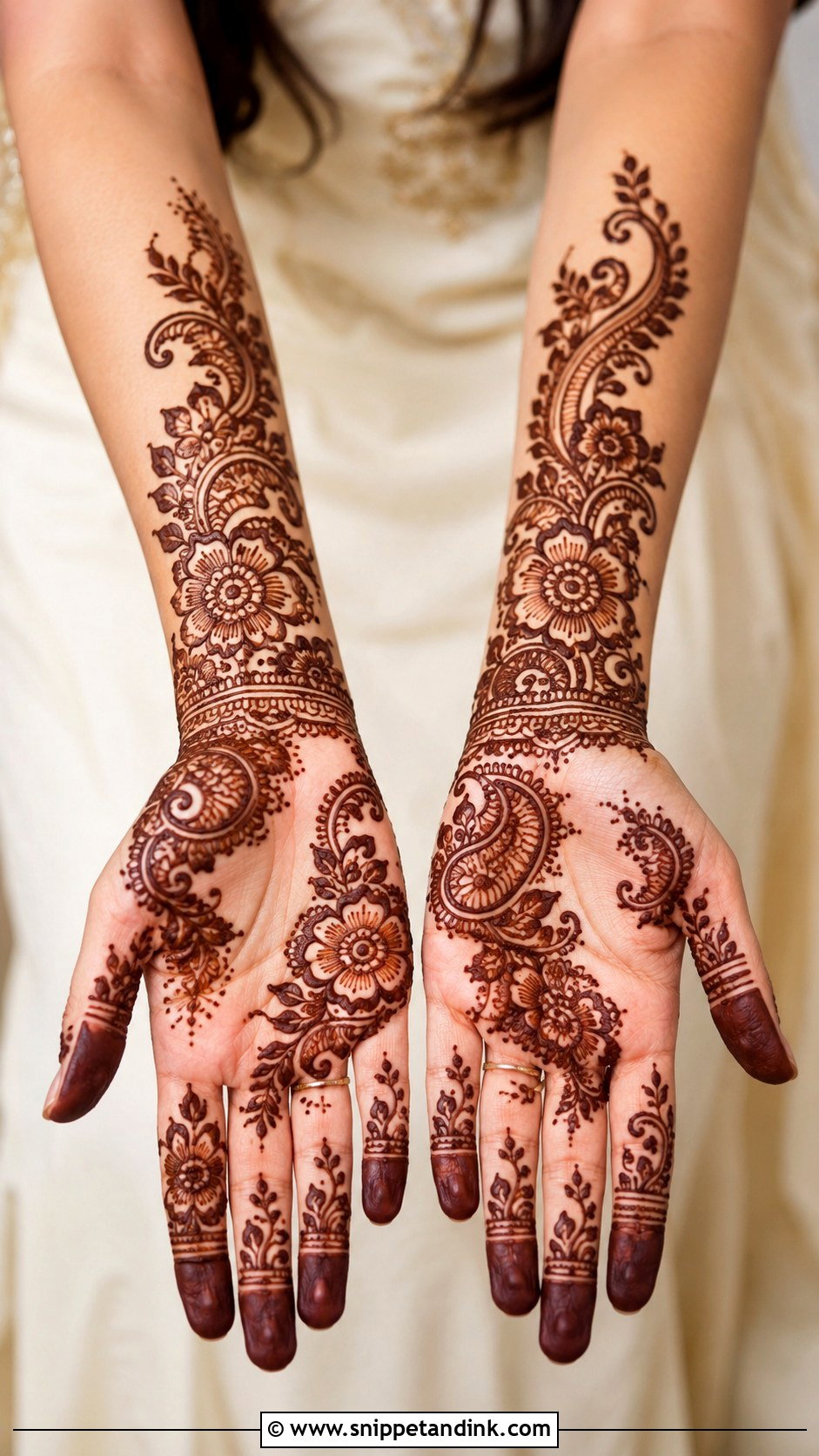
Covering the hand from fingers to wrist with large flowers, curved vines, paisleys and leaf trails, rather than tiny fill, keeps it light. One main motif sits on the palm and connects to the fingers with flowing lines; a soft cuff finishes the wrist. The rule is to leave skin between every pattern. Even simple full coverage needs a good hour per hand and the full drying time, so plan it for the day before an Eid or a family wedding, not the morning of.
13. Arabic Minimal Mehndi Design
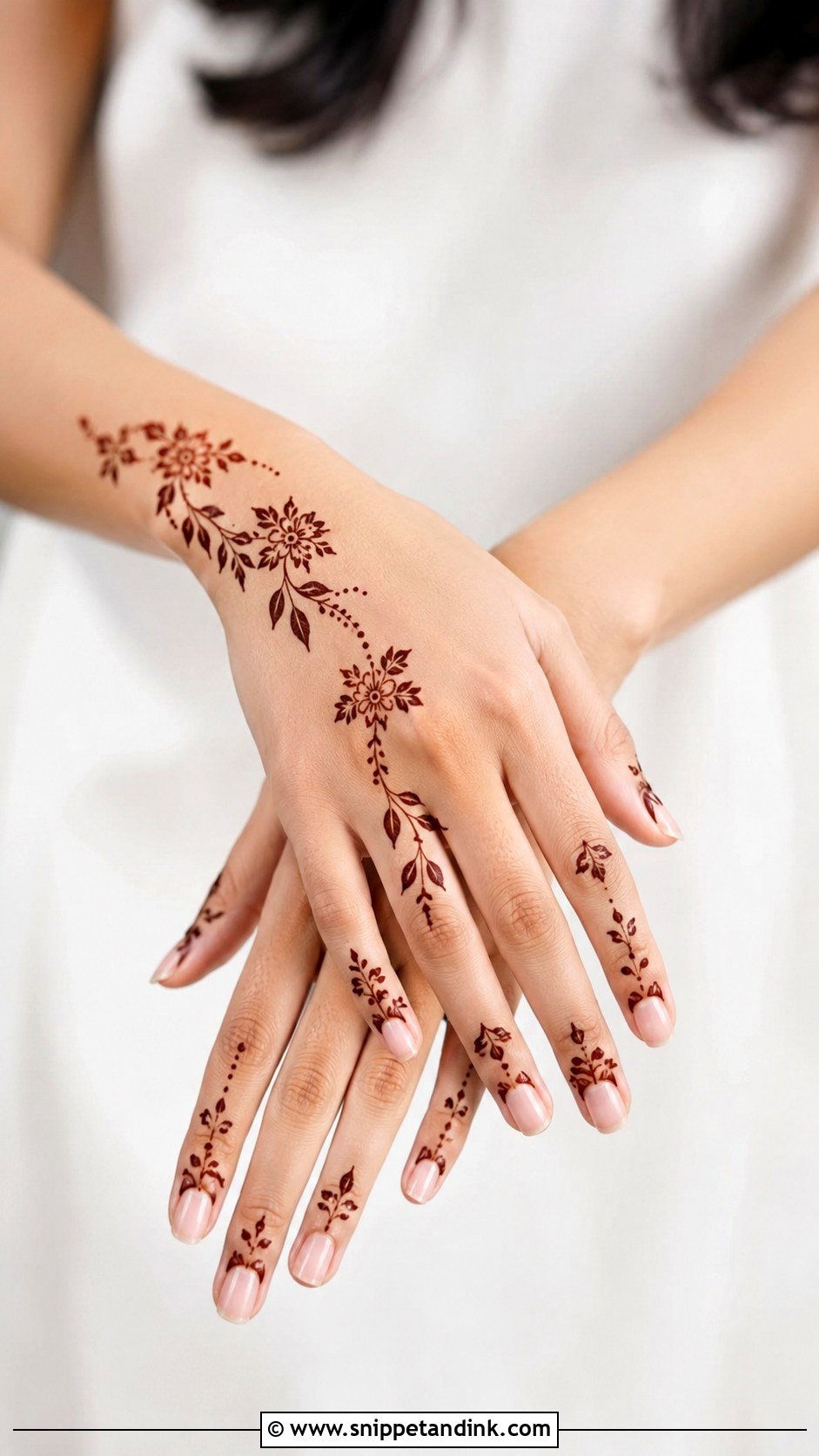
A slim vine on the back of the hand, a few tiny flowers near the wrist and simple finger details. Thin but confident lines, lots of open space, maybe a half mandala to anchor it. It dries quickly, which suits first-timers and office parties. The challenge with minimal henna is that thin lines carry little paste and stain lighter, so leave it on longer than you think you need to.
14. Arabic Easy Mehndi Design For Beginners
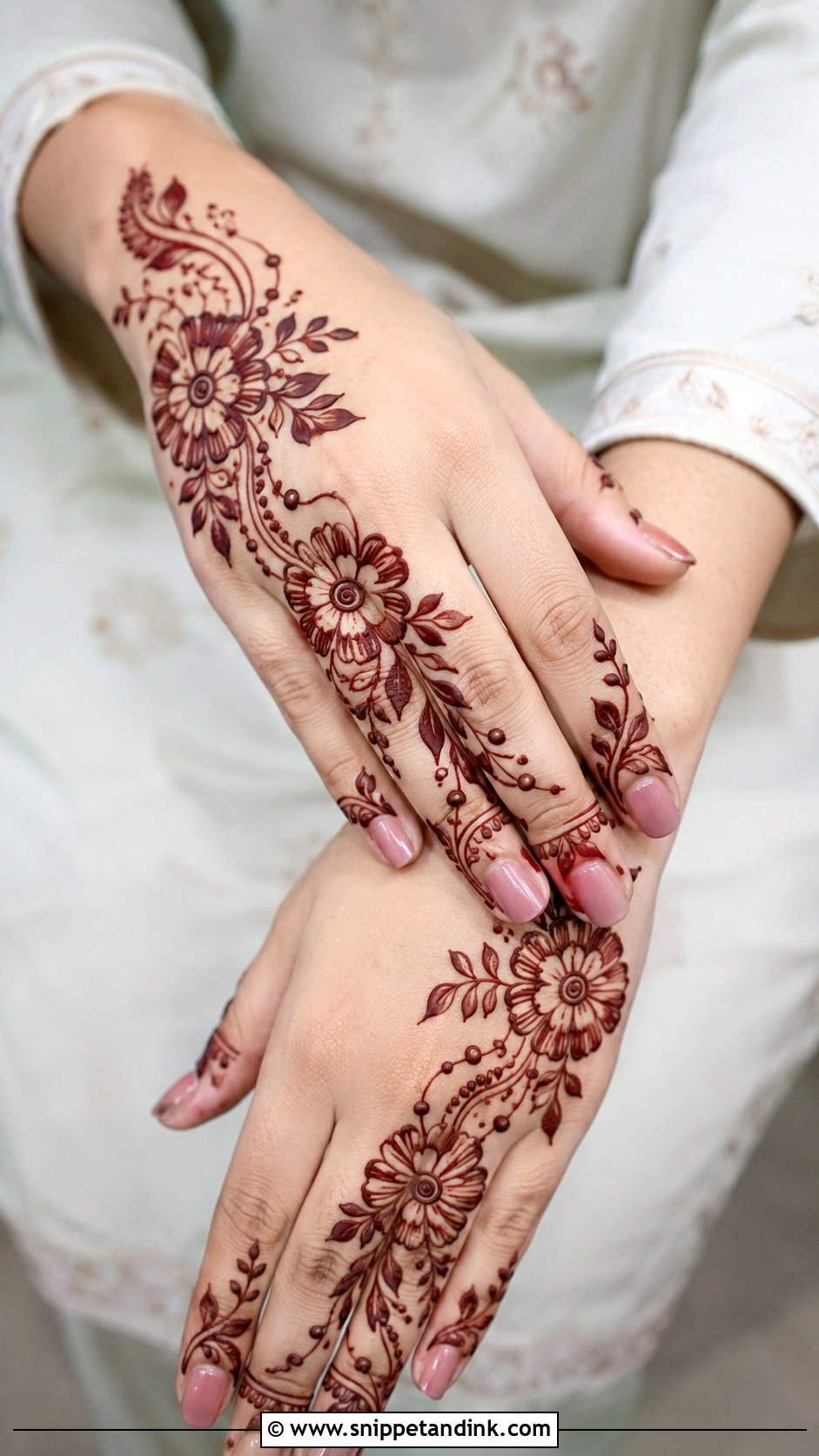
For practice, begin with a curved line from the wrist to a finger, then put flowers on one side and leaves on the other. Dots are your friend: they cover small uneven spots and make the design look finished. Skip netting and fine shading until your hand is steadier. A diagonal trail is easier than a centred layout because it guides the eye and hides small asymmetries. Use it to learn cone control, with even pressure and a slow, steady pull.
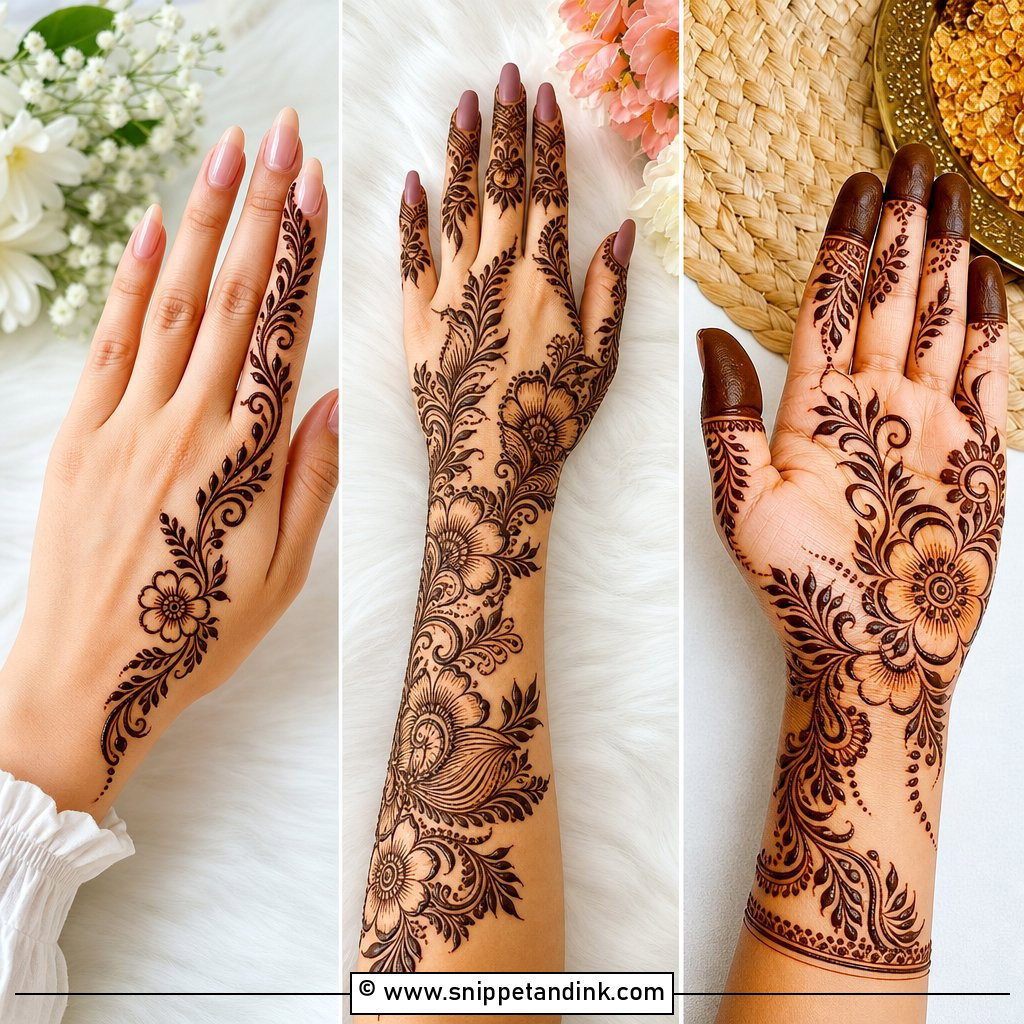

15. Arabic Eid Mehndi Design
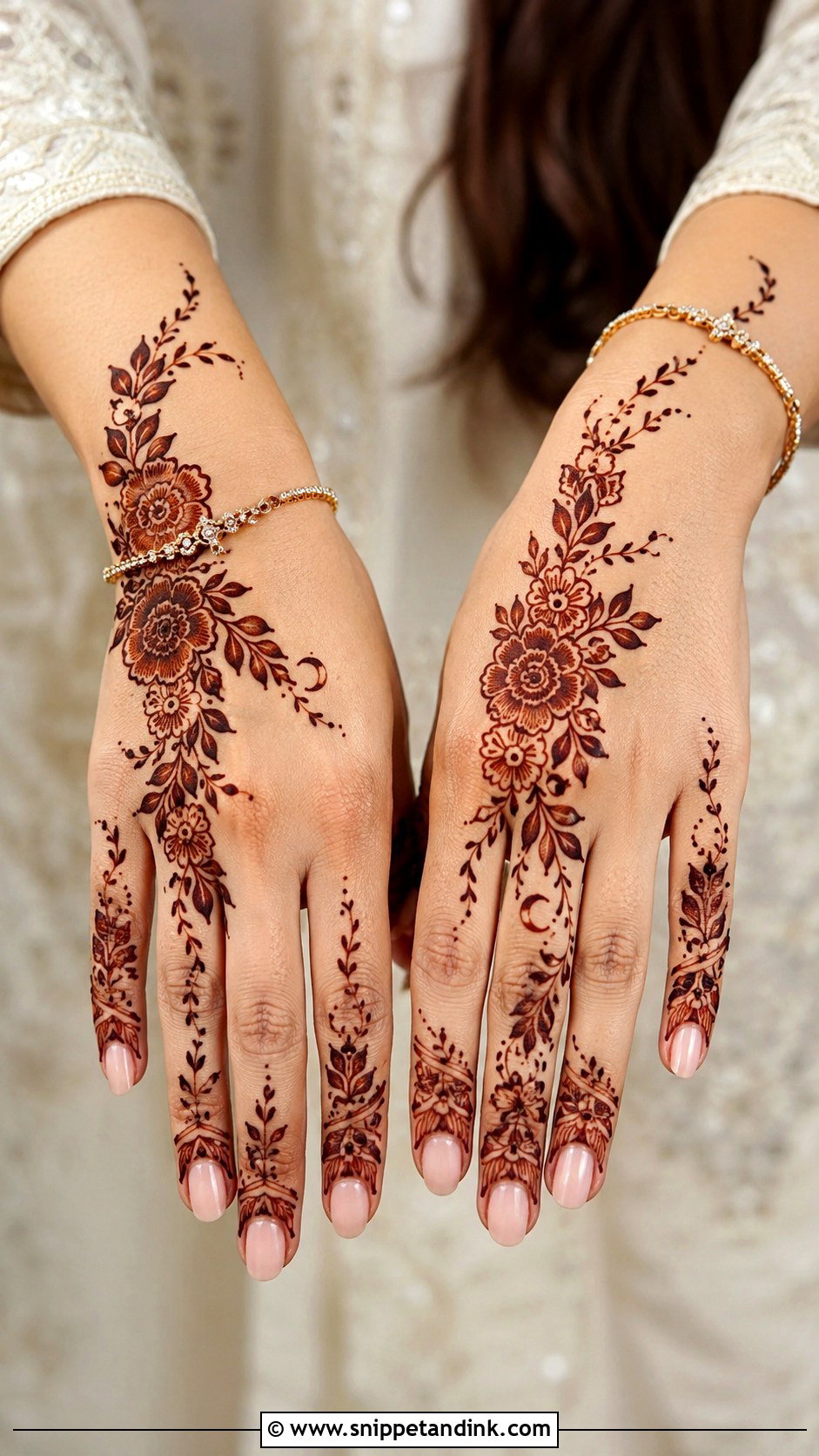
Eid henna has to survive a full day of hugging, cooking and serving food. A floral trail on the back of the hand, a soft bracelet at the wrist and clean leafy fingers handle that well. Small crescent curves, dots and scalloped borders add a festive note while keeping the layout open. Because the wrist detail is light, it sits comfortably under a stack of bangles. Apply it the evening before so the colour has deepened by morning prayers and visits.
16. Arabic Wedding Guest Mehndi Design
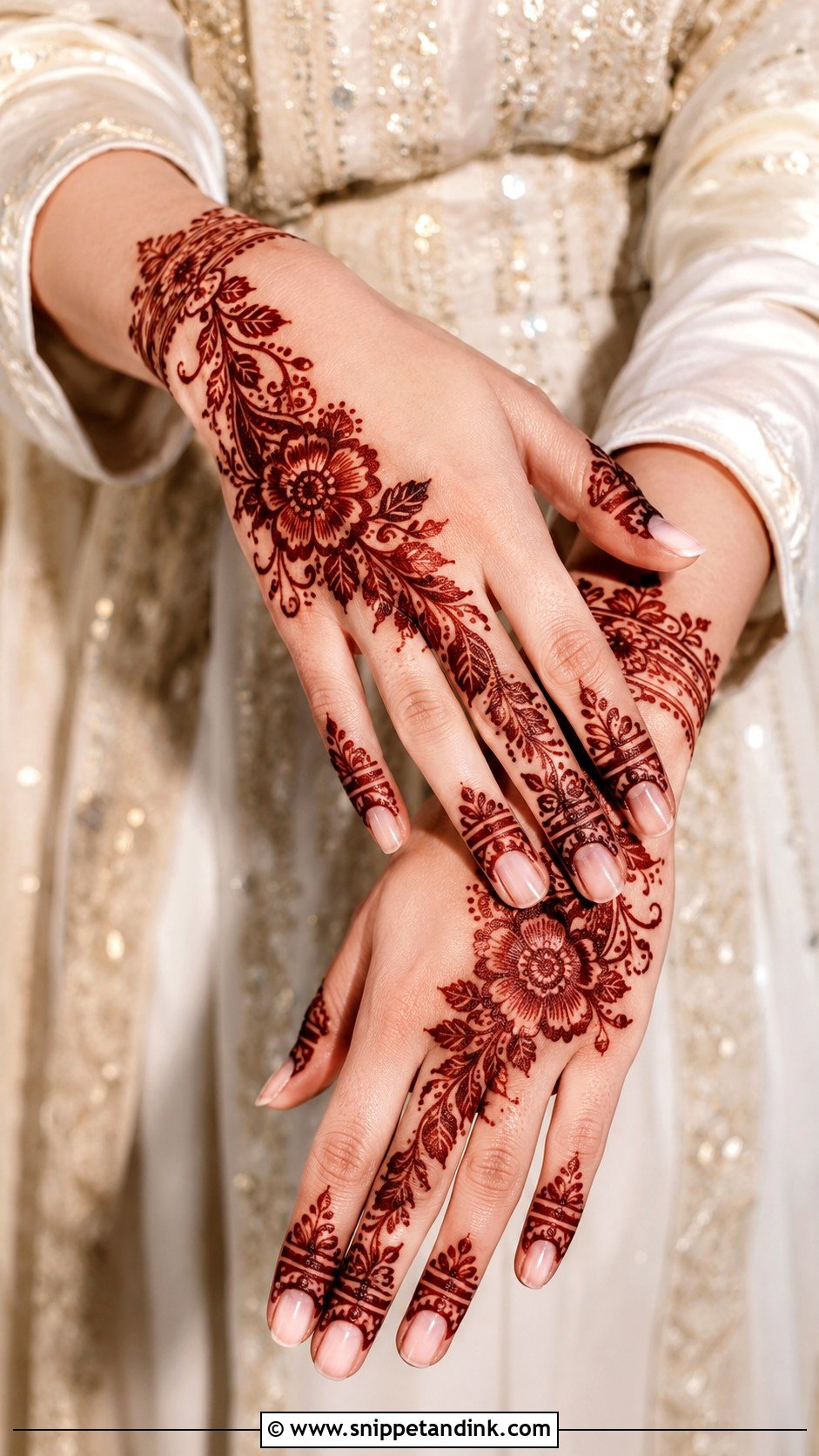
Guests want special, not bridal. Bold flowers, a few shaded leaves and a neat diagonal across the back of the hand, a slim cuff, and matching leafy patterns on two or three fingers. I keep the palm light for guests, both to stay a step below the bride and because palm henna smudges on everything you pick up while it’s wet. It’s easy to apply the night before and is detailed enough to look dressed with bangles and rings.
17. Arabic Bridal Simple Mehndi Design
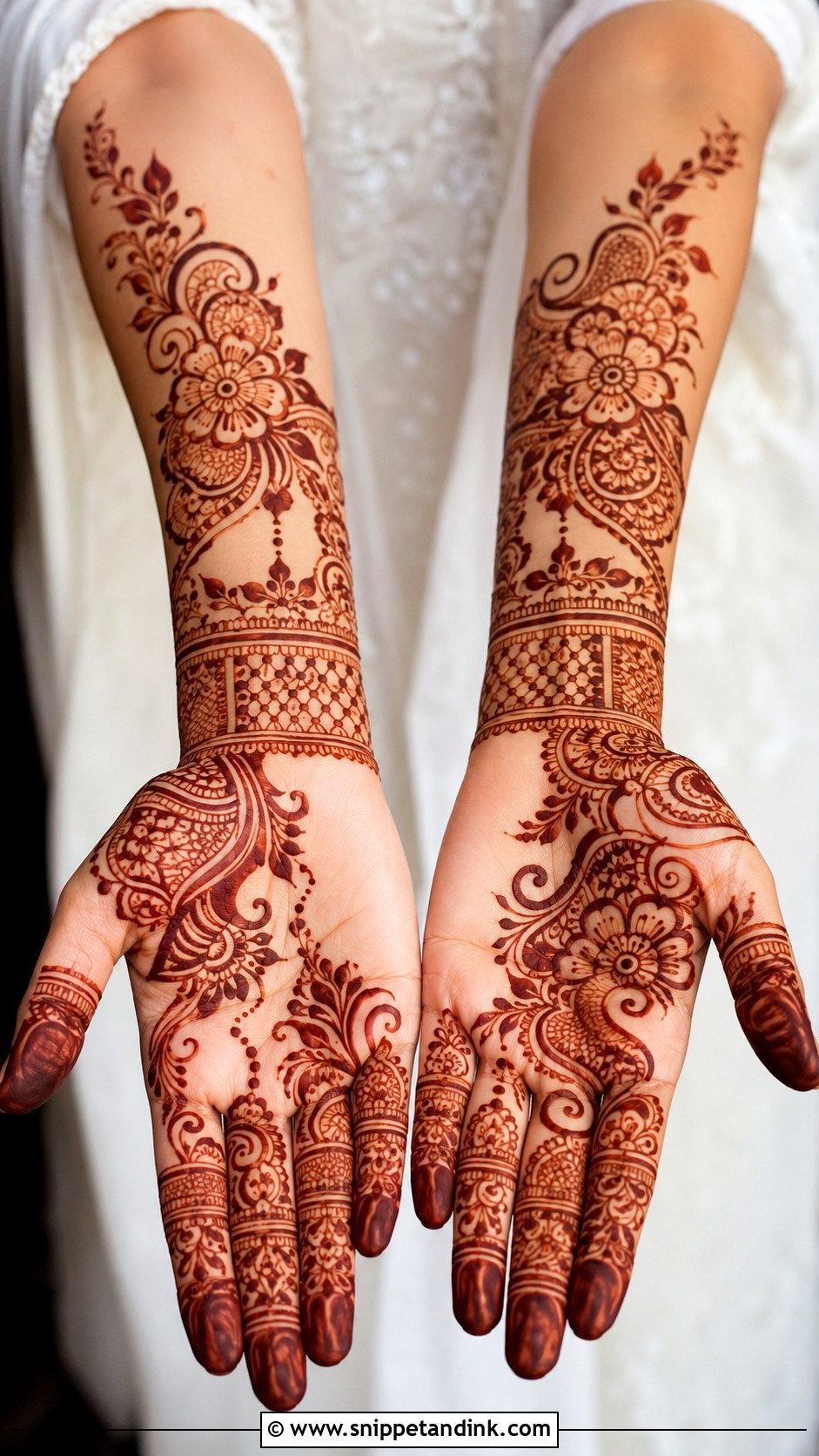
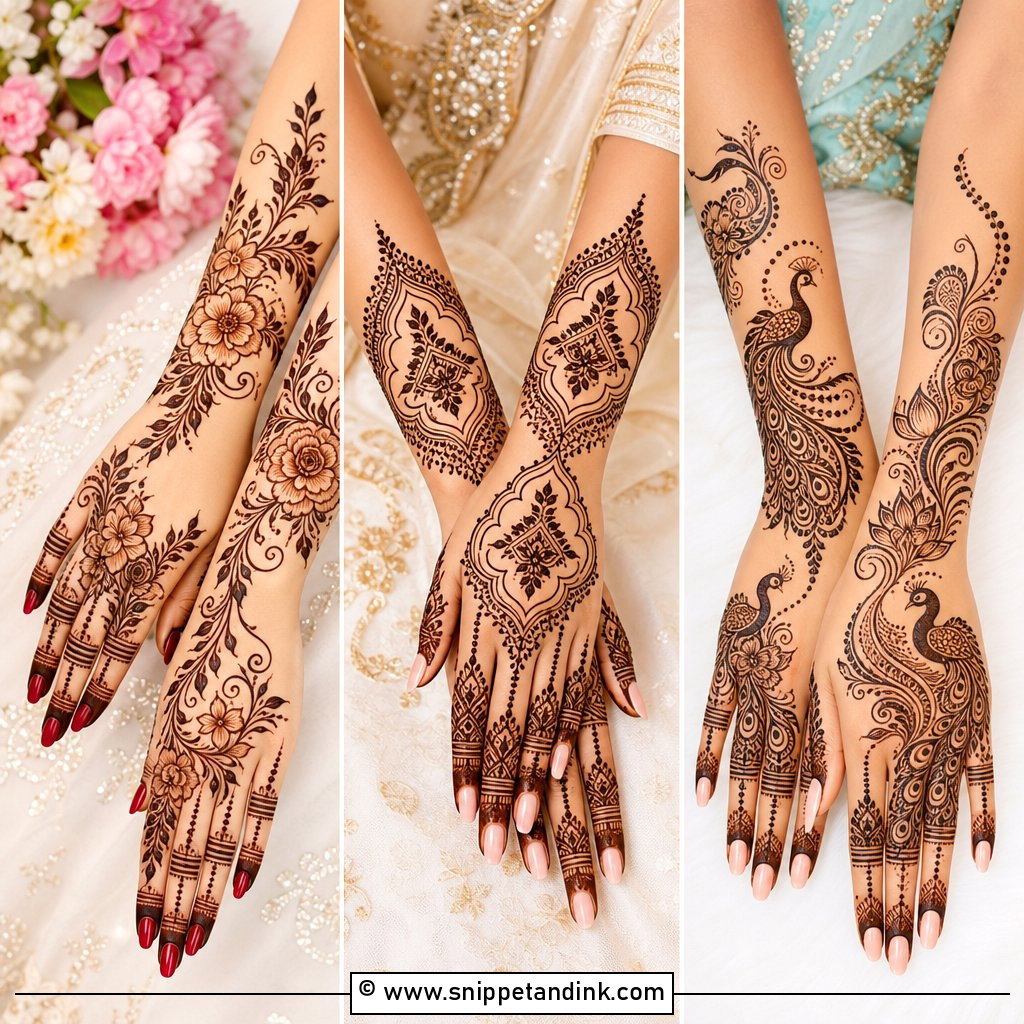
A simple Arabic bridal mehndi design trades dense filling for large floral trails, paisley clusters, a few jaali sections and bracelet bands that flow from the fingers toward the forearm. I make it fuller near the wrist and fingers and keep open space between the major motifs. Initials or a tiny heart can be hidden in the trail if the bride wants them. Since bridal henna peaks a day or two after application, I schedule it two days before the wedding.
18. Arabic Engagement Mehndi Design
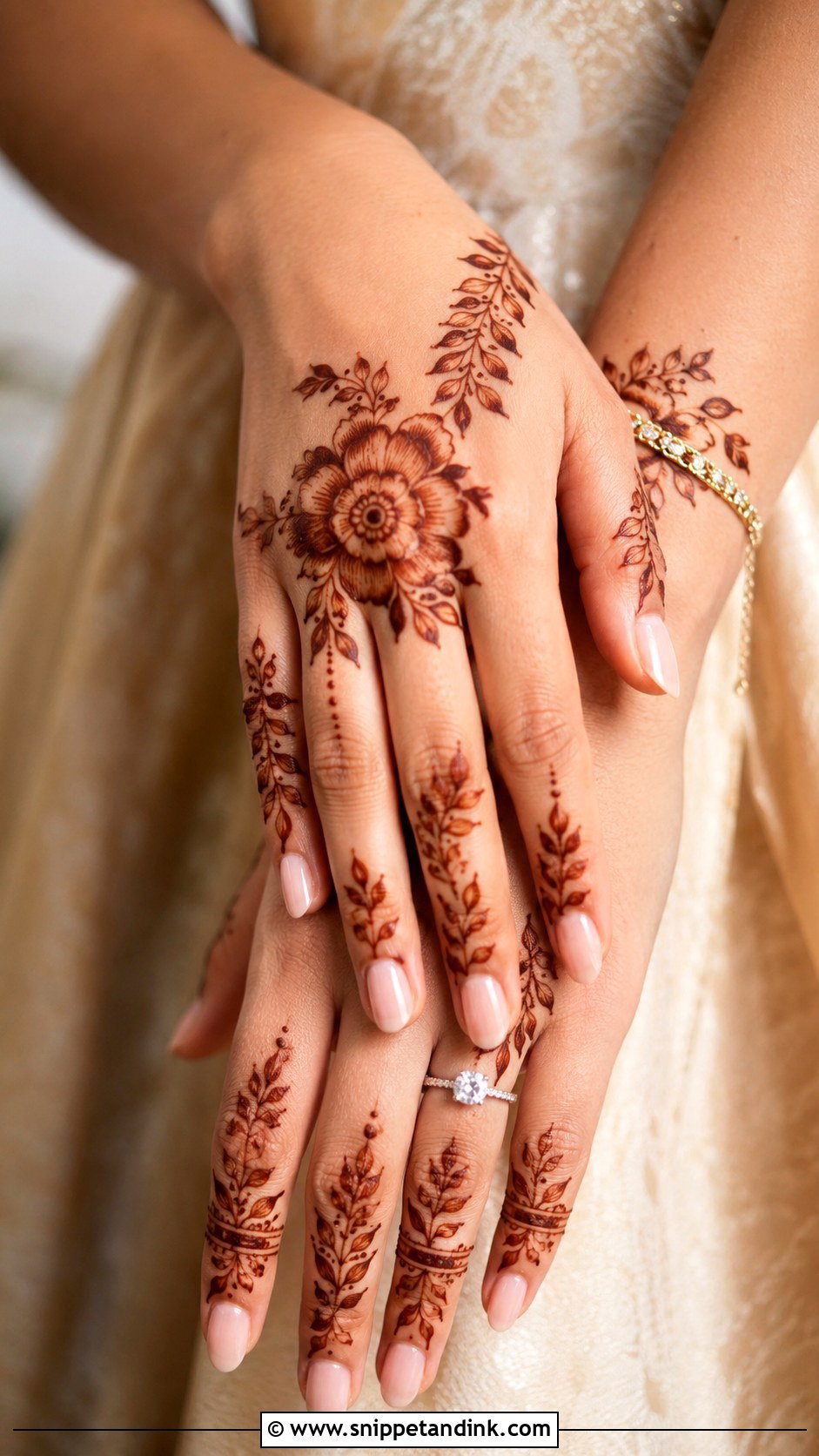
An Arabic engagement mehndi design works best as jewellery: a bracelet band at the wrist, a central floral motif on the back of the hand and a fine chain reaching toward the ring finger, with leaves, dots and small petals along it. The ring finger can carry a little extra detail below the knuckle where the ring sits, which frames it. The palm can stay plain or take a mini trail. It’s comfortable through a long function and photographs clearly in ring close-ups.
19. Arabic Party Mehndi Design
Last-minute party henna should be bold and open: a couple of big flowers, a clean leaf trail across the back of the hand, a few filled fingertips or dotted bands, and one curved line or a small cuff at the wrist. There’s no dense work, so it’s fast. Keep in mind that paste applied a few hours before a party will still be bright orange at the event. Apply it a day early if colour matters to you.
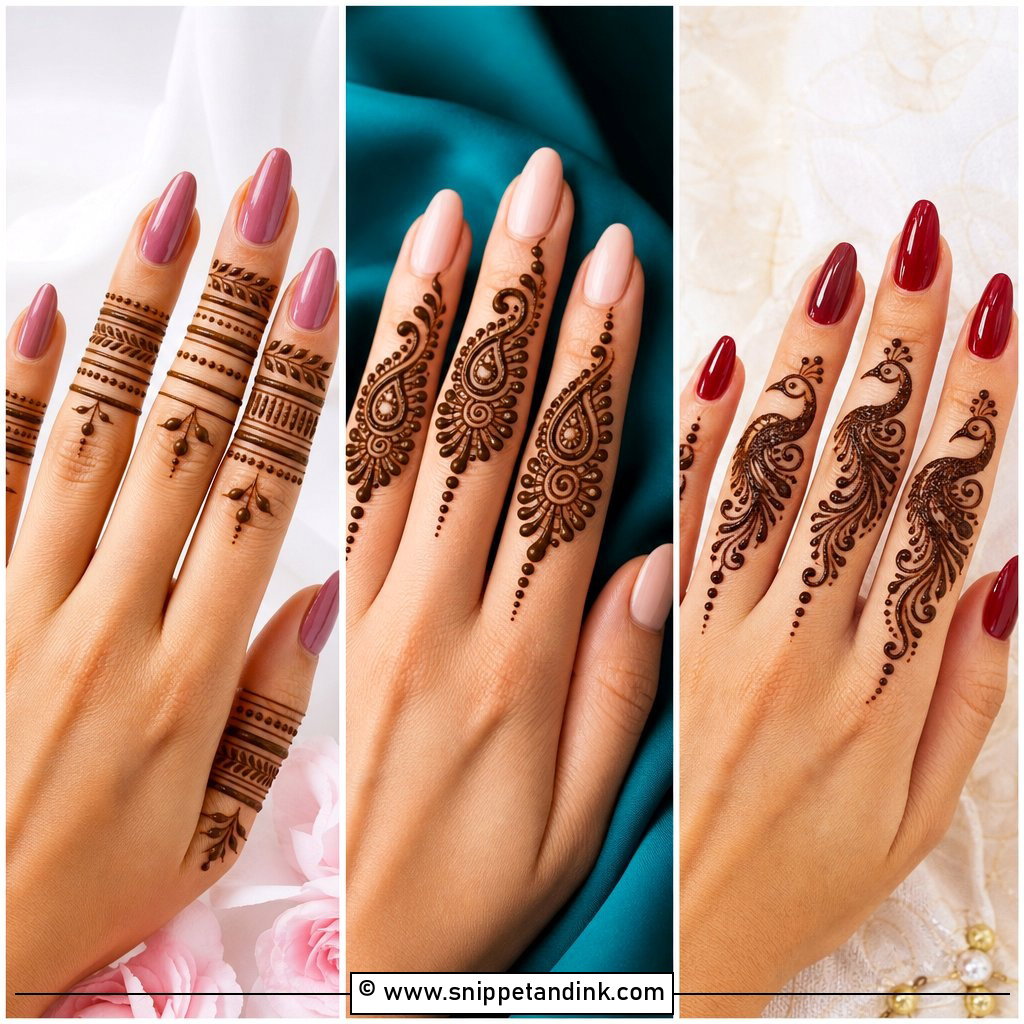

20. Arabic Palm Mehndi Design
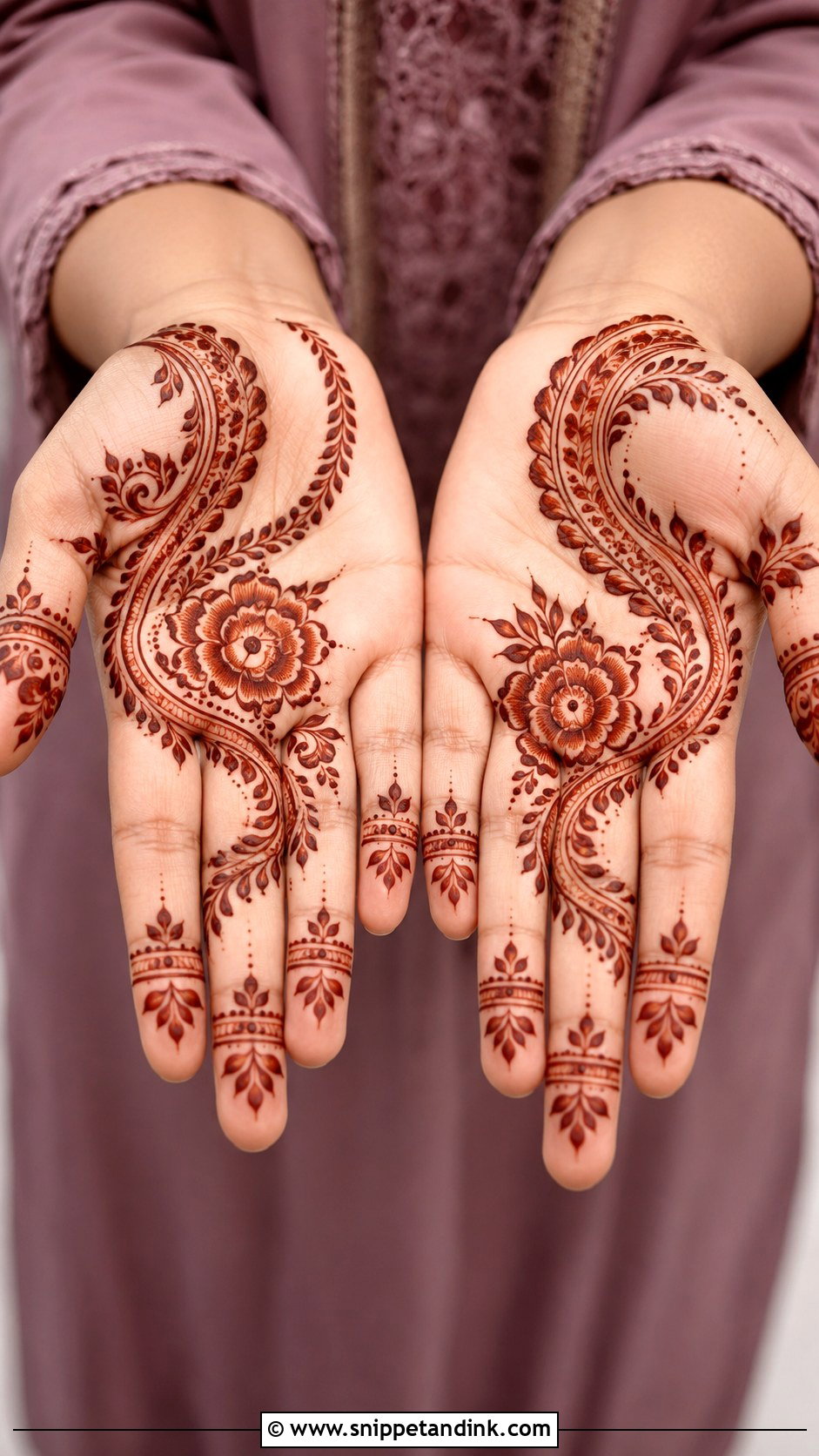
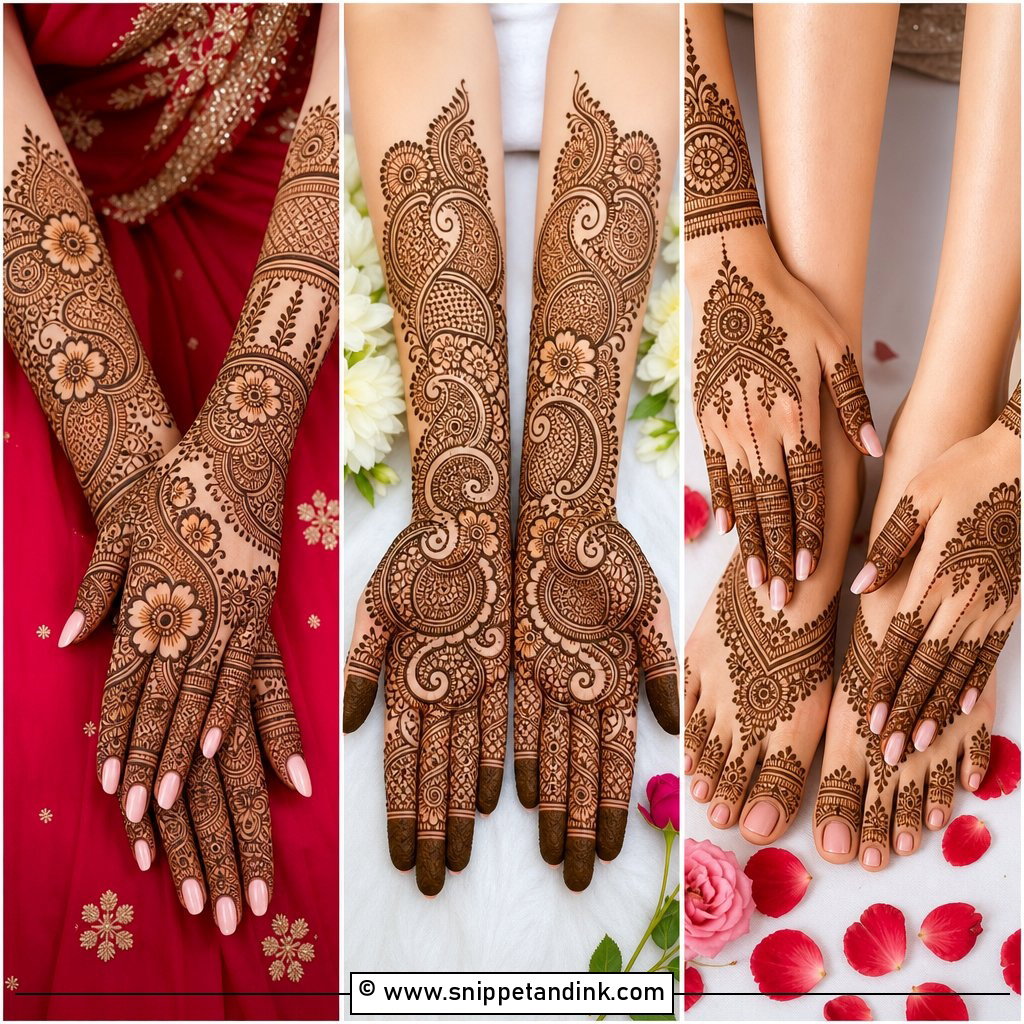
One strong motif in the centre of the palm, whether a flower, mandala, paisley or leaf cluster, then curved trails linking it to the fingers. One side of the palm carries more decoration than the other, which is the classic Arabic balance. A few dots soften the empty areas, and repeating leaves or small bands replace heavy finger filling. I keep the motif off the deepest creases so it doesn’t crack when the hand closes.
21. Arabic Back Finger Mehndi Design
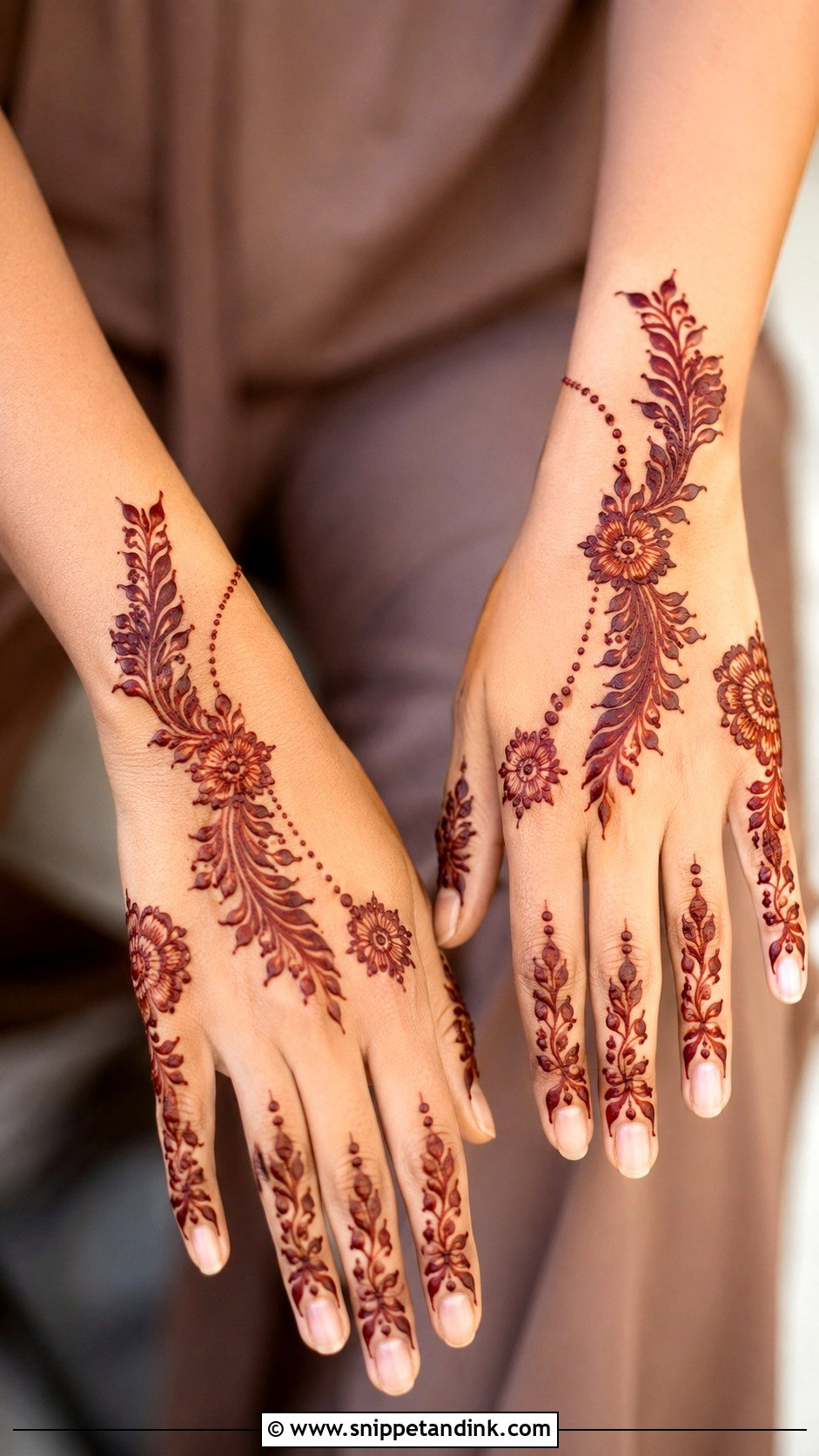
This one sits on the fingers and the upper back of the hand only. Each finger gets a related but different pattern, and a small floral cluster below the knuckles pulls them together; the lower back of the hand stays bare or takes a single wrist detail. It lengthens short hands visually. It’s also a quick dry, which makes it practical for a busy day.
22. Arabic Side Hand Mehndi Design
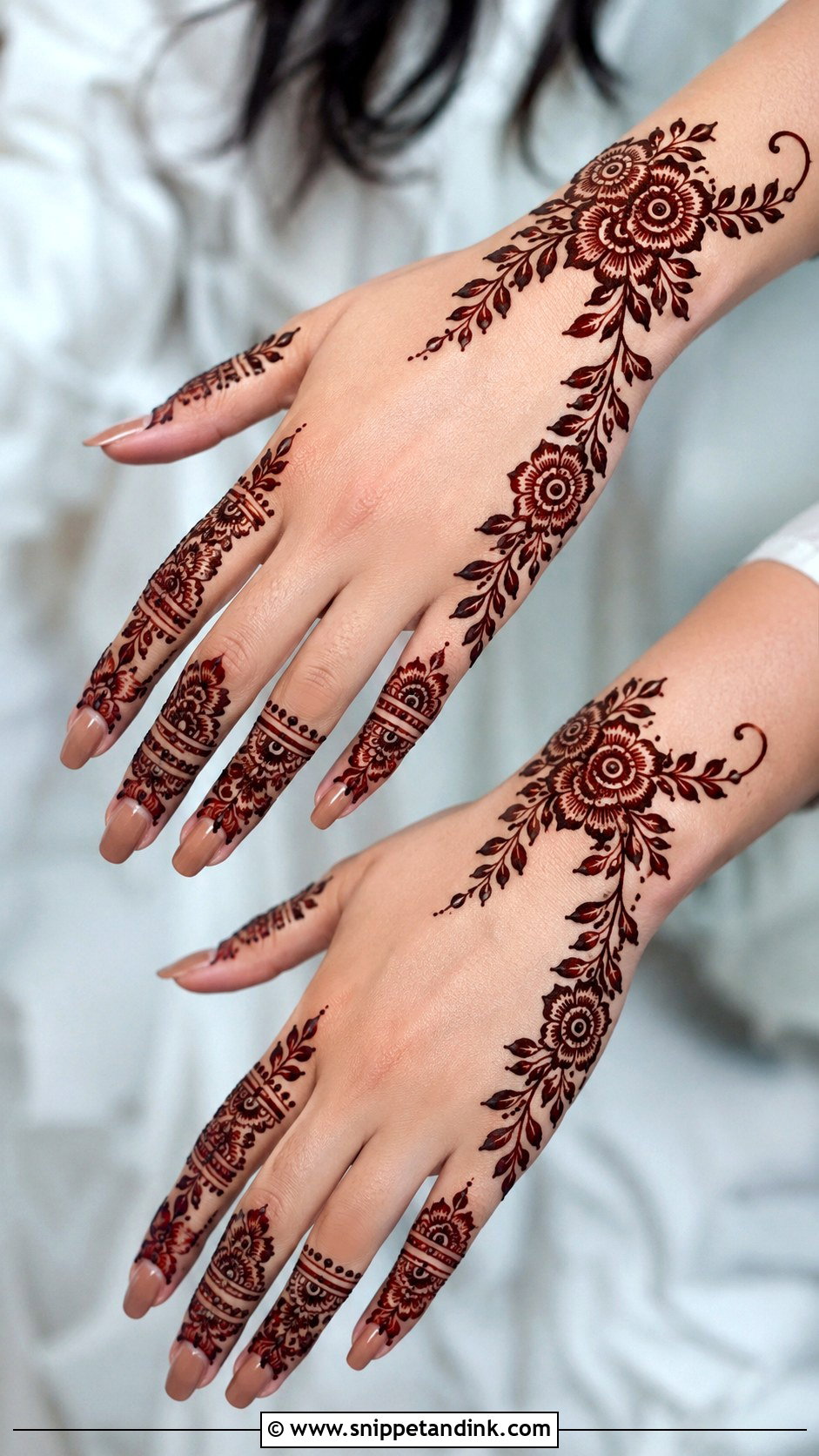
A curved floral vine runs from the wrist along the outer edge of the palm or back of the hand, with leaves pointing inward and the centre left open. The nearest finger gets a matching vine to finish it. It’s comfortable and visible in photos without covering much skin. The outer edge rubs against tables and bags more than people realise, so I tell clients to rest that hand palm-up while it dries.
23. Arabic Wrist Mehndi Design
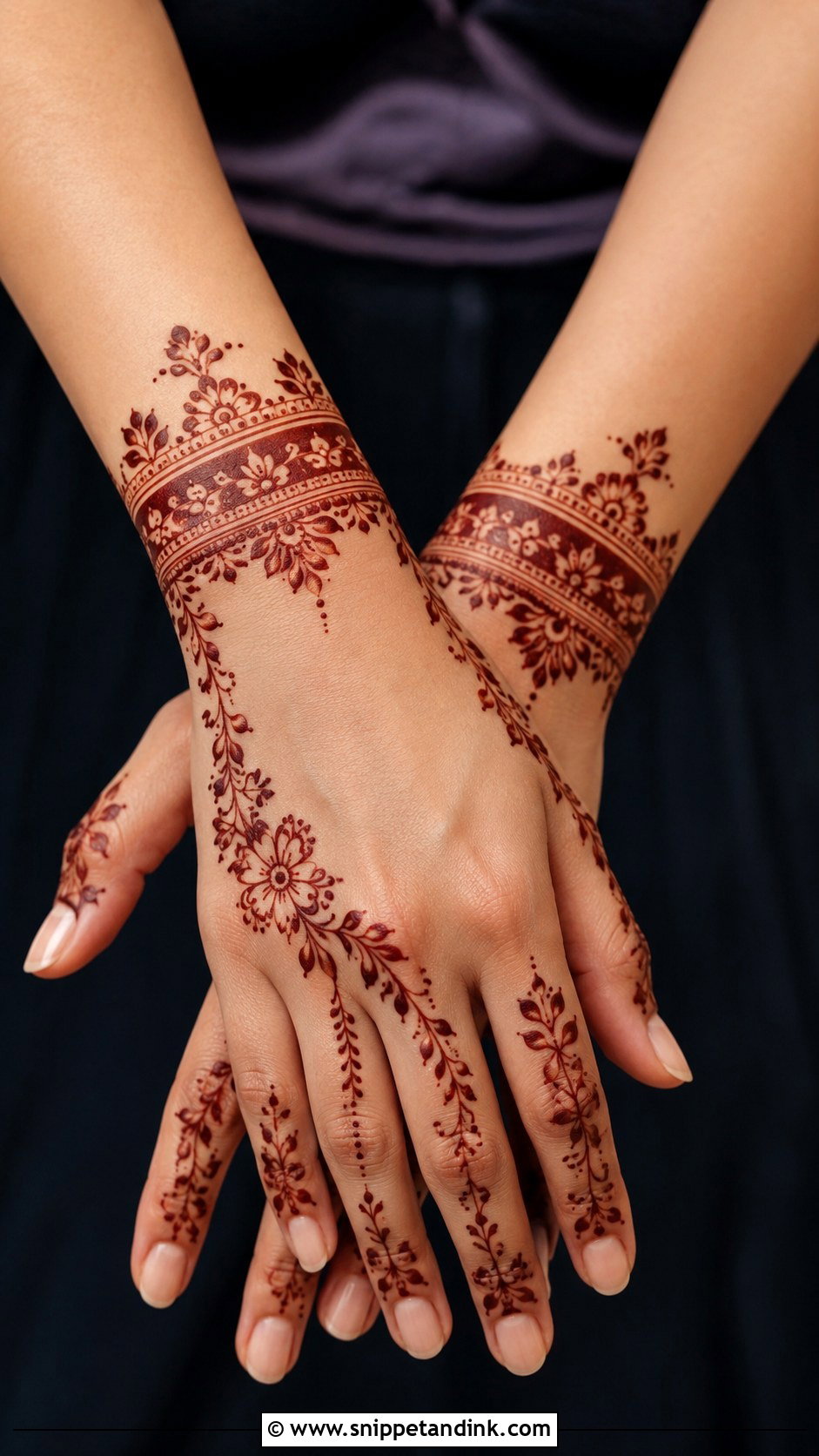
Wrist henna works like a cuff: one or two bands around the wrist, small flowers at the sides and short leaf chains dropping toward the hand. Keep the band neat and not too wide. It can link to a small motif on the back of the hand or stand alone. It suits half sleeves well because it stays visible. Wrist skin often stains paler than fingers, so a slightly fuller line helps the colour.
24. Arabic Ring Mehndi Design
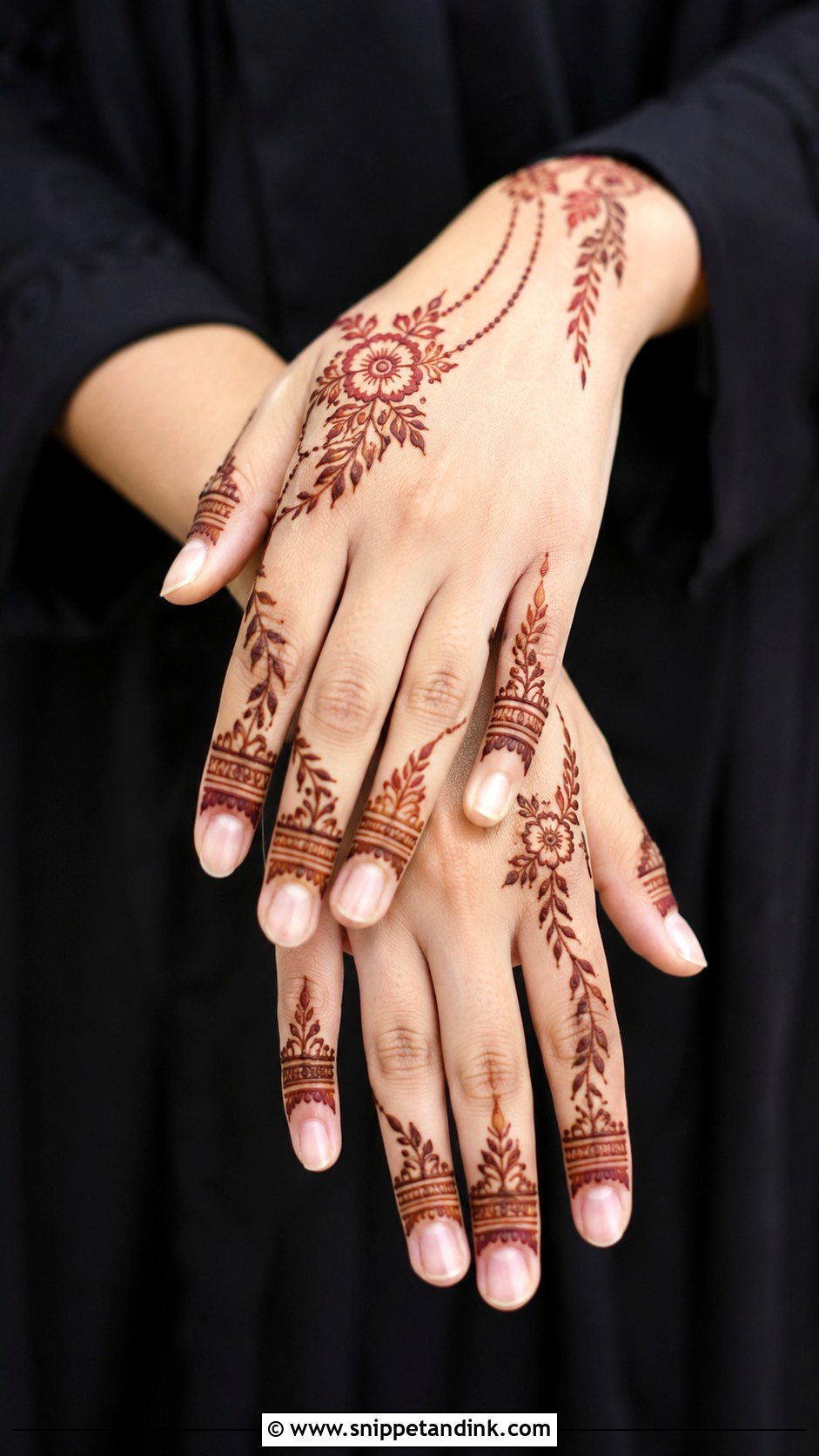
A ring of henna around one or two fingers, joined by fine chains, dots and tiny leaves to a small motif on the back of the hand. Everything else stays open, so the ring effect is clear. I place the bands between the knuckles rather than over them, because a line across a knuckle cracks every time the finger bends. It’s quick to apply and easy to adapt to longer or shorter fingers.

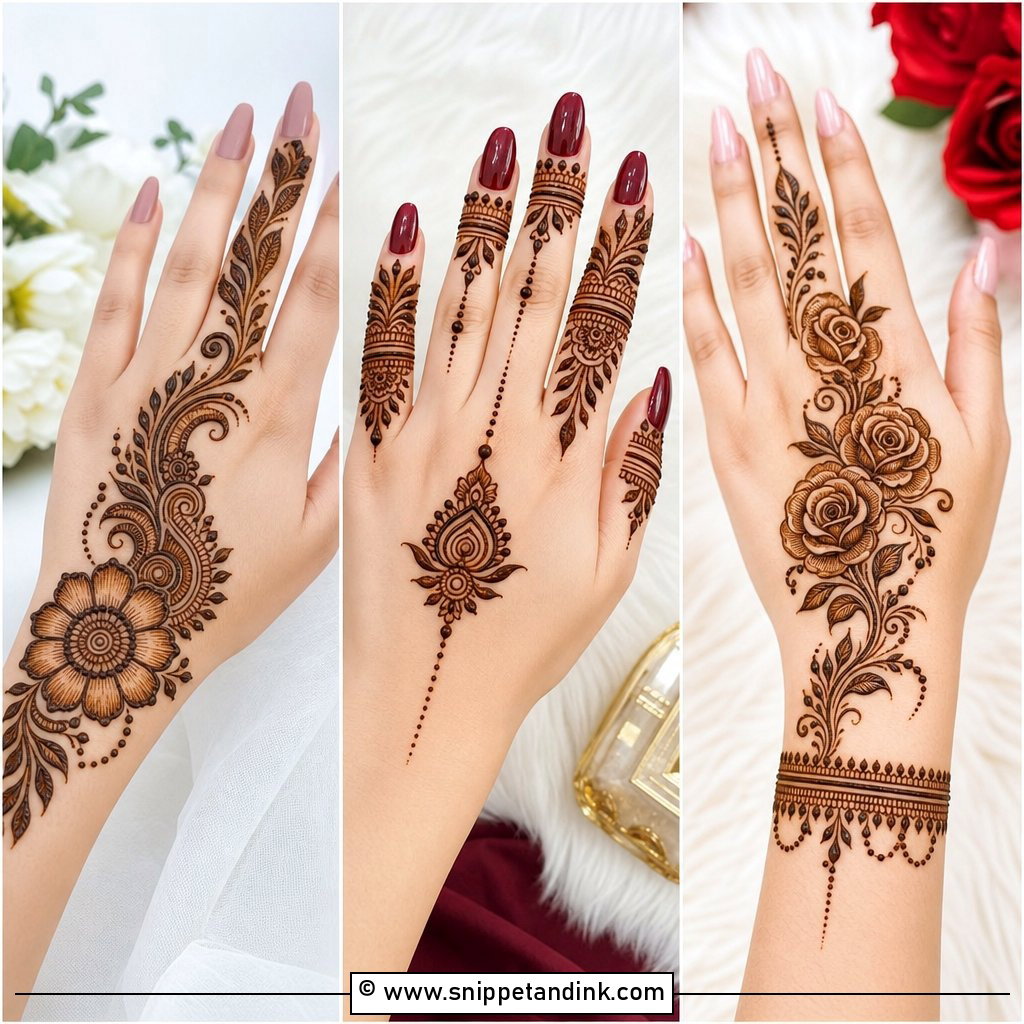
25. Arabic Khafif Mehndi Design
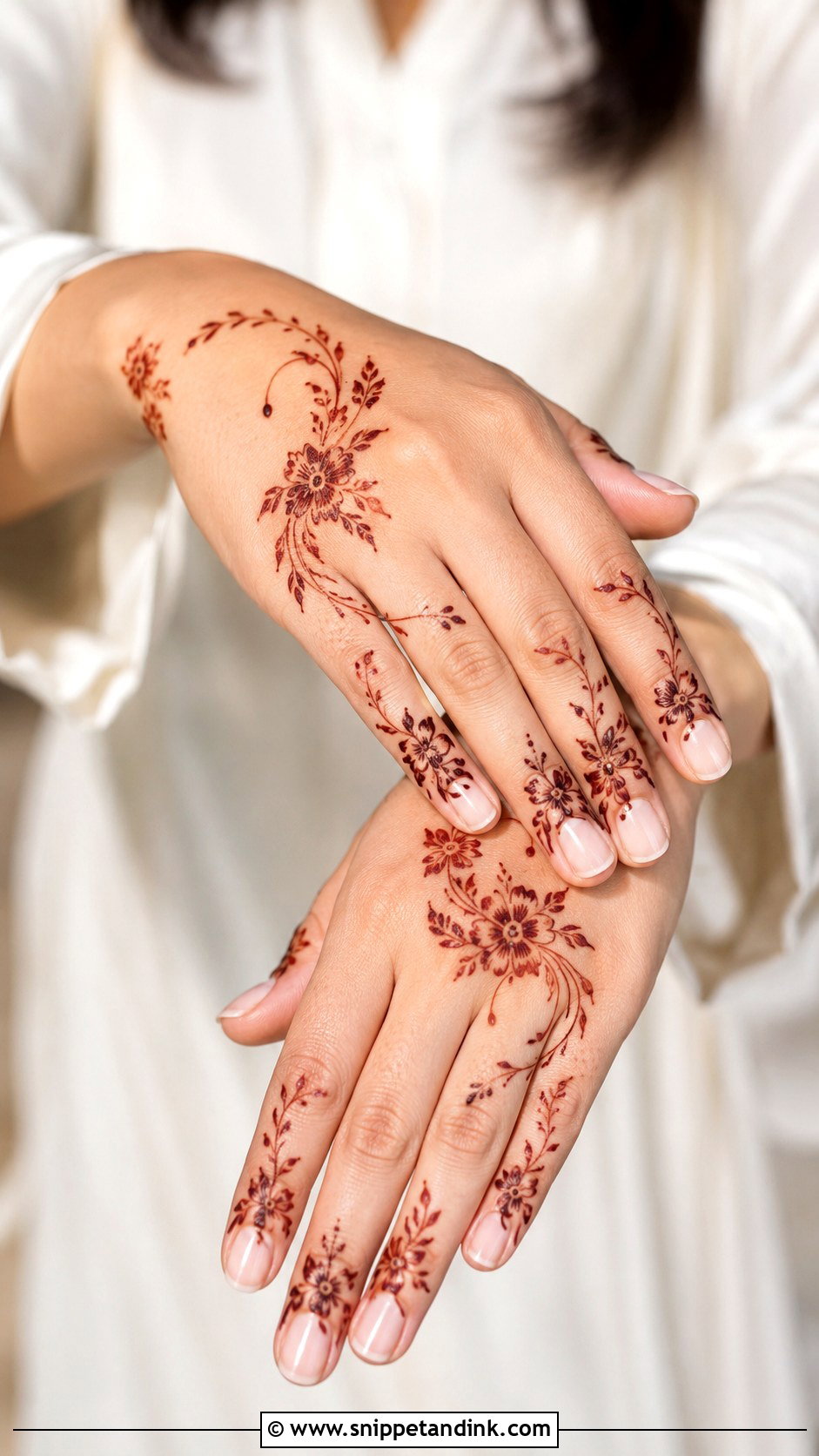
Khafif is the airy end of Arabic henna: scattered flowers, light leaves and thin curved stems across the back of the hand, with small dots along the main trail and no heavy shading. Because each element has room around it, small mistakes hardly show, which is why I recommend it to people learning. It looks refined rather than dramatic, and it suits almost any occasion.
26. Gulf Arabic Mehndi Design
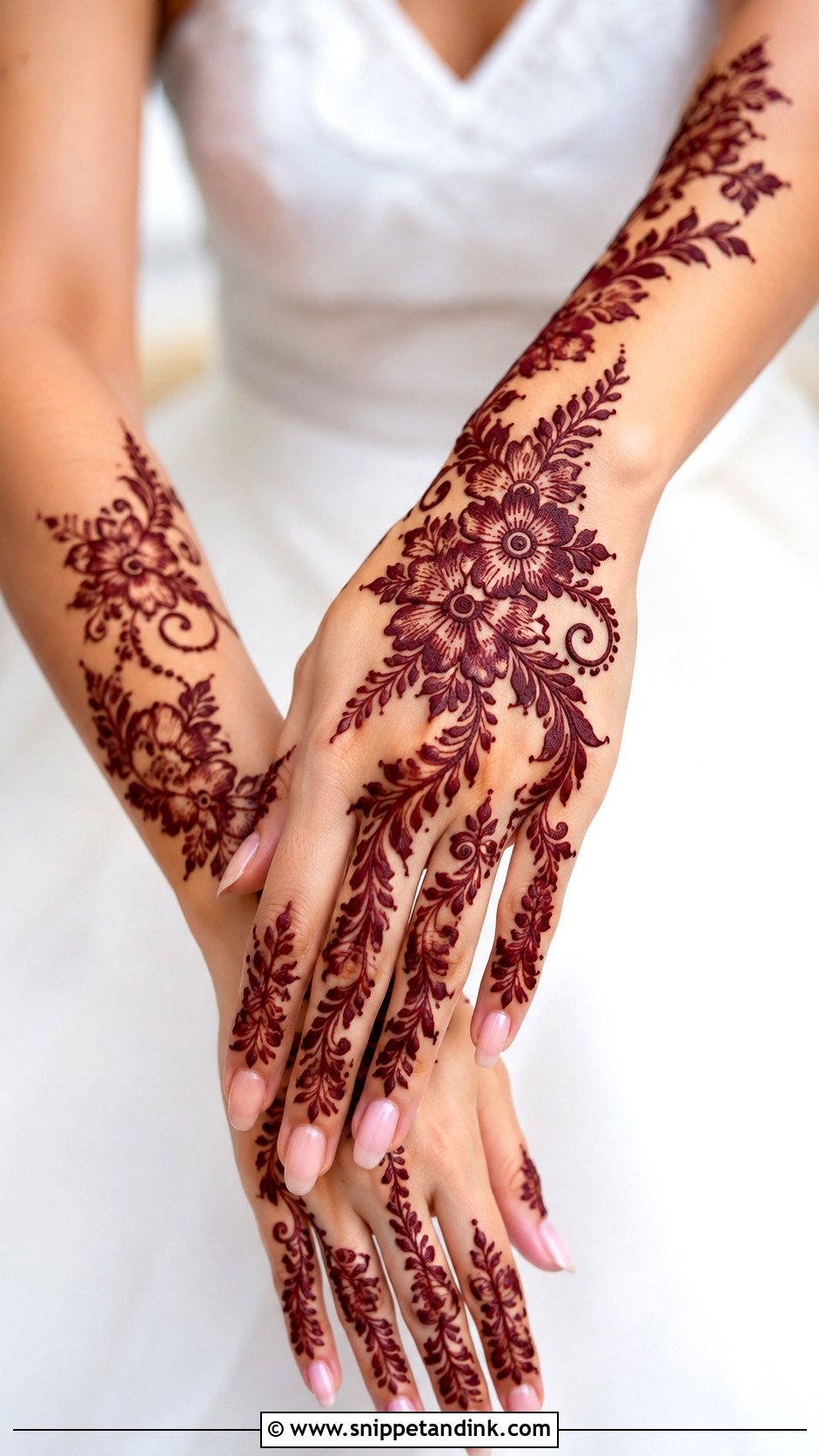
Gulf henna is the bolder cousin: big flowers, strong curves and a slightly dramatic layout. To keep it simple, I use larger motifs with clean outlines and no tiny fill, place a bold floral cluster near the wrist and let thick leafy vines run toward the fingers. Open space between motifs gives it a modern finish. The thick lines hold plenty of paste, so the stain usually comes out rich even on the back of the hand.
27. Arabic Moroccan Mehndi Design
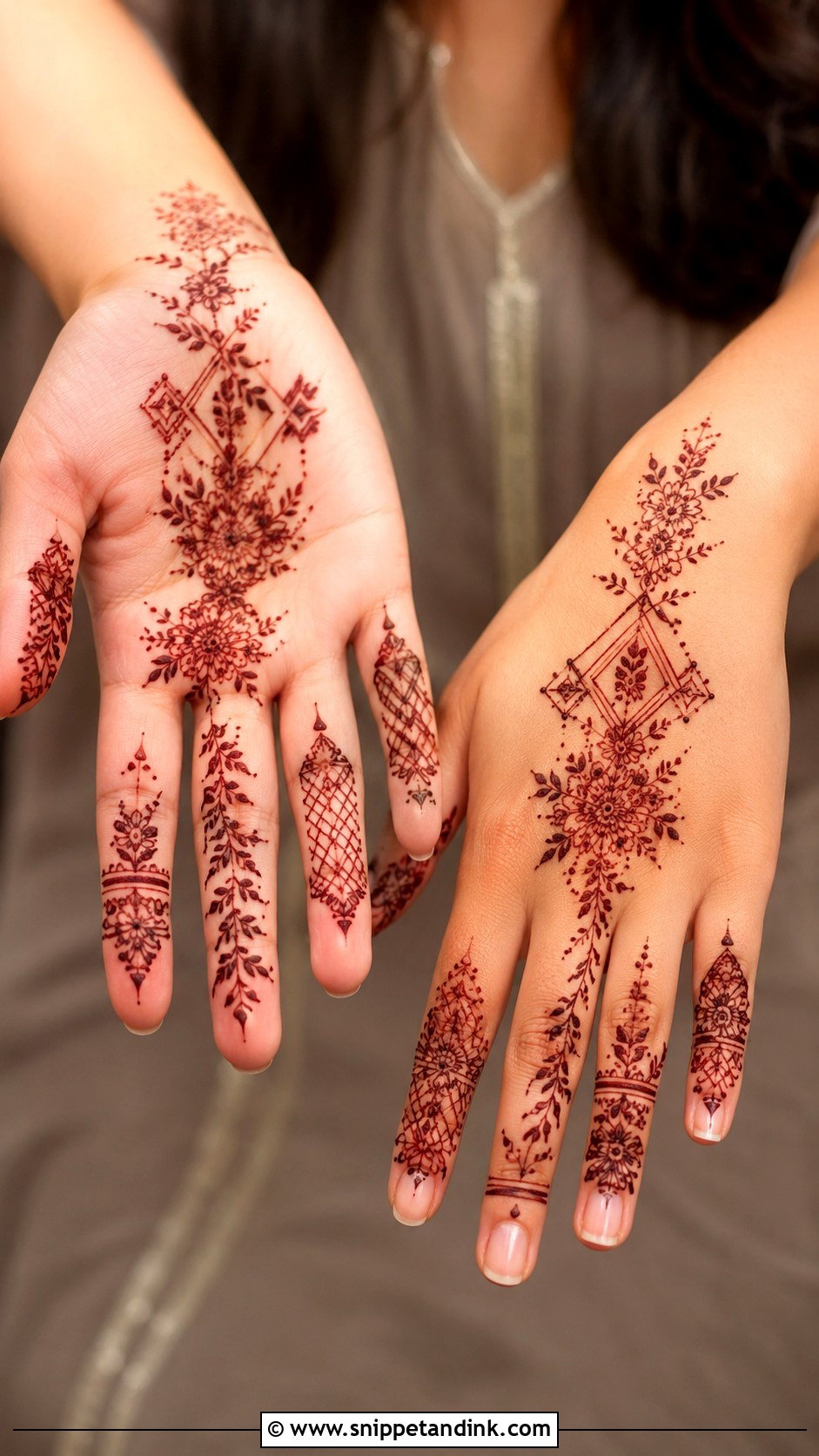
Moroccan influence brings diamonds, straight lines and small triangles into an Arabic floral trail. I keep the geometry sparse, add a floral motif at the wrist to soften it and maybe one mesh panel for texture. It suits anyone bored of standard vines. Straight lines are harder than curves with a cone, so I draw them in short strokes and turn the hand rather than dragging one long line.
28. Indo Arabic Mehndi Design Simple
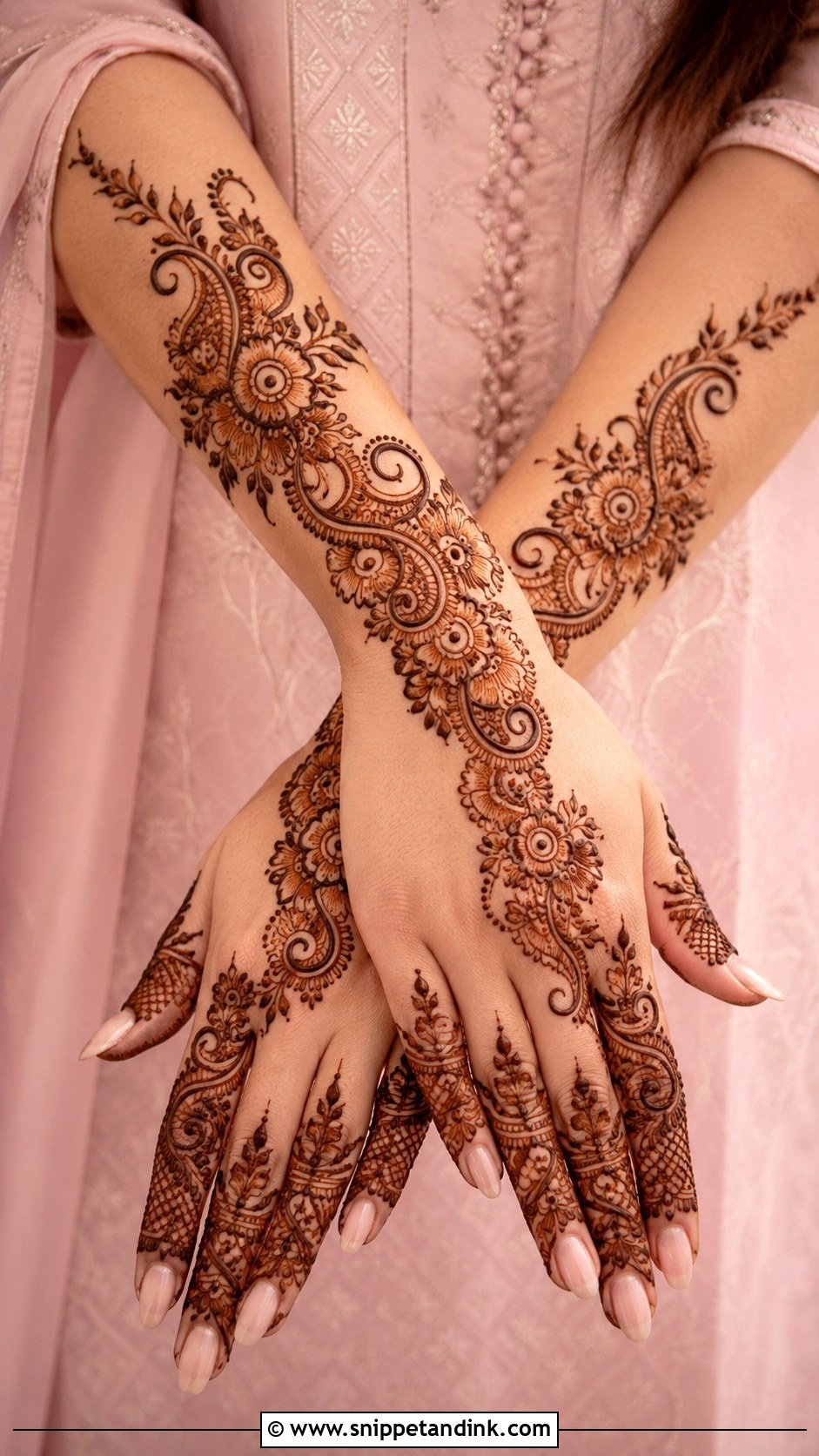
Indo-Arabic starts with a diagonal floral trail as the base, then adds Indian-style dots, tiny paisleys and fine line fill inside selected motifs only. Visible open space stops it from tipping into full Indian density. It’s my suggestion when someone finds plain Arabic too sparse but doesn’t want a packed hand, and it adjusts easily from light to fuller depending on the event.
29. Arabic Shaded Mehndi Design
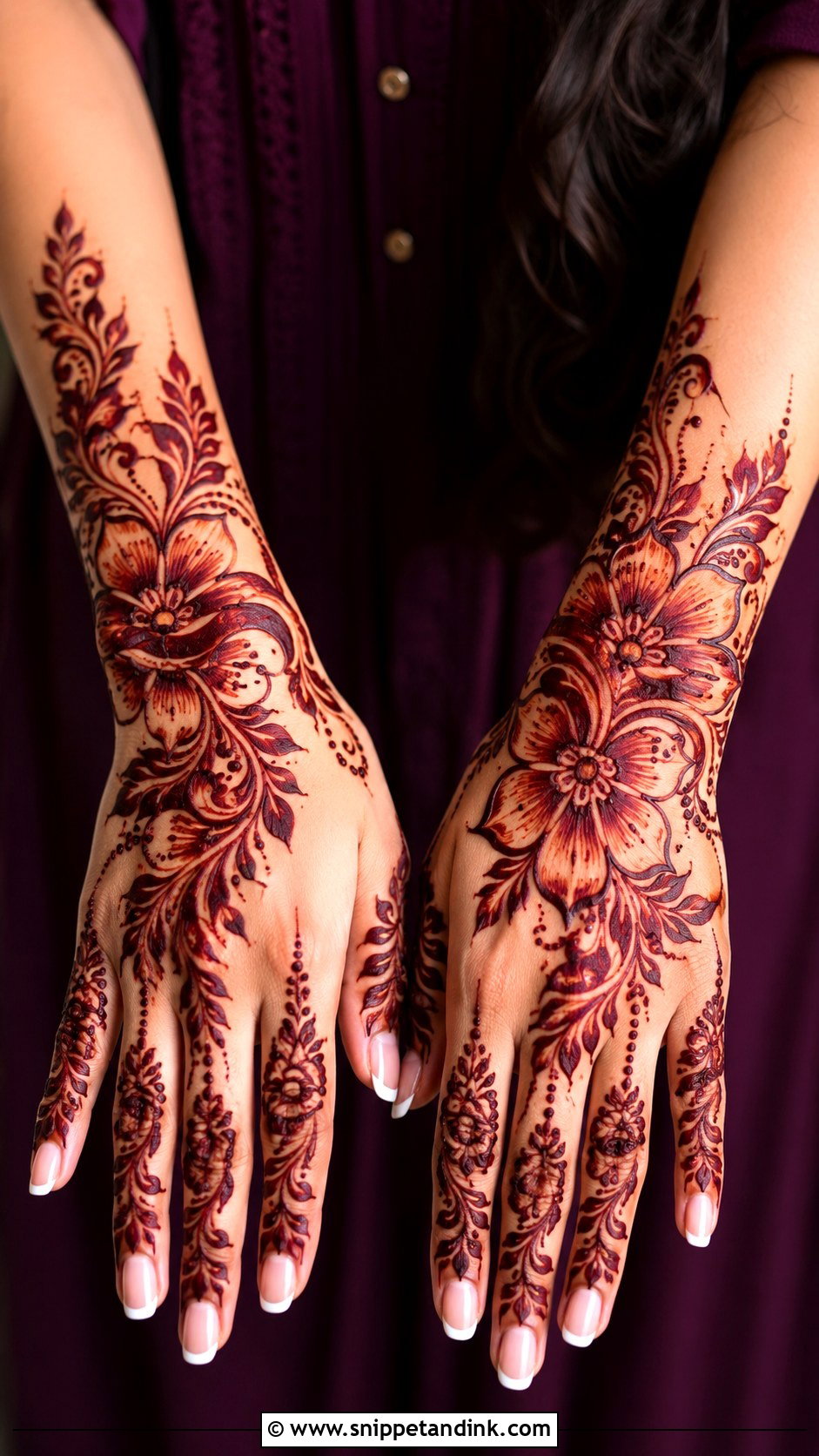
Shading gives depth without adding more motifs. I take one or two large flowers and shade the petals lightly from the base outward, give the leaves a few inner strokes and join everything with curved vines. Outlines stay bold so the shaded areas look clean once stained. It shows best on the back of the hand. Keep the shading soft and even; heavy shading stains as dark as the outline and flattens the flower.
30. Arabic Negative Space Mehndi Design
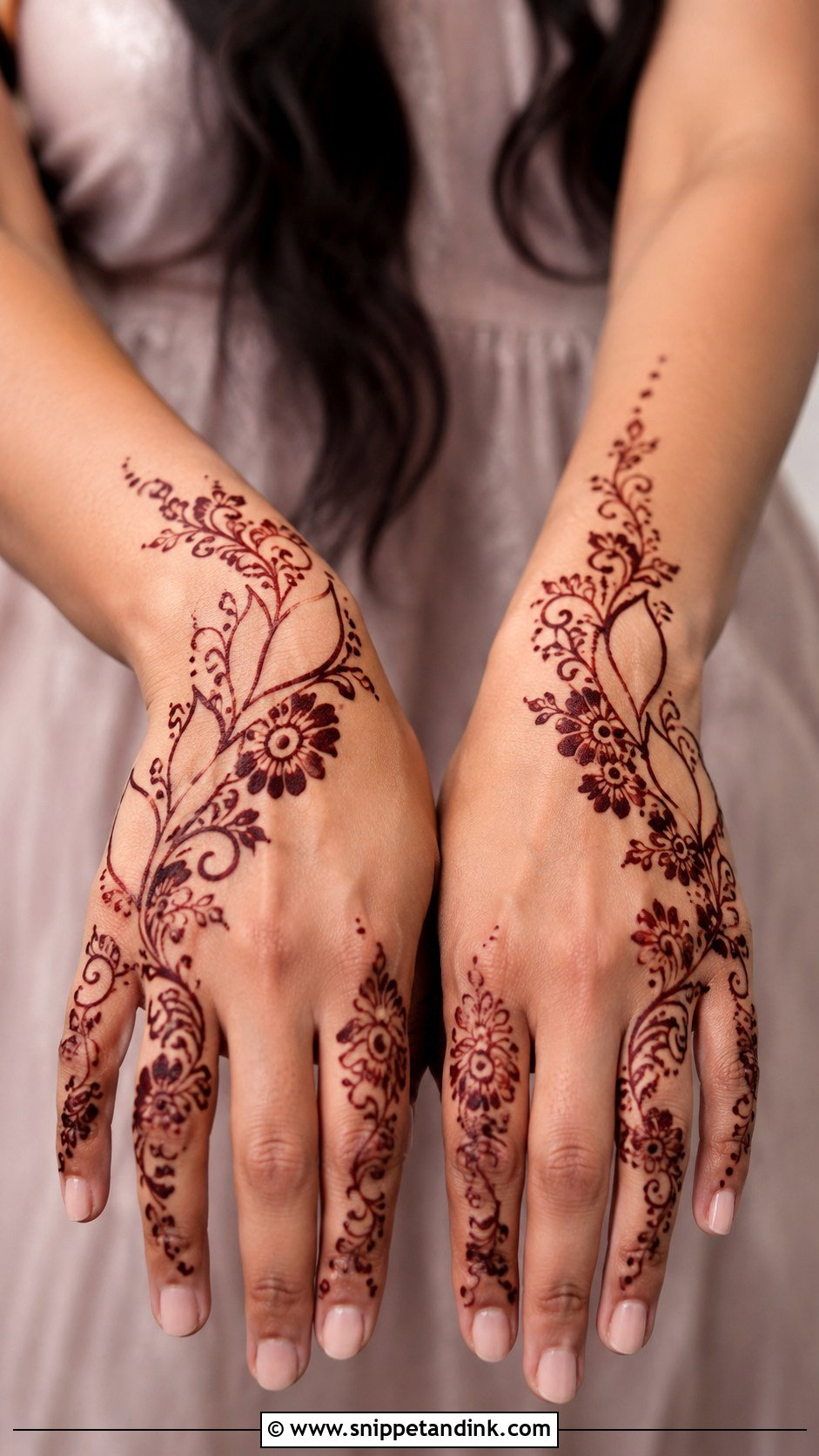
In negative space work, the bare skin is part of the pattern. A floral trail runs down one side with clear gaps between flowers, leaves and bands, and some shapes are outlined and left empty inside. The result is crisp, airy and easy to read in photos. It needs precise outlines, though; an outline with a gap in it looks like a mistake rather than a choice.
31. Arabic Peacock Mehndi Design Simple
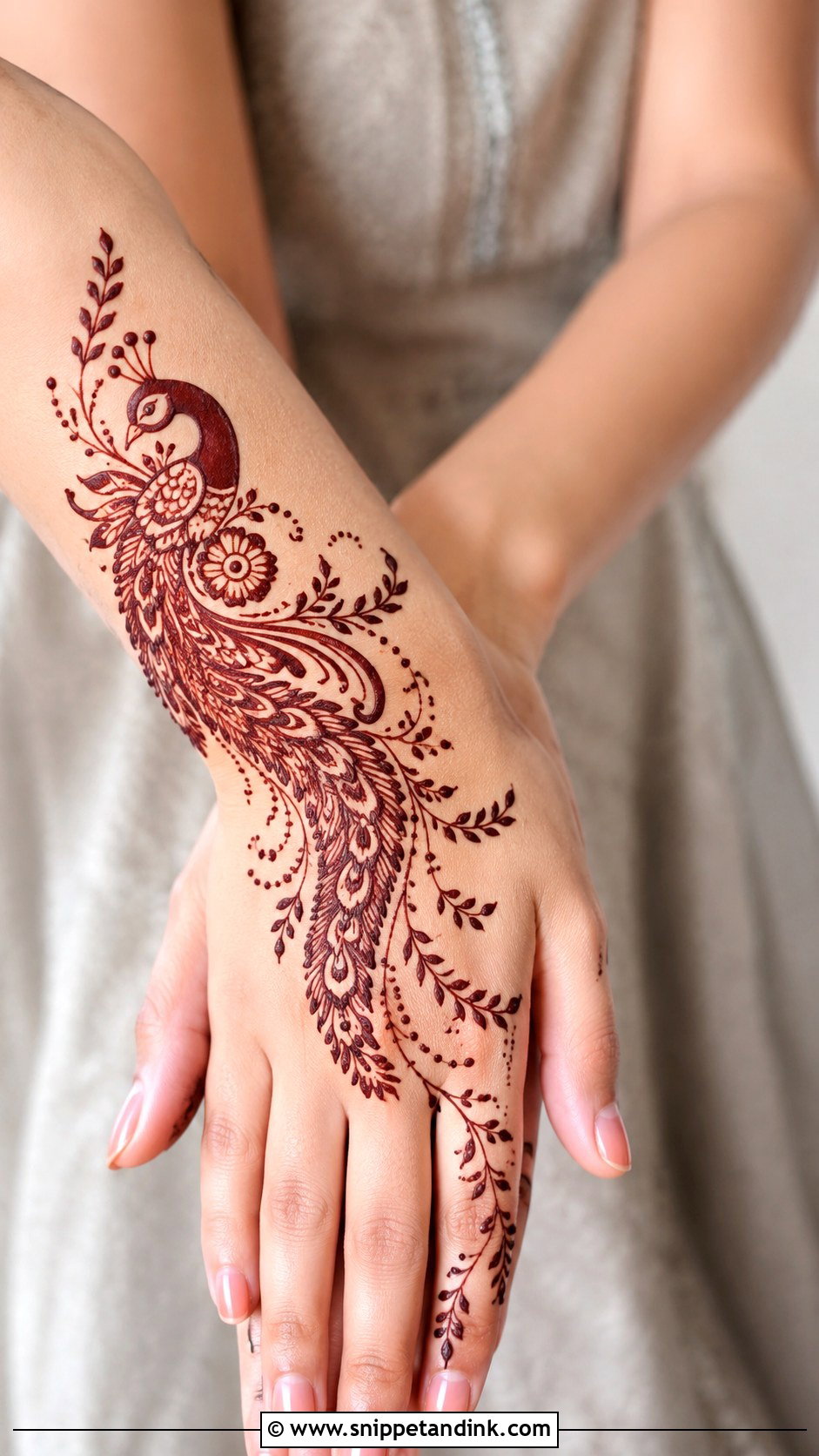
One peacock motif near the wrist or the centre of the back of the hand, its tail turning into curved leaves and floral vines that run diagonally. The body needs a clear outline, a small eye and light feather strokes, nothing more. Dots and tiny petals go only where gaps look empty. It brings a traditional feel to festive outfits without the hours a dense peacock design takes.
32. Arabic Lotus Mehndi Design
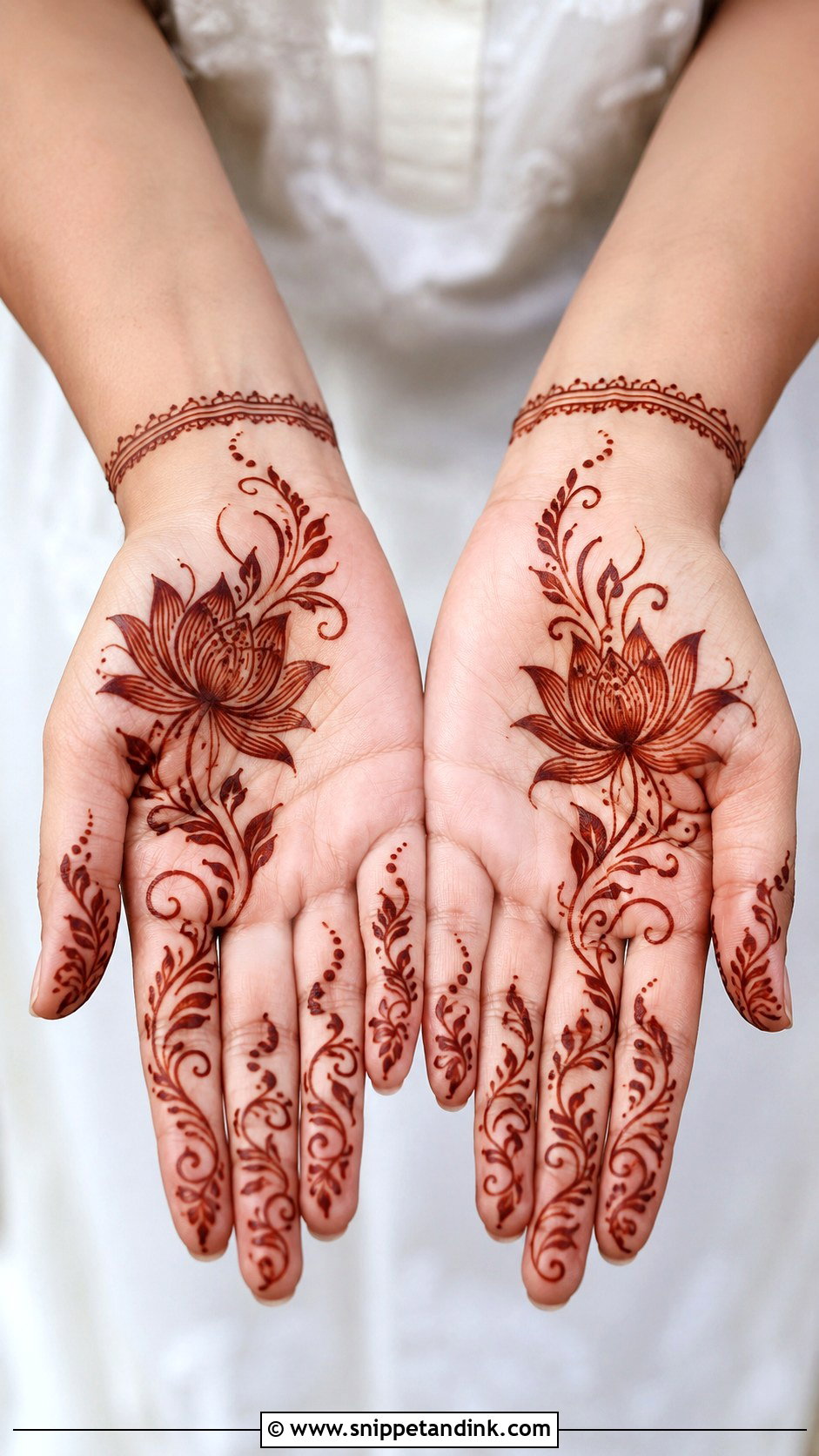
The lotus feels calmer than a rose because its petals are symmetrical and broad. One flower sits on the palm, the wrist or the back of the hand, with curved vines and slim leaves around it, a few dots above and a thin band below. Broad petals hold enough paste to stain clearly on every skin tone. Beginners can manage it, and it suits pujas and weddings alike.
33. Arabic Bail Mehndi Design
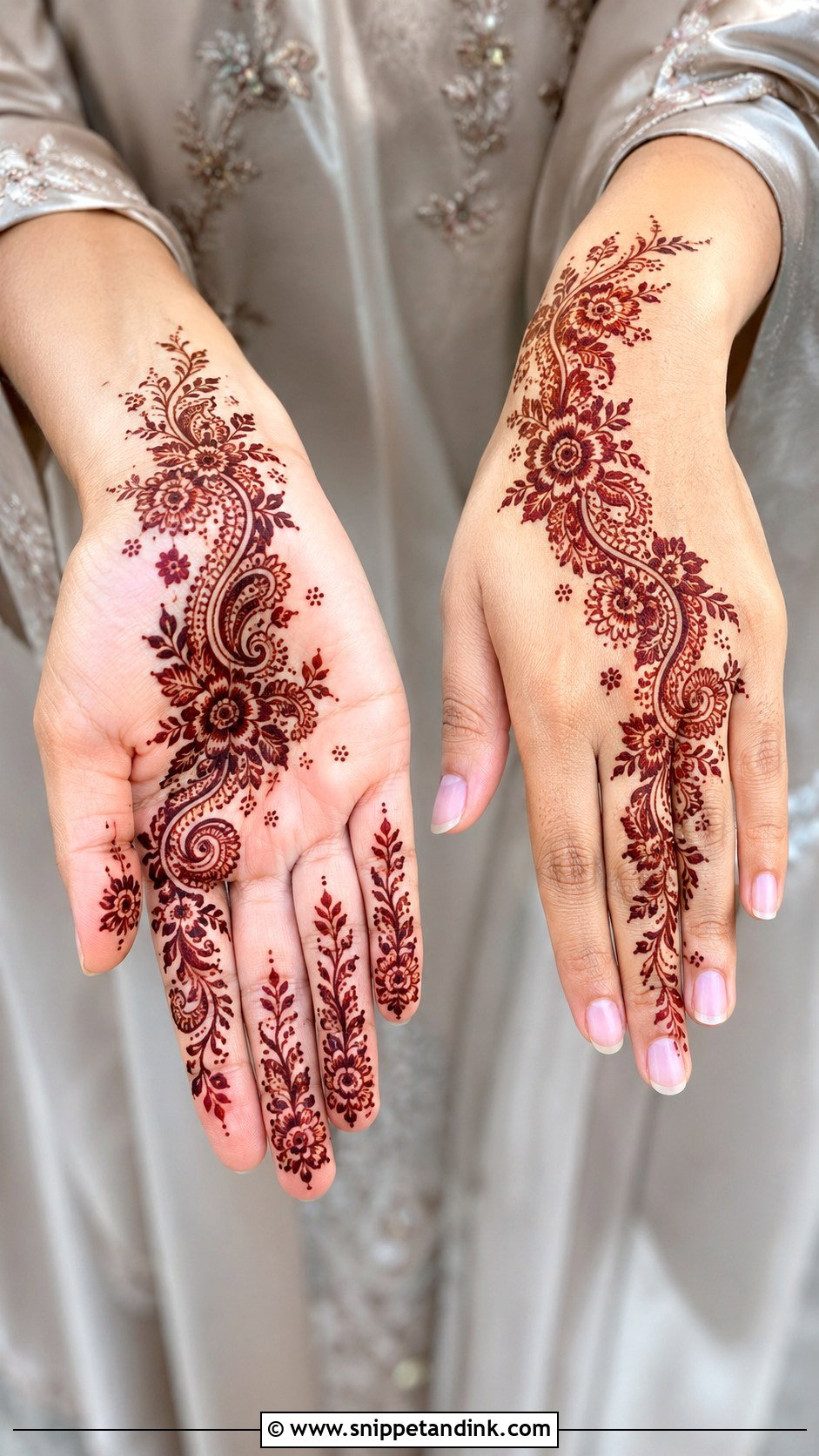
A bail is a vine travelling across the hand, usually from the wrist to a finger, with flowers, leaves, dots and small paisleys along its length. One side of the trail carries more weight and the other stays open, which is the Arabic signature. It works on the palm, the back of the hand or the side, and adjusts to any hand size. If you only learn one Arabic layout, learn this one.
34. Arabic Small Hand Mehndi Design
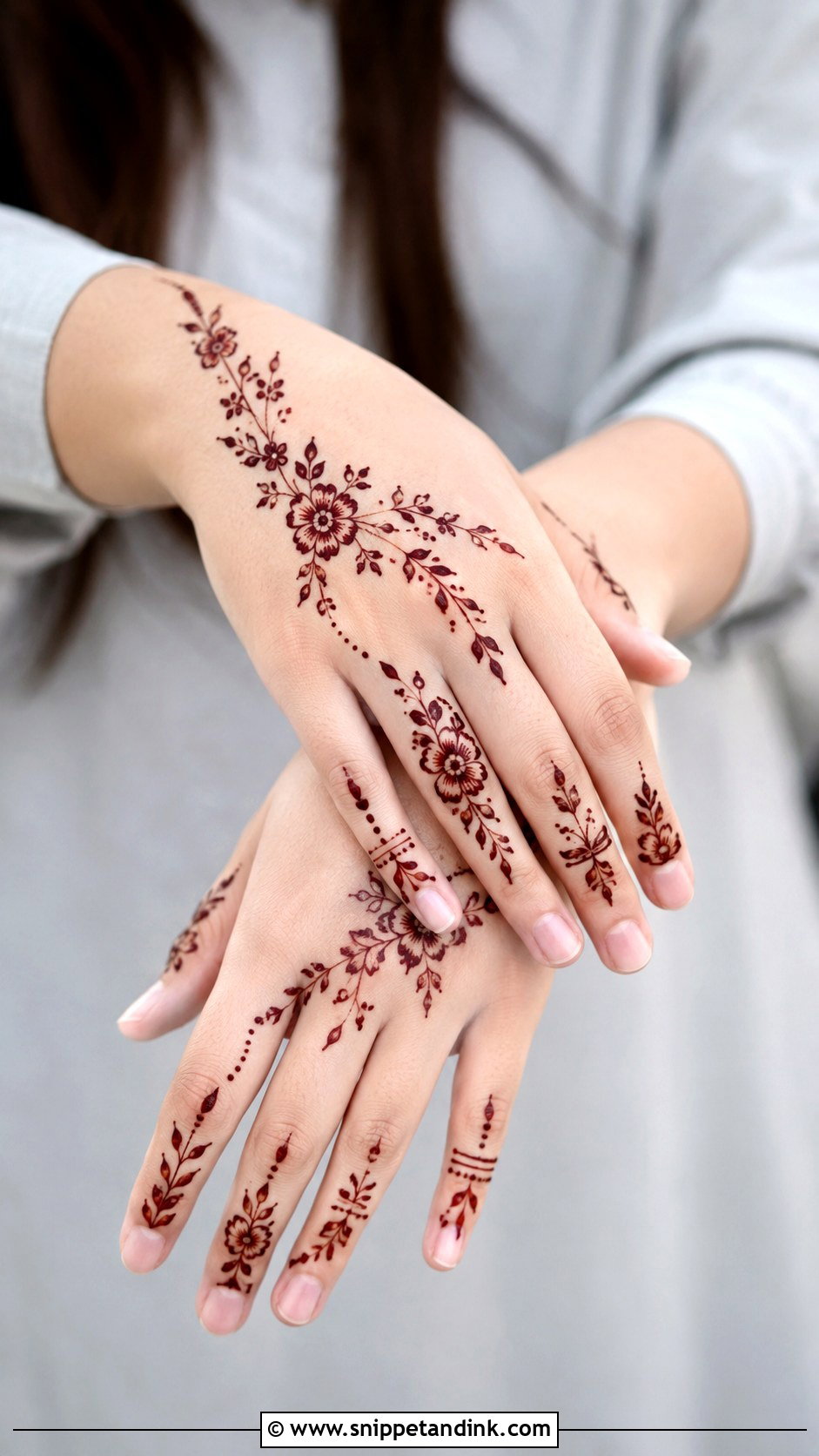
Small hands need smaller flowers, slimmer leaves and shorter trails. A diagonal from the wrist to the index finger lengthens the hand, and open skin around each motif prevents crowding. I avoid big mandalas and wide cuffs here; they swallow a petite hand. Delicate dots and thin leafy lines on the fingers keep the scale right for teens and anyone with a small frame.
35. Arabic Quick Mehndi Design
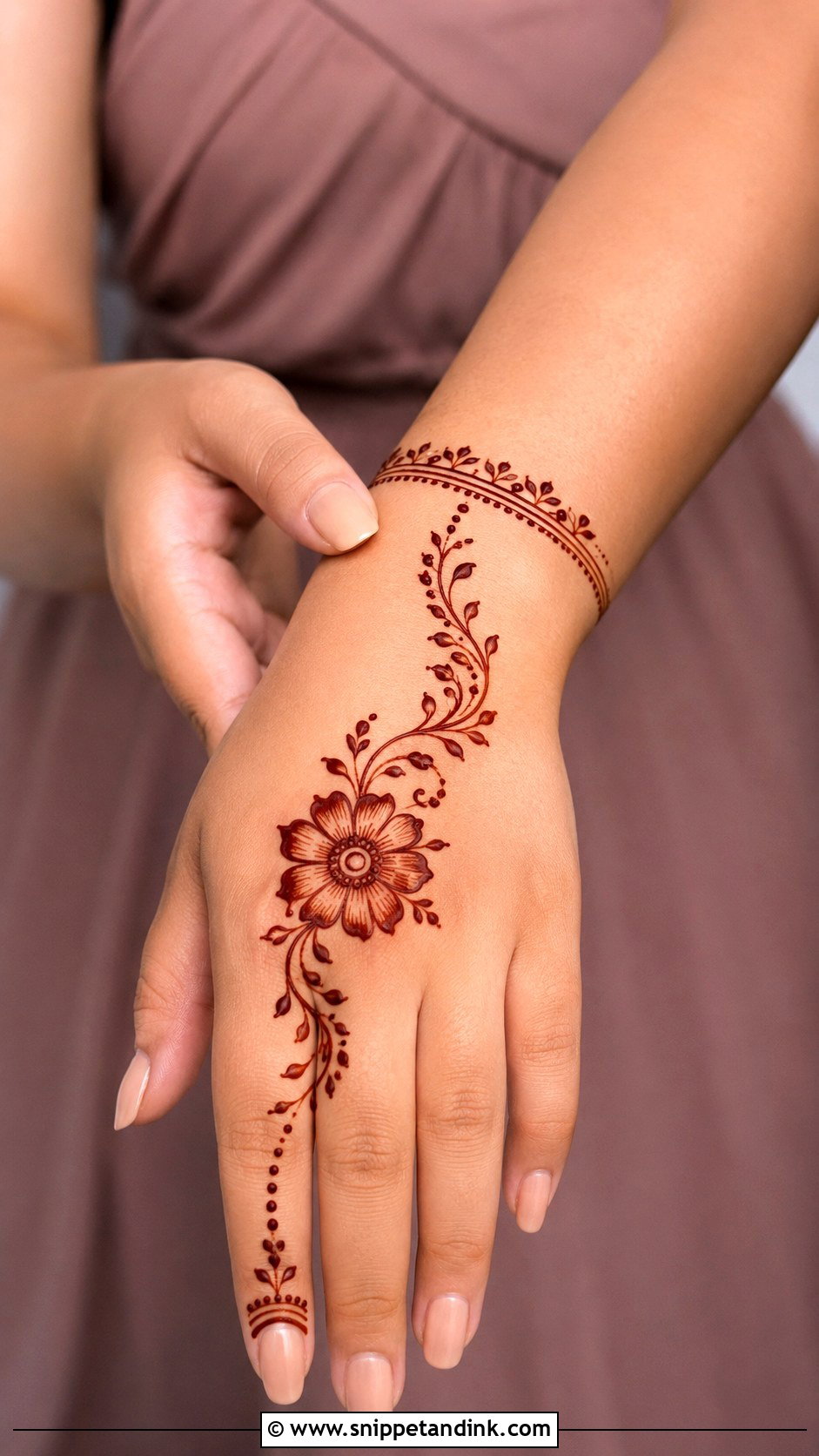
When time is short I use three elements only: one flower, one curved vine and one finger trail. The flower goes near the wrist or palm, the vine runs diagonally and dots or small leaves finish the finger. A thin wrist band can follow if there’s time. Bold strokes and clean spacing make it look planned. Ten minutes per hand is realistic for a practised artist.
How Many Hands Can One Artist Do in an Evening?
Arabic henna is the usual choice for mehndi nights and Eid gatherings precisely because it’s fast, but families still underestimate the time involved. A simple back-hand trail takes a practised artist roughly ten to twenty minutes; a palm plus back with finger work takes longer, and full coverage on both hands can take well over an hour. Speeds vary with the artist and the design, so ask yours for their own estimate.
Planning around those numbers
- Count hands, not people. Ten guests wanting one hand each is a very different evening from ten guests wanting both.
- Agree on two or three set designs for guests in advance so nobody spends ten minutes choosing at the chair.
- Seat people near where the food is served, since they can’t help themselves to a plate while the paste is wet.
- Put the bride’s close family first; their henna needs the longest time on the skin before the wedding.
If the guest list is long, a second artist is usually cheaper than an evening of frustrated cousins, and it means the last person in the queue still has time to let the paste dry before heading home.
Three Elements and a Steady Cone
Simple Arabic henna comes down to a natural flow, open gaps and clean finishing dots. Floral trails, leafy vines, bracelets, shaded roses, palm mandalas and finger work can all be mixed and personalised, and a beginner’s version can look graceful and finished if the hand isn’t overcrowded. Pick one of these layouts for Eid, a wedding, a party or a quiet evening of practice at home, and give the stain the time it needs to deepen.
You'll Like These Ideas:



Leave a Reply