
Arabic mehndi is the style I suggest most often to brides who want a rich look without crowded hands. Its character comes from flowing florals, leafy vines and bold outlines separated by deliberate open skin, so each motif reads clearly once the stain darkens. It adapts to full-hand bridal coverage, back-hand jewelry patterns, wrist-to-forearm trails and modern minimal layouts, which makes it easy to vary across an engagement, nikah, haldi and reception. Below are the bridal designs I draw most, with how I lay each one out on the hand and what to ask for so it still looks right after the paste comes off.
Planning the Layout Around Your Bangles, Rings and Sitting Time
Before I pick up a cone, I ask three questions. The answers shape the design more than any reference photo does.
Where will your jewelry sit?
Bangles, kangan and a haath phool cover parts of the wrist and the back of the hand. I put the strongest detail where skin will actually show, and keep the base of the ring finger lighter if ring shots matter to you.
How long can you sit?
A simple Arabic design on both hands goes fairly quickly, while full hands and forearms take hours, followed by drying time when you can’t use your hands at all. Arrange for someone to feed you and hold your phone, and use the bathroom before we start.
Which side faces the camera?
Palms show when hands are held up for mehndi photos; the backs show in ring shots and while holding a bouquet. If you only want heavy work on one side, choose it by how you’ll be photographed.
1. Full Hand Arabic Bridal Mehndi
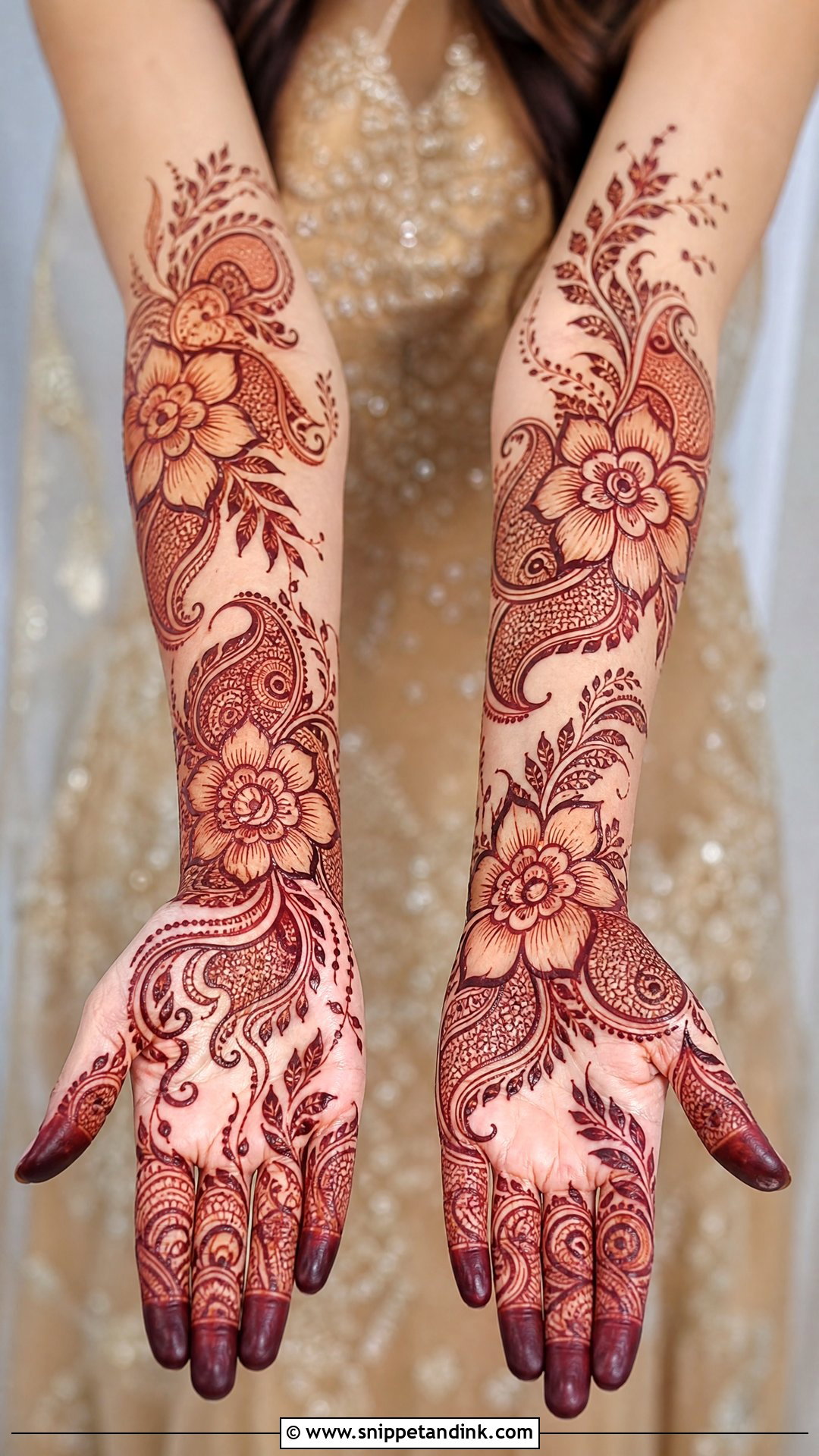
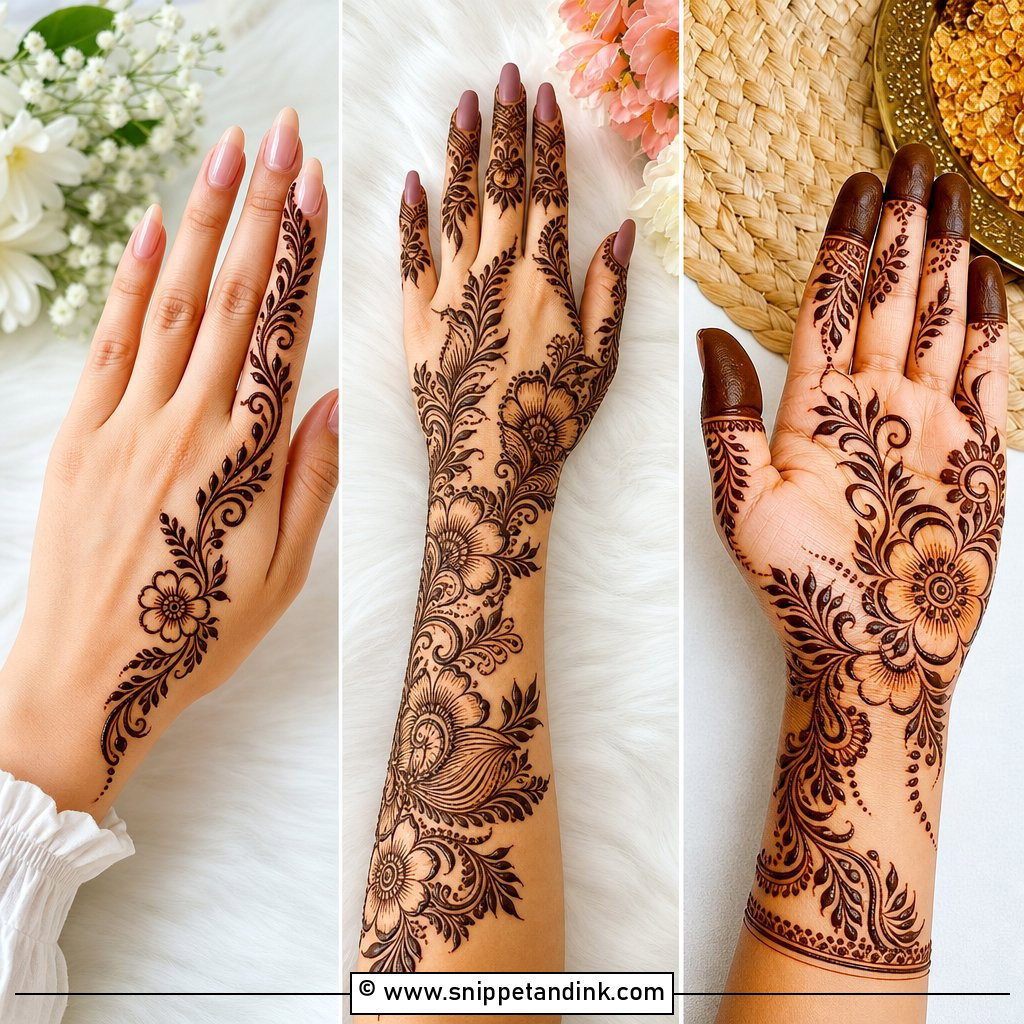
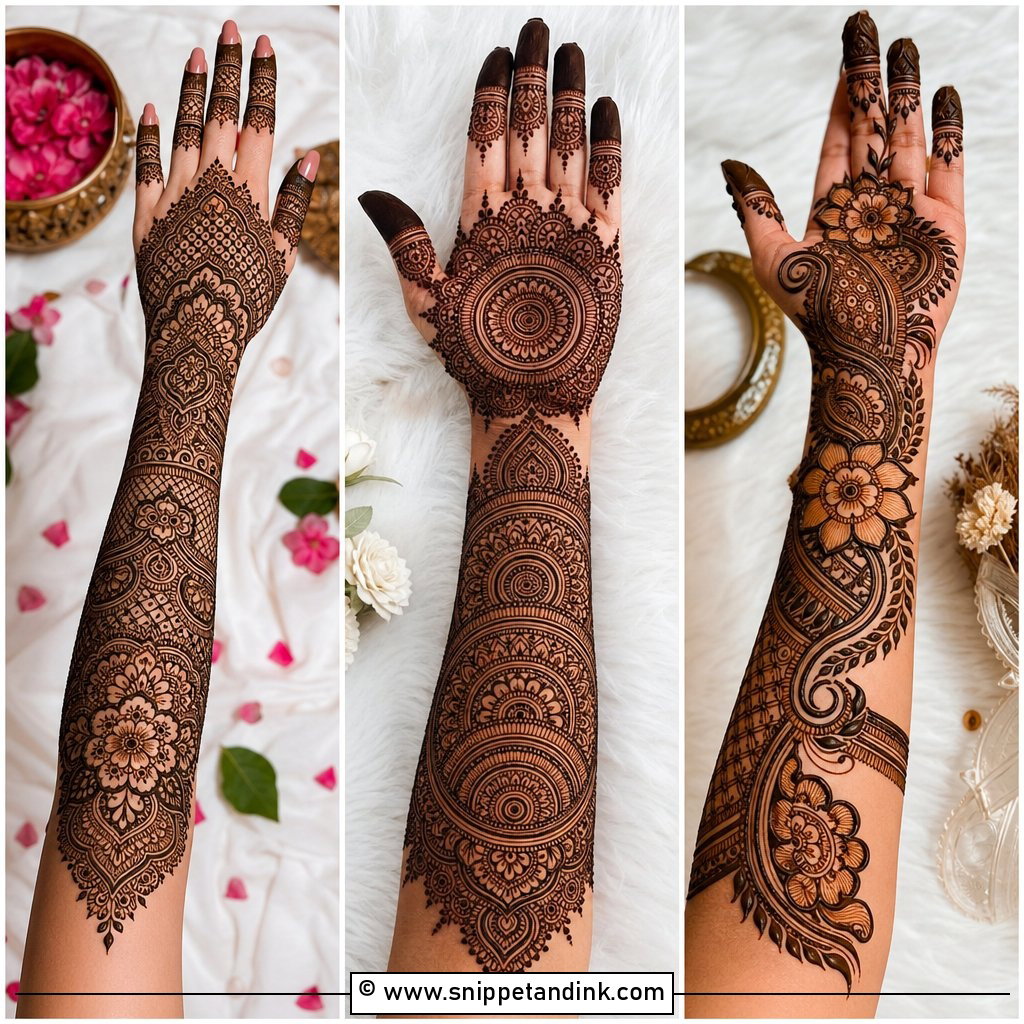
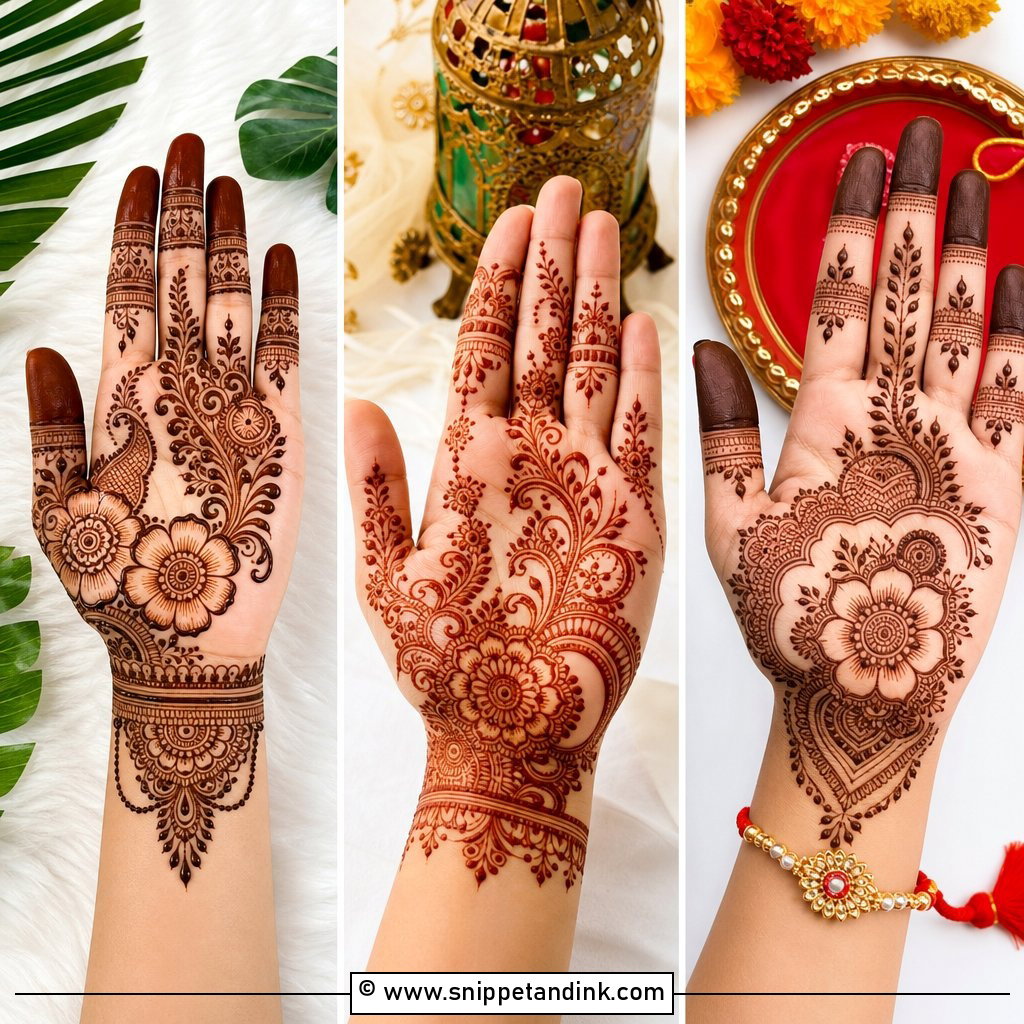
Full hand Arabic bridal mehndi gives rich coverage with visible breathing space. I usually start with a bold floral on the palm, then let leafy vines, paisley curves and shaded petals travel across the fingers and wrist. Unlike dense Indian bridal work, the gaps are part of the design, so the stain looks clean rather than muddy. If you wear heavy bangles, tell me where they’ll sit, and I’ll keep the strongest wrist detail just below them where it can be seen. Ask for thick outlines with fine strokes inside. The outline carries the design in photos; the fine work rewards anyone who looks closely.
2. Arabic Bridal Mehndi For Front Hand
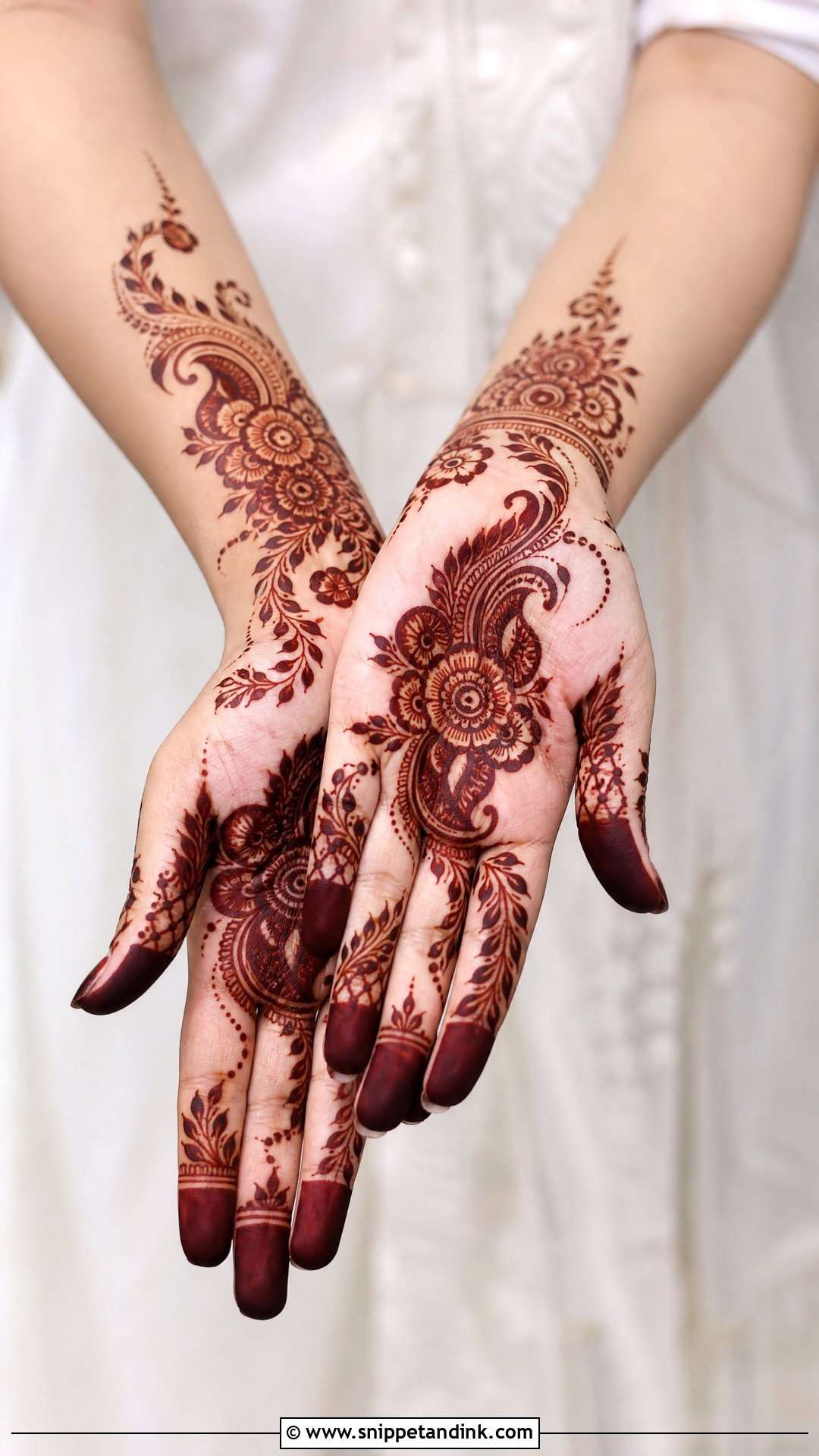
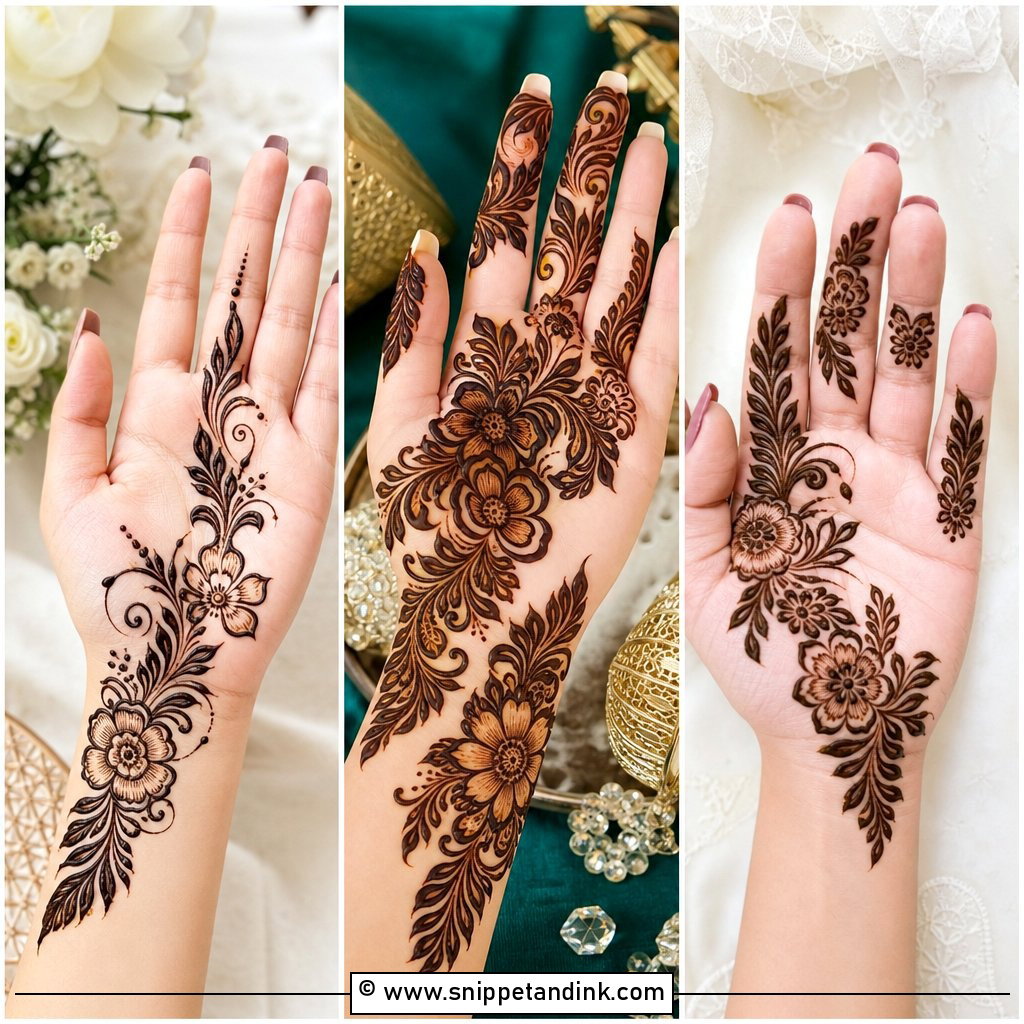
Arabic bridal mehndi for front hand work is usually built on a diagonal. A floral cluster sits near the center of the palm, with paisley trails and leafy vines running from the wrist toward the fingertips, and that slant makes the hand look longer. For a lighter look I leave the center open around one large motif; for more detail I add shaded petals, dots and a fine net around the main trail. Palms stain darker than anywhere else because the skin there is thicker, so even a simple front-hand design comes out rich. It suits an engagement as easily as the main day.
3. Arabic Bridal Mehndi For Back Hand
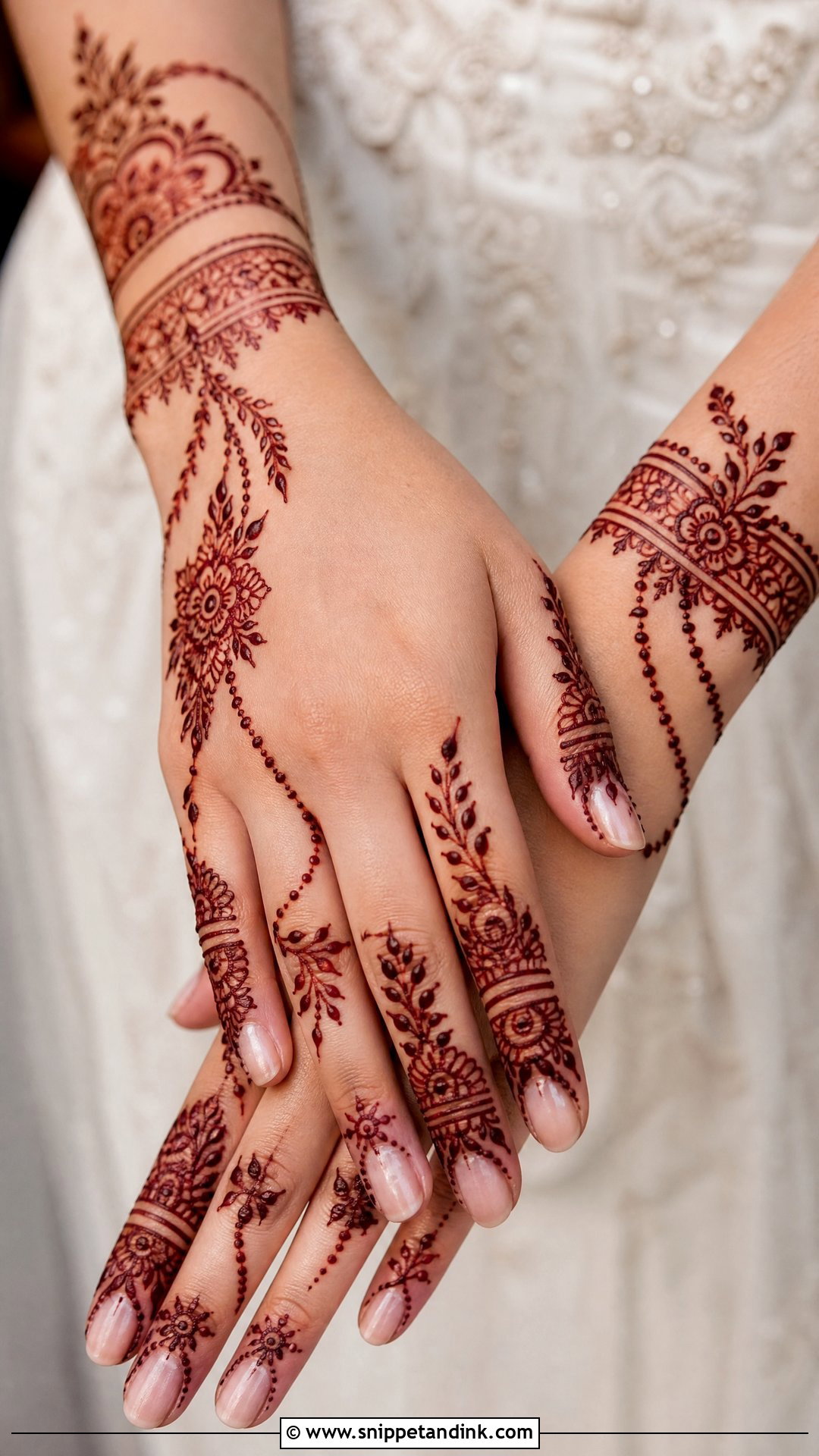
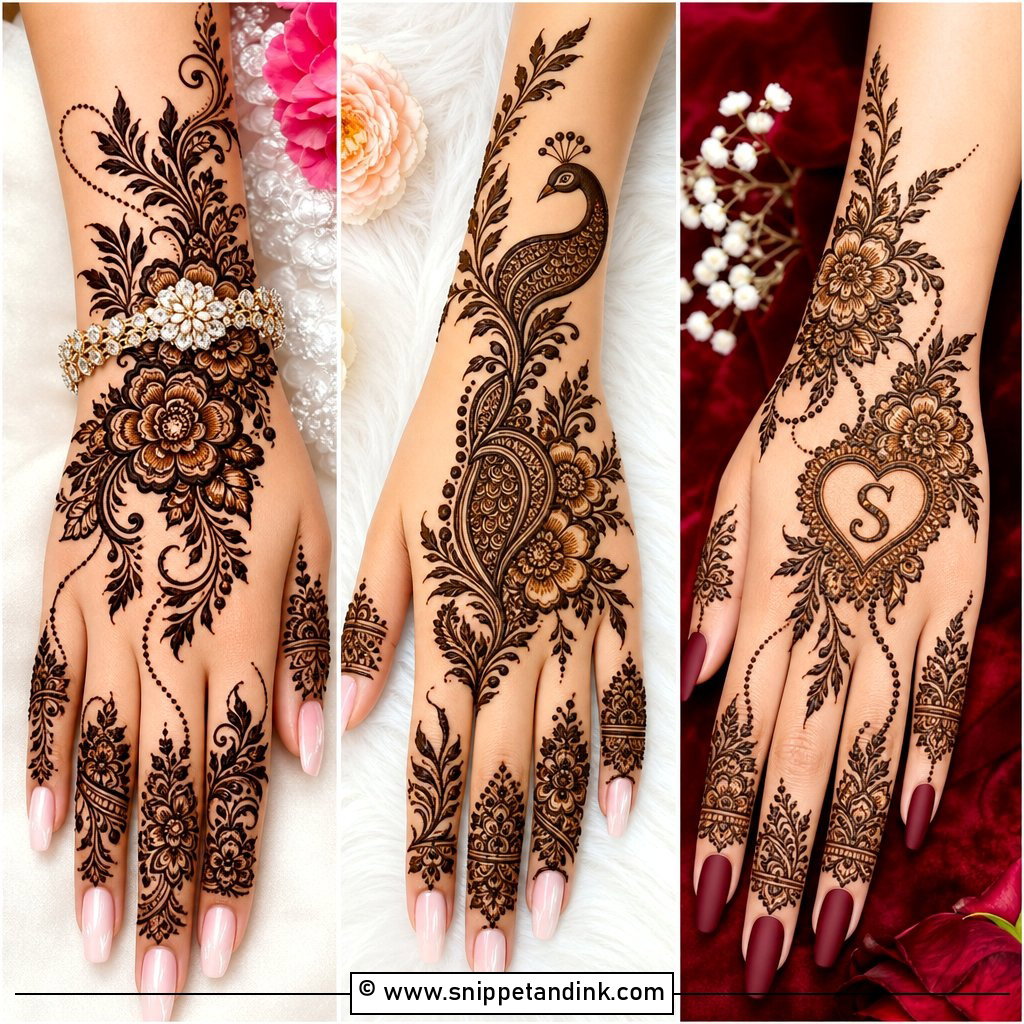
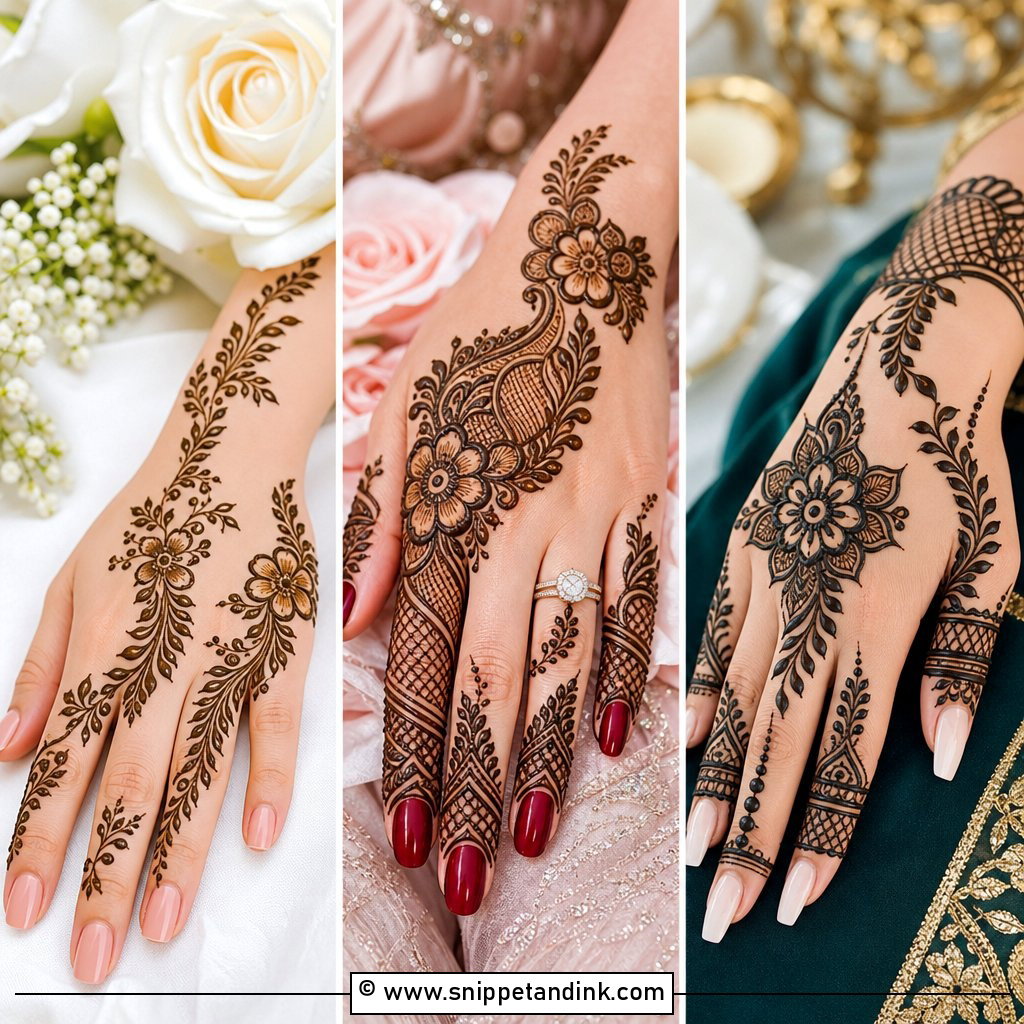
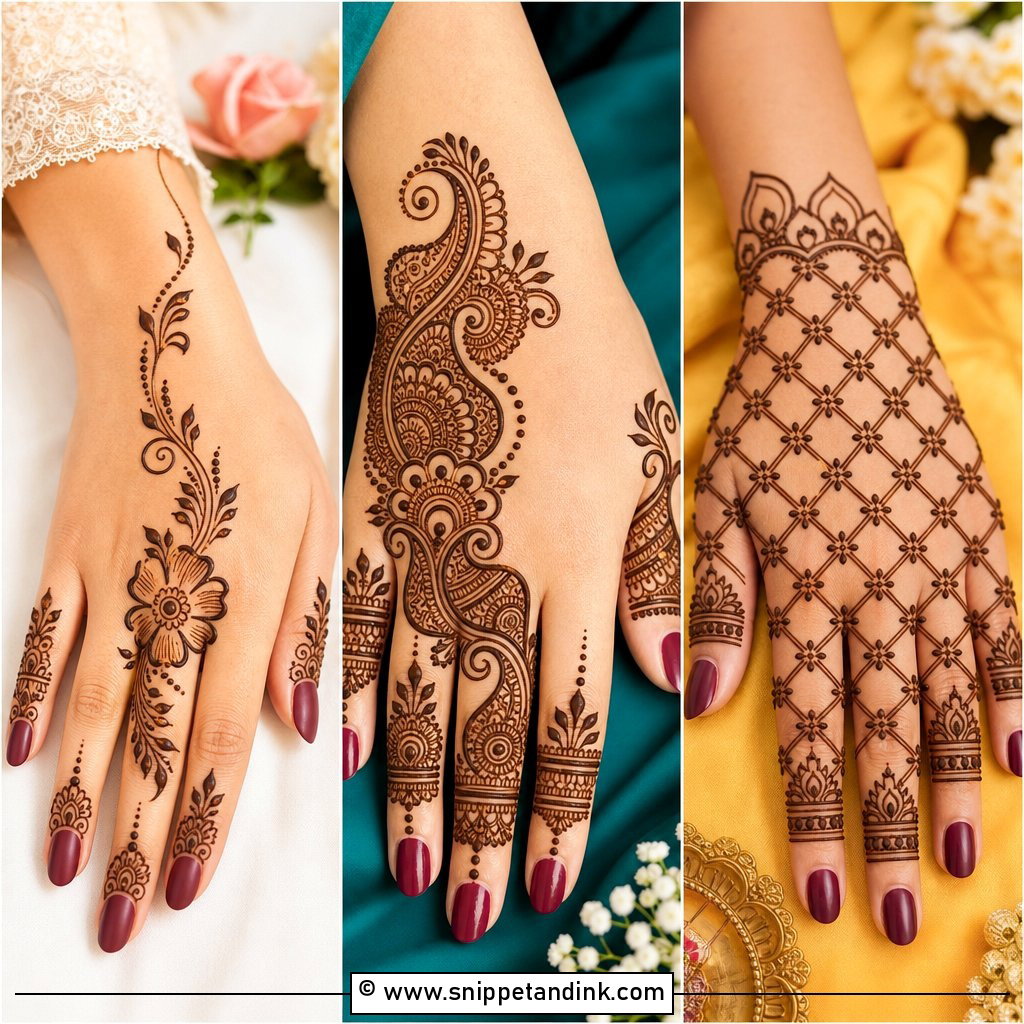
A back hand Arabic bridal mehndi design behaves like jewelry. It can start at the wrist as a bracelet, then spread across the back of the hand with floral vines, finger chains and a small mandala. Because this is the side that shows in ring shots, I check where the ring sits and leave a clean band of skin on that finger so the ring isn’t sitting on a busy pattern. The back of the hand stains lighter than the palm, so I draw the lines slightly bolder here. Mixing bold flowers with thin leafy lines gives depth without packing the fingers.
4. Arabic Floral Bridal Mehndi
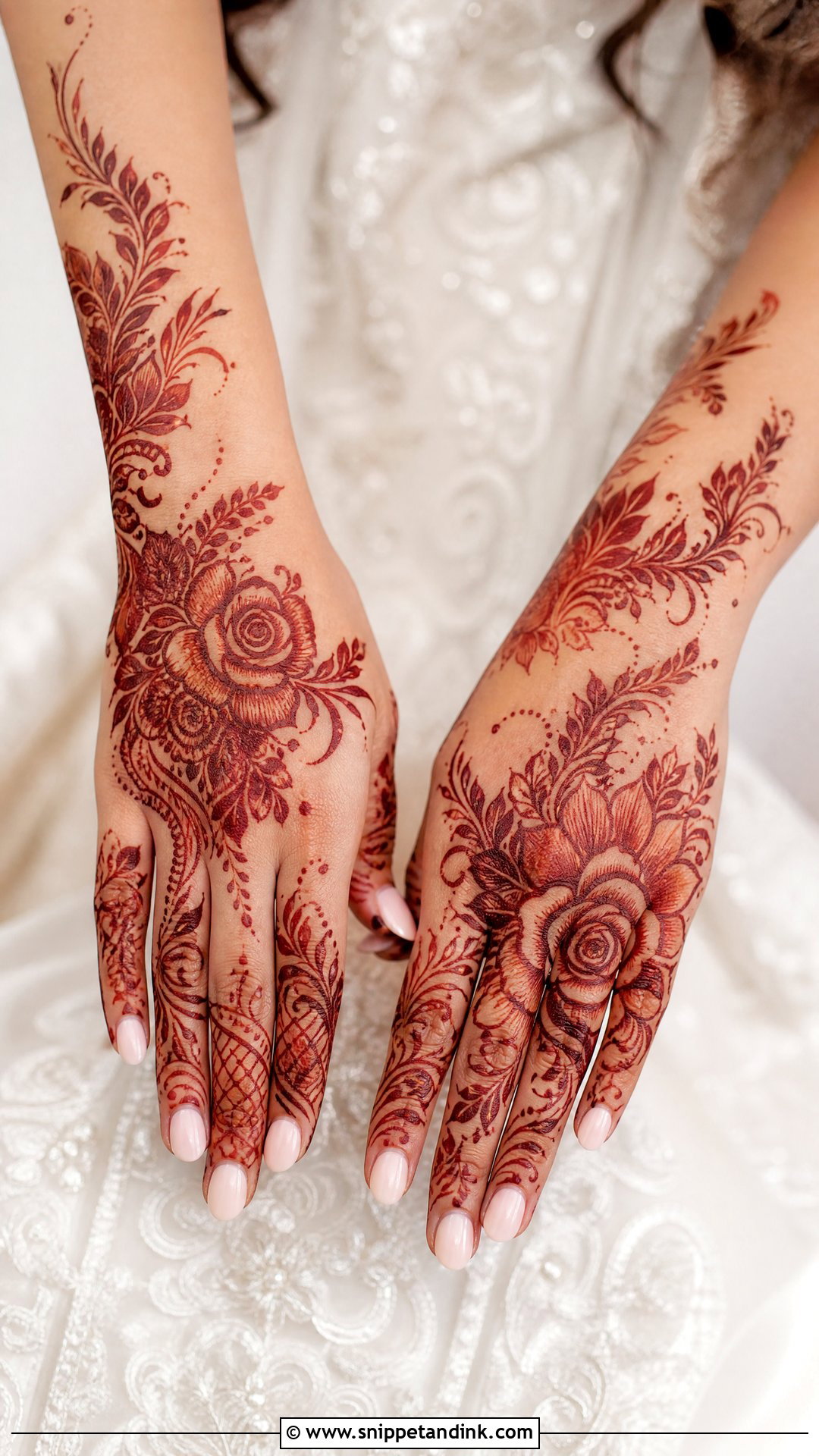
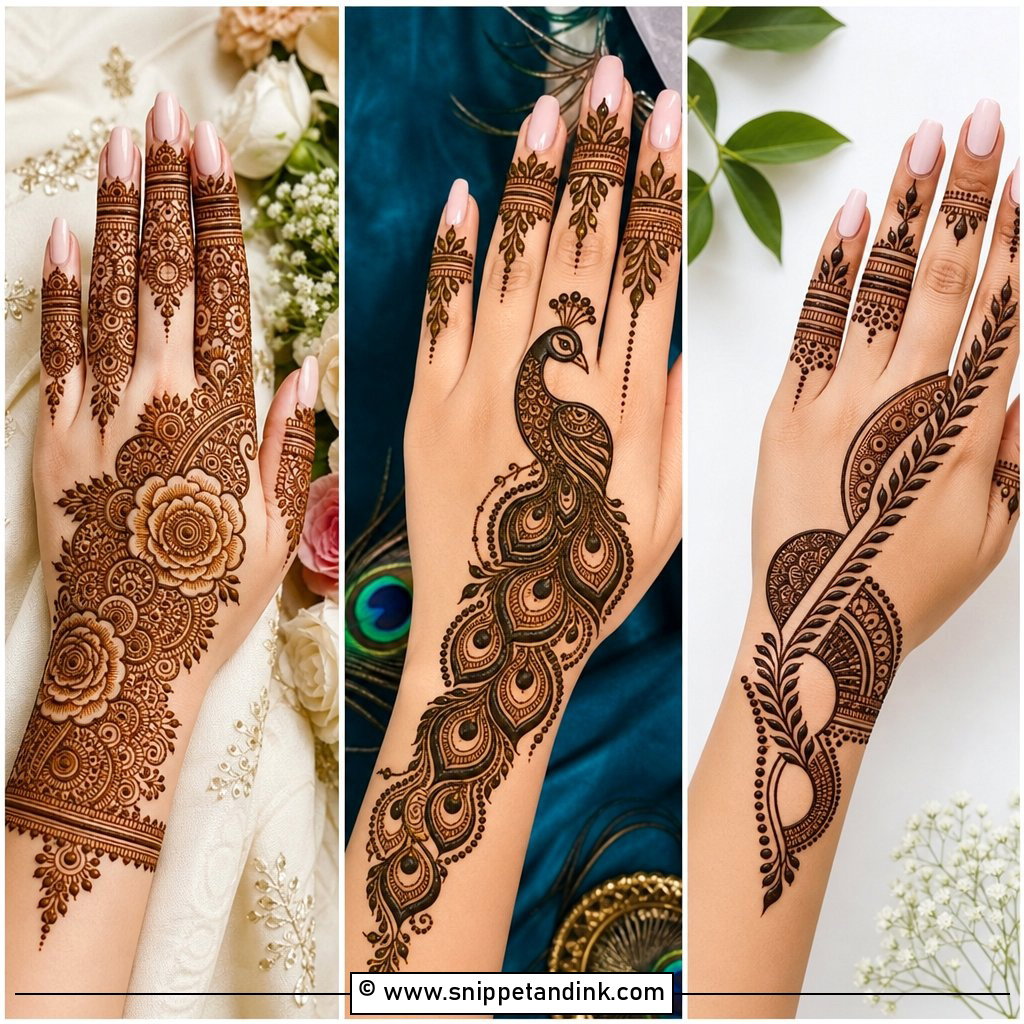
Florals are the backbone of Arabic bridal work. Large roses, lotus-style blooms and rounded petals are arranged in a trail that follows the hand’s natural movement, giving romance without dense filling. Shaded petals make it look fuller, and open gaps keep its Arabic identity. I place the largest flower where the hand is widest, on the palm or back, then taper to smaller blooms on the wrist and fingers, since a big bloom squeezed onto a narrow finger always looks cramped. Pastel lehengas, ivory outfits, gold jewelry and soft makeup all sit well with it.
5. Arabic Rose Bridal Mehndi
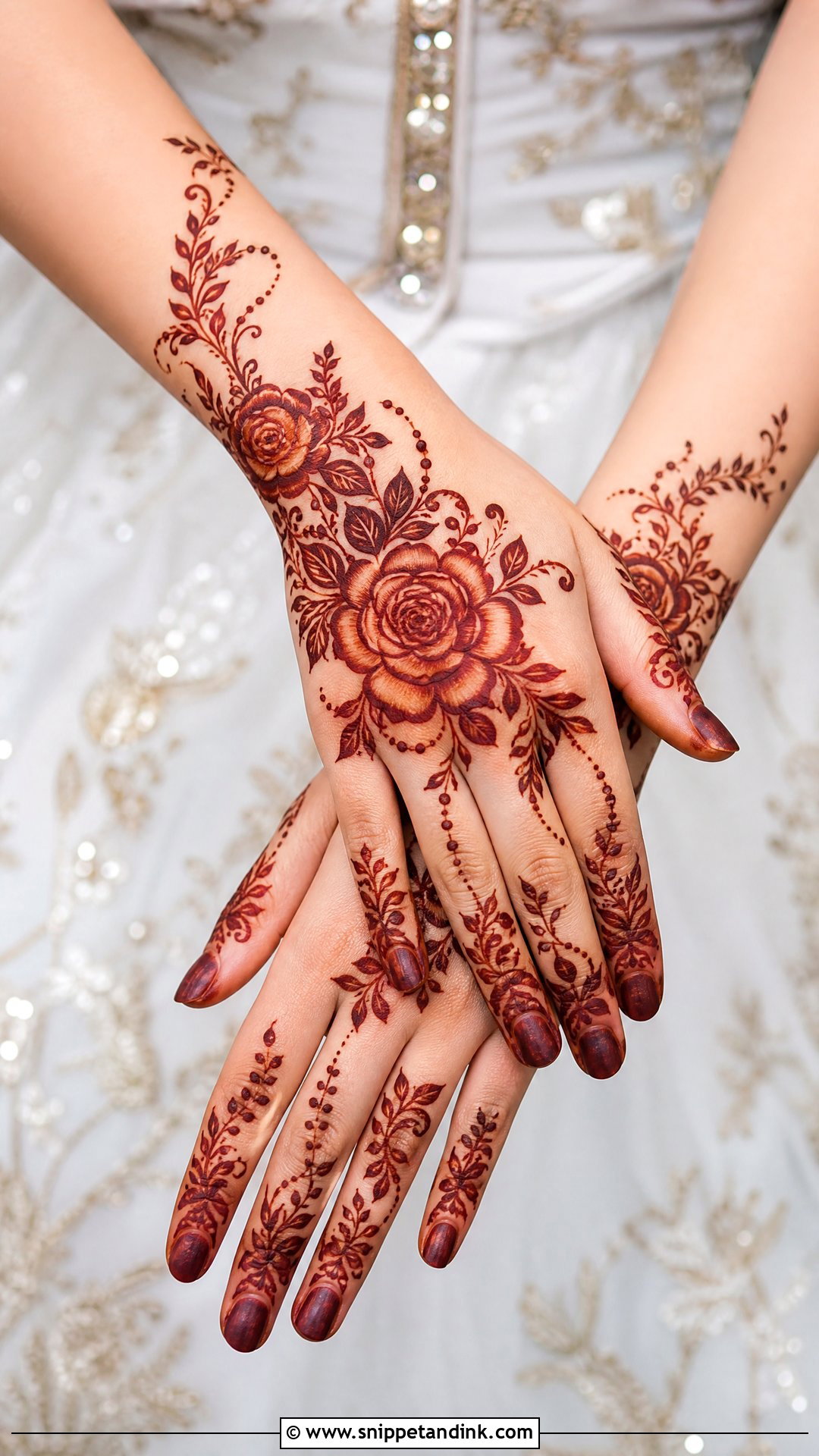
Roses are drawn larger than most flowers in Arabic work, with shaded petals and deep outlines that turn dramatic once the stain darkens. A full rose design can cover the palm, fingers, wrist and part of the forearm and still keep the background open, which keeps each rose crisp. You can have one big cluster in the center or a diagonal trail from wrist to index finger, finished with small leaves, dotted curves and swirls. Shading is where I take most care. I shade petals with a thin film of paste rather than a solid fill, because solid paste inside a rose stains as one flat blob and the petals disappear.
6. Arabic Paisley Bridal Mehndi
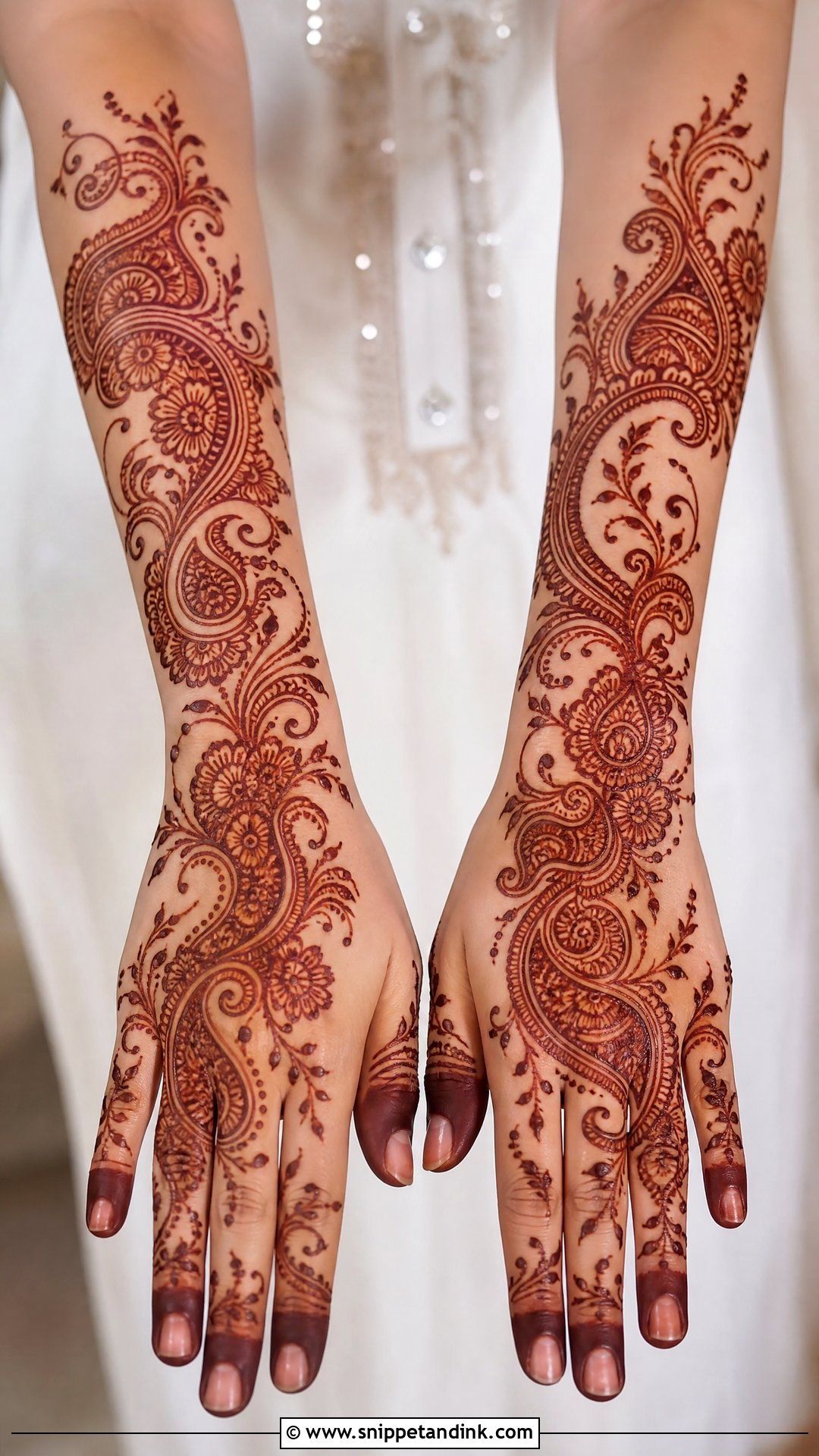
Paisley follows the curve of the hand better than almost any other shape, which is why it fits Arabic layouts so naturally. A typical design puts a large paisley on the palm, smaller ones near the wrist and leafy vines running toward the fingers, with fine lines, dots, mini flowers and soft shading inside. It gives a cultural feel without covering every inch, on the front or the back. Bold outlines with fine inner work is the rule I follow. When the inside is drawn as heavily as the outline, paisleys lose their shape in the stain.
7. Arabic Mandala Bridal Mehndi
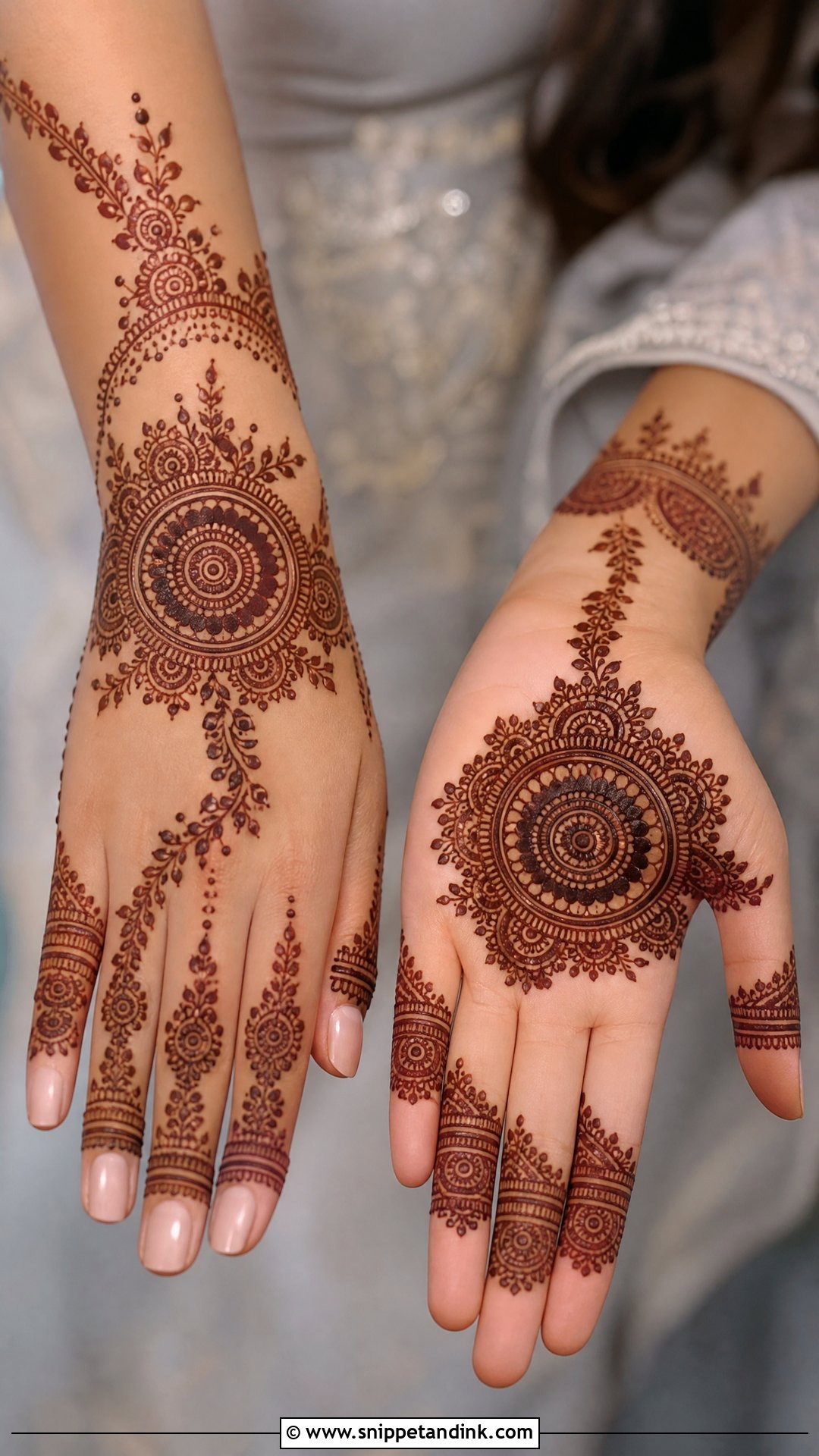
A mandala brings a neat center to the loose movement of Arabic vines. I set a large circular mandala on the palm or back hand and let floral trails run from it toward the wrist and fingers, so the hand has structure and flow at once. Fingers can carry half flowers, leafy bands and small dots. Getting a true circle on a curved palm is harder than it looks, so I mark the center and a few guide points with the hand relaxed and flat. Draw it while the hand is cupped and the circle warps the moment the fingers straighten.
8. Arabic Jaali Bridal Mehndi
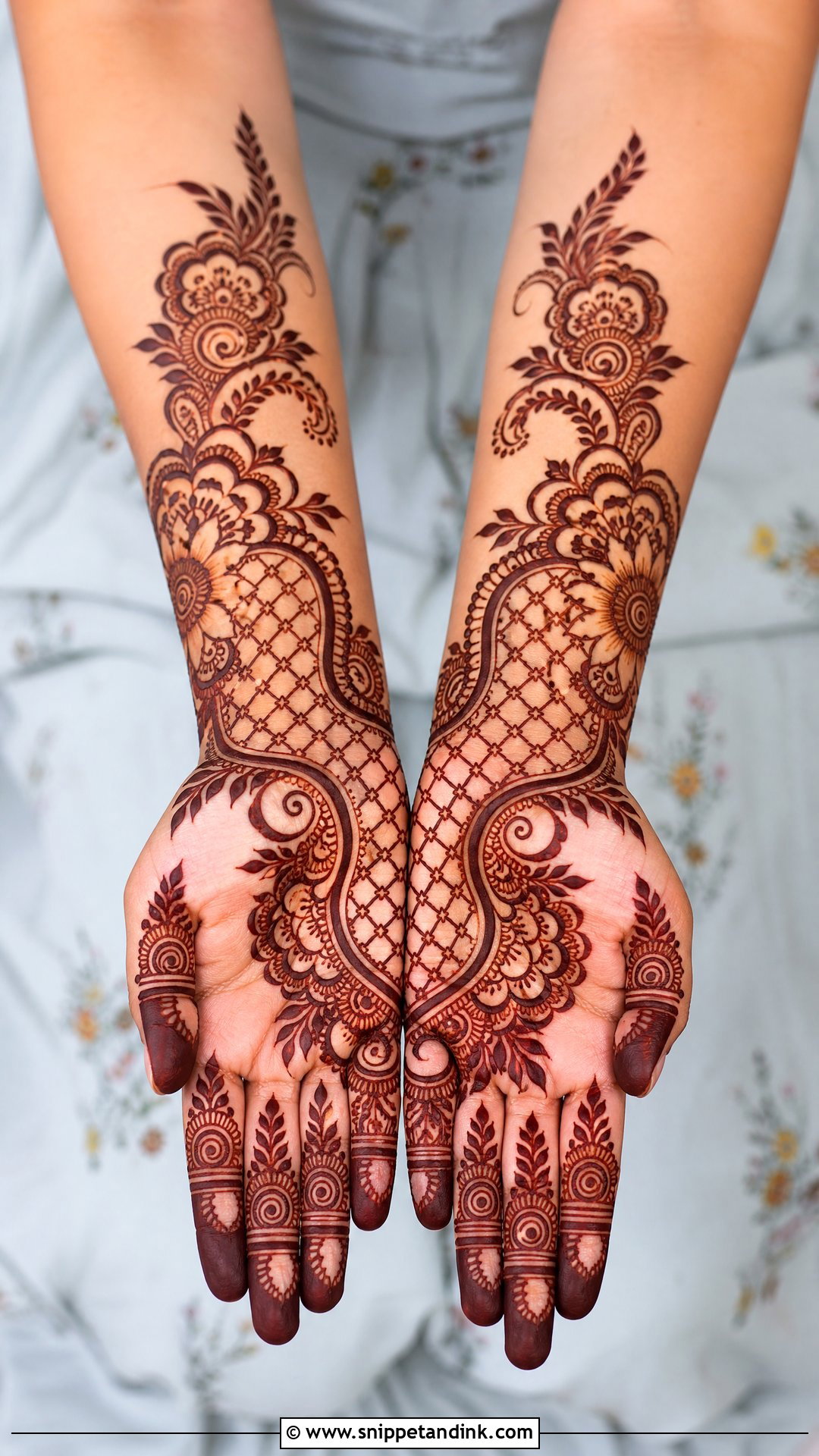
Jaali, the net or mesh pattern, gives a texture that floral work alone can’t. I place jaali panels on the palm, wrist or back of the hand and frame them with bold Arabic florals, so the mesh adds richness without piling on heavy motifs. It reads like lace, which looks lovely beside sheer dupattas and bridal sleeves. It’s also the least forgiving technique I use: uneven spacing shows straight away, and lines drawn too close merge together. I keep the grid a little wider than looks right in wet paste, because each line swells slightly as it settles.
9. Arabic Finger Bridal Mehndi
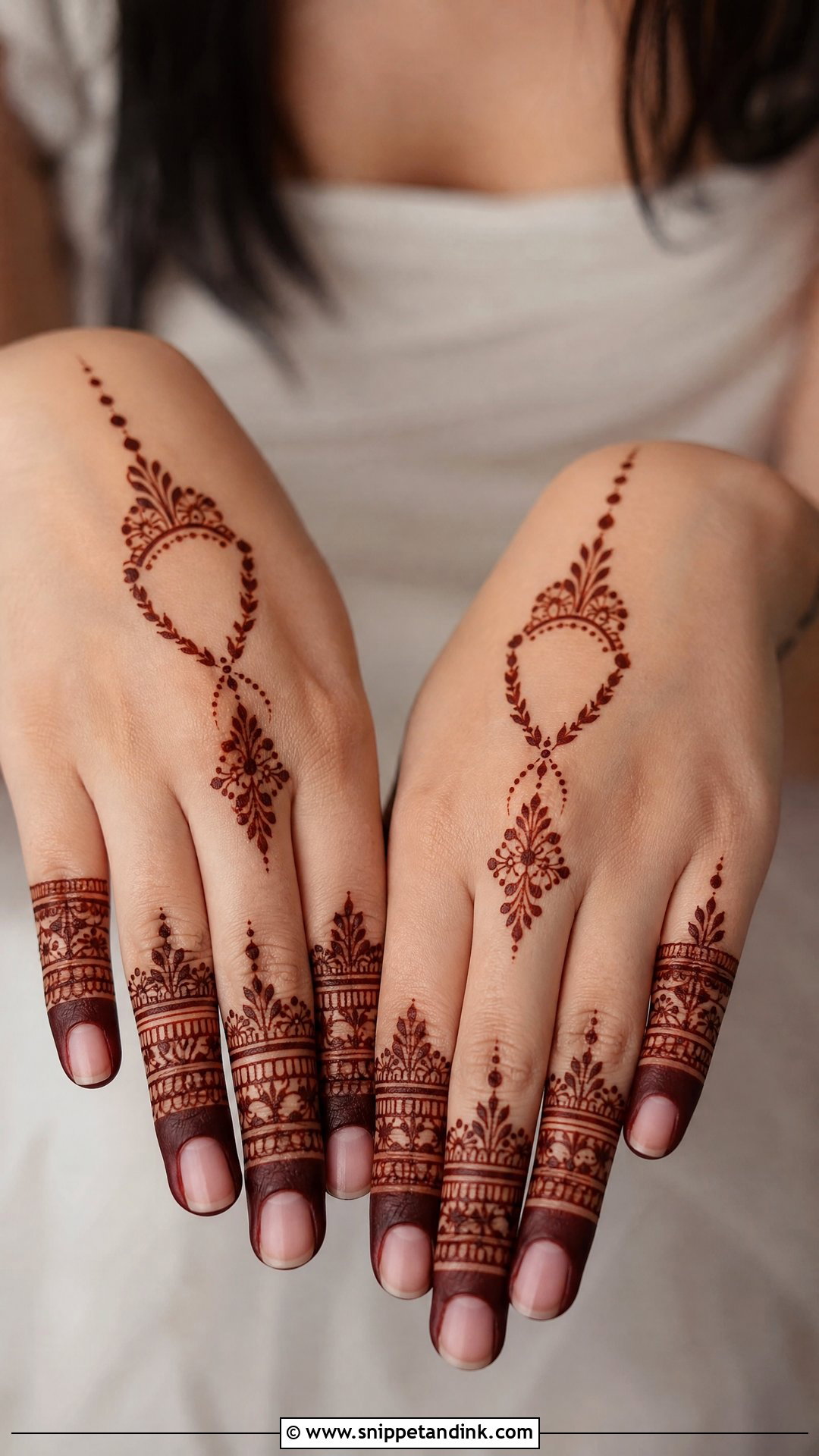
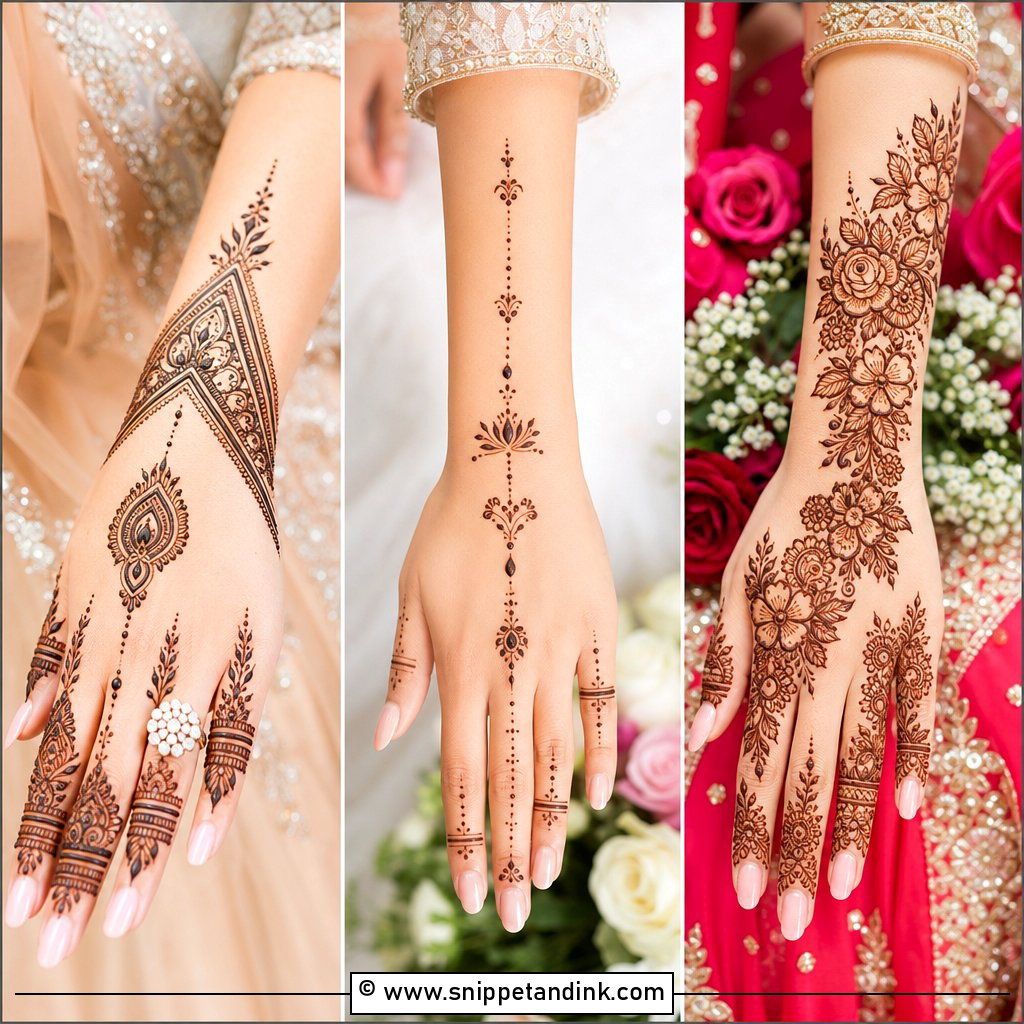
Here the fingers do the work while the palm or back hand stays open. Floral caps, leafy rings, dotted bands and fine bracelet-style trails fill the fingers, with a matching wrist cuff and either nothing or one clean motif in the center. It’s a refined, modern look for an engagement, nikah or reception, and it sits well with statement rings. Fingertips take a very deep stain, so filled tips come out darkest of all. I mirror the finger pattern across both hands before I start, since a mismatch is far more obvious on fingers than anywhere else.
10. Arabic Bracelet Bridal Mehndi
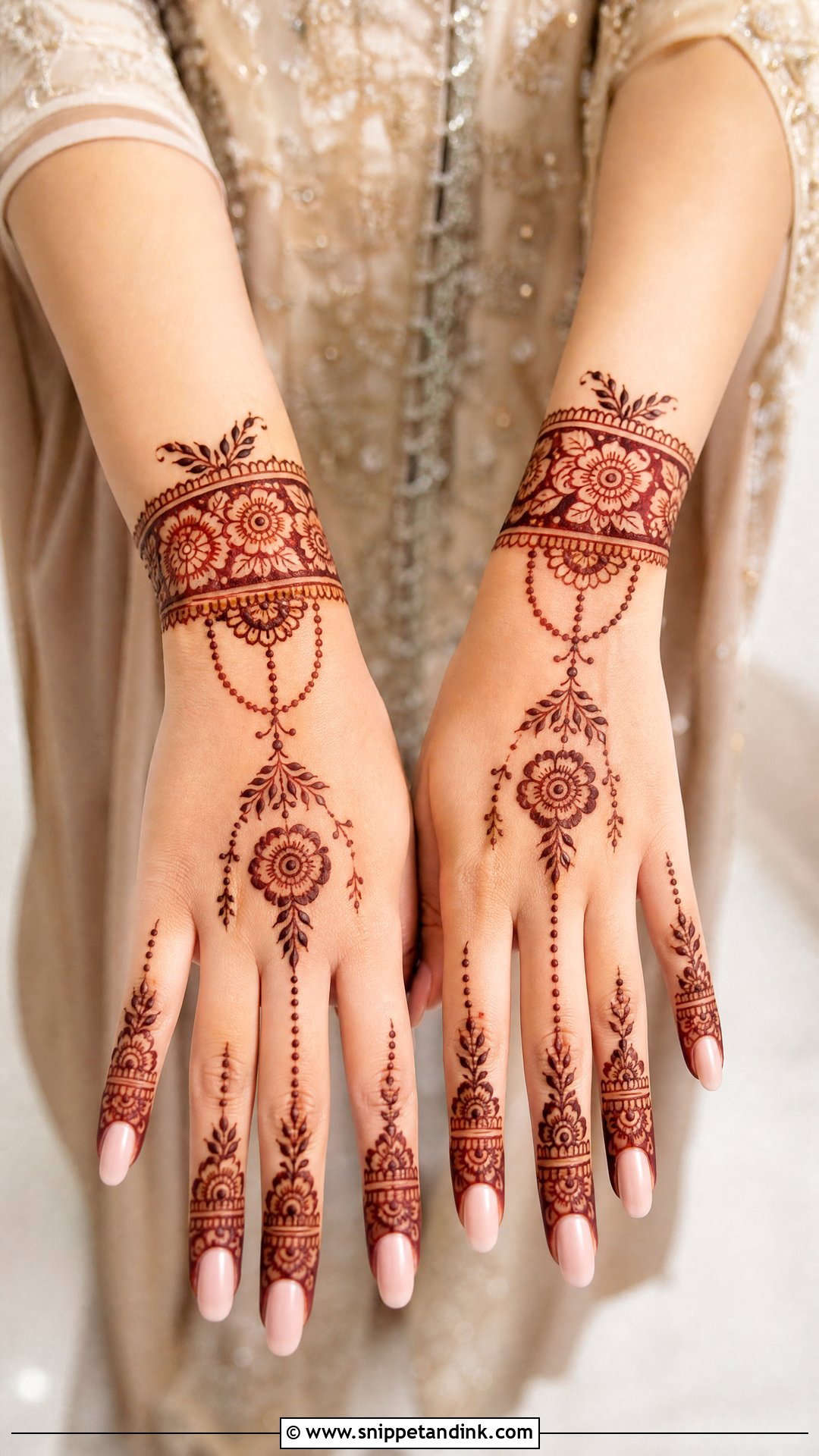
Bracelet designs are drawn to look like hand jewelry. I begin with a detailed wrist cuff, then connect it to the fingers with chains, dots, floral strings or leafy trails, which creates the haath phool effect across the back of the hand. The cuff can be wide and bold for a traditional wedding or thin for a modern ceremony, with one floral or mandala motif on the back of the hand to anchor it. If you’ll also wear real bangles or a haath phool, bring them to the appointment. Painted jewelry and real jewelry stacked on the same spot only compete.
11. Arabic Khafif Bridal Mehndi
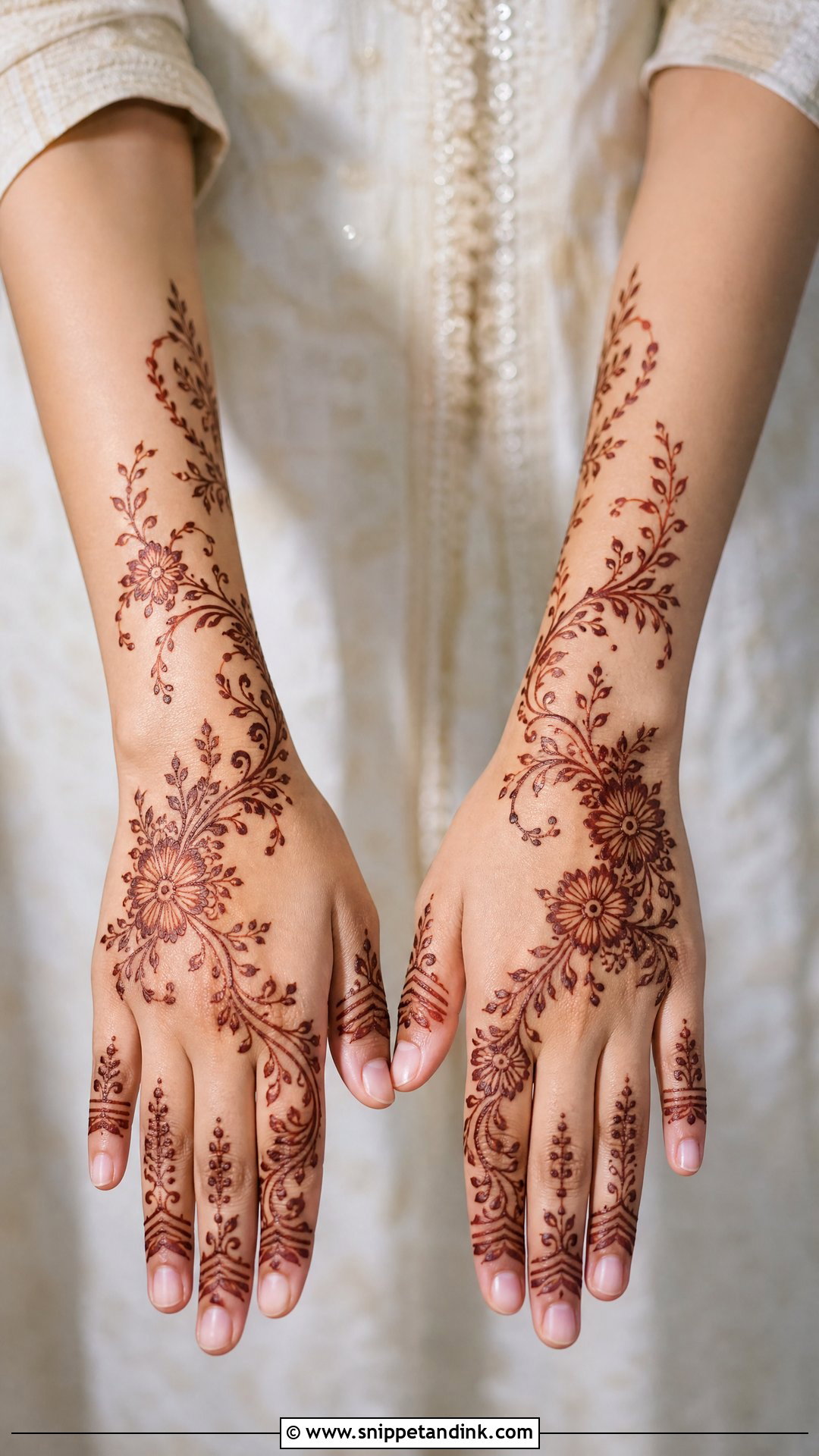
Khafif means light, and the style lives up to it: fine detail, airy spacing, slim floral vines, tiny leaves, fine dots and neat finger bands. The hand looks decorated but never heavy. Small hands carry it especially well, and it feels natural at daytime events. Those fine lines are also why it fades fastest, because thin strokes hold less paste. I tell khafif brides to keep the paste on longer than they want to, ideally overnight, so the delicate lines get a real chance to darken.
12. Heavy Arabic Bridal Mehndi
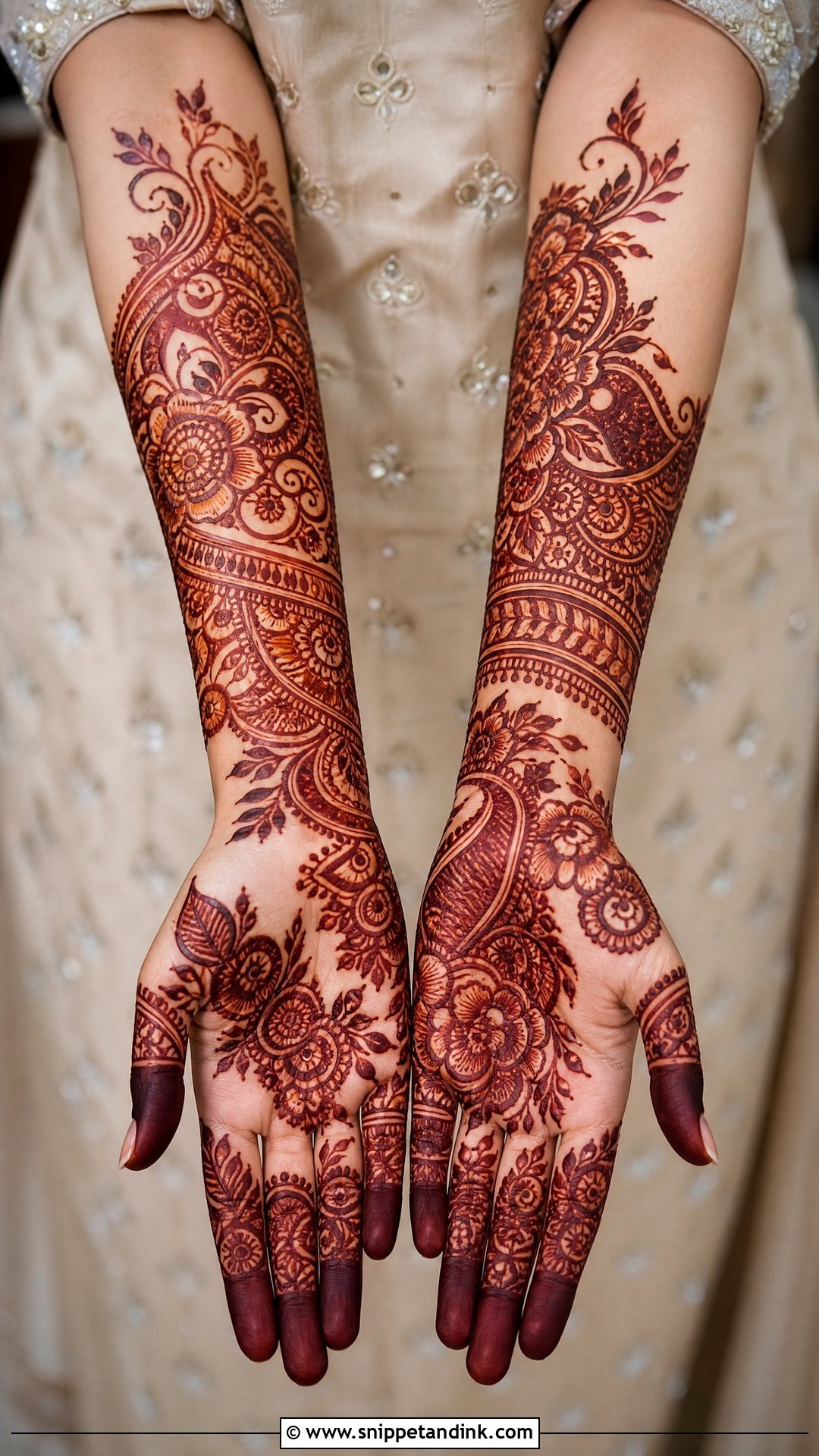
Heavy Arabic mehndi covers the palm, fingers, wrist and forearm with large flowers, paisleys, shaded vines and filled bands, yet keeps the Arabic flow. Planned negative space is what stops it going flat. Without some open skin, a heavy design stains as a single dark sleeve and the motifs vanish in photos. It suits red, maroon, emerald, gold and deep jewel-toned outfits, and strong outlines with layered motifs give the richest finish. Expect to sit for a long time: full hands and forearms take several hours, and drying time comes after that.
13. Simple Arabic Bridal Mehndi
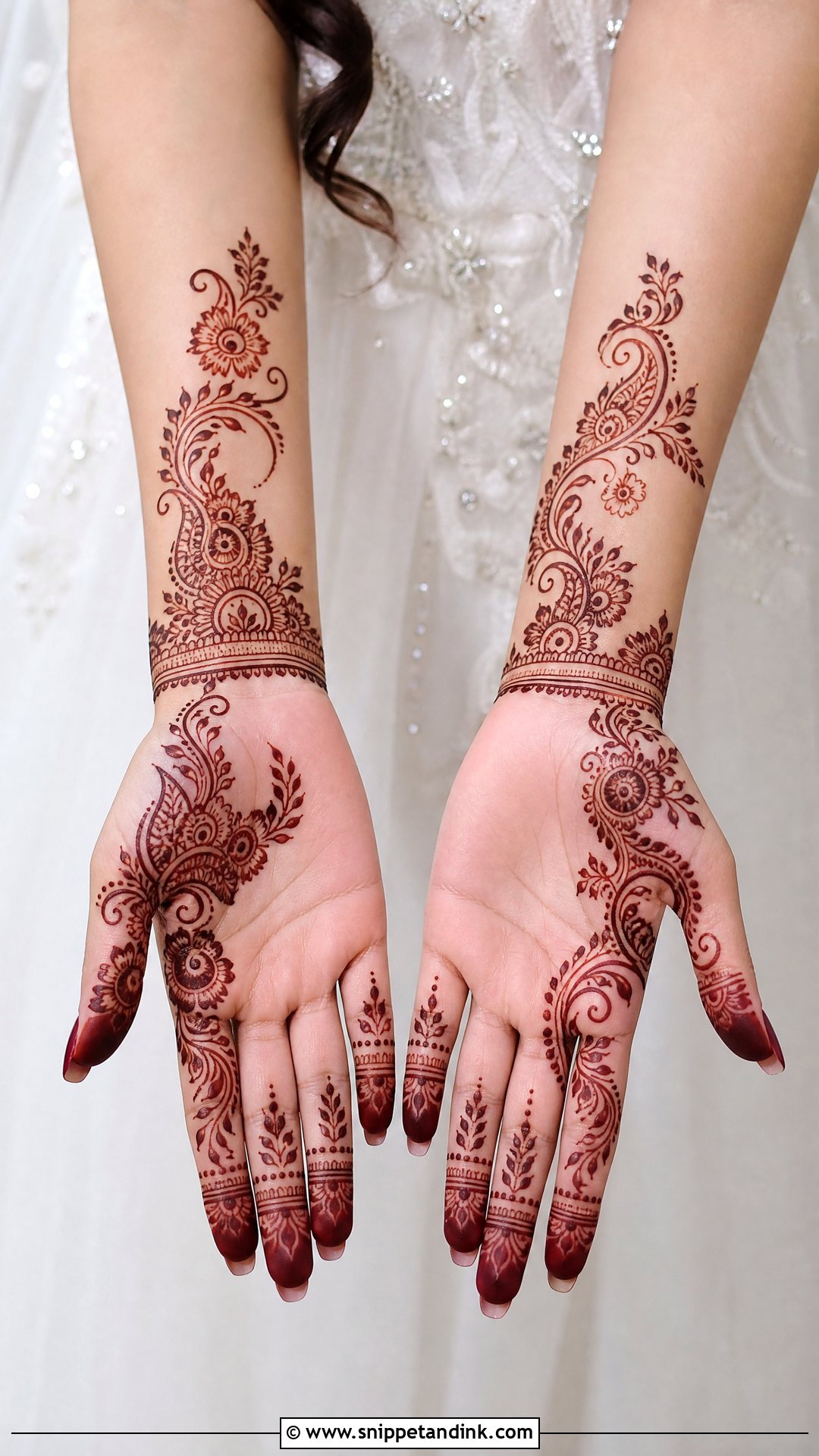
One floral trail, a few paisleys and lightly decorated fingers. A simple design may not cover the whole hand, but it still looks bridal when the layout runs from wrist to fingertips. It’s the practical choice if you can’t sit for hours, and the open space keeps the stain crisp. A small wrist band or ring pattern finishes it. I’d also suggest it to brides with several events close together, since a light design is quick to refresh with a small top-up between them.
14. Modern Arabic Bridal Mehndi
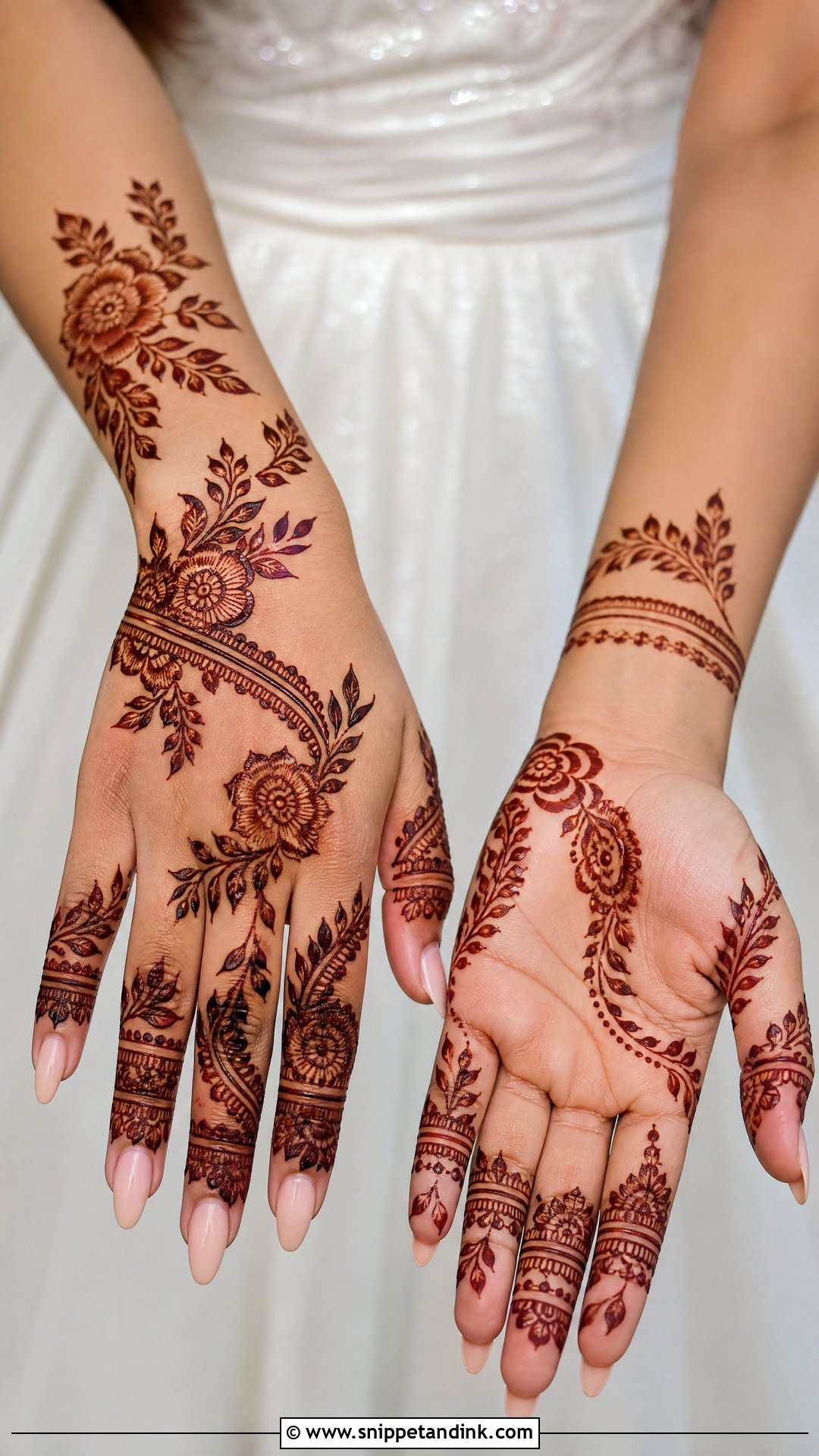
Modern Arabic work keeps traditional roots but feels fresher, with clean floral trails, geometric accents, open palms, stylish finger bands and minimal wrist detail. It’s lighter than classic bridal mehndi yet detailed enough for photos, and it suits contemporary lehengas, sleek shararas, fusion outfits and minimalist jewelry. To keep it bridal, I make the composition run complete from fingers to wrist even where there’s open space. Initials, a wedding date or a tiny hidden symbol can personalize it. Numbers are the one thing I draw larger than brides expect, because small digits blur once the stain develops.

15. Indo Arabic Bridal Mehndi
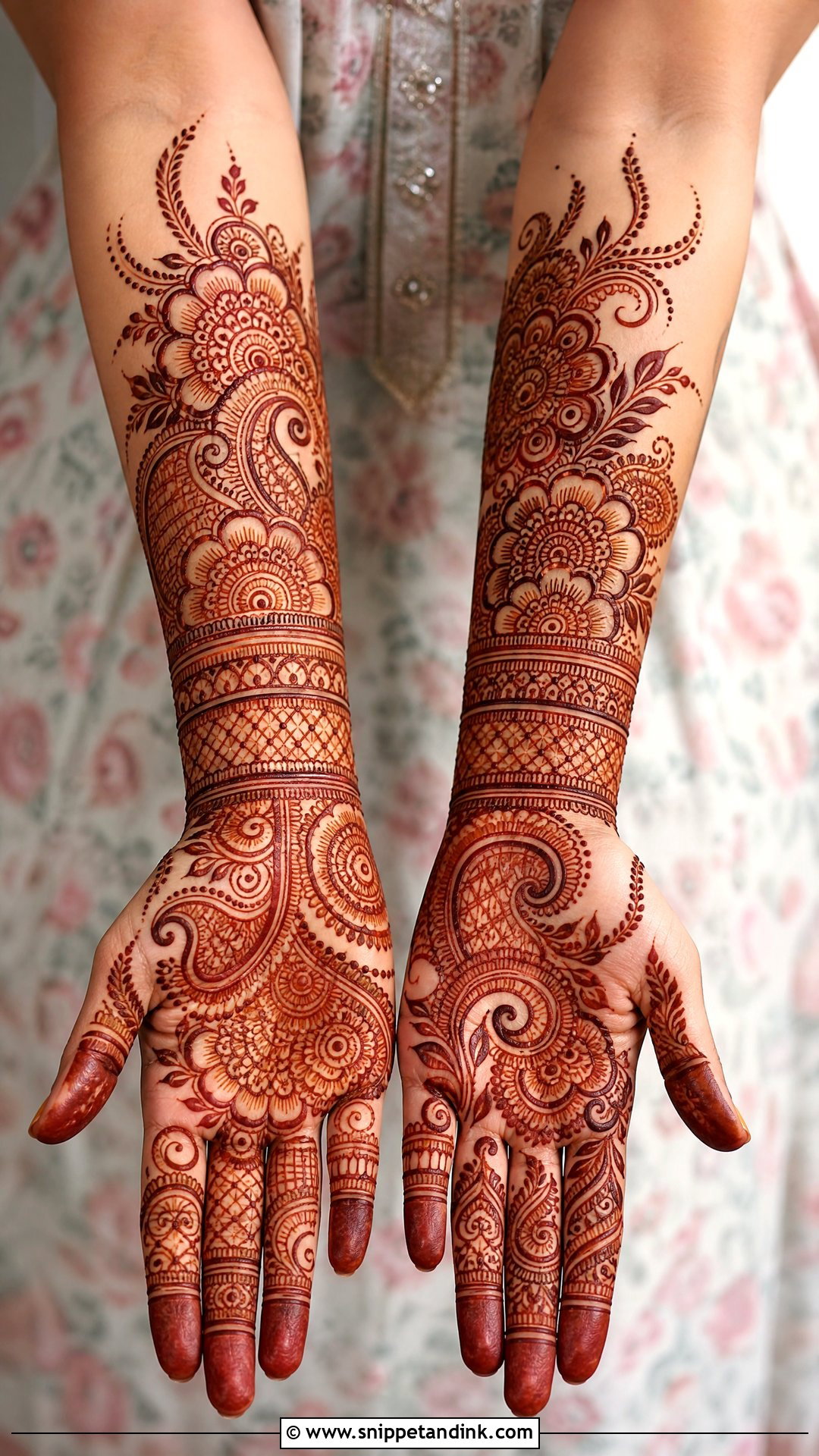
Indo-Arabic combines the bold flow of Arabic layouts with the fine filling of Indian mehndi. Large flowers, diagonal trails and open spaces come from the Arabic side; tiny fills, fine lines, mandalas and dense wrist bands come from the Indian side. The result is rich without being packed, and clear enough to photograph on the front, back or full hand. What I watch is where the dense Indian filling goes. I keep it in bands and borders so the Arabic trail still has open skin around it, otherwise the design simply turns into a busy Indian one.
16. Gulf Arabic Bridal Mehndi
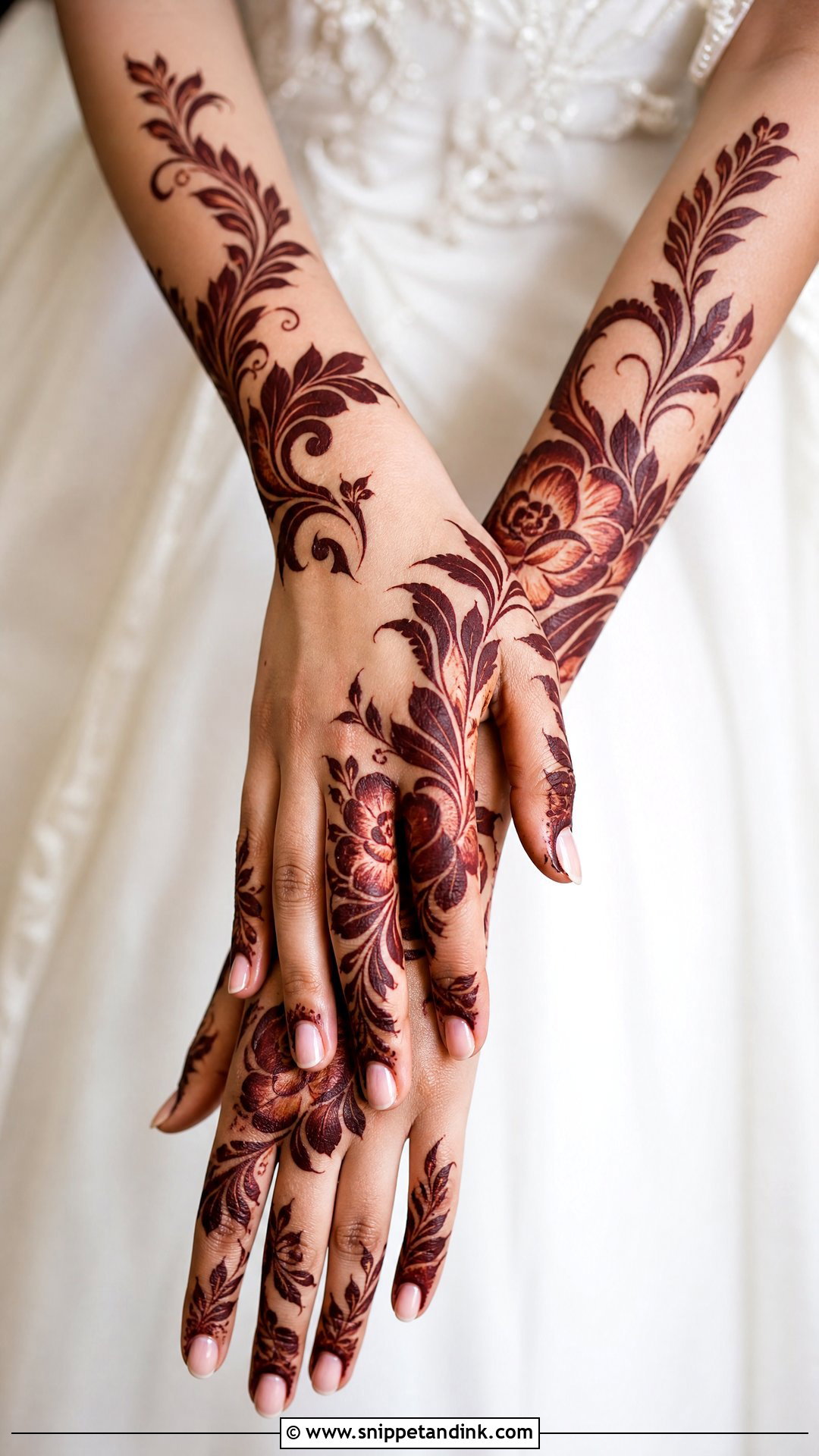
Gulf or Khaleeji-inspired mehndi is bold and expressive: large floral shapes, thick leafy strokes, dramatic curves and open skin that lets each shape stand out. A bridal version covers the back hand and wrist, then extends toward the forearm with statement vines. The motifs need to read from across a room, which is the whole point of the style. Thick strokes hold plenty of paste, so this is the design where a deep reddish-brown or maroon stain shows most clearly. Gold jewelry, embroidered sleeves and classic bridal nail colors complete it.
17. Moroccan Arabic Bridal Mehndi
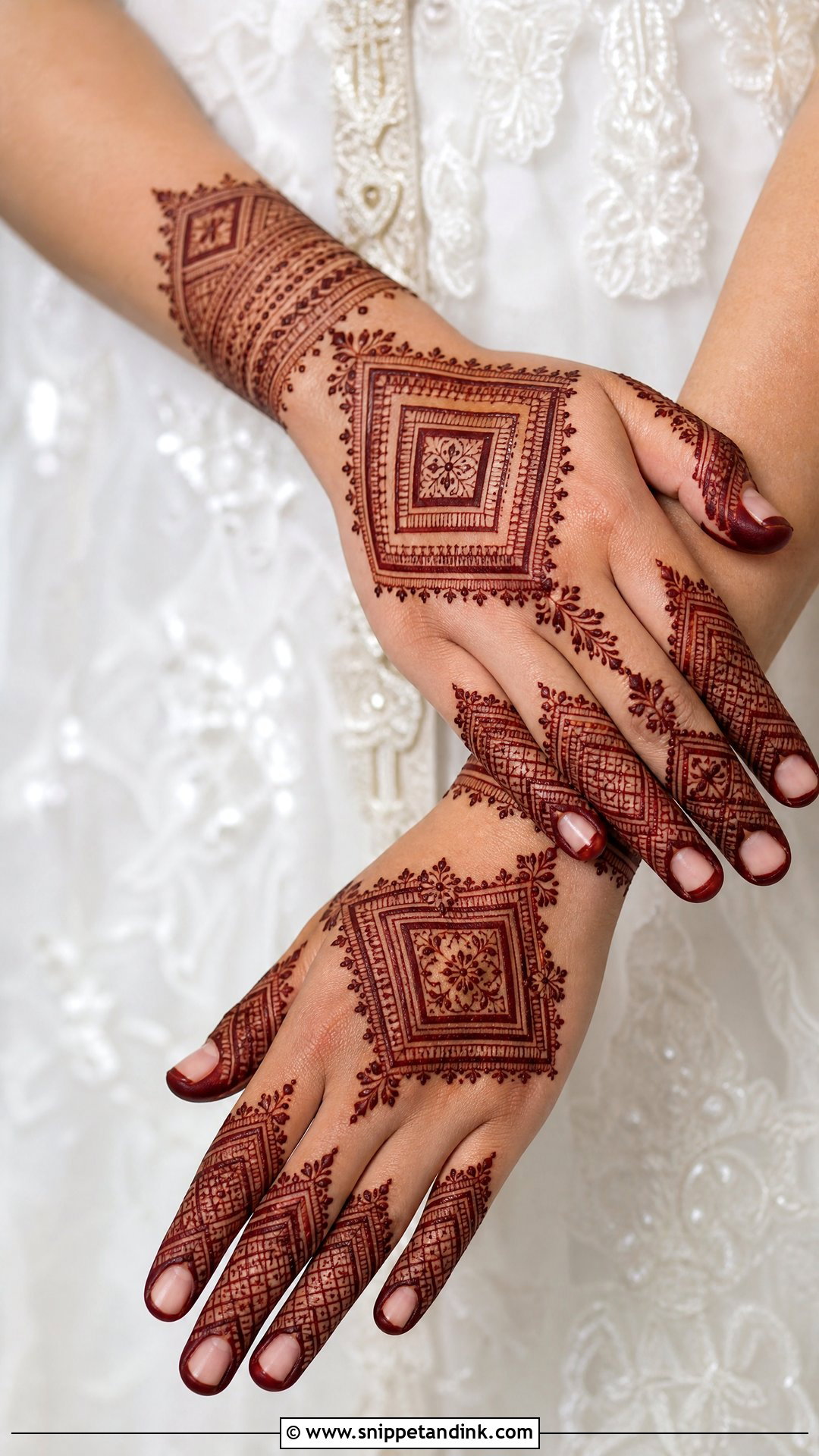
Moroccan-inspired designs trade flowers for structure: diamonds, triangles, squares, grids and repeating geometric bands. A bridal version can include a patterned wrist cuff, a geometric palm layout and detailed fingers with matching shapes, softened with small flowers, dots or leafy edges. The symmetry suits both front and back hands. Geometric work exposes any wobble, so I draw each straight line in one steady pull rather than short strokes, and work from the center of the hand outward to keep the grid square.
18. Arabic Peacock Bridal Mehndi
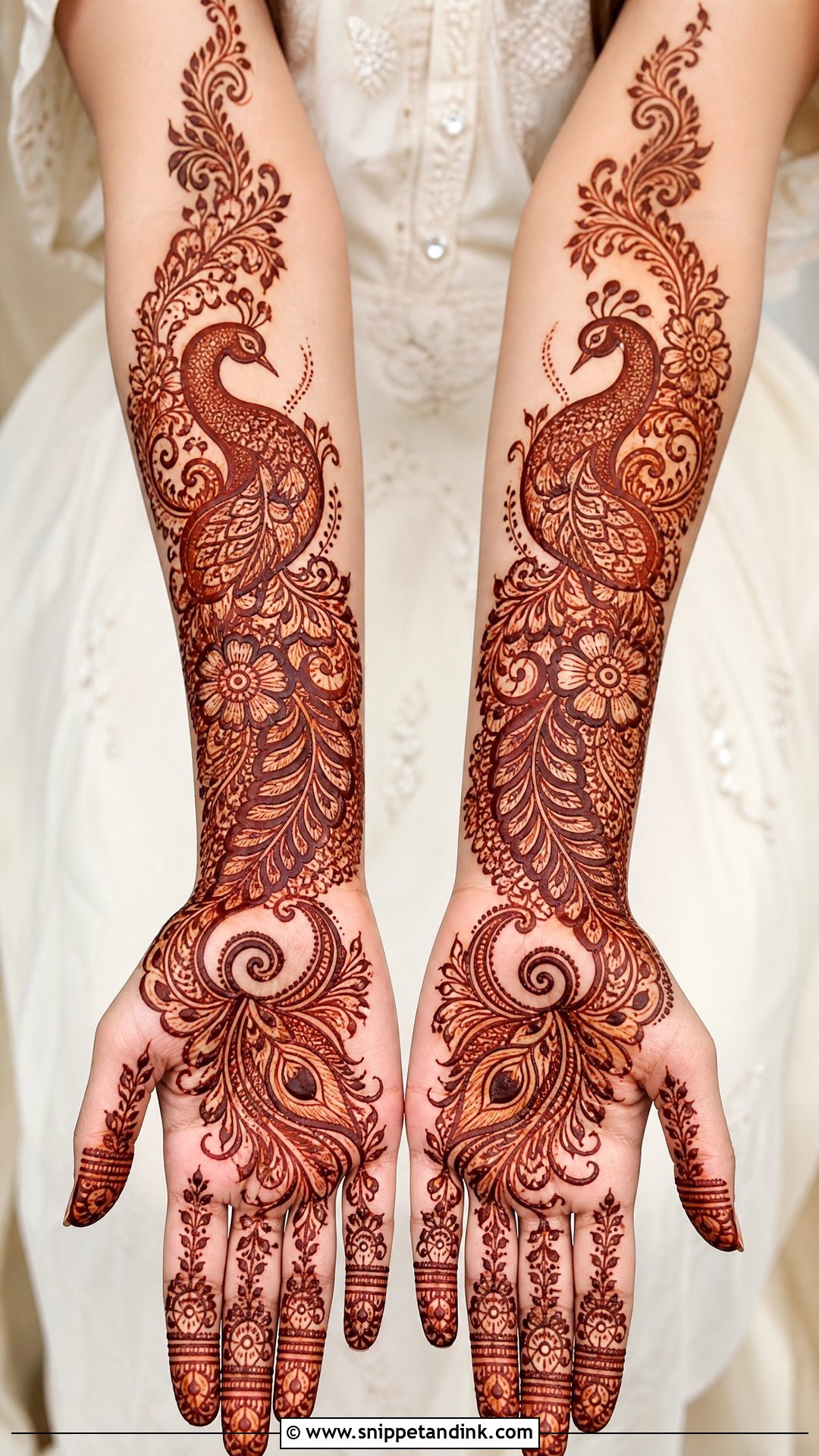
A peacock adds a graceful traditional figure to Arabic flow. I place it on the palm, back hand or forearm and build floral vines and paisley trails around it, drawing the feathers with curved lines, dots, leaf shapes and soft shading. Size matters more than anything with this motif. A tiny peacock loses its eye and beak detail once the paste spreads and the stain develops, so keep the bird generous enough to stay readable. Floral bands and leafy trails can connect it to the fingers for a full bridal look.
19. Arabic Bridal Mehndi With Initials
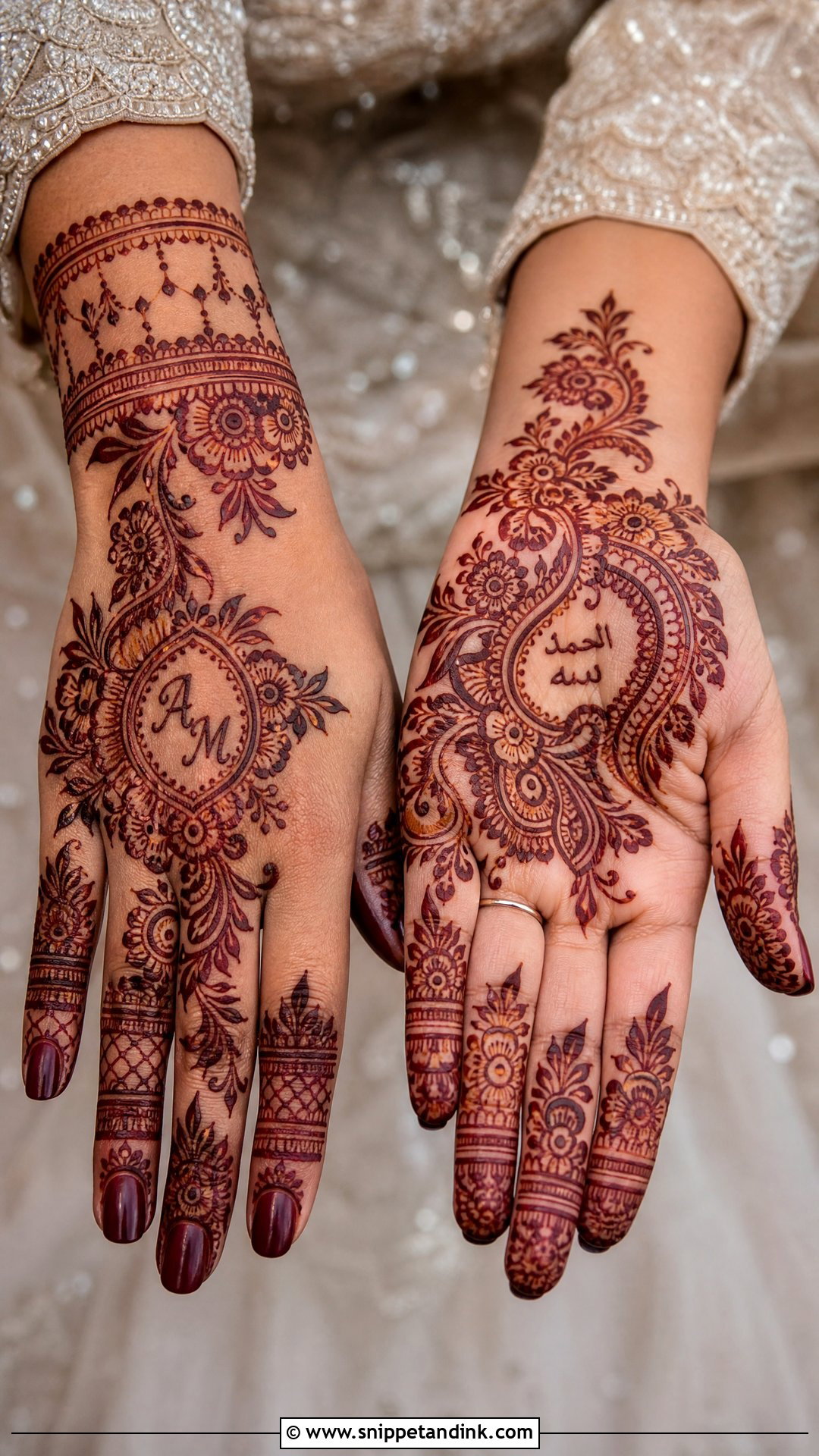
Initials make the design personal. They can hide inside a flower, sit within a paisley, or go near the wrist in a small framed space, with floral trails, detailed fingers and a bracelet pattern around them. The letters should blend into the design rather than float on top. Plenty of couples turn finding them into a game, so I make them readable to someone who knows where to look but not obvious to everyone else. Bring the exact spelling written down; I never work from memory with names.
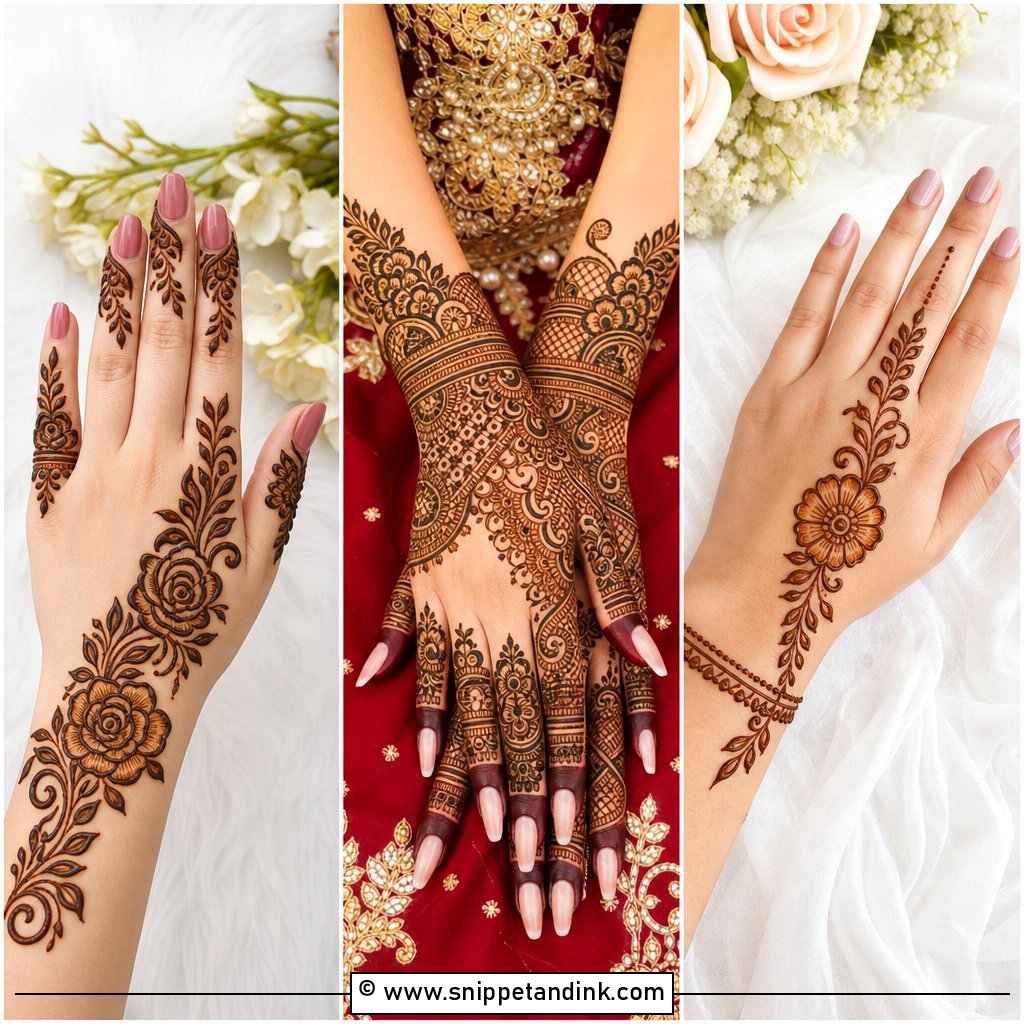

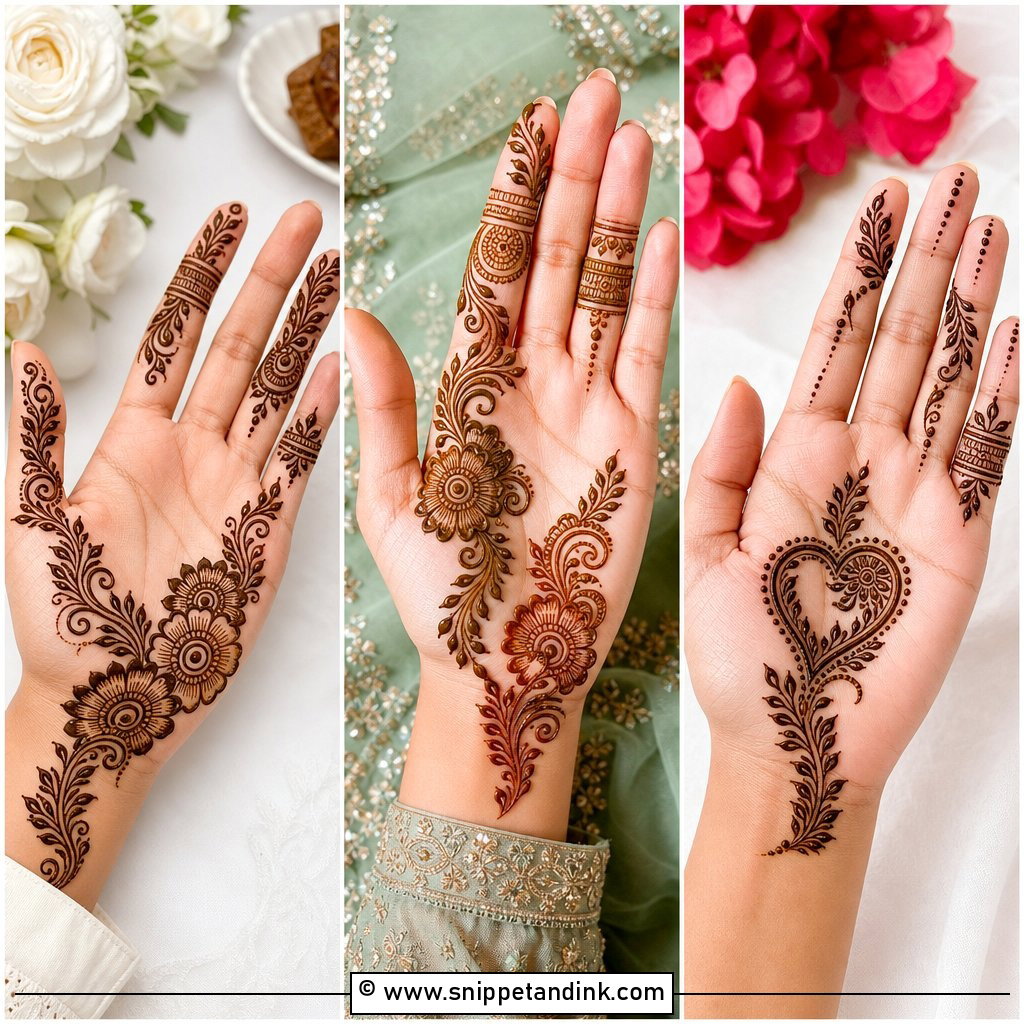
20. Arabic Bridal Mehndi With Bride And Groom Motif
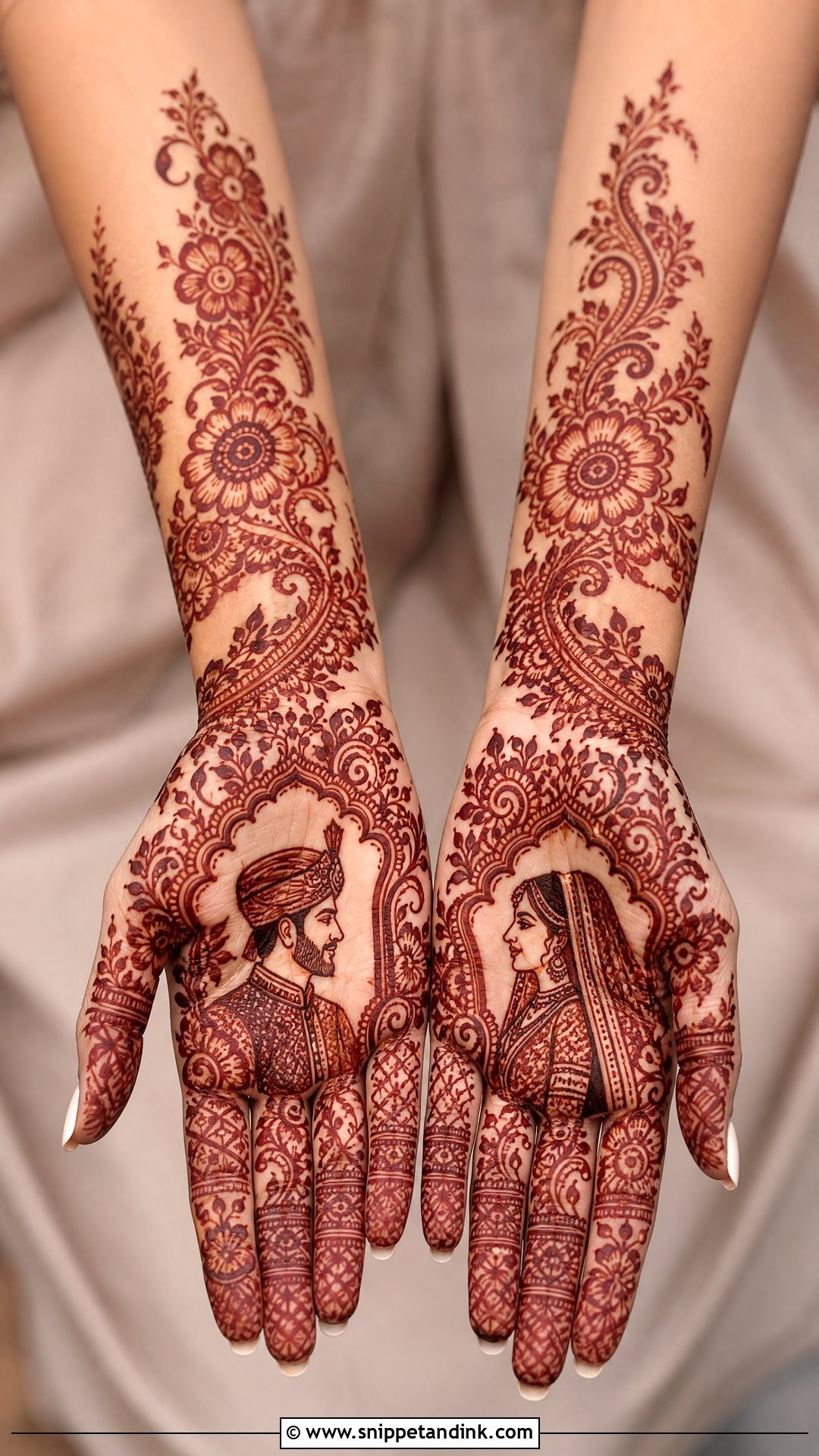
A bride and groom motif turns the design into a story. The couple, drawn as portraits or silhouettes, sits on the palm or forearm with Arabic flowers, leaves and paisleys flowing around them. Simpler figures stain better than detailed faces, since fine facial features often blur, so I lean toward silhouettes or profiles unless a bride is set on faces and has time for a slower application. Matching floral bands on the fingers and a decorative wrist cuff finish it. Save it for the main ceremony, when there’s time to sit.
21. Arabic Bridal Mehndi For Small Hands
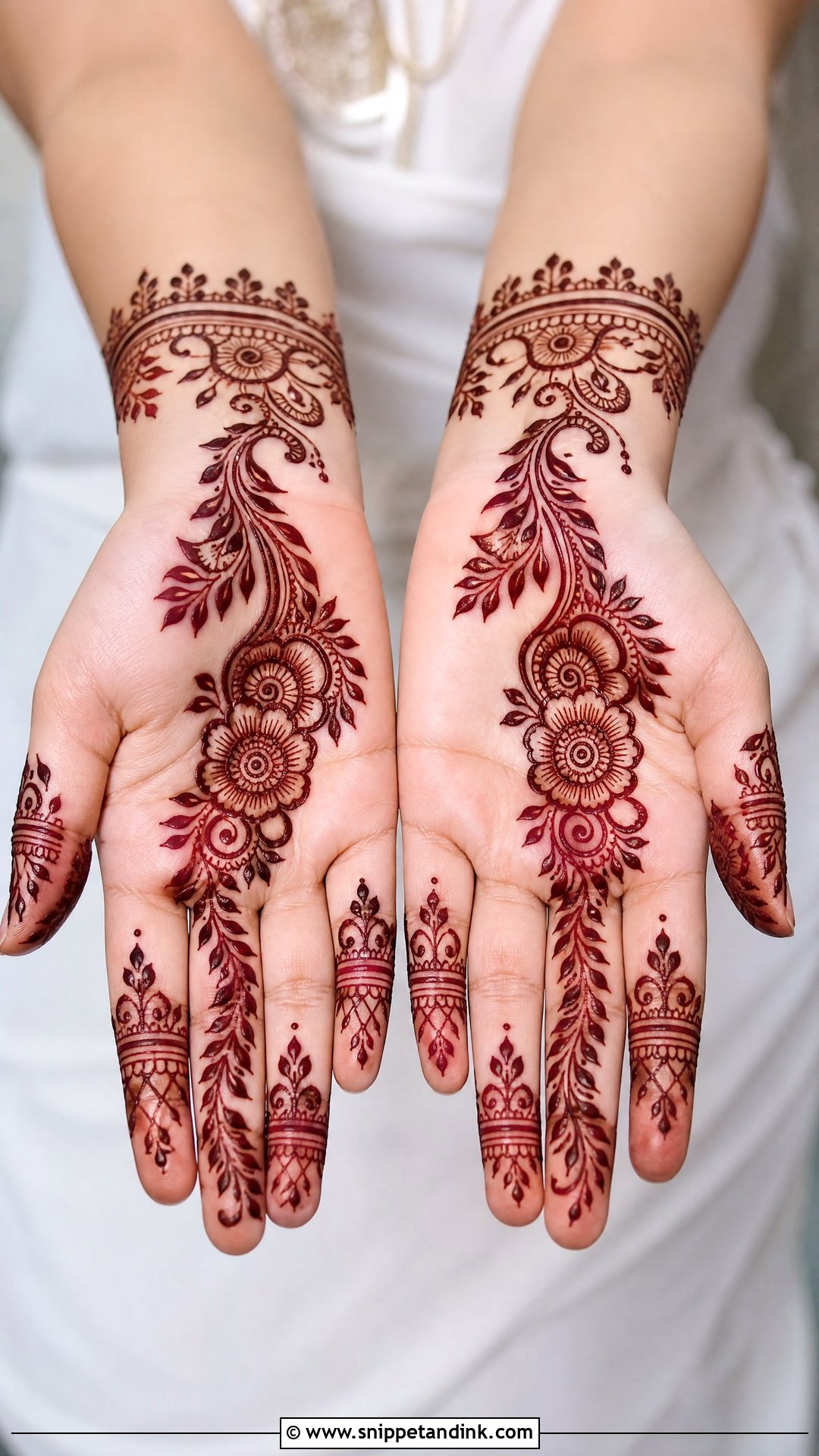
On small hands, scale is everything. Slim floral trails, medium paisleys, fine leaves and neat finger patterns that follow the hand’s shape look balanced, while one huge motif across the palm makes the hand look shorter. A diagonal trail from the wrist to a single finger is the most flattering layout I know for petite hands, because it adds length while keeping the design open. A delicate wrist band completes it. I also use a cone with a finer tip so the lines stay in proportion.
22. Arabic Bridal Mehndi For Long Fingers
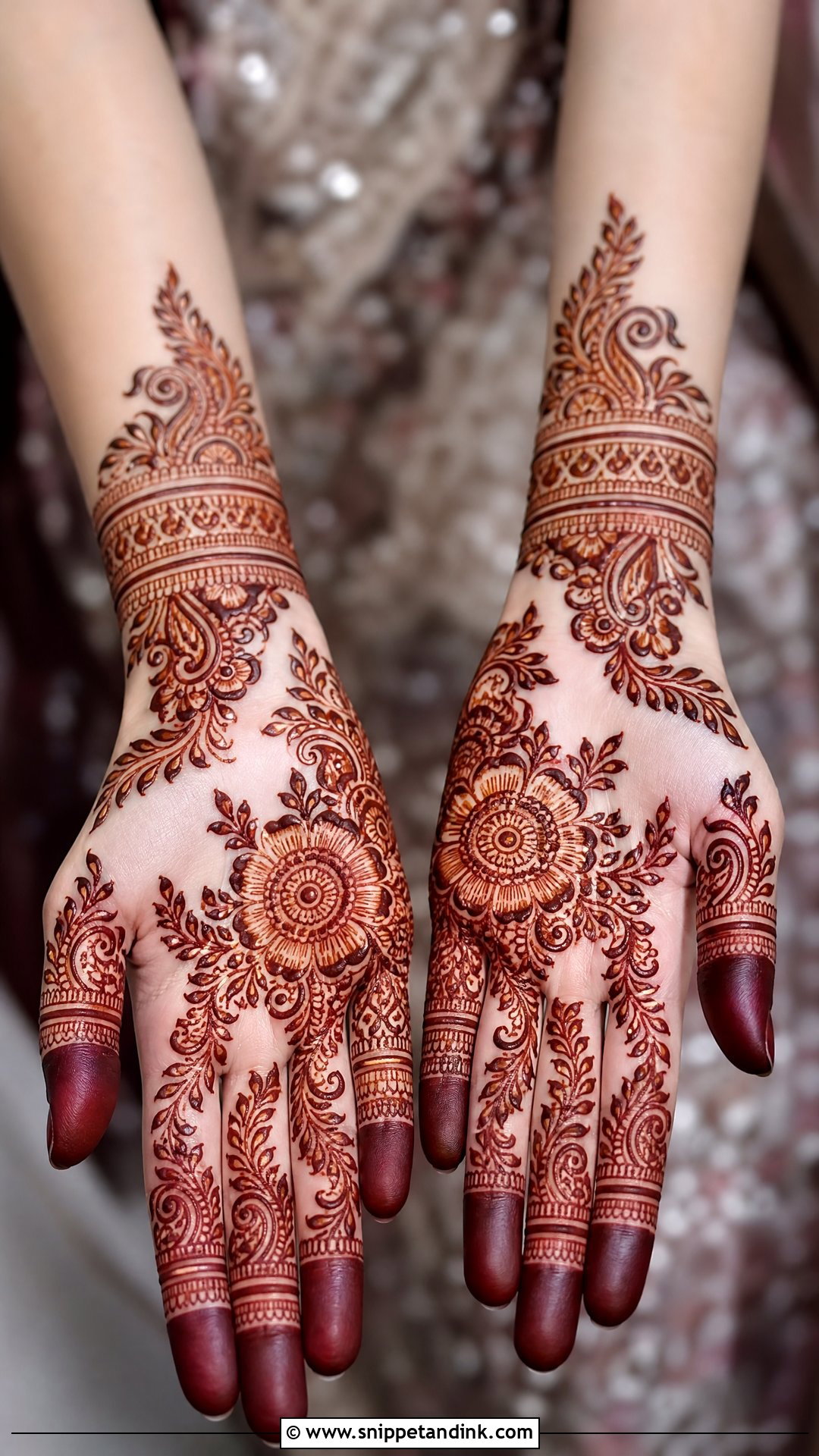
Long fingers give me room for stacked bands, leafy finger vines, fingertip fills and repeating motifs, and fine linework shows best on this hand shape. That length can tip into looking narrow, though, so I add a wider floral or paisley element on the palm or back hand and a wrist cuff for balance. I’d avoid one unbroken vertical vine down each finger, which exaggerates the length. Horizontal bands separated by open skin look more elegant.
23. Arabic Bridal Mehndi For Engagement
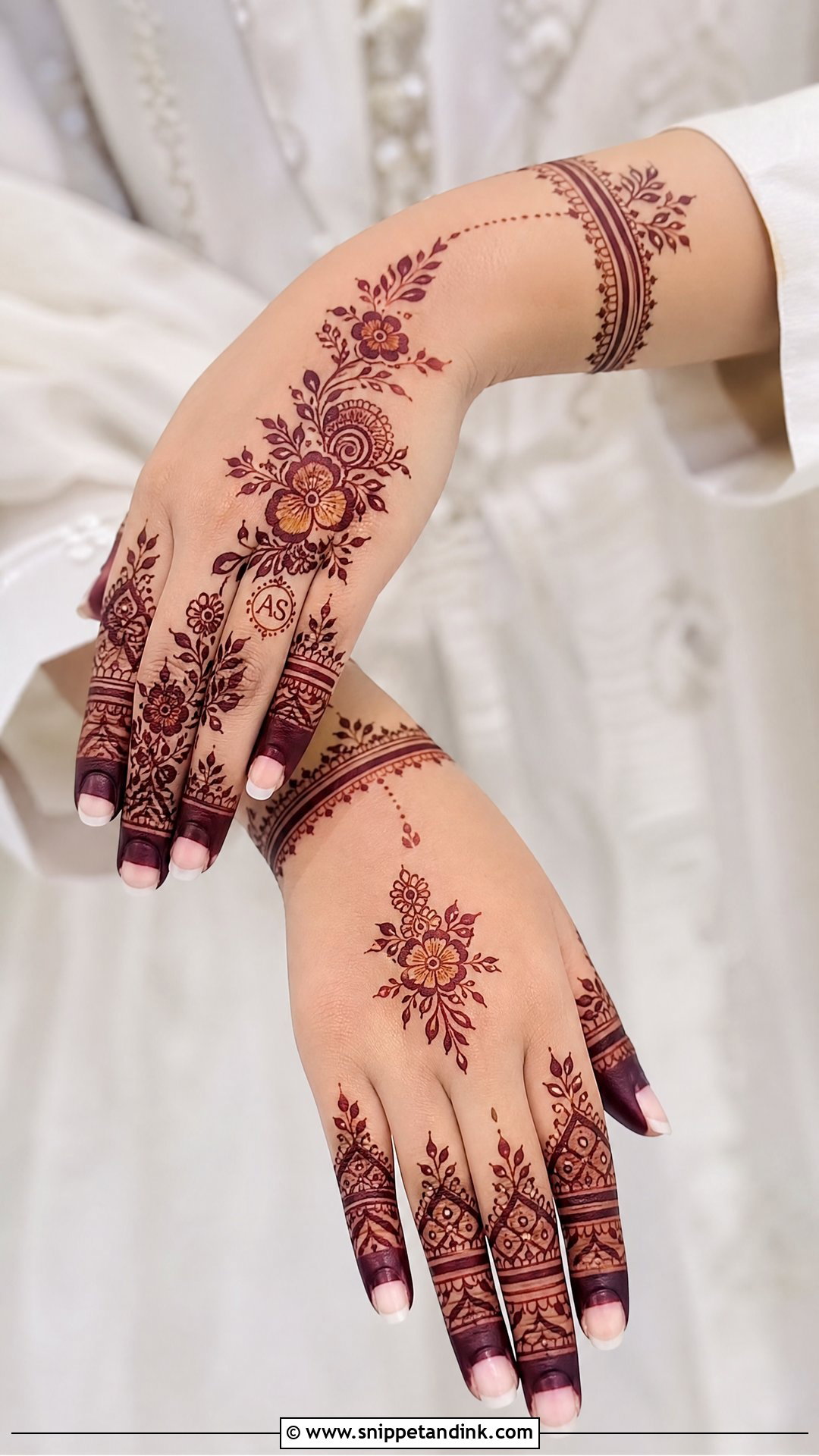
Arabic bridal mehndi for engagement should feel festive but lighter than the wedding design. A floral back-hand trail, a bracelet wrist detail, decorated fingers and a small palm motif give a polished look for ring photos, and open space lets the ring and nail color stand out. Roses, leafy vines or a soft mandala keep it romantic, with initials or the date tucked into a quiet corner. If the engagement is only a couple of weeks before the wedding, keep it light. A heavy engagement design can still be faintly visible under the bridal one.
24. Arabic Bridal Mehndi For Nikah
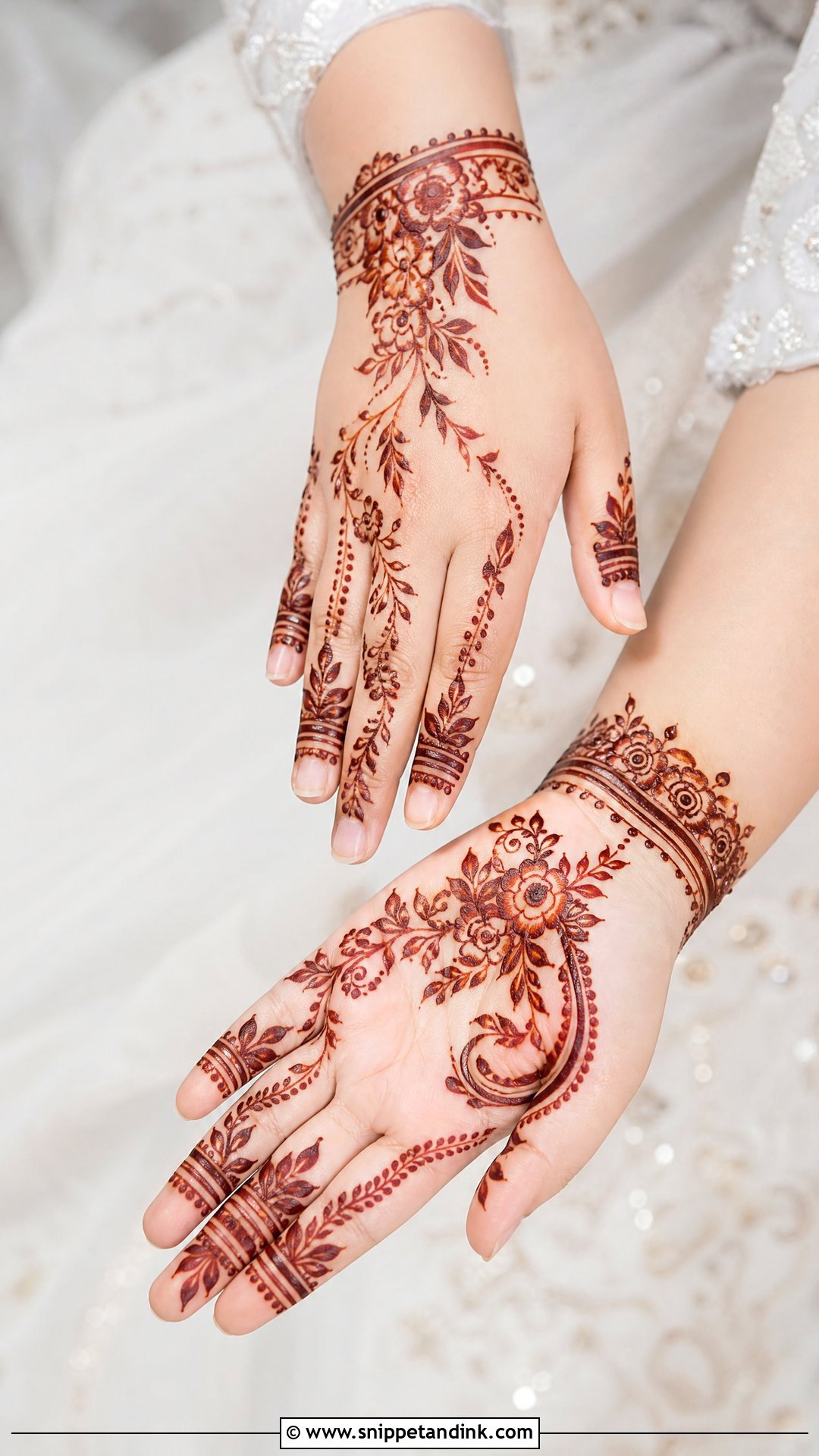
For a nikah, elegance usually matters more than volume. Soft floral vines, clean finger detail and bracelet-style patterns on the back of the hand with the palm left simple, or a light front-hand trail with a small central motif. Fine dots, leafy curves and shaded flowers suit the occasion and pair with ivory, champagne, blush, gold and emerald. If the nikah is your first event, have the mehndi done a day or two before it, not that morning. Fresh henna is still orange when it comes off and needs time to deepen.
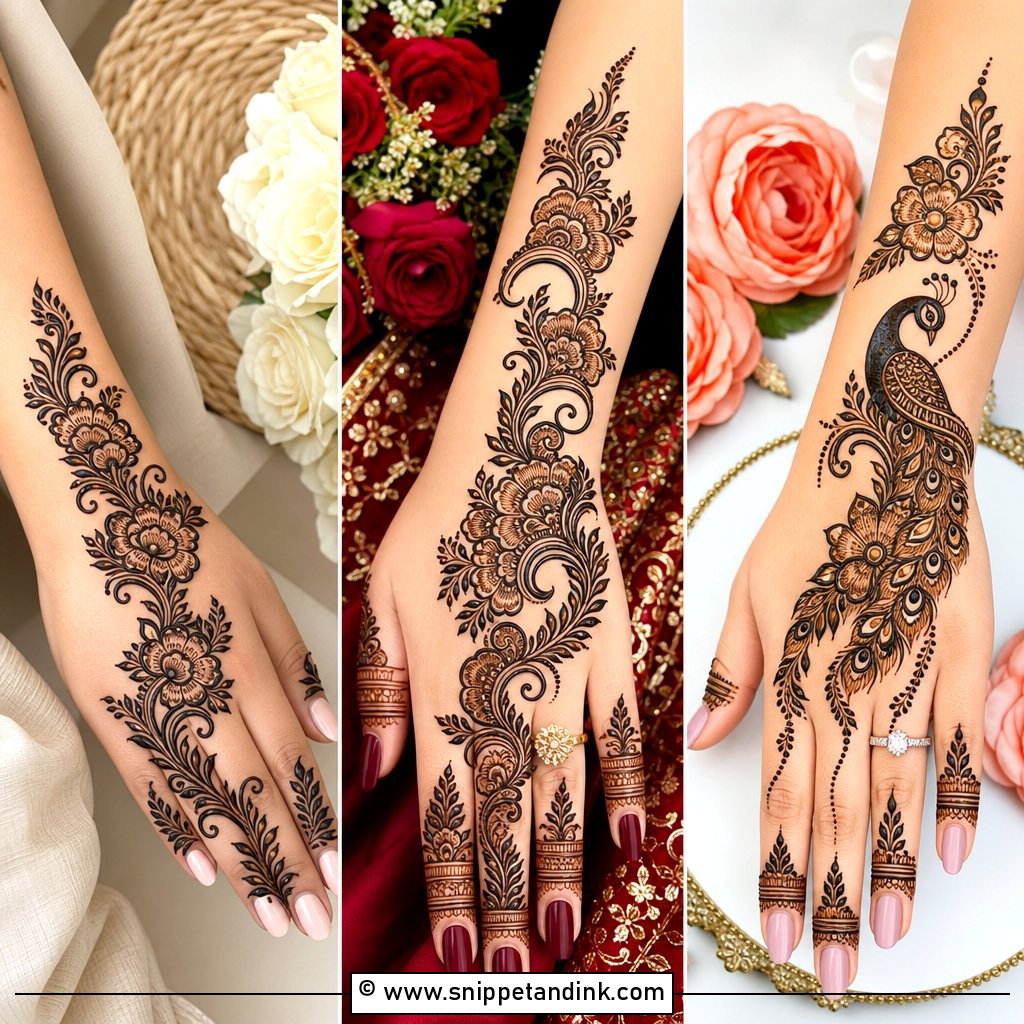
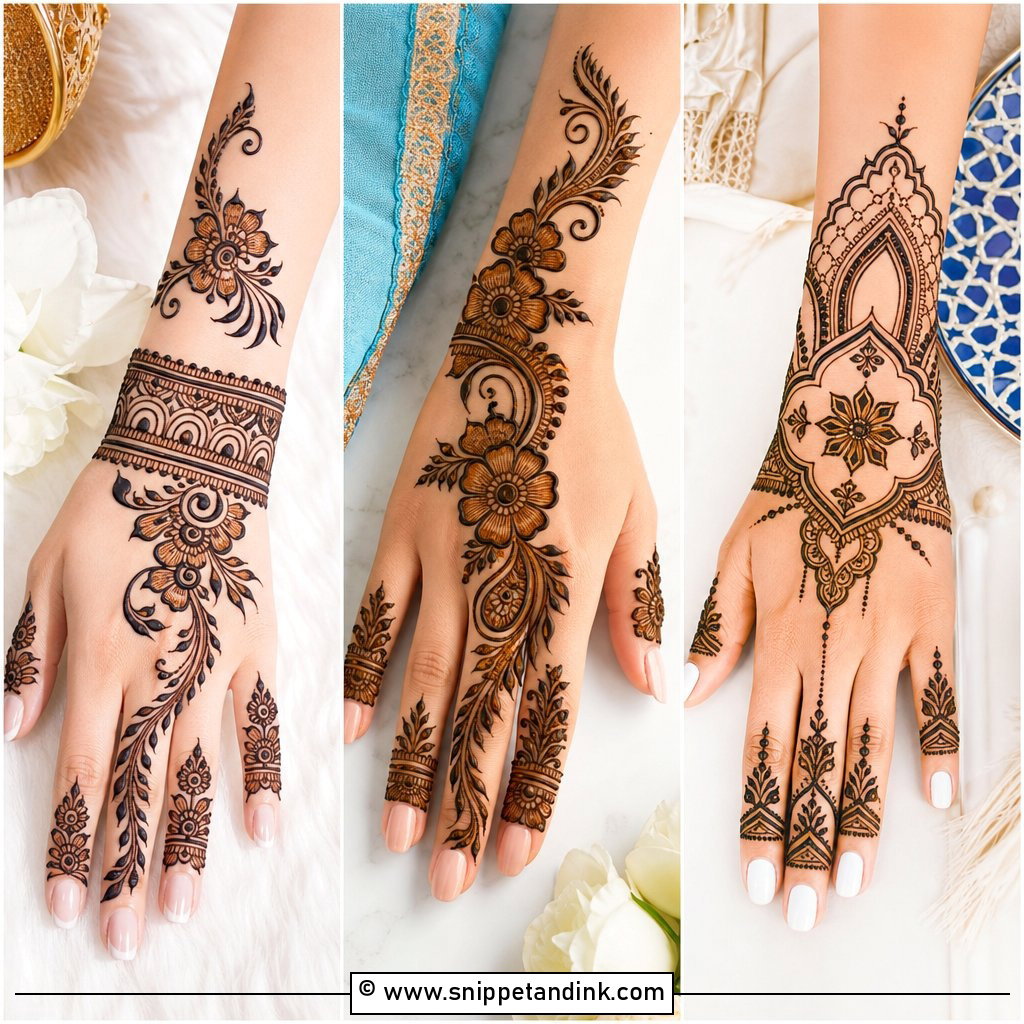
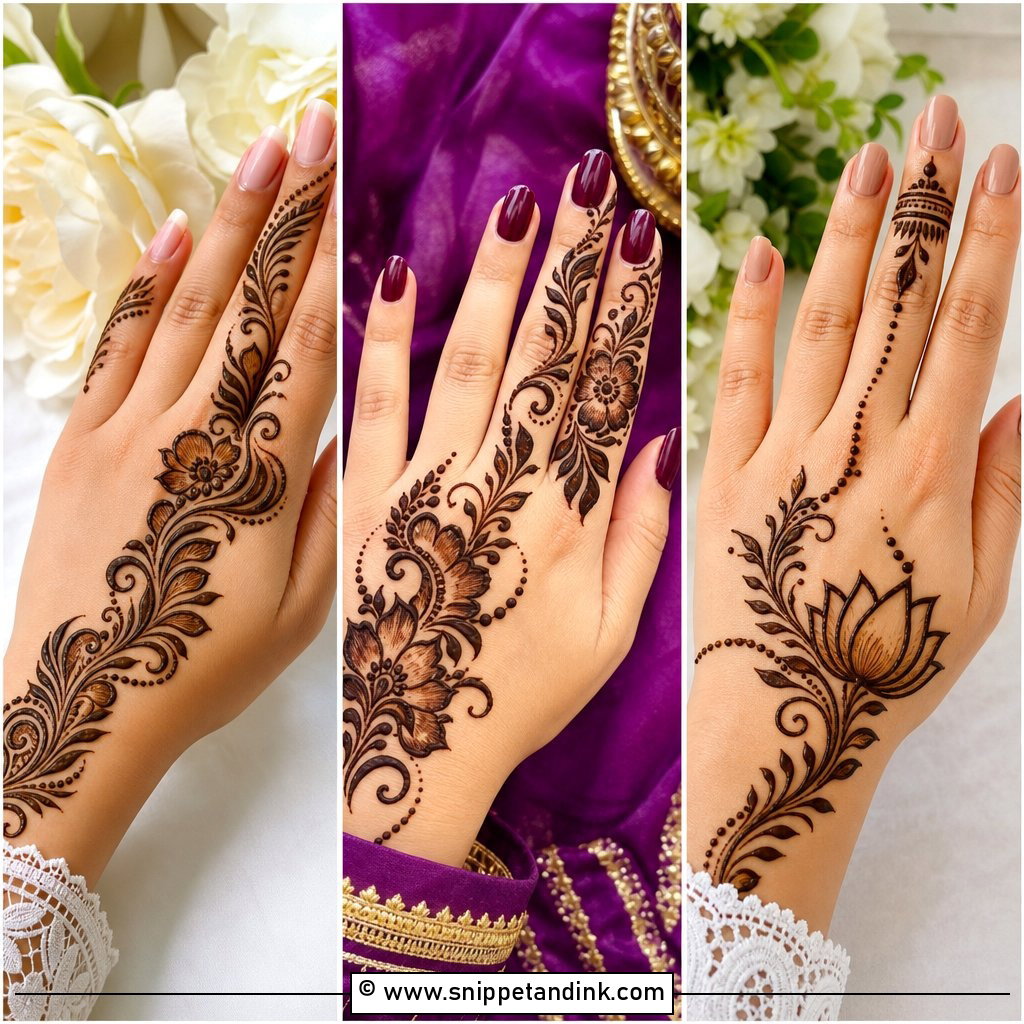
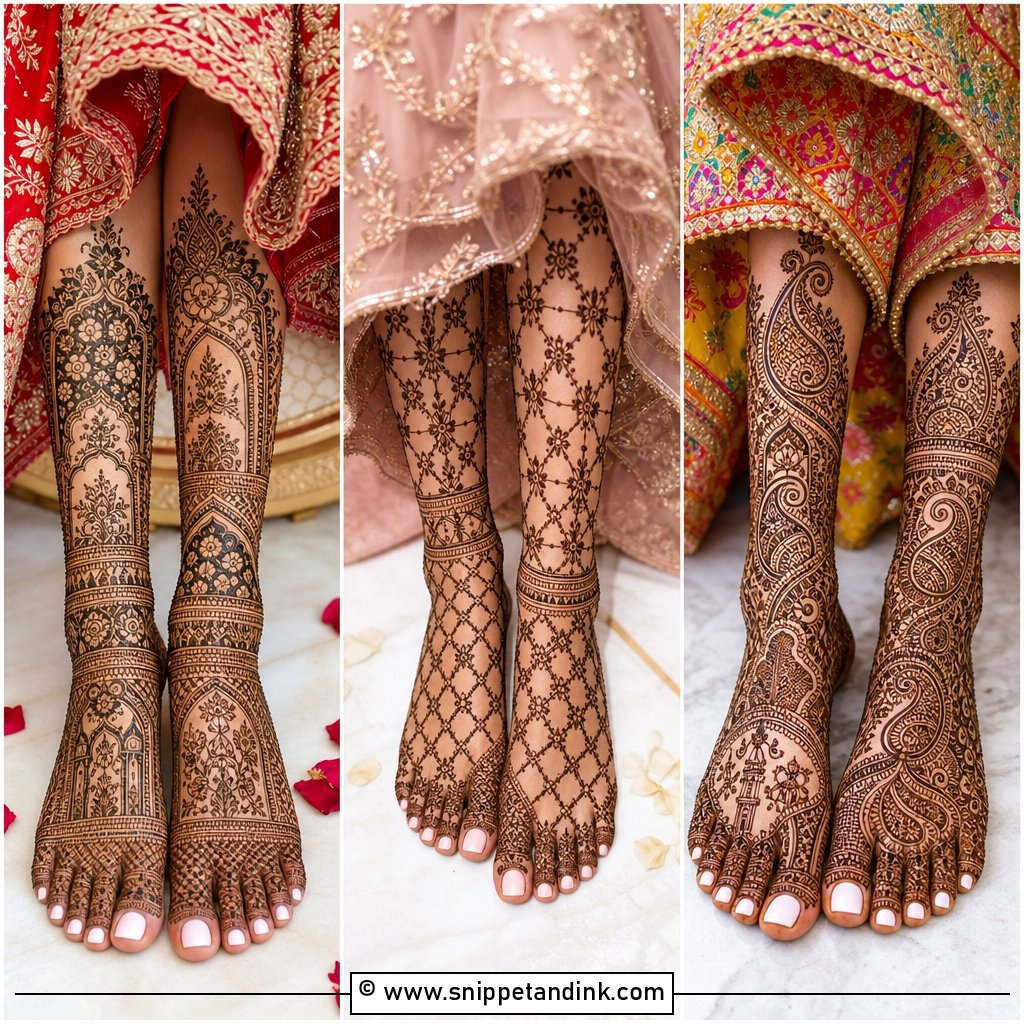
25. Arabic Bridal Mehndi For Reception
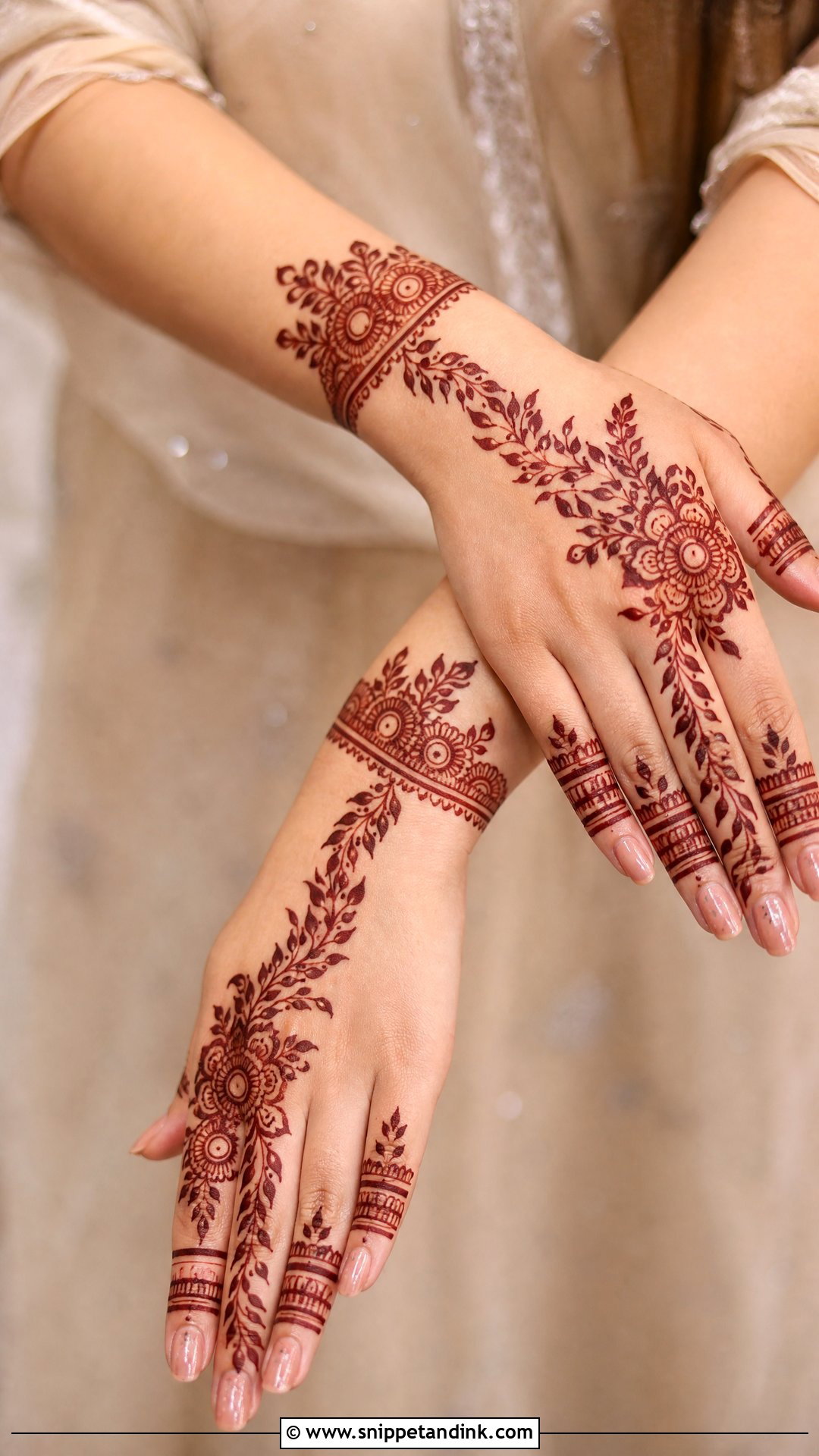
Reception mehndi can be lighter and more modern than the wedding design, since statement jewelry and polished styling do a lot of the work: back-hand florals, finger bands, wrist cuffs and open space, or a minimal trail with bold flowers. Timing decides what I recommend. If the reception is a day or two after the wedding, the wedding stain will be near its darkest, so many brides simply keep it. A week later, the original is fading, and a fresh light design looks cleaner than a tired heavy one. Either way, keep shapes clear around the fingers and wrist.
From Orange to Maroon: Getting the Deepest Stain in Time
Natural henna goes on as a green-brown paste and comes off orange. It then darkens over the next day or two, reaching its deepest red-brown at around 24 to 48 hours. That curve decides all the timing.
- Book the application one to two days before the event where you want the darkest color.
- Keep the paste on as long as you can, ideally six to eight hours or overnight. Loosely wrapping dry hands in tissue at night helps the paste stay in contact.
- Once the paste is dry to the touch, dab on a little lemon and sugar mix so it stays stuck to the skin. Dab, don’t soak.
- Scrape the dried paste off with a blunt edge instead of washing it, and keep water away from the design for the rest of that day if you can.
- Warmth helps the stain develop. Scrubbing, chlorine and harsh soaps fade it, so save the manicure and the pool for afterward.
Why I Won’t Use Black Henna or Instant-Stain Cones
Natural henna never stains black, and it never turns deep brown within an hour. A cone that promises either is a warning sign. So-called black henna often contains PPD, a hair-dye chemical that can cause severe skin reactions and lasting sensitivity, and some ready-made cones add other dyes or chemicals to fake a fast color.
Ask your artist what’s in her paste. A natural one is usually henna powder, lemon juice or water, sugar and an essential oil such as eucalyptus or lavender, and many artists mix their own fresh. If you have sensitive skin or allergies, ask for a small patch test a few days ahead. A rich stain takes time, and there’s no safe shortcut.
Open Space Is the Whole Point of Arabic Mehndi
Full florals, bracelets, mandalas, jaali, initials and Gulf-style trails show how Arabic mehndi can be traditional and modern at once, and every design here can be adjusted to your hand shape, outfit and ceremony. The heaviest design is rarely the best one. What works is balance, a layout drawn for your hand, and a stain given enough time to develop. Bring photos of your outfit and jewelry to your mehndi artist, decide honestly how long you can sit, and lean toward open spacing and bold flowers if you want the design to read clearly from the first ceremony to the last.
You'll Like These Ideas:





Leave a Reply