
A design book earns its place on my table when every page is a complete hand, not a scatter of motifs I have to assemble on the spot. People now ask for everything from Arabic trails and Indian bridal hands to Indo-Arabic fusion, minimal fingers, Eid palms and modern back-hand layouts. So this collection gives full layouts for palm, back hand, wrist, fingers, bridal, feet and party looks, each with a note on placement. Use it for client inspiration before a wedding or festival, or copy the pages into your own practice book and draw them until your hand knows them.
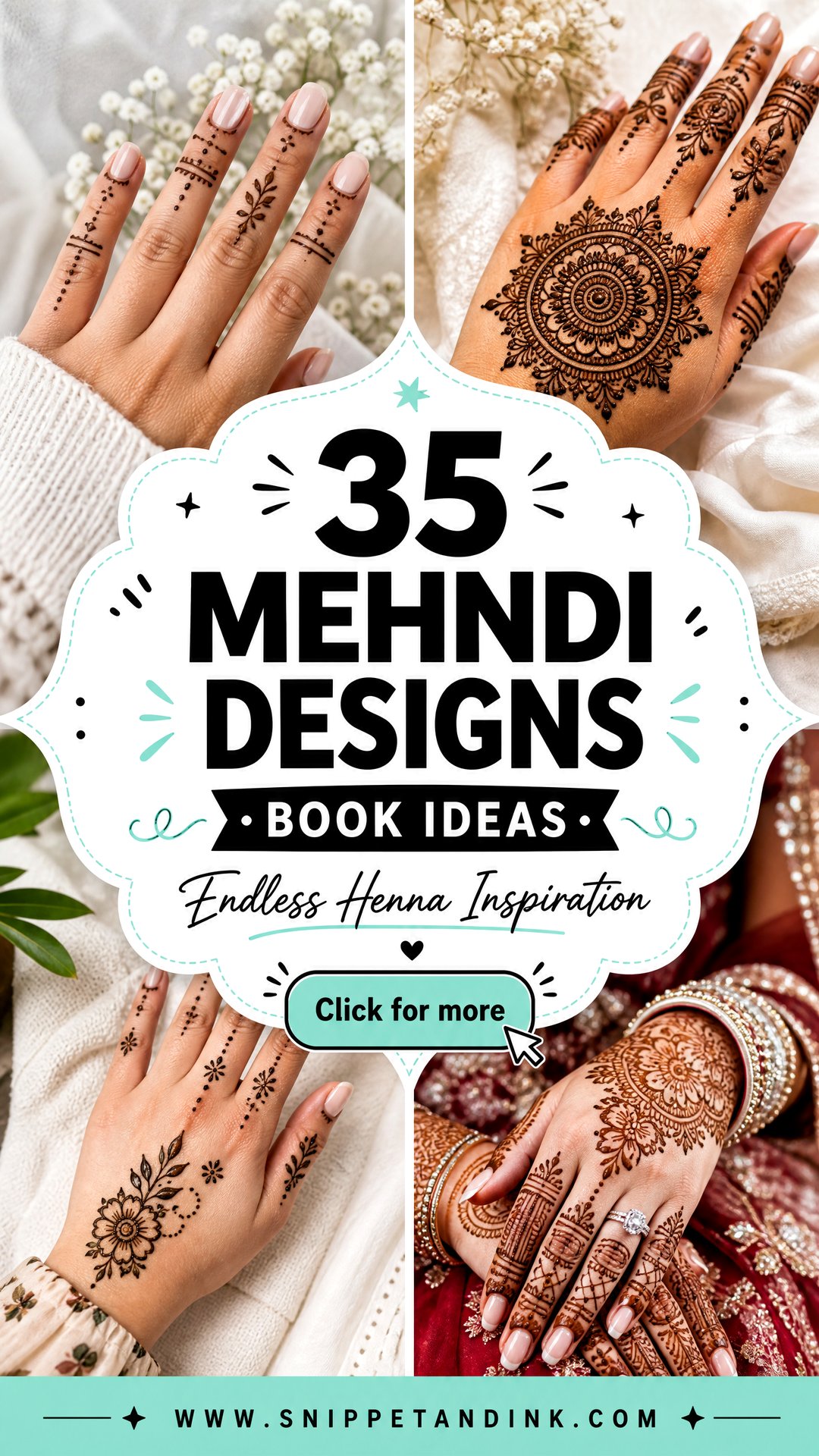
Drills I Give Students Before Any Full Hand
A design book only helps once your hand can produce a steady line. These are the drills I set before anyone copies a full layout.
- Lines at one thickness. Fill a page with straight lines, then curves, keeping the width identical. Uneven pressure is the most common flaw in beginner work.
- Dots in rows. Squeeze, touch, lift. Rows of matching dots teach you how much paste leaves the cone with each press.
- Petals and paisleys. Draw the same teardrop shape over and over, then in mirrored pairs. Almost every motif in this collection is built from it.
- Circles and spirals. Work from small to large, drawing each circle in short arcs rather than one sweep.
- One full page without stopping. Copy a simple layout start to finish, so you learn to pace the cone and plan where each element lands.
Getting the paste right for practice
Practice paste should behave like the paste you’ll use on clients: smooth, slightly stringy and roughly as thick as toothpaste, with no grit to clog the tip. Rolling your own cones from cellophane or mylar lets you control the tip size, and the freezer keeps them fresh between sessions. If lines break or blob, the paste is usually too thick or too runny; adjust it with a few drops of water or a little more powder instead of pressing harder.
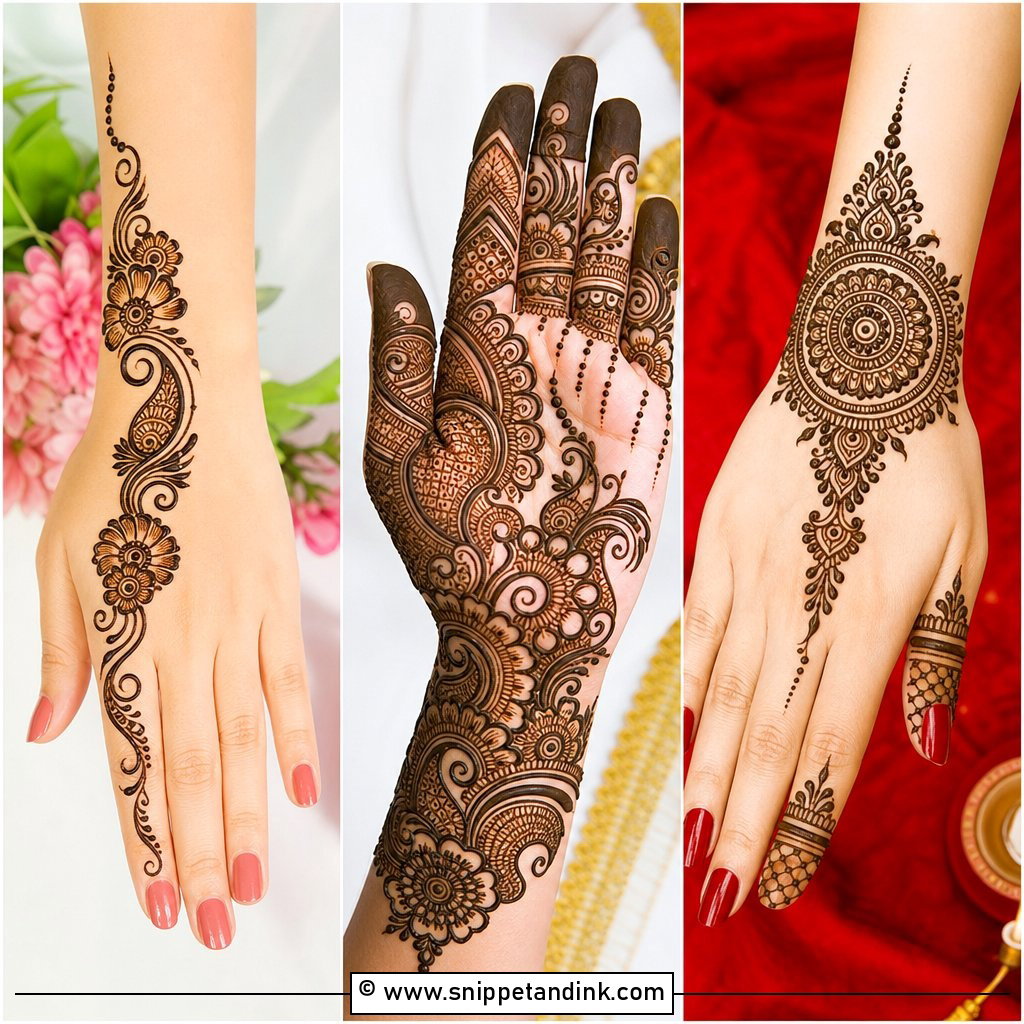
1. Simple Mehndi Design For Front Hand
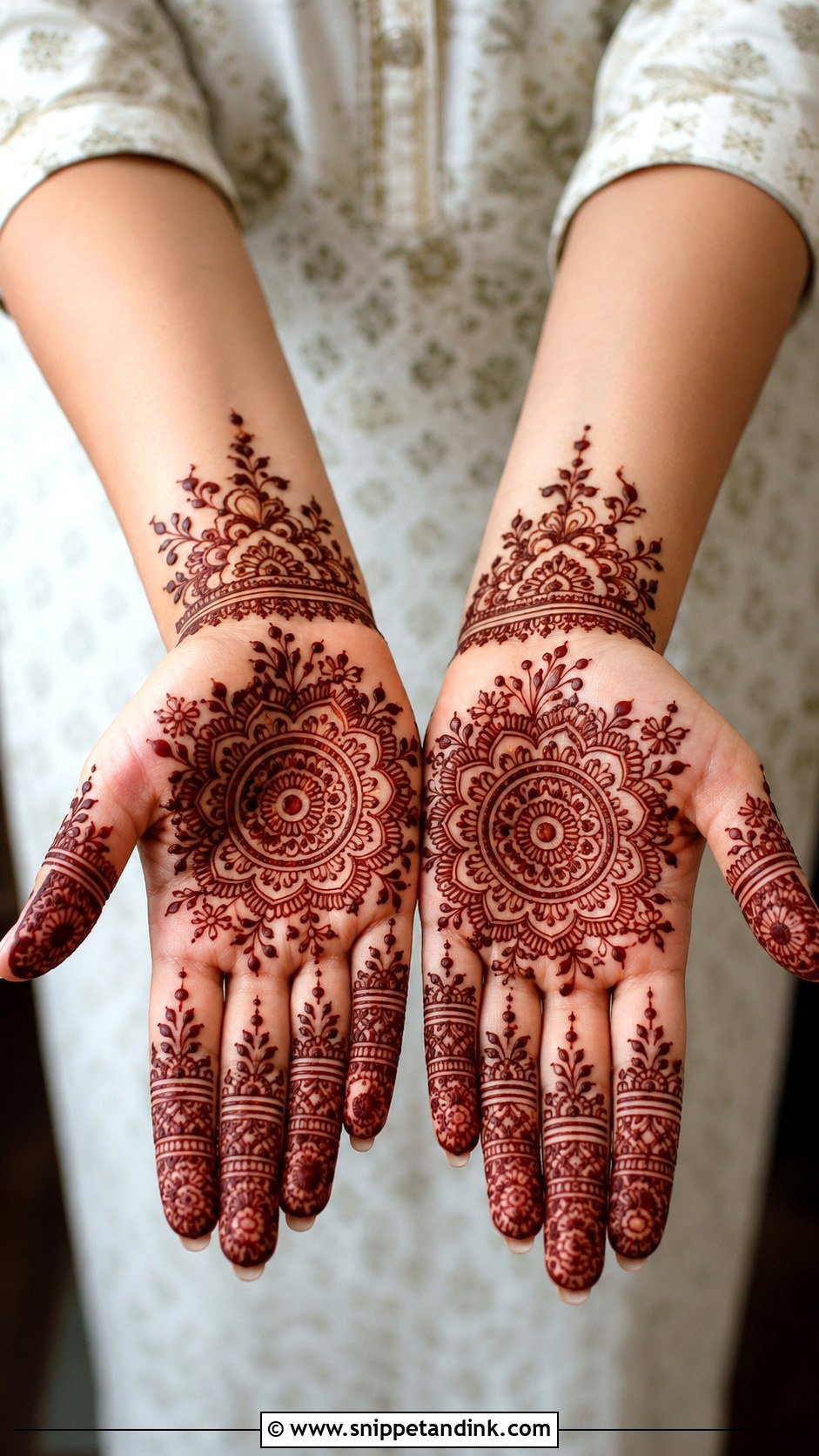
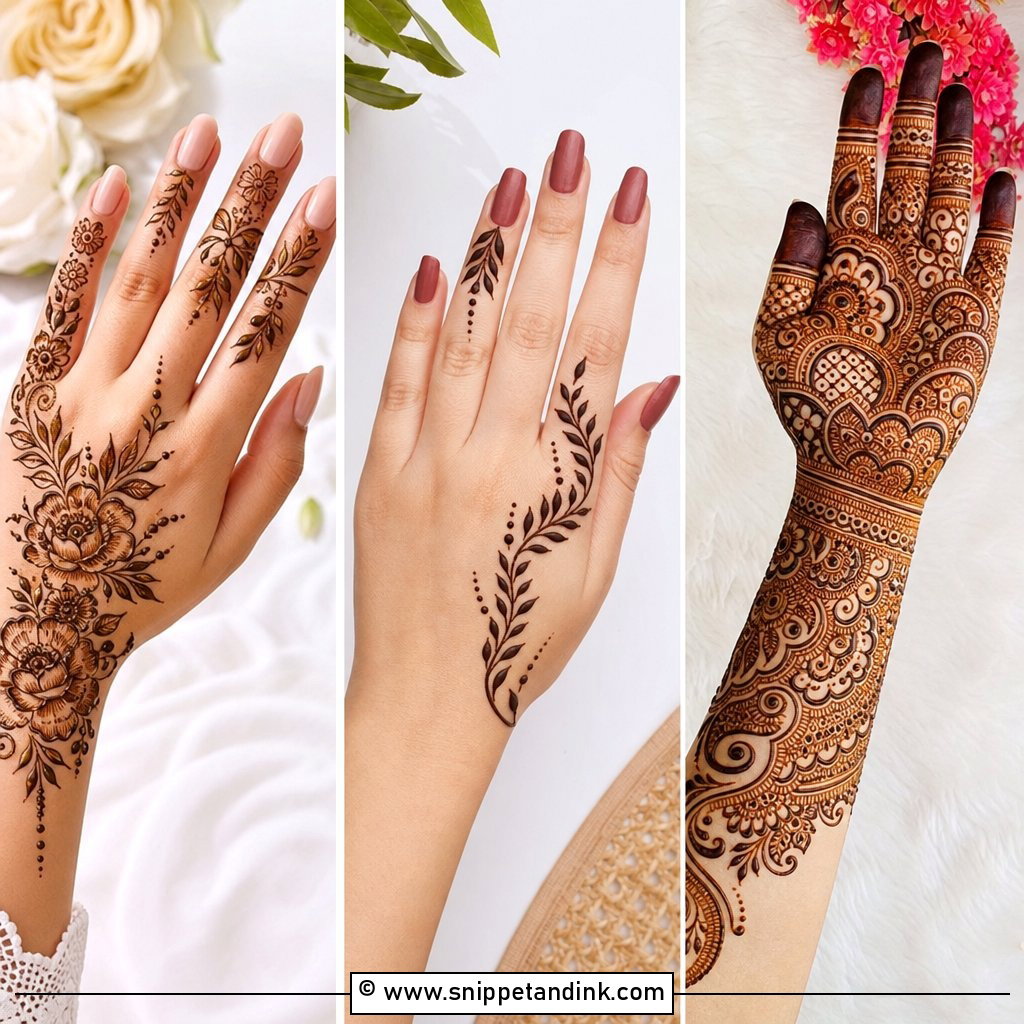
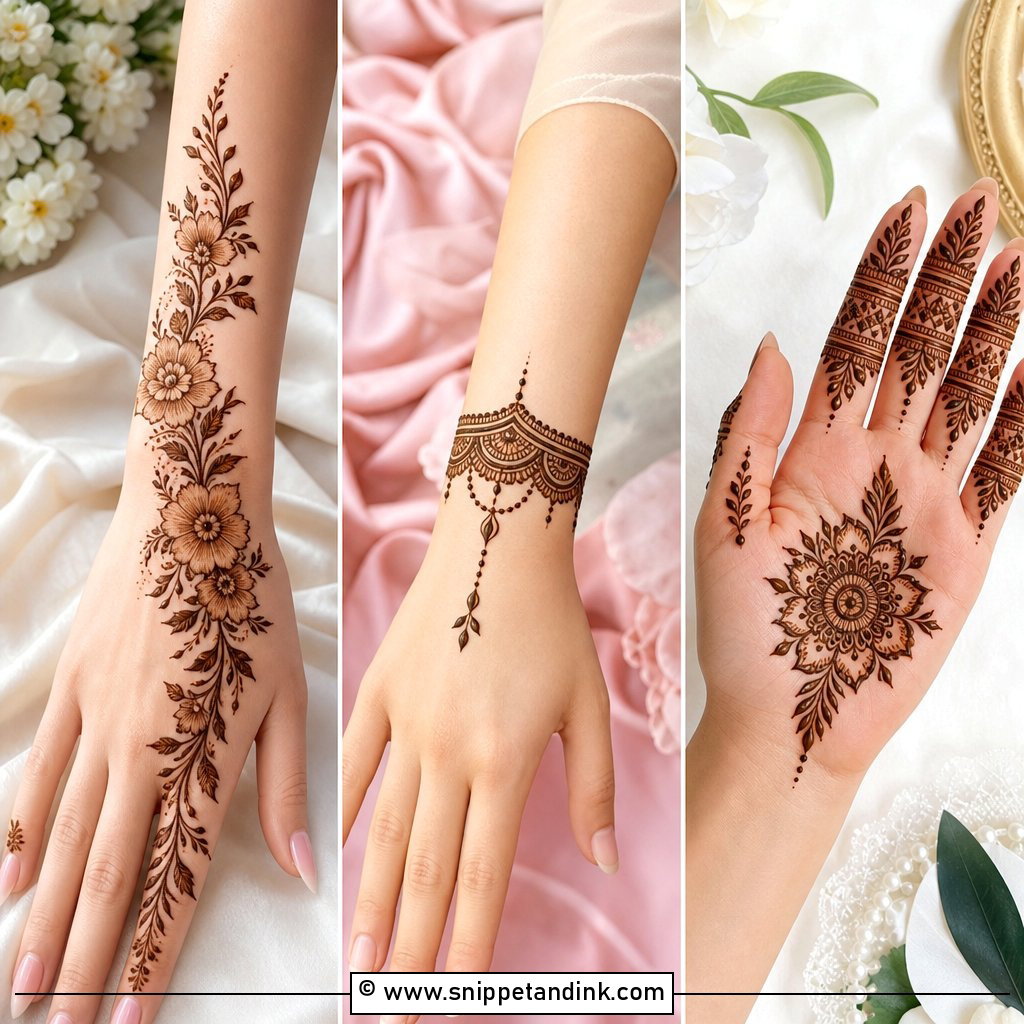
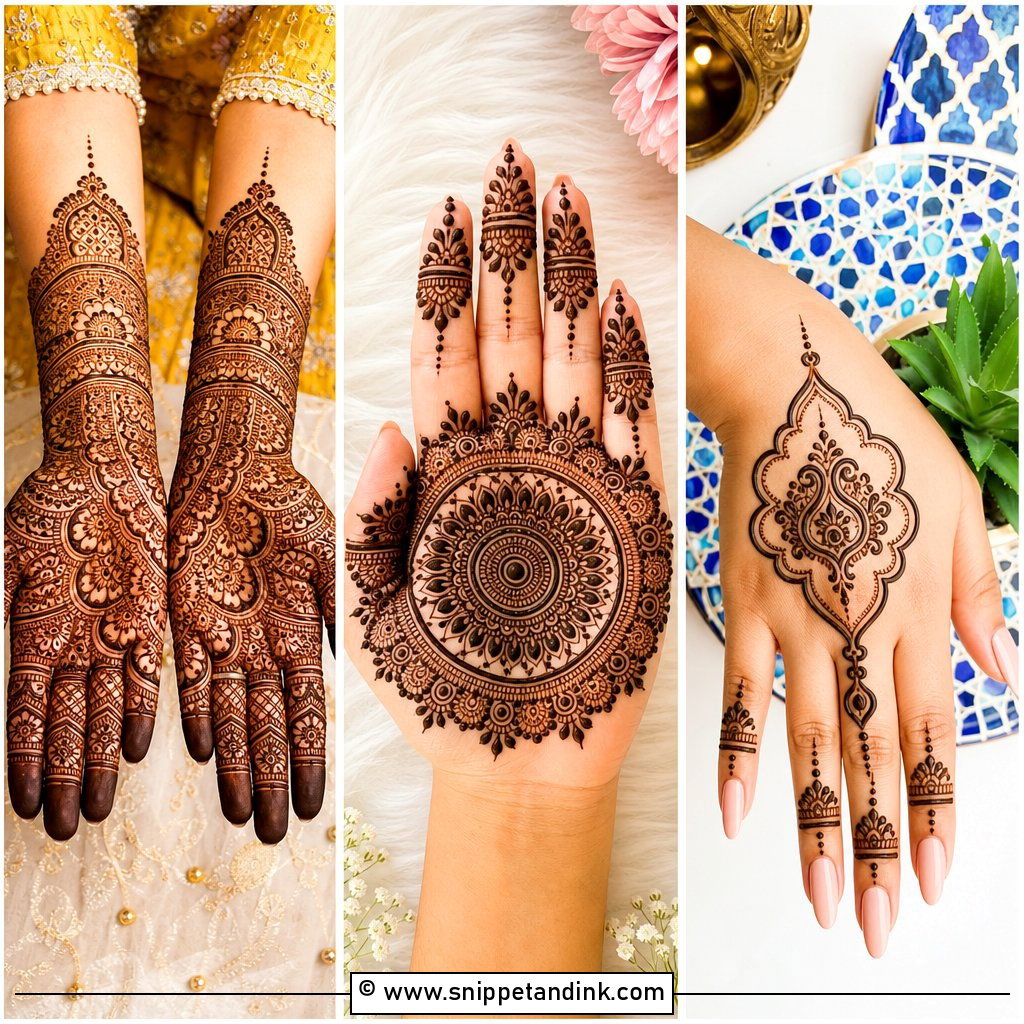
I start most students here. A neat palm mandala, a few small florals, dots and curved vines, light finger details, and a wrist that stays open or gets one thin band. Every element is within easy reach of the cone, so you can concentrate on pressure and spacing rather than layout. Scale the central motif to the palm, larger on a broad hand and smaller on a narrow one. Once the stain develops, the clean gaps matter more than any single flower, so practise keeping them even.
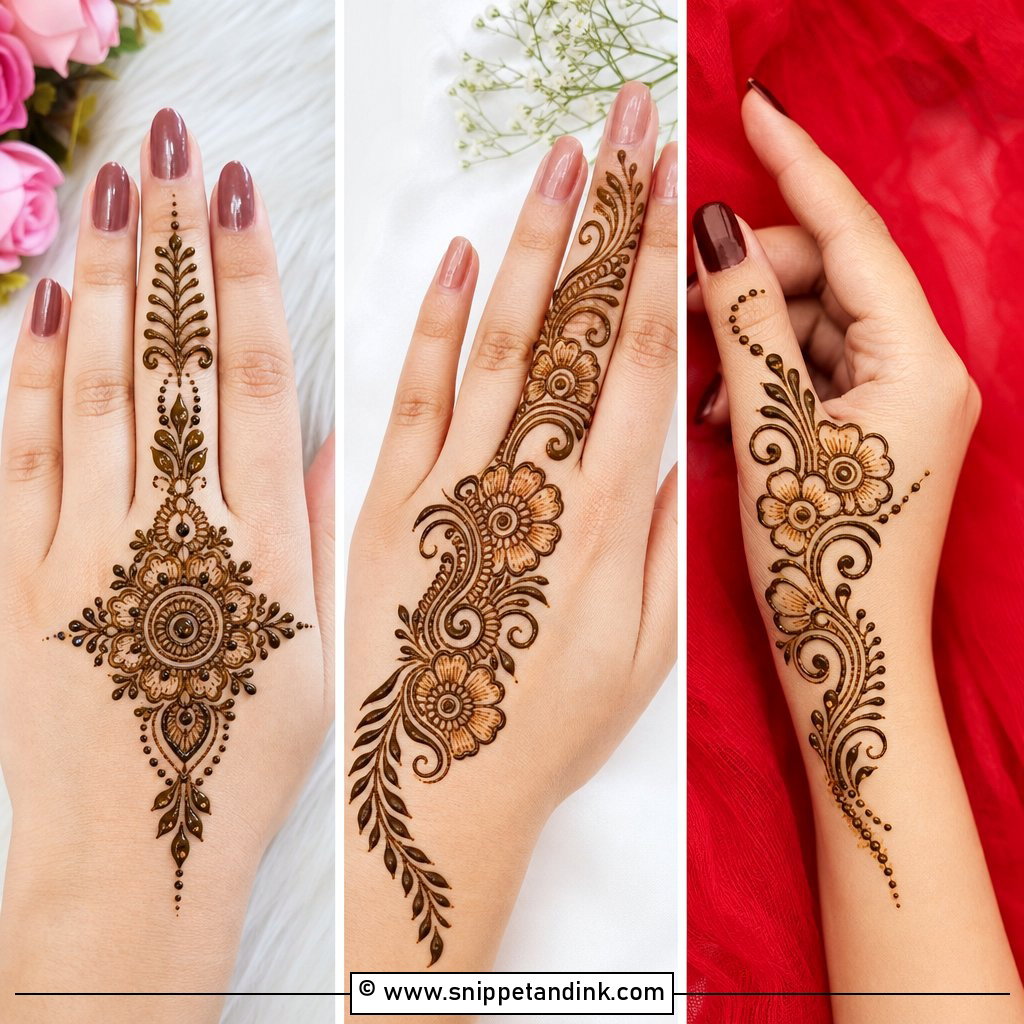
2. Arabic Mehndi Design For Back Hand
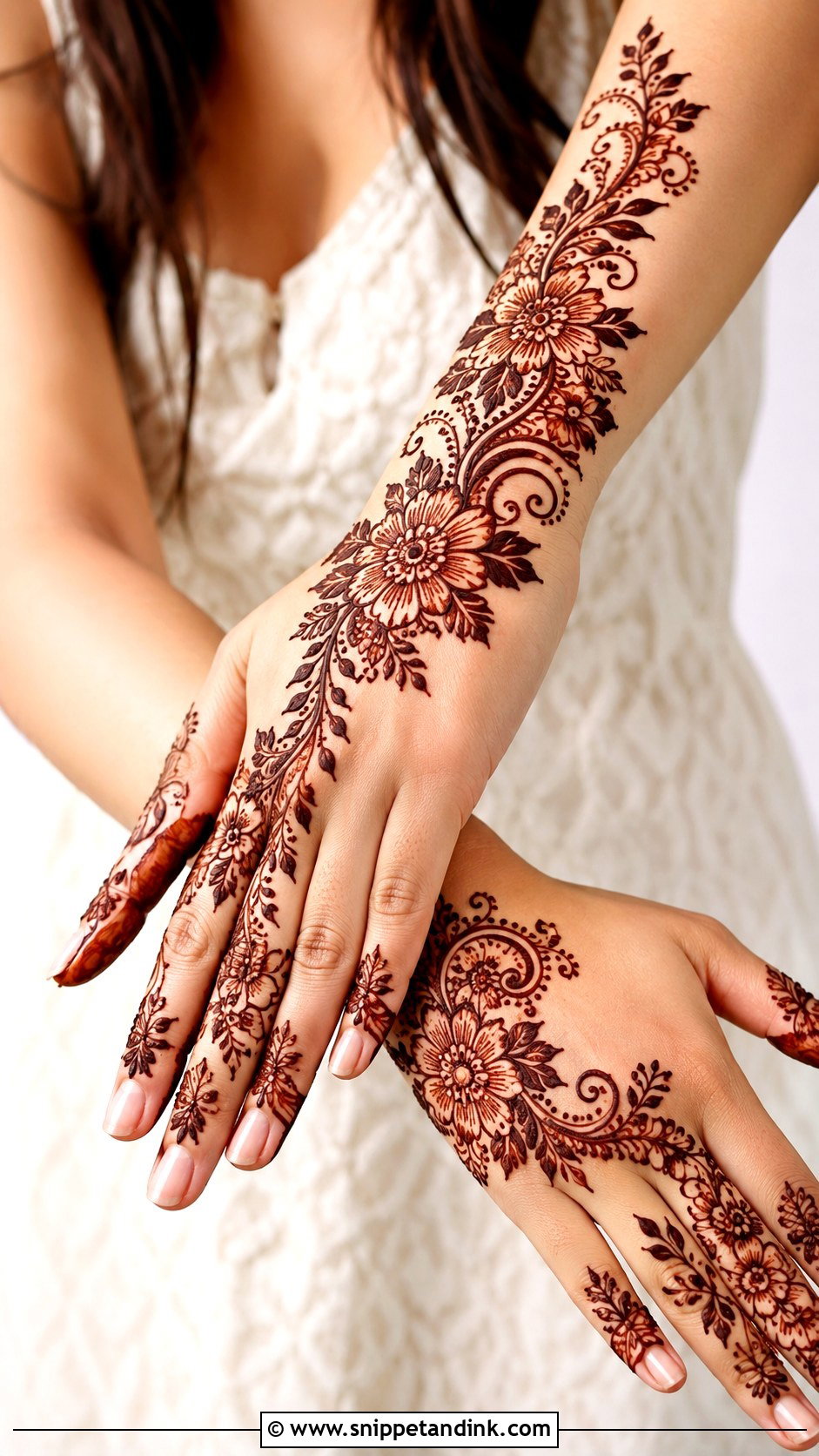
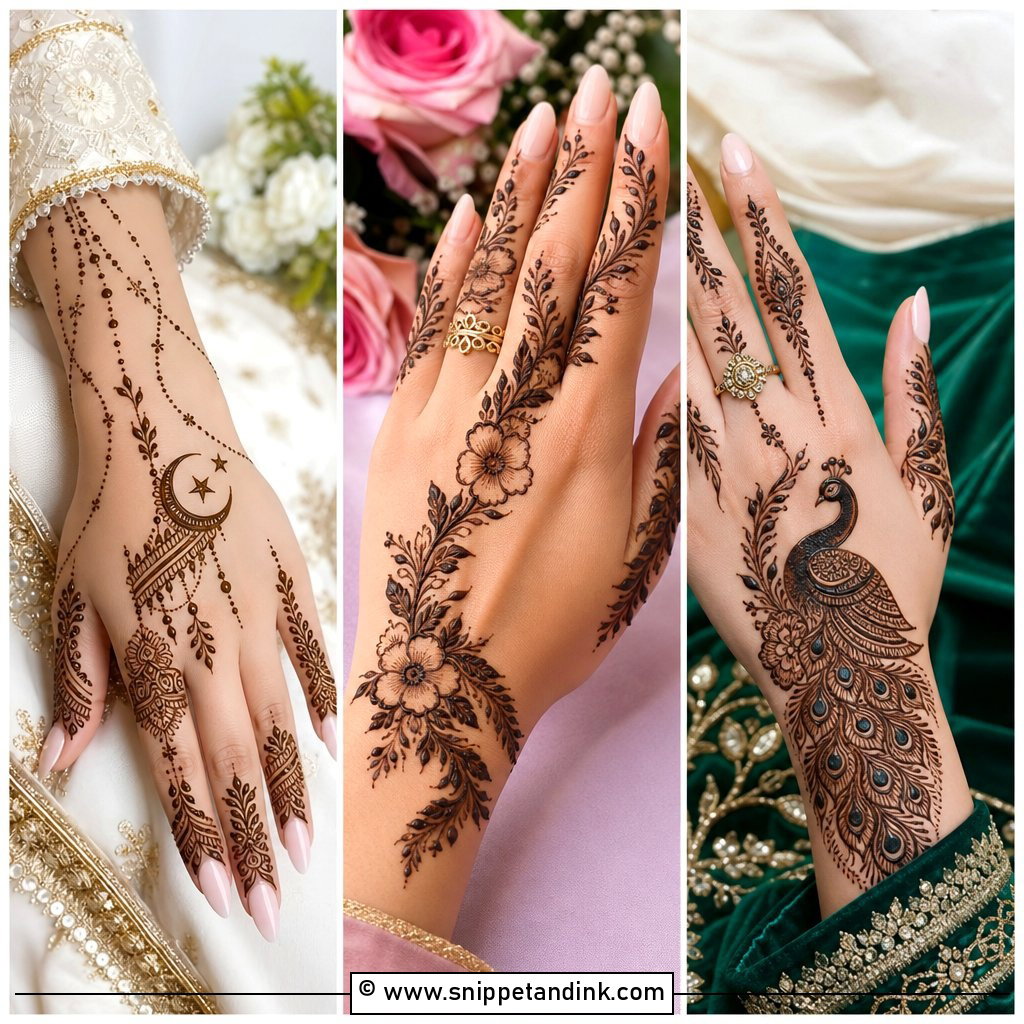
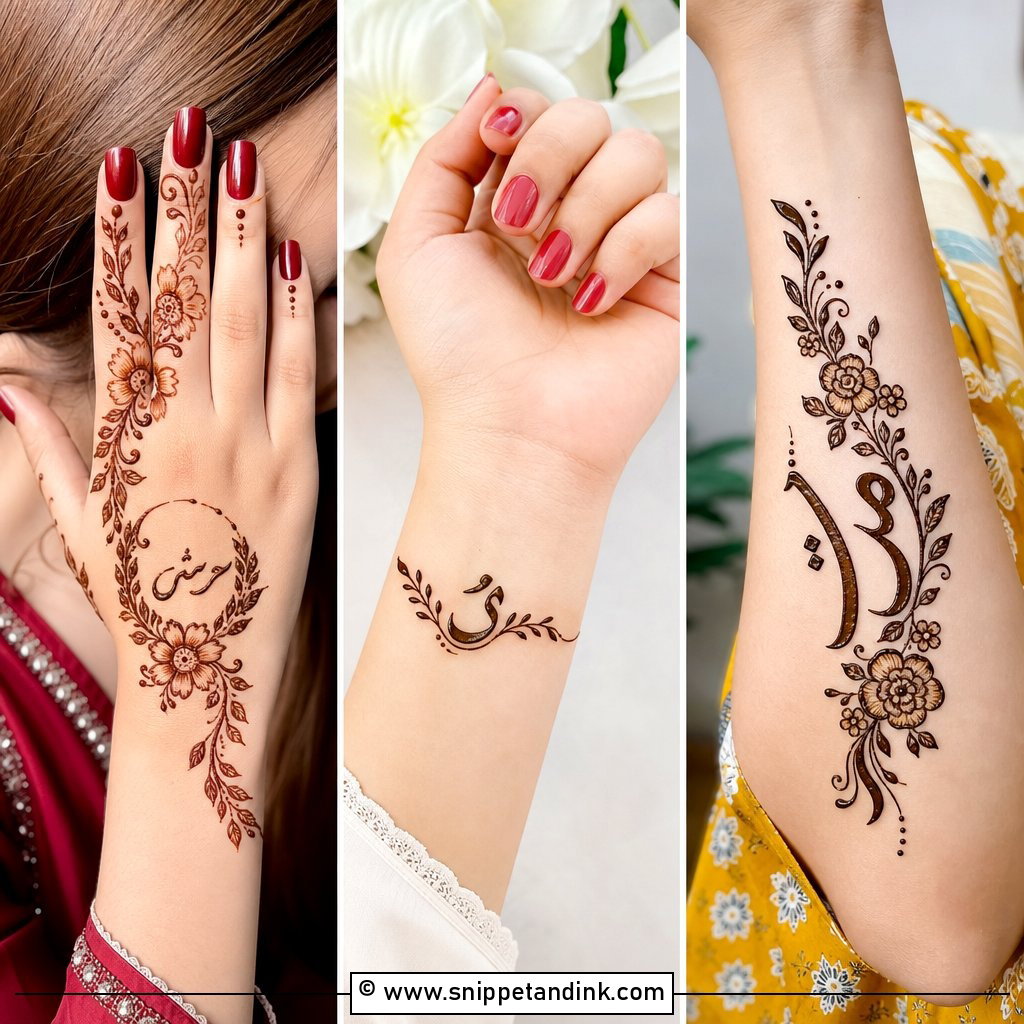
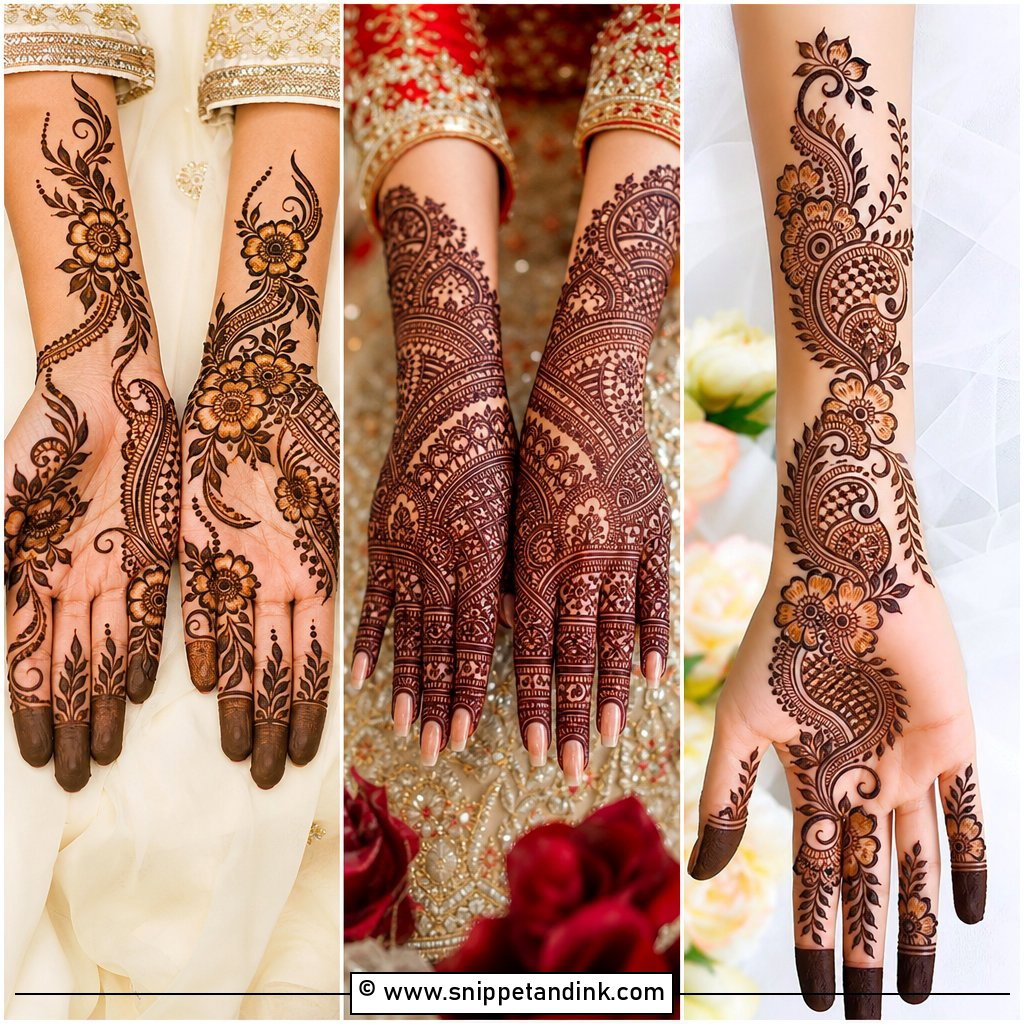
One diagonal from a fingertip down to the wrist, built from large flowers, leafy vines, paisley curves and shaded petals, with bare skin all around. That bare skin is why the stain stands out so clearly. For quick Eid or party bookings I can finish a hand like this far faster than an Indian layout. In the book, draw the trail first as a single light curve, then hang the flowers on it; start with a flower and you’ll usually run out of room before the wrist. Keep the fingers lightly detailed so the trail stays the focus.
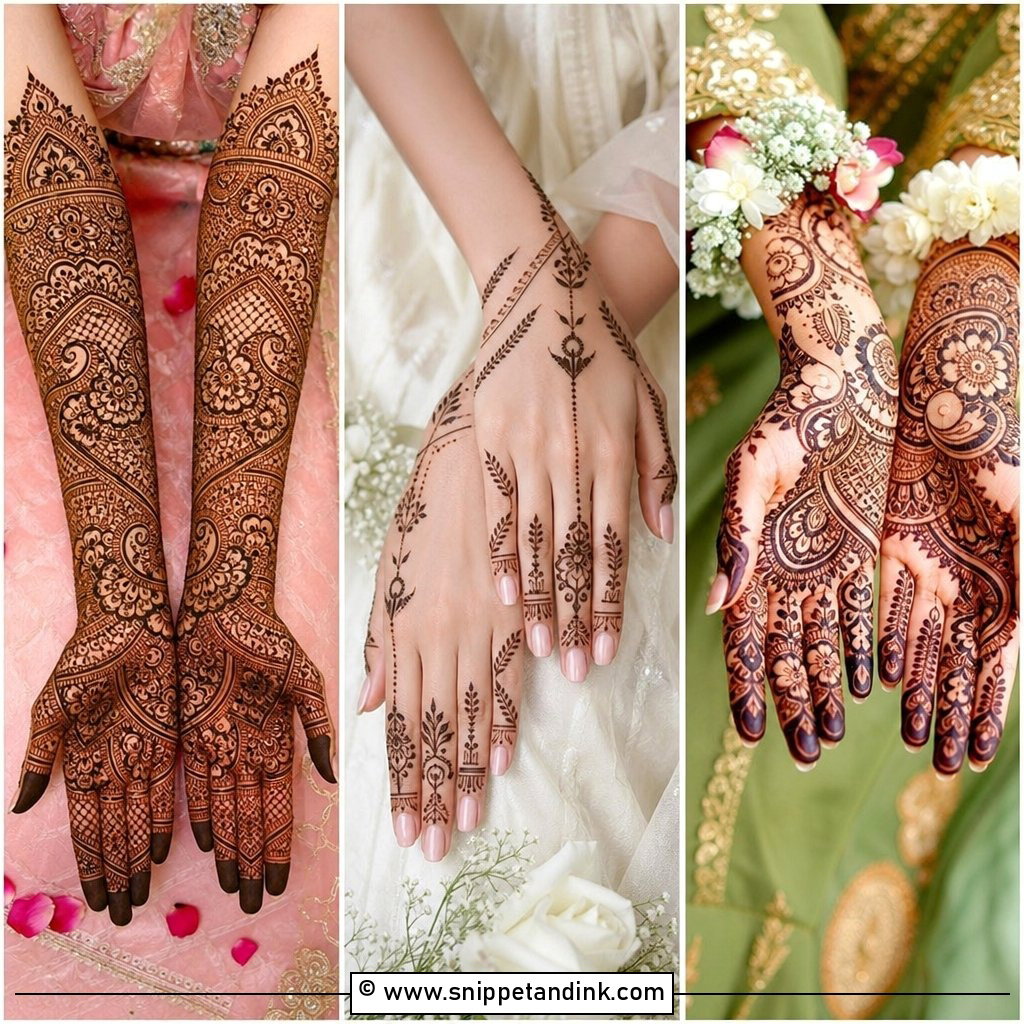
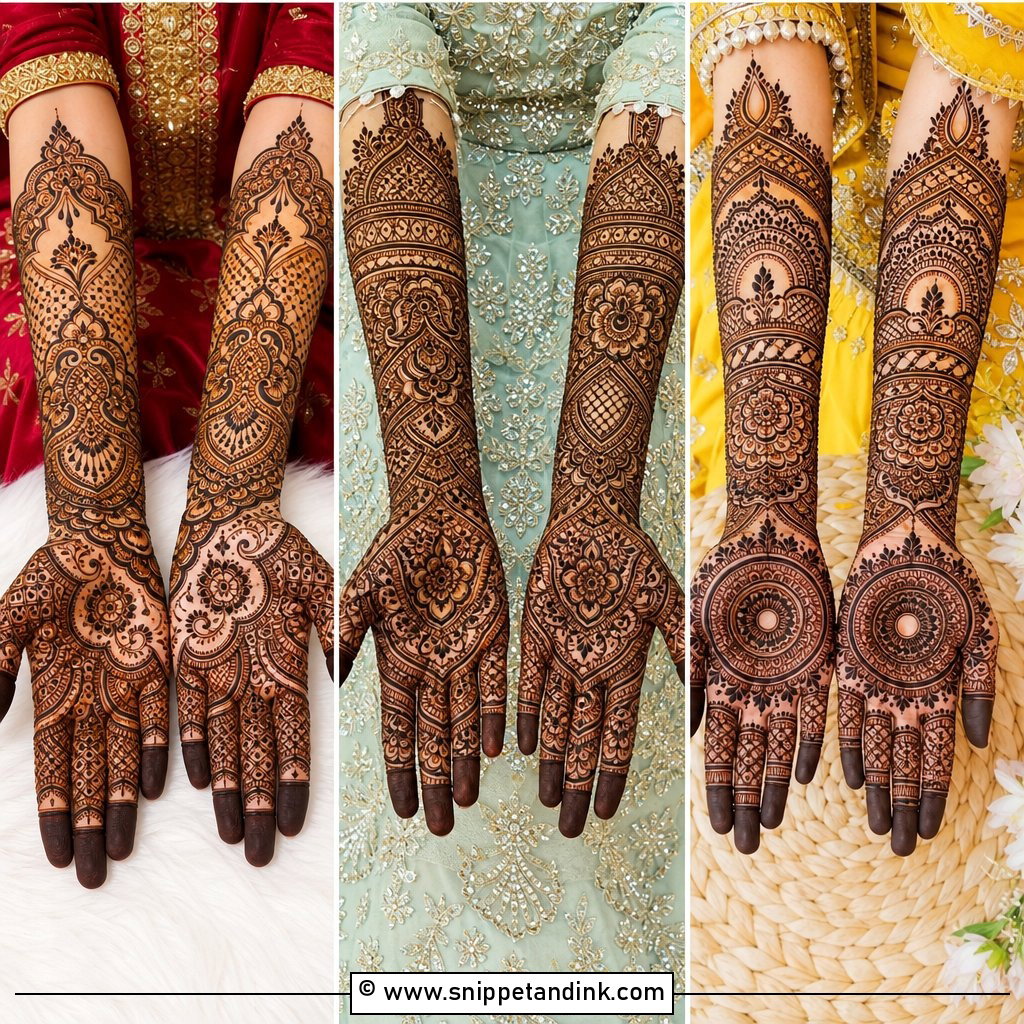
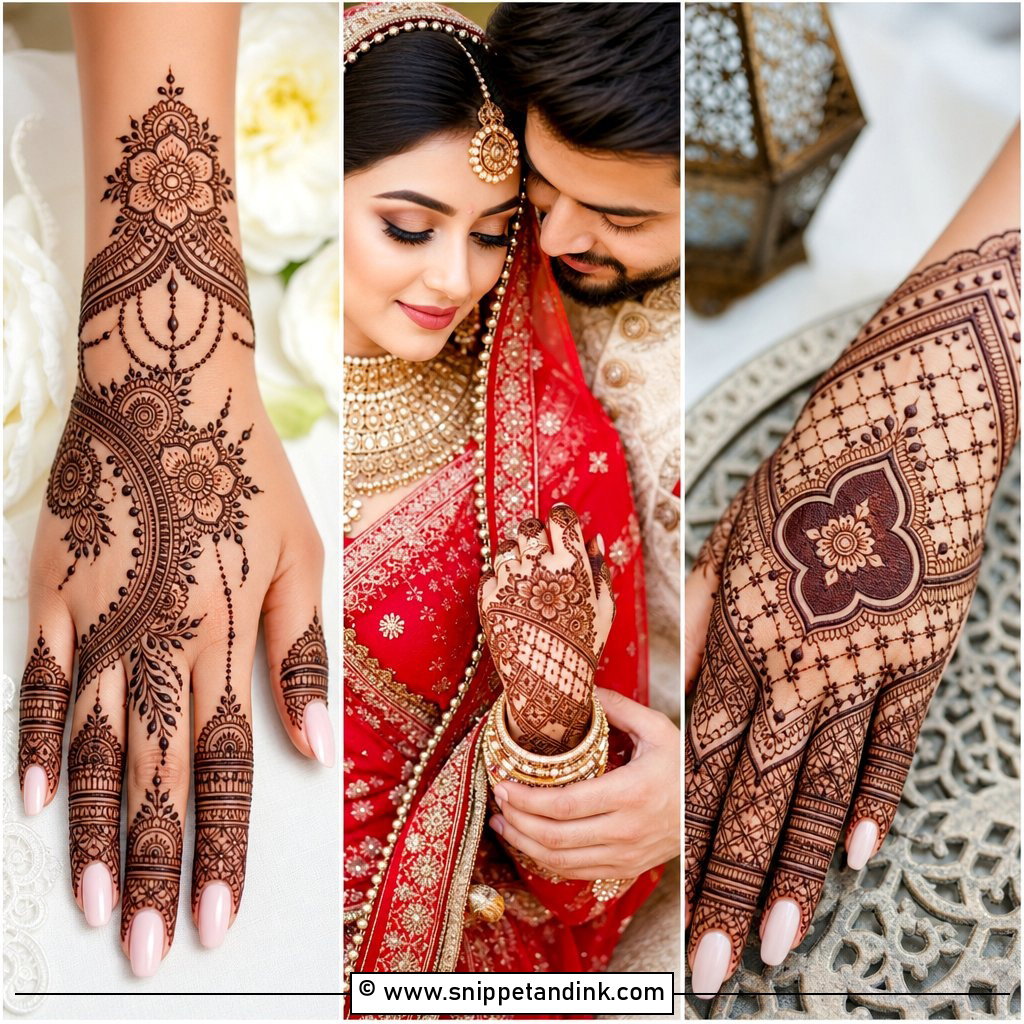
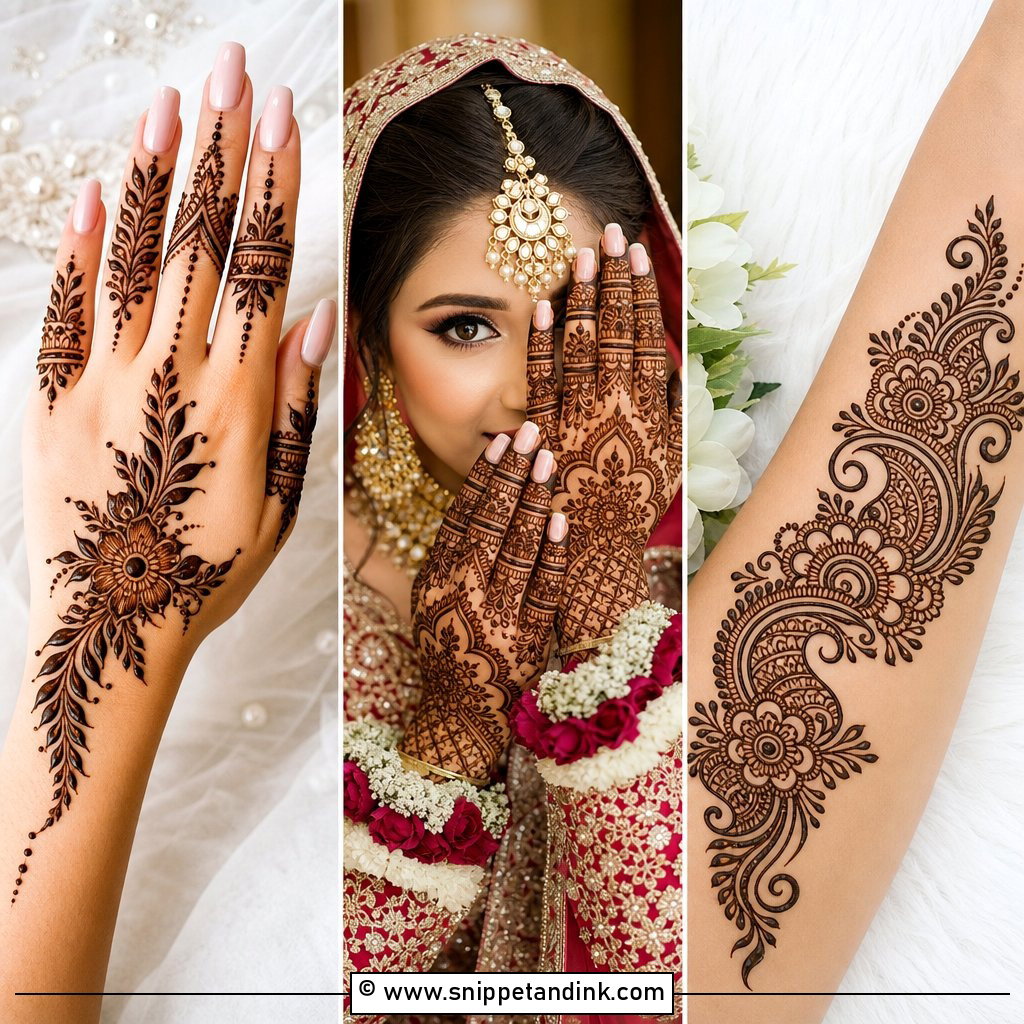
3. Indian Bridal Mehndi Design Full Hand
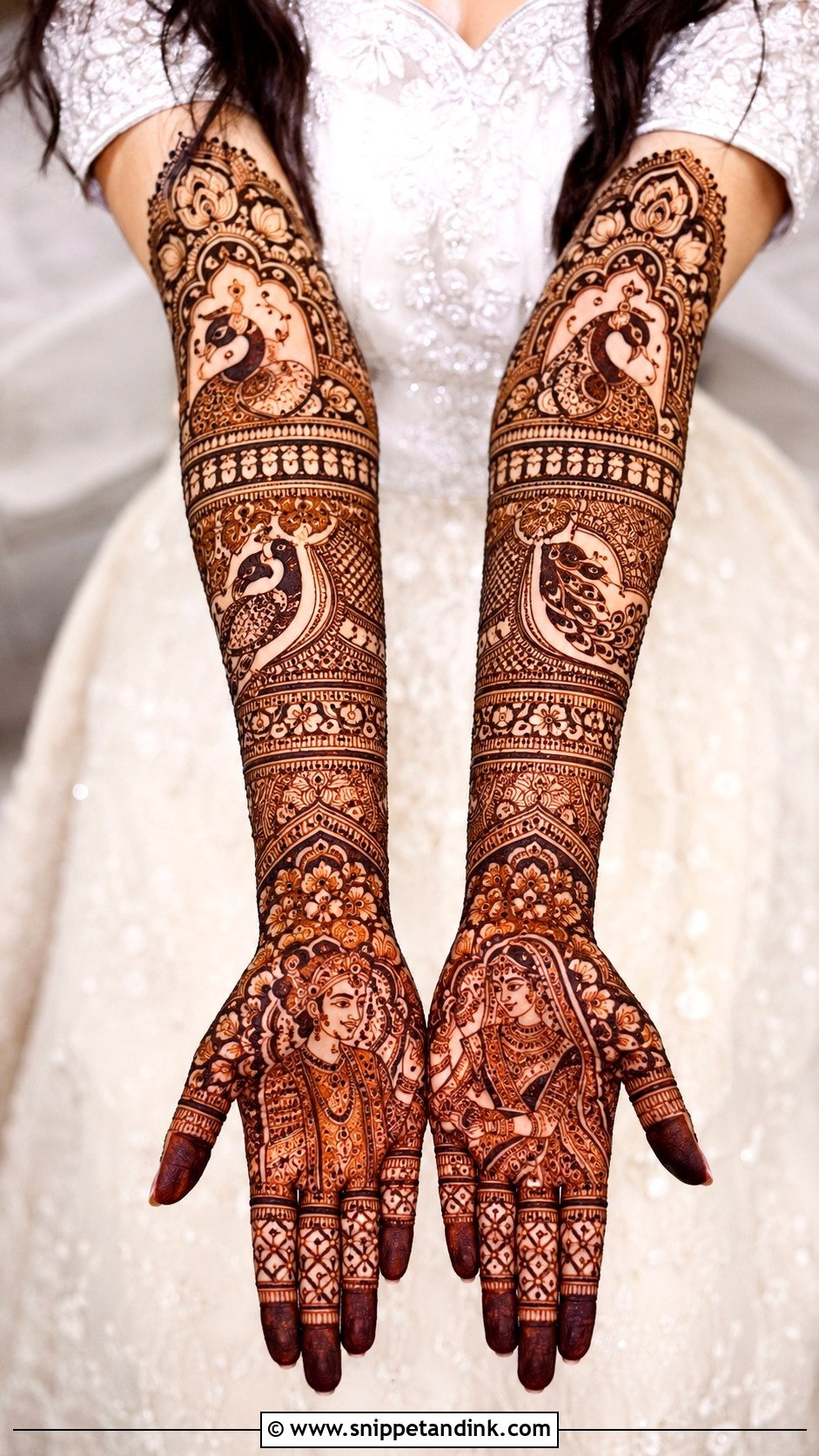
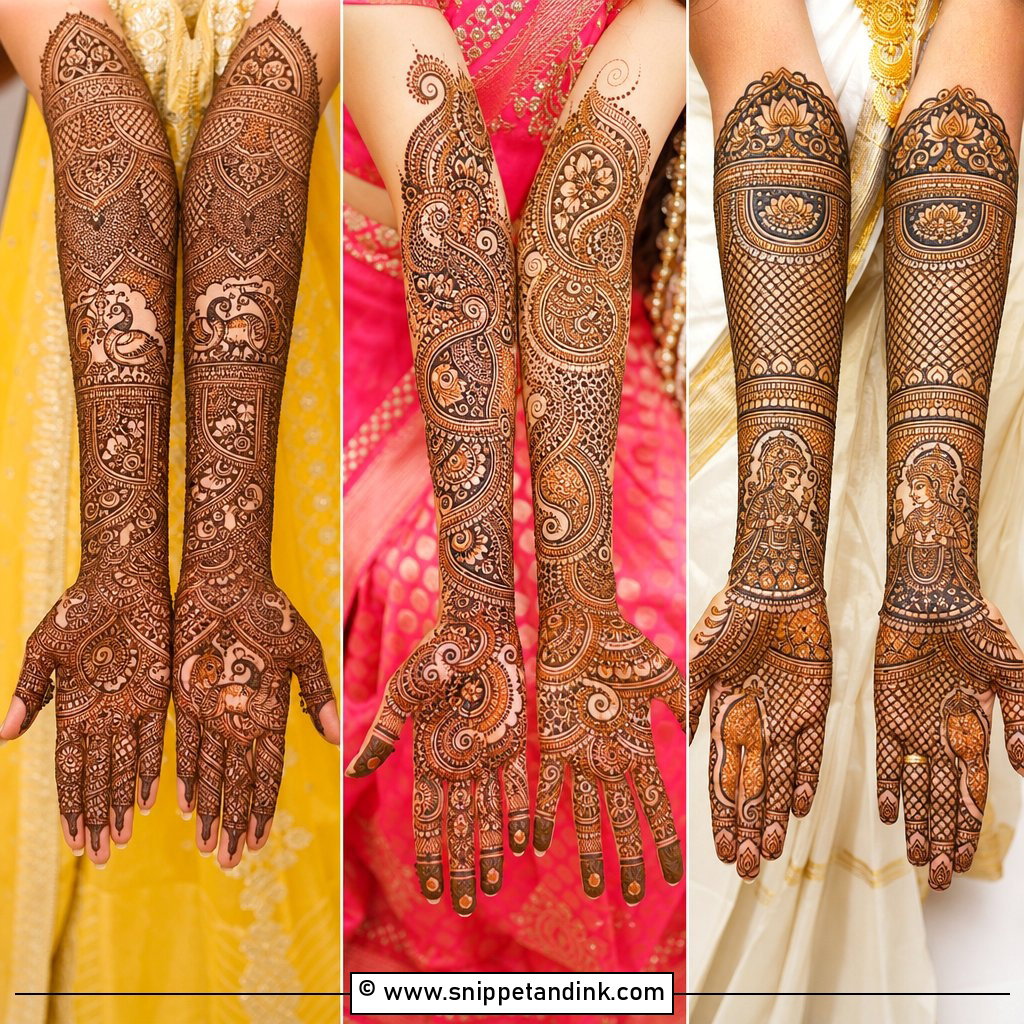
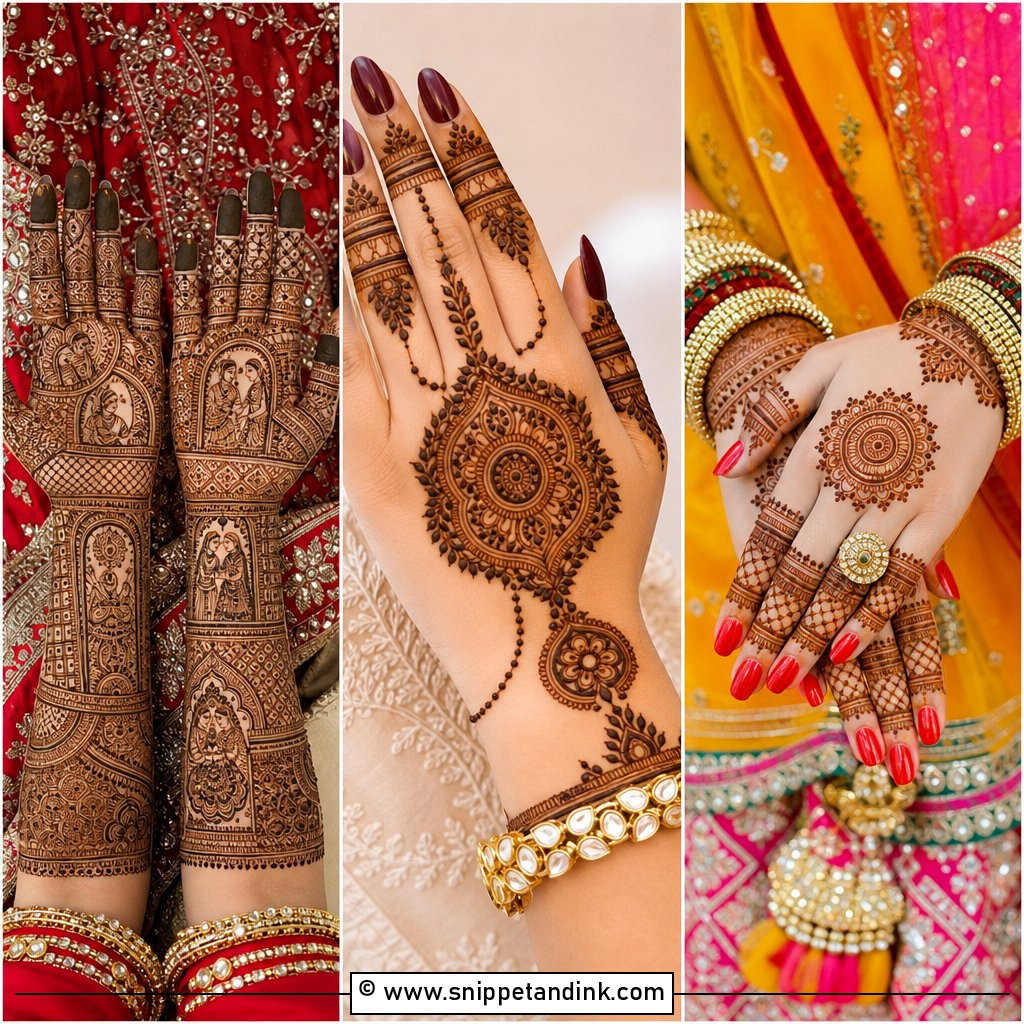
Fingertips, palms, wrists and forearms all get covered here, with paisleys, peacocks, lotus flowers, bride and groom figures, jaali and fine fillers telling one continuous story. The danger in a design this dense is a hand with no rest for the eye. I leave small open gaps between panels on purpose, even when a bride asks for no empty skin, because once the stain develops those gaps are what make the detail visible. Hidden initials and wedding symbols slot easily into the borders. Allow several hours for a full set.
4. Indo Arabic Mehndi Design Full Hand
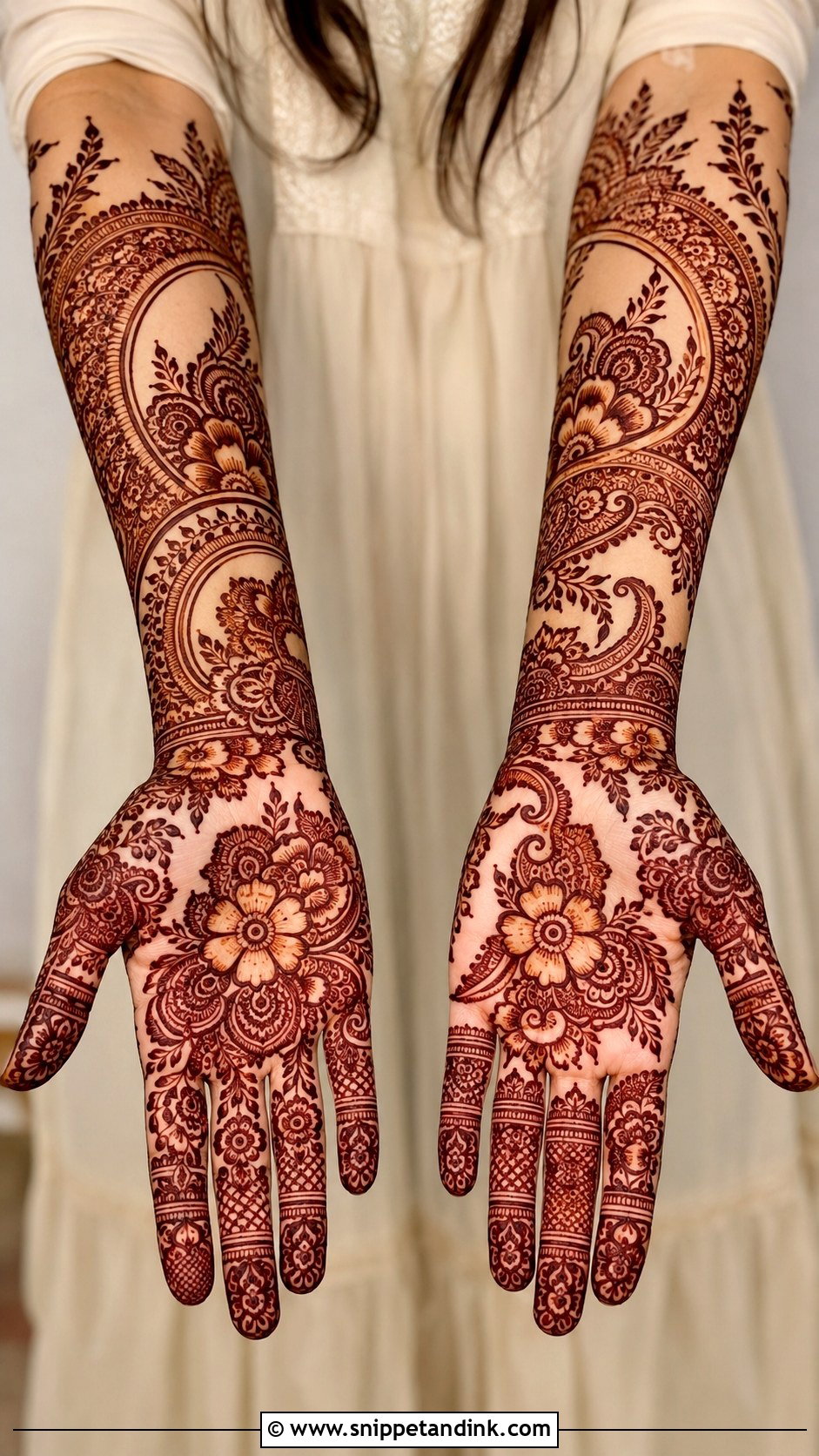
Large flowers across the back hand, paisley borders on the palm, fine fingertips and shaded leaves linking them: that’s the Indo-Arabic full hand, with Arabic openness and Indian finishing. Sisters of the bride and engagement guests ask for it because it feels festive without the weight of bridal coverage. The rule I follow is bold for structure, fine for fill. Draw the main motifs with a firm, thicker line and save your finest tip for the details inside them.
5. Minimal Mehndi Design For Fingers
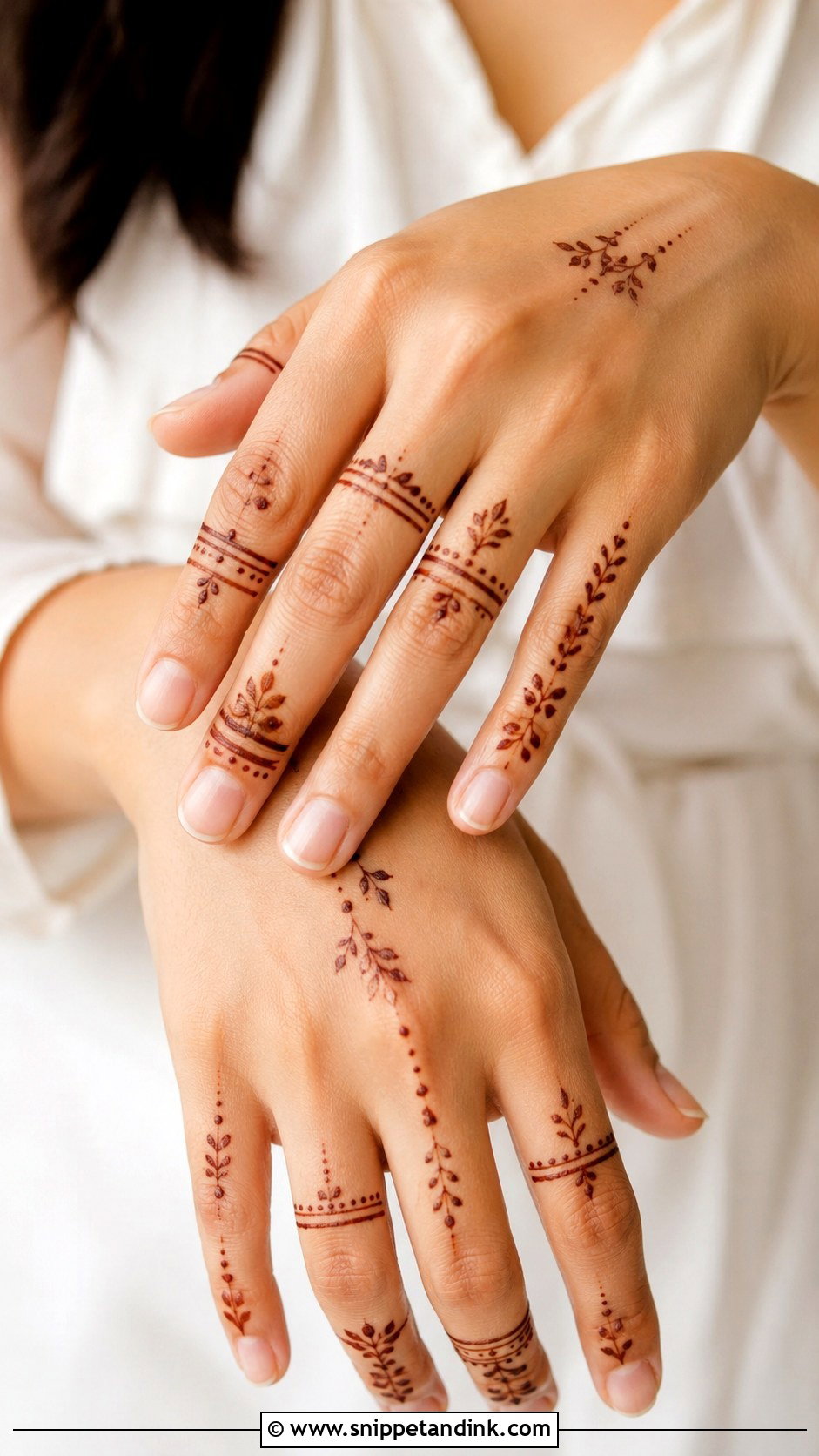
Small bands, leafy lines, dots, tiny florals and ring-like details on every finger, with the palm or back hand almost bare. Because nothing else competes, the finger work has to be precise; a wobbly band is very visible when it’s the whole design. Short and long nails both suit it. Vary each finger slightly while keeping the same line thickness and spacing, and the set reads as one design rather than ten unrelated doodles. It’s my usual suggestion for office events and modern outfits.
6. Bridal Mehndi Design With Bride And Groom
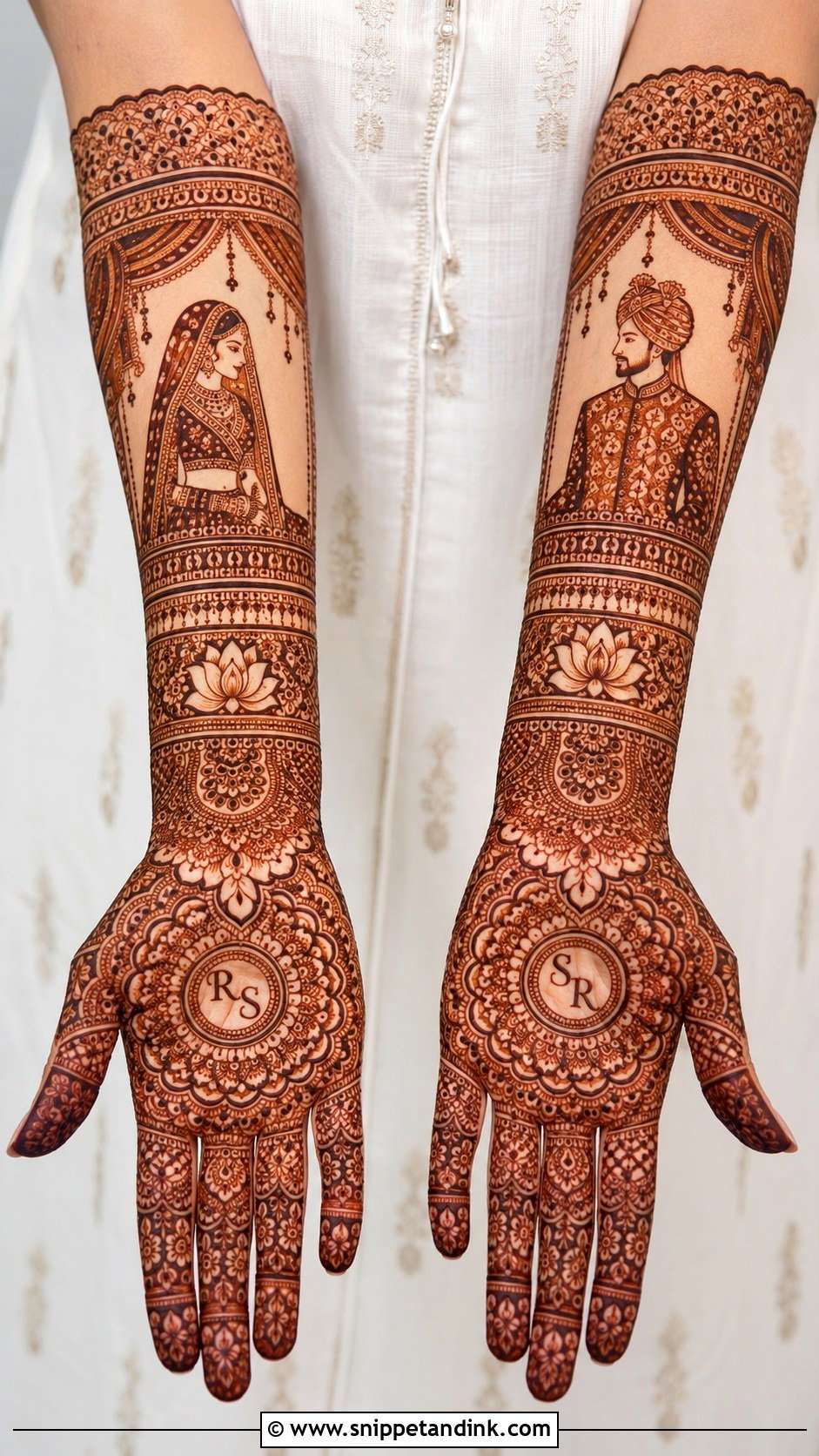
A bridal set with bride and groom artwork usually puts the bride on one palm and the groom on the other, framed by mandalas, curtains, paisleys, florals and wedding borders. The forearms can carry a doli, the baraat, a kalash or palace details from the couple’s own story. Faces need clean proportions and a confident fine line, so this isn’t a design to try for the first time on a real bride. I keep the surrounding pattern a notch lighter around the figures so they stay readable once the stain darkens.
7. Full Hand Mehndi Design For Wedding
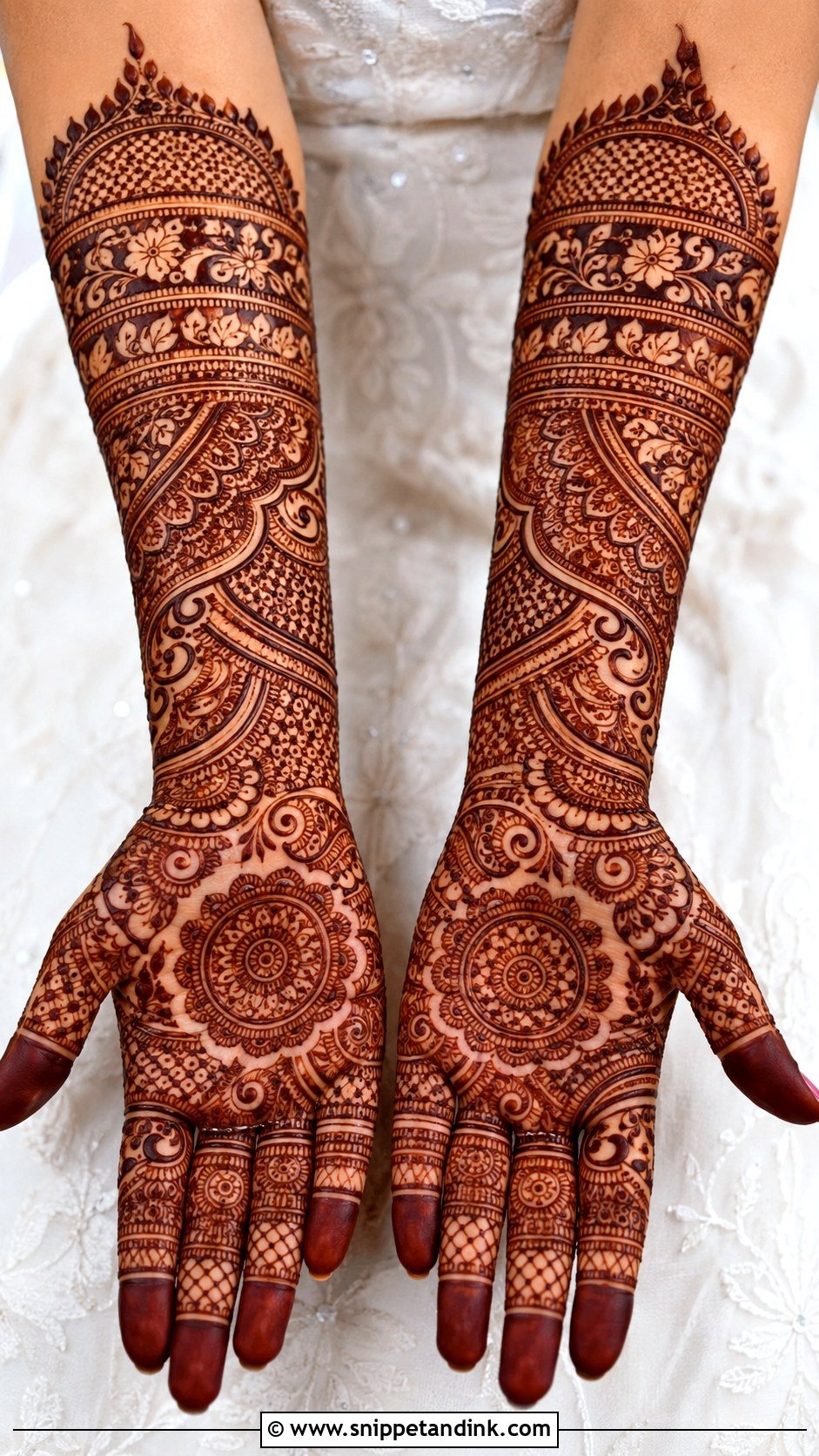
A step down from the heaviest bridal style, this full hand still covers palm, fingers, wrist and forearm, but with medium spacing: floral bands, paisley trails, mandala centers, leafy borders and a little mesh. Bridesmaids and close family wear it well, and the finished wrist looks right under a stack of bangles. When someone books it, I agree the spacing before I start, because full hand means very different densities to different people. Skip filling every gap with tiny strokes and it stays wearable.
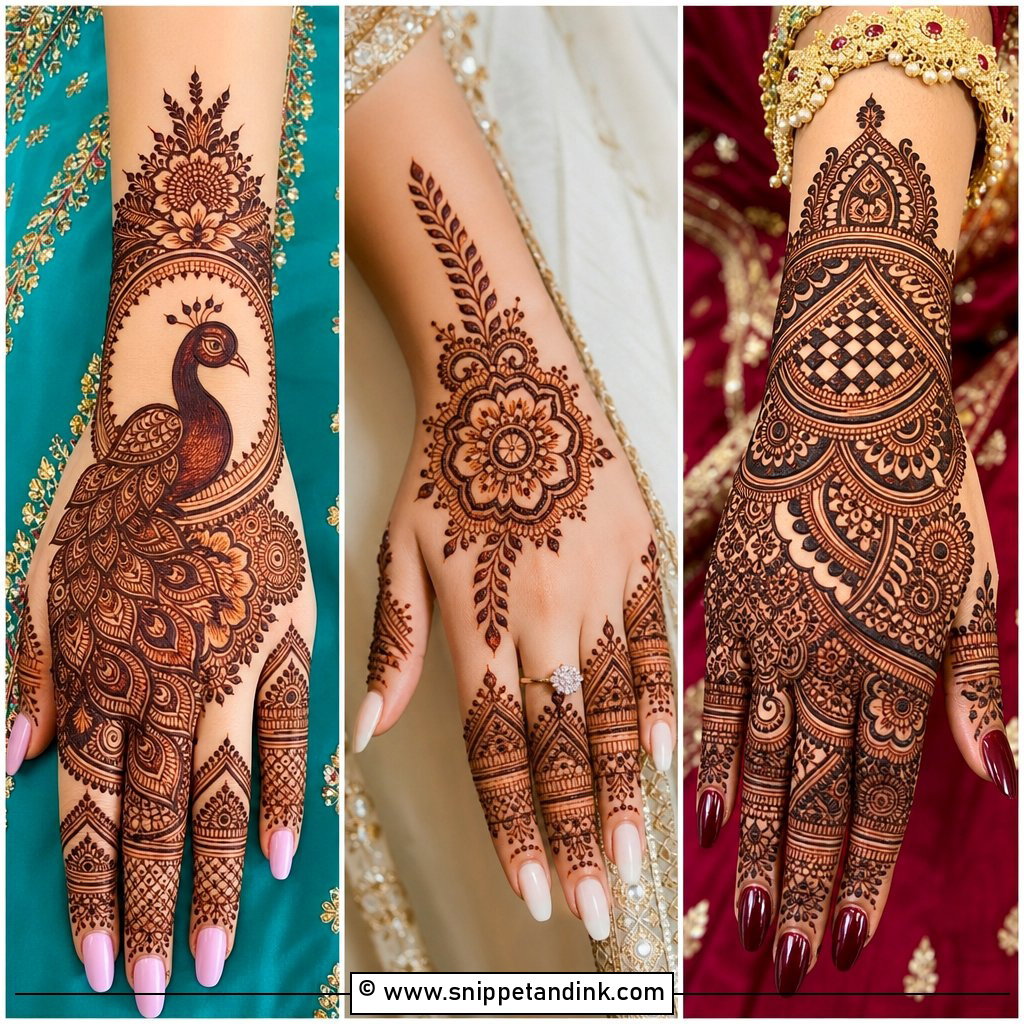
8. Back Hand Mehndi Design With Mandala
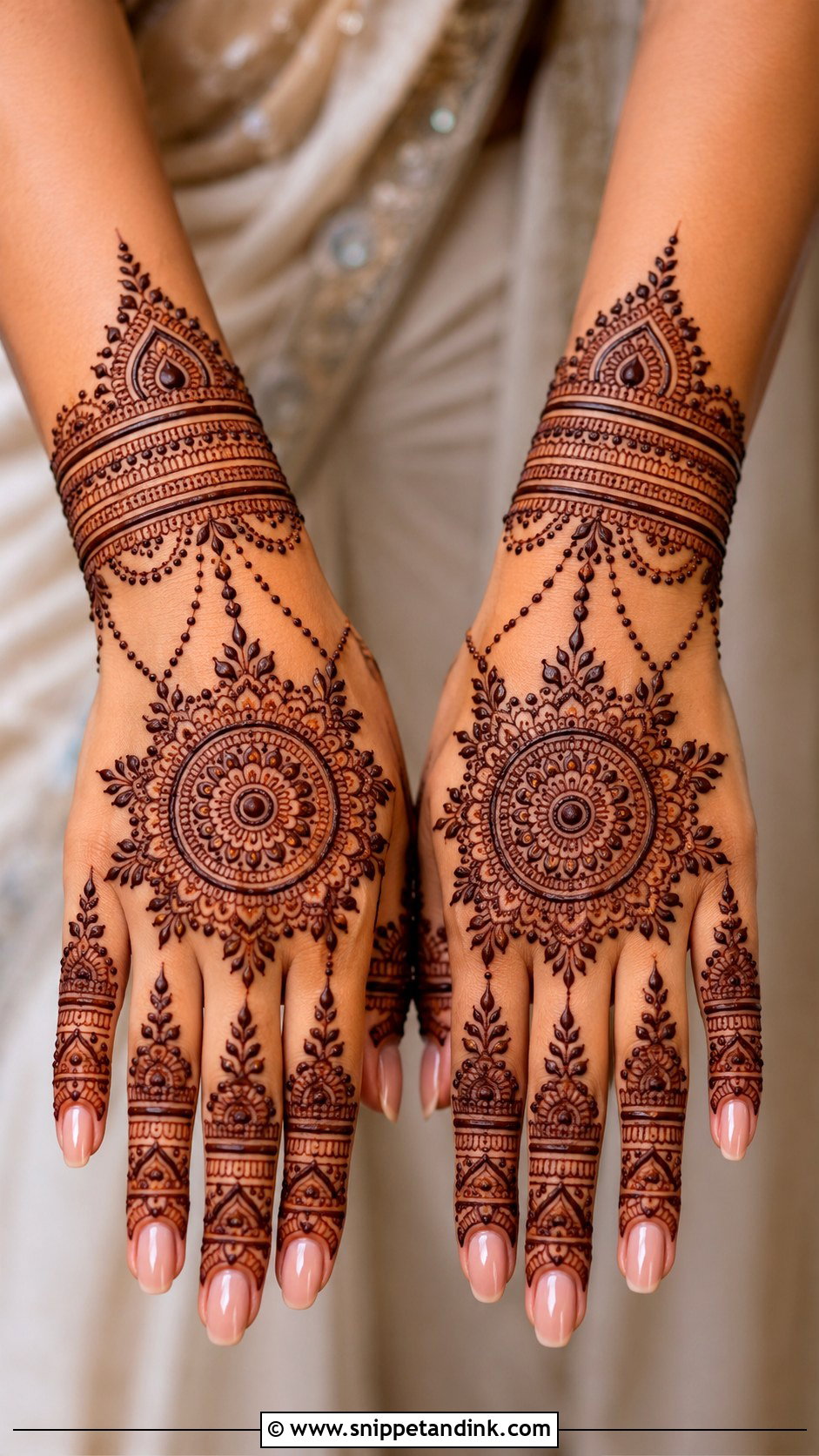
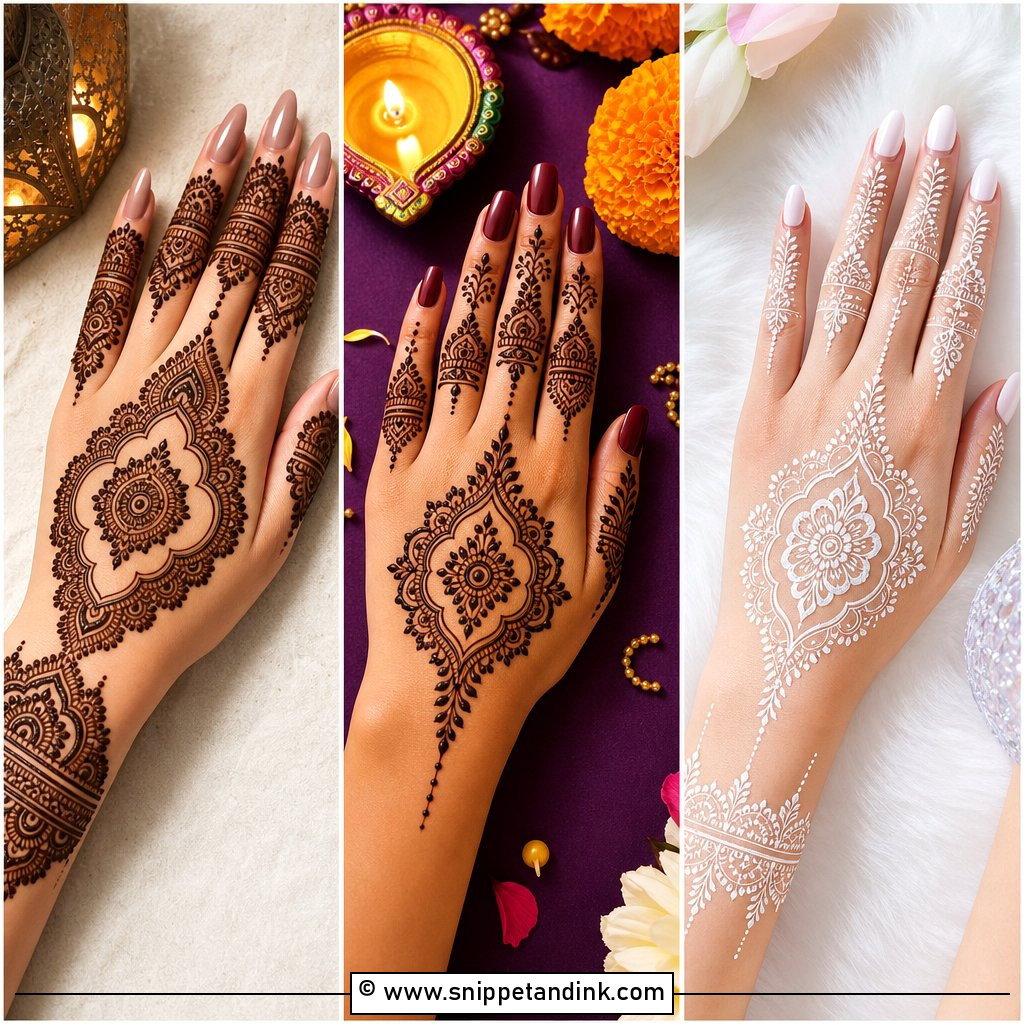
One round motif at the center of the back hand, with finger patterns, chain lines, leafy details and a bracelet at the wrist. It’s the easiest symmetry practice in the book that still looks finished. The mandala can stay bold and plain or fill with petals, dots and fine rings. Keep the connecting chains delicate, since thick chains make the whole hand look heavy. Draw the circle in a few short arcs rather than one sweep and it stays rounder.
9. Palm Mehndi Design With Floral Pattern
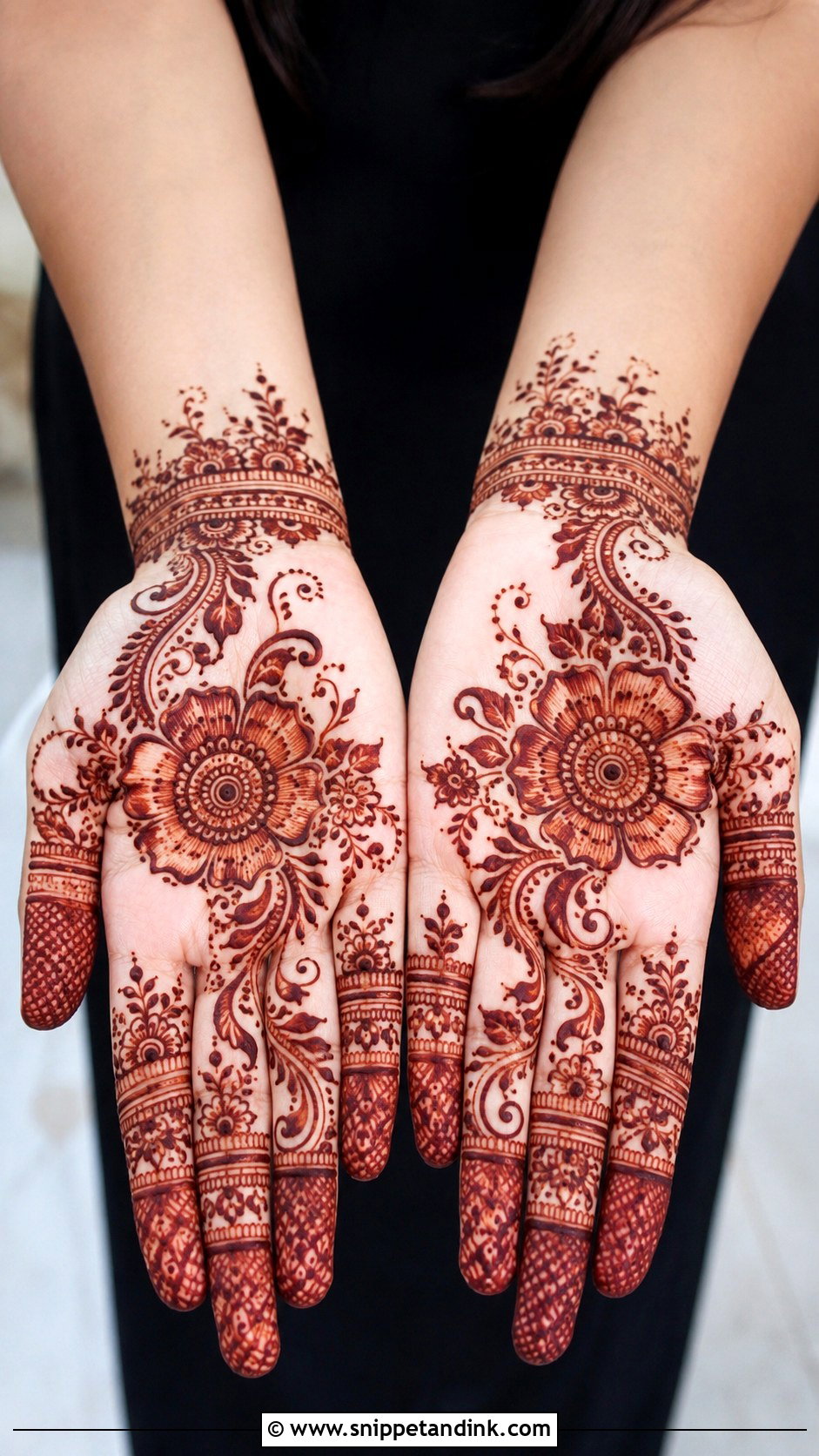
A large flower or cluster sits in the palm center, ringed by curved vines, dots, leaves, small paisleys and finger details. It suits festivals and small celebrations without needing the forearm, and round palms take it especially well because the flowers follow the hand’s natural shape. The common mistake is packing tiny fillers inside the petals; they merge as the paste settles and the flower loses its edge. Leave the petal shapes clear and the stain reads cleanly.
10. Khafif Mehndi Design For Back Hand
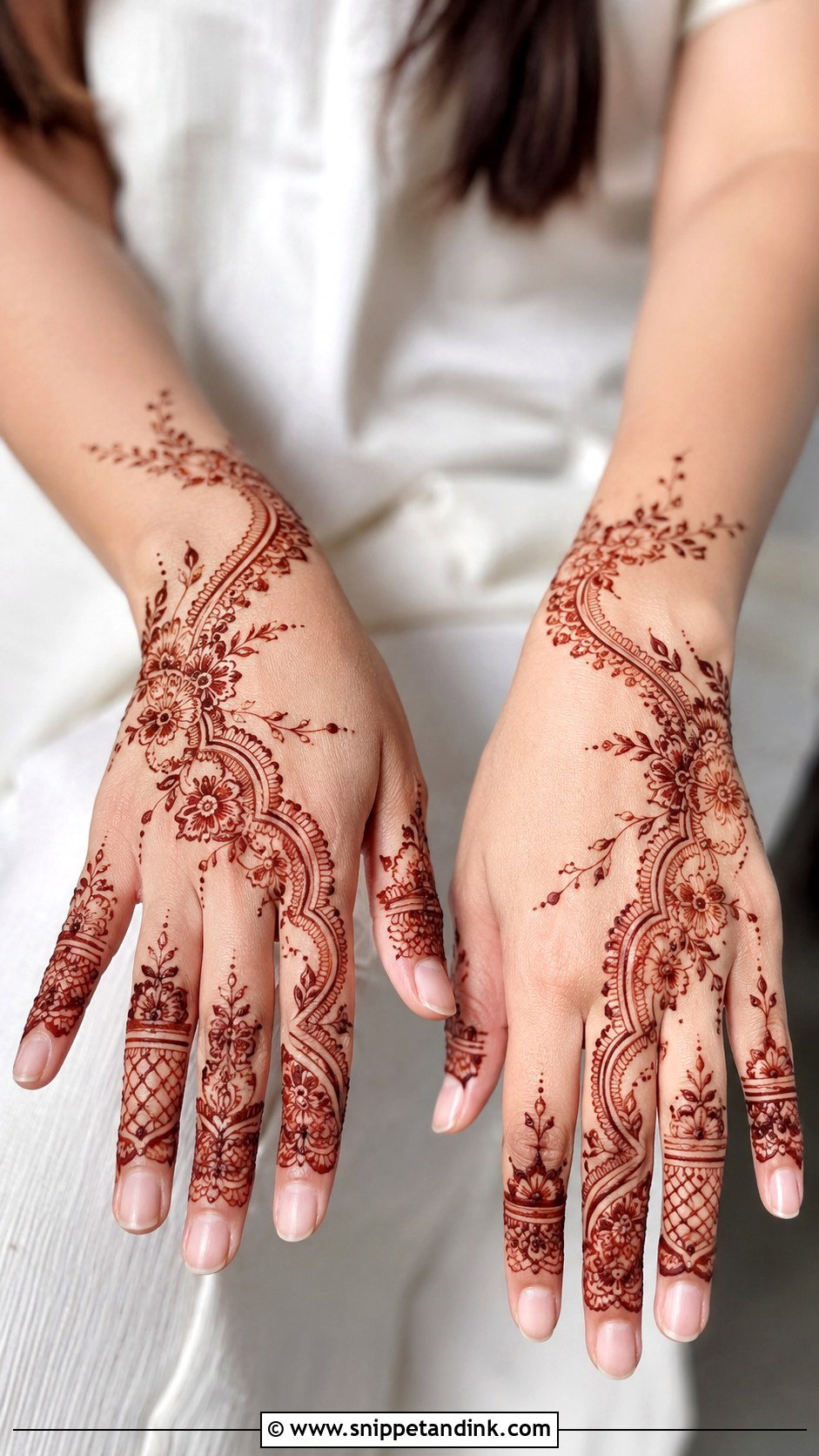
Khafif means light, and that’s the whole point: fine lines, tiny florals, leafy trails, dots and mesh with soft spacing, connected across the fingers, back hand and wrist like jewelry. It looks nothing like bold Arabic work. Line control is everything. I use the finest cone tip I have and rest my drawing hand against the client’s, because a thick line kills the effect immediately. Eid, engagements and receptions suit it, especially for guests who want something refined.
11. Pakistani Mehndi Design Full Hand
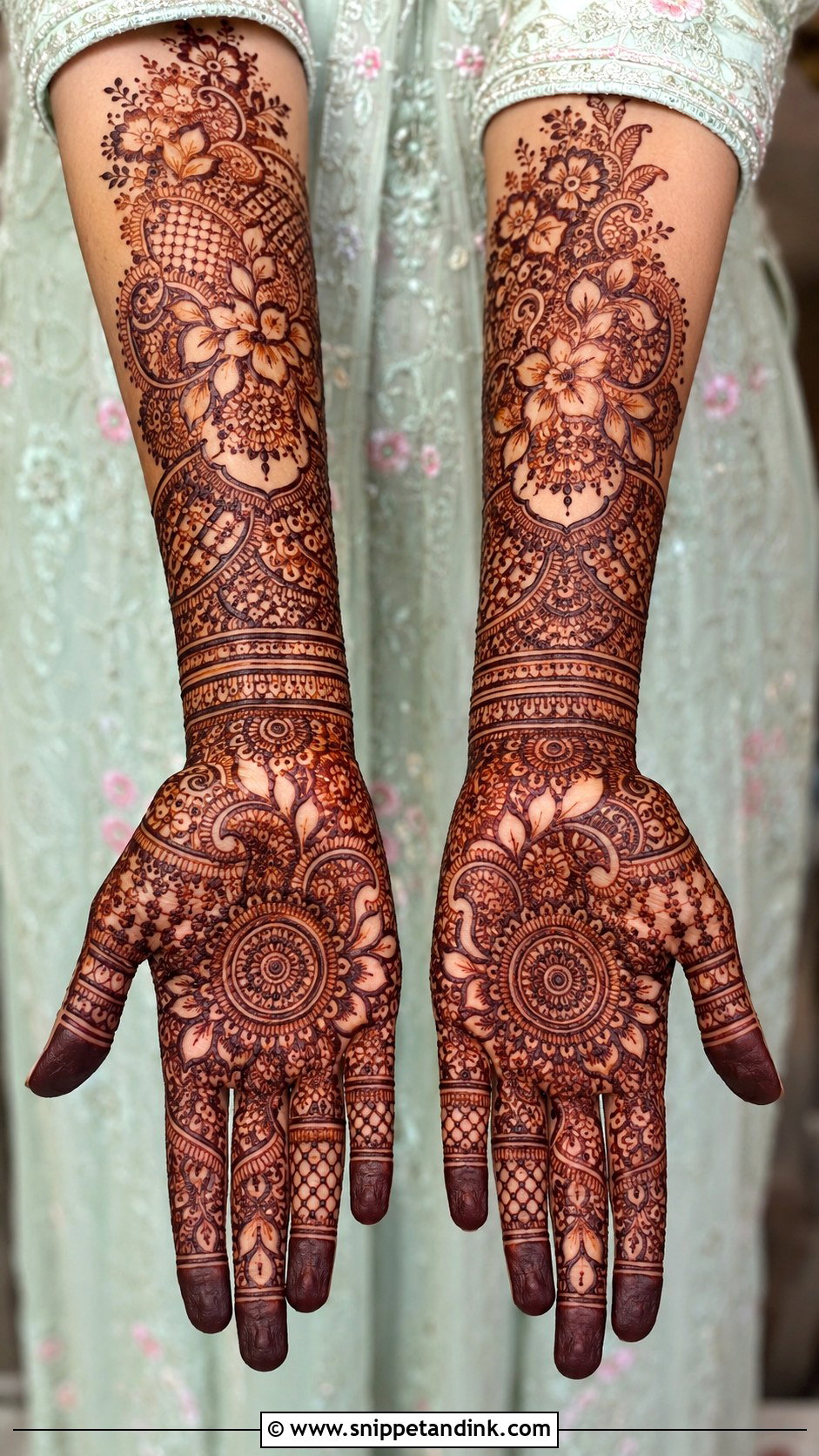
Indian detail meets Arabic flow in Pakistani full-hand work: mandalas, paisleys, bold flowers, shaded leaves, net patterns and bracelet-style wrists, with clear gaps between the major motifs. Those gaps are what keep it readable. It scales easily from semi-bridal for a dholki night up to full bridal for the wedding itself. My usual balance is a more detailed palm with flowing trails on the back hand, which looks right when the hands are held together for photos.
12. Moroccan Mehndi Design For Hands
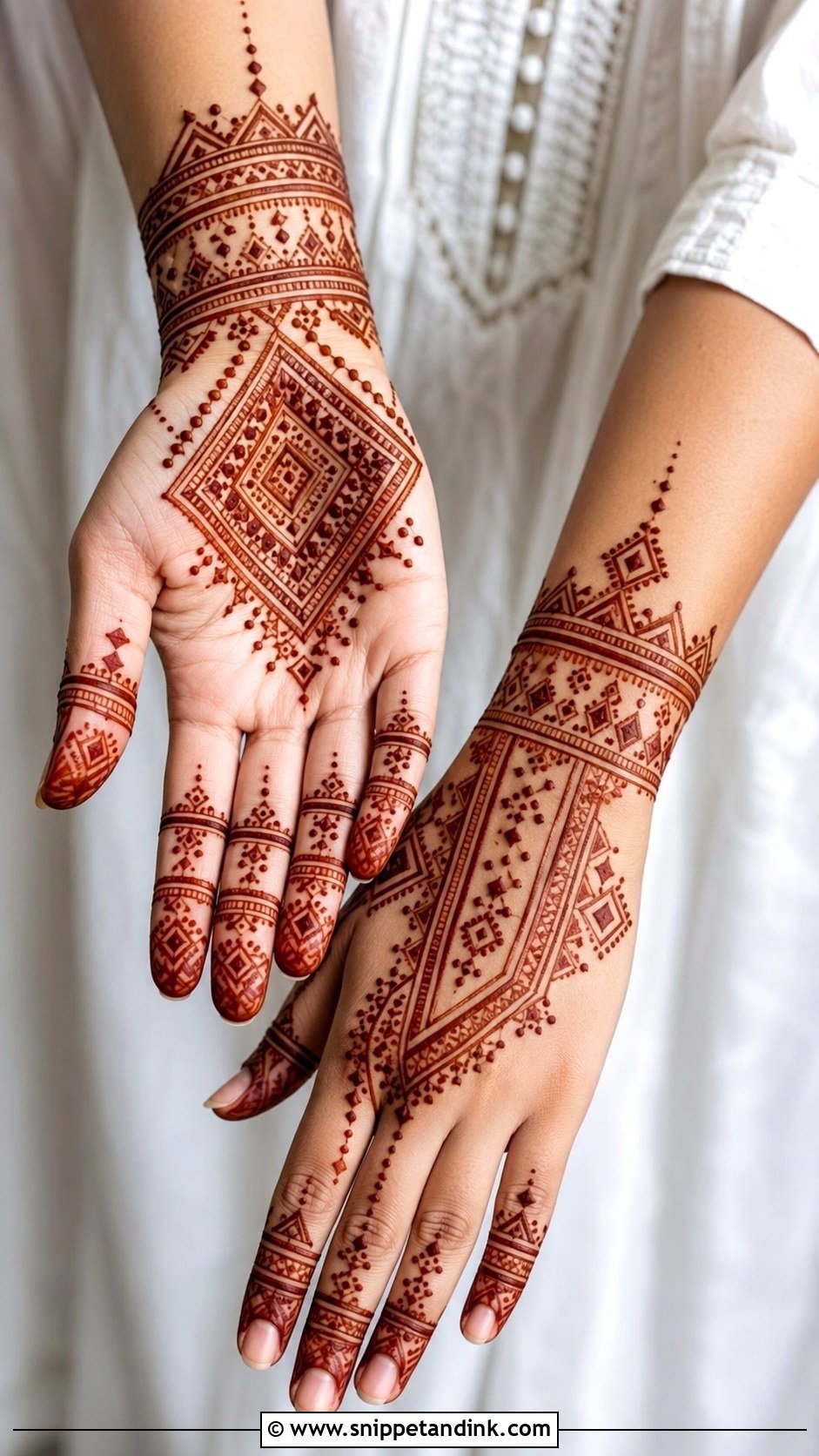
Diamonds, triangles, straight lines, grids, dots and angular borders replace flowers entirely. Moroccan layouts can cover the palm, back hand, fingers and wrist in a bold, symmetrical pattern, and they suit men’s mehndi and anyone who prefers sharp shapes. Alignment is unforgiving. When practising, I rule a light pencil grid on paper first and draw over it with the cone until I can keep lines parallel without it. On skin, a few guide dots do the same job.
13. Gulf Arabic Mehndi Design
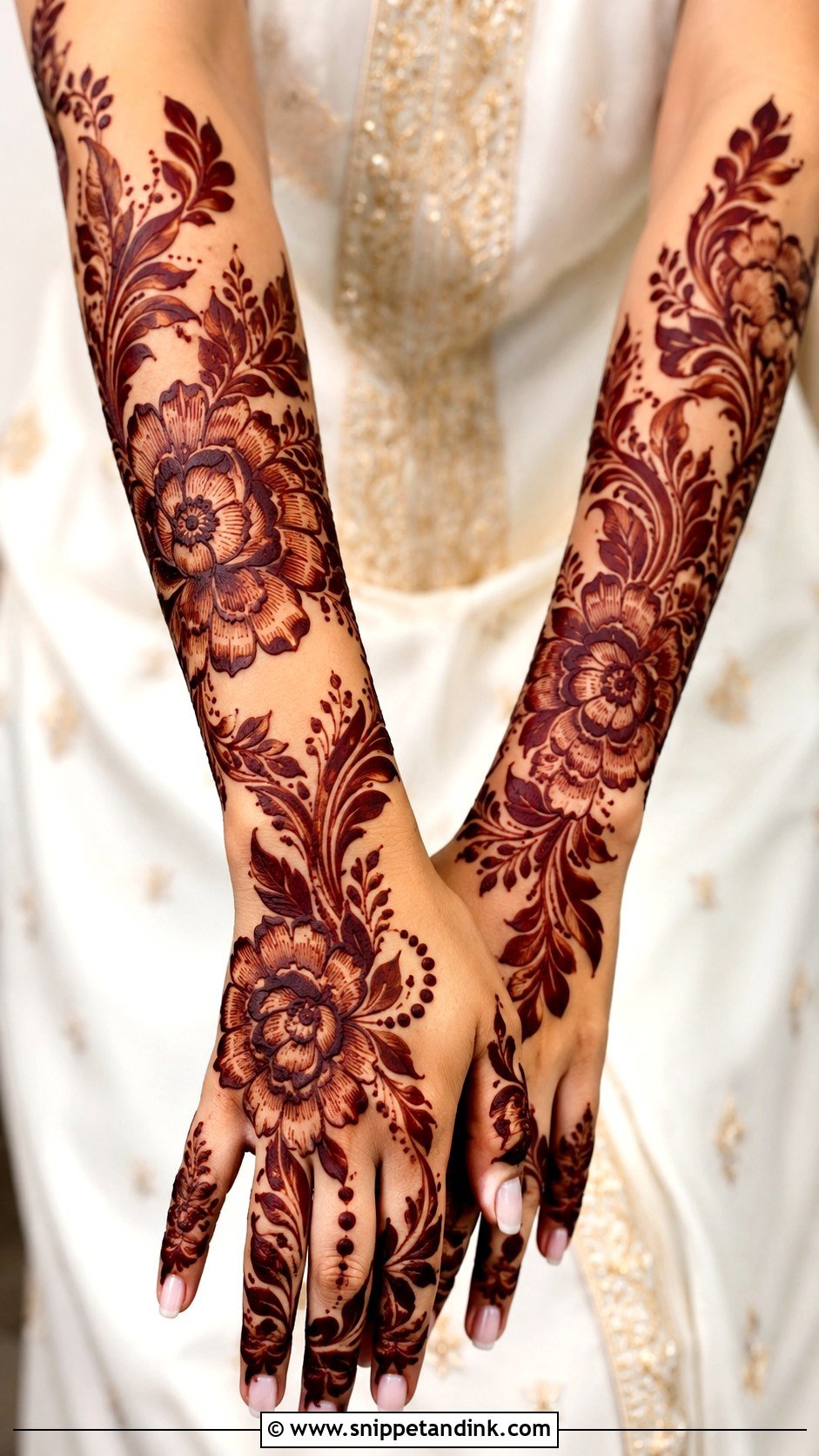
Khaleeji-style mehndi runs on confidence: large flowers, sweeping leaves, thick outlines and shaded sections moving across the fingers, back hand, wrist and part of the forearm, with plenty of open skin. It reads well from a distance, which is why it’s popular for Eid and evening functions, and the bold outlines help the stain look strong. Pair the big floral sections with simple finger bands. Fill every finger as heavily as the hand and it starts to look cluttered.
14. Easy Mehndi Design For Beginners
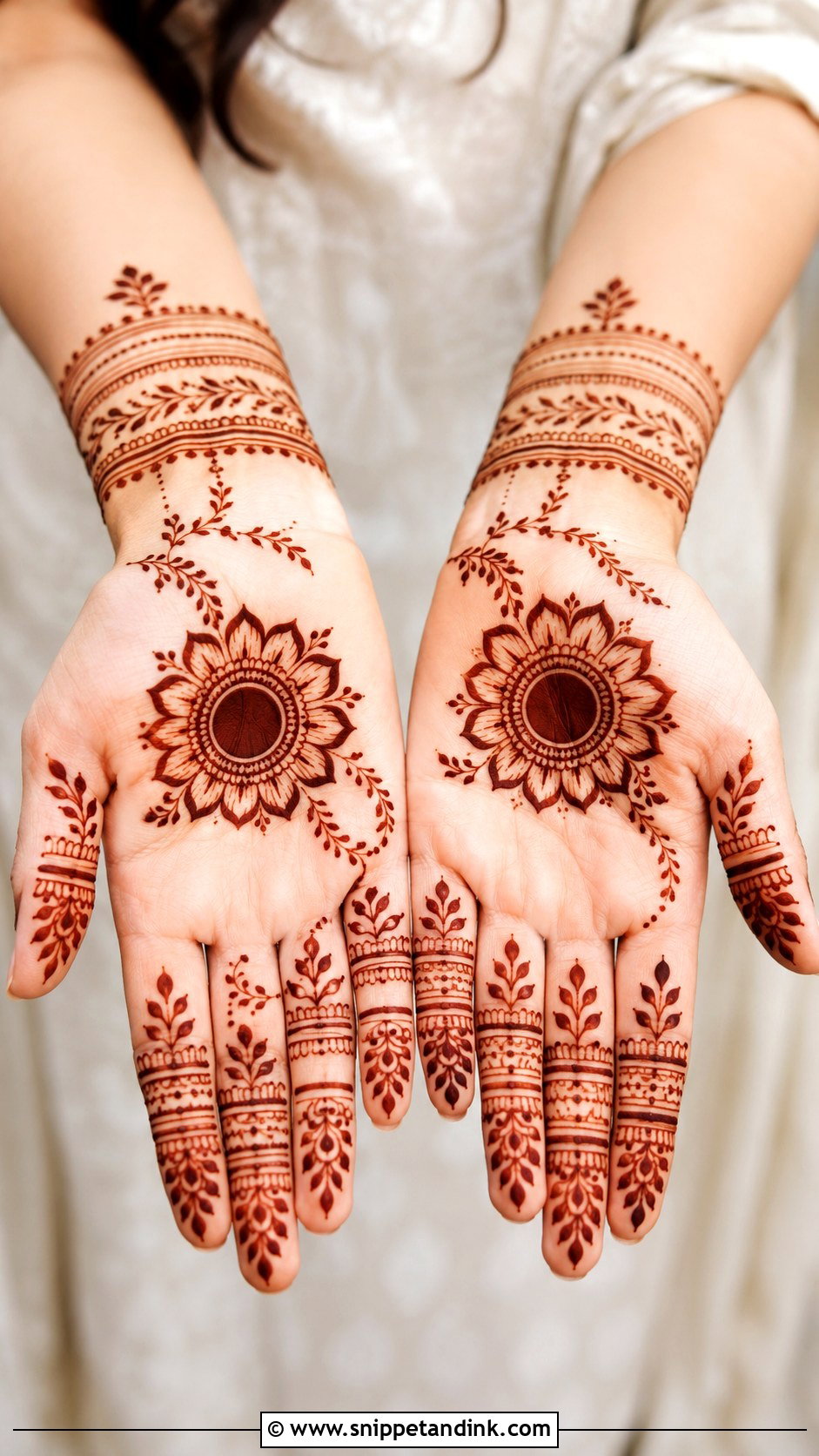
Start with a palm circle, add petals around it, draw simple vines toward the fingers and wrist, then finish the fingers with dots, small leaves and parallel lines. That sequence teaches control, spacing and symmetry while still giving a finished hand. What beginners miss is repetition: when the same dot, leaf and curve appear throughout, the pattern looks planned. Random decoration looks random, however neatly it’s drawn.
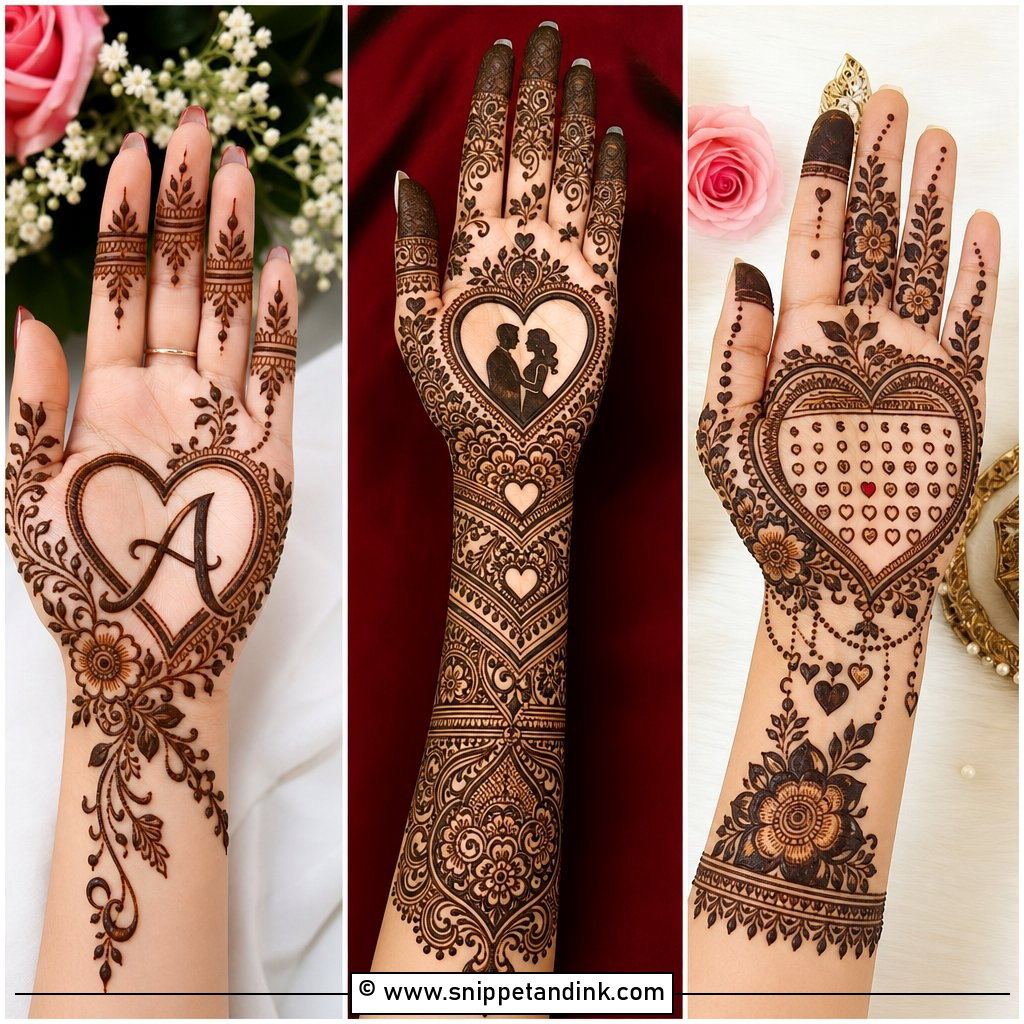
15. Modern Mehndi Design For Back Hand
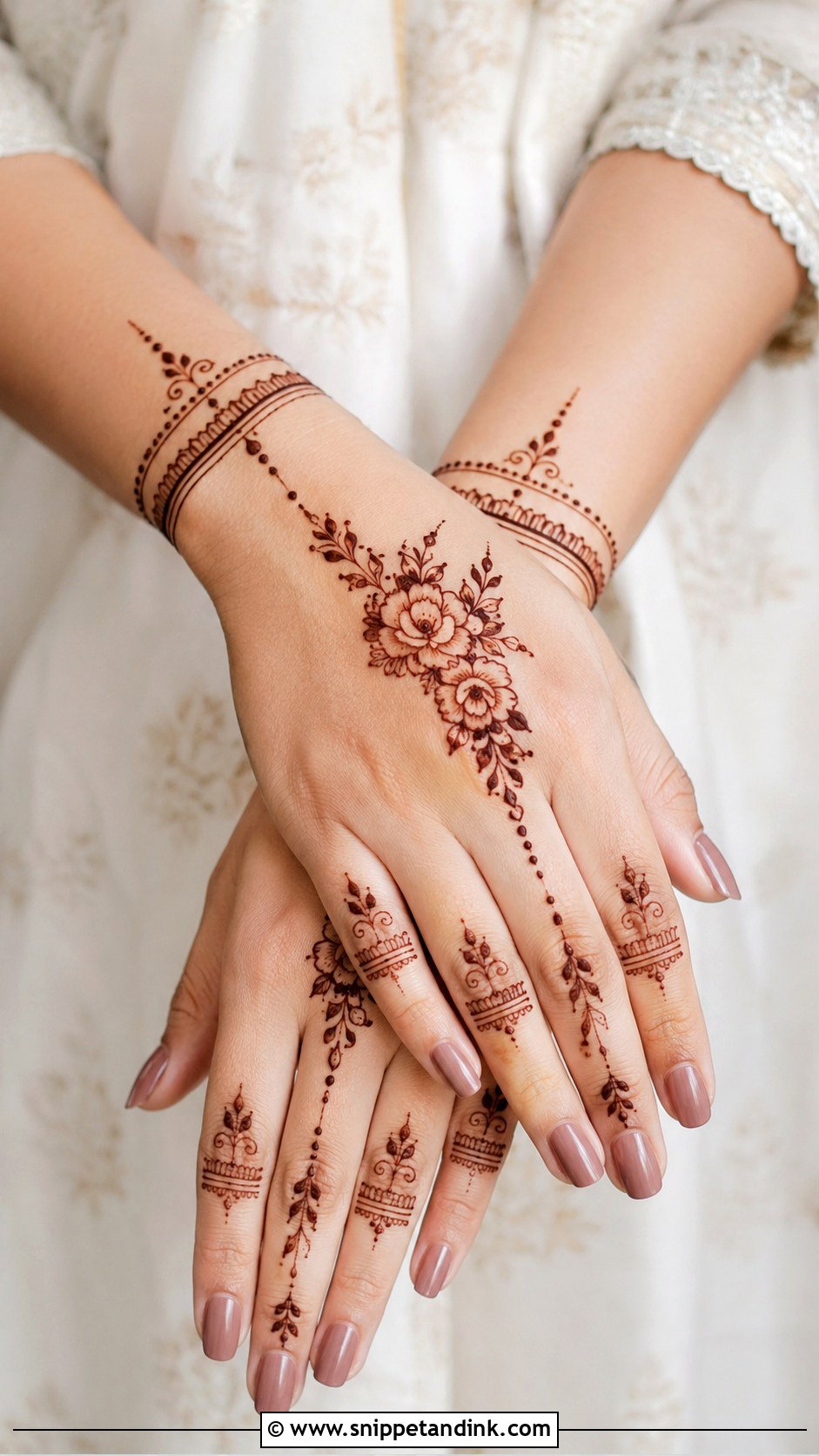
One large floral cluster, thin geometric bands, soft finger details and a bracelet ending, with empty space doing a lot of the work. Modern back-hand designs sit comfortably with fusion wear and simple jewelry, and thin lines with consistent shapes keep them polished. The hardest part is knowing when to stop. A modern design should look deliberately light rather than unfinished, so I close every open end with a dot or a tiny leaf.
16. Royal Bridal Mehndi Design
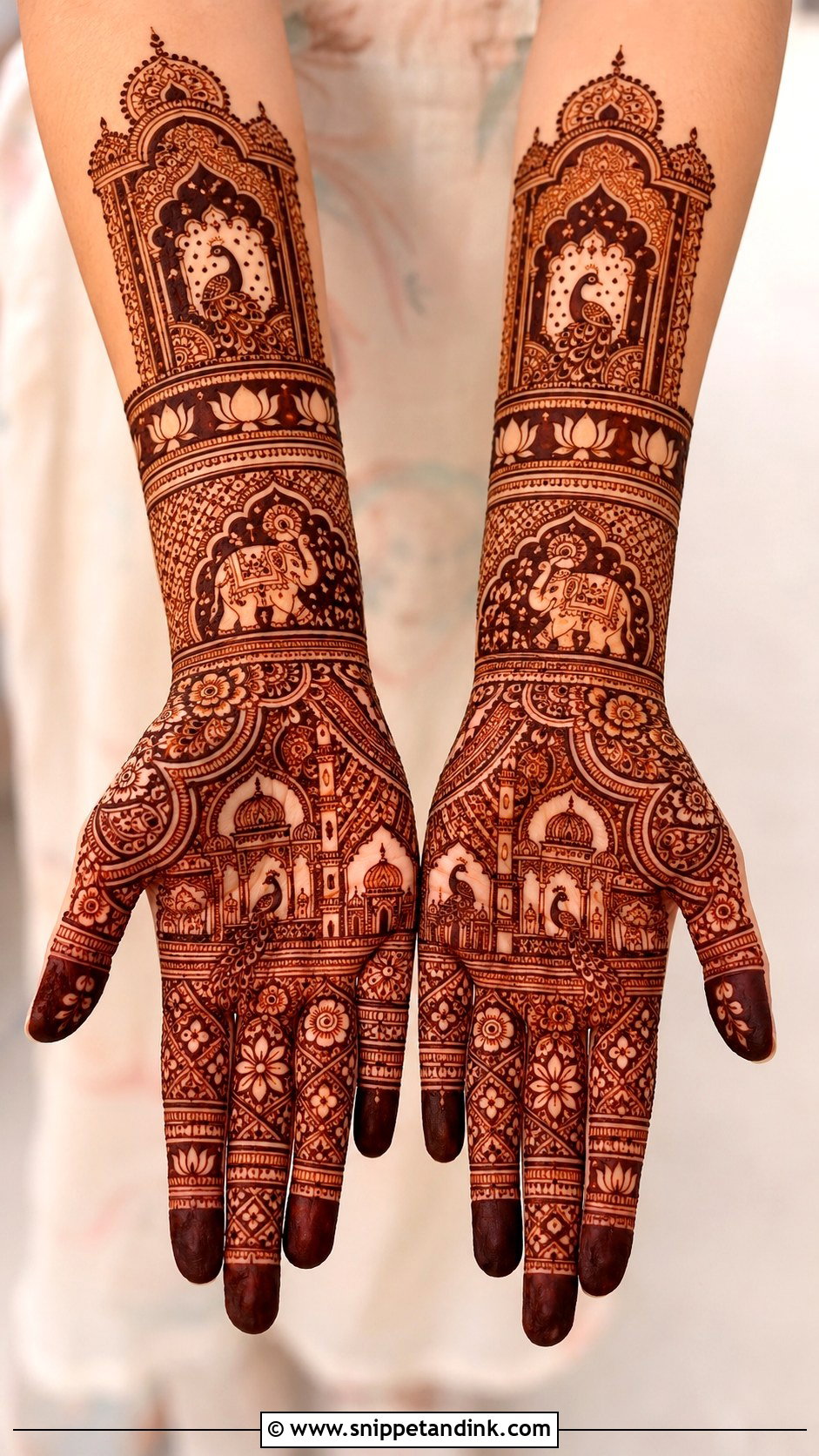
Palace arches, jharokha windows, lotus borders, peacocks, elephants, paisleys and lace fillers cover the hands and forearms in a rich, symmetrical pattern. Royal bridal work belongs with heavily embroidered lehengas, sarees and shararas. Structure is the key, so I sketch the arches and main figures lightly first and connect everything from fingertip to forearm before adding any fill. Initials or the wedding date can be tucked inside the borders. It’s patient work for artist and bride alike.
17. Eid Mehndi Design For Hands
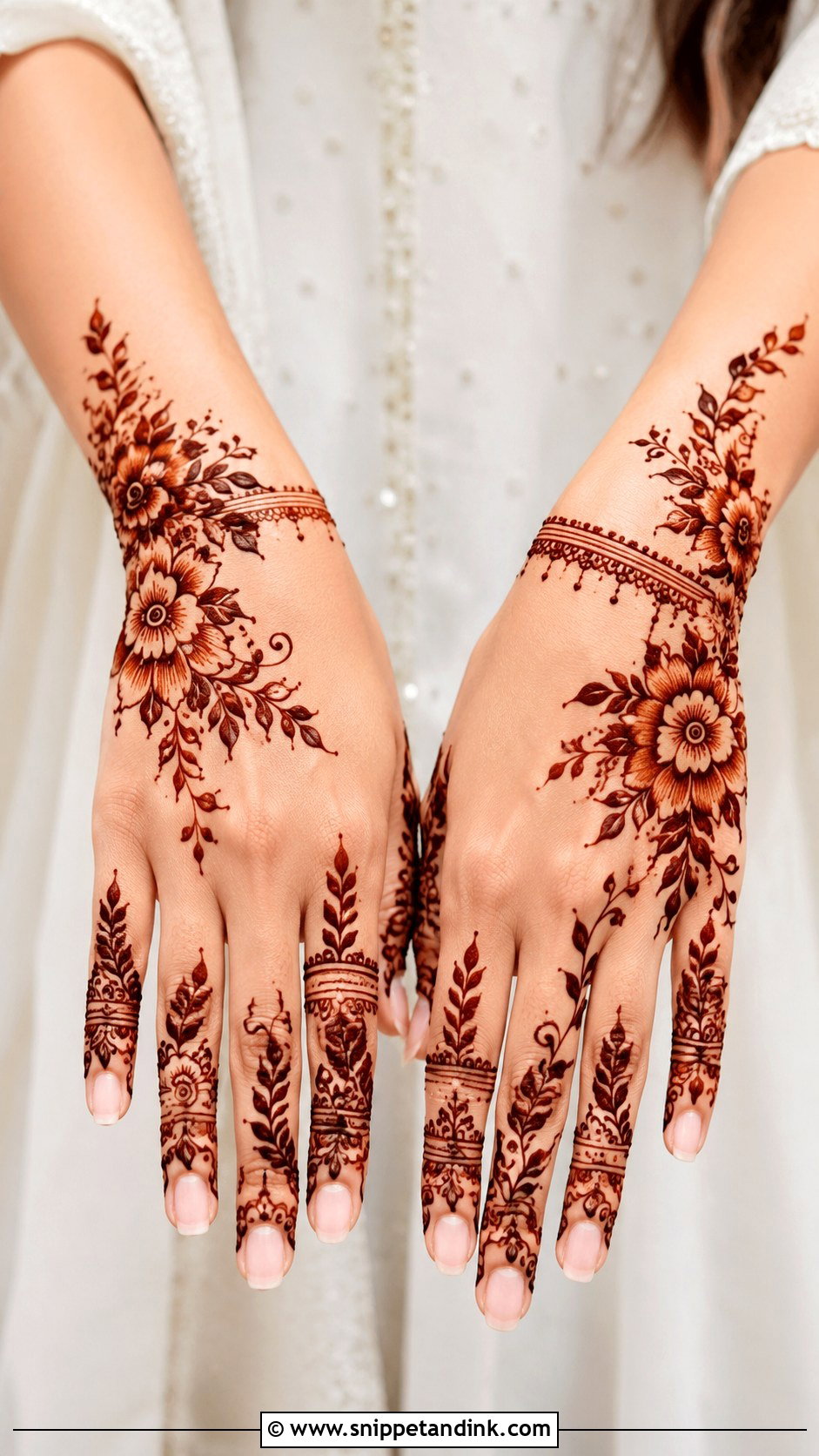
Arabic flowers on the back hand, neat fingers, a small wrist bracelet and some open skin make a typical Eid hand, though palm mandalas with leafy borders and diagonal trails are just as common. Keep it lighter than bridal so it sits comfortably with bangles and rings through a long day of visiting. Bold outlines give a strong stain in photos; khafif detail gives a softer one. Since Eid mehndi usually goes on the night before, a design you can finish quickly means everyone in the family gets a turn.
18. Diwali Mehndi Design For Front Hand
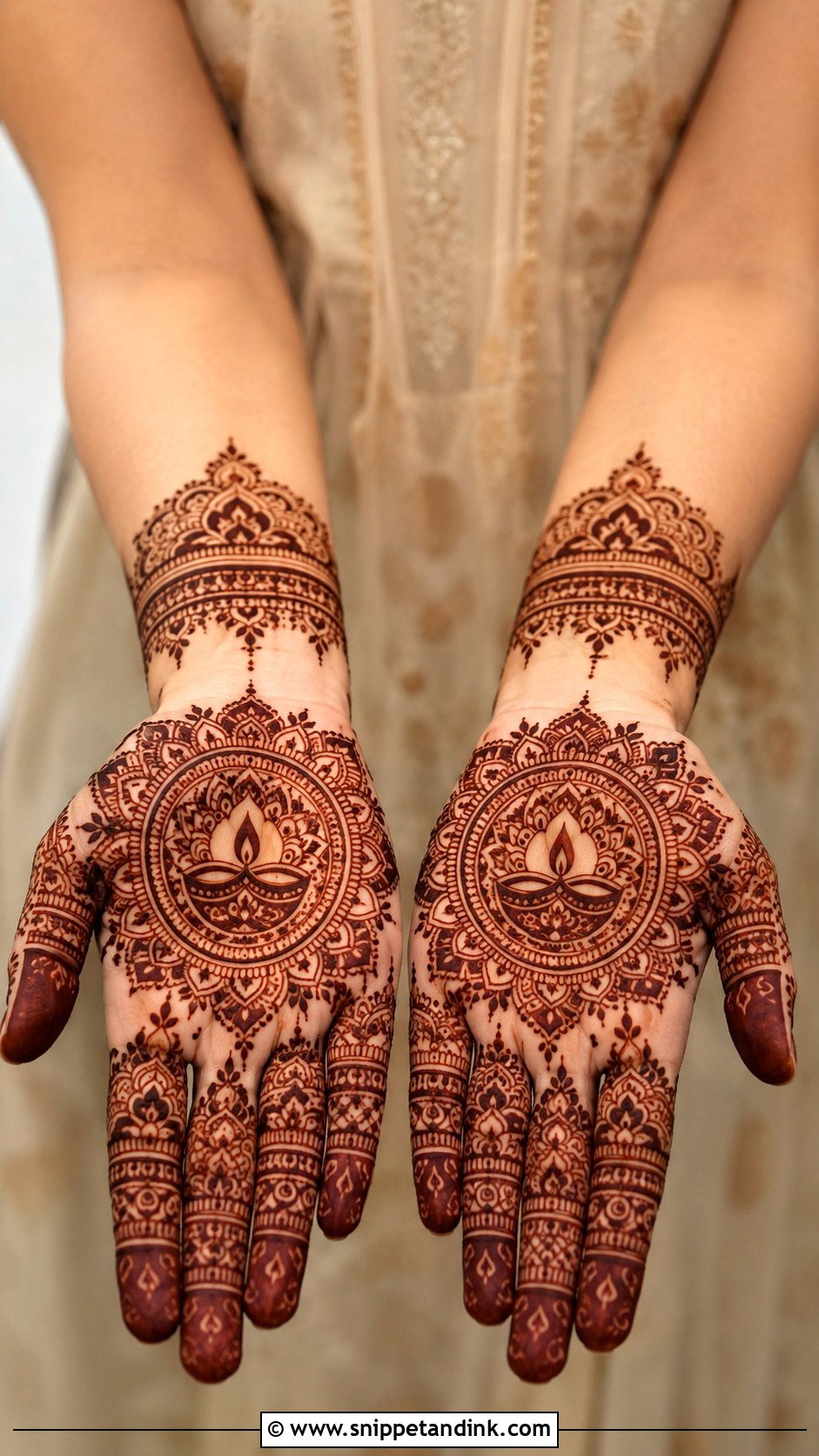
A central mandala, diya shapes, floral borders, paisley curves and detailed fingers, with a bracelet band at the wrist. Diwali front-hand designs sit well with traditional outfits and festive photos. The diya works best as a small accent repeated two or three times rather than one giant motif filling the palm. Keep tiny fill away from the palm creases, where paste cracks and flakes as you move your hand while it dries.
19. Engagement Mehndi Design For Bride
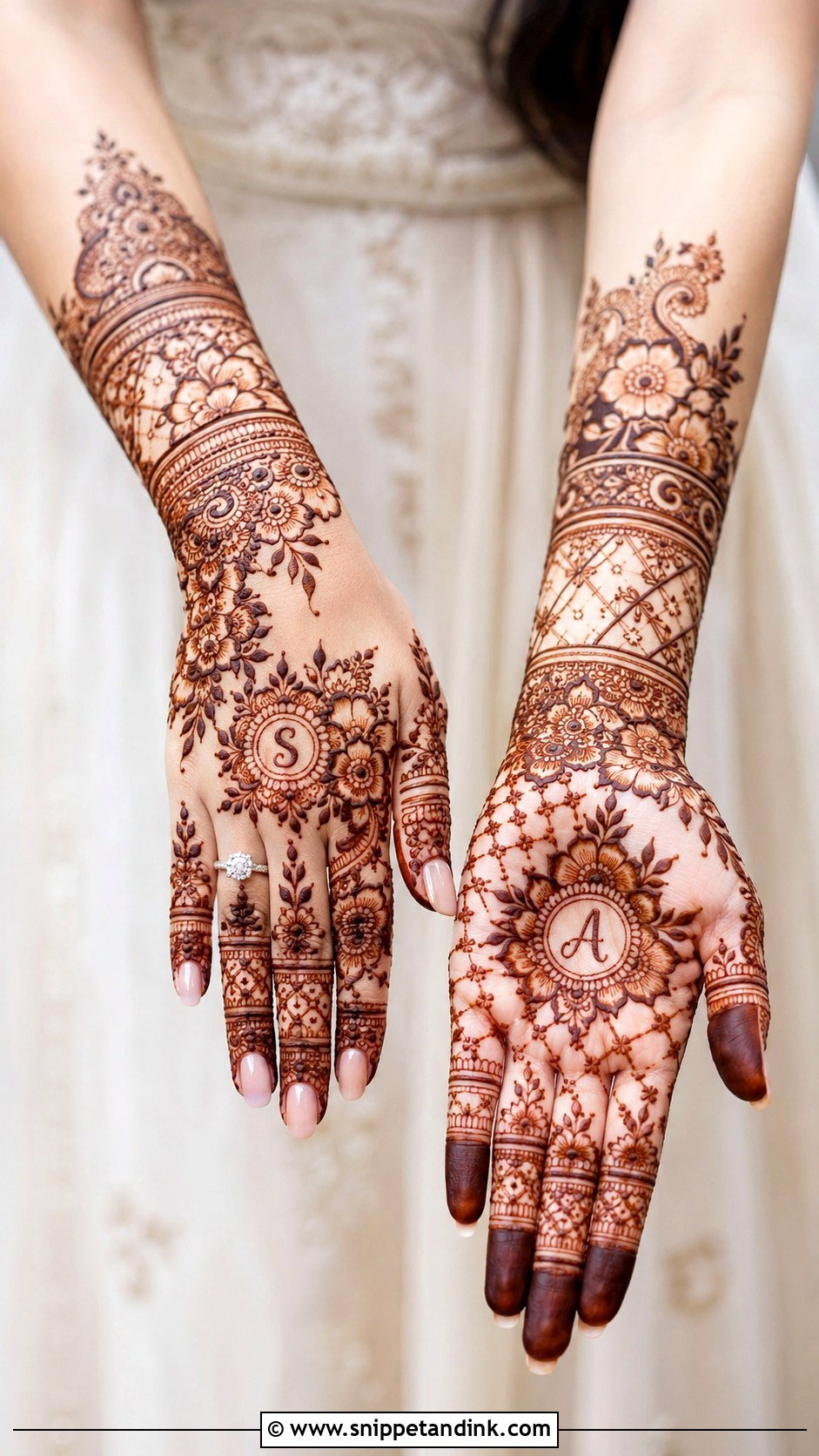
Palms, back hands, wrists and a little forearm, with florals, rings, initials, delicate jaali and bracelet details. Engagement mehndi is lighter than wedding mehndi but it is still the bride’s moment. I plan the ring finger first, since it’s in every close-up, and leave its base fairly clear so the ring sits on bare skin. Skip dense forearm work if you want your jewelry to lead. The romance comes from the details, not from coverage.
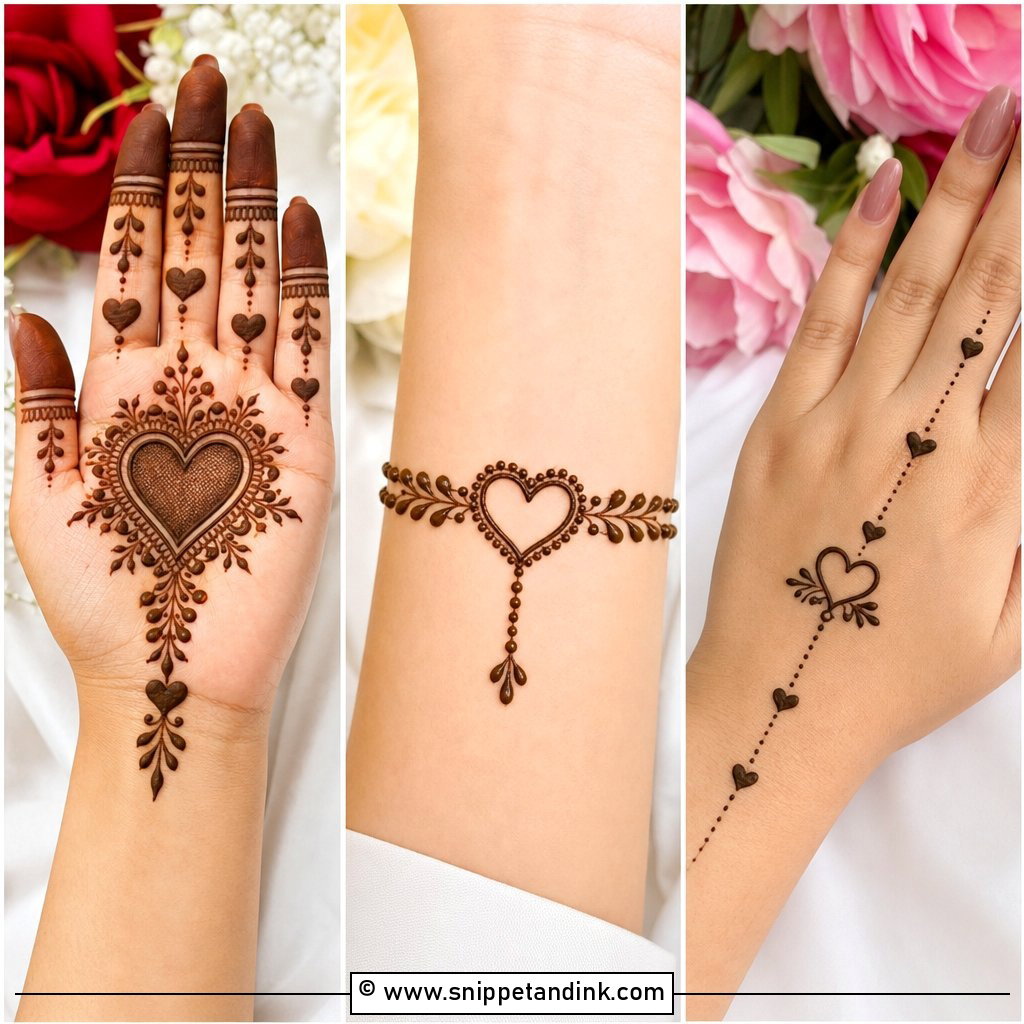
20. Rose Mehndi Design For Back Hand
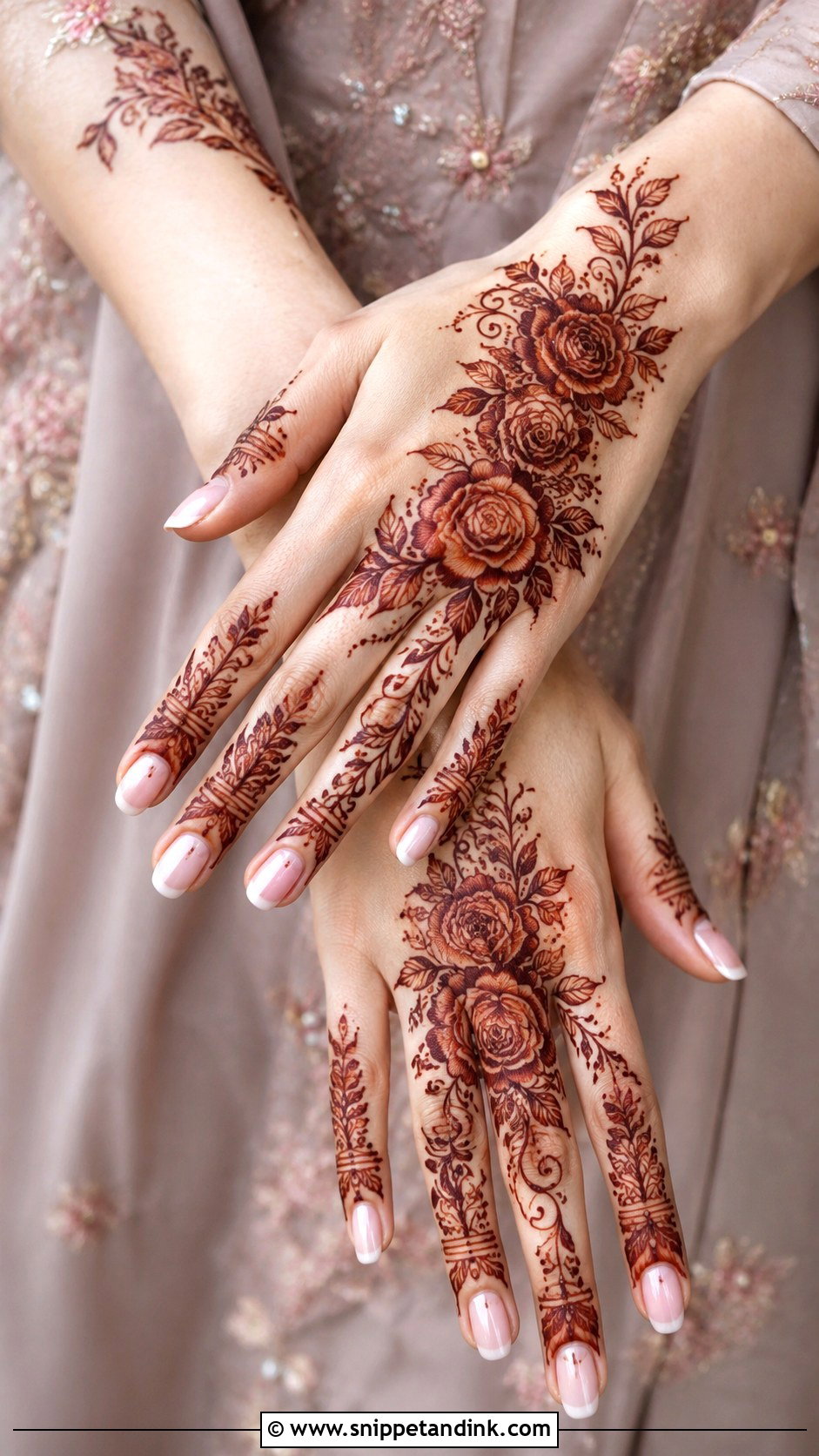
One or more large roses sit diagonally across the back hand, with leaves, swirls, shaded petals and finger details, and the style fits Arabic, Indo-Arabic and modern layouts. Space the petals so they stay distinct after staining, because tightly packed petals merge into one dark lump. A thin vine at the wrist keeps it soft, while a heavier version extends into a bracelet band and forearm florals. Parties, Eid and bridesmaids all suit it.
21. Peacock Mehndi Design Full Hand
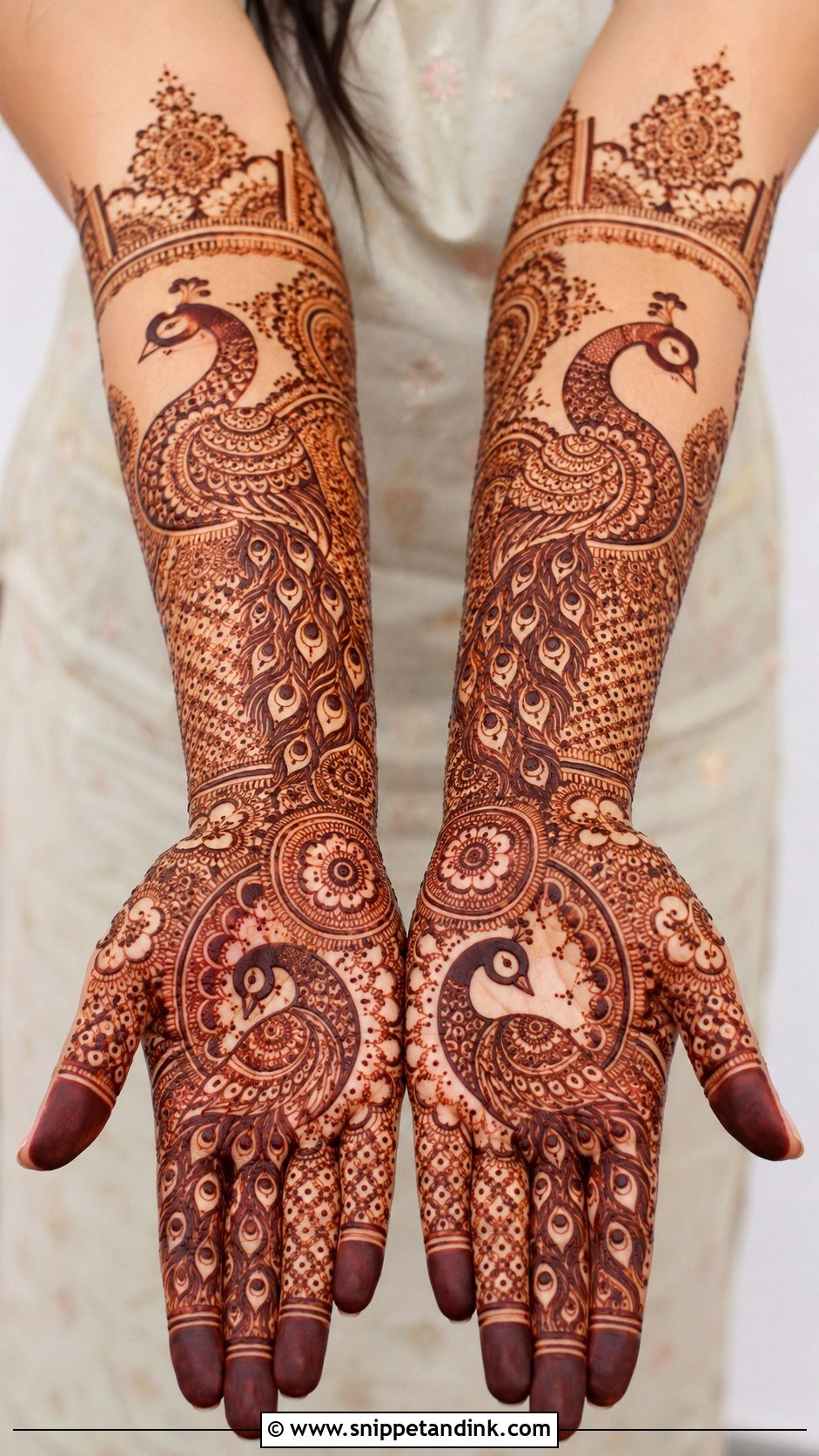
The peacock can sit on the palm, wrist or forearm, surrounded by paisleys, feathers, flowers and fine fillers, and the design may run across front and back hands. Brides love it because the bird carries so much celebratory meaning. The feathers need clean curves and careful spacing; crowd them and the stain turns muddy. I pair a peacock with a mandala or a jaali panel nearby, which gives the eye a calm area beside all those curves.
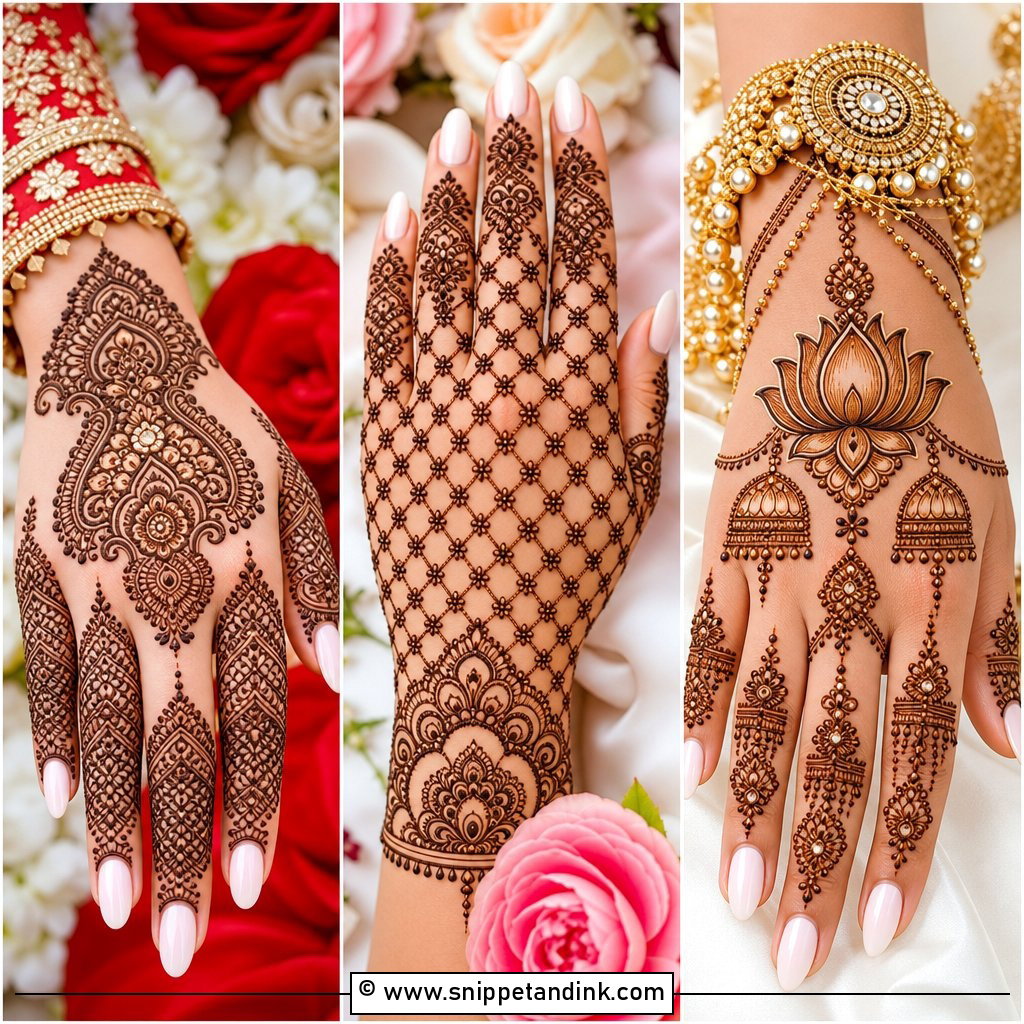
22. Jaali Mehndi Design For Hands
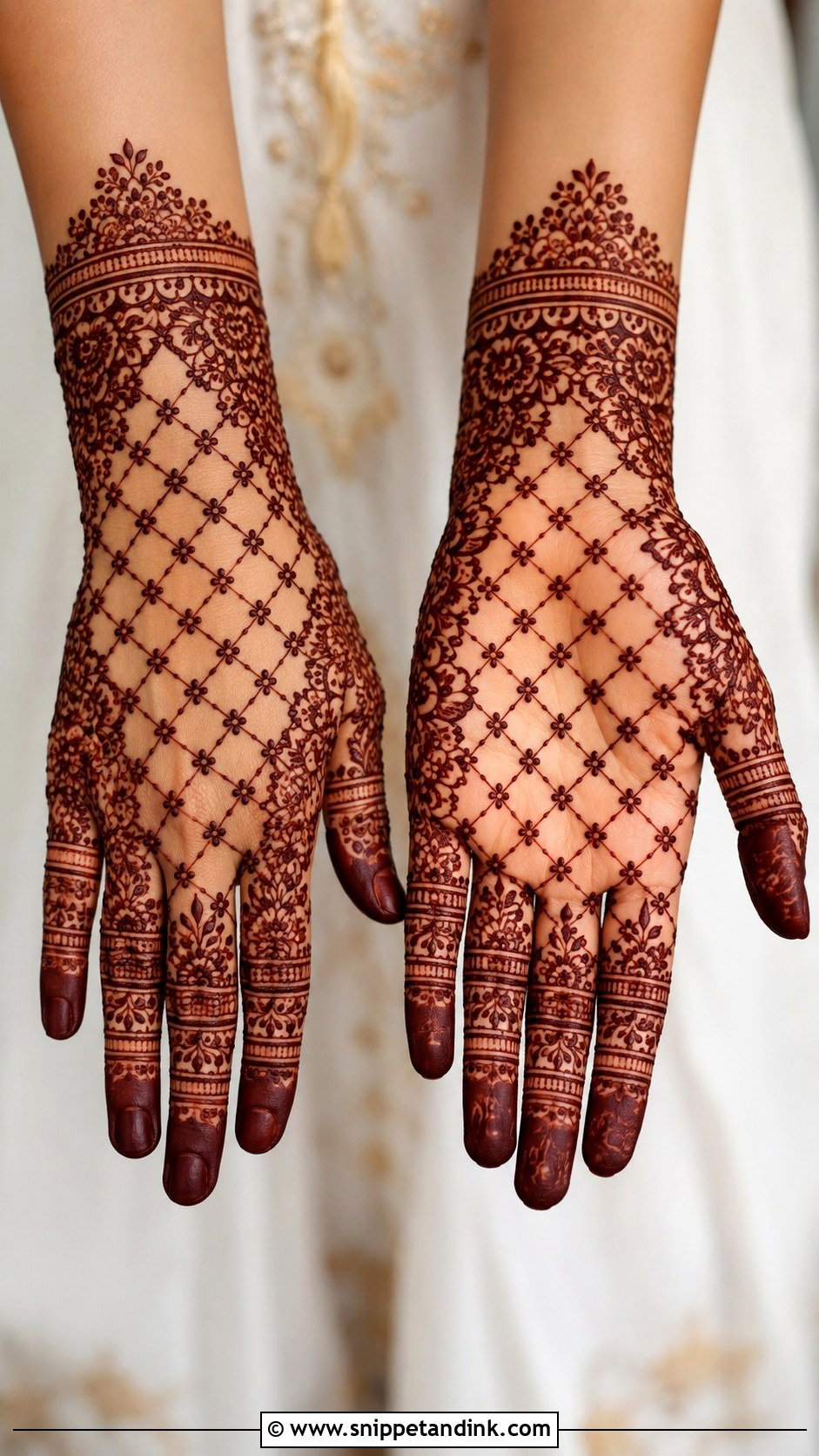
Mesh patterns, floral corners, leafy borders and dotted intersections can cover the back hand, palm, fingers and wrist. When the grid is well spaced, jaali looks detailed and airy at once: on the back hand it resembles a lace glove, and on the palm it adds texture between larger motifs. Neatness is everything. I draw all the lines in one direction first, let them firm for a moment, then cross them, so the paste doesn’t smear at the intersections.
23. Mandala Mehndi Design For Palm
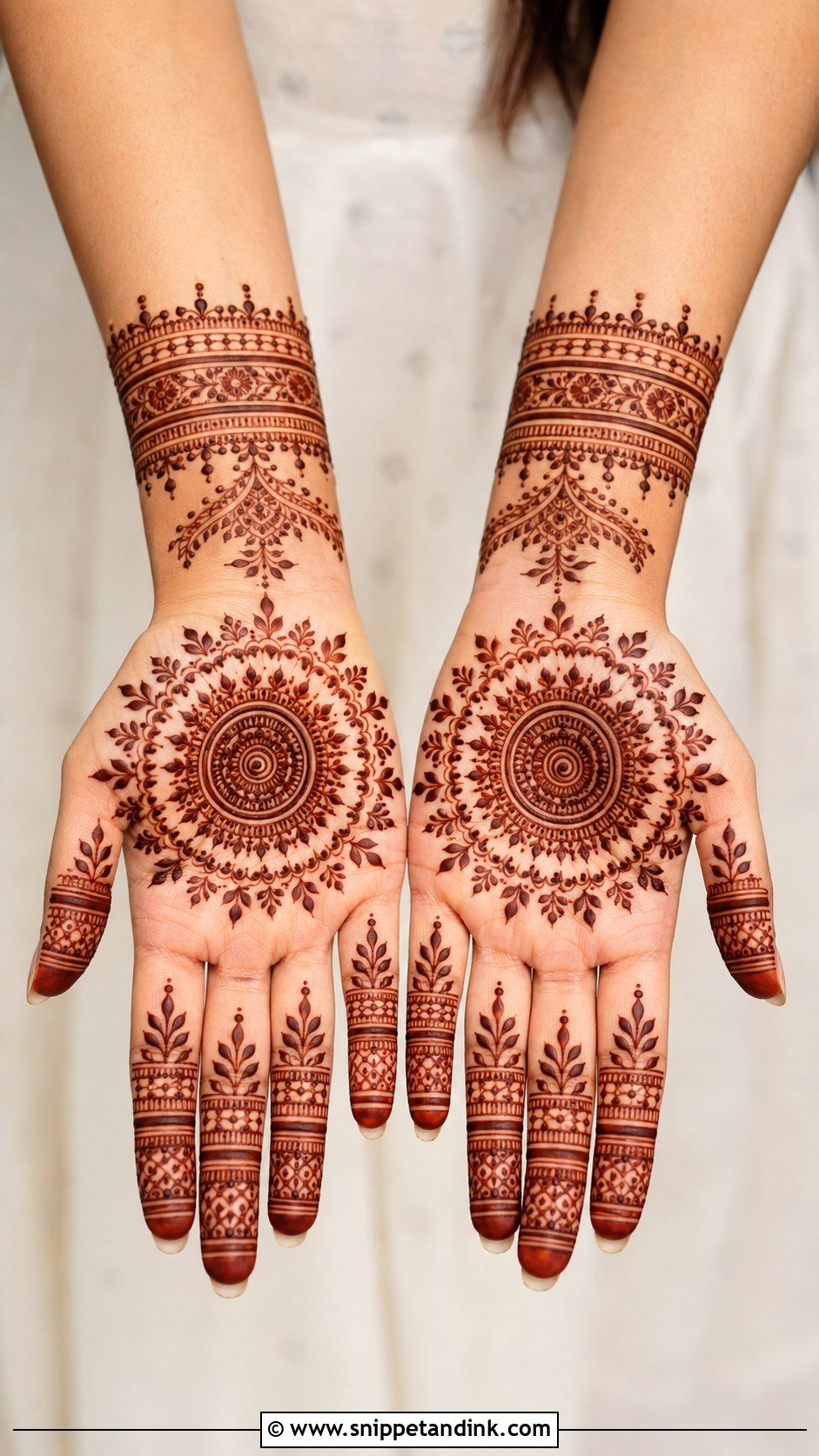
A round center gives a palm instant balance, and the fingers and wrist finish the hand. Keep the mandala bold with clean rings or work it up with petals, dots, tiny leaves and fine circles. It’s quick enough for home application and easy to match on both hands. For a stronger look, add simple finger caps or leafy finger trails. Find the real center of the palm with the hand flat, not cupped, or the mandala will sit off-center once the hand relaxes.
24. Bracelet Mehndi Design For Wrist
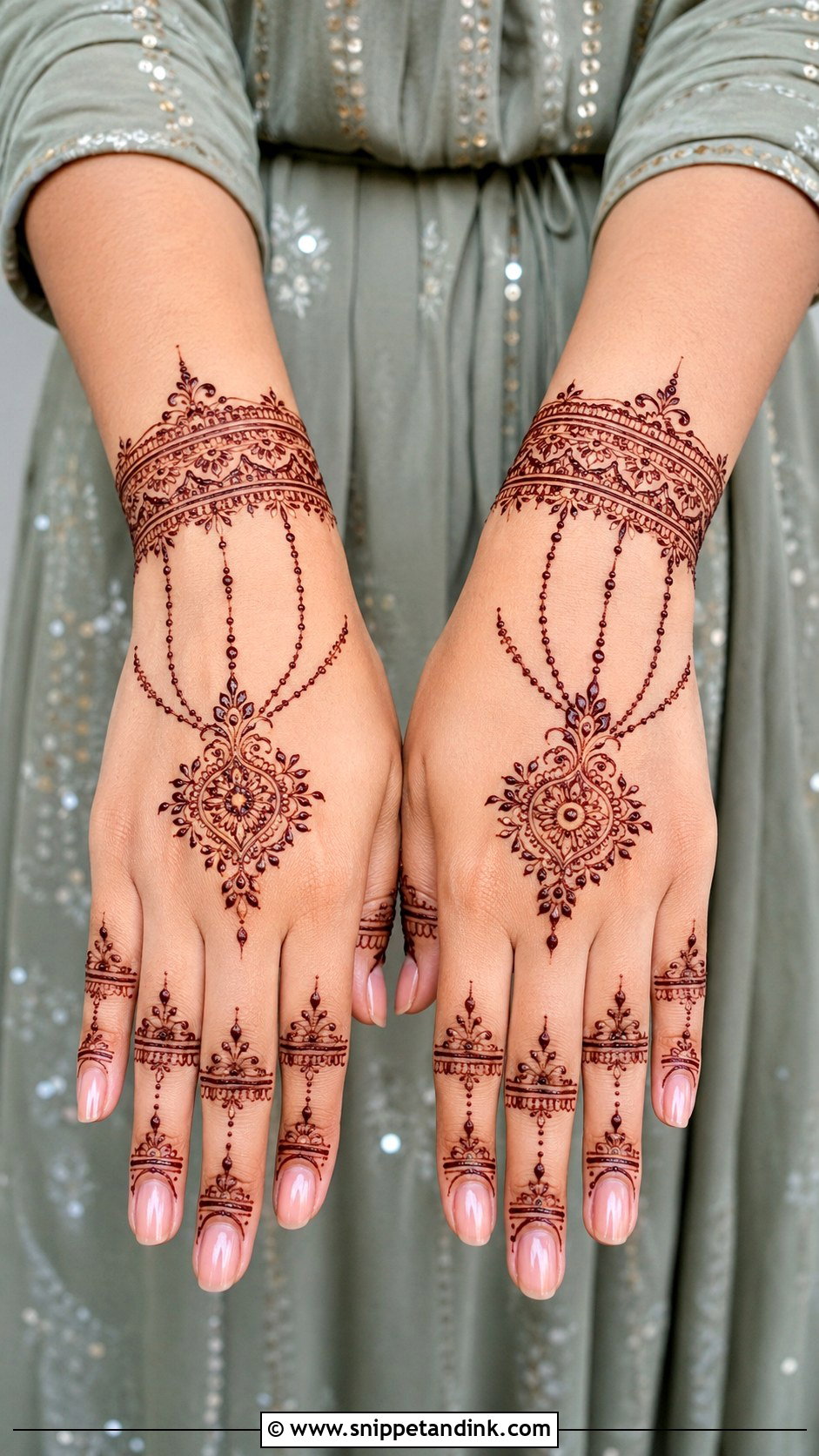
A wrist cuff, chain lines, small florals, finger rings and a central back-hand motif, worn like delicate jewelry. It looks finished with or without real bangles, which is why engagement guests and young girls like it. Keep the chains thin and the bracelet band clean. A thick wrist band looks heavy, and because the wrist bends constantly, a wide band also cracks off sooner and stains unevenly.
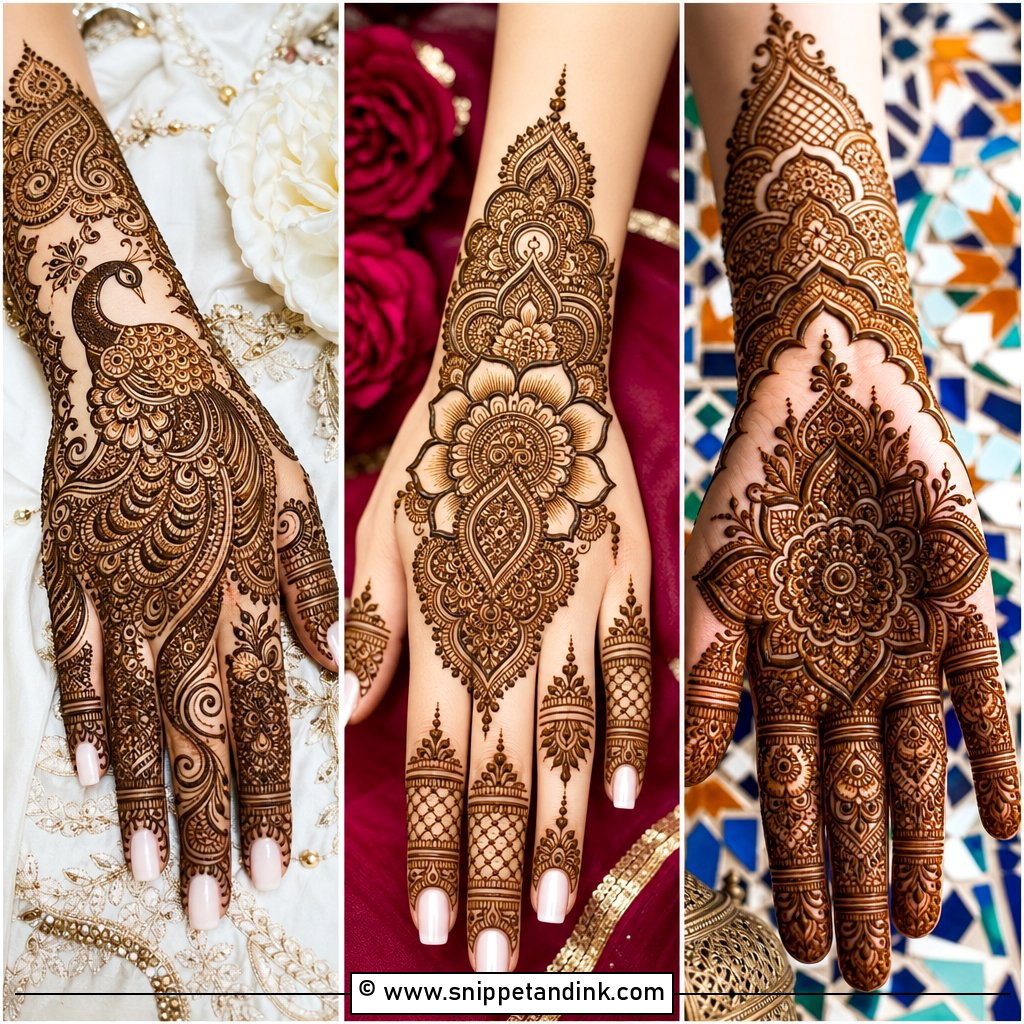
25. Finger Mehndi Design With Bracelet
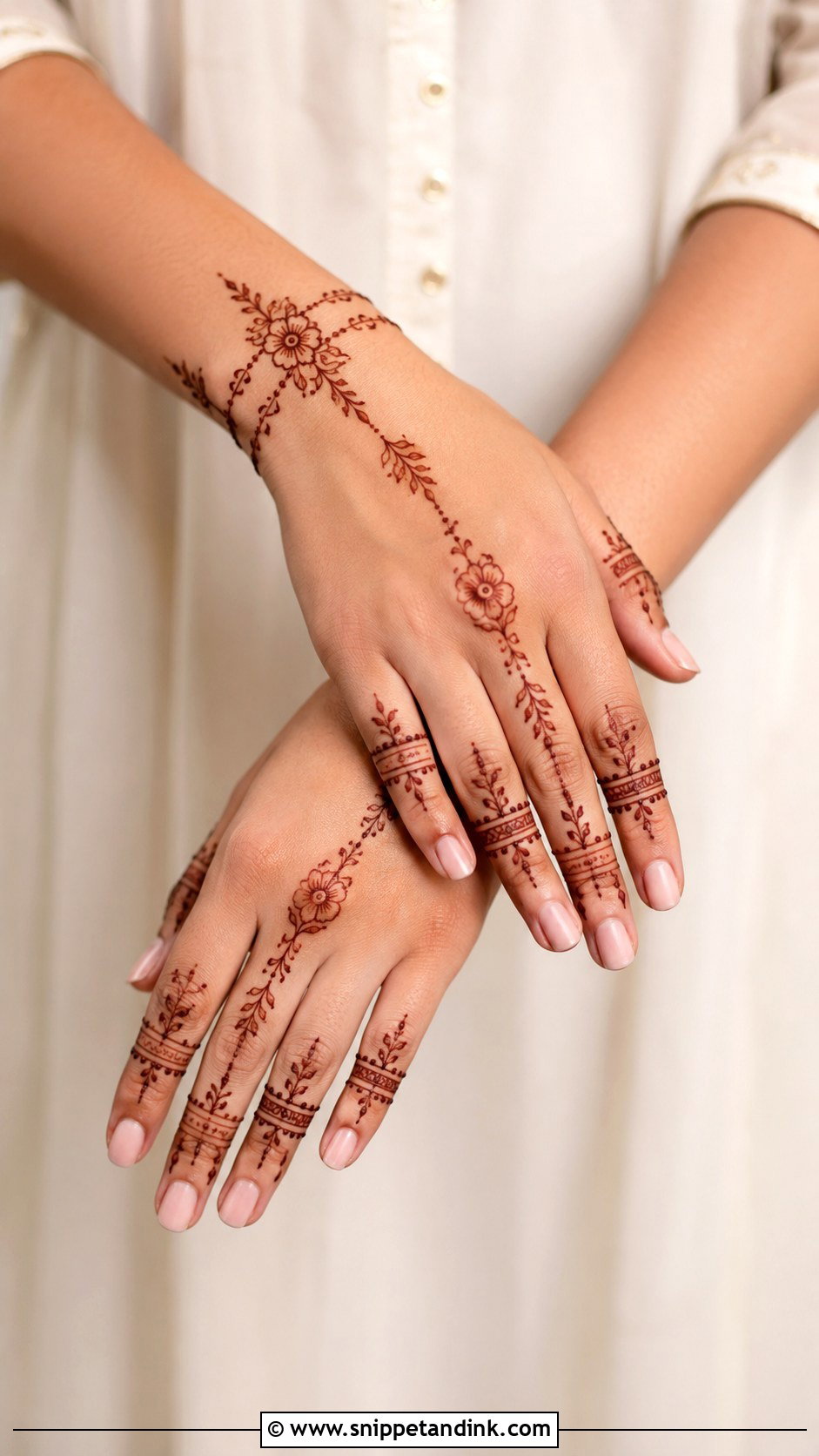
Each finger carries bands, dots, leaves and tiny florals, and one chain runs from the middle or ring finger to a wrist bracelet while the back hand stays mostly bare. It suits anyone who wants no palm coverage but still wants something complete. Slim finger patterns make the hand look longer, so I keep the bands narrow and spaced rather than solid. Match the bracelet details to the fingers so the two ends of the chain feel related.
26. Lotus Mehndi Design For Bridal Hand
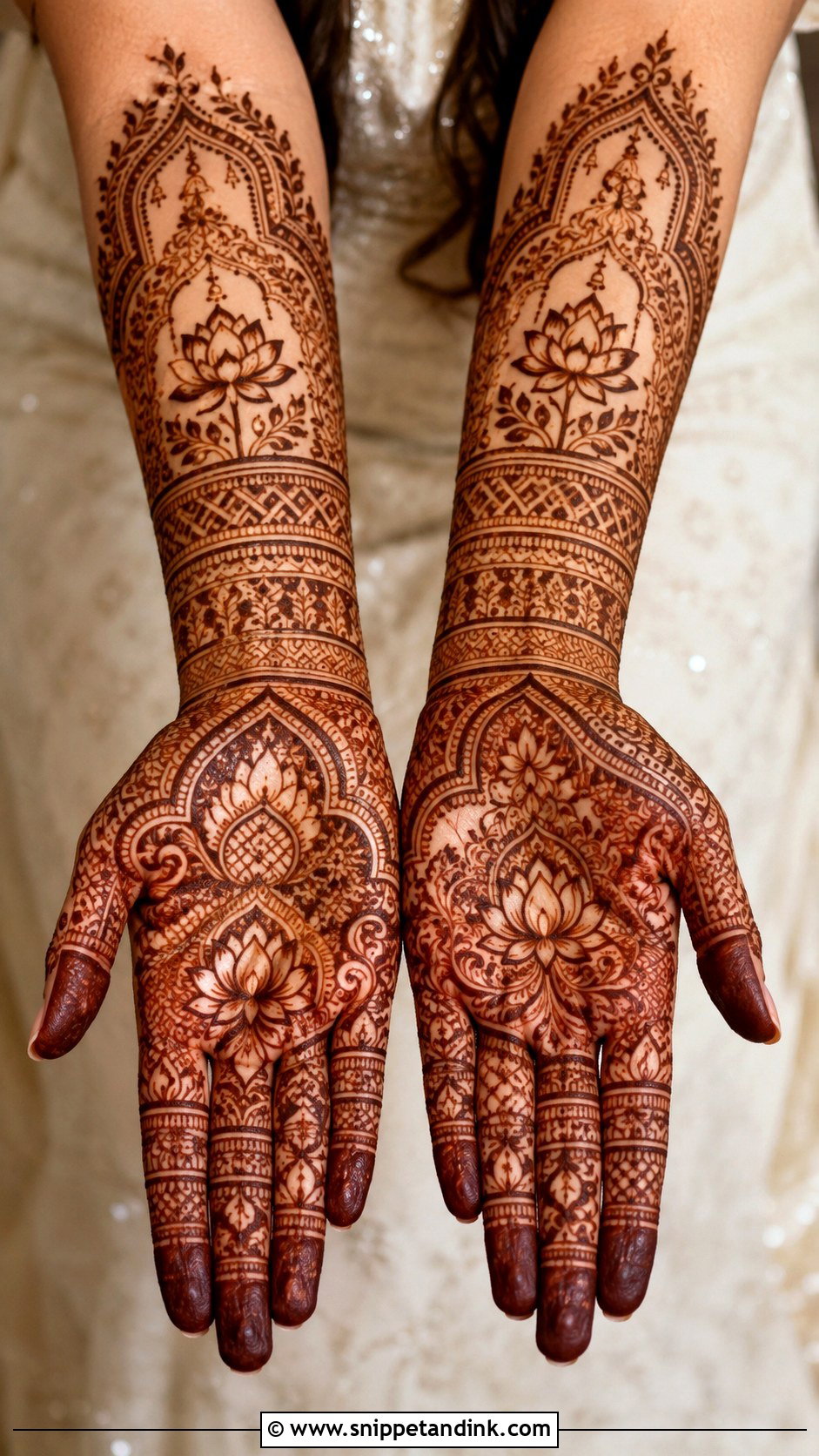
Large lotus flowers sit on the palms, wrists or forearms, surrounded by paisleys, jaali, leaves and fine fillers. The lotus works in both traditional Indian and Indo-Arabic bridal layouts and gives a calm, sacred feel without crowding the hand, and it pairs naturally with mandalas, temple borders or initials. The petals must stay clear and layered so they don’t sink into the background. I outline each layer fully before shading any of them.
27. Shaded Mehndi Design For Back Hand
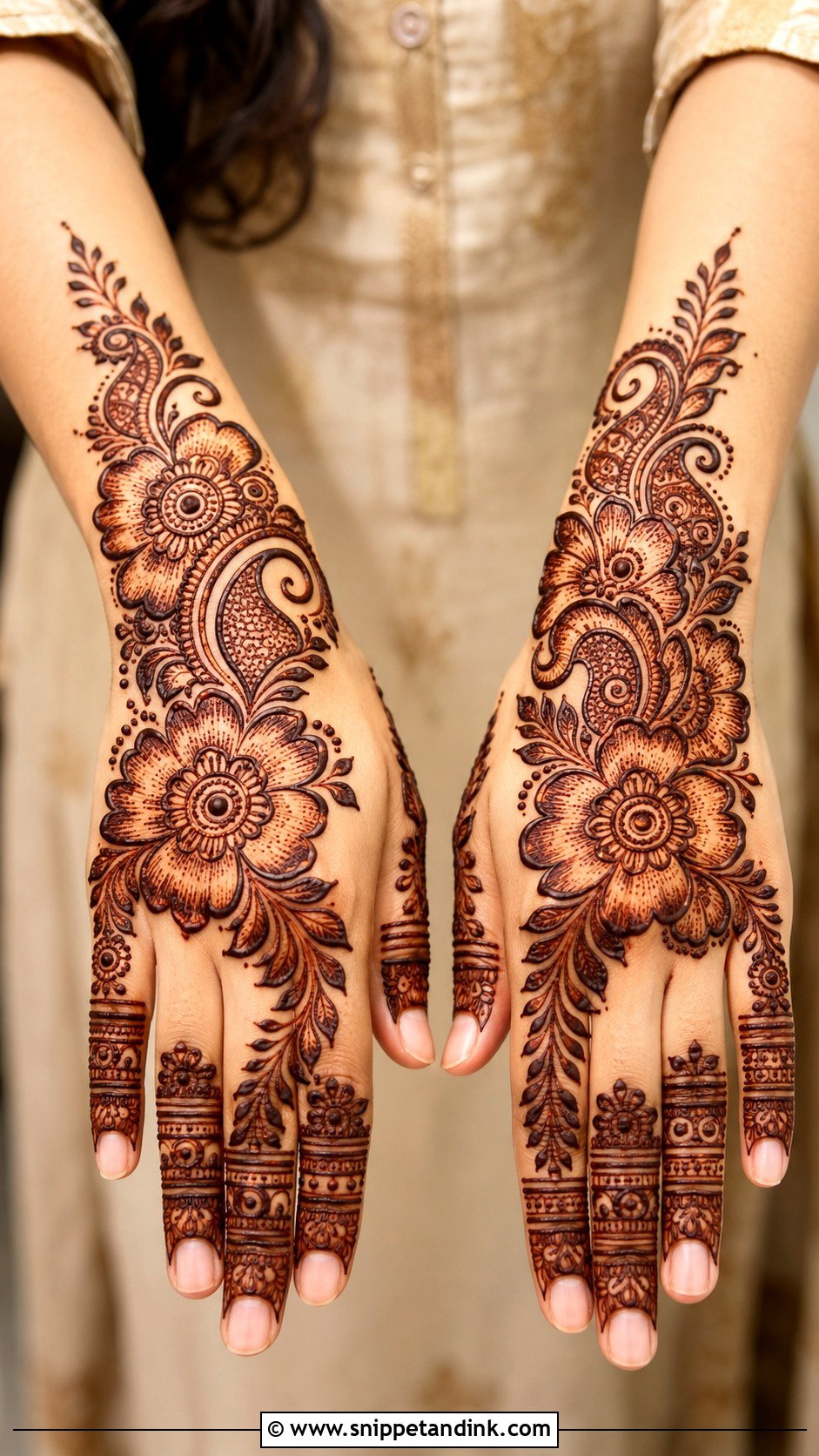
Large flowers, paisleys and leaves with shaded interiors, and fingers carrying matching bands or leaves. Shading adds fullness without extra lines, which is why Arabic and Indo-Arabic artists use it for quick drama. The risk is a muddy stain. I shade with a thin, even layer of paste pulled smoothly rather than scribbled, and keep the outline around each shaded area bold so the shape survives. Done right, it gives depth that shows up well in photos.
28. Paisley Mehndi Design Full Hand
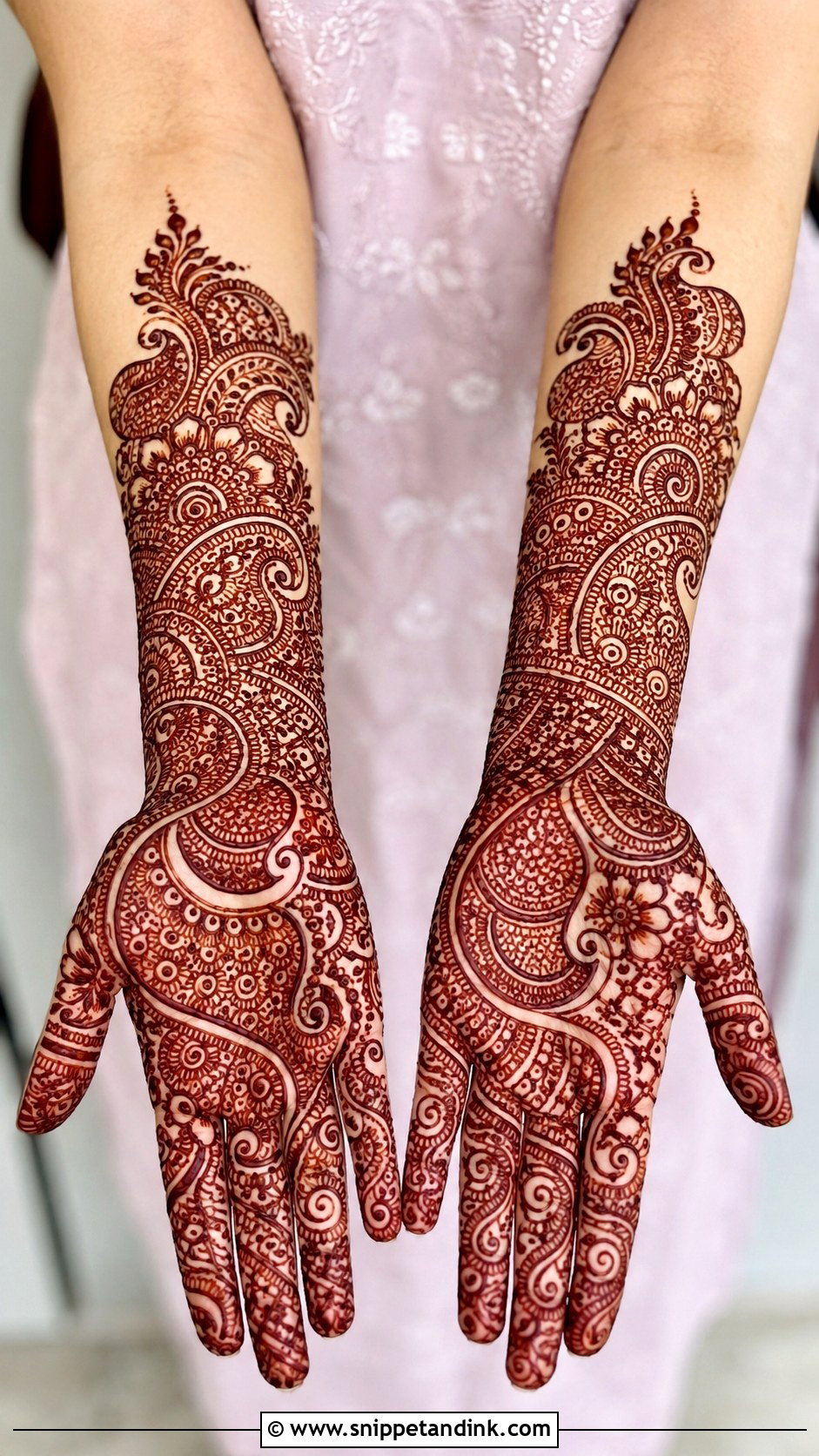
The curved paisley works on palm, back hand, wrist and forearm, filled with dots, leaves, spirals and tiny flowers, and its curves connect naturally into a flowing hand. Dense clusters with fine fillers feel classic; larger paisleys with more space feel modern. It adapts to long hands, short hands and older hands alike, since you can stretch or shorten the curve. If you’re building a practice book, give paisleys several pages, because almost every other style borrows them.
29. Geometric Mehndi Design For Hands
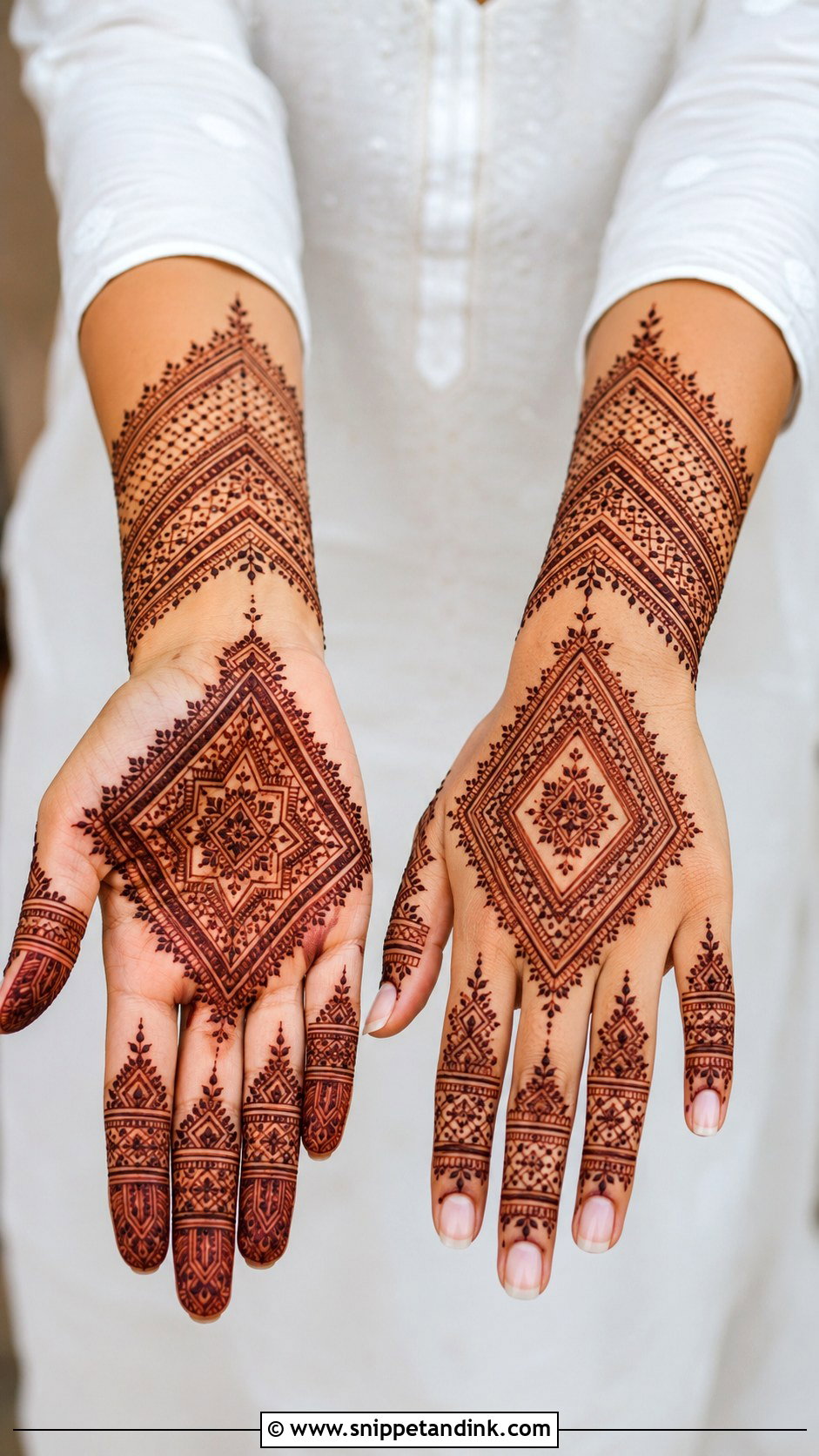
Lines, triangles, diamonds, grids, chevrons and circular symmetry run across the palm or back hand, either minimal with open space or full with repetition. It suits modern outfits and simple jewelry and gives a change from florals. Precision is the main rule. Straight lines and equal spacing make it look professional, and any wobble shows. Add dots or tiny leaves only if you want to soften it.
30. Kids Mehndi Design For Hands
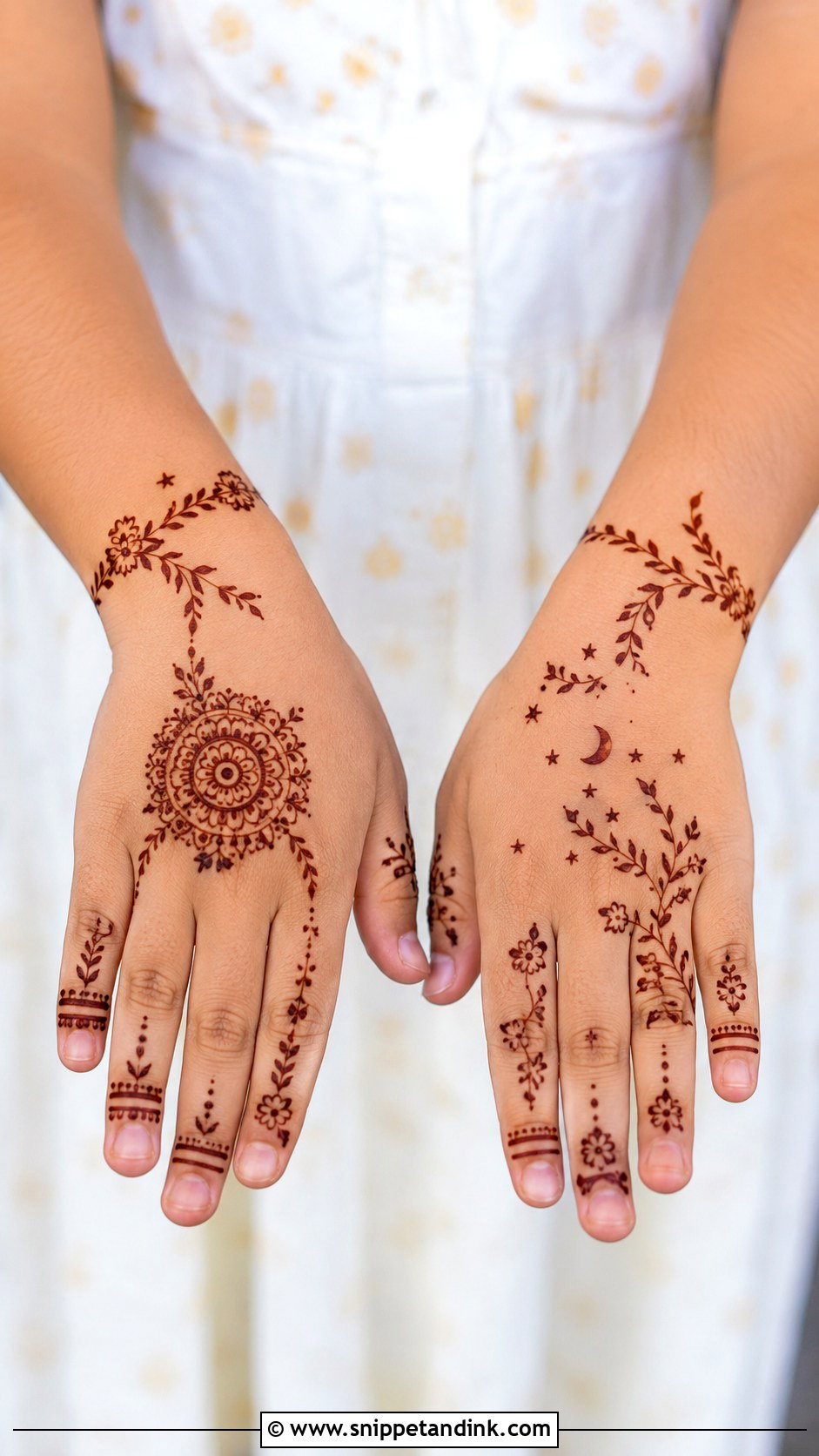
Kids mehndi should be small and quick: a single flower, stars, a leafy vine, dots, a butterfly or a tiny mandala with simple fingers. Children rarely sit still through drying, so keep the coverage light. I usually choose the back of the hand for children, because palms get pressed onto everything within minutes and smudge. Use round, clear shapes and natural henna only, never the dark black henna cones, which can contain dyes that injure skin. Eid, Diwali, weddings and school cultural days all suit it.
31. White Mehndi Design For Back Hand
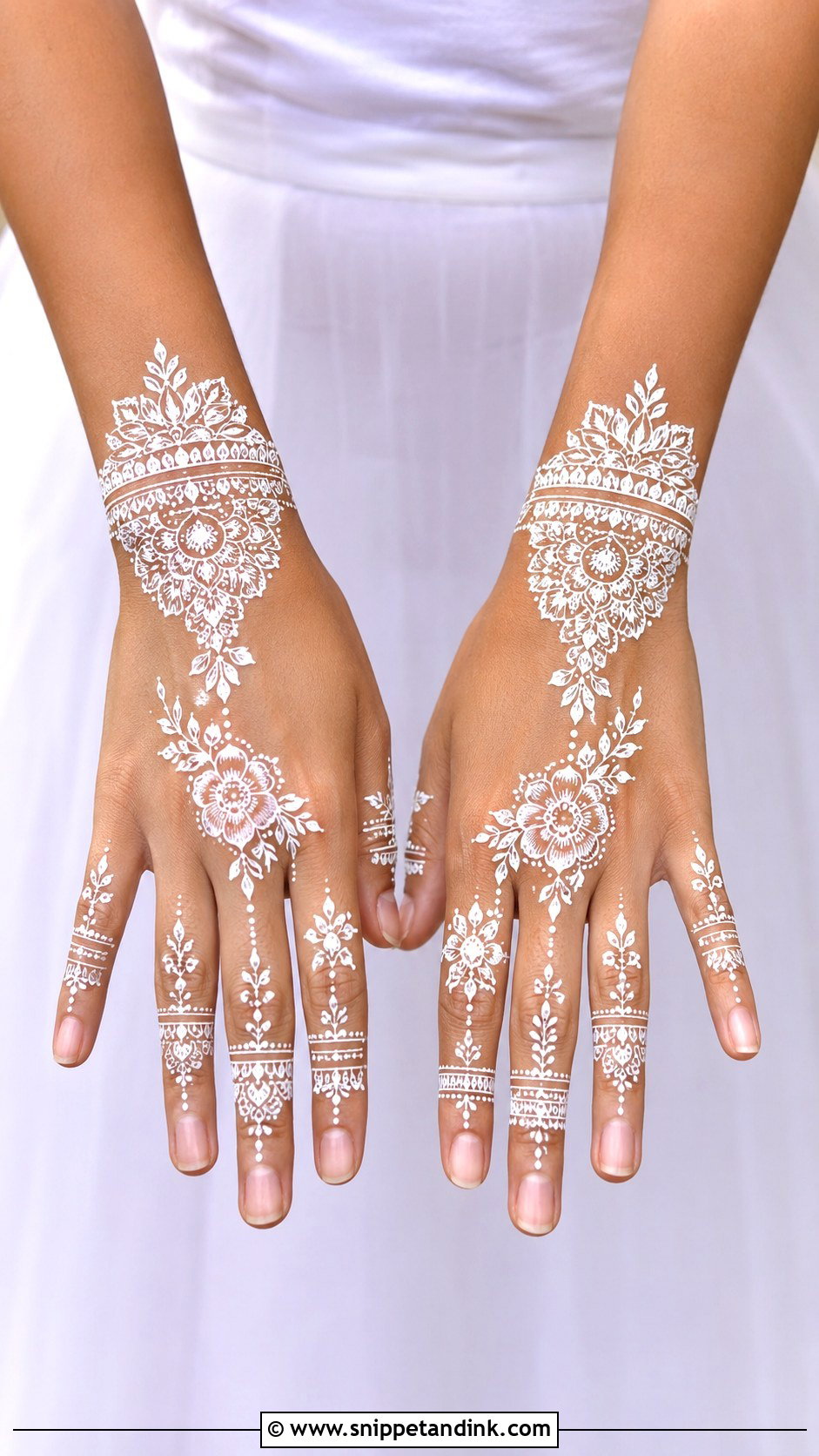
White mehndi isn’t henna at all. It’s a body paint or skin-safe adhesive drawn on top of the skin, so it doesn’t stain and lasts a day or two at most before it wipes or peels away. Lace patterns, florals, finger bands and bracelets work best with open spacing, since white lines look strongest against plenty of bare skin. It shows up well on many skin tones and suits photo shoots, receptions and beach weddings. Patch test the product first, because adhesives can irritate sensitive skin.
32. Glitter Mehndi Design For Party
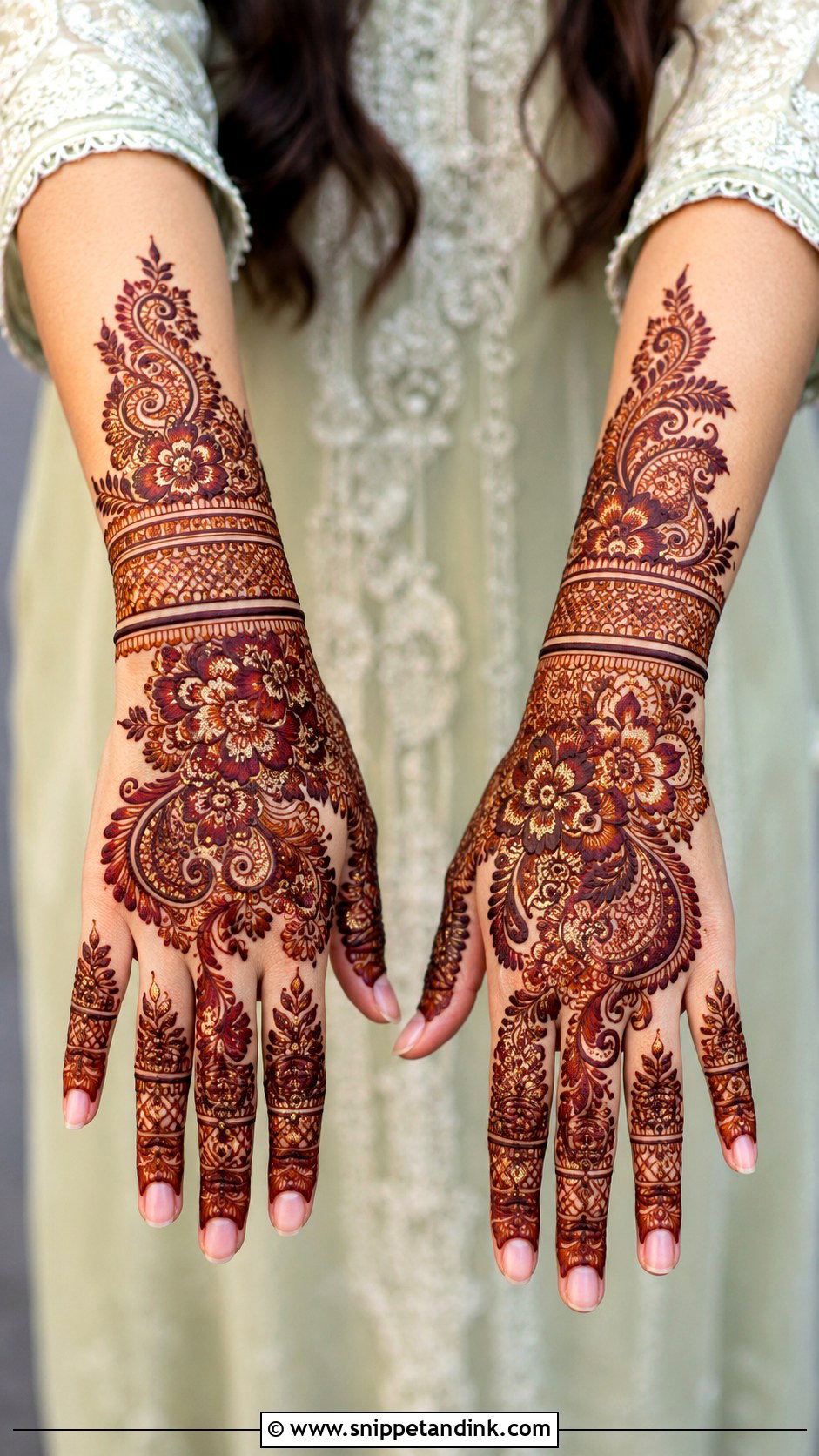
Glitter work is for a single evening. A common method is natural henna outlines first, then body-safe glitter added inside flowers, paisleys or wrist bands after the paste is removed; some artists use colored cones or glitter gels instead. Keep the glitter as an accent so the hand still reads as mehndi. Gold, bronze and maroon sit well with traditional outfits. Use only cosmetic-grade glitter and adhesive made for skin, never craft glitter, and skip any patch of irritated skin.
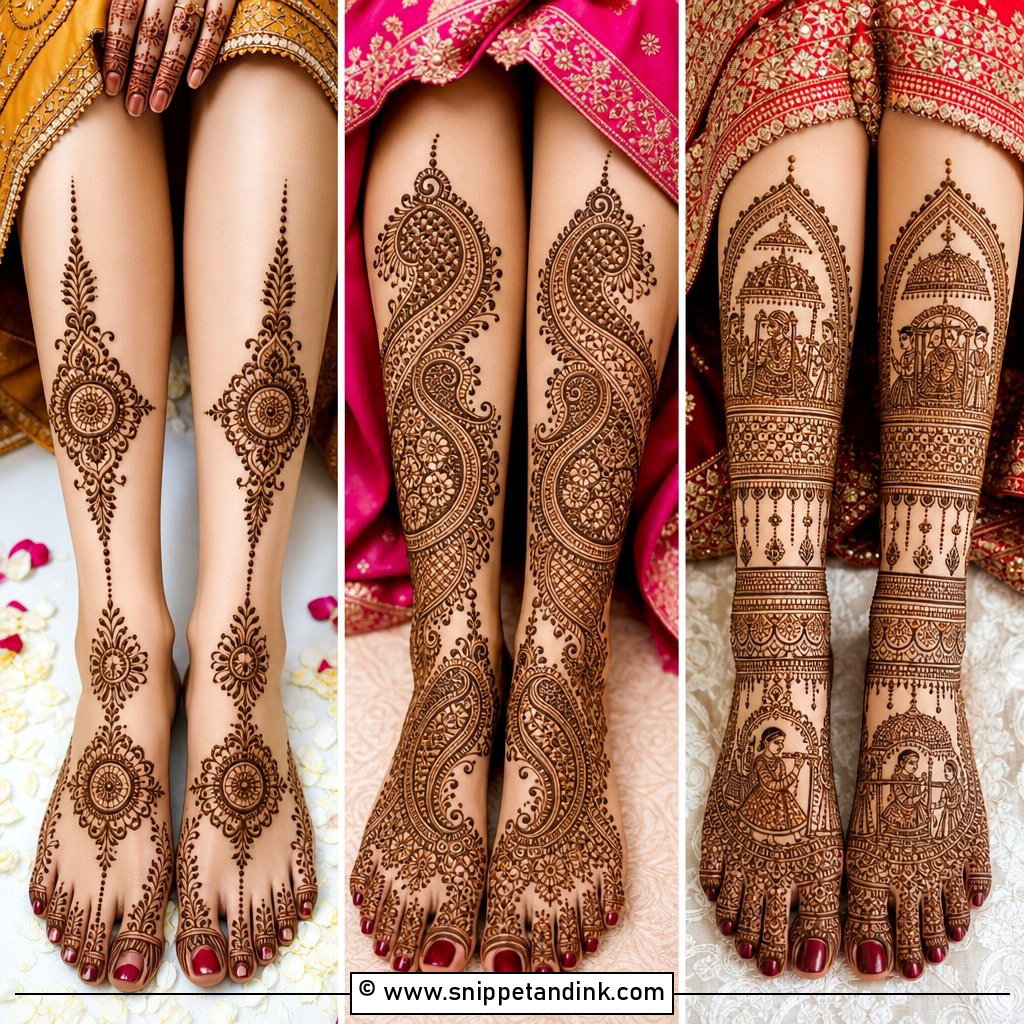
33. Feet Mehndi Design For Bridal
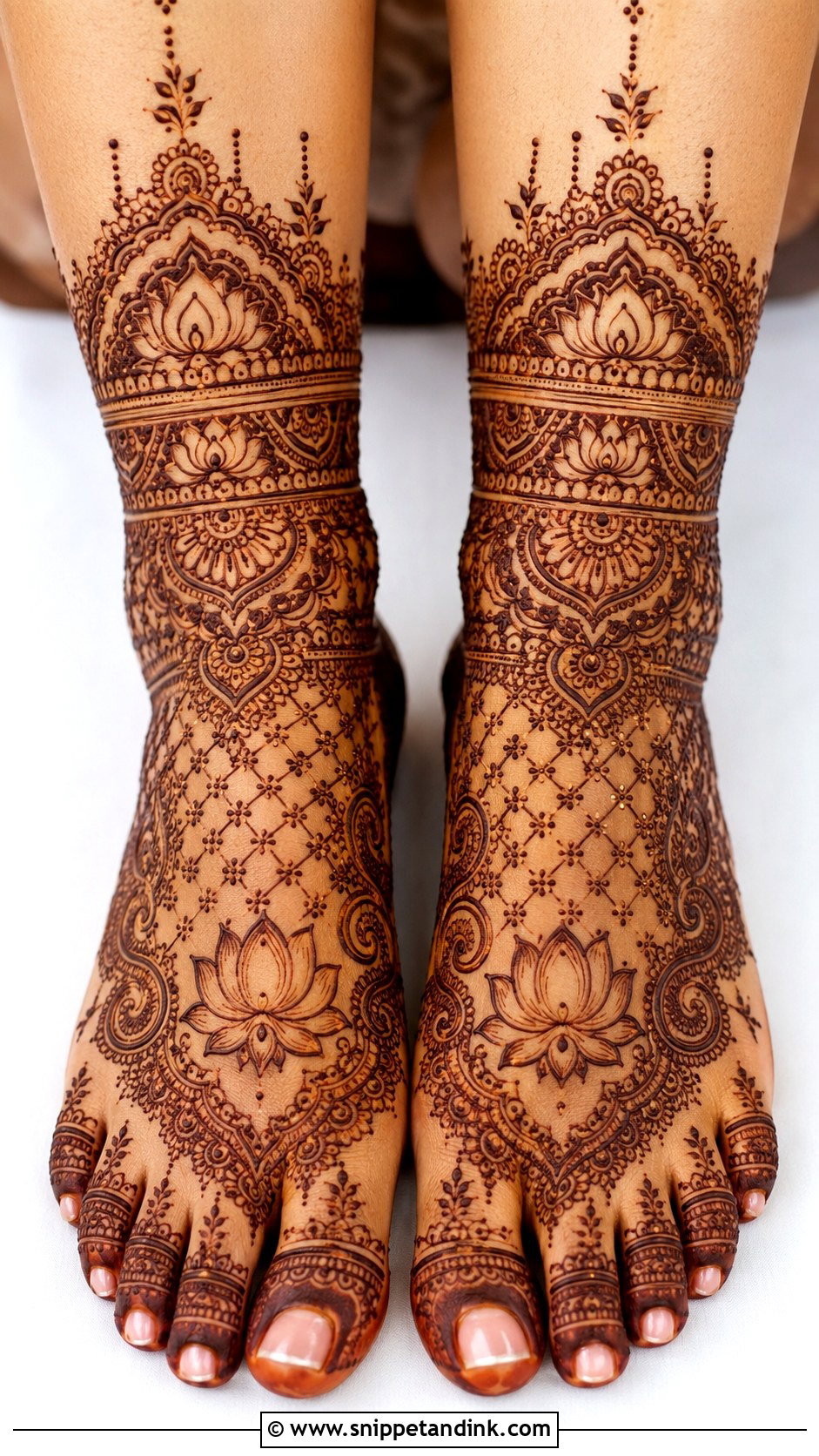
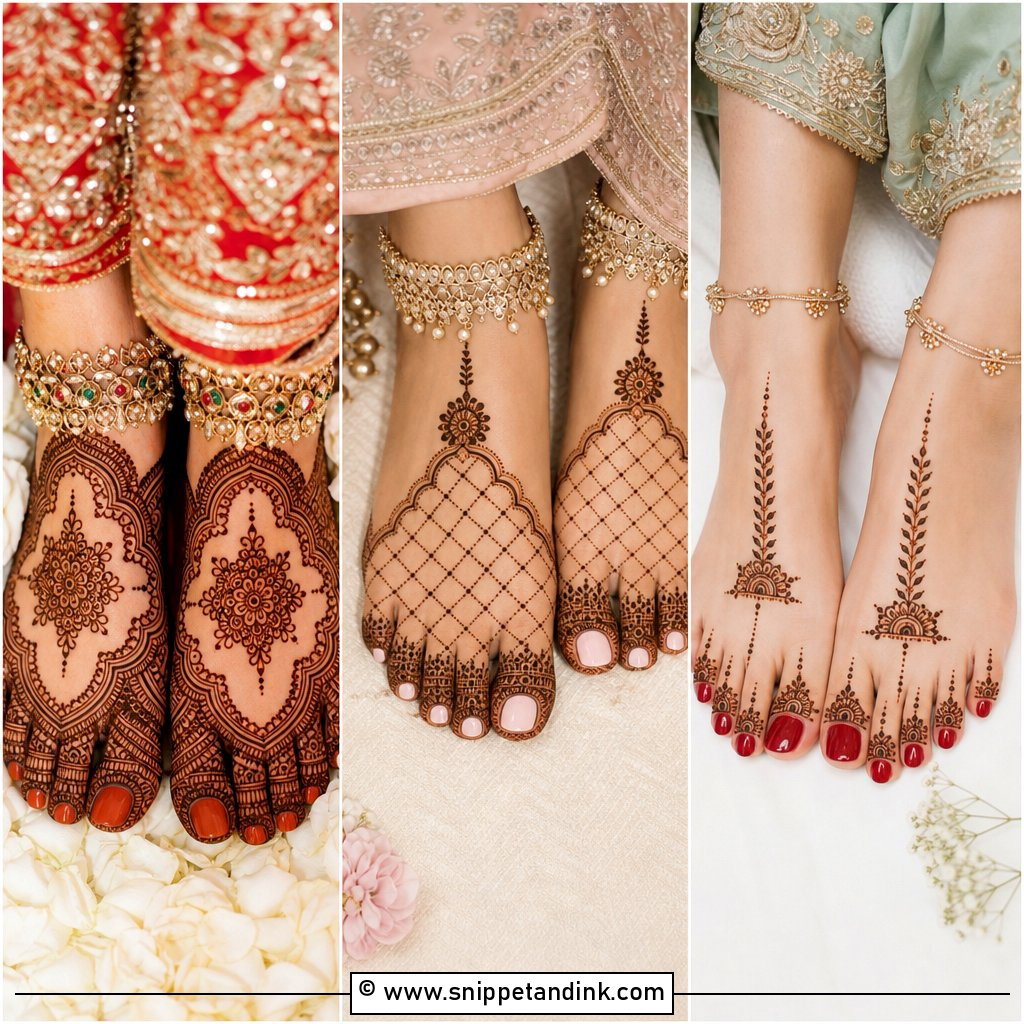
Bridal feet mehndi covers the toes, tops of the feet, ankles and sometimes the lower legs with lotus flowers, anklet bands, paisleys, mandalas, jaali and leafy trails. It should match the hands in style even when slightly lighter. I avoid thick paste between the toes, because it stays wet, smears and leaves blotches. The soles take a dark stain while the tops of the feet run lighter. Do feet last, and accept that the bride won’t be walking anywhere for a while.
34. Ankle Mehndi Design For Feet
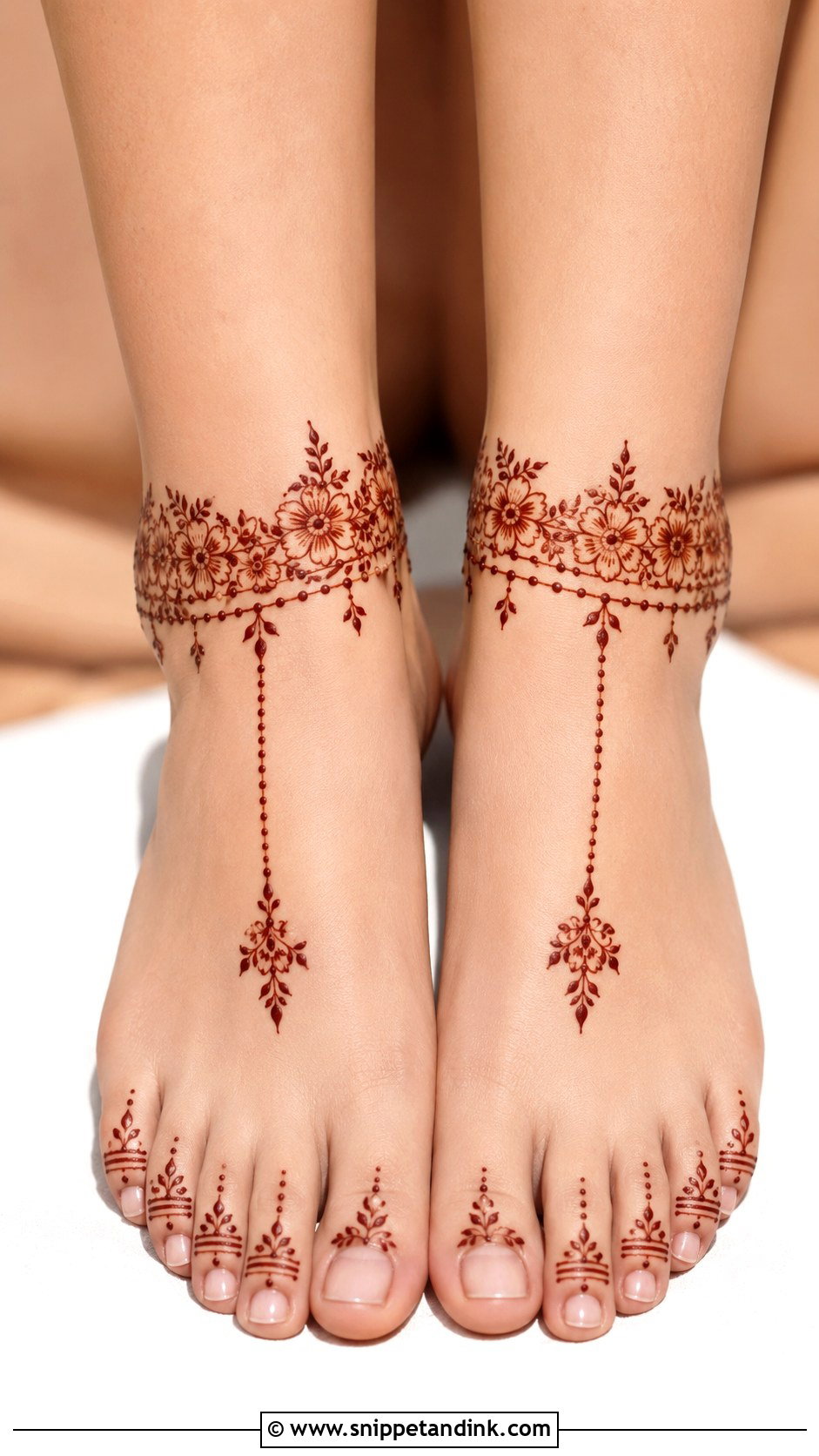
A lighter foot option that reads as an anklet: floral bands, chains, dots, leaves and small hanging details wrapped around the ankle and spilling slightly onto the top of the foot. Bridesmaids, festivals and anyone who wants foot mehndi without full coverage can wear it, and it looks right with sandals. Draw the anklet line with the foot flat on the floor; drawn with the foot raised, it tends to tilt once she stands. A small toe detail finishes it.
35. Mehndi Design Book For Practice
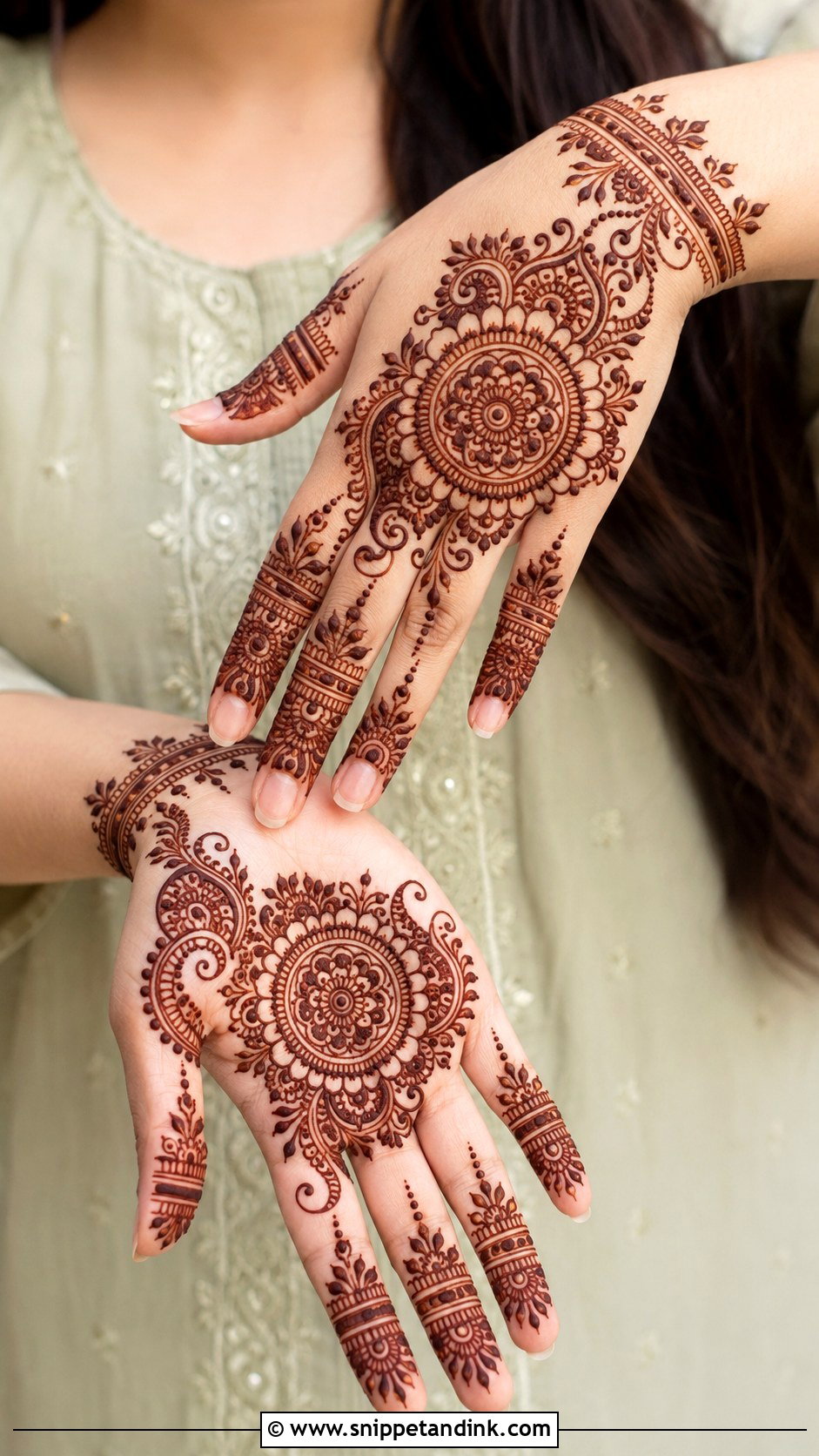
Fill a practice book with complete layouts, not just motifs. Begin with simple palm designs, then back-hand trails, finger patterns, bracelet layouts, Arabic designs, Indian bridal hands and feet. Drawing whole hands teaches spacing and how small elements join into a finished piece. Repeat each design several times before moving on to bridal work. Sketch in pencil first, then trace with a cone on paper or a sheet of glass or acrylic, and eventually on a practice hand or a willing friend.
Paper Is Flat, Hands Aren’t
A layout that looks right in the book can go wrong on skin. These are the adjustments I make every time I move a page onto a hand.
- Curvature. The back of the hand and the wrist curve away from you, so a circle drawn true on paper looks oval on skin unless you widen it slightly across the curve.
- Creases. Paste sitting in finger joints and wrist folds cracks off early. Shift bands just above or below a crease.
- Mirroring. A design drawn for the right hand has to be flipped for the left, and most artists find one side awkward. Practise both versions on paper.
- Hand size. Count how many elements fit across this particular palm before you start, and drop one rather than squeeze them all in.
- Comfort. Rest the client’s hand on a cushion at a natural angle. A hand held tense for an hour starts to shake, and so will your line.
Before you take bookings for a design, try it on several different hands. Friends with small, large, slim and broad hands will teach you more about spacing than any number of paper pages.
Pages Worth Wearing Out With a Cone
Simple, bridal, Arabic, Indian, Indo-Arabic, Moroccan, Gulf, modern, and festive designs all sit in this collection, and each one is complete enough to use on real hands and feet, on practice pages or as client reference. The heaviest design is rarely the right one. What works is the design that fits the hand shape, the occasion, the outfit and how long someone can sit. Beginners can build confidence on mandalas, bracelets and simple florals, then move on to bridal stories, jaali and full-hand detail as their line steadies.
You'll Like These Ideas:


Leave a Reply