
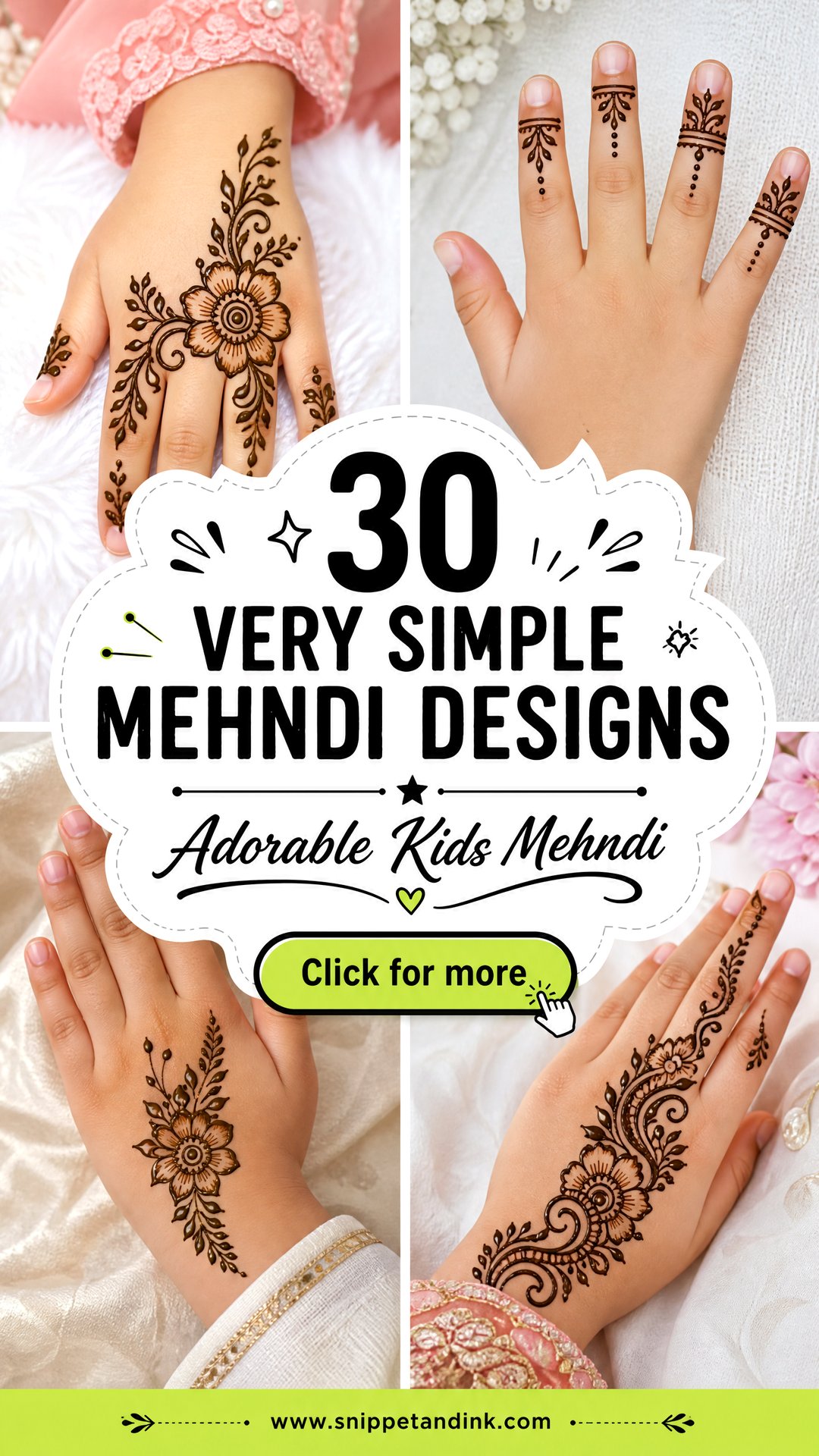
With children, the design is the easy part. The hard part is a hand that won’t stay still and paste that has to dry before it ends up on a sleeve. So the designs I draw for kids are built for that: flowers, hearts, stars, butterflies, moons and tiny vines, drawn with bold outlines and lots of open space so they set fast and feel light. They suit Eid, Diwali, weddings, birthdays, school functions or a rainy weekend at home. One rule I never bend: natural henna only, never a black chemical cone, and I’m stricter about that with children than with anyone. Here are thirty simple designs, with notes on what makes each one work on a small hand.
A Rough Guide by Age, From Toddlers to Twelve
Age matters less than patience, but it’s a useful starting point when I’m planning a children’s session.
- Toddlers: finger dots, a smiley or one small star. Two minutes, back of the hand, and expect them to touch it anyway. Many artists, me included, skip henna on babies and very young toddlers altogether.
- Around five to eight: one main motif with a few dots and a wrist line, such as a heart, butterfly, moon or crown. Five minutes is about the limit.
- Around nine to twelve: diagonal Arabic trails, small mandalas, Indo-Arabic vines or a light full-hand look. They can sit ten to fifteen minutes and often want to look like the teenagers.
Whatever the age, let the child choose between two or three designs you’ve already picked. A child who chose her design sits much more patiently.
1. Simple Flower Mehndi Design For Kids
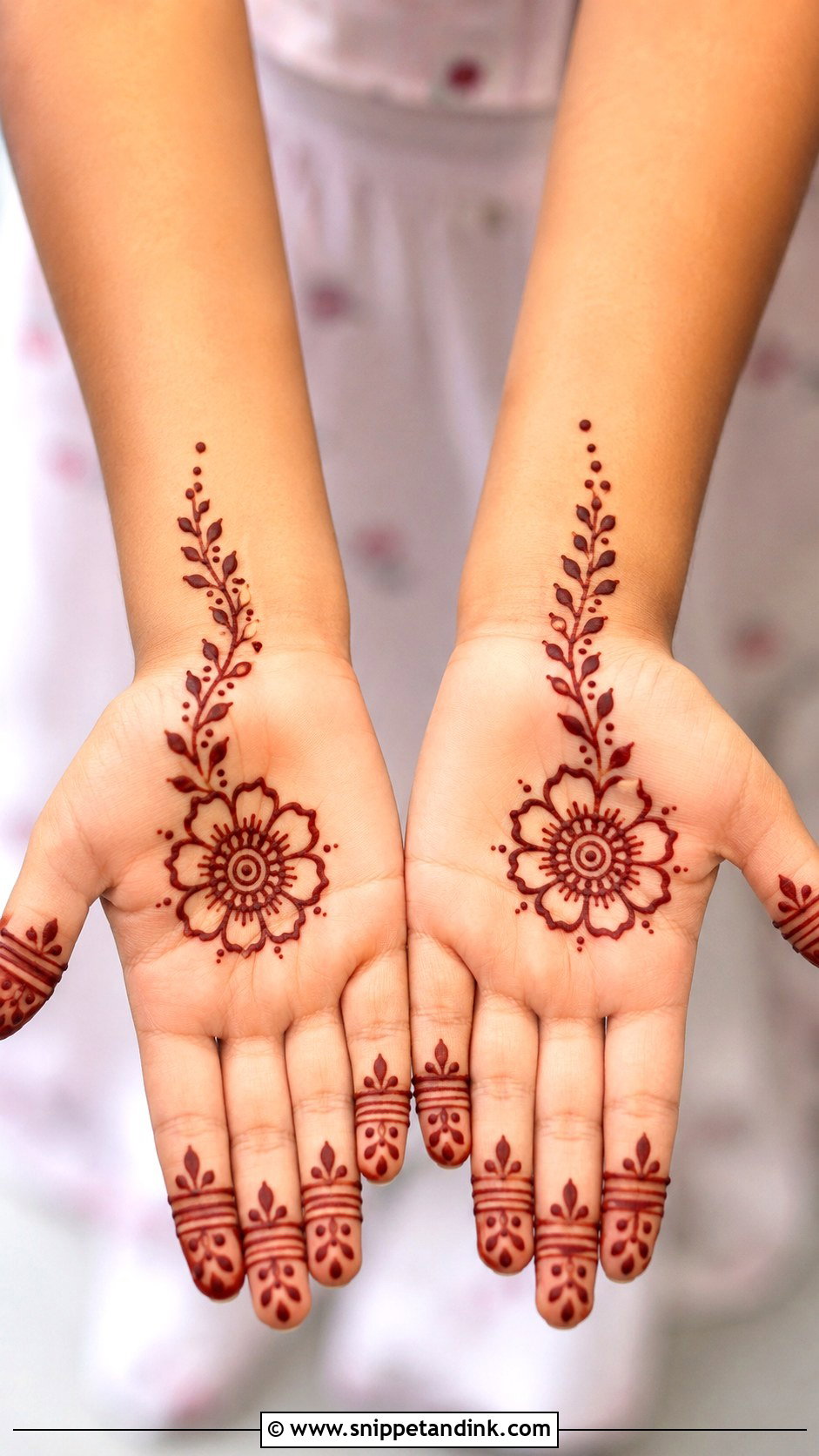
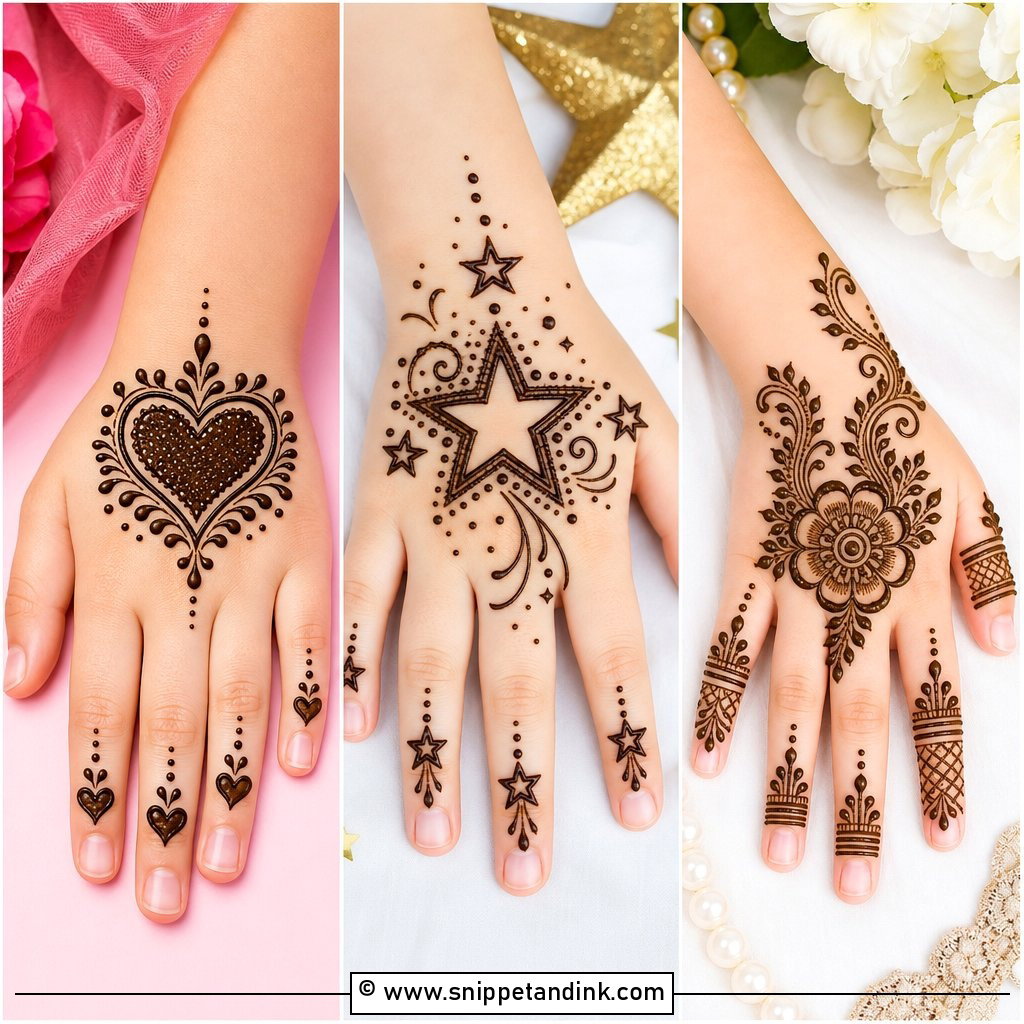
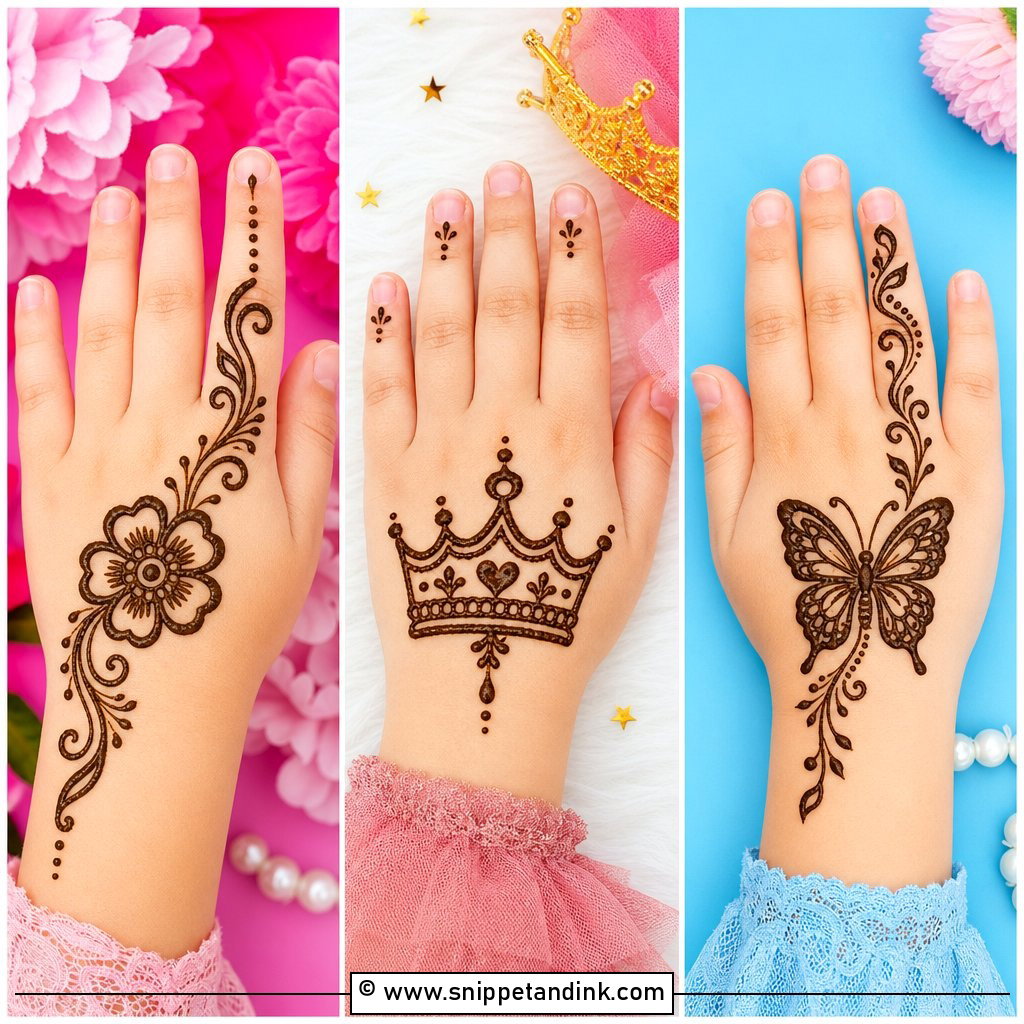
One round flower in the center of the palm or back of the hand, five or six soft petals, a bold outline, small dots around it and a short leafy trail toward the wrist. On a tiny hand, I keep the flower to roughly the size of a large coin so it doesn’t run off the edge. It’s the design I reach for on a festival morning when there’s no time, because it reads as traditional but takes a couple of minutes. The open space means it’s dry before the child gets bored.
2. Simple Heart Mehndi Design For Kids
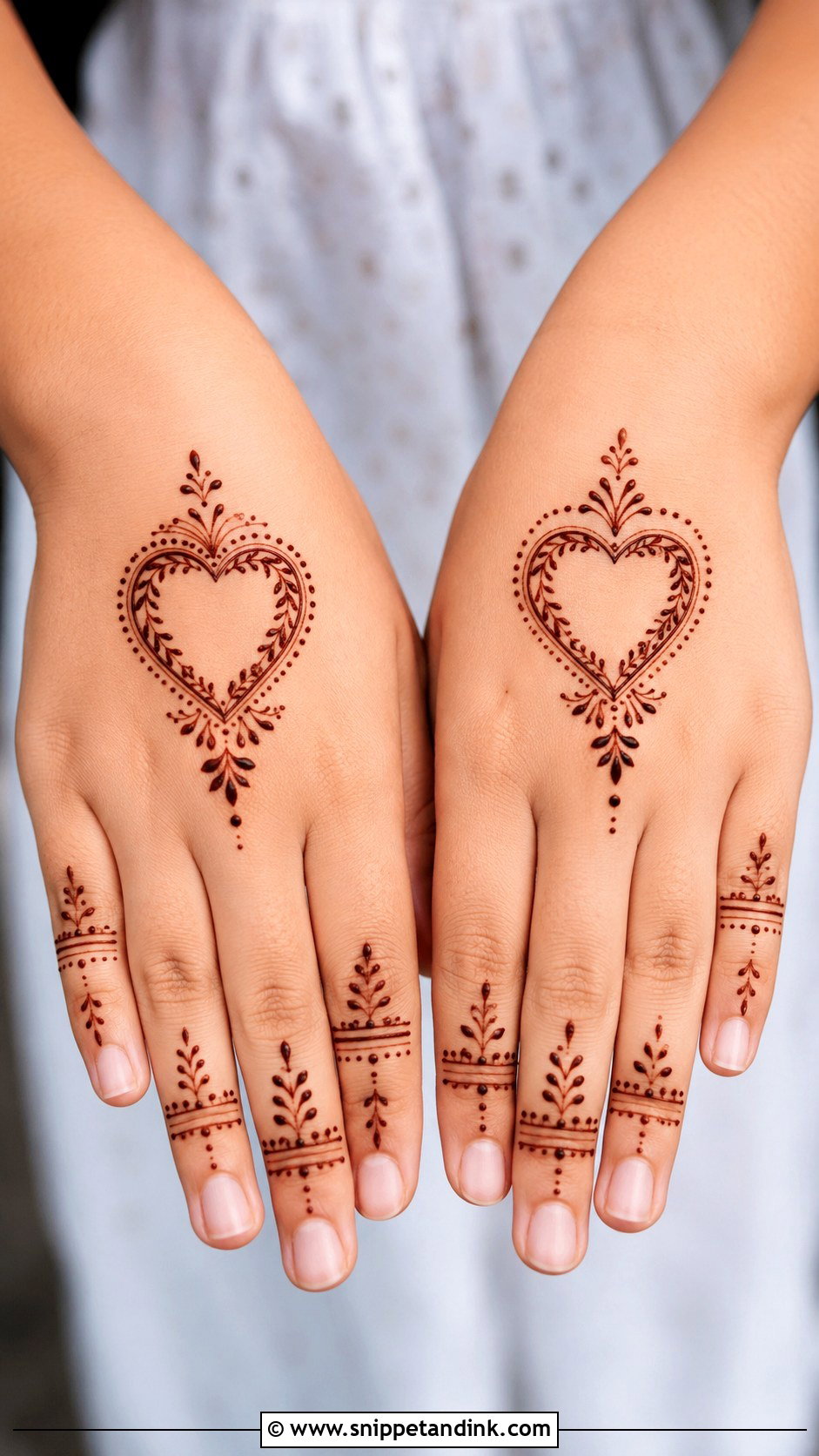
Children spot a heart instantly, which is half the appeal. I draw a neat one in the middle of the palm or back of the hand, put a tiny dot inside, and decorate the outer edge with small curved lines, dots and mini leaves. Each finger gets one dot chain or one thin ring. The point at the bottom is where hearts go wrong; bring both sides down to meet in one place, or it ends up looking like a lopsided apple. Birthdays and small family functions suit it.
3. Simple Butterfly Mehndi Design For Kids
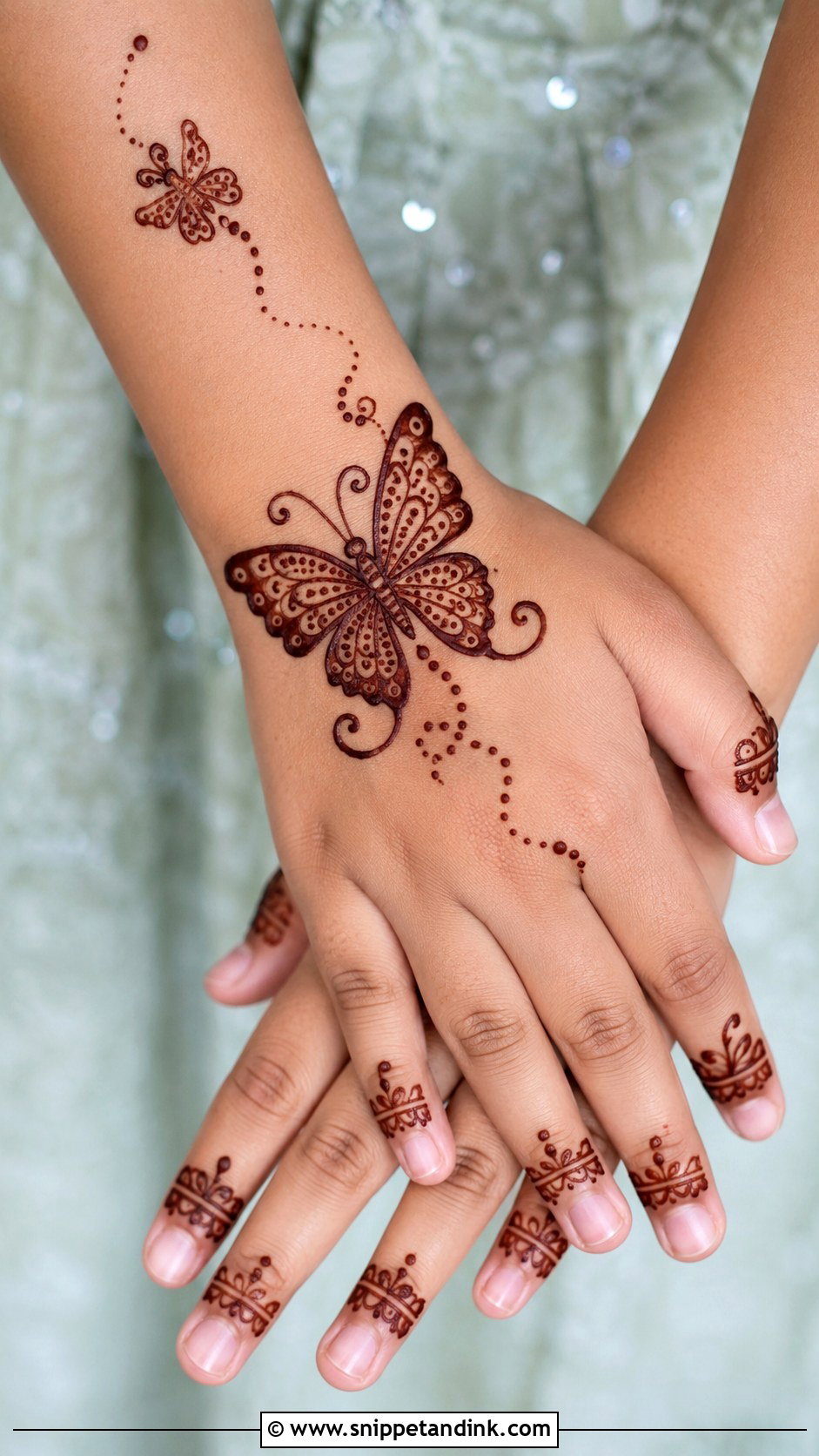
A butterfly mehndi design feels a little magical to a child. Draw it small on the back of the hand: rounded wings, a tiny body, each wing filled with a few dots, curves or leaf shapes, never crowded. A dotted trail from the butterfly toward the wrist makes it look like it’s flying, and one or two fingers get tiny dots to balance the hand. Leaving one wing slightly emptier than the other is fine; kids don’t notice, and it keeps the session short.
4. Simple Star Mehndi Design For Kids
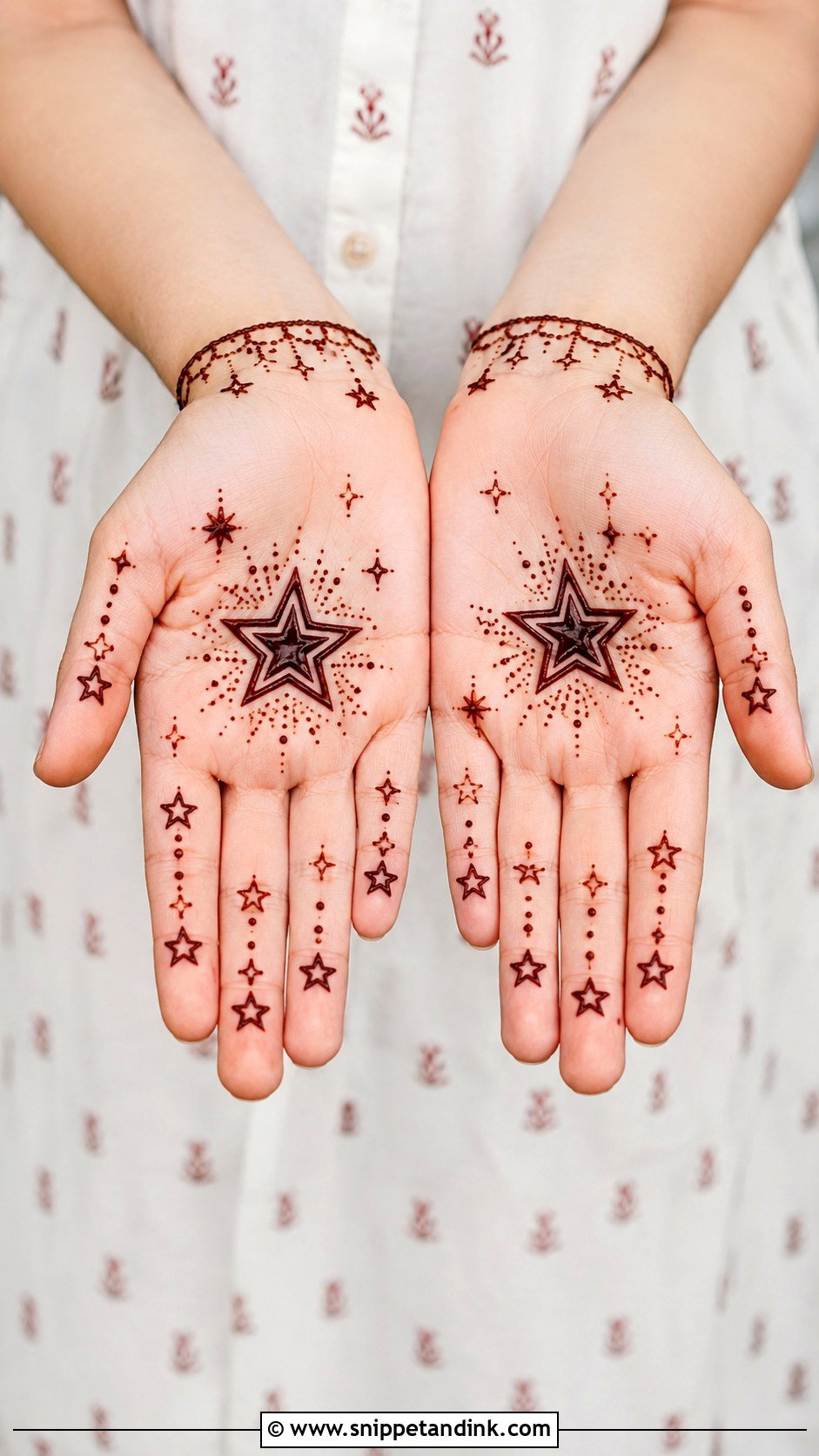
Stars are fast and bold. One in the center of the palm, smaller ones around it with dotted sparkles, a short dotted chain from the wrist and tiny stars near the fingers if there’s time. The lines need to be thick enough to survive drying; thin star points crack off with the dried paste and leave gaps. It’s the design I suggest to children who aren’t interested in flowers, and when time is very short.
5. Simple Moon Mehndi Design For Kids
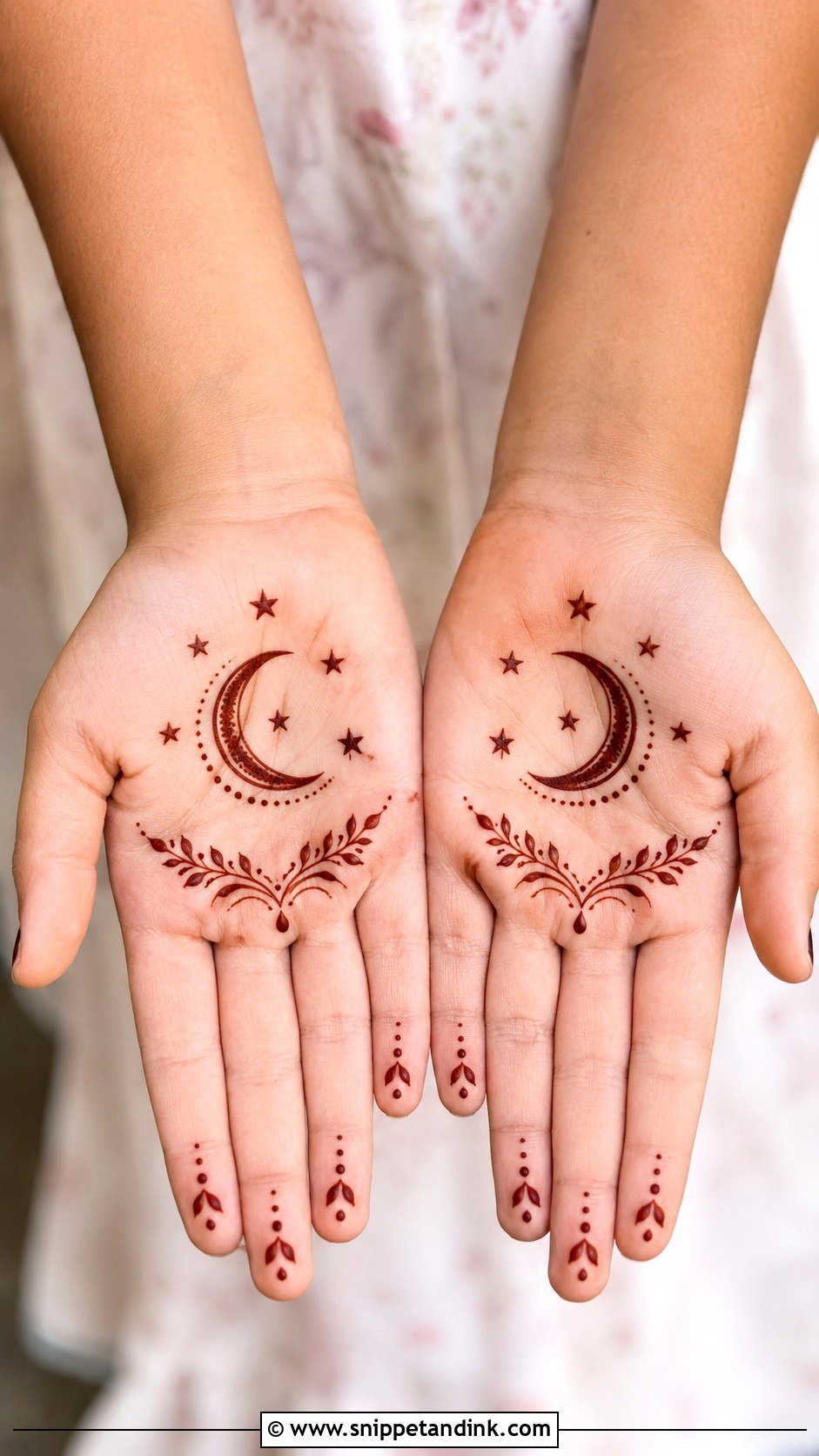
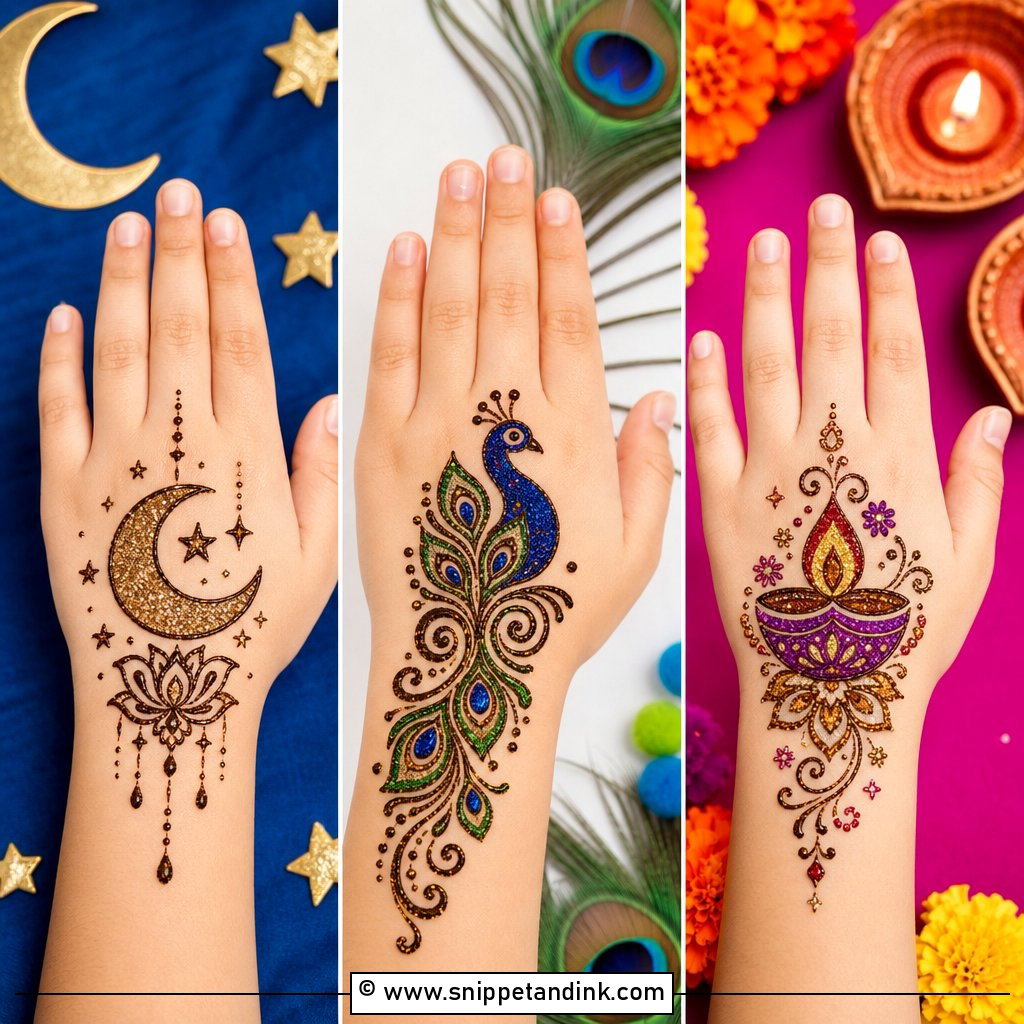
A simple moon mehndi design is the one children ask for at Eid. A small crescent on the palm or back of the hand, three or four tiny stars around it, dots along the curve of the crescent and a small leafy line at the wrist. Fingers stay almost bare. Leaving open space around the moon keeps it the focus. If the crescent comes out too thin, thicken the outer curve only; the inner curve should stay sharp for the shape to read.
6. Simple Mandala Mehndi Design For Kids
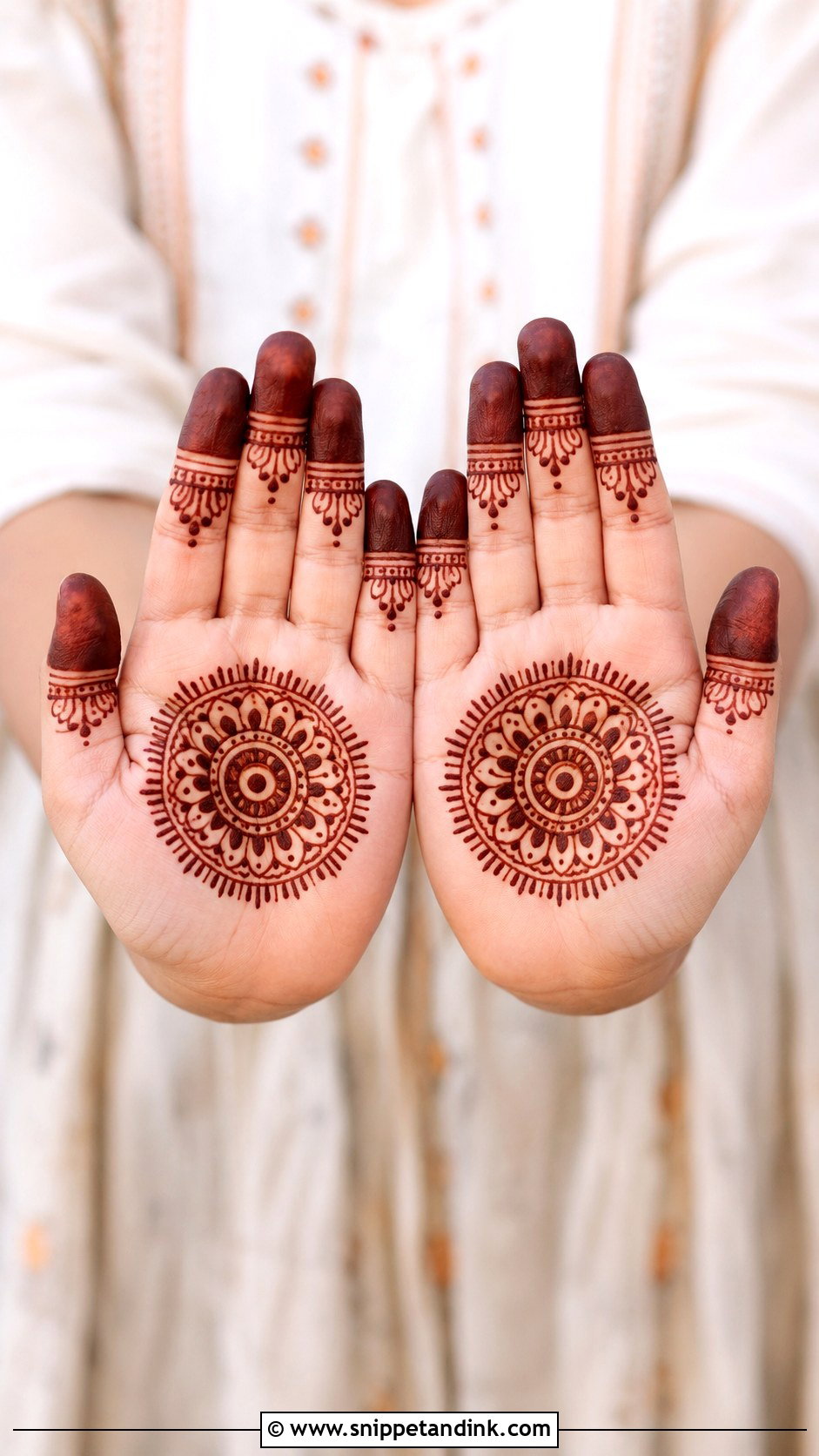
Traditional, but small: a circle in the center of the palm, one ring of petals, one ring of dots, a few short lines at the edge, and that’s the mandala done. Kids’ fingers get tiny dots or simple fingertip caps. On the palm, natural henna comes up a bright reddish brown even on a child, so this one shows well at festivals and family weddings. Stop after two rings. A third ring doubles the time and usually the fidgeting.
7. Simple Arabic Mehndi Design For Kids
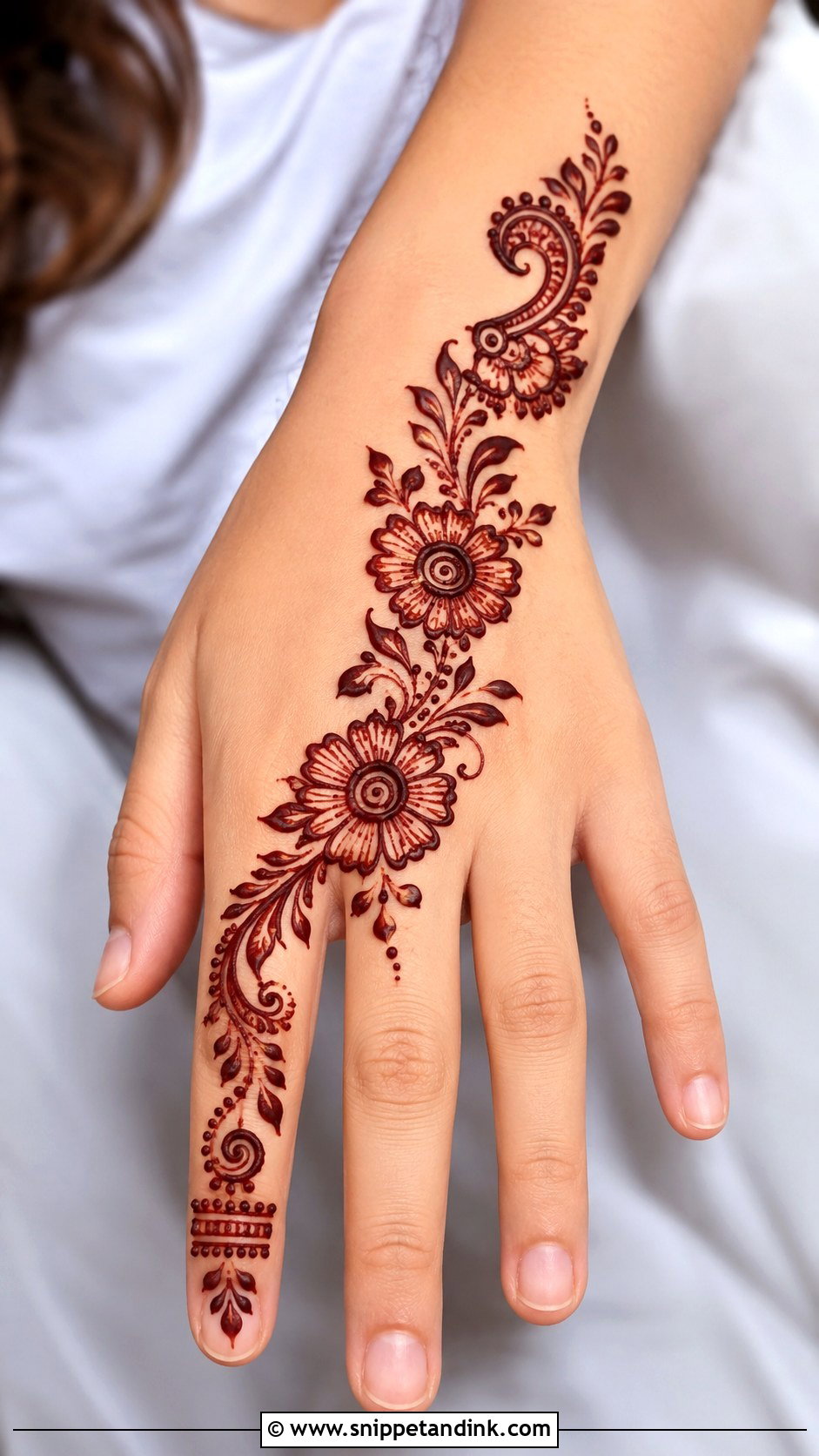
A simple Arabic mehndi design for a child is a light diagonal trail: a small flower near the wrist, a curve across the back of the hand toward one finger, and leaves, dots and one or two small paisleys along the way. Most of the skin stays empty, which is how Arabic work should look anyway. Girls around ten and up tend to ask for this because it looks like what the older cousins wear. It’s quicker than a full hand and smudges less.
8. Simple Back Hand Mehndi Design For Kids
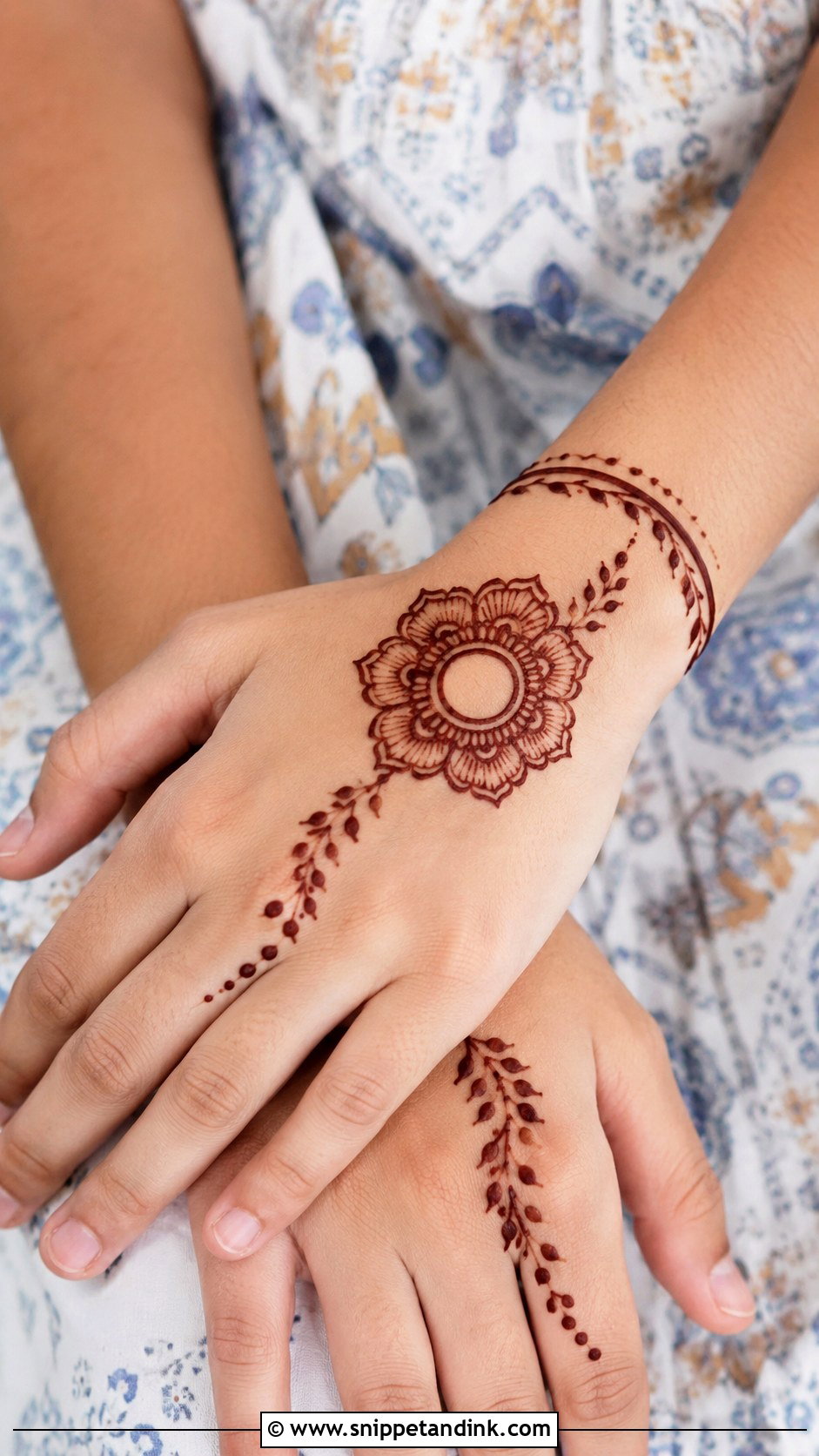
The back of the hand is the easiest spot to decorate while a child sits, since the hand rests flat on a table and doesn’t curl. A small floral circle in the center, a dotted vine to the wrist, one light pattern of tiny leaves or ring lines on the index or middle finger, and the other fingers left simple. It’s easy for kids to show off, and it suits school events, weddings and family gatherings.
9. Simple Front Hand Mehndi Design For Kids
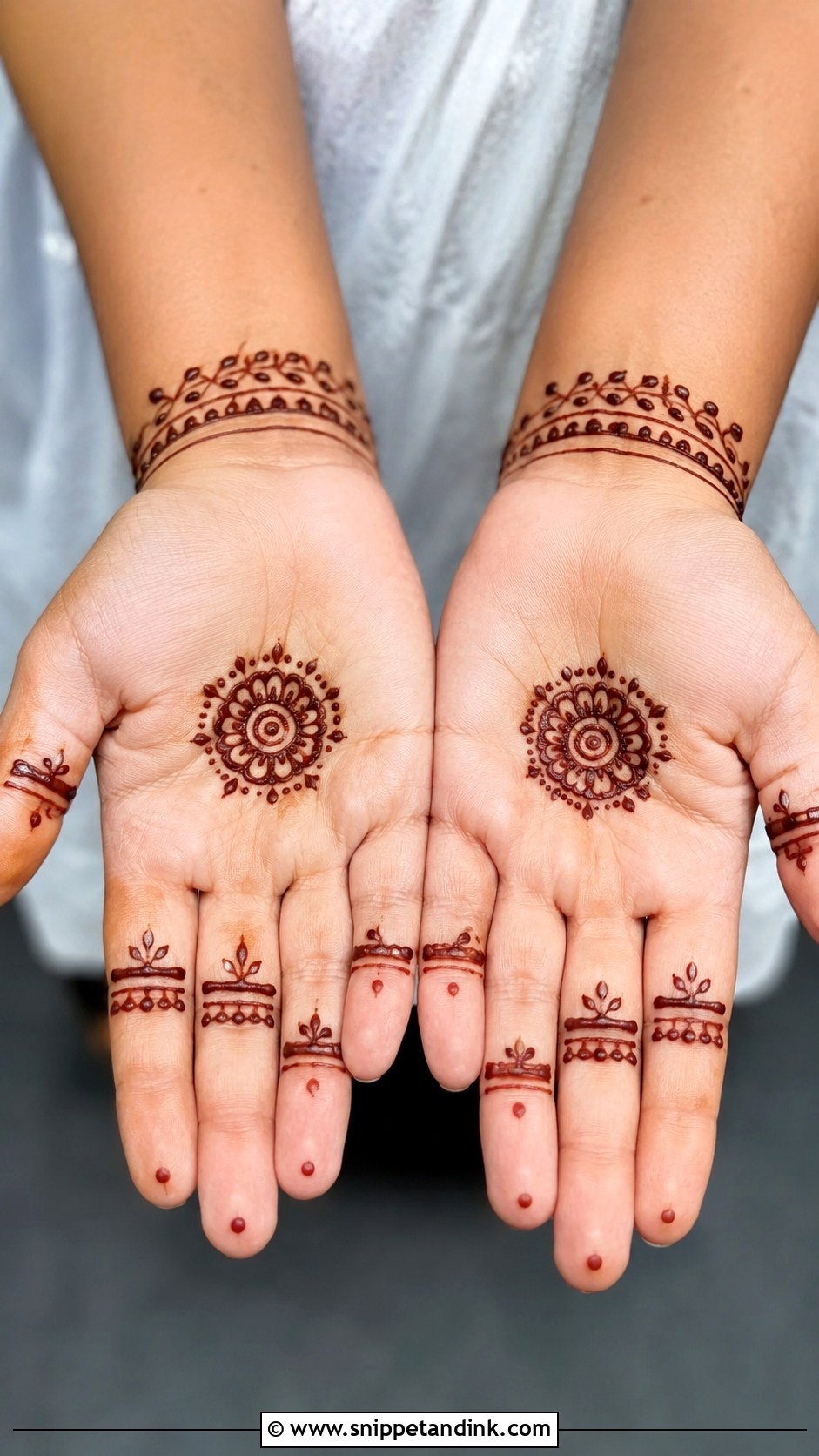
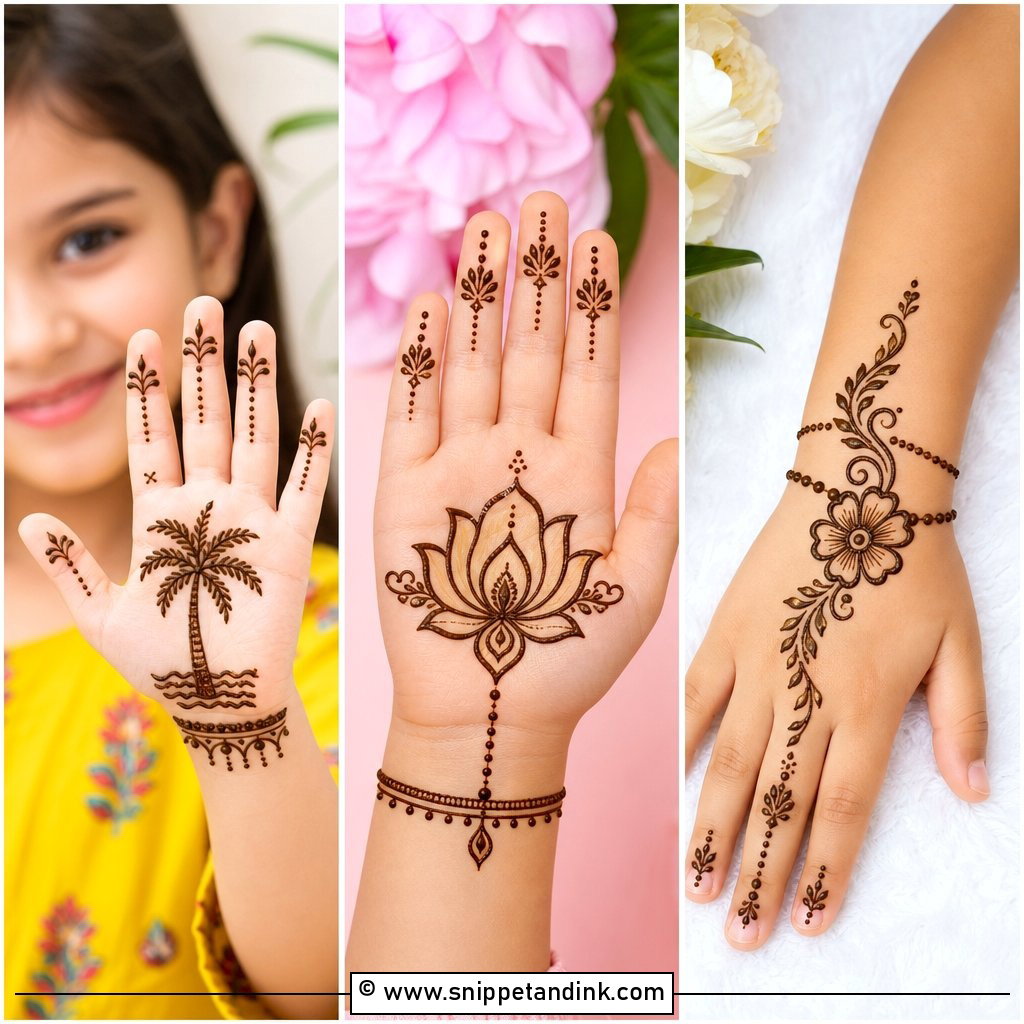
On the palm, I keep a child’s design to one round flower, heart or small mandala in the center, a few dots around it, short curved lines toward the wrist and tiny dots, rings or small leafy caps on the fingers. Dense palm filling is a bad idea with kids. Palms are what they touch everything with, and a full one will be smudged within minutes. Younger children who want henna they can see but can’t sit long do well with this.
10. Simple Finger Mehndi Design For Kids
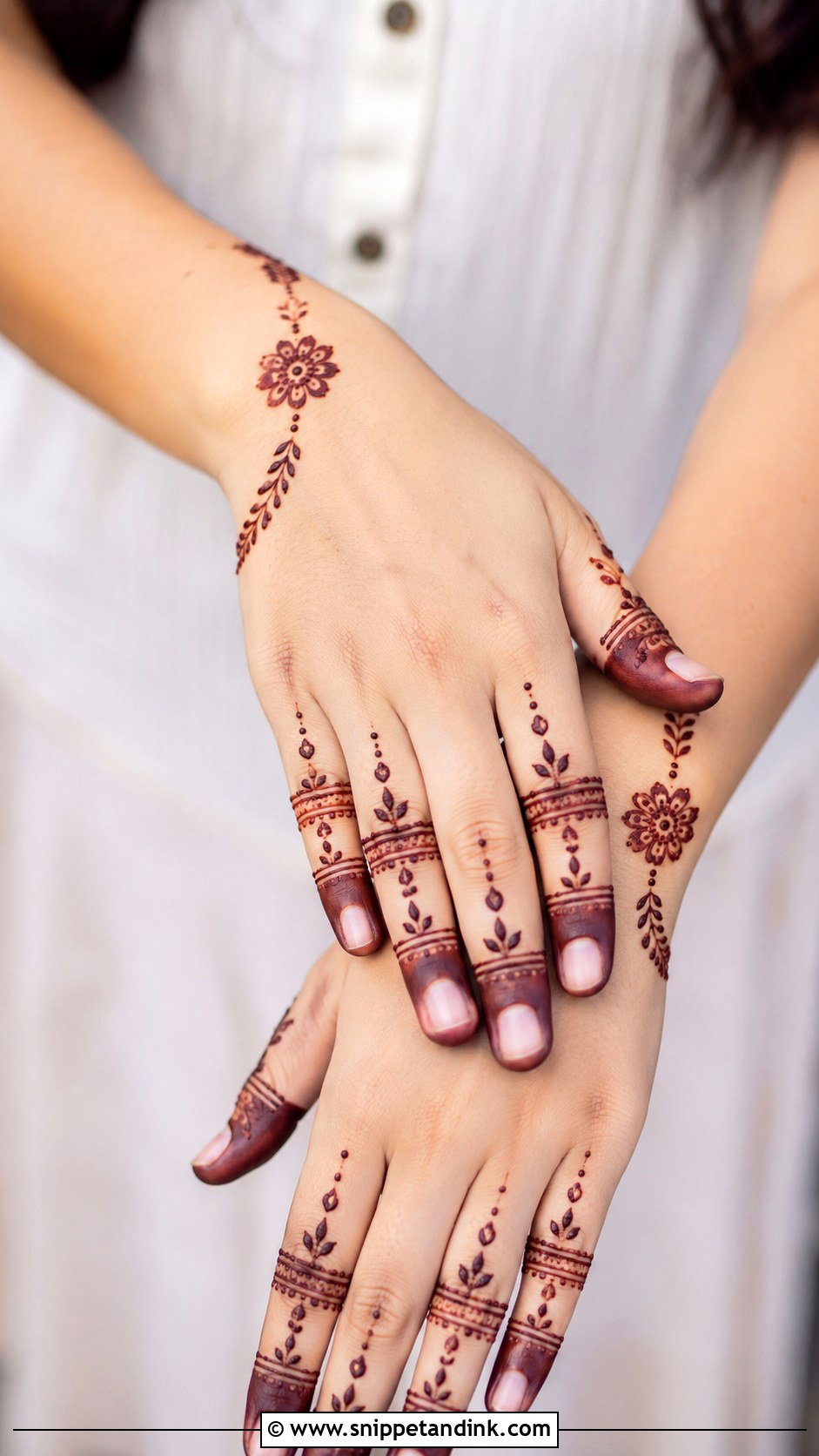
Plain palm, decorated fingers: tiny rings, dots and mini leaves on each finger, small caps on one or two tips, fine dotted lines on the rest, and a small flower or heart near the wrist to anchor it. It’s my fastest option and the right one for toddlers. Finger designs dry almost as soon as you finish. They also fade fastest, since little fingers get washed constantly, so think of it as a one-week design.
11. Simple Bracelet Mehndi Design For Kids
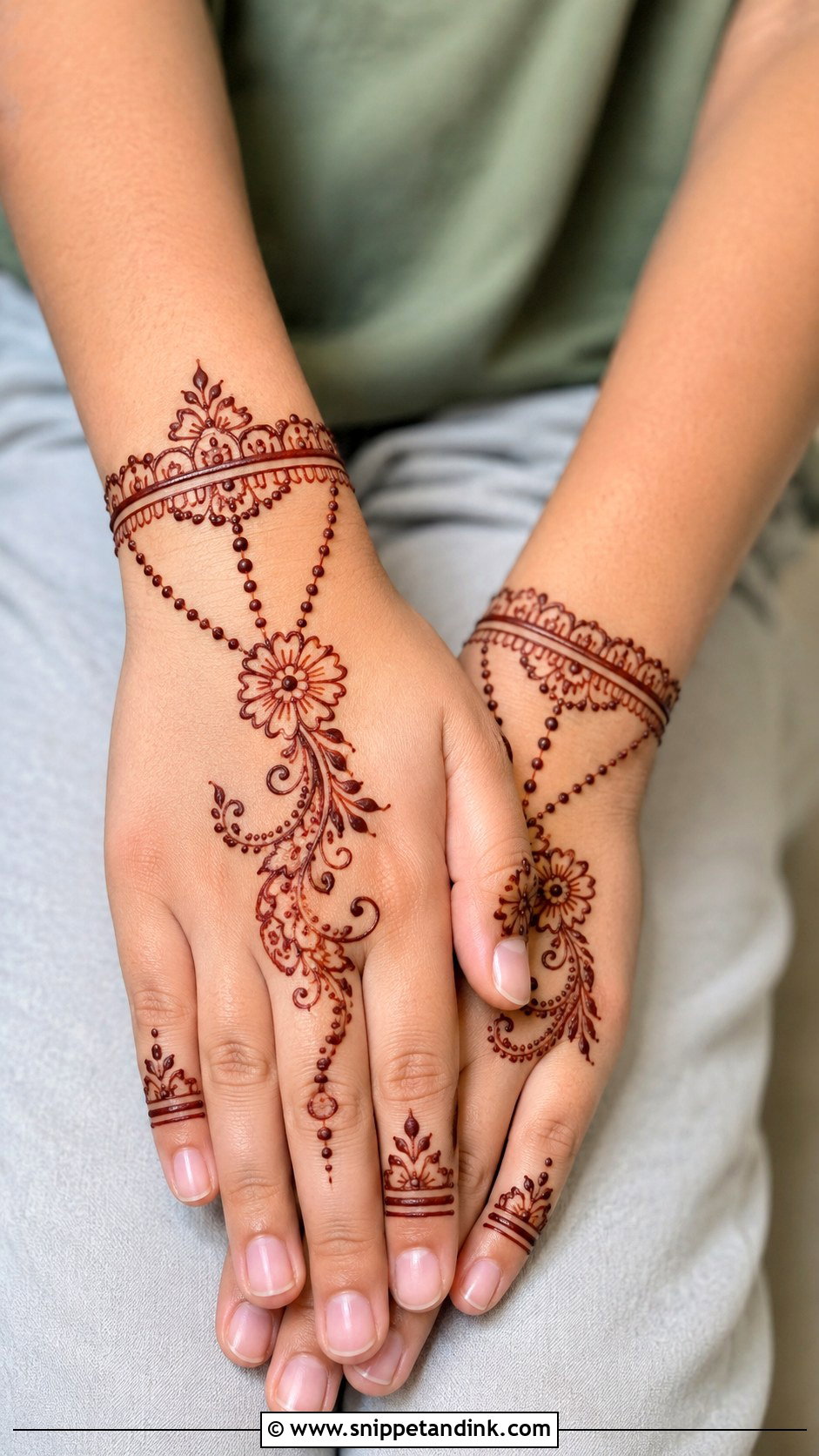
A thin band of dots, small flowers and curved lines around the wrist, one chain running from it to a small flower or heart on the back of the hand, and tiny rings or dots near the knuckles. It looks like soft henna jewelry, which suits weddings and parties. Most of the design sits on the wrist and back of the hand, so the child can still use her palms. Draw the band with the wrist straight, not bent, or it sits crooked when she relaxes.
12. Simple Ring Mehndi Design For Kids
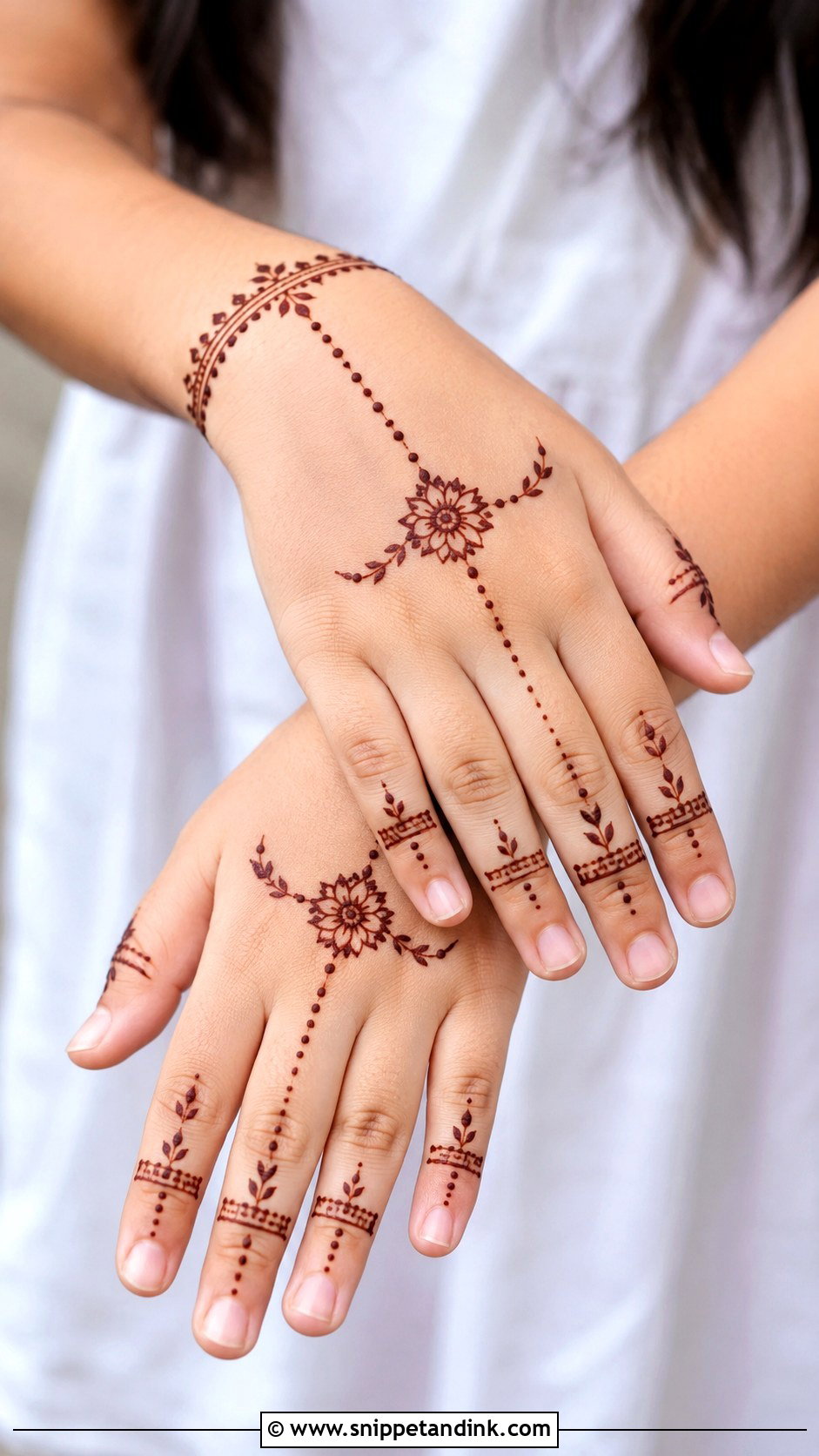
A simple ring mehndi design puts small henna rings around two or three fingers, links one of them to a tiny flower on the back of the hand with a dotted chain, and closes with a small bracelet line at the wrist. The center of the hand stays open. Kids who love jewelry but don’t want a full hand enjoy it, and it’s simple enough for a beginner holding a cone for the first time. Draw the rings below the knuckle, where the skin doesn’t fold, or they break when the finger bends.
13. Simple Paisley Mehndi Design For Kids
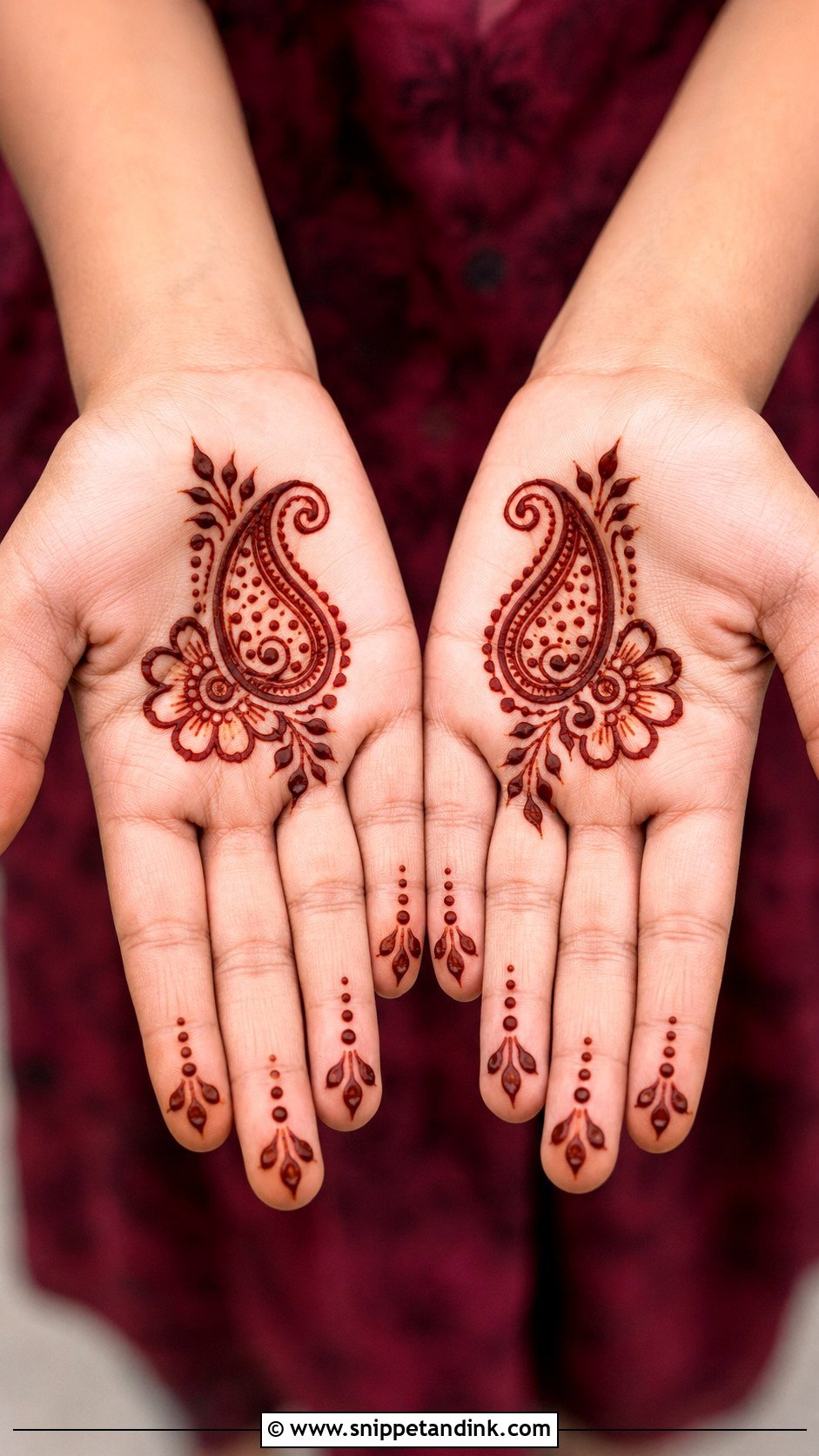
One small paisley on the palm or back of the hand, filled with dots and a single curved line, a flower beside it, a few tiny leaves round the edge and dotted tips or light rings on the fingers. Paisley is the shape most families recognize as mehndi, so it fits traditional events, but at this size it stays child-friendly. It suits both younger and older children. Give the curl at the top a generous loop; a tight curl closes up as the paste spreads.
14. Simple Peacock Mehndi Design For Kids
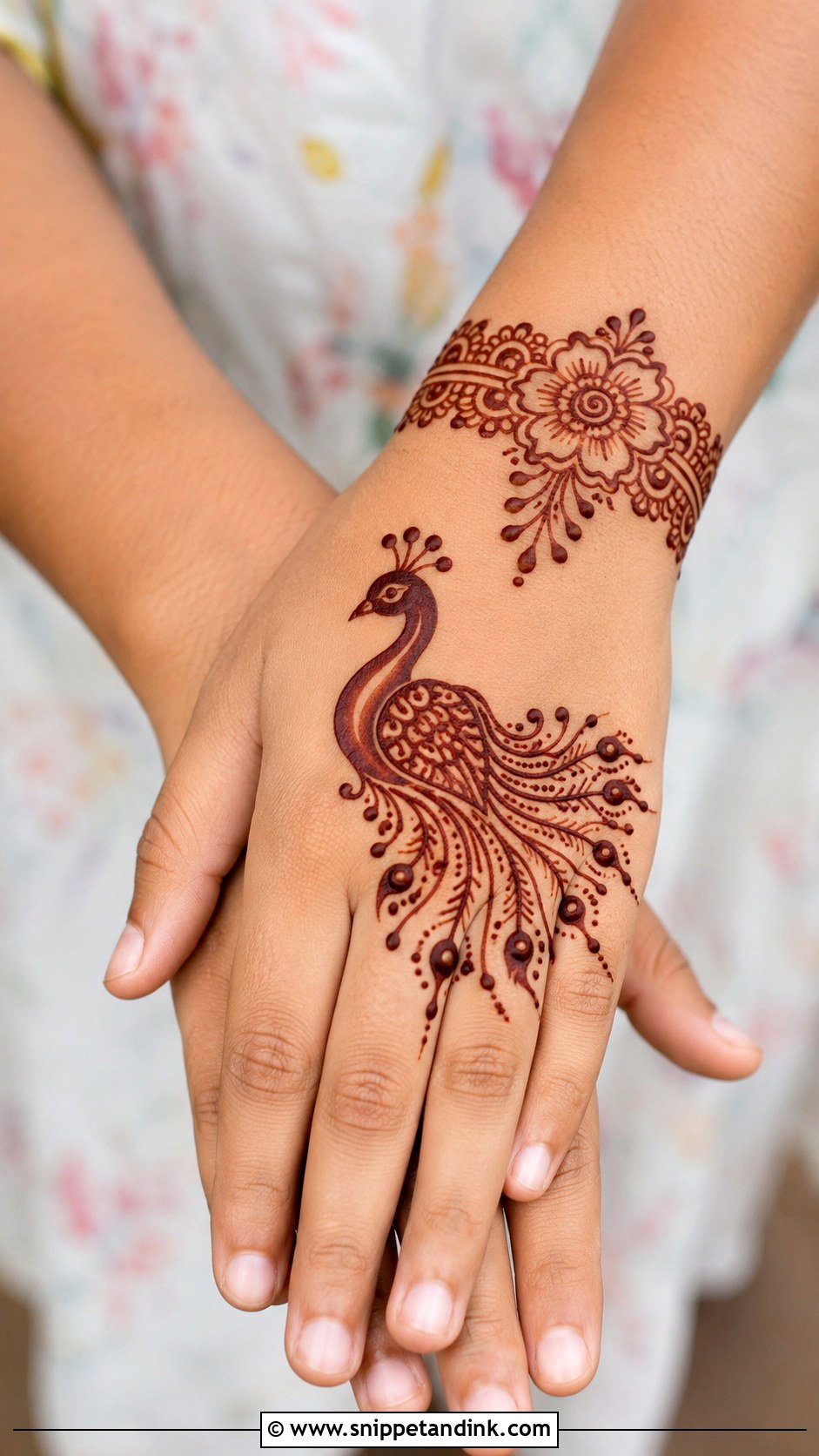
Outline, not detail. A small peacock on the back of the hand with a curved neck, round body and a few feather lines ending in dots, and a tiny floral border near the wrist. The fingers stay plain, or one gets small leaves. Leaving open space between the feathers is what keeps the bird clear on a small hand. It fits festive functions, dance events and family weddings, and gives the child a properly traditional motif.
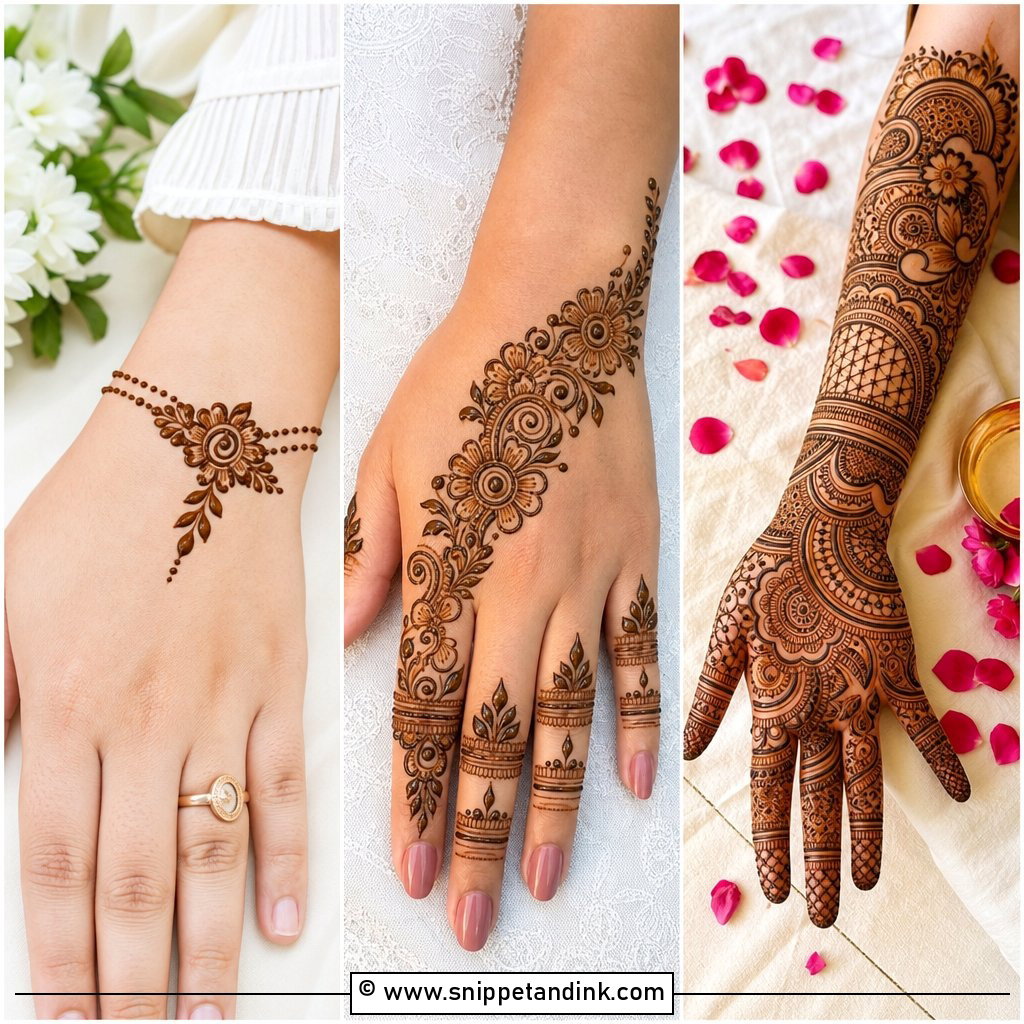
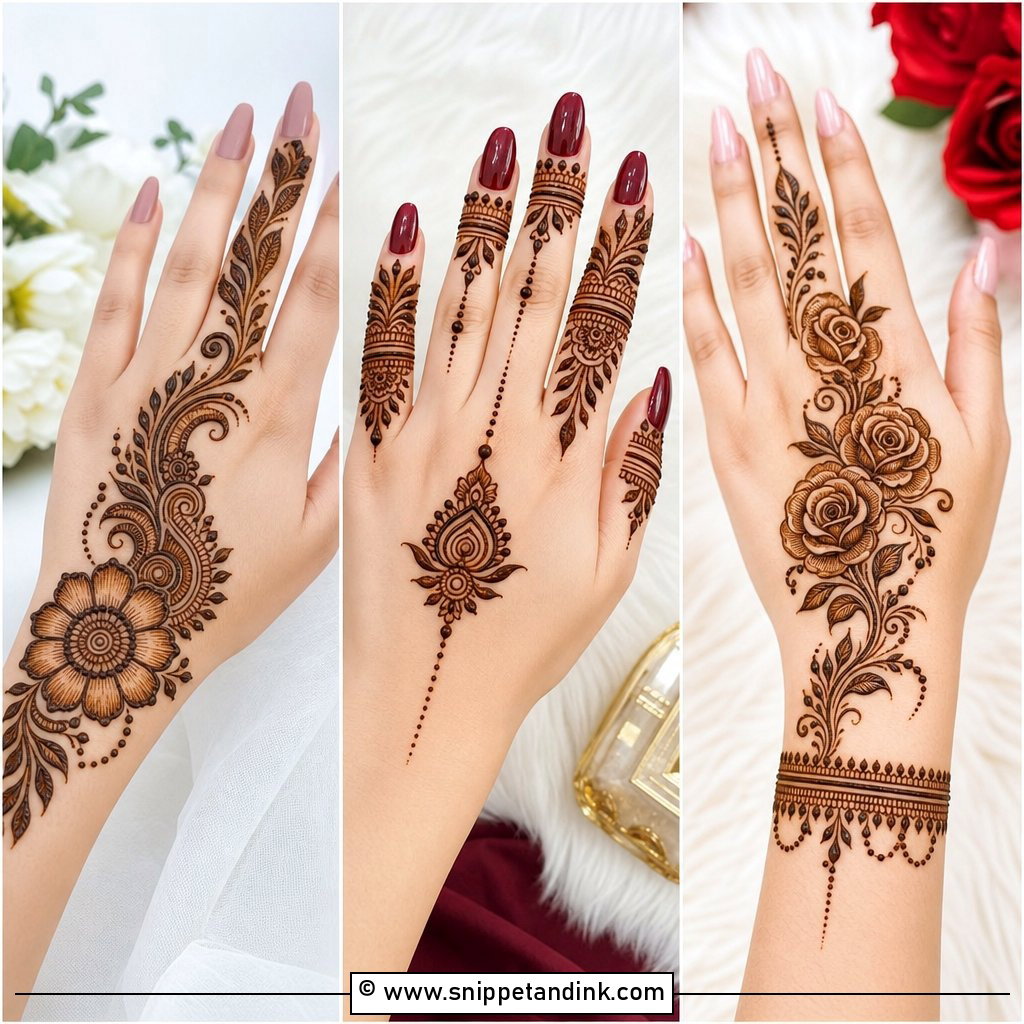
15. Simple Leaf Mehndi Design For Kids
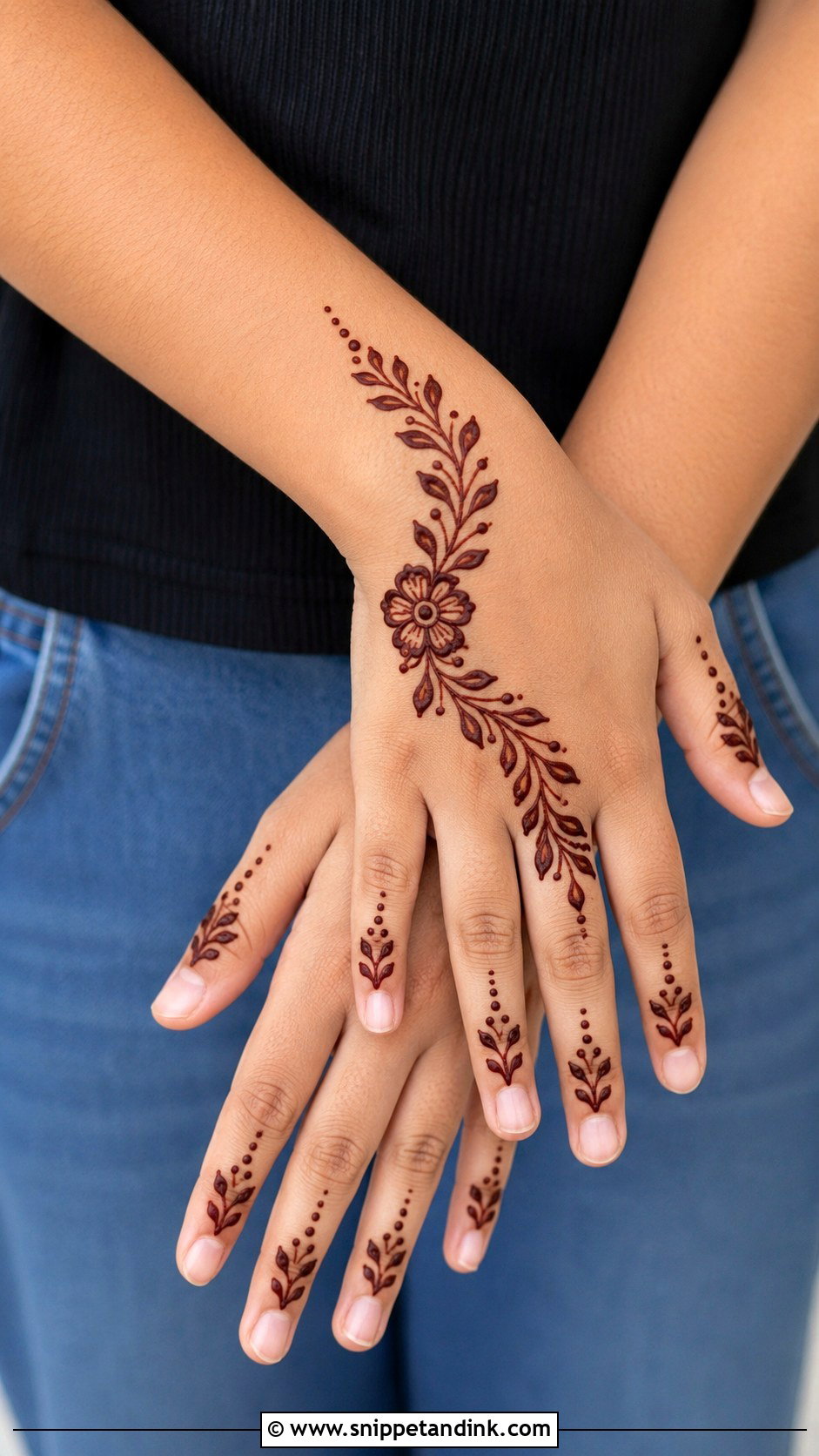
A simple leaf mehndi design is a curved vine from the wrist to the middle of the back of the hand, small leaves on both sides with space between them, a tiny flower near the center and a few dots near the fingers. It suits kids who’d rather have nature than hearts or stars, and it looks fresh at daytime events. Pointed leaf tips are easier to get right than round ones: press, then pull away as you lift.
16. Simple Dotted Mehndi Design For Kids
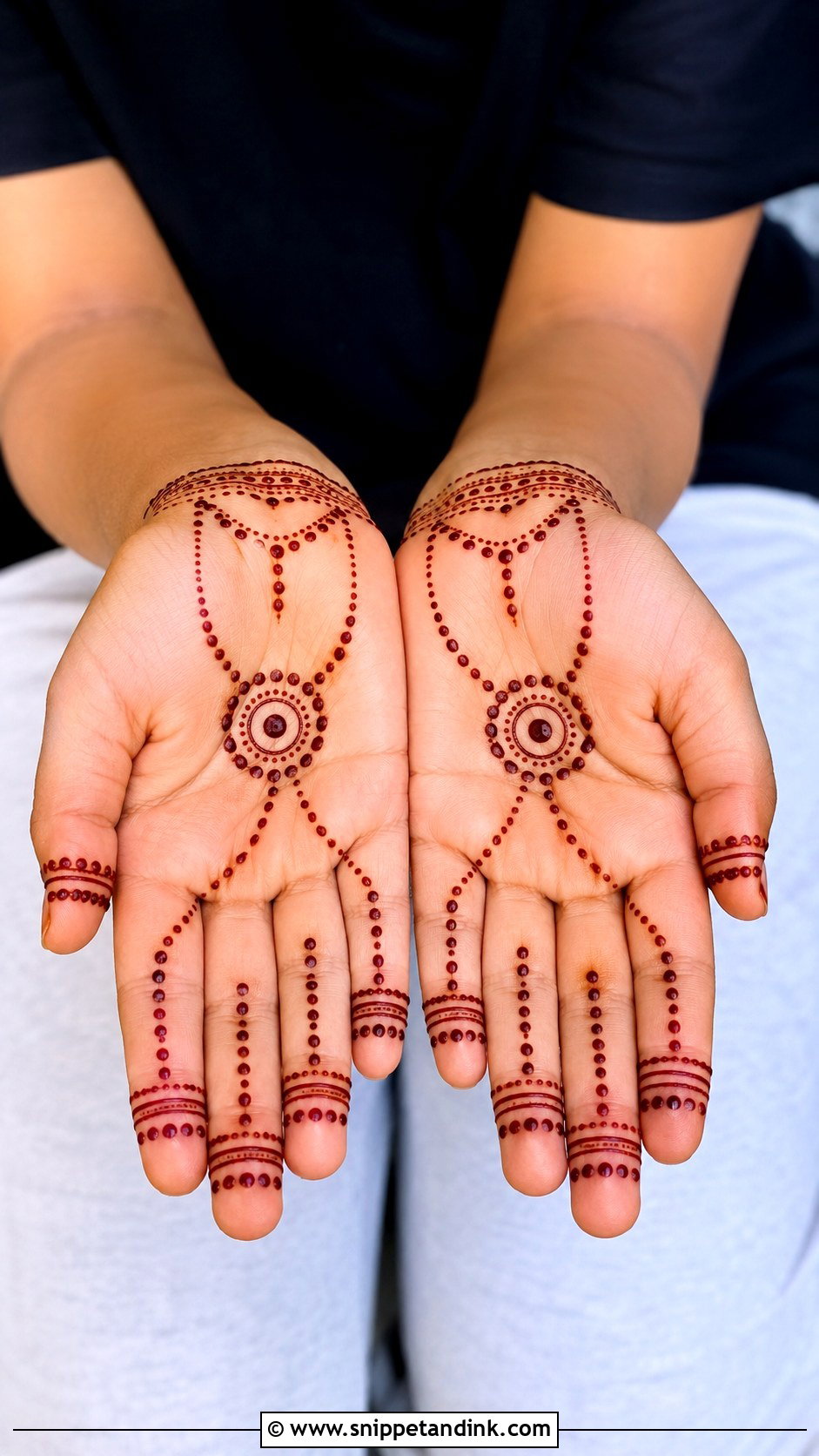
Build everything from dots: a small central flower or circle, dot chains running out from it, dotted curves toward the wrist and dotted rings on the fingers. Even spacing is what makes dots look neat rather than random, so I count roughly and keep a steady rhythm. Very young children do well with it since there’s little coverage and it dries fast. It’s a sensible pick for quick Eid, Diwali or party henna.
17. Simple Smiley Mehndi Design For Kids
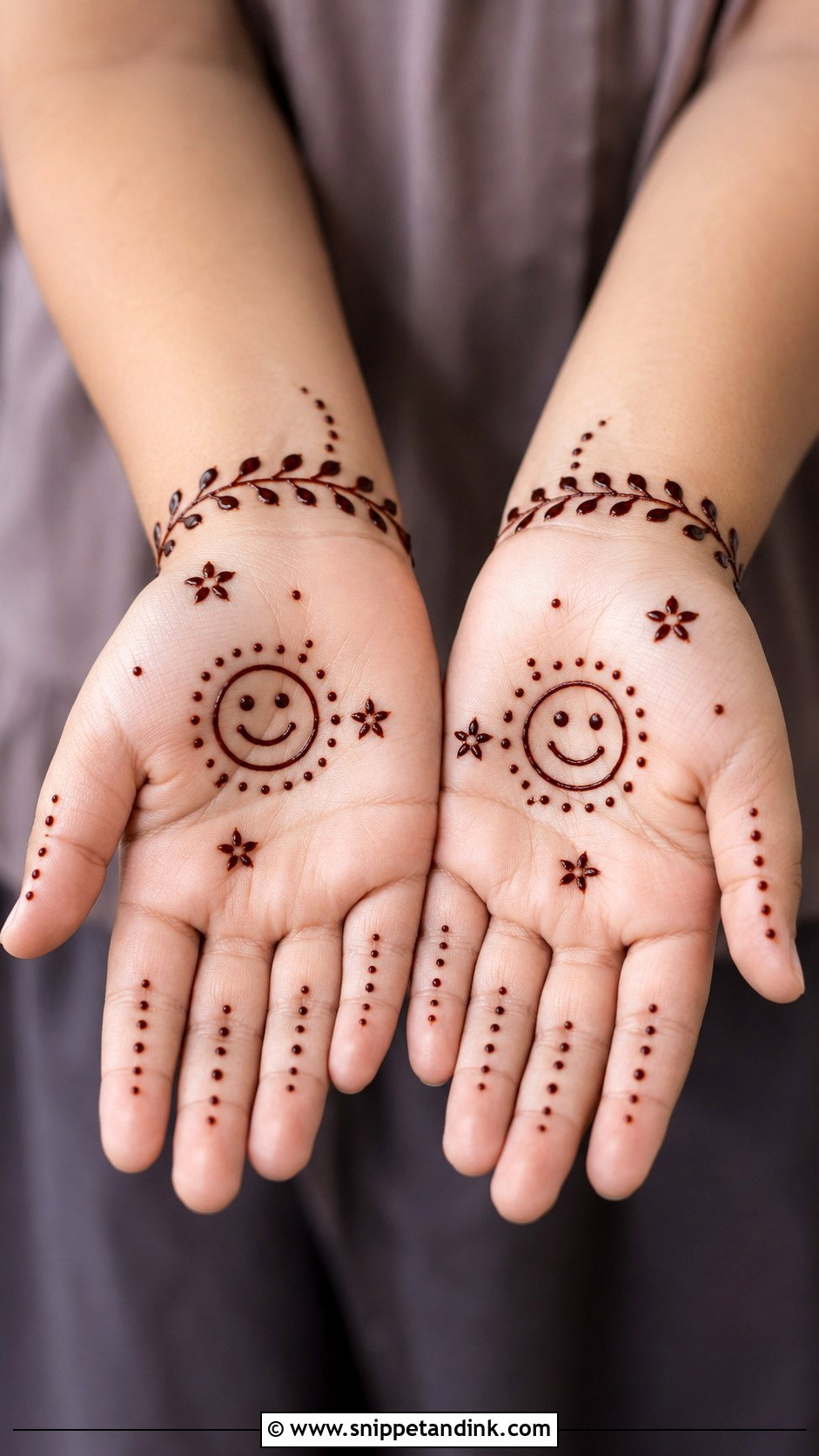
A small smiley in the center of the palm or back of the hand, with tiny stars, dots and curved lines around it and a short wrist vine or fingertip dots. It’s quick, which helps when a child is excited and restless, and children who prefer cartoon shapes to traditional motifs love it. Make the smile a single smooth curve; a shaky one turns the face into a frown once it stains. Birthdays, school celebrations and relaxed family events suit it.
18. Simple Sun Mehndi Design For Kids
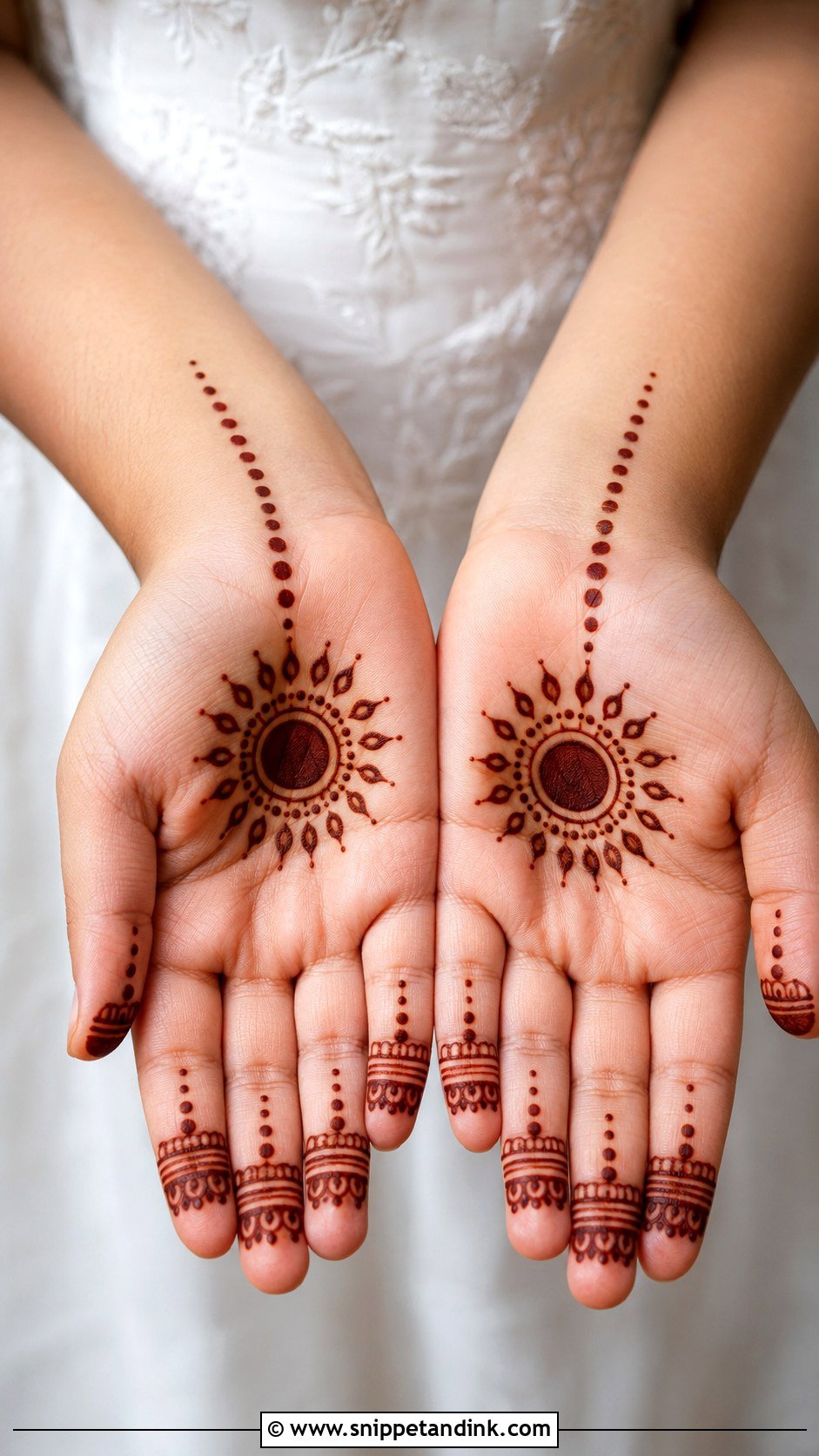
A small circle in the middle of the palm, short rays around it, dots between the rays, a dotted chain toward the wrist and tiny rings on the fingers. It gives a full-looking palm with almost no complex detail. Keep the circle a clean outline rather than filled in; a solid circle of paste on a child’s palm cracks while drying and stains patchy. Kids who like bold, happy patterns ask for it.
19. Simple Rainbow Mehndi Design For Kids
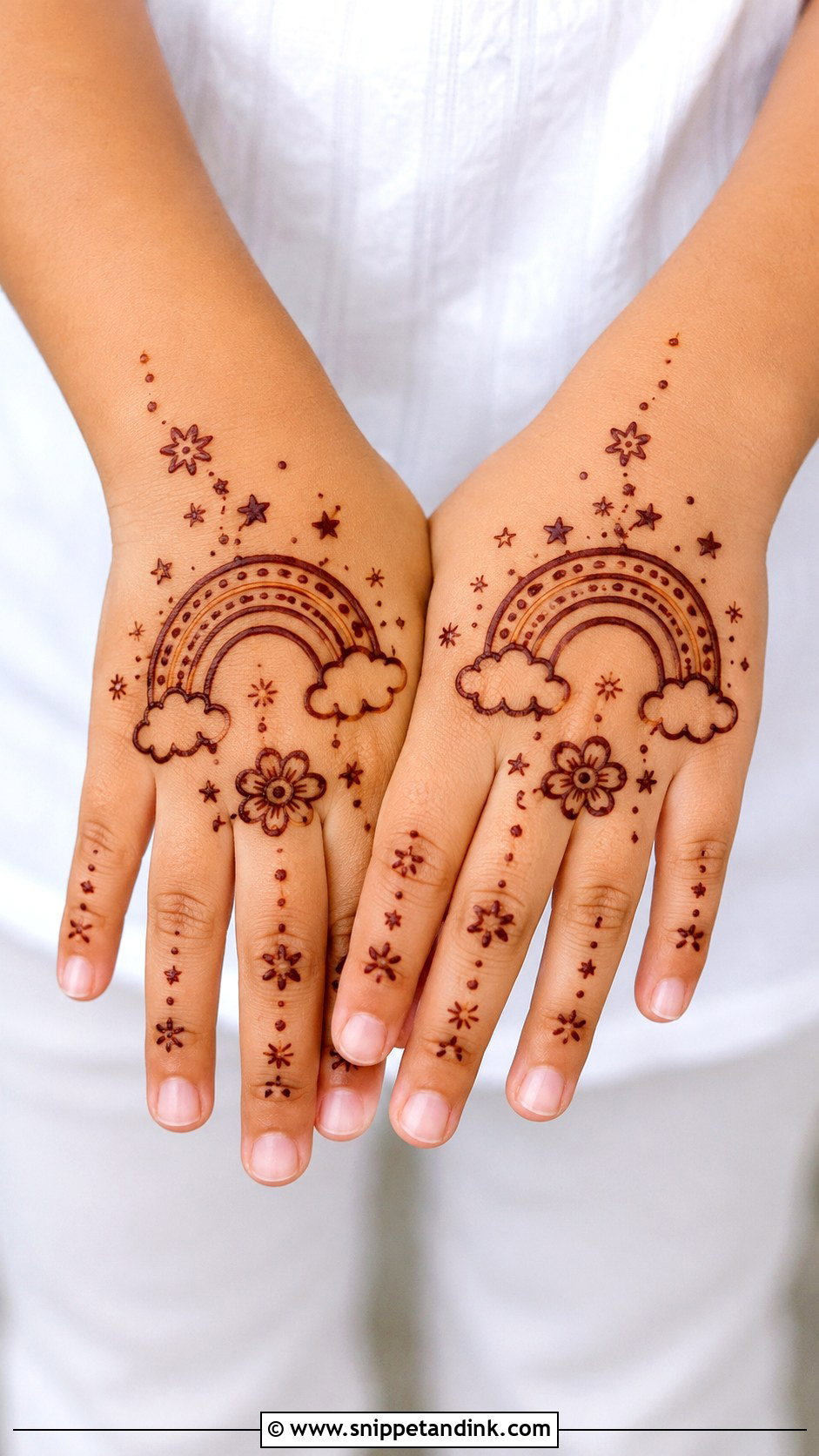
Henna can only do one color, so a rainbow is all about shape: three or four soft arches on the back of the hand or palm, with tiny clouds, stars or flowers at the ends. Fingers get small dots or light rings. Space the arches evenly with a clear gap between each, or they merge into one thick band. Children recognize it straight away, and the open curves make it quick and comfortable. Birthdays, school events and playful celebrations are where it fits.

20. Simple Crown Mehndi Design For Kids
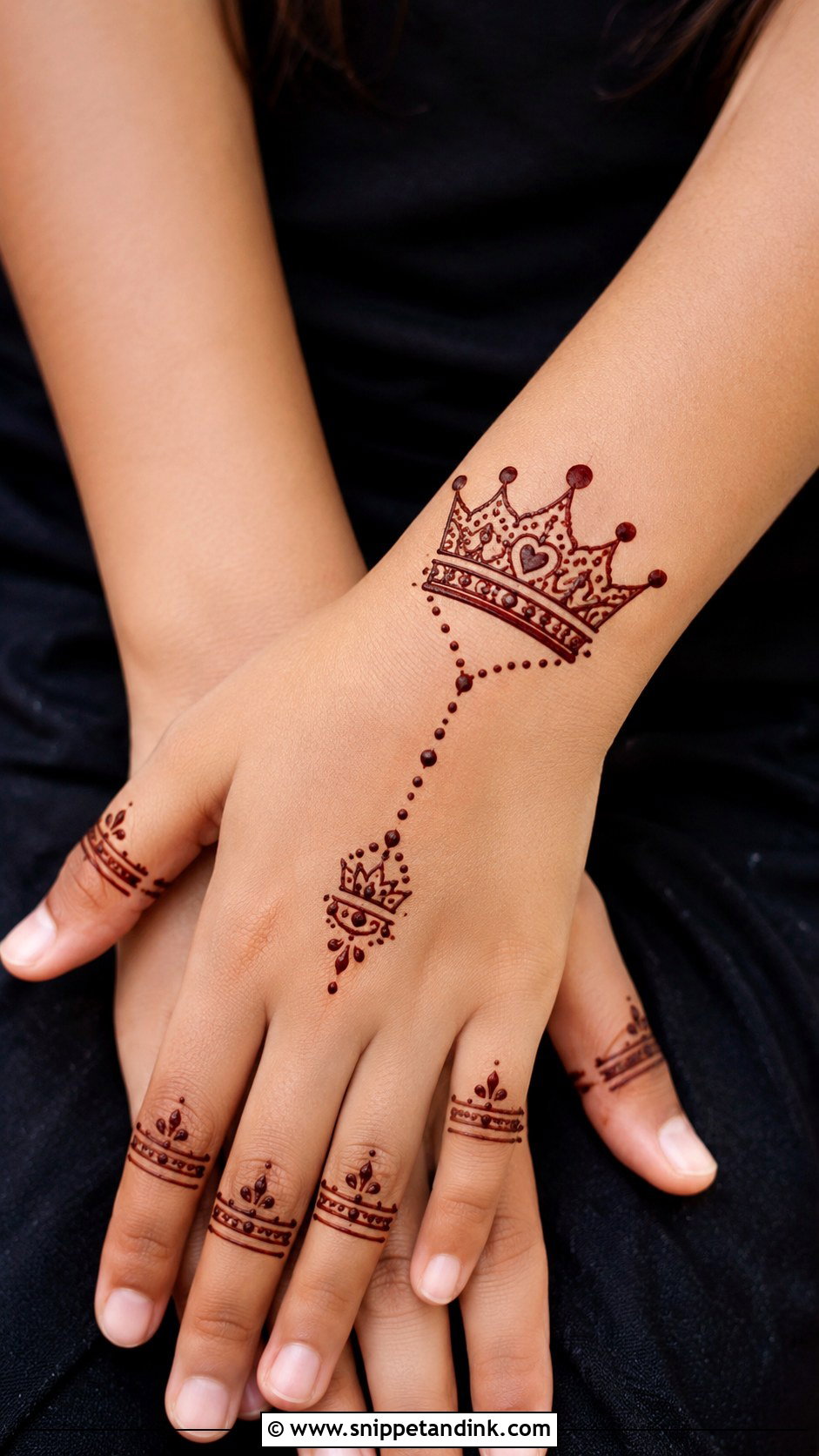
Three rounded points with tiny dots at the tips, a small heart or flower below, a dotted chain toward the wrist and one ring line on each finger. That’s a crown, and it’s easy to personalize with the child’s favorite shape in the center. It lets kids feel dressed up at birthdays, family parties and festive dinners without needing a large pattern. Rounded points are safer than sharp ones on small hands, as they don’t crack off with the dried paste.
21. Simple Cartoon Mehndi Design For Kids
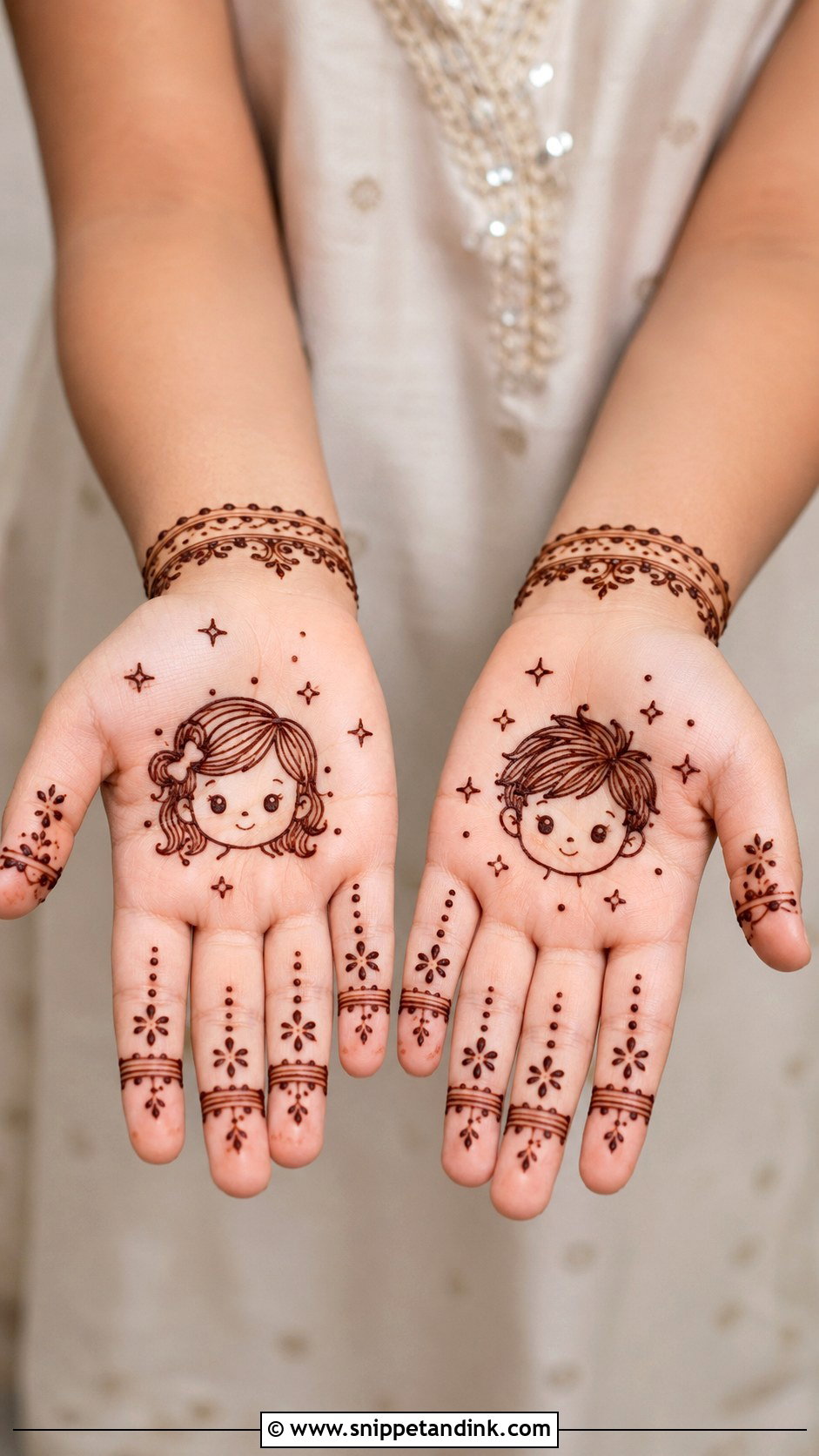
Keep cartoons very basic: a small round face, an animal face or a simple character outline in the center of the palm, with dots, stars and a tiny wrist border around it. Facial detail is the trap. Little lines for lashes, teeth or whiskers blur together as the henna dries, so I give each face only dot eyes and one line for the mouth. It’s a good fit for family gatherings and kids who want something other than flowers.
22. Simple Teddy Bear Mehndi Design For Kids
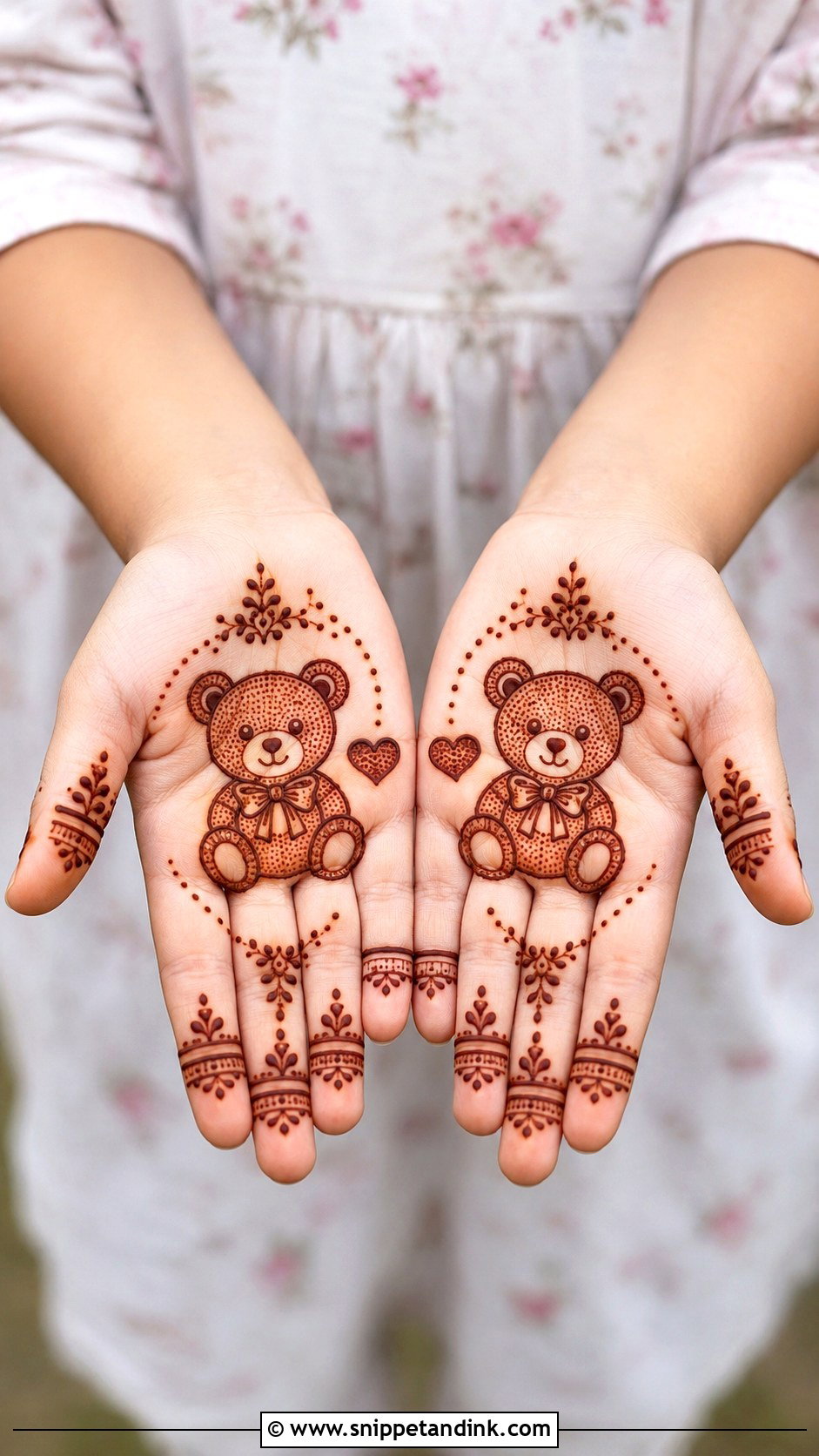
A round teddy face with two small ears, dot eyes and a soft smile, plus a tiny bow, heart or flower beside it and small dots around the bear. Simple rings on the fingers finish it. Younger kids find it familiar and comforting, which can help a nervous first-timer sit through it. Bold lines and minimal detail keep the teddy clear after drying. It’s for birthdays, casual celebrations and henna afternoons at home.
23. Simple Flower Vine Mehndi Design For Kids
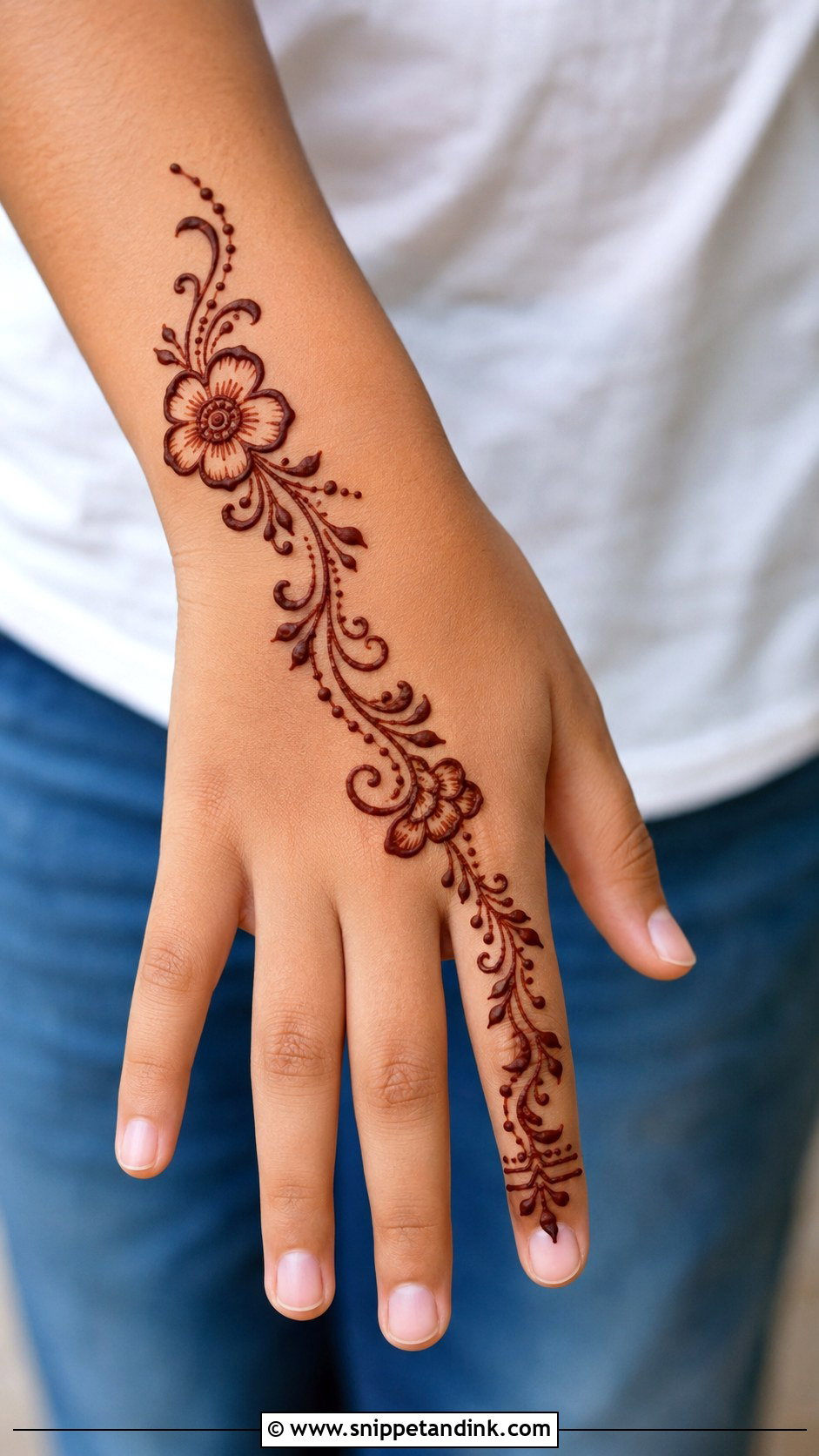
A vine starting at the wrist and curving across the back of the hand toward one finger, with two or three small flowers along it and tiny leaves between them. The rest of the hand stays open. Older kids who want something like the adults are wearing, only smaller, are usually happy with it at weddings and festivals. The diagonal flow makes the hand look decorated without full coverage, and it only takes a few minutes.
24. Simple Jaali Mehndi Design For Kids
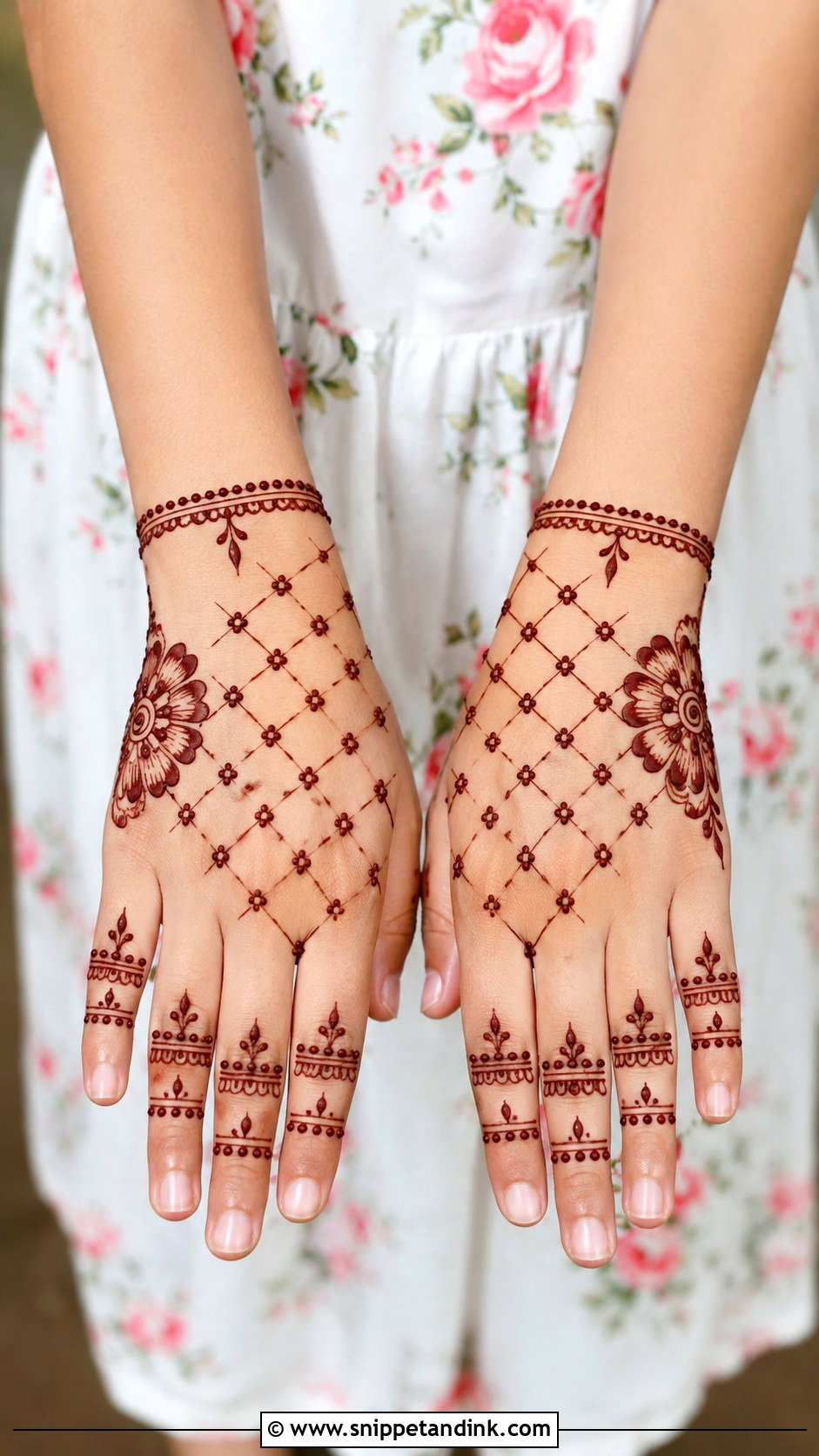
Rather than covering the hand, draw one small square or diamond mesh on the back of the hand, with dots where the lines cross, a small flower beside it, a tiny bracelet line at the wrist and dotted rings on the fingers. It introduces a traditional pattern gently and looks a little fancy without being heavy. Keep the mesh lines wide apart; on a child’s hand, closely spaced jaali merges into a brown square by the next day.

25. Simple Moroccan Mehndi Design For Kids
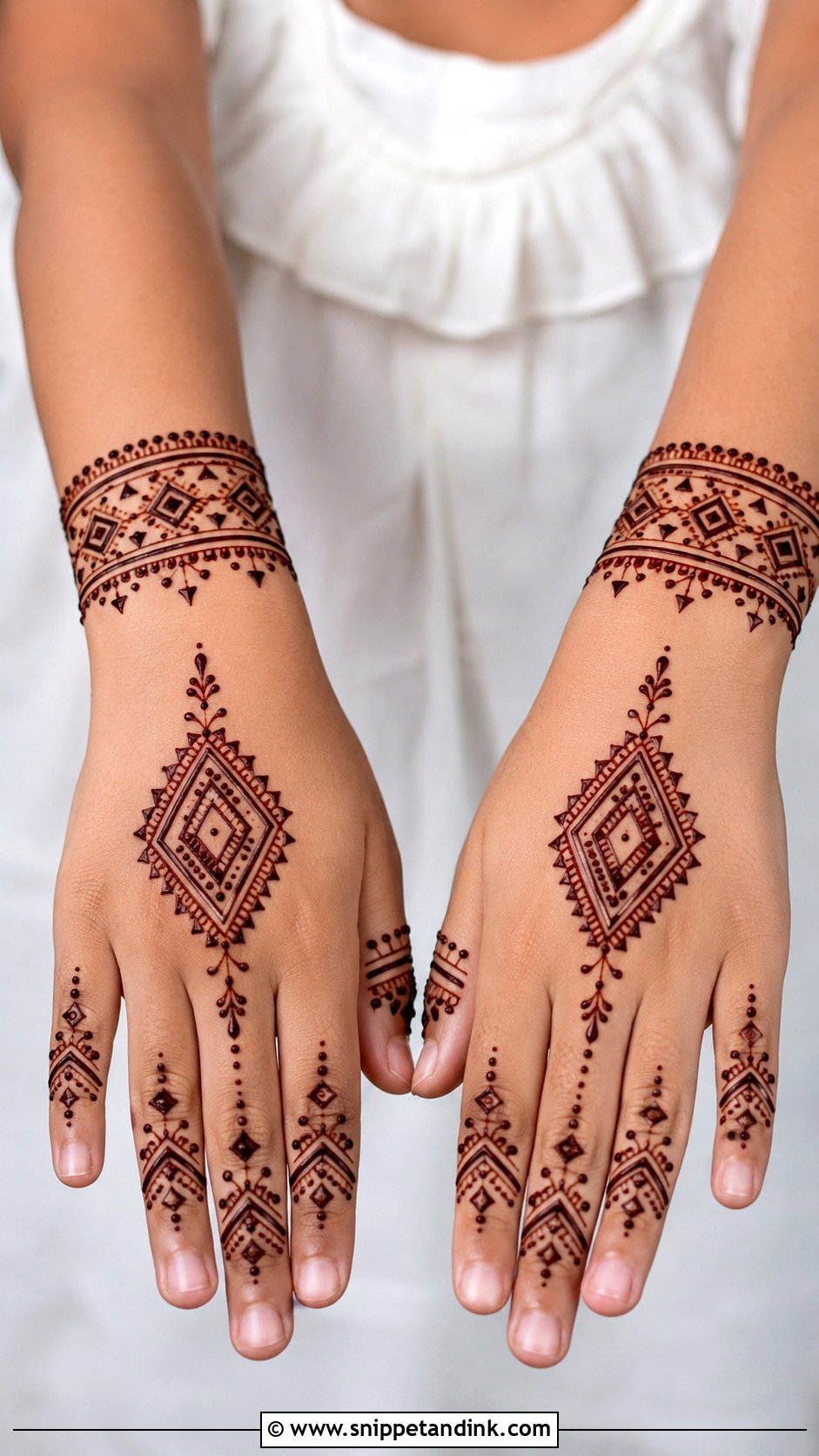
Kids who like shapes more than flowers enjoy this one: a small diamond or triangle pattern on the back of the hand, short lines and tiny dots around it, a wrist band of repeating shapes and minimal finger bands or dot rows. It looks modern and tidy on small hands, and because Moroccan work is built from bold shapes, it’s quick to apply. I mark the corners with dots before connecting them, which keeps the lines straighter when the hand moves.
26. Simple Gulf Mehndi Design For Kids
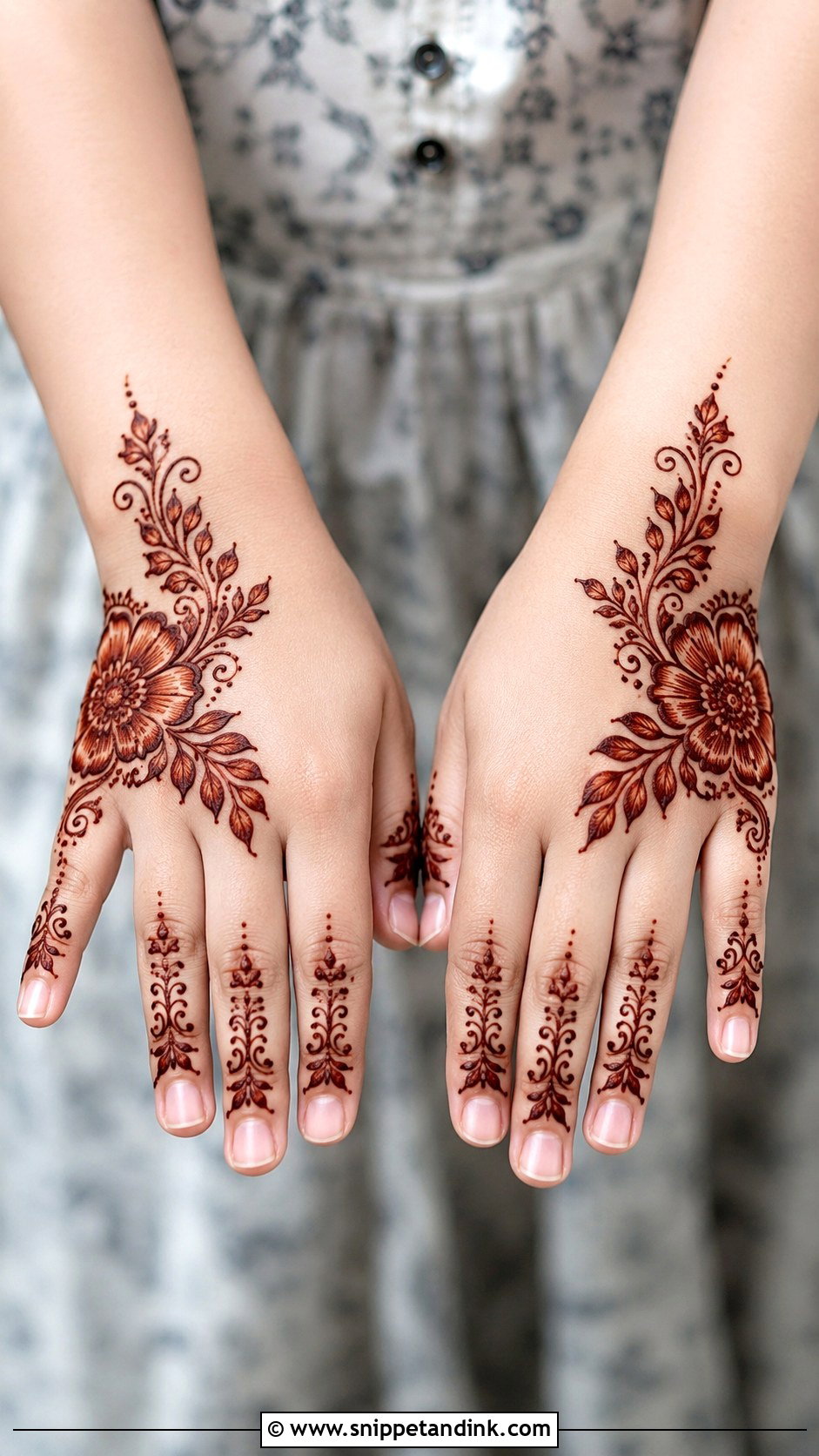
A simple Gulf mehndi design for kids uses one large flower on the side of the back of the hand, a few curved leaves around it and a flow toward the wrist, with the center of the hand left open. One or two fingers get small floral tips or dots. Gulf or Khaleeji henna is known for bold motifs and airy placement, and for children I simply draw it smaller and softer. It fits Eid, weddings and family celebrations without looking too grown-up.
27. Simple Indo Arabic Mehndi Design For Kids
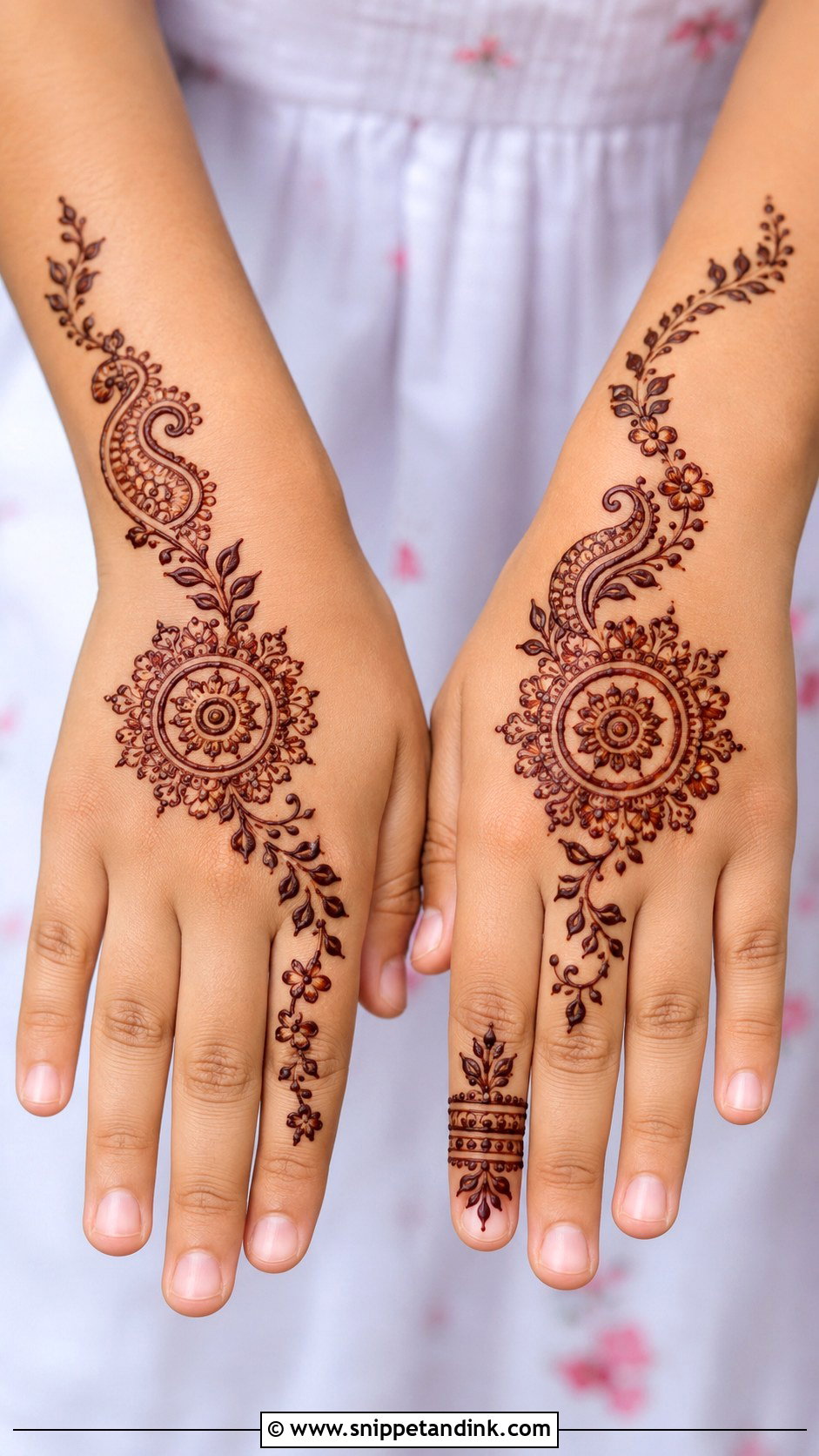
Indo-Arabic for a child starts with a small mandala or paisley near the wrist, then a vine moving diagonally across the hand with tiny flowers and leaves, and one lightly decorated finger to end the trail. Bold outlines and open gaps keep it clear. It’s for older kids who want a bit more detail and can sit ten minutes or so, typically at weddings, Eid and Diwali.
28. Simple Full Hand Mehndi Design For Kids
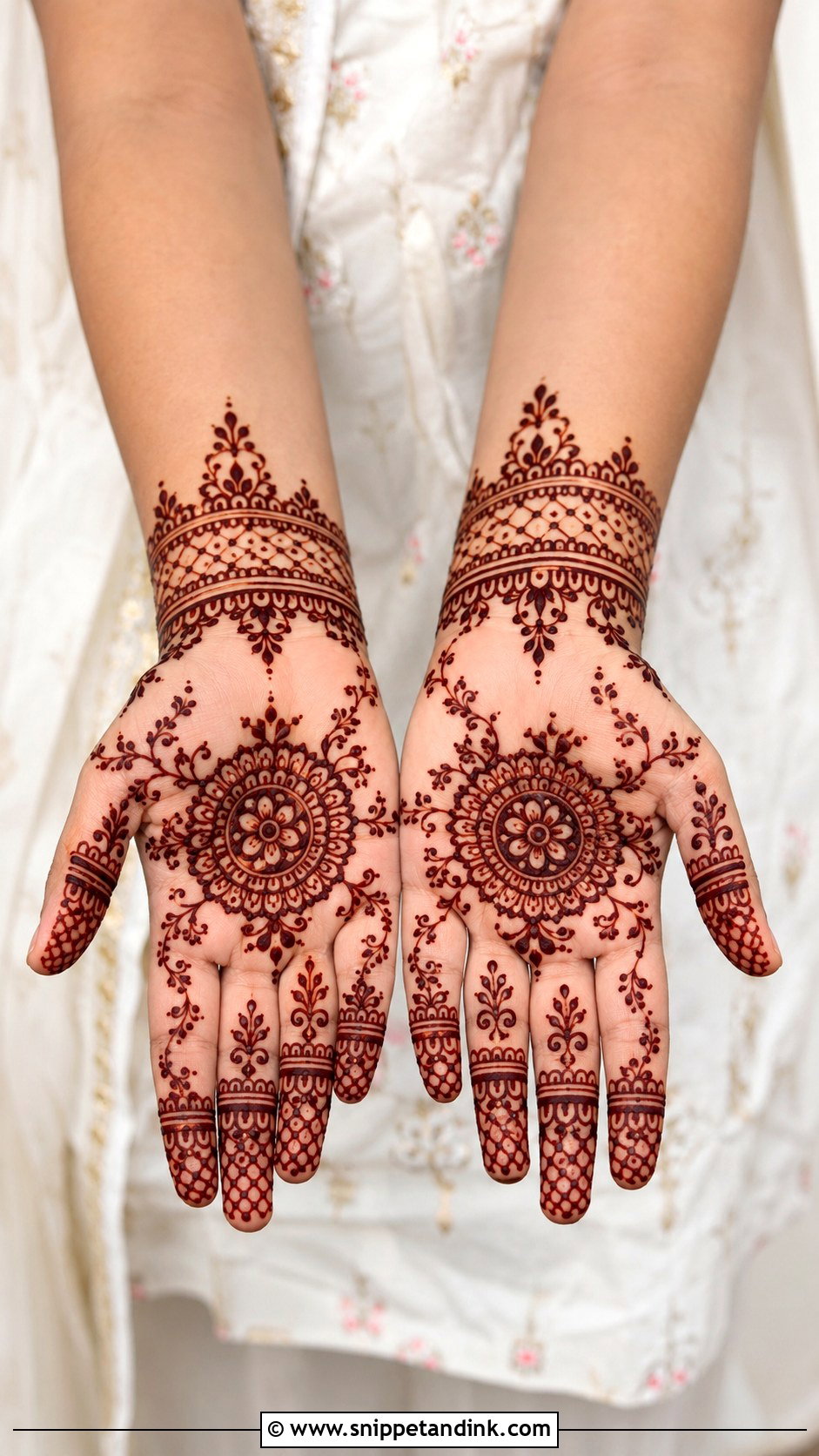
Plenty of kids want “big mehndi” like their older siblings or cousins. I give them the look of a full hand without the density: a small palm mandala, a wrist bracelet and easy finger patterns, connected with dots, tiny leaves or short curved lines. Avoid dense palm filling, as it will be smudged before it dries. It works for weddings, festive nights and family photos, and the child feels included in the grown-up tradition.
29. Simple Side Hand Mehndi Design For Kids
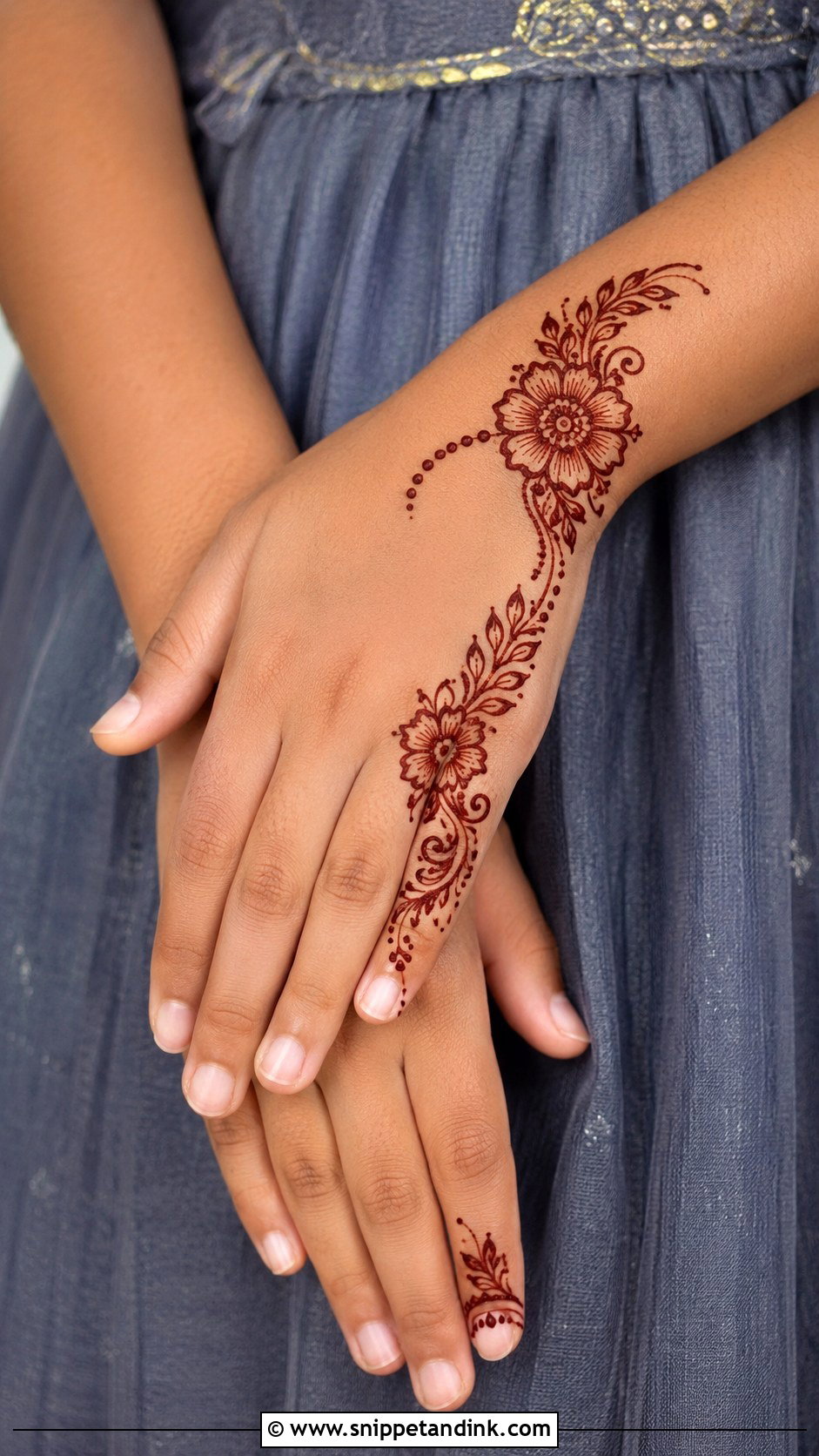
Run the pattern along one side of the back of the hand, from the wrist toward the little finger, using small flowers, leaves and dots in a soft curve. The center stays mostly empty. It’s neat, quick and dries fast, and it suits children who don’t want henna all over. The outer edge of the hand brushes tables and paper, so keep the child’s hand resting palm-down until it’s fully dry.
30. Simple Minimal Mehndi Design For Kids
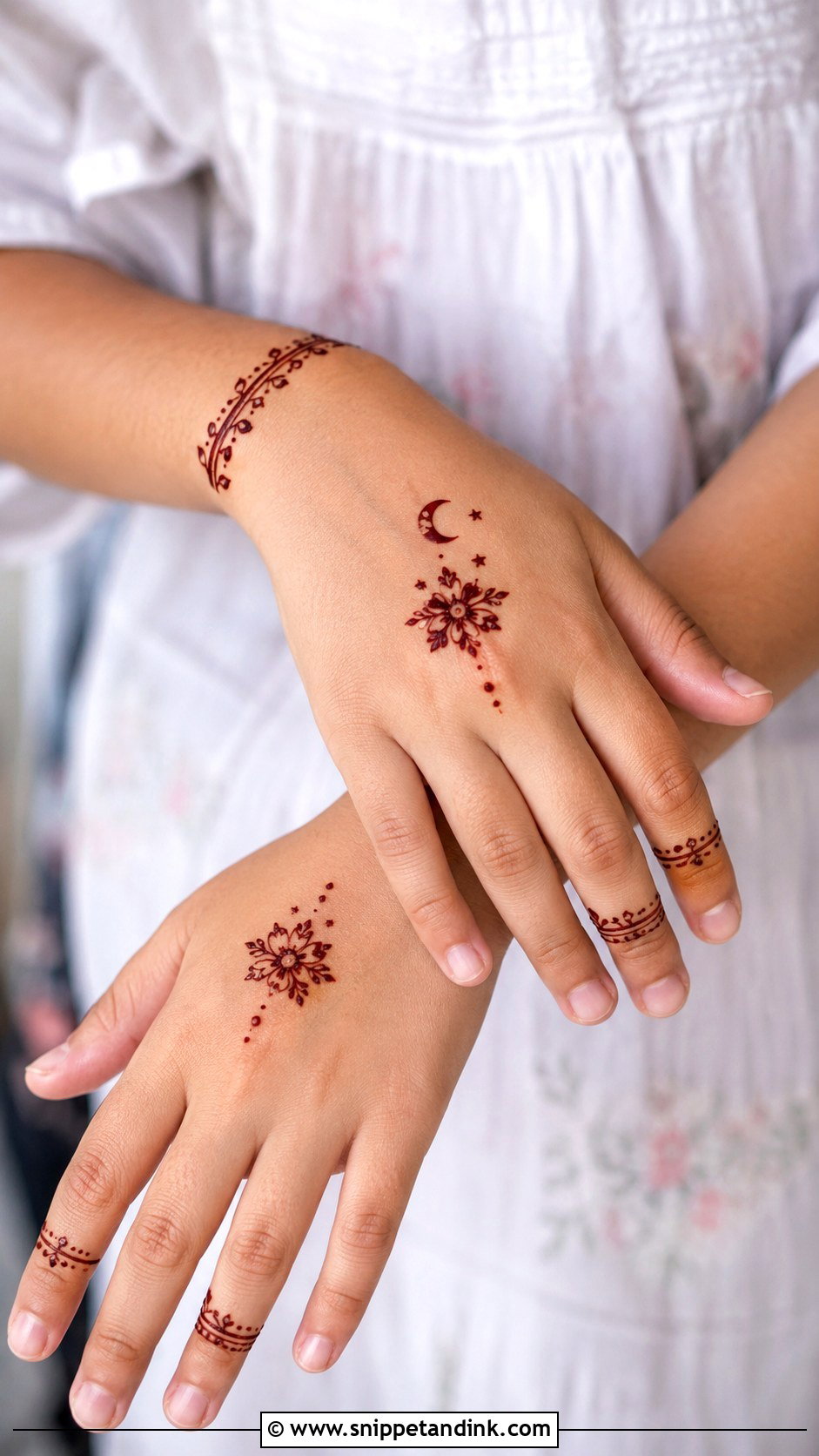
One tiny motif, a flower, heart, star or moon, on the back of the hand or palm, a few dots around it and one small wrist line or finger ring. Stop there. It’s for toddlers, first-time henna and last-minute events. Done in a minute or two, it dries fast and still gives a child the fun of wearing henna like everyone else.
Running the Kids’ Henna Corner at a Family Wedding
At a mehndi night there can be a dozen children waiting at once, and the queue becomes the problem. I set up a separate small station with a short menu of four or five designs from this list, each taking no more than five minutes. Kids pick from the menu, not from a phone full of adult bridal photos.
Do the youngest first, before they get tired and fractious, and have an adult nearby to walk each child somewhere safe while the paste dries, away from the food and the dance floor. Put a roll of paper towels and a bin at the station. If you can, schedule the children’s henna early in the evening rather than late, so the paste has an hour or two on the skin before bedtime.
Smudges on Skin and Paste on Clothes
A fresh smudge on skin comes off if you wipe it with a damp cotton bud within a few seconds. Wait a minute and it has already started to stain, so act quickly and wipe in one direction, away from the design.
On clothes, let the paste dry, then scrape off as much as you can before touching it with water. Rinse from the back of the fabric with cold water, never hot, which can set the dye, then treat it with a stain remover and wash as normal. Light cottons usually come clean if you deal with it the same day; silk and dry-clean-only outfits are best taken to a cleaner. That’s the main reason I ask parents to dress children in old clothes for the session and change into the party outfit afterward.
Bold Outlines, Open Space and Real Henna
Simple kids’ henna comes down to comfort, speed and shapes children love. Clear motifs, plenty of space and easy outlines let them enjoy it without sitting too long, and flowers, hearts, butterflies, stars, moons, small mandalas, vines and jewelry patterns all suit little hands. Use natural henna, keep the design matched to the child’s age and patience, and be gentler still with younger children who have sensitive skin. For Eid, Diwali, a wedding, a birthday or a school day, any of these can be done in minutes.
You'll Like These Ideas:




Leave a Reply