
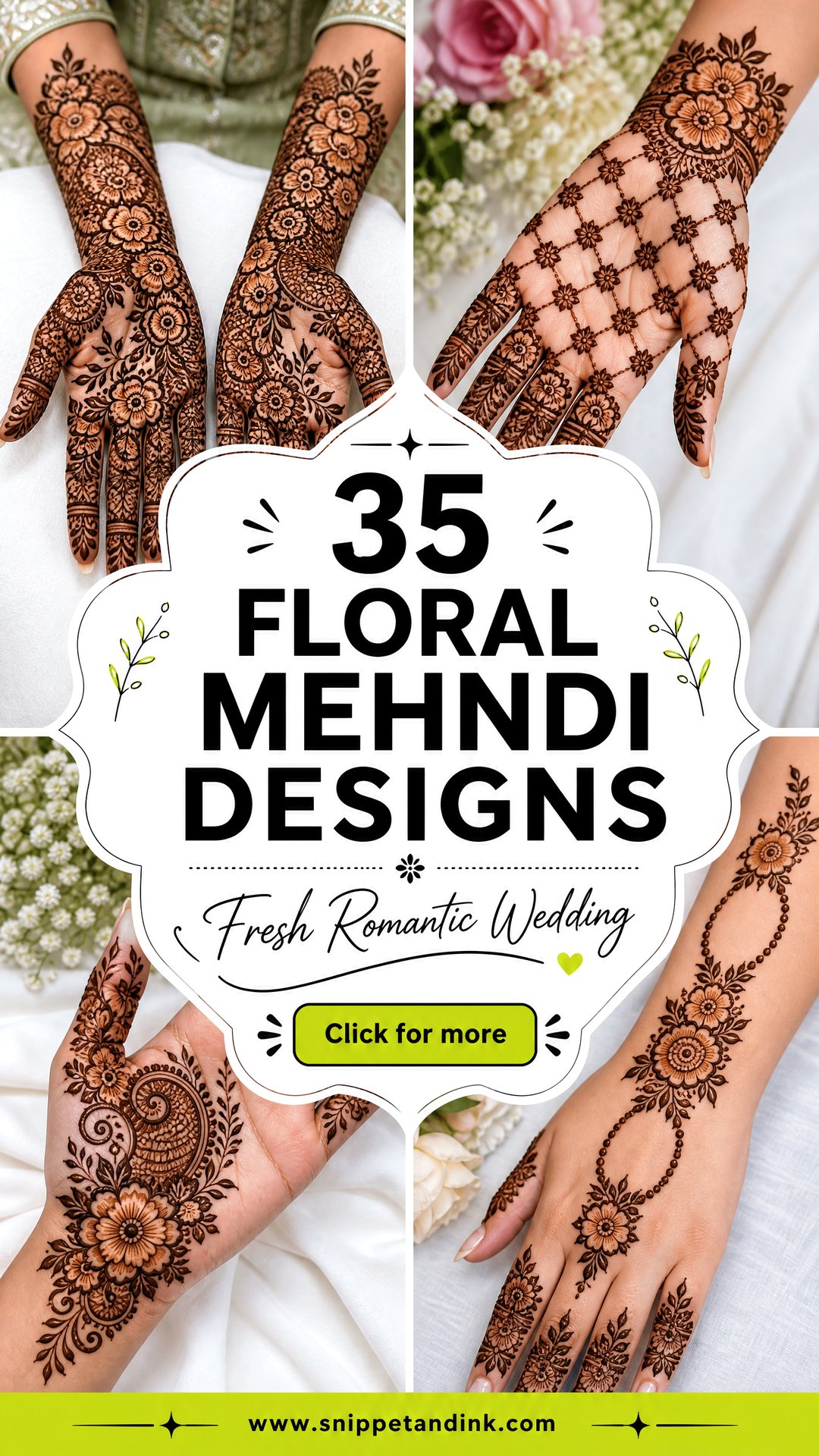
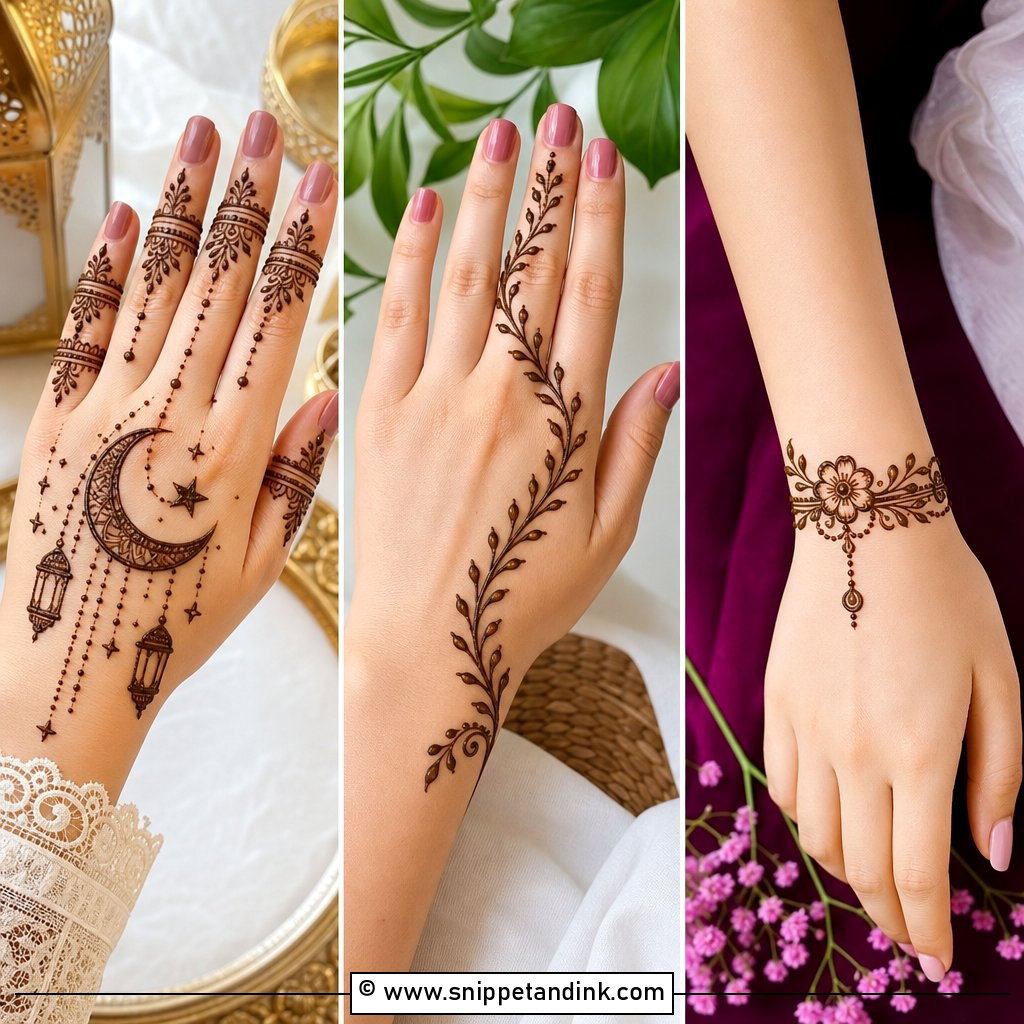
More of my henna requests start with a flower than with any other motif. A flower changes character completely with the hand drawing it: a rose trail reads Arabic and romantic, a lotus mandala reads Indian and festive, and dense floral jaali reads bridal. Small leafy vines are where most beginners start. Flowers also fit anywhere, from palms and backs of hands to fingers, wrists and forearms. The designs below run from a quick Eid trail to full bridal coverage, with what I’d watch for in each.
Pulling Your Henna Flowers From the Embroidery You’ll Wear
The floral designs I’m proudest of usually started with a photo of the outfit. Lehengas, sarees and shararas carry their own flowers in the zardozi or threadwork, and echoing one of them on the hands ties the whole look together.
Bring a close-up of the embroidery, not just the full outfit. I’ll pick one bloom from it, maybe a rose, a marigold or a lotus, and make it the main flower, then keep the supporting flowers simpler so they don’t compete. Scale matters too. Big, bold embroidery on the dupatta suits larger henna blooms; fine threadwork suits small flowers and more jaali. If the outfit is plain, the henna can carry more detail.
Bangles and kaleeras will cover part of your wrist all day, so tell me what you’re wearing there before I draw the cuff. There’s no point putting the best petals under a stack of chooda.
1. Simple Floral Mehndi Design
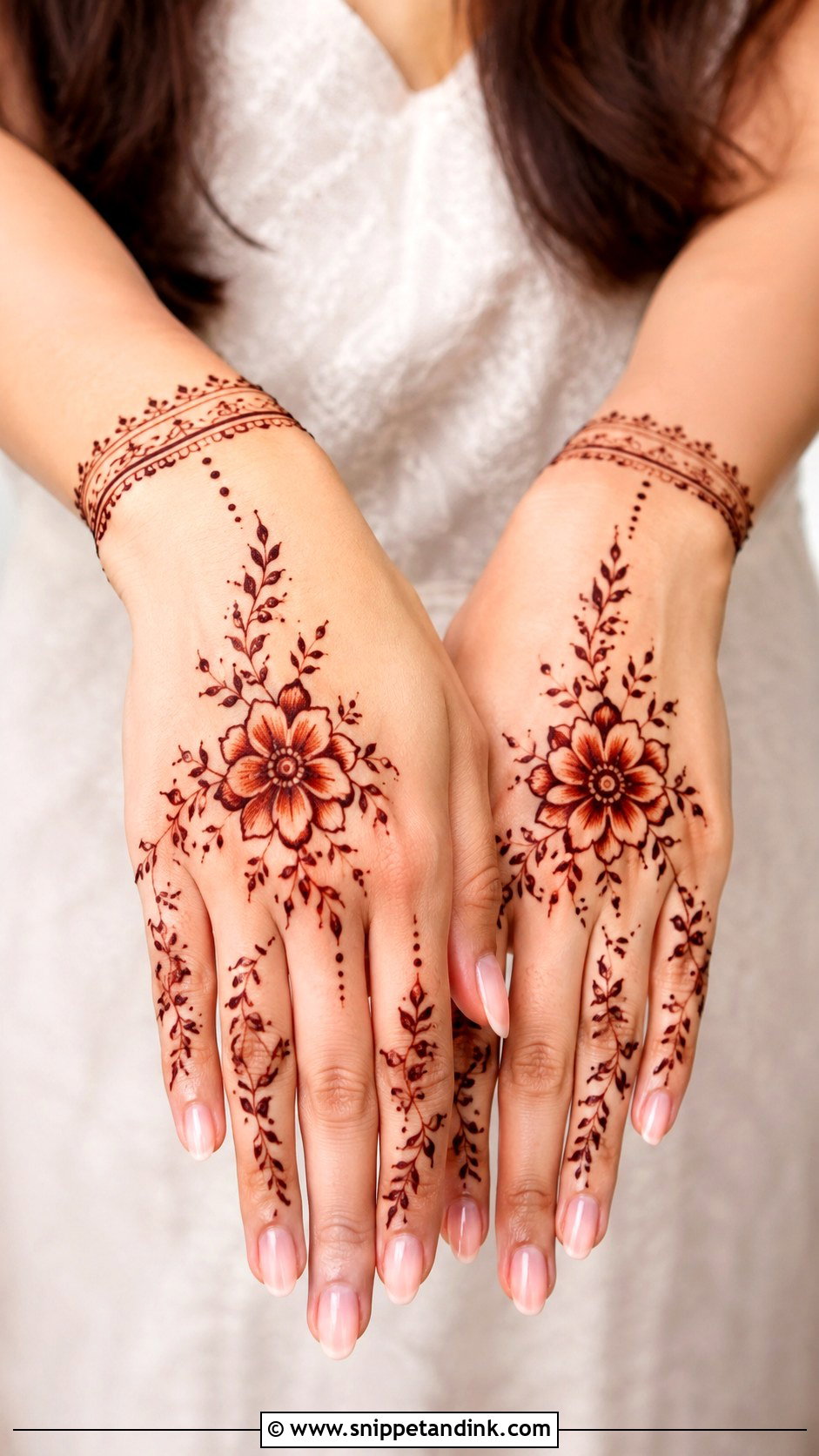
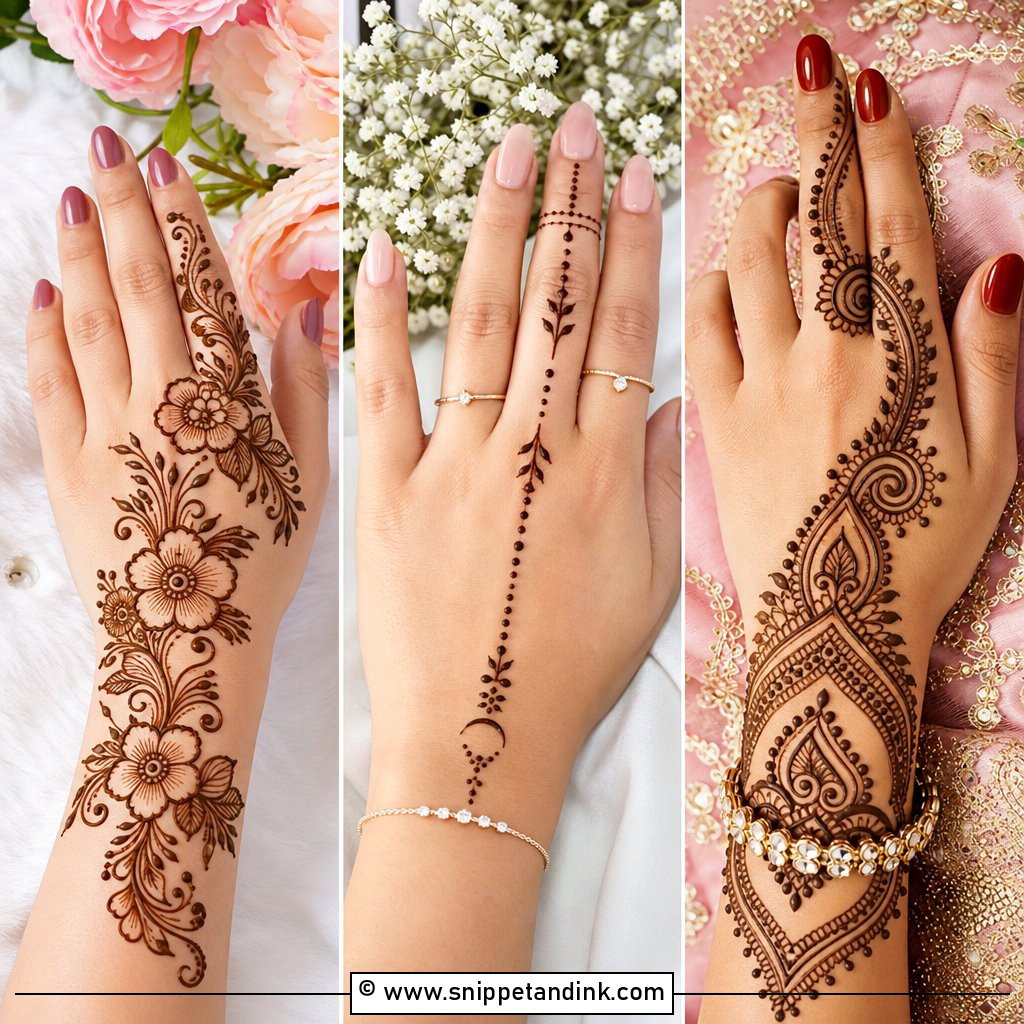
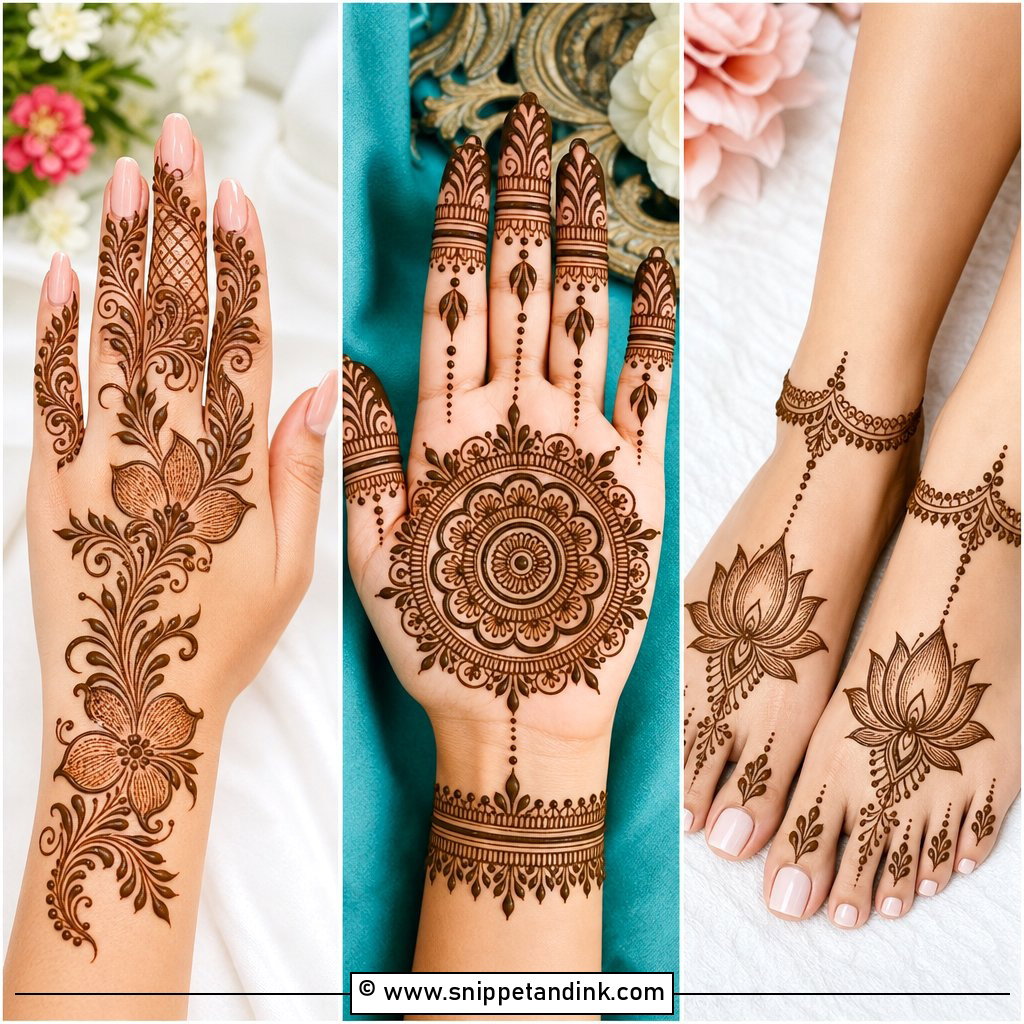
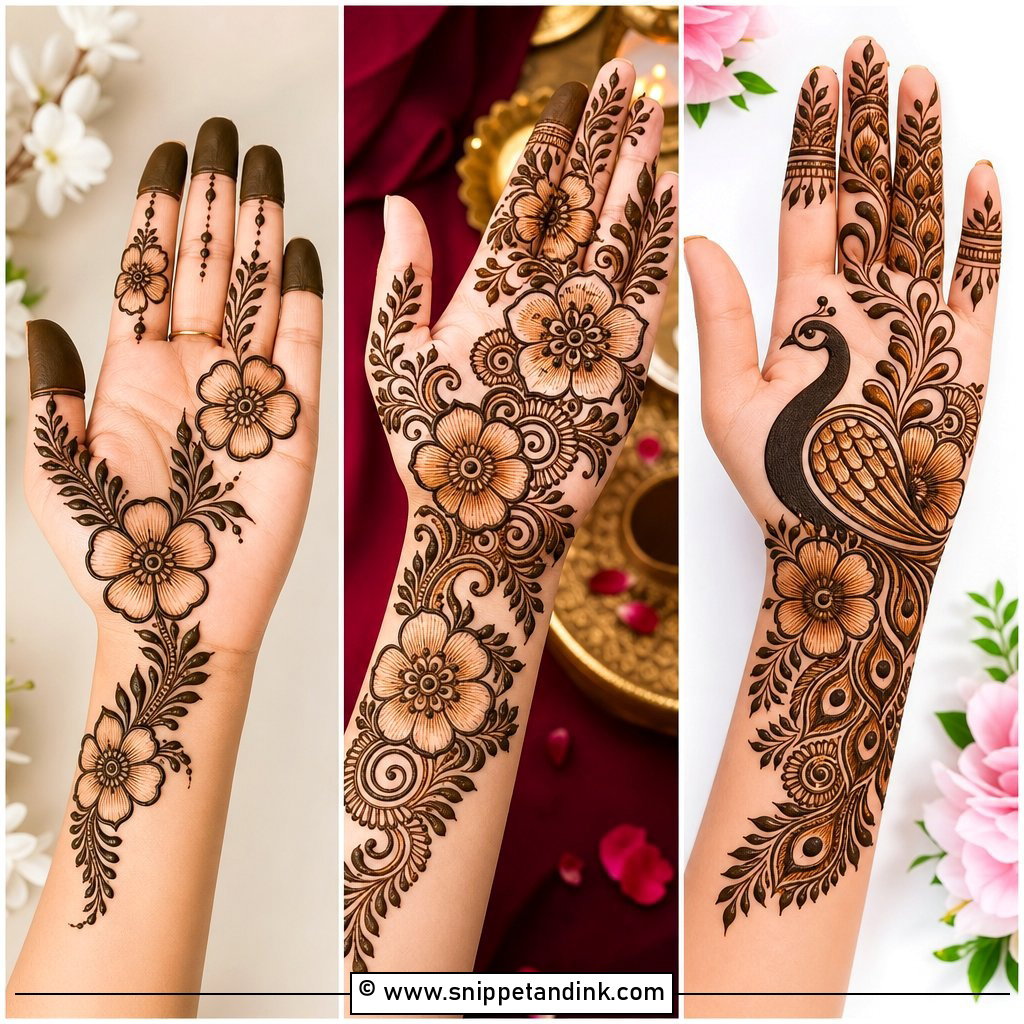
One large flower on the palm or back of the hand, growing into light leaves, dots and curved vines, with small petals or bands on the fingers. That’s it. Open spacing makes it forgiving for beginners and quick to dry. The balance I aim for is a bold flower and a thin vine; if the vine is as heavy as the bloom, the hand looks cluttered.
2. Front Hand Floral Mehndi Design
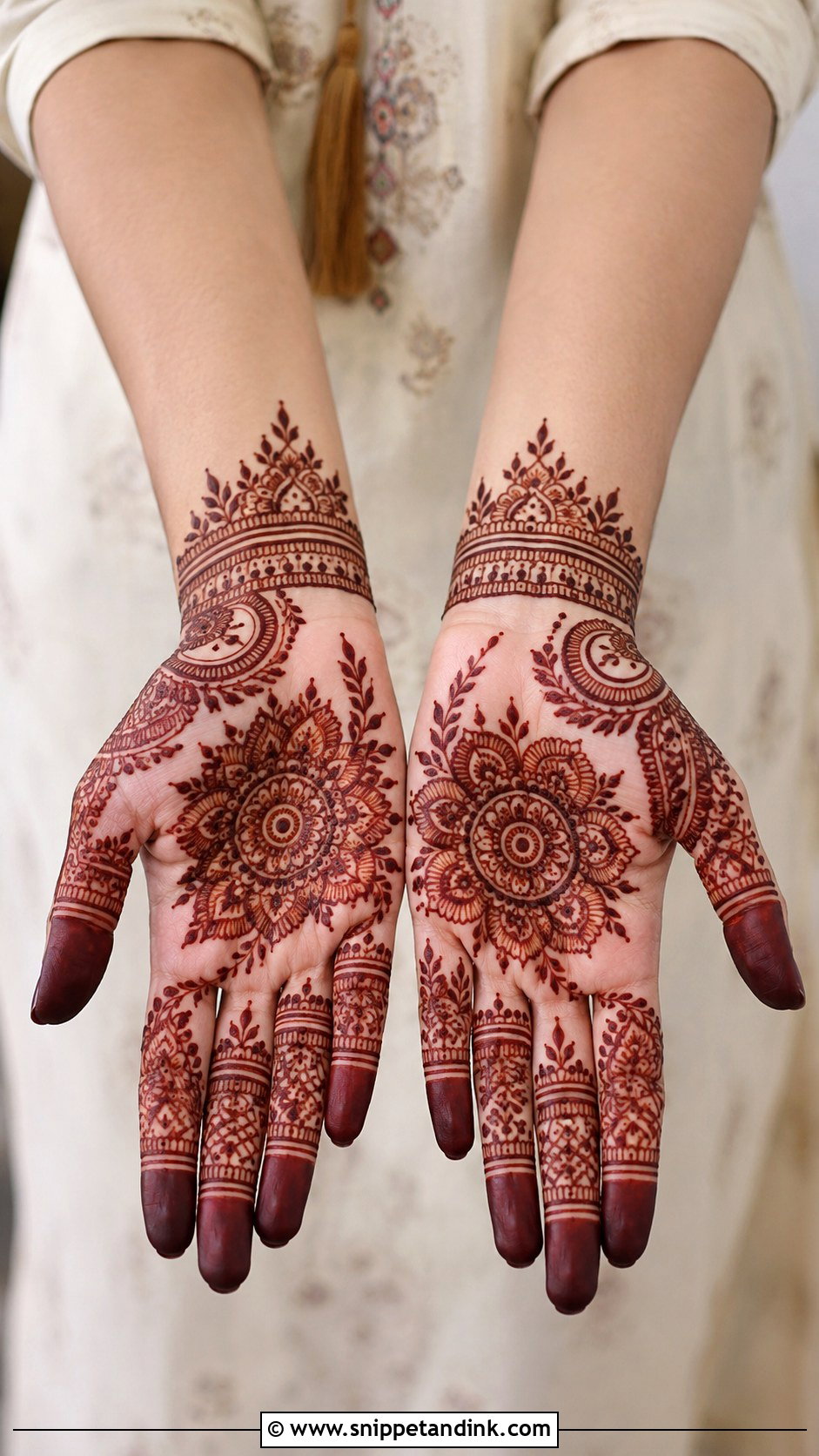
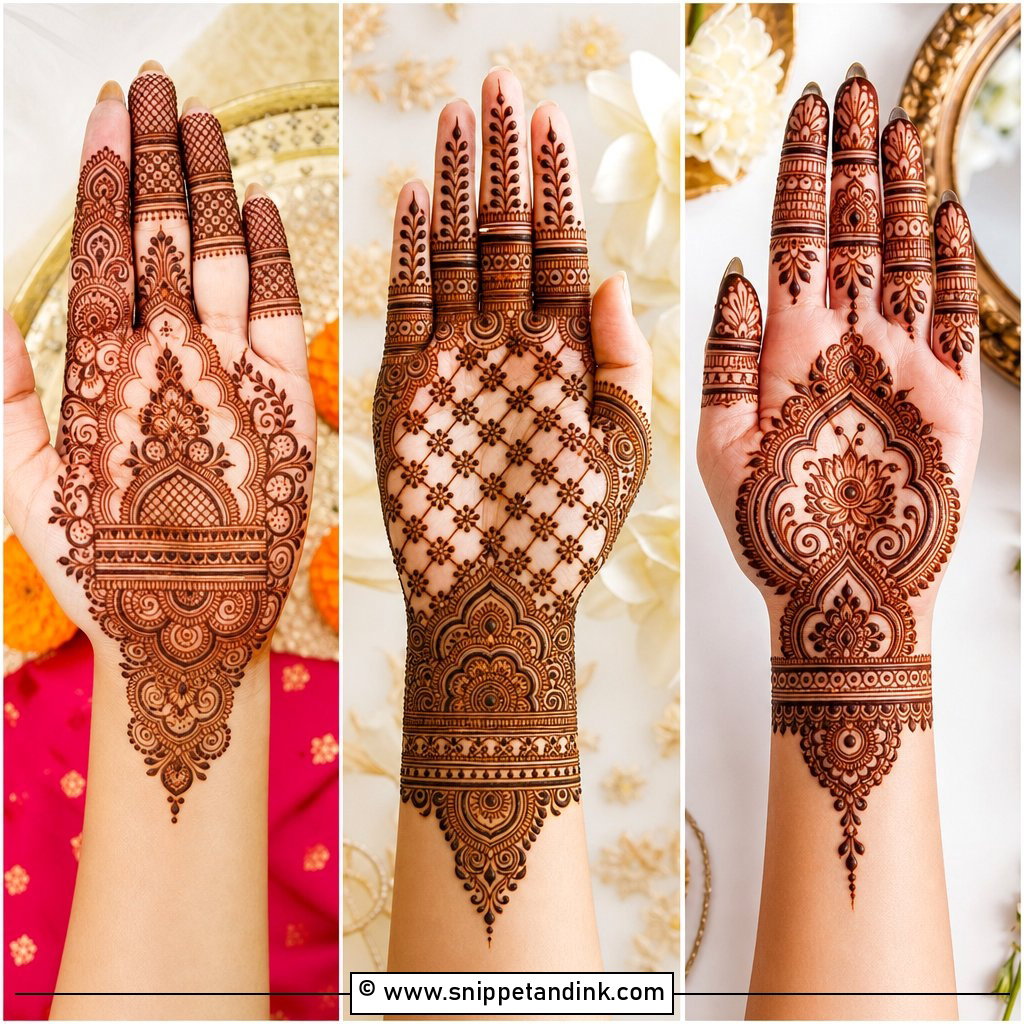
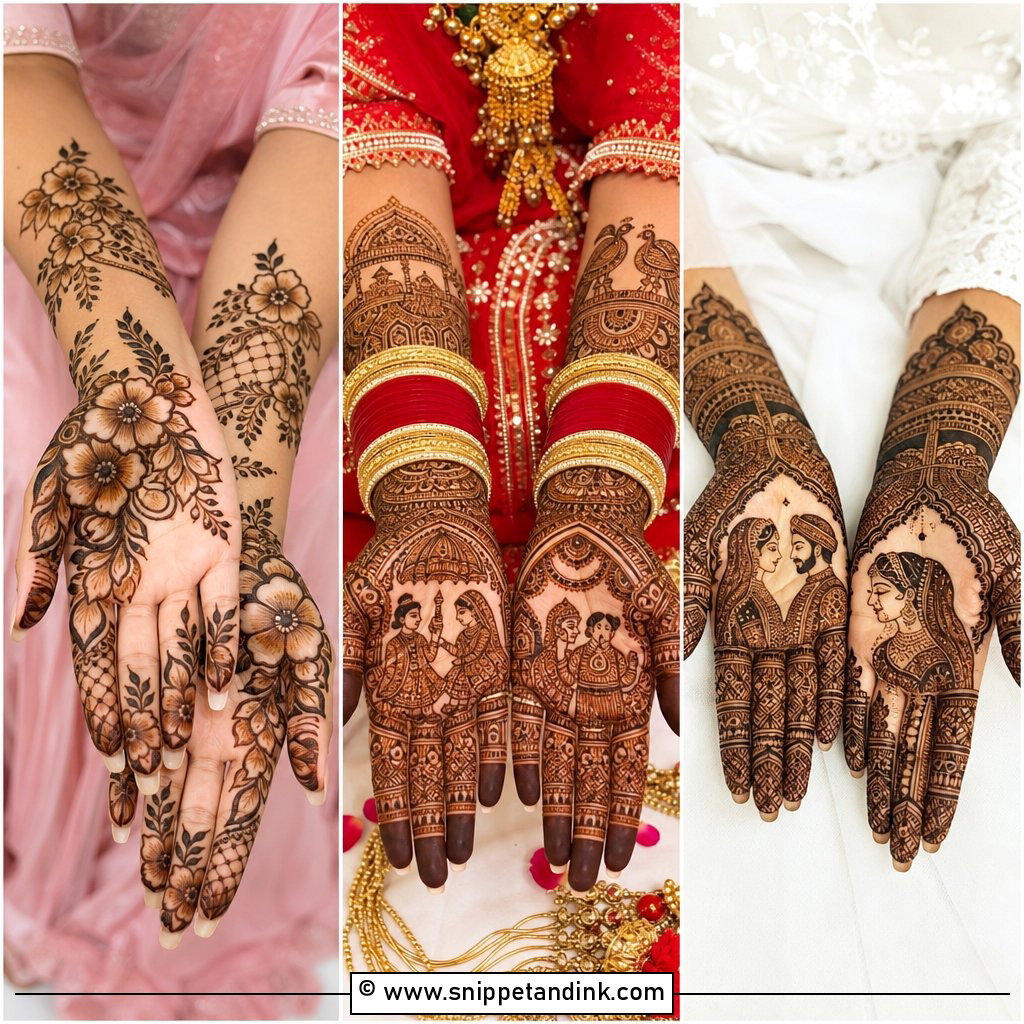
The palm gives a flower room to open up. I usually start with a round floral mandala in the center, then extend petals, paisleys and leafy lines toward the fingers and wrist, keeping the central bloom largest and the surrounding flowers smaller. Palms stain the darkest of anywhere on the hand, so fine petal lines here come up rich. Fill the fingertips with classic shading or leave them partly open for a lighter finish.
3. Back Hand Floral Mehndi Design
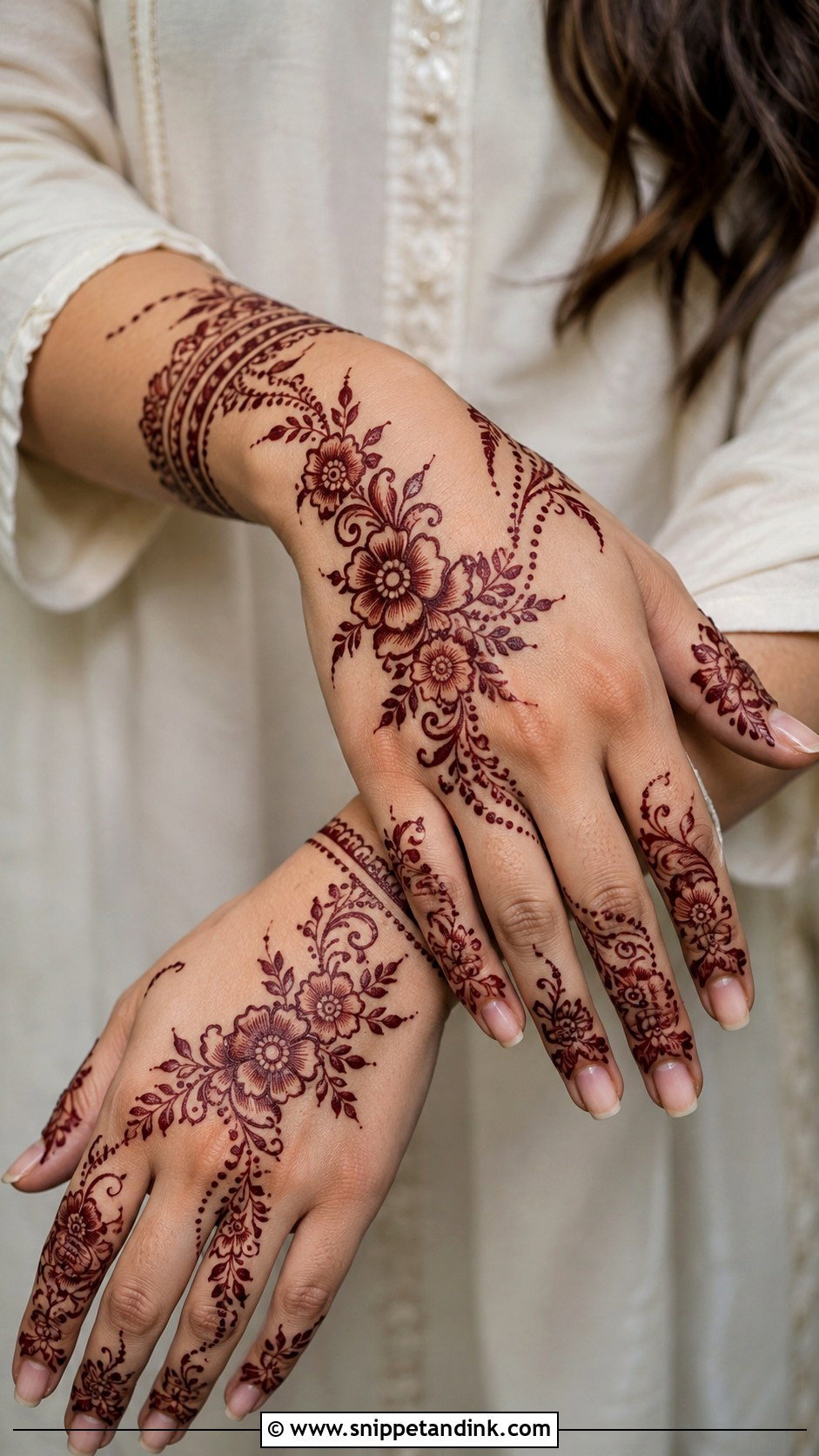
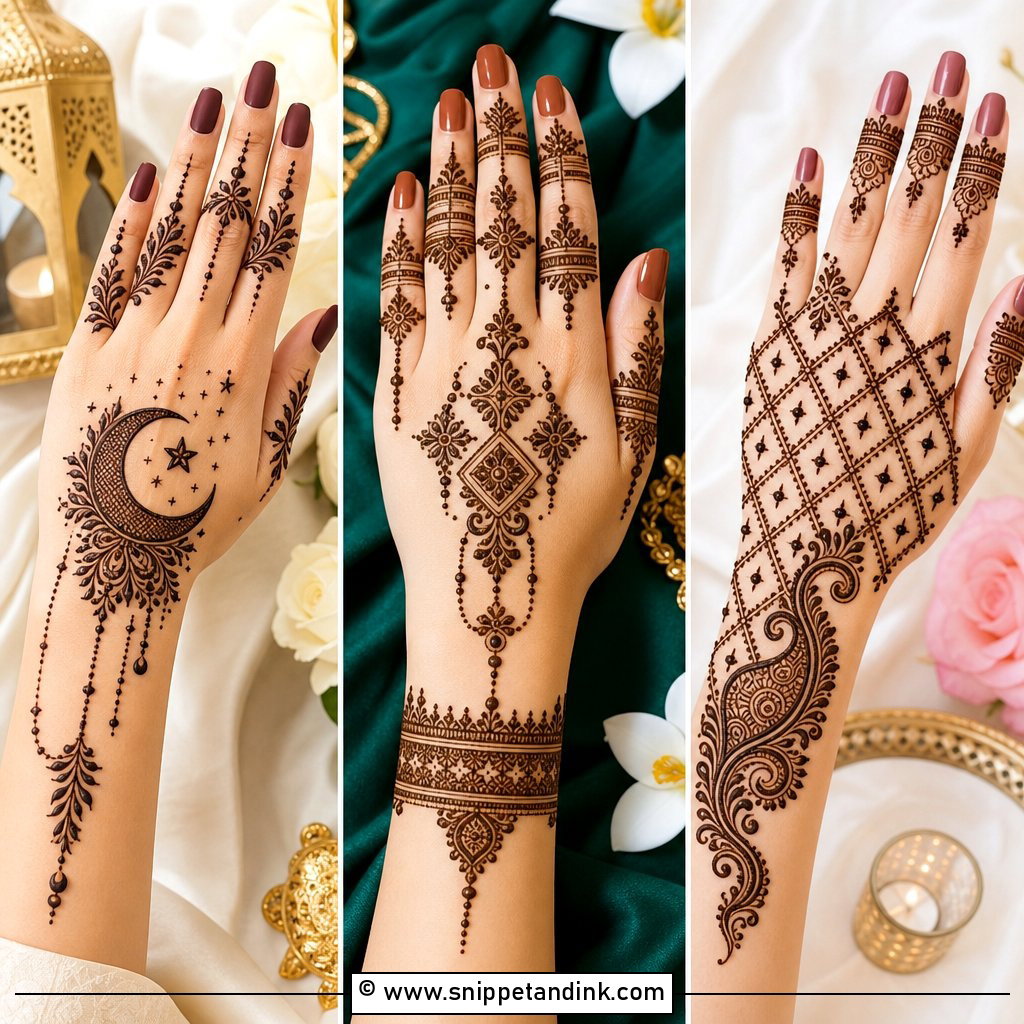
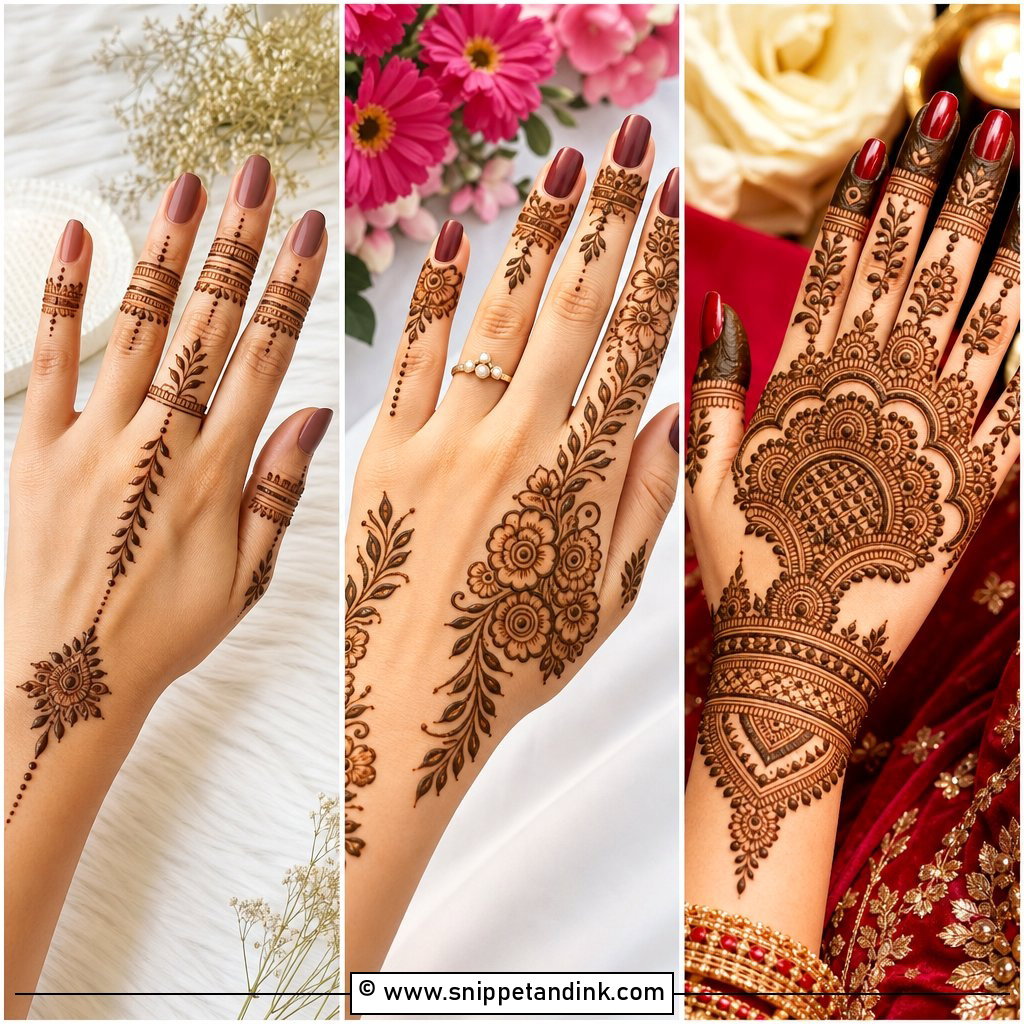
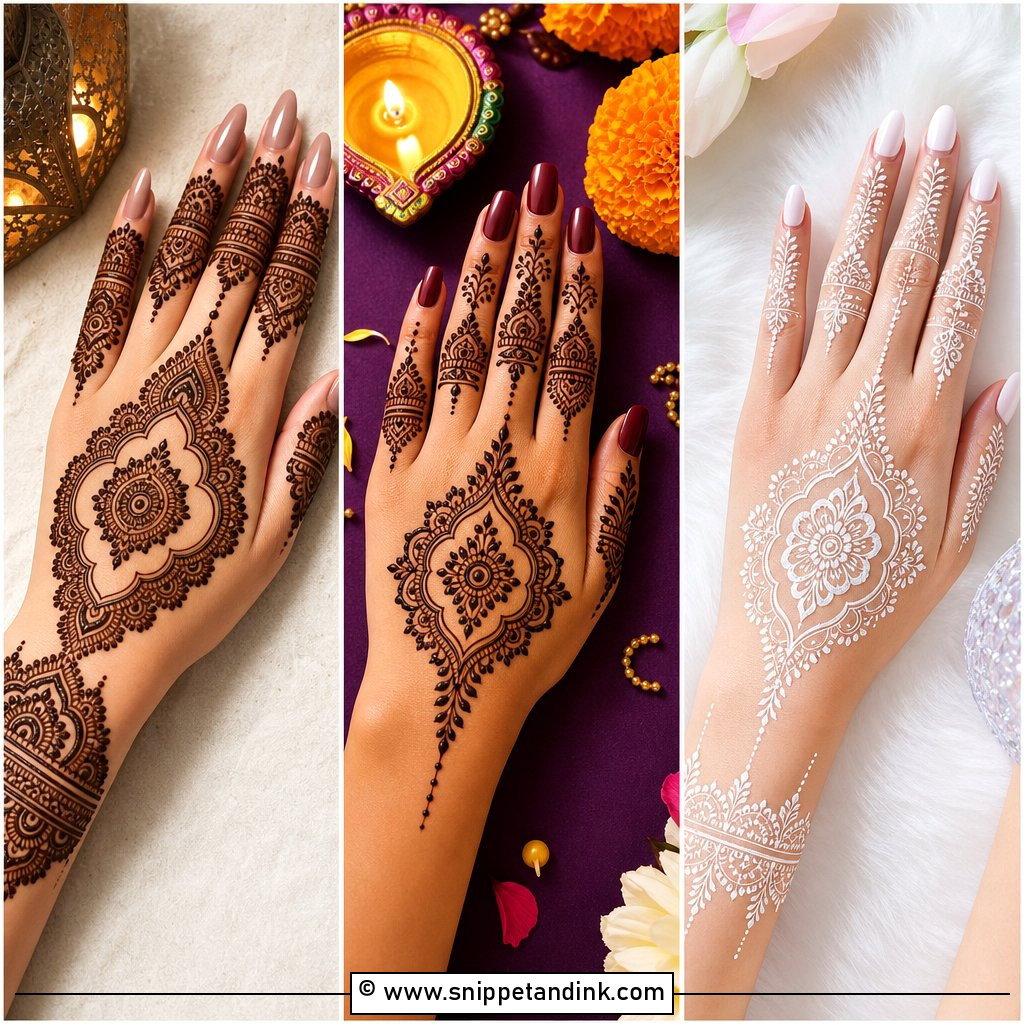
On the back of the hand, a diagonal floral trail from the index finger to the wrist follows the length of the hand and makes it look longer. Roses, lotus petals and leafy branches give that trail movement, and a bracelet band at the wrist adds a jewelry note. Gaps between the flowers keep it modern; dots, swirls and fine mesh in those gaps make it heavier. Back-of-hand skin stains a little lighter than the palm, so I draw these outlines a touch bolder.
4. Arabic Floral Mehndi Design
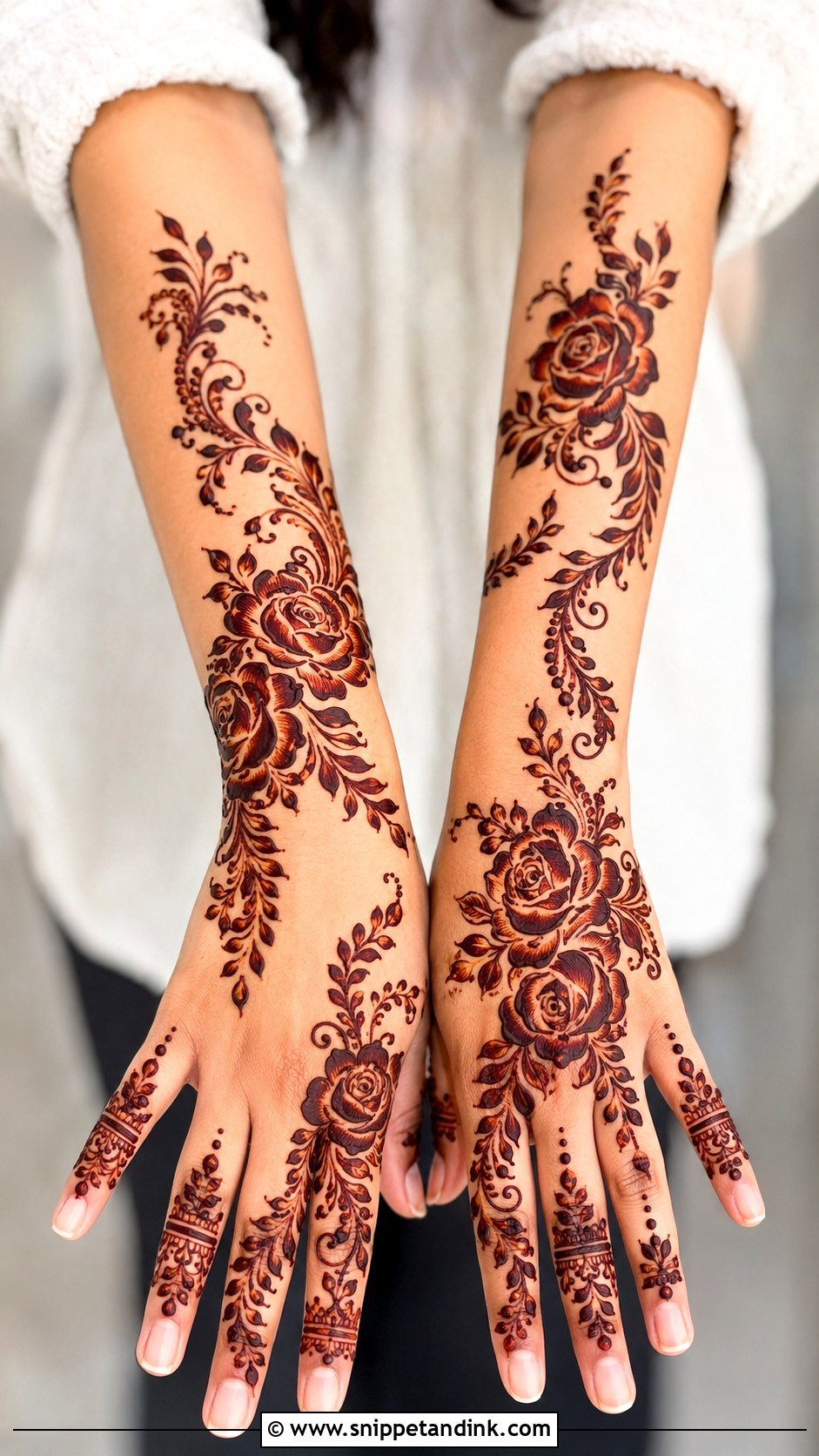
Arabic florals sweep rather than fill: a large flower near the wrist, a curved vine across the hand and matching finger details, with open skin all around. The thick outlines this style uses tend to stain clearly, which is part of its appeal for bridesmaids and festival-goers short on time. I soften the bold lines with small leaves and dots, otherwise the design can look a bit stark up close.
5. Indian Floral Mehndi Design
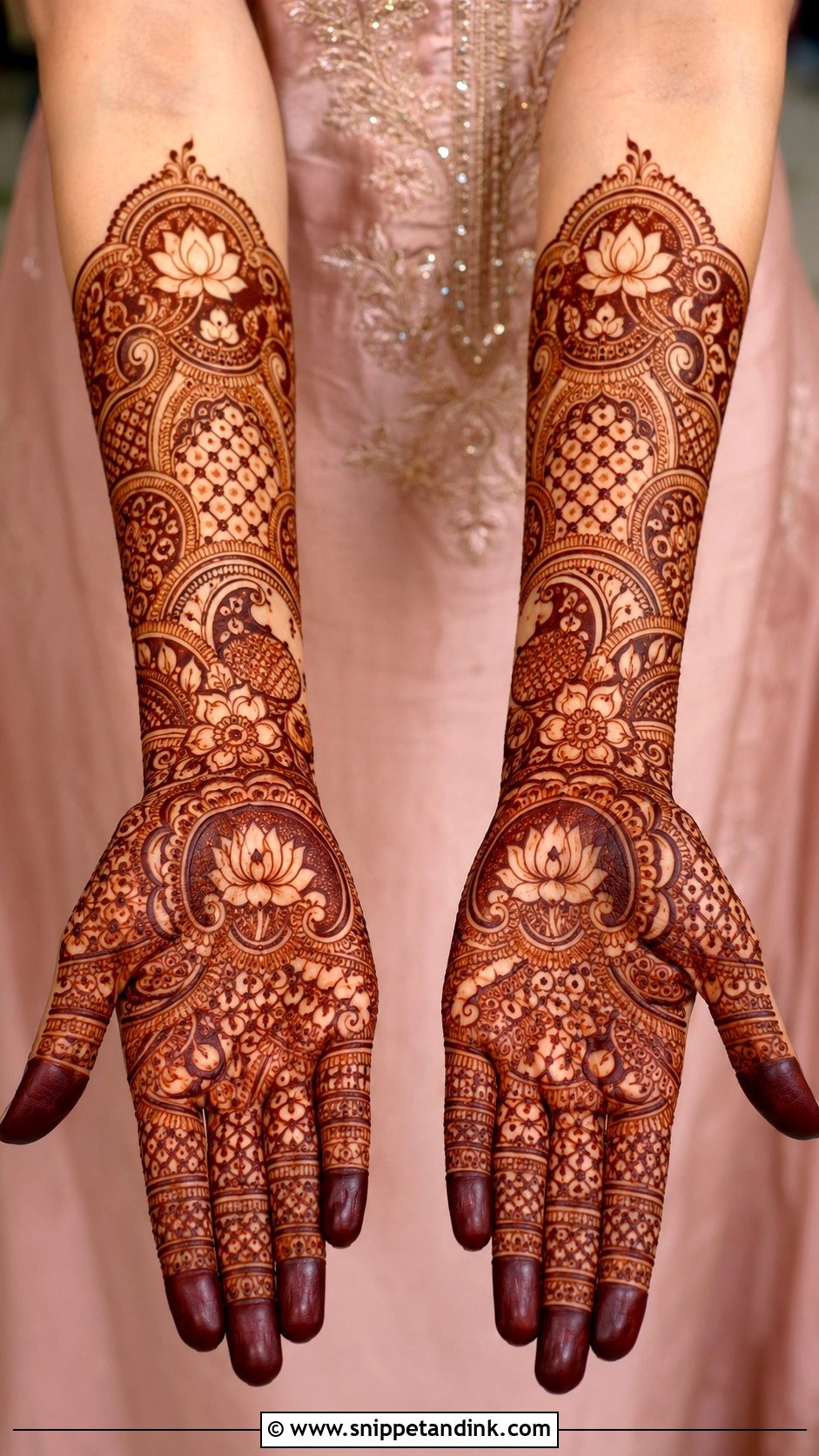
Indian floral work mixes flowers with paisleys, mandalas, peacocks, jaali mesh and filled fingertips, repeated across the palm and wrist until the hand looks full. It’s the traditional choice for weddings, Karwa Chauth, Diwali and Teej. Lotus petals and round floral mandalas give the classic look; fine lines inside every petal and small filler flowers between the motifs make it heavier. It takes longer to apply, so plan your sitting accordingly.
6. Indo Arabic Floral Mehndi Design
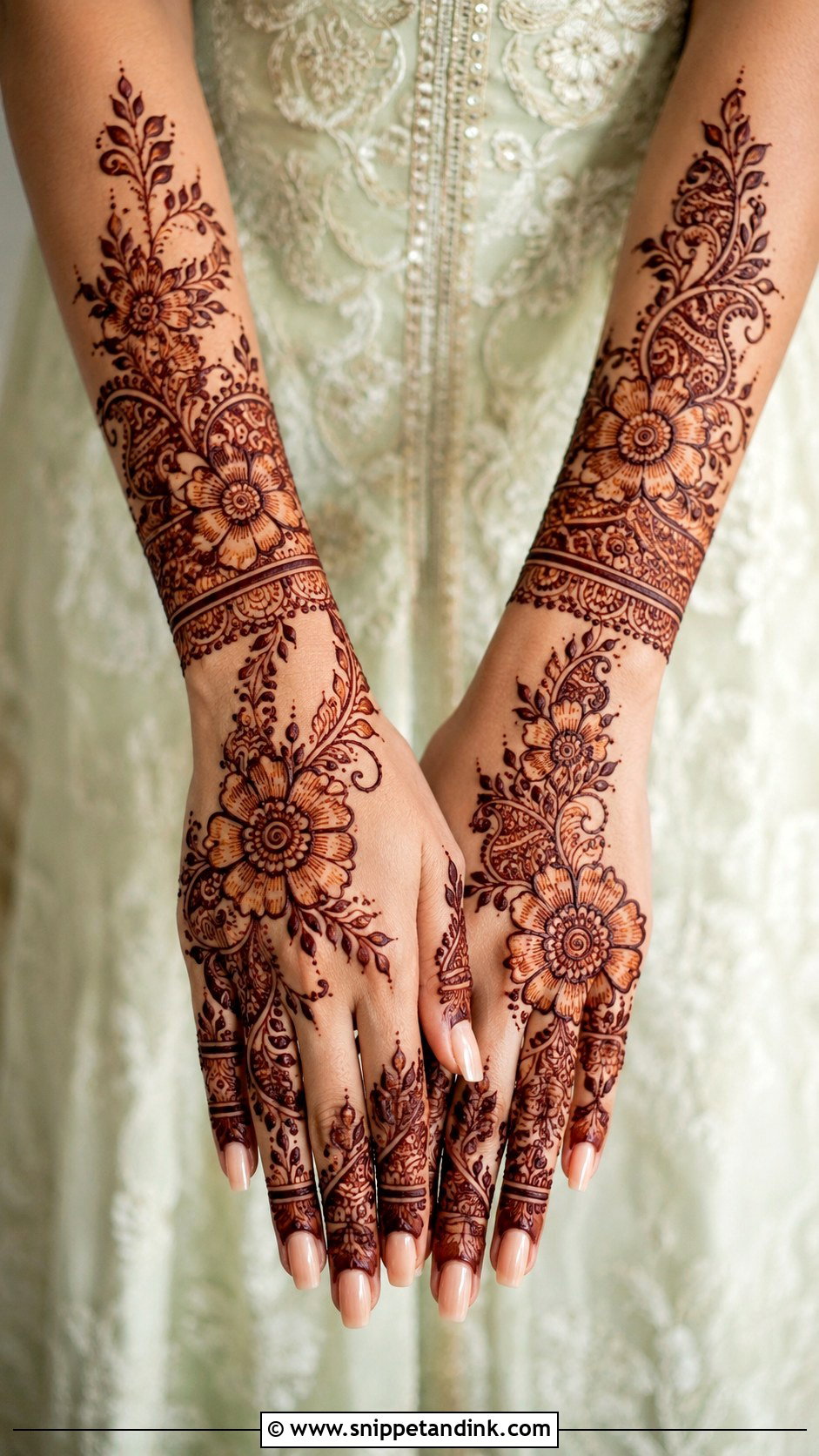
Indo-Arabic floral design keeps Arabic’s open flow but fills the petals and leaves with tiny lines, dots and paisley details. A large floral trail across the back of the hand, a cuff at the wrist and matching floral bands on the fingers is a typical layout. I recommend it to sisters of the bride and close family who want real detail without looking like the bride.
7. Bridal Floral Mehndi Design
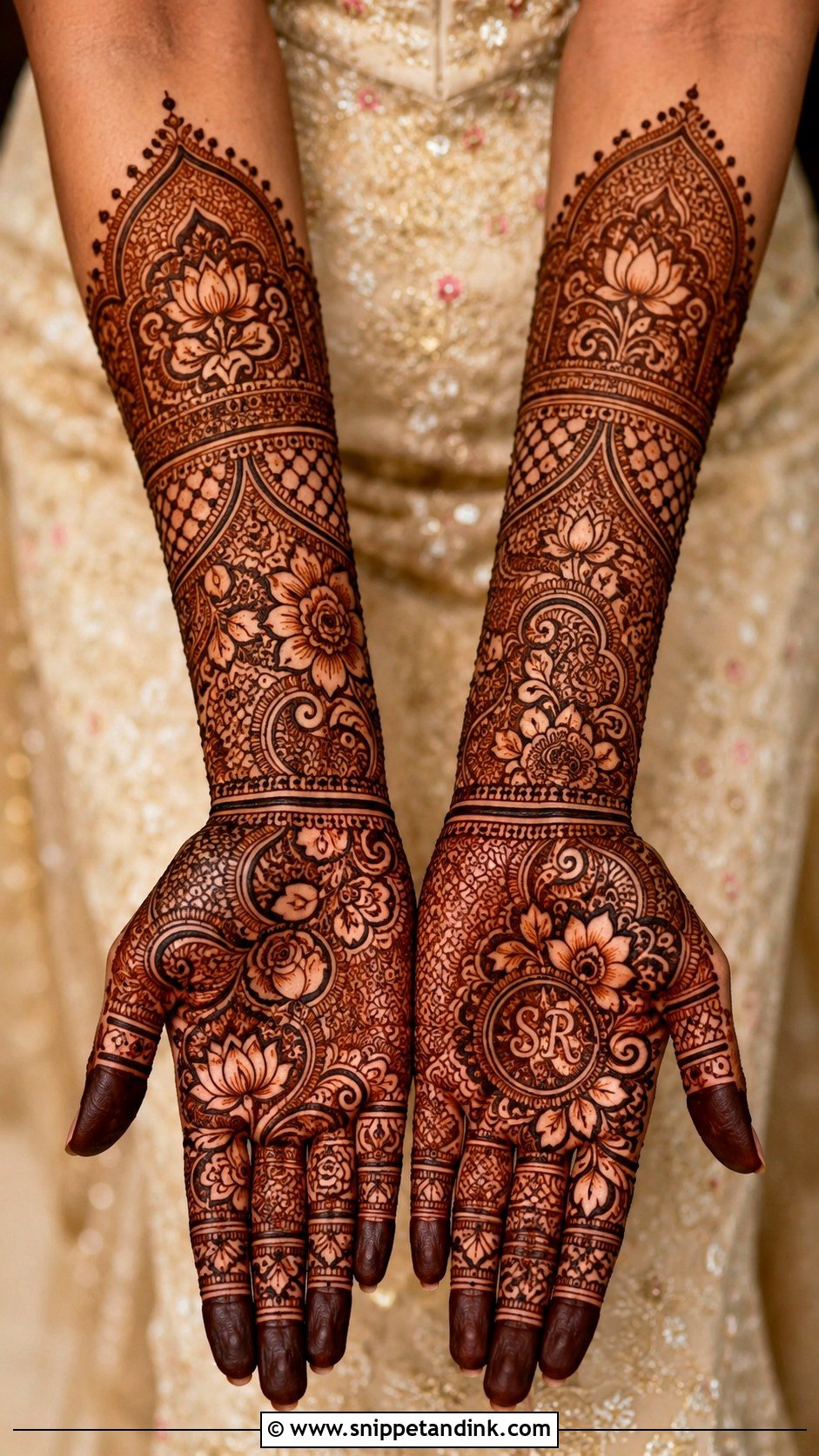
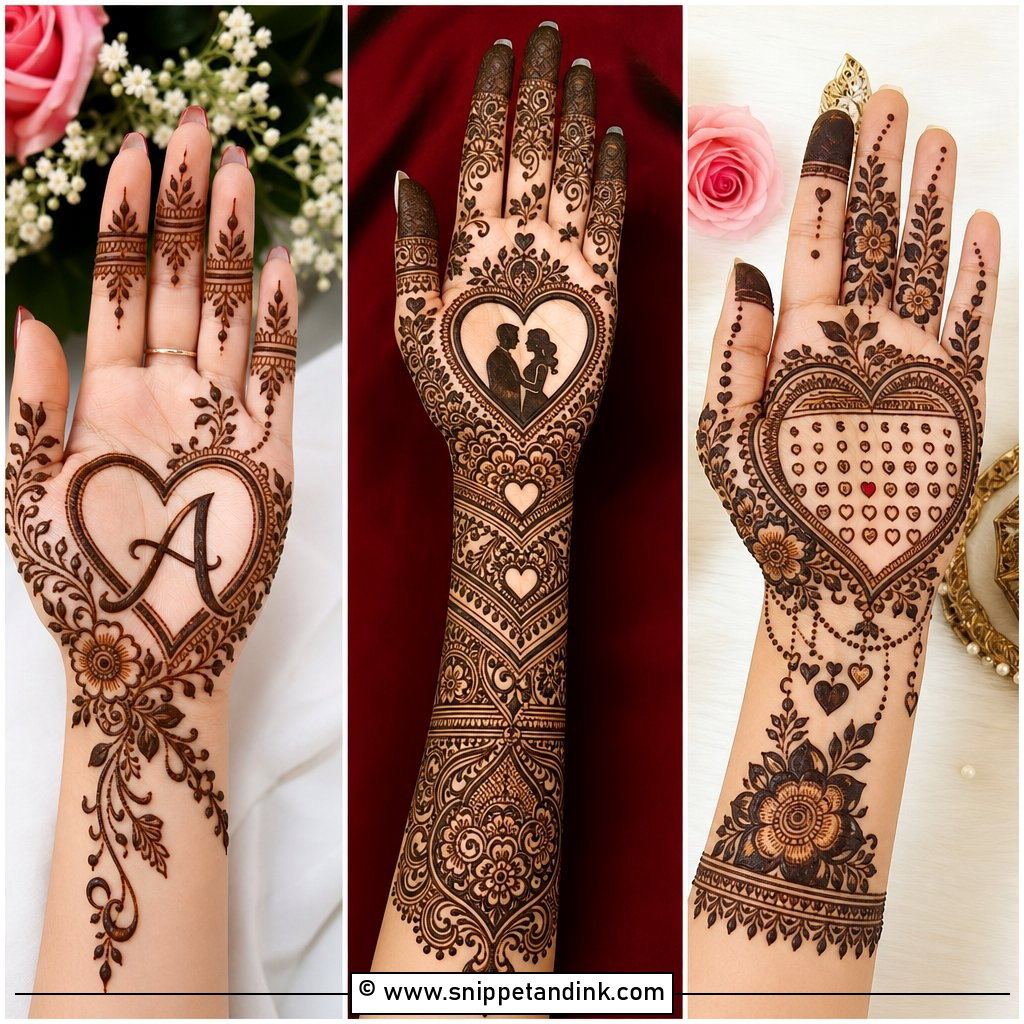
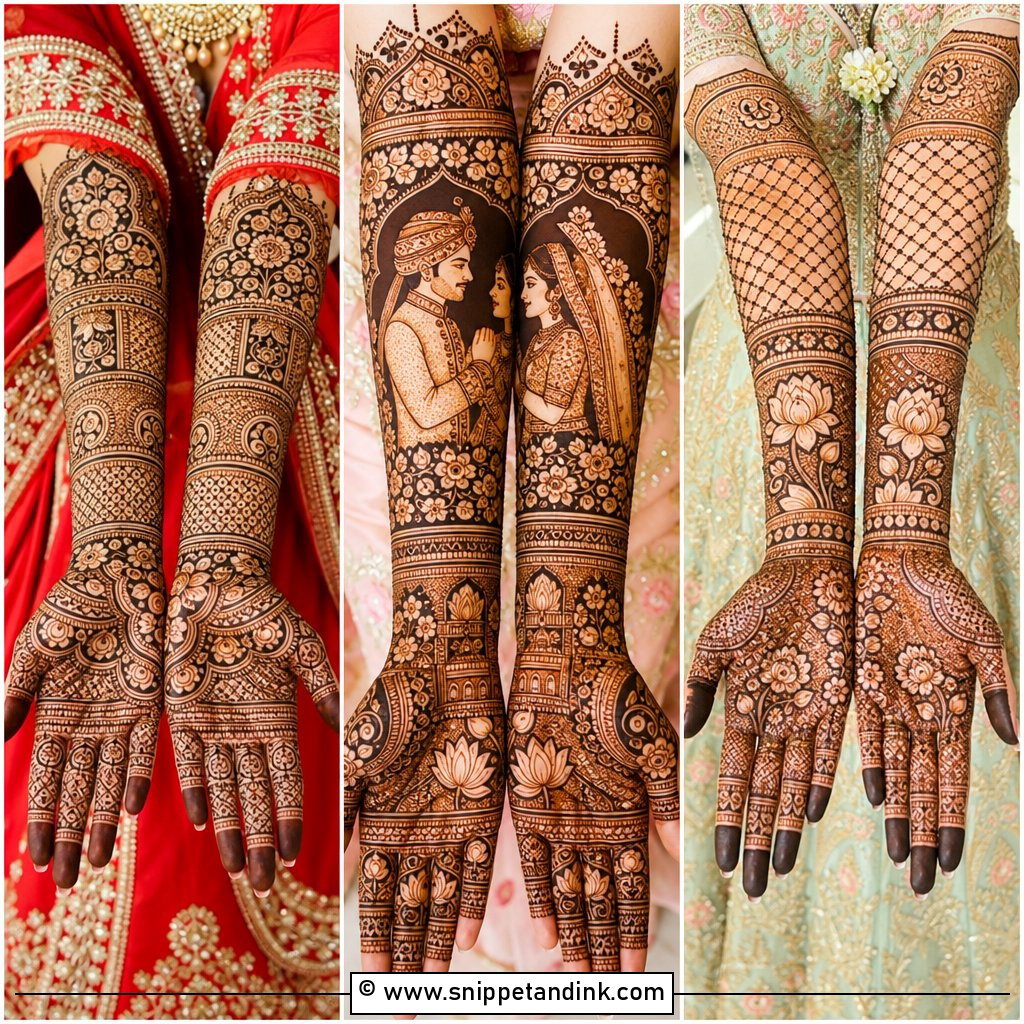
Bridal florals can run across palms, backs, wrists and forearms, blended with paisleys, jaali, mandalas and traditional motifs. Lotus is the bloom brides ask me for most because of its meaning; roses bring a softer, romantic note. Dense finger filling, floral borders at the wrist and mirrored patterns on both hands complete it. Initials or wedding symbols can be hidden among the petals, but tell your artist at the start so she can plan a space for them rather than squeezing them in.
8. Full Hand Floral Mehndi Design
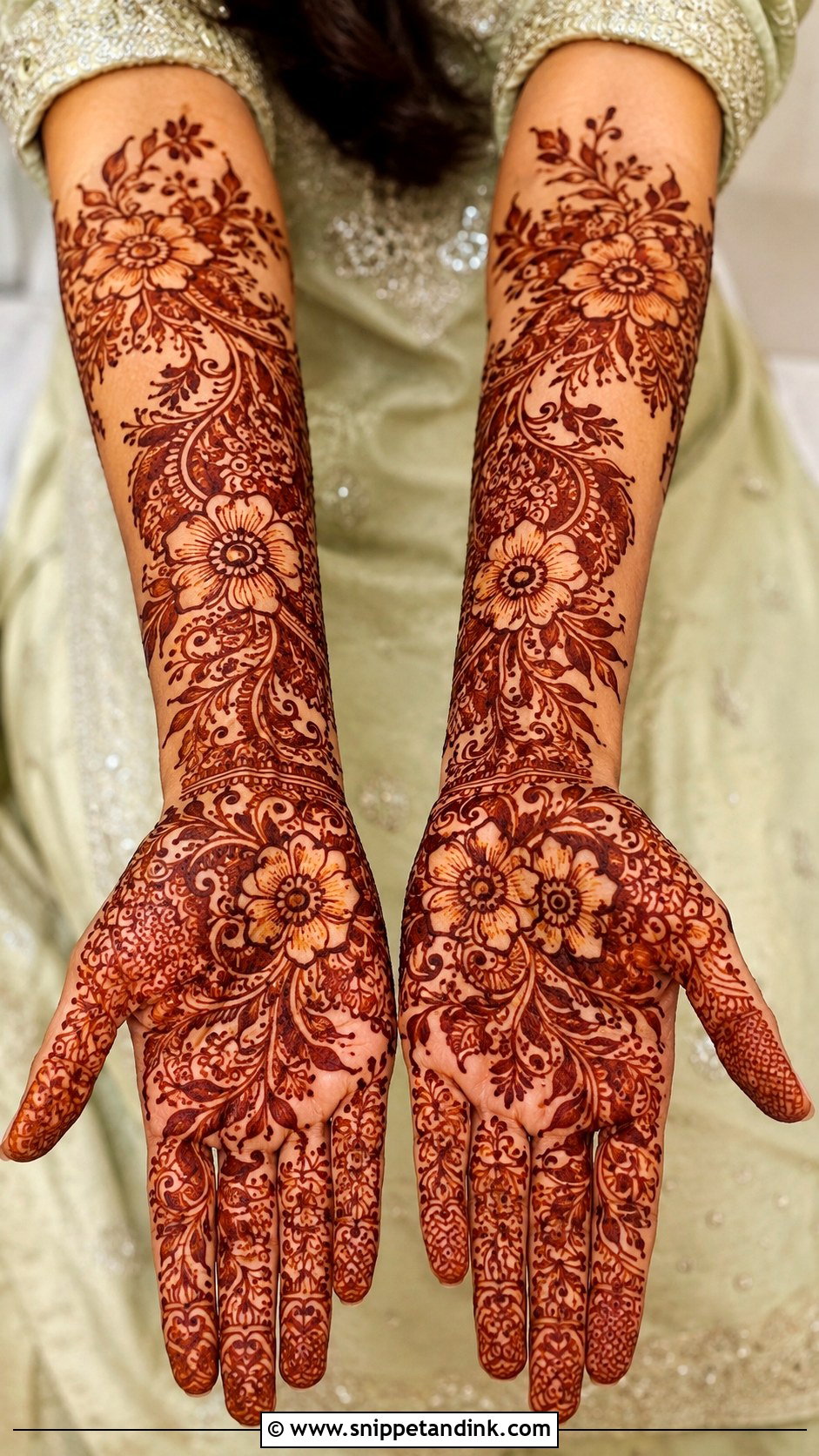
Full hand designs cover palm, fingers and wrist, often reaching the forearm, and they need structure rather than random filling. My order is large flowers first, then vines, paisleys and leafy curves linking them, then smaller flowers into the gaps, and finally a wrist cuff as the edge. Small pockets of open skin among the dense areas are what keep the flowers readable once the whole hand is stained.
9. Half Hand Floral Mehndi Design
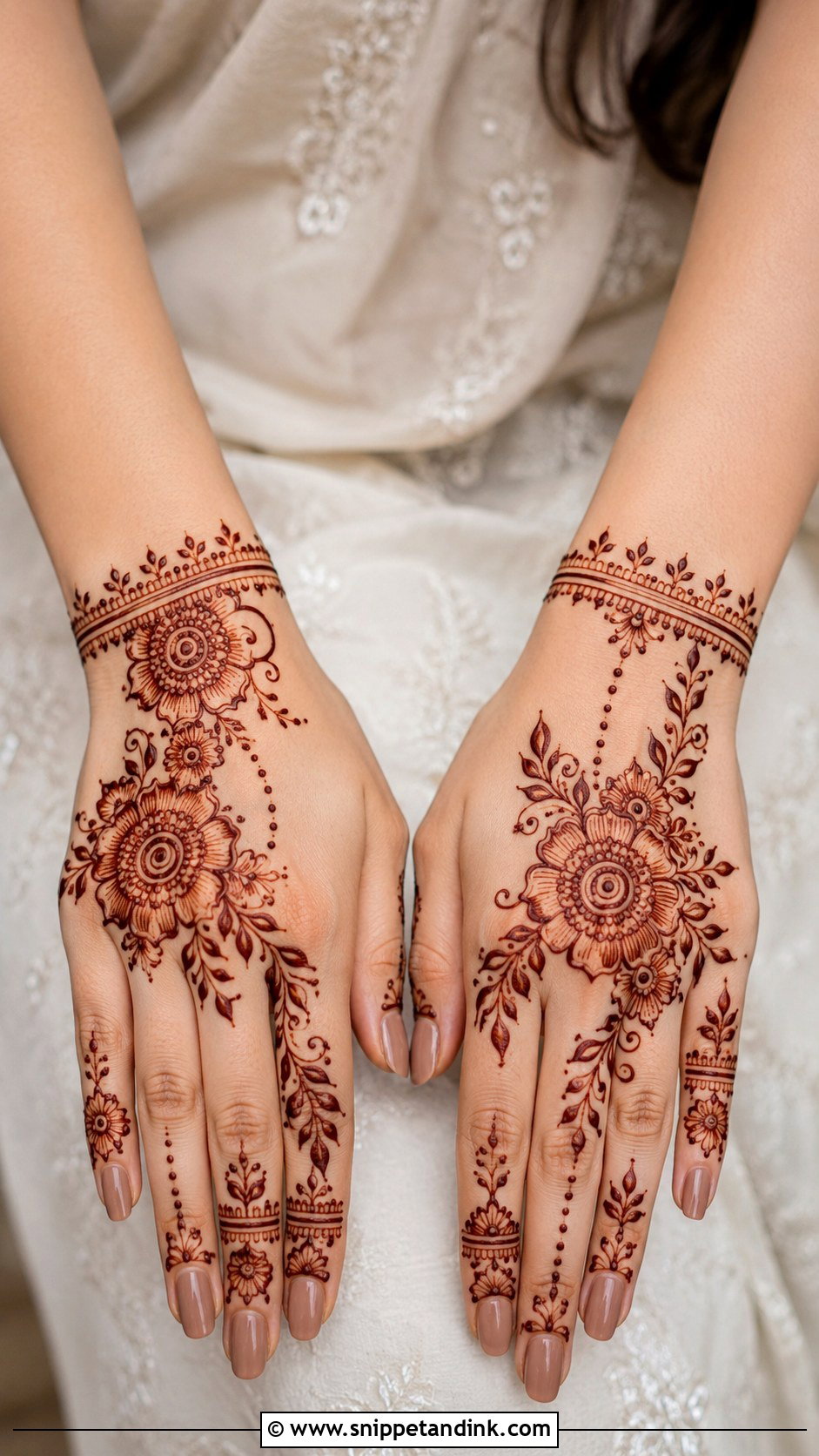
A floral mandala in the middle of the palm or back of the hand, with vines stretching toward the fingers, gives a complete look at half the coverage. It suits work events and anyone who dislikes heavy henna. Clean edges matter most here, since the design stops partway across the hand. I finish those edges with tiny dots, leaf tips or a curved border so it doesn’t look abandoned.
10. Floral Mandala Mehndi Design
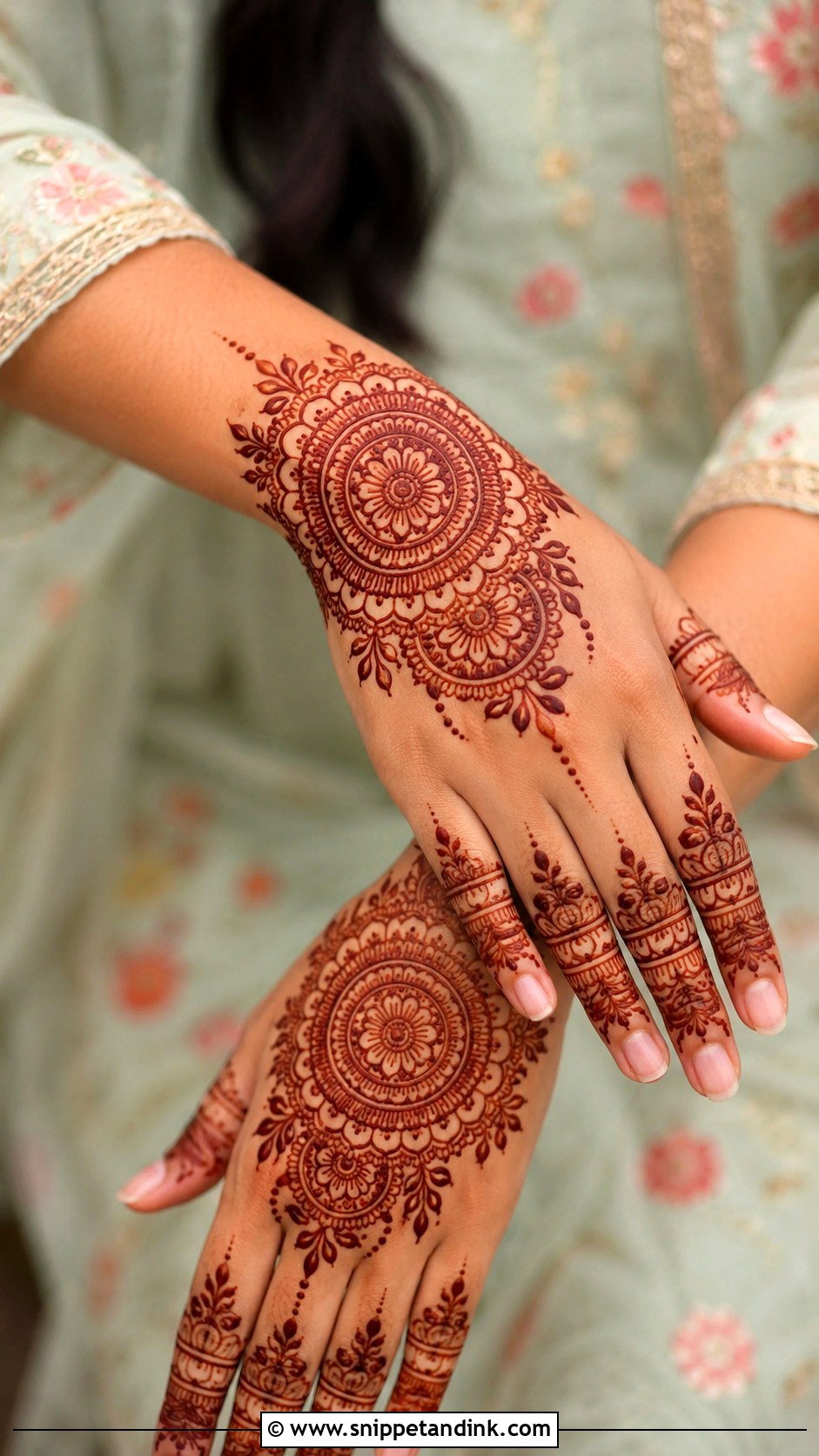
A flower in the center, built outward in rings of petals, dots, leaves and scalloped lines, gives a calm, symmetrical design. On the palm it feels traditional, on the back of the hand more modern. The round structure tells you where to go next, which makes it a good learning design. Symmetry is the hard part: I check each ring by turning the hand around, since a circle can look true from one side and lopsided from the other.
11. Rose Floral Mehndi Design
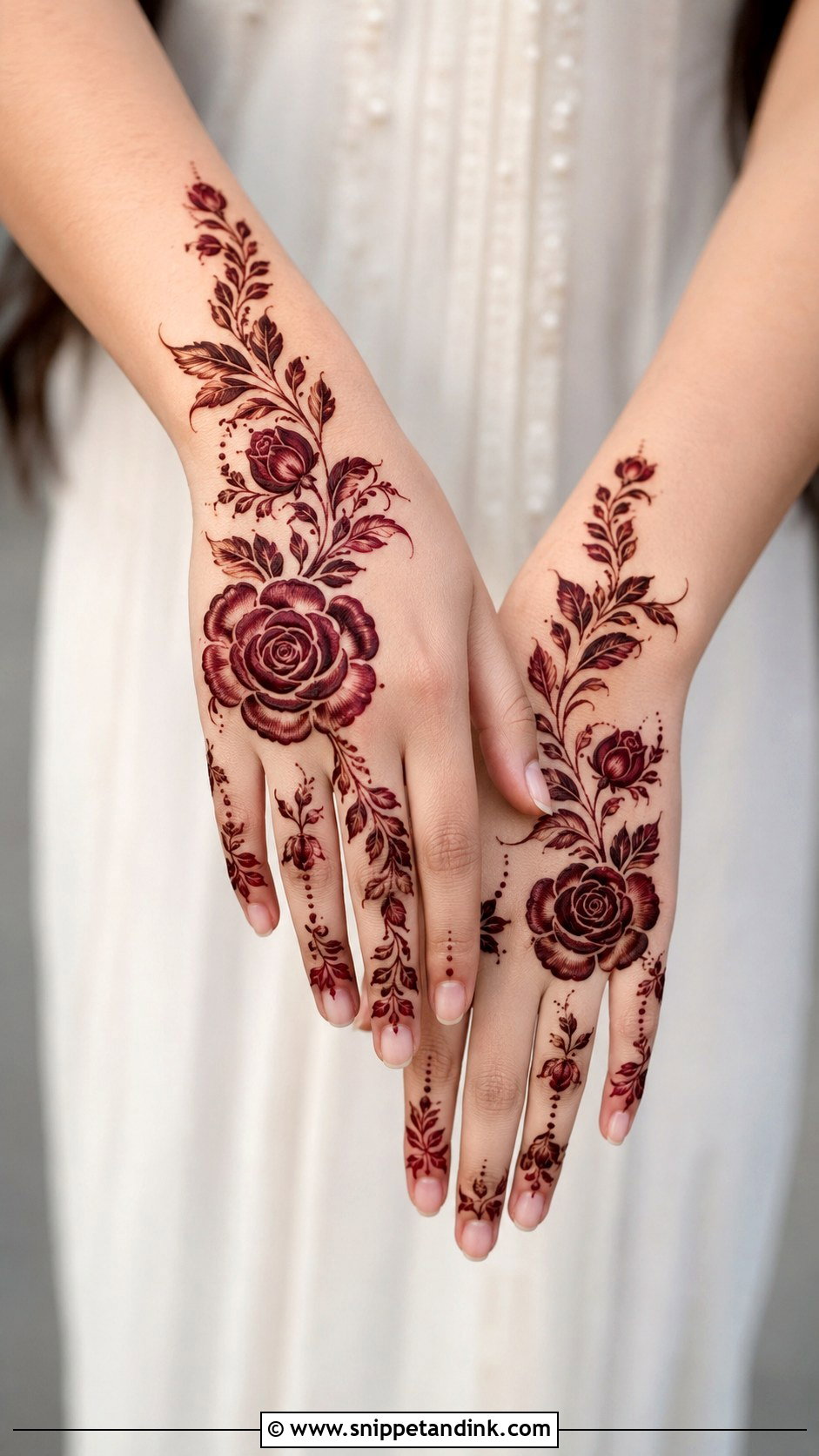
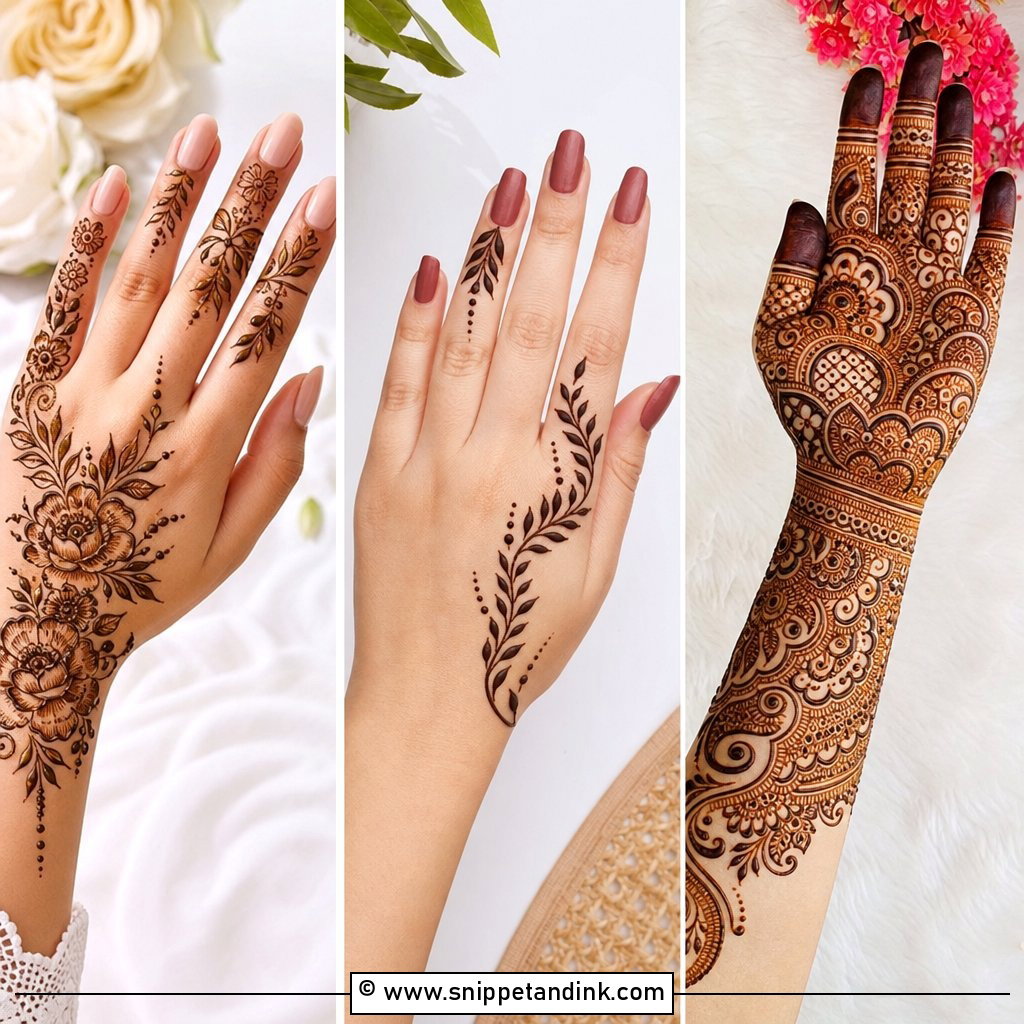
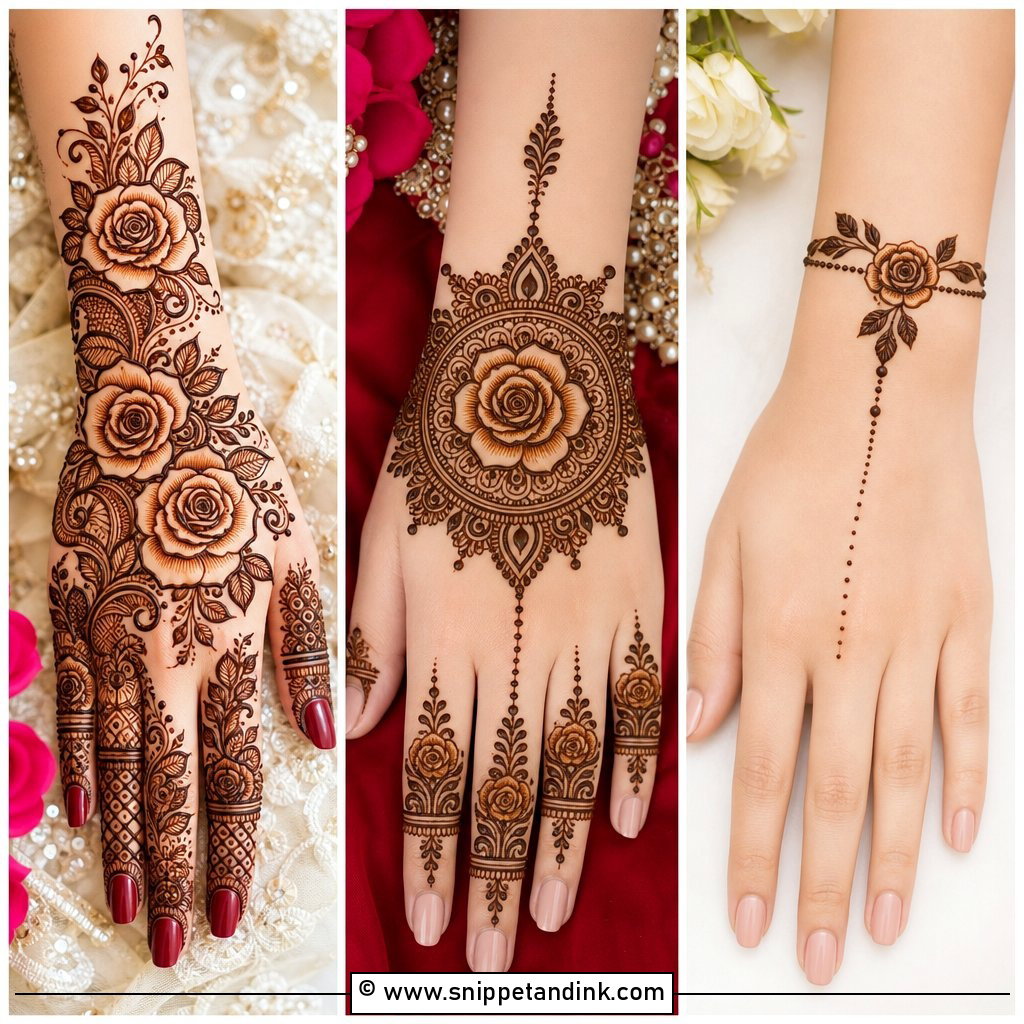
Roses are drawn as layered curved petals, which gives them depth even in a single color. One large rose can anchor the palm, trail along the side of the back of the hand or run as a vine from wrist to finger. I outline the outer petals thickly and keep the inner curls finer, so the bloom looks like it’s opening. Leaves, dots and small buds complete it, and space around each rose keeps the petal shape from blurring.
12. Lotus Floral Mehndi Design
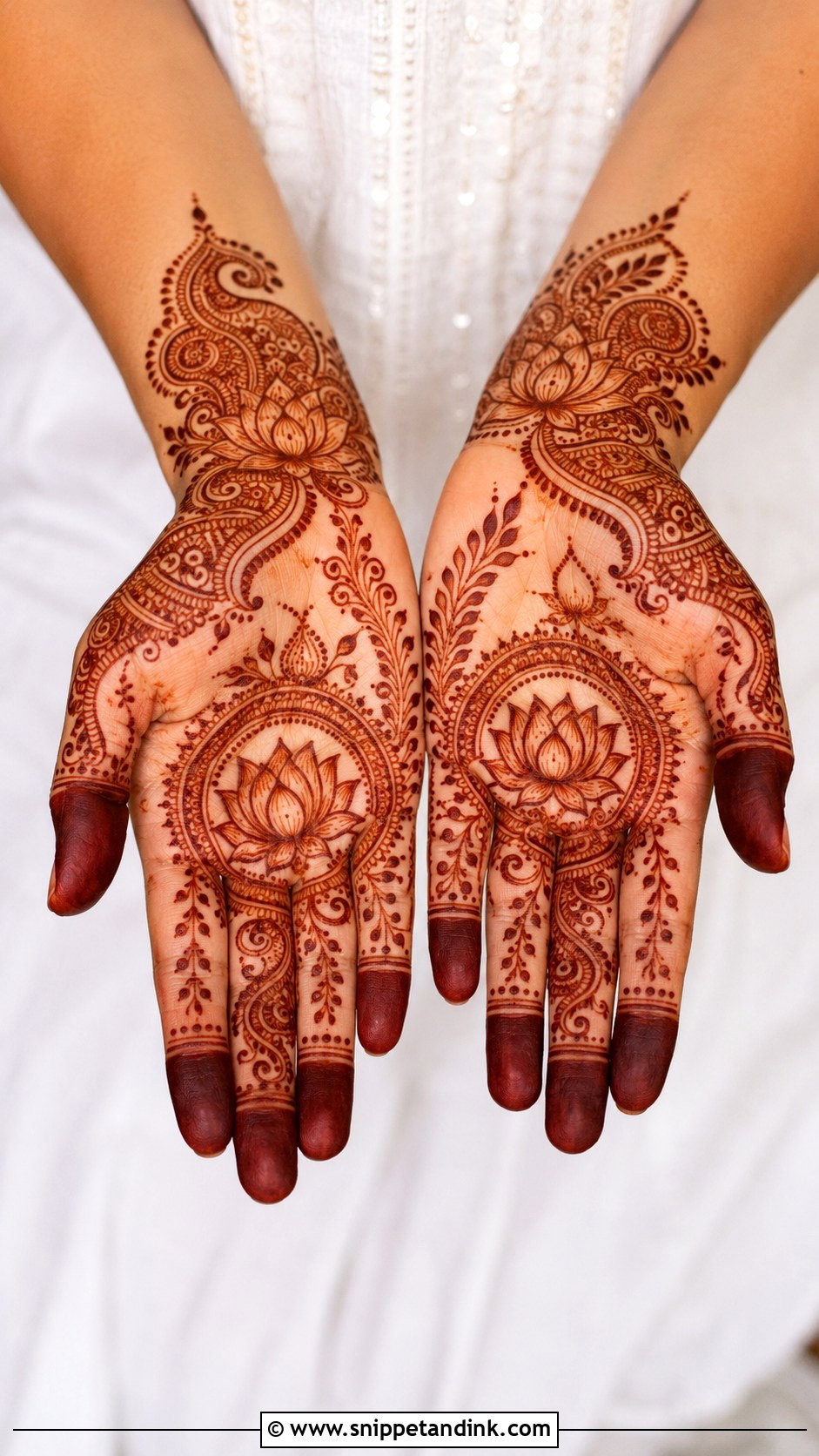
Lotus layers create a strong focal point on the palm, wrist or back of the hand. Paired with mandalas, paisleys and fine leaf vines, it gets fuller; a single lotus trail on the back of the hand is lighter and more modern. Families often request it for weddings, poojas and Diwali. A frame of tiny dots around the outer petals is my standard finish, and it does more to neaten the shape than any amount of filler.
13. Floral Vine Mehndi Design
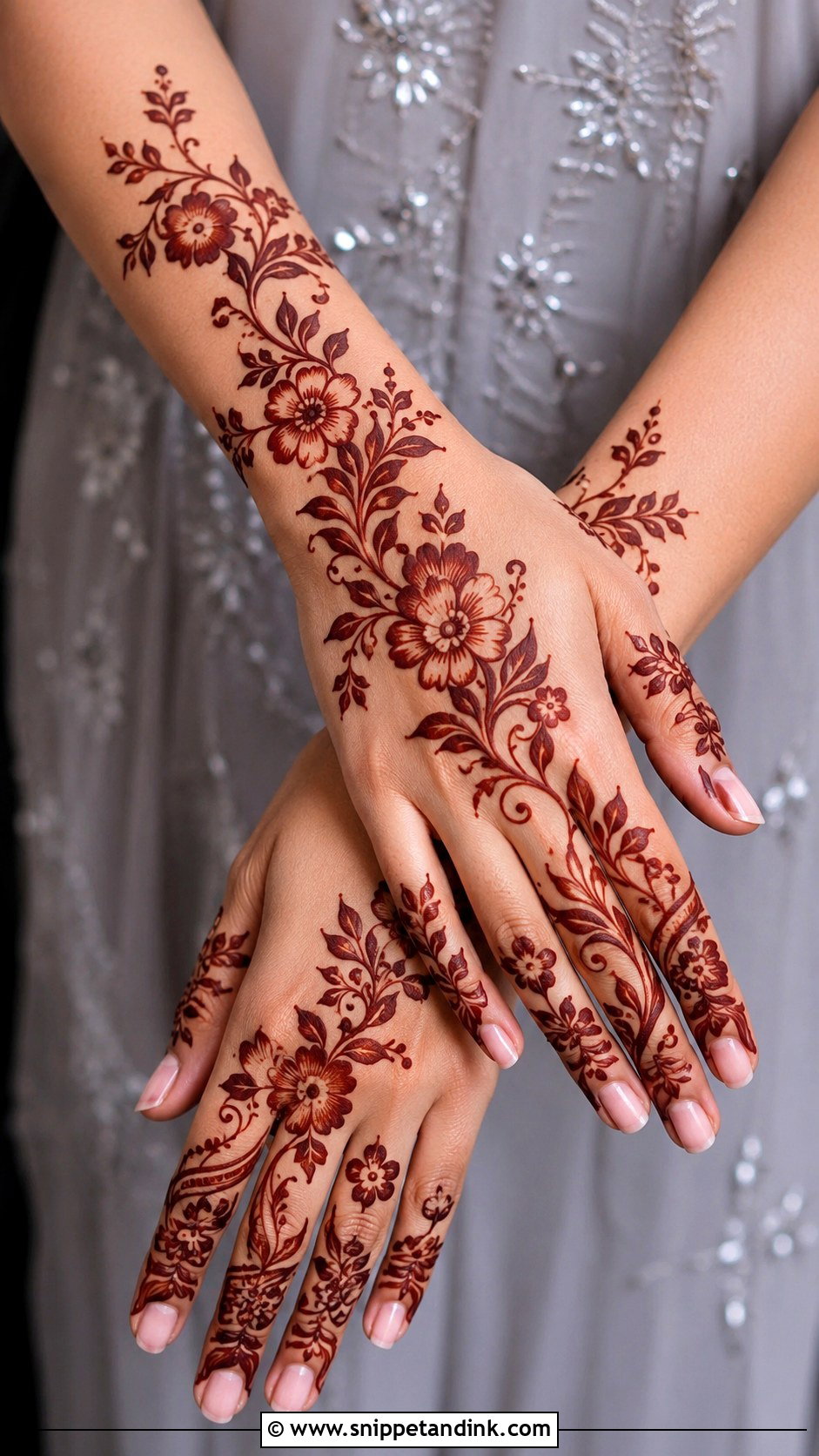
Vines move: usually from the wrist across the hand to the fingers, anchored by one or two large flowers and linked by stems, leaves and buds. That diagonal flow lengthens both long and short hands, so it’s one of the most flattering layouts I draw. It’s also quick. The anchors are the key decision, and I place them where the hand is flattest so the flowers don’t distort when you bend your wrist.
14. Floral Bracelet Mehndi Design
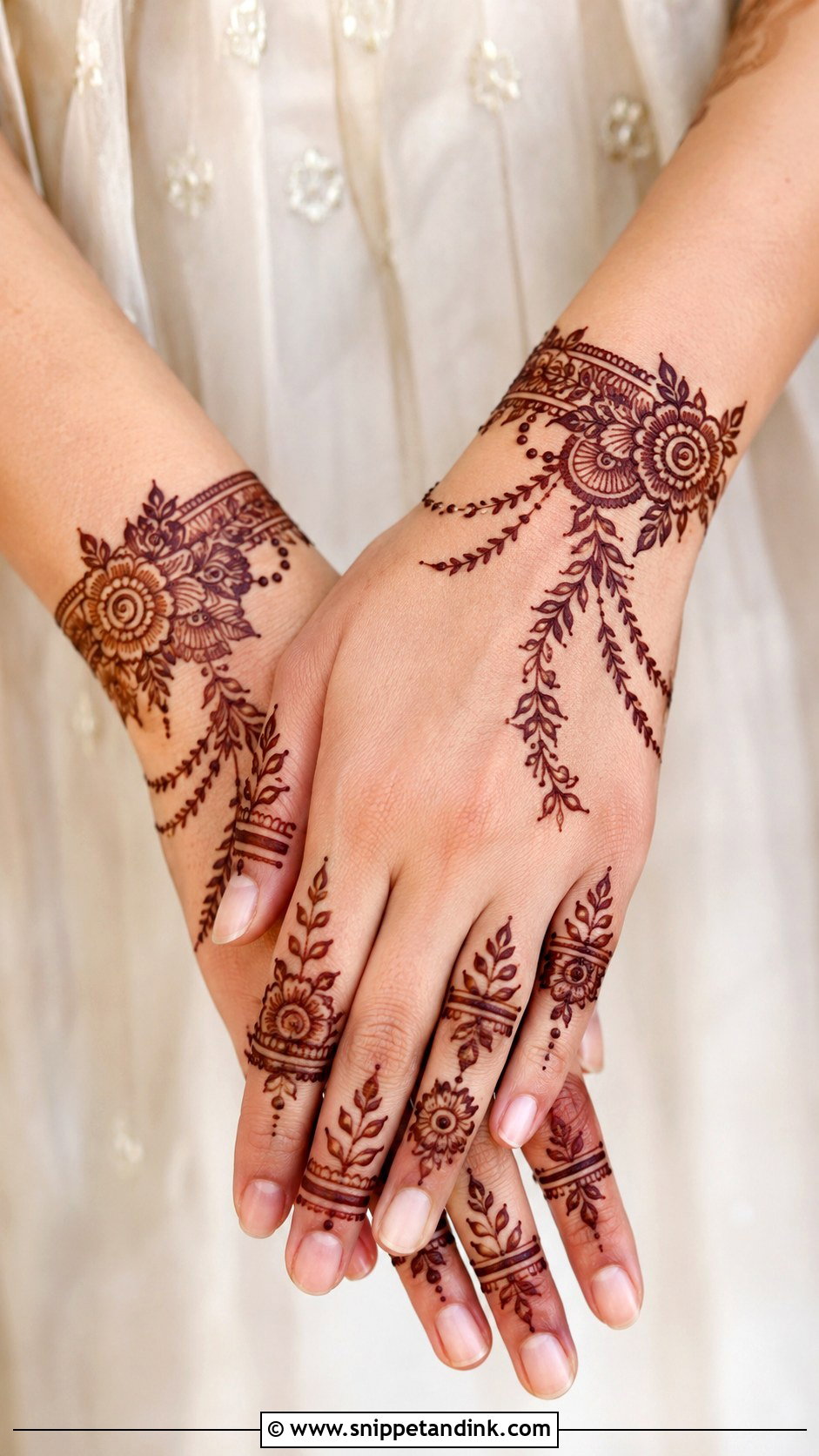
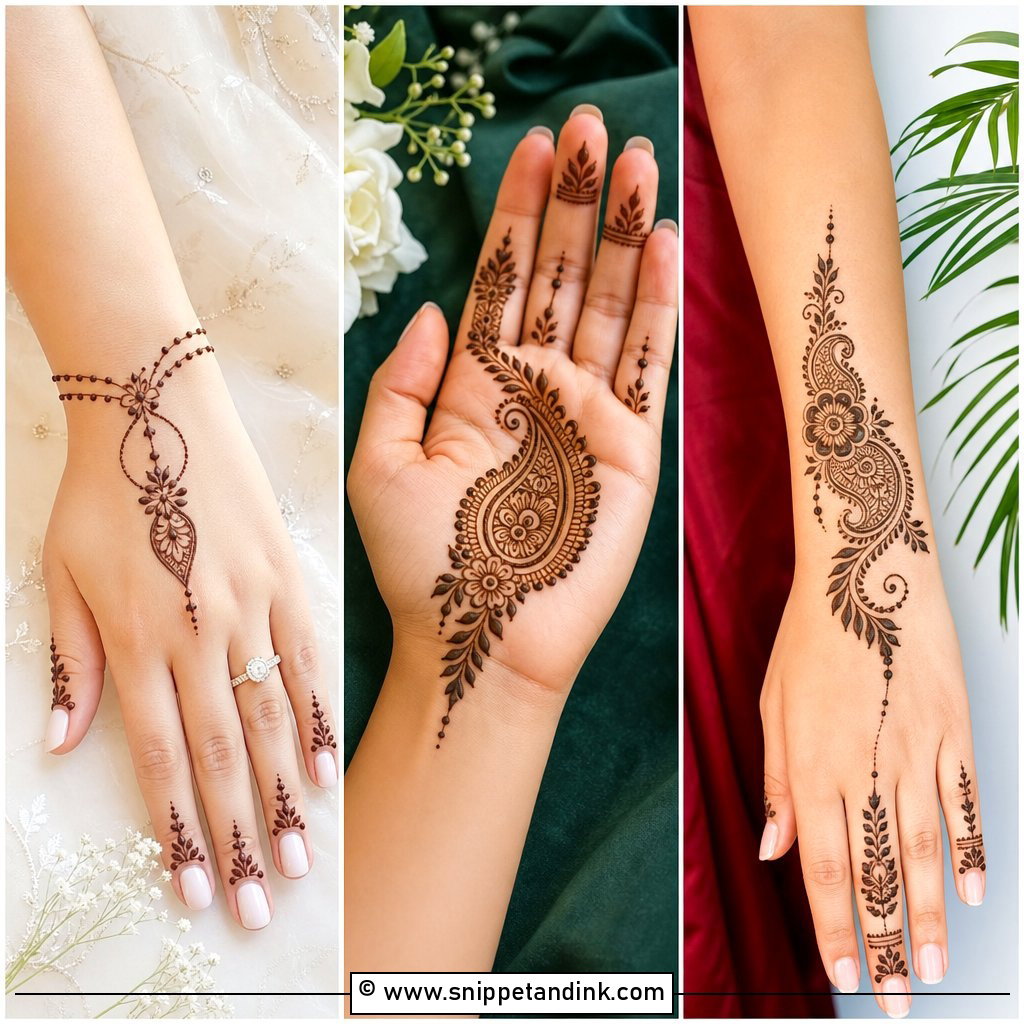
Flowers, leaves and fine chains wrap the wrist like a cuff or bangle, then a delicate floral trail moves toward the fingers. On the back of the hand it reads as henna jewelry, which suits engagement parties, Eid and Raksha Bandhan. The bracelet can be bold or delicate. I always add tiny ring-style patterns on the fingers so the design connects from wrist to fingertip; without them the cuff looks like it’s floating.
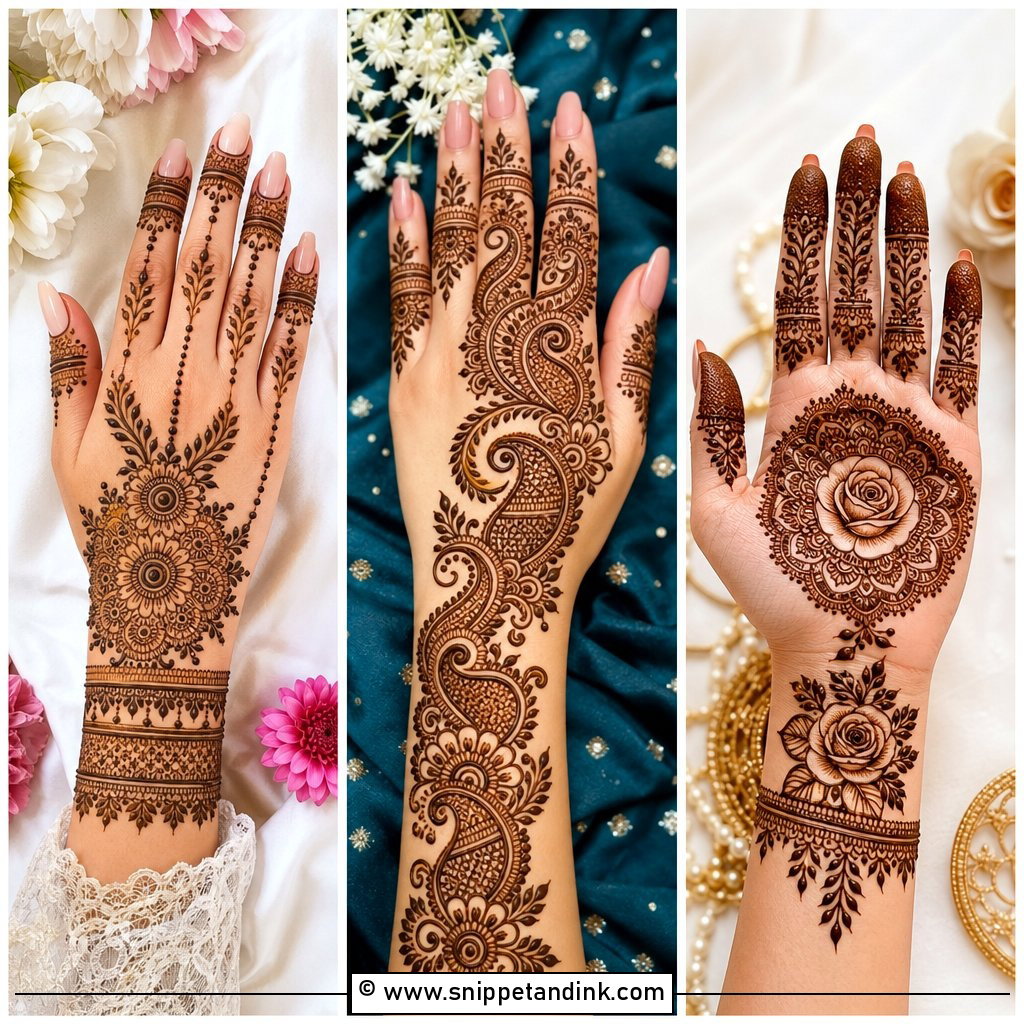
15. Floral Finger Mehndi Design
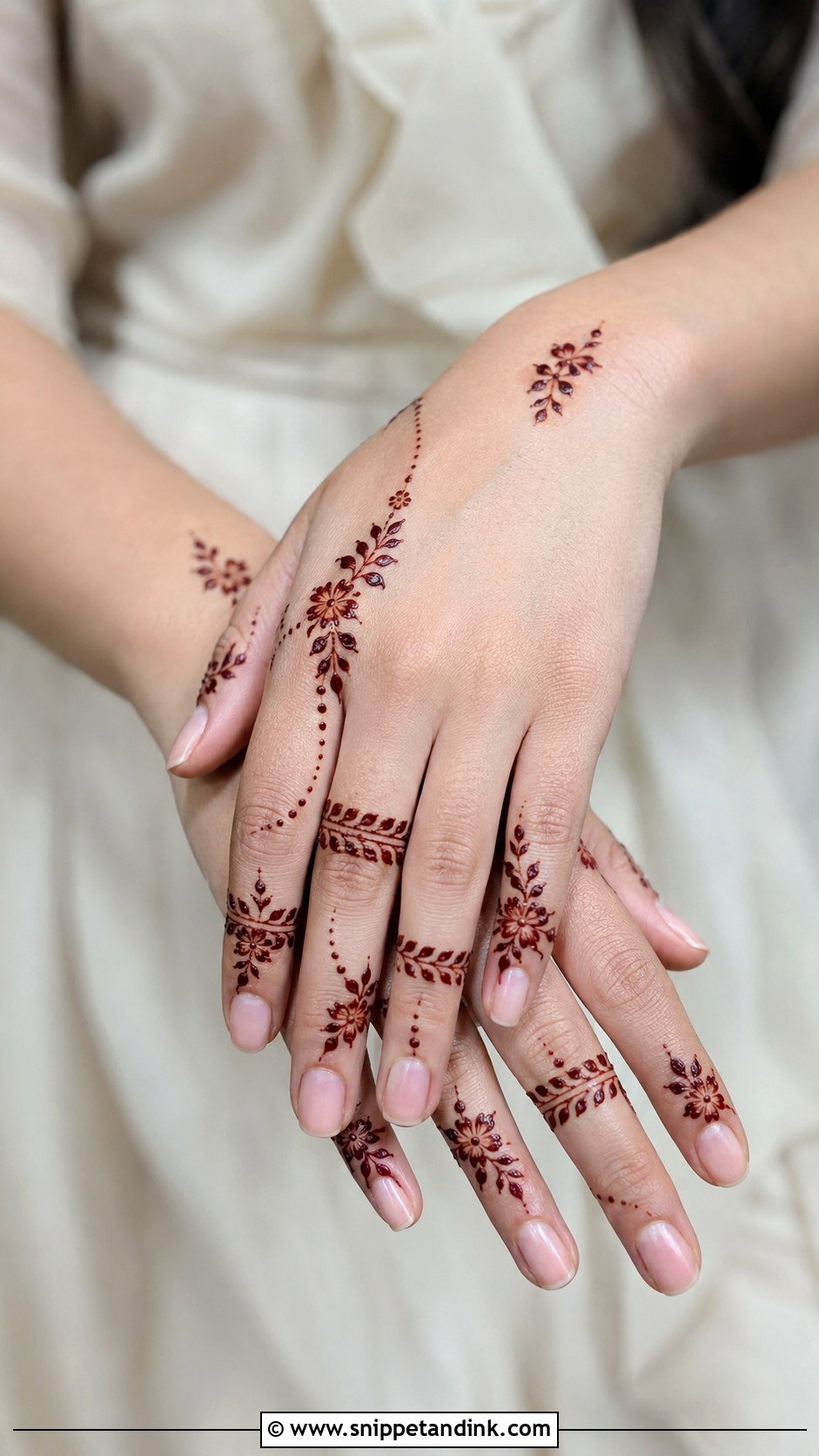
Small flowers, leafy bands and fine lines on the fingers only, with perhaps one flower near the wrist or back of the hand joined by a thin vine. It’s light, office-friendly and dries fast. On fingers this small, spacing shows every mistake, so I keep the pattern symmetrical between hands and the flowers all the same scale.
16. Floral Jaali Mehndi Design
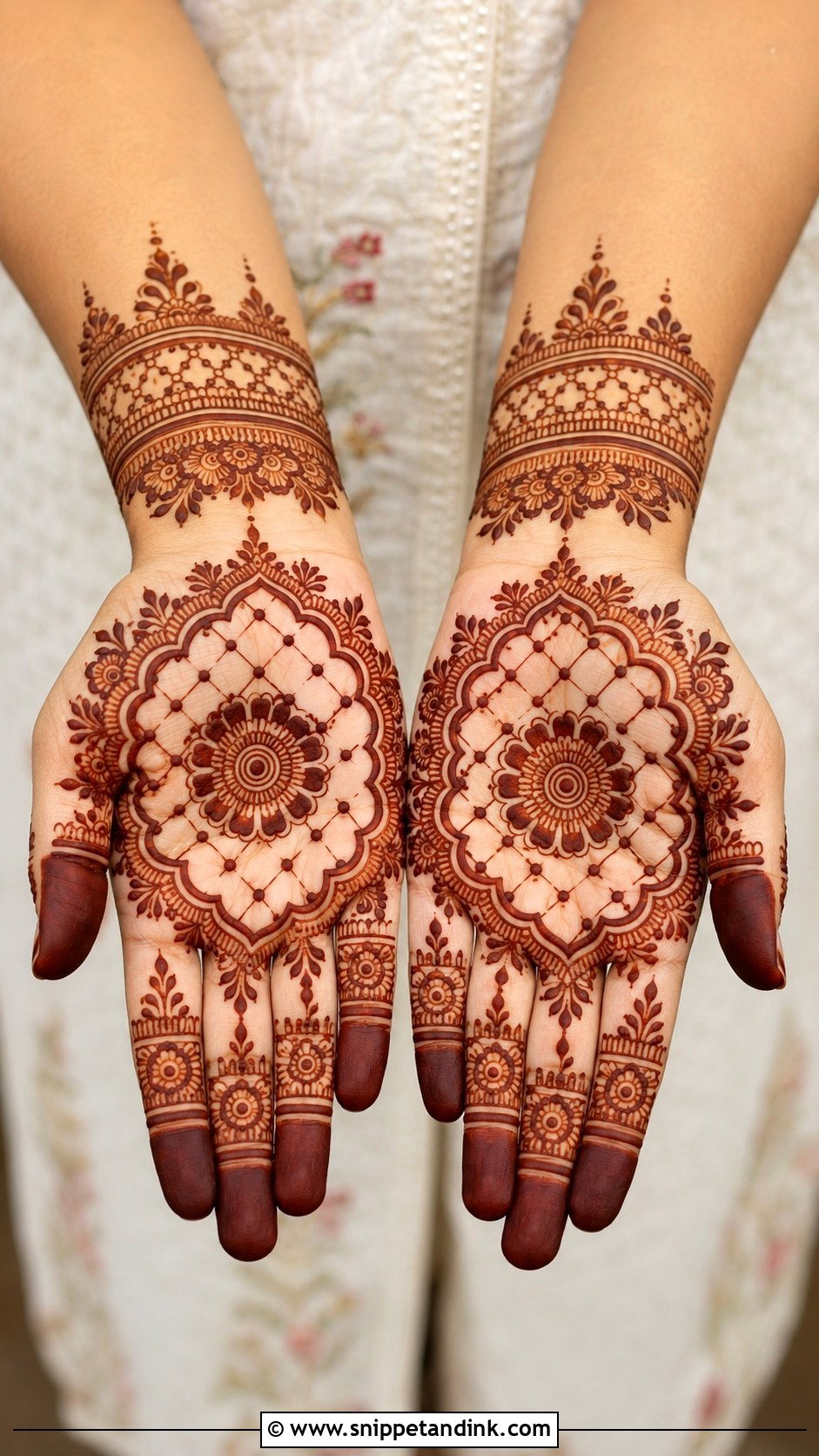
Flowers frame panels of mesh, either a floral mandala with jaali around it or a diagonal floral trail with mesh filling one side. The contrast gives lots of detail without many large elements, which is why it suits weddings so well. Even mesh lines matter more than anything else. I draw the grid with slightly wider spacing than it looks like it needs and put tiny dots at the intersections, because tight mesh fills in as it stains.
17. Floral Paisley Mehndi Design
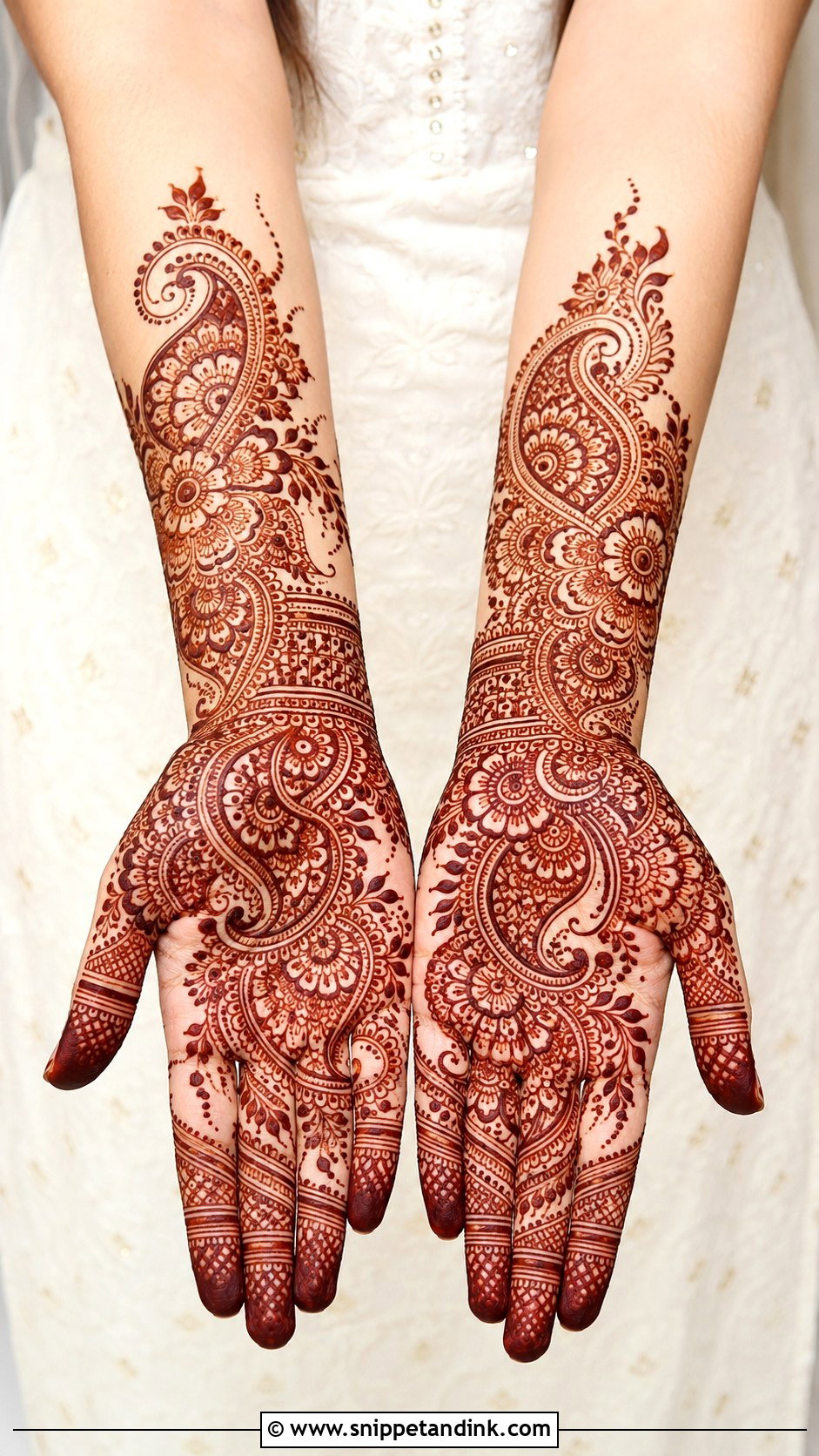
Paisleys give a design its structure and flowers soften it. On a full palm, one large paisley filled with petals, leaves and curves can carry the whole hand; on the back, paisleys strung along a floral vine give an Arabic-inspired layout. For a cleaner look I use one main paisley ringed by small flowers, and for bridal I repeat the paisley-and-flower pairing up the wrist and forearm. Mothers of the bride often choose this one.
18. Floral Peacock Mehndi Design
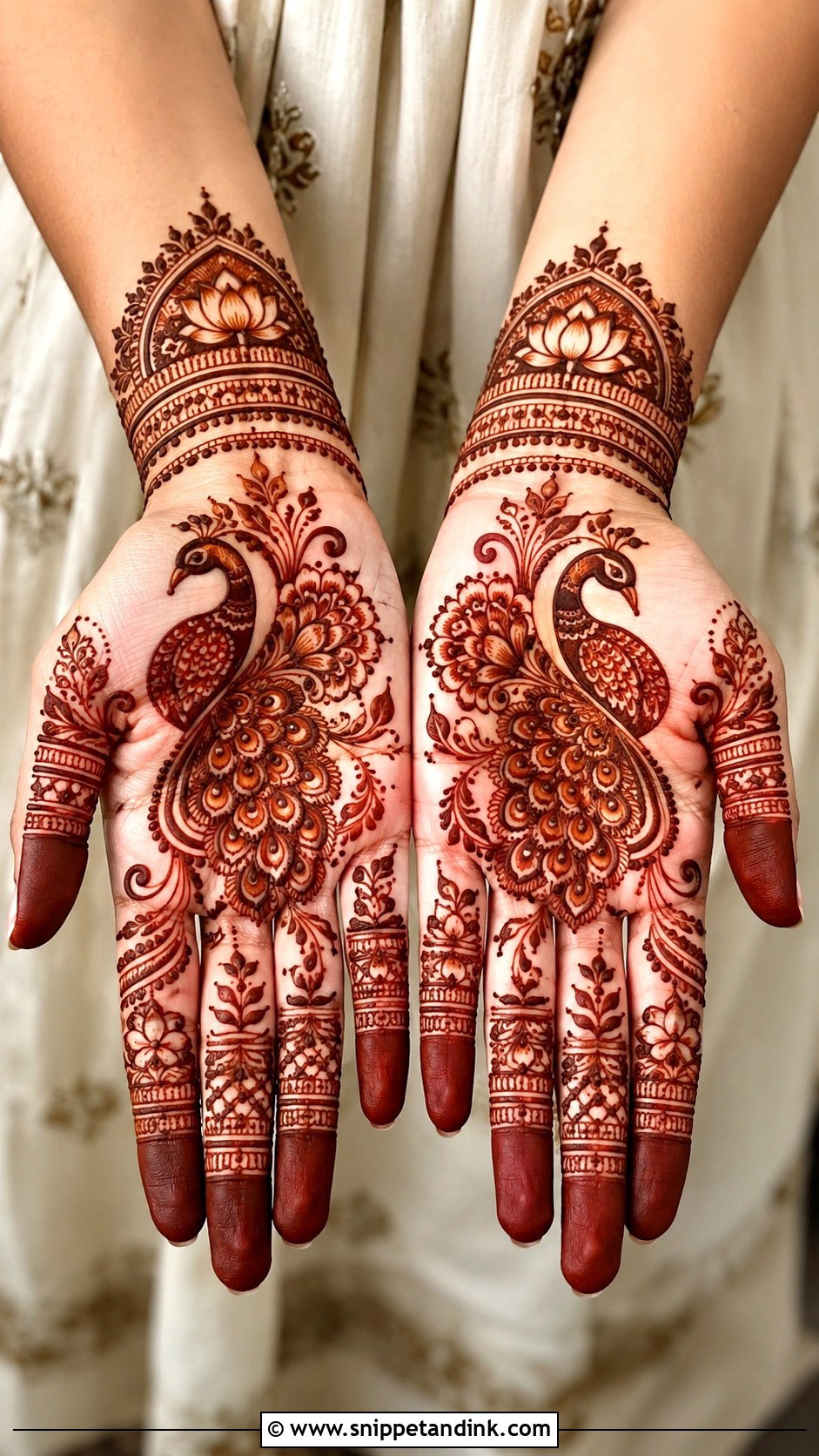
Peacock and flowers are two of the oldest henna motifs, and together they suit weddings and sangeet nights. The peacock can sit on the palm with floral feathers extending toward the wrist, or on the back of the hand with flowers around its body and tail. Where it goes wrong is density. If every feather is filled, the bird disappears, so I keep its outline clean and let the flowers play a supporting role.
19. Minimal Floral Mehndi Design
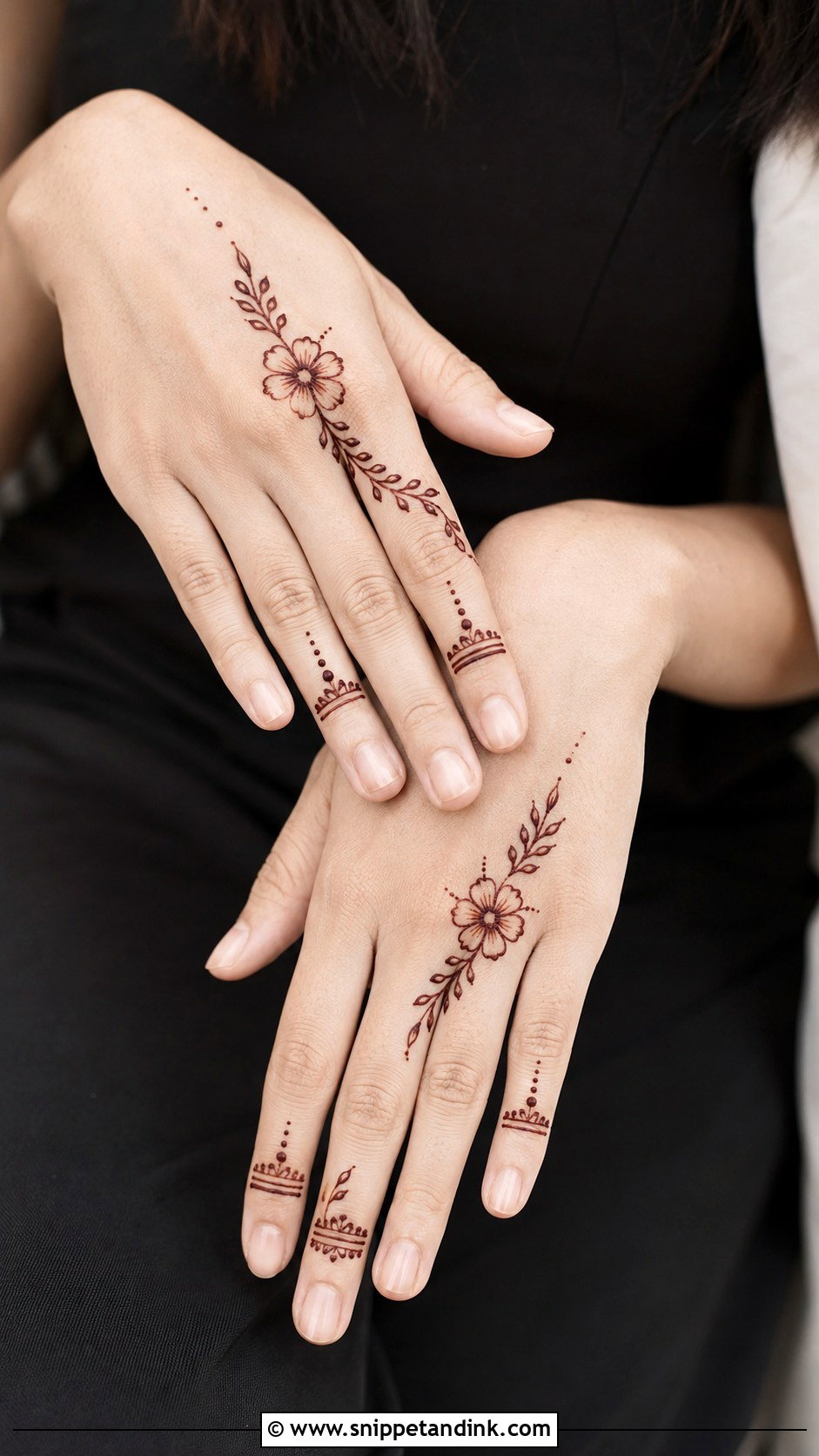
Fewer elements, and every line counts: a small flower on the back of the hand, a slim vine and simple finger bands. Negative space carries the design, so resist filling gaps. It pairs with both traditional and contemporary outfits and suits a first henna. If a minimal design looks unfinished, the usual fix is a single row of dots along the vine, not another flower.
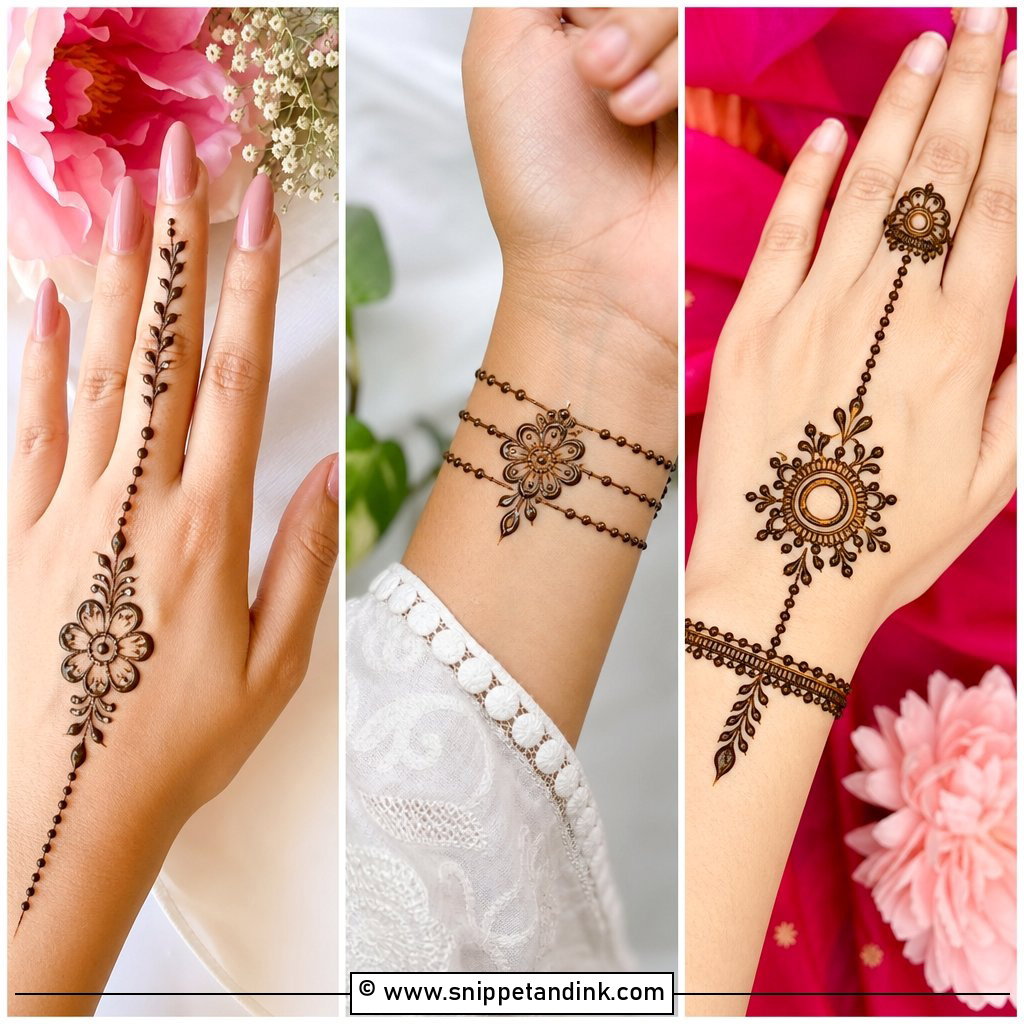
20. Easy Floral Mehndi Design
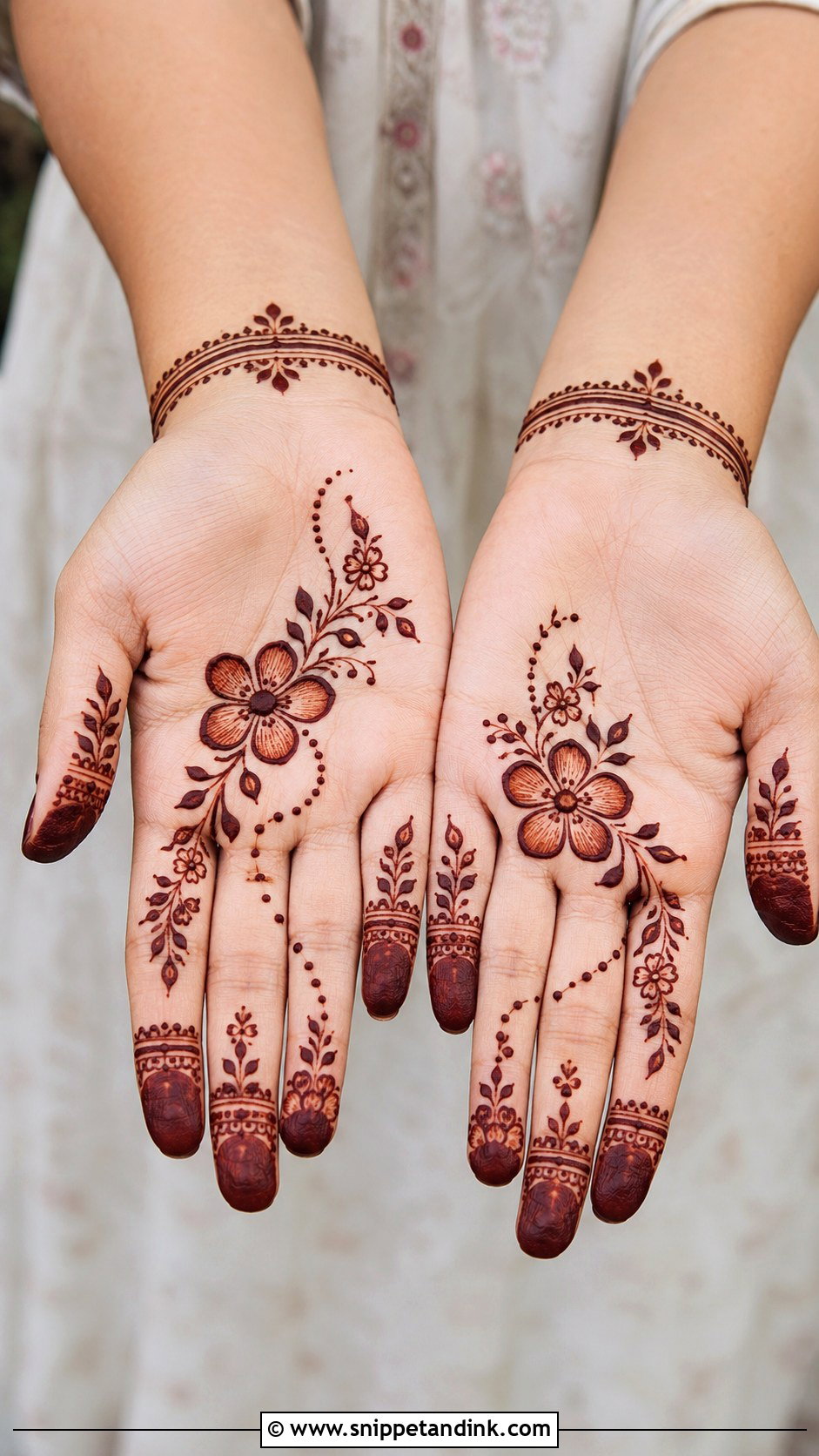
Start with a five-petal flower in the center of the palm or back of the hand, add small leaves around it, then link it to the fingers with curved lines or dotted trails and frame it with a small wrist band. Repeating the same flower at different sizes makes the hand look fuller without new skills. It doesn’t demand perfect symmetry, which makes it the design I give beginners to practice. Clean outlines matter far more than complex filling.
21. Modern Floral Mehndi Design
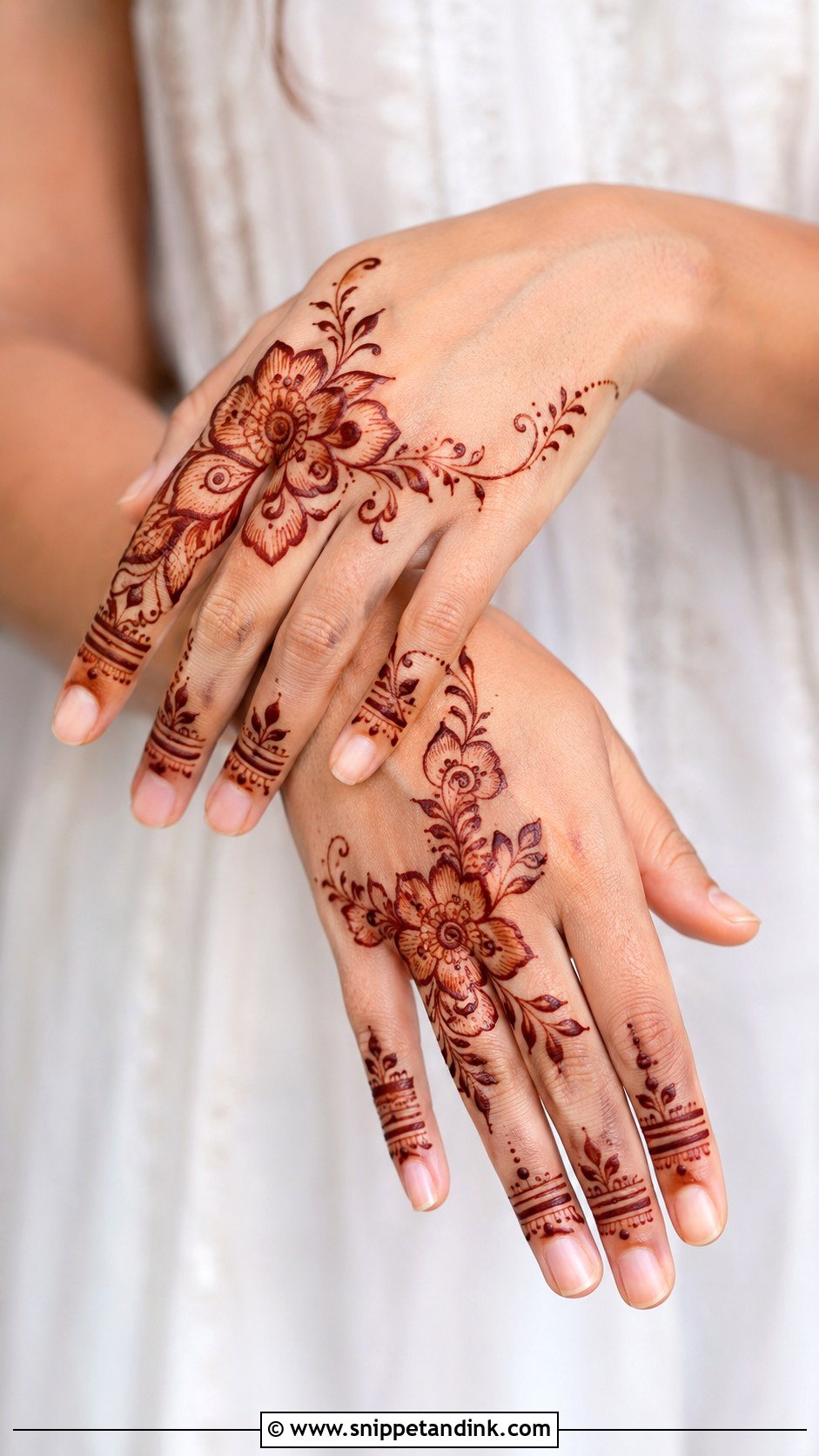
A bold flower on one side of the back of the hand, thin vines across the fingers, perhaps a geometric border or fine line detail, and very little traditional filler. It reads like jewelry and suits parties and engagements. The balance is one strong floral focus and light, breathable details around it. When I see a modern design go wrong, it’s usually because there were two focal flowers competing.
22. Stylish Floral Mehndi Design
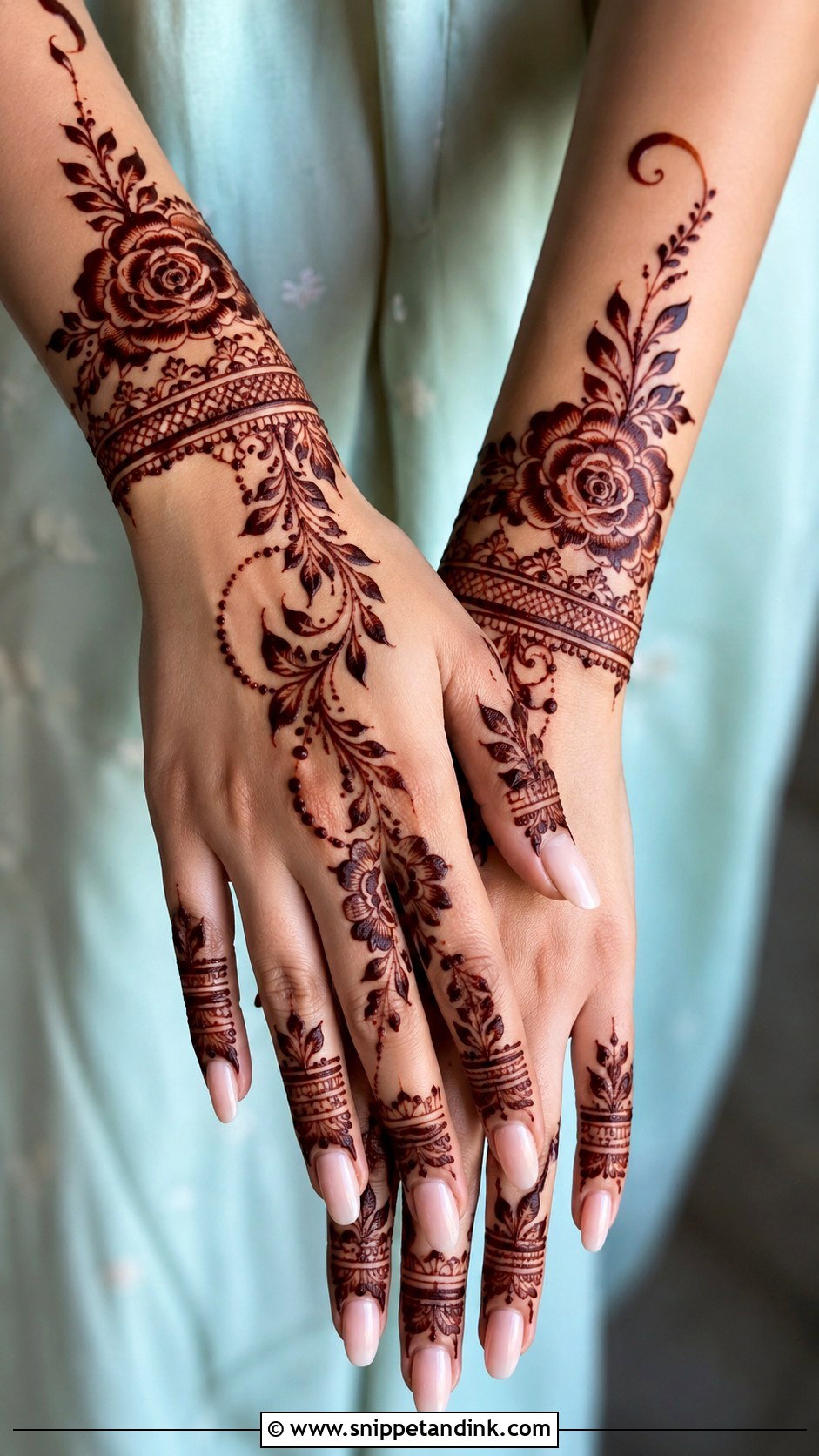
Roses along the back of the hand, a shaped floral cuff at the wrist and small leafy accents on the fingers make a polished look that feels special without being bridal. It works for wedding guests and festive dinners. Varying flower sizes is what makes it look professional: large blooms create focus and tiny buds fill spaces without crowding. Identical flowers in a row look stenciled.
23. Heavy Floral Mehndi Design
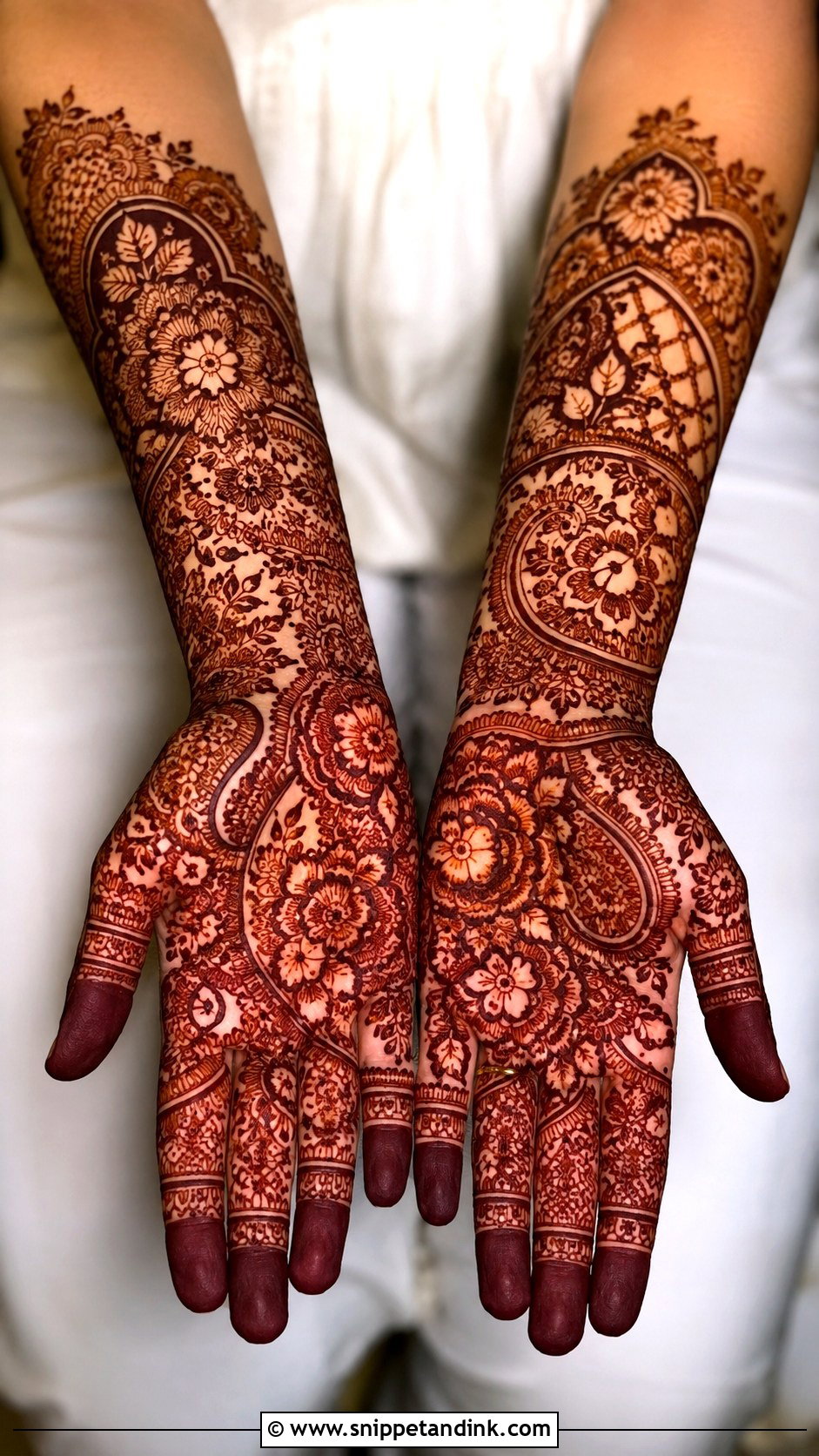
Layered flowers, paisleys, leaves, jaali and dense finger filling cover the hand, usually for brides and close family. Keeping the flowers visible under all that detail is the whole skill. I lay down the big anchor flowers first and fill around them, and I add floral bands on the wrist and forearm last. More paste touching skin gives a darker overall effect, but it also takes much longer to dry, so plan a long sitting.
24. Light Floral Mehndi Design
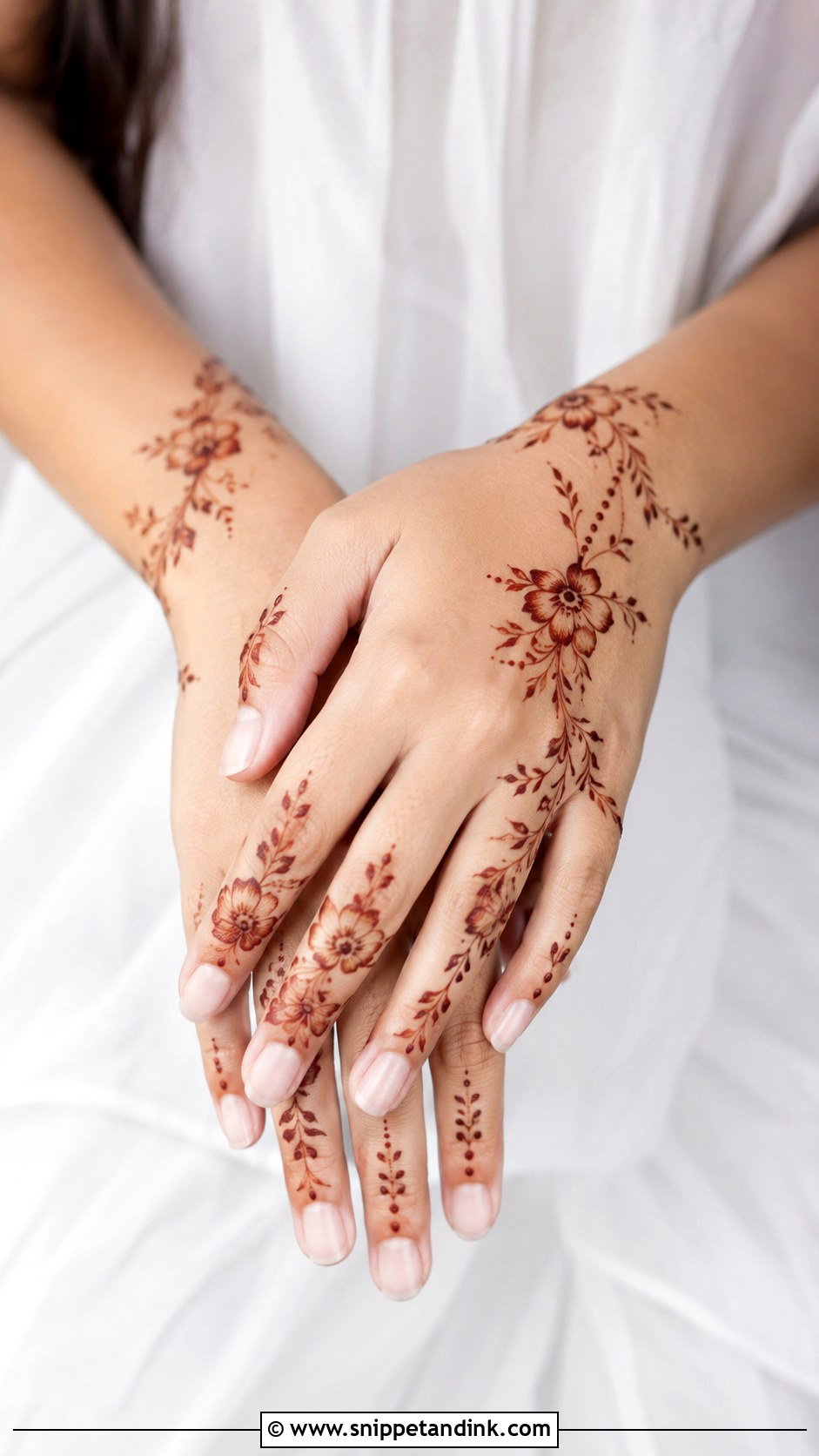
One floral trail, a few leafy branches and simple finger accents, mostly on the back of the hand. It looks good in photos and never overwhelms an outfit, which makes it right for younger girls, office events and small functions. Thin lines and open spaces are non-negotiable. Tiny dots around the flowers are the only extra I’d add.
25. Floral Bel Mehndi Design
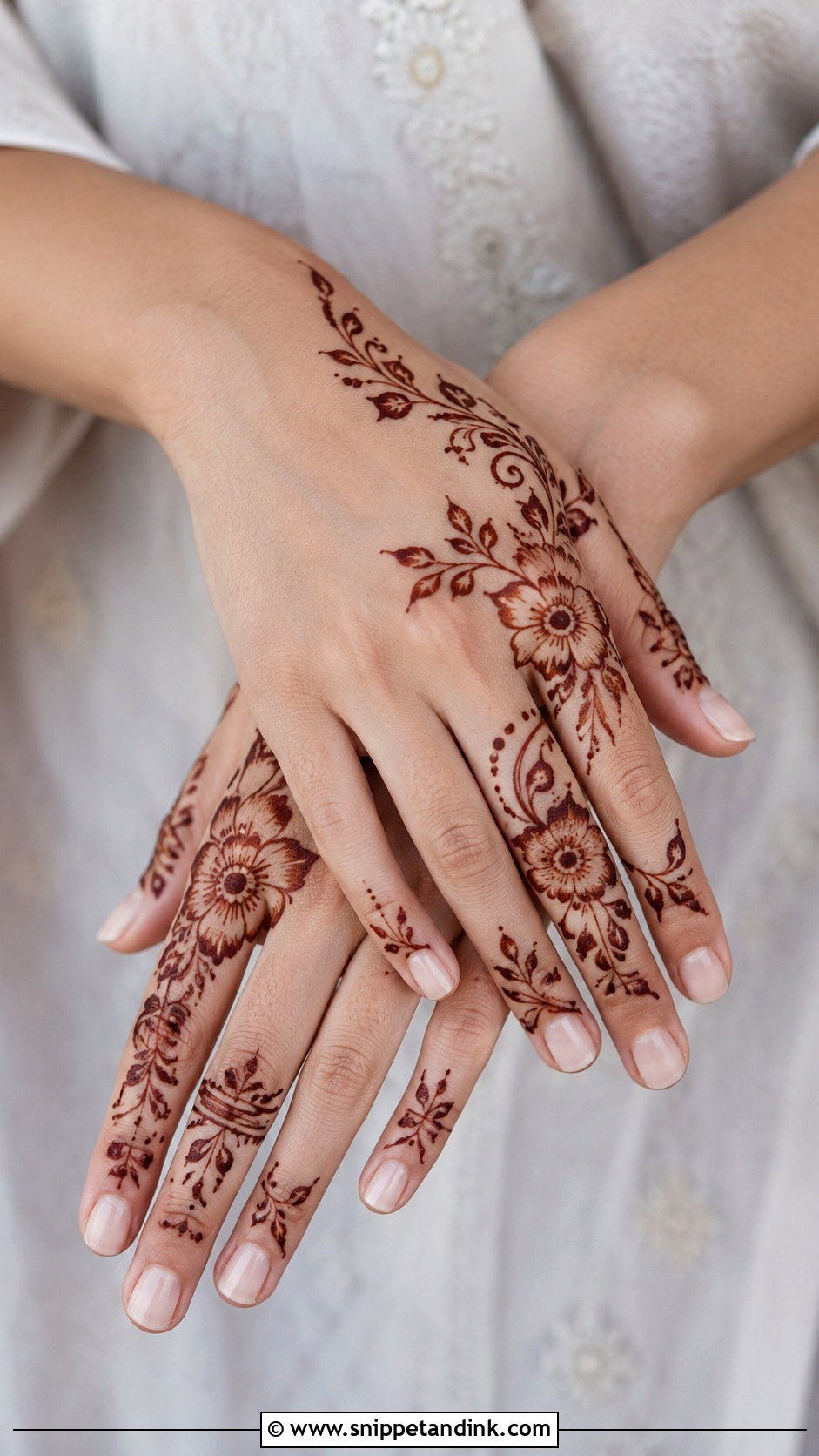
A bel is a creeper, so the flowers and leaves follow one continuous trailing line, diagonally across the back of the hand, curving around the palm or running from wrist to fingers. Add paisleys and filled fingertips for a traditional version, or keep it thin with open spacing for a modern one. I draw the main stem in one smooth stroke before adding a single leaf; a stem drawn in pieces never looks like it’s growing.
26. Floral Tikki Mehndi Design
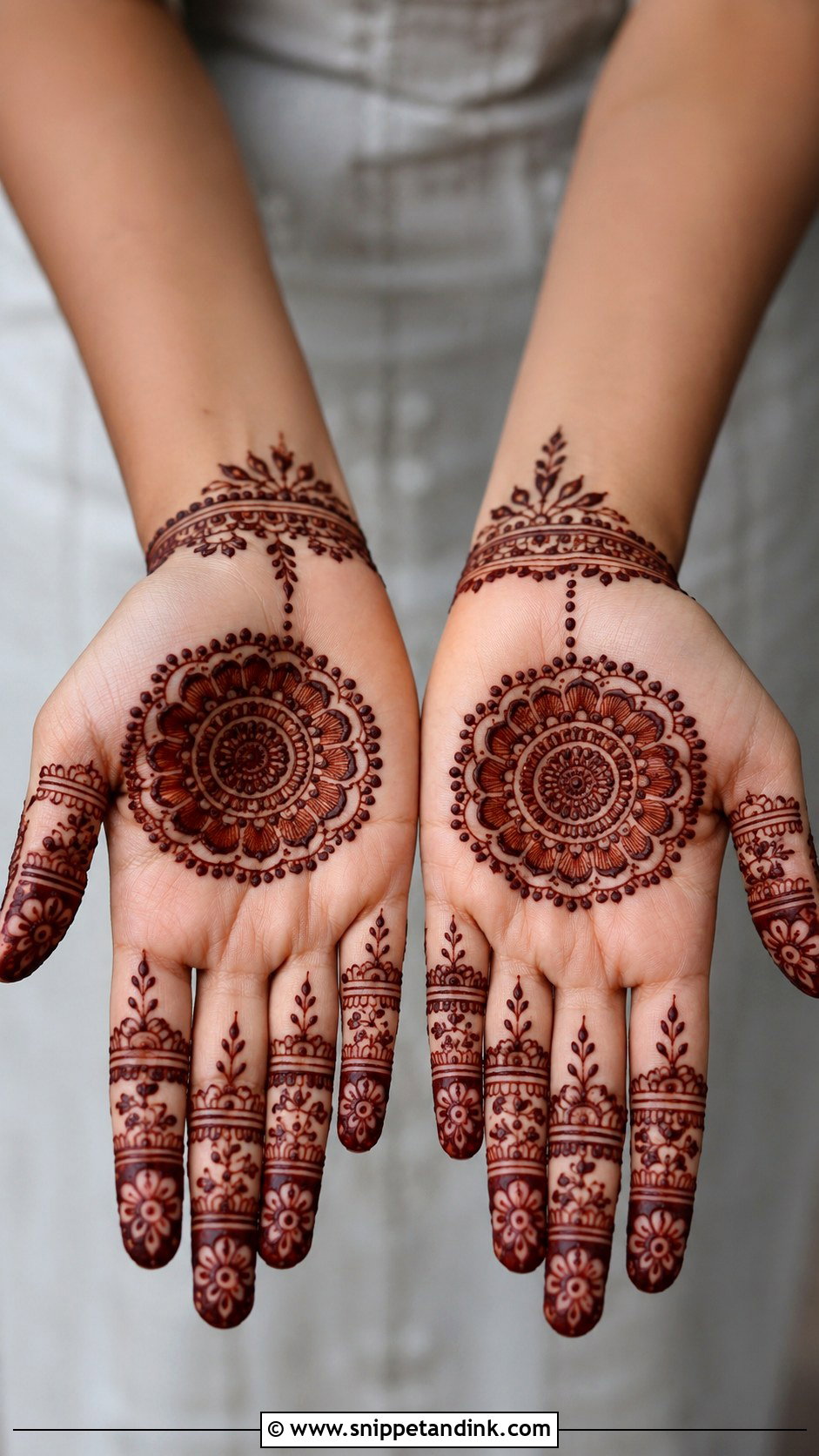
A tikki is a round motif in the center of the palm or back of the hand, built from layered petals, dots and circular borders. It’s quick, traditional and suits every age, which is why aunties and teenagers alike ask for it at a mehndi night. Matching finger patterns and a small wrist detail complete it. Bold or delicate, the circle has to be truly round, so I mark its center before drawing the first petal.
27. Floral Chain Mehndi Design
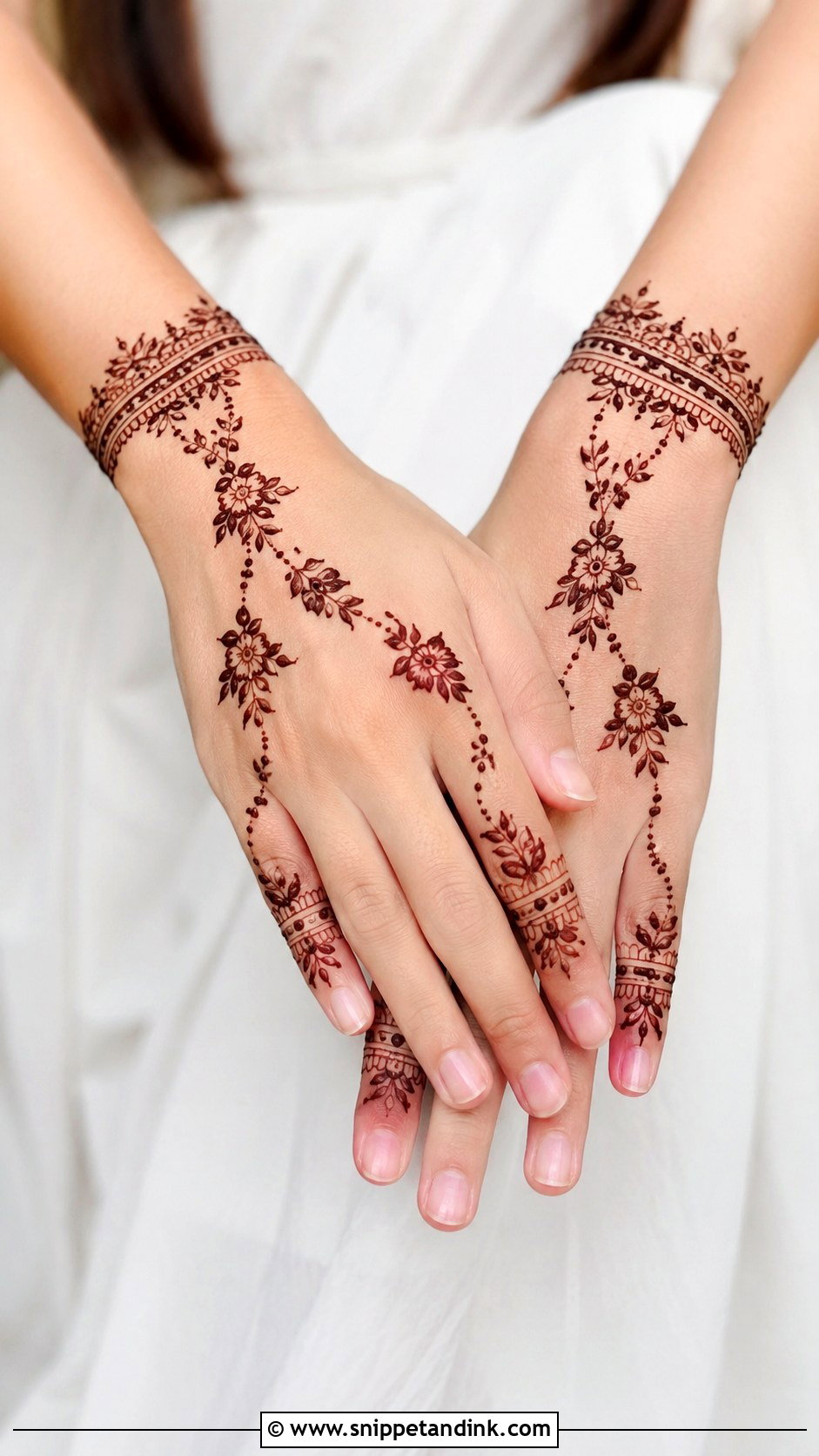
Small flowers linked by dotted lines, leafy links or thin curves, usually running from the wrist to one finger like a bracelet and ring. It needs open skin around it, so the back of the hand suits it best. A floral cuff at the wrist and tiny finger rings make it more complete. Keep the chains thin and even, since one thick line spoils the delicate effect.
28. Floral Grid Mehndi Design
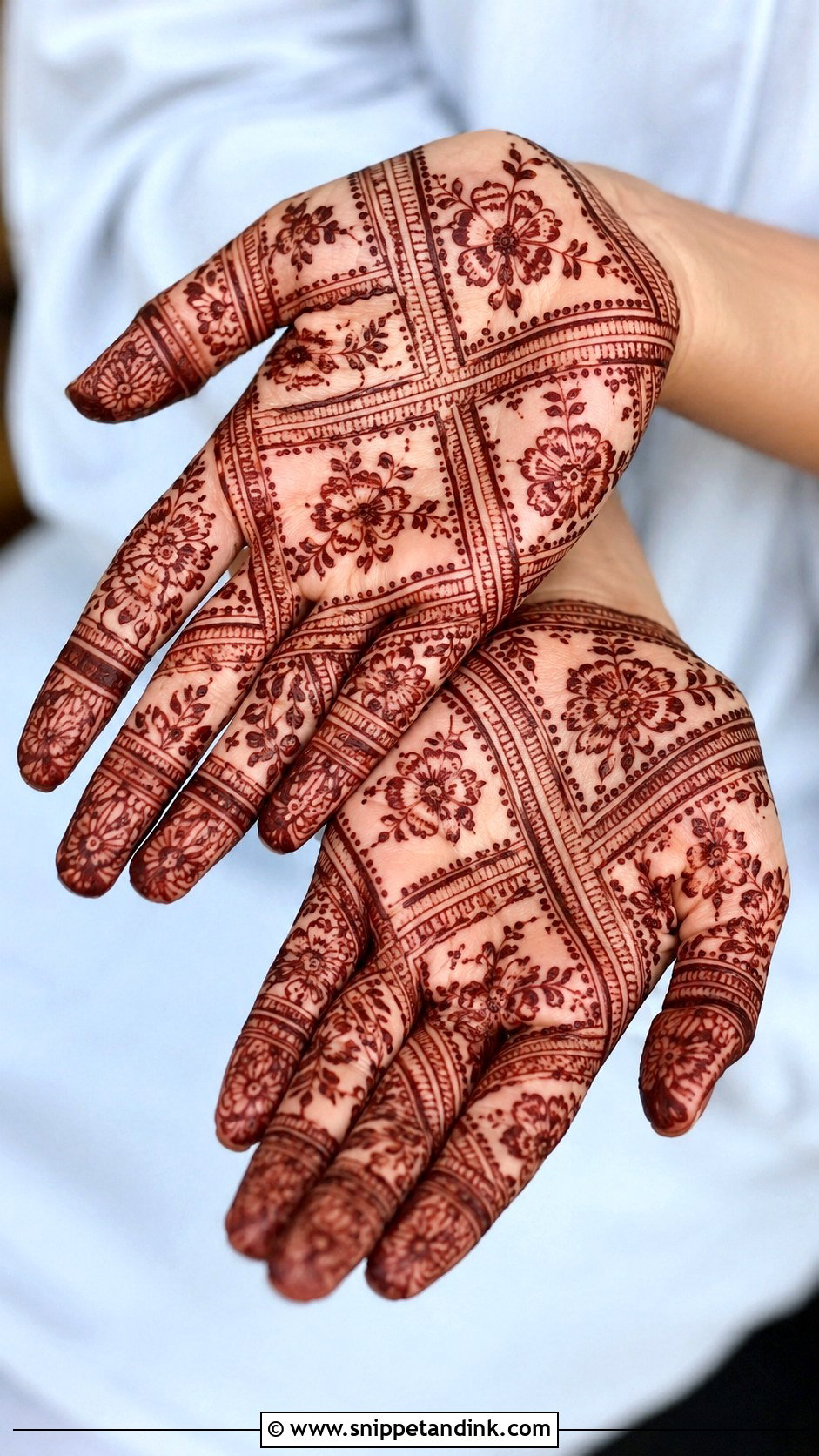
Panels organize the hand, each filled with tiny flowers, leaves, dots and curves. The palm gives the most room for this kind of structure, though it also works on the back of the hand with floral borders. Grids can be straight, diagonal or gently curved to follow the hand. Every panel needs breathing room, or the small flowers merge into one dark block once the stain develops.
29. Floral Lace Mehndi Design
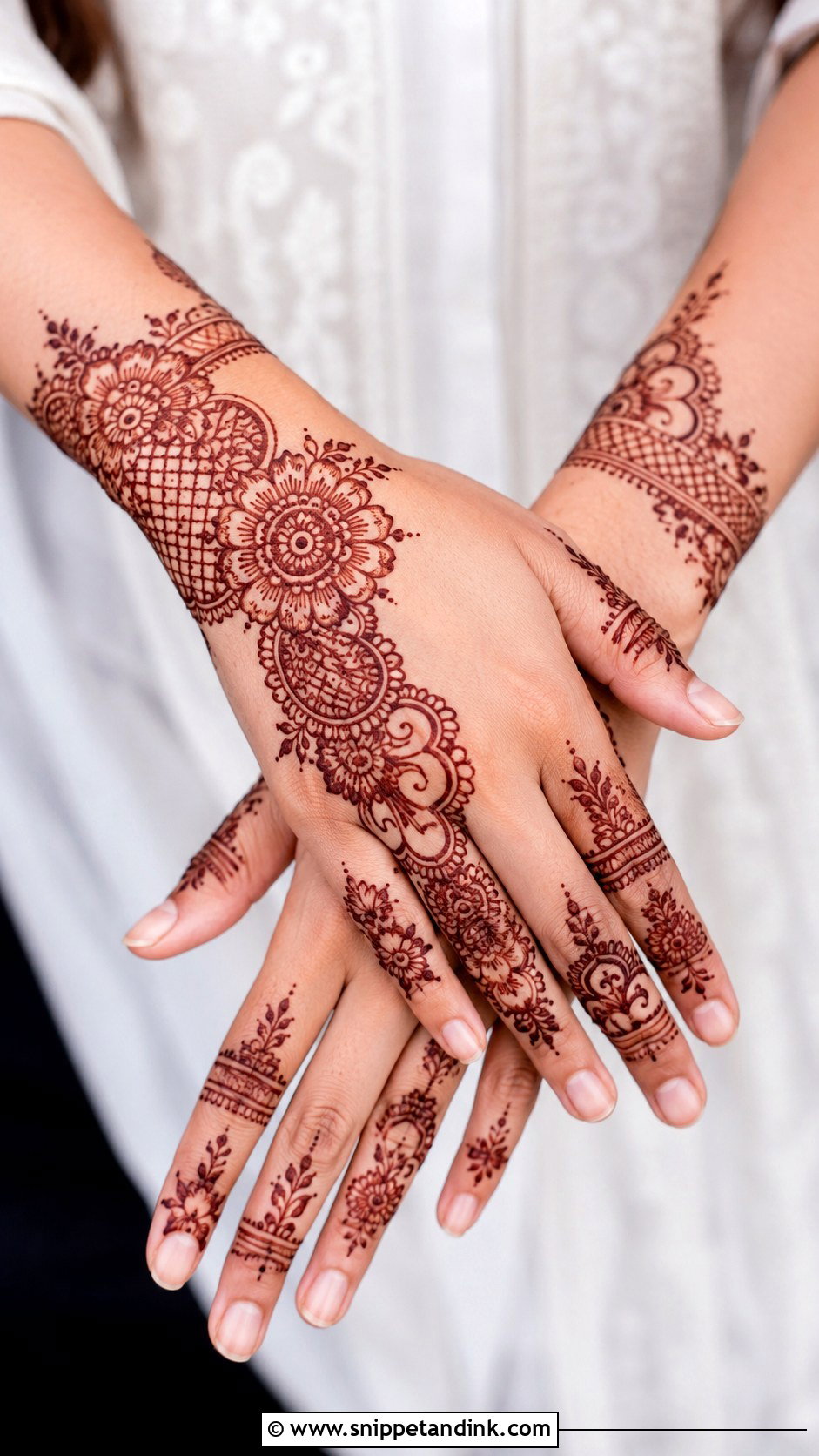
Flowers, scalloped edges, dots and fine net details create a lace effect that can look like a glove or cuff on the back of the hand and wrist. Small to medium flowers with thin curved borders work best; lace-like bands on the fingers finish it. It needs steady lines more than heavy filling. If your artist’s hand shakes on scallops, this is the design that will show it.
30. Gulf Floral Mehndi Design
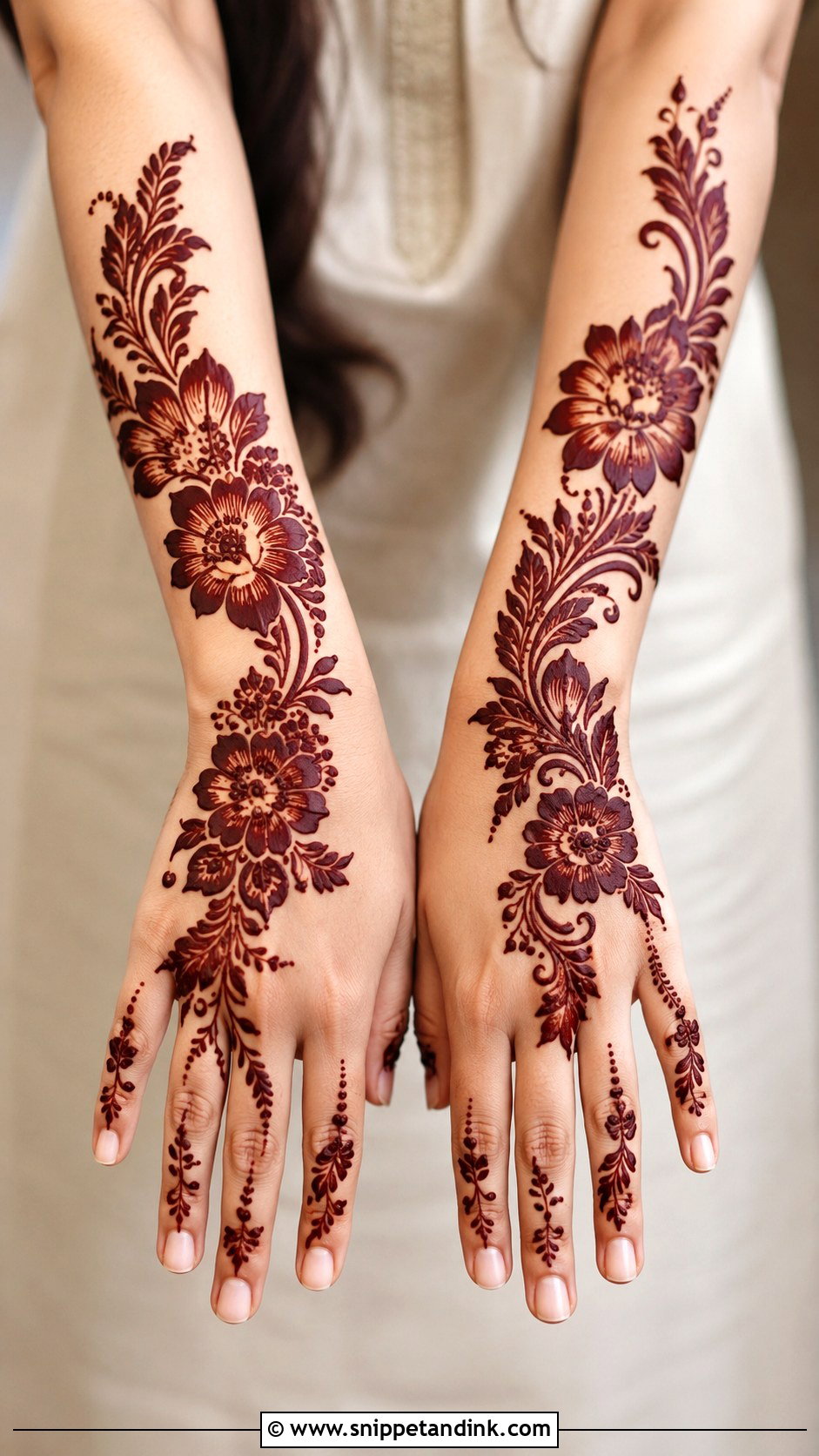
Gulf floral work, also called Khaleeji-inspired henna, uses oversized blooms on the back of the hand, curved leaves across the fingers and a simple wrist extension, all larger and freer than dense Indian designs. The bold, clear lines stain well. Keep the background open and let the flowers dominate. I build its signature shading with a thin film of paste inside each petal, which stains as a soft gradient.
31. Moroccan Floral Mehndi Design
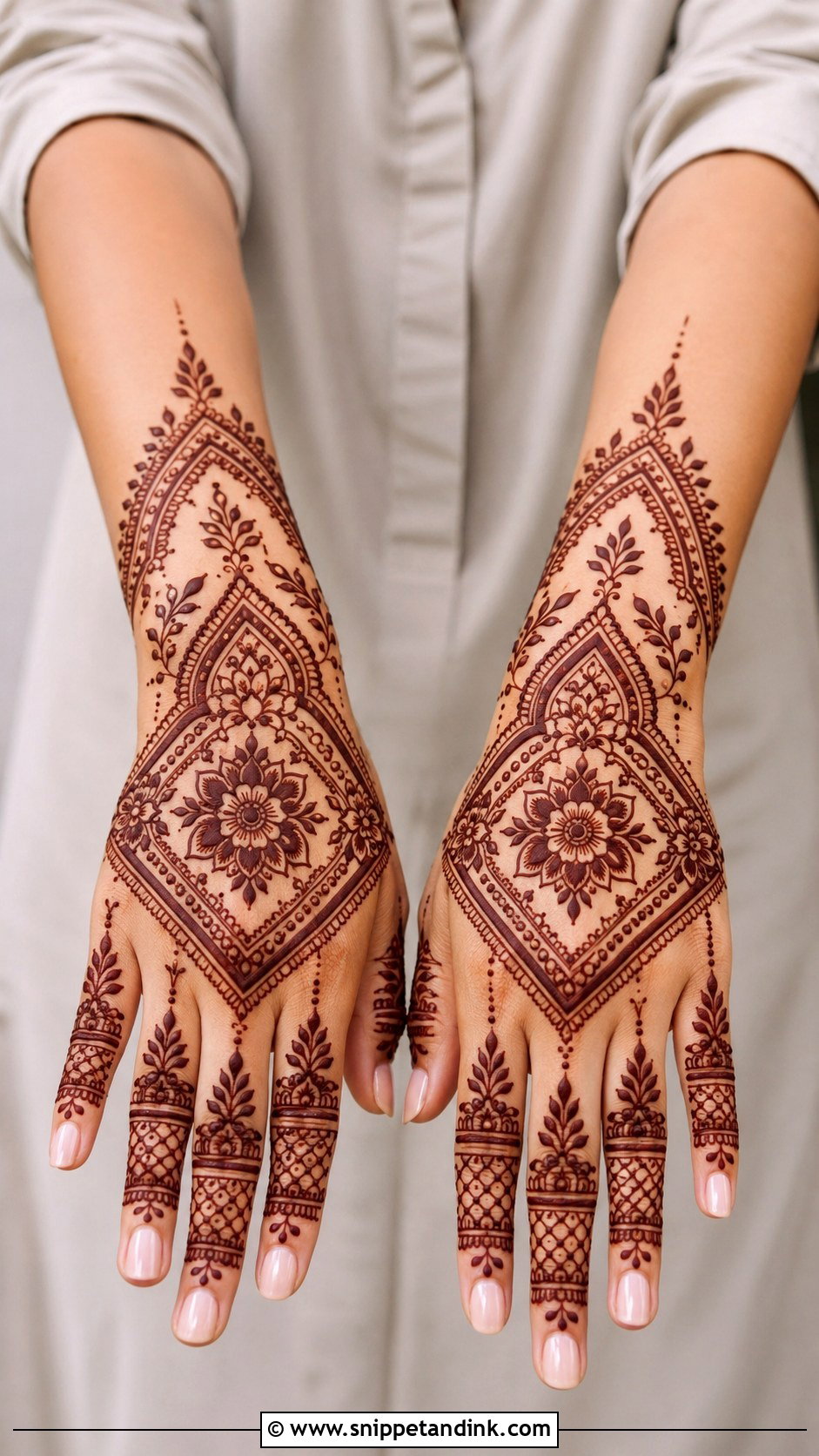
Moroccan floral mehndi pairs geometric structure, such as diamonds, straight lines and triangular borders, with small flowers as focal points inside the panels. It’s a good alternative if you’re tired of the usual Arabic or Indian florals. The back of the hand can carry geometric panels with floral accents, or the design can run wrist to fingers in clean shapes. Straight lines on a curved hand need guide marks, so give your artist a minute to plan before she starts.
32. Floral Eid Mehndi Design
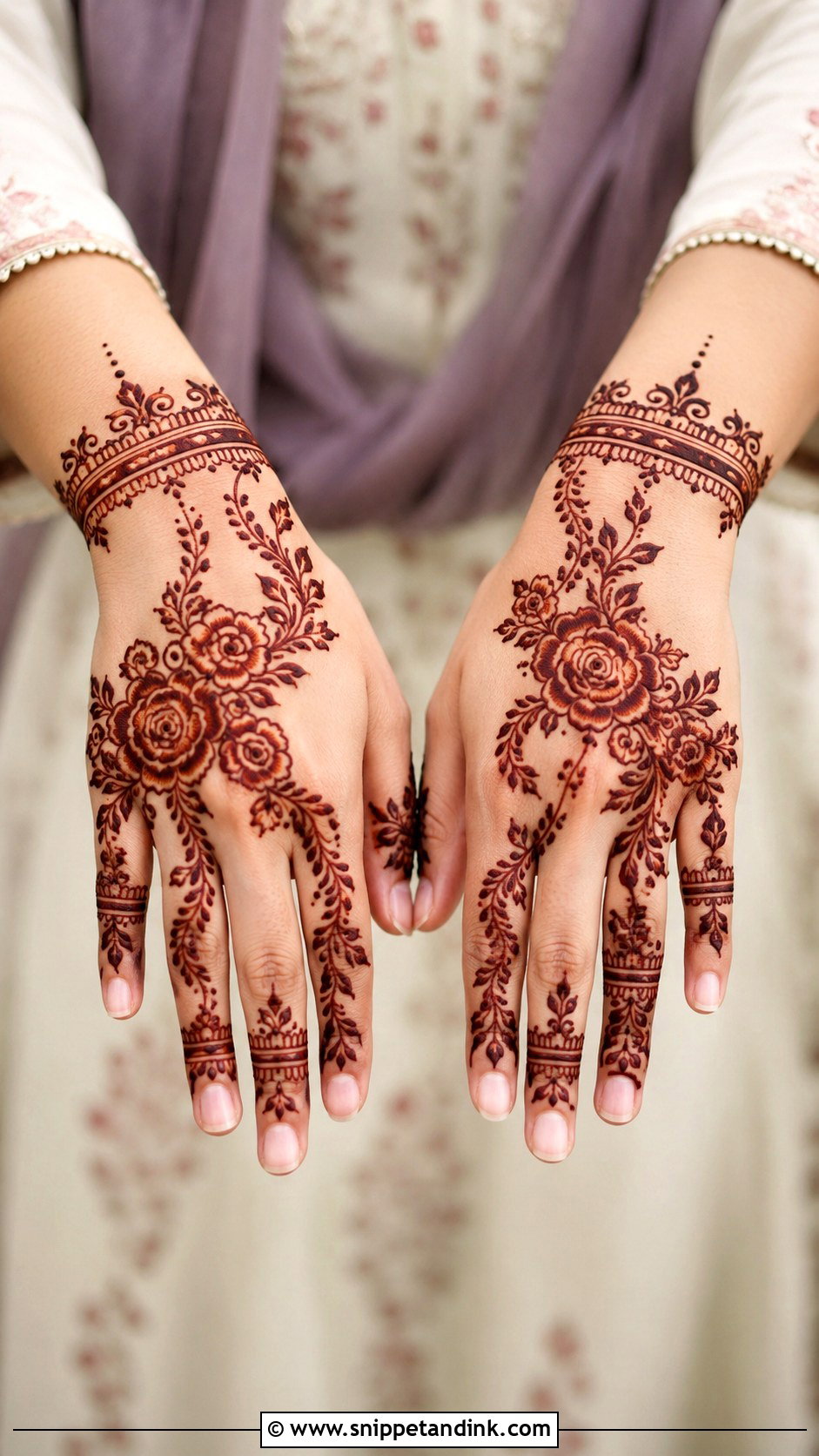
Eid henna has to be comfortable for a long day, so quick Arabic floral trails are the most common choice: roses, leaves and finger bands on the back of the hand, or a floral mandala on the palm for a classic look. Dots, small buds and a wrist detail polish it. Unless you want a heavier look, keep it lighter than bridal. Apply it the night before so the color has deepened by morning prayers.
33. Floral Wedding Mehndi Design
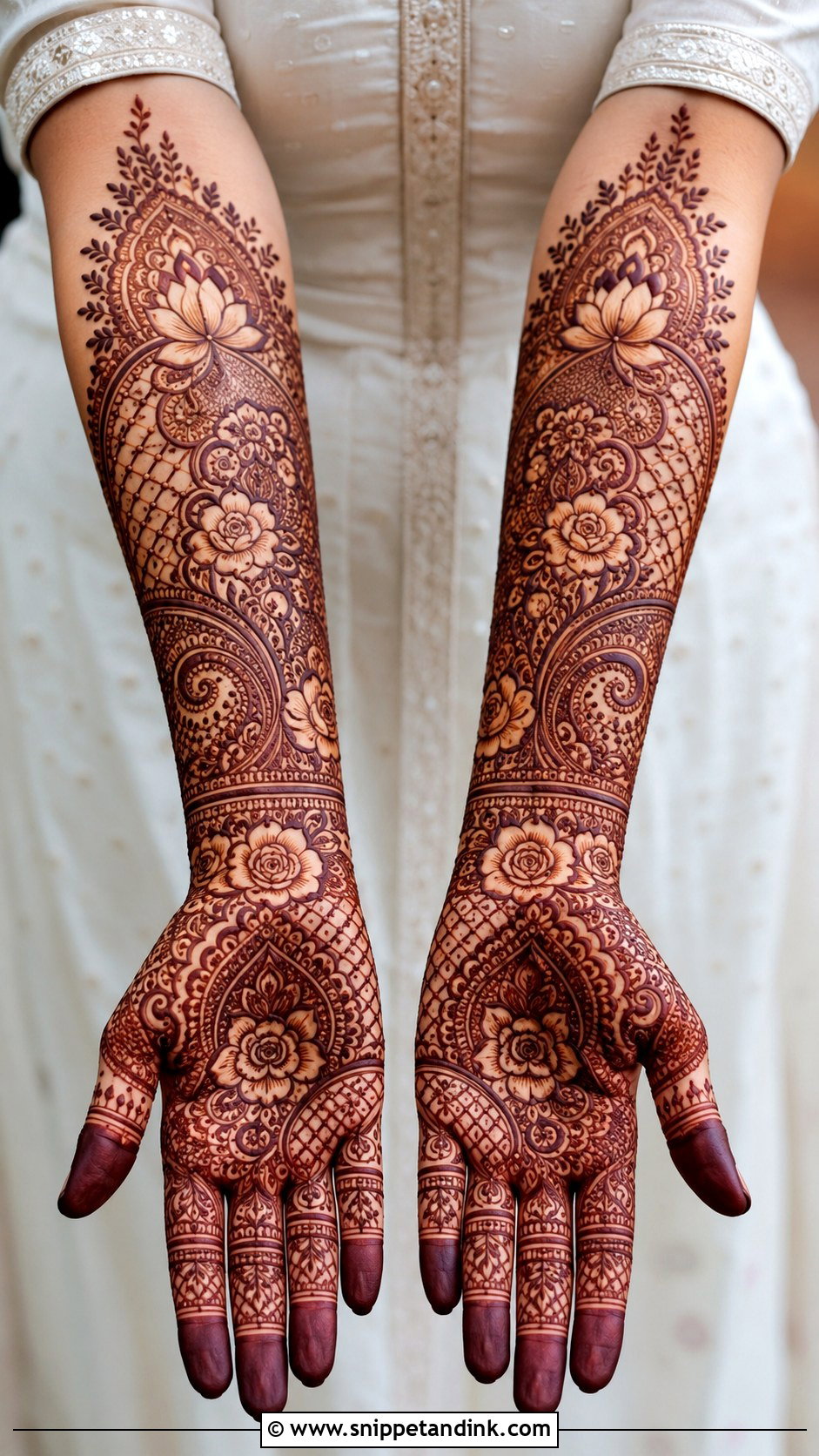
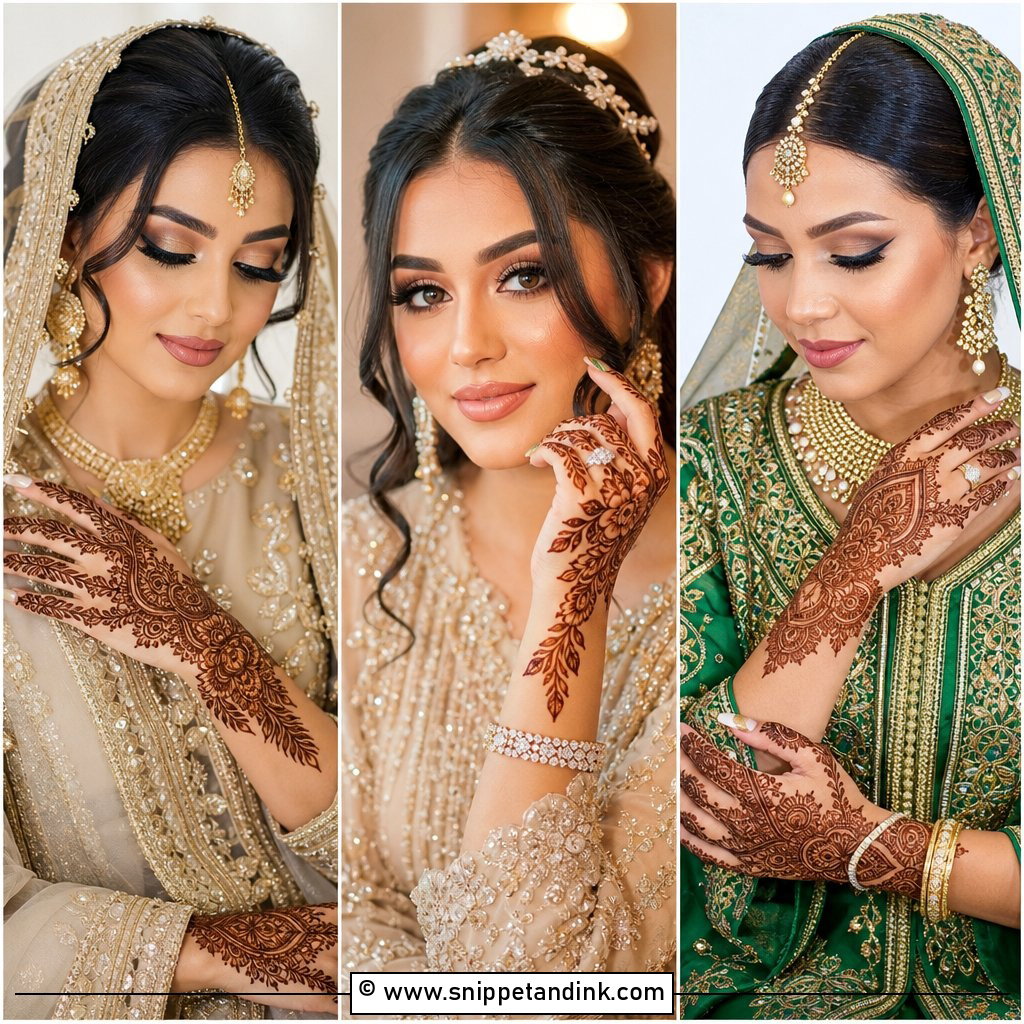
Your role at the wedding should set the detail level. Brides tend toward full hands with lotus, roses, paisleys and jaali; guests toward lighter trails or bracelet designs. Whatever the coverage, the fingers, wrist and main area should connect so the hand looks complete from every angle in photos. Choose flowers by mood: roses read romantic, lotus traditional, small vines delicate.
34. Floral Engagement Mehndi Design
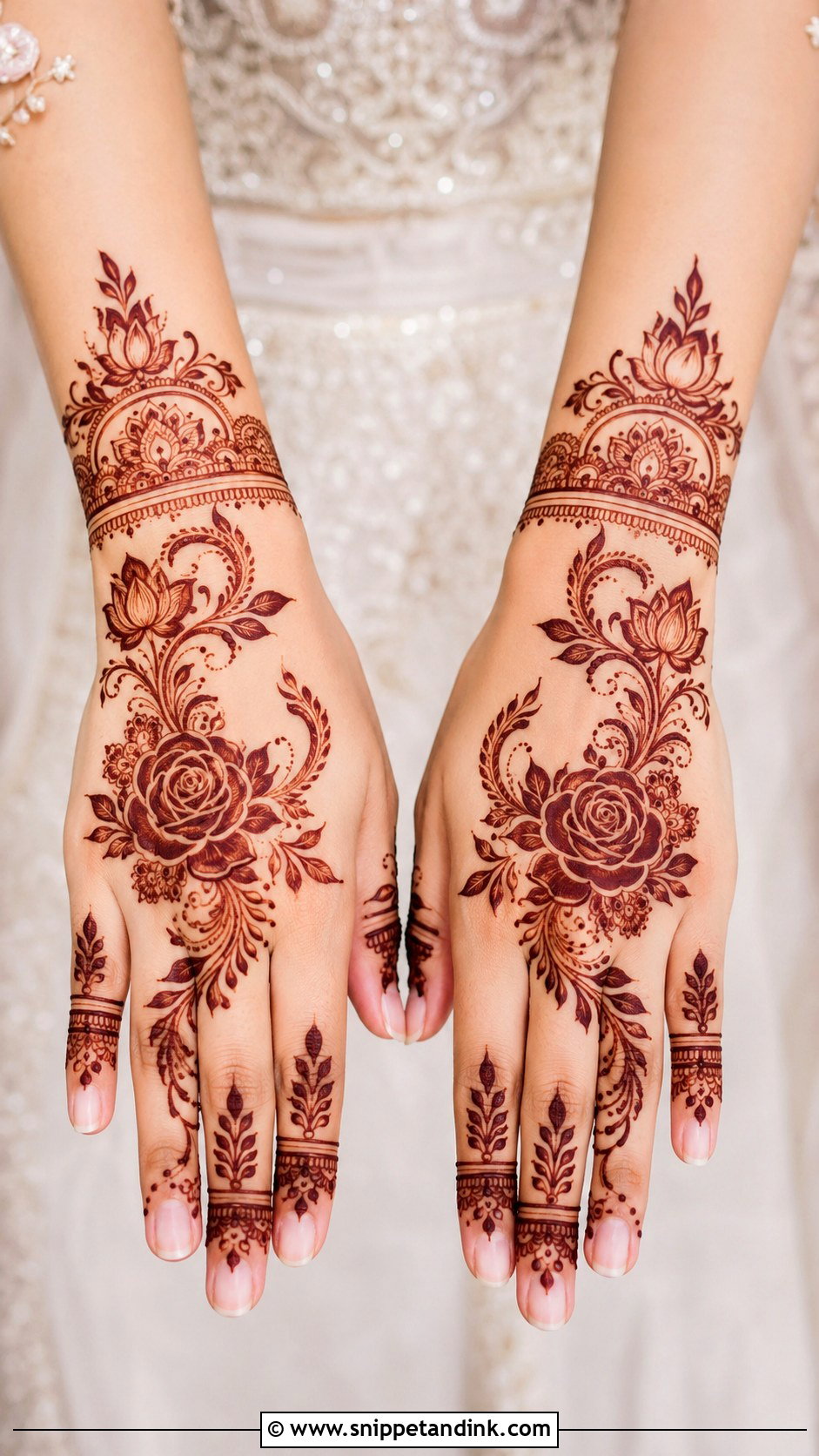
Floral engagement mehndi design sits between simple and bridal. A rose or lotus trail on the back of the hand frames the fingers for ring photos without hiding them, with a wrist bracelet and tiny floral bands on the fingers. On the palm, a floral mandala with light vines toward the wrist works. I keep the ring finger itself fairly clear, because close-ups of an engagement ring are what everyone will want.
35. Floral Bridal Back Hand Mehndi Design
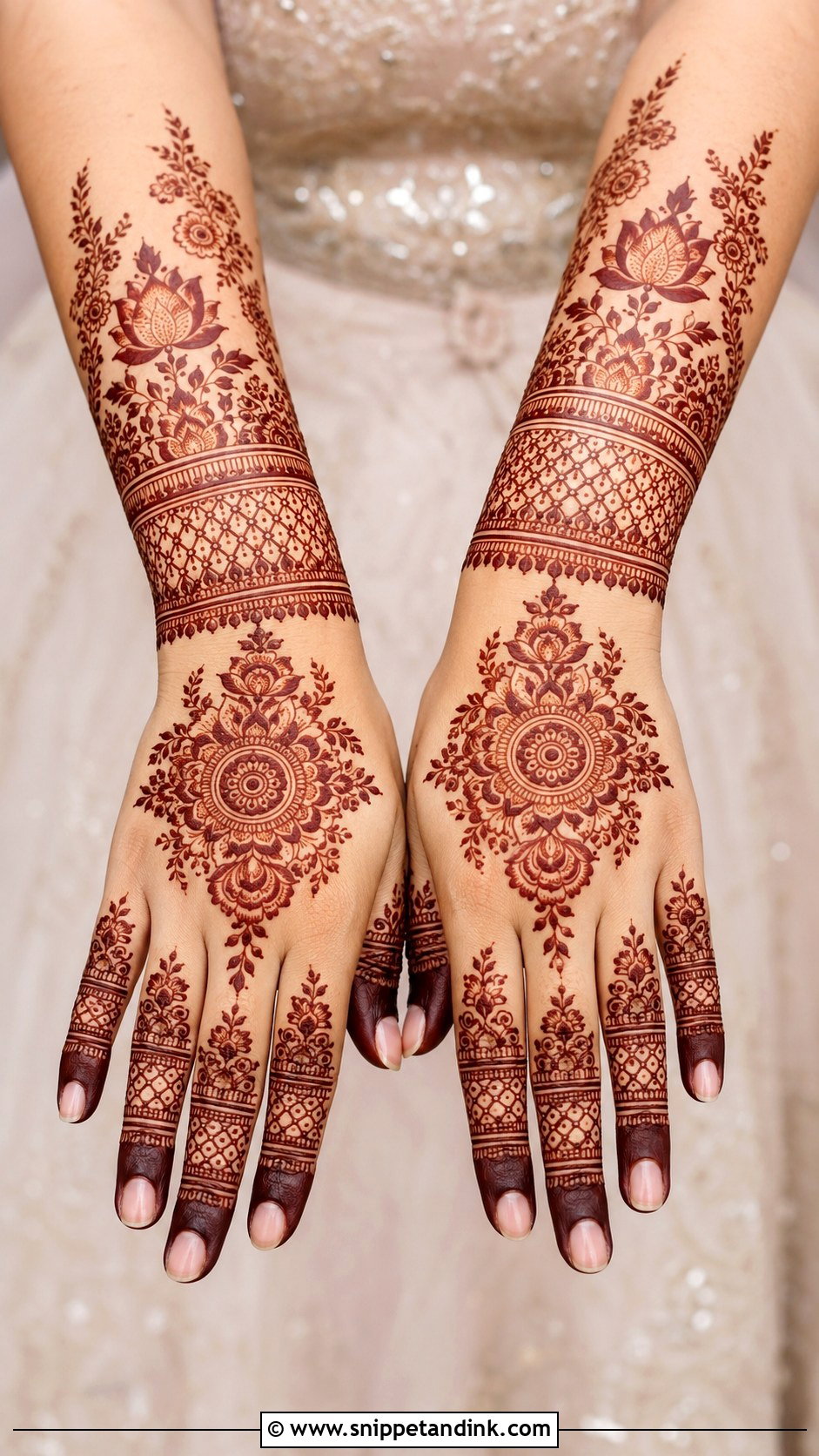
Floral bridal back hand mehndi design is the part of a bride’s henna that shows up in jewelry shots, ceremony photos and portraits. A strong layout uses a central floral mandala, lotus or rose trails, jaali panels and extensions up the forearm, with matching floral tips and bands on the fingers. Bracelet borders at the wrist give a royal effect; open space around the main flowers keeps it softer. I map this side of the hand against the bride’s bangles and kaleeras so the best flowers aren’t hidden under them.
A Wedding-Week Plan for Full Floral Bridal Hands
- Two to four weeks out: a short trial on one palm, so you see how this paste stains on your skin and whether you like the flower style.
- The week before: waxing, facials and manicures done. Nothing that scrubs or soaks your hands should happen after the henna goes on.
- One to two days before the wedding: the bridal application itself. Color peaks about 48 hours after the paste comes off, so this timing puts the darkest shade on the wedding day.
- On the day of application: eat first, wear a loose top with wide sleeves, and have someone ready to help with water, phone and the bathroom, because full floral hands and forearms take several hours to apply and dry.
How Fine Petals Age Over Two Weeks
Henna doesn’t fade evenly. The light shading inside petals and the finest jaali lines go first, often within the first week, while bold outlines hang on longest. Palms fade quickly because of constant washing and friction. If you have a reception or walima a week after the wedding, ask for bolder outlines on the flowers you most want to last, and accept that the delicate filler will be gone by then.
One Bloom or a Whole Garden on Your Hands
Flowers adapt to almost anything: a few changes in placement and filling turn the same rose from minimal to bridal. They combine with mandalas, paisleys, vines, jaali, bracelet patterns and geometric details, and they suit any hand shape. For a quick design, a floral bel, chain or tikki is enough. For something richer, go full hand or heavy bridal. I’d rather see a balanced, cleanly spaced simple design than a crowded heavy one.
You'll Like These Ideas:


Leave a Reply