
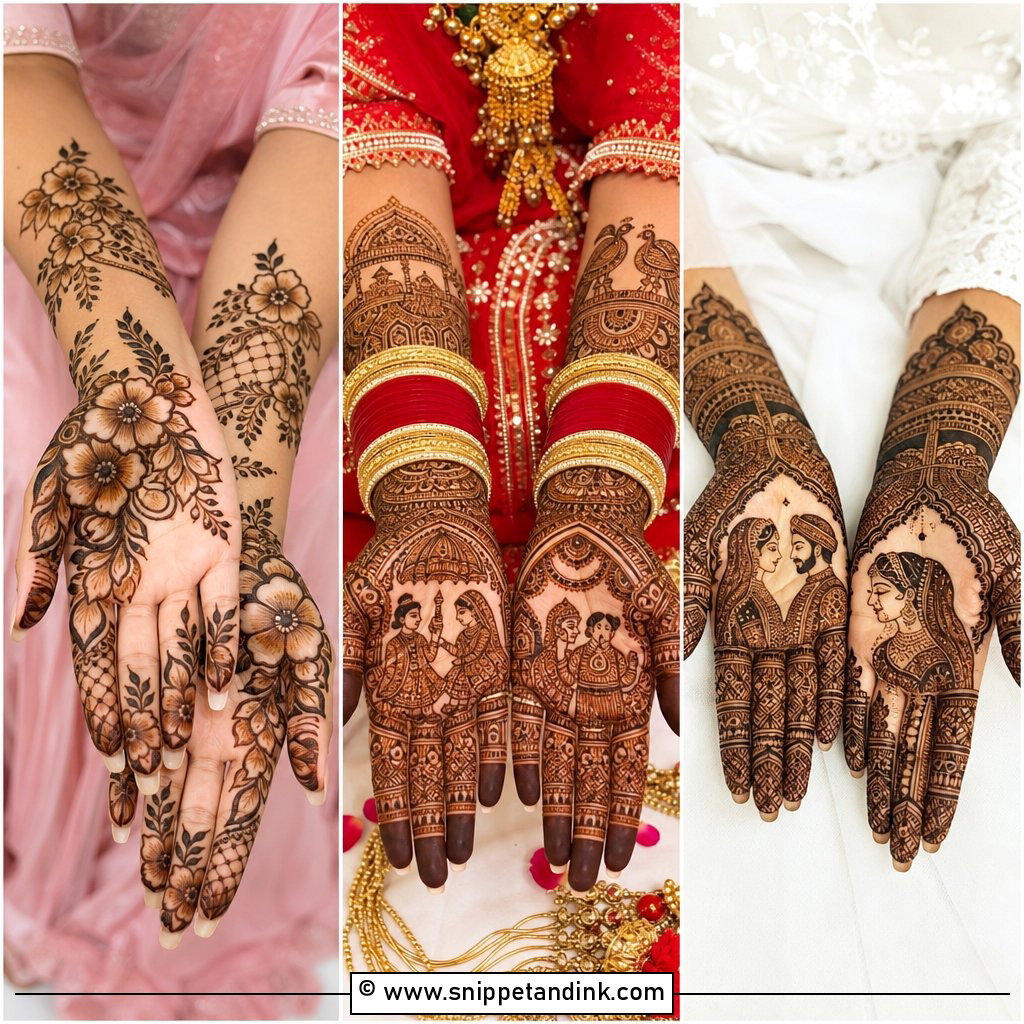
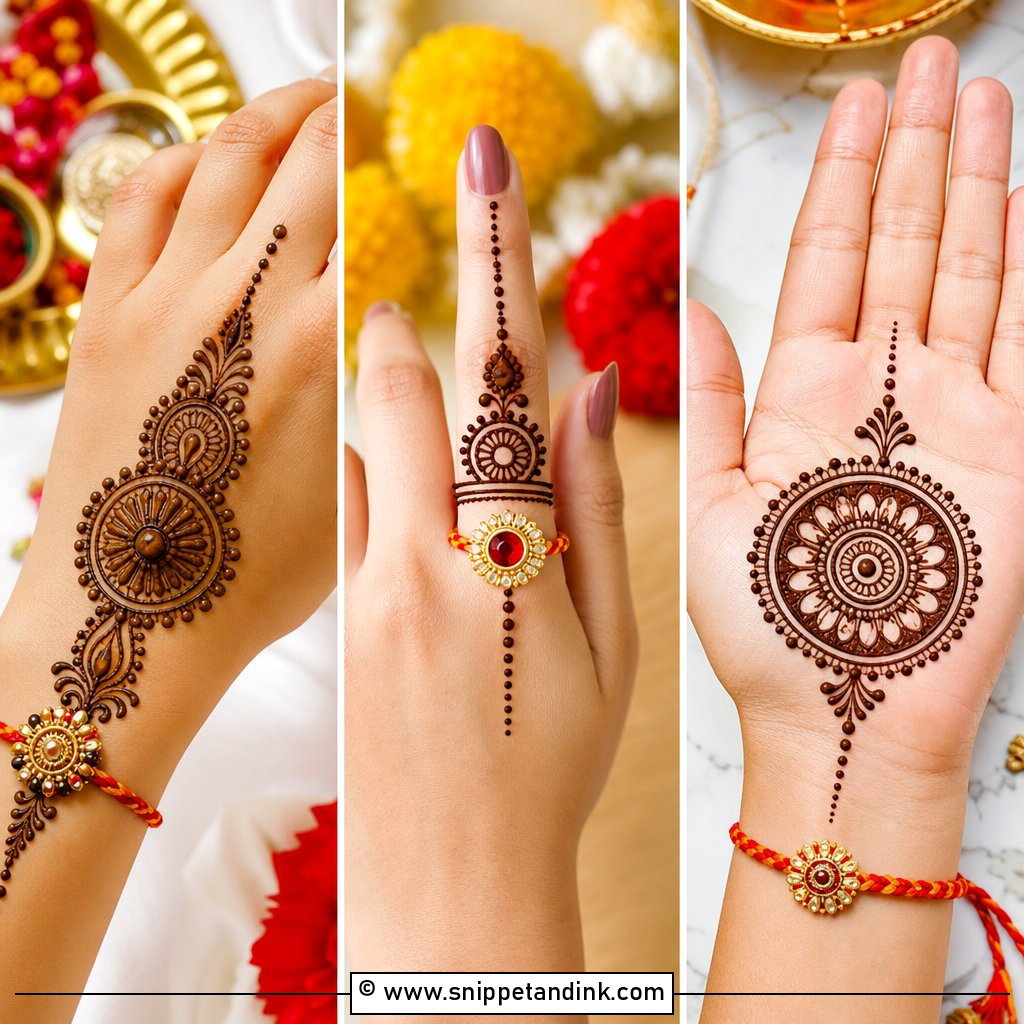
Bridesmaid henna has one job the bride’s doesn’t: it has to look festive without ever competing with her hands. When I design for a bridal party, I’m also working against the clock, because the bride sits for hours and her friends often get whatever time is left. So the patterns that work best for bridesmaids are the ones with real impact for modest coverage: Arabic floral trails, palm mandalas, jaali on the back of the hand, bracelet designs and minimal finger-led designs. They sit happily next to a lehenga, a saree, a sharara or a gown. Below are 25 designs I’d draw for a bridesmaid, with notes on how each one stains, how long it takes, and who it suits.
Planning Henna Time Across a Whole Bridal Party
The bride’s hands come first, and they take hours. Everyone else is fitted in around her, so before you fall in love with a design, find out how many artists are coming and how long the session runs. A light back-hand trail is a short job; a full hand with filled fingers takes many times longer, and that time multiplies across a party of six or eight.
When I plan a bridal party, I sort bridesmaids by coverage. The ones wanting fuller work go first, so their paste has the longest time on the skin before the music starts. Simple designs fill the gaps at the end. If your bride wants everyone in full hands, she needs to book an extra artist rather than asking one to rush, because rushed lines are thick lines.
- Arrive with clean, dry hands and no lotion or oil; oil stops the paste staining.
- Wear something with sleeves you can push up easily and won’t need to change.
- Take rings and bangles off before you sit down, not after.
1. Arabic Mehndi Design For Bridesmaid
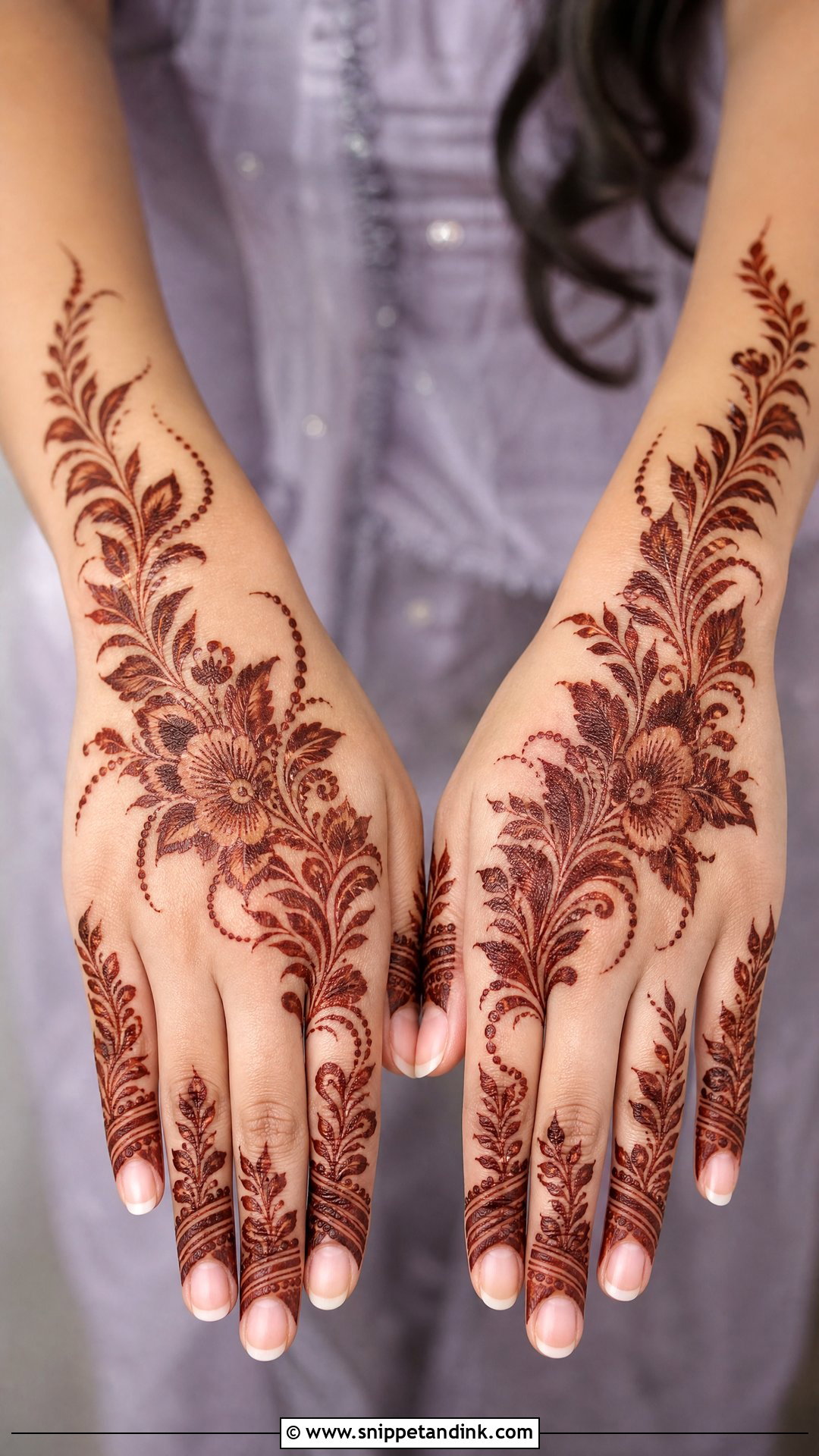
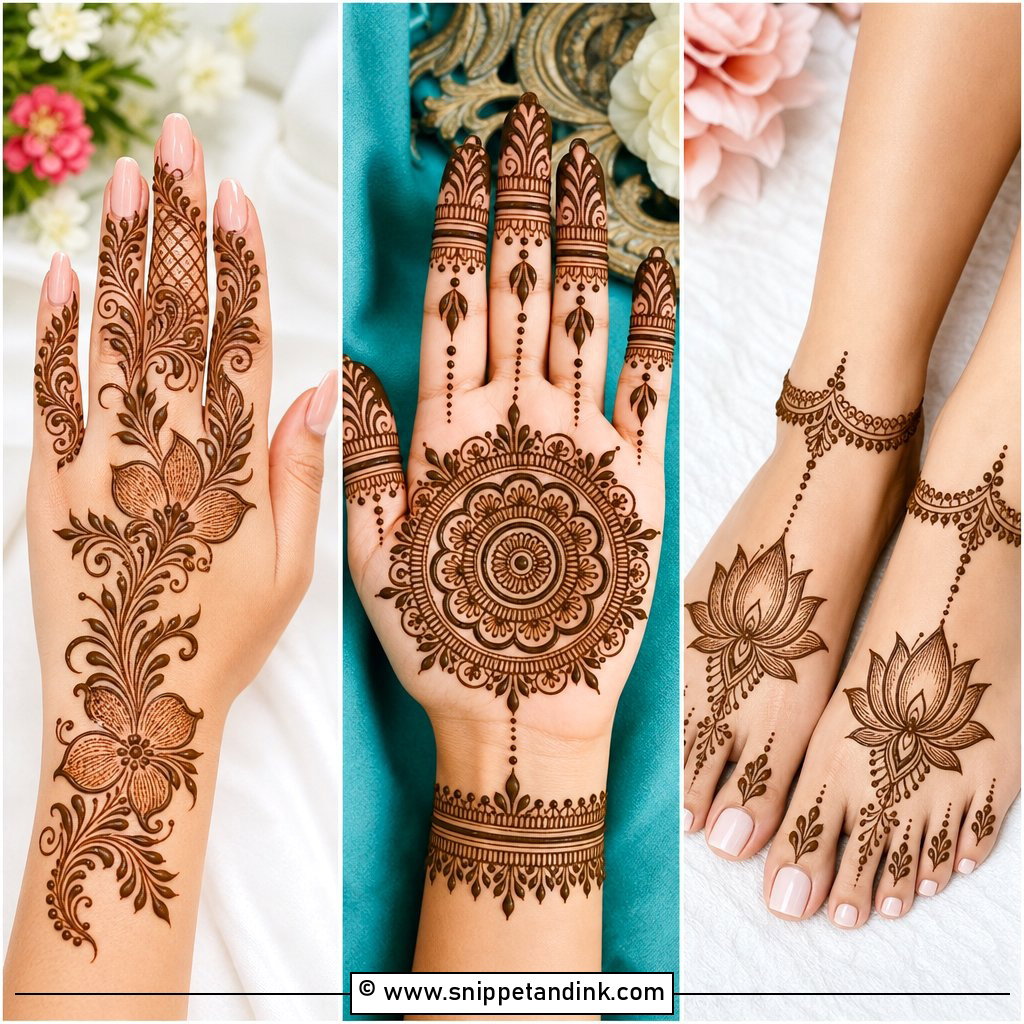
Arabic mehndi is where I start with most bridesmaids. The design runs diagonally across the palm or back hand with bold flowers, leafy vines and a lot of open skin between them. That open skin is the point: it lets the stain read clearly in photos and it means the cone moves quickly, so I can finish a hand far sooner than a dense Indian fill. It also dries faster, which matters if you need your hands back for the next event. Ask for a strong outline and light shading inside the petals; heavy shading on an Arabic trail just muddies it.
2. Full Hand Mehndi Design For Bridesmaid
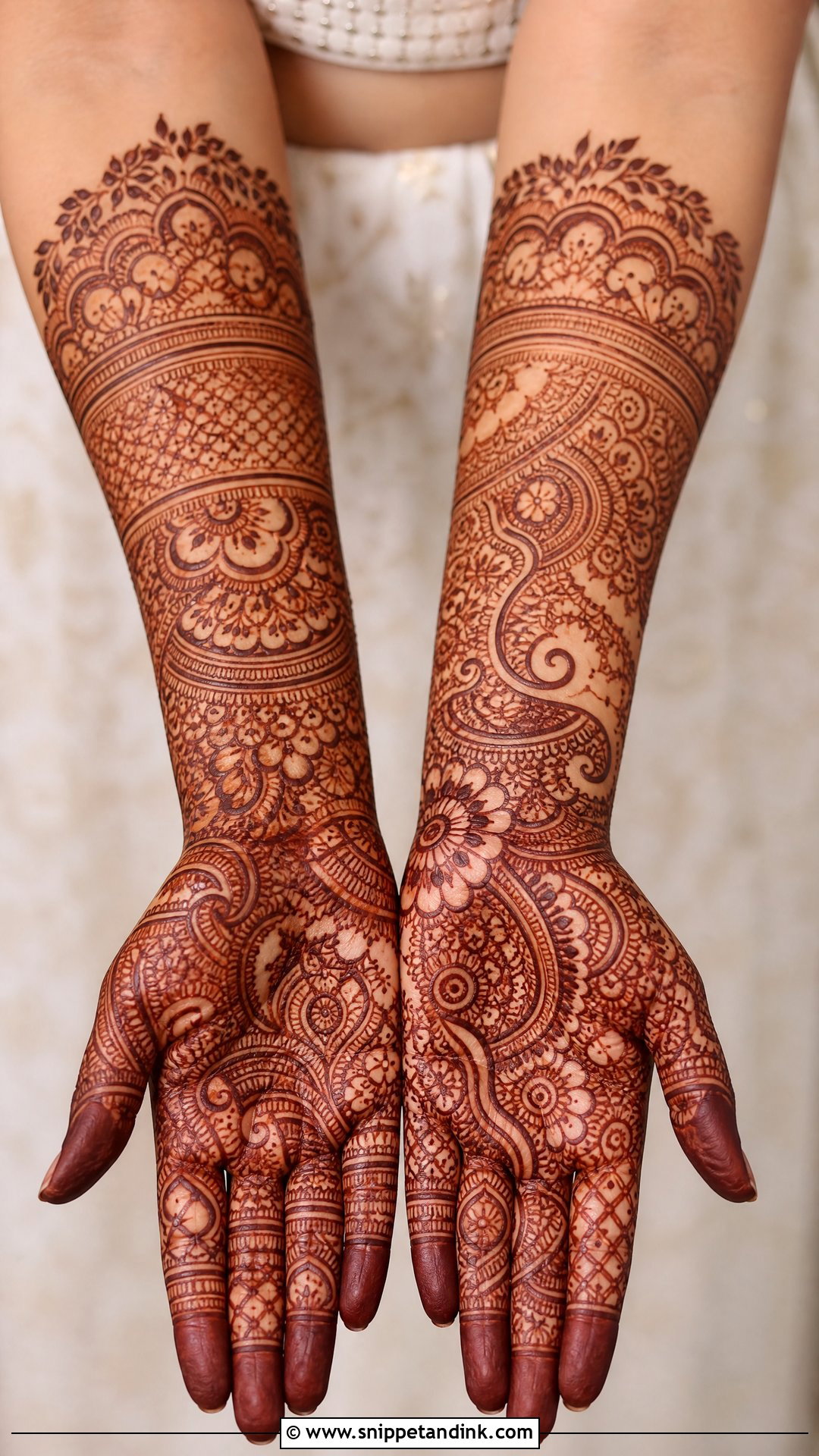
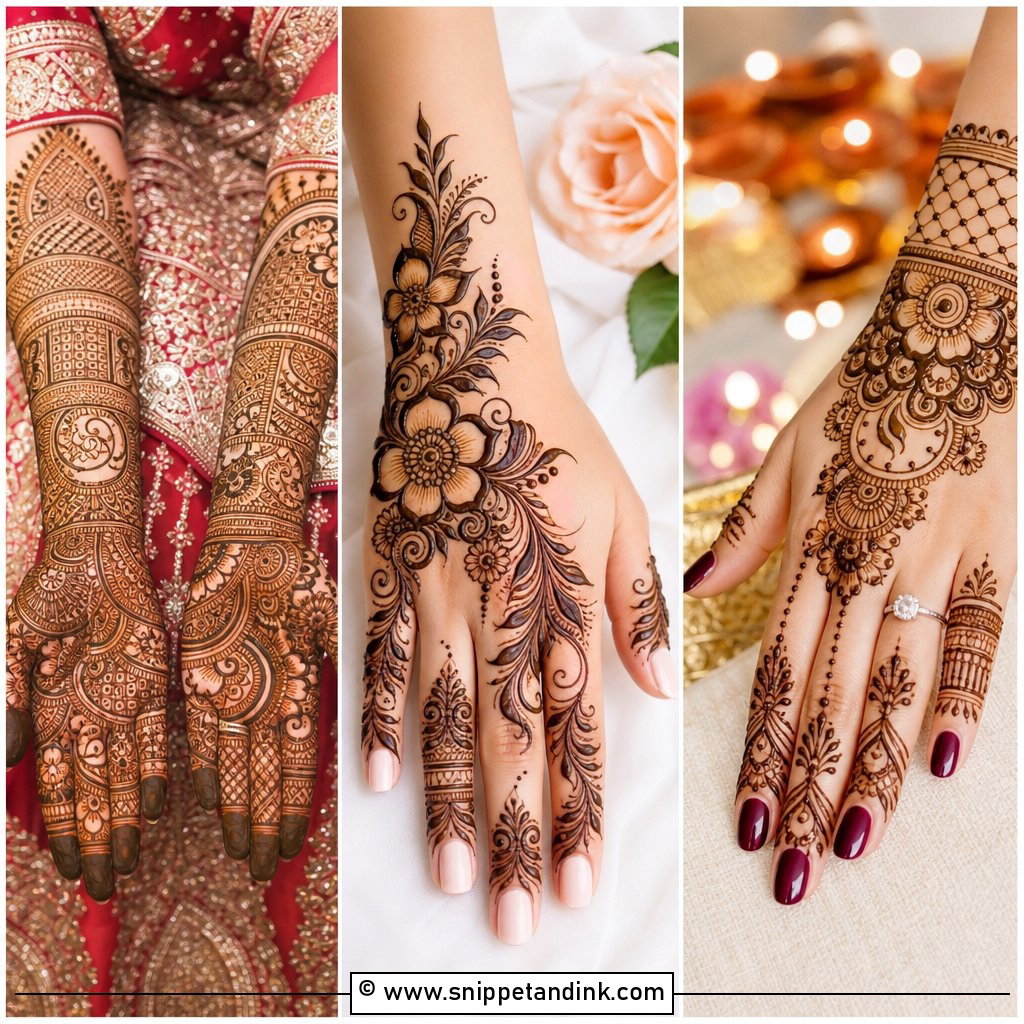
A full hand design covers the palm, fingers and wrist, sometimes stretching toward the forearm, and it’s the one I’d suggest for a sister or maid of honour who wants her henna to feel important. The rule I keep is that it must still be visibly lighter than the bride’s. In practice that means neat paisleys, small florals, leafy bands and simple jaali instead of the dense figure work and storytelling scenes I’d reserve for her. Budget your time honestly: a full hand takes far longer than a trail, and you’ll be sitting still while the paste dries.
3. Back Hand Mehndi Design For Bridesmaid
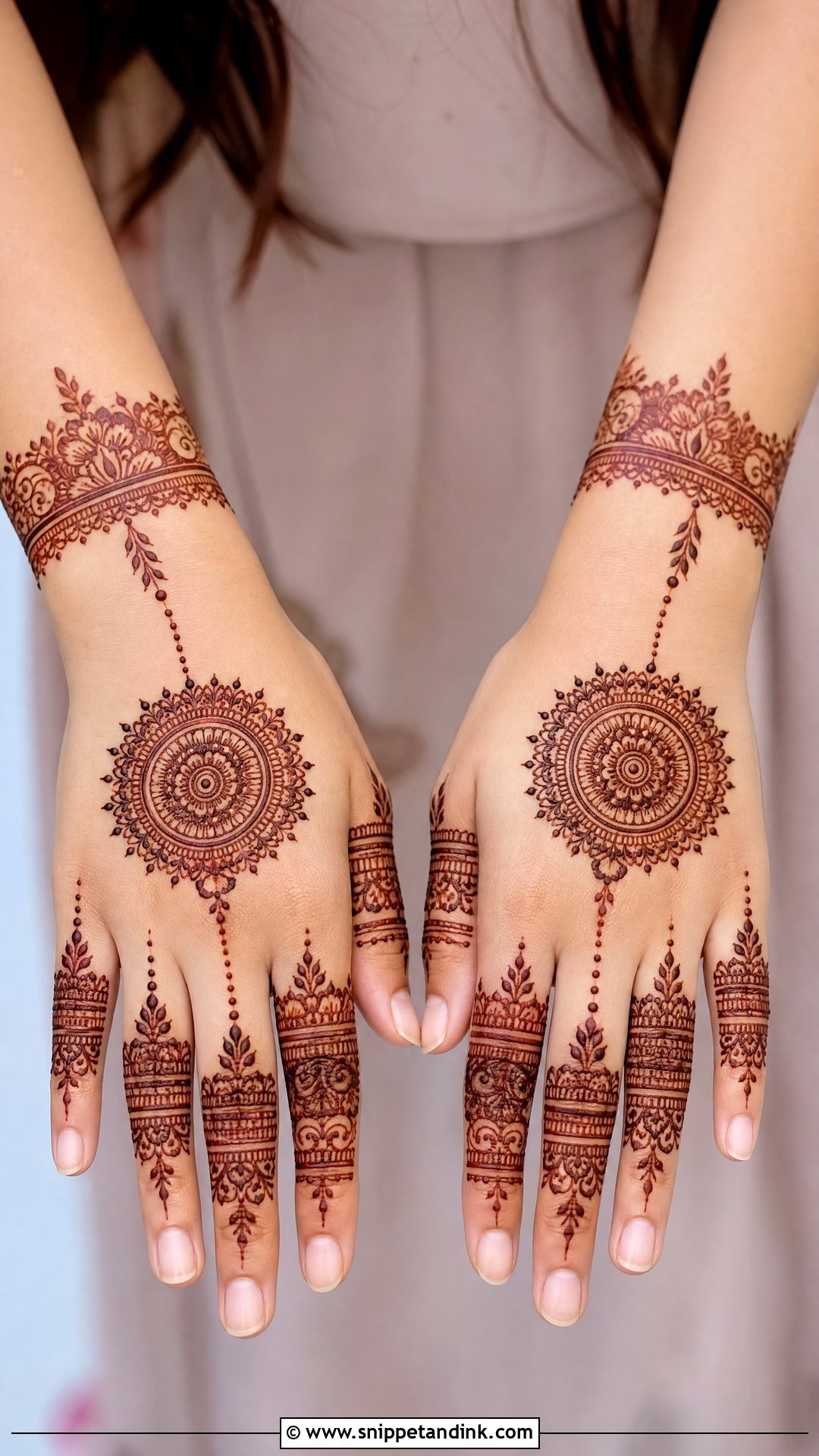
The back of the hand is the side that ends up in photos, because it’s what shows when you hold flowers, fix a dupatta or show off a ring. I treat a back-hand design like jewellery: a central mandala, a floral bracelet, finger patterns and fine chains linking them. It leaves the palm free, which bridesmaids appreciate when they’re running errands for the bride and using their phones. One honest note: the back of the hand stains lighter than the palm, because the skin there is thicker, so keep the lines bold enough to show.
4. Front Hand Mehndi Design For Bridesmaid
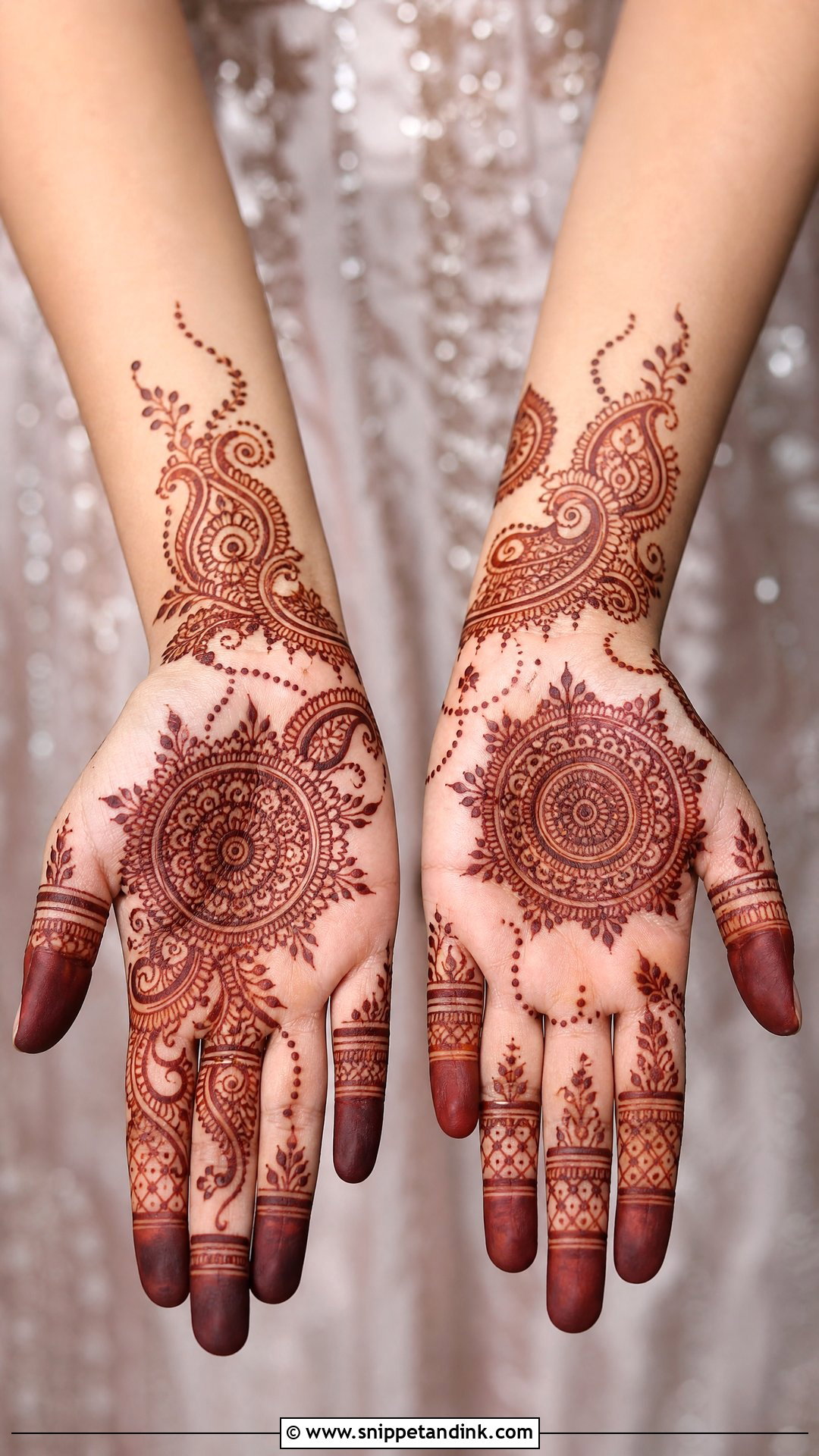
Front hand mehndi gives that classic wedding feel and looks right at home in mehndi rasam photos. For a bridesmaid I build it around a centered palm motif with floral vines, paisleys and dipped fingertips, keeping it from getting packed. The palm stains the darkest of anywhere on the body, so a design that looks light in paste reads much richer once it develops. A centered layout also flatters both short and long fingers. It’s easy to coordinate, too: everyone gets the same base, and I vary the flowers or the wrist edge.
5. Simple Mehndi Design For Bridesmaid
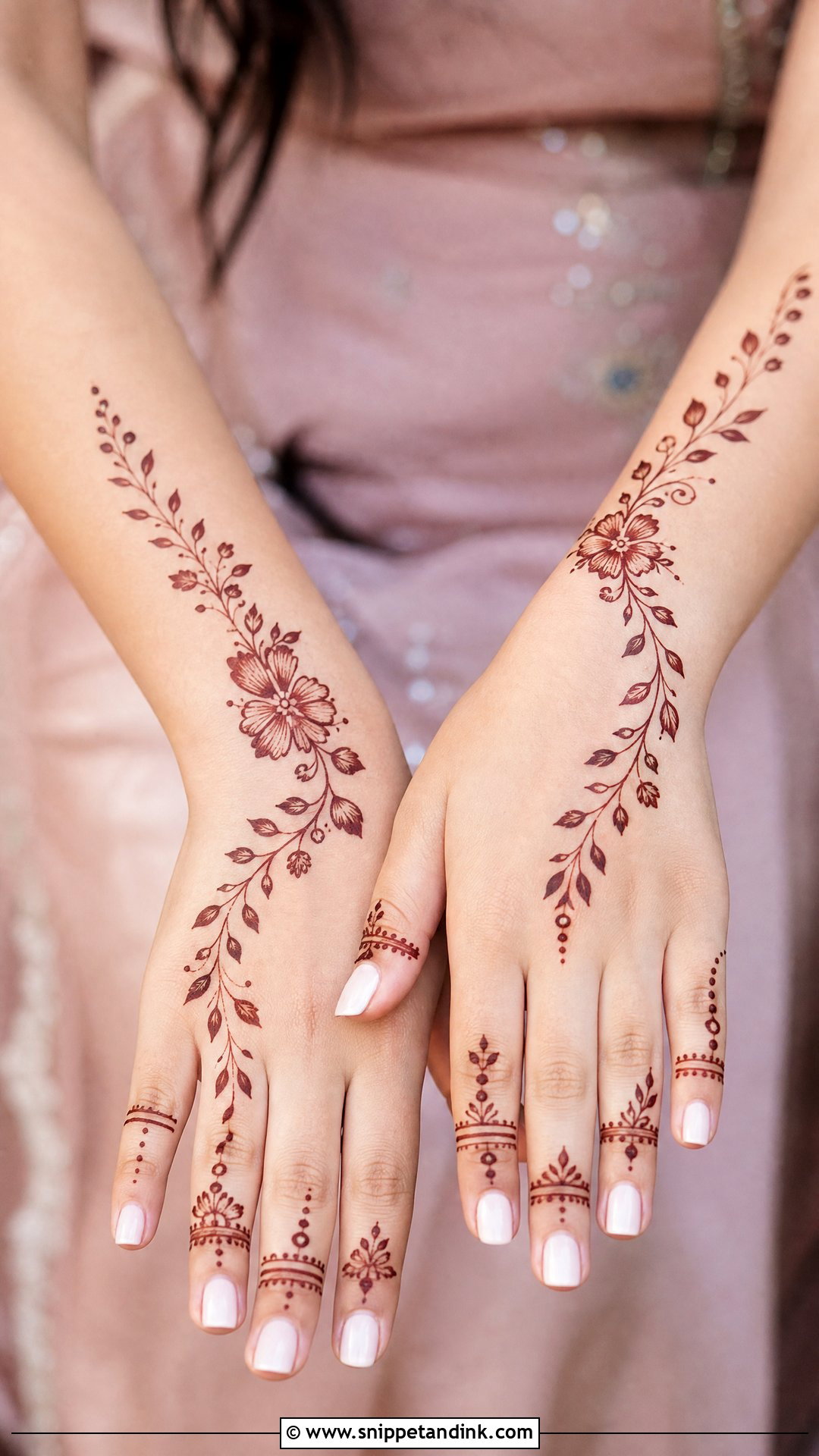
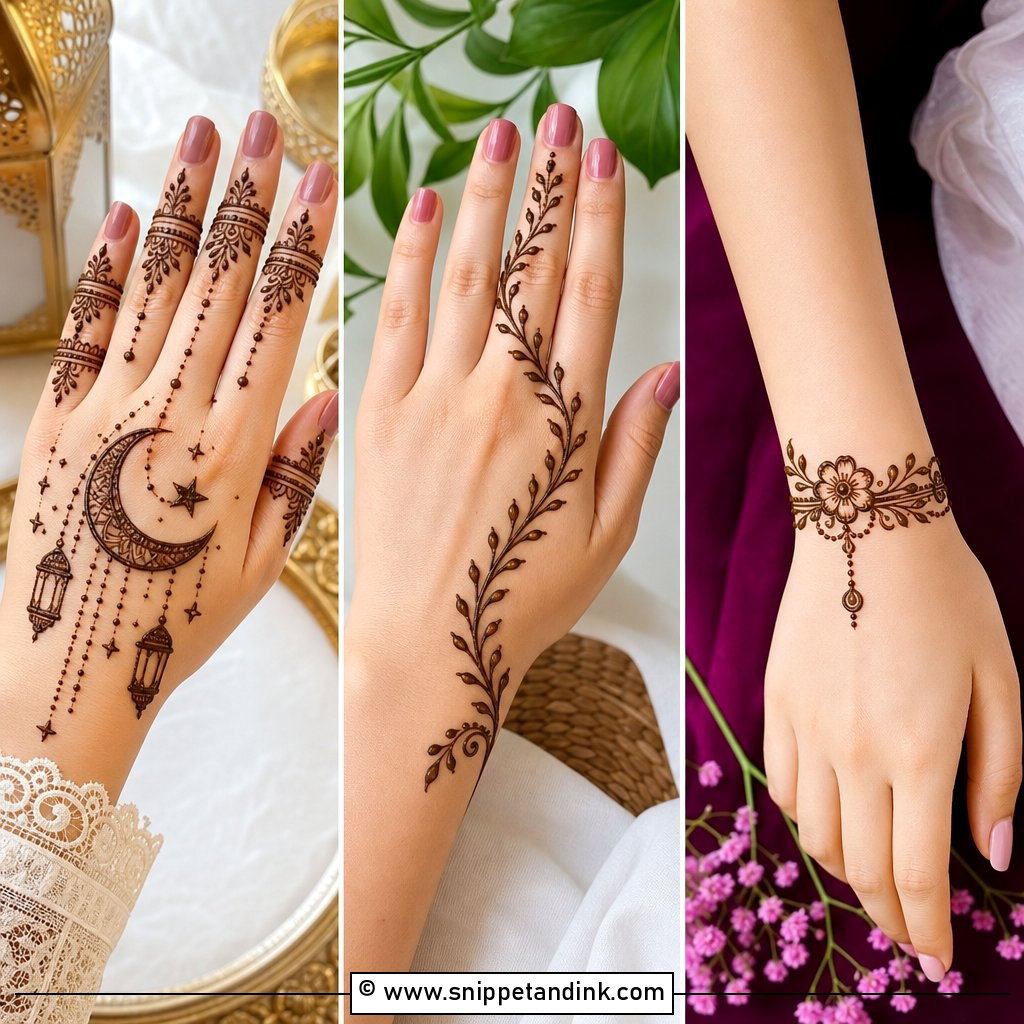
Simple mehndi still needs care to look finished. I use clean flowers, slim vines, dotted trails and light finger work, and I spend the saved time on spacing, because in a sparse design every wobble shows. Good options are a back-hand floral trail, a palm mandala with finger details or a wrist bracelet that drifts toward the knuckles. These are my go-to for younger bridesmaids and guests who can’t sit for long.
6. Mandala Mehndi Design For Bridesmaid
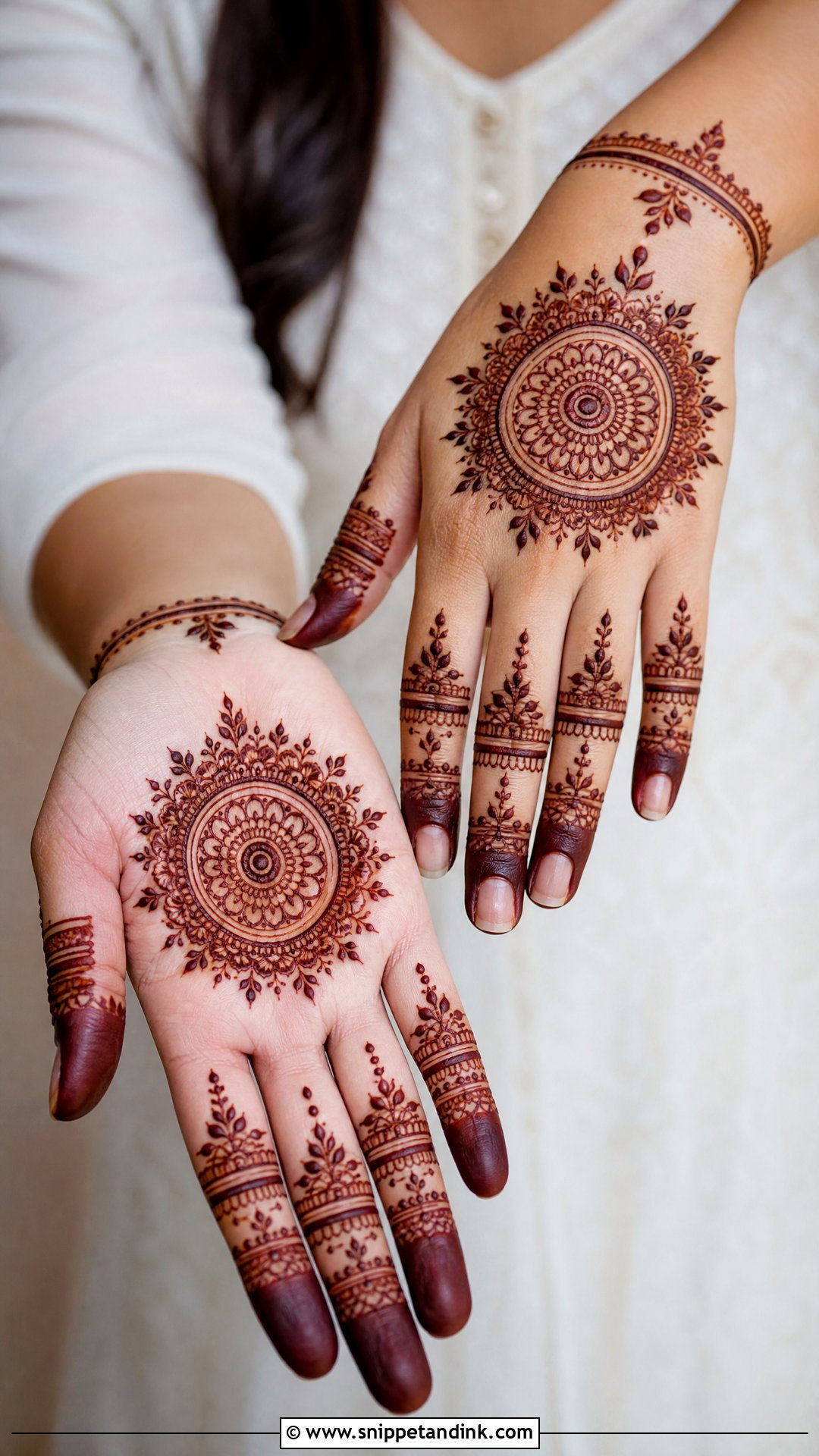
A mandala is the most forgiving design for a group. One circle on the palm or back hand, decorated fingers and a light wrist band, and the hand looks balanced from any angle. The circle has to be round, though; an oval mandala is the first thing people notice. I build it from the center dot outward in rings, which keeps the proportions true. For a matching bridal party, give everyone the same mandala and change only the finger patterns.
7. Floral Mehndi Design For Bridesmaid
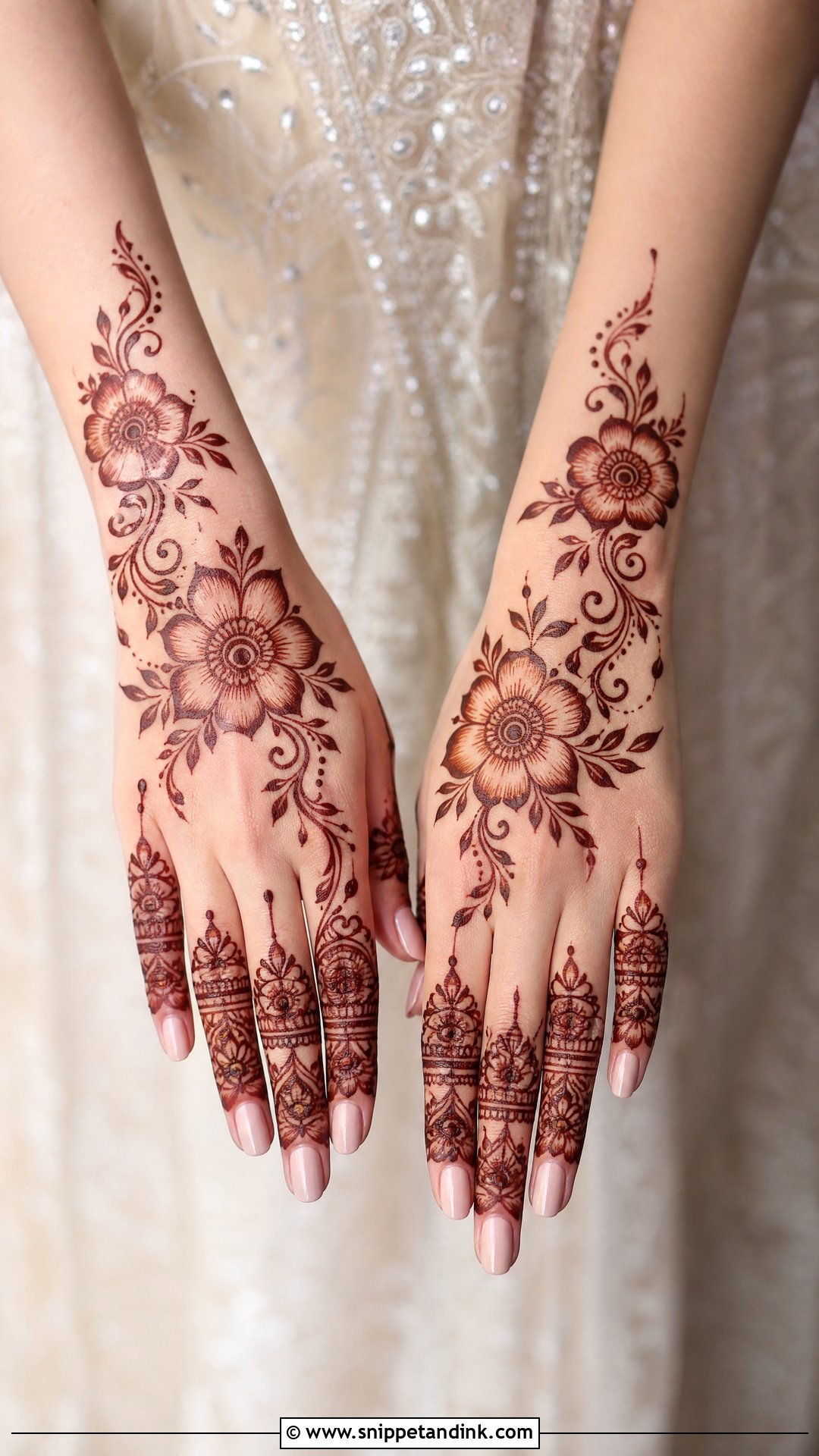
Floral designs can cover the palm, the back, or both, and the size of the flowers changes the whole mood. Large blooms give an Arabic boldness; tiny blossoms read delicate. Whichever you pick, I draw the flowers so they flow from the wrist toward the fingers in a gentle curve, which lengthens the hand. Leave space around each petal. Henna paste spreads slightly as it settles, and petals drawn too close together merge into a single blot once the stain develops.
8. Indo Arabic Mehndi Design For Bridesmaid
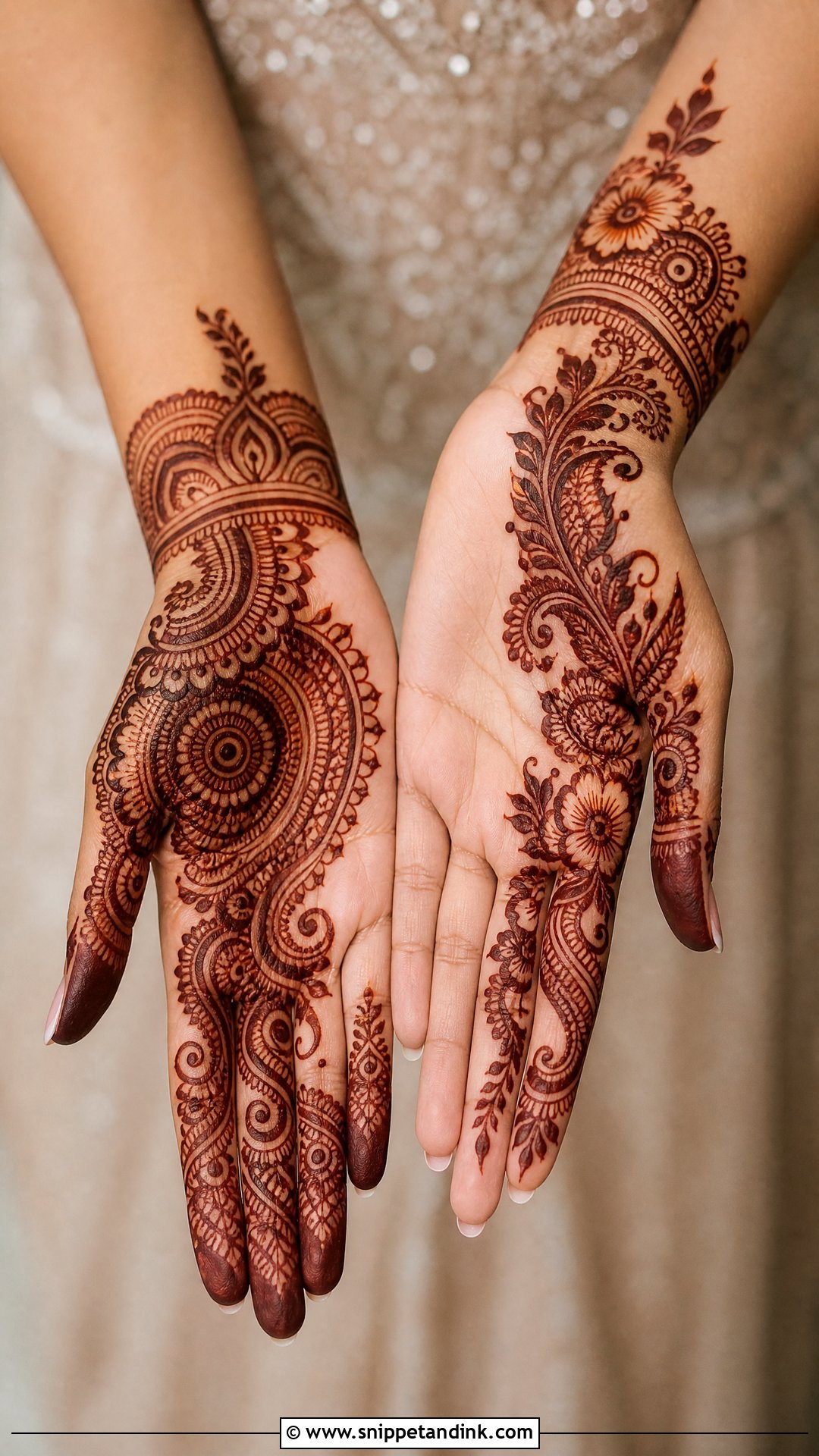
Indo-Arabic takes the open spacing of Arabic work and adds the fine detail of Indian mehndi: flowers, paisleys, shaded leaves, small mandalas and filled fingers, usually running diagonally with open areas between. It suits almost any outfit. For bridesmaids, I keep the wrist and forearm lighter than I would for a bride, partly so it doesn’t drift toward bridal territory and partly so she can still pull a sleeve down comfortably.
9. Jaali Mehndi Design For Bridesmaid
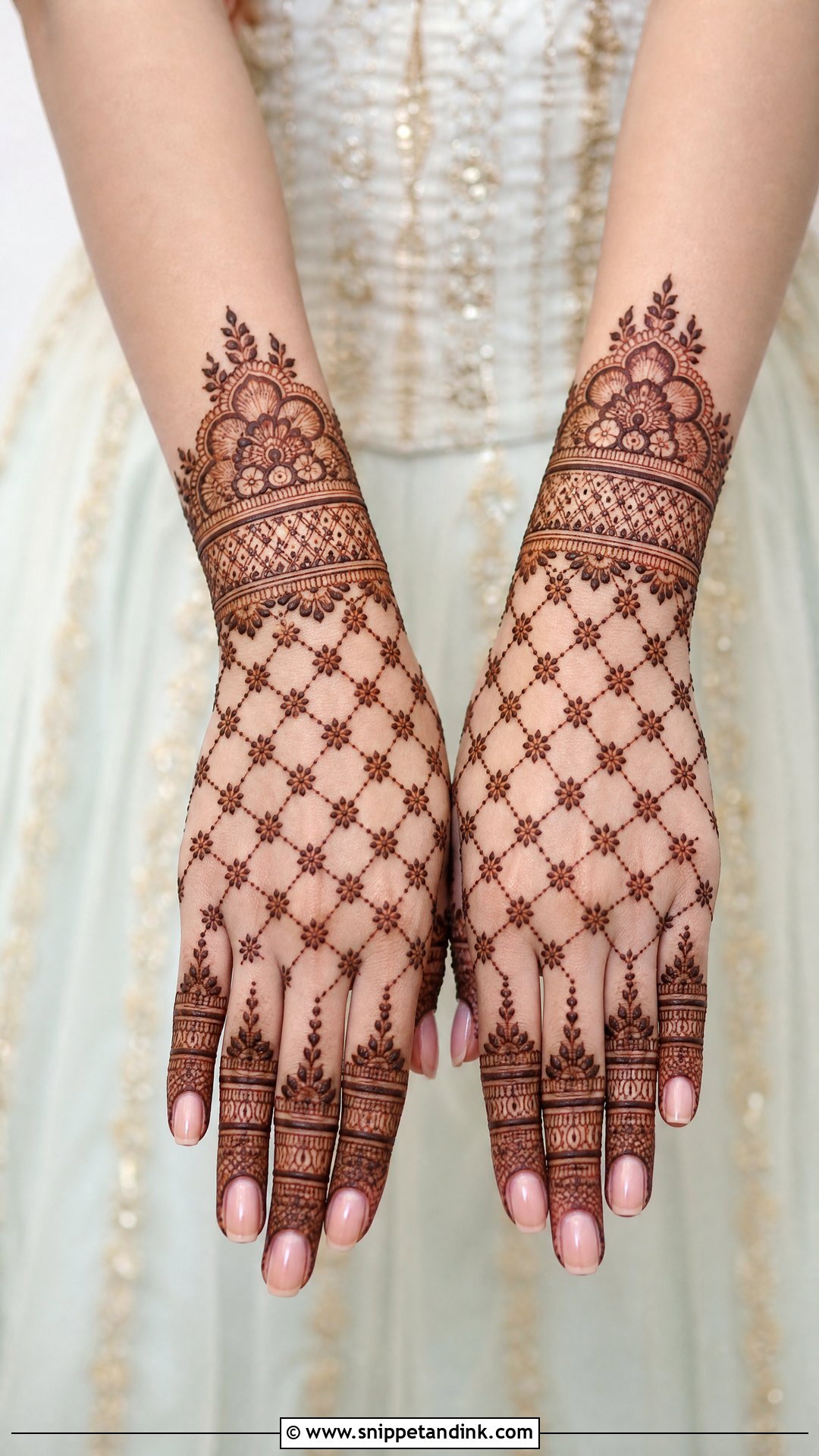
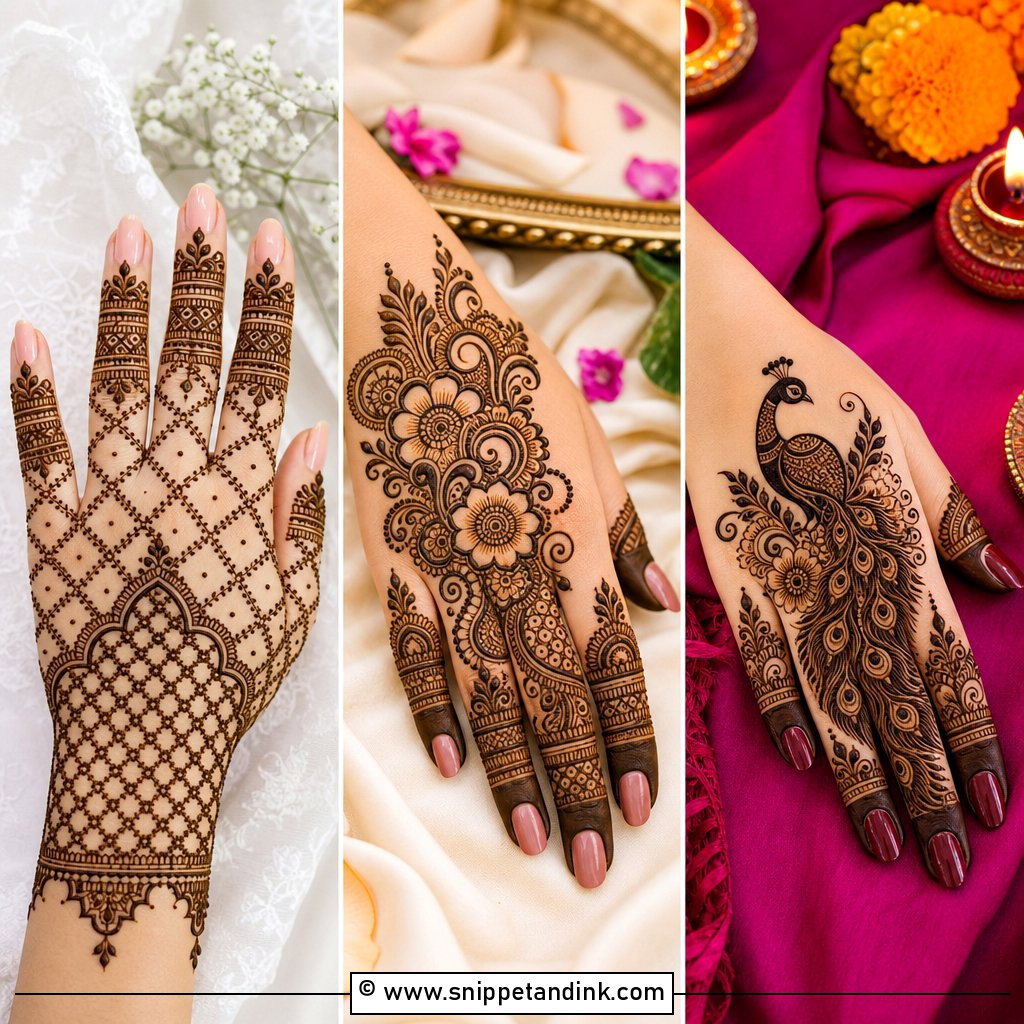
Jaali is a lace-like mesh, built from crossing lines, dots, tiny flowers and clean borders, and it’s where you can tell a steady hand from a rushed one. The lines must be evenly spaced and thin, which means a fine cone tip and fresh paste; old paste that’s thickened will break mid-line. I’d pair it with a floral wrist cuff, a central back-hand motif and patterned fingers. It sits well under rings and bangles because the mesh already reads like jewellery, and it suits formal events where a full hand would feel too much.
10. Peacock Mehndi Design For Bridesmaid
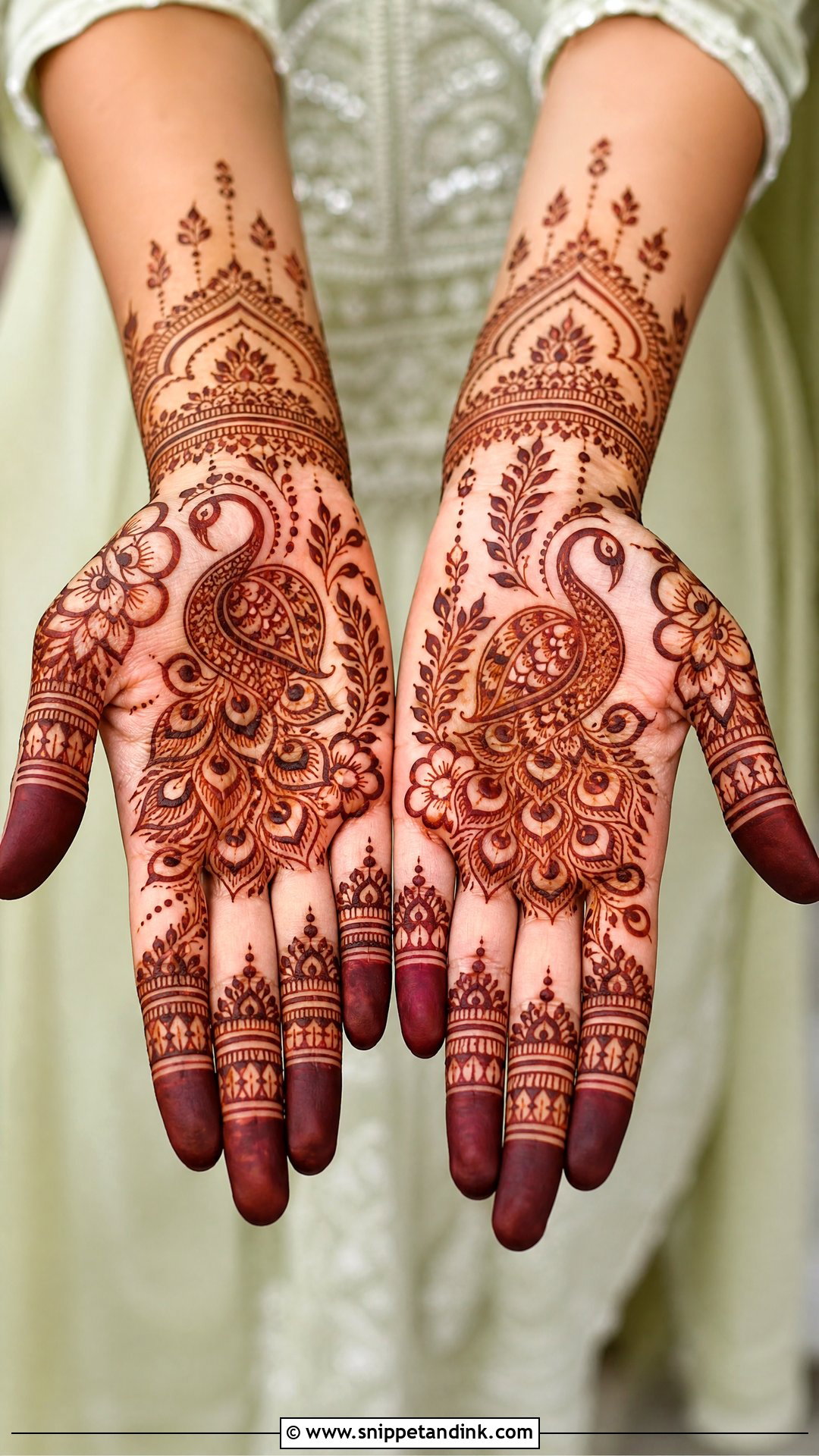
Peacocks belong to traditional weddings, but for bridesmaids I use one or two motifs rather than the full bridal parade. A peacock on the palm with floral borders and lightly filled fingers is plenty. On the back of the hand, I tuck the bird near the wrist or along the side and let the feathers sweep toward the fingers. Keep the feather work fine and open; dense feathers in a bridesmaid design start to look heavier than the bride’s. It pairs well with silk sarees and classic lehengas.
11. Paisley Mehndi Design For Bridesmaid
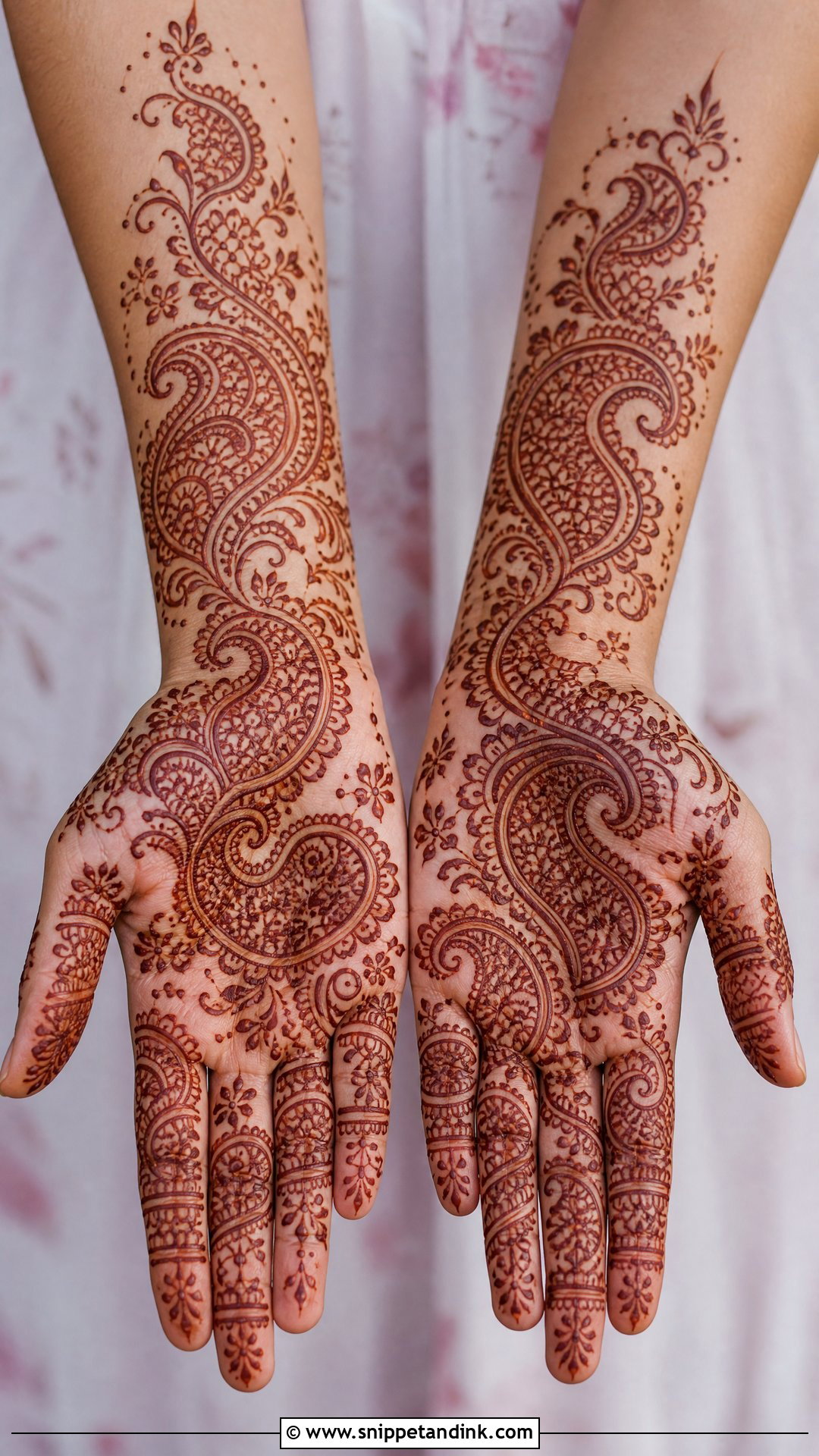
Paisley mehndi is the motif I adjust most easily for different hands, because the mango shape stretches or shrinks to fit the space. A bridesmaid version uses medium paisleys filled with fine lines, dots, flowers and leafy strokes across the palm, back hand or wrist. It looks rich without covering every inch of skin, and it mixes well with Arabic trails, mandalas or jaali. For a coordinated party, I keep the paisley placement the same on everyone and vary the fillings.
12. Bracelet Mehndi Design For Bridesmaid
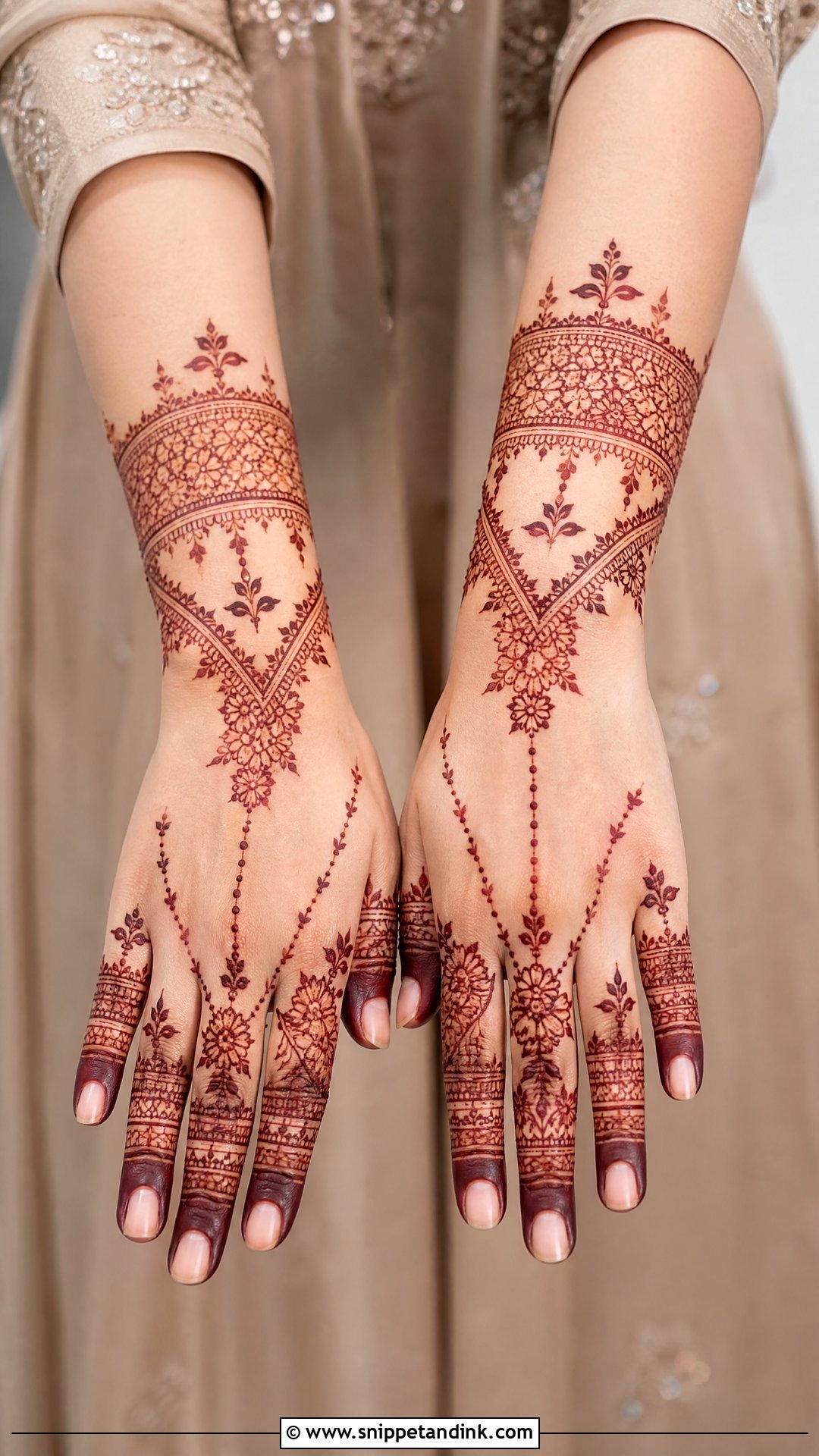
Bracelet mehndi turns the hand into jewellery: a wrist cuff, chain-like lines, finger rings and a small motif on the back of the hand. It’s light and quick. The mistake I see most is a bracelet with no link to the fingers, which looks unfinished, so I always connect at least one finger to the cuff. Floral, geometric or jaali cuffs all work. It shines with sleeveless blouses and short sleeves, where the wrist is visible.
13. Minimal Mehndi Design For Bridesmaid
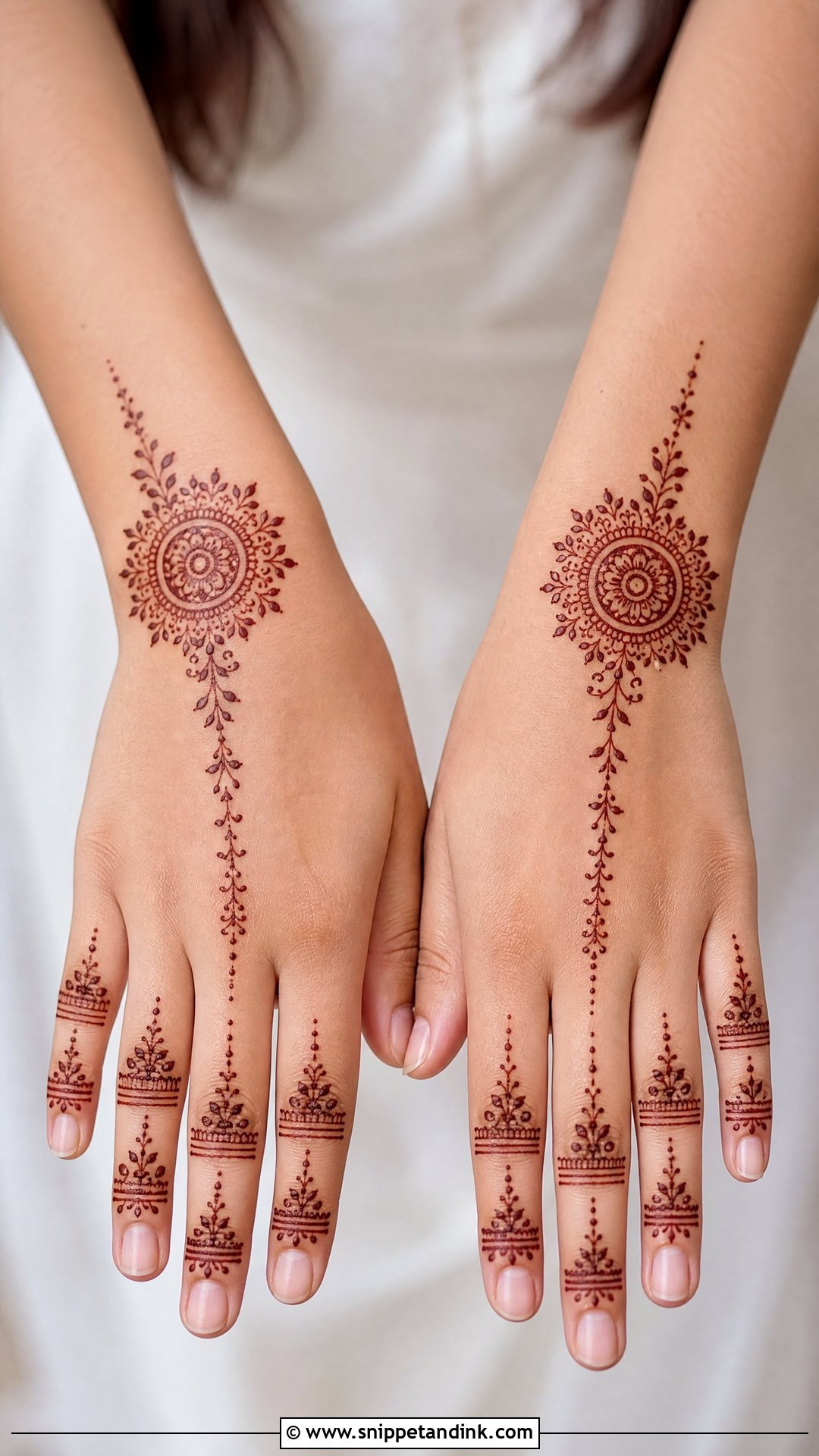
Minimal mehndi relies on one strong element: a small mandala, a slim floral trail, finger details or a wrist band. It suits destination weddings and summer ceremonies, and bridesmaids who’ll switch between traditional and western outfits over a weekend. Because there’s so little of it, placement is everything. I sketch where the design starts and stops with a light dot before I commit, so it sits balanced on the hand.
14. Finger Mehndi Design For Bridesmaid
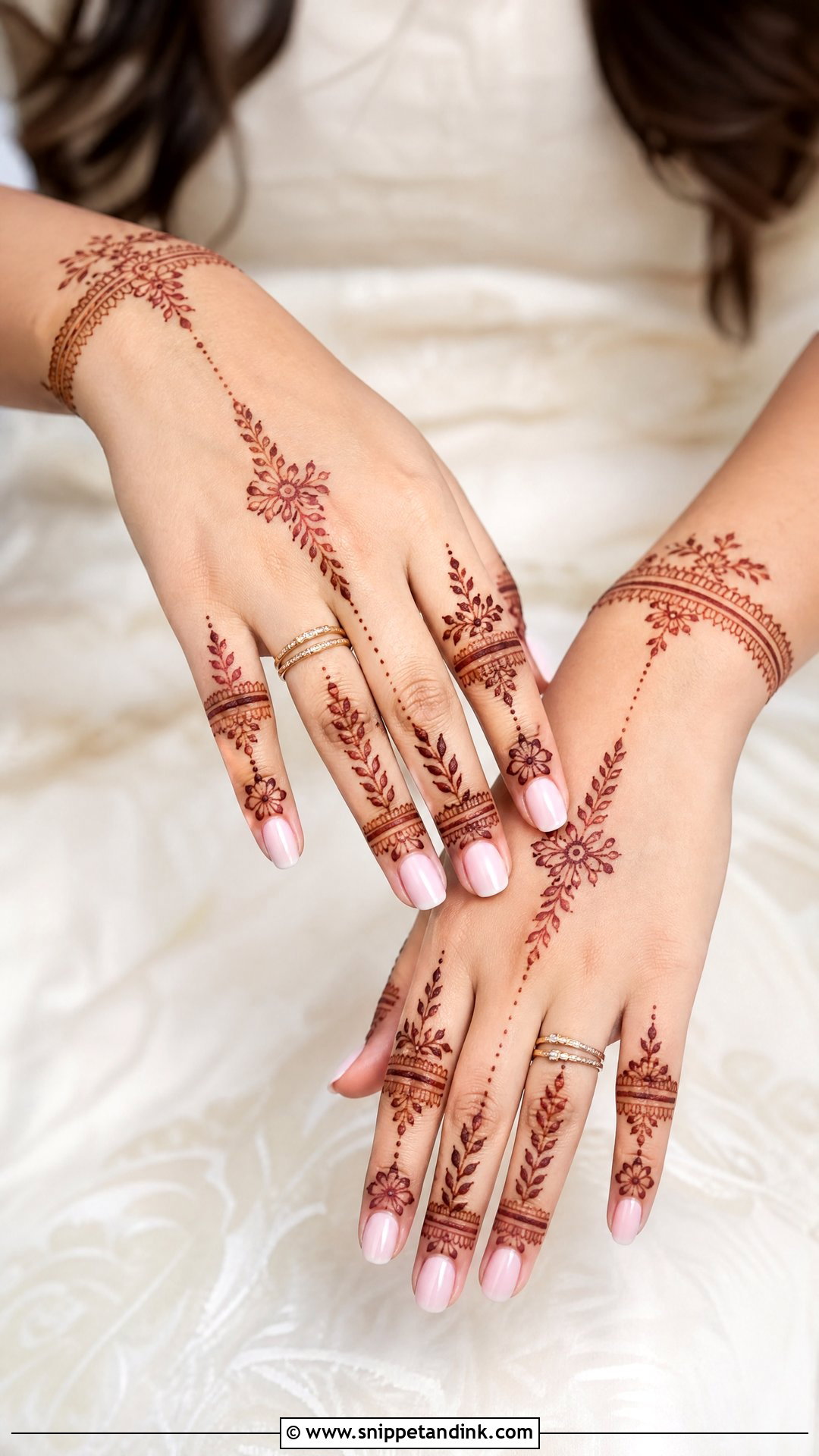
Finger mehndi keeps the palm or back almost bare and decorates the fingers with lines, leaves, dots, mini florals and ring bands. It’s the best choice when your outfit or jewellery is already loud, and it makes a manicure and rings stand out. Fingertips stain very dark, so the patterns can be delicate and still show. I usually add a small wrist band and a central motif to tie the fingers together. Avoid loading one finger unless something balances it elsewhere on the hand.

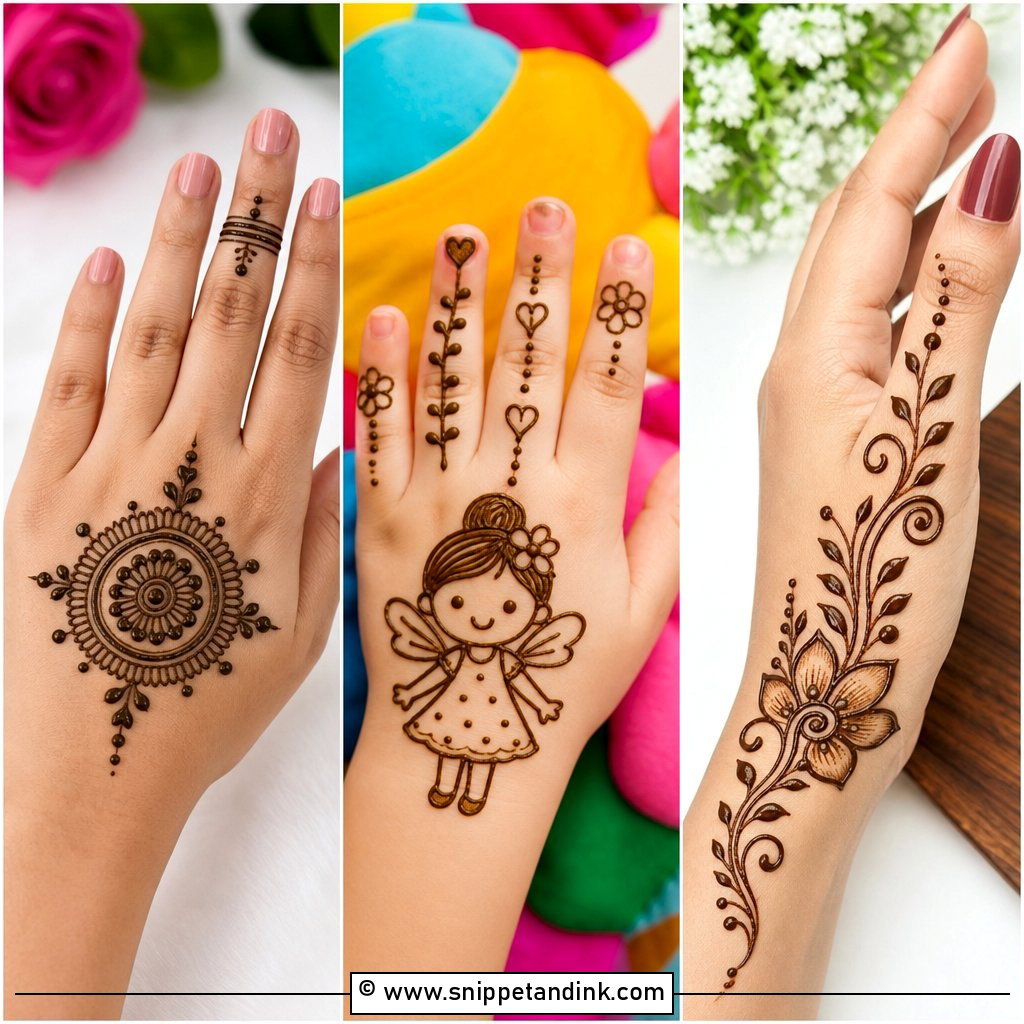
15. Palm Mehndi Design For Bridesmaid
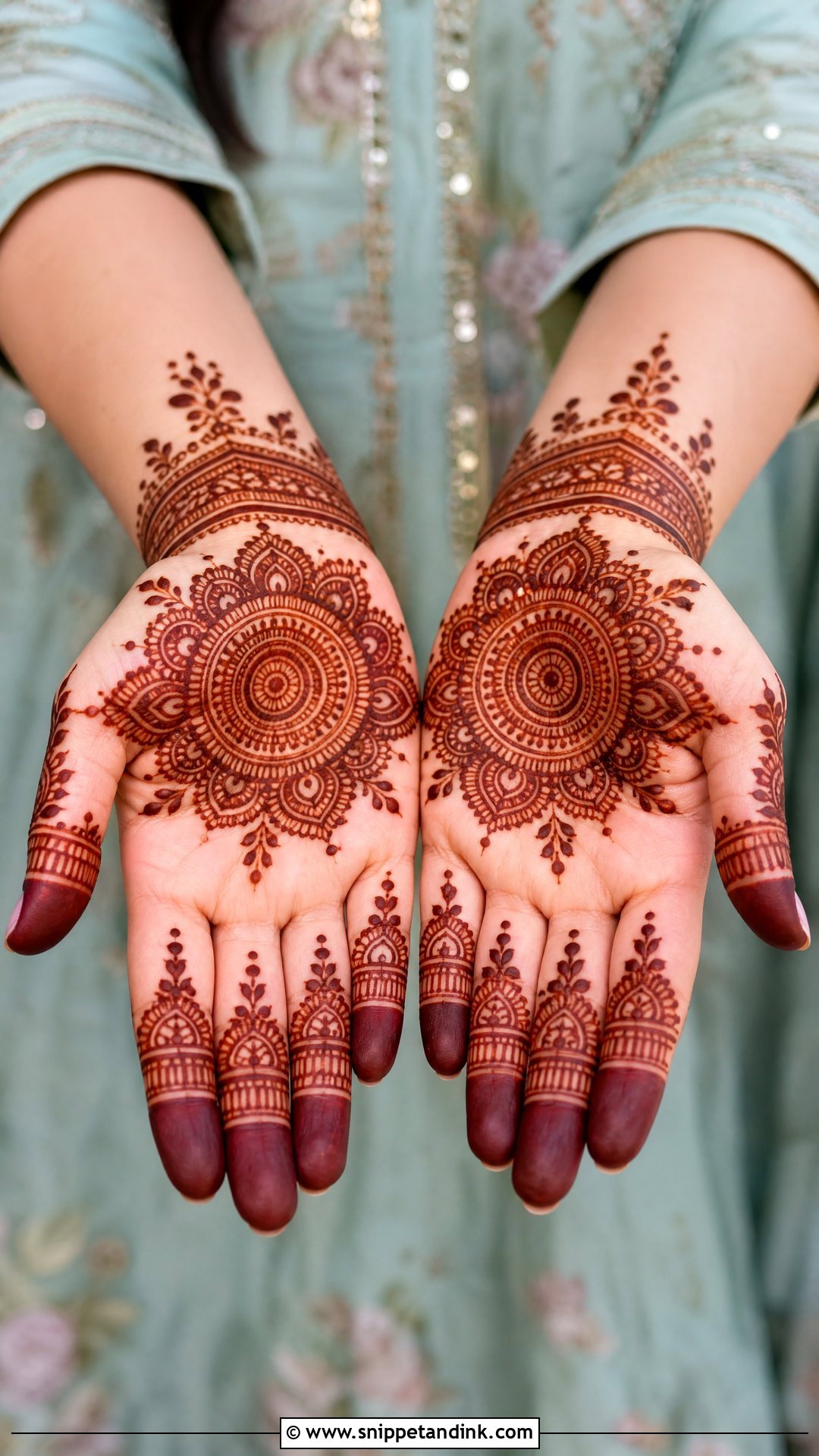
Palm designs feel the most ceremonial, which makes them right for the mehndi function itself. A bridesmaid palm can carry a centered mandala, surrounding florals, paisley corners and dipped fingertips, all without running up the arm. Since the palm takes the darkest stain, I leave clear space around the main motif so it doesn’t blur. If you want both sides decorated, a detailed palm with a lighter back-hand trail is a balanced pairing.
16. Half Hand Mehndi Design For Bridesmaid
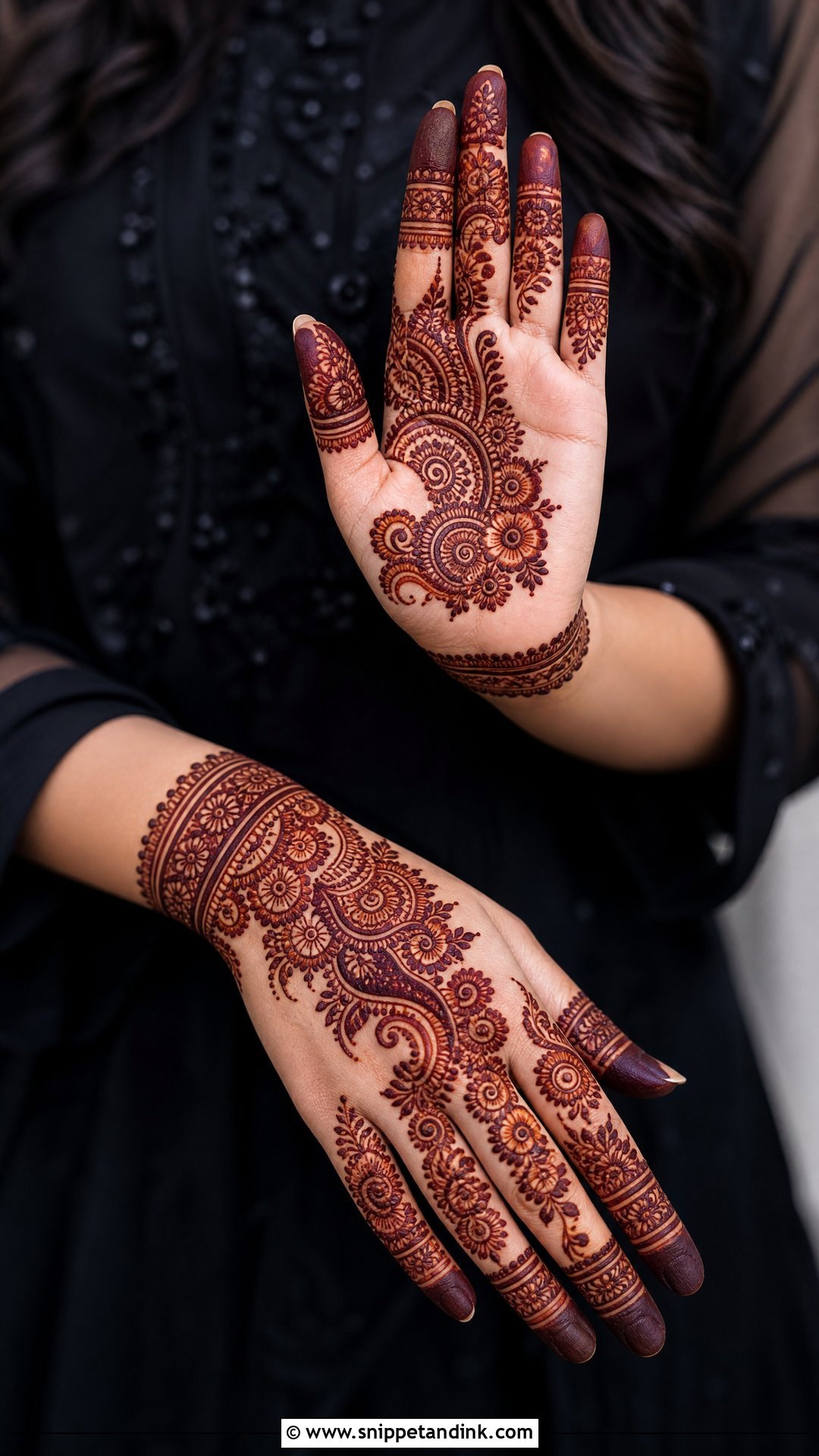
Half hand mehndi is the practical middle ground: enough coverage to feel festive, nowhere near the sitting time of bridal work. I stop it at the wrist or just above, with florals, paisleys, a mandala and finger patterns. The edge matters most. A design that just stops looks cut off, so I finish the wrist with a band or border, like the clasp of a bracelet. When several bridesmaids need henna in one session, this is the design I suggest.
17. Shaded Mehndi Design For Bridesmaid
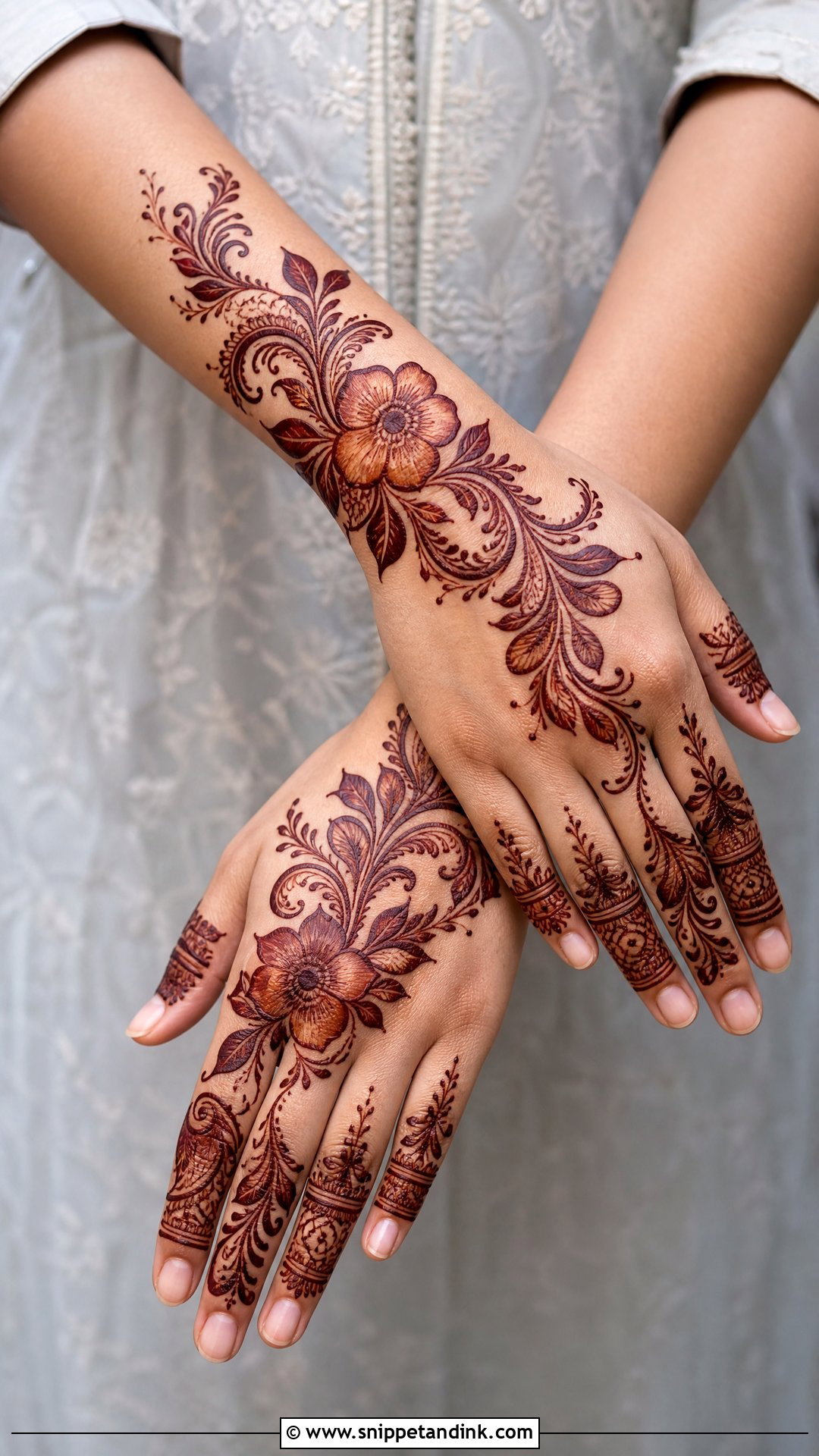
Shaded mehndi uses light filling inside the flowers, leaves and paisleys to make a gradient, done by pulling the paste thin with the cone tip rather than adding more lines. It gives depth for photos while leaving skin visible. I’d run it from the wrist across the back of the hand onto two or three fingers. The shading should be smooth; uneven pressure leaves blotches that show up as dark patches once the stain develops.
18. Moroccan Mehndi Design For Bridesmaid
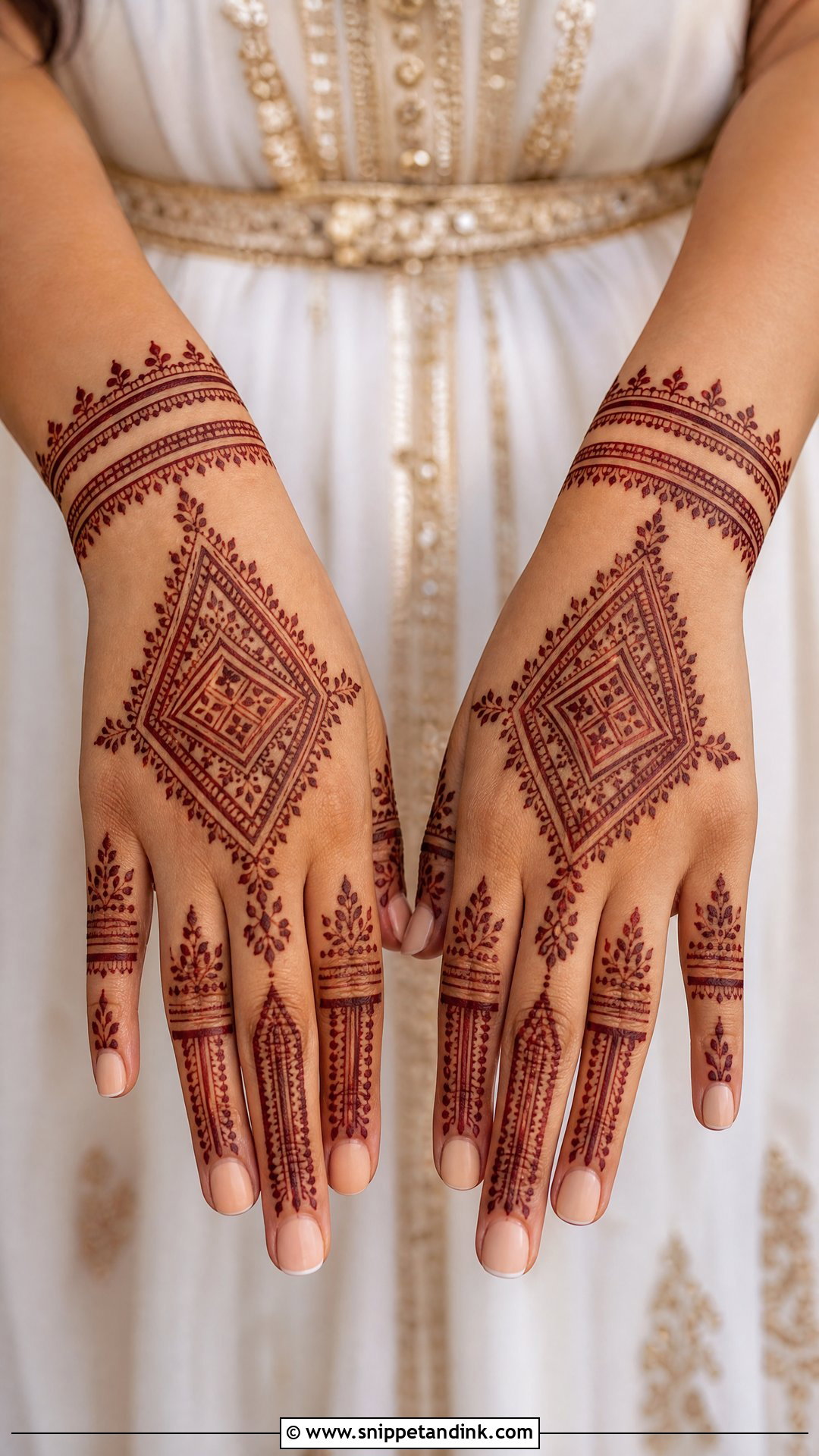
Moroccan mehndi swaps flowers for geometry: diamonds, triangles, lines, grids and dots in structured bands. It looks sharp on the back of the hand, fingers and wrist, and pairs well with fusion gowns and contemporary lehengas. This is the design where a shaky hand shows most, because the eye spots a crooked line instantly. I keep the cone steady by resting my wrist on the client’s hand and drawing lines in one pull. A geometric cuff, patterned fingers and a central diamond make a complete look.
19. Gulf Mehndi Design For Bridesmaid
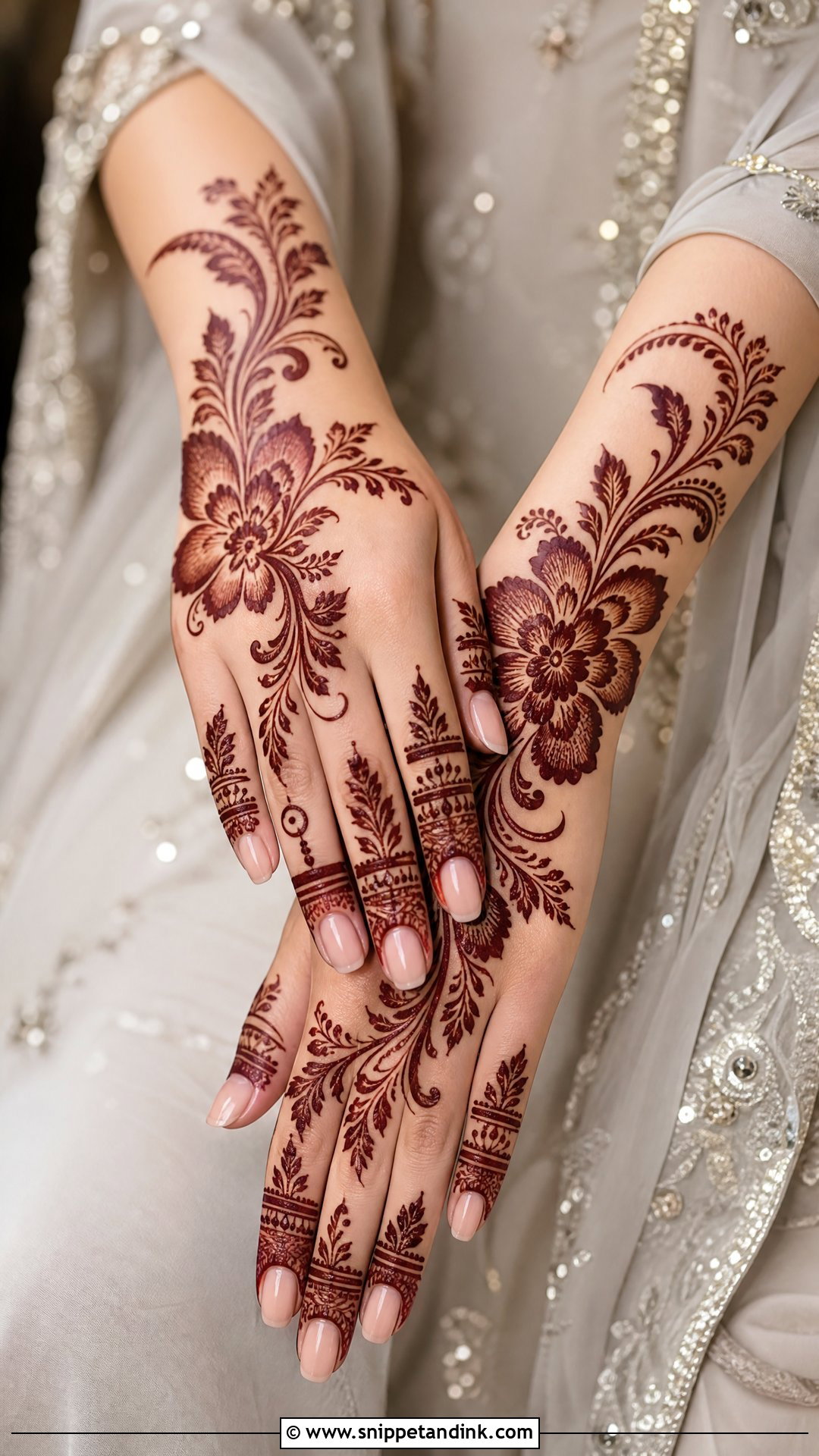
Gulf or Khaleeji mehndi uses big flowers, leafy vines, thick strokes and lots of open skin. It’s dramatic from a distance, which is why I recommend it for evening functions and group photos where hands are seen from across the room. It usually starts near the wrist, sweeps across the back of the hand and finishes on the fingers. I keep the outlines bold and the inner detail light, so the flowers stay crisp. It goes well with glamorous outfits and stacked bangles.

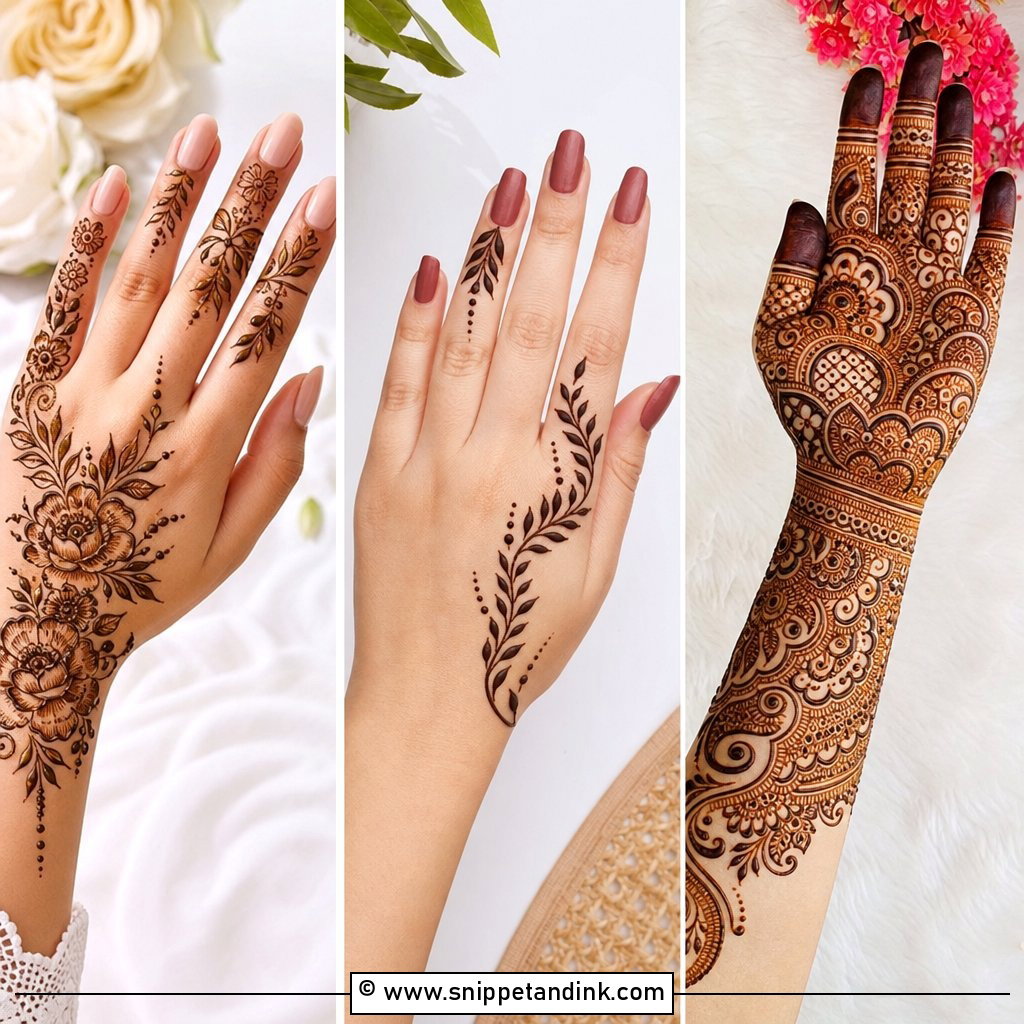
20. Rose Mehndi Design For Bridesmaid
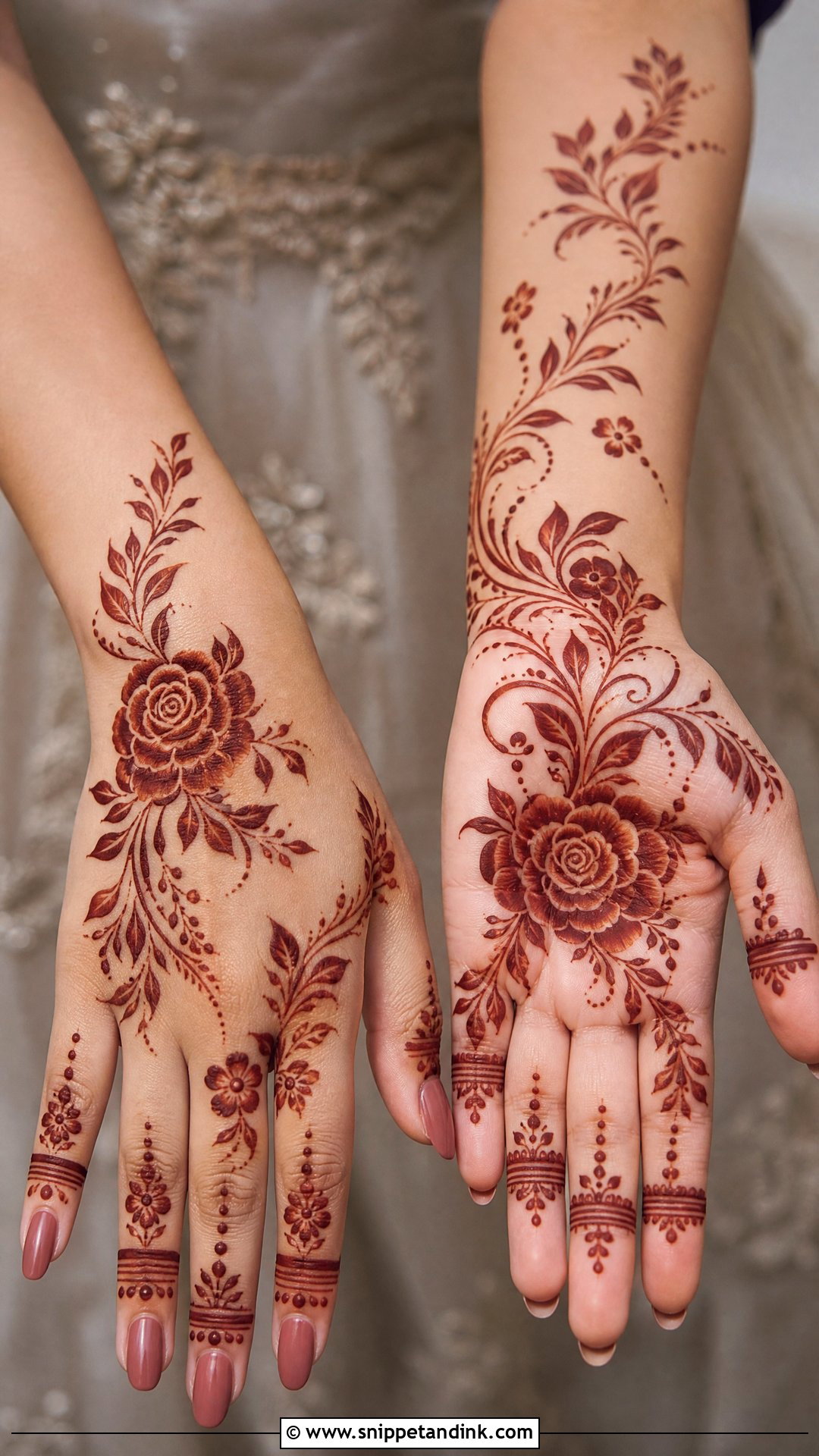
Rose mehndi puts the rose itself in front, with layered petals, leafy stems and curved trails instead of generic small flowers. You can place it as a vine on the back of the hand, a single bloom on the palm, or around the wrist. Roses are tricky because the layered petals need gaps between them; draw them tight and the stain merges into a blob. I leave a clear line of skin between each layer. It suits pastel and blush outfits.
21. Jewellery Mehndi Design For Bridesmaid
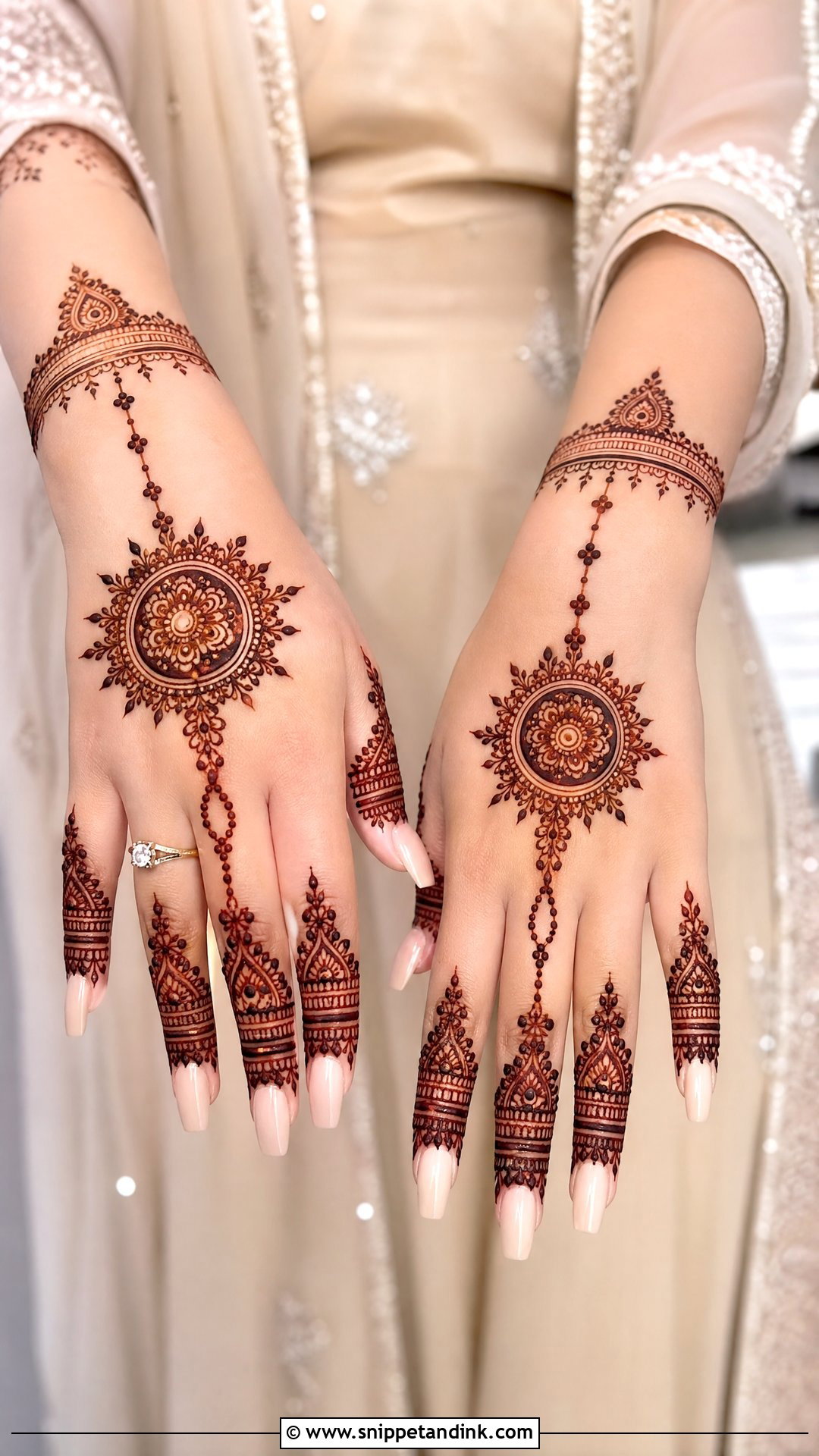
Jewellery mehndi mimics hand accessories with ring patterns, chains, wrist cuffs, finger bands and pendant motifs. A cuff linked to one or more fingers gives a haath phool effect, and it looks stylish even if you wear no actual jewellery. It’s light enough to wear through a weekend of events. I keep the chain lines thin and the wrist cuff detailed, because the cuff anchors everything else.
22. Lotus Mehndi Design For Bridesmaid
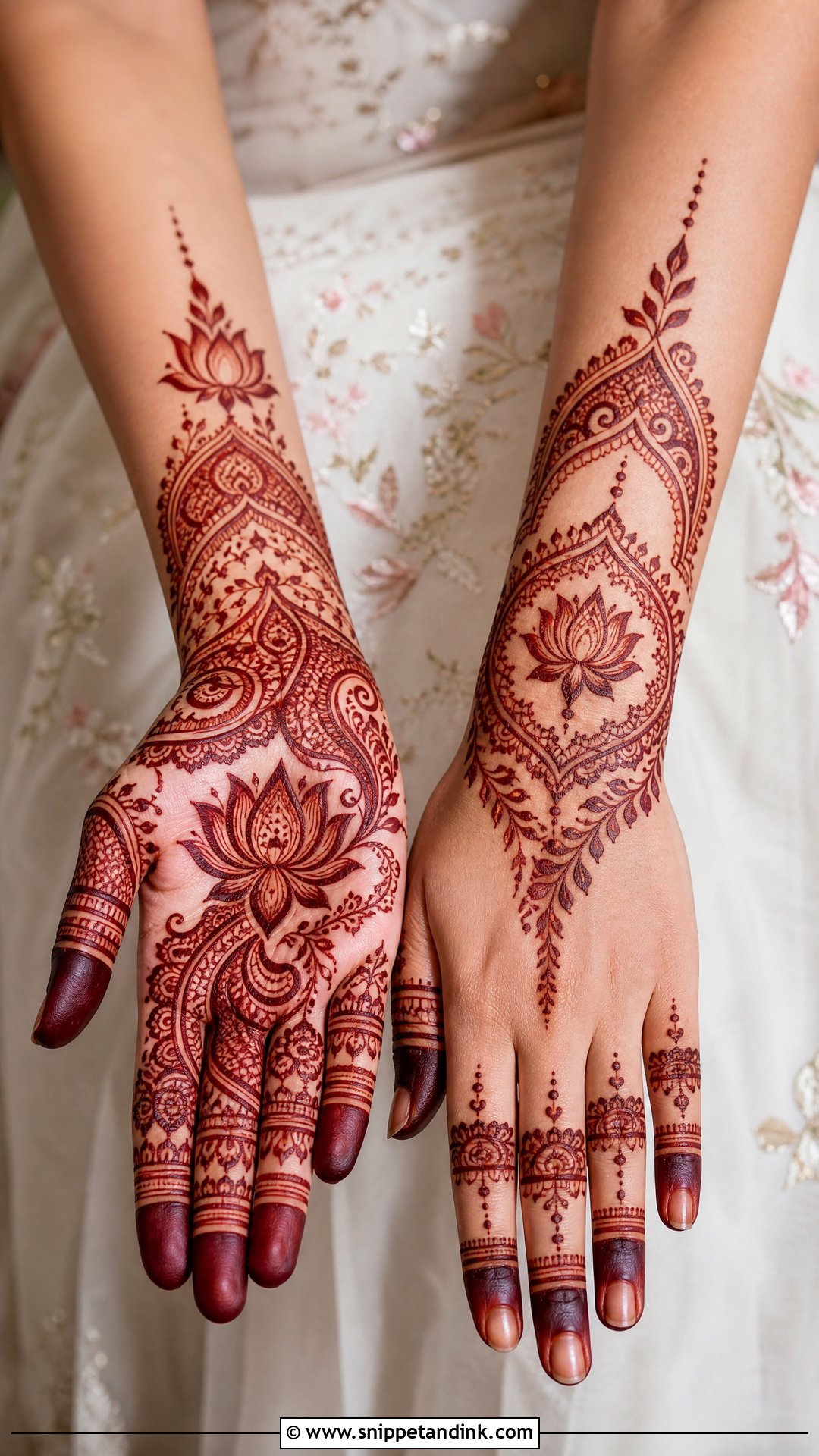
Lotus mehndi has a calm, traditional feel. A central lotus on the palm works well, as do lotus petals at the wrist or a trail on the back of the hand with leaves and fine borders. It pairs naturally with mandalas, paisleys and jaali. I draw the petals bold, then add small dots and leafy details around them, which gives the eye something to settle on. It suits silk, organza and embroidered outfits.
23. Matching Mehndi Design For Bridesmaids
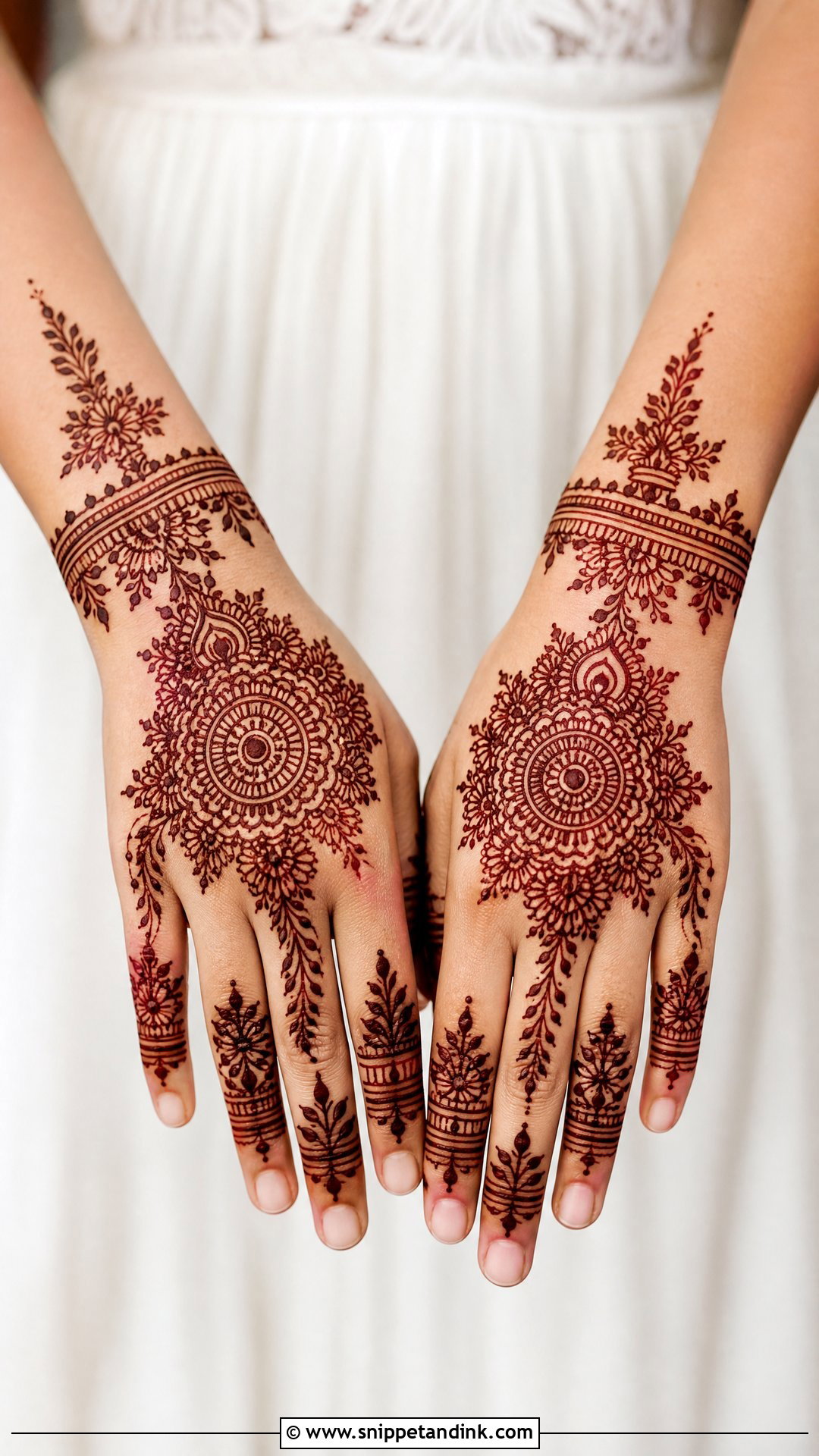
Matching mehndi doesn’t mean identical hands. It means one shared theme: everyone gets a mandala back hand, or an Arabic trail, or matching bracelets, with small changes in finger patterns or wrist borders to keep each personal. I recommend medium-detail designs here, because the whole group usually has to be done in one session and the last bridesmaid still needs time for her paste to sit. Coordinated hands look great in dance entries and group photos.
24. Modern Mehndi Design For Bridesmaid
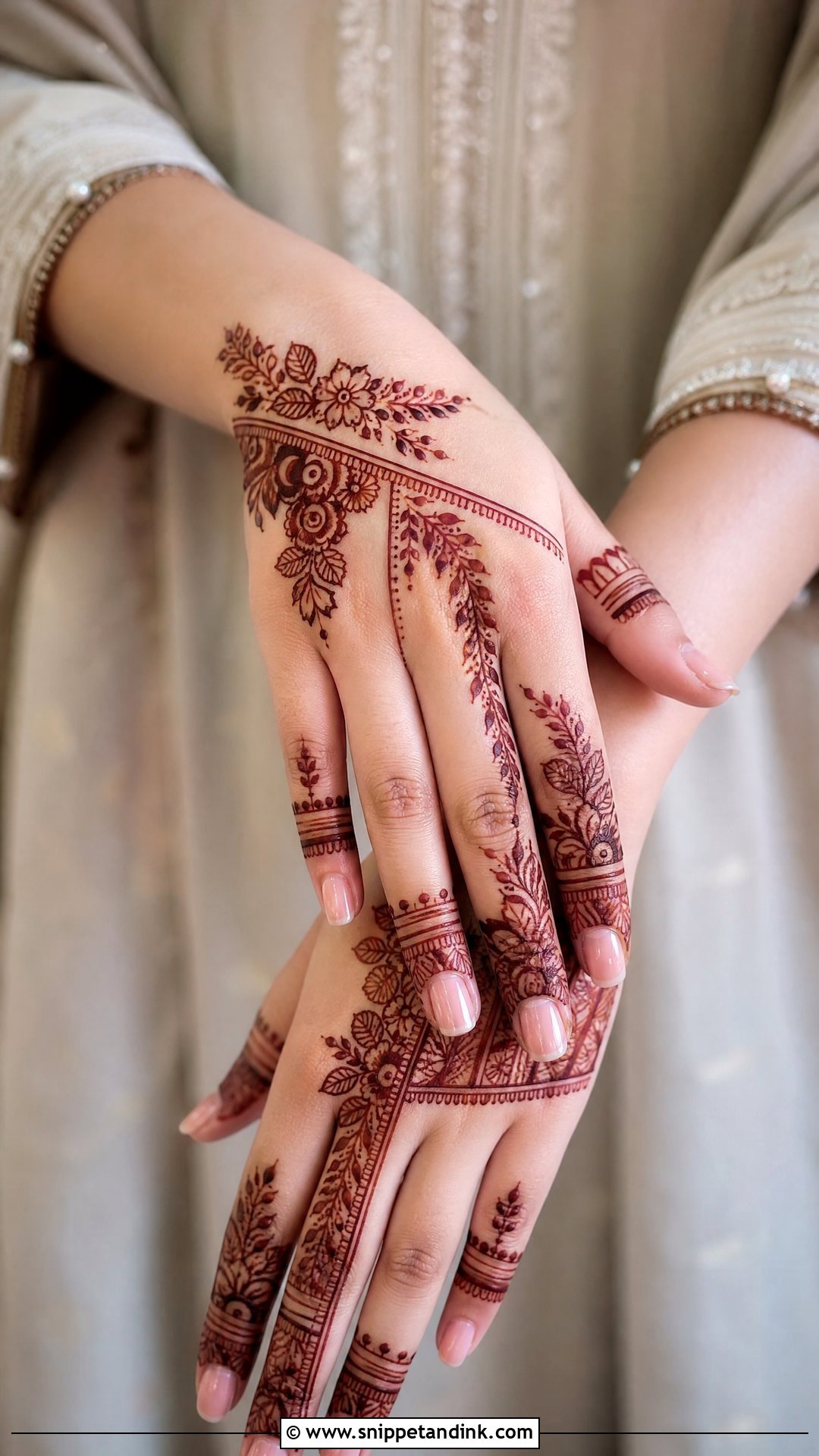
Modern bridesmaid mehndi is about clean placement and open space: abstract florals, half-and-half patterns, geometric bands, leafy lines and minimal finger work. A diagonal layout across the back of the hand with negative space at the center, finished at the wrist and fingers, is a reliable shape. The trap is scattering tiny motifs everywhere, which reads as random rather than modern. I give every modern design one clear focal point and let the rest support it. It suits contemporary lehengas, gowns and fusion outfits.


25. Bridal Party Mehndi Design For Bridesmaid
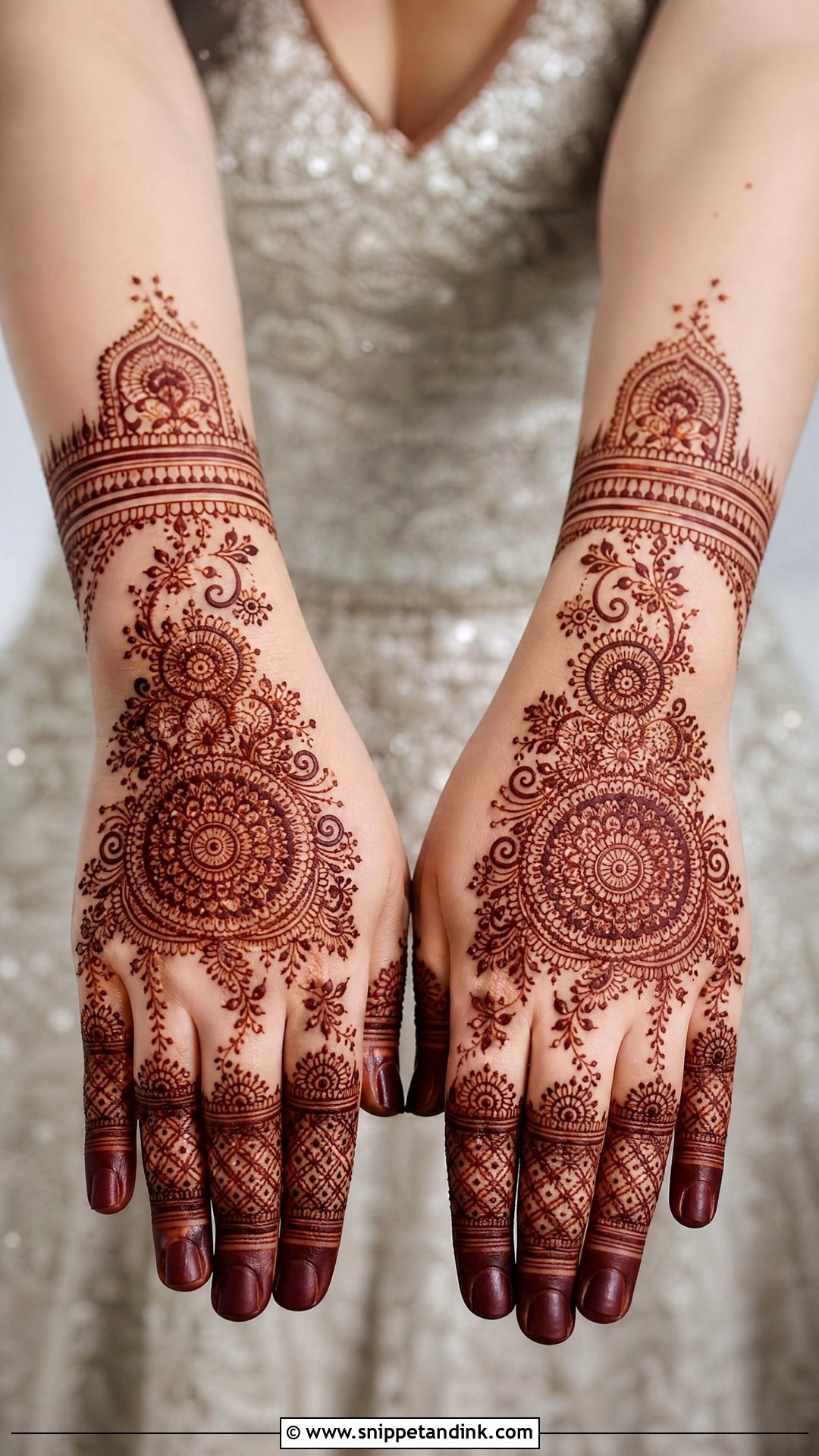
A bridal party design pulls together the best elements of bridesmaid henna: floral trails, mandalas, paisleys, bracelets and finger patterns, at medium coverage. It suits a bride who wants her closest friends or sisters on one henna theme. My favourite way to do it is to lift one motif from the bride’s own design, a particular flower or mandala, and repeat it in a simpler form on each bridesmaid. It ties the party to her without copying her look.
Why the Stain Looks Orange the First Morning
Natural henna always comes off bright orange. That isn’t a failed stain; it’s the start. The colour deepens to a reddish brown over the following day or two as it oxidises, which is why I tell bridesmaids to have their mehndi done a day or two before the wedding if they want it at its darkest for the ceremony.
Aftercare for a deeper colour
- Keep the paste on for as long as you can, ideally several hours or overnight.
- Scrape it off with a blunt edge rather than washing it away.
- Keep water off the design for as long as possible afterwards.
- Keep your hands warm; cold hands stain lighter.
A word about black henna
If someone offers you a jet-black stain in an hour, say no. Real henna never stains black. Those pastes usually contain chemical dye that can cause severe skin reactions, and nobody wants blistered hands in the wedding photos. Natural paste from a good artist smells of essential oil, not chemicals, and goes on brown-green.
Lighter Than the Bride, Still Worth Showing Off
The right bridesmaid design depends on your role and how much time you’ll actually get in the artist’s chair. Sisters and close cousins tend to want full hand, Indo-Arabic, paisley or peacock designs, while friends often go for Arabic, minimal, bracelet or finger work. Back-hand patterns carry the photos and palm designs carry tradition. Keep yours lighter than the bride’s, give it enough detail to feel festive, and leave the paste on long enough to earn a deep stain.
You'll Like These Ideas:








Leave a Reply