
Arabic-style henna works on a different principle from the dense bridal patterns most people grow up with: the bare skin between the motifs is part of the design. Large flowers, sweeping vines and paisleys sit on a diagonal with room around them, so each curve reads clearly and the stain looks crisp from across a room. As a mehndi artist, I reach for this style when someone wants coverage that feels dressed up but can be finished in under an hour per hand, or when a bride wants richness without a solid sleeve. The ideas below range from a single finger trail to full bridal hands, with notes on how each one is drawn and who it suits.
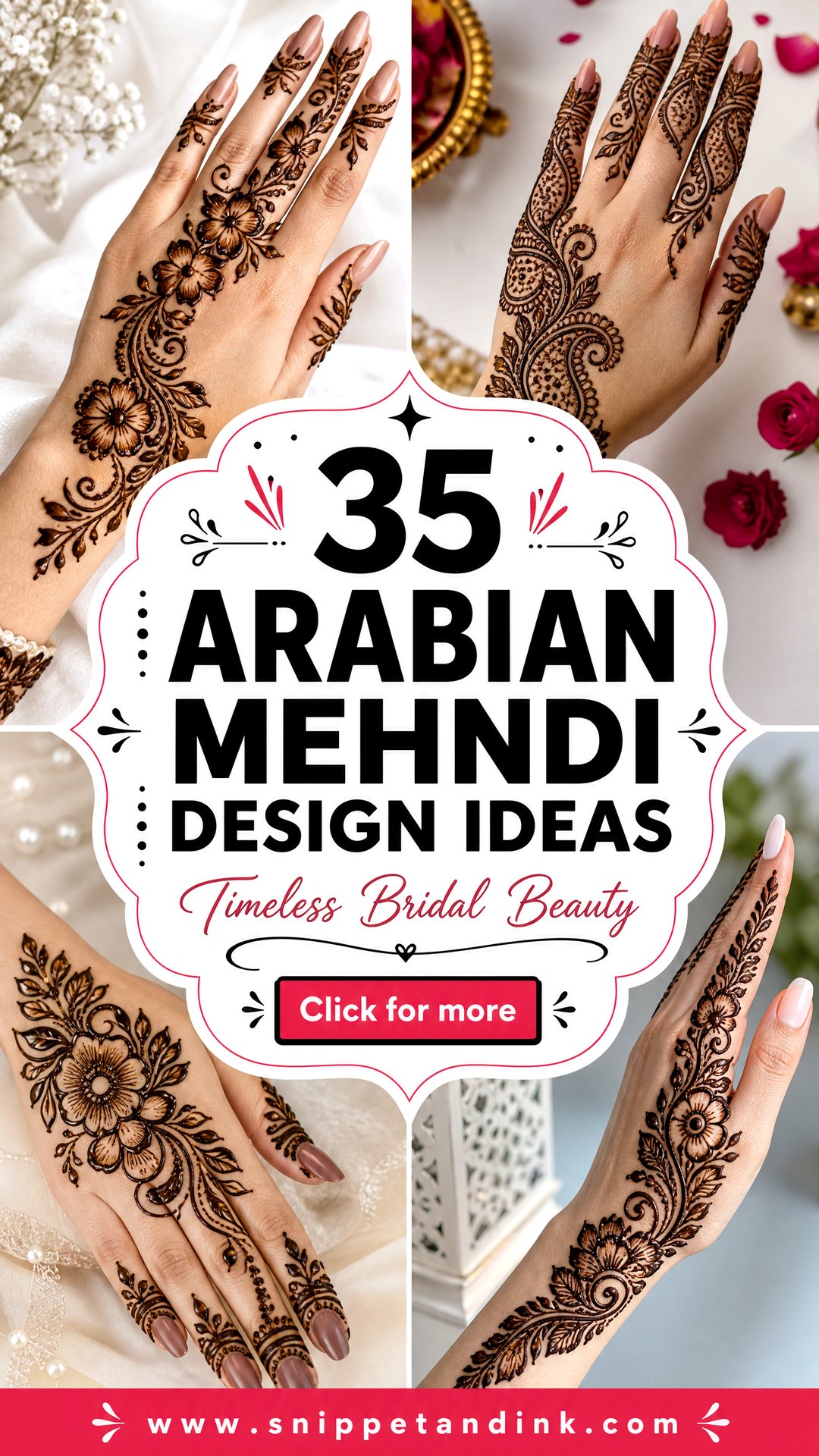
How I Plan an Arabic Trail Before the Cone Touches Skin
Most of an Arabic design is decided in the first minute, before I draw anything. I look at the hand relaxed on a cushion, because that’s how it will sit in most photos, and decide where the diagonal will run.
- Hand length: on short fingers, I end the trail at the middle knuckle so the hand doesn’t look crowded. On long hands, the vine can run right to the fingertip.
- Which finger the trail points to: the index finger gives a longer line, while the middle finger looks more symmetrical. Brides usually want the ring finger left with a clear band.
- Skin tone and warmth: warm hands stain faster and darker. On cool or very dry hands, I keep outlines bolder so the stain still reads.
- Time available: a simple trail is fifteen to twenty minutes a hand, a full bridal Arabic design can take several hours across both sides.
Paste matters as much as the drawing. I use natural henna mixed with lemon juice or water, sugar and an essential oil such as eucalyptus or cajeput, rested until the dye releases. If it’s too runny, fine lines spread; too stiff, the cone skips. Ask your artist what’s in the paste. Anything sold as black henna, or a paste that stains black within an hour, can contain a chemical dye that causes severe skin reactions, and I won’t use it.
1. Arabian Back Hand Mehndi Design
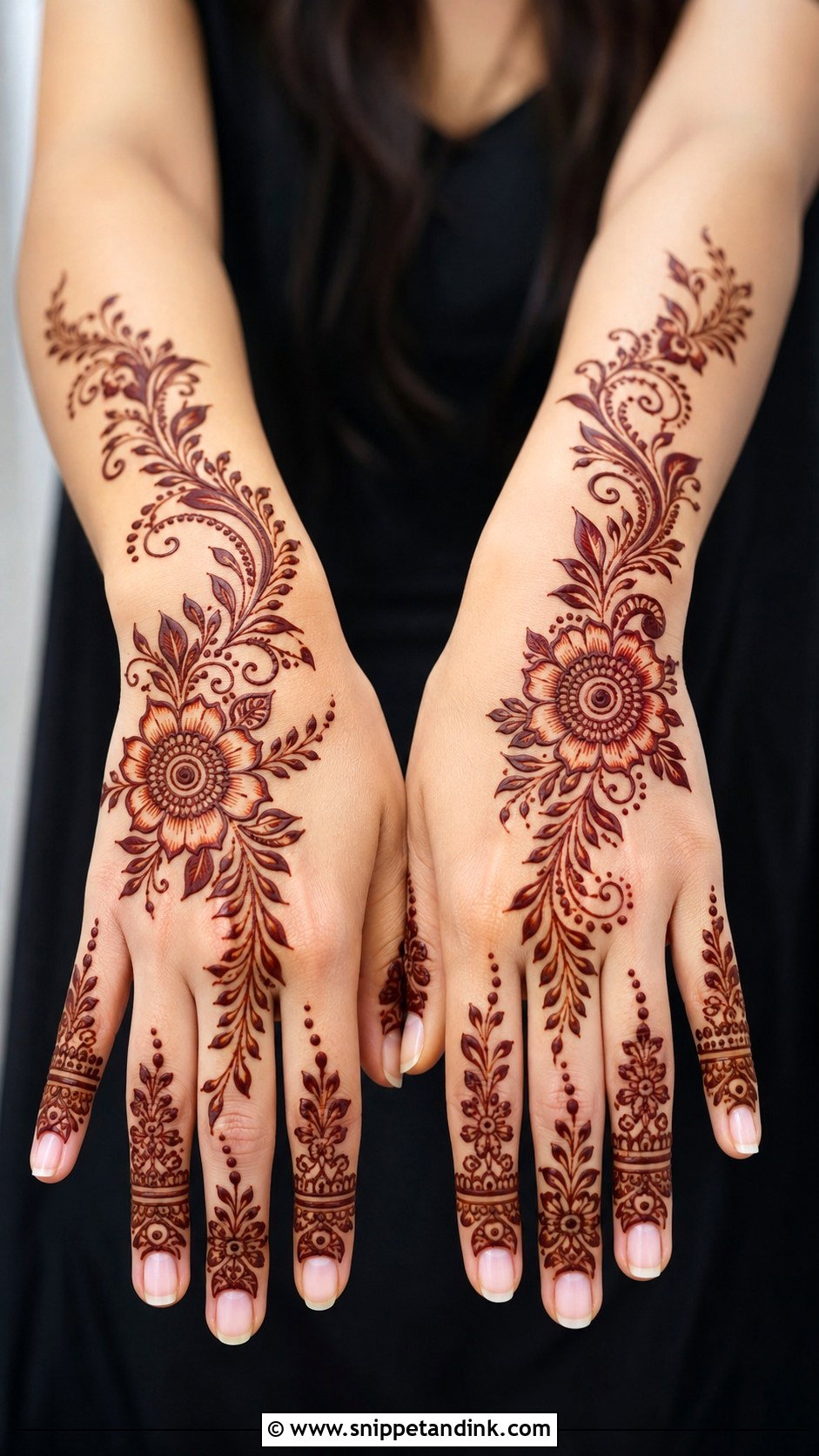
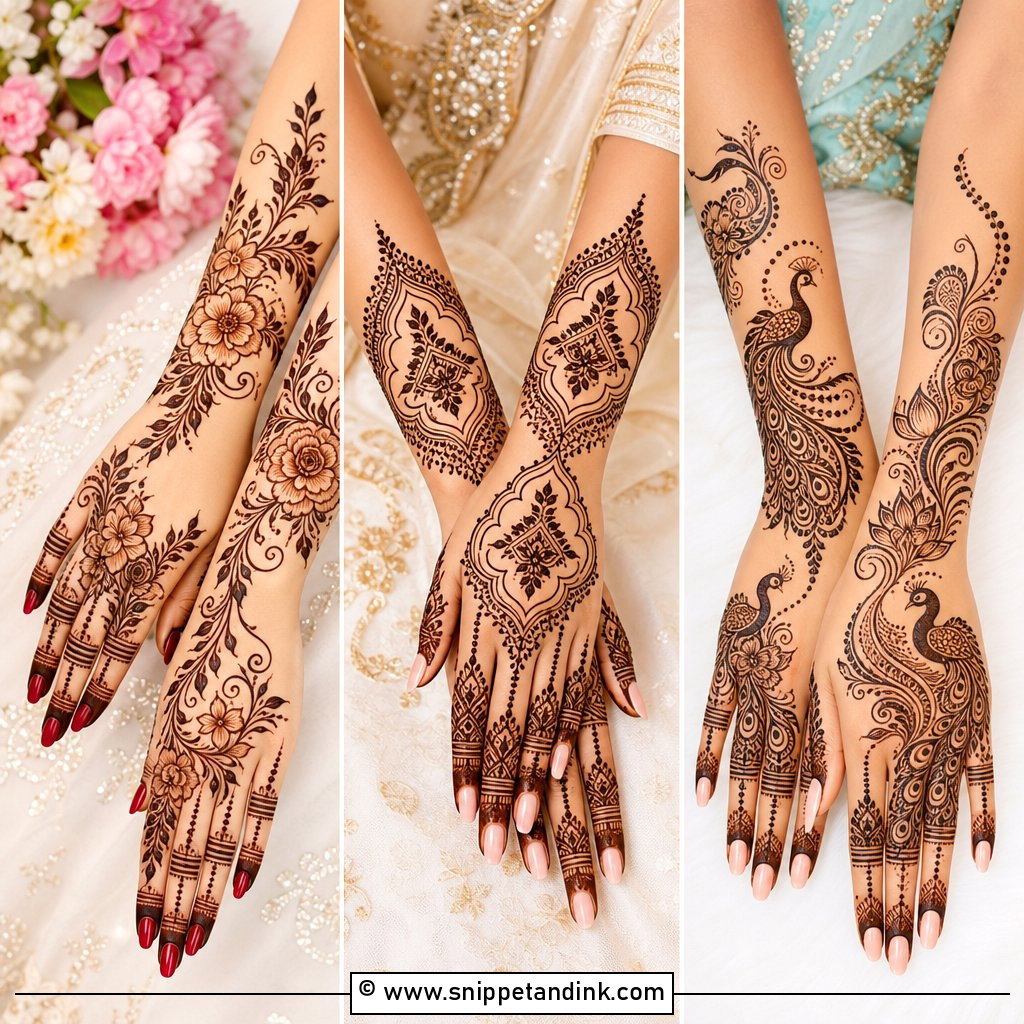
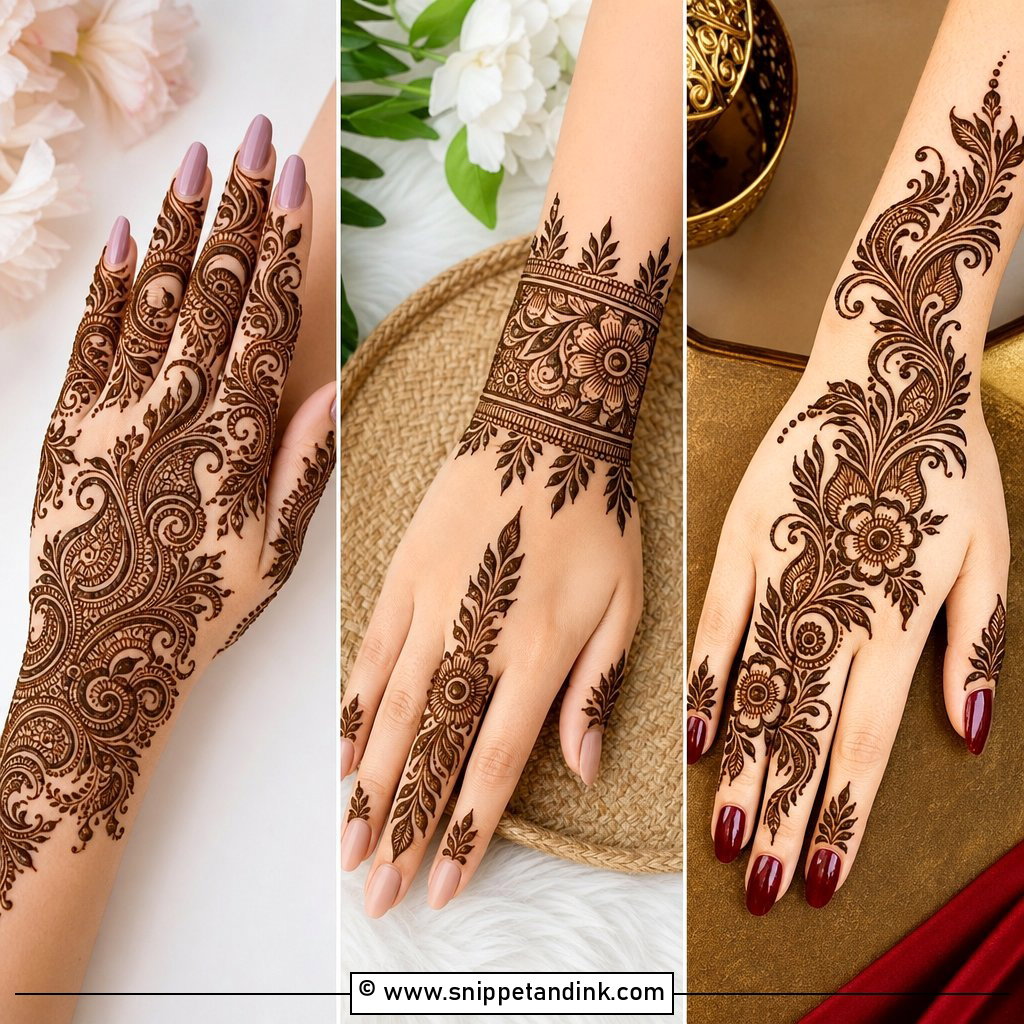
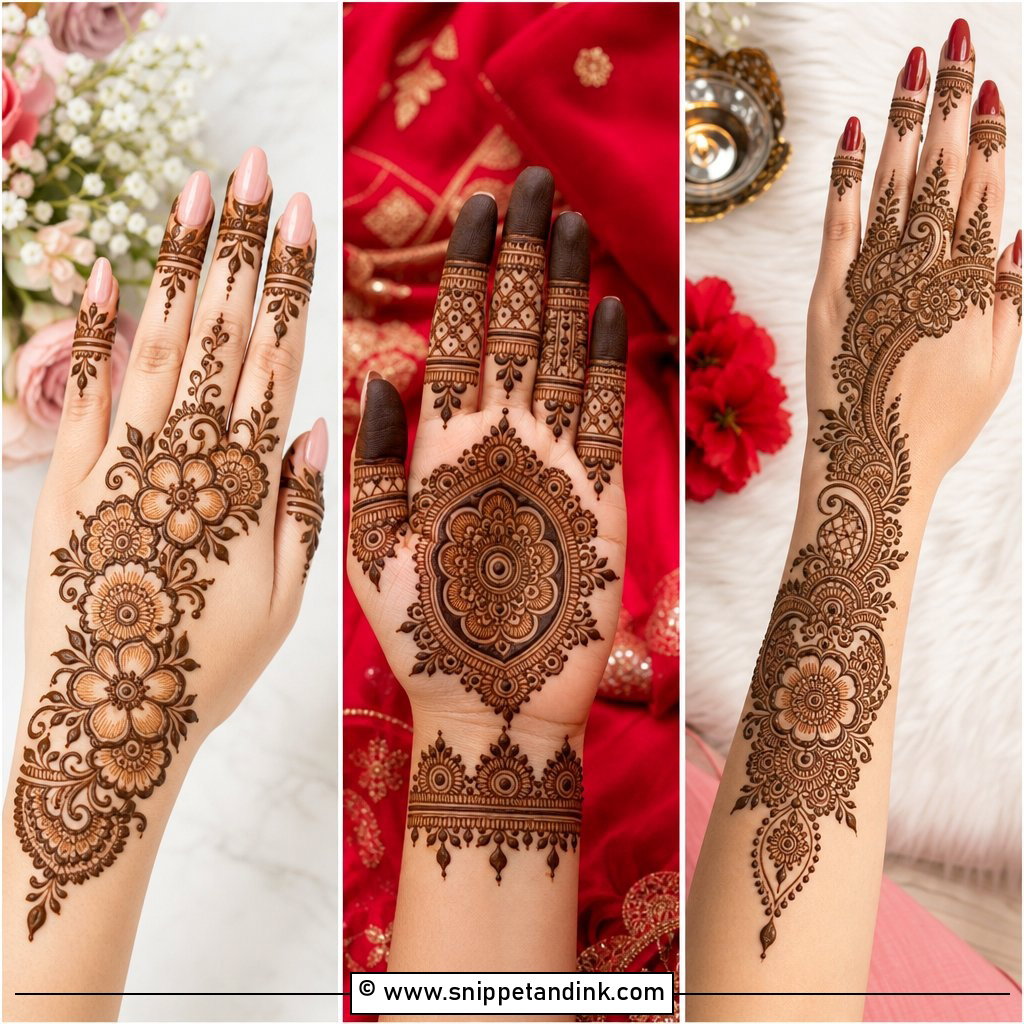
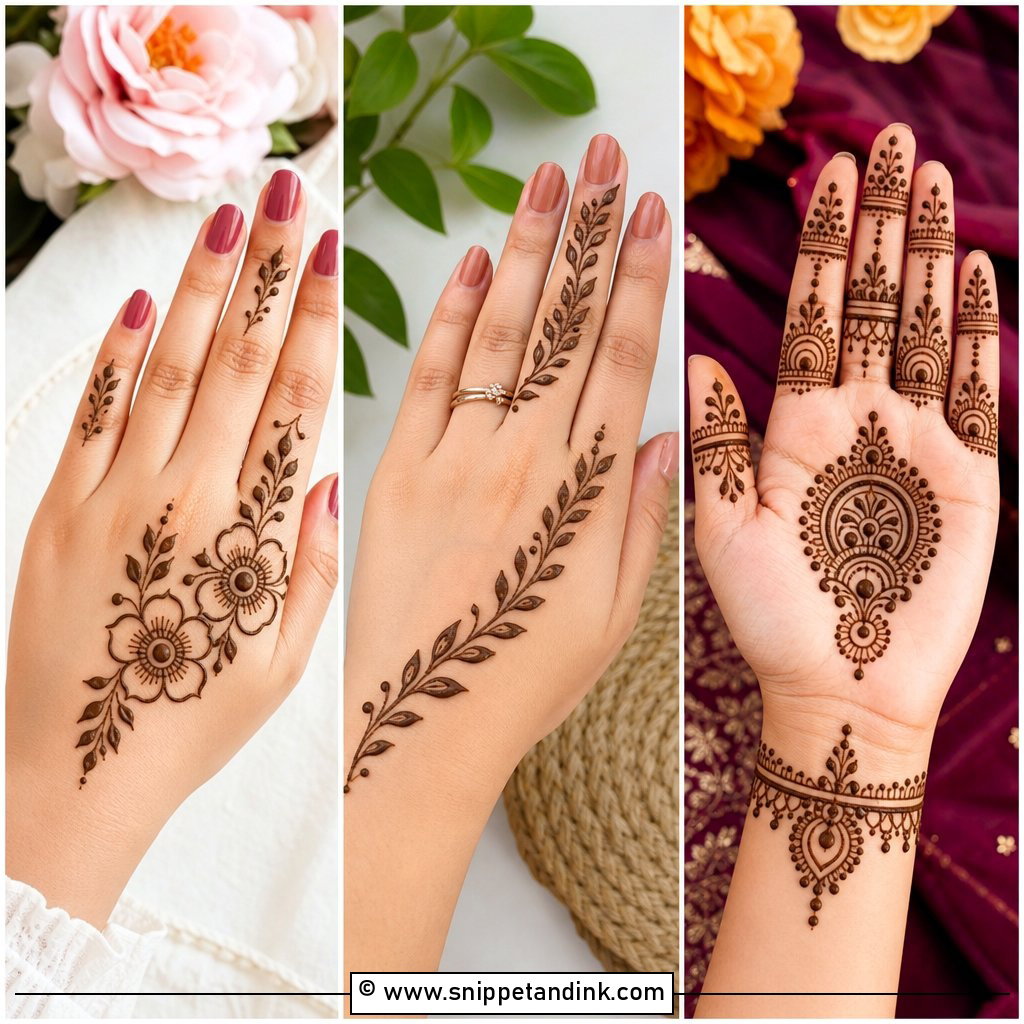
This is the layout I draw more than any other. It starts at the wrist bone and climbs diagonally toward the index or middle finger, with one or two large flowers, a paisley and leafy vines carrying the flow, plus dotted fillers to close small gaps. The diagonal matters: it runs along the line of the knuckles and makes the hand look longer. I keep the remaining fingers to leafy tips or a thin ring band so they don’t fight the main trail. It suits Eid, engagements and bridesmaids, and it reads well even when the stain comes out lighter on the back of the hand, which it usually does.
2. Arabian Front Hand Mehndi Design
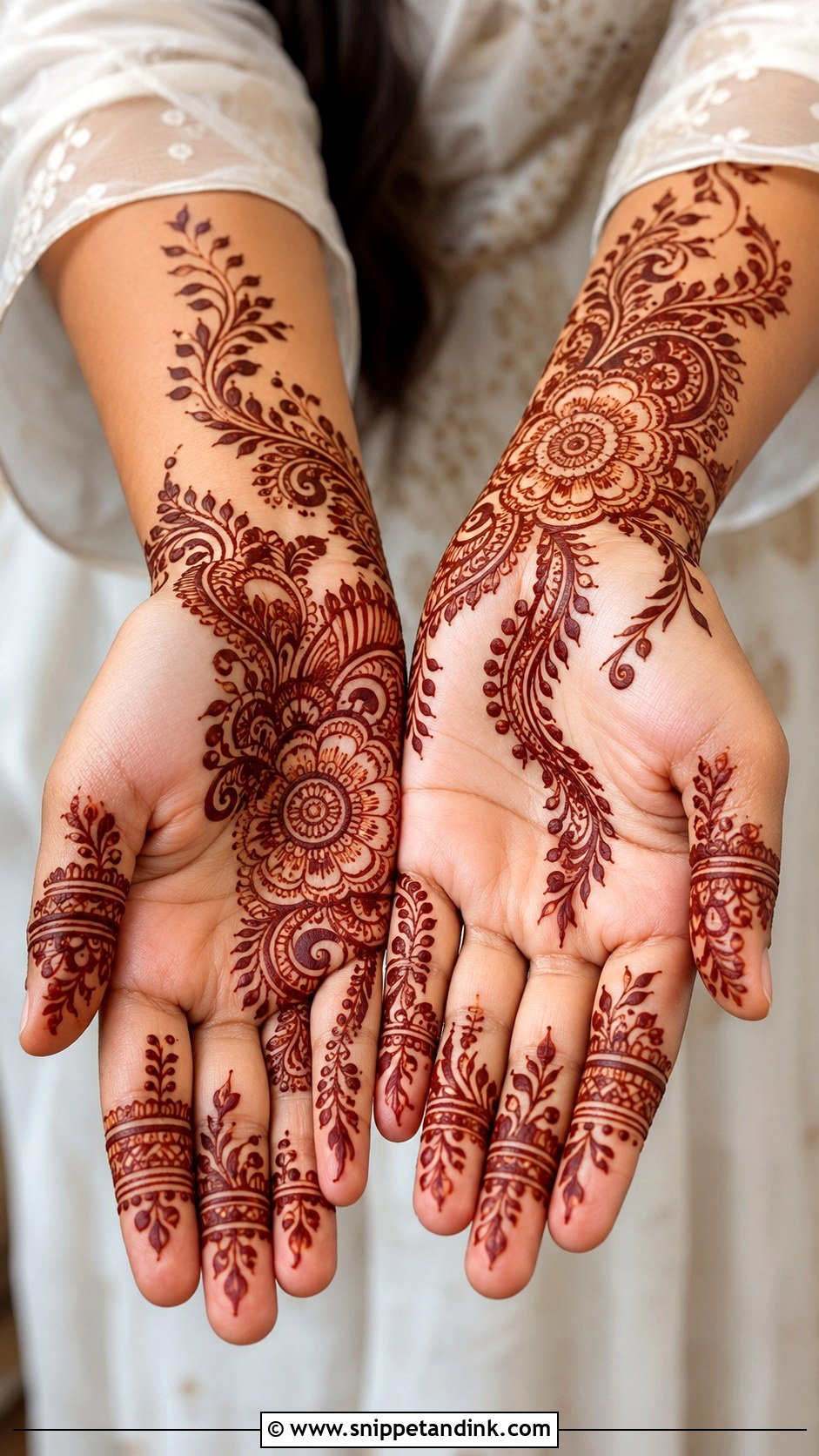
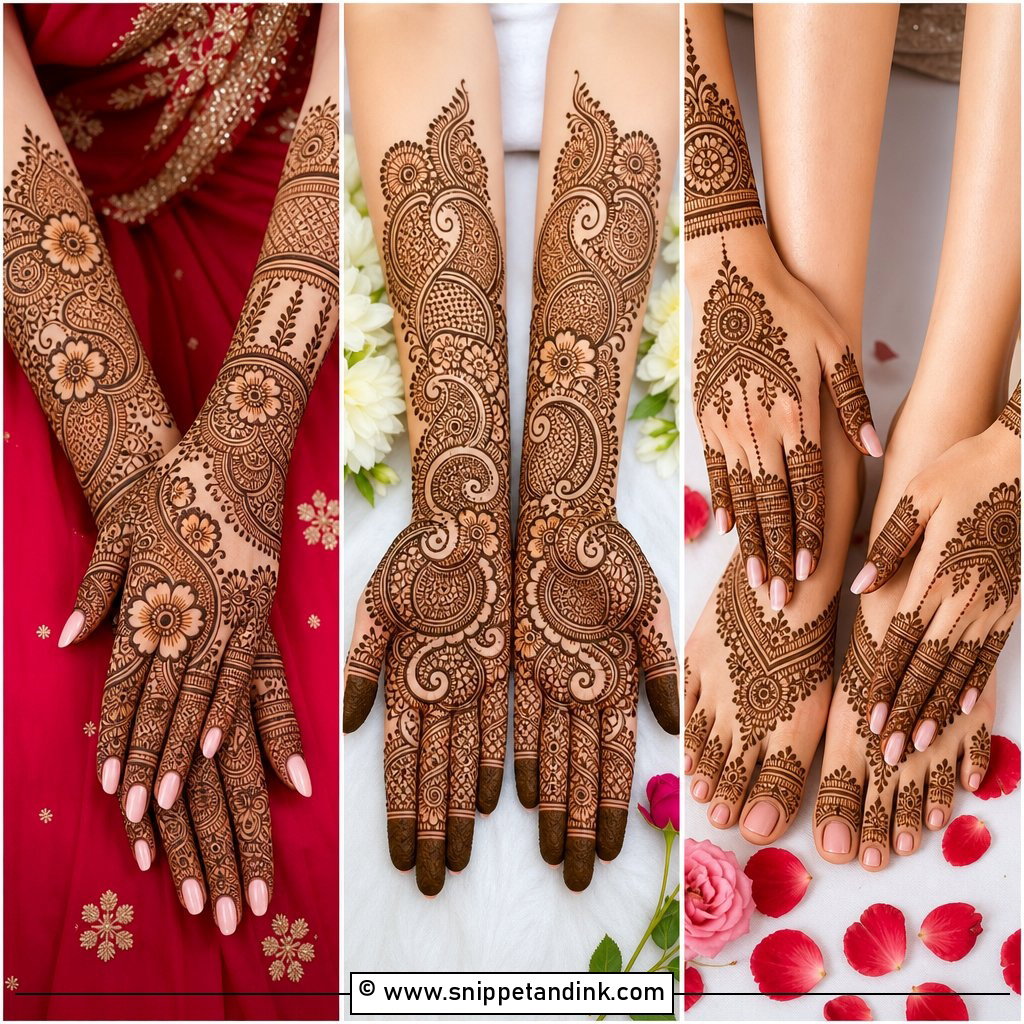
Palms take henna darker than any other part of the hand because the skin there is thicker and the paste stays warm against it, so a front-hand design will always be your strongest stain. For an Arabic palm, I set a floral or paisley centre slightly off-middle, then let vines and curved leaves stretch toward one edge. The fingers get small leaves, half flowers or parallel lines for balance. Because the layout is open, small wobbles disappear into the spacing, which makes it a forgiving choice if you’re learning. Keep your hands still for the first half hour; a palm design smudges the moment you close your fist.
3. Simple Arabian Mehndi Design
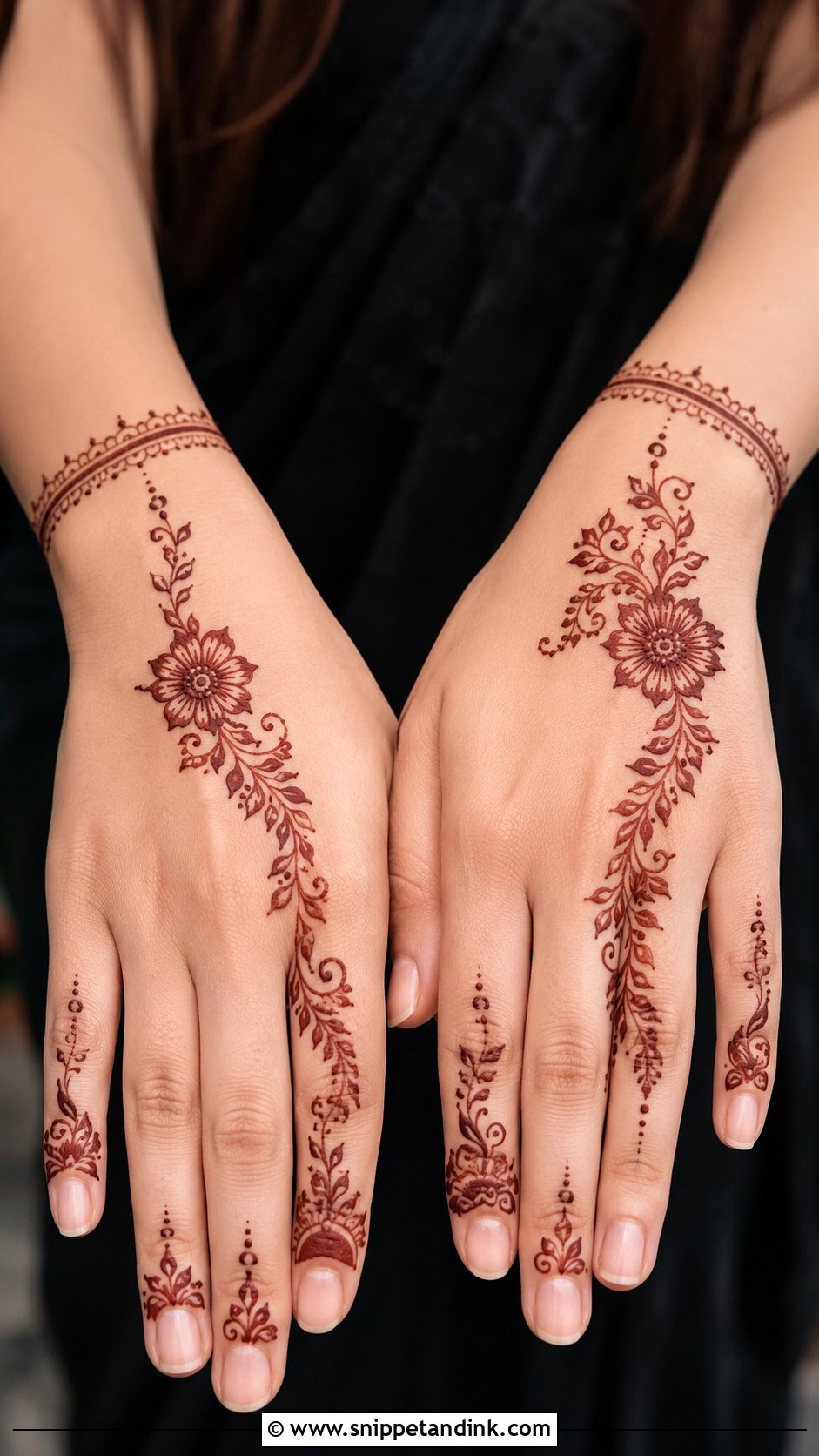
One bold floral trail with a few leaves and dots around it can be finished in fifteen or twenty minutes a hand, and it still looks considered if the spacing is even. The skill is in the curves: I pull the cone in one steady stroke for each petal rather than sketching, because a hesitant line shows in the stain. A slim bracelet band at the wrist and narrow leafy strips on two fingers complete it. I’d pick this for a school event, a quick Eid morning or a party you’re getting ready for at the last minute.
4. Full Hand Arabian Mehndi Design
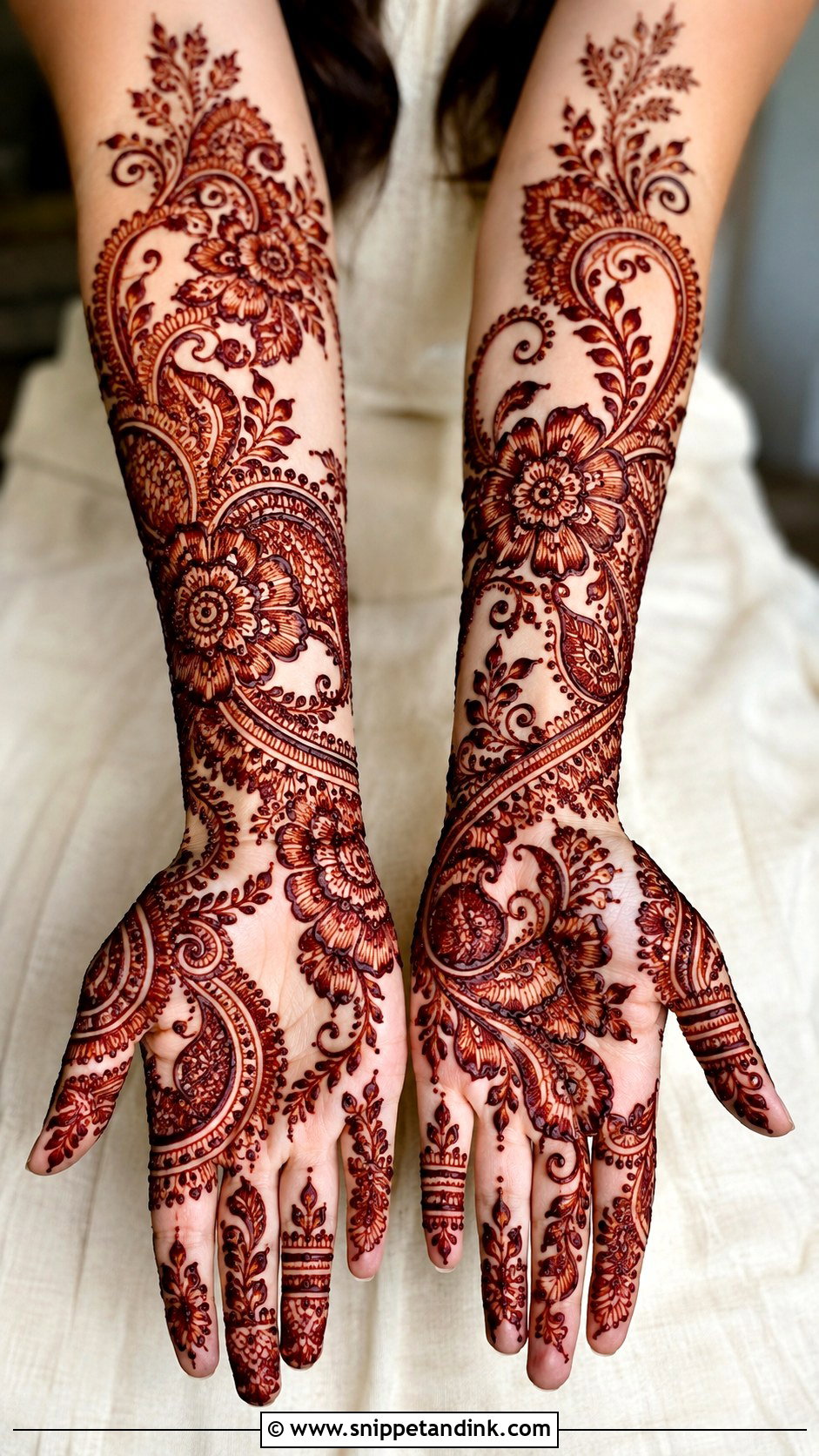
Full coverage in the Arabic style still keeps gaps between motifs, which is what separates it from dense Indian bridal work. I start at the fingertips and build down past the wrist with large flowers, shaded petals, paisleys and curved borders. To keep the hand balanced, the biggest motifs go on the palm and back hand, with thinner detail on the fingers and forearm. Expect about forty-five minutes to an hour per side. It’s a good fit for a bridesmaid or the sister of the bride who wants to look festive without matching the bride’s coverage.
5. Bridal Arabian Mehndi Design
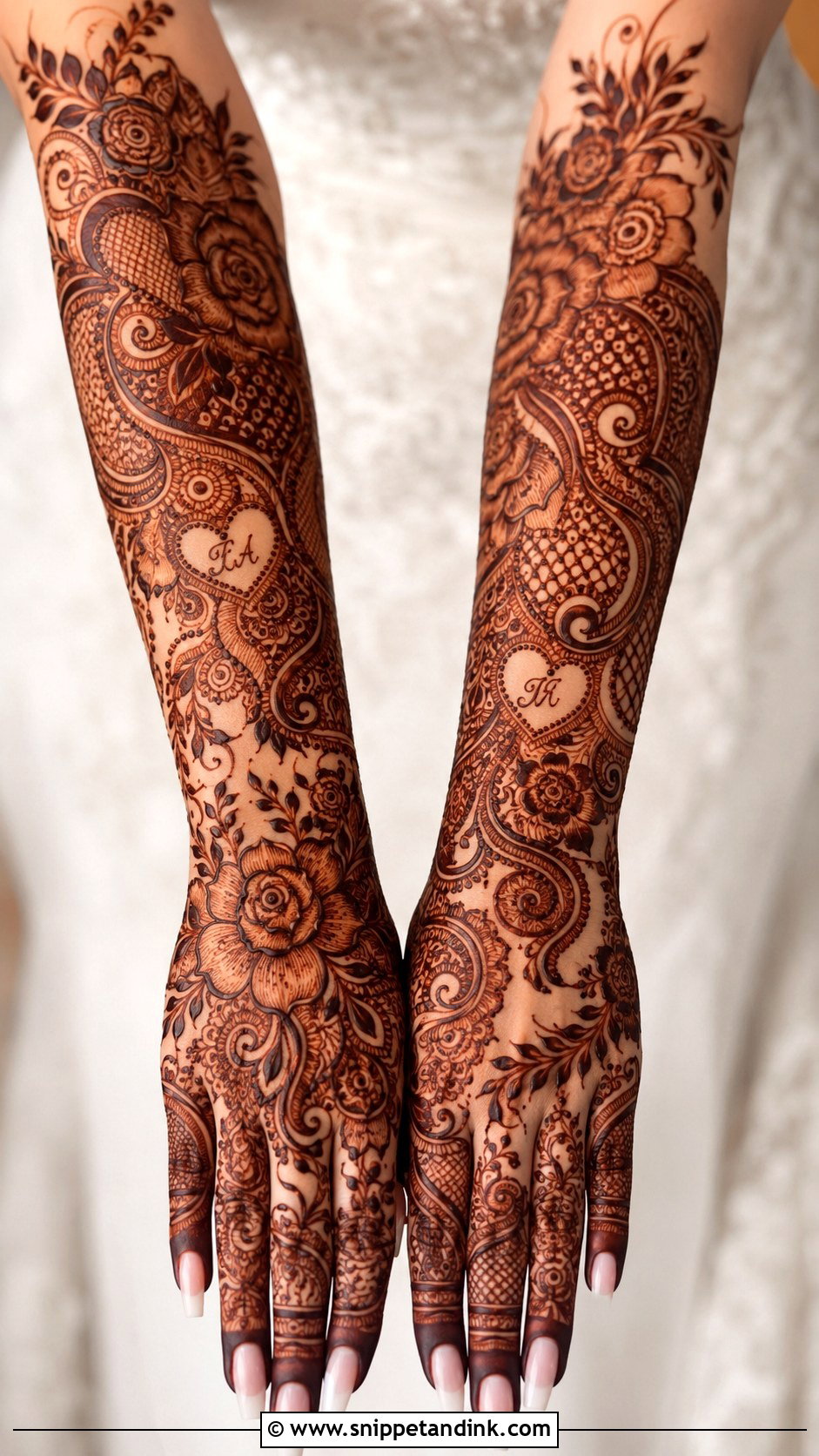
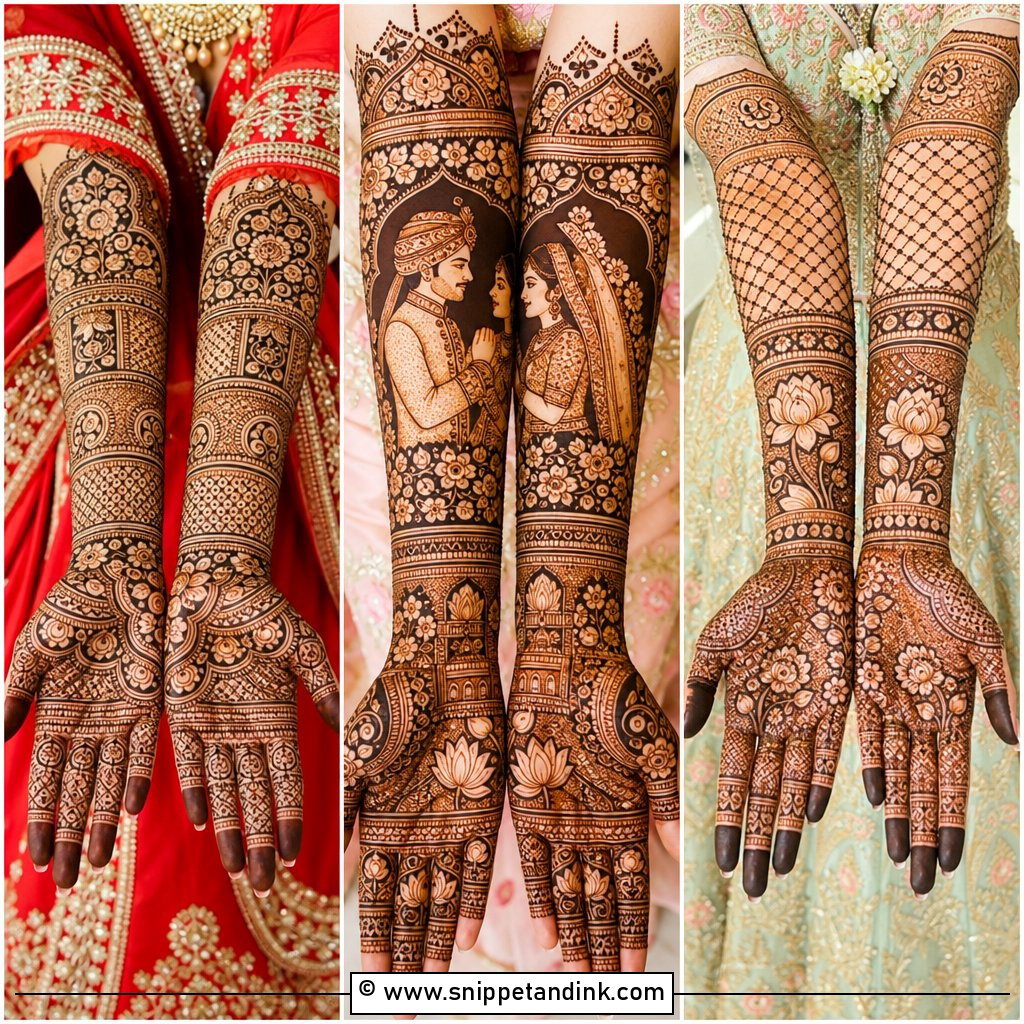
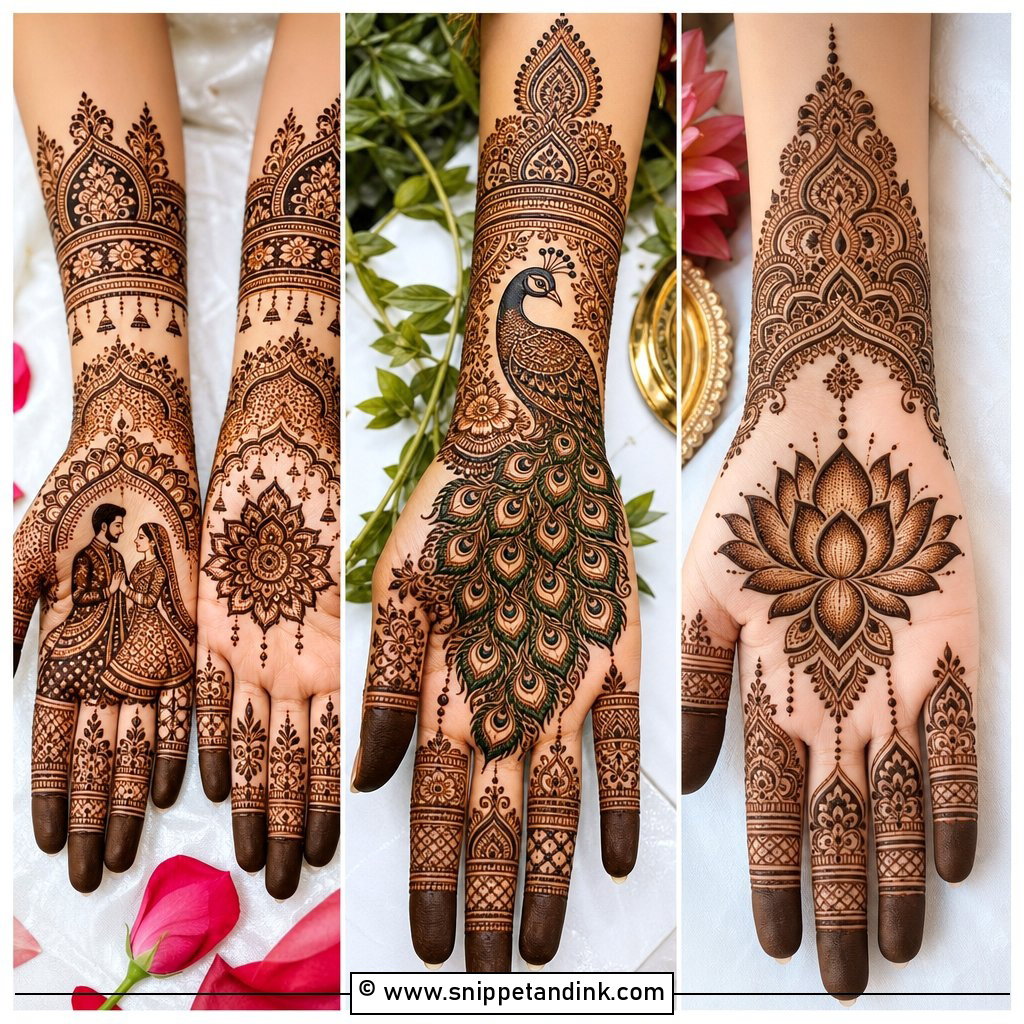
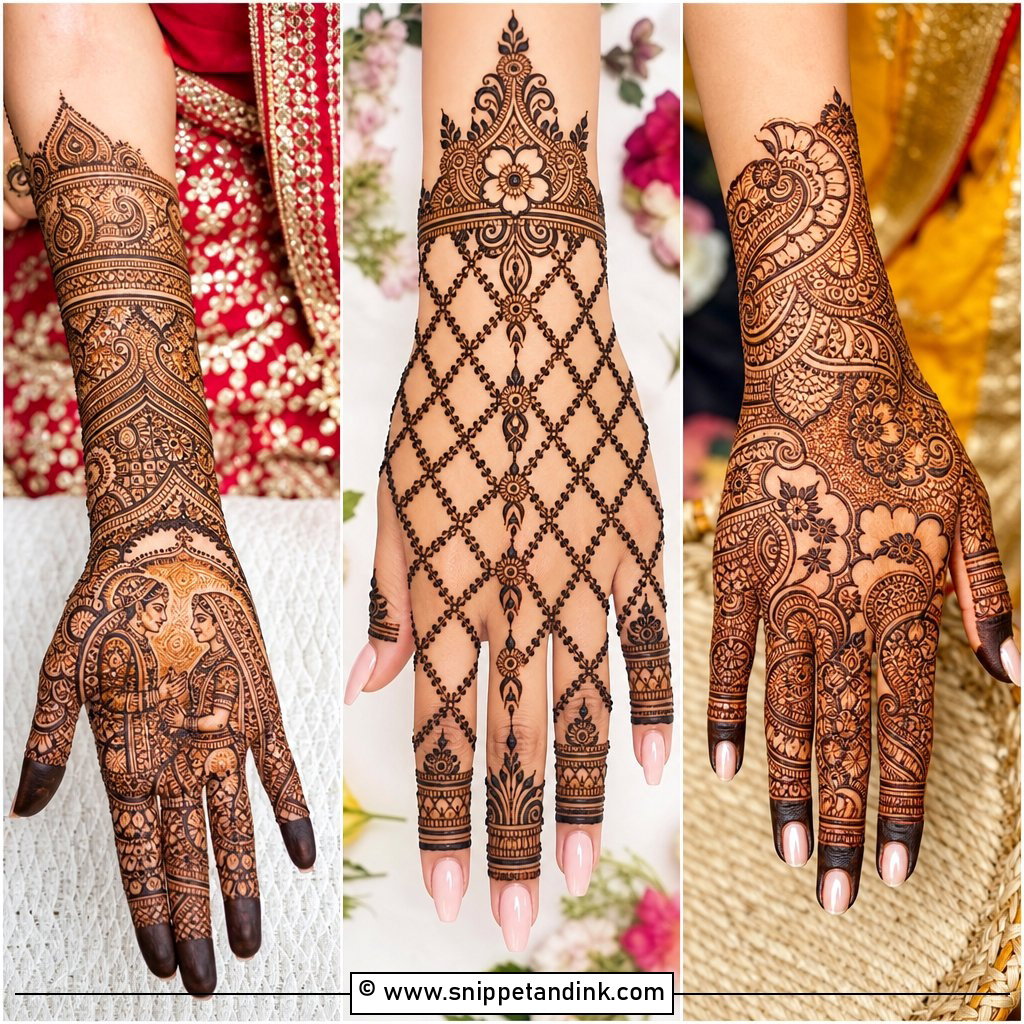
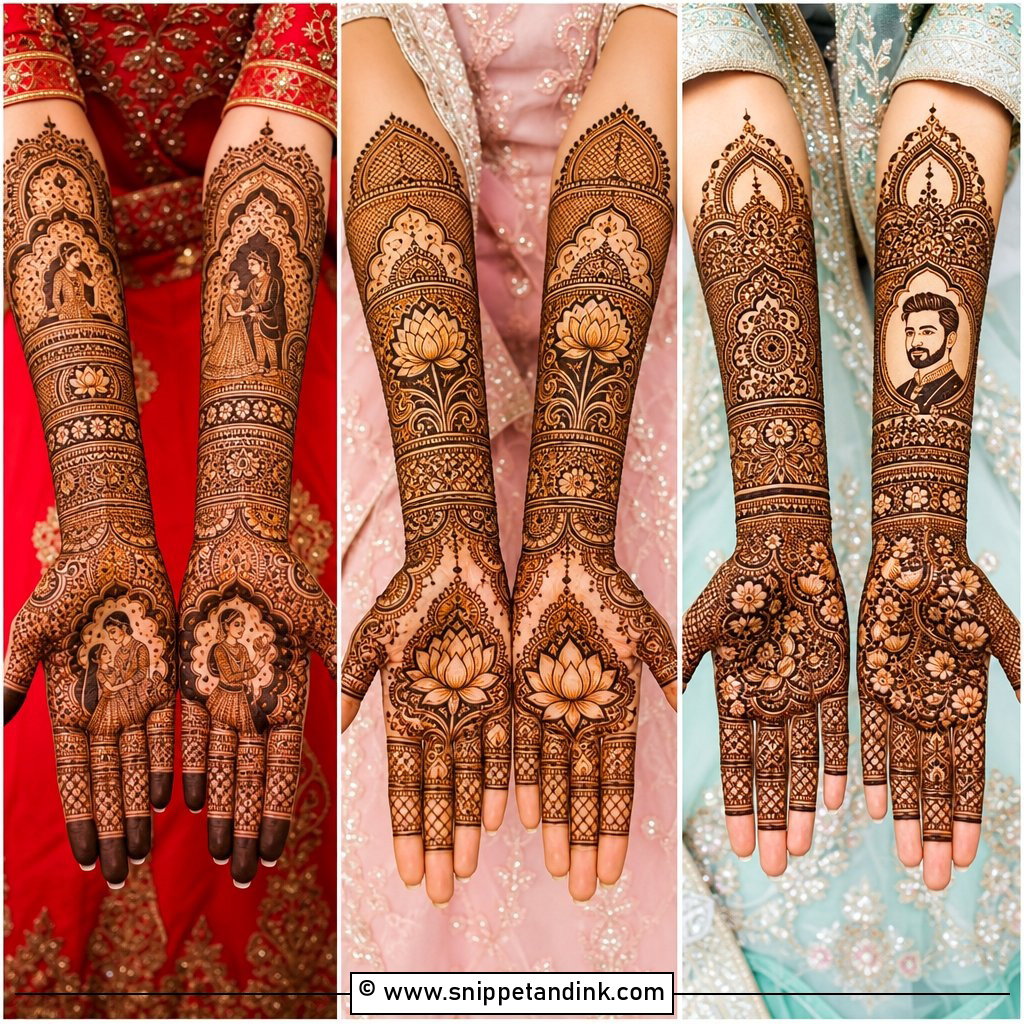
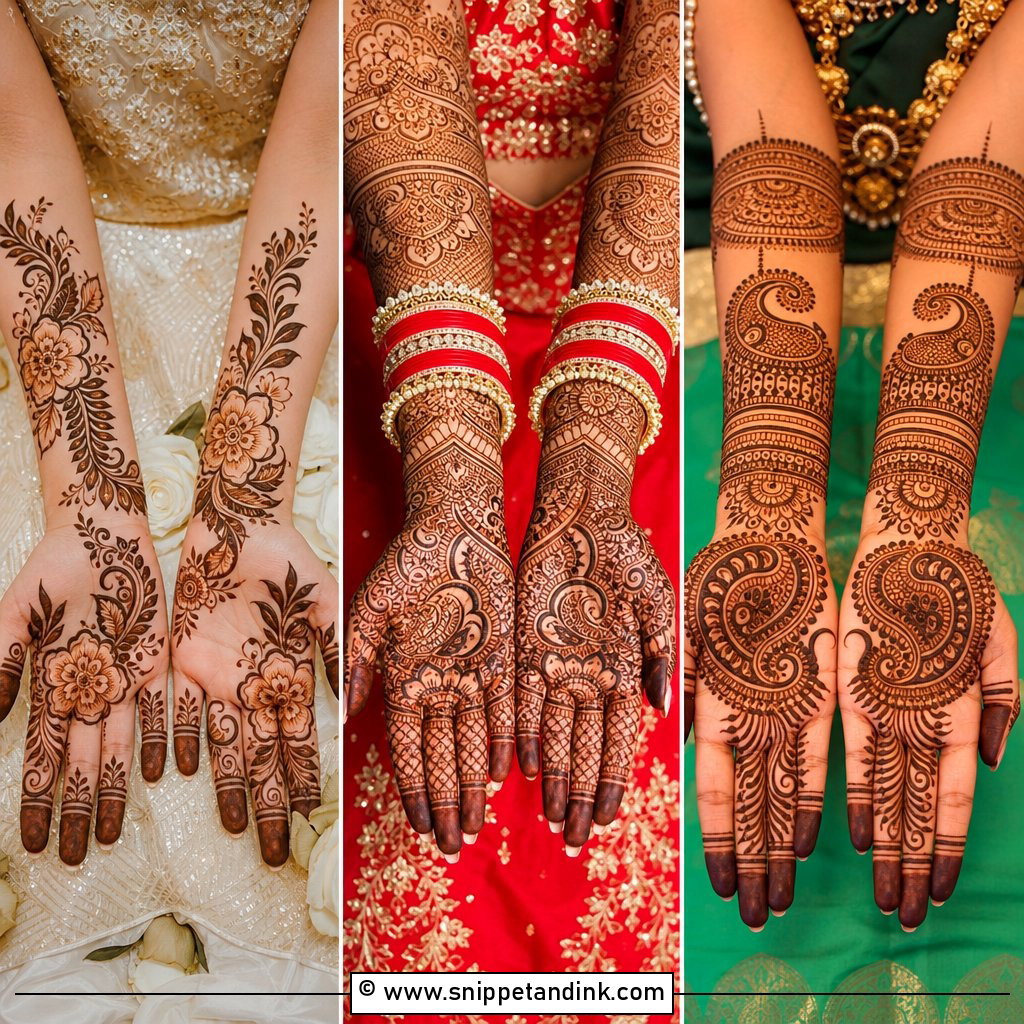
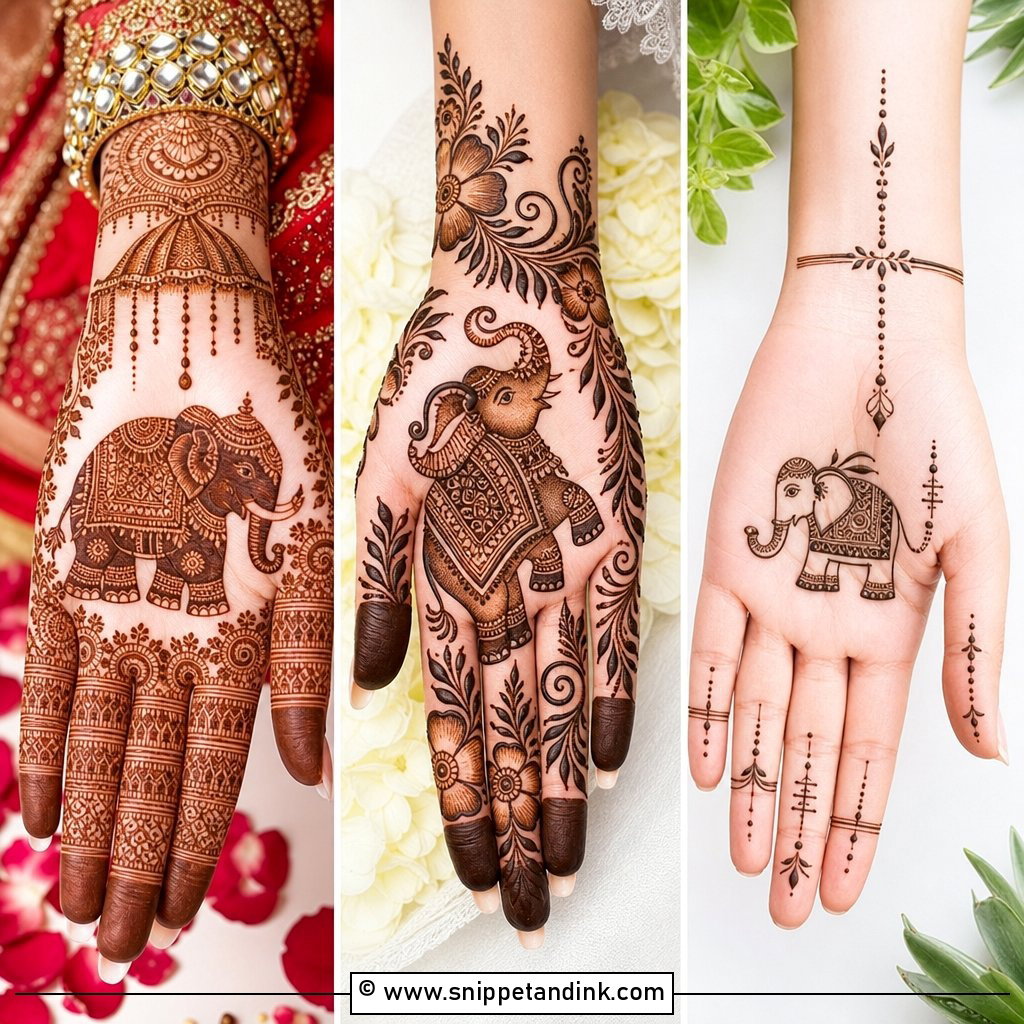
A bridal Arabic design is for the bride who wants richness but would rather not have every inch covered. I combine bold roses, paisleys, leafy trails, jaali panels and shaded florals from fingertips to forearm, with a floral medallion on the palm and a jewellery-style layout on the back. Hiding the groom’s initials or the wedding date inside a petal is a tradition many brides enjoy, and I keep the letters small so they read as pattern until someone looks for them. The contrast between thick outlines and fine inner work is what gives depth. Book it a day or two before the wedding so the stain has time to reach a deep maroon.
6. Arabian Bridal Back Hand Mehndi Design
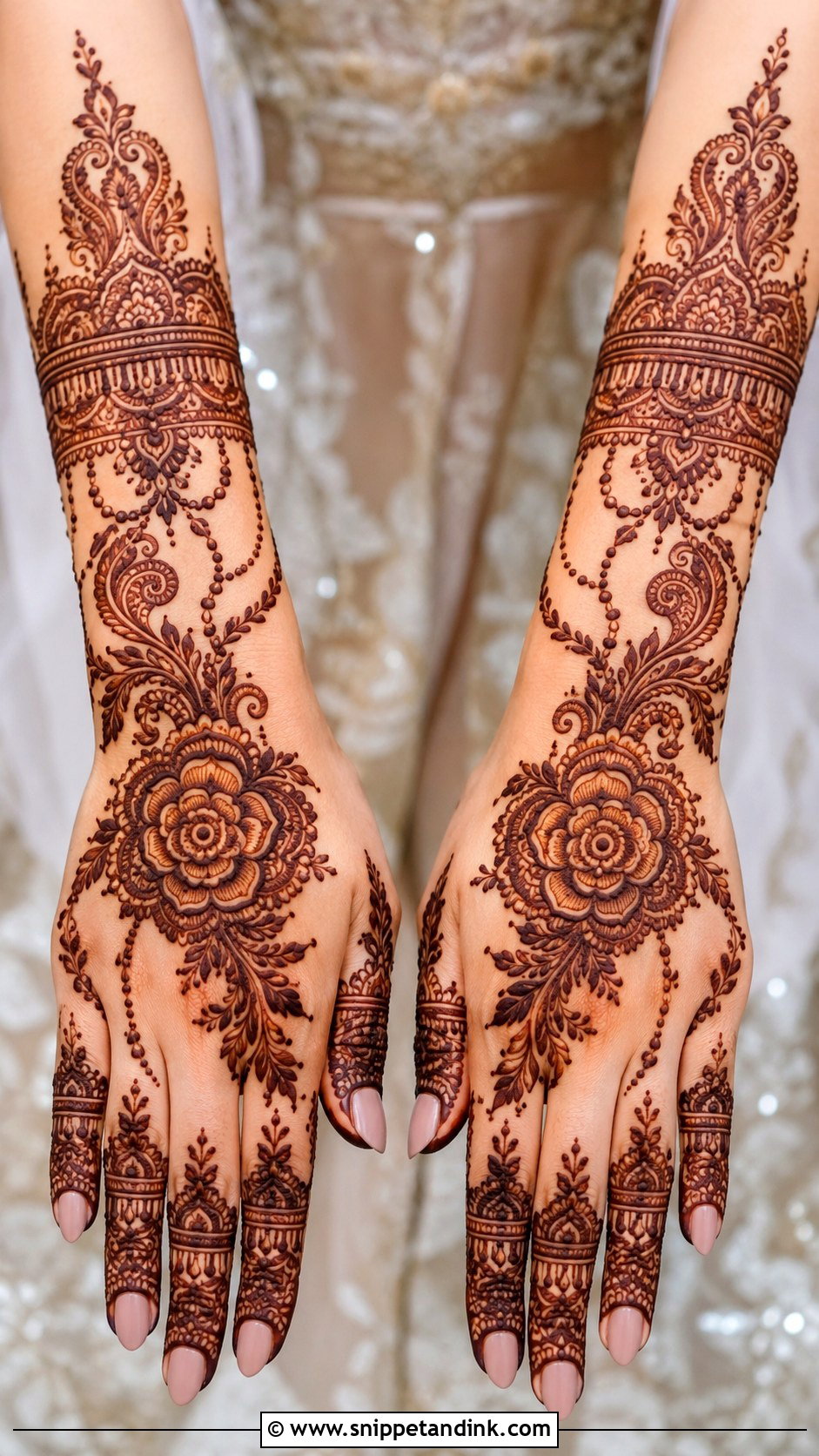
Photographers love the back of the hand because it’s what shows when you hold a bouquet or a partner’s hand, yet the stain there is always lighter than on the palm. I compensate with bolder outlines and a little more paste on the main motifs. A large flower near the wrist connects to the fingers through vines and leafy chains, and a bracelet band adds a jewellery effect that sits well under bangles. For brides, the design can continue up the forearm with bigger flowers. Leave clear skin around the centrepiece so the Arabic flow stays readable in photos.
7. Arabian Palm Mehndi Design
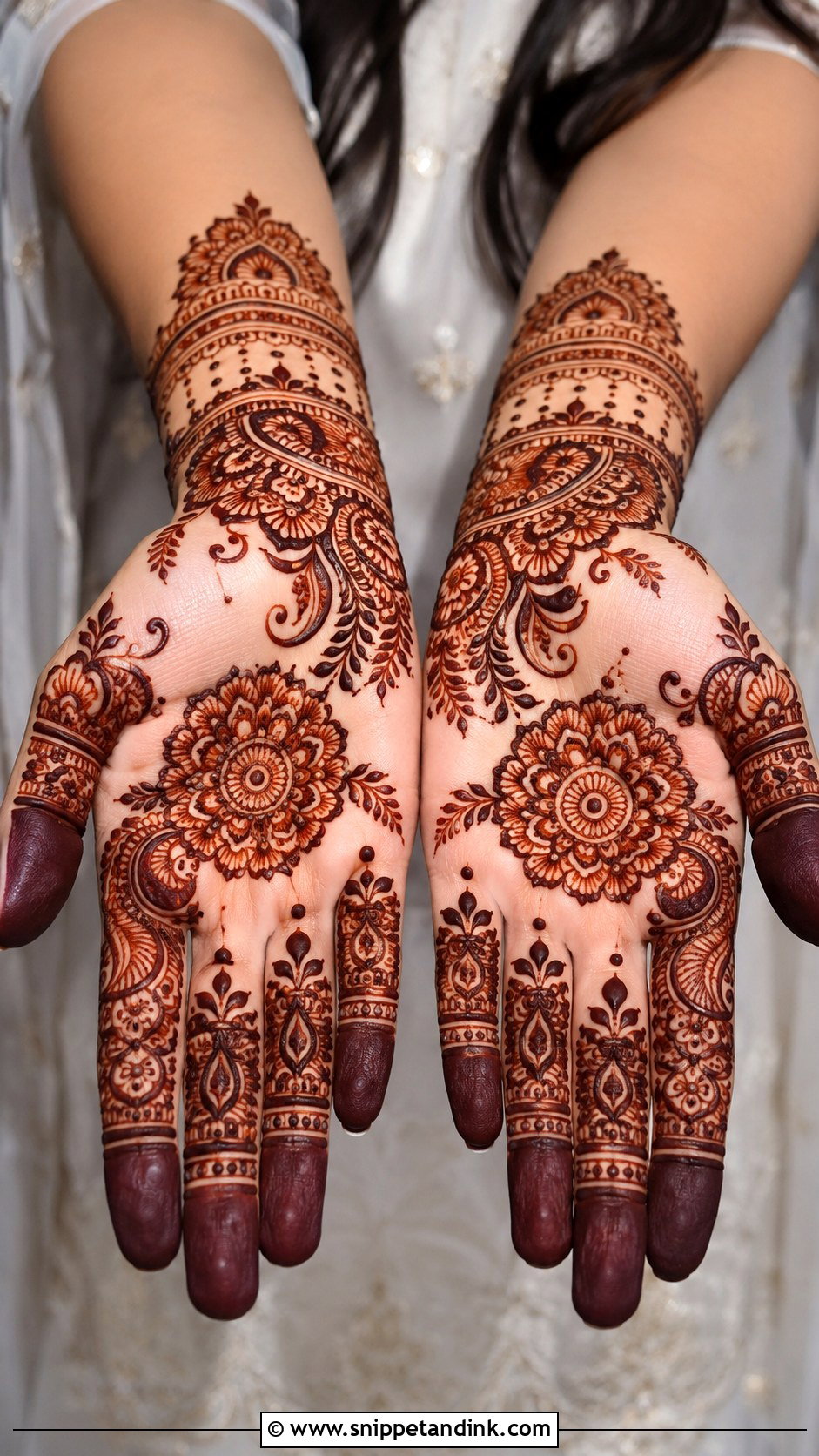
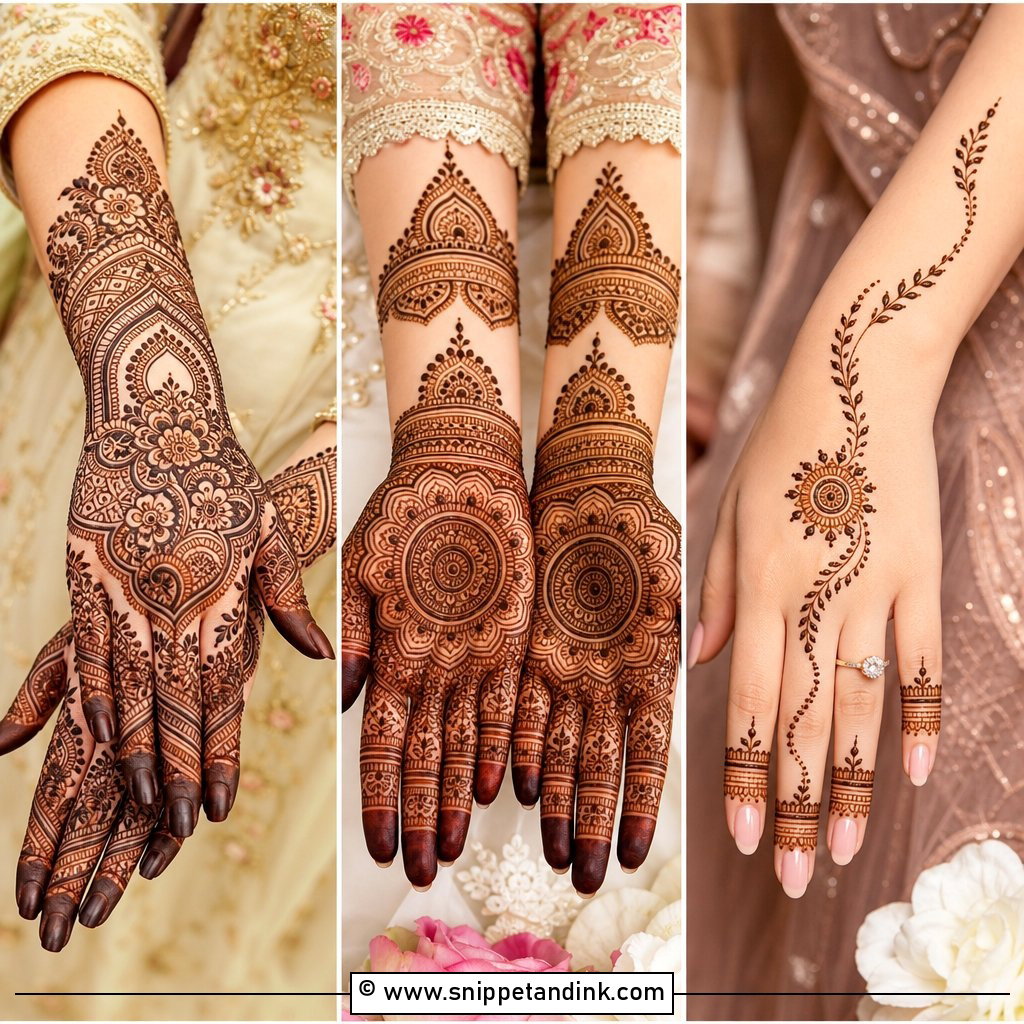
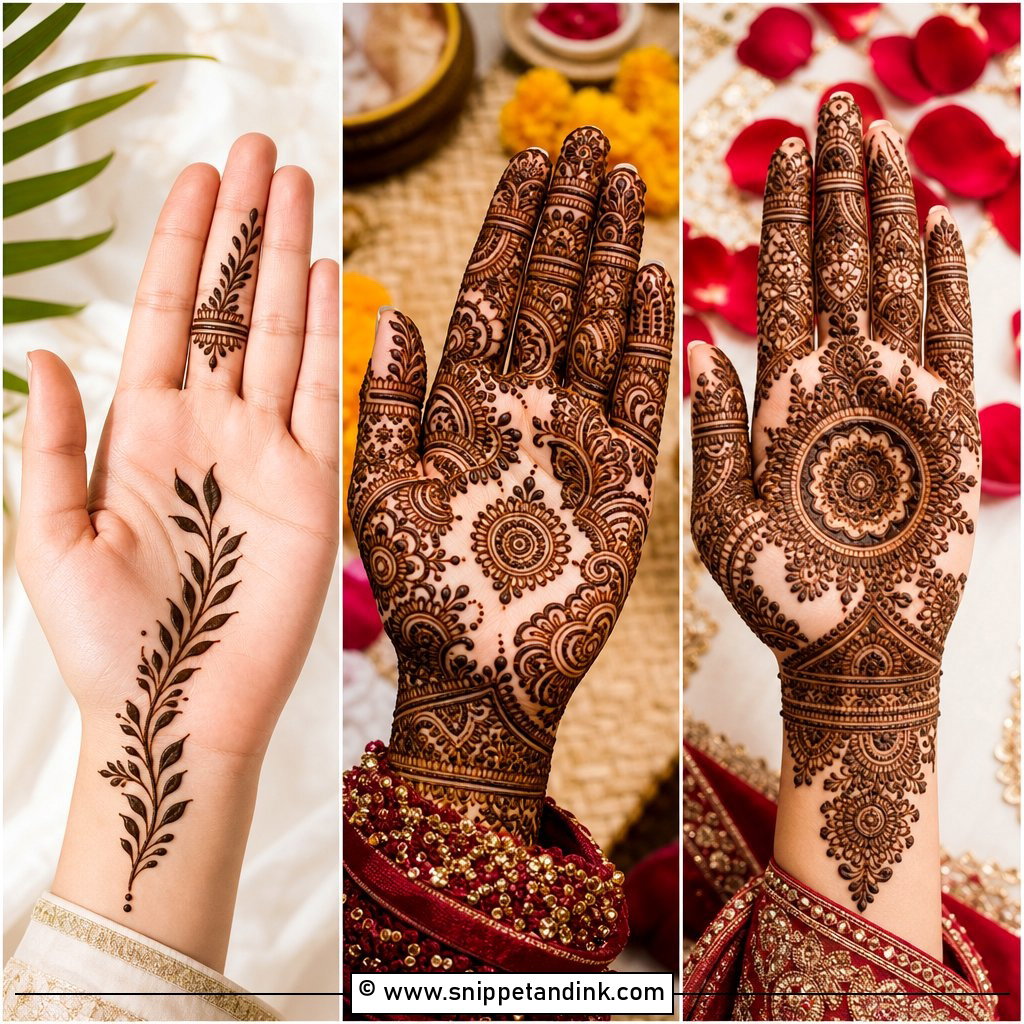
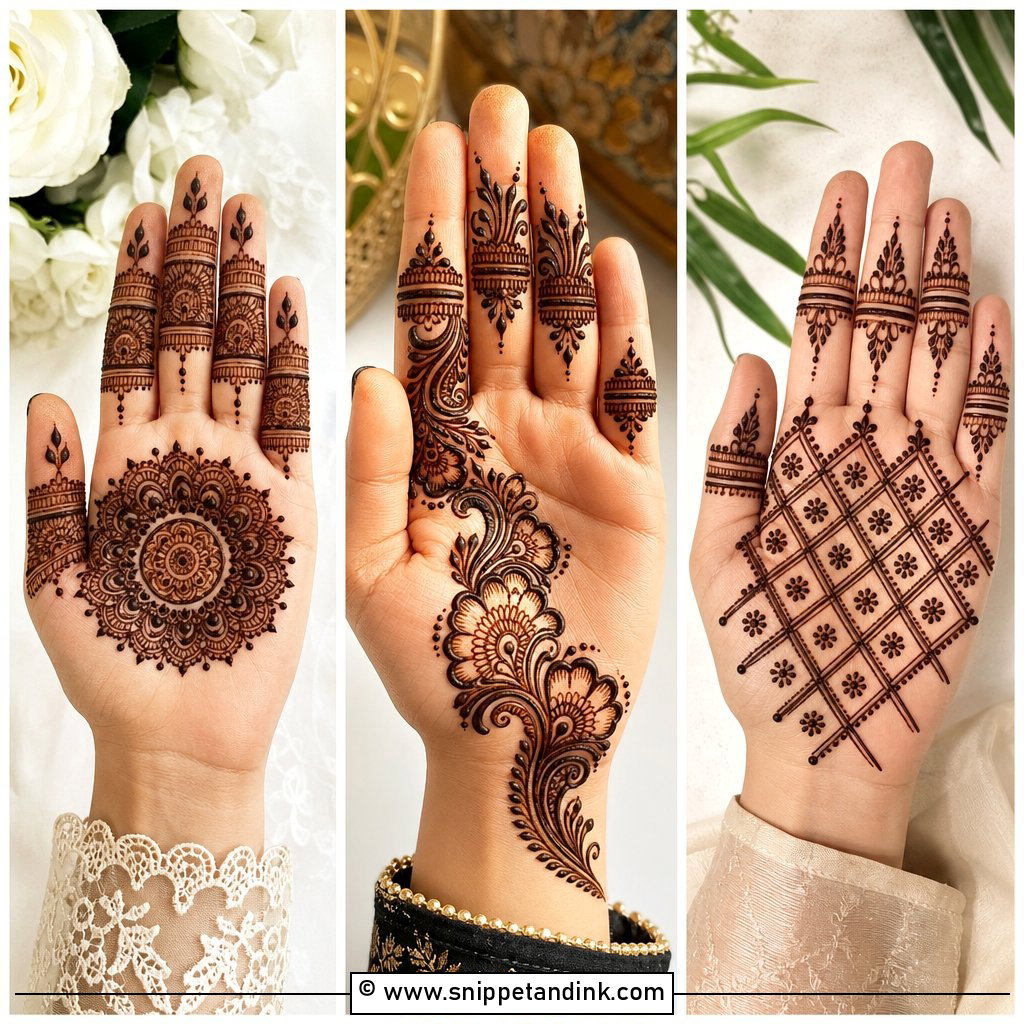
The centre of the palm is where the stain turns richest, so I anchor it there with a floral circle, a paisley cluster or a half mandala. From that point, vines curve toward the wrist and up toward the fingers, with a few dots to soften the open areas. I don’t fill the palm edge to edge; the open skin is what keeps it Arabic. The fingers get leafy tips or slim bands, so the palm stays the focus. This one wears well for a week or more, because palm stains fade slowly compared with the back of the hand.
8. Arabian Finger Mehndi Design
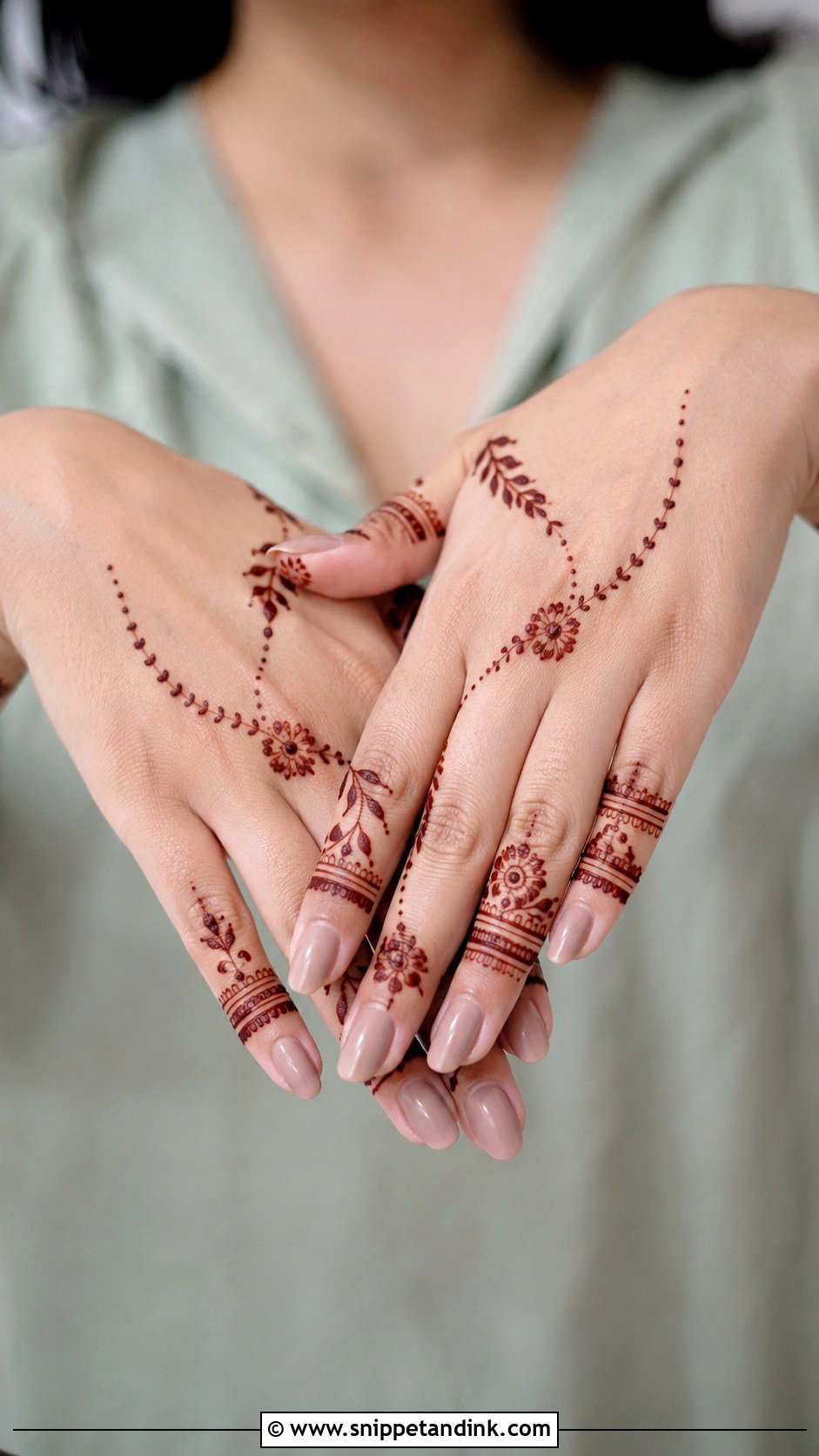
Arabian finger mehndi design puts all the detail on the fingers, with leafy strips, floral bands, rings and filled tips, while the hand itself stays bare or carries one small motif near the wrist. I check symmetry finger by finger, because on such a small design one crooked band is the first thing people see. It suits college functions, office events and teenagers. Fingertips stain very dark and fade fairly quickly as you wash your hands, so this is the one to choose when you’d like the colour gone within a week or so.
9. Arabian Floral Mehndi Design
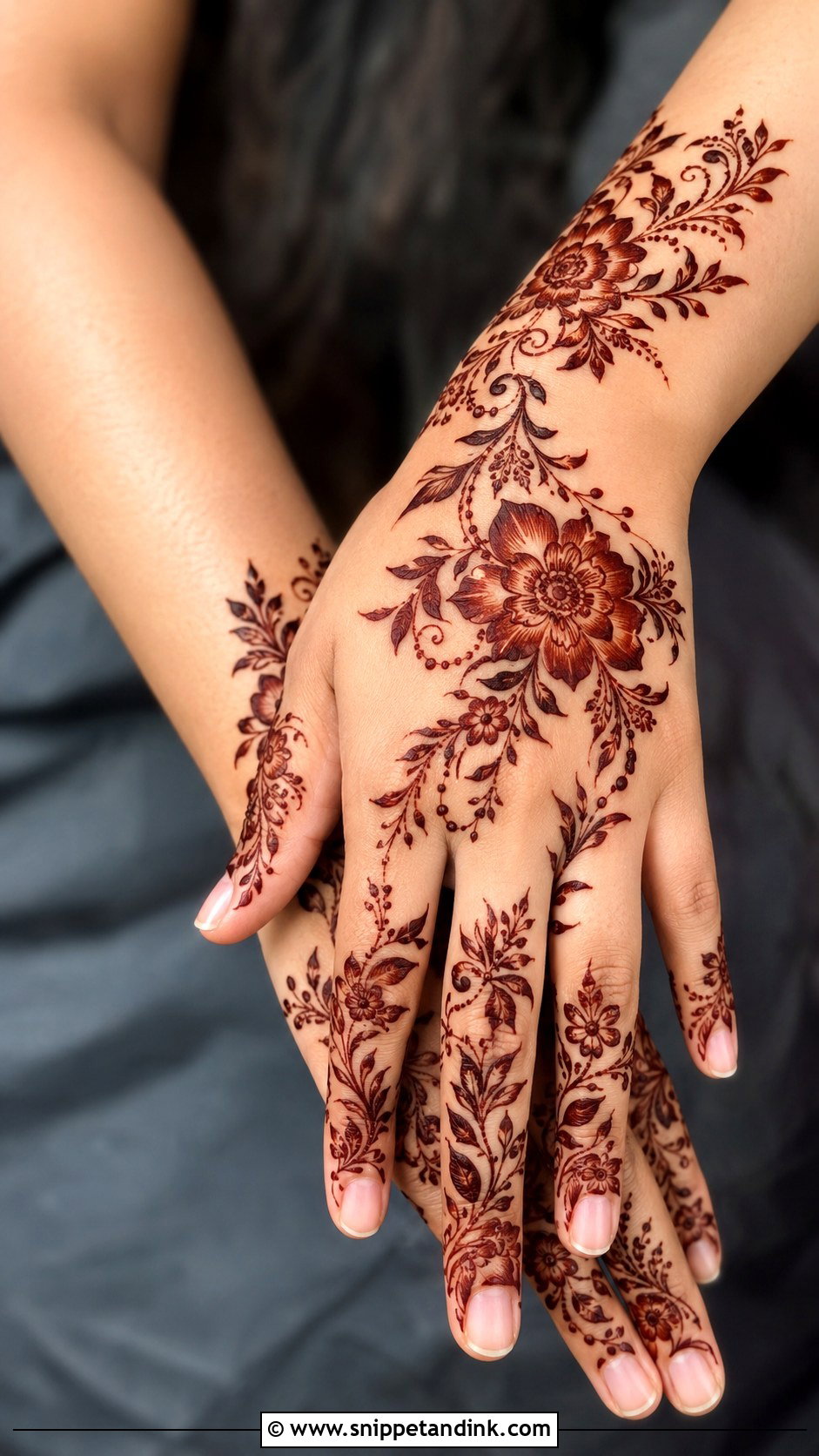
Big flowers are the heart of the Arabic style, set along a diagonal trail with leaves and buds linking them. Roses, lotuses and five-petal blooms are the common shapes, and I vary their sizes so the trail doesn’t look stamped. Petals can be shaded, outlined or filled with fine lines; I pick one technique per flower so the texture stays clean. The trail adjusts to the hand: on short fingers I end it at the knuckle, on long hands I let it run to the fingertip. Larger flowers read boldly, while smaller clusters suit everyday wear.
10. Arabian Rose Mehndi Design
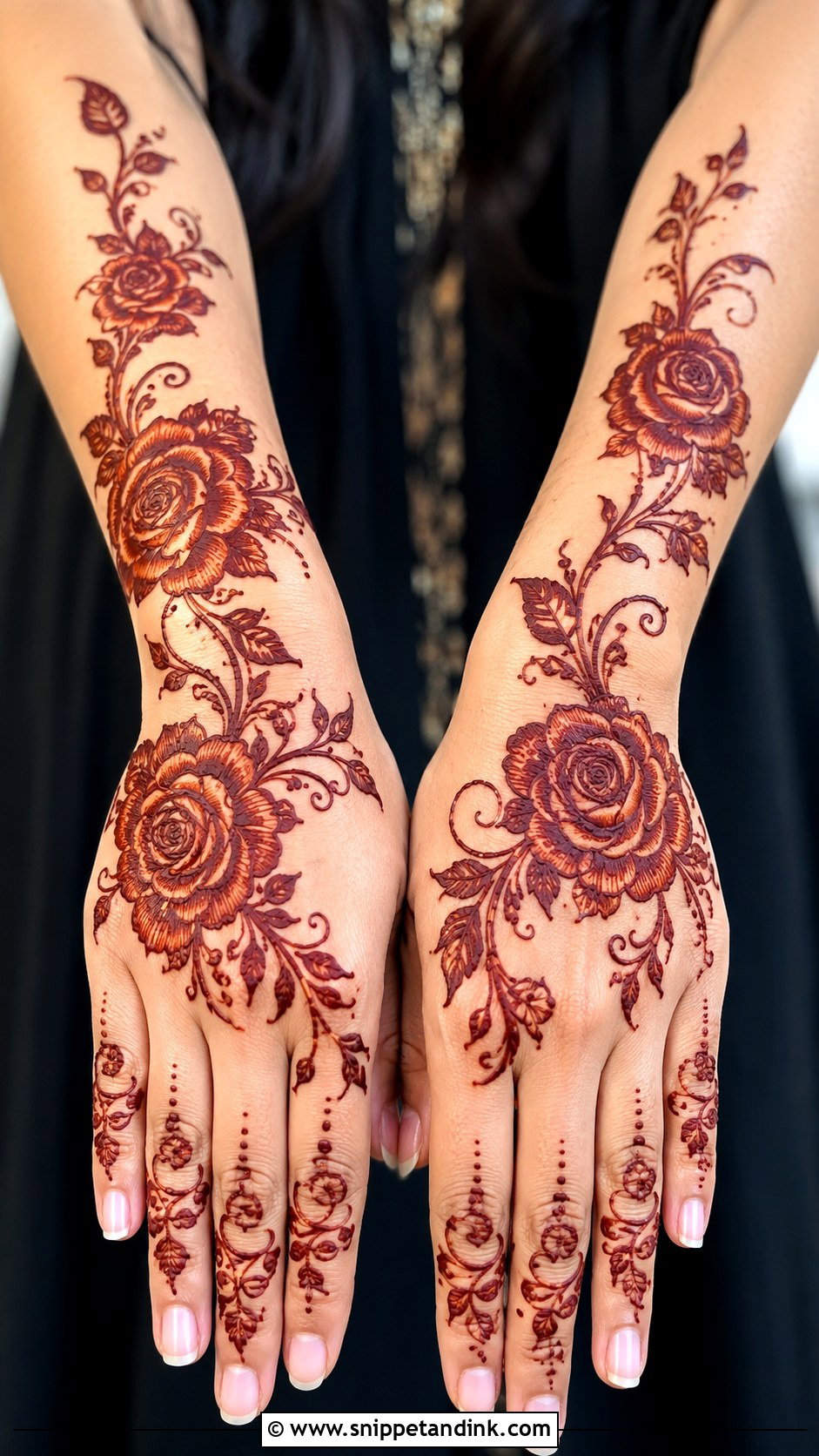
Roses are trickier in henna than they look, because overlapping petals need thin gaps between them or the paste bleeds into one blob. I draw the centre spiral first, then build petals outward with the cone tilted so each line stays fine. One or two large roses, with leafy vines, can sit on the back of the hand, the palm or run from wrist to fingers. Open space suits them, since every petal stays visible once the paste comes off. Thin swirl lines around the blooms finish it better than filling every gap.
11. Arabian Paisley Mehndi Design
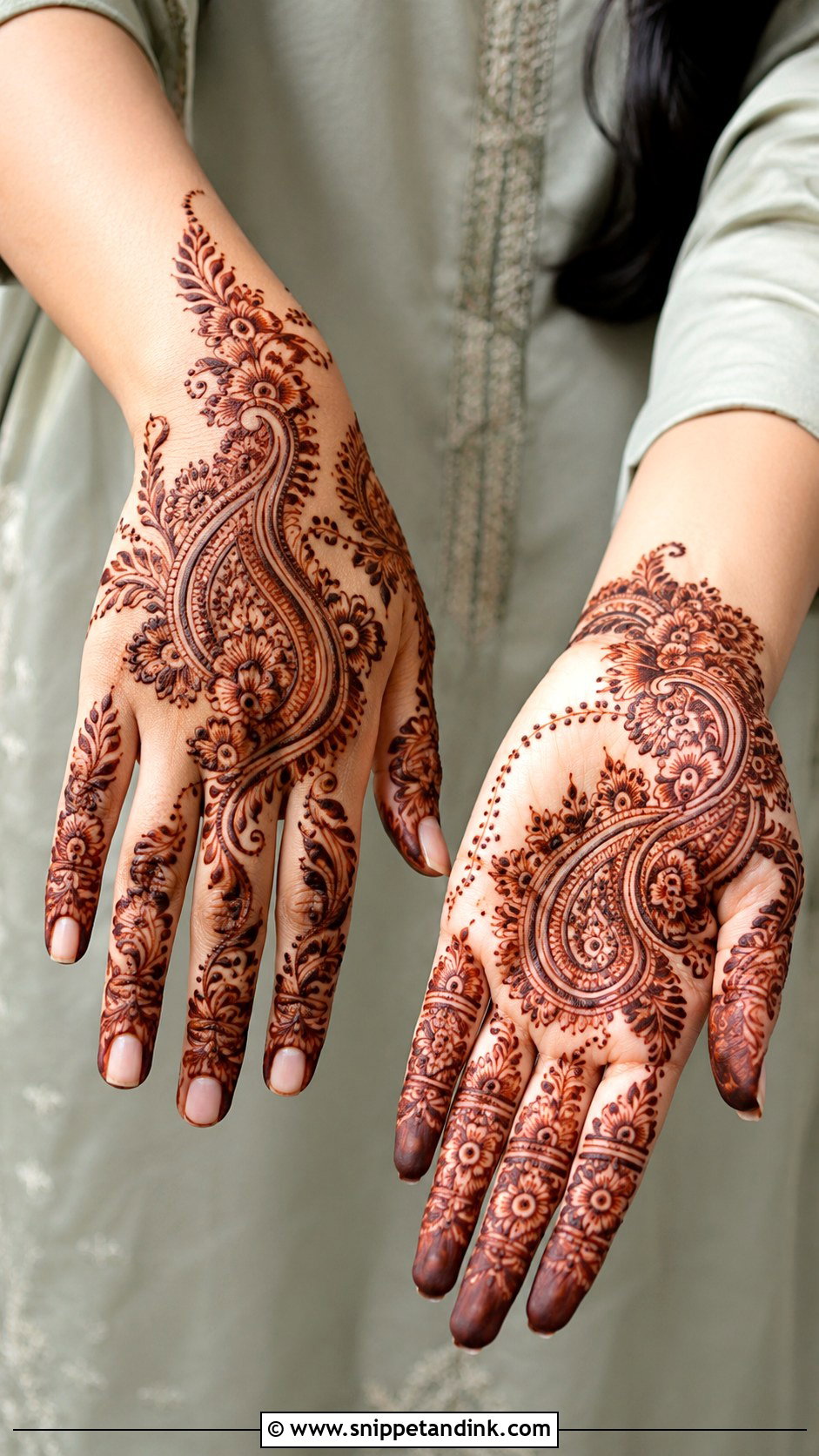
Paisleys bring a traditional shape into the airy Arabic layout. Their teardrop curve naturally leads the eye across the hand, so I use them to turn a corner in the design, at the wrist or the base of the fingers, and connect them with floral vines. Inside, they can carry fine lines, dots, mesh or shading. The professional look comes from contrast: a bold outline drawn with more pressure, then fine inner detail with a lighter hand. It’s a good middle ground for anyone who finds pure floral work too plain for a wedding or Eid.
12. Arabian Mandala Mehndi Design
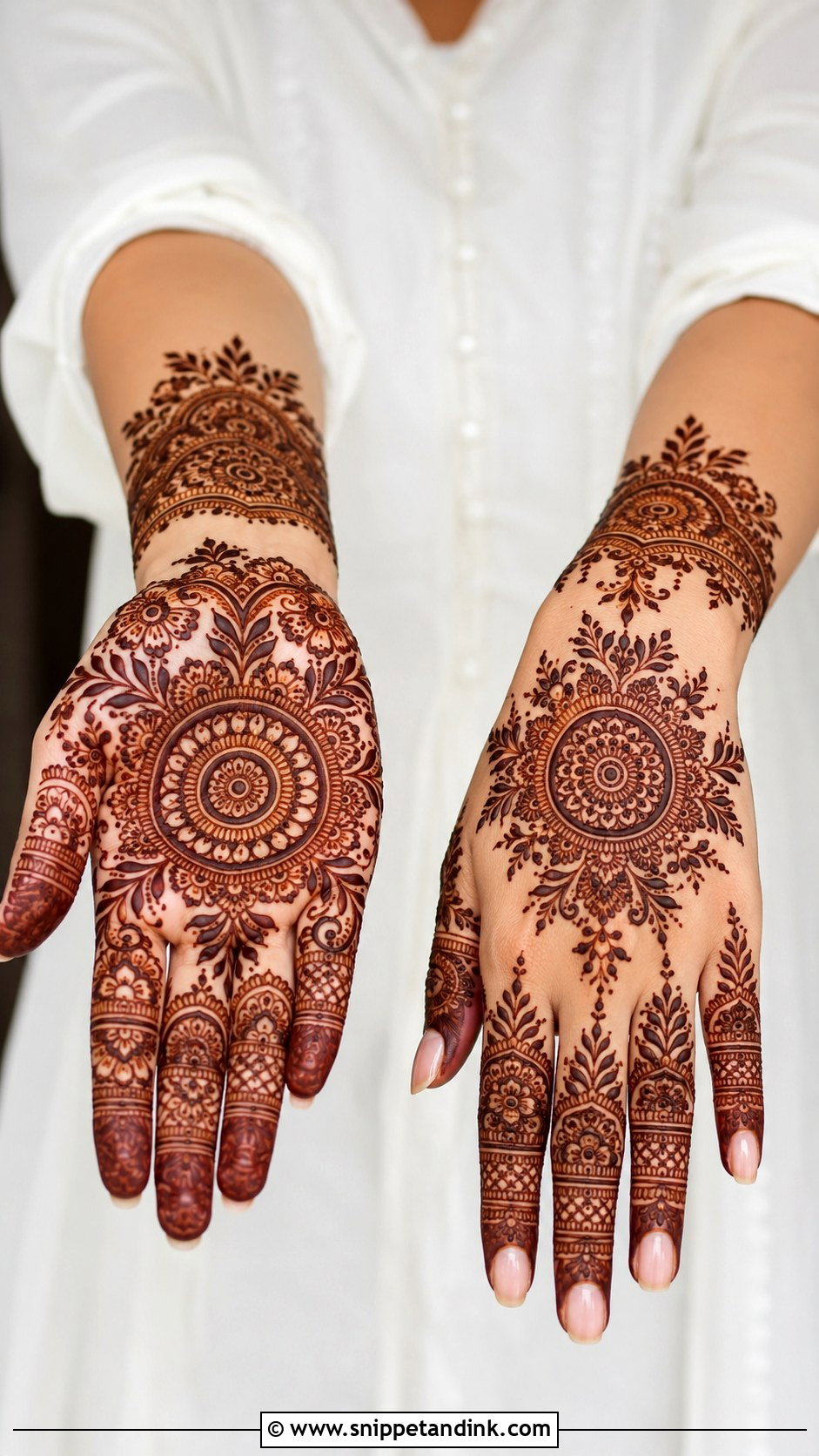
A round mandala on the palm or back hand gives the design a fixed centre, and in the Arabic version I leave much more open skin around it than a traditional mandala hand would have. Petals, dots, scalloped borders and fine rings build the circle from the middle outward. Getting it round is the hard part, so I mark a tiny centre dot and turn the client’s hand rather than my own wrist as I draw. Leafy vines then run toward the fingers and wrist. Keep the fingers light so the circle stays the focus.
13. Arabian Jaali Mehndi Design
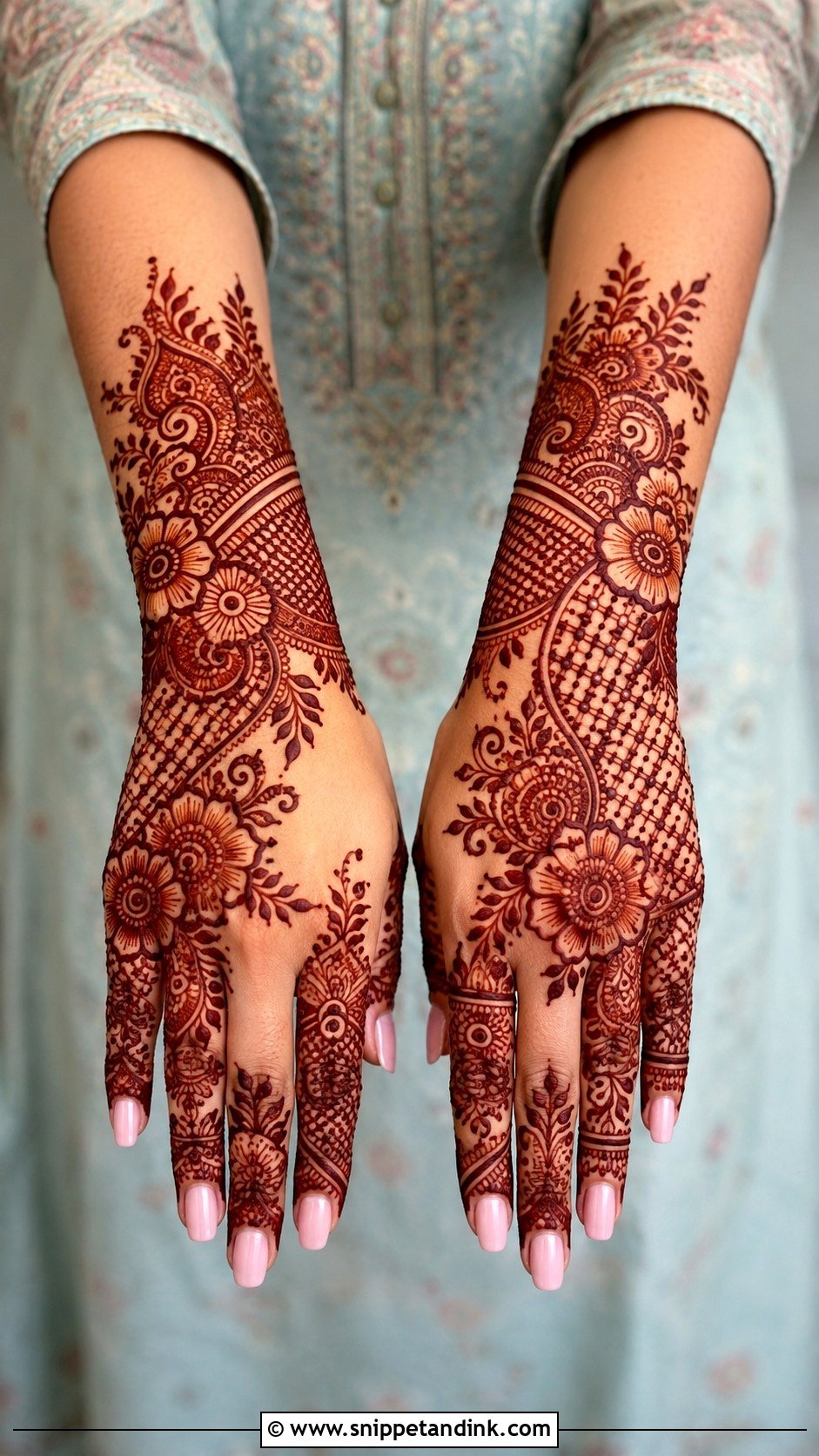
Jaali is a fine mesh of crossed lines, and it’s the quickest way to add texture without making the whole hand dense. I place it inside paisleys, across a finger, at the wrist or as a small panel beside a flower. The lines need to be very thin and evenly spaced; if the cone is too wet, the squares close up and turn into a dark patch once the stain develops. On a small hand, I use narrow jaali blocks rather than wide grids. Bold floral outlines nearby give it something to contrast against, which makes it work for engagement events and guest mehndi.
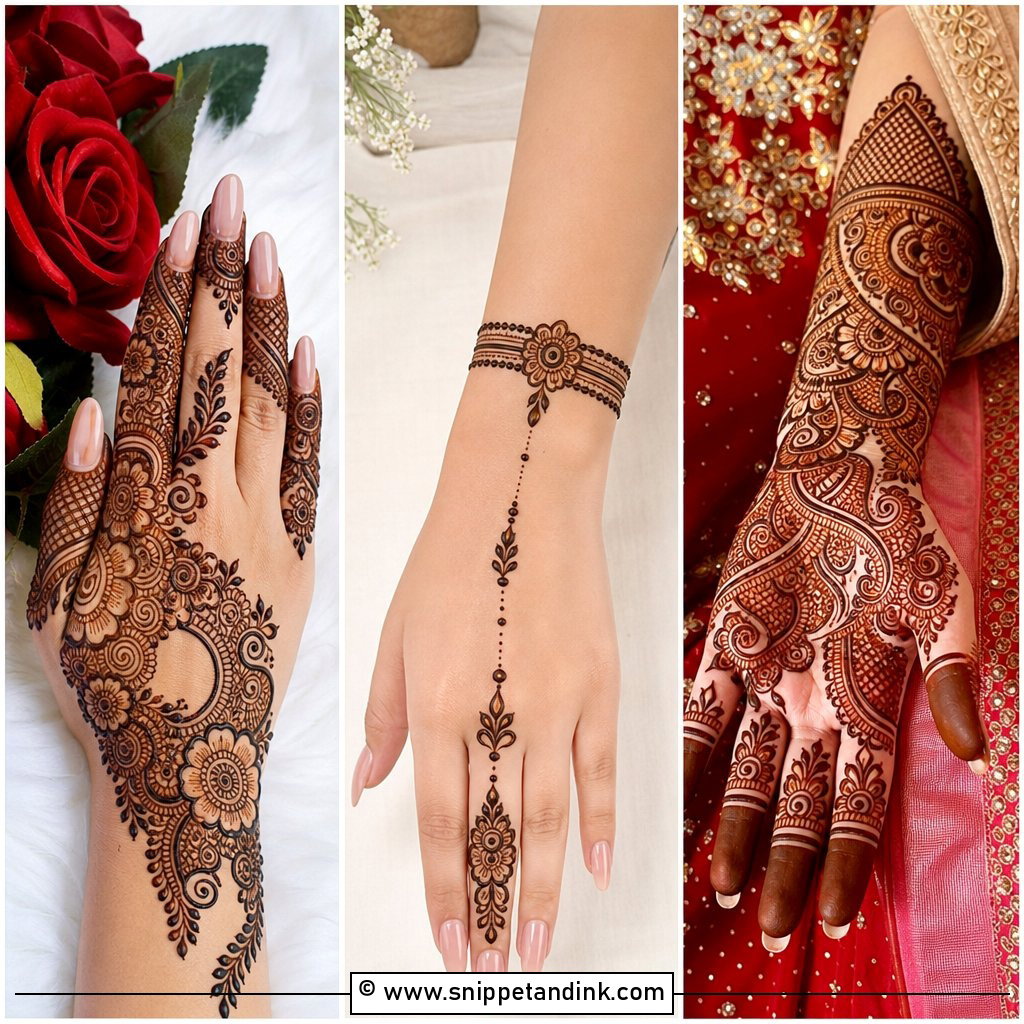
14. Arabian Bracelet Mehndi Design
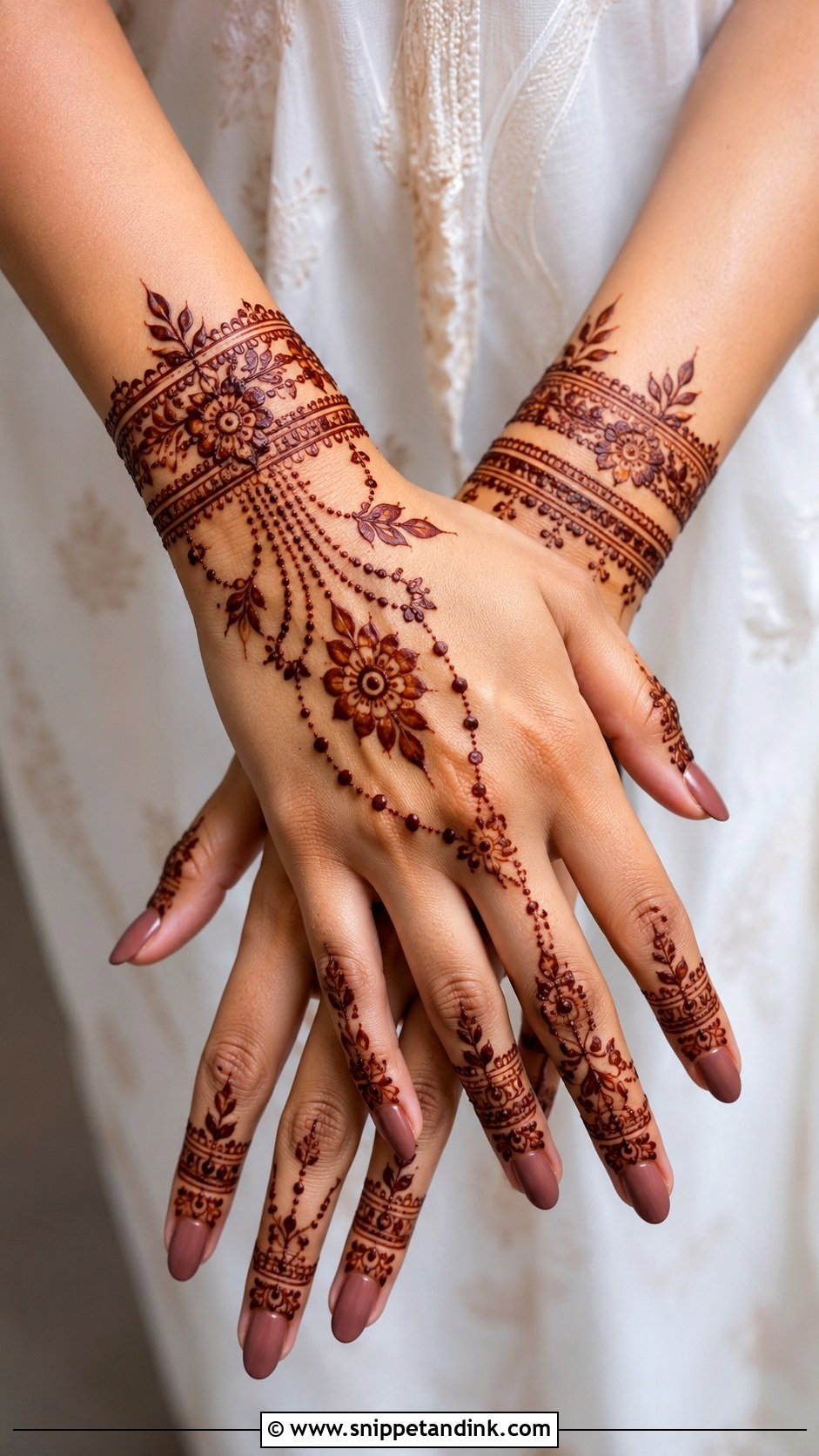
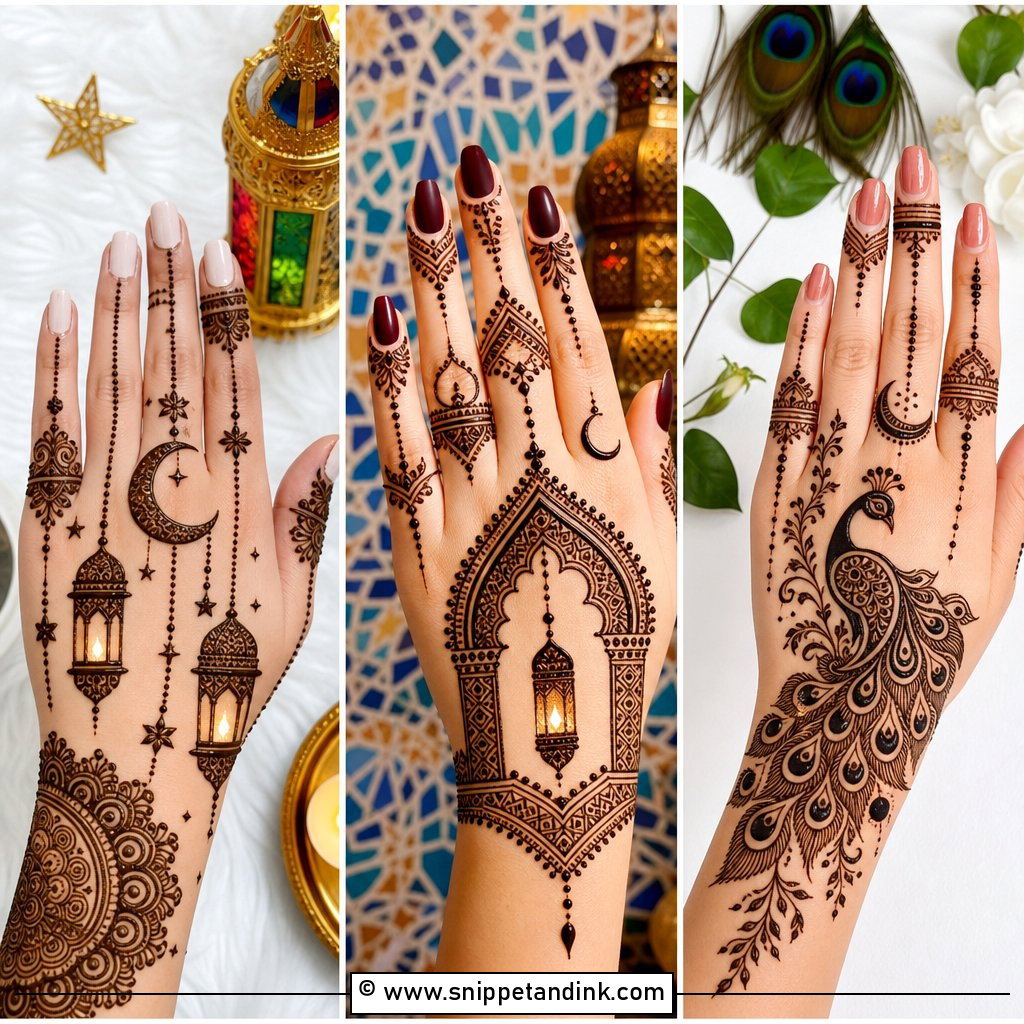
The bracelet layout draws henna jewellery: a cuff at the wrist, chains running up the back of the hand, small flowers as links, and ring patterns on the fingers. The centre of the hand can stay bare or carry a single flower. Its success depends on even bands, so I draw the cuff first and space the chains from it before adding anything else. It suits Eid, engagements and party guests, and it’s one of the most photographed looks I do because it reads clearly from any distance. Real rings and bangles worn on top tie it together.
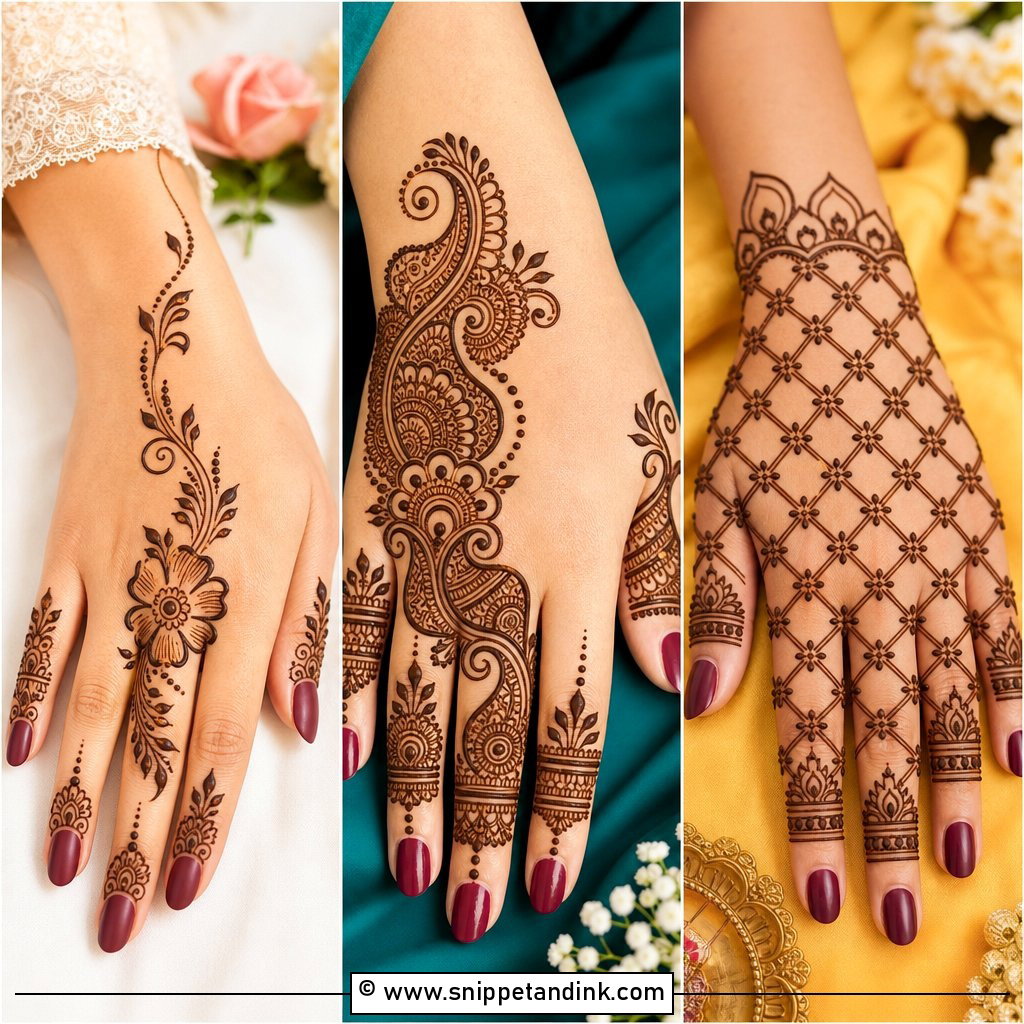
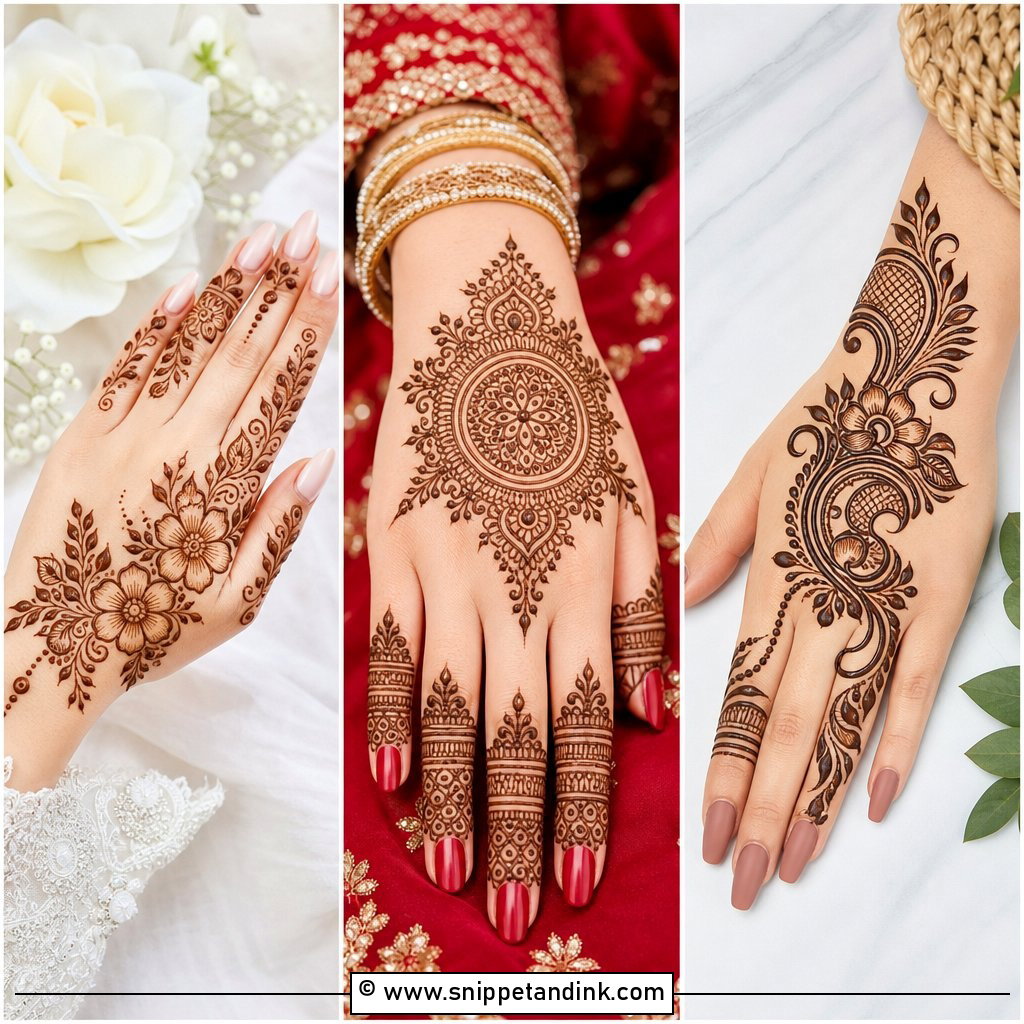
15. Arabian Khafif Mehndi Design
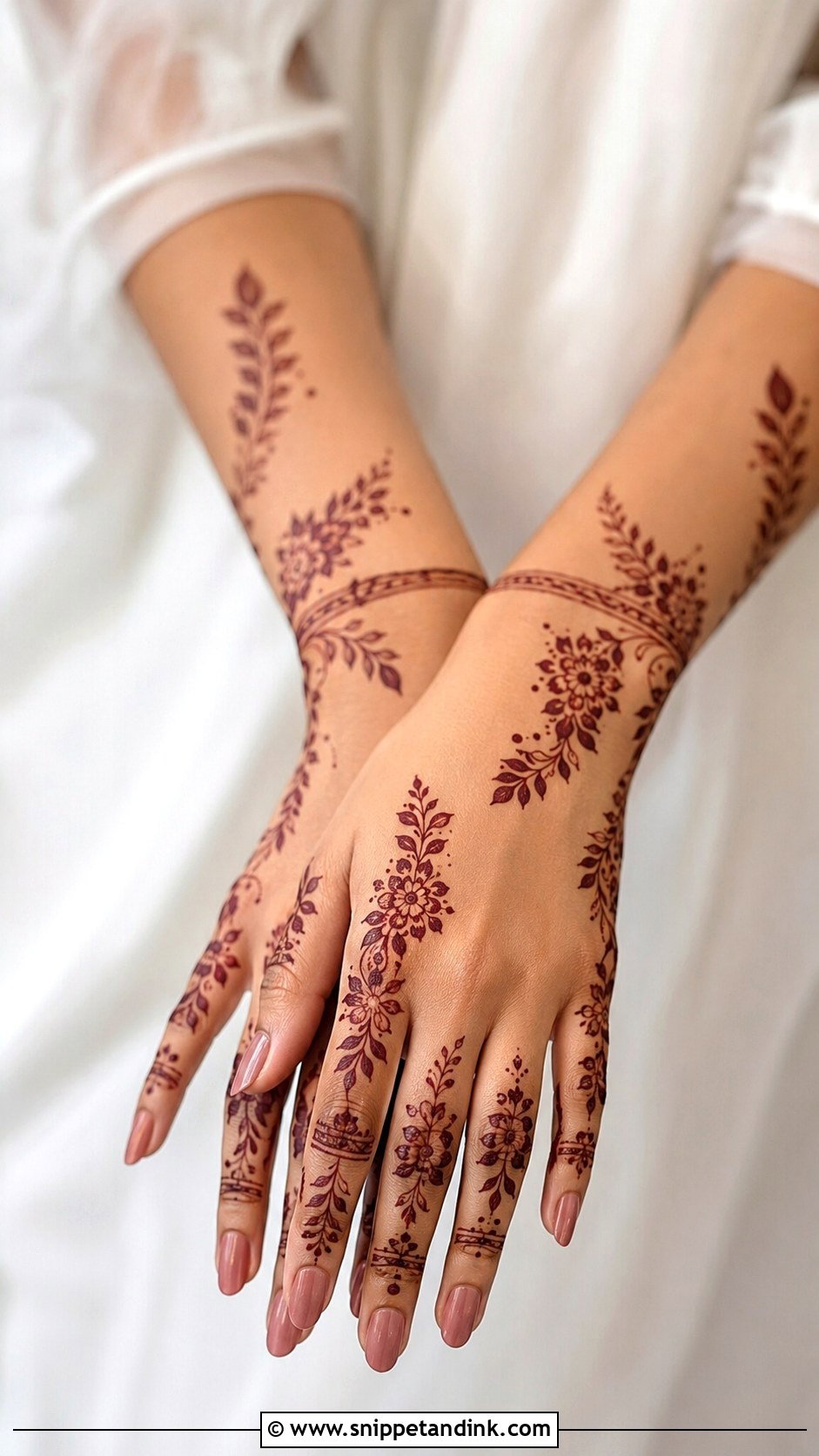
‘Khafif’ means light, and it describes the slim, airy henna common across the Gulf: fine floral trails, small leaves, dots and a narrow wrist band, often over part of the hand only. The lines are thinner than in most Arabic work, so I cut a finer tip on the cone and keep the paste smooth and slightly thicker than usual so it doesn’t spread. It’s quick to apply and doesn’t compete with jewellery or a printed outfit. Choose it when you’d like henna for daily wear or a small gathering rather than a big event.
16. Arabian Gulf Mehndi Design
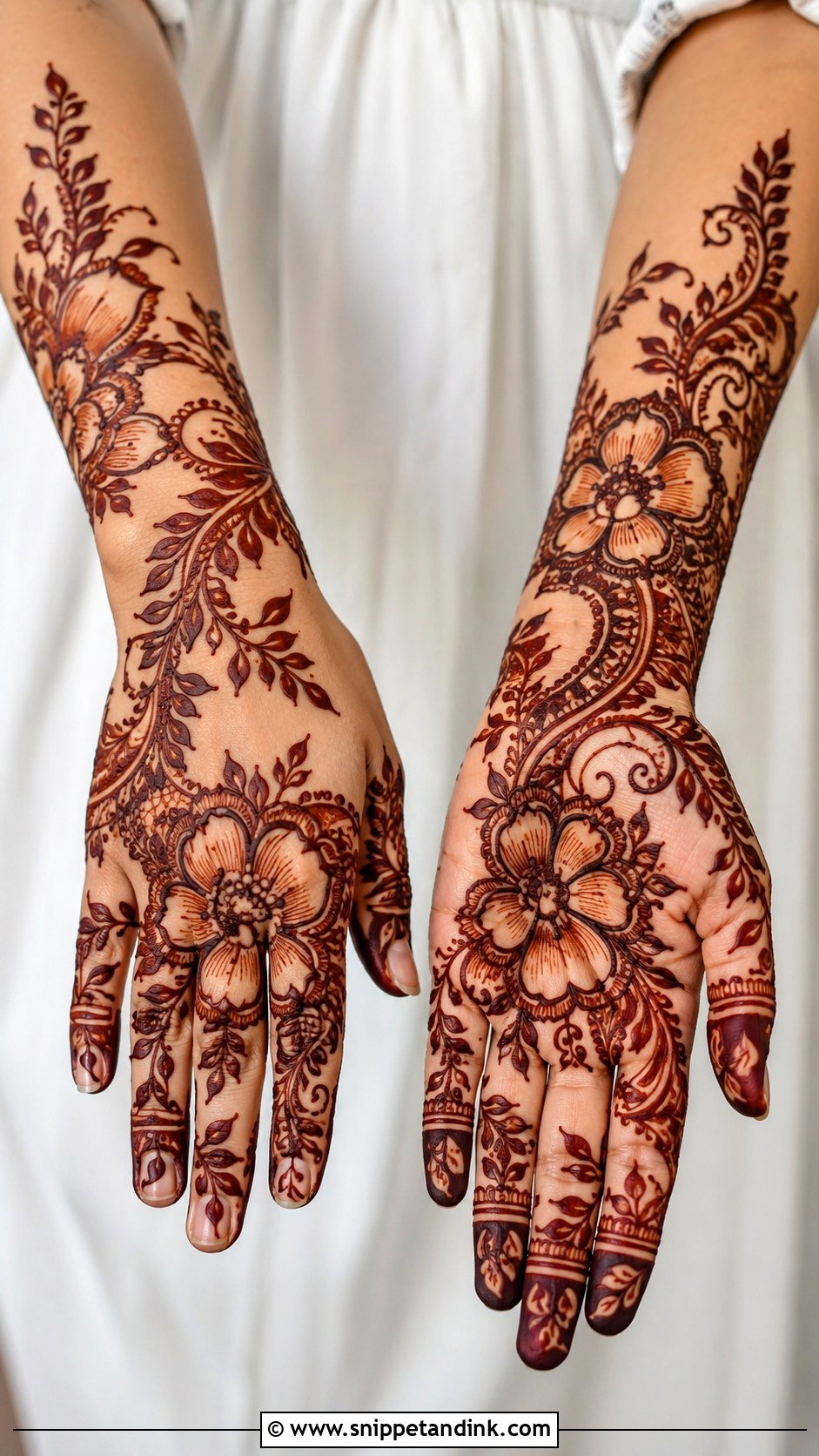
Gulf-inspired henna is bolder than khafif: larger flowers, sweeping vines, thick outlines and wide empty spaces, often moving diagonally across the back of the hand toward the wrist or forearm. The motifs are big enough that tiny fillers would only clutter them, so I keep fillers to a few dots and use shaded petals for depth instead. A confident outline is everything here, which means one continuous stroke per curve. It suits festive evenings and weddings, especially for women who like modern Arabic henna with real presence.
17. Arabian Khaleeji Mehndi Design
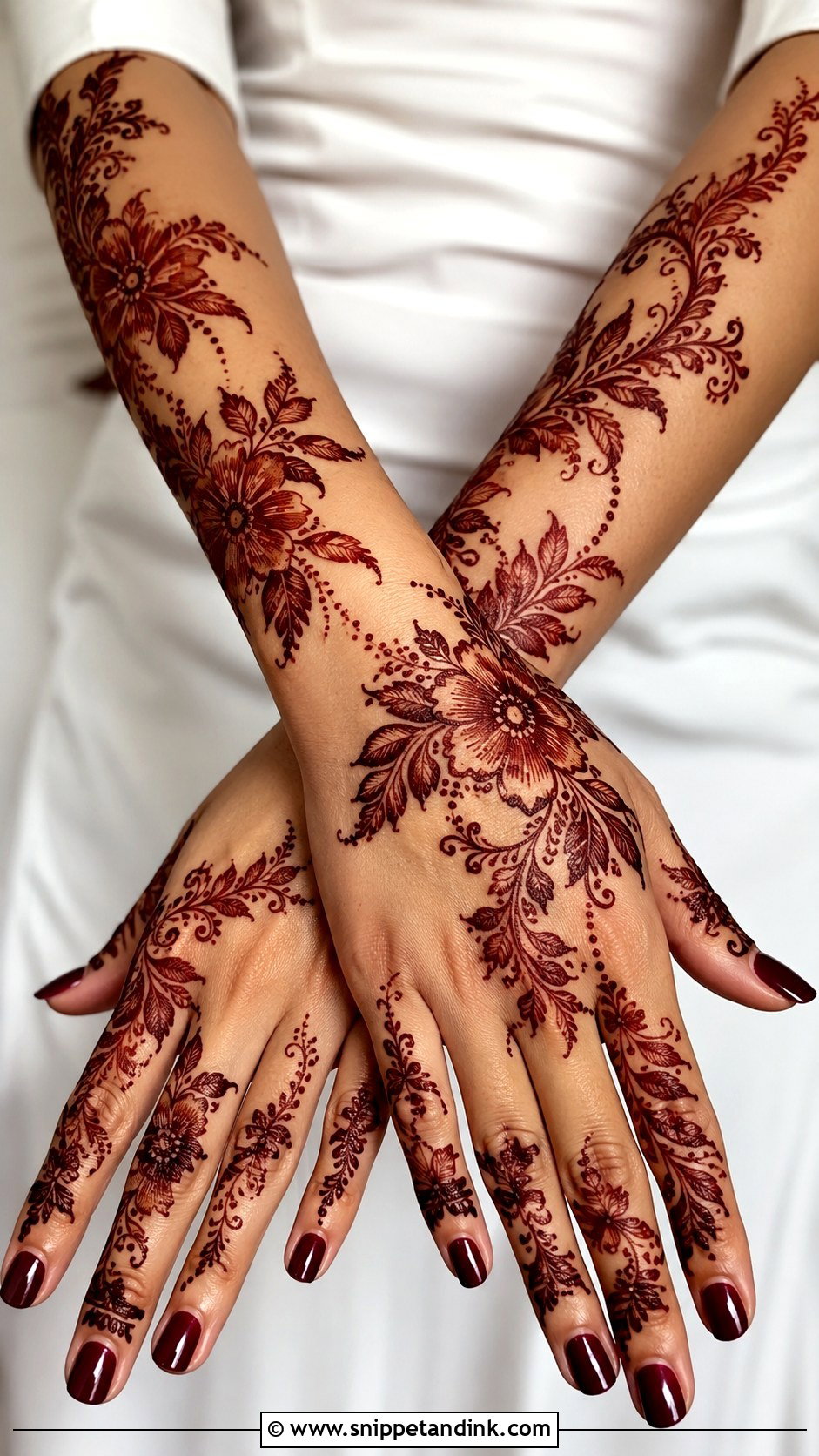
Khaleeji henna, from the Gulf region, often uses asymmetric placement: a large floral cluster on one side of the back of the hand, with leafy strokes reaching toward just two or three fingers. That imbalance is deliberate and gives it a fashionable, current look. I use strong outlines and soft shading inside the petals so the contrast with bare skin stays sharp. It wears well for Eid, family parties and evening events. If you like symmetry, this isn’t your style; it relies on one side of the hand being mostly clear.
18. Arabian Eid Mehndi Design
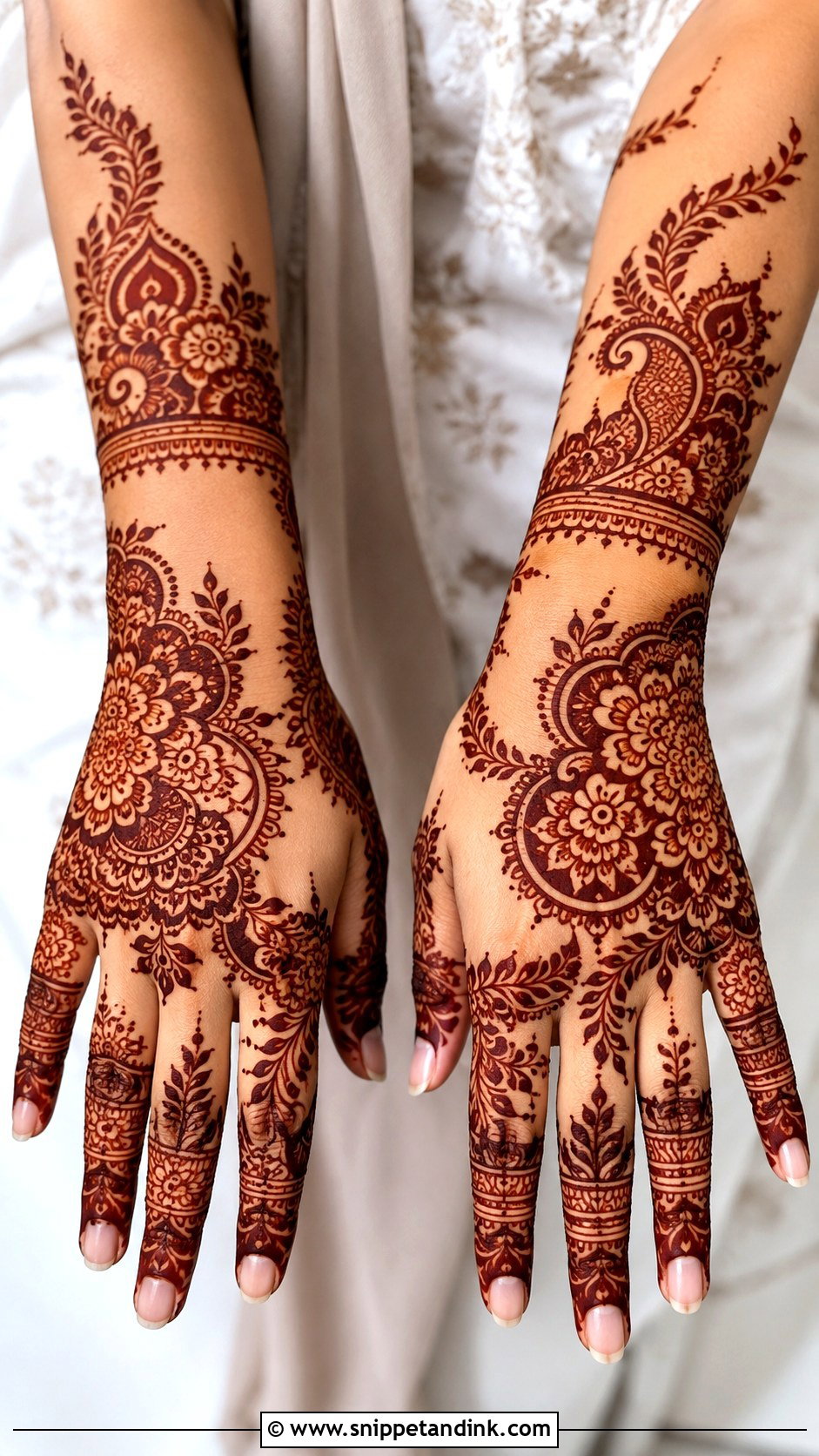
For Eid, I ask clients two things first: what they’re wearing and how long they have, because a medium design takes thirty to forty minutes a hand and appointments on Chaand Raat run late. Floral back-hand trails, palm paisleys, bracelet patterns and finger designs all work. Visits and photos mean the design should read neatly from close up and from across a room, which a diagonal vine with bold flowers always does. Small dots, leaves and a wrist detail finish it. Apply it the night before if you can; a stain that’s had a full night to develop looks deepest by the afternoon.
19. Arabian Engagement Mehndi Design
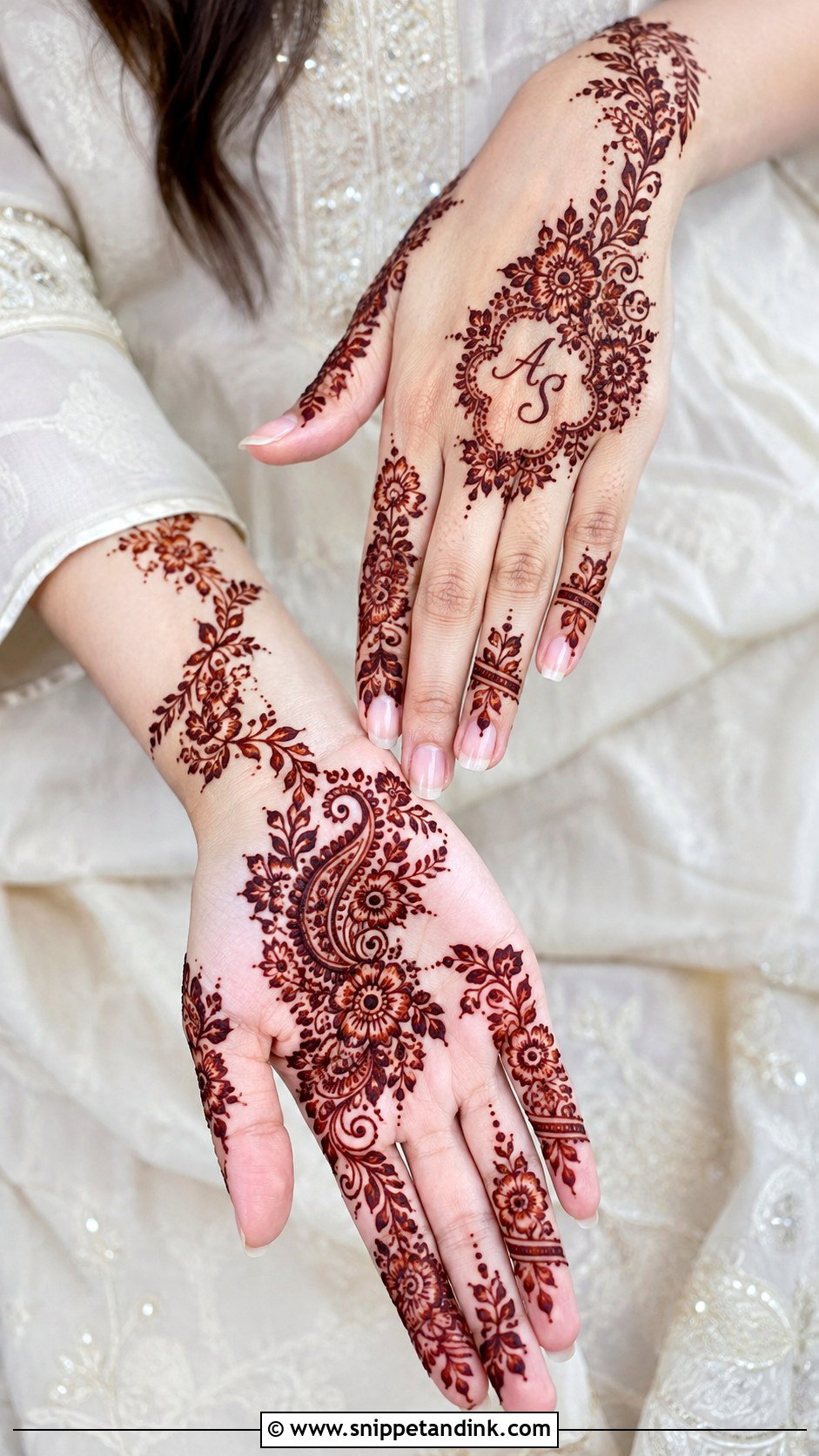
An Arabian engagement mehndi design has one job above all: the ring photo. So I plan the left hand around the ring finger, keeping a clear band of skin where the ring will sit and framing it with leafy bands, small flowers or a fine chain. The palm can carry a central rose or paisley with open spacing around it. It should be lighter than bridal henna but more detailed than a casual design. Initials or a date tucked inside a flower add meaning without anyone spotting them at first.
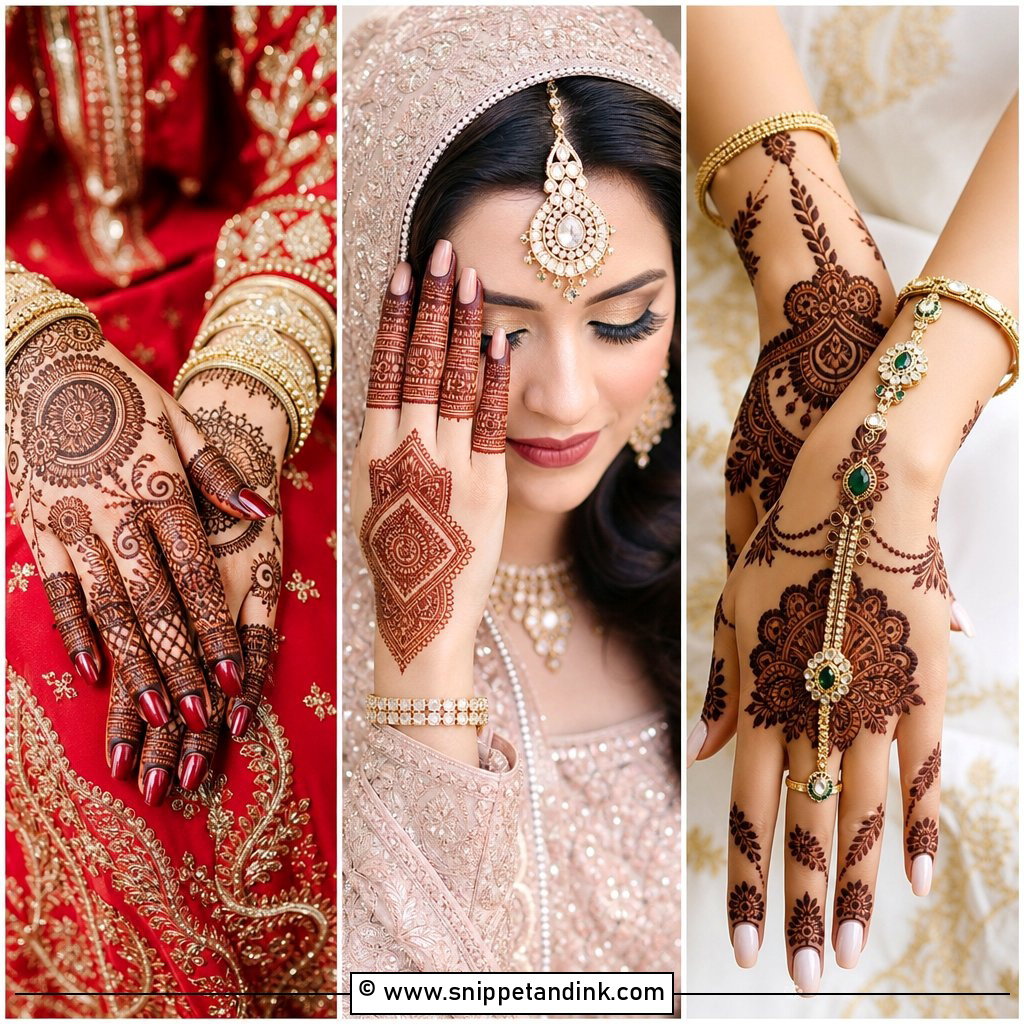
20. Arabian Wedding Guest Mehndi Design
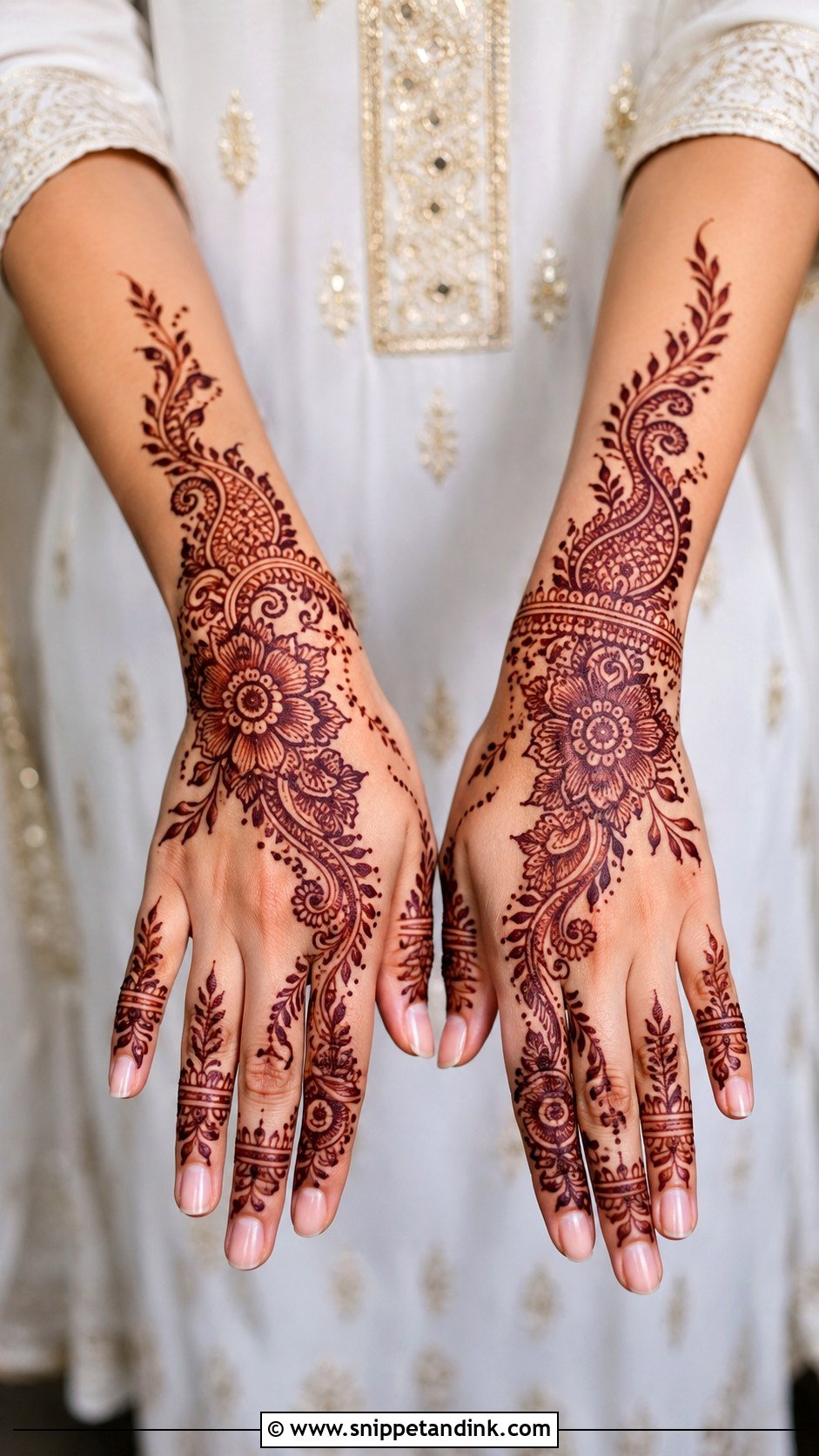
Guests usually want something festive that won’t be mistaken for the bride’s henna, and that’s easy in the Arabic style. A medium back-hand trail, a palm floral cluster or a bracelet pattern looks dressed without being bridal. I’d keep forearm coverage light unless the family has asked guests to go fuller. It works for sangeet, mehndi night, nikah and reception. A clean wrist detail and decorated fingers are usually enough, and on a busy mehndi night, a short design means the artist can fit in more of the family.
21. Arabian Party Mehndi Design
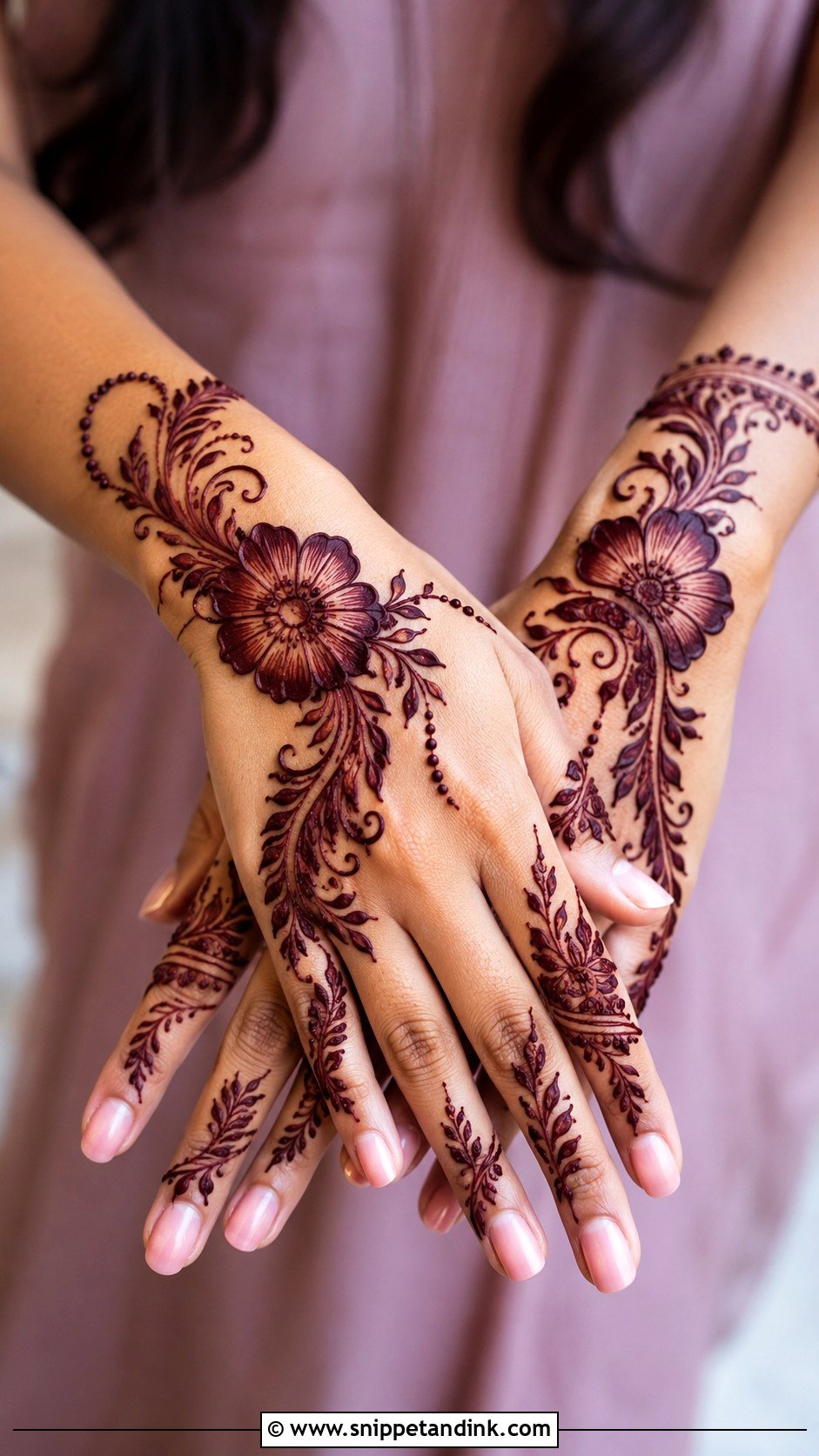
Party henna has to go on quickly and suit several outfits, so I keep it to a bold back-hand flower, a few curved vines, ring-style fingers and a slim wrist band. A small palm pattern is the softer alternative. Shaded petals and dotted chains give it a finished look without much extra time. The thing that ruins quick henna is smudging, so I tell clients to sit for twenty minutes before reaching for their bag or phone. It’s good for birthdays, family dinners and festive get-togethers.
22. Modern Arabian Mehndi Design
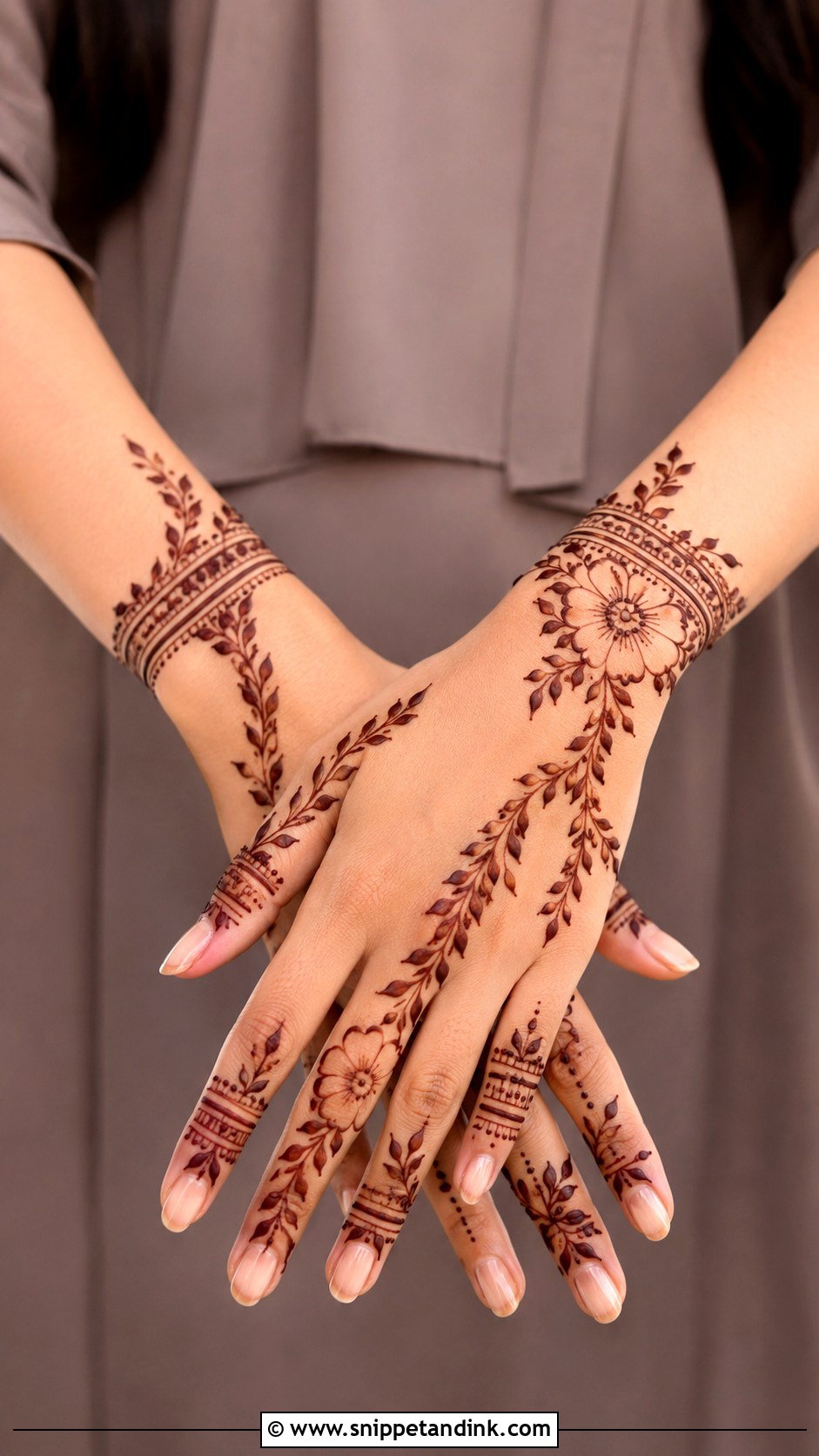
Modern Arabic henna keeps the flowing base but adds half-hand coverage, negative-space flowers, geometric bands and asymmetric vines. I build it around one strong focal point, a rose, a small mandala or a paisley, and let simple lines and leaves do the rest. It suits the back of the hand best, since modern patterns depend on the skin showing through. If you usually find henna too traditional for your style, this is the version to try.
23. Minimal Arabian Mehndi Design
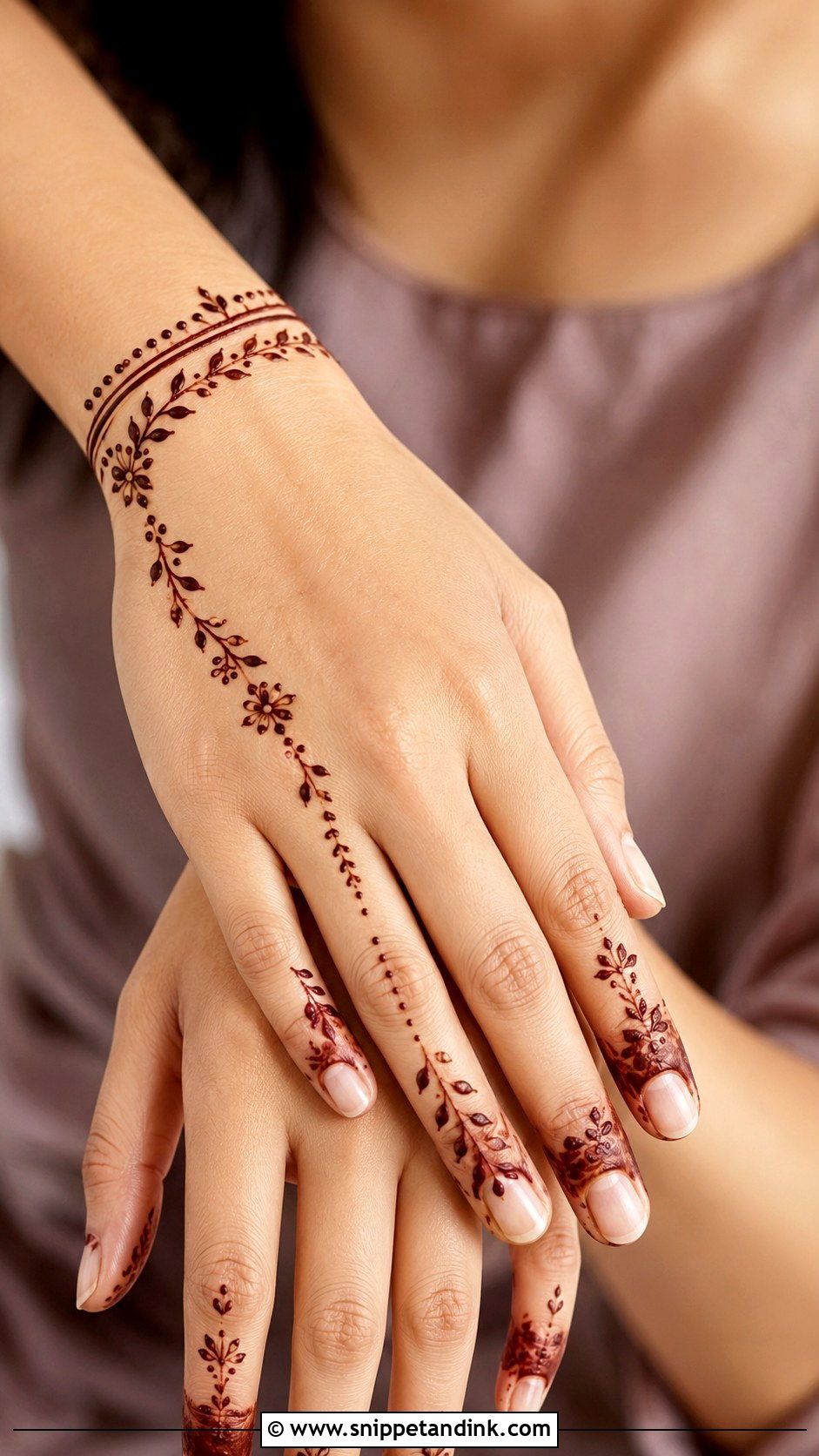
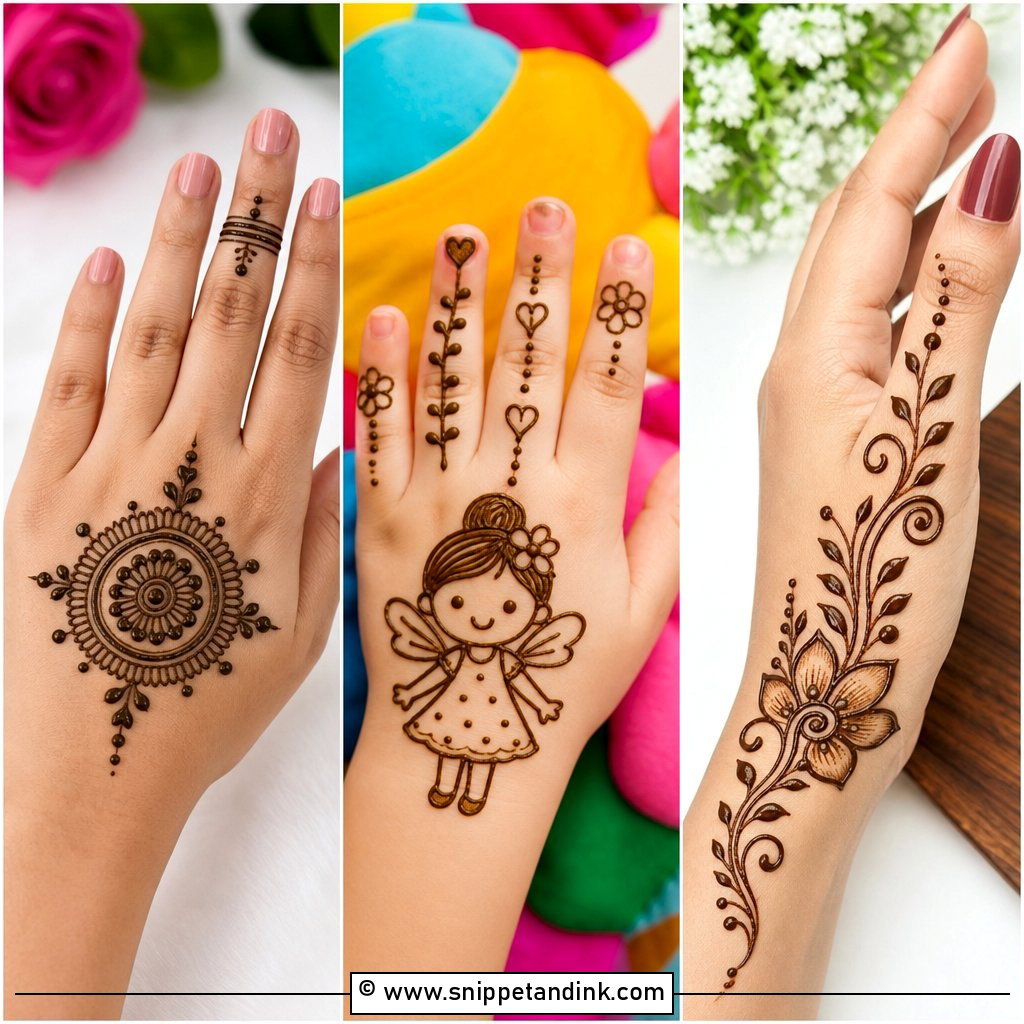
Minimal henna may be a single vine across the back of the hand, tiny flowers on two fingers or a slim wrist band, with most of the hand left open. It’s where neatness counts most, because there’s nothing to hide a shaky line, so I draw every stroke in one go and wipe away mistakes immediately with a damp cotton bud before they stain. Small hands look especially good with it, since a light design won’t overpower them. It suits teens, office events and anyone who doesn’t want a heavy stain for days.
24. Heavy Arabian Mehndi Design
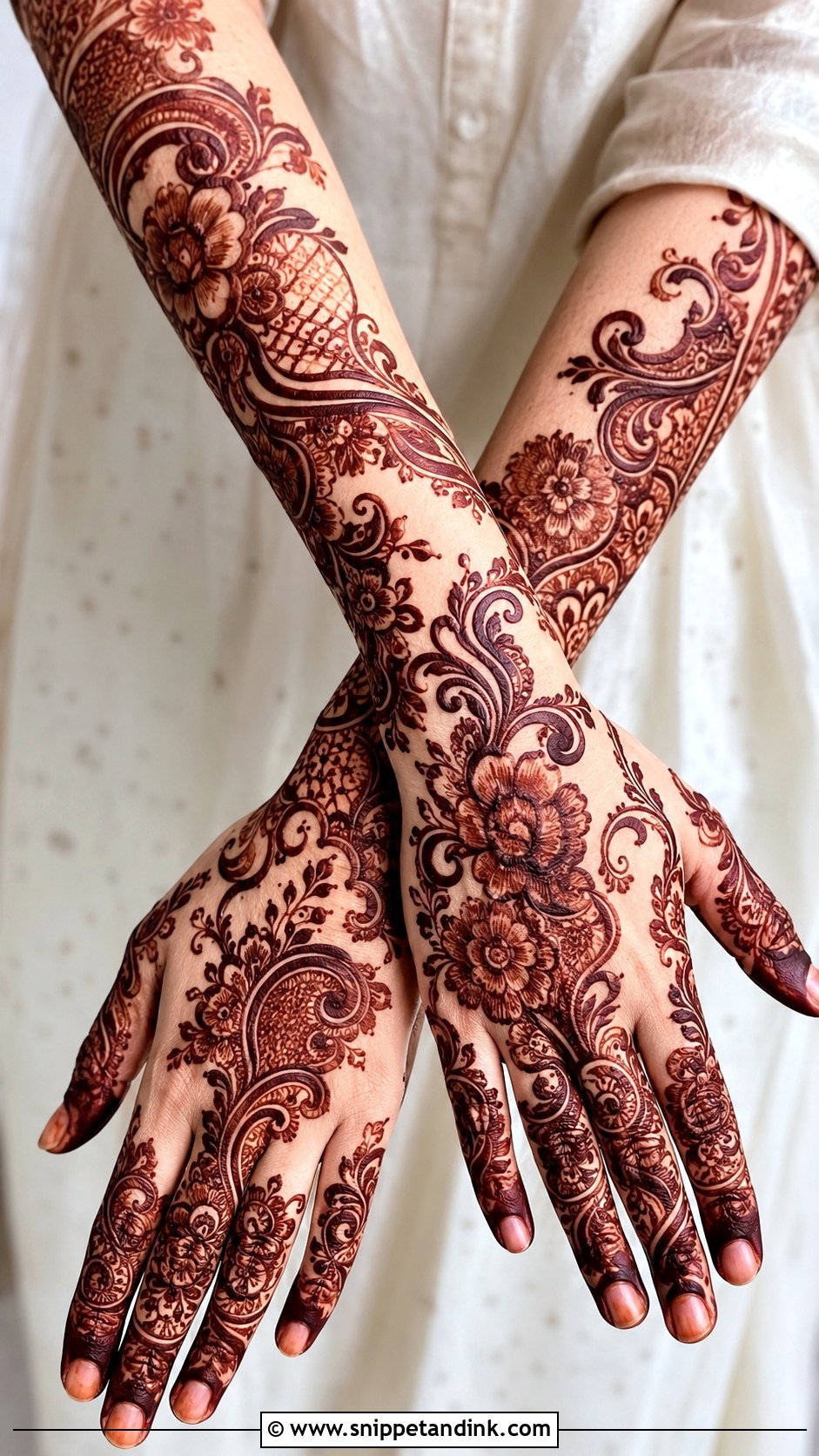
Heavy Arabic henna covers the palm, back, fingers and wrist with large flowers, paisleys, vines, jaali panels and shading, but it still leaves breathing room around each major motif. That spacing is what separates it from traditional dense work and keeps it from looking cluttered. Bold outlines for the flowers and paisleys, then fine inner detail, give a rich finish. It takes time, often well over an hour a hand, so plan the appointment early in the day. It suits brides, the bride’s sisters and major festive occasions.
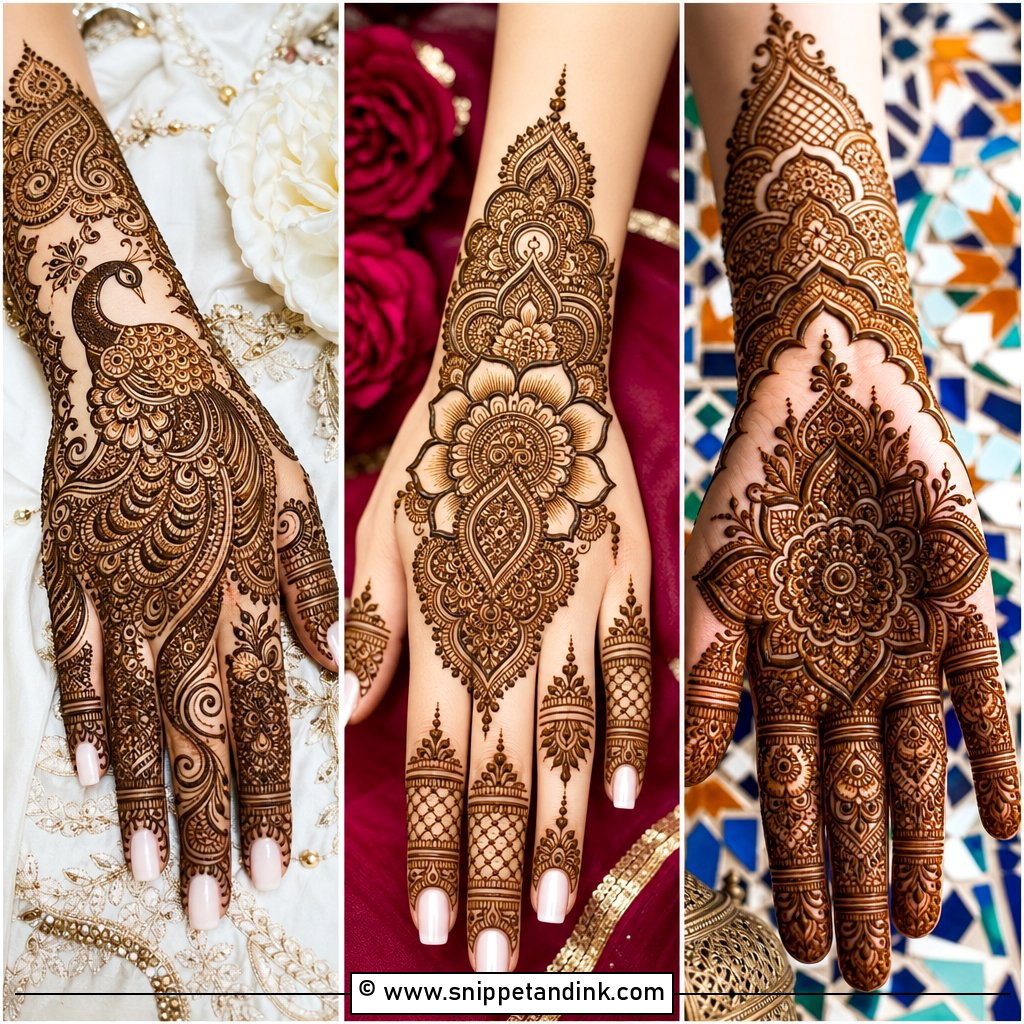
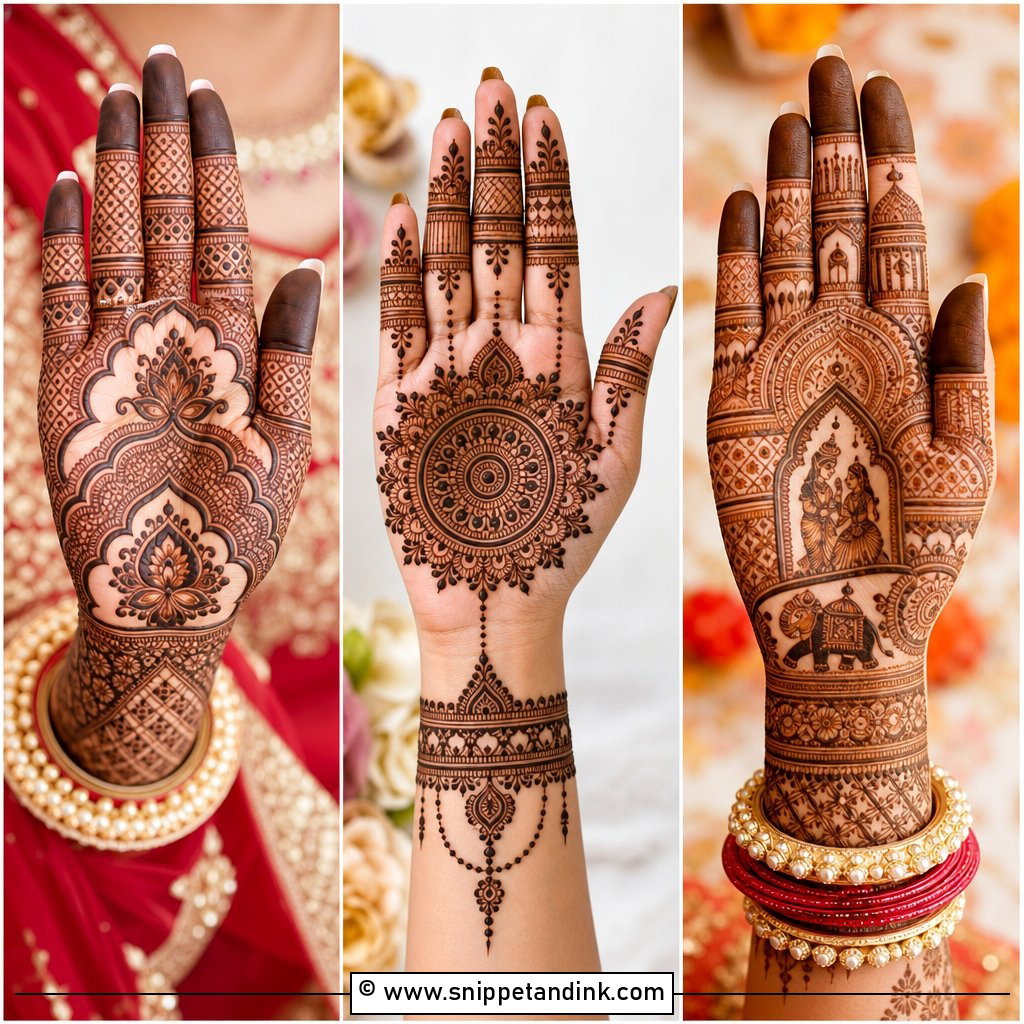
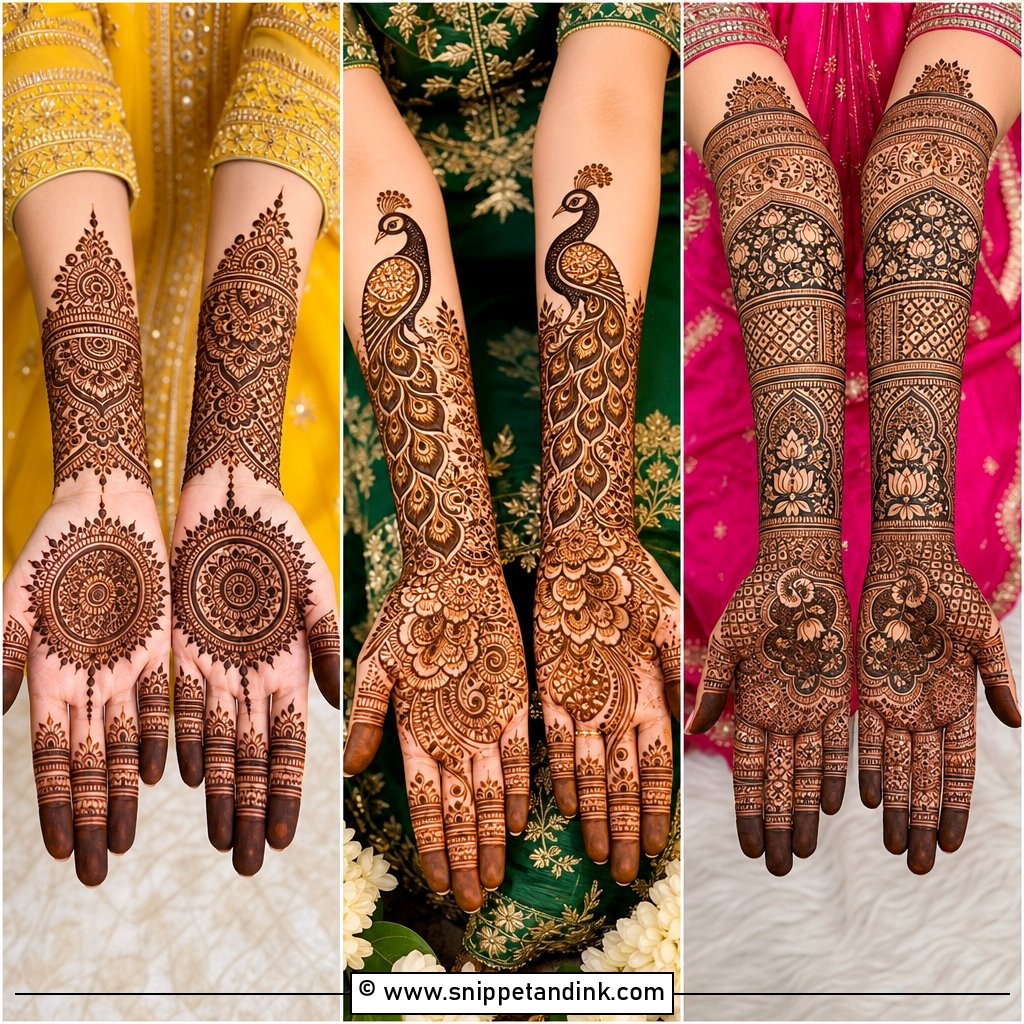
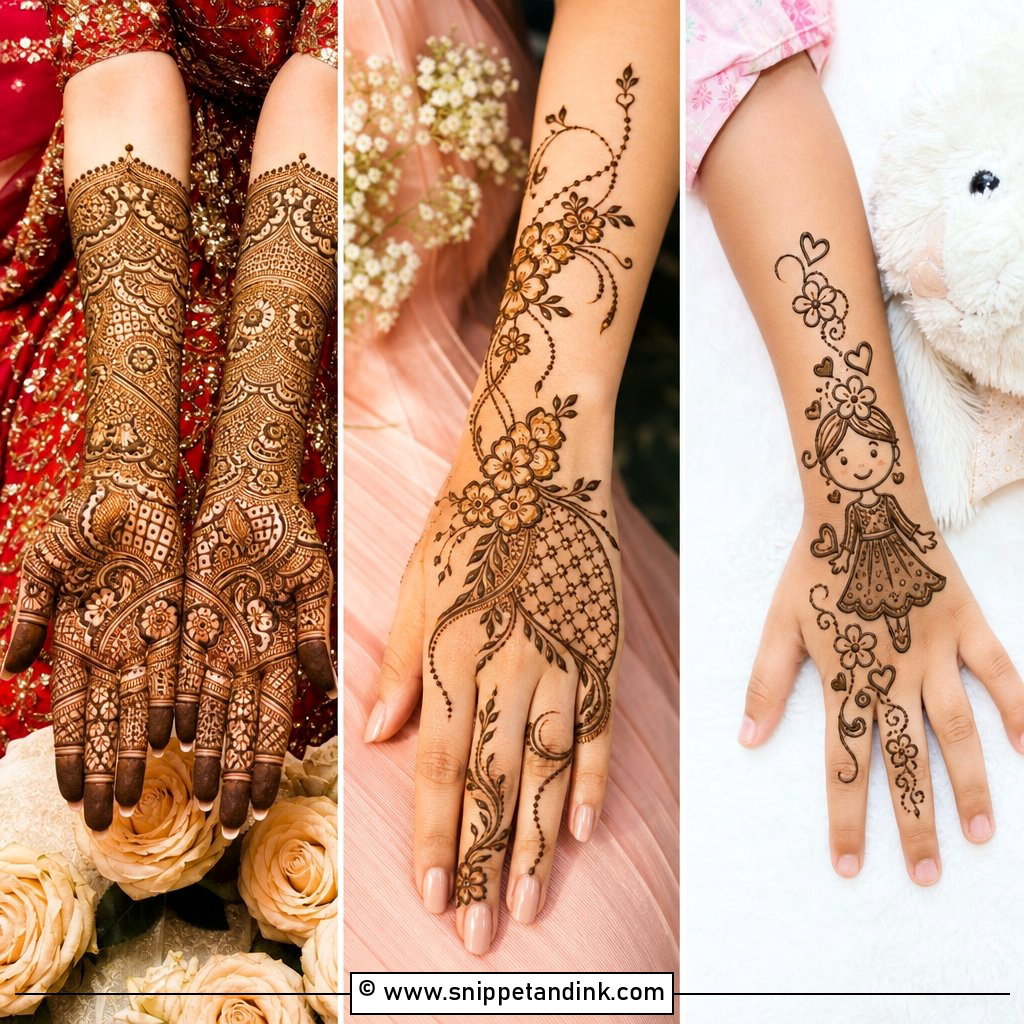
25. Shaded Arabian Mehndi Design
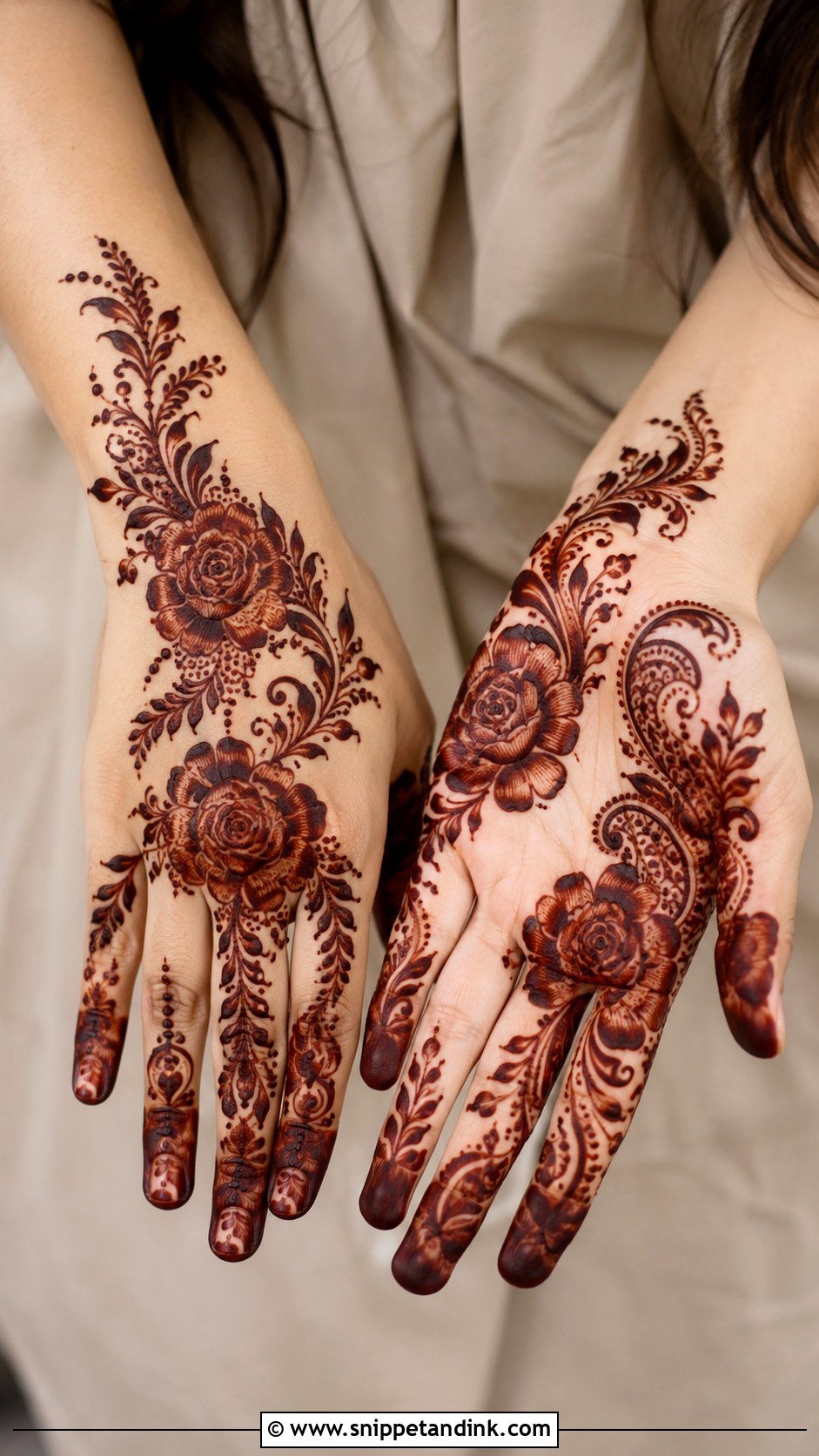
Shading is done by thinning the paste line inside a petal from heavy to light, so the stain itself goes from dark to pale and the flower looks rounded. I fill the base of each petal with more paste and pull it outward in fine strokes. It turns simple roses, lotuses and leaves into something that looks professional. Shading needs the paste to stay on long enough for the light areas to stain at all, so this design rewards leaving it on overnight. Don’t crowd shaded petals with extra inner lines; the gradient is the feature.
26. Arabian Vine Mehndi Design
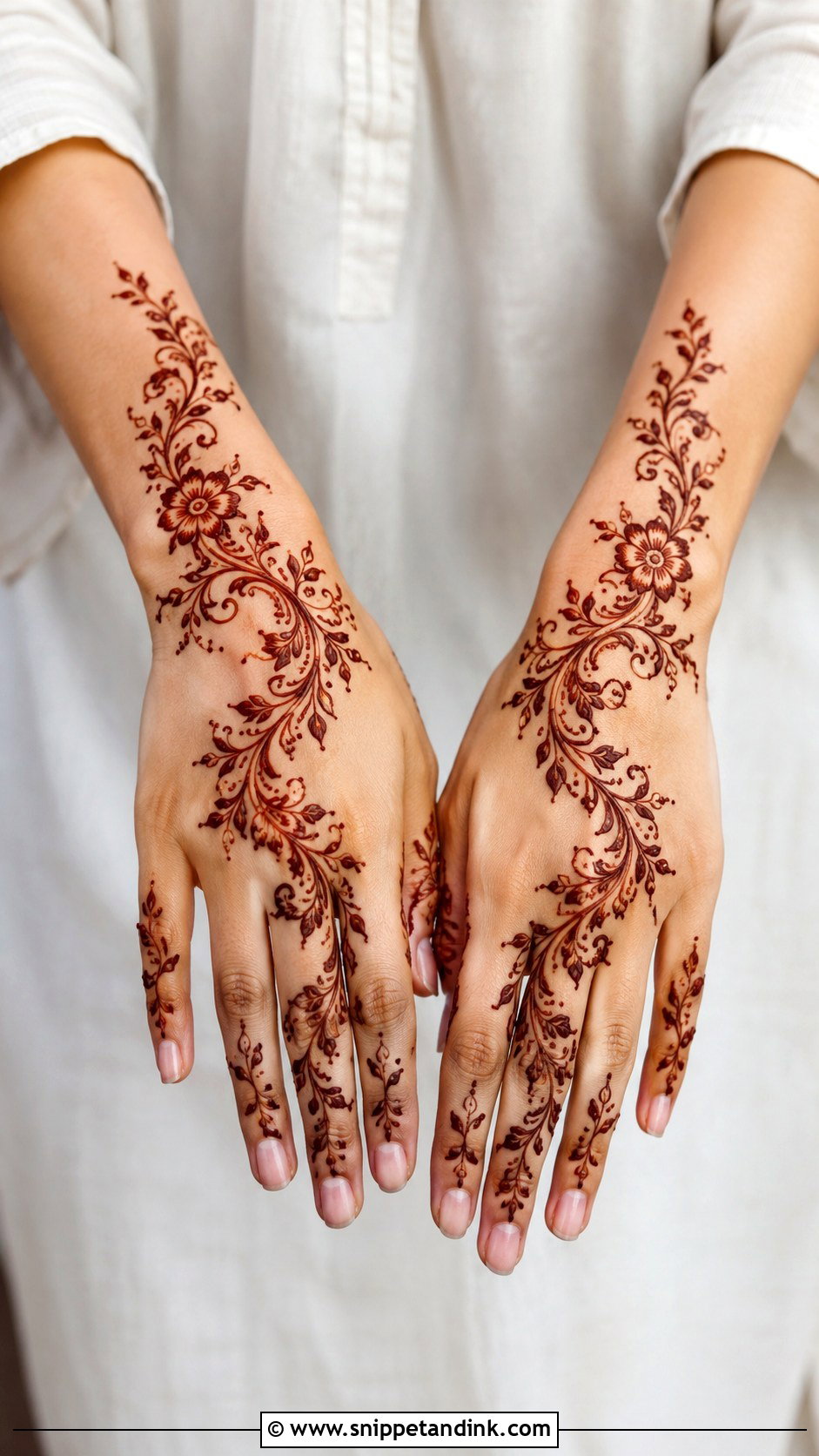
A vine design is about movement: one curved line crossing the hand with leaves, flowers, buds and dots along the way. It can start at the wrist and travel toward the index finger, or rise from one side of the palm. Because it lengthens the hand, it flatters short fingers especially well. It also scales easily, from a thin minimal vine to a thicker one heavy with flowers. I recommend it to beginners, since the structure is one line; practise smooth curves and even spacing between leaves before adding anything else.
27. Arabian Peacock Mehndi Design
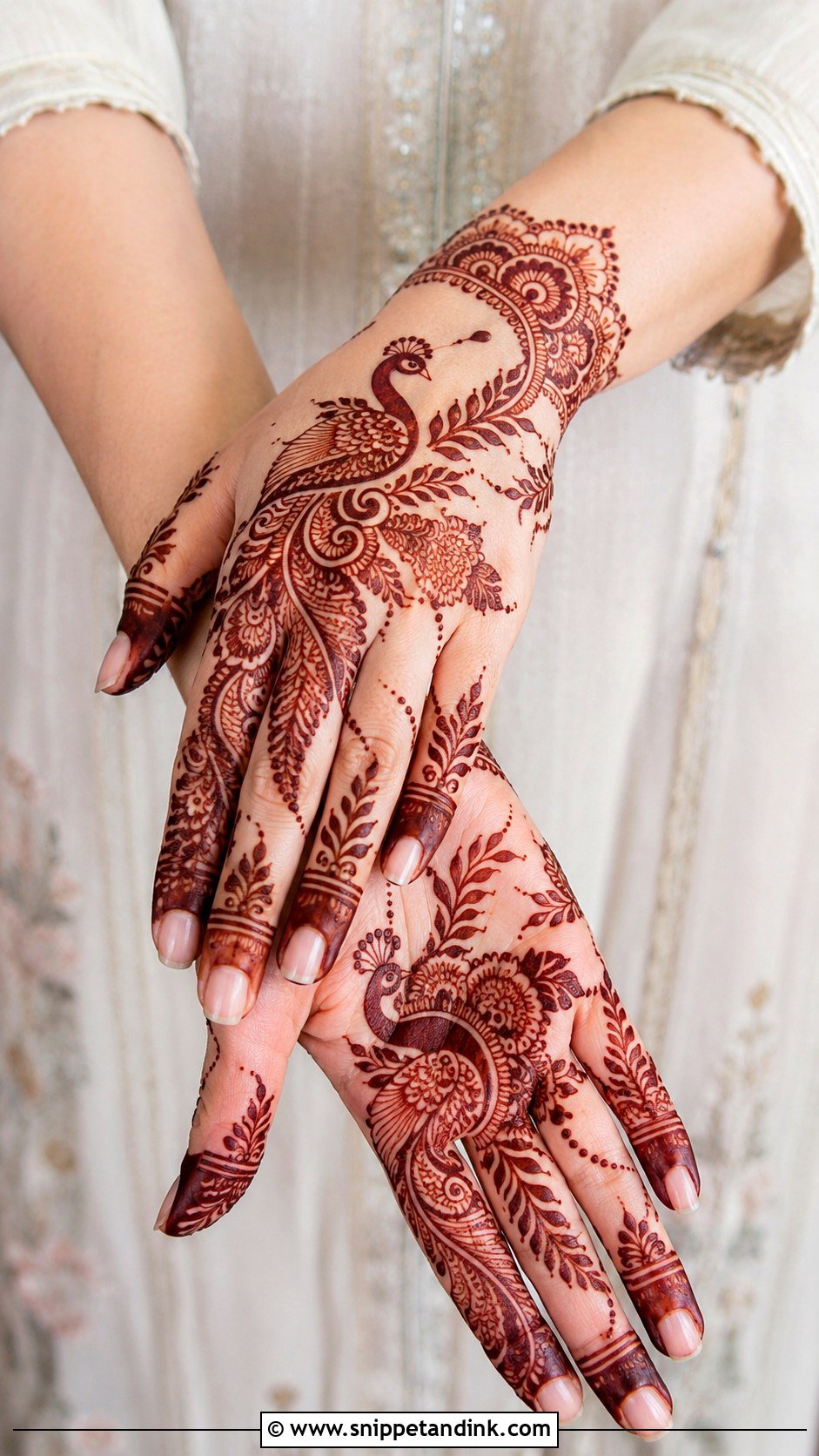
A peacock is the most detailed single motif in this list, and in an Arabic layout it needs space so the body stays readable once the stain develops. I place it on the palm, wrist or back of the hand, draw the body with a bold outline and let the feathers trail into vines, paisleys and leaves. The fine feather lines are where it goes wrong, as they merge if the paste is too wet. Flowers around the edges give it the Arabic feel. It suits weddings, engagements and traditional celebrations.
28. Arabian Lotus Mehndi Design
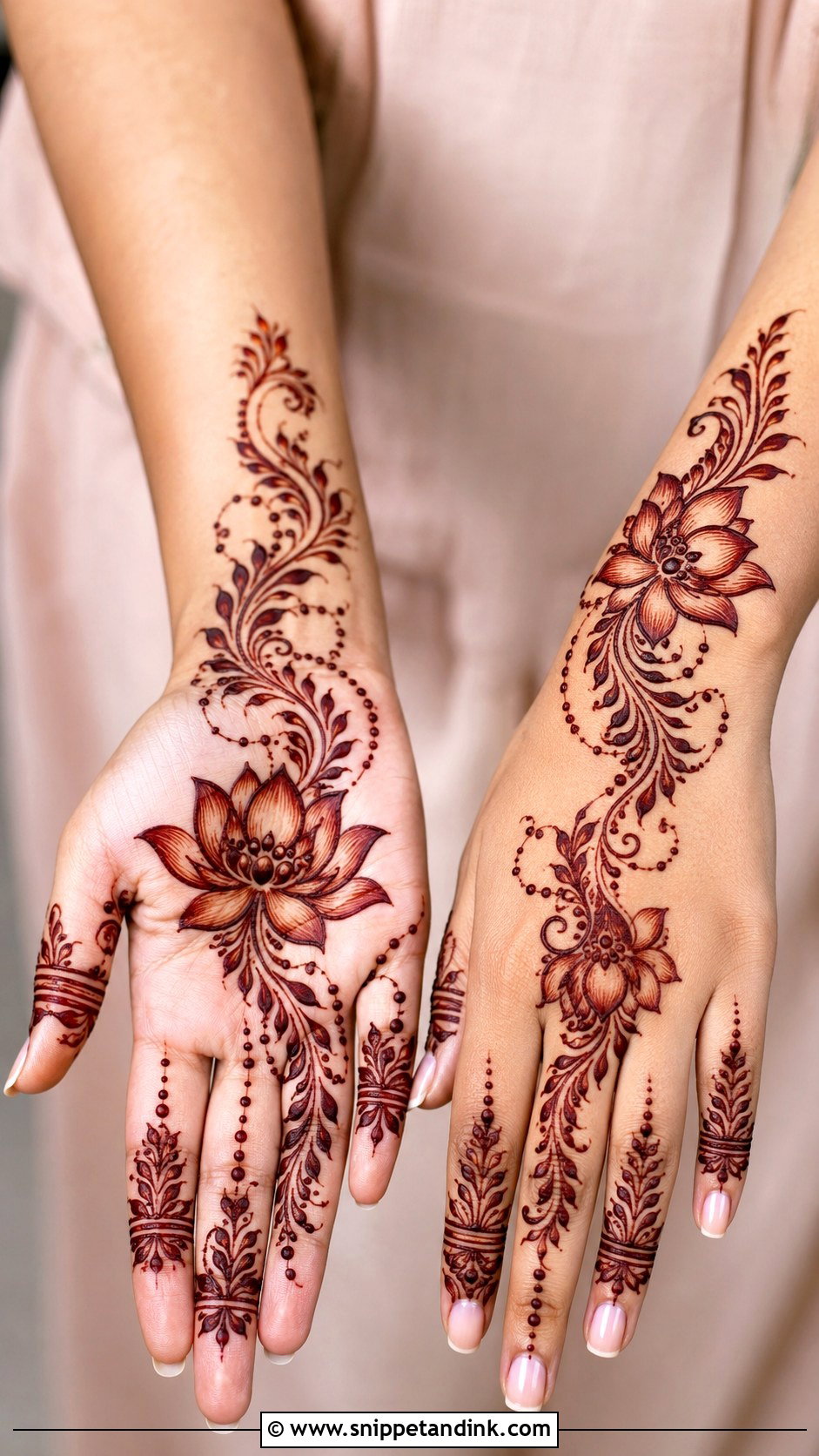
Lotus petals are layered in rows, which makes them a good showcase for shading and fine lines. I put the lotus at the palm centre, on the back of the hand or near the wrist, and draw the innermost petals first so each row overlaps the next correctly. Vines and leafy trails then lead away from it in the Arabic manner. The petals need to be symmetrical or the whole flower looks lopsided. A lotus design stands out most when it’s surrounded by open skin.
29. Arabian Round Tikki Mehndi Design
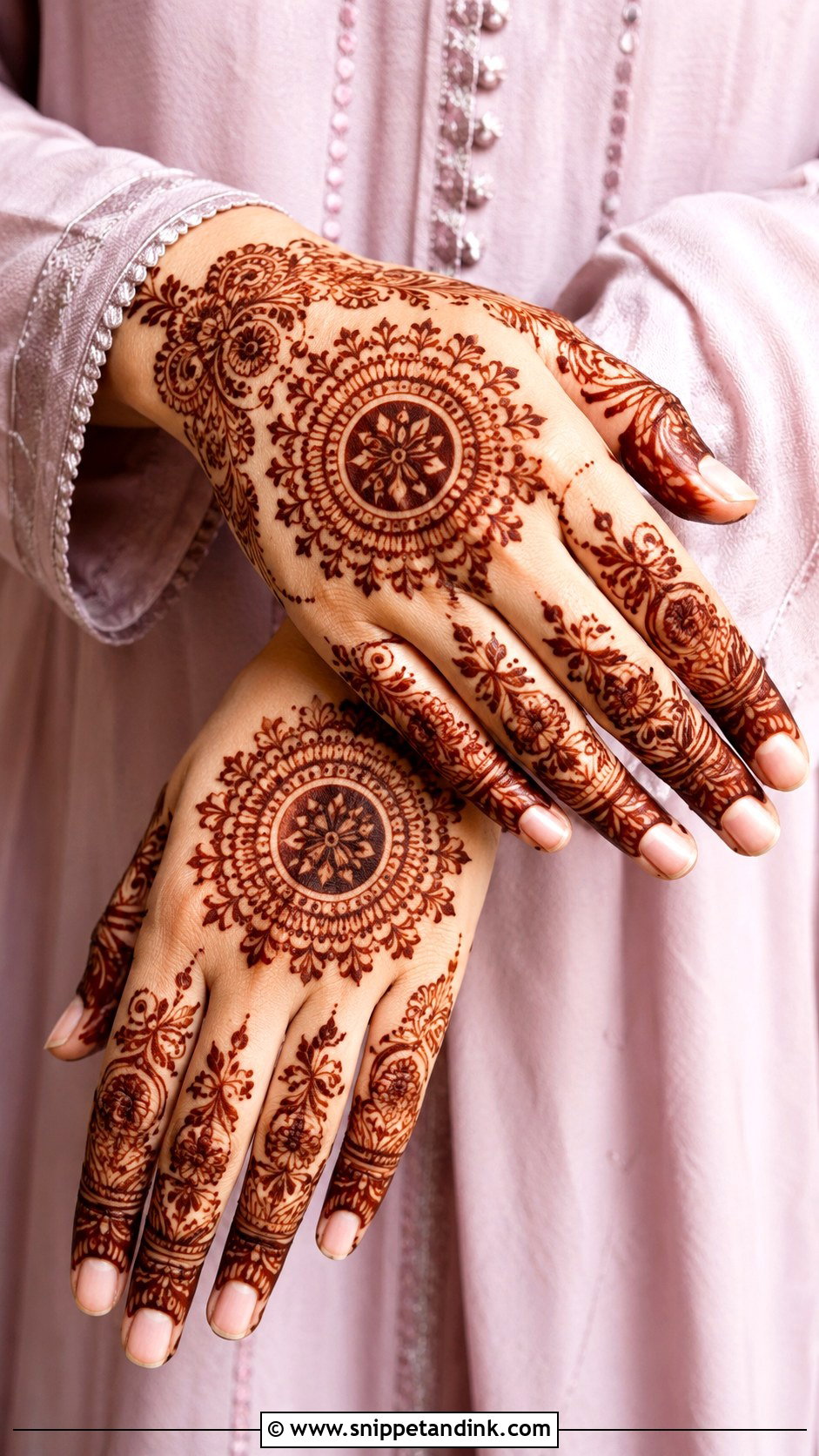
The tikki is the classic round centre of traditional mehndi, and here it gets the Arabic treatment: a circle on the palm or back of the hand, linked to fingers and wrist by flowers, vines, dots and small paisleys, with open space around everything. I fill the circle with petals, rings or fine mesh and keep the outer design airy so the tikki stays visible. It’s a good compromise for families who expect a round centre but a bride or guest who prefers lighter coverage. It suits Eid, family events and simpler wedding functions.
30. Arabian Wrist Mehndi Design
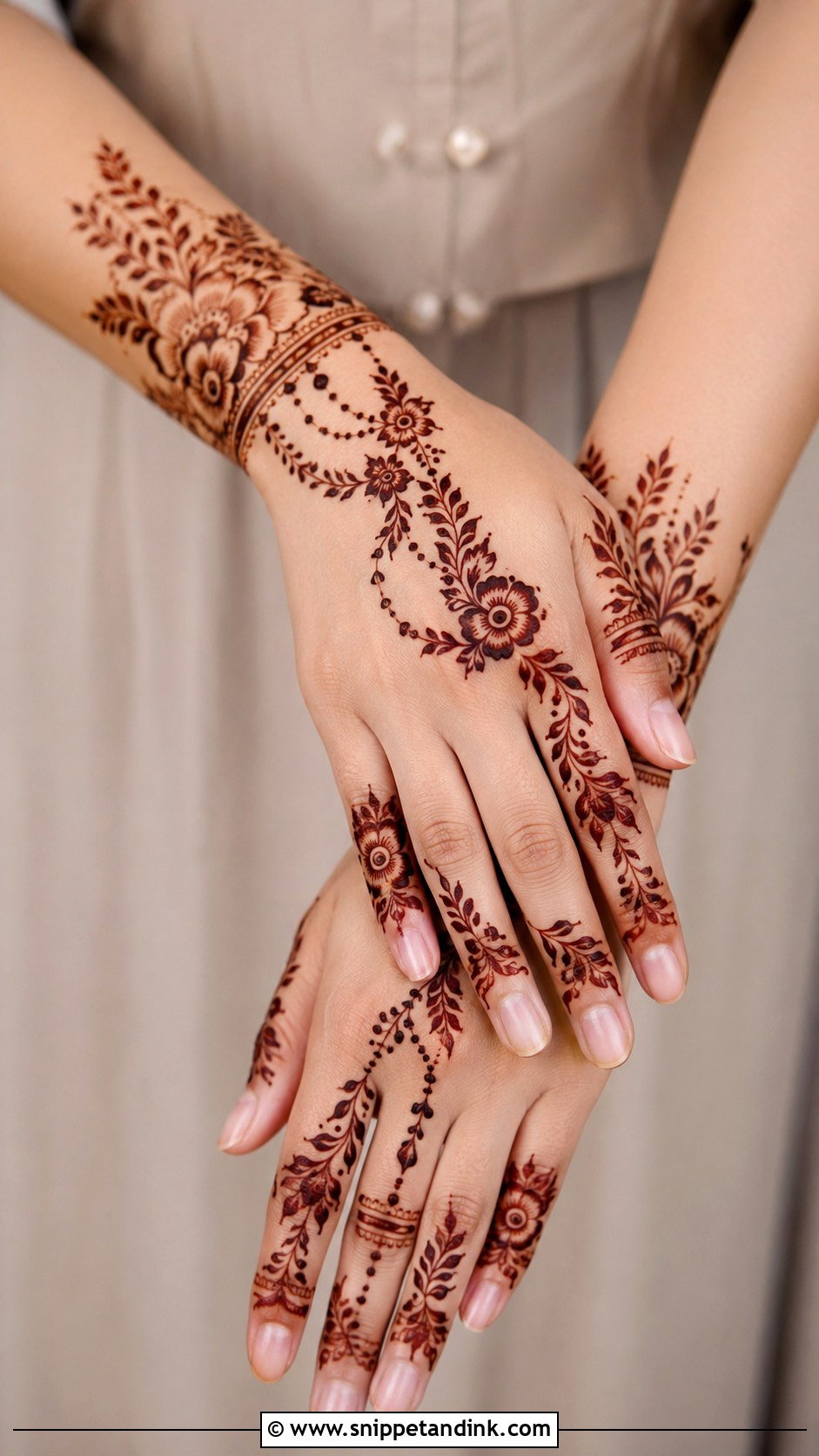
A wrist design gives a bracelet effect without covering the hand: floral cuffs, leafy bands, dotted chains and small hanging motifs that lead toward the back of the hand or palm. I draw the cuff with the client’s wrist slightly bent back, the way it sits when they wear bangles, so the band doesn’t distort when they move. Pair it with lightly decorated fingers or one small central flower. It’s quick, and it frames rings and bangles without looking busy. One flowing vine upward from the band completes it.
31. Arabian Forearm Mehndi Design
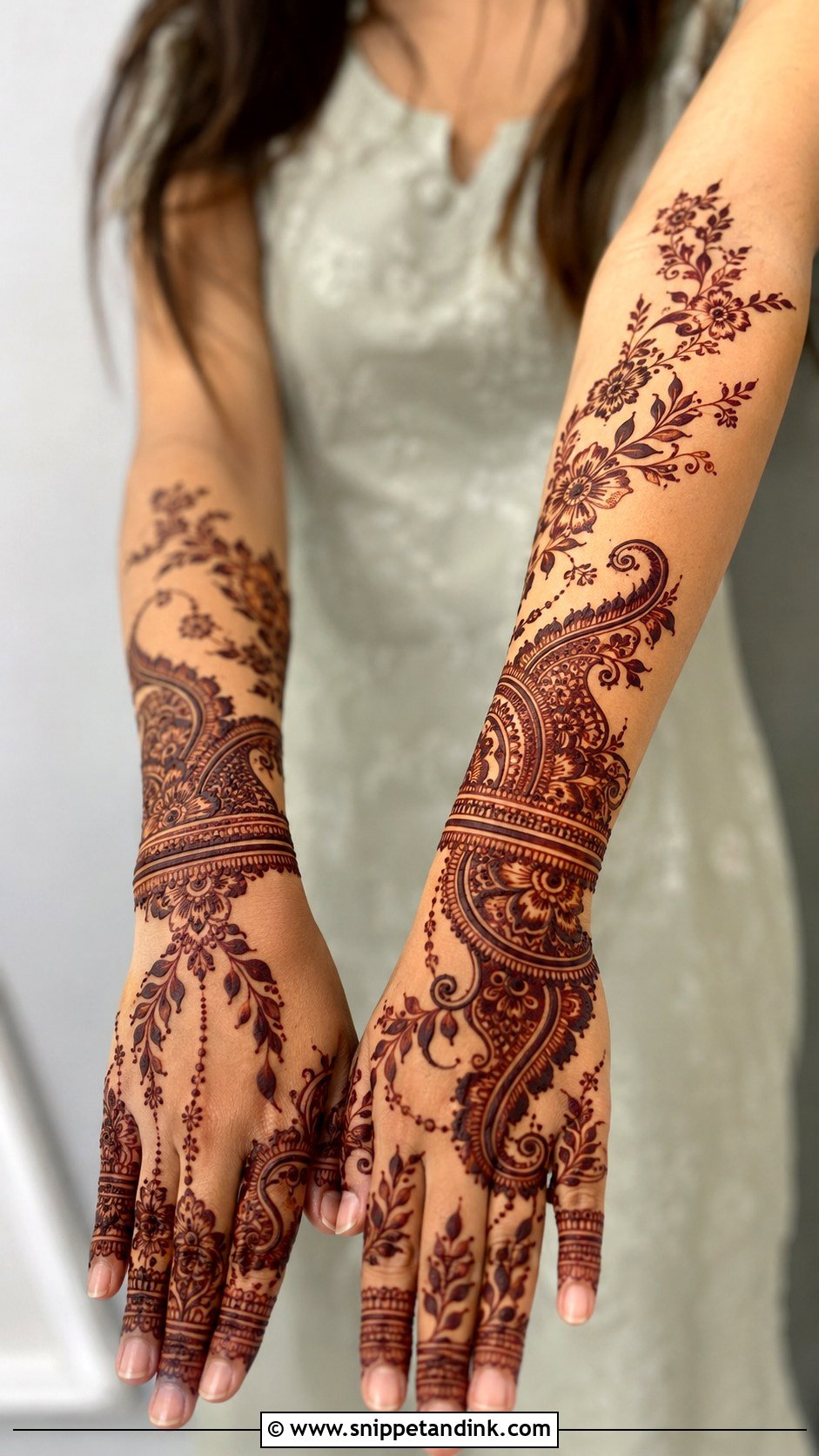
Forearm work adds length and drama without turning into a dense bridal sleeve. The pattern starts at the wrist and climbs with flowers, paisleys, leaves and curved borders, usually along one side of the arm. The forearm stains lighter than the hand, so I use bolder outlines there and keep the open spaces generous; filled-in forearm designs look heavy fast. Bracelet bands at intervals give structure. It suits brides, bridesmaids and women attending major celebrations.
32. Arabian Half Hand Mehndi Design
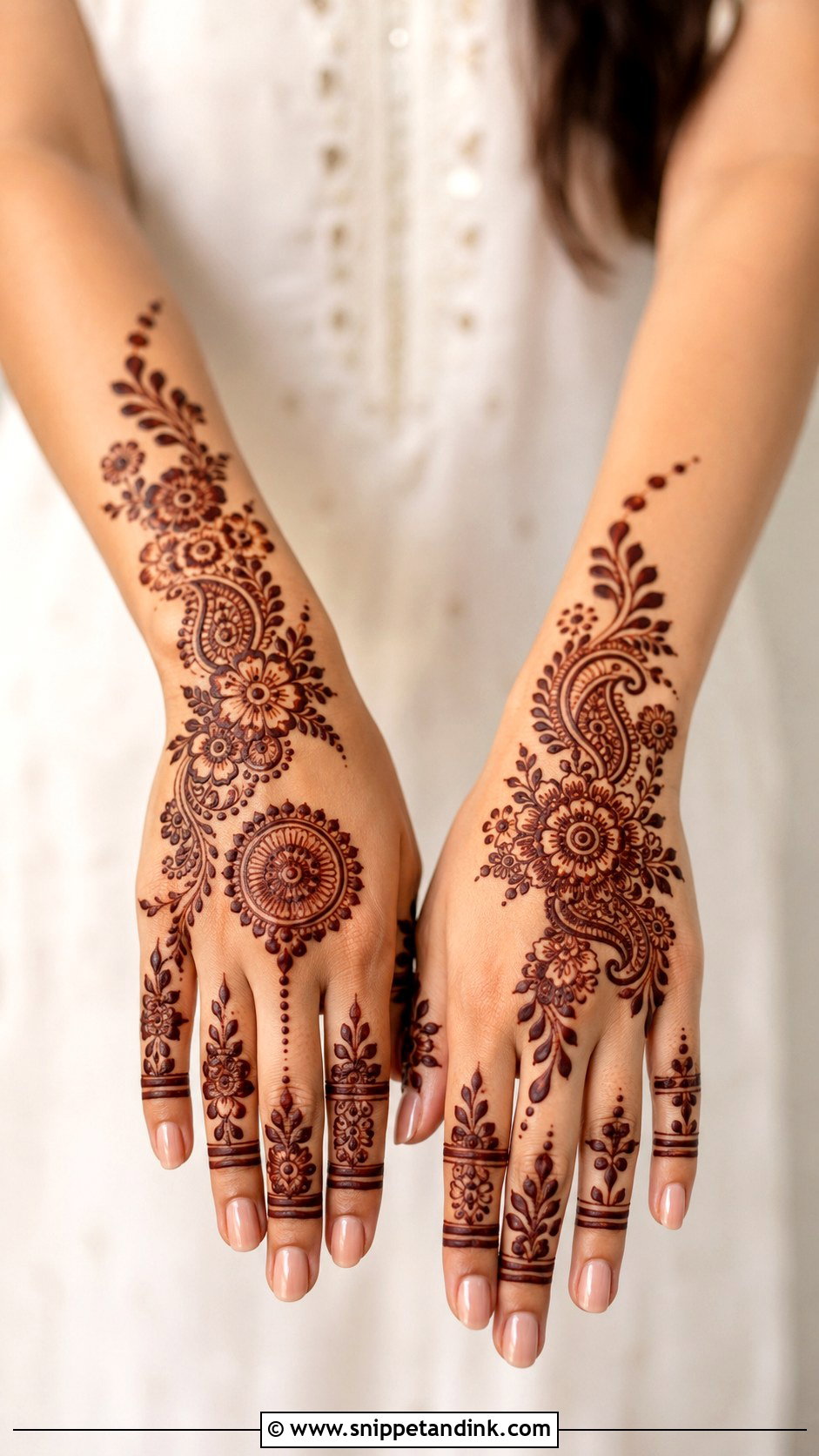
Half-hand designs cover only the fingers and part of the back of the hand, or the palm and wrist. A floral trail, a small mandala or a paisley cluster serves as the focal point. My rule for balance is to make either the wrist or the fingers heavier, never both, so the layout stays light. It’s quicker to apply and easier to live with when you need to use your hands the next day. Casual events and second functions suit it best.
33. Arabian Side Hand Mehndi Design
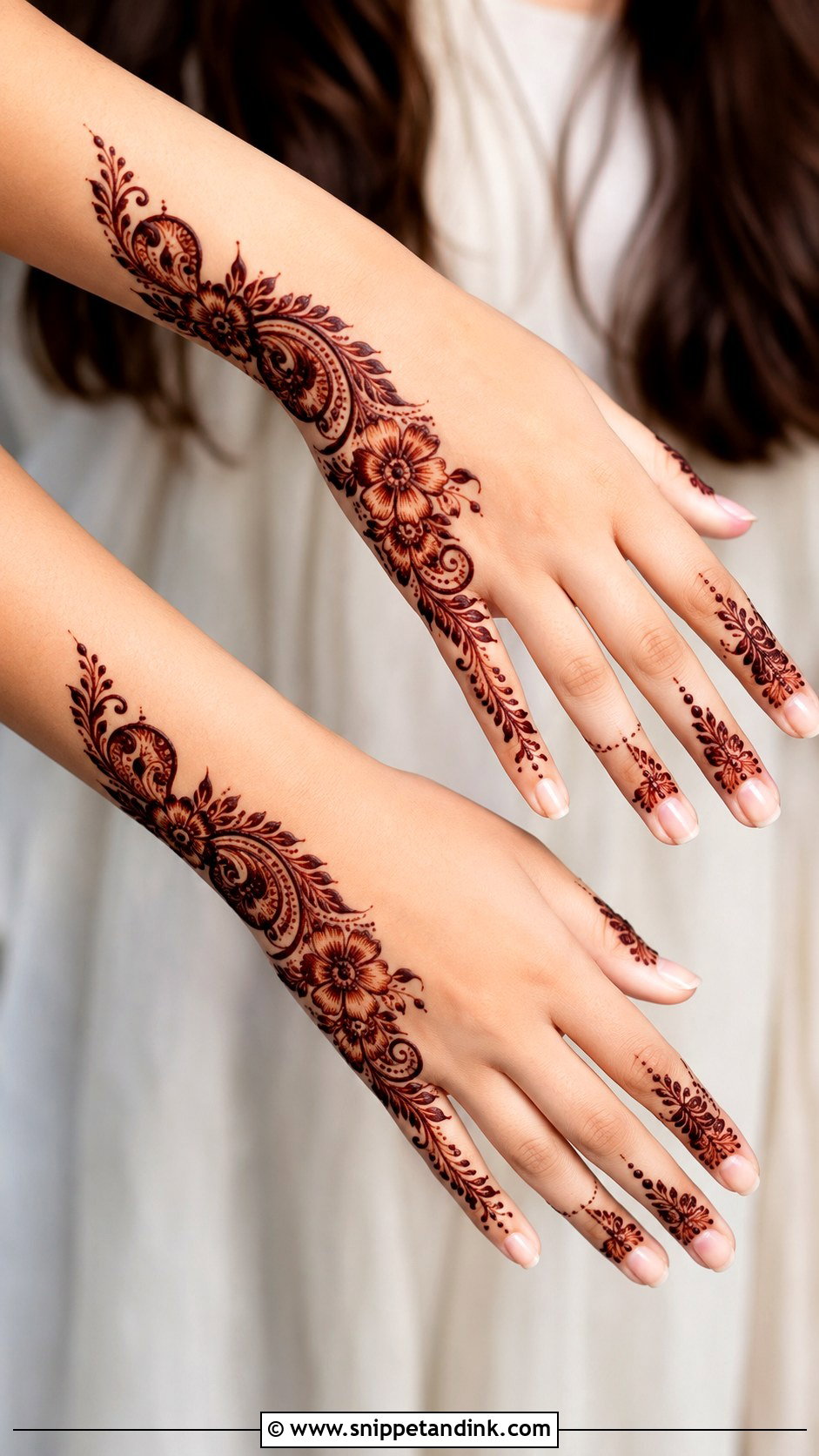
Side-hand henna runs along one edge of the hand, from the wrist along the outer palm toward the little finger, or from the thumb across the palm. Flowers, leaves and paisleys work best because they follow the hand’s natural curve. Before drawing, I ask the client to relax the hand and I trace where the side crease falls, so the trail sits on the edge rather than wrapping awkwardly onto the back. It suits modern minimal looks and quick festive designs. Tiny dots along the trail soften it.
34. Arabian Two Hands Mehndi Design
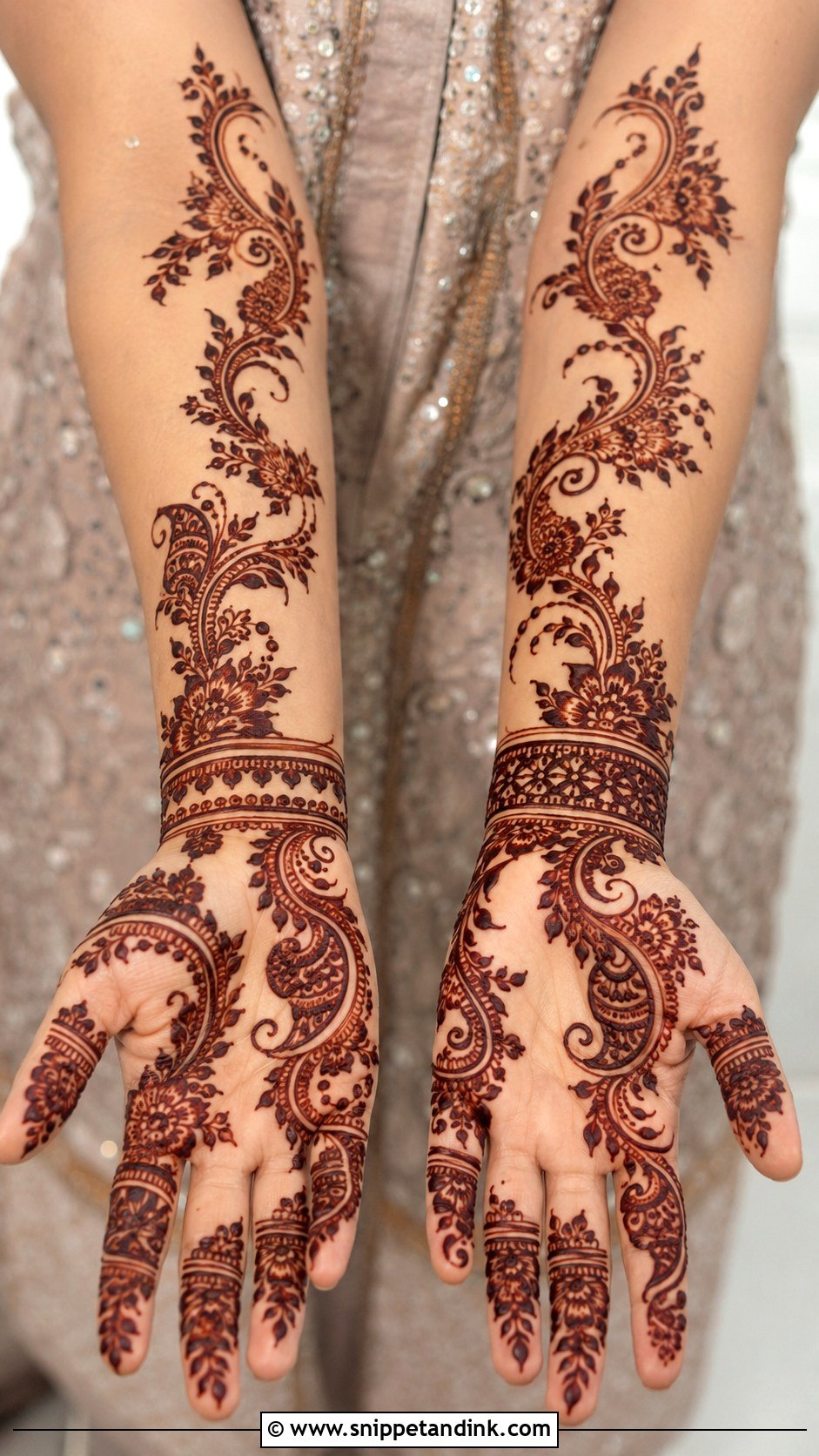
Both hands don’t need identical designs, but they should share a vocabulary: the same flower, the same vine style, matching wrist bands. One hand can carry a palm-focused layout while the other has a back-hand trail, or both can mirror each other for a formal finish. I always draw the non-dominant hand first while the client still has a free hand to hold things, then match the second to it. If one hand is heavier, keep the other a little lighter but related in style.
35. Easy Arabian Mehndi Design For Beginners
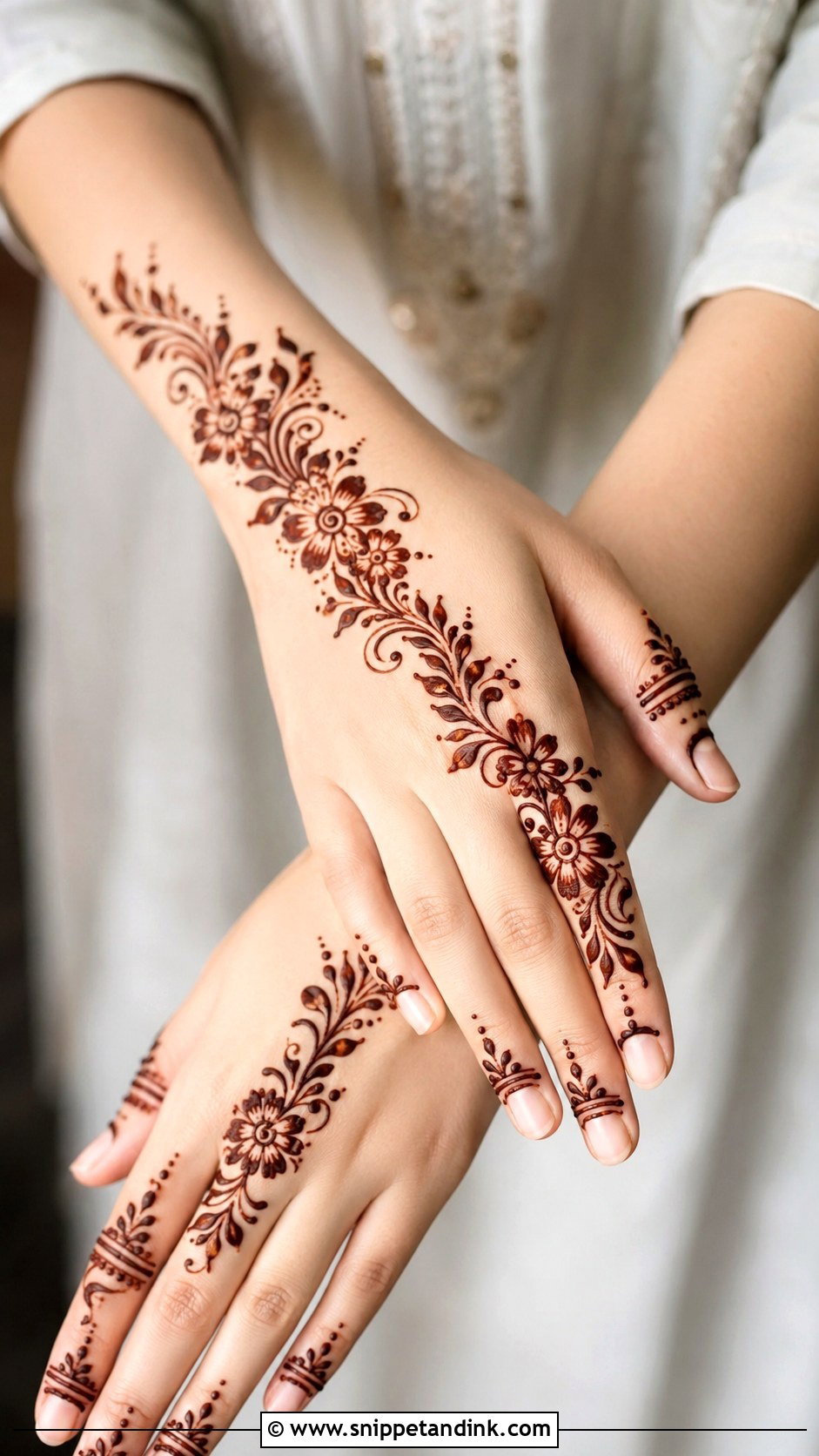
For a first attempt, a diagonal floral trail teaches everything that matters with basic shapes: petals, leaves, dots and curved lines. Start near the wrist, draw one or two large flowers, then connect them toward a finger with a vine. Add small leaves on both sides and simple bands on the finger. Practise on paper first to learn how hard to squeeze the cone; consistent pressure is what gives an even line. Leave plenty of empty space, since gaps hide small mistakes and are part of the Arabic look anyway.
Why the Stain Starts Orange and How to Darken It
Fresh henna always comes off bright orange. That isn’t a failed stain; the dye keeps oxidising, and over the next one to two days it deepens to a reddish brown. That’s why I tell brides to have their mehndi applied a day or two before the wedding, not the morning of it.
The first twenty-four hours
- Leave the paste on as long as you can, ideally overnight. A few hours gives a stain; a full night gives a deep one.
- Dab on a little lemon and sugar mixture once the paste is dry to the touch. It helps the paste stick and stay moist.
- Keep your hands warm. A warm room or a cup of tea between your palms helps more than any trick.
- Scrape the dried paste off with a blunt edge or your fingernail. Don’t wash it off.
- Avoid water for as long as possible after removal, ideally until the next day. A little balm or coconut oil protects the stain if you do need to wash.
After that, the stain usually lasts one to three weeks, fading fastest on fingertips and backs of hands. Exfoliating, swimming pools and hot washing-up water all speed it up, so gloves for dishes buy you a few extra days. Palms hold the colour longest, which is worth remembering when you decide where the most important part of your design goes.
Open Skin Is Part of the Pattern
Arabic henna can be as small as one finger trail or as full as a bridal hand and still keep its identity, because the flow and the bare skin carry it. Large flowers, paisleys, vines and shading do most of the work. Pick the coverage for the event and how much time you have, give the paste a proper night on your skin, and look after the stain for the first day. Clean outlines and even spacing will always matter more than how many motifs fit on the hand.
You'll Like These Ideas:


Leave a Reply