
Engagement mehndi has a lighter job than wedding mehndi. It should look festive in ring photos and feel comfortable through a long ceremony, without the dense, elbow-length coverage you’ll wear later. That’s why the brides who sit with me for an engagement usually ask for clearer palms, a strong back-hand design, initials hidden somewhere, floral trails, mandalas, jaali and Indo-Arabic layouts that leave the ring and bangles room to show. Full hand, wrist to forearm, palm only or minimal can all be right, depending on your outfit and how traditional the ceremony is. Below I go through the styles I apply most, from Indian to Arabic, Indo-Arabic, Gulf, Moroccan and modern, with how each one is built and what it suits.
Two Days Out Is When Your Henna Should Go On
Natural henna doesn’t come off the skin dark. When the paste flakes away, the stain is bright orange, and it deepens to reddish-brown or maroon over the next day or two. That’s why I schedule engagement mehndi one to two days before the ring ceremony, not on the morning of it.
Aftercare that decides the color
- Keep the paste on as long as you can, ideally overnight. Six hours is a minimum for a decent stain.
- When the paste dries, I dab on a little lemon and sugar mix so it stays stuck to the skin.
- Scrape the dry paste off with a blunt edge or your fingers. Don’t wash it off.
- Keep water off your hands for as long as possible afterwards, ideally until the next day.
- Keep your hands warm. Henna darkens better on warm skin, so a cold room slows it down.
Expect the palms and fingertips to go darkest and the back of the hand and forearm to stay a shade lighter. That’s normal and nothing to do with the paste.
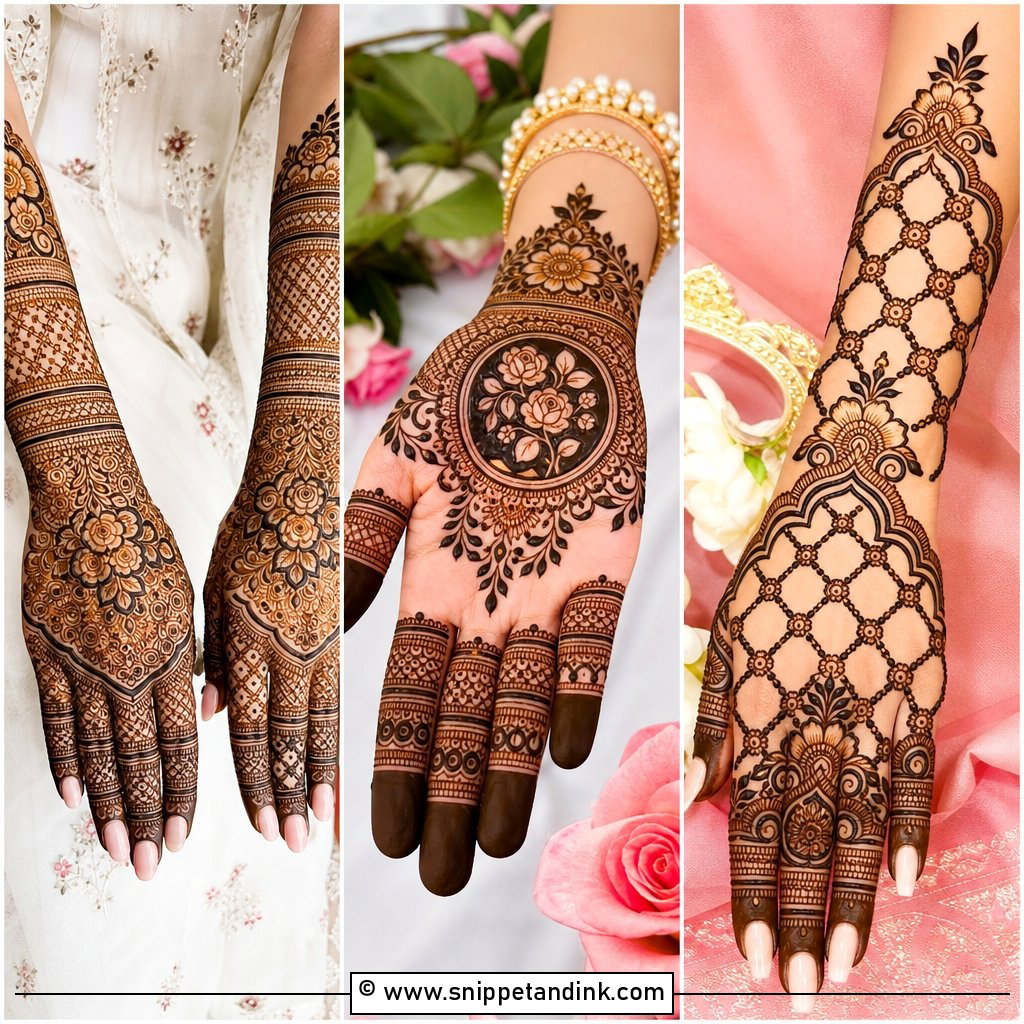
1. Full Hand Engagement Bridal Mehndi Design
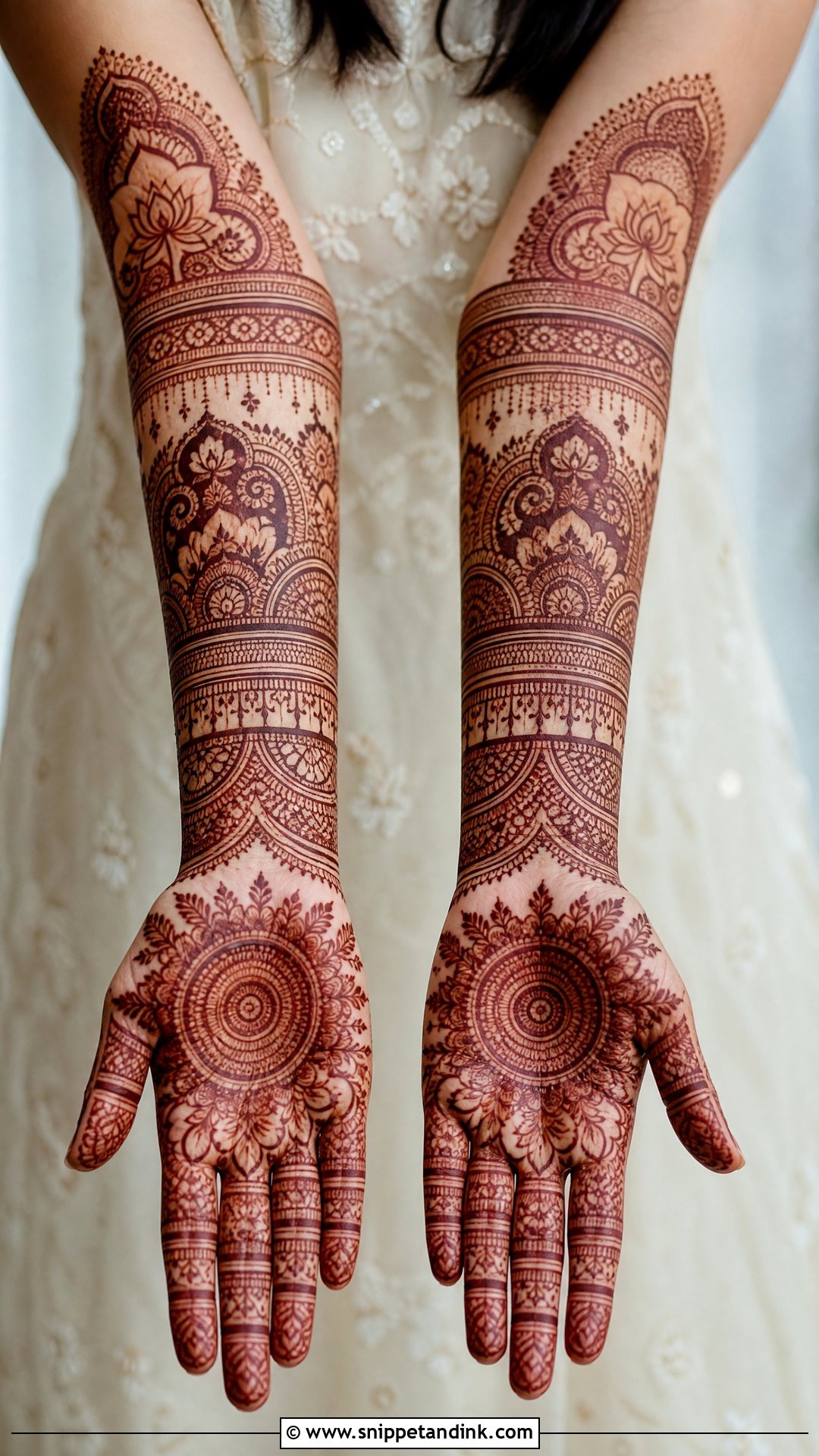
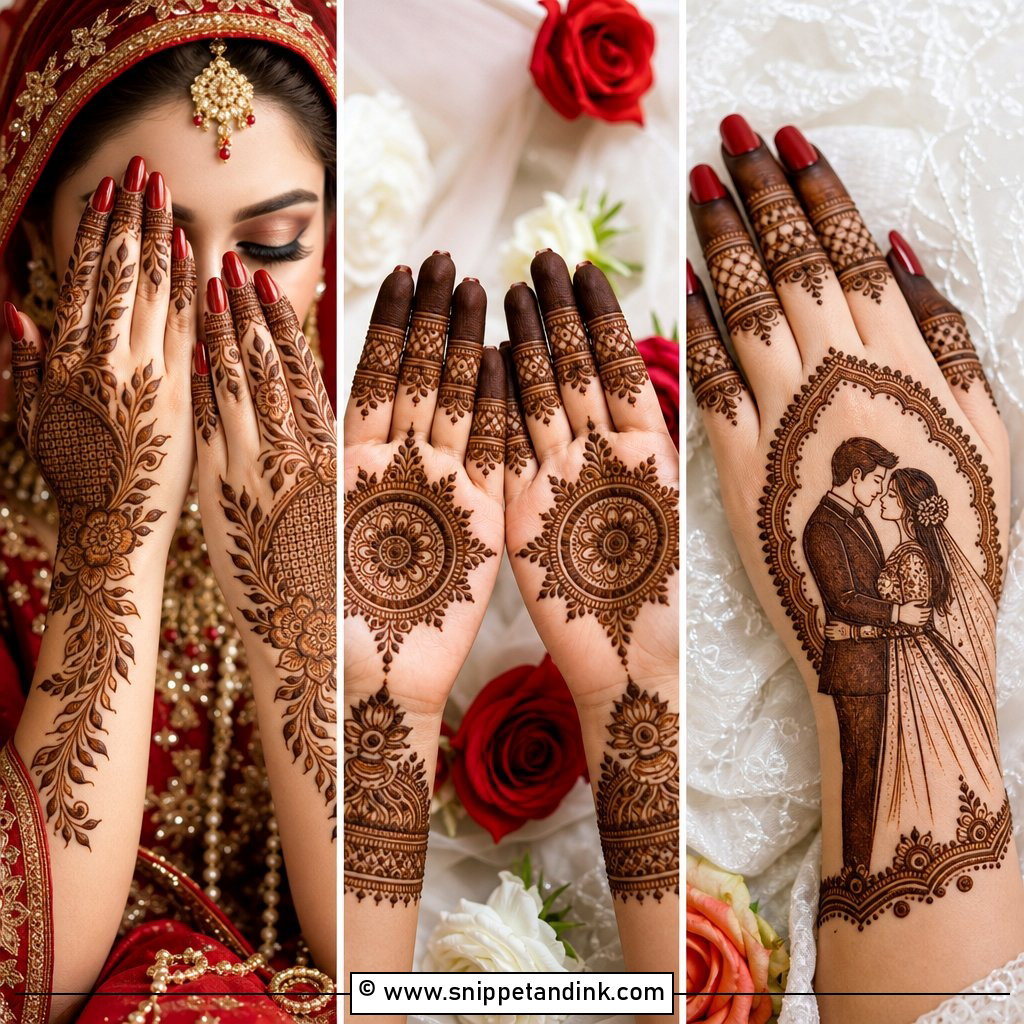
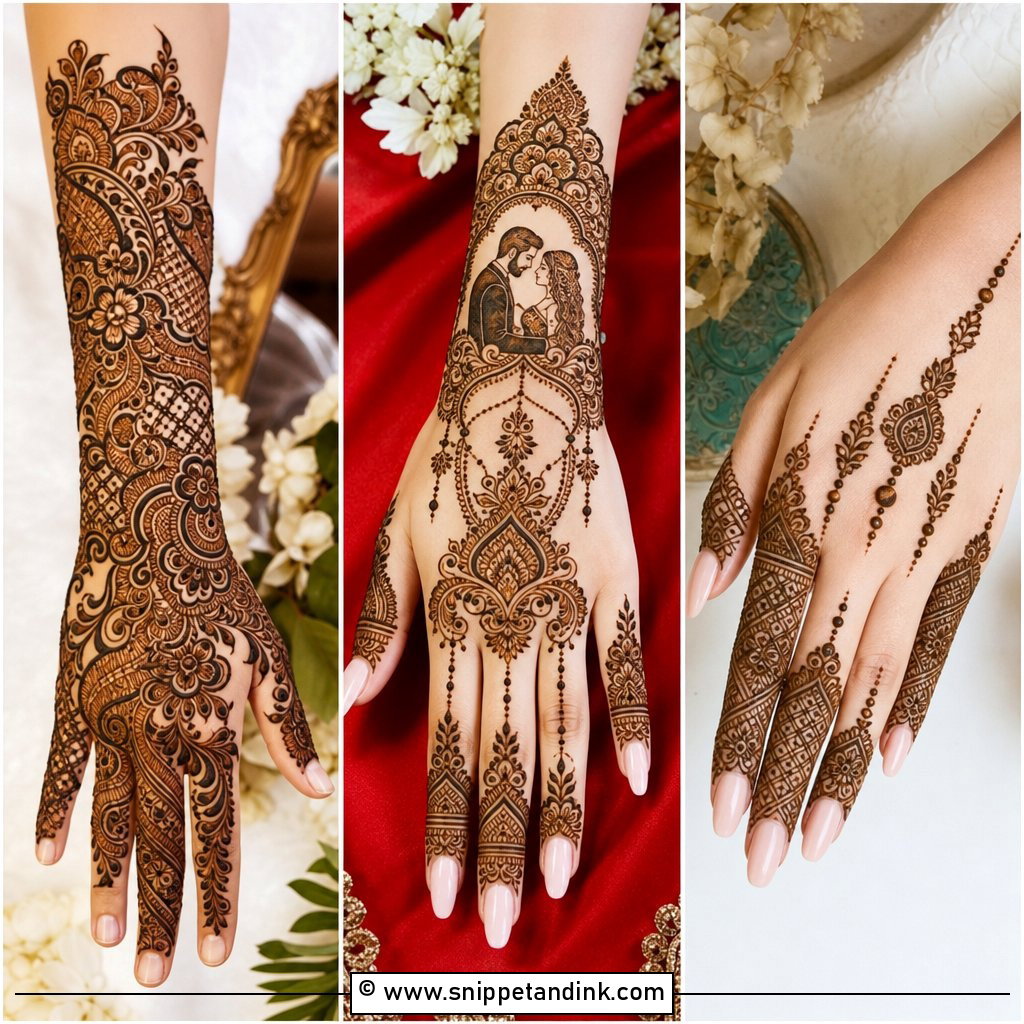
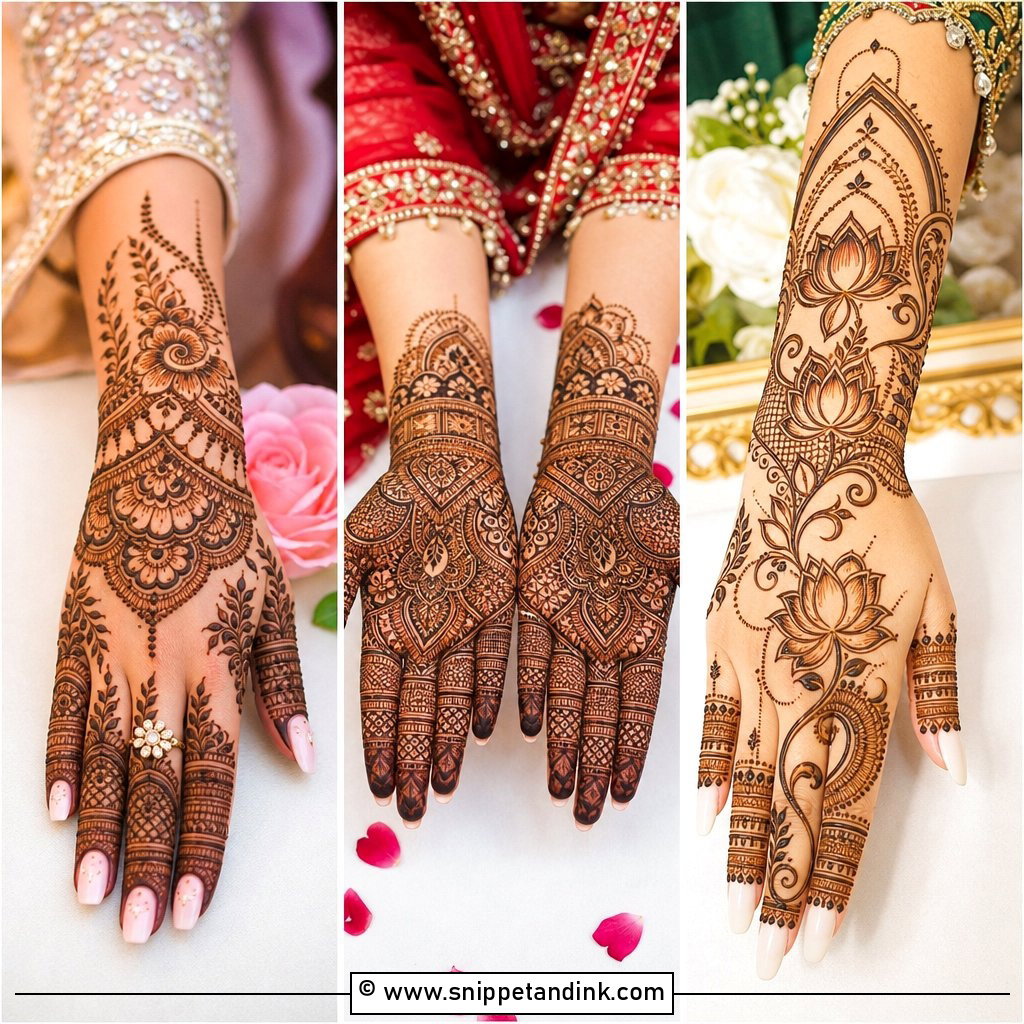
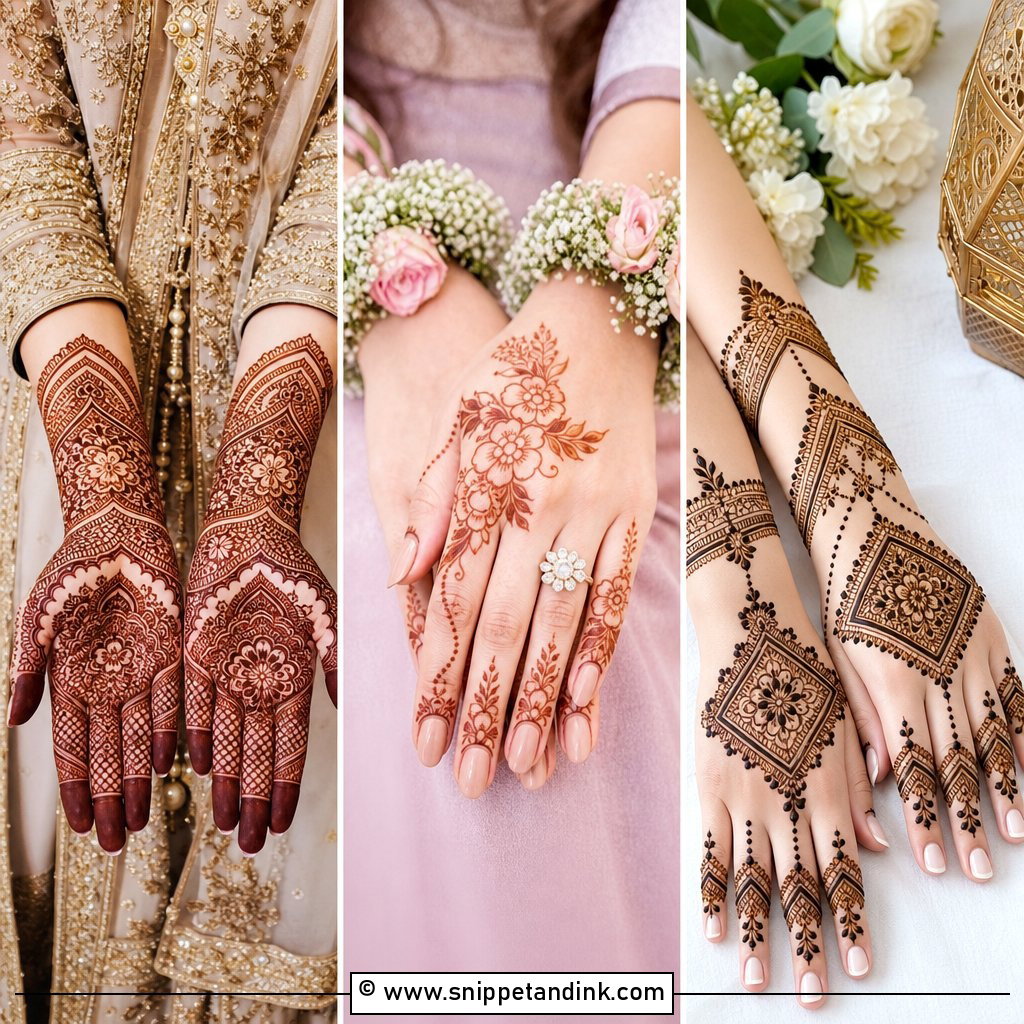
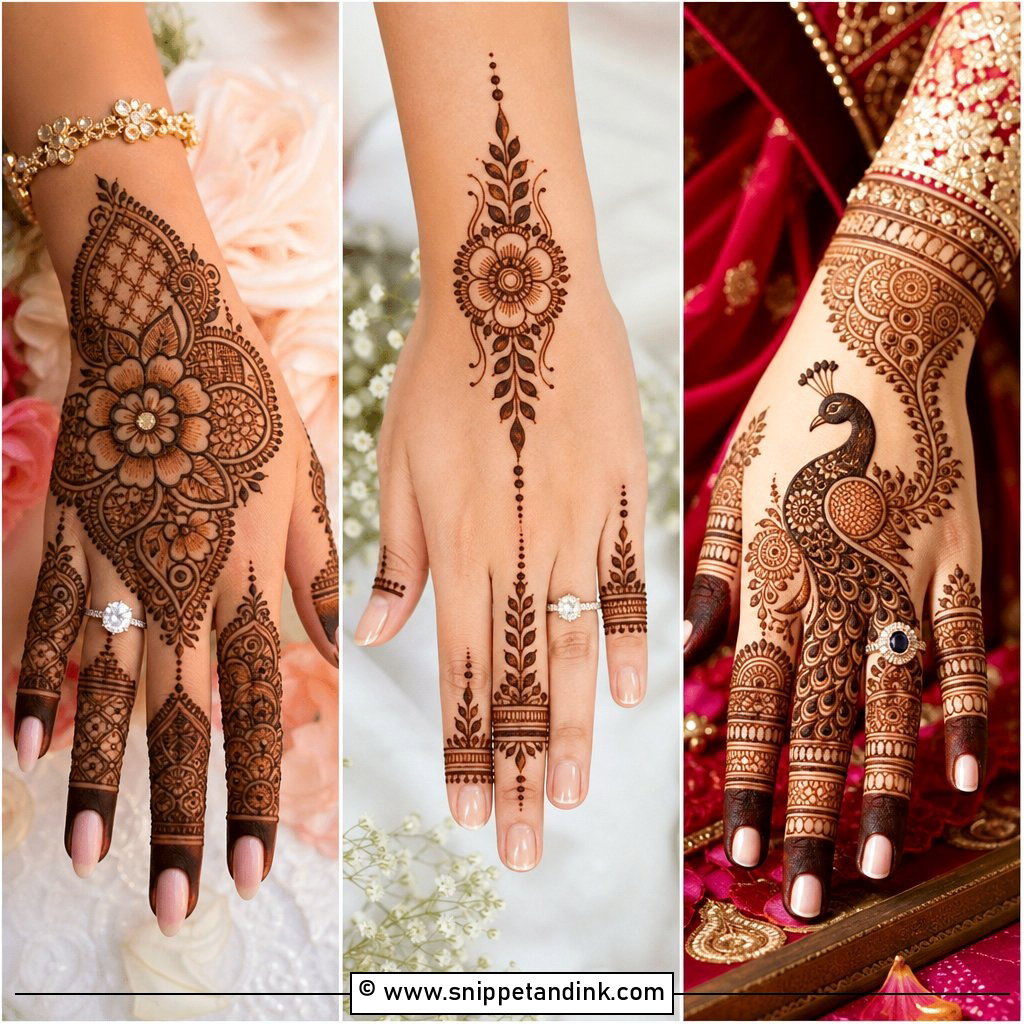
A full hand engagement bridal mehndi design gives a rich look without the near-solid filling of wedding mehndi. I cover the palm, fingers, wrist and lower forearm with even spacing: a central mandala, lotus or paisley cluster on the palm, leafy bands and fine curls on the fingers, and a bracelet border at the wrist. Around the ring finger I keep the lines slightly clearer so the ring sits in a frame rather than a crowd. If your outfit is heavily embroidered, go medium density. If it’s plain, fuller shading lets the hands carry the look.
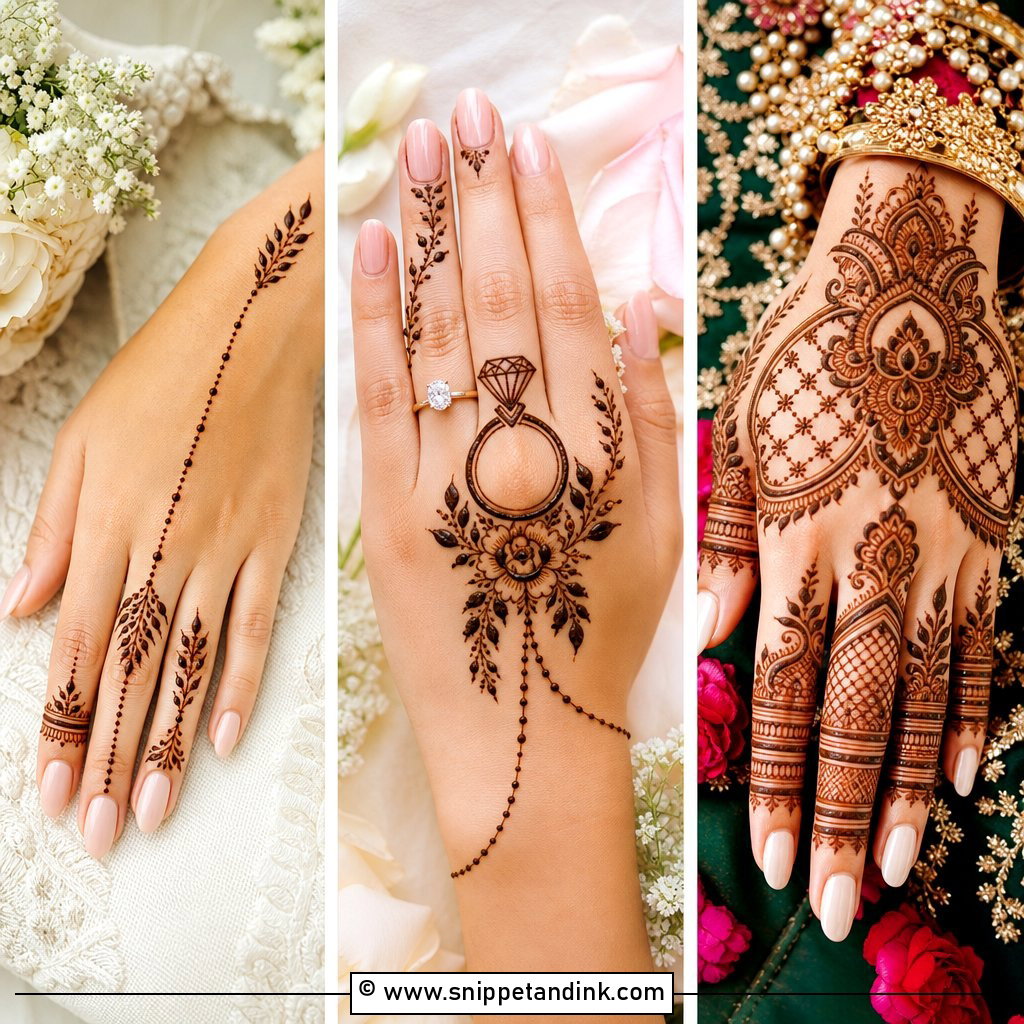
2. Simple Engagement Bridal Mehndi Design
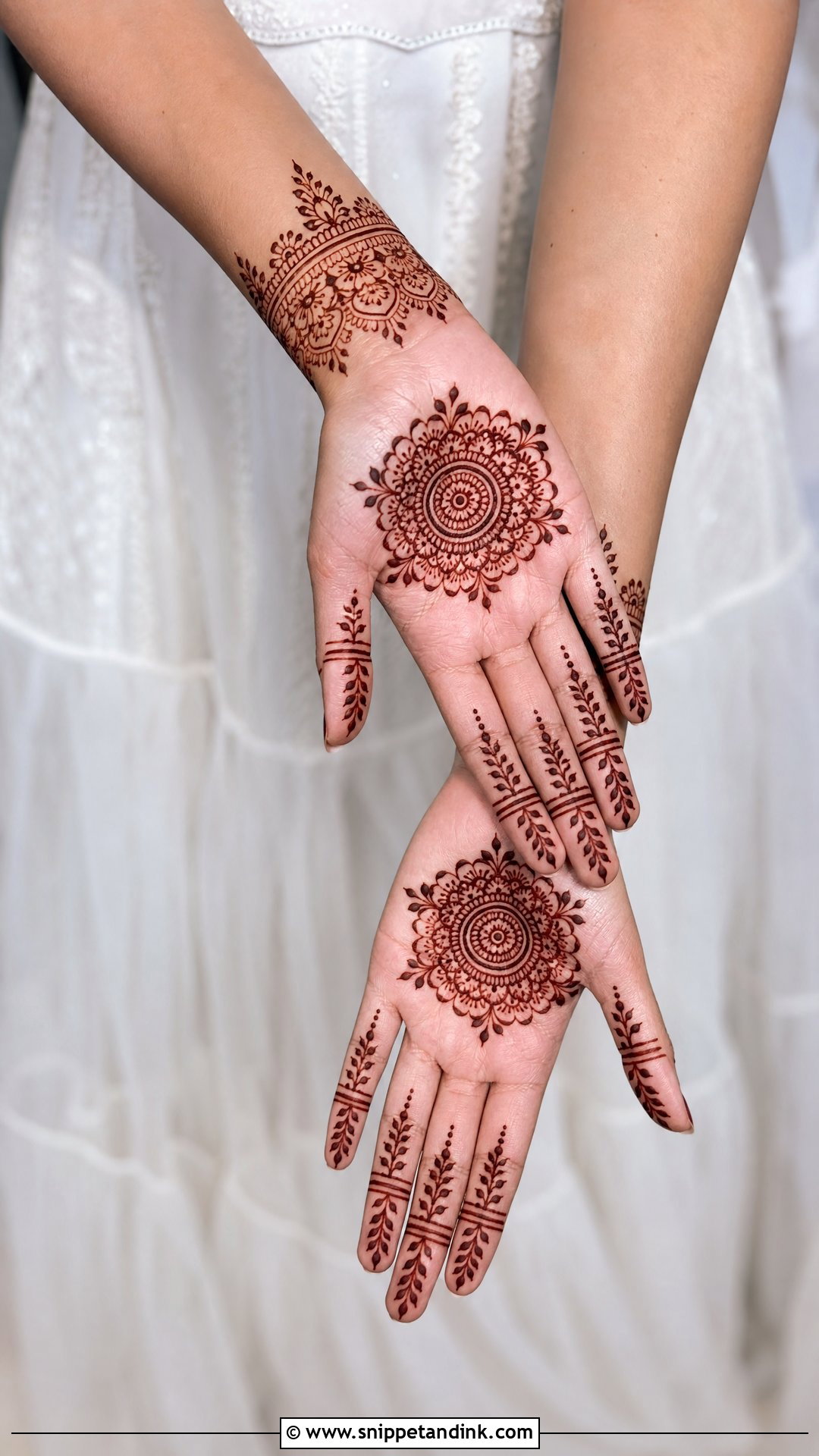
Simple doesn’t mean quick to get right. One bold palm motif, such as a floral mandala or rounded paisley, then neat finger patterns and a light wrist cuff, with plenty of skin showing between. Every line is visible, so a shaky hand shows. Daytime ceremonies and pastel outfits suit it. Initials can hide inside a flower or near the wrist. I keep fingertips uncrowded, because thin lines packed together blur as the paste spreads and the stain looks smudged in close-ups.
3. Arabic Engagement Bridal Mehndi Design
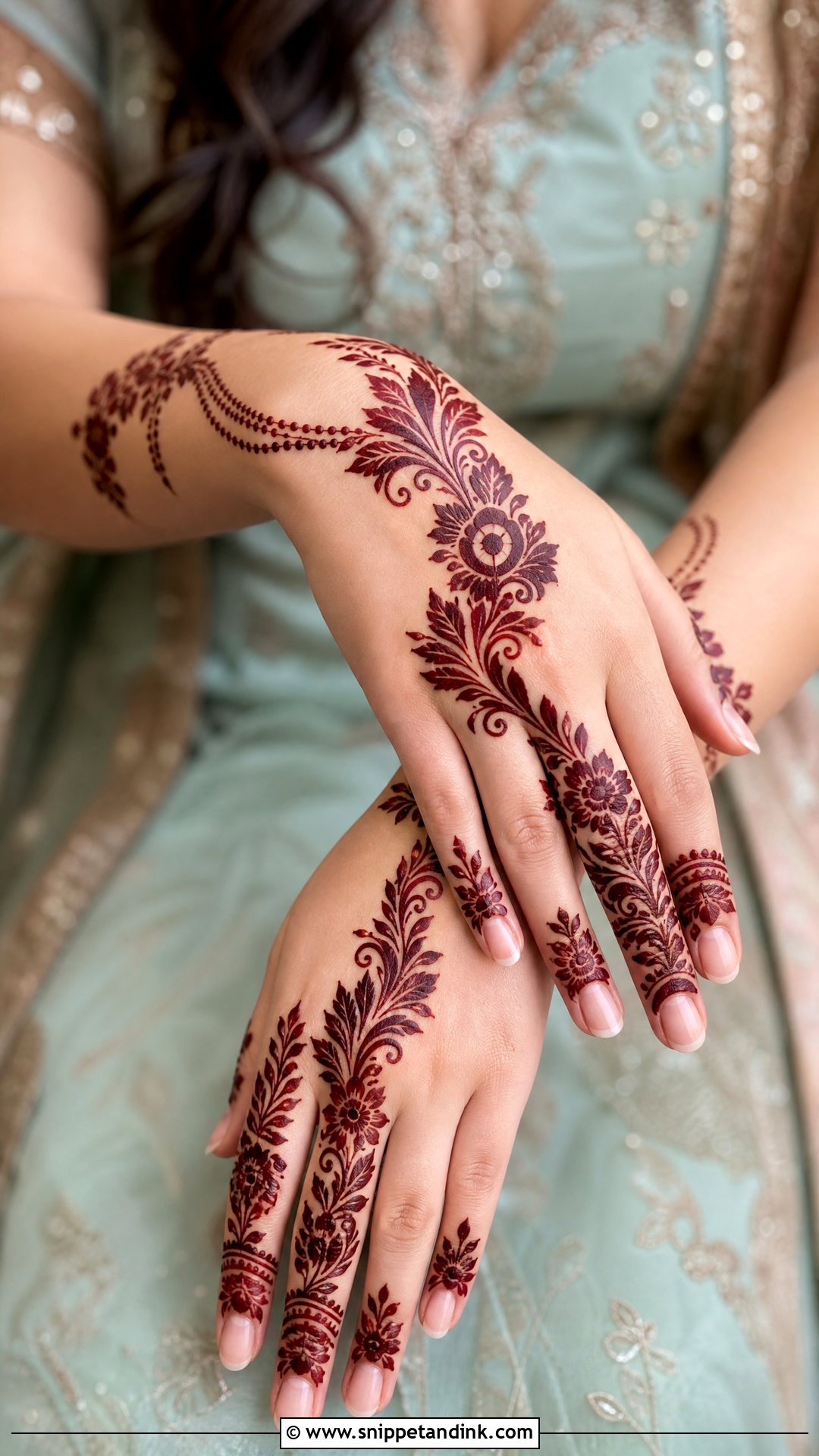
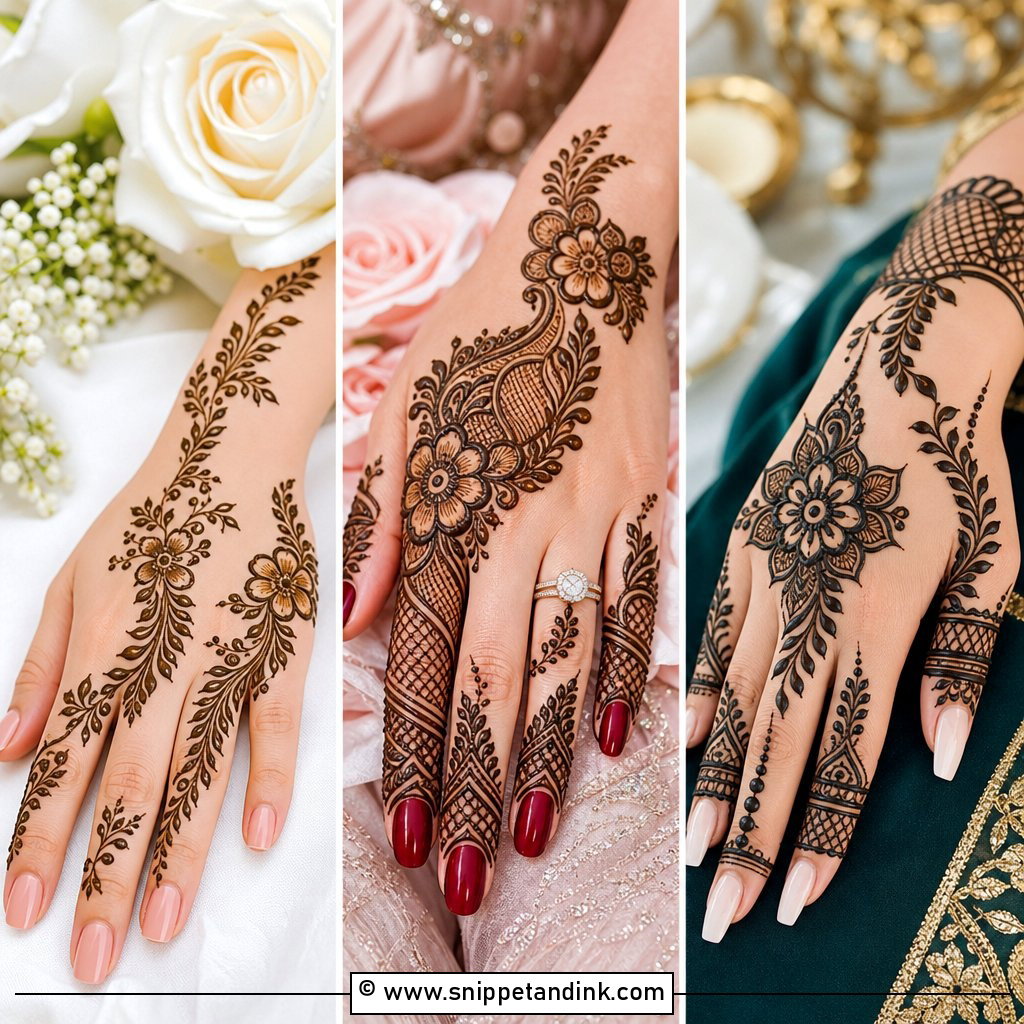
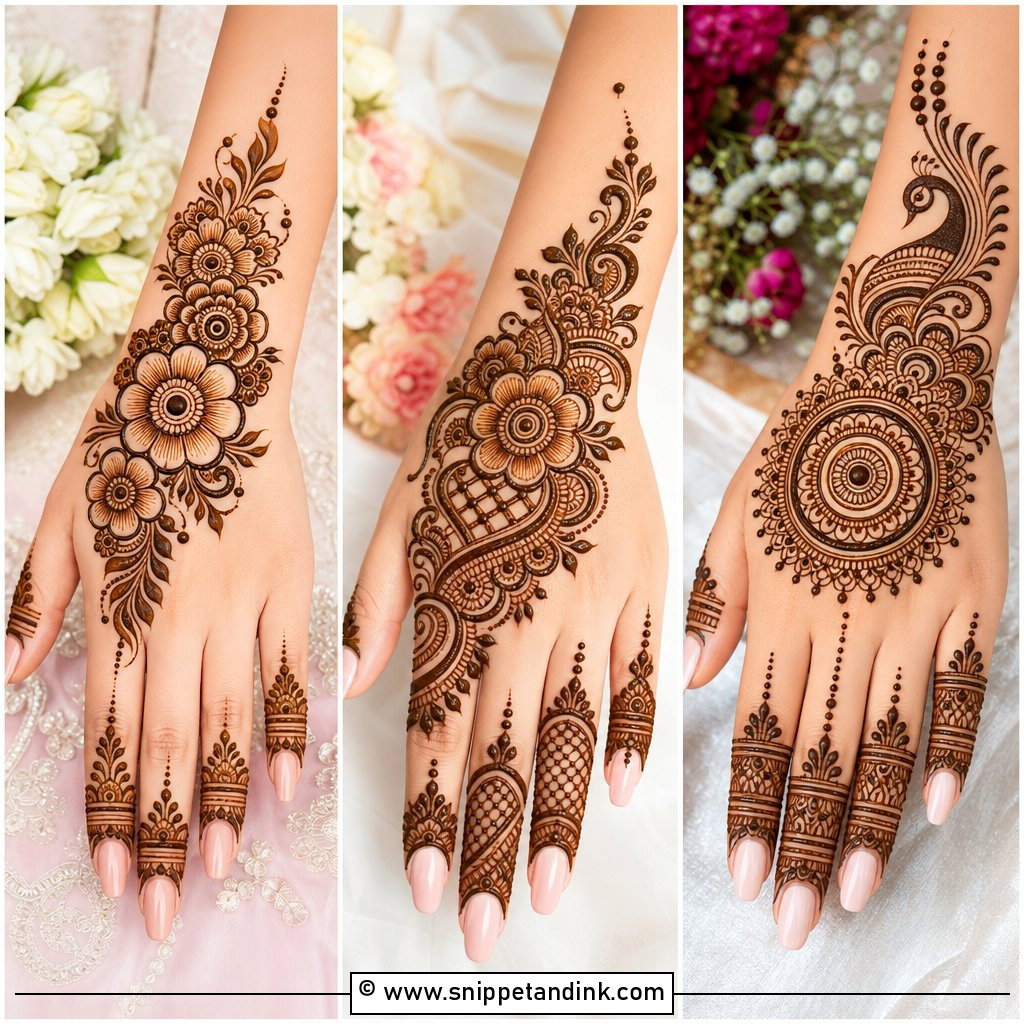
Arabic designs run diagonally from one side of the wrist toward the index or middle finger, with bold flowers, flowing vines and wide open spaces. They’re quicker to apply than Indian bridal work and read clearly from a distance. Big petals, shaded leaves, curved paisleys and dotted trails lengthen the hand. The negative space keeps a statement ring visible. For a bridal touch, I add a wrist bracelet and fill the fingertips; with good paste and enough time on the skin, those fingertips stain the deepest maroon of the whole hand.
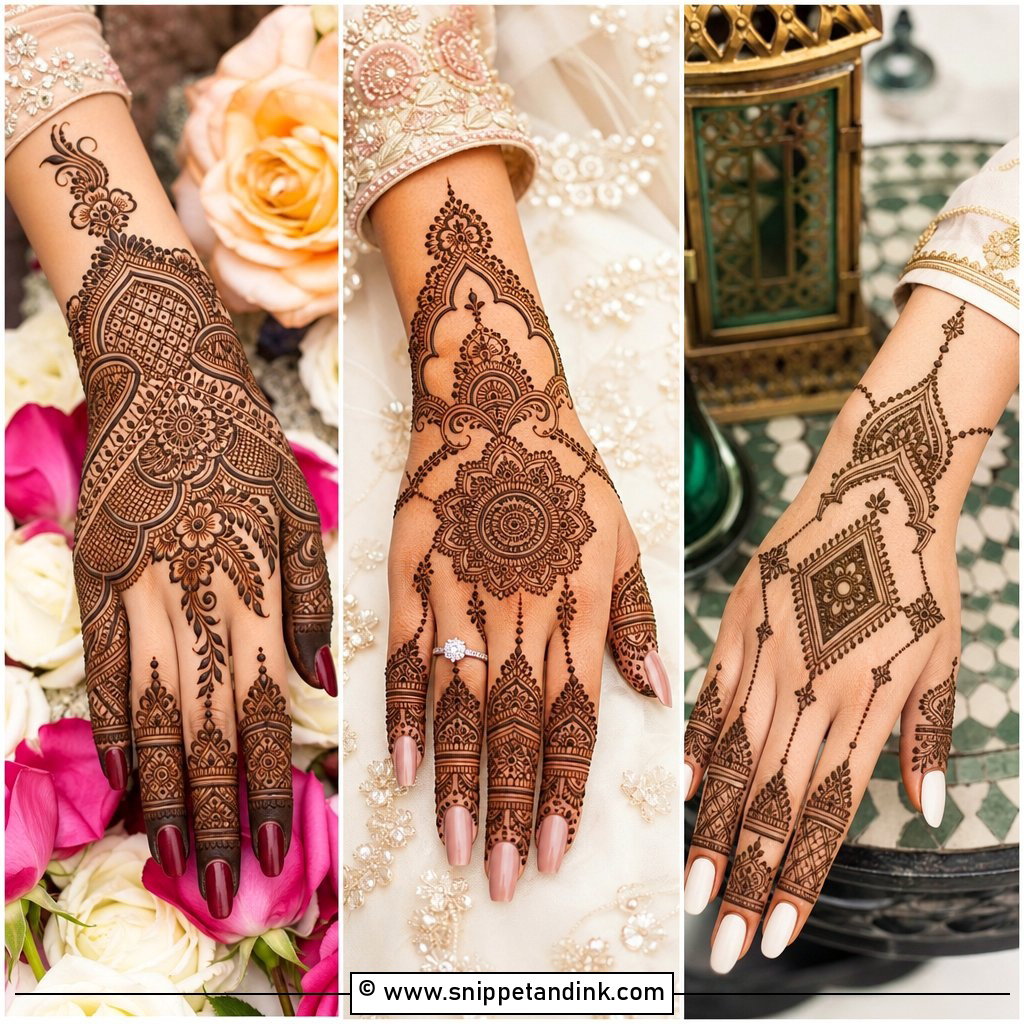
4. Indo Arabic Engagement Bridal Mehndi Design
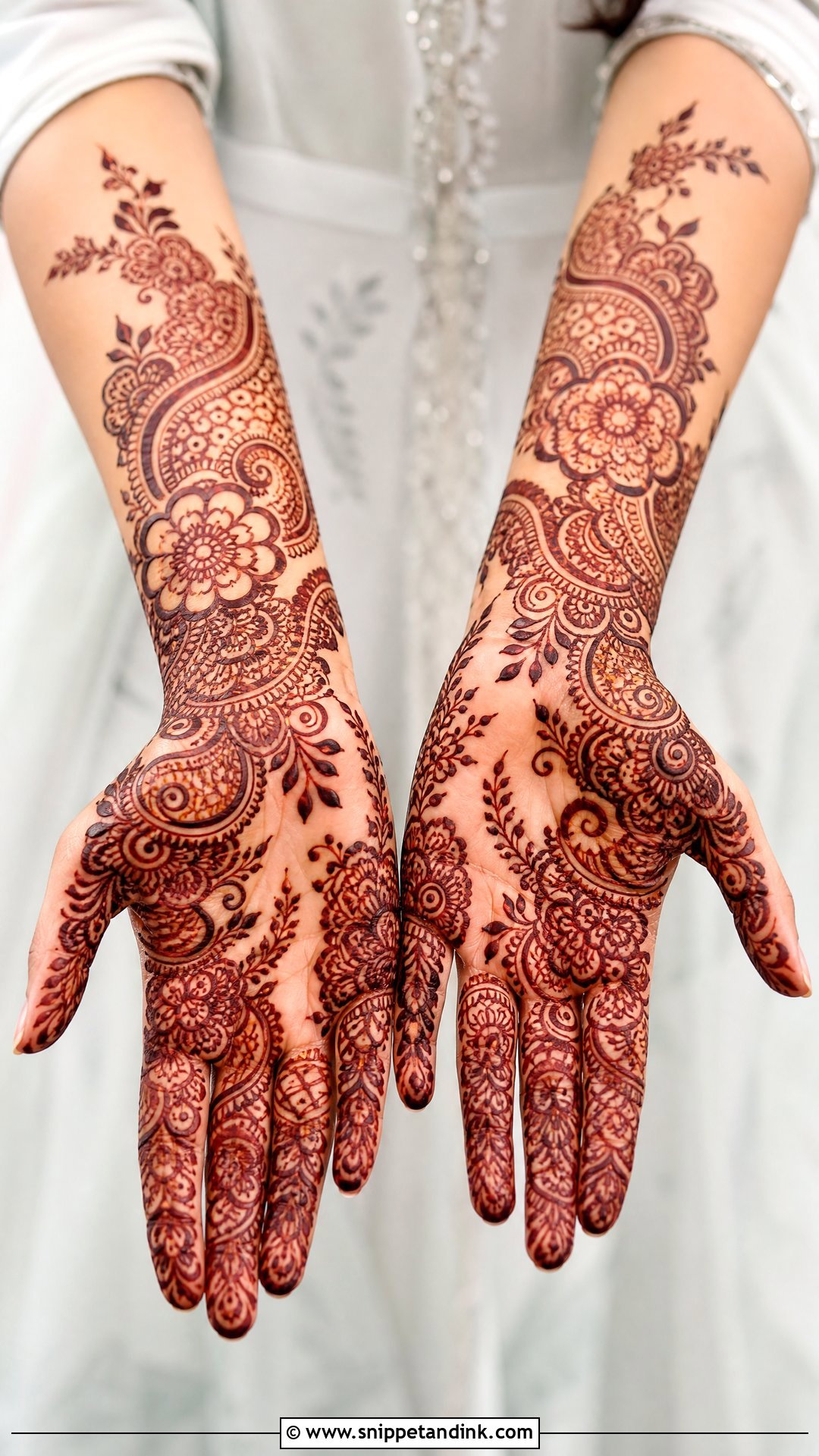
Indo-Arabic takes the big flow of Arabic work and fills chosen spaces with Indian detail: checks, dots, curls and veined leaves. You get depth without a crowded hand. I start with the large flowers and paisleys to set the layout, then decide where the fine filling goes, rather than filling everything and hoping it balances. It works on both palm and back hand, and with lehengas, sarees, shararas and Indo-western outfits alike. A structured wrist band keeps the loose florals from looking unfinished in ring photos.
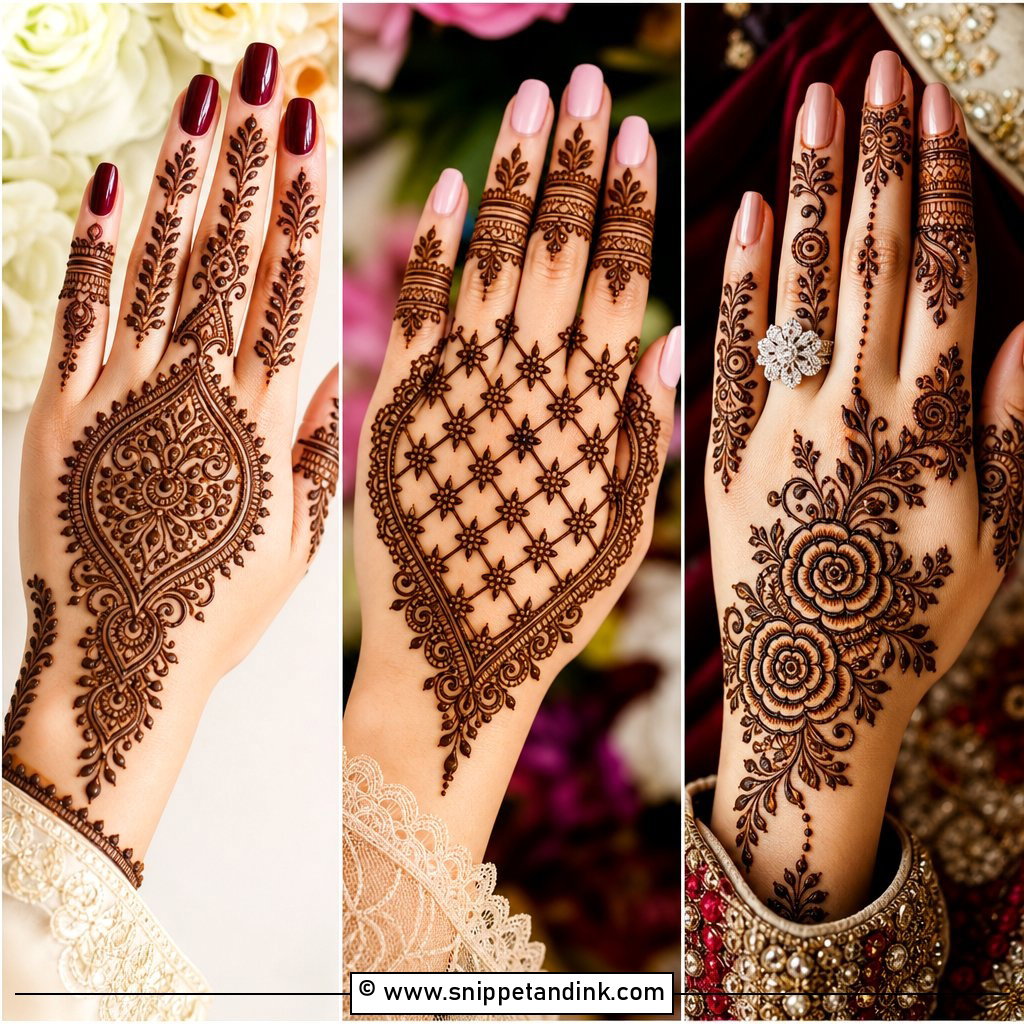
5. Back Hand Engagement Bridal Mehndi Design
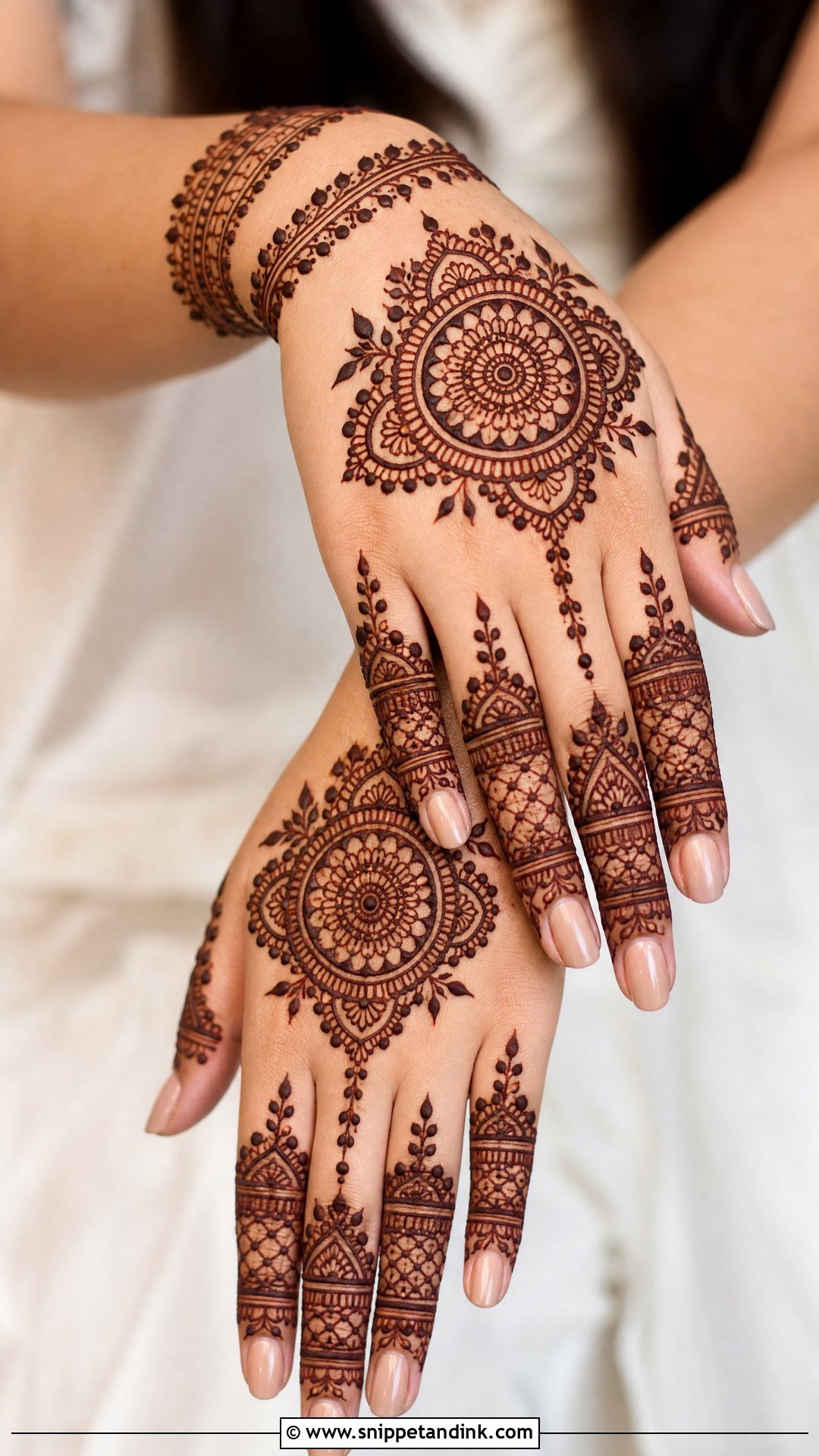
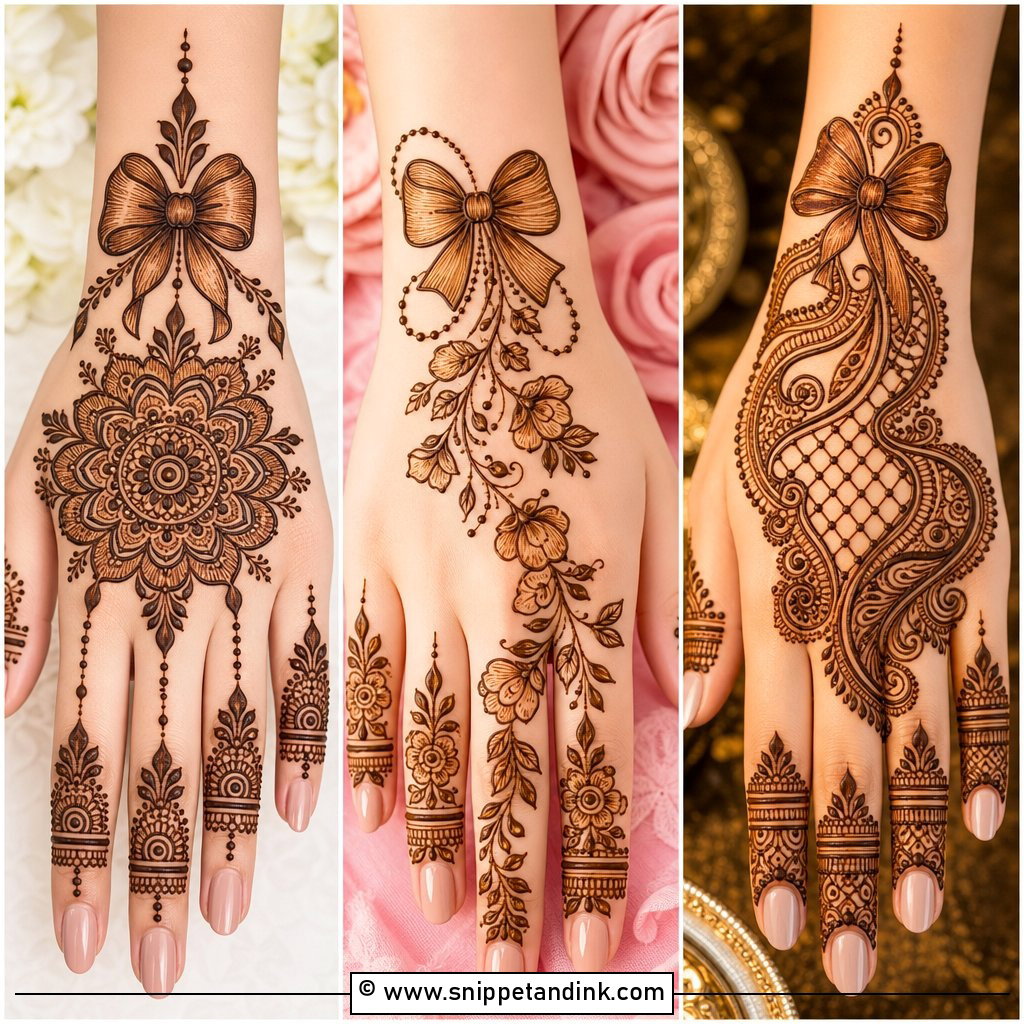
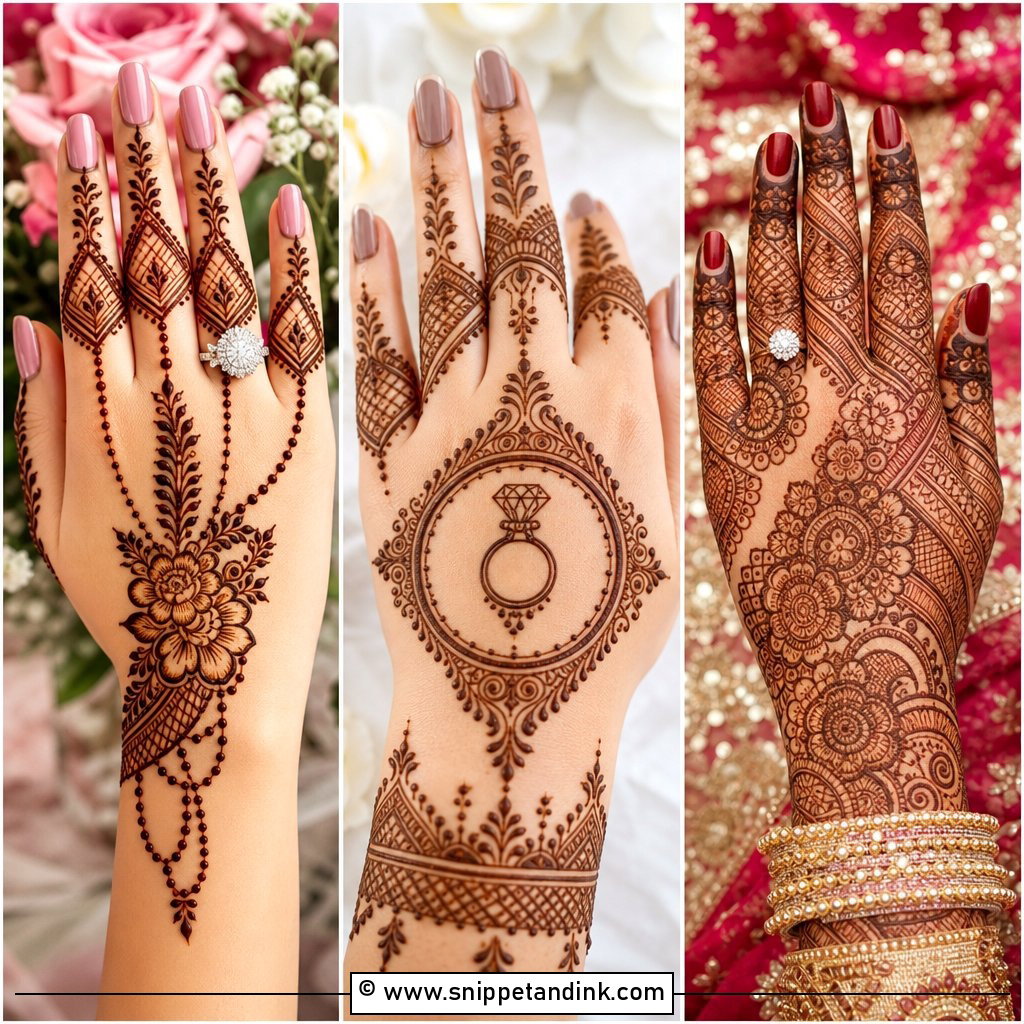
At a ring ceremony, the back of the hand gets photographed more than the palm, so this is where I put the most thought. The design should frame the ring finger, knuckles and wrist. A central mandala, floral dome or jaali circle makes the focal point, with finger bands, leafy trails and a wrist cuff around it. If you’ll wear bangles, I set the wrist border a little lower so it isn’t hidden. Long fingers carry detailed finger panels well; on shorter fingers, I use vertical lines and spaced florals so the fingers look longer.
6. Front Hand Engagement Bridal Mehndi Design
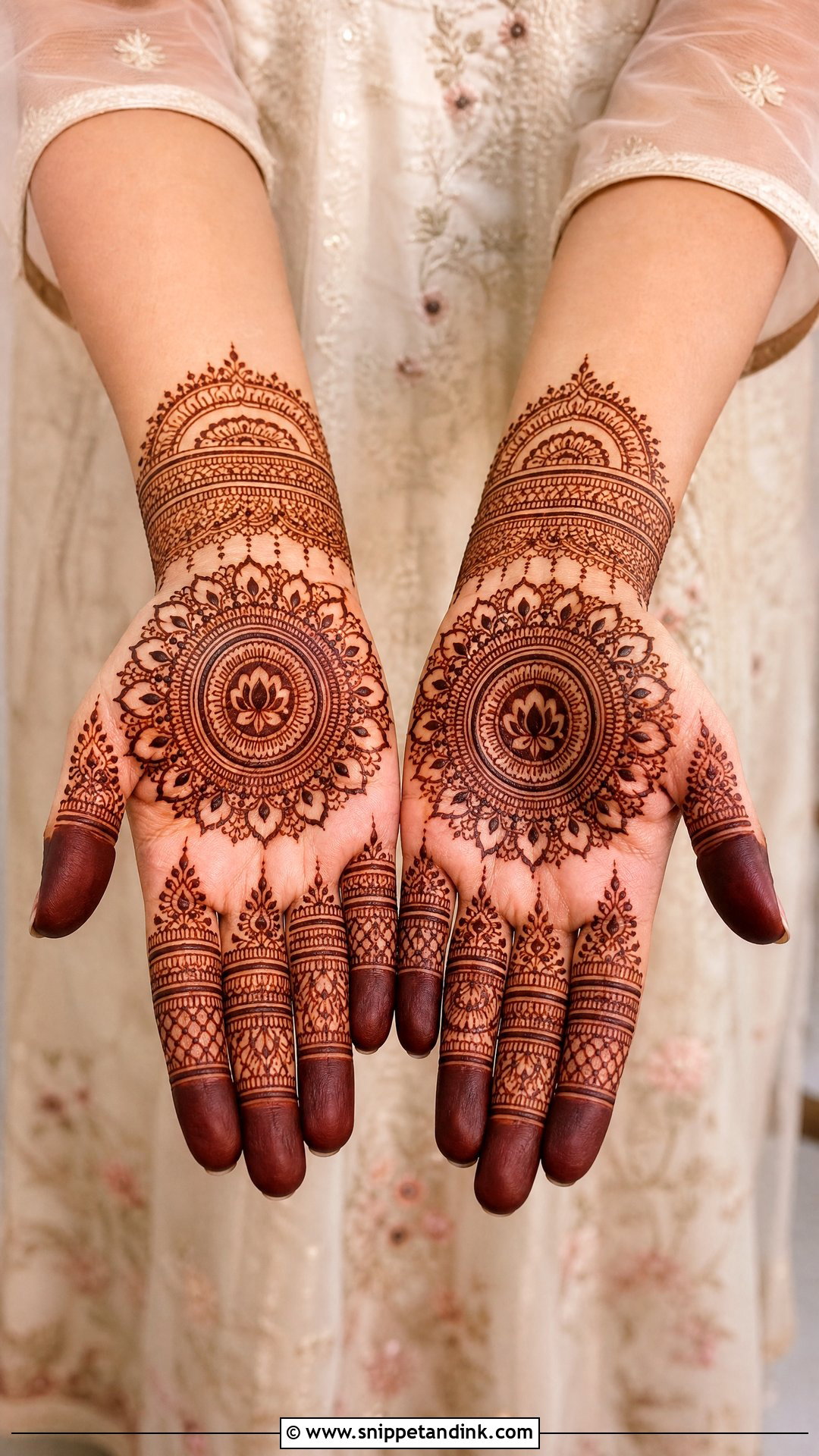
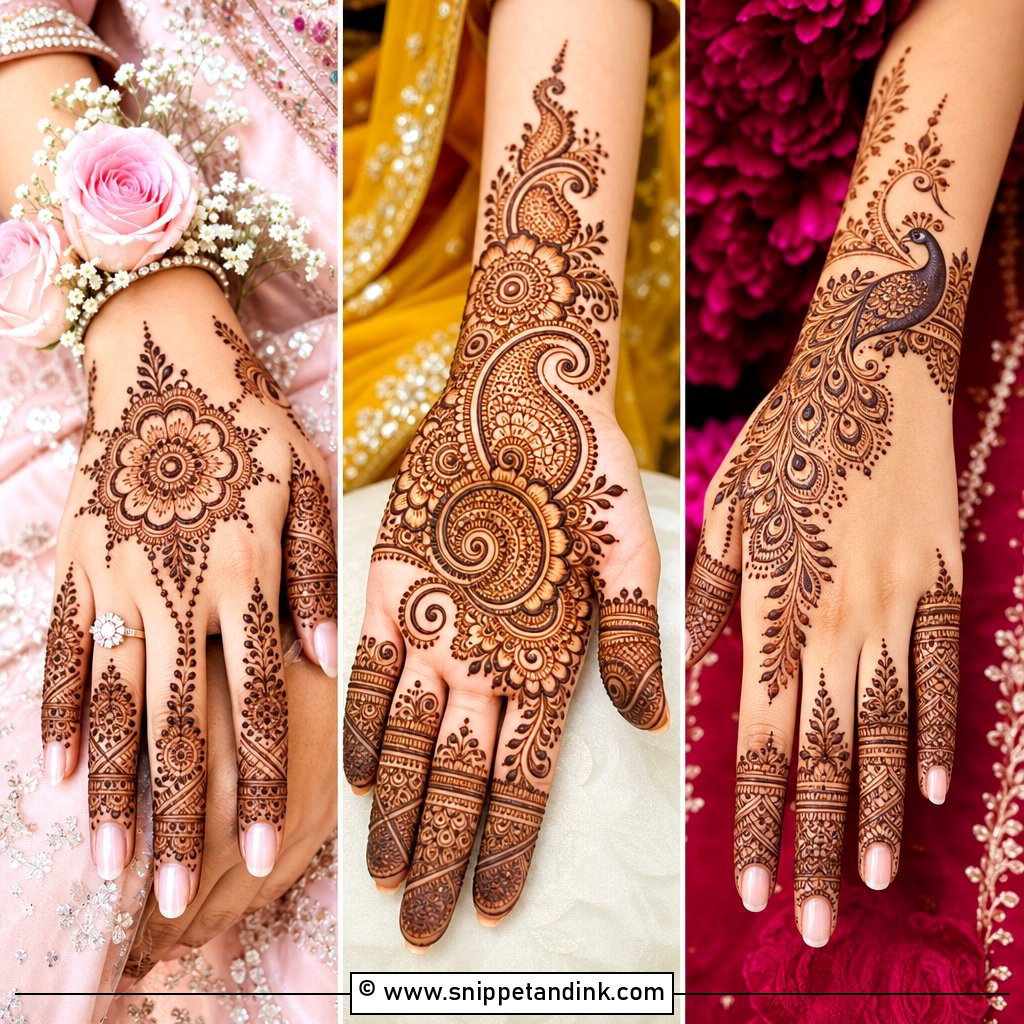
The palm shows during rituals, blessings and candid shots, so it needs to look complete on its own. A central mandala is the classic, but lotus circles, peacock curves and paisley grids work too. Fingers take repeated bands, tiny leaves or netting. Palms stain darker than any other part of the hand, because the skin there is thicker, so a fully filled palm can look almost solid once it develops. For engagement, I leave small gaps of skin around the main motif. A matching wrist bracelet finishes it.
7. Mandala Engagement Bridal Mehndi Design
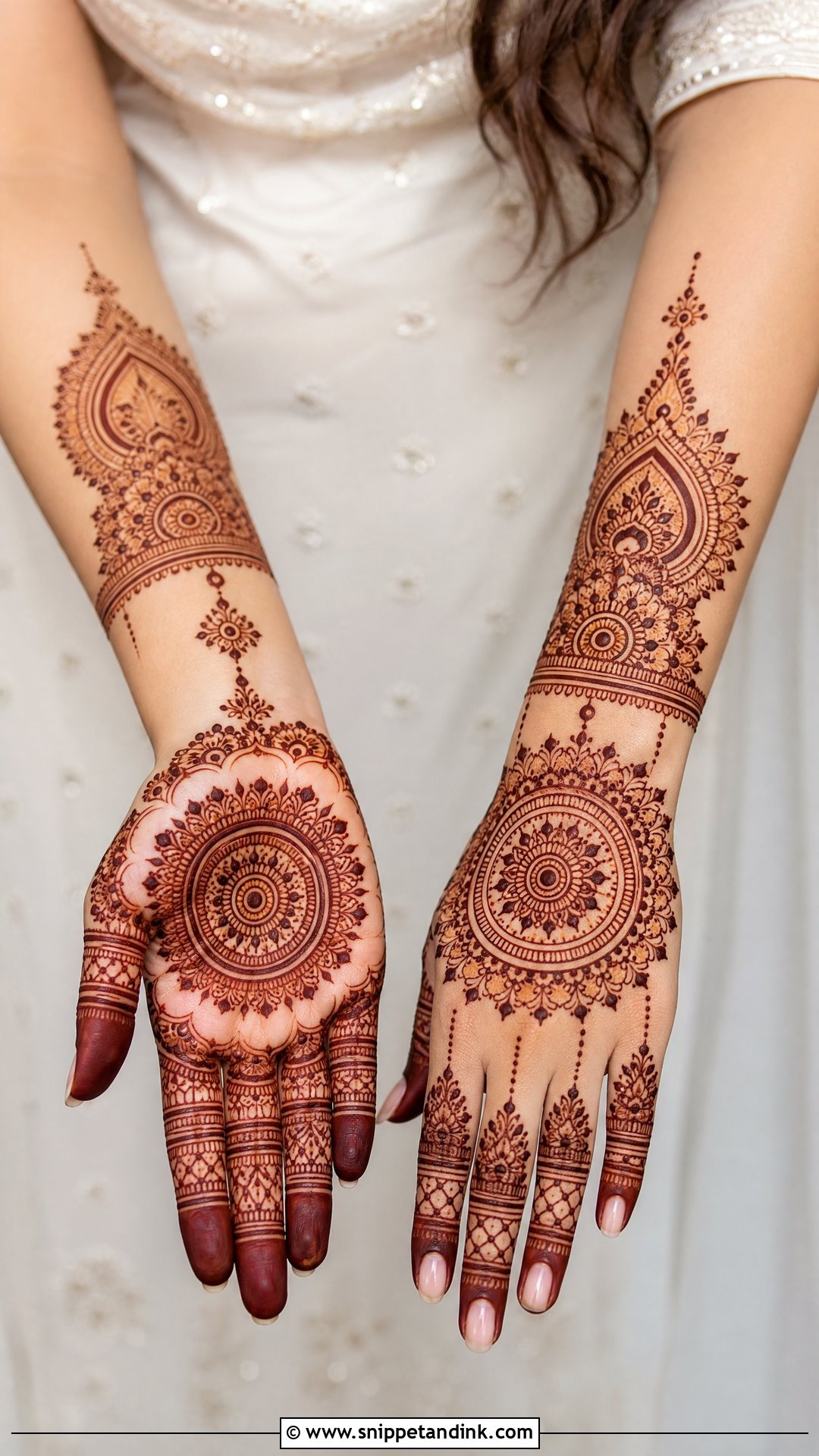
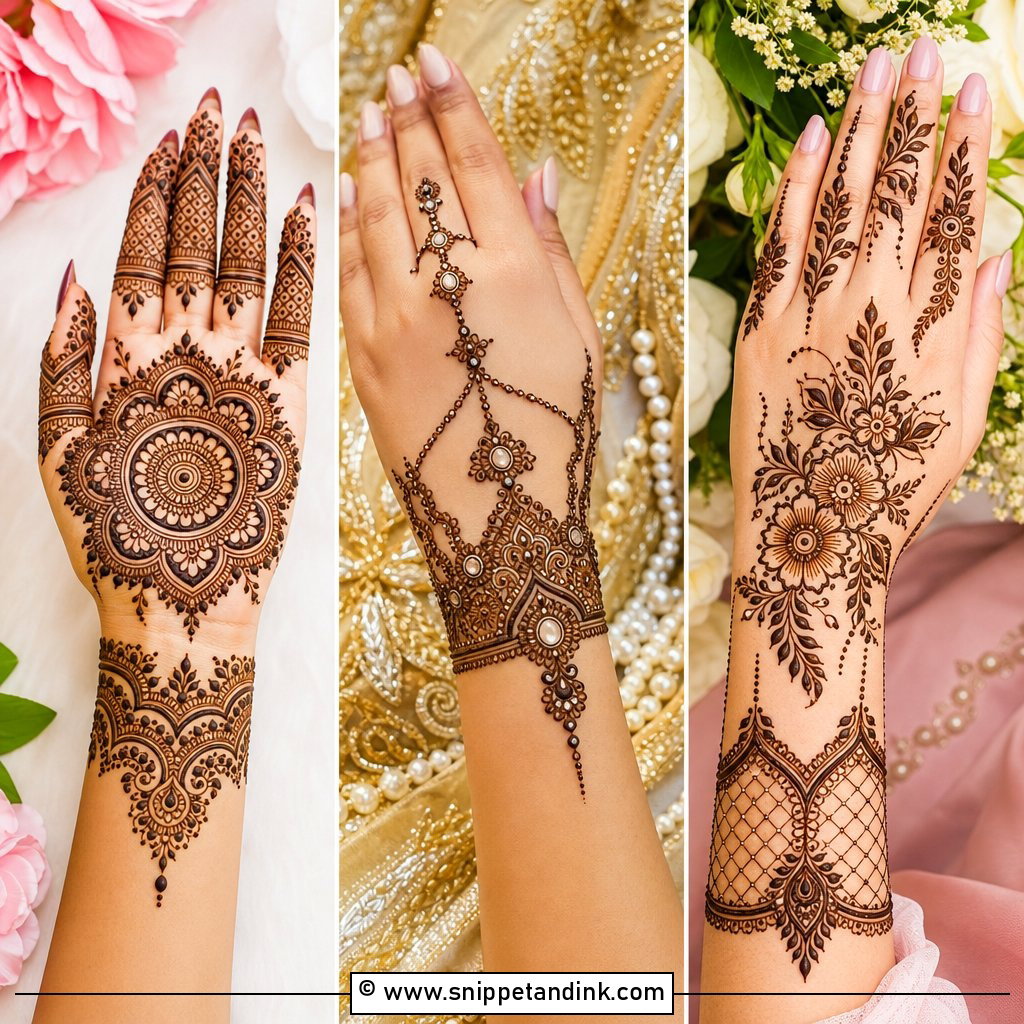
Mandalas give a hand a calm, balanced center, and almost every bride can wear one. On the palm, a large mandala sits within petals, dotted rings and fine wrist lines; on the back hand, it becomes an ornament with finger chains leading to it. I draw the outer ring first and work inward, because a mandala that drifts off-center is the mistake everyone notices. It suits minimal and semi-heavy coverage. Small paisleys at the wrist and fuller fingers make it bridal.
8. Floral Engagement Bridal Mehndi Design
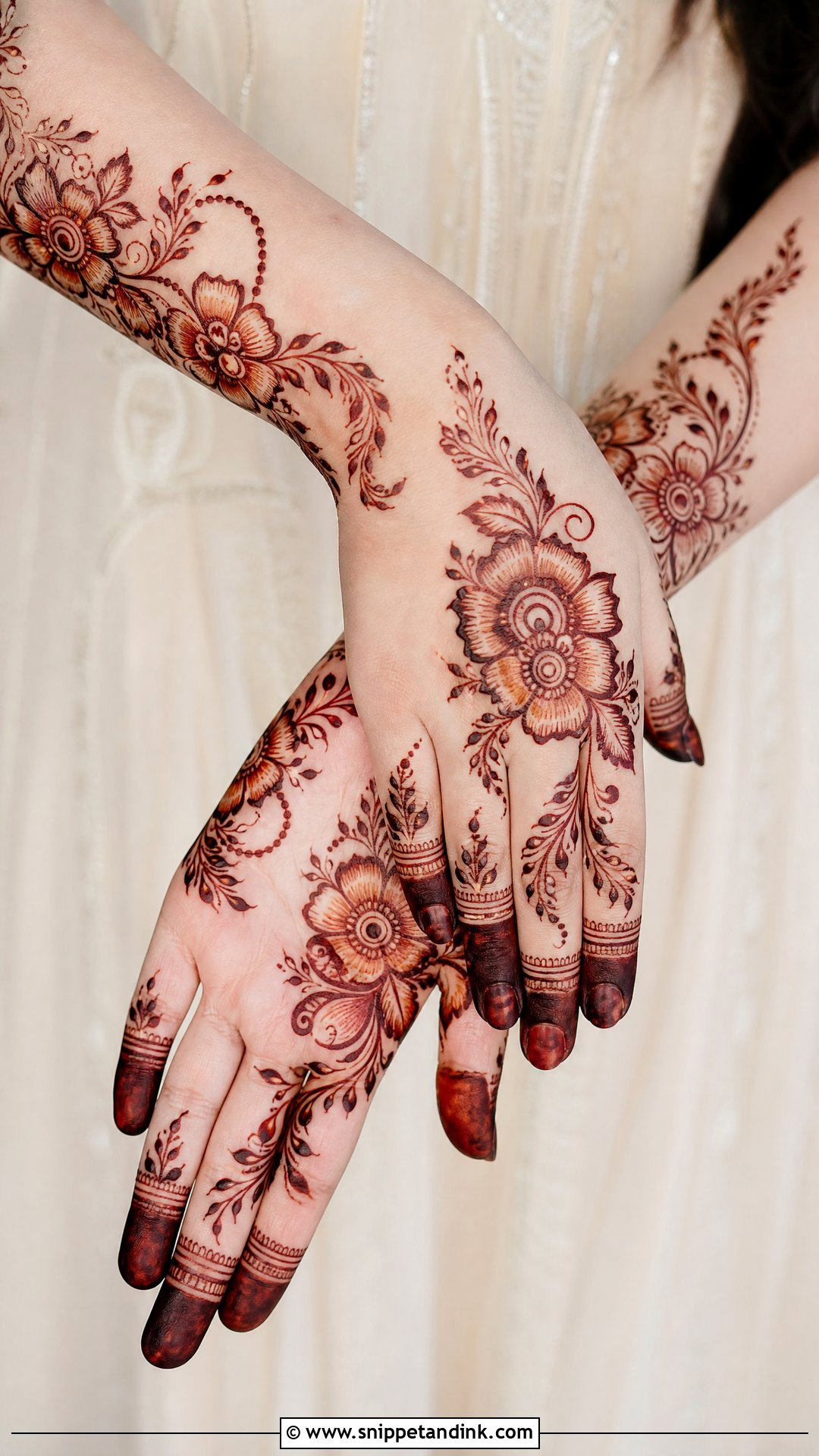
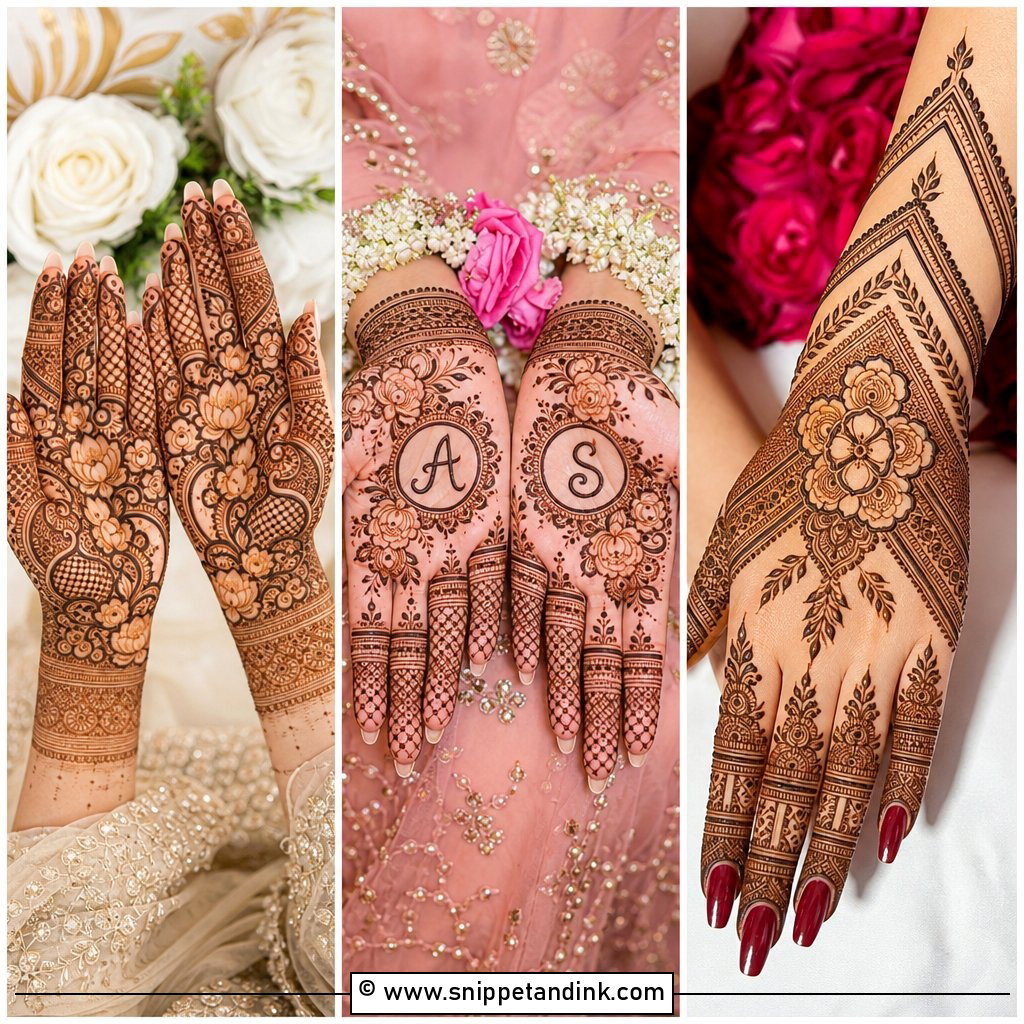
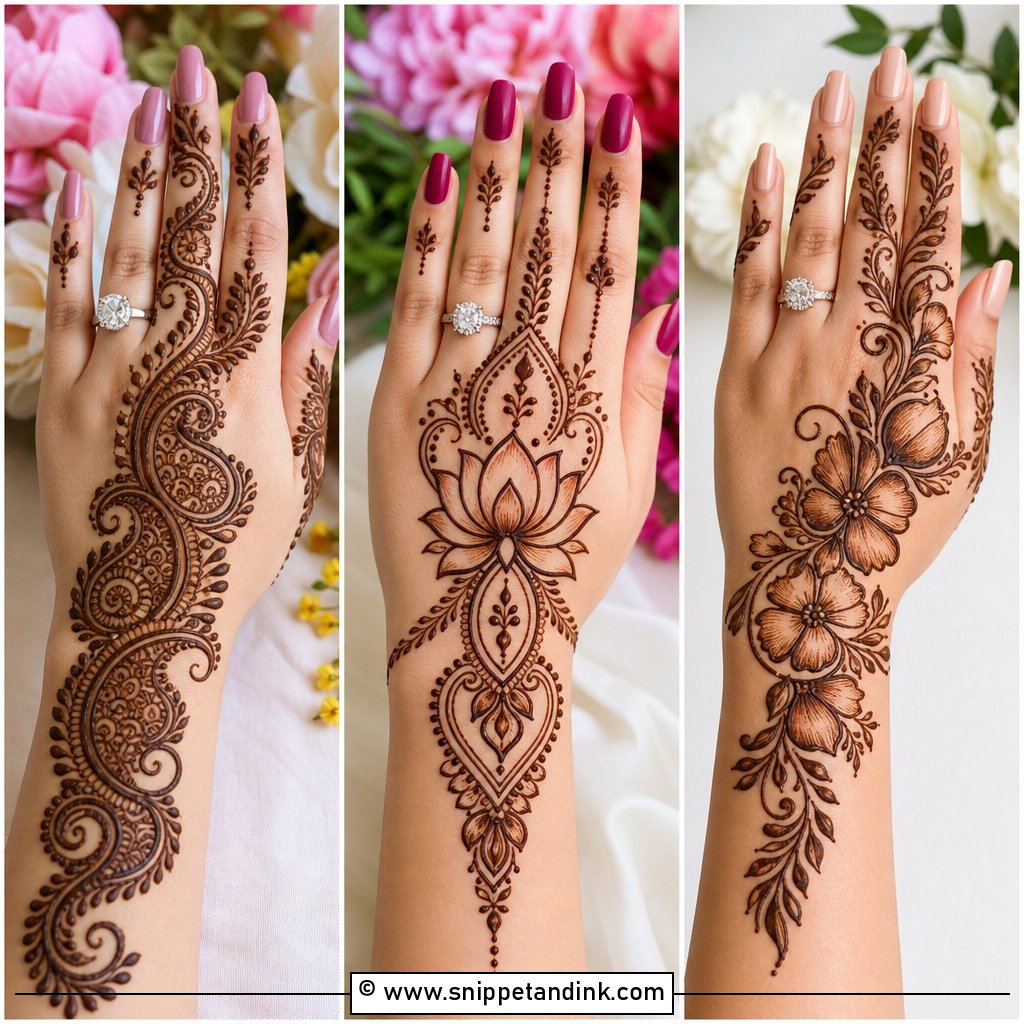
Flower size decides the mood. Large flowers lean Arabic and modern; small, packed flowers lean Indian bridal. A floral trail from wrist to fingers suits the back hand, and on the palm, flowers can frame a mandala or paisley center. Floral lehengas, pastel sarees and pearl jewelry go well with it. I vary the petal sizes deliberately and shade a few leaves, otherwise florals look flat and repetitive once the stain develops.
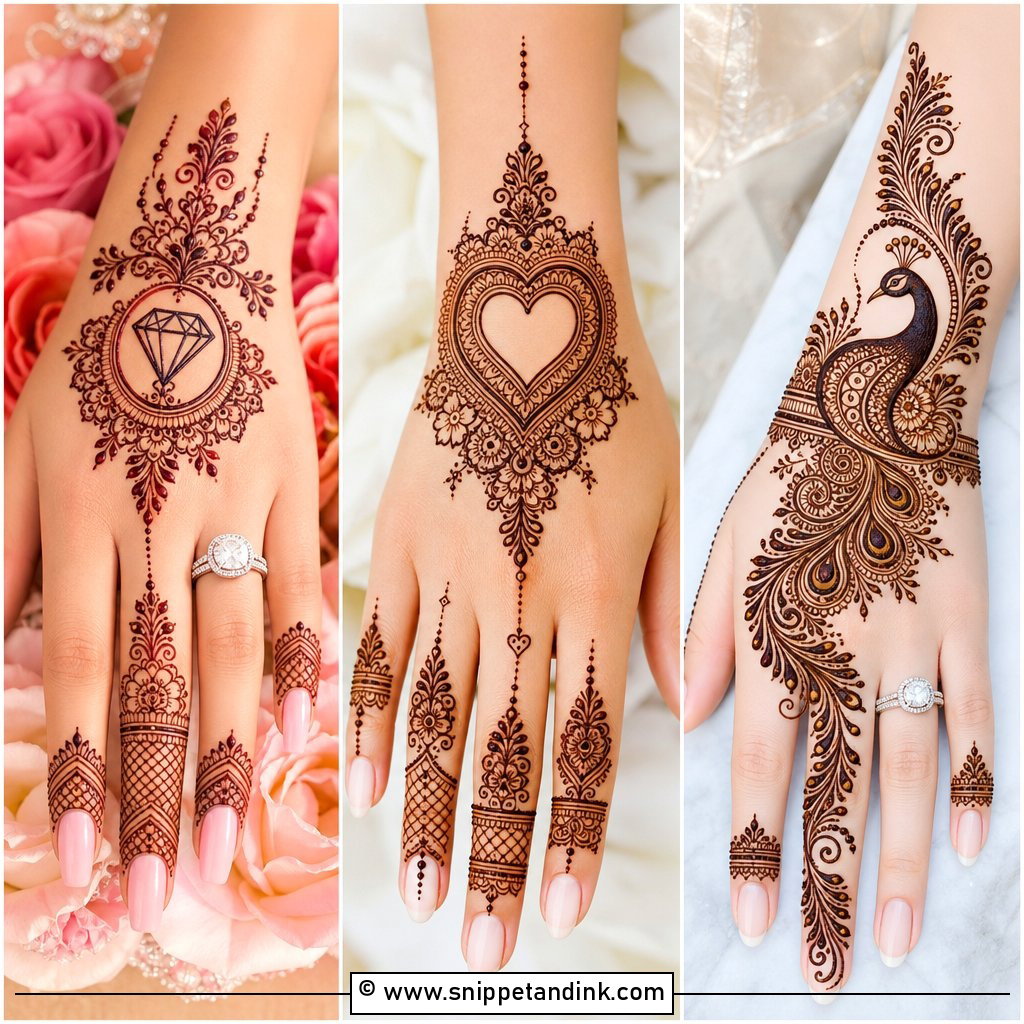
9. Peacock Engagement Bridal Mehndi Design
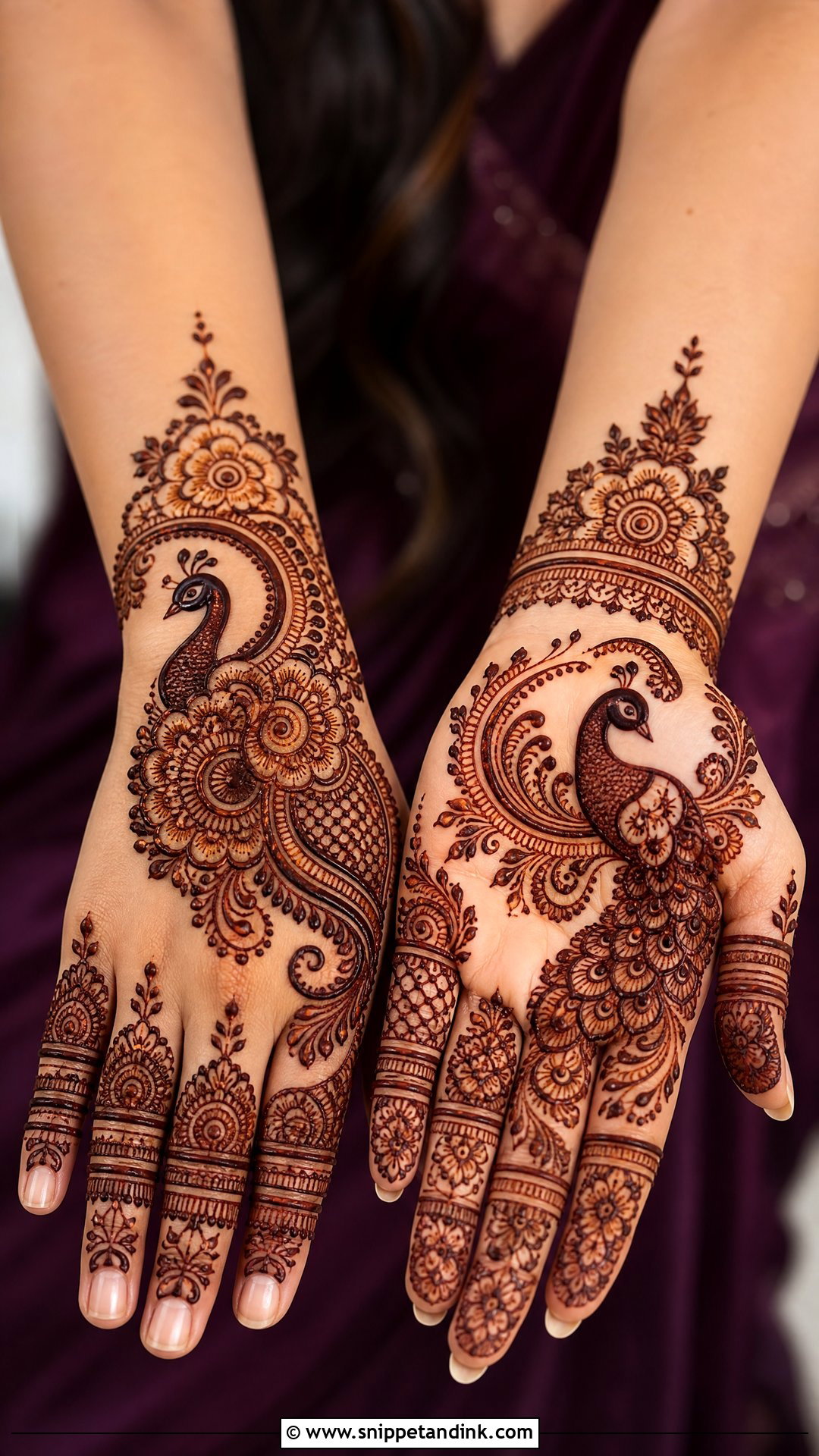
One peacock, well drawn, gives a royal feel without full wedding coverage. It can sit on the palm, curve along the wrist or spread across the back hand, and its feathers leave room for fine lines, dots, scallops and shading. For engagement, I’d use one large bird with supporting florals rather than several small ones; repeated peacocks crowd a hand quickly. Initials tuck neatly inside the feathers. Traditional outfits, jewel tones and silk suit it.
10. Lotus Engagement Bridal Mehndi Design
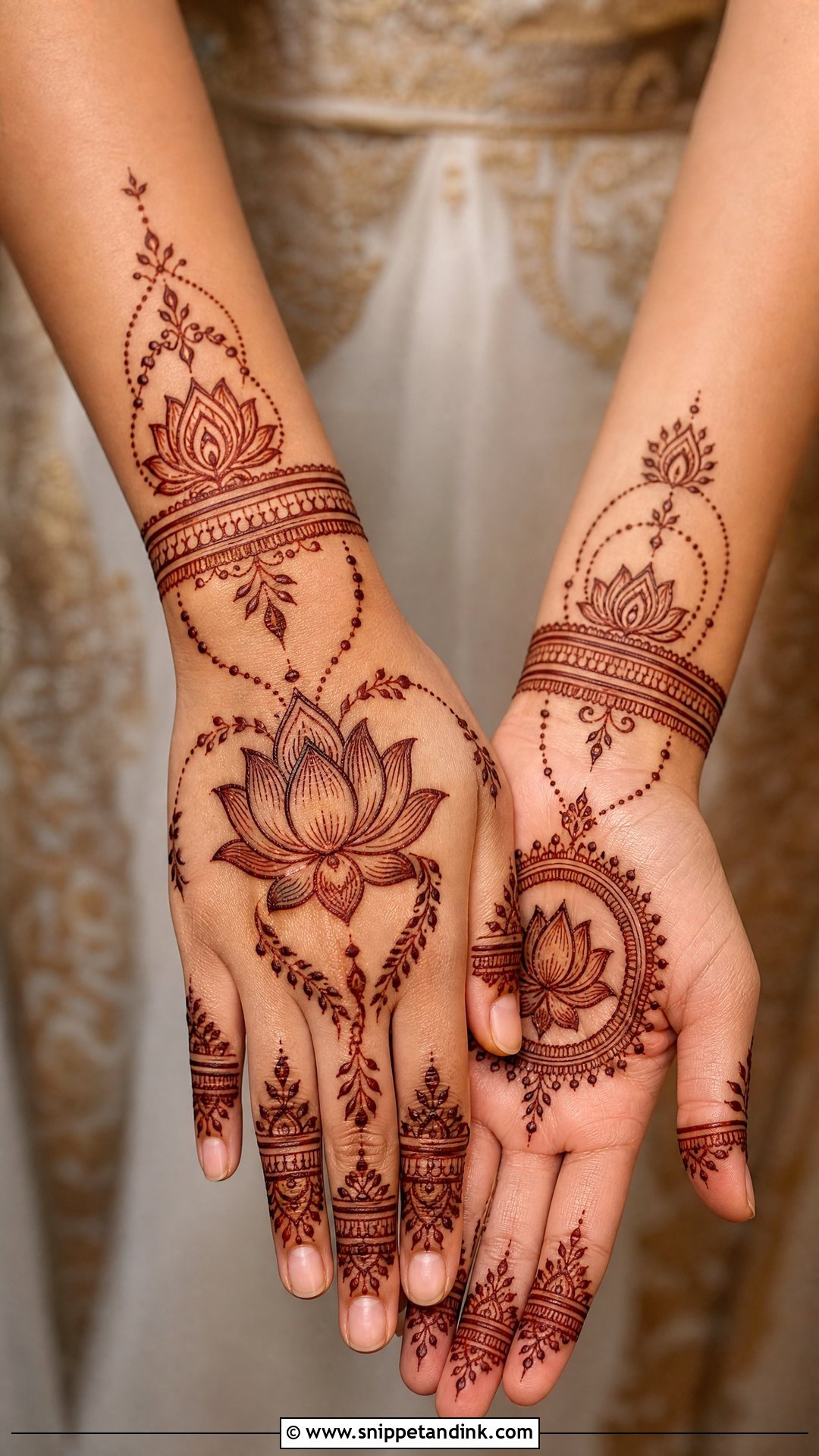
Lotus petals expand or shrink easily, so the motif adapts to palm, back hand, wrist or forearm. I pair it with mandalas, leafy arches and dotted borders. On the back hand, a central lotus with finger chains looks like jewelry; on the palm, a lotus inside a circular frame looks traditional. Pastel outfits, floral embroidery and soft makeup suit it. Petal lines need to be crisp and evenly spaced, and the space around the flower kept open, or the lotus loses its shape in the stain.
11. Jaali Engagement Bridal Mehndi Design
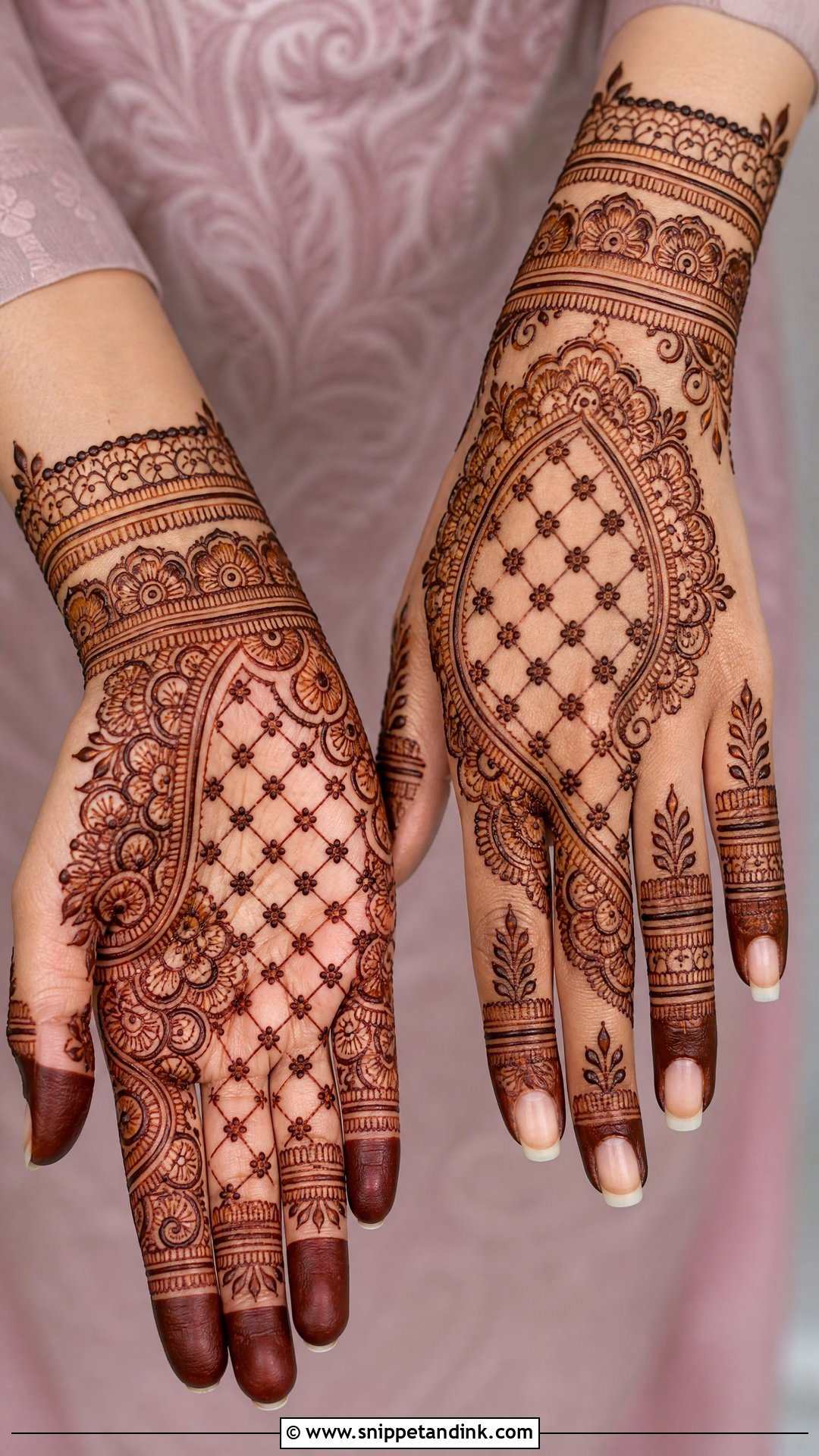
Jaali is a mesh pattern, and it gives the hand a fabric-like texture. Too much reads busy, so for engagement I use it as an accent: a panel on the back hand edged with flowers, or one side of the palm opposite a bold motif. The contrast between net and open motif is what makes it look modern. A dot at each crossing point gives a finer finish. Jaali lines are thin and close together, so the paste has to be smooth and fresh; lumpy paste closes the gaps and the net turns into a blot.
12. Minimal Engagement Bridal Mehndi Design
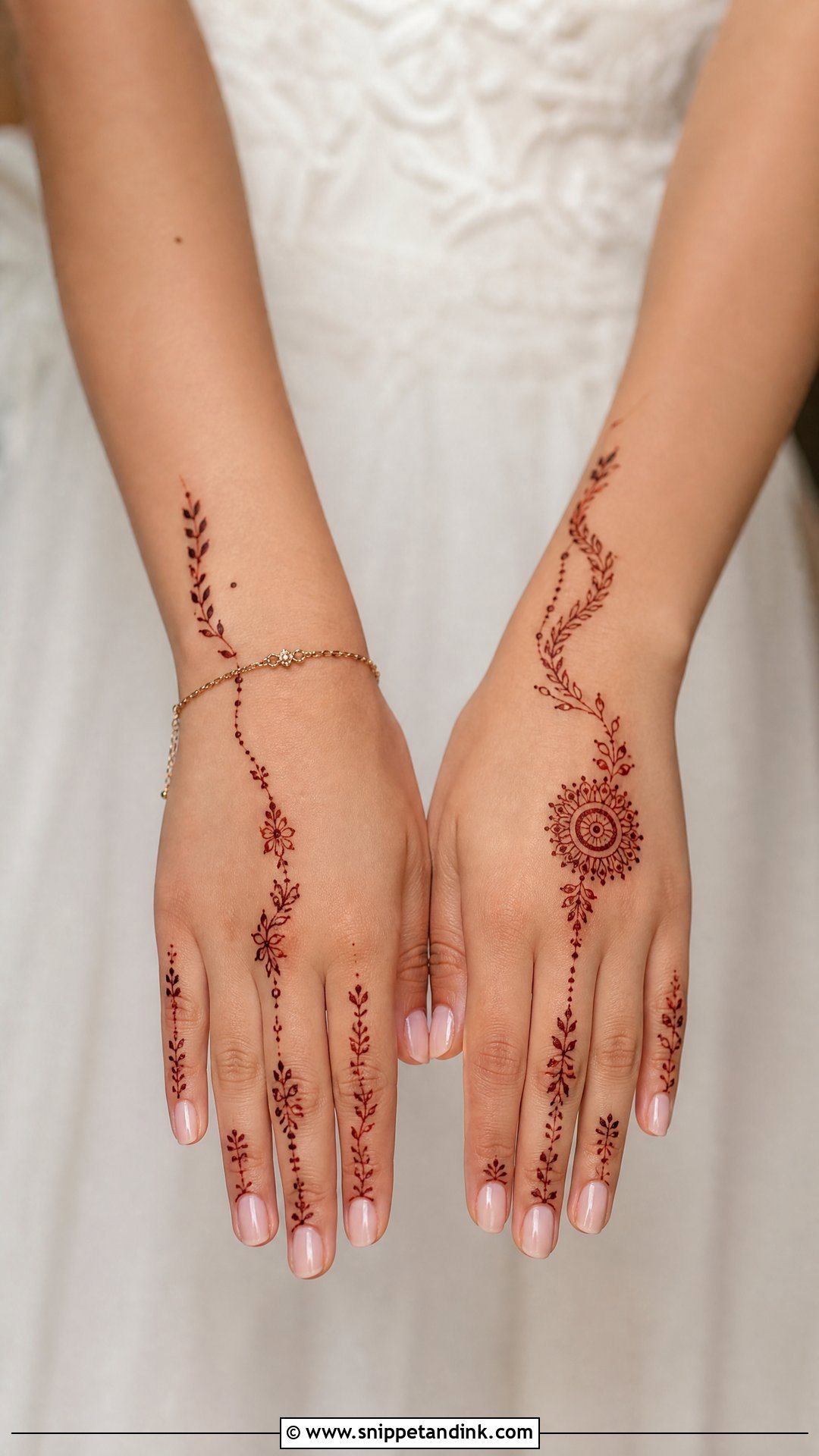
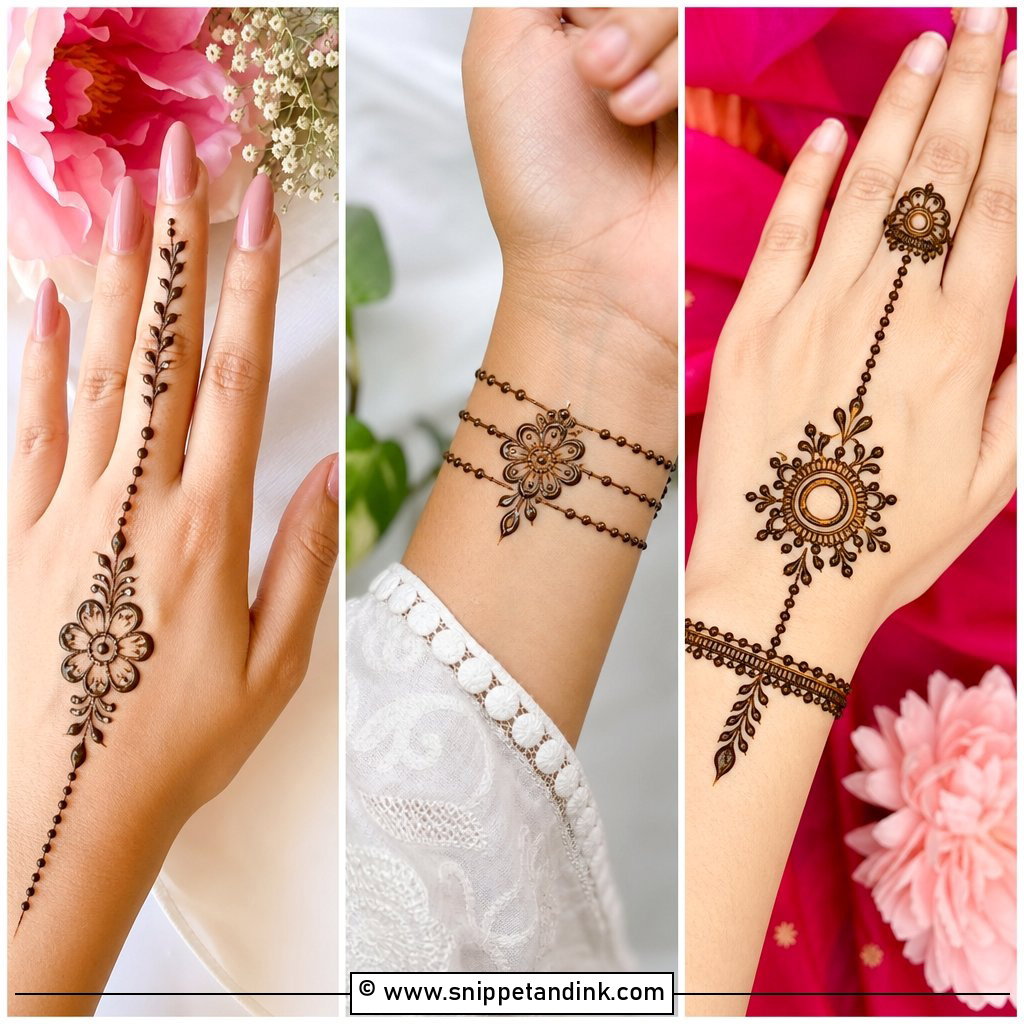
Minimal mehndi focuses on the fingers, the wrist and one main motif on the palm or back hand, with thin lines, small flowers, tiny leaves and plenty of skin. Sleek gowns, pastel lehengas and simple sarees suit it, and the ring stays clearly visible. A fine bracelet band and a delicate chain toward the middle finger keep it bridal. With so little coverage, the color does all the work, so I’d never skip the aftercare on a minimal design; a pale orange stain makes thin lines nearly invisible in photos.
13. Finger Engagement Bridal Mehndi Design
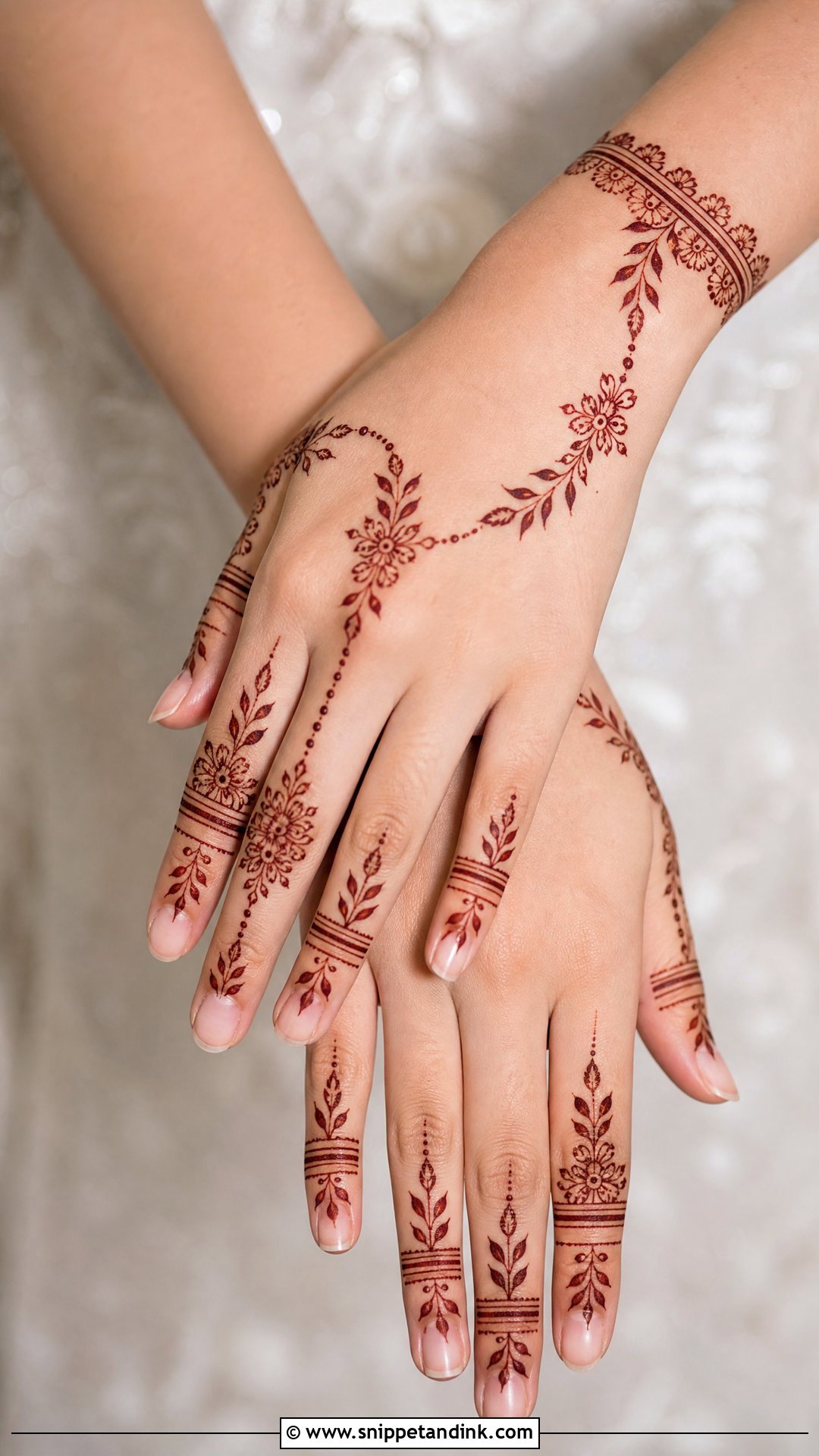
Finger designs keep attention on the ring. All the fingers get coordinated bands, leafy tips, small florals and fine lines; the back hand stays mostly open, with a small wrist cuff or dot mandala. Intimate ceremonies suit it, and it sits well with nail art and jewelry. I give each finger a slightly different pattern with the same rhythm, so it looks designed, not copied. Fingertips also stain darkest, which helps a light design read clearly.
14. Bracelet Engagement Bridal Mehndi Design
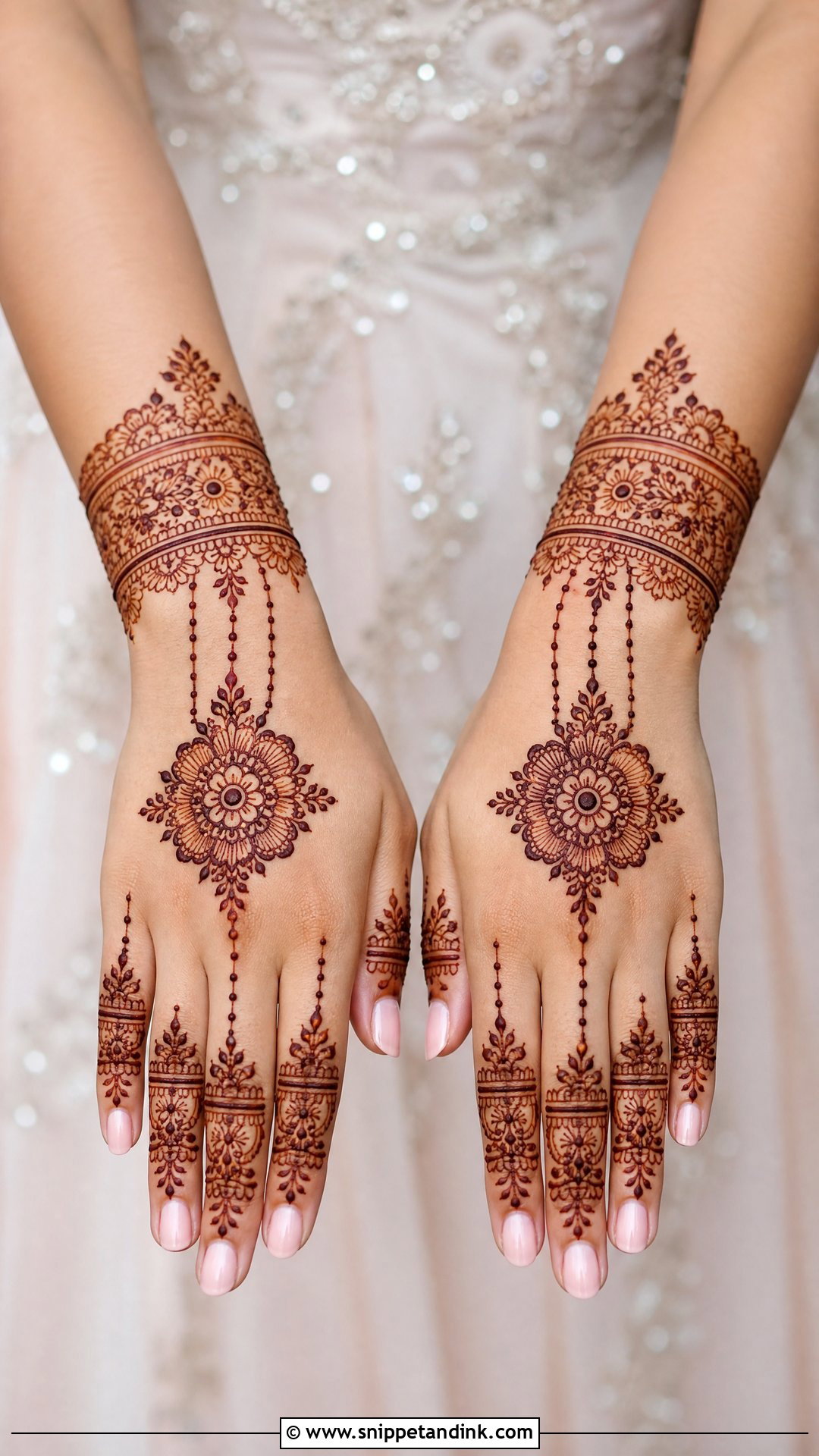
A wrist cuff, fine chains across the back hand and small finger motifs make the mehndi look like jewelry. A little mandala or flower in the center ties it together. It’s a good choice if you’re wearing fewer bangles, or want the henna to act as the ornament. Keep the palm light and the back hand detailed if you prefer. Bracelet lines need to be straight, even and thick enough to stain clearly; hairline chains look delicate in paste but often fade to almost nothing.
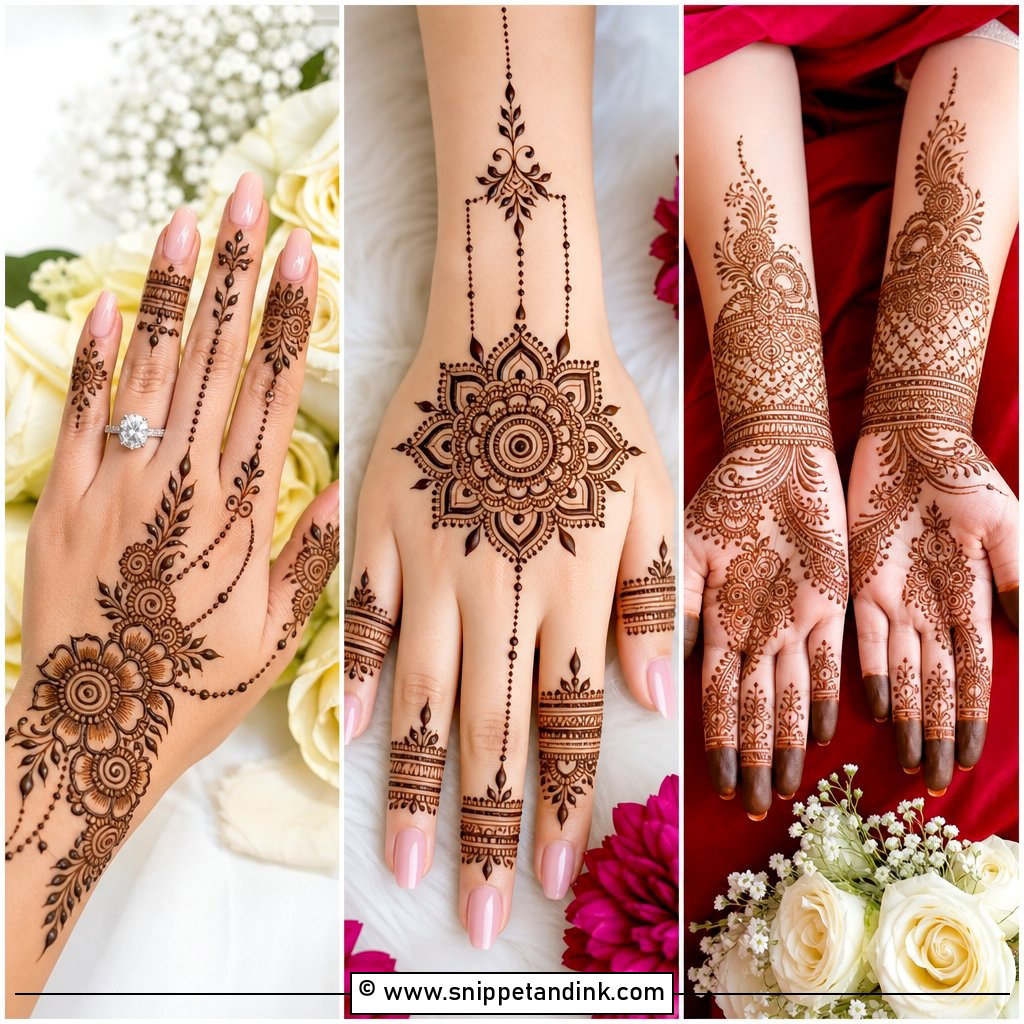
15. Personalized Engagement Bridal Mehndi Design
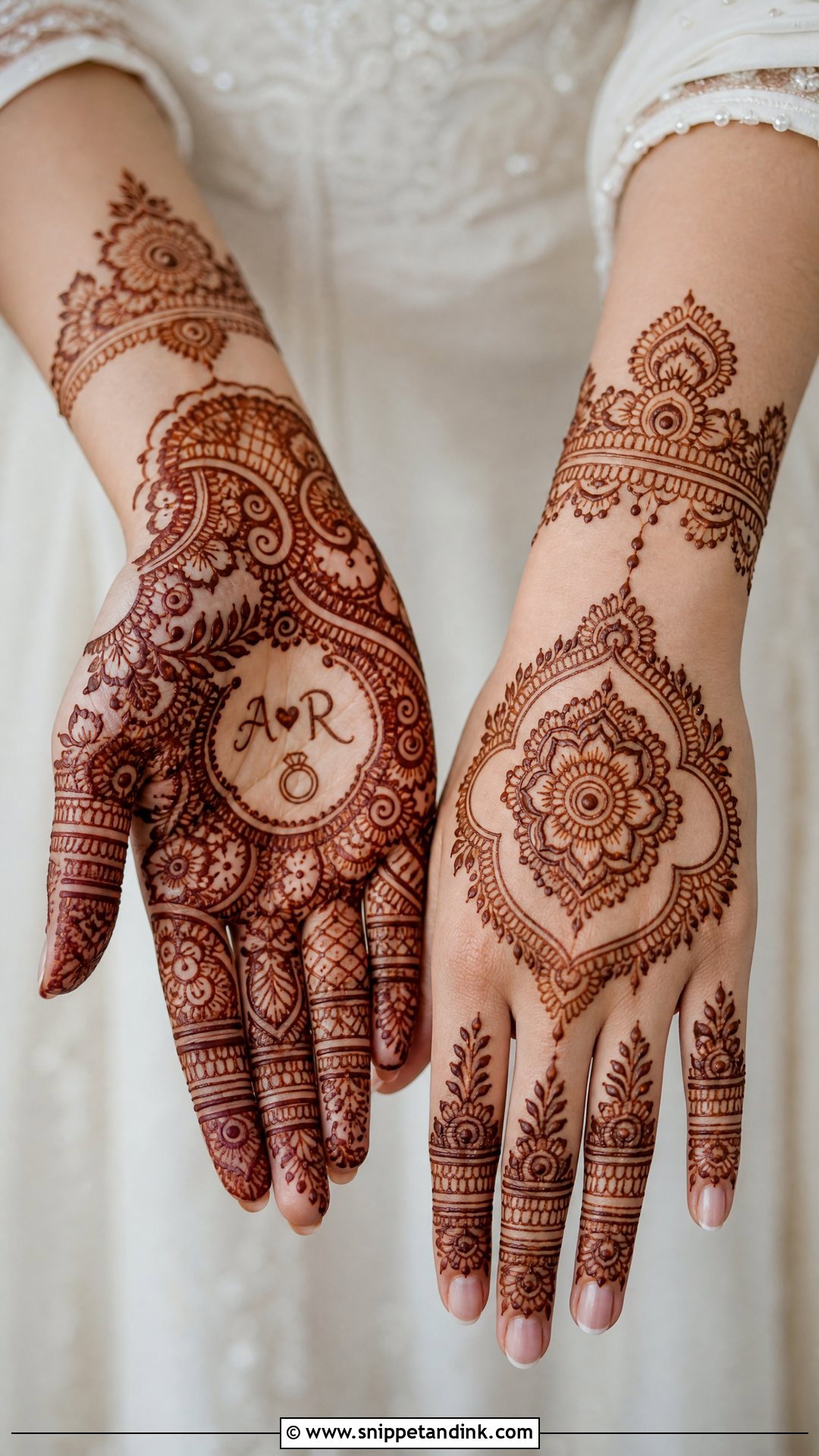
Personal details make the ceremony feel yours: initials, the engagement date, a tiny ring, a meaningful symbol or a small story element. They hide inside paisleys, flowers, mandalas or wrist bands. Brides often ask for initials near the wrist, in the center of a flower, or along the ring finger. I keep it to two or three hidden details; more than that and the design starts to look crowded. Indian, Indo-Arabic and minimal layouts all take them, and guests enjoy finding them in close-ups.
16. Ring Ceremony Engagement Bridal Mehndi Design
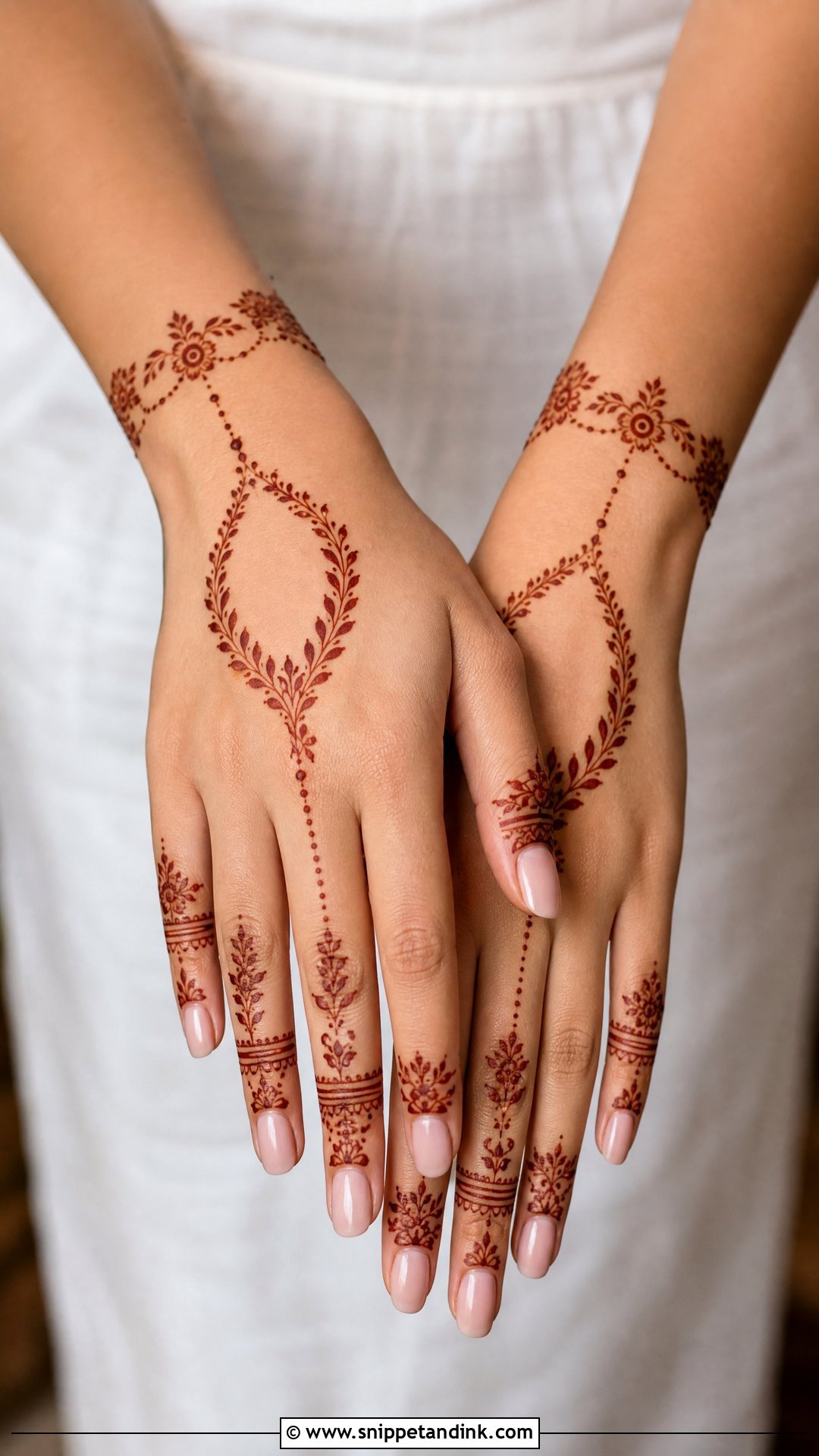
For a ring ceremony, I plan the design around the ring finger and the back of the hand. The ring area is kept open or framed with fine vines, dots and finger bands, and the back hand carries a mandala, floral bracelet or diagonal Arabic trail that points toward the ring. With a large ring, keep the finger design lighter so the stone and the henna don’t compete. With a simple band, fuller finger detail adds richness. Bring a photo of the ring to your appointment so we can plan around it.
17. Half Hand Engagement Bridal Mehndi Design
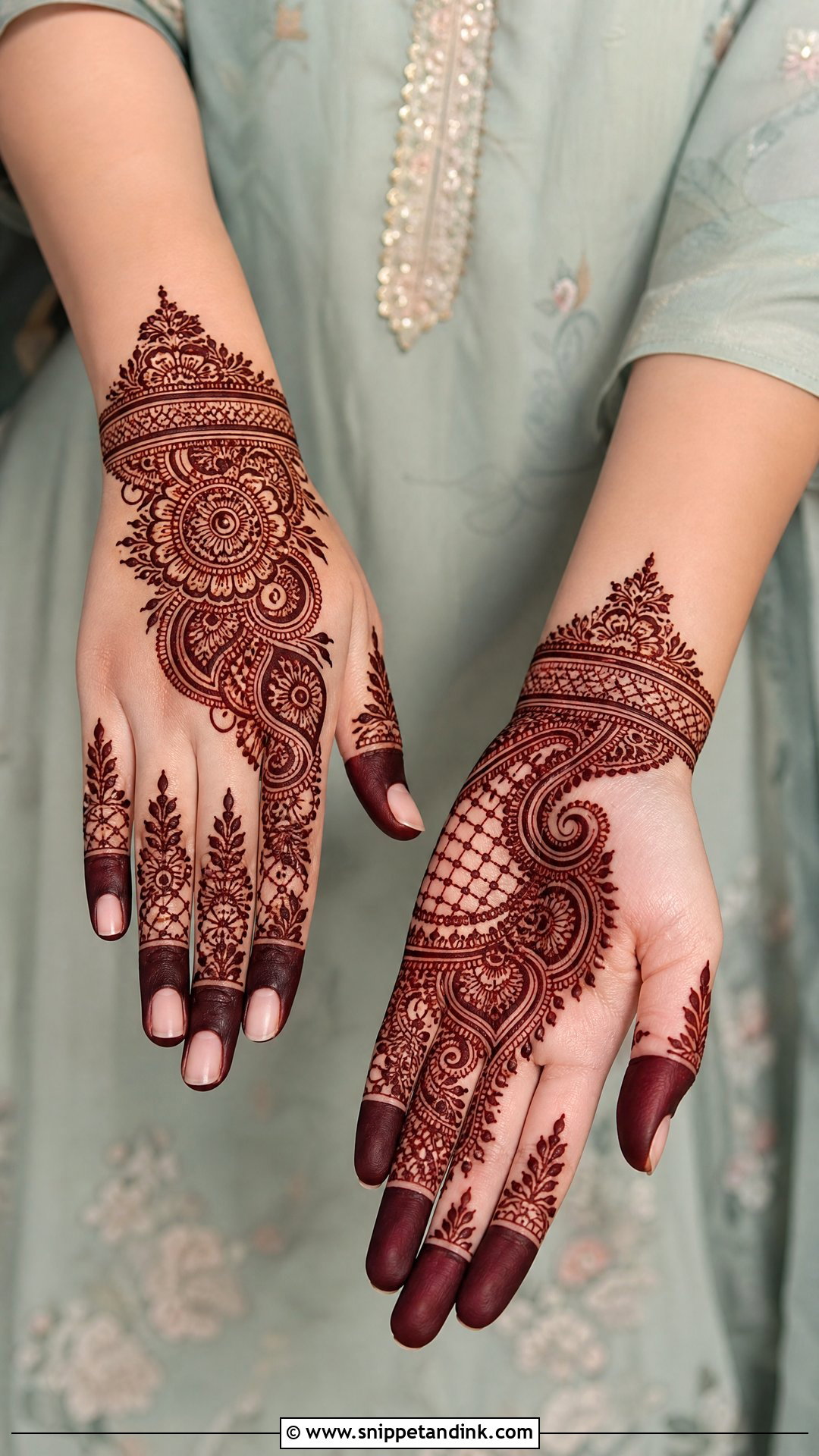
Half hand covers the palm and fingers, or the back hand and wrist, and stops before the forearm. It’s comfortable, quicker, and easier to match with modern outfits and detailed sleeves. Mandalas, paisleys, florals or jaali keep it bridal. Brides with heavily embellished cuffs often prefer it so the henna doesn’t fight the fabric. I finish the end with a proper border, a scalloped band or a row of dots, so it looks complete instead of cut off.
18. Full Arm Engagement Bridal Mehndi Design
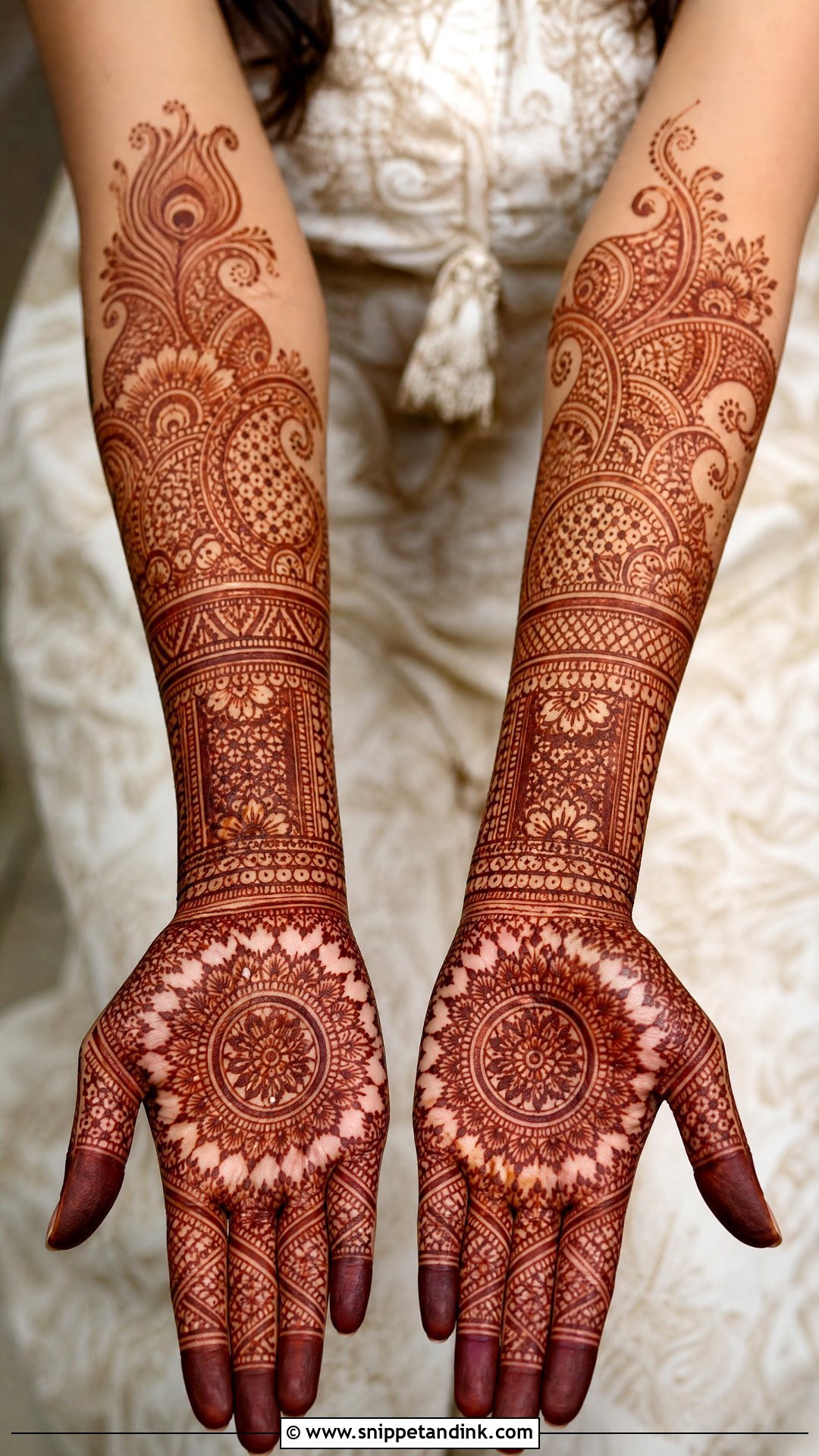
Full arm is the grand option: hand, wrist and forearm in layered patterns, still lighter than wedding coverage. The palm may carry a mandala or lotus, the forearm paisley vines, peacock feathers, floral panels or bracelet bands. It suits short sleeves, sleeveless blouses and traditional jewelry. I leave breathing space between large motifs, because dense filling everywhere looks like wedding mehndi. Forearm skin stains lighter than the hand, so expect the arm to develop a softer shade of the same color.
19. Moroccan Engagement Bridal Mehndi Design
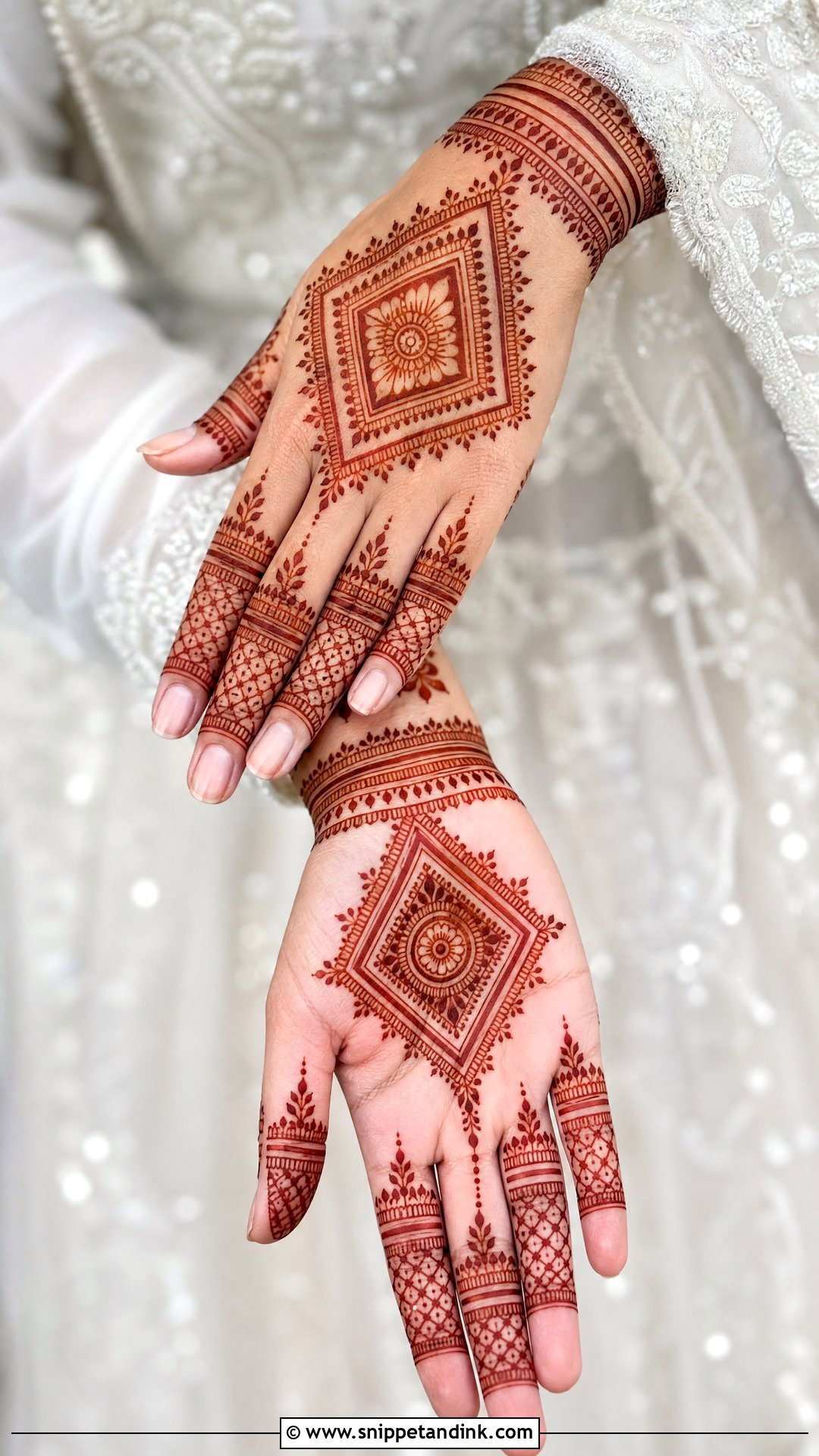
Moroccan designs swap curves for geometry: diamonds, chevrons, grids, straight lines and structured borders. They look bold and modern, quite unlike Indian or Arabic work. The back hand and fingers with clean wrist bands is where I place them for an engagement, with a geometric mandala or symmetrical panel on the palm if you want both sides done. Precision is everything; uneven spacing jumps out on a grid. A deep stain keeps the angles crisp. Contemporary outfits and minimal jewelry suit it.
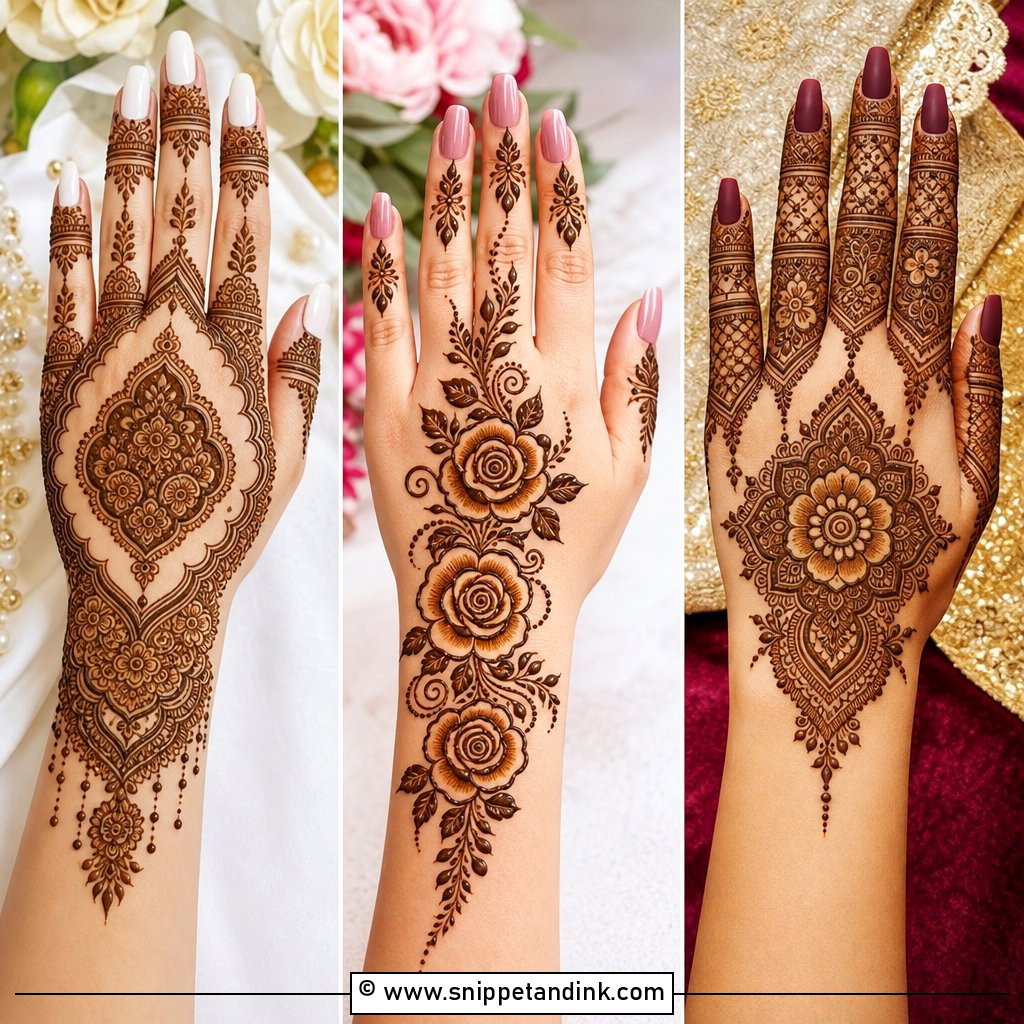
20. Gulf Engagement Bridal Mehndi Design
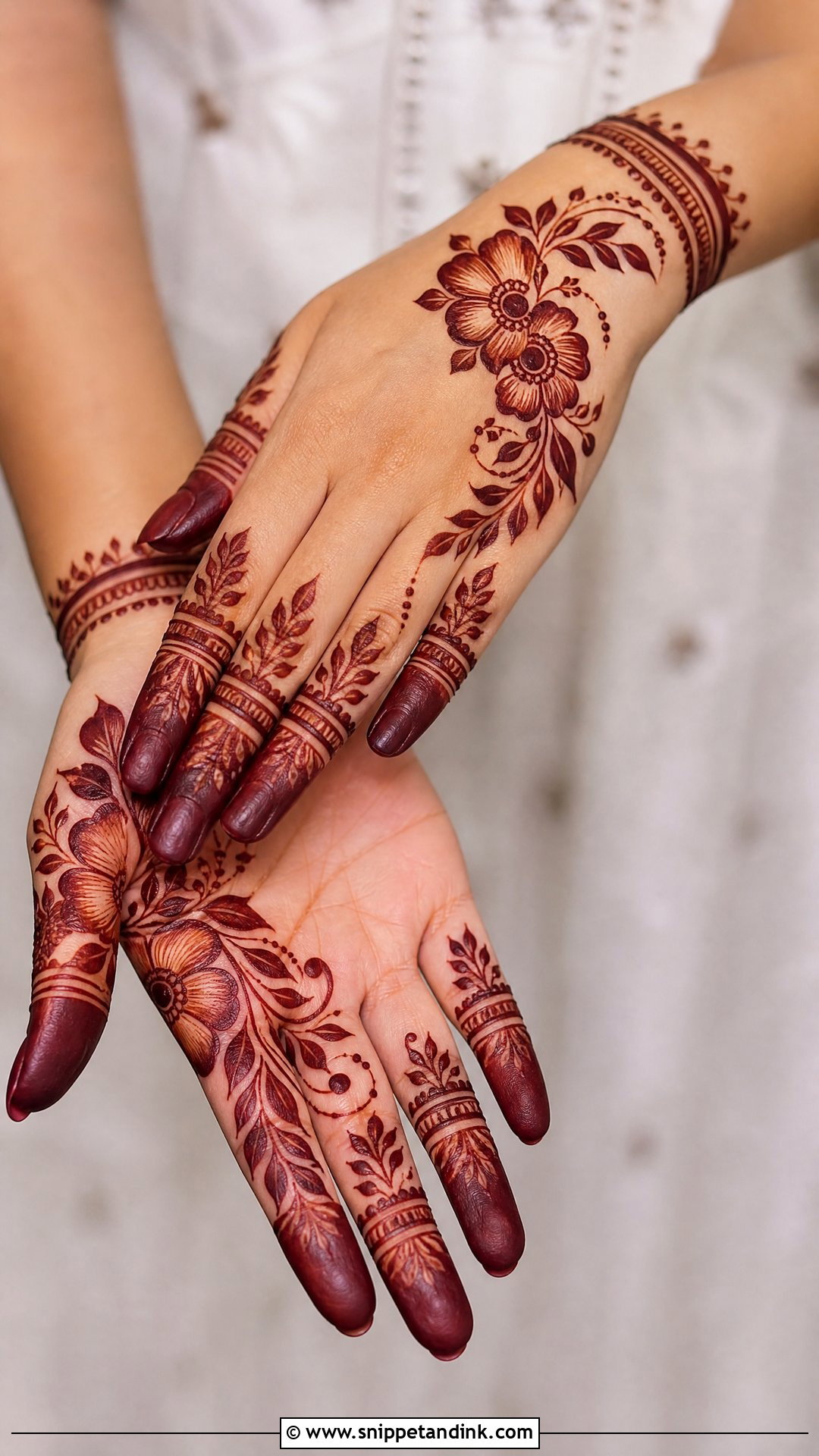
Gulf designs, often inspired by Khaleeji henna, use bold flowers, leafy trails and big empty spaces. Thick outlines and large flowers carry more paste, so they stain dark and read from across a room. The layout curves across the back hand or palm. It takes less time to apply than Indian bridal work. Gold jewelry and rich colors pair well with it. Detailed finger caps, dotted vines and a bracelet finish make it bridal.
21. Rajasthani Engagement Bridal Mehndi Design
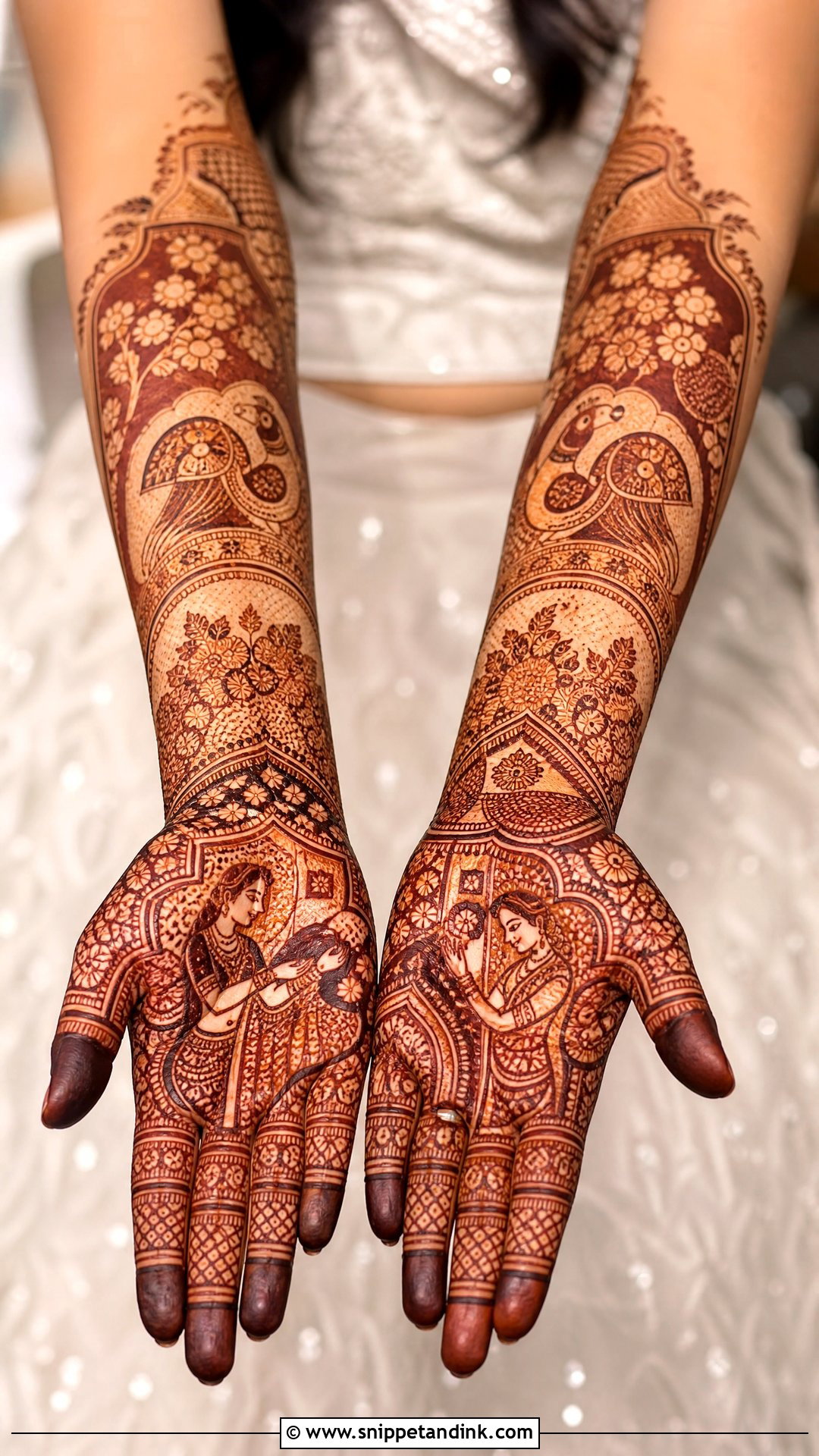
Rajasthani mehndi is the most detailed traditional style here: paisleys, peacocks, floral grids, curved borders and figures drawn like miniature paintings. For engagement, I lighten it with fewer filled sections and more open bands. A palm design with paisley clusters and a back hand with peacock or mandala detail makes a complete look. Lehengas, bandhani, mirror work and traditional jewelry suit it. Initials can hide in the paisley curves. It takes a skilled artist and several hours, so book early and leave room in the day.
22. Pakistani Engagement Bridal Mehndi Design
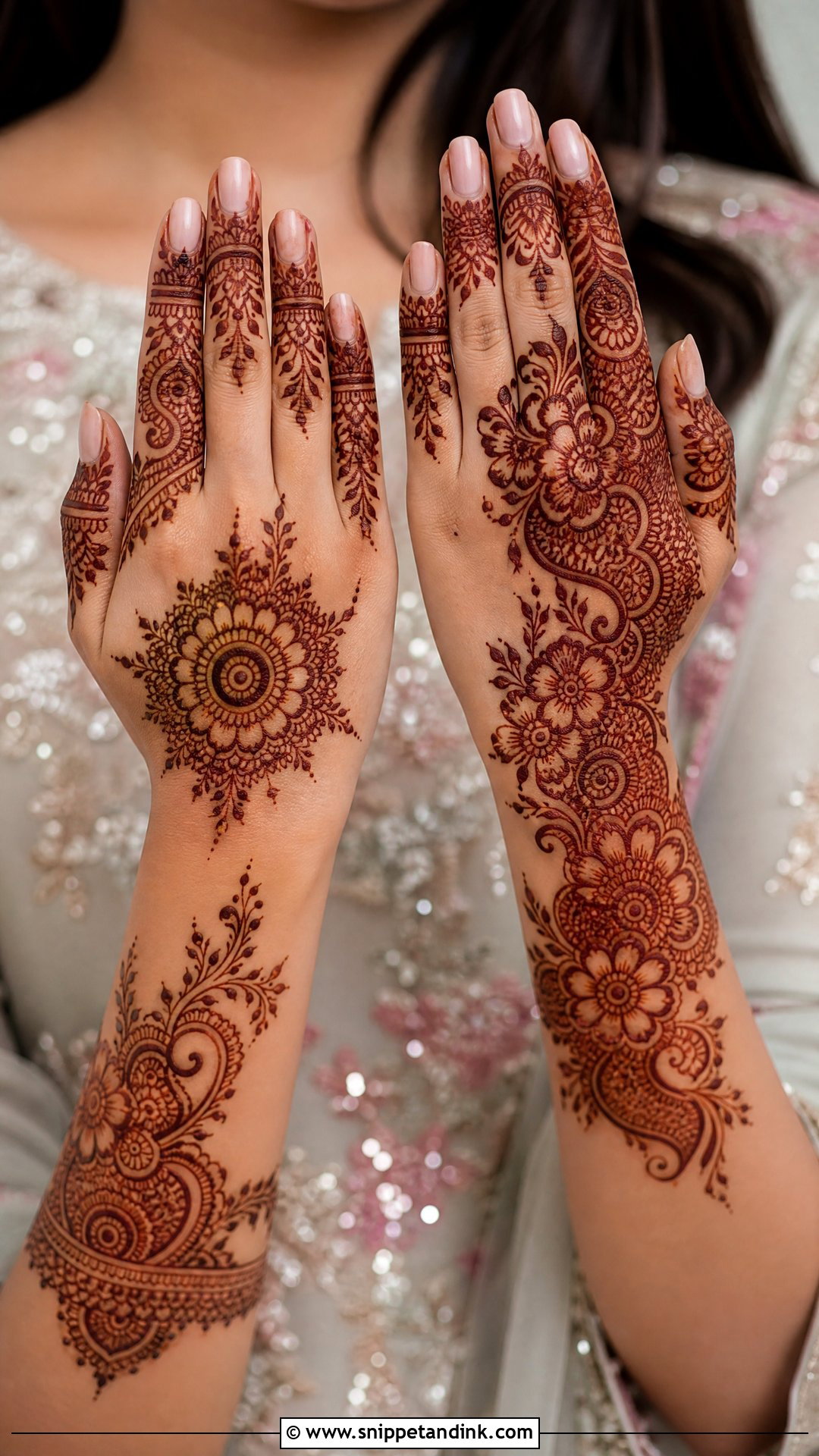
Pakistani bridal mehndi mixes Indian detail with Arabic flow: floral trails, leafy vines, paisleys, domes, mandalas and shaded gaps. It’s bridal without being heavy. A fuller palm with a flowing back hand makes both sides look finished in photos. Ghararas, shararas, lehengas and embroidered suits all suit it. For engagement, I keep the forearm moderate and put the detail into the hands. Filled fingertips look traditional; patterned ones look lighter.
23. Modern Engagement Bridal Mehndi Design
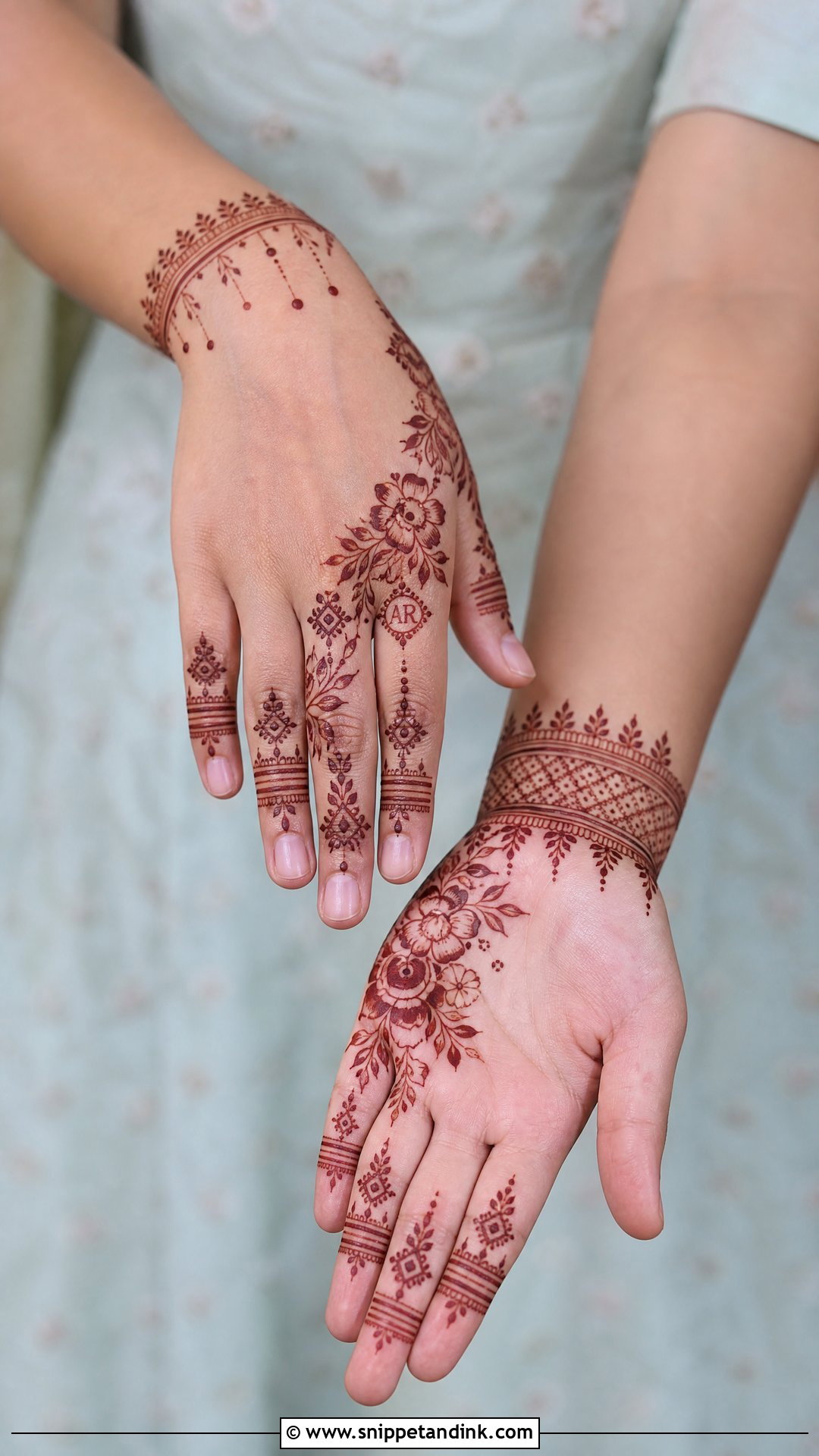
Modern mehndi is built around close-up photos: asymmetric layouts, negative space, fine-line florals, geometric borders and careful finger work. It picks a few strong areas and leaves the rest as skin. Contemporary lehengas, gowns and fusion outfits suit it, as do stacked rings and nail art. The hard part is making empty space look planned. I sketch the layout lightly before filling, so every blank area is a deliberate shape rather than something left over.
24. Shaded Engagement Bridal Mehndi Design
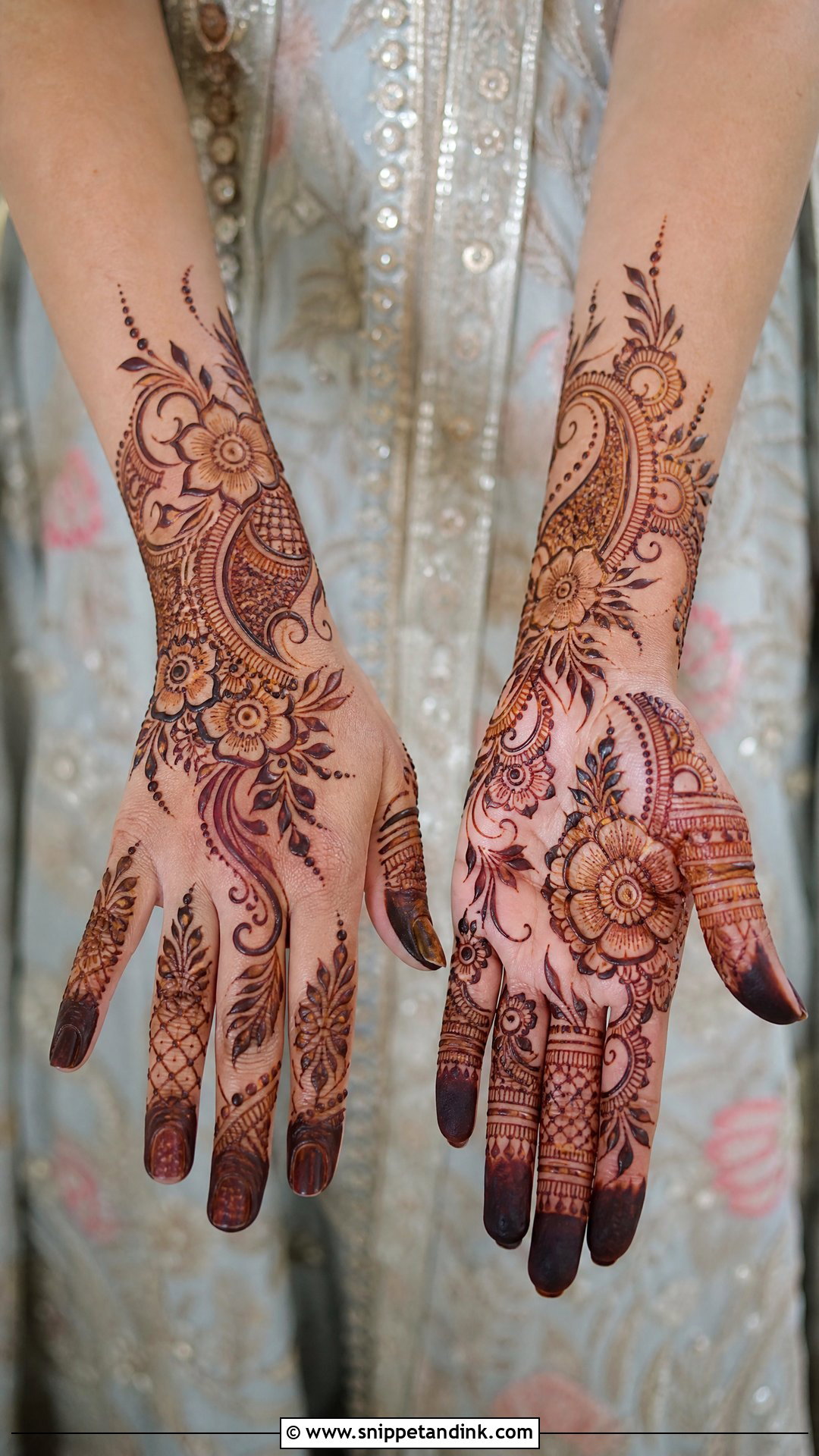
Shading creates depth with darker outlines and lighter filled areas. Flowers, leaves, paisleys and peacock feathers look soft and dimensional with it. On the back hand, shaded flowers make a diagonal trail; on the palm, shaded lotus or paisleys circle a mandala. I shade with thin, partial strokes rather than full fills, which lets the stain show a lighter and darker tone. It makes big motifs look full without dense filling and saves application time.
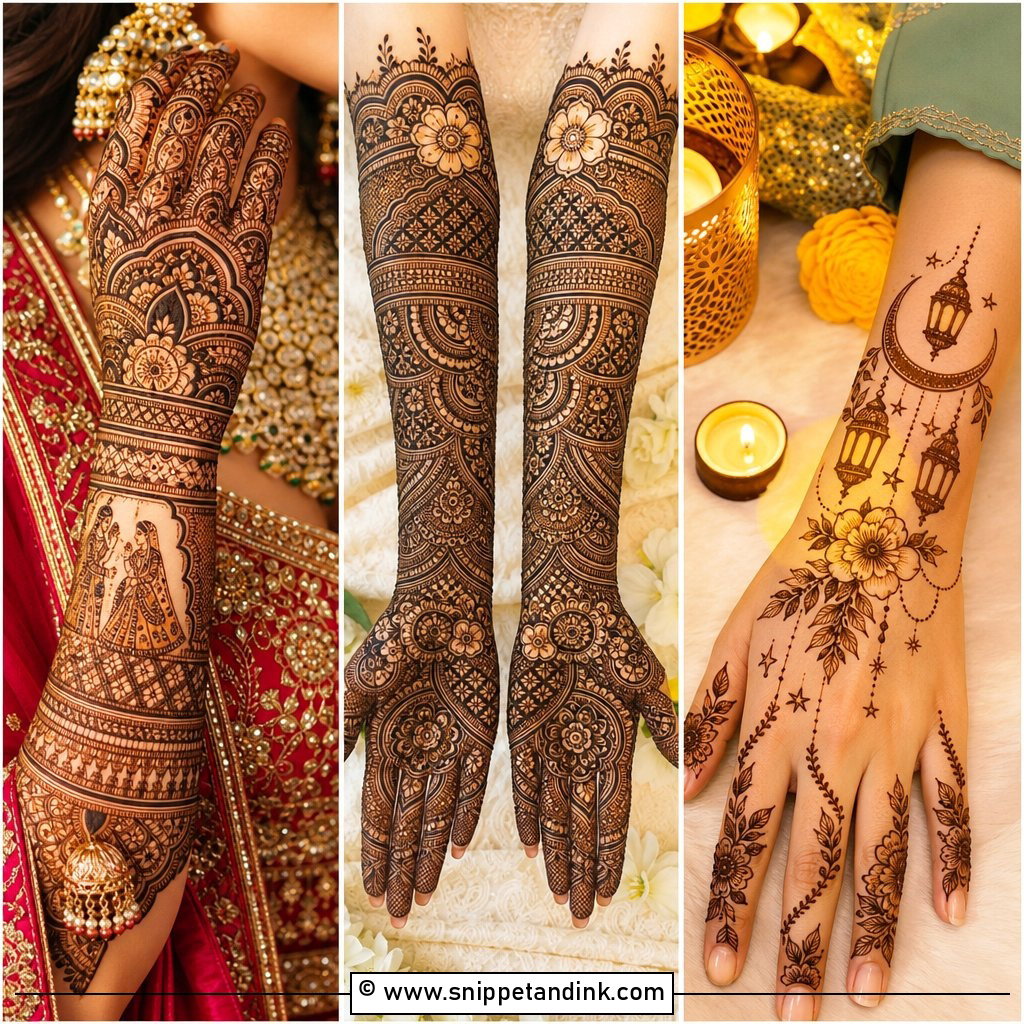
25. White Engagement Bridal Mehndi Design
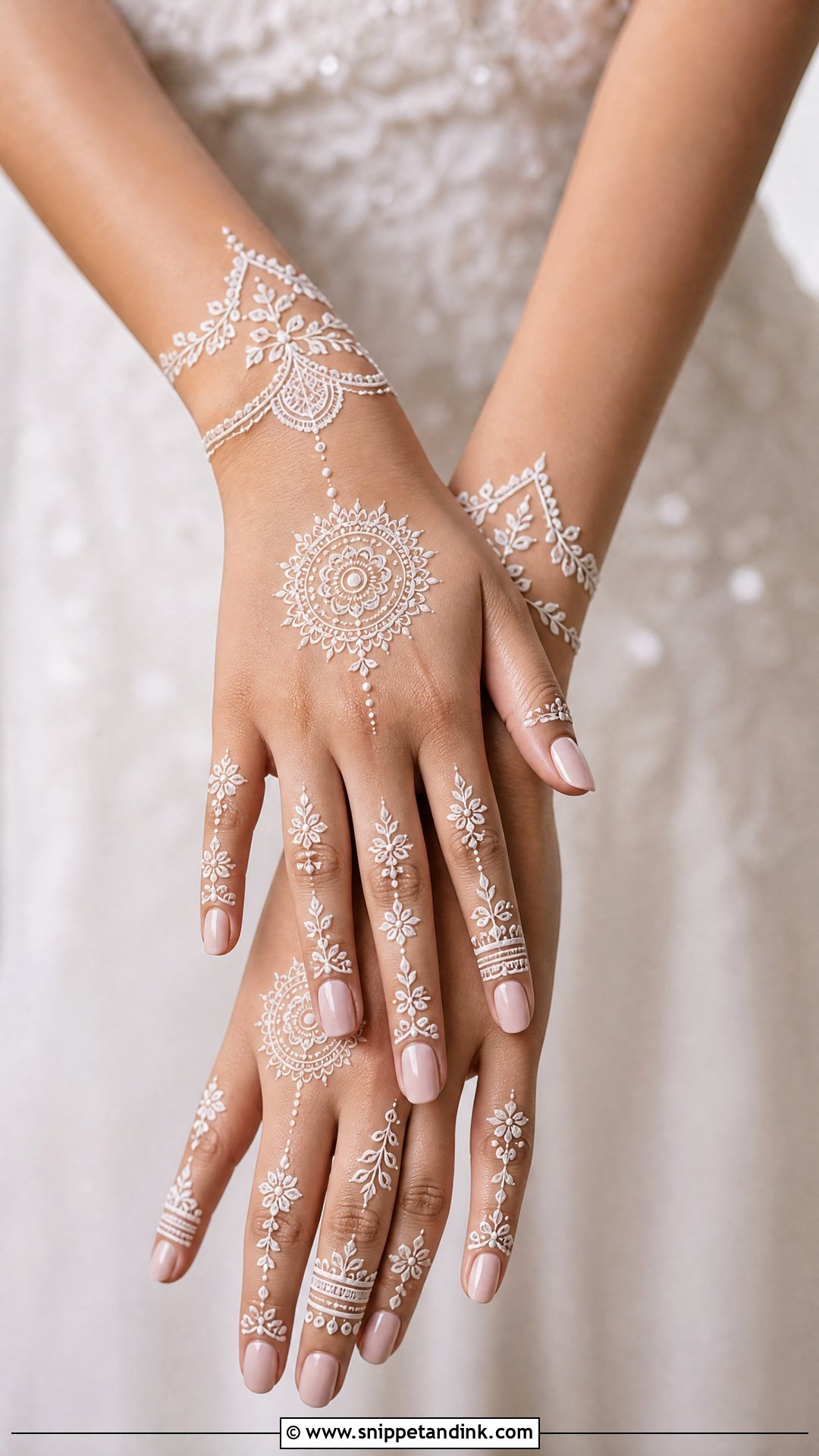
White mehndi isn’t henna. It’s a body-art paste that sits on top of the skin and leaves no stain, so it’s purely for the event and the photos. Lace florals, bracelet chains, finger details and back-hand mandalas look fresh with pastel outfits, pearls and soft makeup. It smudges much more easily than henna, so I apply it close to the ceremony and ask brides to keep their hands still while it dries. Ask what’s in it and test a small patch first if your skin is sensitive.
Black Henna, Instant Cones and the Patch Test
Natural henna only ever stains in the orange to maroon range. Anything sold as black henna, or a cone that promises a dark stain in an hour, usually contains added dyes or chemicals, and some of them can cause serious skin reactions and blistering. I won’t use them, and I’d ask any artist you book what is in their paste. A good answer lists henna powder, an acid such as lemon juice, sugar and an essential oil.
Even with natural paste, if you have sensitive skin, ask for a small test dot on the inner arm a few days before the appointment.
When the wedding follows soon after
A henna stain fades gradually over one to three weeks as the skin renews. If your wedding is close to the engagement, the old design will still be showing in patches when the new one goes on. I’d keep the engagement design lighter in that case, and gently exfoliate in the days before the wedding mehndi so the new stain sits on even skin.
Ring Finger First, Then Everything Else
Match the design to the ceremony, your outfit, your jewelry and how much time you can sit still. Full hand, mandala, peacock and Rajasthani work feel traditional, while Arabic, Gulf, bracelet and minimal designs feel lighter. If the photographer will focus on the ring, put the detail on the back hand and fingers. If rituals matter, give the palm a complete motif too. A natural reddish-brown to deep maroon stain is still the classic, and white mehndi works for a short-lived modern look. Wear what feels like yours.
You'll Like These Ideas:


Leave a Reply